
A generous driveway can make daily parking easier, improve access to the garage, and give the front yard a more balanced appearance. The best **20 Wide Driveway Ideas** do more than cover a large area with pavement. They use patterns, borders, planting beds, lighting, and thoughtful transitions to keep the space from looking like a parking lot. A typical two-car driveway is often 20 to 24 feet wide, although the right dimensions depend on vehicle size, garage placement, turning needs, and local requirements. () Whether you prefer affordable gravel, clean concrete, classic brick, or permeable pavers, the complete design should complement your home and manage water effectively. Explore these practical and attractive **20 Wide Driveway Ideas**.

1. Wide Concrete Driveway With Grass Strips
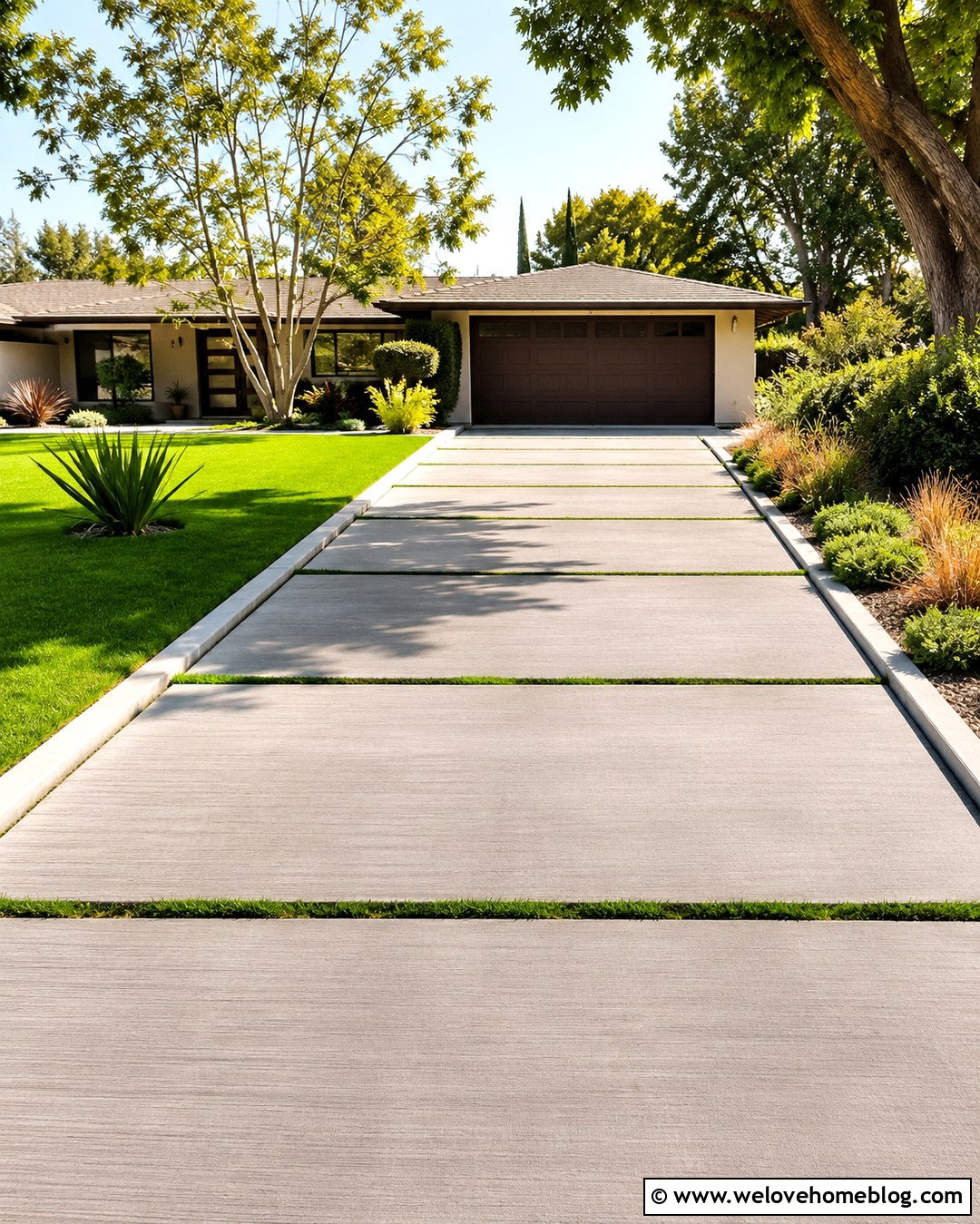
A wide concrete driveway feels lighter when narrow grass strips divide the paved surface into organized sections. Use large rectangular slabs with slim green joints running toward the garage. This creates strong lines while reducing the appearance of one oversized concrete pad. A medium-gray broom finish provides traction and suits modern, ranch, and updated midcentury homes. Frame the outer edges with low ornamental grasses, compact shrubs, and a matching concrete walkway. Keep the planting simple so it does not compete with the slab pattern. The grass joints require regular trimming, but they create a softer transition between pavement and lawn. Before construction, plan slab spacing, drainage, and expansion joints with a qualified local contractor.
2. Wide Asphalt Driveway With Paver Border
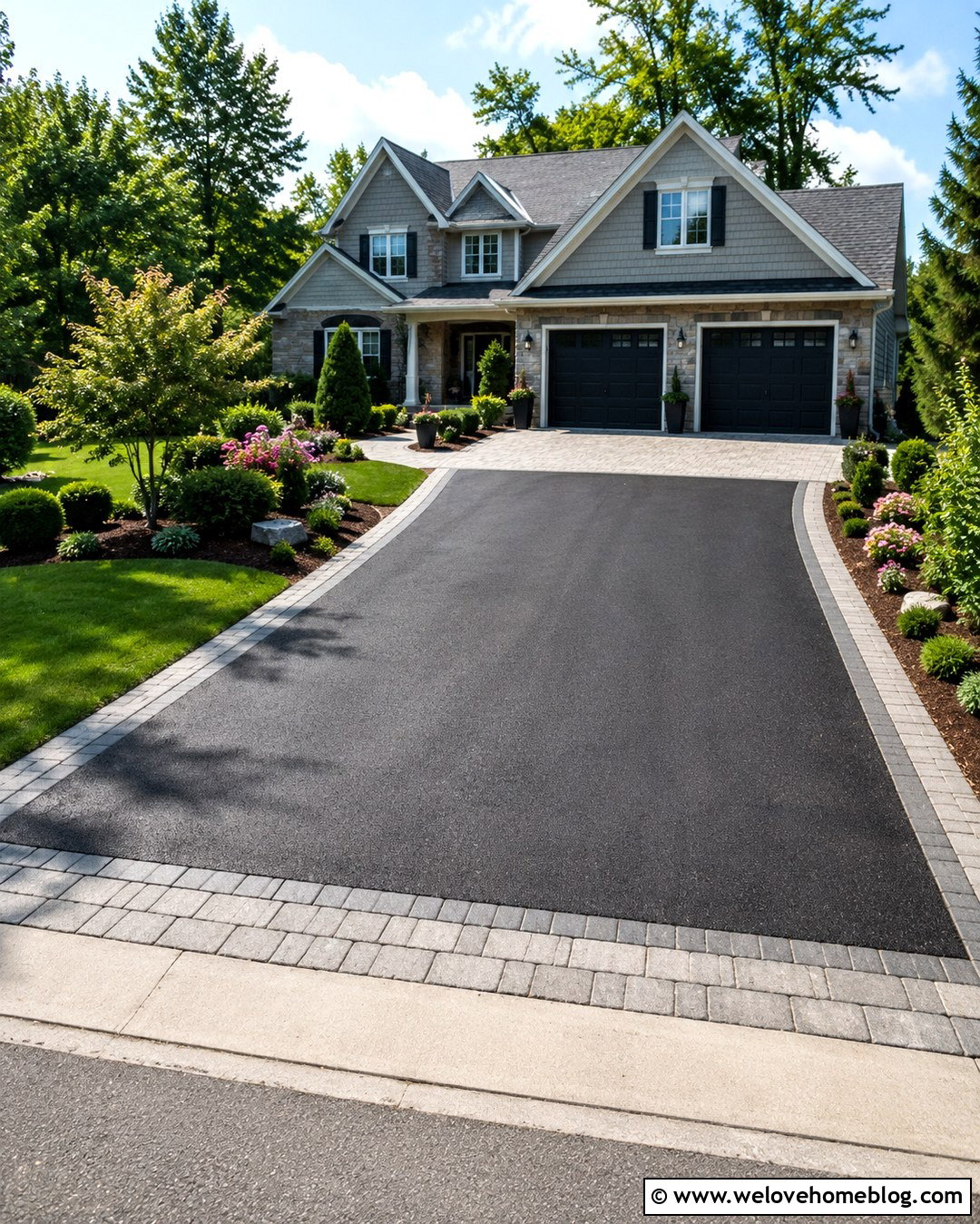
Black asphalt provides an affordable, visually clean foundation for a wide driveway, while a contrasting paver border gives it a finished appearance. Choose charcoal or warm-gray concrete pavers that complement the roof, siding, or stonework on the house. A double border can define the edges more clearly and protect nearby lawn from turning tires. Near the garage, add a wide paver apron to make the transition feel intentional. Curved planting beds filled with evergreen shrubs, flowering perennials, and mulch soften the dark surface. This complete look works especially well with traditional suburban homes. Because fresh asphalt can appear visually heavy, balanced landscaping and a bright walkway help distribute color across the front yard.
3. Wide Gravel Driveway With Stone Edging
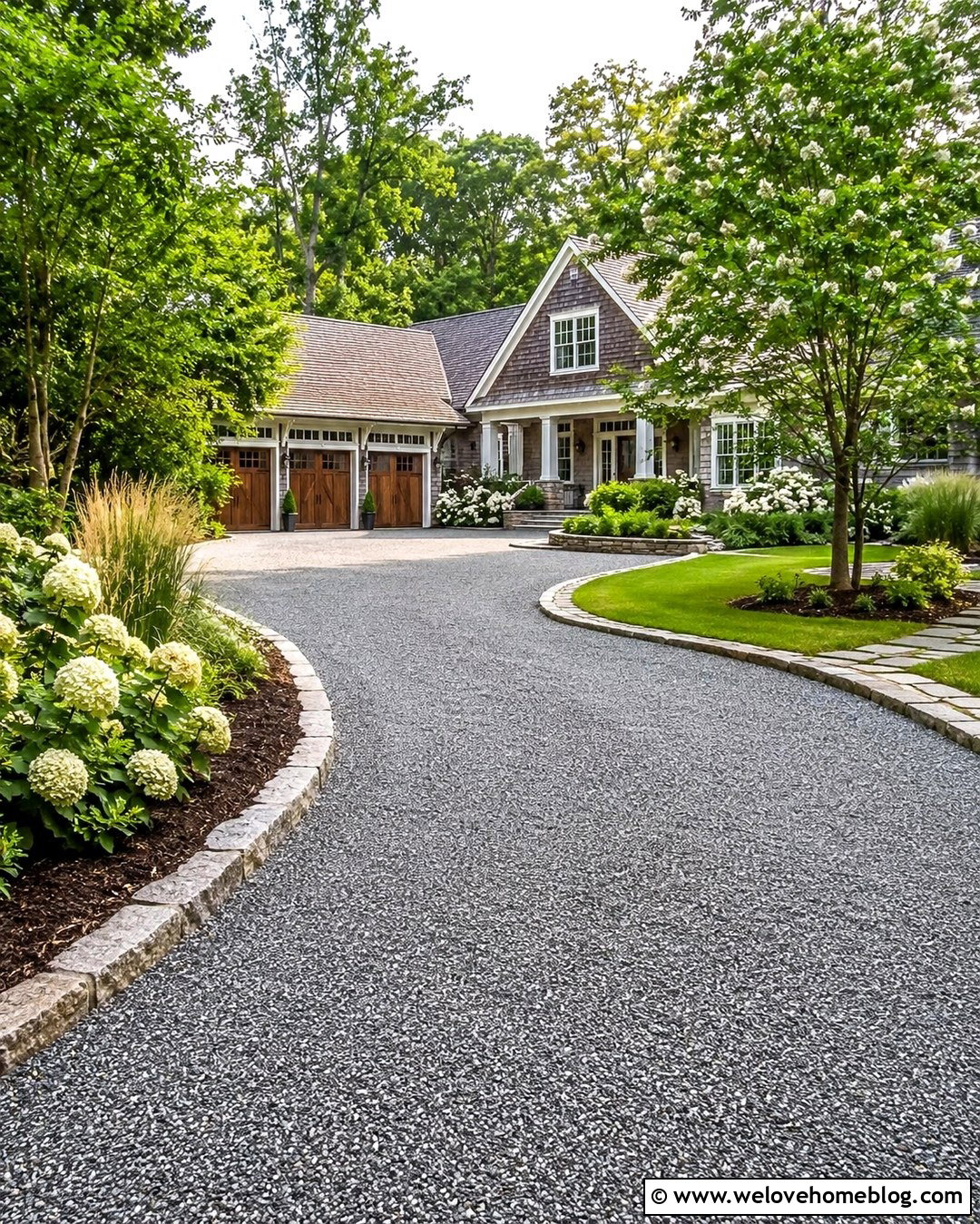
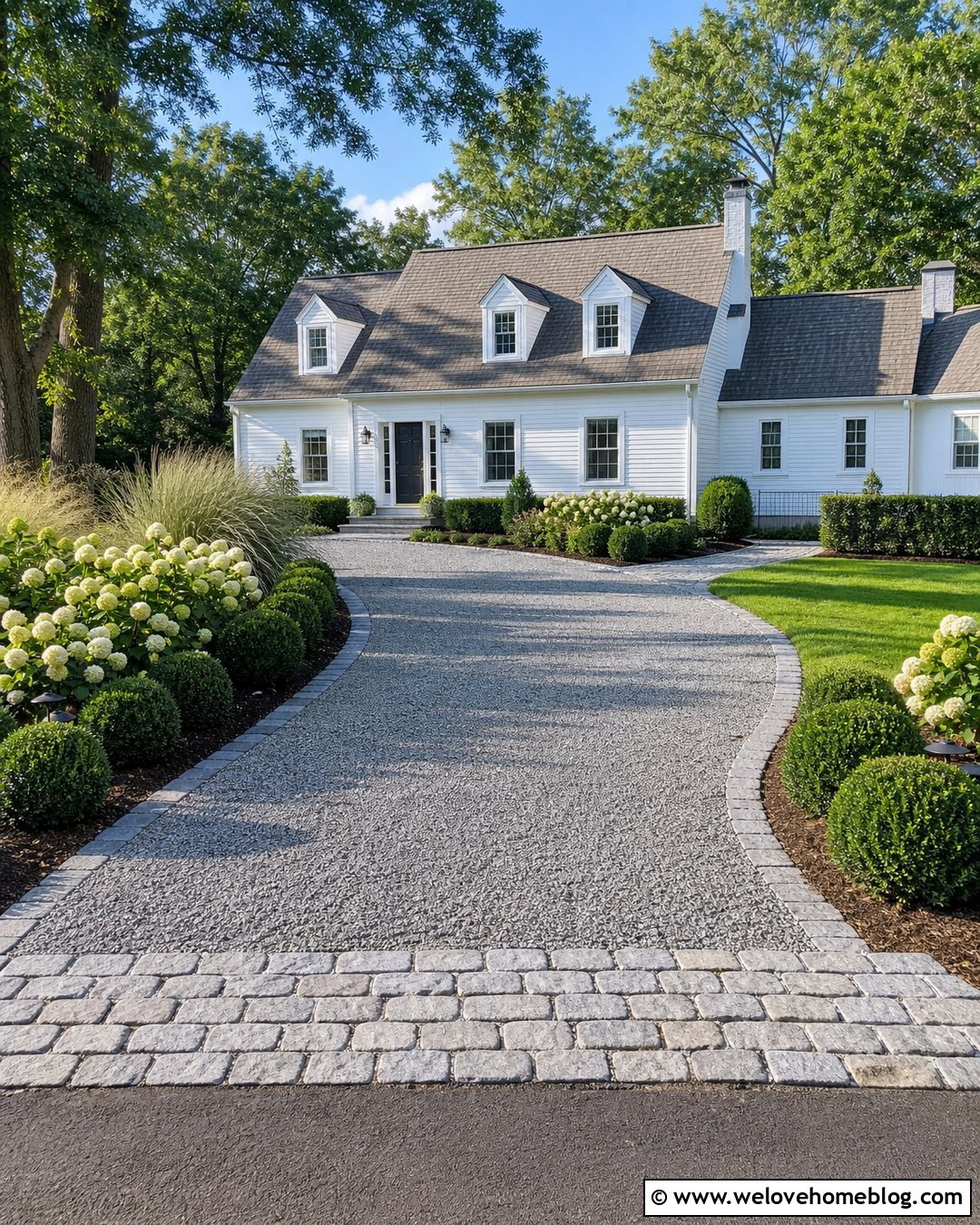
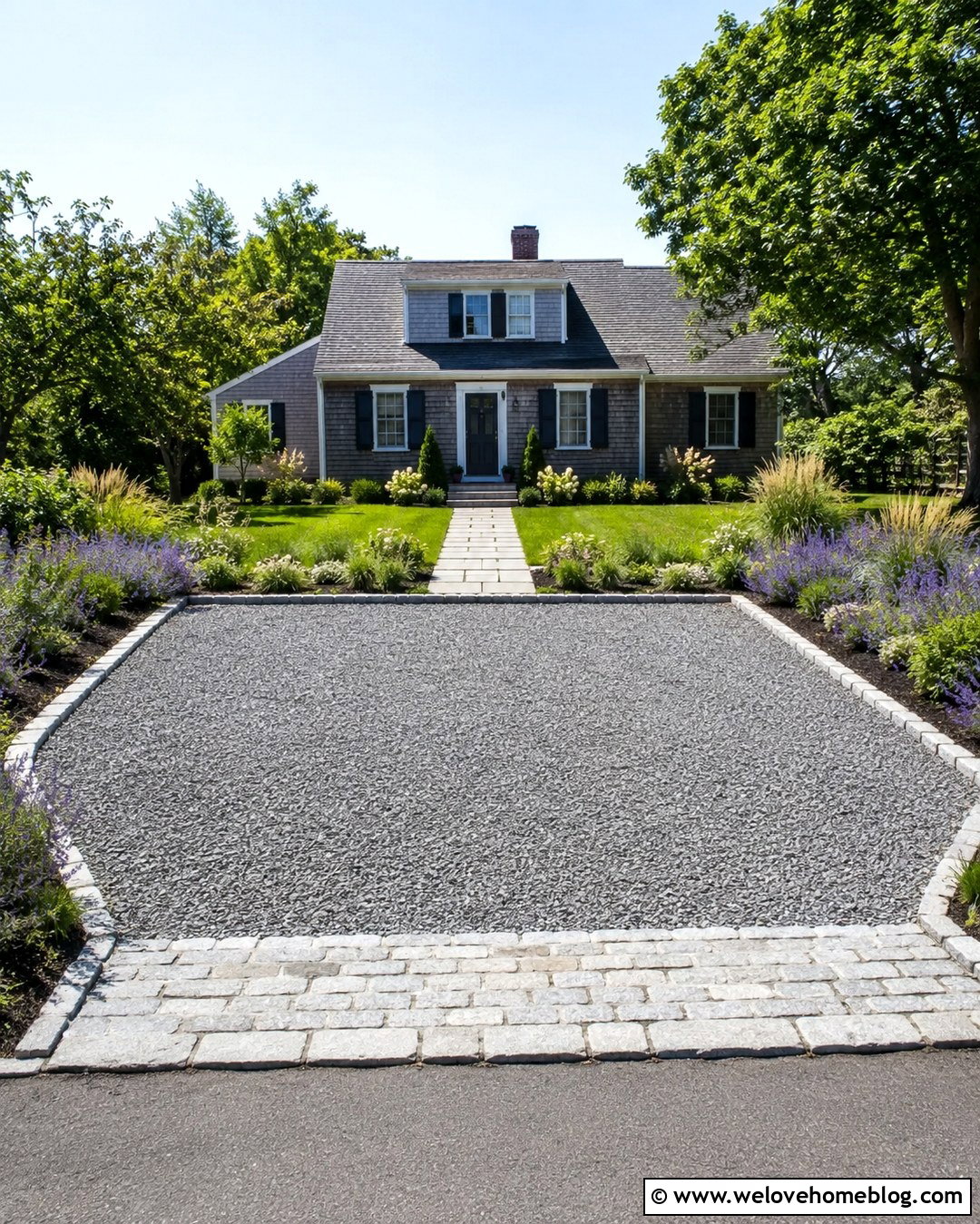
The sound and texture of gravel create an inviting country entrance, especially when the driveway is framed by natural stone. Use compacted gray crushed gravel rather than loose, rounded decorative stones in the main driving area. A stable base and proper grading are essential for reducing movement, ruts, and standing water. Install chunky fieldstone or granite edging to keep gravel away from the lawn and planting beds. A gently curved layout can make a broad driveway feel integrated into the landscape. Plant hydrangeas, native grasses, and small flowering trees along the sides. At the garage, introduce a brick or cobblestone apron that catches displaced gravel and creates a durable, attractive transition to the building.
4. Wide Paver Driveway With Herringbone Pattern
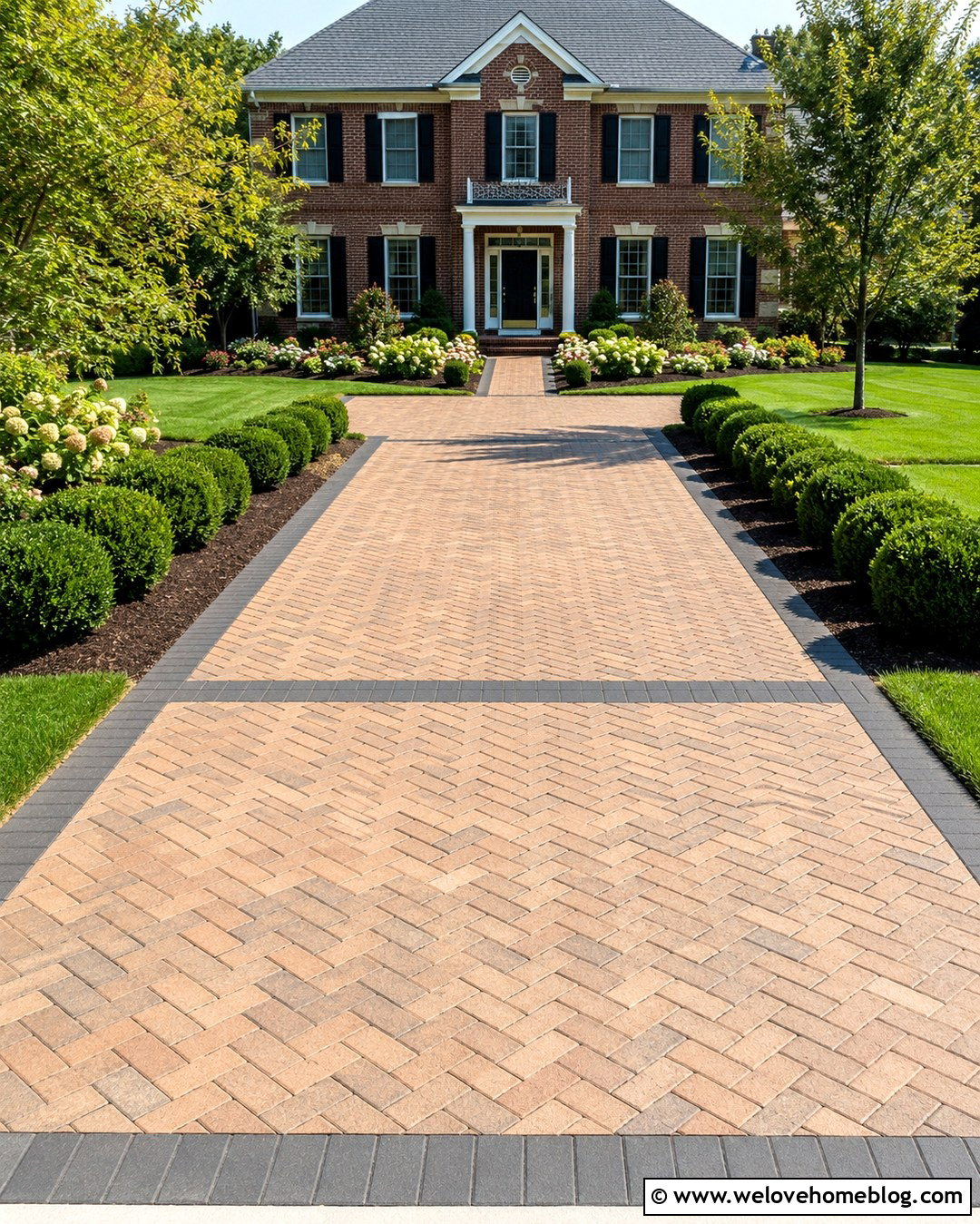
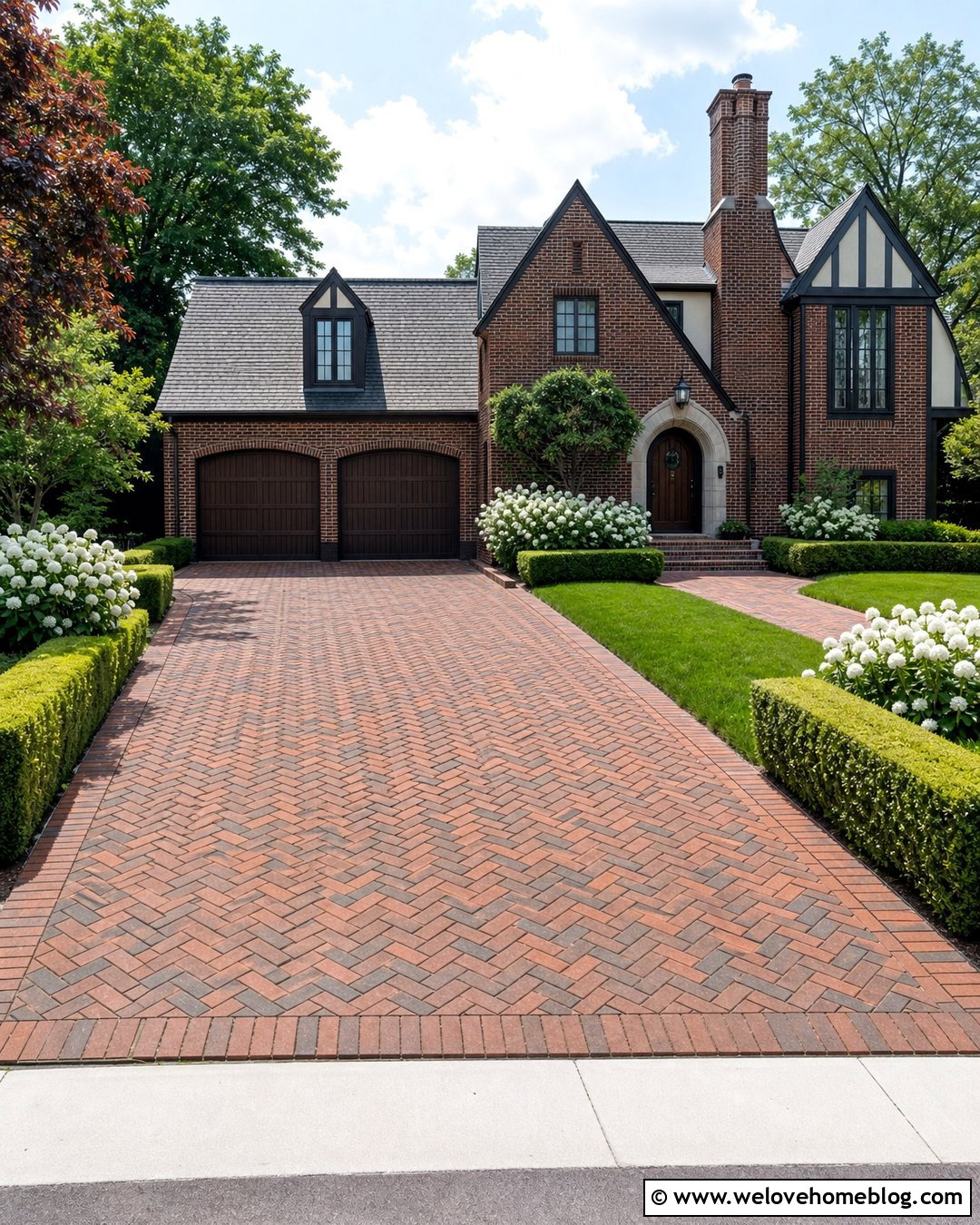
A herringbone pattern brings movement and scale to a broad paver driveway. The angled layout visually breaks up the surface and creates a tailored look that suits colonial, Tudor, craftsman, and European-inspired homes. Select concrete pavers in two or three related earth tones rather than mixing many contrasting colors. A darker soldier-course border can outline the driveway, define parking zones, and connect the surface to the front walkway. Add symmetrical planting beds with boxwood, flowering shrubs, and small ornamental trees near the garage. For additional detail, place a subtle accent band across the driveway where the parking area begins. Proper base preparation and edge restraint are important because wide paver installations must withstand repeated vehicle loads.
5. Wide Circular Driveway With Landscape Island
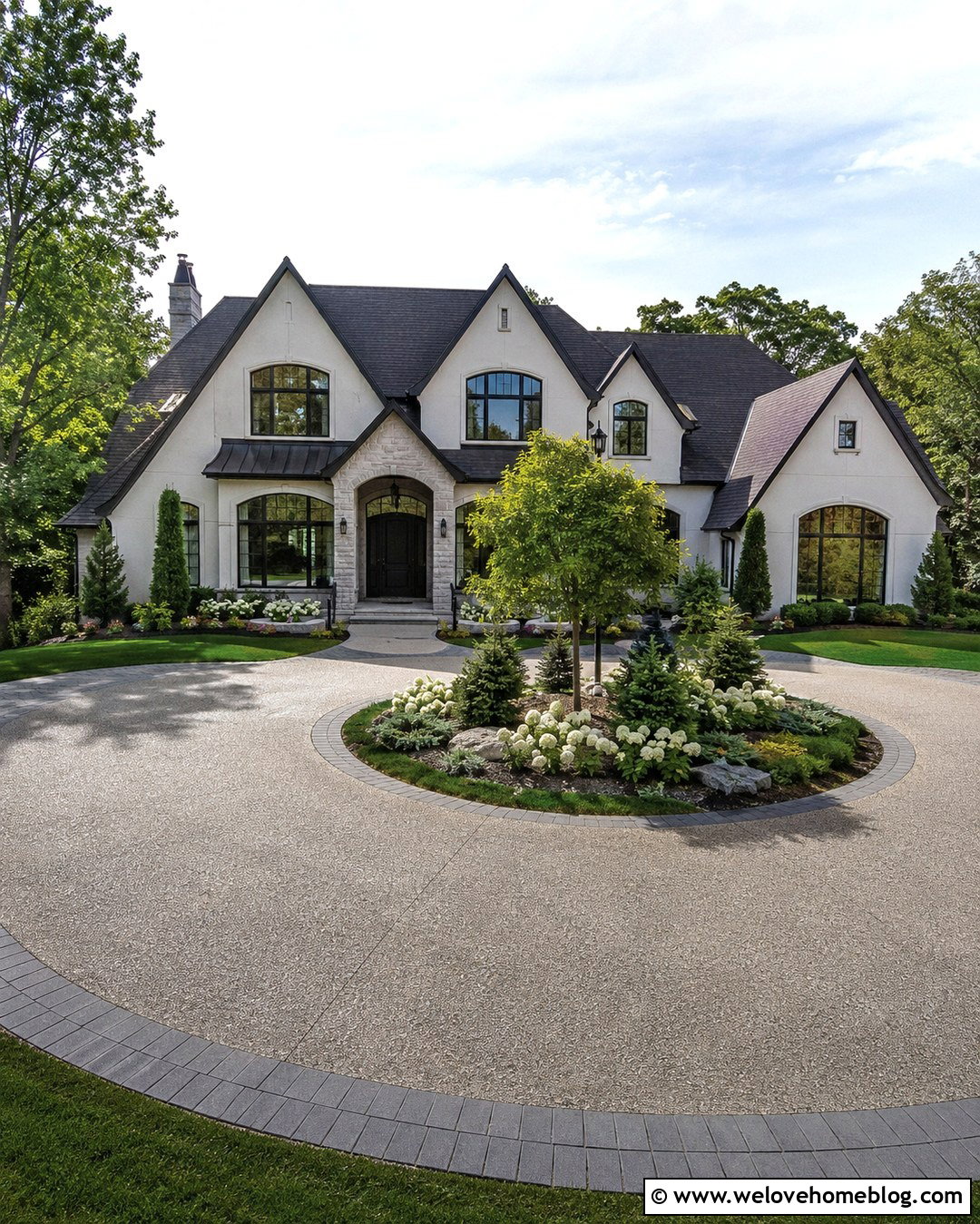
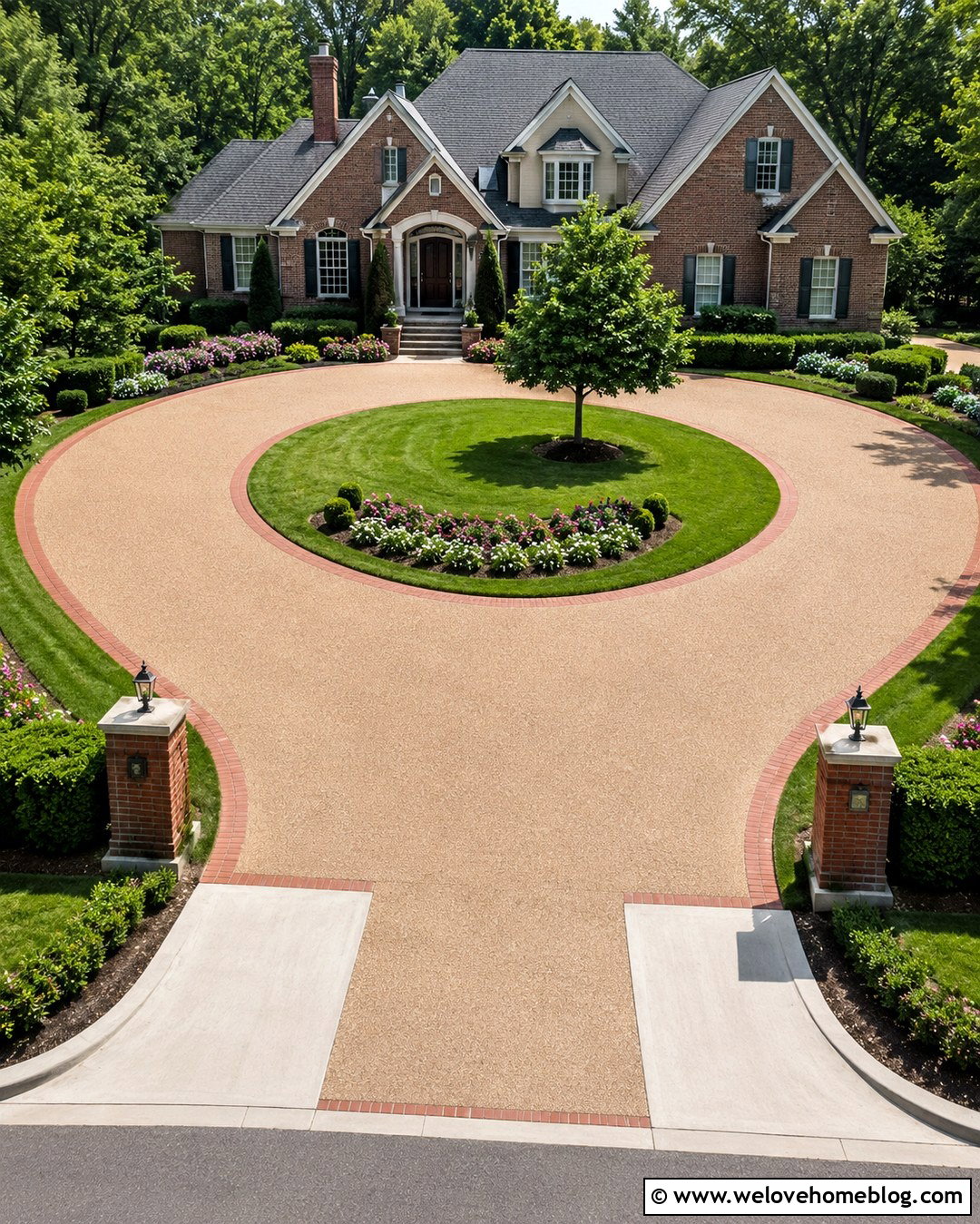
Could a central garden transform an oversized paved entrance? A wide circular driveway becomes much more welcoming when a substantial landscape island anchors the open center. Use exposed aggregate concrete for the driving surface and outline it with a smooth charcoal paver border. Inside the island, combine one small ornamental tree with layered evergreens, flowering perennials, and low ground cover. Keep plants away from key sightlines so drivers can see across the circle. A curved walkway can connect the island-facing side of the driveway to the front door. This layout works best on larger lots with enough depth for comfortable turning. The result offers convenient arrival and departure while placing greenery at the center of the design.
6. Wide Modern Driveway With Large Pavers
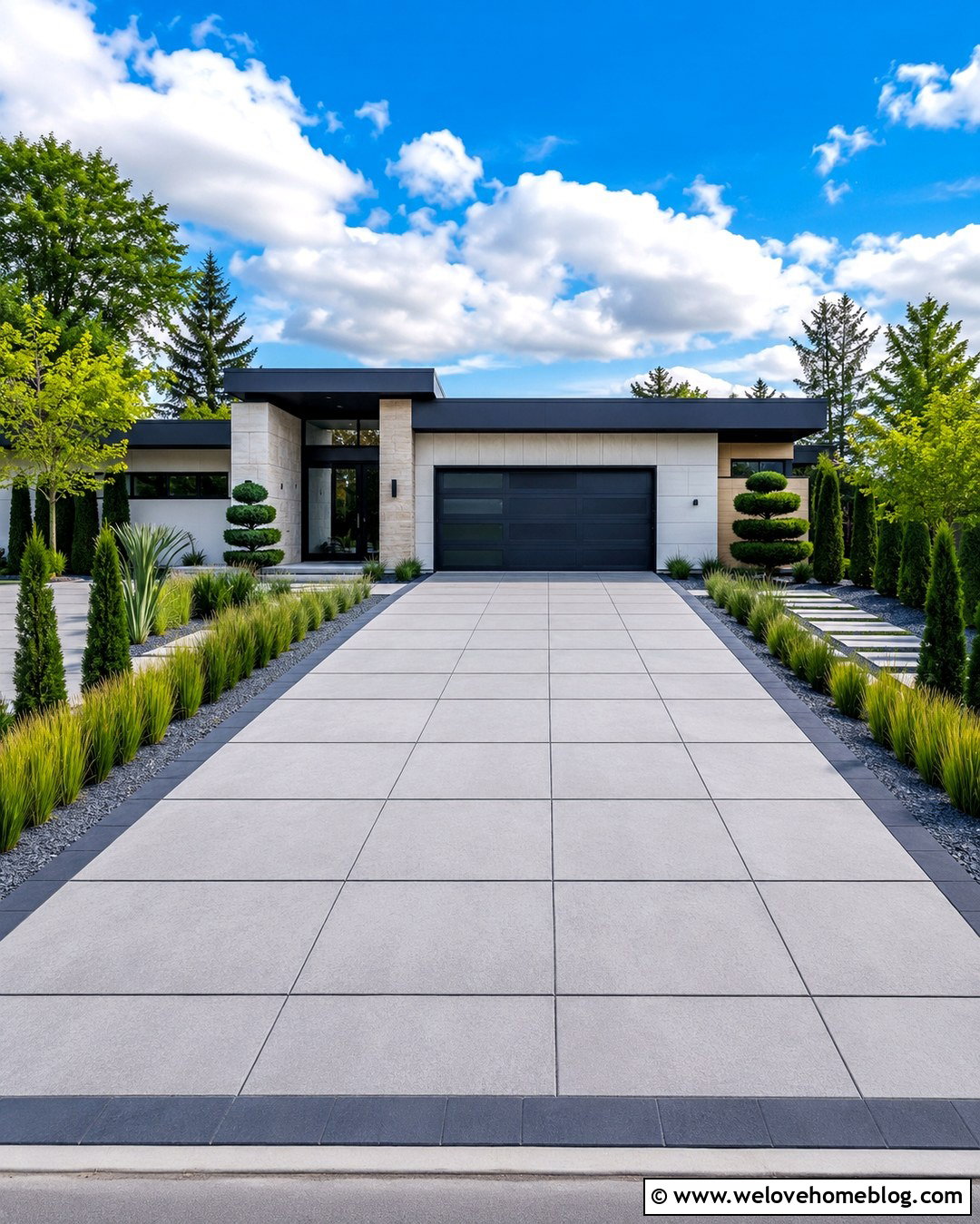
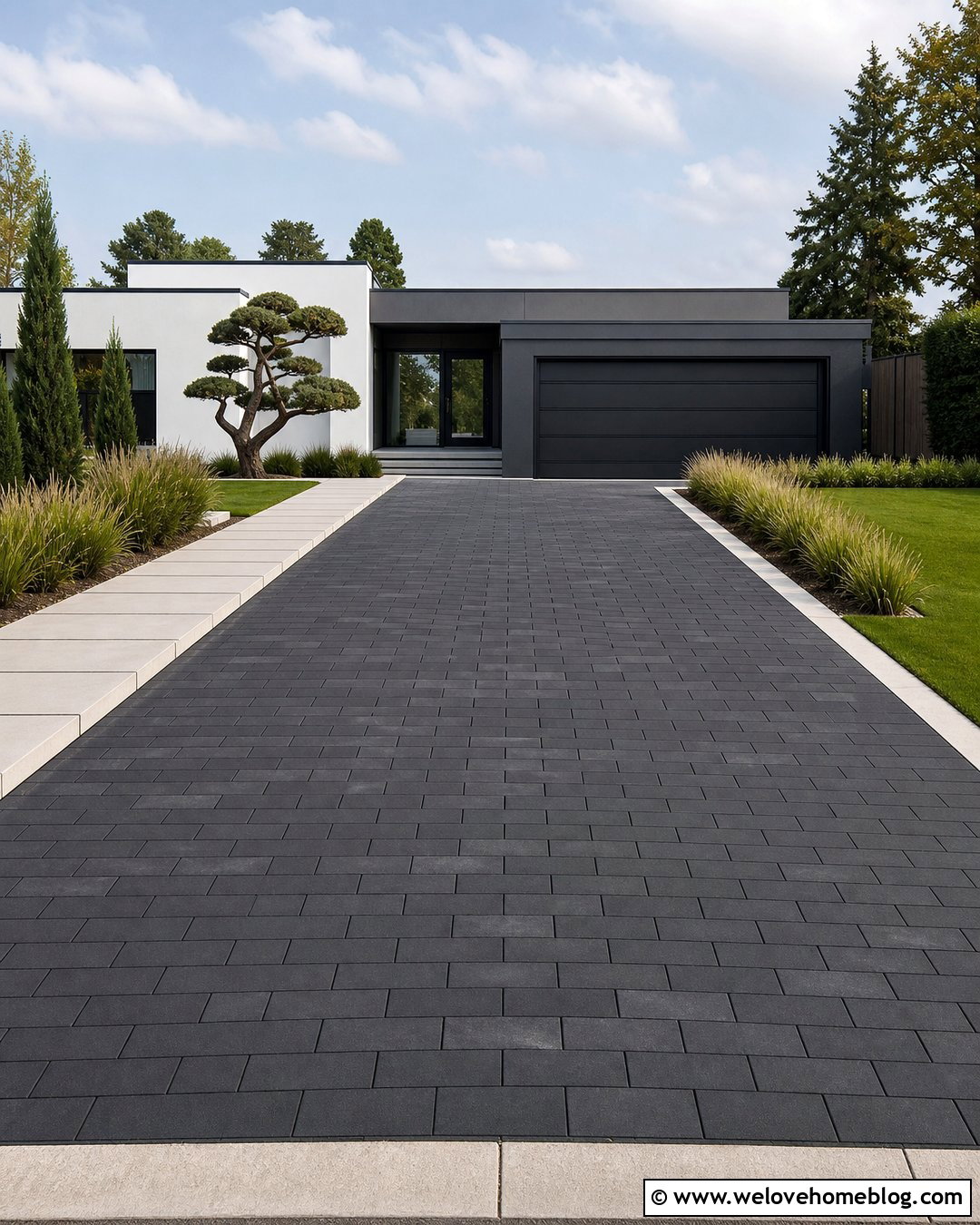
Large-format concrete pavers create a calm, streamlined surface across a wide modern driveway. Choose rectangular pavers in light gray or limestone tones and arrange them in a running bond or stacked grid. Narrow dark joints add definition without making the pattern feel busy. Continue the same paver family into the walkway for a coordinated approach, but change the laying direction to distinguish pedestrian space. Linear planting beds filled with upright grasses, clipped evergreens, and sculptural drought-tolerant plants reinforce the architecture. A low concrete wall or steel-edged gravel bed can frame one side. Pattern changes and accent bands are particularly useful for breaking up broad paved areas and creating a more organized arrival. ()
7. Wide Farmhouse Driveway With Brick Apron
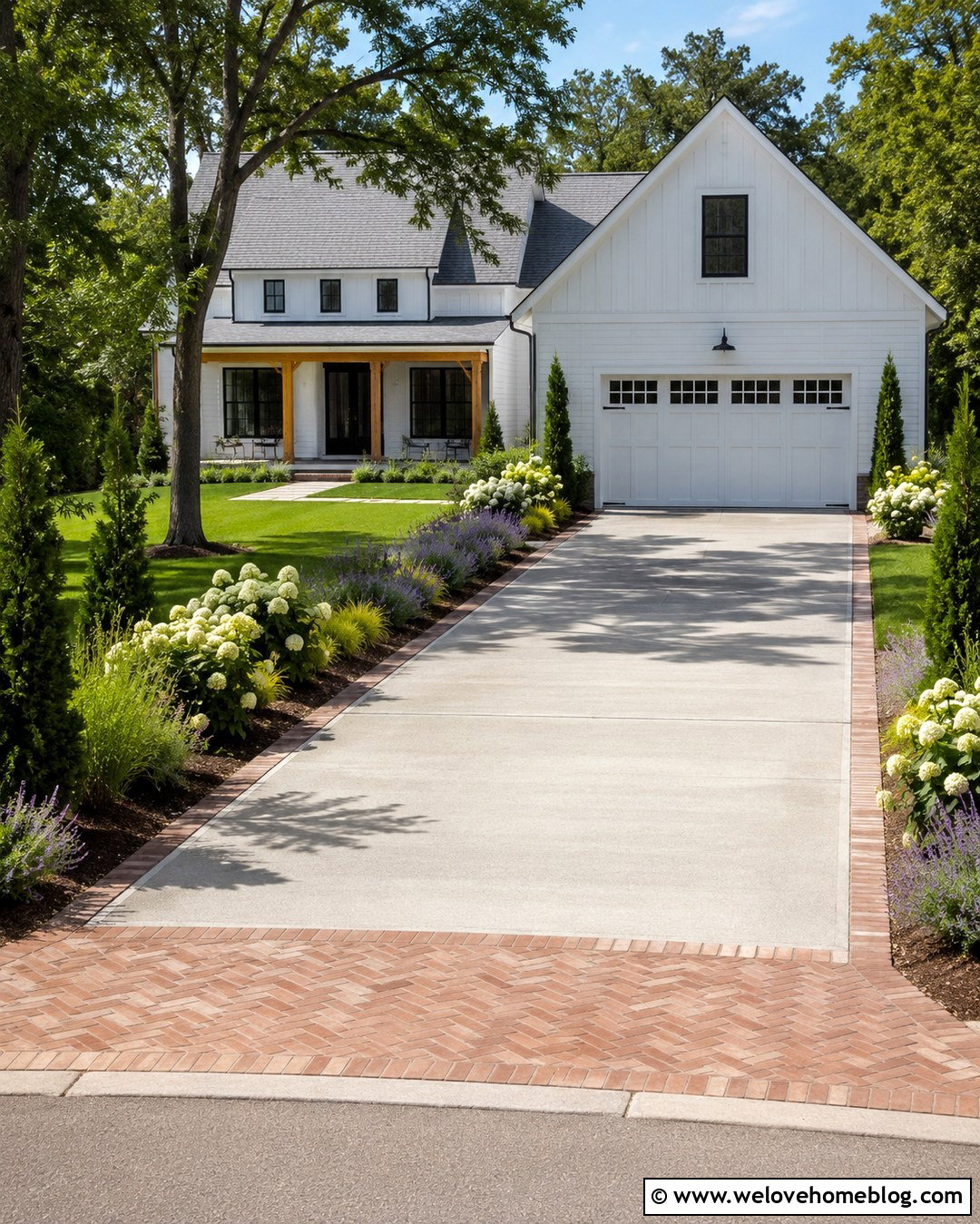
A warm brick apron gives a wide farmhouse driveway a welcoming focal point without requiring brick across the entire surface. Use light-gray poured concrete for the main parking area, then install clay brick pavers in a herringbone pattern near the street or garage. Repeat the brick along the outer edges to visually tie the materials together. Wide planting beds filled with hydrangeas, catmint, ornamental grasses, and compact evergreens soften the rectangular layout. A straight driveway creates a neat approach to a white modern farmhouse, while wooden posts and simple lanterns add rural character. Select brick colors that relate to the home’s chimney, foundation, or front steps. This mixed-material approach provides decorative detail while keeping the overall design practical and restrained.
8. Wide Driveway With Center Walkway
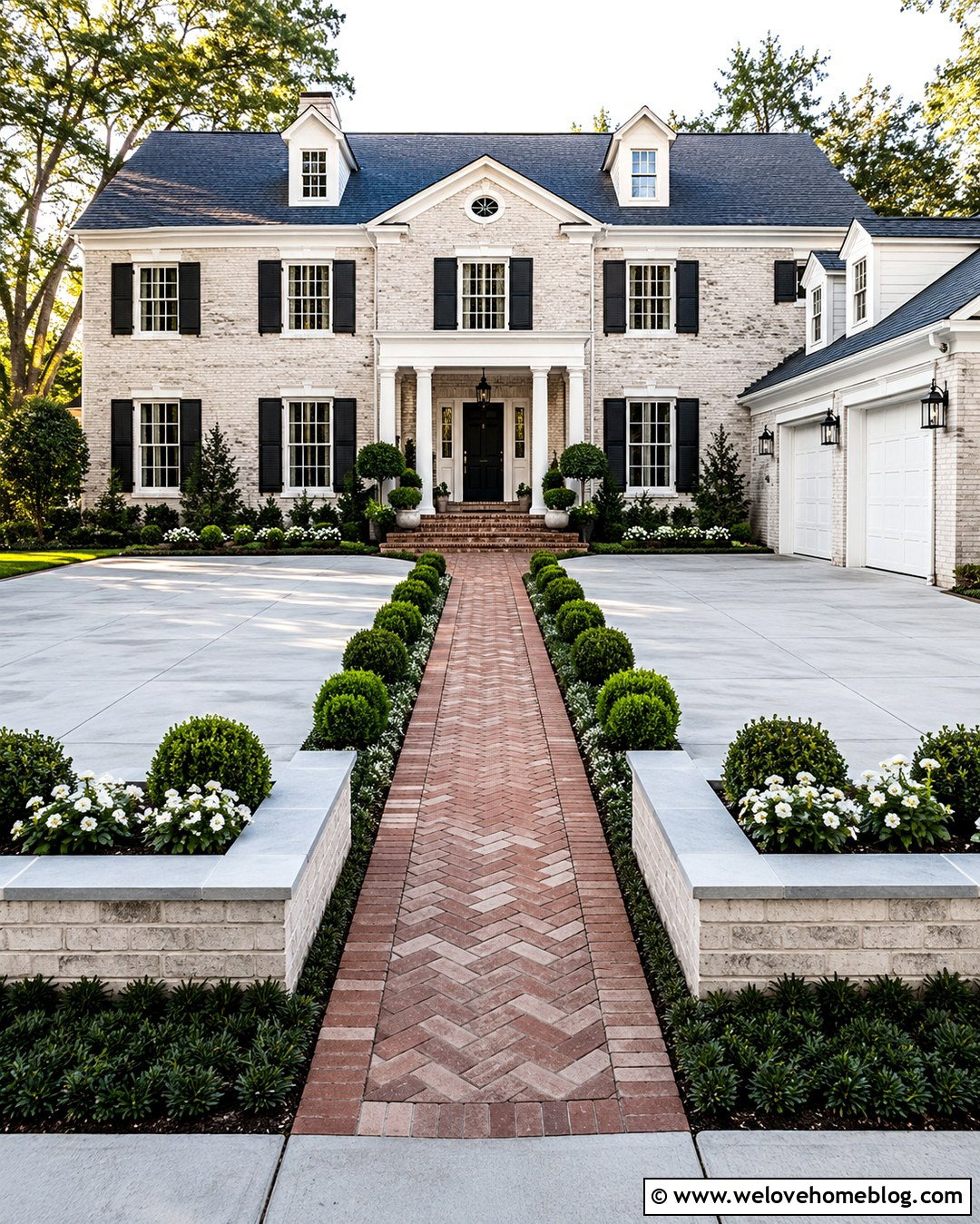
When the driveway faces the front entrance, a dedicated center walkway can turn an awkward paved expanse into a clear arrival sequence. Use smooth gray concrete for the driveway and place a wide brick or contrasting paver path between the parking zones. The walkway should begin near the curb and continue directly to the front steps, remaining visually separate from vehicle traffic. Raised planters or narrow planting beds can emphasize the path without interfering with car doors. Add low shrubs and ground cover rather than tall plants that might restrict visibility. This symmetrical arrangement works especially well with colonial and Georgian homes. Coordinate the walkway material with the porch, facade, or entry columns so the complete design feels connected.
9. Wide Permeable Paver Driveway
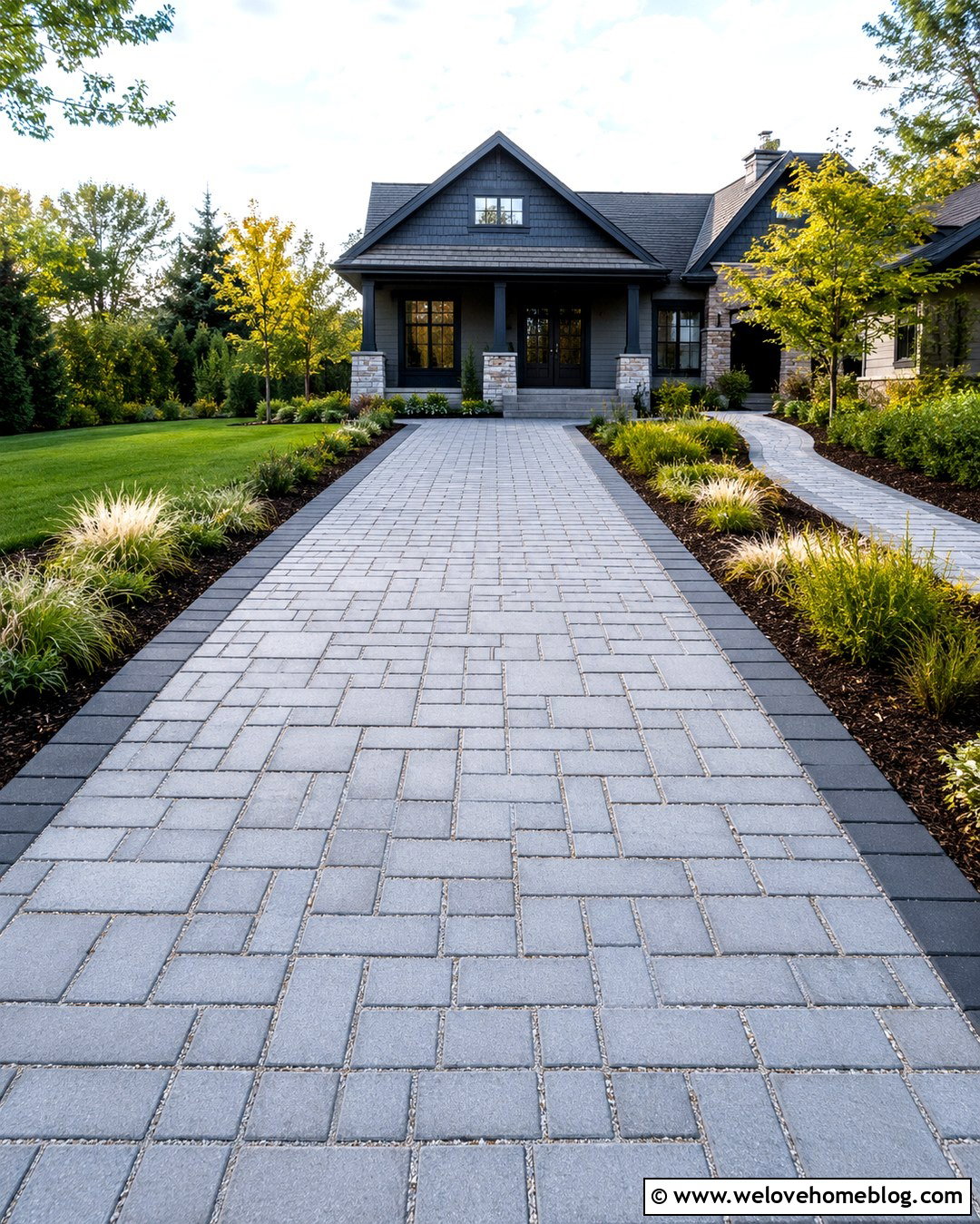
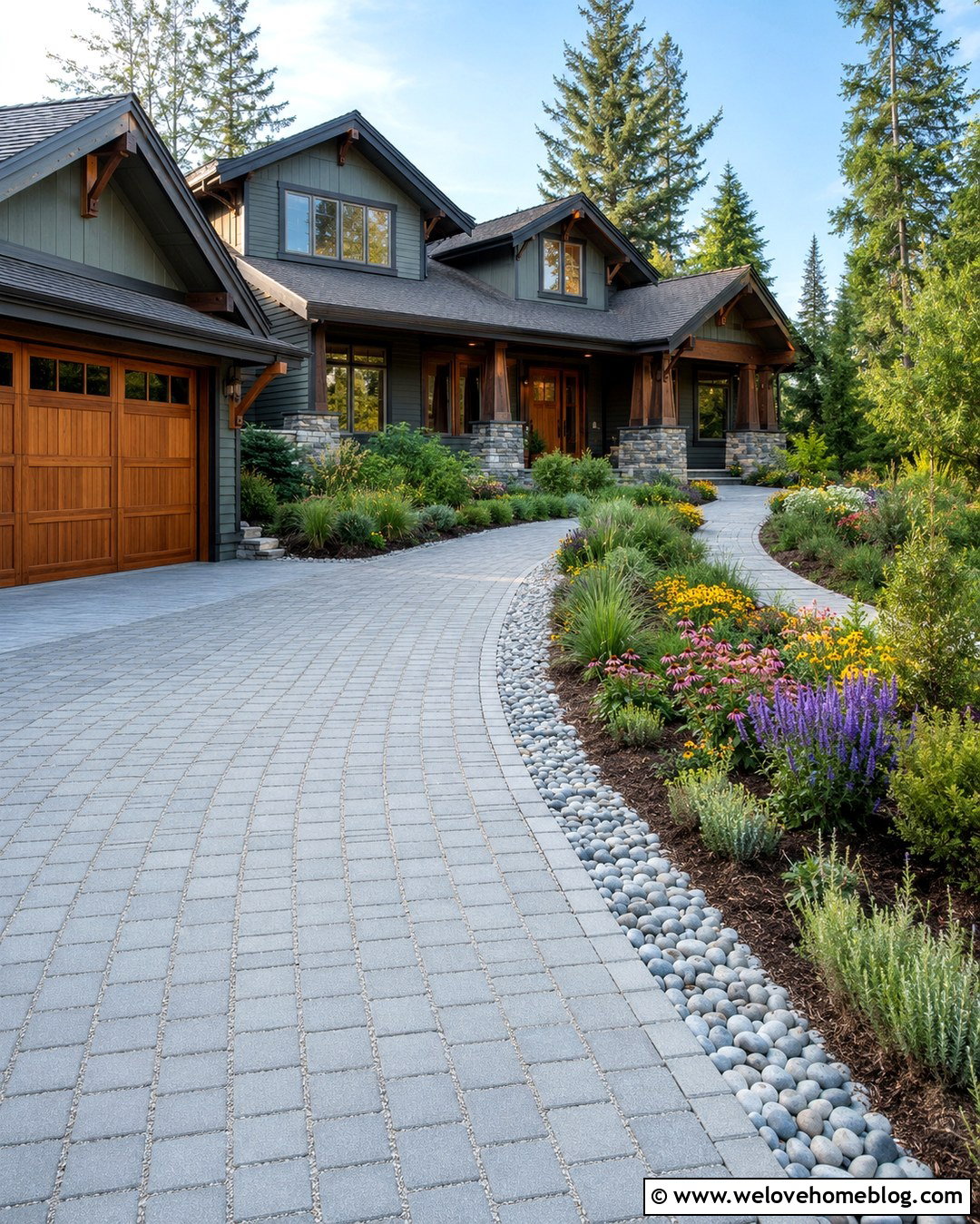
A permeable paver system can give a broad driveway texture while supporting a drainage-conscious landscape plan. Choose interlocking concrete pavers with wider joints designed for permeable aggregate rather than ordinary sand-filled gaps. Arrange them in a simple charcoal-and-gray pattern, then add solid paver borders for a crisp edge. Rain gardens planted with regionally suitable grasses and moisture-tolerant perennials can sit along the lower side of the driveway where site conditions permit. Avoid placing planting depressions against the home’s foundation. A straight or gently curved layout suits contemporary and craftsman houses. Permeable paving still needs correctly engineered excavation, base layers, grading, and maintenance, so have the complete system designed for local soil and rainfall conditions.
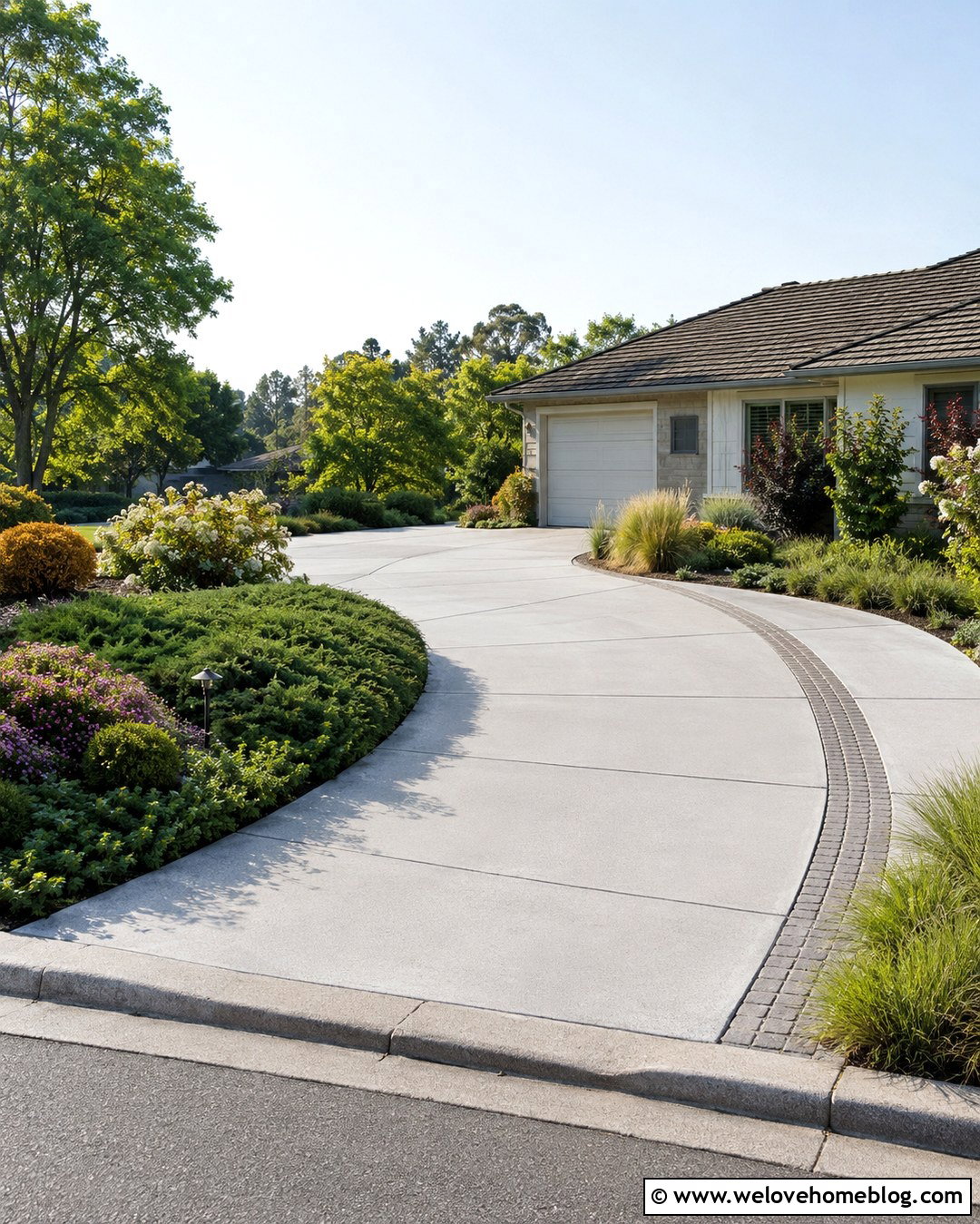
10. Wide Driveway With Cobblestone Border
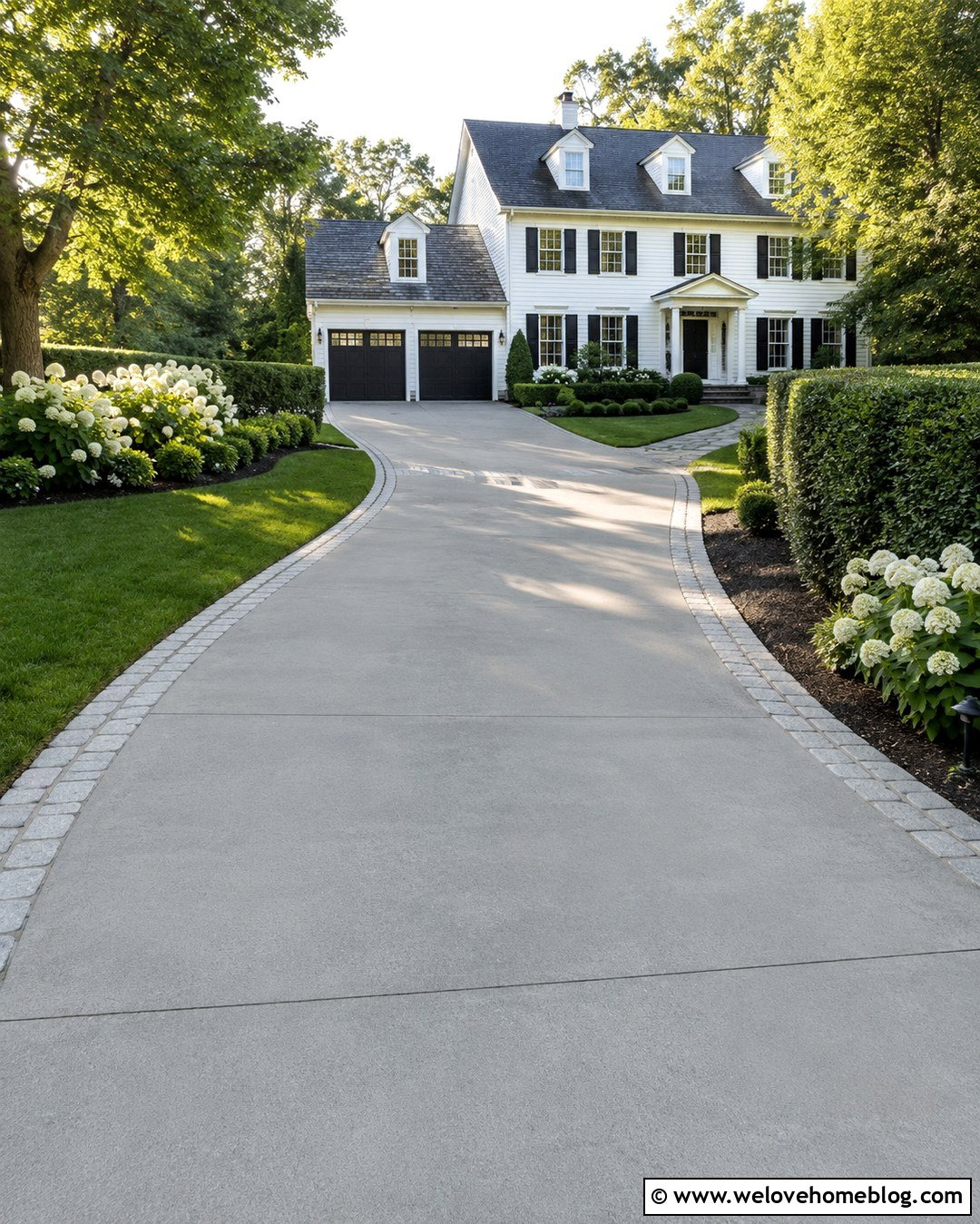
Rough-textured cobblestone gives a wide driveway definition and traditional character. Pair a smooth, warm-gray concrete surface with a double row of granite cobbles along both sides. Continue the stone across the driveway as a decorative ribbon near the garage and street entrance. This cross-band interrupts the long pavement visually and can mark a transition between driving and parking areas. Surround the driveway with deep green hedges, lawn, and layered white flowers for a polished East Coast look. A curved edge can soften the broad dimensions, while the solid stone border helps contain adjacent soil and mulch. Choose cobbles with relatively even top surfaces at walking points, especially where passengers regularly step from vehicles onto the border.
11. Wide Driveway With Curved Planting Beds
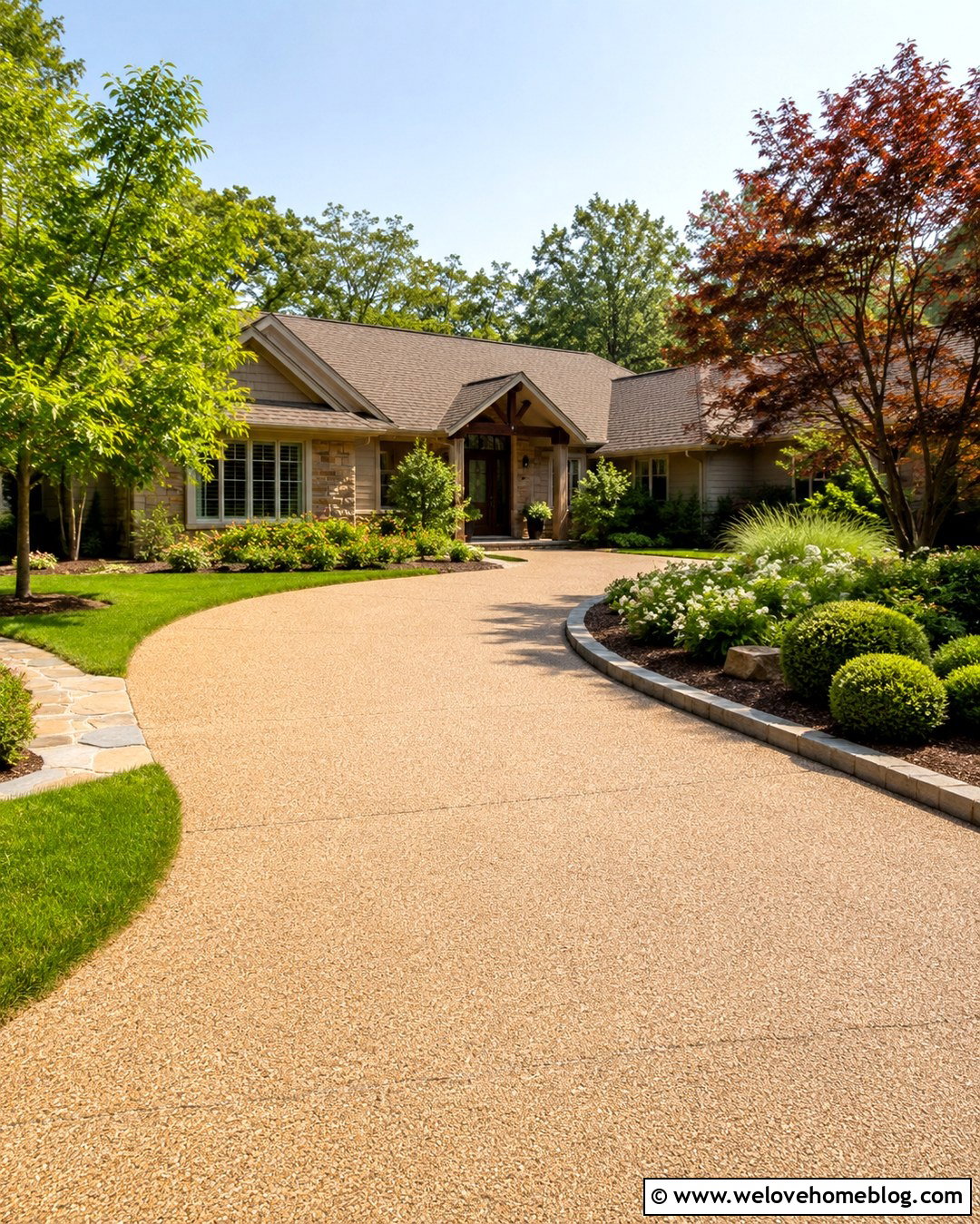
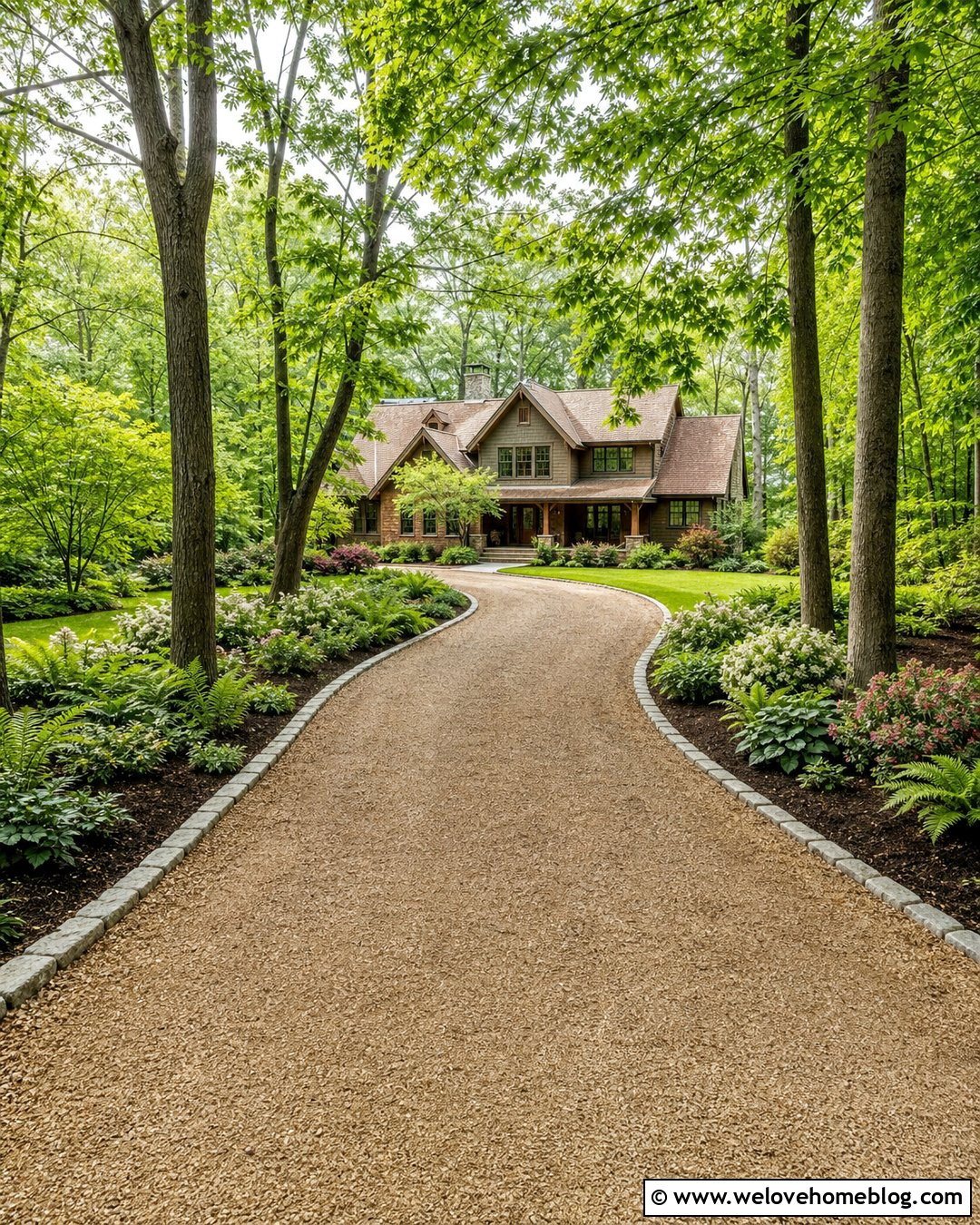
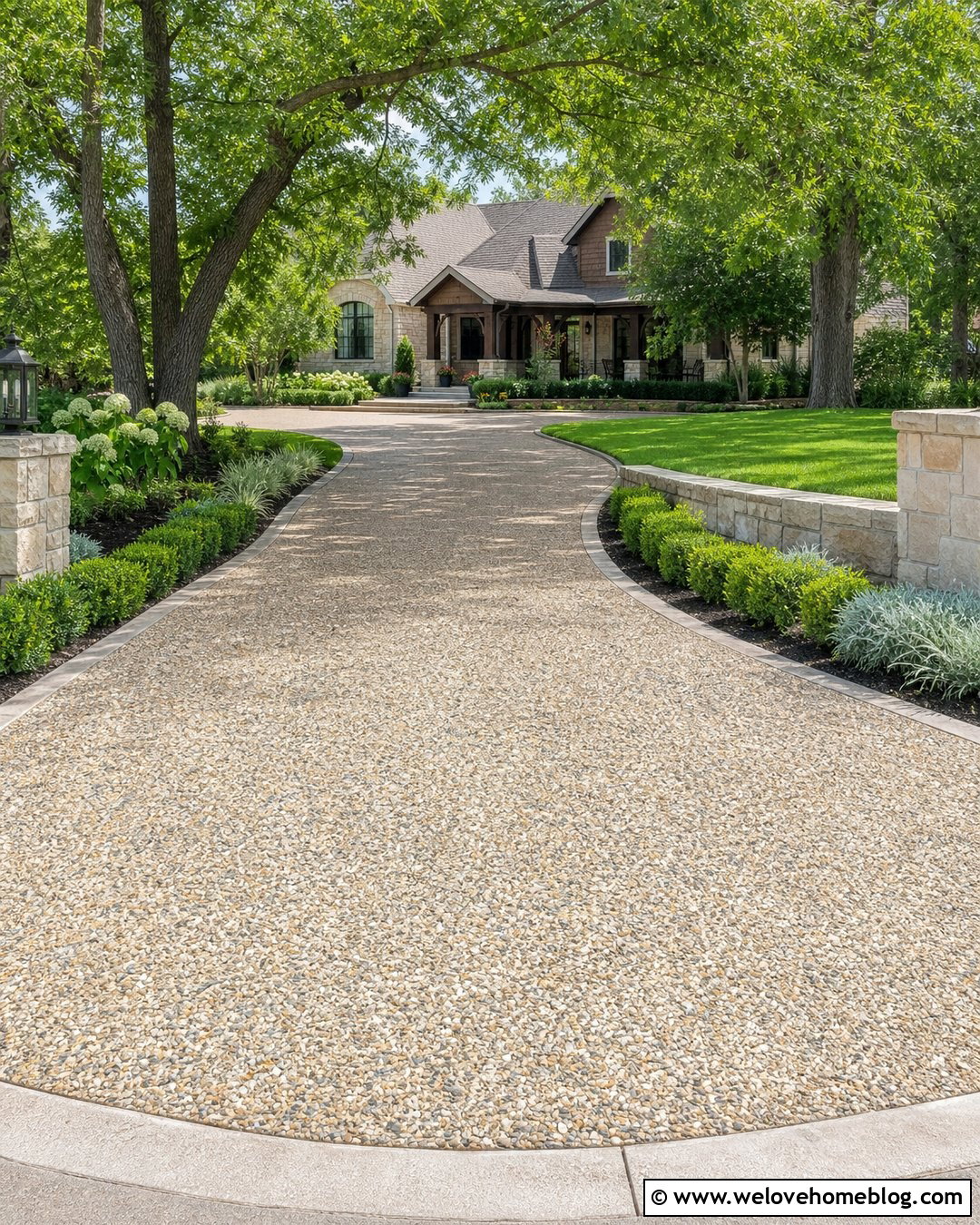
Long, sweeping planting beds can make a wide driveway appear more connected to the yard. Start with a gently curved exposed aggregate driveway in a warm sand tone. Follow its outer lines with broad beds containing small trees, rounded shrubs, ornamental grasses, and seasonal flowers. Repeat plant groups instead of using many unrelated varieties, since repetition helps a large frontage feel organized. A natural stone edge separates the aggregate from mulch and gives the curve a crisp outline. Near the garage, widen the beds slightly to soften the building corners. Keep mature plant size in mind so branches do not scratch vehicles or block lighting. This relaxed design works beautifully with ranch, craftsman, and contemporary country homes.
12. Wide Driveway With Parking Courtyard
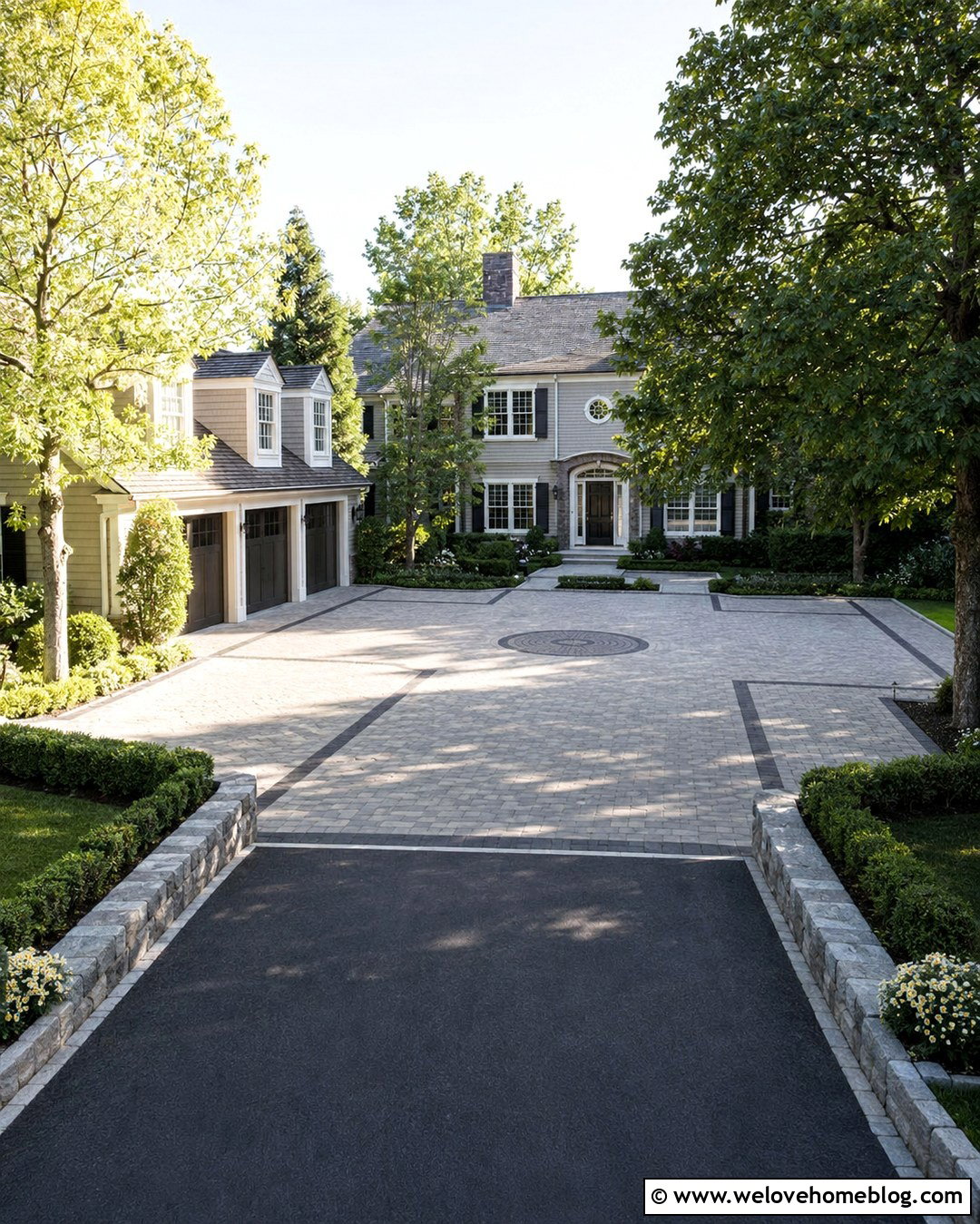
A parking courtyard separates maneuvering space from the main driveway and makes a large paved area feel purposeful. Use a straight asphalt approach that opens into a wide square courtyard surfaced with concrete pavers. A contrasting border can outline individual parking areas without painted lines. Place the garage along one side and connect the front door with a generous pedestrian path on the other. A central paver medallion or small flush-set pattern adds interest without becoming an obstacle. Frame the courtyard with clipped hedges, shade trees, and low planting beds that leave doors accessible. This layout is useful for households with several vehicles or frequent guests. Confirm turning dimensions before installation by mapping actual vehicle movements across the proposed space.
13. Wide Driveway With Side Parking Bay
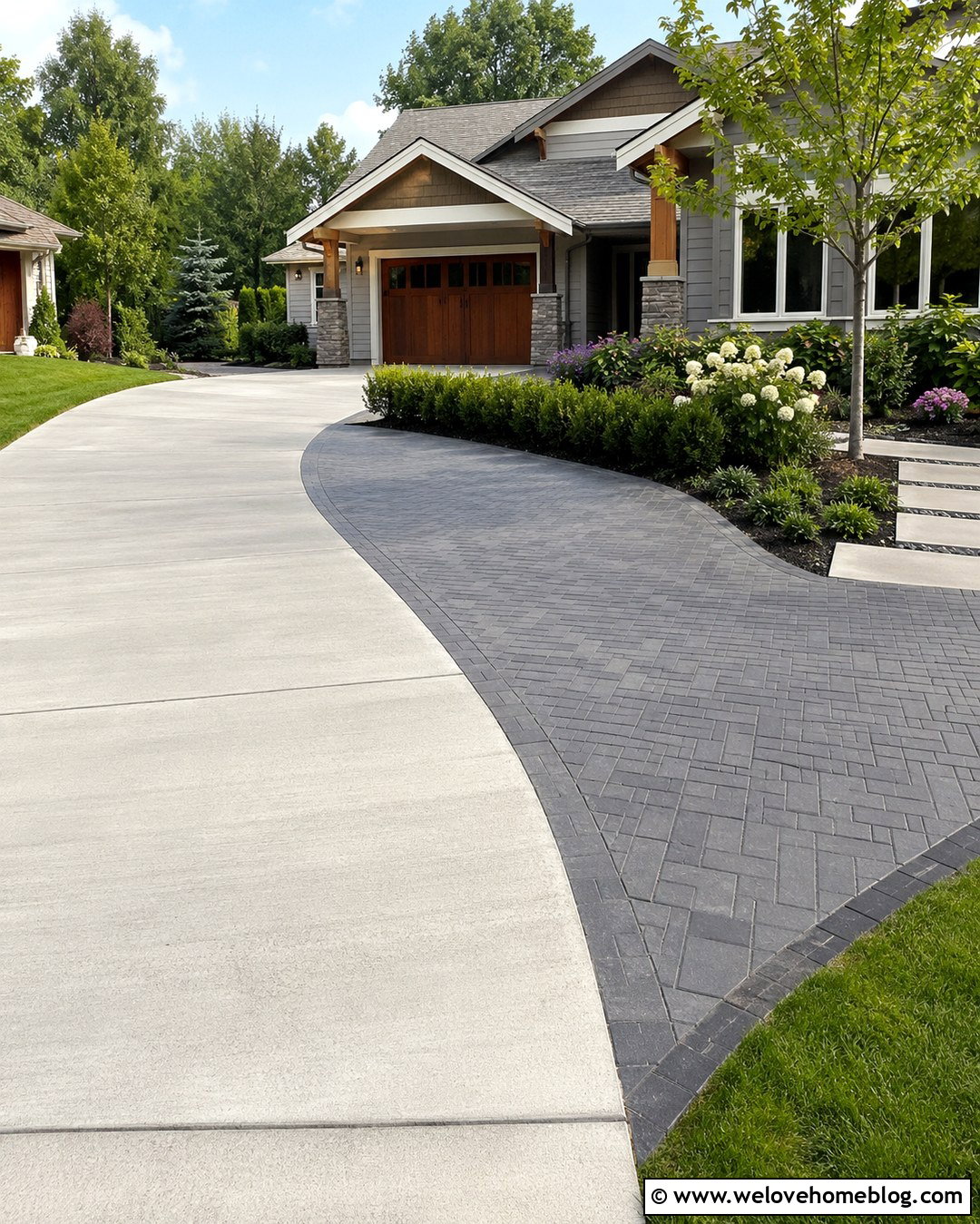
A side parking bay adds capacity without making the entire driveway equally broad from curb to garage. Begin with a standard-width concrete approach, then widen it near the house using a curved or rectangular paver extension. The change in material makes the additional space look planned rather than added later. Use charcoal concrete pavers for the bay and light broom-finished concrete for the main lane. A low hedge or planted island can screen parked vehicles from the front entrance while preserving driver visibility. Connect the bay to the walkway with stepping pads so passengers do not cross wet grass. This design suits suburban lots where guest parking, a work vehicle, or a future household driver needs a dependable off-street space.
14. Wide Resin-Bound Driveway With Brick Border
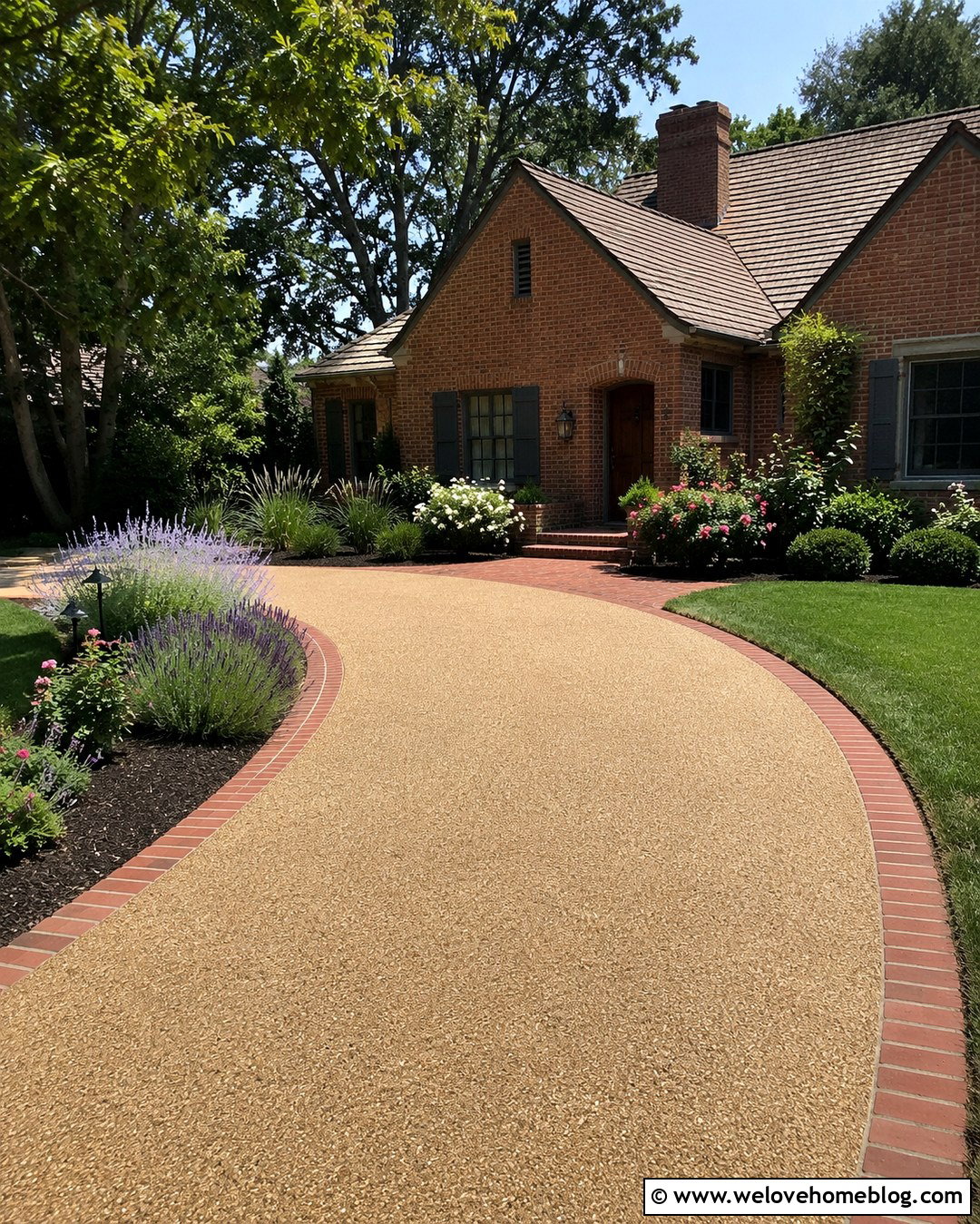
Resin-bound gravel produces a smooth, visually consistent surface that can prevent a wide driveway from looking cluttered. Select a warm beige or golden aggregate blend to complement brick, stone, or cream-colored siding. Define the perimeter with clay brick pavers laid in a soldier course. The brick adds stronger color and provides a clear transition to lawn, flower beds, and the public sidewalk. A soft curved layout works well with cottage, craftsman, and traditional houses. Use lavender, compact roses, evergreen mounds, and ornamental grasses to create layered borders without hiding the surface. Resin-bound installations depend on compatible materials, correct preparation, suitable weather, and an experienced installer. Discuss permeability, base conditions, repairs, and regional performance before selecting the system.
15. Wide Driveway With Decorative Concrete Bands
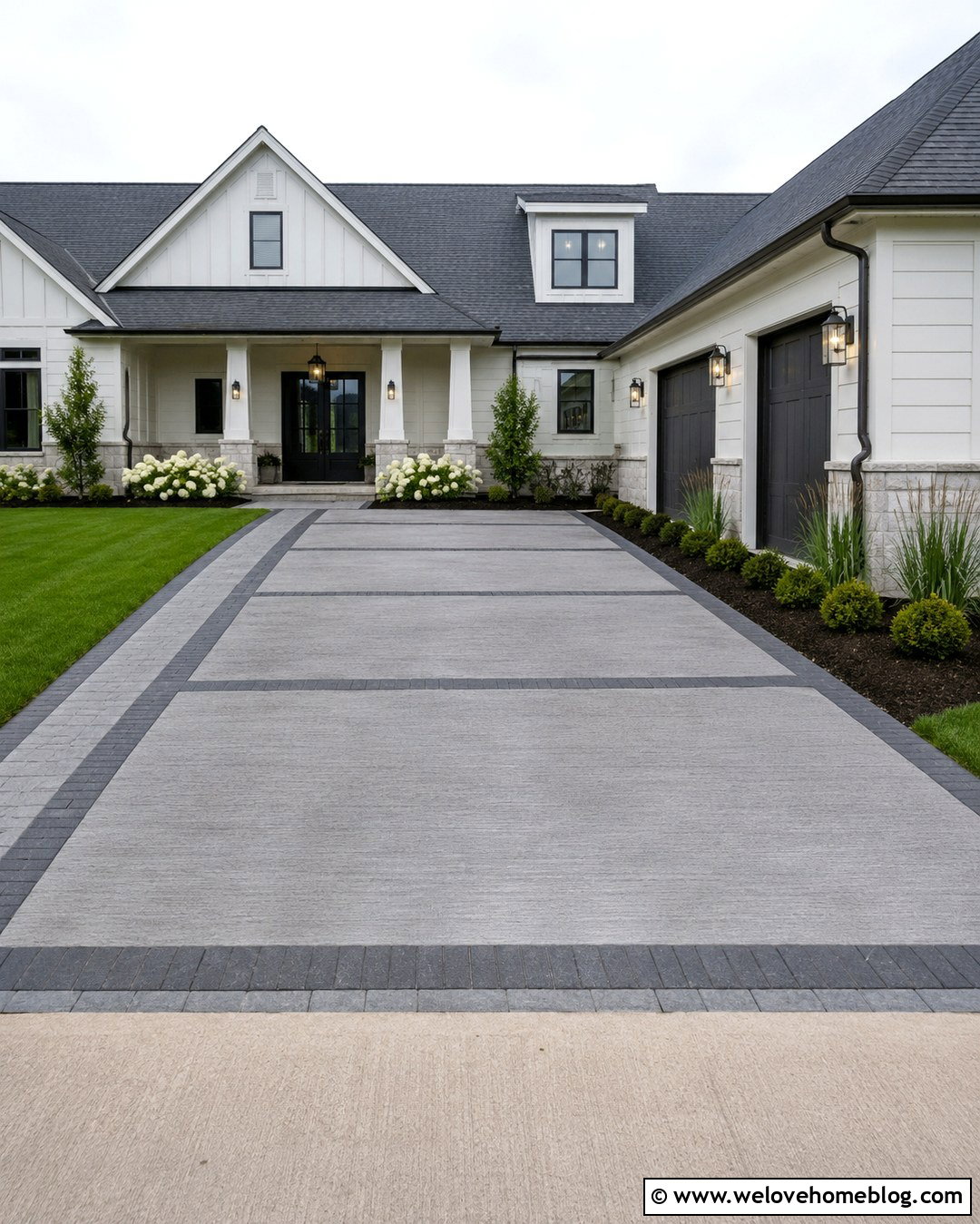
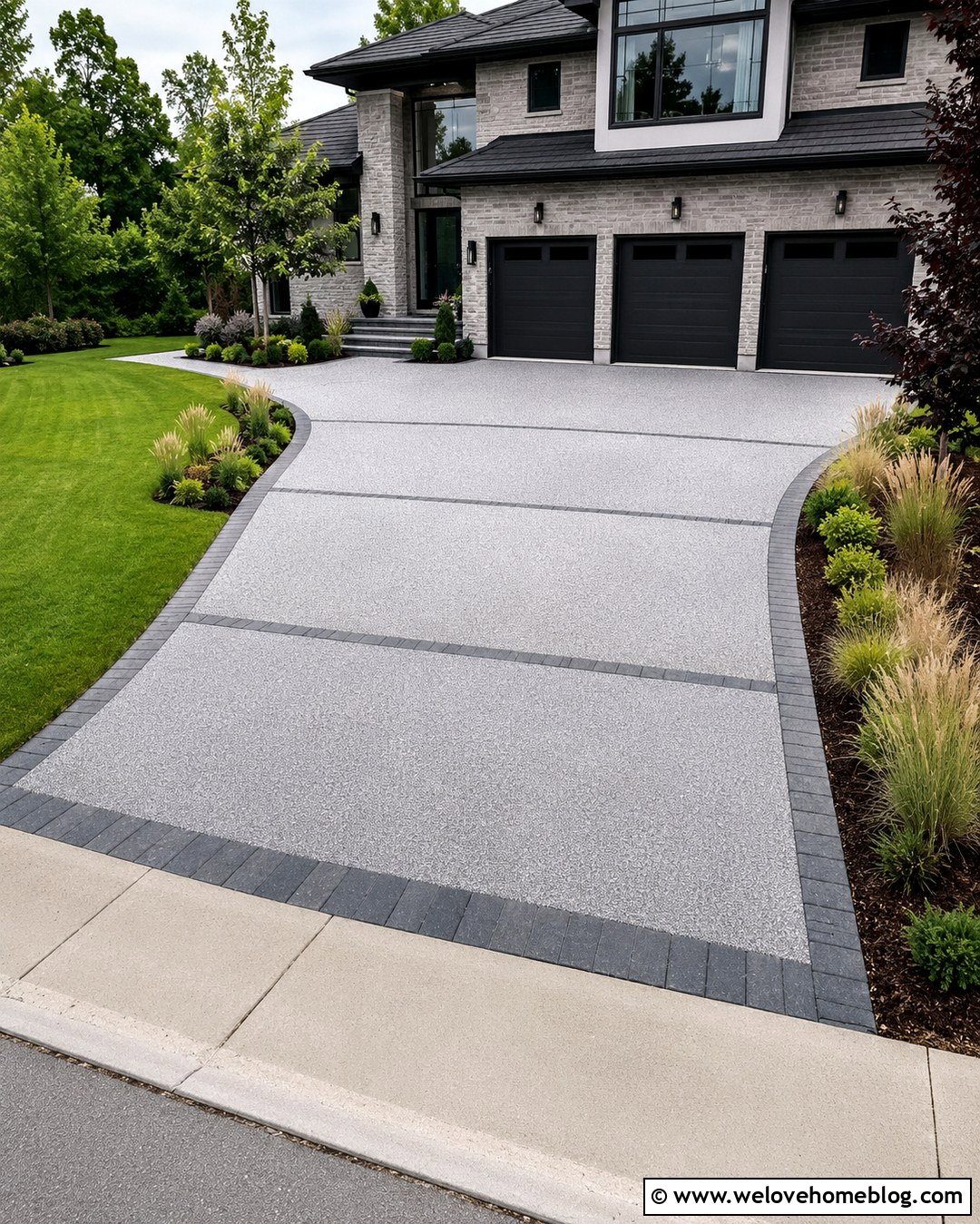
Decorative bands can divide a wide concrete driveway into smaller visual panels. Pour the main surface in medium-gray concrete with a light broom finish, then insert charcoal paver bands lengthwise and across selected points. Align the bands with garage doors, entry columns, or architectural joints for a deliberate appearance. Avoid adding too many lines, since a simple grid usually looks cleaner across a broad surface. Low rectangular planting beds can echo the geometry along the edges. Fill them with clipped shrubs, white flowering plants, and upright ornamental grasses. Add a matching paver walkway leading to the porch. This complete layout suits modern, transitional, and updated ranch homes while delivering more character than plain concrete without relying on highly ornate patterns.
16. Wide Driveway With Tree-Lined Entrance
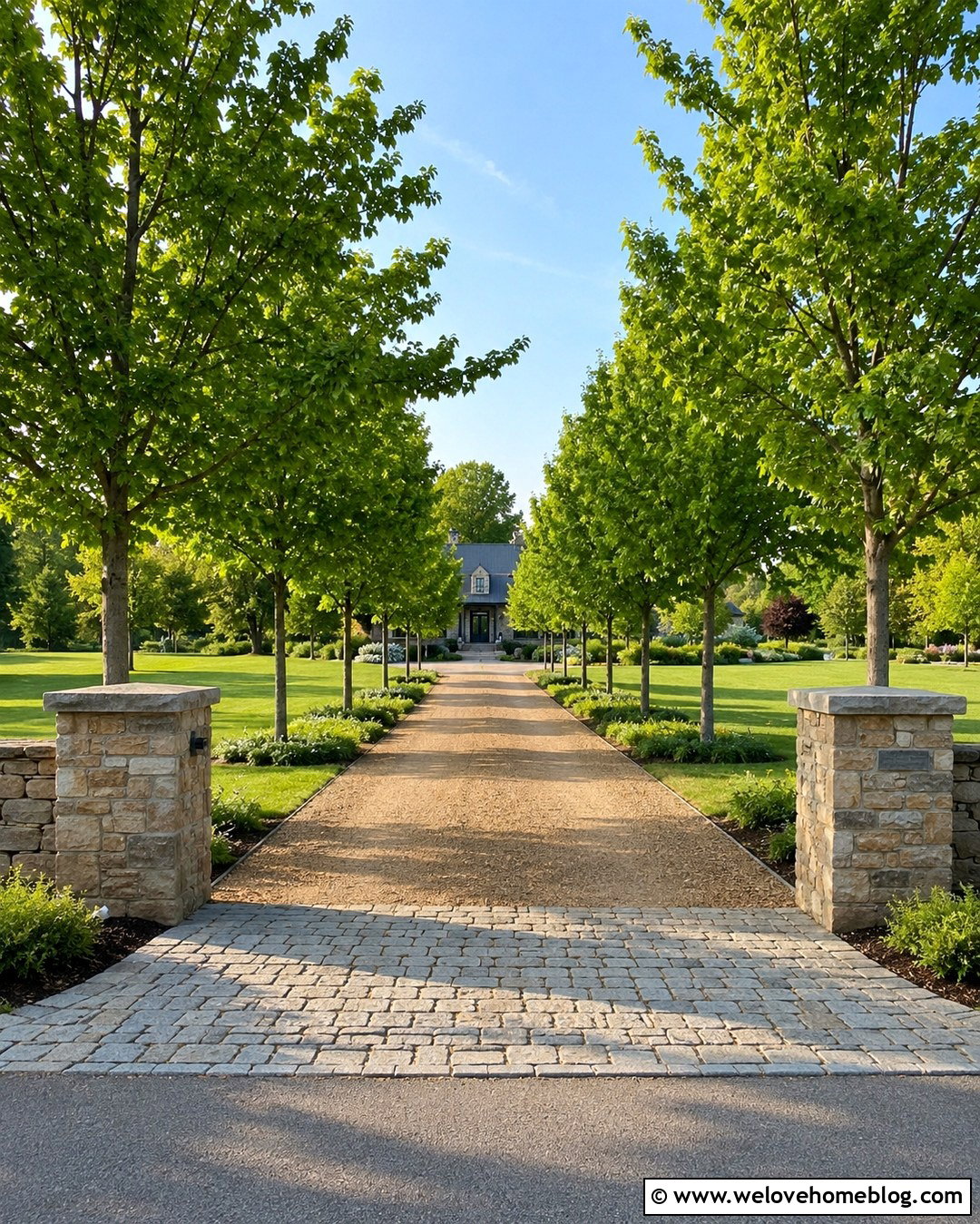
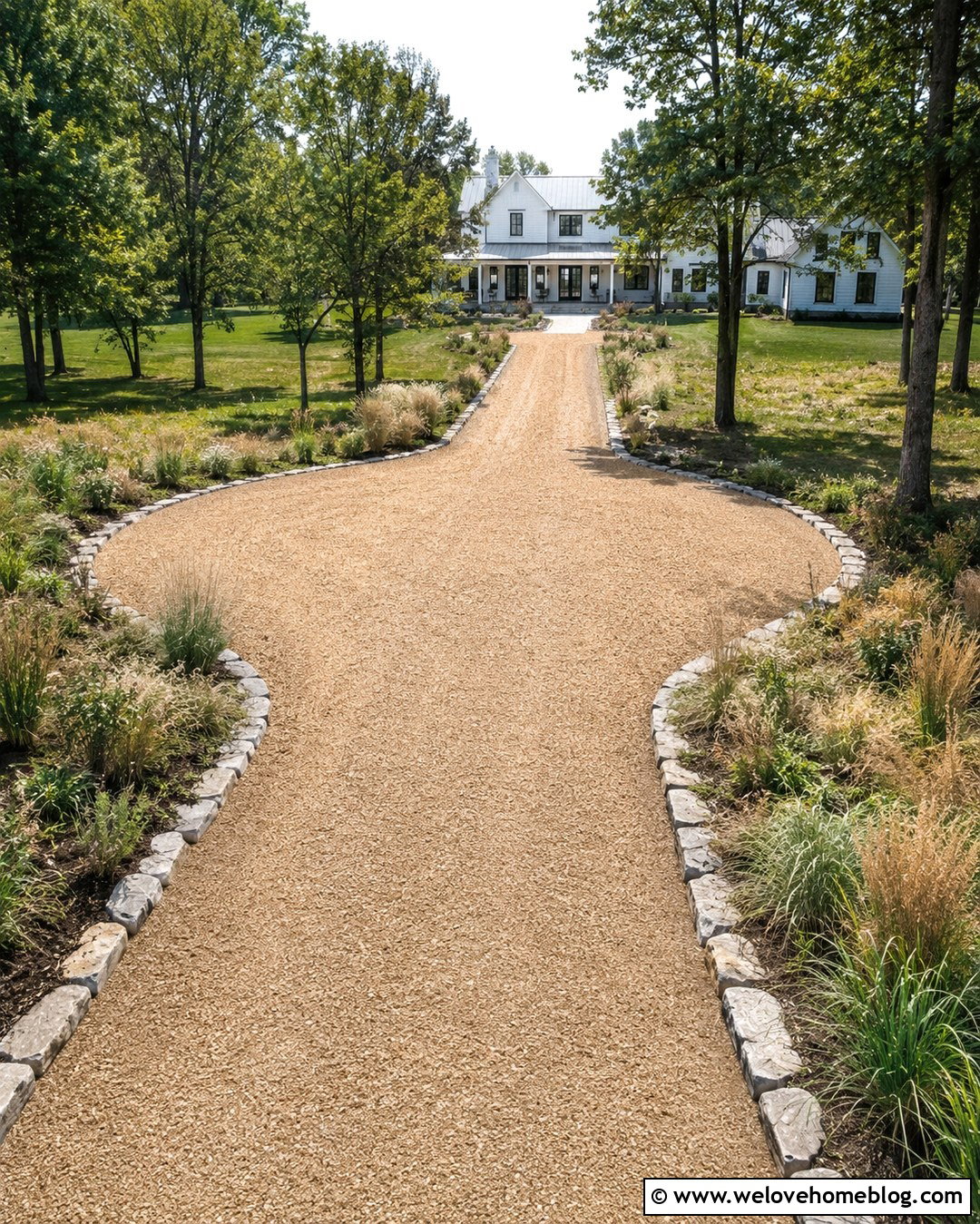
A tree-lined entrance brings scale and shade to a long, wide driveway. Use compacted tan gravel for a relaxed country surface and border it with dark steel edging that nearly disappears into the landscape. Plant evenly spaced deciduous trees beyond the driveway edge, leaving enough distance for mature trunks, roots, and canopies. Beneath them, maintain lawn or a broad ground-cover bed for a clean, unified look. Stone entry pillars can mark the beginning of the drive, while a cobblestone apron controls loose gravel near the road. The driveway may run straight toward a country house or curve gently to reveal it gradually. Select tree species suited to local climate, soil, overhead utilities, and available maintenance.
17. Wide Driveway With Split Garage Approach
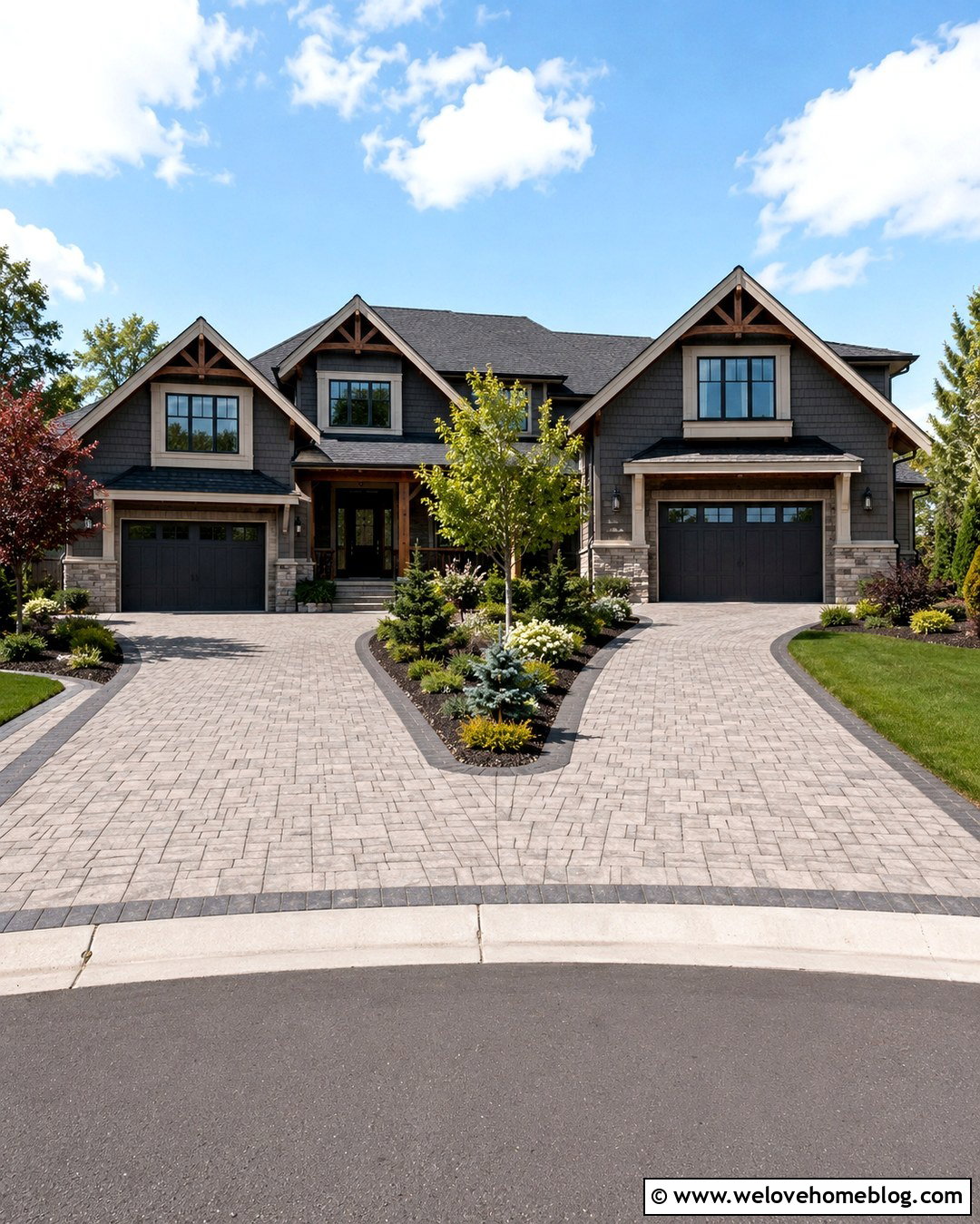
A split approach is a smart way to organize a wide driveway serving multiple garage doors. Use interlocking concrete pavers for the central arrival area, then divide the surface into two gently angled lanes. A narrow landscaped island between them creates separation and introduces greenery near the house. Fill the island with a small ornamental tree, compact shrubs, and low ground cover that will not block garage visibility. Outline every edge with a darker paver course to clarify the shape. A separate walkway should lead from the parking area to the front entrance without crossing the main turning path. This structured design complements larger craftsman, contemporary, and traditional homes with side-facing or divided garage wings.
18. Wide Driveway With Low-Maintenance Landscaping
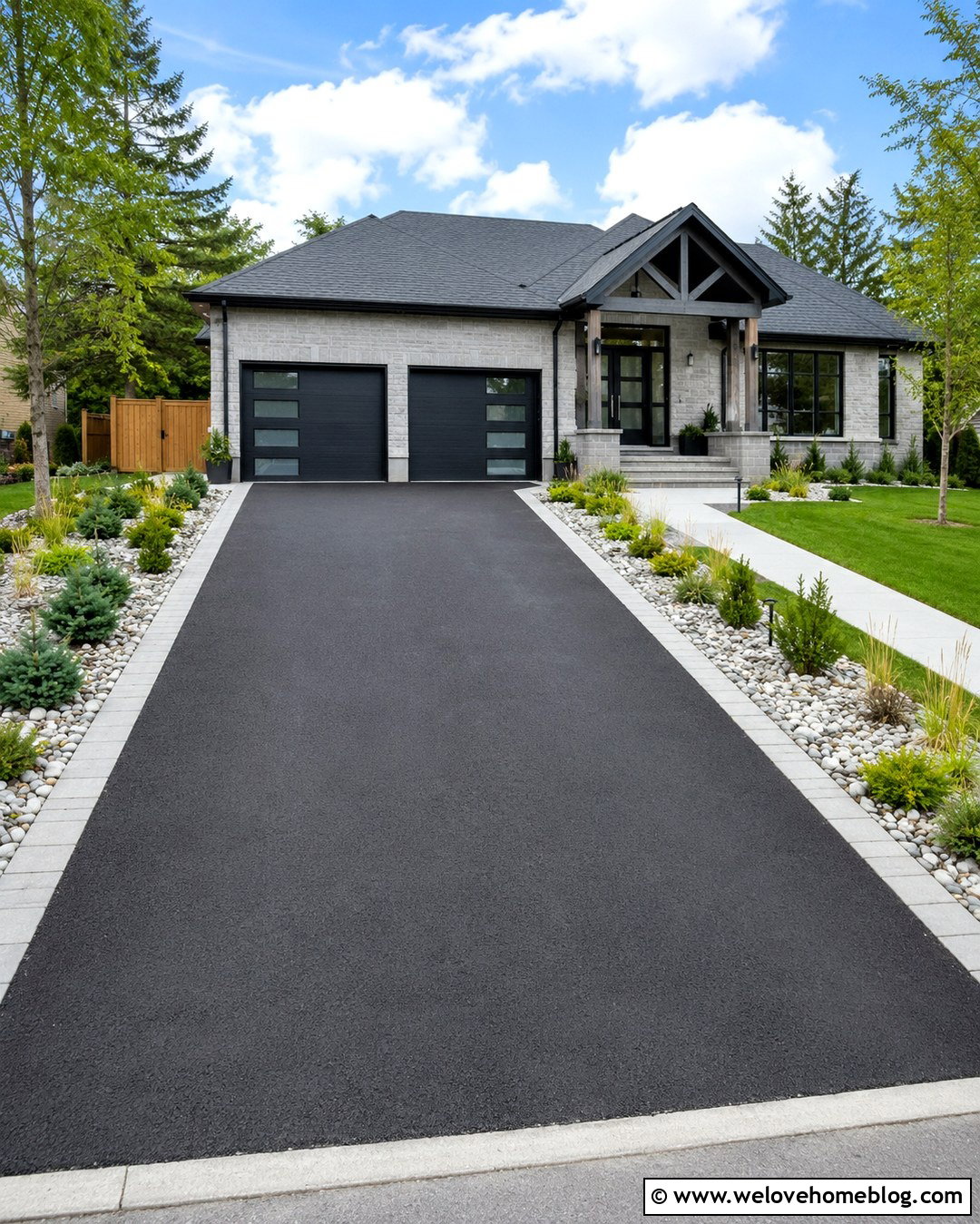
A broad driveway can still feel green without demanding constant pruning and watering. Pair black asphalt with a light-gray concrete paver border, then surround it with simple beds of dwarf evergreens, ornamental grasses, and regionally appropriate ground covers. Use repeated plant clusters on both sides to create balance, but avoid perfect symmetry if the home has an informal design. River rock or gravel mulch can reduce exposed soil, although plant selection should match local heat and moisture conditions. Keep taller plants near the house and shorter varieties beside parking areas. A crisp concrete walkway adds brightness against the asphalt. This practical combination works well for busy households that want a polished front yard with fewer seasonal tasks.
19. Wide Sloped Driveway With Retaining Walls
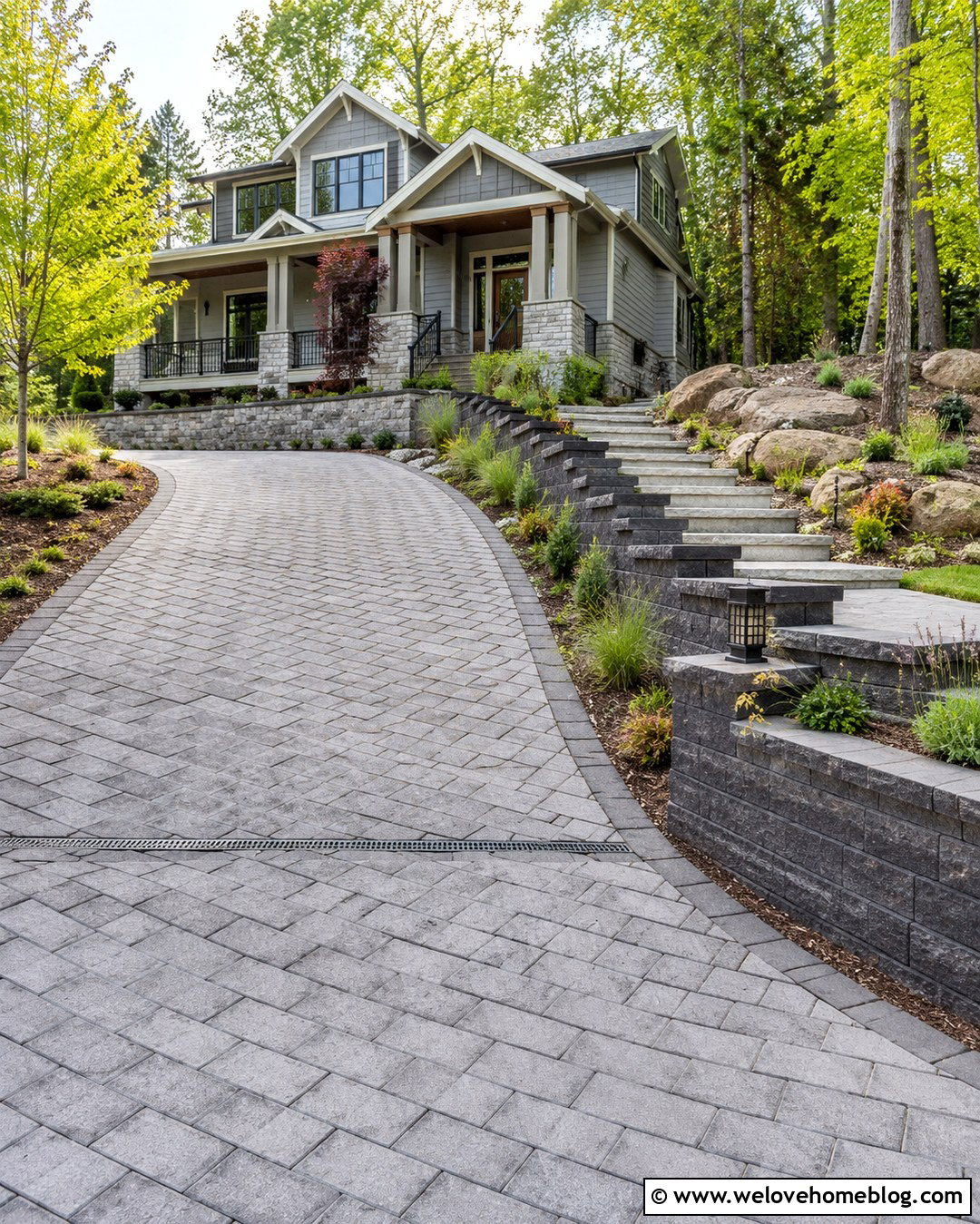
A sloped driveway needs a complete plan that combines attractive materials with safe movement and controlled drainage. Use textured concrete or concrete pavers to create a defined driving surface, then support raised planting beds with low segmental retaining walls. Match the wall color to the house foundation or exterior stone. Step the landscaping gradually down the slope with compact shrubs, grasses, and ground cover rather than one tall wall. Add a channel drain or another professionally specified drainage feature where runoff must be intercepted. Water should be directed according to local rules and away from vulnerable structures. Because slope, soil, frost, and rainfall affect construction, have the grading, base, retaining system, and drainage designed for the specific property.

20. Wide Driveway With Gate And Pillars
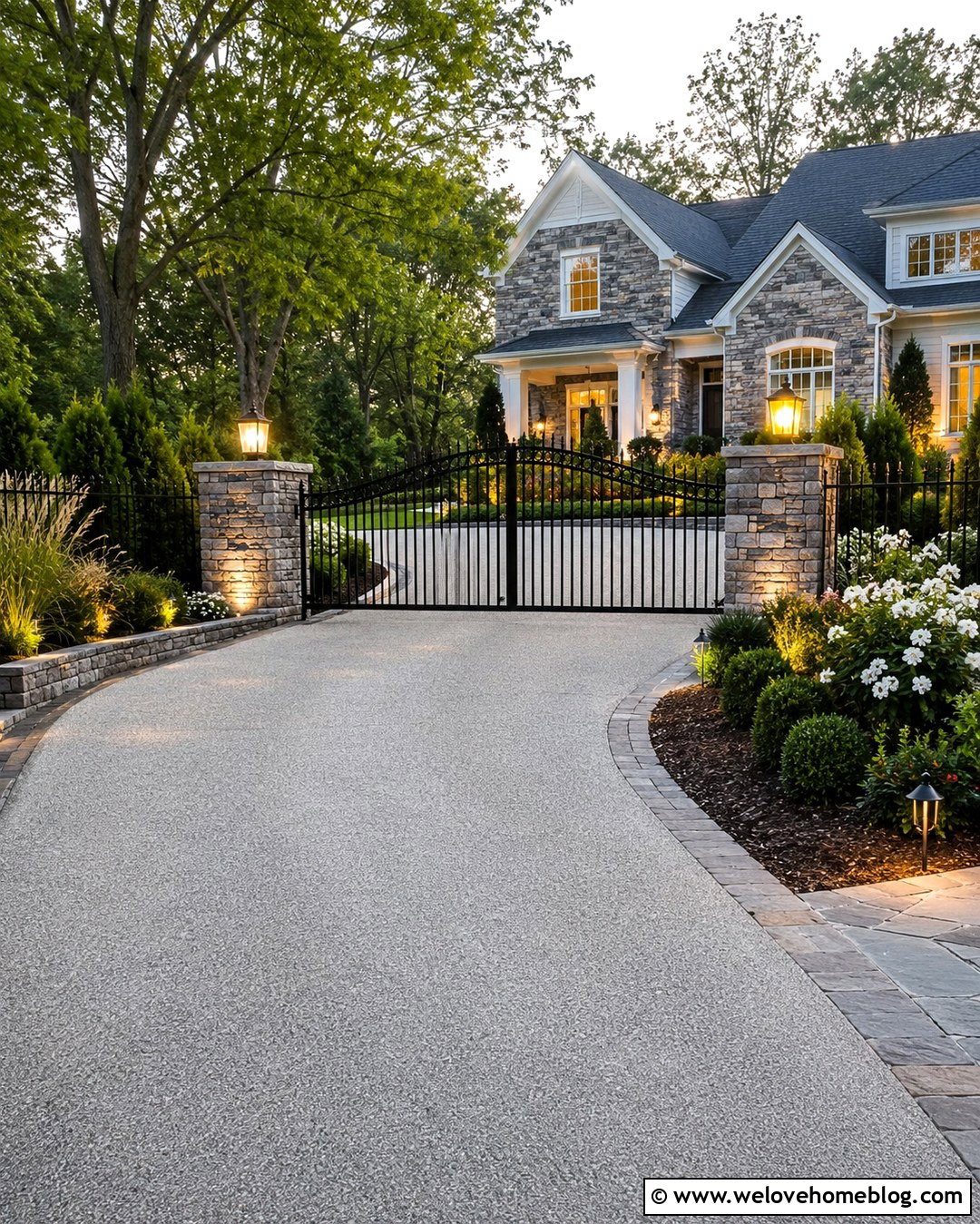
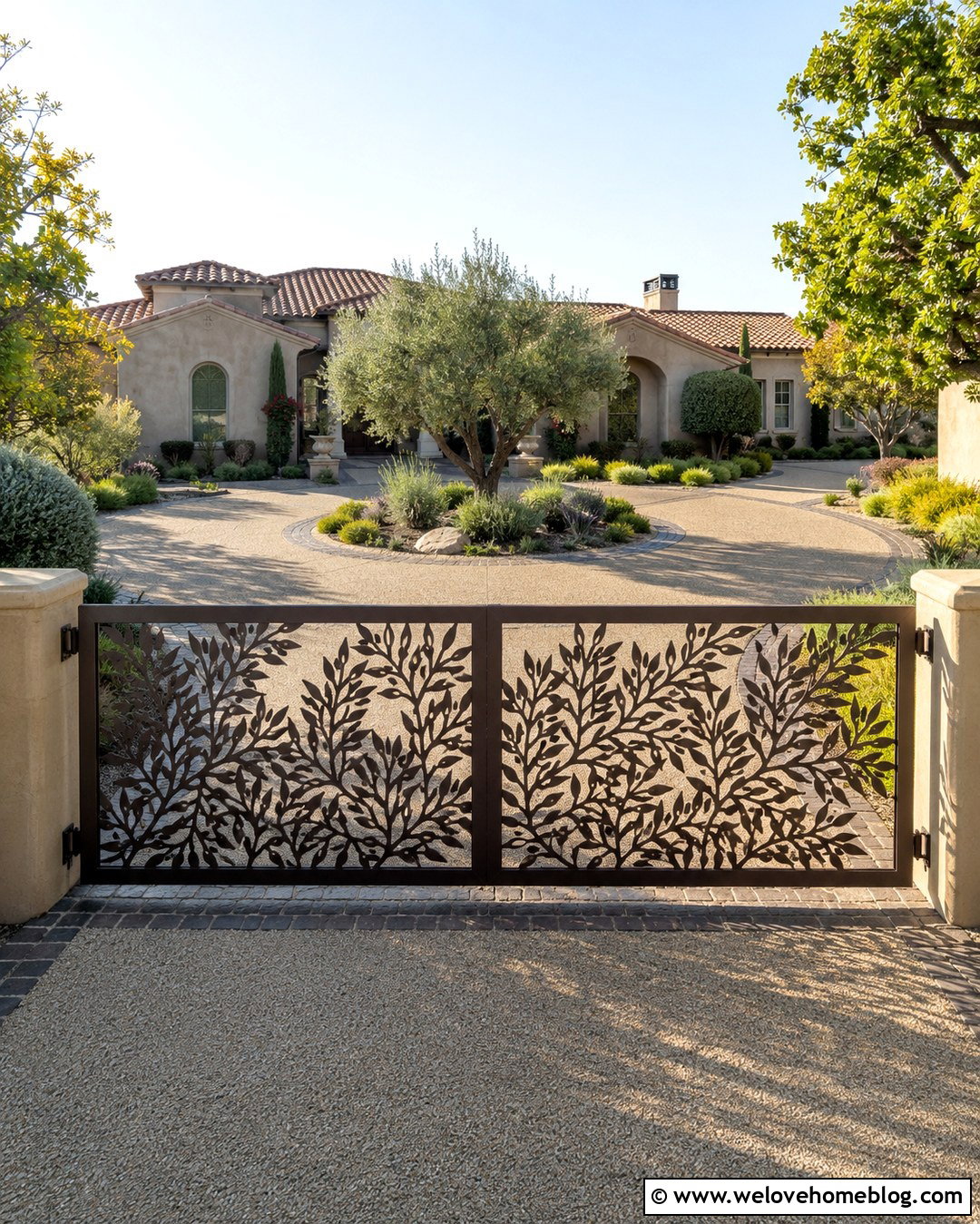
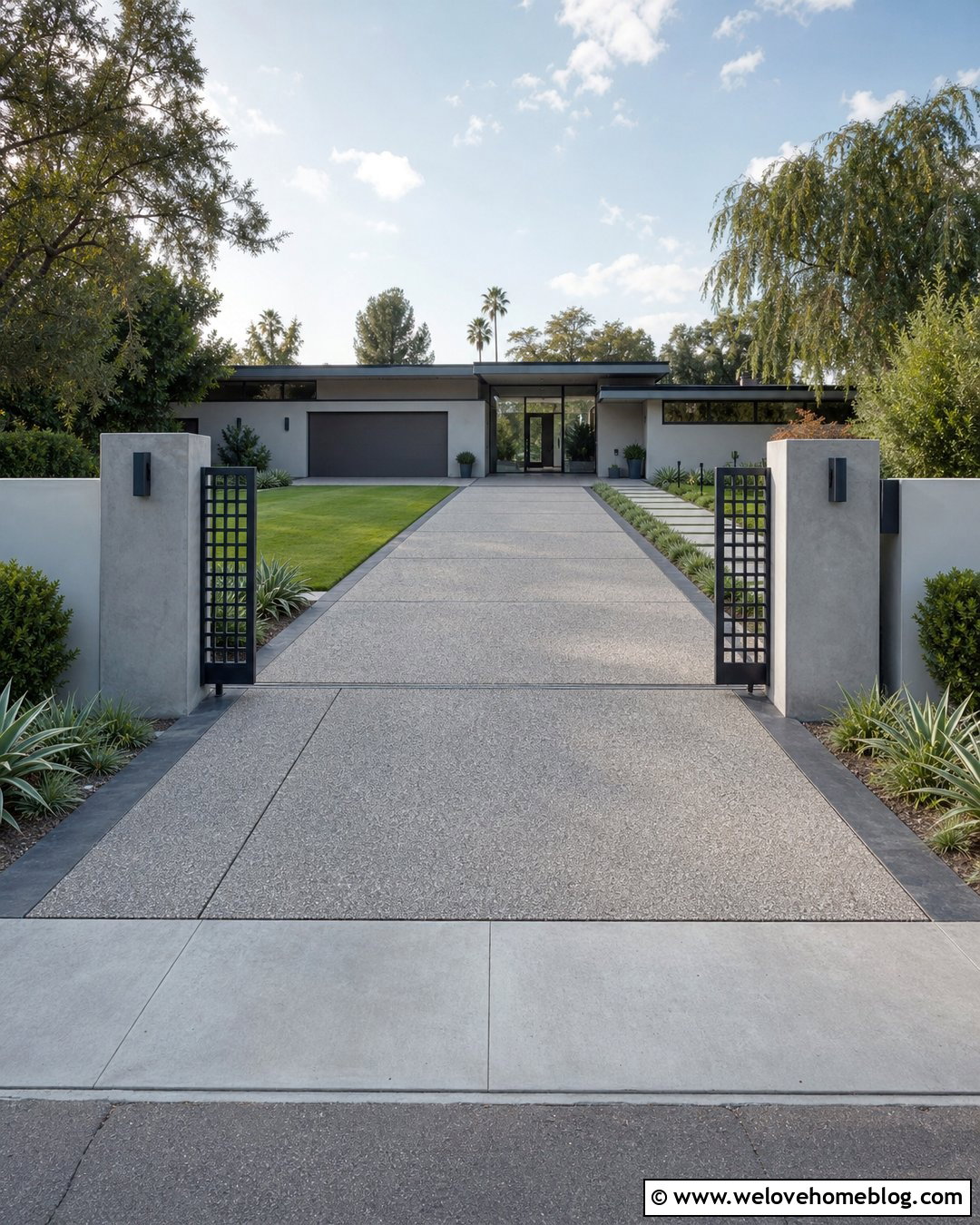
A gate and pillar arrangement gives a wide driveway a strong entrance while connecting it to the home’s architecture. Choose a light exposed aggregate driveway with a gentle curve leading toward the garage. At the curb, install stone or brick pillars that repeat materials found on the facade. A simple metal gate should be wide enough for practical access and positioned with adequate setback from the road. Continue low stone edging from the pillars along the first section of the driveway. Layer evergreen shrubs, ornamental grasses, and flowering plants around the entrance without blocking sightlines or gate operation. Add discreet address markers and bright architectural lighting. Check local setback, access, permit, utility, and emergency-service requirements before finalizing the entrance.
Conclusion:
The strongest **20 Wide Driveway Ideas** balance generous vehicle space with materials, borders, walkways, and landscaping that suit the house. Concrete bands can organize a modern frontage, while gravel and stone create a relaxed country approach. Pavers, brick aprons, planting islands, and parking bays help divide broad surfaces into practical zones. Before choosing a look, consider daily parking, garage access, passenger movement, drainage, snow removal, and long-term maintenance. Mark the proposed edges and test the layout with your vehicles before work begins. Most importantly, confirm local rules and hire qualified professionals for grading, base preparation, drainage, paving, gates, and retaining walls. A carefully planned wide driveway can feel useful, welcoming, and visually connected to the entire property.

Related posts:



Leave a Reply