
Turfstone pavers create a driveway that feels greener and softer than a continuous paved surface without giving up a defined area for vehicles. Their open concrete lattice can be filled with grass, decorative aggregate, or a combination of both. This helps the driveway blend into the front yard while allowing rainwater to filter through the openings. () The most successful designs treat the surface, borders, entrance, planting, and house as one complete composition. You can keep the look natural with lawn and fieldstone or make it more contemporary with dark gravel and crisp concrete edging. The following **20 Turfstone Pavers Driveway Ideas** cover straight, curved, circular, narrow, sloped, and parking-friendly layouts for a wide range of homes and landscapes.

1. Grass-Filled Turfstone Driveway
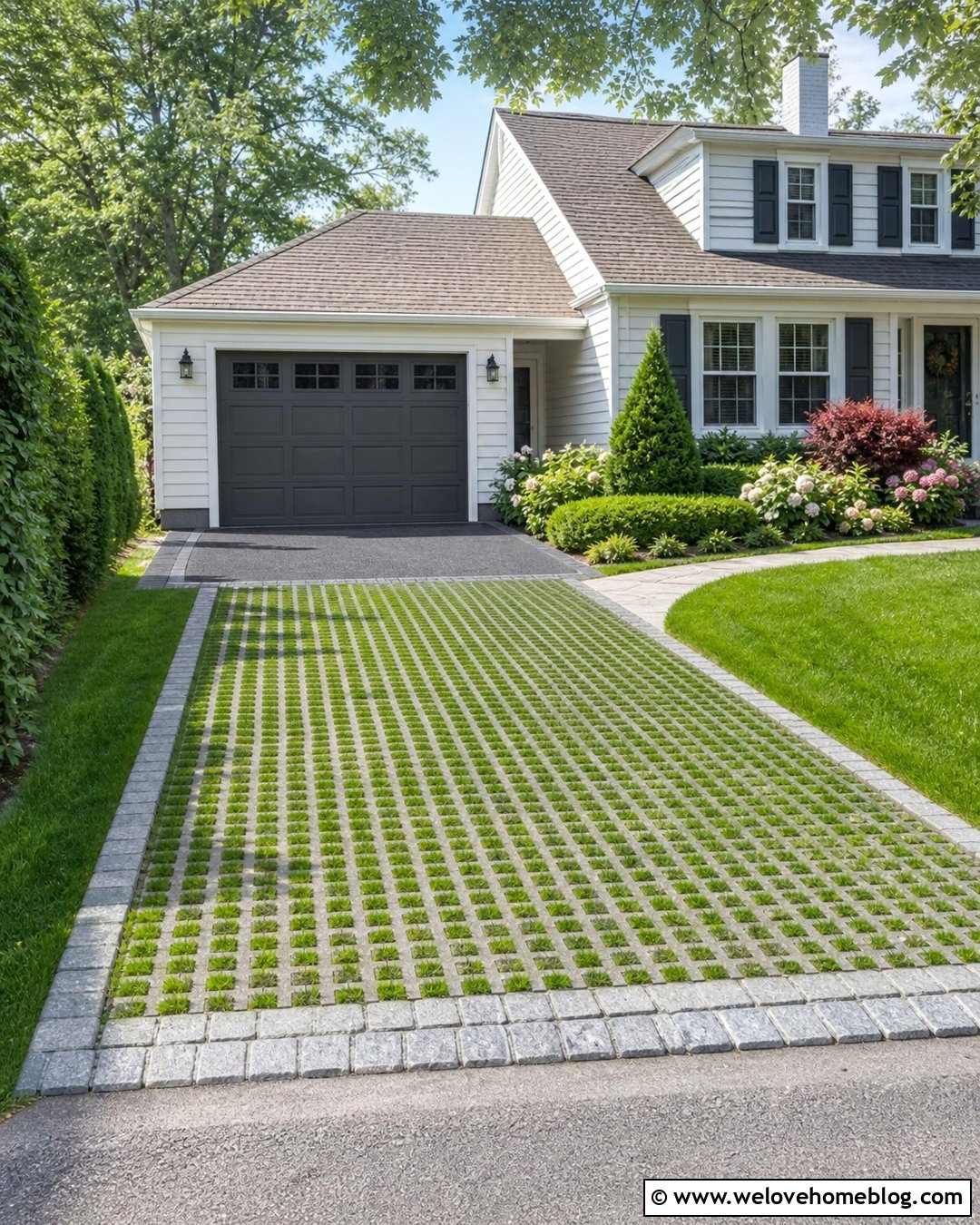
A grass-filled Turfstone driveway is the classic choice for creating a reinforced lawn that can handle occasional vehicle traffic. Use gray concrete Turfstone pavers across a straight driveway, then fill every opening with suitable topsoil and durable turf. Continue the same grass into the surrounding lawn so the concrete grid appears to fade into the landscape. A bluestone border can define the edges and prevent the design from looking unfinished. Near the garage, add a solid paver apron to create a cleaner transition and reduce wear where vehicles frequently turn. Newly seeded grass needs time to become established before regular tire traffic begins, with manufacturer guidance commonly allowing several weeks. () Choose this complete look for suburban, cottage, and traditional homes with sunny front yards.
2. Gravel-Filled Turfstone Driveway
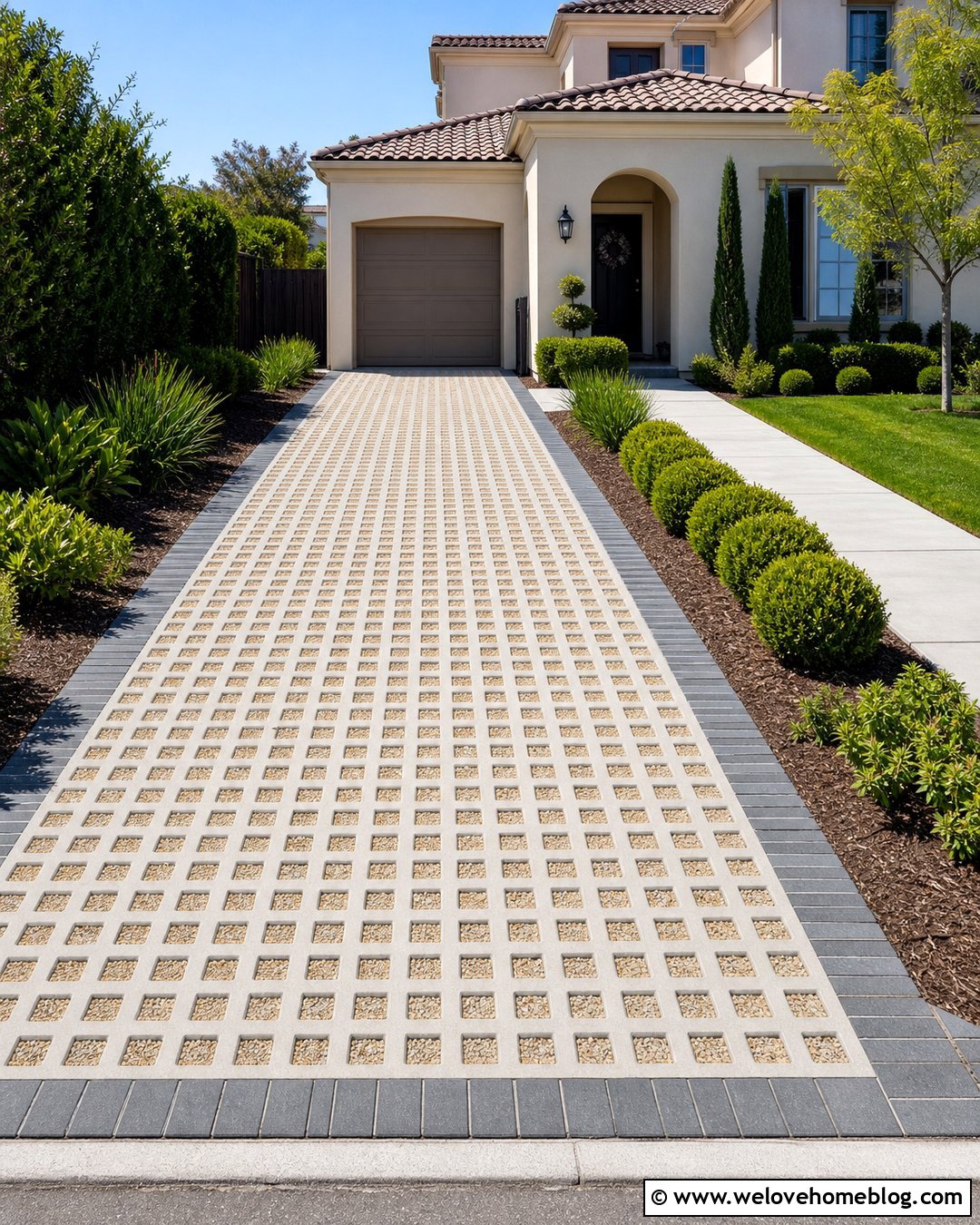
What if maintaining grass between concrete grids does not suit your climate or schedule? Fill gray Turfstone pavers with washed pea gravel for a permeable driveway with a neat, low-maintenance appearance. Warm tan gravel softens the concrete and works particularly well with brick, beige stucco, or natural stone facades. Frame the driveway with a dark charcoal paver border to hold the surface visually and create clear lines beside the lawn. Low evergreen shrubs, ornamental grasses, and a simple concrete walkway can complete the front yard without overwhelming the grid pattern. Aggregate infill is an accepted option for appropriate Turfstone applications, although the complete pavement design should still suit local soil and drainage conditions. () This design also avoids mowing inside the paver openings.
3. Modern Turfstone Driveway With Black Gravel
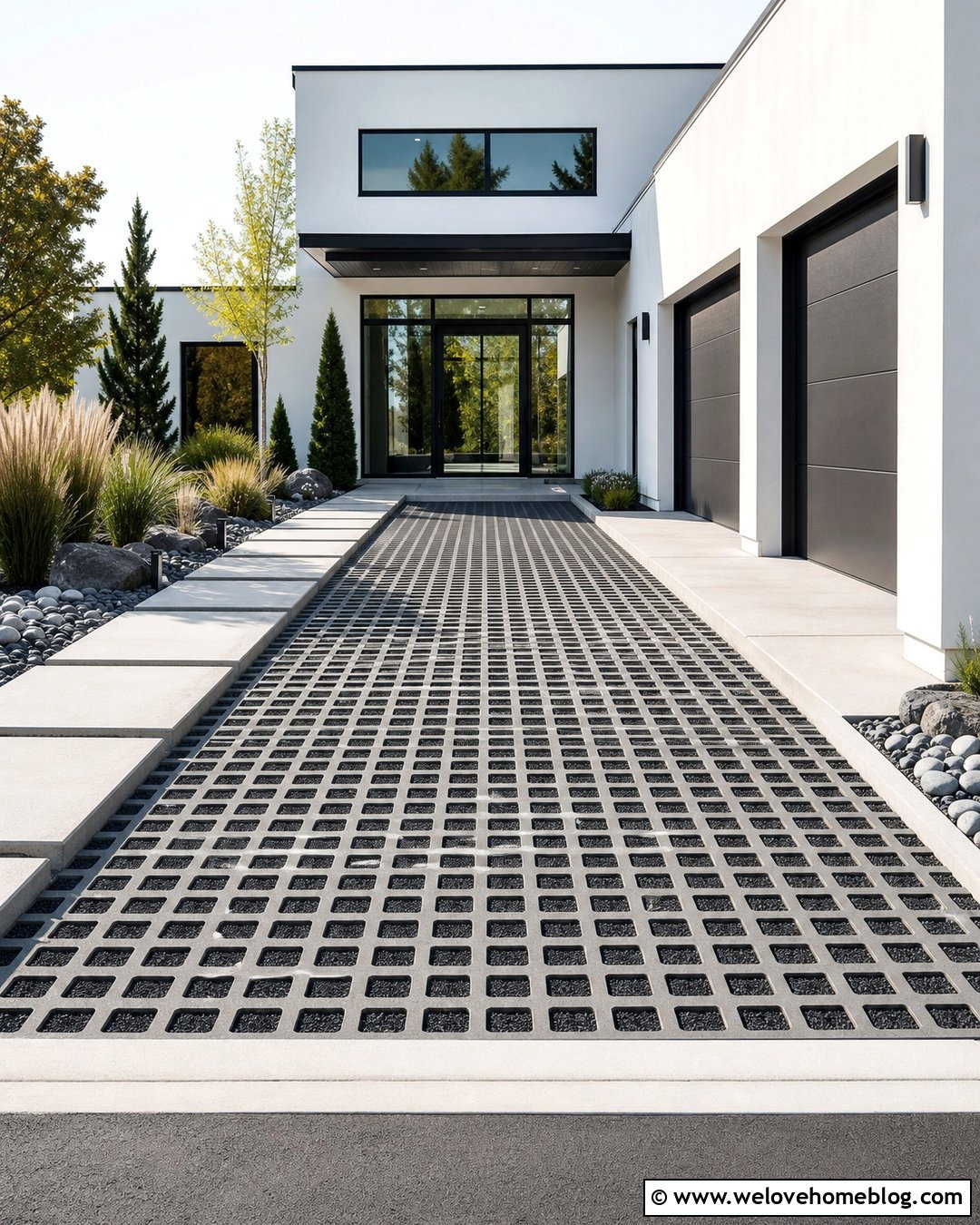
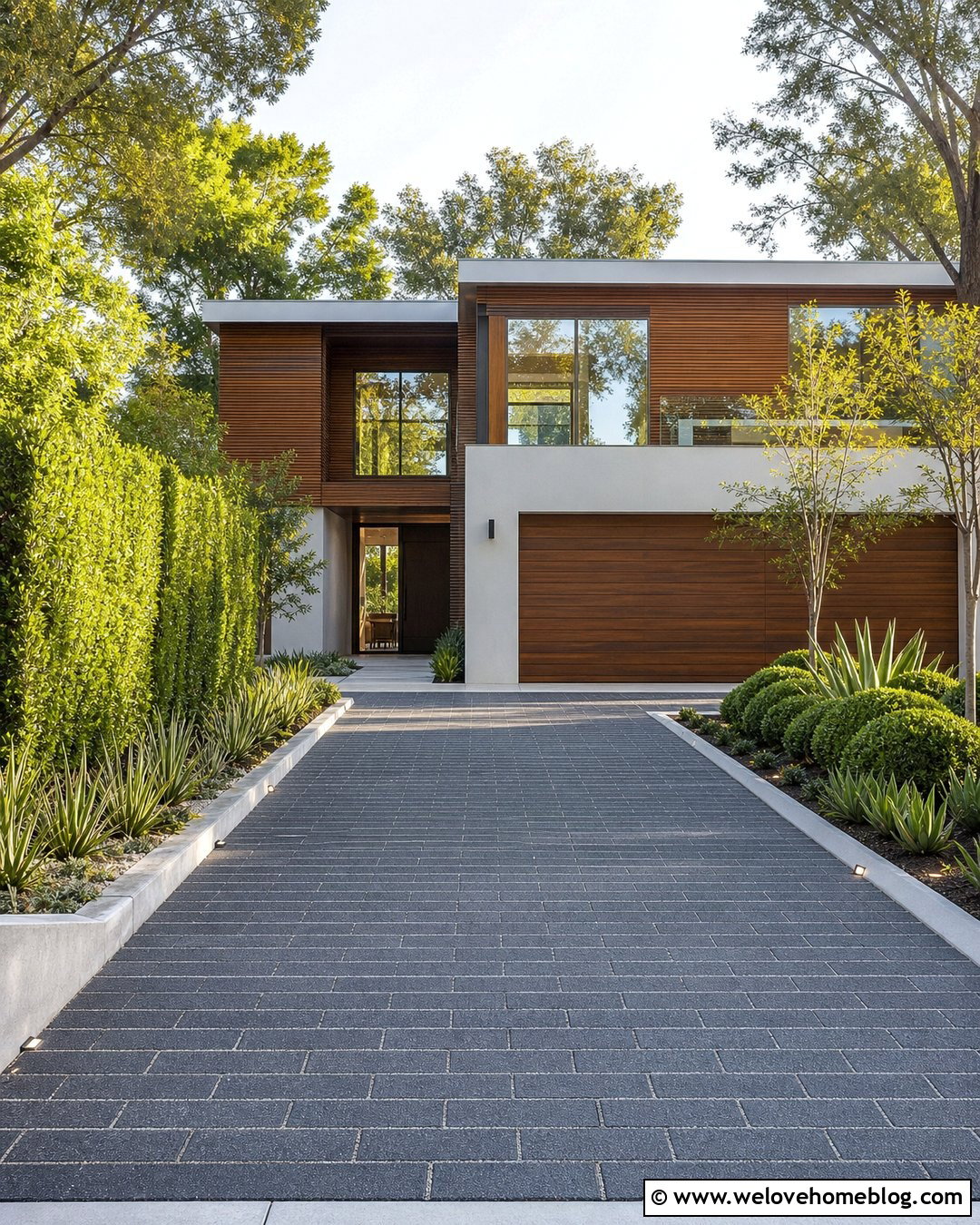
Dark aggregate gives a Turfstone driveway a sharper, more architectural character. Begin with natural-gray concrete grid pavers arranged in a clean rectangular layout. Fill the openings with small black basalt or charcoal gravel, creating strong contrast that highlights the repeating lattice. Use smooth poured-concrete curbs along both sides and add wide concrete bands near the garage for a practical transition. The surrounding landscape should stay simple, with clipped grasses, compact evergreens, and broad areas of mulch or river rock. A flat-roofed modern house with white siding, dark windows, and a simple walkway reinforces the streamlined appearance. This combination works best when every line feels deliberate. Keep gravel colors consistent, avoid overly decorative planting, and repeat the dark aggregate around the address sign or front steps for visual continuity.
4. Curved Turfstone Driveway With Cobblestone Edging
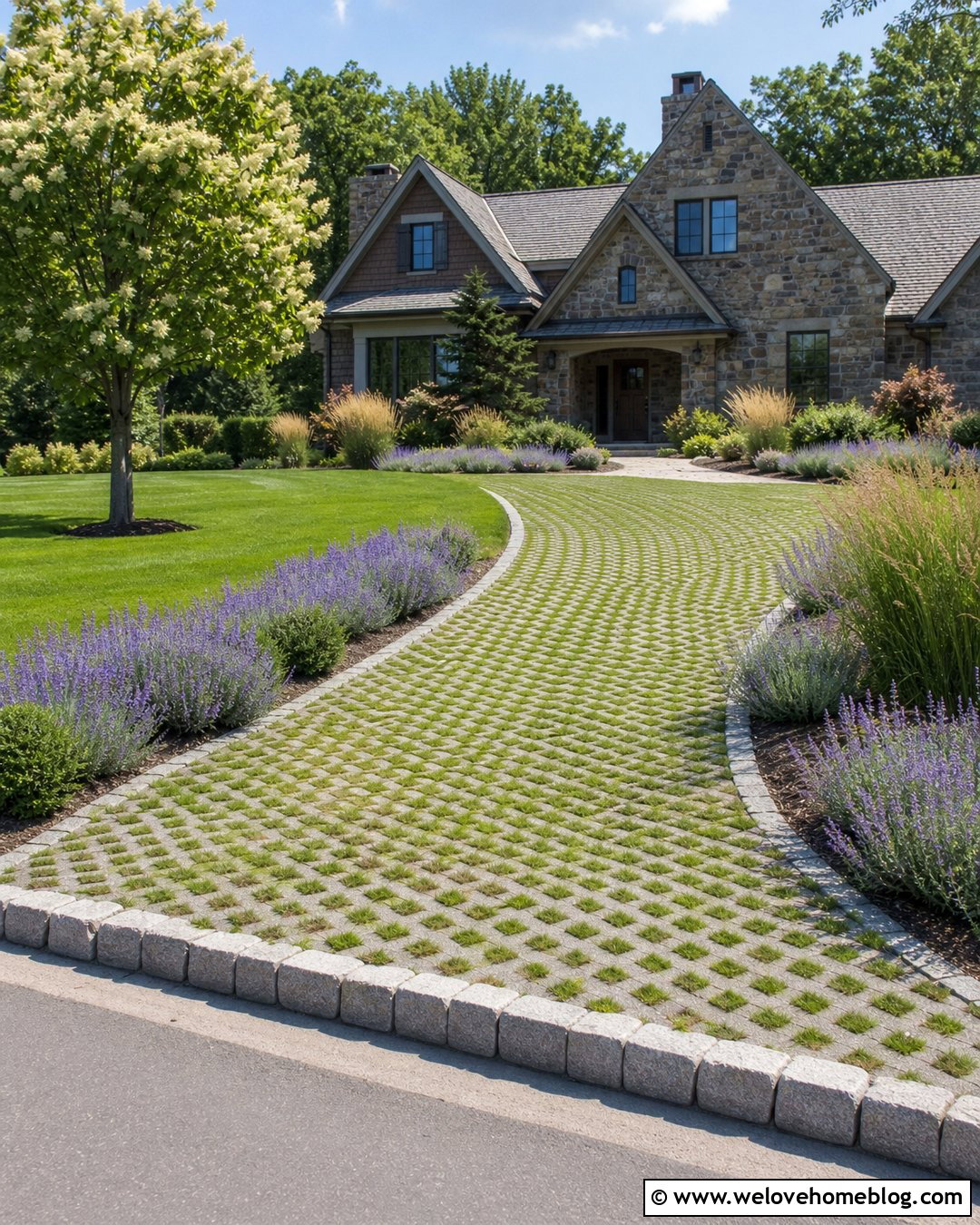
A gently curved driveway makes the approach to a home feel more natural, especially on a wide or irregular lot. Cover the full route with grass-filled concrete Turfstone pavers and use granite cobblestones to establish a strong, flowing edge. The cobblestone border should follow the curve without abrupt angles, leading the eye toward the garage or parking court. Plant lavender, catmint, compact shrubs, and ornamental grasses along the outside bend, where they can emphasize the driveway’s movement. Keep the inside curve more open with lawn and one small ornamental tree. This balance prevents the entrance from feeling crowded. The gray concrete grid, green turf, and weathered stone provide enough texture without appearing busy. It is an inviting layout for craftsman, cottage, Tudor, and stone-front houses.
5. Circular Turfstone Driveway With Center Garden
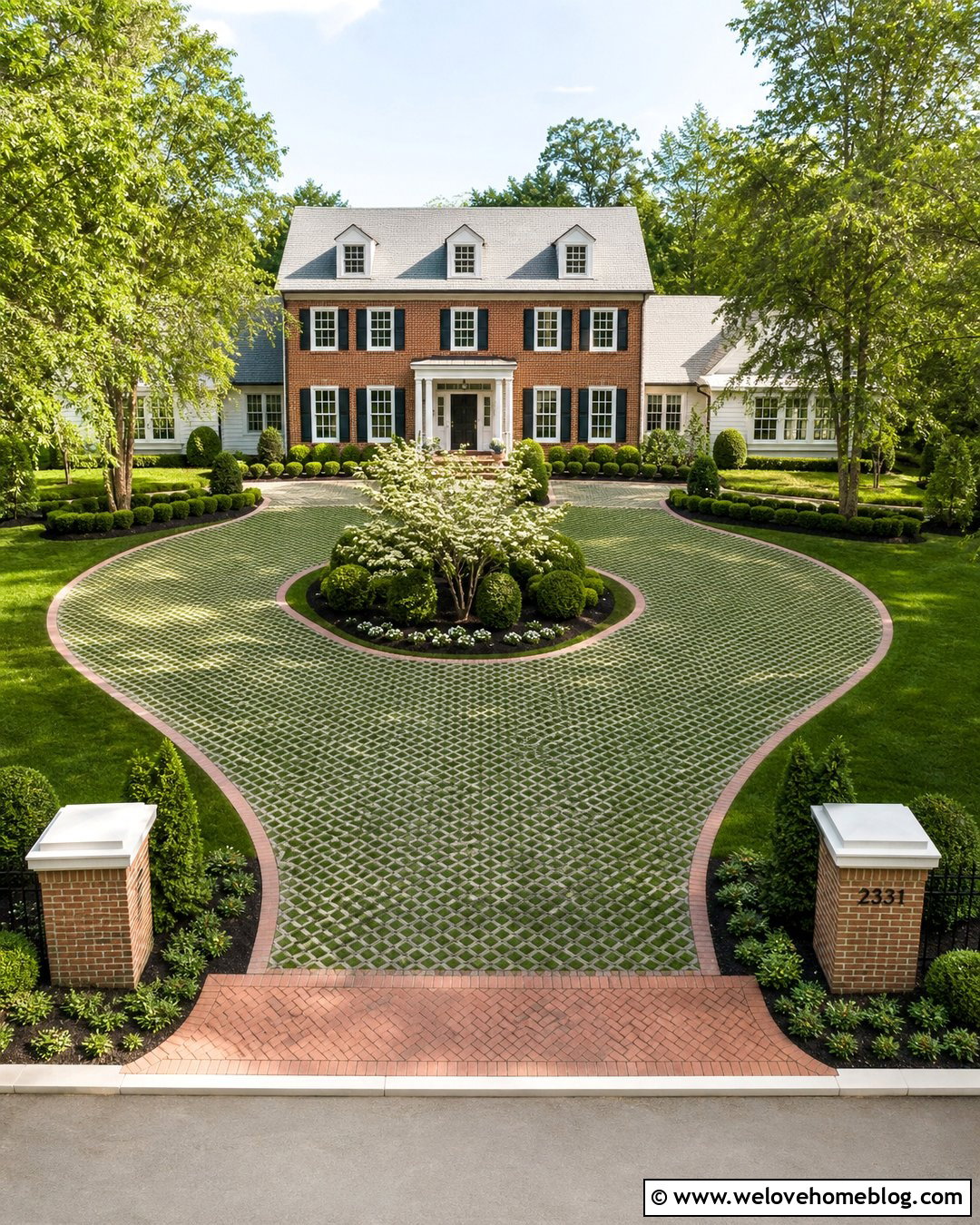
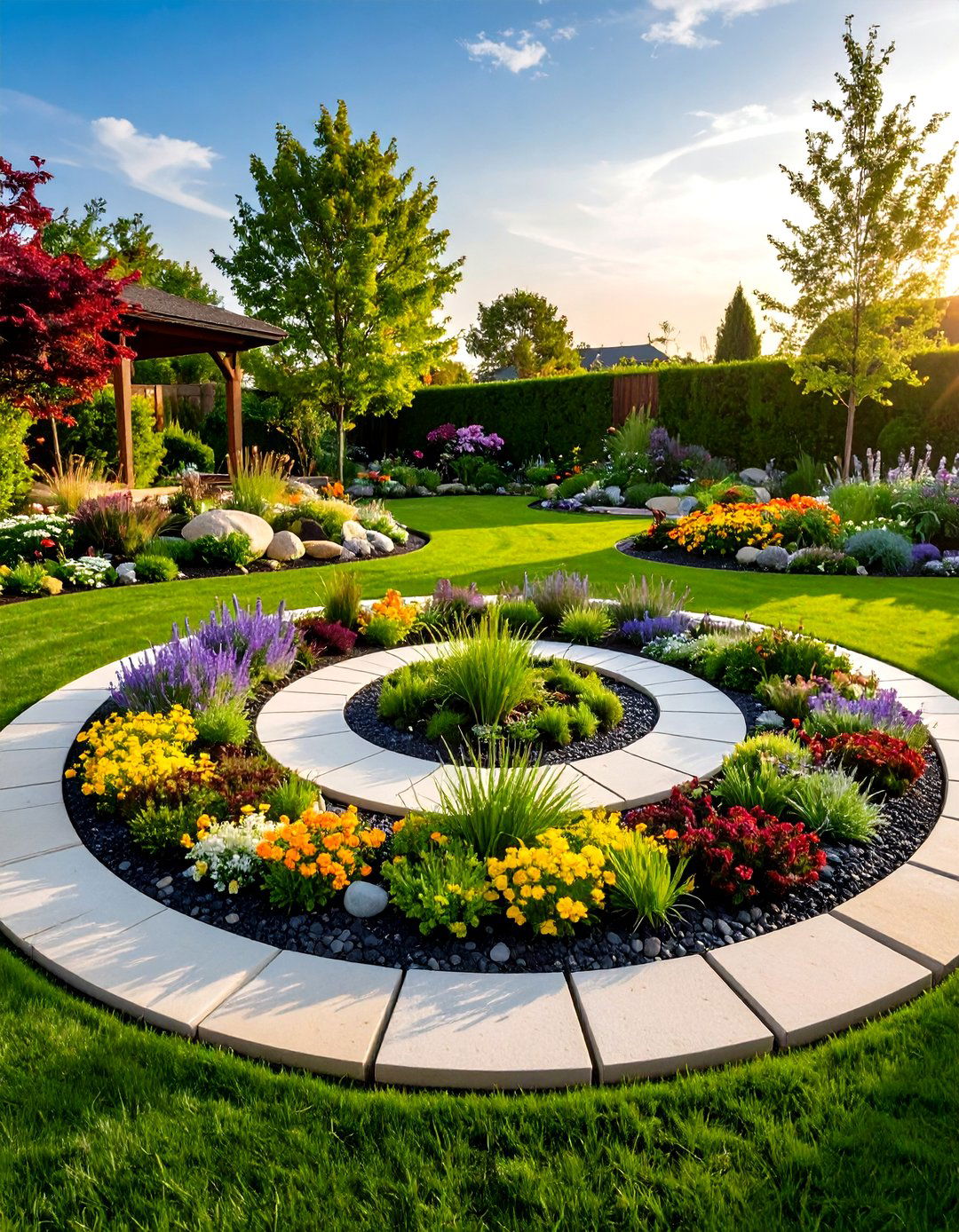
A circular Turfstone driveway can create an impressive arrival area while keeping a substantial portion of the front yard green. Use grass-filled gray concrete grid pavers for the driving loop and define both edges with narrow clay brick ribbons. In the center, build a simple round garden containing one flowering tree, low evergreen shrubs, and a layer of dark mulch. Keep plants below driver sightlines near the entrance and exit points. A brick or solid concrete apron at the street can make the transition from the public road feel more polished. The circular layout works especially well in front of symmetrical colonial and Georgian-inspired houses. Because the paver openings repeat across a large area, restrained landscaping is usually best. Let the center island serve as the main feature while the green driveway connects naturally with the lawn.
6. Turfstone Driveway With Concrete Wheel Strips
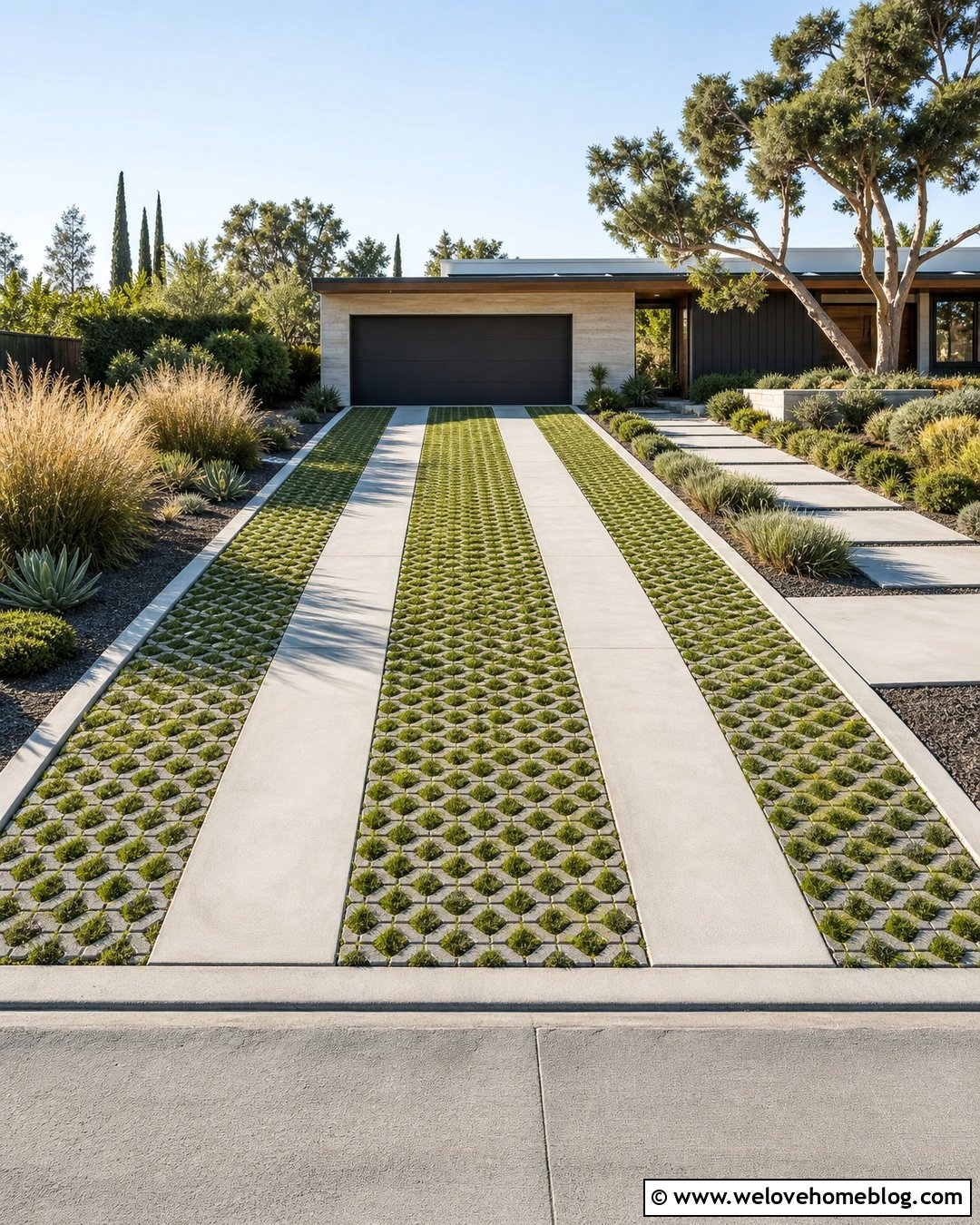
Concrete wheel strips can make a Turfstone driveway easier to navigate while introducing a strong geometric pattern. Create two smooth poured-concrete tracks following the main tire paths, then install grass-filled concrete Turfstone pavers between and around them. The solid strips provide obvious driving guides, while the open grid keeps most of the driveway visually connected to the lawn. Add a narrow concrete edge restraint along each side for a tidy finish. This design looks particularly appropriate beside a midcentury ranch or minimalist home with horizontal architecture. Repeat the straight lines in a large-format concrete walkway leading to the front door. Use drought-tolerant grasses, low shrubs, and one sculptural tree around the driveway. Precise spacing is important because uneven wheel tracks can make the entire composition appear awkward rather than intentional.
7. Long Turfstone Driveway With Tree-Lined Landscaping
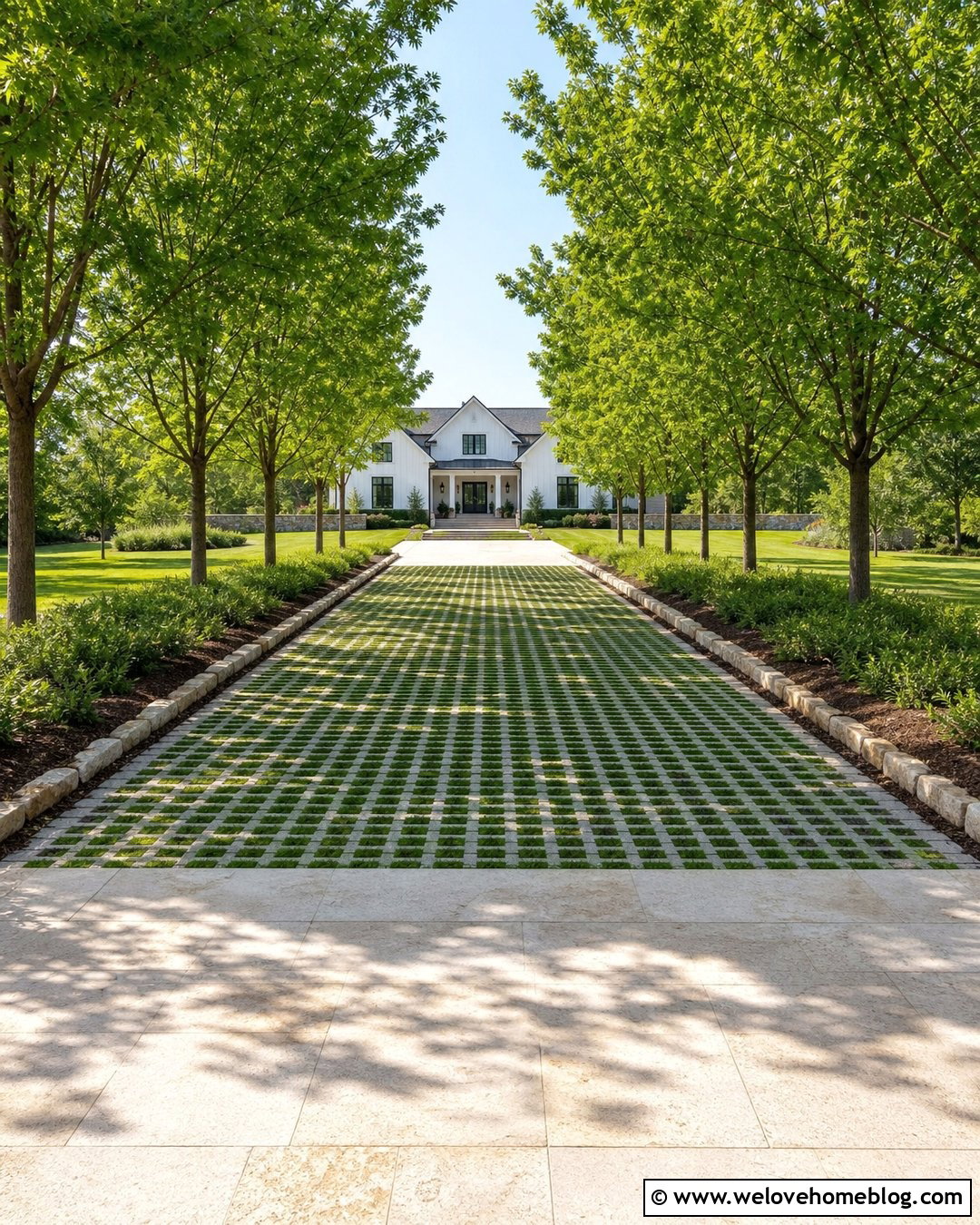
Long driveways benefit from repetition that gives the approach structure without making it feel overly formal. Install grass-filled gray concrete Turfstone pavers in a straight layout and finish the entrance with a broad limestone apron. Place evenly spaced small trees along both sides, leaving sufficient distance between trunks and the driveway edge. A simple row of groundcover, low grasses, or mulch beneath the trees reduces visual clutter. Natural stone edging can separate these planting beds from the reinforced grass surface. At the house, widen the driveway slightly to form a practical arrival court in front of the garage. This complete look suits country homes, modern farmhouses, and large suburban properties. The continuous green infill softens the long paved route, while the repeated trees provide rhythm and guide visitors toward the house without requiring ornate gates or elaborate landscaping.
8. Farmhouse Turfstone Driveway With Stone Pillars
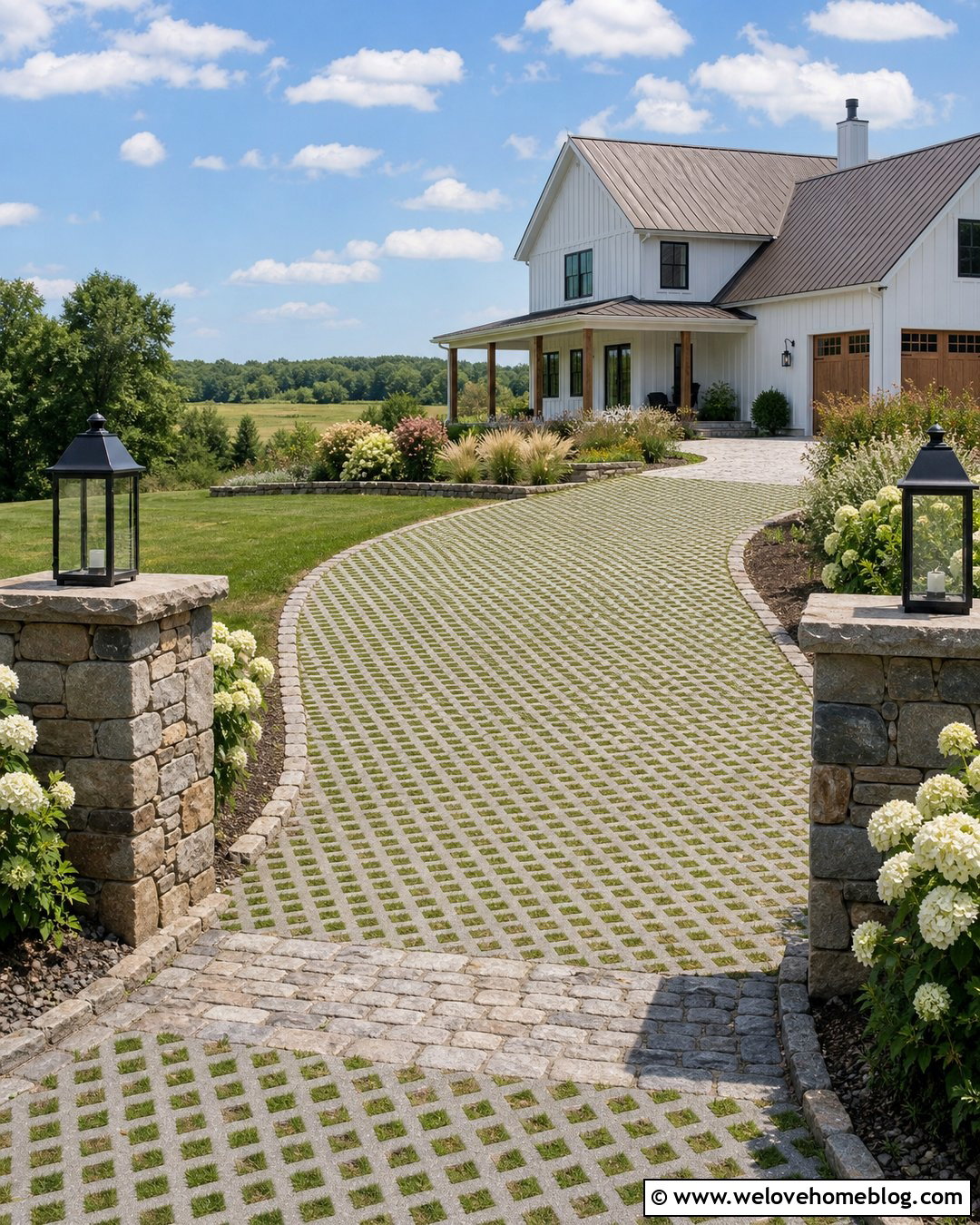
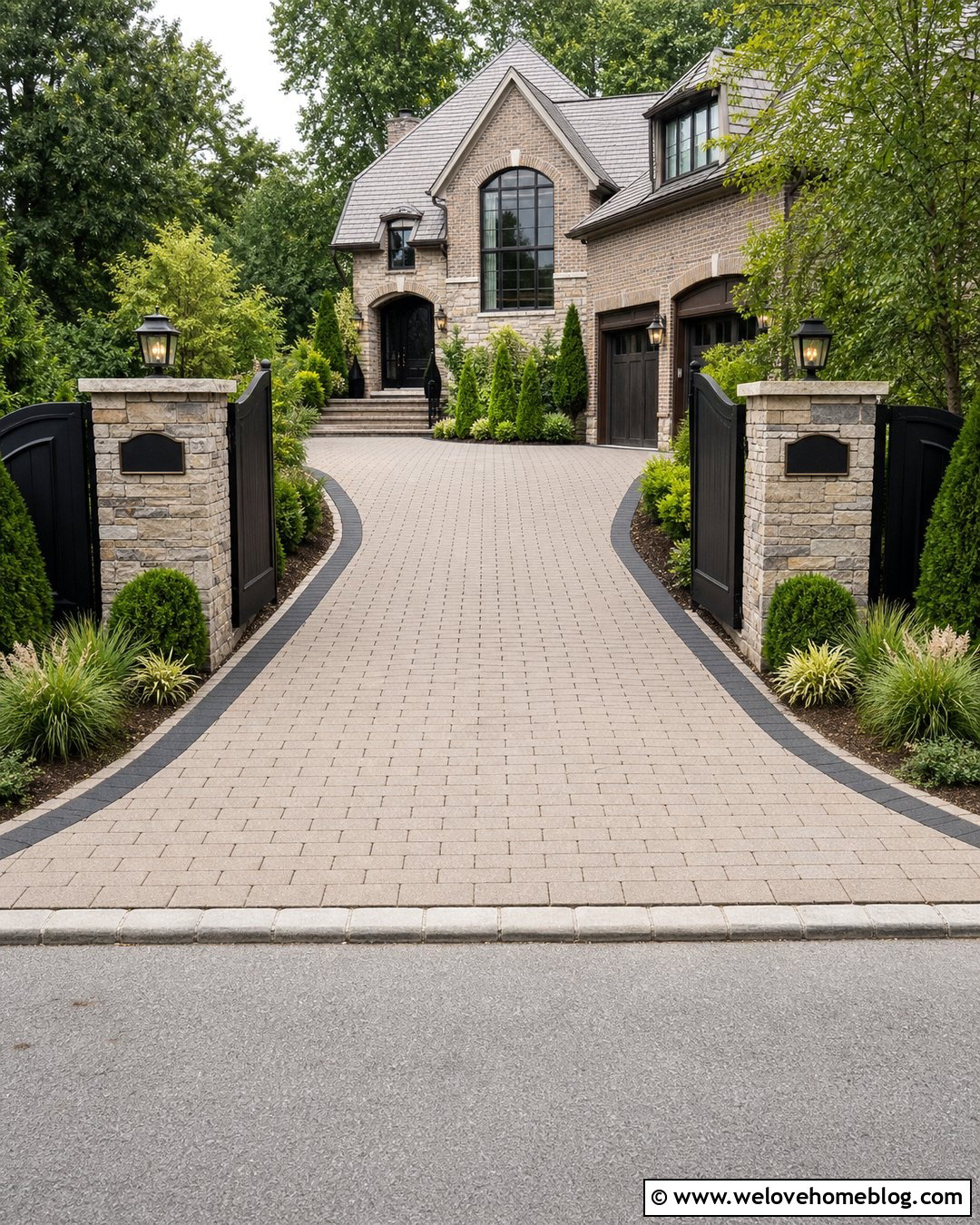
Fieldstone pillars and Turfstone pavers can give a farmhouse driveway a defined entrance while preserving its relaxed rural character. Start with a gently curved driveway made from gray concrete Turfstone grids filled with dense green grass. Build low, broad pillars from irregular local stone and position them well outside the vehicle clearance area. Simple black lanterns or understated caps can finish the pillars without making them too formal. Use the same stone for low edging near the entrance, then allow the border to transition into open lawn farther up the driveway. Plant hydrangeas, native grasses, and a few flowering shrubs around the pillars. Near the garage, install a coordinating cobblestone apron that protects the heavily used turning area. The combined design feels established, practical, and well matched to white siding, board-and-batten details, and a covered porch.
9. Craftsman Turfstone Driveway With Brick Border
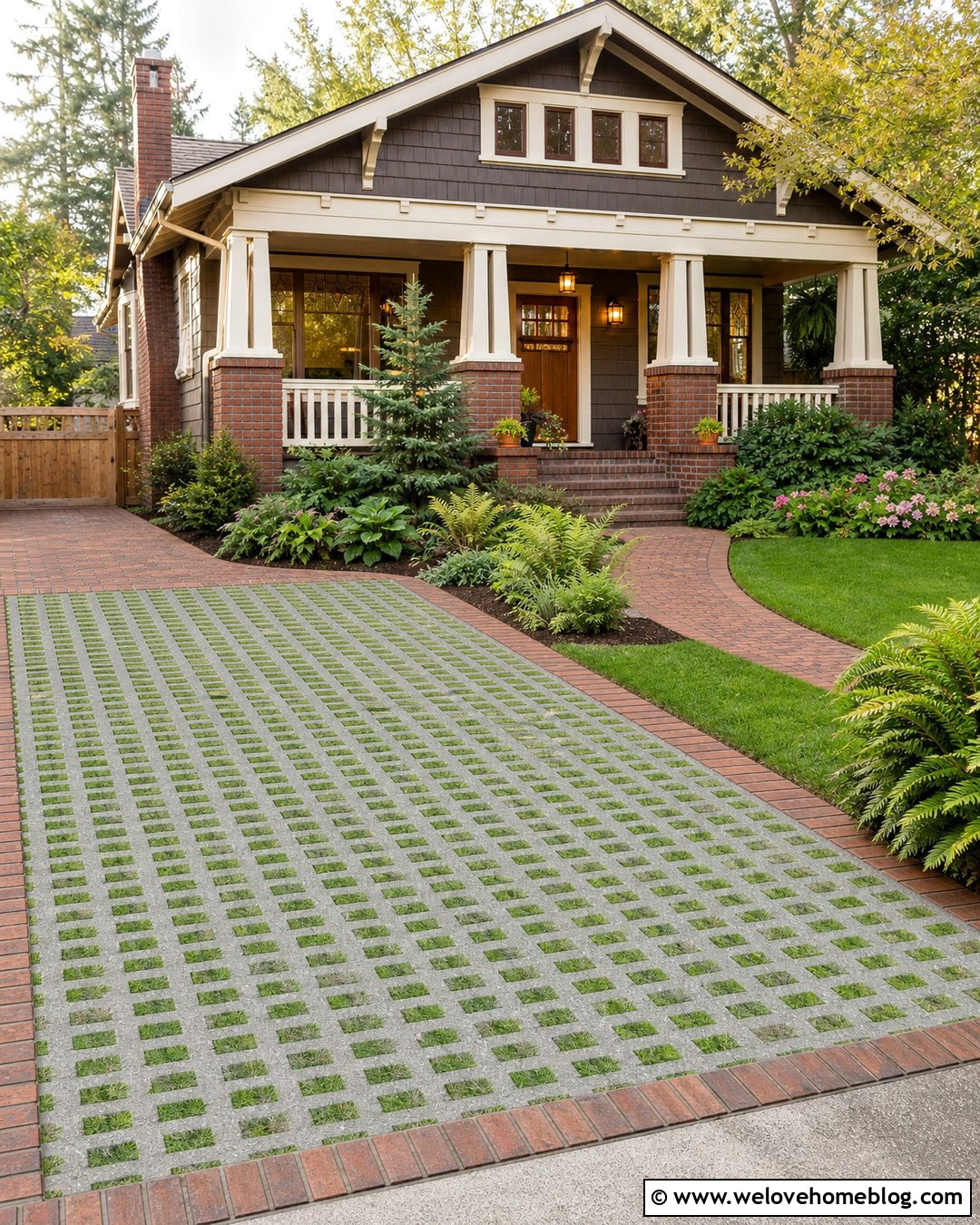
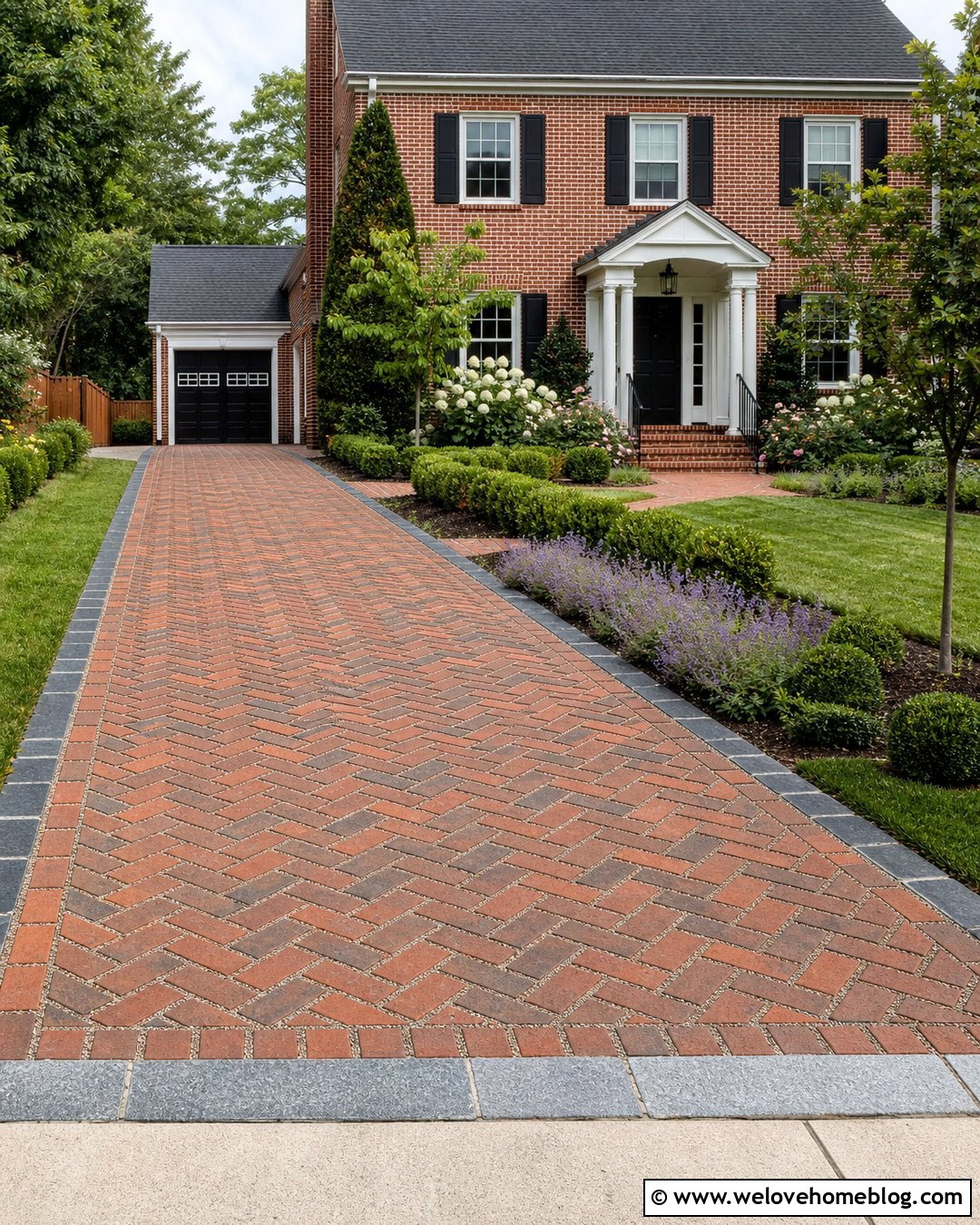
Rich brick edging brings warmth to the cool gray color of concrete Turfstone pavers. For a craftsman home, use a straight or slightly flared driveway filled with healthy turf and frame it with red-brown clay bricks laid in a soldier-course border. Carry the same brick into the walkway or front steps so the driveway looks connected to the house rather than added later. Layer compact evergreen shrubs, ferns, and flowering perennials behind the border. Mulched planting beds should follow the driveway shape and widen near the porch for a welcoming effect. Add a matching brick apron at the garage if the budget allows. The result combines the permeability and greenery of an open-grid surface with the handcrafted appearance associated with craftsman architecture. Choose subdued brick tones so the border complements wood trim and stone columns without dominating them.
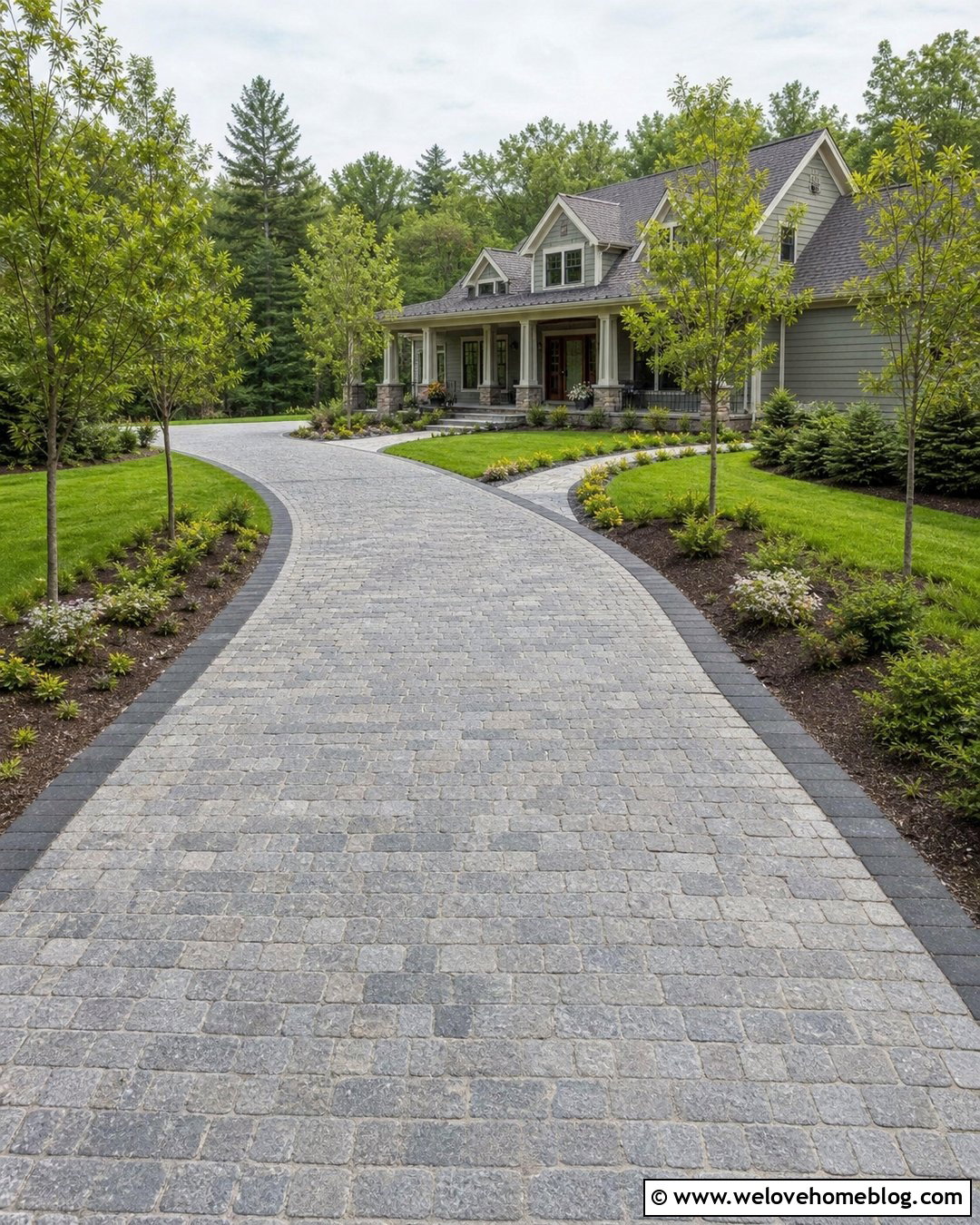
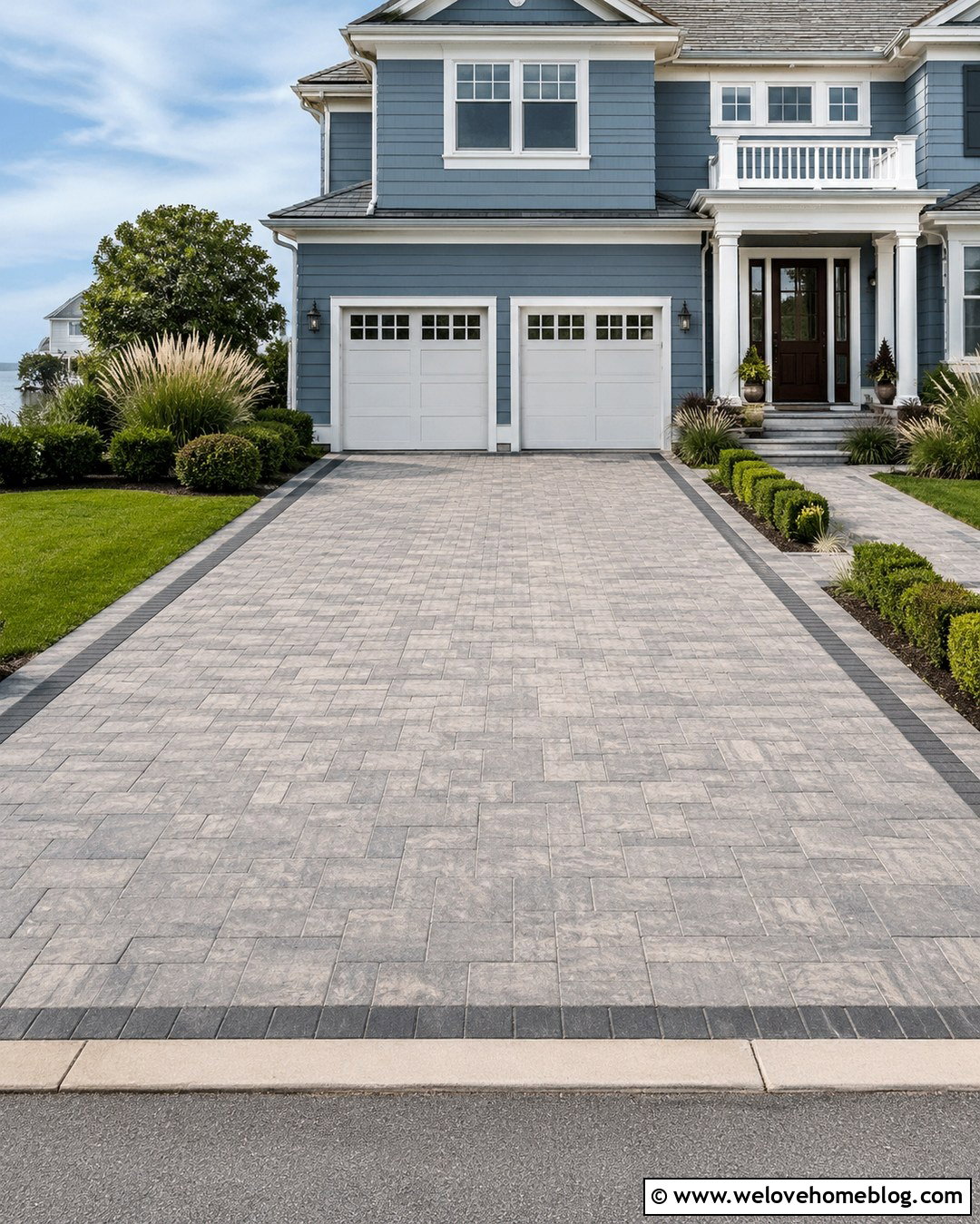
10. Colonial Turfstone Driveway With Granite Edging
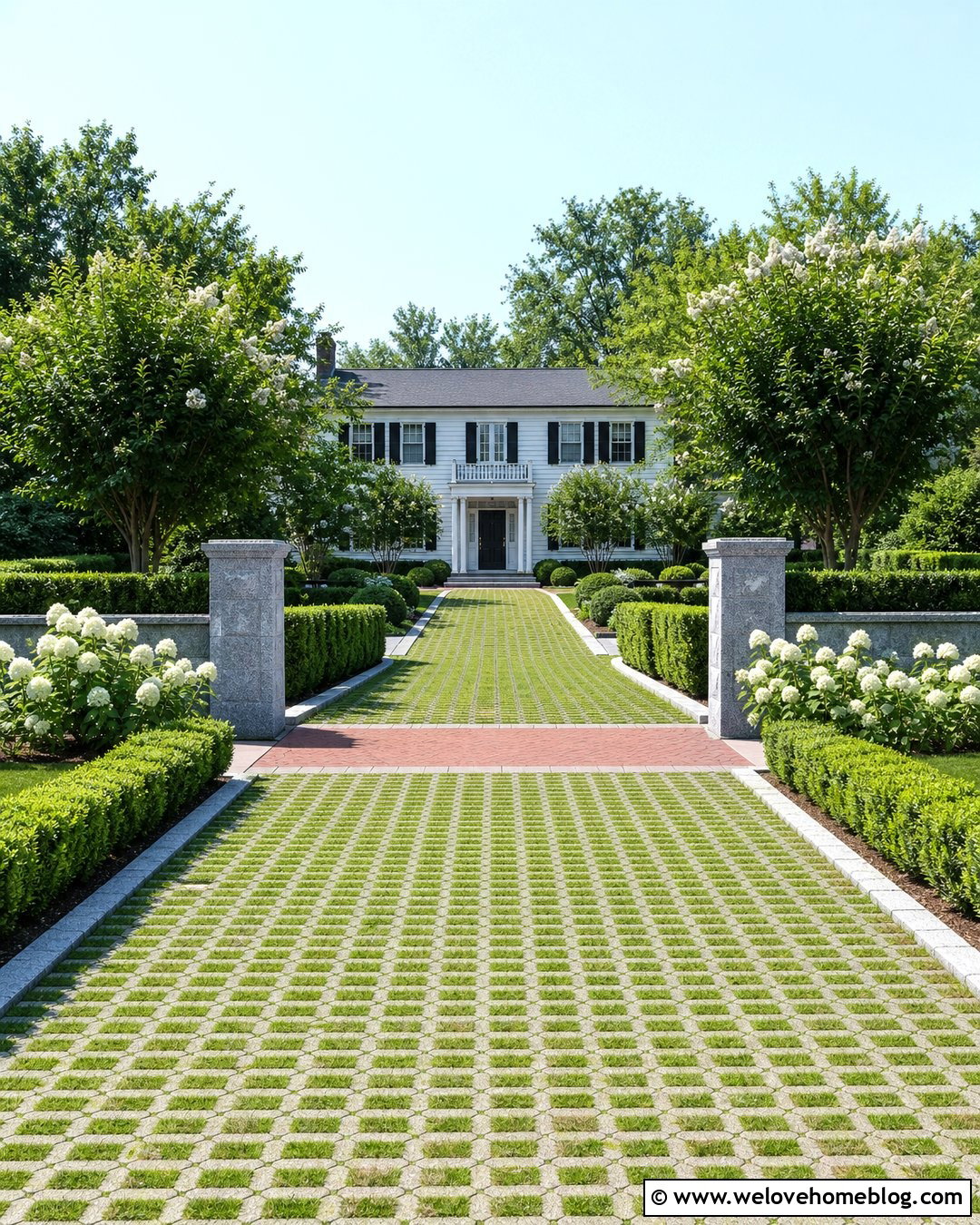
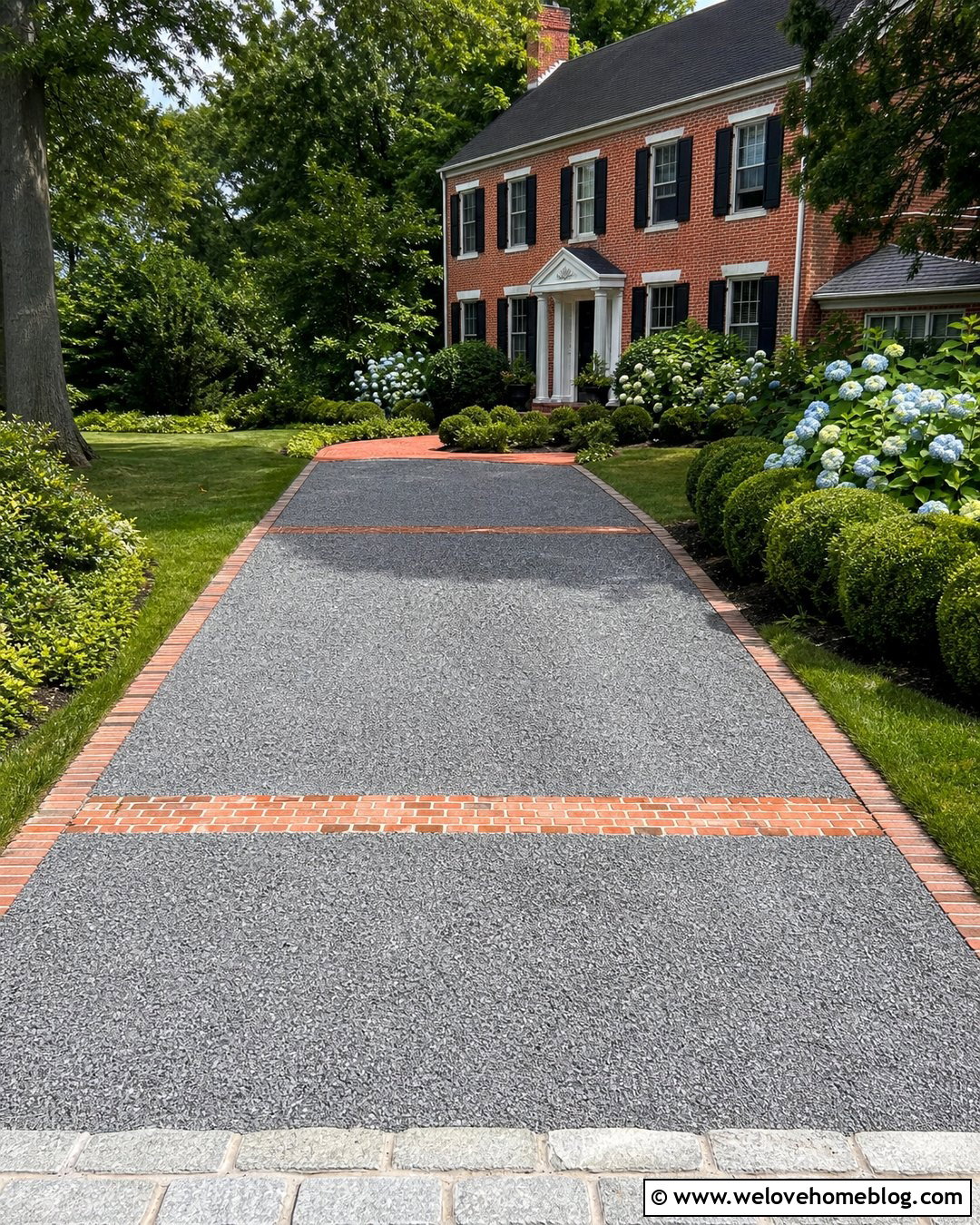
A symmetrical landscape can make Turfstone pavers feel suitably formal for a colonial house. Use a straight, grass-filled concrete grid driveway centered on the garage or front elevation. Install clean-cut granite curbing along both sides to create crisp boundaries against the lawn. At the street, flare the entrance slightly and add square granite or brick pillars that reflect the home’s balanced facade. Boxwood hedges, white flowering shrubs, and matching ornamental trees can frame the route without hiding the green surface. A red brick walkway crossing the driveway provides a traditional accent and an easy pedestrian connection to the front door. Keep the lawn infill evenly maintained because irregular growth will be more visible in this structured setting. This design proves that Turfstone does not have to look rustic; careful borders and balanced landscaping can produce a refined result.
11. Ranch House Turfstone Driveway With Drought-Tolerant Landscaping
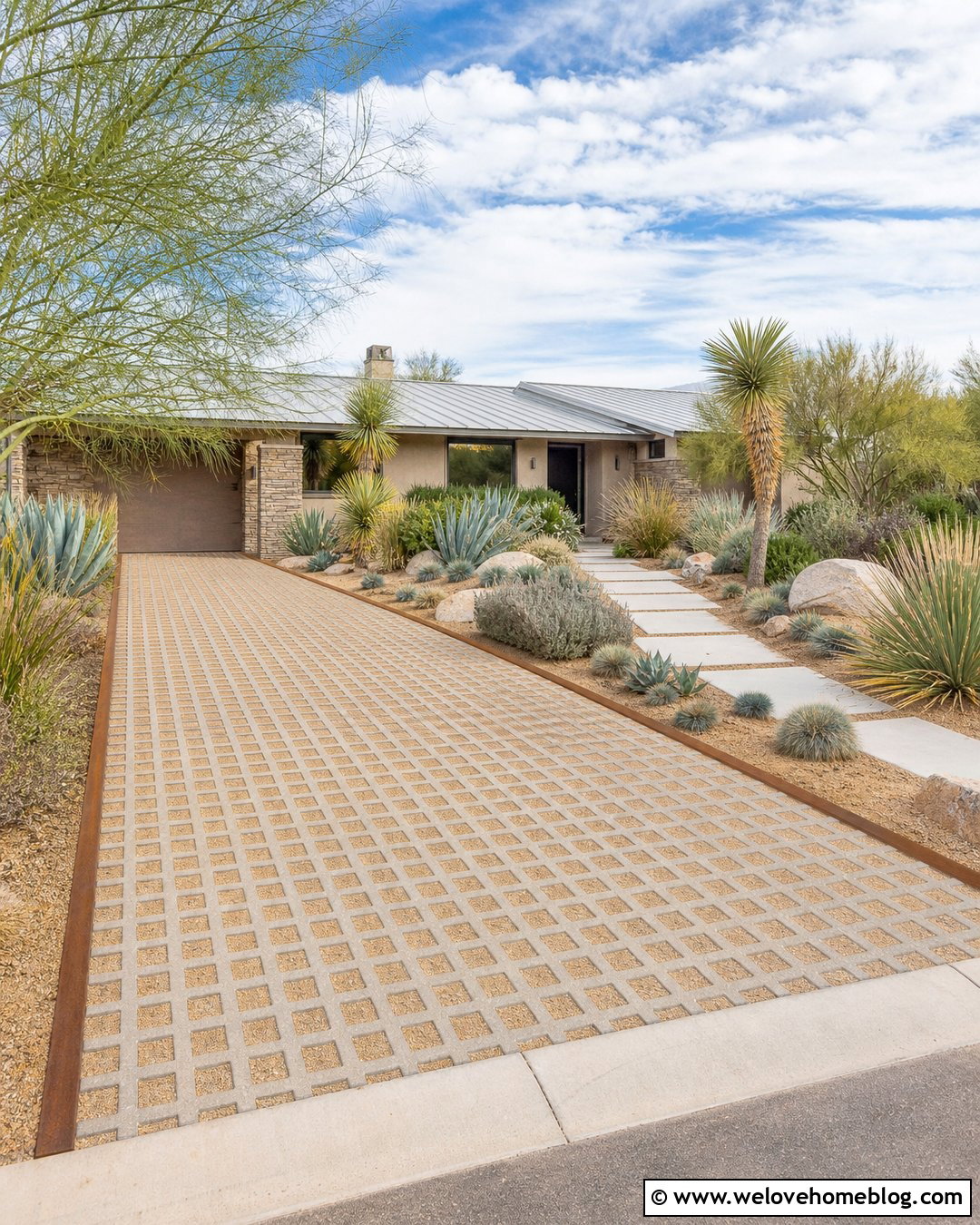
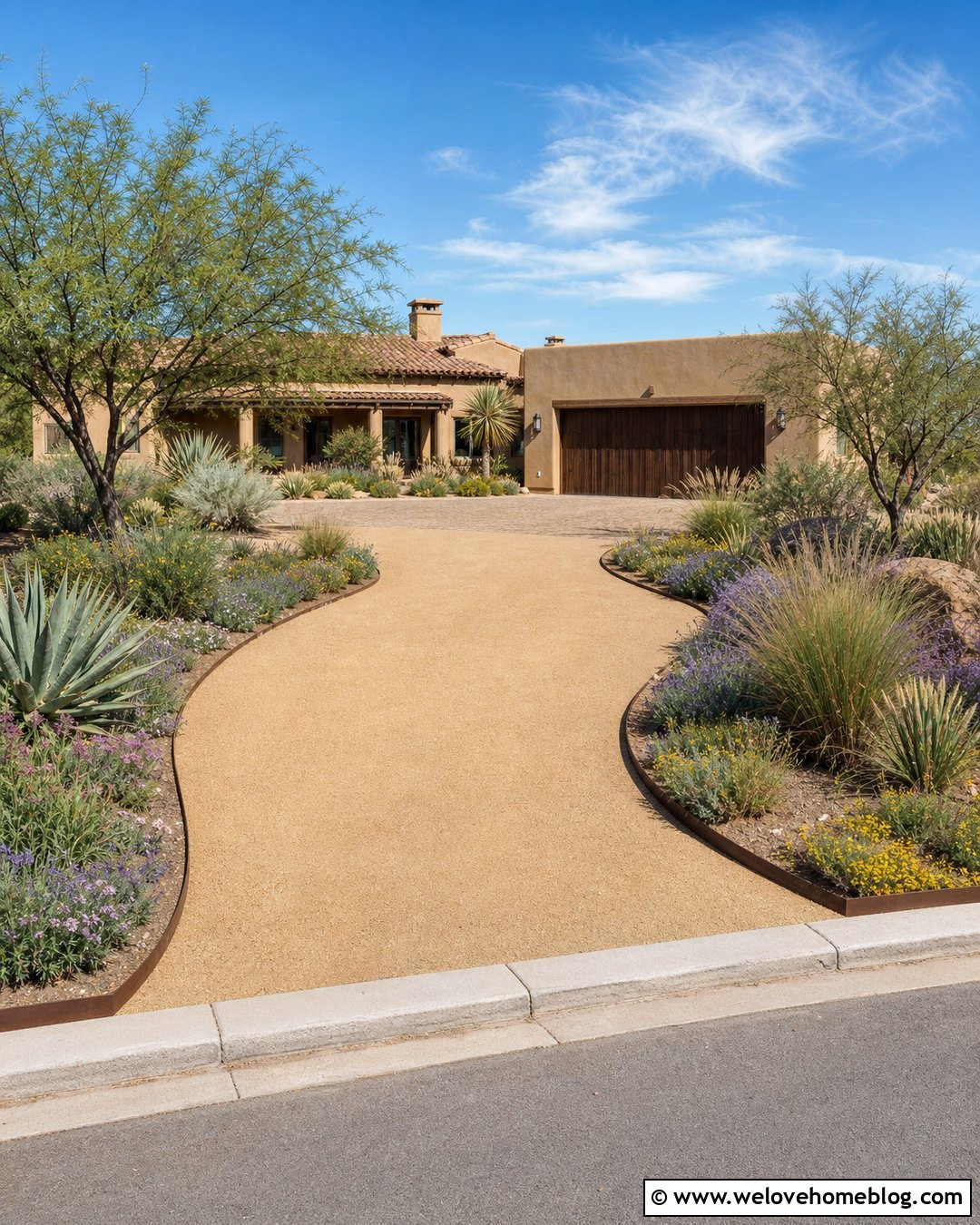
In a dry climate, gravel-filled Turfstone pavers are generally more practical than thirsty lawn infill. Use gray concrete grids filled with warm decomposed granite or small tan gravel across a broad, straight driveway. Edge the surface with weathered steel or low concrete curbing for a clean boundary. Surround it with drought-tolerant plants such as agave, yucca, blue fescue, sage, and compact ornamental grasses chosen for local growing conditions. Arrange the plants in broad groups rather than scattered individual specimens. A few boulders can connect the landscape to a stone veneer or earth-toned ranch facade. Keep thorny or sharply pointed plants away from doors and pedestrian routes. This low-profile composition complements the long horizontal lines of a ranch house while giving the driveway a warmer, more natural appearance than uninterrupted concrete.
12. Coastal Turfstone Driveway With Light Gravel
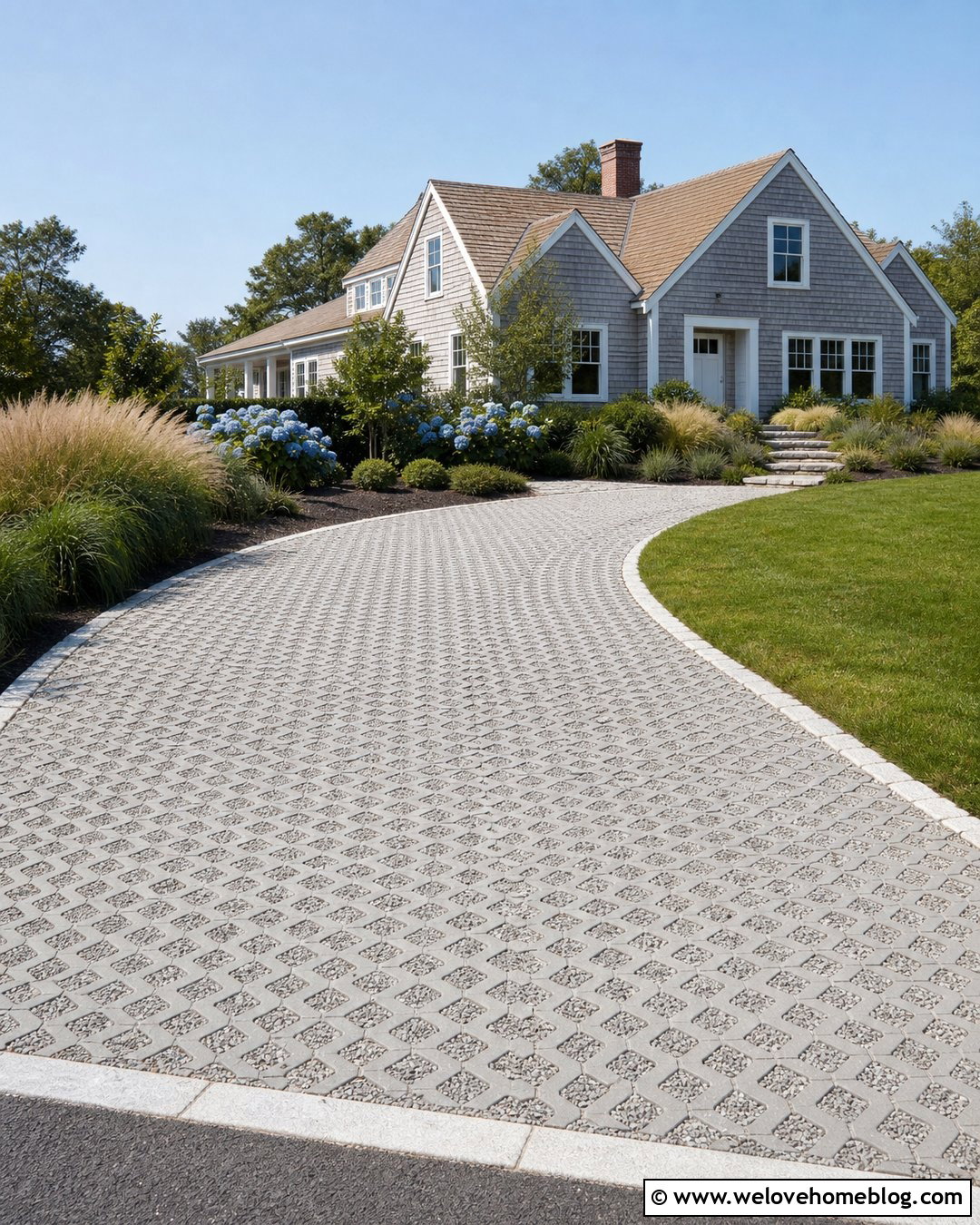
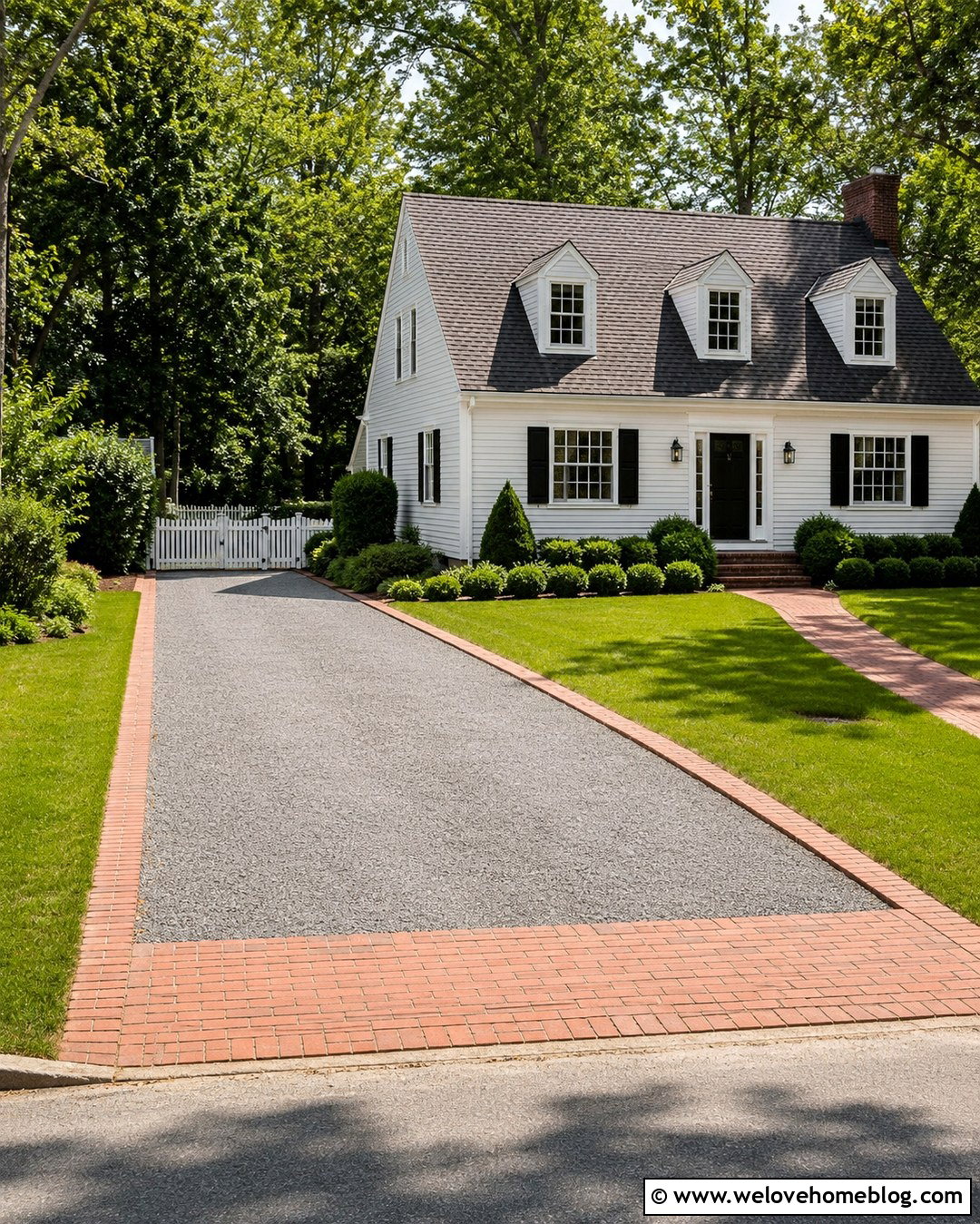
Light-colored gravel can give Turfstone pavers a breezy coastal character without losing the strength of a concrete grid. Fill natural-gray Turfstone openings with pale gray crushed stone rather than bright white gravel, which can create glare and show debris quickly. Shape the driveway with a relaxed curve leading toward a Cape Cod or shingle-style house. Granite setts along the edges add definition and suit the coastal palette. Frame the route with beach grass, inkberry, hydrangeas, and other plants appropriate for the property’s local exposure. Include a stepping-stone walkway through the planting bed so pedestrians do not have to cross loose aggregate unnecessarily. The combination of silver-gray concrete, cool gravel, and soft green planting feels calm and cohesive. Avoid seashell decorations or strong nautical themes; the materials alone can establish the desired regional character.
13. Wooded Turfstone Driveway With Stone Infill
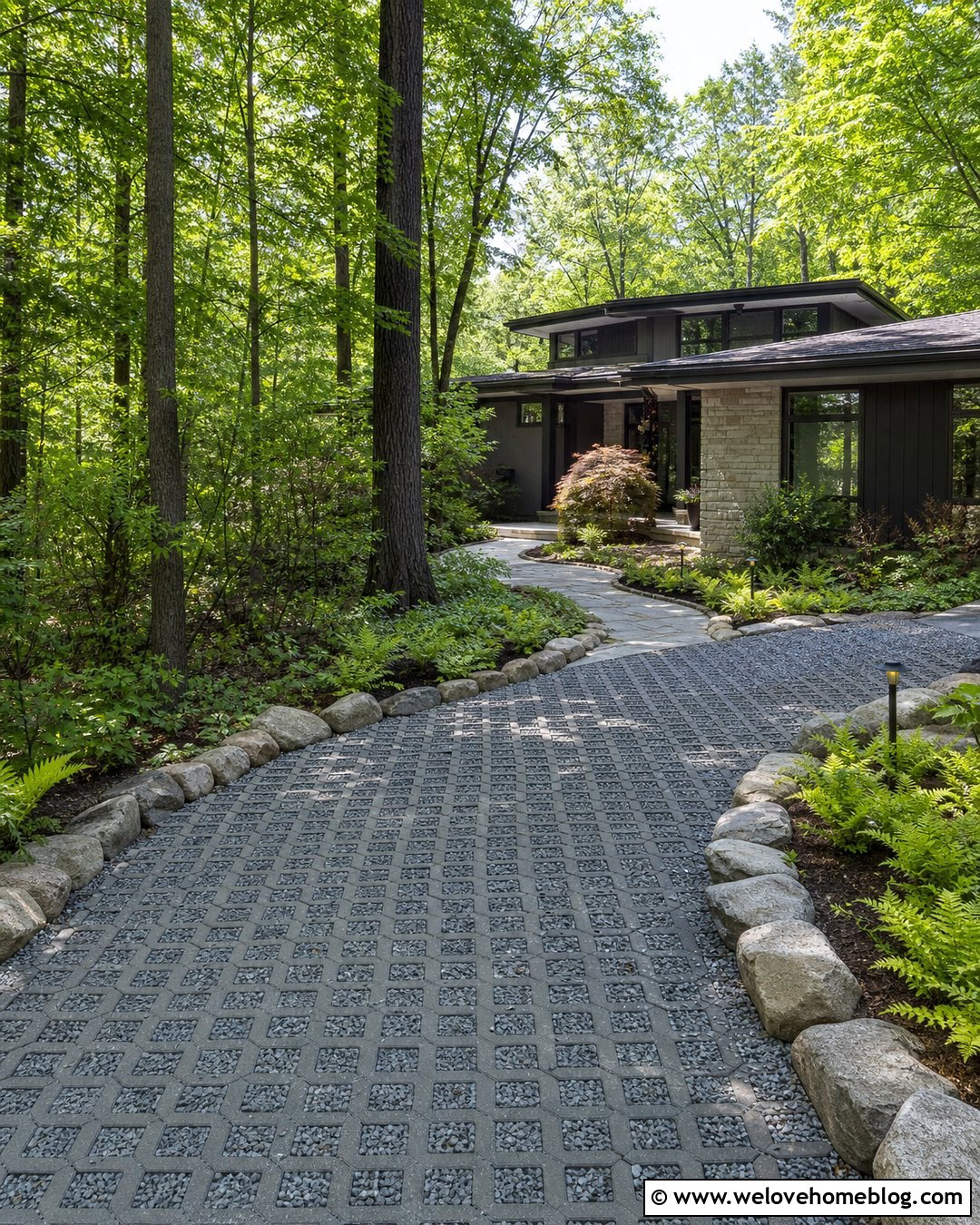
Grass often struggles under dense tree cover, making stone-filled Turfstone a better visual fit for a wooded property. Use charcoal-gray concrete grid pavers filled with small, angular gray aggregate across a winding driveway. The darker palette helps fallen leaves, pine needles, and natural forest debris look less noticeable. Define the edges with irregular fieldstone set close to grade, allowing the route to blend into the trees rather than resemble an urban curb. Ferns, woodland sedges, native groundcovers, and shade-tolerant shrubs can form soft planting pockets beside the driveway. Add a simple stone walkway that branches toward the front porch. Selective low-voltage lighting may mark the route, but fixtures should remain understated. This complete design suits cabins, contemporary woodland homes, and rustic houses where a bright green lawn would feel forced or require difficult maintenance.
14. Narrow Turfstone Driveway With Clean Borders
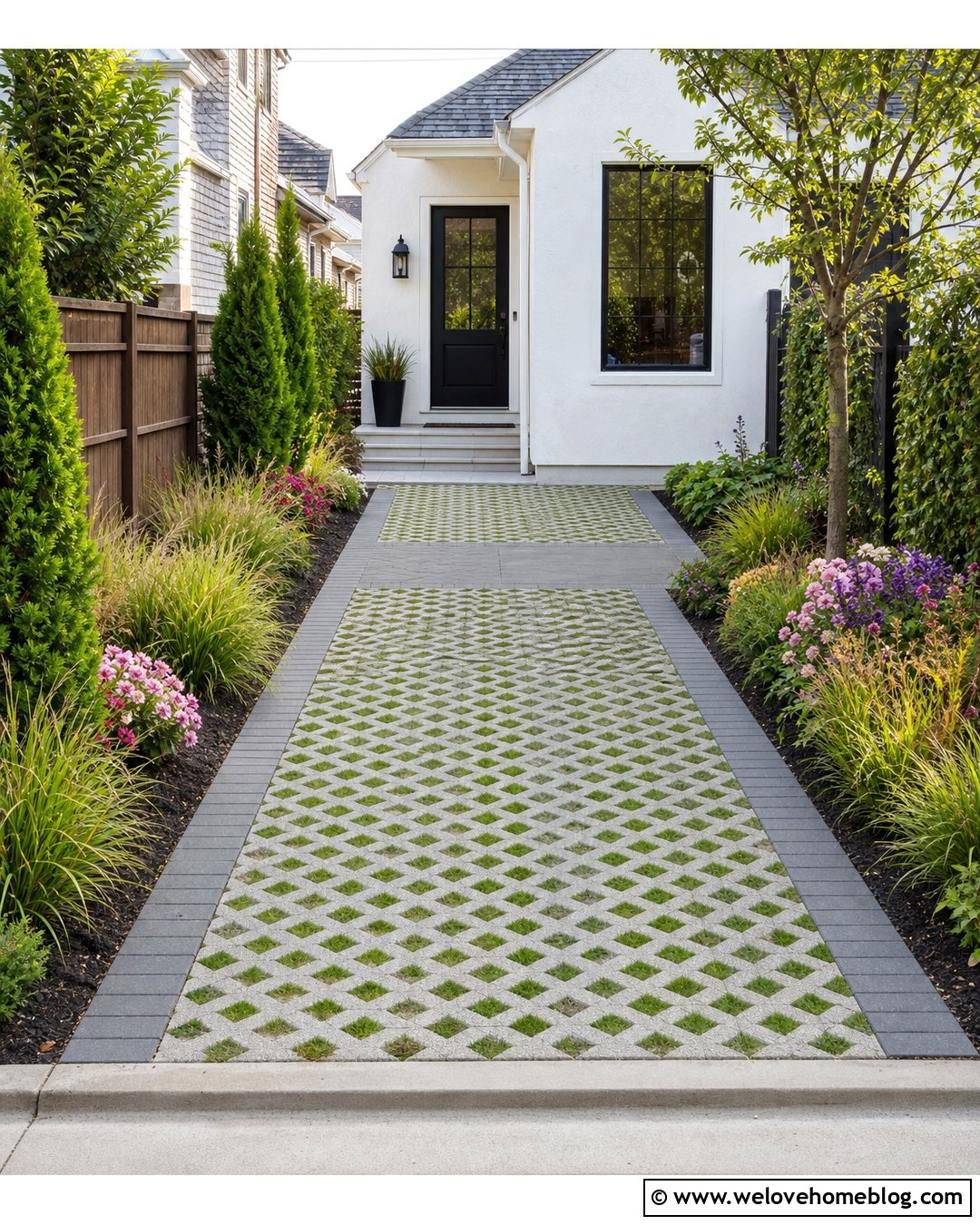
A small front yard needs a driveway that feels light rather than visually dominant. Cover a narrow, single-car route with grass-filled gray concrete Turfstone pavers, keeping the layout straight to use the available space efficiently. Add slim charcoal paver borders that clearly separate the driveway from flower beds and neighboring property lines. Near the house, widen one side just enough to provide a safe stepping area beside a parked vehicle. A compact concrete walkway can connect that landing to the front door. Use upright shrubs, ornamental grasses, and a small canopy tree instead of plants that spread into the driving area. The green openings help the narrow driveway blend with the lawn, making the yard appear more continuous. Simple materials and disciplined planting are essential because too many borders, colors, or decorative details can make a limited space feel crowded.
15. Sloped Turfstone Driveway With Retaining Walls
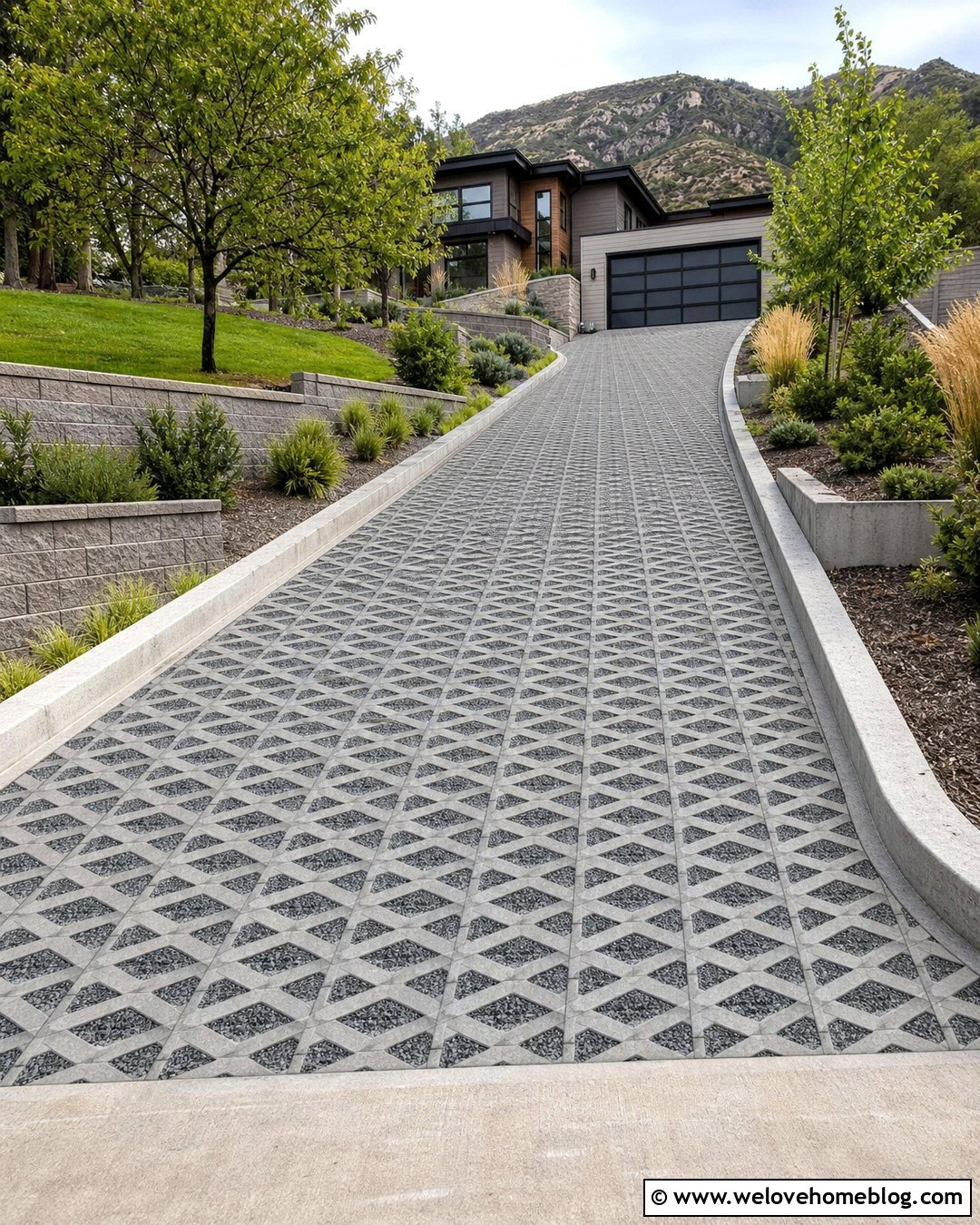
A sloped Turfstone driveway needs a carefully planned base, dependable edge restraint, and controlled drainage. Use stone-filled concrete grid pavers for a clean surface that does not depend on grass remaining healthy under challenging conditions. Low segmental retaining walls can support raised planting beds on the uphill side, while a concrete curb defines the downhill edge. Add deep-rooted shrubs and ornamental grasses to soften both walls and help visually anchor the slope. Avoid creating sharp turns where vehicles must brake or pivot on the grid. Manufacturer technical guidance limits vehicular Turfstone applications to an 8:1, or 12.5%, slope and recommends site-specific pavement design. () For steep, unstable, or drainage-sensitive properties, have a qualified local professional evaluate the soil, base, runoff route, and retaining structures before installation.
16. Turfstone Driveway With Extra Parking Pad
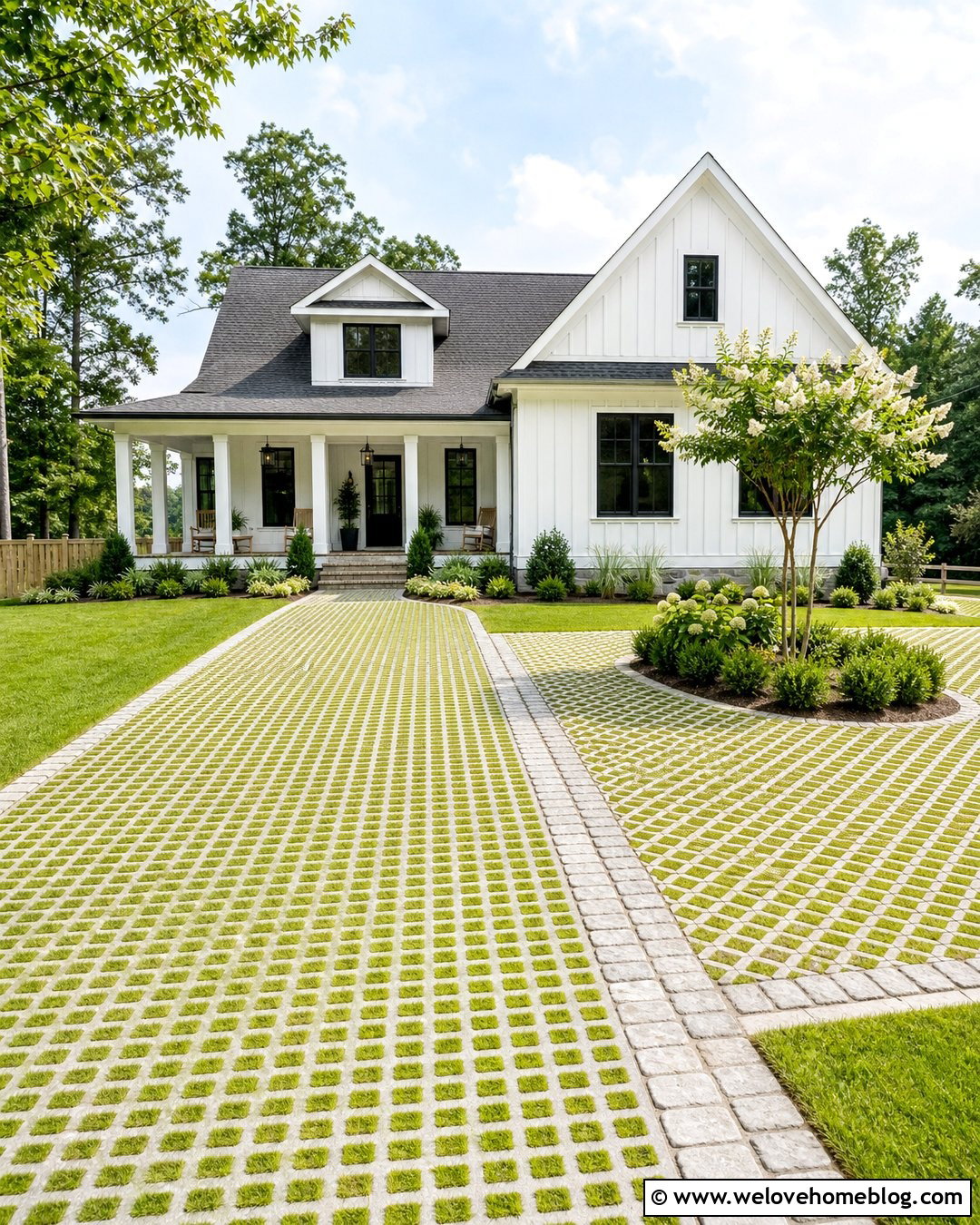
When occasional guest parking is needed, a Turfstone parking pad can feel less intrusive than expanding the entire driveway with solid pavement. Install grass-filled gray concrete grid pavers across the main straight driveway, then extend the same material into a rectangular or gently angled side bay. Mark the parking pad with a subtle cobblestone outline so drivers understand where to stop. A planted island containing a small tree and low shrubs can separate the extra space from the front walkway. Keep the turning connection broad enough for comfortable vehicle movement and avoid placing tall plants at visibility points. This design is especially useful for corner lots, multigenerational homes, or properties with limited street parking. When the bay is empty, the grass-filled grid visually reconnects with the lawn and keeps the expanded parking area from appearing oversized.
17. Turfstone Driveway With Solid Paver Garage Apron
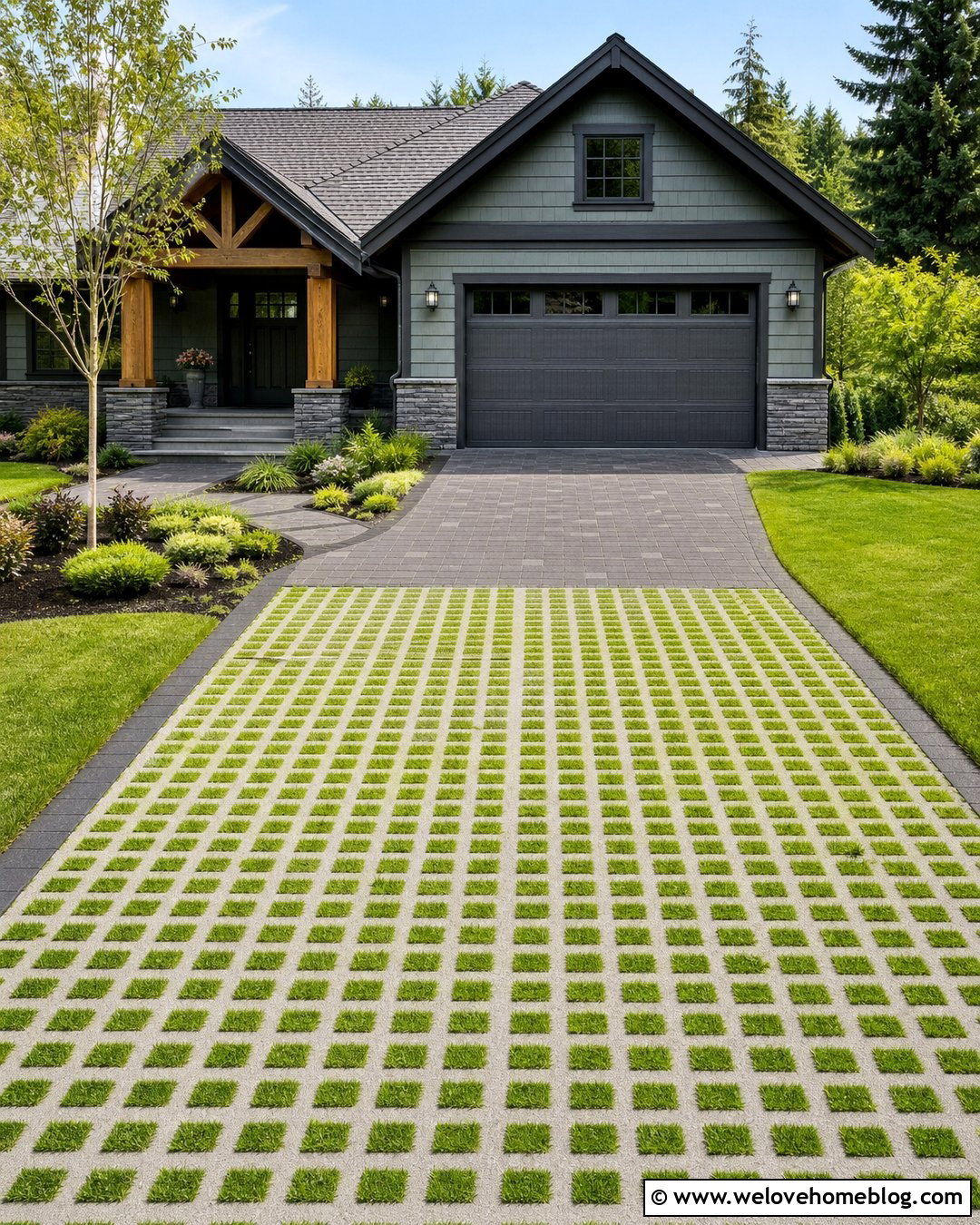
The area directly in front of a garage receives repeated turning, braking, and parking activity. Pair a Turfstone driveway with a solid interlocking concrete paver apron to give this busy zone a distinct, finished appearance. Use grass-filled gray concrete Turfstone pavers along the main approach, then transition to charcoal rectangular pavers about one vehicle length before the garage doors. A matching charcoal border can run along the entire driveway and tie both surfaces together. Repeat the solid pavers in the walkway to the house for a coordinated hardscape plan. Low foundation shrubs and wide planting beds should soften the garage facade without narrowing the driving space. This mixed-surface layout looks intentional and provides clear visual zones. Keep the transition line straight or gently curved, depending on the home’s architecture and driveway approach.
18. Turfstone Driveway With Native Plant Borders
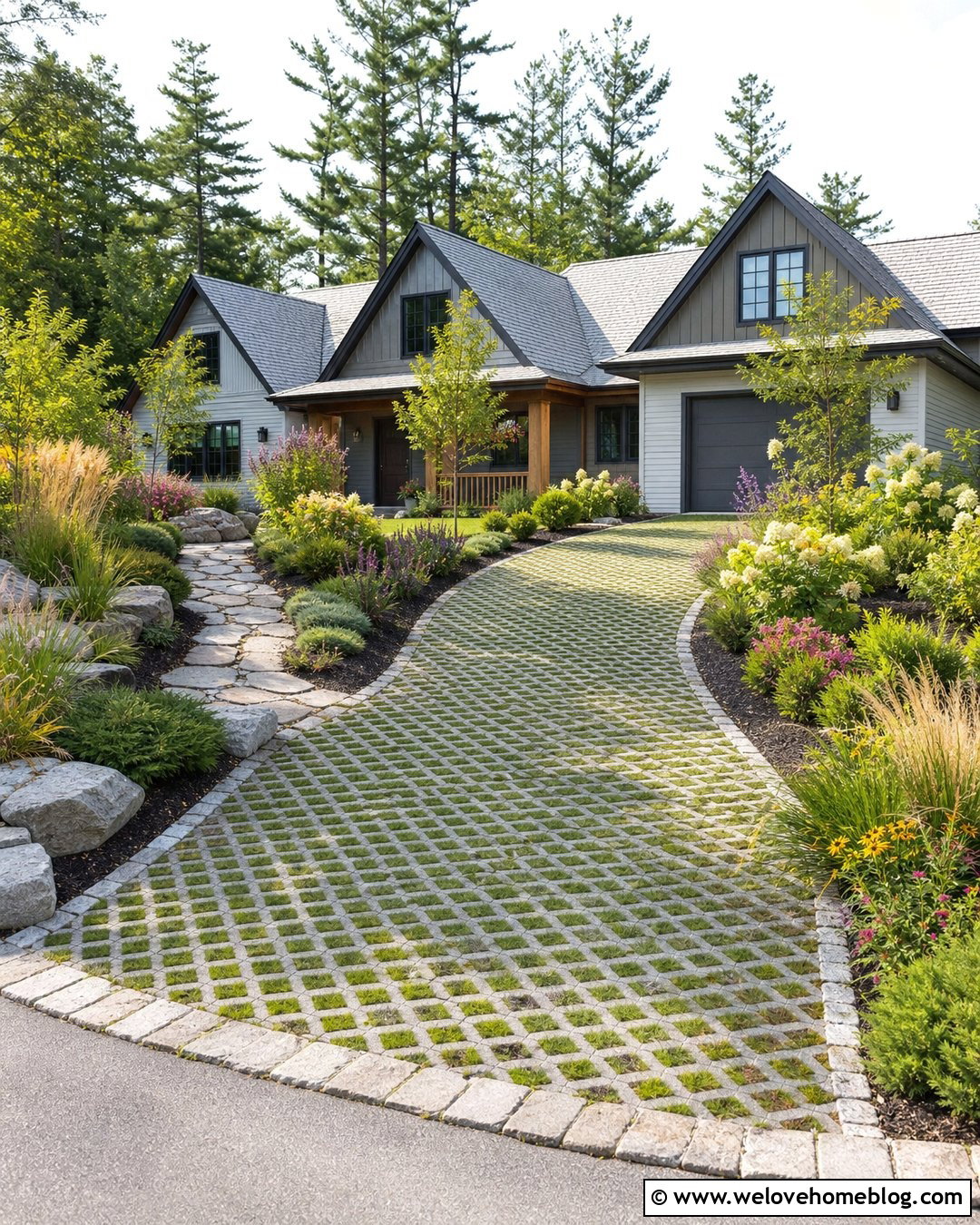
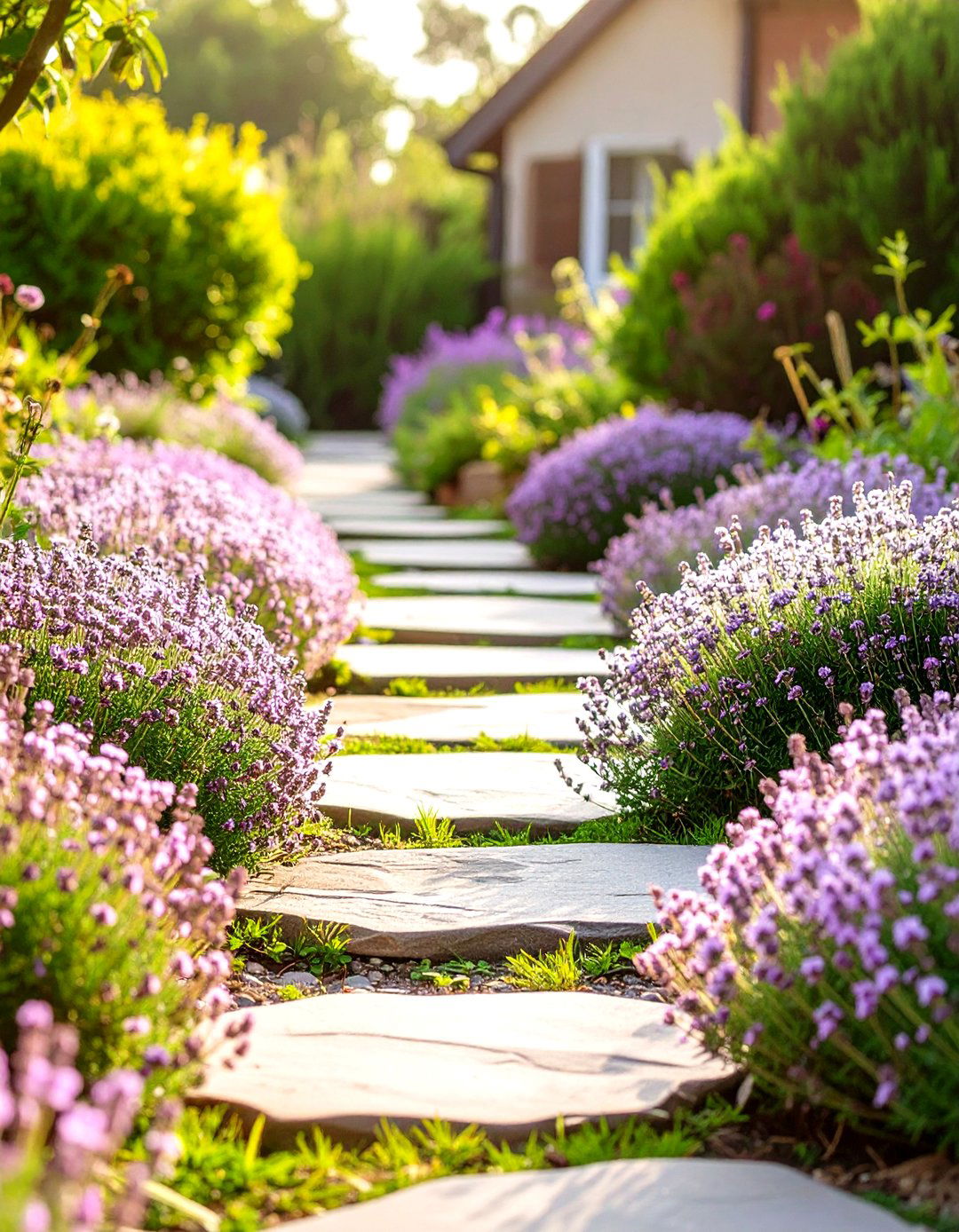
Native planting can turn a simple Turfstone driveway into an integrated front-yard landscape. Choose grass-filled gray concrete grid pavers for a gently curving route and edge them with narrow bands of locally sourced stone. Build layered planting beds containing regional grasses, flowering perennials, compact shrubs, and one or two small native trees. Select plants based on local soil, sunlight, mature size, and moisture conditions rather than choosing them only for appearance. Keep taller species toward the back of each bed and maintain open sightlines at the street. A natural flagstone walkway can pass through the planting and connect the driveway to the porch. The repeated green openings in the driveway create a smooth transition between paved and planted areas. This design suits cottages, contemporary homes, and informal suburban properties seeking a softer, habitat-friendly front yard.
19. Turfstone Driveway With Lighting And Address Sign
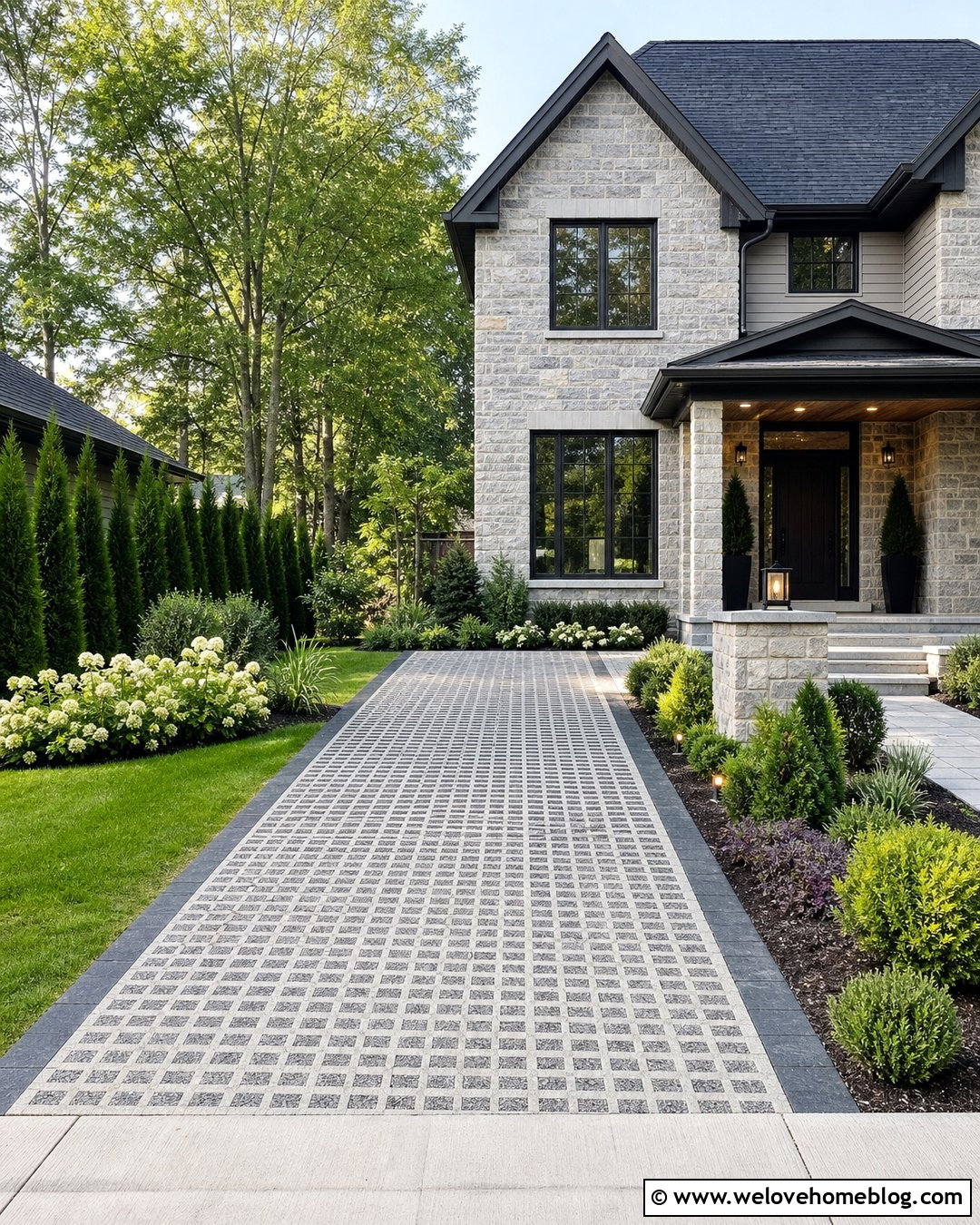
Good entrance details help a Turfstone driveway remain easy to identify without adding a large gate. Use gravel-filled gray concrete grid pavers in a straight layout, bordered by dark granite setts. At the street, install a low stone address monument that matches the house facade. Place simple downward-facing lights near the sign and continue with restrained path fixtures along one side of the driveway. The landscaping can include low evergreen shrubs, flowering groundcover, and ornamental grasses that will not hide the numbers as they mature. During daylight, the stone infill and clear border give the driveway a polished appearance. After dark, properly positioned fixtures can define the approach without covering the yard in excessive light. Keep electrical equipment, drainage features, and access points coordinated during planning so later installation does not disturb the pavers.

20. Low-Maintenance Turfstone Driveway With Mixed Gravel
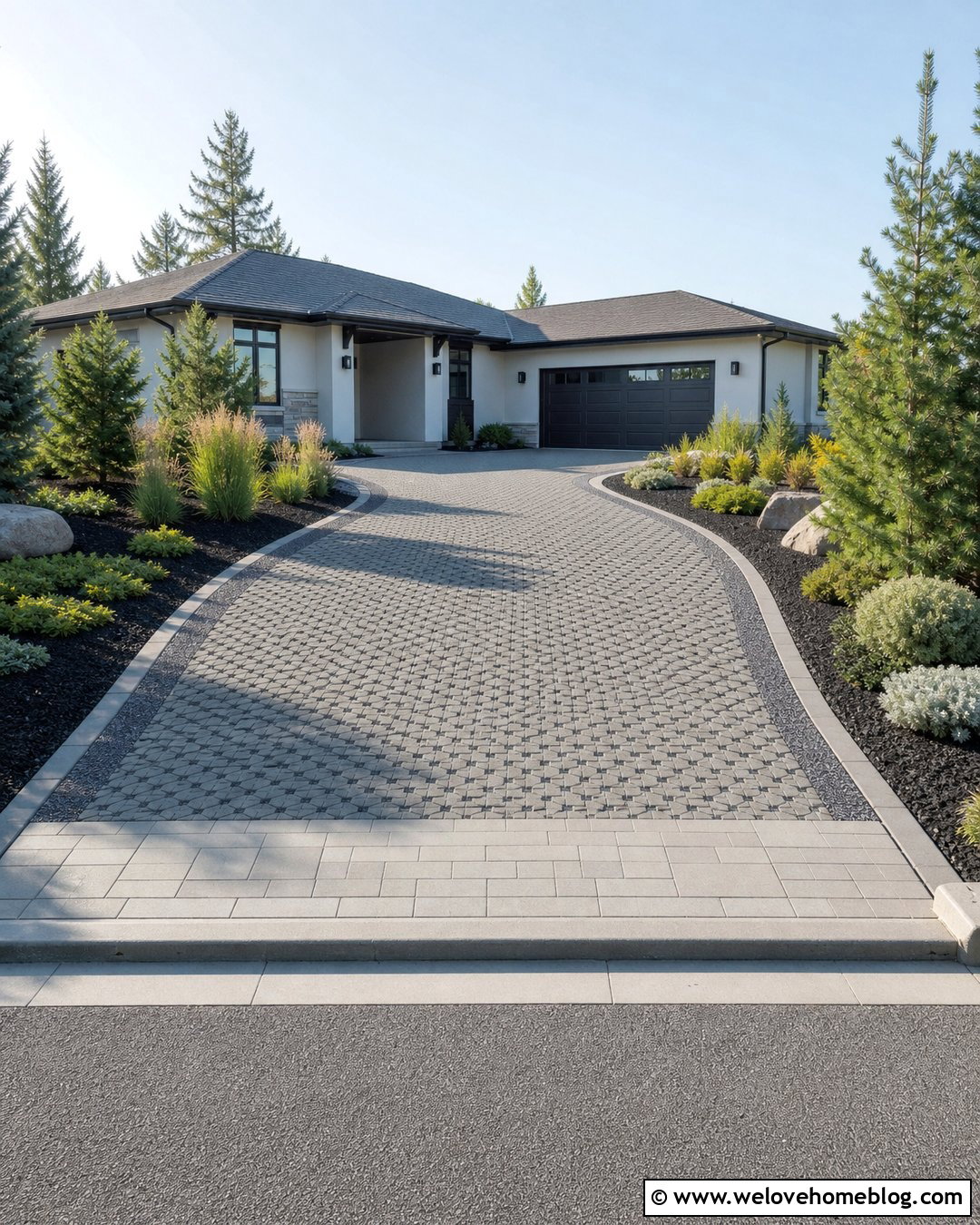
A low-maintenance Turfstone design can still have depth and visual interest. Install natural-gray concrete grid pavers across a broad, gently curved driveway and fill the openings with medium-gray crushed stone. Use darker aggregate within a narrow band near each edge, creating a subtle framed effect without introducing another paving material. Finish the perimeter with concrete curbing and surround it with evergreen groundcover, slow-growing shrubs, mulch, and a few ornamental grasses. A wide solid paver apron at the street catches the eye and creates a clear entrance. Even a low-maintenance surface depends on proper construction below grade. Turfstone guidance calls for a compacted aggregate base, a leveling bed, complete infill, and continuous edge restraint, with the actual pavement section determined by soil and loading conditions. ()
Conclusion:
The best Turfstone driveway combines a stable surface with borders, planting, and transitions that fit the property. Grass infill creates the appearance of a reinforced lawn, while gravel provides a more consistent option for shaded, dry, or low-maintenance settings. Straight layouts feel orderly, curved routes soften large yards, and circular designs create a memorable arrival experience. Brick, granite, concrete, or cobblestone edging can connect the grid pavers to the architecture of the house. Before choosing a final look, consider vehicle use, sunlight, irrigation, soil, drainage, snow removal, and local requirements. Use these **20 Turfstone Pavers Driveway Ideas** to plan a complete design that balances permeability, daily function, maintenance, and lasting curb appeal.

Related posts:
Leave a Reply