
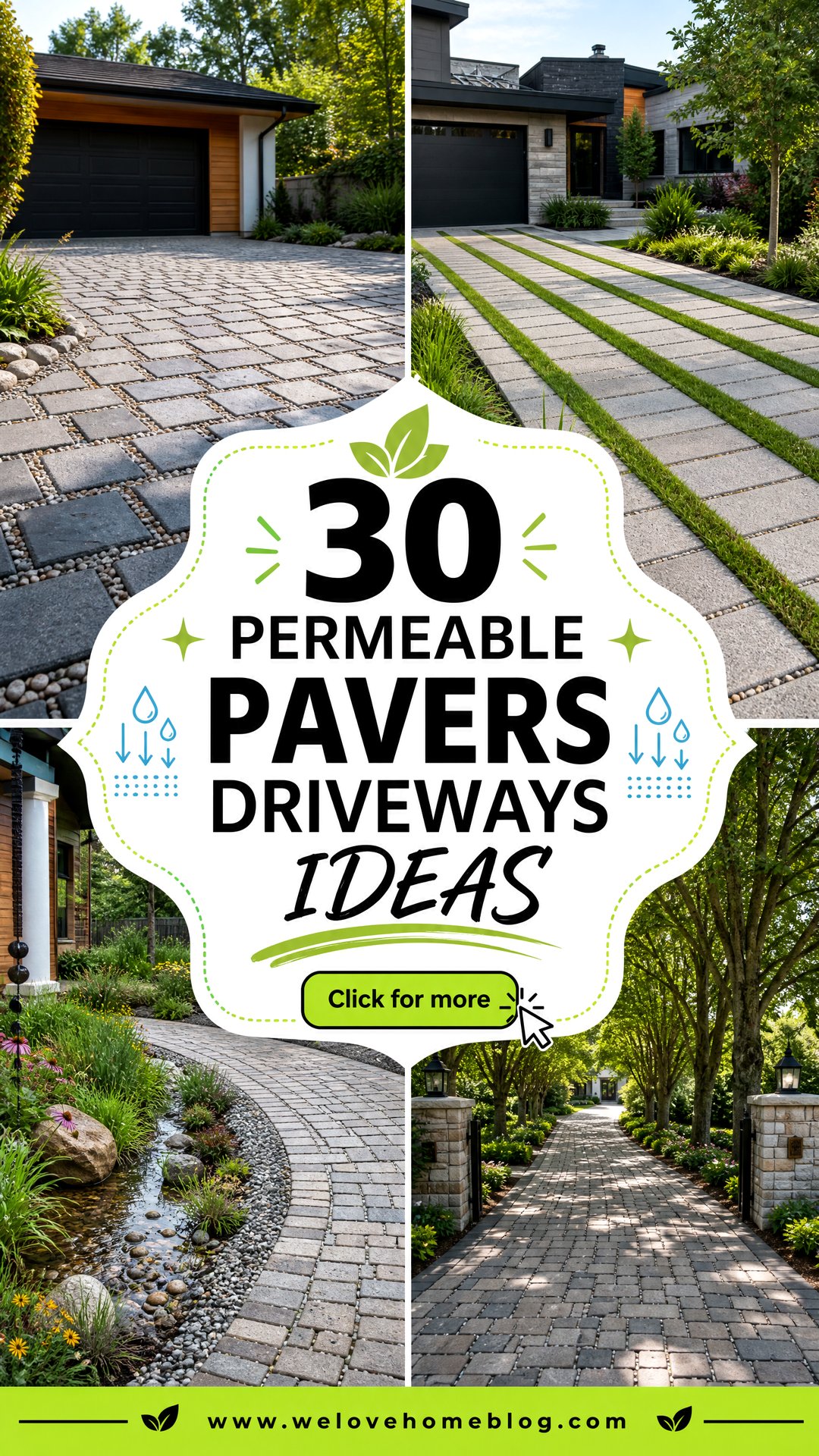
Permeable paver driveways combine polished curb appeal with practical stormwater management. Unlike a solid driveway surface, these systems use open joints, porous units, or reinforced cells that let rain pass into a stone base below. The result can reduce runoff while giving the entrance more texture and character. Choices range from contemporary concrete blocks with gravel joints to grass-filled grids that nearly disappear into the lawn. However, successful performance depends on suitable soil, careful grading, an open-graded base, strong edge restraints, and a layout designed for vehicle traffic. Local drainage rules should also be checked before construction. () The complete driveway looks below offer practical inspiration for **30 Permeable Pavers Driveways Ideas**.
1. Gray Permeable Paver Driveway With Gravel Joints
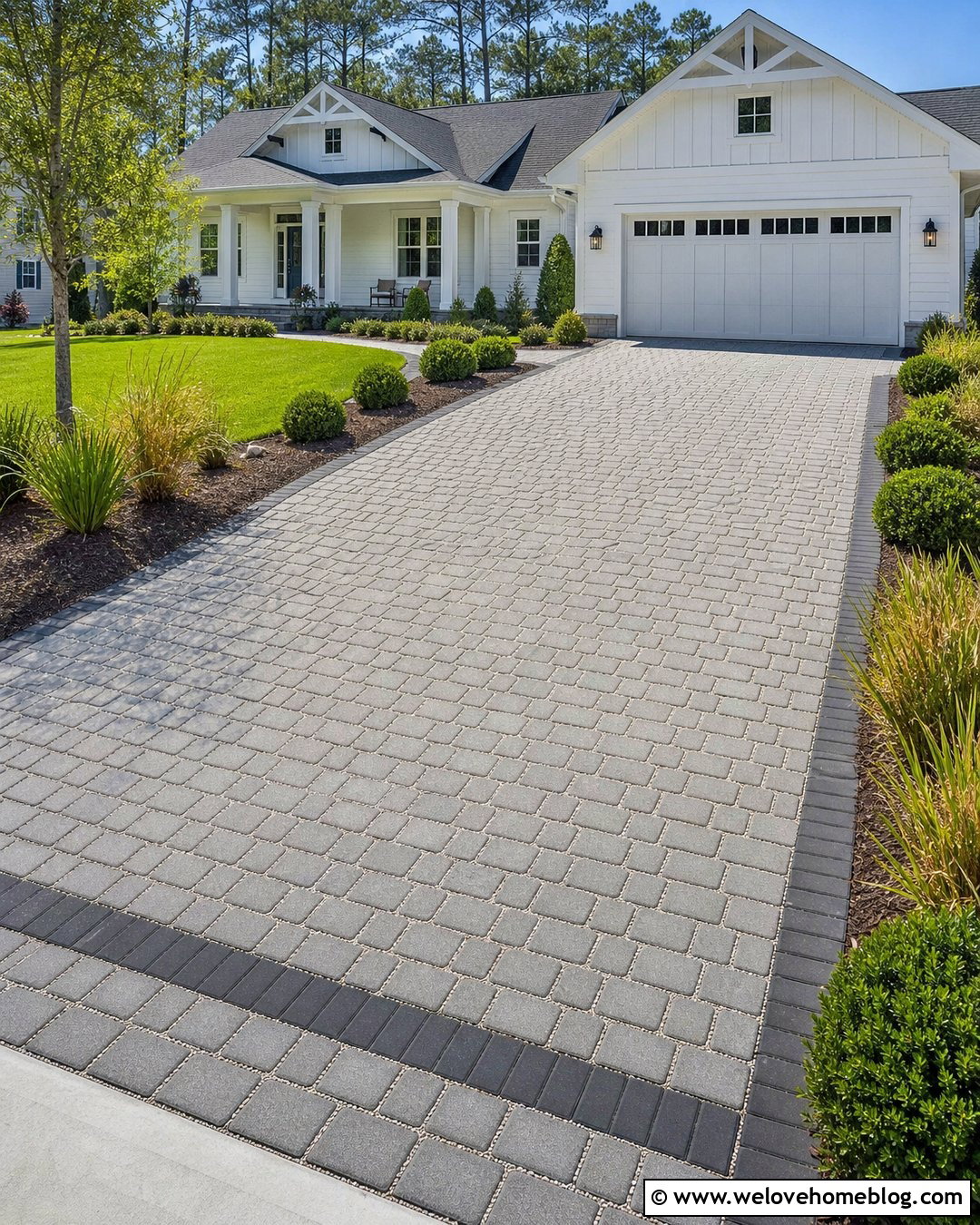
A gray permeable paver driveway offers a clean appearance that works with almost any home exterior. Choose rectangular concrete pavers with wide joints filled with small, washed angular stone rather than ordinary joint sand. A straight layout keeps the entrance simple, while a darker charcoal border clearly defines the driving area. Add low ornamental grasses and rounded evergreen shrubs along both sides to soften the hard surface without dropping excessive debris into the joints. A matching paver walkway can branch toward the front door for a connected look. This design is especially effective beside white siding, red brick, or light stucco. Use several related gray tones instead of one flat color so dust, tire marks, and minor staining are less noticeable.
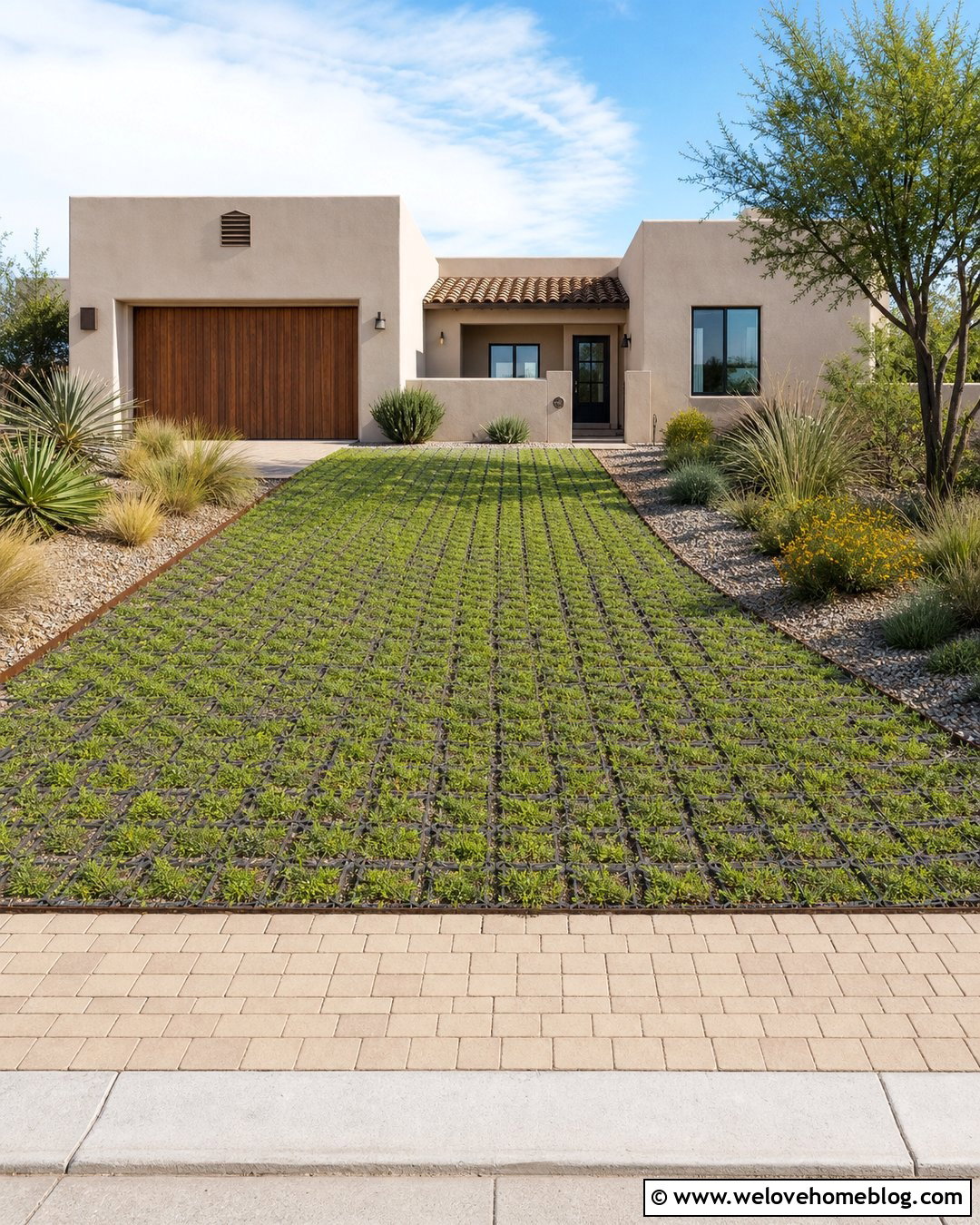
2. Grass Permeable Paver Driveway With Concrete Grid Blocks
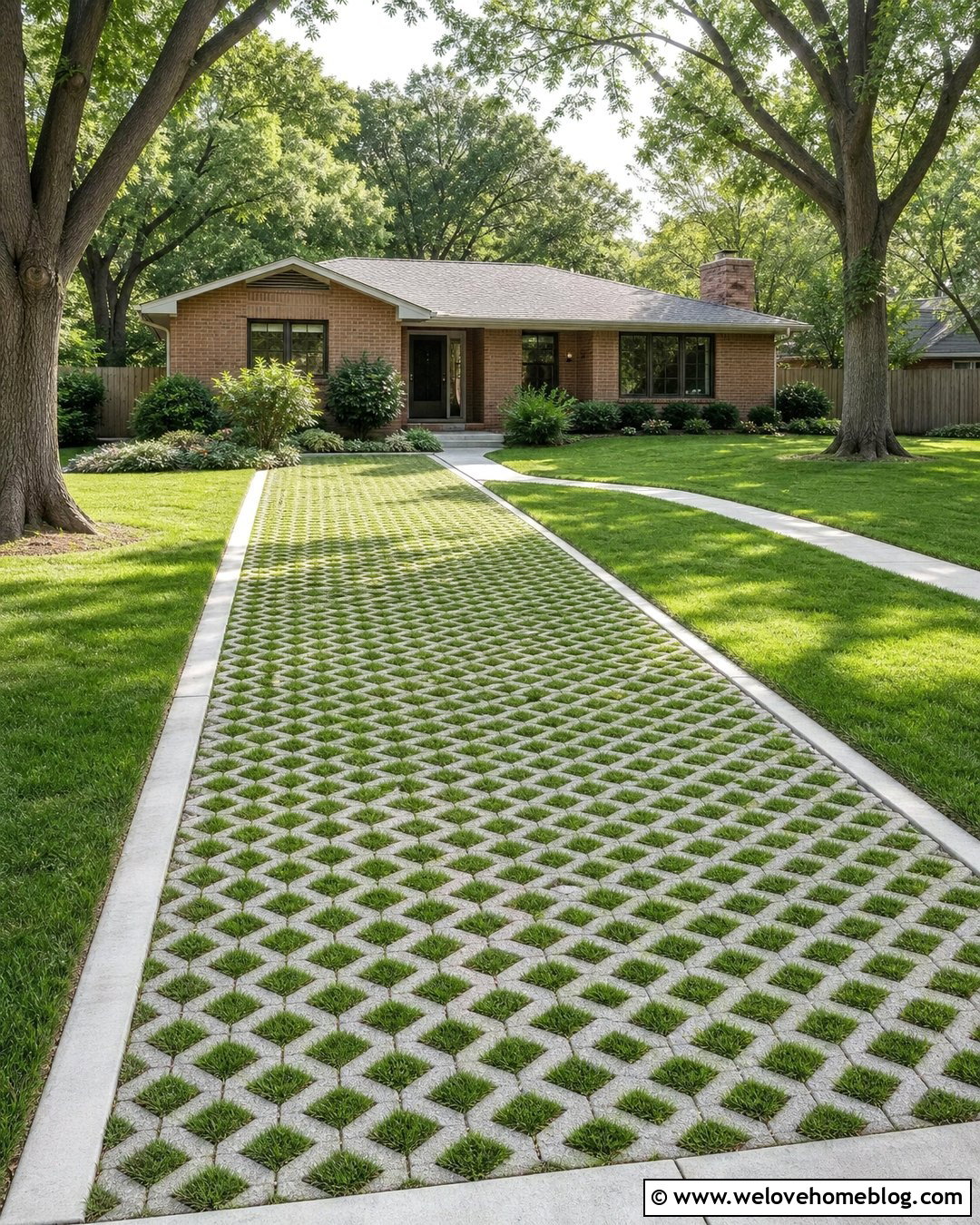
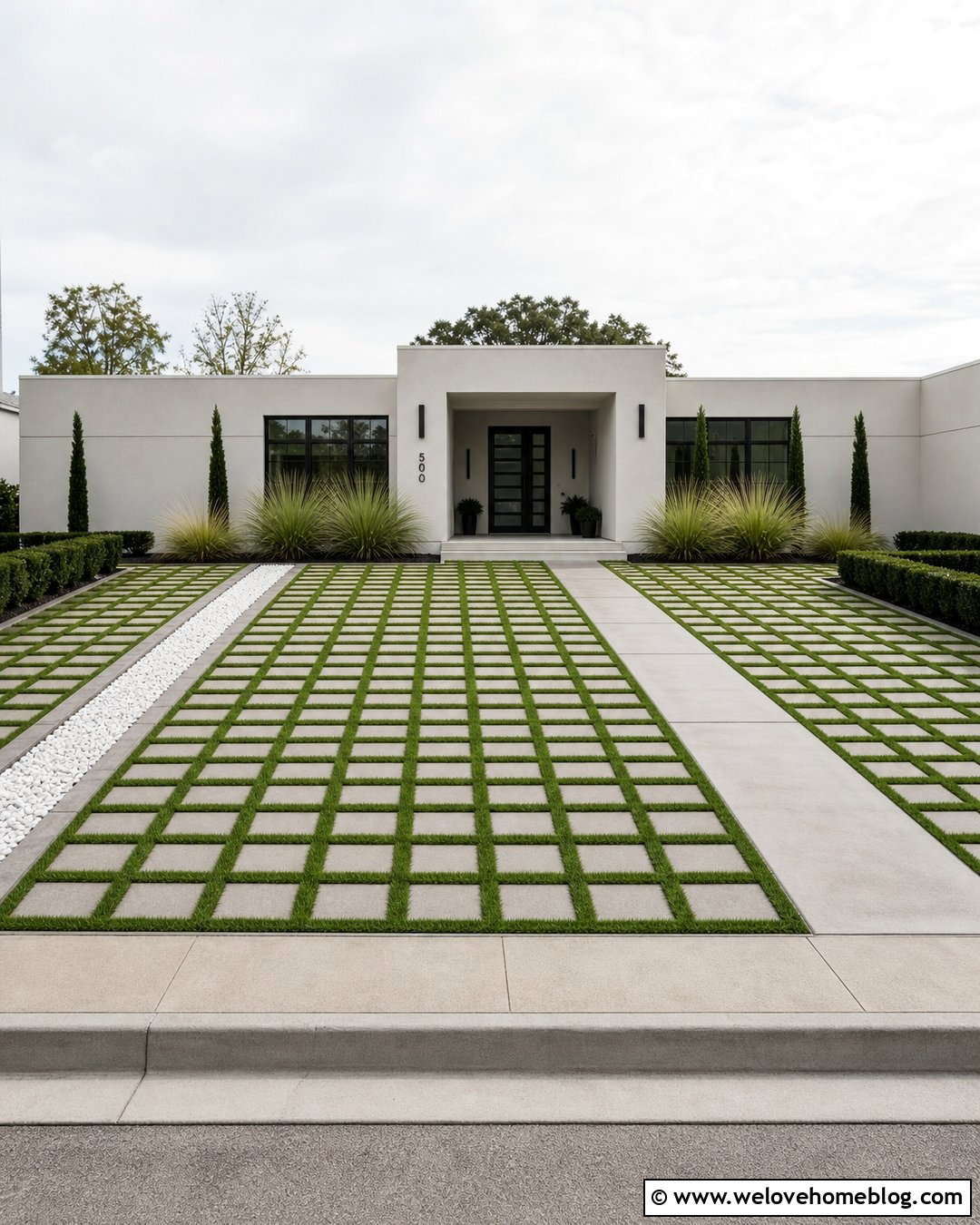
Want the driveway to feel like part of the lawn? Concrete grid pavers filled with healthy turf create a reinforced green surface that can support vehicles while allowing rain to move through the open cells. A broad, straight driveway suits this approach because the repeated grid creates a neat visual rhythm. Frame the surface with flush concrete curbs to protect the edges without interrupting mowing. Continue the surrounding lawn to the driveway, then add native shade trees farther back where roots will not disturb the base. Select grass suited to the property’s sunlight, climate, and expected traffic. This driveway looks particularly natural beside ranch houses, cottages, and low-profile contemporary homes. Reserve the most frequently driven wheel paths for especially durable turf or gravel-filled cells.
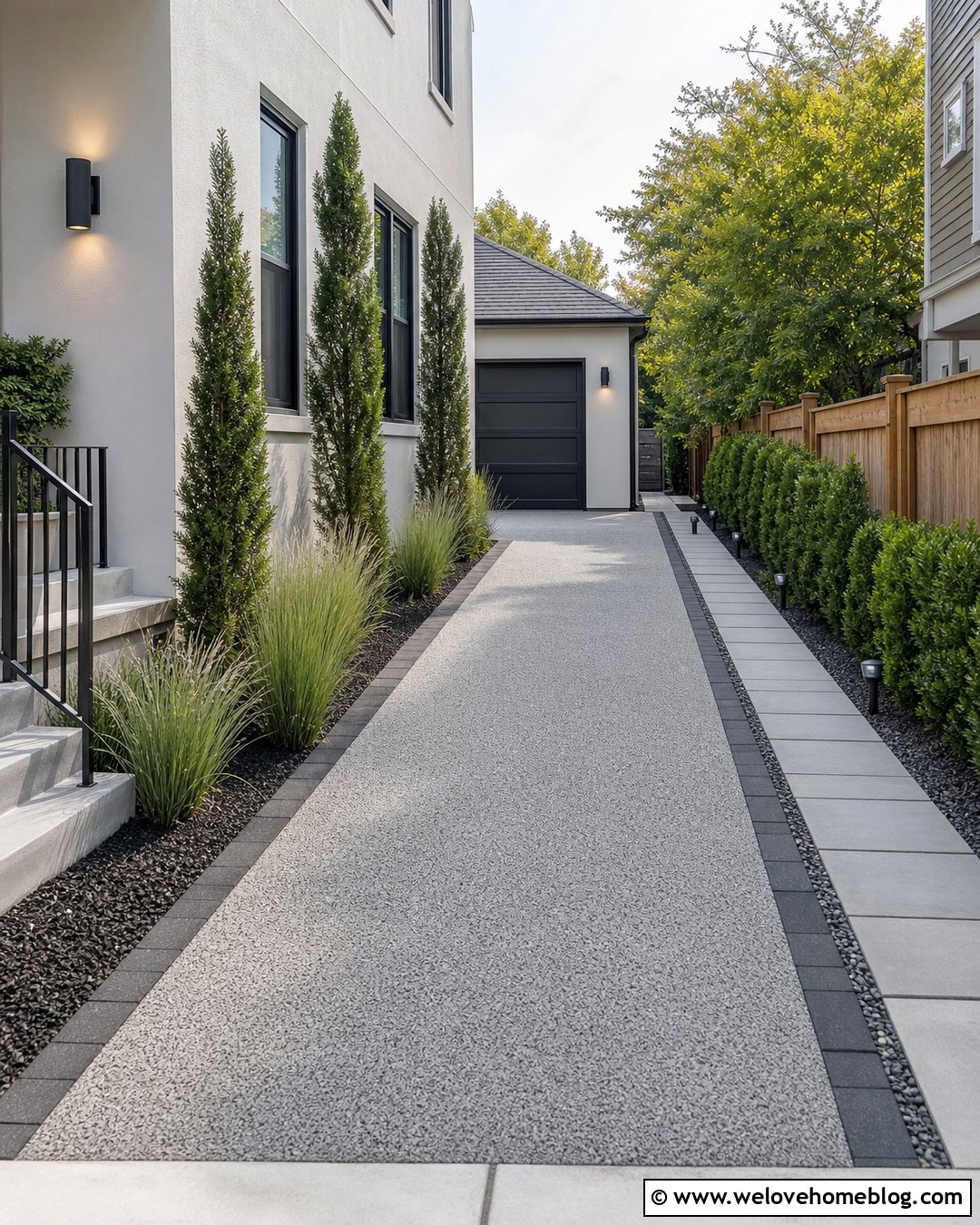
3. Permeable Paver Driveway With Black Stone Joints
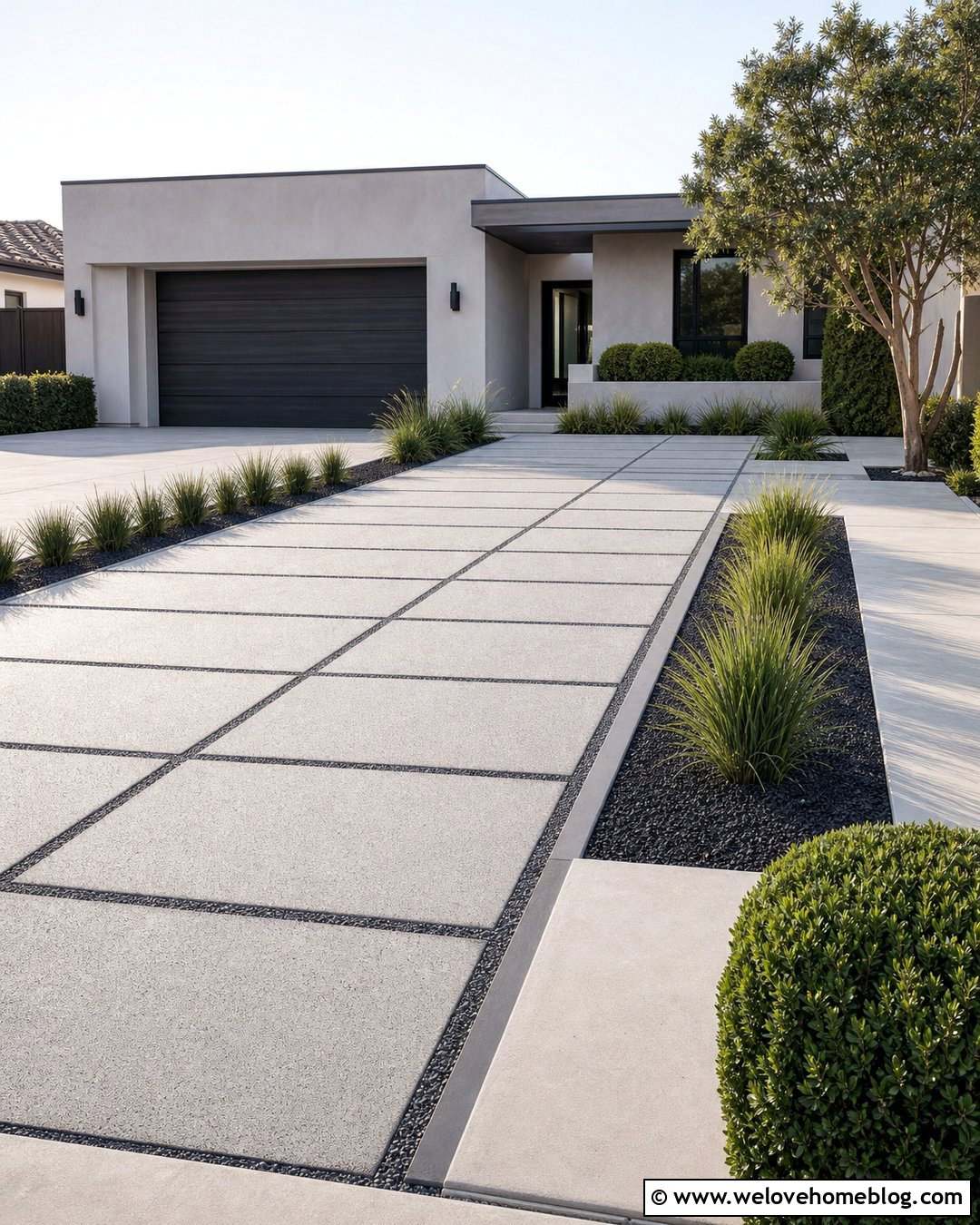
Crisp contrast makes a permeable driveway feel distinctly modern. Use large light-gray concrete pavers separated by narrow channels of washed black aggregate. The dark stone emphasizes every joint, making a simple running-bond pattern look more architectural. Keep the driveway straight and align its lines with the garage doors, front steps, or facade panels. Slim steel edging can create a nearly invisible boundary between the pavers and adjacent planting beds. For landscaping, choose clipped evergreens, upright grasses, and one sculptural tree rather than a crowded mixture of plants. A flat-roofed or modern two-story home provides an ideal background. Because light debris will show against black aggregate, place messy flowering trees away from the driveway and plan for routine vacuum sweeping to preserve the sharp finish.
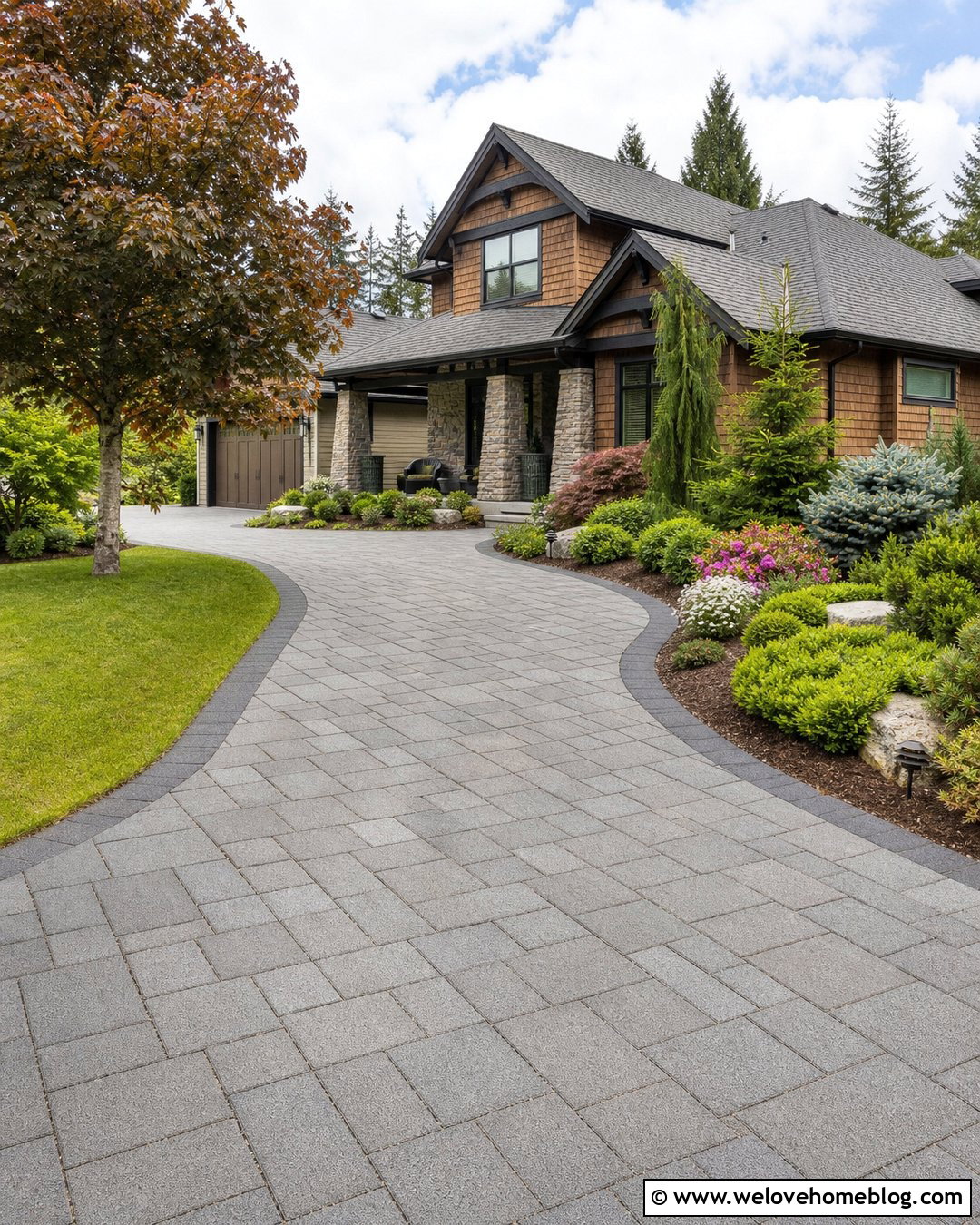
4. Curved Permeable Paver Driveway With Stone Edging
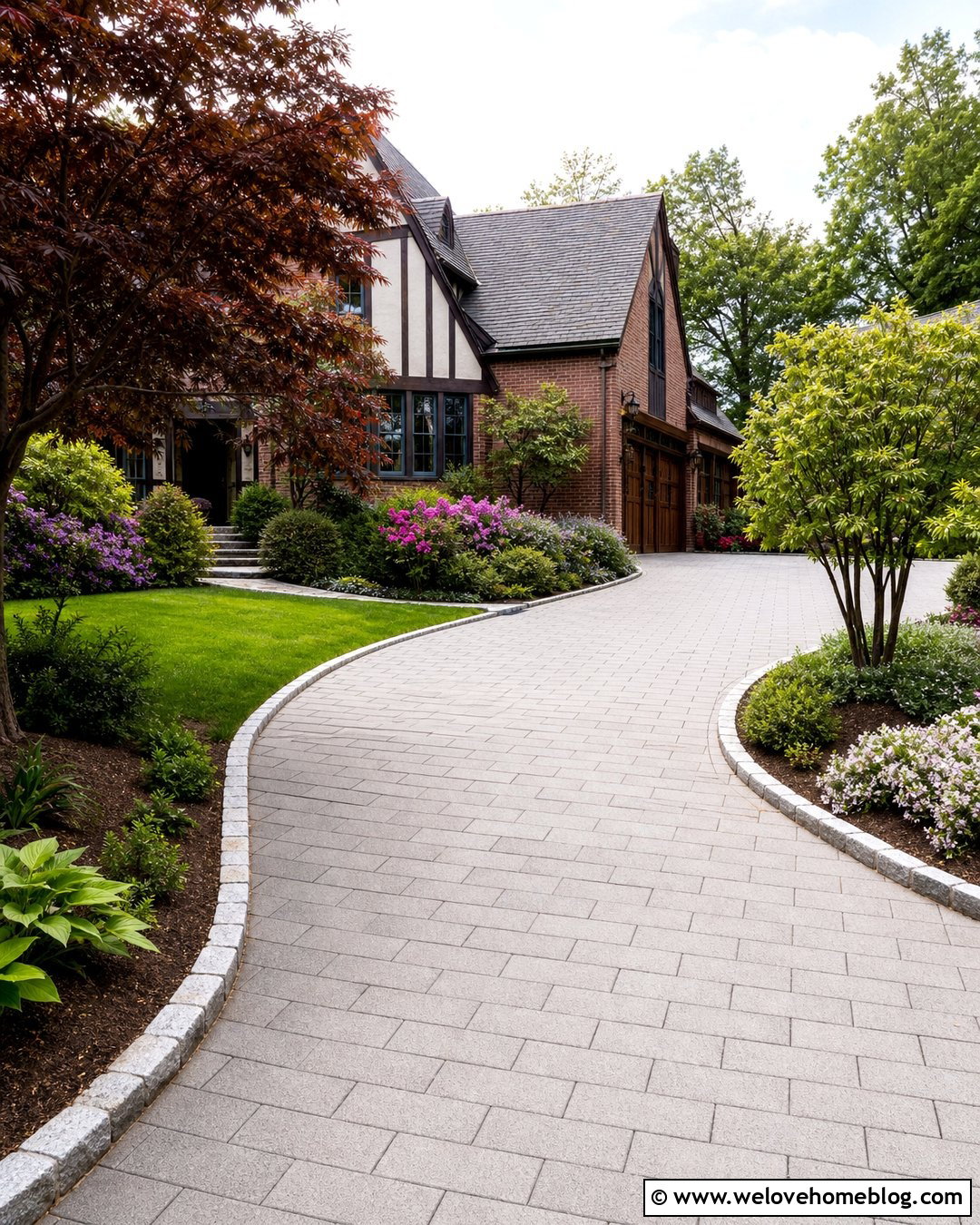
A gentle curve can make a short approach appear longer and create a more welcoming arrival. Install warm-gray permeable concrete pavers in a flexible running-bond pattern, then contain them with natural granite or limestone edging. The stone border should follow the curve smoothly instead of forming a series of abrupt angles. On the outside edge, use layered planting beds with low ground covers in front, flowering shrubs in the middle, and small ornamental trees behind. Keep the inside curve more open so drivers have clear visibility. A widened section near the garage can make turning and parking easier. This complete look complements Craftsman, Tudor, and traditional brick houses. Matching stone around the planting beds helps the driveway border feel intentional rather than added as an unrelated feature.
5. Permeable Brick Paver Driveway With Herringbone Pattern
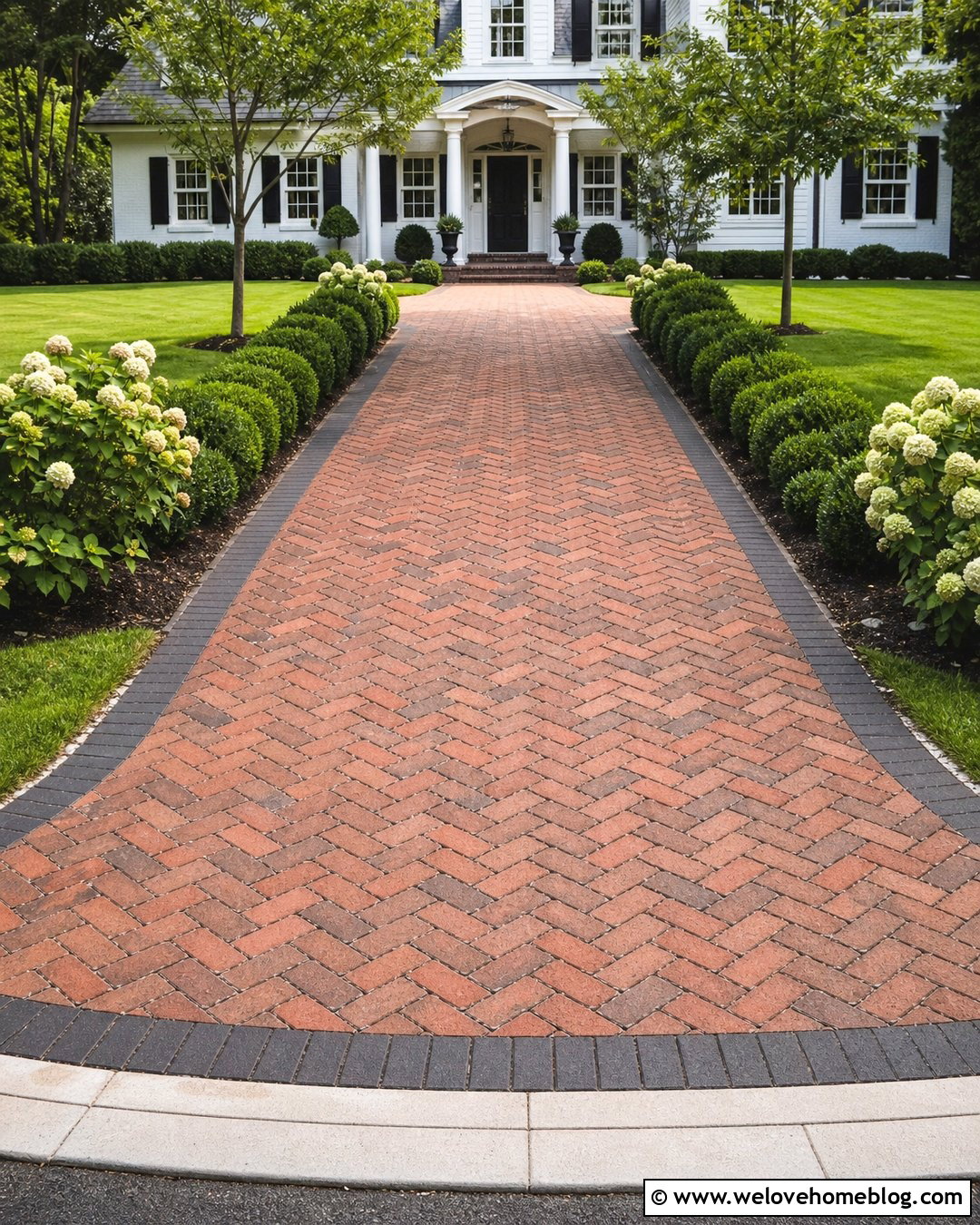
Rich brick color brings warmth to a permeable driveway without requiring a completely traditional design. Choose permeable clay brick pavers or brick-look concrete units designed with drainage gaps. A 45-degree herringbone pattern provides lively movement and suits areas exposed to turning tires. Fill the joints with clean, appropriately sized aggregate, then add a darker soldier-course border to contain the pattern visually. A straight driveway leading to a colonial home can be framed by clipped boxwood, hydrangeas, and a narrow brick walkway. Echo the facade’s brick tone without trying to match it perfectly. Slight color variation usually looks more natural. At the street, create a wider apron with the same herringbone layout, allowing the entrance to feel substantial while maintaining one continuous, water-permeable surface.
6. Permeable Paver Driveway With Grass Strips
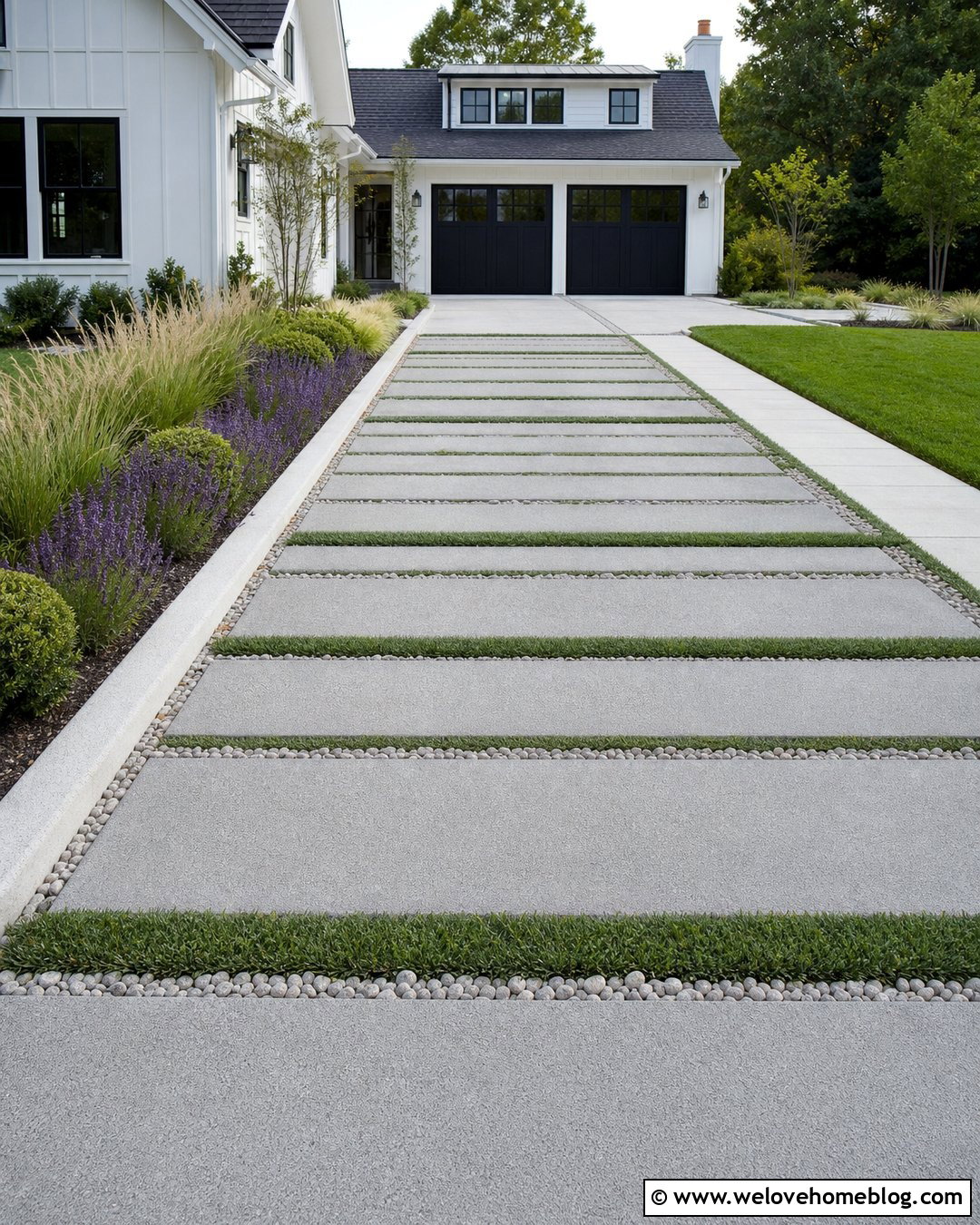
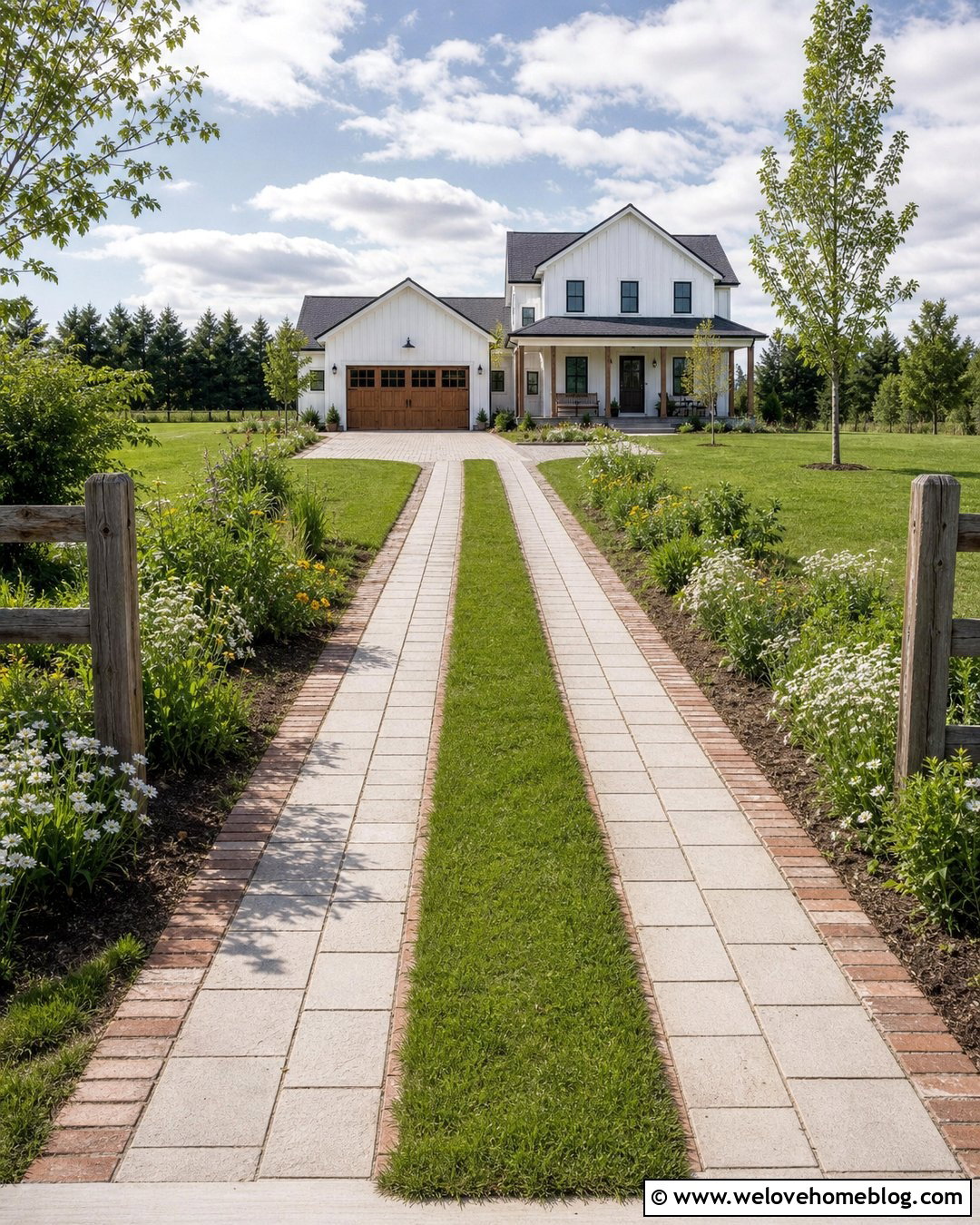
Long grass strips can break up a wide paved area and introduce greenery without turning the entire driveway into turf. Build the main wheel lanes from permeable concrete pavers with stone-filled joints, then place reinforced grass channels between them. A narrow strip down the center works for a compact driveway, while multiple parallel bands suit a wider modern entrance. Use flush metal or concrete dividers to maintain clean edges between the turf and pavers. Continue the lines toward a modern farmhouse or minimalist ranch home for a strong sense of direction. Drought-tolerant planting beds can flank the driveway with grasses, salvia, and compact shrubs. The grass sections require sunlight and regular care, so gravel-filled channels may be more dependable where shade, snow storage, or frequent vehicle movement makes turf difficult.
7. Circular Permeable Paver Driveway With Planted Island
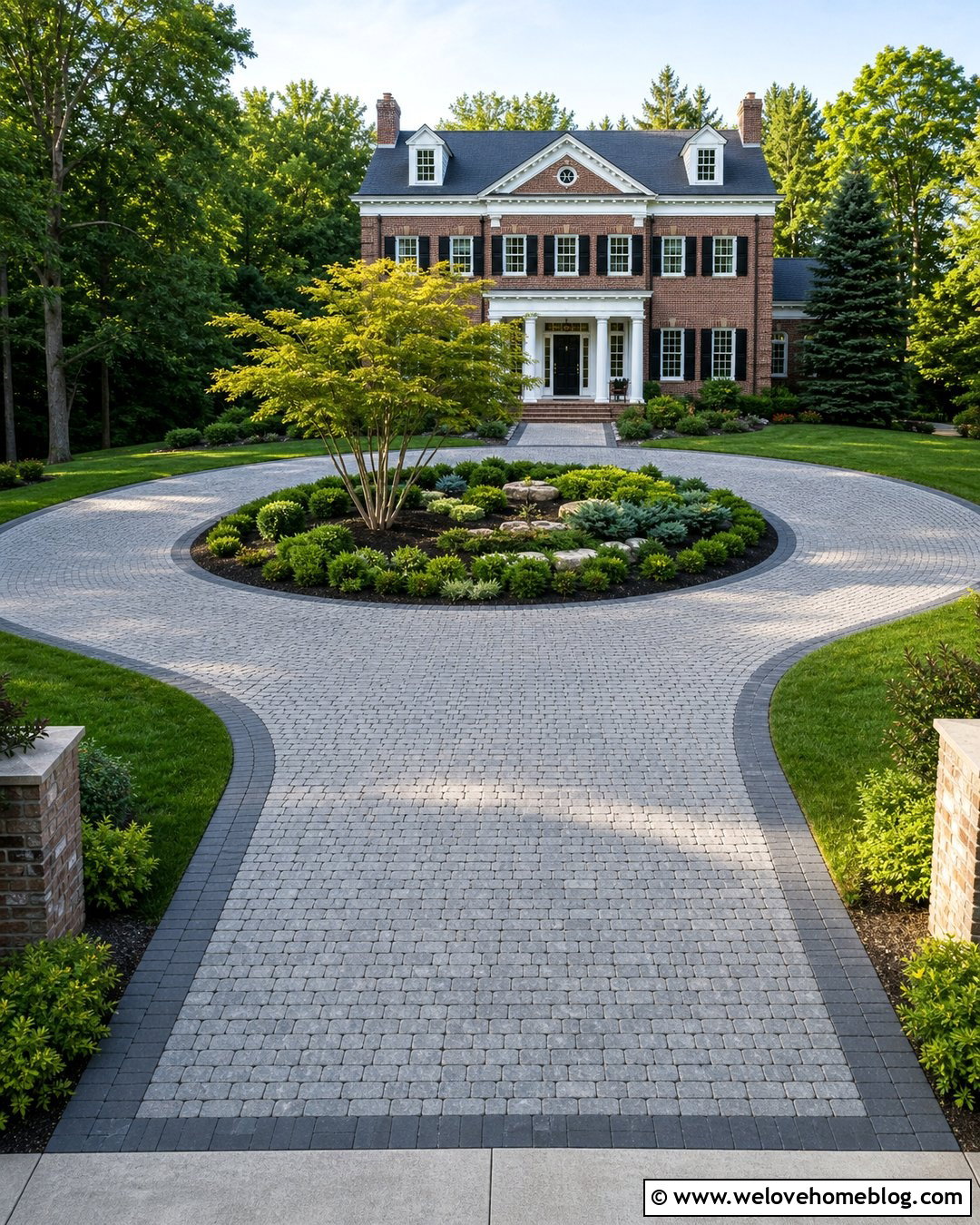
A circular permeable paver driveway creates an elegant arrival while reducing the need to reverse toward the street. Cover the loop with medium-gray interlocking concrete pavers and use lighter gravel in the drainage joints. Define the inner and outer curves with charcoal paver bands for a finished appearance. The central island can hold a multi-stem ornamental tree, low evergreen shrubs, and spreading ground covers that preserve visibility across the driveway. Avoid tall, dense plantings near entry and exit points. A walkway from the circle to the front steps should use the same pavers or a coordinating natural stone. This arrangement fits larger colonial, Georgian, and country properties. Before installation, confirm that the turning radius, entrance width, and base design can comfortably handle regular household and delivery vehicles.
8. Permeable Paver Driveway With Pea Gravel Fill
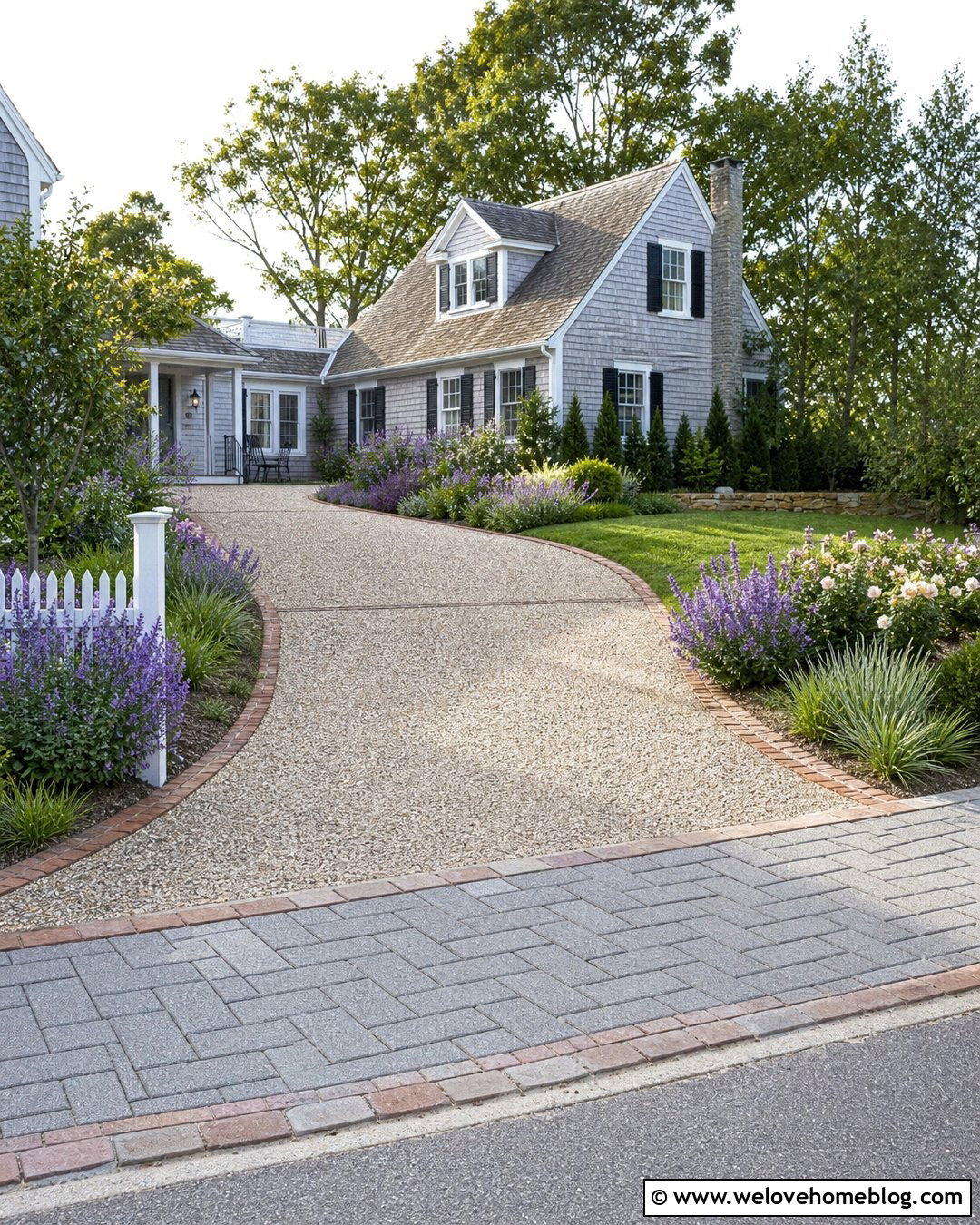
Softly colored pea gravel can give an open-cell paver driveway a relaxed cottage appearance. Because rounded pea gravel moves more easily than angular aggregate, it should sit within a reinforced grid or cellular concrete system selected for driveway use. Choose tan, cream, and muted gray stones to complement a Cape Cod or cottage facade. A gently curved layout can be contained by reclaimed-looking brick edging, preventing loose material from spreading into the lawn. Plant lavender, catmint, dwarf grasses, and compact roses along the sunnier side. Keep the driveway entrance wider and use a solid paver apron where tires turn most sharply. The finished surface should look loose and natural while remaining organized by the hidden grid, defined border, and structured planting beds that surround the full approach.
9. Permeable Paver Driveway With Crushed Granite Joints
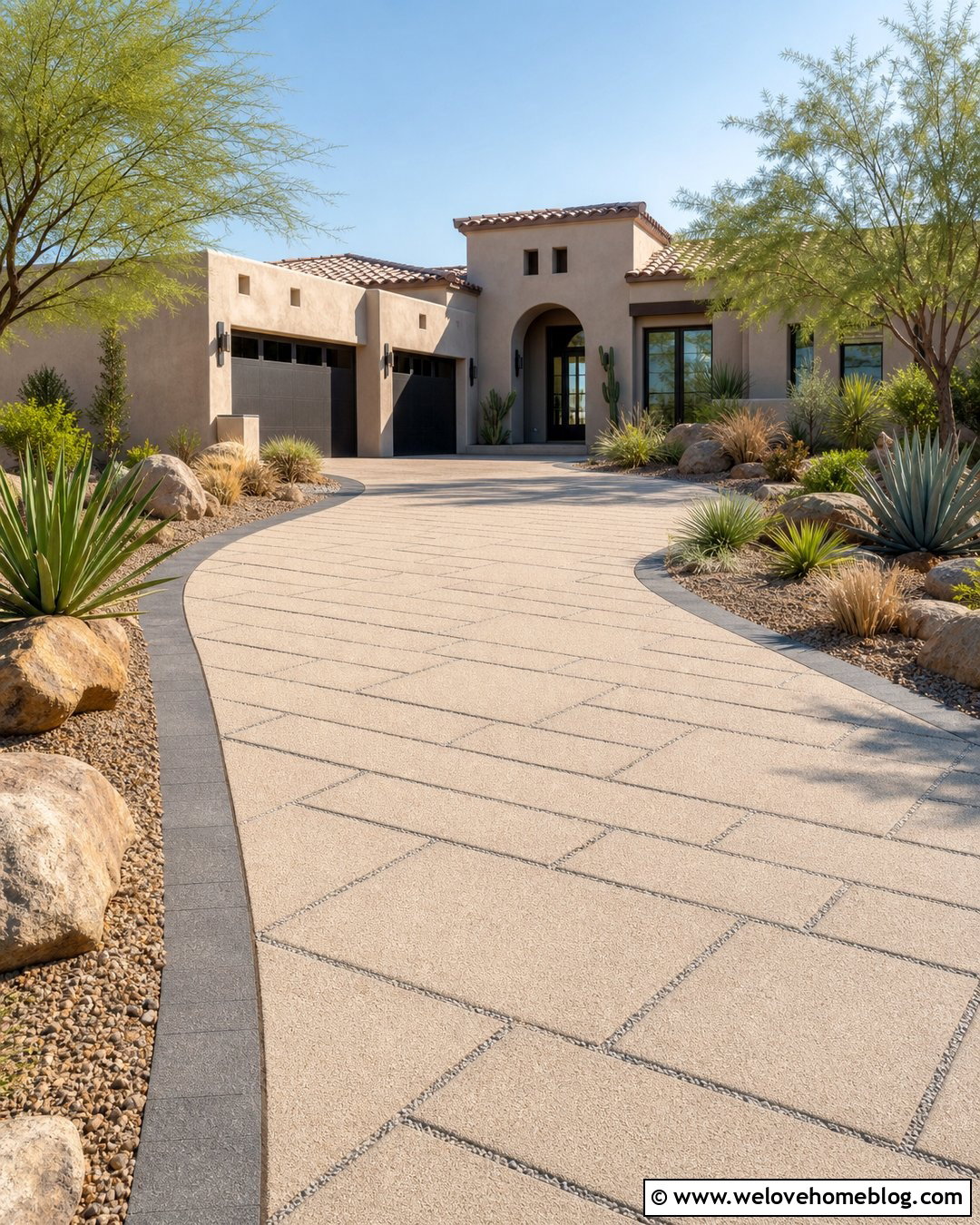
Crushed granite gives a permeable driveway a rugged texture and a color palette that works beautifully in dry landscapes. Set buff or sand-colored concrete pavers with generous openings filled by compact, angular decomposed granite specified for the system. Arrange the driveway in a straight or slightly angled layout that leads to a Southwestern stucco home. Steel edging provides a thin boundary, while beds of agave, yucca, ornamental grasses, and drought-tolerant shrubs reinforce the regional character. Use larger boulders sparingly near the entrance, leaving clear sightlines for vehicles. A contrasting band of charcoal pavers can mark the transition to the garage floor. Select joint stone that remains open enough for drainage because overly fine material may migrate, compact, or restrict the intended movement of water through the surface.
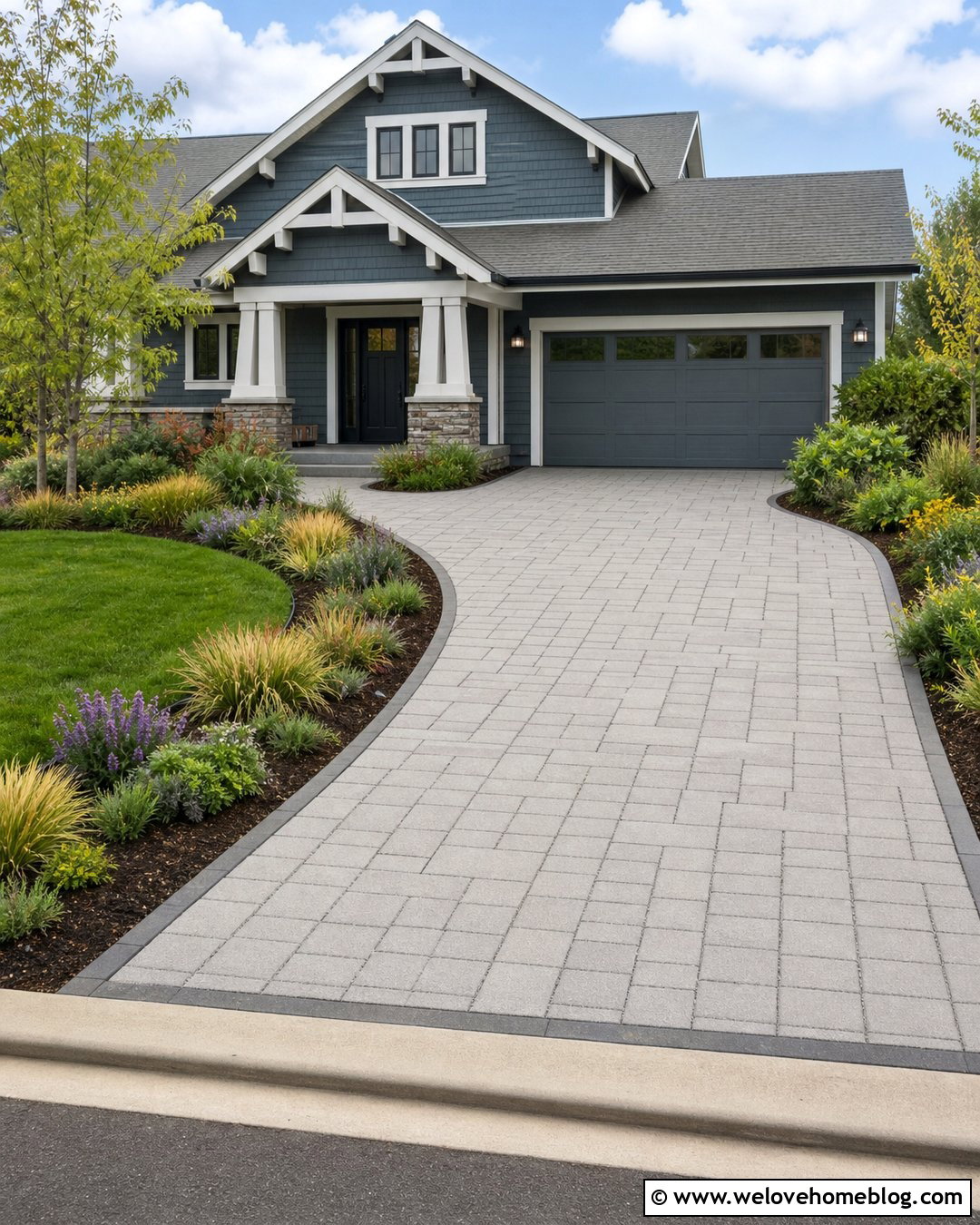
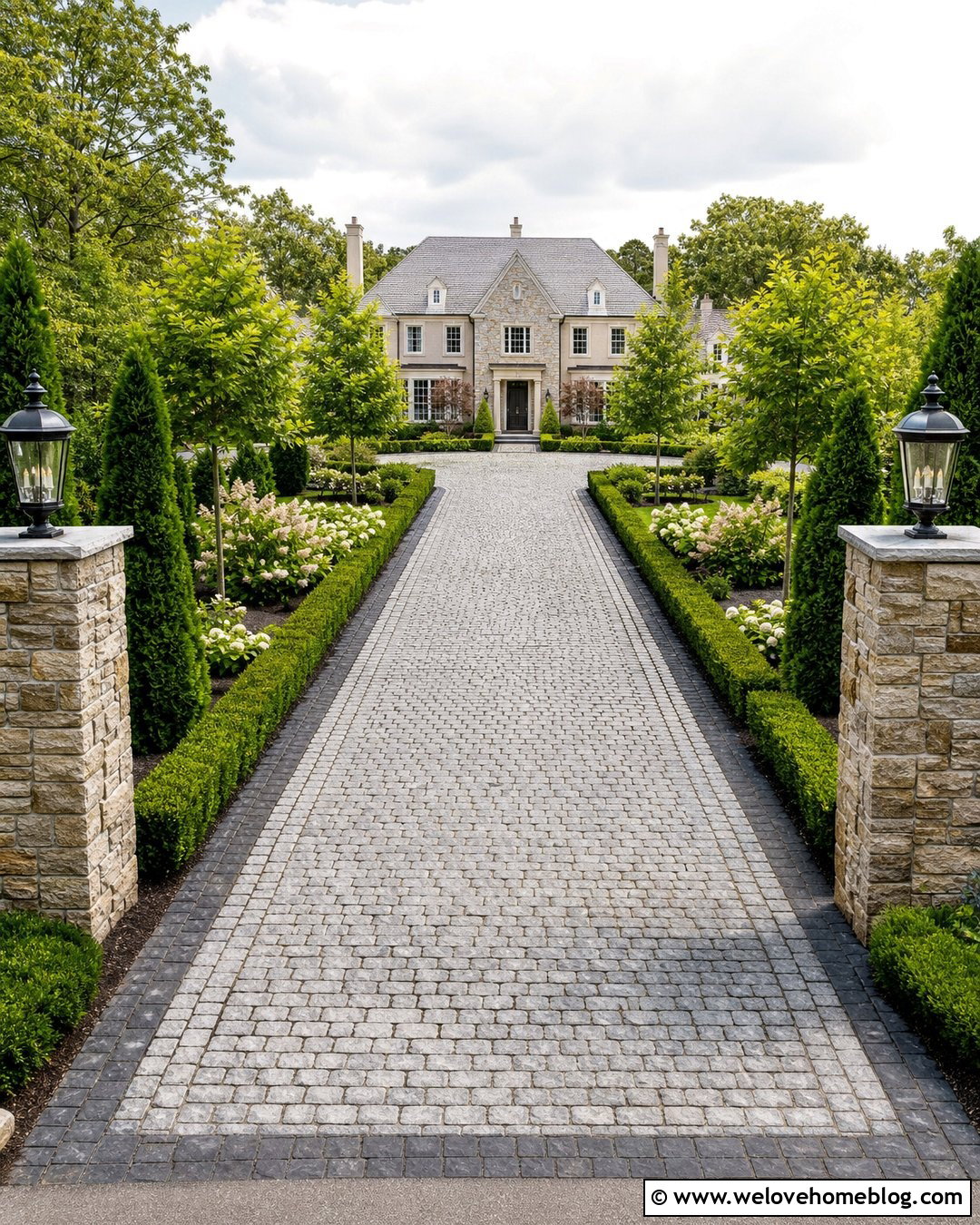
10. Large Permeable Paver Driveway With Wide Joints
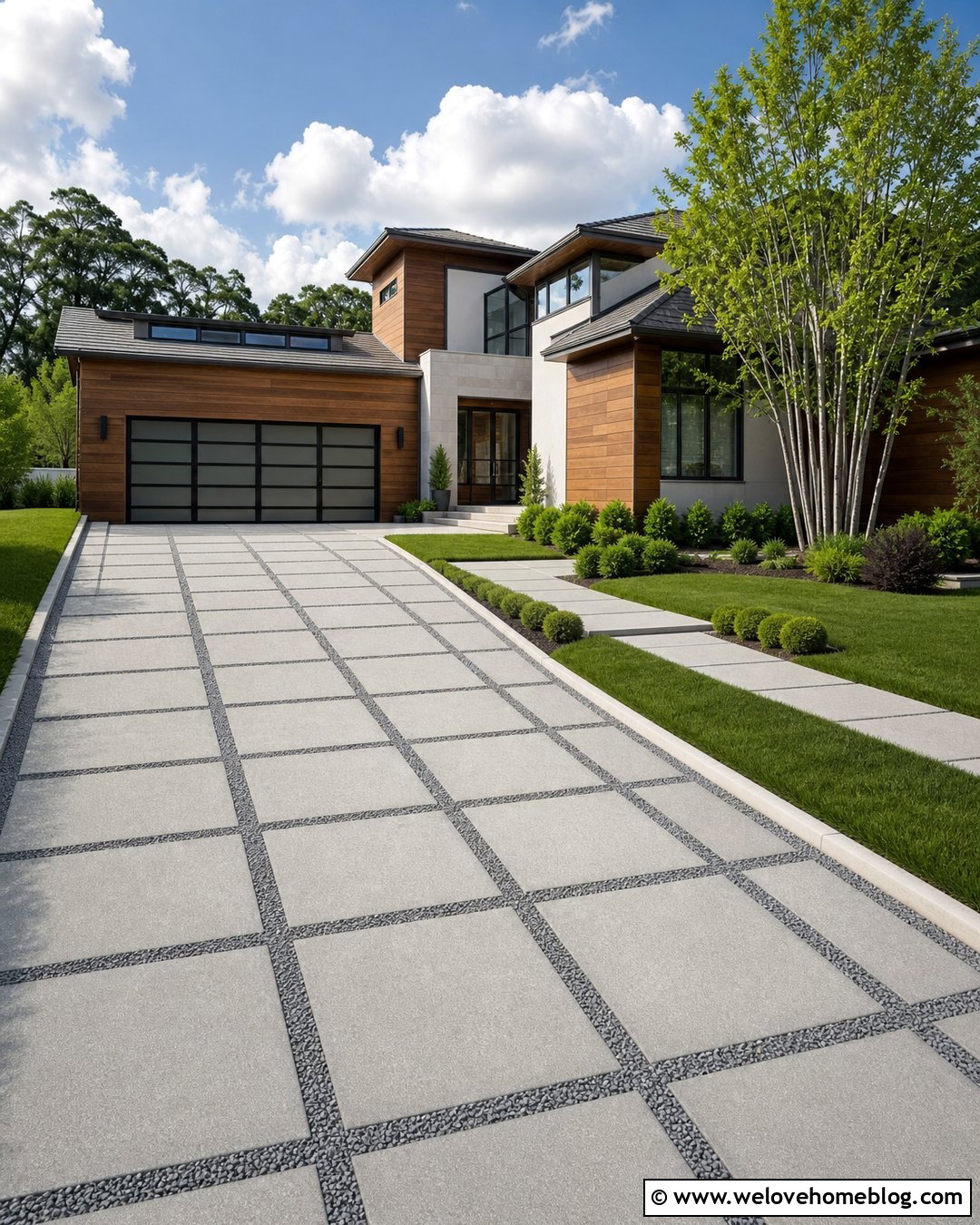
Large-format pavers make a driveway look spacious, calm, and contemporary. Select square or rectangular concrete units rated for vehicle loads, and separate them with wide joints filled with clean gray aggregate. A staggered grid feels more relaxed than perfectly aligned rows, while a stack-bond layout creates a sharper architectural effect. Carry the joint lines toward the garage and front walkway so the entire entrance feels coordinated. Low concrete curbs can secure the perimeter without competing with the oversized pavers. Surround the driveway with broad lawn panels, clipped shrubs, and a few multi-stem trees. This design pairs well with modern homes featuring wood, glass, stone, or smooth stucco. The paver dimensions and base must be chosen for driveway use because oversized units can be vulnerable if inadequately supported.
11. Small Permeable Paver Driveway For Front Yard
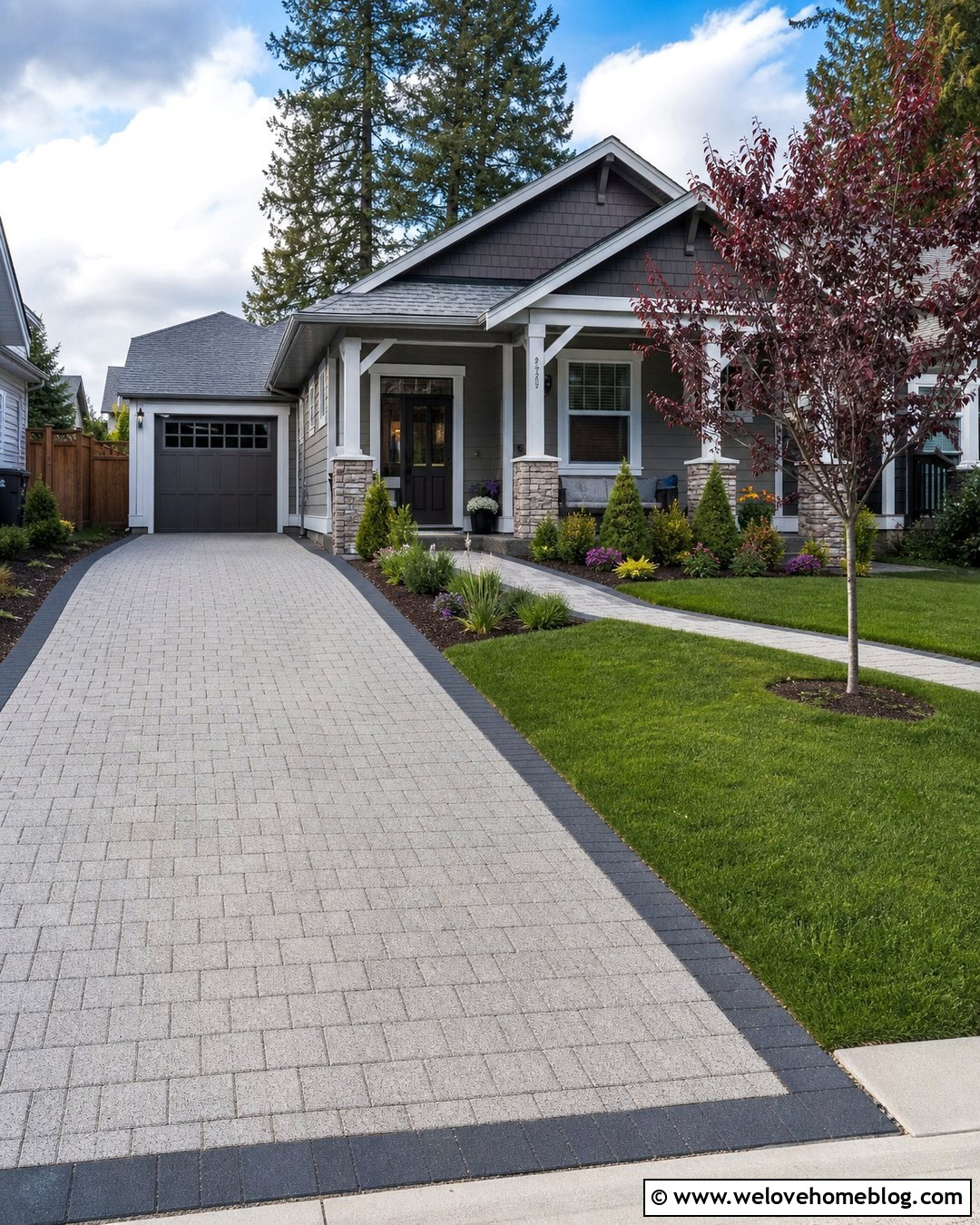
A compact front yard benefits from a driveway that feels light rather than visually dominant. Use small, pale-gray permeable concrete pavers with closely spaced gravel joints to form a simple straight parking area. A narrow charcoal border keeps the edges tidy, and a matching walkway can share one side of the driveway instead of consuming additional yard space. Choose restrained landscaping, such as one ornamental tree, low evergreen mounds, and a slim bed of flowering perennials. Keeping plants below window level prevents the small frontage from appearing crowded. A light paver color can coordinate with a bungalow, townhouse, or small Craftsman home. At the garage or parking stop, add a subtle contrasting band. This provides a clear endpoint and introduces detail without making the limited space look busy.
12. Permeable Paver Driveway With Cobblestone Border
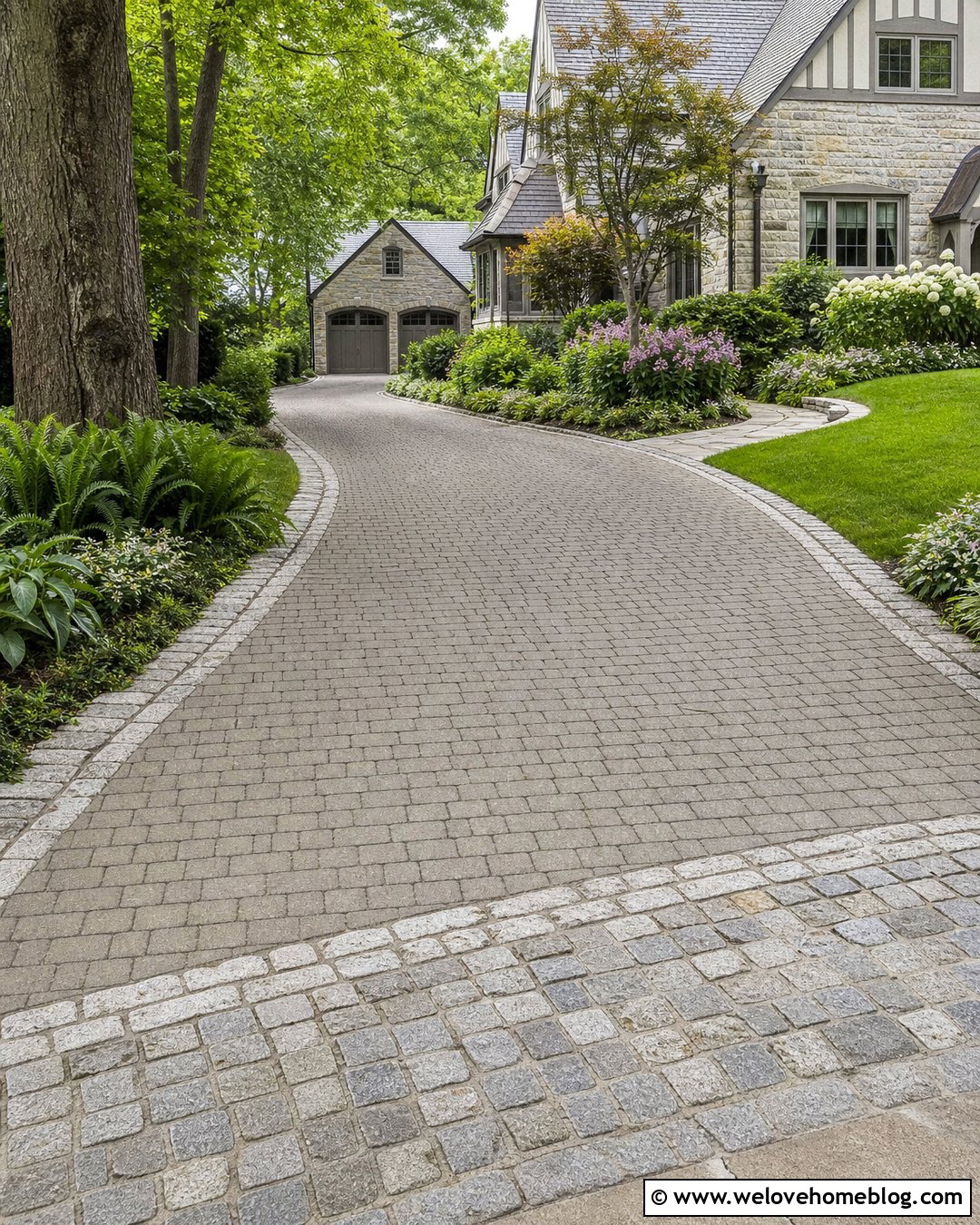
Cobblestone edging gives a practical permeable driveway the settled character of an older property. Fill the main surface with muted gray interlocking concrete pavers, leaving drainage joints packed with washed stone. Along both sides, install a single or double row of granite cobbles as a strong edge restraint and visual frame. A gentle curve makes the combination feel especially natural beside a stone cottage, Tudor house, or traditional country home. Plant ferns and shade-tolerant ground covers beneath existing trees, then use compact flowering shrubs where sunlight increases near the house. A cobblestone apron at the street can repeat the border without overwhelming the design. Keep the cobbles relatively flush with the pavers so the transition remains comfortable for tires, bicycles, snow equipment, and pedestrians crossing the driveway.
13. Modern Permeable Paver Driveway With Linear Layout
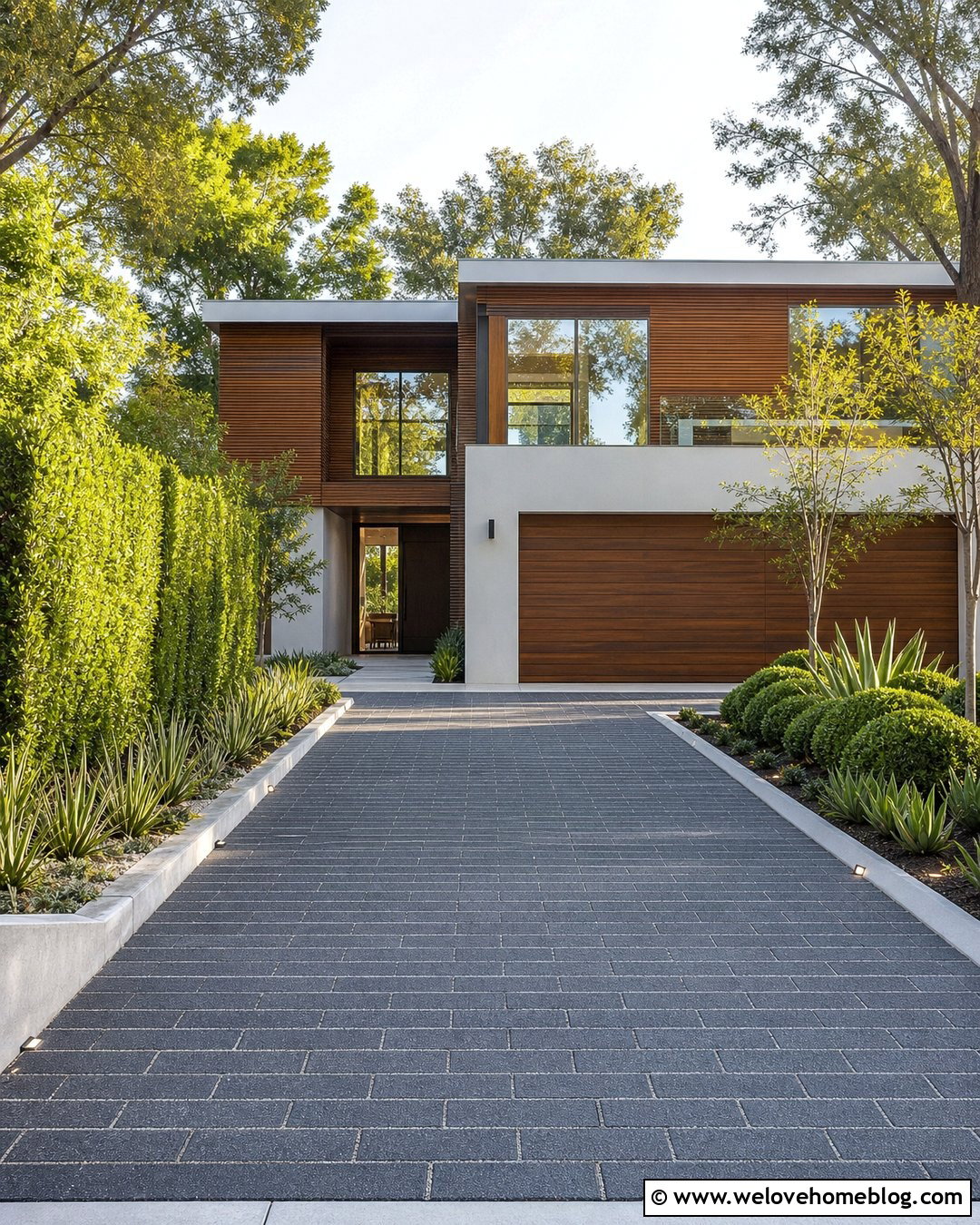
Strong horizontal lines can connect the driveway directly to contemporary architecture. Lay long, narrow charcoal permeable concrete pavers in a running-bond pattern, with fine light-gray aggregate defining the open joints. Keep the driveway straight and align its edges with the garage walls or roofline. A thin poured-concrete curb can frame the darker surface, while rectangular planting beds repeat the same geometry. Use upright ornamental grasses, clipped hedges, and drought-tolerant ground covers in limited groups. Integrated paver lighting can mark the edges, but the fixtures should remain flush and understated. This look works best when the driveway, walkway, and front steps share related tones. Introduce warmth through a wood garage door or timber facade panel so the charcoal paving does not make the complete entrance feel cold or overly industrial.
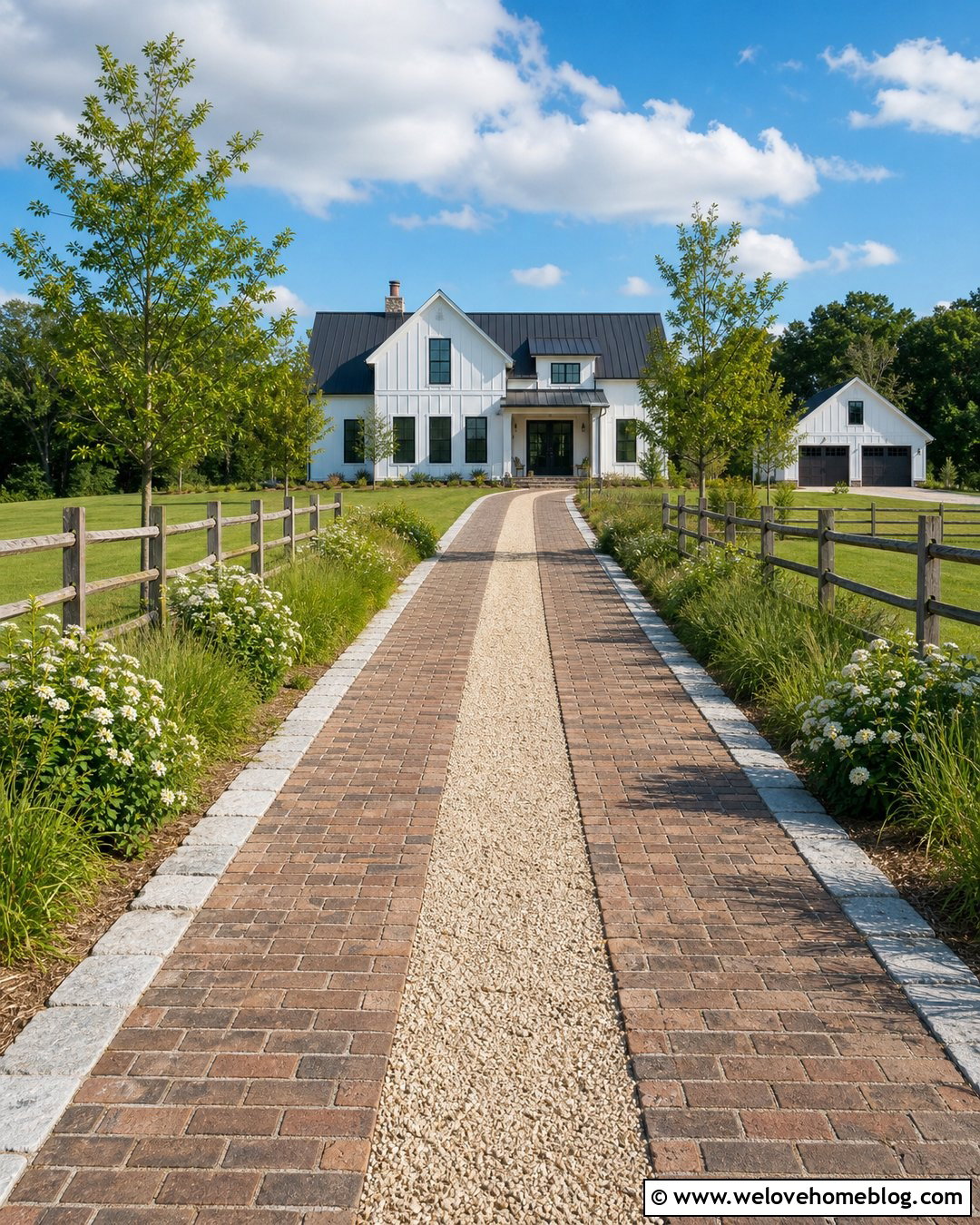
14. Rustic Permeable Paver Driveway With Gravel Grid
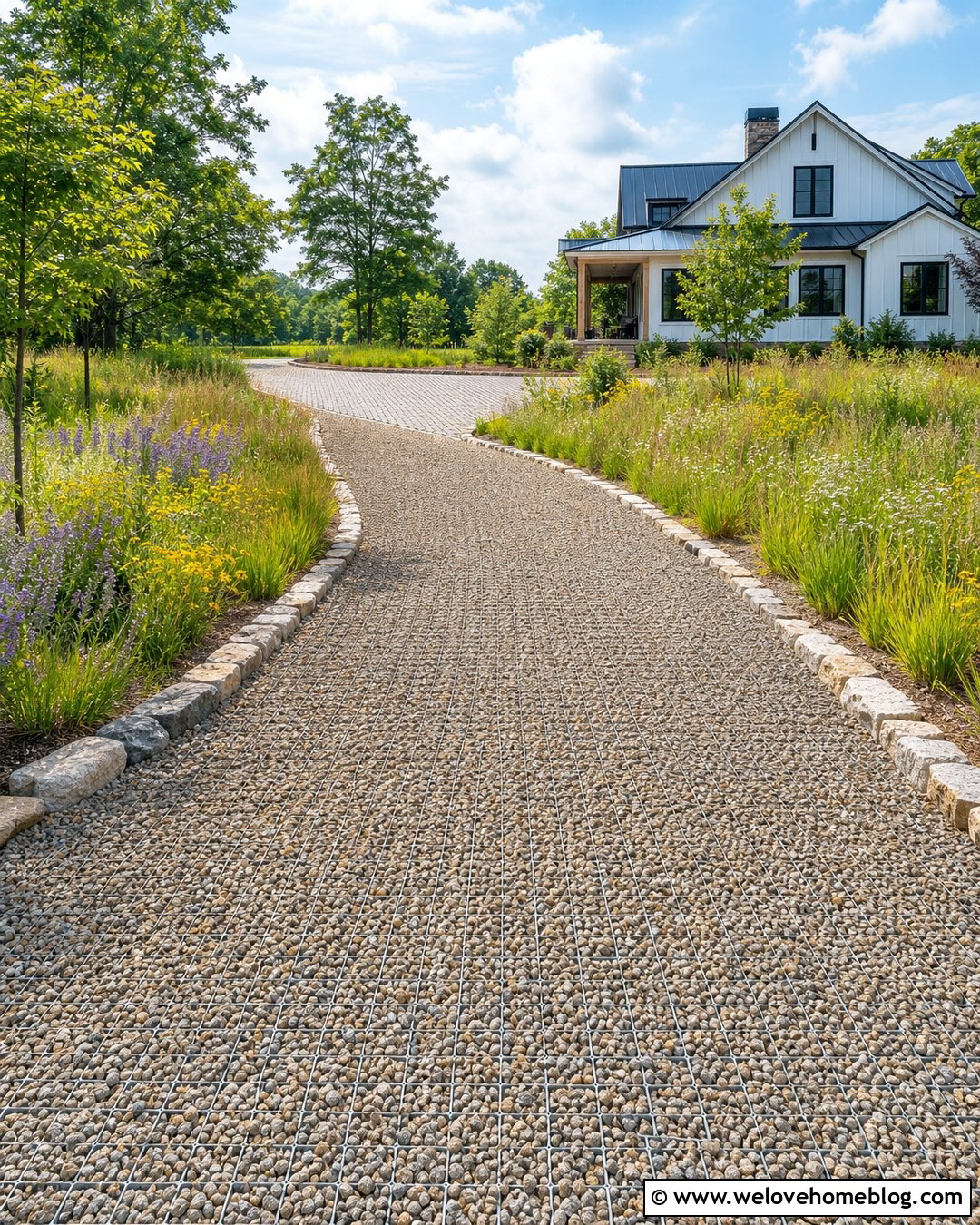
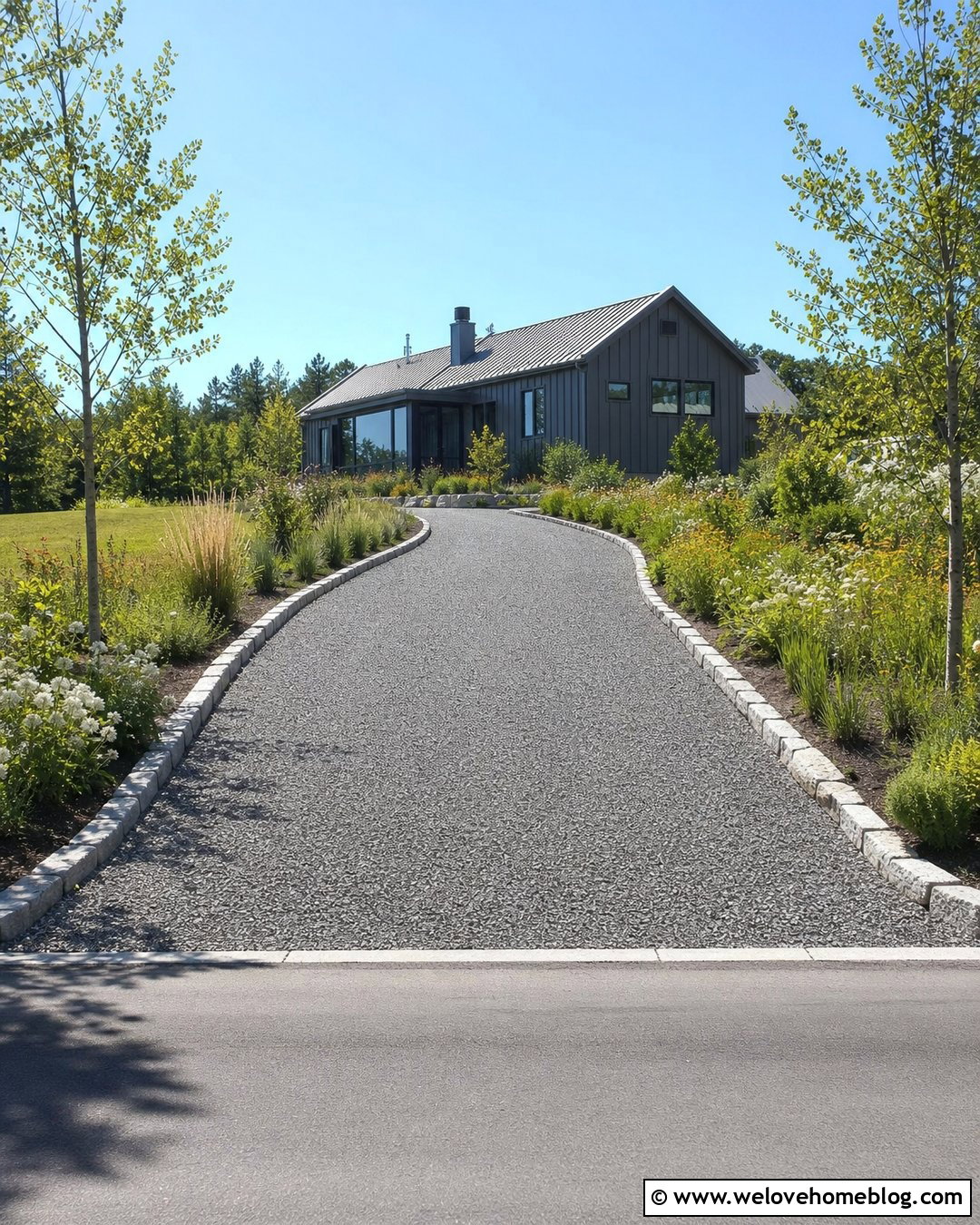
A gravel-filled grid delivers the informal appearance of loose stone with better surface stability. Choose a heavy-duty permeable grid designed for vehicle traffic and fill it with angular tan or gray gravel that sits securely within the cells. A long, gently curving layout feels appropriate for a farmhouse, barn-style home, or wooded country property. Border the driveway with pressure-treated timber, local fieldstone, or a restrained metal edge, depending on the desired level of formality. Native grasses, meadow flowers, and scattered deciduous trees can frame the route without making it look overly manicured. Near the house, transition to visible permeable concrete pavers for a cleaner parking court. Repeating the same gravel color in nearby pathways helps the rustic driveway, entry garden, and broader landscape read as one planned design.
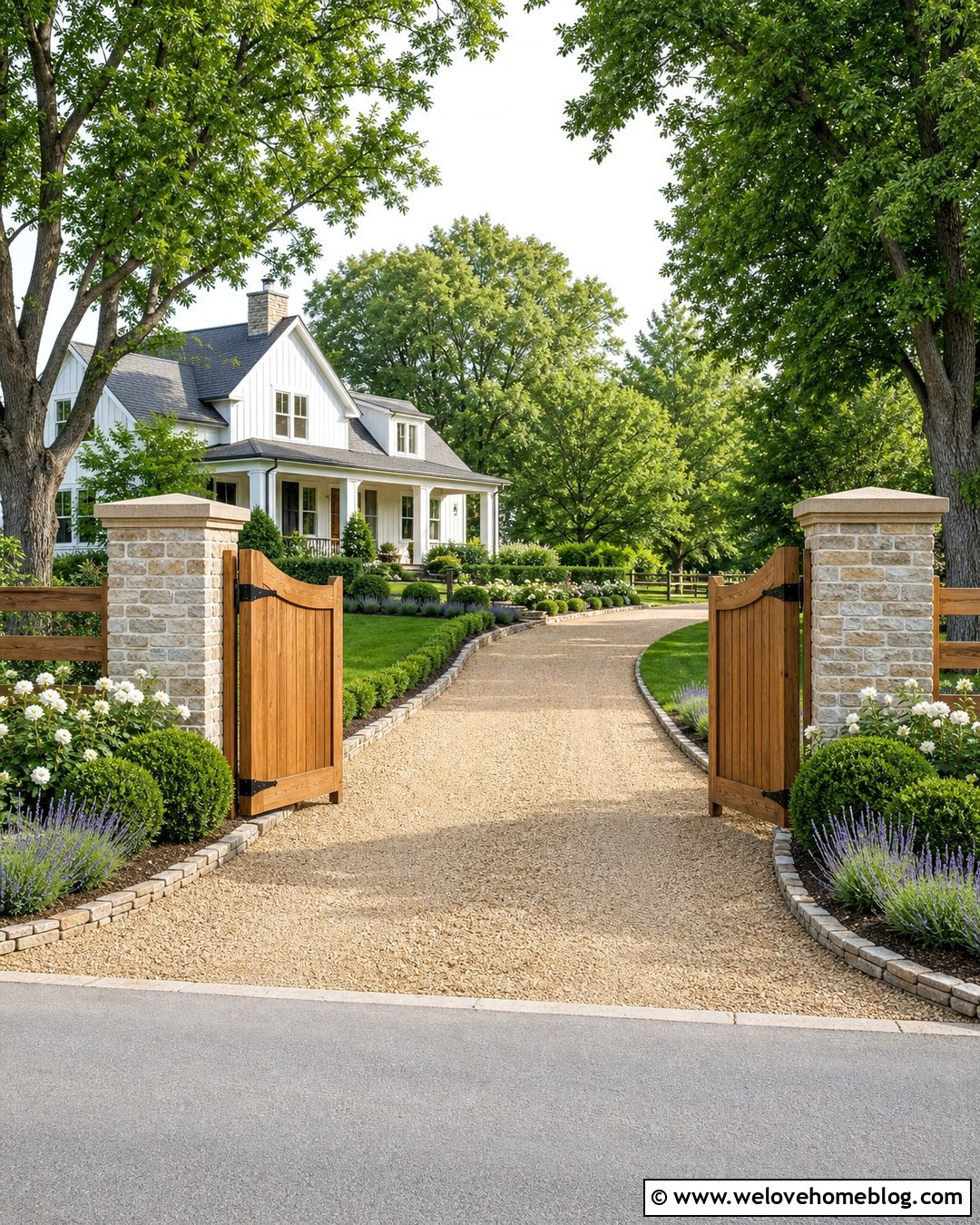
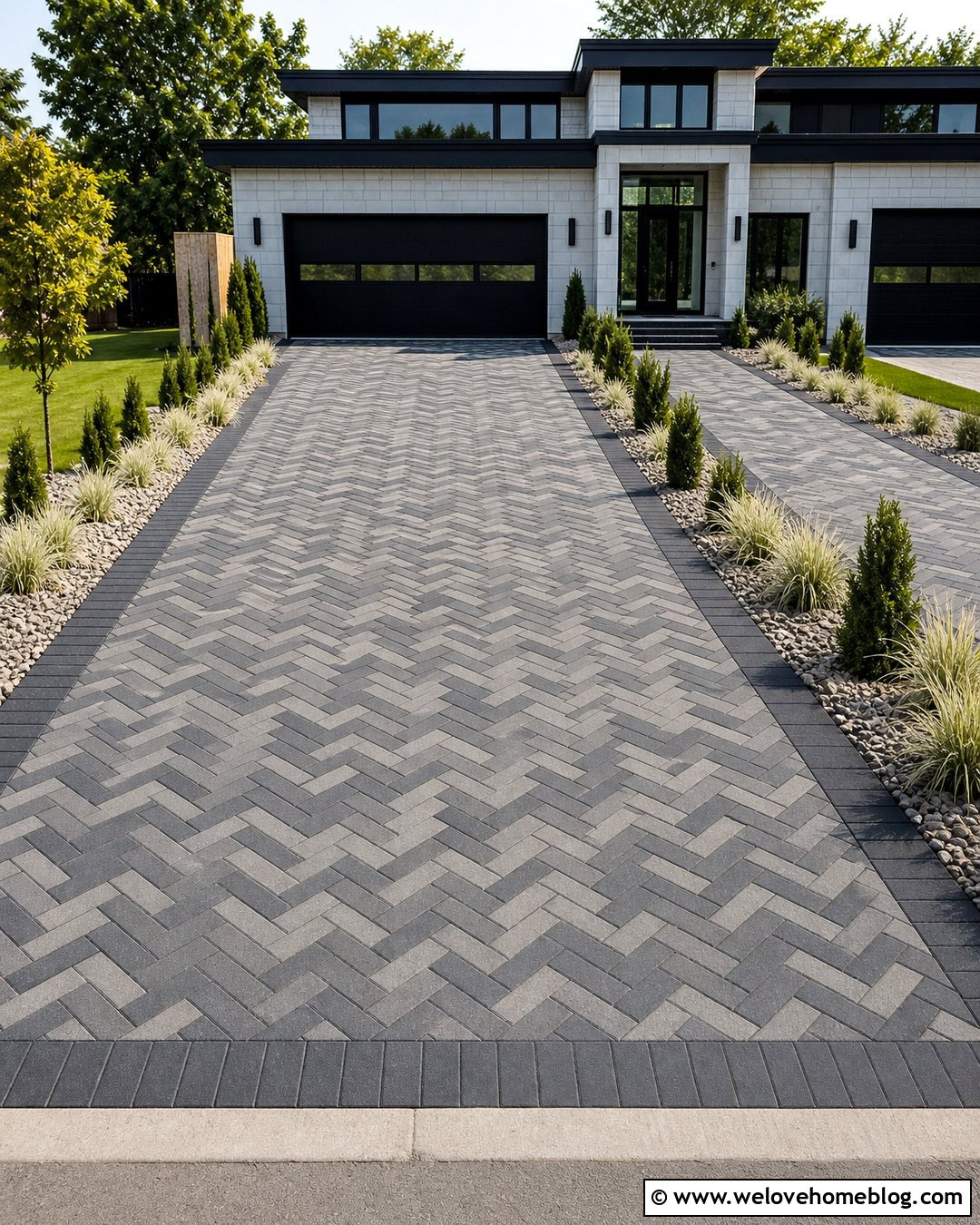
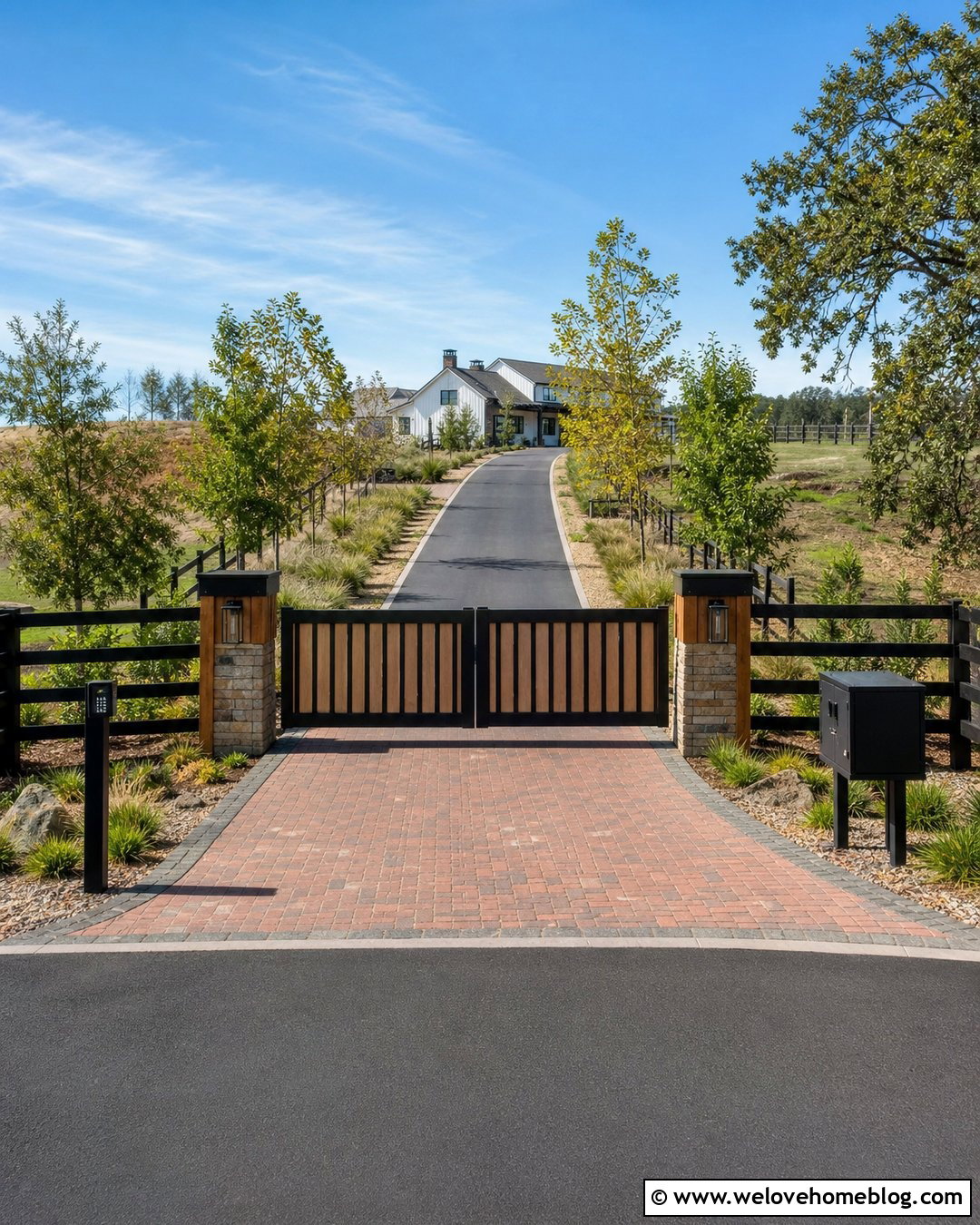
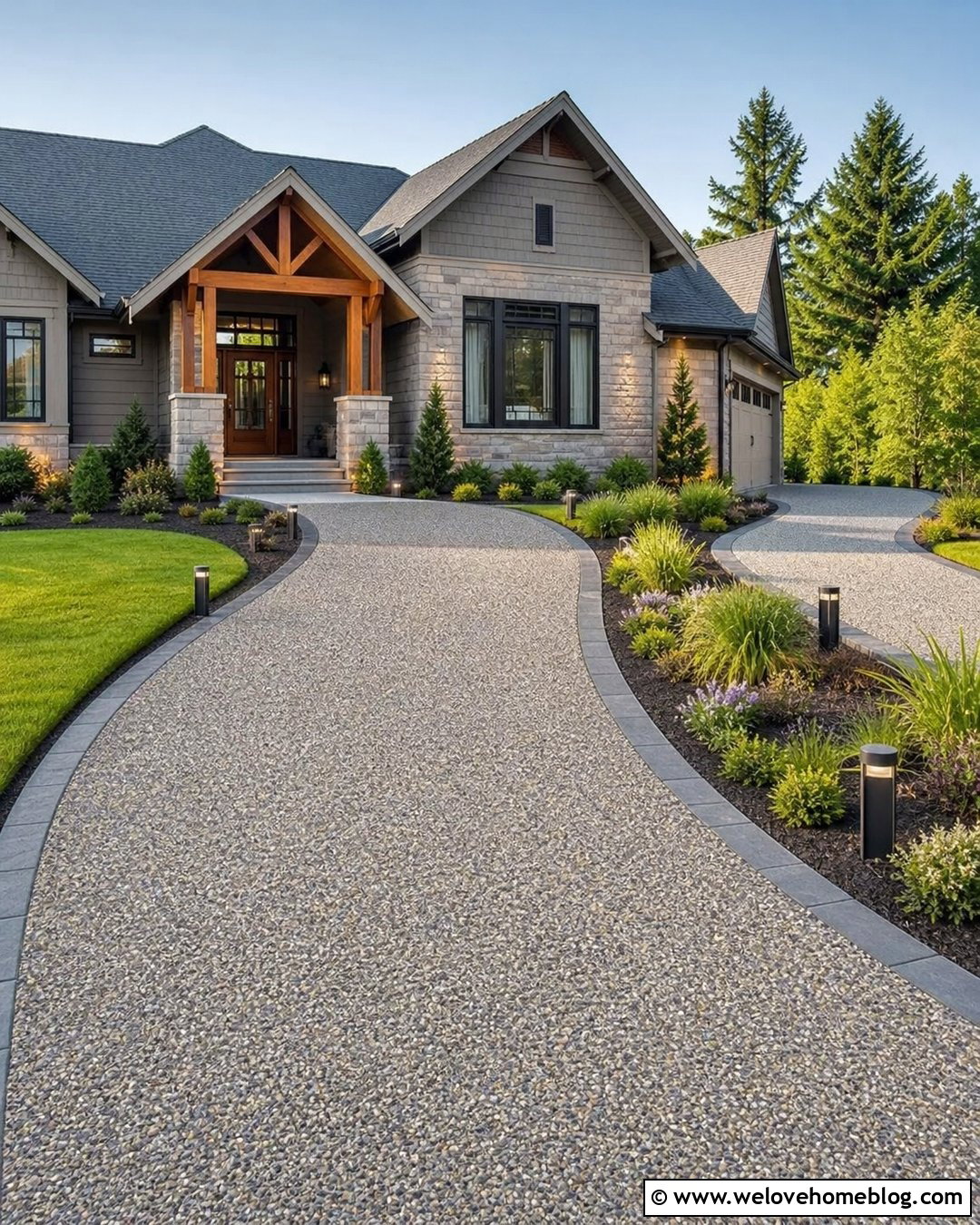
15. Permeable Paver Driveway With Rain Garden
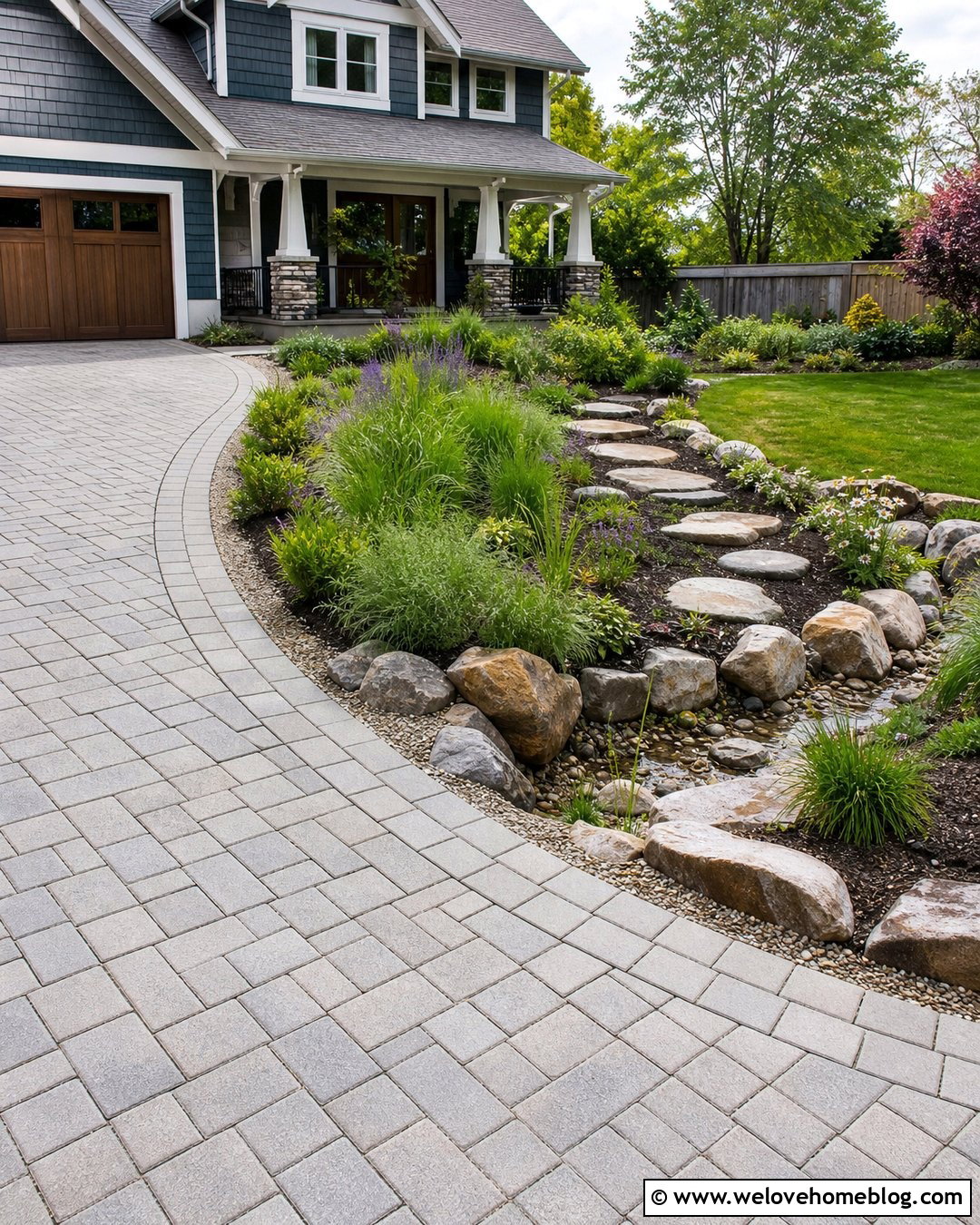
Heavy rain becomes a landscape feature when the driveway works with a thoughtfully placed rain garden. Install permeable interlocking concrete pavers in a soft gray blend, then direct any overflow toward a shallow planted basin positioned downhill and safely away from the foundation. A curved stone border can visually connect the driveway to the basin. Fill the rain garden with regionally appropriate plants that tolerate both wet and dry periods, arranged from moisture-loving species in the lowest area to drier selections around the rim. Keep the driveway itself open and free of soil or mulch that could clog its joints. This integrated look suits contemporary, Craftsman, and naturalistic homes. A small bridge-like walkway or flat stepping stones can cross the planted area and create an appealing route toward the front door.
16. Permeable Paver Driveway With Native Landscaping
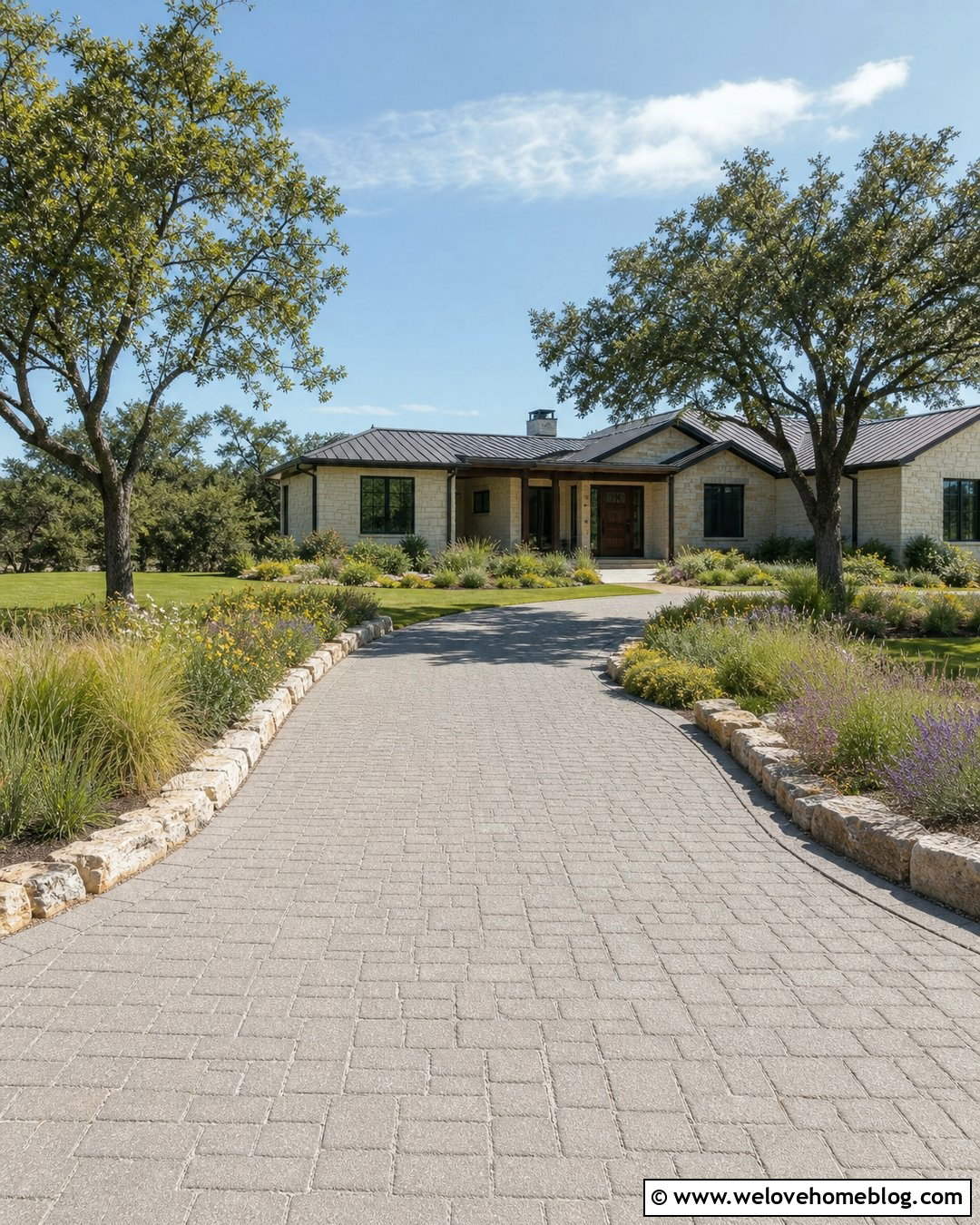
Native landscaping can make a permeable driveway feel rooted in its region rather than copied from a generic plan. Begin with warm-gray concrete pavers and stone-filled joints, using a softly curved driveway to create room for planting beds. Select native grasses, flowering perennials, ground covers, and compact shrubs suited to the property’s actual soil, sun, and rainfall. Group plants in broad drifts so the design looks organized from the curb. A simple natural-stone edge can separate the pavers from the beds and reduce soil movement onto the surface. Add one or two native canopy trees where mature roots and falling debris will not compromise the driveway. This complete approach works with ranch, Craftsman, cottage, and modern farmhouse architecture while supporting a more coherent relationship between the home and surrounding landscape.
17. Permeable Paver Driveway With Brick Ribbon Border
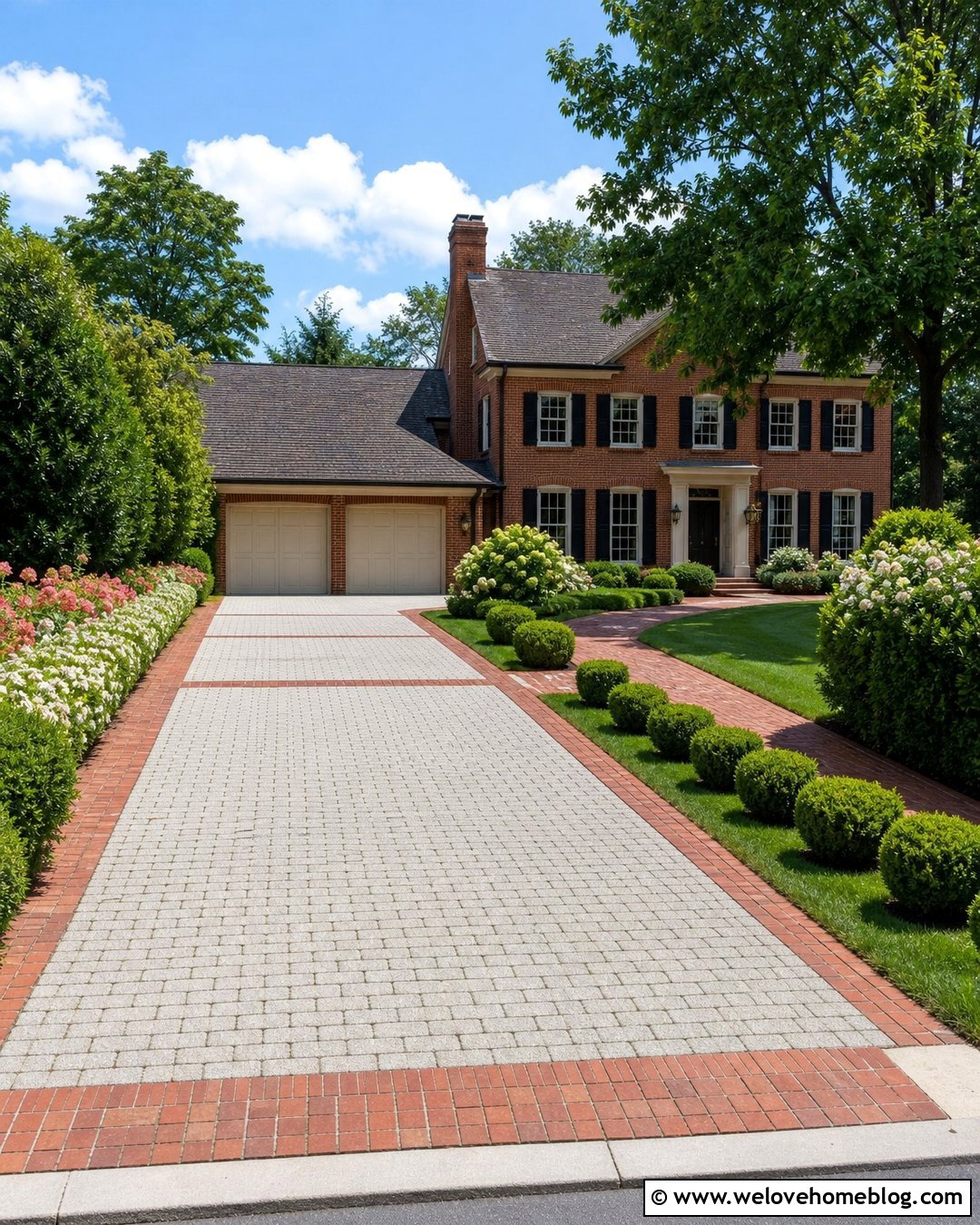
A brick ribbon adds warmth and definition to a neutral permeable paver surface. Use light-gray concrete pavers across the main driveway, then install a double row of red or brown clay brick along both edges. Repeat the brick as a transverse band near the garage and another at the street apron. These lines divide a long straight driveway into more balanced sections. Gravel-filled joints allow the main paver field to remain permeable, while a properly installed edge restraint supports the border. Frame the approach with lawn, flowering shrubs, and a brick walkway leading to a colonial or traditional home. Choose brick tones related to the house facade or chimney, but avoid an overly precise match. Slight variations help the border look established and visually connect the home, driveway, and planting beds.
18. Permeable Paver Driveway With Natural Stone Apron
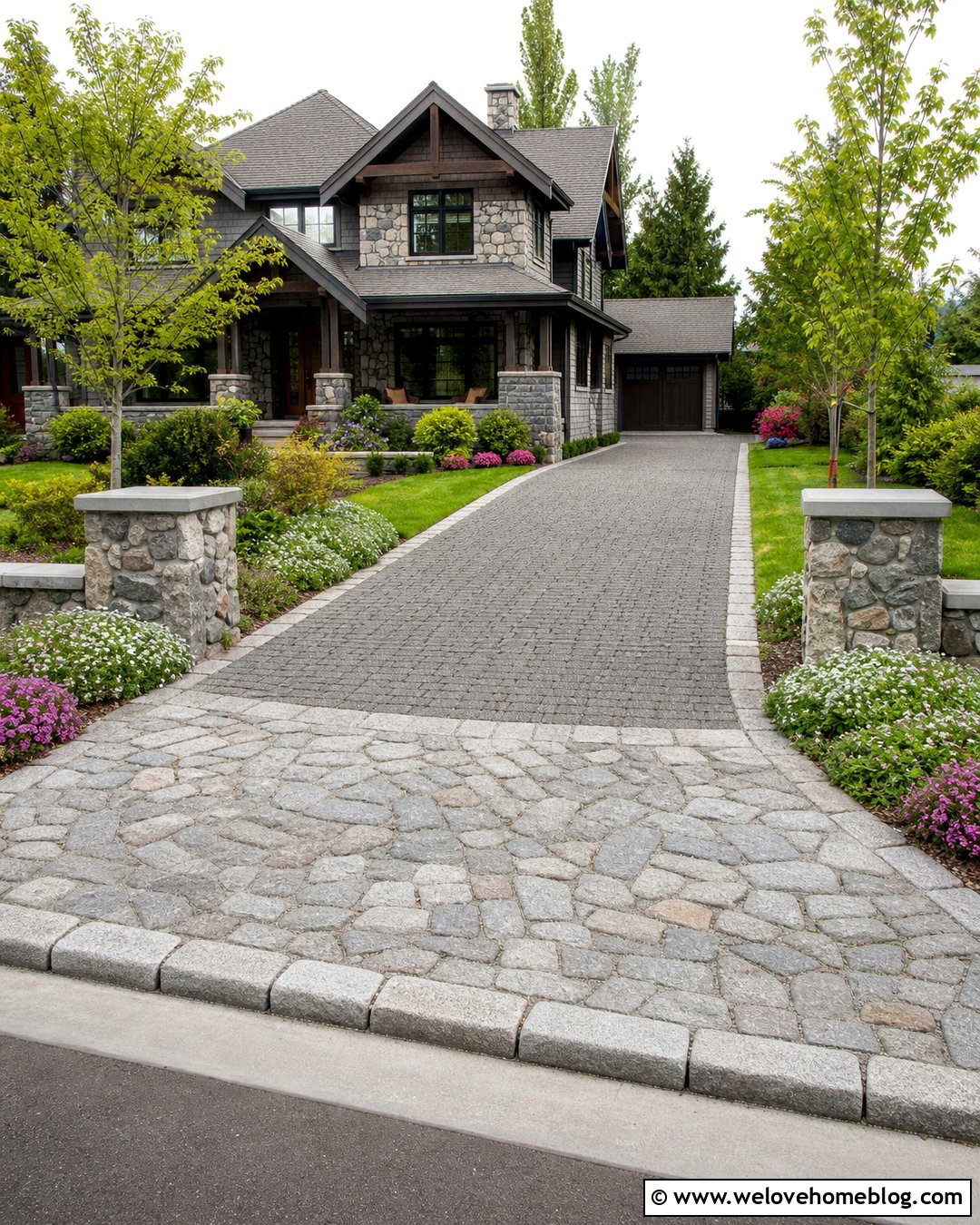
The driveway apron creates the first impression from the street, so it deserves more than an abrupt material change. Cover the main drive with permeable concrete pavers in a medium-gray blend, then create a broad entrance apron from permeable-set granite cobbles or irregular natural-stone pavers with open aggregate joints. A curved apron can ease vehicle entry while forming small planting pockets on each side. Low stone walls, flowering ground covers, and simple address pillars can reinforce the entrance without blocking views. Continue a narrow stone band along the driveway edges to connect the apron with the house. This combination works especially well for Craftsman, mountain, and stone-front homes. Keep the textures related in color so the apron reads as an elegant transition rather than a separate decorative patch.
19. Permeable Paver Driveway With Timber Edging
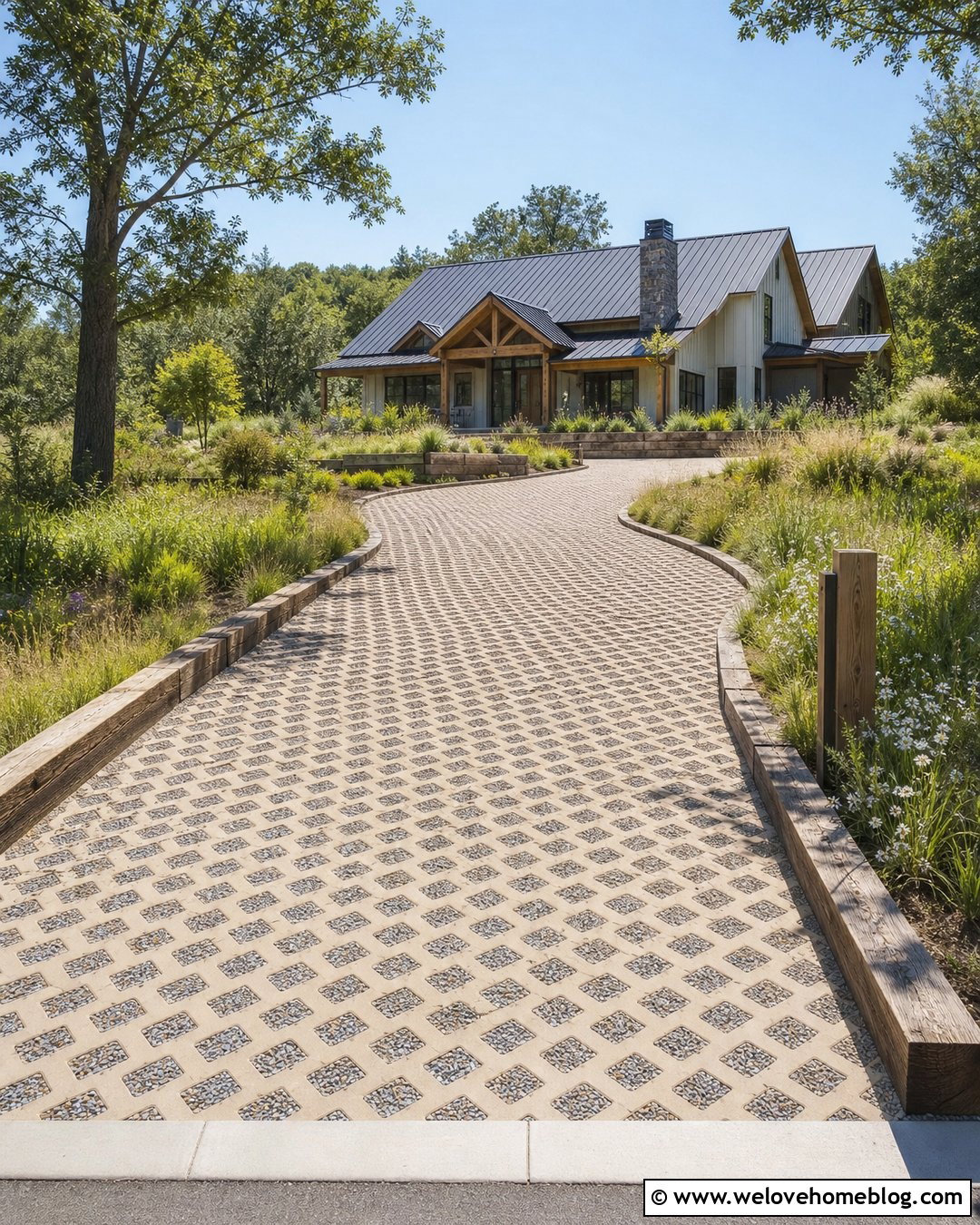
Timber edging provides an affordable, relaxed boundary for a permeable paver driveway in a natural setting. Choose tan concrete grid pavers filled with small gray gravel, then secure the outer edges with straight, ground-rated timber beams. A long driveway with a subtle curve will highlight the warm contrast between the wood, gravel, and green landscape. Add meadow grasses, low shrubs, and deciduous trees rather than formal hedges. Near a modern farmhouse or cabin-style home, repeat the timber in porch posts, raised planting beds, or a simple address marker. The wood should sit low enough to avoid becoming a trip or tire hazard. Because timber changes over time, homeowners should expect eventual maintenance or replacement. Proper anchoring and drainage around the edging will help the finished border remain aligned and useful.
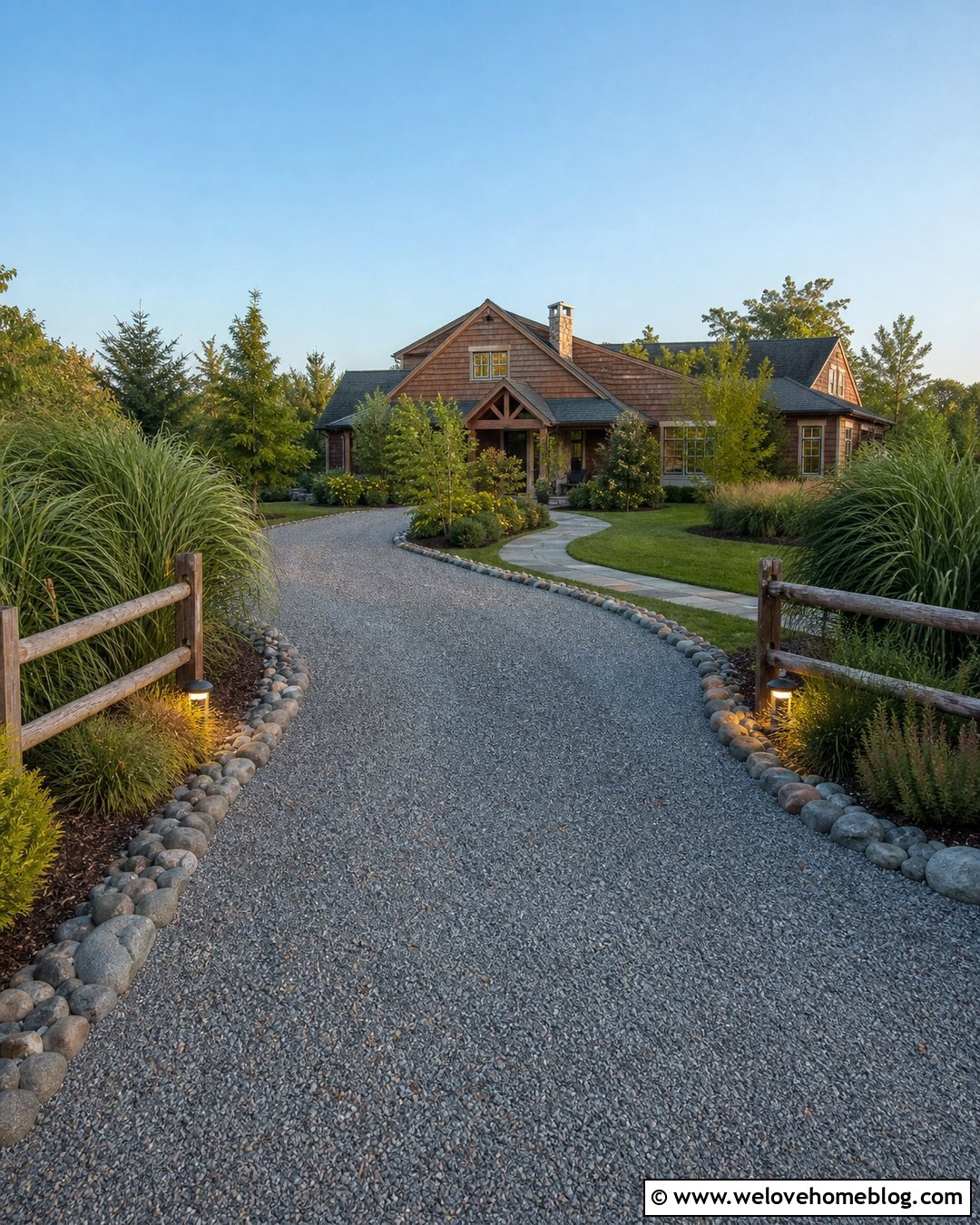
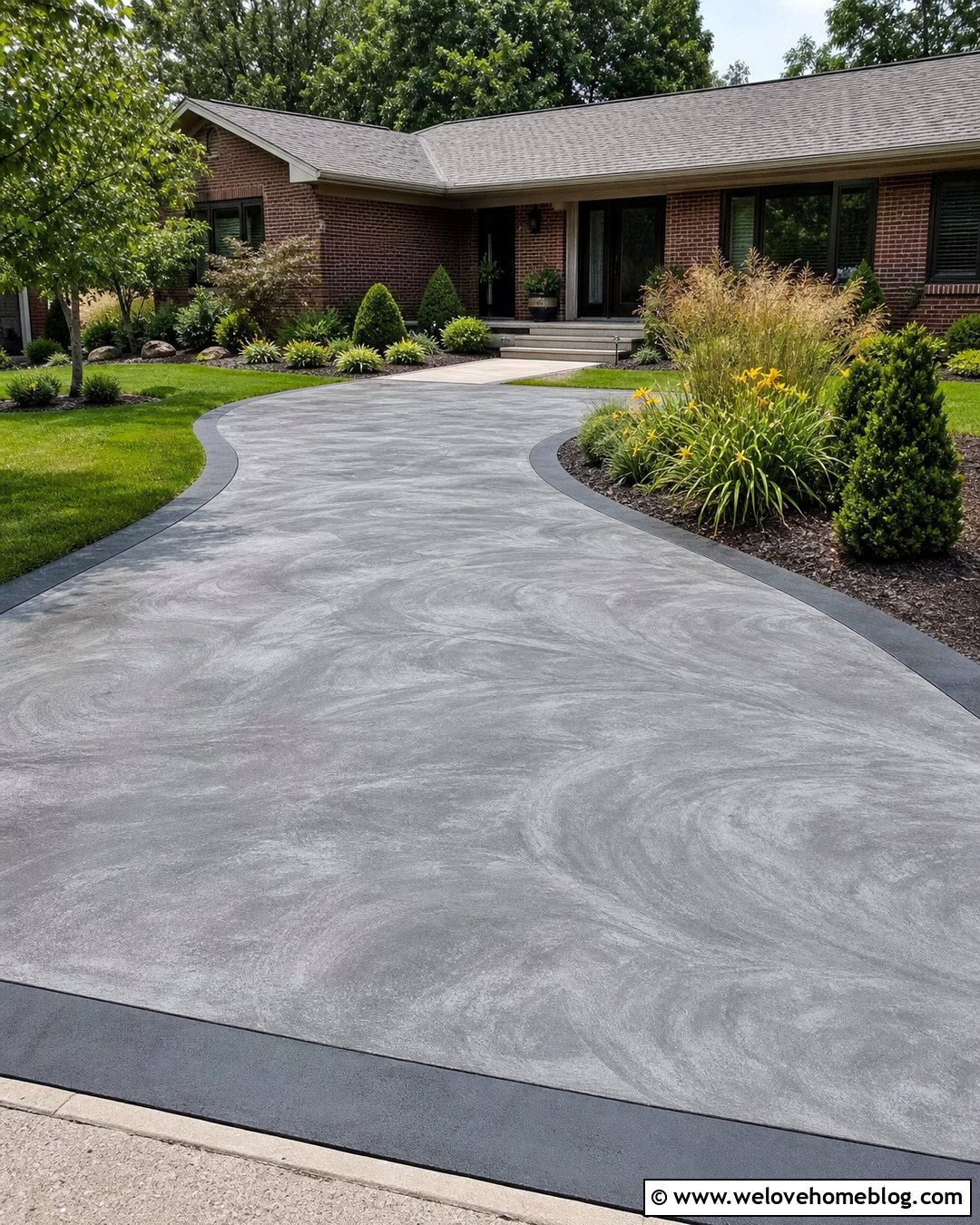
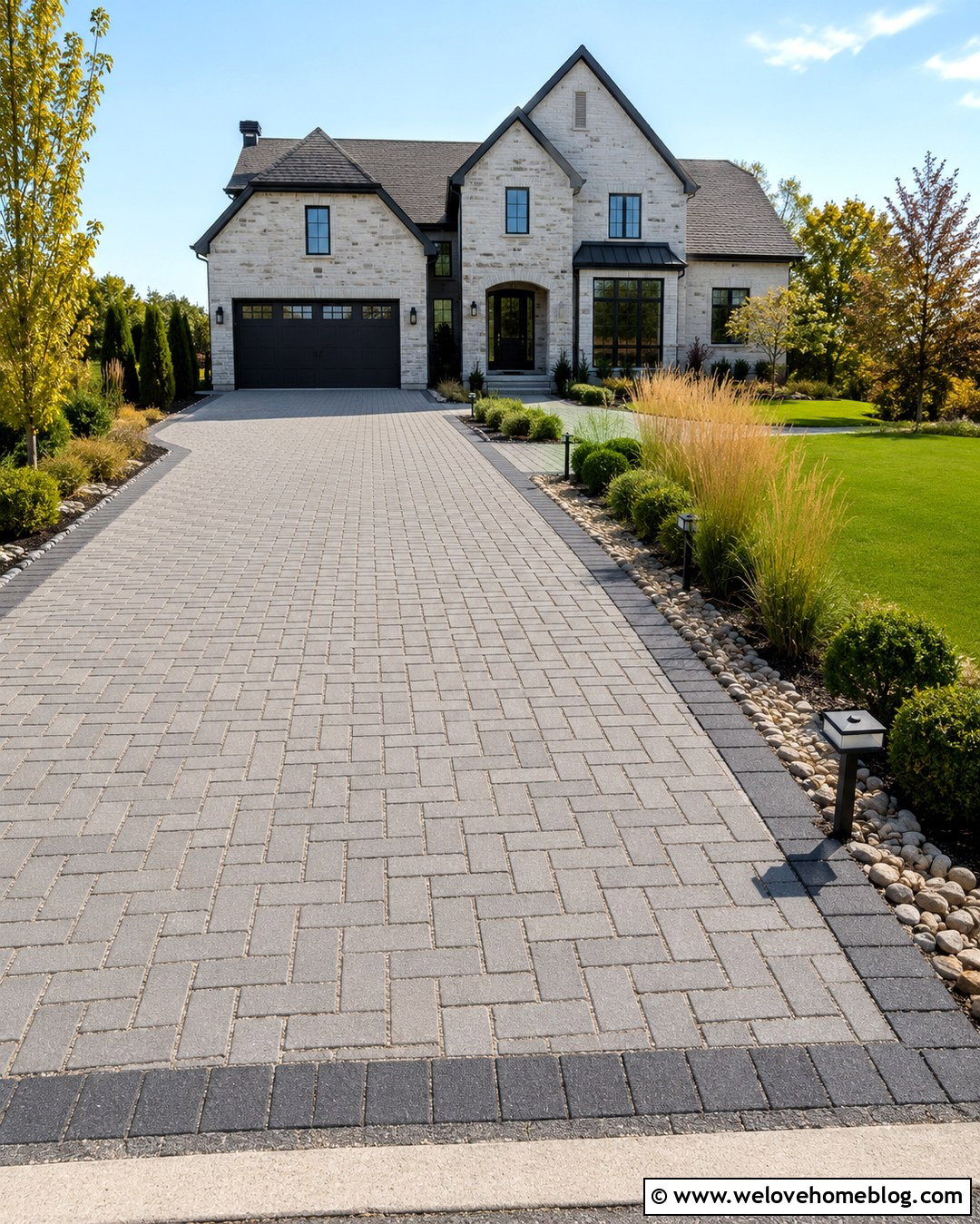
20. Permeable Paver Driveway With Low Stone Walls
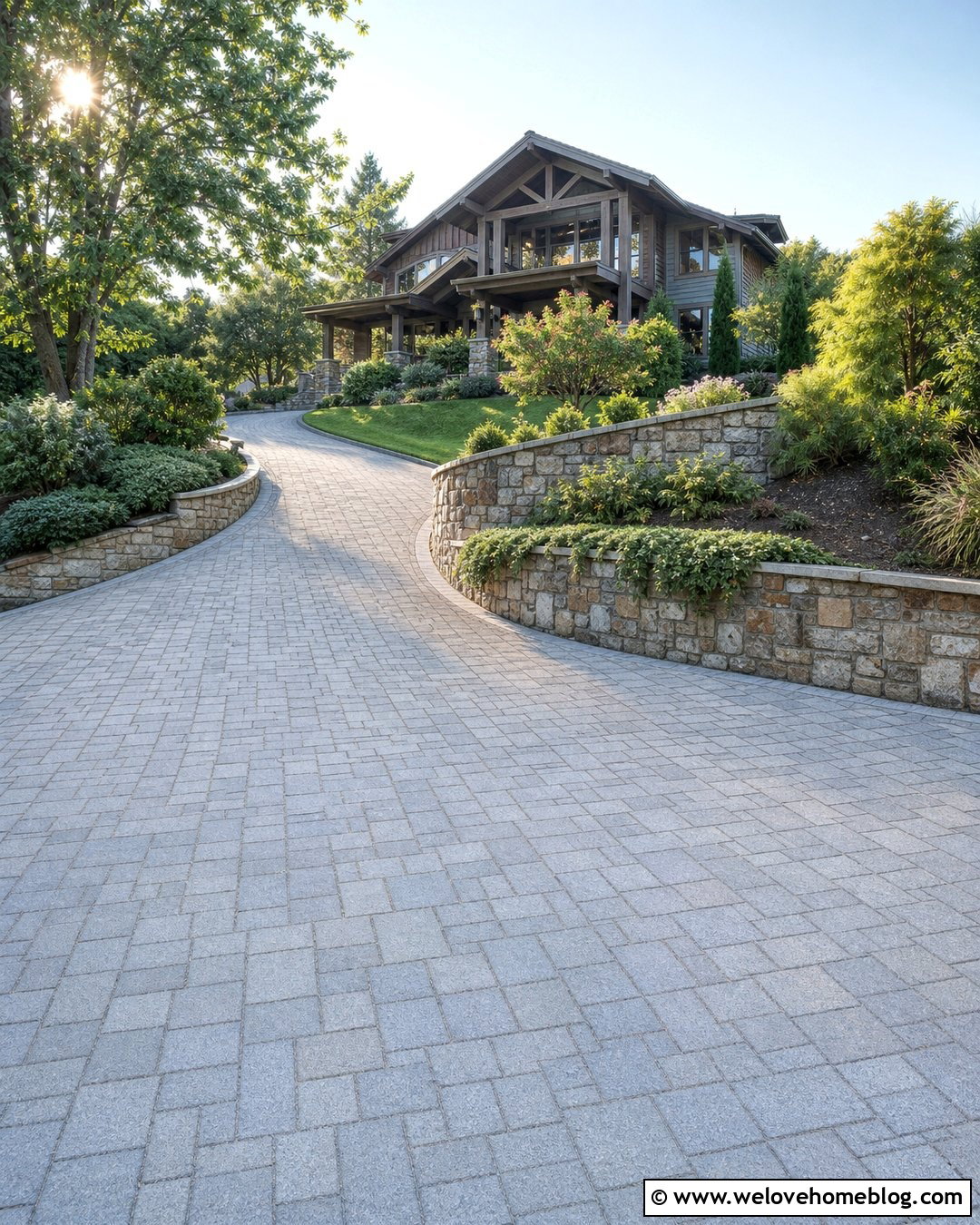
Low stone walls can transform a sloped driveway into a structured, welcoming approach. Install permeable concrete pavers in a random rectangular pattern, using medium-gray tones that coordinate with the wall stone. Place the walls where they can retain raised planting beds or define the entrance, but keep them set back from turning areas. Capstones with smooth edges provide a polished finish. Plant trailing ground covers along the wall tops and use compact shrubs behind them to soften the masonry. A curved or gently rising driveway suits Craftsman, Tudor, and hillside homes. At the garage, widen the permeable paver surface to provide maneuvering space. Wall foundations, driveway grading, and drainage must work together so water does not collect behind the masonry or flow uncontrolled across the driving surface.
21. Permeable Paver Driveway With Modern Gate
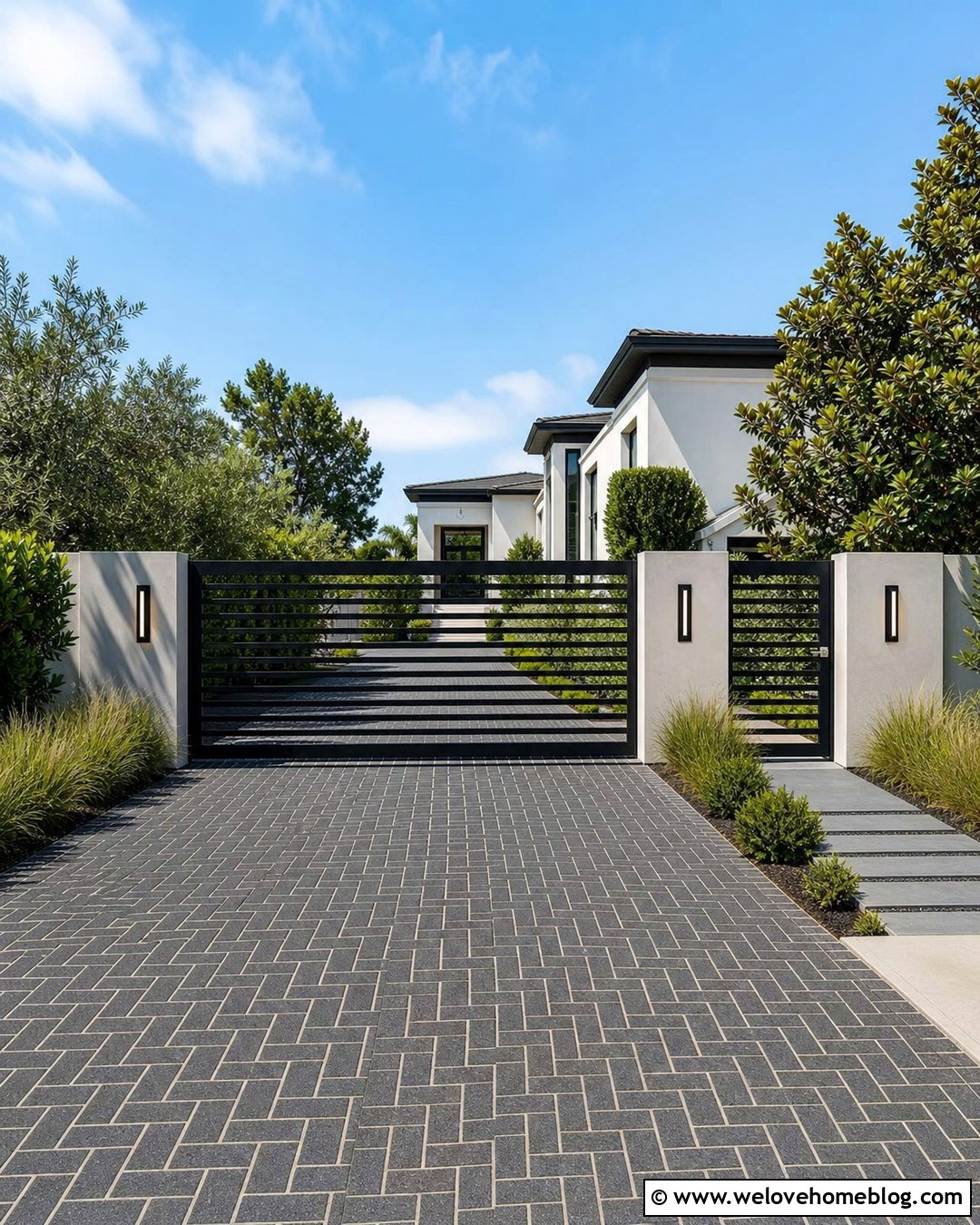
A streamlined gate can make a permeable driveway feel secure without creating a heavy entrance. Pair charcoal interlocking concrete pavers with pale stone-filled joints and a straight approach to a horizontal-slat metal gate. Set the gate far enough inside the property for a vehicle to wait safely before entering. Simple concrete or stone pillars can anchor both sides, while low grasses and clipped evergreen shrubs preserve visibility. Continue the dark pavers through the gate so the driveway reads as one continuous design leading to a modern or contemporary house. A matching pedestrian gate and paved path can complete the arrangement. Keep control boxes, drainage components, and lighting discreetly integrated into the pillars or landscape. The finished entrance should combine clear geometry, usable vehicle space, effective drainage, and uncluttered planting.
22. Permeable Paver Driveway With Brick Pillars
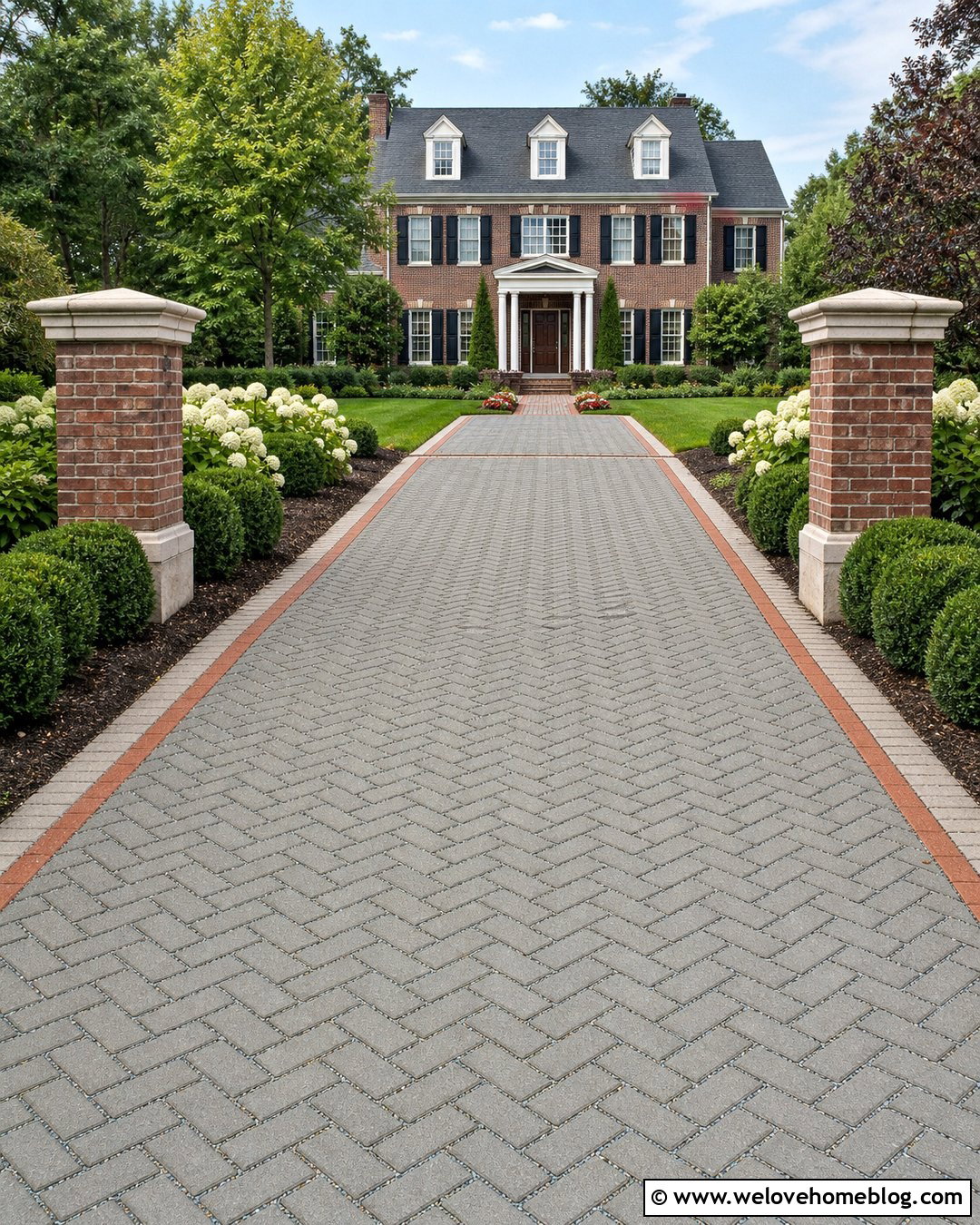
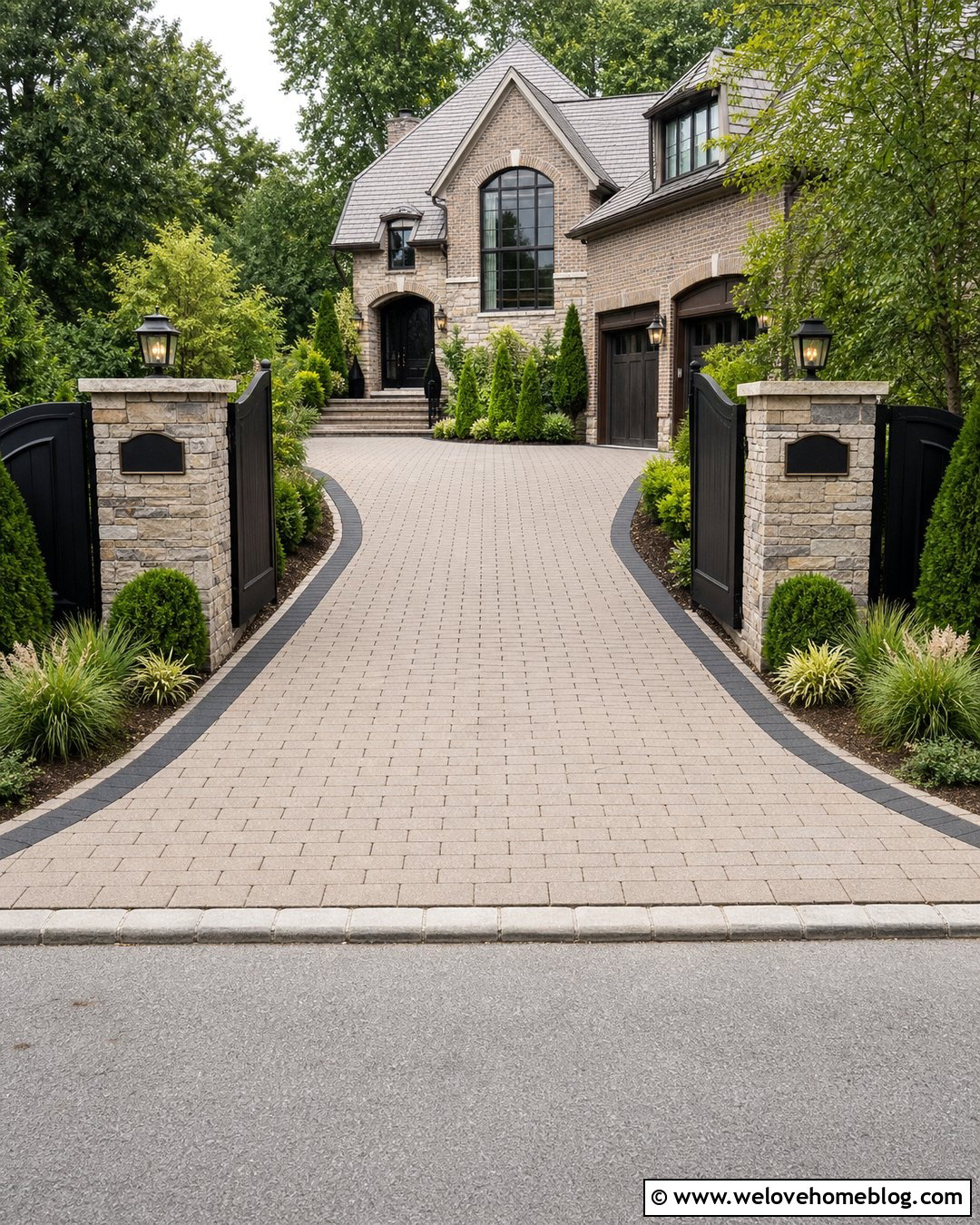
Brick pillars bring traditional character to the entrance while framing the permeable surface from the curb. Use warm-gray permeable concrete pavers in a herringbone or running-bond layout and add a brick soldier-course border that relates to the pillars. Cap the pillars with limestone or cast stone, then place a simple lantern-style fixture or address plaque on each one. A straight driveway works well for a colonial home, while a gentle curve can complement a larger traditional property. Plant low boxwood, hydrangeas, and seasonal perennials around the pillars, keeping the driveway sight triangle clear. The entrance should be wide enough to prevent tires from clipping the masonry. Repeating the brick around the front steps or walkway will make the pillars feel connected to the house rather than standing alone beside the road.
23. Permeable Paver Driveway With Center Planting Strip
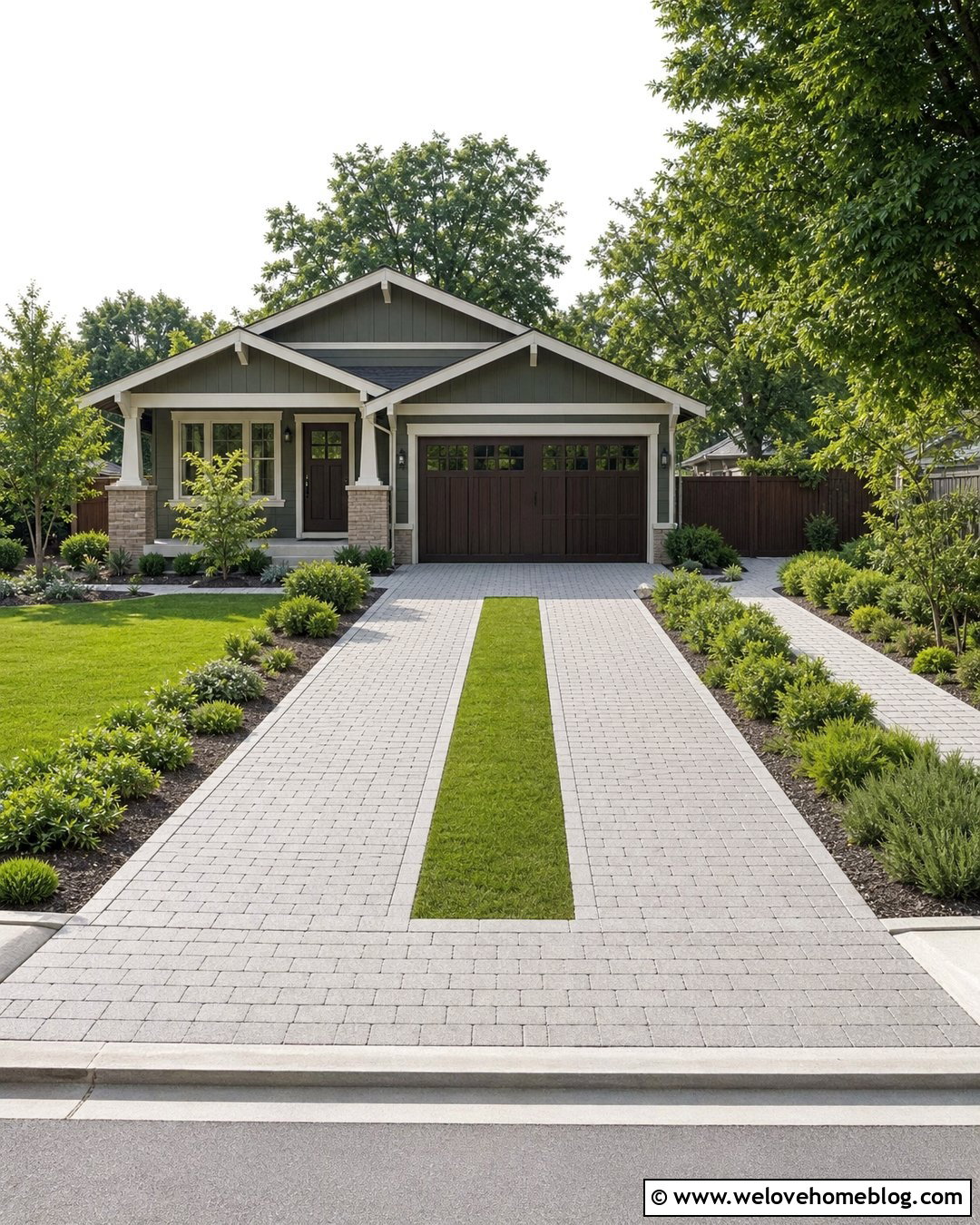
A planted center strip reduces the amount of visible paving and can make a broad driveway feel more garden-like. Construct two wheel lanes from permeable concrete pavers with gravel joints, leaving a reinforced central bed between them. For frequent traffic, use durable grass in a cellular grid. For lighter residential use, a narrow strip of low ground cover may provide more seasonal interest. Keep plants short, resilient, and clear of vehicle undercarriages. Stone or steel edging should sit flush between the lanes and planting strip. Extend the design along a straight approach to a bungalow, ranch, or cottage home. At the street and garage, connect the wheel tracks with full-width permeable paver aprons. This preserves easy turning while maintaining the distinctive green center through the main length of the driveway.
24. Permeable Paver Driveway With Geometric Pattern
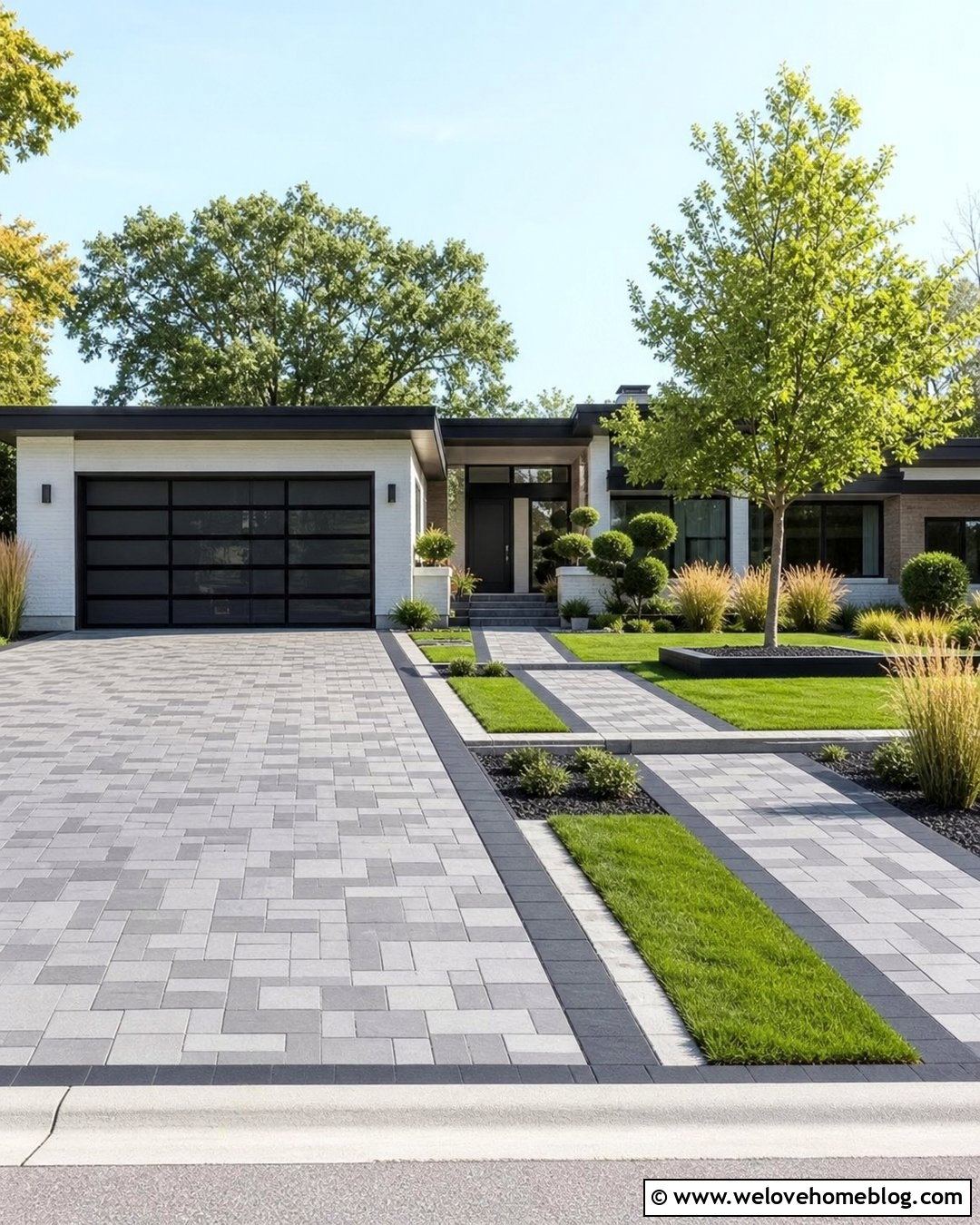
A geometric layout can turn the entire driveway into a strong architectural feature without sacrificing permeability. Combine rectangular concrete pavers in two complementary gray tones, forming large offset blocks or alternating linear bands. Keep the drainage joints consistent and fill them with clean charcoal aggregate. A simple border around the perimeter prevents the pattern from becoming visually chaotic. This surface works best on a broad, straight driveway leading to a midcentury modern or contemporary home. Echo the geometry with rectangular lawn panels, square planting beds, and a direct walkway to the entrance. Use a limited plant palette of ornamental grasses, sculptural shrubs, and one feature tree. Before choosing an elaborate pattern, map it across the actual driveway dimensions so awkward cuts do not accumulate along the garage, street apron, or visible edges.
25. Permeable Paver Driveway With Coastal Landscaping
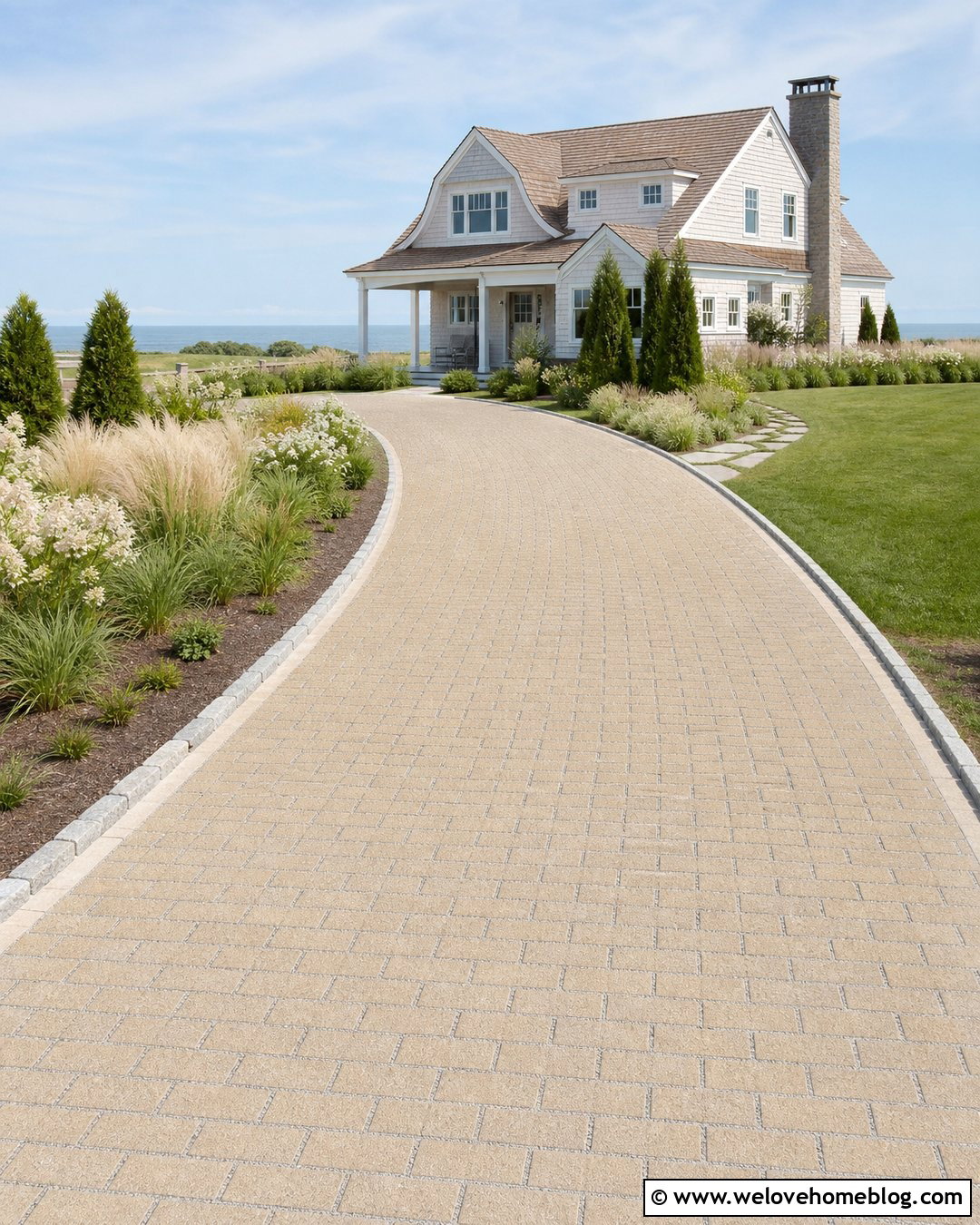
Light-colored permeable pavers can create a bright, relaxed driveway suited to a coastal-inspired home. Choose sand-toned concrete pavers with pale gray gravel joints, arranged in a simple running bond across a gently curved entrance. Border the surface with weathered-looking stone or a narrow band of darker beige pavers. Surround it with salt-tolerant grasses, compact evergreen shrubs, and airy flowering plants appropriate to the local climate. A shell-colored walkway can lead toward a white, pale blue, or shingle-style house. Keep the design open so breezes and sightlines are not blocked by dense planting. Avoid filling functional paver joints with actual shells unless the driveway system specifically allows it. The surface, drainage aggregate, and planting palette should work together to create a coastal mood without relying on decorative clutter.
26. Permeable Paver Driveway For Sloped Yard
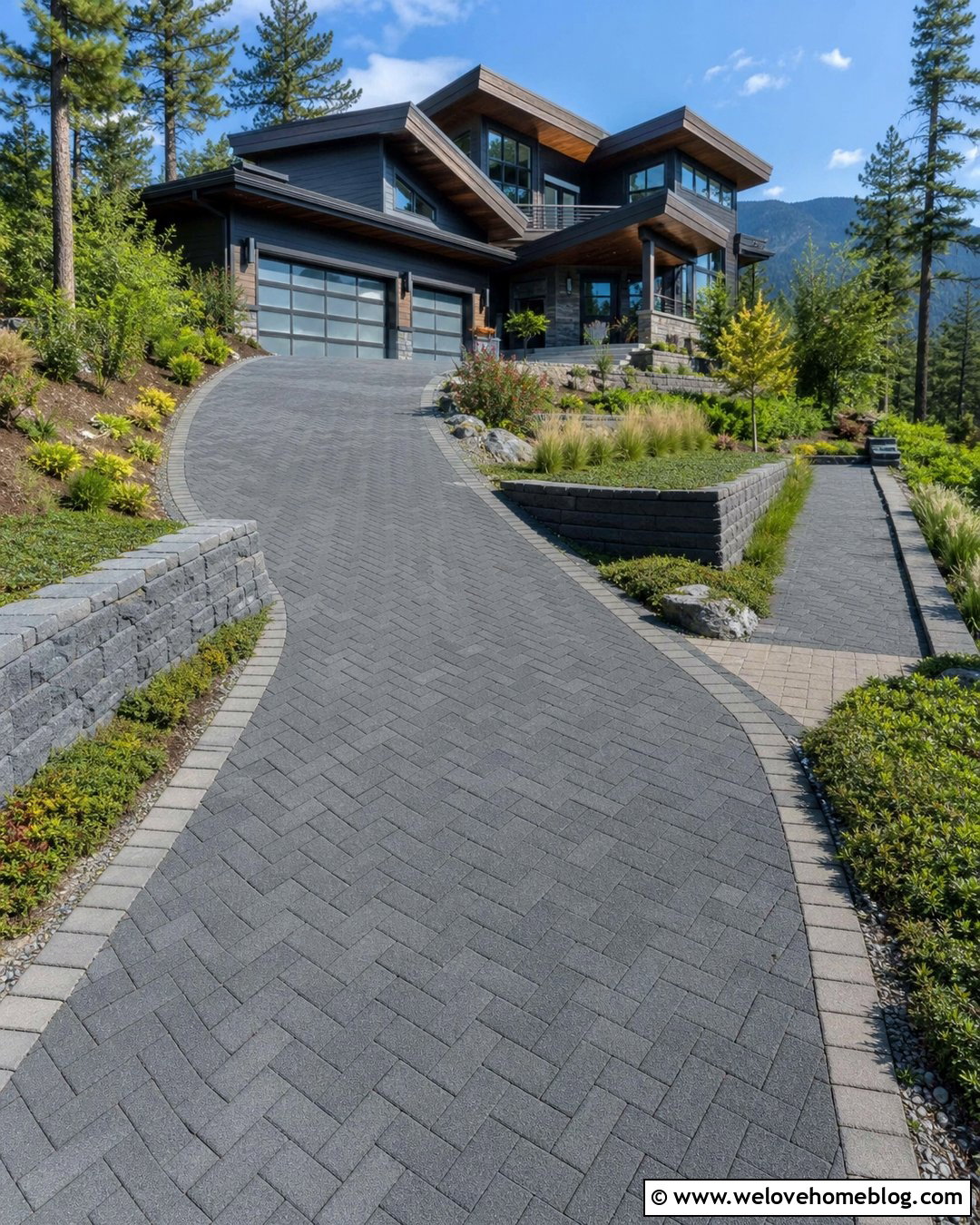
A sloped driveway needs a surface and base designed to manage both vehicle forces and moving water. Use textured permeable concrete pavers in a herringbone pattern, which gives the incline a strong interlocking appearance. Create subtle changes in grade rather than one abrupt rise, and place secure edge restraints along both sides. Stone-filled joints should follow the manufacturer’s specifications so they remain open and stable. Low retaining walls can hold planted slopes away from the driving surface, while ground covers help reduce exposed soil. Add a level landing near the garage for easier parking. This complete look suits hillside Craftsman, contemporary, or mountain homes. Because slope limits and underdrain requirements vary by product and site, the base, overflow route, and final grading should be designed by an experienced local installer.
27. Permeable Paver Driveway With Tree-Lined Entrance
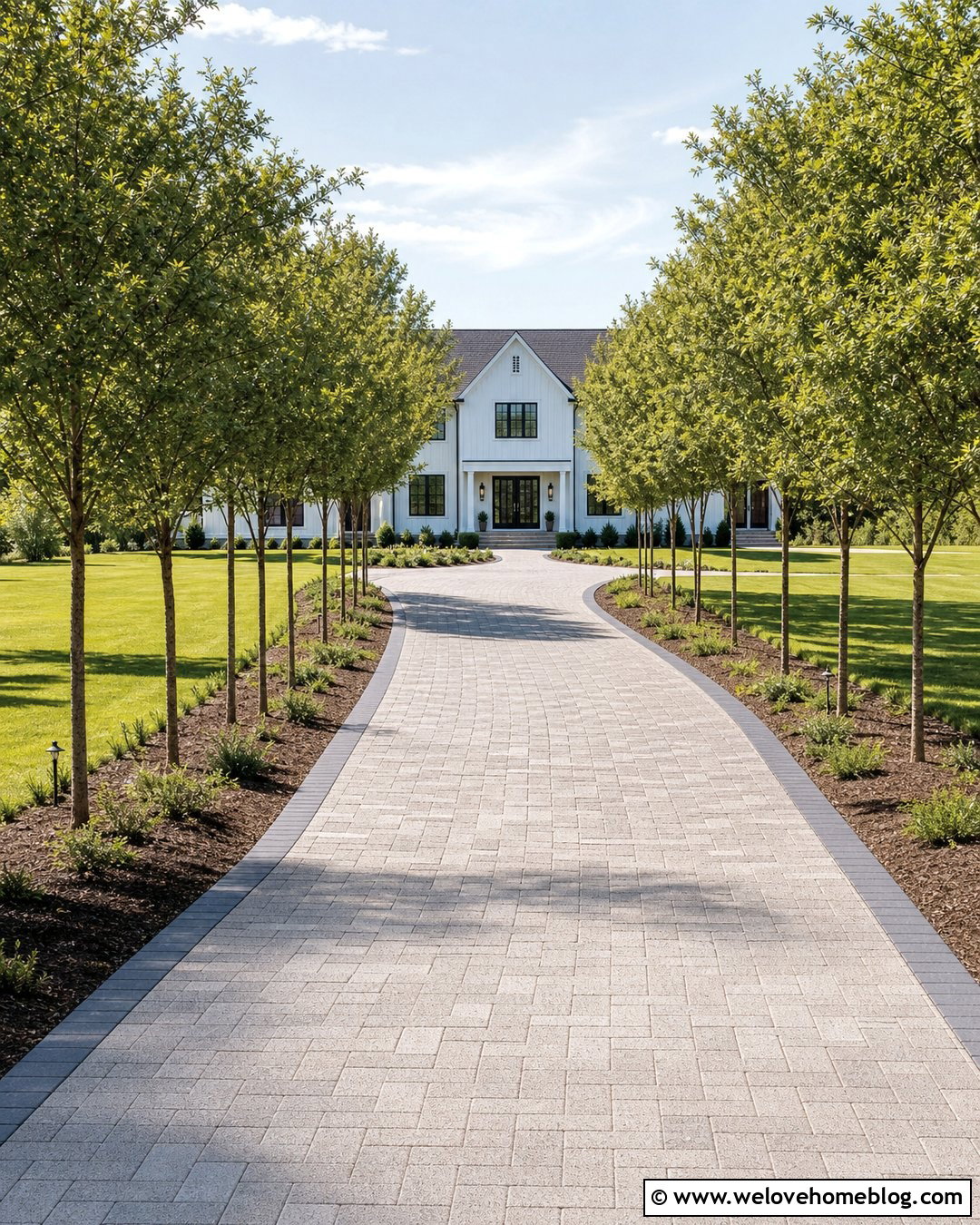
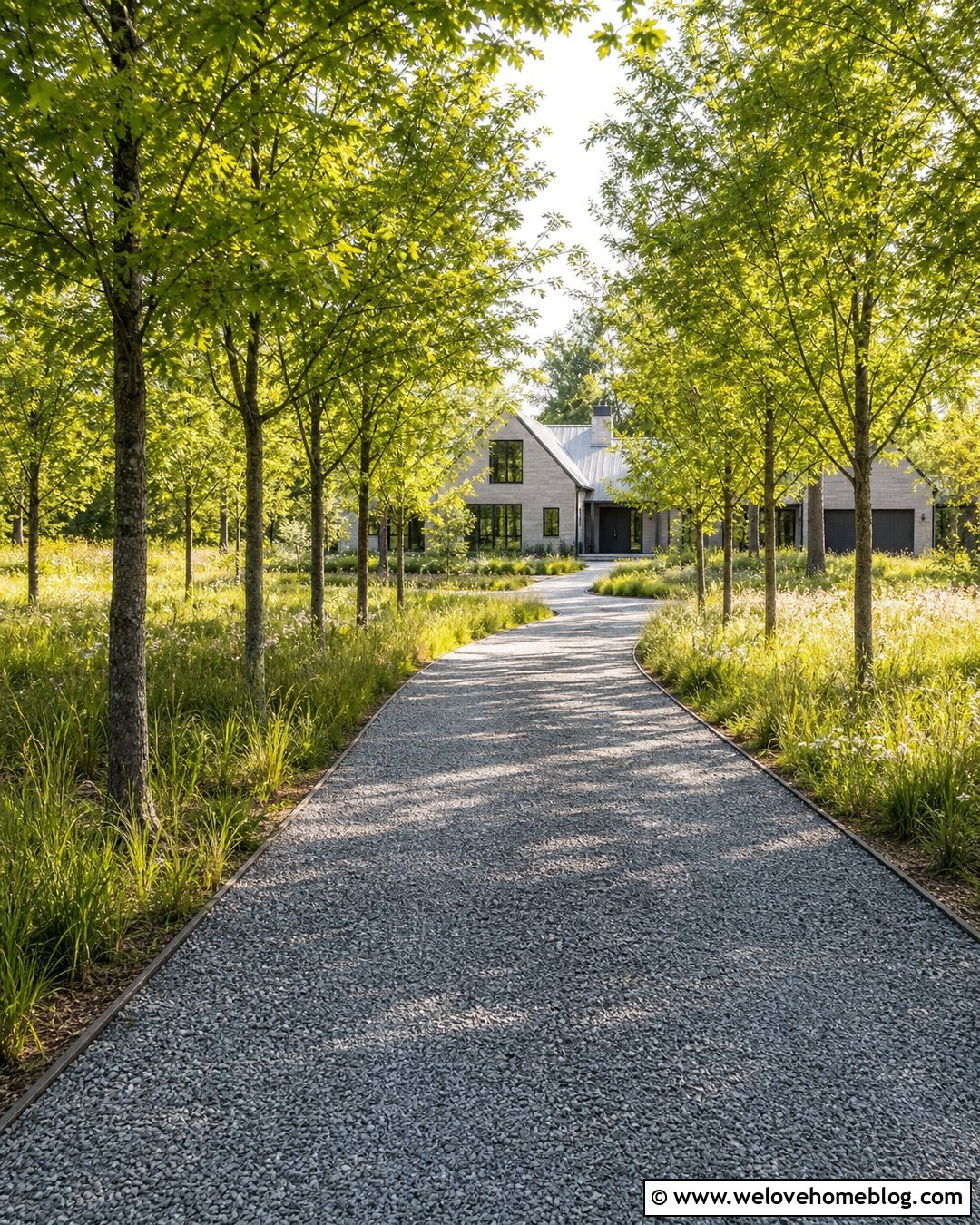
Few approaches feel as welcoming as a driveway framed by evenly spaced trees. Start with warm-gray permeable concrete pavers and light aggregate joints, then use a straight or softly curving layout to create a strong view toward the house. Plant matched deciduous trees beyond the edge restraint, leaving enough distance for mature trunks, roots, and canopies. Between the trees, use lawn or simple ground-cover beds to keep the composition calm. A narrow dark paver border can sharpen the driveway edges without competing with the landscape. This arrangement works beautifully for farmhouse, colonial, and country homes on larger lots. Select trees with manageable roots and limited messy fruit. Proper spacing also allows sunlight and air movement to reach the pavers, helping the complete entrance remain open, balanced, and easier to maintain.
28. Permeable Paver Driveway With Mixed Paver Sizes
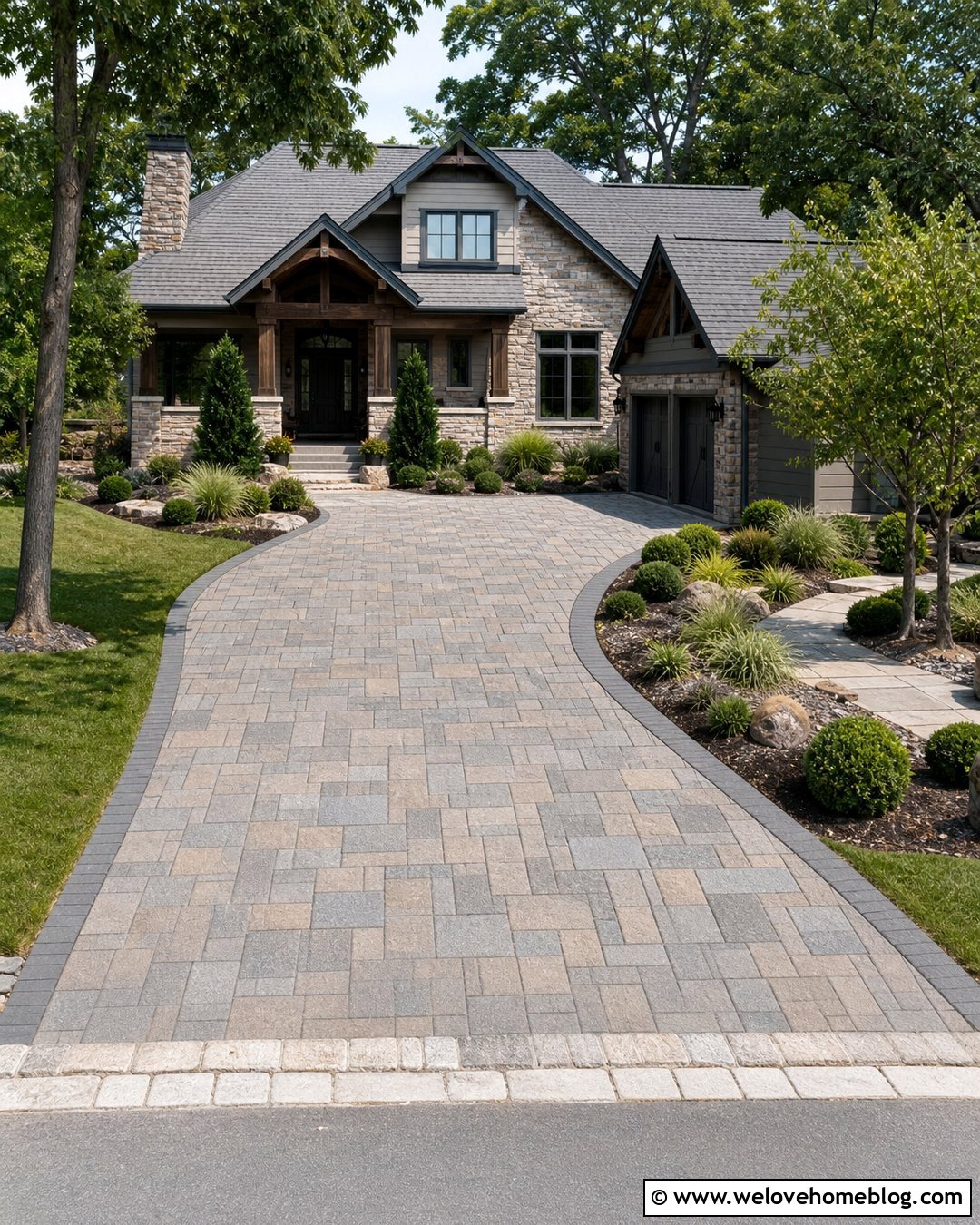
Mixing paver sizes creates visual depth while maintaining a unified driveway surface. Choose a modular permeable concrete collection containing large rectangles, medium squares, and smaller filler units in coordinated taupe and gray tones. Lay them in a random ashlar-style pattern, keeping the required aggregate-filled joints consistent throughout. A single charcoal border can contain the varied field and prevent the layout from appearing too busy. Use a gently curved driveway leading to a stone-front Craftsman or transitional home. Rounded evergreen shrubs, ornamental grasses, and a natural-stone walkway will support the textured appearance. Keep the color range controlled because size variation already provides plenty of movement. The pattern should be planned before installation so repeated clusters, narrow cuts, and weak-looking edges do not distract from the finished driveway.
29. Permeable Paver Driveway With Clover Grid
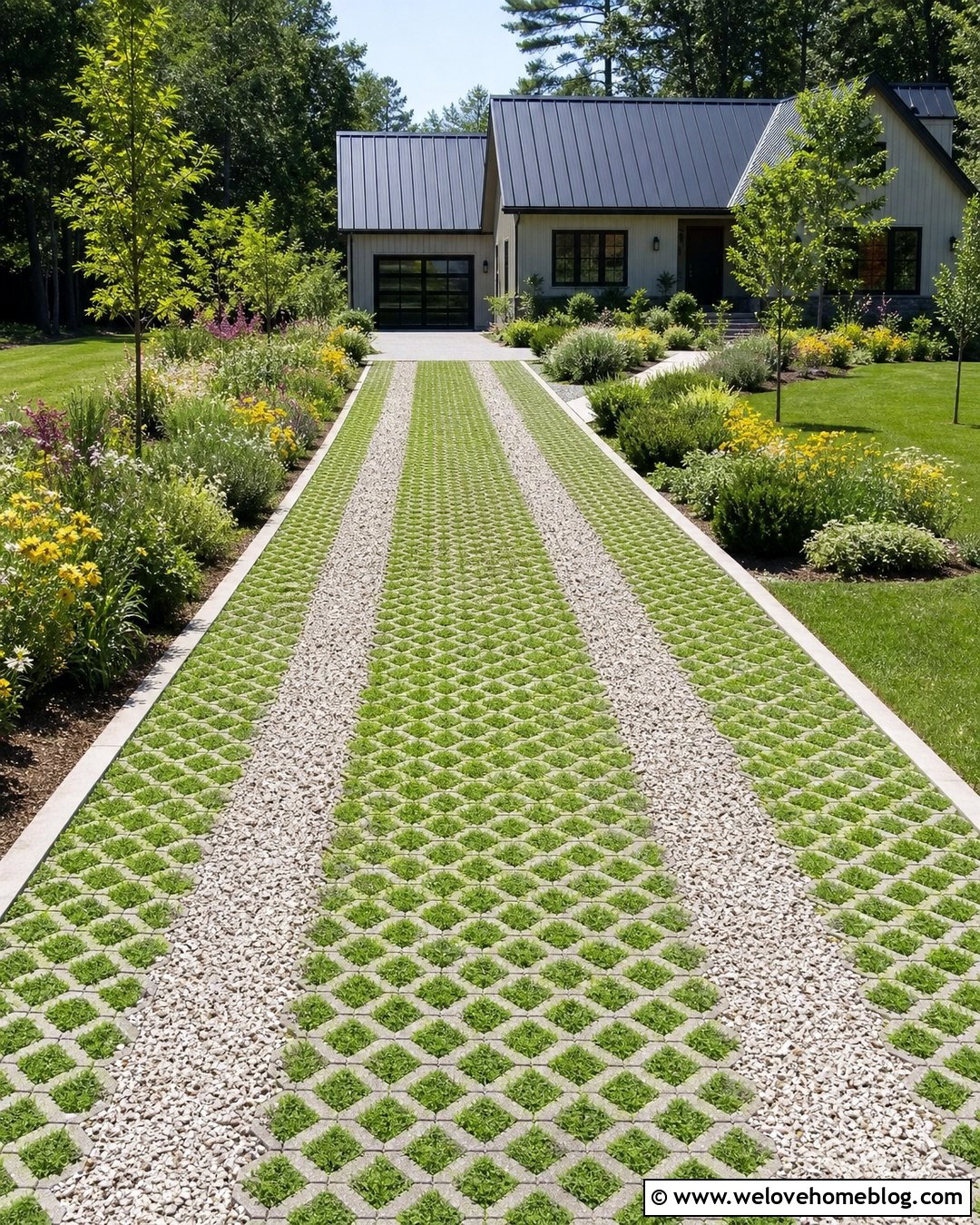
Microclover can give a reinforced green driveway a softer texture than conventional turf in suitable climates and conditions. Install load-rated concrete or plastic grid pavers over a properly prepared permeable base, then fill the cells with an appropriate growing medium and low-growing clover blend. Use the green grid across a straight driveway, but add gravel-filled wheel paths or parking zones where traffic is most frequent. Flush concrete edging protects the perimeter and allows easy trimming. Frame the entrance with native flowering plants, small shrubs, and an open lawn leading to a cottage or eco-conscious modern home. Clover performance varies with sunlight, soil, water, and vehicle use, so confirm local suitability first. A mixed grass-and-clover fill may provide more dependable coverage than one plant species alone.
30. Permeable Paver Driveway With Matching Walkway
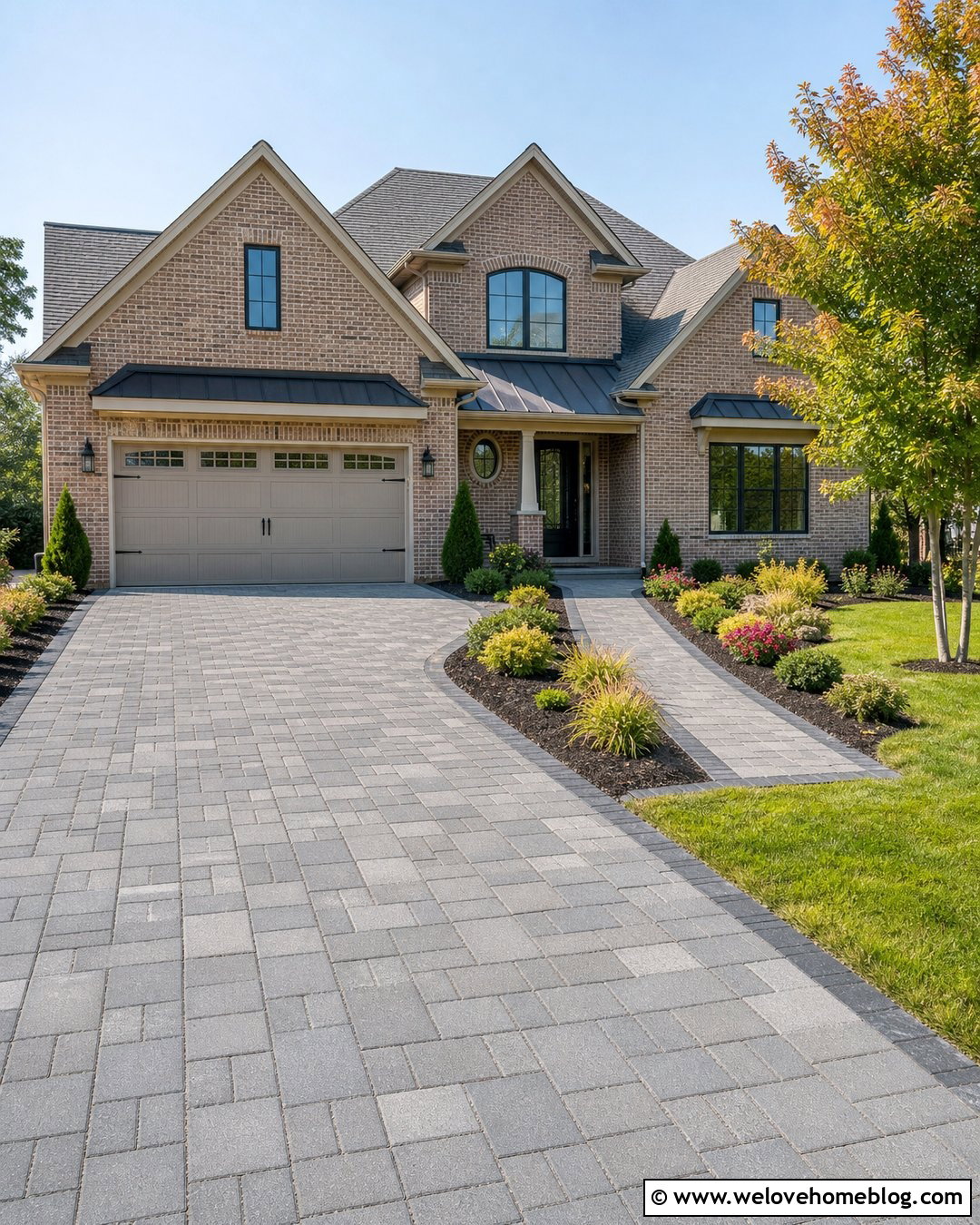
Connecting the driveway and front walkway creates a polished entrance that feels intentionally planned. Use medium-gray permeable concrete pavers across a broad straight driveway, then continue the same material toward the front door in a narrower running-bond path. Change the walkway’s border color or laying direction to distinguish pedestrian space without introducing another unrelated material. Add a planted buffer between the drive and path where space allows, using low shrubs, grasses, and seasonal flowers. A single ornamental tree can mark the point where the walkway branches away. This adaptable design fits contemporary, transitional, Craftsman, and suburban brick homes. Keep walkway joints permeable as well, and ensure the path has a comfortable width, an accessible slope, and a smooth transition between the curb, driveway, garage, and front entrance.
Conclusion:
The best permeable driveway is more than a collection of attractive paving blocks. Its surface, joint fill, base, edging, slope, overflow route, landscaping, and vehicle circulation must function as one complete system. Concrete pavers with stone joints offer a polished appearance, while gravel grids and grass cells produce a softer connection to the yard. Borders, planting strips, gates, pillars, and matching walkways can then personalize the entrance. Before choosing a look, evaluate traffic, soil conditions, maintenance, climate, and local drainage requirements. Professional design and installation are especially valuable on steep, wet, or difficult sites. Use these **30 Permeable Pavers Driveways Ideas** to create a durable entrance that balances curb appeal with responsible rainwater management.

Related posts:
Leave a Reply