
Permeable driveway pavers combine polished curb appeal with practical stormwater management. Unlike a solid paved surface, a properly installed permeable system directs rain through open joints or planted cells into layers of clean aggregate below. This can reduce puddling, slow runoff, and create a more comfortable transition between the home and landscape. The strongest designs consider the whole setting, including paver color, driveway shape, borders, planting beds, garage doors, and walkways. Installation quality matters just as much as appearance because the subgrade, stone reservoir, edge restraints, and joint material determine long-term performance. () Whether your property is modern, traditional, rustic, or compact, these complete 20 permeable driveway pavers ideas offer plenty of useful inspiration.

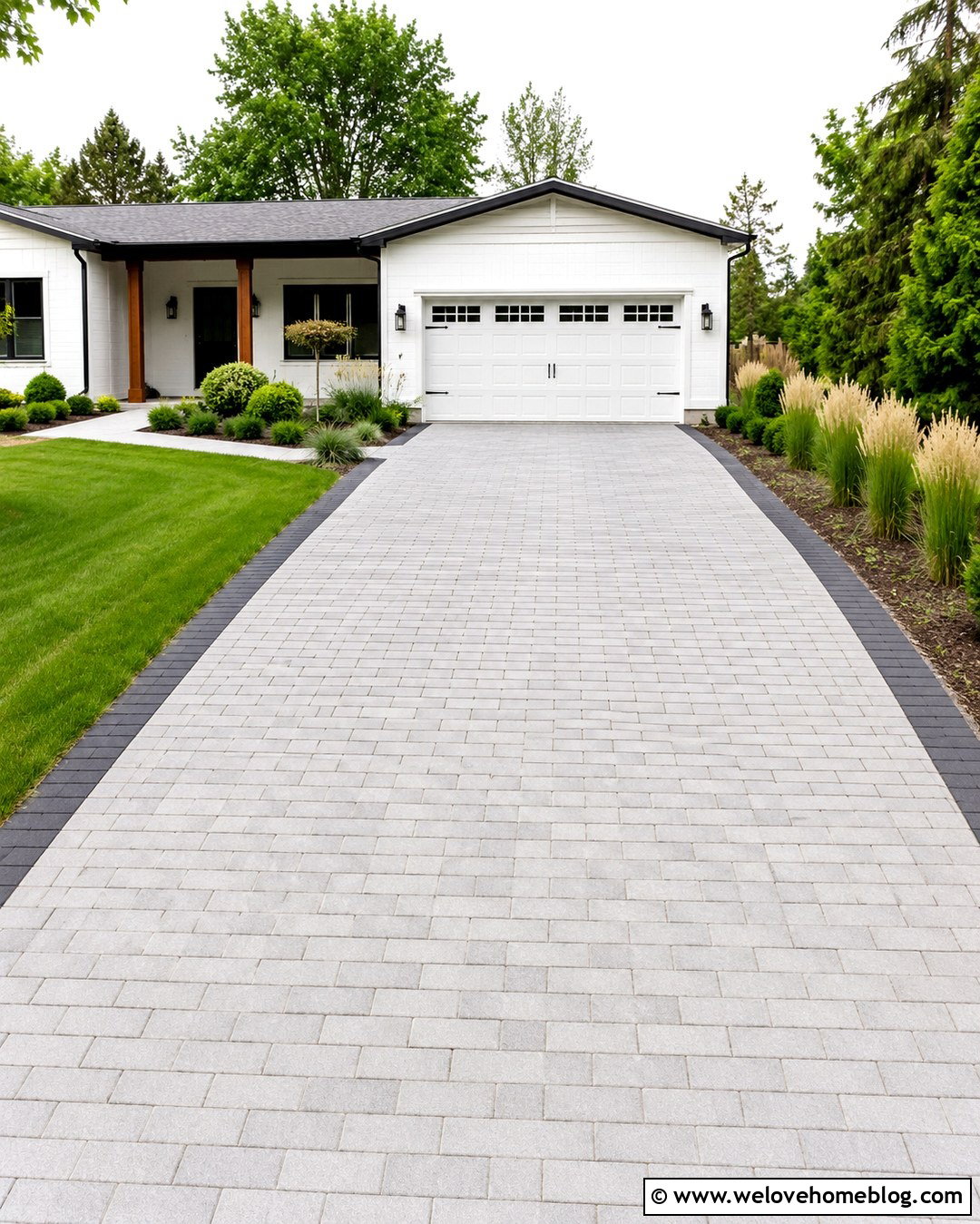
1. Gray Permeable Paver Driveway
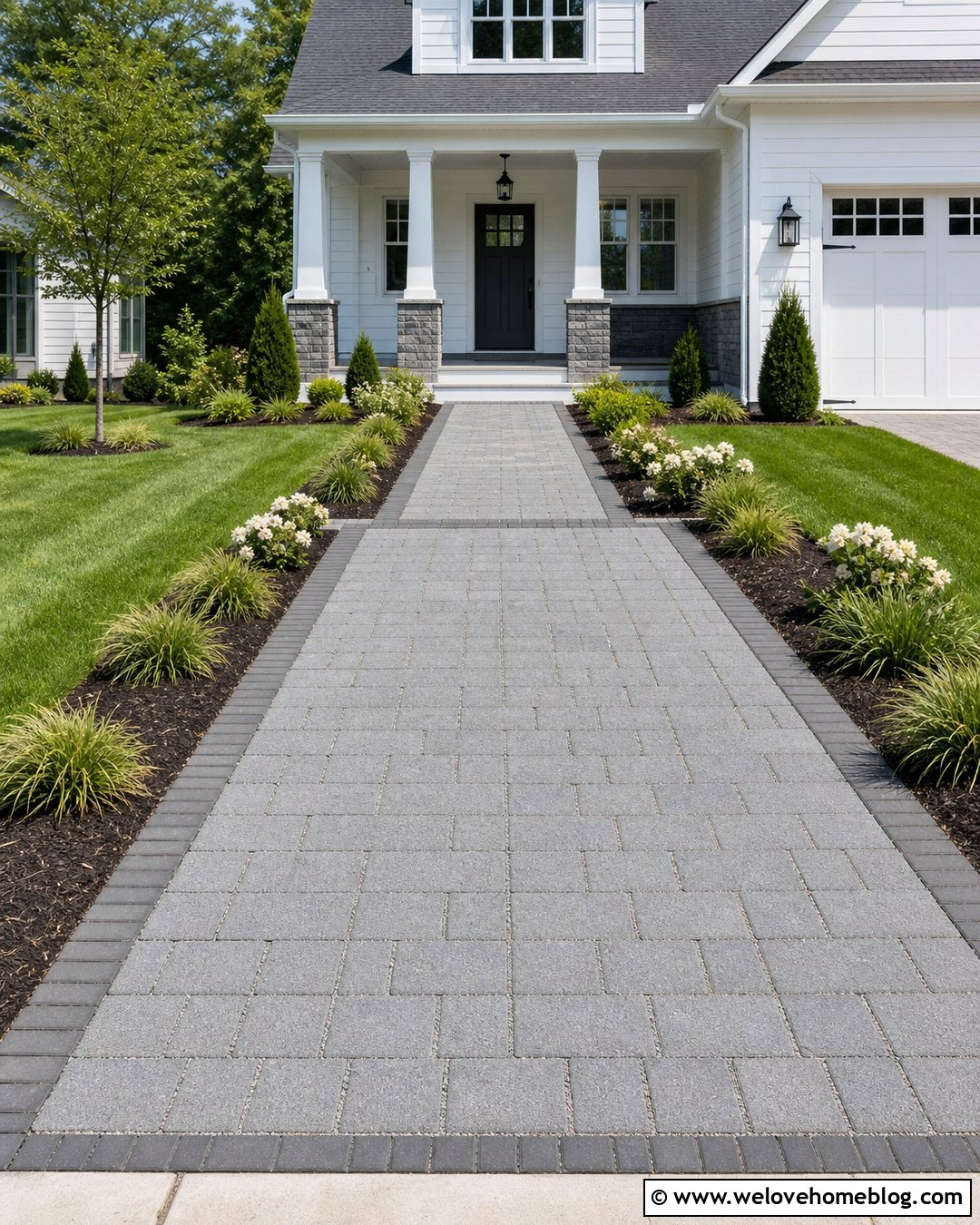
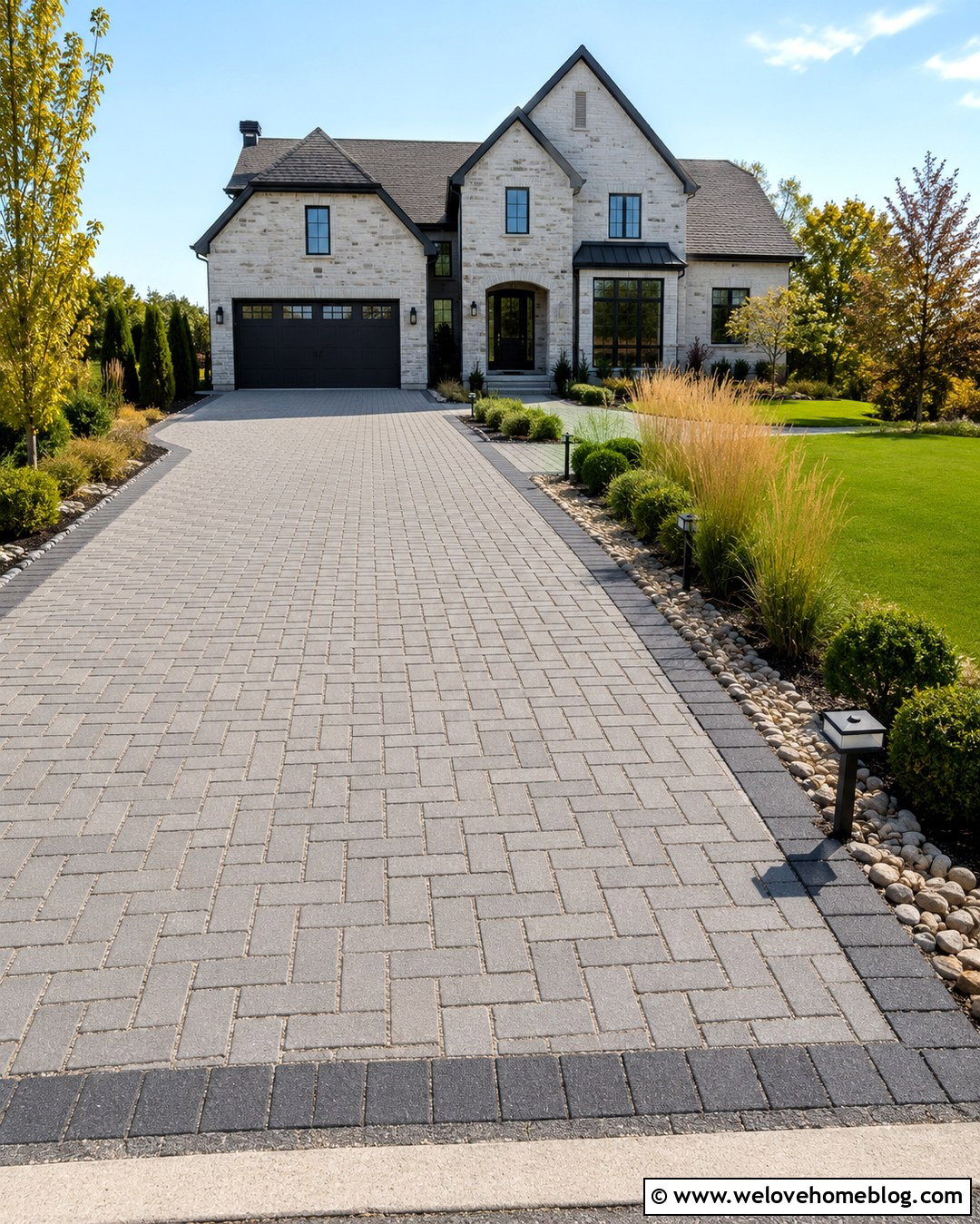
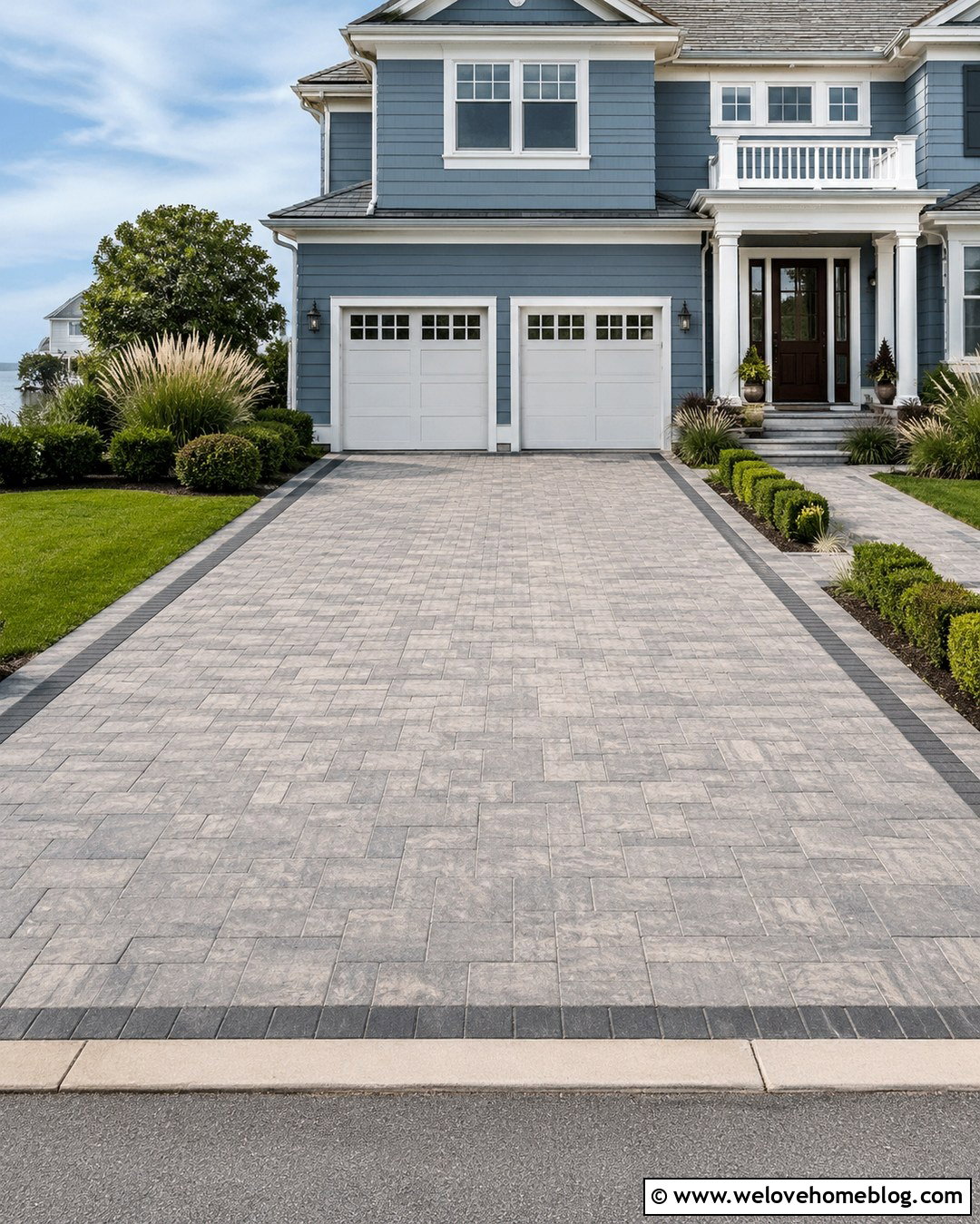
A medium-gray permeable paver driveway is a flexible choice for a wide range of homes. Choose rectangular concrete pavers with widened joints filled with clean, angular stone rather than ordinary joint sand. A straight layout creates a tidy approach to the garage, while a charcoal soldier-course border gives the edges a finished appearance. Add low planting beds along both sides with ornamental grasses, compact evergreens, and pale flowering perennials. A matching walkway can branch toward the front porch without making the yard feel overly paved. Gray pavers work especially well with white siding, red brick, or natural stone. Keep the pattern simple so the visible drainage joints become a subtle part of the complete design rather than an unwanted distraction.
2. Permeable Paver Driveway With Grass Joints
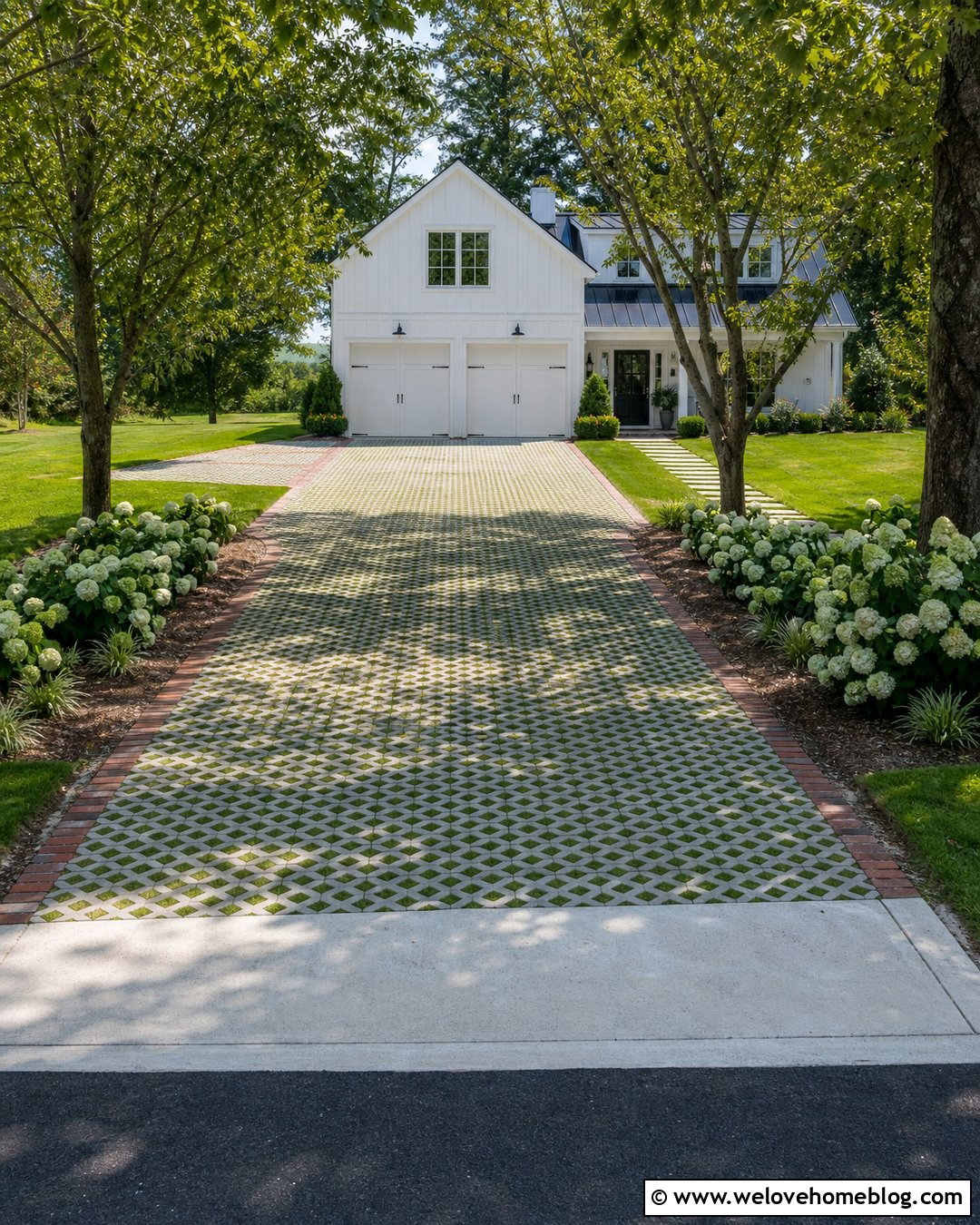
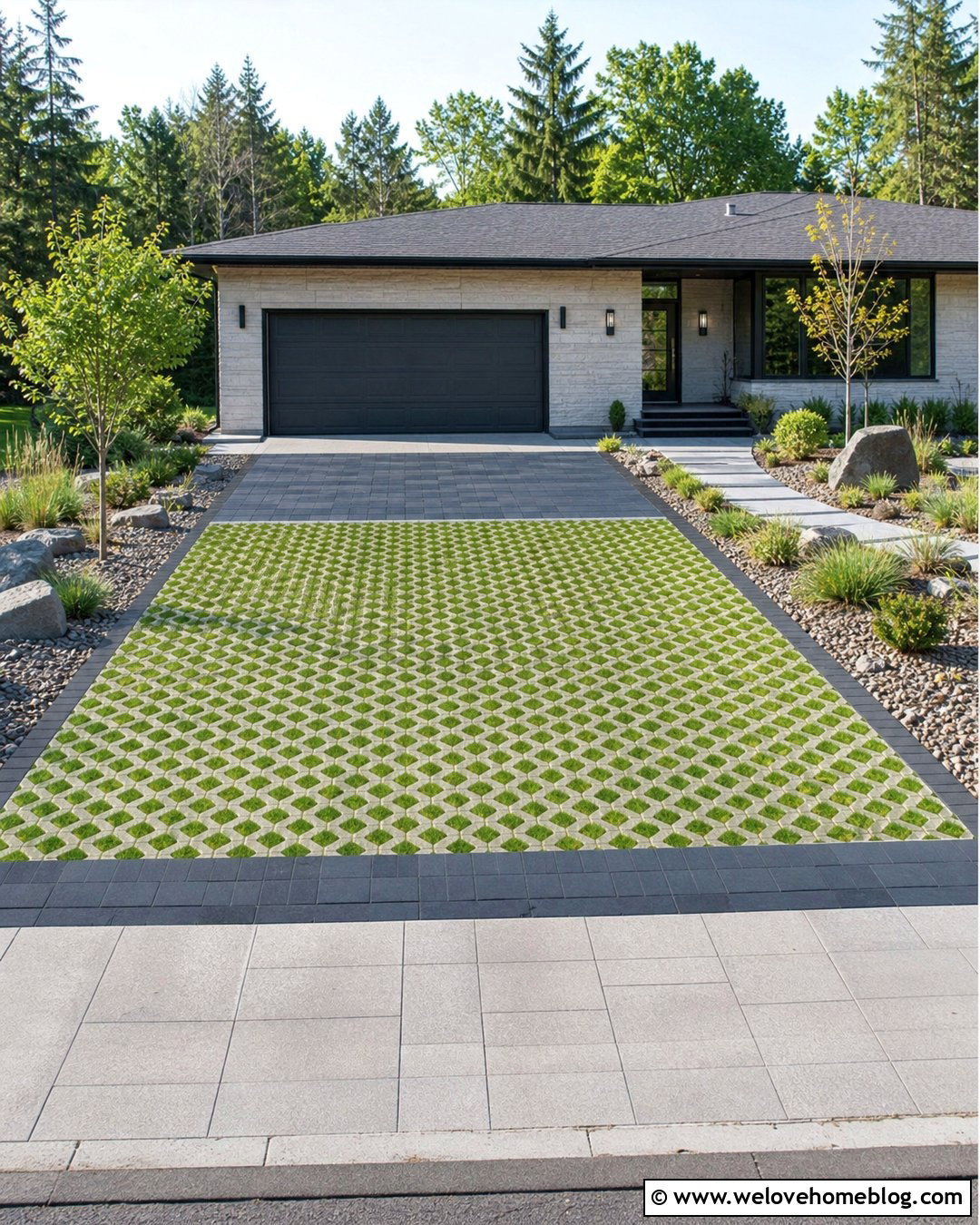
Grass joints can soften a large driveway and help it blend naturally into the lawn. Use durable concrete grid pavers or broad rectangular units designed to leave consistent planted openings. The complete driveway should have clearly defined driving lanes, reinforced turning areas, and a solid paver apron beside the street. Fill the open cells with soil and a grass variety suited to your climate, sunlight, and expected traffic. Deep green strips look attractive beside a light farmhouse, especially when paired with brick edging and relaxed foundation planting. Avoid placing delicate lawn directly beneath tires that remain parked for long periods. A professional can design the load-bearing base correctly while creating enough growing space for healthy roots and effective drainage.
3. Modern Permeable Paver Driveway
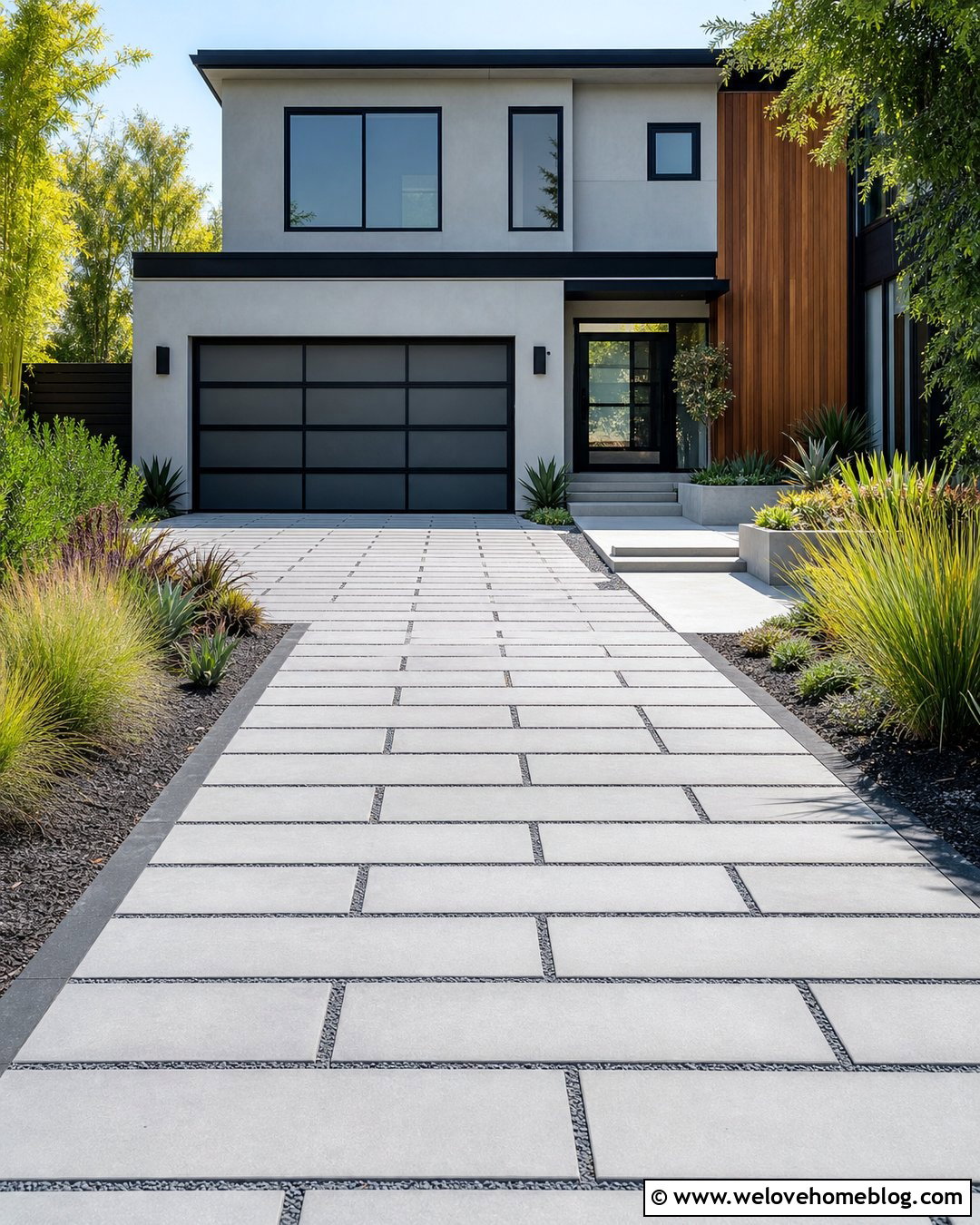
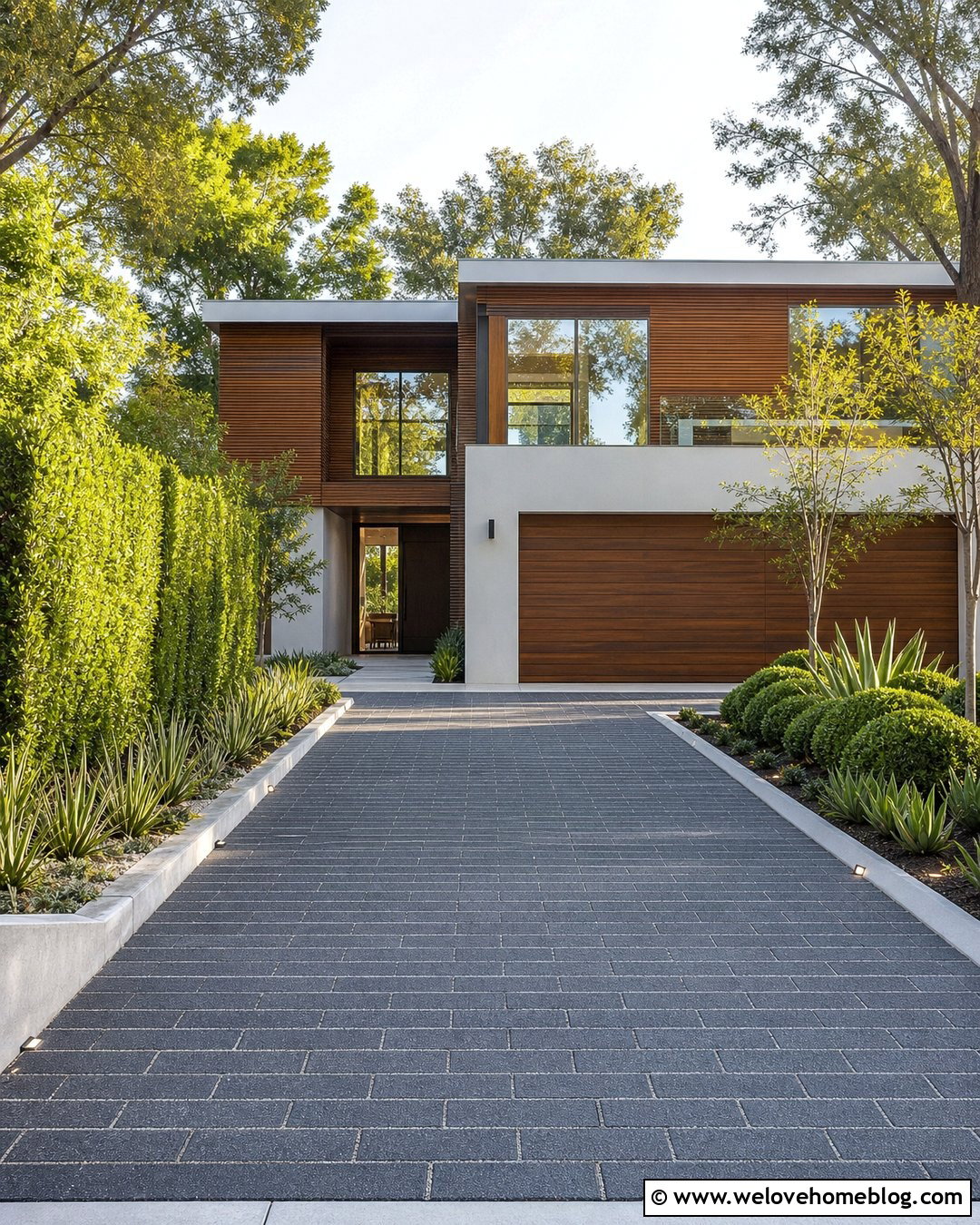
Clean lines make permeable paving feel especially appropriate beside contemporary architecture. Select large rectangular concrete pavers in a cool gray finish and arrange them in a linear running pattern. Narrow joints filled with dark crushed stone will outline each unit and visually connect the driveway with black window frames or metal accents. Continue the straight geometry through raised planting beds, a wide concrete walkway, and simple bands of drought-tolerant grasses. A flush charcoal border keeps the pavers secure without interrupting the streamlined look. Near the garage, repeat the paver direction to emphasize the home’s horizontal shape. The finished driveway should appear minimal but not empty, with carefully placed greenery balancing the broad paved surface and softening the view from the curb.
4. Brick Look Permeable Paver Driveway
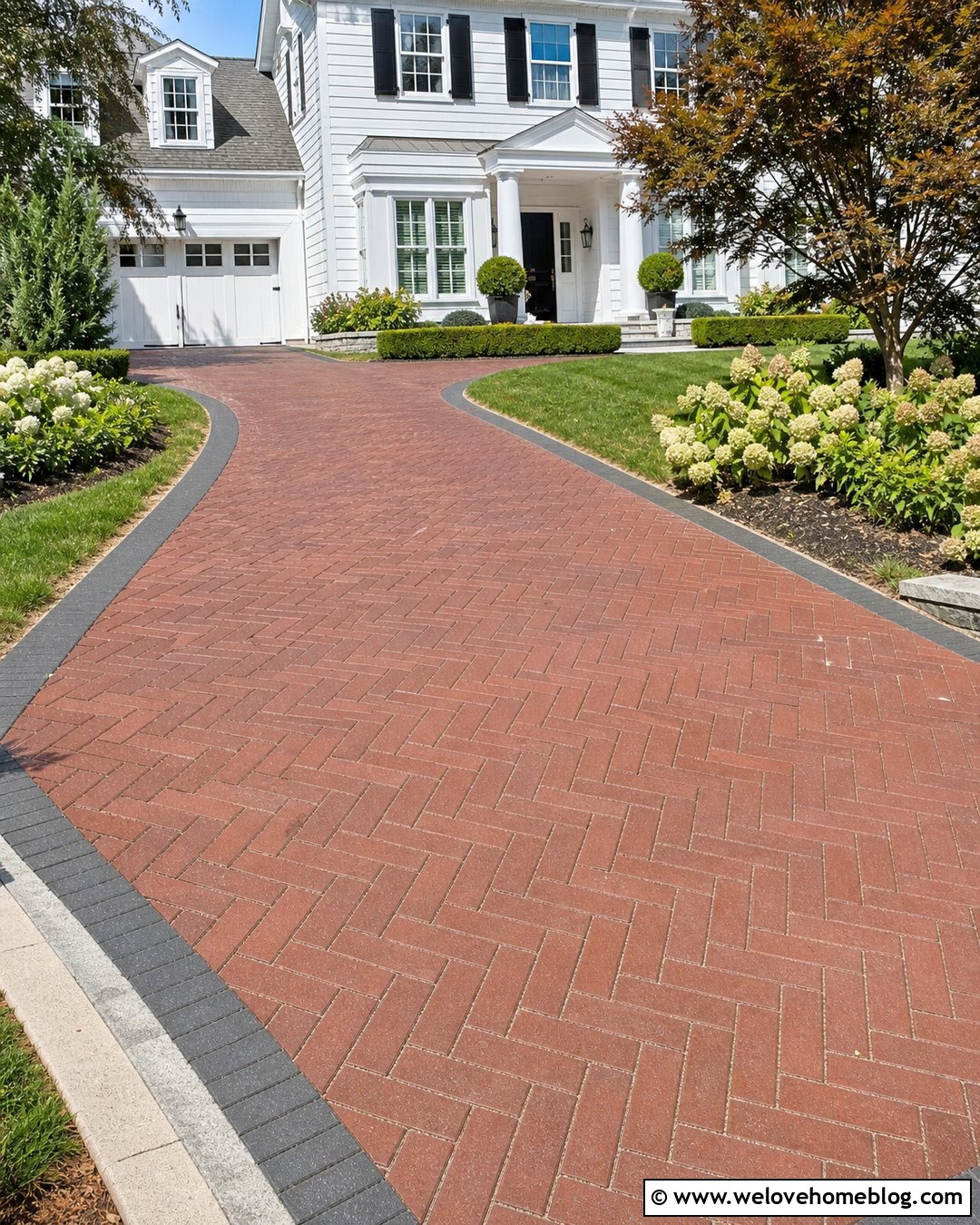
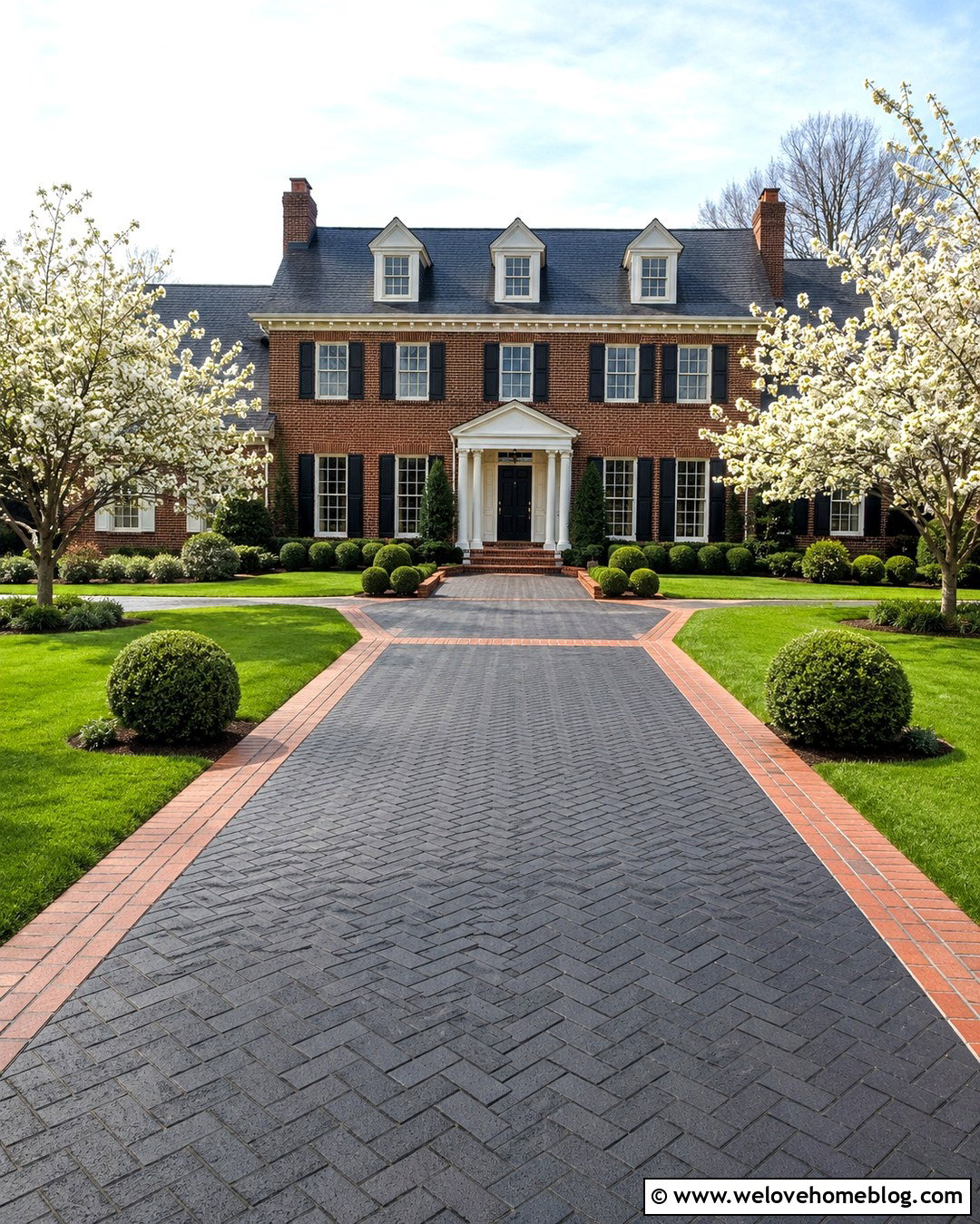
Warm brick-look permeable pavers bring traditional character without requiring a solid, runoff-producing surface. Choose driveway-rated units in blended red, brown, and muted charcoal tones. A herringbone field offers strong visual movement, while widened aggregate-filled joints allow water to enter the permeable base. Frame the driveway with a darker paver course and introduce a gently curved edge near the front lawn. Boxwood, hydrangeas, and a small ornamental tree can reinforce the classic appearance around a colonial or Cape Cod house. Use the same paver blend for the front walk, but change its pattern to distinguish pedestrian space. A stone or concrete apron at the curb creates a durable transition and protects the detailed brick-look layout from shifting traffic.
5. Permeable Paver Driveway With Stone Border
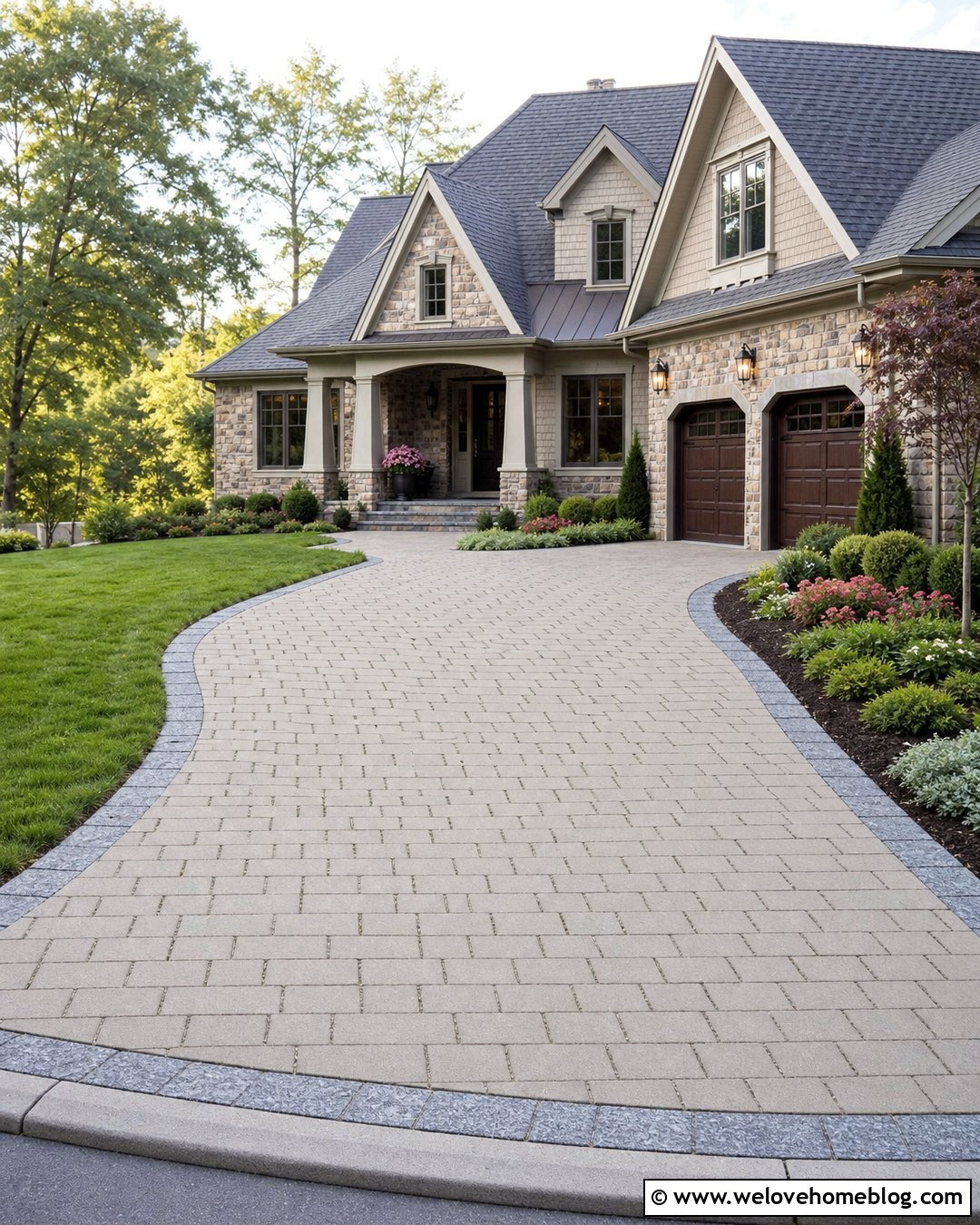
A natural stone border gives a permeable driveway definition and helps connect it to nearby masonry. Begin with tan or greige concrete pavers laid in a simple offset pattern. Edge both sides with granite setts, cobblestone, or locally appropriate stone in a contrasting gray tone. The border should follow the entire driveway, including curves, parking areas, and the walkway transition. Along the lawn, create shallow planting beds with spreading ground covers, rounded shrubs, and seasonal flowers. A stone-faced craftsman house provides an ideal background because the border can repeat colors from the porch columns or foundation. Keep drainage joints open and filled with the aggregate specified for the system rather than sealing them with standard polymeric sand.
6. Curved Permeable Paver Driveway
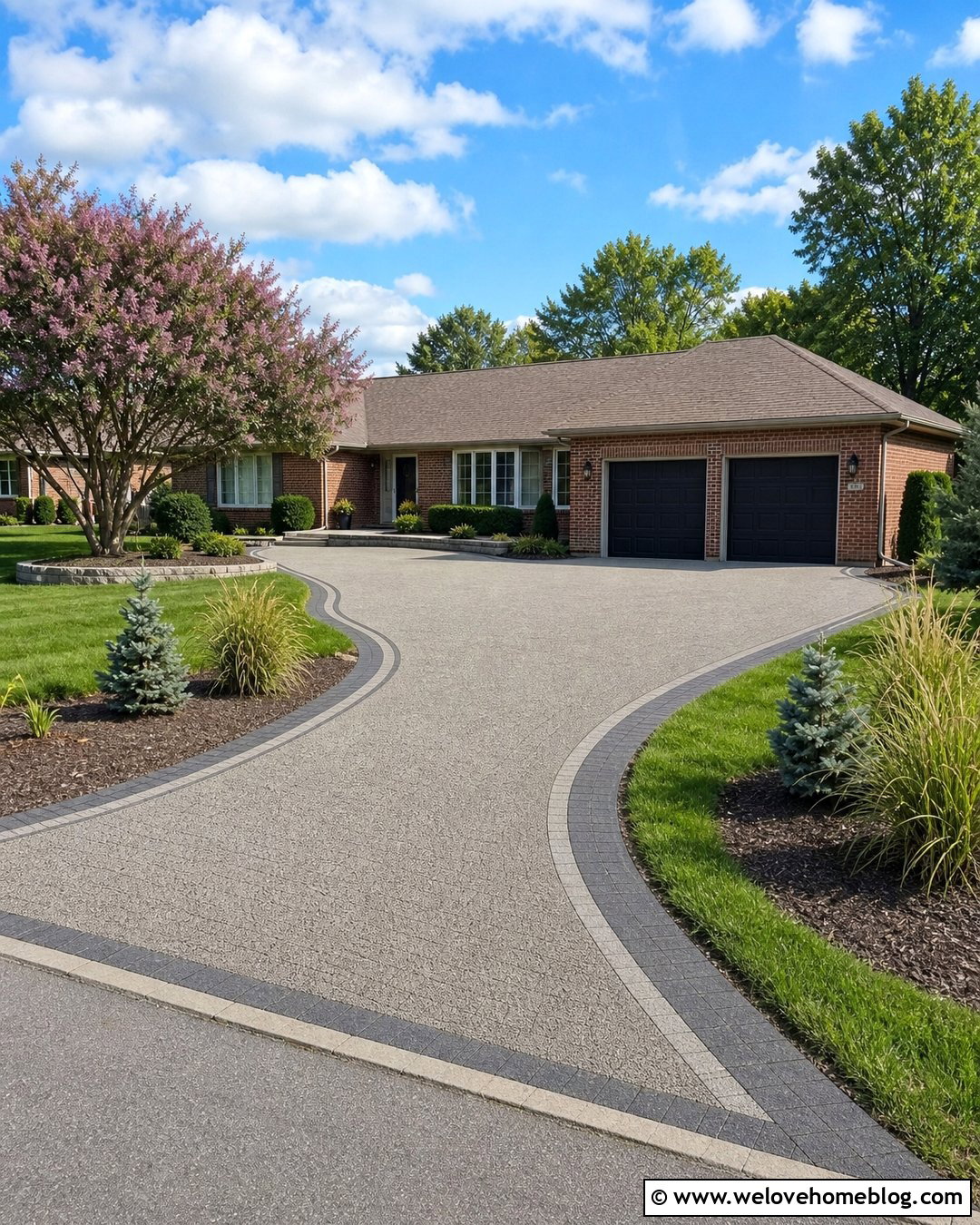
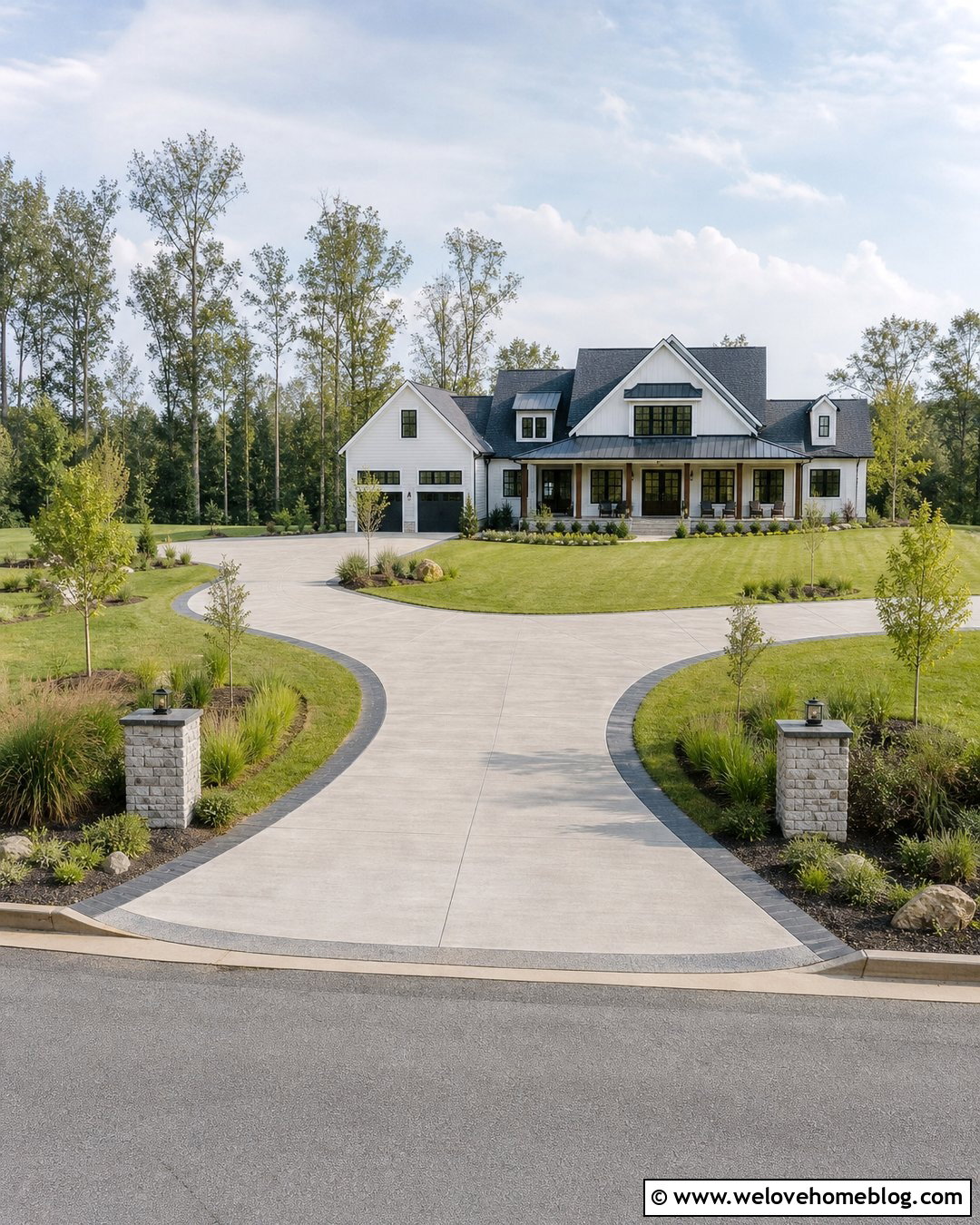
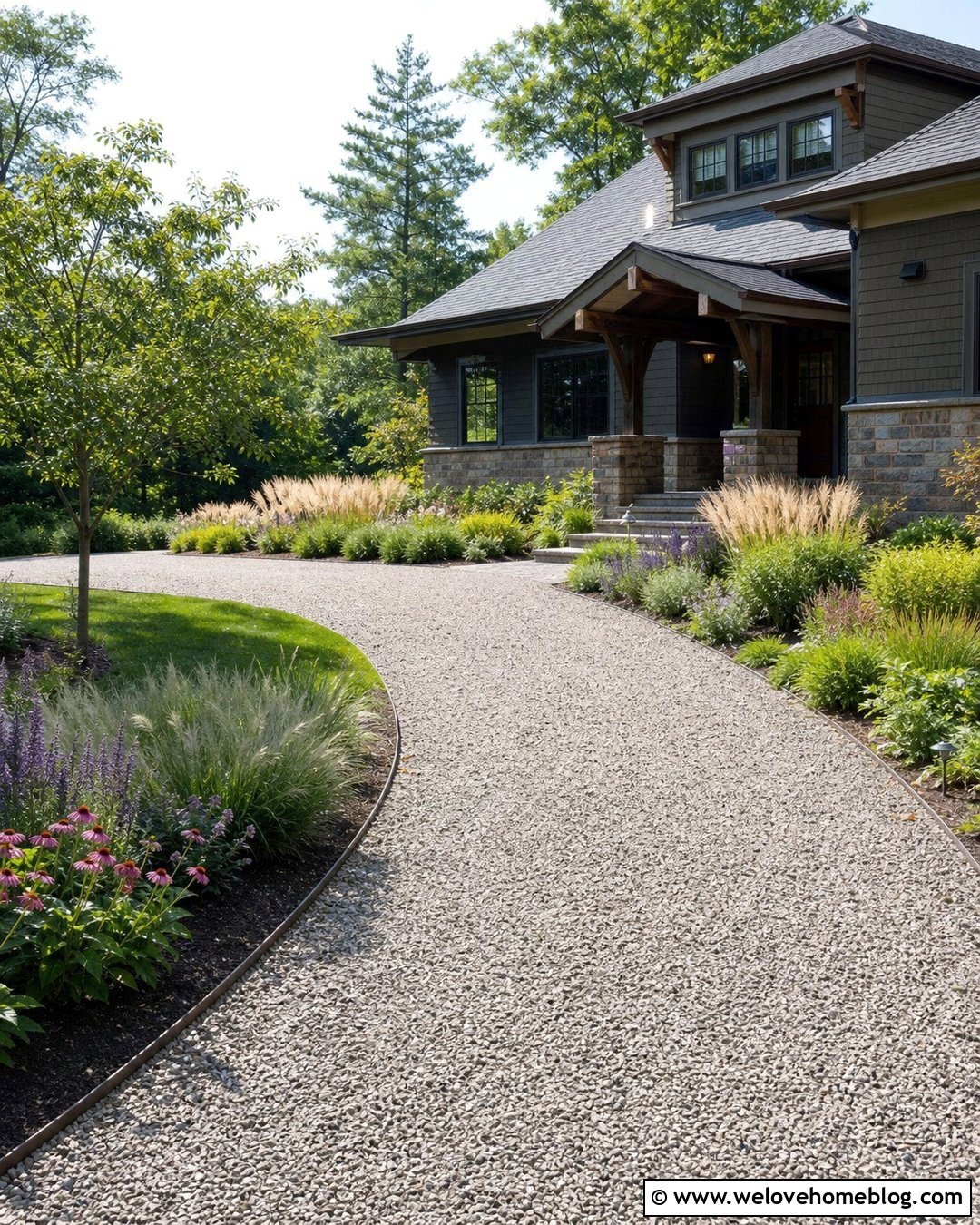
A curved driveway creates a slower, more inviting approach while revealing the house gradually. Use warm gray permeable concrete pavers in a fan, random rectangular, or gently staggered layout that follows the bend without awkward cuts. A charcoal paver border can trace the outer edge, while a lighter inner border prevents the curve from feeling visually heavy. Plant the outside radius with low evergreens, ornamental grasses, and one carefully positioned flowering tree. Keep vegetation farther back near the street so drivers have a clear view when entering and leaving. A wider paved area near the garage improves maneuvering. This complete arrangement works particularly well on an open suburban lot where the landscape has enough room to support a graceful, practical curve.
7. Circular Permeable Paver Driveway
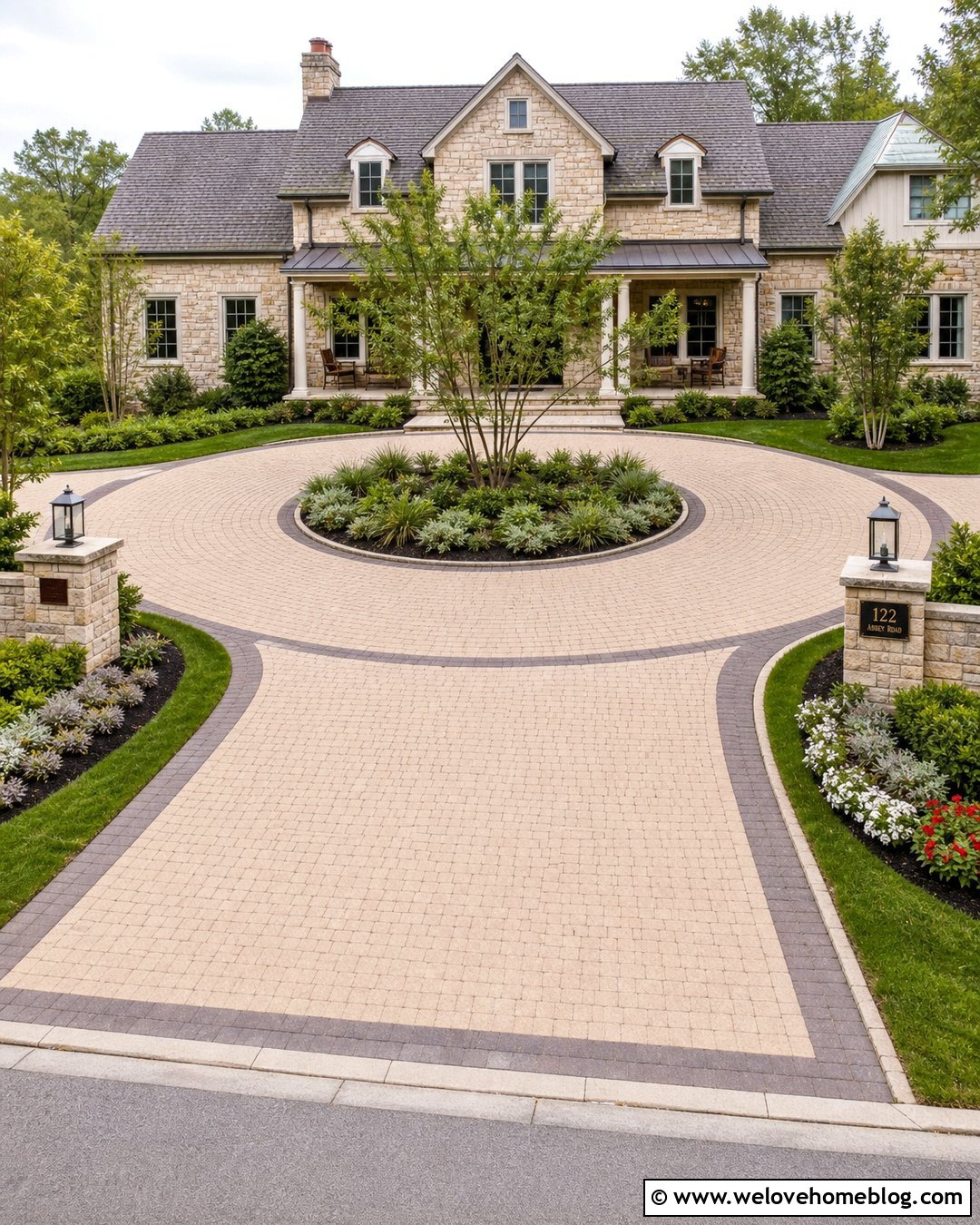
A circular permeable paver driveway can provide an elegant arrival area without turning the entire front yard into uninterrupted hardscape. Choose blended sandstone-colored pavers for the main loop and define the shape with a dark brown border course. In the center island, add a small multi-stem tree surrounded by low shrubs, ornamental grasses, and ground cover. The planting should remain open enough to preserve visibility across the circle. Use a radial or gently repeating paver pattern near the island, then transition into straight rows along the entrance and exit lanes. A broad permeable apron can unite both openings at the street. This layout suits a wide ranch, traditional home, or country residence with sufficient frontage and room for comfortable turning movements.
8. Permeable Paver Driveway With Gravel Joints
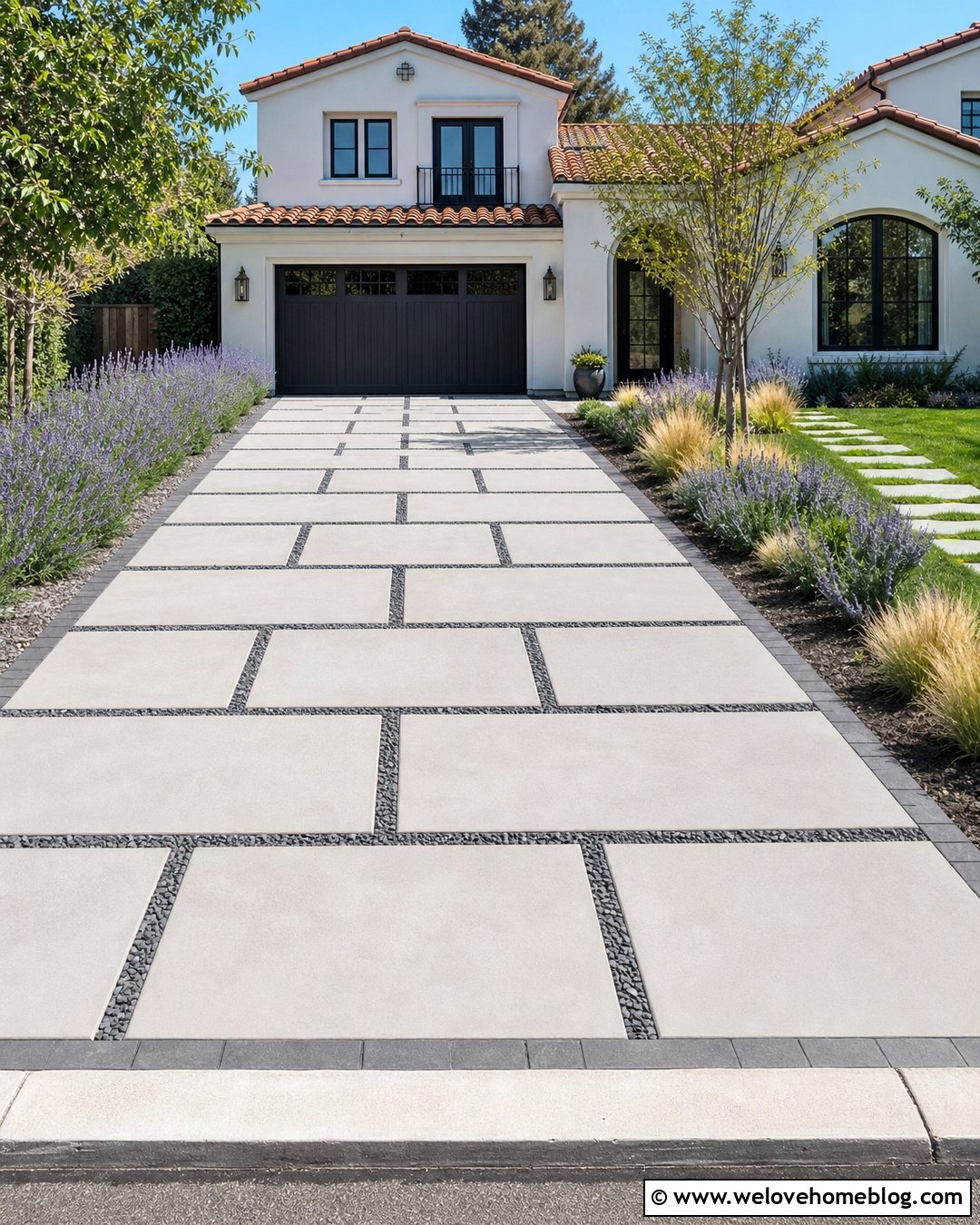
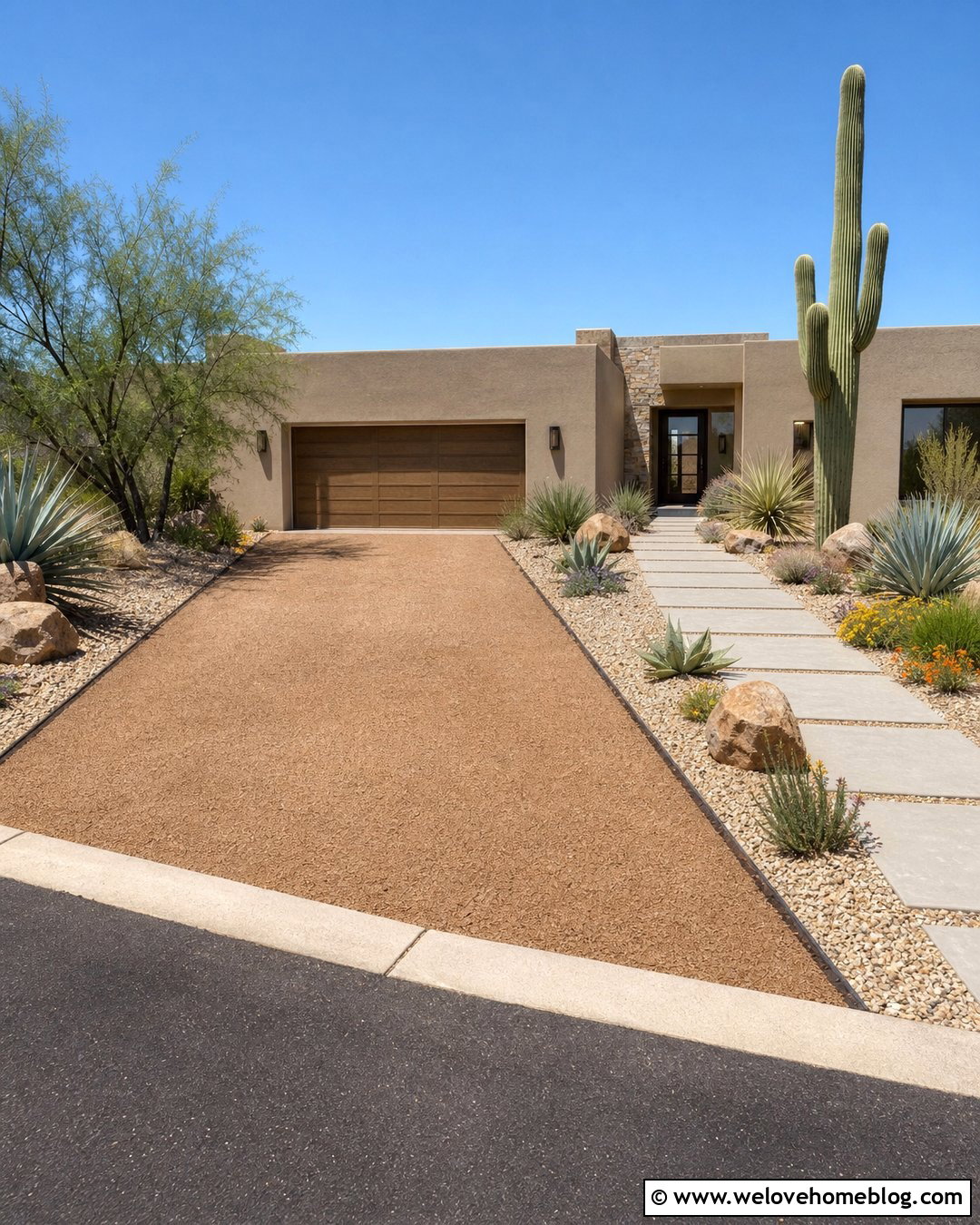
Visible gravel joints highlight the working structure of a permeable paver system. Large-format concrete units in light gray or warm beige can be separated by uniform bands of small, clean angular stone. Avoid rounded pea gravel in functional joints unless the selected paving system specifically permits it, since the correct aggregate helps maintain stable openings. Extend the joint lines toward the garage to make a short driveway look longer. A flush darker border will contain the field while creating a neat transition to lawn and planting beds. Add airy grasses, lavender-colored flowers, and a stepping-stone walkway beside the driveway. The mixture of solid pavers, textured aggregate, and soft planting feels contemporary without being stark, especially beside a simple stucco or transitional house.
9. Permeable Paver Ribbon Driveway
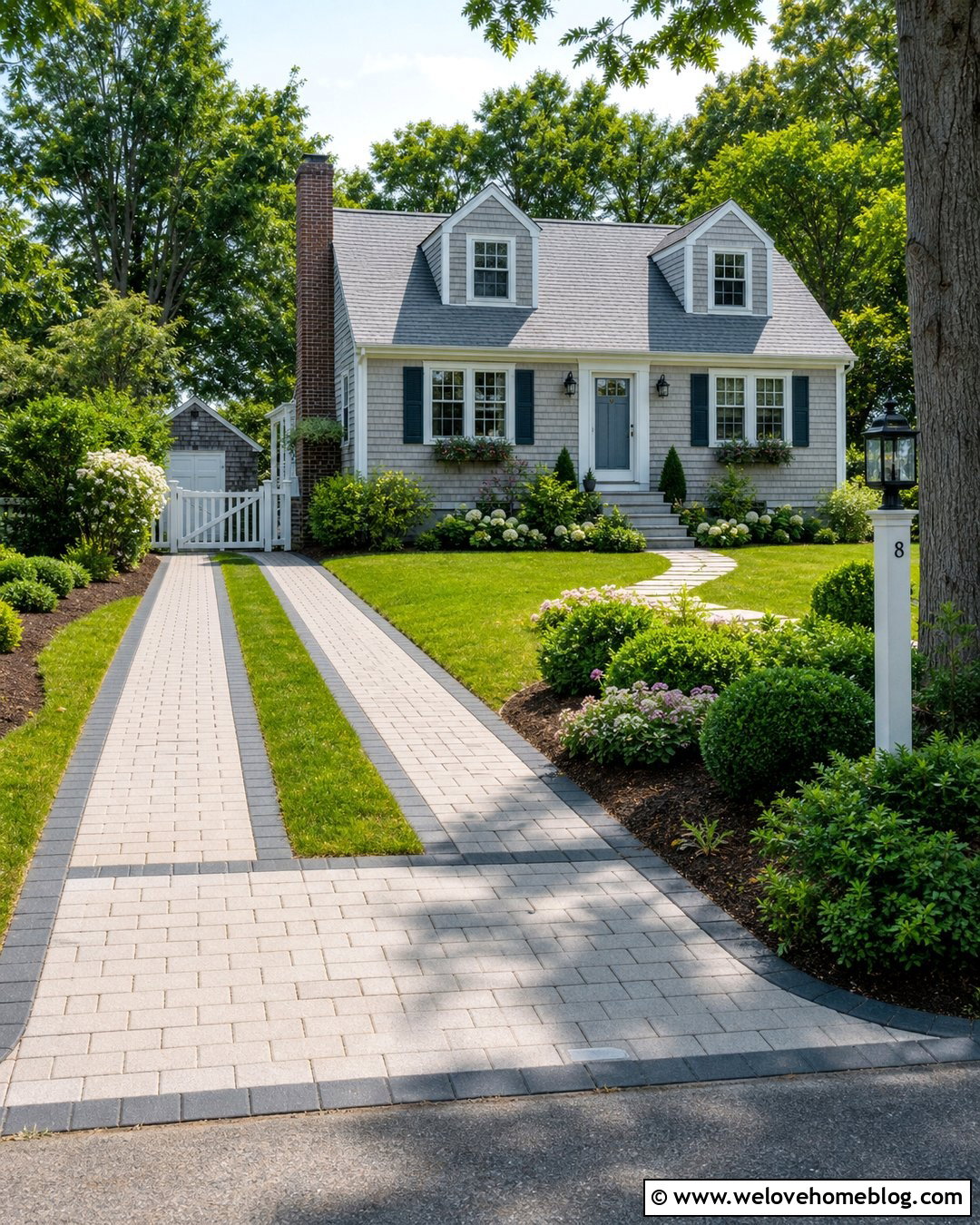
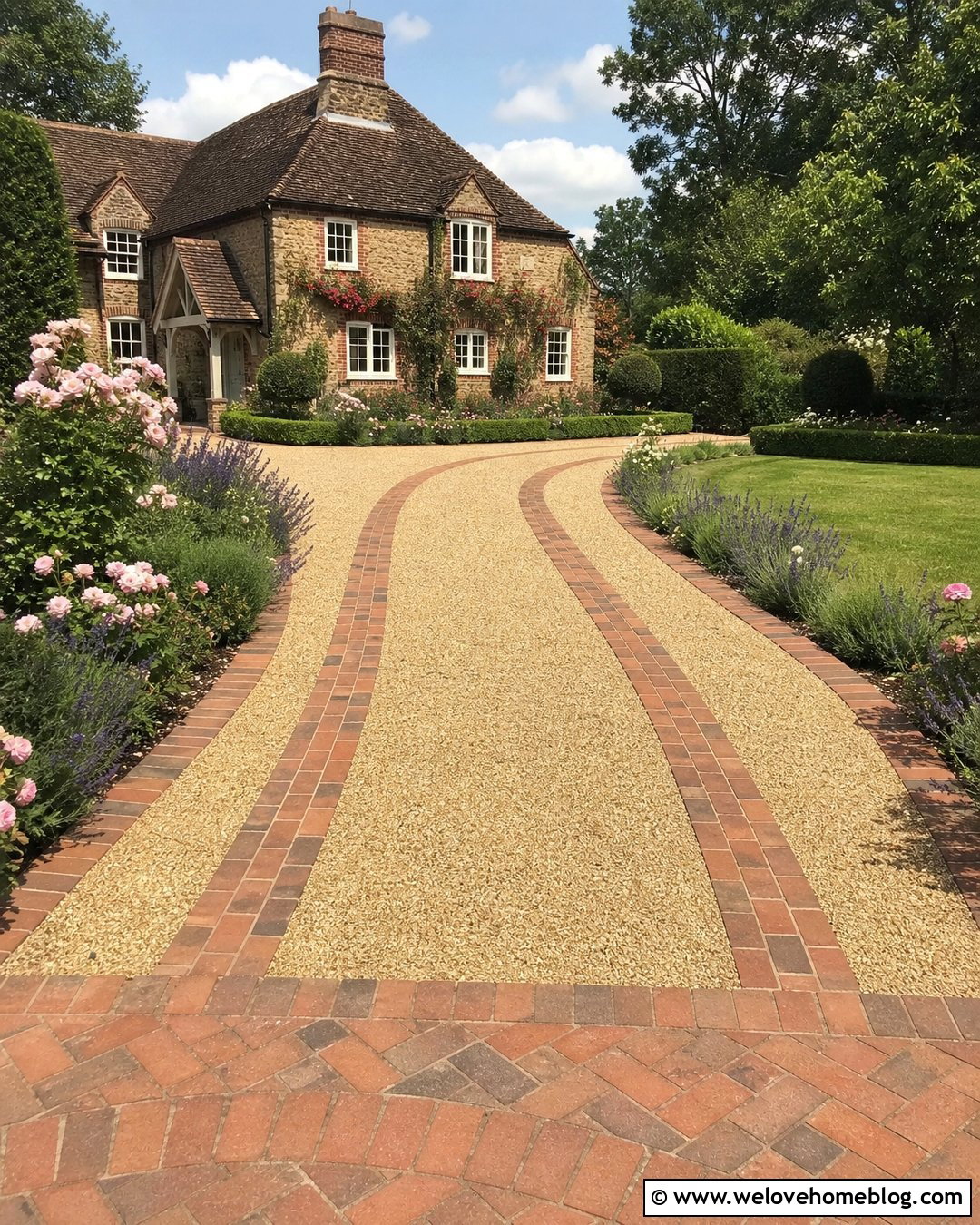
A ribbon driveway uses two strengthened paved tracks with a permeable center, reducing the visual weight of the entrance. Install open-joint concrete pavers beneath the tire paths and fill the center strip with grass, low ground cover, or compacted decorative aggregate. A matching paver apron across the full width creates a polished connection at the street and makes turning onto the tracks easier. Keep both ribbons wide enough for regular vehicles and reinforce the edges to prevent spreading. Low shrubs and curved flower beds can frame the route without crowding it. This complete look is well suited to cottages, bungalows, and smaller homes where a full-width paved surface might overwhelm the yard. It also introduces greenery directly into the driveway composition.
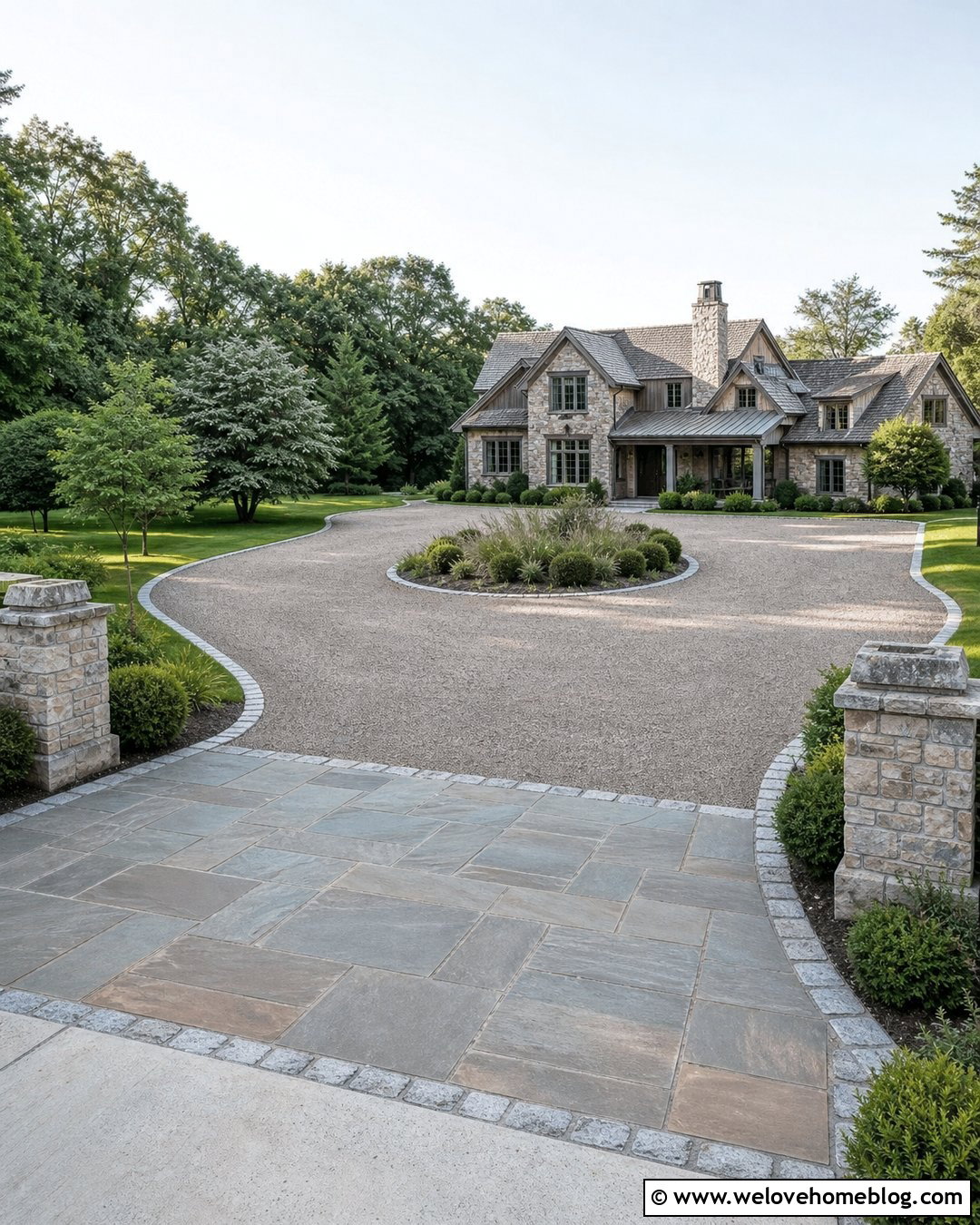
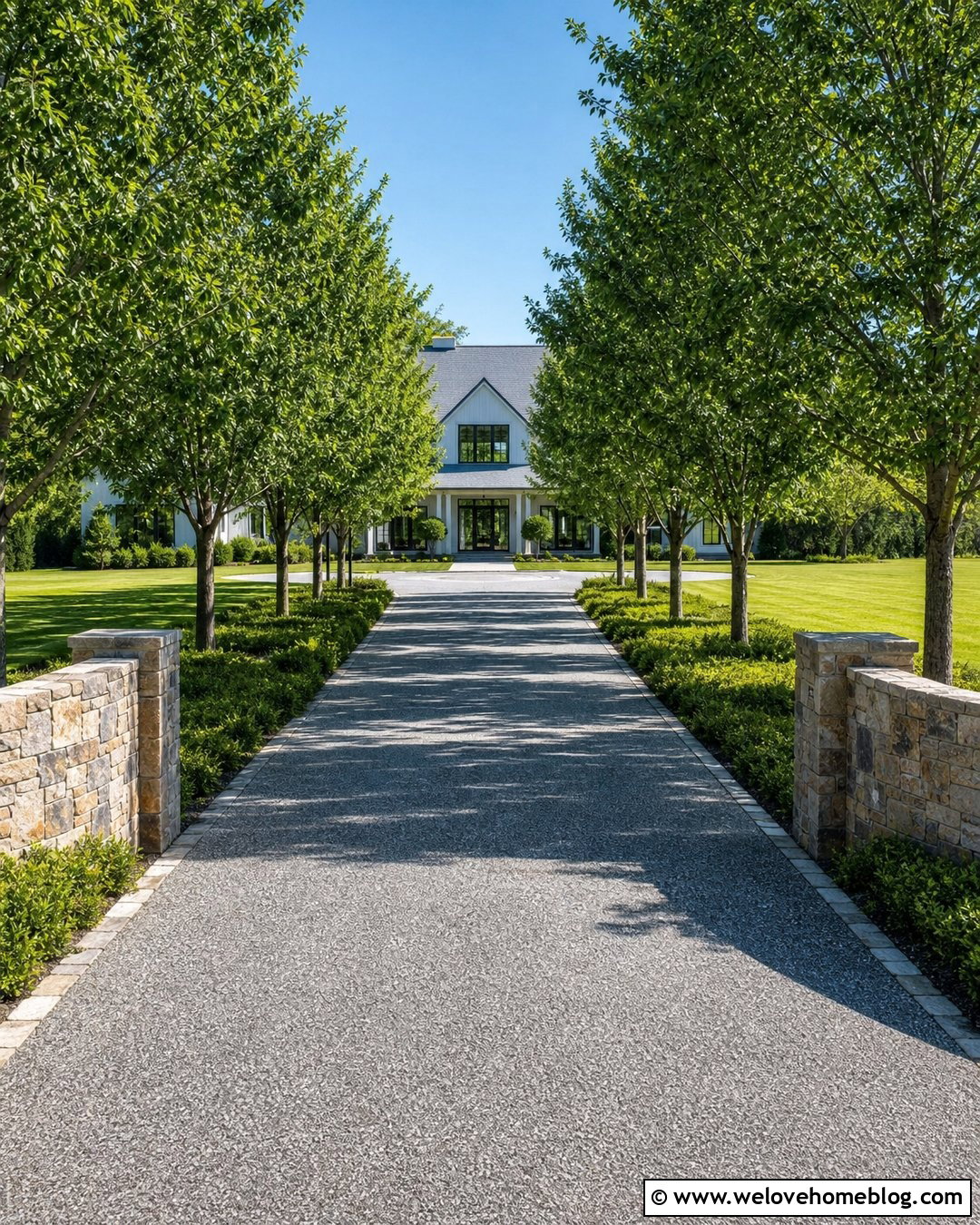
10. Permeable Cobblestone Paver Driveway
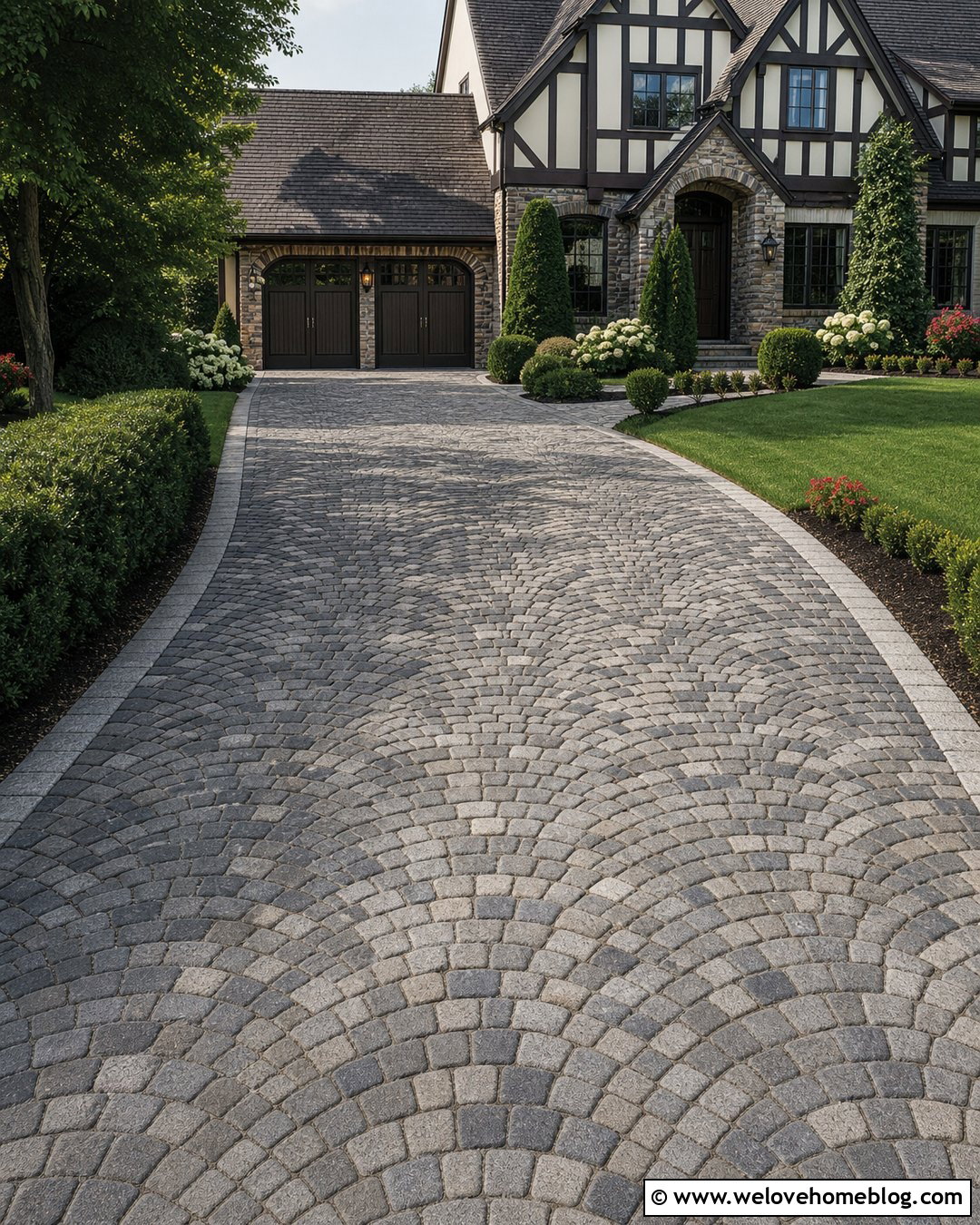
Cobblestone-look permeable pavers create old-world texture while offering a more consistent driving surface than irregular antique stone. Choose tumbled concrete units in blended gray, taupe, and charcoal tones. Lay them in sweeping arcs or a repeating fan pattern, using open joints filled with clean stone to support drainage. A straight granite border can control the lively pattern and keep the outer edges crisp. Pair the driveway with a brick, Tudor, or stone-front house and repeat the darker tones around the walkway or porch steps. Plant clipped evergreens near the entrance, then use looser flowering beds closer to the house. Because textured pavers produce many visible lines, keep the surrounding hardscape restrained so the complete frontage does not appear overly busy.
11. Light Permeable Paver Driveway
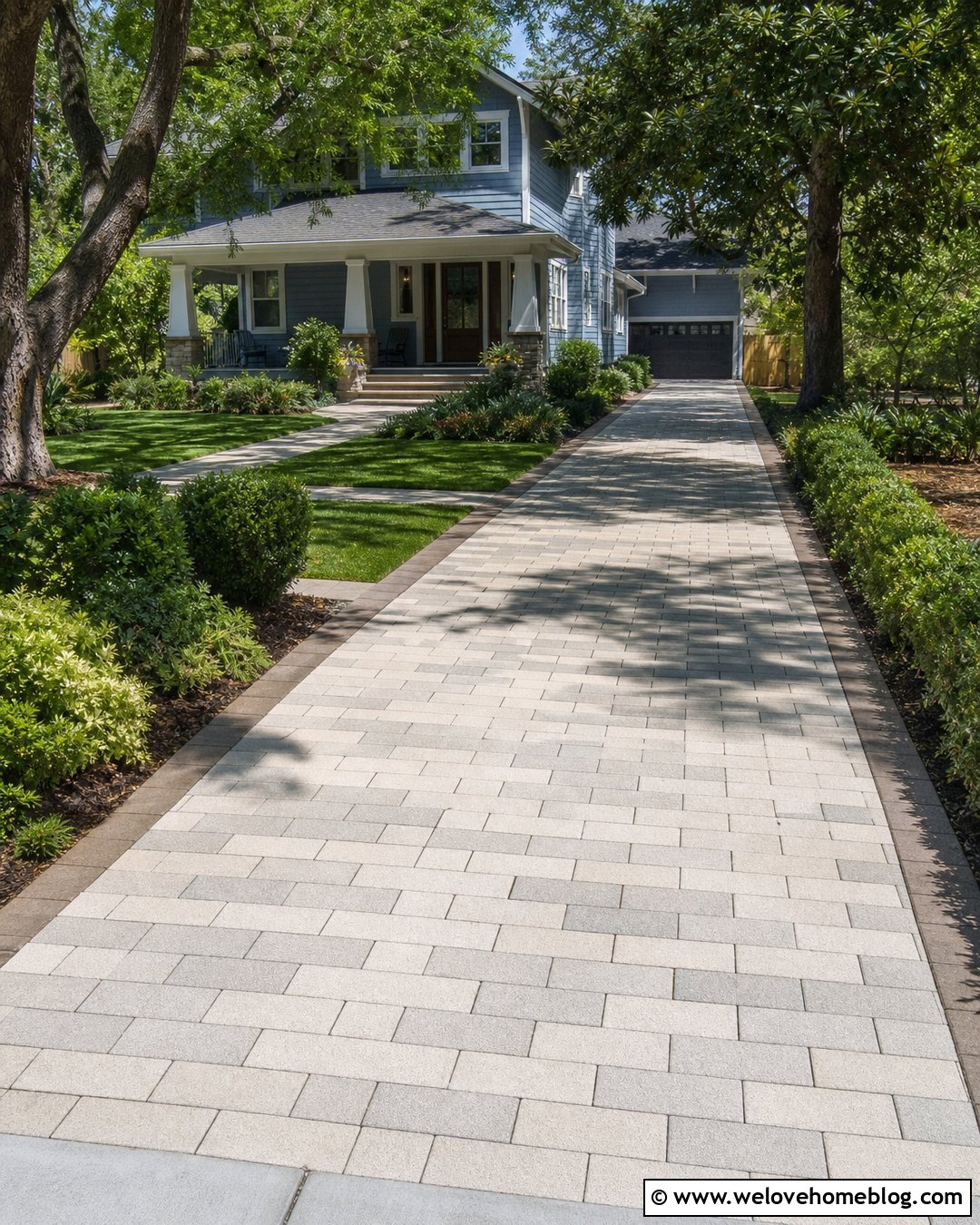
Cream, sand, and pale gray pavers can brighten a shaded front yard and complement a home with a light exterior. Use driveway-rated permeable concrete pavers with a lightly textured finish that provides traction without appearing rough. Lay the field in a straightforward running bond, then add a narrow taupe border to define the edges. Dark stone in the open joints will emphasize the pattern, while a lighter approved aggregate creates a quieter appearance. Surround the driveway with deep green shrubs, broad planting beds, and one or two shade trees for contrast. Connect the surface to a pale front walkway, but outline the walk with a separate border. Regular cleaning may be more noticeable on light pavers, so consider local leaf litter and soil before selecting the final color.
12. Charcoal Permeable Paver Driveway
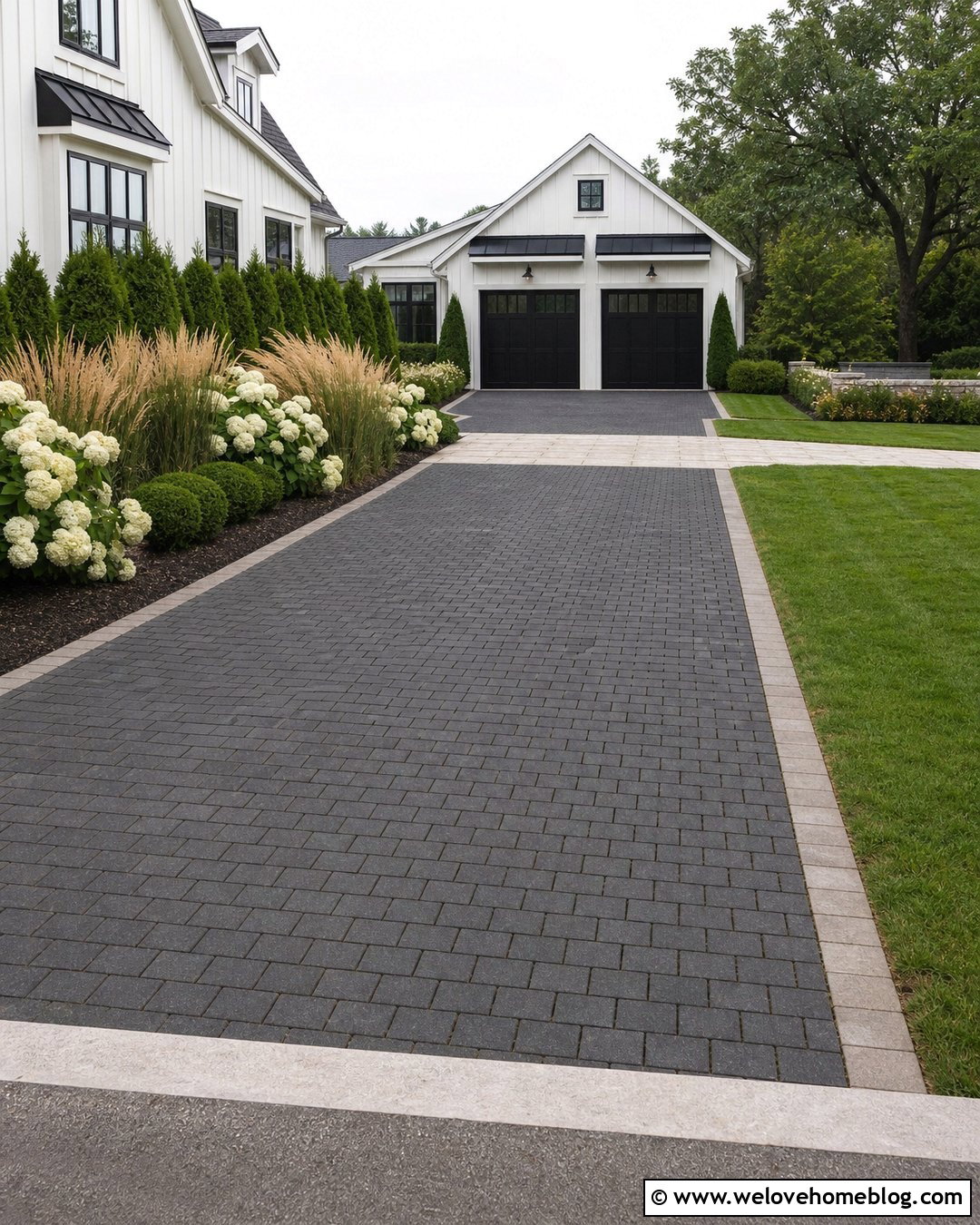
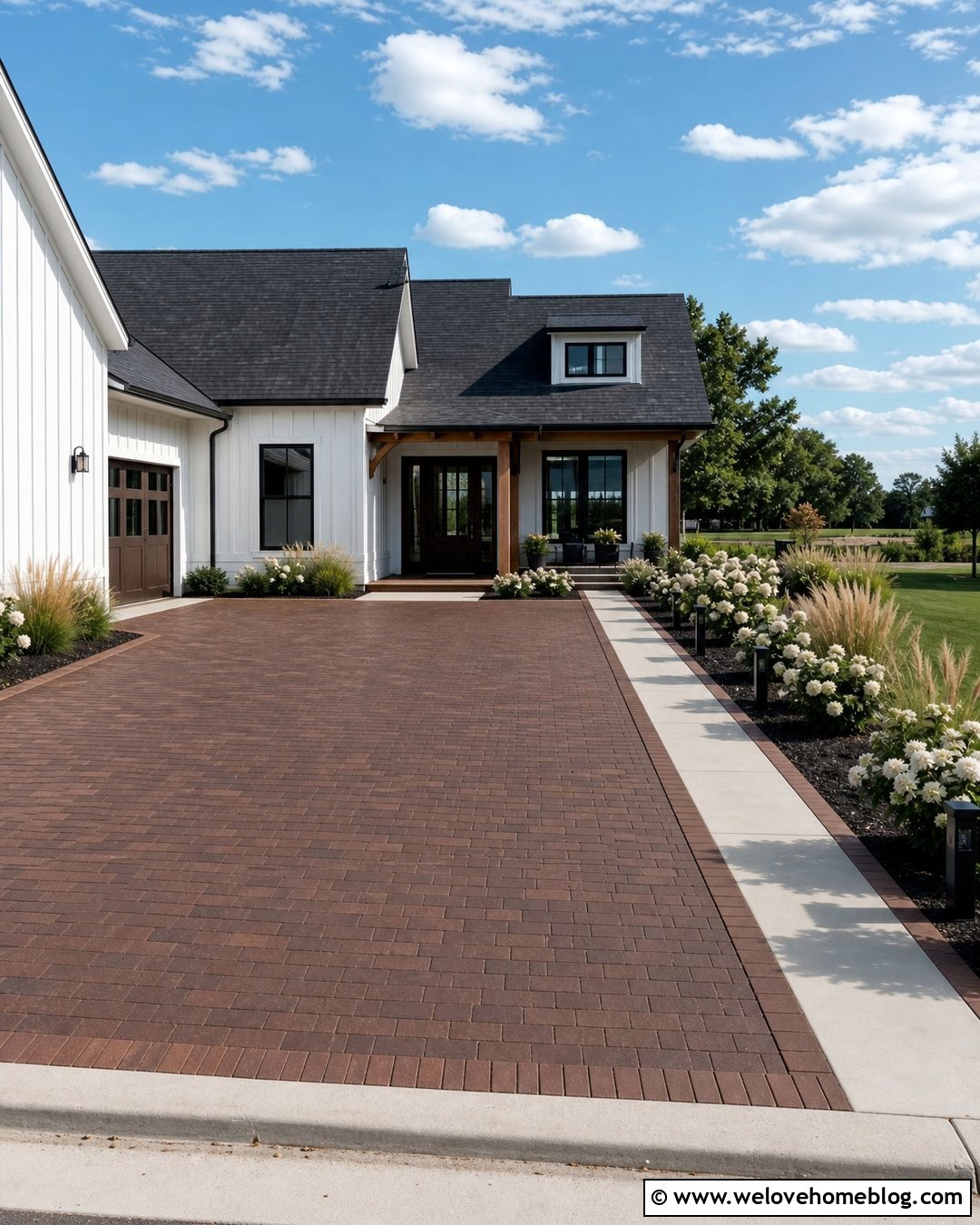
A charcoal permeable paver driveway creates a bold base for a modern farmhouse or light-colored contemporary home. Select dark gray interlocking units with narrow drainage joints and a subtle variation in tone. A straight driveway laid in a linear pattern will reinforce black garage doors, roof details, and window frames. Prevent the surface from feeling too severe by using a warm gray border and generous green planting on both sides. Feather reed grass, compact hydrangeas, and low evergreen mounds provide shape without blocking views. A pale concrete or limestone walkway can cross the driveway near the garage, creating a useful contrast. In hot, sunny regions, discuss surface temperature and suitable lighter alternatives with the designer before committing to an extensive dark paved area.
13. Permeable Paver Driveway With Brick Apron
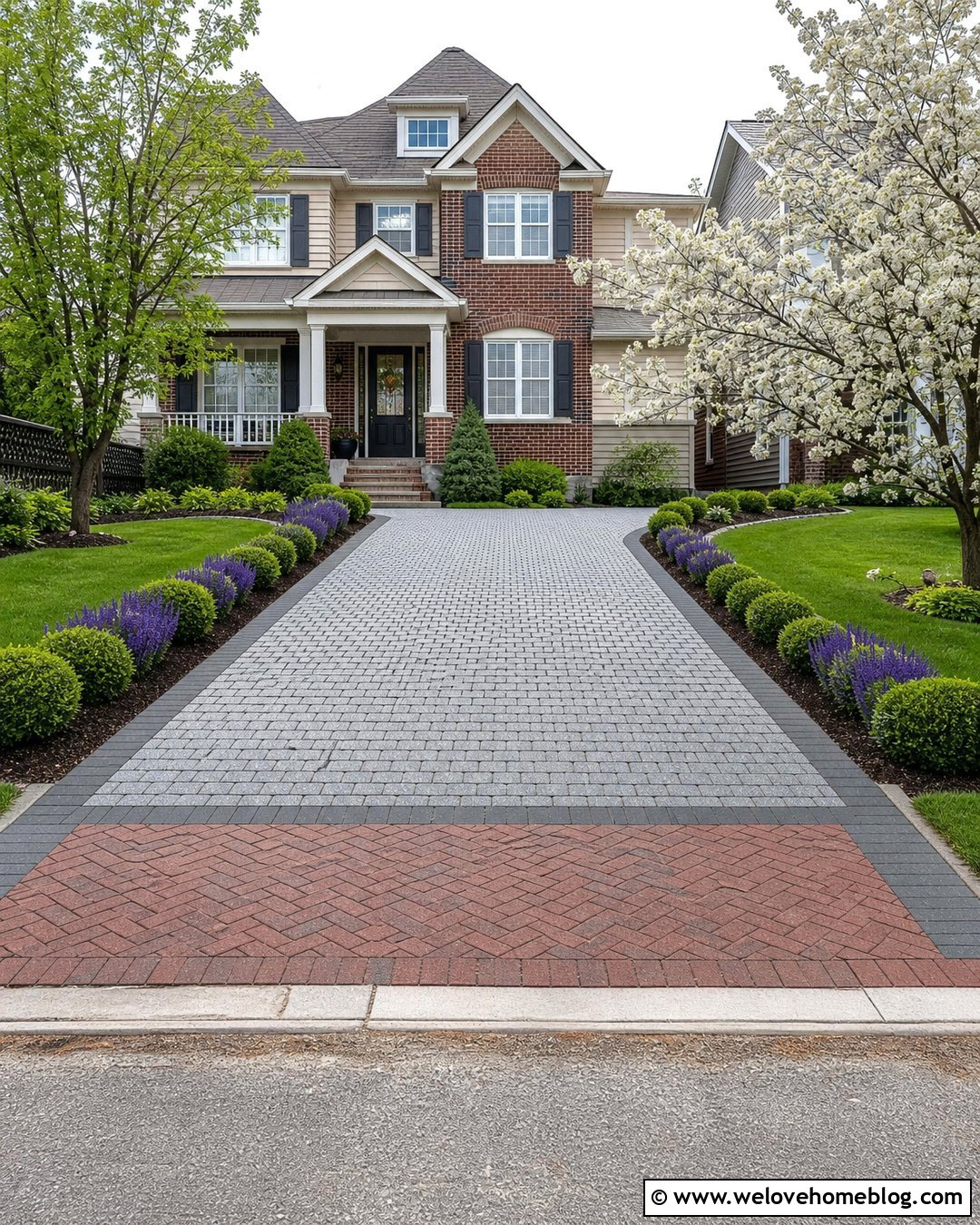
A brick apron can mark the entrance while a quieter permeable paver field leads toward the house. Use medium-gray open-joint concrete pavers across the main driveway, then install red-brown permeable brick-look pavers in a herringbone pattern near the curb. A charcoal border around the apron will make the transition deliberate rather than patched together. Repeat a small amount of the brick color in the front walkway, porch steps, or planting-bed edging. Curved beds with boxwood, salvia, and a compact flowering tree can soften the sides of the straight driveway. This arrangement works especially well when the house already has brick details. Make sure both paving sections share a correctly designed permeable base and do not block water movement at the material transition.
14. Permeable Paver Driveway With Tree Lined Entrance
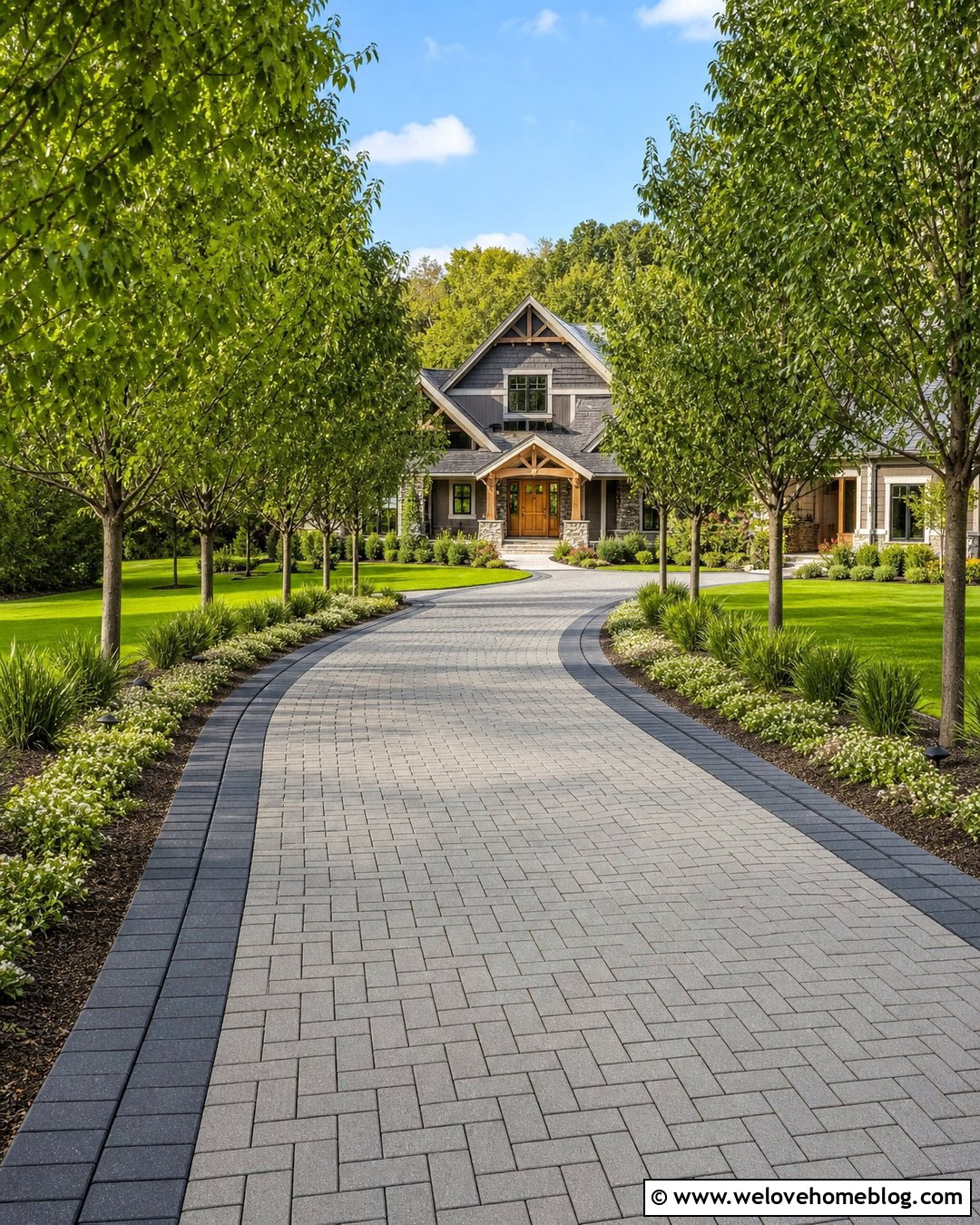
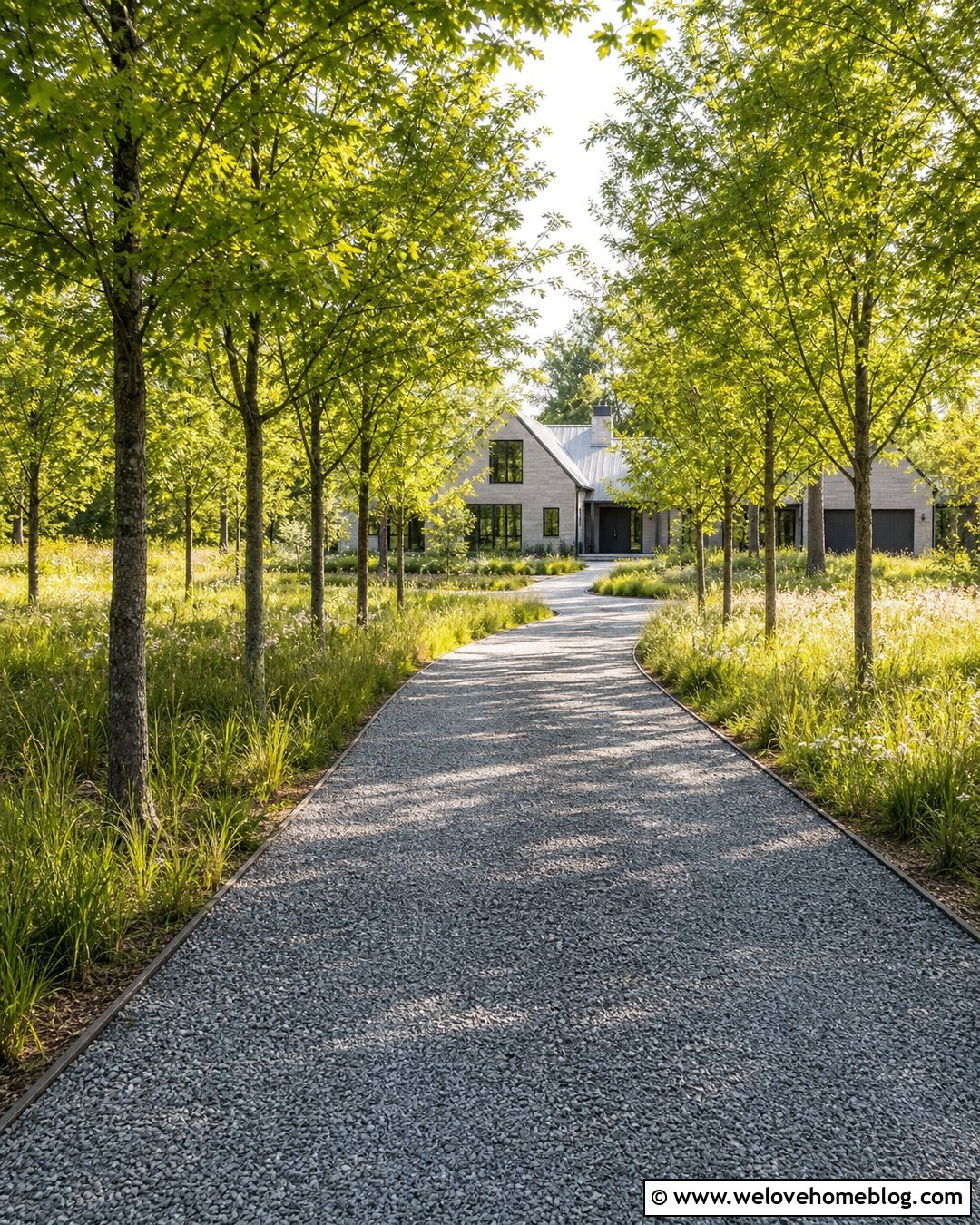
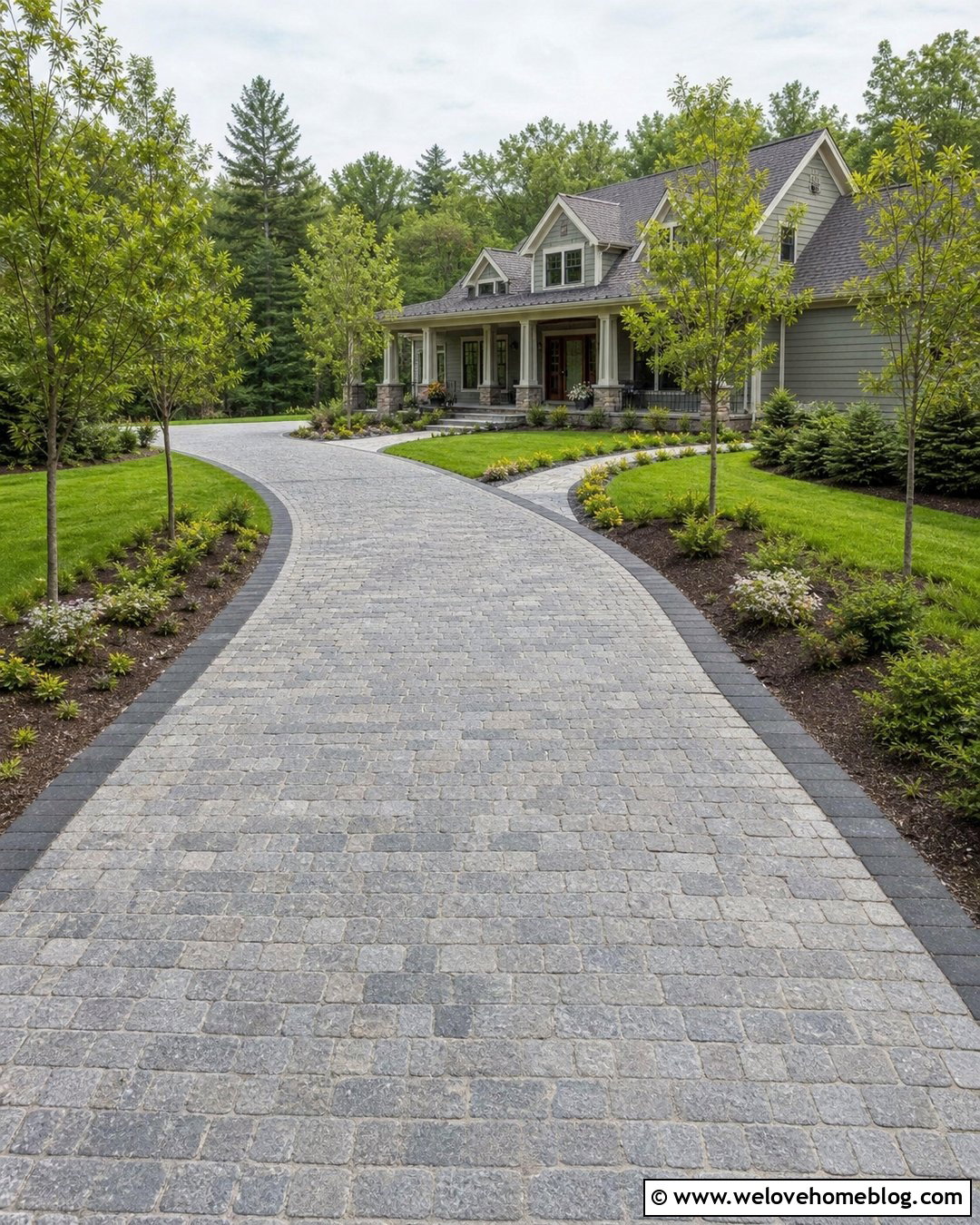
Few approaches feel as established as a driveway framed by evenly spaced trees. Choose warm gray permeable pavers in a random rectangular layout and use a darker border to define a gentle curve toward the garage. Position small ornamental trees beyond the driveway’s structural edge, leaving enough room for mature trunks and roots. Underplant them with low grasses, ground cover, or compact flowering shrubs to create a continuous landscape rhythm. Root barriers or carefully selected tree species may help protect the paving system where appropriate. At the curb, keep the planting lower for visibility. This complete design suits a craftsman, colonial, or country home and makes a longer driveway feel purposeful. Soft landscape lighting can be incorporated without obstructing the bright daytime view.
15. Grass Grid Permeable Paver Driveway
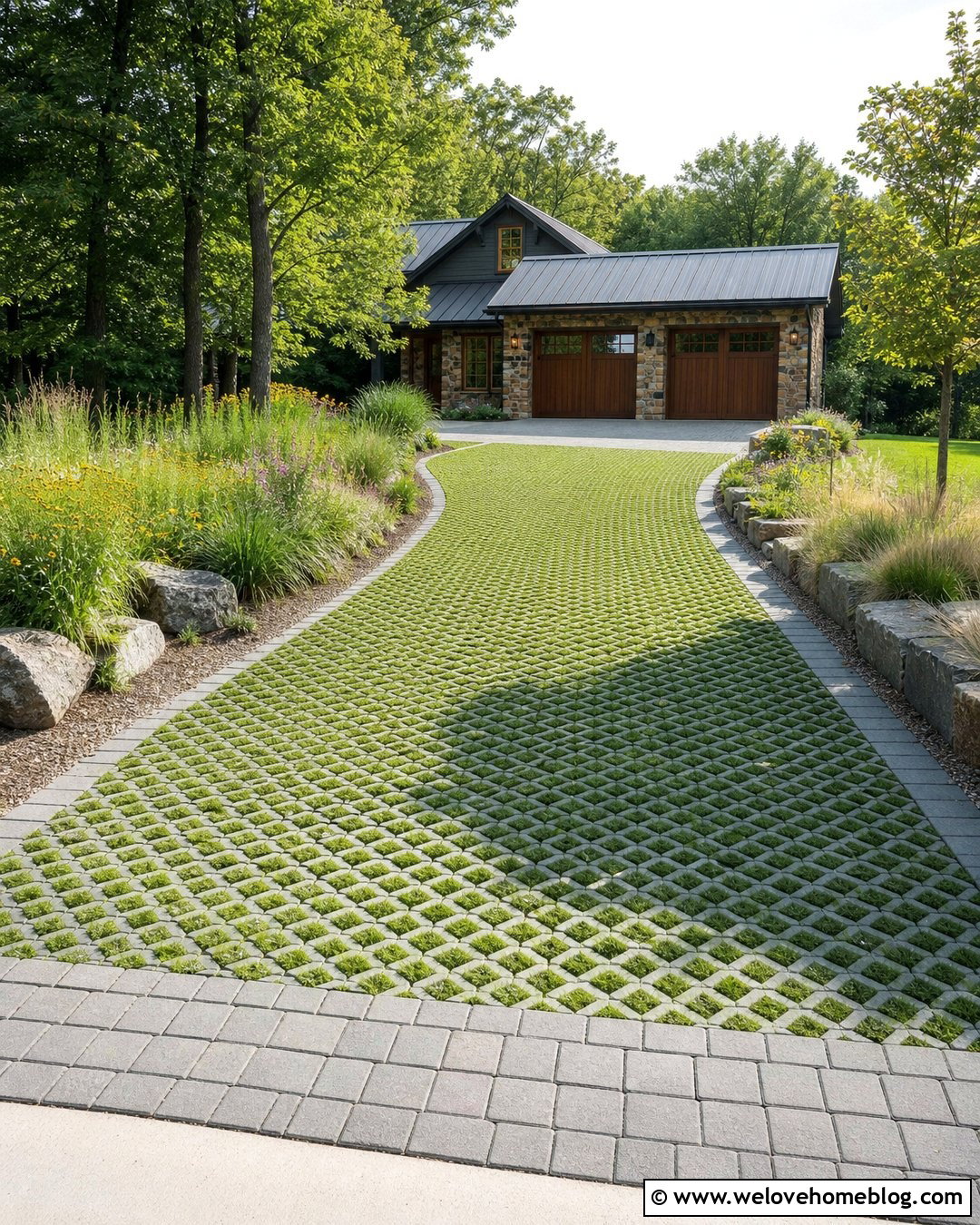
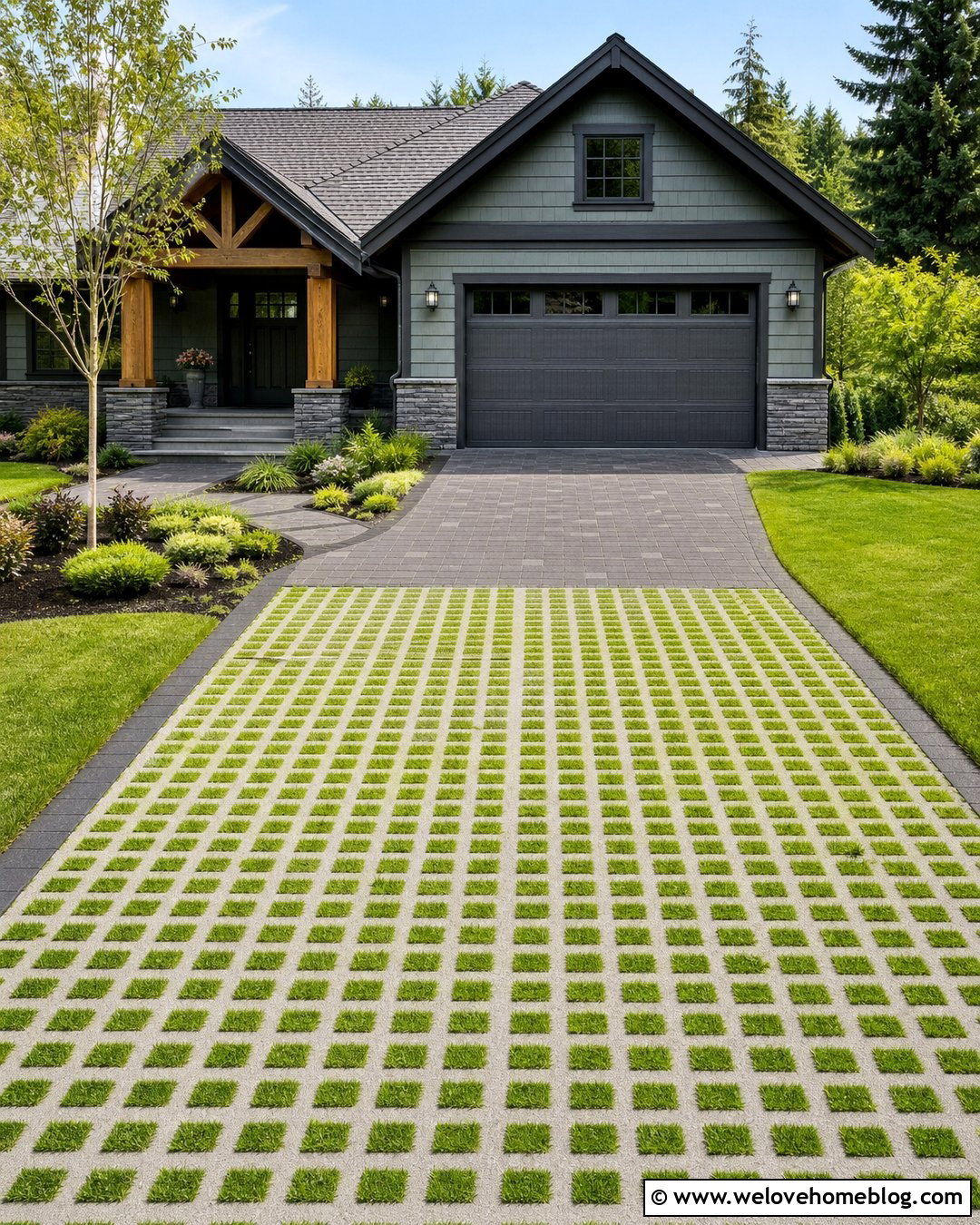
Concrete grass grid pavers create a reinforced green surface that can suit casual homes and landscape-focused properties. The open cells support vegetation while the concrete framework carries vehicle loads over a properly prepared base. Use the grid system across a straight or gently curved driveway, then add solid permeable pavers at the street apron and garage threshold. These firmer transition zones make the entrance look finished and simplify movement between surfaces. Frame the driveway with native planting beds, meadow grasses, and a natural stone walkway leading to the porch. Grass performance will depend on sunlight, moisture, soil, traffic, and parking habits, so consider gravel-filled cells in heavily shaded or frequently occupied areas. The result should look intentionally green rather than unfinished or overgrown.
16. Permeable Paver Driveway With Geometric Pattern
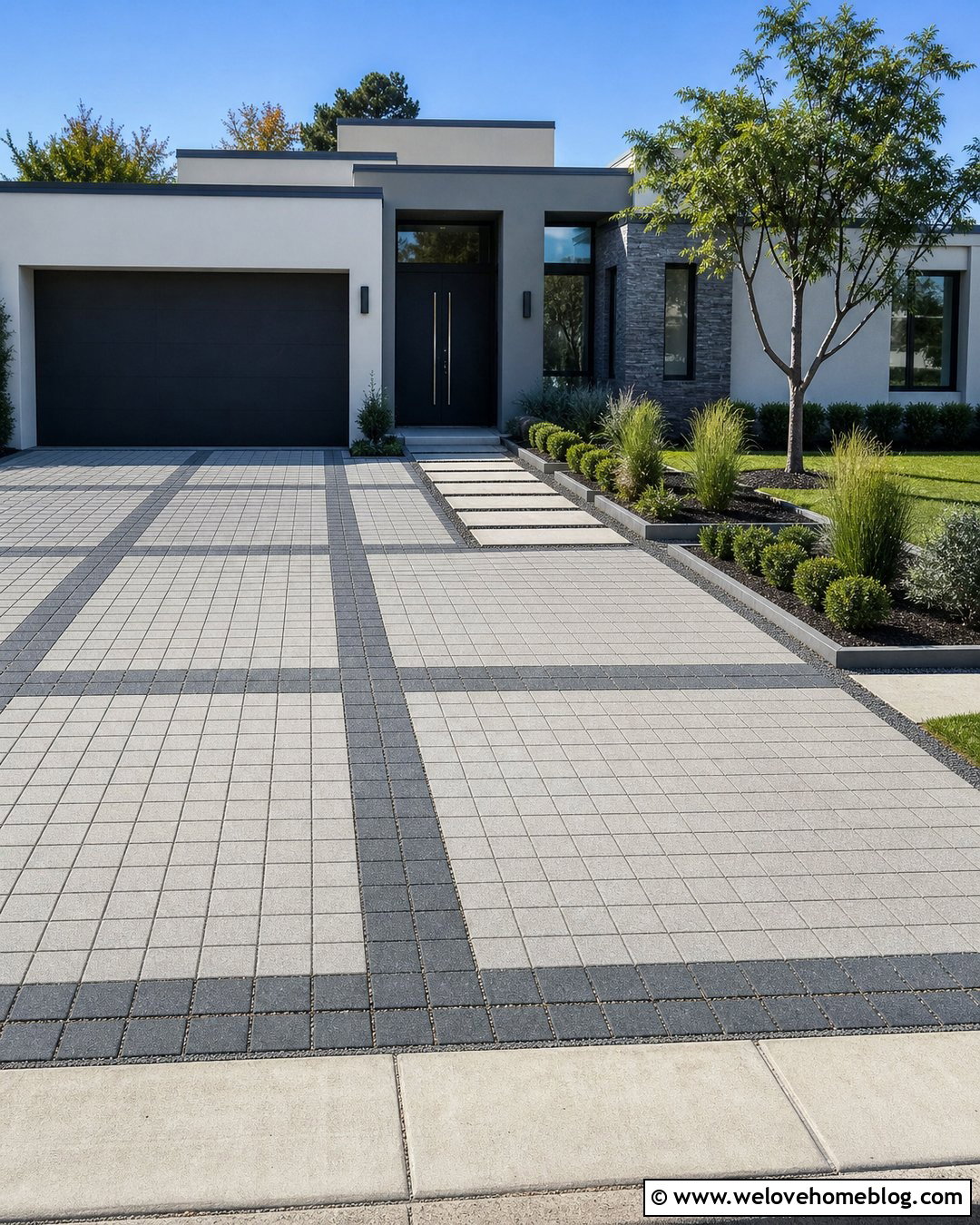
A geometric paver pattern can turn a broad driveway into an organized architectural feature. Combine two compatible permeable concrete paver sizes in light and medium gray, arranging them in wide linear bands or an offset modular grid. Use charcoal pavers to form restrained cross-bands near the curb, walkway, and garage doors. Keep all functional joints filled with the clean aggregate recommended by the paving manufacturer. Rectangular planting beds can echo the driveway geometry with clipped shrubs, upright grasses, and a small specimen tree. Beside a modern house, align the bands with windows, columns, or garage openings for a more integrated appearance. Avoid adding too many colors or patterns. A limited palette makes the complete driveway feel spacious, balanced, and carefully connected to the architecture.
17. Small Permeable Paver Driveway
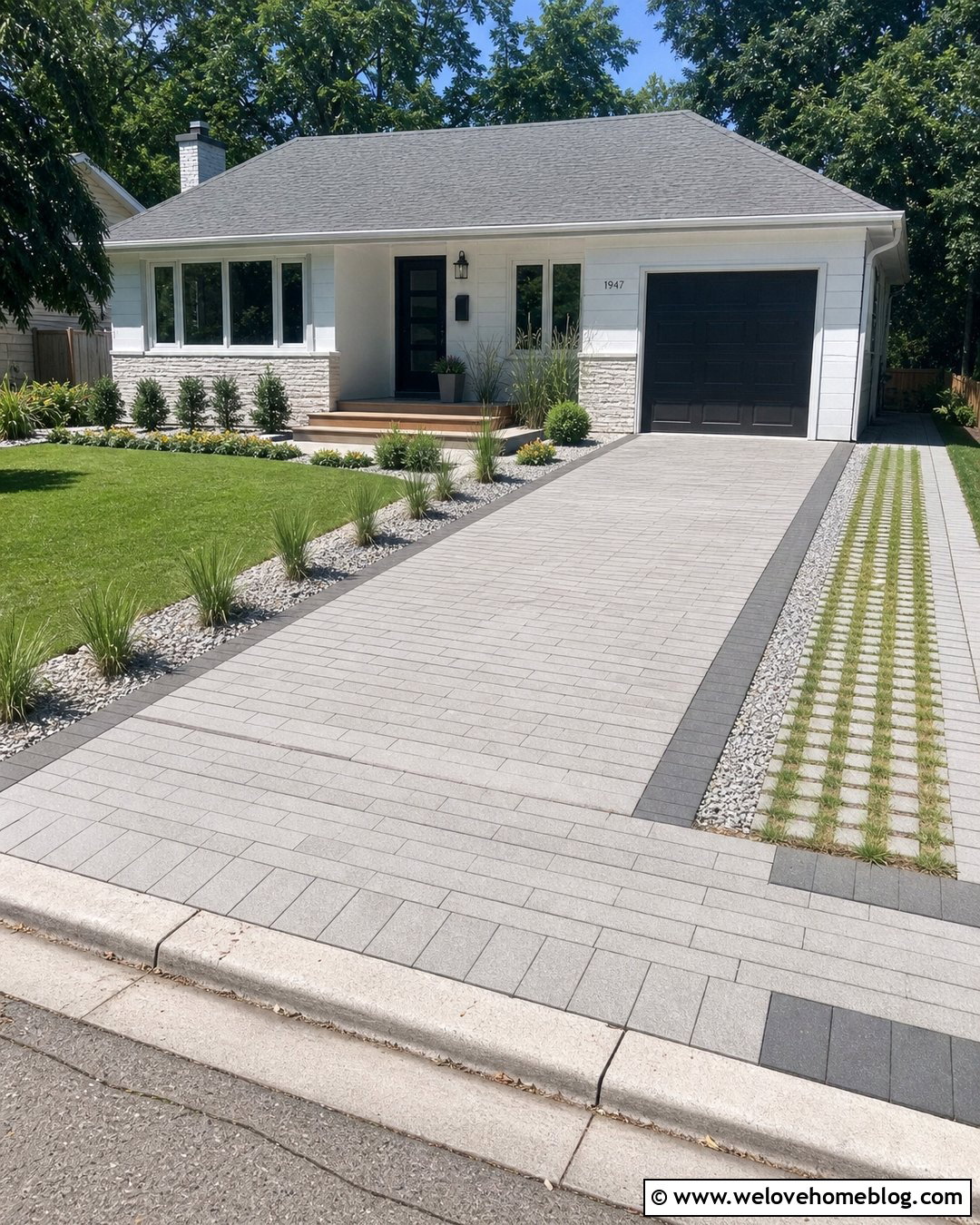
A compact driveway benefits from a simple pattern and carefully controlled borders. Use small rectangular permeable pavers in a soft gray blend, laid lengthwise to visually extend the distance from the curb to the garage. A narrow dark border defines the parking space without consuming valuable width. Place planting beds only where they will not restrict doors, mirrors, or pedestrian movement. Low ground cover, upright ornamental grasses, and a slim walkway can add greenery while preserving usable space. At the street, a slightly wider apron makes entry easier and creates a finished foreground. If extra parking is needed occasionally, consider an adjacent reinforced grass-grid strip rather than widening the entire hardscape. This approach keeps a small front yard functional, permeable, and visually open.
18. Rustic Permeable Paver Driveway
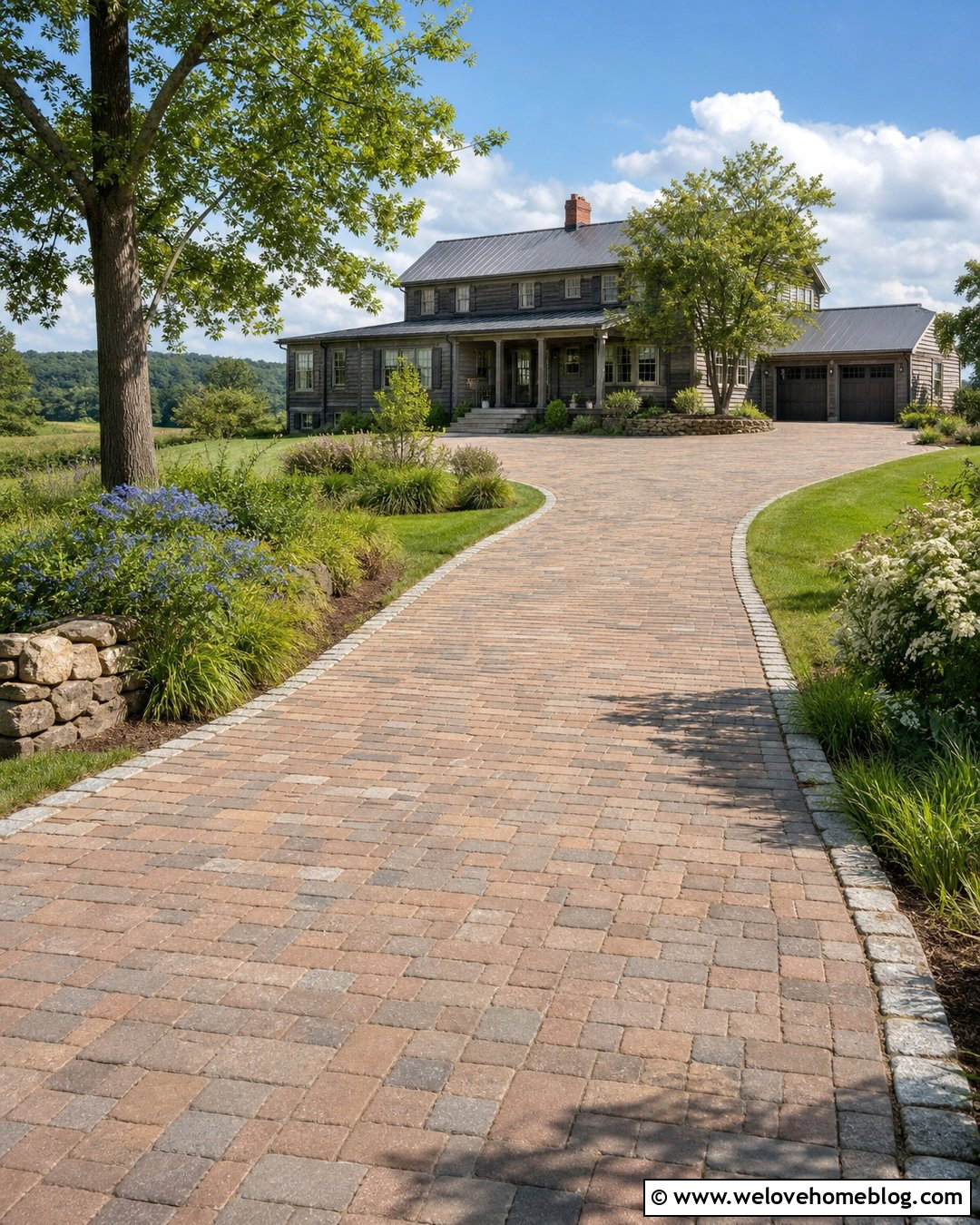
Earth-toned permeable pavers can give a country or rustic home a durable entrance that feels connected to the landscape. Choose tumbled concrete units in brown, sandstone, and muted gray, then lay them in an irregular rectangular pattern. Use rough-cut granite setts along the edges and at the curb apron for a substantial frame. A gentle curve can pass through informal planting beds filled with native grasses, flowering shrubs, and small deciduous trees. Near the house, transition into a wider parking court that repeats the same paver palette. Avoid overly formal hedges or sharp geometric beds, which may compete with the relaxed materials. The complete driveway should look established and natural while still providing a stable surface, controlled edges, and a professionally engineered drainage structure.
19. Permeable Paver Driveway With Gate Pillars
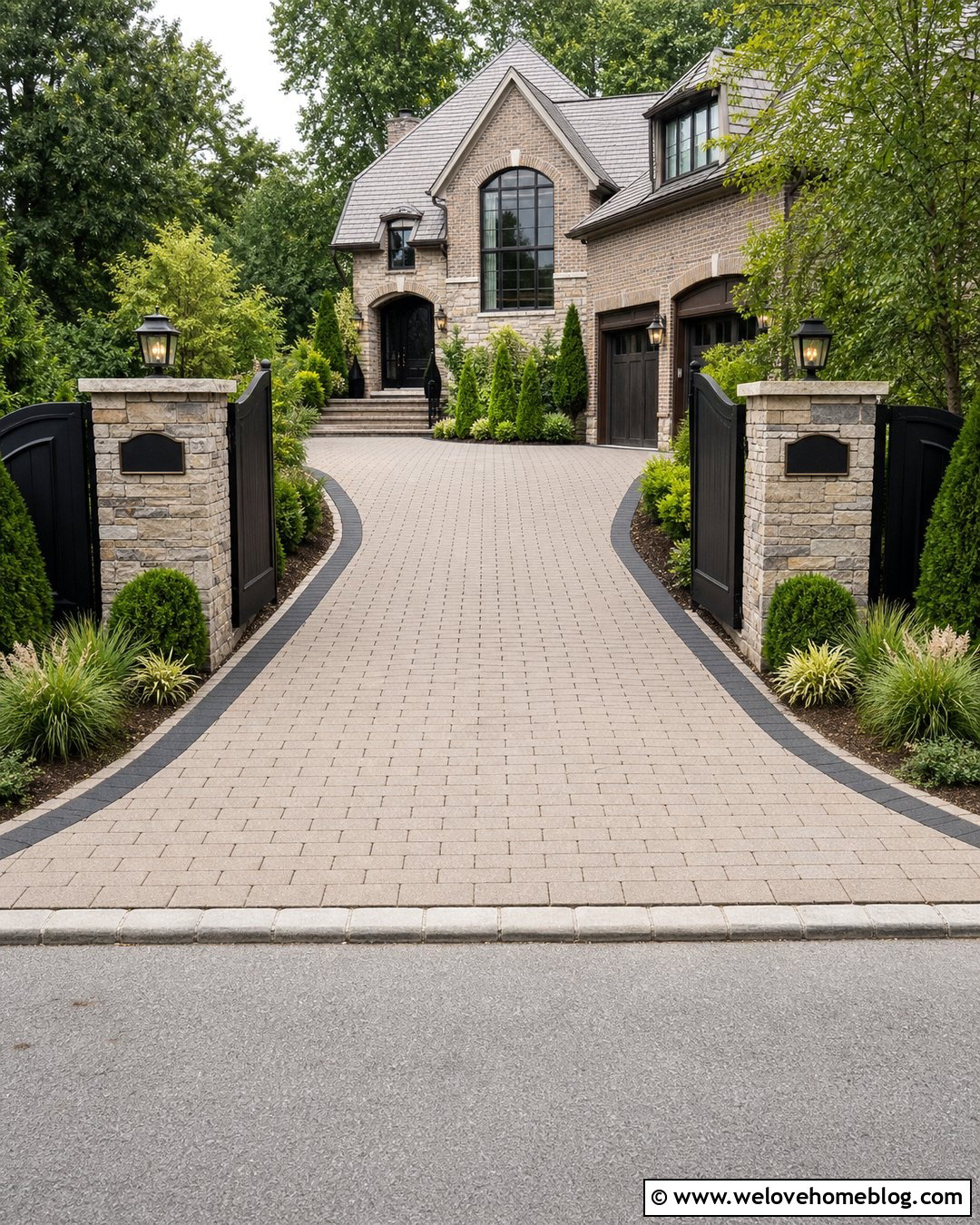
Gate pillars create a strong entrance when their scale and materials relate to both the driveway and house. Start with taupe or charcoal permeable pavers laid in a straight running bond. Flare the driveway slightly at the street, placing stone or brick pillars safely beyond vehicle clearance. A dark paver border can guide the eye through the gate and continue toward the garage. Keep planting around the pillars low and symmetrical, using compact evergreens, ornamental grasses, or simple ground cover. An address plaque and discreet lighting may be integrated into the masonry without adding visual clutter. If a gate is included, plan drainage, underground utilities, opening clearance, and equipment access before construction. The entire entrance should feel welcoming, navigable, and proportionate to the property.
20. Permeable Paver Parking Court
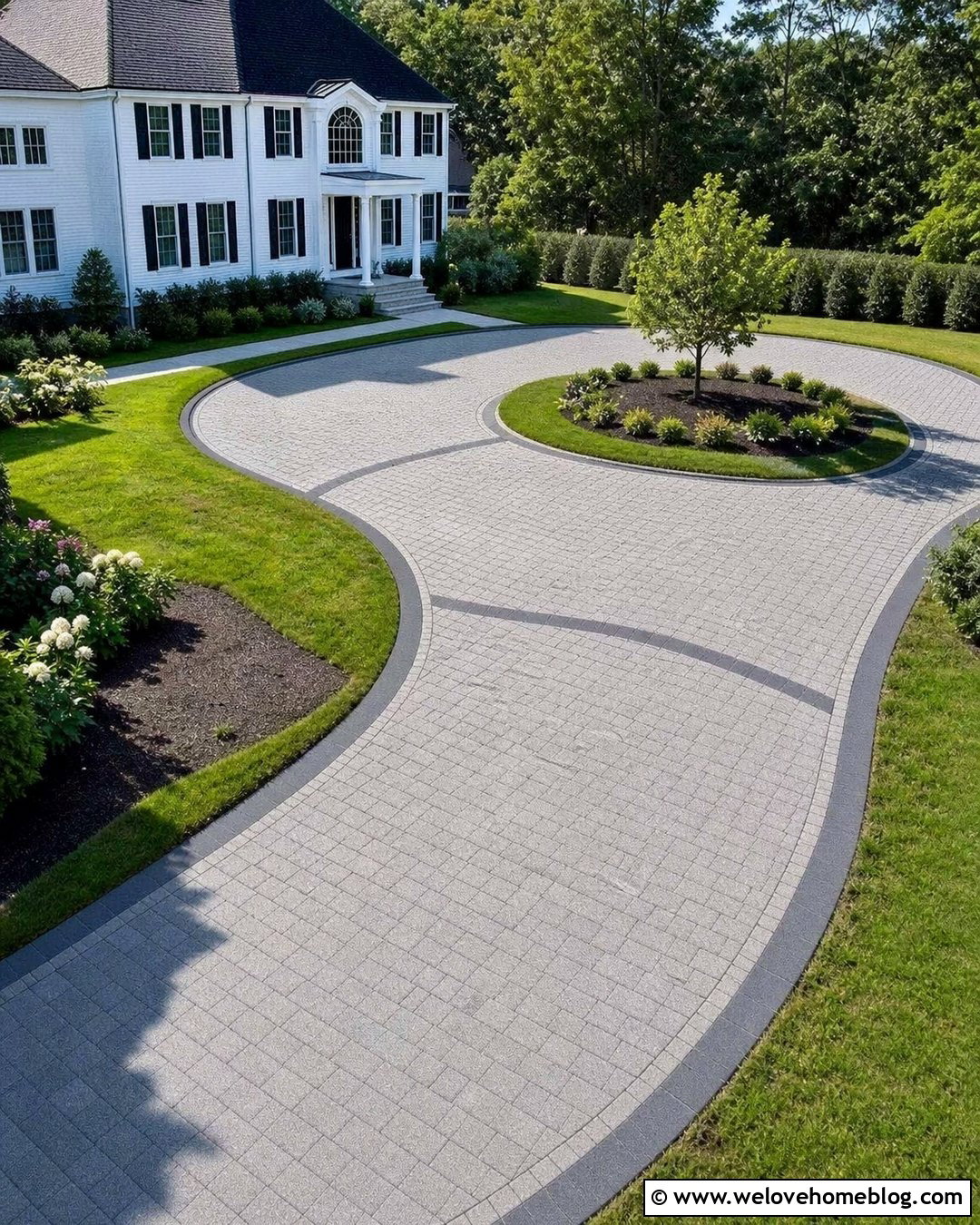
A permeable paver parking court adds practical maneuvering space while keeping a large paved area visually organized. Use blended gray concrete pavers for the main court and define parking or turning zones with subtle charcoal bands. A curved approach can open into a rectangular or rounded court in front of the garage. Create a landscaped island where space permits, using a small tree, low shrubs, and ground cover that will not obstruct drivers. Continue the same pavers into the driveway, but rotate the laying direction at the court to mark the transition. Strong edge restraints are especially important around wide turning areas. This complete layout works well for larger suburban and country homes where several vehicles need to enter, turn, and leave comfortably.
Conclusion:
The best permeable driveway balances drainage performance, vehicle access, maintenance, and curb appeal as one coordinated design. Paver color should complement the house, while borders, planting beds, walkways, and entrance features help the surface feel connected to the entire property. Open joints alone do not guarantee good drainage. The driveway also needs suitable soil conditions, correct excavation, clean aggregate layers, dependable edge restraints, and an installation plan designed for expected loads. Local rules and stormwater requirements should be reviewed before work begins. From planted grid systems to modern open-joint concrete layouts, these 20 permeable driveway pavers ideas show how practical water management can become an attractive part of a welcoming home entrance.

Related posts:
Leave a Reply