
A grey exposed aggregate driveway brings together the strength of concrete and the natural texture of visible stone. Its neutral color works with nearly every exterior, from crisp modern homes to warm brick Colonials. The textured finish can also provide useful traction while making everyday tire marks and minor surface wear less noticeable than on plain concrete. Decorative borders, contrasting bands, curved layouts, and coordinated landscaping give this practical surface a more custom appearance. Exposed aggregate can be enhanced with integral color, selected stone blends, stamped borders, and built-in lighting, offering far more flexibility than its simple gray appearance suggests. () Below, you will find complete, realistic, and attractive **20 Grey Exposed Aggregate Driveway Ideas**.
1. Straight Grey Exposed Aggregate Driveway With Black Paver Border
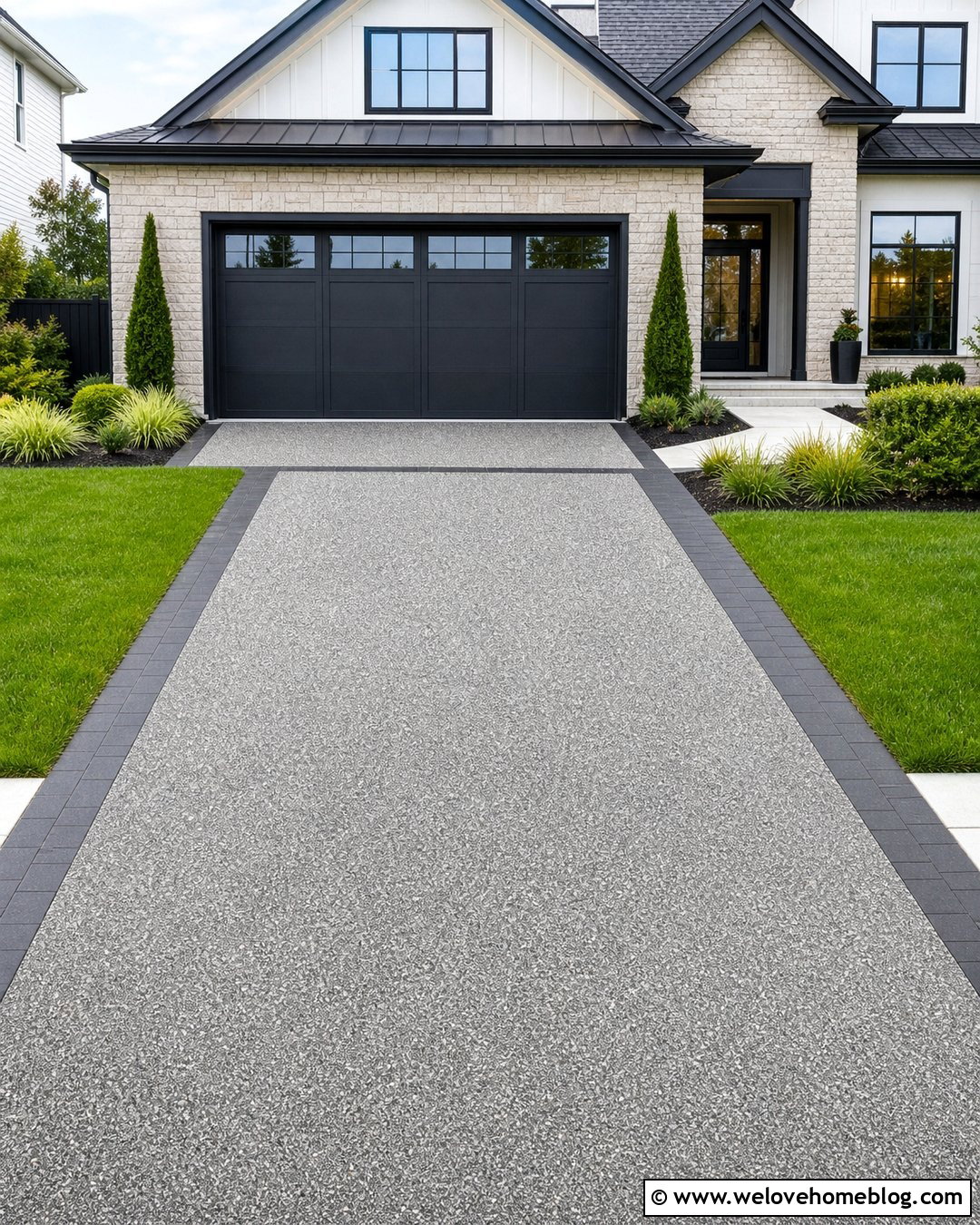
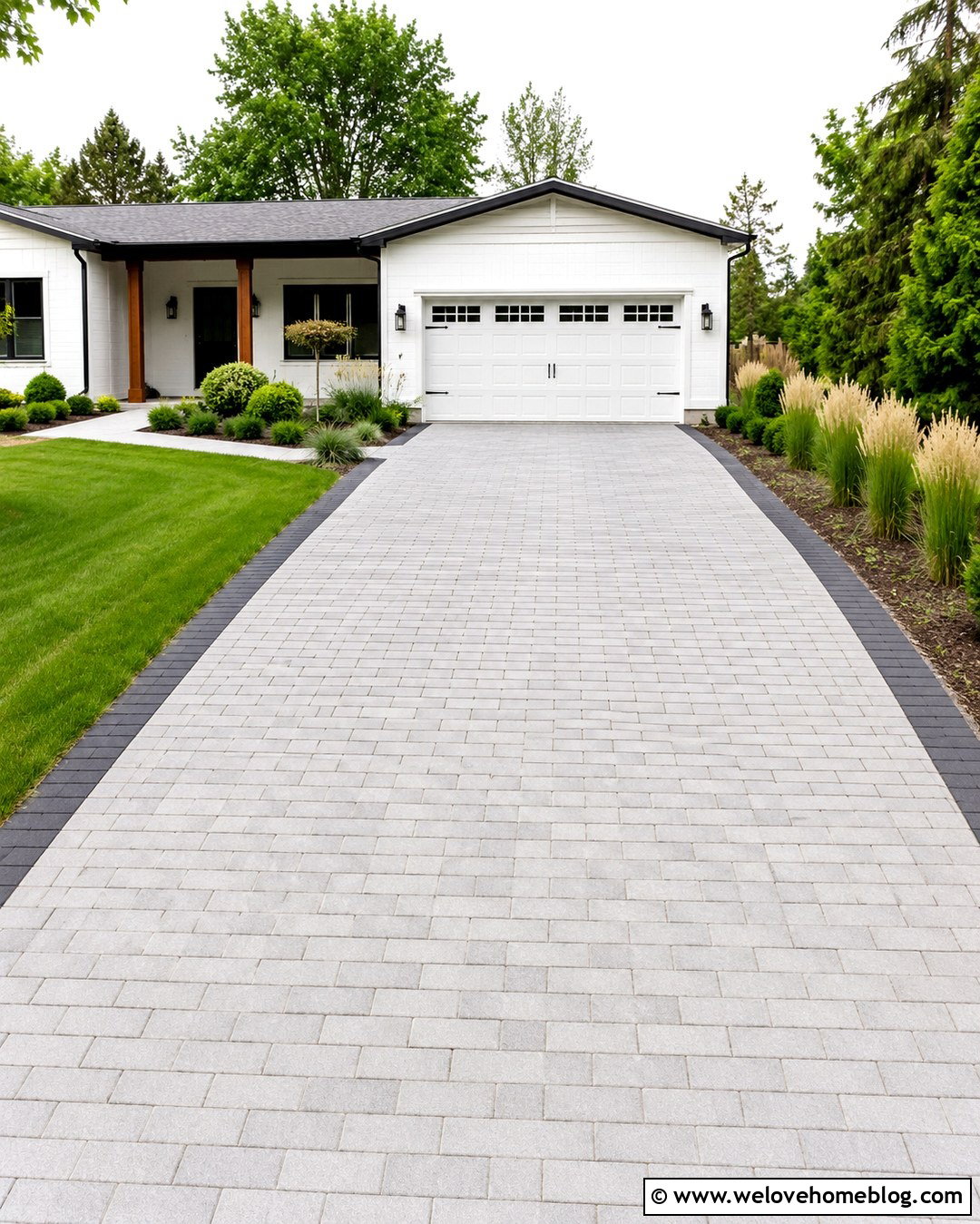
A straight driveway feels much more intentional when dark pavers frame the textured gray surface. Choose a medium-grey exposed aggregate mix containing charcoal and silver stones, then install a single or double row of black concrete pavers along both sides. The strong border creates a neat line from the curb to the garage and complements black window frames, roofing, or exterior lights. Keep the surrounding landscaping simple with rectangular lawn areas, clipped shrubs, and ornamental grasses. A matching black paver apron at the garage can make the transition look especially polished. This complete layout suits modern and transitional houses because it balances natural stone texture with clean geometry. Use understated control joints so they support the linear design rather than interrupt it.
2. Curved Grey Exposed Aggregate Driveway With Cobblestone Edging
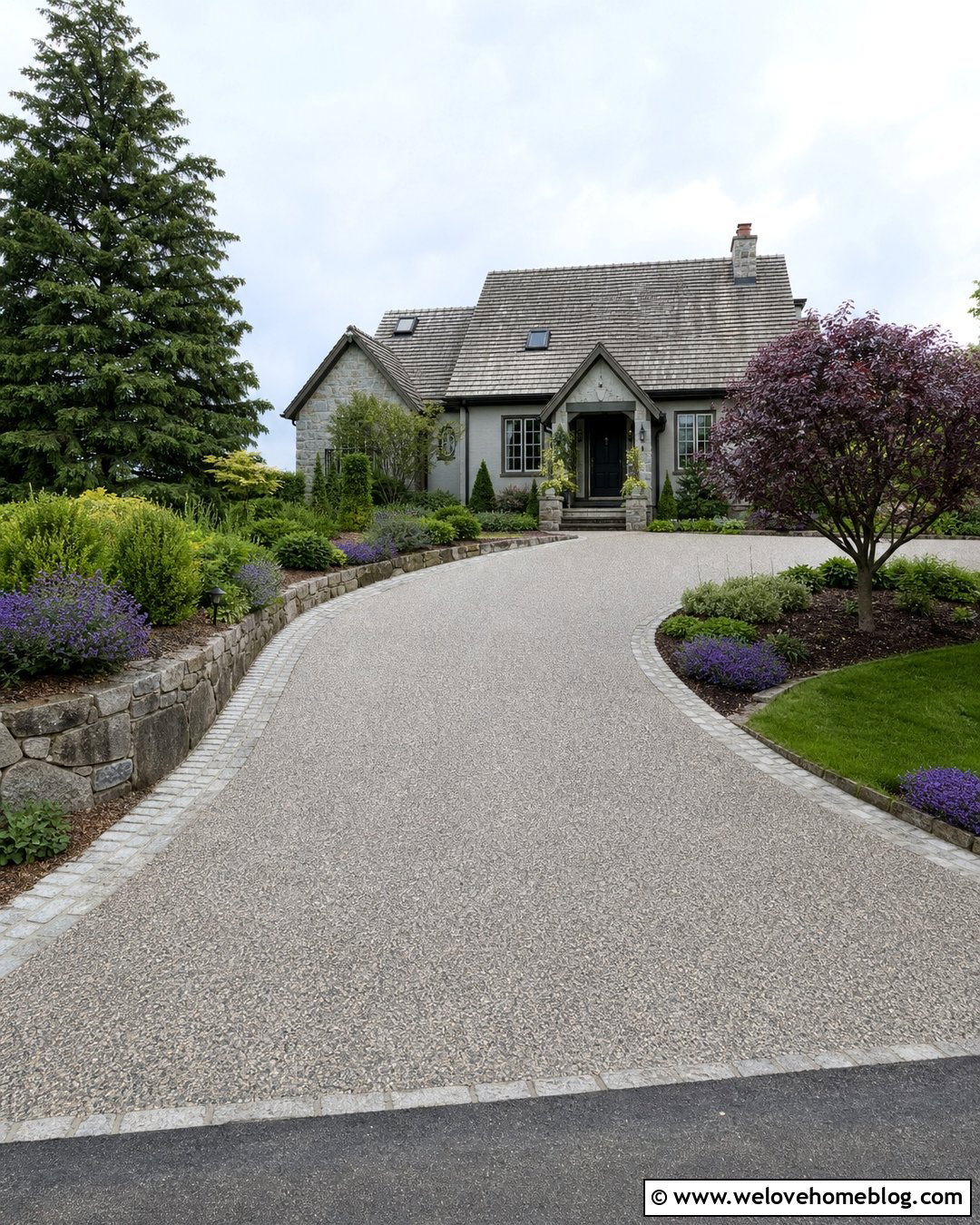
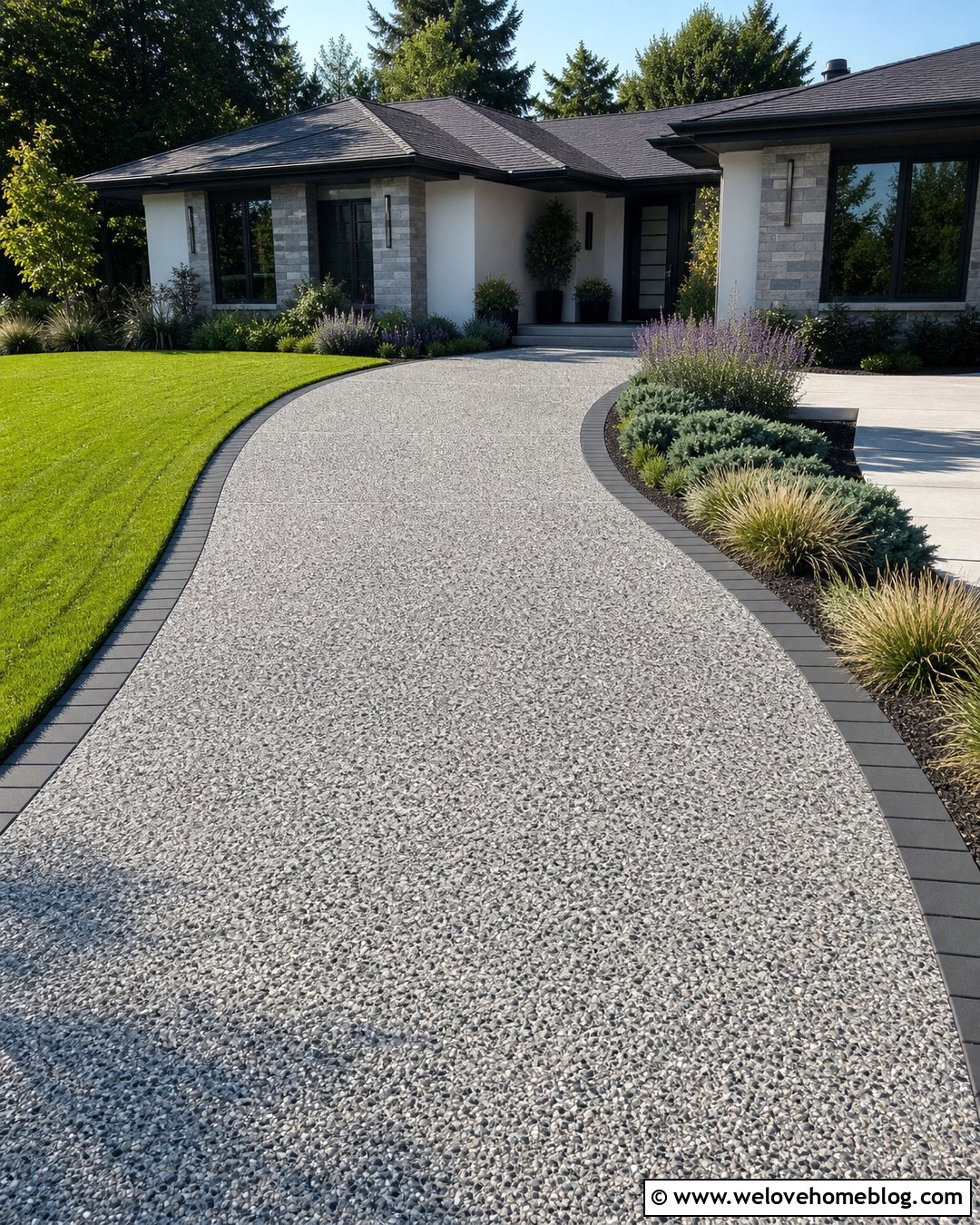
Soft curves can make a gray driveway feel welcoming rather than purely functional. A mid-grey exposed aggregate surface works beautifully with weathered granite cobblestone edging, especially when the driveway winds gently through a larger front yard. The stones should follow the curve closely and sit nearly level with the concrete for a smooth visual transition. On the outside of the bend, add layered beds containing evergreen shrubs, flowering perennials, and one small ornamental tree. Keep the inner curve more open with lawn or low ground cover so drivers have clear visibility. This combination fits cottages, traditional homes, and wooded properties. The cobblestones provide an attractive contrast without competing with the aggregate, while the curved shape creates a natural approach to the house.
3. Grey Exposed Aggregate Driveway With Red Brick Border
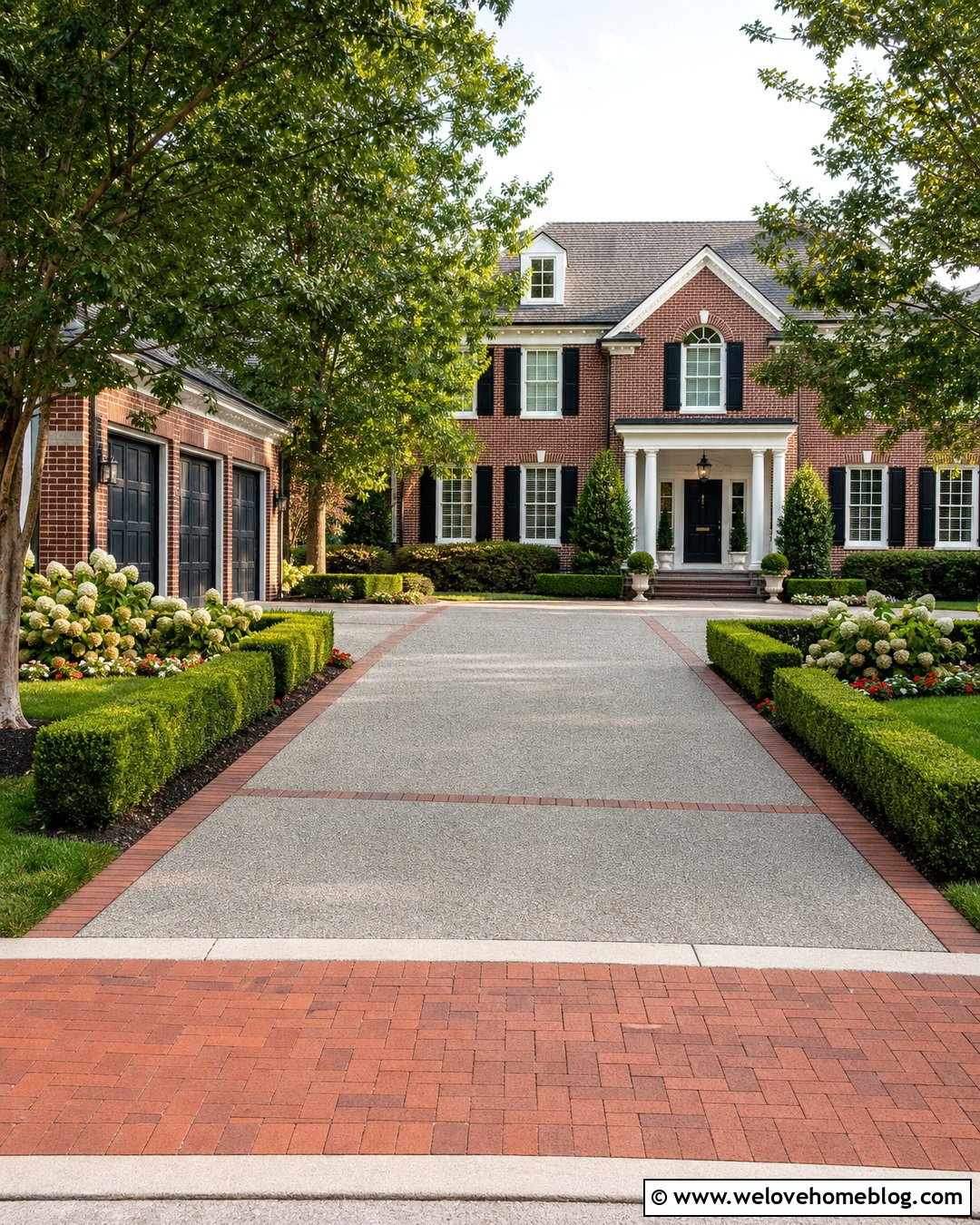
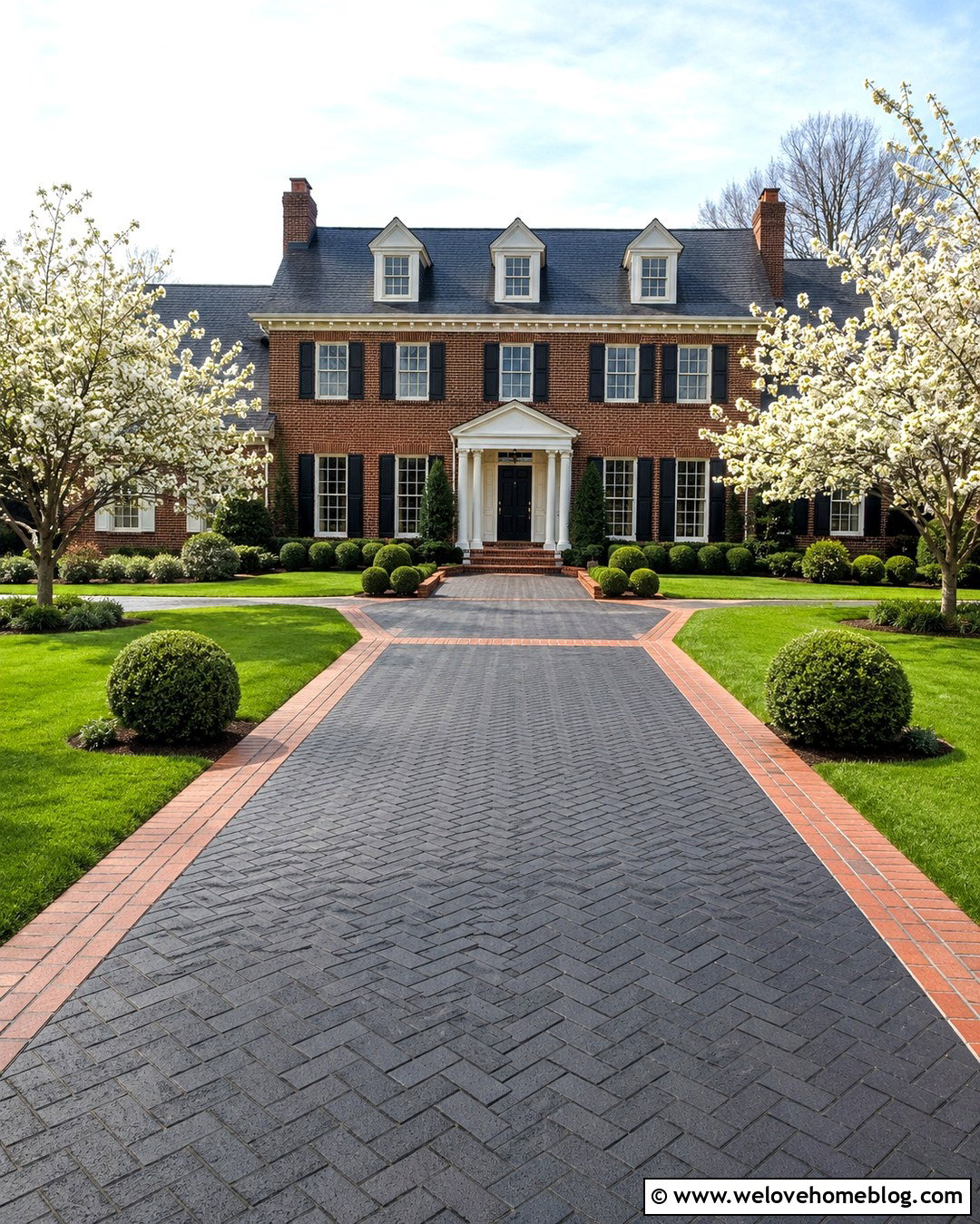
Does your home have traditional red brick walls or warm architectural details? A red brick border can visually connect the driveway to the house while adding color to a cool gray surface. Use medium-grey exposed aggregate for the main driveway and frame it with clay brick pavers in a running-bond pattern. A matching brick apron near the sidewalk or garage door can strengthen the coordinated look. Plant rounded boxwood, hydrangeas, and seasonal flowers beside the border to soften the hardscape. This pairing works particularly well with Colonial, Georgian, and traditional ranch homes. Select brick tones already present on the facade instead of introducing an unrelated red. The finished driveway should feel like part of the original architecture, not a separate surface added later.
4. Light Grey Exposed Aggregate Driveway With Charcoal Bands
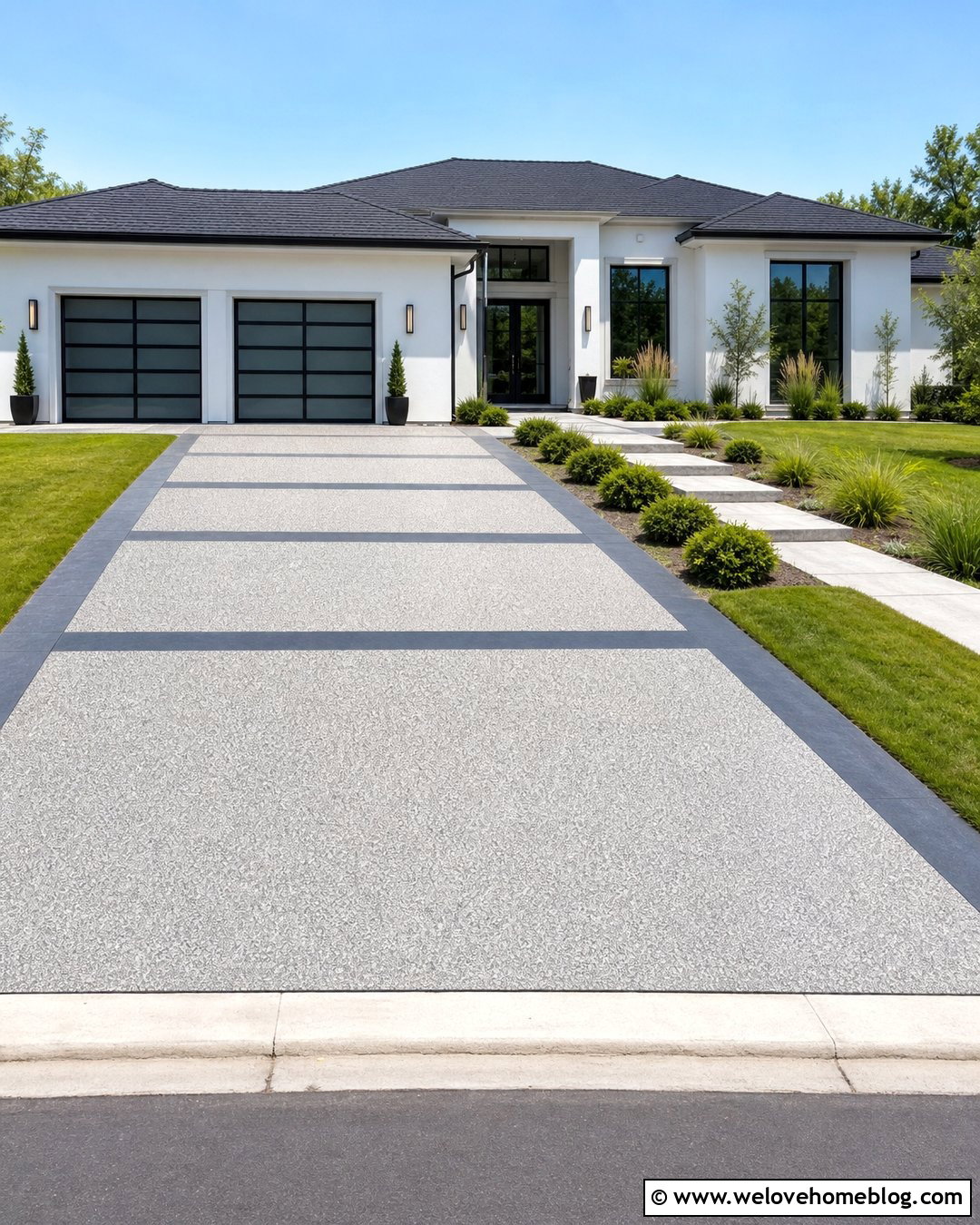
Wide charcoal bands can organize a light-gray driveway and give it a contemporary structure. Begin with pale grey exposed aggregate containing white, silver, and soft charcoal stones. Add dark charcoal concrete or paver bands across the driveway at evenly spaced intervals. These bands can visually divide a large surface into balanced sections while aligning with control-joint locations. Continue the charcoal material along the outer edges for a complete framed effect. Surround the driveway with broad grass strips, low evergreen mounds, and a simple concrete walkway. This design works best beside a modern home with light stucco, dark garage doors, or black metal details. Keep the band spacing consistent and avoid excessive patterning. A limited palette allows the natural aggregate texture to remain the main feature.
5. Dark Grey Exposed Aggregate Driveway With White Concrete Border
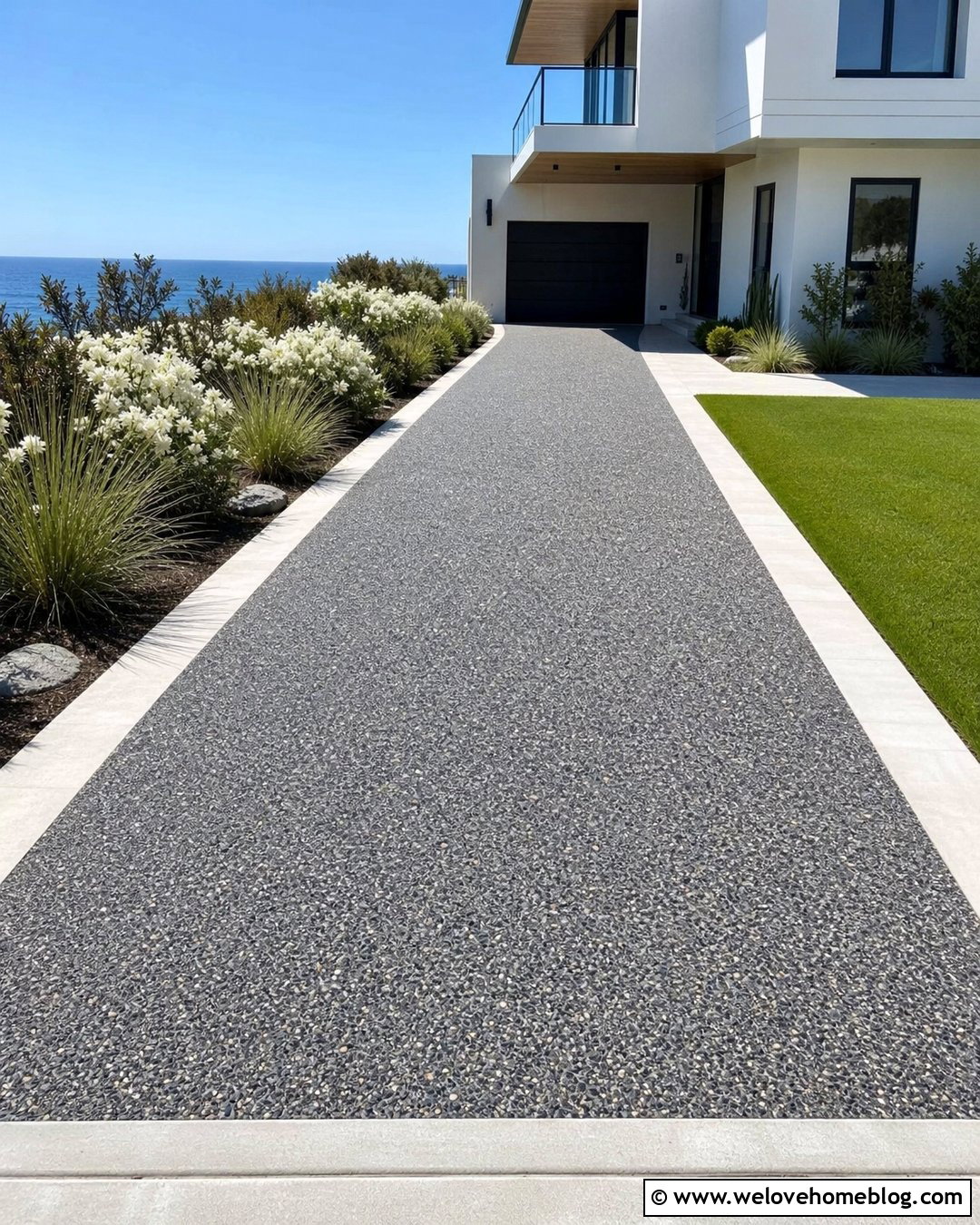
A dark aggregate mix creates dramatic contrast against a white or pale exterior. Choose charcoal-grey exposed aggregate with black, gray, and occasional cream stones, then outline the driveway with smooth white or very light-gray poured-concrete borders. The bright edging clearly defines the shape and prevents the dark surface from looking visually heavy. For a balanced landscape, add green lawn, white flowering shrubs, and upright grasses along the approach. Repeat the light concrete in a walkway leading to the front door. This high-contrast combination suits modern, coastal, and updated mid-century houses. Because dirt can be more visible on bright borders, keep them broad enough to clean comfortably. The completed driveway will look crisp and architectural while still retaining the organic character of exposed stone.
6. Circular Grey Exposed Aggregate Driveway With Center Garden
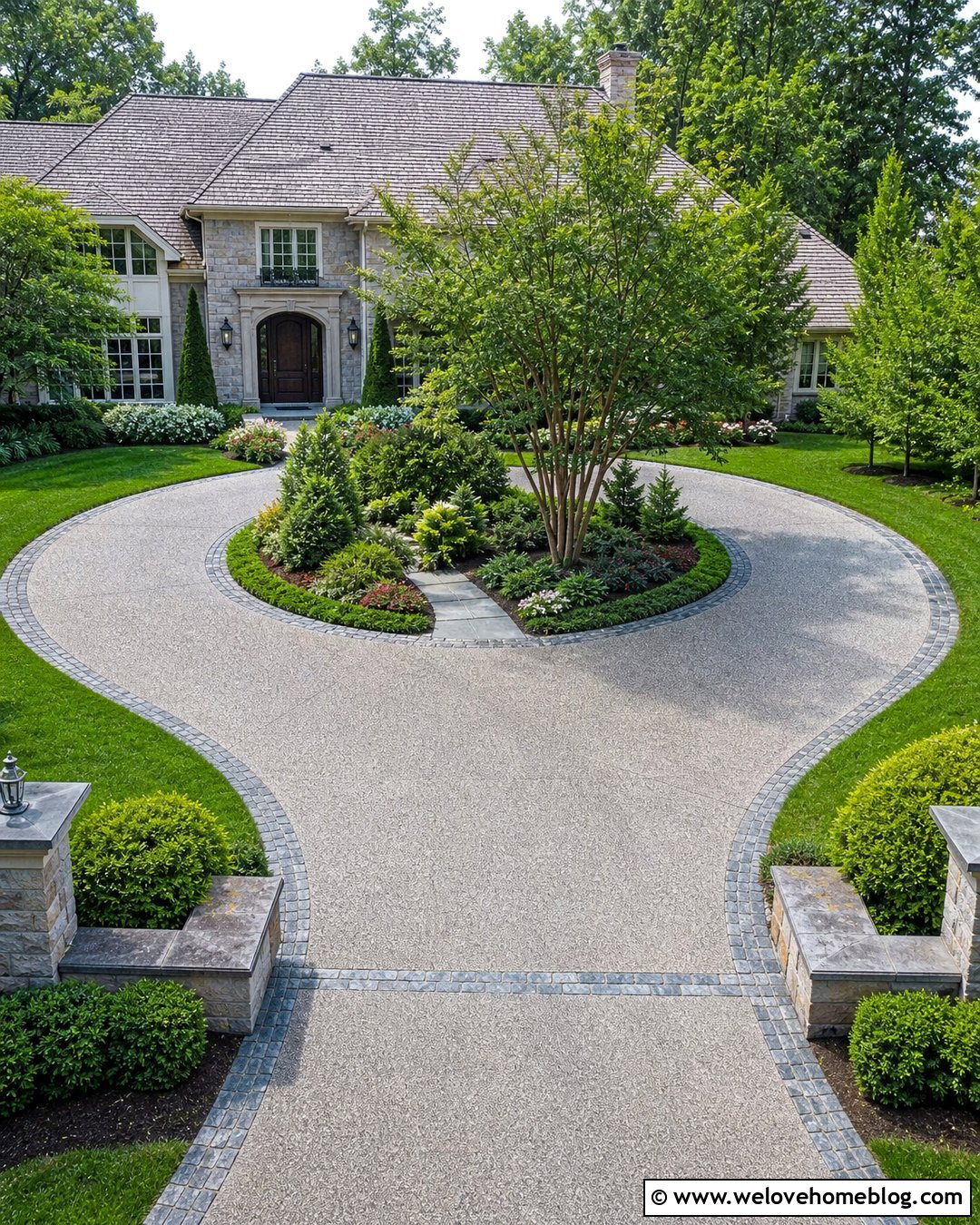
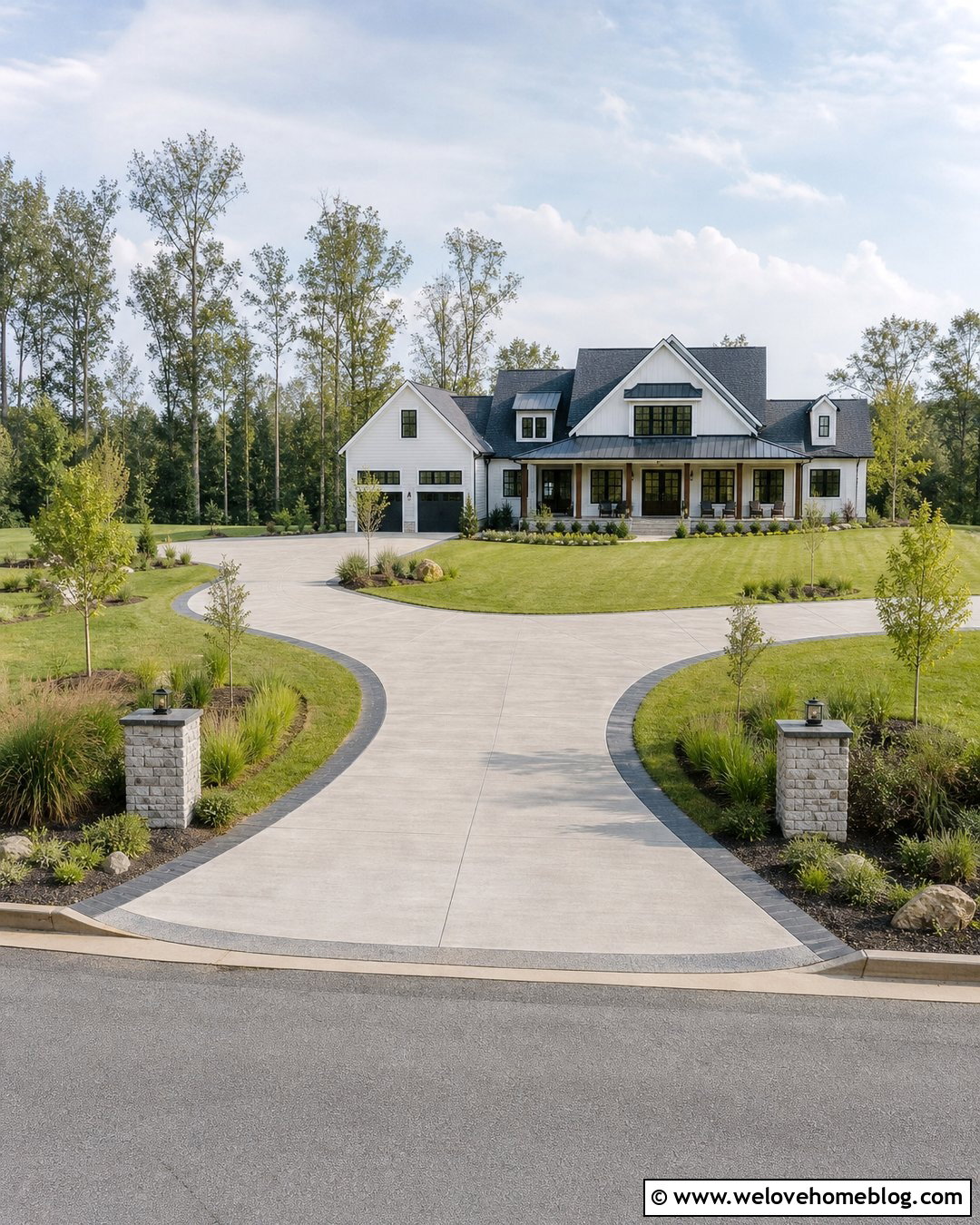
A circular driveway becomes a major landscape feature when its center island is carefully designed. Use neutral grey exposed aggregate for the entire driving loop and define both edges with dark-gray stone setts. In the middle, create a raised or gently mounded garden with a small multi-stem tree, evergreen shrubs, flowering perennials, and low ground cover. Keep plants near the driveway edge short so they do not restrict visibility. A simple path can cross the island if guests need direct access to the entrance. This arrangement works well for wide properties and homes with a centered front door. The gray surface keeps the large circular layout visually calm, while the planted island breaks up the hardscape and establishes an attractive focal point from the street.
7. Horseshoe Grey Exposed Aggregate Driveway With Stone Pillars
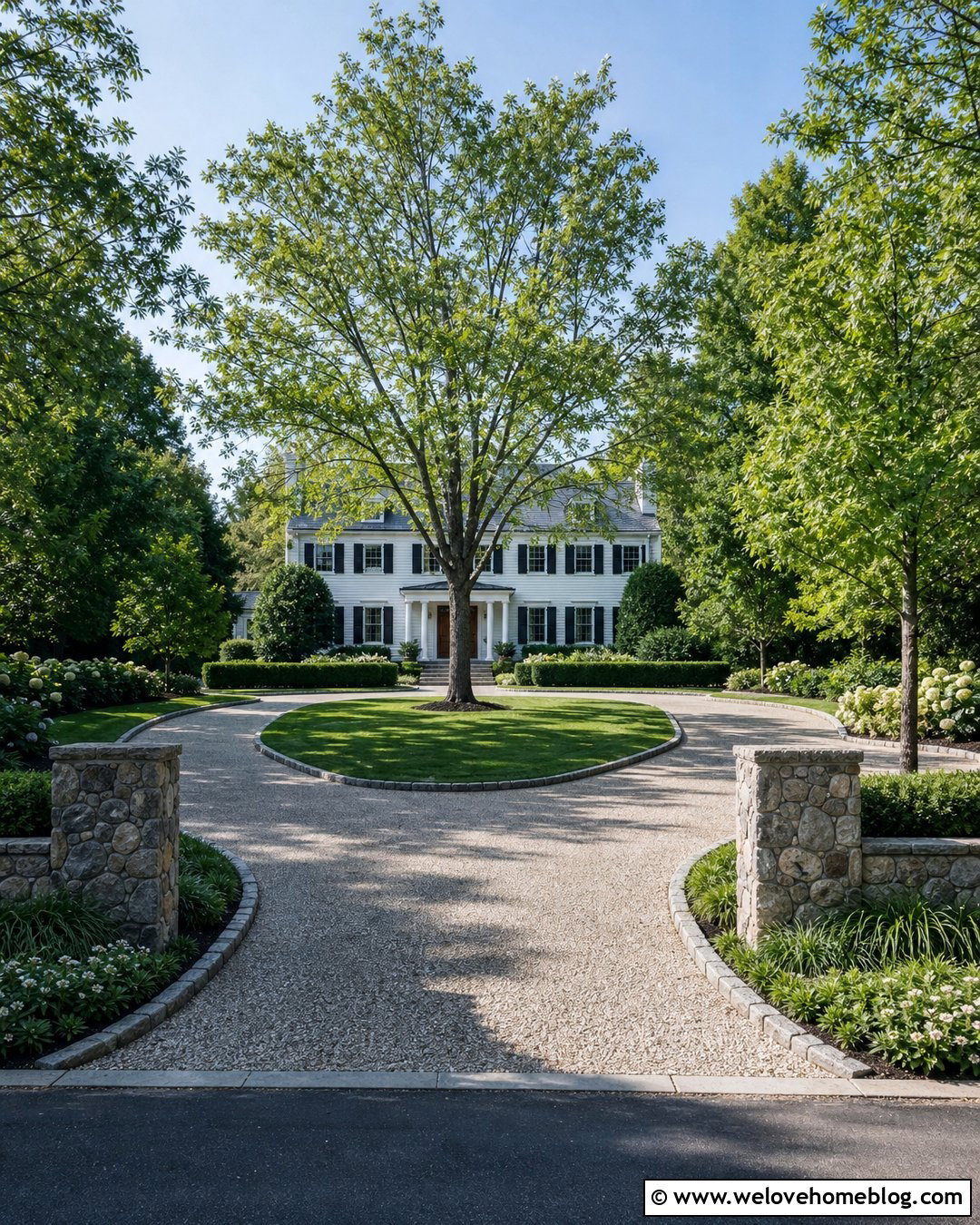
A horseshoe layout offers two street connections and creates a formal sense of arrival without requiring a complete circle. Cover the driveway with medium-grey exposed aggregate containing a balanced mix of light and dark stones. Mark each entrance with natural limestone or fieldstone pillars, then use matching stone as low edging along the inner curves. Between the two driveway openings, maintain a broad lawn with a central shade tree or a symmetrical planting bed. Low hedges can follow the outside edges without crowding the driving space. This look complements Colonial, French country, and large traditional houses. Keep pillar heights proportional to the home, and position them well outside the vehicle path. Coordinating the stonework, driveway color, and landscaping makes the horseshoe shape feel unified.
8. Grey Exposed Aggregate Ribbon Driveway With Grass Strip
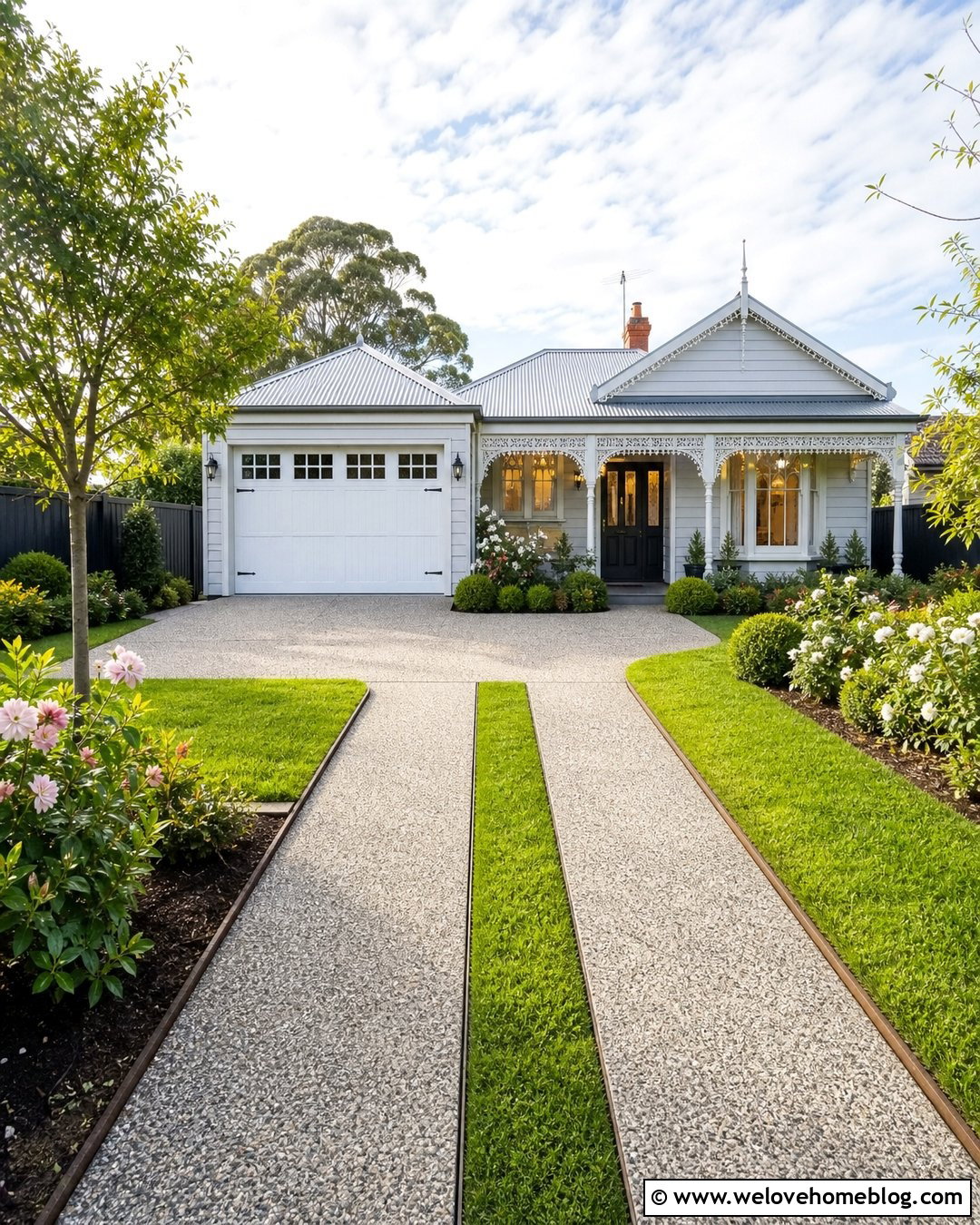
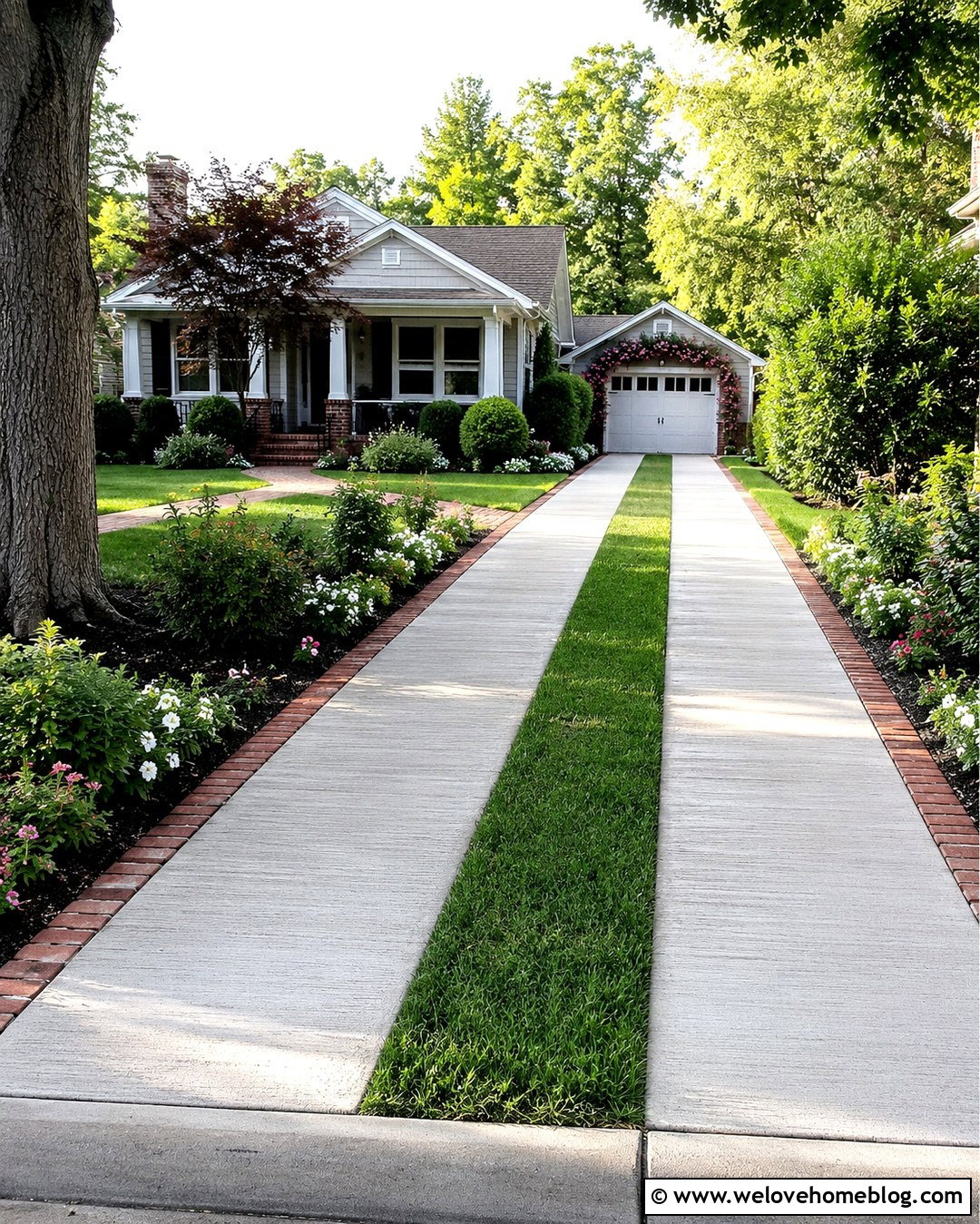
Two exposed aggregate tracks separated by grass can reduce the visual weight of a driveway in a green front yard. Form parallel ribbons of light or medium-grey exposed aggregate, placing each strip beneath the expected wheel path. A narrow grass strip runs through the center and connects visually with the surrounding lawn. Use flush steel edging or slim concrete curbs to keep the lines clean and prevent soil from spreading onto the aggregate. Near the garage, the ribbons can transition into a full-width parking pad for easier maneuvering. This layout works nicely with cottages, Victorian homes, and relaxed suburban properties. It is best suited to a straight or gently curved approach where vehicles can stay aligned. The green center gives the driveway a softer, garden-focused appearance.
9. Grey Exposed Aggregate Driveway With Grass Grid Joints
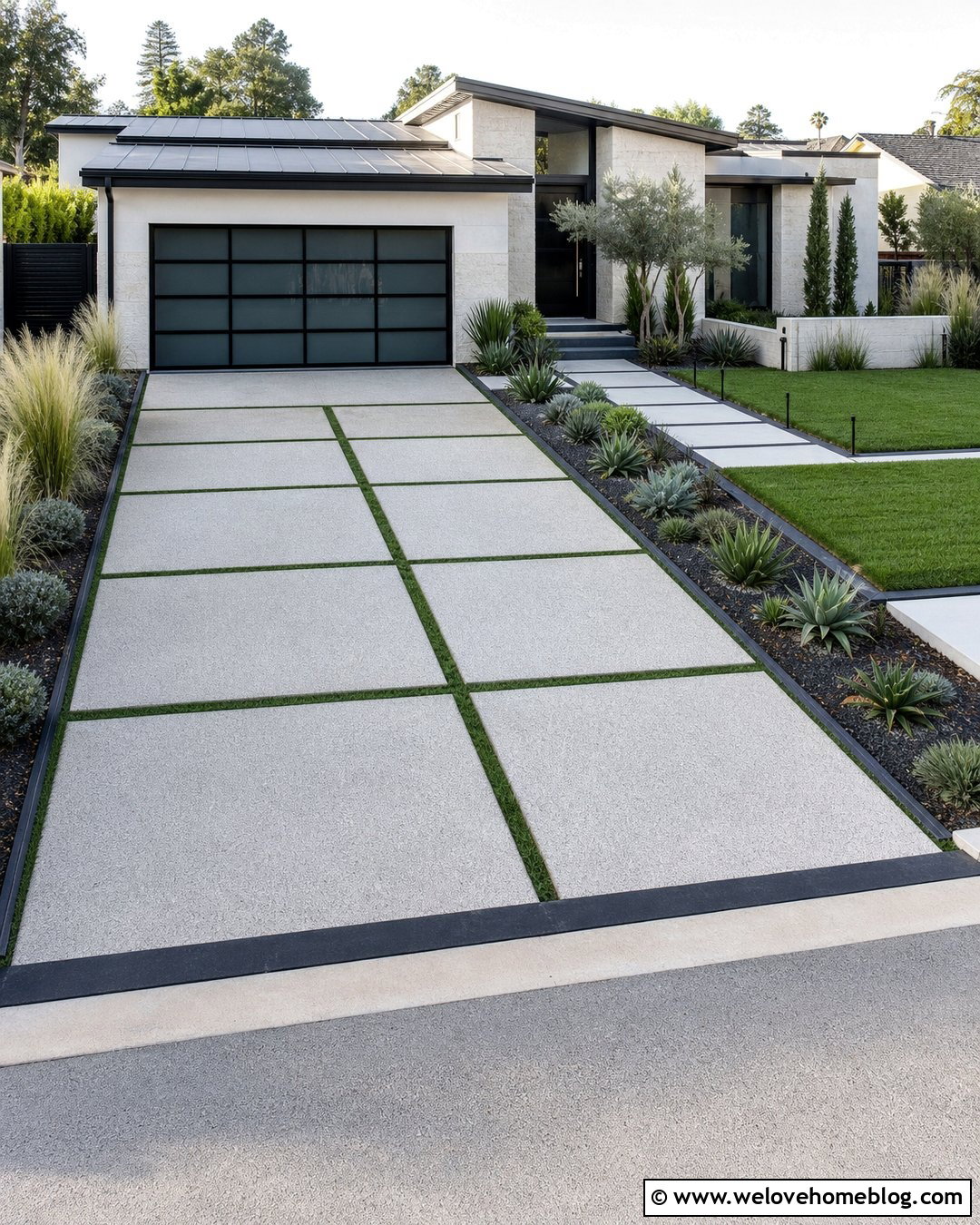
Large rectangular aggregate panels separated by slim grass joints give a driveway a fresh geometric appearance. Select a light-grey exposed aggregate finish with small, evenly distributed stones so the surface does not compete with the grid. Arrange the panels in straight rows that align with the garage bays and house facade. Narrow reinforced grass strips between sections introduce color and visually reduce the amount of concrete. Continue the grid into a coordinating front walkway for a unified landscape. Low succulents, ornamental grasses, and sculptural shrubs support the contemporary mood. This design is most effective on level properties with modern architecture. Plan the planted joints carefully with experienced installers so the finished layout handles vehicle movement, maintenance, drainage, and local growing conditions without losing its clean pattern.
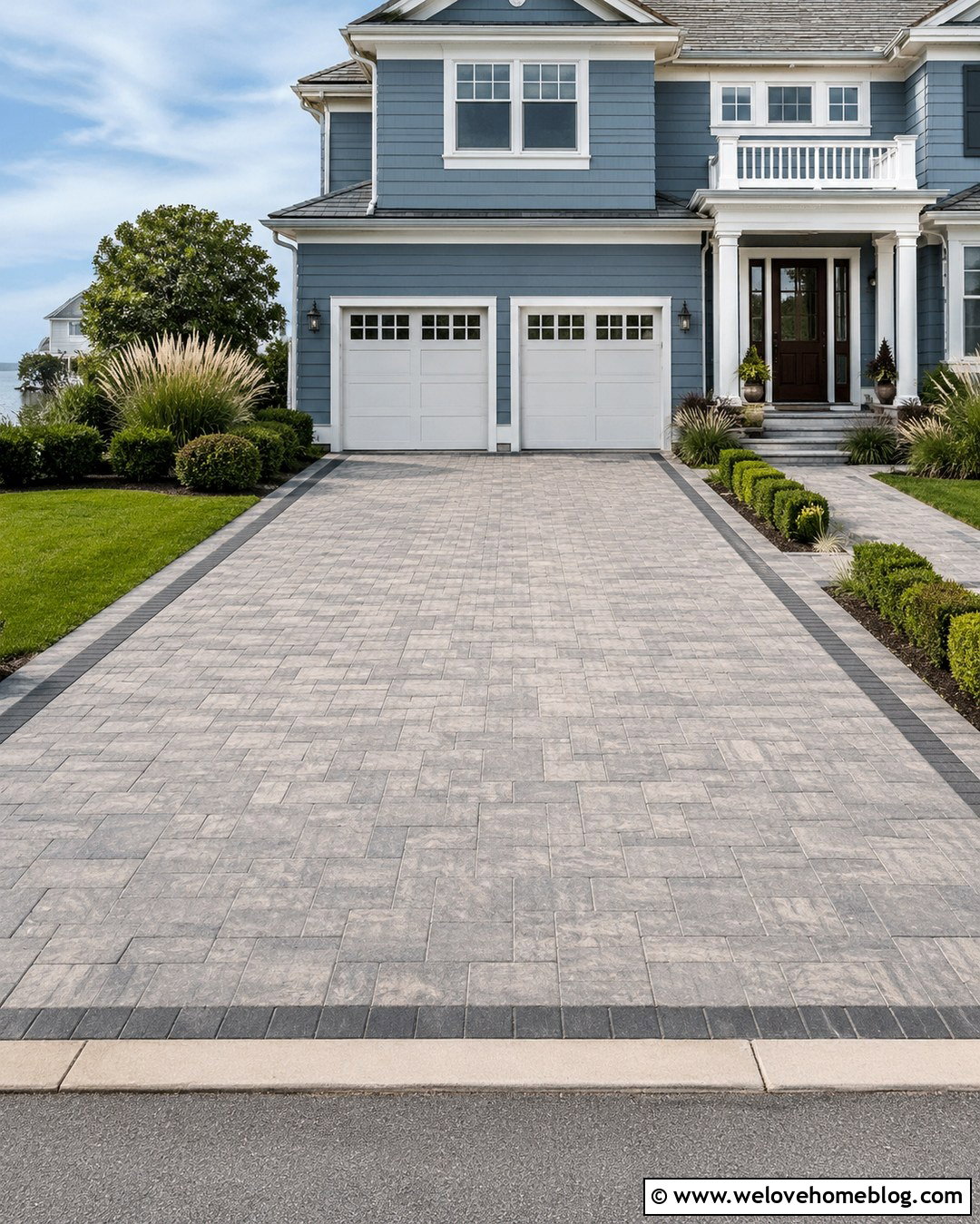
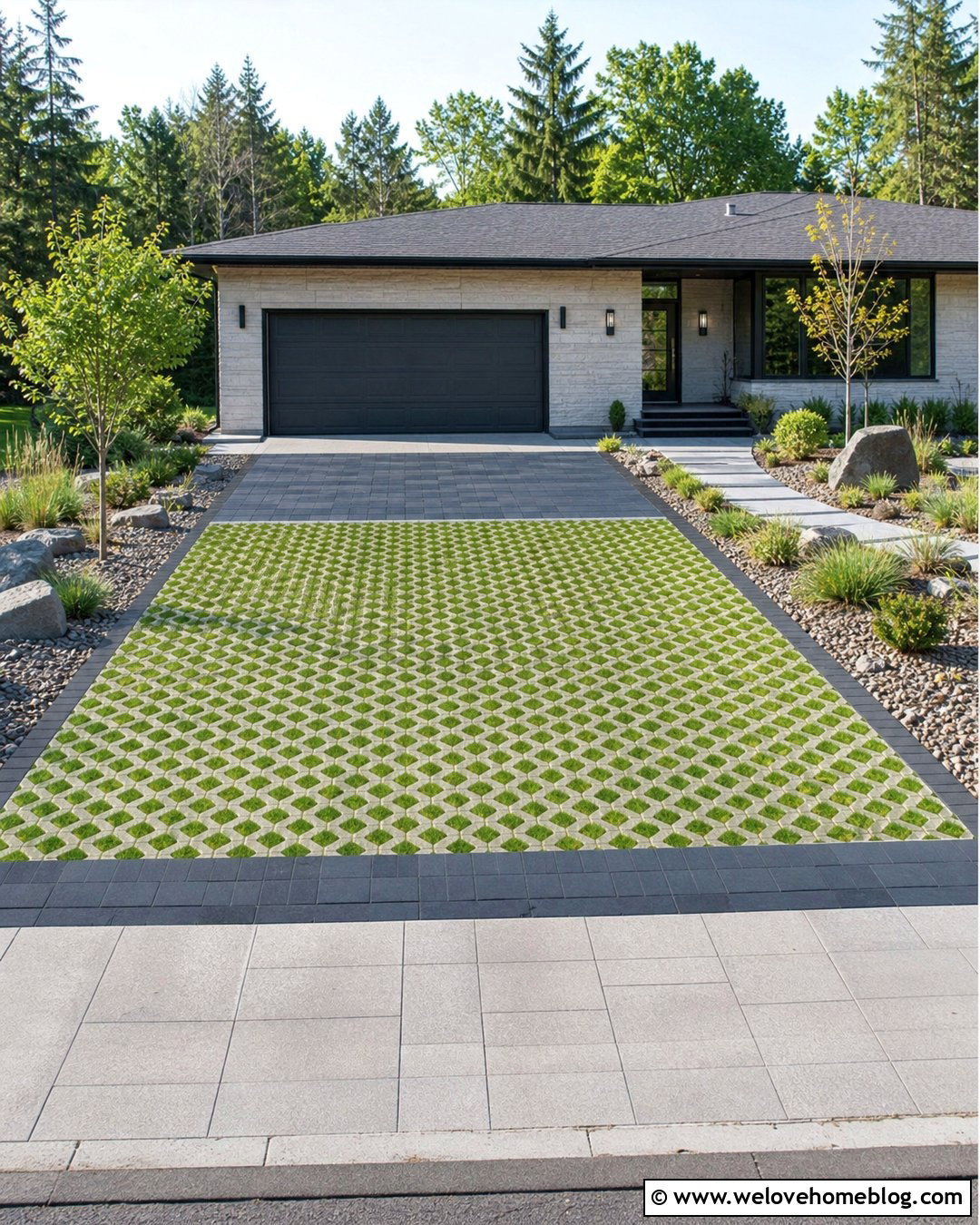
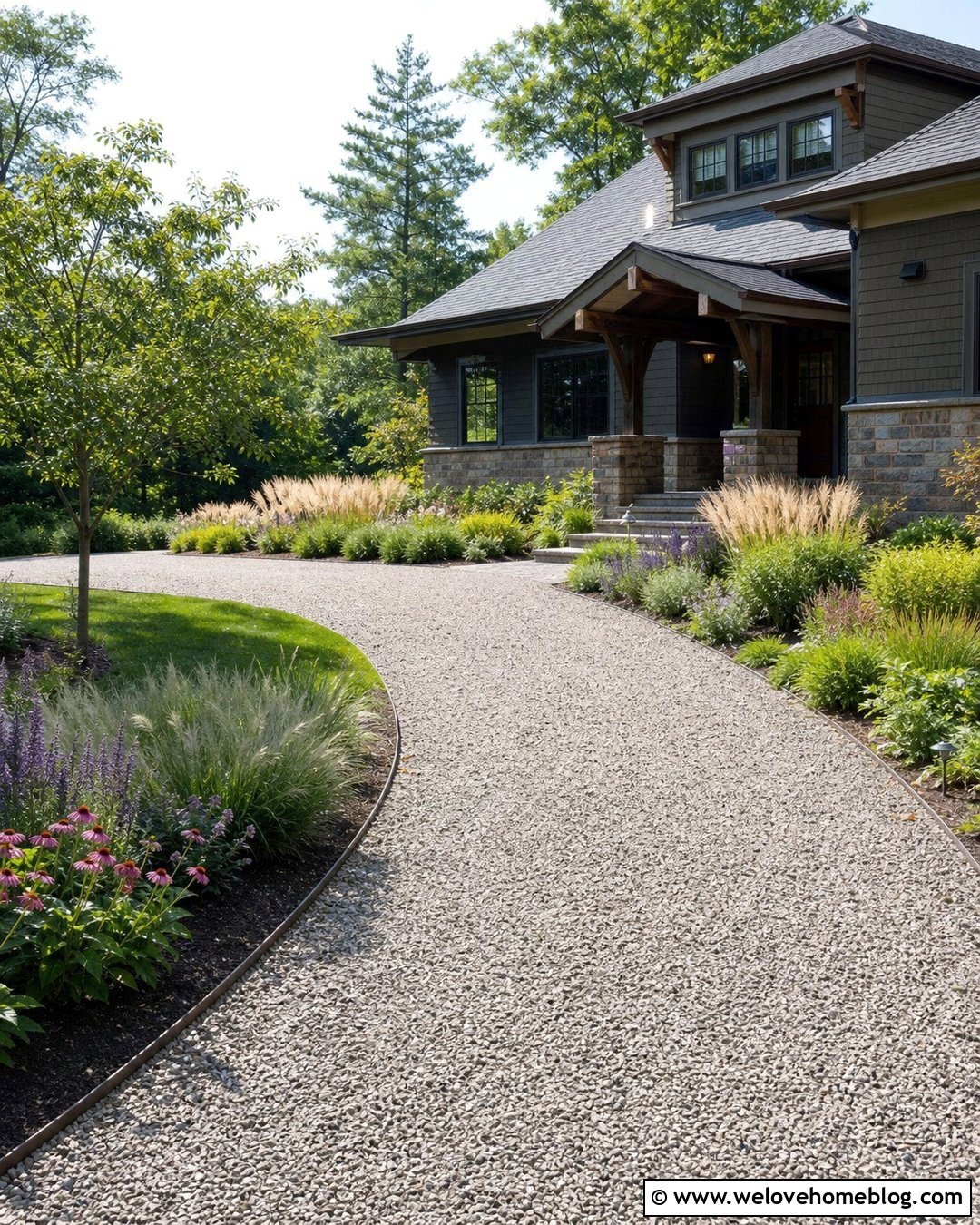
10. Pale Grey Exposed Aggregate Driveway With River Rock Beds
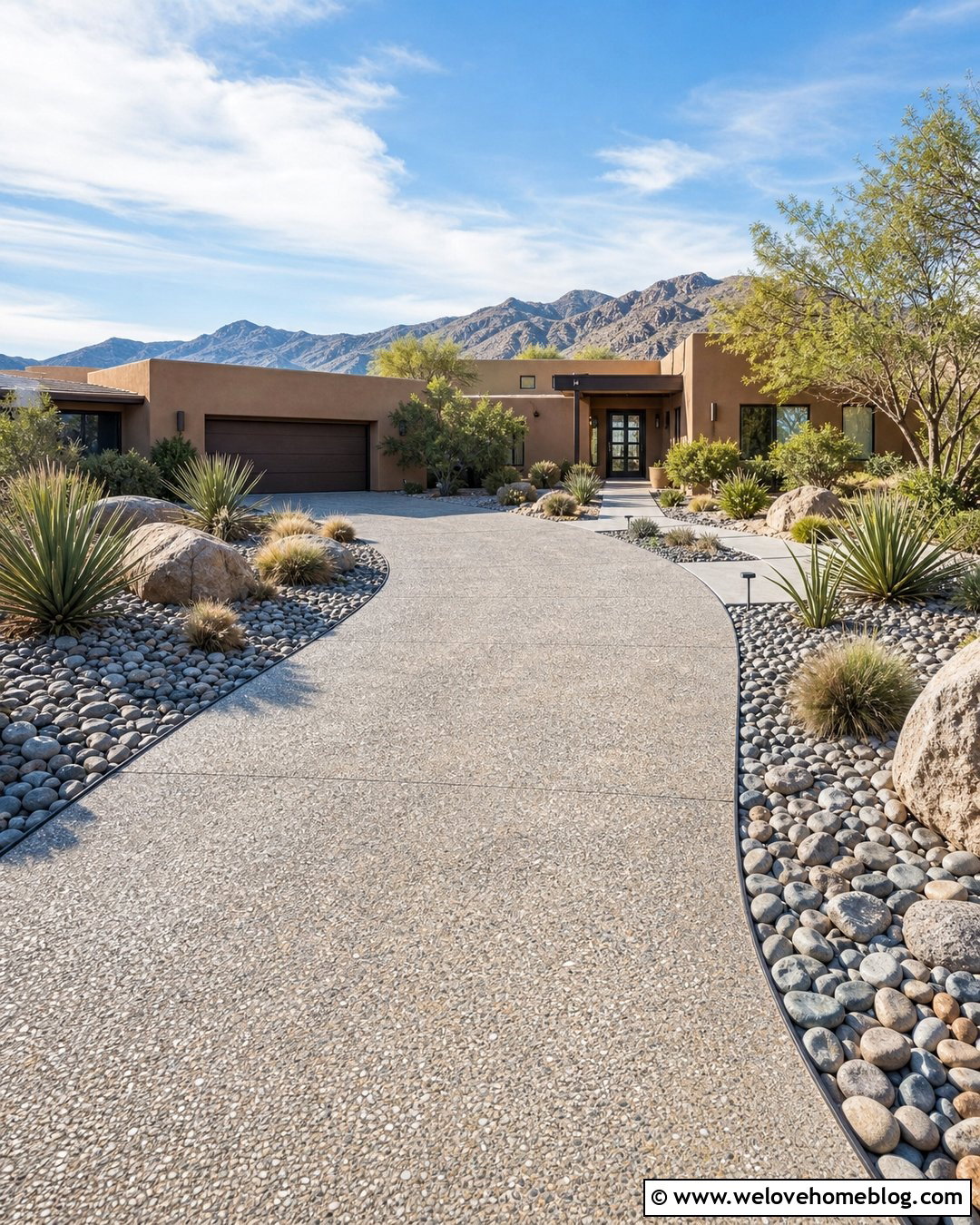
Pale gray aggregate and rounded river rock can create a relaxed landscape with subtle tonal variation. Use a light-grey exposed aggregate driveway containing cream, silver, and soft beige stones. Along each side, install broad beds of gray river rock separated from the concrete by discreet metal edging. Add clusters of drought-tolerant grasses, yucca, sedges, or compact flowering shrubs within the stone beds. A few larger boulders can provide scale near the driveway entrance. This combination suits coastal, Southwestern, and contemporary ranch homes because it feels natural without appearing untidy. Avoid using river rock that closely matches the exposed stones in size, or the boundaries may disappear. Contrasting stone sizes help the driveway, edging, and surrounding landscape remain visually distinct from the curb.
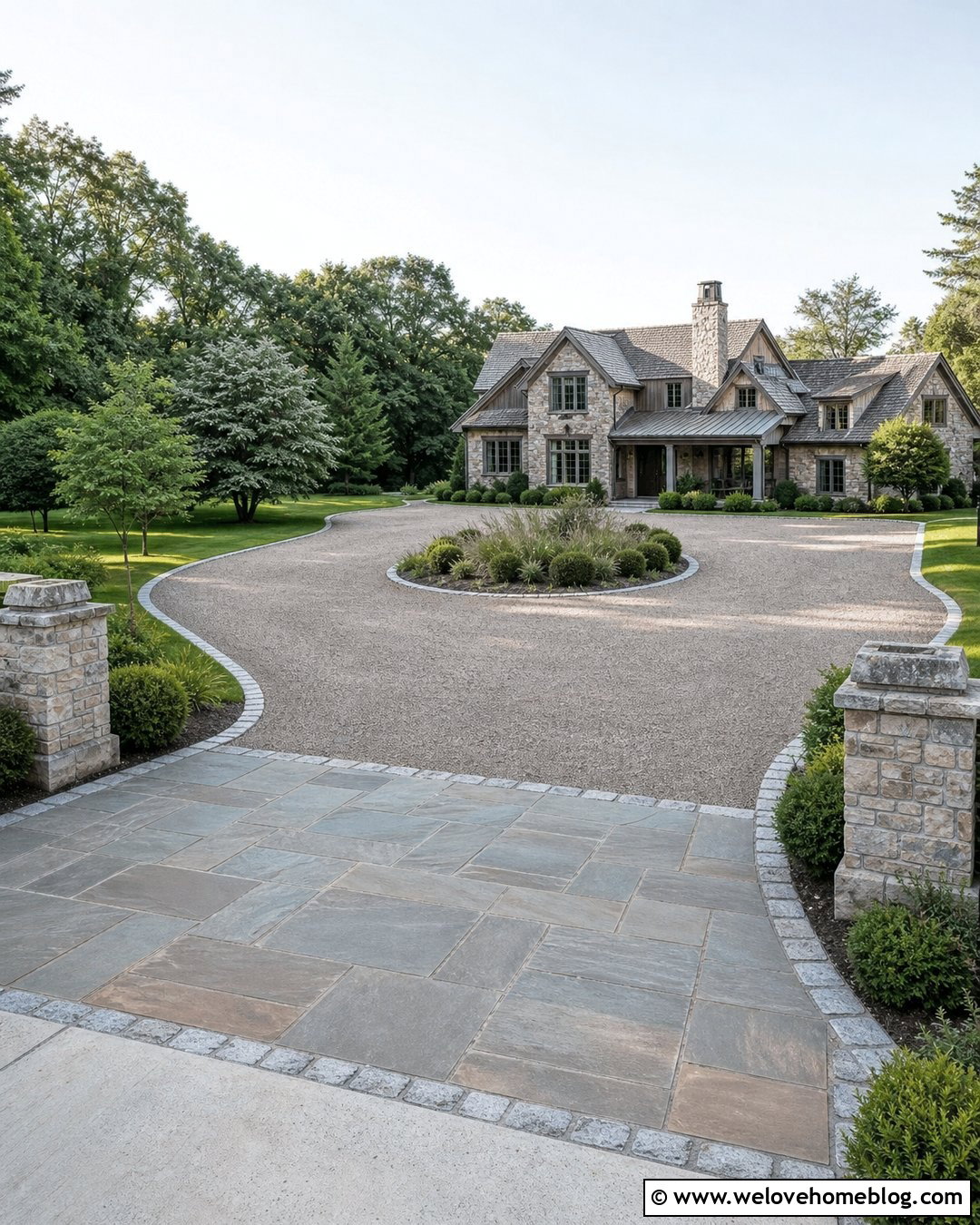
11. Grey Exposed Aggregate Driveway With Natural Stone Apron
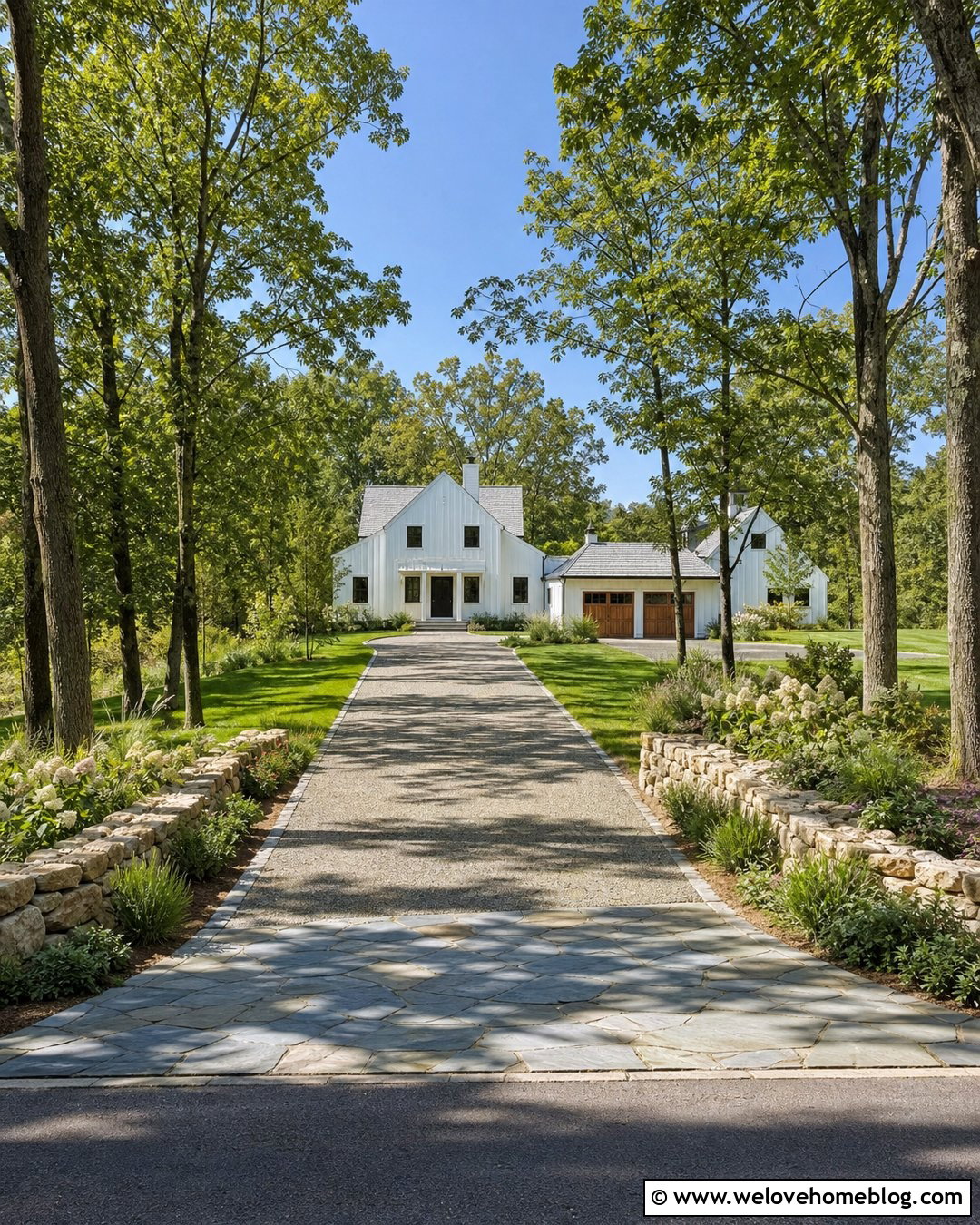
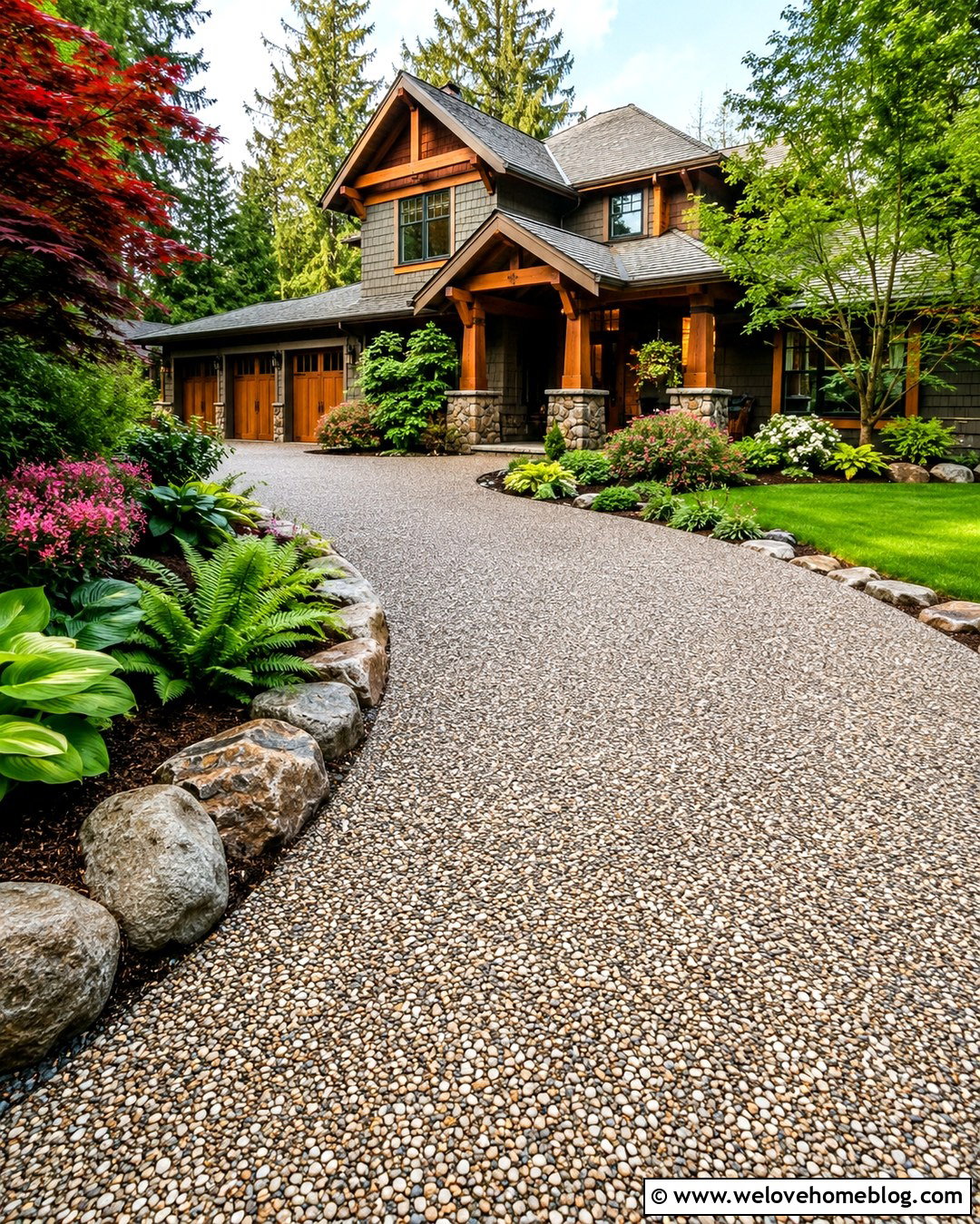
A natural stone apron can transform a simple aggregate driveway into a more memorable entrance. Use medium-grey exposed aggregate for the main surface and install a wide band of irregular flagstone or rectangular bluestone where the driveway meets the street. Repeat the stone near the garage or front walkway so the entrance detail feels connected to the house. Low fieldstone walls and informal planting beds can continue the natural theme. This complete look pairs especially well with farmhouses, mountain homes, and Craftsman architecture. Choose an apron stone with enough tonal contrast to remain visible but not so much variation that it overwhelms the gray aggregate. The apron should be professionally designed for vehicle loads, site drainage, and a smooth transition between the street and driveway.
12. Grey Exposed Aggregate Driveway With Brick Ribbon
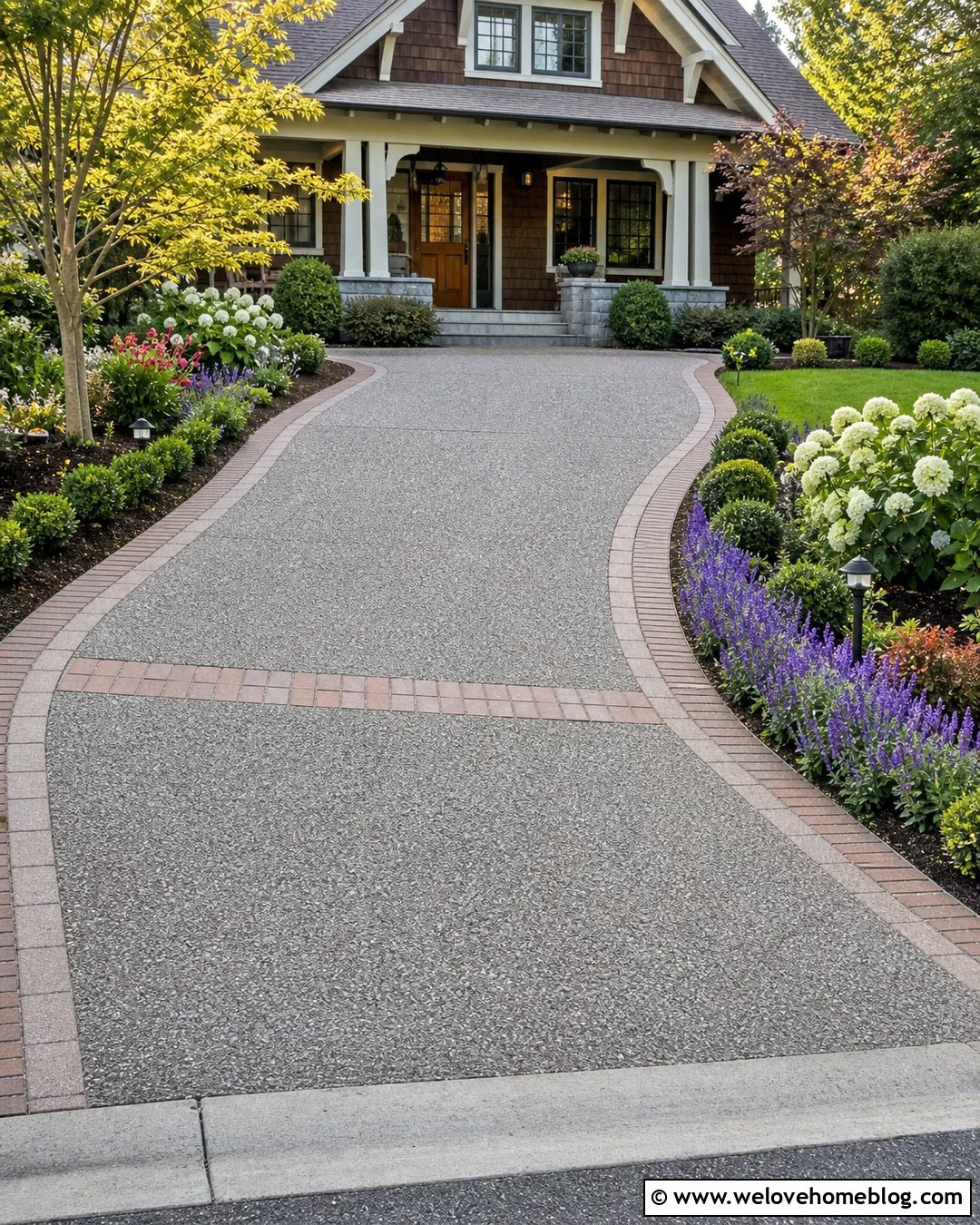
A narrow brick ribbon adds warmth without surrounding the entire driveway in red. Pour a medium-grey exposed aggregate surface and insert a single brick band several inches inside each outer edge. The exposed concrete beyond the ribbon acts as a secondary frame, producing a layered and tailored appearance. Carry the same brick across the driveway near the garage or walkway to create a coordinated threshold. On both sides, use gently curved planting beds filled with boxwood, salvia, hydrangeas, and seasonal color. This design complements Craftsman houses, traditional cottages, and brick ranch homes. Select a subdued brick blend with brown, burgundy, and charcoal tones instead of a bright uniform red. The ribbon should follow every curve consistently so the driveway looks carefully planned from end to end.
13. Narrow Grey Exposed Aggregate Driveway With Flush Edging
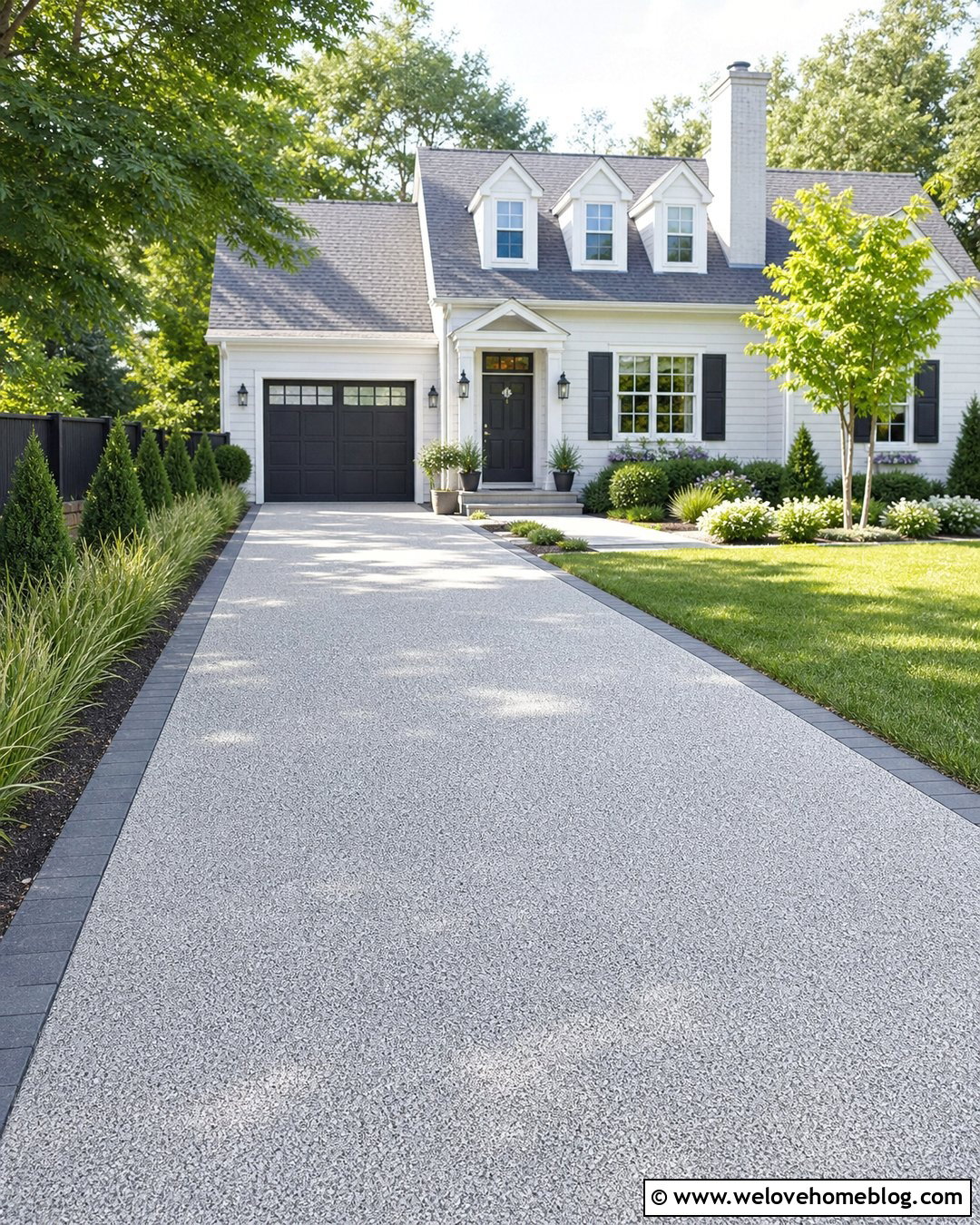
A small front yard benefits from a driveway that looks open, simple, and uncluttered. Choose a light-grey exposed aggregate finish and keep the driveway straight or only slightly curved. Install thin, flush charcoal paver edging rather than a wide decorative border that reduces the sense of space. Along one side, add a narrow planting bed with upright grasses, compact evergreen shrubs, and low flowering ground cover. The opposite side can remain open lawn to prevent the approach from feeling enclosed. Connect the driveway to the front door with a slim matching aggregate walkway. This layout is practical for compact ranch, Cape Cod, and townhome properties. A pale surface reflects more light visually, while restrained edging and narrow plants preserve the full usable width of the driveway.
14. Wide Grey Exposed Aggregate Driveway With Segmented Panels
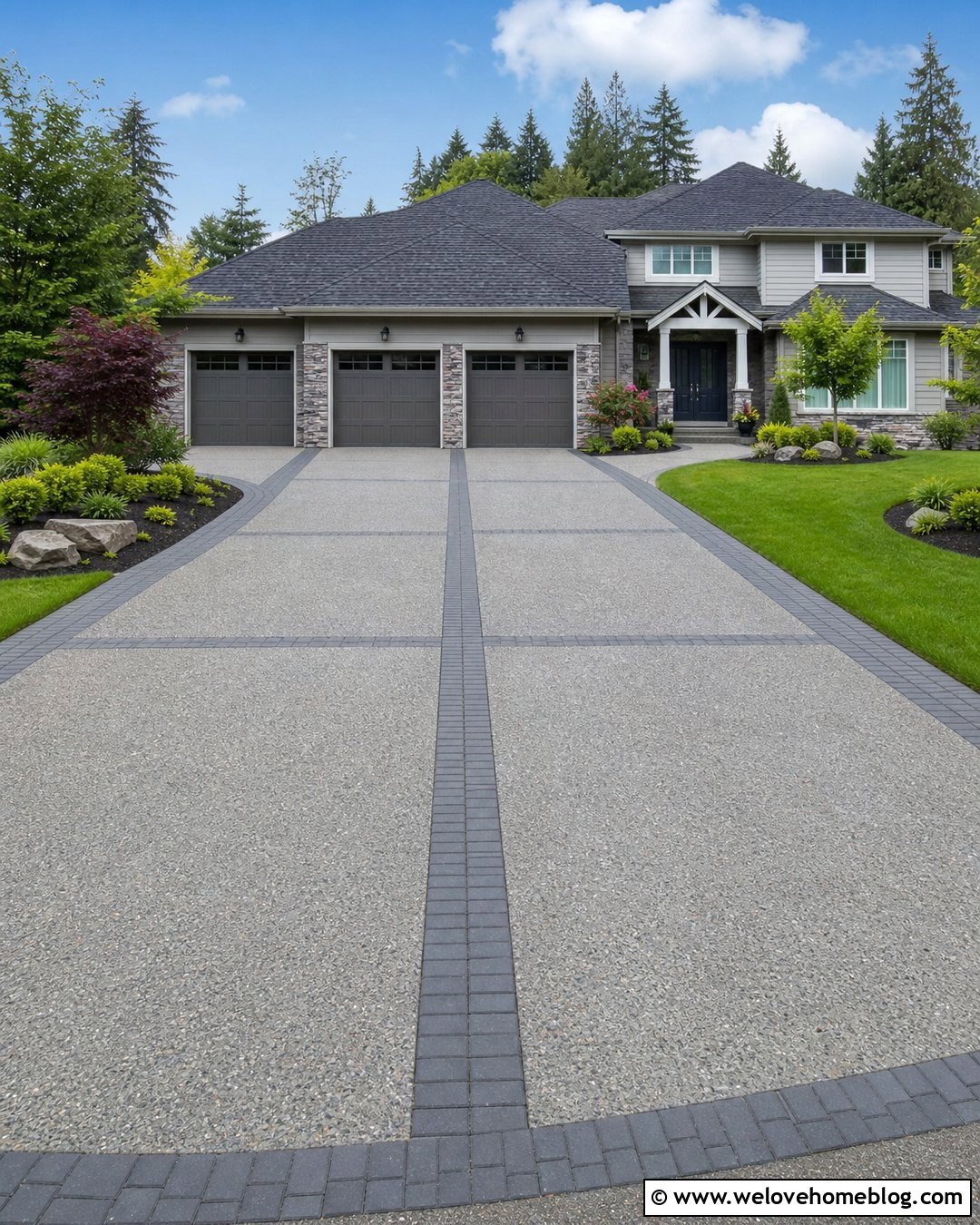
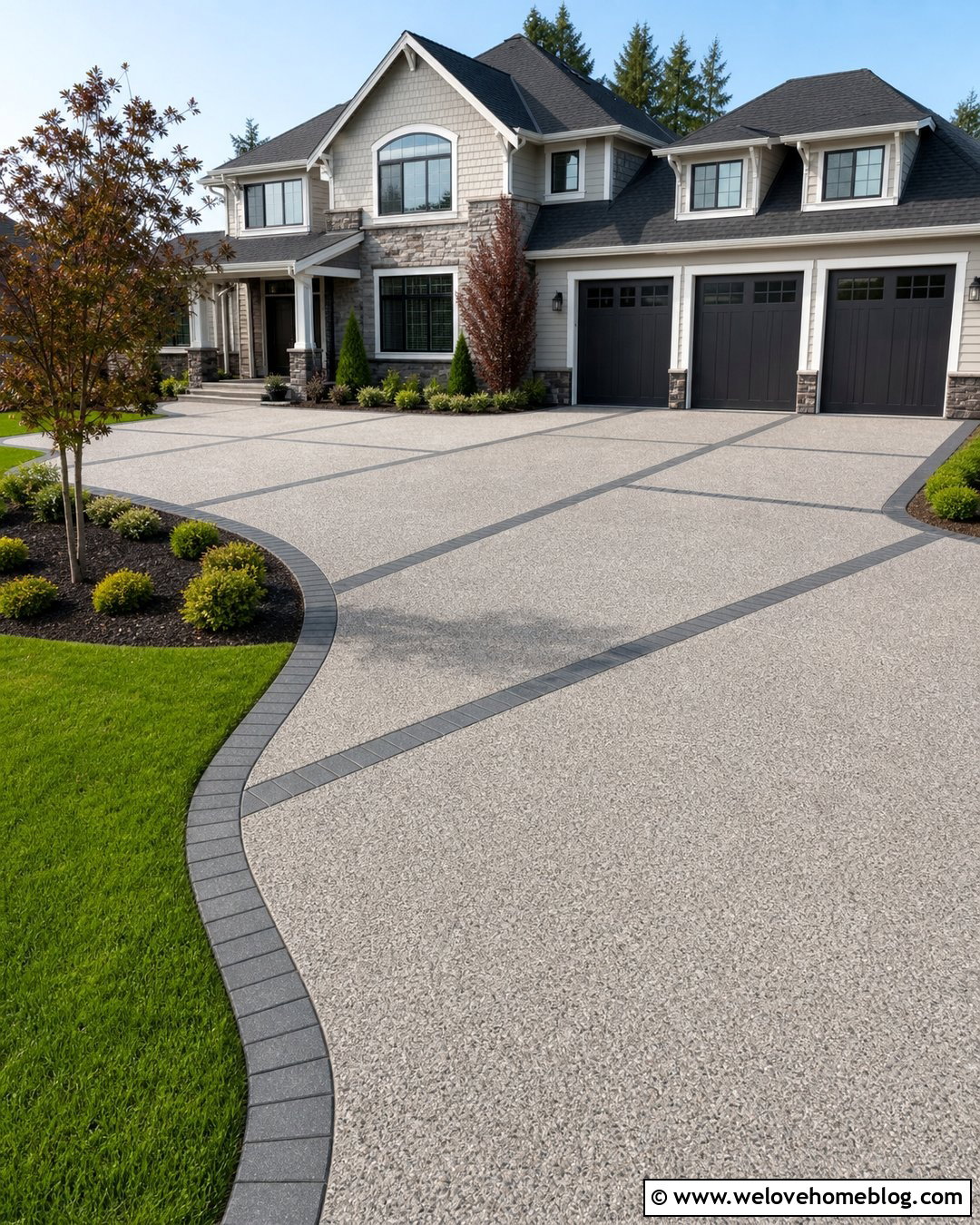
Large three-car driveways can feel expansive and blank unless the surface is visually divided. Use medium-grey exposed aggregate and organize it into broad rectangular panels with straight control joints. Dark-gray paver bands between garage bays can emphasize the segmentation and guide the eye toward each door. Frame the outer perimeter with the same pavers for a complete design. Balance the wide hardscape using generous lawn areas, layered evergreen beds, and small trees positioned near the corners of the house. A central walkway can break away from one panel and lead directly to the entrance. This arrangement suits large modern, transitional, and upscale suburban homes. Keep the pattern aligned with architectural features, including garage columns and windows, so the driveway looks integrated rather than randomly divided.
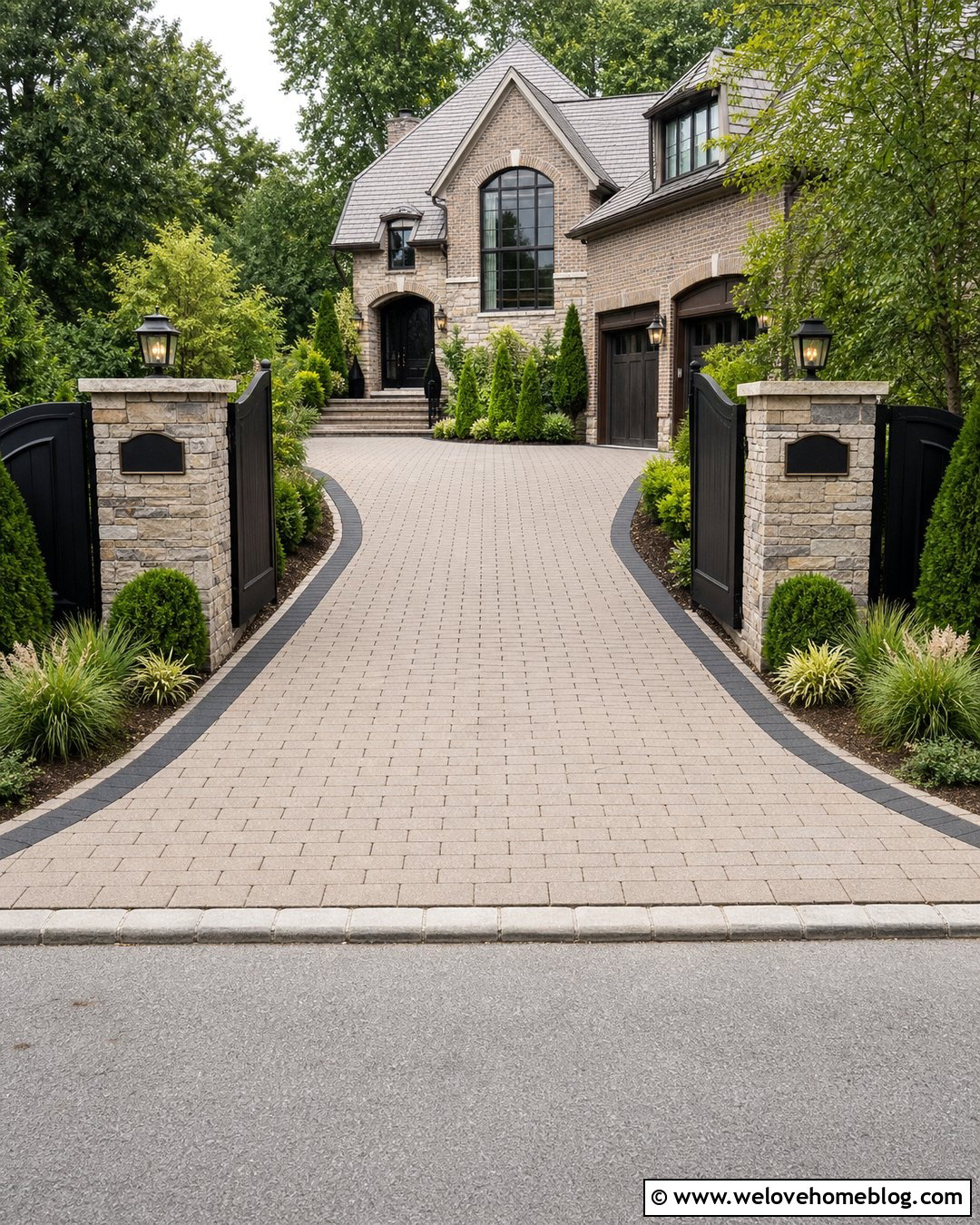
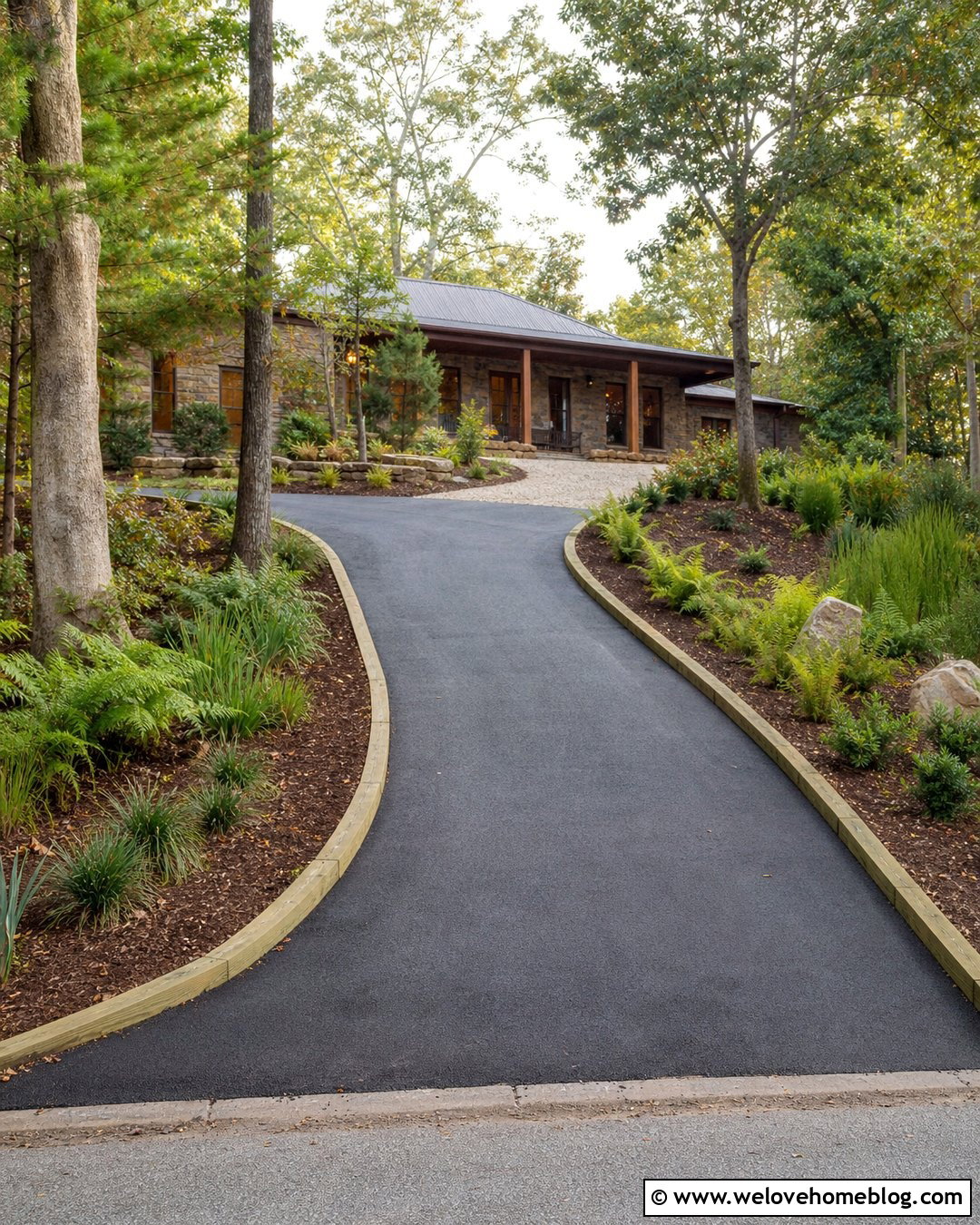
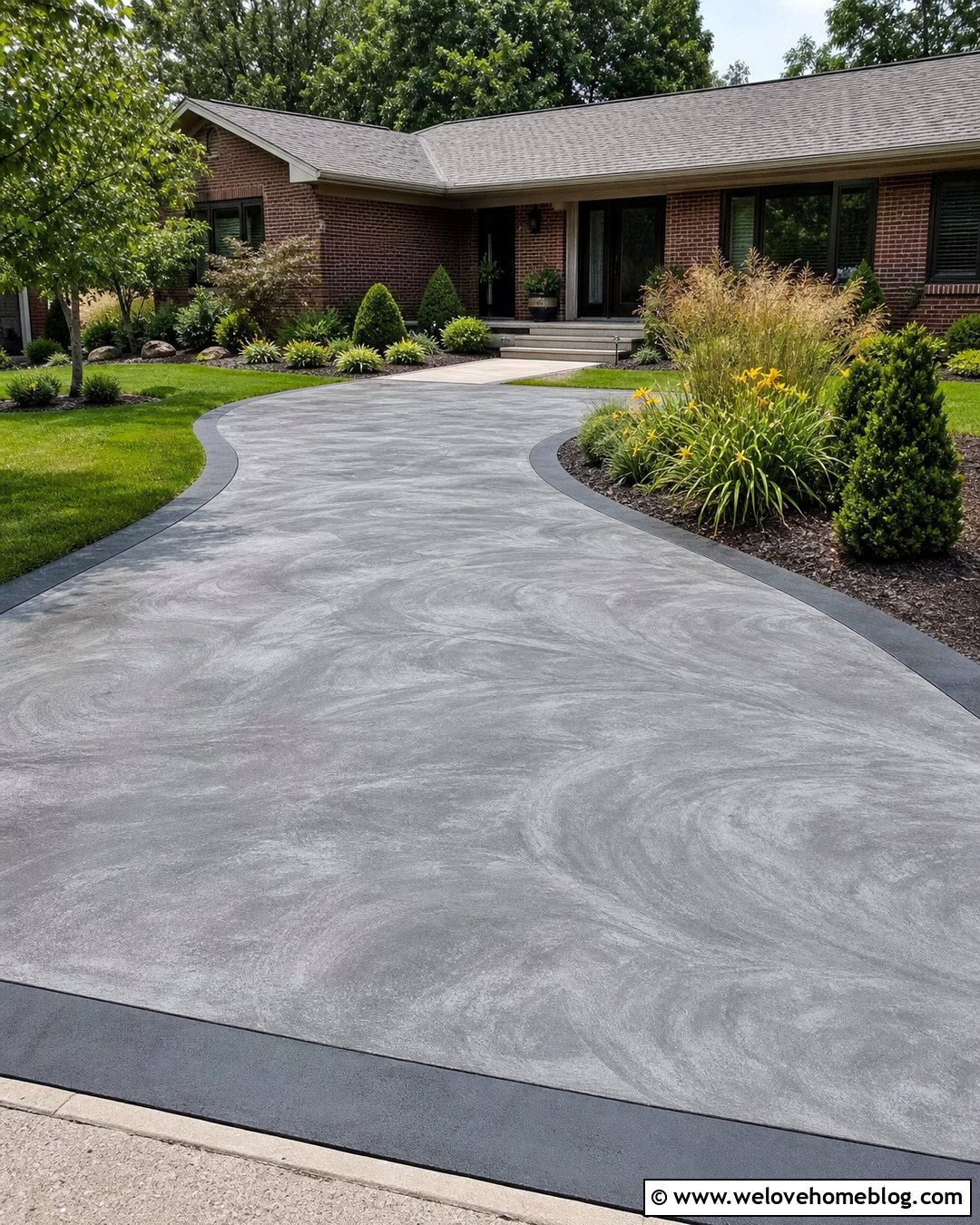
15. Sloped Grey Exposed Aggregate Driveway With Retaining Walls
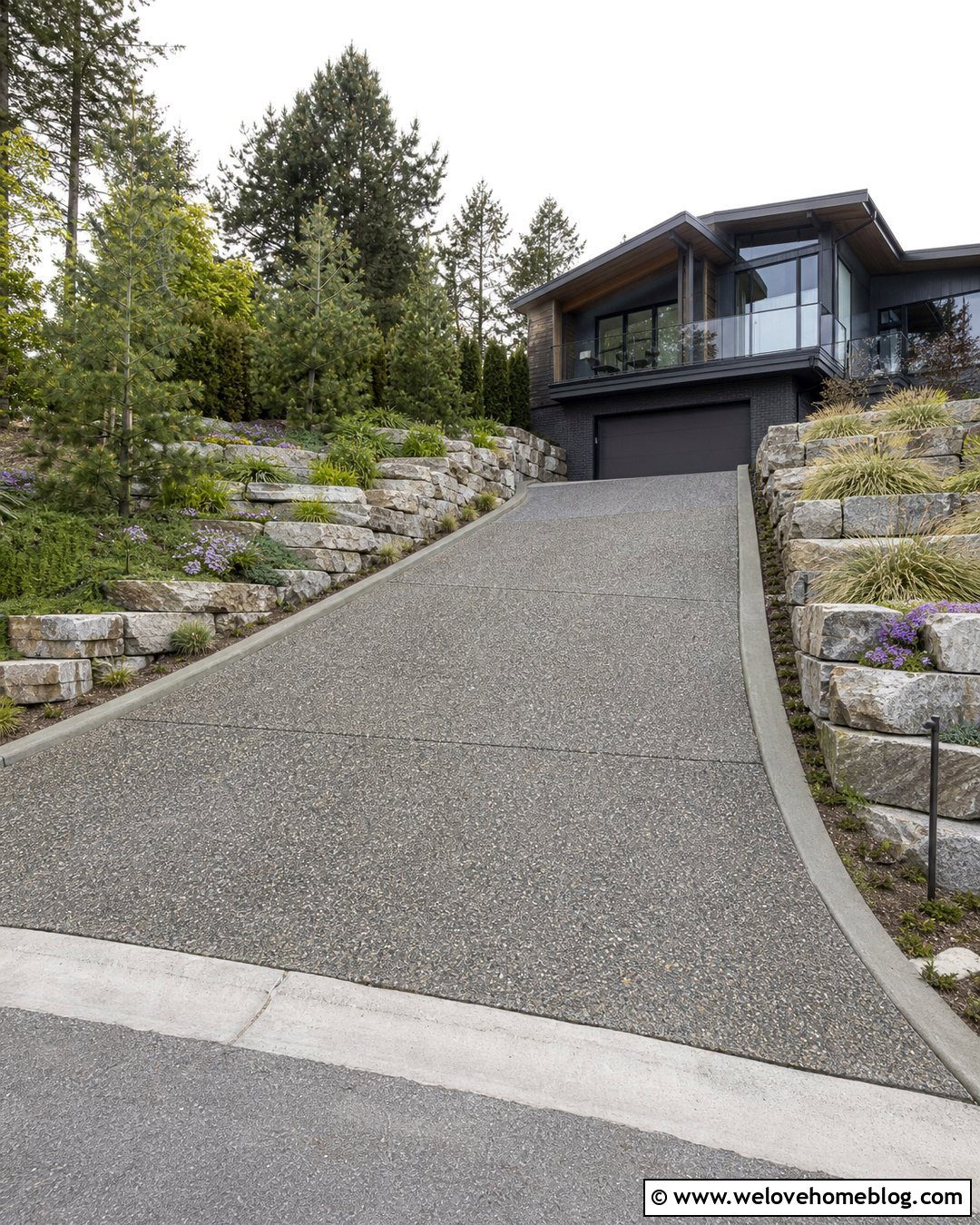
On a sloping property, the driveway and surrounding grade should read as one carefully engineered landscape. A medium or dark-grey exposed aggregate finish gives the incline visible texture while complementing stone or concrete retaining walls. Use low walls along the higher side of the driveway, stepping them gradually with the slope. Plant the terraces with spreading evergreens, ornamental grasses, and erosion-conscious ground cover. On the open side, maintain a sturdy flush curb that clearly defines the driving edge. Add a contrasting paver apron at the top near the garage to mark the transition to level ground. This complete look works with hillside ranch, contemporary, and mountain homes. Have the slope, drainage, reinforcement, joint placement, and wall construction evaluated by qualified local professionals before installation.
16. Long Grey Exposed Aggregate Driveway With Tree-Lined Landscaping
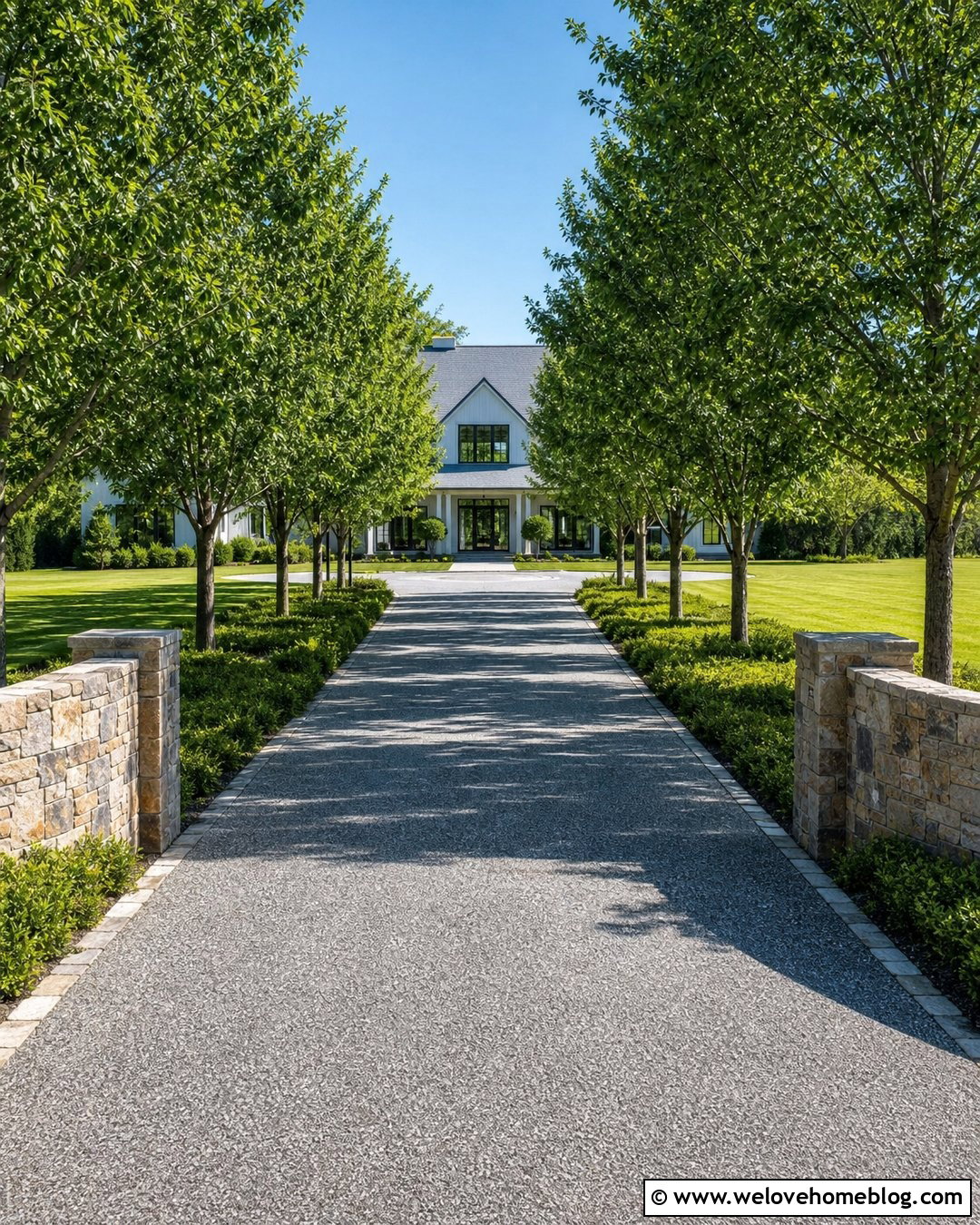
A long driveway can create an impressive approach when planting provides rhythm and scale. Use a consistent mid-grey exposed aggregate surface with narrow natural-stone edging on both sides. Plant evenly spaced deciduous or evergreen trees beyond the edging, leaving enough room for mature trunks, roots, and branches. Beneath them, use lawn or broad sweeps of low ground cover rather than busy flower beds. Near the house, widen the driveway into a turnaround or parking court that repeats the same aggregate and stone materials. Low entrance walls can introduce the border stone at the street. This design suits country homes, modern farmhouses, and large suburban lots. The restrained gray palette keeps attention on the long view, while the repeated trees naturally direct the eye toward the residence.
17. Grey Exposed Aggregate Driveway With Modern Gate
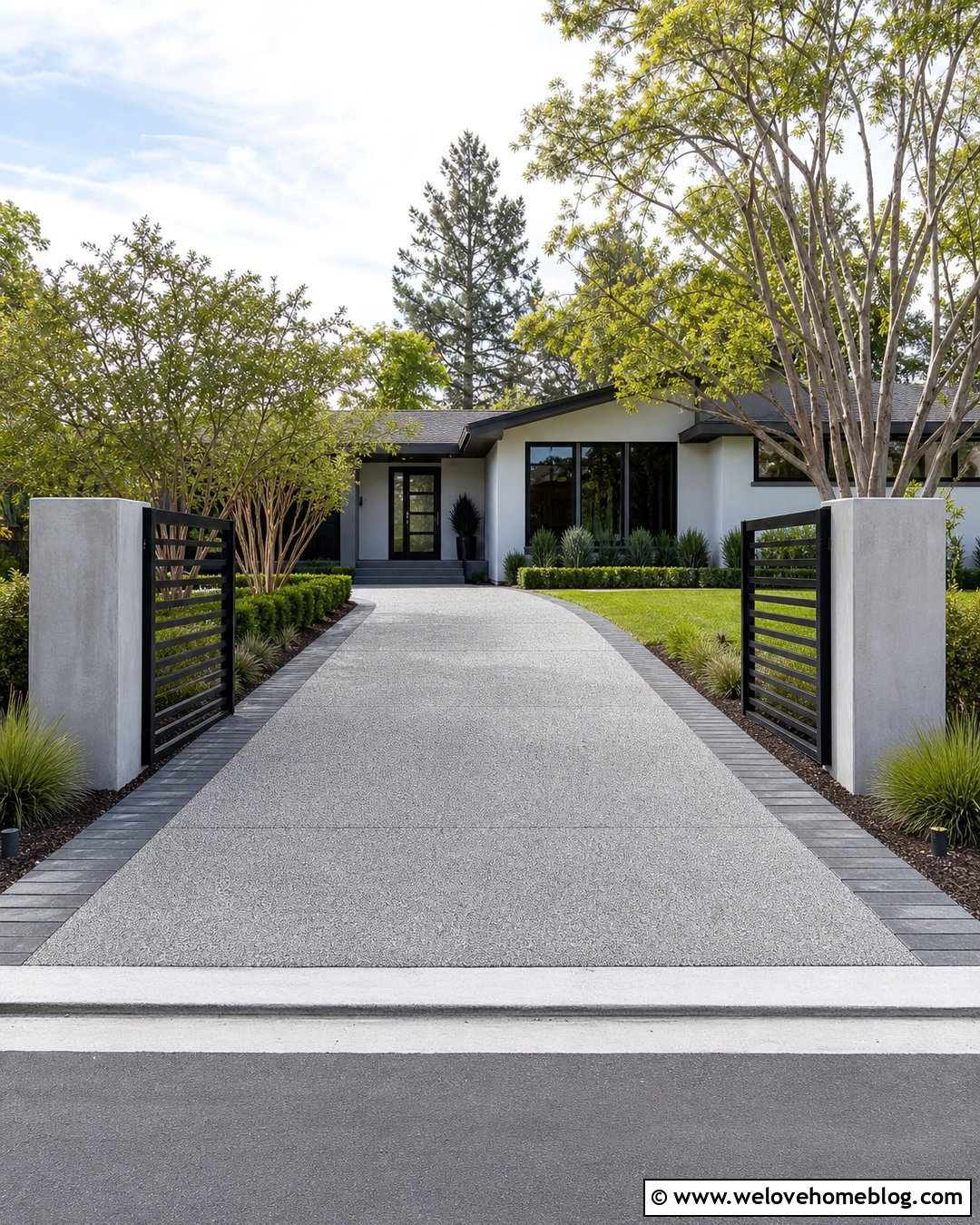
A minimalist gate looks strongest when the driveway beneath it uses an equally restrained palette. Choose smooth-edged grey exposed aggregate with fine charcoal, silver, and white stones. Frame the entrance with simple stucco or concrete pillars, then install a horizontal black metal or wood-and-steel gate between them. Continue a charcoal paver border from the street through the gate and toward the house. Low hedges, ornamental grasses, and small multi-stem trees can soften the structure without concealing it. This combination works well with contemporary, mid-century, and modern farmhouse exteriors. Provide a generous setback between the gate and street so vehicles can wait safely where required. The gate, pillars, border, and driveway should share clean lines, making the entire entrance appear deliberate and visually balanced.
18. Grey Exposed Aggregate Driveway With In-Ground Lighting
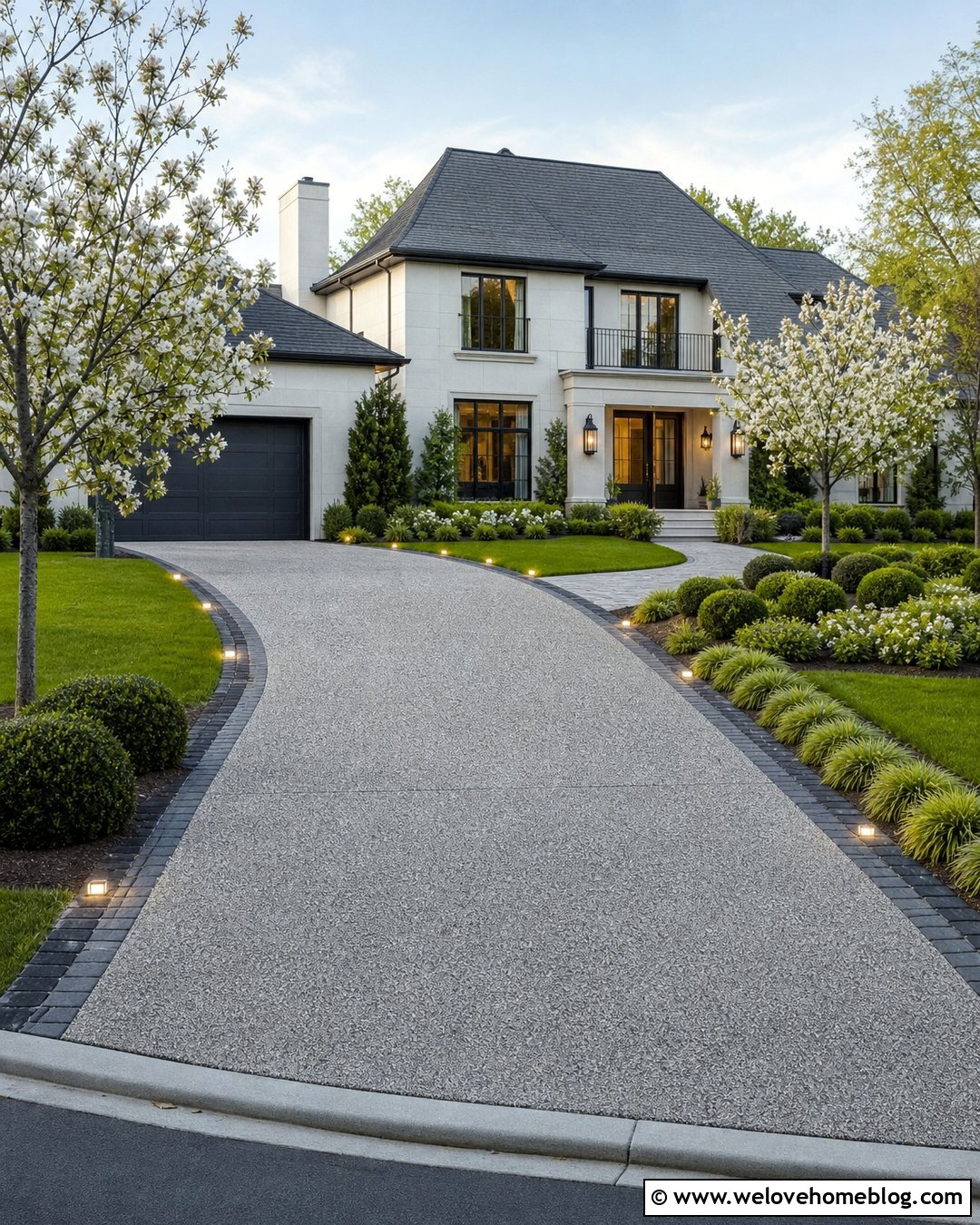
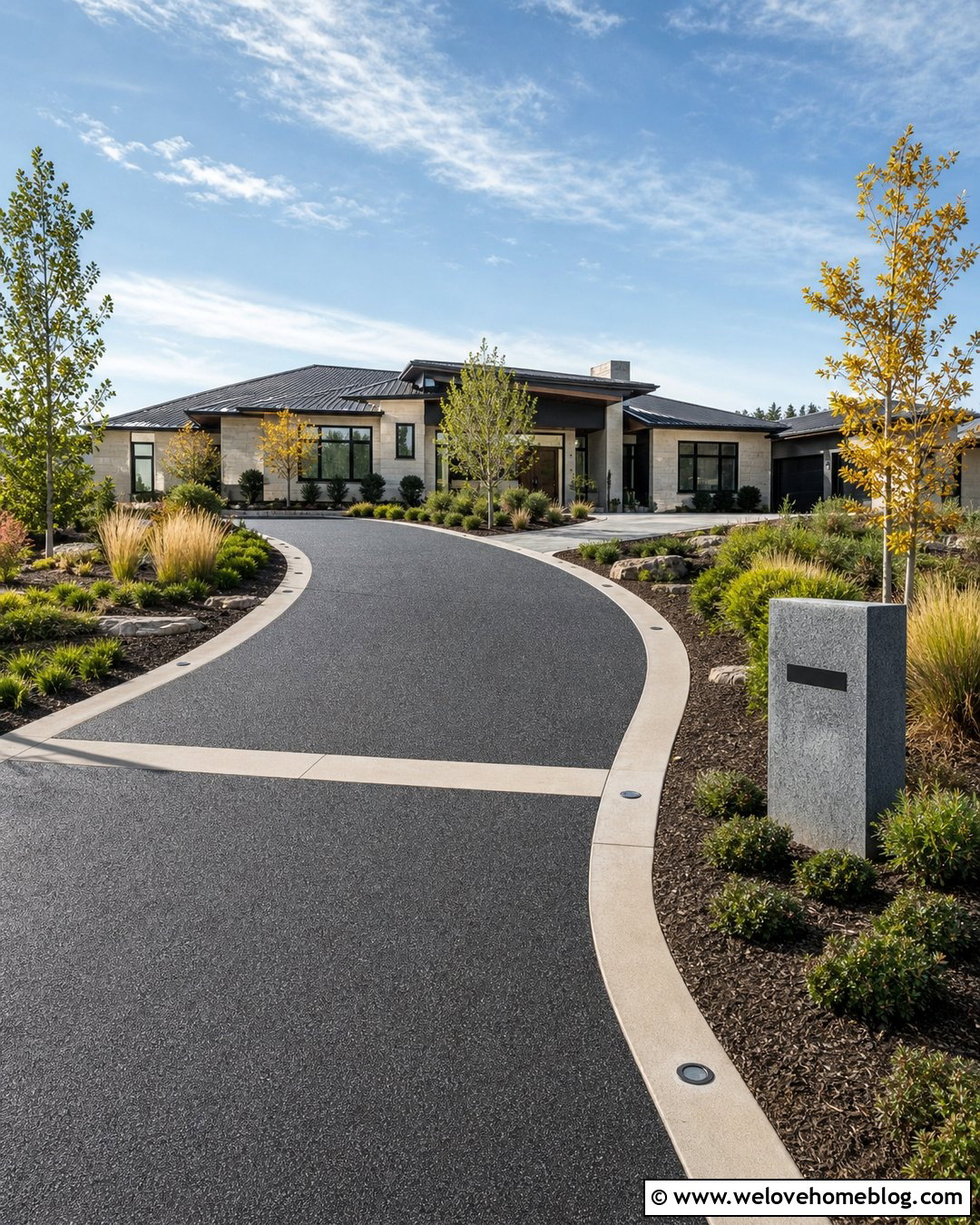
Subtle lighting can improve the appearance of a driveway entrance while helping define its edges. Begin with medium-grey exposed aggregate and add a dark cobblestone or charcoal paver border. Install small, appropriately rated in-ground fixtures beside the border rather than scattering lights across the primary tire paths. During daylight, the fixtures should sit flush and remain visually quiet. Frame the approach with low grasses, rounded shrubs, and one or two ornamental trees. A matching illuminated walkway can guide visitors toward the front entrance. This complete layout fits modern, transitional, and upscale traditional homes. Coordinate fixture placement before the concrete is poured, and have the electrical design handled according to applicable local requirements. The finished driveway should remain attractive in bright daylight, with lighting serving as a secondary feature.
19. Grey Exposed Aggregate Driveway With Matching Walkway
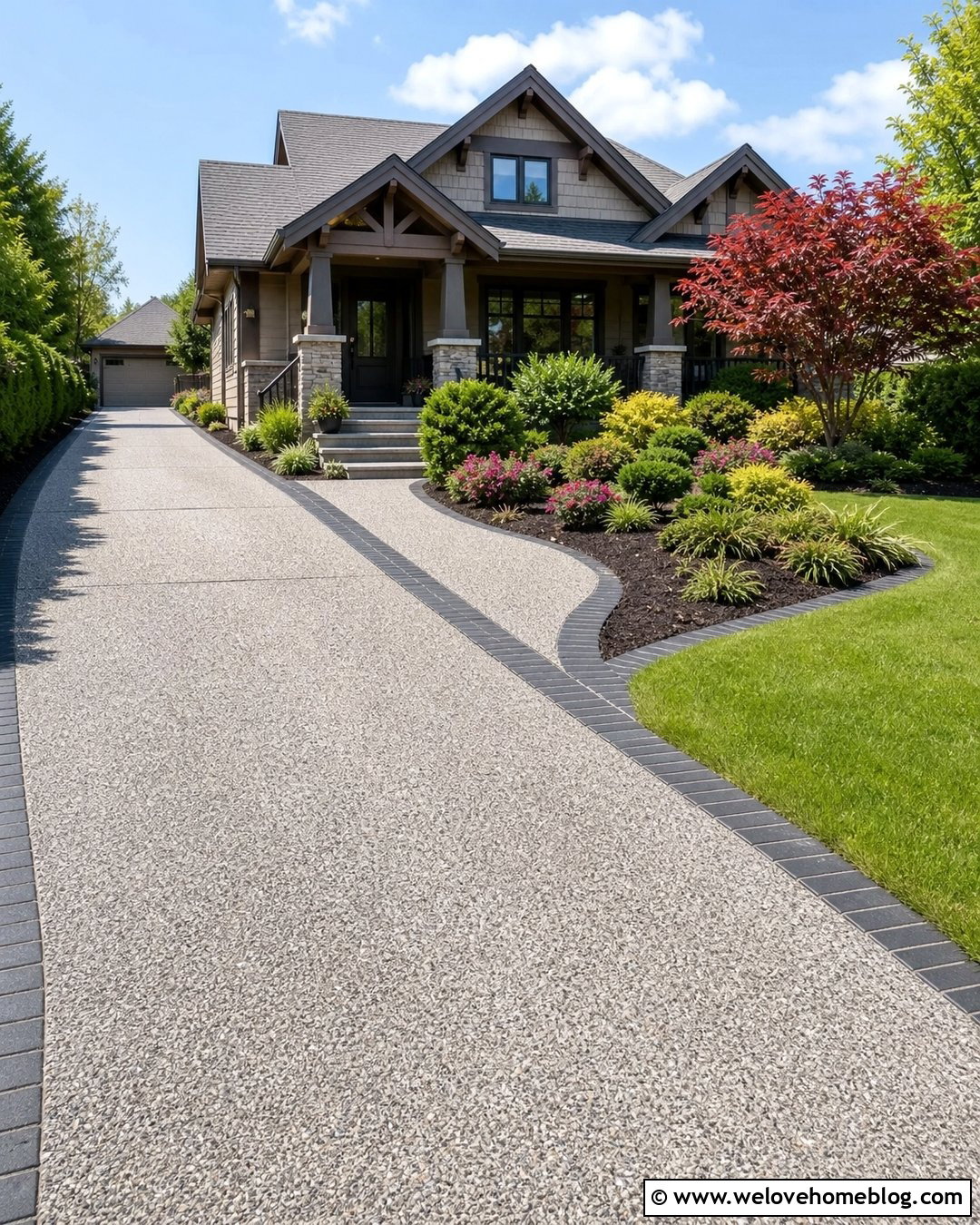
Using the same finish for the driveway and front path can make a fragmented yard feel more connected. Select a soft grey exposed aggregate blend and continue it into a walkway that branches toward the porch. Define both surfaces with a matching charcoal, brick, or natural-stone border. Where the walkway separates, create a wide curved planting bed filled with layered shrubs, perennials, and a small ornamental tree. This landscaped junction becomes a focal point and prevents the hardscape from looking like one oversized slab. The approach works with ranch, Craftsman, Cape Cod, and transitional homes. Keep the walkway narrower than the driveway but repeat its aggregate color and edging proportions. Coordinated materials help visitors understand the route to the door while giving the entire front yard a unified appearance.
20. Two-Tone Grey Exposed Aggregate Driveway With Geometric Bands
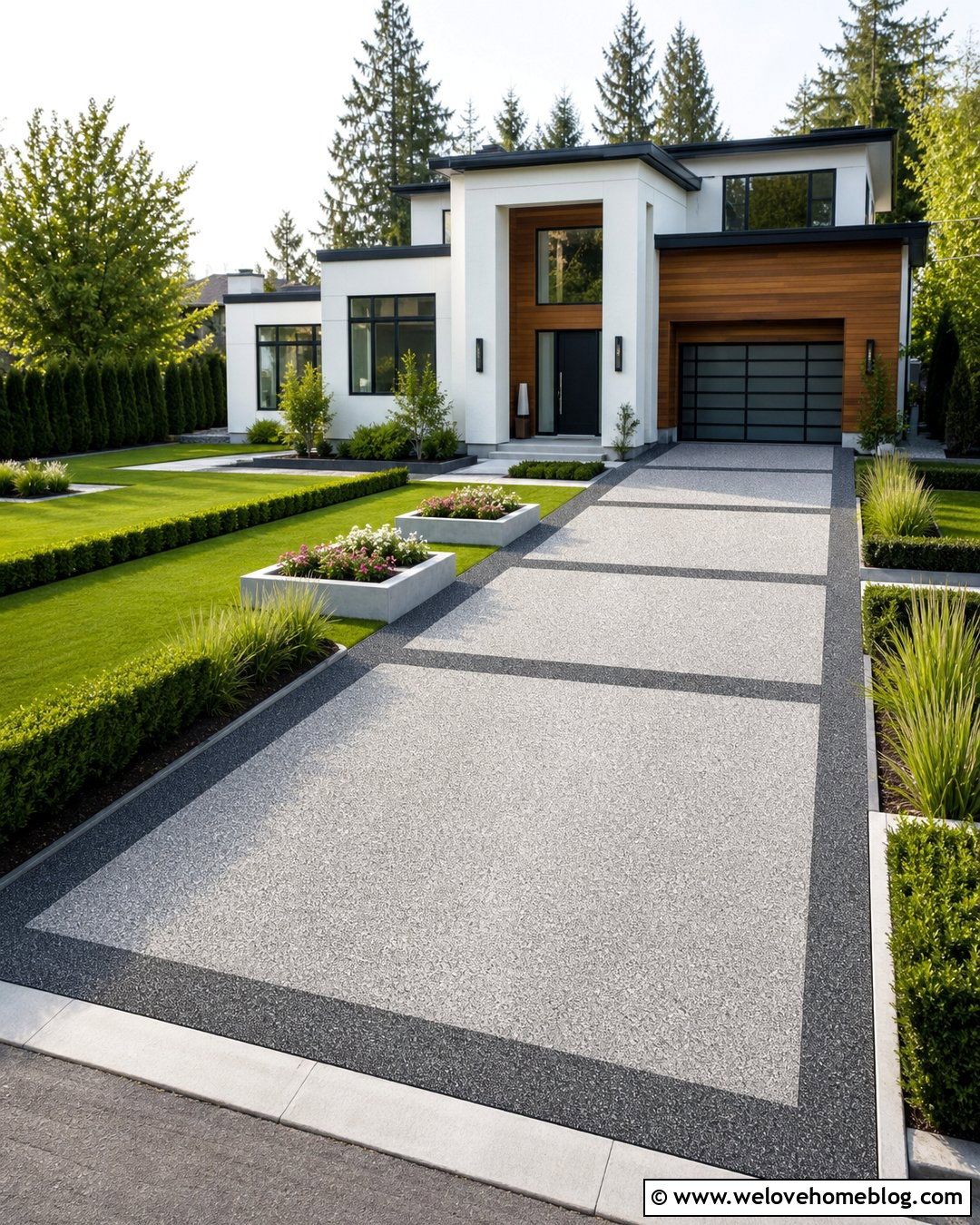
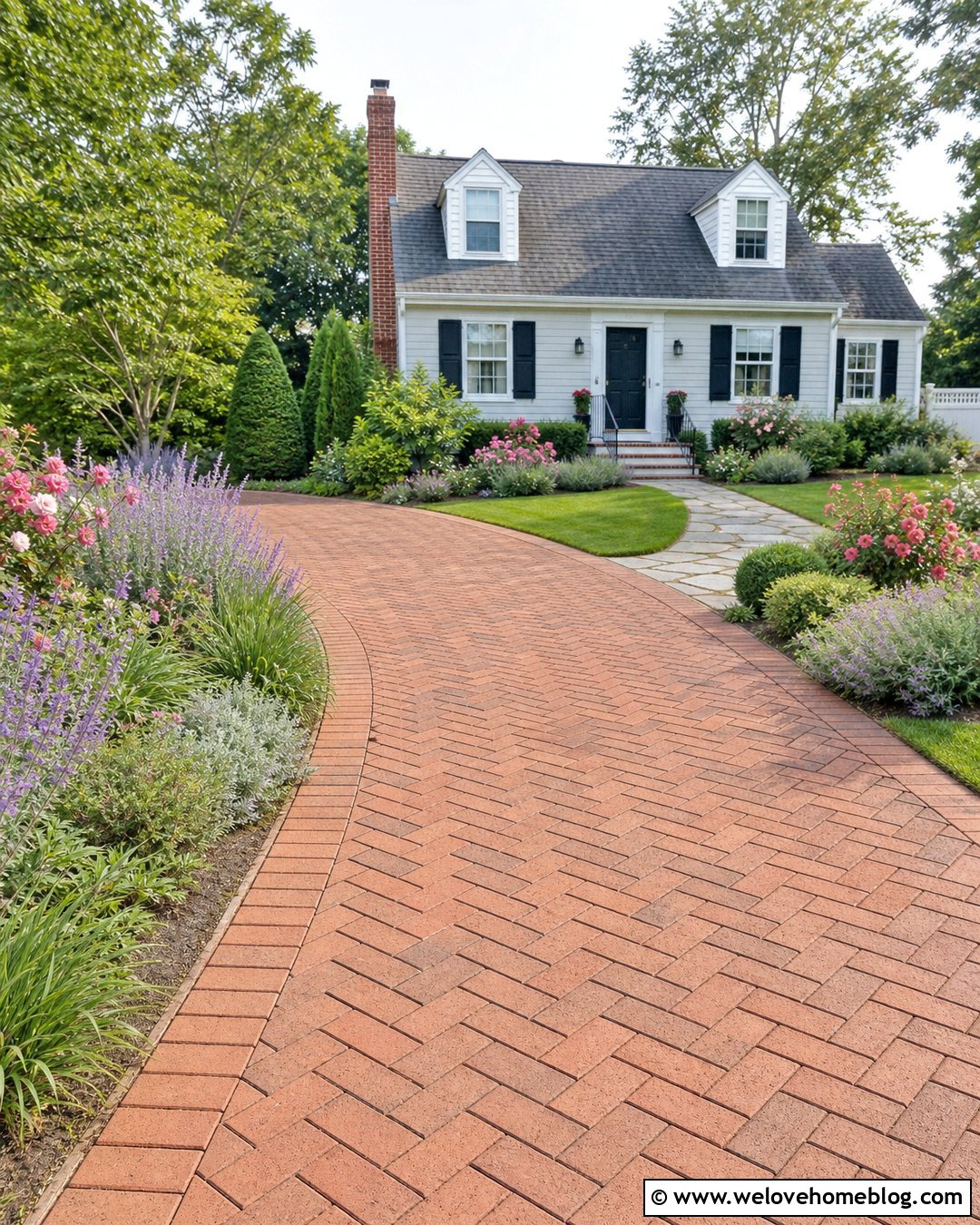
Two shades of gray can add depth while preserving a neutral, practical palette. Use light-grey exposed aggregate for the main driveway and darker charcoal-grey exposed aggregate for broad perimeter borders and crossbands. Arrange the darker sections in a simple geometric layout that aligns with the garage doors, walkway, and front facade. Avoid small decorative shapes, which can make the surface look overly busy. Surround the driveway with structured lawn panels, clipped evergreen hedges, and rectangular planting beds containing grasses or white flowers. This design is especially effective beside modern and contemporary houses with mixed white, gray, and wood finishes. Ask for physical samples of both aggregate blends before finalizing the combination. The stones should create visible contrast while still sharing enough color to look intentionally coordinated.
Conclusion:
The best gray aggregate driveway is not defined by the concrete finish alone. Its shape, stone blend, border, landscaping, entrance, and relationship to the house all influence the final result. Black pavers can create modern contrast, while brick, cobblestone, and natural stone introduce traditional character. Circular layouts suit broad front yards, and narrow straight designs make smaller properties feel organized. Before choosing a finish, compare physical aggregate samples outdoors and consider how they coordinate with the roof, facade, garage doors, and walkways. Proper grading, installation, and joint planning are equally important. Use these **20 Grey Exposed Aggregate Driveway Ideas** to develop a complete design that combines practical access with lasting curb appeal.

Related posts:
Leave a Reply