
Exposed aggregate can make a practical driveway feel thoughtfully connected to the home. Its final color comes from the stone blend, concrete base, exposure depth, and sealer, so even similar mixes can produce noticeably different results. () This guide to **20 exposed aggregate driveway colours ideas** explores complete looks rather than simple color samples. Each option combines a specific aggregate palette with a driveway shape, border, landscaping, and house style. You will find pale coastal finishes, warm earth tones, traditional river pebbles, dramatic charcoal mixes, and several balanced multicolor combinations. Before choosing, compare full-size cured samples outdoors beside your siding, brick, roof, and hardscaping. Use the following **20 exposed aggregate driveway colours ideas** to create a coordinated entrance with lasting curb appeal.

1. Light Gray Exposed Aggregate Driveway
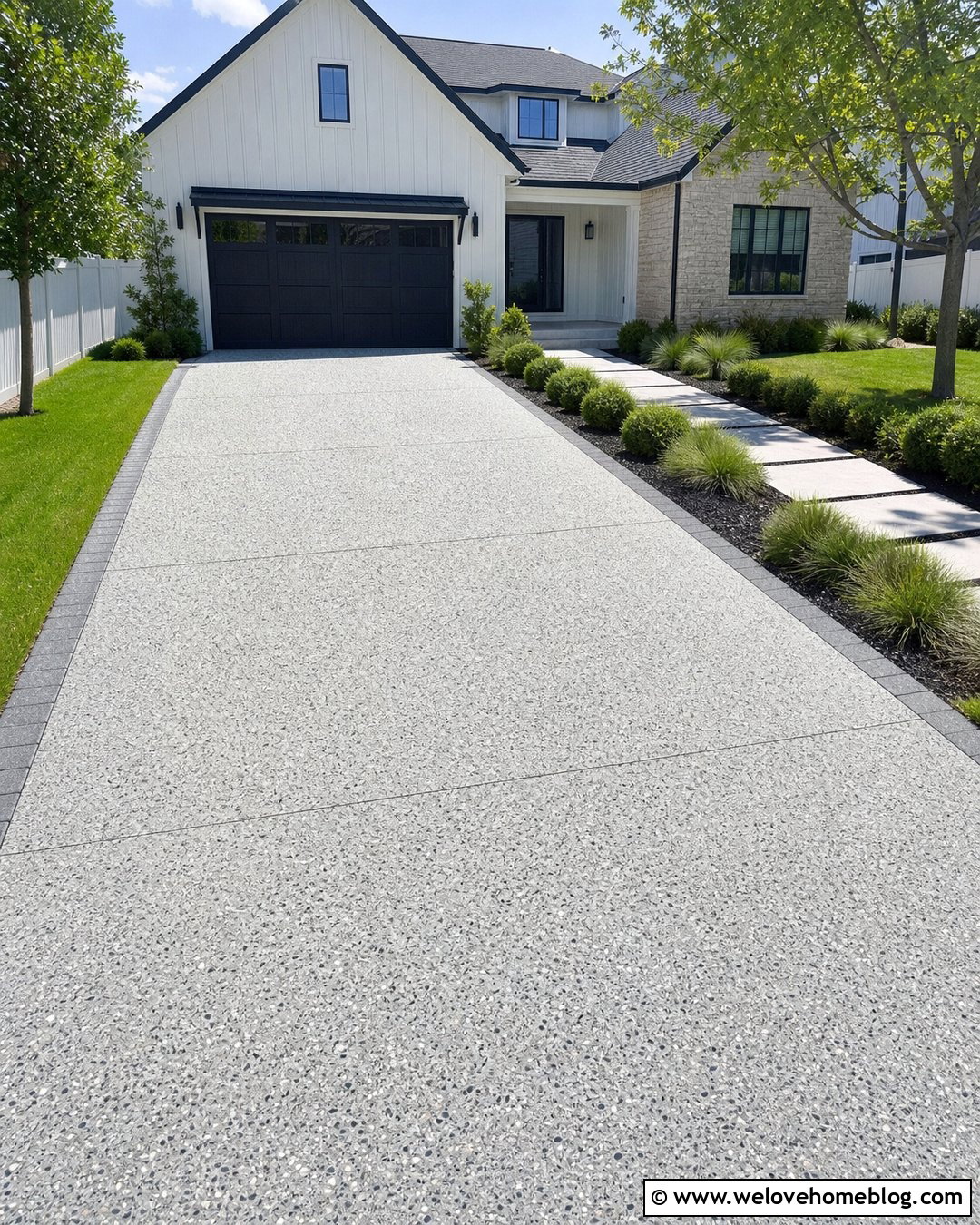
A light gray exposed aggregate driveway creates a clean foundation without looking cold or unfinished. Choose a pale gray cement base containing small pieces of silver granite, white quartz, and soft charcoal stone. A medium exposure level will reveal enough variation while preserving a relatively refined surface. For a modern suburban home, use a straight driveway with narrow charcoal paver borders and crisp rectangular planting beds. Feather grass, boxwood, and white flowering perennials reinforce the quiet palette. Light gray also works well when the house has white siding, gray brick, black windows, or a cool-toned roof. Because outdoor light can affect its appearance, review cured samples in sun and shade before approving the final concrete mix.
2. Charcoal Exposed Aggregate Driveway
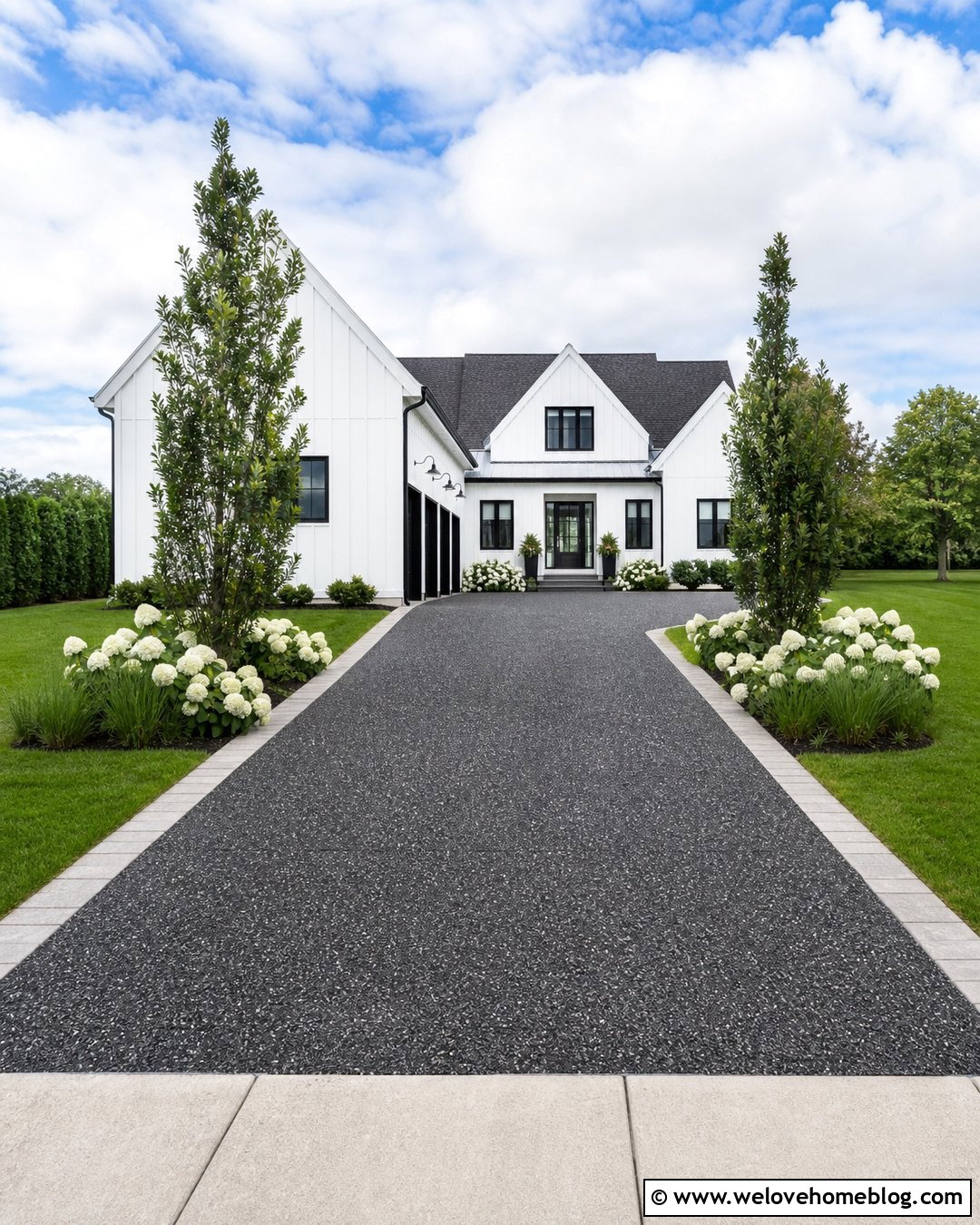
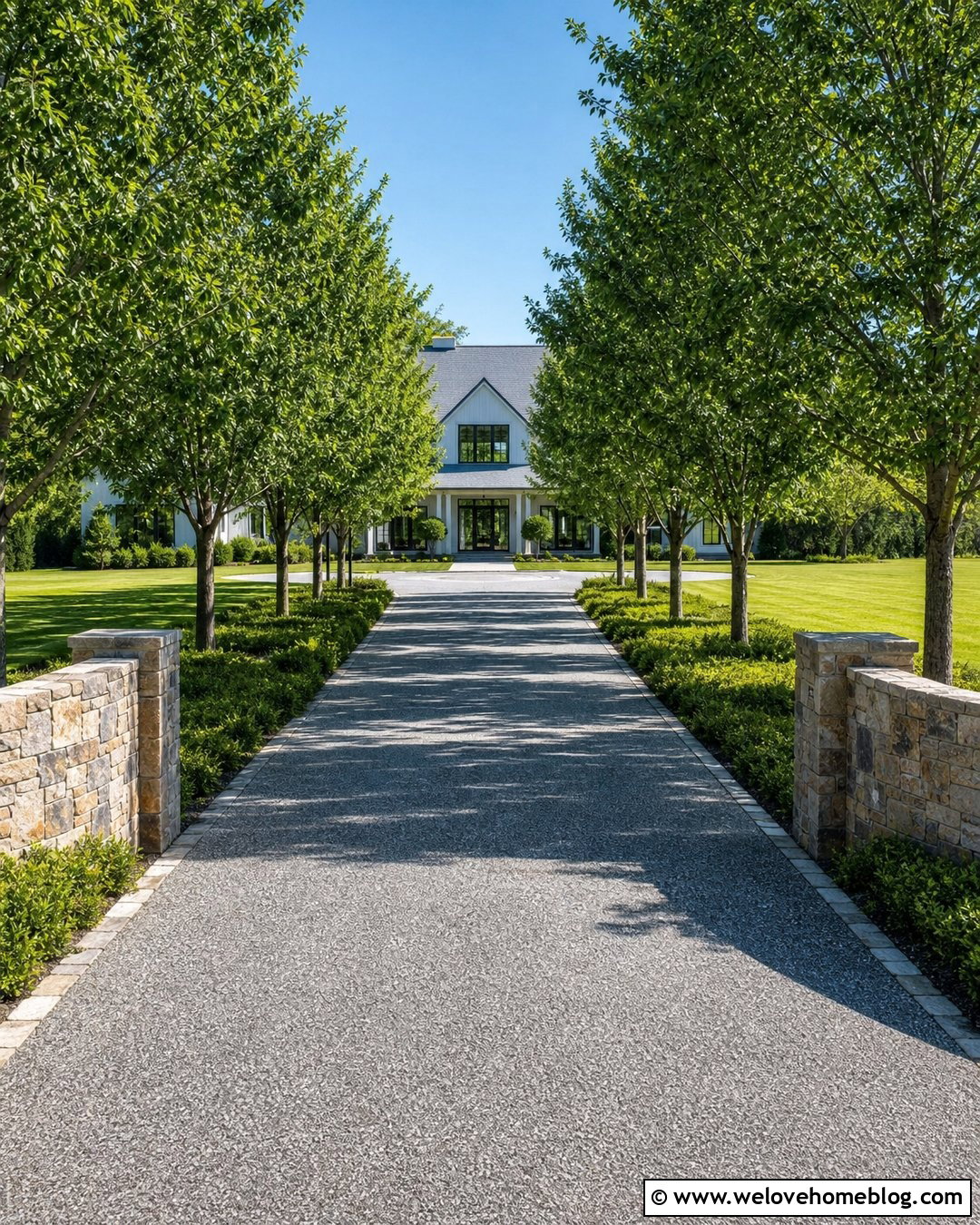
Deep charcoal aggregate gives a driveway a strong architectural presence, especially beside a light-colored house. The most balanced mixes combine a charcoal-tinted concrete base with black basalt, dark granite, and occasional pale stones. Those lighter pieces keep the surface from appearing completely flat. Use this color on a wide, straight driveway leading to a white modern farmhouse or minimalist stucco home. A slim border of pale concrete pavers can define the edges and create a practical transition to the lawn. Keep the landscaping simple with ornamental grasses, clipped evergreens, and white hydrangeas. Dark driveways can become visually dominant, so repeating charcoal on the roof, window frames, gate, or planters helps the entire frontage feel intentional rather than disconnected.
3. Salt And Pepper Exposed Aggregate Driveway
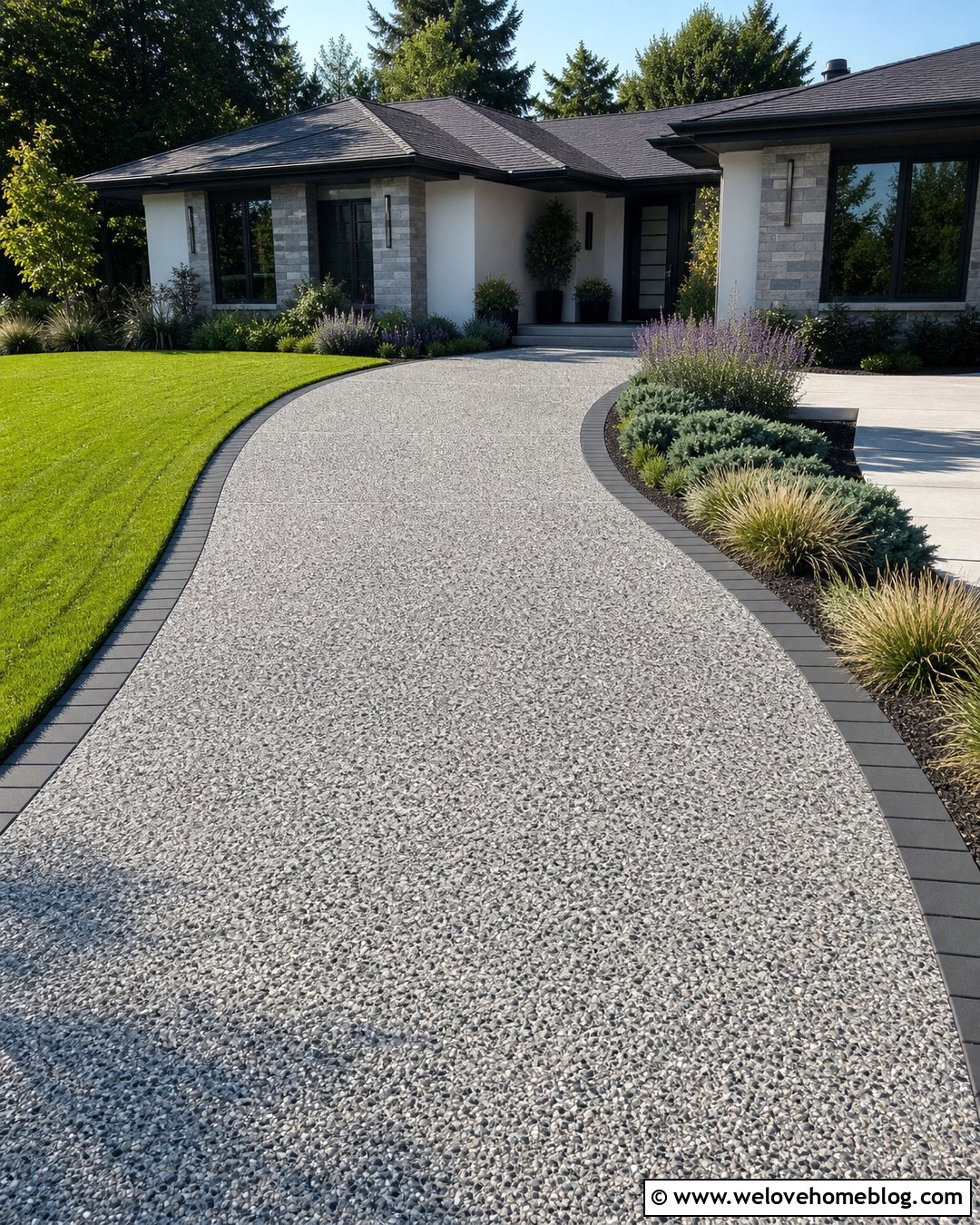
Black and white stone creates a lively salt-and-pepper finish that suits both renovated homes and new construction. Select an exposed aggregate mix containing white quartz, black basalt, gray granite, and a neutral mid-gray cement base. The contrasting stones disguise minor surface dust while adding movement across a large paved area. A gently curved driveway can soften the high-contrast color combination and guide the eye toward a contemporary ranch house. Frame it with a simple black paver ribbon, green lawn, and layered beds of juniper, lavender, and dwarf grasses. Avoid adding too many competing hardscape colors nearby. Black metal lighting, pale concrete steps, and a coordinating walkway are enough to connect the driveway to the house while keeping the overall entrance crisp and organized.
4. Warm Beige Exposed Aggregate Driveway
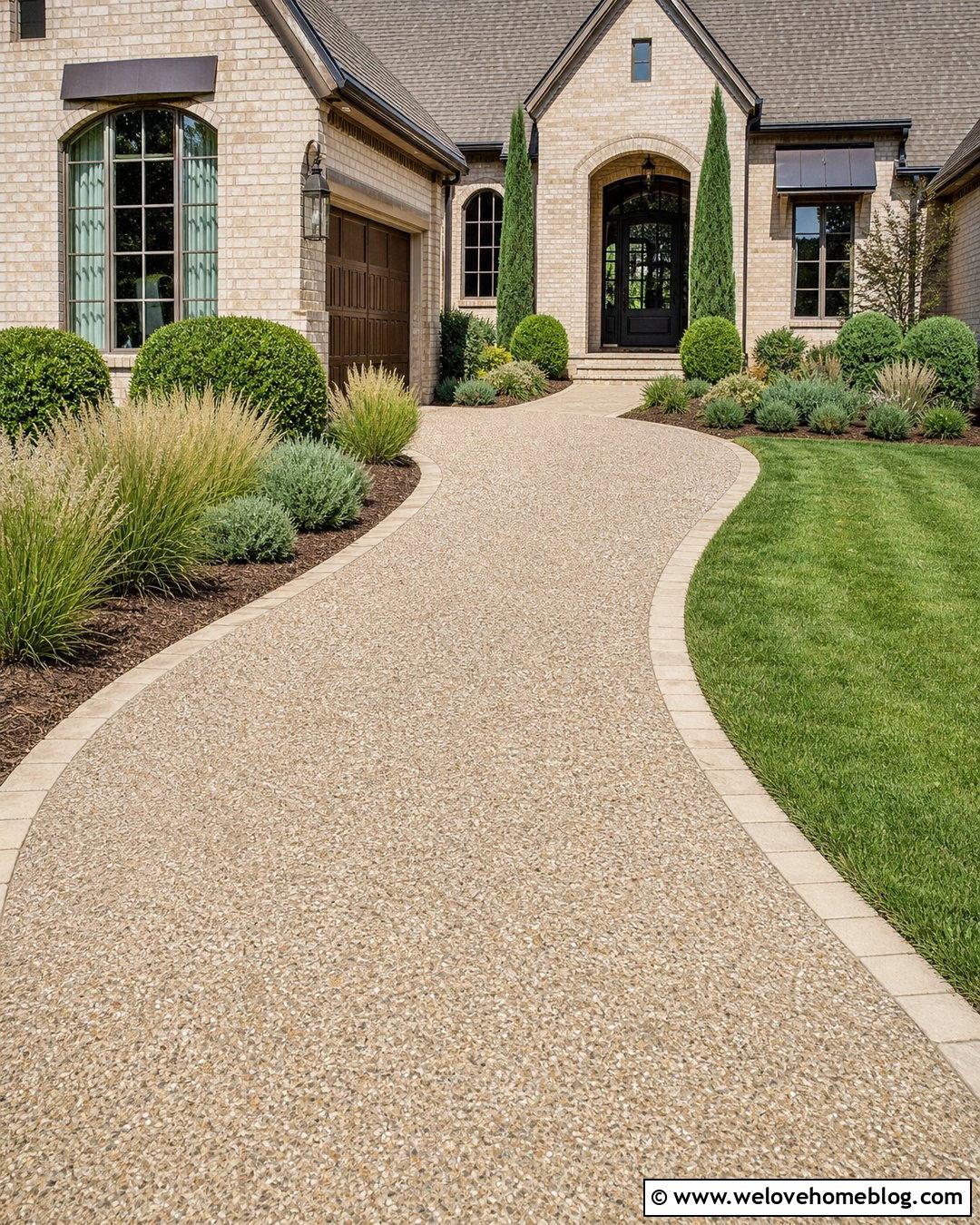
Warm beige aggregate can make a broad driveway feel softer and more welcoming. Look for a cream or tan cement base mixed with small beige pebbles, light brown river stone, and occasional ivory quartz. This combination naturally complements buff brick, tan stucco, natural stone veneer, and warm white siding. A curved driveway with rounded planting beds will strengthen the relaxed appearance. Define its edges with limestone-colored pavers instead of a dark border, then add rosemary, sage, fountain grass, and low evergreen shrubs. The closely related colors create a smooth transition between pavement and landscaping. Warm beige is particularly useful when gray concrete would conflict with brown roofing or masonry. Test the mix beside those permanent exterior materials to confirm that its undertone is not overly yellow or pink.
5. Sandy Cream Exposed Aggregate Driveway
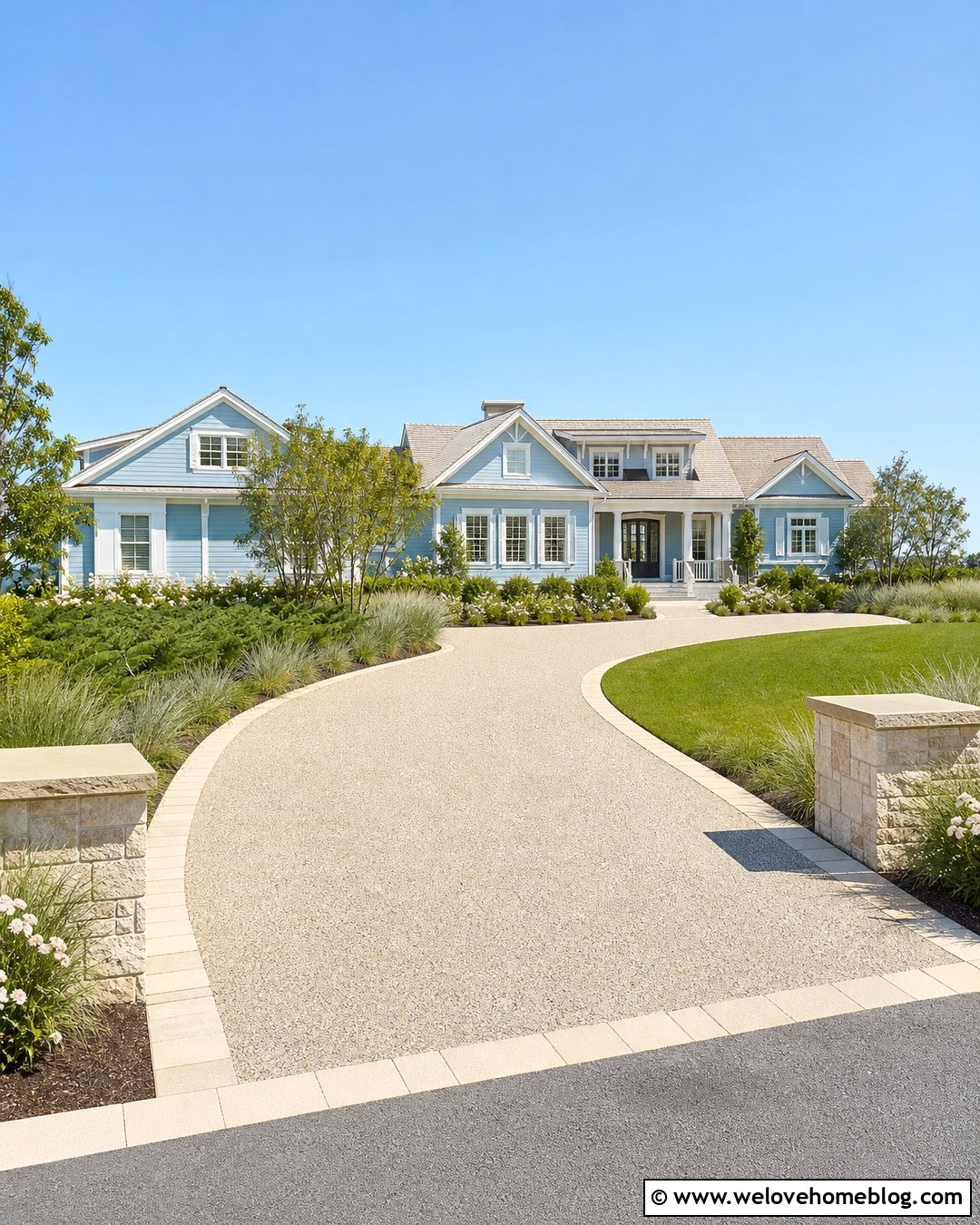
Imagine a bright driveway that reflects the character of a relaxed coastal home. Sandy cream exposed aggregate combines an off-white concrete base with fine tan pebbles, cream quartz, and subtle gray flecks. A light-to-medium exposure produces a delicate texture that looks polished from the curb without becoming visually busy. Use the finish on a wide horseshoe driveway serving a pale blue, white, or weathered-shingle house. Cream limestone edging can follow the curves, while dune grass, low juniper, white roses, and a generous lawn frame the entrance. A matching walkway provides continuity between the driveway and front porch. Since very pale paving may show organic stains more readily, maintain clear drainage and avoid placing messy fruiting trees directly over the driving surface.
6. Off-White Quartz Exposed Aggregate Driveway
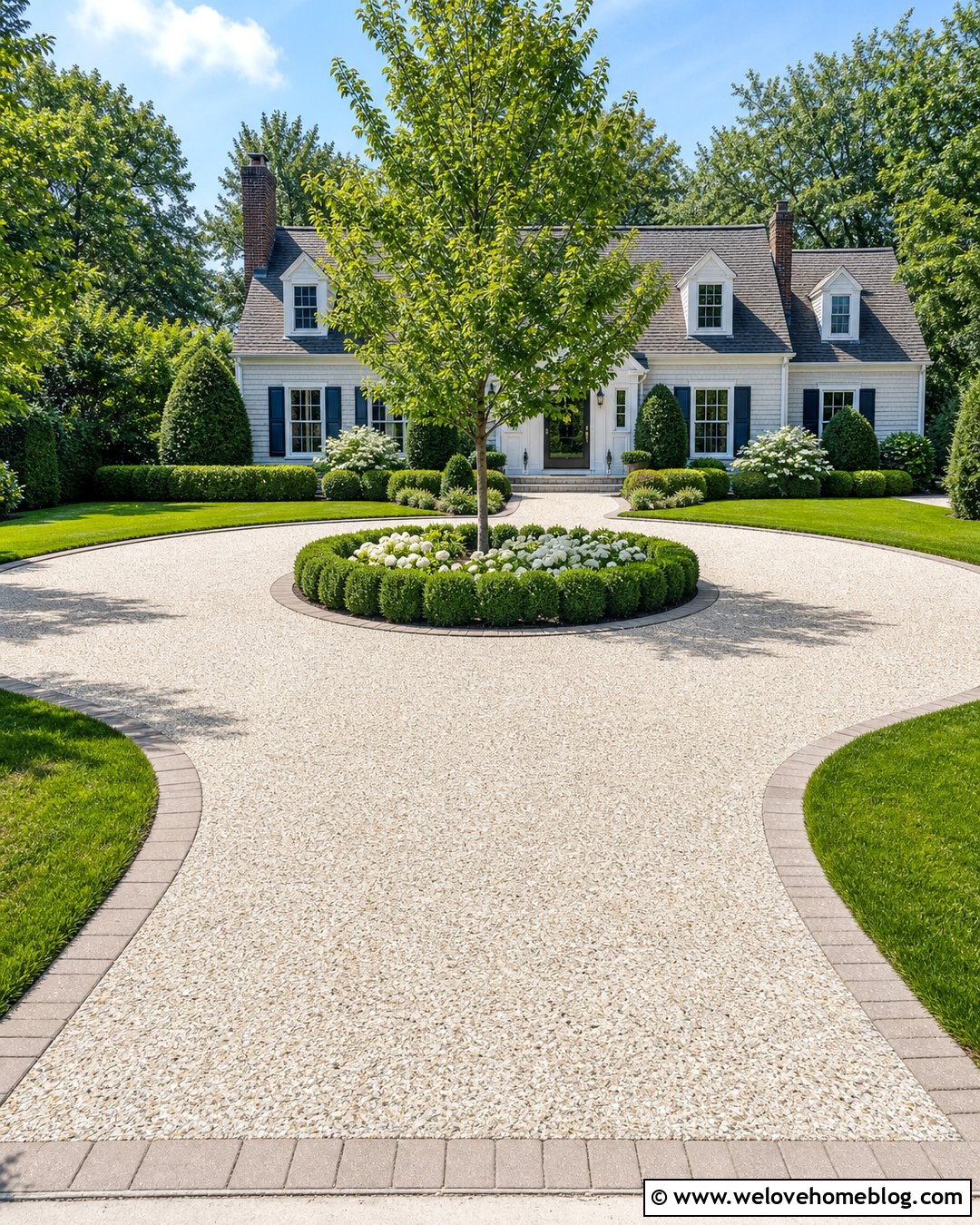
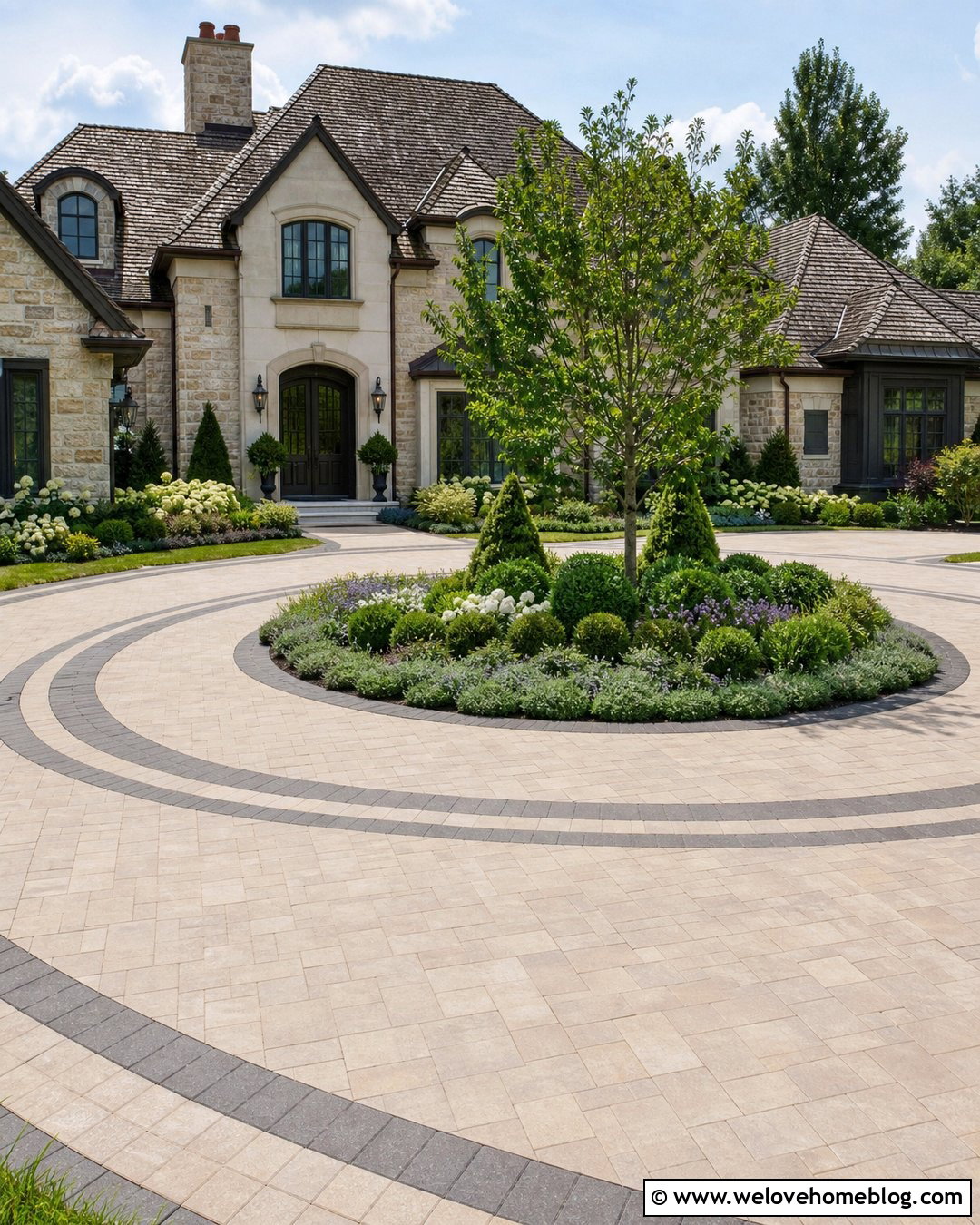
Off-white exposed aggregate offers a brighter alternative to standard gray while remaining softer than brilliant white concrete. A suitable mix might feature an ivory cement matrix with white quartz, pale granite, and a small amount of beige stone. The subtle variation becomes especially attractive on a circular driveway, where sunlight emphasizes the curved layout. Surround a central planting island with clipped boxwood, a specimen tree, and seasonal white flowers. Light taupe paver edging can outline the pavement without creating harsh contrast. This complete look works beautifully with a Cape Cod, coastal, or transitional house featuring white trim and natural stone details. Ask to see the chosen sealer on a sample because some products deepen the stones and make the completed driveway look warmer or darker than an unsealed display board.
7. Black Basalt Exposed Aggregate Driveway
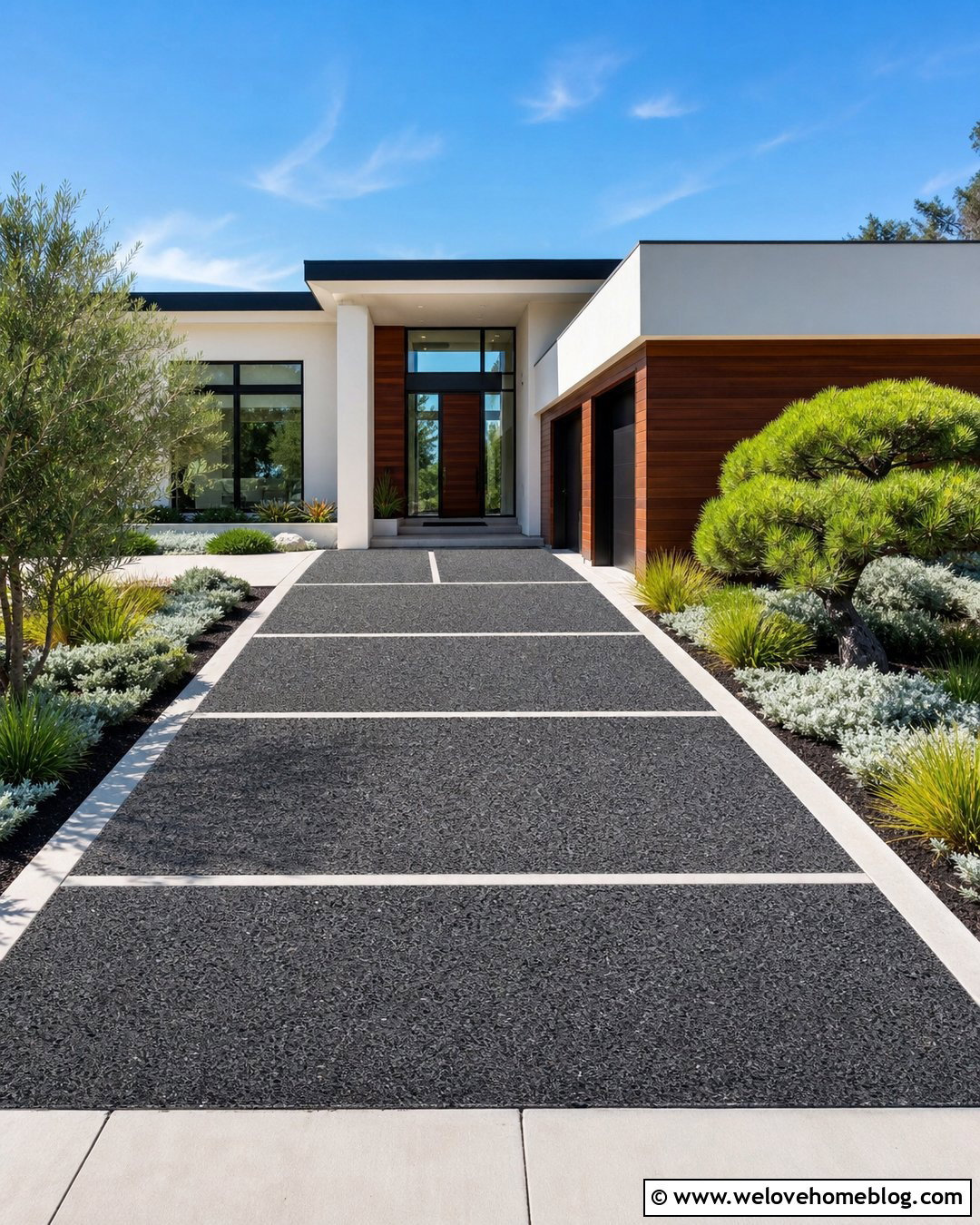
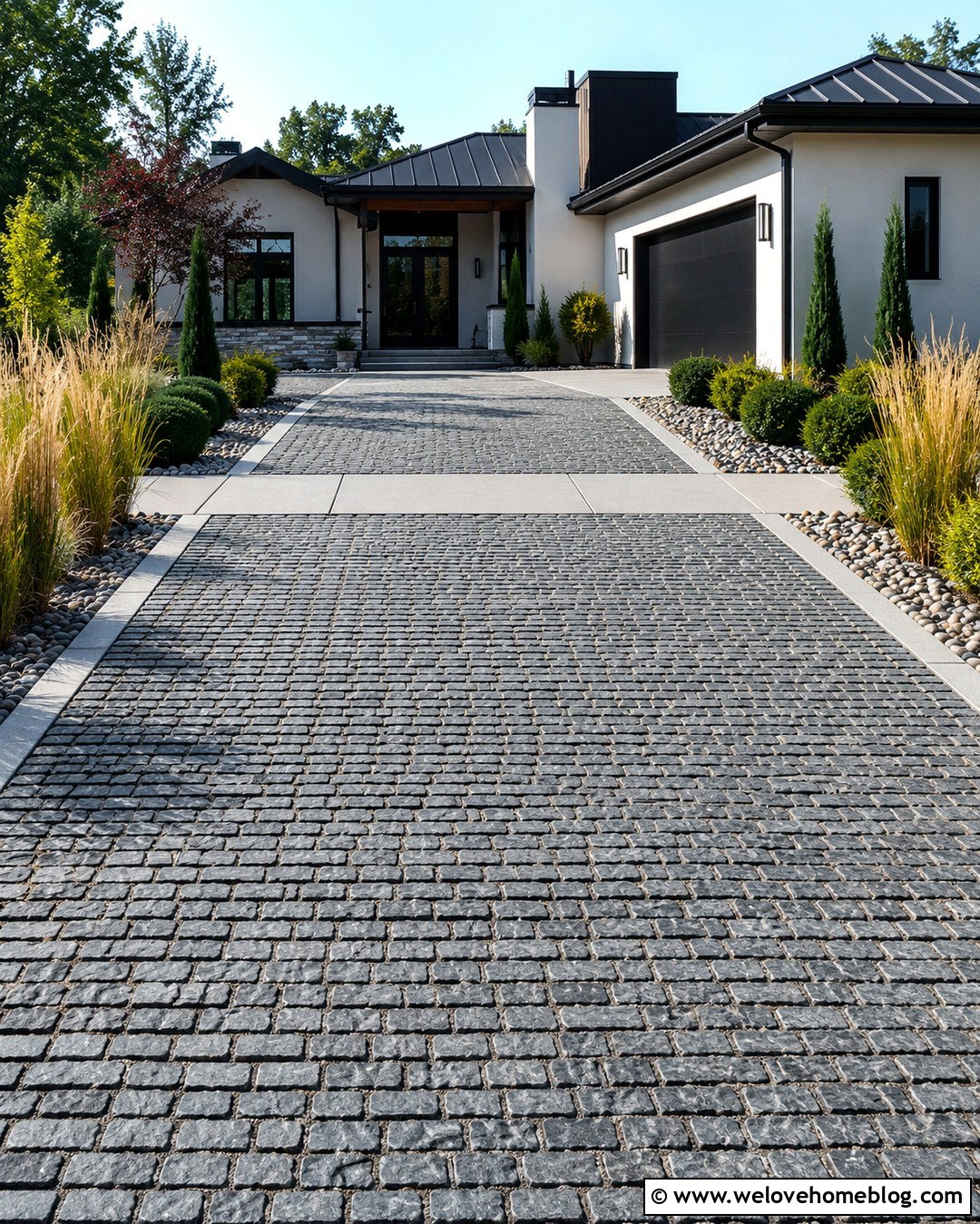
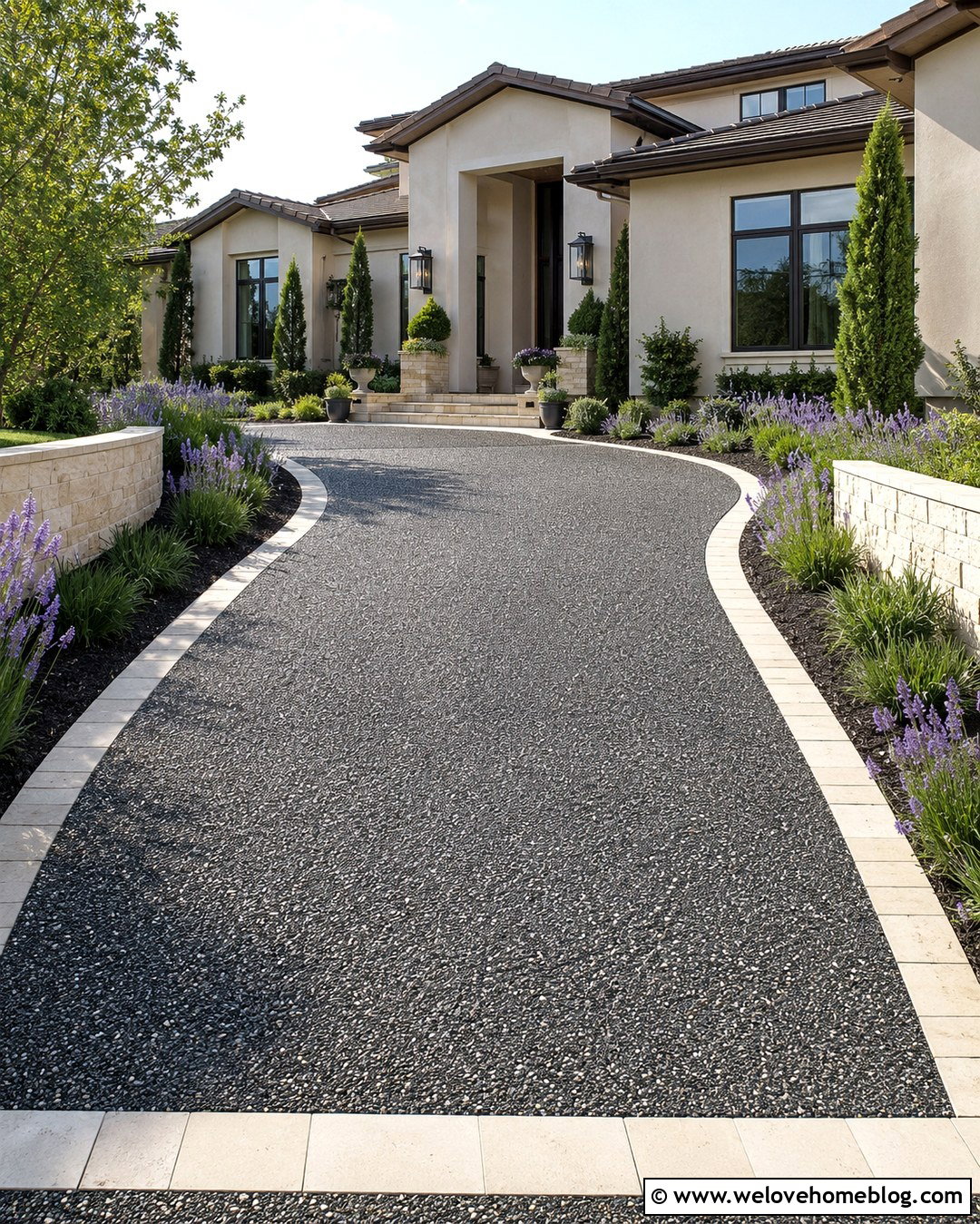
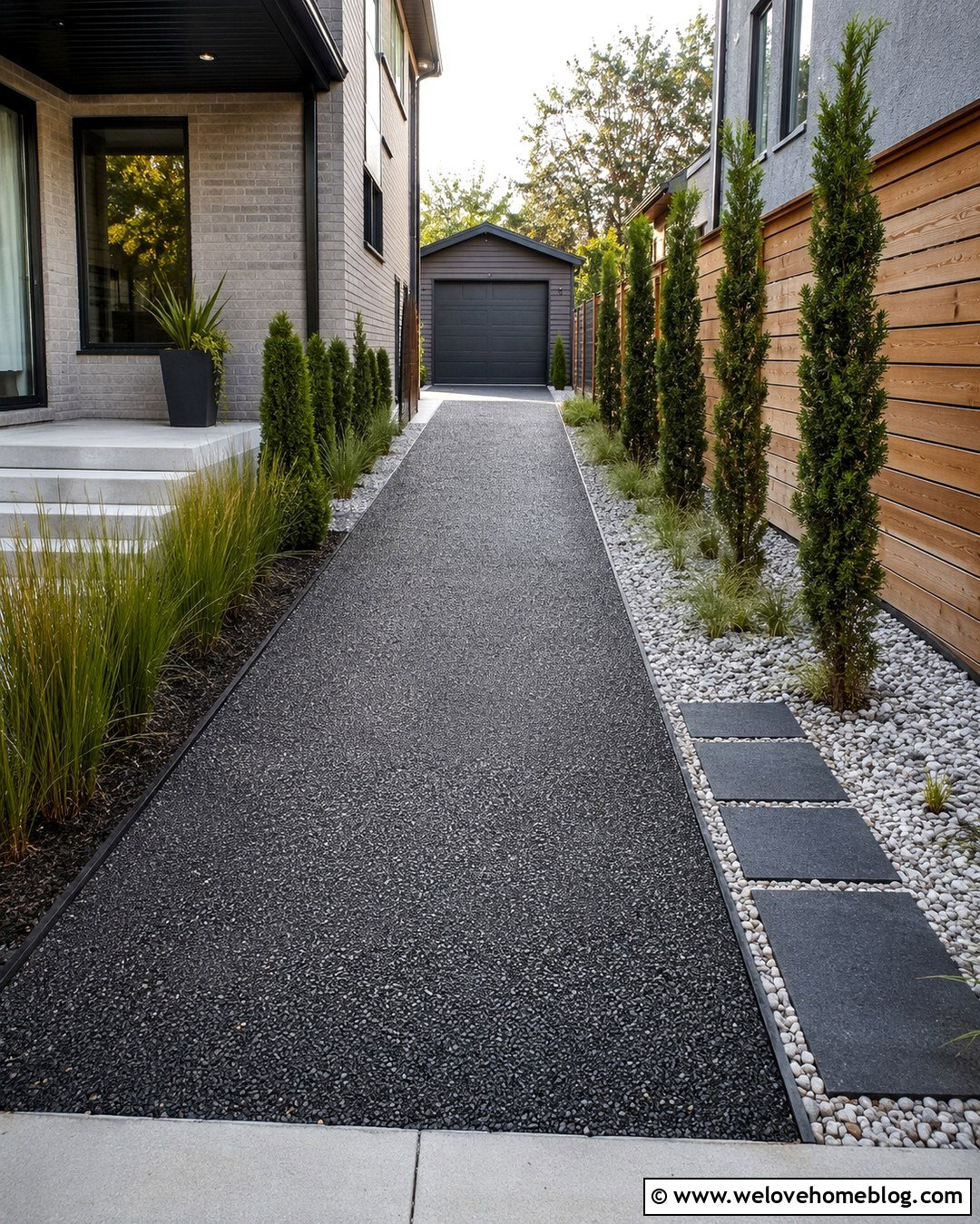
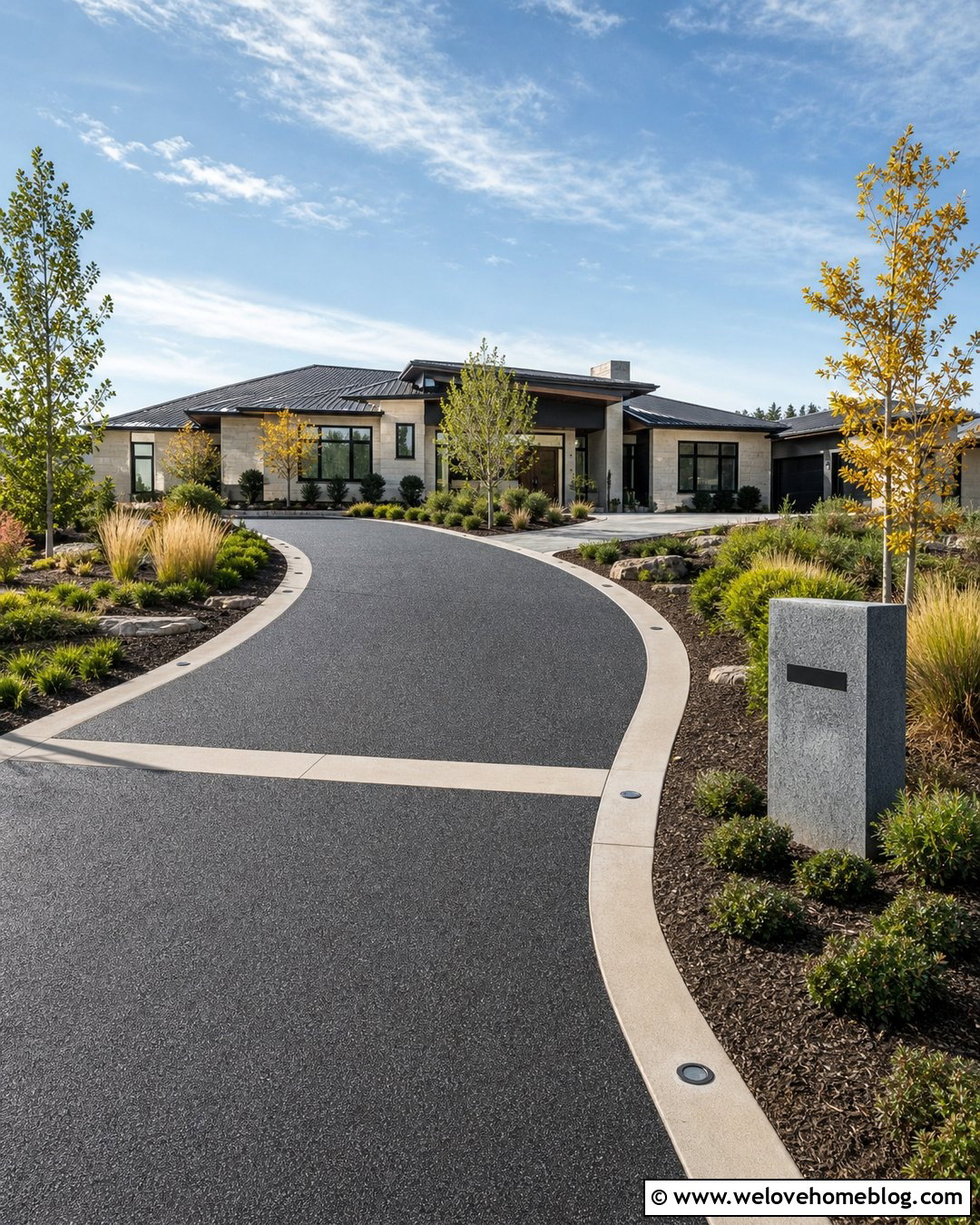
Black basalt aggregate produces one of the boldest finishes in this collection. Angular basalt chips set within a dark gray concrete base create a dense, sophisticated surface suited to strong modern architecture. Use the material on a straight driveway divided into large rectangular panels by clean saw-cut joints. Pale concrete bands along the edges and garage threshold will prevent the dark field from feeling too heavy. In the surrounding landscape, choose structured plants such as upright grasses, dwarf pine, sculpted boxwood, and silver-leaved ground cover. The driveway looks especially coordinated with a flat-roofed home featuring black metal, warm wood, and white stucco. Because dark paving absorbs considerable visual attention, keep nearby paths and retaining walls simple. The result should feel balanced, not crowded with competing patterns.
8. Brown River Pebble Exposed Aggregate Driveway
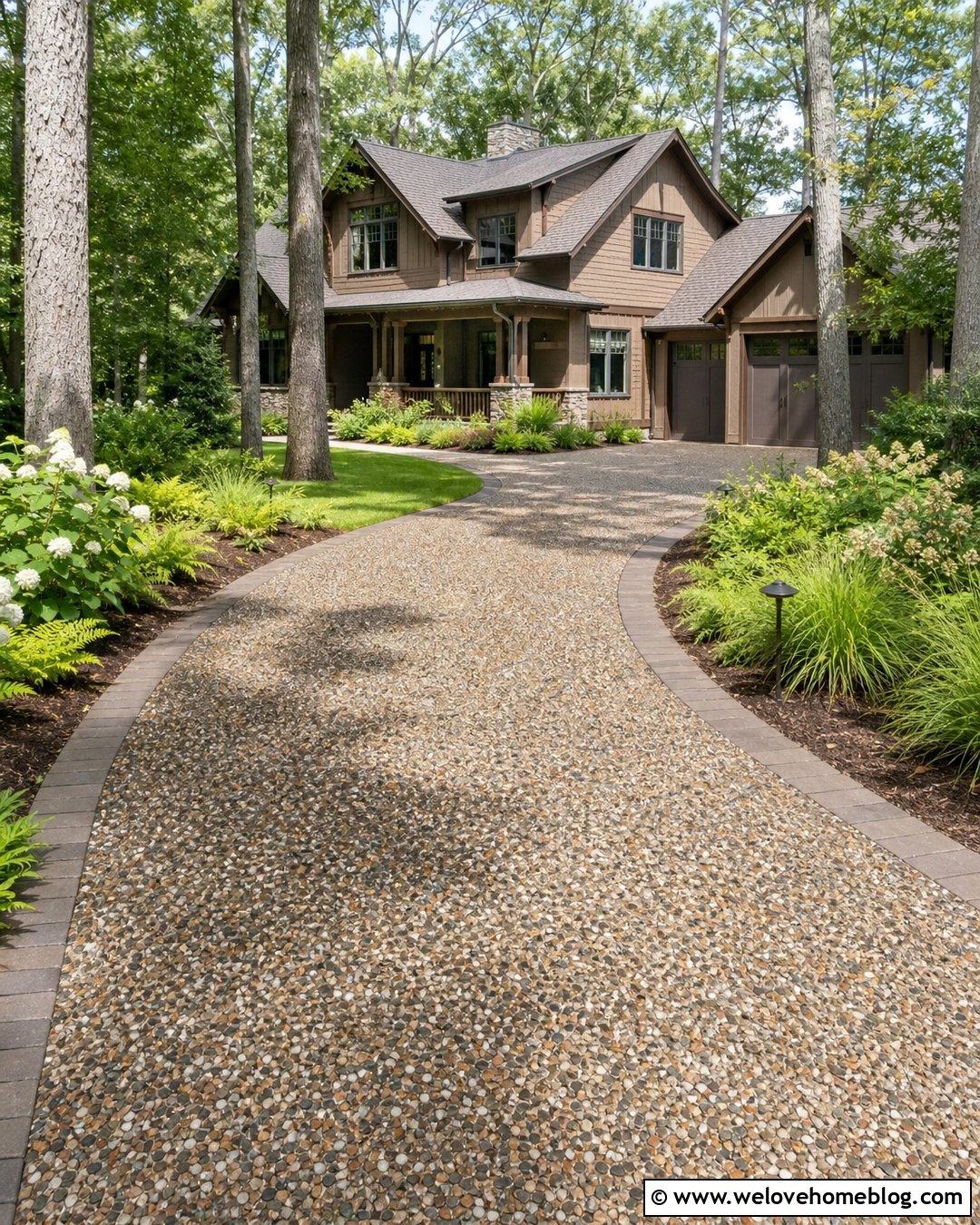
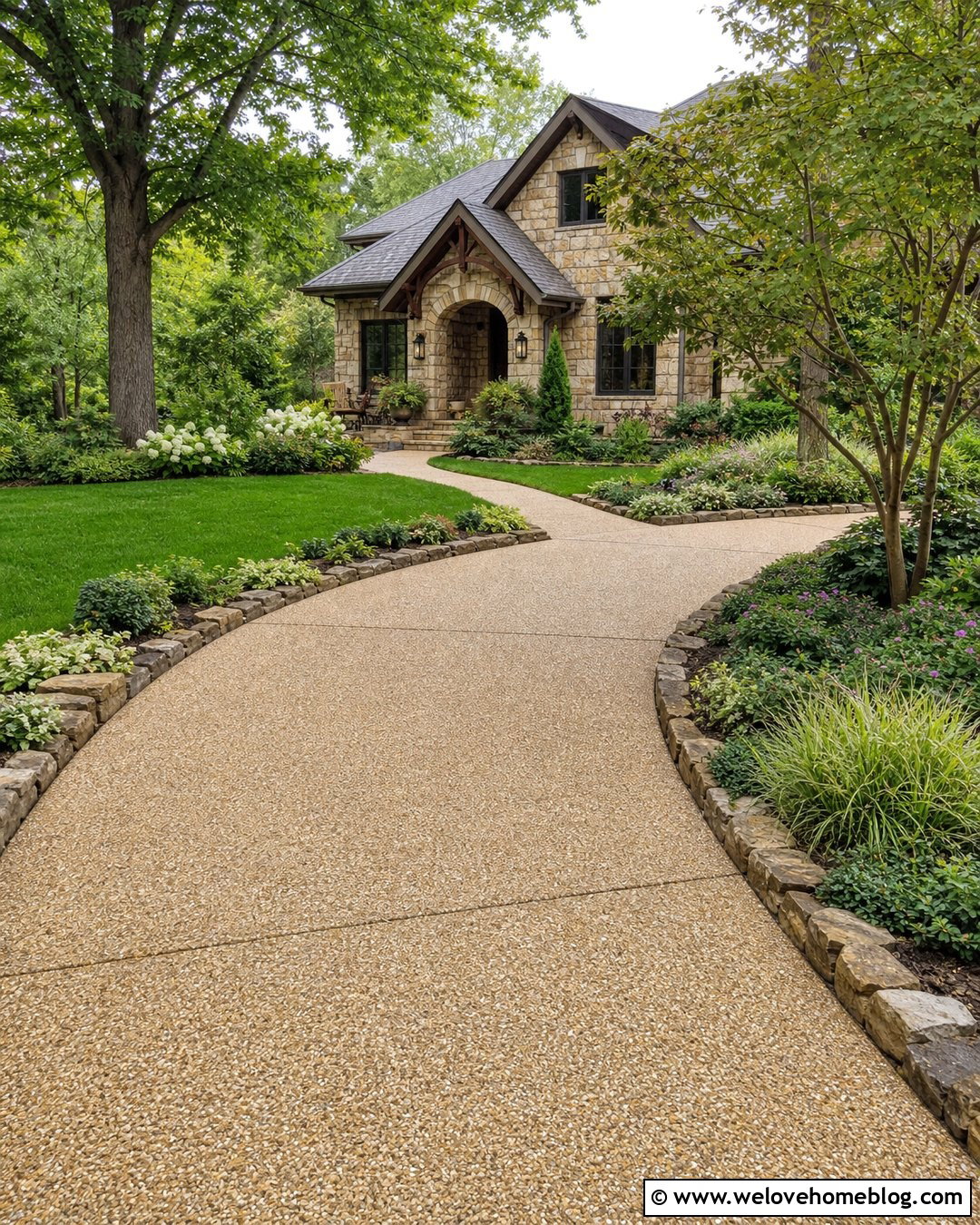
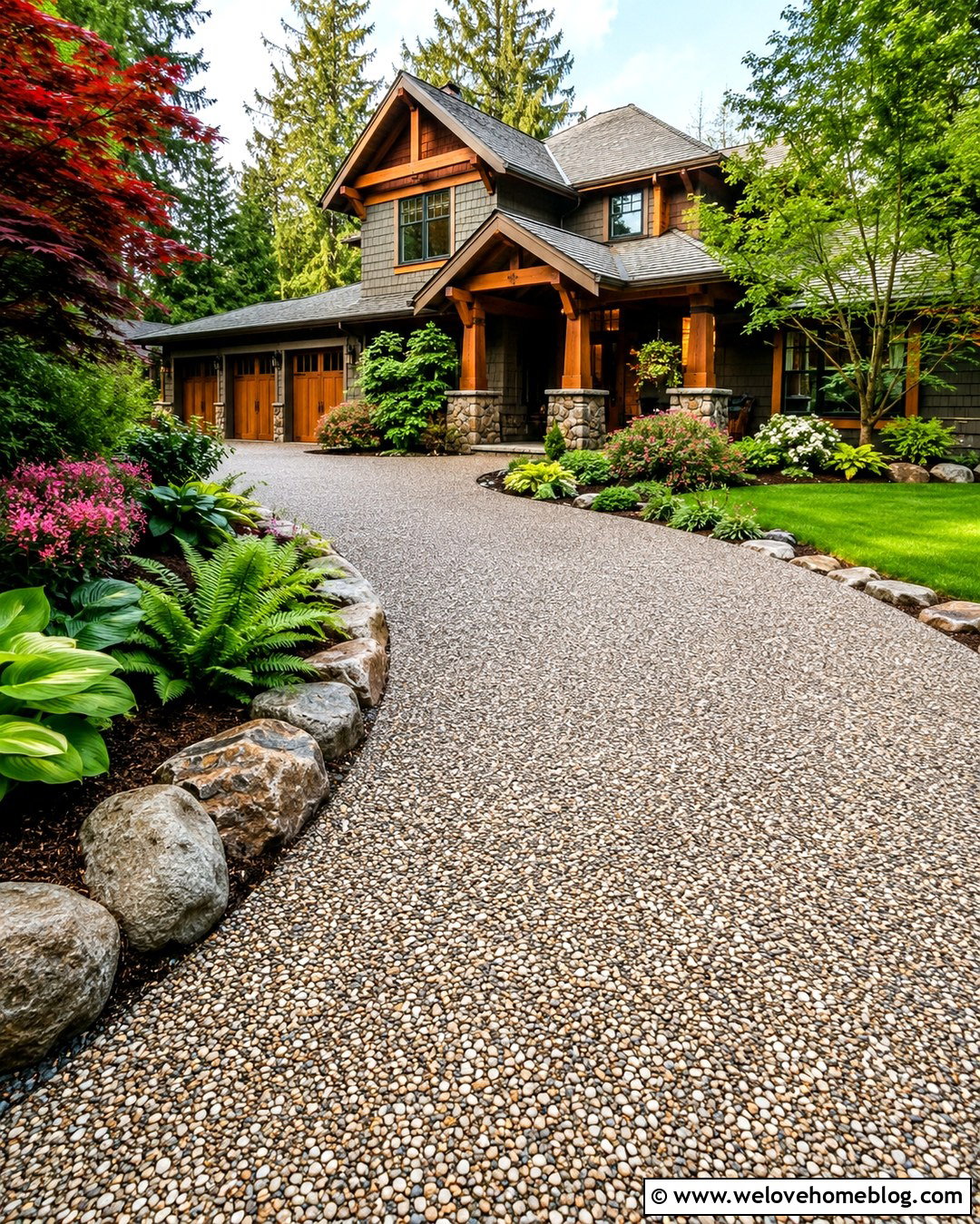
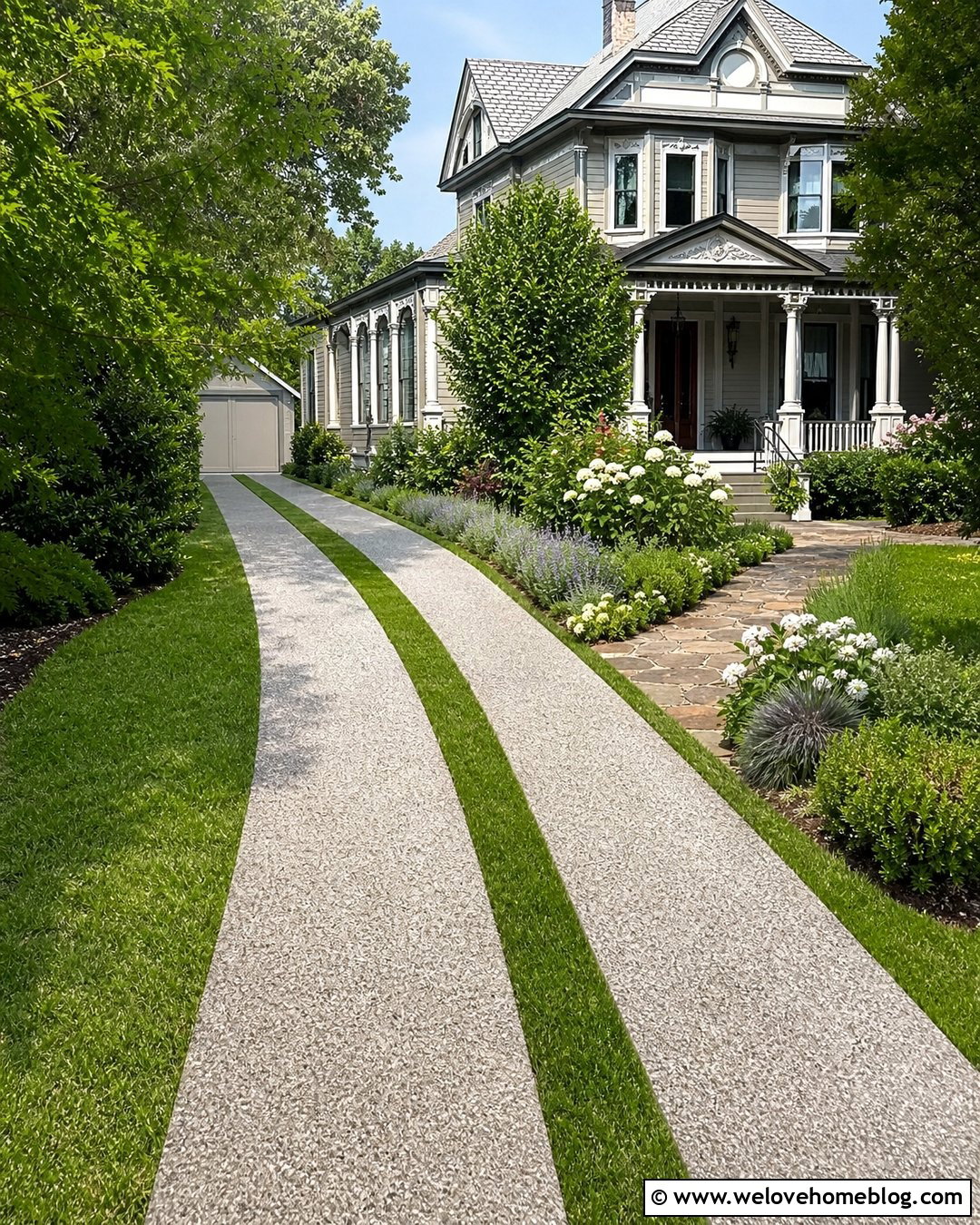
Rounded river pebbles bring familiar warmth and natural variation to an exposed aggregate driveway. Choose a medium-brown concrete base with tan, chocolate, gray, and cream stones rather than a uniformly dark mixture. This broad palette works well with a craftsman house, rustic ranch, or wooded suburban property. A gently winding driveway reinforces the organic character and can follow existing trees more naturally than a rigid straight layout. Use irregular stone curbing or muted brown pavers to contain the edges. Ferns, oakleaf hydrangeas, ornamental grasses, and native shrubs can then blend the pavement into the yard. Extend a coordinating aggregate walkway toward the porch, but use slightly narrower dimensions. Repeating wood tones on garage doors or porch columns will help the brown driveway feel connected to the architecture.
9. Golden Tan Exposed Aggregate Driveway
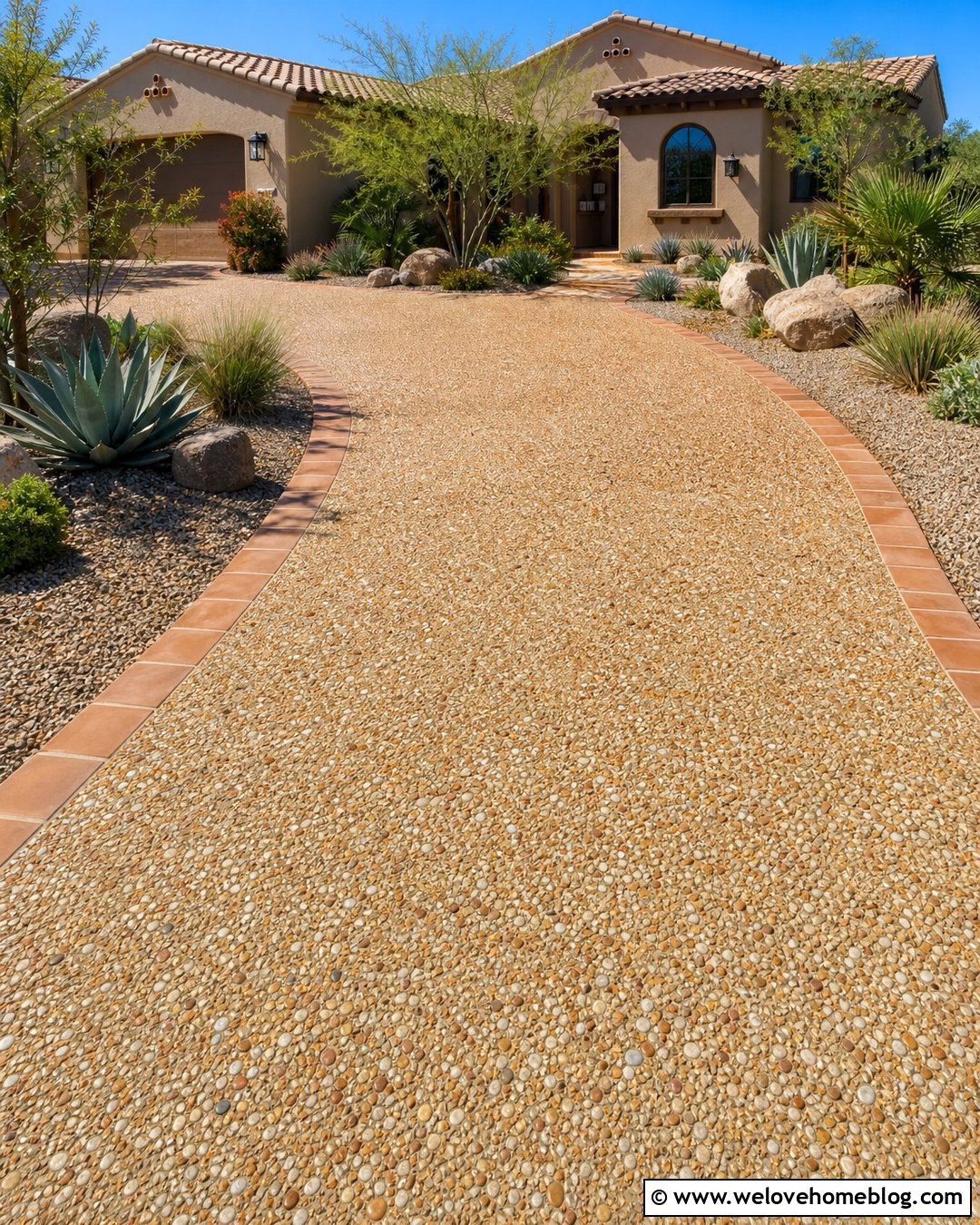
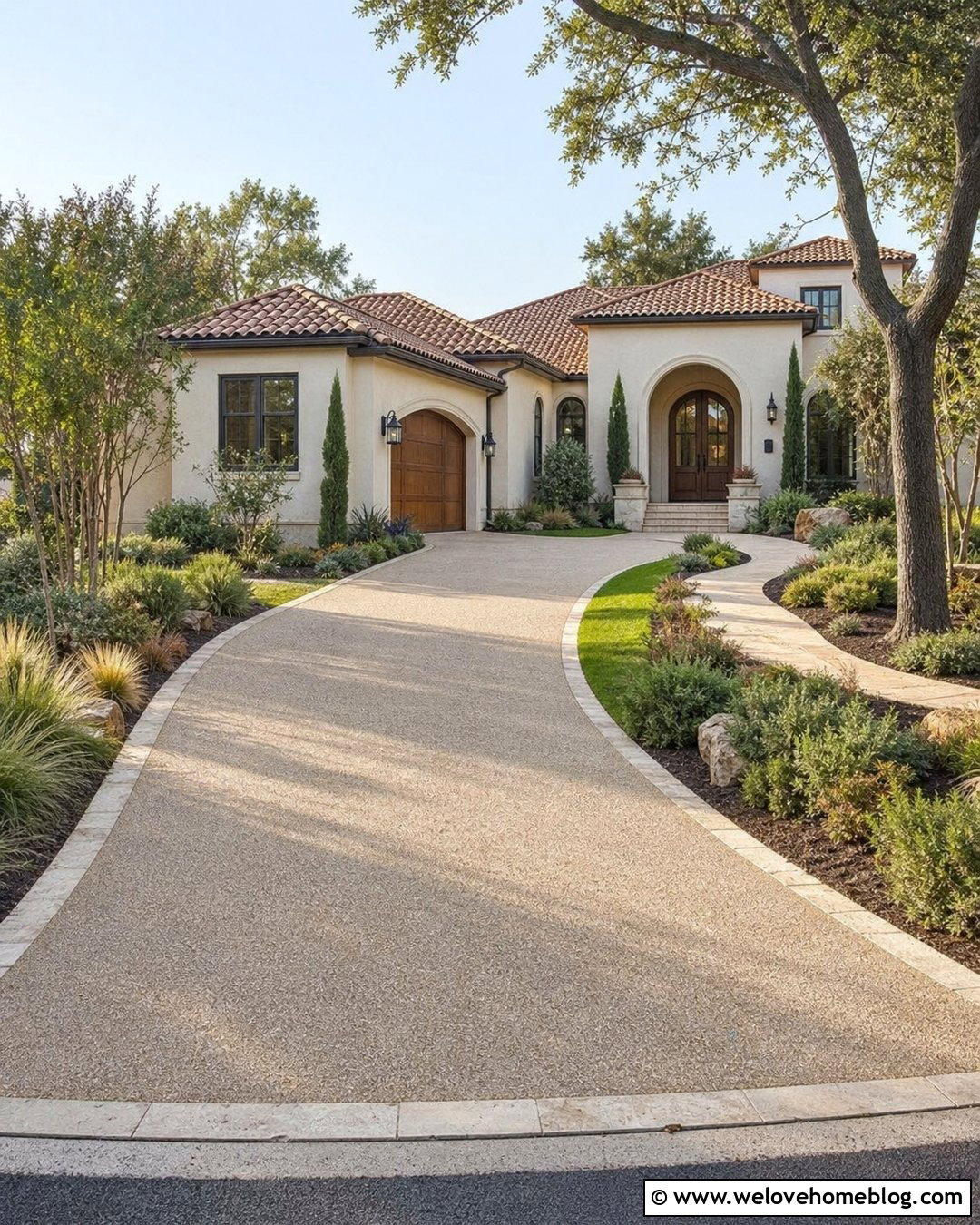
Golden tan aggregate creates warmth without becoming as dark as traditional brown concrete. The mix can combine a honey-colored cement base with gold gravel, light river pebbles, cream quartz, and occasional rust-colored stones. Use it on a broad, curved driveway leading to a Mediterranean, southwestern, or tan stucco home. A border of terracotta-toned pavers will emphasize the warm palette and neatly separate the pavement from gravel planting beds. Drought-tolerant grasses, agave, low flowering shrubs, and sculptural boulders complete the setting. Keep the border relatively narrow so it supports rather than overpowers the varied aggregate. This color is most successful when it repeats existing roof tiles, stonework, or wooden details. Compare samples at midday, when golden undertones may appear stronger than they do in shade.
10. Terracotta Exposed Aggregate Driveway
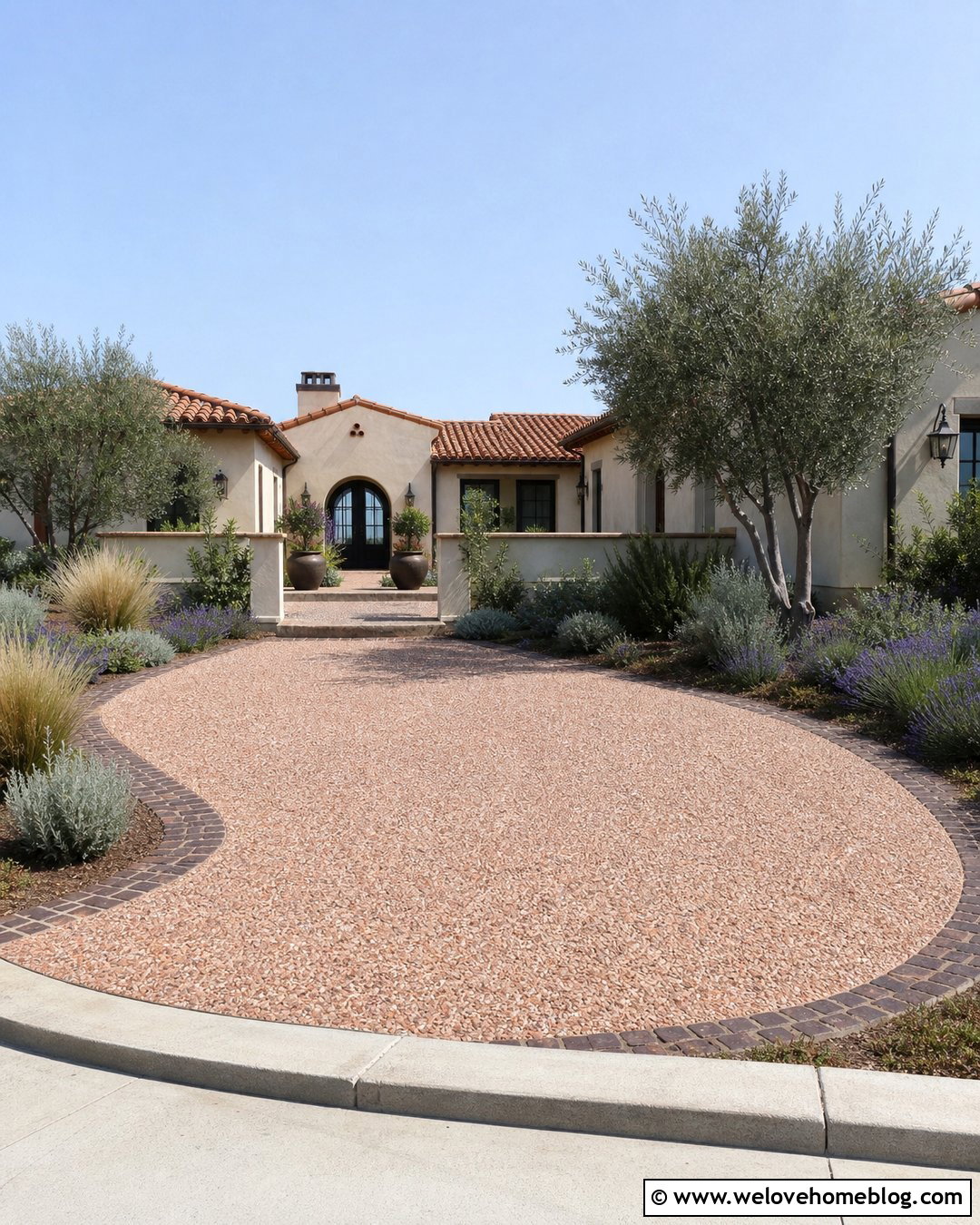
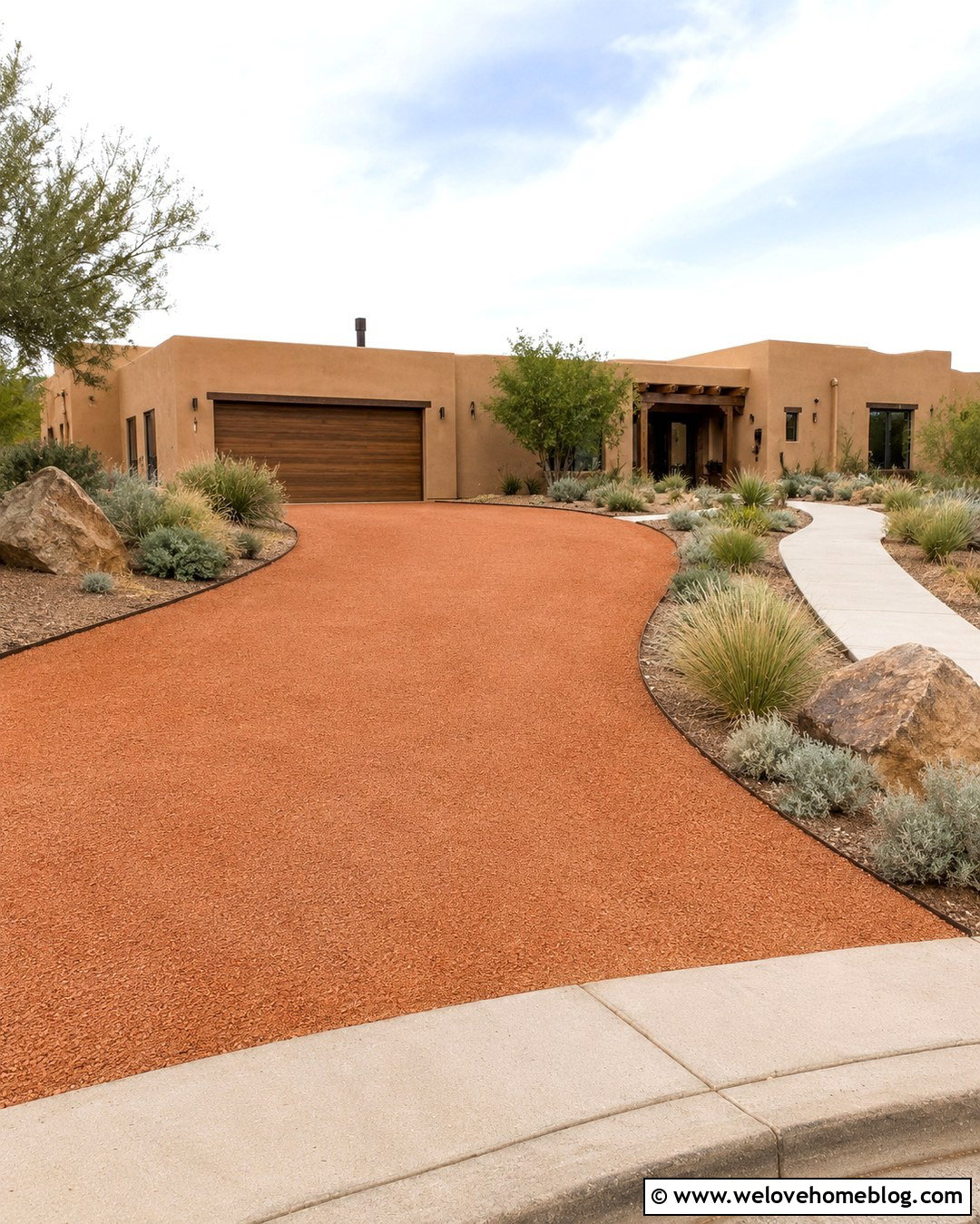
Terracotta exposed aggregate brings rich, earthy color to homes with clay roof tiles or warm masonry. Instead of selecting a bright orange base, choose a muted red-brown concrete containing tan gravel, brick-red granite, cream pebbles, and darker brown flecks. The variation creates depth and helps the driveway age more gracefully. A semicircular layout can give a Spanish-inspired or southwestern house an elegant, functional entrance. Edge the pavement with dark brown cobblestones, then surround it with olive-toned shrubs, lavender, ornamental grass, and gravel mulch. A simple stucco entry wall can repeat the house color without blocking the view. Terracotta is already visually expressive, so avoid elaborate stamped bands or several additional paver colors. Straightforward borders and restrained landscaping produce a more timeless result.
11. Red Granite Exposed Aggregate Driveway
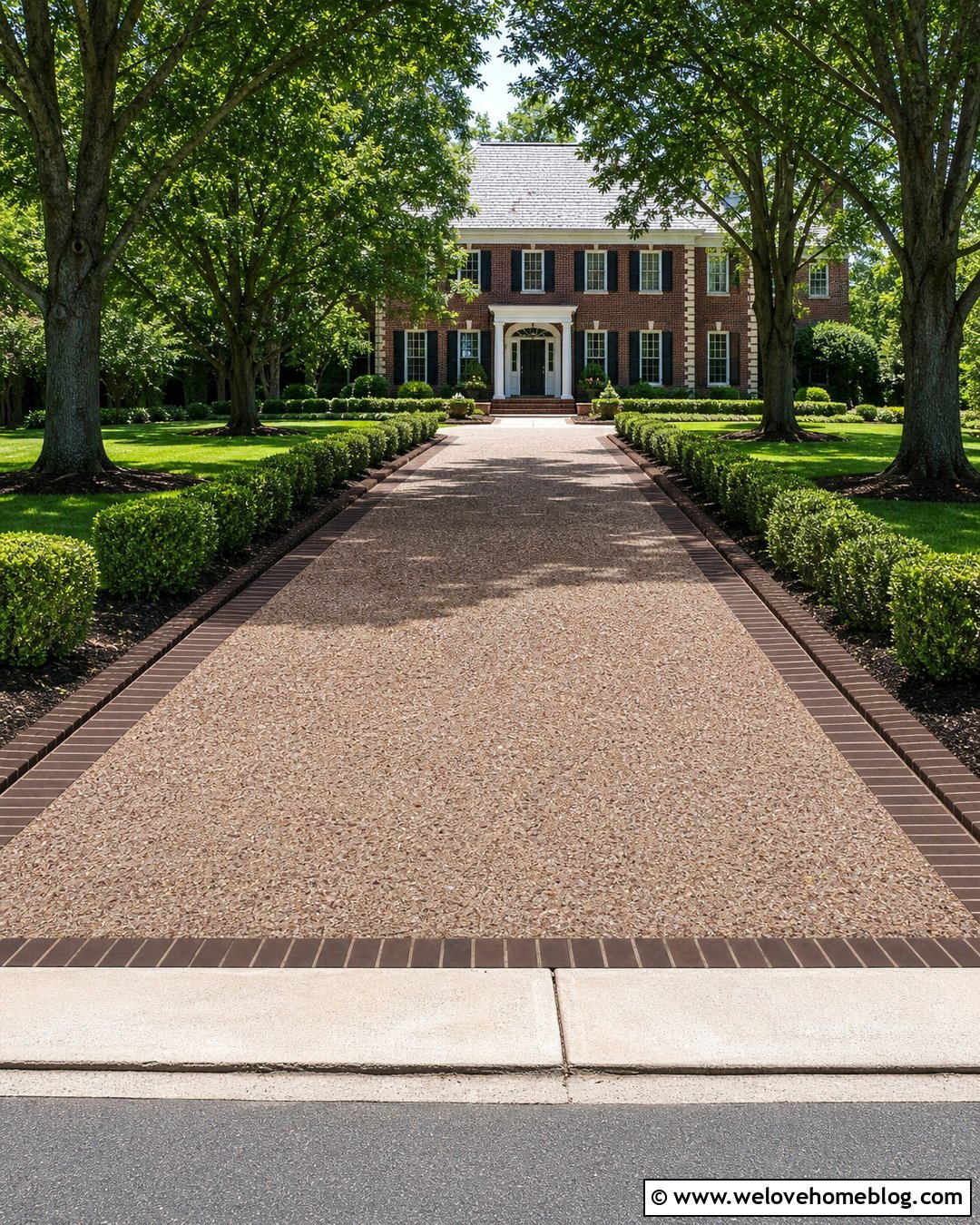
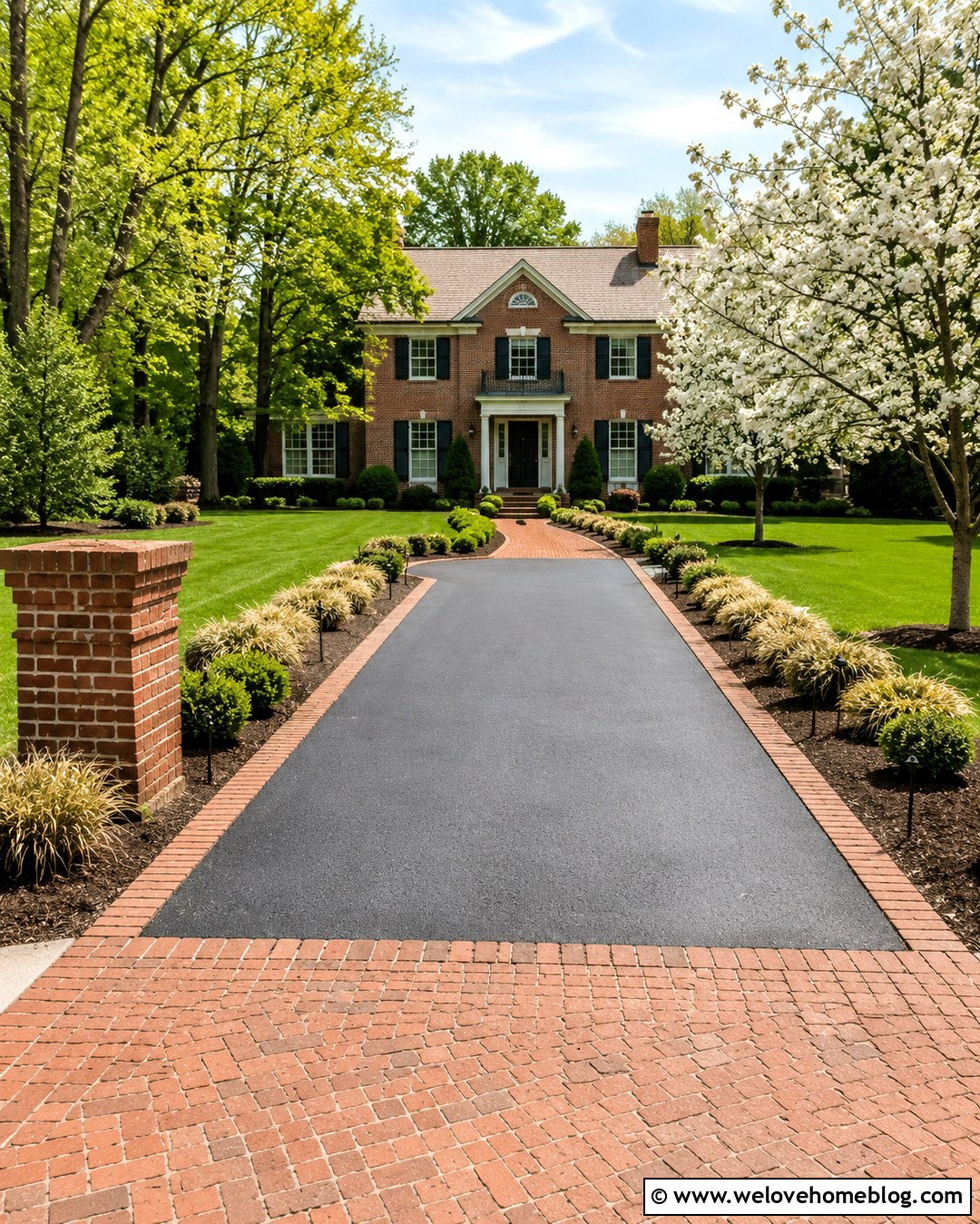
Red granite chips can add character to a driveway without making the entire surface appear intensely red. Combine burgundy, rust, gray, and cream granite within a muted taupe or gray-brown concrete base. From a distance, the driveway will read as a warm neutral, while the stone colors become more noticeable on approach. This finish is a practical match for a traditional brick colonial with black shutters and pale trim. Use a straight driveway bordered by dark clay brick laid in a simple soldier course. Formal lawn panels, clipped hedges, and symmetrical shade trees will complement the architecture. Avoid matching the driveway exactly to red brick because slight differences may clash. A mixed granite palette offers enough contrast to coordinate naturally while keeping the entrance visually balanced and appropriately traditional.
12. Blue Gray Exposed Aggregate Driveway
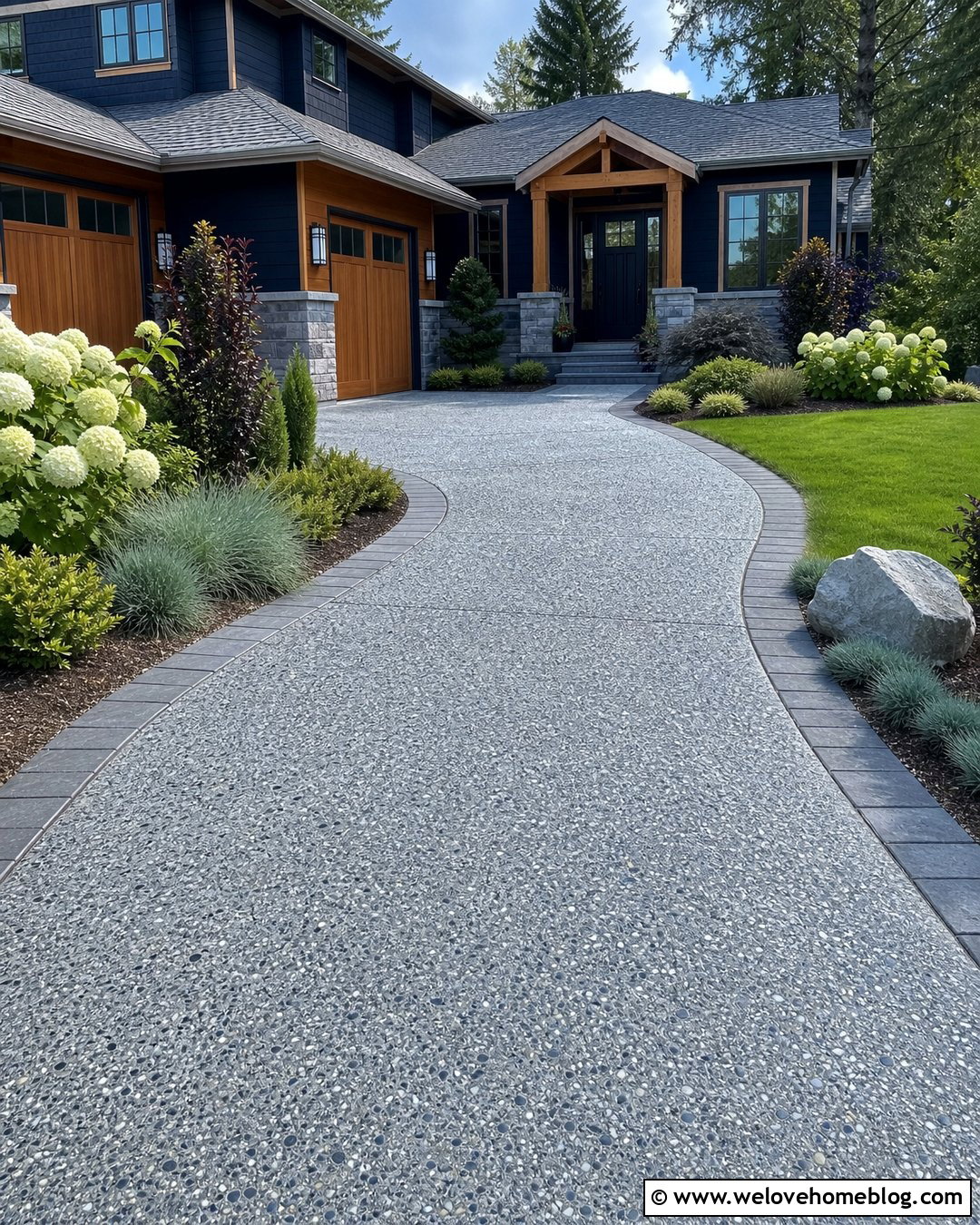
Blue-gray aggregate introduces a cool, refined tone that pairs naturally with slate, bluestone, and cool exterior paint. Create the finish with a medium-gray cement base containing blue metal, charcoal stone, silver granite, and sparse white quartz. A curved driveway leading to a contemporary craftsman house can make the color feel relaxed rather than severe. Use bluestone-inspired pavers as a narrow border and repeat them in the front walkway. Planting beds filled with blue-green grasses, white hydrangeas, low juniper, and dark-leaved shrubs will strengthen the cool palette. This combination works particularly well beside navy siding, gray shingles, white trim, or natural cedar. Check the mix in direct sunlight, because some blue-gray stones can appear much lighter outdoors than they do on an indoor sample display.
13. Green Gray Exposed Aggregate Driveway
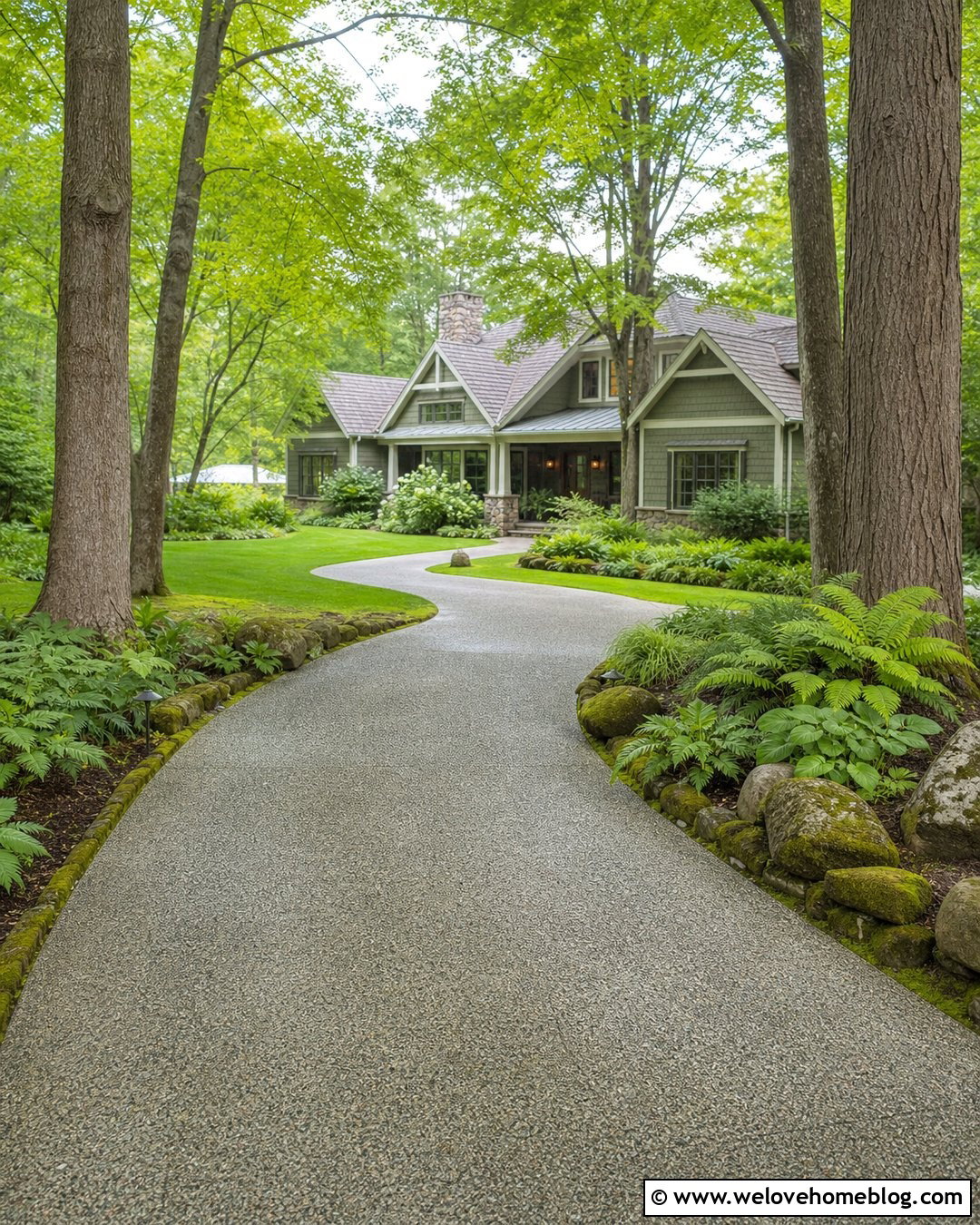
For a driveway that settles quietly into a heavily landscaped yard, consider a subtle green-gray aggregate blend. The effect comes from olive stone, gray granite, muted green pebbles, and a neutral gray cement base rather than obviously green concrete. Use the finish on a winding driveway leading through mature trees toward a craftsman, cottage, or midcentury home. Moss-toned stone edging can provide gentle definition while preserving the natural appearance. Ferns, hostas, native grasses, and broad evergreen shrubs will connect the pavement to its surroundings. Keep brighter flowers closer to the house so the entrance remains calm from the curb. Green-gray mixes can vary substantially by local stone availability, making it important to inspect a large cured panel instead of choosing from a small photograph or printed color chart.
14. Ivory Exposed Aggregate Driveway
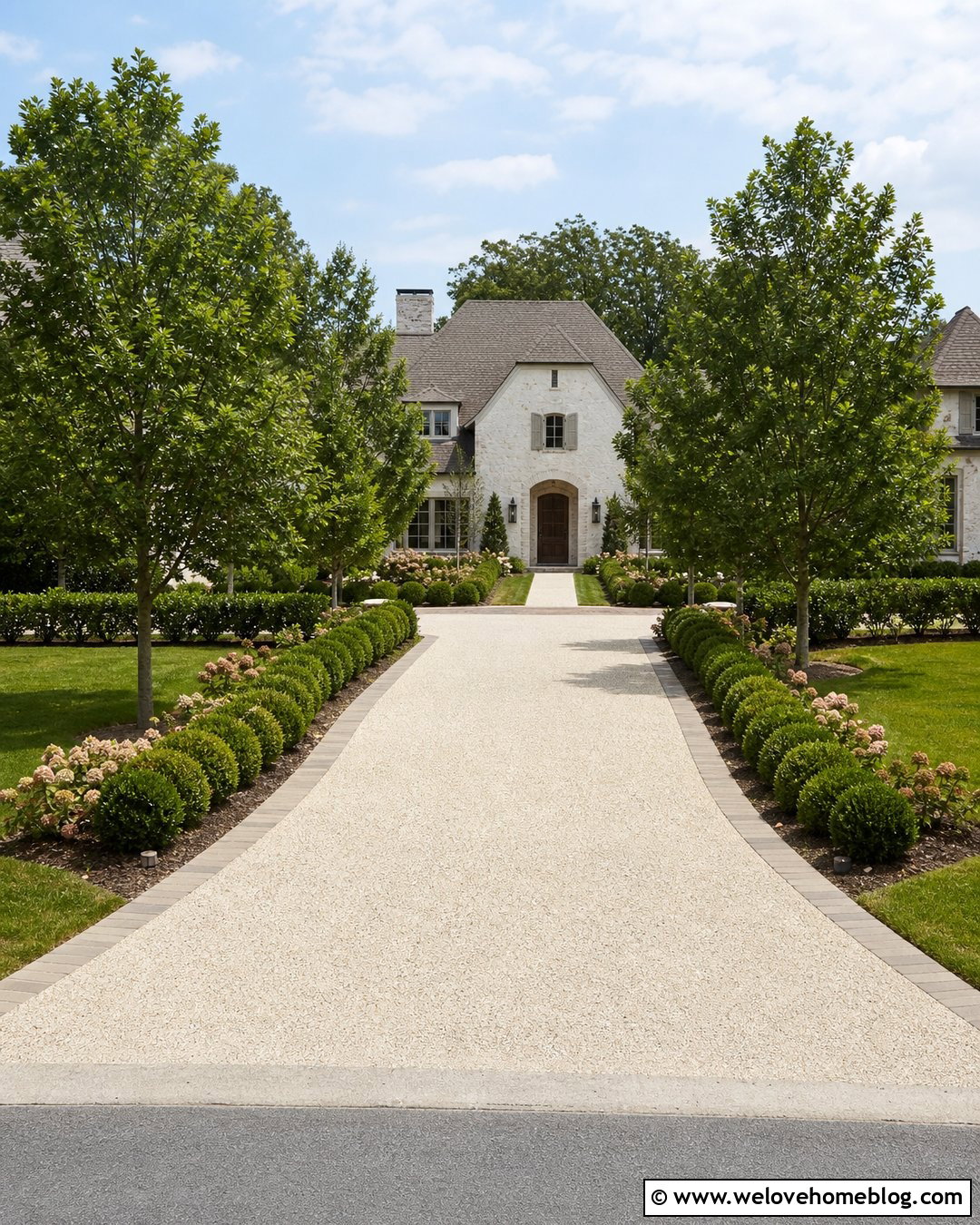
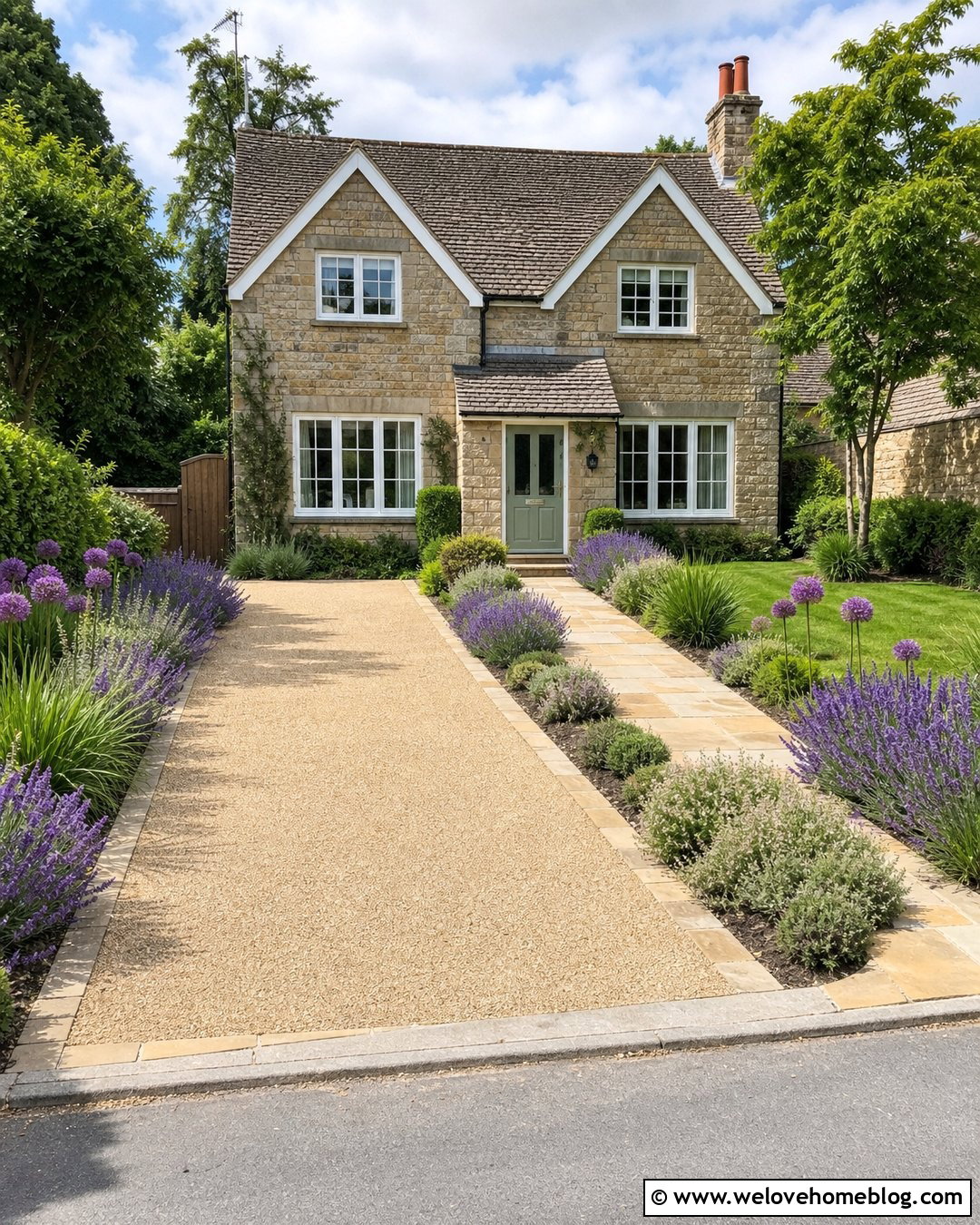
Ivory exposed aggregate is warm, luminous, and particularly effective for smaller front yards that need a visually open surface. Select an ivory concrete base containing cream limestone, pale quartz, light beige pebbles, and just enough gray stone to provide definition. Install it as a straight driveway with a softly flared entrance, giving drivers more room without making the entire paved area oversized. Taupe paver borders and a matching front path will introduce subtle structure. Frame the driveway with green lawn, rounded boxwood, blush-toned flowers, and a pair of small ornamental trees. This palette suits a white cottage, French country house, or light stone facade. To maintain the calm color scheme, keep drainage runoff away from planting beds where soil could repeatedly wash across the pale surface.
15. Greige Exposed Aggregate Driveway
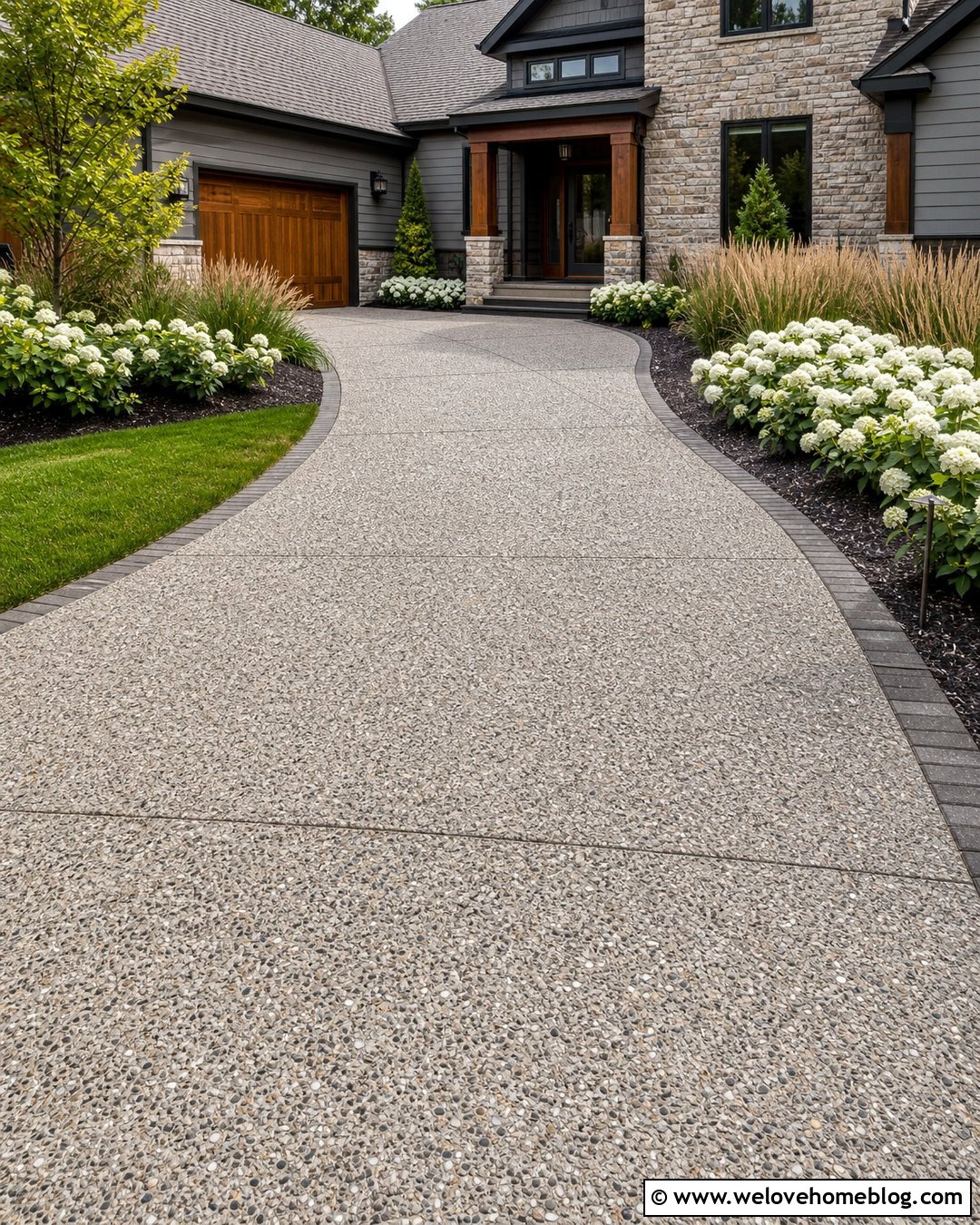
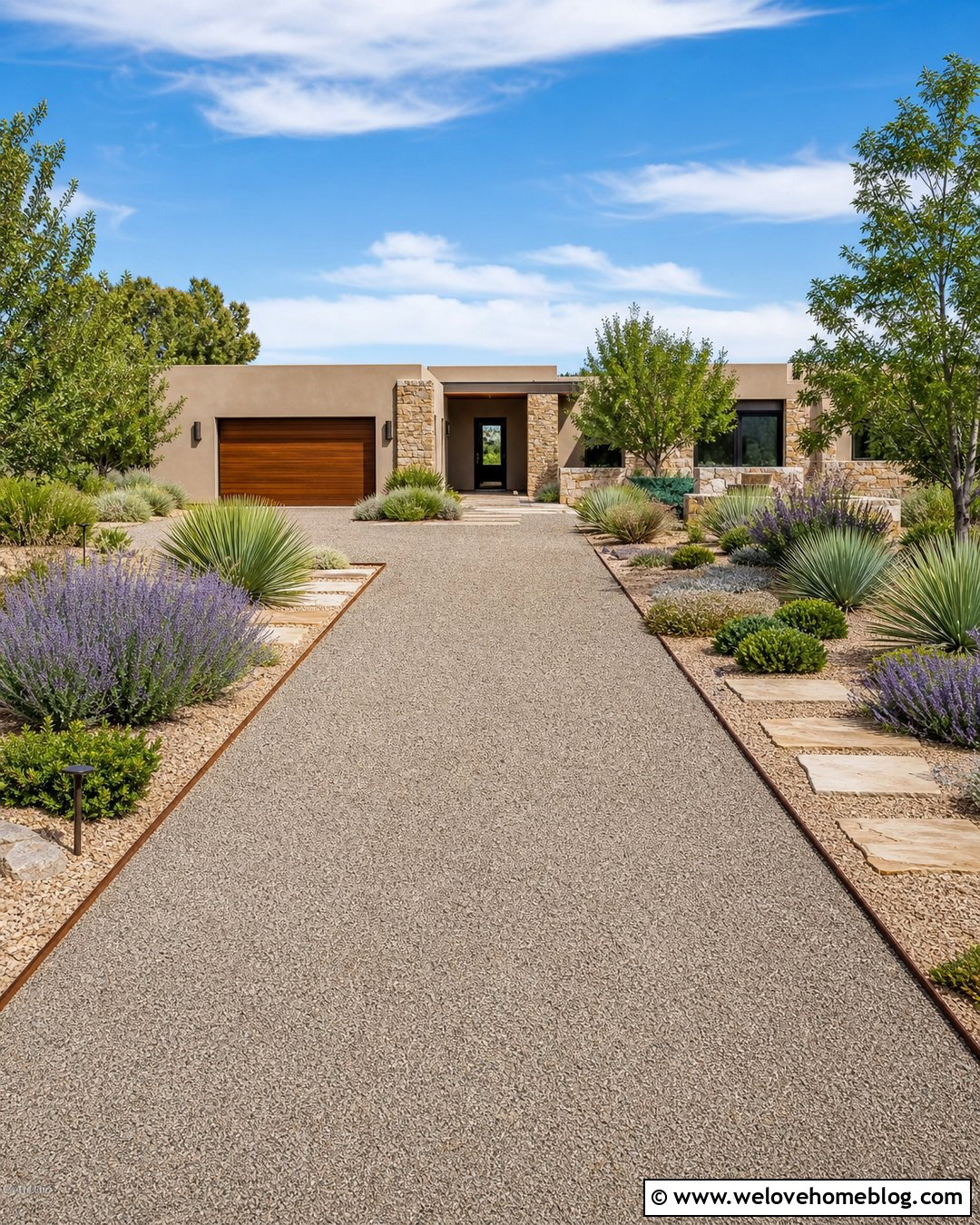
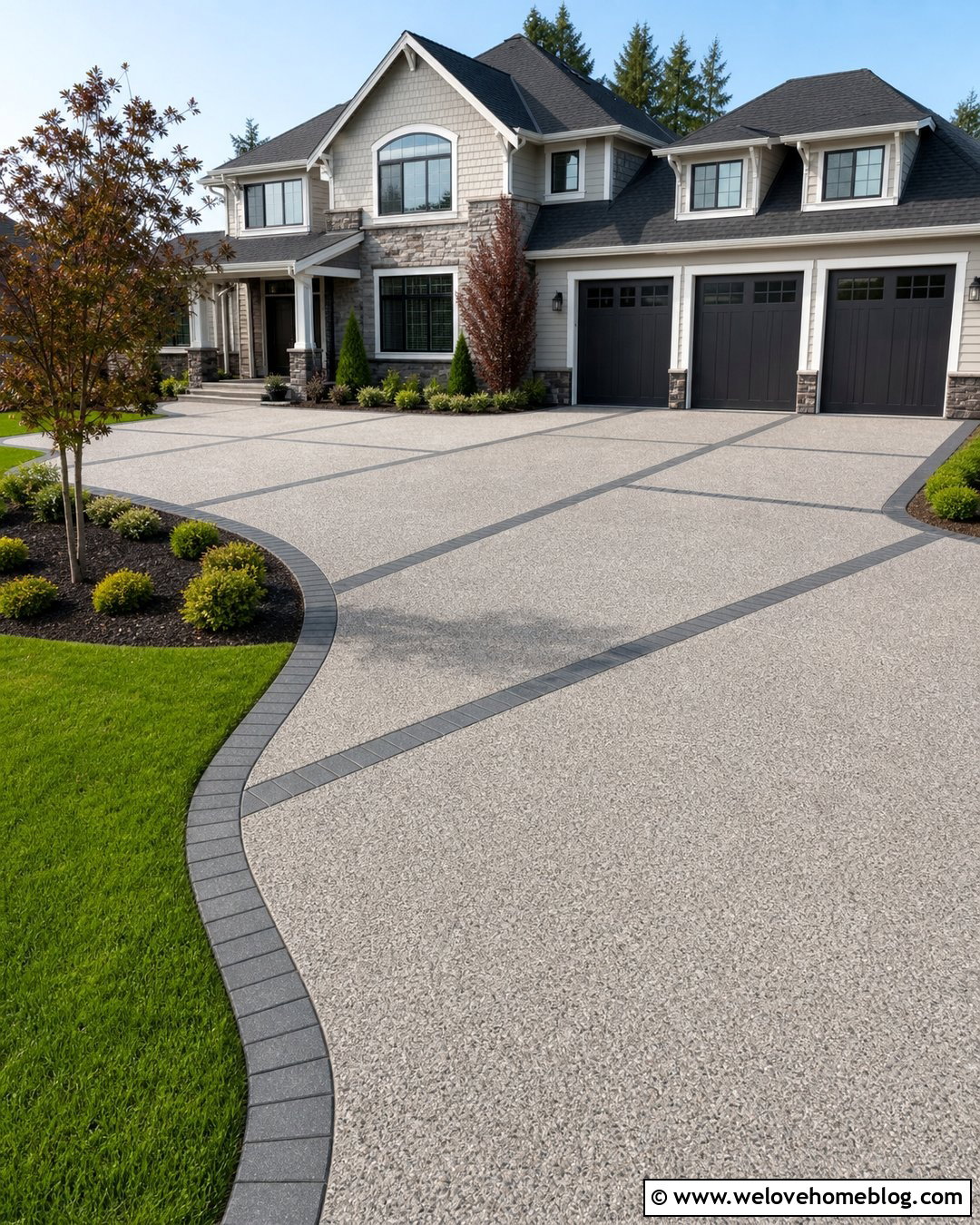
Greige provides a flexible middle ground between cool gray and warm beige. A balanced exposed aggregate mix can include taupe cement, silver granite, cream quartz, tan pebbles, and a few charcoal stones. It adapts well when a house combines several materials, such as gray siding, brown stone veneer, black windows, and natural wood. Use the color on a wide driveway with a gentle curve and rectangular sections defined by saw cuts. Dark taupe paver edging can create a finished outline without introducing a new color family. Surrounding beds of ornamental grass, white flowers, and compact evergreen shrubs will keep the frontage fresh. Greige is also forgiving when exterior colors change later, making it a sensible option for homeowners planning future repainting, roofing, or facade updates.
16. Multicolor Riverstone Exposed Aggregate Driveway
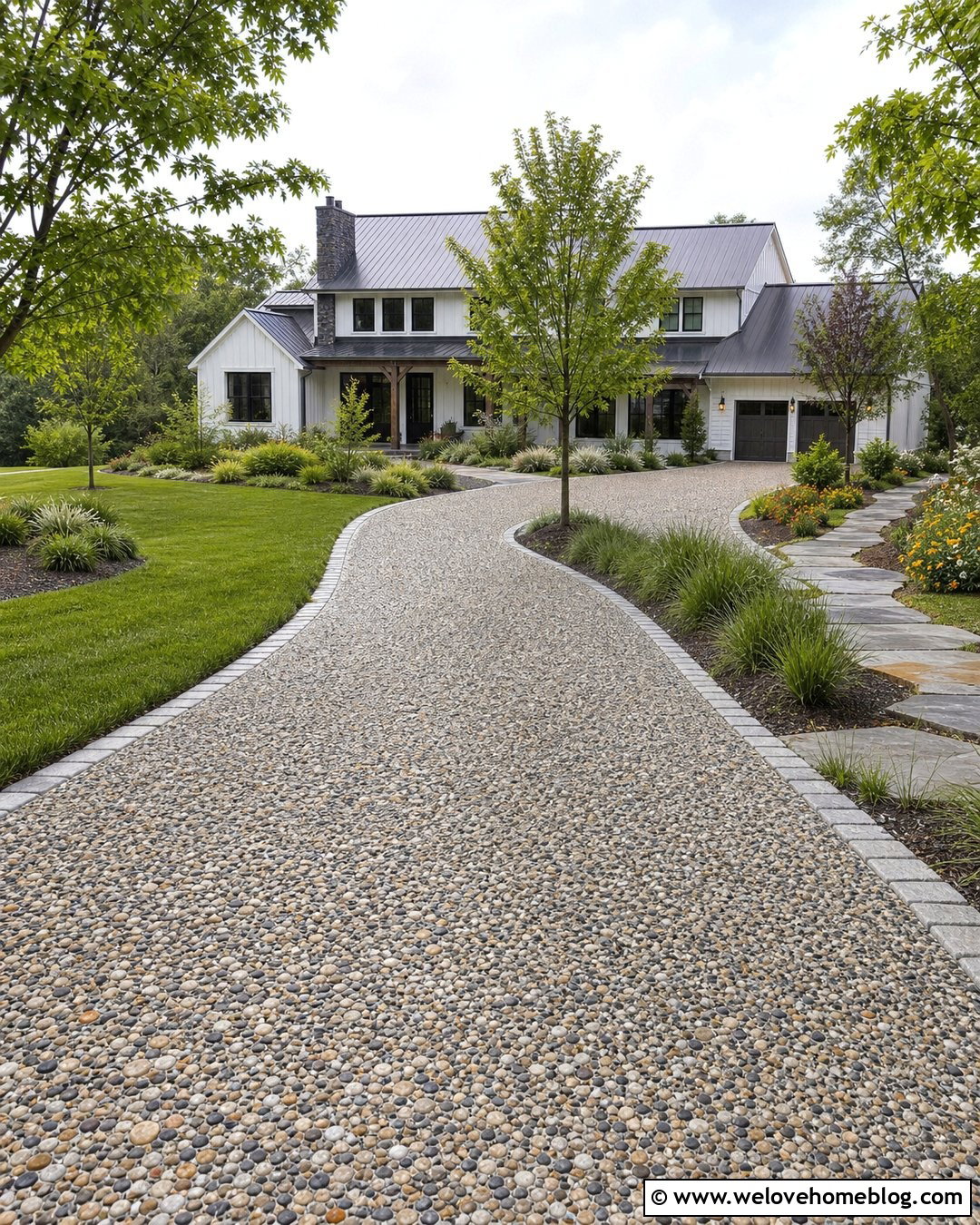
A multicolor riverstone driveway offers the richest natural variation. Rounded stones in gray, tan, cream, charcoal, rust, and soft brown sit within a neutral concrete base, producing a surface that coordinates with many exterior materials. Use the blend on a long, gently curved driveway leading to a country house or modern farmhouse. A simple gray cobblestone edge will contain the pavement while allowing the mixed aggregate to remain the main feature. Line the approach with native grasses, flowering shrubs, lawn, and evenly spaced deciduous trees. At the house, connect the driveway to a natural stone walkway containing similar tones. Since the aggregate already has considerable movement, avoid decorative inlays and complicated bands. A clear layout and restrained border keep the multicolor finish attractive rather than visually chaotic.
17. White And Black Exposed Aggregate Driveway
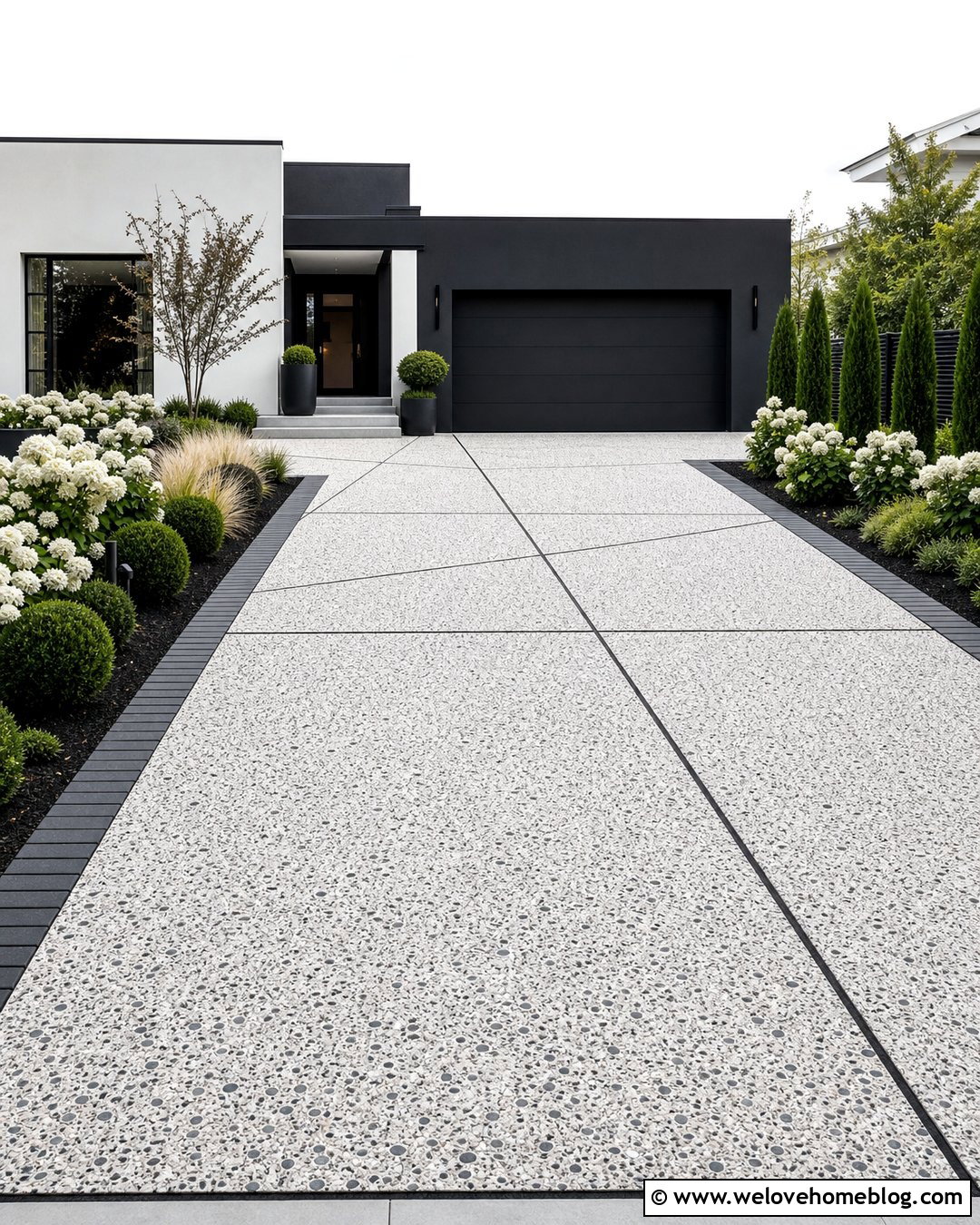
White and black aggregate creates a crisp monochrome driveway with immediate curb appeal. Use a pale gray or off-white concrete base containing bright quartz, black basalt, and a limited amount of mid-gray granite. A medium exposure level will make the contrast visible across the entire surface. This palette suits a geometric driveway leading to a black-and-white contemporary home. Divide the paving into large panels with straight control joints, then add a narrow black paver border along the lawn. Minimal planting beds with white flowering shrubs, feather grass, and clipped evergreens maintain the graphic look. A pale walkway can branch cleanly from the driveway toward the entrance. Keep gates, lighting, and planters matte black so the repeated accent color ties the hardscape and building together.
18. Charcoal And White Quartz Exposed Aggregate Driveway
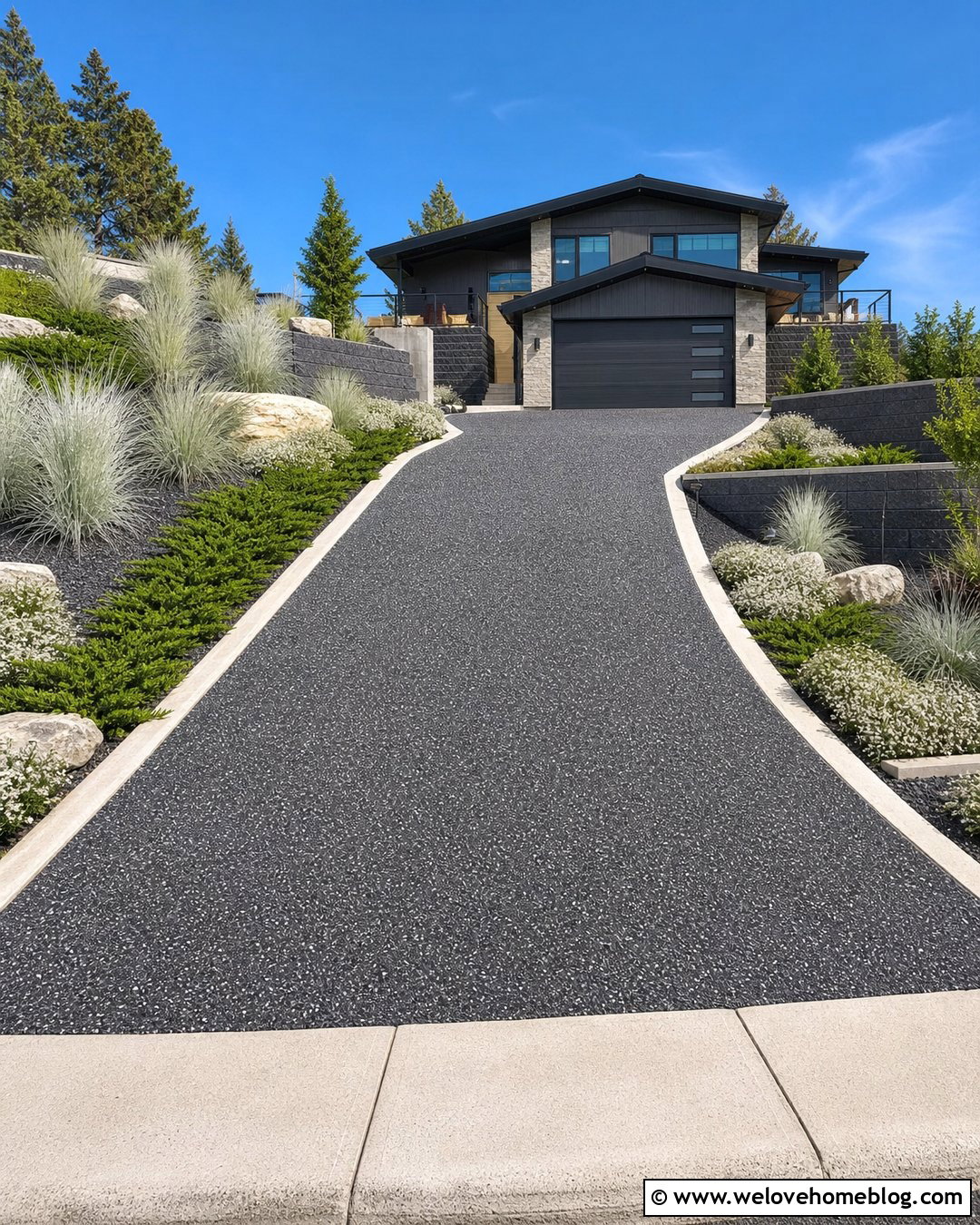
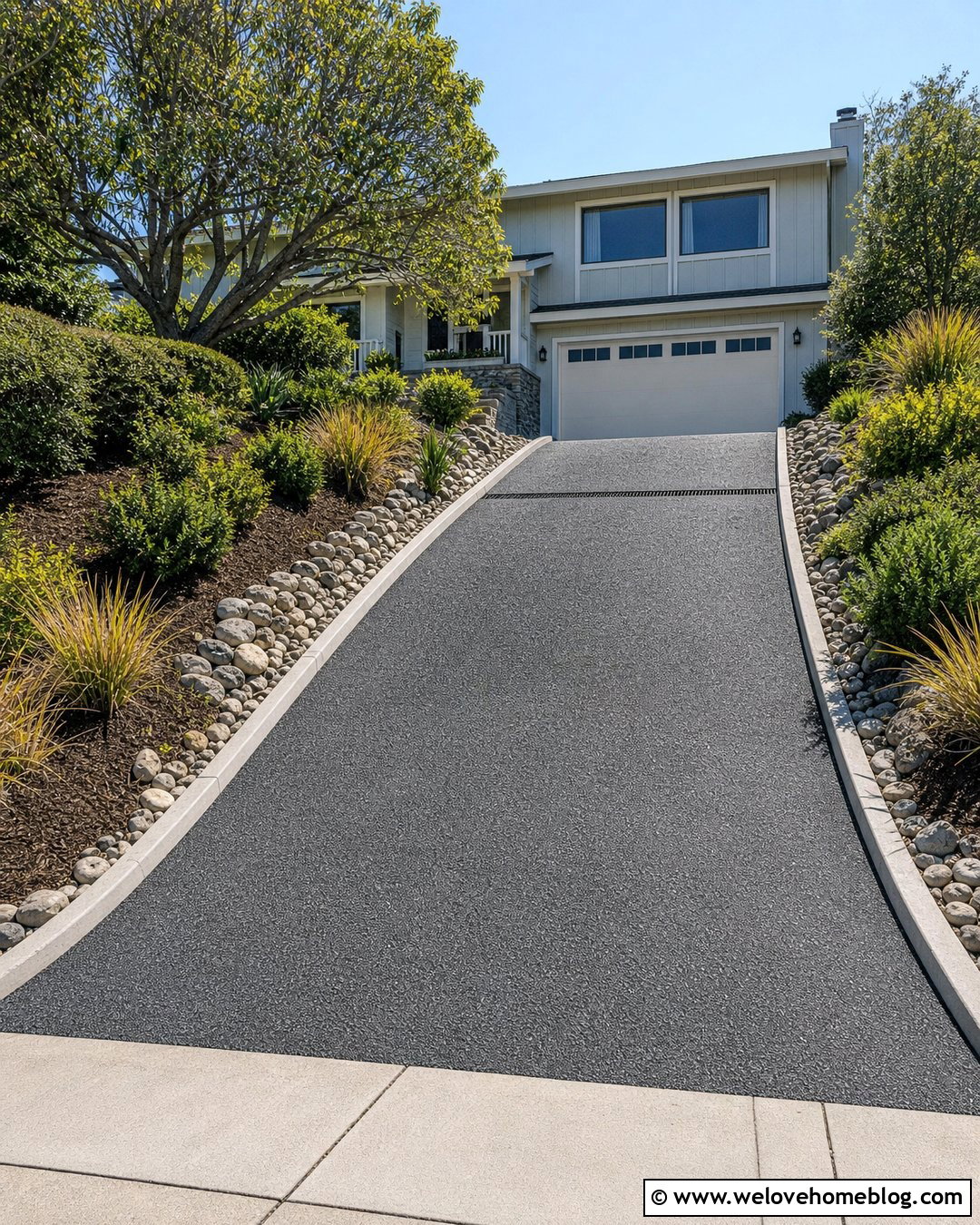
White quartz scattered through charcoal concrete produces a dramatic finish that sparkles subtly in bright daylight. Unlike an evenly mixed black-and-white surface, this option uses a predominantly dark base with selective pale highlights. Install it on a sloped, straight driveway leading to a modern hillside or split-level home. Light concrete curbs can frame both sides, protect adjacent planting beds, and make the driveway edges easier to see. Use silver grasses, creeping juniper, white flowering ground cover, and layered retaining walls to support the contemporary palette. A matching charcoal landing at the garage will create a smooth transition. The amount and distribution of quartz should be reviewed in a cured sample, since excessive white stone can change the finish from restrained and architectural to highly speckled.
19. Honey Limestone Exposed Aggregate Driveway
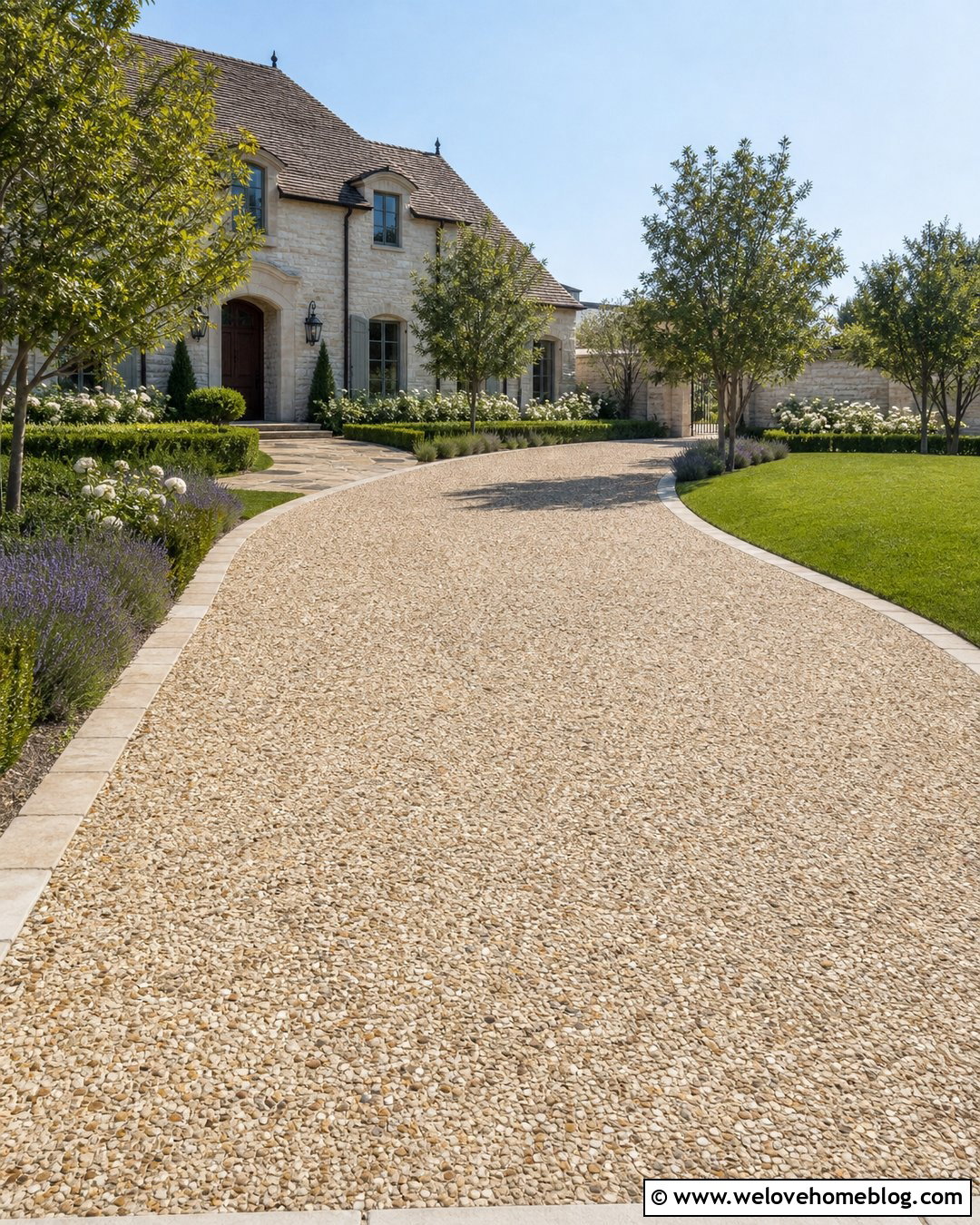
Honey limestone aggregate gives a driveway a mellow golden-beige appearance that feels established and inviting. Combine small limestone chips, cream quartz, tan gravel, and sparse brown stone within a soft biscuit-colored concrete base. The look suits a traditional stone house, French country facade, or warm-toned ranch. Use a curved driveway with a broad apron at the garage and a coordinating limestone paver border. Layer the surrounding landscape with lavender, low hedges, white roses, ornamental pears, and neatly maintained lawn. A natural flagstone walkway can connect the driveway to the porch without requiring an exact material match. Because limestone colors range from pale cream to strong gold, compare the aggregate with the house masonry. A slightly contrasting tone usually looks more natural than an attempted exact match.
20. Copper Ochre Exposed Aggregate Driveway
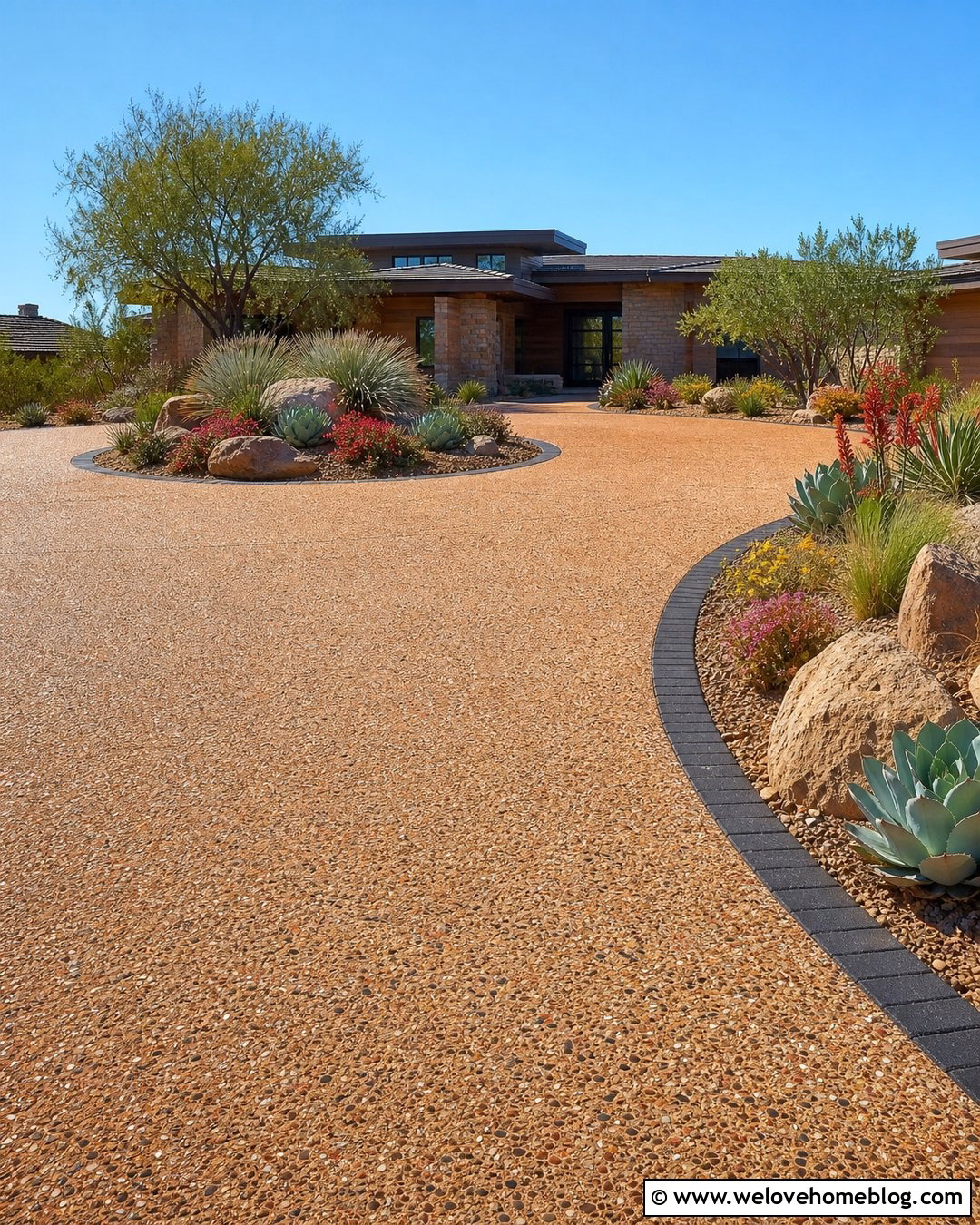
Copper ochre provides an earthy final option with more depth than basic tan. A warm brown cement base can hold copper-colored granite, muted orange stone, dark brown pebbles, and cream highlights. Use the blend on a sweeping circular driveway serving a southwestern, prairie, or contemporary desert home. Dark charcoal paver edging will sharpen the outline and prevent the warm surface from blending completely into gravel beds. Add native grasses, sculptural succulents, flowering desert shrubs, and several large natural boulders around the central island. Bronze-toned lighting and a simple metal address marker can repeat the copper notes near the entrance. Keep the house facade relatively neutral, using sand-colored stucco, natural wood, or dark metal so the distinctive driveway remains grounded rather than overly colorful.
Conclusion:
Choosing an exposed aggregate color is easier when you evaluate the whole property rather than the driveway alone. Consider the house facade, roofing, garage doors, paths, borders, soil, and surrounding plants. Then compare large cured samples outdoors in both sun and shade. Remember that aggregate type, concrete pigment, exposure depth, moisture, and sealer can all influence the finished appearance. The best design does not need to match every exterior material exactly. It should share enough undertones to create a connected, balanced entrance. From pale ivory quartz to copper ochre and black basalt, these **20 exposed aggregate driveway colours ideas** offer practical starting points for traditional, modern, coastal, rustic, and transitional homes.

Related posts:
Leave a Reply