
Crushed stone can create a driveway that feels polished, welcoming, and well matched to the home rather than purely functional. Its angular pieces compact and interlock more effectively than rounded gravel, while a properly prepared base and substantial edging help reduce shifting and long-term maintenance. () Color also matters. Gray granite suits modern homes, warm limestone complements traditional exteriors, and dark trap rock creates striking contrast beside lighter siding. The best layouts combine the stone surface with a practical shape, durable borders, thoughtful drainage, and landscaping that frames the approach. Whether you have a short suburban drive or a long country entrance, these complete designs provide useful inspiration. Explore the following 25 Crushed Stone Driveway Ideas.
1. Gray Crushed Stone Driveway With Cobblestone Edging
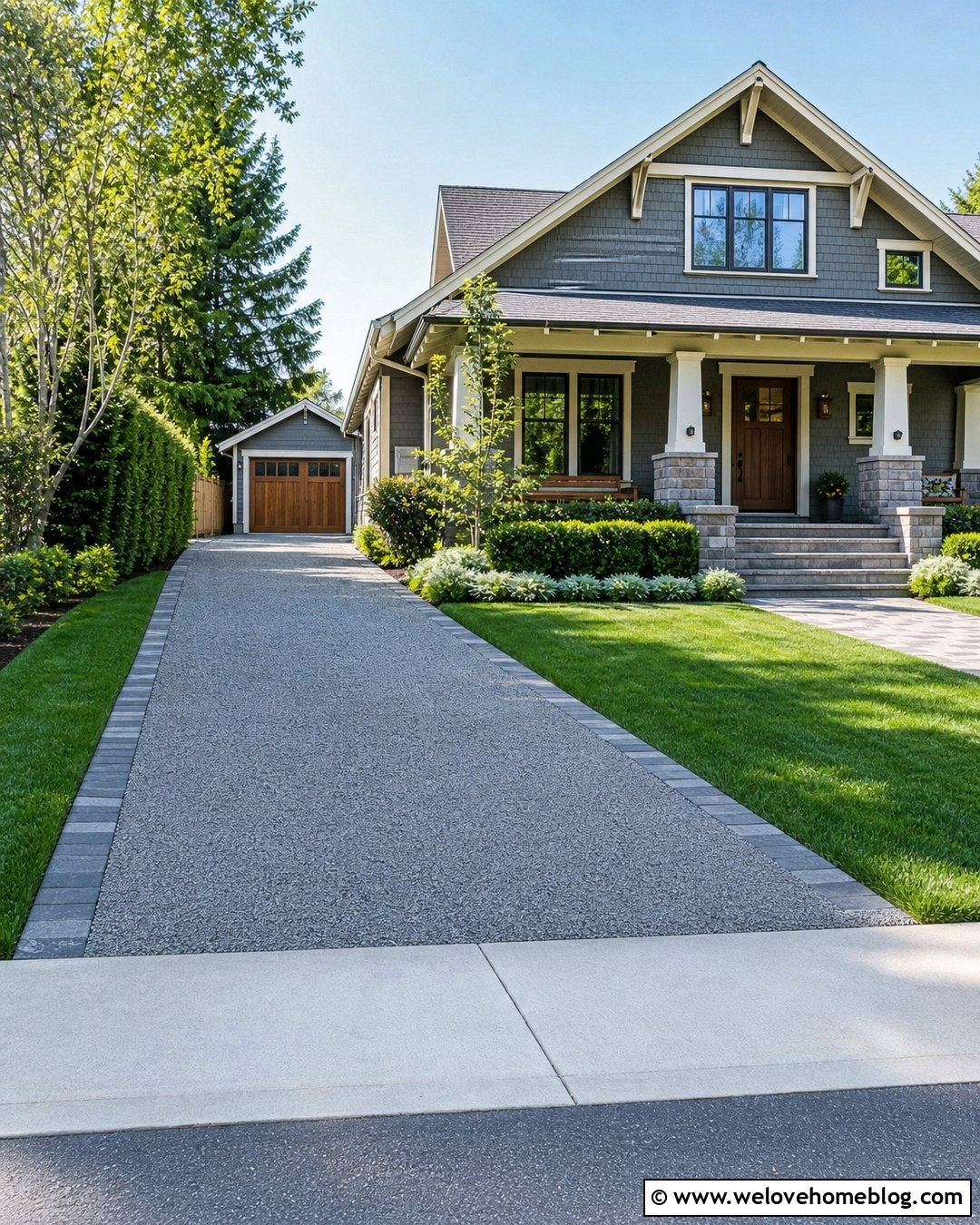
A medium-gray crushed granite surface paired with cobblestone edging creates a clean driveway that still feels timeless. The angular granite forms a firm, textured surface, while the cobbles provide a strong visual and physical boundary along both sides. Choose charcoal cobblestones for subtle contrast or weathered gray stones for a more blended appearance. A straight layout works especially well in front of a Craftsman or traditional brick home. Add simple lawn panels, evergreen foundation shrubs, and a paved walkway connecting the driveway to the front porch. At the street, widen the cobblestone border slightly to define the entrance. This design feels finished without becoming formal, and the neutral materials coordinate easily with most siding, roofing, and landscape colors.
2. White Crushed Limestone Driveway With Brick Borders
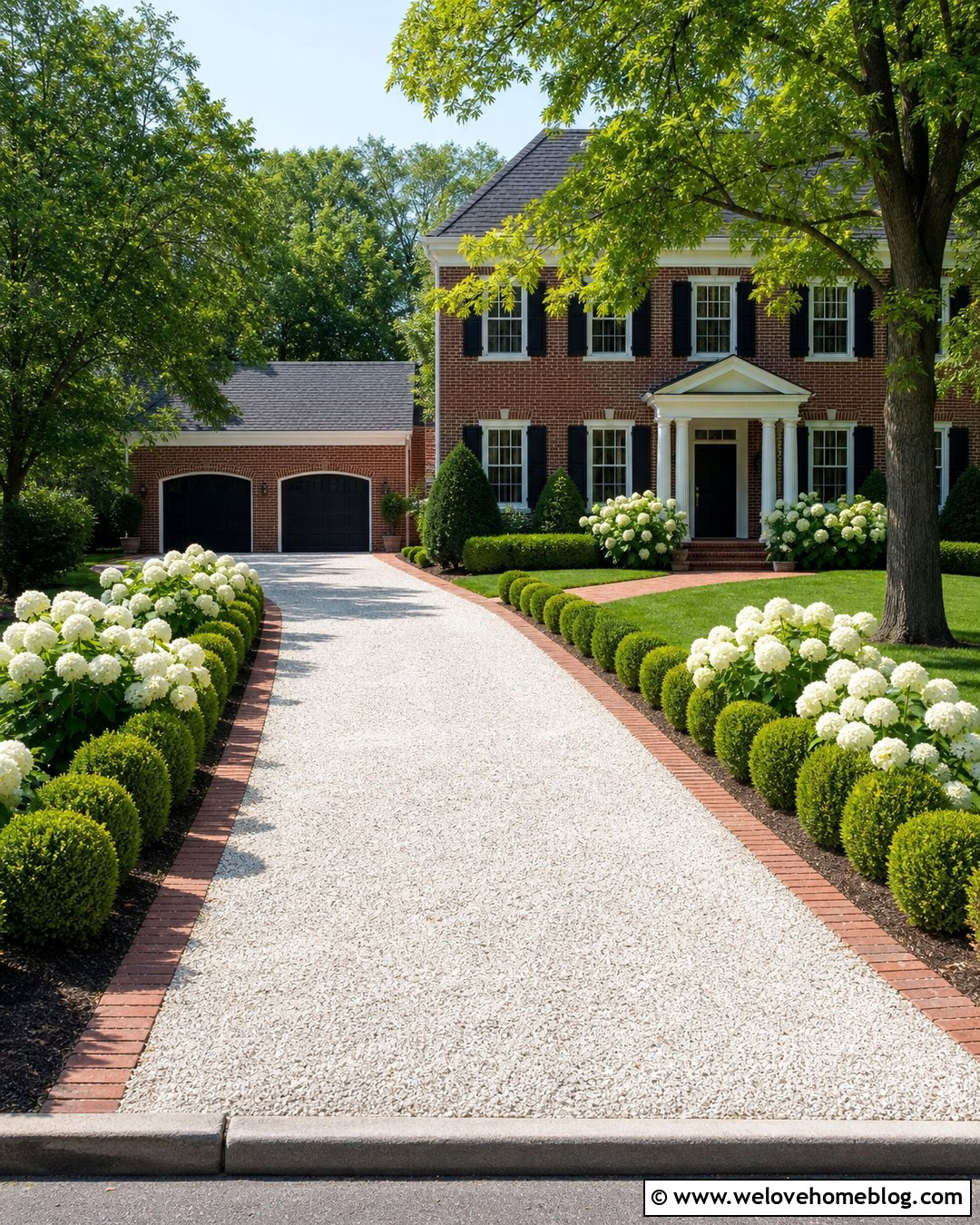
Bright crushed limestone can make a smaller front yard appear more open and inviting. Pair the pale stone with red or brown clay brick borders to create definition and warm contrast. A running-bond brick pattern keeps the edge simple, while a double row gives the driveway a more substantial frame. This combination looks especially natural beside Colonial, Cape Cod, and traditional red-brick homes. Keep the driveway straight and connect it to a matching brick walkway near the garage or porch. Green boxwoods, flowering hydrangeas, and a neatly maintained lawn soften the hardscape without hiding it. Because light limestone can show soil and leaf stains, avoid placing messy fruit trees directly overhead. The finished driveway should feel bright, orderly, and connected to the architecture.
3. Curved Crushed Granite Driveway With Steel Edging
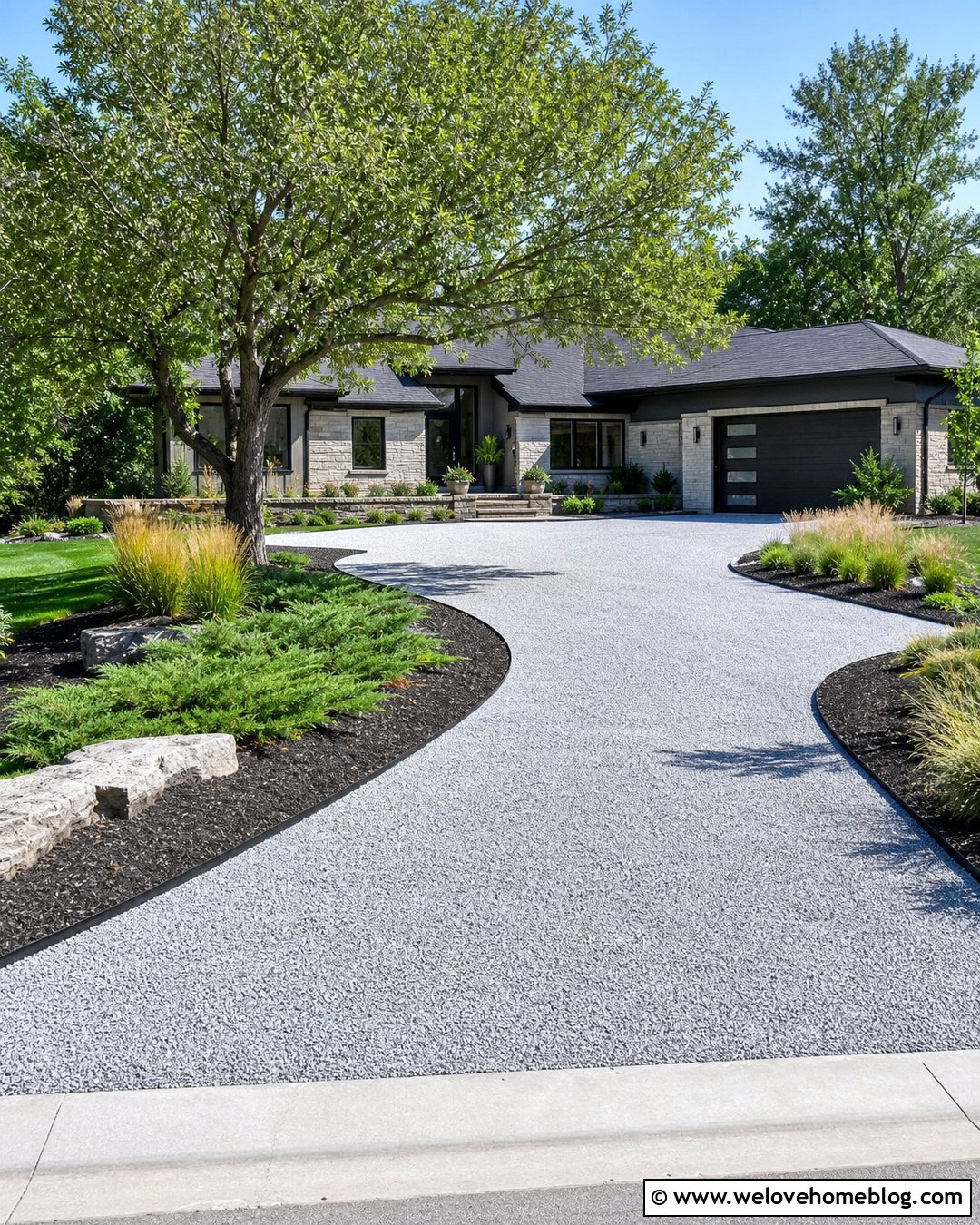
A gently curved crushed granite driveway creates a more graceful approach than a basic straight run. Flexible steel edging follows the bends cleanly and gives the stone a crisp boundary without adding a heavy decorative border. Use silver-gray granite for a contemporary appearance or warm speckled granite for a softer transition into the yard. The curve can sweep around a mature tree, planting island, or sloped lawn before reaching the garage. Ornamental grasses, low junipers, and compact flowering shrubs reinforce the flowing shape while keeping sightlines open. This layout works well with modern ranch, split-level, and contemporary farmhouse homes. A broad turning area near the garage improves function, while a clearly defined apron at the street prevents the entrance from looking unfinished.
4. Crushed Limestone Driveway With Timber Edging
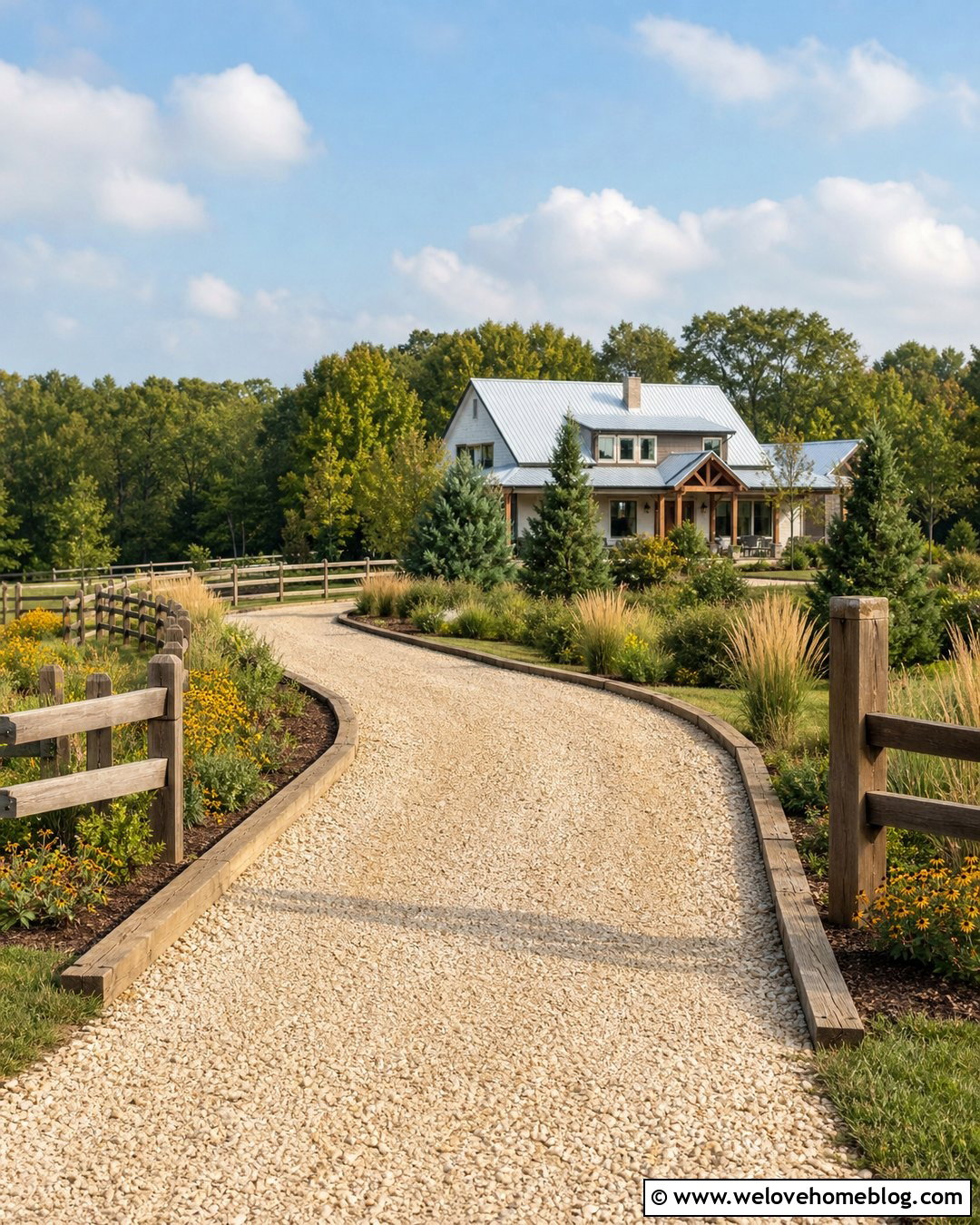
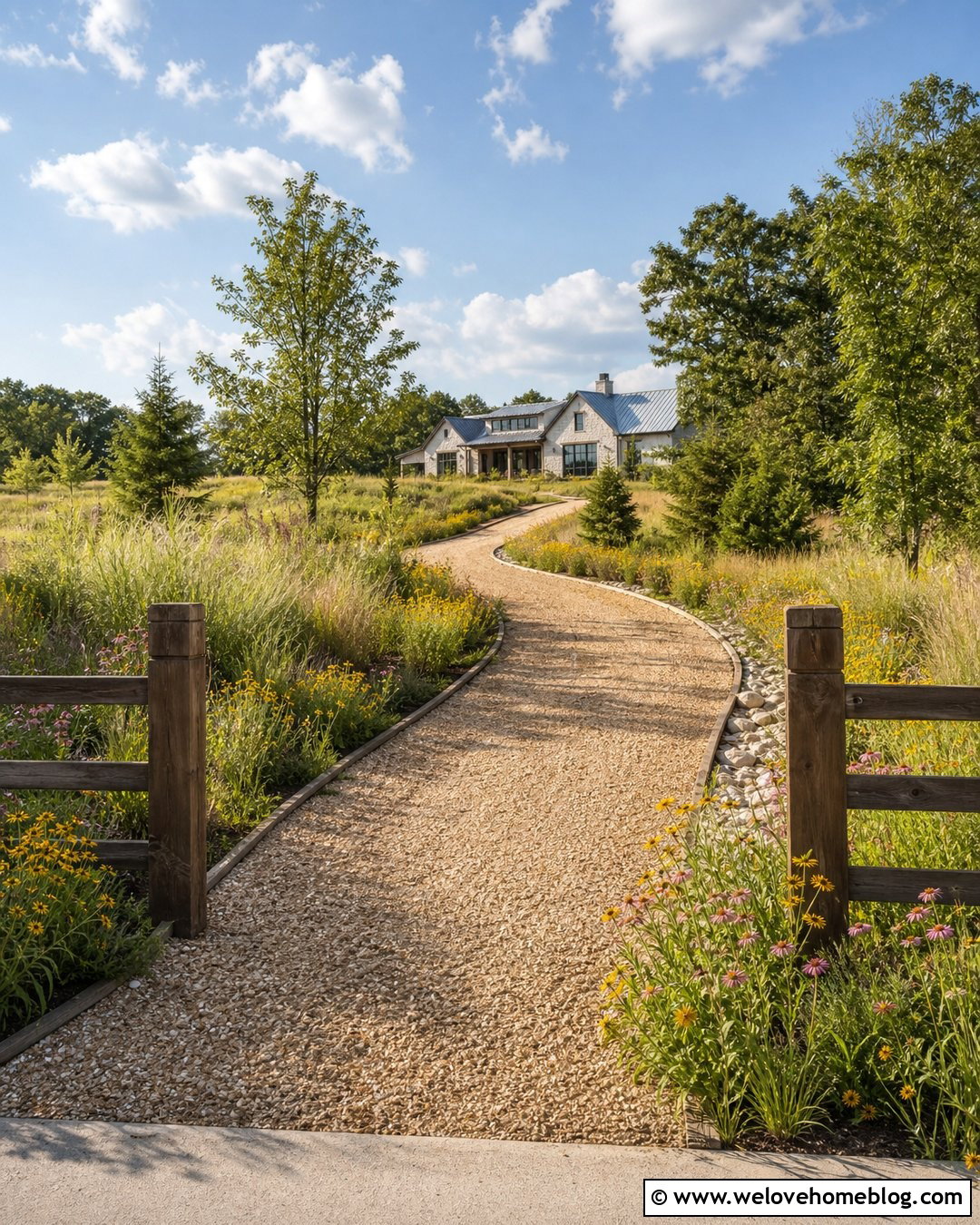
Warm beige crushed limestone and pressure-treated timber edging make an attractive combination for a relaxed country property. The wood creates a practical boundary and visually connects the driveway to fences, raised beds, or natural woodland surroundings. Use substantial square timbers set securely at grade rather than thin landscape boards. A straight or slightly winding layout suits a farmhouse, cabin, or rustic ranch home. Plant native grasses, black-eyed Susans, and low evergreen shrubs outside the timber border to create an informal landscape that does not require constant trimming. A matching timber address post can complete the entrance. Keep the top of the edging low enough to avoid becoming a tripping or plowing obstacle. The result feels natural, affordable, and intentionally designed.
5. Dark Crushed Stone Driveway With Concrete Curbs
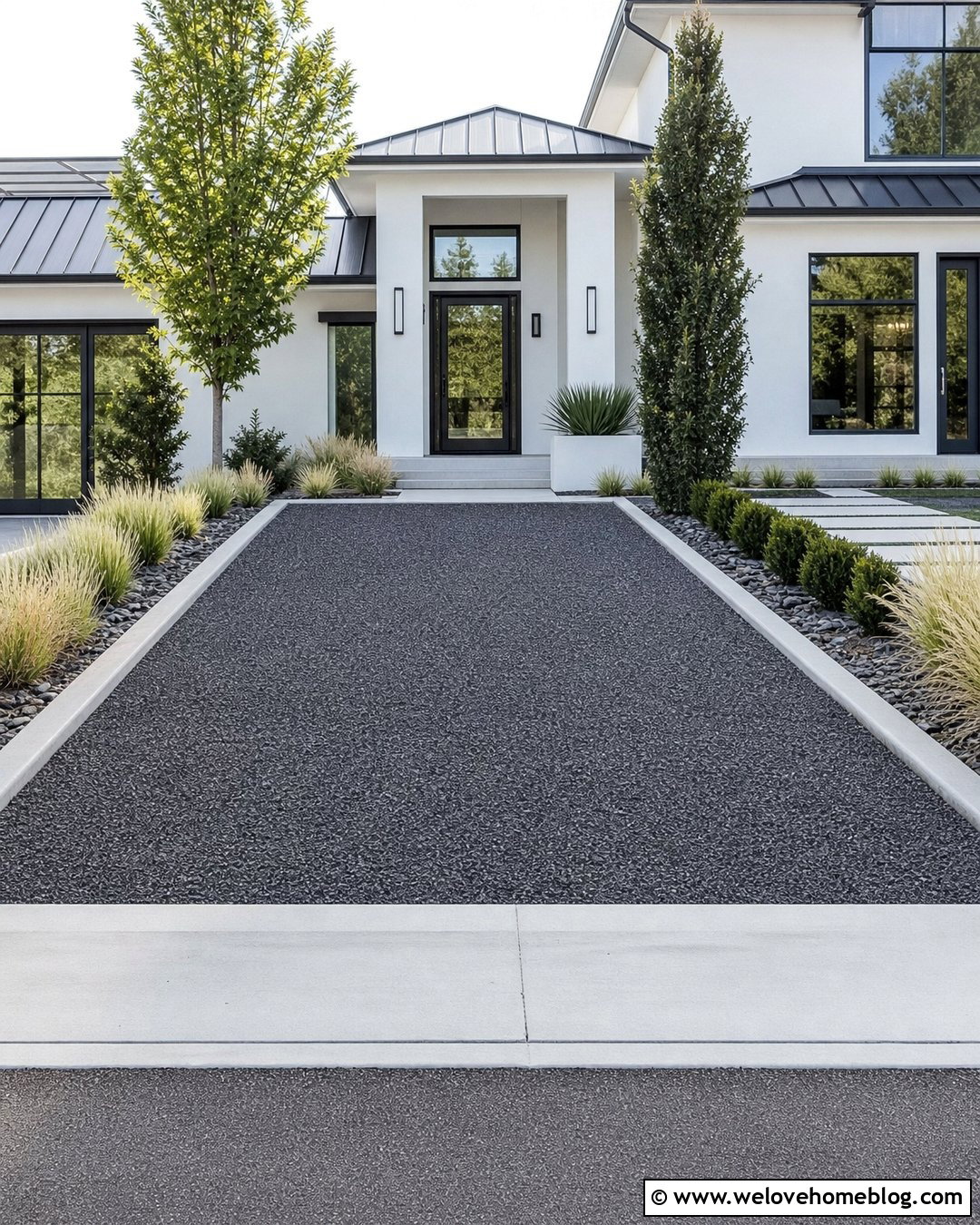
Dark crushed basalt or trap rock creates a dramatic driveway surface beside white, cream, or light-gray architecture. Smooth poured concrete curbs provide a restrained border that keeps the dark aggregate visually contained. This combination is especially effective with modern homes featuring simple rooflines, black-framed windows, and minimal ornament. Use a wide straight layout with a clean concrete apron at the street and a matching transition near the garage. Narrow beds of ornamental grasses, clipped evergreens, and pale decorative rock can lighten the surrounding landscape. Dark stone may become warm in strong sunlight, so consider the property’s climate and shade conditions. When the driveway, curbs, walkway, and planting beds follow the same clean geometry, the entire front yard gains a coordinated contemporary appearance.
6. Crushed Bluestone Driveway With Brick Ribbon
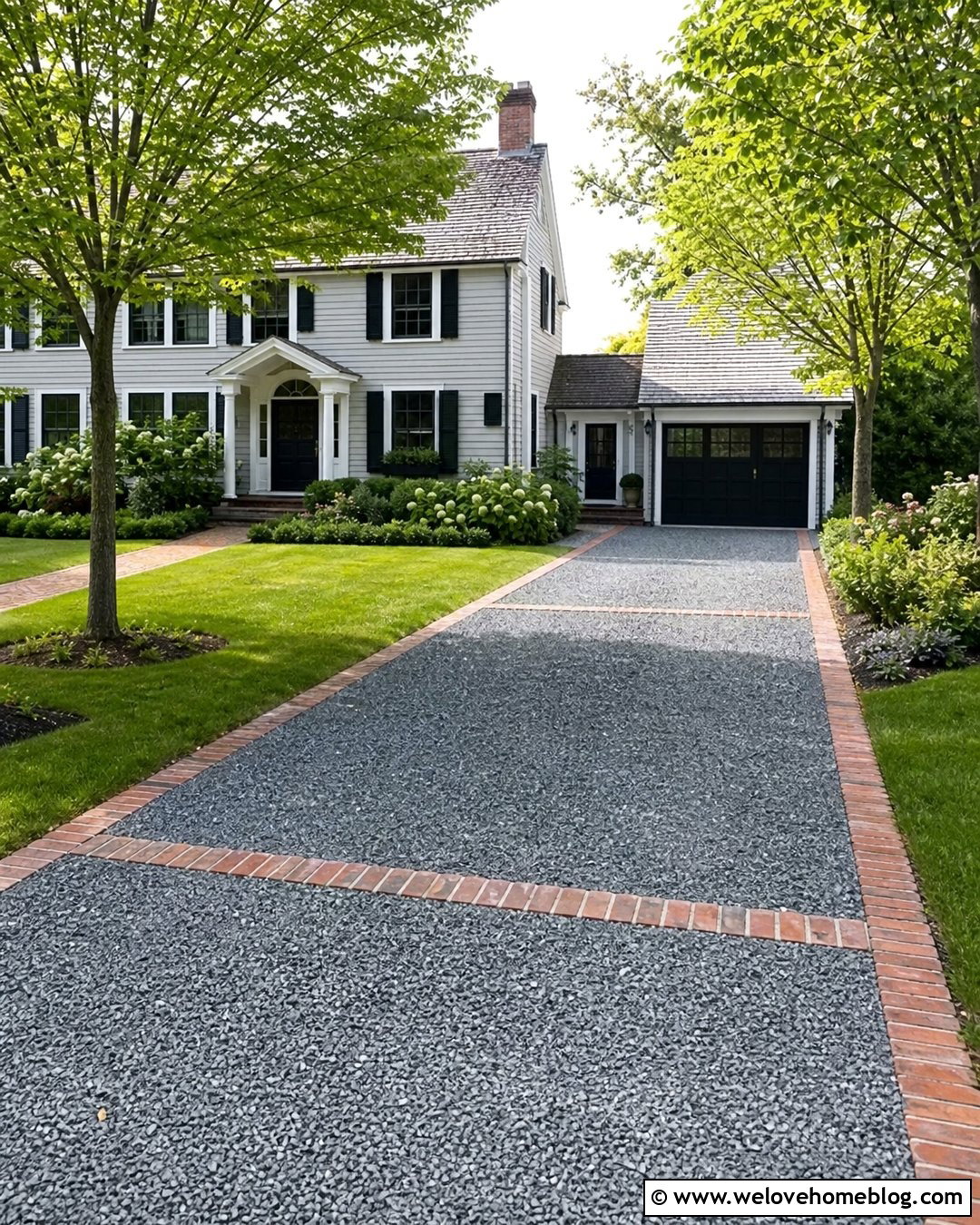
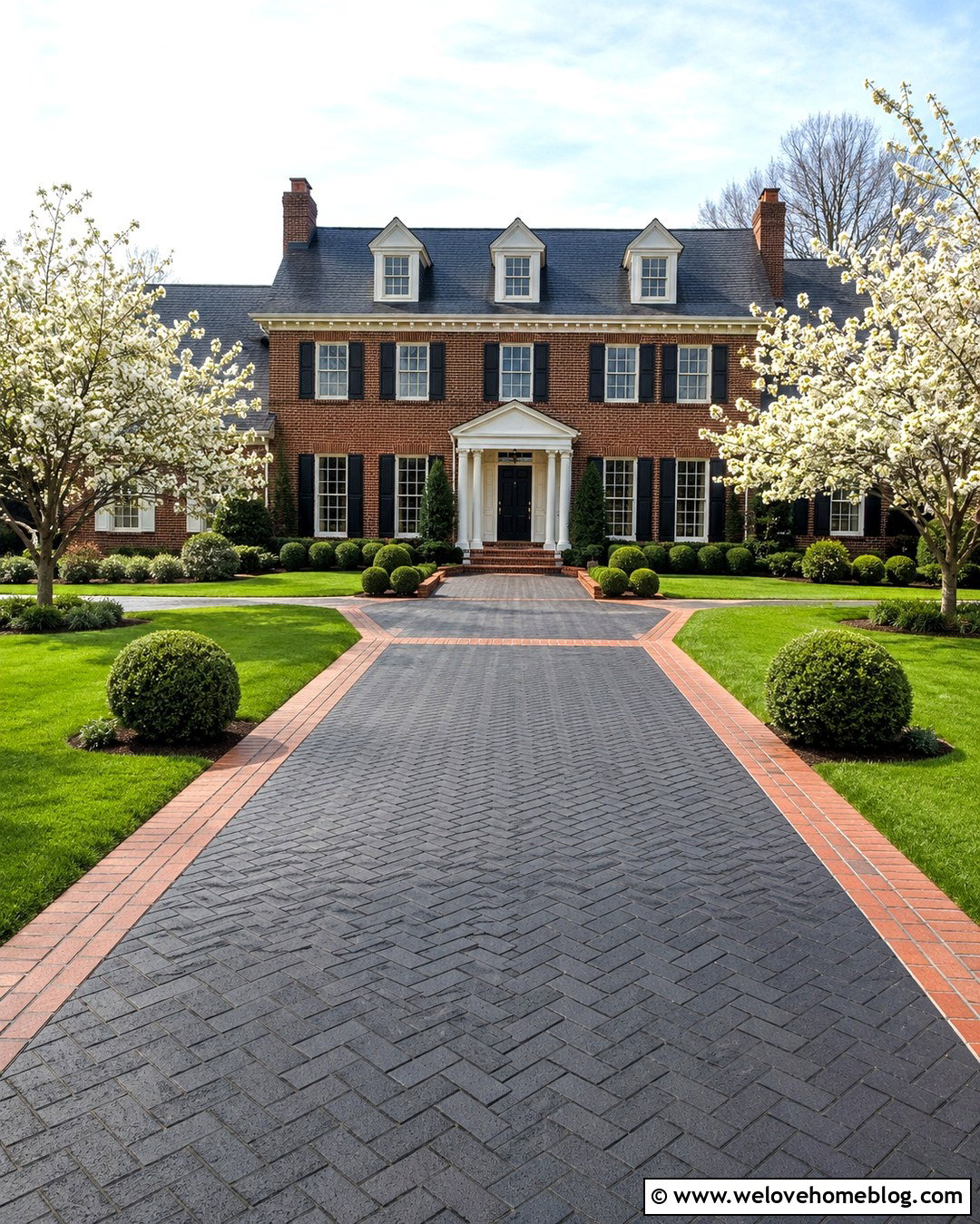
Blue-gray crushed stone gains character when a brick ribbon runs through or across the surface. The ribbon can mark the driveway edges, create a central divider, or form decorative bands at the street and garage transitions. Choose muted red, charcoal, or reclaimed-looking bricks that complement the cool stone without overpowering it. This treatment works beautifully with traditional homes, especially those featuring painted siding, brick chimneys, or covered porches. A straight driveway keeps the pattern orderly and makes the brick details easy to read from the curb. Frame the surface with lawn, small shade trees, and layered foundation beds. Brick bands should be installed on a stable base so they remain even. The completed look combines the softness of loose stone with clear architectural structure.
7. Circular Crushed Stone Driveway With a Planted Island
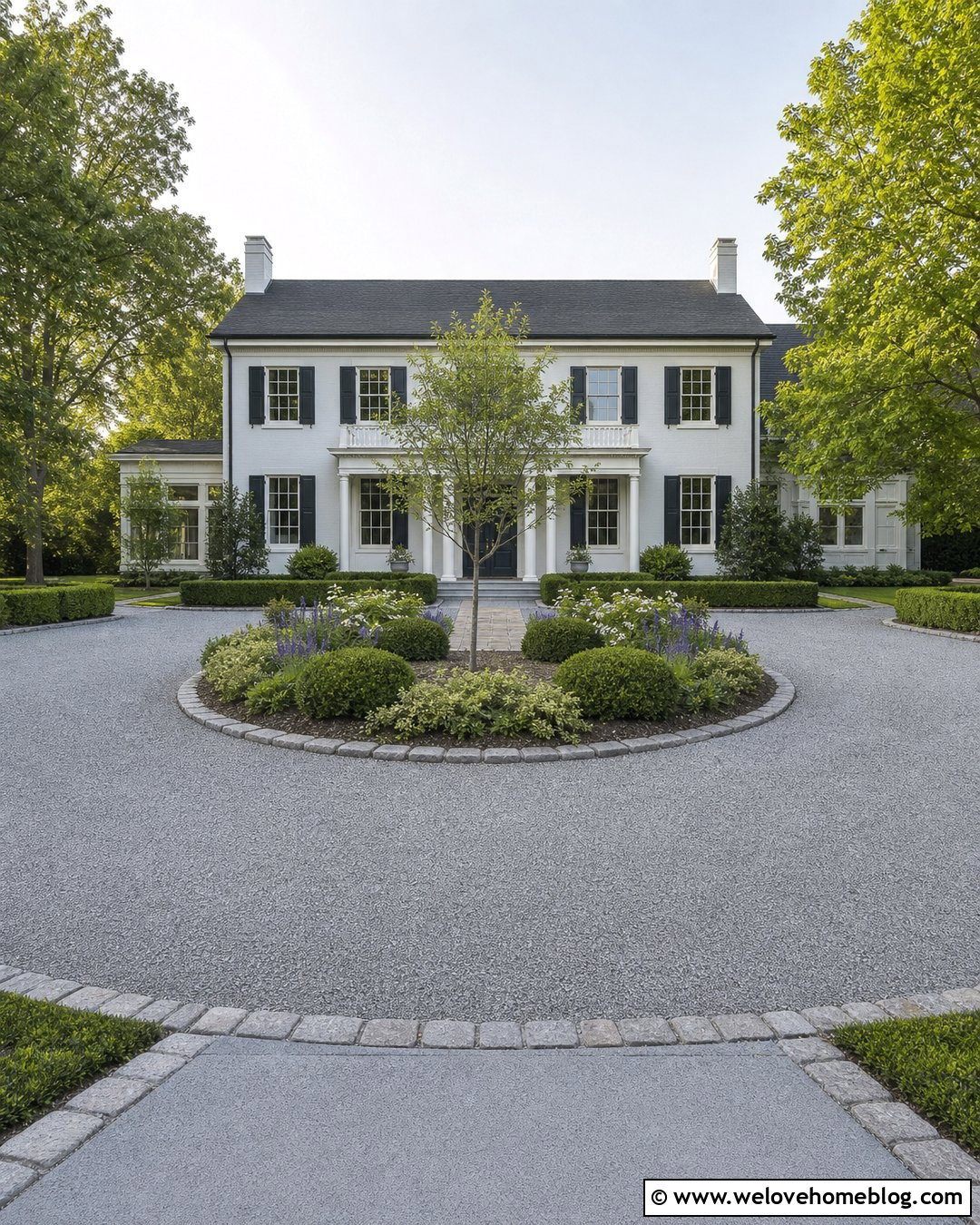
A circular crushed stone driveway adds convenient vehicle flow while turning the center into a prominent landscape feature. Use compacted gray or warm tan stone around a round planting island edged with cobblestone, brick, or low concrete curbing. In the center, plant one appropriately scaled ornamental tree surrounded by low shrubs, perennials, and ground cover. Keep taller growth away from entrance sightlines. This arrangement suits Colonial, Georgian, French country, and larger farmhouse homes with a centered front entrance. A paved walkway can cross the inner island or connect the driveway directly to the porch. Repeat the driveway stone in nearby garden paths to unify the property. The circular shape should feel spacious and balanced rather than oversized for the house or front yard.
8. Crushed Granite Driveway With Paver Apron
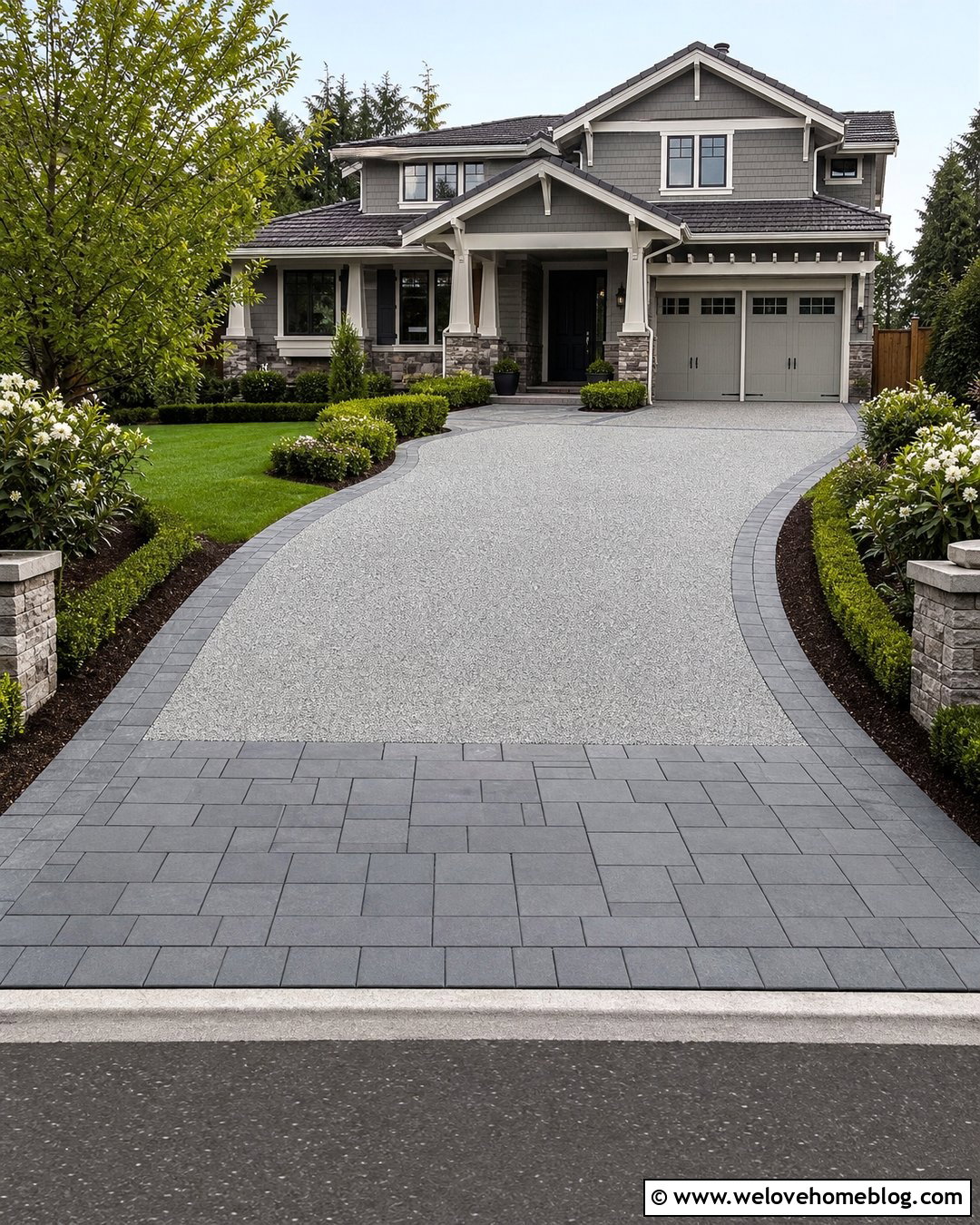
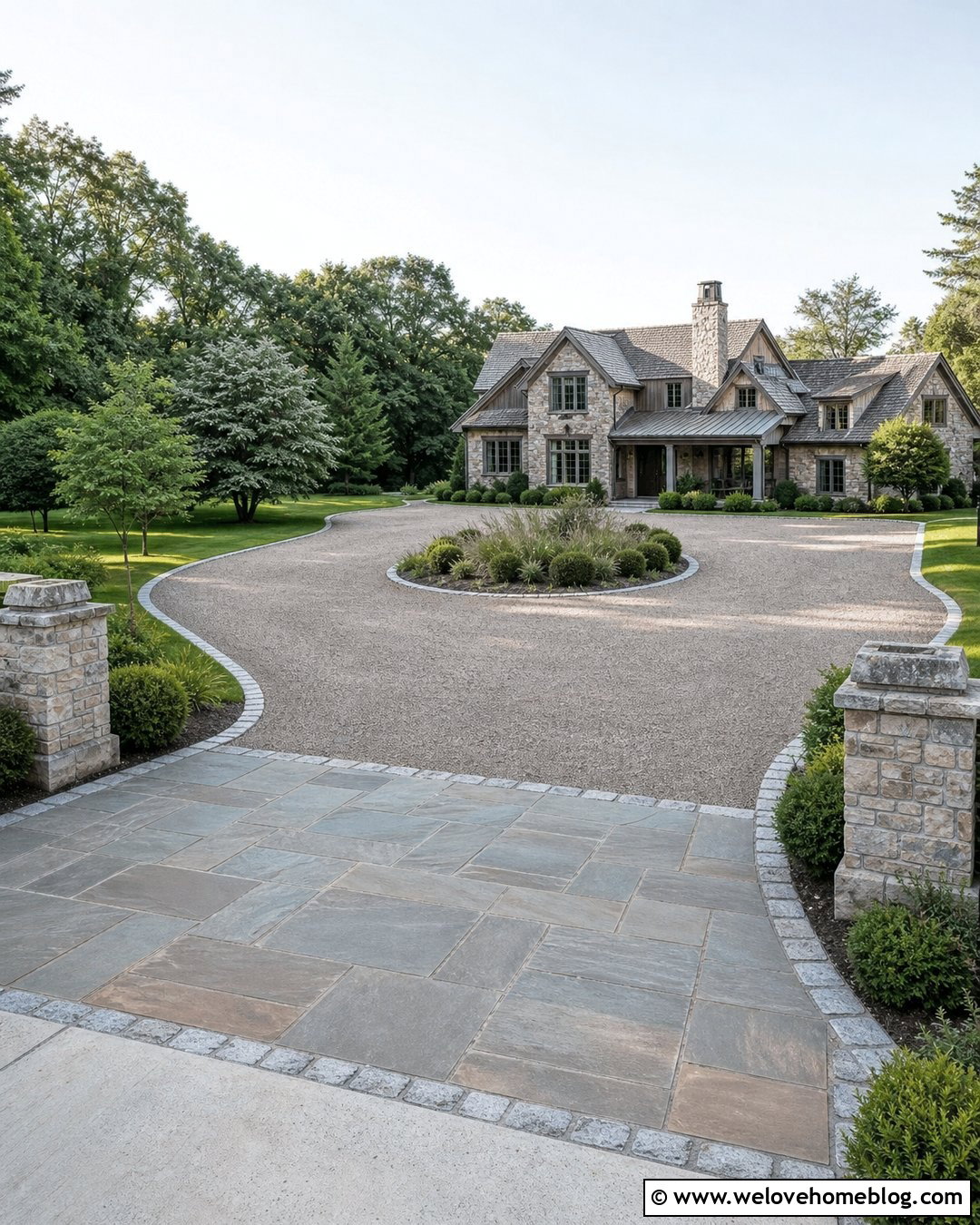
A paver apron gives a crushed granite driveway a strong, polished connection to the street. It also creates a clear transition between the public roadway and the softer aggregate surface. Select concrete or clay pavers that coordinate with the home’s walkway, steps, or facade. Charcoal pavers look sharp beside pale granite, while warm taupe pavers blend naturally with buff-colored stone. Continue a narrow paver border along the driveway for a fully integrated appearance. This design works with straight, curved, and moderately sloped layouts. Low hedges or symmetrical planting beds can emphasize the entrance without blocking visibility. Repeating the pavers near the garage creates visual balance. The apron should be wide enough to read as an intentional design feature rather than a narrow decorative strip.
9. Crushed Stone Driveway With Grass Center Strip
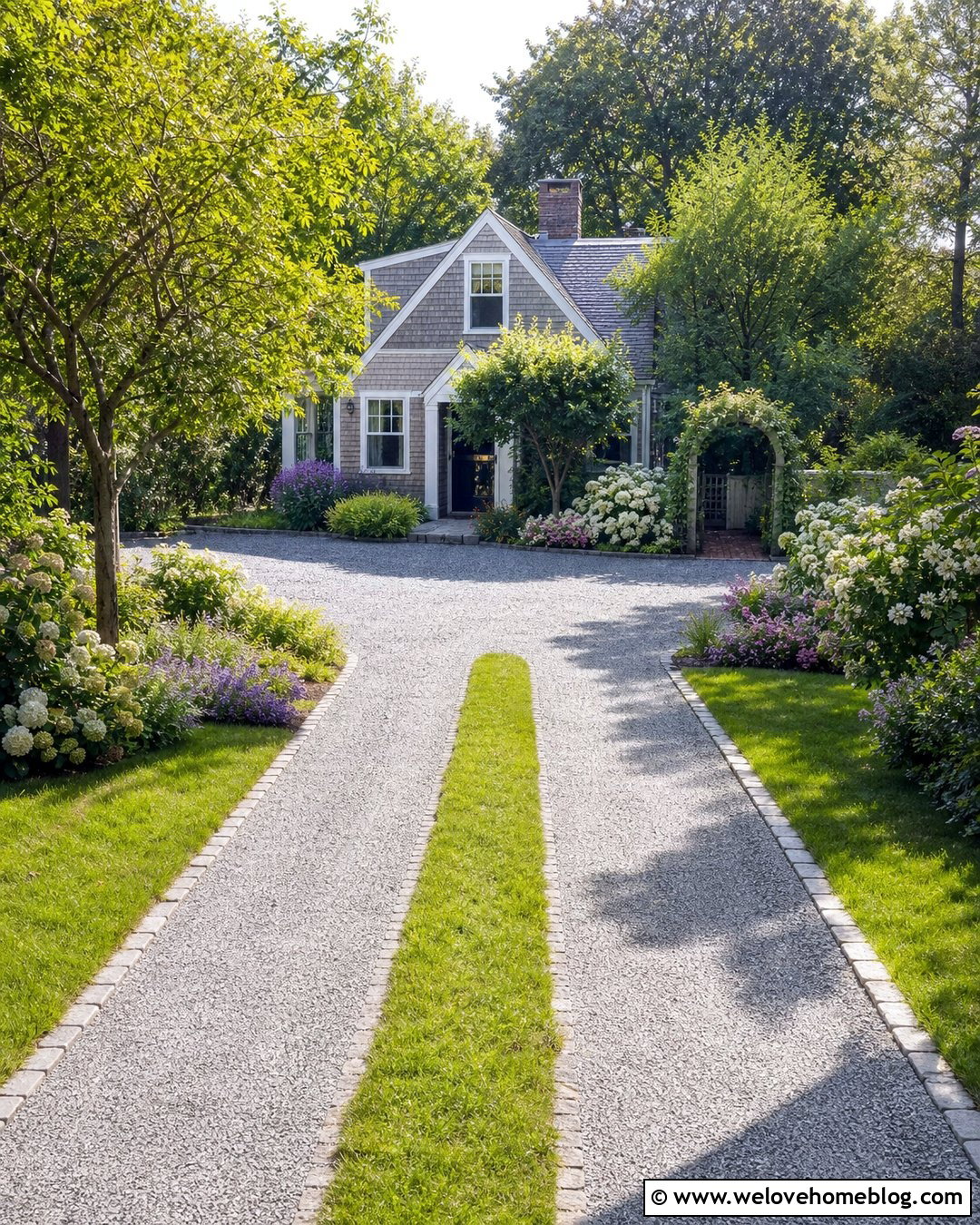
A grass center strip softens a crushed stone driveway and reduces the amount of visible hardscape. Two compacted wheel tracks run from the curb to the parking area, while a narrow green strip fills the center. This configuration works best on relatively level residential drives where vehicle paths remain predictable. Use gray crushed granite or limestone for the tracks, then contain the edges with steel, brick, or flush cobblestones. Drought-tolerant turf or a durable low-growing ground cover can reduce watering needs. The design feels particularly appropriate for cottages, country homes, and casual farmhouses. Continue the surrounding lawn directly into the center strip for a seamless look. A wider crushed stone pad near the garage provides easier turning, parking, and access during wet conditions.
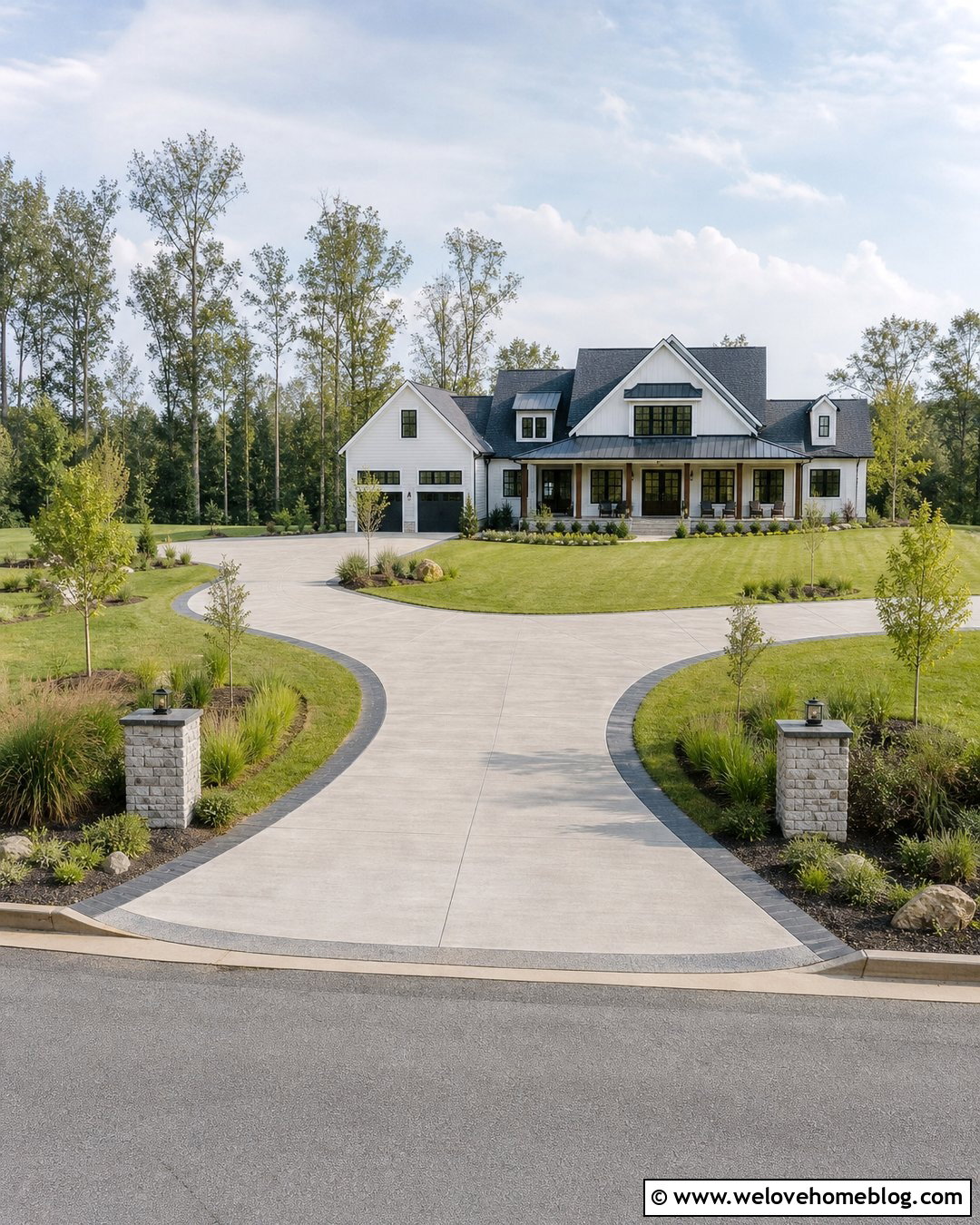
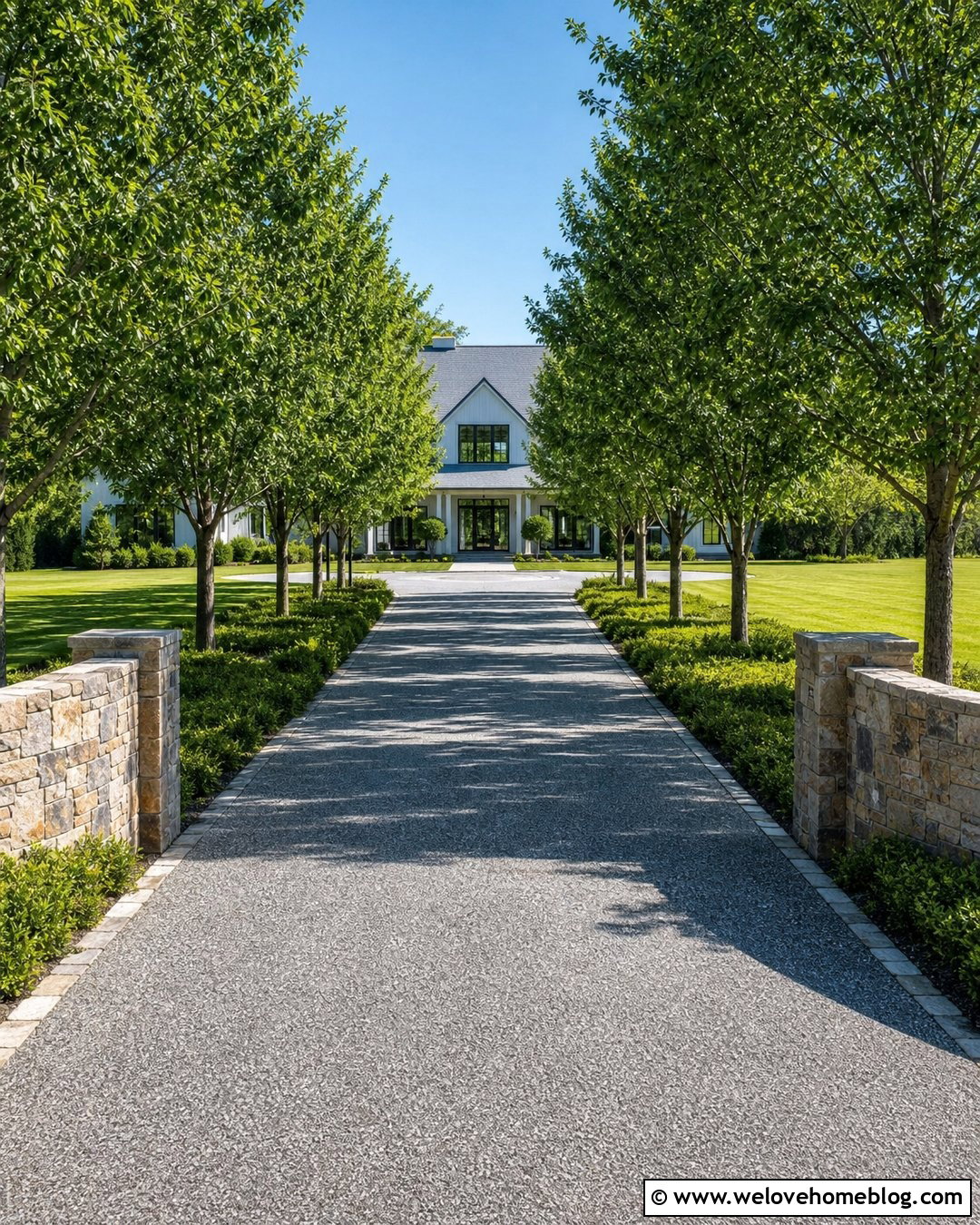
10. Crushed Stone Driveway With Natural Boulder Edging
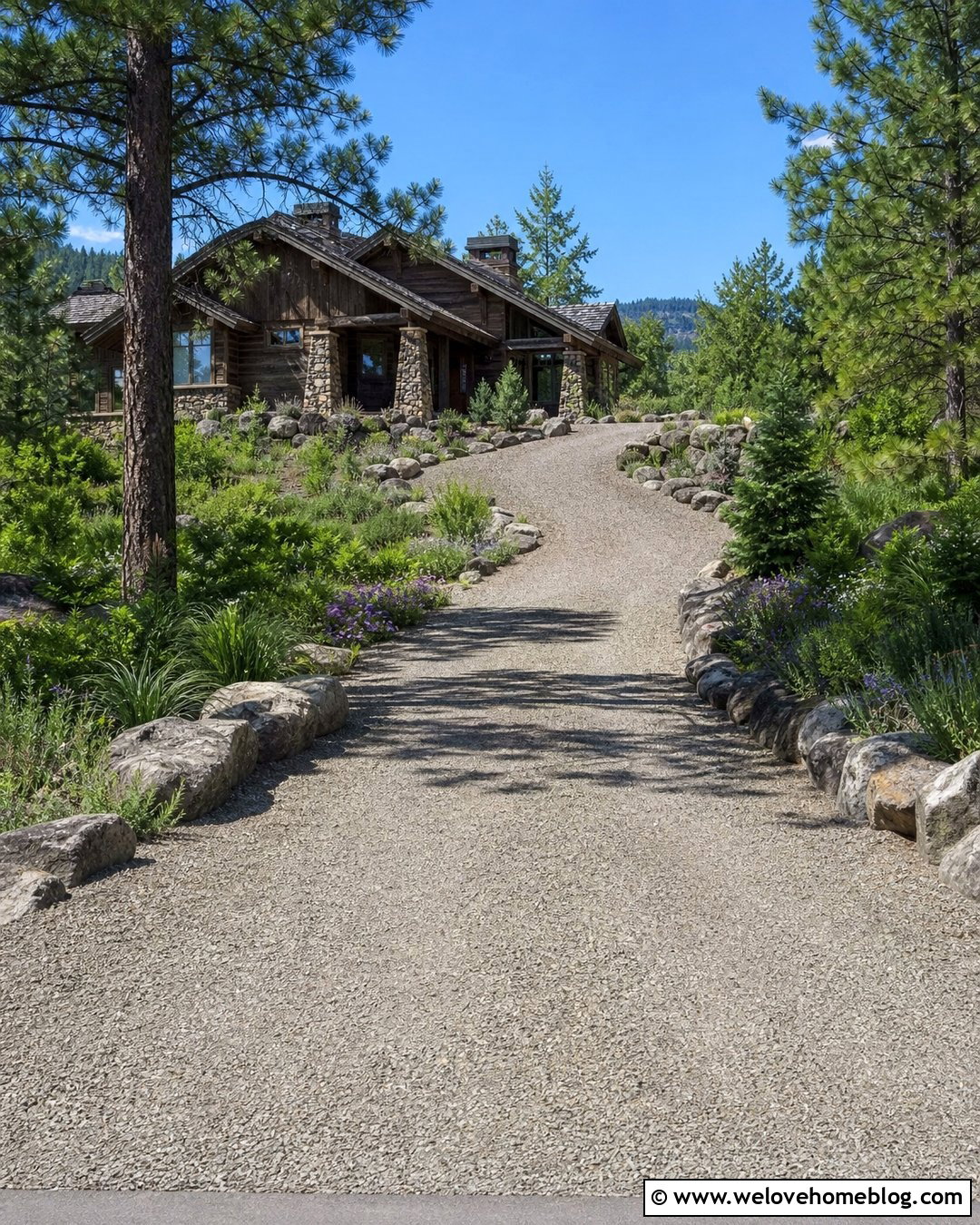
Large natural boulders can give a long crushed stone driveway a rugged sense of place. Rather than forming an uninterrupted wall, space the boulders strategically along curves, planting beds, and the entrance. Use locally compatible crushed granite, limestone, or sandstone so the surface and border share similar undertones. This design is well suited to mountain homes, wooded properties, rustic ranches, and houses with stone veneer. Fill the spaces between boulders with native grasses, spreading junipers, ferns, or flowering ground covers. Keep rocks set back from driving lanes and turning areas to protect vehicles. A gently winding driveway strengthens the natural appearance. When the stone colors, boulder placement, and informal planting work together, the drive looks integrated with the land rather than imposed on it.
11. Red Crushed Stone Driveway With Desert Landscaping
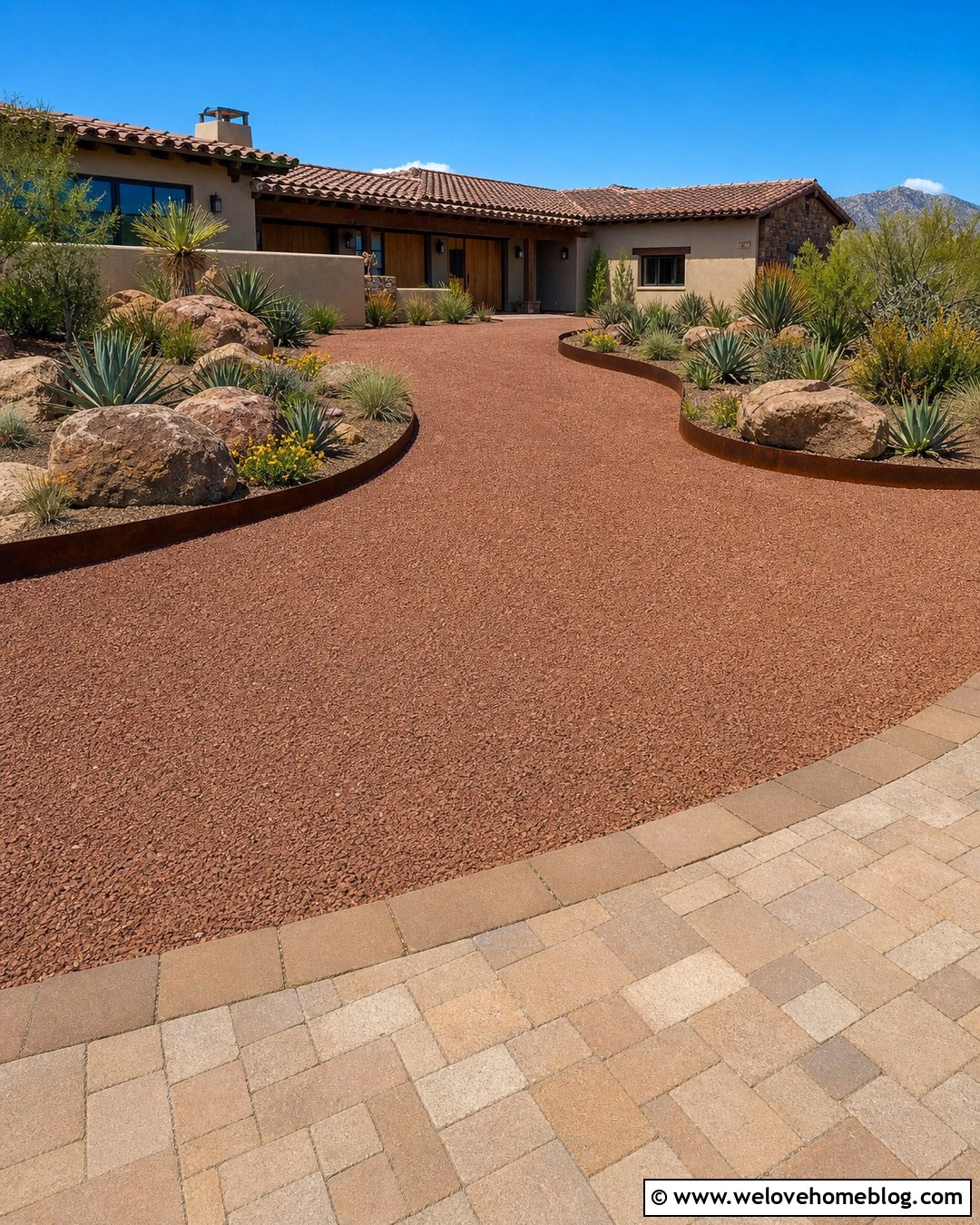
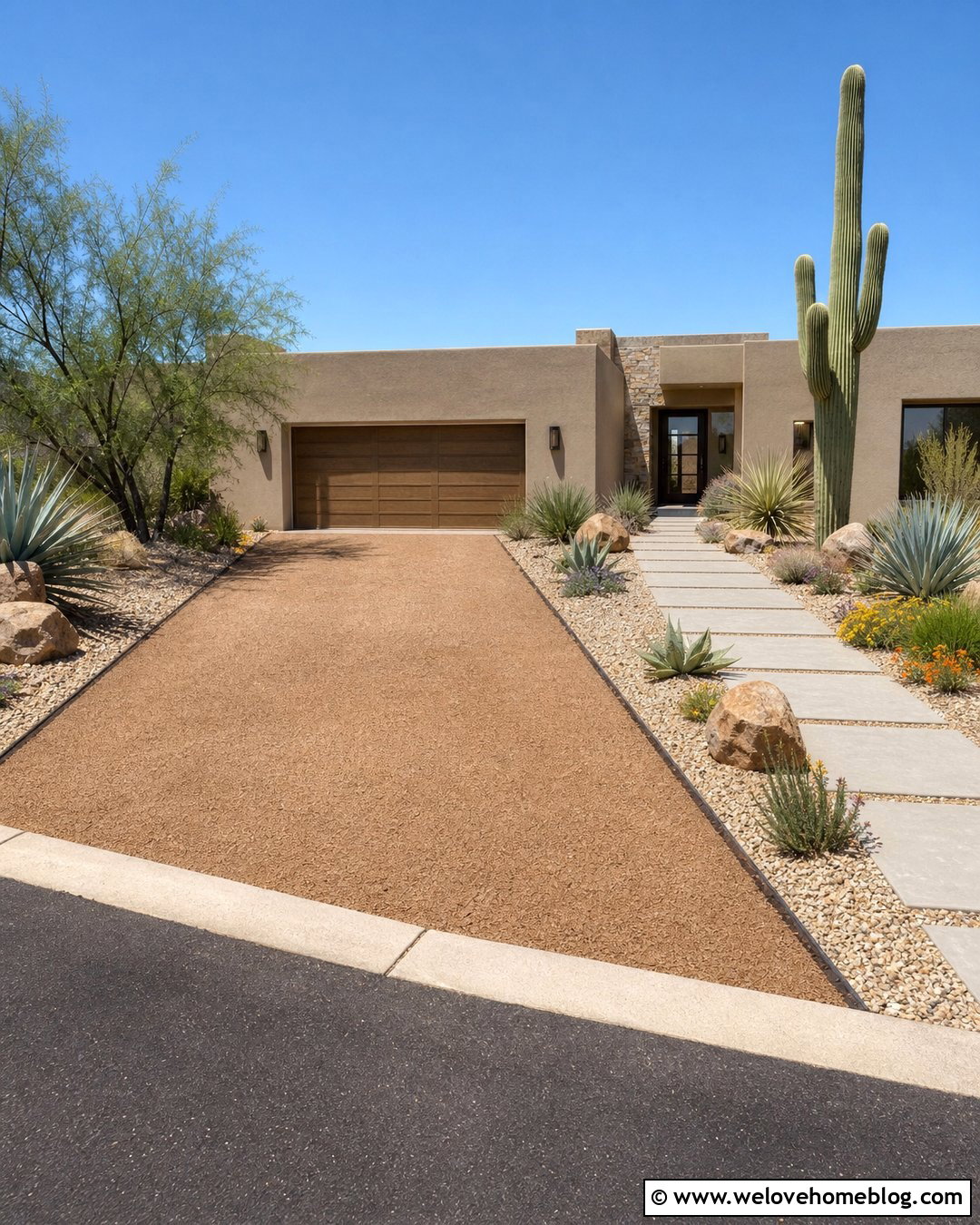
Red crushed granite brings rich color to Southwestern and desert-inspired properties. Its rust, terracotta, and brown tones coordinate with stucco walls, clay roof tiles, natural wood, and warm masonry. Define a broad curved driveway with weathered steel edging or low bands of tan concrete pavers. Surround it with gravel-mulched planting beds containing agave, yucca, ornamental grasses, desert spoon, and regionally appropriate shrubs. Larger accent rocks can create natural transitions between the driveway and landscape. Keep plants far enough from the driving surface to prevent sharp leaves from reaching vehicles. A wide entrance and uncluttered sightlines make the colored stone feel welcoming rather than heavy. Repeating red granite in nearby paths or planting beds creates a cohesive, water-conscious front yard.
12. Crushed Limestone Driveway With Lavender Borders
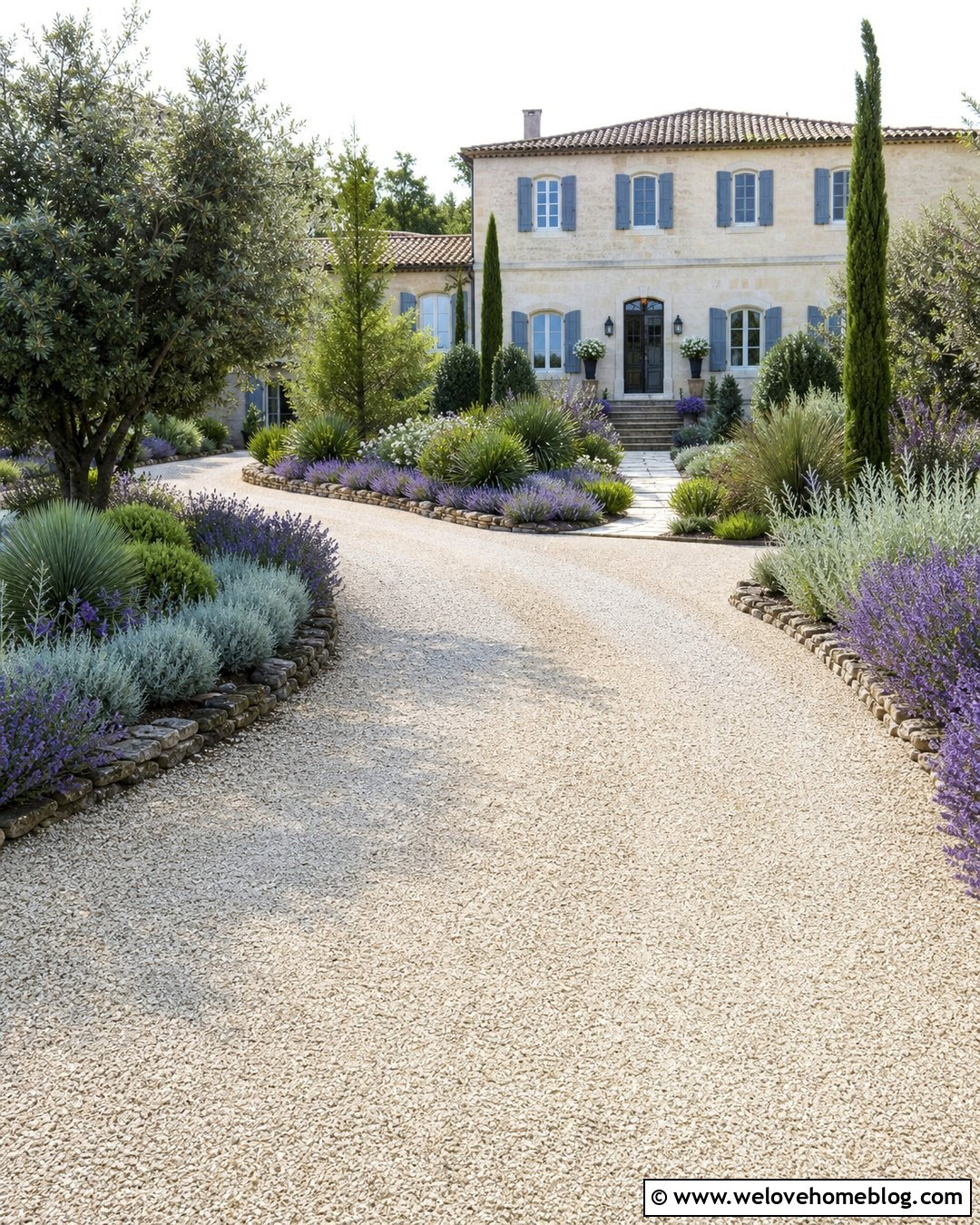
Soft lavender borders provide a fragrant, colorful frame for a pale crushed limestone driveway. This combination feels especially fitting beside cottages, French country homes, and light-colored farmhouses. Use a straight or gently curved layout with low stone or steel edging that prevents limestone from spreading into the planting beds. Place lavender in repeated groups rather than one continuous row, allowing enough space for mature growth and air circulation. Add silvery foliage plants, compact evergreens, and ornamental grasses for year-round structure. A natural stone walkway can branch from the driveway toward the front door. Choose plants suited to the site’s climate, drainage, and sunlight. The finished approach should feel relaxed and garden-focused while keeping vegetation low enough for drivers to see the street clearly.
13. Crushed Stone Driveway With Raised Stone Borders
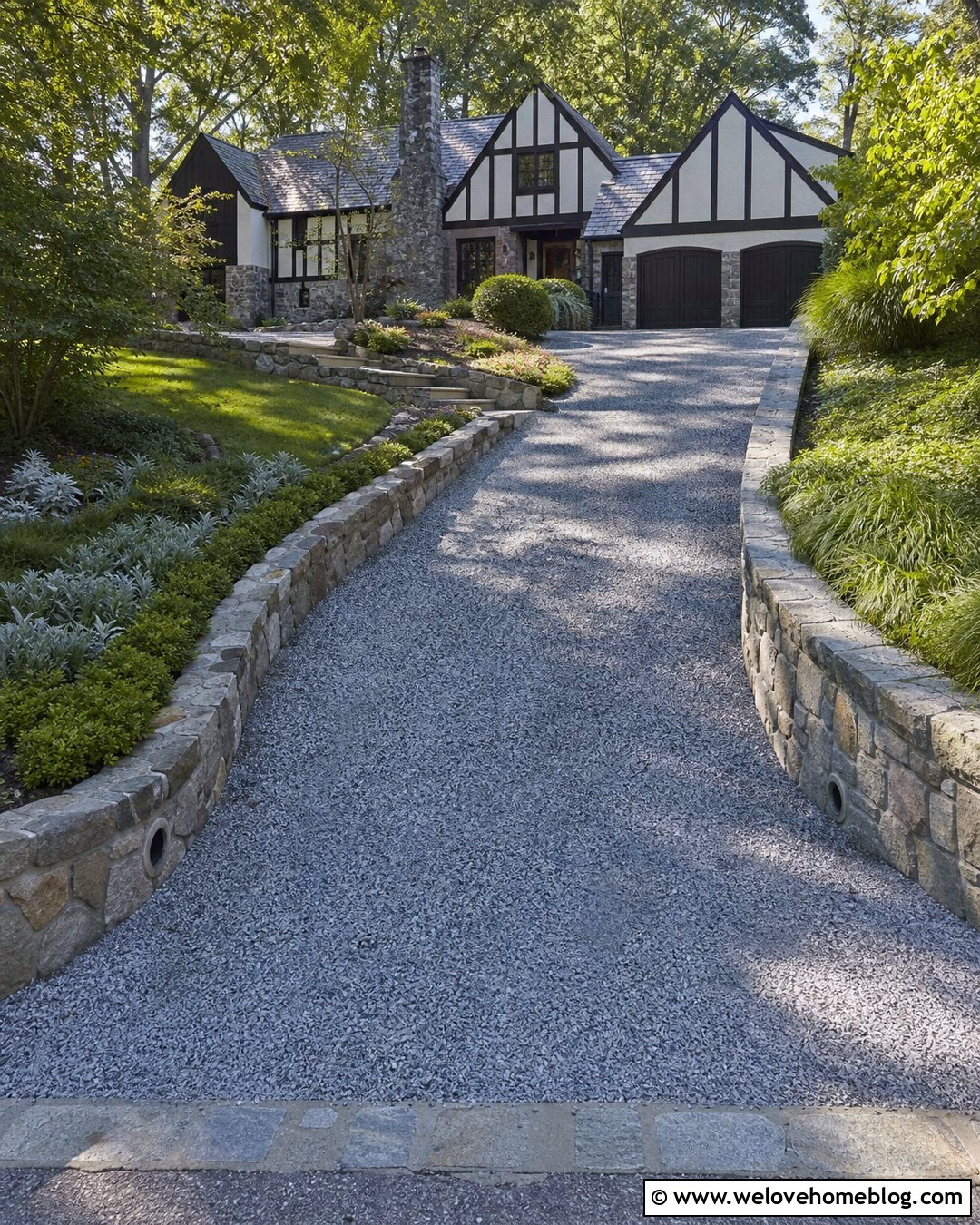
Raised stone borders give a crushed stone driveway a substantial, architectural frame. They are especially useful where the surrounding lawn or planting beds sit above the driveway grade. Use mortared fieldstone for a traditional property or precisely cut blocks for a cleaner contemporary finish. The wall should remain low near the street and turning zones, then rise gradually where grade retention is needed. Fill the beds behind it with compact shrubs, ornamental grasses, and cascading ground covers that soften the masonry. Gray crushed stone works with cool-toned walls, while buff limestone suits warmer fieldstone. This design can transform a sloped entrance into a strong landscape feature. Integrated drainage openings may be necessary so runoff does not become trapped behind the border or cross the driving surface.
14. Crushed Stone Driveway With Corten Steel Borders
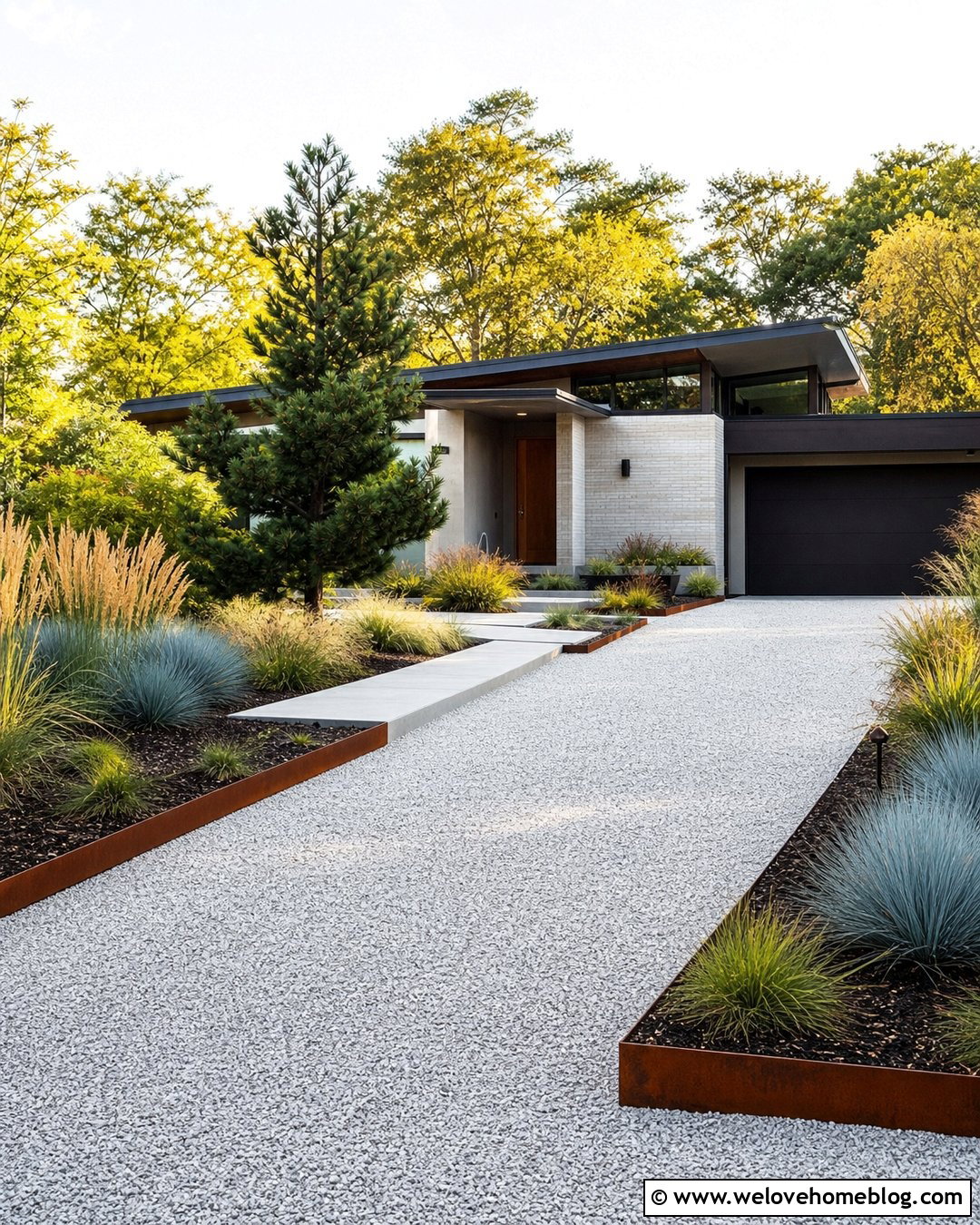
Corten steel edging brings a thin, warm-colored outline to a modern crushed stone driveway. Its rust-toned surface contrasts beautifully with pale gray granite, blue stone, or nearly black trap rock. Use the edging to define a straight driveway, create angular planting beds, and form clean transitions around a front walkway. Modern and midcentury homes benefit from this simple geometry. Plant feather reed grass, blue fescue, compact sedges, and sculptural evergreen shrubs beside the steel. Their softer forms balance the hard lines of the driveway. Set edging at a practical height so it contains the aggregate without creating a sharp exposed obstacle. When rust staining is a concern, provide separation from pale paving. The overall design feels contemporary, warm, and connected to the landscape.
15. Crushed Granite Driveway With Evergreen Hedges
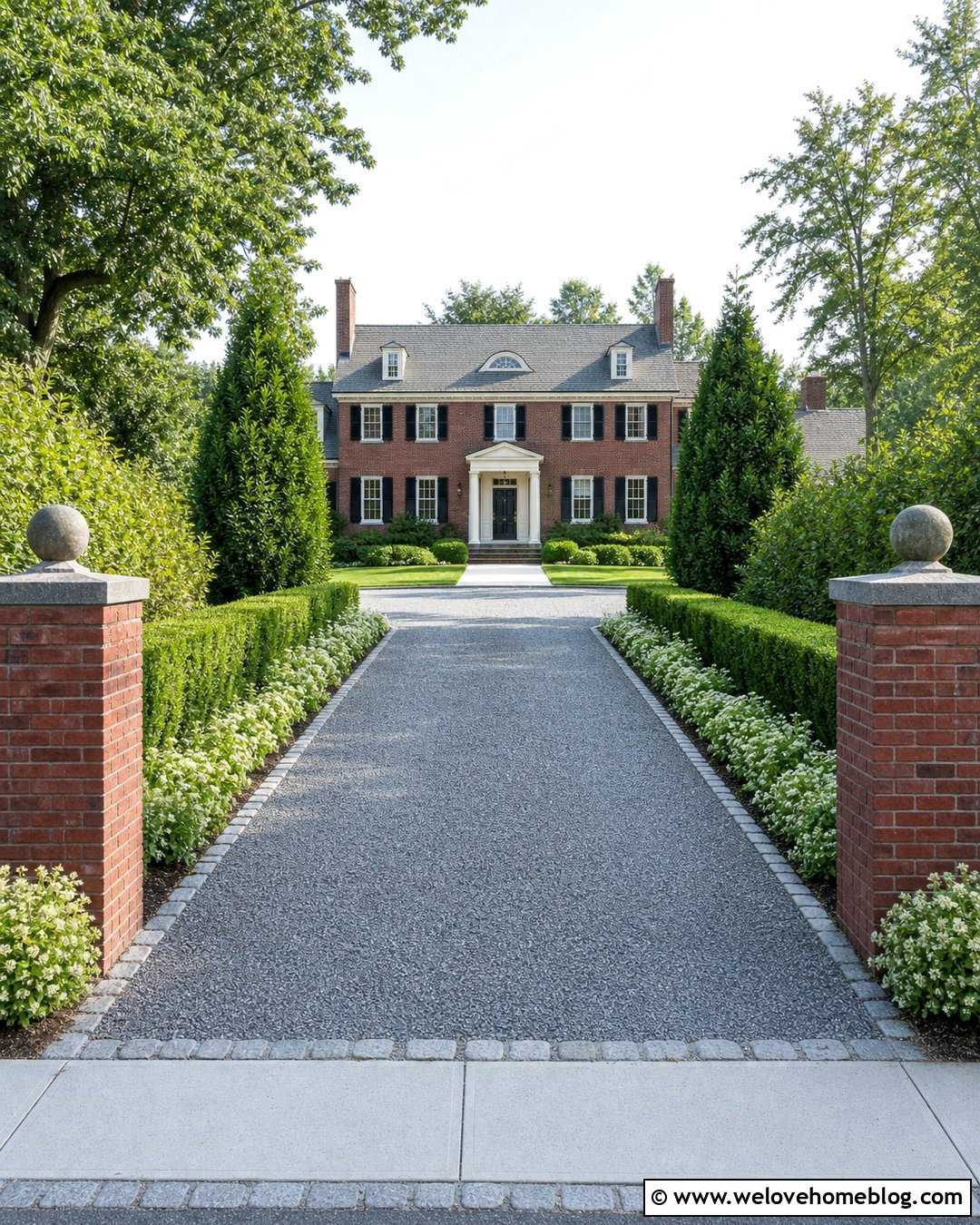
Evergreen hedges give a crushed granite driveway year-round definition and privacy. A long straight approach can be framed with clipped boxwood, yew, holly, or another species suited to the local climate. Keep the hedges low near the street and driveway intersections, then allow greater height closer to the house where screening may be useful. A flush cobblestone or metal edge between the stone and planting soil simplifies maintenance. Medium-gray granite provides a neutral surface that makes the greenery appear especially fresh. This formal arrangement works well with Colonial, Georgian, Tudor, and symmetrical brick homes. Add matching entrance pillars or a centered walkway for stronger balance. Regular pruning is important, but the planting should still retain a natural depth rather than looking narrow and rigid.
16. Crushed Stone Driveway With Native Plant Borders
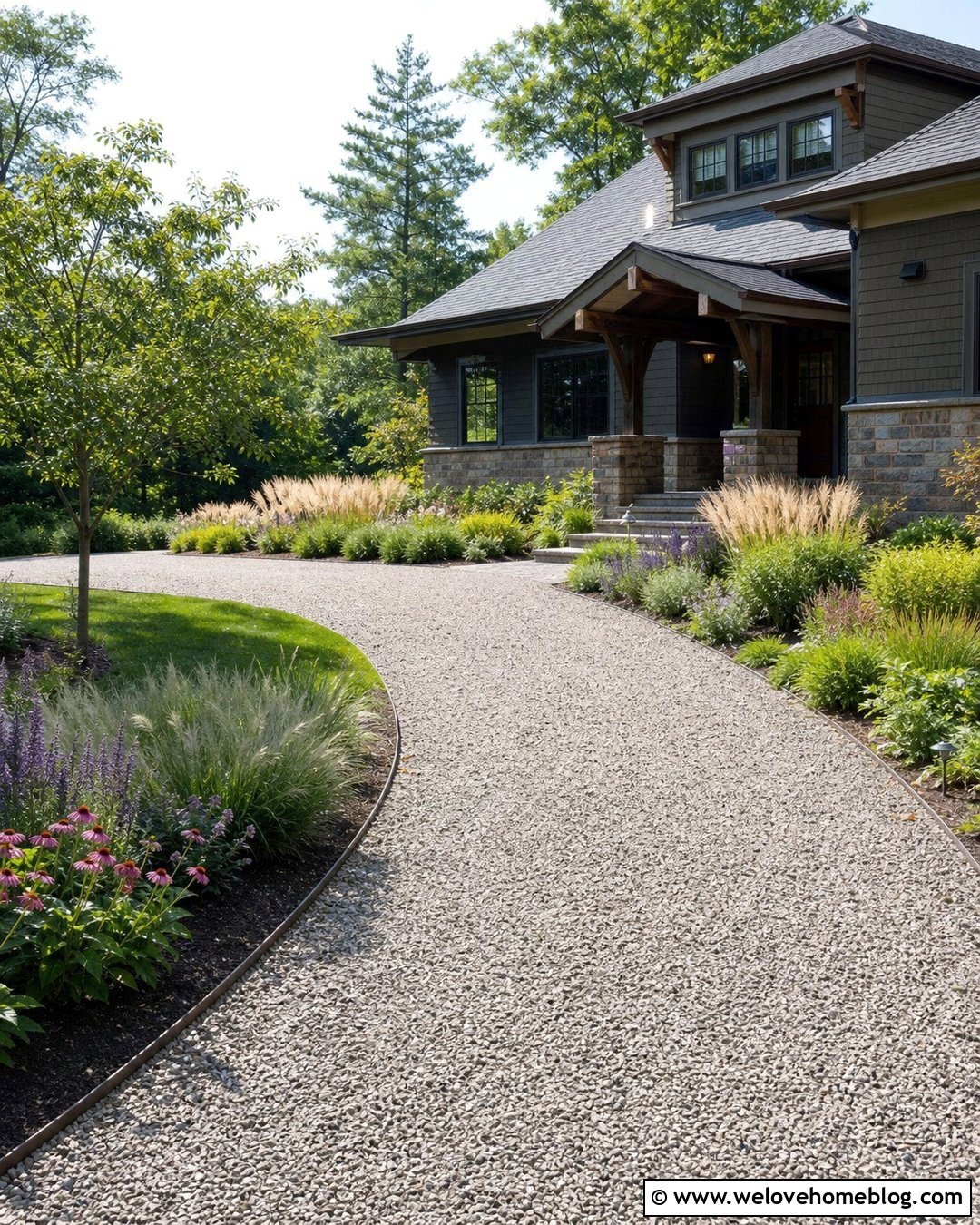
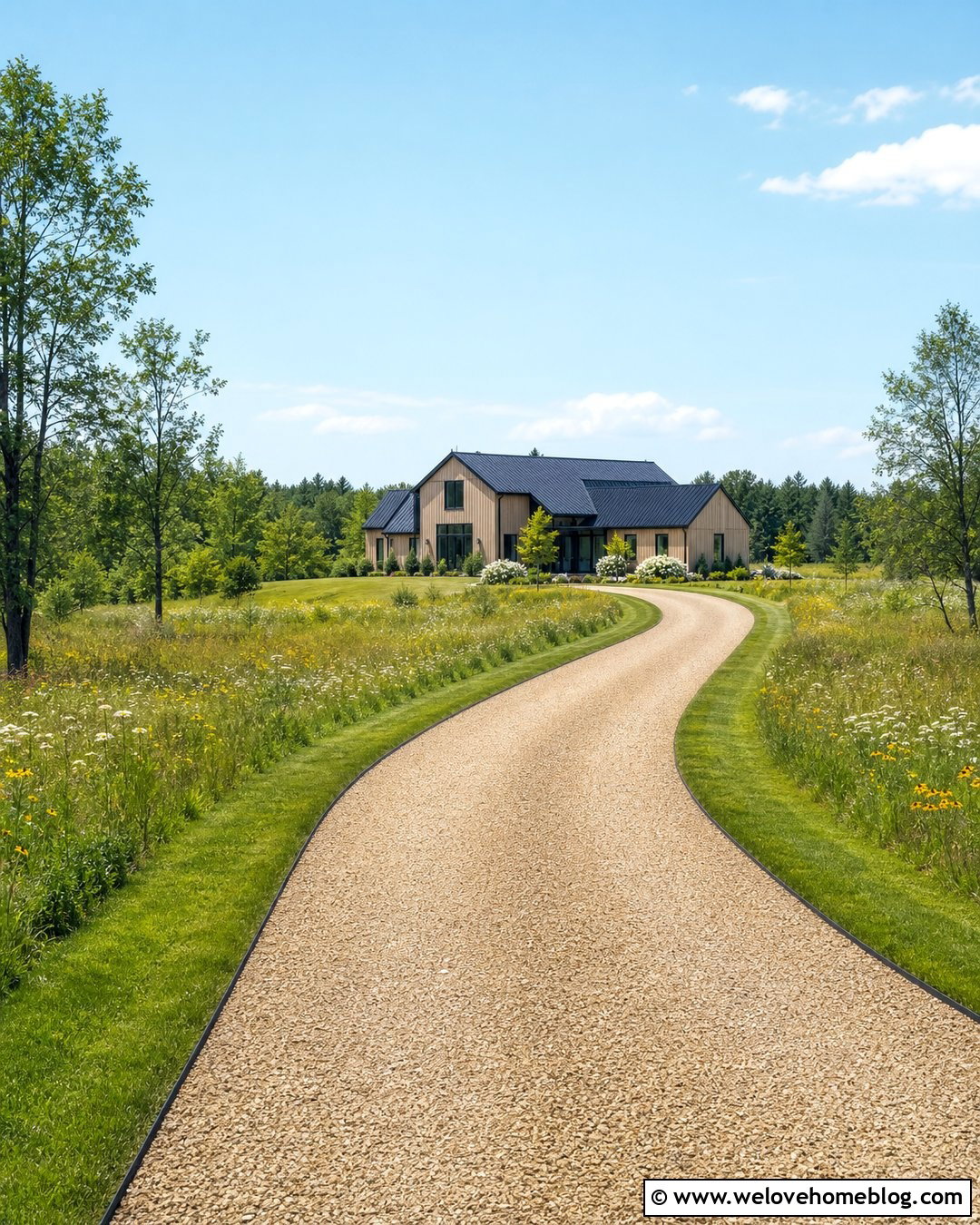
Native plant borders can make a crushed stone driveway feel established and environmentally connected to its setting. Begin with a locally available stone color, then choose regional grasses, flowering perennials, and compact shrubs that tolerate roadside conditions. Arrange plants in broad repeating groups so the border looks organized from a distance. A gently curved driveway creates room for deeper beds at key points, while low steel or stone edging holds the aggregate in place. Include plants with different bloom times, seed heads, and foliage textures for longer seasonal interest. Maintain an open strip beside the driveway so stems do not flop over the driving surface. This complete look suits ranch, Craftsman, cottage, and contemporary homes while reducing dependence on highly formal foundation planting.
17. Crushed Stone Driveway With Wood Entry Gates
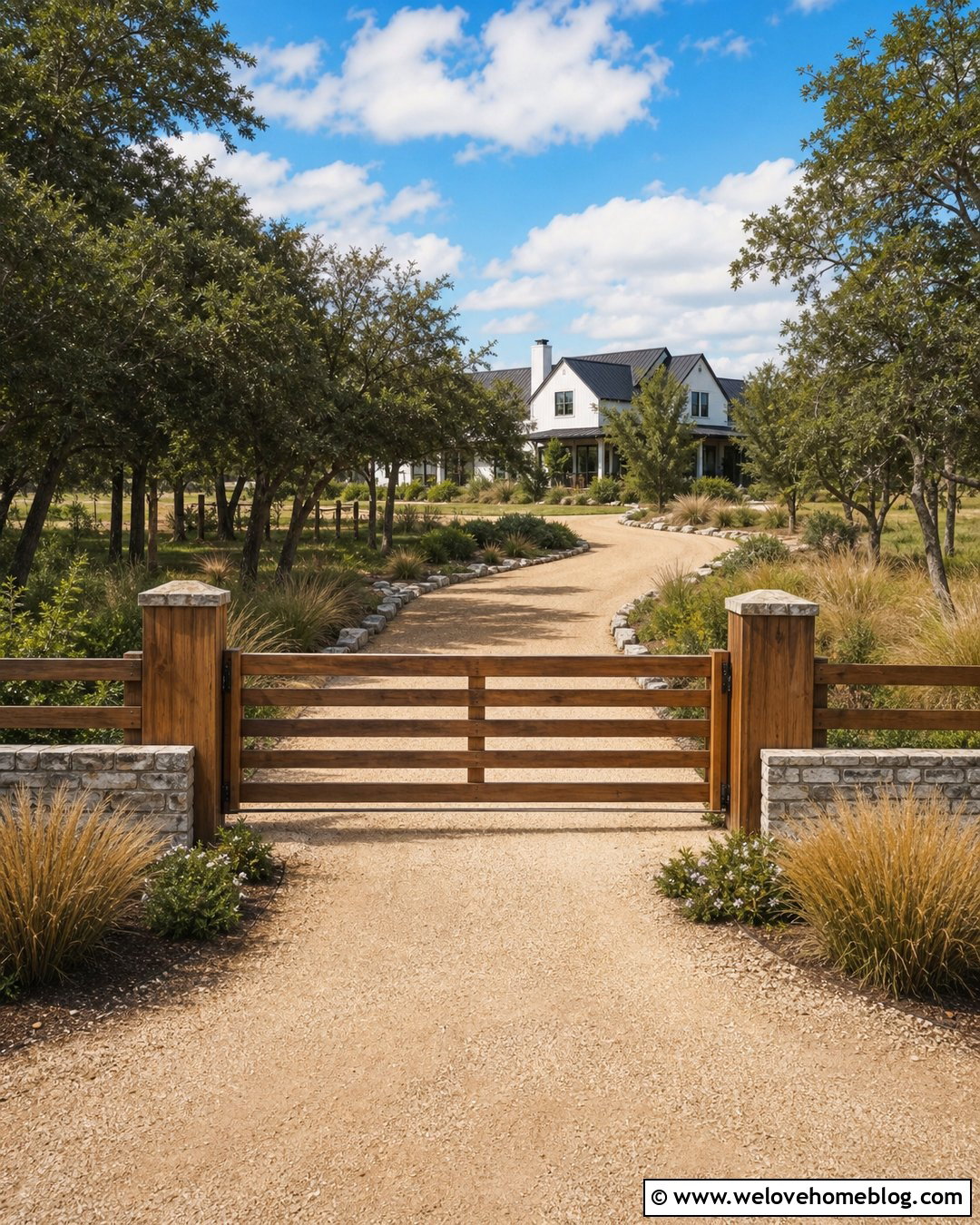
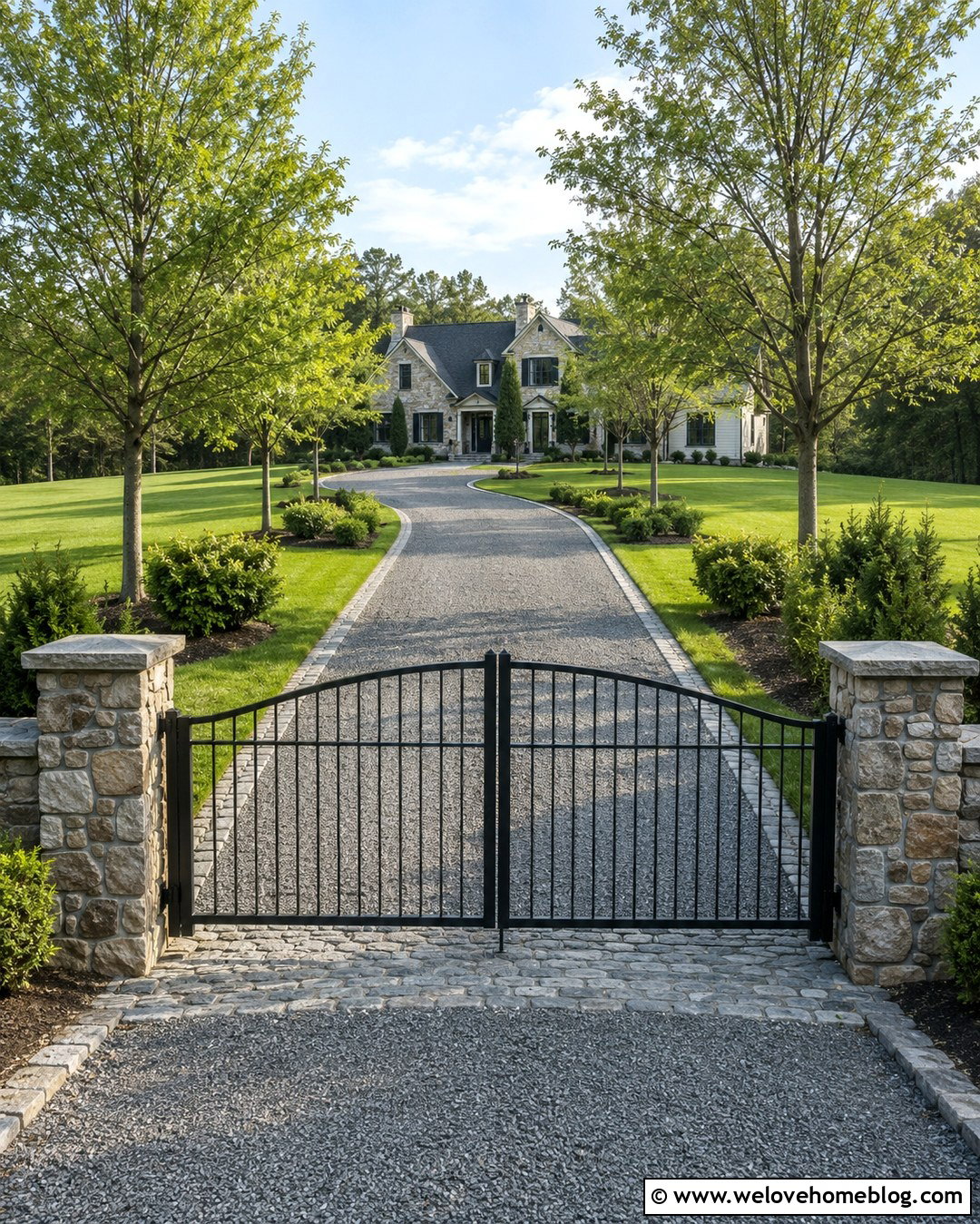
A wood entry gate can become the focal point of a long crushed stone driveway. Choose a simple horizontal-slat gate for a modern farmhouse or a traditional cross-braced design for a country property. Support it with sturdy timber or masonry posts that match other exterior materials. The driveway can run straight beyond the gate or curve gently to reveal the house gradually. Warm crushed limestone or granite complements natural and stained wood particularly well. Add low stone walls, native grasses, and matching fence sections to anchor the entrance. Leave enough level space around the gate for safe operation and vehicle waiting. Discreet lighting on the posts improves visibility, while a separate pedestrian opening prevents visitors from walking through the vehicle lane.
18. Crushed Stone Driveway With Stone Pillars
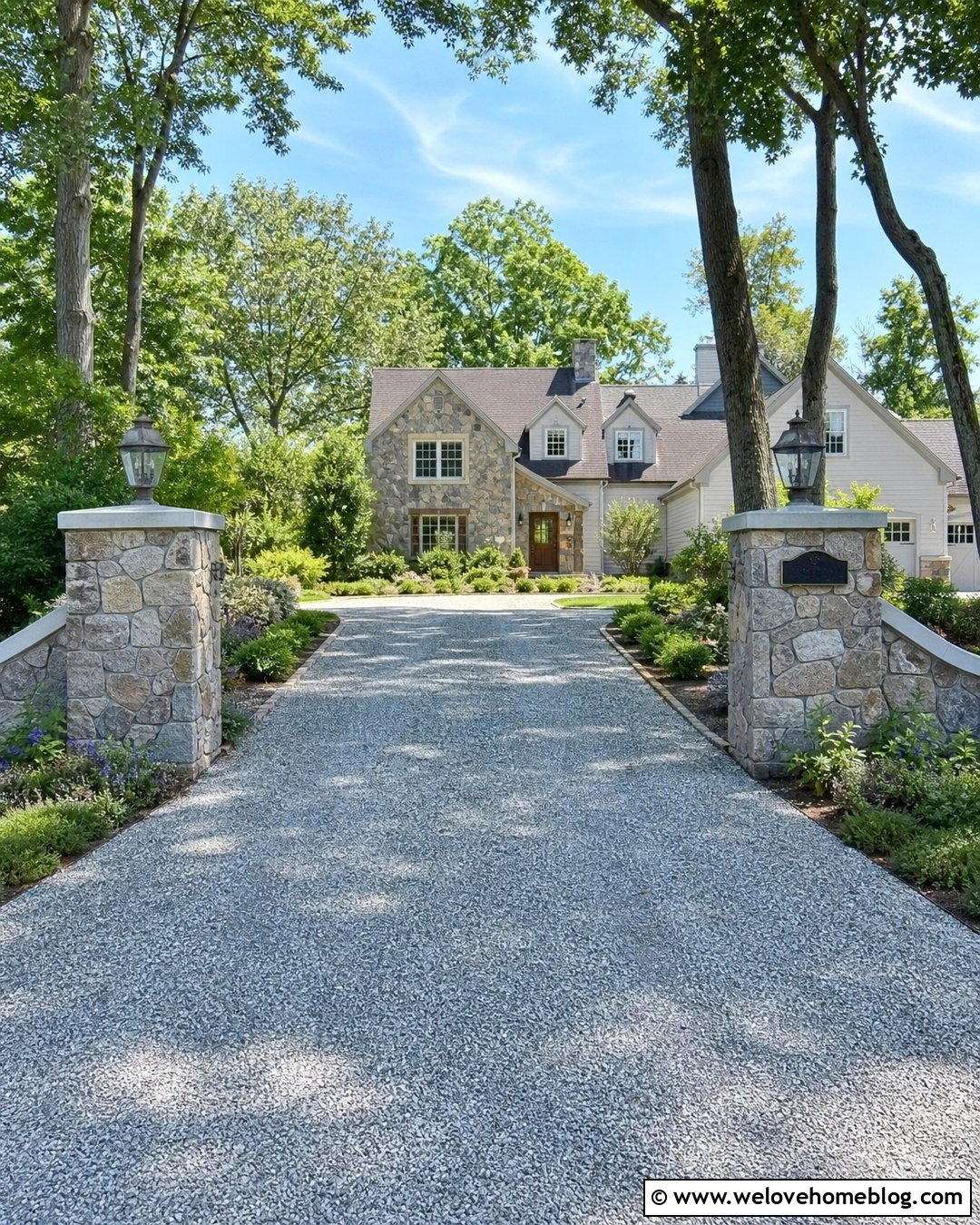
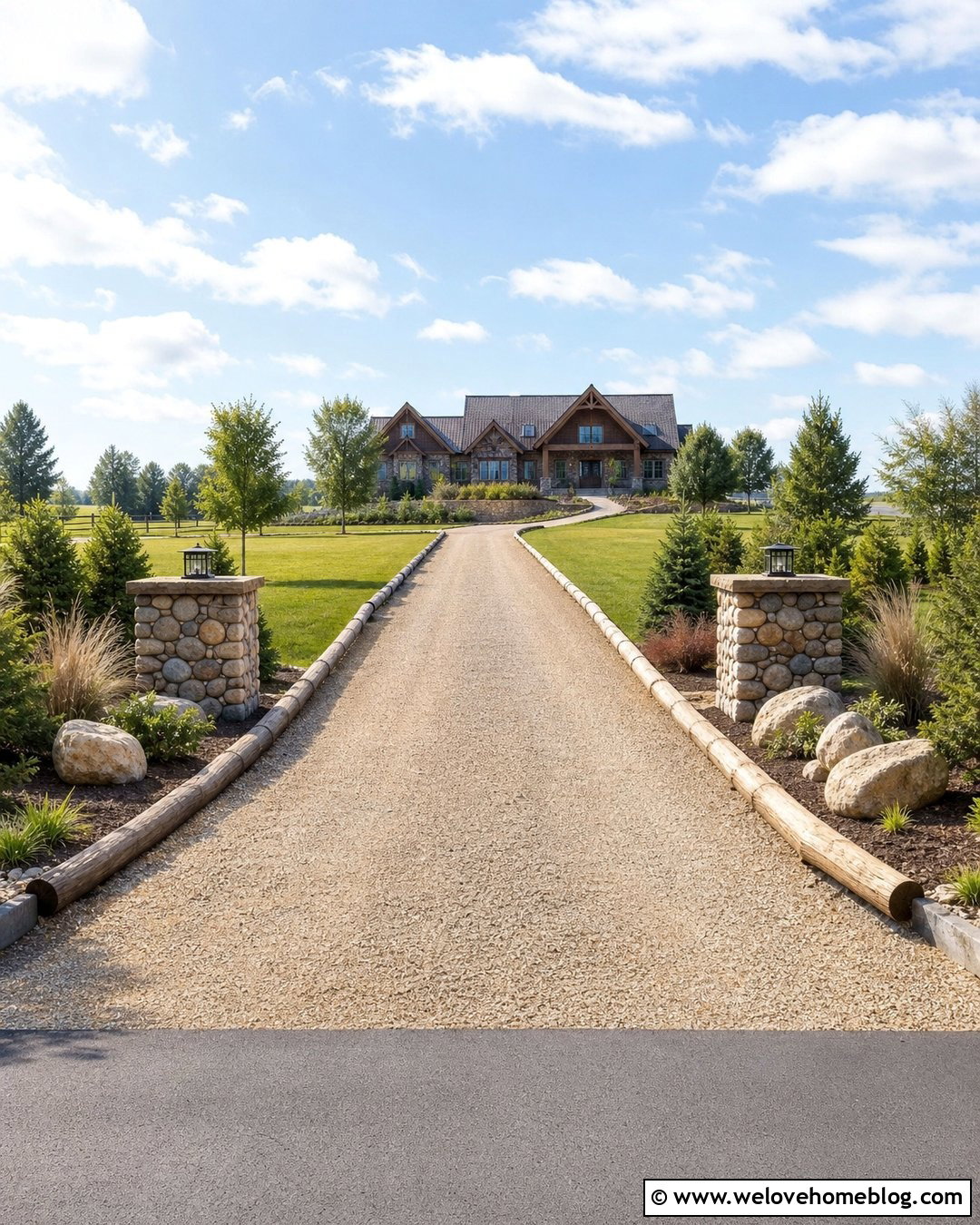
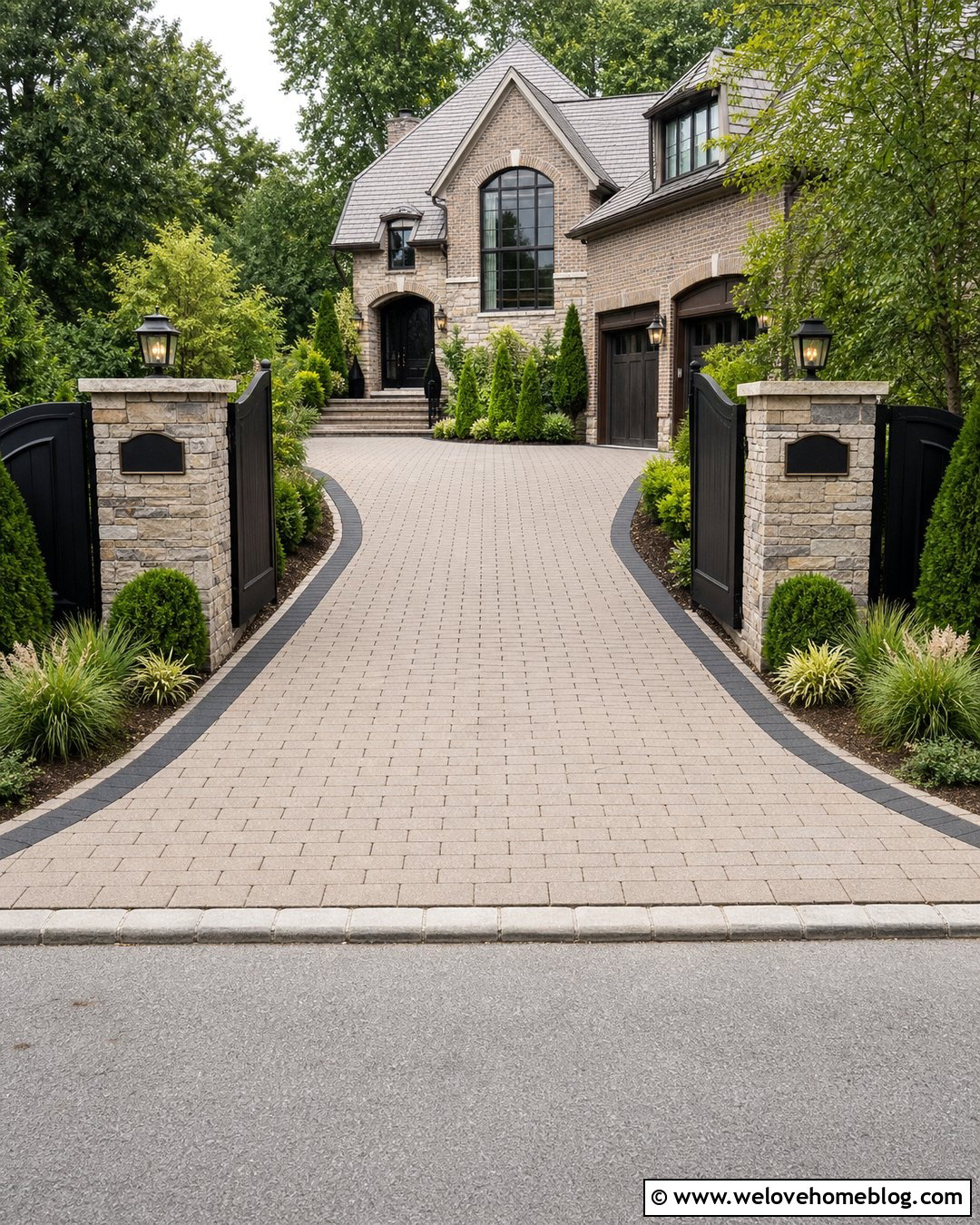
Stone pillars can give a crushed stone driveway a permanent, well-proportioned entrance. Build them with masonry that relates to the house, such as fieldstone, limestone, granite, or brick-and-stone combinations. Place the pillars far enough apart to accommodate everyday vehicles, deliveries, and emergency access. A wide crushed granite apron can flare gently toward the street before narrowing beyond the pillars. Add simple lantern-style fixtures, low planting beds, and an address plaque sized for easy visibility. Curved stone walls extending from each pillar can make a larger entrance feel grounded. Avoid oversized columns that overwhelm a modest home or narrow lot. Repeating the pillar stone along driveway edging, front steps, or garden walls creates a unified composition from the curb to the house.
19. Crushed Stone Driveway With Low-Voltage Lighting
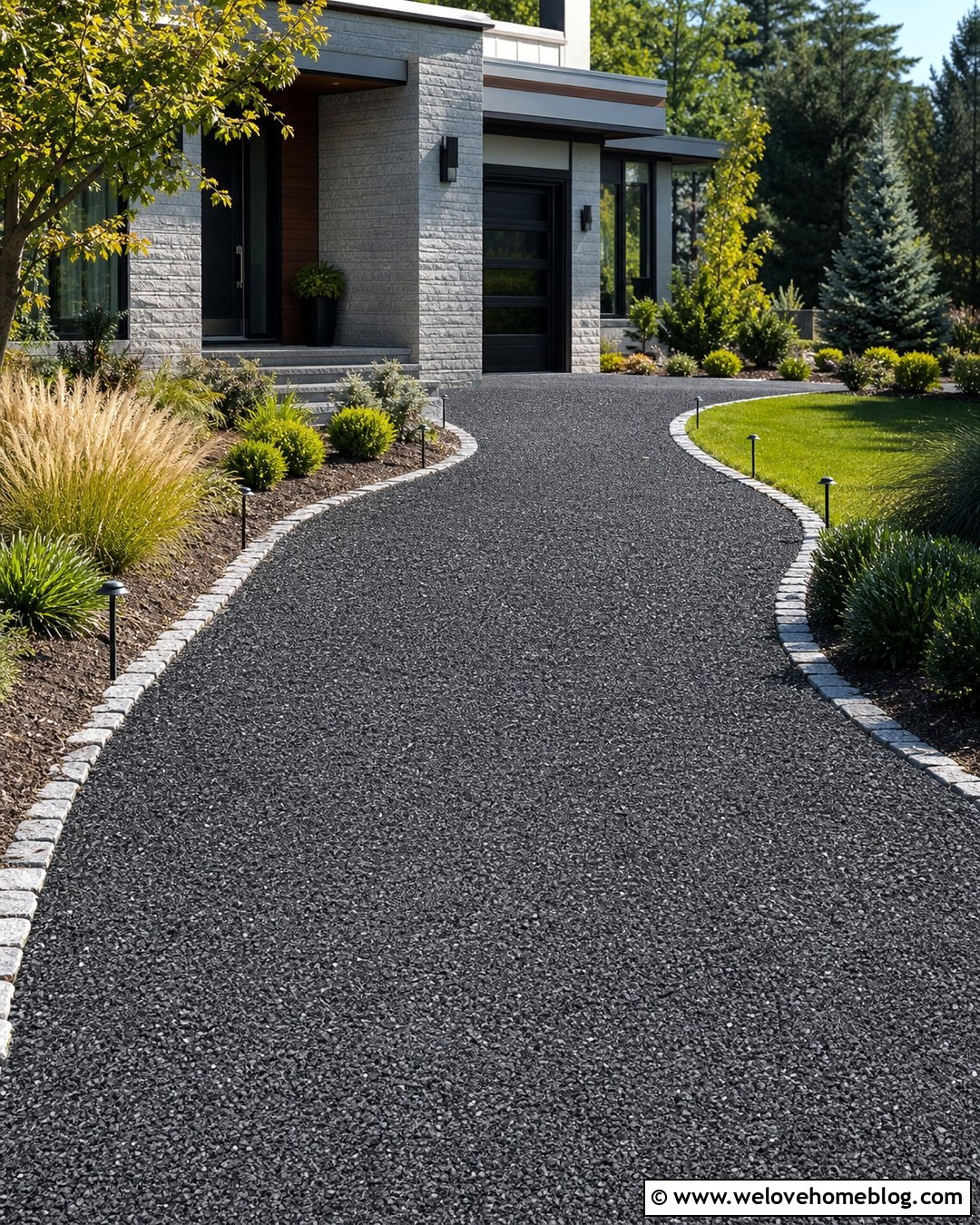
Low-voltage lighting can improve the usability of a crushed stone driveway without turning it into a brightly lit runway. During the day, slim dark fixtures should blend into the edging and planting beds. Position lights at curves, grade changes, intersections, and the garage approach rather than spacing them too closely everywhere. A dark gray crushed stone surface works well with black fixtures and contemporary homes, while warm limestone pairs naturally with bronze lights and traditional architecture. Use a sturdy cobblestone or paver edge to organize the lighting line. Trees, ornamental grasses, and low shrubs provide attractive daytime framing. Fixtures should direct illumination downward to reduce glare. The complete design remains crisp and attractive in bright conditions while offering safer navigation after sunset.

20. Crushed Limestone Driveway With Farmhouse Landscaping
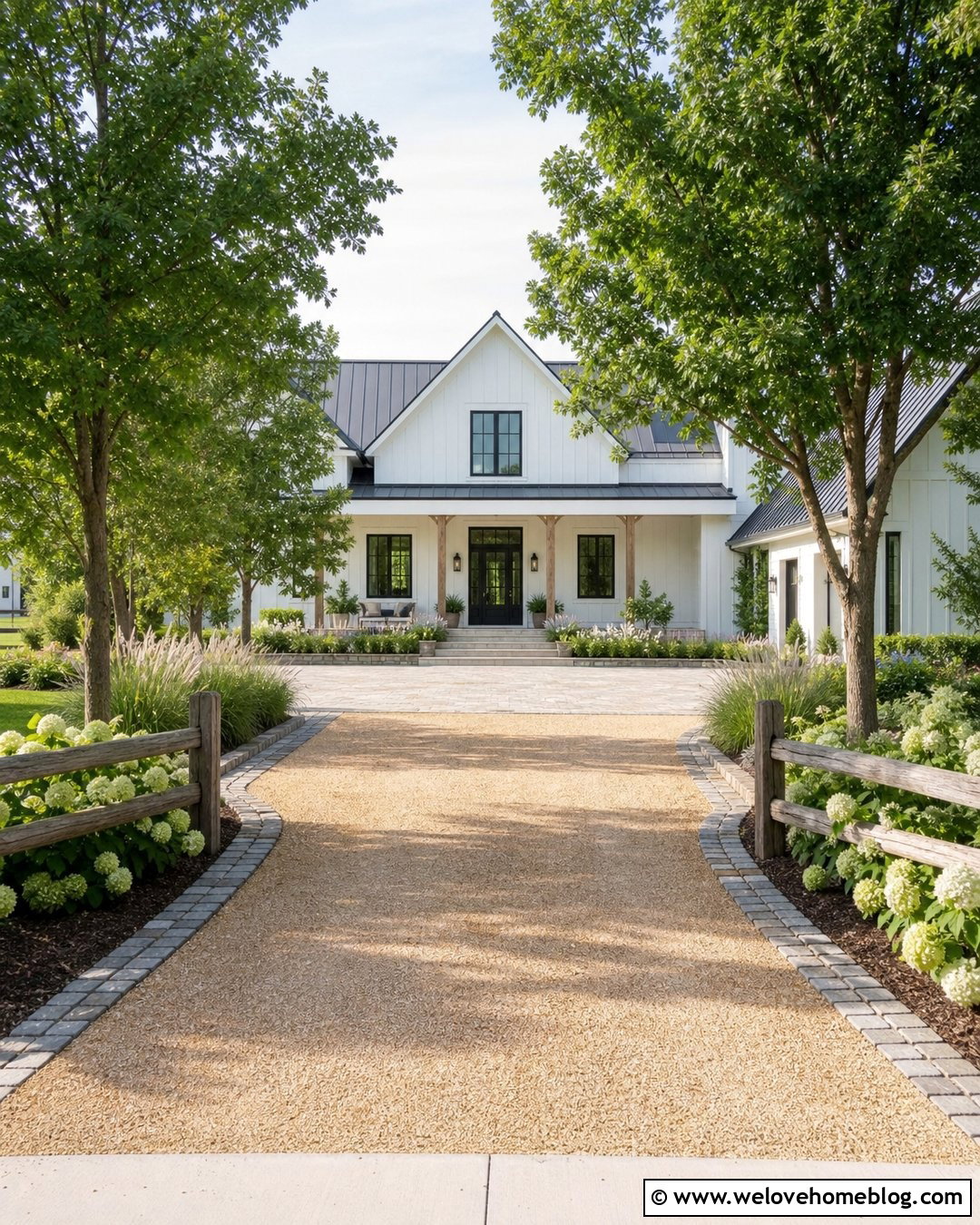
A warm crushed limestone driveway naturally complements a white modern farmhouse. Keep the approach broad and mostly straight, then soften it with split-rail fencing, ornamental grasses, hydrangeas, and a few well-placed shade trees. A dark brick or reclaimed cobblestone edge prevents the pale stone from blending into adjacent lawn. Near the house, widen the driveway into a practical parking court connected to the porch by a large-format stone walkway. Galvanized or black metal fixtures can repeat details found on the home. Avoid overfilling the entrance with decorative objects; simple planting groups allow the limestone texture to remain visible. This combination creates a welcoming rural character even on a suburban lot, provided the driveway and landscape remain correctly scaled to the available space.
21. Crushed Granite Driveway With Modern Concrete Bands
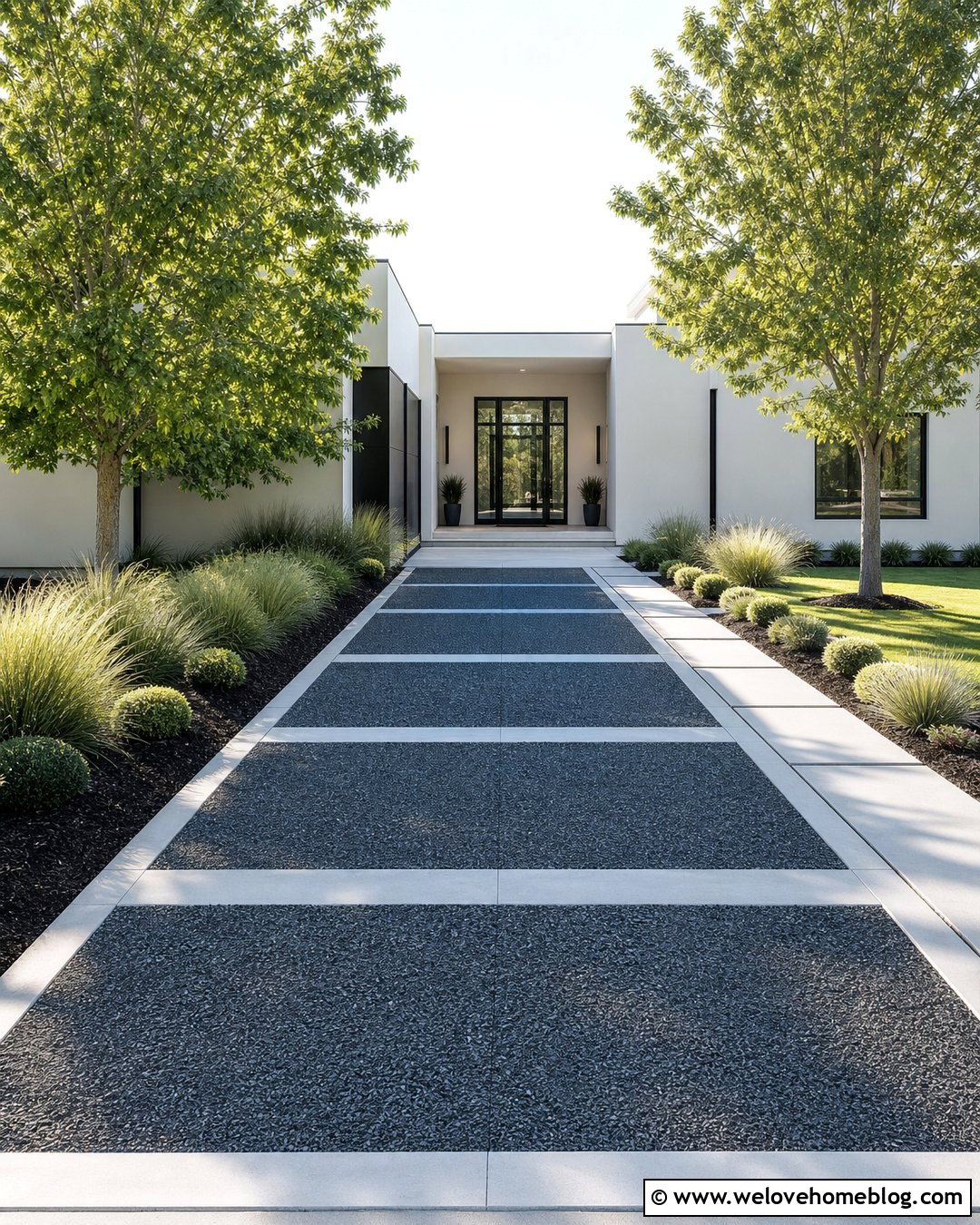
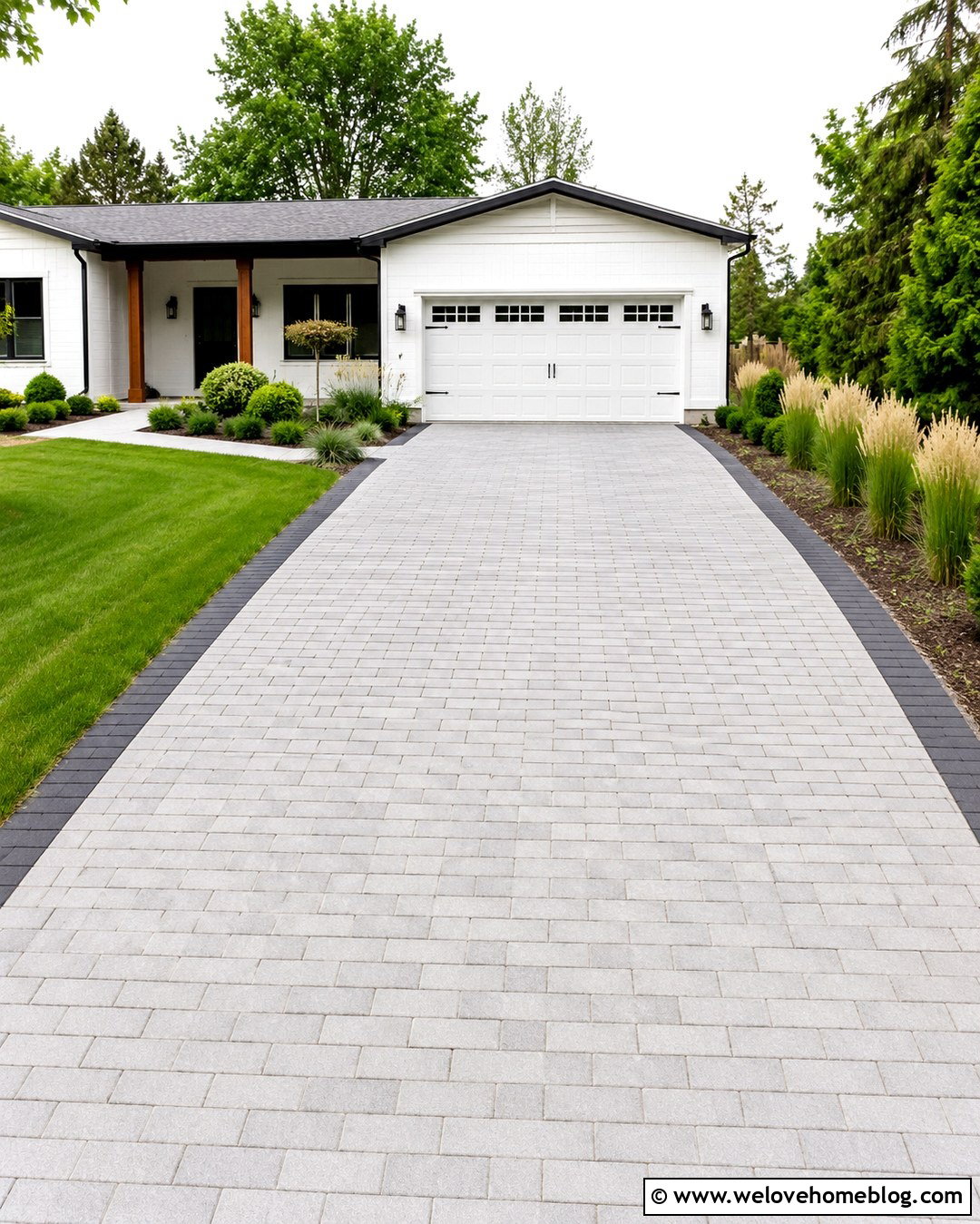
Concrete bands can organize a crushed granite driveway into clean geometric sections. Install wide bands across the drive at measured intervals, or use parallel concrete strips along the edges and center. Pale gray concrete creates subtle contrast with charcoal granite, while warmer concrete coordinates with tan or speckled aggregate. This design works best with modern, minimalist, and midcentury homes that already feature strong horizontal or rectangular forms. Keep surrounding beds simple with clipped shrubs, architectural grasses, and one or two small specimen trees. A matching concrete walkway can connect the driveway to the entrance. The bands need a stable base and careful placement to remain even with the compacted stone. Clear geometry gives the loose aggregate a more structured, deliberately designed appearance.
22. Horseshoe Crushed Stone Driveway With Center Garden
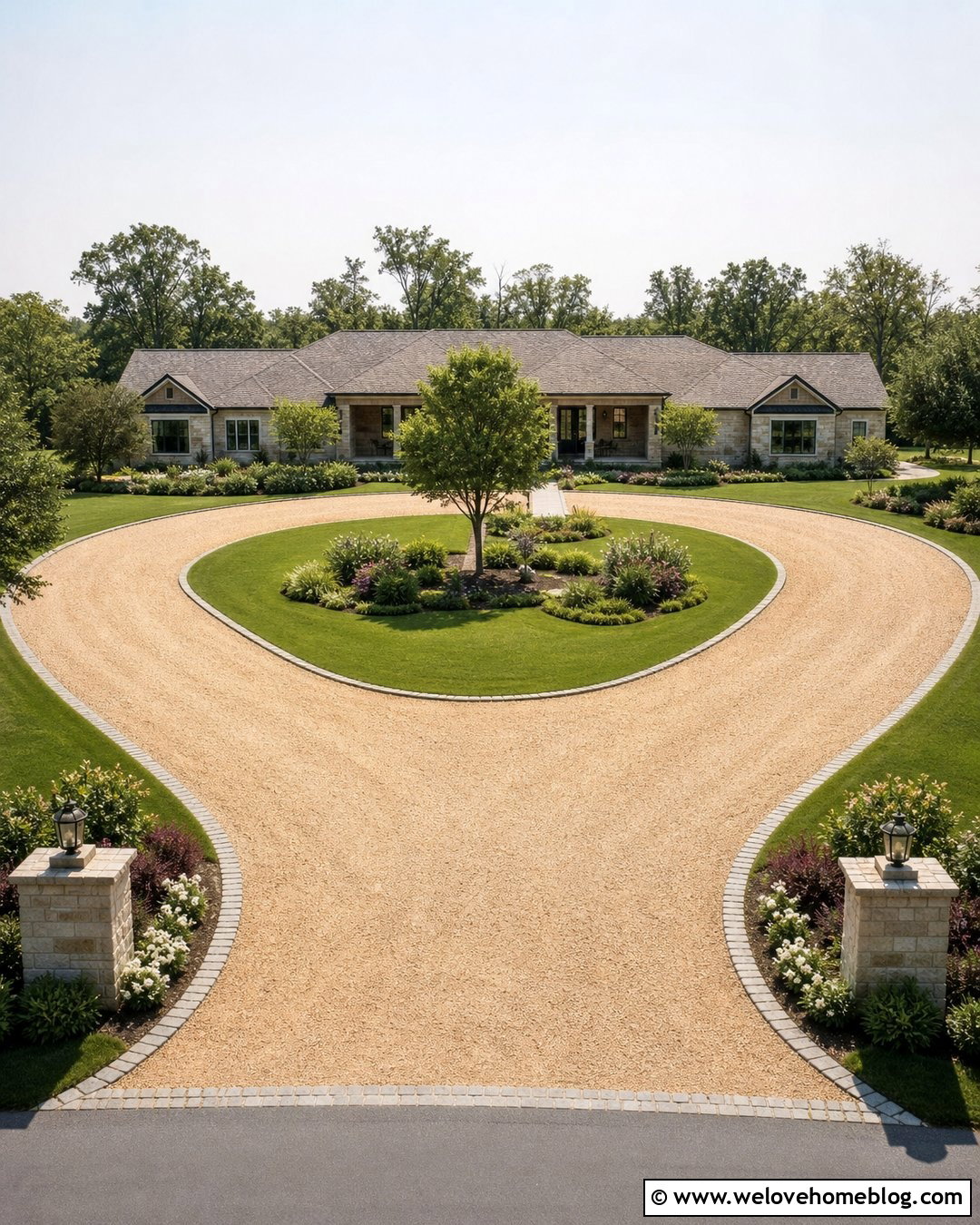
A horseshoe driveway offers convenient entry and exit without requiring vehicles to reverse toward the street. Crushed stone keeps the large layout visually softer than a fully paved circular drive. Use gray granite, golden limestone, or locally sourced aggregate, then define both curves with flush cobblestone edging. The center garden can contain lawn, a specimen tree, and layered shrubs arranged to preserve views of the home. Two matching entrance points should feel balanced, even if one is slightly wider for deliveries. This layout works particularly well on broad lots with ranch, Colonial, or farmhouse architecture. A walkway crossing the center garden can create a direct route to the front door. Thoughtful proportions prevent the driveway from dominating the entire front yard.
23. Crushed Stone Driveway With Drainage Swales
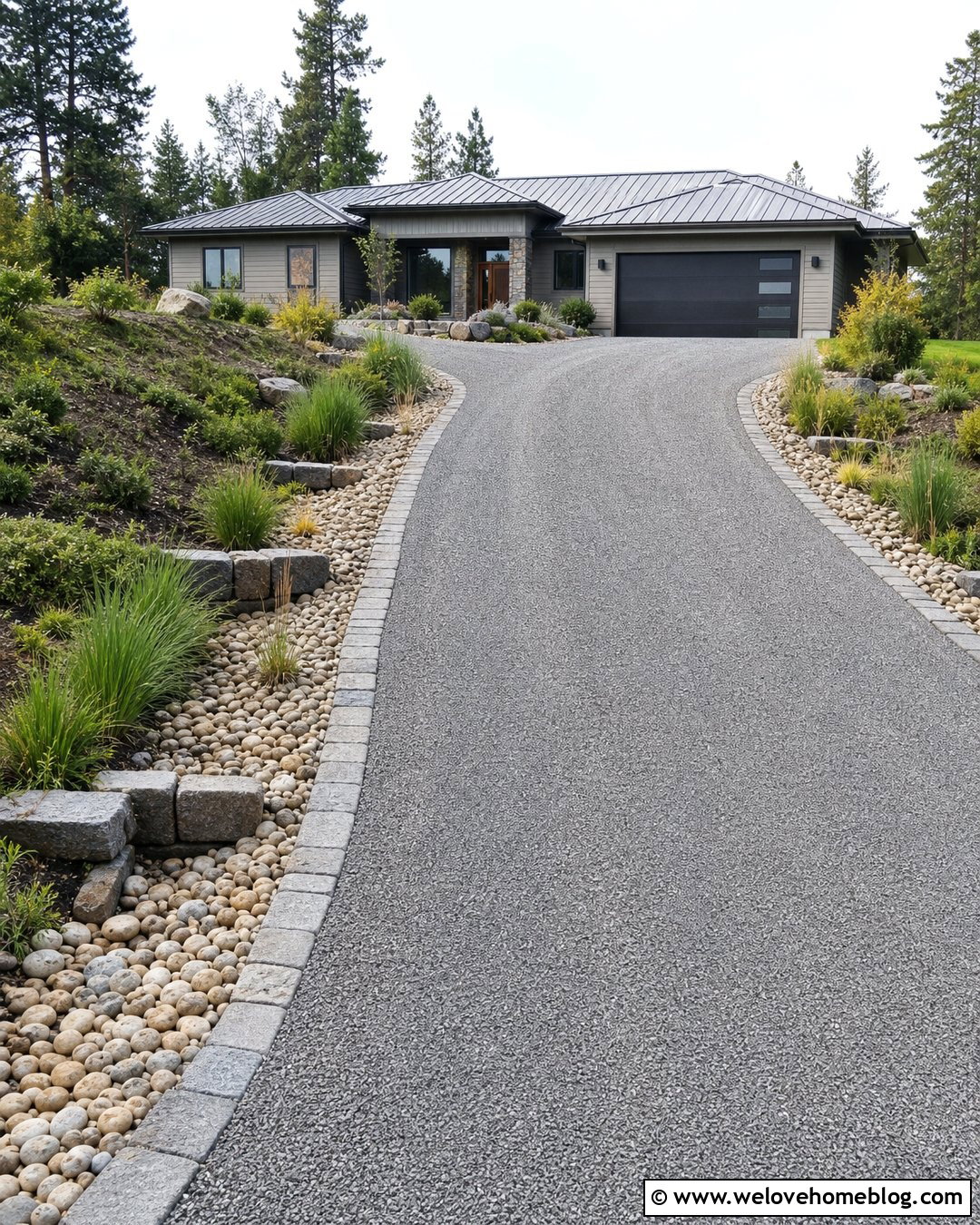
A crushed stone driveway can incorporate attractive drainage swales without looking overly utilitarian. Shape shallow planted channels along the lower side of the drive to receive runoff and guide it away from buildings. Edge the driveway with large cobbles or durable steel, then fill the swales with moisture-tolerant grasses, sedges, shrubs, and decorative river stones. The driving surface might use compacted gray crushed granite or limestone selected for local availability. This treatment is especially useful on gently sloping suburban and rural properties. Small stone check dams can slow water where appropriate and add visual rhythm. Keep the driveway crown, base, and outlet conditions in mind during planning. The result combines drainage management with a layered landscape that looks intentional from the curb.
24. Crushed Stone Driveway With a Matching Walkway
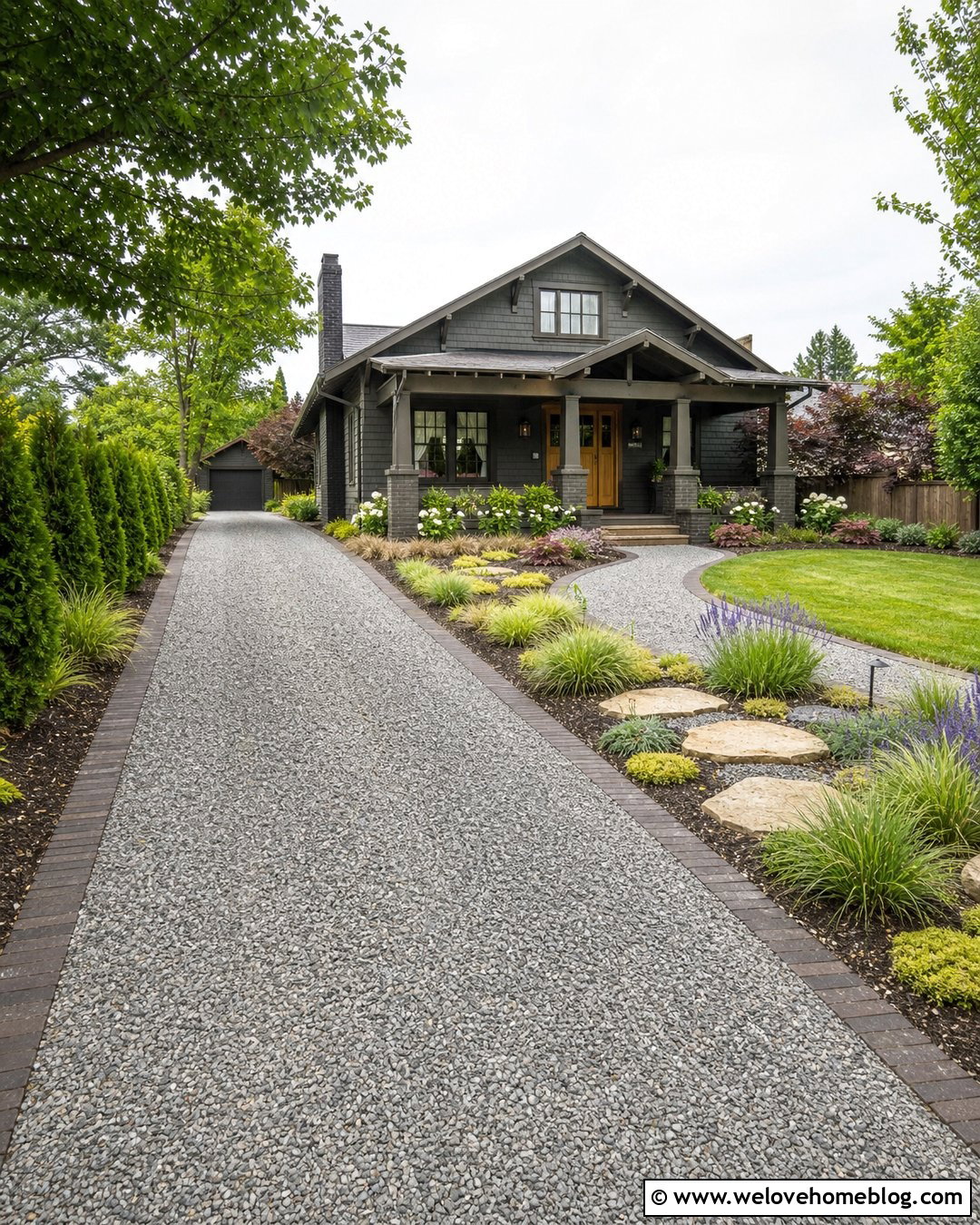
Repeating crushed stone in a nearby walkway can connect the driveway to the front entrance without introducing another dominant material. Use the same stone color on both surfaces but make the walkway narrower and more detailed. Brick, steel, or cobblestone edging can define its curves and prevent aggregate from spreading into beds. Large stepping stones set within the walkway provide a smoother walking surface while preserving the overall crushed stone appearance. This combination suits cottages, Craftsman houses, ranch homes, and casual farmhouses. Plant low ground covers, ornamental grasses, and flowering shrubs along the path to guide visitors naturally toward the porch. At the driveway junction, widen the walkway slightly to make the route obvious. The coordinated materials help the entire front landscape feel connected.
25. Two-Tone Crushed Stone Driveway With Contrasting Borders
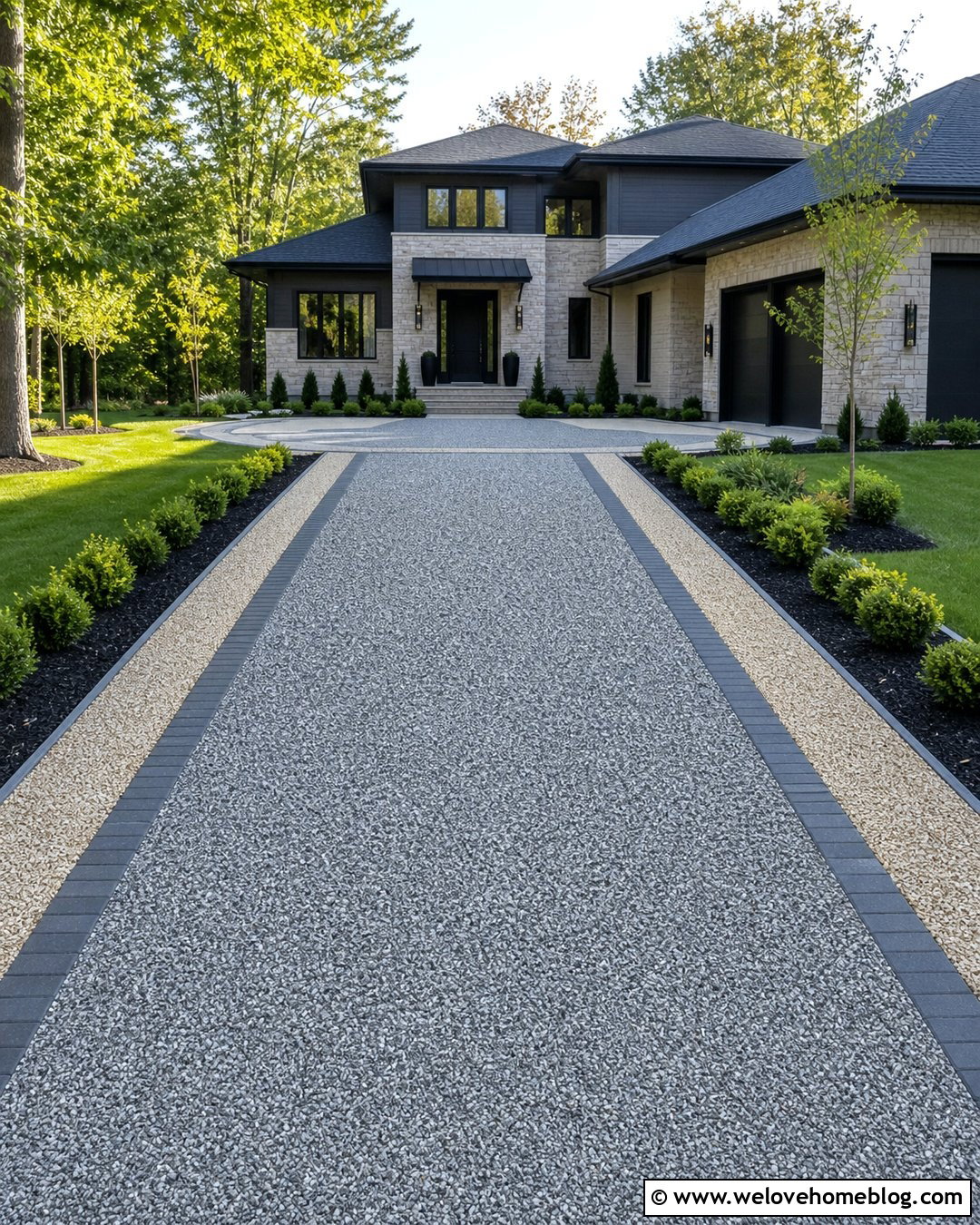
A two-tone crushed stone driveway introduces pattern while keeping the surface practical and natural. Use one color for the main driving area and a contrasting crushed stone along the sides, center, or parking court. For example, medium-gray granite can be framed with warm buff limestone, or pale stone can receive a narrow charcoal border. Separate the colors with steel edging, paver ribbons, or flush cobblestones so they do not mix quickly. A simple straight layout helps the color blocking appear crisp rather than busy. Match one stone tone to the house facade and the other to the roof, trim, or landscape masonry. Restrained planting allows the surface pattern to remain visible. This approach gives a familiar material a more customized, finished appearance.
Conclusion:
The most successful crushed stone driveway combines an attractive aggregate with the right shape, edging, drainage, and surrounding landscape. Begin by selecting angular stone that complements the house and is readily available in your area. Then choose a border substantial enough to contain the surface and handle normal vehicle use. Curves, entrance aprons, planted islands, lighting, and coordinated walkways can make the driveway feel like an intentional part of the front yard. Proper grading and base preparation remain essential, regardless of the decorative finish. From simple limestone drives to formal circular entrances, these 25 Crushed Stone Driveway Ideas offer practical ways to improve curb appeal while creating a durable and welcoming approach to your home.

Related posts:
Leave a Reply