
The best **20 Driveway Paver Lights Ideas** combine safe nighttime guidance with a polished hardscape design that also looks attractive during the day. Instead of flooding the property with harsh light, recessed fixtures can define edges, highlight curves, mark entrances, and connect the driveway visually to the house. Many current systems use low-voltage LEDs installed flush within concrete, brick, or stone pavers, allowing the fixtures to remain discreet while improving visibility. () The right arrangement depends on your driveway’s shape, paving pattern, landscaping, and overall home style. Whether you prefer subtle dots or a bold illuminated border, the complete looks below offer practical inspiration. Explore these **20 Driveway Paver Lights Ideas** to find a layout that fits your property.

1. Driveway Paver Lights Along Both Edges
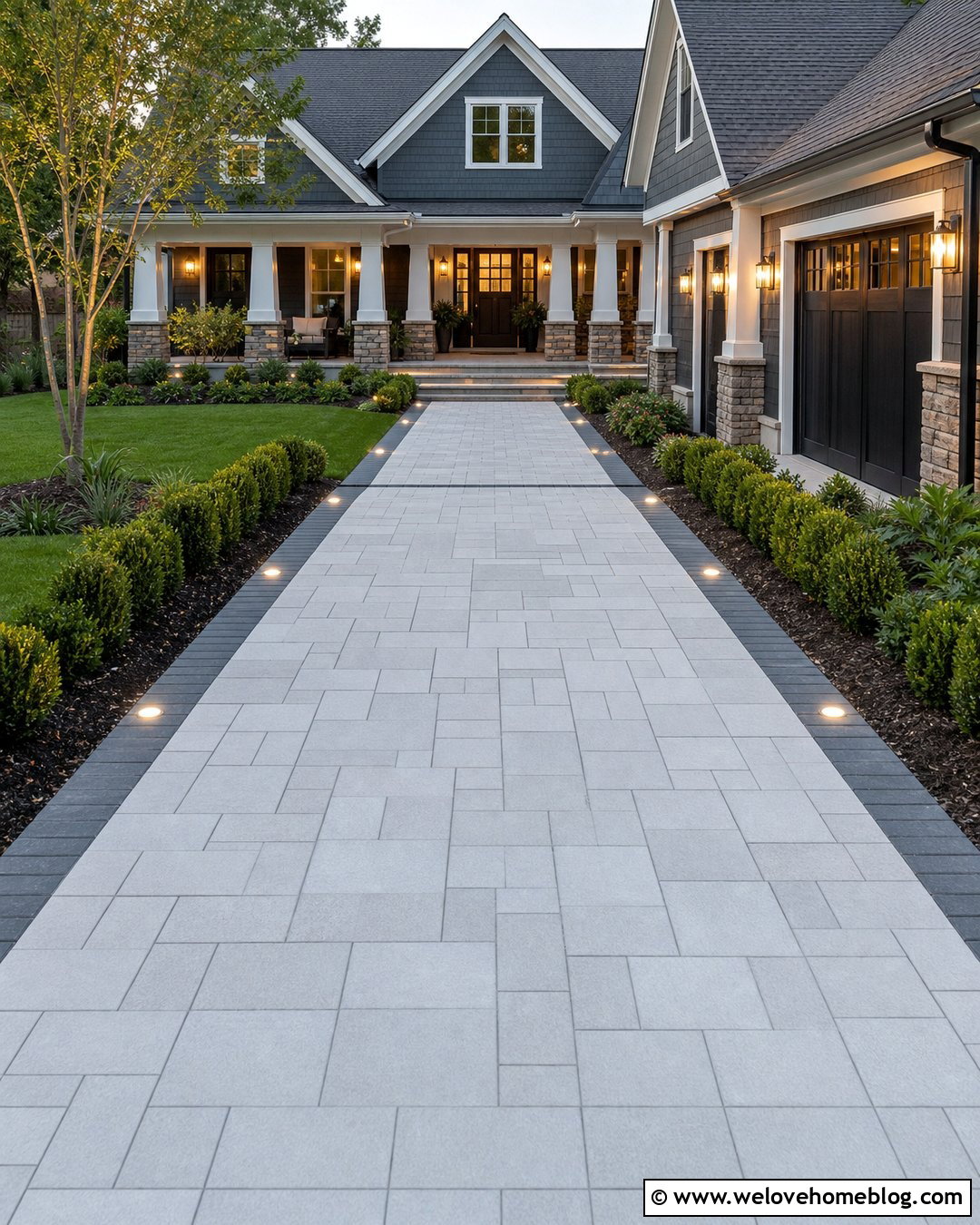
Placing recessed paver lights along both sides creates a clearly defined route from the street to the garage. This balanced arrangement works especially well with a straight driveway made from gray concrete pavers. Position fixtures at consistent intervals within darker border pavers rather than in the main tire paths. The contrast makes the lights appear intentional even when they are switched off. Low boxwood hedges, ornamental grasses, and a simple lawn can soften the hard edges without hiding the fixtures. Warm white LEDs usually feel welcoming beside traditional, craftsman, and transitional homes. Keep spacing wide enough to avoid an airport-runway effect. The finished driveway should feel gently outlined, with each light guiding movement instead of trying to illuminate the entire yard.
2. Driveway Paver Lights On One Side
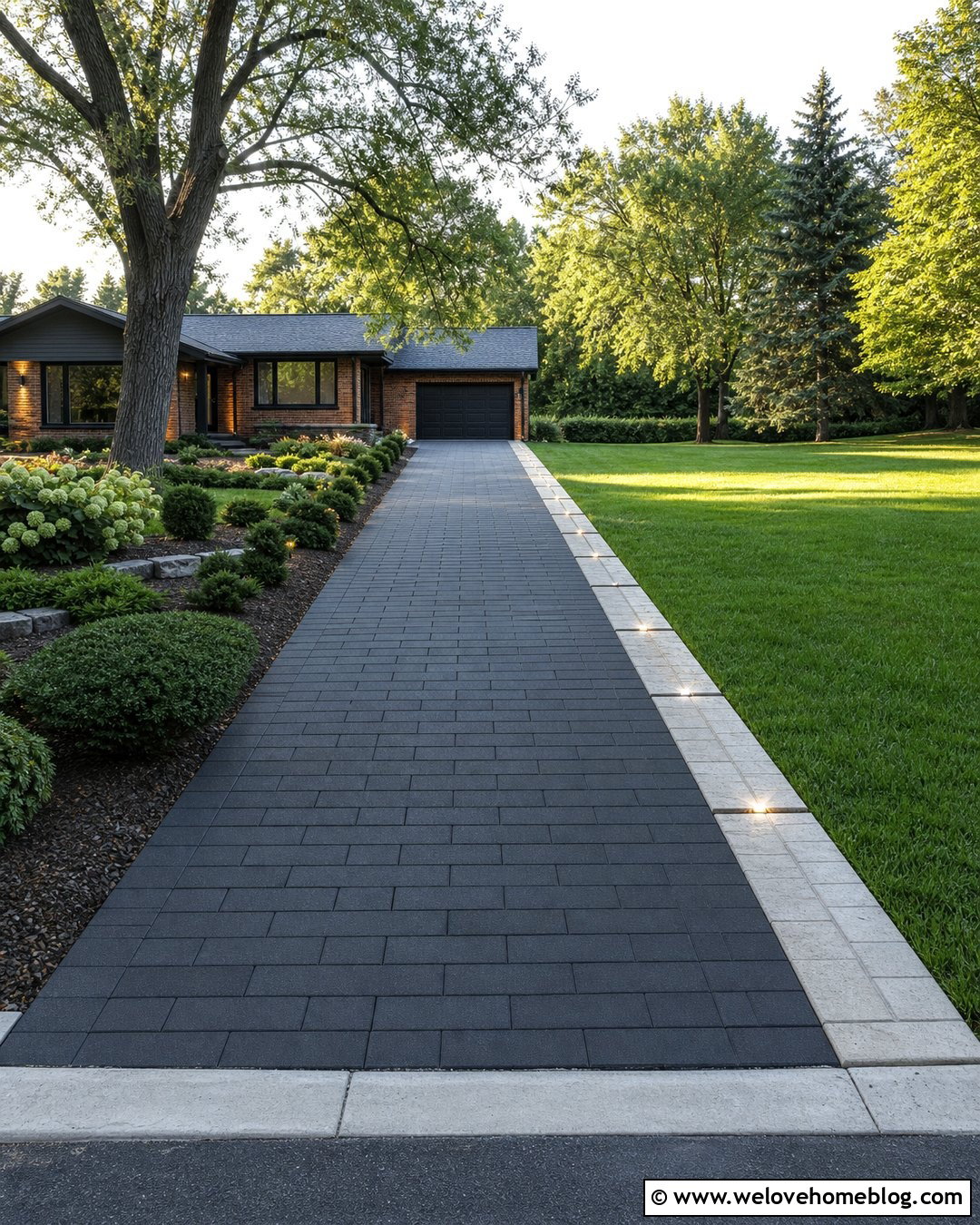
A single illuminated edge offers a clean solution when the opposite side borders a wall, walkway, or densely planted garden. Use rectangular charcoal pavers for the driveway and install small round lights within a pale soldier-course border. This asymmetrical arrangement can visually widen a narrow property because the glowing edge draws attention away from the tighter side. On the unlit edge, add a low planting bed with compact shrubs or ground cover to maintain balance. The lights should follow the full driveway and continue toward the garage door or front walkway. This design suits ranch homes and small suburban lots where excessive lighting could feel overwhelming. It also requires fewer fixtures while still providing a recognizable route for drivers, visitors, and pedestrians after dark.
3. Curved Driveway Paver Lights
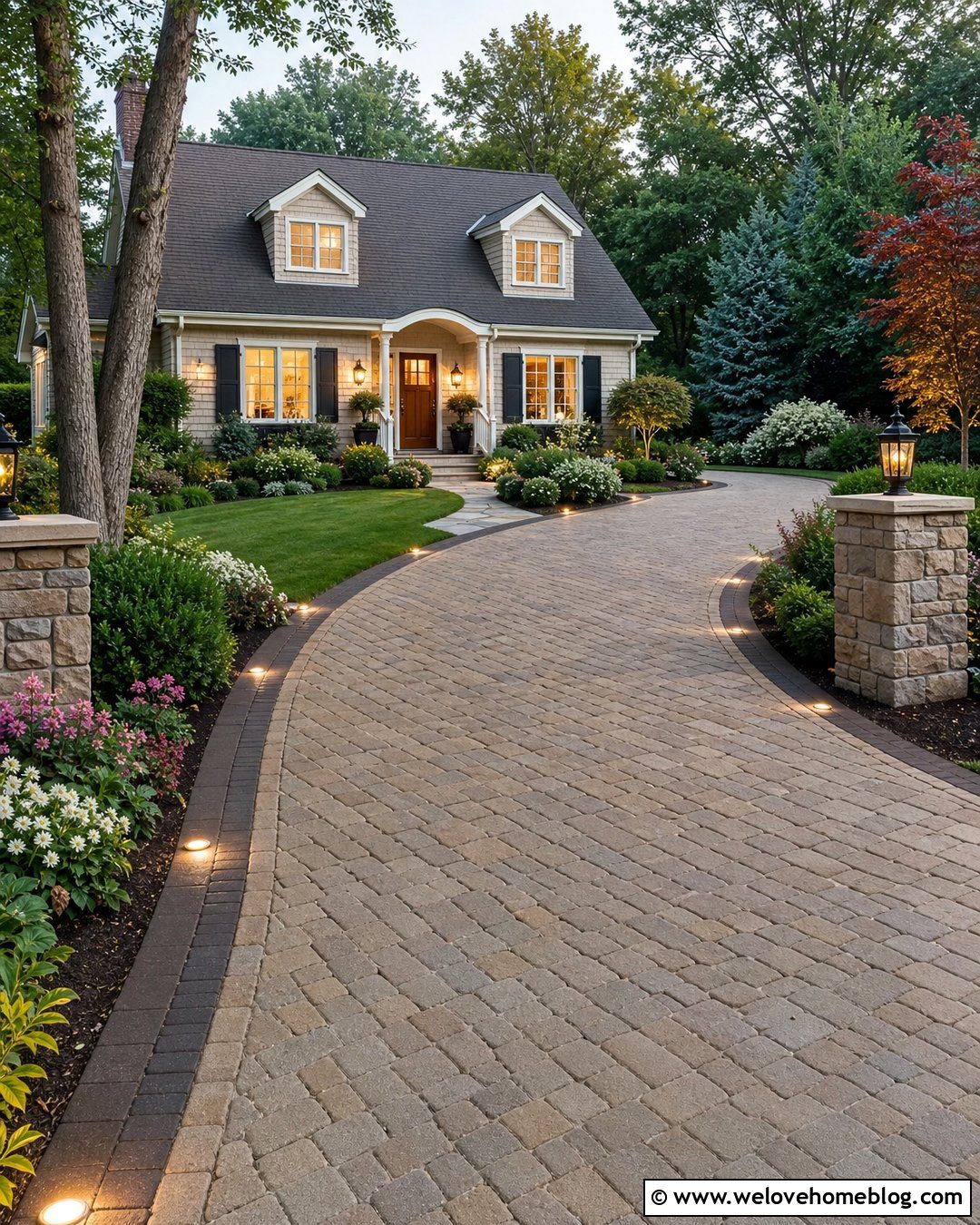
Curves become easier to follow when paver lights trace the outside edge of the bend. A sweeping driveway made from tan cobble-style concrete pavers feels especially natural when paired with dark brown edging and evenly spaced round fixtures. Place the lights slightly closer together around sharper sections, where additional guidance is useful. Keep them farther apart along gentle stretches to maintain a relaxed appearance. Layered landscaping can reinforce the curve with clipped shrubs, flowering perennials, and one or two ornamental trees. Avoid tall plants immediately beside the lights because leaves can block their glow. This complete look works beautifully with cottage, craftsman, and country homes. The illuminated curve should appear graceful and continuous rather than broken into unrelated pools of bright light.
4. Circular Driveway Paver Lights
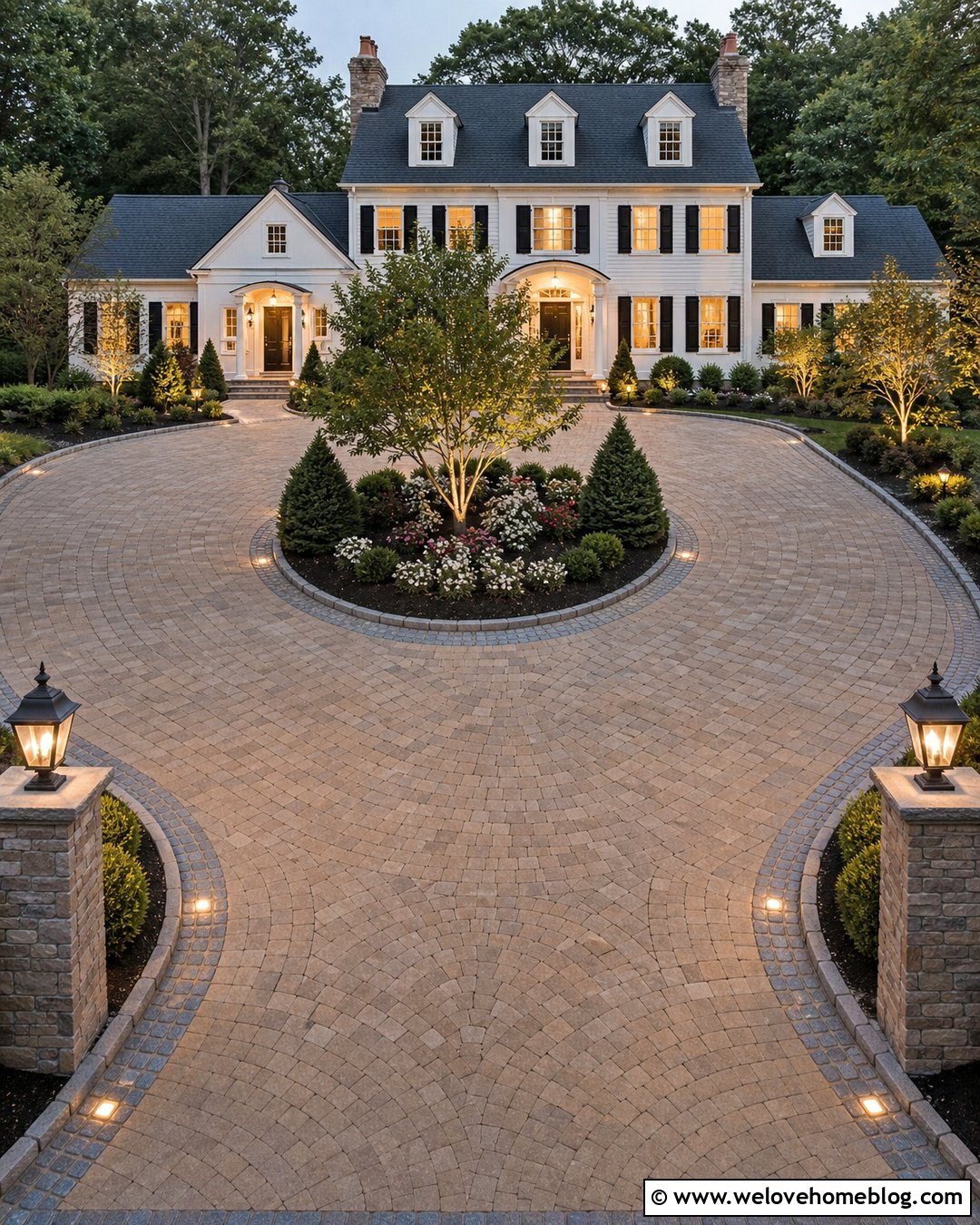
A circular driveway offers several opportunities for integrated lighting, but the center island should remain the visual anchor. Use warm beige concrete pavers in a fan or running-bond pattern, then place recessed lights around the inner border of the circle. The glowing ring will define the turning route while drawing attention to a landscaped island filled with a specimen tree, low evergreens, and seasonal flowers. Additional fixtures near both street entrances can clarify where vehicles should enter and exit. Matching stone edging around the outer driveway creates a finished frame. This arrangement complements colonial, Mediterranean, and large traditional homes. Keep the light output subtle so the circle feels elegant rather than commercial, and make sure the fixtures remain outside the primary wheel paths whenever the layout allows.
5. Herringbone Driveway Paver Lights
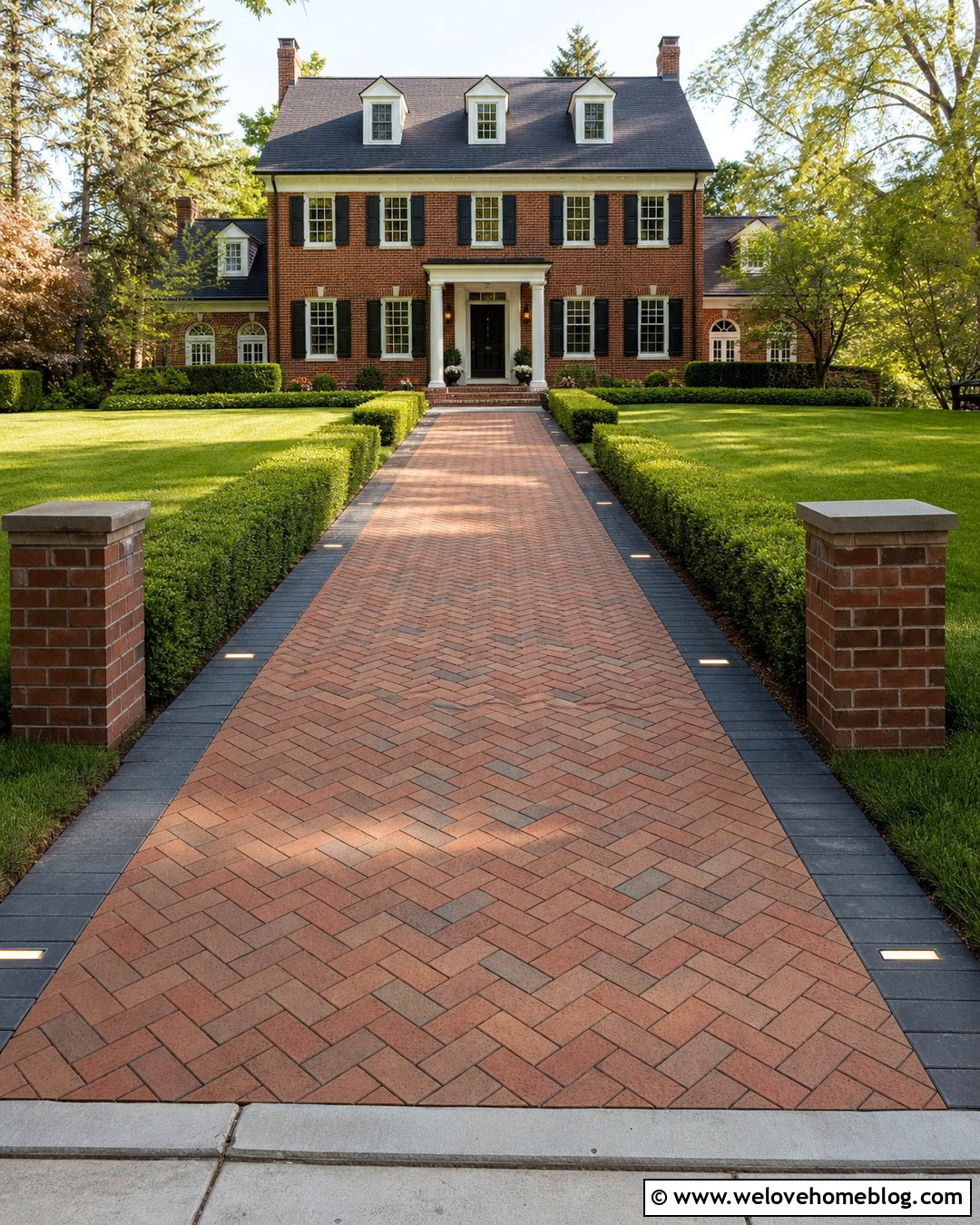
Herringbone paving provides strong visual movement and handles the scale of a driveway beautifully. Choose clay brick pavers in mixed red and brown tones, then integrate narrow rectangular lights into a dark charcoal border. The fixtures can sit parallel to the edge, creating an orderly frame around the more energetic center pattern. A straight layout leading to a brick colonial or traditional home will emphasize symmetry. Add clipped hedges, broad lawn panels, and a matching brick walkway to connect the driveway with the entrance. Warm white illumination enhances the earthy color of the brick without making it look orange. Because the paving pattern already has plenty of detail, use fewer lights at wider intervals. This keeps the complete design refined, readable, and visually comfortable after dark.
6. Modern Driveway Paver Strip Lights
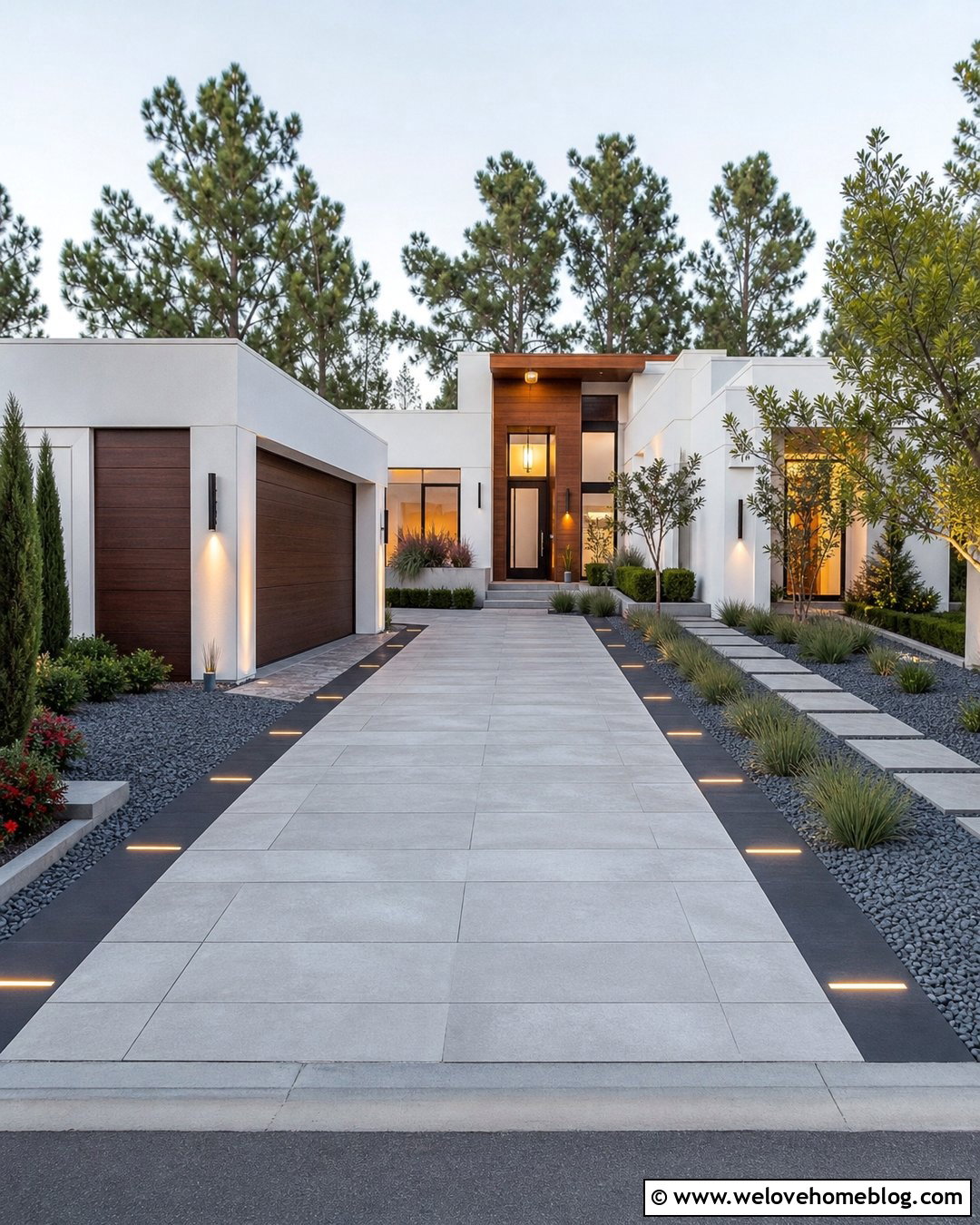
Linear paver lights can reinforce the crisp geometry of a modern driveway. Start with large-format light gray porcelain or concrete pavers arranged in straight rows. Add narrow recessed LED strips beside a charcoal paver border, running along each edge toward the garage. The continuous lines should stop at logical transition points, such as the sidewalk, entry path, or garage apron. Pair the driveway with rectangular planting beds containing sculptural grasses, compact evergreens, and dark landscape gravel. A flat-roofed or contemporary house with white stucco and wood accents provides the ideal backdrop. Select a neutral white light that complements the architecture without appearing blue. The finished scheme should feel precise and uncluttered, with the paving joints, lighting lines, borders, and landscaping all following the same disciplined geometry.
7. Brick Driveway Paver Lights
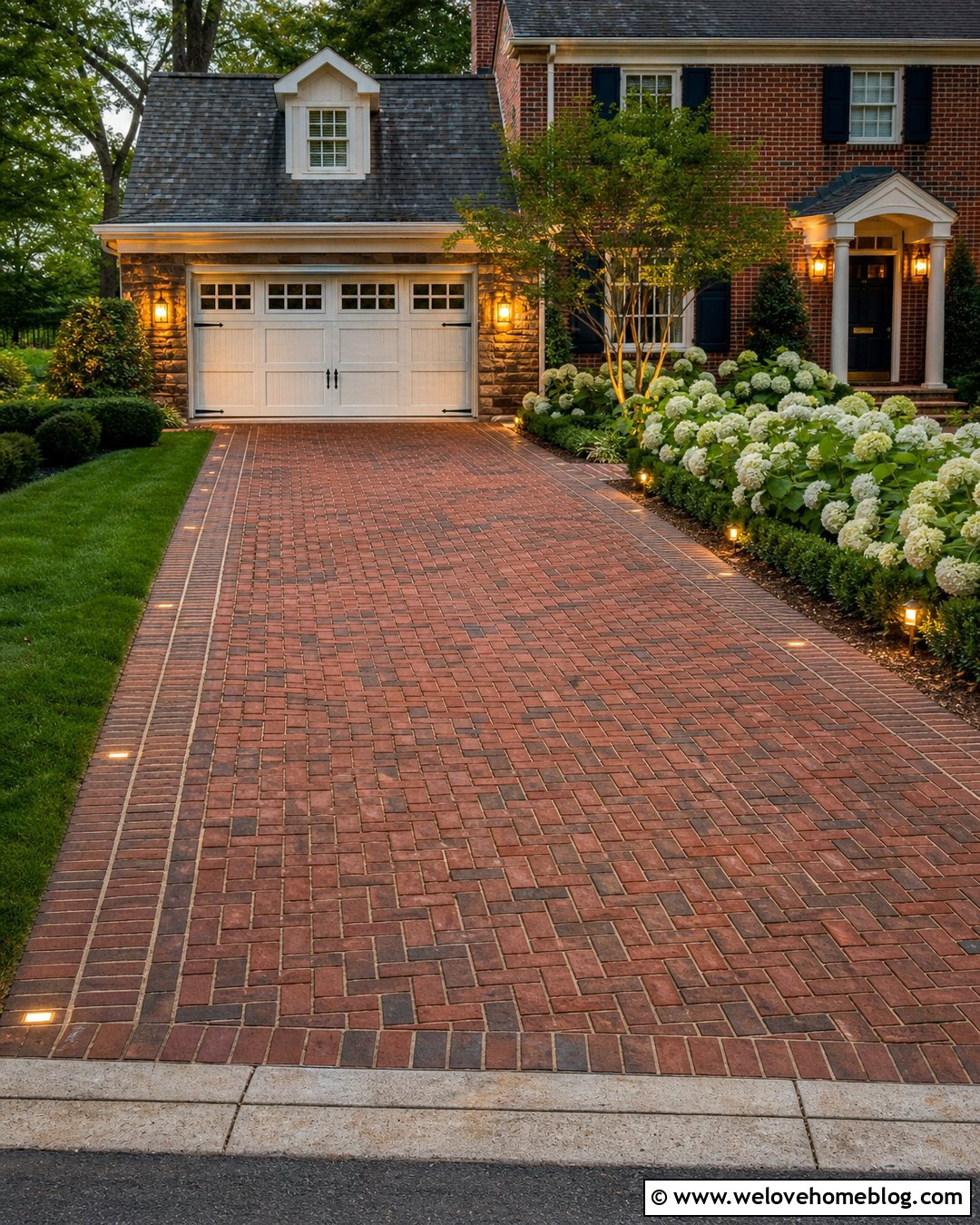
A classic brick driveway can include lighting without losing its traditional character. Use weathered red clay brick pavers in a basket-weave or running-bond pattern, framed by a double soldier course. Brick-sized illuminated inserts can replace selected border units, allowing the fixtures to blend naturally into the paving. Space them evenly along both sides and add a pair near the garage threshold. Traditional foundation shrubs, hydrangeas, and a neatly edged lawn will complete the welcoming look. If the house has brick walls, choose driveway tones that coordinate without matching every color exactly. Warm LEDs are usually the most flattering choice for red and brown masonry. During the day, the light units should resemble part of the border. At night, they create a soft outline that feels established and inviting.
8. Cobblestone Driveway Paver Lights
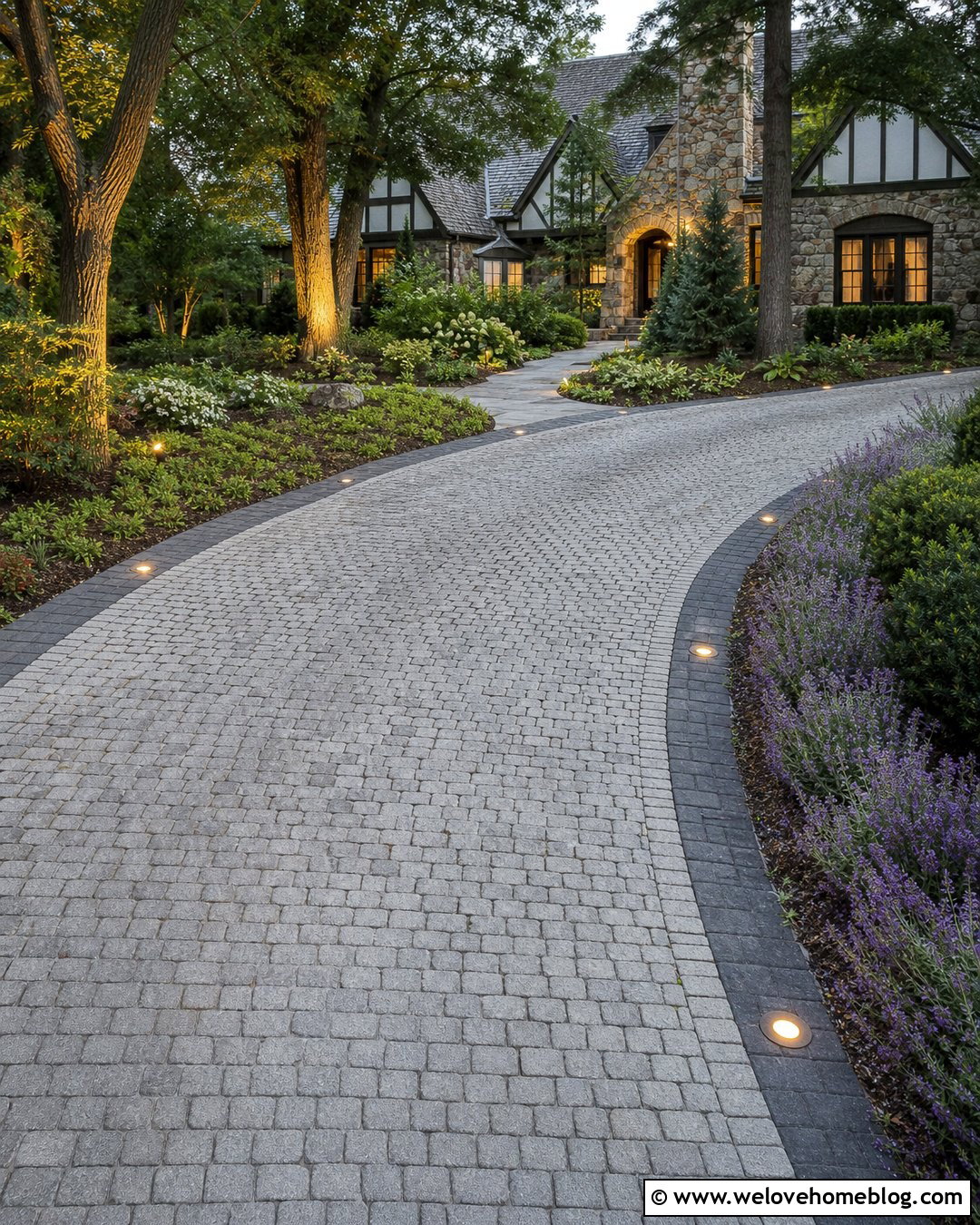
Cobblestone brings rich texture to a driveway, so the lighting should remain simple and understated. A gently curved surface made from gray granite cobbles can be bordered with larger charcoal setts containing small circular recessed lights. Rather than forcing perfectly straight spacing, follow the natural rhythm of the stone while maintaining a consistent overall distance between fixtures. Low lavender, creeping thyme, and clipped evergreen mounds soften the border without covering it. This combination works well with Tudor, European-inspired, stone cottage, and traditional country homes. Brass-trimmed fixtures can develop a natural-looking patina that complements the aged stone. Focus the illumination downward and outward across the driveway edge. The goal is to reveal the cobblestone texture and route while preserving the material’s quiet, historic character.
9. Driveway Paver Lights With Grass Strips
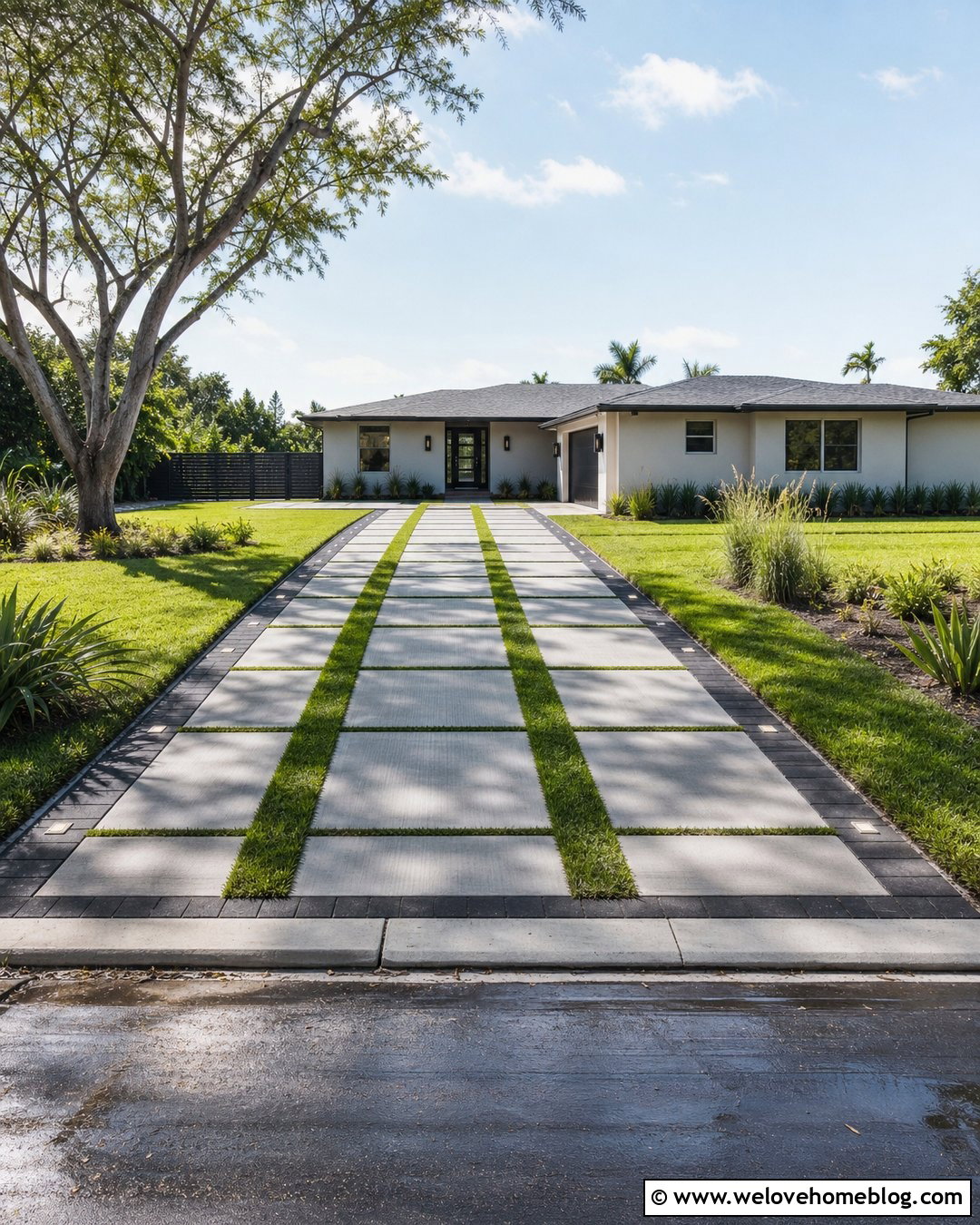
Concrete pavers separated by narrow grass strips create a softer alternative to a fully paved driveway. Use large rectangular gray pavers in two broad tire lanes, with reinforced turf or low ground cover filling the joints. Install small recessed lights within solid paver borders along the outside edges rather than inside the planted sections. This protects the fixtures from growing vegetation and keeps wiring routes easier to manage. A straight layout suits a modern ranch or minimalist farmhouse, especially when surrounded by open lawn and simple native planting beds. Keep the fixtures evenly aligned with major paver joints for a tidy daytime appearance. At night, the lights define the driving surface while the green strips remain visible between the paving. The result feels contemporary, permeable, and connected to the landscape.
10. Permeable Driveway Paver Lights
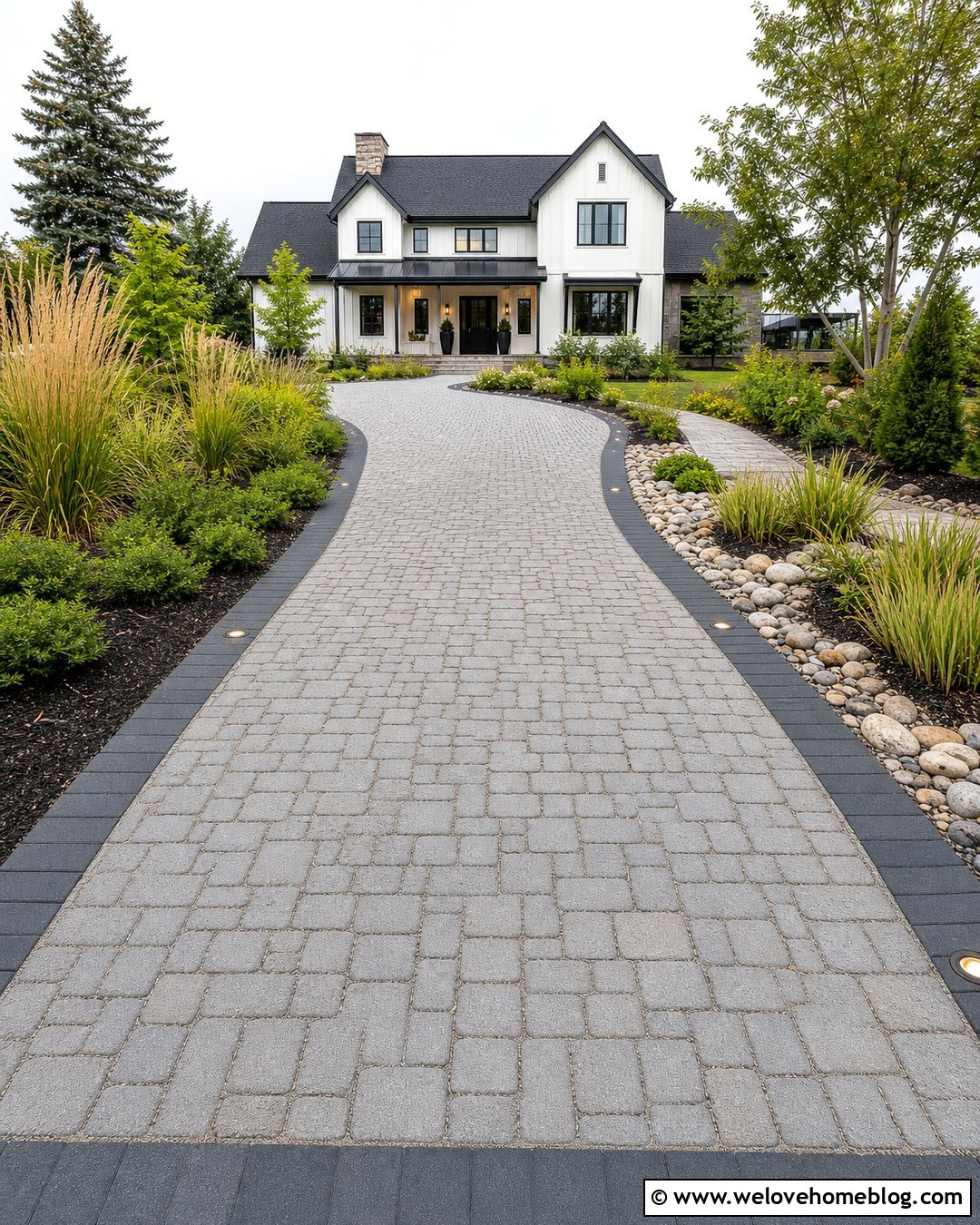
Permeable pavers can create a practical driveway with a lighter, more environmentally responsive appearance. Choose medium-gray interlocking concrete pavers with small aggregate-filled joints, then install load-rated recessed lights within a solid perimeter course. A straight or gently flared driveway can be edged with charcoal pavers that clearly separate the driving surface from rain gardens and planting beds. Use moisture-tolerant grasses, compact shrubs, and river stone in the surrounding landscape to reinforce the drainage-focused design. Avoid placing fixtures where runoff naturally collects unless the selected products and installation method are designed for those conditions. Neutral white LEDs will complement the gray paving without washing it out. The complete look should balance performance and curb appeal, with every light integrated neatly into the structured perimeter.
11. Driveway Paver Lights At The Entrance
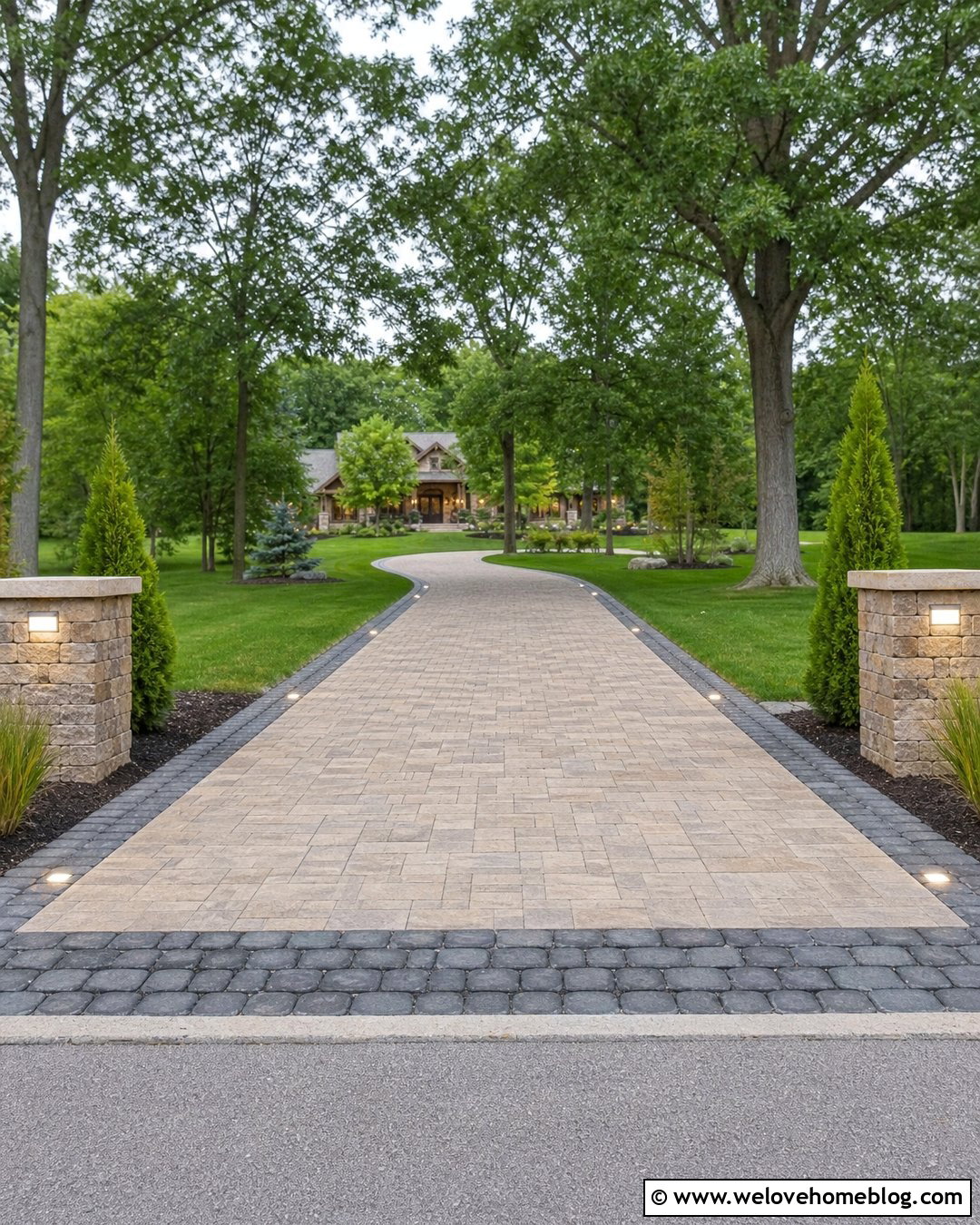
Concentrating paver lights near the street creates a welcoming entrance without illuminating the entire driveway. Build a flared apron from textured beige concrete pavers and outline it with a dark cobblestone border. Install recessed lights along both sides of the flare, reducing their number as the driveway narrows toward the house. Stone pillars, a low address wall, or structured planting beds can strengthen the entrance and provide daytime presence. Use compact evergreens and ornamental grasses that will not conceal sightlines. This approach is especially effective on long driveways where a full run of fixtures may be unnecessary. The lights clearly mark the opening for arriving guests while emphasizing the change from the public street to private property. Keep brightness controlled so drivers can enter without uncomfortable glare.
12. Driveway Paver Lights Around Gate Pillars
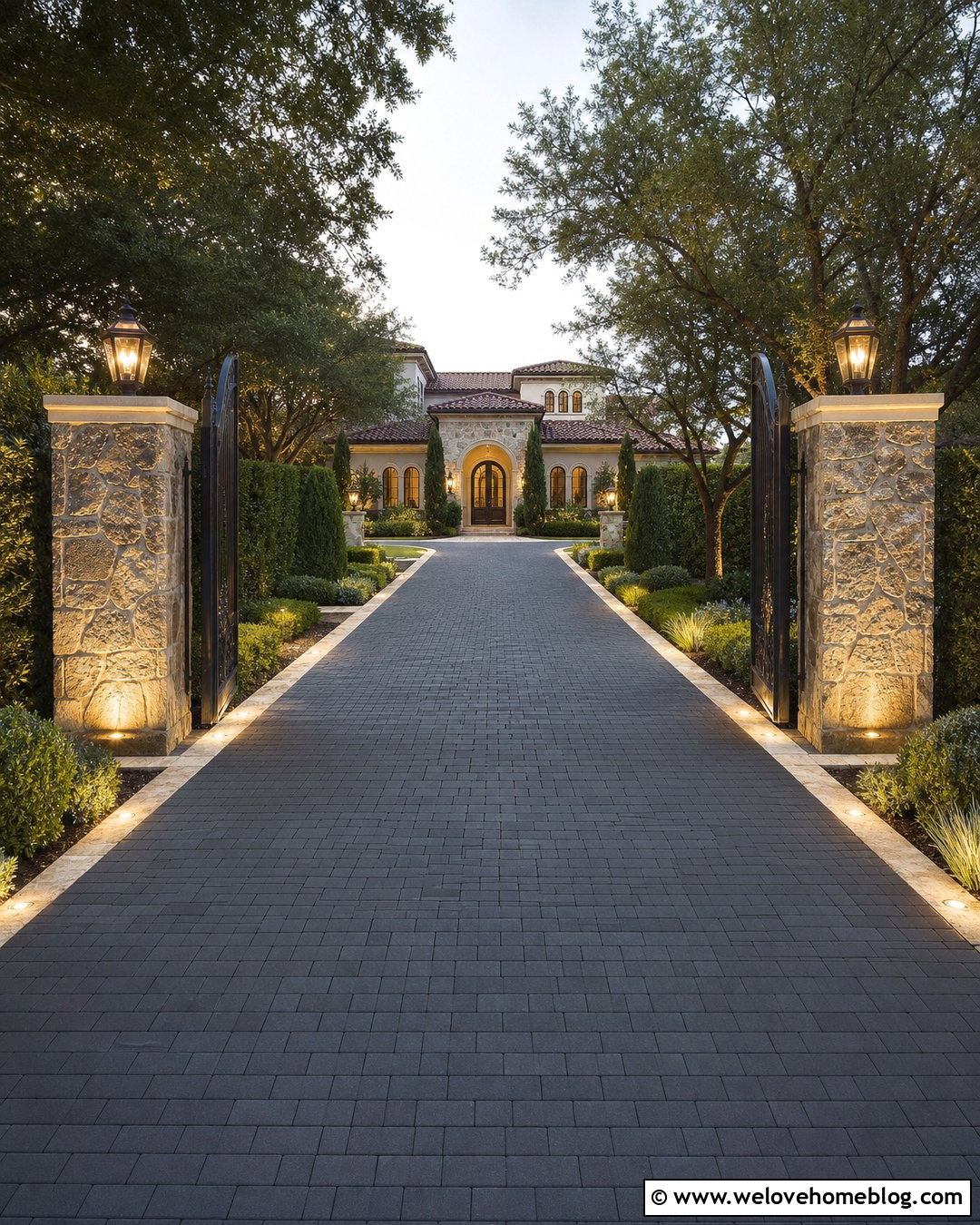
An illuminated paver entrance can make substantial gate pillars feel connected to the driveway rather than placed beside it. Use dark charcoal concrete pavers in a running-bond pattern, framed by pale limestone edging. Install recessed lights in the paving around the base of each stone or brick pillar, then continue a few fixtures down both driveway edges. The arrangement should reveal the opening and turning area without shining directly toward approaching drivers. Low hedges and symmetrical planting beds can reinforce the formal layout, while taller trees sit farther back. This complete design suits gated colonial, Mediterranean, and contemporary properties. Match the paver light color temperature with any lanterns or pillar lights already present. Coordinated illumination creates a layered entrance that feels secure, polished, and easy to navigate.
13. Driveway Paver Lights With A Brick Border
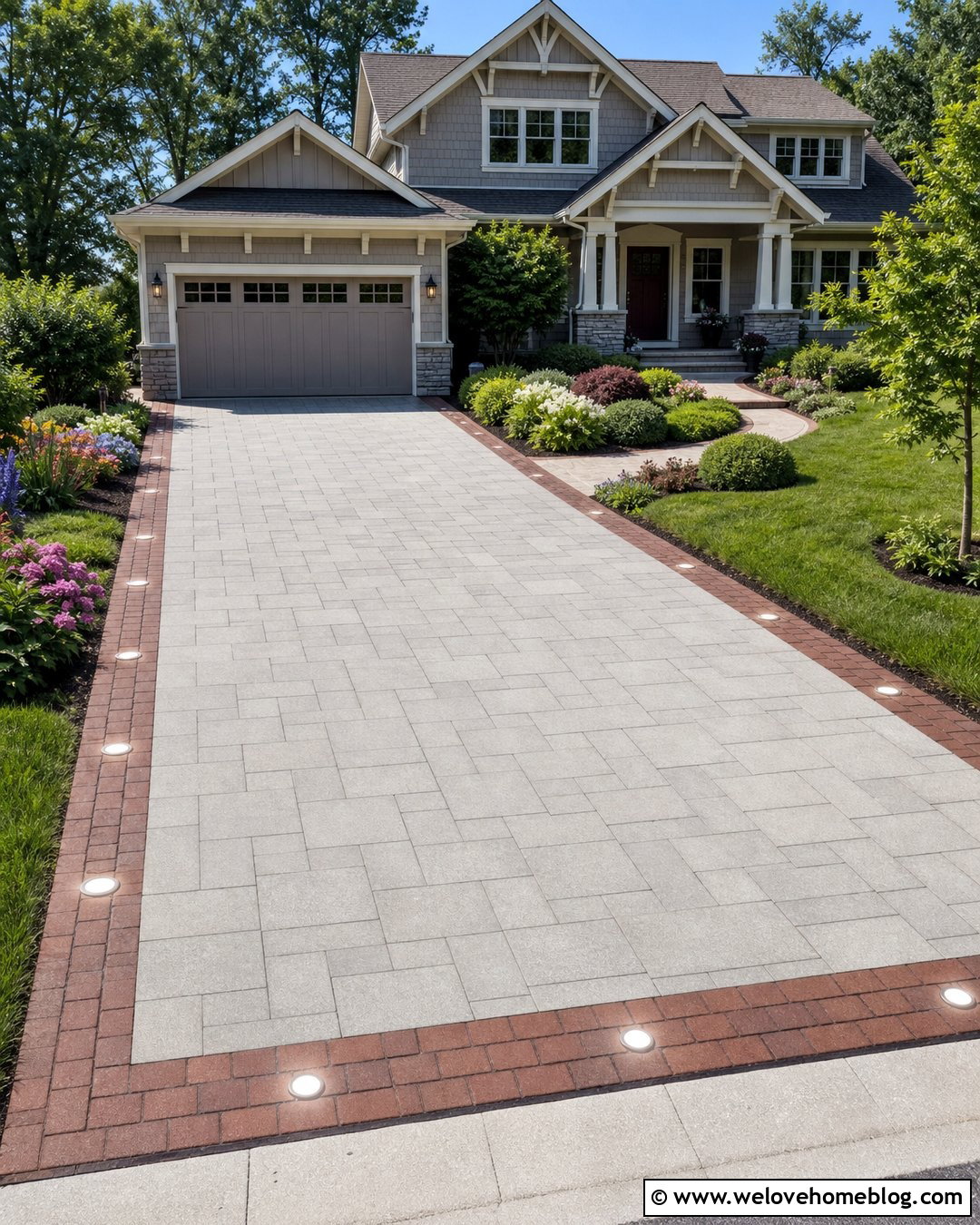
A contrasting brick border provides an ideal location for recessed fixtures on a concrete paver driveway. Begin with light gray rectangular pavers across the main surface, then add a double row of dark red clay bricks along both edges. Small round lights can be cored into selected bricks at regular intervals. This arrangement keeps the fixtures away from the center while using the border as a clear visual guide. Repeat the same brick around the front walkway or planting beds to make the property feel connected. A craftsman or traditional suburban house works naturally with this material combination. Add layered shrubs, flowering perennials, and a clean lawn edge. Warm illumination will bring out the brick tones while softly defining the cooler gray driveway, producing balanced curb appeal during both day and night.
14. Driveway Paver Lights With Stone Edging
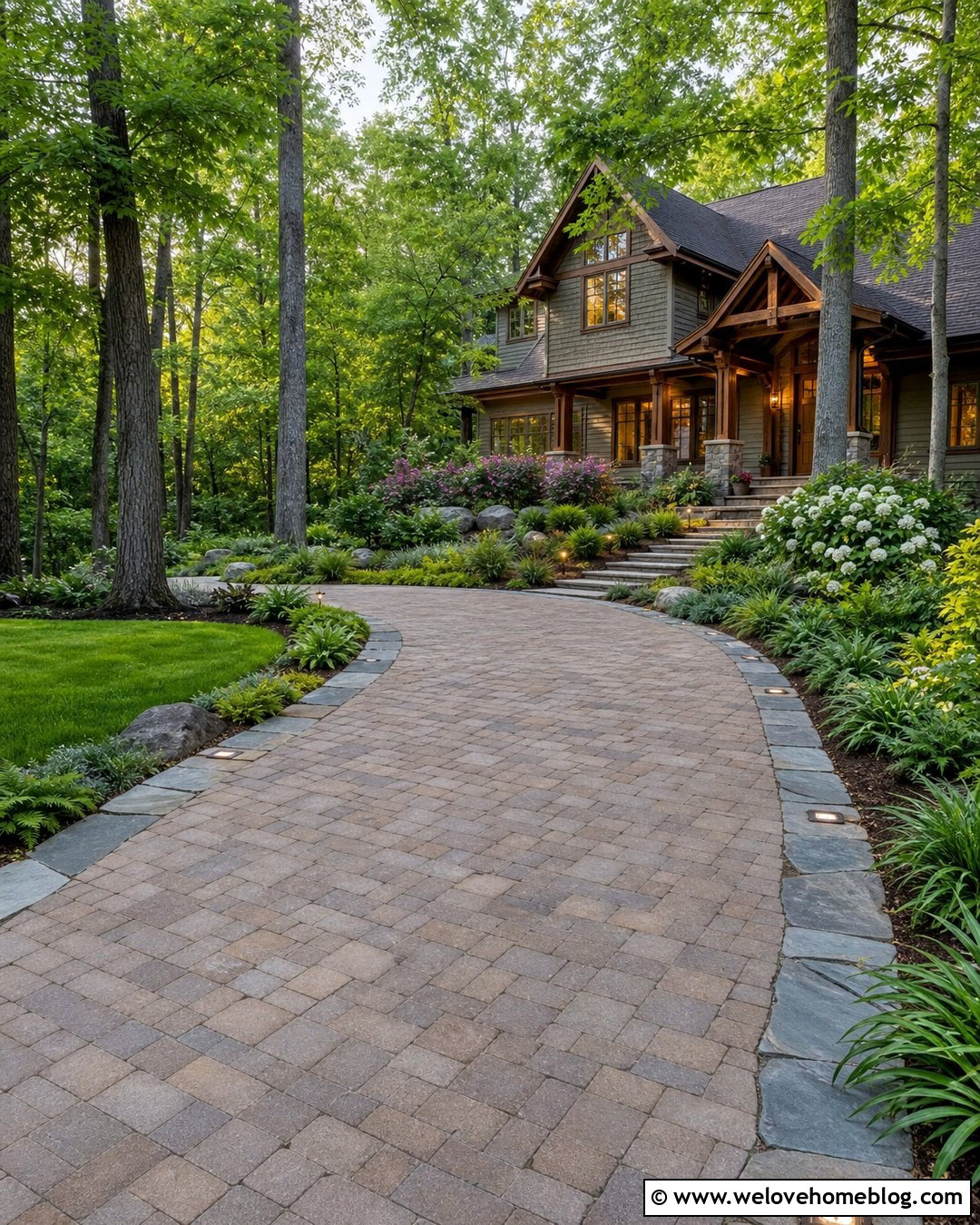
Natural stone edging gives paver lights a substantial frame and helps the driveway blend with mature landscaping. Use tumbled taupe concrete pavers in a curved layout, bordered by broad pieces of irregular bluestone or granite. Recess compact fixtures into selected cut stones or install them within a narrow paver course immediately beside the edging. Space the lights to highlight important bends, walkway crossings, and the garage approach. Ferns, low flowering shrubs, ornamental grasses, and mature shade trees can create a lush background without crowding the border. This combination works especially well with craftsman, woodland, and stone-front homes. Choose warm, low-output lighting that skims across the paving texture. The result should feel integrated into the landscape rather than outlined by a harsh row of visible bulbs.



15. Driveway Paver Lights In A Checkerboard Layout
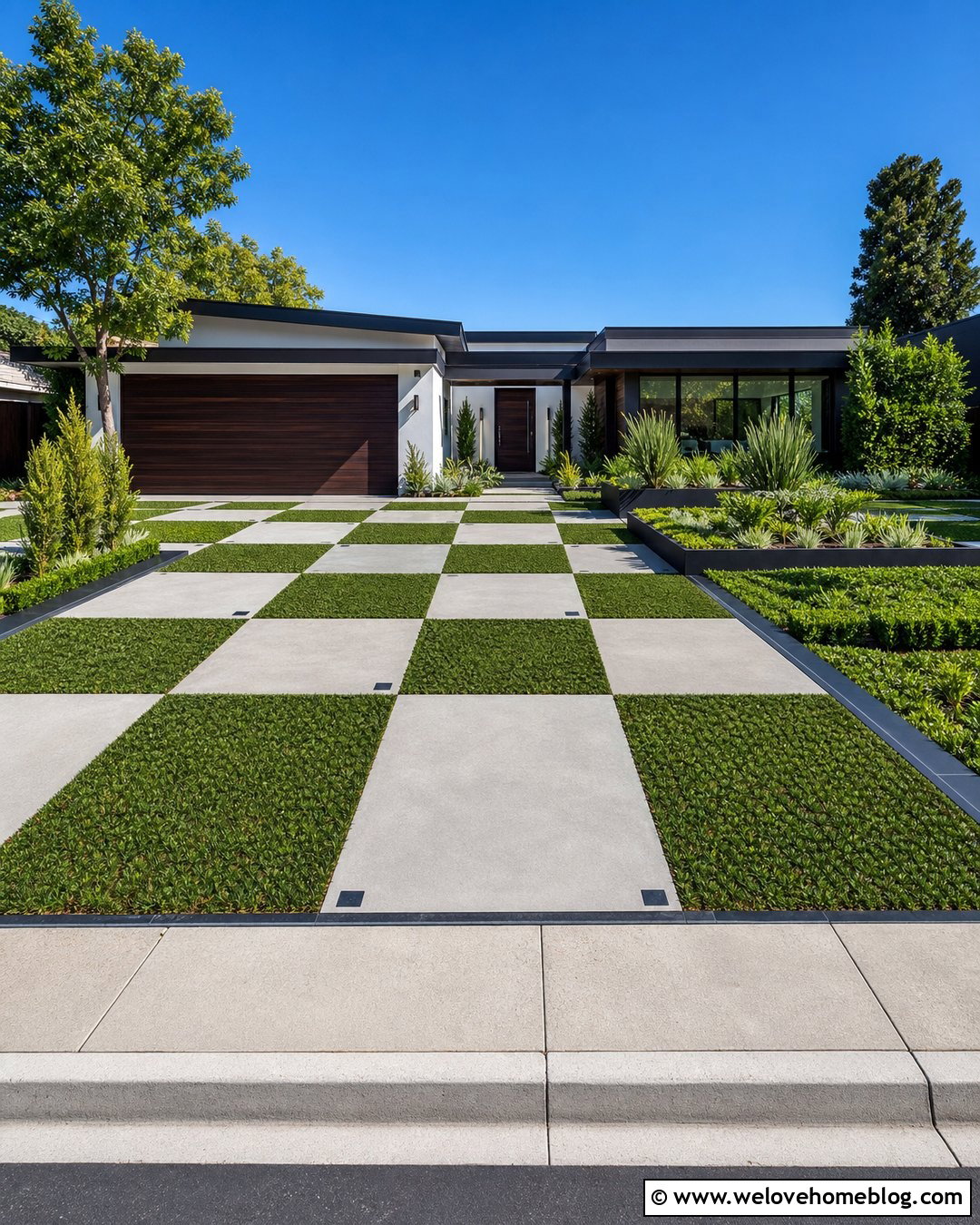
A checkerboard driveway combines geometric paving with carefully controlled lighting. Alternate large square concrete pavers with reinforced grass or dark gravel panels, creating a broad grid from the curb to the garage. Recess small square lights into selected solid pavers along the perimeter and at a few major grid intersections. Do not illuminate every square, or the pattern may become visually busy. Black steel edging can contain the gravel or planted joints, while simple boxwood blocks and upright grasses repeat the geometry. This driveway works best beside a contemporary or midcentury modern home with clean architectural lines. Neutral white illumination will keep the gray, green, and black palette crisp. The complete design feels distinctive yet organized because the lights follow the same grid as the paving.
16. Driveway Paver Lights For A Garage Apron
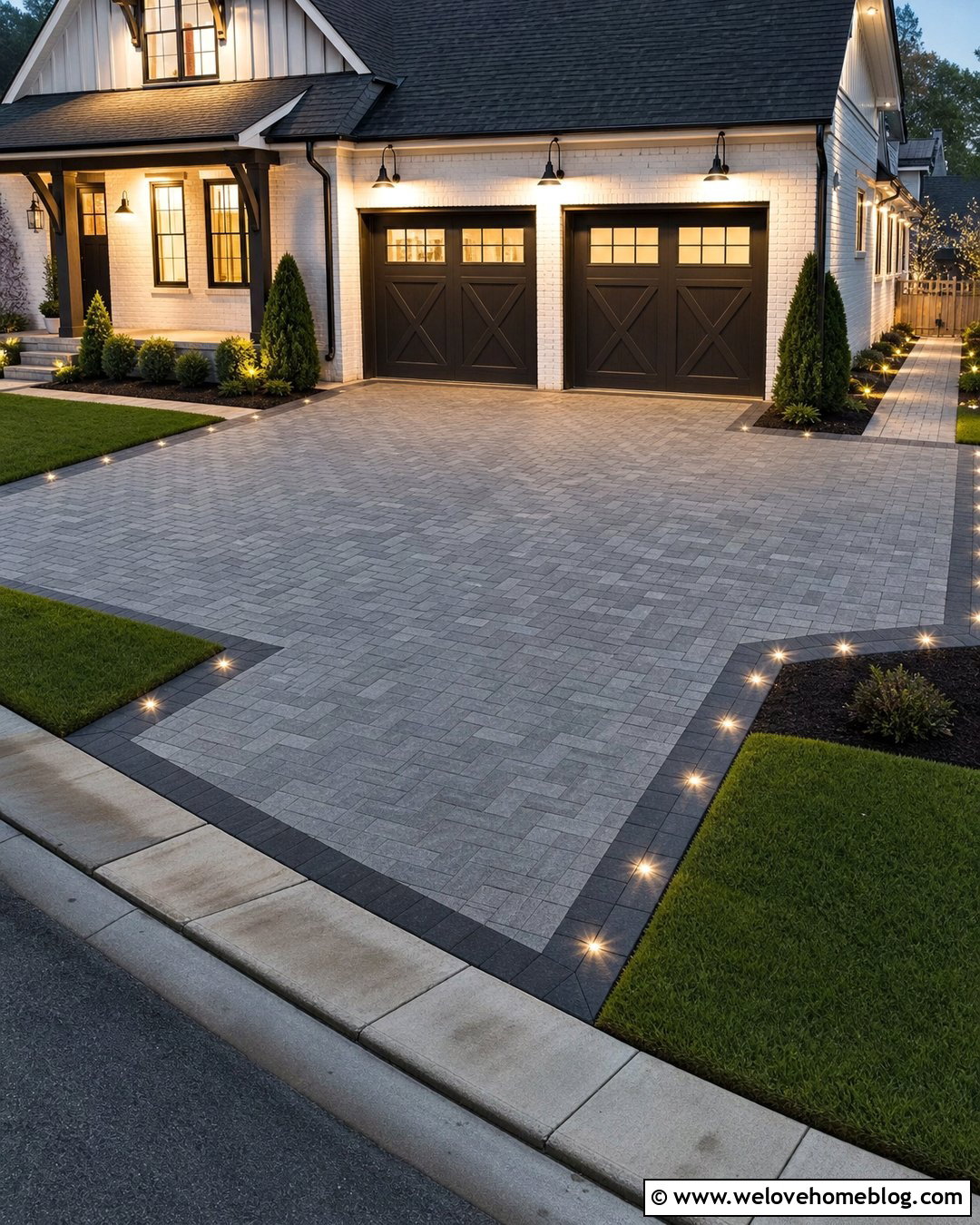
The garage apron is an excellent place to add concentrated lighting because it serves as a parking, turning, and walking zone. Use medium-gray concrete pavers laid in a sturdy herringbone pattern, then define the wider apron with a charcoal soldier-course border. Install recessed lights around the outer corners and across the transition from the narrower driveway. Additional fixtures can mark the route toward a side entry or front walkway. Keep the center of the apron largely clear to preserve a clean surface and reduce direct tire contact. Foundation shrubs, wall-mounted garage lights, and narrow planting beds can complete the space. Match the color temperature across all fixtures. A coordinated approach prevents competing tones and gives the garage area a more polished, comfortable, and intentional nighttime appearance.
17. Driveway Paver Lights Beside The Walkway
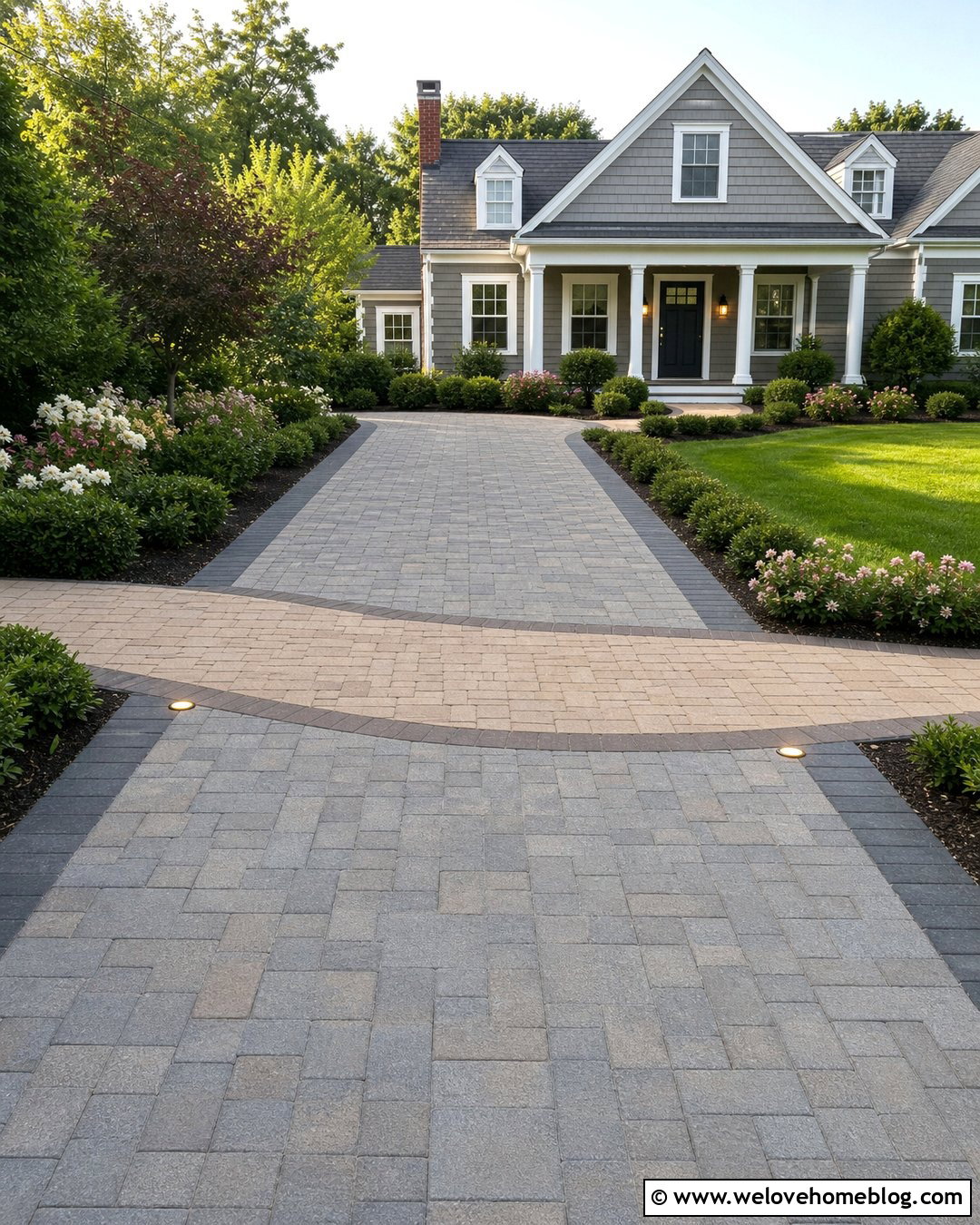
When a driveway and front walkway meet, integrated lighting can clarify the pedestrian route. Use warm gray concrete pavers for a straight driveway and contrasting tan pavers for a curved walkway leading to the porch. Recess several lights into the driveway border at the crossing point, then continue smaller fixtures along the walkway edge. The change in paver color, direction, and lighting pattern makes the transition easy to recognize. Add low flowering plants and clipped shrubs around the junction while preserving an open walking area. This layout suits cape cod, craftsman, and traditional suburban homes. Keep the brightest fixtures near the actual crossing instead of spreading equal light everywhere. The completed design gives visitors a natural visual cue to leave the driveway and follow the path toward the front door.
18. Driveway Paver Lights With A Center Ribbon
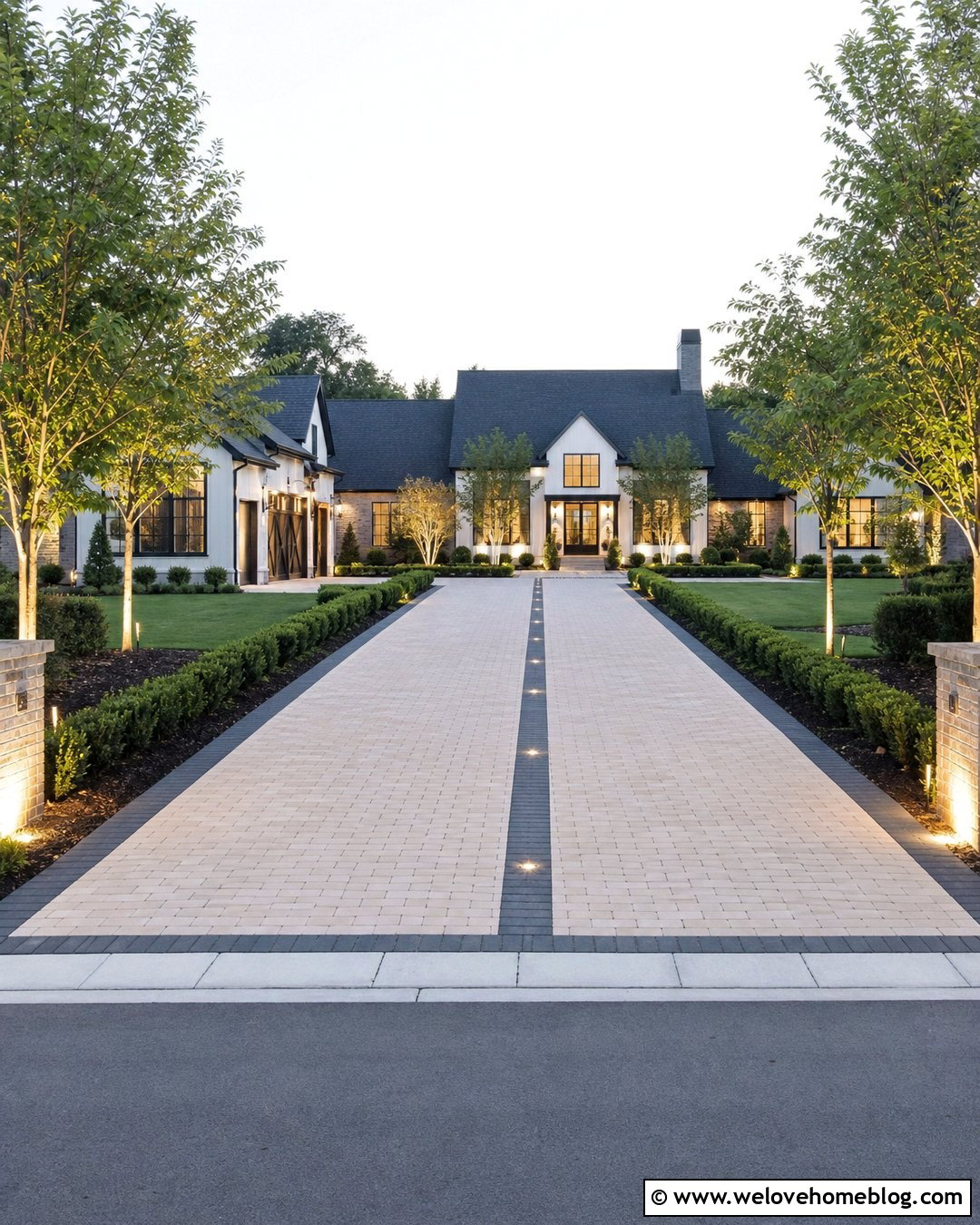
A center ribbon can turn functional lighting into a strong design feature on a wide driveway. Use pale beige concrete pavers for the main field and create a narrow charcoal paver strip running from the entrance toward the garage. Integrate small recessed lights into the ribbon at generous intervals, keeping them outside the typical tire tracks whenever possible. Continue the dark strip into the garage apron or align it with the front door for a more connected composition. Low symmetrical hedges and broad lawn panels support the formal geometry. This look suits modern farmhouse, transitional, and contemporary homes with centered architectural features. Use diffused, low-glare fixtures rather than intense upward beams. The ribbon should provide a subtle visual axis while the driveway edges remain clearly defined by contrasting borders.
19. Solar Driveway Paver Lights
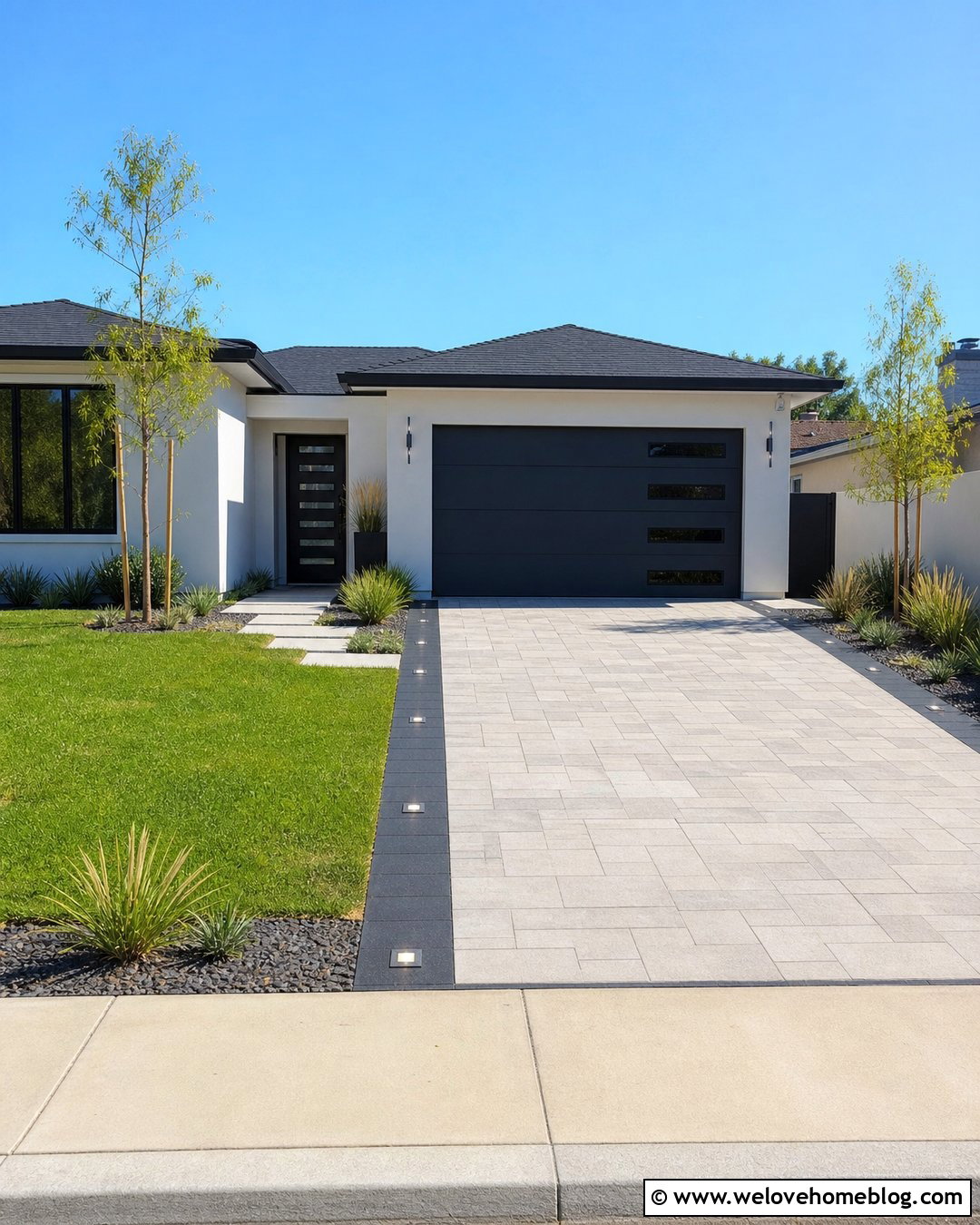
Solar paver lights can be useful where running cable is difficult, but their placement should receive dependable direct sunlight. Use pale gray concrete pavers in a short straight driveway, with solar fixtures integrated into a dark outer border. Avoid areas shaded for most of the day by walls, dense hedges, or large trees. A south-facing open yard generally gives the fixtures a better opportunity to recharge, although performance will still vary with weather and season. Pair the driveway with drought-tolerant grasses, low shrubs, and a simple concrete walkway. Choose units intended for exterior ground use and possible driveway conditions rather than lightweight decorative lawn lights. The complete look should remain attractive even when illumination is limited, with the dark border and orderly fixture placement providing strong daytime definition.


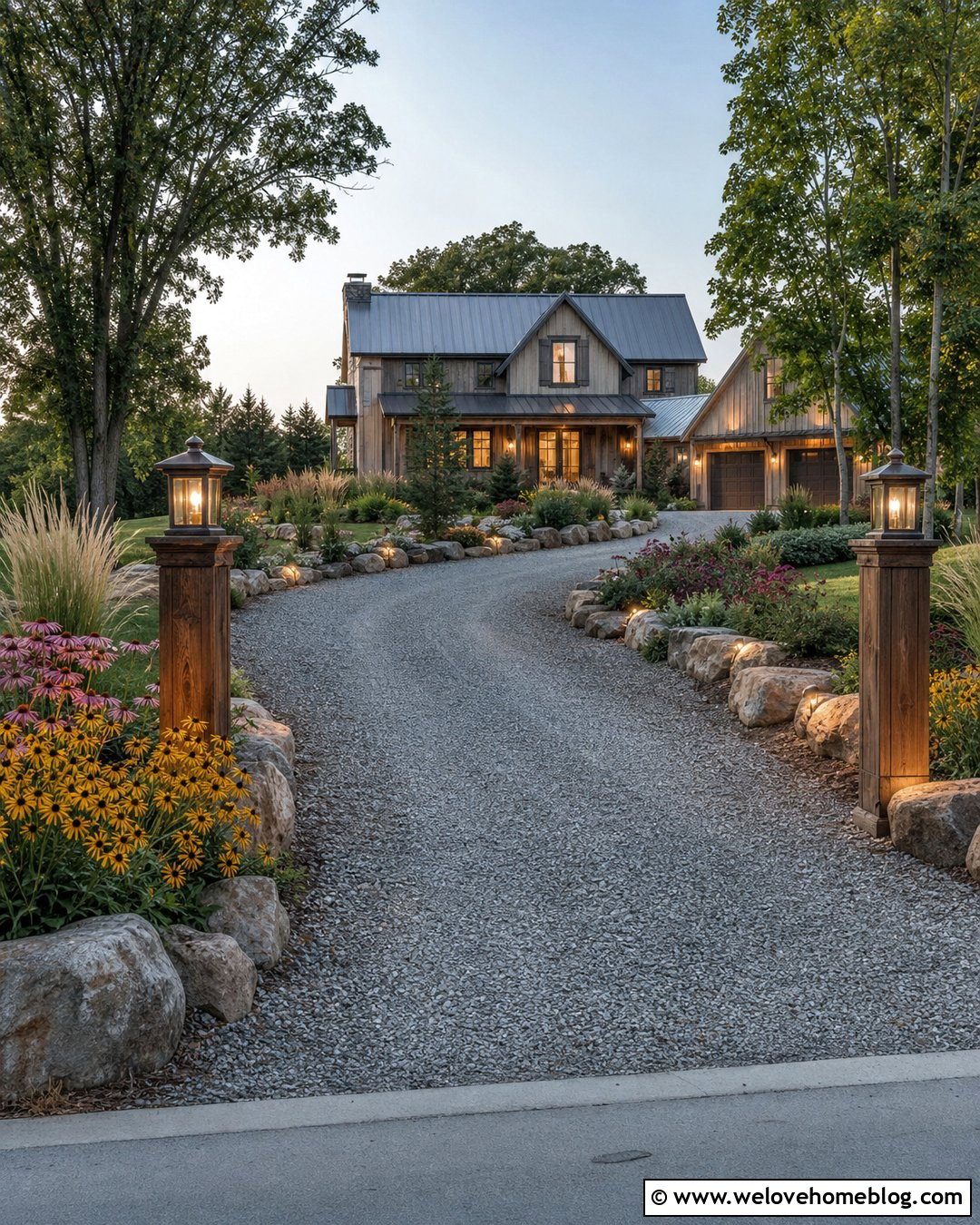
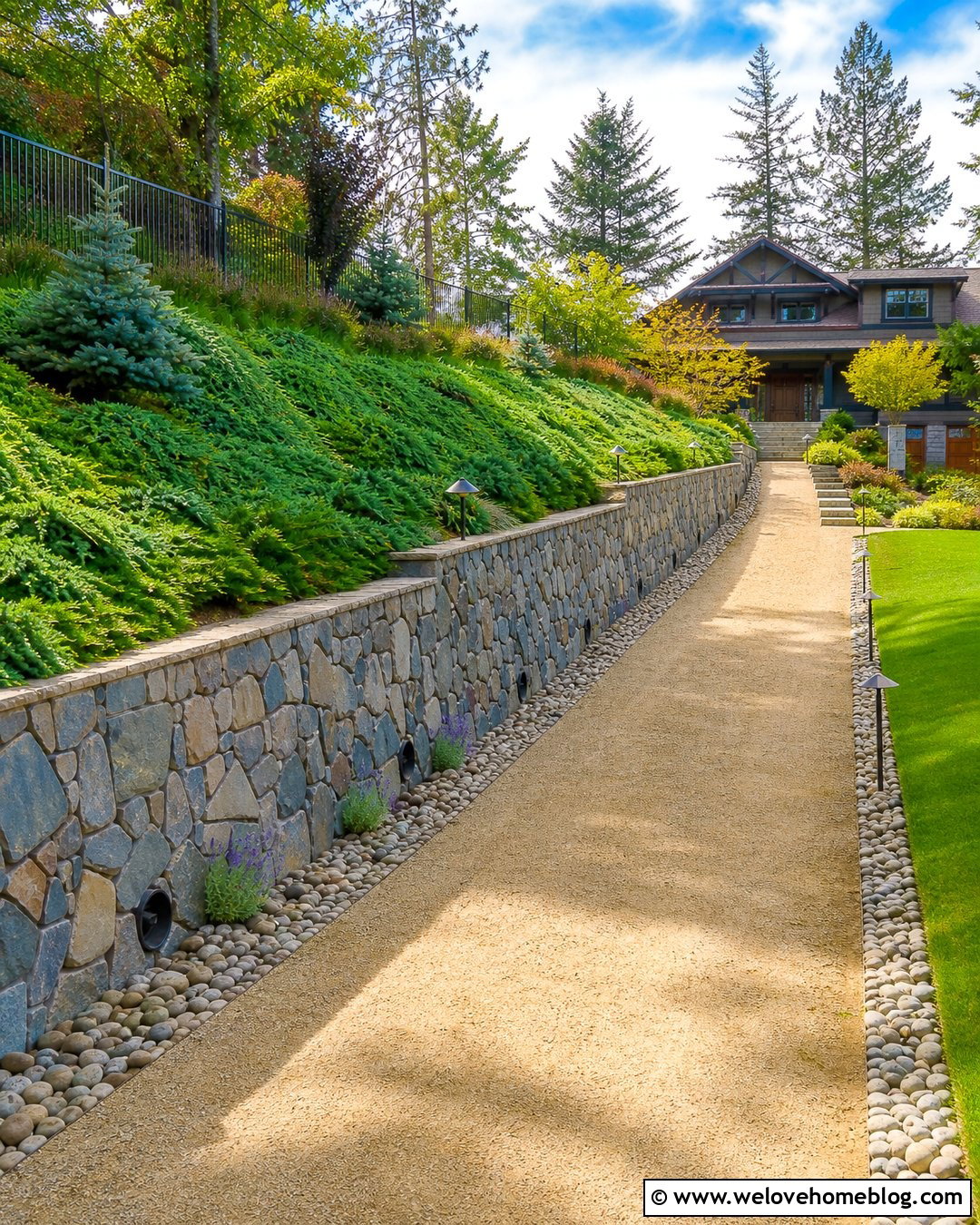
20. Low Voltage Driveway Paver Lights
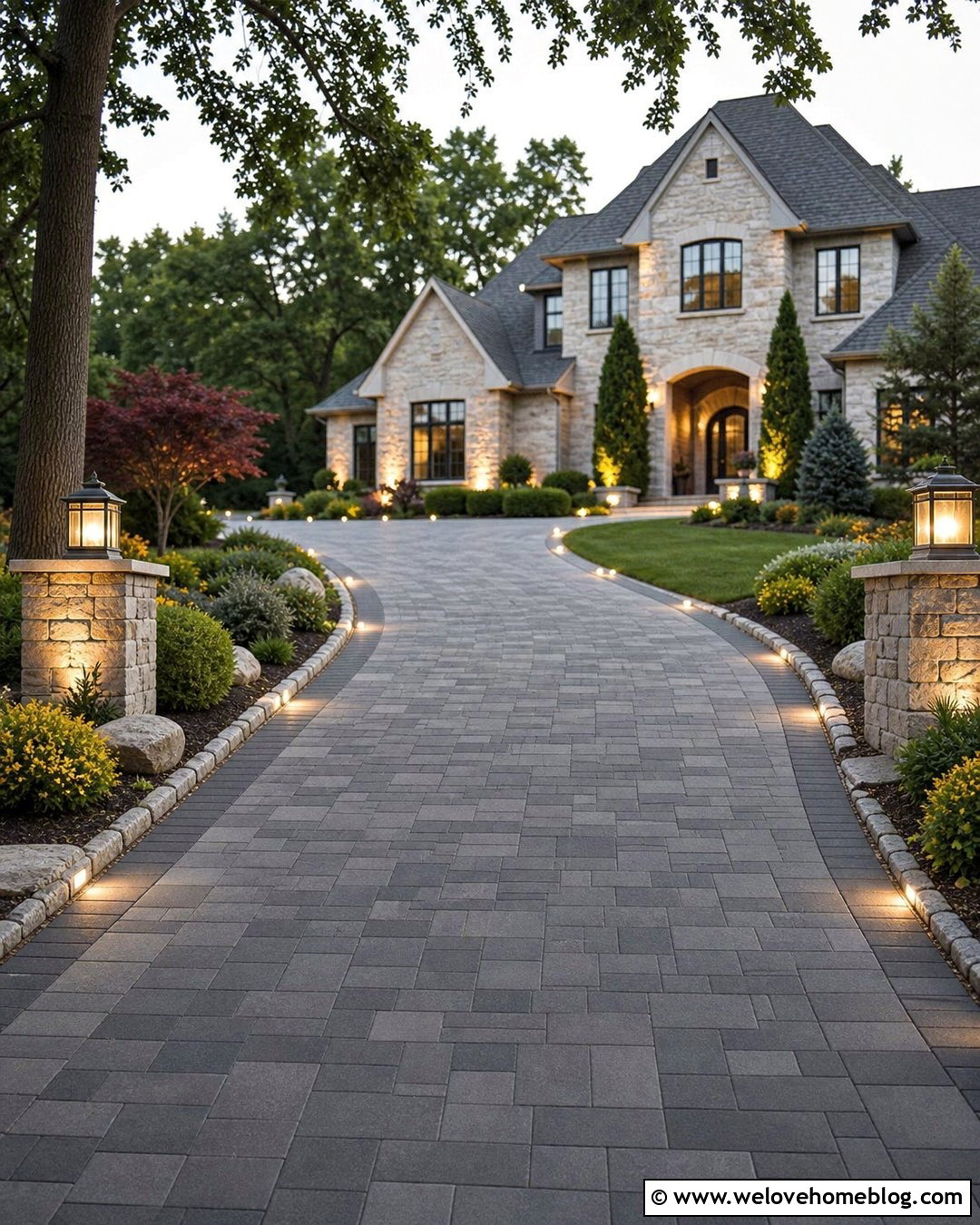
A low-voltage system is a flexible choice for a long or professionally landscaped driveway. Start with durable charcoal and gray concrete pavers arranged in a curved running-bond pattern. Place recessed fixtures in the perimeter course, adding extra lights near bends, steps, entrance pillars, and walkway connections. A transformer with a timer or light-sensing control can make daily operation easier. Product specifications vary, so select fixtures designed for outdoor moisture exposure and appropriate vehicle loads, and keep every unit properly supported and flush with the paving. () Plan cable routes and service access before installing or resetting the pavers. Layered shrubs, ornamental trees, and stone-edged beds will complete the driveway, while the controlled lighting quietly connects each important feature after dark.
Conclusion:
These **20 Driveway Paver Lights Ideas** show how integrated lighting can improve visibility while strengthening the shape, pattern, and character of a residential driveway. The most successful design does not rely on brightness alone. It coordinates the fixtures with the paver material, border, landscaping, entrance, walkway, and house facade. Straight driveways benefit from consistent spacing, while curved and circular layouts need lights that clearly follow each turn. Warm light complements brick and traditional homes, while neutral light often suits modern gray paving. Before installation, choose exterior-rated fixtures appropriate for the location and plan wiring, drainage, and future maintenance carefully. A thoughtful layout will look discreet by day and create polished, welcoming curb appeal after sunset.

Related posts:

Leave a Reply