
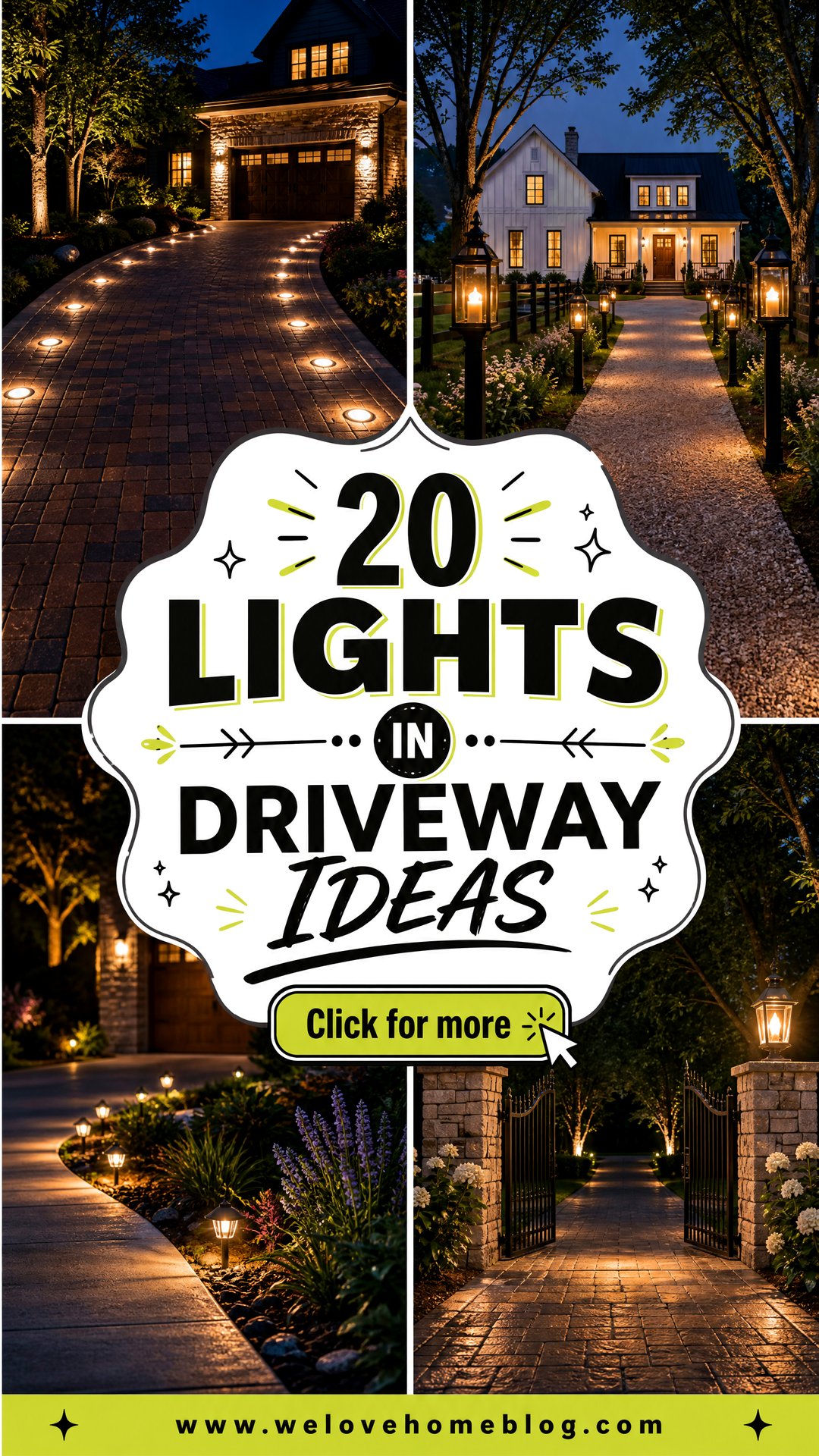
A well-planned driveway should feel easy to follow, safe to enter, and attractive from the street. This guide to 20 Lights In Driveway Ideas explores complete designs that combine lighting with different driveway materials, layouts, borders, and landscapes. You will find options for modern concrete, rustic gravel, classic brick, curved entrances, circular drives, and compact suburban properties. Good lighting can define pavement edges, reveal turns, connect the driveway to the front walk, and highlight architectural details without flooding the property with glare. Path lights, bollards, recessed fixtures, pillars, and downlights each create a different effect when coordinated with the overall exterior. Use the following complete driveway looks to inspire your own version of 20 Lights In Driveway Ideas.
1. Modern Driveway Bollard Lights
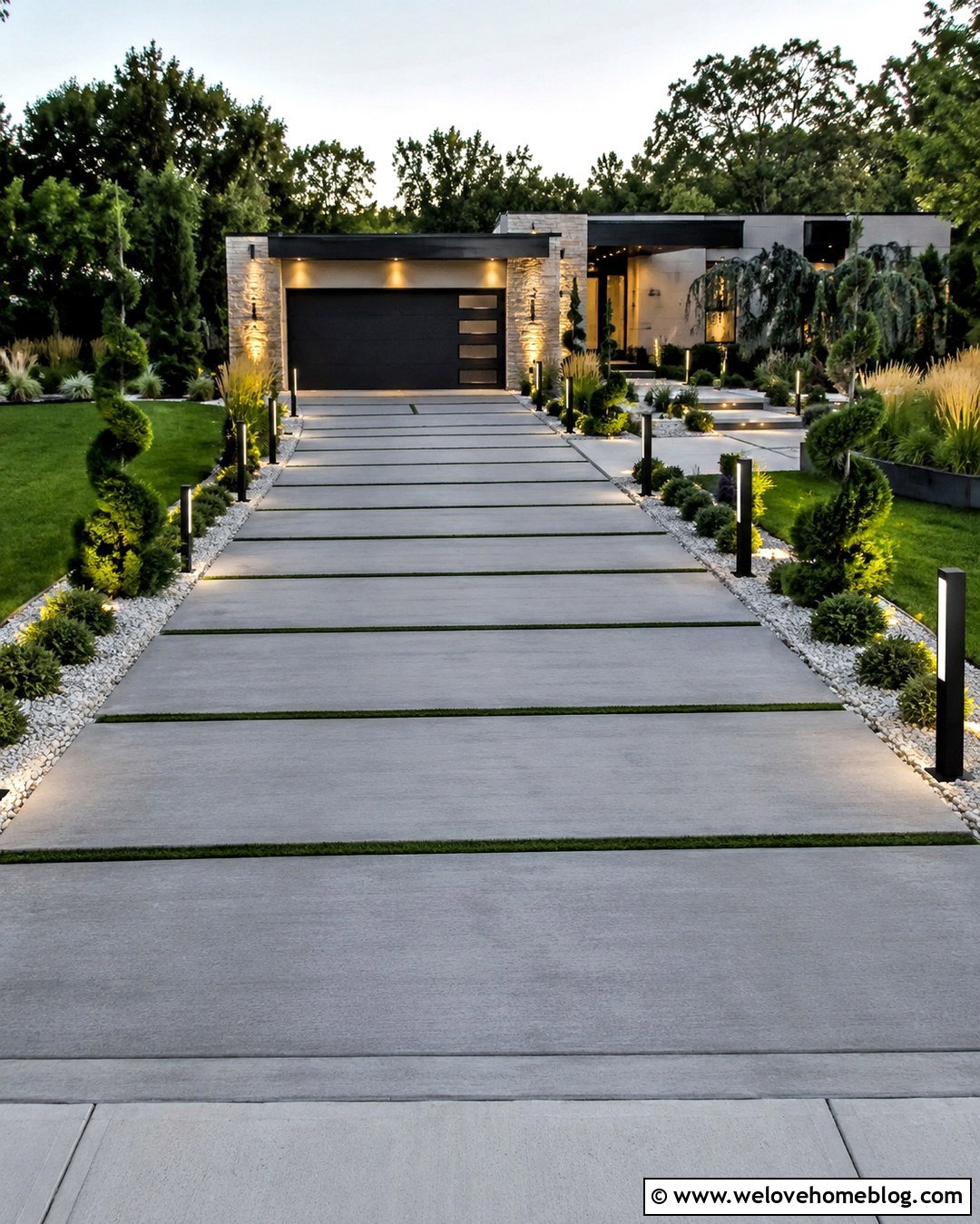
Slim black bollard lights give a modern driveway structure without making the entrance feel crowded. Pair them with large-format gray concrete pavers arranged in a straight layout toward a flat-roof home. Narrow grass strips between the pavers soften the hard surface, while gravel beds and sculptural evergreen shrubs continue the clean geometry. Place the bollards within the planting areas rather than directly beside the vehicle path, protecting the fixtures while spreading light across the pavement. A staggered arrangement often feels more natural than two perfectly matching rows and avoids creating an airport-runway effect. Shielded fixtures that direct light downward will make the driveway boundaries easier to recognize while reducing unnecessary glare toward neighboring properties. ()
2. Solar Driveway Path Lights
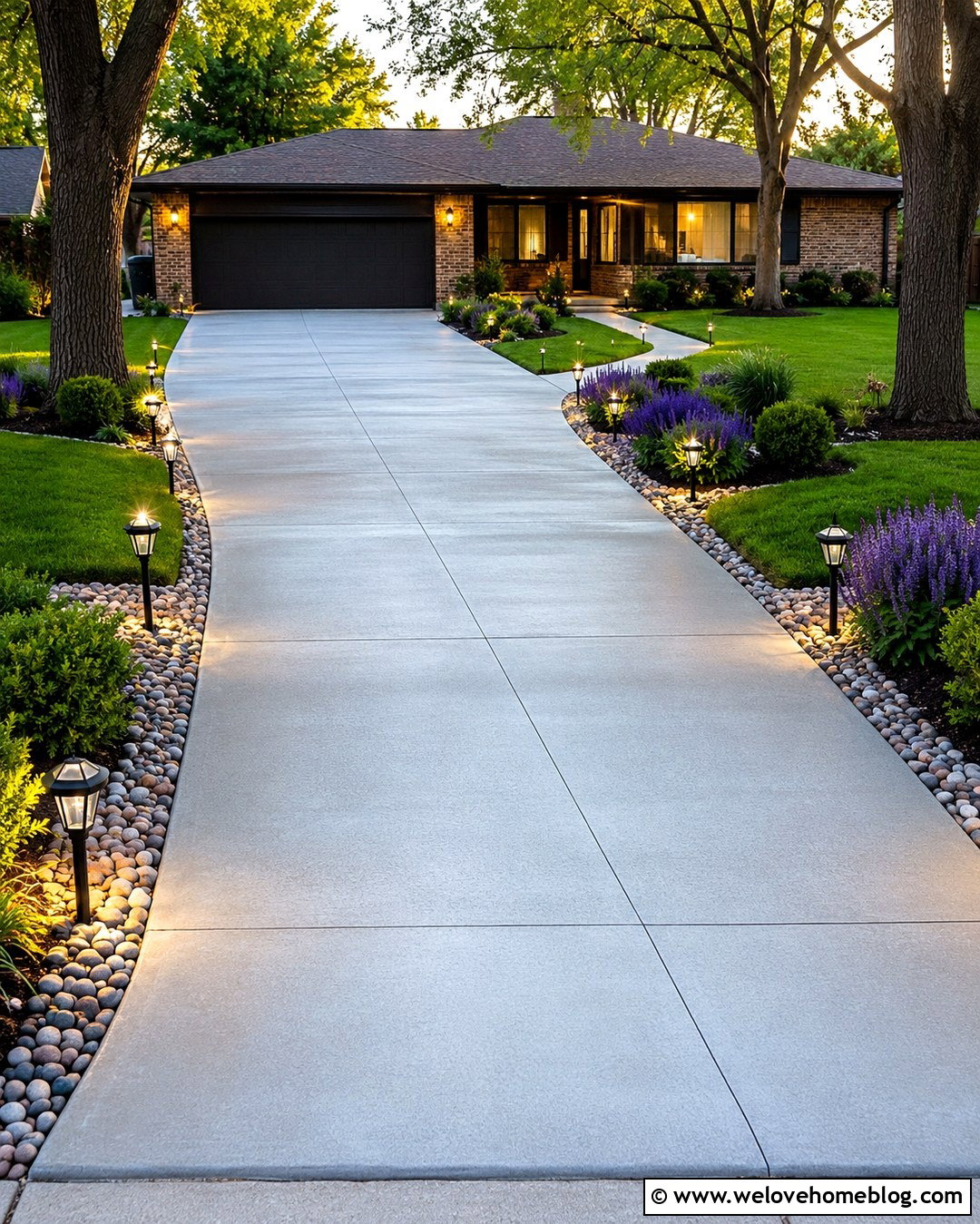
Solar path lights can create a welcoming, budget-friendly border around a simple suburban driveway. Start with a light gray poured-concrete surface leading straight to a ranch house. Add curved planting beds along both sides, filled with ornamental grasses, salvia, compact boxwoods, and pale river rock. Place durable solar fixtures a short distance behind the concrete edge, where tires and lawn equipment are less likely to damage them. A wider solar light at the front walkway can mark the point where pedestrians leave the driveway. This arrangement works best in an open yard that receives dependable direct sunlight. Keep the fixtures consistent in color and shape so the finished design feels intentional rather than pieced together. Solar lighting can provide decorative guidance without requiring extensive underground wiring. ()
3. Recessed Driveway Paver Lights
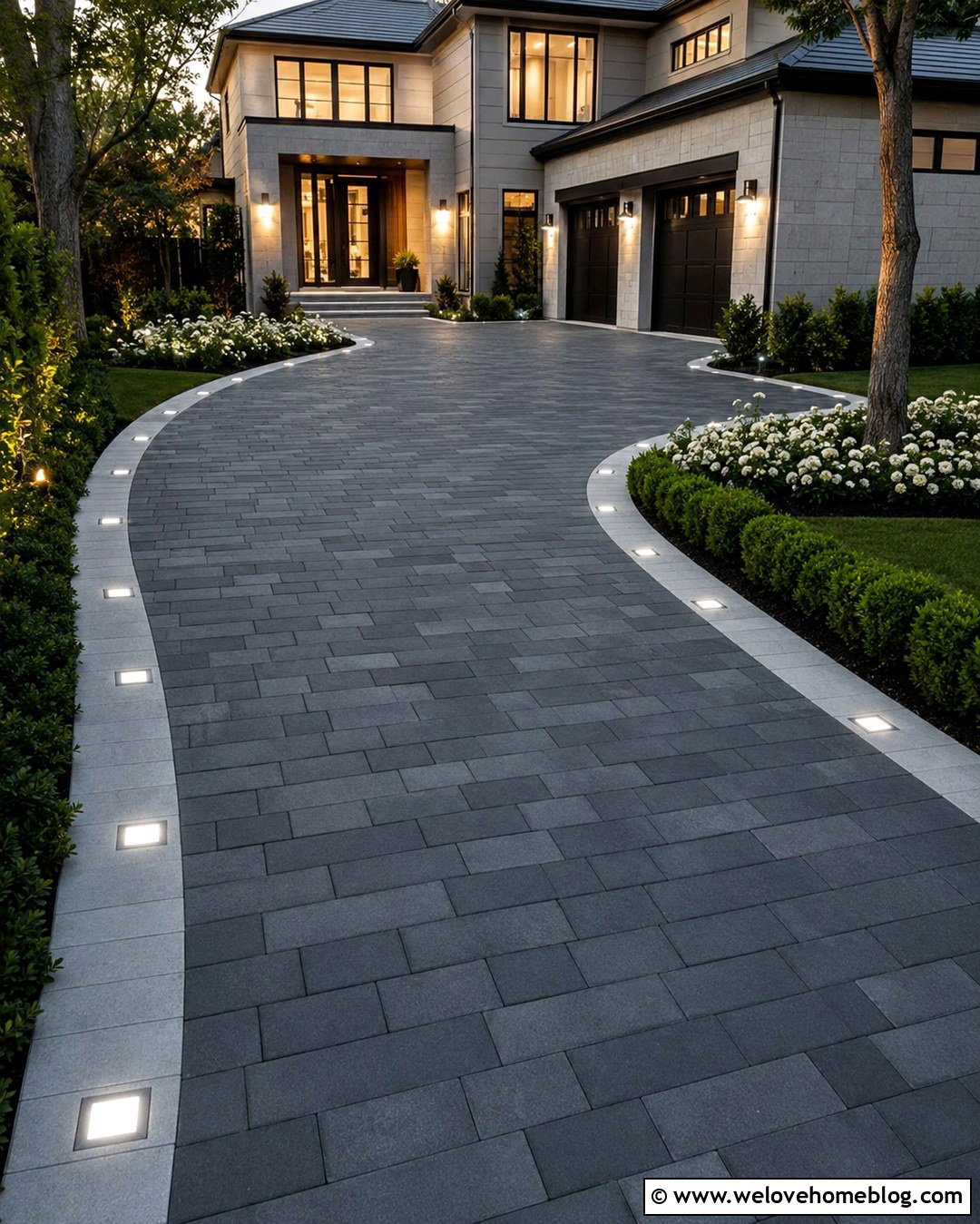
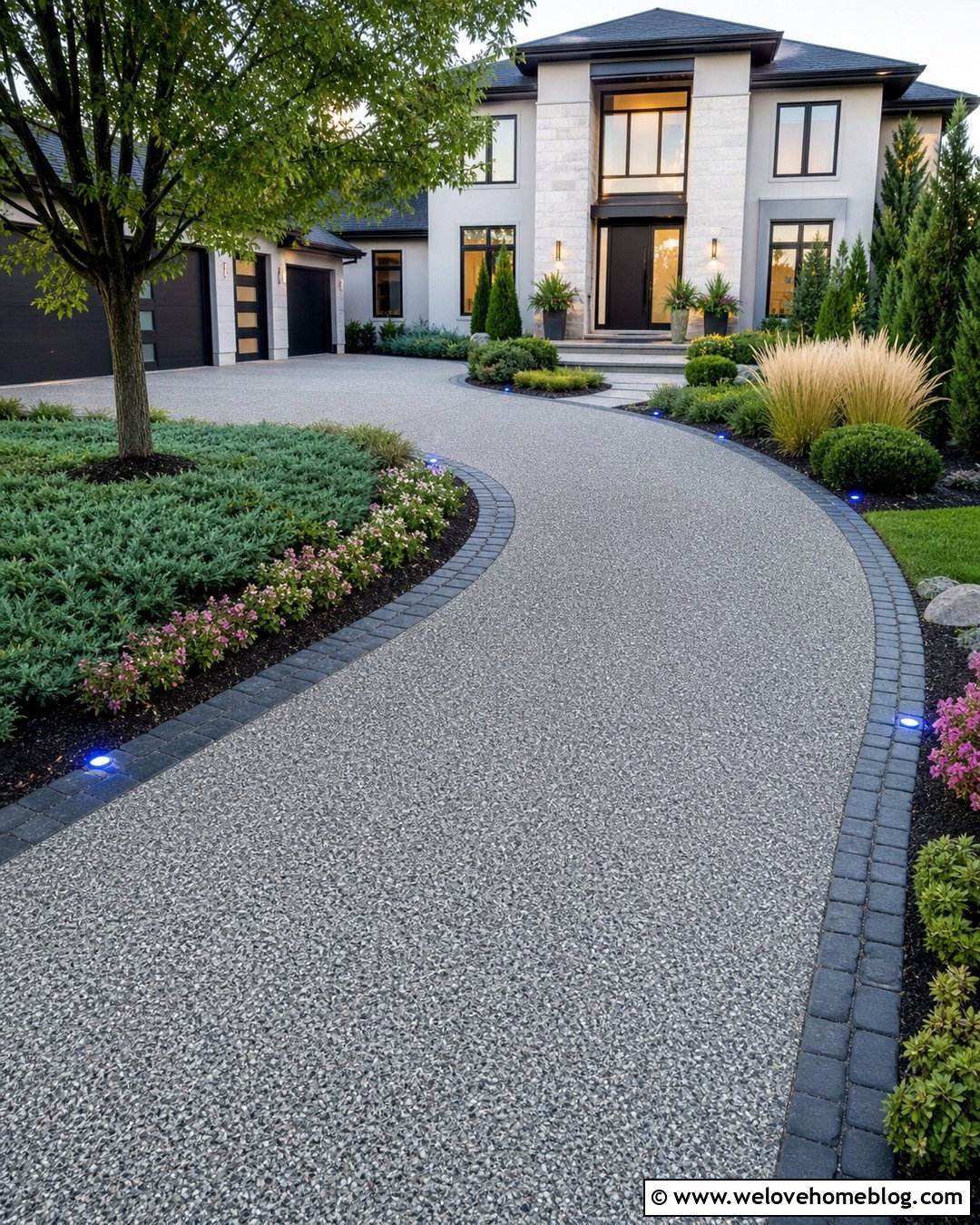
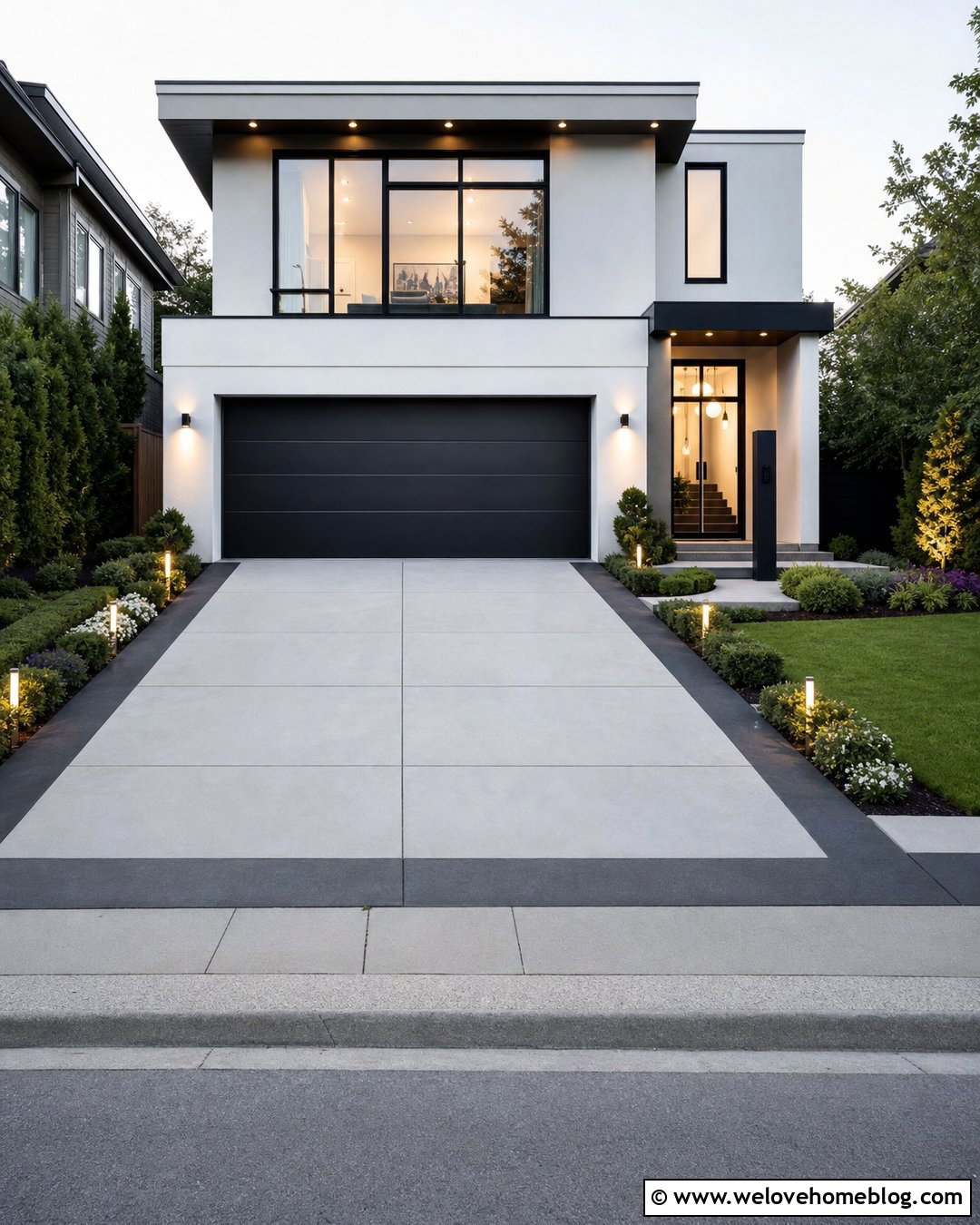
Recessed lights create a streamlined finish when the fixtures are carefully integrated into a paver driveway. Use charcoal concrete pavers in a running-bond pattern with a broad, gently curved approach to a contemporary two-story home. Install small square lights within the contrasting border course rather than scattering them across the driving surface. This placement clearly outlines the curve and allows the main paver pattern to remain visually calm. Low hedges, white flowering perennials, and a smooth front lawn provide a polished frame during the day. Choose fixtures specifically rated for their intended location and expected vehicle loads because not every in-ground light is designed to be driven over. Proper drainage around each housing is also important for a dependable, clean-looking installation. ()
4. Driveway Pillar Lights
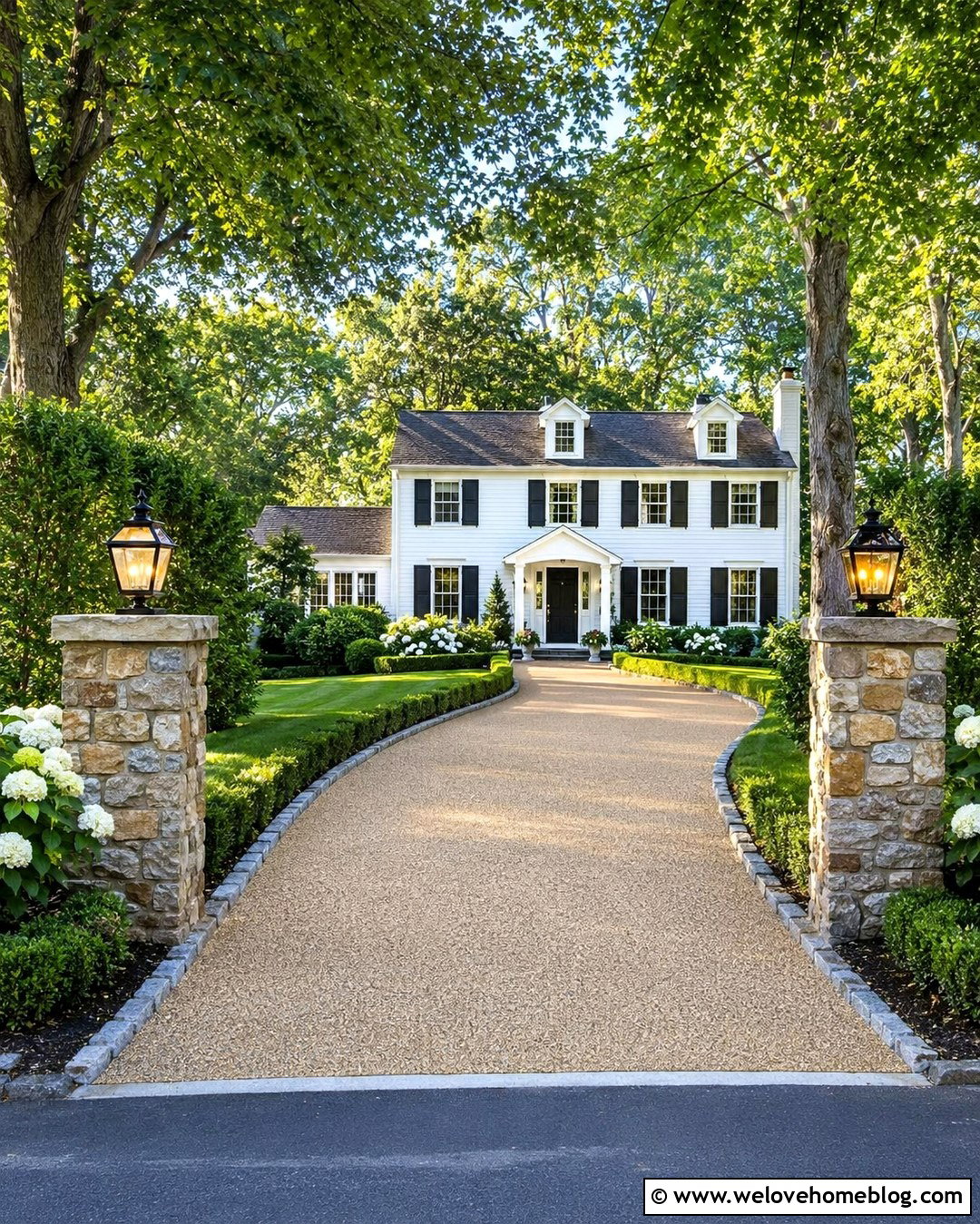
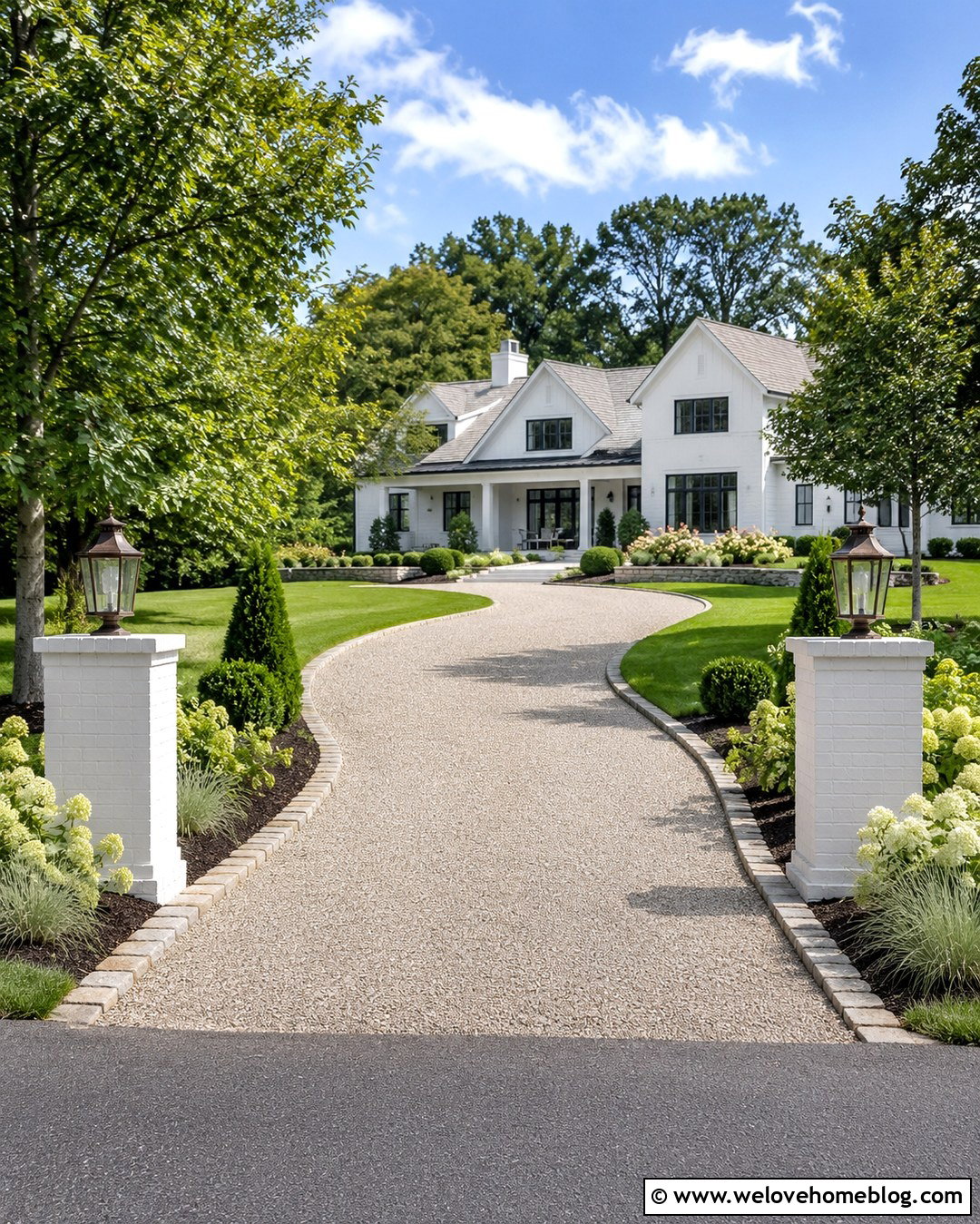
Pillar lights give a driveway entrance a strong focal point and help establish a clear transition from the street. Build two medium-height stone pillars around the opening of a tan resin-bound gravel driveway. Traditional lantern fixtures mounted on top can complement a colonial home with symmetrical windows and dark shutters. Continue the natural stone as a low border beside the first section of the driveway, then transition into clipped hedges and flowering hydrangeas. The surface can curve slightly before straightening toward the garage, allowing the entrance to feel private without hiding the house. Keep the lanterns proportional to the pillars and repeat their dark metal finish on the mailbox or front-door hardware. This creates a coordinated arrival area instead of treating the entrance lights as isolated decorations.
5. Long Driveway Post Lights
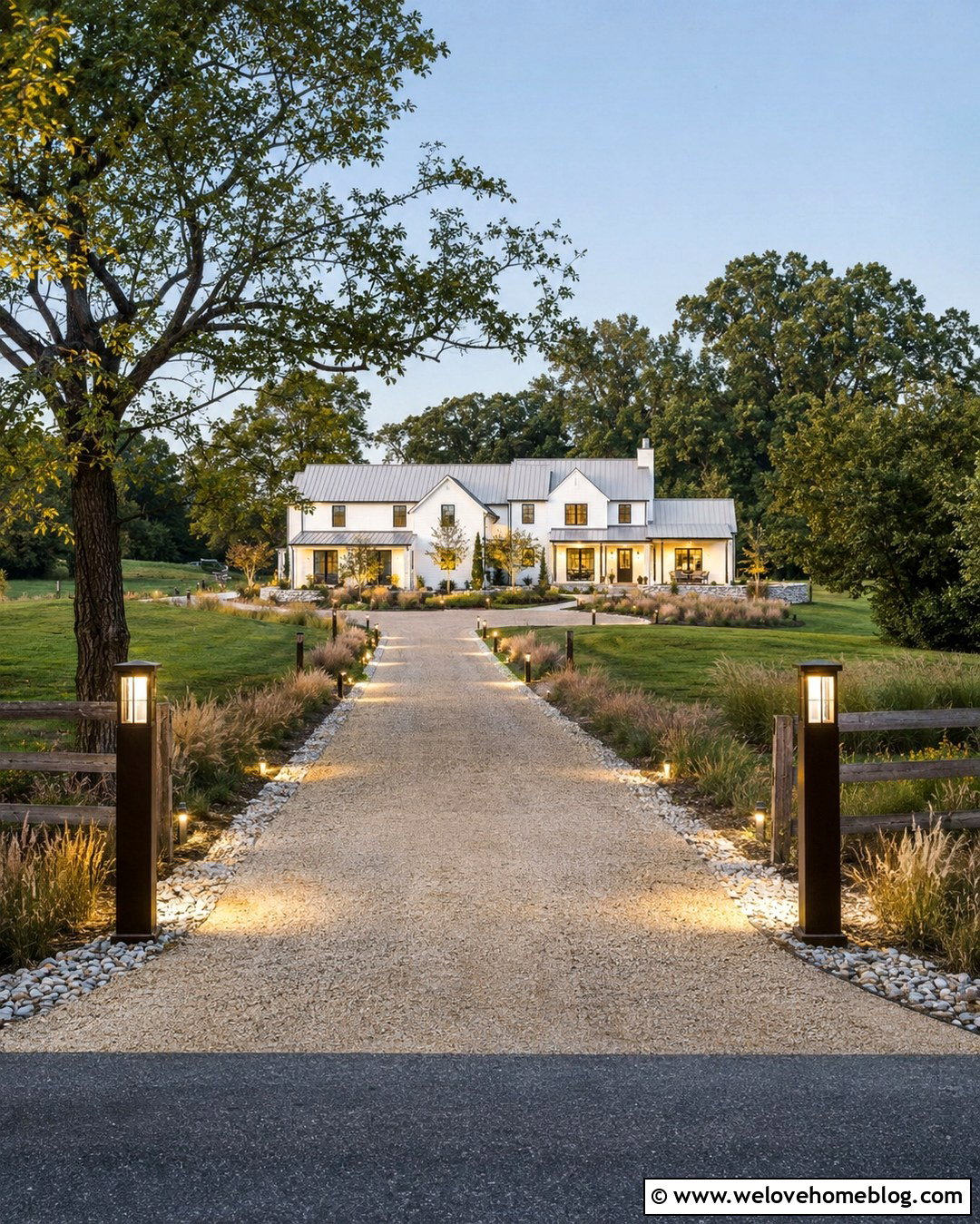
A long country driveway needs lighting that guides the route without filling the landscape with excessive fixtures. Crushed limestone gravel offers a bright, relaxed surface for a straight drive leading to a modern farmhouse. Position traditional post lights at important points, including the road entrance, a gentle bend, the front walkway, and the parking area. Between those locations, use smaller shielded path lights near native grasses and split-rail fencing. Mature shade trees can frame the approach while leaving open views toward the house. Dark bronze posts suit white siding, black windows, and a standing-seam metal roof. Instead of spacing every fixture at identical intervals, let the lights emphasize changes in direction and destination points. The result feels comfortable, practical, and connected to the rural setting.
6. Curved Driveway Landscape Lights
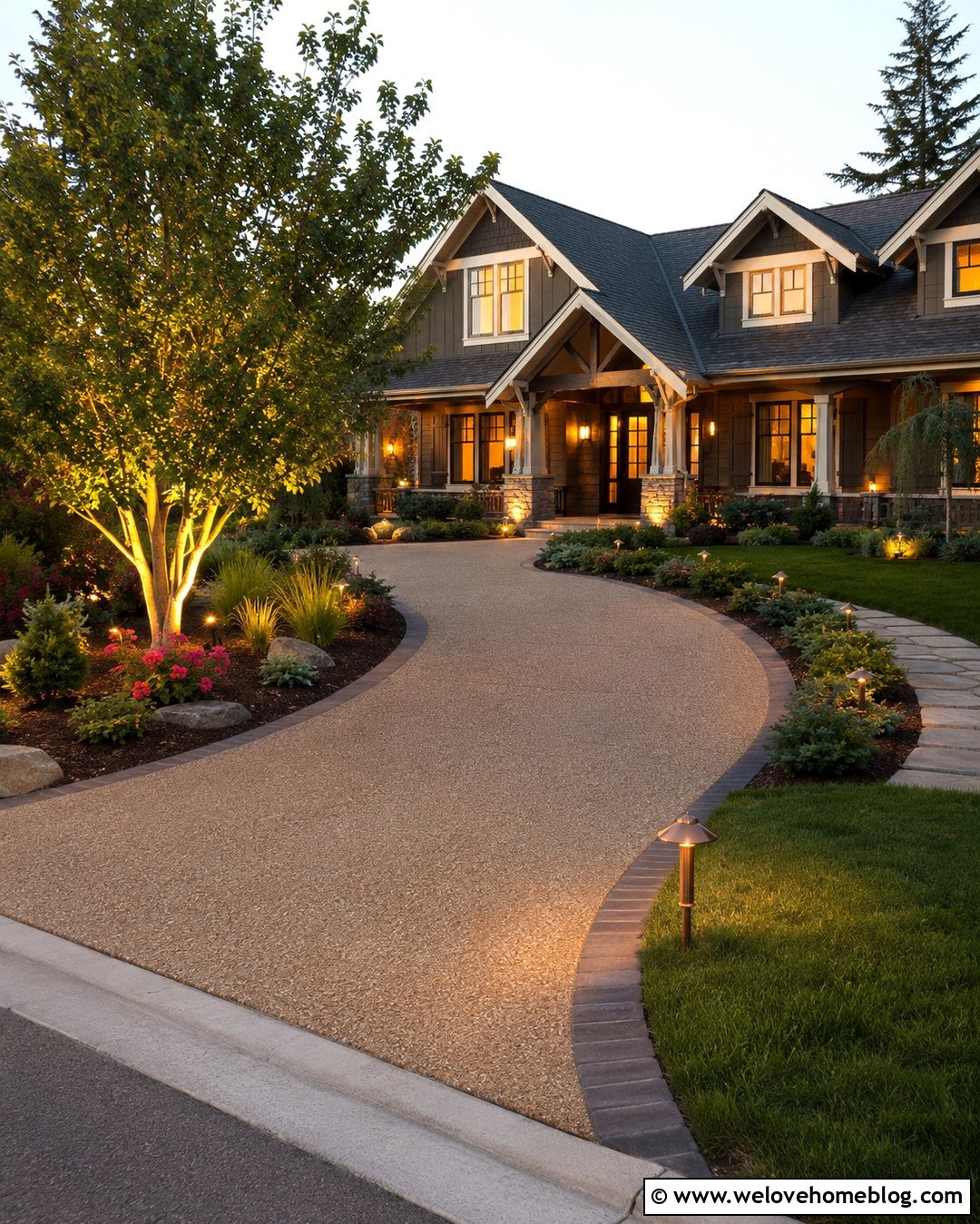
Curved driveways look especially graceful when the lighting follows the landscape instead of forming a rigid line. Choose warm beige exposed-aggregate concrete for a sweeping driveway leading to a Craftsman house. Define the outside curve with low copper path lights set among ornamental grasses, dwarf conifers, and layered flowering shrubs. On the inside curve, use fewer fixtures and highlight one specimen tree with a softly aimed uplight. A dark brick border can separate the pavement from the planting beds while echoing masonry on the house. The different lighting levels help drivers understand the curve and create depth across the front yard. Keep fixtures behind the border and angle them toward the surface, not toward approaching drivers. This complete layout remains attractive in daylight and readable after dark.
7. Circular Driveway Lighting
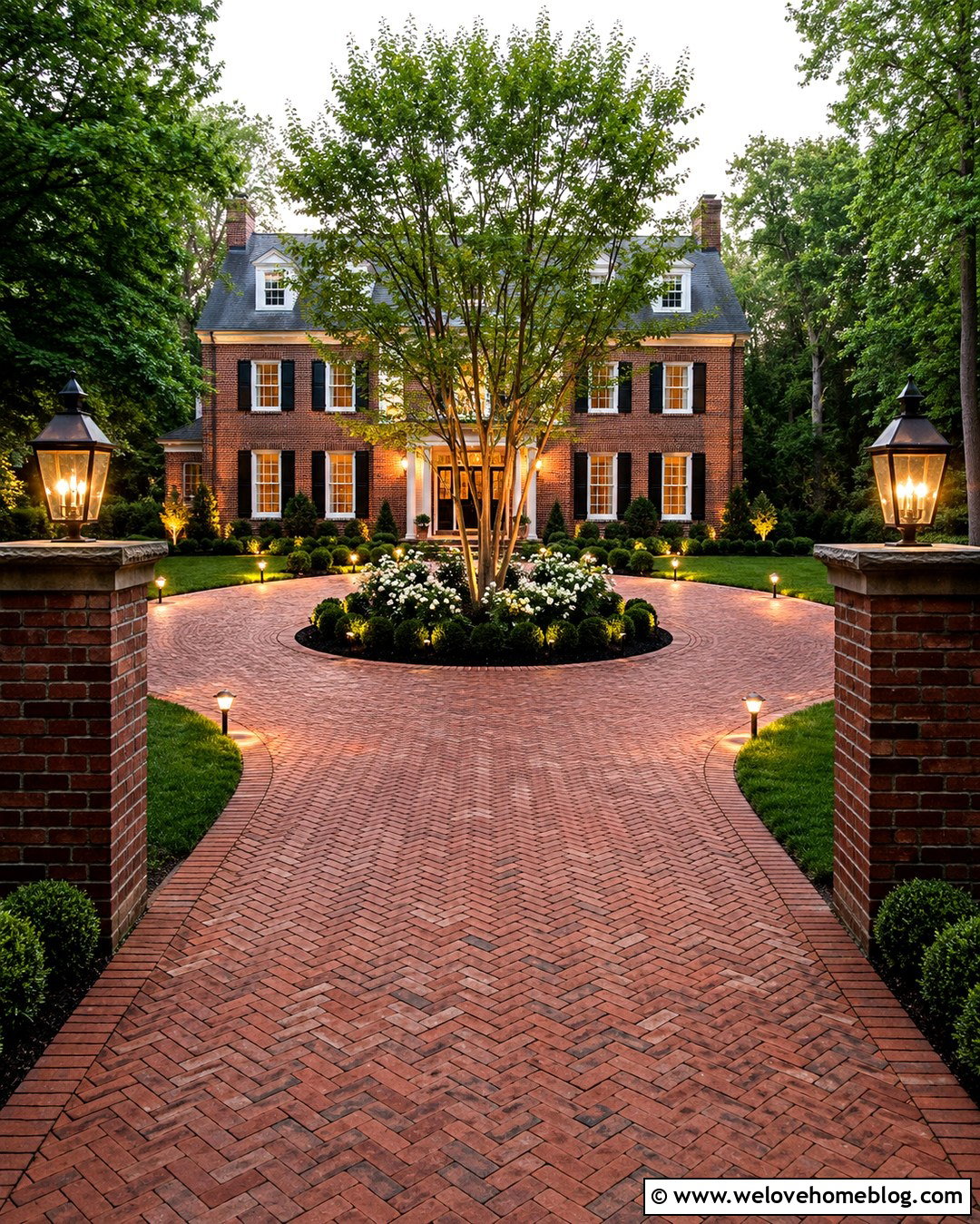
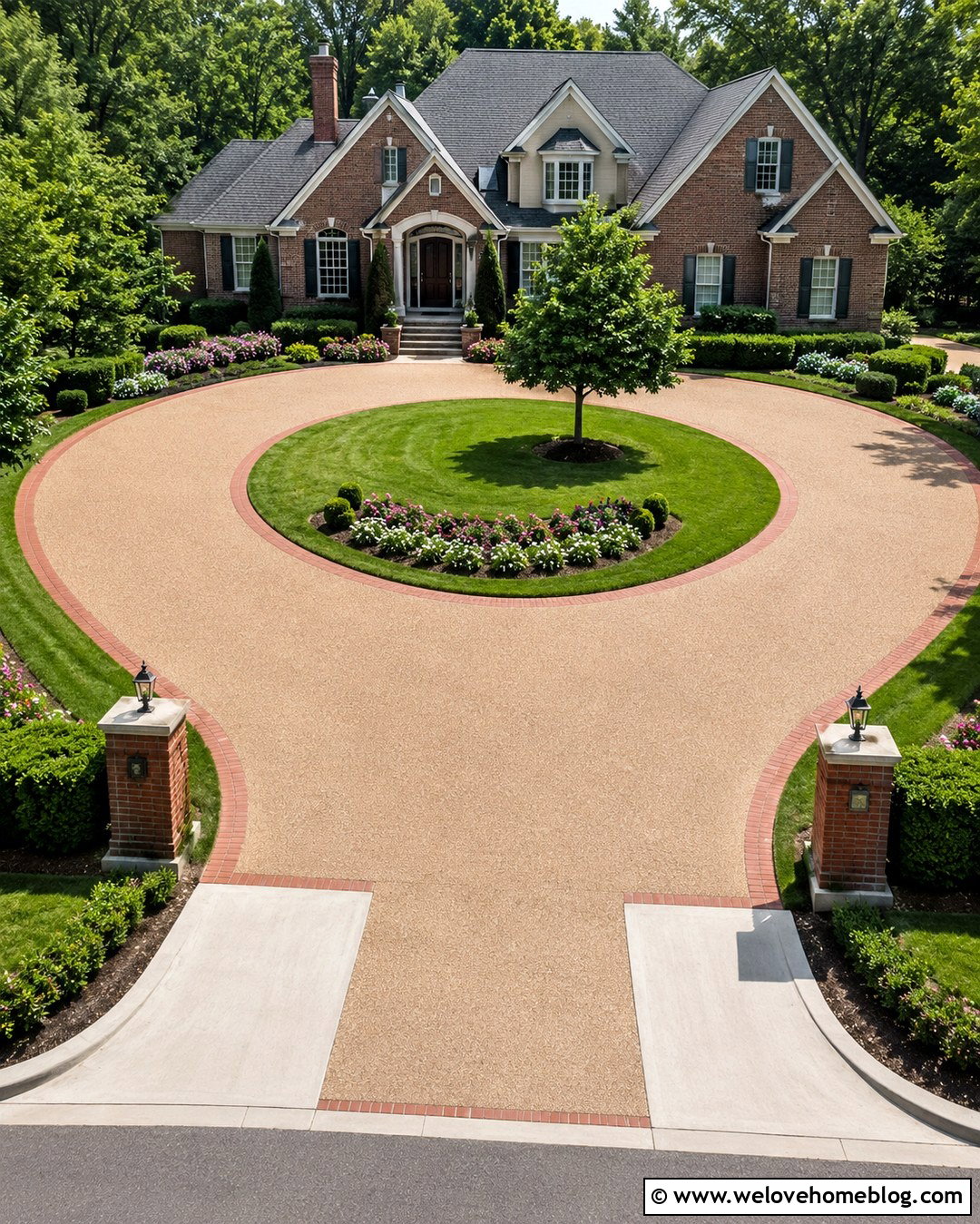
A circular driveway benefits from lighting that clearly defines both entrances and the central island. Use red clay brick pavers in a herringbone pattern to create a traditional loop in front of a Georgian-style home. Install matching lanterns on brick pillars at each street opening, then continue with low path lights around the outer perimeter. In the center island, illuminate a multi-stem tree from below and surround it with clipped boxwoods, white roses, and dark mulch. A contrasting soldier-course brick border strengthens the circular shape and provides orderly transitions to the front walkway. Avoid placing tall fixtures where they could interrupt views across the loop. Repeating one metal finish across pillar lanterns, path lights, and porch sconces will unite the driveway with the house and formal landscaping.
8. Gravel Driveway Marker Lights
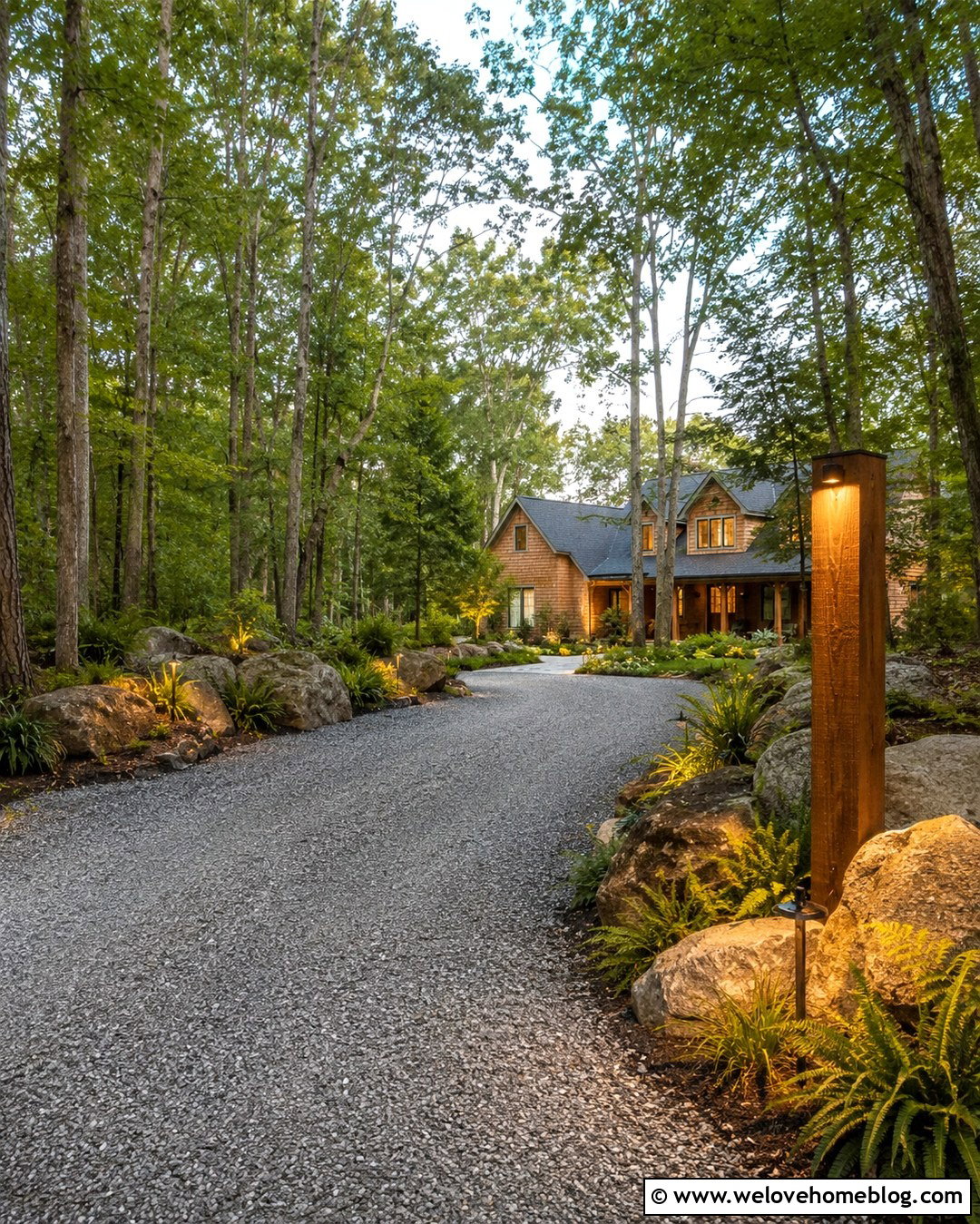
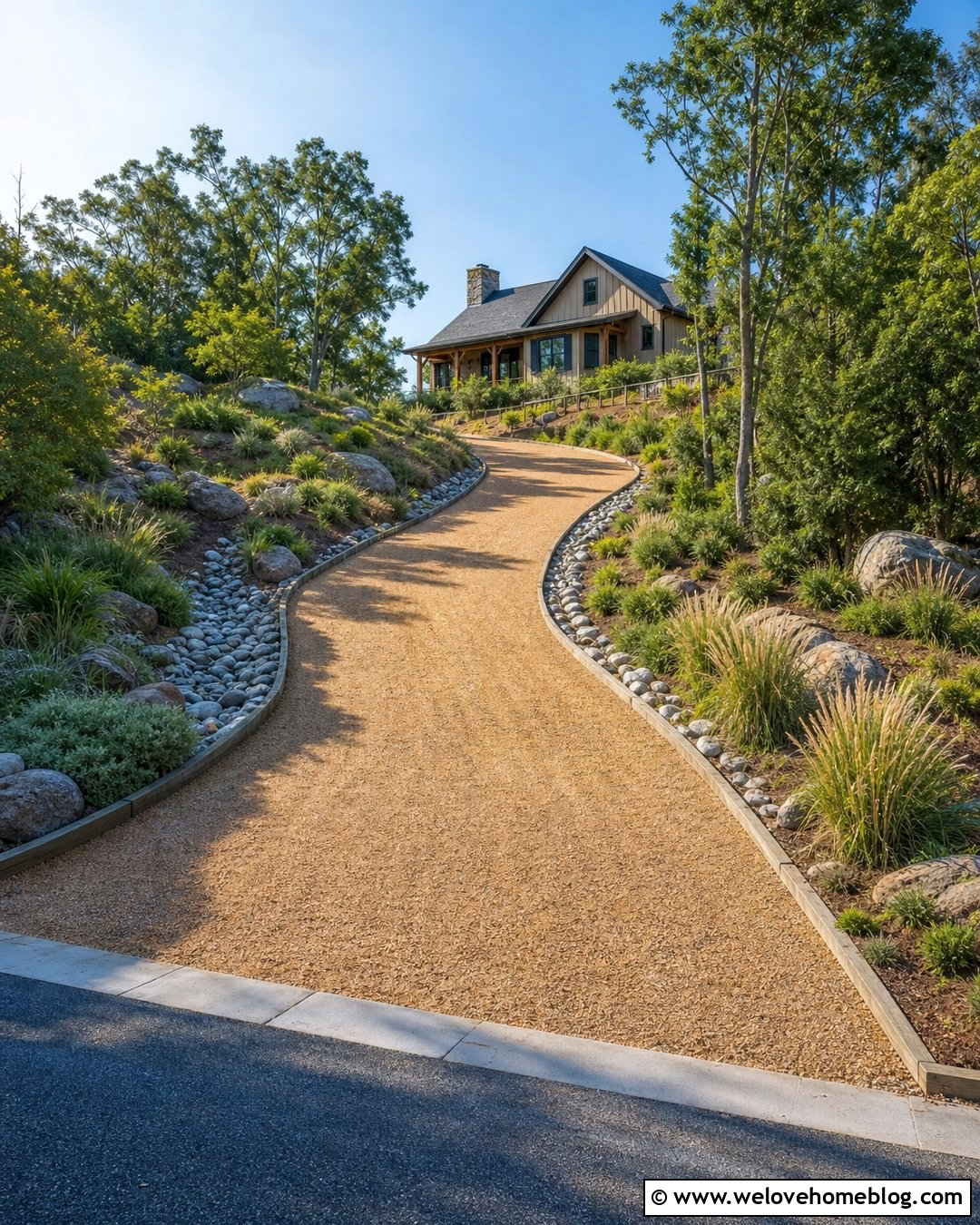
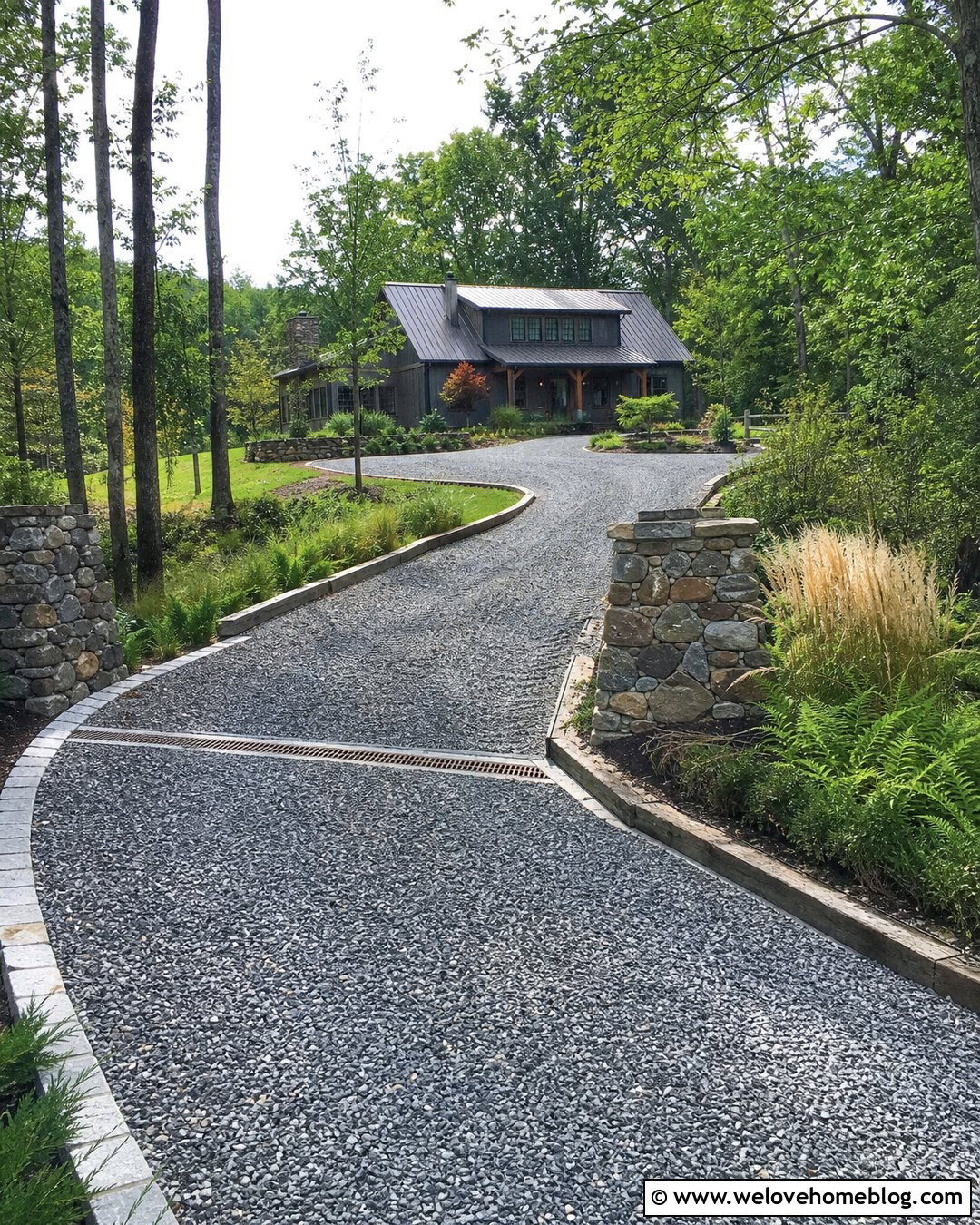
A gravel driveway can feel refined when low marker lights are incorporated into substantial borders. Select medium-gray crushed granite for a gently curving approach to a cedar-sided country home. Large natural boulders along the edges help contain loose gravel and provide protected locations for compact directional lights. Aim the fixtures across the textured stones and toward the driveway edge rather than into the driver’s line of sight. Ferns, native grasses, ground-cover plants, and existing woodland trees can fill the spaces behind the boulders. At the road entrance, add a simple timber address post with a small downlight. This design preserves the relaxed woodland character while making the driveway boundaries easier to understand. It also avoids placing fragile stake lights where tires or snow-removal equipment could reach them.
9. Concrete Driveway Strip Lights
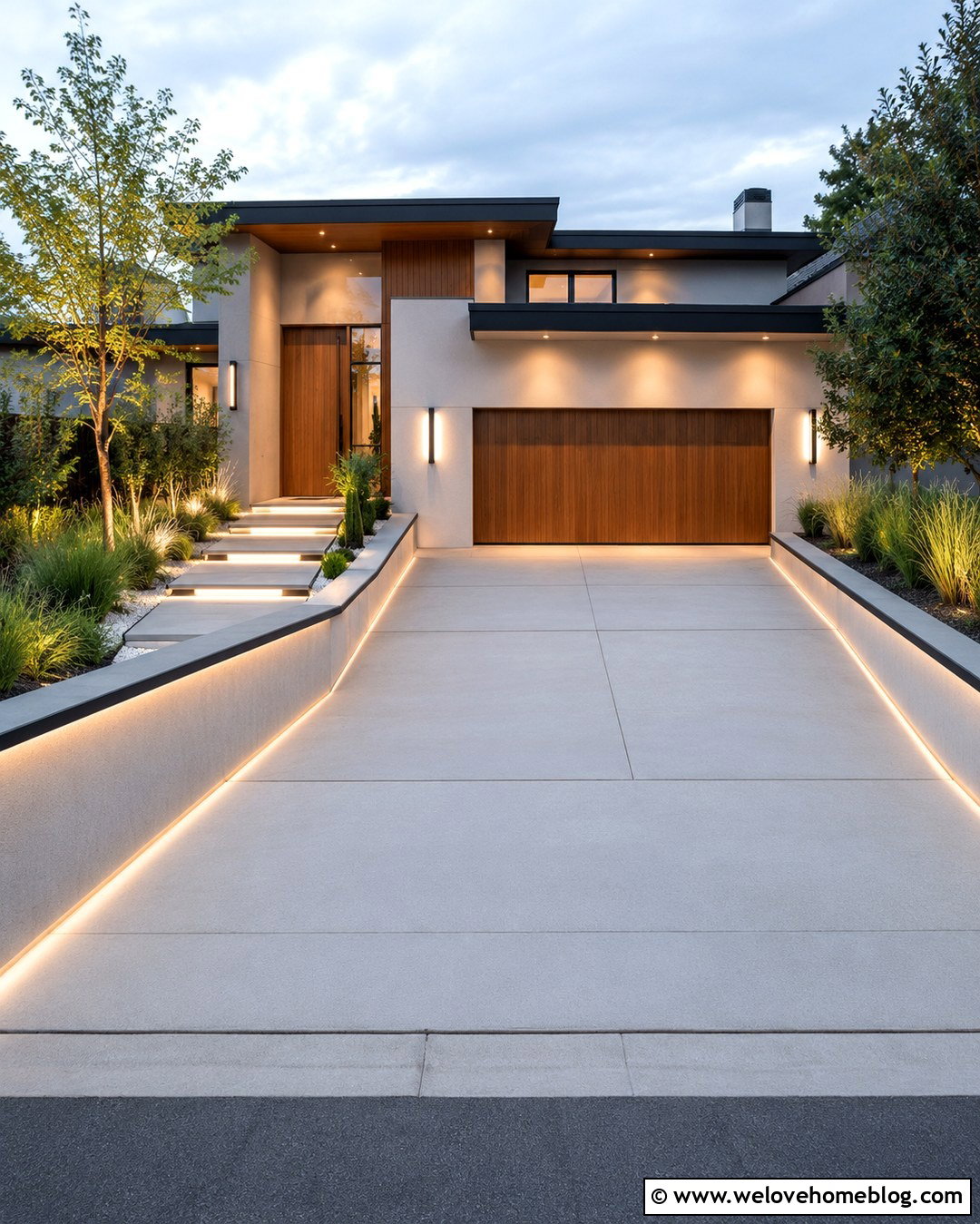
Linear strip lighting reinforces the crisp geometry of a contemporary concrete driveway. Create a straight surface from smooth light-gray poured concrete divided into broad rectangular slabs. Along one side, build a low rendered retaining wall with a recessed LED channel beneath its cap. On the other side, use black aluminum edging, pale gravel, and evenly spaced ornamental grasses. The continuous light should wash downward across the pavement instead of producing a visible, harsh line from the street. Near the garage, repeat the effect beneath a floating entry step or narrow canopy. A modern stucco house with wood accents provides a warm contrast to the concrete. Concealed channels, accessible wiring, and weather-resistant components are essential for keeping this highly detailed driveway design neat and maintainable.
10. Brick Driveway In-Ground Lights
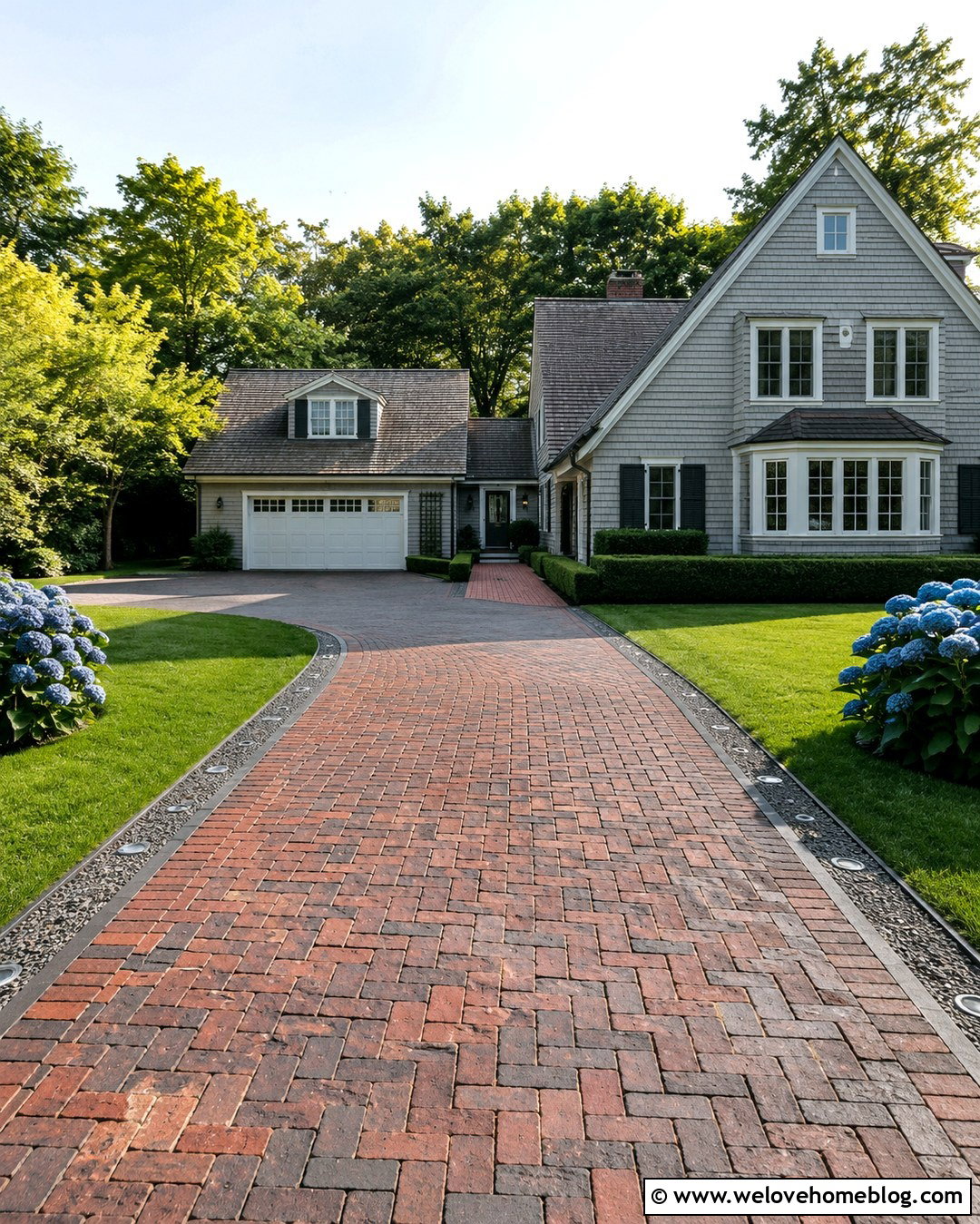
Warm brick paving and discreet in-ground lights create an inviting driveway with traditional character. Lay weathered red and brown clay brick pavers in a basketweave pattern across a short, slightly flared driveway. Use dark granite setts as the outer border, then install small recessed fixtures just outside the brick within gravel drainage strips. A Cape Cod house with gray shingles, white trim, and dormer windows makes a natural backdrop. Frame the driveway with blue hydrangeas, low yew hedges, and a brick walkway leading to the front door. The lights should emphasize the edges and entrance rather than compete with the patterned surface. Choosing a restrained number of fixtures preserves the cozy appearance while helping visitors distinguish the driveway, walkway, planting beds, and garage approach.
11. Driveway Tree Downlights
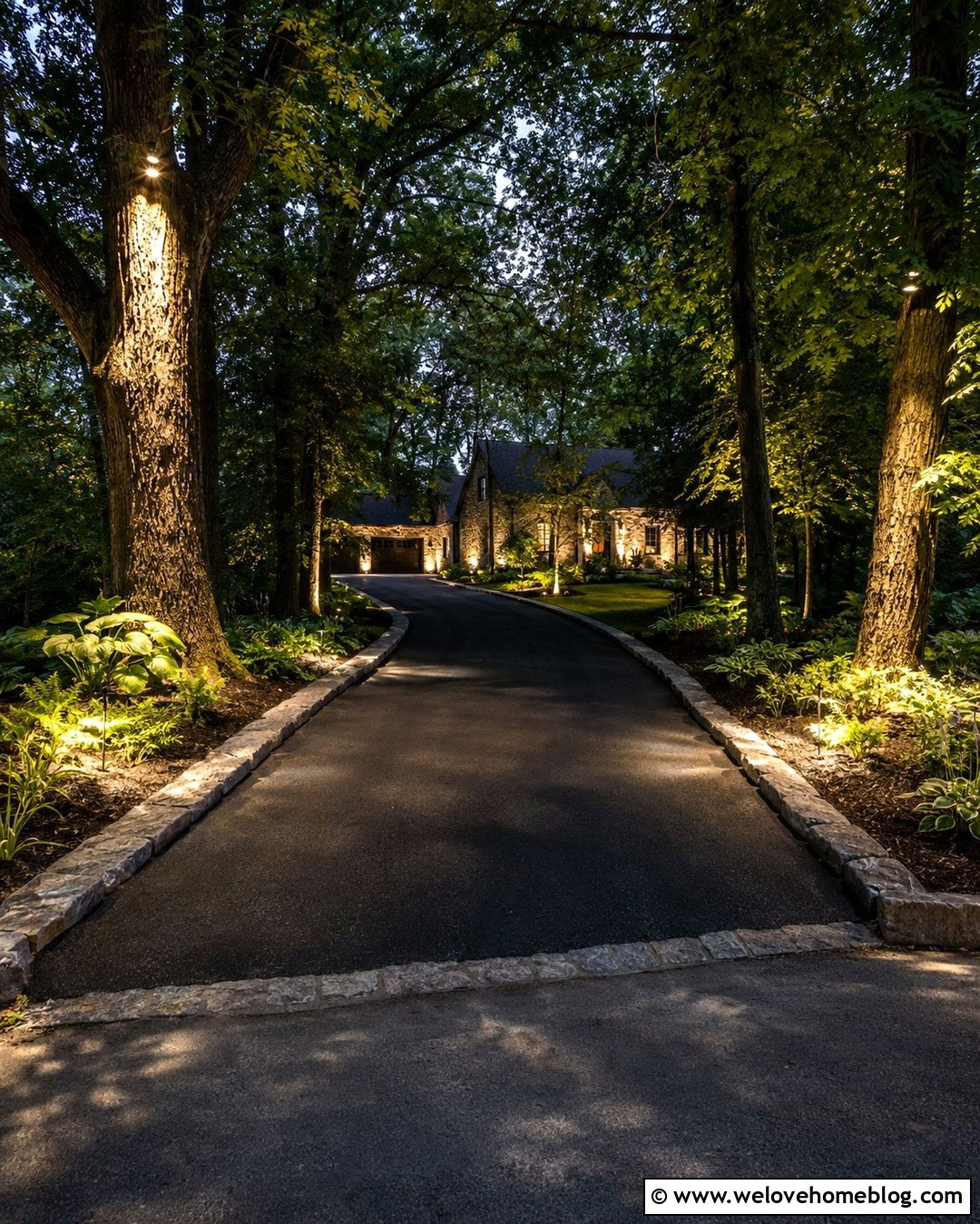
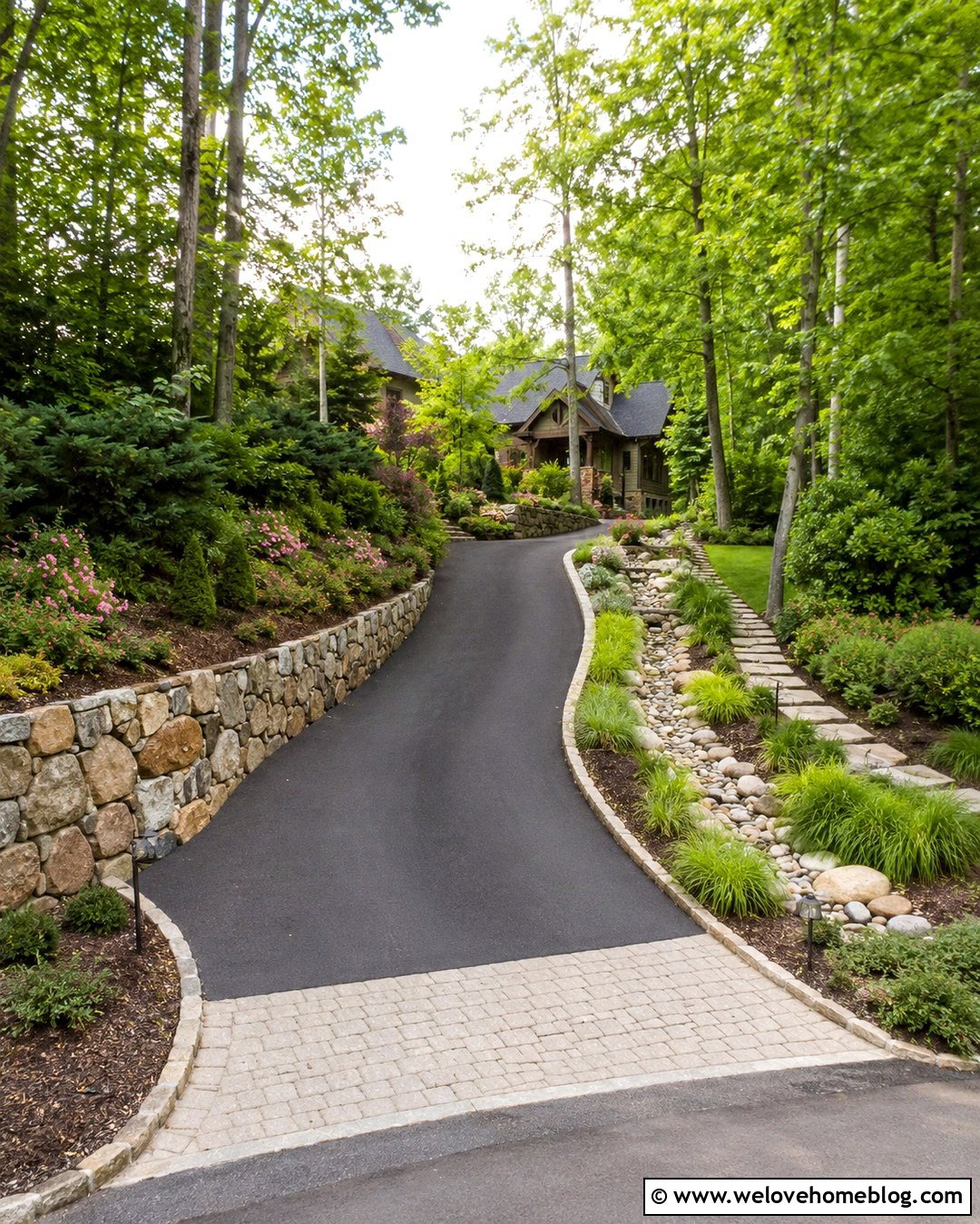
Tree-mounted downlights can produce soft illumination across a wooded driveway while keeping fixtures away from vehicles. Begin with dark asphalt following a loose curve through mature oak or maple trees toward a rustic stone house. Mount shielded lights high within selected branches and direct them toward the pavement edges, creating a natural moonlight-like pattern through the foliage. Add rough-cut stone curbing and woodland planting beds with ferns, hostas, sedges, and native shrubs. Small ground lights near the garage can complete the route without overlighting the trees. Electrical cables and attachment methods should be planned by a qualified professional so the installation remains secure and allows for tree growth. Carefully aimed downlights can preserve the quiet landscape while helping reveal pavement, borders, and changes in direction. ()
12. Driveway Retaining Wall Lights
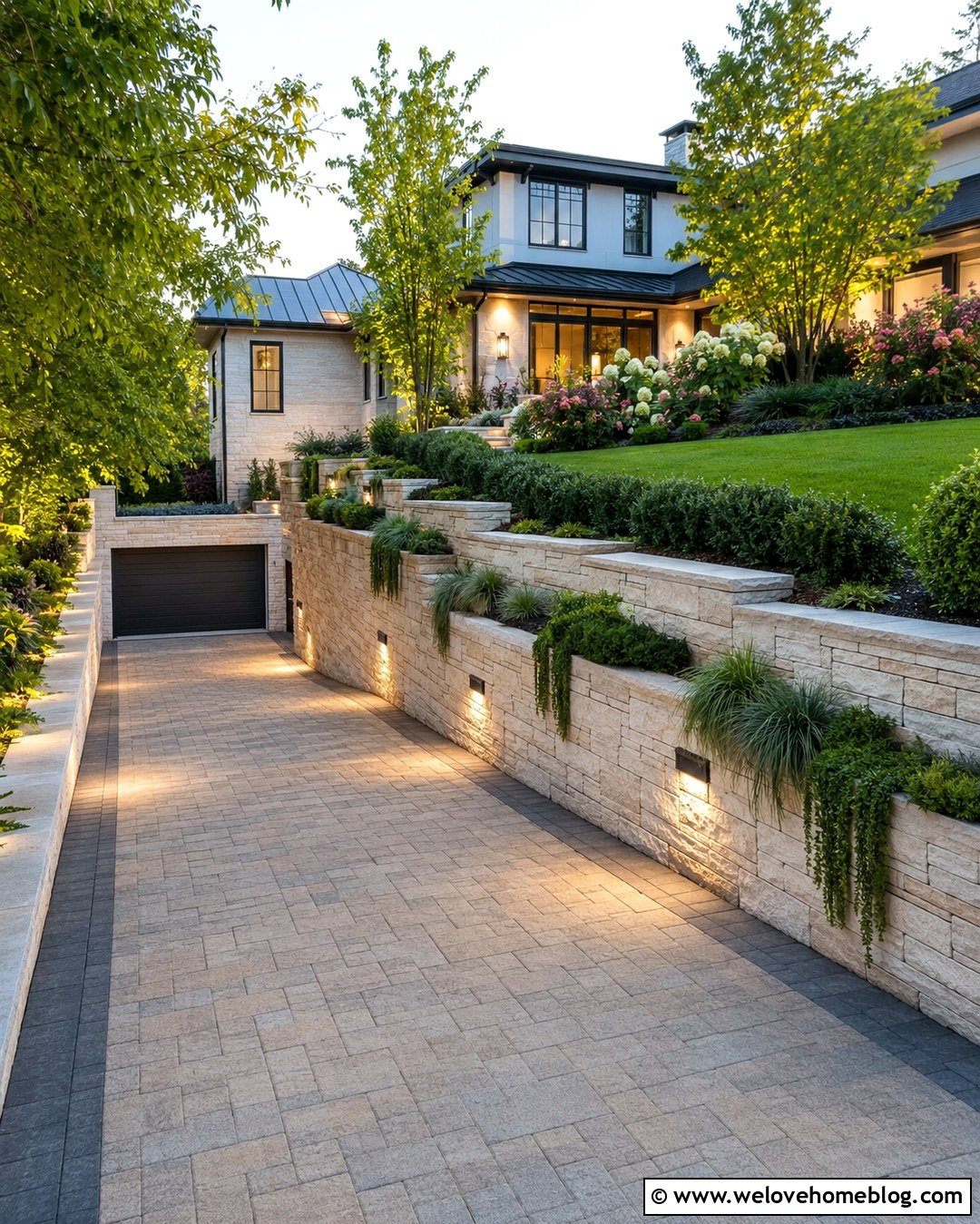
A driveway beside a slope becomes more functional when lighting is built into the retaining wall. Use warm gray permeable concrete pavers for a descending driveway leading to a lower-level garage. Construct a tiered wall from buff limestone blocks and integrate rectangular recessed lights near the base. Their downward beams can illuminate the pavement without placing fixtures in the narrow driving area. Plant trailing rosemary, creeping thyme, dwarf grasses, and compact flowering shrubs above the wall to soften the masonry. On the open side, add a dark paver border and a low hedge to define the drop toward the lawn. This solution is especially effective where freestanding posts would reduce usable width. Matching the light housings to the wall tones keeps the fixtures subtle during the day.
13. Farmhouse Driveway Lanterns
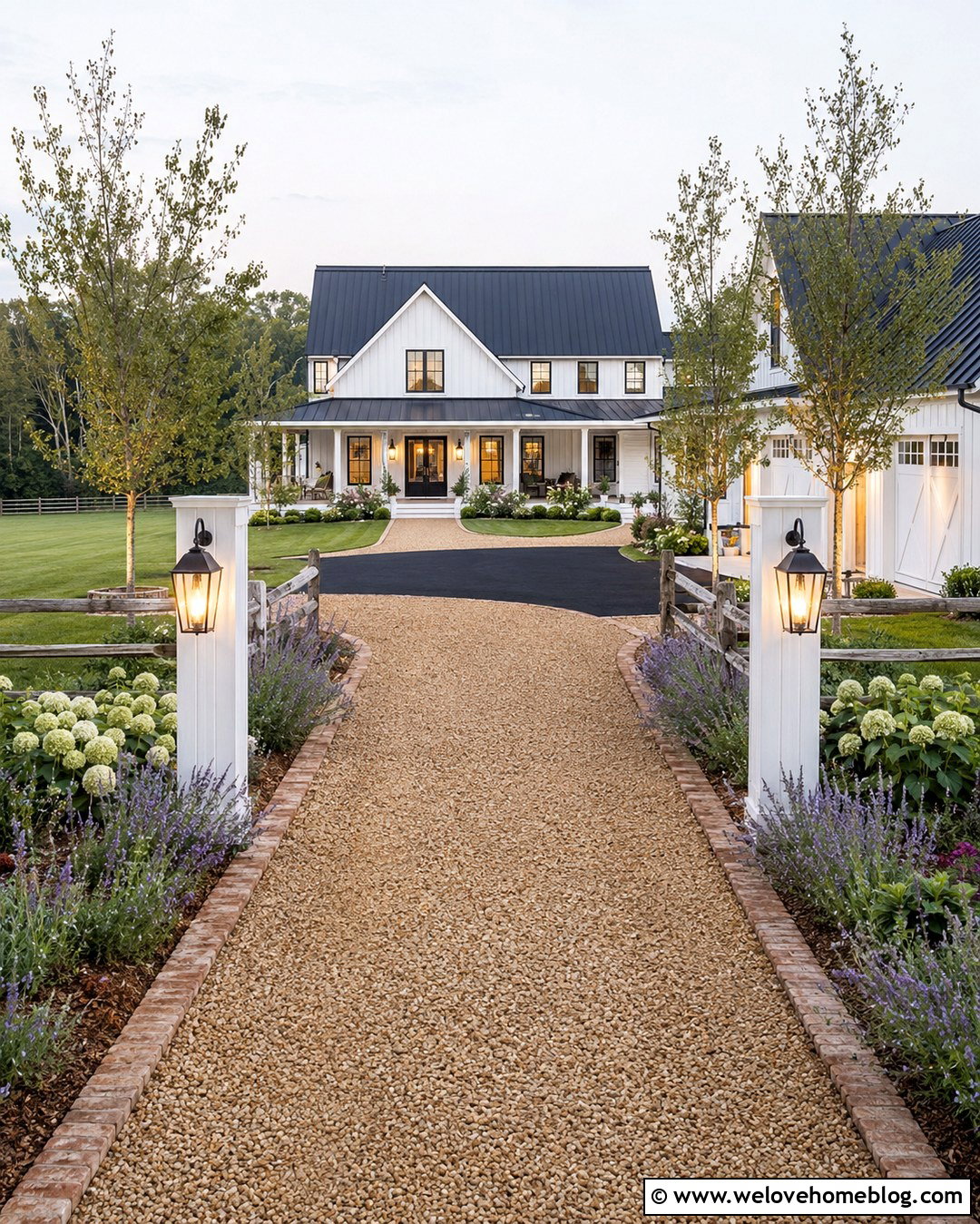
Classic lanterns suit a farmhouse driveway when they are repeated with restraint across the full entrance. Choose honey-colored pea gravel contained by reclaimed brick edging for a broad, straight drive. At the road, mount black lanterns on white-painted timber posts positioned behind low split-rail fences. Continue toward the house with shorter fixtures near lavender, catmint, white hydrangeas, and ornamental pear trees. A blacktop parking apron near the garage can provide a firmer turning surface while maintaining the gravel approach. The house should feature white board-and-batten siding, a deep porch, and simple black trim. Using the same lantern family at the entrance, porch, and garage creates consistency. The finished driveway feels rural and welcoming rather than overly formal or commercially bright.
14. Motion Sensor Driveway Lights
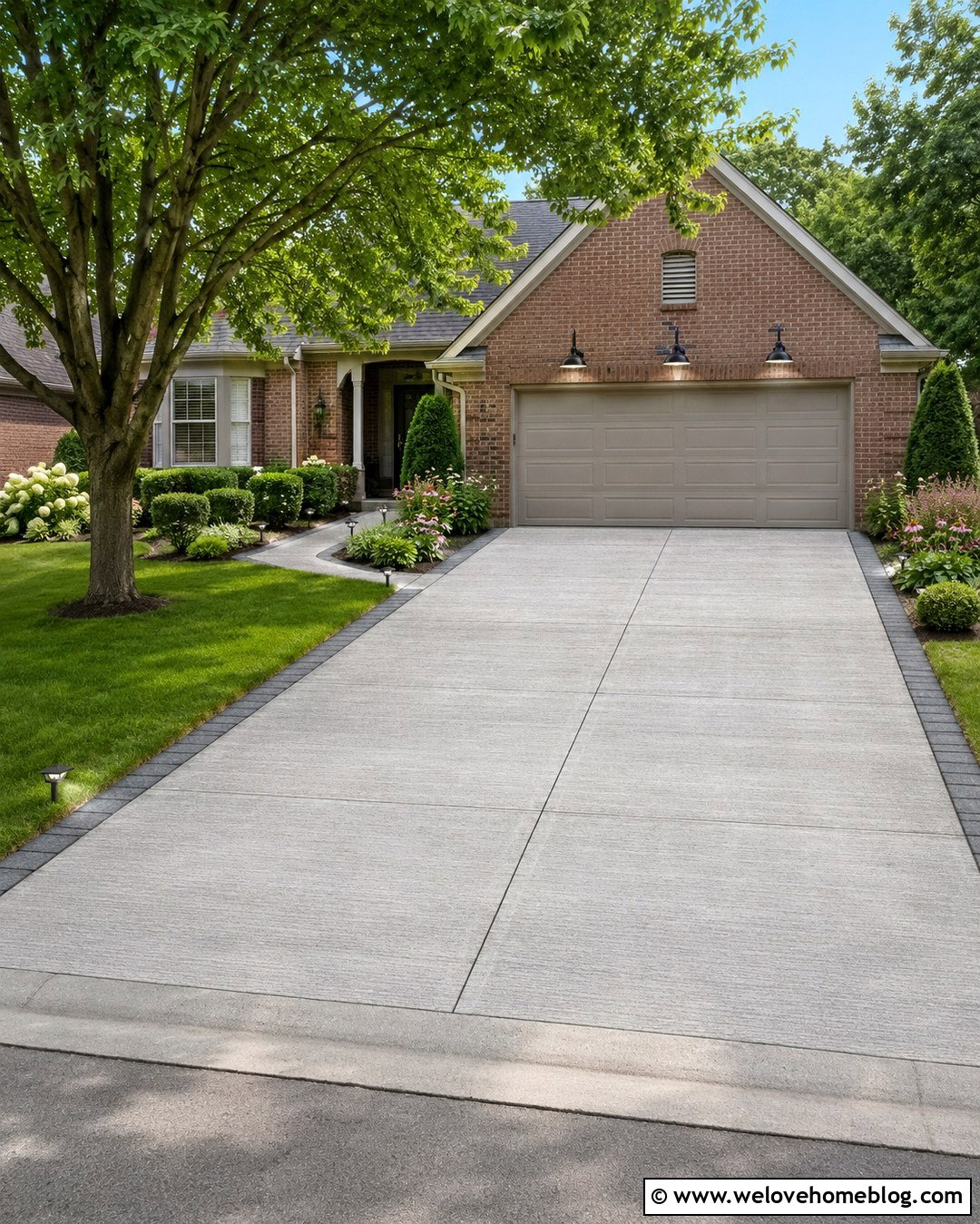
Motion-activated lighting works well when the fixtures are layered into a practical family driveway. Use broom-finished concrete for a wide, straight approach to a brick suburban home with an attached two-car garage. Install downward-facing motion sensor sconces above the garage doors and add steady low-voltage path lights along the walkway side. A pair of compact sensor-controlled spotlights can illuminate the parking apron when movement is detected without keeping the entire facade brightly lit. Frame the concrete with a charcoal paver border, clipped shrubs, flowering perennials, and a small shade tree. Aim each sensor and fixture toward the property, avoiding neighboring windows and the street. This combination provides everyday edge definition while reserving brighter illumination for arrivals, deliveries, or activity near the garage.


15. Smart Driveway Lights
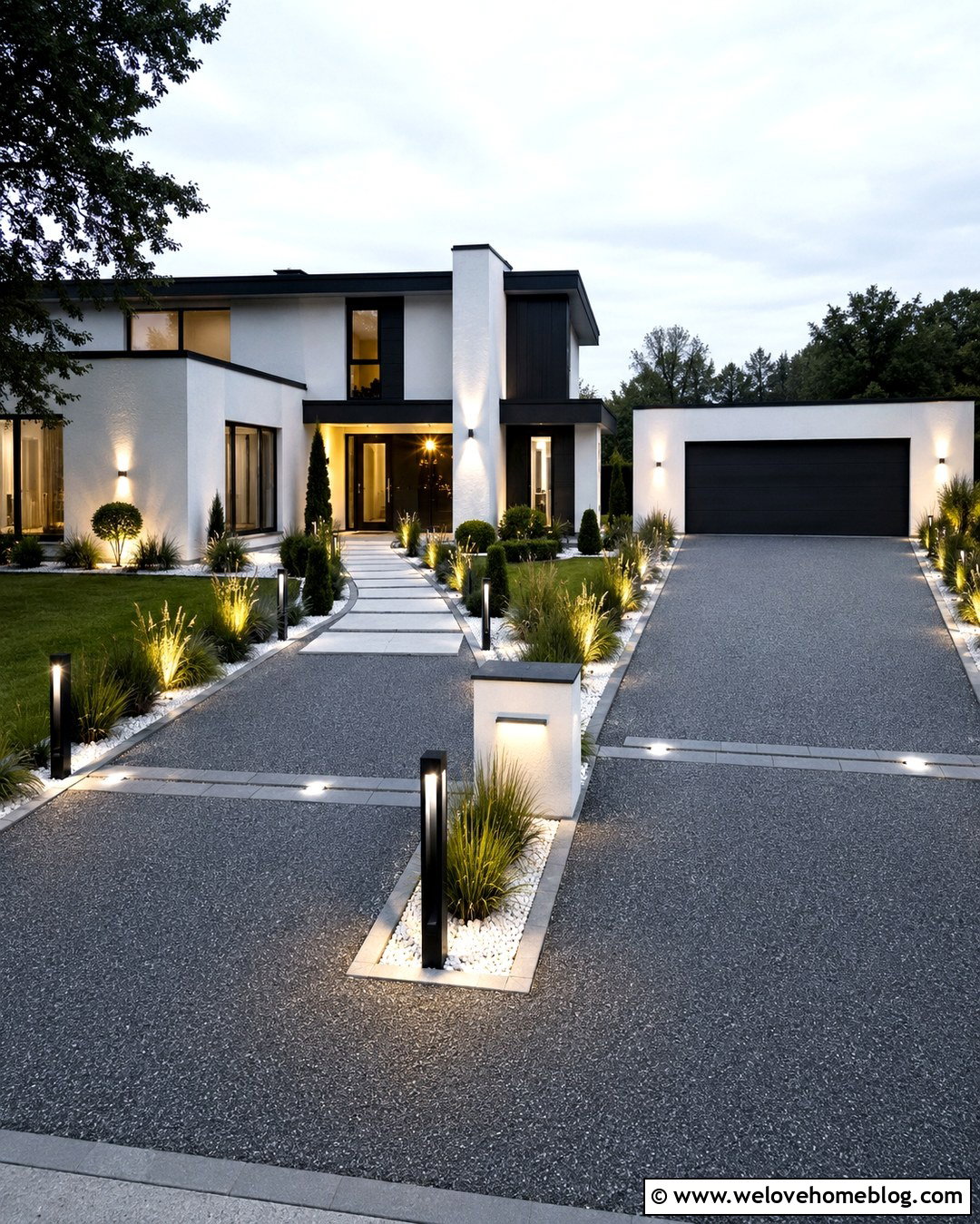
Smart lighting can divide a large driveway into useful zones while maintaining one coordinated appearance. Design a dark gray resin-bound driveway with a split layout serving the garage and front entrance of a minimalist home. Install slim bollards along the main approach, recessed lights near the pedestrian crossing, and wall sconces around the garage. Group the fixtures into entrance, landscape, walkway, and parking zones so each area can operate on an appropriate schedule or setting. Linear beds of feather reed grass, clipped evergreens, and white gravel reinforce the architecture. A concealed address light at the road provides a final functional layer. Keep the color temperature and fixture finish consistent across all zones. Smart controls are most effective when they support a clear physical layout rather than introducing distracting color changes.
16. Low-Voltage Driveway Lights
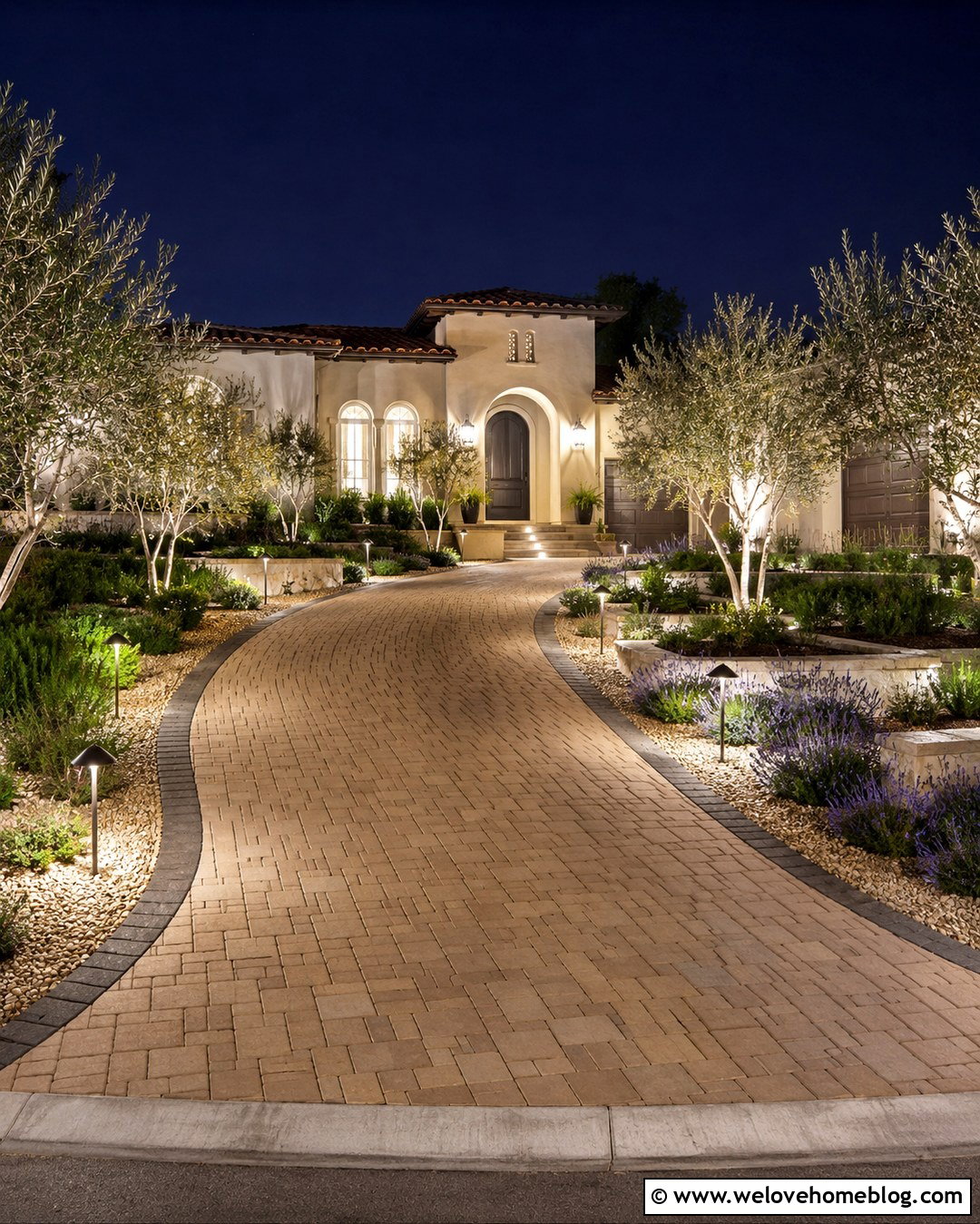
Low-voltage fixtures offer a flexible way to light a layered driveway landscape. Start with tan interlocking concrete pavers arranged in a gently arched pattern leading to a Mediterranean-style stucco house. Position bronze mushroom path lights inside planting beds filled with rosemary, lavender, dwarf olive trees, and pale decorative gravel. Use small uplights for the trees and recessed step lights where the driveway meets the raised front walkway. Staggering the path fixtures can create overlapping pools of illumination while avoiding the rigid runway appearance produced by perfectly paired rows. Keep transformers, cable routes, and future plant growth in mind during planning. The bronze finish connects naturally with warm paving and terracotta roof tones, giving the complete driveway a settled, cohesive appearance both during the day and after sunset.
17. Driveway Gate Lights
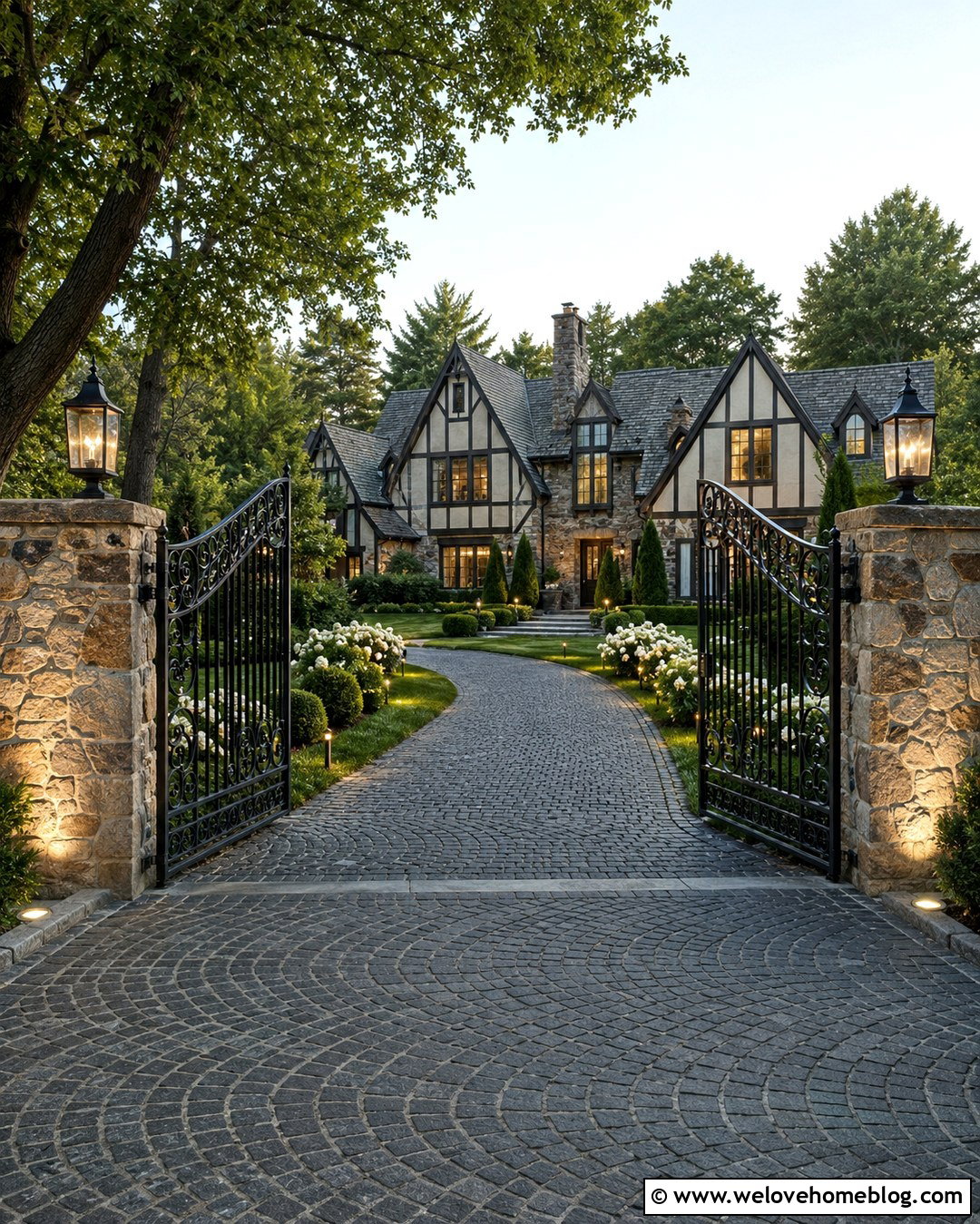
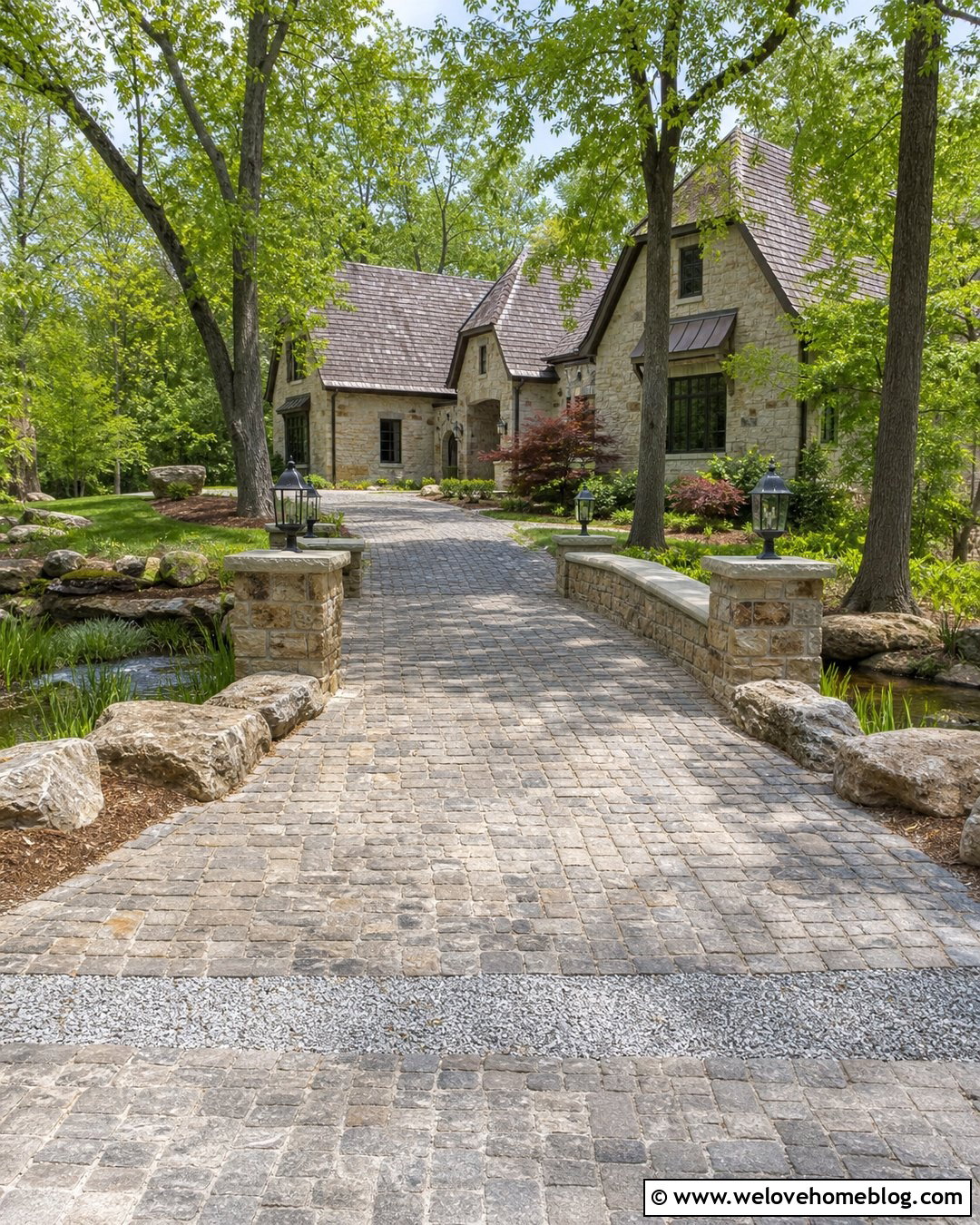
A gated driveway should combine entrance visibility with a design that matches the property beyond it. Use charcoal cobblestone for a wide, gently curved drive leading to a Tudor-style home. Install wrought-iron swing gates between substantial fieldstone pillars, each topped with a clear-glass black lantern. Add narrow recessed lights near the pillar bases to reveal the cobblestone apron and gate clearance area. Behind the entrance, continue with low path lights among clipped yews, white roses, and mature deciduous trees. A cobblestone fan pattern at the road can distinguish the threshold from the main driveway. Keep control equipment, cameras, and access panels discreetly integrated into the stonework. The pillars, gates, surface pattern, and lighting should read as one complete entrance rather than several unrelated features.
18. Garage Driveway Wall Lights
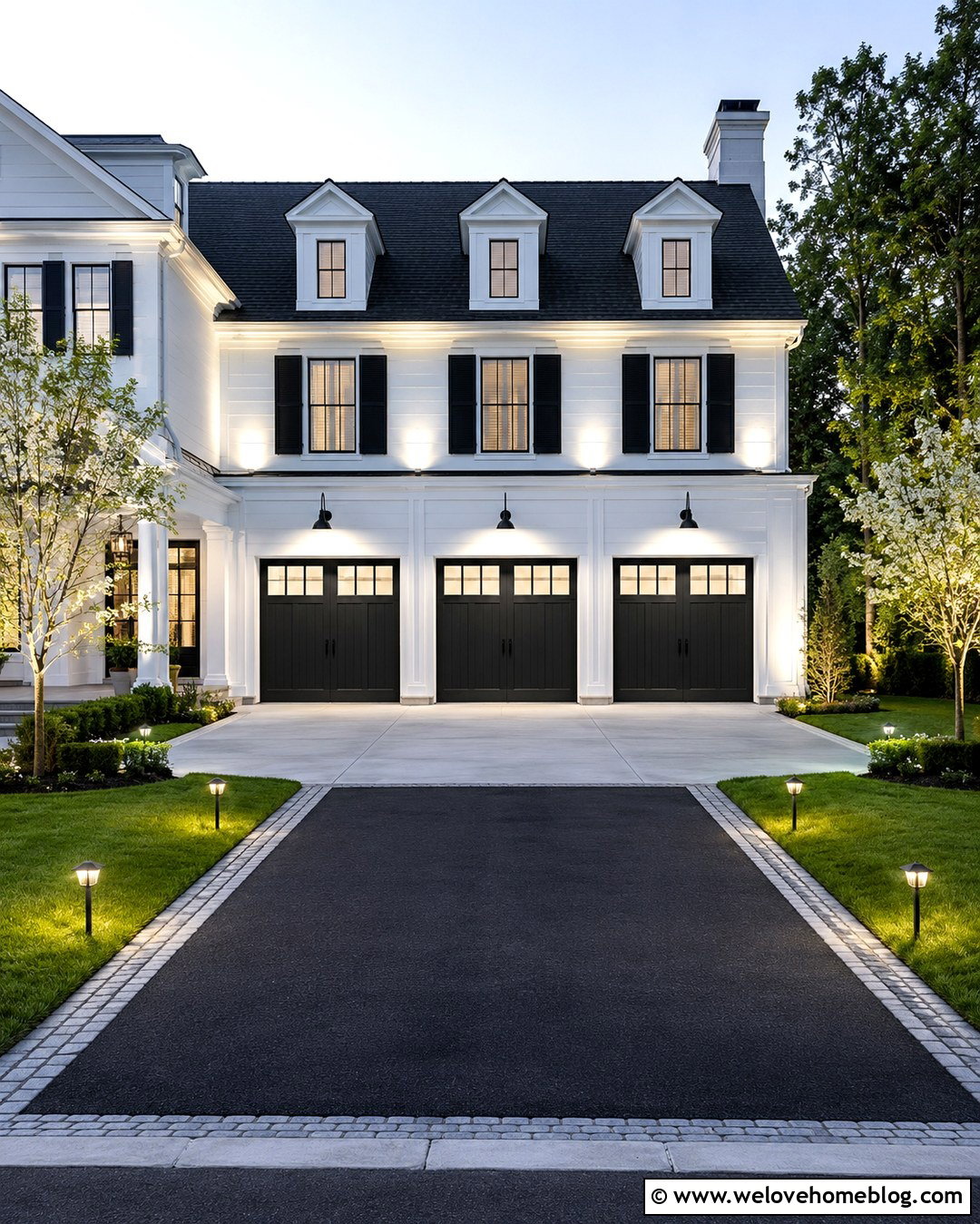
Garage wall lights can anchor the end of a driveway and make the parking area feel intentionally designed. Choose black asphalt for a broad driveway with a pale concrete apron directly in front of a three-car garage. Mount large downward-facing sconces between the garage doors, keeping their size and placement symmetrical with the facade. Along the driveway, use only a few low shielded lights near the walkway and planting beds so the garage fixtures remain the visual destination. Belgian-block edging, trimmed lawn, small flowering trees, and layered foundation shrubs add definition during daylight. A classic American colonial house with white siding and dark shutters suits this balanced arrangement. Directing the sconces downward helps illuminate the apron while limiting glare around upper windows and adjacent properties.
19. Steep Driveway Step Lights
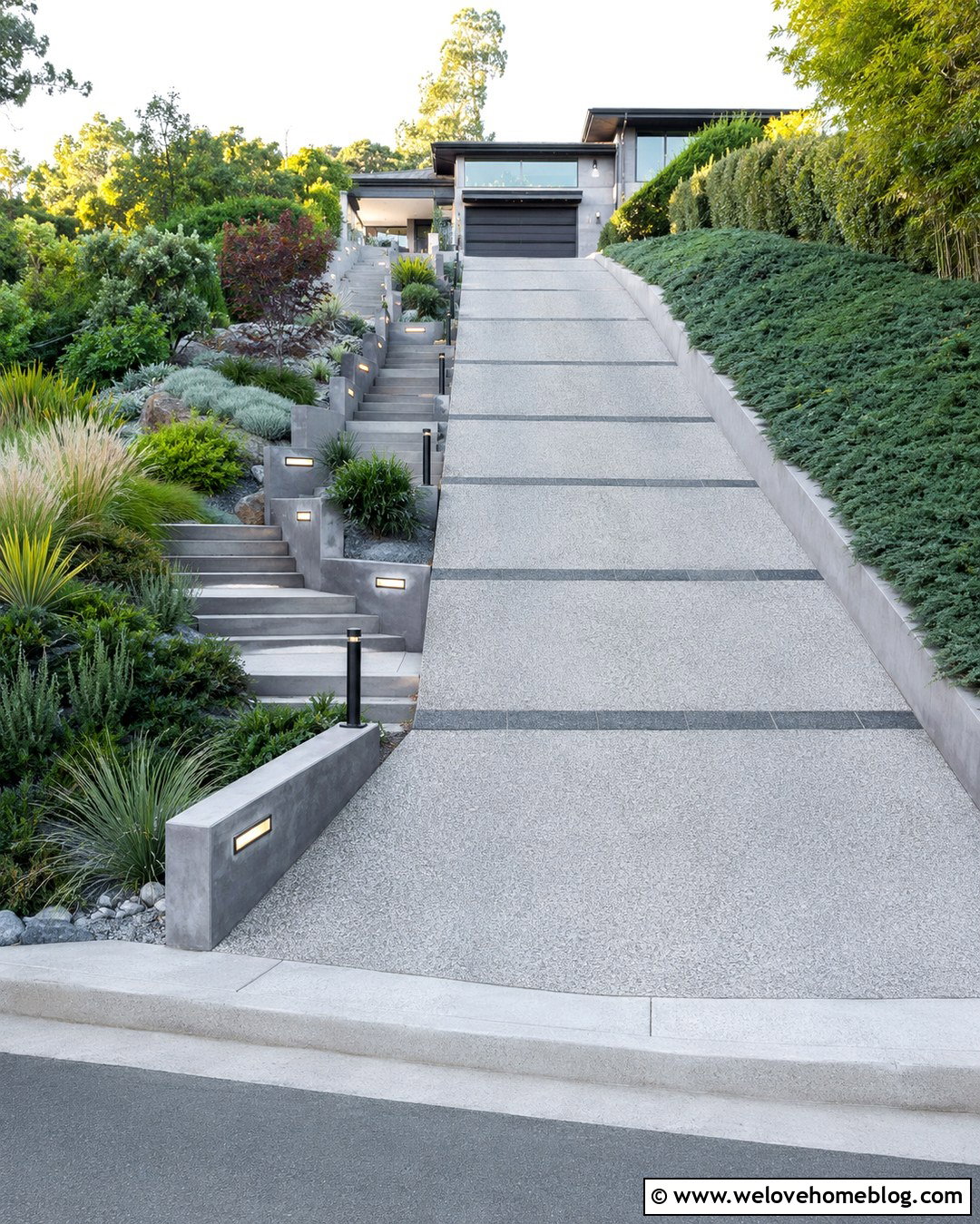
A steep driveway requires lighting that makes changes in grade and pedestrian routes easy to recognize. Use textured exposed-aggregate concrete for a sloped driveway beside a terraced front walkway. Install rectangular step lights in the low concrete walls that separate the walkway from the driving surface. Add compact bollards at the upper and lower landings, where drivers and pedestrians make important transitions. Dark stone ribbons across the concrete can visually divide the slope into shorter sections and coordinate with the wall caps. Plant the terraces with creeping juniper, ornamental grasses, dwarf shrubs, and erosion-resistant ground cover. At the top, bright but shielded garage sconces mark the destination. The layered fixtures should illuminate pavement and steps evenly without shining directly downhill toward approaching drivers.
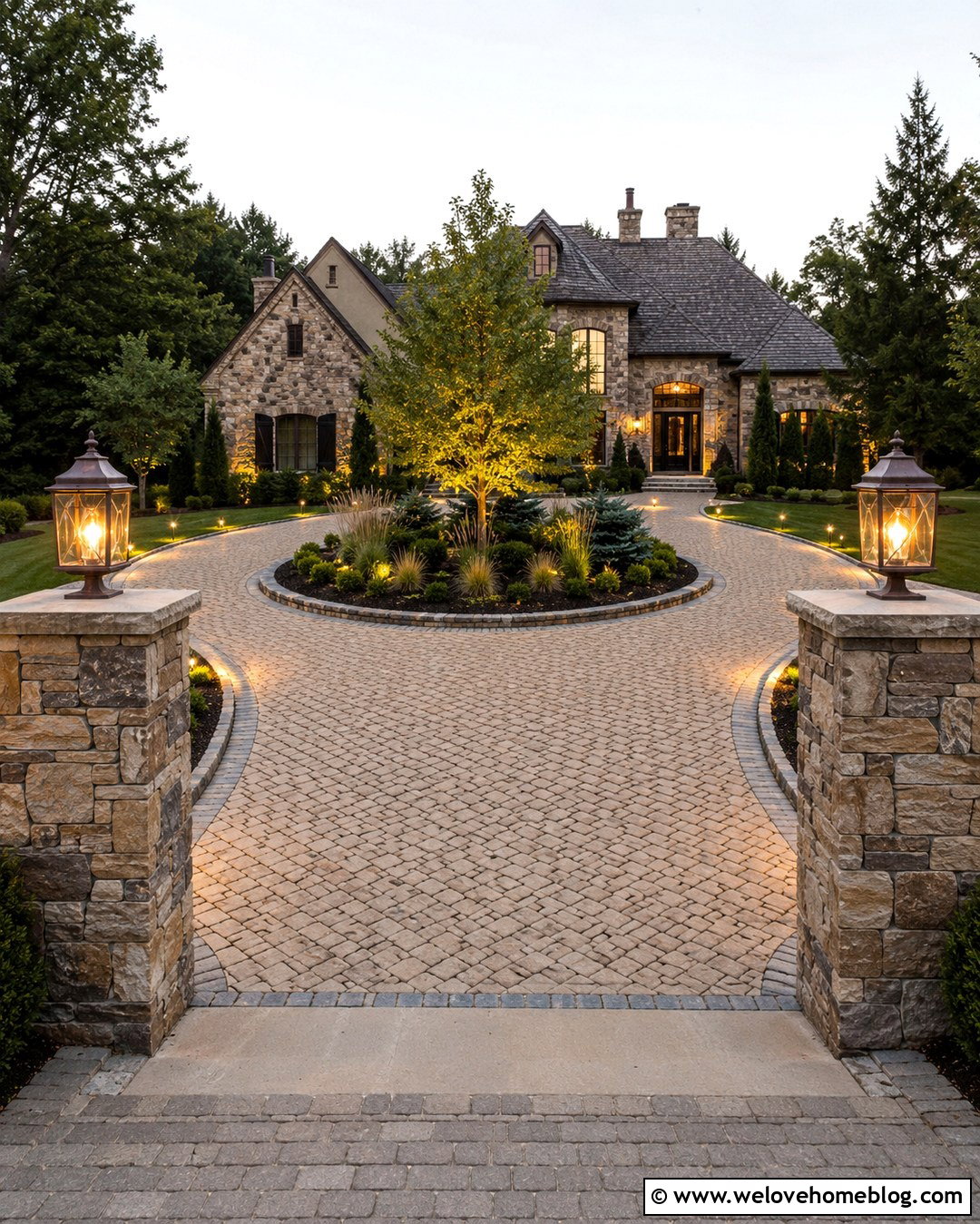

20. Small Driveway Lighting
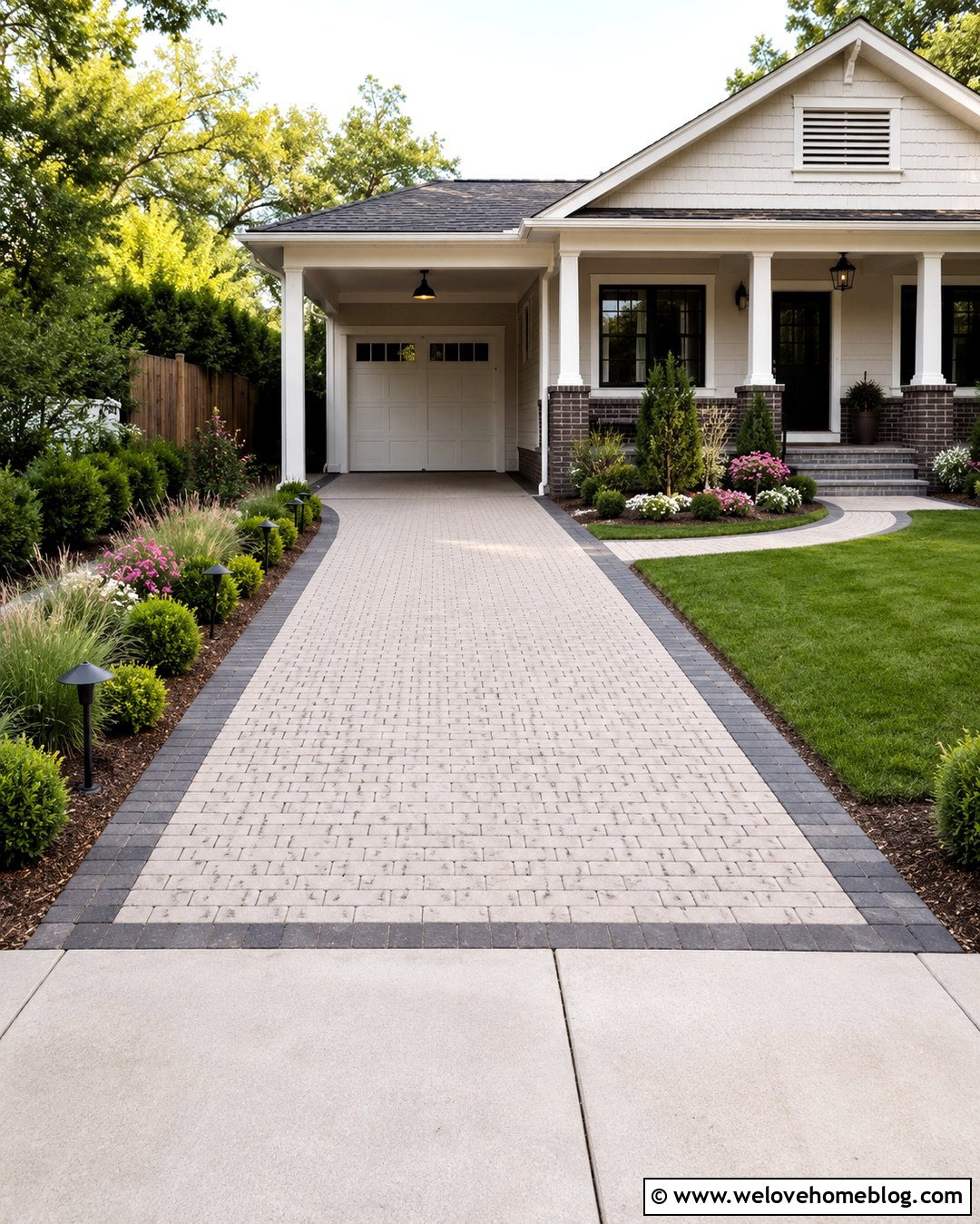
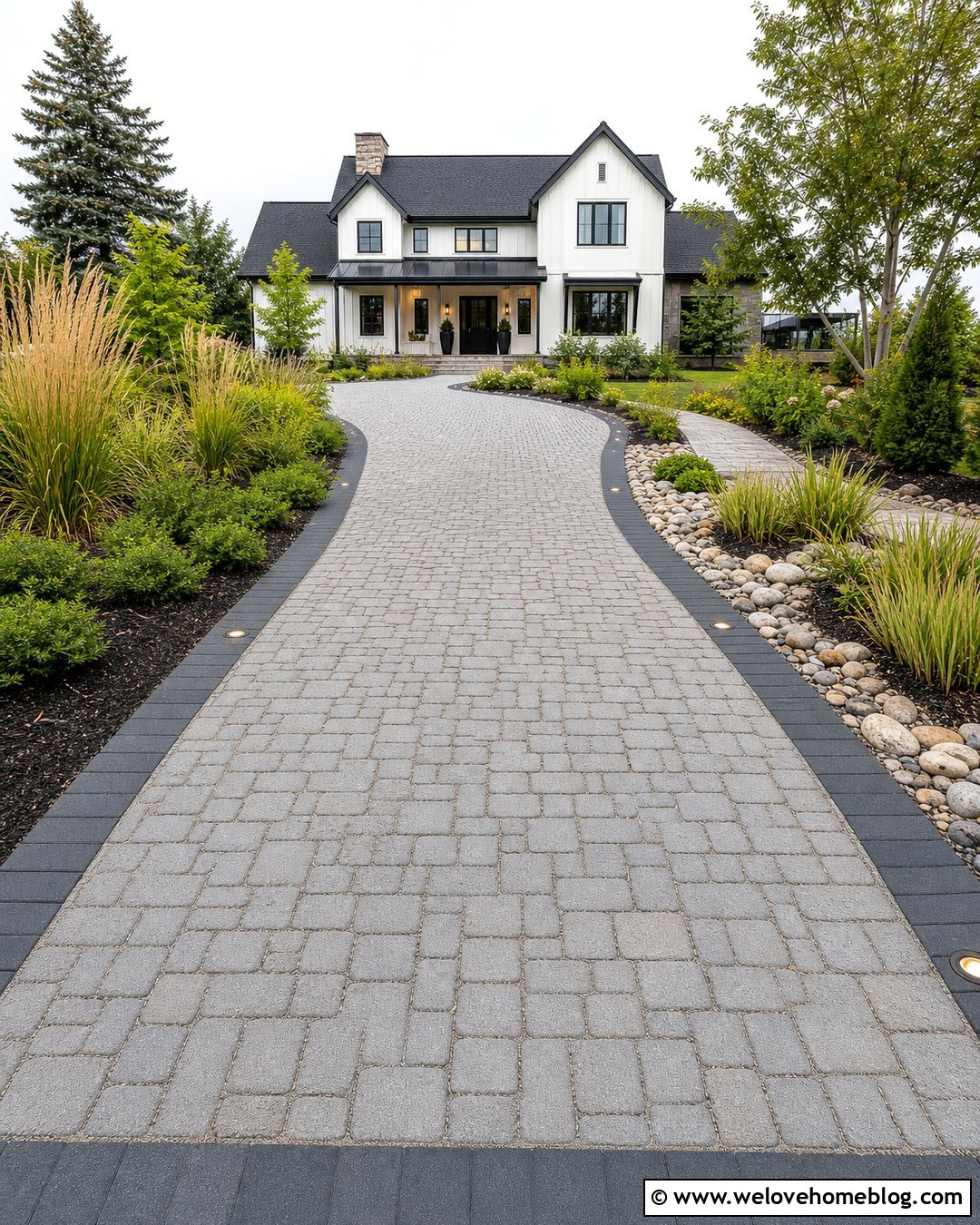
A compact driveway can look larger and more organized when the lighting is simple and carefully positioned. Install light beige permeable pavers in a straight single-car layout beside a small Craftsman bungalow. Use two low black path lights in the planting strip, one at the sidewalk entrance and one beside the front walkway connection. Add a matching downlight over the garage or carport instead of lining the entire pavement with fixtures. Dark brick edging provides definition, while dwarf boxwoods, compact grasses, and seasonal flowers bring color without narrowing the usable space. Keep all fixtures outside the vehicle overhang zone and leave the center surface visually open. This restrained arrangement gives the driveway a clear beginning, safe pedestrian transition, and attractive destination without overwhelming the smaller front yard.
Conclusion:
The best driveway lighting plan treats fixtures, pavement, borders, planting, and architecture as parts of one complete composition. These 20 Lights In Driveway Ideas show how bollards, path lights, recessed fixtures, lanterns, wall lights, and downlights can support many different homes and yard sizes. Begin by identifying driveway edges, curves, elevation changes, pedestrian crossings, and entrance points that need definition. Then select fixtures that complement the driveway material and house facade. Use shielded, appropriately rated products and avoid excessive brightness or distracting rows. A balanced combination of practical illumination and landscape accent lighting can improve the entire arrival experience while giving your home polished, welcoming curb appeal.

Related posts:
Leave a Reply