
Thoughtful landscaping can turn an ordinary parking area into a polished extension of your front yard. The best 20 landscape near driveway ideas combine attractive plants with practical surfaces, clear borders, safe visibility, and easy access. Instead of treating the driveway as a separate slab, connect it to the house through repeated colors, materials, and planting shapes. Choose greenery that suits the available sunlight, local climate, reflected pavement heat, and your preferred maintenance level. Keep mature plant sizes in mind so branches and roots do not interfere with vehicles, pavement, or sightlines. From narrow suburban strips to spacious circular entrances, the complete designs below offer adaptable inspiration for different homes and budgets. Explore these 20 landscape near driveway ideas to create a welcoming, functional approach.

1. Low-Maintenance Landscaping Along a Concrete Driveway
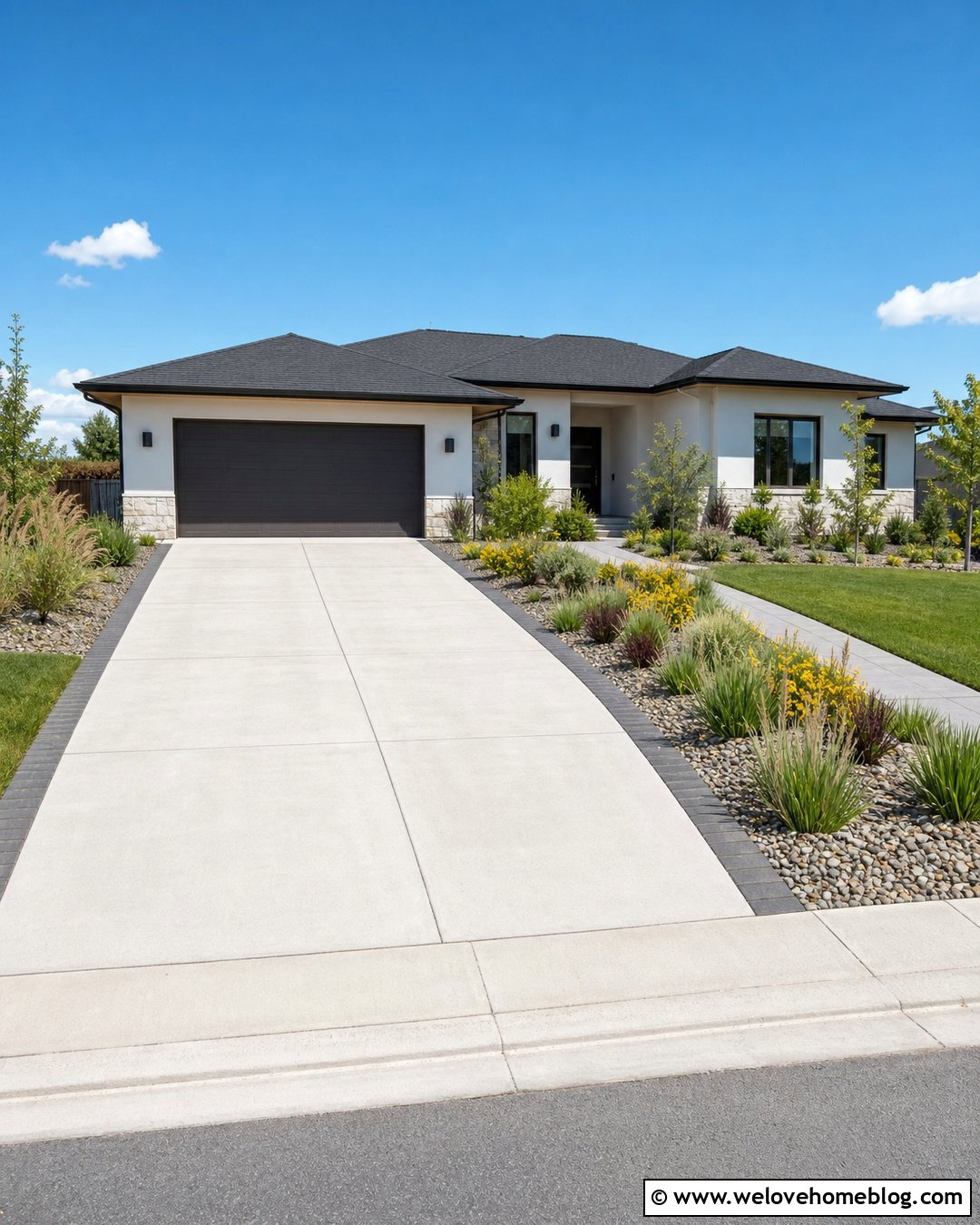
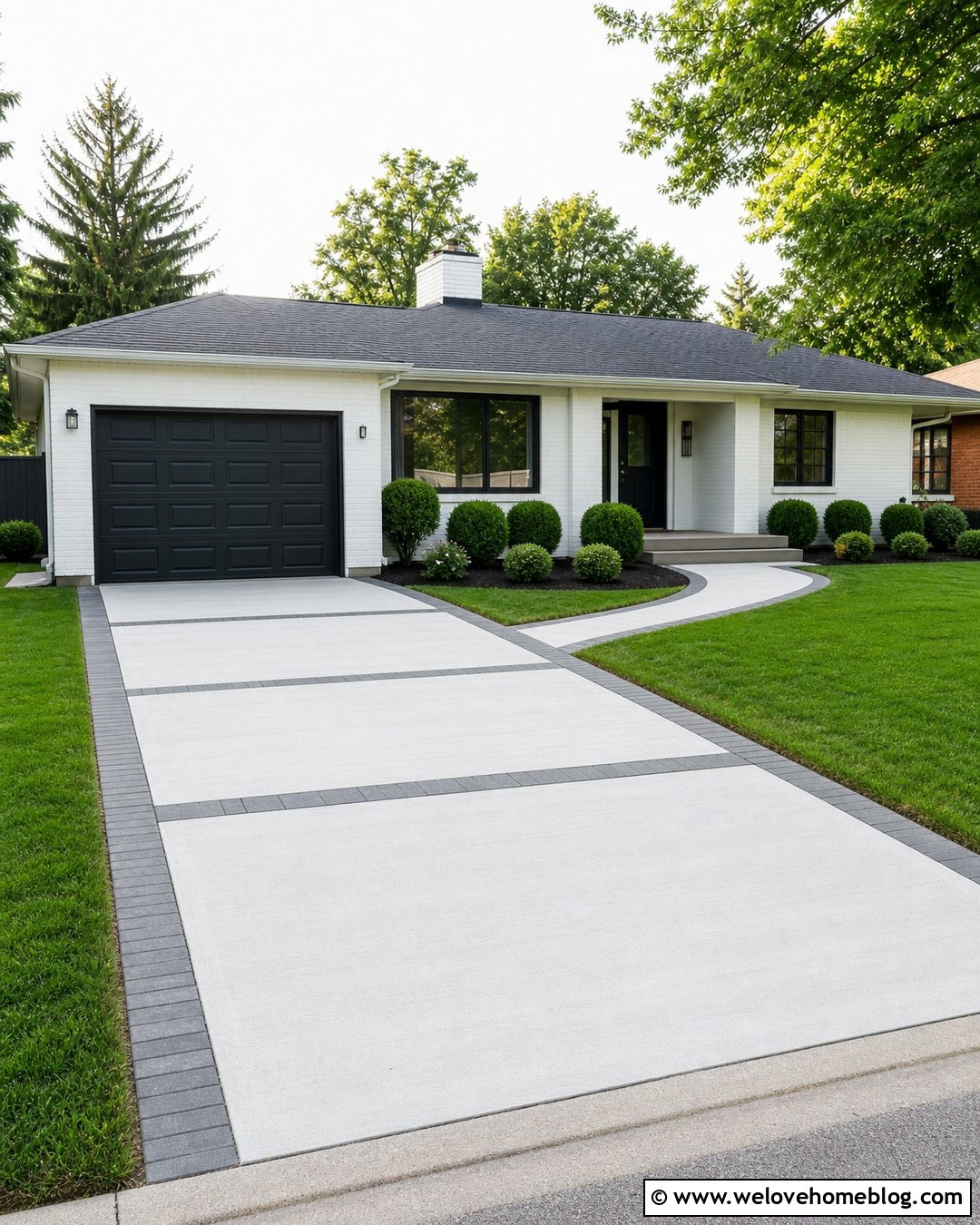
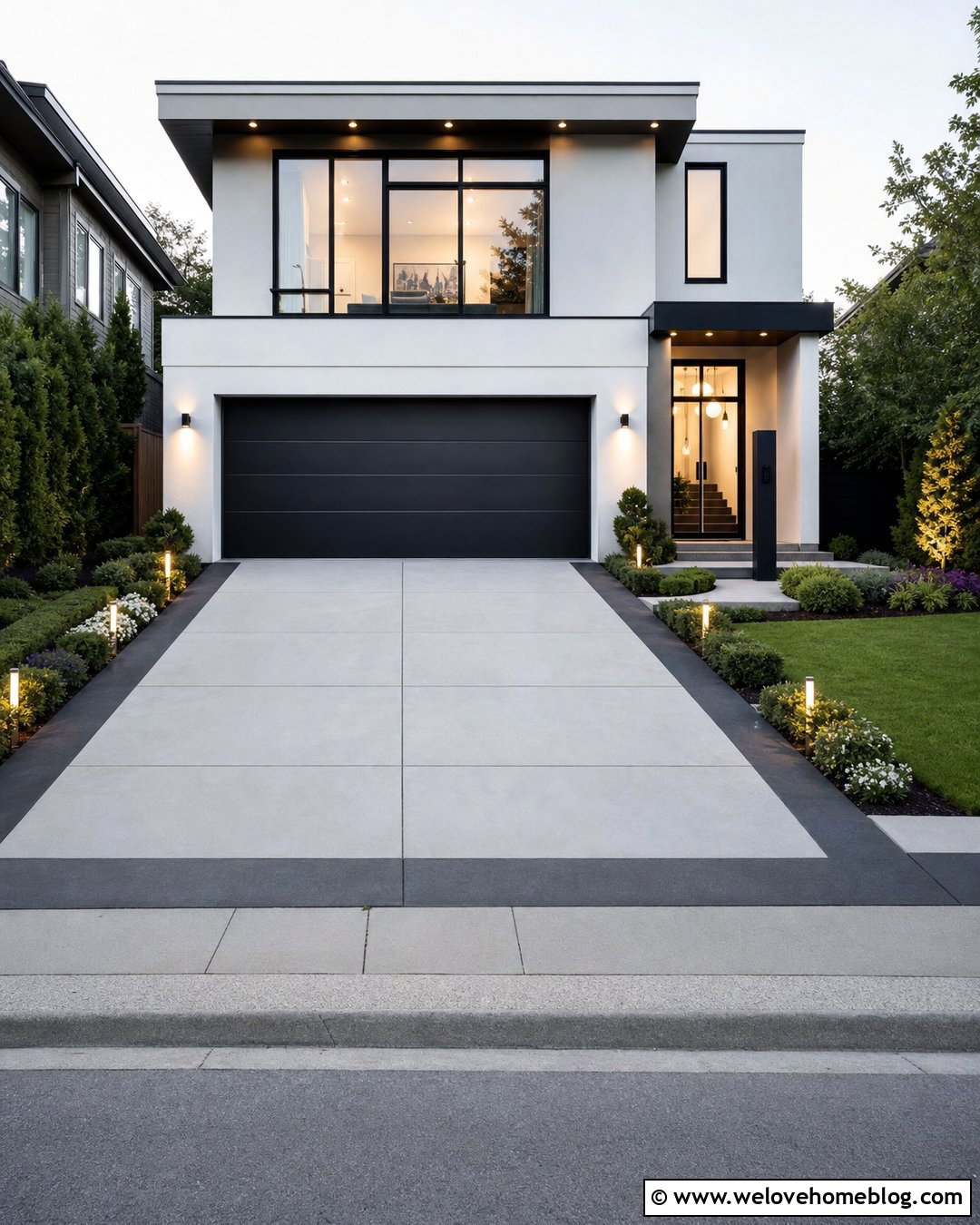
A straight light-gray poured concrete driveway feels softer when framed by simple, drought-tolerant planting beds. Install a narrow charcoal paver border to create a crisp transition between the concrete and soil. Fill the beds with ornamental grasses, compact evergreen shrubs, and low flowering perennials suited to your region. Repeating plants in groups creates a calmer appearance than mixing too many unrelated varieties. Add river rock or gravel mulch where organic mulch frequently washes onto the pavement. Keep taller shrubs closer to the house and shorter plants near the street for better visibility. This complete layout works especially well with ranch and contemporary homes. It delivers year-round structure, seasonal movement, and attractive curb appeal without demanding constant trimming, watering, or cleanup.
2. Curved Driveway With Layered Flower Beds
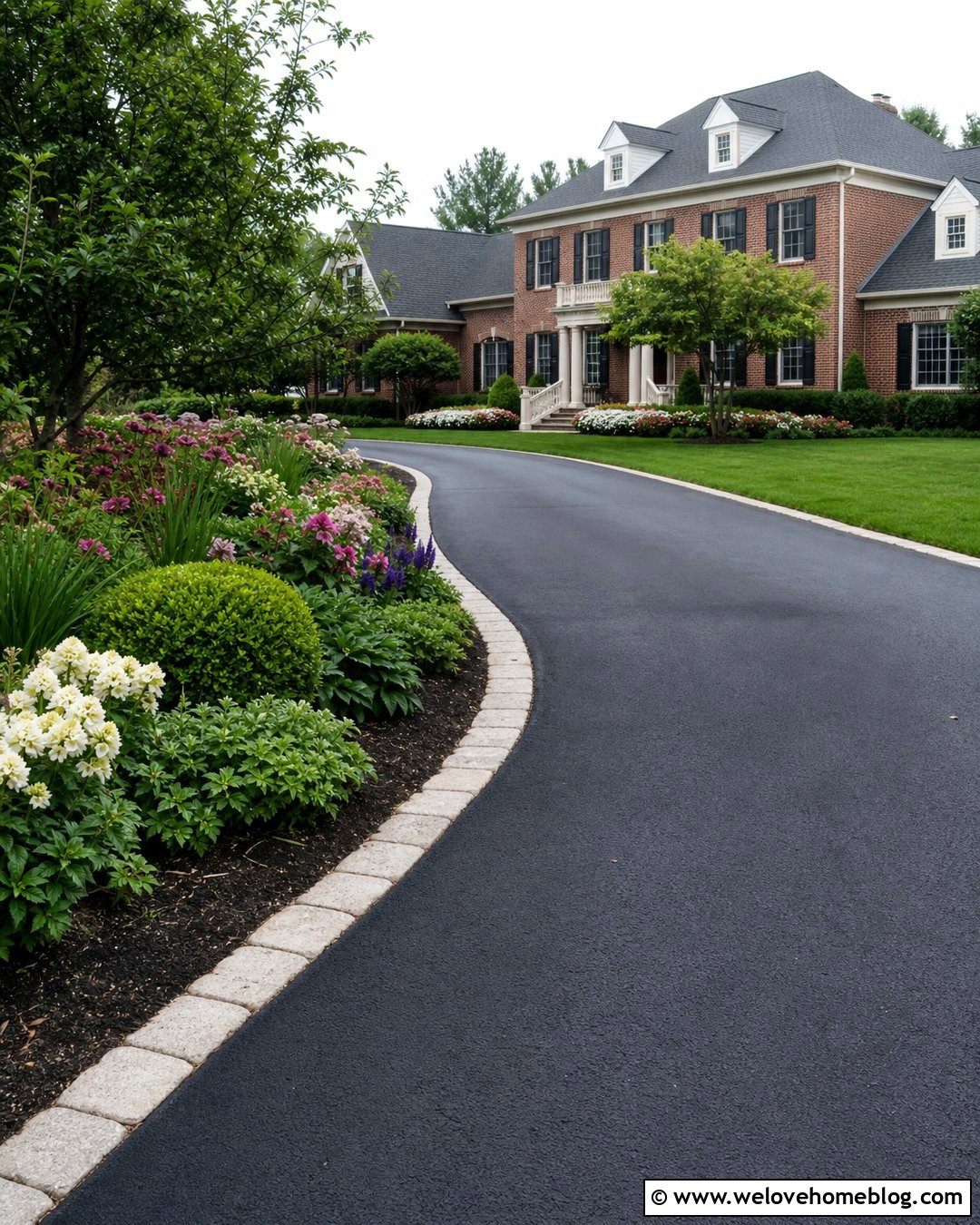
Curving pavement naturally guides the eye toward the house, and layered planting makes that movement even more noticeable. Pair a gently curved asphalt driveway with a light cobblestone edge that clearly defines every bend. Along the outside curve, arrange low ground covers at the front, colorful perennials in the middle, and compact flowering shrubs behind them. Use repeated drifts instead of isolated plants to keep the border cohesive. A wider bed near the house can hold a small ornamental tree as the final focal point. Leave open lawn along the inside curve so drivers have a clear view when entering or leaving. This landscape looks inviting beside a traditional colonial home and offers changing color without making the approach feel crowded or difficult to navigate.
3. Gravel Driveway With Lavender Borders
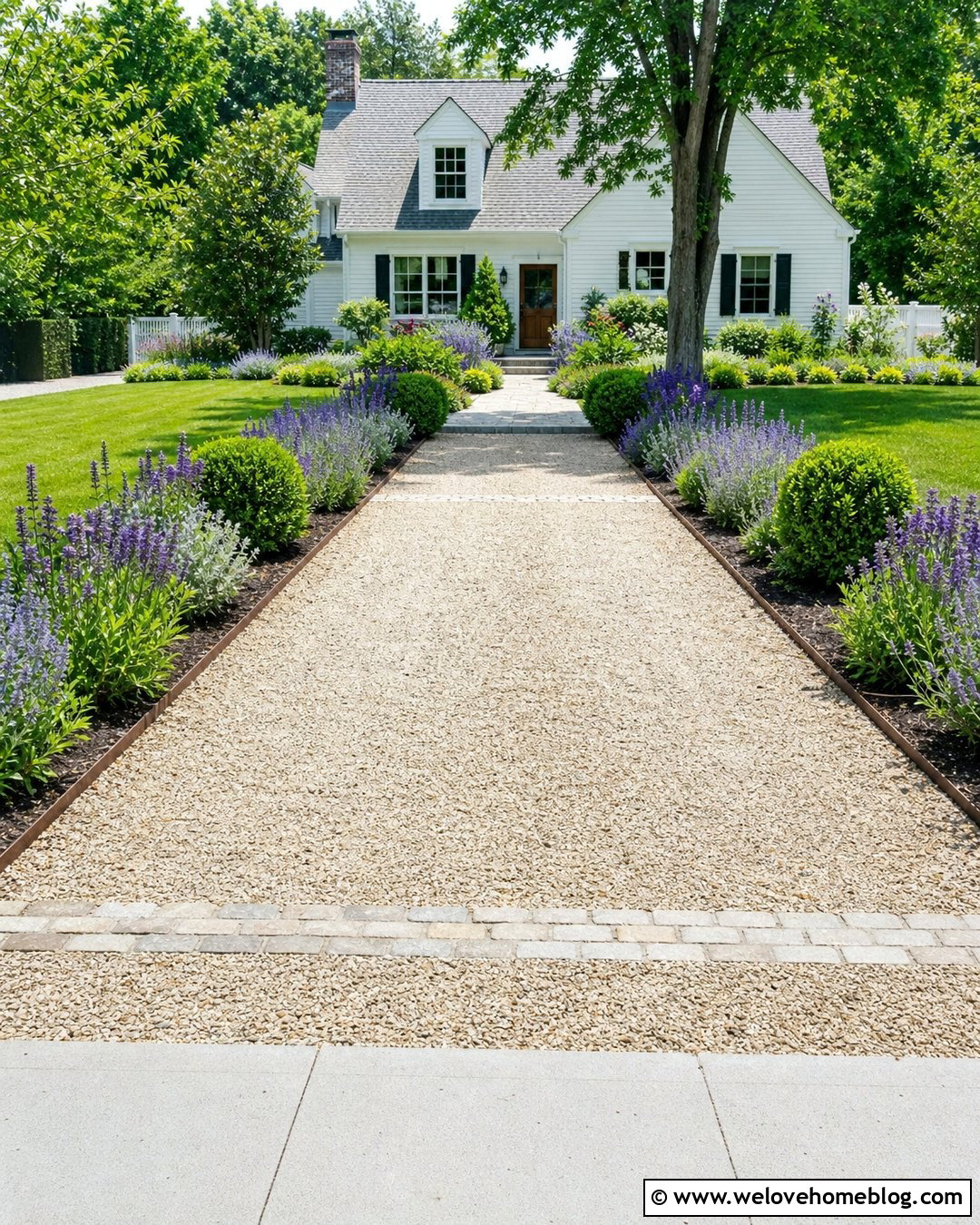
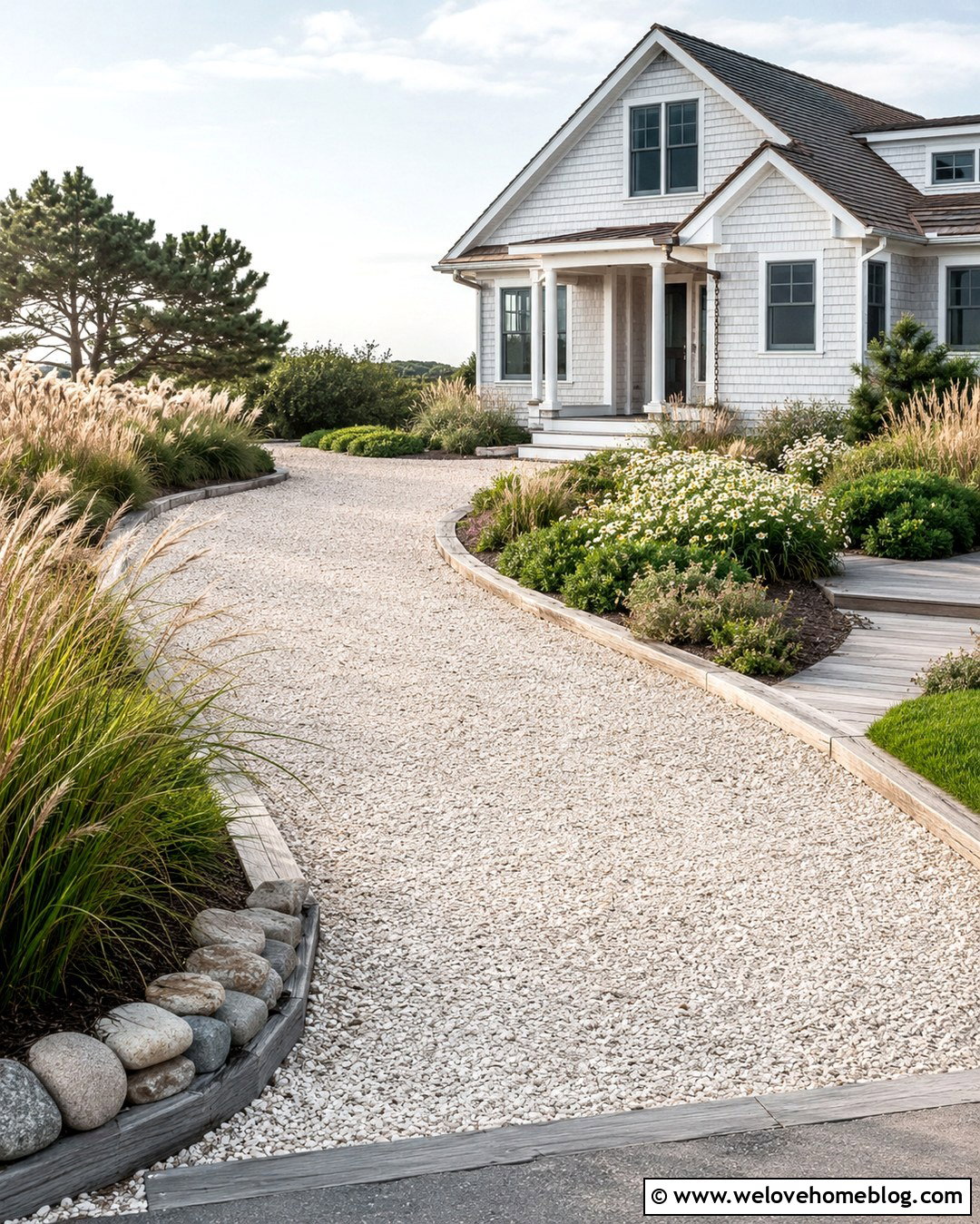
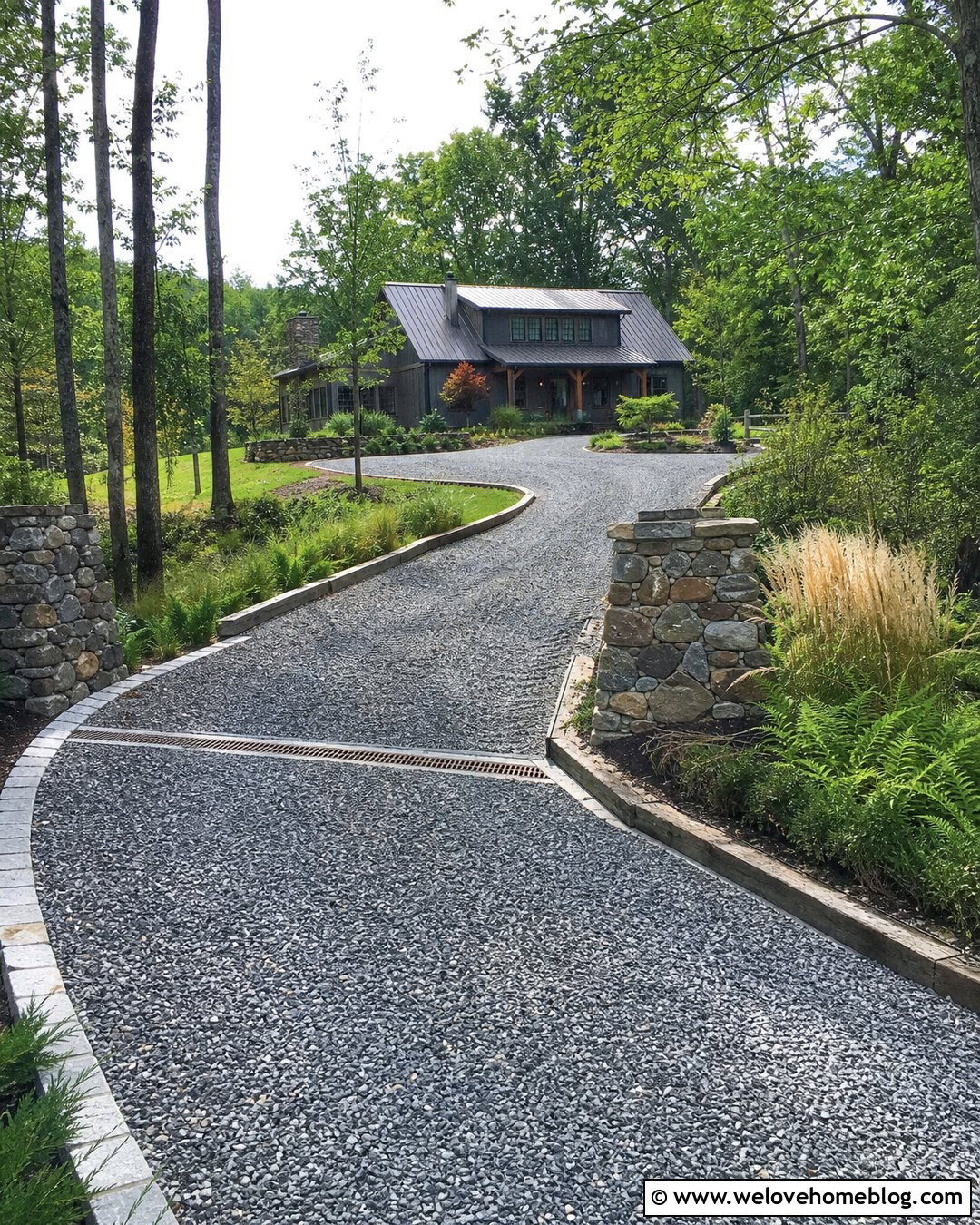
The relaxed texture of gravel pairs naturally with soft, fragrant-looking planting. Start with a straight beige pea gravel driveway contained by sturdy steel edging and a narrow row of warm cobblestones. Create generous beds on both sides using lavender, catmint, salvia, and clipped evergreen shrubs. These plants produce a pleasing mix of loose flowers and defined shapes. Repeating the same plant group down the drive creates rhythm and makes a long entrance feel intentional. Position taller greenery farther from the pavement so wet branches do not brush against vehicles. Near the house, connect the driveway to a flagstone walkway surrounded by matching plants. This full landscape suits a cottage, Cape Cod, or country home and gives the property a welcoming garden character without hiding the driveway’s attractive gravel surface.
4. Modern Driveway With Ornamental Grasses
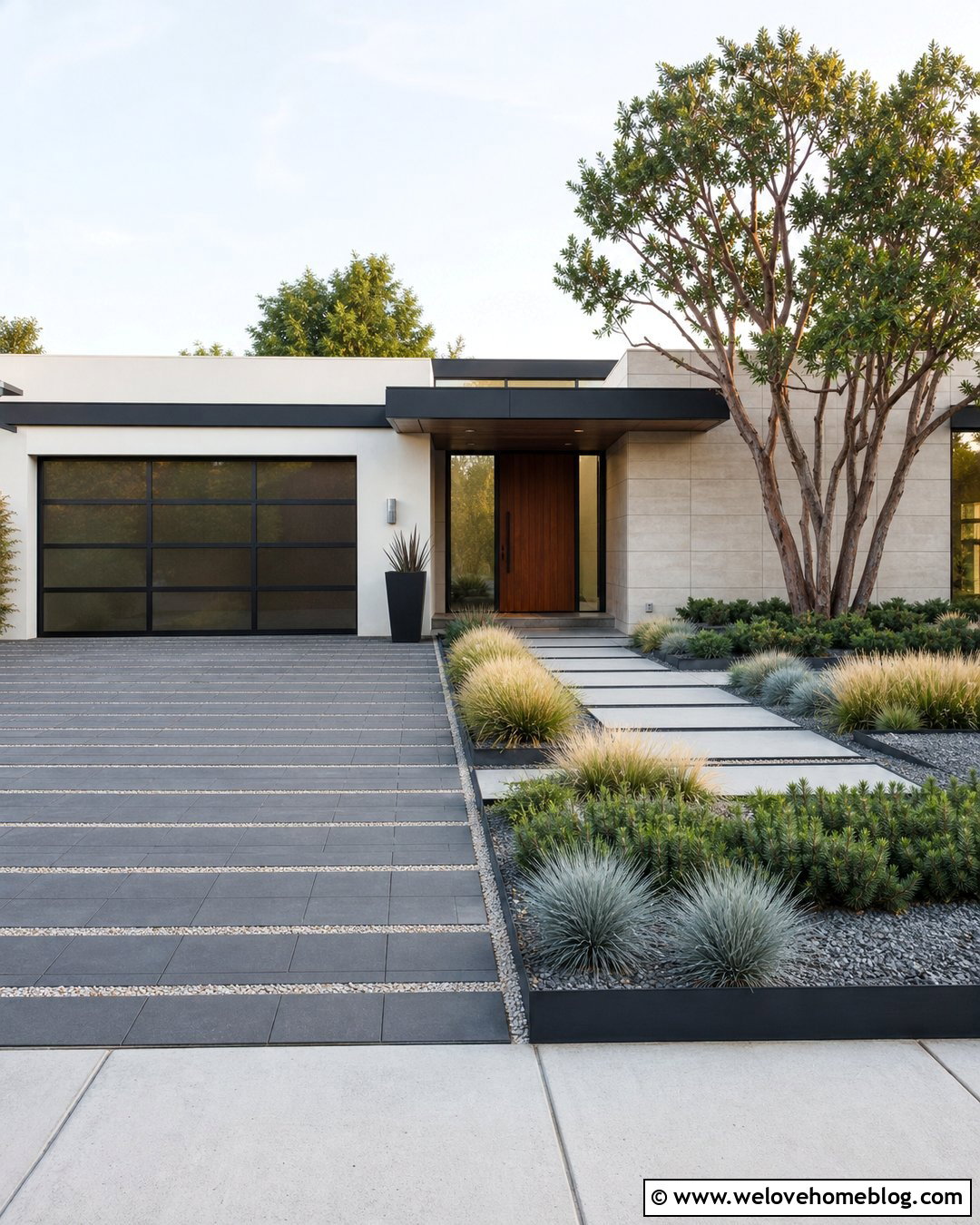
Clean lines become more inviting when they are balanced by plants that add movement. Use a wide charcoal concrete paver driveway with a straight layout and slim bands of pale gravel between selected sections. Frame both edges with geometric beds containing feather reed grass, blue fescue, compact junipers, and low sedges. Keep the planting palette limited so the driveway still feels modern rather than busy. Black steel edging can hold the gravel and soil securely while echoing dark window frames on the house. Add rectangular stepping stones through one bed to connect the driveway with the front walkway. A small multistem tree near the entrance provides height without overwhelming the architecture. The result is a complete, structured landscape that complements a modern house while remaining soft, green, and visually balanced.
5. Brick Driveway With Boxwood and Hydrangeas
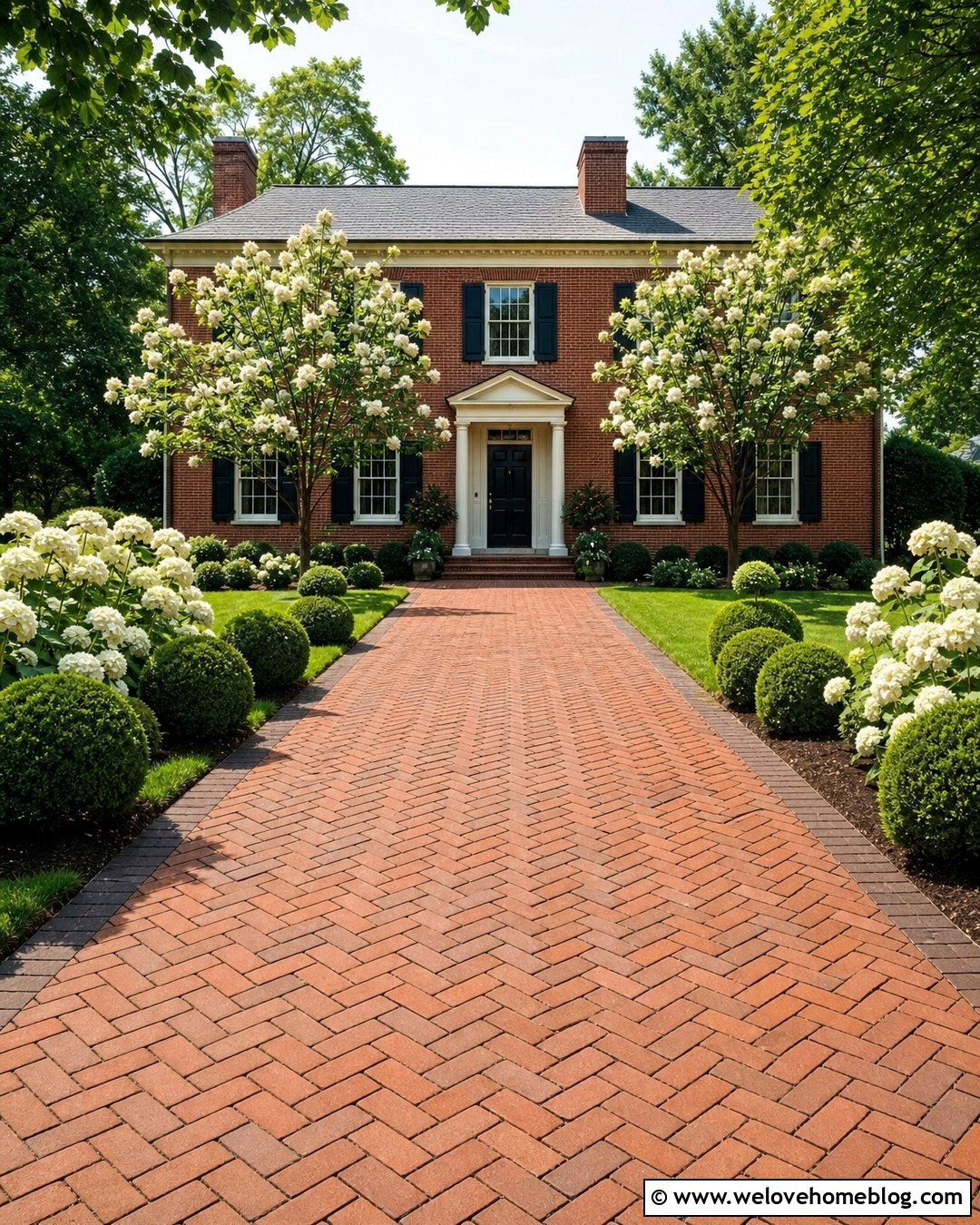
Rich brick paving looks especially polished beside layered, traditional greenery. Choose clay brick pavers laid in a herringbone pattern, then outline the driveway with a darker brick soldier course. Place rounded boxwood shrubs along the pavement to create an evergreen framework. Behind them, use hydrangeas for generous flowers and a softer summer appearance. Allow enough space for each shrub to reach its natural width without leaning over the parking area. Matching beds beside the garage and front walkway will help connect the entire landscape. For added height, position a pair of small flowering trees near the house rather than at the street. This complete arrangement suits colonial, Georgian, and traditional brick homes. It feels orderly throughout the year while still offering abundant foliage and seasonal color.
6. Circular Driveway With a Center Garden
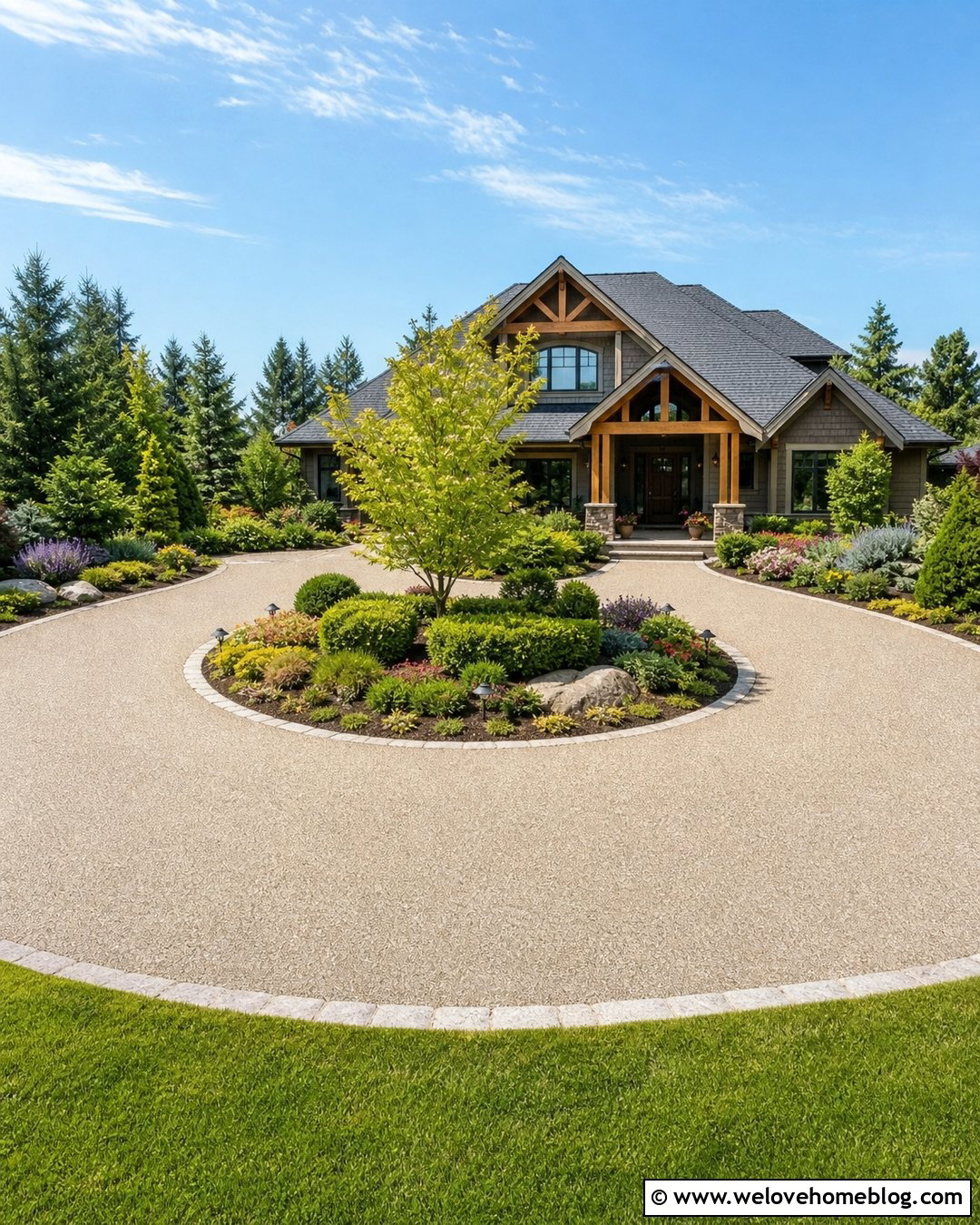
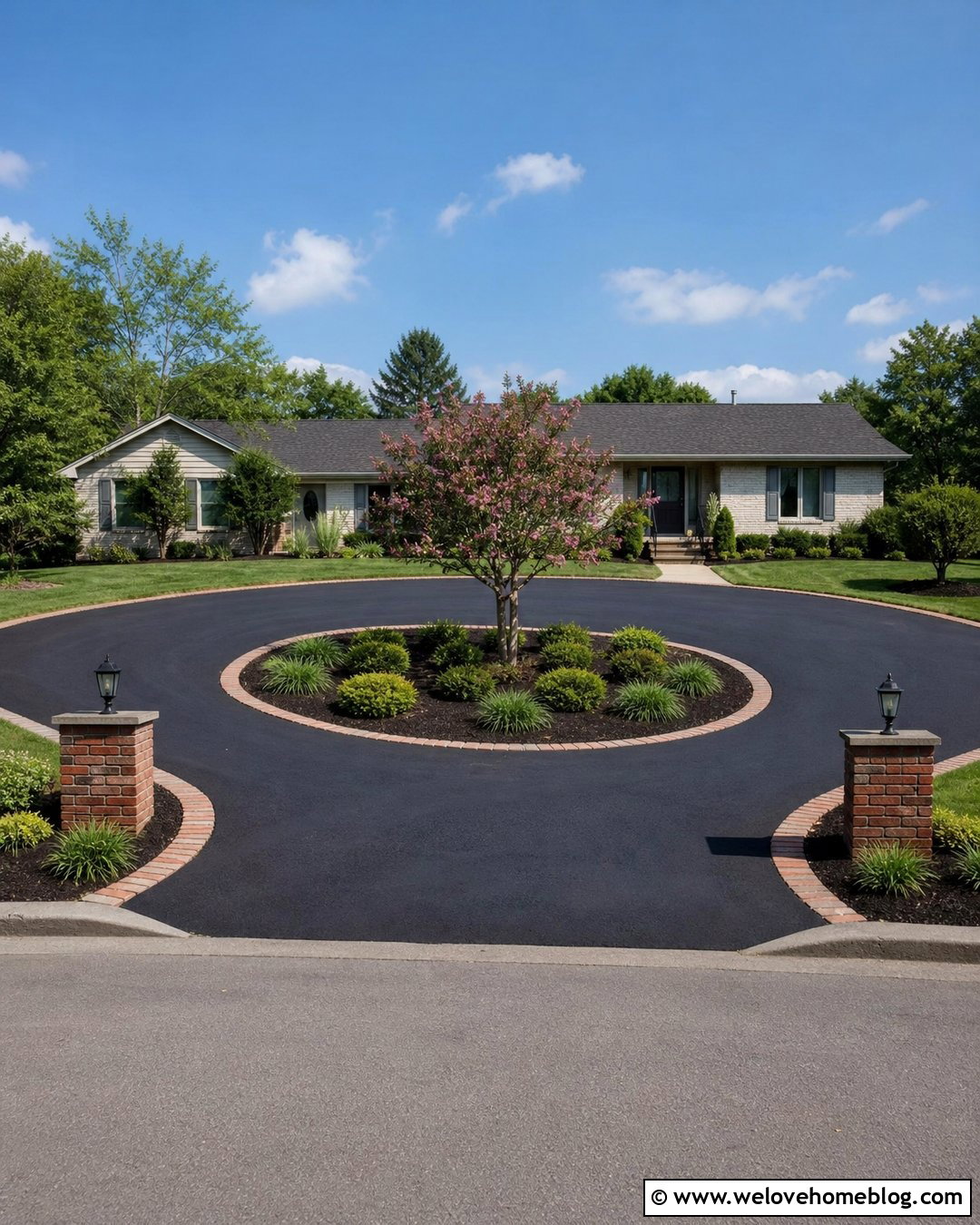
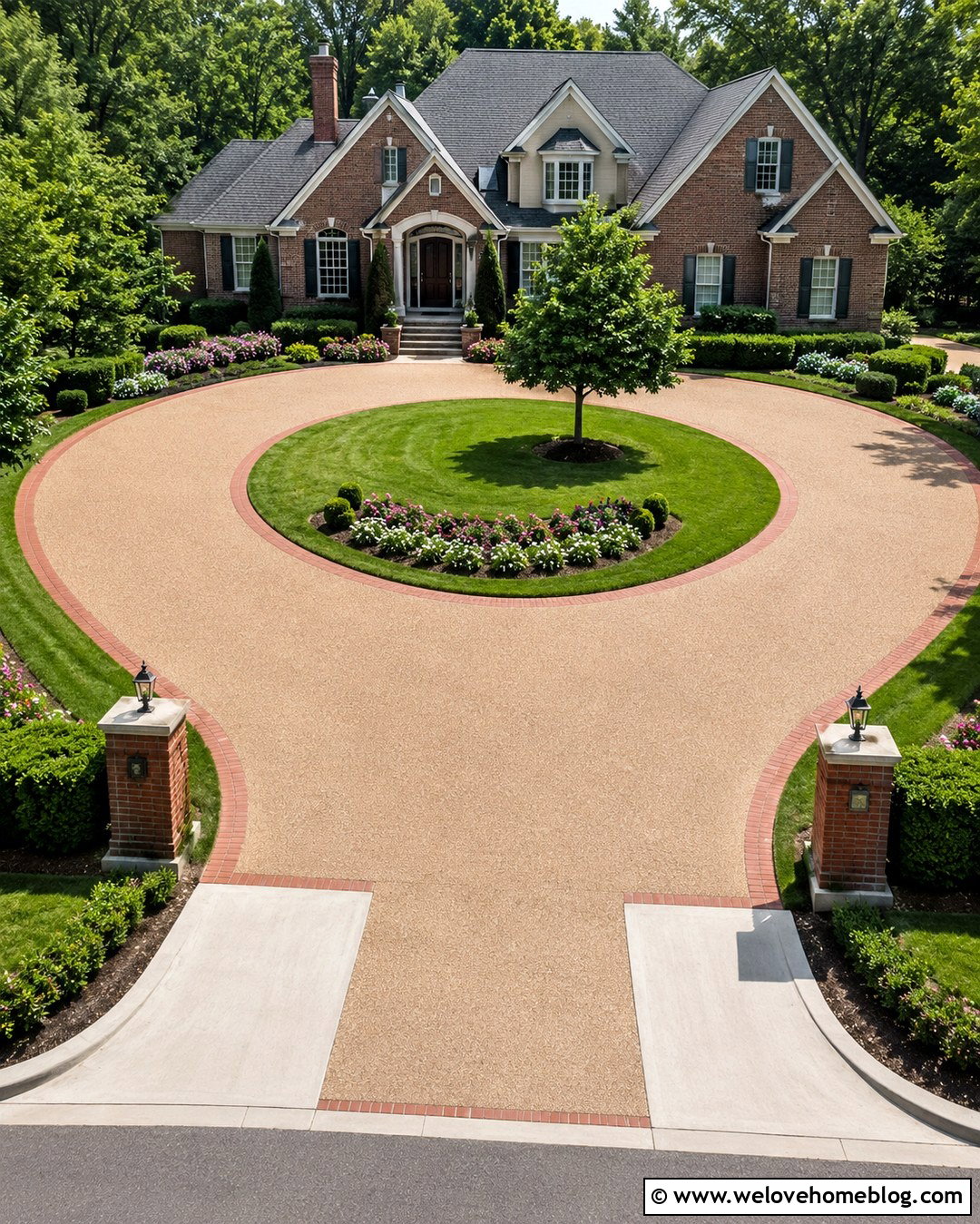
A planted center island turns a circular driveway into a major front-yard feature. Surround a smooth exposed aggregate driveway with a low natural-stone curb that follows the circular shape. In the middle, place a small ornamental tree slightly off-center and layer compact shrubs, flowering perennials, and ground cover around it. Keep plants lowest along the island’s outer edge so the circular route remains clearly visible. Repeating a few of the same plants near the house helps the island feel connected rather than isolated. Add discreet landscape lights between plant groupings to emphasize the shape after dark without cluttering the daytime view. This design suits a spacious craftsman or traditional home and transforms the turning area into a balanced garden that looks attractive from the street, driveway, and front windows.
7. Driveway Entrance With Stone Pillars and Planting Beds
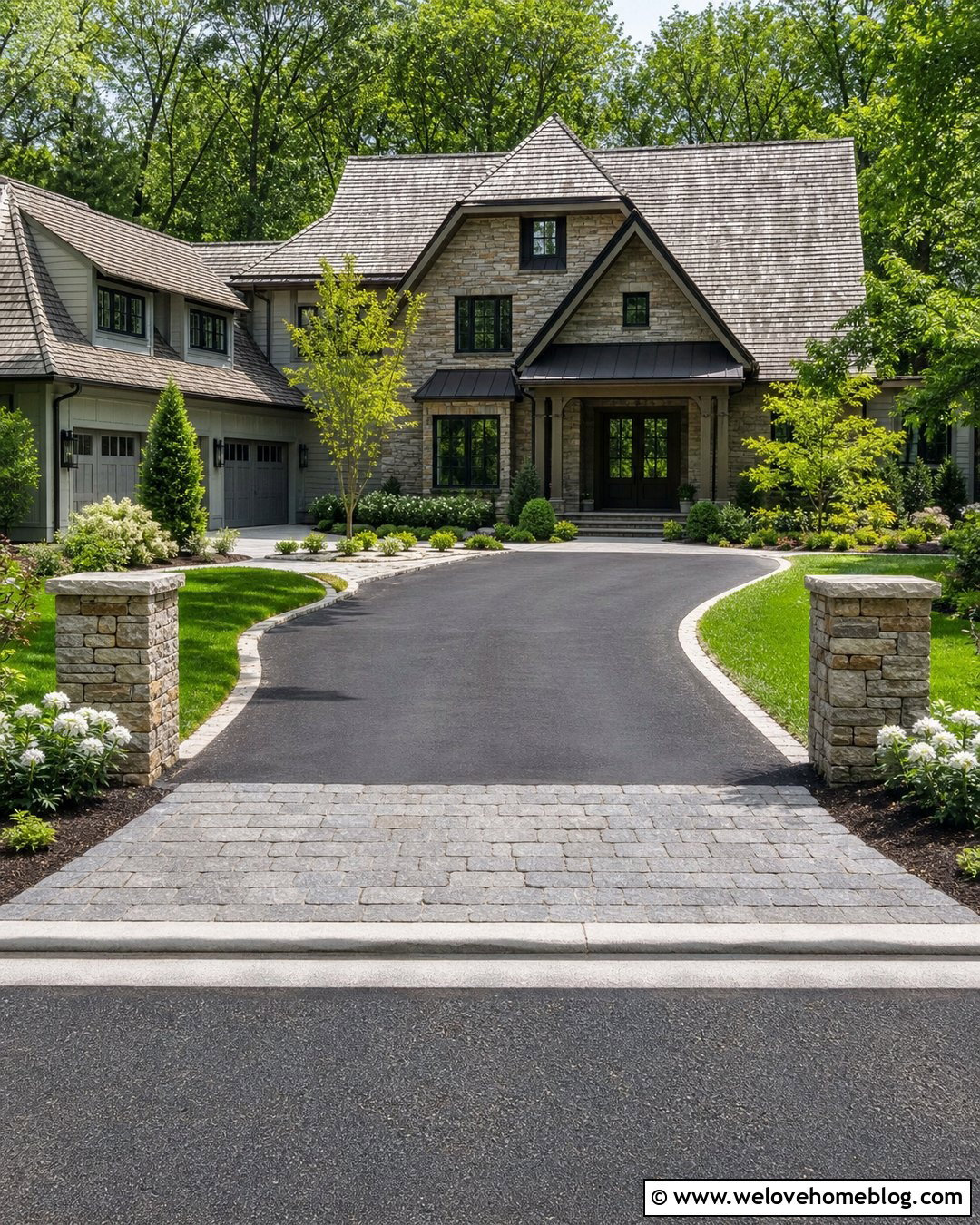
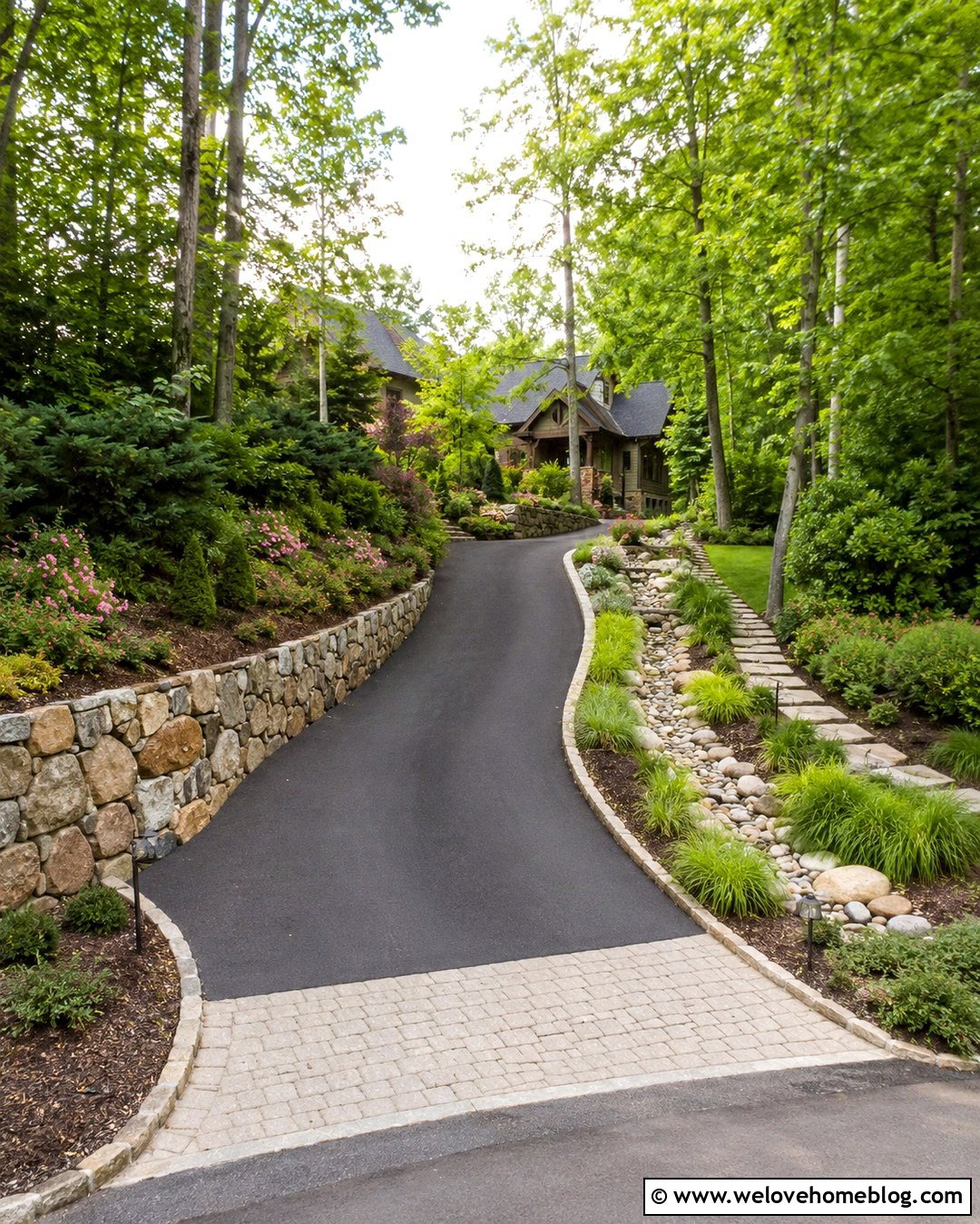
Stone pillars give a driveway entrance structure, but surrounding landscaping keeps them from appearing too heavy. Combine a dark asphalt driveway with a cobblestone apron where the entrance meets the street. Build two low stone pillars outside the vehicle clearance area and anchor each one with a curved planting bed. Use compact evergreens behind the pillars, flowering shrubs at the sides, and low ground cover near the pavement. Keep plants short enough to preserve views of pedestrians and approaching traffic. A matching stone edge can continue several feet along the driveway, gradually transitioning into lawn. Repeating the home’s stone color in the pillars creates a stronger architectural connection. This complete entrance works beautifully with craftsman, farmhouse, and rustic homes while making the property feel established, visible, and welcoming.
8. Narrow Driveway With Vertical Landscaping
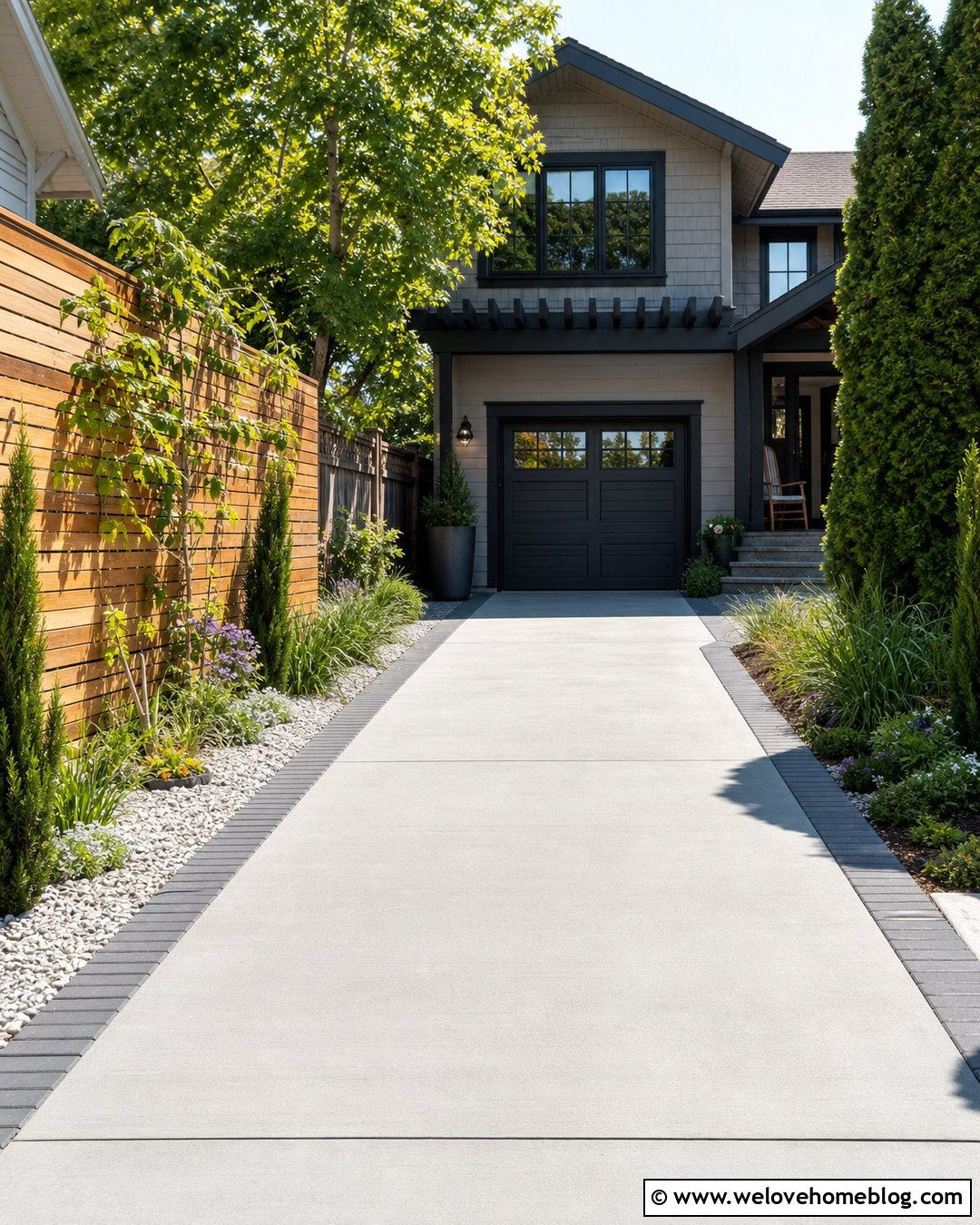
When space is limited, vertical greenery can deliver strong curb appeal without reducing parking width. Use a narrow smooth concrete driveway bordered by a slim strip of dark brick pavers. Along one side, install a simple horizontal wood fence or open trellis set safely beyond the pavement edge. Train climbing vines on selected panels and plant upright evergreens, narrow grasses, and compact flowering perennials below. On the opposite side, keep the landscape simpler with a shallow gravel bed and low ground cover. This prevents the confined area from feeling overloaded. Near the garage, add a tall planter that repeats the colors used along the fence. The complete arrangement suits urban homes, townhouses, and small suburban lots, providing privacy and greenery while keeping vehicle doors, mirrors, and pedestrian routes unobstructed.
9. Sloped Driveway With Terraced Planting Beds
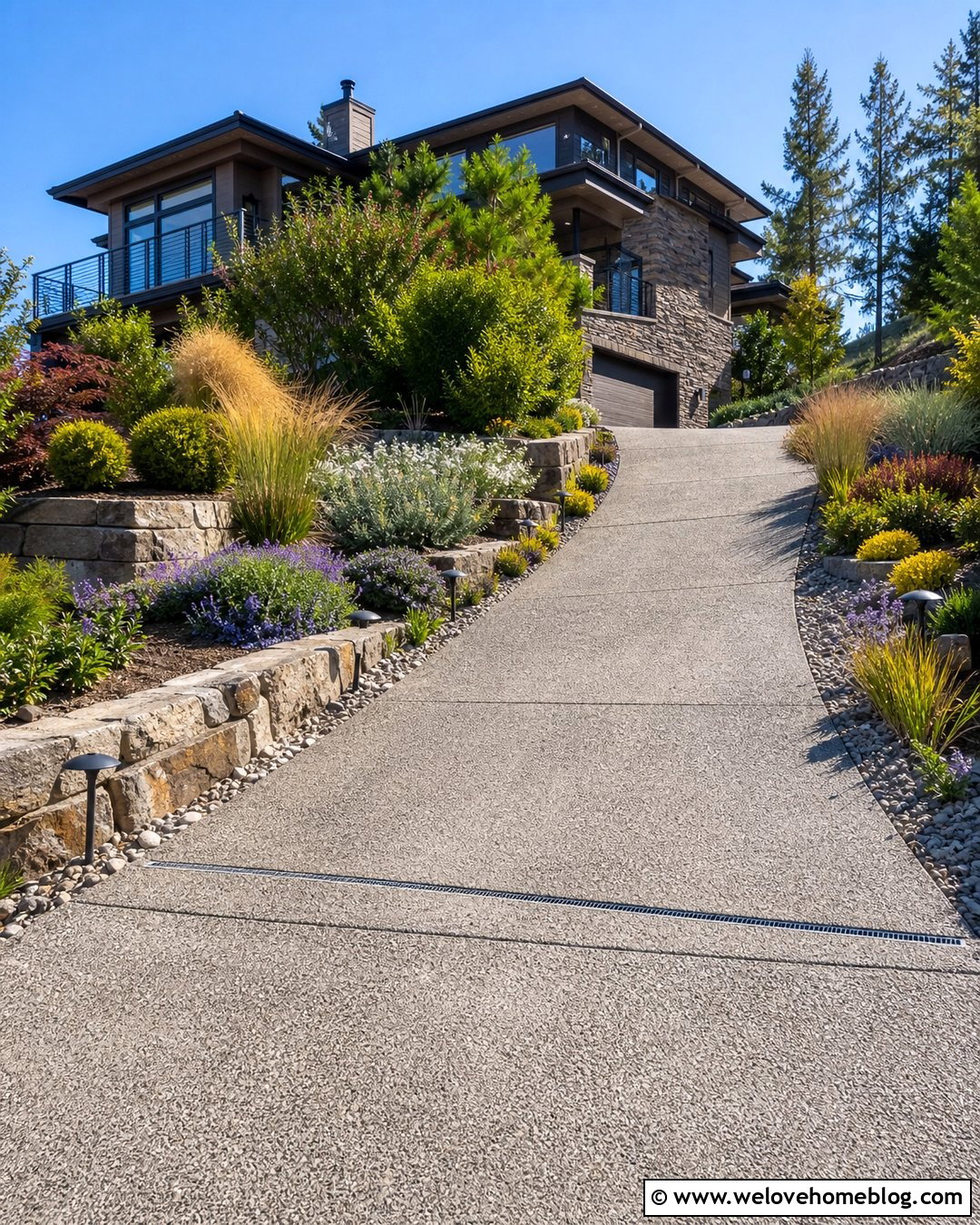
A sloped driveway often looks more integrated when adjacent banks are divided into manageable planting levels. Pair a textured concrete driveway with two or three low retaining walls built from natural stone. Step the walls with the grade rather than forcing one tall barrier beside the pavement. Fill the terraces with spreading ground covers, compact shrubs, ornamental grasses, and deeply rooted perennials suited to the site. Decorative gravel between plants creates a neat finish and reduces exposed soil. Include an open drainage route so runoff is directed appropriately instead of collecting against the driveway or house. Low path lights can follow the retaining wall and make the edge easier to identify. This complete landscape adds depth to a hillside property and gives a steep approach a more stable, deliberate appearance.

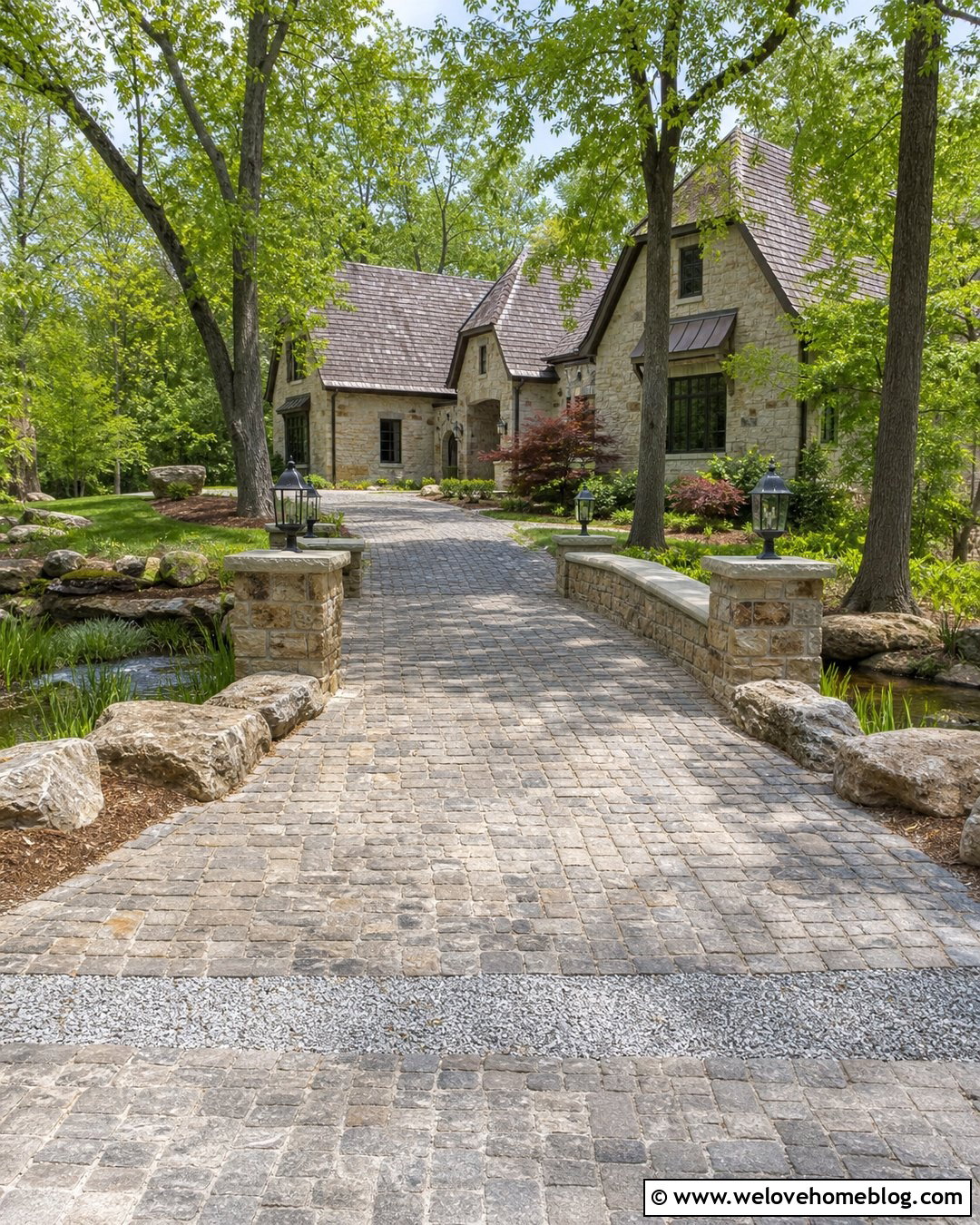
10. Driveway With Native Plant Borders
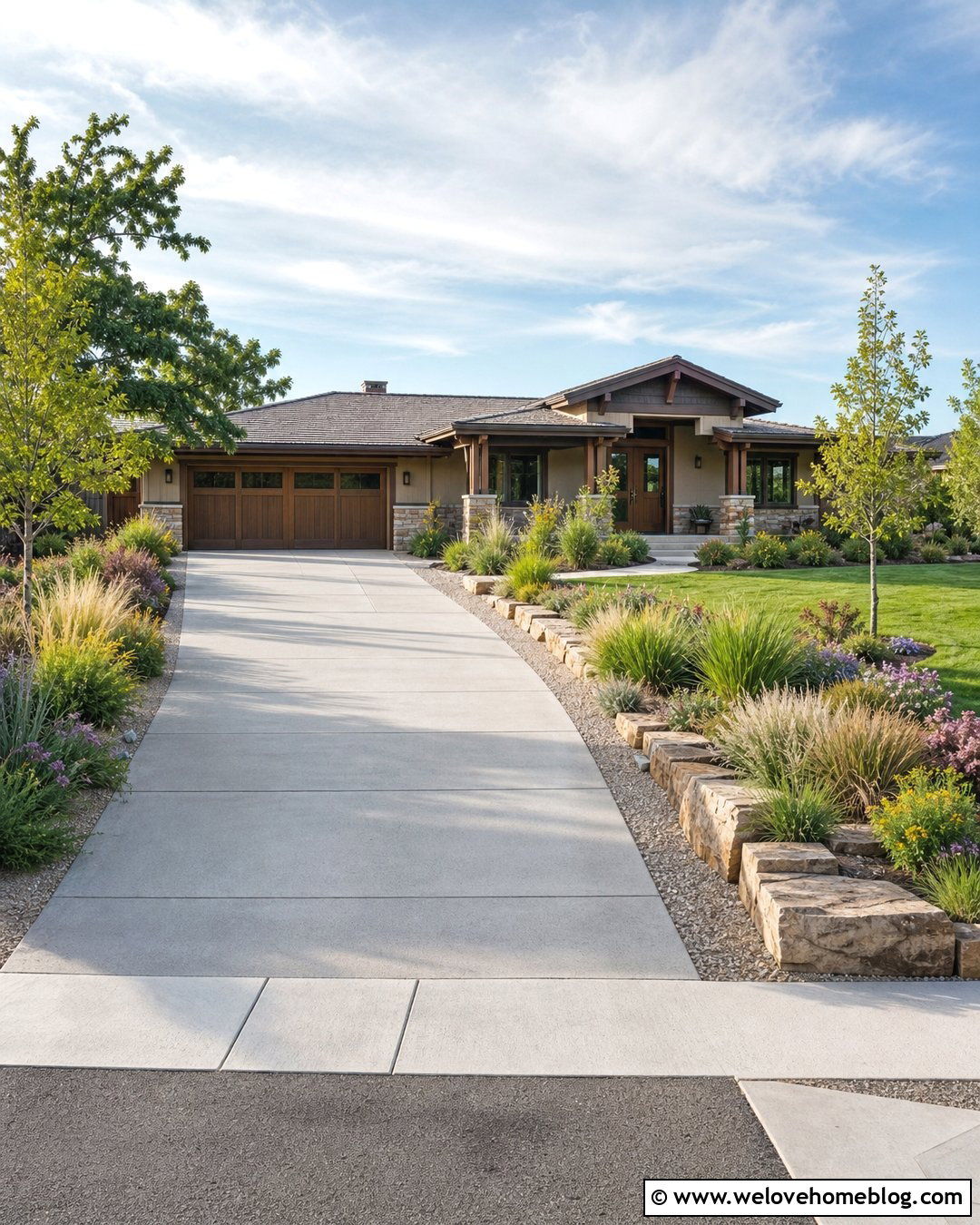
Native-focused landscaping can give a driveway a natural sense of place while supporting a simpler, regionally appropriate planting palette. Edge a light-gray concrete driveway with weathered stone, then create broad informal beds containing locally suitable grasses, flowering perennials, shrubs, and small trees. Arrange plants in repeated groups based on their mature height, moisture needs, and sunlight requirements. Keep low species closest to the street and pavement, with taller plants placed farther back. A mowed or gravel strip along the edge provides a tidy buffer and prevents loose stems from flopping onto the drive. Carry the same plant mix toward the front walkway for continuity. This complete design suits craftsman, prairie, ranch, and woodland homes, blending the hard surface into the yard without losing a clean residential appearance.
11. Driveway With River Rock Landscaping
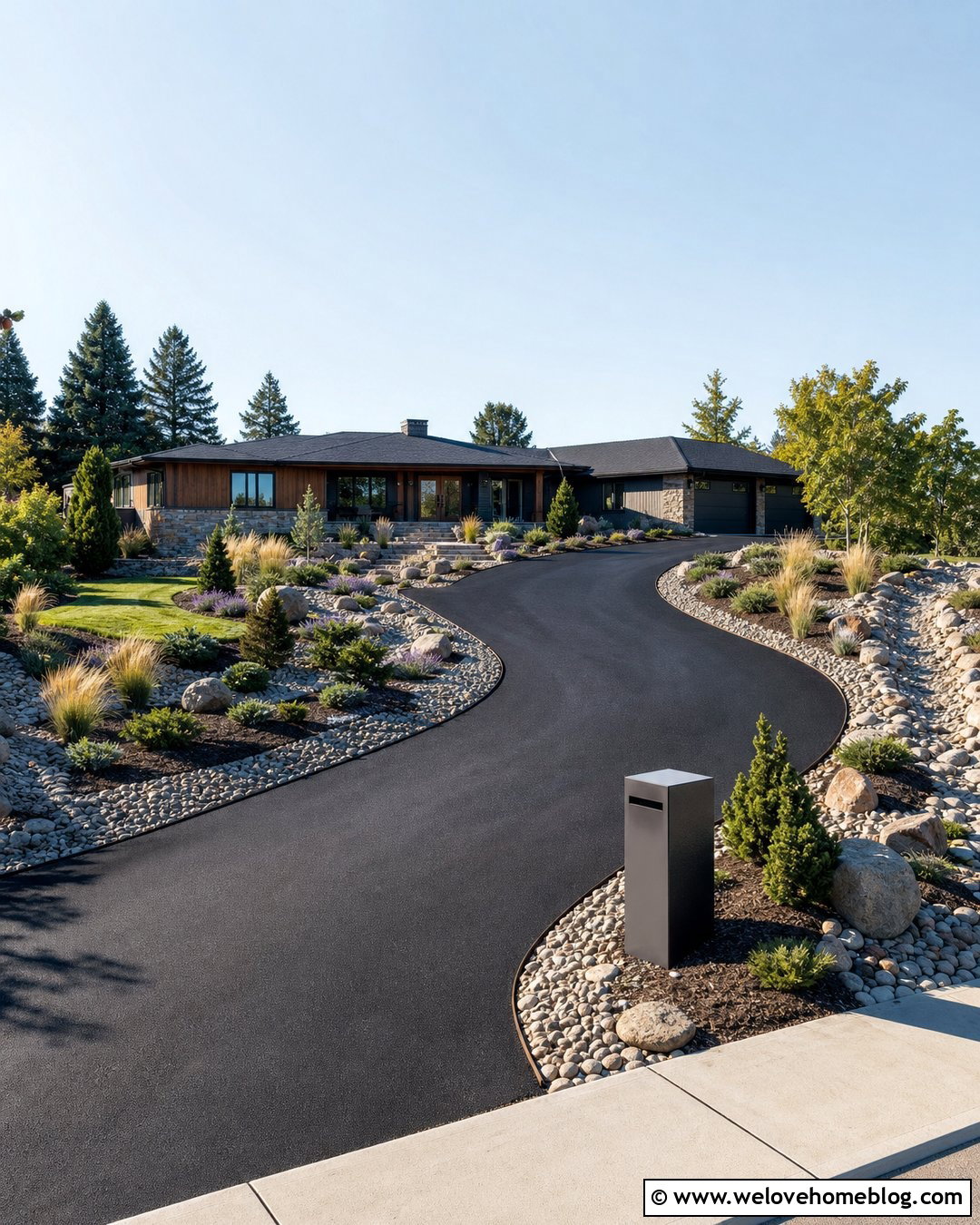
River rock provides a durable-looking transition where plants and pavement meet. Begin with a black asphalt driveway and install sweeping beds filled with mixed gray river stones along both sides. Add sculptural evergreen shrubs, clumping grasses, and a few flowering perennials through the rock rather than leaving it completely bare. Vary plant height while maintaining clear visibility at the street. Use metal or stone edging to prevent rocks from shifting onto the driving surface. A dry-creek-style channel can cross a wider bed where runoff naturally moves, provided drainage is planned correctly. Repeat the rock around the mailbox or front walkway to connect the features. This complete landscape works well beside modern ranch and contemporary homes, offering strong texture, clear boundaries, and an uncluttered alternative to traditional mulch beds.
12. Farmhouse Driveway With Split-Rail Fencing
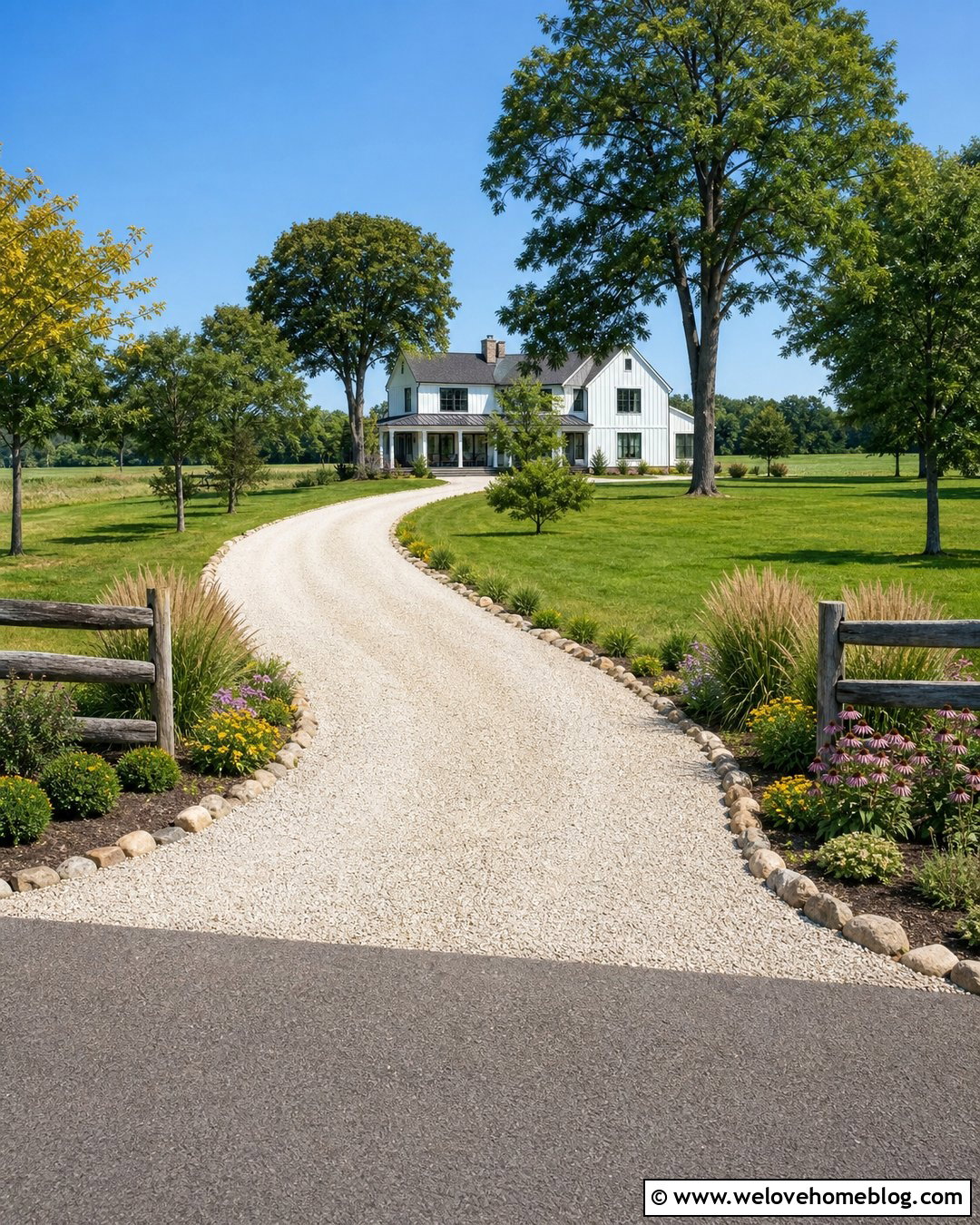
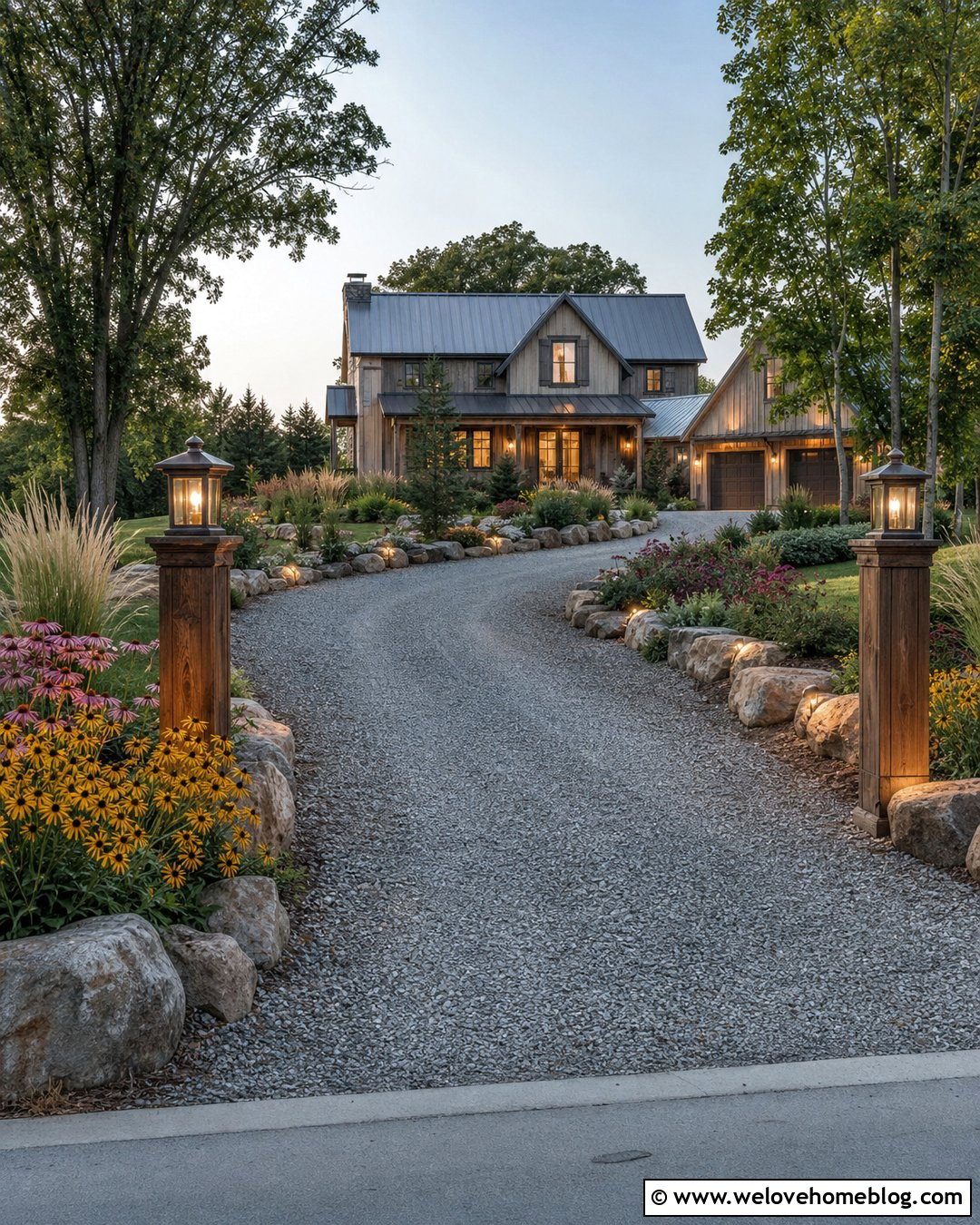
A country driveway feels complete when its landscape combines informal planting with simple, recognizable structure. Use a pale crushed-stone driveway that curves gently toward a white modern farmhouse. Install split-rail fencing along one side, set back enough to allow comfortable vehicle movement and routine driveway maintenance. In front of the fence, plant sweeping groups of ornamental grasses, coneflowers, black-eyed Susans, and compact shrubs. Keep the opposite side more open with lawn and a few widely spaced shade trees. At the entrance, widen the planting beds and add fieldstone edging for a finished transition from the road. The gravel, timber, flowers, and open yard should feel connected rather than overly decorated. This full landscape creates relaxed rural character while maintaining a practical, easy-to-follow route to the house.
13. Driveway With Evergreen Privacy Screening
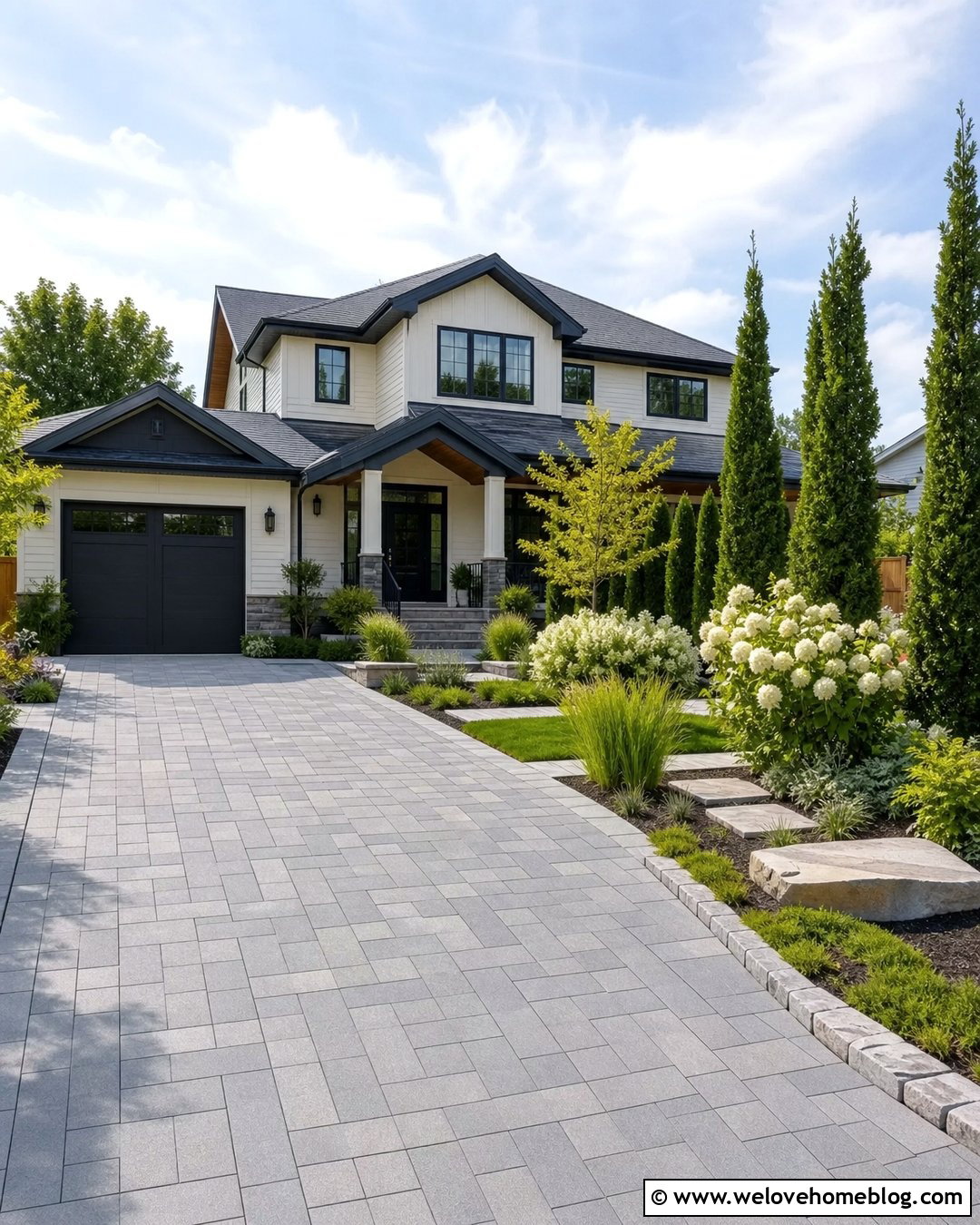
A driveway beside a neighboring property can gain privacy without becoming a dark, narrow corridor. Pair a medium-gray paver driveway with a staggered row of upright evergreen trees planted beyond a low stone border. Instead of creating one solid wall, mix the evergreens with flowering shrubs and smaller deciduous plants. Layering different heights produces a softer screen and leaves room for air circulation. Check mature plant width before installation so branches do not extend over parked vehicles. Along the house side, use low ornamental grasses and ground cover to balance the taller boundary. A stepping-stone walkway can pass through the shorter bed and connect the driveway to the front door. This complete design suits suburban homes where screening, year-round greenery, and a polished neighborhood-facing appearance are equally important.
14. Driveway With a Rain Garden Border
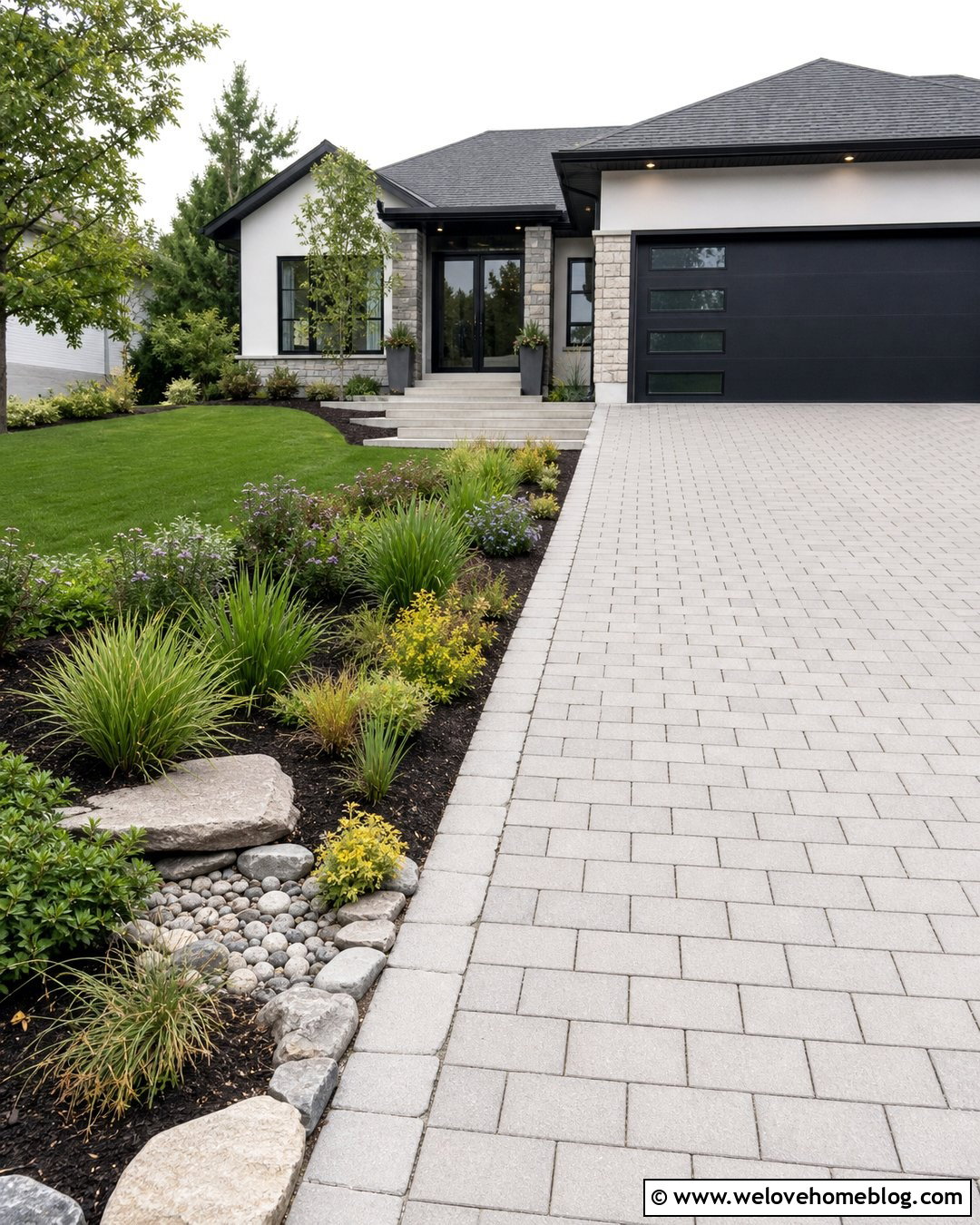
A shallow rain garden can make a broad driveway edge look purposeful while creating a planted destination for suitable runoff. Use permeable concrete pavers for a gently sloping driveway and shape a wide, low basin along the lawn side. Fill it with moisture-tolerant grasses, flowering perennials, and compact shrubs selected for local conditions. River stone at the inlet adds texture and helps mark where water enters the bed. Keep the basin away from building foundations and maintain a clear overflow route based on site requirements. A flat stone edge beside the driveway provides a neat mowing and walking strip. Repeat a few rain-garden plants near the front path to tie the yard together. The resulting landscape feels lush and contemporary while turning an awkward low area into an attractive feature.
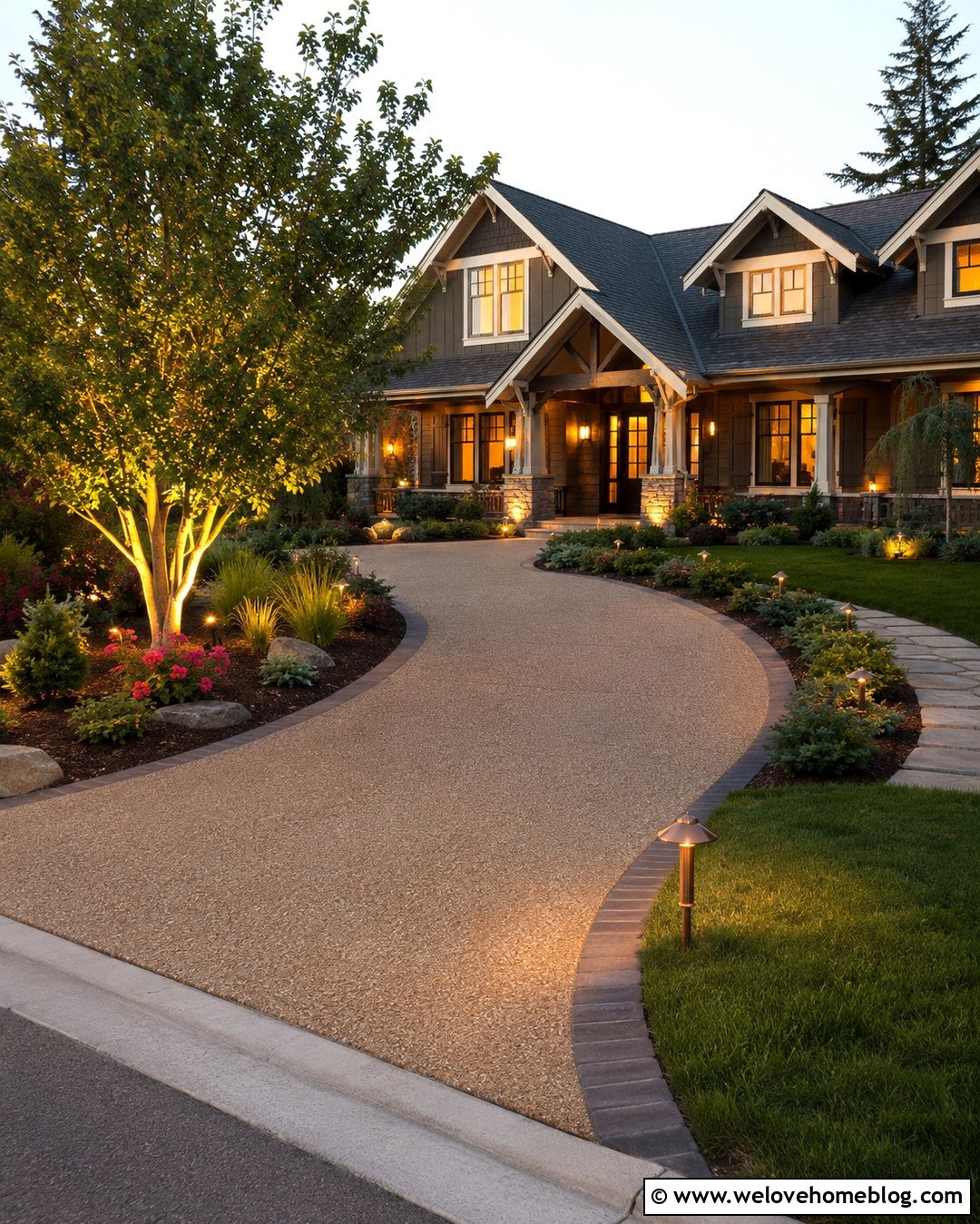


15. Driveway With Flowering Tree Borders
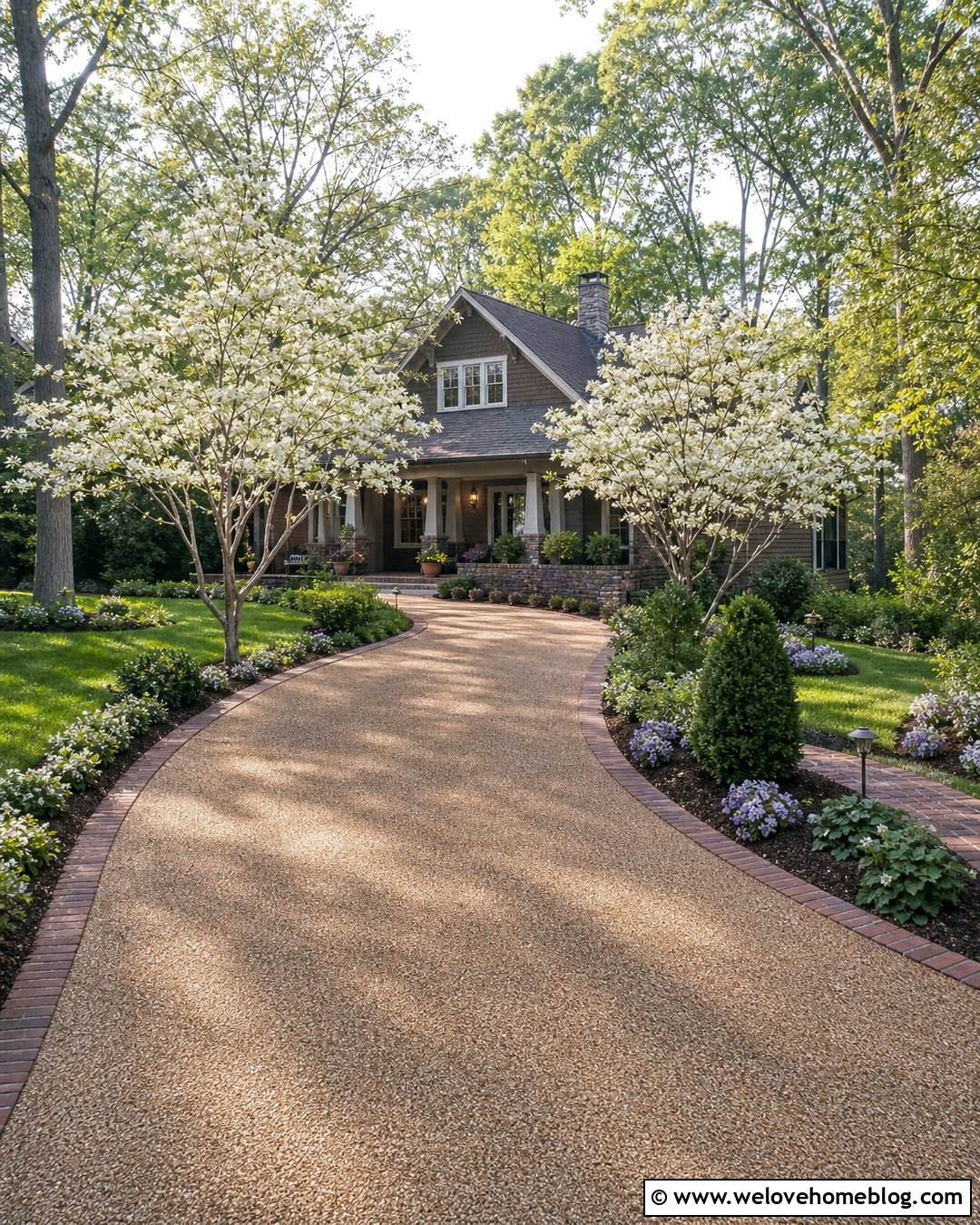
Flowering trees can frame a driveway beautifully when they are positioned for mature size and safe clearance. Choose a warm-toned resin-bound gravel driveway with a gentle curve leading to a craftsman home. Plant evenly spaced ornamental trees beyond broad beds on each side, avoiding rigid placement directly beside the pavement. Beneath the trees, use shade-tolerant ground cover, spring bulbs, and compact evergreen shrubs for layered interest. A low brick border can contain the beds and repeat colors from the house facade. Preserve open views near the street and keep branches pruned above pedestrian and vehicle zones as the trees develop. This complete landscape creates an appealing overhead rhythm without forming a dense tunnel. It works particularly well on medium or long driveways with enough width for healthy root growth.
16. Driveway With Raised Garden Beds
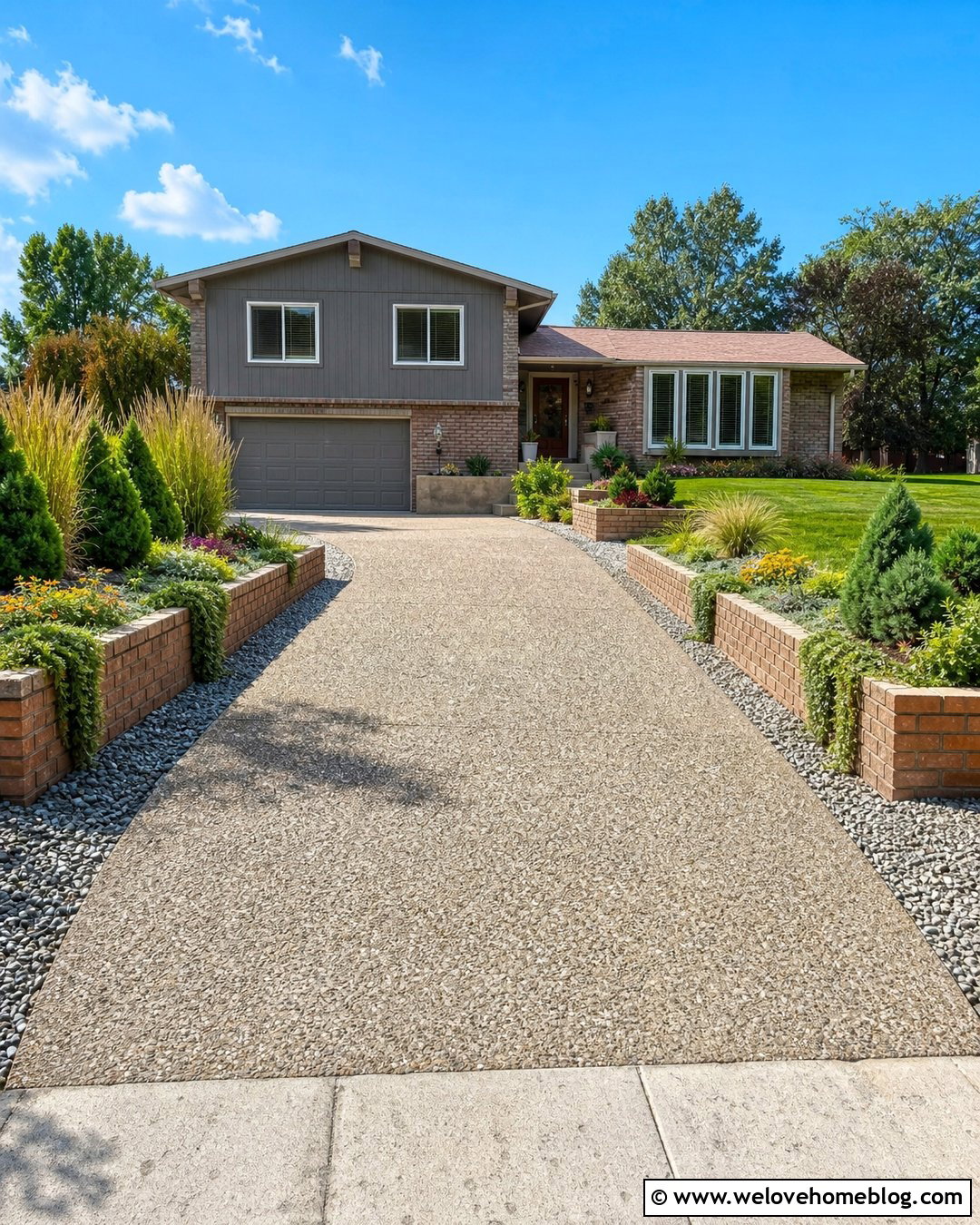
Raised beds can solve difficult soil conditions while giving driveway landscaping a crisp, architectural shape. Combine a straight exposed aggregate driveway with low rectangular beds constructed from warm-toned brick or natural stone. Place the beds near the garage and front walkway rather than along every inch of pavement. Fill them with compact evergreens, ornamental grasses, cascading ground cover, and a controlled amount of seasonal color. Keep wall heights low near vehicle doors and street sightlines. A gravel strip between the raised beds and driveway simplifies cleanup and creates visual breathing room. Repeat the wall material around a porch or entry step to make the design feel connected to the house. This complete layout suits split-level, ranch, and contemporary homes, bringing dimension to a flat front yard without sacrificing usable driveway space.
17. Driveway With Grass and Paver Strips
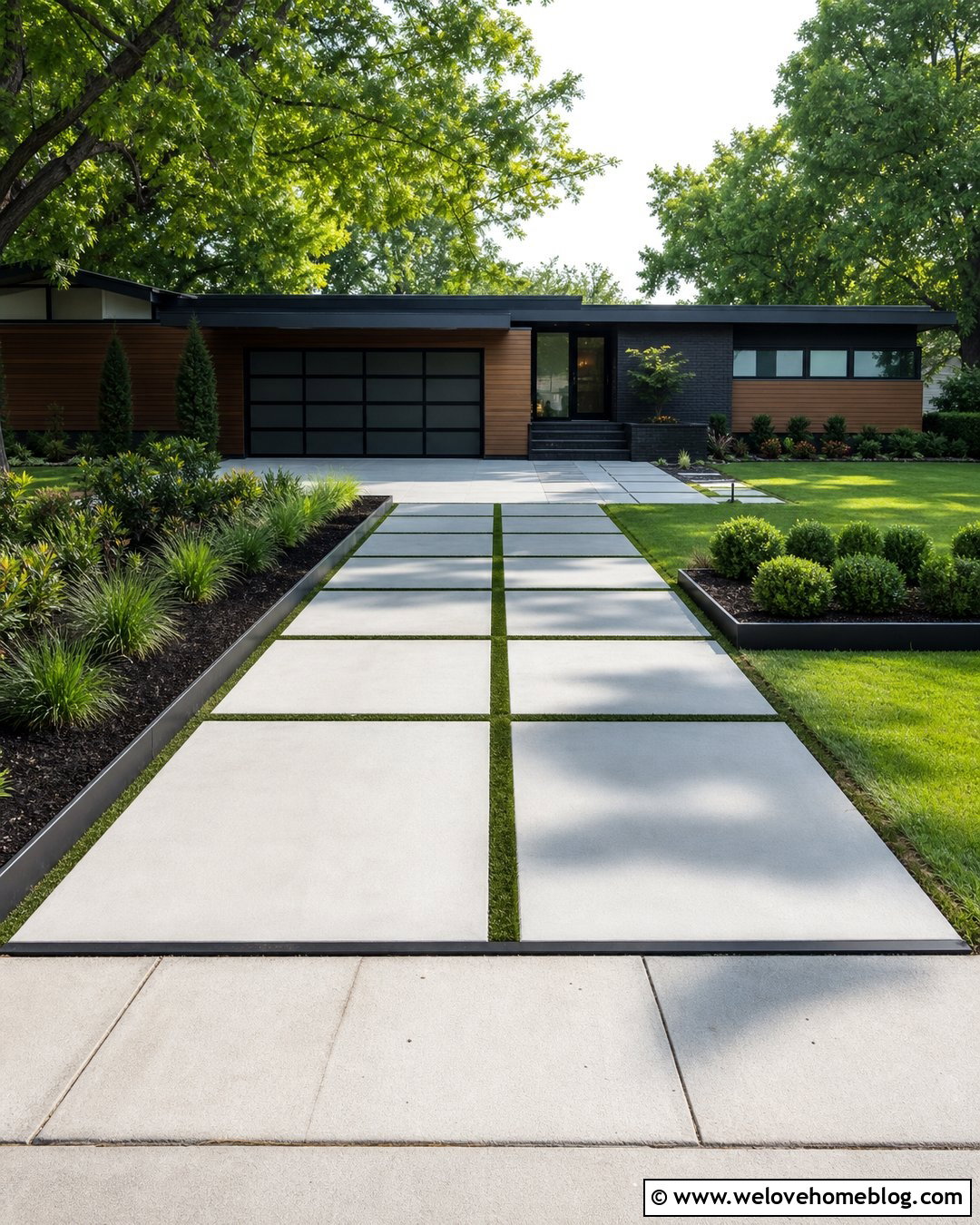
Green strips can visually reduce the amount of hardscape in a front yard while maintaining a clear vehicle route. Create a straight driveway from large rectangular concrete pavers, leaving narrow planted joints or a wider grass strip through the center where appropriate for the site. Frame the outer edges with low steel edging, clipped shrubs, and simple perennial beds. Choose turf or ground cover that can tolerate the property’s sunlight, drainage, and expected foot traffic. Near the house, transition to a solid paved parking pad so turning and parking remain convenient. A matching paver walkway should branch cleanly toward the front door. This complete design works especially well with modern and midcentury homes, giving the driveway a fresh garden-like appearance through strong geometry and carefully controlled greenery.
18. Driveway With Cottage Garden Landscaping
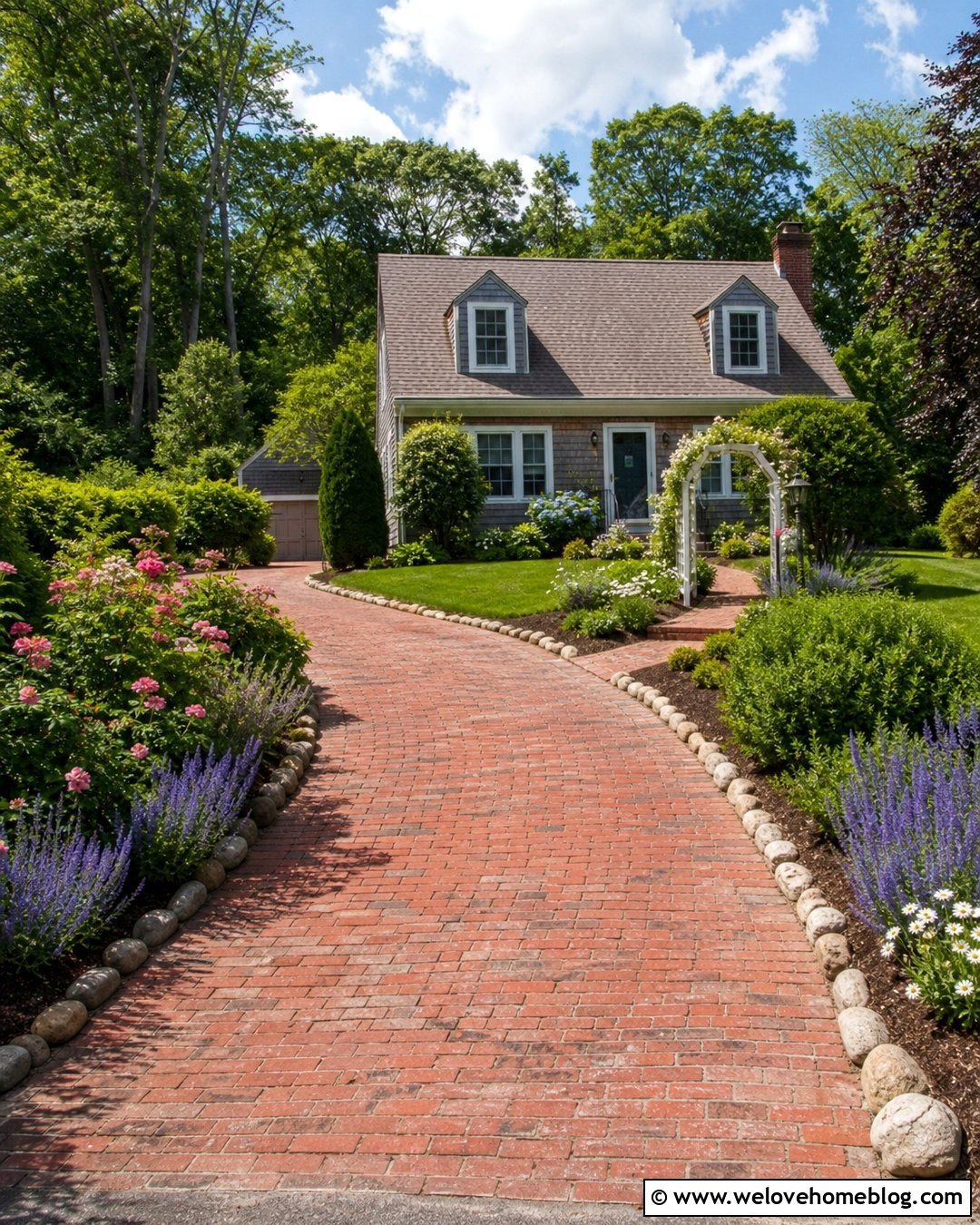
Soft flowers and winding borders can make a practical driveway feel like part of a welcoming garden. Use an aged brick paver driveway with a gentle curve and irregular natural-stone edging. Fill generous side beds with roses, salvia, catmint, daisies, and neatly shaped evergreen shrubs. Repeat colors and plant groups rather than placing every variety once. Allow a few plants to soften the border, but maintain a clear setback where passengers step out. A small arbor over the separate front walkway can connect the driveway landscape to the entrance without restricting vehicles. Include a patch of lawn or simple ground cover to give the colorful beds visual rest. This complete arrangement suits cottage, Tudor, and Cape Cod homes, creating abundant character while preserving a functional, clearly defined driving surface.
19. Driveway With Desert Landscaping
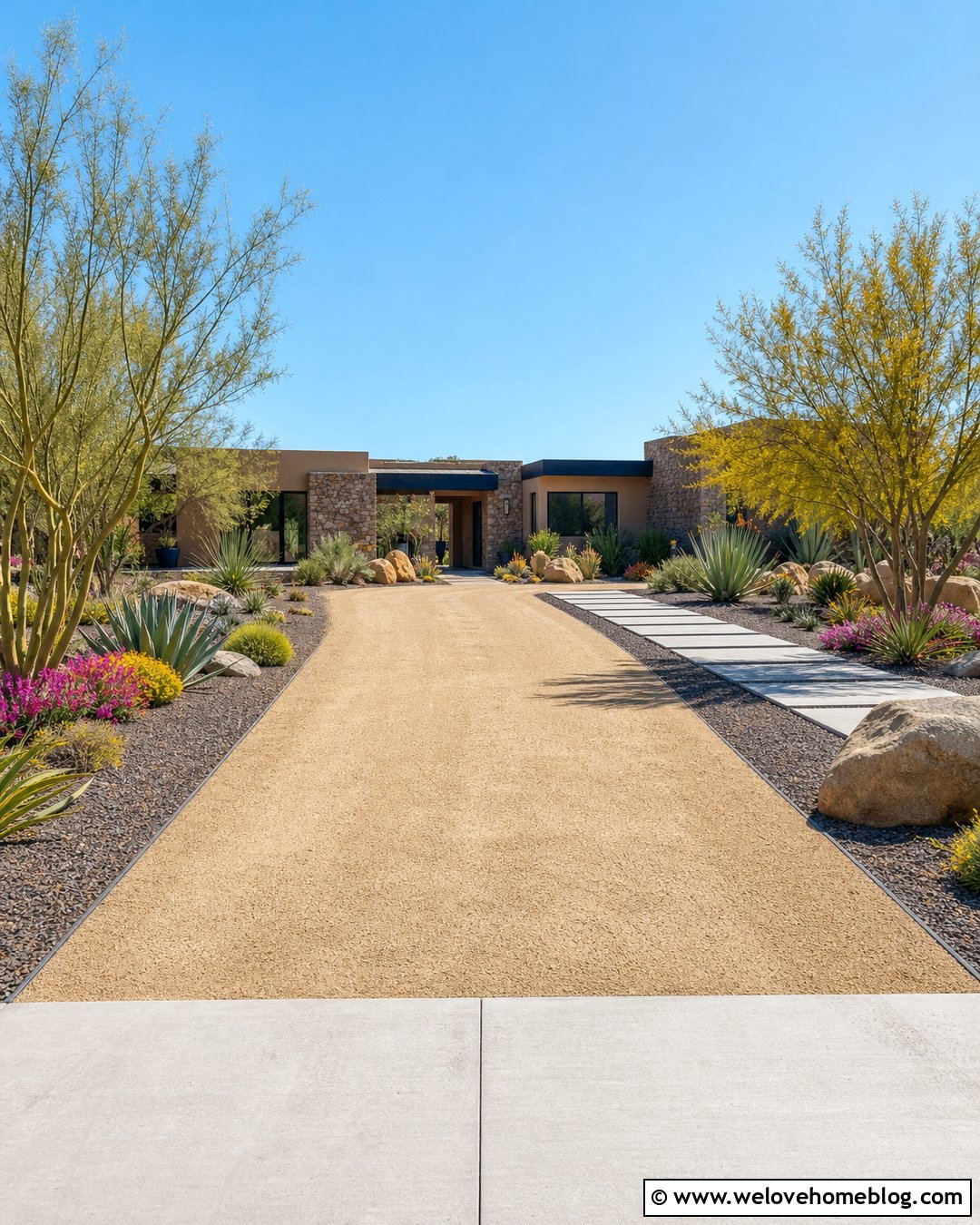
A desert-inspired driveway can look rich and layered without relying on broad lawns or thirsty-looking flower borders. Pair a sandy beige decomposed granite driveway with dark steel edging and broad beds of contrasting crushed rock. Arrange agave, yucca, desert-adapted grasses, rounded shrubs, and regionally suitable flowering plants in widely spaced groups. Add several large boulders as anchors, placing them safely beyond vehicle clearance areas. A straight concrete slab walkway can cross the textured landscape and lead toward a low-profile modern house. Keep the driveway entrance open and use smaller plants near intersections to protect visibility. Repeating the same rock colors around the house creates unity. This complete layout offers bold shapes, restrained planting, and a clean Southwestern character that looks intentional from the curb.
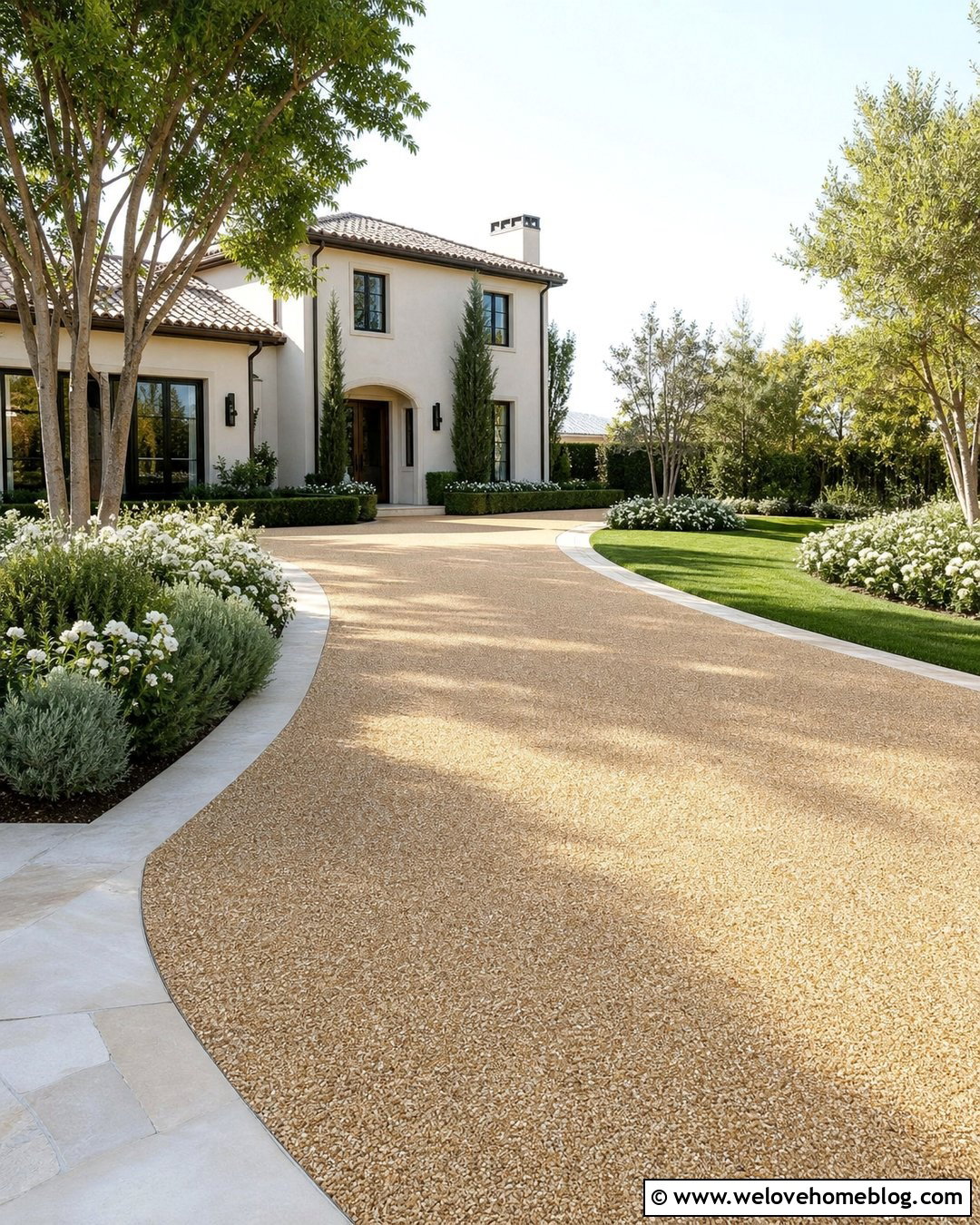
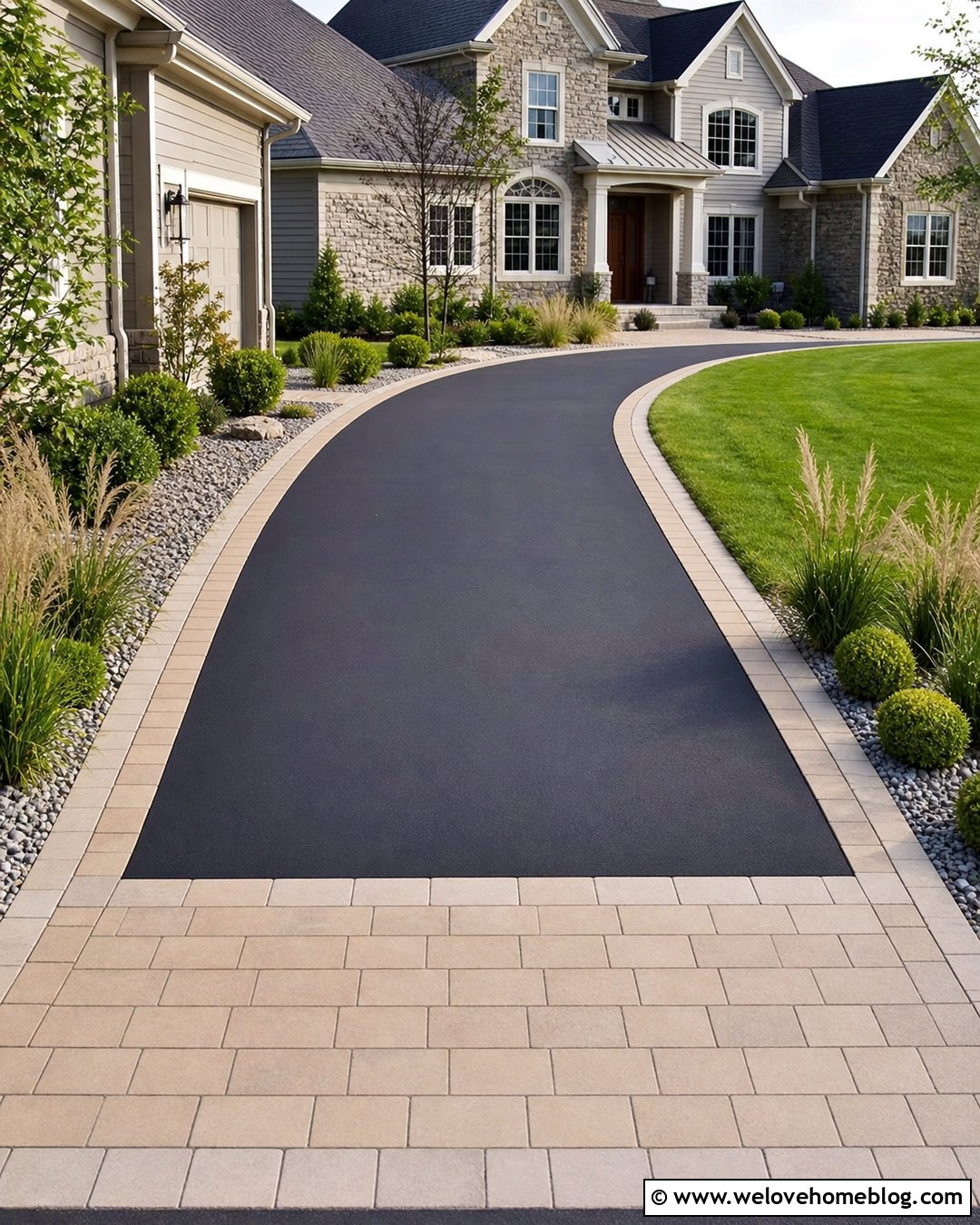
20. Driveway With Landscape Lighting and Mixed Shrubs
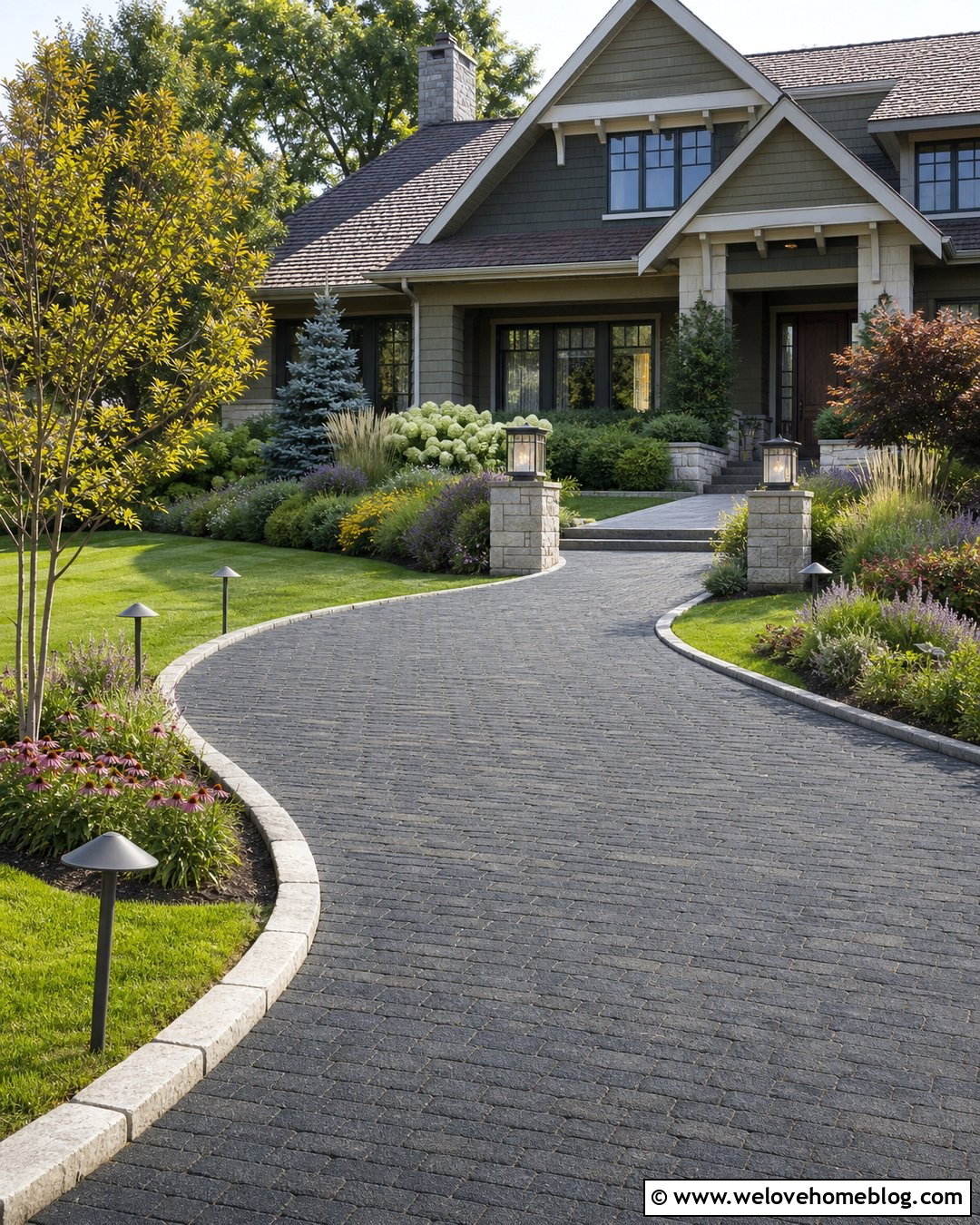
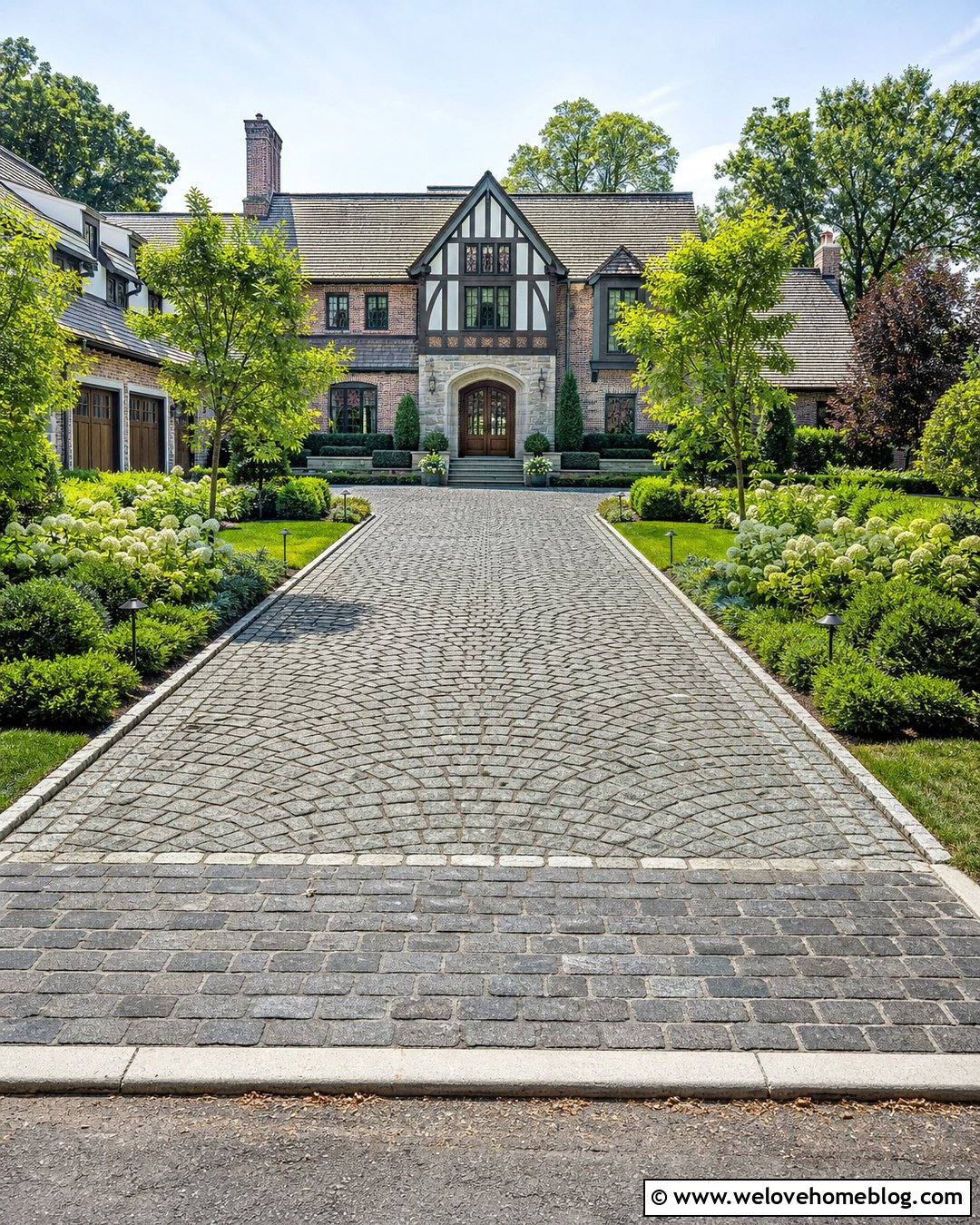
Good lighting can unify the entire driveway landscape rather than functioning as a collection of isolated fixtures. Start with a curved dark-gray cobblestone driveway bordered by low limestone curbs. Build layered beds containing evergreen shrubs, flowering perennials, ornamental grasses, and one small tree near the house. Place low shielded path lights at important curves, planting transitions, and walkway connections. Space them evenly enough to guide movement without lining the driveway like a runway. Subtle uplighting can highlight the tree or textured house facade, while entrance pillars provide another balanced location for fixtures. During the day, the plants and stonework remain the main attraction. This complete design suits traditional and craftsman homes, delivering a refined curb view while making driveway edges and pedestrian connections easier to recognize.
Conclusion:
The most effective driveway landscaping balances beauty with everyday movement, visibility, drainage, and maintenance. Before planting, observe sunlight, pavement heat, soil moisture, vehicle clearance, and the mature size of every tree or shrub. Then select a simple material palette that connects the driveway to the home. Repeated plants, defined borders, layered heights, and uncluttered entrances usually create a more cohesive result than scattered decorations. You can begin with one manageable upgrade, such as widening a bed, adding stone edging, or replacing struggling plants with better-suited varieties. Whether your property is narrow, sloped, rural, or spacious, these 20 landscape near driveway ideas can help you create a safer, greener, and more welcoming arrival.

Related posts:

Leave a Reply