
A well-lit concrete driveway can feel safer, look more polished, and make your home easier to approach after dark. These 20 Concrete Driveway Lighting Ideas explore complete designs rather than isolated fixtures. You will find smooth, broom-finished, exposed aggregate, stamped, and stained concrete paired with lighting that suits each layout. Some options use recessed LEDs for a seamless modern finish. Others combine bollards, lantern pillars, illuminated borders, or softly lit landscaping with traditional homes. The best arrangement defines the driving area without creating harsh glare or an overly bright runway effect. It should also connect naturally with the walkway, garage, entrance, and surrounding yard. Use the complete looks below to find practical inspiration among these 20 Concrete Driveway Lighting Ideas.

1. Modern Concrete Driveway With Recessed Lights
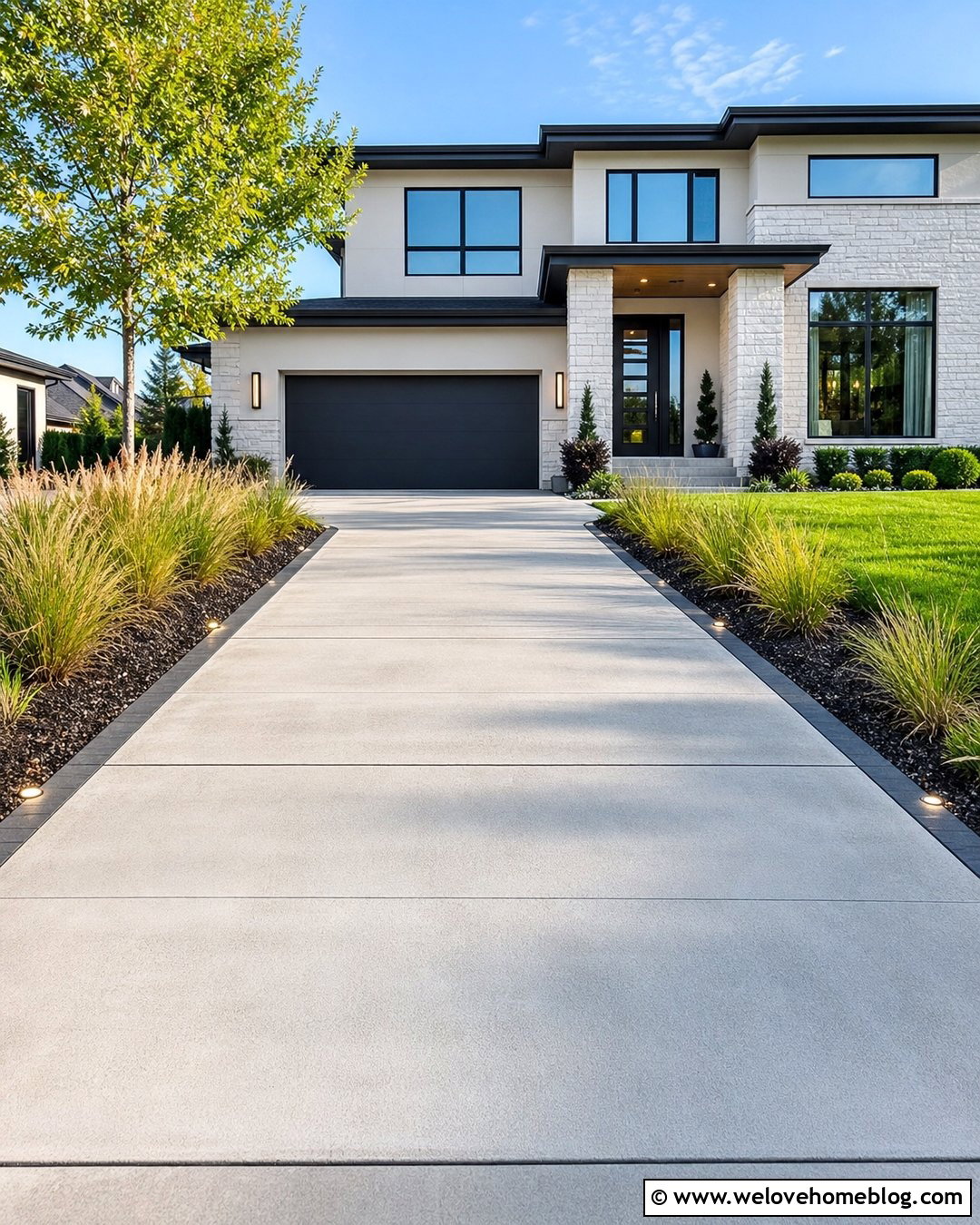
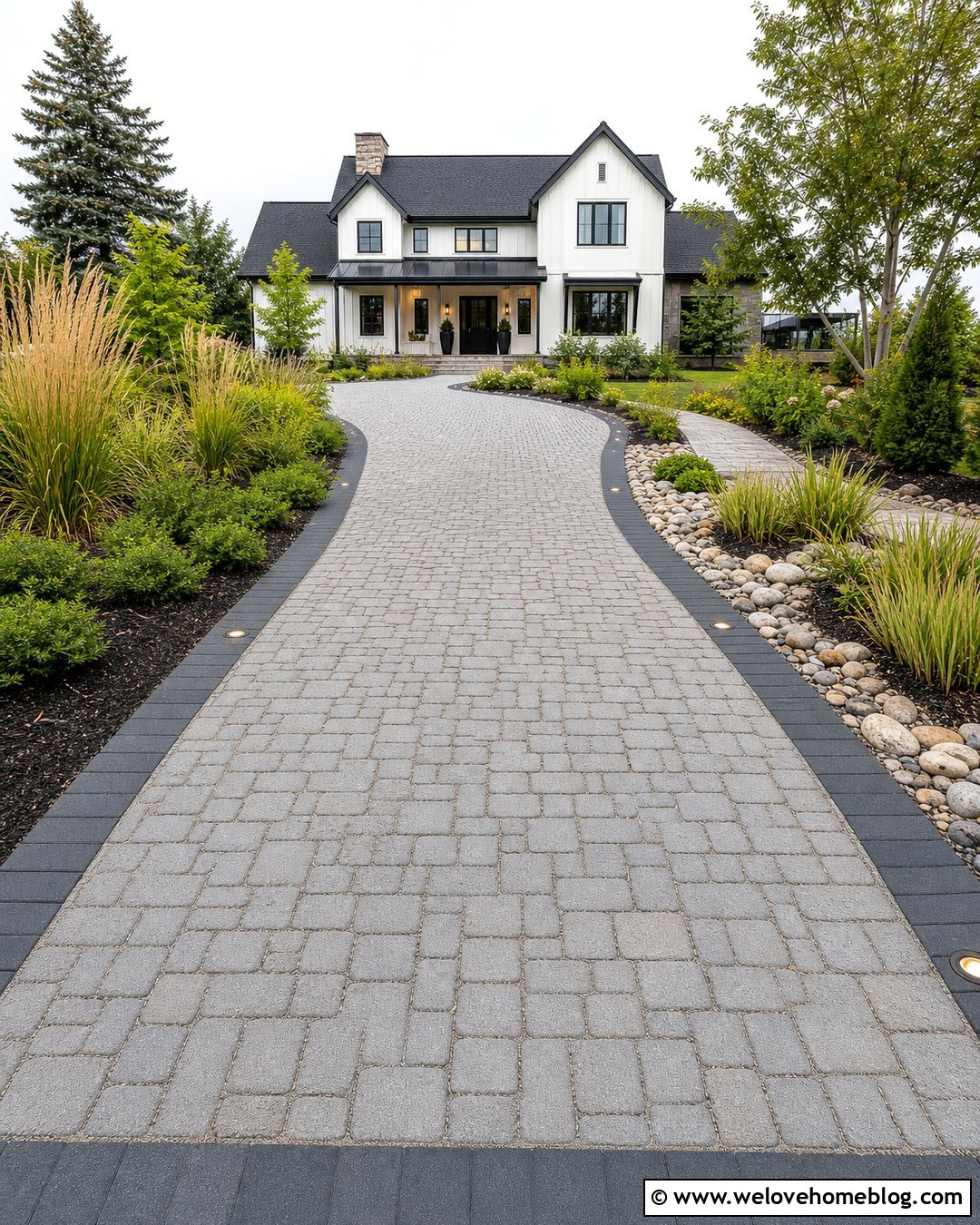
A smooth light-gray concrete driveway creates an ideal base for small recessed lights installed along its outer edges. Keep the layout straight and divide the surface into large rectangular slabs with narrow control joints. Place drive-rated LED fixtures at key corners rather than crowding every section. This gives the driveway a clean outline without making it resemble an airport runway. Black metal edging and low ornamental grasses reinforce the modern look. Near the garage, add matching downlights to brighten the parking area and soften the transition to the house. Recessed fixtures should be selected for vehicle loads, drainage conditions, and outdoor exposure. Coordinate their housings, conduit, and access points before pouring new concrete whenever possible. ()
2. Concrete Driveway With LED Strip Lighting
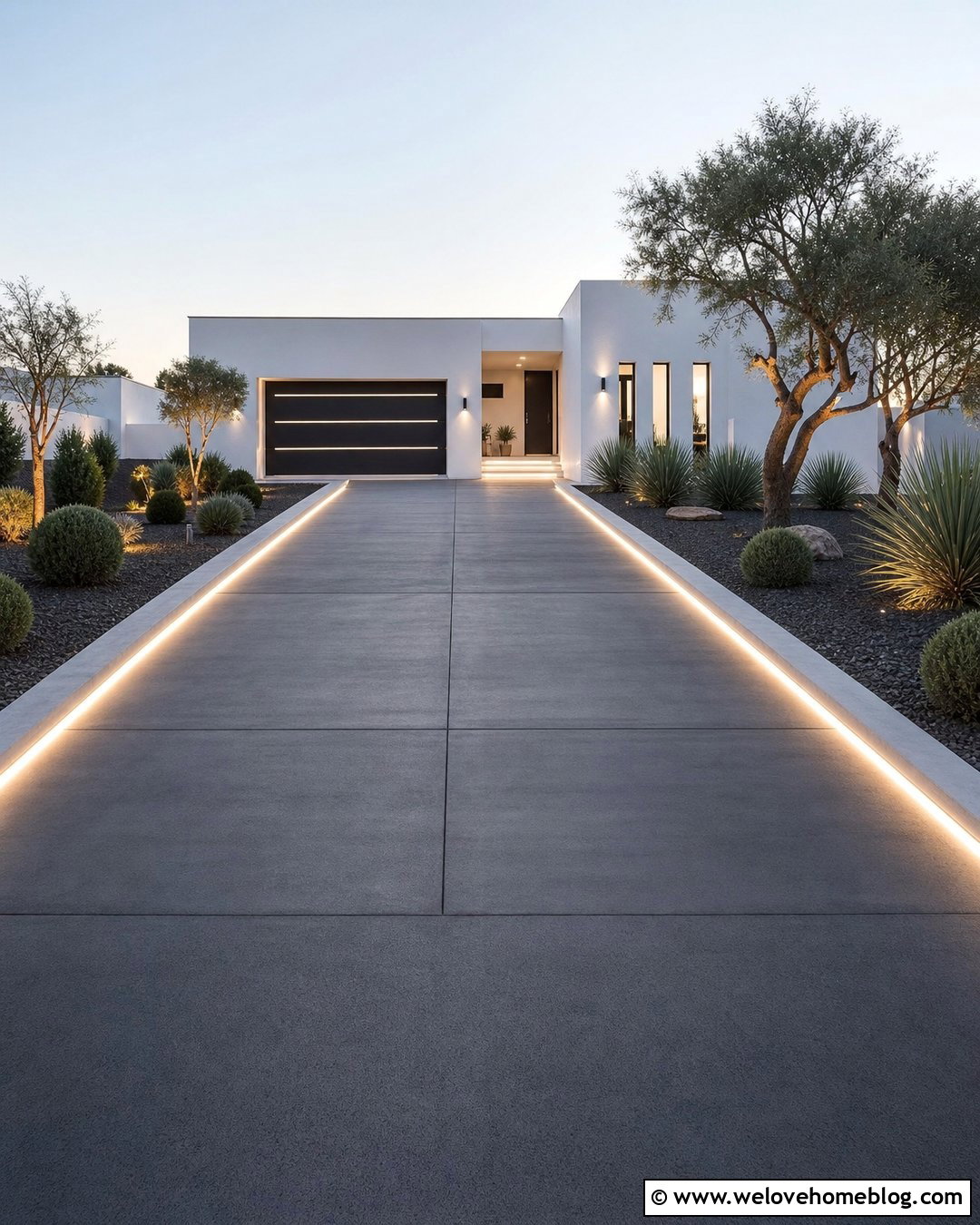
Thin LED channels can turn a simple concrete driveway into a strong architectural feature. For a balanced design, run continuous linear lighting beside the driveway instead of placing it across the primary wheel paths. A wide, straight driveway made from smooth charcoal concrete works especially well with this treatment. Use pale concrete bands around the perimeter to create contrast during the day. At night, the illuminated edges make the driveway shape easier to read while preserving an uncluttered surface. Repeat the linear effect under a floating entry step or along a nearby walkway. Waterproof channels, diffusers, drainage, wiring, and power-supply access require careful planning. Embedded strip systems are easiest to coordinate before the driveway is poured. ()
3. Broom Finish Concrete Driveway With Bollard Lights
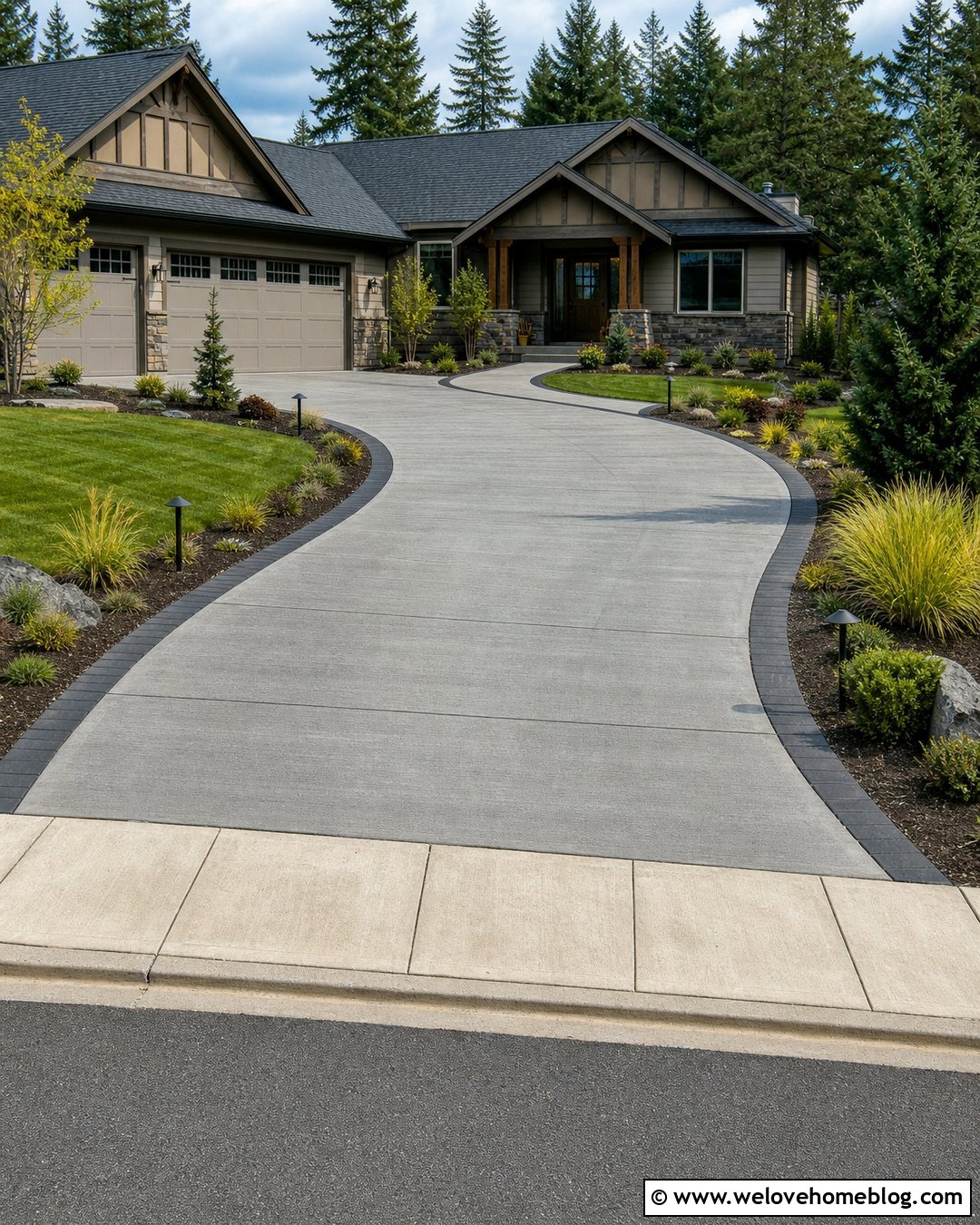
Do you want dependable lighting without cutting fixtures into the concrete? Pair a broom-finished concrete driveway with low, downward-facing bollard lights in the planting beds. The subtle texture of the concrete provides traction and suits ranch, craftsman, and contemporary suburban homes. Position the bollards beyond the driveway edge so opening car doors, lawn equipment, and snow removal are less likely to damage them. Staggered placement feels more natural than perfectly matched rows. Black fixtures look crisp beside gray concrete, while bronze finishes blend into mulch and greenery. Add a soldier-course border of dark concrete pavers to frame the surface. Shielded bollards should cast light toward the driveway and nearby landscaping rather than into neighboring windows or drivers’ eyes.
4. Exposed Aggregate Driveway With In-Ground Uplights
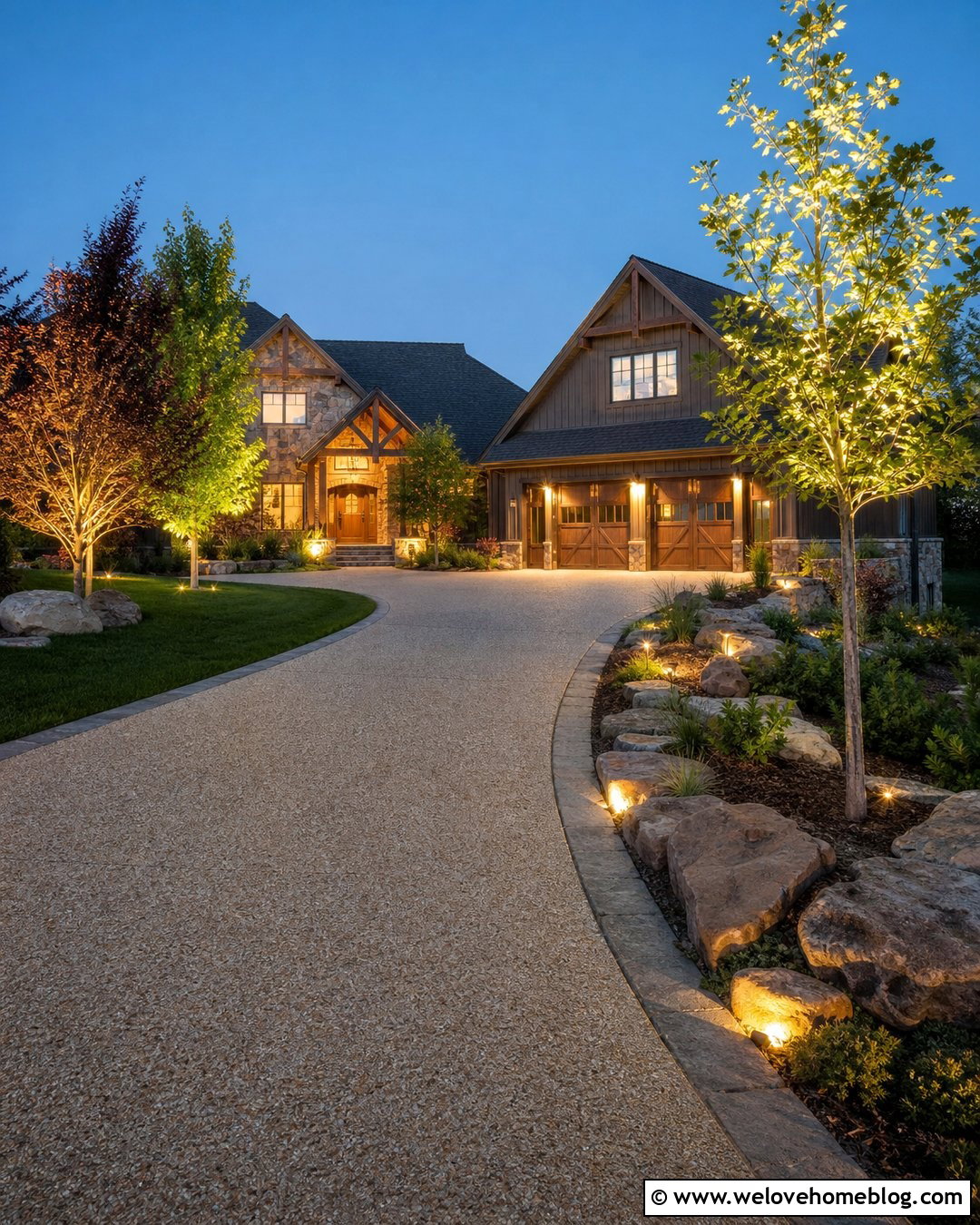
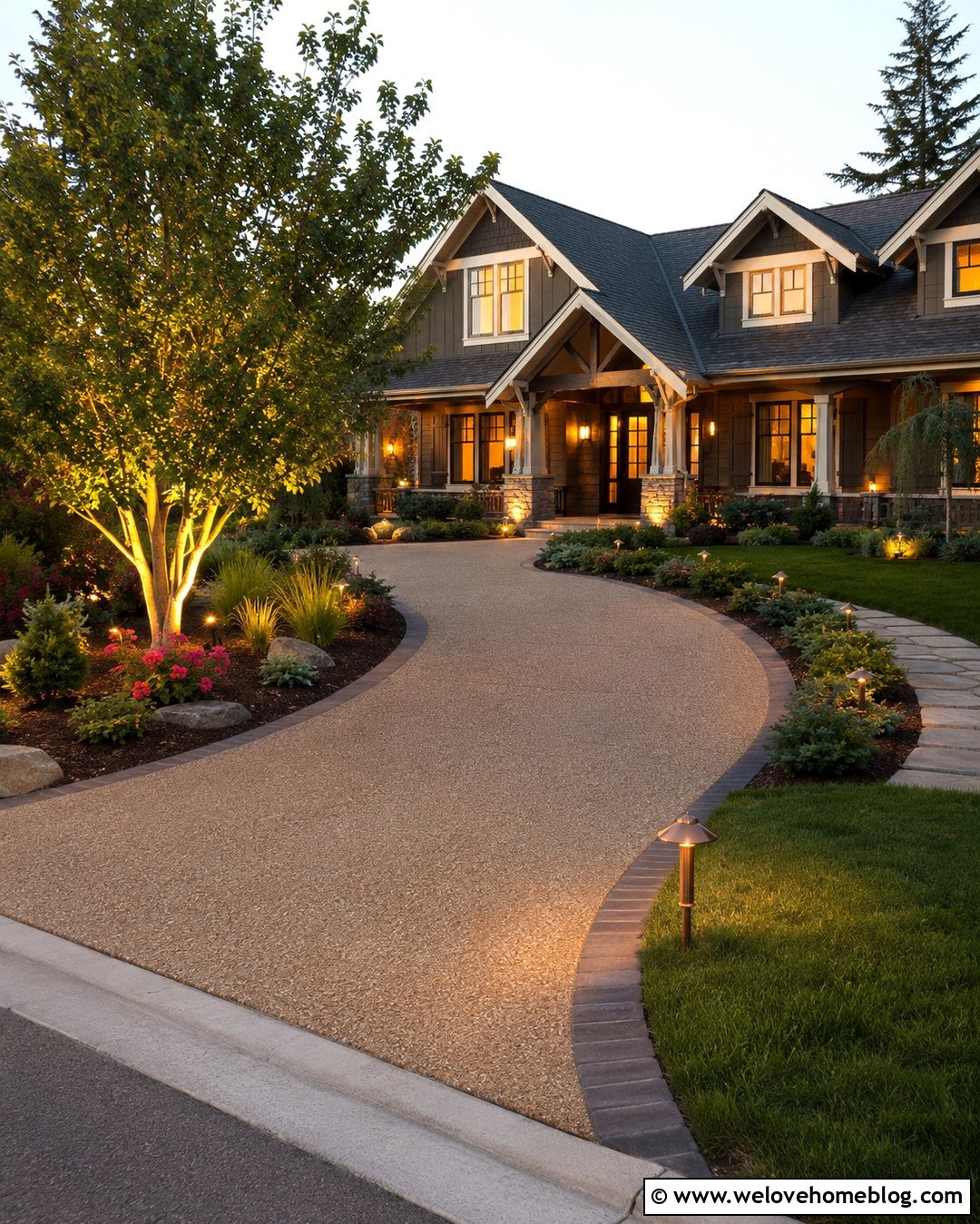
Exposed aggregate concrete has a lively stone texture that becomes even more attractive with carefully positioned uplighting. Use a gently curved driveway with dark stone edging and broad planting beds on both sides. Recessed fixtures can sit within the border rather than the main driving surface, aiming upward at small trees or stone columns. This keeps the focus on the overall approach while allowing reflected light to reach the driveway. Choose warm illumination that brings out tan, brown, and gray aggregate tones. Avoid aiming fixtures directly toward the street or garage. A matching exposed aggregate walkway can branch toward the front door, guided by smaller shielded lights. The resulting design feels layered, practical, and well suited to a craftsman or rustic contemporary house.
5. Stamped Concrete Driveway With Lantern Pillars
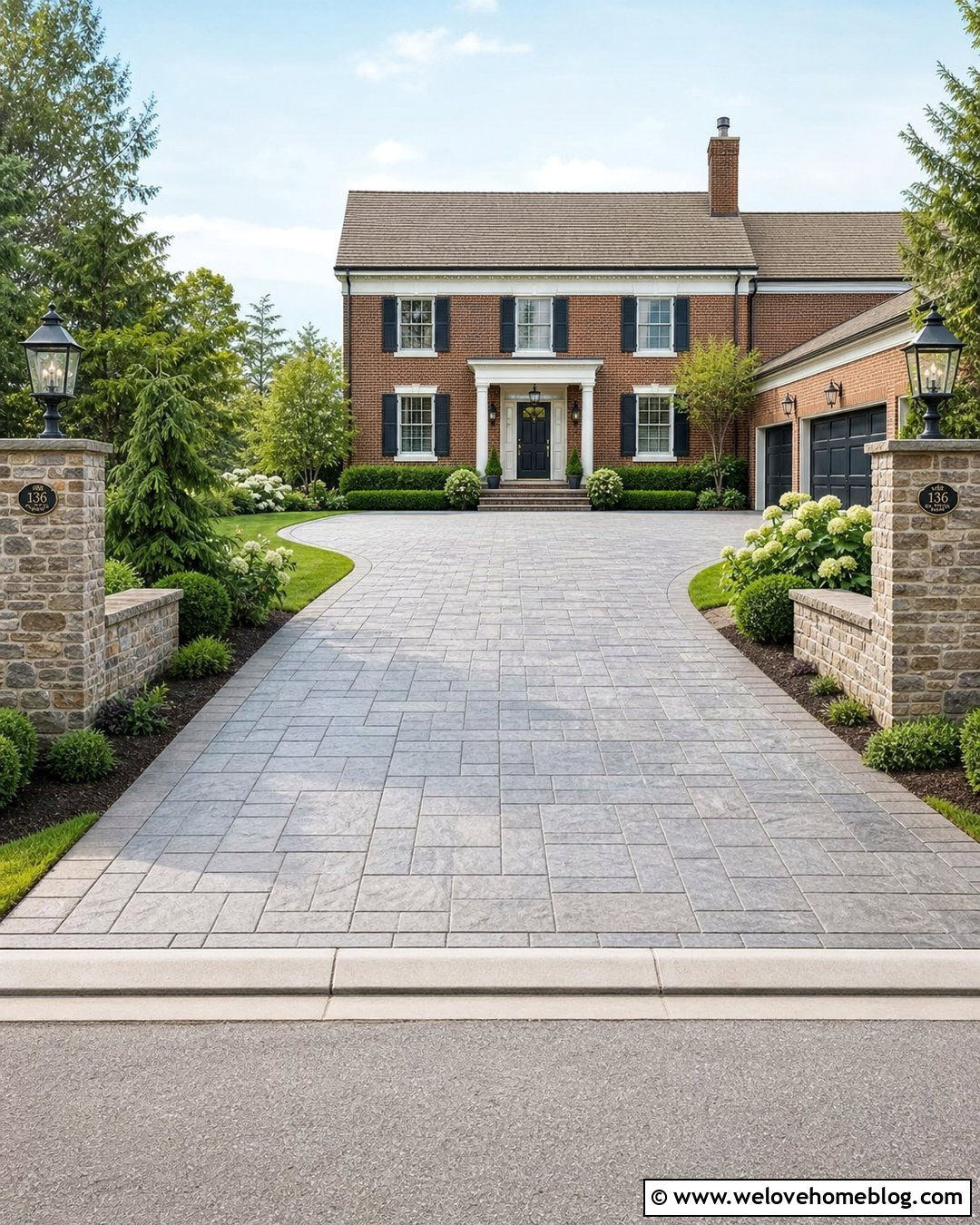
Traditional lanterns look more convincing when they belong to a complete entrance design. Start with a stamped concrete driveway that resembles warm gray slate, then add stone pillars on both sides of the apron. Mount one proportionate lantern on each pillar and use low-output bulbs or dimmable LEDs to prevent glare. A curved driveway gives the lights room to frame the approach without narrowing the usable entrance. Continue the pillar stone into short retaining walls or landscape borders for a connected appearance. Boxwood, hydrangeas, and a neat lawn soften the hardscape. Near the garage, wall lanterns can repeat the same finish at a smaller scale. This layered arrangement suits colonial, French country, and traditional brick houses without making the driveway lighting feel overly decorative.
6. Concrete Driveway With Solar Path Lights
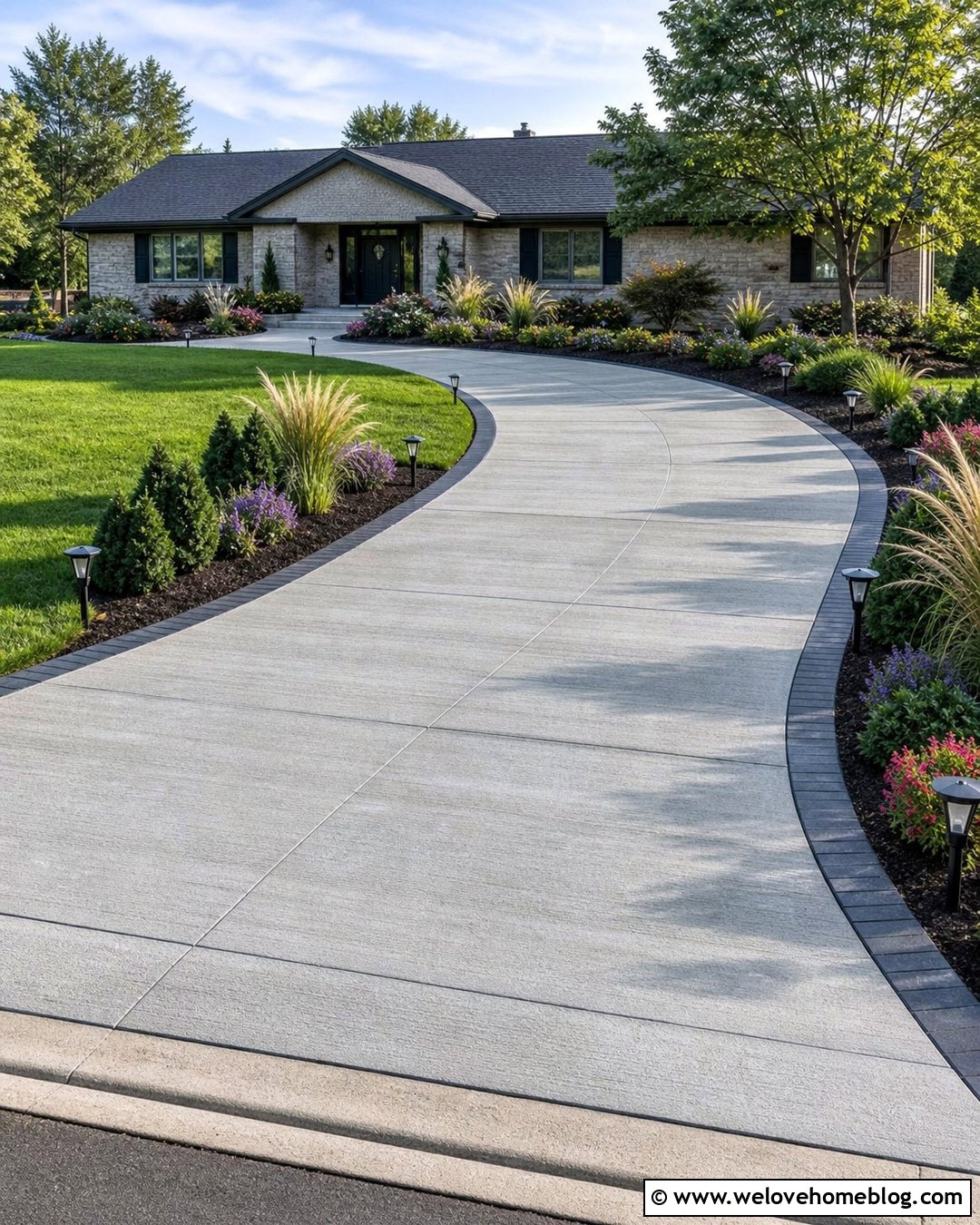
Solar fixtures can work well when they are treated as part of the landscaping rather than pushed against the concrete edge. Choose a pale broom-finished driveway with a straight or softly curved layout. Build generous planting strips containing grasses, evergreen shrubs, and flowering perennials. Place sturdy solar path lights within those beds, where they can illuminate the driveway boundary and nearby plants at the same time. Select simple fixtures with consistent color temperature and enough direct sunlight for reliable charging. A dark concrete border helps separate the pale driveway from mulch and makes the small lights feel intentional. This approach is especially useful where installing new wiring would disturb established landscaping. Keep the entrance, turns, walkway crossing, and garage approach more clearly marked than uninterrupted straight sections.
7. Circular Concrete Driveway With Center Island Lighting
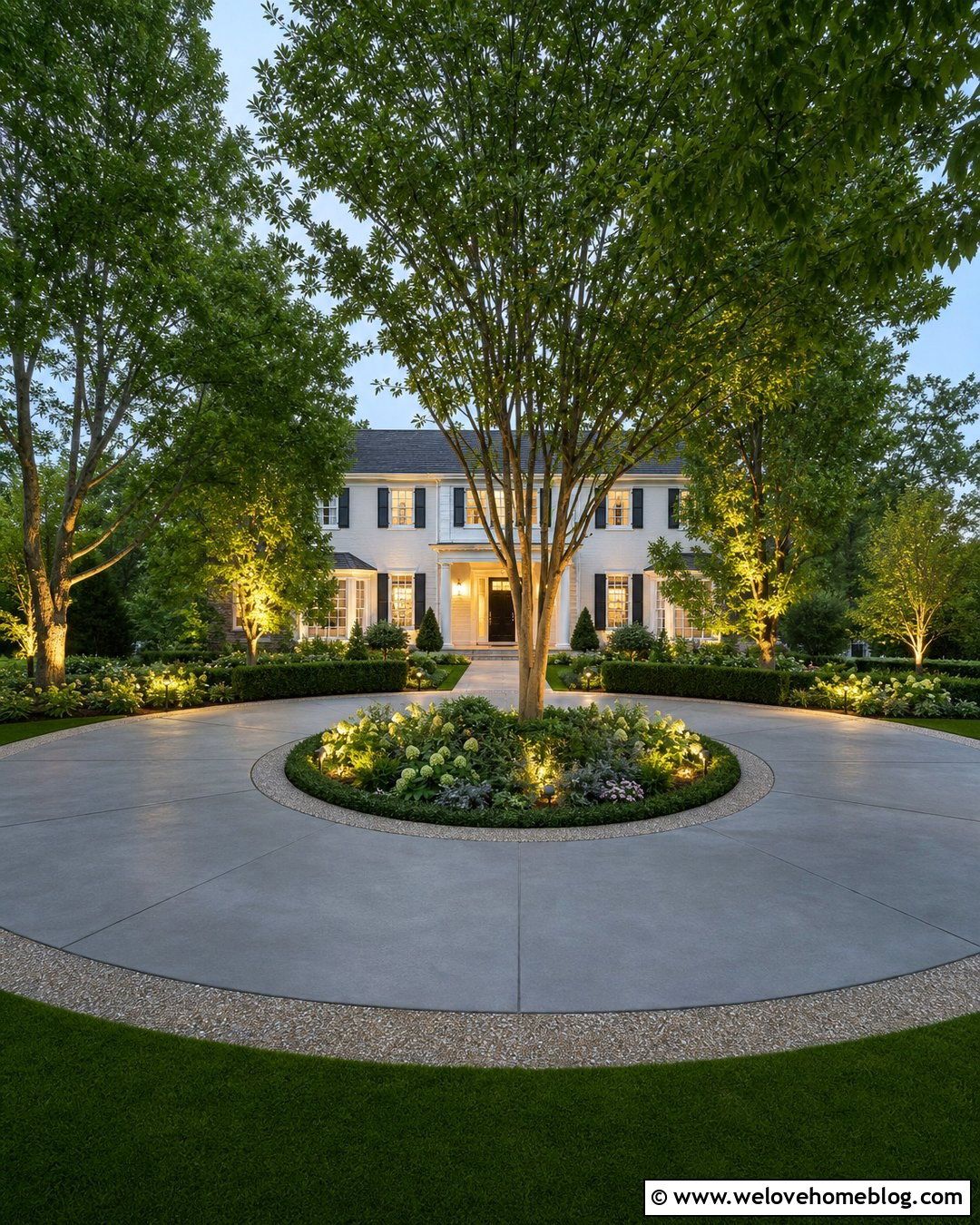
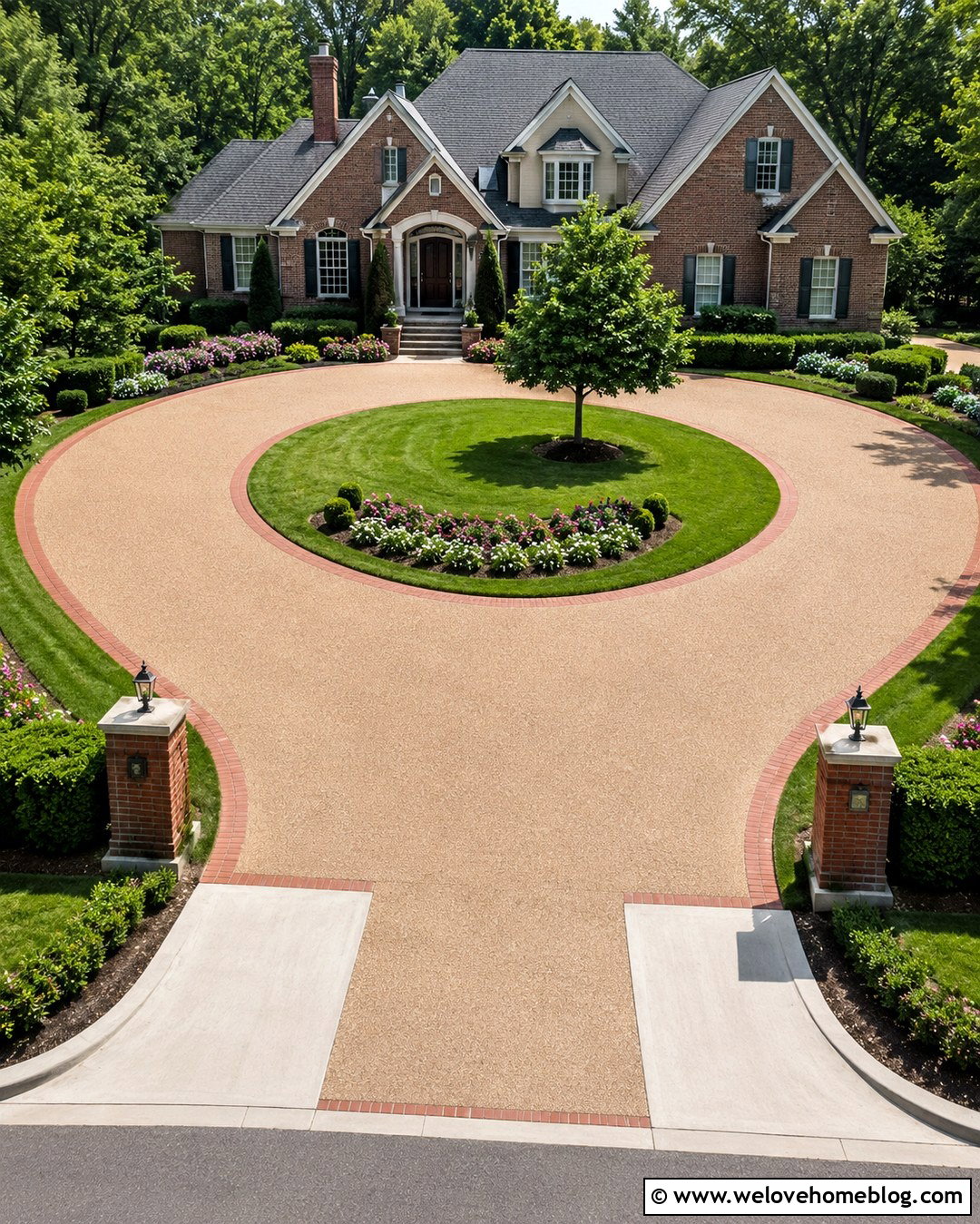
A circular driveway needs lighting that explains its shape immediately. Use smooth medium-gray concrete around a large landscaped island, then place low shielded lights within the island’s outer planting ring. Aim them toward specimen trees, sculptural shrubs, and the inside edge of the concrete. This approach defines the curve without filling the driveway with visible fixtures. At the street, two understated columns with downward-facing lights can mark the entry and exit. A narrow band of contrasting exposed aggregate around the circle adds daytime definition. Keep the center landscaping low near sightlines and taller closer to the middle. For a large colonial or Mediterranean home, matching facade lighting helps connect the circle to the entrance and prevents the island from becoming the only brightly illuminated feature.
8. Curved Concrete Driveway With Staggered Lights
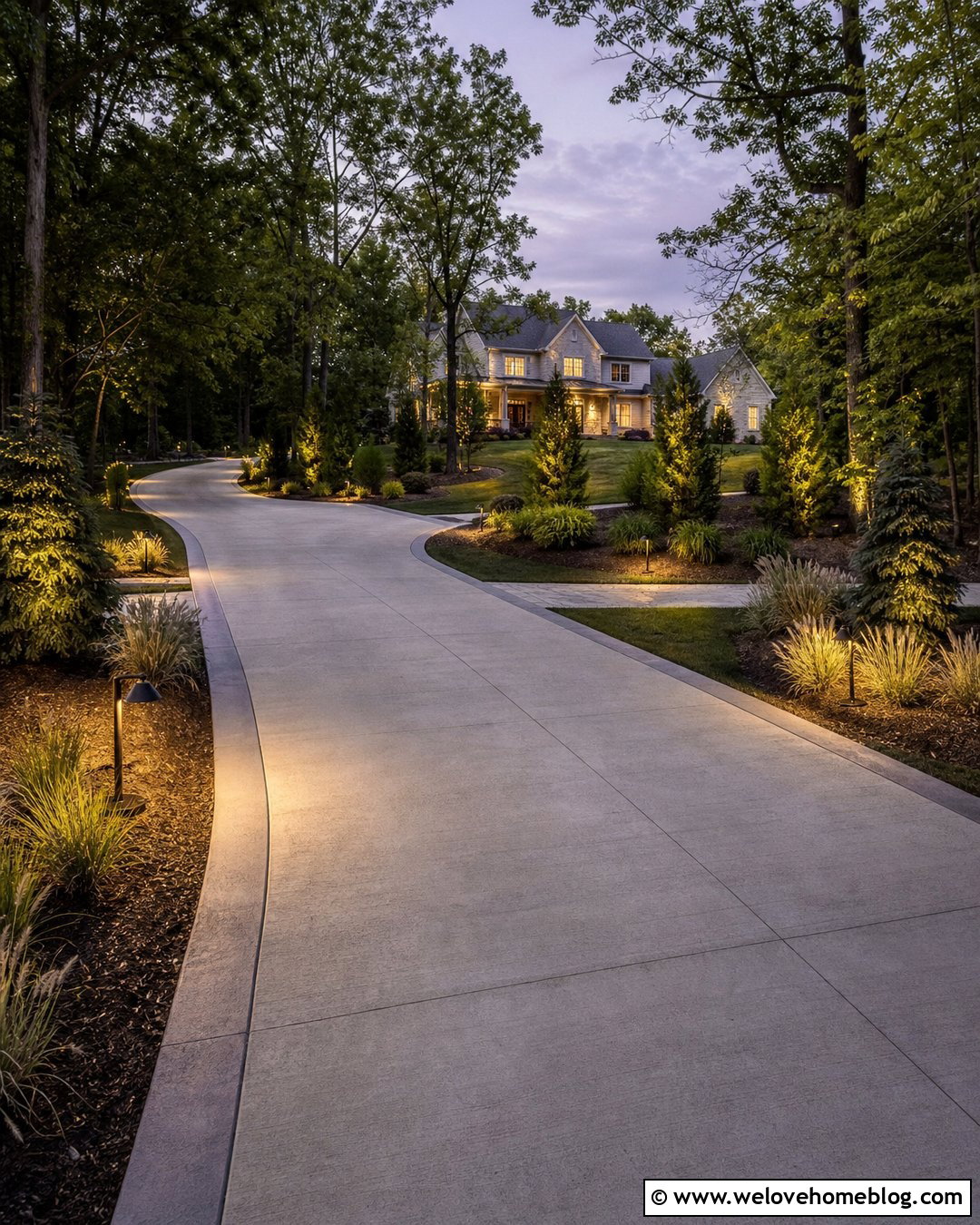
Soft curves can be difficult to follow after dark, particularly when planting beds hide the driveway edge. Make the route clearer with staggered path lights positioned on alternating sides of a light-gray concrete driveway. Use dark concrete curbing to emphasize the curve during daylight and to protect the surrounding mulch. Fixtures with wide, downward-facing shades create overlapping pools of light while reducing visible glare. Place additional illumination near the tightest bend, walkway crossing, and garage apron rather than maintaining rigid spacing. Layer the border with low ornamental grasses, compact evergreens, and one or two canopy trees. The changing plants keep the long approach interesting, while the staggered lighting establishes a relaxed rhythm. This complete design works especially well for wooded suburban lots and country homes with deep setbacks.
9. Concrete Driveway With Lighted Retaining Wall
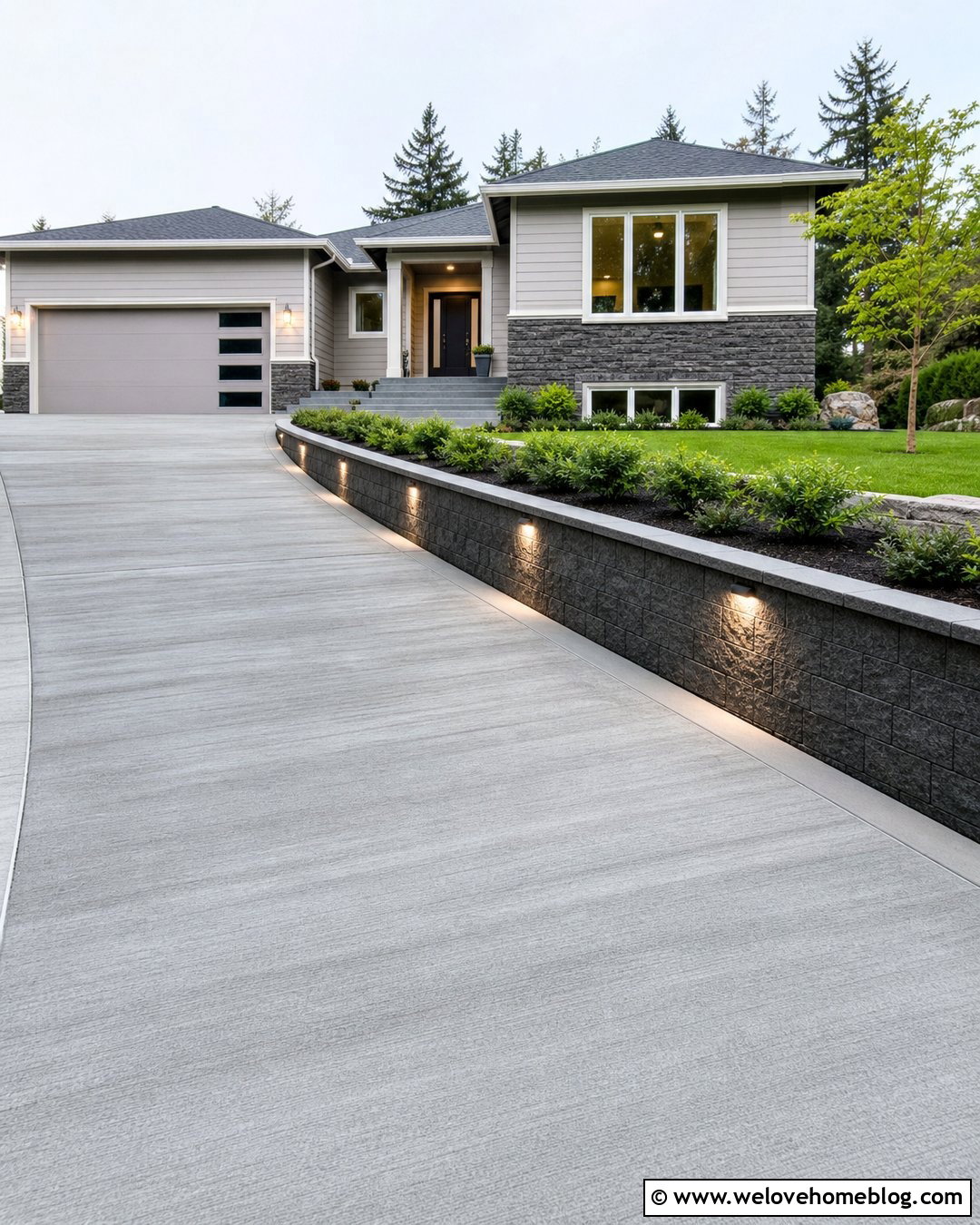
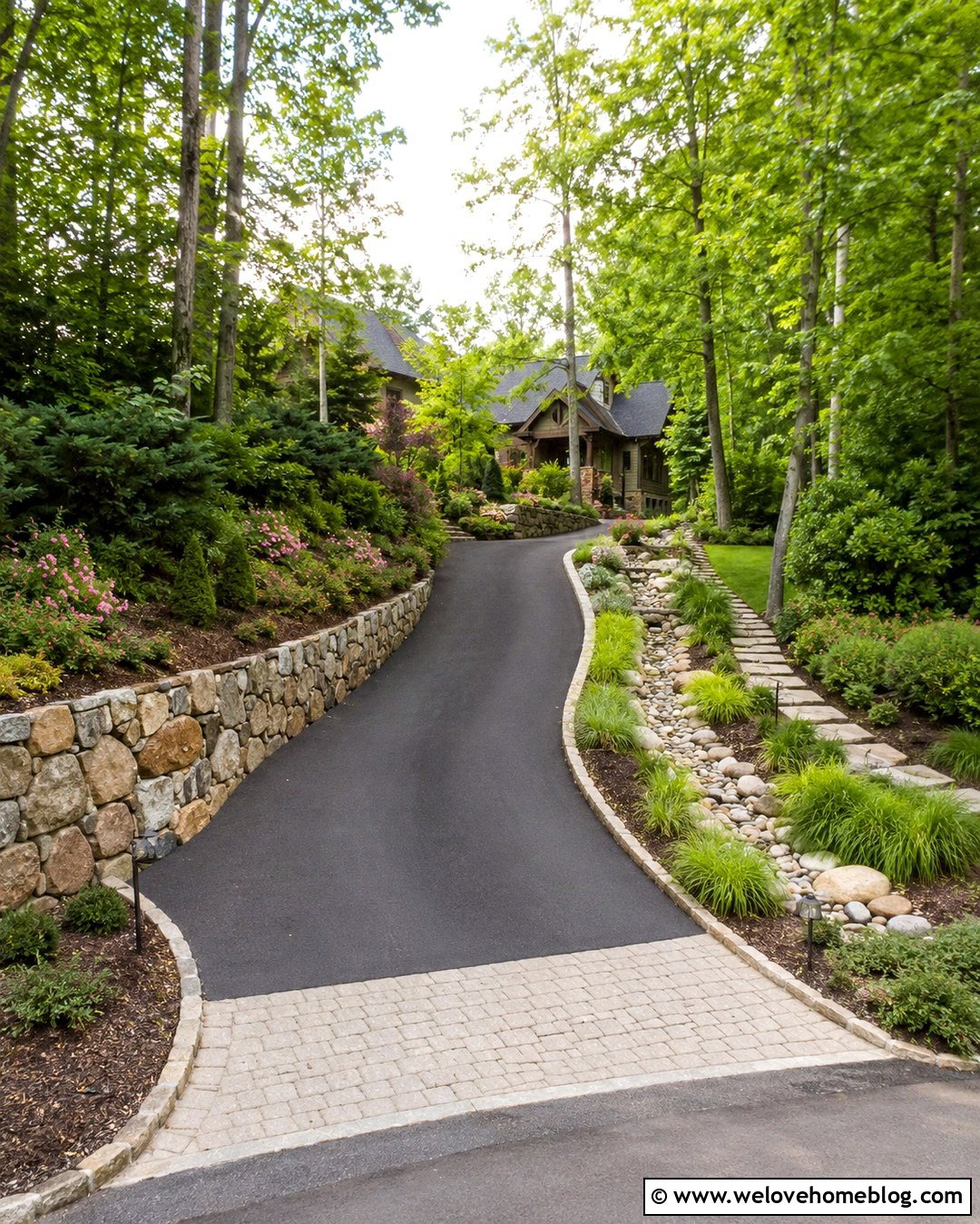
A sloped property often needs a retaining wall, which can also become the driveway’s primary lighting feature. Pair a straight broom-finished concrete driveway with a low wall made from charcoal masonry or natural stone veneer. Install recessed step lights in the wall face and direct their output downward across the driveway edge. The fixtures remain visually quiet while the wall creates a strong boundary. On the open side, use a flush concrete curb and low planting bed to preserve turning space. Continue the wall material toward the front steps or foundation for a unified exterior. Space the lights according to the beam spread instead of treating them as decorative dots. This layout is practical for split-level homes, hillside lots, and narrow driveways where freestanding bollards could feel cramped.

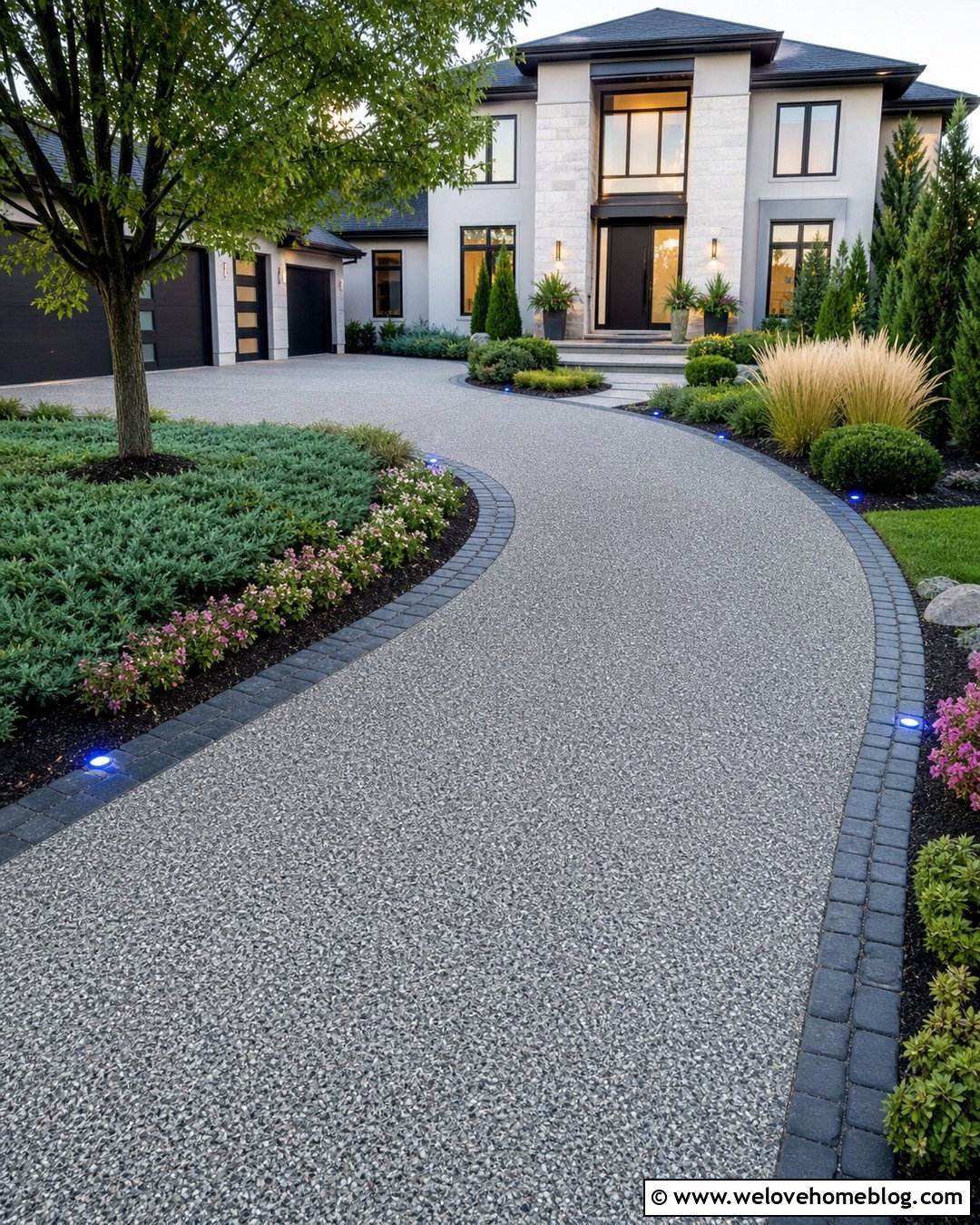
10. Concrete Driveway With Illuminated Paver Border
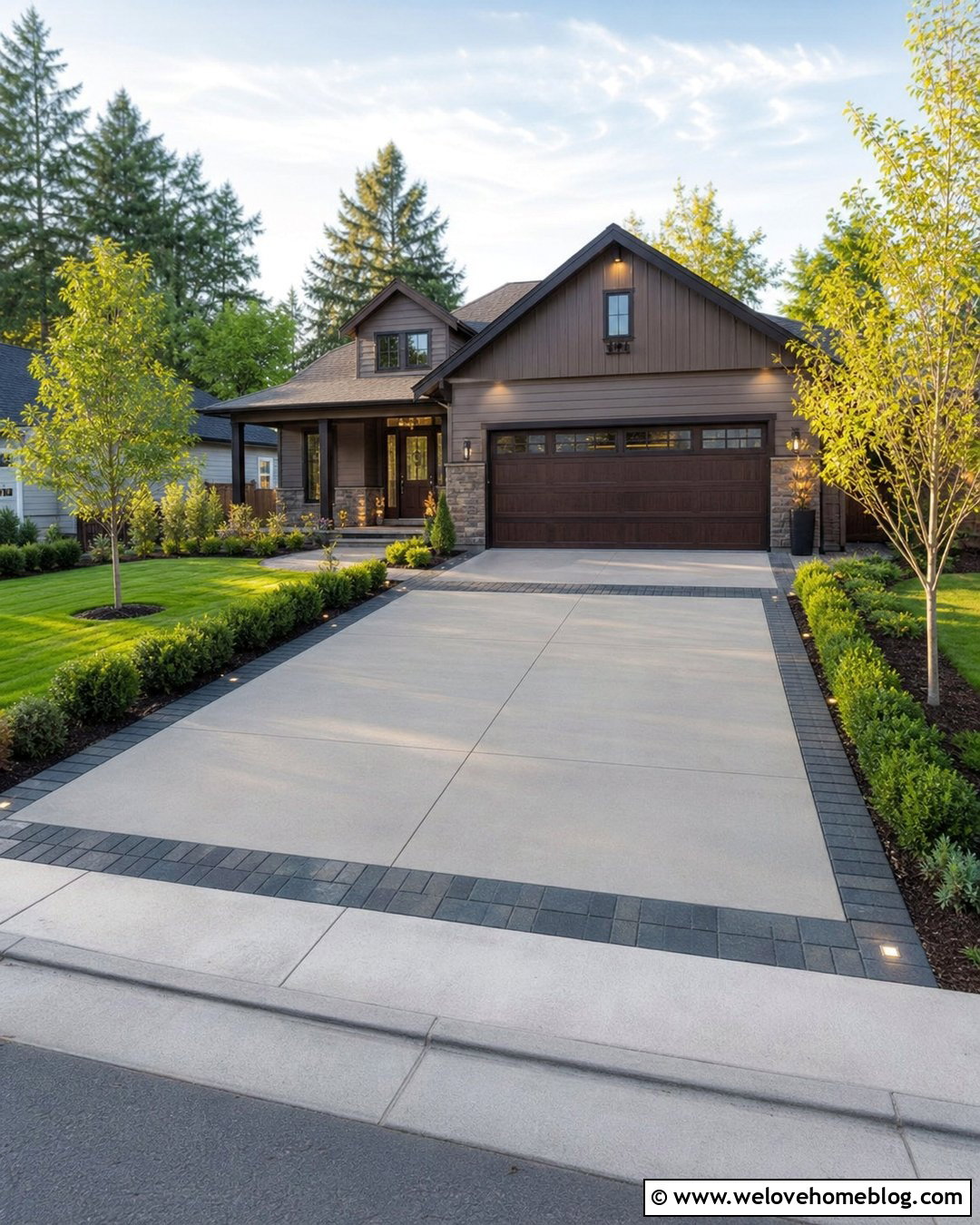
A contrasting border can provide both visual structure and a protected location for lighting. Pour the main driveway in smooth warm-gray concrete, then frame it with charcoal concrete pavers. Integrate small recessed marker lights at selected points within the paver band, keeping them outside normal tire paths whenever the layout allows. The darker border makes the driveway look finished during the day, while the lights define its width after sunset. Repeat the pavers across the driveway as a ribbon near the garage or walkway intersection. Simple lawn panels and neatly clipped shrubs prevent the design from becoming busy. This treatment can modernize a standard suburban driveway without requiring elaborate landscaping. Confirm that every embedded fixture is suitable for wet outdoor conditions and any expected vehicle contact.
11. Concrete Driveway With Motion Sensor Lighting
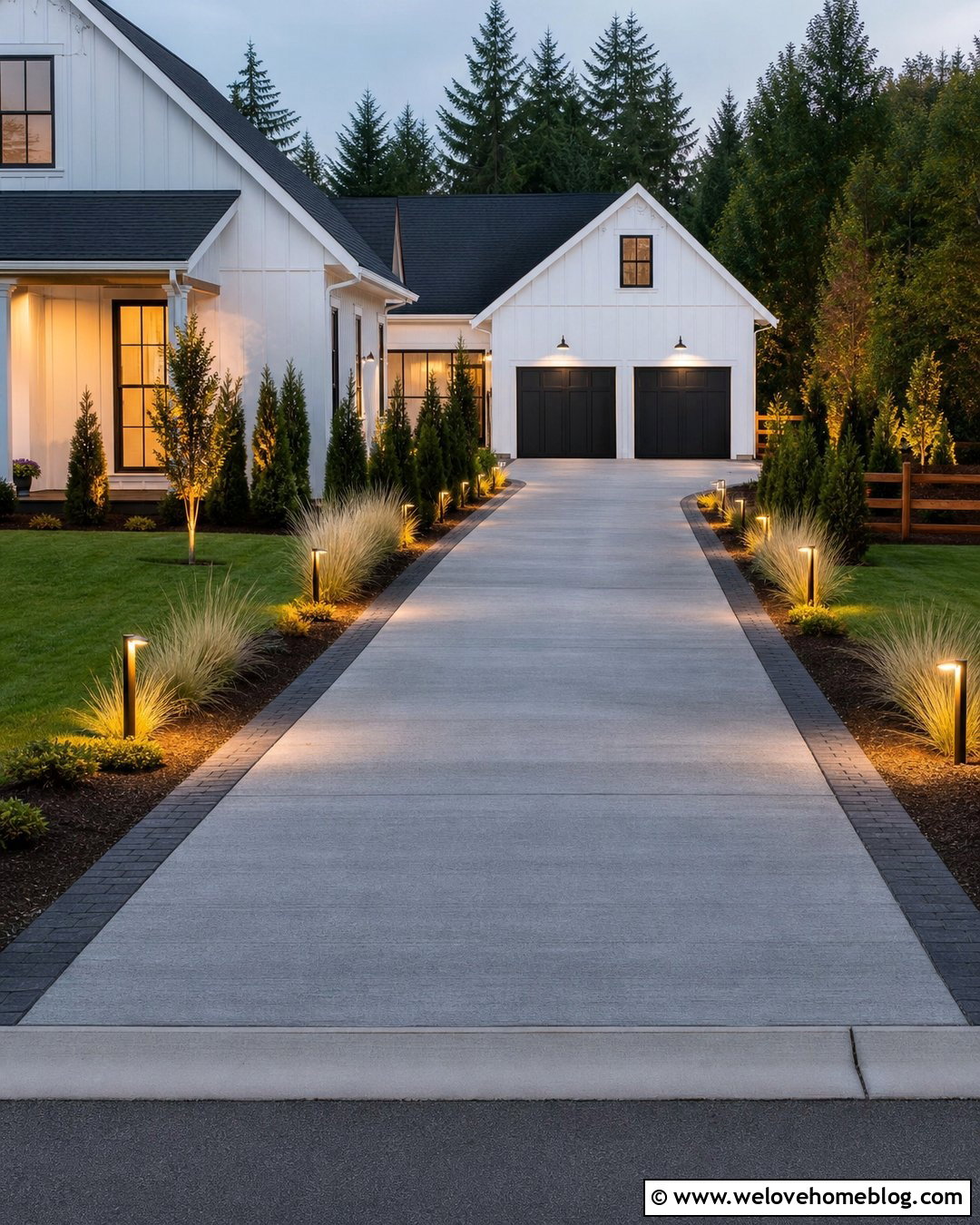
Motion-activated lighting is most successful when it brightens a layered design instead of triggering one harsh floodlight. Use a wide, broom-finished concrete driveway leading to a modern farmhouse or updated ranch home. Install shielded wall lights beside the garage and low bollards in the border beds. Keep both sets dim during quiet hours, then increase their output when motion is detected. This preserves a welcoming background glow while providing stronger visibility as a person or vehicle approaches. Dark concrete edging, native grasses, and broad lawn areas give the fixtures a clean setting. Aim sensors carefully so passing traffic and swaying plants do not cause constant activation. A smart control system can also separate the driveway, walkway, and entrance into practical lighting zones with different schedules.
12. Concrete Driveway With Garage Downlights
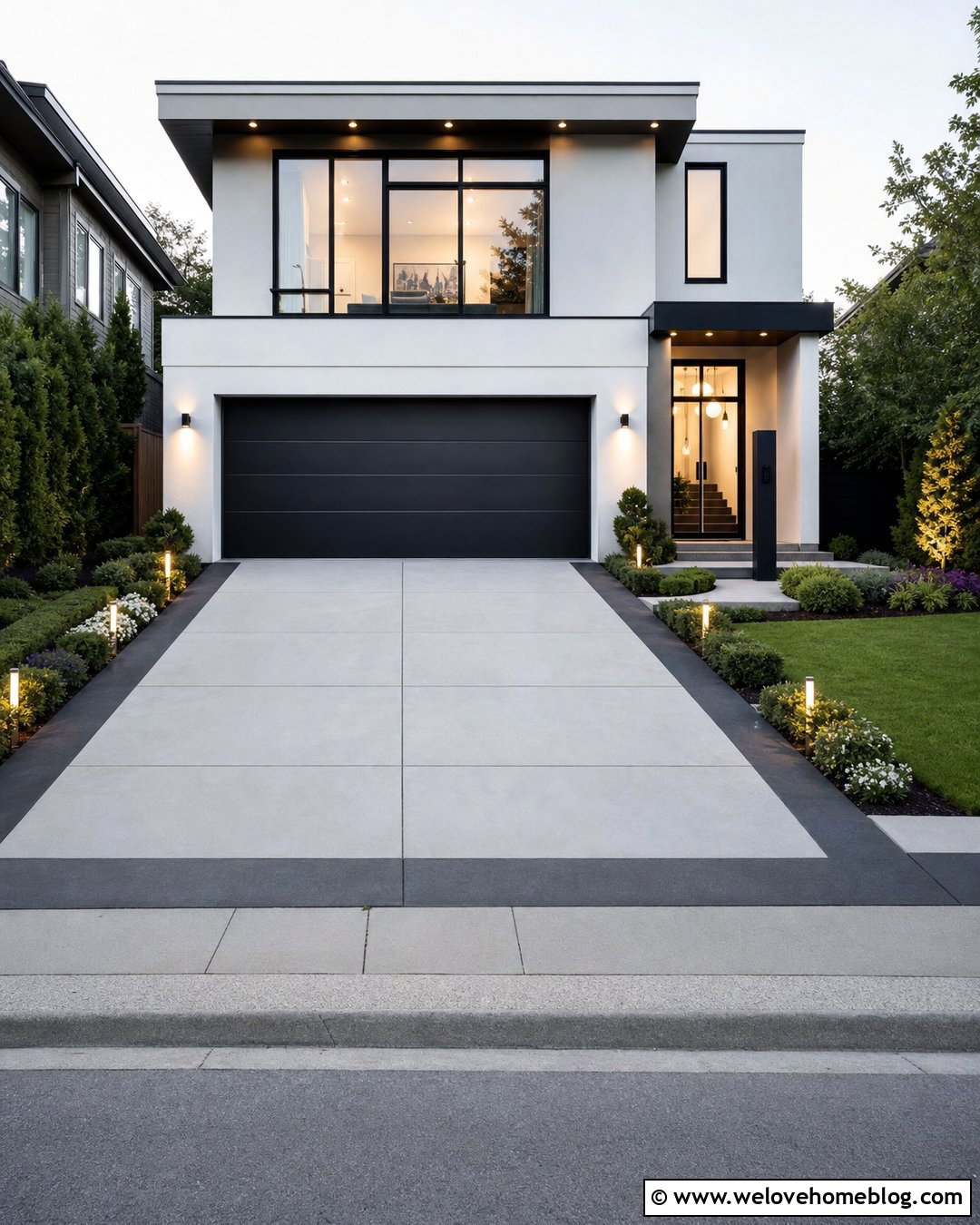
Sometimes the most useful lighting belongs on the house rather than beside the driveway. A short concrete driveway can be illuminated with downward-facing fixtures mounted between or above the garage doors. Choose a smooth pale-gray slab with clean saw-cut joints and a charcoal apron band. Wide-beam downlights should overlap gently across the parking area without shining directly toward the street. Add subtle path lighting beside the front walkway so the entrance does not disappear beside the brighter garage. Low hedges and simple planting beds help control reflections and soften the broad concrete surface. Match the fixtures to the garage hardware, house numbers, and front door finish. This straightforward arrangement is especially effective for narrow urban lots where bollards would reduce usable space or interfere with routine maintenance.
13. Concrete Driveway With Tree Uplighting
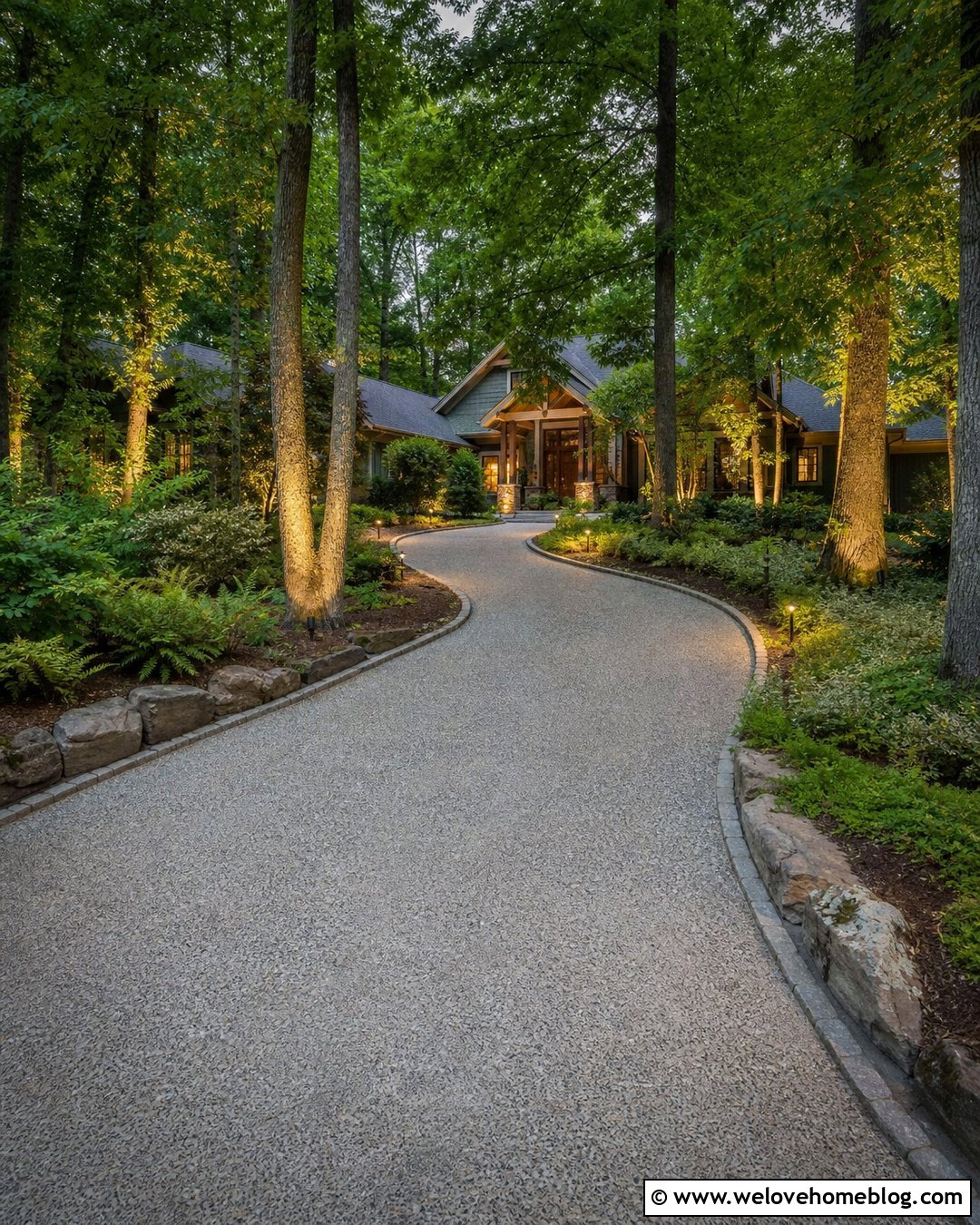
Mature trees can provide soft, reflected illumination while making a long driveway feel more established. Pair a curved exposed aggregate concrete driveway with broad beds of ground cover, ferns, and shade-tolerant shrubs. Install adjustable uplights near selected tree trunks, aiming the beams into the canopy rather than across the driver’s line of sight. Add a few low path lights at curves and intersections, since tree lighting alone may not clearly identify every pavement edge. A natural stone border complements the aggregate surface and protects planting beds from vehicle tires. Keep the brightest emphasis near the entrance and house, with quieter lighting between those destinations. This design suits craftsman, cottage, and wooded contemporary homes where highly visible modern fixtures would compete with the natural setting.
14. Concrete Driveway With Post Lights
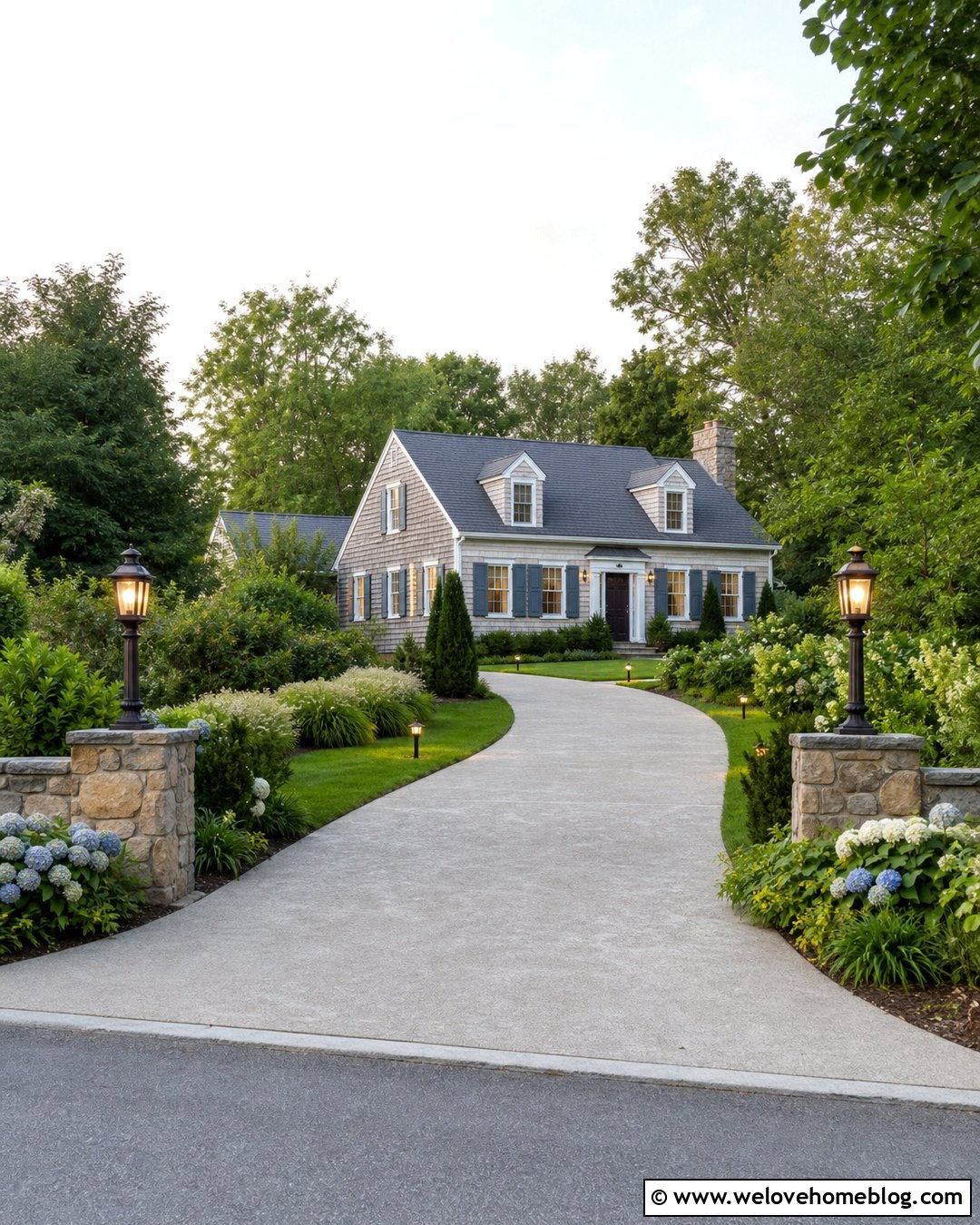
Tall post lights can anchor a broad property when their scale matches the driveway and house. Use them at the street entrance to frame a wide, gently curved concrete drive rather than repeating posts along its entire length. A lightly textured, warm-gray concrete surface pairs well with dark bronze posts and traditional lantern heads. Low stone walls can extend from the posts and form planting beds filled with hydrangeas, ornamental grasses, or compact evergreens. Farther along the driveway, use smaller shielded lights to guide the curve without competing with the entrance. Repeat the lantern finish at the porch and garage for continuity. This complete arrangement works for colonial, Cape Cod, and traditional farmhouse properties, giving the entrance a visible identity while keeping the remaining approach calm and uncluttered.





15. Concrete Driveway With Grass Strip Lighting
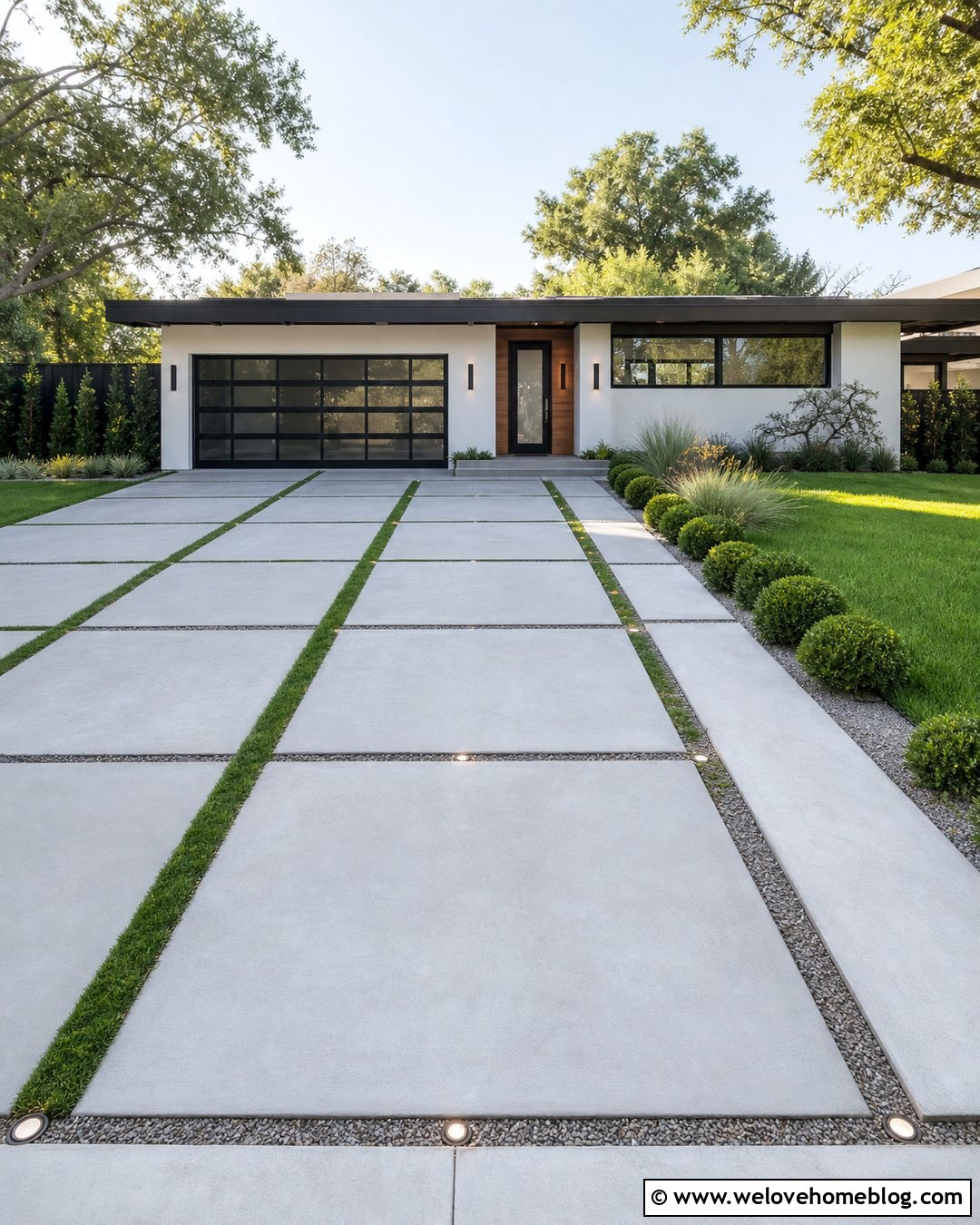
Large concrete slabs separated by grass strips create a lighter, greener driveway appearance. Lighting can emphasize that geometry without adding bulky fixtures. Choose smooth natural-gray concrete tracks or rectangular panels with narrow reinforced lawn joints between them. Install small recessed lights in gravel or paver pockets along the outer border, aligning them with selected slab joints. This creates a measured rhythm while keeping electrical components away from frequently mowed grass whenever possible. Low architectural grasses and clipped shrubs can frame the driveway, while a matching concrete walkway links it to a modern or midcentury home. Make sure the planted strips have suitable drainage and enough width to remain healthy. The final look combines structured concrete, visible greenery, and understated lighting in one cohesive composition.
16. Concrete Driveway With Step Lights
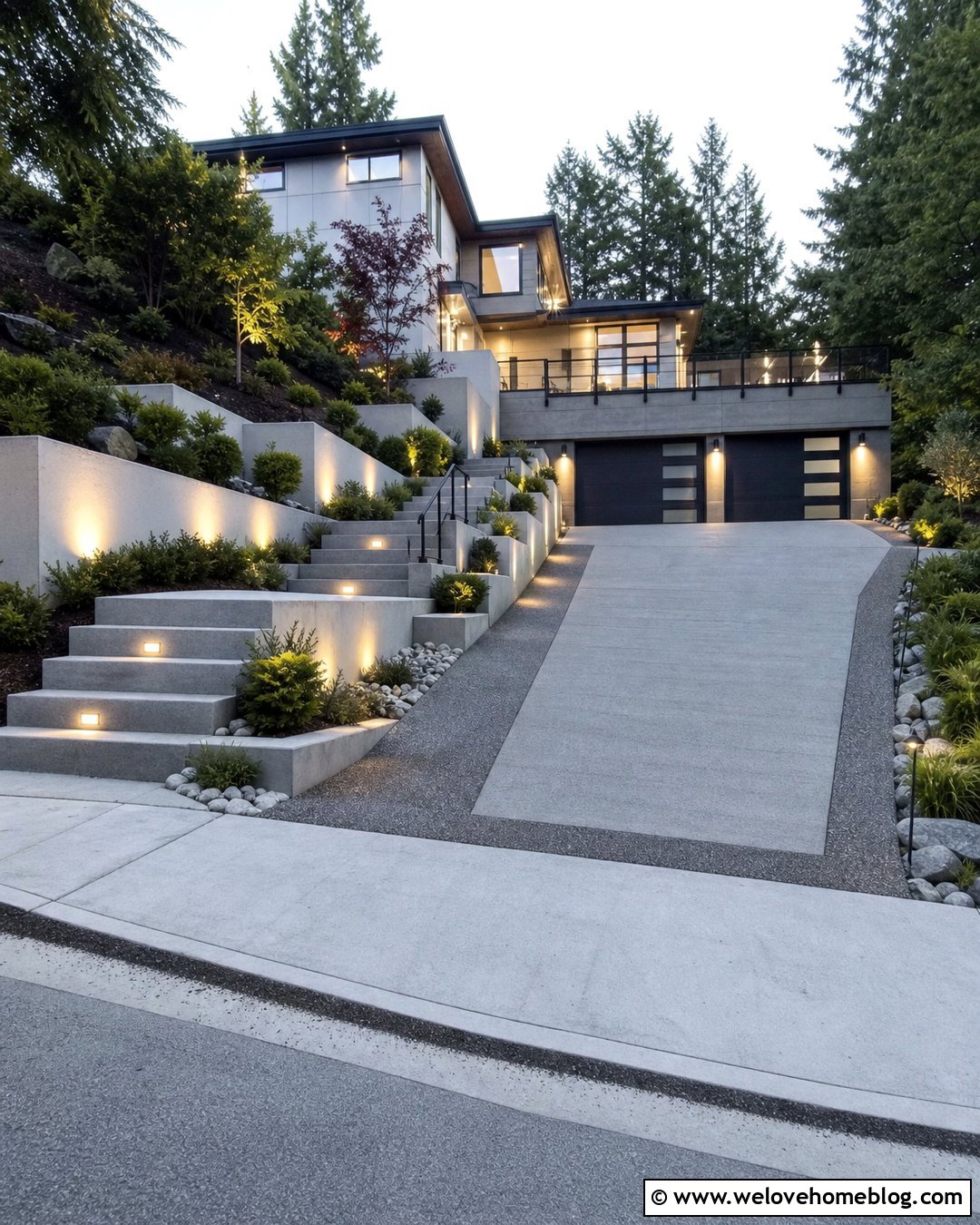
A driveway that rises toward the house often connects with steps, terraces, or a raised walkway. Treat these level changes as the focus of the lighting plan. Use a straight broom-finished concrete driveway with wide concrete steps leading from the parking area to the front door. Recess small shielded lights into adjacent low walls or step risers so each change in elevation is clear. A dark exposed aggregate border can visually separate the driveway from the staircase landing. Add soft planting around the walls, including ground cover and compact shrubs that will not conceal the fixtures. Wall-mounted garage lights provide background illumination without overpowering the steps. This coordinated layout is useful for hillside homes because it connects driving, parking, and walking areas rather than lighting each space as an unrelated feature.
17. Black Stained Concrete Driveway With Linear Lights
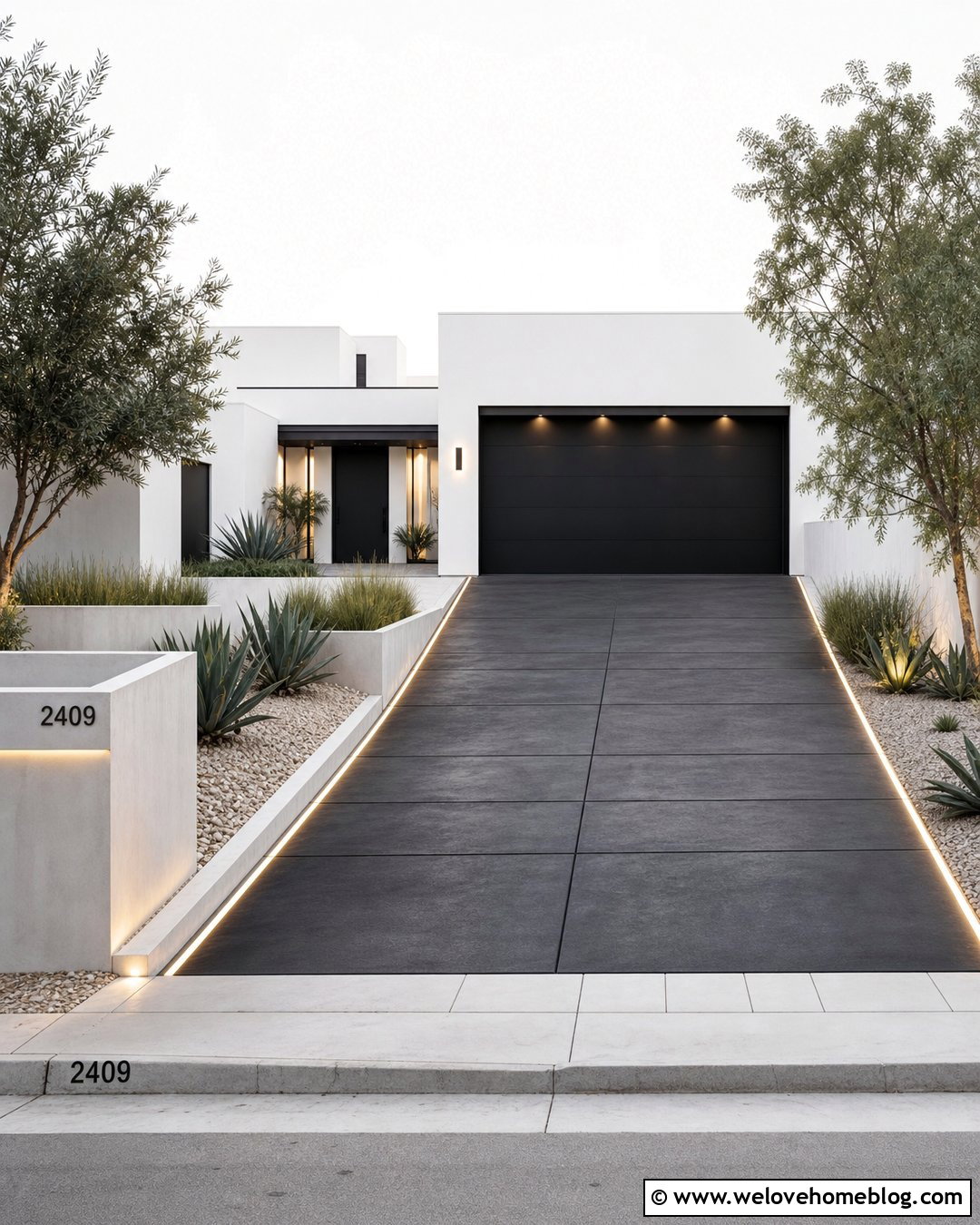
Dark concrete delivers dramatic curb appeal, but its lighting should improve visibility without washing out the finish. Use charcoal or black stained concrete divided into broad rectangular slabs. Place narrow linear lights beside one edge and repeat them beneath a low concrete landscape wall on the opposite side. The asymmetrical arrangement feels more residential than identical illuminated lines. Pale gravel beds, sculptural agaves, and soft green grasses add contrast around the dark surface. At the garage, restrained downlights can reveal the final parking area. This look suits minimalist homes with white stucco, wood siding, or black metal details. Apply a compatible exterior sealer to maintain the intended appearance, and use shielded fixtures so the light reveals the driveway’s form instead of producing distracting surface glare.
18. Concrete Driveway With Address Pillar Lighting
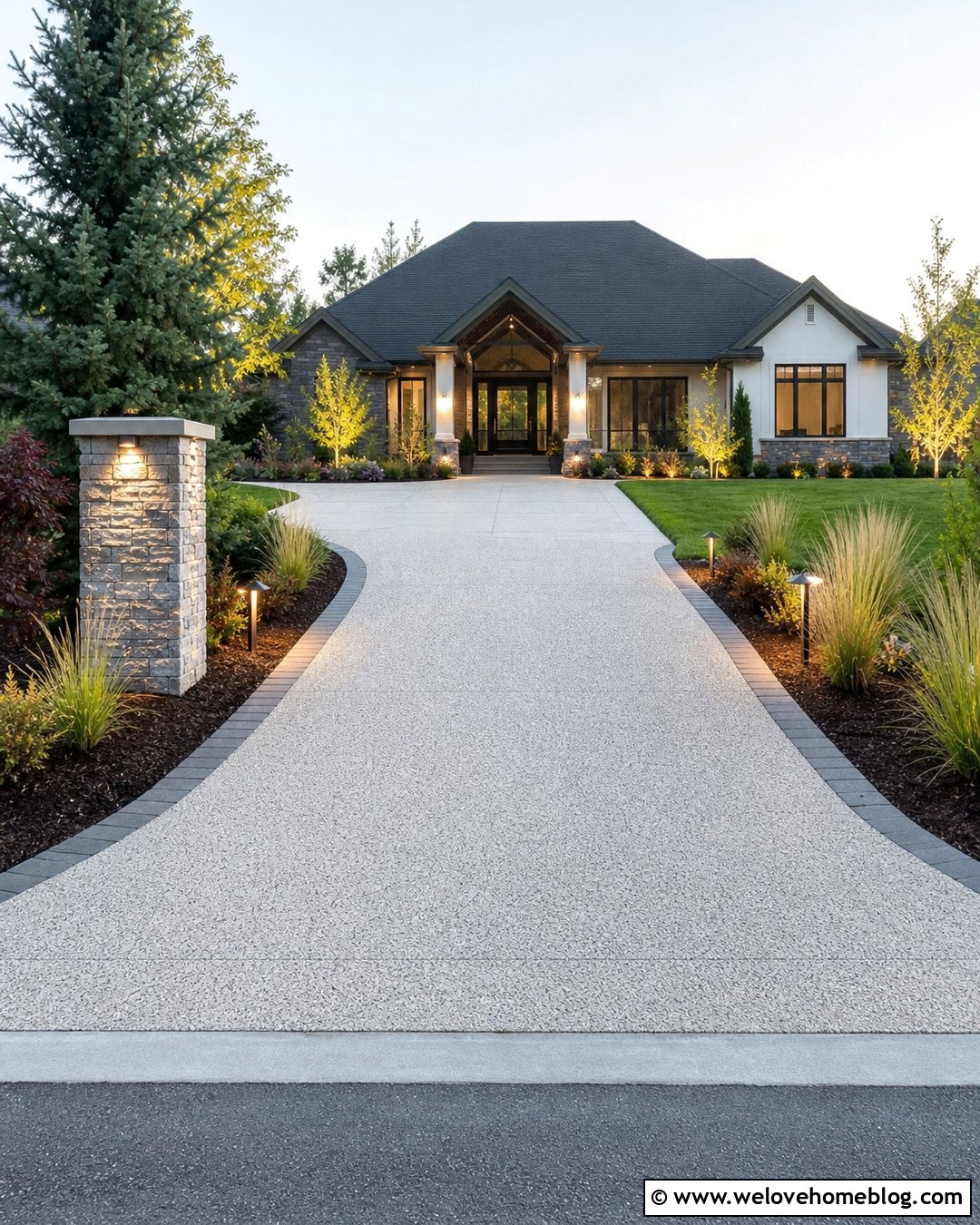
A lighted address feature can mark the property while strengthening the entire driveway entrance. Begin with a pale exposed aggregate concrete driveway and a slightly flared apron. Build one substantial stone or stucco pillar beside the entrance, keeping it outside the clear driving zone. Use a recessed downlight to illuminate the address area and a second concealed fixture to wash the pillar base. On the opposite side, balance the composition with a low planting bed rather than another large monument. Continue small shielded path lights toward the house, following a dark paver border. The asymmetry makes the entrance feel designed without crowding it. Coordinate the pillar finish with the house facade and mailbox, and verify local placement, visibility, setback, and address-display requirements before construction.
19. Concrete Driveway With Low Garden Lights
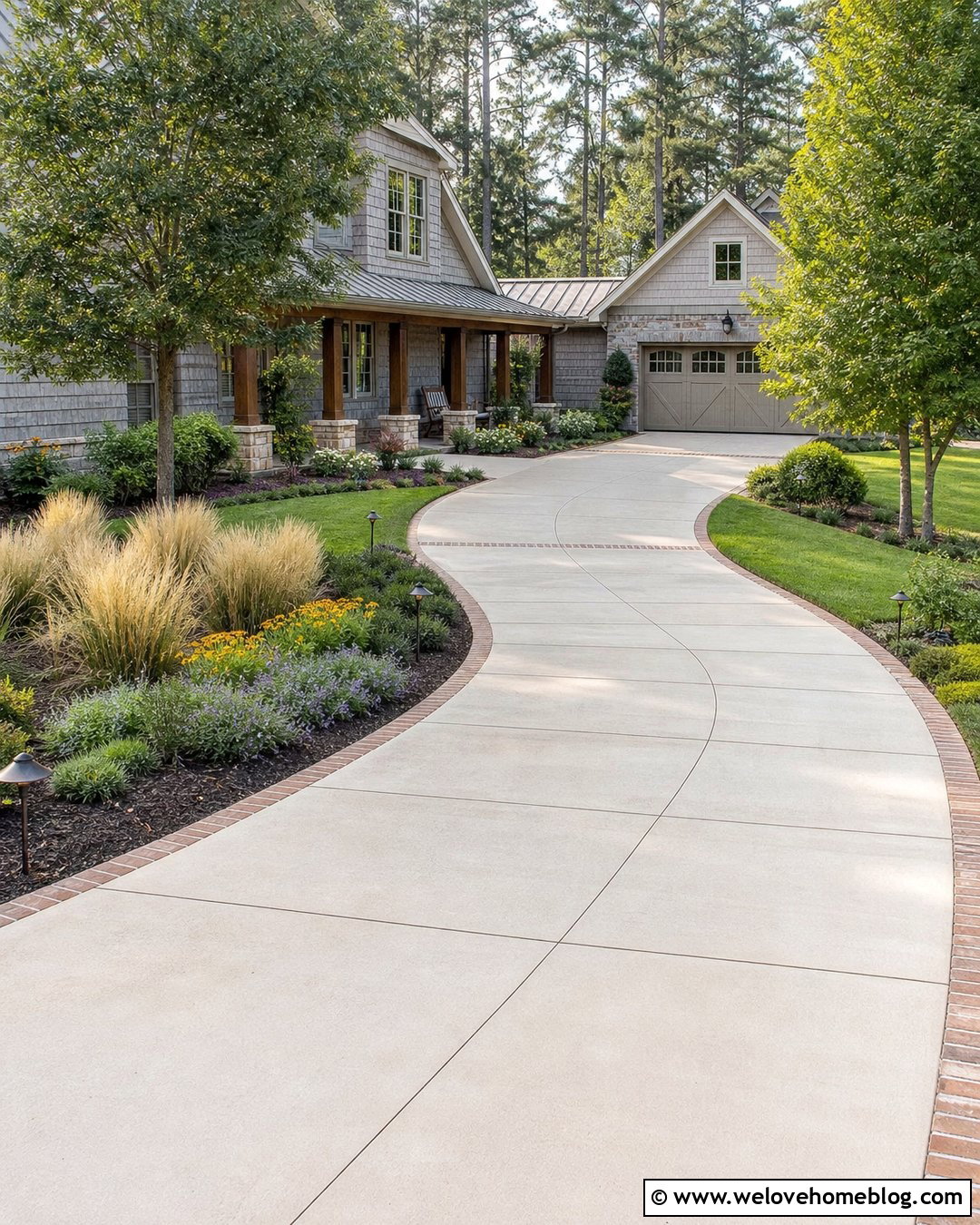
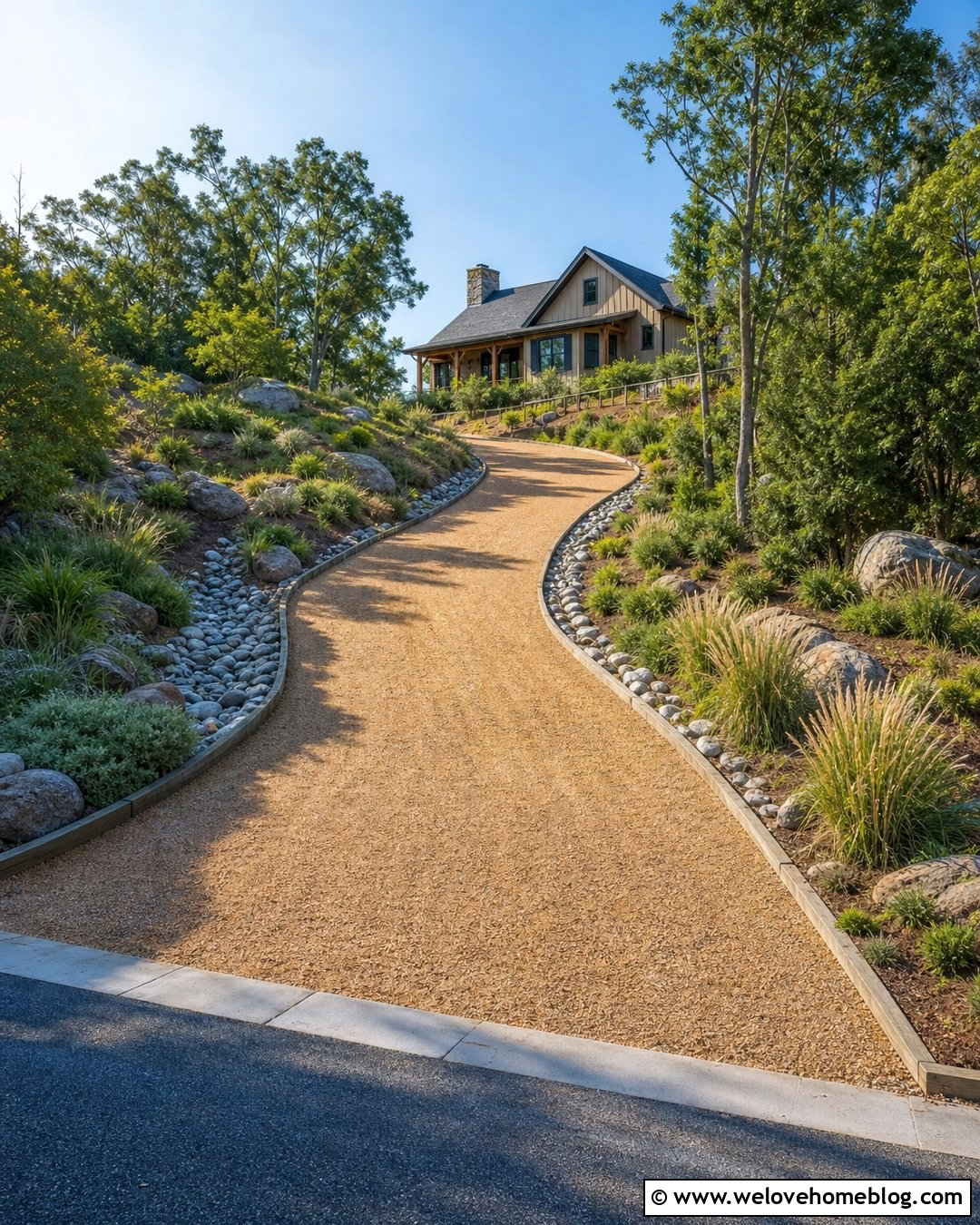
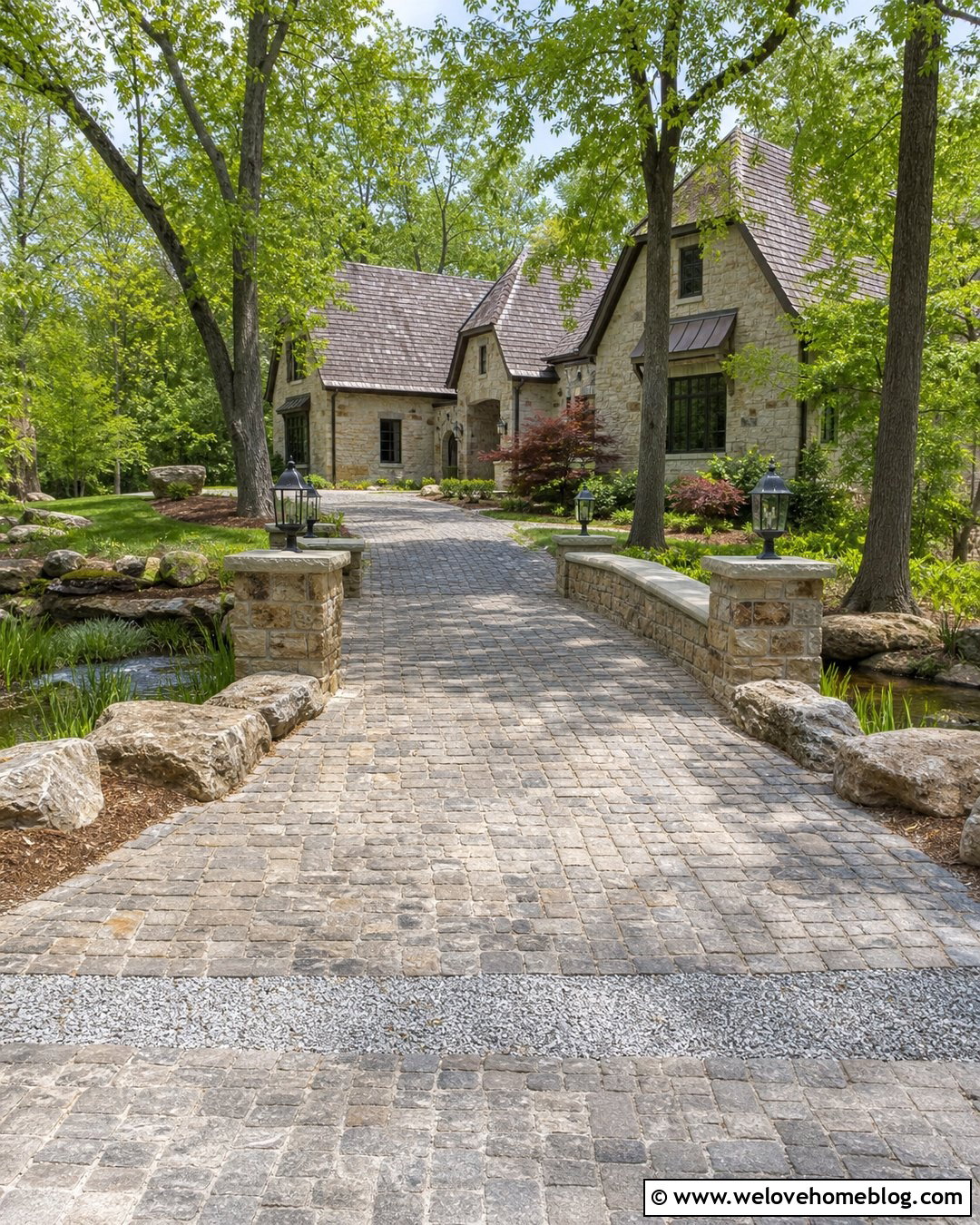
Cottage and craftsman homes often look better with quiet garden lighting than highly architectural fixtures. Pour a lightly tinted concrete driveway with a soft curve and frame it with clay brick edging. Place low mushroom-style or hooded path lights among layered flower beds, compact shrubs, and ornamental grasses. Their downward glow can reveal both the driveway border and planting without exposing bright bulbs. Use slightly closer spacing near the curve and front walkway, then widen it along straight sections. A brick ribbon near the garage connects the edging to the house and breaks up the concrete expanse. Choose one consistent fixture finish, such as aged bronze or matte black. The overall design should feel welcoming and established, with the lights supporting the garden rather than dominating it.

20. Wide Concrete Driveway With Layered Lighting
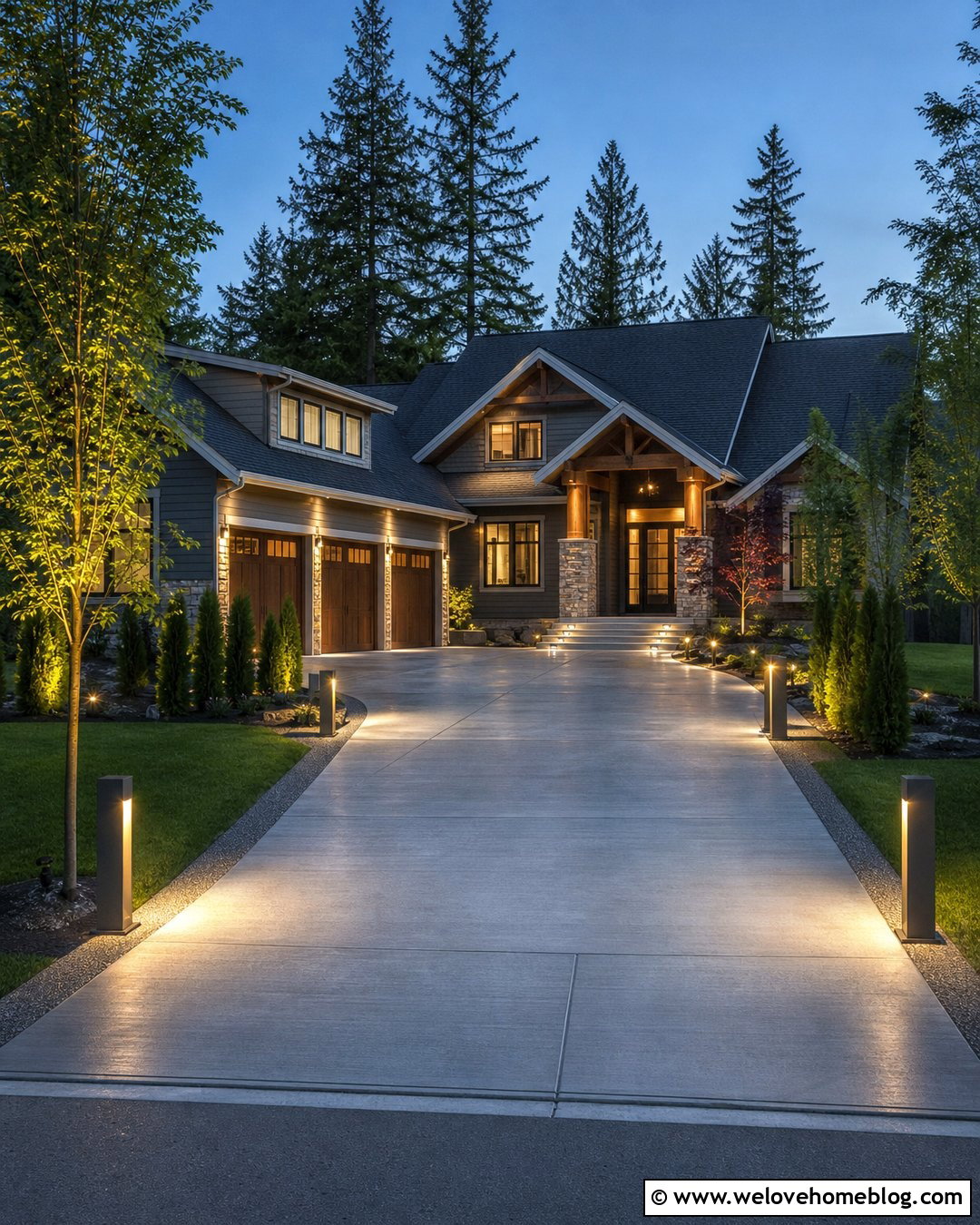
A wide driveway benefits from multiple lighting sources because one fixture type may leave uneven or overly bright areas. Start with large broom-finished concrete panels framed by an exposed aggregate border. Place shielded bollards within the outer planting beds, use garage downlights over the parking zone, and add subtle uplights to one or two entrance trees. Recessed markers can identify the walkway crossing without outlining every inch of pavement. Keep all fixtures within a coordinated finish and similar warm color range so the layers feel unified. A broad lawn, structured evergreen beds, and a clear walkway help organize the space. Use separate controls or dimming zones for the entrance, driveway edge, landscaping, and garage. This allows the lighting level to change without sacrificing the complete design.
Conclusion:
The most successful driveway lighting does more than place fixtures beside a concrete slab. It coordinates the concrete finish, driveway shape, borders, planting, house architecture, and nighttime approach. Recessed lights and linear channels create a clean modern look, while lantern pillars, post lights, and low garden fixtures complement traditional homes. Retaining-wall lights are useful on sloped lots, and layered lighting can organize wider driveways. Before installation, consider glare, drainage, maintenance access, vehicle loads, wiring routes, and local requirements. Use fewer well-positioned fixtures rather than excessive brightness. With thoughtful planning, these 20 Concrete Driveway Lighting Ideas can help you create an entrance that feels clear, welcoming, and visually connected from the curb to the garage.

Related posts:


Leave a Reply