
Thoughtful landscaping can turn a practical parking area into a polished extension of the front yard. These 20 landscape design driveway ideas combine driveway surfaces, borders, planting beds, lighting, and architectural details into complete looks. The best approach connects the driveway material to the home while keeping vehicle clearance, drainage, and maintenance in mind. Layered plants can soften wide paved areas, while defined edging creates a cleaner transition between hardscape and lawn. Trees, entrance columns, ground covers, and rain gardens can also guide the eye toward the house instead of the garage. () Whether your property is compact, sloped, rural, or formal, the following sections offer practical inspiration through 20 landscape design driveway ideas.

1. Curved Gravel Driveway With Native Plant Borders
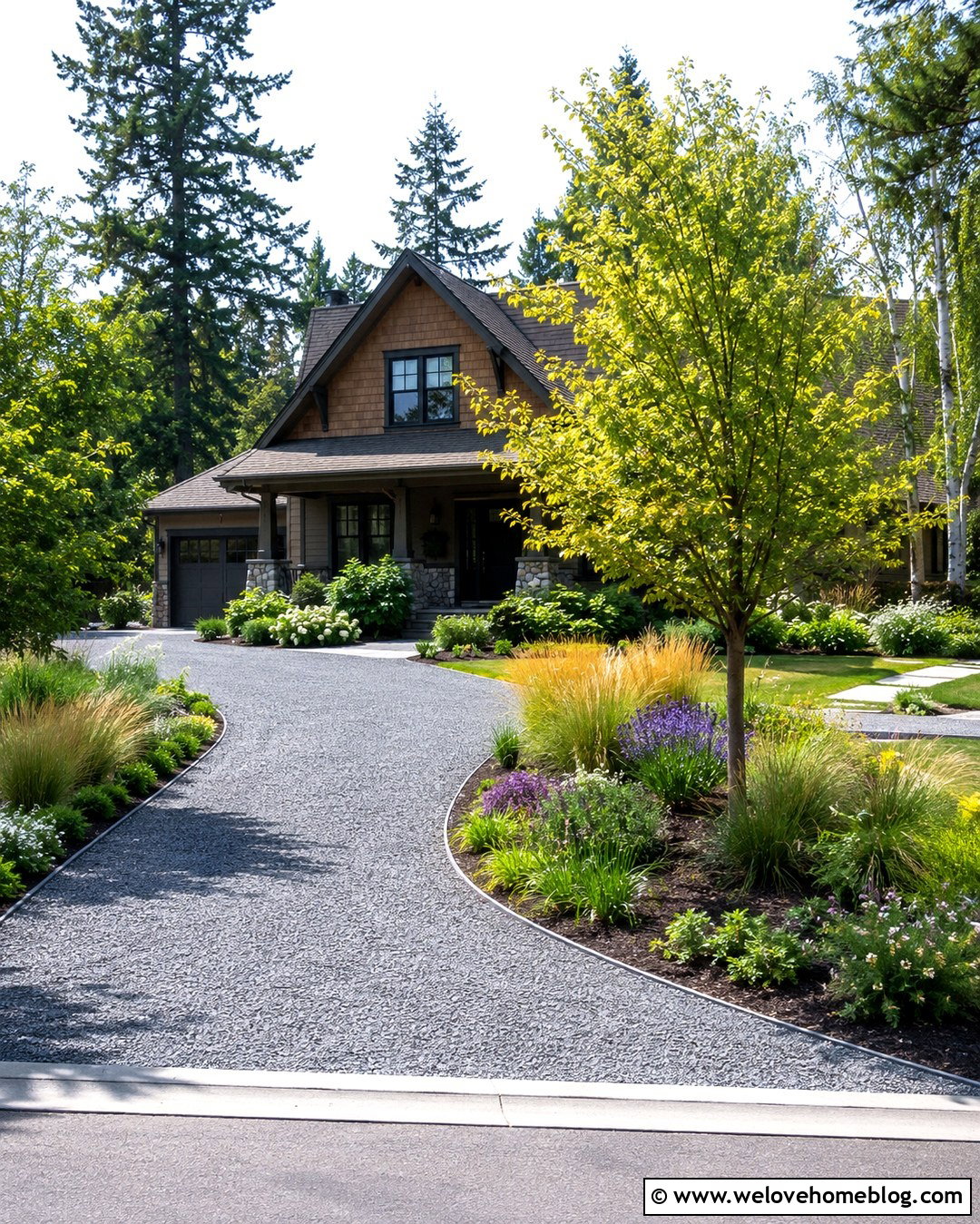
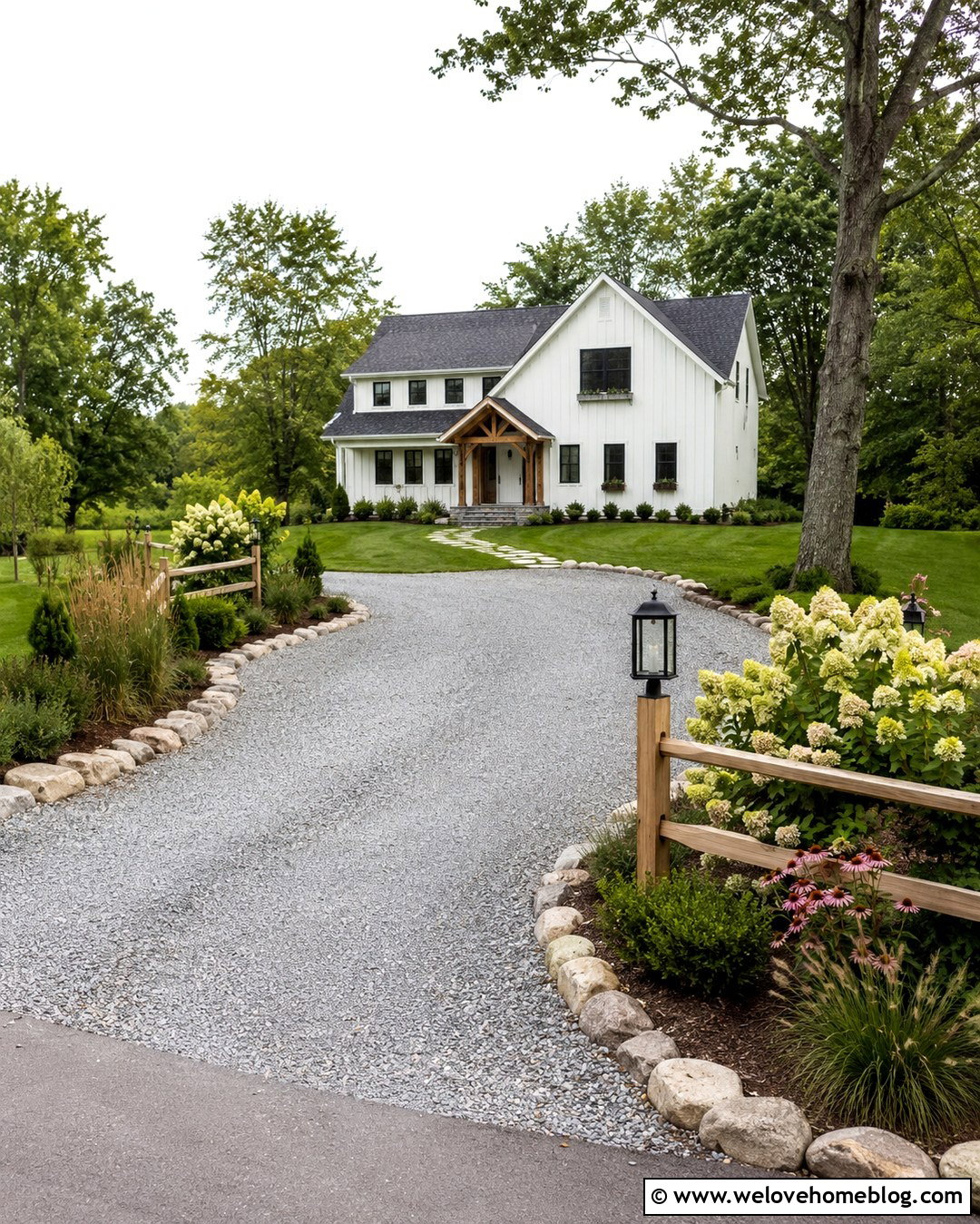
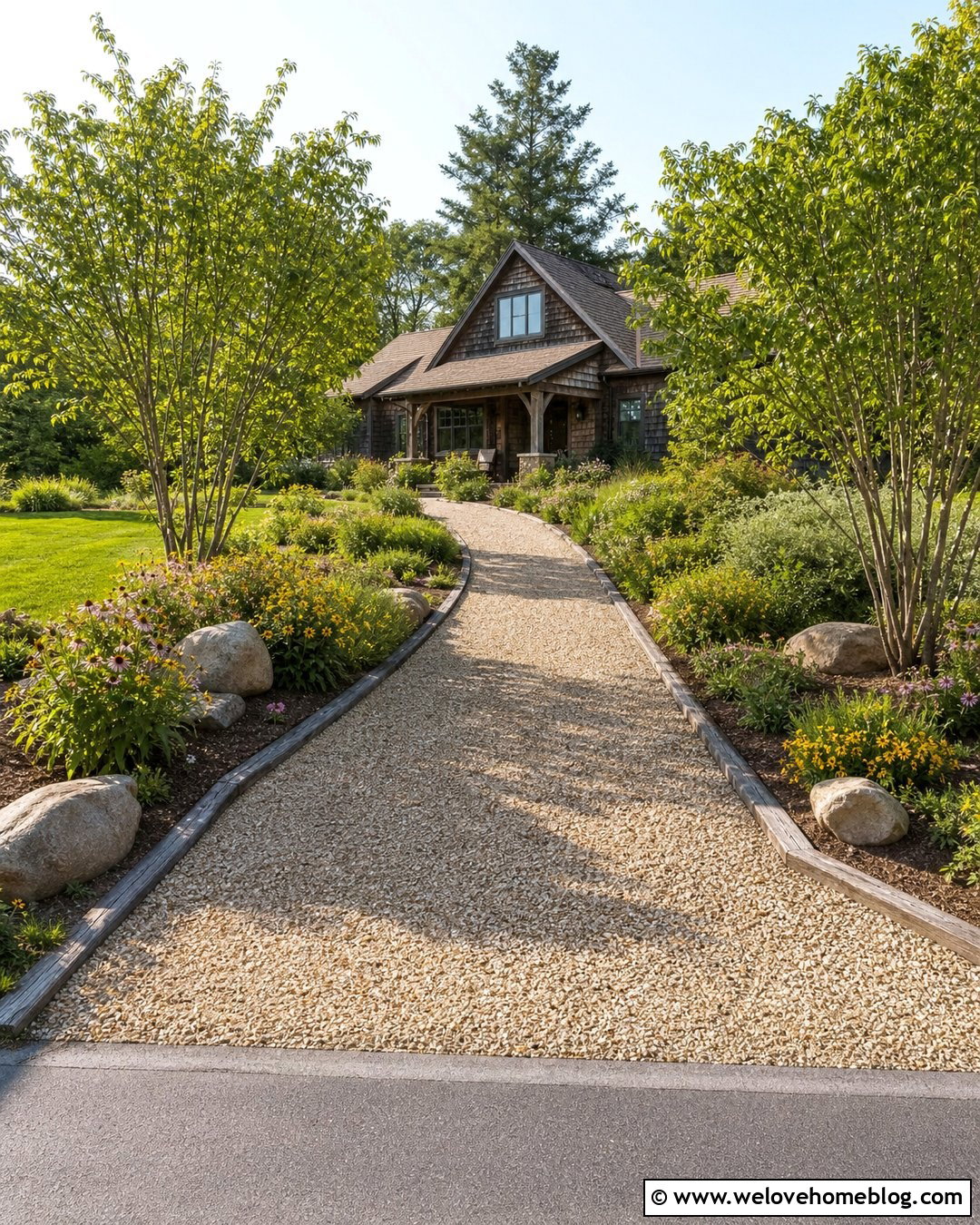
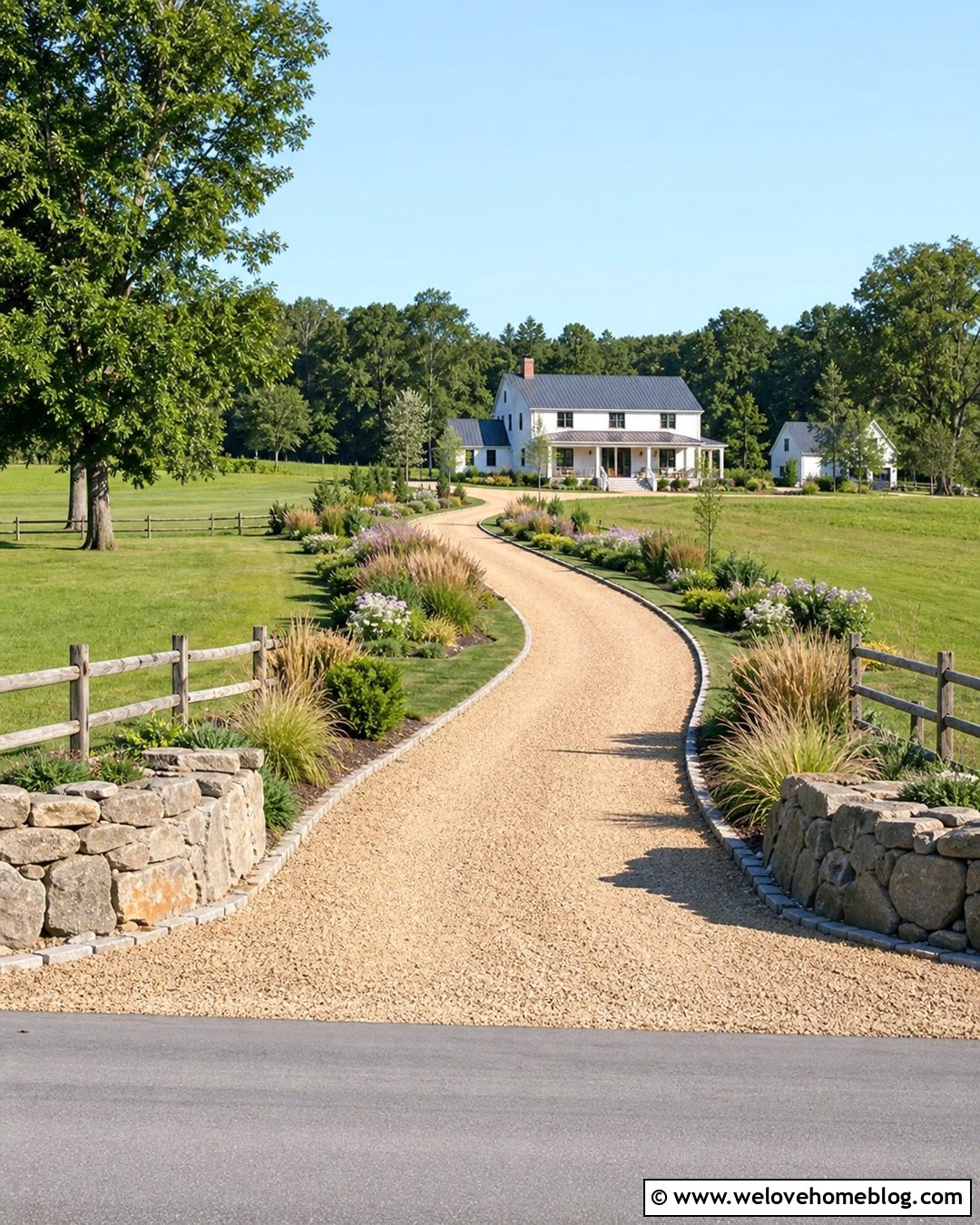
A curved gravel driveway feels relaxed and natural, especially when it passes through layered native planting beds. Use compacted gray crushed stone rather than loose, rounded gravel for a firmer driving surface. Add dark steel edging or rough-cut fieldstone to keep the material away from nearby soil and lawn. Along the outside curve, arrange low grasses, flowering perennials, and medium shrubs in broad groups. Keep plants shorter near the street so drivers can see pedestrians and approaching traffic. A small ornamental tree placed inside the curve creates a focal point without blocking the house. This complete landscape works beautifully with Craftsman, cottage, and rustic homes because the informal planting balances the structured driveway edge. ()
2. Modern Concrete Driveway With Ornamental Grasses
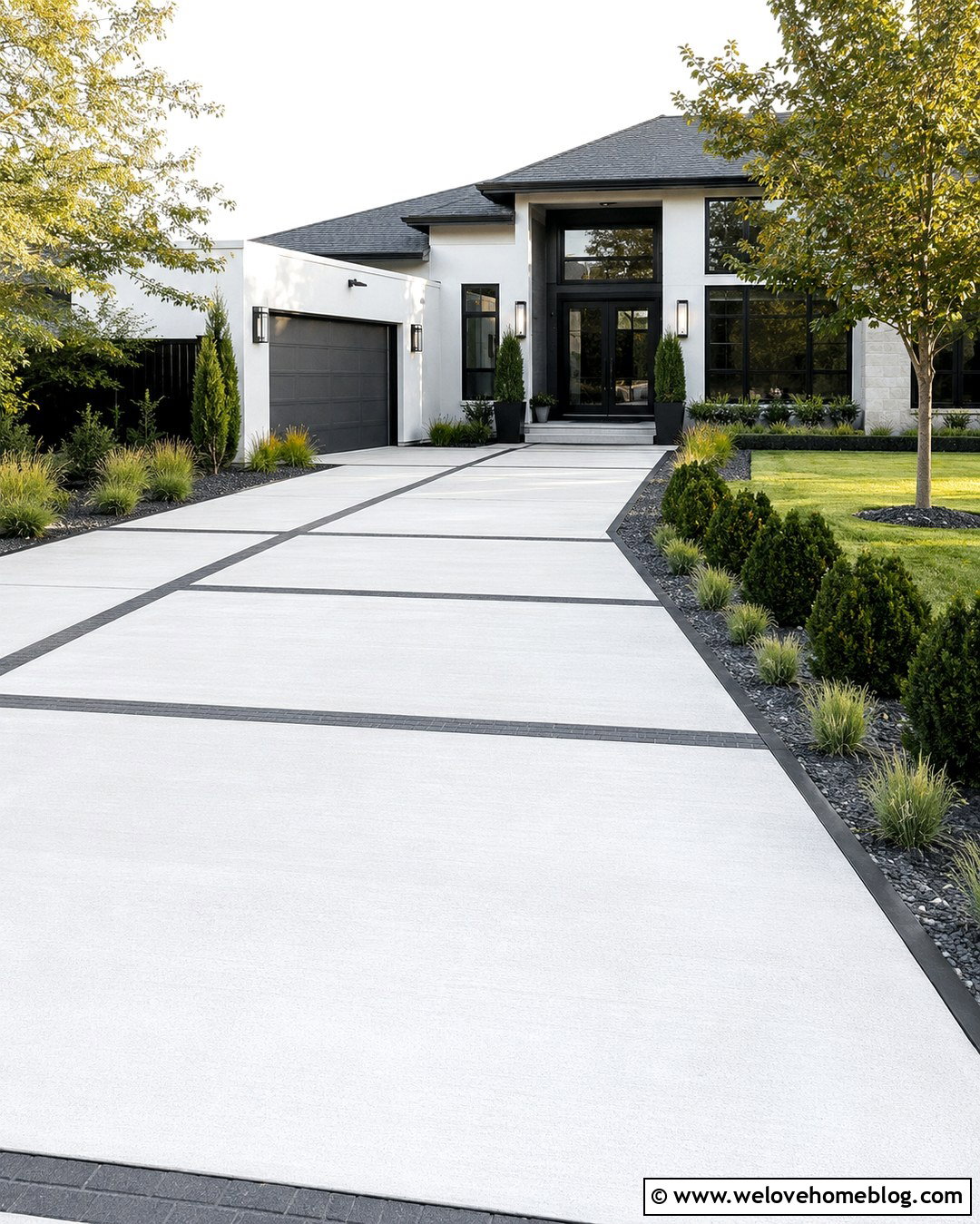
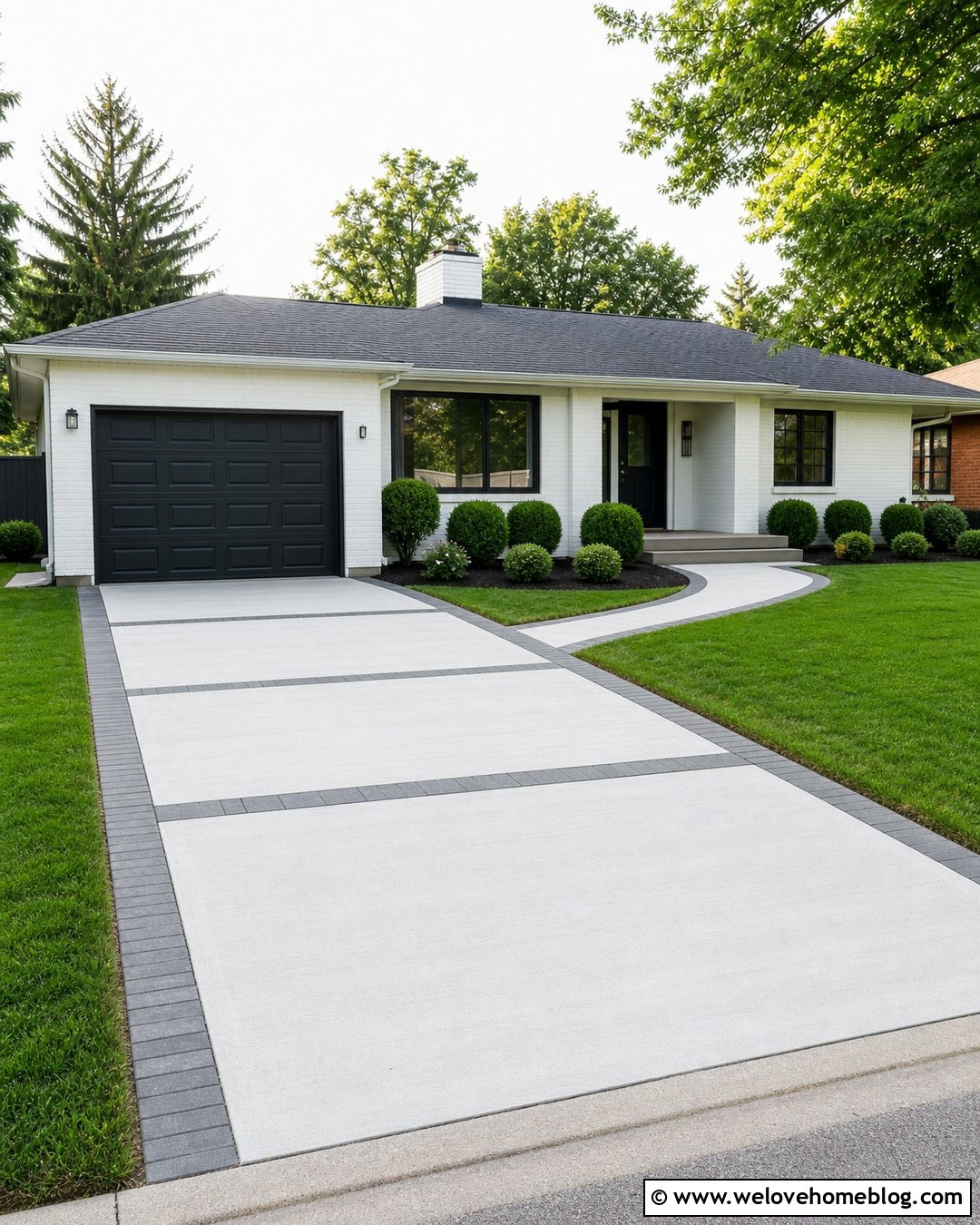
Clean concrete panels and soft ornamental grasses create an inviting modern driveway without adding visual clutter. Choose light gray poured concrete with a smooth or lightly broomed finish. Narrow charcoal paver joints can divide the surface into large geometric sections and connect it to a matching walkway. On both sides, create linear planting beds filled with compact grasses, low evergreen shrubs, and one sculptural tree. Repeating only a few plants makes the landscape feel calm and intentional. Black metal edging provides a sharp boundary between gravel mulch, lawn, and concrete. Leave generous clearance beside the driving area so mature foliage does not scrape vehicles. This design suits contemporary houses with simple rooflines, large windows, dark trim, and restrained exterior colors.
3. Brick Driveway With Cottage Garden Landscaping
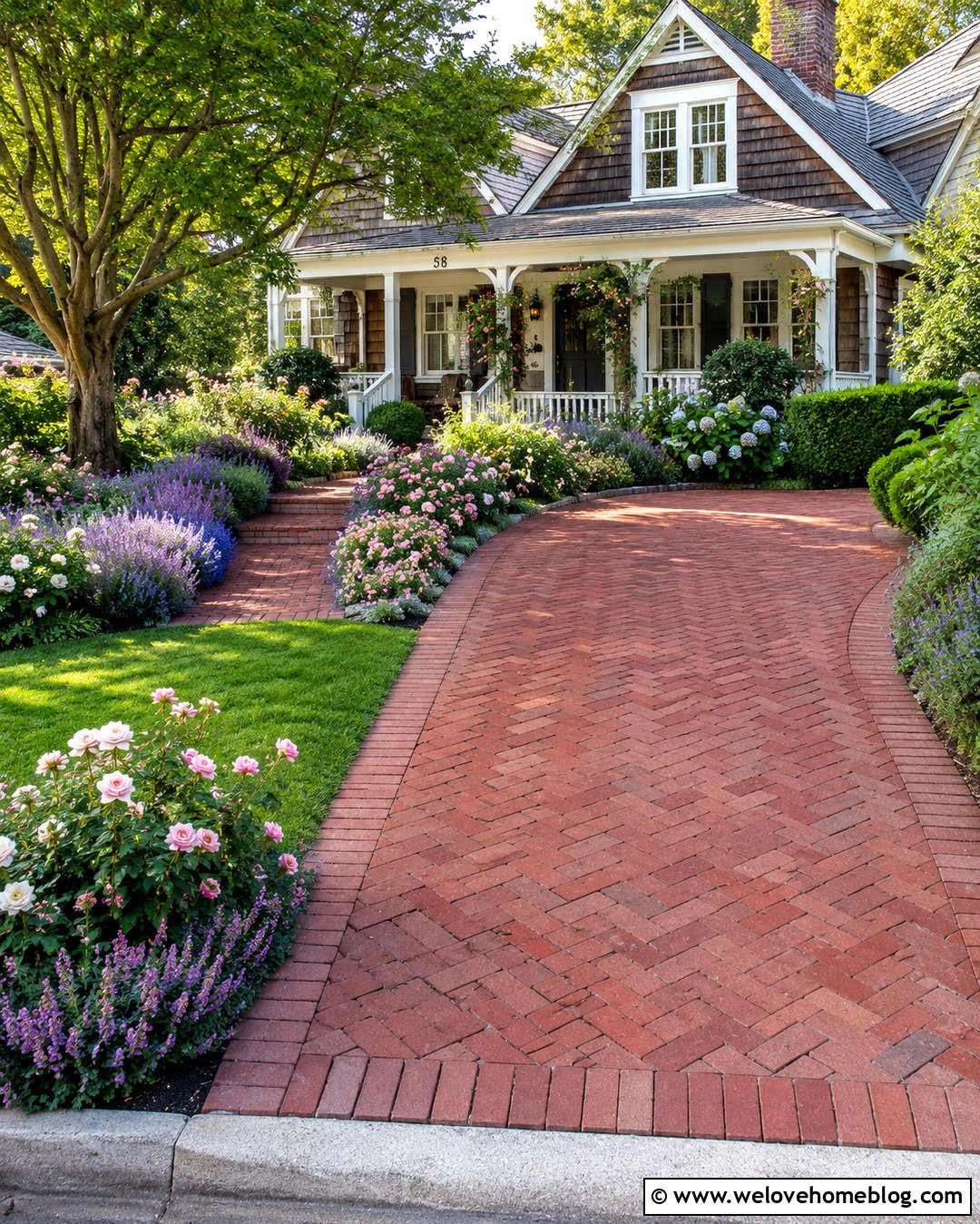
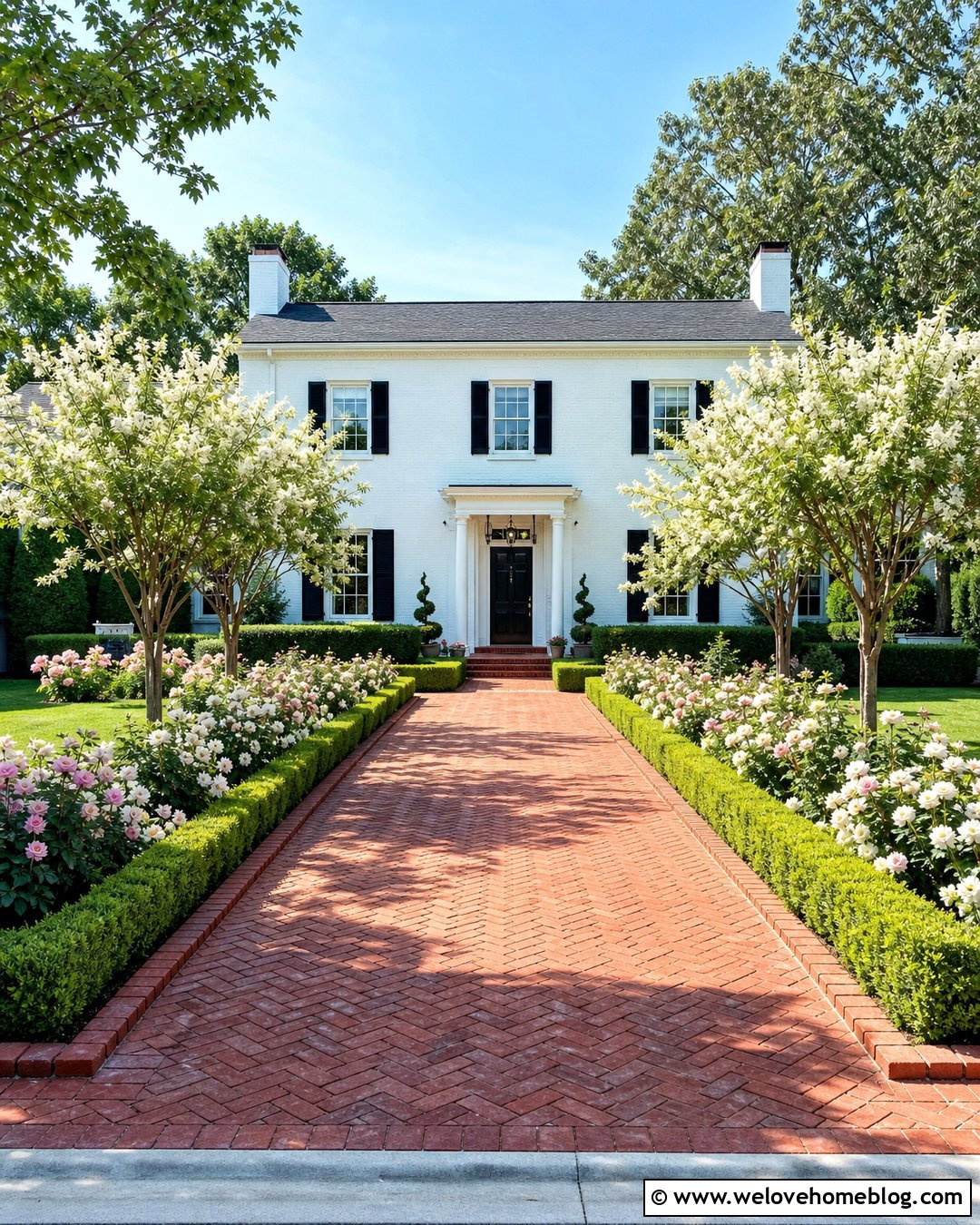
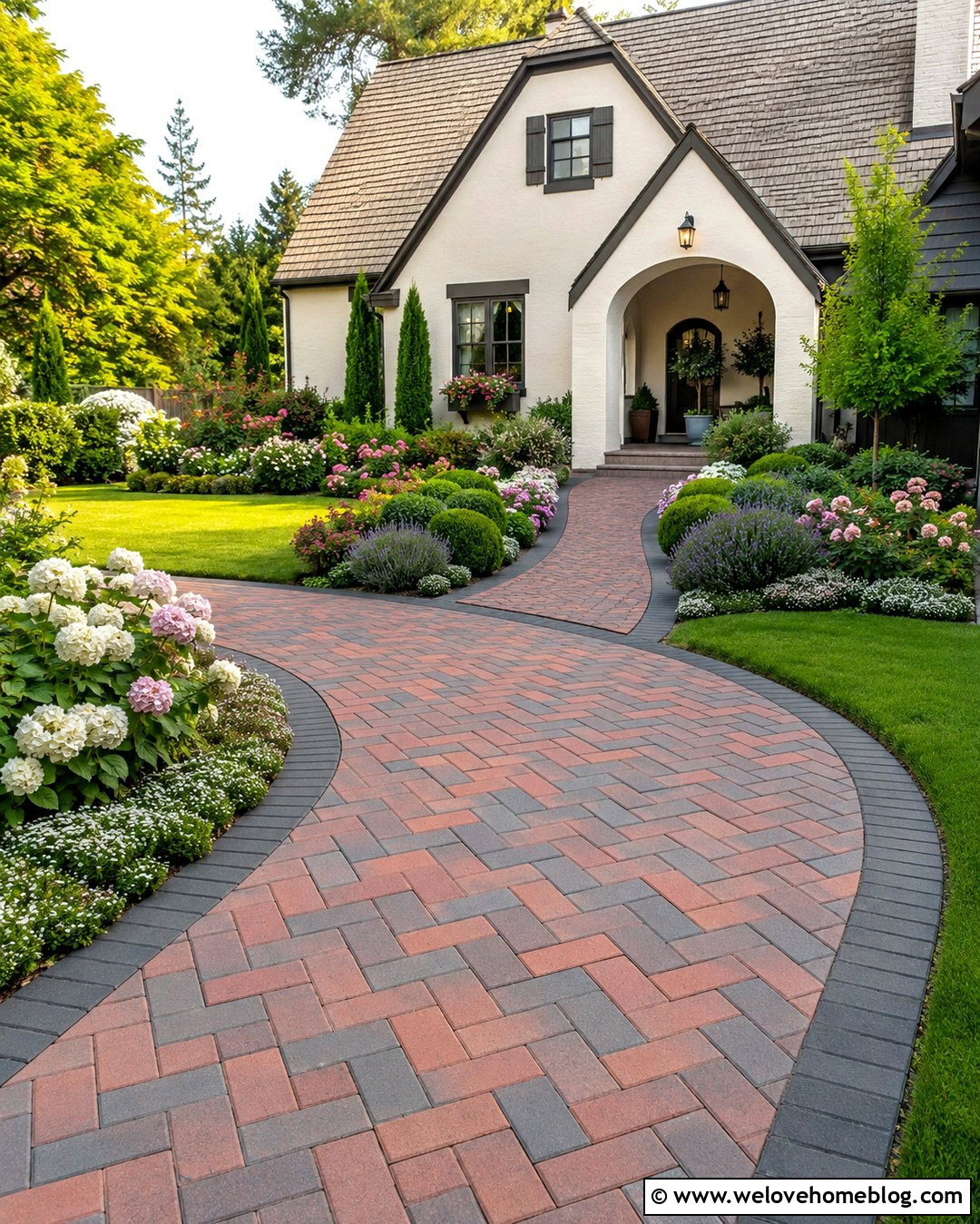
Warm clay brick pavers create a welcoming foundation for a flower-filled cottage driveway. A herringbone pattern provides rich detail across the main surface, while a soldier-course border gives each edge a finished appearance. Shape the driveway with a gentle curve rather than a rigid straight line. Deep planting beds can hold roses, catmint, salvia, hydrangeas, and compact flowering shrubs. Repeat several plants on both sides so the composition feels coordinated instead of random. Keep the lowest flowers beside the brick and place larger shrubs farther back. A narrow brick walkway can branch toward the porch using the same material. Abundant planting helps the driveway feel like part of the garden rather than a separate paved zone. ()
4. Asphalt Driveway With Cobblestone Edging
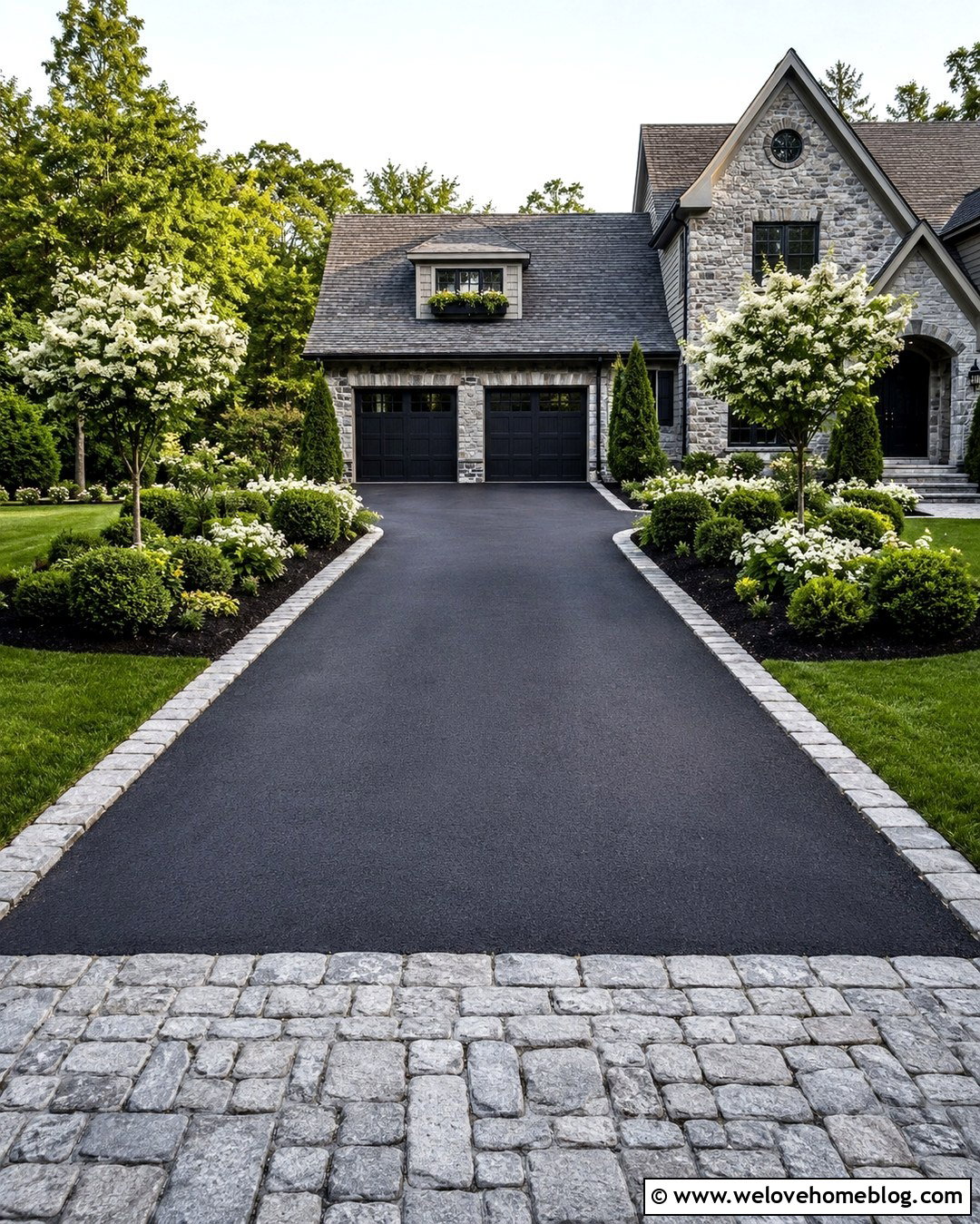
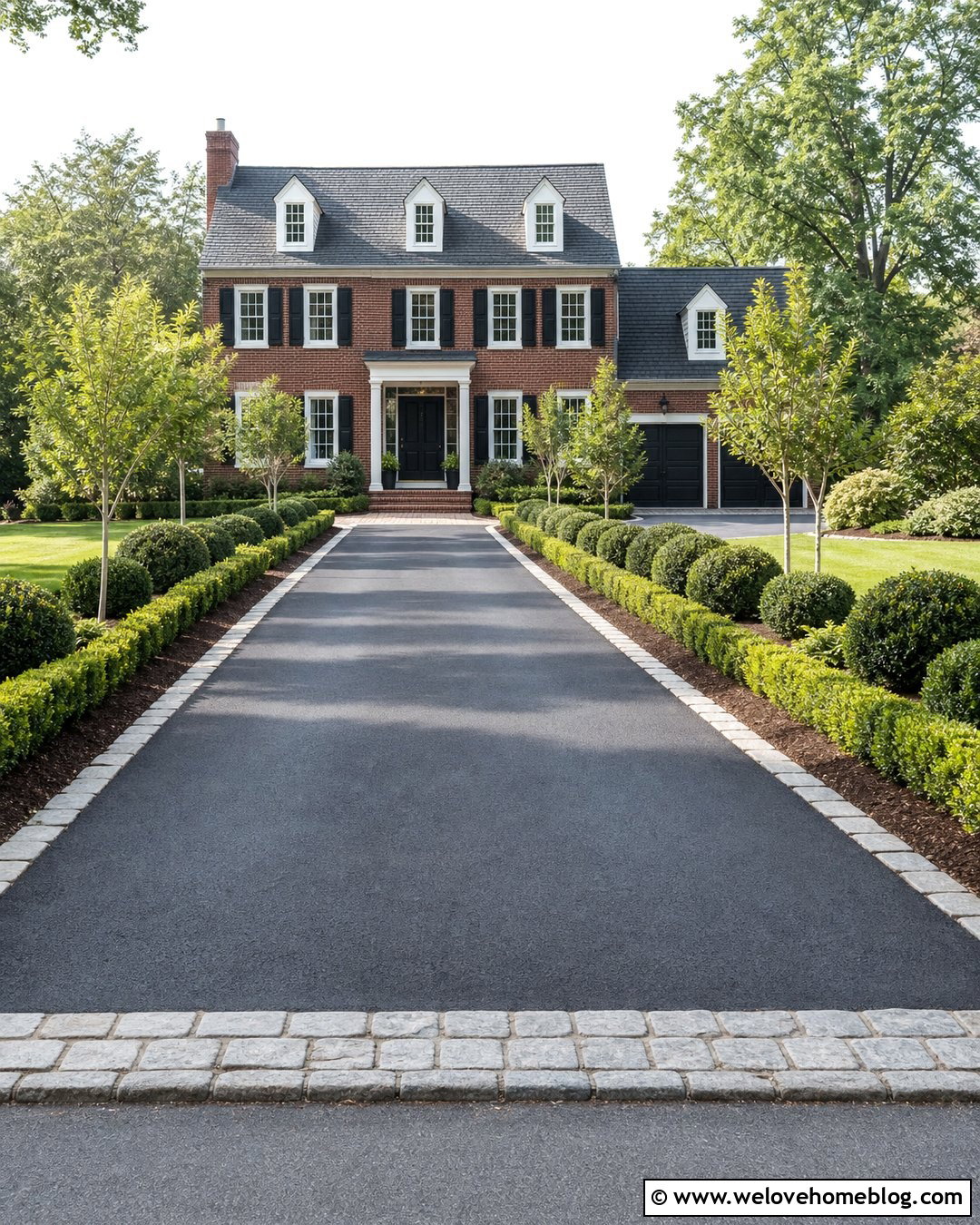
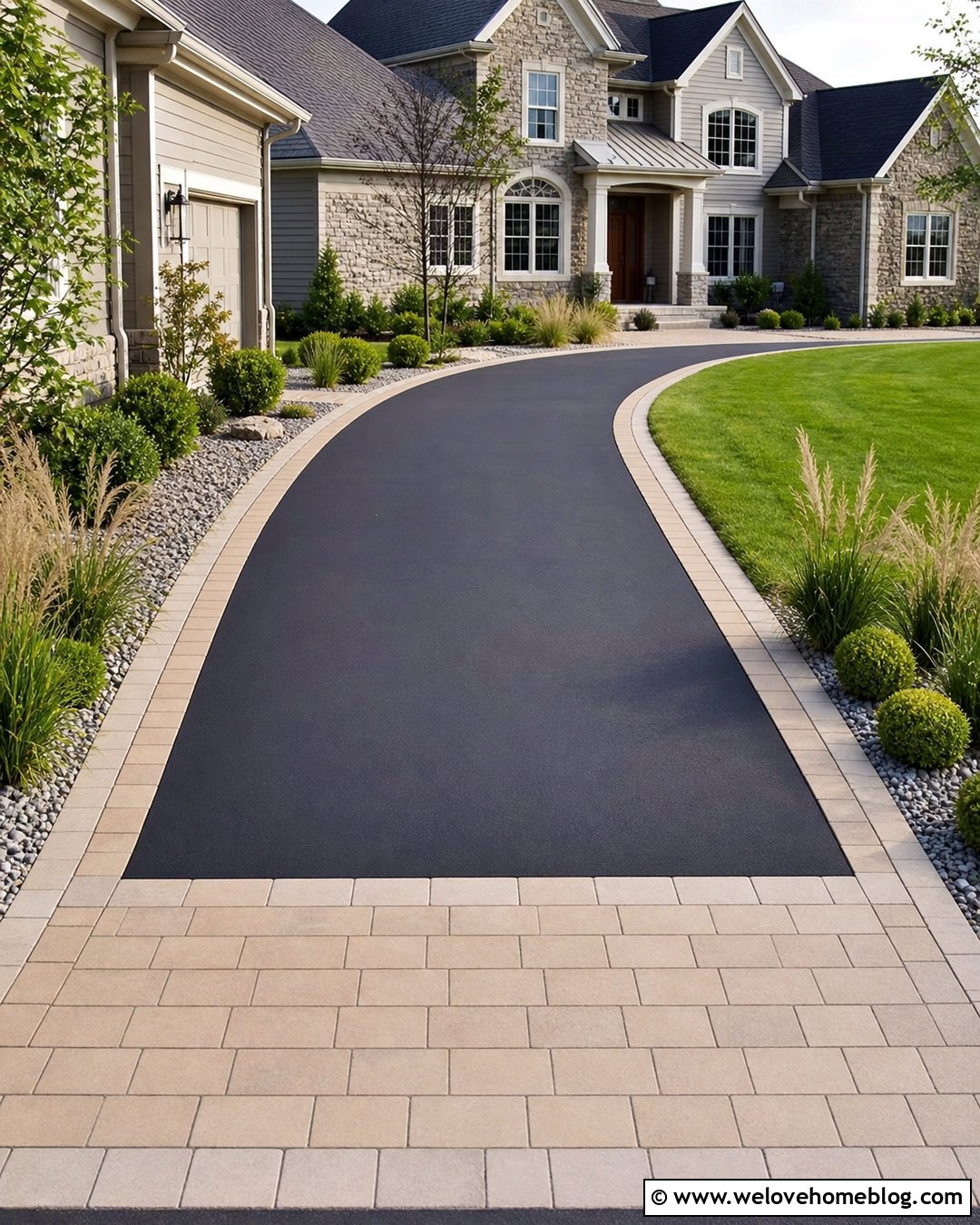
A black asphalt driveway becomes more refined when framed with a wide cobblestone border. Choose weathered gray cobbles that contrast with the dark surface and complement stone, brick, or painted siding. A straight layout keeps the design practical, while slightly curved planting beds prevent it from looking severe. Fill those beds with clipped evergreens, compact flowering shrubs, and low ground covers. A pair of matching trees near the garage can visually reduce the width of a large facade. At the street, widen the cobblestone into a durable entrance apron that announces the driveway clearly. This balanced combination offers the simple appearance of asphalt with the texture of natural stone. Repeating the cobbles in the front walkway helps unite the entire landscape.
5. Circular Paver Driveway With a Center Island
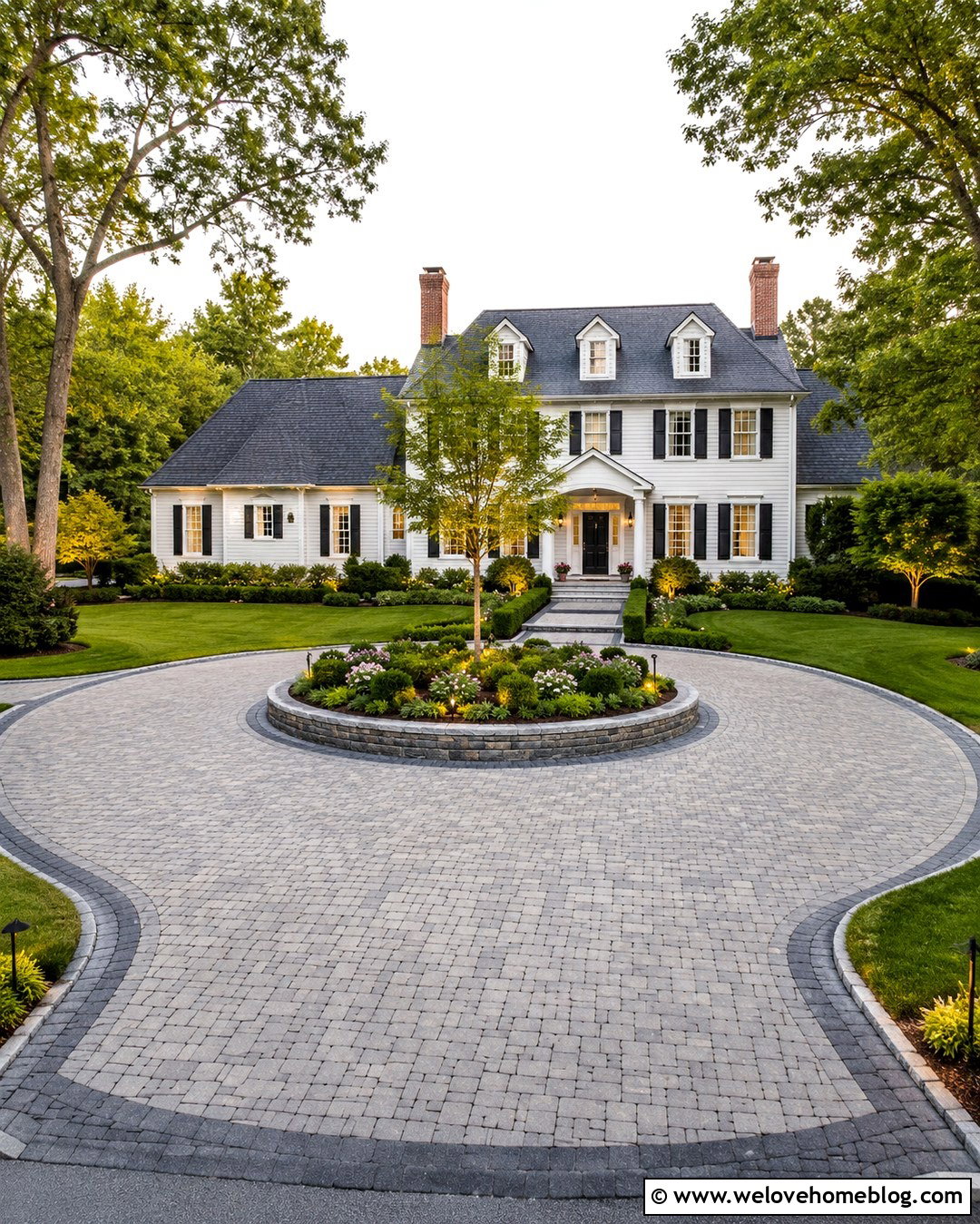
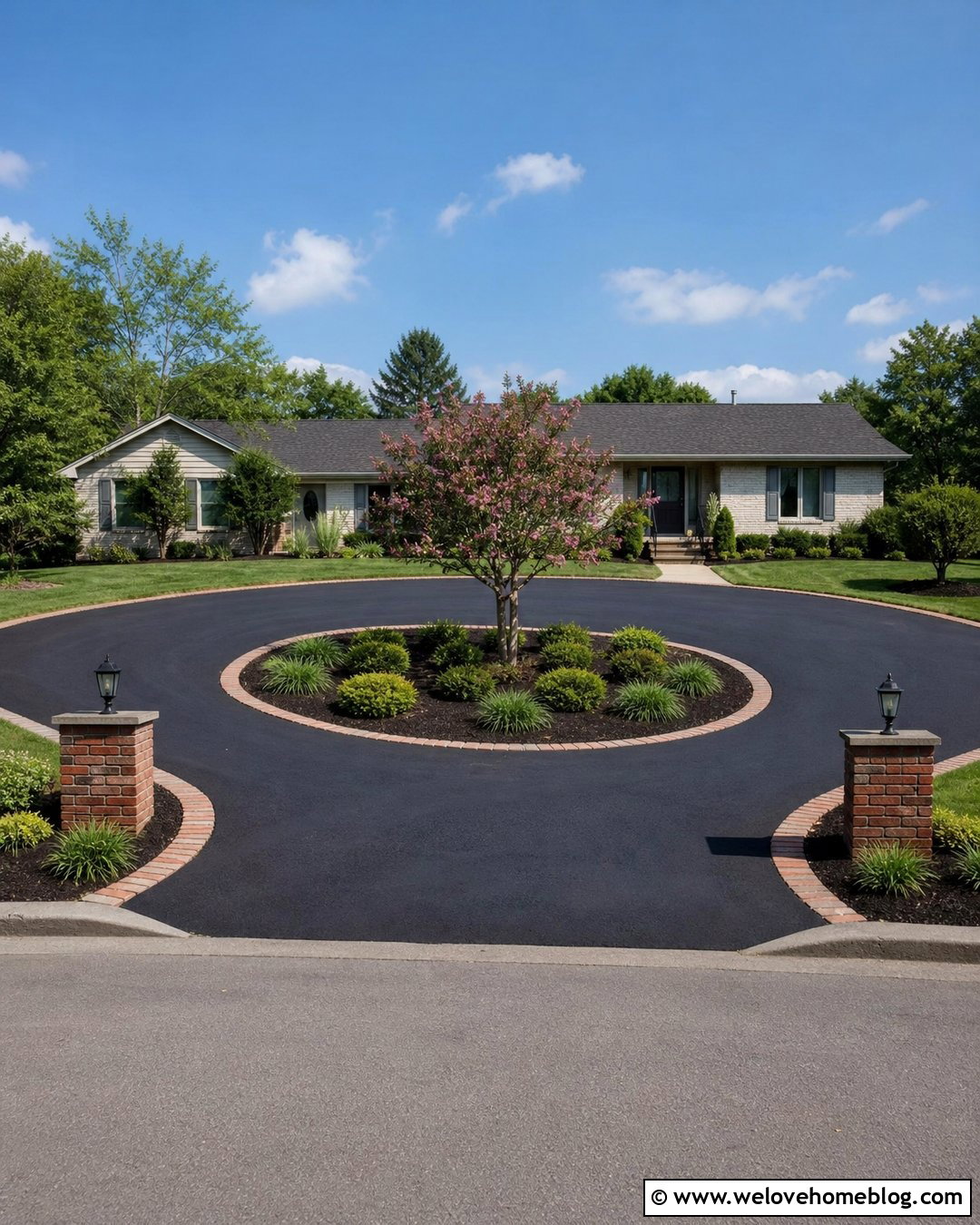
A circular driveway gains character when its center island becomes a well-planned garden rather than leftover lawn. Install neutral concrete pavers in a running-bond or fan pattern, then define the island with a raised stone curb. Place one appropriately scaled ornamental tree near the center and surround it with low evergreens, flowering perennials, and seasonal ground cover. Plants should remain low near the driveway edge to preserve visibility across the circle. Repeat several of the island plants near the front porch for continuity. Landscape lighting can highlight the tree and mark the interior curve without crowding the driving path. This formal but approachable layout works well with Colonial, Georgian, Mediterranean, and larger ranch homes. ()
6. Farmhouse Gravel Driveway With a Tree-Lined Entrance
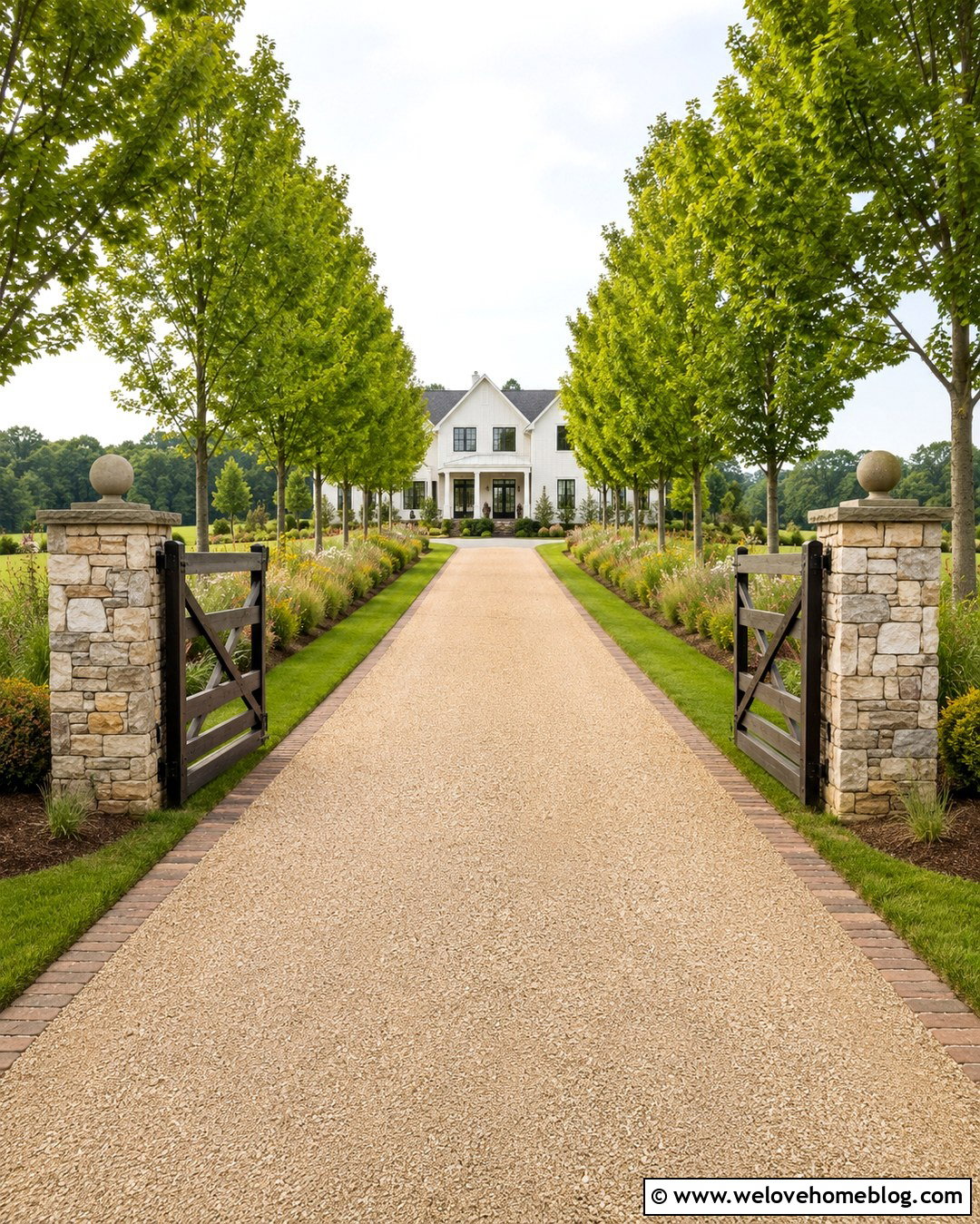
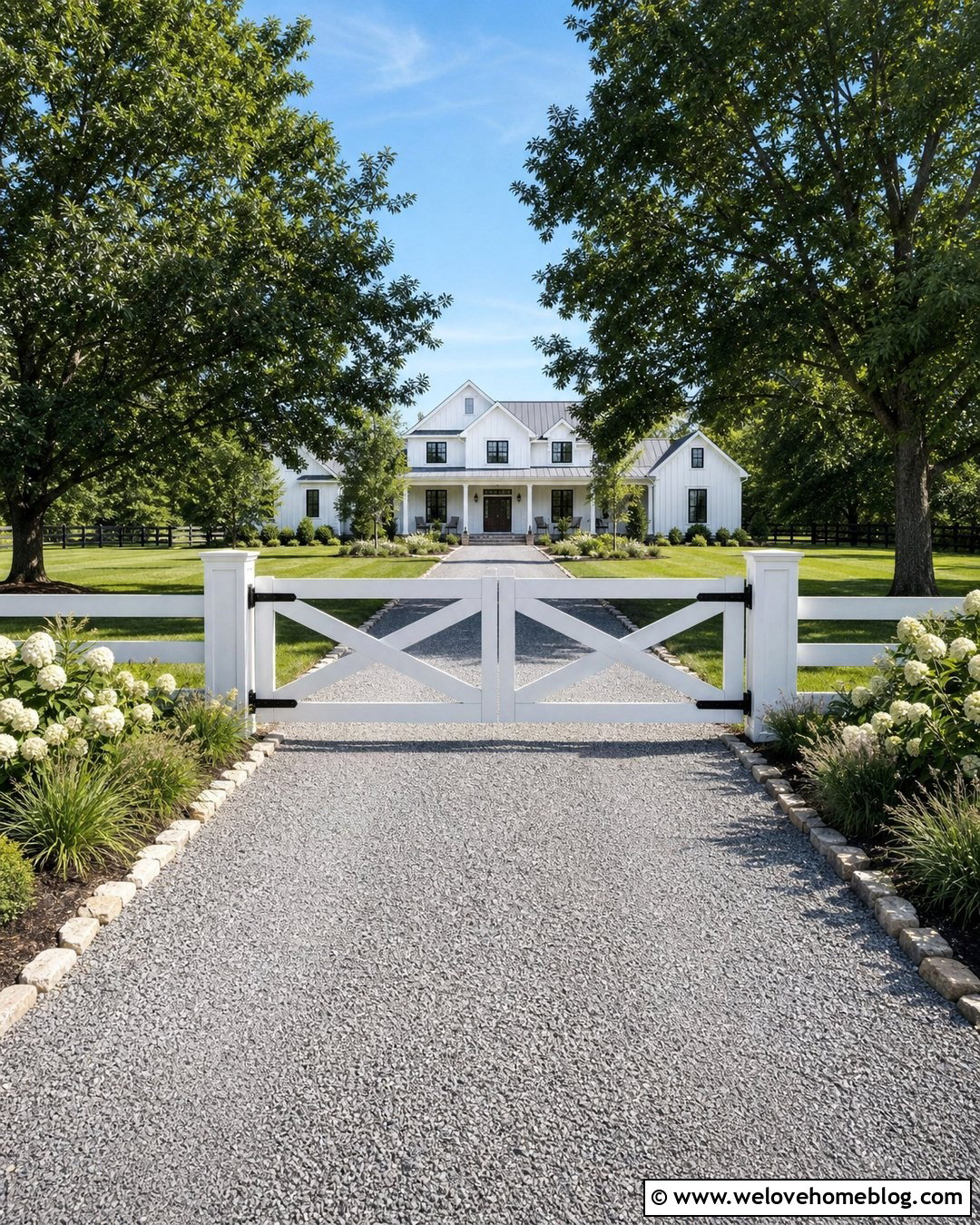
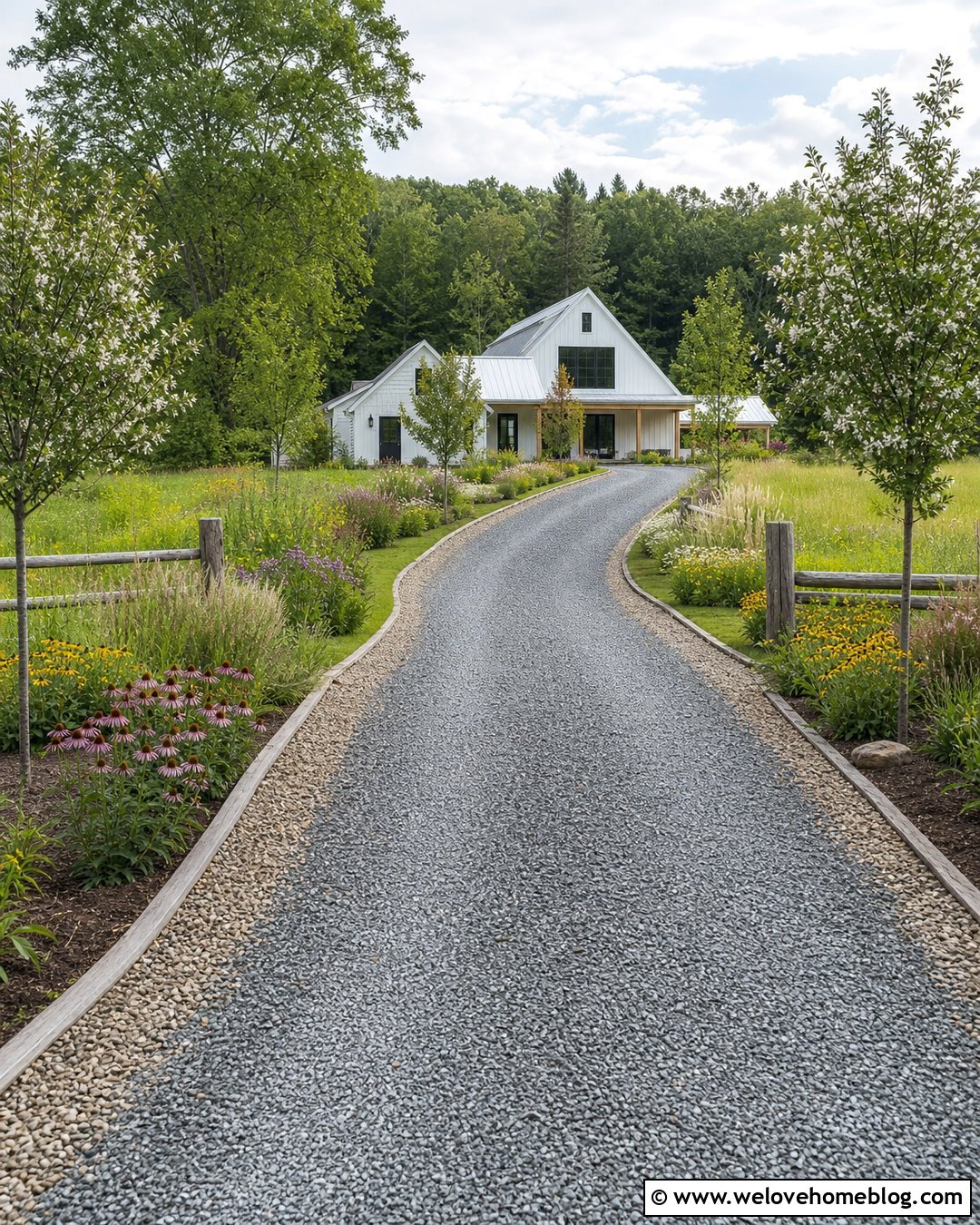
Picture a pale gravel driveway passing between evenly spaced trees toward a white modern farmhouse. This landscape has a classic country character, yet it can remain simple to maintain. Use compacted beige crushed gravel with sturdy brick or steel edging. Plant medium-size deciduous trees far enough from the driveway to allow room for mature trunks, branches, and roots. Beneath them, create broad grass strips or mulched beds with drifts of native perennials. Stone entrance columns and a traditional farm gate can establish a clear boundary at the road. Keep the view toward the house open by avoiding dense shrubs in the center sightline. The repeated trees create rhythm, while the loose planting below prevents the design from becoming overly formal.
7. Small Concrete Driveway With Layered Planting Beds
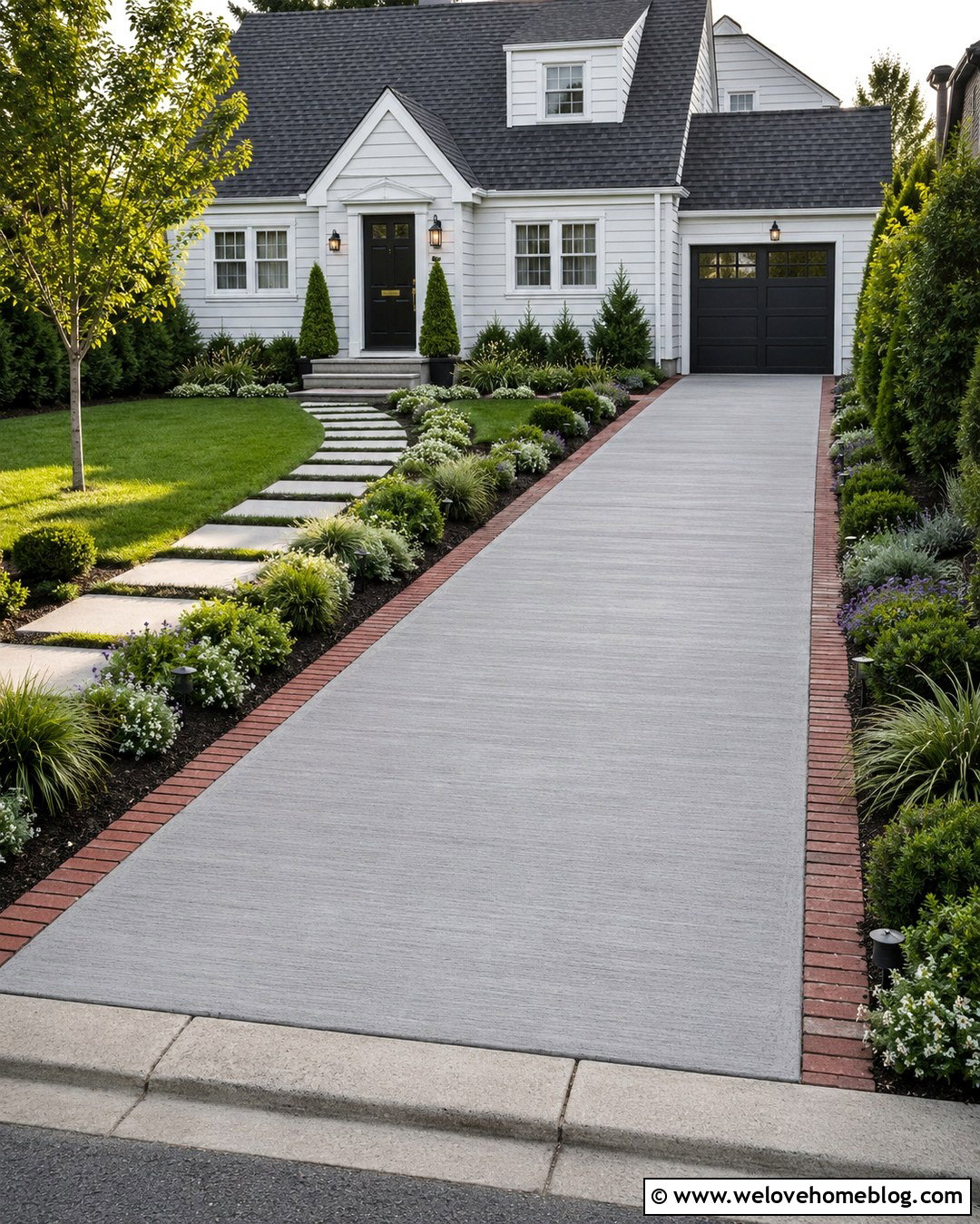
Limited space does not require plain landscaping. A narrow broom-finished concrete driveway can feel wider and more welcoming when planting is carefully scaled. Frame one side with a slim bed containing dwarf evergreens, flowering ground covers, and a compact ornamental grass. On the opposite side, use a clean lawn edge and a stepping-stone path to the front door. A brick or stone ribbon along the concrete introduces color without reducing usable parking space. Choose plants with upright habits rather than varieties that spread across the pavement. One small tree near the front corner can provide height while leaving the garage visible. Defined edging is especially useful in tight yards because it creates clear separation between paving, grass, and planting. ()
8. Permeable Paver Driveway With a Rain Garden
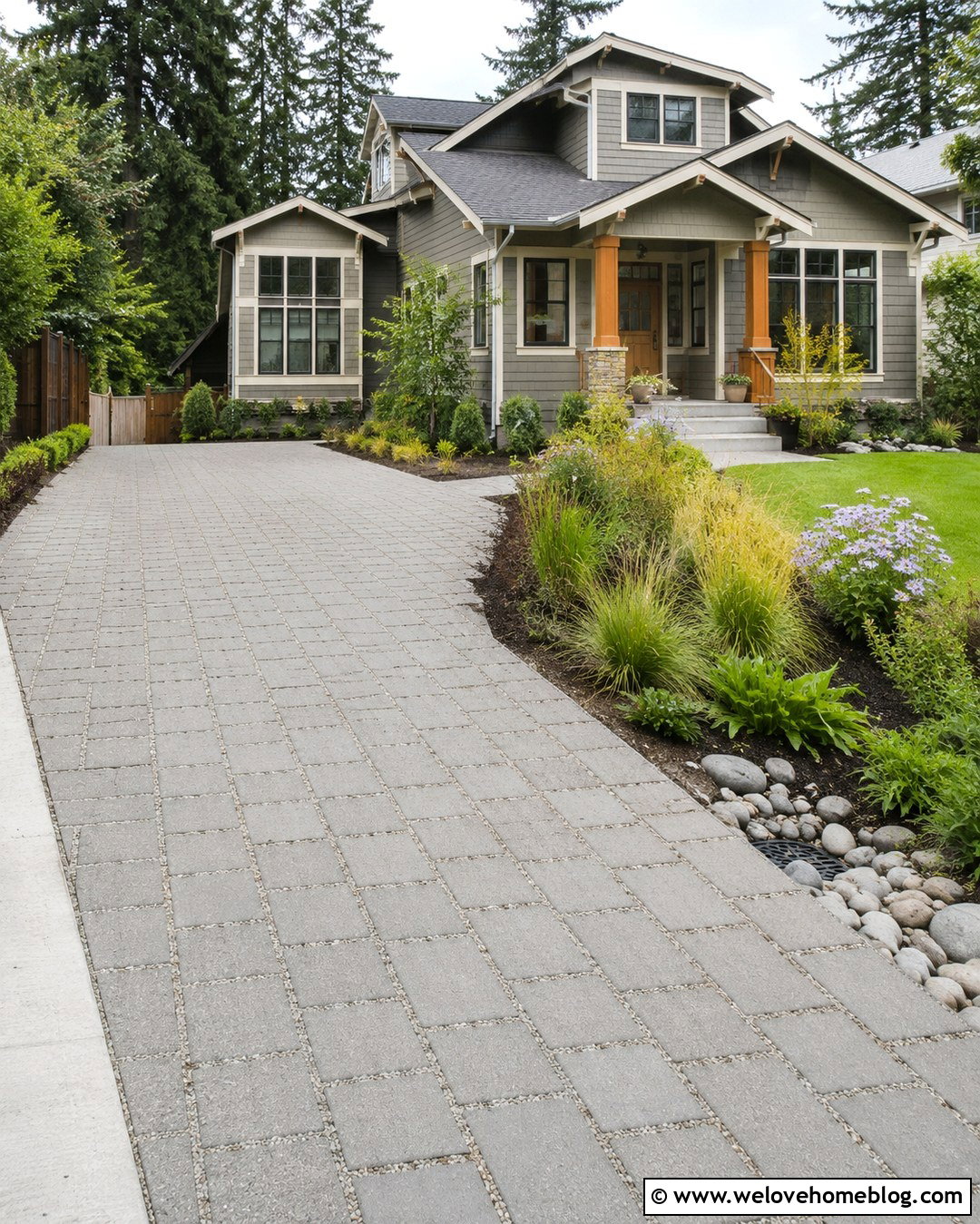
Permeable concrete pavers pair naturally with a planted rain garden for an attractive, water-conscious driveway landscape. Use medium-gray pavers with open joints filled with small aggregate. Gently direct surface water toward a shallow planted basin along the lower side of the driveway, following local drainage and permit requirements. Fill the basin with regionally suitable grasses, sedges, flowering perennials, and moisture-tolerant shrubs. A band of river rock can define the inlet while reducing soil movement onto the paving. Keep the center of the driveway open and use a straightforward rectangular layout for easy navigation. This look complements modern, Craftsman, and Northwest-inspired homes. Rain gardens must be placed carefully around foundations, utilities, slopes, and neighboring properties. ()
9. Long Driveway With Tree and Shrub Layers
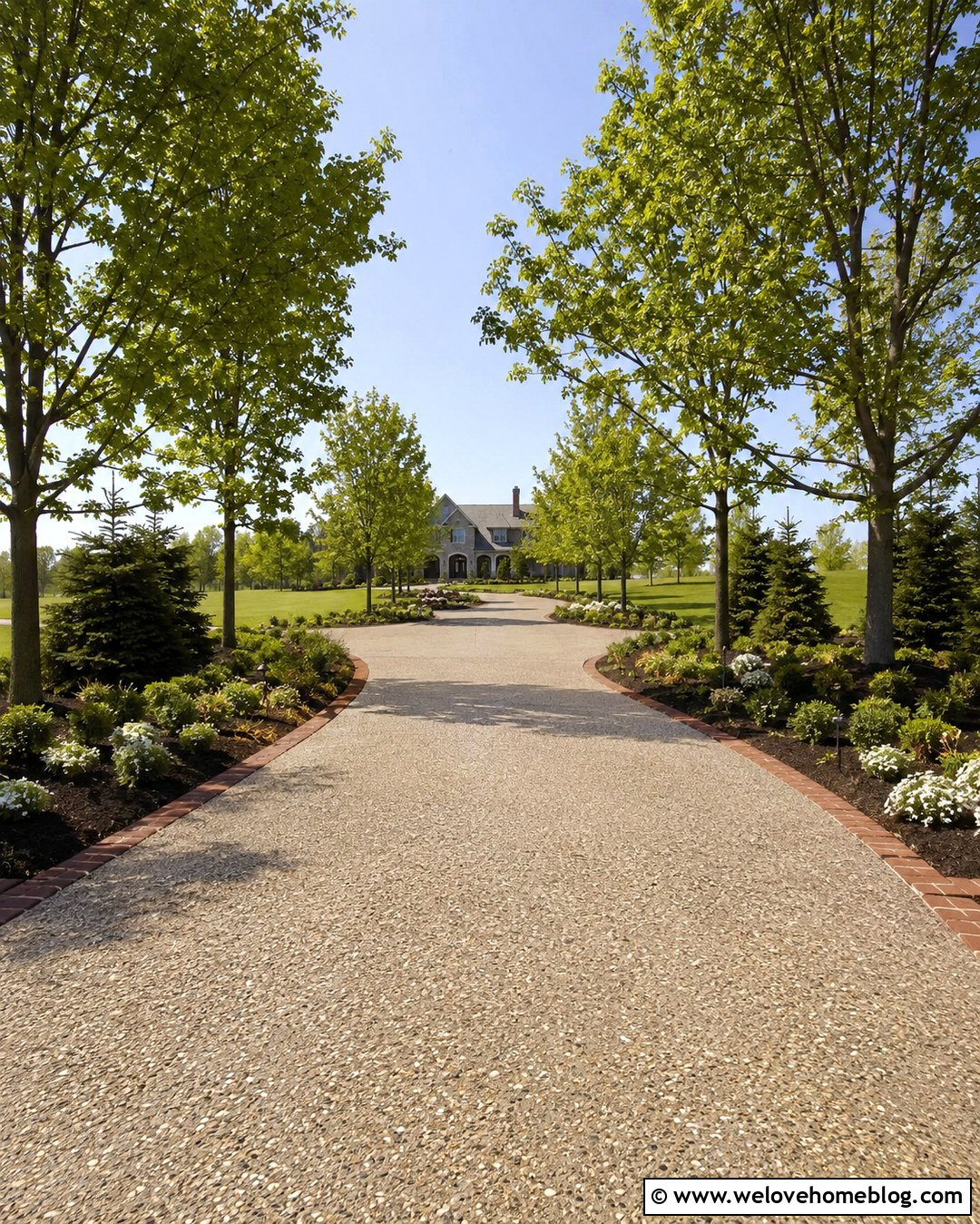
A long driveway needs repetition and scale to prevent the route toward the house from feeling empty. Start with a warm exposed-aggregate surface and a narrow brick border. Plant evenly spaced shade trees along one side, then balance them with grouped evergreens and flowering shrubs on the other. This slightly asymmetrical arrangement feels more natural than two rigid matching rows. Near the house, widen the planting beds and introduce smaller ornamental trees to mark the arrival area. Low grasses or ground covers can connect the larger plants without hiding the driveway edge. Include occasional breaks for drainage, utilities, and landscape access. Repeating the same three or four plants down the full approach creates unity and makes a large property feel thoughtfully organized.
10. Sloped Driveway With Stone Retaining Walls
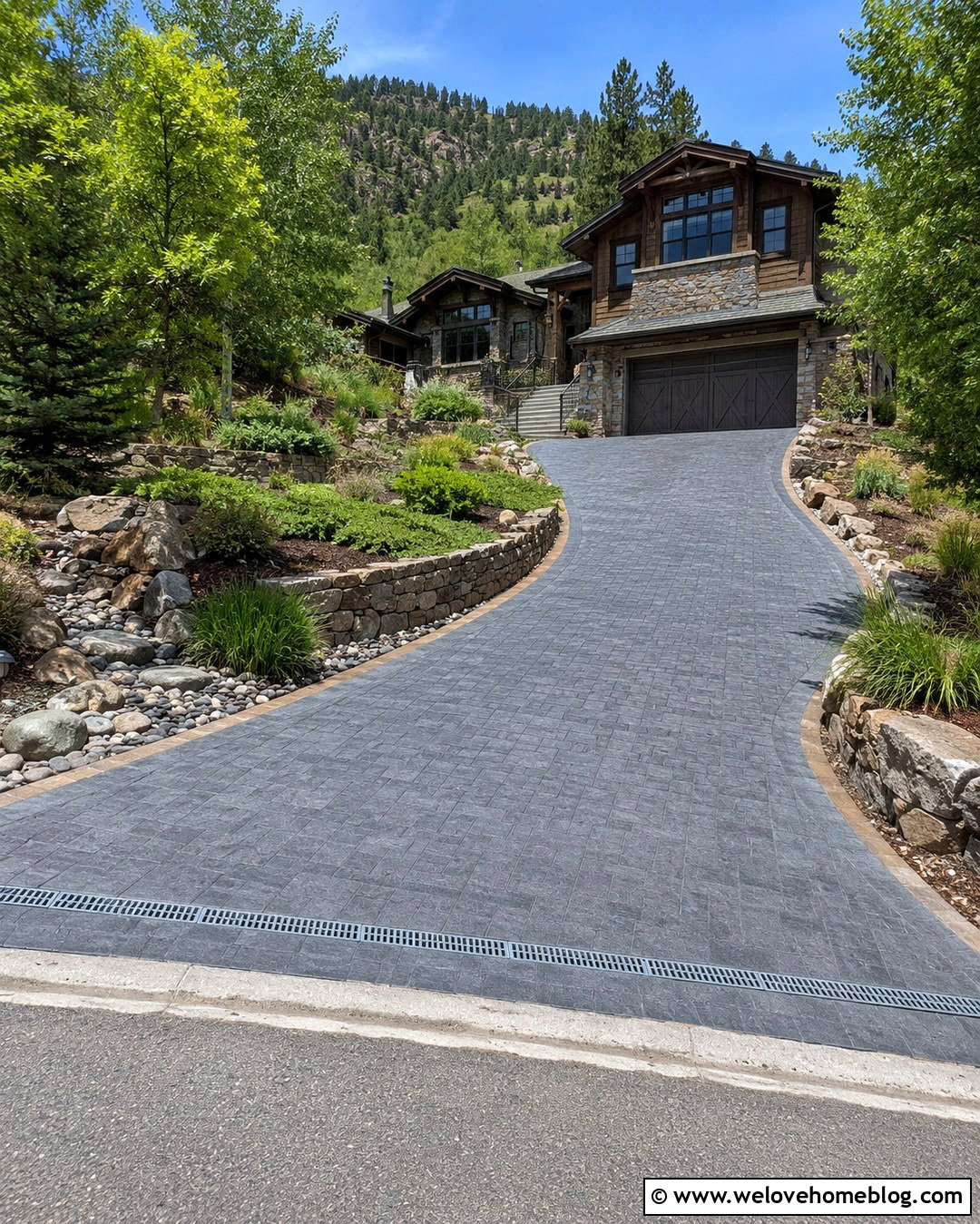
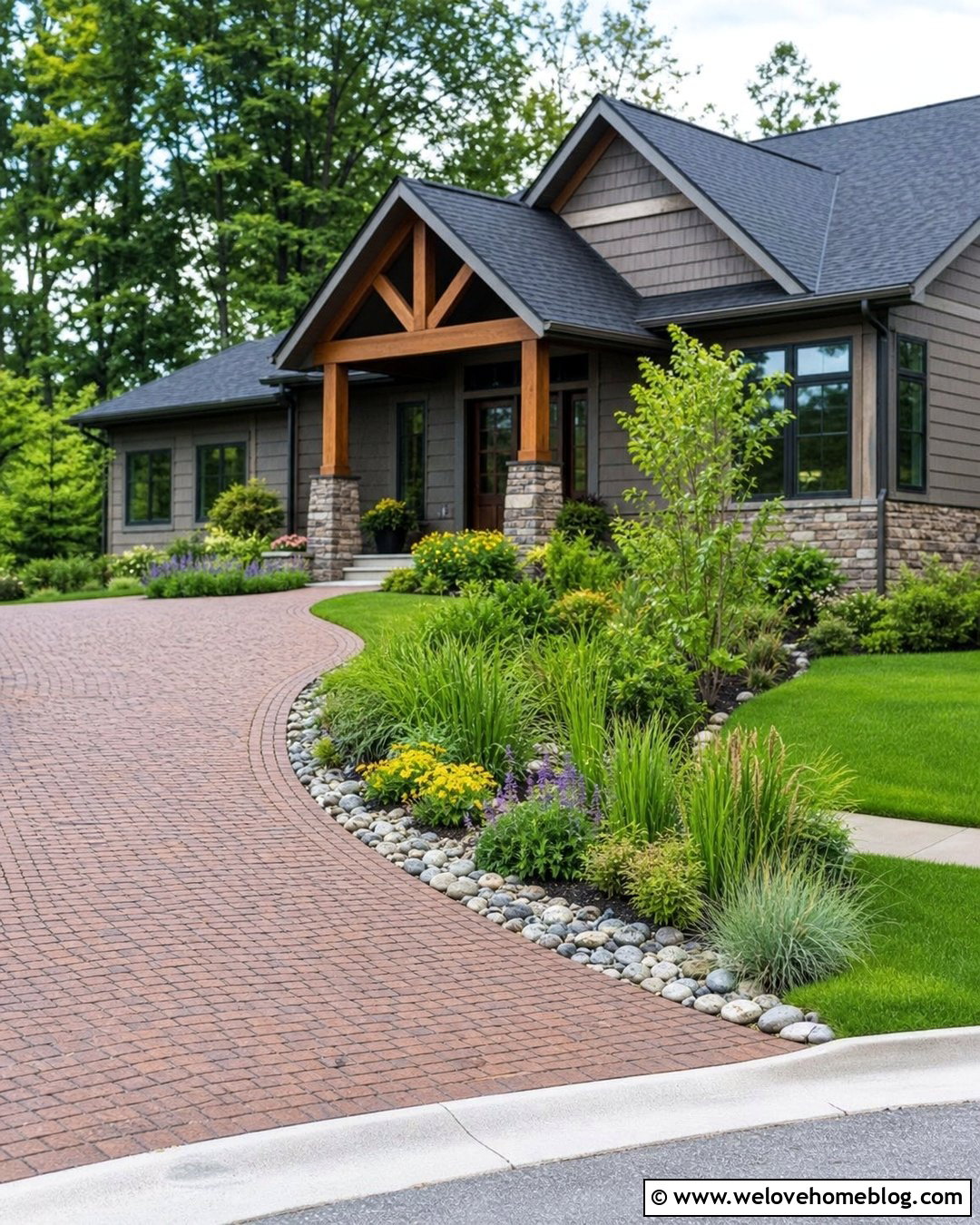
A sloped driveway can become an appealing terraced landscape when grading, drainage, and retaining structures are planned together. Use textured concrete or concrete pavers for dependable visual definition, then install professionally designed natural-stone retaining walls along the higher side. Set planting beds back from the pavement so loose soil and mulch are less likely to wash onto the driving surface. Fill the terraces with deep-rooted shrubs, ornamental grasses, and spreading ground covers selected for the local conditions. On the lower side, keep plants shorter to preserve an open view. A channel drain or other suitable drainage system may be needed near the garage, depending on the site. Consult qualified local professionals before altering a steep grade or constructing structural walls. ()
11. Desert Driveway With Xeriscape Landscaping
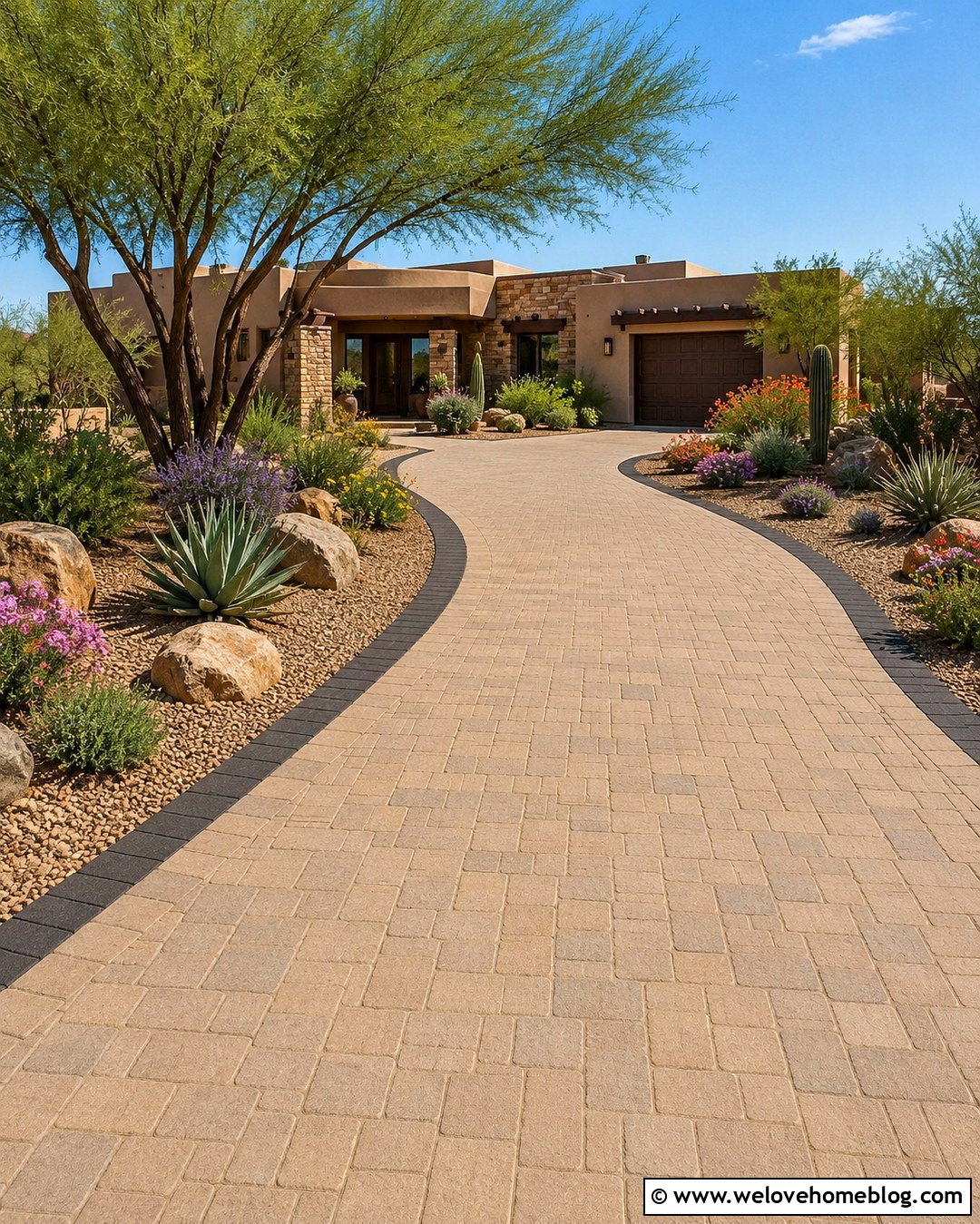
A warm-toned paver driveway surrounded by xeriscape planting can look lush without relying on broad lawns. Choose sand-colored concrete pavers with a darker border that clearly outlines a gently curved route. Replace thirsty turf beside the driveway with gravel mulch, decorative boulders, architectural succulents, flowering desert perennials, and airy native grasses suited to the region. Arrange plants in irregular groups rather than placing one specimen every few feet. This creates a more natural desert composition. Keep sharp or rigid plants farther from doors, walkways, and vehicle exits. A multi-trunk desert tree can provide height near the house, while low plants maintain visibility at the street. Match the rock colors to the home’s stucco, stone, or warm wood accents.
12. Woodland Driveway With Shade Garden Borders
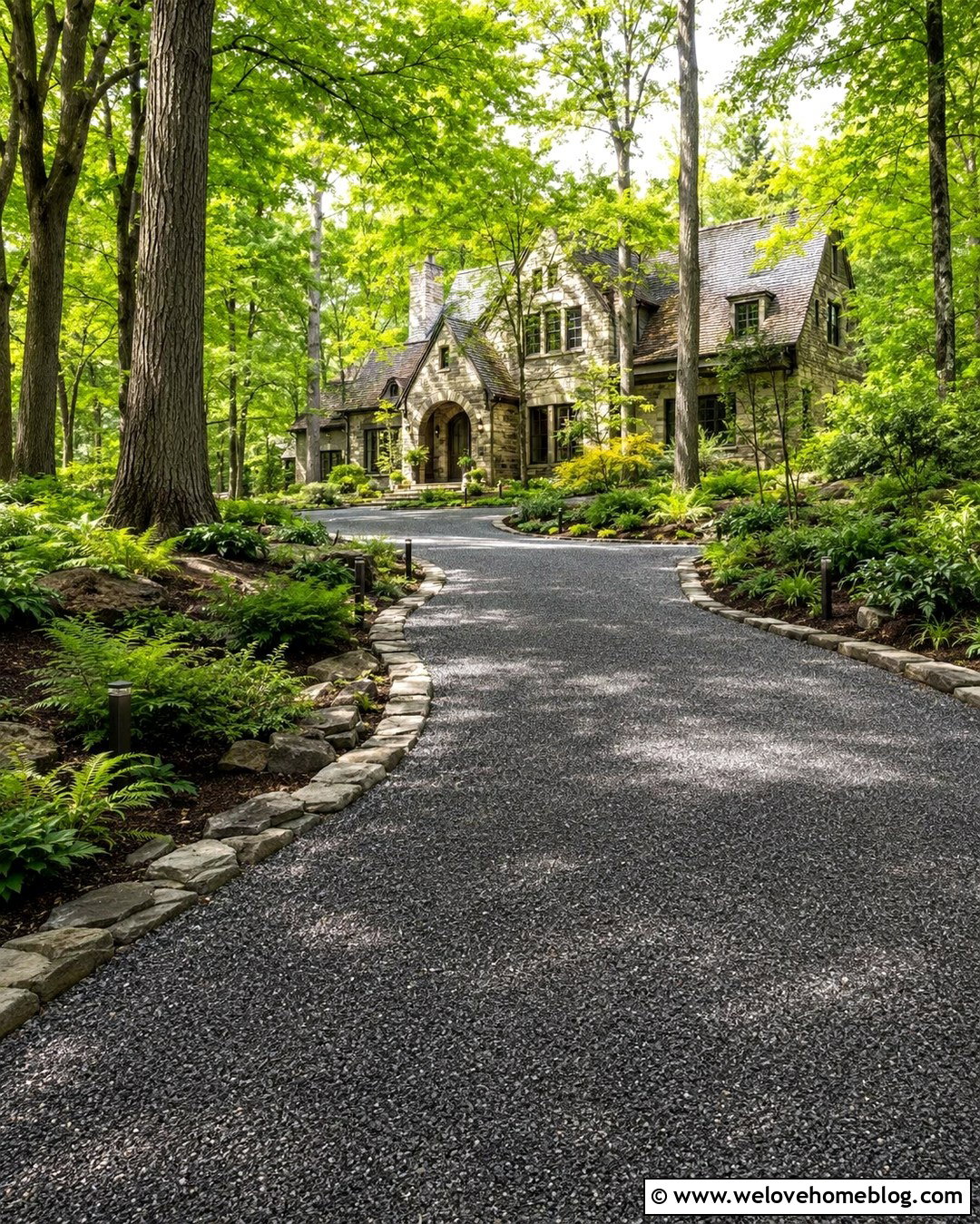
A driveway beneath mature trees feels more intentional when the landscaping celebrates shade rather than struggling against it. Use charcoal resin-bound gravel or fine crushed stone to create a smooth-looking curved surface. Edge it with irregular fieldstone that blends into the wooded setting. Beneath the trees, layer shade-tolerant ground covers, ferns, woodland perennials, and compact shrubs selected for local soil and moisture conditions. Leave breathing room around trunks and avoid piling mulch against bark. Repeated sweeps of foliage produce a calmer result than many unrelated plants. Low bollard lights can mark bends without competing with the natural scenery. This landscape works especially well with cabins, Craftsman homes, and stone cottages because the hardscape appears integrated with the surrounding woodland. ()
13. Coastal Shell Driveway With Beach Grass
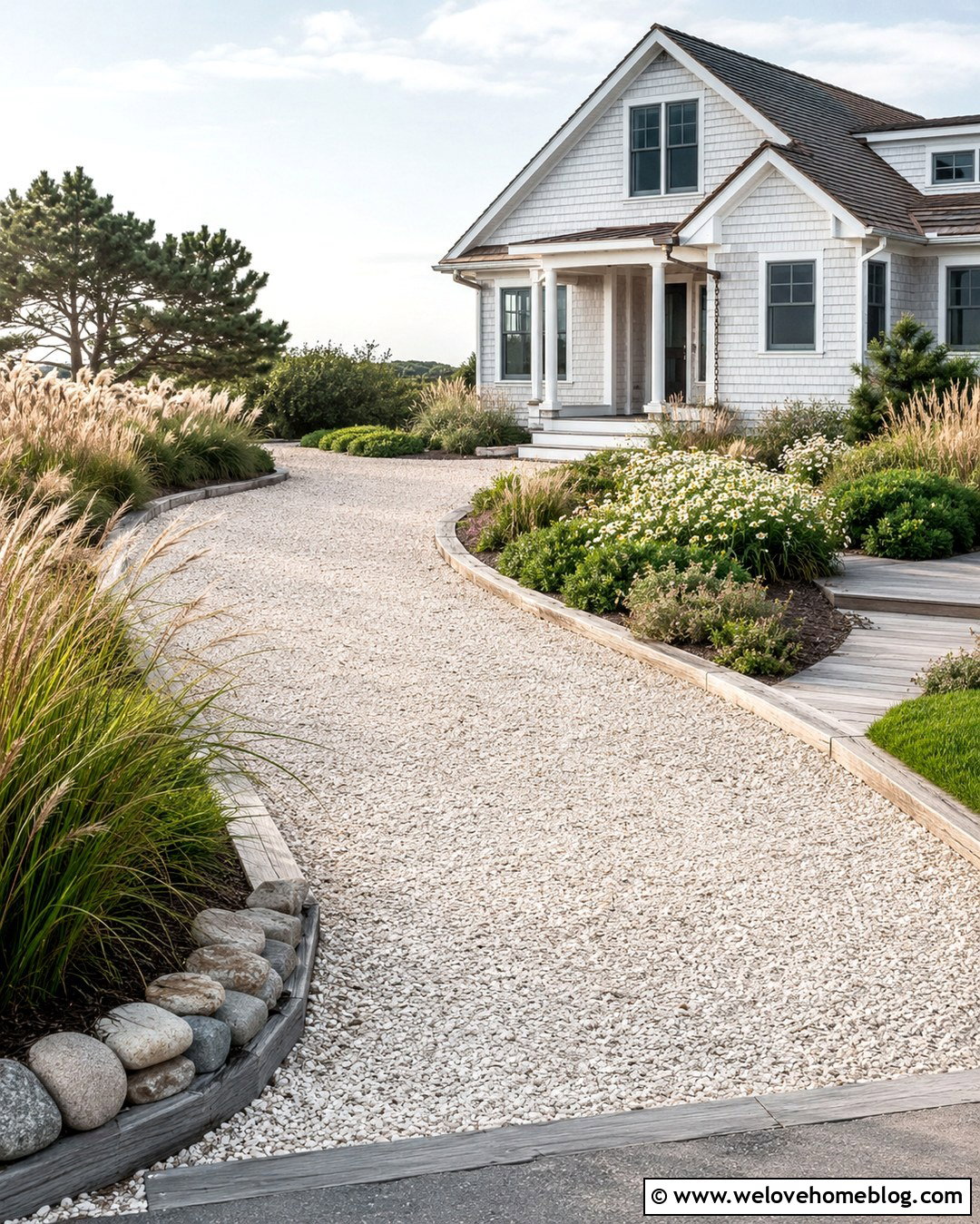
A crushed-shell driveway creates a bright, informal approach that suits coastal cottages and relaxed seaside homes. Keep the layout straight or softly curved, and contain the pale shell with weathered timber, granite setts, or steel edging. Use broad planting beds filled with salt- and wind-tolerant grasses, low evergreen shrubs, and flowering perennials appropriate for the local coast. Rounded beach stone can protect corners where tires might pass close to the beds. Add a simple boardwalk-style path between the driveway and porch to reinforce the coastal character. Avoid filling every open space; visible gravel mulch and generous plant spacing make the design feel breezy. Before installing shell, confirm local material availability, environmental rules, driveway requirements, and neighborhood restrictions.
14. Colonial Driveway With Brick Apron and Boxwood
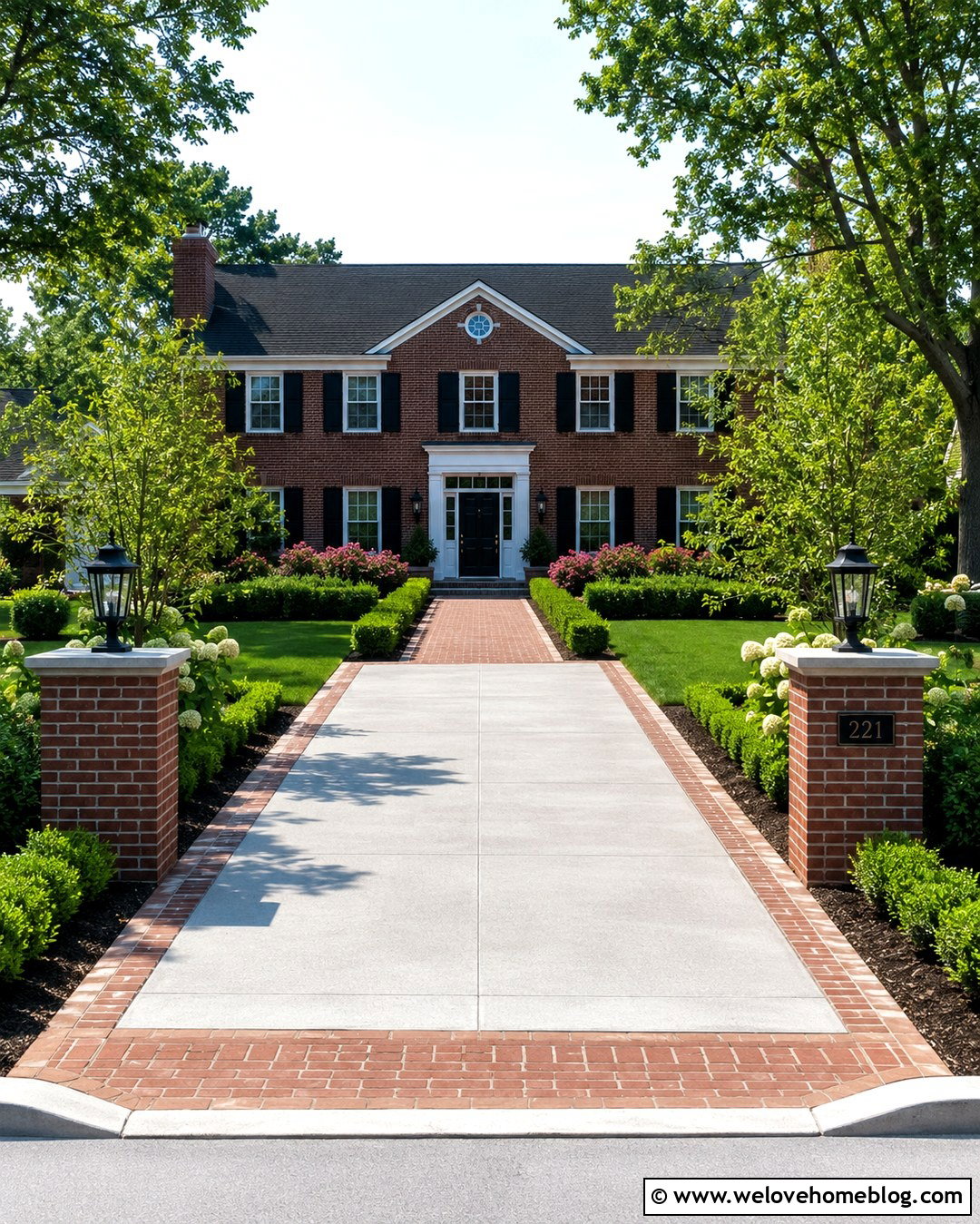
Symmetry gives a Colonial driveway its familiar, polished appearance. Use light broom-finished concrete for the main straight driveway, then add a red clay brick apron at the street and a matching brick border along both sides. Plant paired boxwood hedges near the entrance and repeat them closer to the house. Behind the low evergreens, include flowering shrubs and small deciduous trees arranged in balanced groups. A brick walkway should connect the parking area to the centered front door. Black lantern-style lighting and simple address pillars can complete the traditional composition. Maintain open sightlines by keeping entrance hedges low and locating trees well away from the pavement. This complete landscape feels formal, but seasonal flowers near the porch can keep it friendly.
15. Resin-Bound Driveway With Modern Landscaping
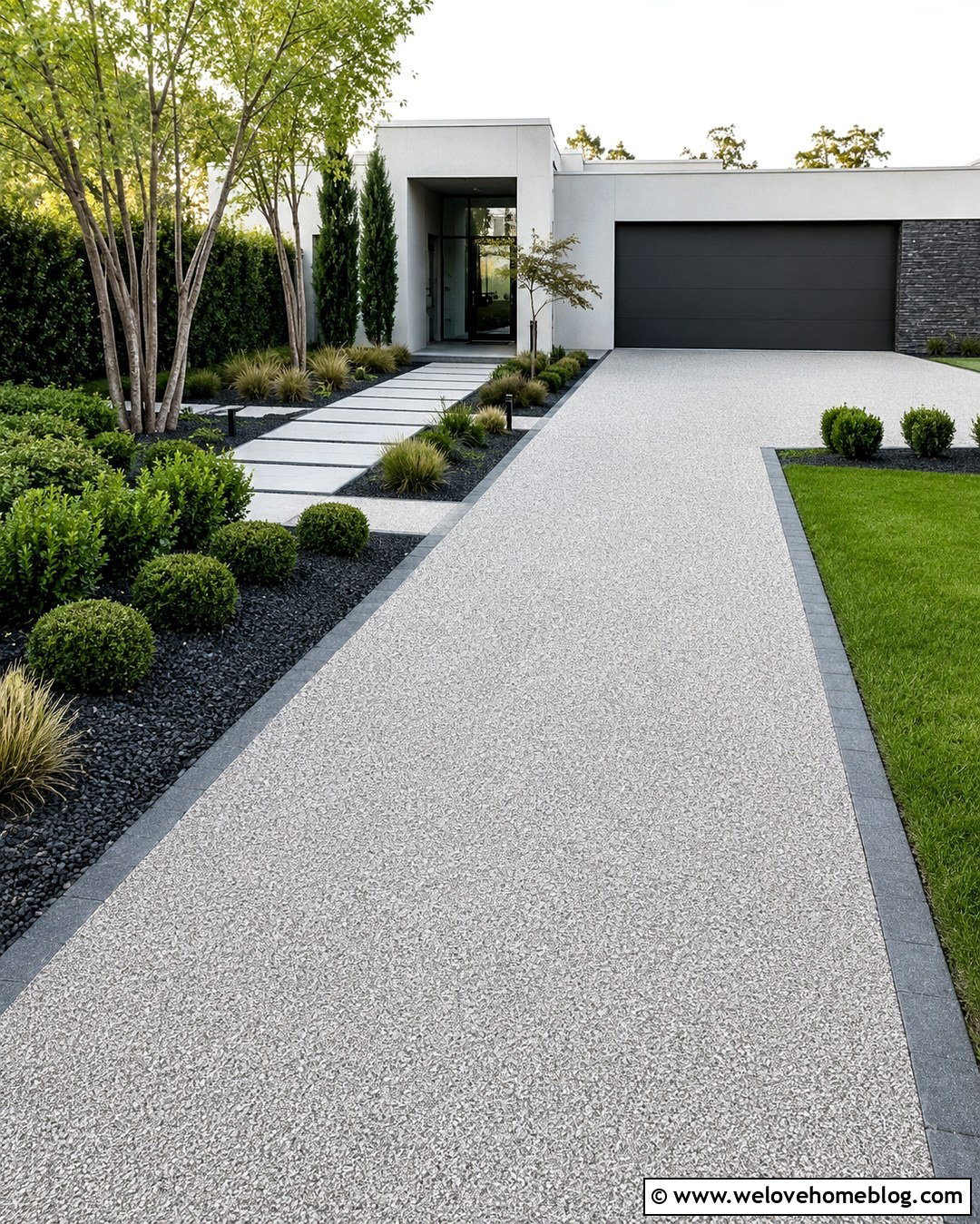
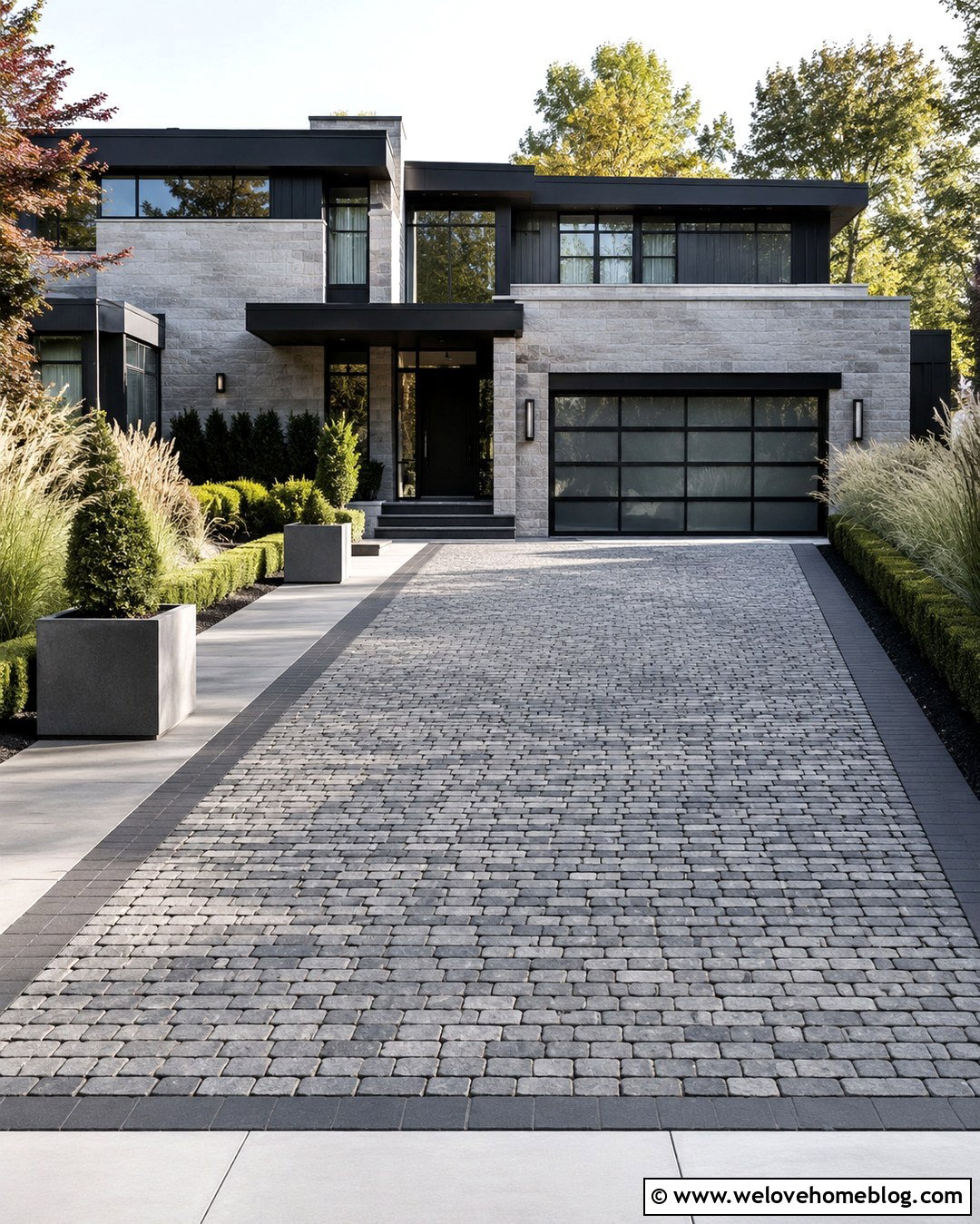
A resin-bound gravel driveway offers a clean, seamless-looking surface that works well with streamlined planting. Select a light gray aggregate blend and frame it with charcoal concrete pavers. Divide the surrounding landscape into bold rectangular beds containing clipped evergreens, tufted grasses, and one or two sculptural multi-stem trees. Use dark gravel mulch to connect the planting beds visually to the border pavers. A wide path made from matching slabs can lead directly to the front entrance. Instead of adding many plant varieties, repeat a limited palette in blocks. This gives the entire frontage a calmer appearance. The driveway shape can be straight with a widened parking bay, allowing the planting beds to soften the edges without reducing practical maneuvering space.
16. Ranch Driveway With Exposed Aggregate and Prairie Planting
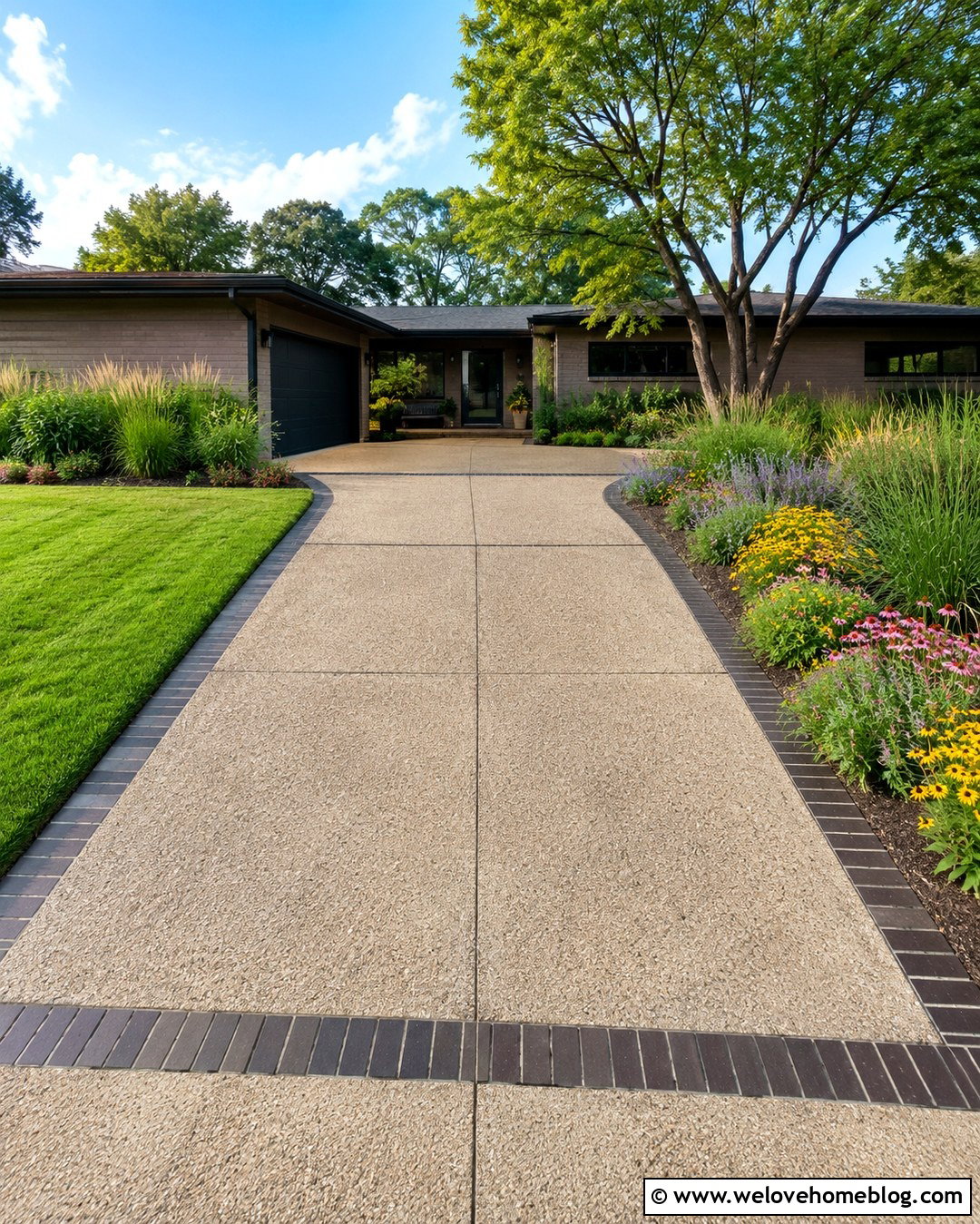
A low ranch house benefits from driveway landscaping that adds vertical interest without hiding the facade. Choose warm exposed-aggregate concrete for a broad straight driveway, then finish the edges with dark brick or flush steel. Create sweeping beds along one side with prairie grasses, coneflowers, black-eyed Susans, and compact native shrubs suited to the region. On the opposite side, preserve a generous lawn strip for a balanced, open appearance. A small grove of ornamental trees near the far corner can help frame the house. Use larger plant groups instead of narrow, scattered rows. The horizontal driveway and roofline will feel more dynamic when paired with soft grasses, upright flowers, and a few carefully positioned trees that move the eye across the property.
17. Concrete Strip Driveway With Ground Cover
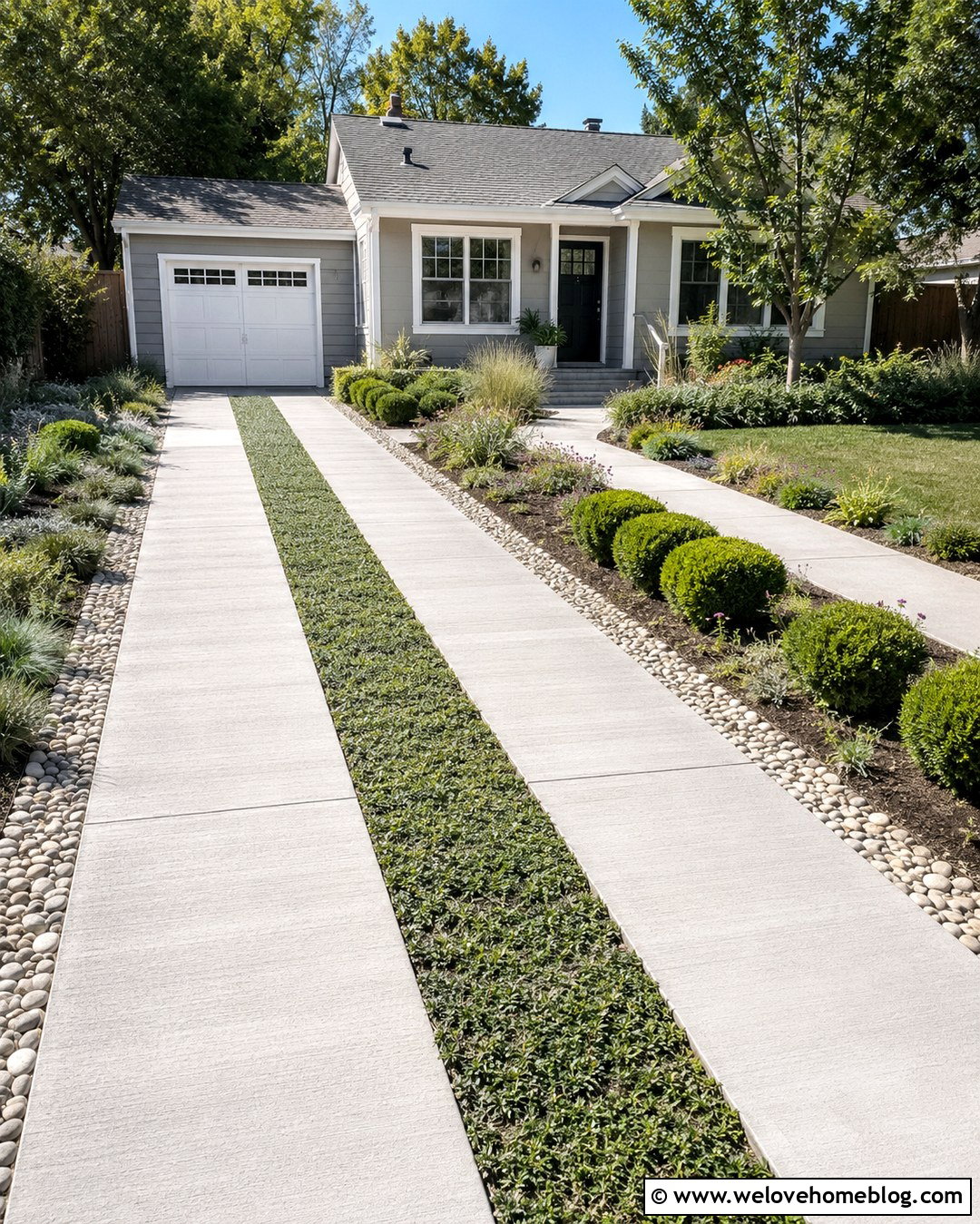
Two concrete driving strips separated by planting can reduce the visual weight of hardscape in a small front yard. Use lightly broomed gray concrete for the tire paths and install reinforced cellular pavers, gravel, or a traffic-tolerant ground cover in the center, depending on climate and expected vehicle use. Continue low ground cover along the outer edges, backed by compact shrubs and small ornamental grasses. A flush stone border keeps the complete layout crisp without creating a tripping edge. Match the front walkway to the concrete strips so the design feels connected. This driveway suits cottages, midcentury homes, and compact urban properties. Proper base construction remains essential because the narrow strips must still support vehicles and handle local freeze, soil, and drainage conditions.
18. Driveway Entrance With Stone Pillars and Planting
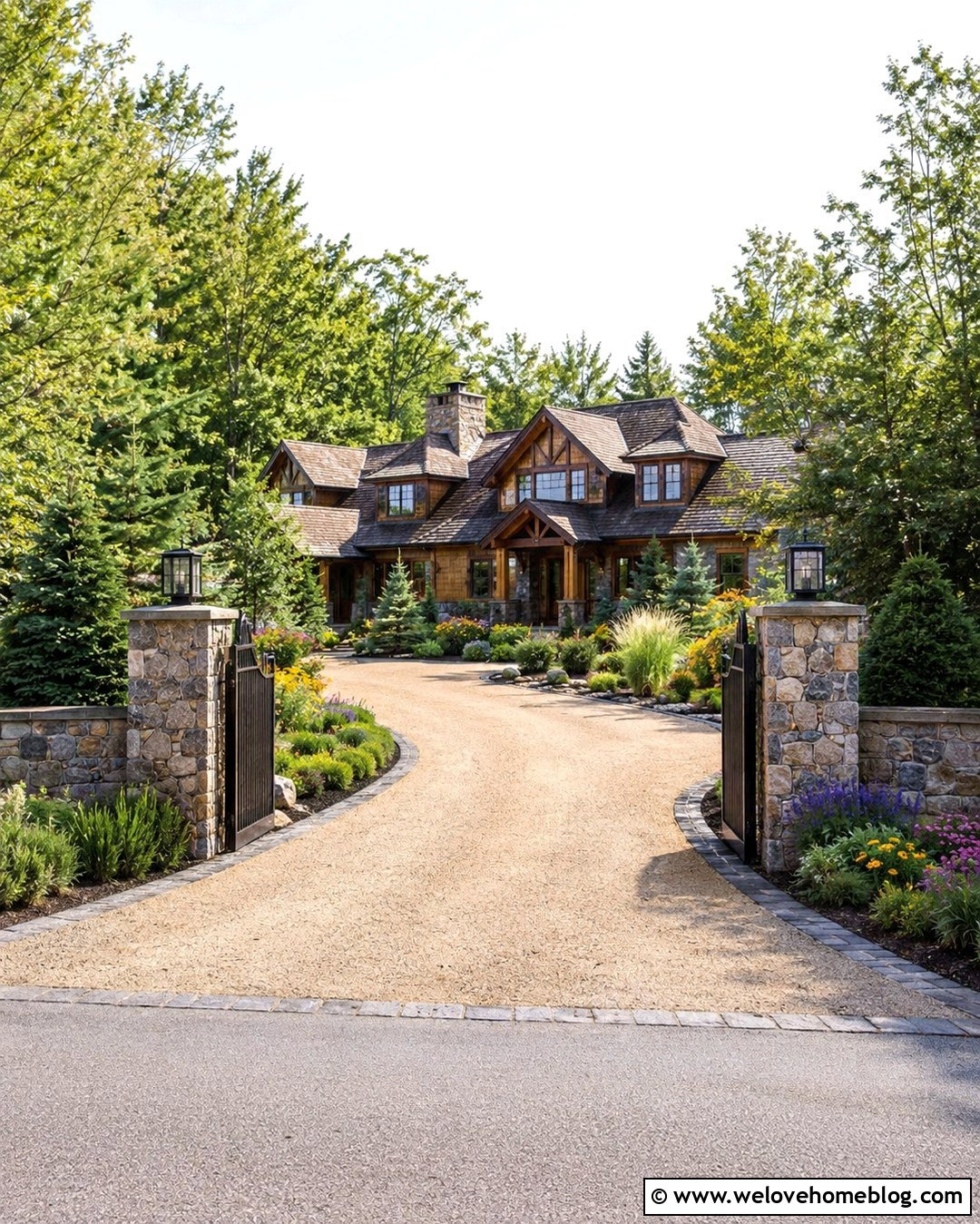
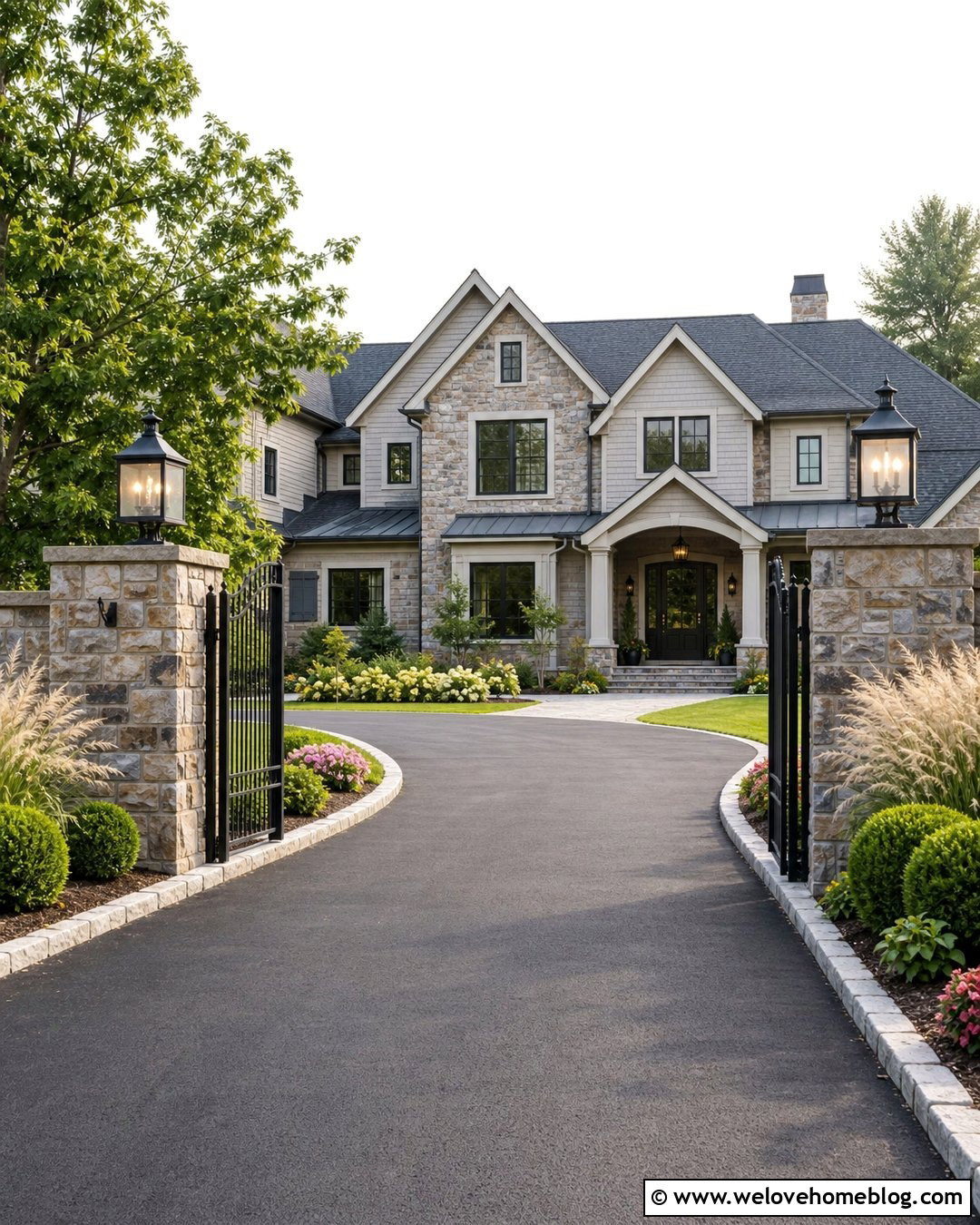
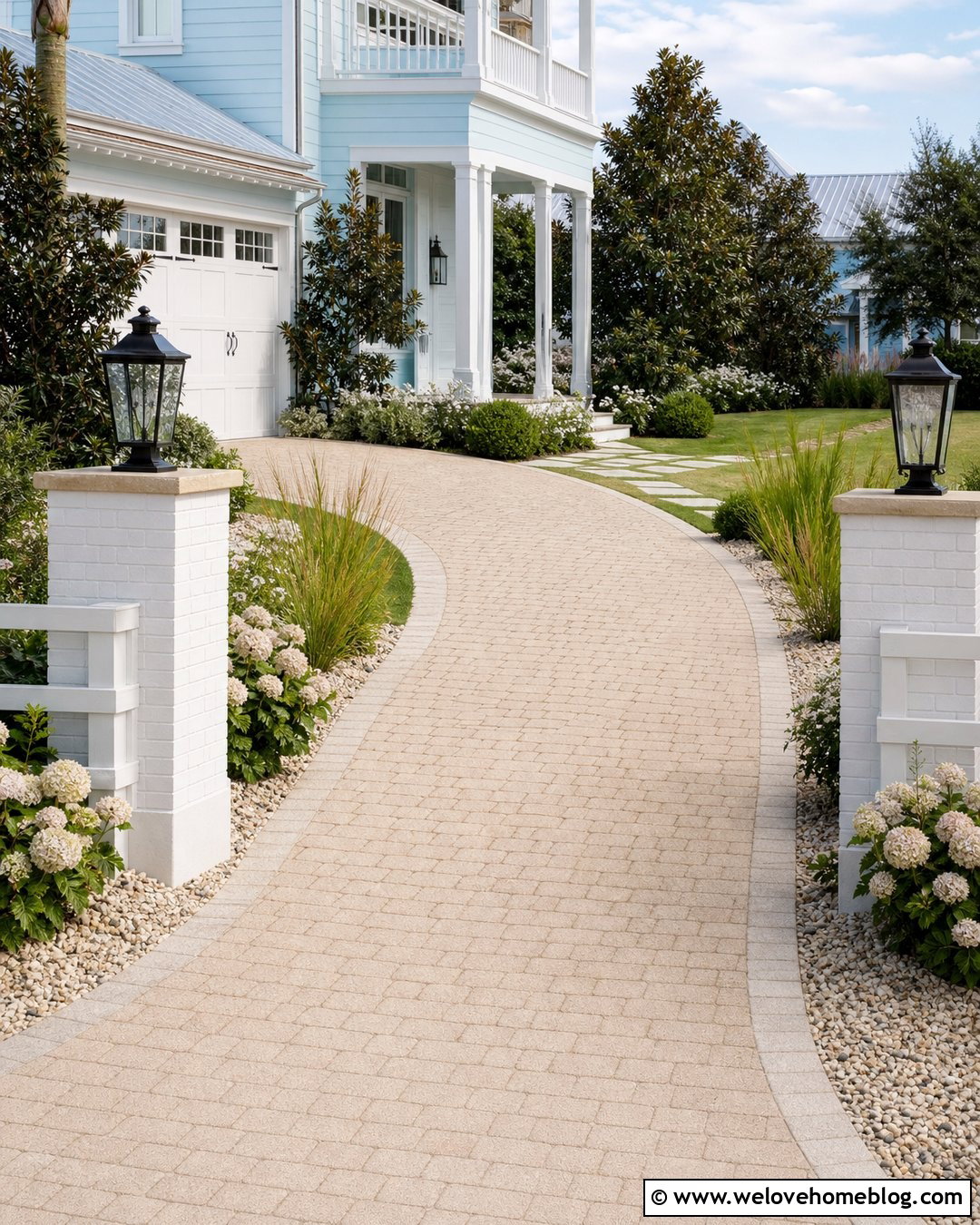
Stone pillars look most convincing when the surrounding driveway and landscape share similar colors and proportions. Begin with a curved tan gravel driveway edged in dark granite setts. Build two medium-height pillars from locally appropriate stone, leaving generous clearance for vehicles, delivery trucks, and emergency access. Position matching low walls behind the pillars, then soften them with evergreen shrubs, flowering perennials, and ornamental grasses. Place taller plants outside the visibility area rather than directly beside the road. A simple metal gate can be included, but the design also works with an open entrance. Repeat the pillar stone near the house through porch details or garden walls. This creates a connected arrival sequence instead of making the entrance feel like an isolated decoration.
19. Blacktop Driveway With Mixed Flower Borders
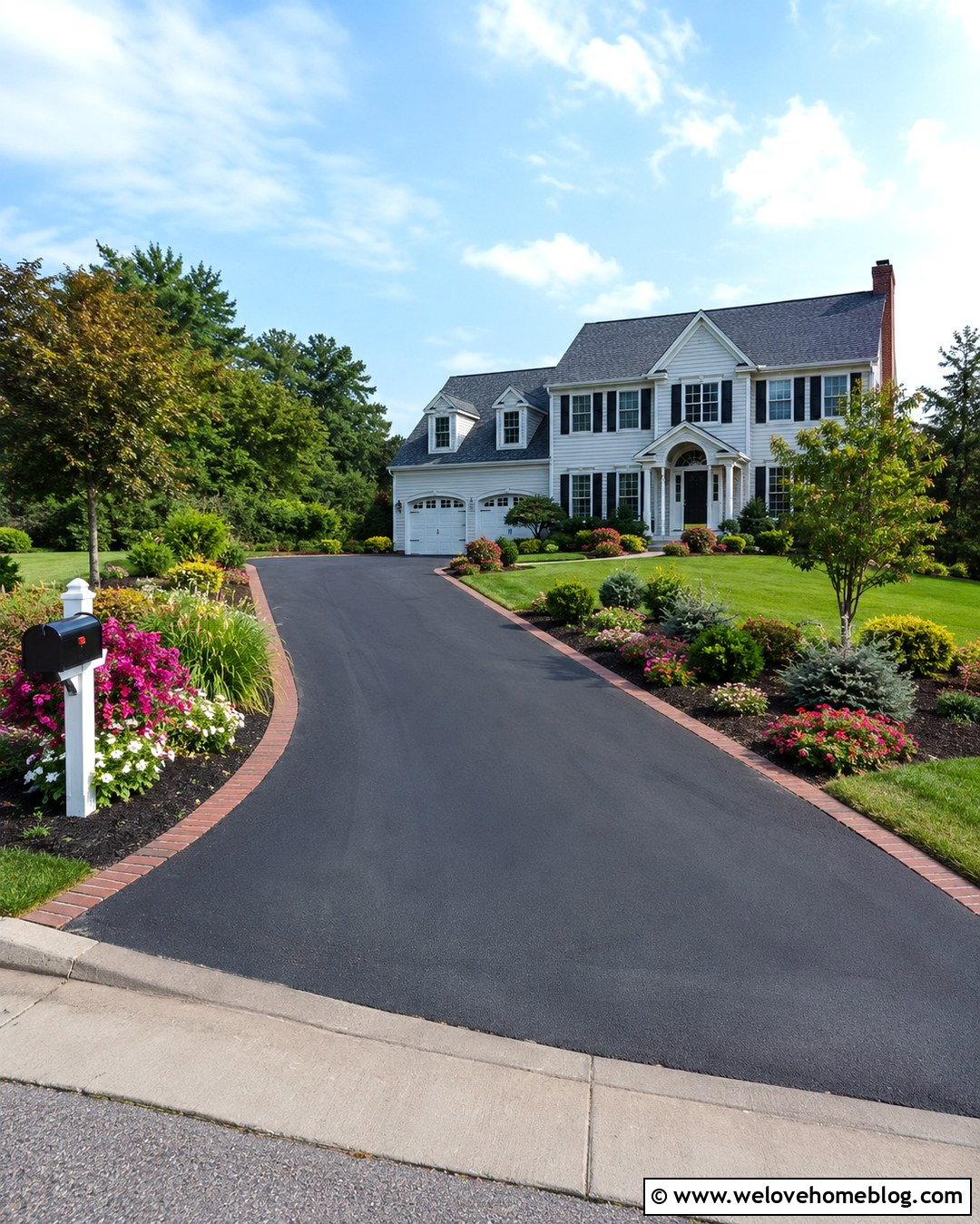
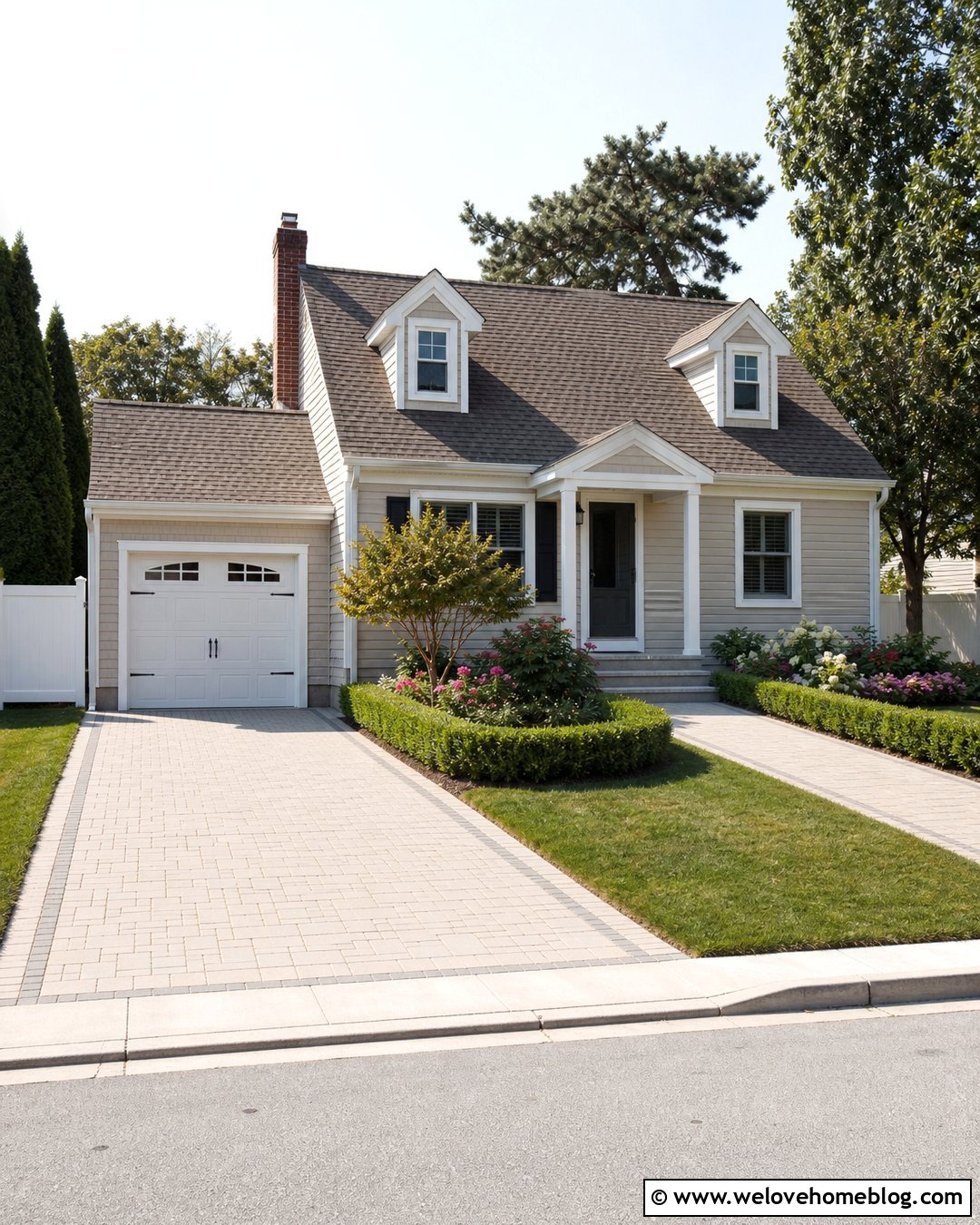
A simple blacktop driveway can become colorful and inviting with generous mixed planting on both sides. Define the pavement using a flush red-brick ribbon that prevents the dark asphalt from blending into the beds. Shape the borders with broad, gentle curves and plant repeating groups of flowering shrubs, perennials, ornamental grasses, and low evergreens. Place the shortest plants near the pavement and graduate toward taller shrubs at the back. This protects visibility and makes each layer easier to appreciate from the curb. Leave small access zones near doors, mailboxes, and utility equipment. Repeating flower colors from the house or front door creates cohesion. The black surface provides strong contrast, helping green foliage and bright blooms stand out clearly through the growing season.
20. Budget Driveway With Mulch Beds and Solar Lighting
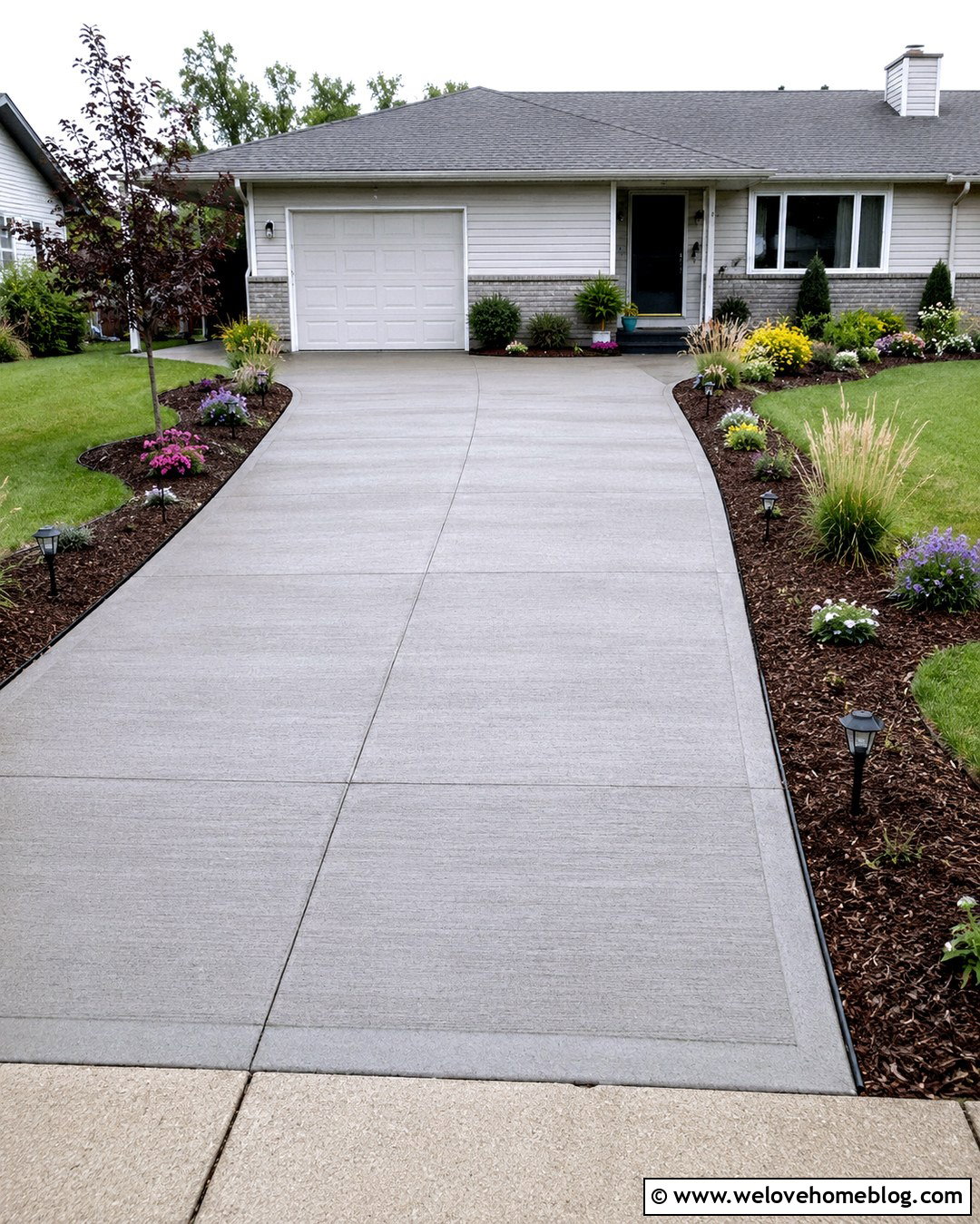
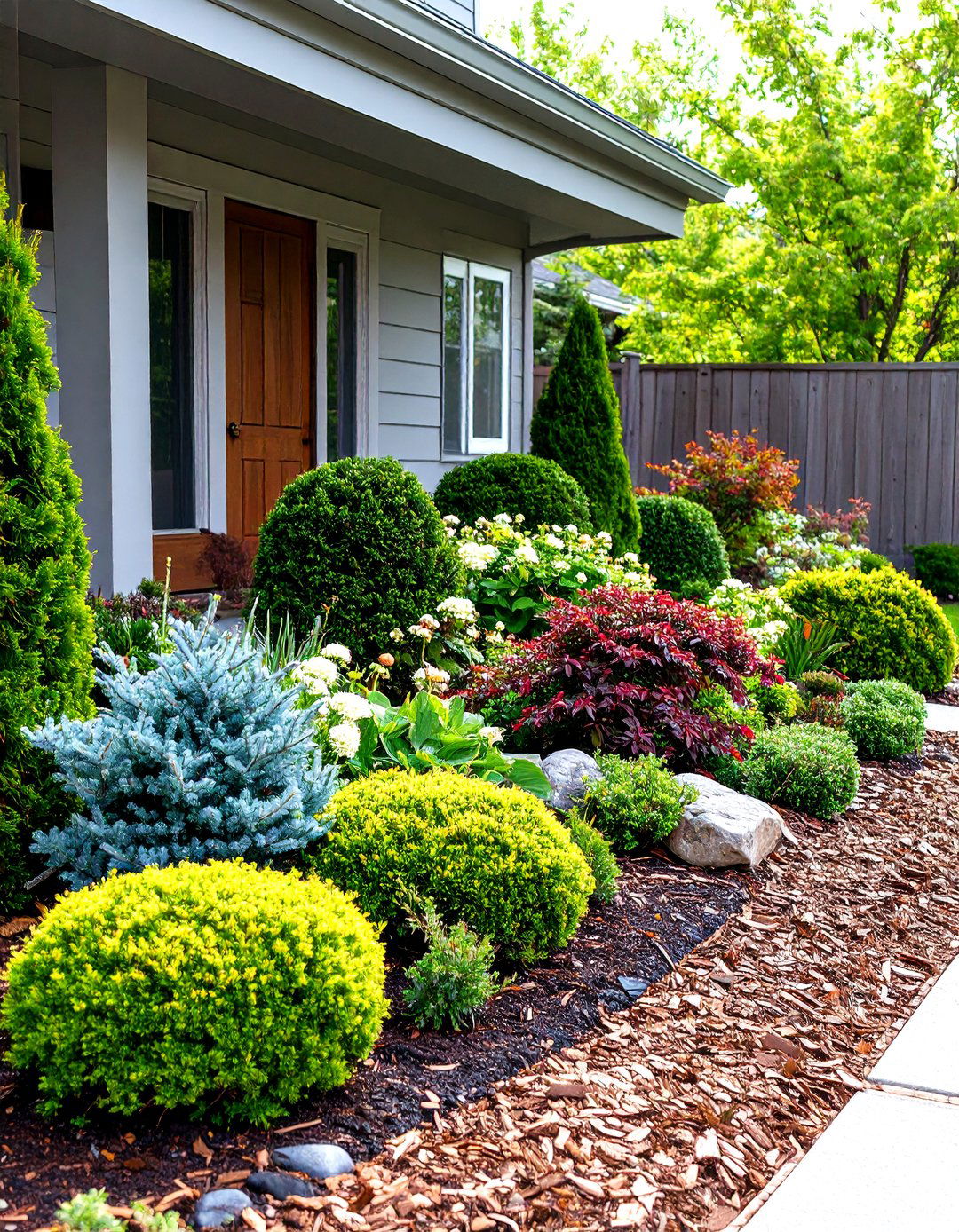
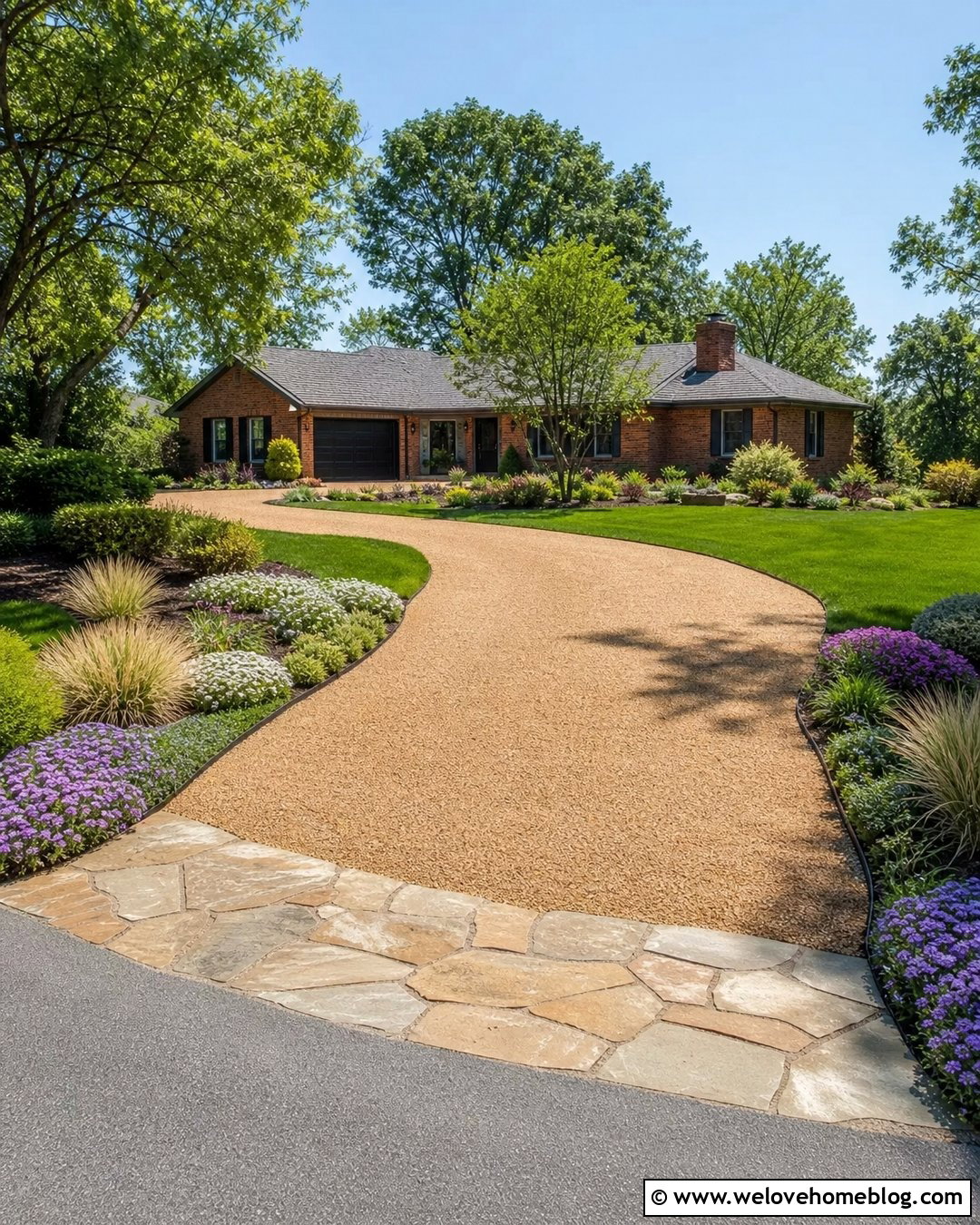
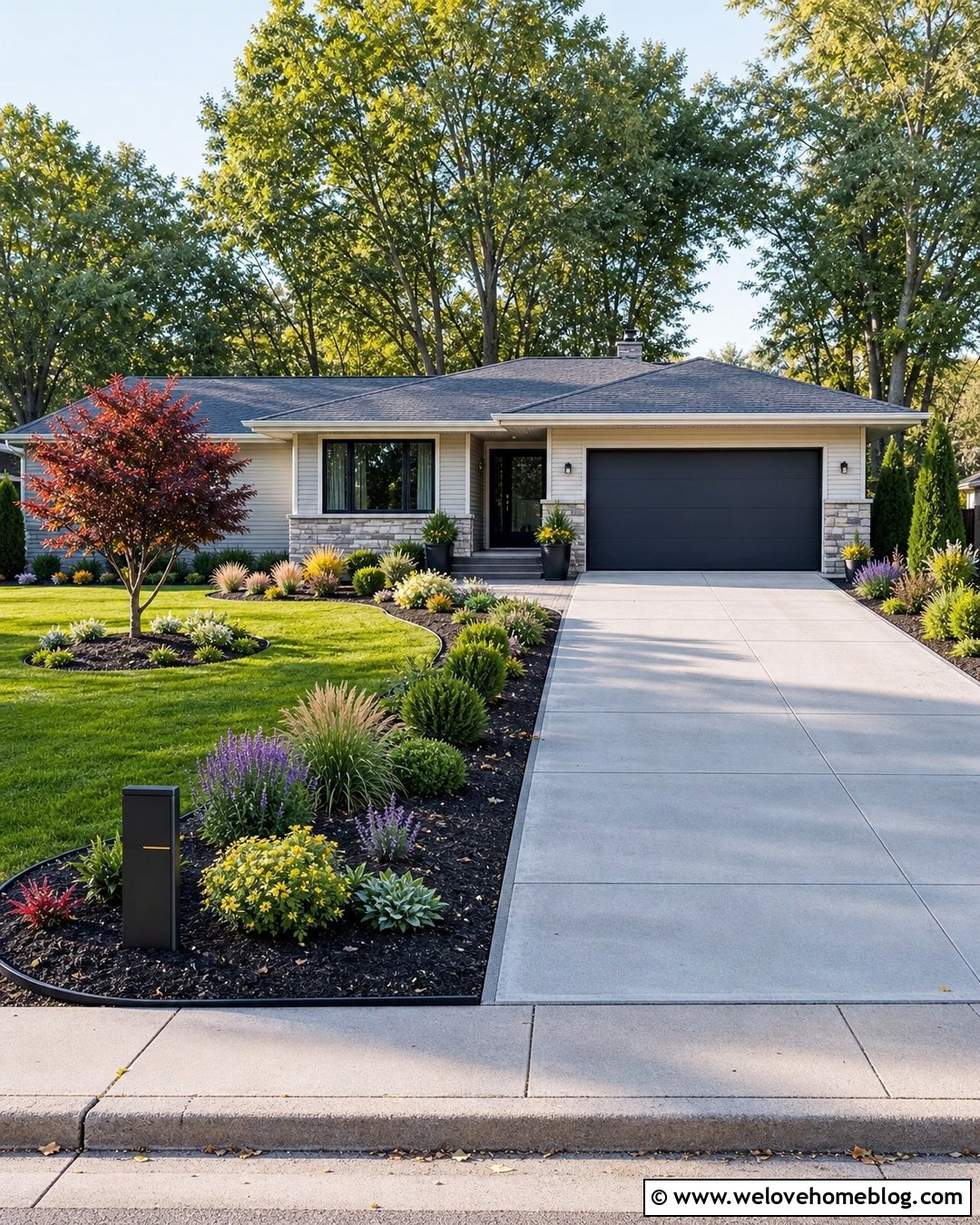
An affordable driveway update can still feel complete when a few simple materials are repeated consistently. Keep an existing asphalt or concrete surface, clean the edges, and create curved planting beds along the most visible side. Use durable edging to separate the driveway from shredded bark mulch. Fill the beds with several small shrubs, clumps of ornamental grass, and dependable perennials suited to the site instead of purchasing many single plants. Place a compact ornamental tree near the house to anchor the arrangement. Add evenly spaced solar markers where they will not interfere with mowing or vehicle doors. Refreshing the entrance bed and connecting it to the driveway border can make the whole front yard appear planned, even when improvements are completed in phases.
Conclusion:
The most successful driveway landscapes combine practical vehicle access with materials and plants that complement the house. These 20 landscape design driveway ideas show how gravel, concrete, asphalt, brick, pavers, shell, and resin-bound surfaces can work with complete planting plans. Before choosing a look, consider driveway width, drainage, visibility, snow removal, mature plant size, and everyday maintenance. Keep planting low near the street, use edging to create clean transitions, and repeat materials from the house whenever possible. You do not need to rebuild everything at once. A defined border, larger planting bed, entrance tree, or coordinated lighting plan can begin the transformation while leaving room for future improvements.

Related posts:
Leave a Reply