
A blacktop driveway can be far more than a plain surface between the street and garage. Its deep color creates a strong foundation for brick borders, pale stone, green lawns, colorful planting beds, and almost any home exterior. Blacktop is especially useful for long, curved, and generously sized driveways because it provides a smooth, visually consistent finish. Decorative edging and thoughtful landscaping can soften the dark pavement while making the overall entrance look intentional. Proper grading, a compacted base, and effective drainage should remain priorities when planning any layout. () Whether your home is traditional, farmhouse, modern, or cottage-inspired, the following complete designs offer practical ways to improve curb appeal. Explore these 30 Blacktop Driveway Ideas.
1. Blacktop Driveway With Brick Border
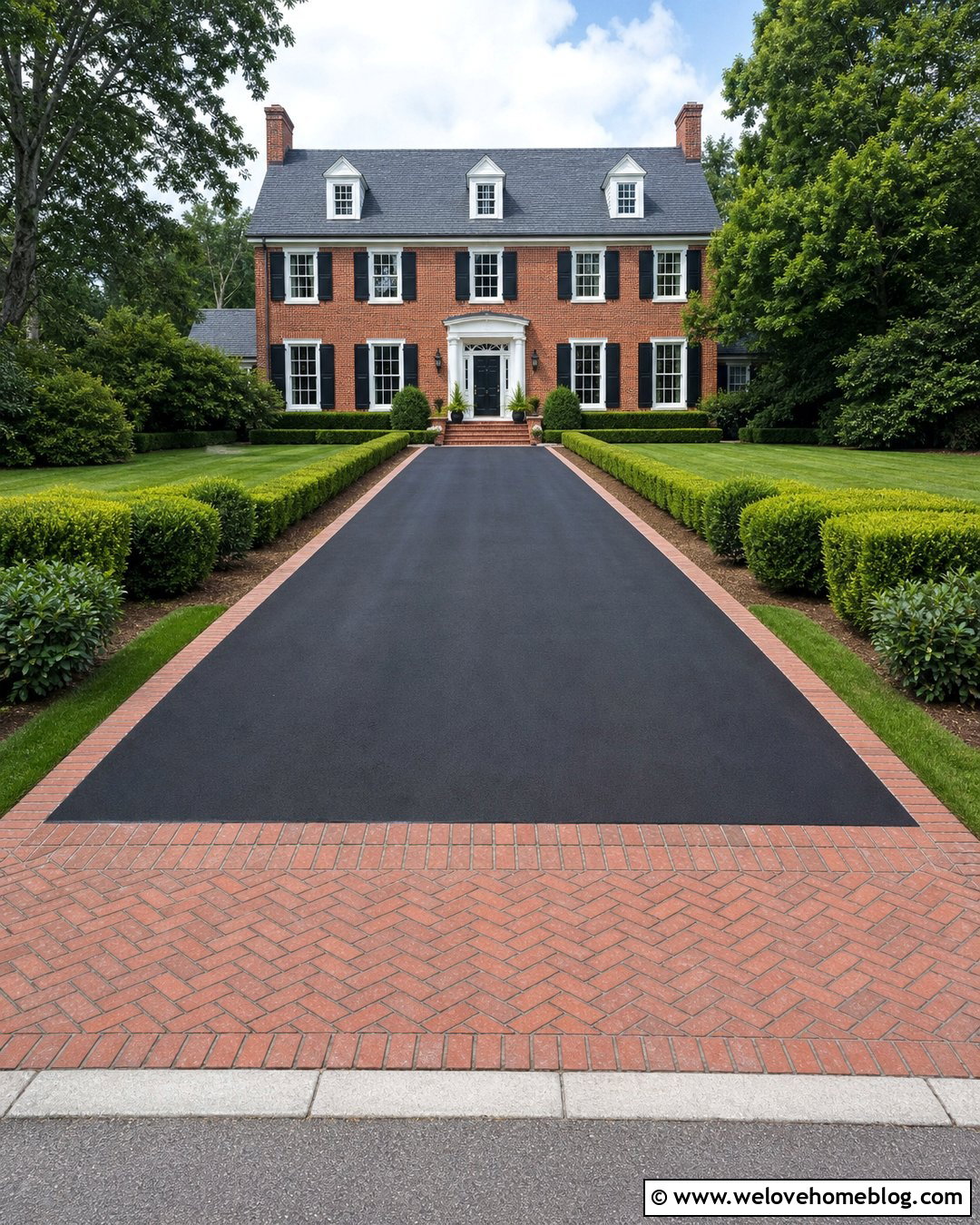
A red brick border brings warmth and definition to a smooth blacktop driveway. Use a straight layout for a colonial, Cape Cod, or traditional brick home, then install the bricks flush with the pavement for an easy transition. A running-bond pattern feels simple, while soldier-course bricks create a sharper frame. Match the border to brick on the house, front steps, or walkway so the materials feel connected. Narrow lawn strips can keep the design open, while clipped boxwoods near the garage add structure. At the street, widen the brickwork slightly to create a noticeable entrance apron. The strong red-and-black contrast makes this complete driveway look polished without covering a large area in expensive masonry.
2. Blacktop Driveway With Belgian Block Edging
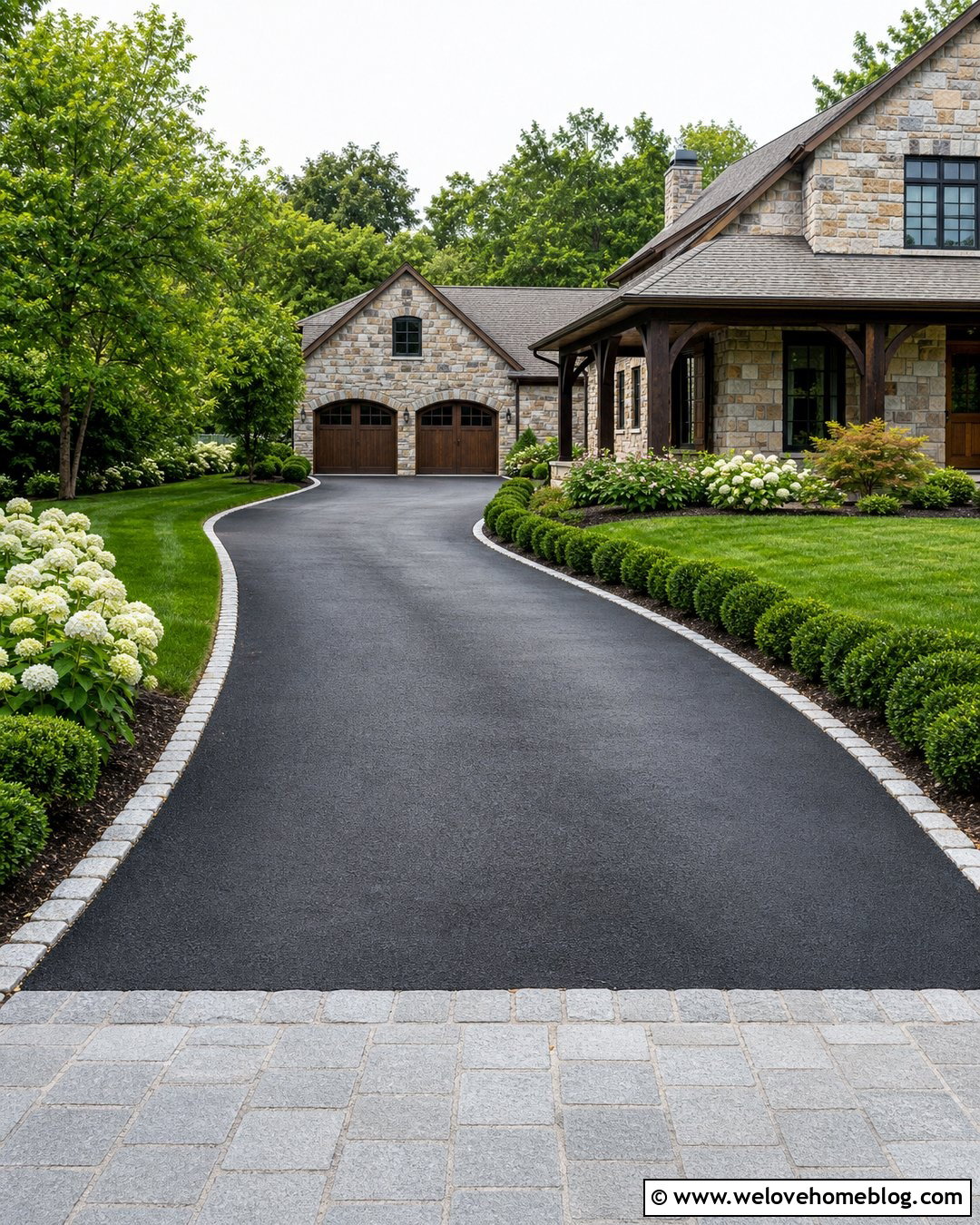
Belgian block gives blacktop a substantial edge that works beautifully with stone, brick, and historic-style homes. Frame a gently curved driveway with gray granite blocks set in a single row. A flush installation keeps the transition smooth, while a slightly raised edge provides stronger separation from planting beds. Continue the same blocks around the walkway or entrance columns for a coordinated result. Along the drive, use low evergreen shrubs, hydrangeas, and broad lawn areas rather than crowded planting. The natural color variation in the stone softens the uniform black surface. Belgian block can also help visually reinforce vulnerable pavement edges when it is installed as part of a properly designed and supported border system. ()
3. Blacktop Driveway With Concrete Border
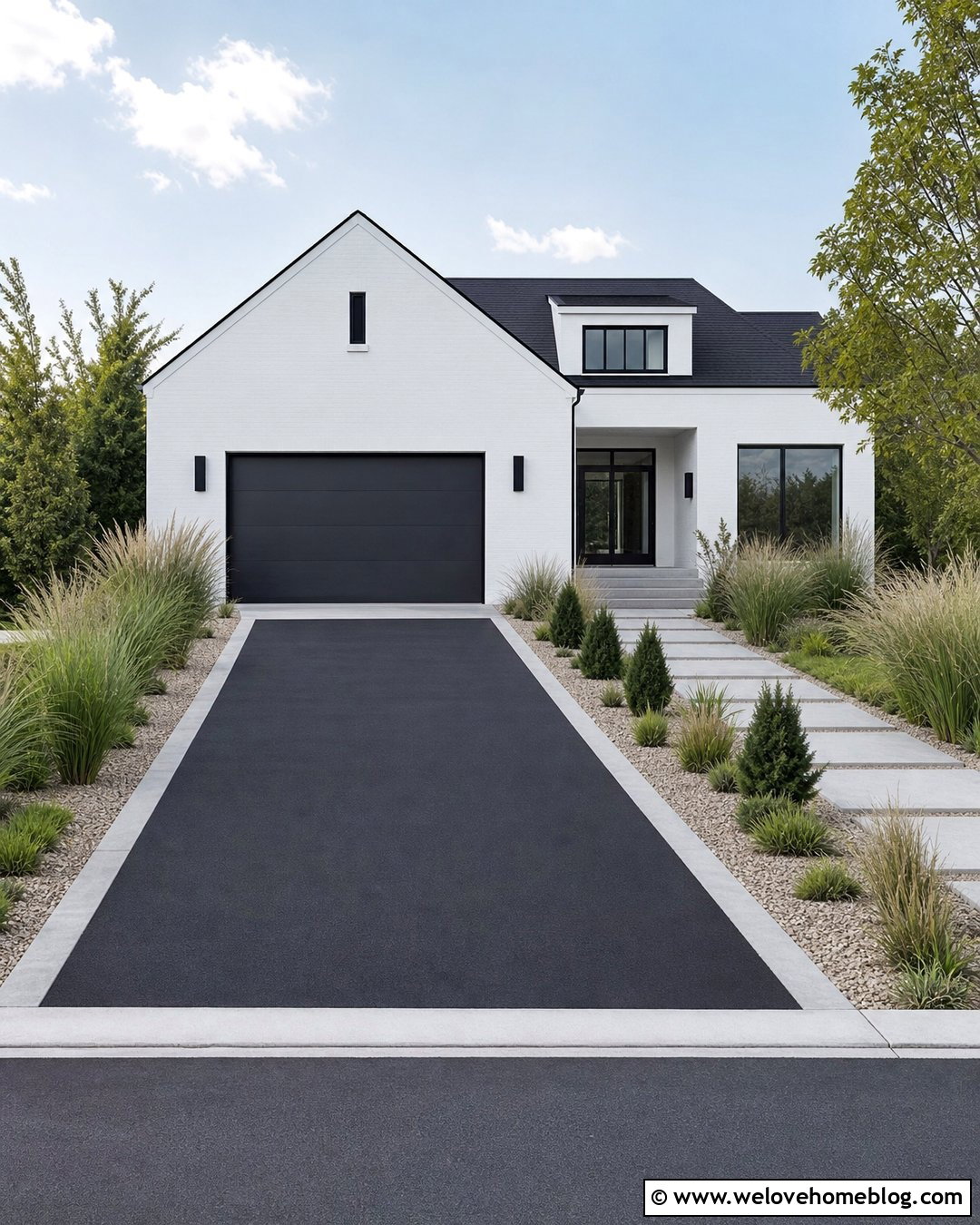
For a clean contemporary look, combine dark blacktop with a wide, light-gray concrete border. The concrete can run along both sides of a straight driveway and continue into a matching walkway near the house. Keep the border flush with the asphalt to create an uninterrupted surface that feels neat and accessible. A modern home with white stucco, charcoal siding, or natural wood accents will reinforce the simple color palette. Add rectangular planting beds filled with ornamental grasses, dwarf evergreens, and pale gravel. Linear lawn edges can make the driveway appear even more precise. This design works particularly well on wide suburban properties because the contrasting concrete creates a strong frame without introducing a busy pattern or too many different materials.
4. Curved Blacktop Driveway With Stone Walls
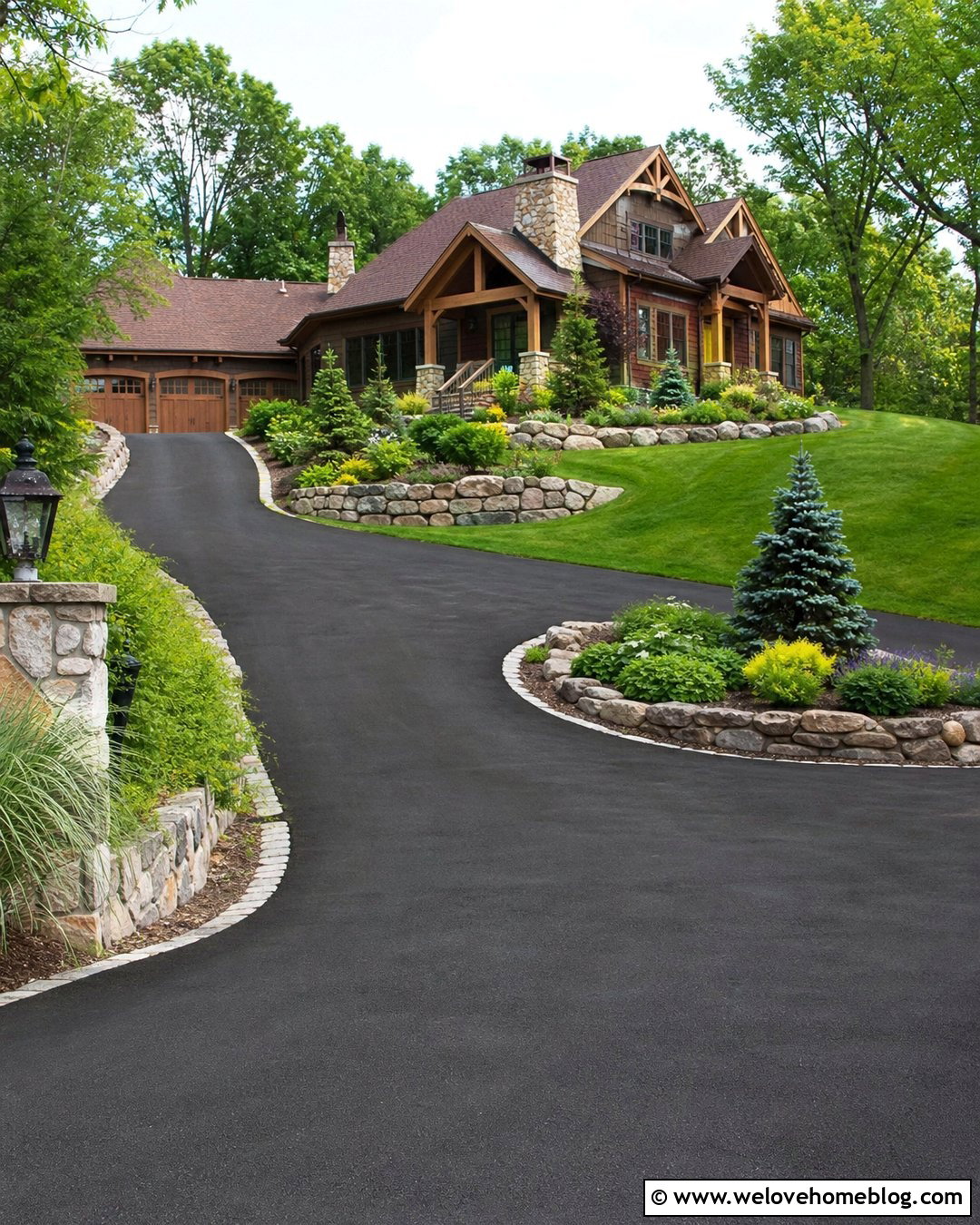
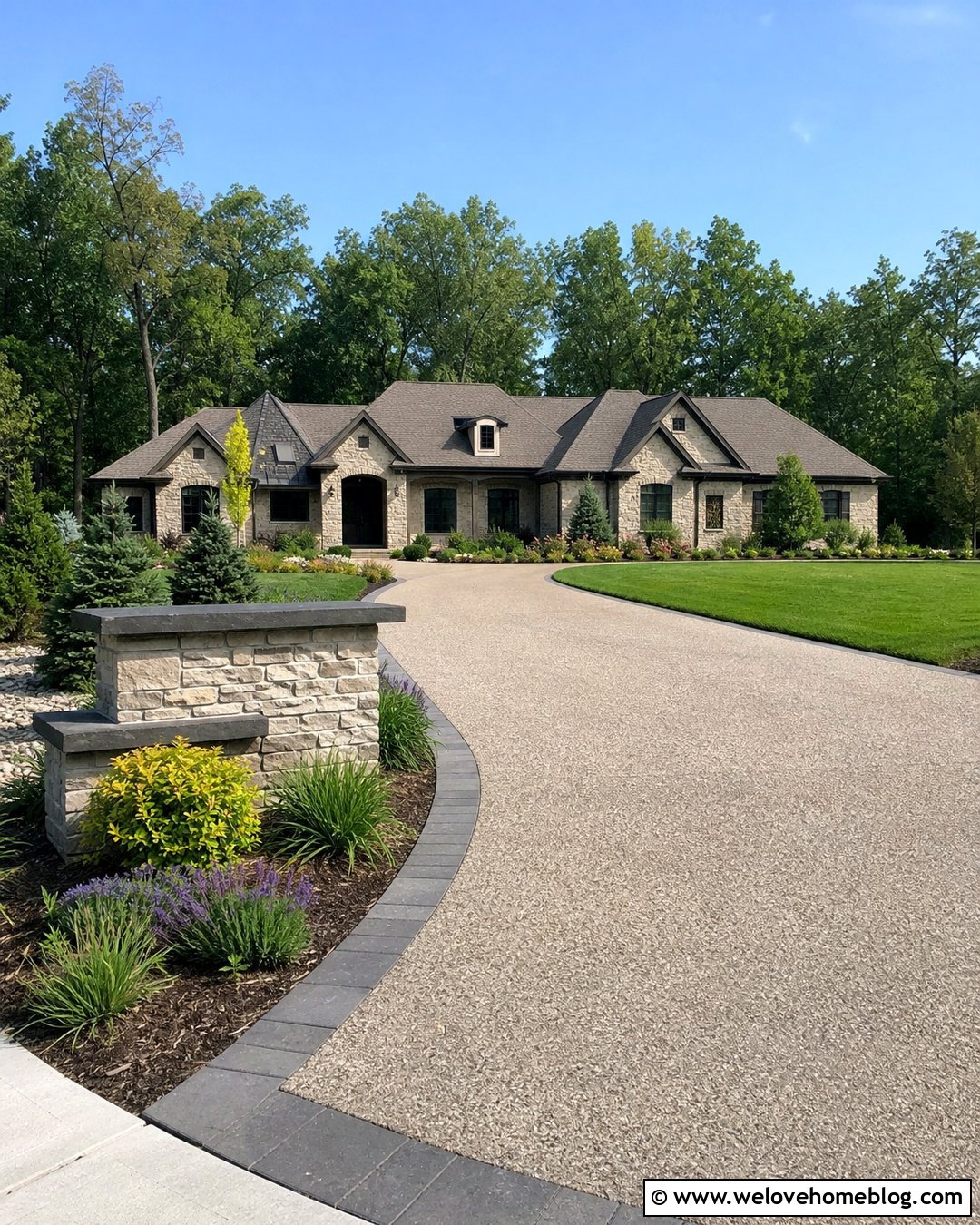
A curved blacktop driveway can follow sloping ground while creating a softer approach to the house. Pair the pavement with low fieldstone retaining walls where the grade rises along one side. The walls should echo stone used on the home’s foundation, chimney, or front porch. On the opposite side, allow an open lawn to balance the heavier masonry. Fill pockets above the walls with spreading evergreens, flowering shrubs, and ornamental grasses that will not obstruct visibility around the curve. A broad stone-bordered planting island can mark the final turn toward the garage. This complete design feels natural and established, making it a strong choice for wooded properties, hillside lots, ranch homes, and rustic Craftsman exteriors.
5. Circular Blacktop Driveway With Center Garden
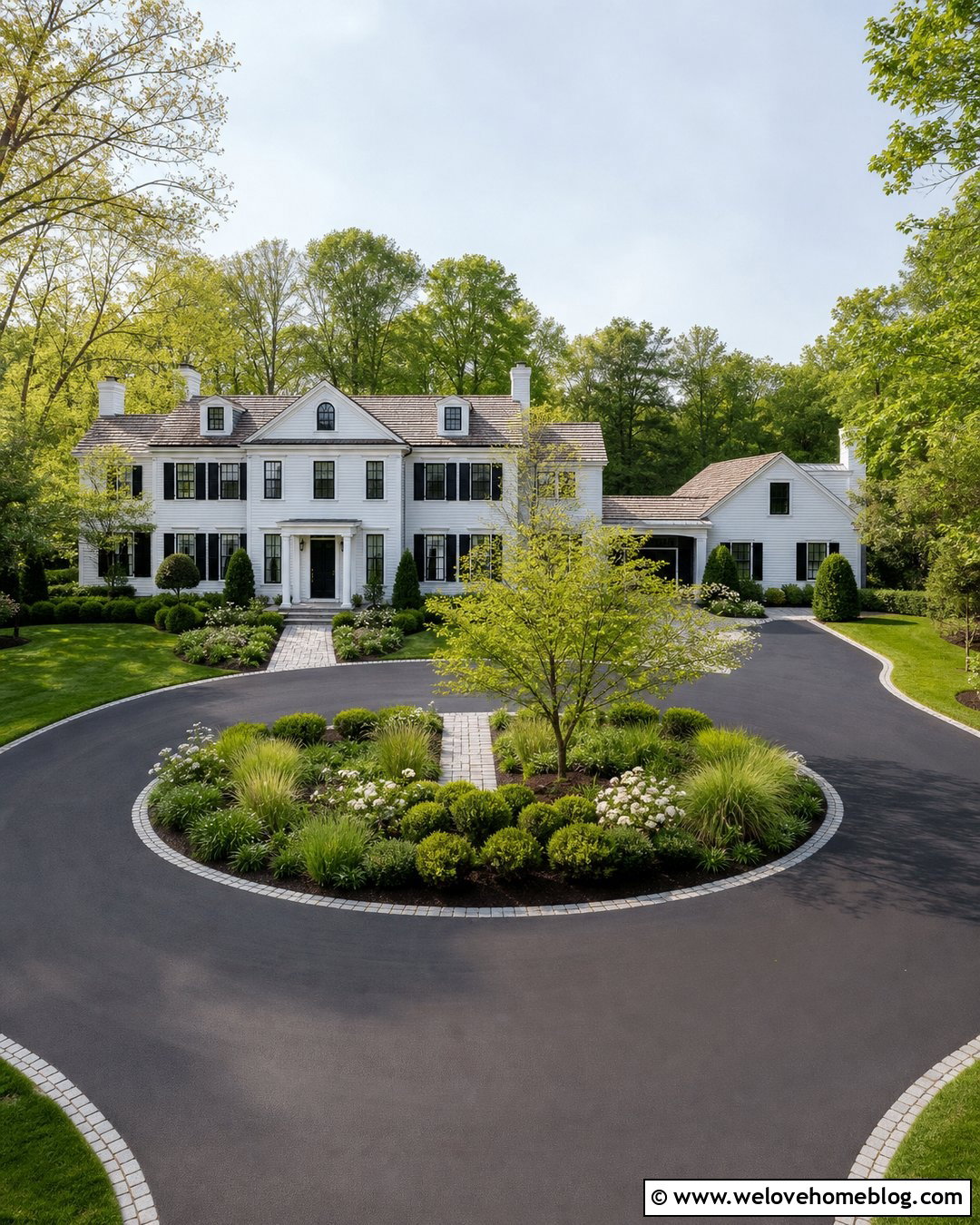
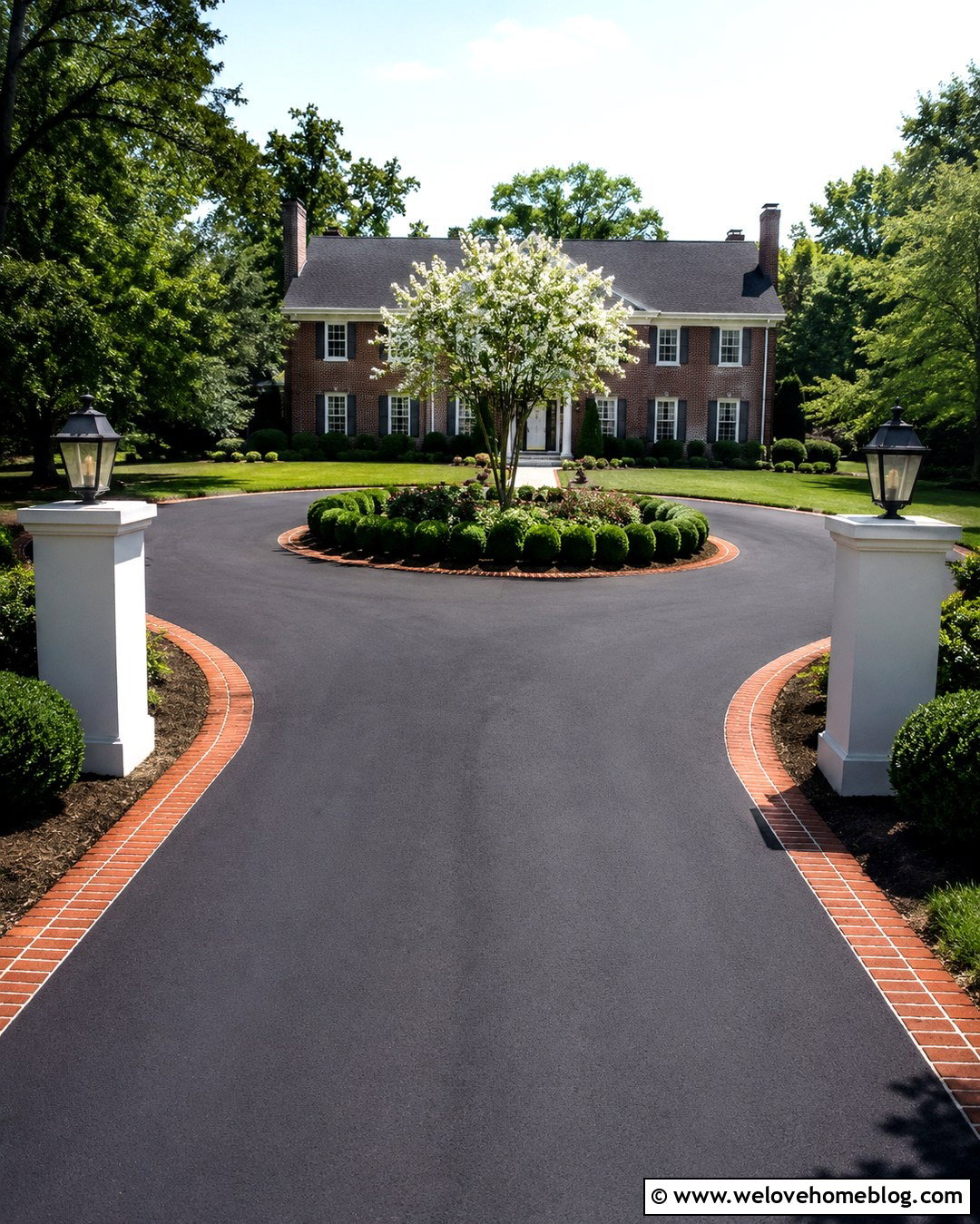
A circular blacktop driveway creates a graceful arrival area and allows vehicles to move through without backing toward the street. Place a large oval or round garden island at the center, outlined with stone or brick that complements the house. Layer the island with a small ornamental tree, compact evergreen shrubs, grasses, and seasonal flowers. Keep plants lower near entry and exit points to preserve clear sightlines. A walkway can extend from the inner circle to the front porch, creating a direct route for visitors. Use matching masonry at both driveway openings for a unified curb view. This layout suits broad front yards and symmetrical homes, including Colonials, Georgian-inspired houses, and larger traditional residences.
6. Blacktop Driveway With White Stone Border
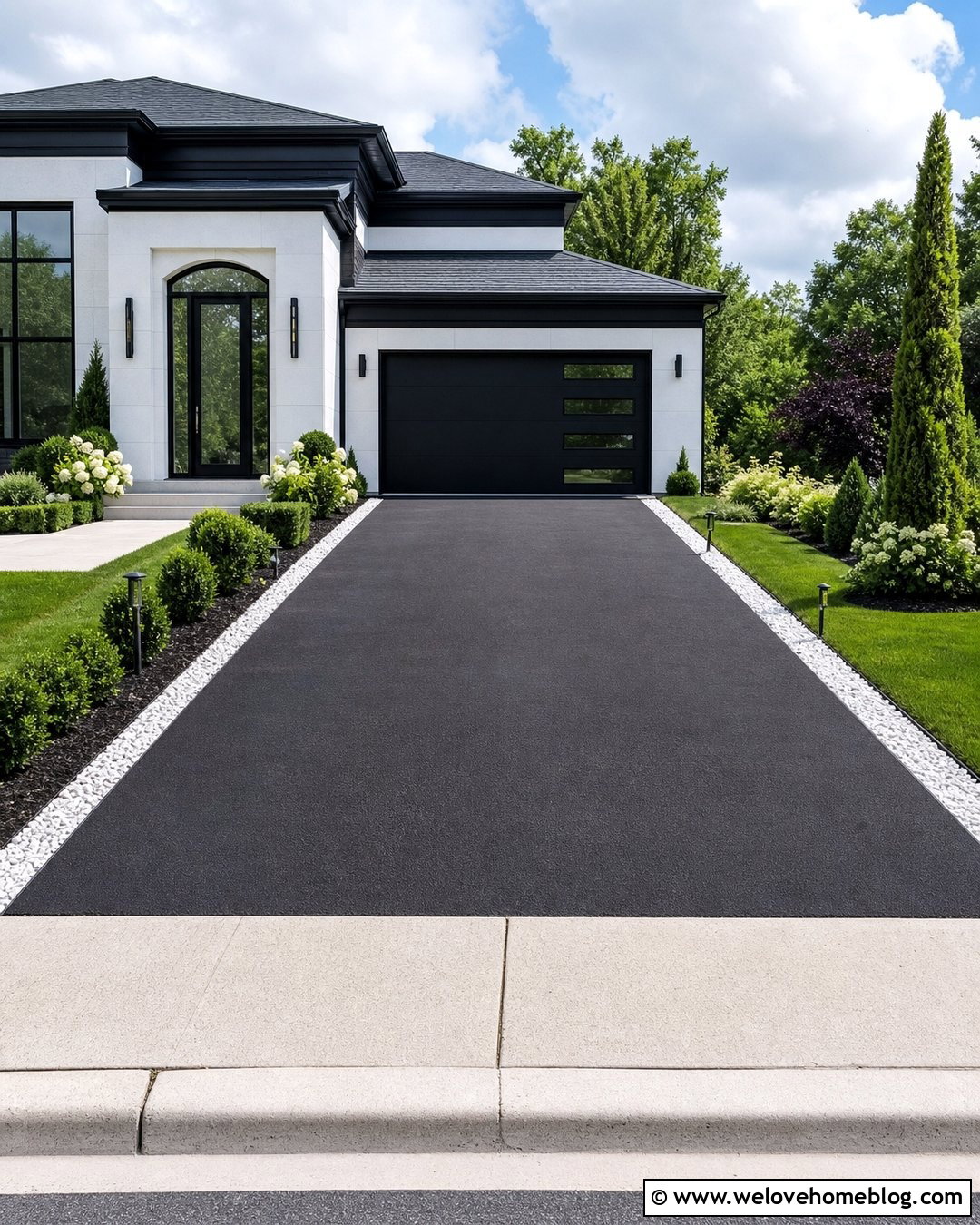
Bright white or pale limestone creates a bold contrast against fresh blacktop. Instead of placing loose stone directly against the pavement, contain a narrow gravel strip with metal edging or a solid outer border. This creates a cleaner line and keeps decorative aggregate out of the driving area. Continue the pale material around simple foundation beds to connect the driveway with the rest of the yard. Dark green shrubs, white flowering plants, and a light-colored walkway complete the high-contrast palette. The look feels especially crisp beside a modern black-and-white house. Because loose stone can shift, plan the edging, depth, drainage, and maintenance before installation rather than treating the border as a purely decorative afterthought.
7. Blacktop Driveway With Paver Entrance Apron
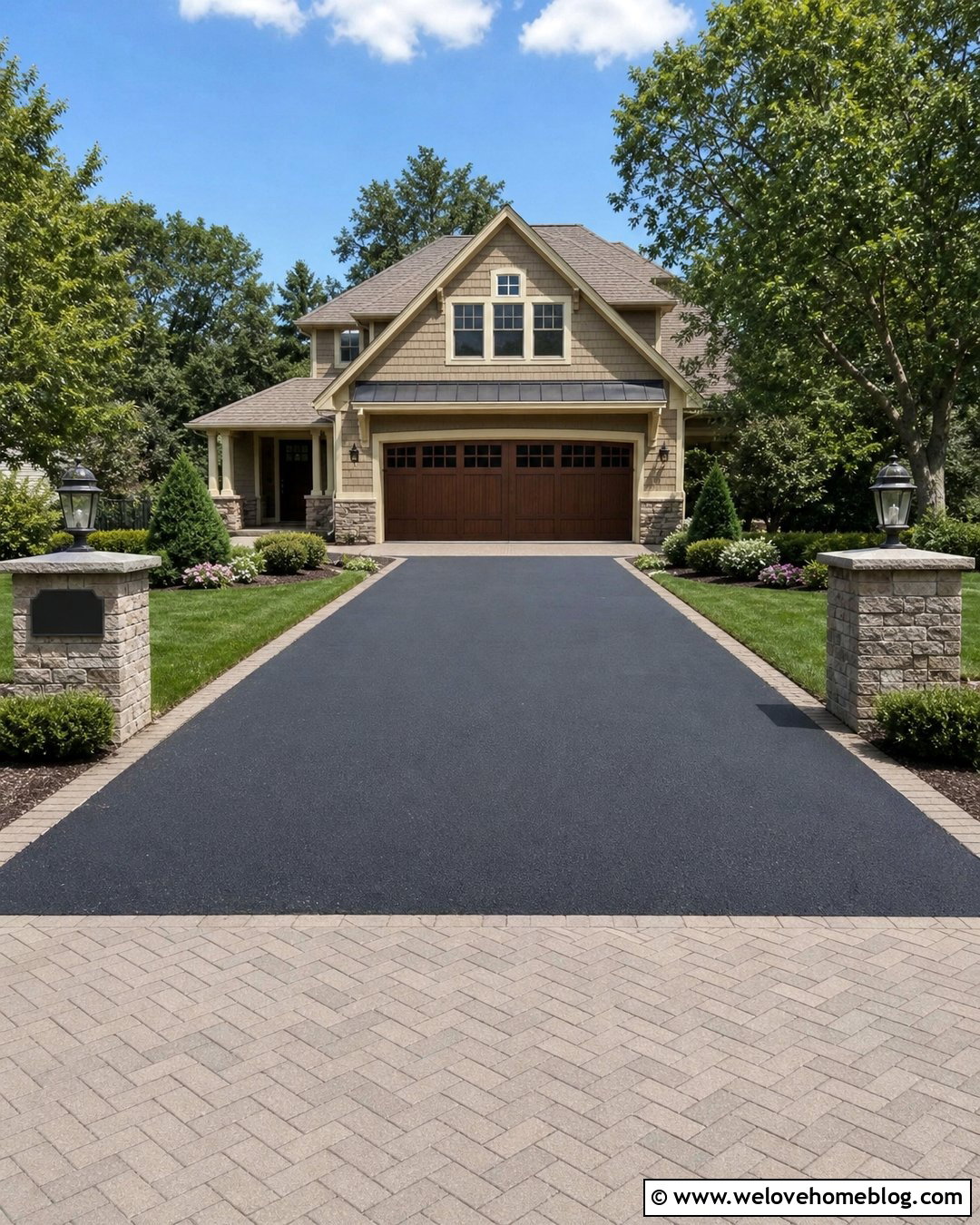
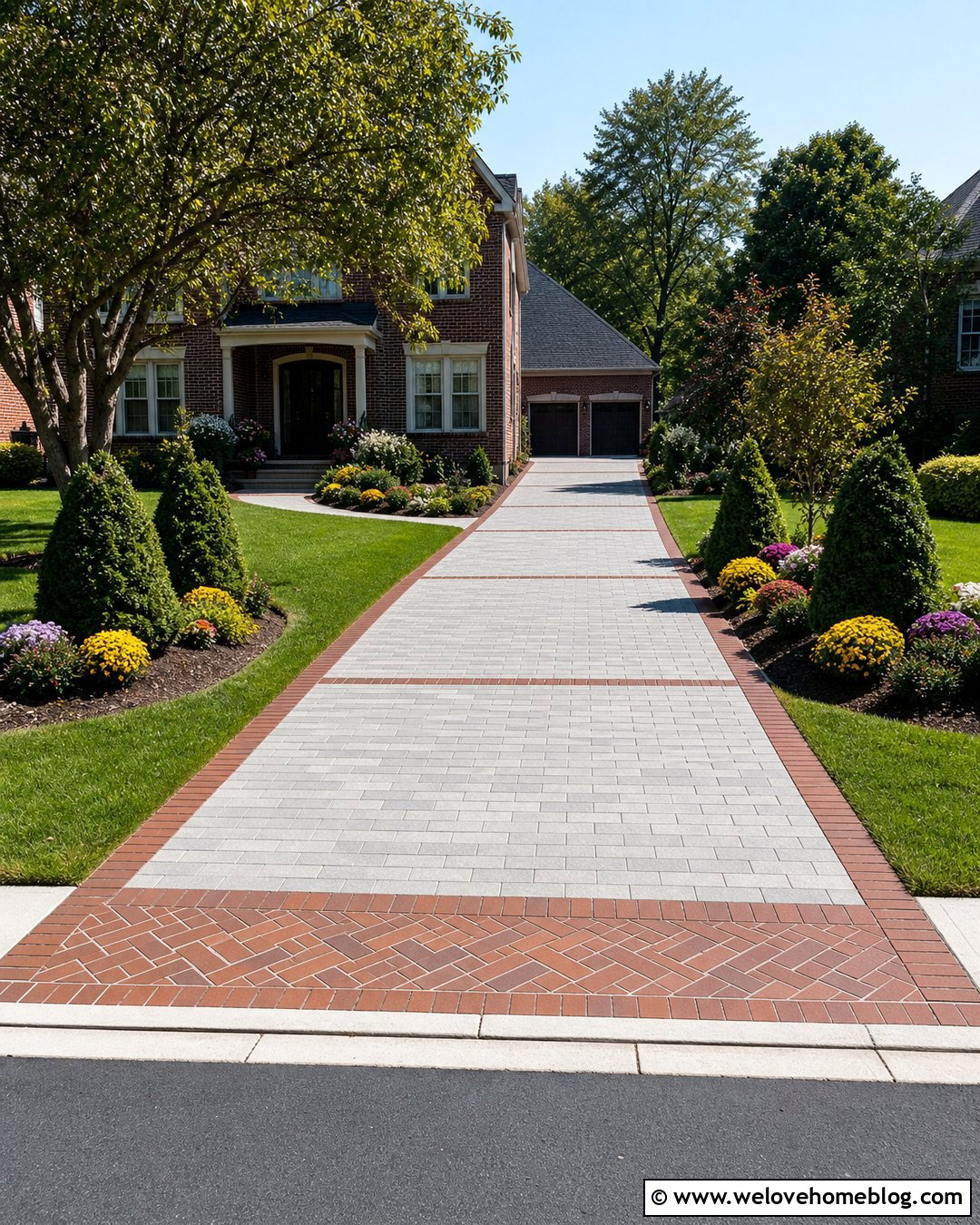
A paver apron turns the street entrance into a focal point while leaving the main blacktop surface simple and economical. Choose concrete or clay pavers in colors found on the home, such as warm tan, muted red, charcoal, or soft gray. Lay them in a herringbone pattern across the driveway opening, then frame the apron with a straight soldier course. The blacktop should meet the pavers cleanly, without a raised lip. Add low stone pillars, an address marker, or symmetrical planting beds to make the entrance feel complete. Repeating the same pavers near the garage or front walkway ties the separate areas together. This approach adds detail where it is most visible from the street.
8. Blacktop Driveway With Cobblestone Ribbons
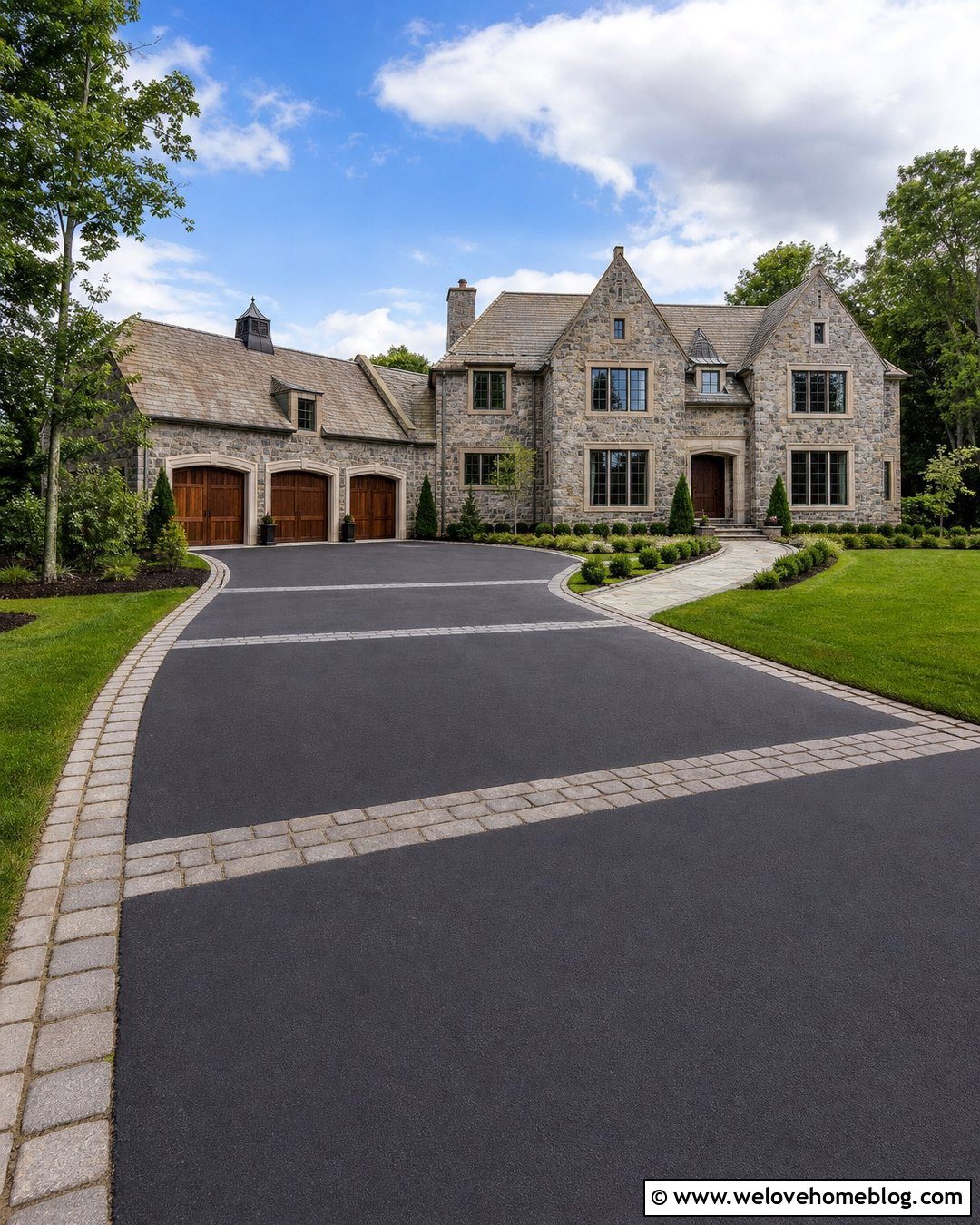
Cobblestone ribbons can break up a large blacktop driveway without overwhelming its smooth appearance. Run two narrow stone bands across the pavement near the street, in front of the garage, or where the driveway transitions into a parking court. The cobbles can also outline the edges to create a continuous frame. Choose gray stones for a restrained palette or mixed brown-gray cobbles for a warmer traditional finish. Coordinate the bands with a cobblestone walkway and stone-faced porch. Broad lawns and simple evergreen beds will prevent the property from looking overly decorated. This treatment is particularly effective for expansive driveways, where uninterrupted black pavement might otherwise appear too visually heavy or disconnected from the architecture.
9. Blacktop Driveway With Hydrangea Borders
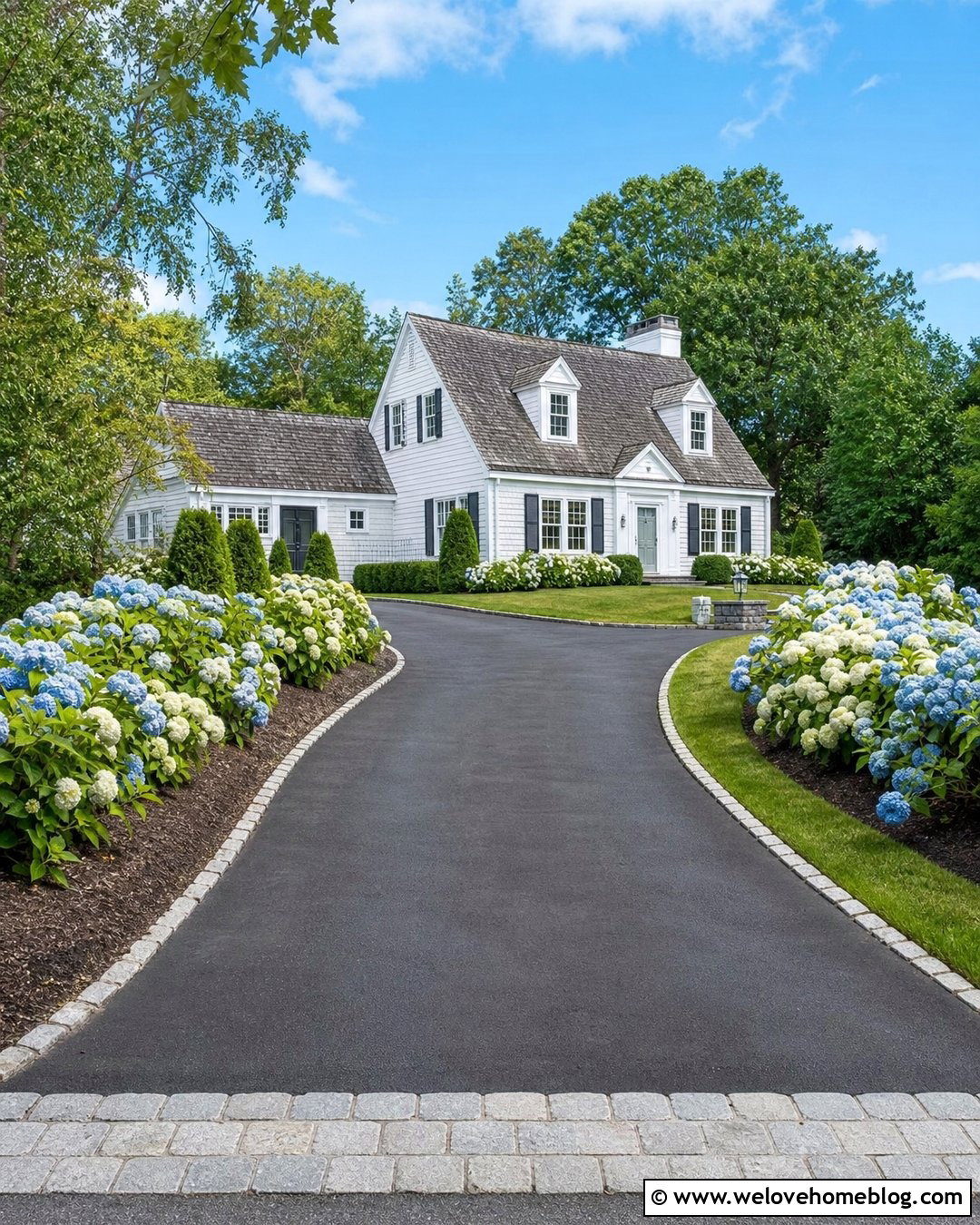
Clouds of hydrangea blooms can soften the dark surface of a blacktop driveway and create an inviting garden approach. Use a straight or gently curved layout with a narrow cobblestone edge separating the pavement from wide planting beds. Space hydrangeas far enough back to prevent mature branches and flowers from leaning into vehicles. Add compact evergreens between groups for winter structure, then use ground cover or mulch beneath the shrubs for a tidy finish. White, blue, or soft pink blooms all stand out against the black pavement. This design pairs naturally with a white farmhouse, shingled coastal home, Cape Cod, or traditional cottage. Keep the driveway entrance more open so drivers can see pedestrians and approaching traffic clearly.
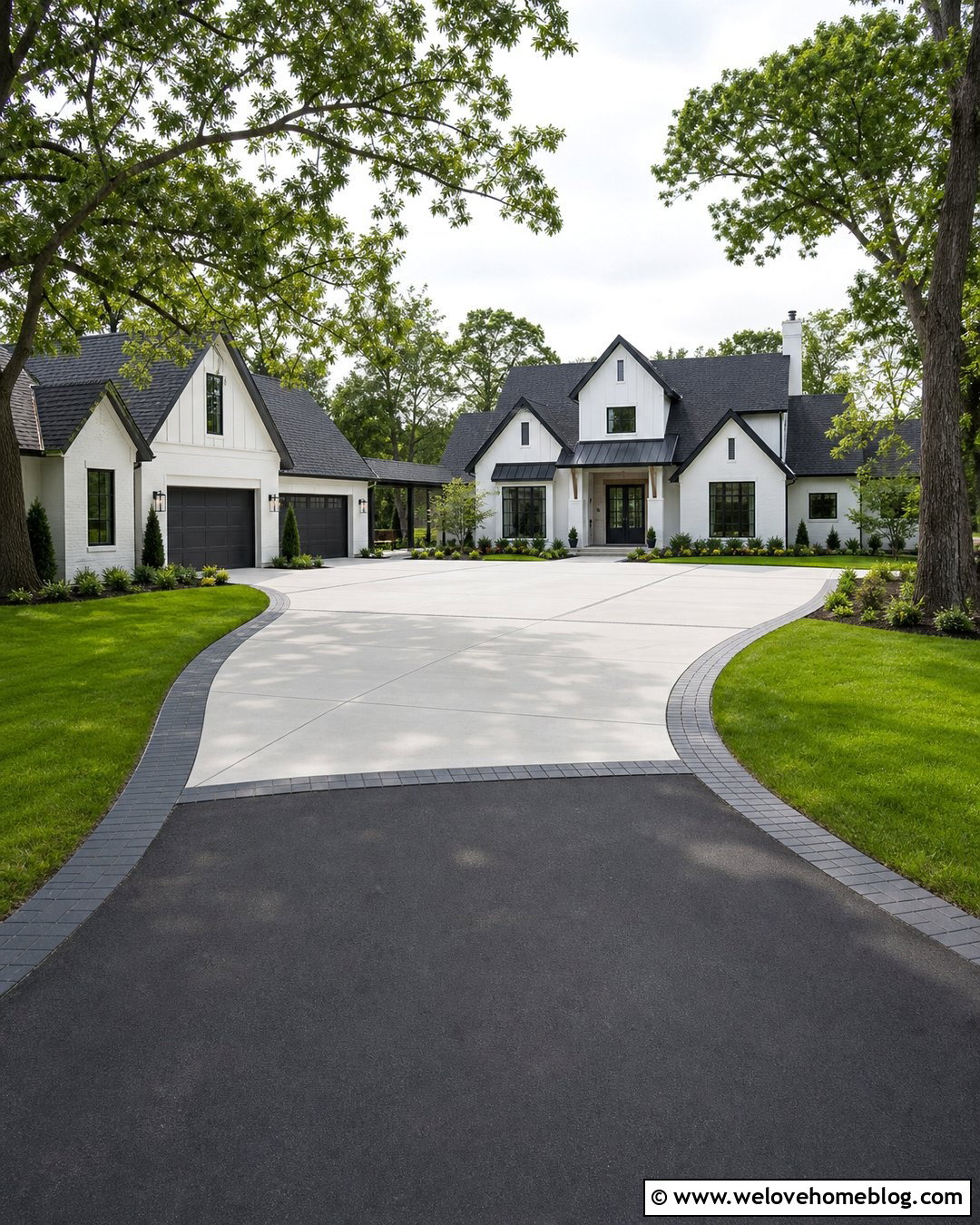
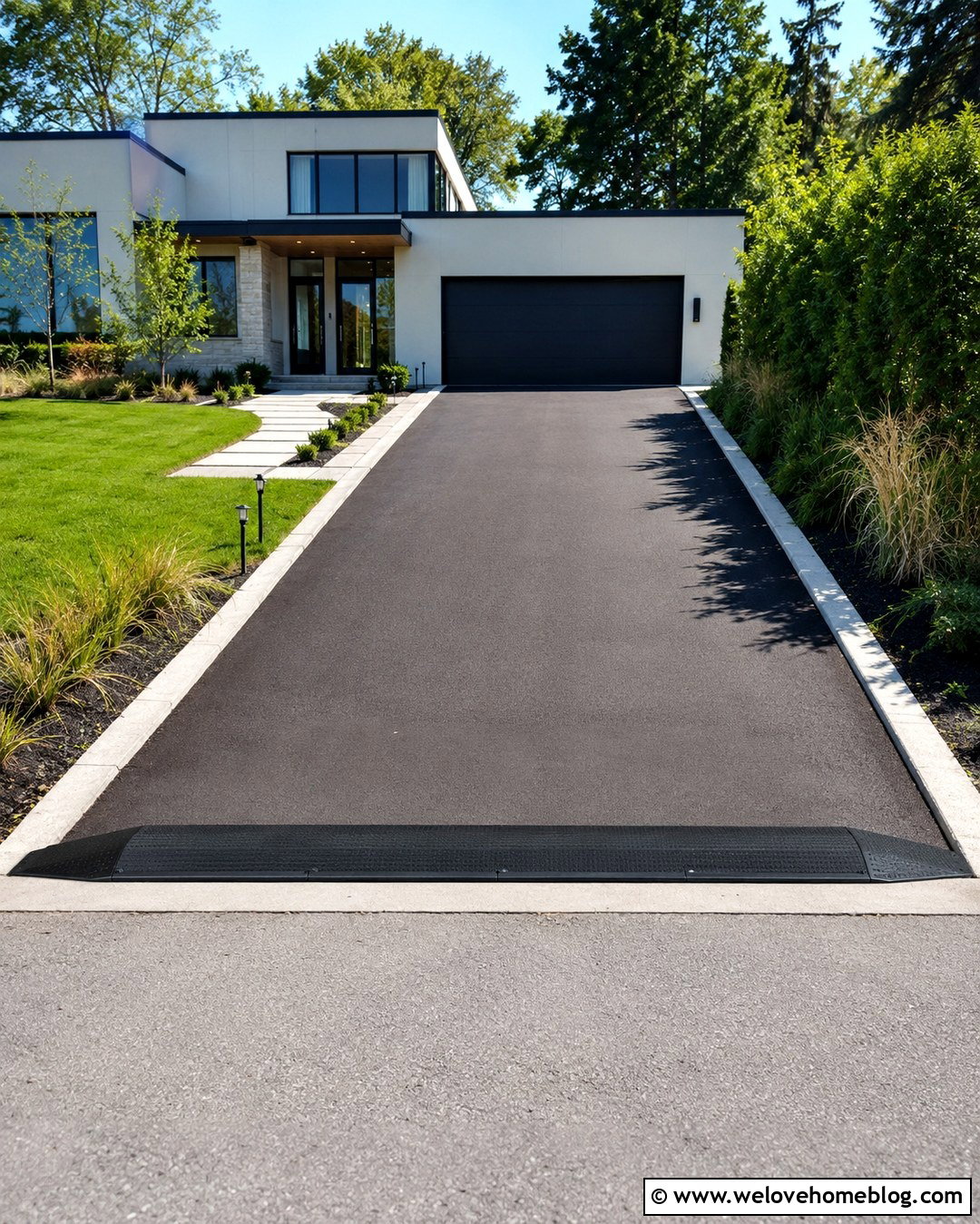
10. Blacktop Driveway With Ornamental Grass Borders
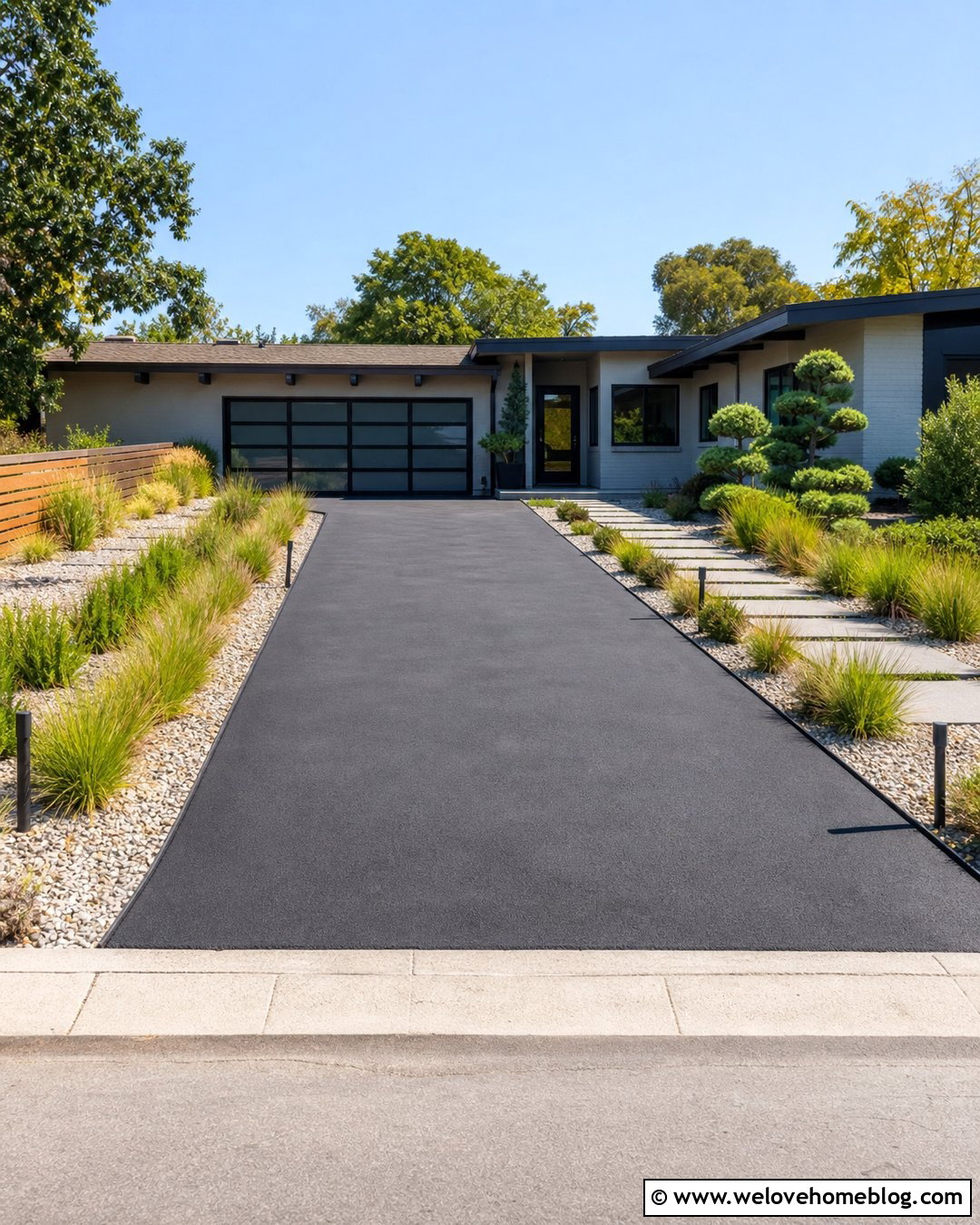
Feathery ornamental grasses introduce movement and texture beside a sleek blacktop driveway. For a modern look, use a straight pavement layout with narrow steel edging and repeated groups of upright grasses. Leave enough space between the mature plants and driveway edge to prevent arching blades from narrowing the driving area. Pale river rock or dark mulch can cover the beds and emphasize their clean geometry. Near the house, combine the grasses with sculptural evergreens or a small multi-stem tree. A flat-roofed modern home, contemporary ranch, or updated mid-century facade works well in the background. The softness of the planting balances the crisp pavement while preserving a restrained, low-clutter appearance.
11. Blacktop Driveway With Timber Edging
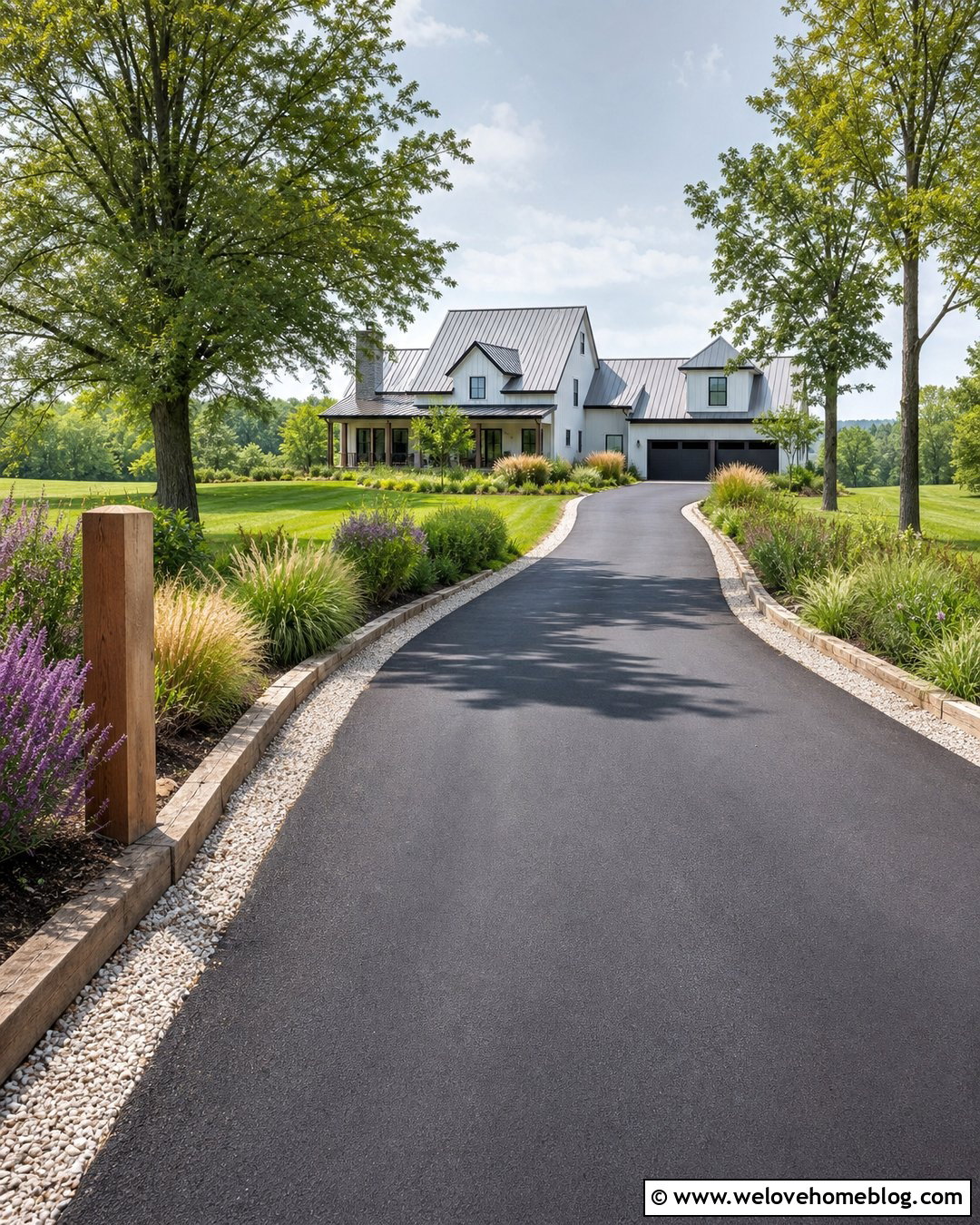
Timber edging gives a blacktop driveway a relaxed, country-inspired character. It works best when the wood is integrated into a broader landscape plan rather than installed as a thin decorative strip. Use substantial treated timbers to separate a long driveway from gravel shoulders, lawn, or informal planting beds. Pair the straight or gently winding route with native grasses, flowering perennials, and groups of deciduous trees. At the house, repeat the wood tone through porch columns, garage doors, or a simple address sign. This combination suits cabins, rural ranches, and modern farmhouses. Since wood near the ground is exposed to moisture, select an appropriate material and detail the installation for drainage, stability, and eventual replacement.
12. Blacktop Driveway With Natural Rock Edging
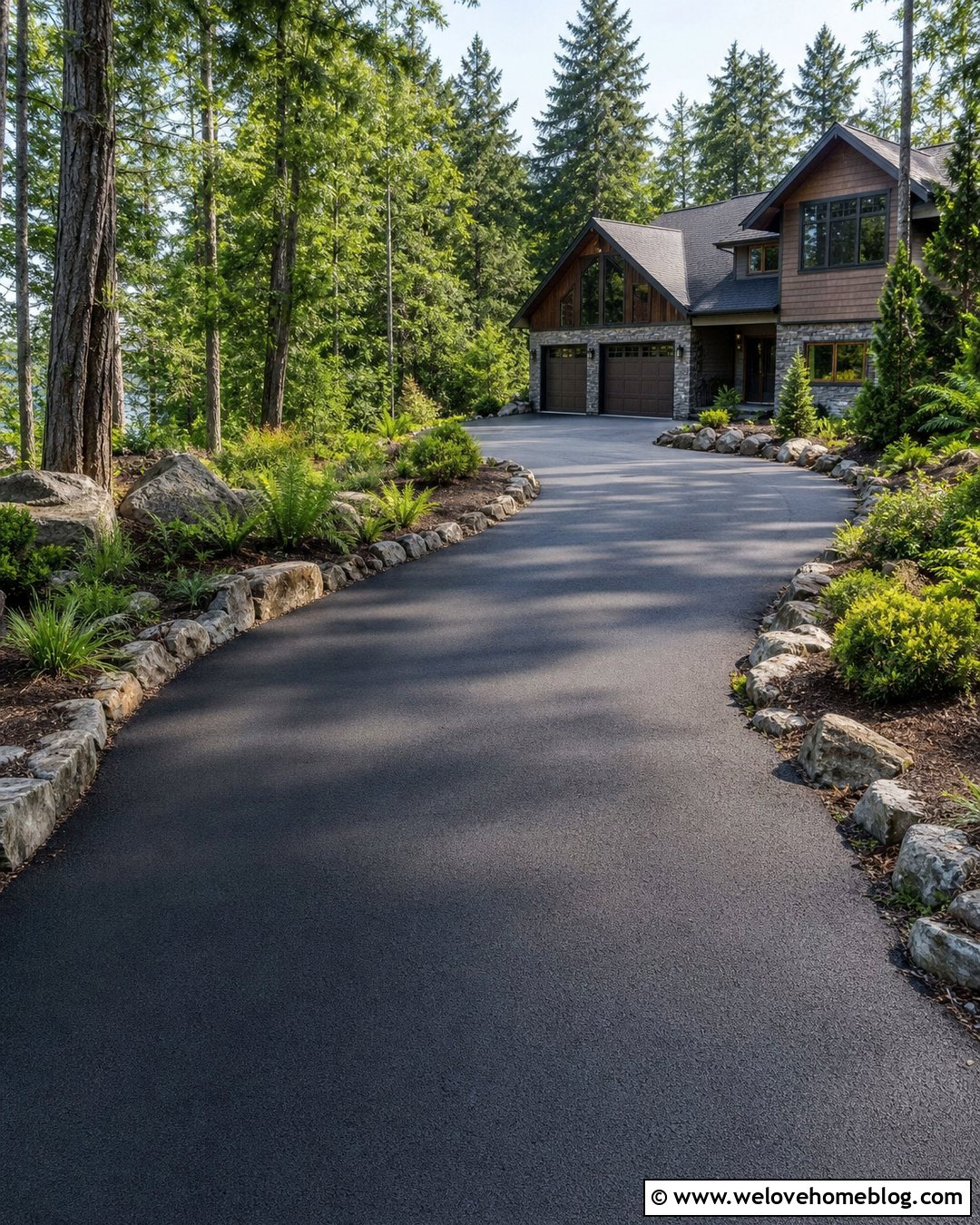
Large natural stones can give a blacktop driveway a rugged edge that feels appropriate on wooded or mountainous properties. Arrange the rocks in loose, irregular groupings rather than forming a continuous wall. Leave generous shoulders between the pavement and boulders so drivers have room to maneuver. Fill the spaces behind them with native ground covers, ferns, low grasses, and evergreen shrubs. A curved driveway will enhance the naturalistic effect, especially when it follows existing trees and changes in grade. Repeat similar stone around the porch or foundation to make the landscaping feel intentional. This design suits rustic homes, contemporary cabins, and Craftsman houses where the contrast between dark pavement and weathered rock strengthens the setting.
13. Blacktop Driveway With Grass Strip Border
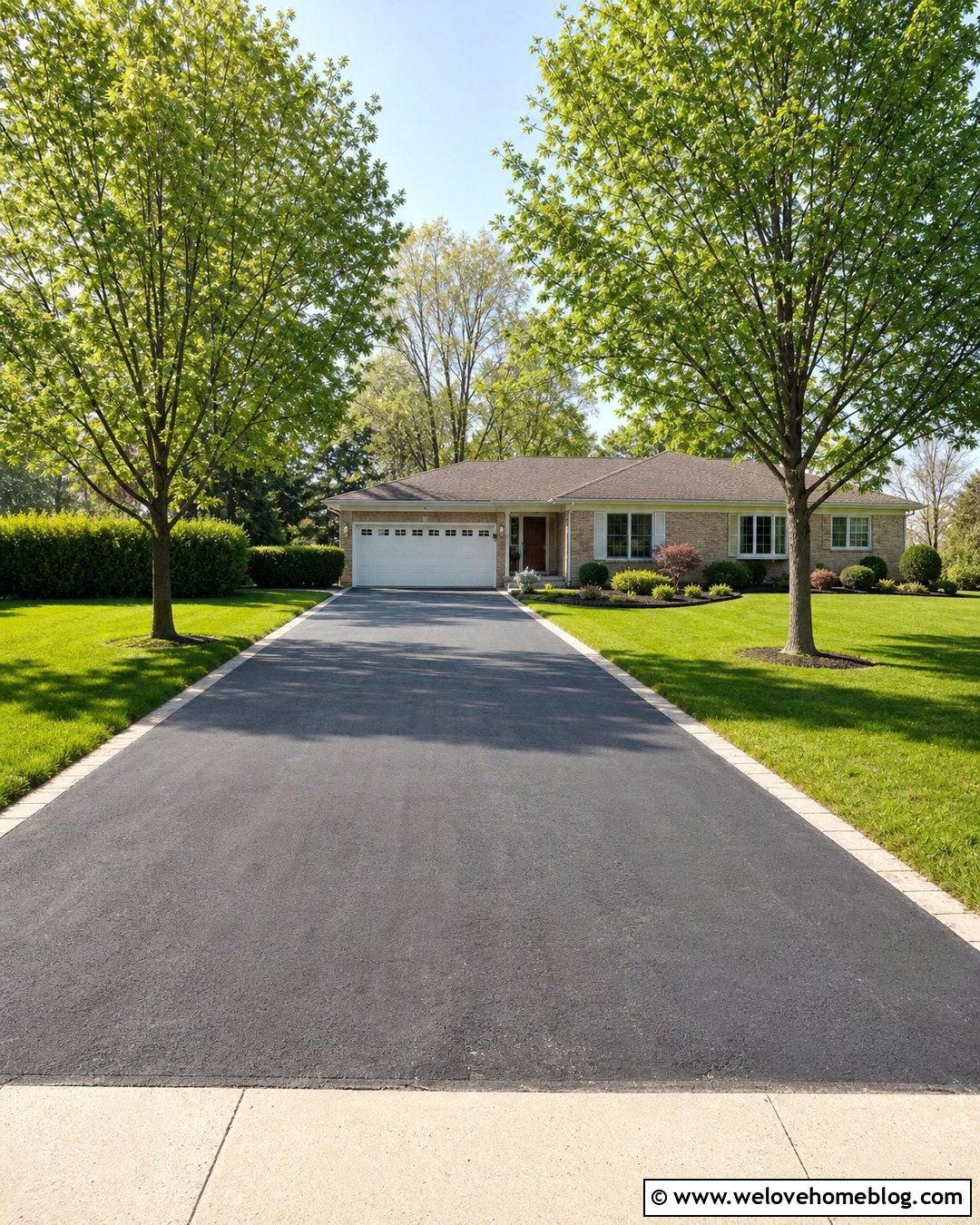
A narrow grass strip can provide the simplest transition between blacktop and a landscaped front yard. Keep the pavement edges clean and use crisp mowing lines to make the design appear intentional. On a straight driveway, parallel grass borders create symmetry and visually lead toward the garage. Add spaced canopy trees farther from the pavement so their trunks form an orderly approach without crowding vehicles. Near the house, connect one strip to a curved foundation bed filled with shrubs and perennials. This straightforward layout fits ranch homes, suburban Colonials, and modest properties where an elaborate masonry edge would feel unnecessary. Regular trimming matters because overgrown turf can quickly blur the edge and make the driveway look less maintained.
14. Blacktop Driveway With Raised Flower Beds
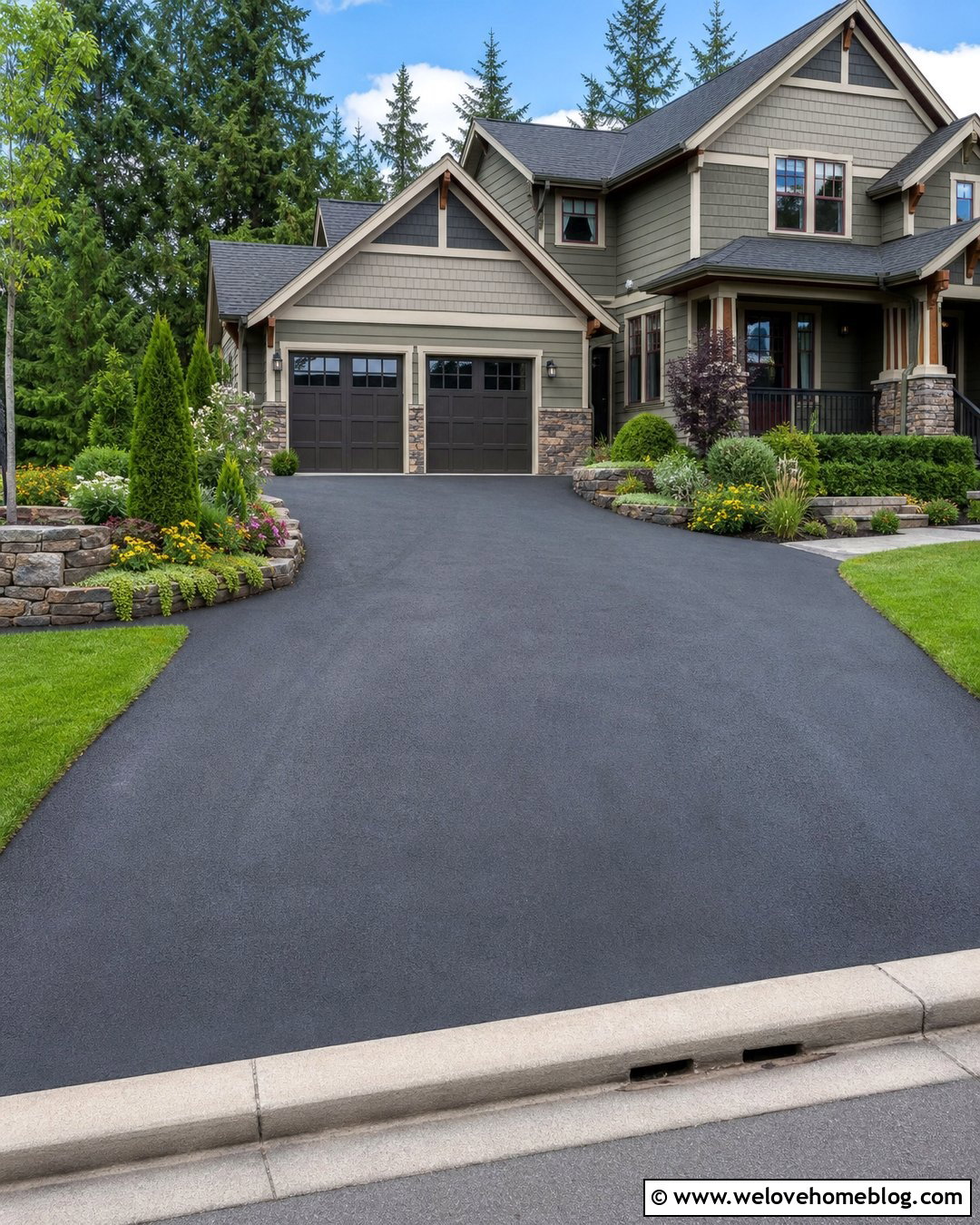
Raised planting beds help soften a wide blacktop driveway while giving flowers and shrubs a defined place. Build low beds from brick, natural stone, or smooth concrete that coordinates with the house facade. Position them near the garage or along a broad parking area rather than beside tight turning zones. Layer the beds with compact evergreen shrubs, long-blooming perennials, and trailing ground cover. A curved outer edge can balance the straight lines of the pavement, while a rectangular bed feels better beside modern architecture. Include drainage outlets so water does not collect against the driveway or walls. The resulting design combines a practical parking surface with substantial greenery, creating a finished appearance from both the street and front entrance.
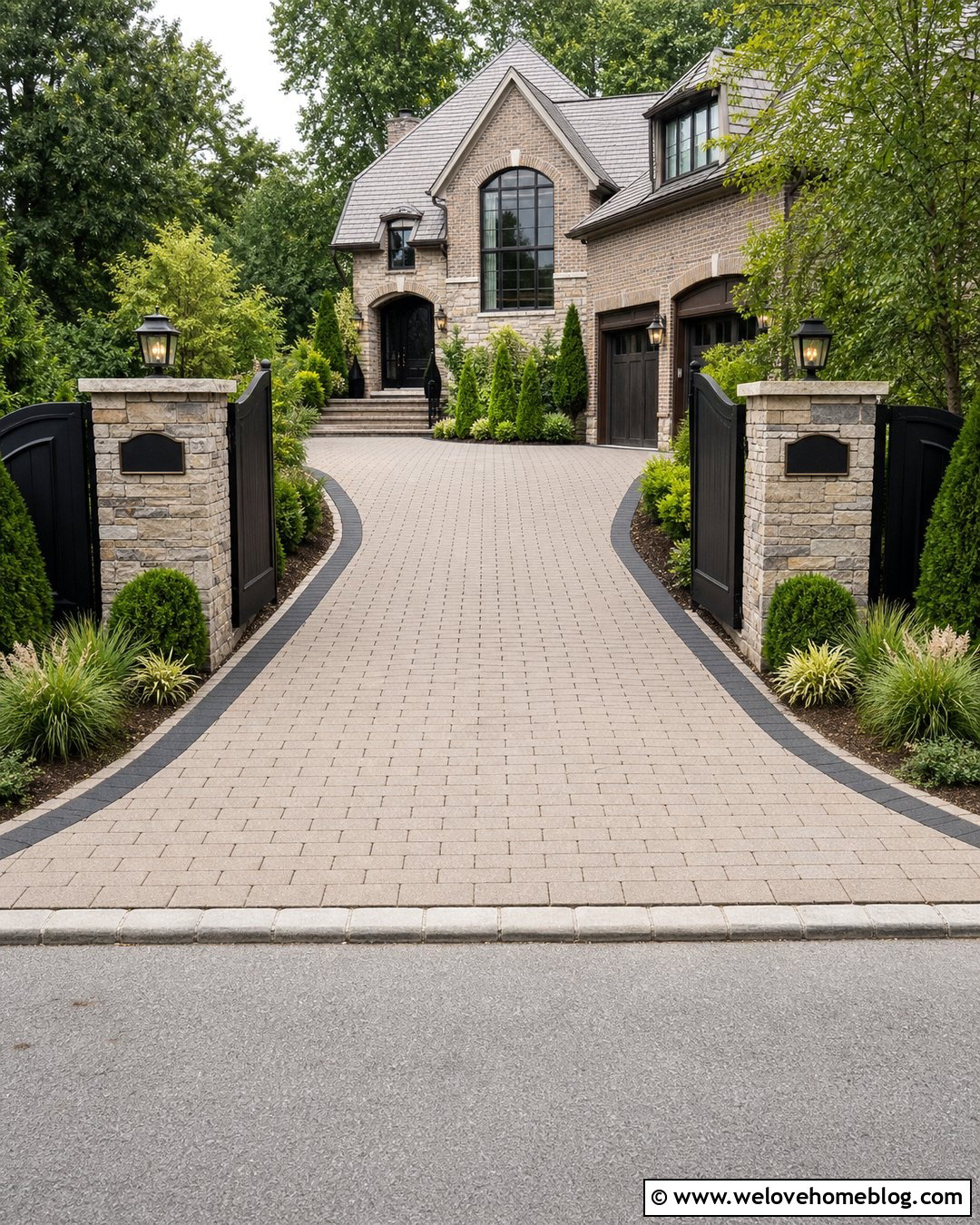
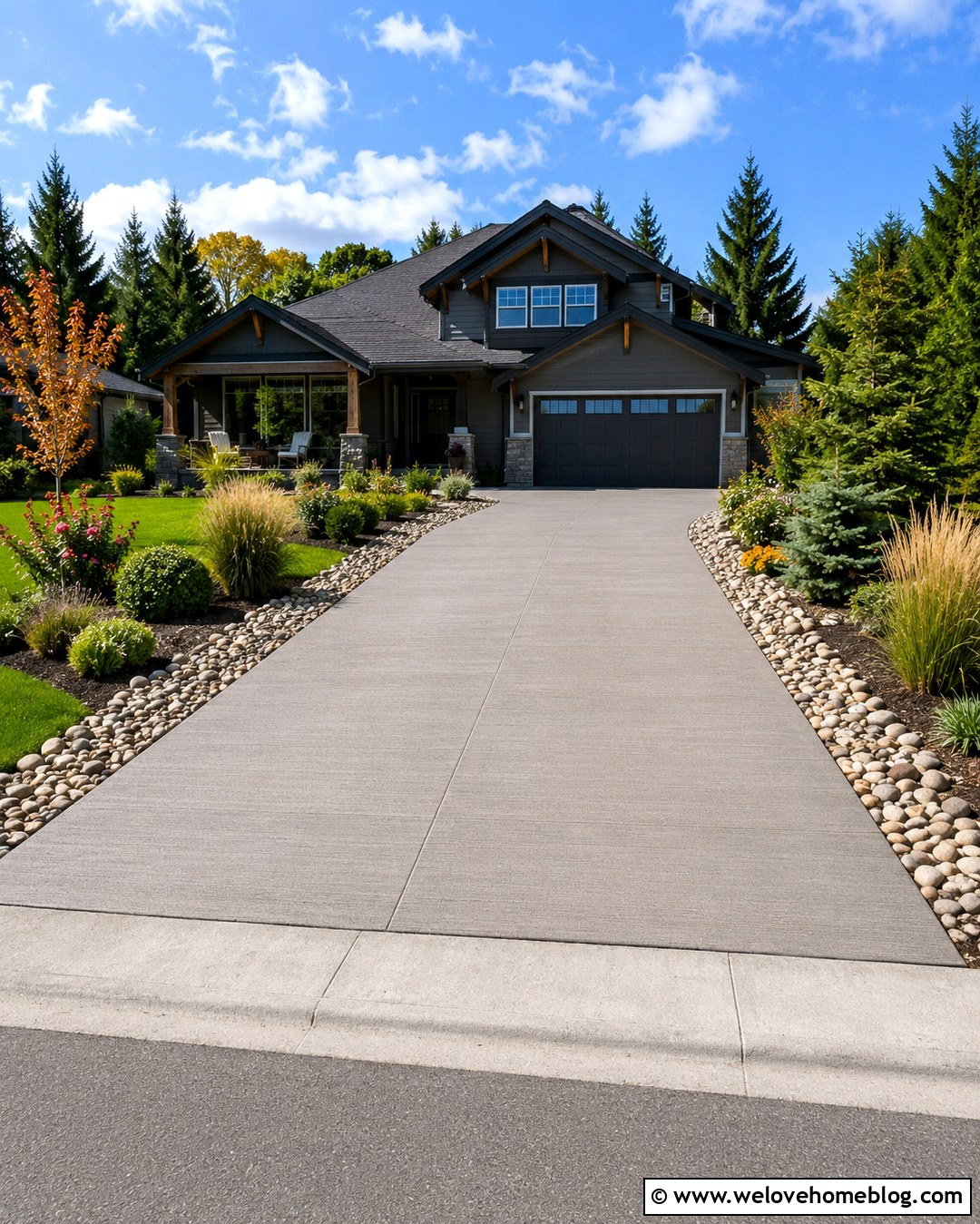
15. Blacktop Driveway With Modern Metal Edging
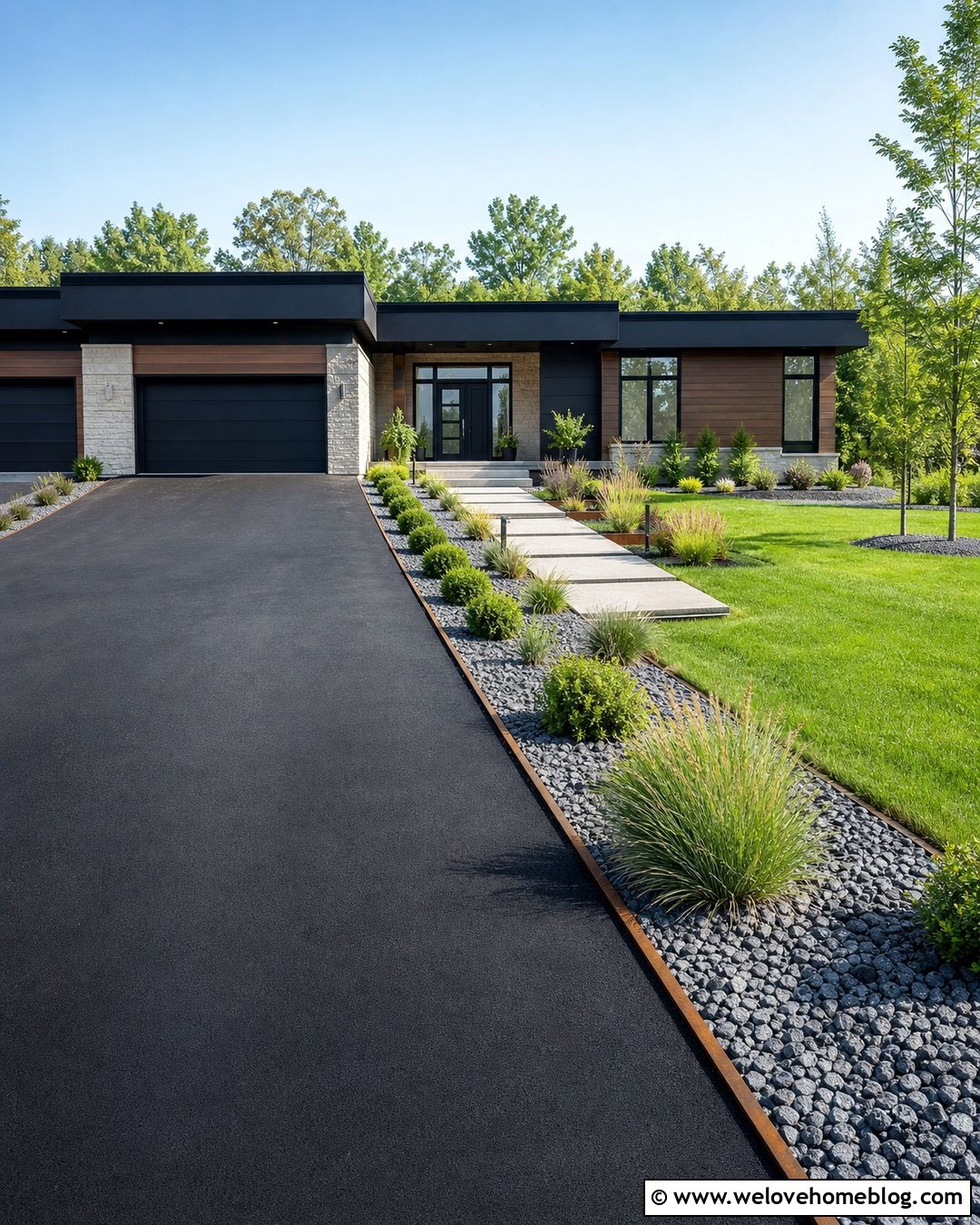
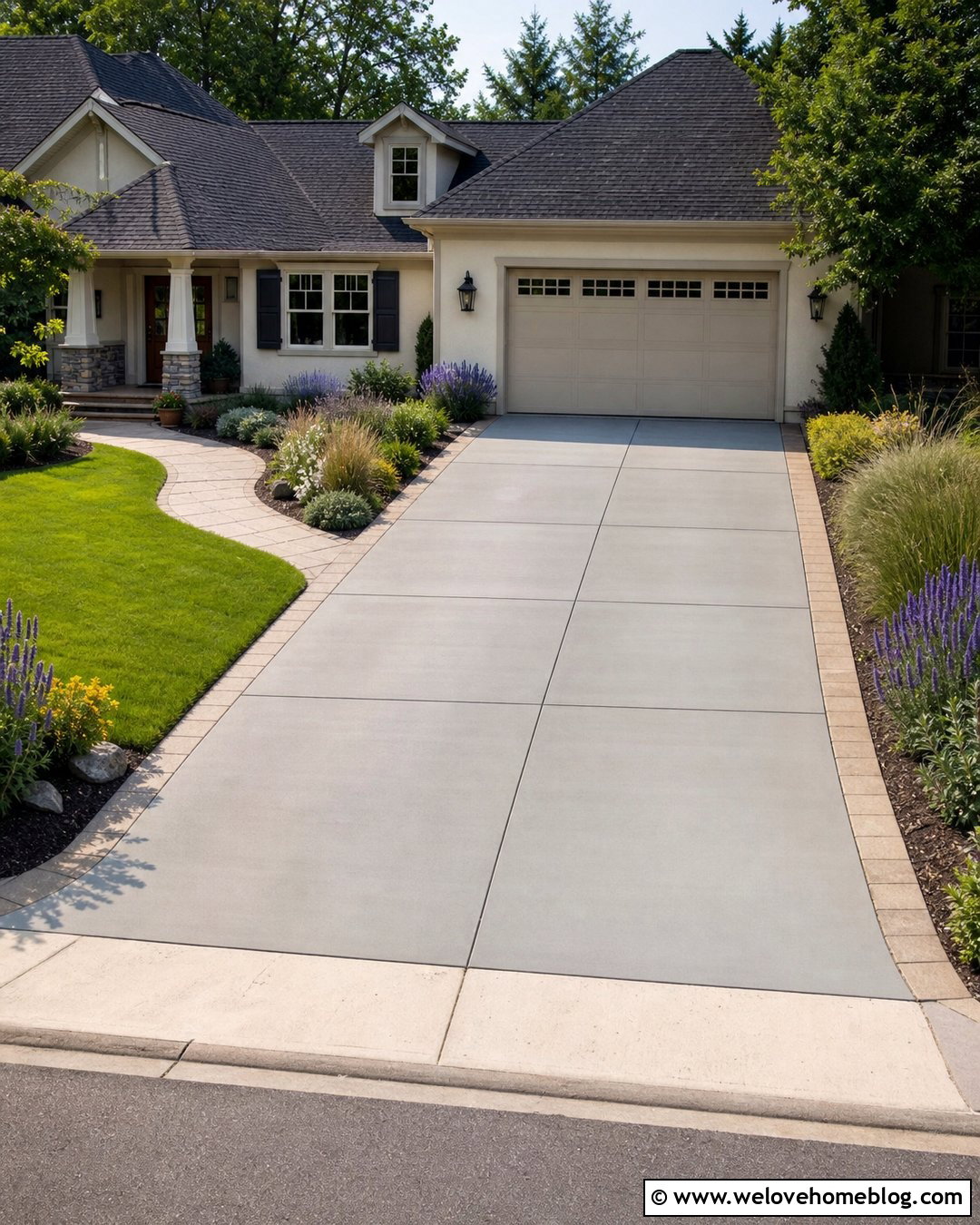
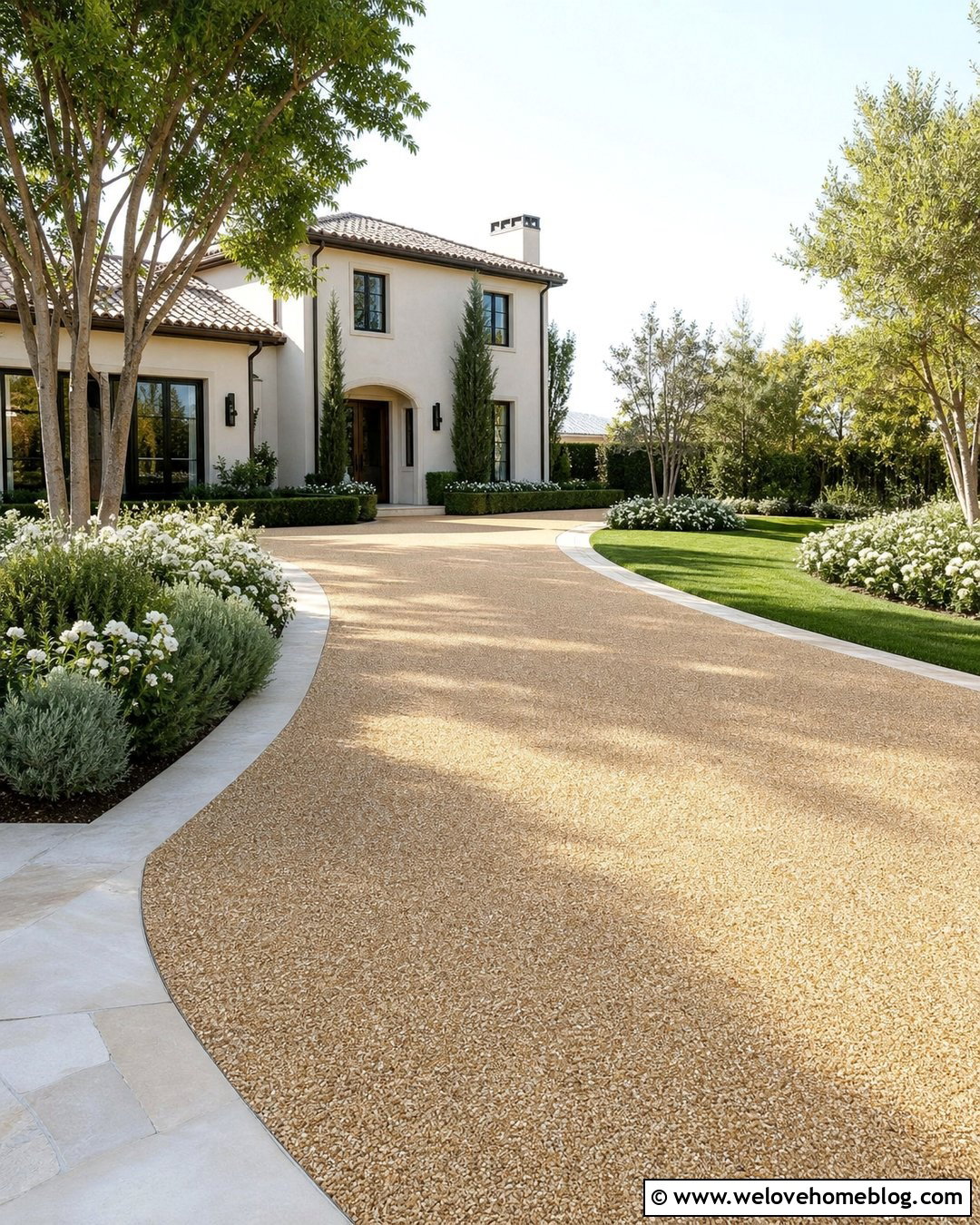
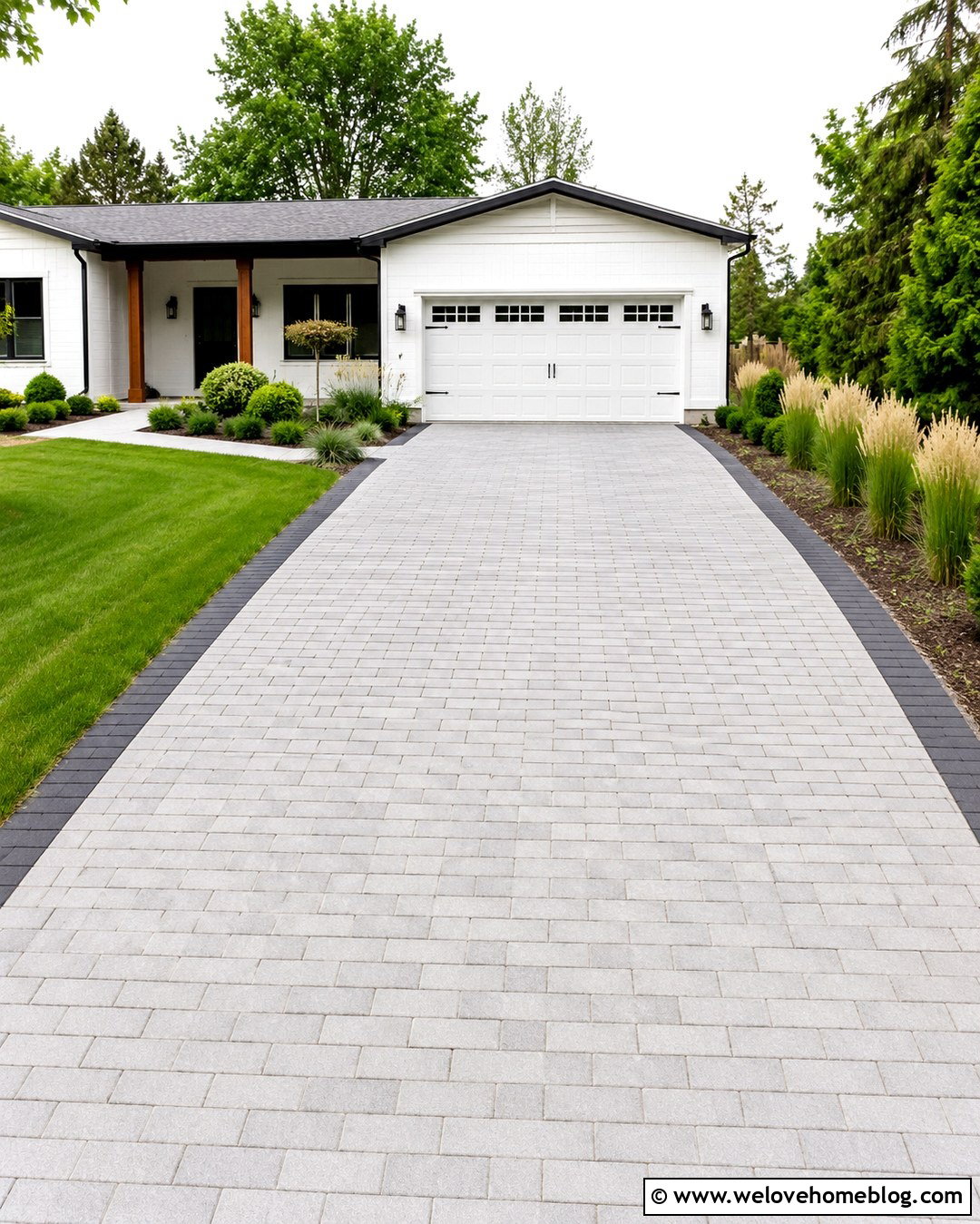
Slim metal edging gives blacktop a precise boundary without adding a visually heavy border. Use matte-black or weathering steel between the driveway and geometric planting beds. A straight layout leading to a contemporary home will emphasize the clean lines. Fill the beds with repeated ornamental grasses, compact shrubs, and a small number of architectural plants. Crushed stone mulch can reinforce the modern palette, while a rectangular concrete walkway creates a contrasting path to the front door. The edging should sit at a practical height that defines materials without creating a hazardous projection beside the pavement. This blacktop driveway design works best when every transition is deliberate, including the street apron, lawn edge, walkway intersection, and space in front of the garage.
16. Blacktop Driveway With Landscape Lighting
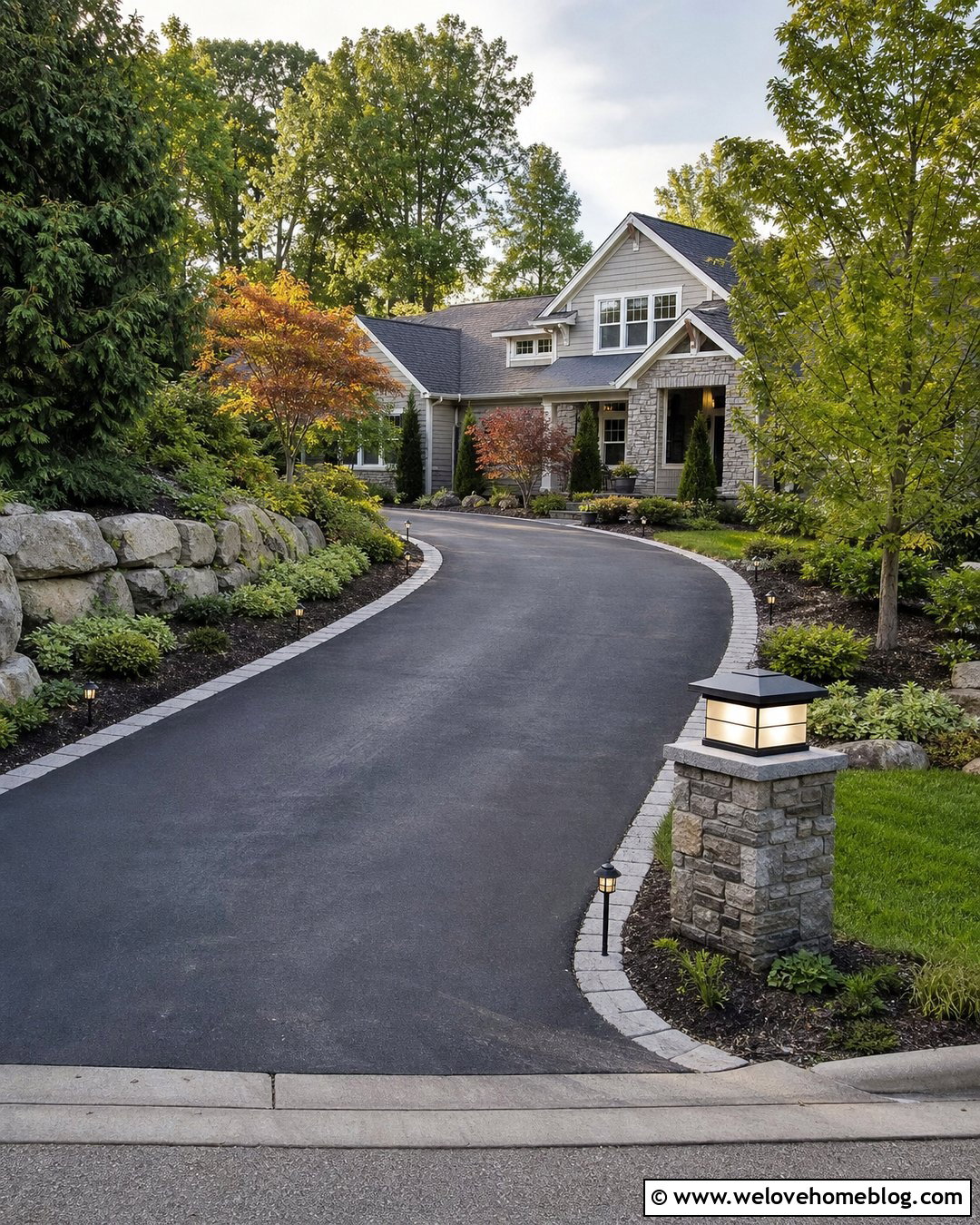
Daytime structure and nighttime visibility can work together in a carefully planned blacktop driveway. Follow a curved or straight pavement edge with low, shielded fixtures spaced at consistent intervals. Install the lights in planting beds rather than directly in vulnerable driving zones. Their placement can highlight stone borders, ornamental trees, address pillars, and changes in direction. During the day, dark bronze or black fixtures blend easily with mulch and asphalt. Pair them with low shrubs and ground cover so the full landscape remains tidy. Avoid excessive brightness or runway-like rows of exposed lights. A restrained lighting plan creates a welcoming approach, supports navigation after dark, and enhances the complete driveway without competing with the home’s architecture.
17. Blacktop Driveway With Stone Pillars
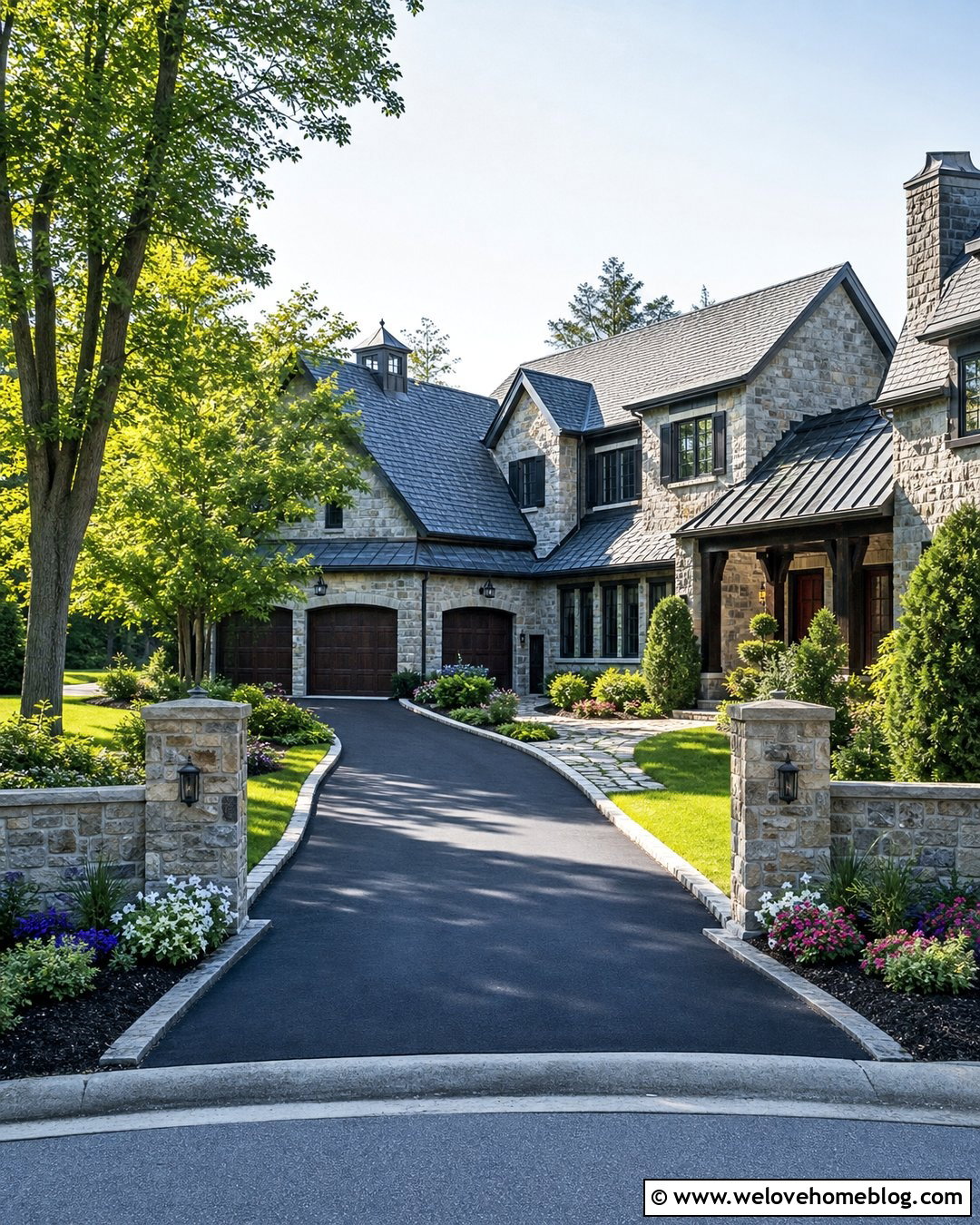
Stone pillars can make the entrance to a blacktop driveway feel established and easy to identify. Build a balanced pair at the street, leaving sufficient clearance for turning vehicles and service access. Choose stone that matches the house foundation, retaining walls, or porch columns. Low wing walls can extend from the pillars into planting beds filled with evergreen shrubs and seasonal color. For a curved driveway, angle the pillars toward the road so the opening appears welcoming from both directions. Add a modest address plaque or downcast lighting without overcrowding the masonry. The dark pavement provides a neutral foreground, allowing the textured stone and landscaping to become the focal points of the complete entrance design.
18. Blacktop Driveway With Brick Pillars
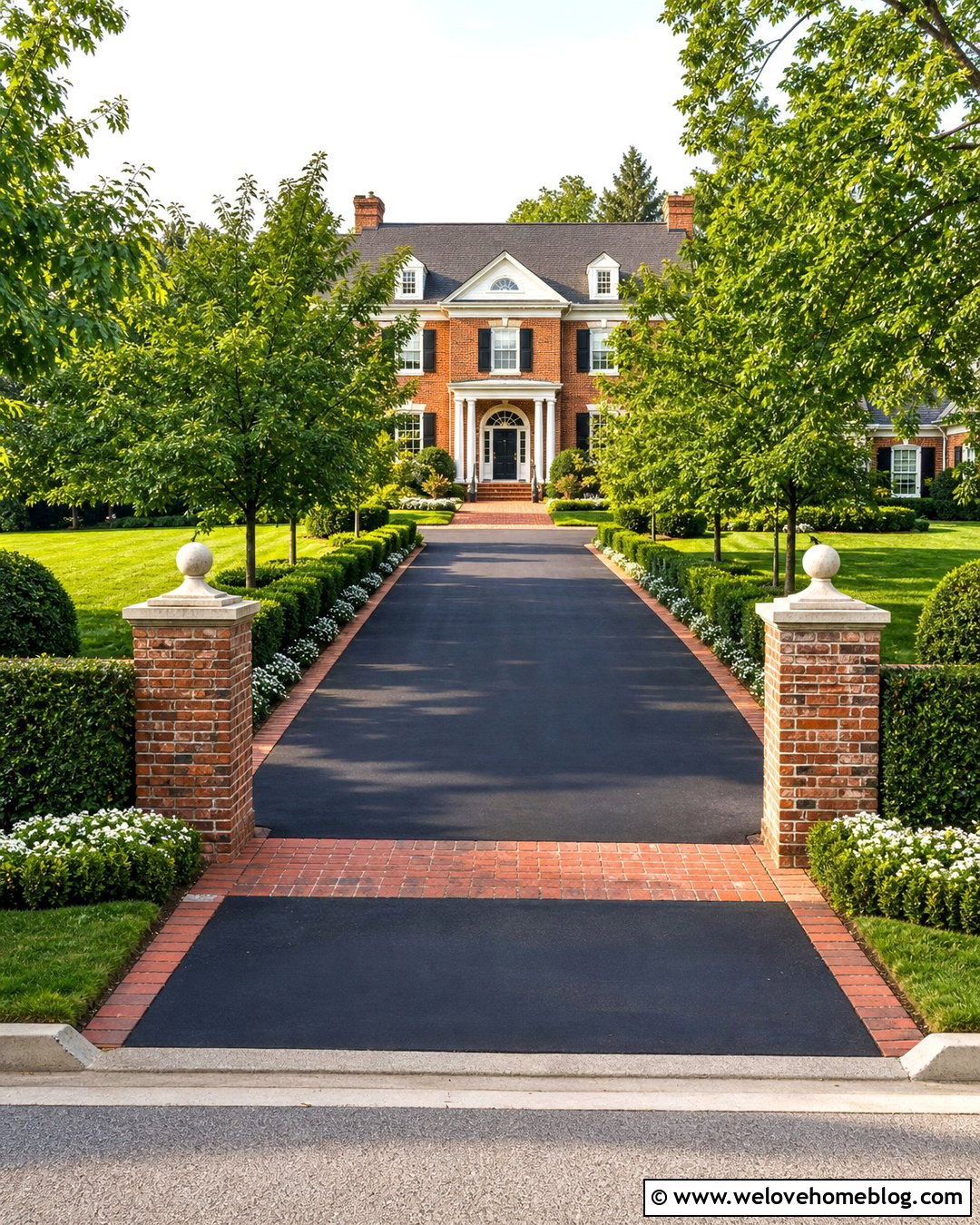
Brick entrance pillars create a natural connection between blacktop pavement and a traditional brick home. Match the brick color and mortar as closely as possible, then cap each pillar with stone or precast concrete. A straight driveway can run between the columns toward a centered garage, while neatly clipped hedges continue the symmetrical layout. Use a brick border along the pavement and repeat it around the front walkway. Low flowering plants near the pillars add color without hiding the address or reducing visibility. If gates are included, keep their proportions appropriate for the pillar size and driveway width. This coordinated arrangement looks particularly effective with Colonial, Georgian, Tudor, and traditional suburban architecture.
19. Blacktop Driveway With Farmhouse Gate
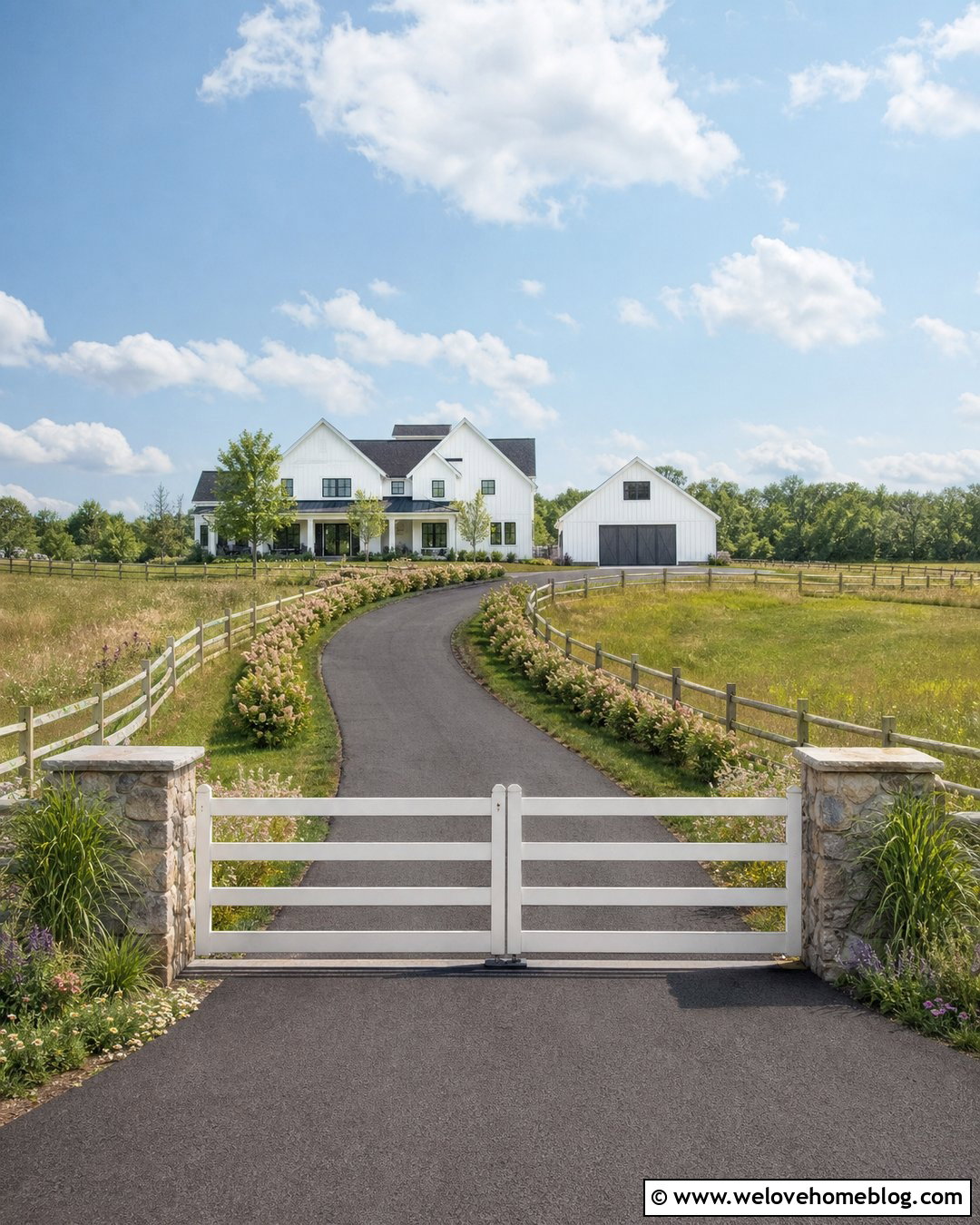
A simple farmhouse gate gives a long blacktop driveway a welcoming rural entrance. Choose a white or natural wood gate with clean horizontal rails, supported by stone or painted timber posts. Set it far enough inside the property to provide a safe waiting area off the road. The blacktop can curve gently through an open lawn toward a white farmhouse or barn-inspired garage. Frame the entrance with split-rail fencing, native grasses, and groups of flowering shrubs. A modest hanging or post-mounted address sign can complete the composition. Keep the gate style straightforward and ensure that landscaping will not interfere with movement. The result feels relaxed and functional rather than overly formal or ornamental.
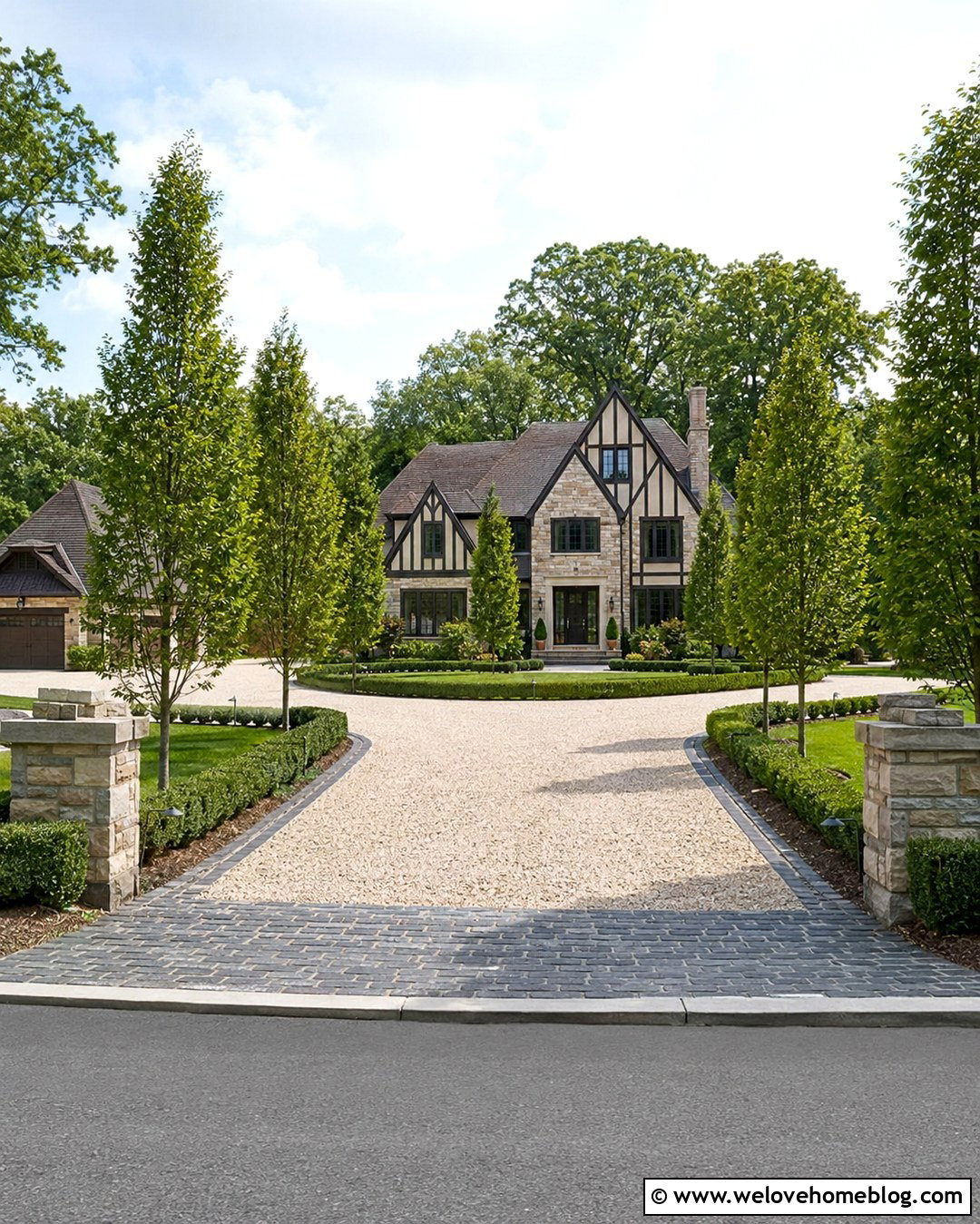
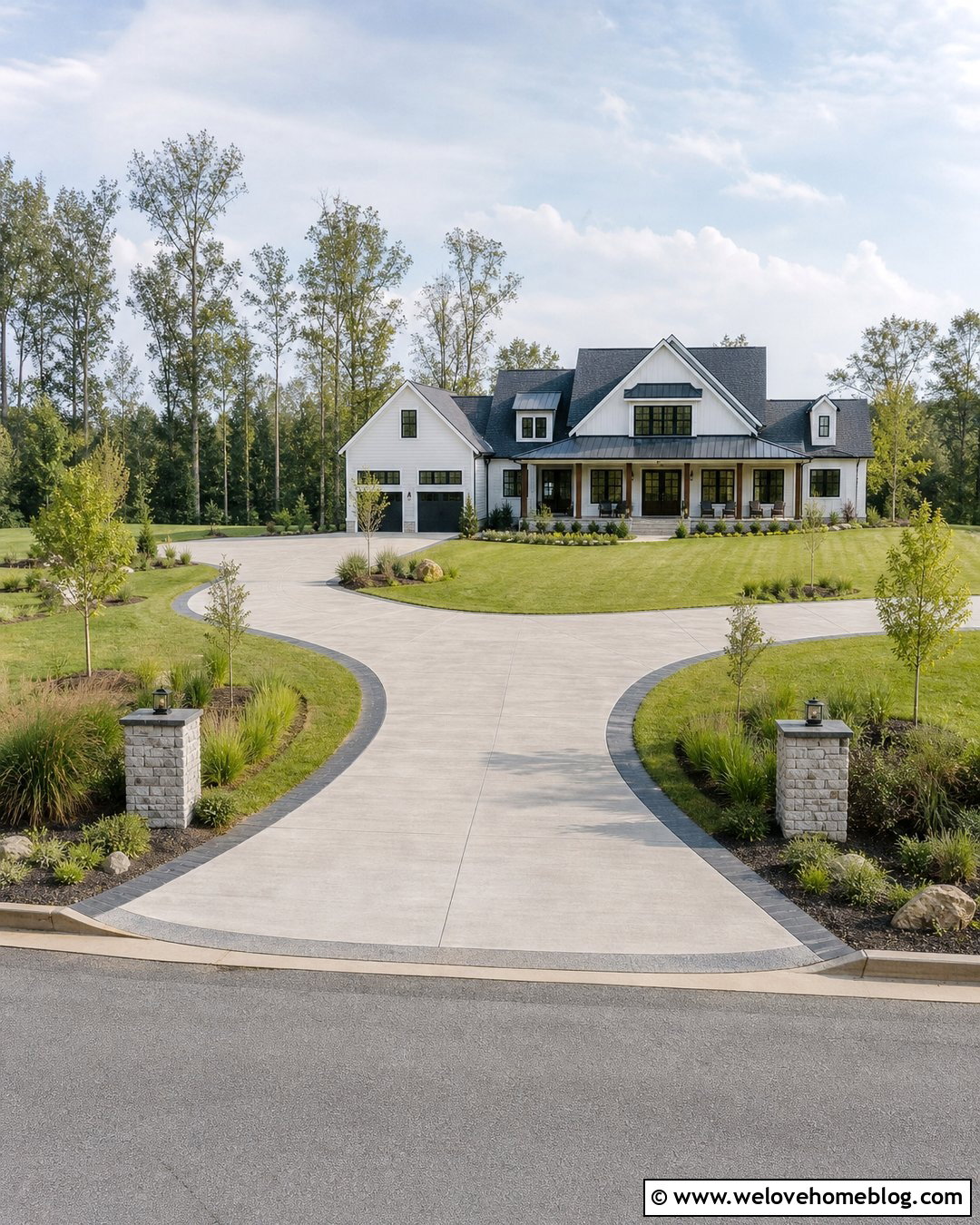
20. Blacktop Driveway With Modern Sliding Gate
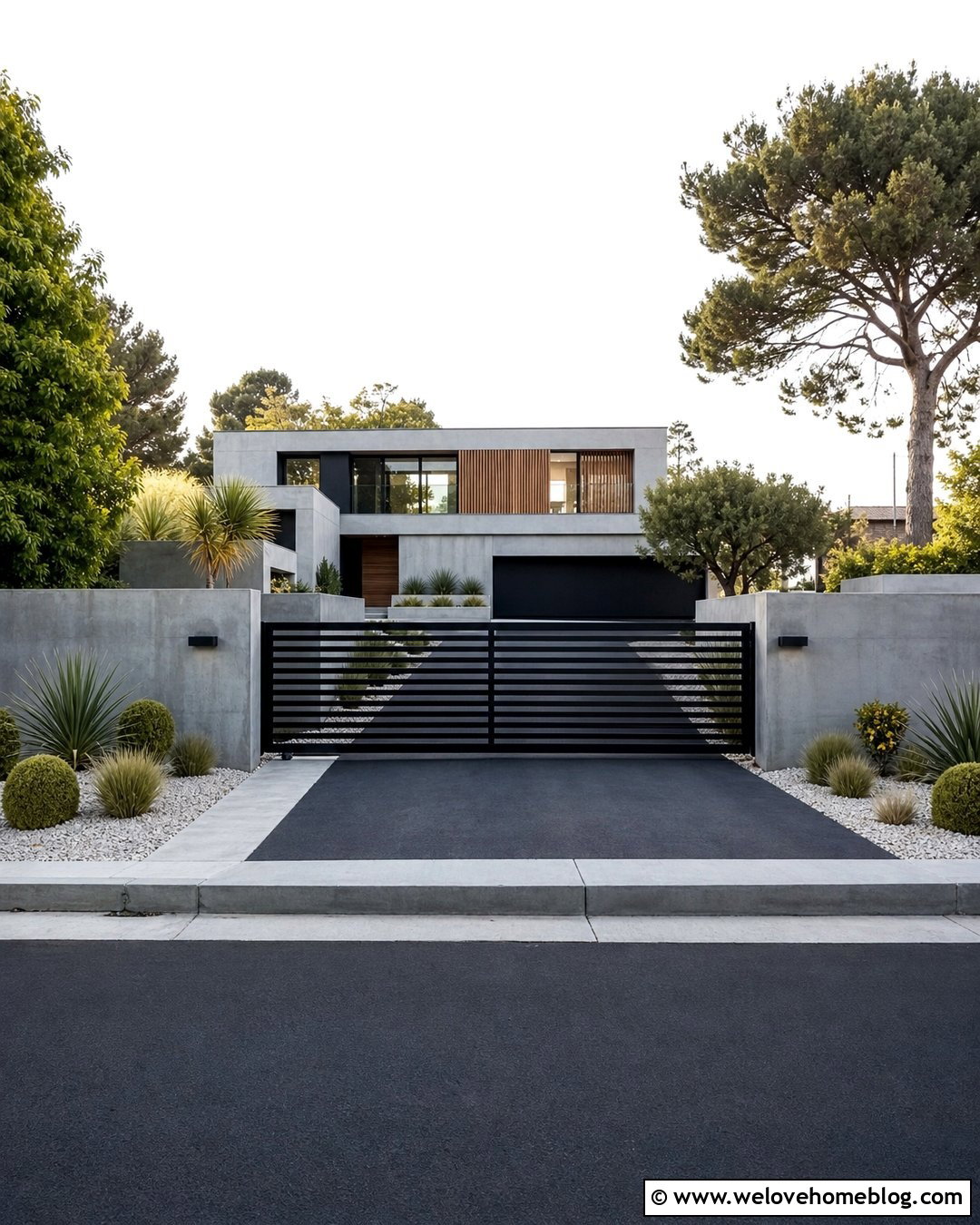
A wide blacktop driveway pairs well with a streamlined sliding gate at a contemporary home. Choose horizontal metal slats in matte black, charcoal, or a warm wood-look finish. Connect the gate to low concrete walls or smooth stucco pillars that echo the house facade. The driveway should remain straight near the entrance so the geometry appears clean and the gate can operate without visual clutter. Continue with linear beds containing ornamental grasses, sculptural shrubs, and pale decorative stone. A concrete address wall and integrated lighting can create one organized focal point. Plan adequate space for equipment, drainage, and safe vehicle positioning so the gate looks like a deliberate part of the complete approach rather than an added barrier.
21. Blacktop Driveway With Parking Court
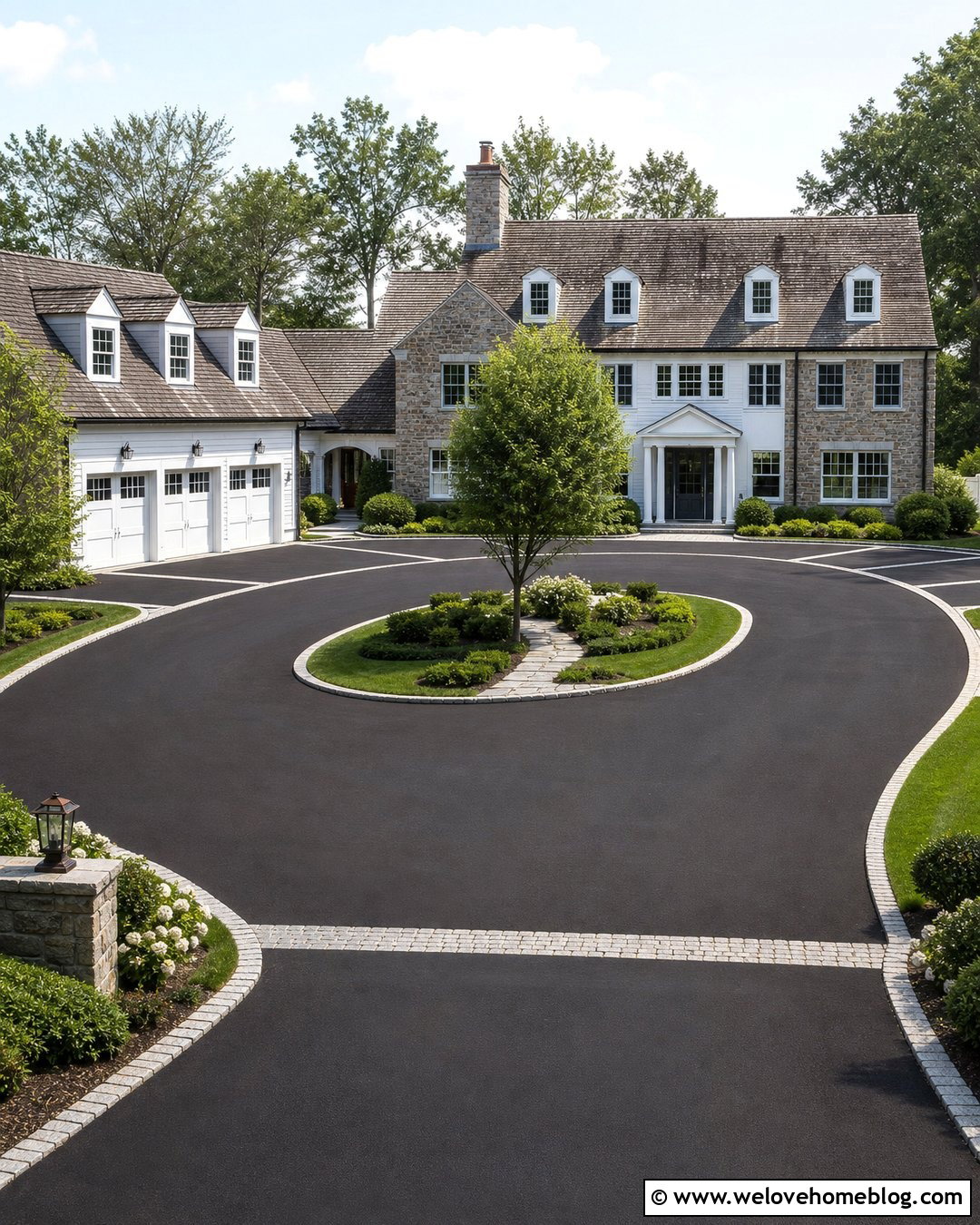
A parking court makes a large blacktop driveway more functional while preventing the area near the garage from feeling like one shapeless surface. Define the court with a broad oval, rectangle, or gently curved edge that fits the architecture. Use cobblestone or concrete paver bands to outline parking zones and visually break up the pavement. A central planting island can add shade and scale if enough maneuvering room remains. Around the perimeter, combine lawn, low shrubs, and a walkway leading toward the front door. This arrangement works well for larger suburban and country homes. Clear circulation should guide vehicles naturally from the entrance to parking, turning, and exit areas without relying on painted markings.
22. Blacktop Driveway With Side Parking Pad
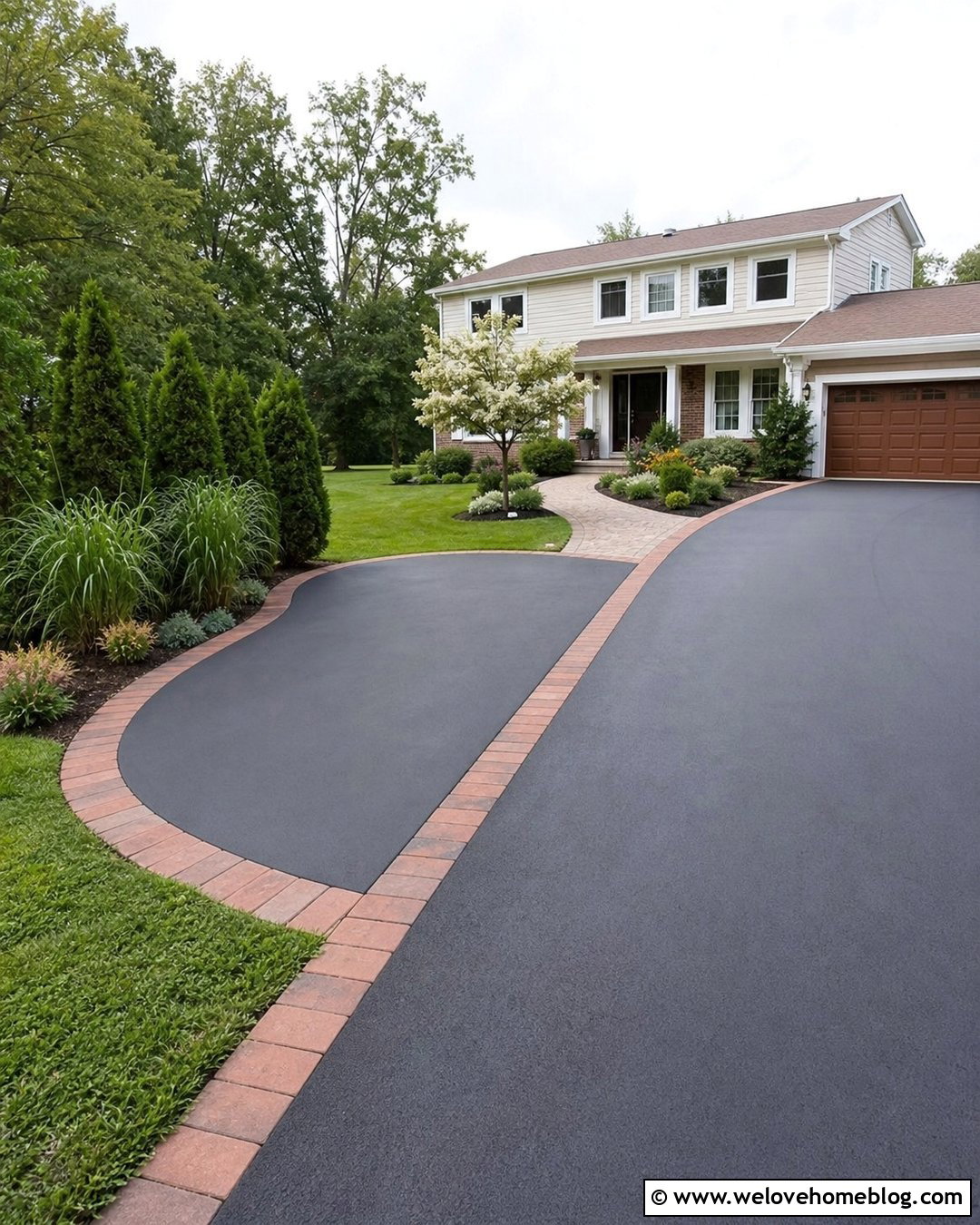
A side parking pad adds usable space without making the main blacktop driveway unnecessarily wide from curb to garage. Extend the pavement near the house or halfway along a long drive, then define the pad with a brick or stone border. A curved transition will usually feel softer than a sharp rectangular projection. Screen the outer edge with low evergreen shrubs, ornamental grasses, or a small tree, but preserve visibility when vehicles pull out. Connect the pad to the walkway if guests are likely to use it. Matching pavement keeps the expansion cohesive, while the contrasting border explains the change in layout. This design can accommodate visitor parking, a recreational vehicle, or easier turning on narrower properties.
23. Blacktop Driveway With Front Walkway Connection
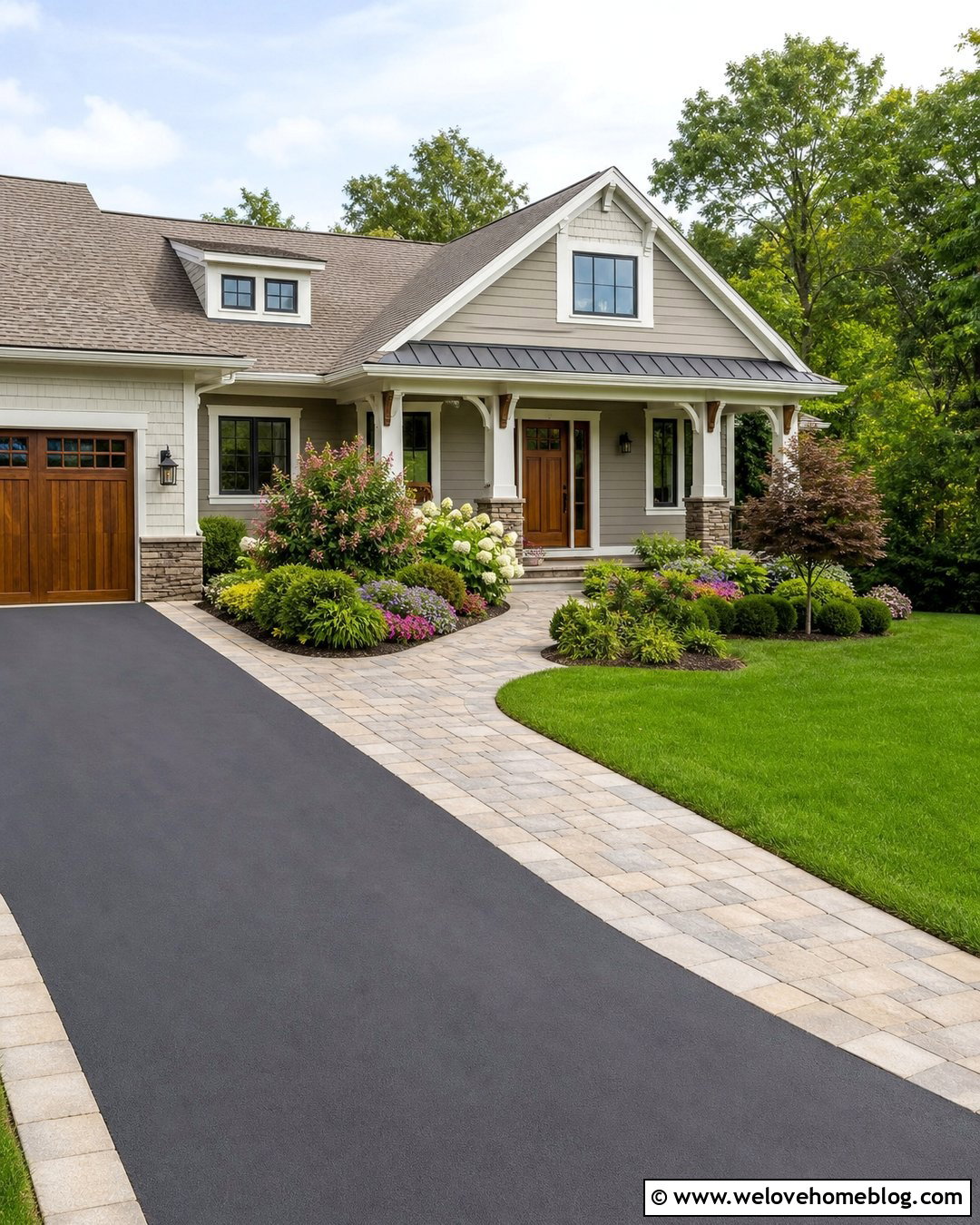
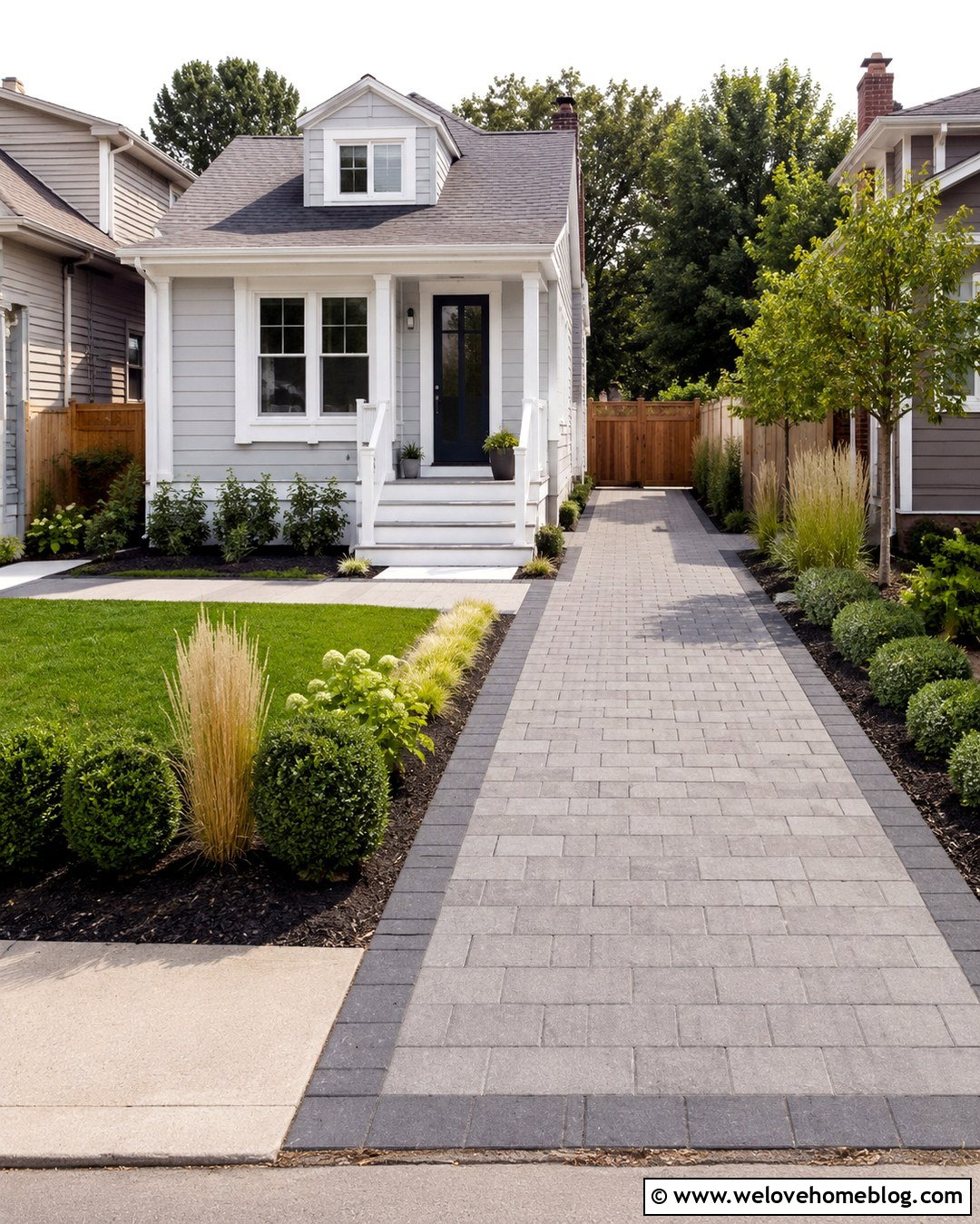
A well-planned walkway connection prevents visitors from wandering across the lawn or following the driveway to the garage. Use a paver or concrete path that branches clearly from the blacktop and leads directly to the front door. Widen the transition into a small landing so it reads as an intentional pedestrian entrance. Repeat the walkway material as a thin driveway border or entrance apron for visual continuity. Layer shrubs, grasses, and flowers around the junction without blocking the route. A straight path suits formal architecture, while a gentle curve works well with cottages and Craftsman homes. The driveway and walkway should feel like two coordinated parts of one front-yard plan, each with an obvious purpose.
24. Blacktop Driveway With Mailbox Garden
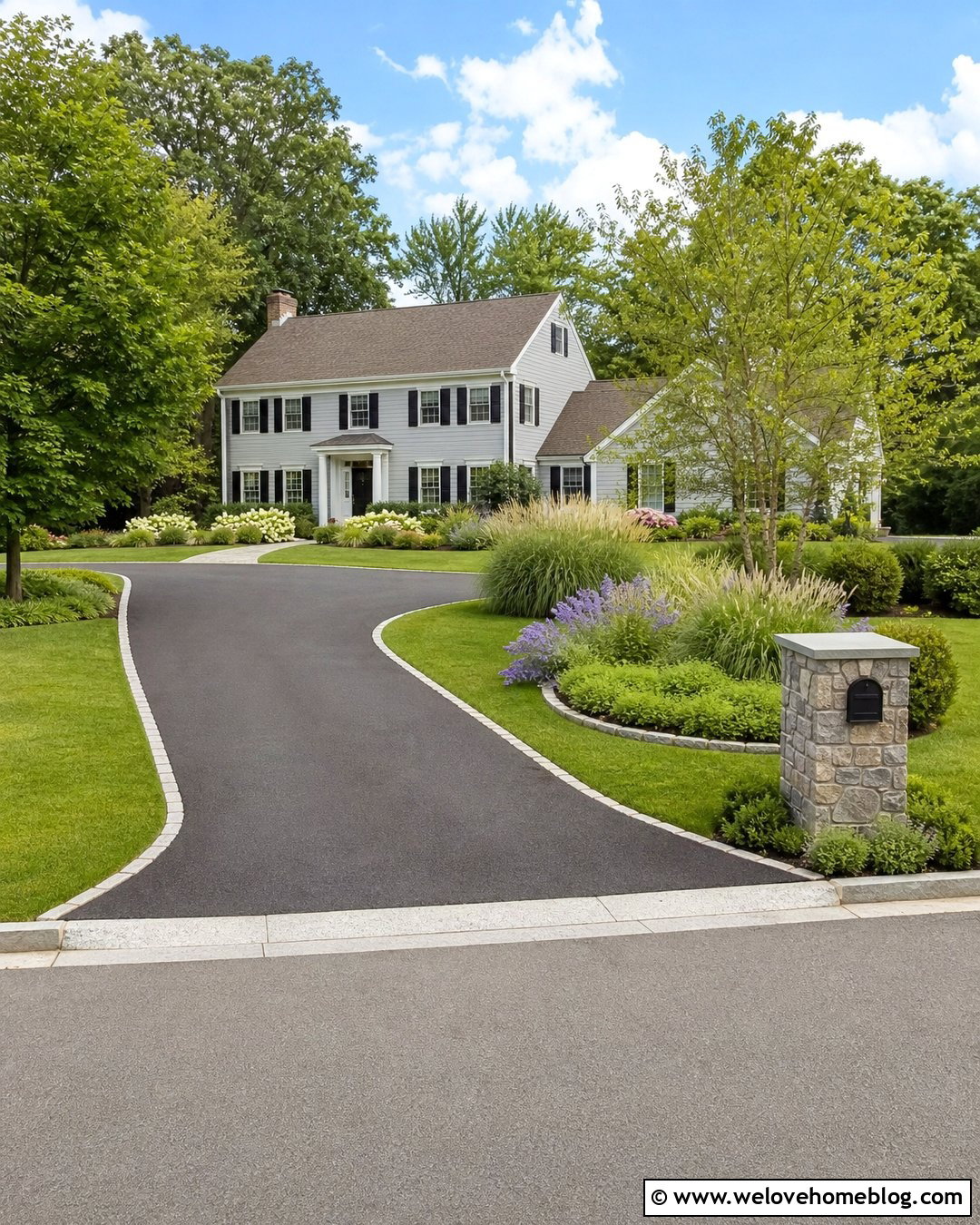
A mailbox garden can turn the street end of a plain blacktop driveway into a welcoming landscape feature. Start with a brick, stone, or painted wood mailbox structure that matches the home. Surround it with a curved bed set back from the pavement and road shoulder. Use durable, compact plants that will not block the address, sightlines, or mail access. Low grasses, ground cover, and small flowering perennials create color without becoming oversized. Edge the bed with the same brick or stone used along the driveway. The blacktop should flare gently at the entrance if the lot allows, forming a balanced frame around the planting. This small feature helps the entire property feel more thoughtfully connected.
25. Blacktop Driveway With Tree-Lined Entrance
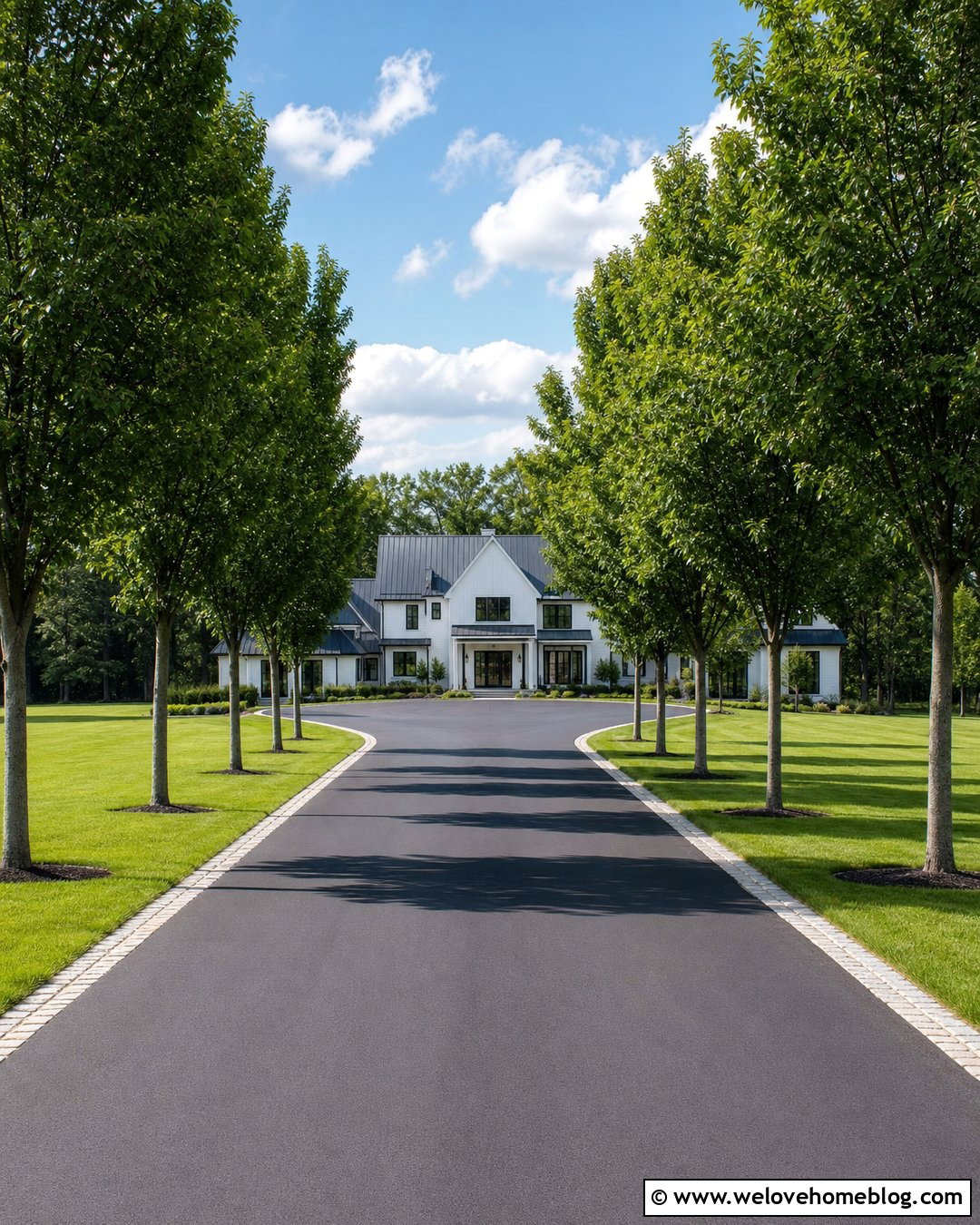
Trees can transform a long blacktop driveway into a structured, memorable approach. Plant matching rows beyond the pavement shoulders, allowing enough room for trunks, roots, branches, and snow storage where relevant. Use upright varieties for narrow properties or broader canopy trees where the yard is spacious. A simple stone edge and continuous lawn beneath the trees keep the view calm. At the house, end the rows before the parking and turning area so the approach opens naturally. The repeating green forms soften the black pavement and direct attention toward the architecture. This layout is especially appealing on country estates, modern farmhouses, and large traditional homes, but it requires planning around mature plant size and underground utilities.
26. Blacktop Driveway With Native Plant Borders
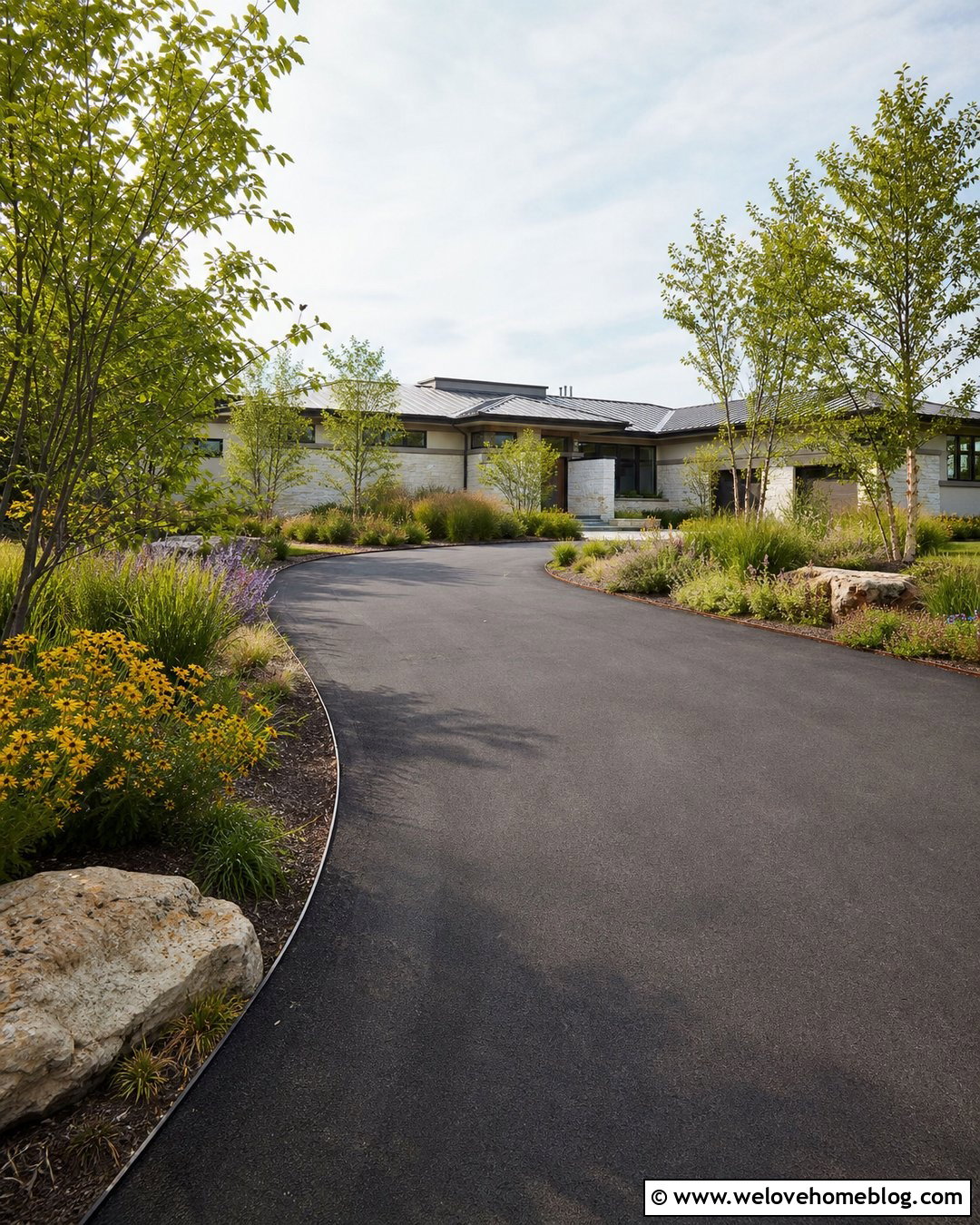
Native planting can make a blacktop driveway feel integrated with its regional landscape. Follow a gently curving pavement edge with broad, layered beds rather than thin lines of isolated plants. Combine locally appropriate grasses, flowering perennials, compact shrubs, and small trees selected for the site’s sun, soil, and moisture. Use stone or steel edging to keep the boundary crisp and reduce plant spread onto the drive. Repeating a limited group of species will create cohesion while still providing texture and seasonal change. This design works with contemporary, rustic, prairie, and cottage-style homes. Keep taller growth away from street intersections and tight curves so the abundant planting does not compromise visibility or comfortable vehicle movement.
27. Blacktop Driveway With Evergreen Landscaping
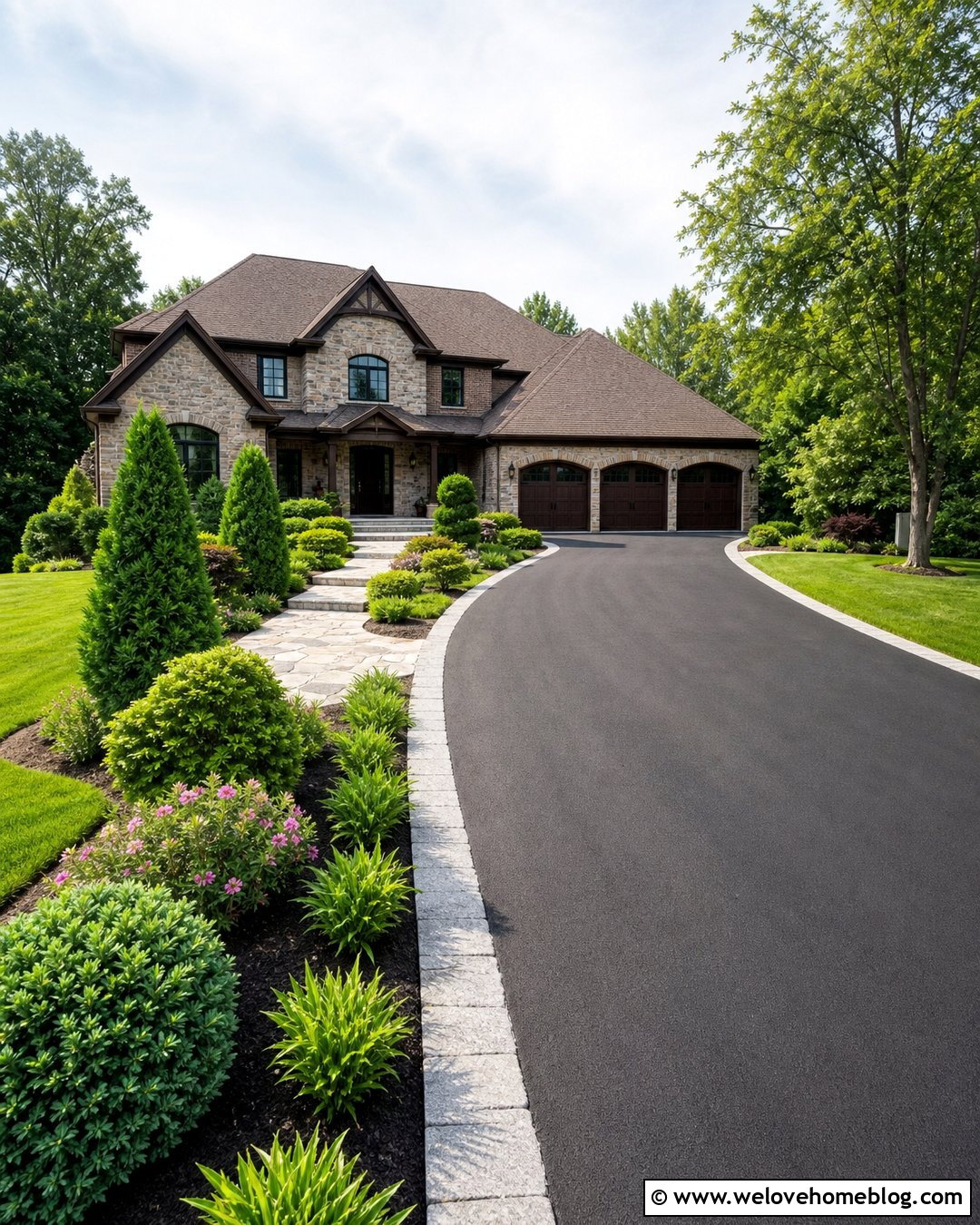
Evergreen landscaping provides year-round structure around a dark blacktop driveway. Place compact conifers, broadleaf evergreen shrubs, and neatly clipped hedges in repeated groups rather than lining every inch of pavement. A straight driveway can use symmetrical beds near the entrance and garage, while a curved drive benefits from larger evergreen clusters at key turns. Add pale stone edging or light mulch to separate the green foliage from the black surface. A few flowering perennials can provide seasonal color without changing the calm overall composition. This design complements brick Colonials, stone Craftsman homes, ranch houses, and modern facades. Choose plants based on mature dimensions so they do not eventually narrow the drive or obscure important views.
28. Blacktop Driveway With Dry Creek Drainage
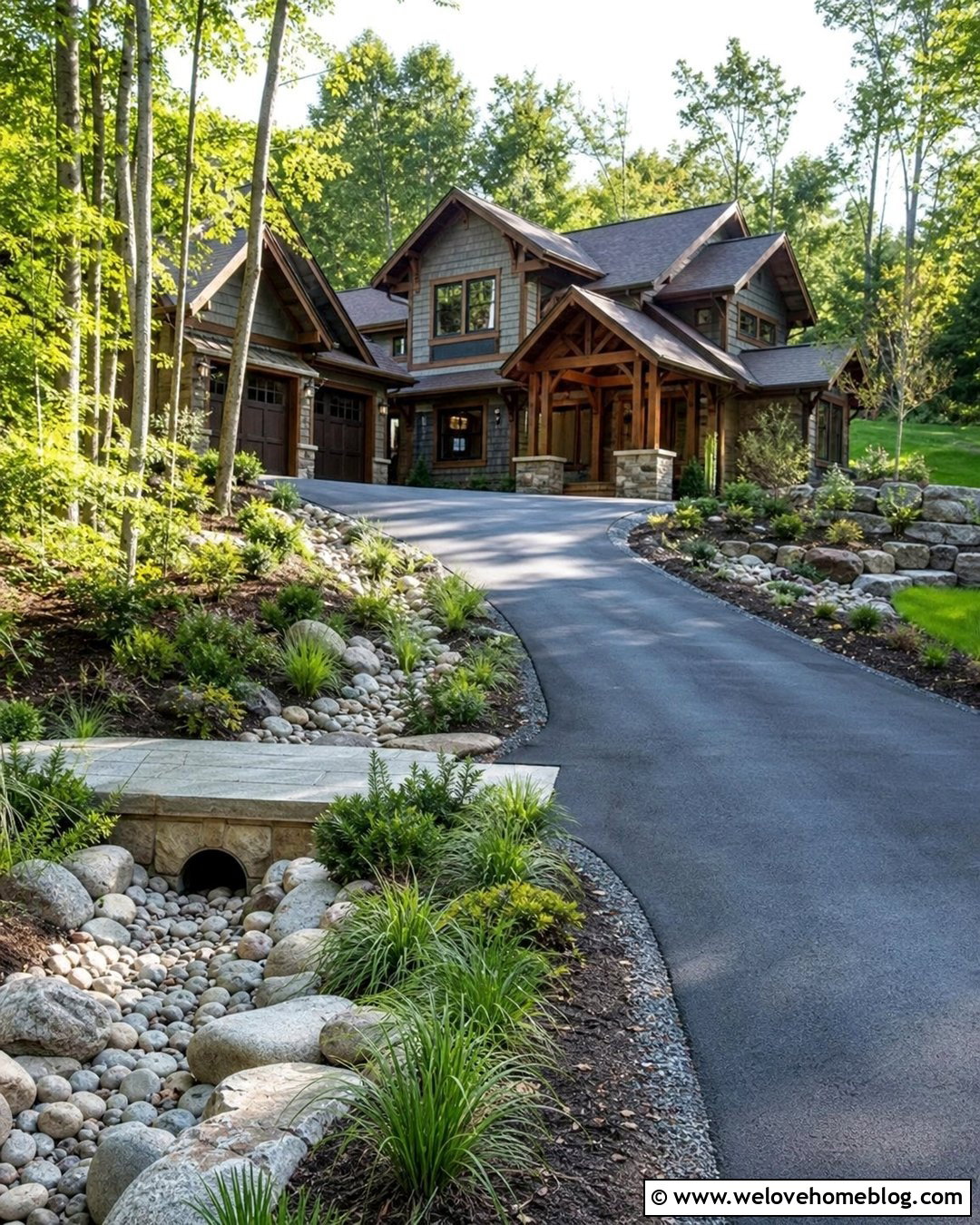
A landscaped dry creek can turn a necessary drainage route into an attractive feature beside a blacktop driveway. Shape a shallow channel along the lower side of a sloping drive, then line it with mixed river rock and a few larger stones. Add moisture-tolerant grasses and shrubs outside the main water path. Use a small stone or concrete culvert crossing where the walkway meets the driveway. The blacktop must still be properly graded so runoff moves toward the intended drainage area rather than pooling on the pavement. () A gently curved layout helps the creek feel natural. This complete look works particularly well with wooded lots, Craftsman homes, and rustic contemporary architecture.
29. Blacktop Driveway With Heated Paver Apron
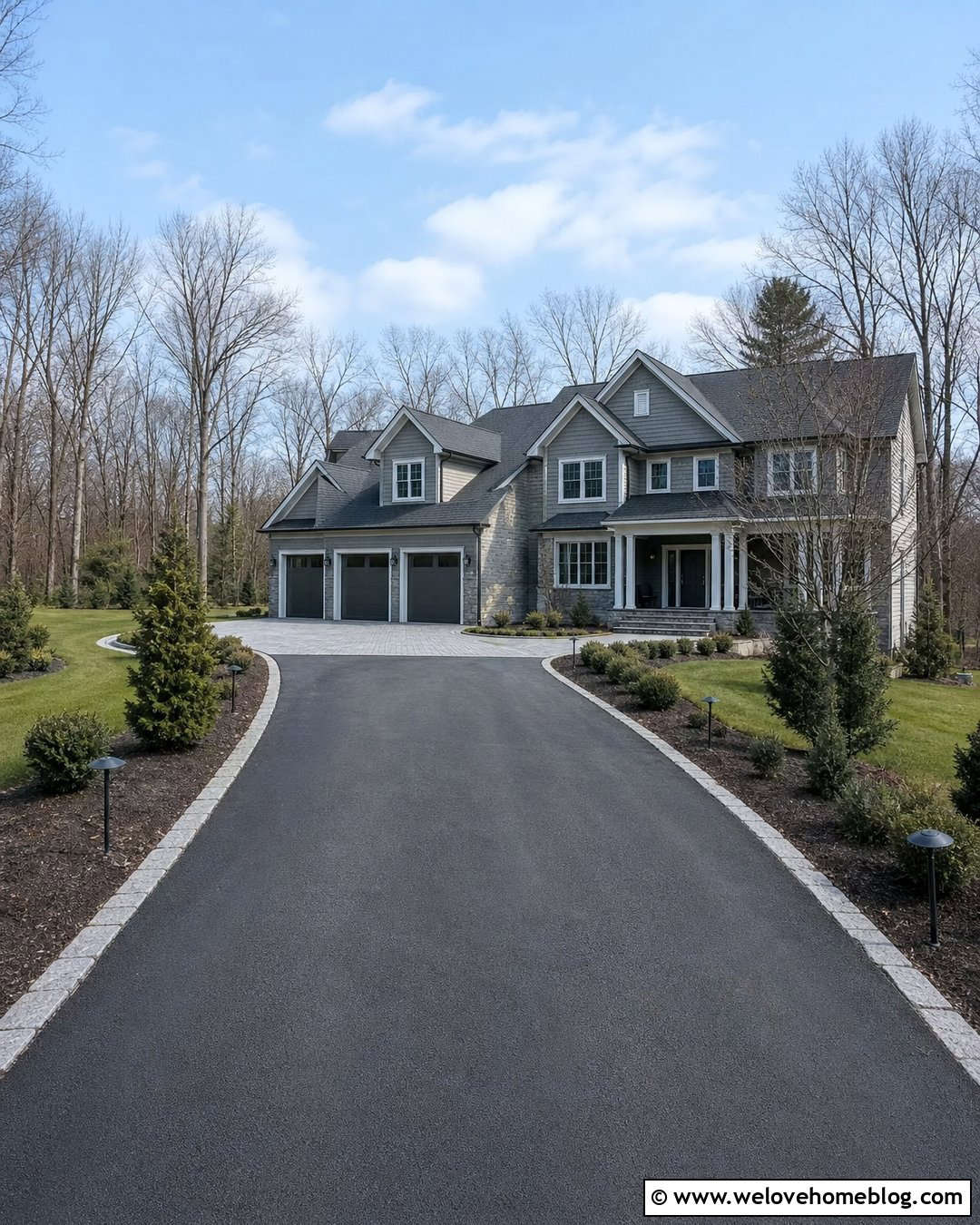
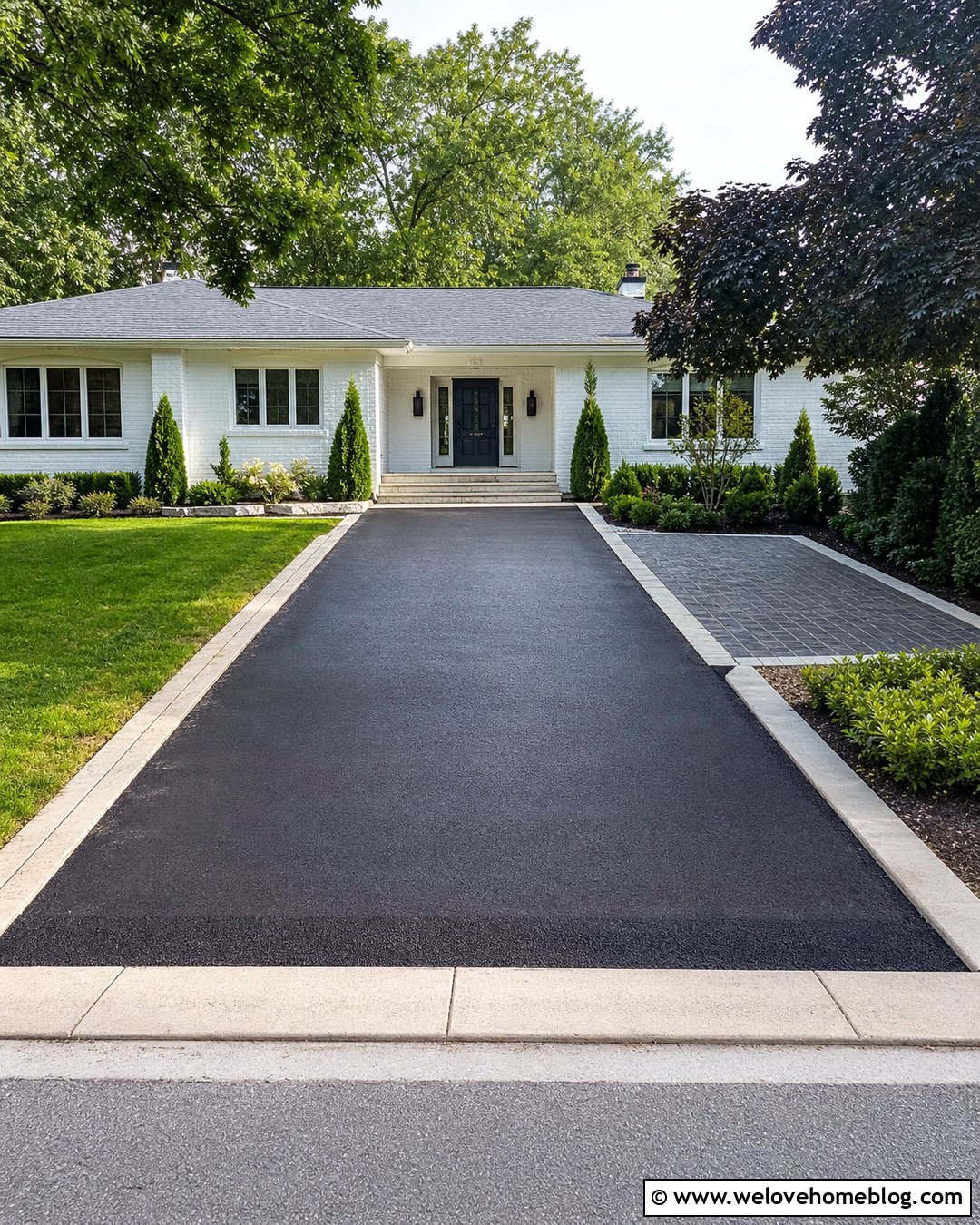
In a cold-weather setting, a blacktop driveway can be paired with a visually distinct heated paver area near the garage or entrance. Use gray concrete pavers for the apron and keep the main asphalt section smooth and simple. The contrasting surface clearly marks the transition into the parking area while coordinating with stone or gray siding on the house. Frame both materials with a flush granite edge that will not interfere with snow removal. Add hardy evergreens, deciduous shrubs, and simple path lighting along the approach. Any heating system requires professional planning around power, controls, drainage, paving materials, and local conditions. Visually, the design remains refined because the practical feature is incorporated into a complete hardscape plan.
30. Blacktop Driveway With Mixed Material Courtyard
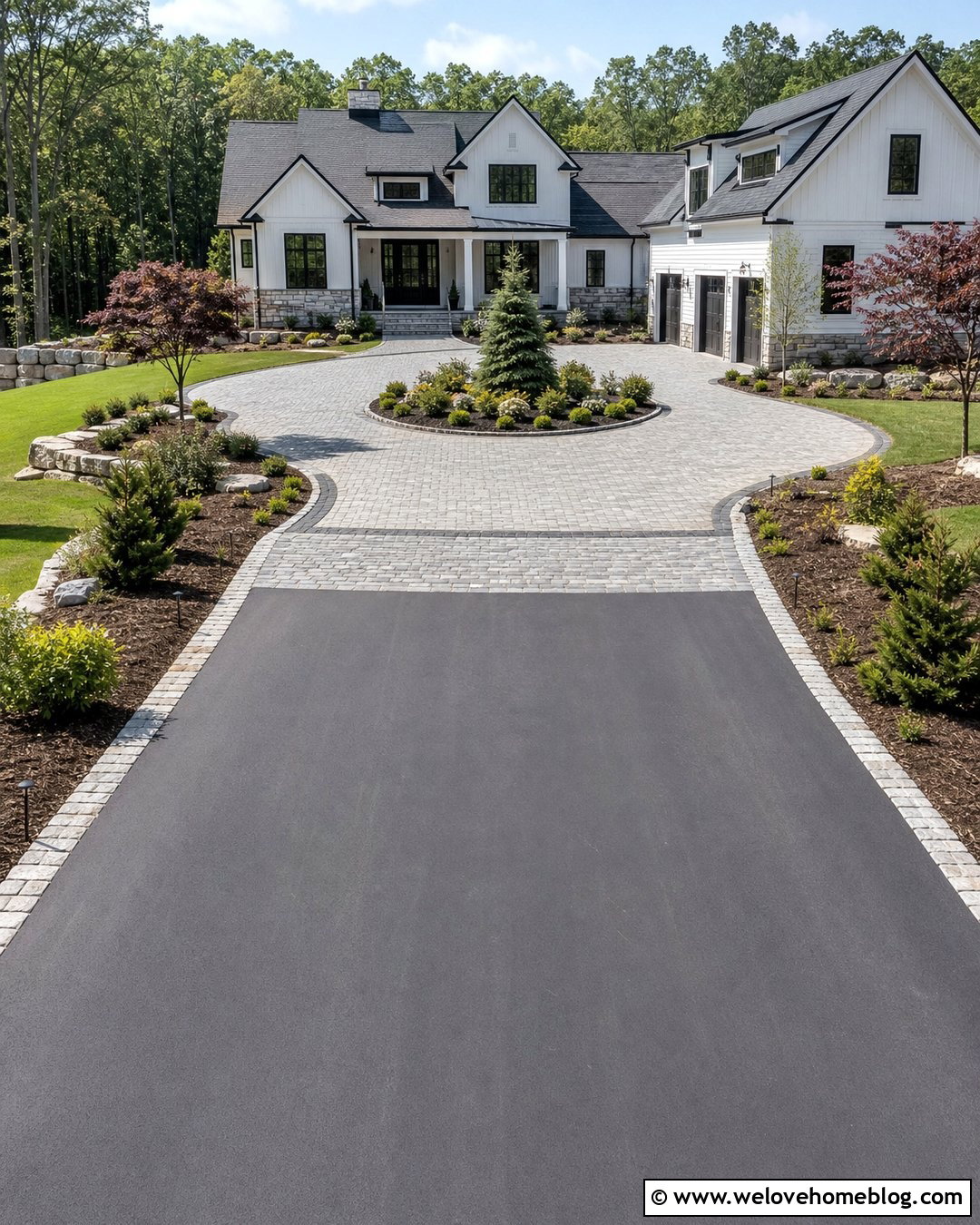
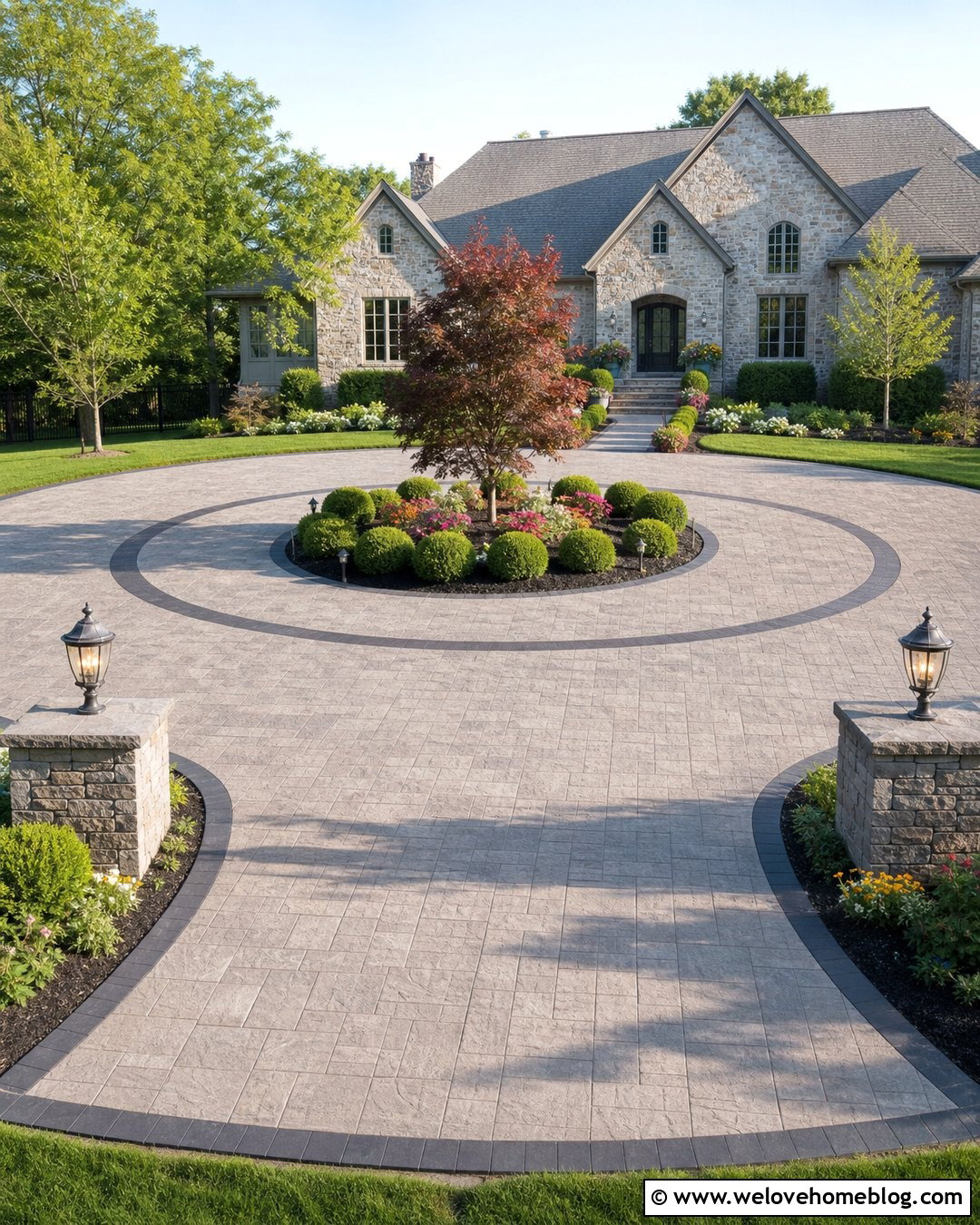
A mixed-material courtyard creates an impressive finish at the end of a long blacktop driveway. Keep asphalt on the main approach, then transition into a circular or rectangular paver court in front of the home. Use a wide paver band to make the material change look purposeful. A central tree island, fountain-free garden, or low evergreen bed can organize vehicle movement without blocking the facade. Match the pavers to the porch, walkway, and stonework on the house. This design concentrates decorative material in the most visible arrival area while preserving the smooth blacktop surface along the longer route. It works especially well for large traditional homes, modern farmhouses, and properties with detached or side-facing garages.
Conclusion:
The best blacktop driveway feels connected to the house, yard, and everyday movement across the property. Brick and stone borders add character, while concrete bands and metal edging create a cleaner modern finish. Curves, parking pads, circular layouts, and paver courtyards can improve the organization of larger spaces. Planting beds, trees, lighting, pillars, and gates then turn the practical route into a complete entrance. Before choosing decorative details, prioritize suitable grading, drainage, edge support, and a properly prepared base. Materials should also coordinate with the home’s facade, walkway, and surrounding landscape. Use these 30 Blacktop Driveway Ideas to create an approach that looks intentional, welcoming, and appropriate for your property.

Related posts:
Leave a Reply