
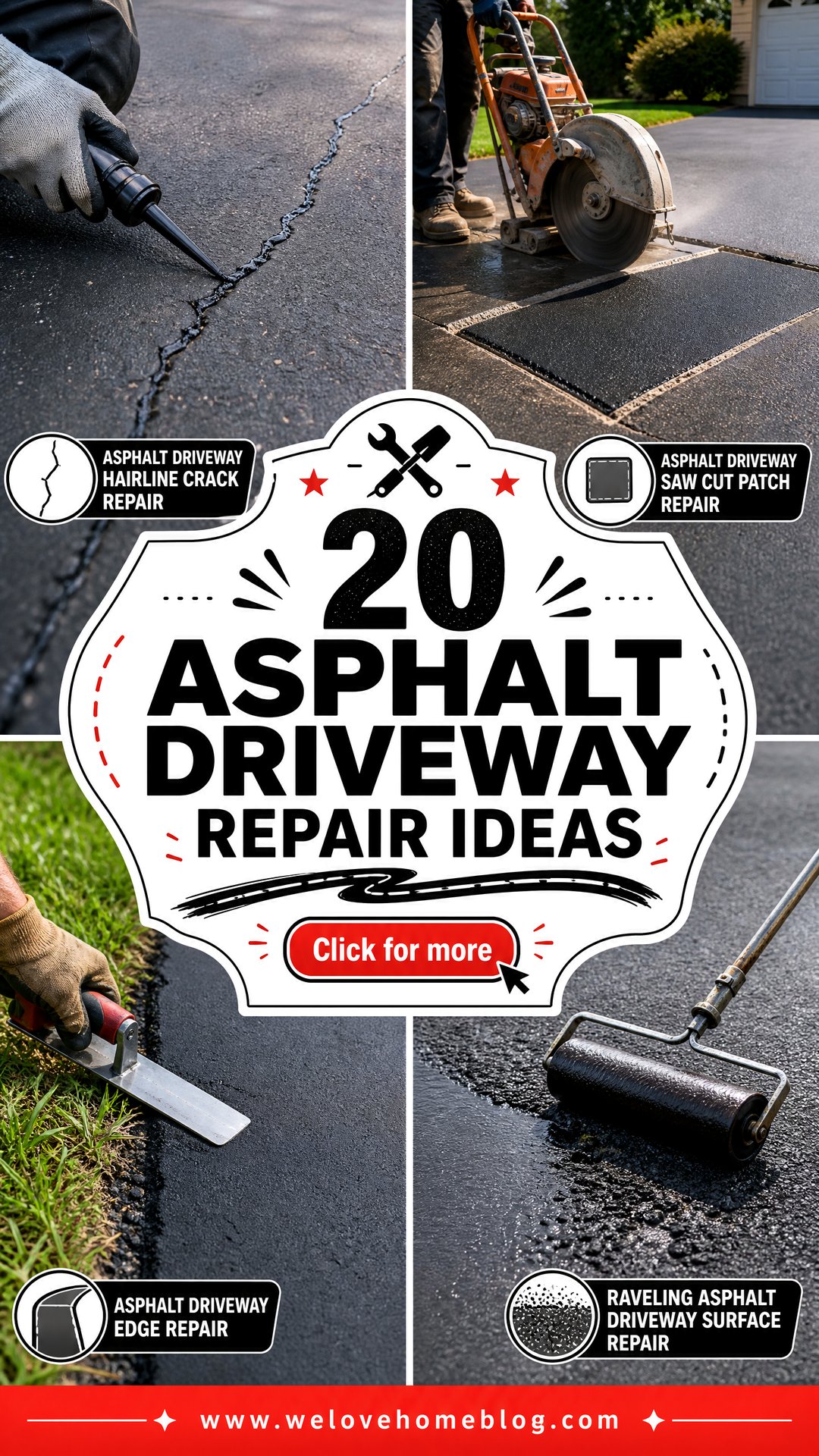
Cracks, potholes, crumbling edges, and faded patches can quickly make an asphalt driveway look neglected. Fortunately, the right repair can improve safety, protect the pavement, and restore curb appeal without always requiring complete replacement. These 20 Asphalt Driveway Repair Ideas cover practical fixes for small surface defects, damaged sections, drainage problems, weak borders, and worn finishes. Start by identifying why the damage occurred, since water, unstable base material, tree roots, and heavy loads often require more than a cosmetic patch. Clean preparation and firm compaction are also essential for lasting results. Whether you are planning a weekend project or comparing professional solutions, the following 20 Asphalt Driveway Repair Ideas will help you choose an approach that fits your driveway’s condition and your budget.
1. Asphalt Driveway Hairline Crack Repair
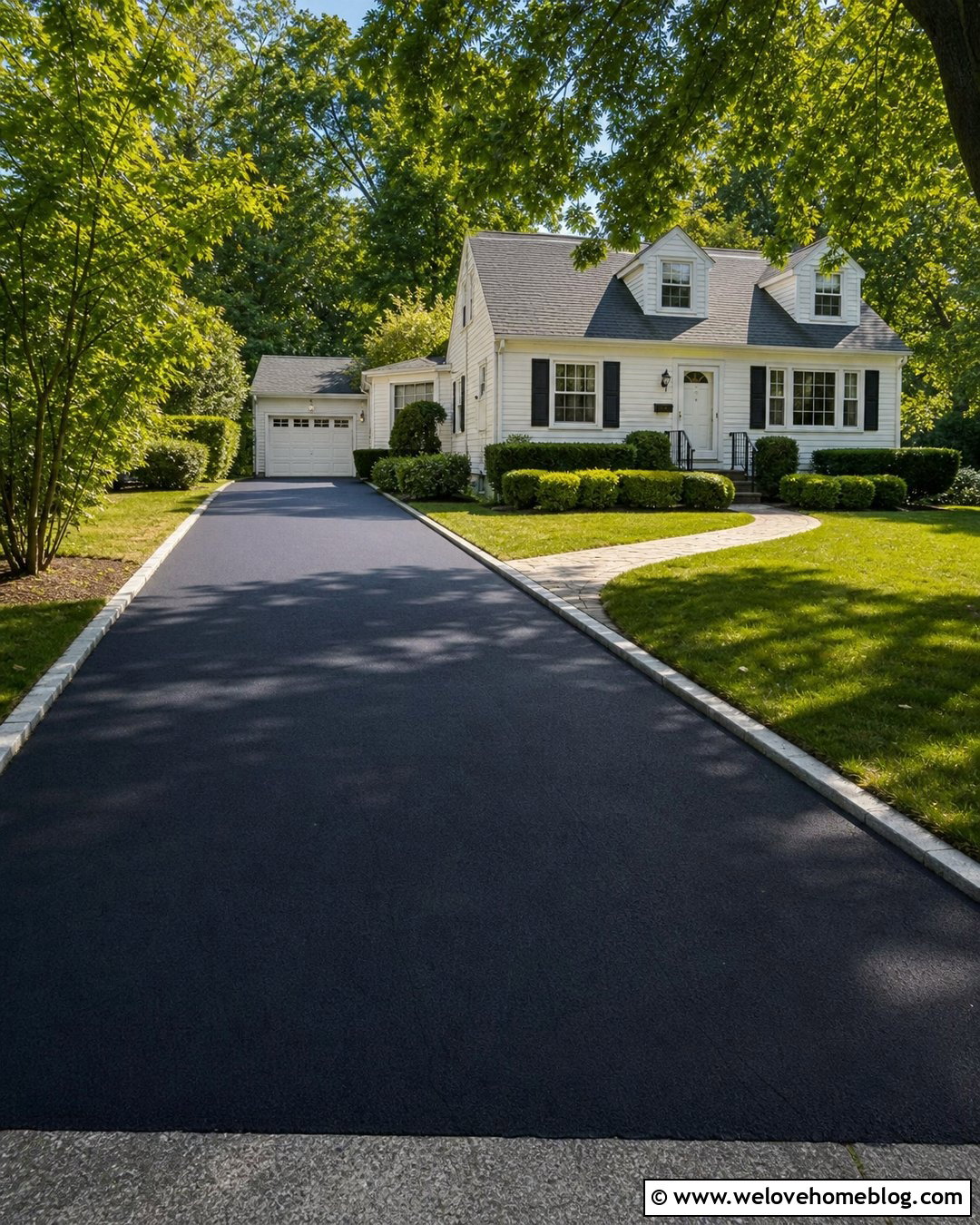
Thin cracks are easier to manage when you repair them before water reaches the pavement base. Begin by removing weeds, dirt, and loose asphalt with a narrow screwdriver, stiff wire brush, or compressed air. Apply a pourable or tubed asphalt crack filler made for the crack width, following the manufacturer’s temperature and curing requirements. Keep the material level with the surrounding pavement rather than leaving a raised bead. The completed look works especially well on a straight black asphalt driveway with clean lawn edges and a simple concrete walkway. Once the filler has cured, a compatible sealcoat can help create a more uniform appearance. Regular spring and fall inspections will make new hairline cracks easier to catch before they spread. ()
2. Asphalt Driveway Wide Crack Repair
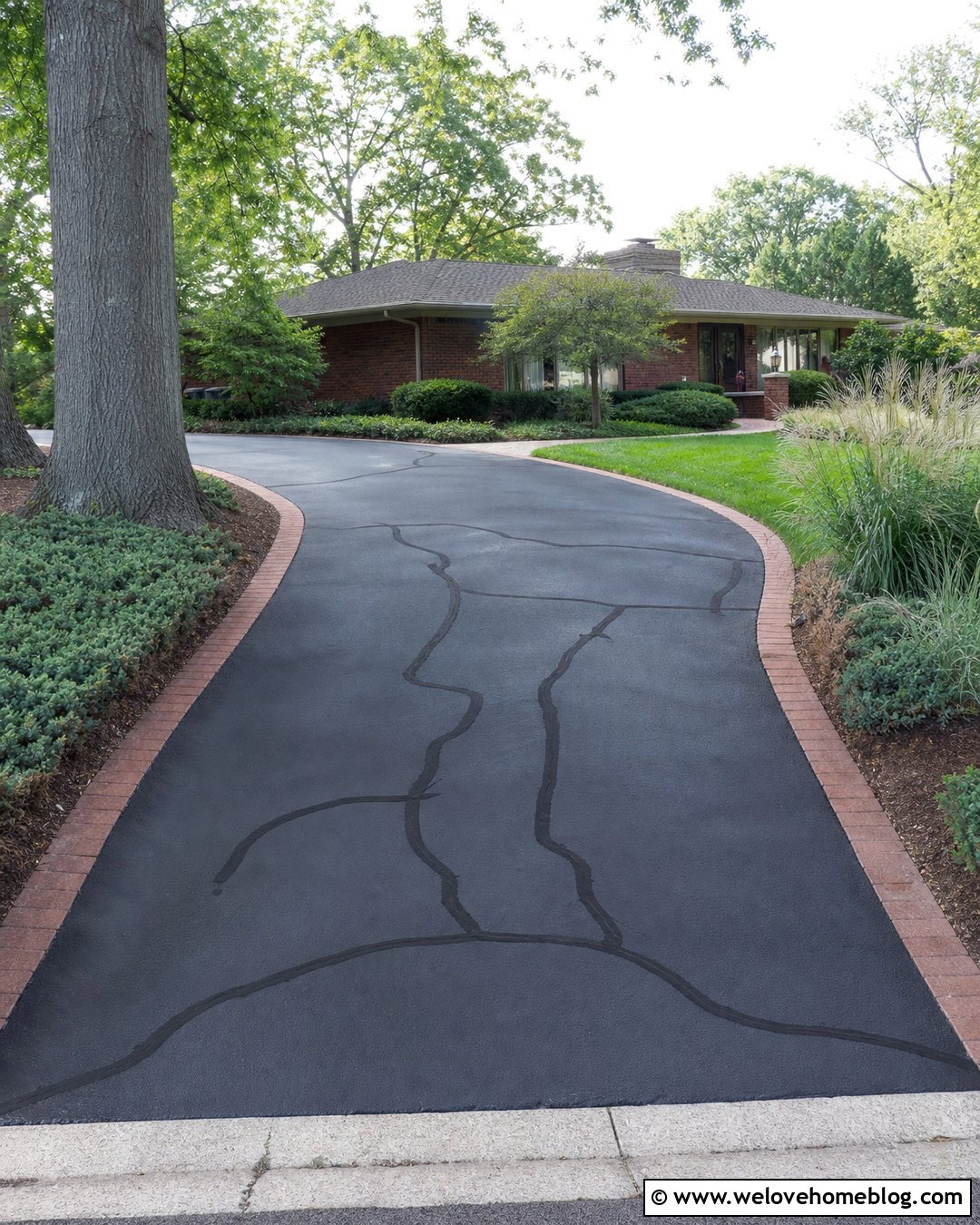
A wide, stable crack needs more support than a thin layer of liquid filler. Clean the opening thoroughly and remove any weak material along its sides. Depending on the product instructions, a deep crack may need an approved backer material before rubberized asphalt filler is applied near the surface. Flexible filler is useful where seasonal expansion and contraction are expected, but it cannot correct a moving or failed base. For a polished result, repair all similar cracks across the driveway and finish them flush instead of creating scattered, bulky patches. A curved asphalt driveway with a brick border and low evergreen landscaping can disguise repaired lines while keeping the overall entrance attractive. If the crack continues widening or one side sinks, arrange a professional base evaluation rather than repeatedly covering the symptom.
3. Asphalt Driveway Hot Rubber Crack Sealing
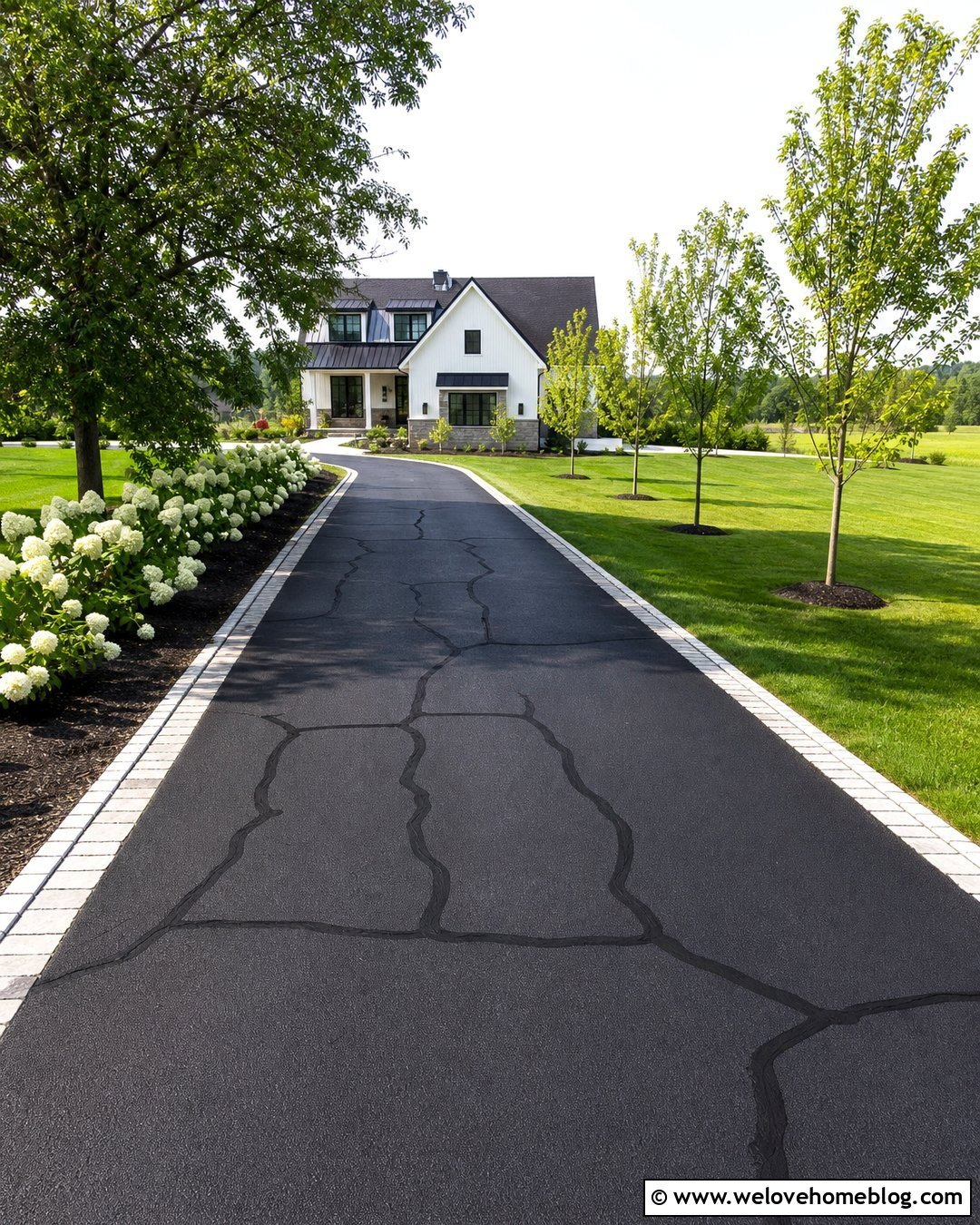
Hot rubber crack sealing offers a stronger approach for numerous working cracks across an otherwise stable driveway. A contractor cleans and dries each crack, prepares it when necessary, and installs heated rubberized sealant that can flex with pavement movement. This technique is especially useful on long asphalt driveways exposed to freeze-thaw cycles and regular vehicle traffic. The repair lines may remain visible, so pairing the work with a later sealcoat can create a cleaner charcoal-black finish. Frame the restored surface with cobblestone edging, trimmed grass, and simple planting beds to make the complete driveway look intentional. Heated products require specialized equipment and careful handling, making professional installation the safer choice for many homeowners. Crack sealing protects openings, but interconnected alligator cracking usually calls for structural repair instead.
4. Asphalt Driveway Cold Patch Pothole Repair
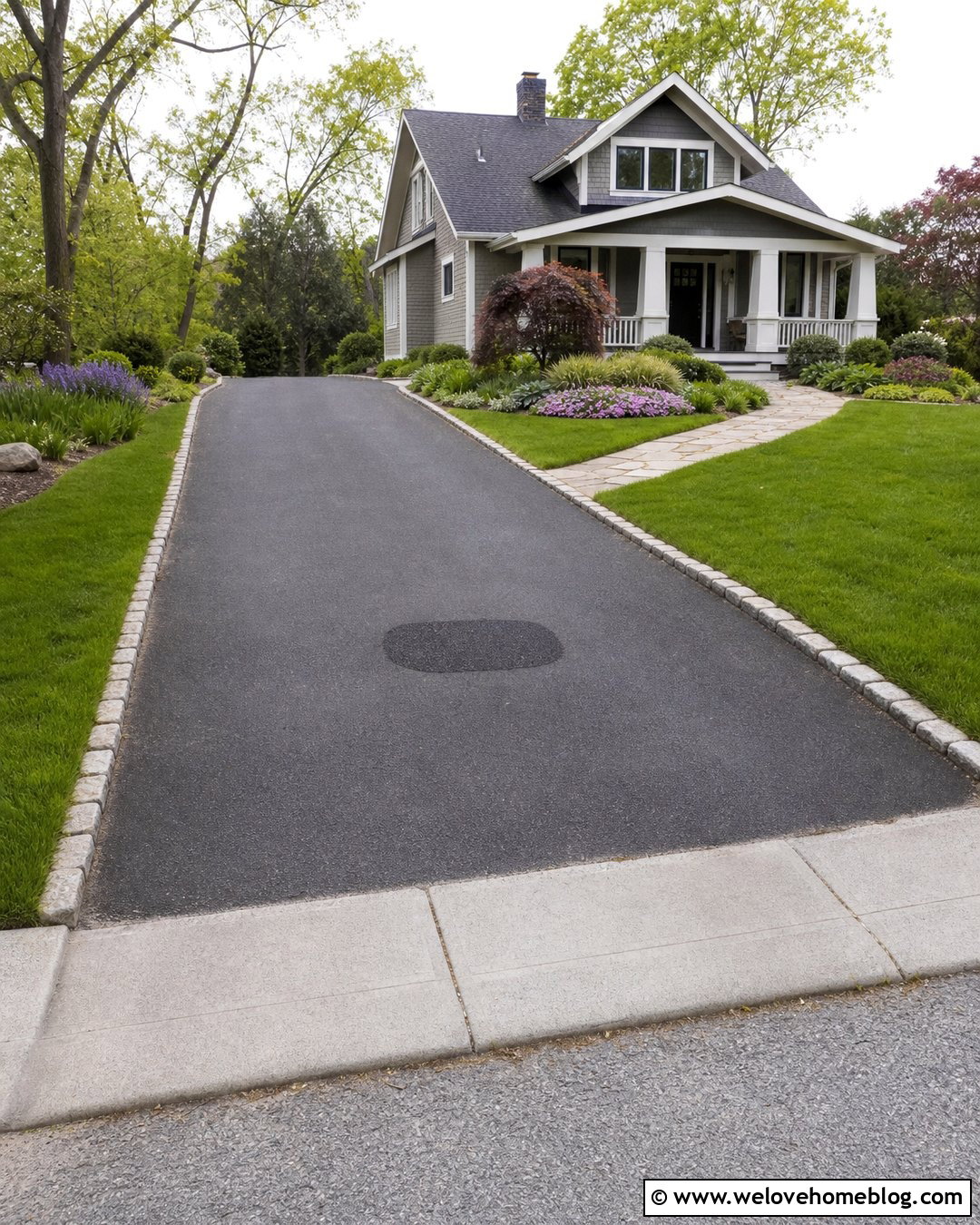
A small, clearly defined pothole can often be repaired with bagged cold patch asphalt. Remove broken pieces and soft material until the hole reaches firm pavement and base. Square the sides when practical, sweep away debris, and follow the patch manufacturer’s preparation directions. Add the material in shallow lifts, compacting every layer firmly with a hand tamper until the patch is dense and level. Layered compaction is more dependable than filling the entire hole at once. () A straight asphalt driveway with a repaired center patch, stone edging, and balanced foundation shrubs will look orderly once the surrounding surface is cleaned. Keep traffic off the repair for the specified curing period, and check nearby drainage so standing water does not recreate the pothole.
5. Asphalt Driveway Saw Cut Patch Repair
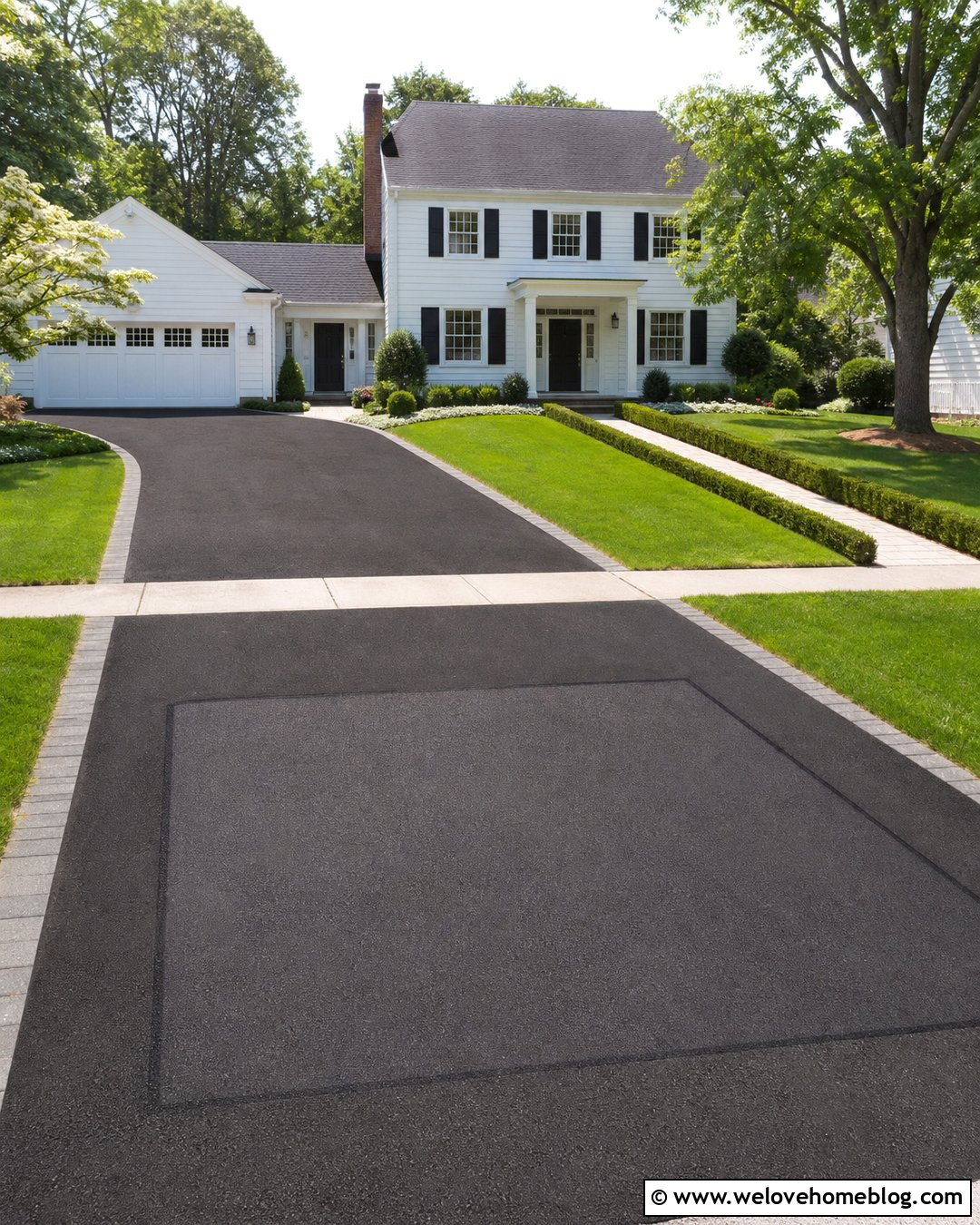
When a damaged area has ragged edges or several connected cracks, a square saw-cut patch can produce a cleaner and more durable repair. The failed asphalt is cut beyond the visible damage and removed down to stable material. Any wet, loose, or contaminated base should also be excavated and rebuilt before new asphalt is installed. Tack material may be applied to the vertical edges, followed by properly placed and compacted asphalt. The crisp rectangular patch looks especially neat on a wide suburban driveway with a defined paver border and symmetrical lawn. Joint edges should be sealed where required to reduce water entry. Pavement saws, hot asphalt, underground utilities, and compaction equipment create serious project considerations, so larger cutouts are usually better handled by an experienced paving contractor than as a casual DIY repair.
6. Asphalt Driveway Alligator Crack Repair
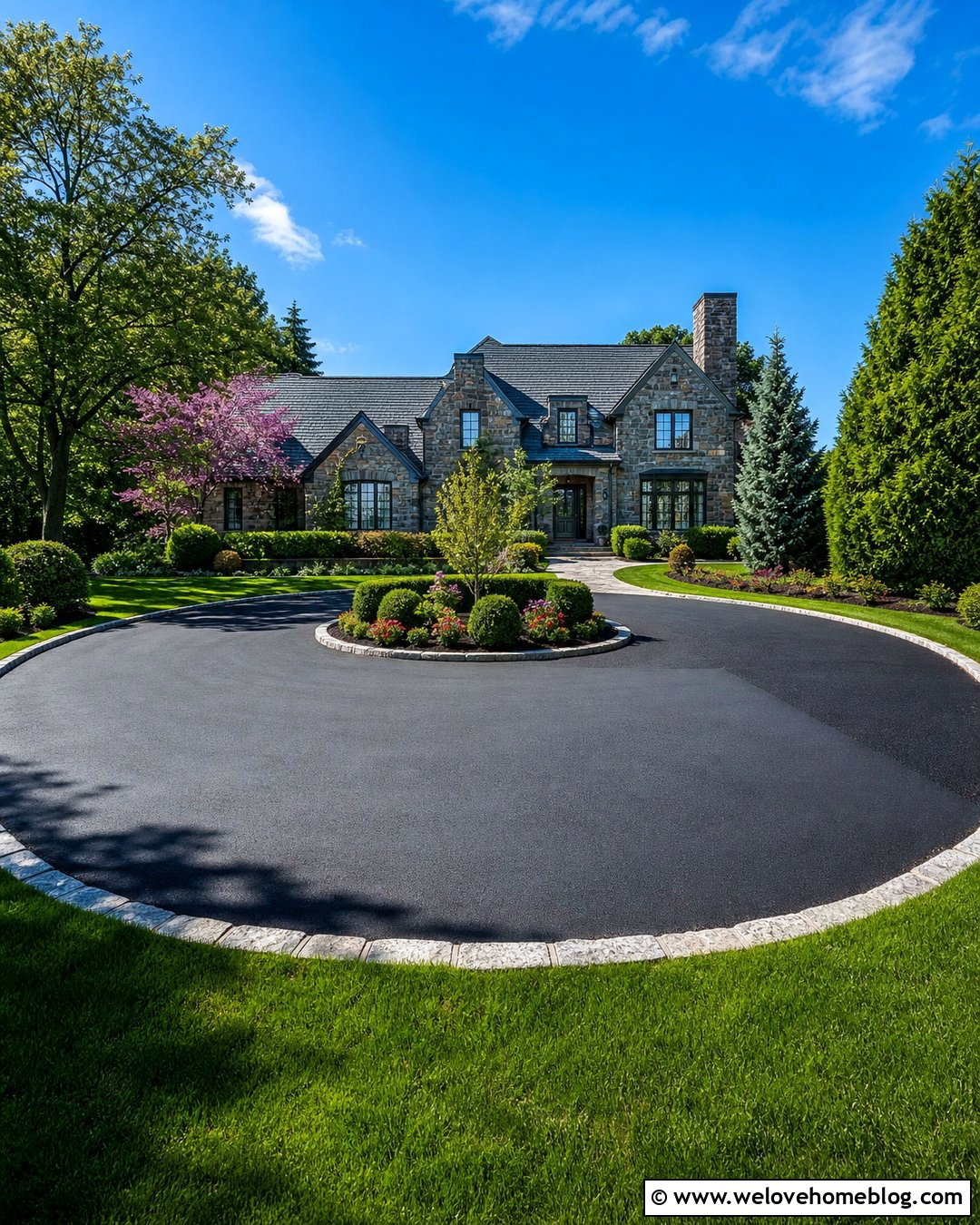
A web of small interconnected cracks often indicates failure below the visible surface. Filling every line may improve appearance briefly, but it rarely stabilizes weak or water-damaged base material. A more complete repair removes the cracked asphalt section, excavates unsuitable material, restores the aggregate base, and installs compacted asphalt that ties into sound pavement. This approach creates one purposeful patch instead of dozens of dark filler lines. On a circular black asphalt driveway, the repaired section can be visually integrated with a central landscape island, granite curbing, and an evenly maintained surface. Before rebuilding, look for roof runoff, poorly directed sprinklers, or low spots that may have contributed to the damage. Extensive cracking across most of the driveway may make resurfacing or replacement more economical than multiple isolated patches.
7. Sunken Asphalt Driveway Base Repair
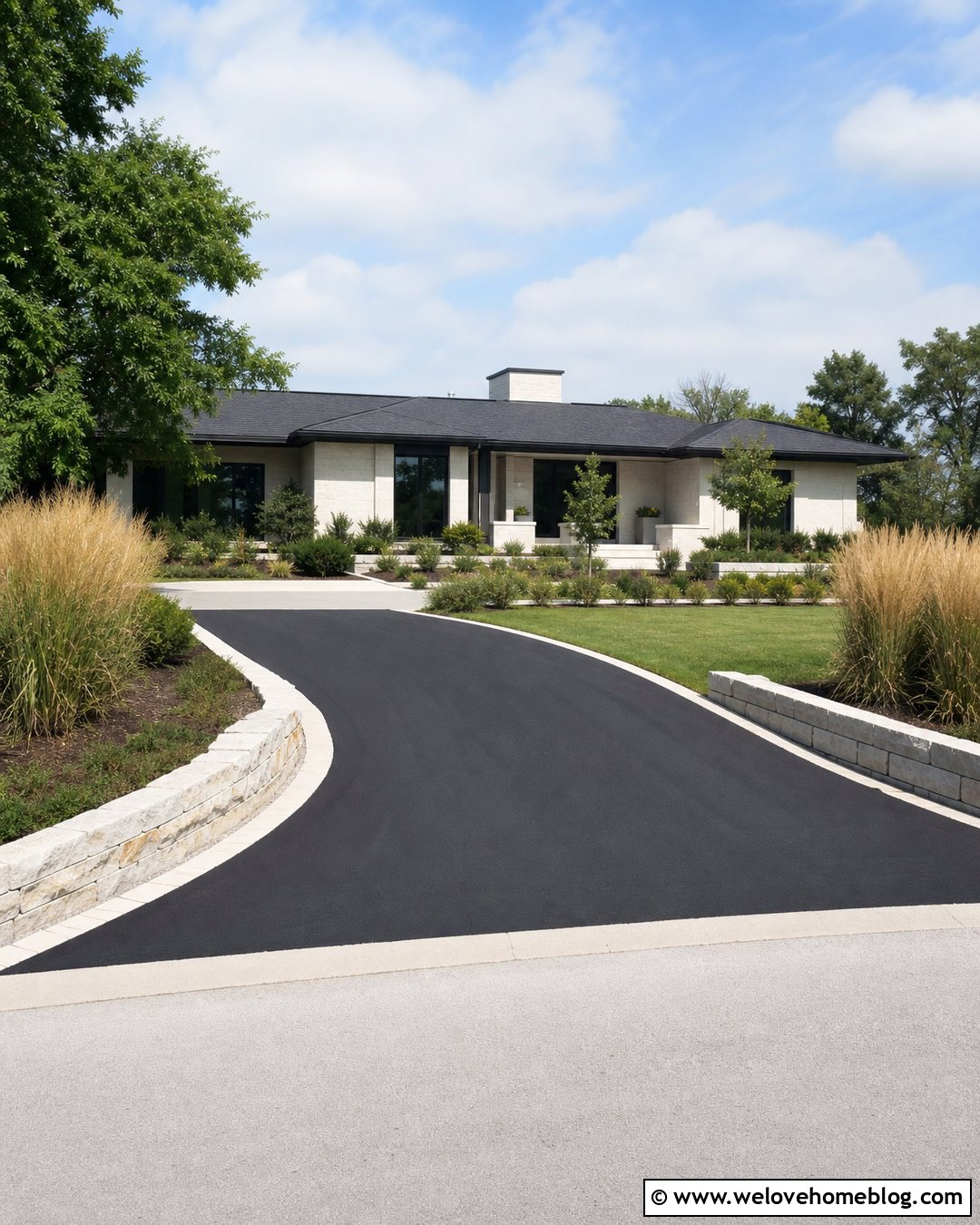
A sunken area can collect water, scrape low vehicles, and eventually break apart under repeated loads. The lasting solution depends on why the pavement settled. Poorly compacted fill, washed-out aggregate, buried organic material, or utility trench settlement may require removing the asphalt and rebuilding the base. After correcting the cause, the repaired section should be compacted and graded to maintain positive drainage without creating an abrupt hump. A gently curved asphalt driveway with stone curbing and layered ornamental grasses can make the corrected grade feel natural within the yard. Surface patching alone is unlikely to last when the ground underneath continues moving. Mark underground utilities before excavation and ask a contractor to inspect major depressions, especially when settlement is close to the garage, foundation, retaining wall, or buried drainage system.
8. Asphalt Driveway Low Spot Repair
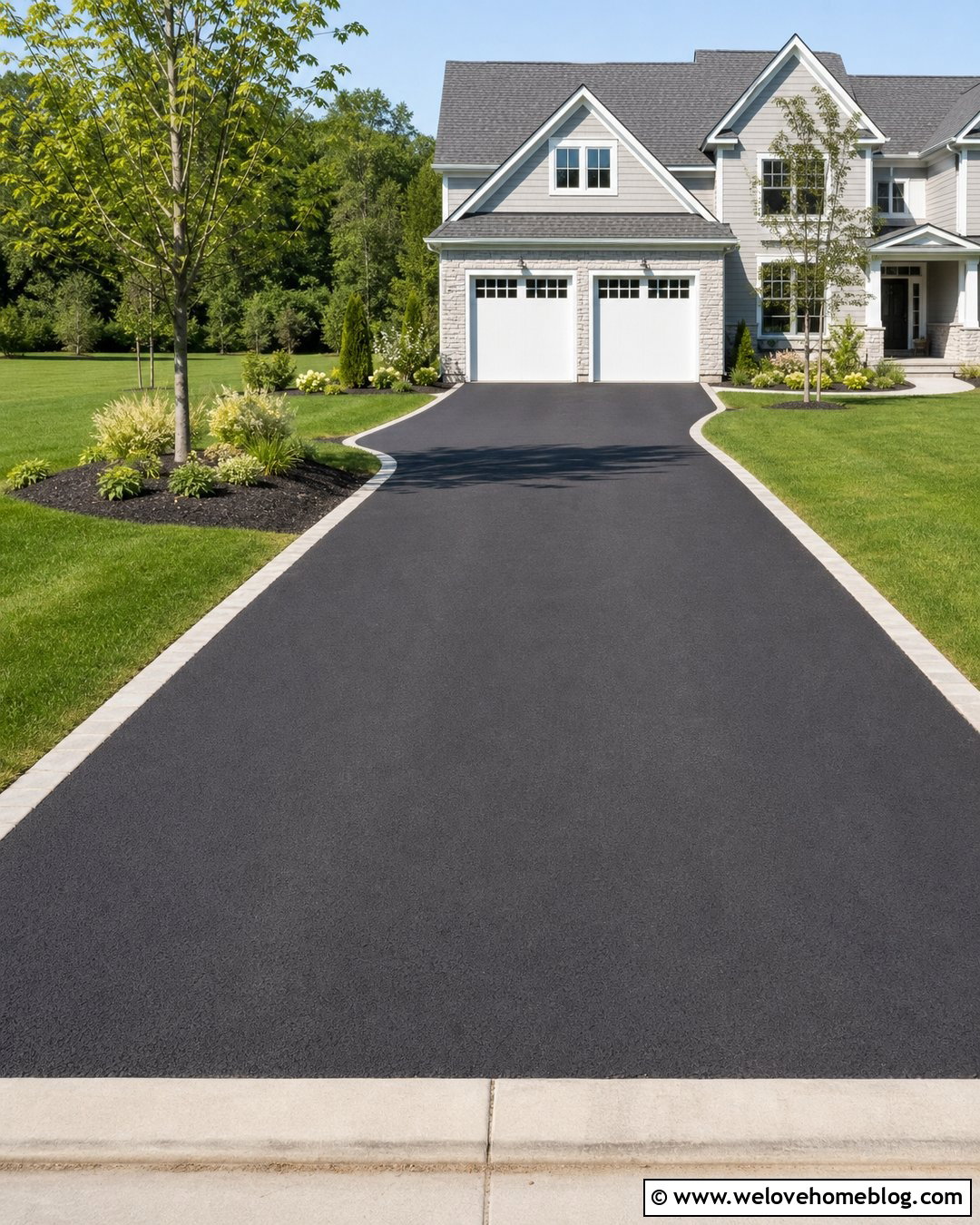
Does a shallow puddle remain long after the rest of the driveway dries? A localized low spot may be corrected with an asphalt-compatible leveling or patching material when the surrounding pavement and base are still sound. Clean the depression, remove loose aggregate, and feather the repair according to the product specifications. The finished surface must guide water toward a safe outlet without redirecting it into the garage, sidewalk, or neighboring property. A broad asphalt driveway with a subtle crown, concrete edging, and open lawn makes proper drainage easy to see and maintain. Deeper depressions or recurring puddles usually need a cutout and base repair rather than a thin surface application. Test the repaired grade with water only after the material has cured, and avoid leaving fragile edges where tires regularly turn.
9. Asphalt Driveway Edge Repair
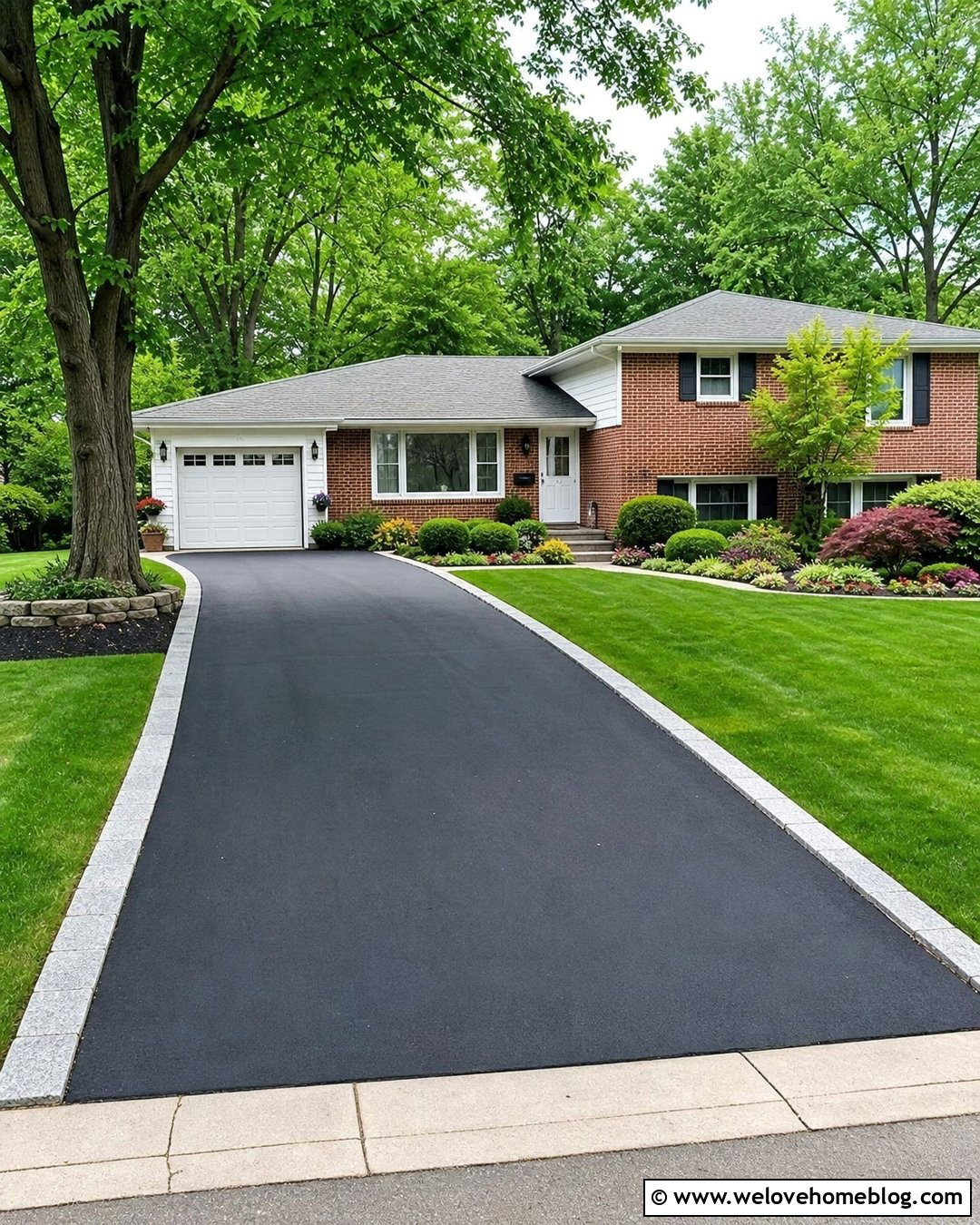
Crumbling edges commonly develop where tires leave the pavement or the shoulder provides little support. Remove unstable asphalt, rebuild the underlying edge with compacted aggregate, and install patch material against a temporary form when appropriate. The repaired edge should connect firmly to sound pavement without creating a steep drop beside it. Adding a flush cobblestone, concrete paver, or granite border can provide a clear visual guide for drivers and strengthen the complete driveway design. A black asphalt driveway bordered by gray stone, lawn, and low shrubs creates a finished appearance while reducing accidental wheel damage. Drainage must still move away from the pavement, so avoid building soil or mulch higher than the asphalt. If the edge continues breaking, the driveway may be too narrow or its base may need wider structural support. ()
10. Asphalt Driveway Apron Repair
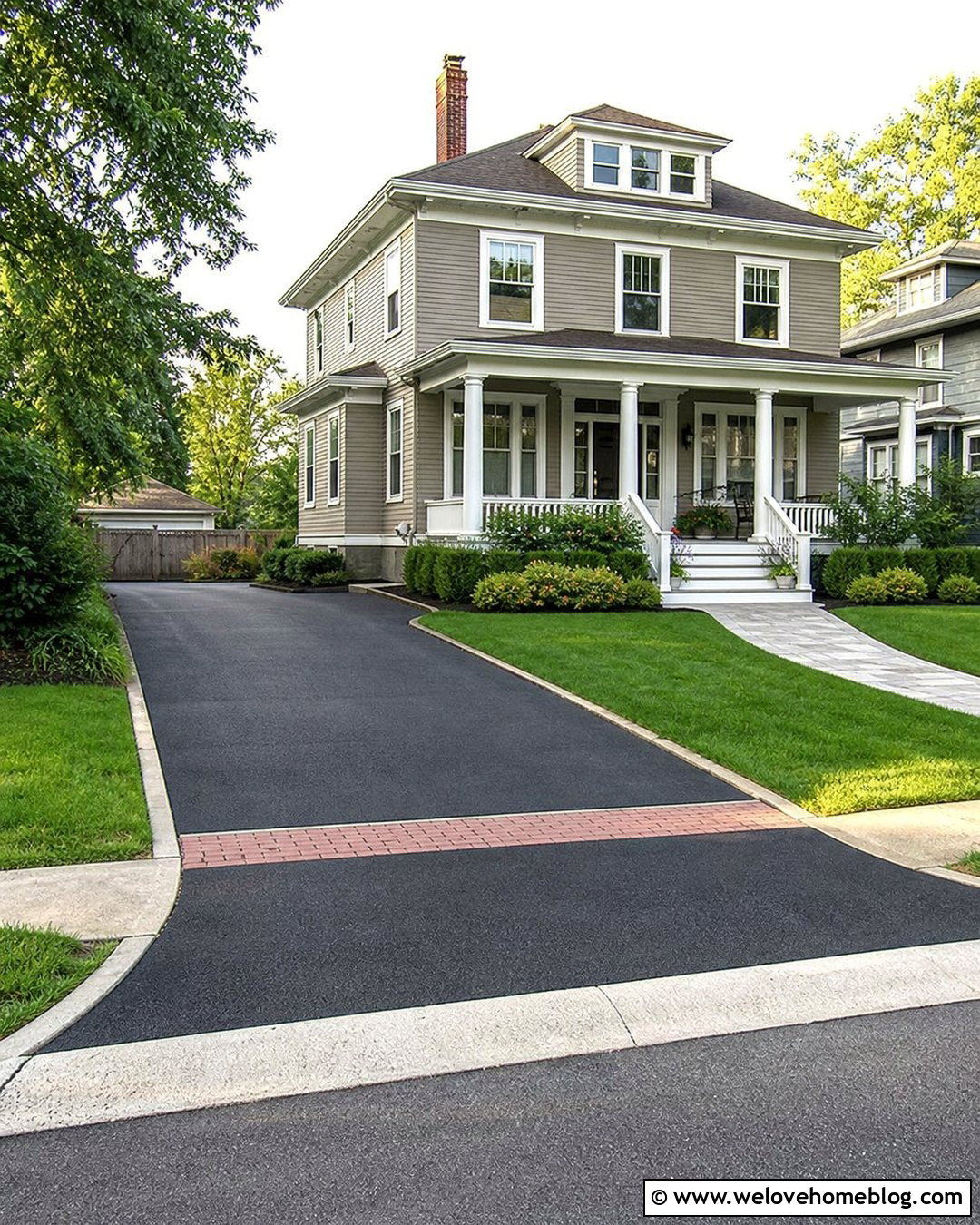
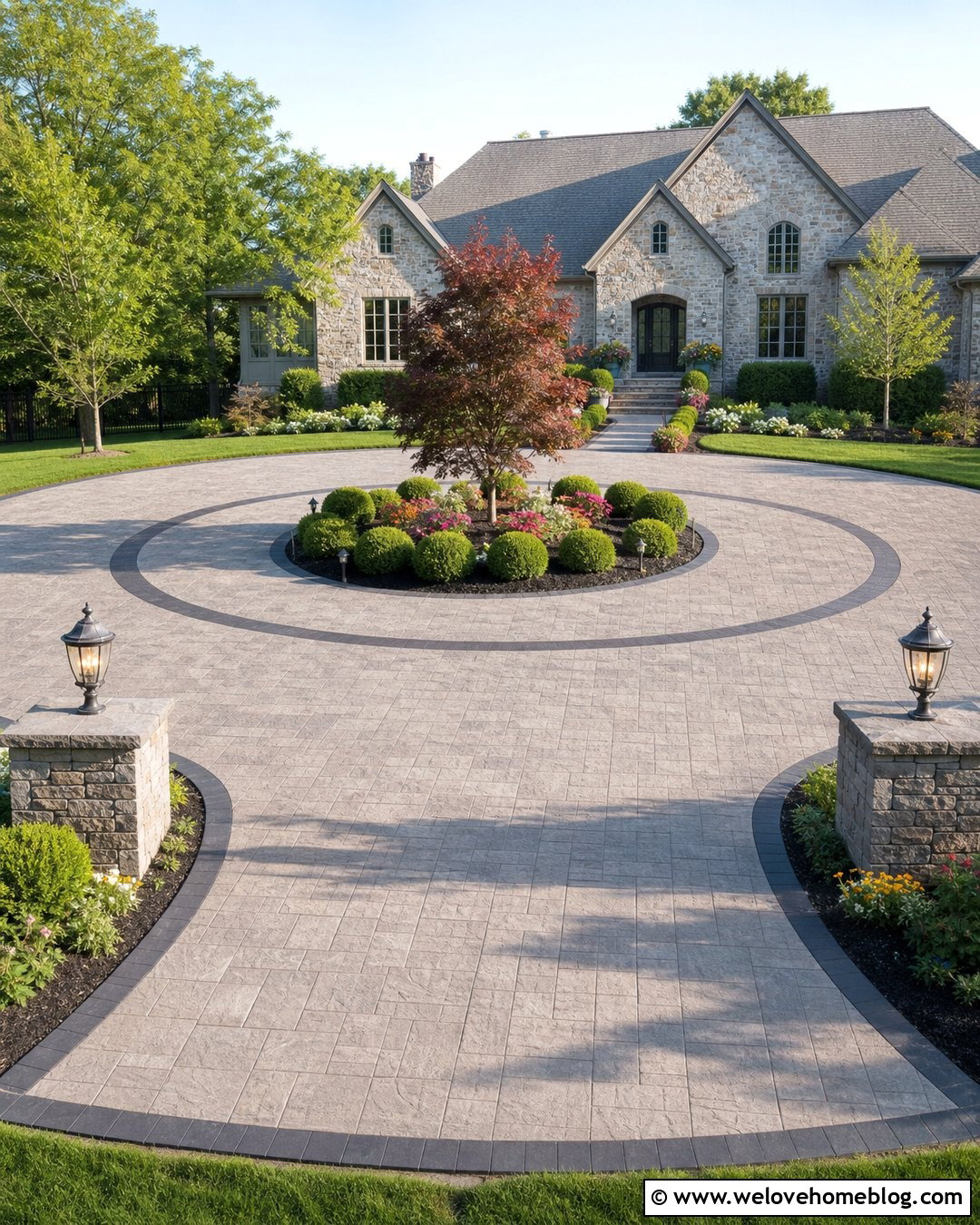
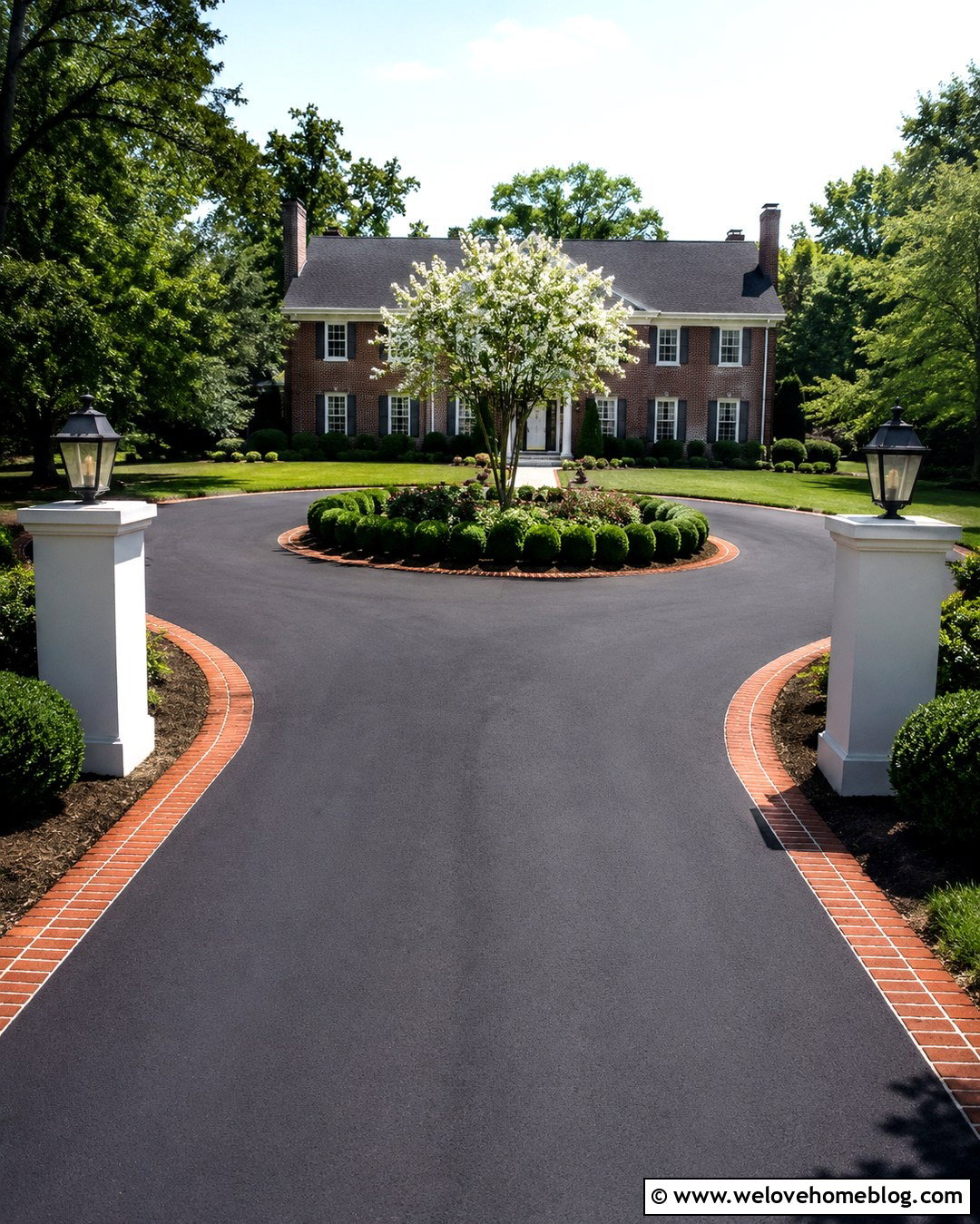
The driveway apron receives frequent turning forces and often develops cracks where private asphalt meets the street. A successful repair starts by checking local rules because the apron may fall within a public right-of-way or require an approved permit and material. Loose asphalt should be removed, the base restored, and the transition rebuilt at a smooth height that will not catch snowplows or scrape vehicles. For better curb appeal, combine a repaired black asphalt apron with a subtle brick ribbon, flared entrance, and low planting beds that preserve clear visibility. Seal the joint between old and new materials when specified, but do not block normal runoff along the street. Repeated apron failure may point to drainage, heavy service vehicles, inadequate thickness, or movement between separately built pavement sections.
11. Asphalt Driveway Garage Threshold Repair
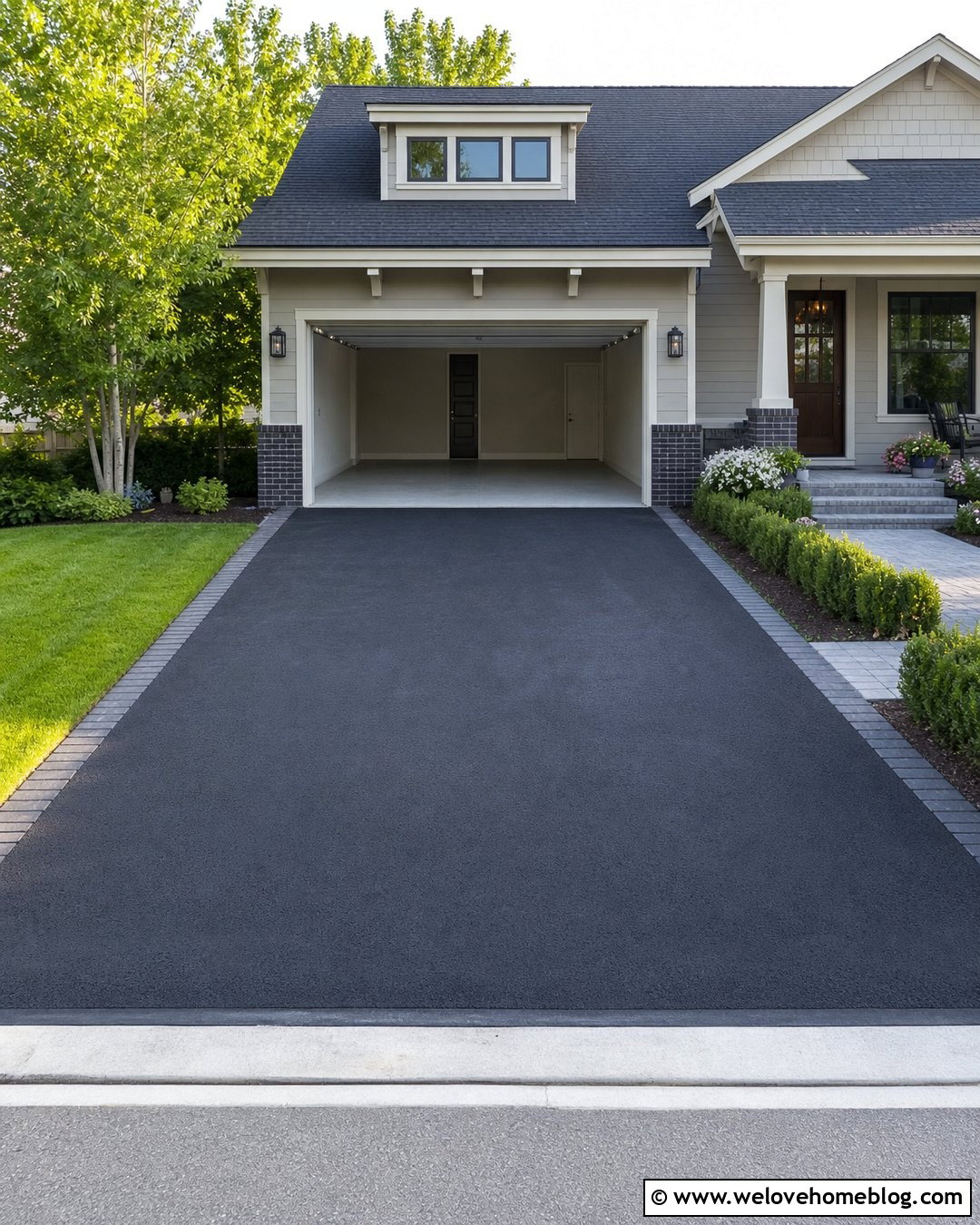
A gap or depression where asphalt meets the garage floor can channel water toward the building and create a rough vehicle transition. Remove weeds, sediment, and loose material before deciding whether the joint needs flexible sealant, asphalt patching, or a rebuilt transition strip. Keep the finished repair slightly below the garage slab and graded away from the door. Never create a raised dam that traps water against wood framing or allows runoff to enter the garage. A straight black asphalt driveway with a clean threshold repair, light concrete garage floor, brick edging, and foundation plantings creates a tidy, coordinated entrance. Movement at this joint is common because concrete and asphalt behave differently. Choose a compatible flexible product for narrow gaps, while significant settlement or broken pavement should be cut out and structurally repaired.
12. Asphalt And Concrete Driveway Joint Repair
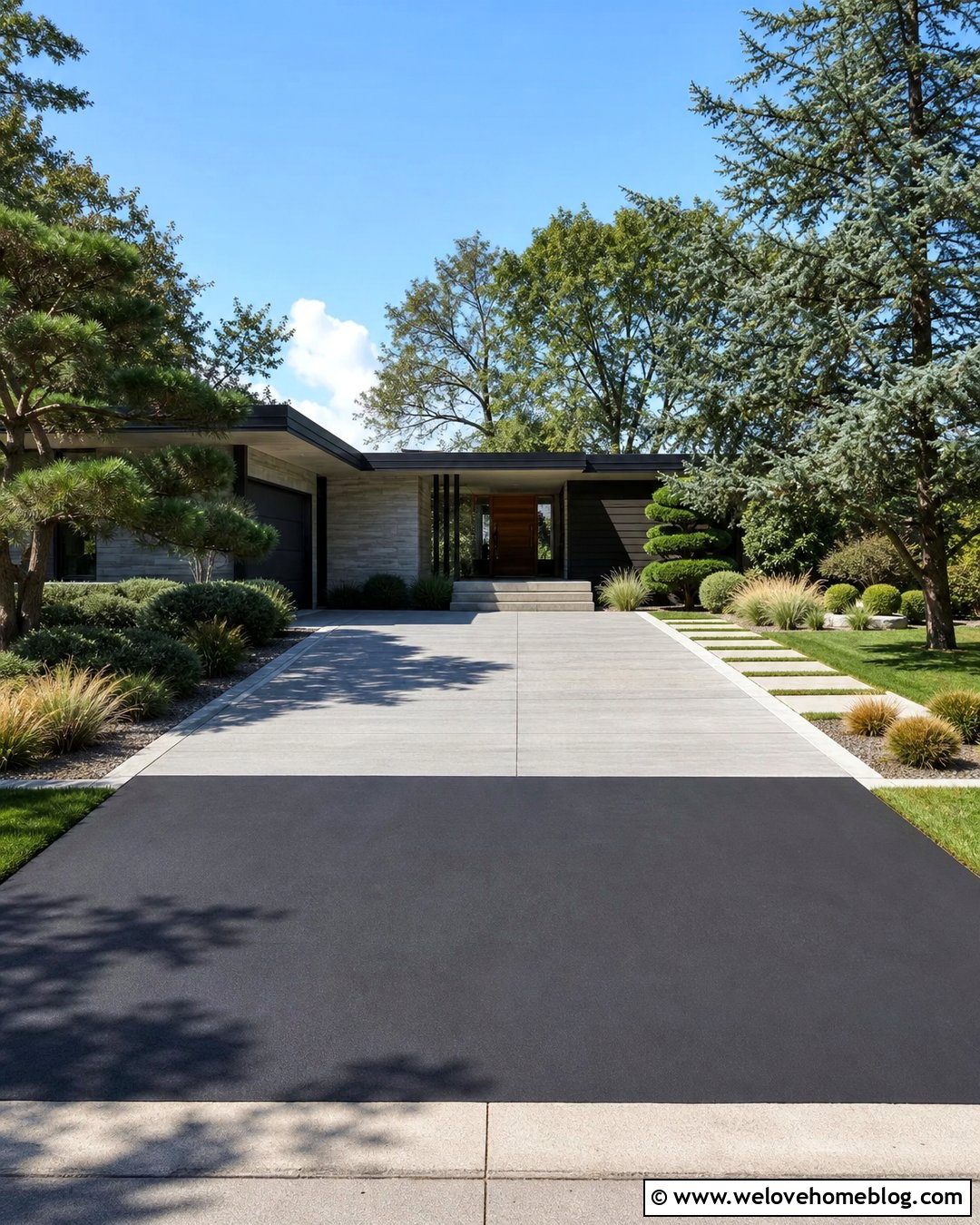
Where asphalt meets a concrete sidewalk, parking pad, or decorative apron, the joint needs enough flexibility to accommodate movement between the two surfaces. Clear out plants, old filler, and loose aggregate without damaging the concrete edge. A suitable asphalt-compatible joint sealant can help limit water infiltration in a narrow, stable opening. Wider gaps may require backer material or a properly rebuilt asphalt strip rather than excessive filler. For a cohesive look, use a dark asphalt driveway that transitions into a light broom-finished concrete apron with a straight, carefully sealed joint. Repeat the concrete tone in the walkway and landscape edging. If one surface has shifted vertically, sealing alone will not remove the trip hazard. Correct settlement or base failure first, then finish the transition with the appropriate joint treatment.
13. Asphalt Driveway Drainage Channel Repair
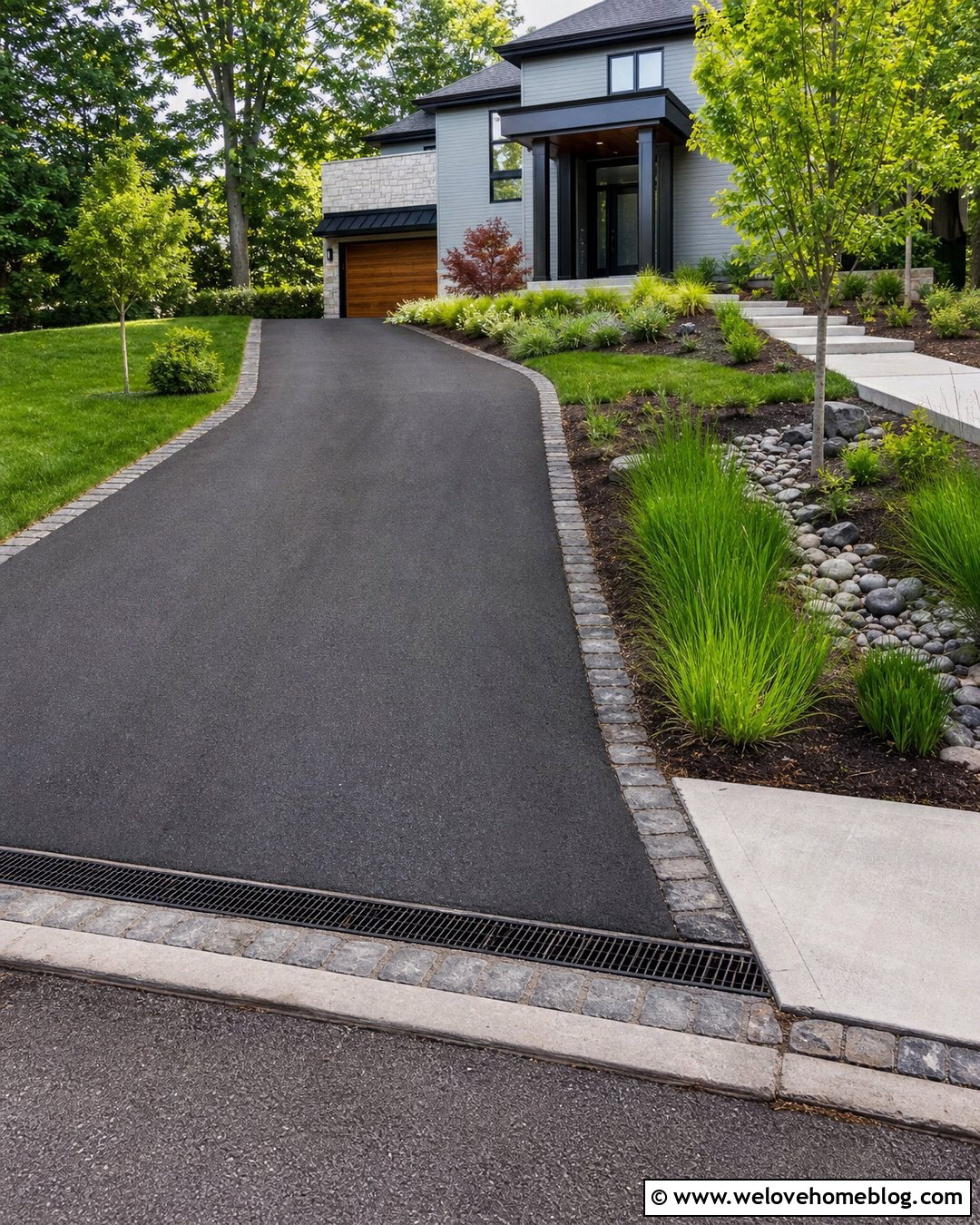
Water crossing an asphalt driveway can erode edges, weaken the base, and reopen patched areas. A channel drain may help when runoff must pass in front of a garage or across a sloped driveway, but it needs proper sizing and a legal discharge location. Damaged asphalt around the channel should be removed, the drain reset on a stable foundation, and the surrounding pavement rebuilt with firmly compacted edges. The grate should sit at the correct elevation so water enters without creating a sharp tire impact. On a sloped asphalt driveway, a dark linear grate can blend with granite borders, rain-garden planting, and a clear walkway. Keep leaves and sediment out of the channel throughout the year. Complex drainage work should be planned professionally to avoid sending water toward foundations, sidewalks, streets, or neighboring lots.
14. Tree Root Asphalt Driveway Repair
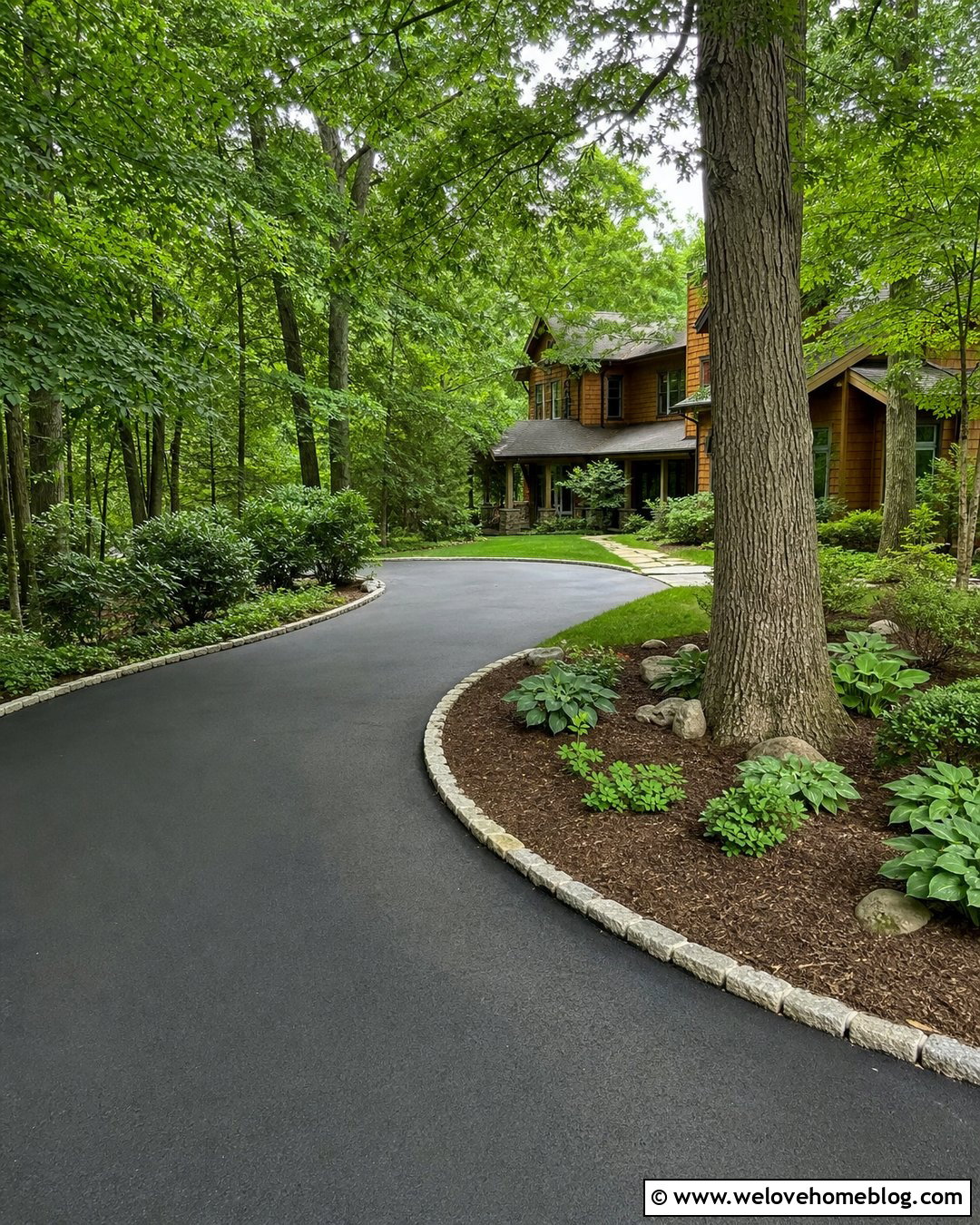
Raised asphalt near a mature tree requires a solution that protects both the driveway and the tree. Cutting major roots without professional guidance can destabilize or seriously damage the tree, while simply patching over the hump leaves the underlying pressure in place. Ask a qualified arborist and paving contractor to evaluate whether the driveway can be rerouted, narrowed, locally rebuilt, or replaced with a more flexible adjacent transition. A curved asphalt driveway bending around a mature oak can look natural with a generous mulched bed, stone edging, and shade-tolerant plants. Keep added soil and pavement away from the trunk flare. Once an approved root-management plan is established, remove failed asphalt and rebuild the affected area with proper base support. Future inspections can catch lifting before it becomes a major trip or drainage problem.
15. Oil Damaged Asphalt Driveway Repair
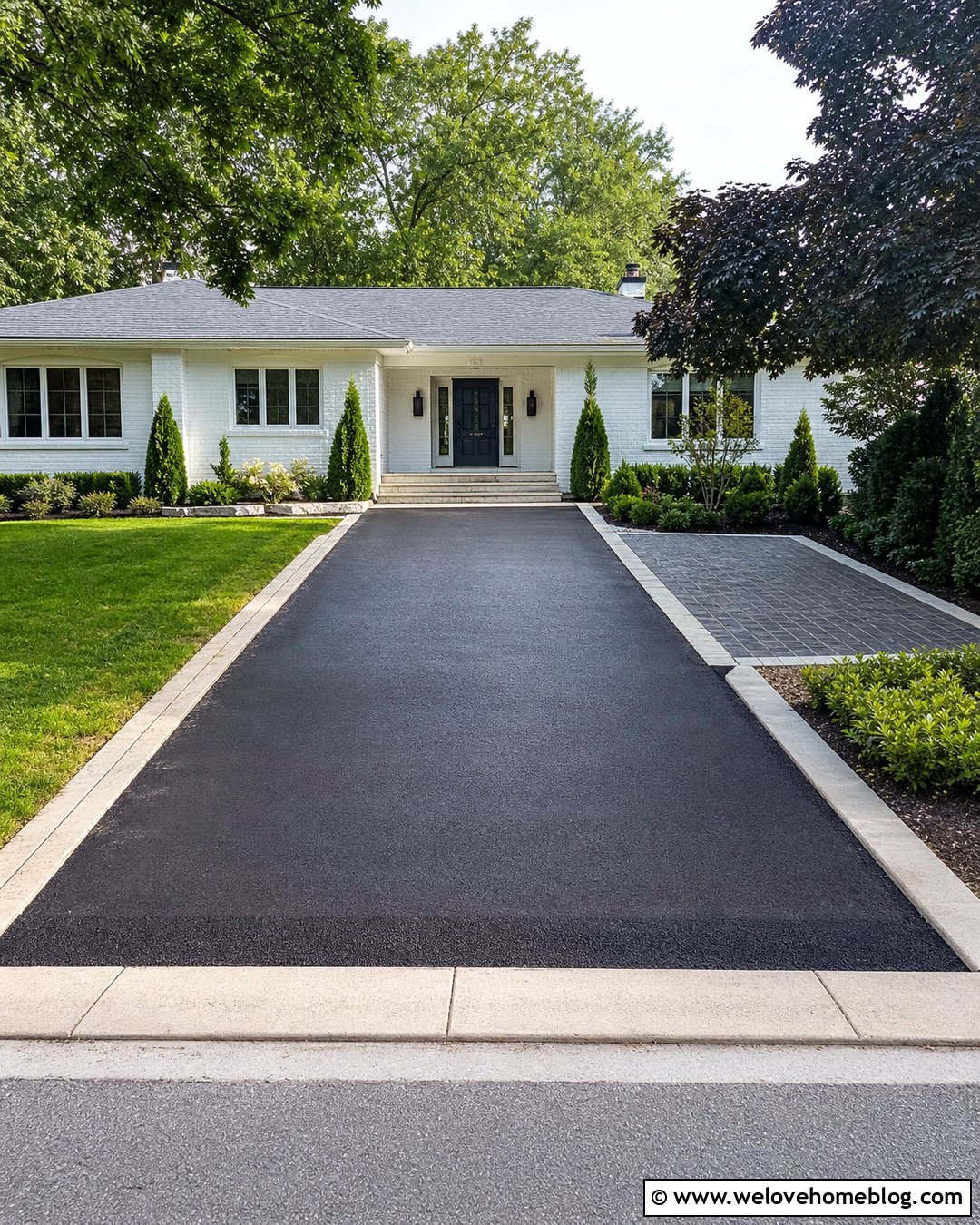
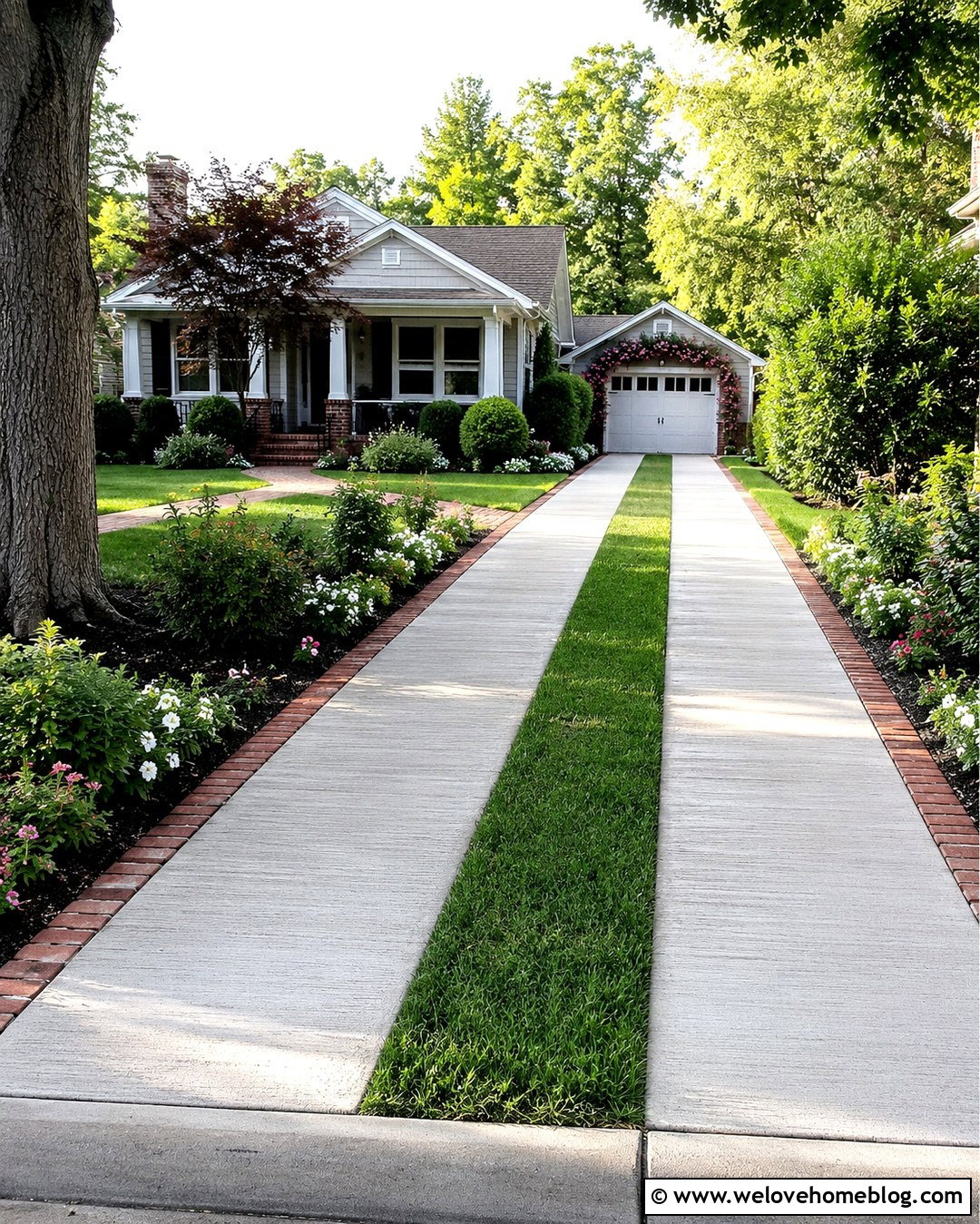
Fresh vehicle fluids should be absorbed and cleaned promptly because heavily contaminated asphalt may soften or lose surface material. Begin with an asphalt-safe cleaner and follow local rules for collecting oily residue instead of rinsing it into a storm drain. If the surface remains firm, cleaning and a compatible spot treatment may be enough before later sealing. Soft, crumbling, or deeply stained pavement should be cut out until sound asphalt is reached, then replaced with a compacted patch. The finished repair can blend into a straight black asphalt driveway framed by pale concrete edging, neat lawn, and a covered side parking area. Fix the vehicle leak before completing the project. Avoid applying sealcoat directly over greasy pavement, since poor adhesion can leave a slippery, blotchy section that fails prematurely.
16. Raveling Asphalt Driveway Surface Repair
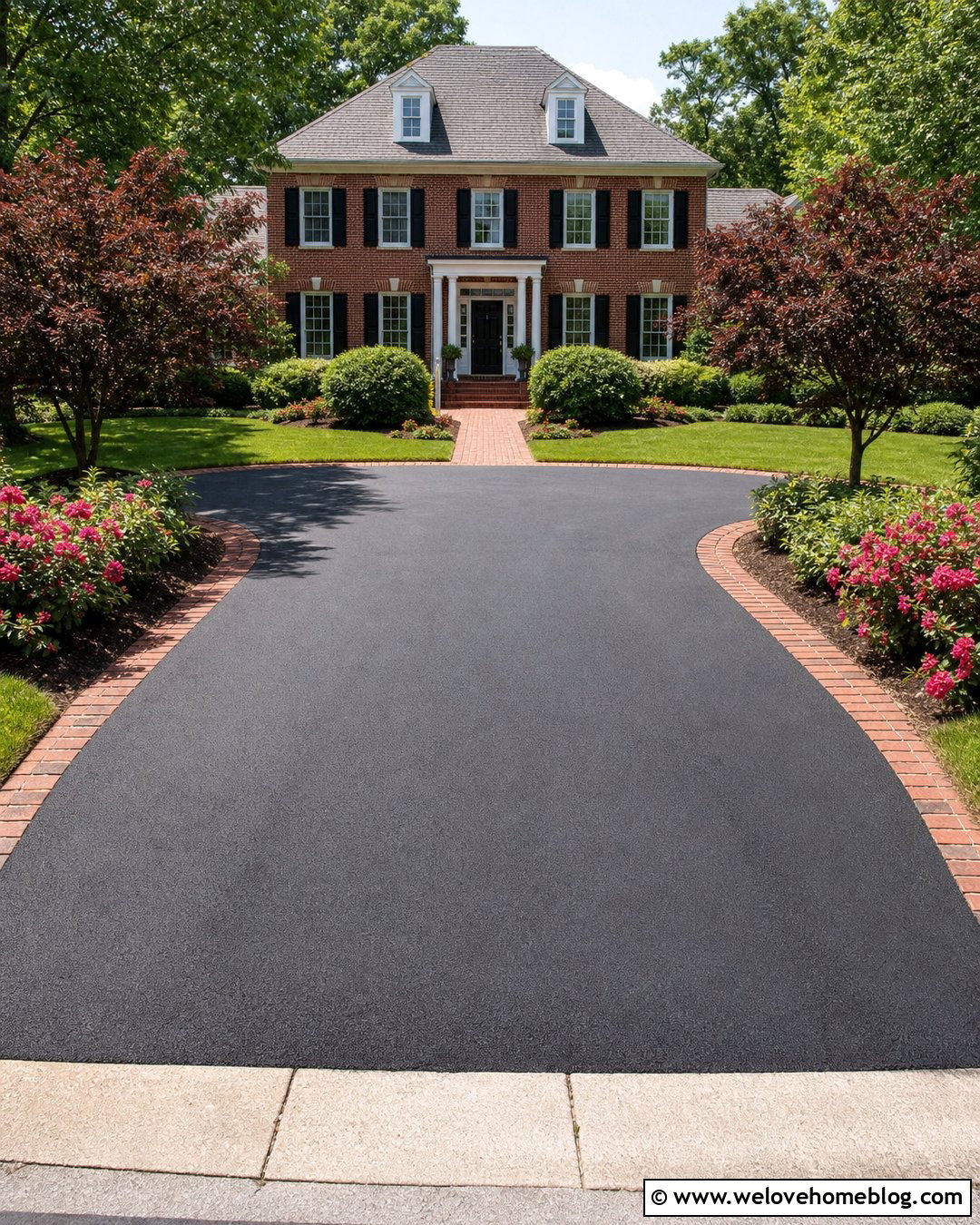
A rough surface that sheds loose stones is experiencing raveling, which may remain superficial or signal advanced pavement deterioration. Sweep the driveway and inspect how deeply the aggregate is loosening. A stable surface with minor wear may accept an asphalt resurfacer or specialized coating designed for that condition, provided the manufacturer’s preparation requirements are followed. Deep raveling, widespread softness, or exposed base usually requires removal or an engineered overlay. Picture a wide charcoal asphalt driveway with a renewed uniform finish, soldier-course brick edging, flowering shrubs, and a clean path to a colonial home. The repaired surface should remain textured enough for traction rather than appearing thick and glossy. Before coating, repair cracks and potholes, remove dust completely, and confirm that trapped water or poor drainage is not driving the deterioration.
17. Asphalt Driveway Sealcoat After Repair
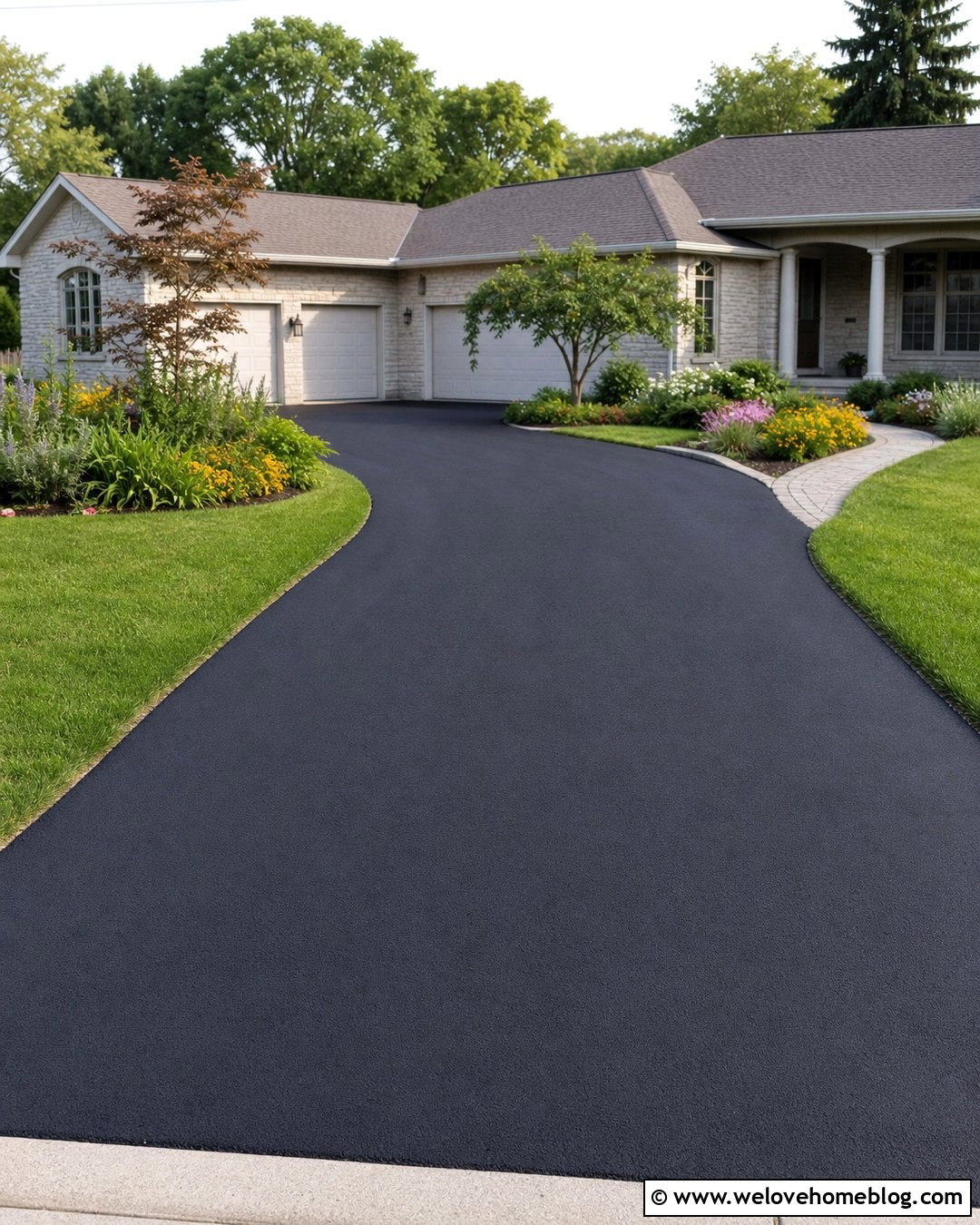
Sealcoating can unify the color of sound asphalt after cracks and patches have been repaired and allowed to cure. It is a protective finish, not a substitute for rebuilding potholes, correcting settlement, or replacing failed base material. Clean the entire driveway, remove stains and debris, mask adjacent surfaces, and follow the sealer manufacturer’s requirements for weather, application thickness, drying time, and traffic. Two thin applications may be recommended for some products, while others use a different system. A smooth black asphalt driveway with crisp edges, a curved walkway, and fresh green landscaping creates the classic finished look many homeowners want. Plan an exit route before spreading the coating, and protect garage doors, masonry, and street surfaces from splashes. Avoid sealing active cracks or severely alligatored pavement merely to hide damage.
18. Asphalt Driveway Paver Border Repair
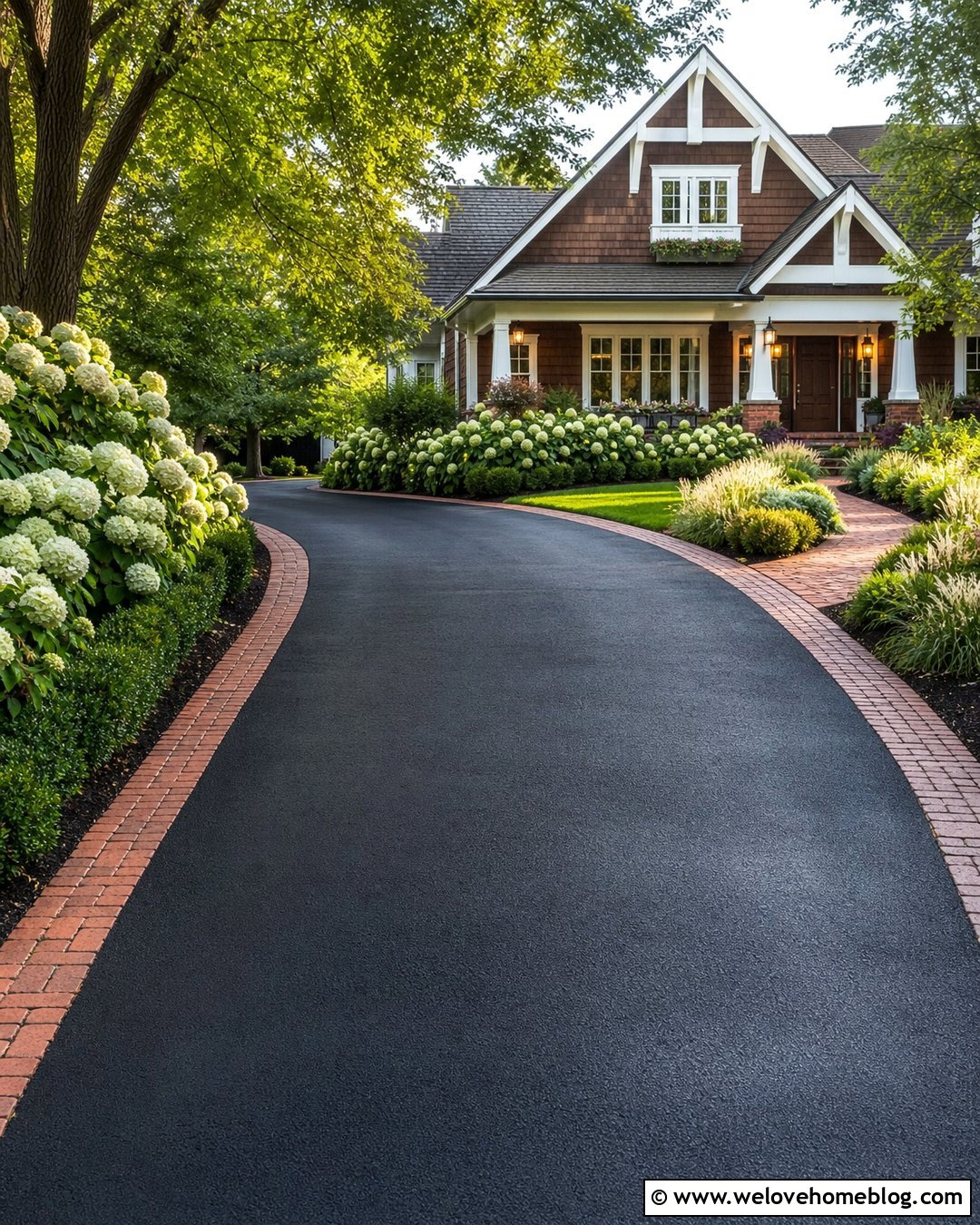
A damaged asphalt edge can become an attractive transition when it is rebuilt beside a properly supported paver border. Remove crumbling pavement and excavate enough space for a compacted paver base, edge restraint, and the selected brick or concrete units. Set the border flush enough for comfortable tire movement while maintaining drainage away from the driveway. The asphalt patch should connect tightly to its edge without relying on loose sand for structural support. A curved black asphalt driveway with red clay brick pavers, hydrangea beds, and a craftsman house creates a warm, finished curb view. Use the same paver near the walkway or entrance for visual continuity. This upgrade works best when the remaining asphalt is stable. Widespread edge failure or settlement should be corrected before decorative materials are installed.
19. Asphalt Driveway Gravel Shoulder Repair
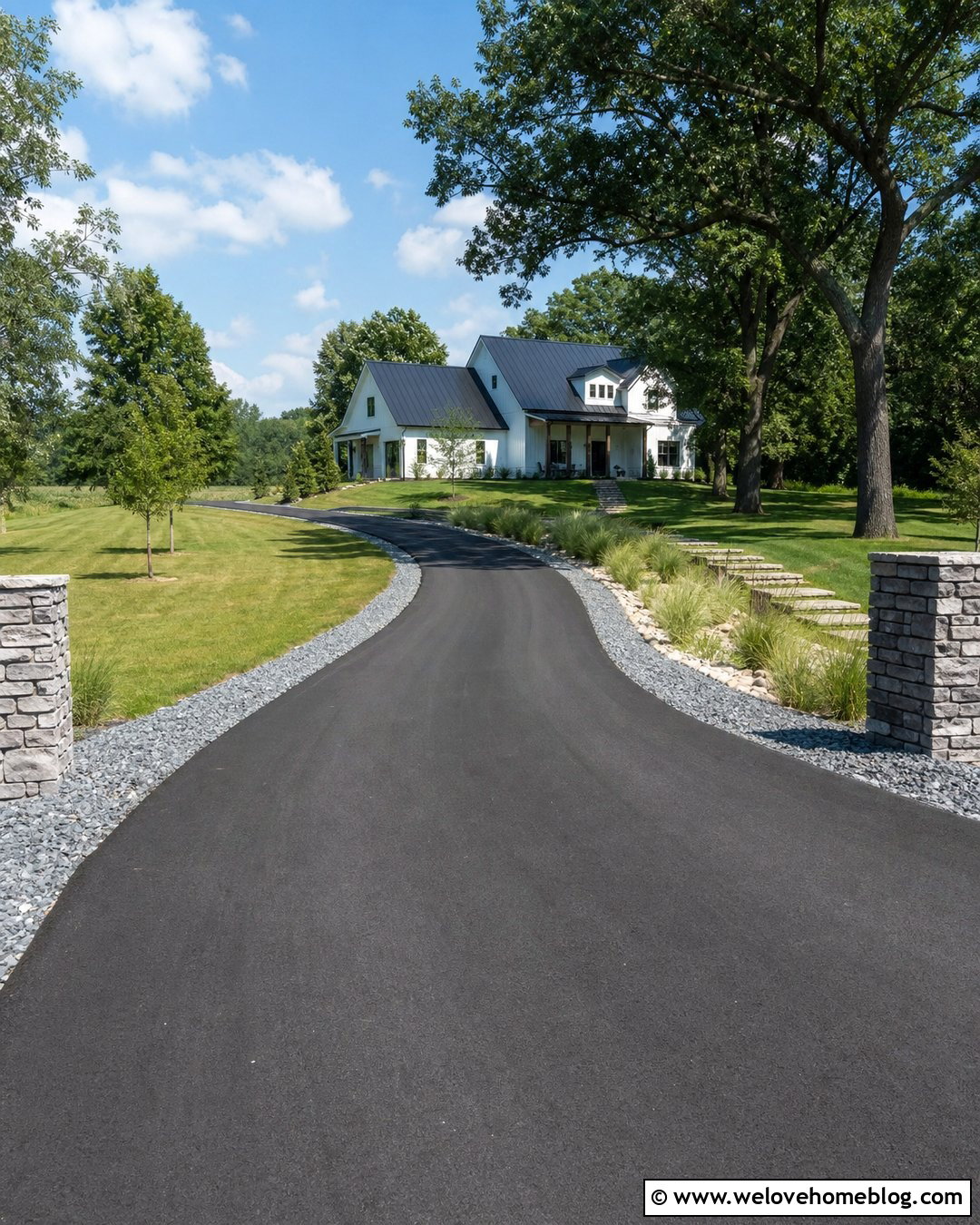
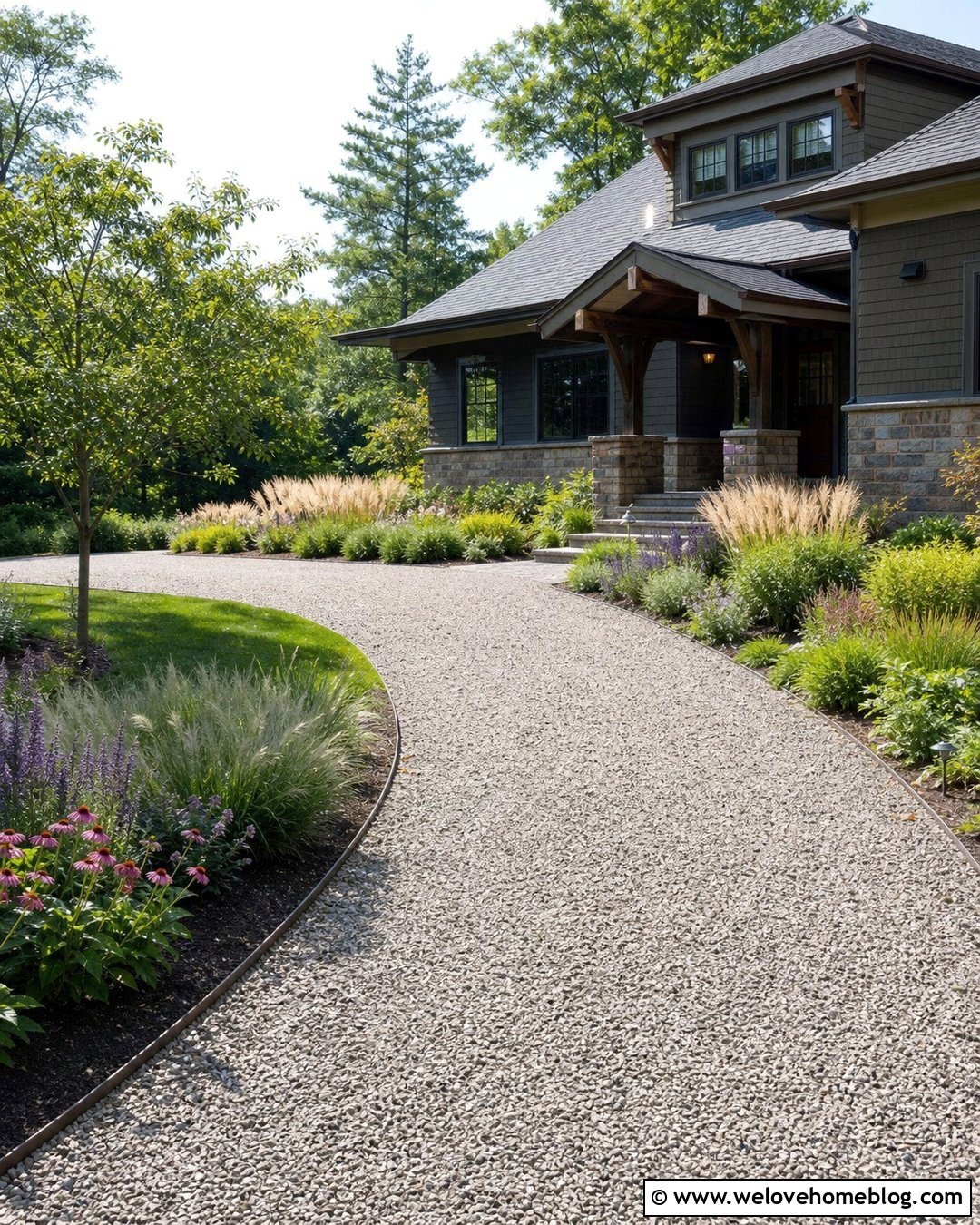
A washed-out shoulder leaves asphalt edges unsupported and creates a drop that can damage tires or encourage additional cracking. Pull back loose soil, remove organic material, and rebuild the shoulder with compactable angular aggregate rather than rounded decorative gravel alone. Compact it in layers and keep the finished level slightly below the asphalt so runoff can leave the pavement. A long country asphalt driveway with a crushed-stone shoulder, timber-free edges, native grasses, and widely spaced trees feels relaxed while remaining practical. Where concentrated water crosses the shoulder, add an appropriately designed swale, culvert, or reinforced outlet instead of repeatedly replacing gravel. Maintain a clear boundary so grass roots and soil do not cover the asphalt edge. A stable shoulder supports the pavement and gives drivers a safer recovery area when tires leave the driveway.
20. Asphalt Driveway Overlay Repair
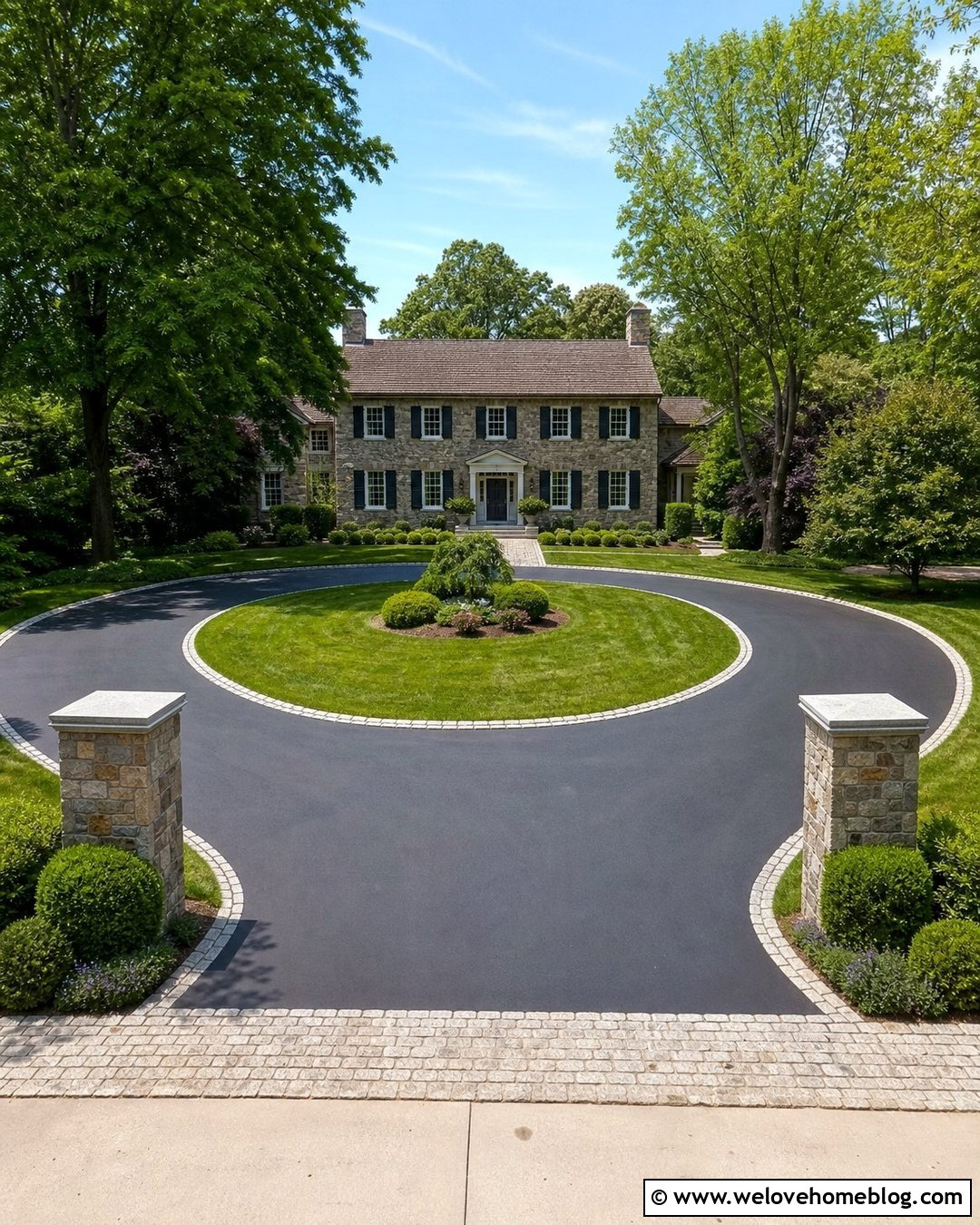
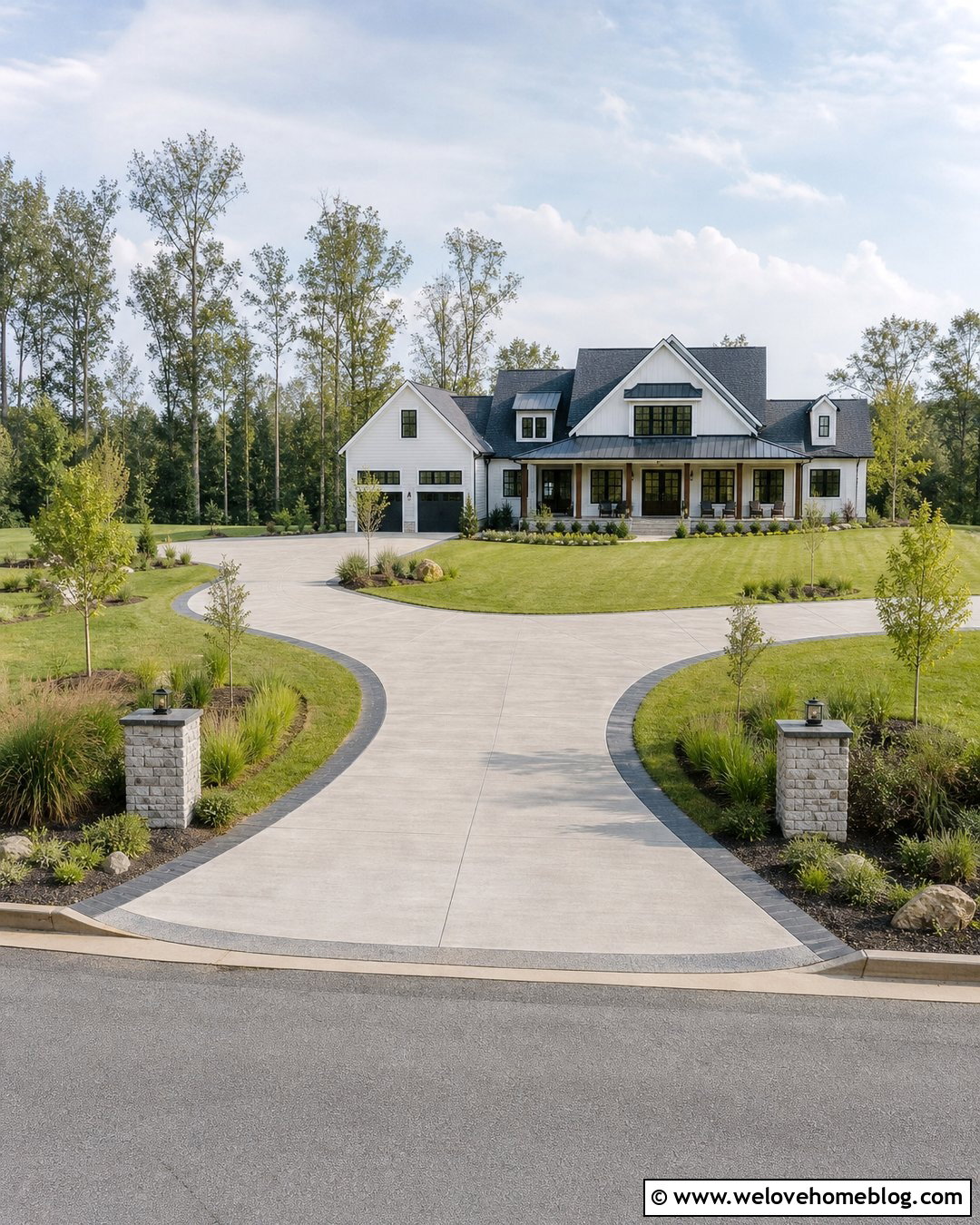
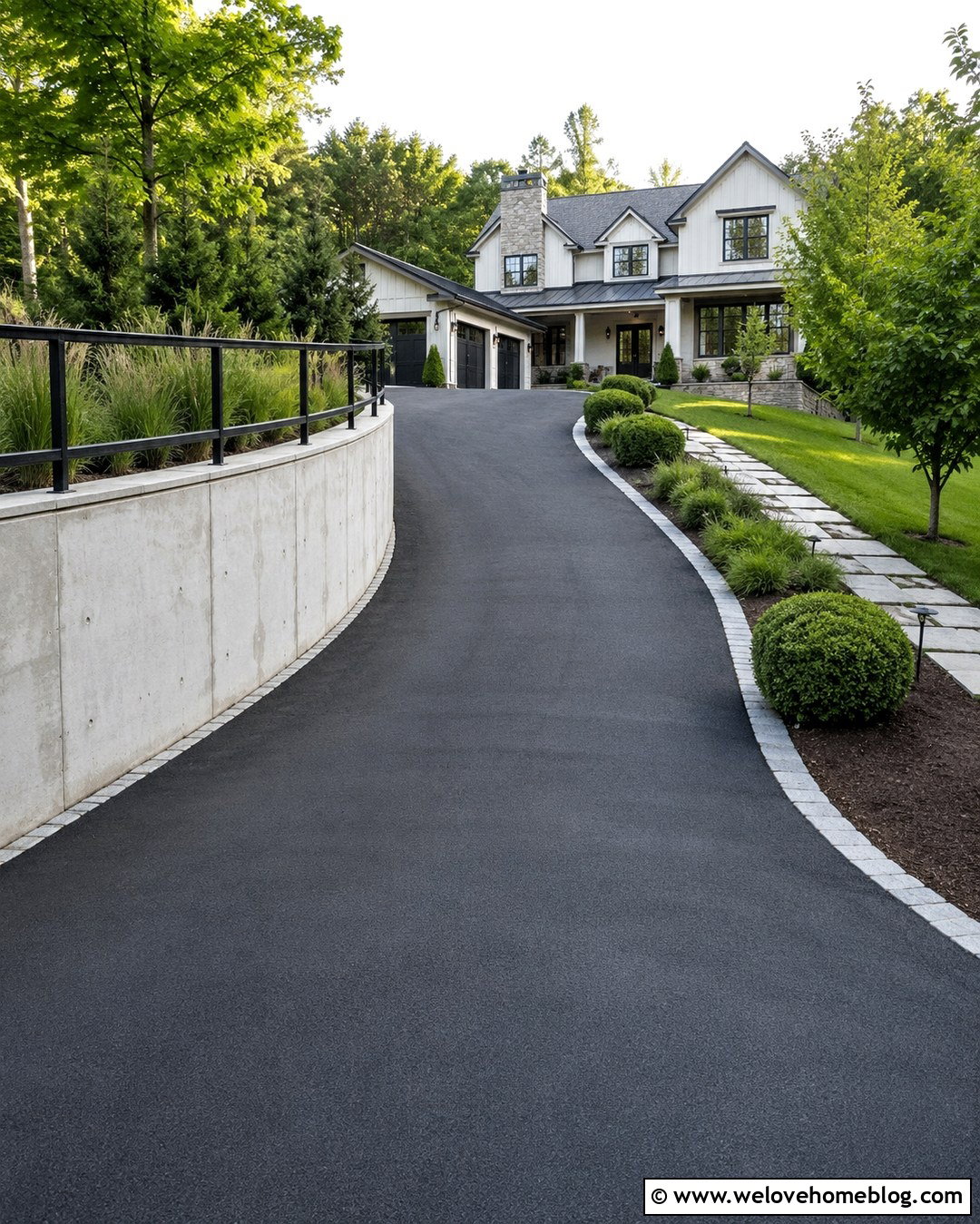
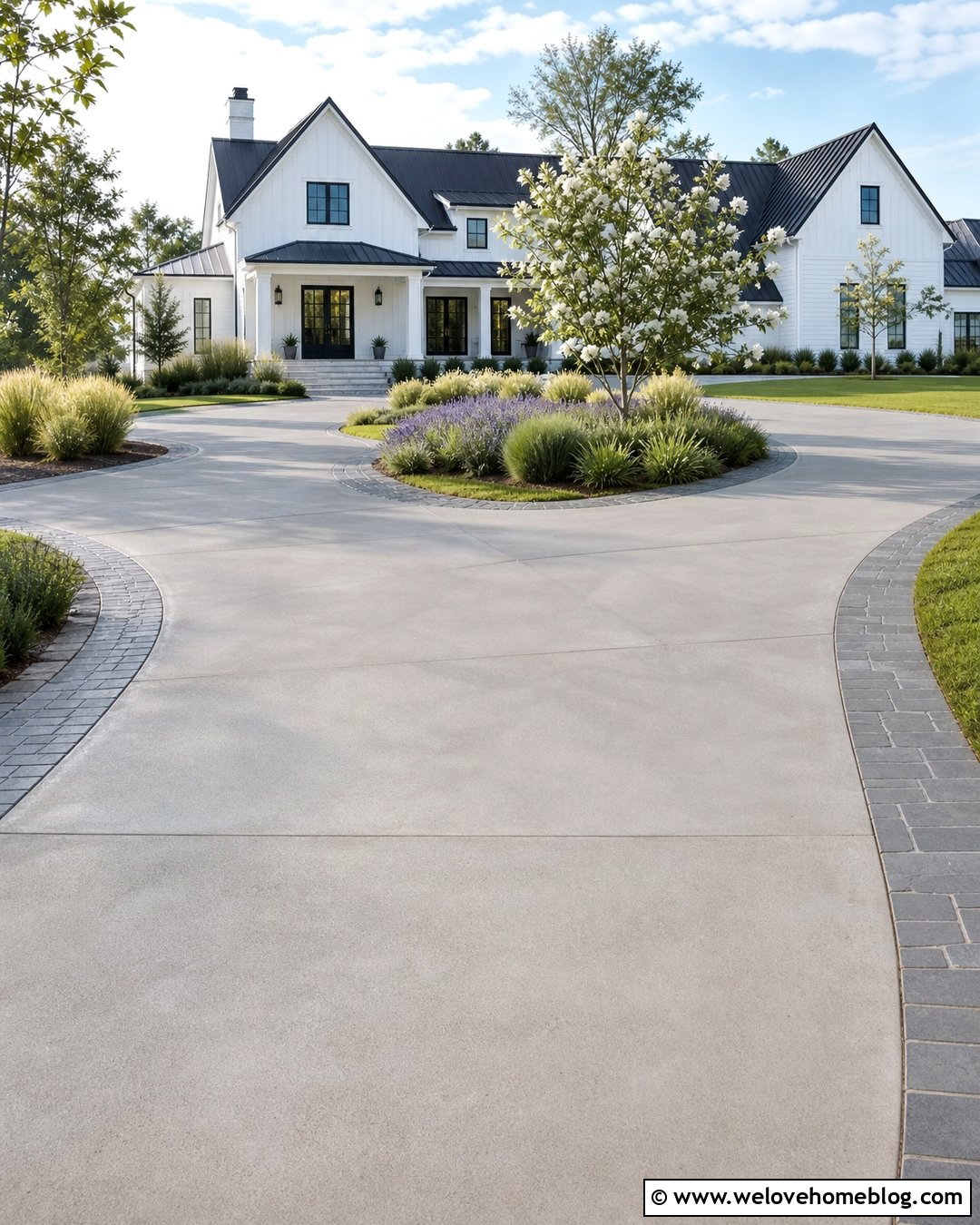
When the surface is worn but the foundation remains reasonably stable, an asphalt overlay may provide a more complete result than dozens of small repairs. The contractor evaluates drainage, cracks, elevations, transitions, and base condition before cleaning and preparing the existing pavement. Failed sections still need full-depth repair, and significant cracks may require specialized treatment to reduce their return through the new layer. The overlay must fit garage floors, sidewalks, gates, curbs, and street connections without creating drainage problems. A resurfaced horseshoe asphalt driveway with smooth charcoal pavement, stone entrance pillars, clipped shrubs, and a central lawn delivers a dramatic curb-appeal improvement. An overlay is not suitable for every driveway. Extensive base failure, severe settlement, or insufficient elevation clearance may make full removal and replacement the better long-term investment.
Conclusion:
The best asphalt repair is the one that addresses both the visible damage and its underlying cause. Small cracks may only need careful cleaning and flexible filler, while potholes, sunken areas, and alligator cracking often require base work and compacted asphalt. Drainage corrections, stable shoulders, and supported borders can also prevent repaired areas from failing again. Use products designed for asphalt, respect curing times, and follow all safety and weather instructions. For structural damage or extensive deterioration, obtain an assessment from a reputable paving contractor. With thoughtful preparation and regular inspections, these 20 Asphalt Driveway Repair Ideas can help you create a safer, cleaner, and more attractive entrance that performs well through changing seasons.

Related posts:
Leave a Reply