
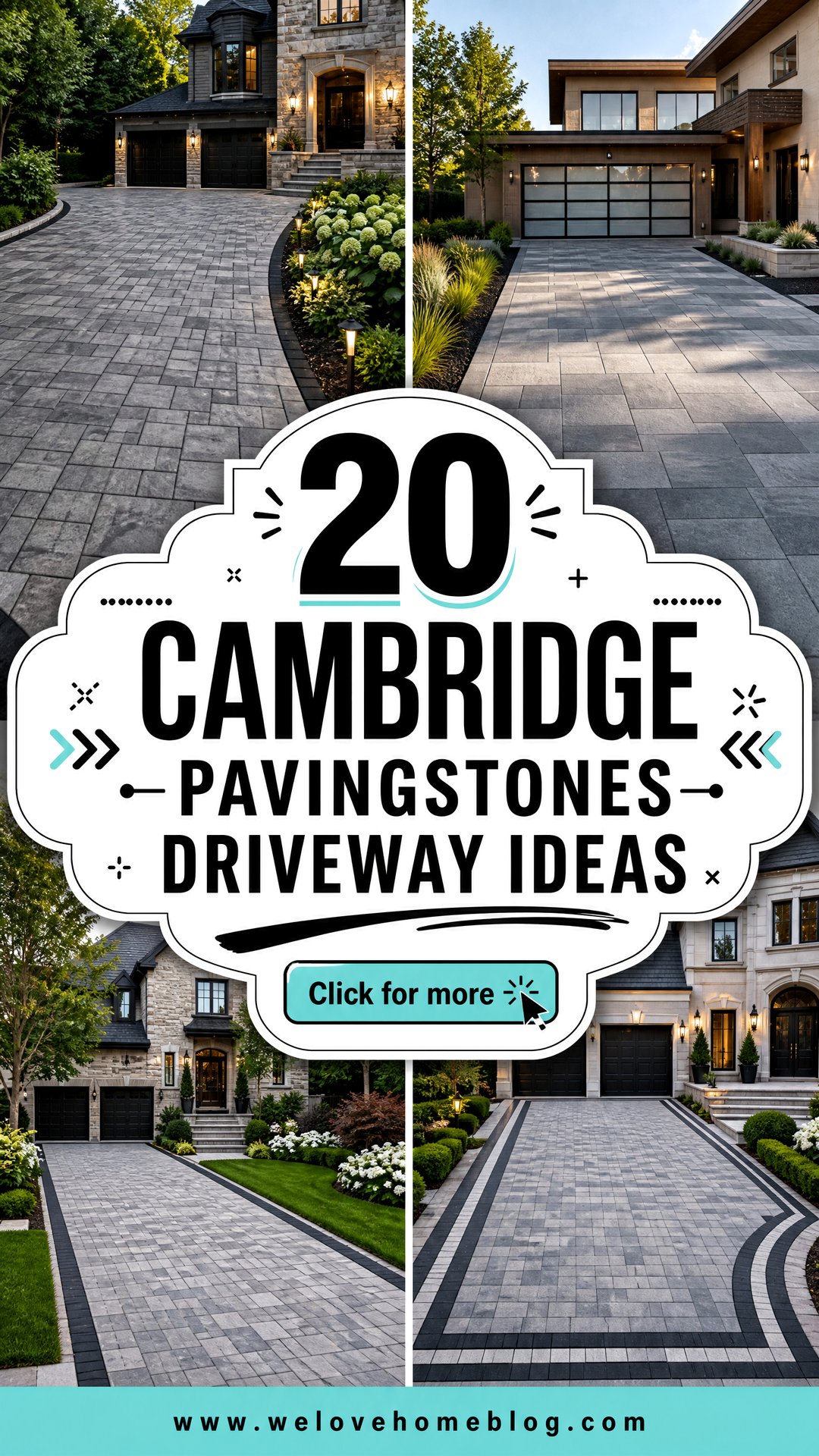
Cambridge Pavingstones can turn a basic vehicle path into a polished part of your home’s exterior. The wide range of sizes, textures, patterns, and blended colors makes these concrete pavers suitable for traditional homes, modern facades, and everything between. A successful design considers more than the paving surface. The driveway shape, border, apron, walkway, drainage, lighting, and nearby landscaping should feel connected. Cambridge’s current product range includes textured, smooth, large-format, permeable, and circle-compatible options, giving homeowners plenty of ways to personalize the approach. () Whether you prefer warm earth tones or crisp gray pavers, the complete looks below offer practical inspiration. Explore these 20 Cambridge Pavingstones Driveway Ideas.
1. Cambridge Ledgestone Driveway With Coal Border
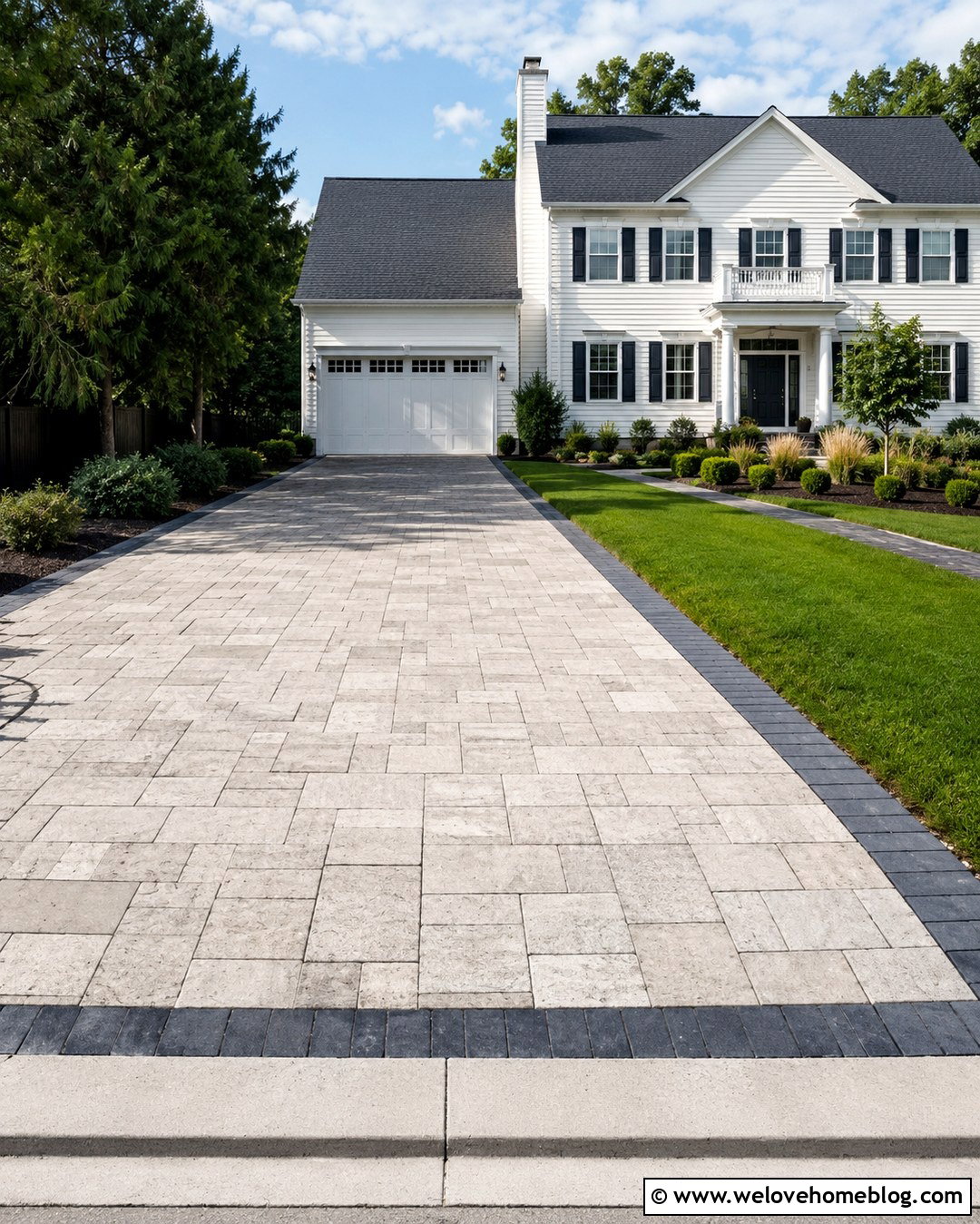
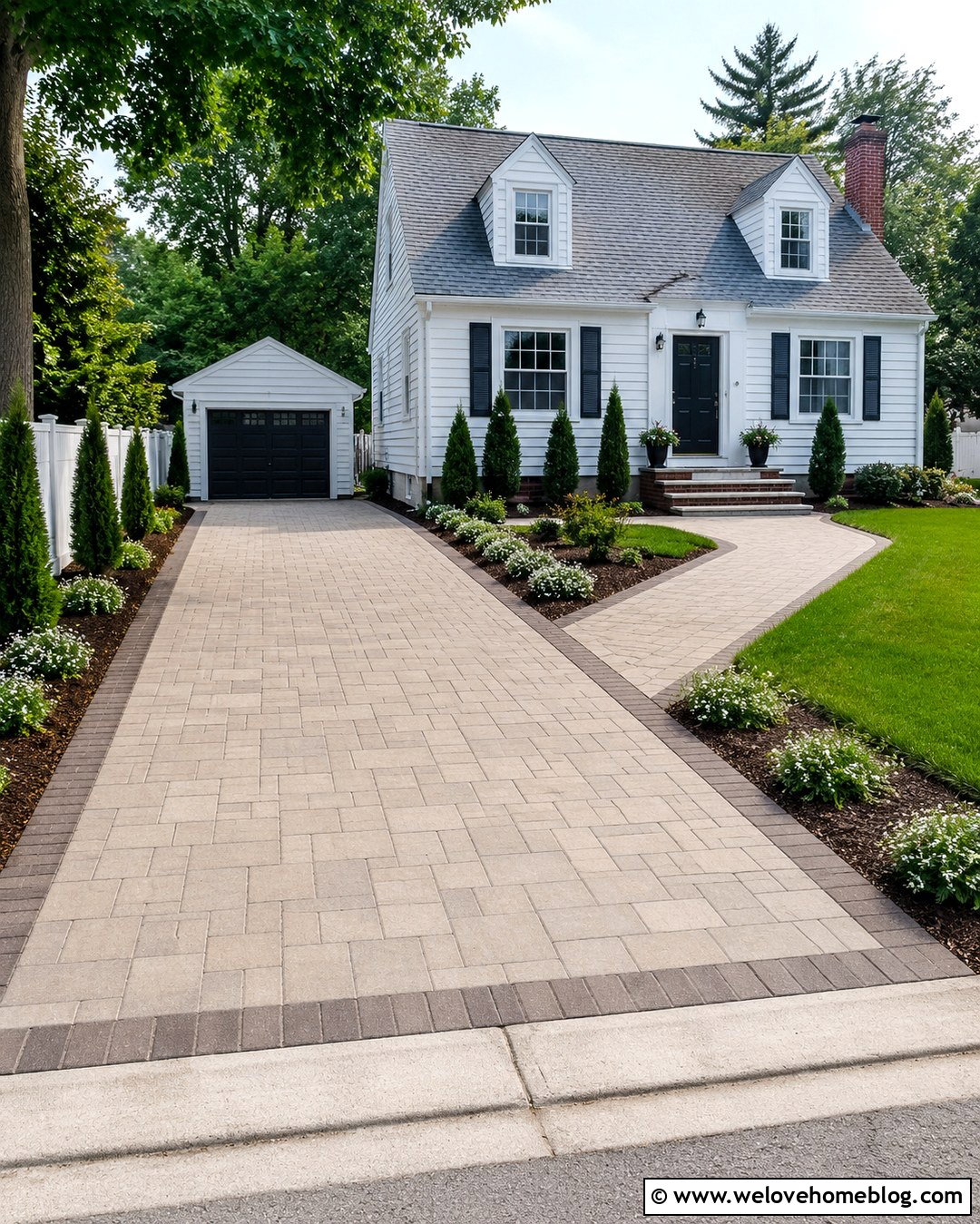
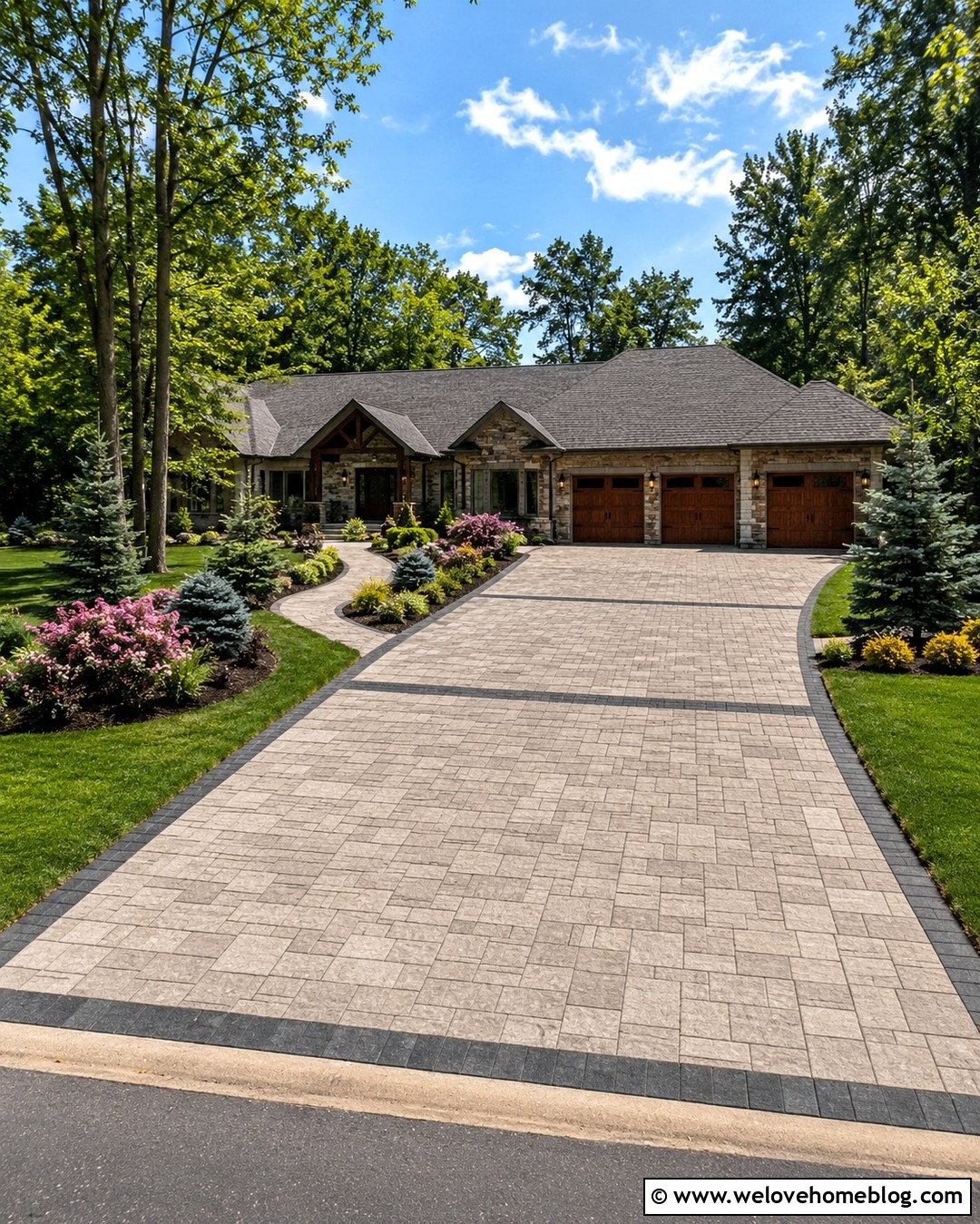
A textured Ledgestone driveway creates an inviting surface that feels refined without looking overly formal. Use Cambridge Ledgestone 3-Pc. pavingstones in Limestone Quarry Blend for a natural mix of gray, beige, and weathered stone tones. Install the three sizes in a random modular layout across a straight driveway. A single soldier-course border in Coal gives the edges a crisp outline and connects naturally with black shutters, dark roofing, or charcoal garage doors. Finish the entrance with a wider Coal apron for extra definition at the curb. Low evergreen shrubs, ornamental grasses, and neat lawn panels soften the hardscape. This combination works especially well with colonial, Cape Cod, and traditional brick homes because the contrasting border creates clear structure.
2. Cambridge XL Paver Driveway With Modern Landscaping
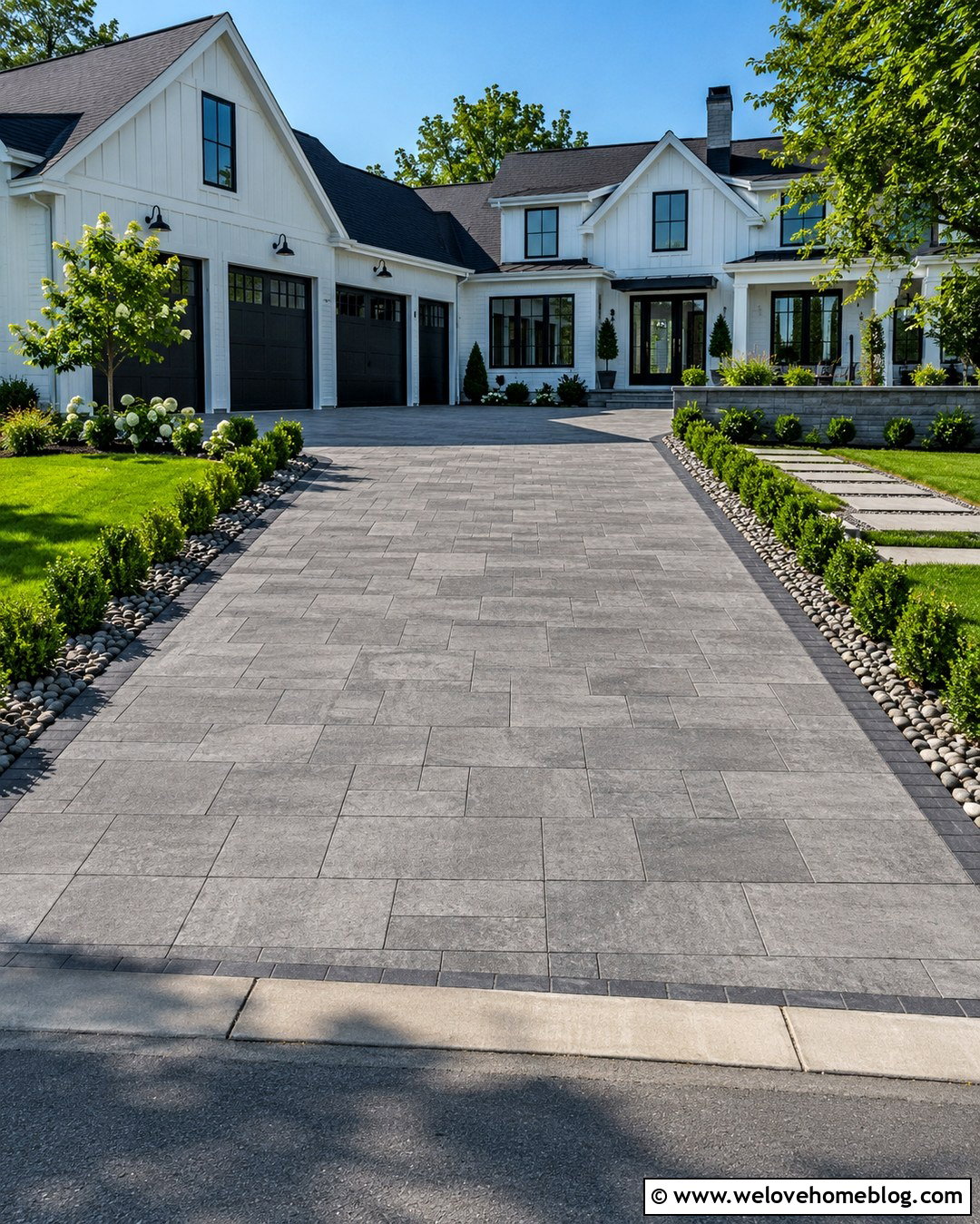
Large-format Cambridge pavingstones can make a wide driveway look cleaner and less visually busy. Choose a drive-rated Ledgestone XL configuration in Onyx/Natural, using its varied rectangular sizes to produce a broad random layout. Frame the surface with a narrow Ledgestone Smooth border in Coal. The dark band creates contrast while emphasizing the driveway’s straight lines. Keep the surrounding landscaping simple with clipped boxwoods, linear beds, river rock, and one sculptural ornamental tree near the garage. A smooth concrete walkway can provide a subtle material change without competing with the pavers. This complete design suits a modern farmhouse or contemporary suburban home. Large pavers should always be selected and installed according to their intended application and the project’s expected vehicle loads.
3. Cambridge Smooth Paver Driveway In Platinum
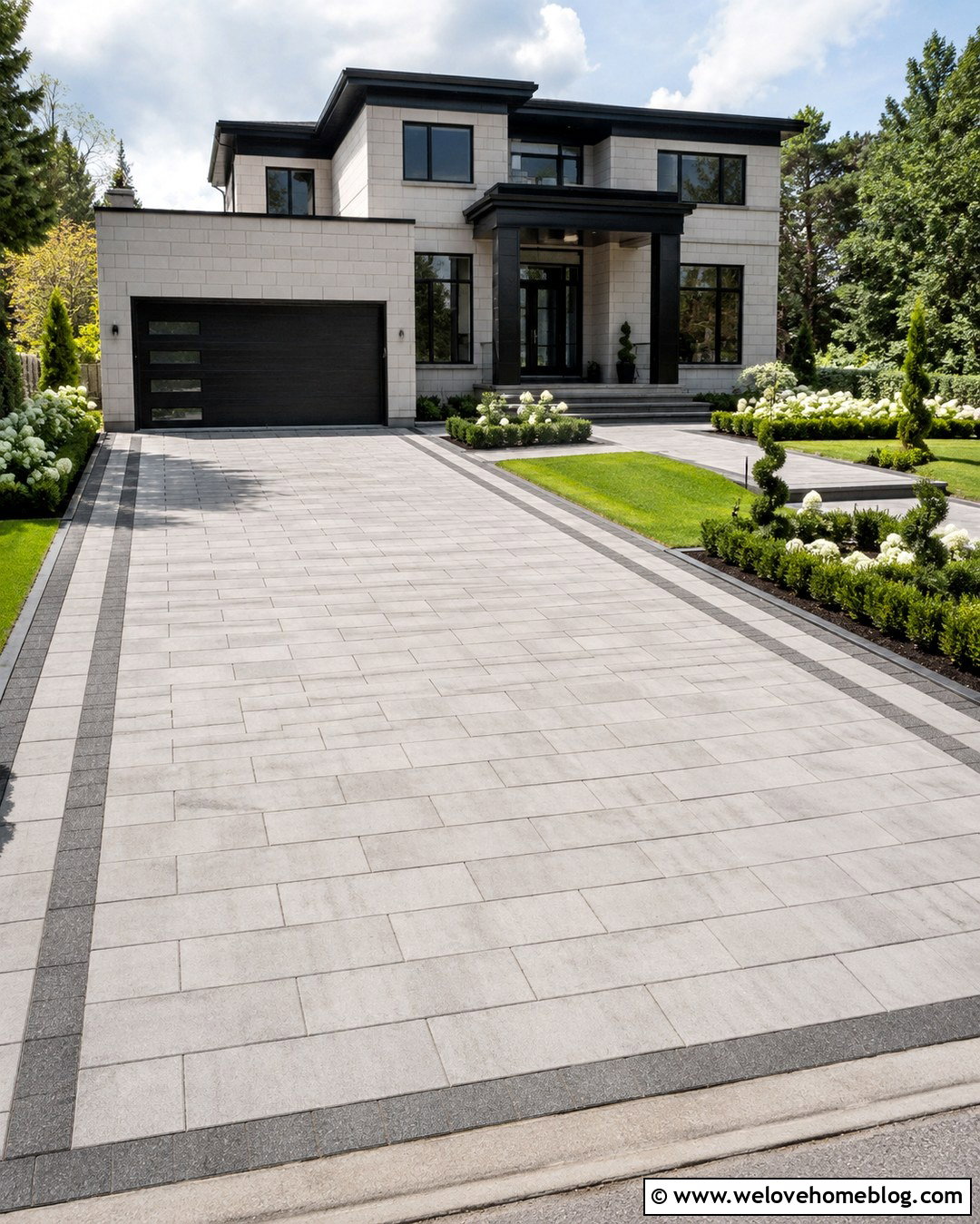
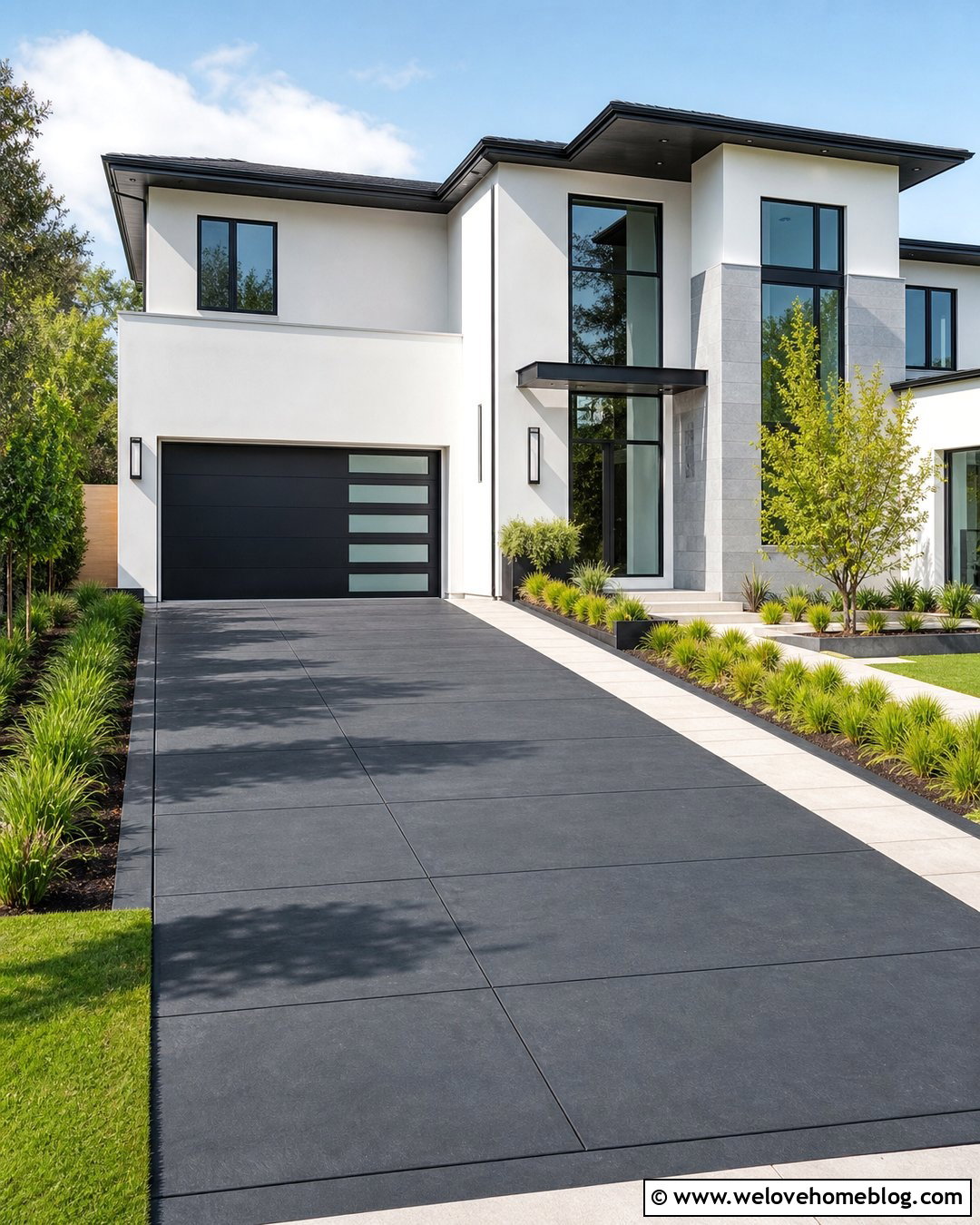
Imagine a bright Platinum driveway leading toward a white contemporary house with black-framed windows. Cambridge smooth pavingstones give this design a sleek surface, while a modular pattern prevents it from looking like one plain slab. Add a double border using Platinum on the outside and Coal on the inside. That narrow dark line outlines the driveway and visually connects it to the home’s doors, windows, and lighting fixtures. Rectangular lawn panels, white hydrangeas, and compact evergreens provide fresh color around the cool-toned paving. Use a matching paver walkway that turns toward the front entrance at a clean right angle. Because lighter paving can make the approach feel open and spacious, this look is especially useful for smaller front yards and closely spaced homes.
4. Cambridge Sahara Chestnut Curved Driveway
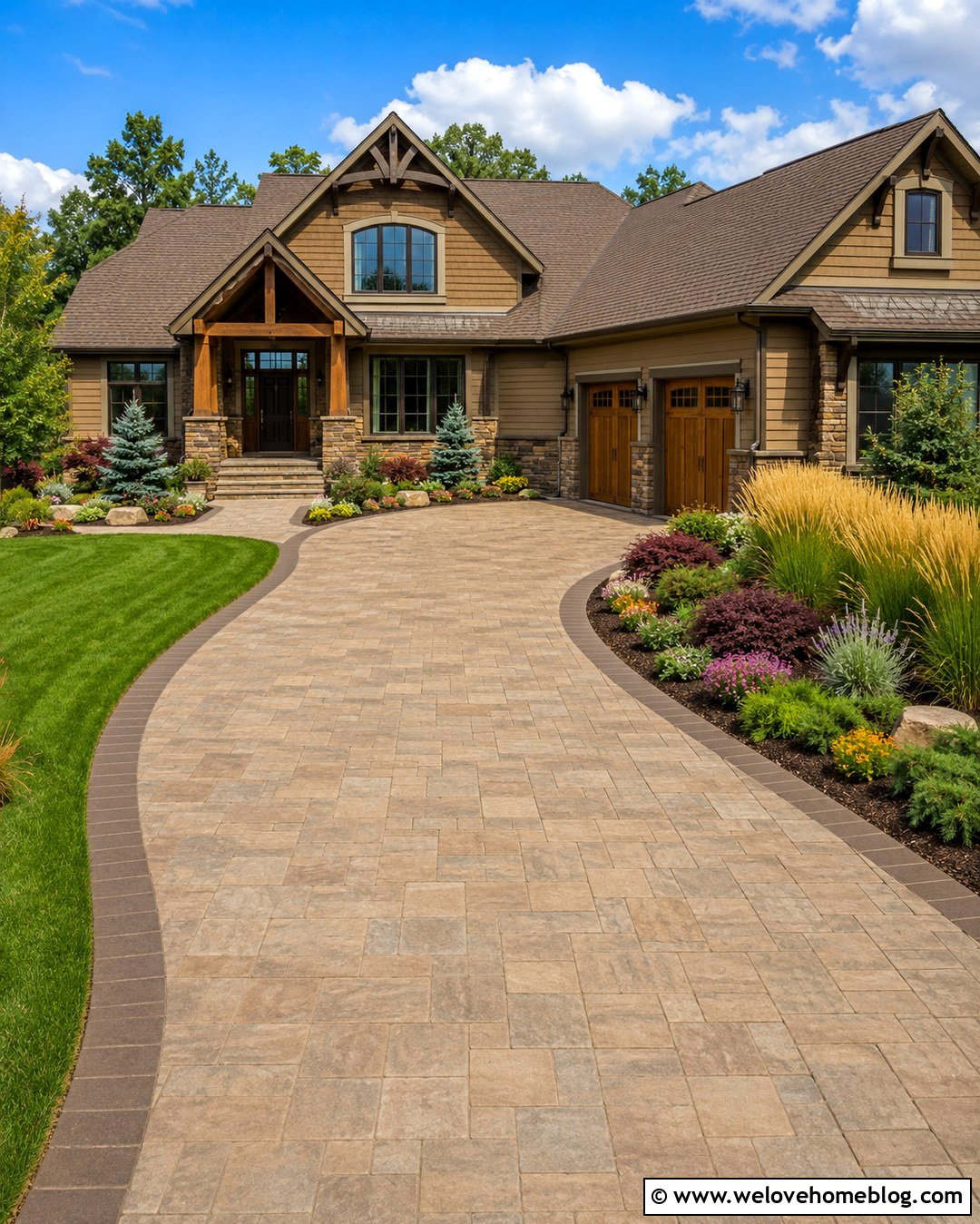
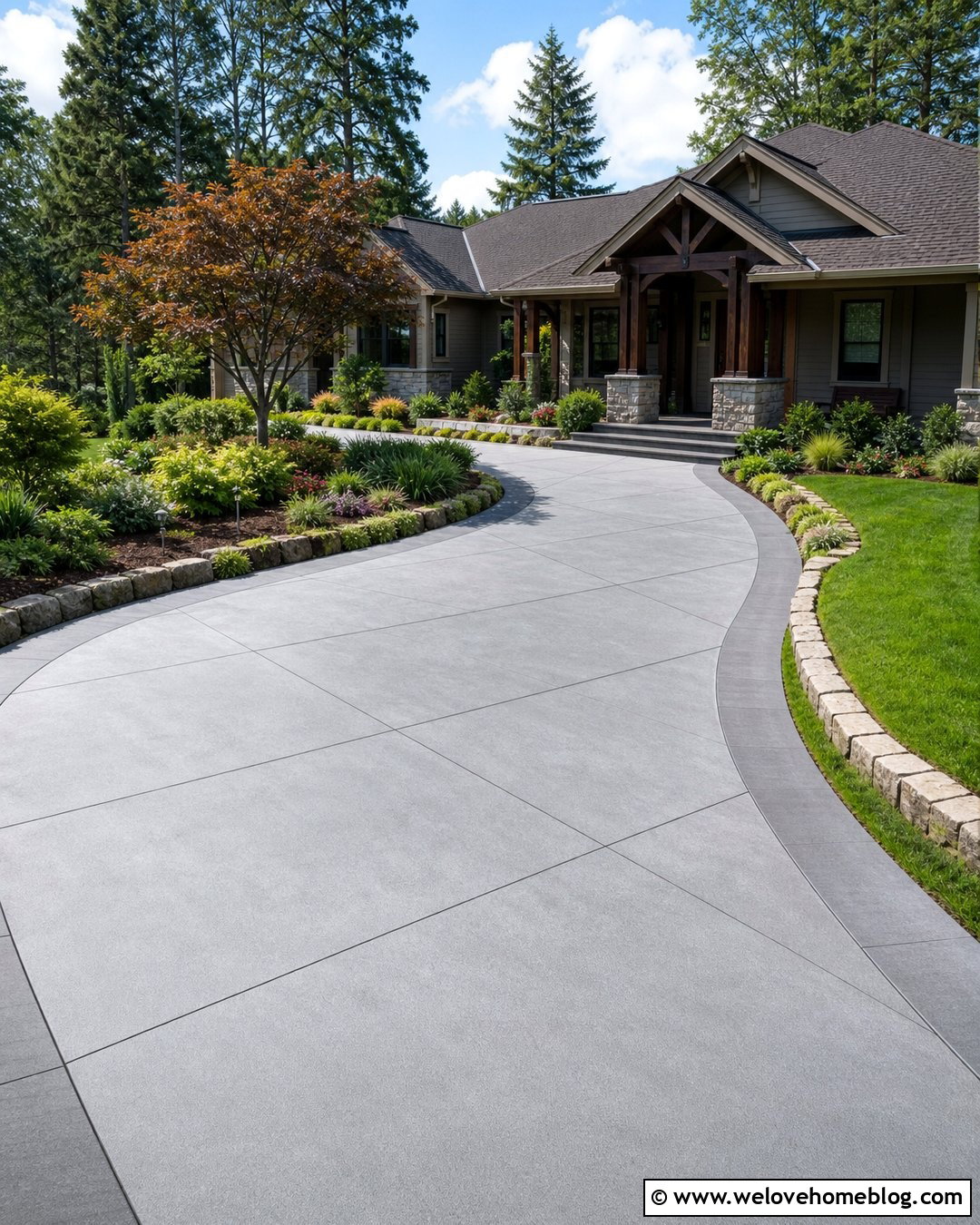
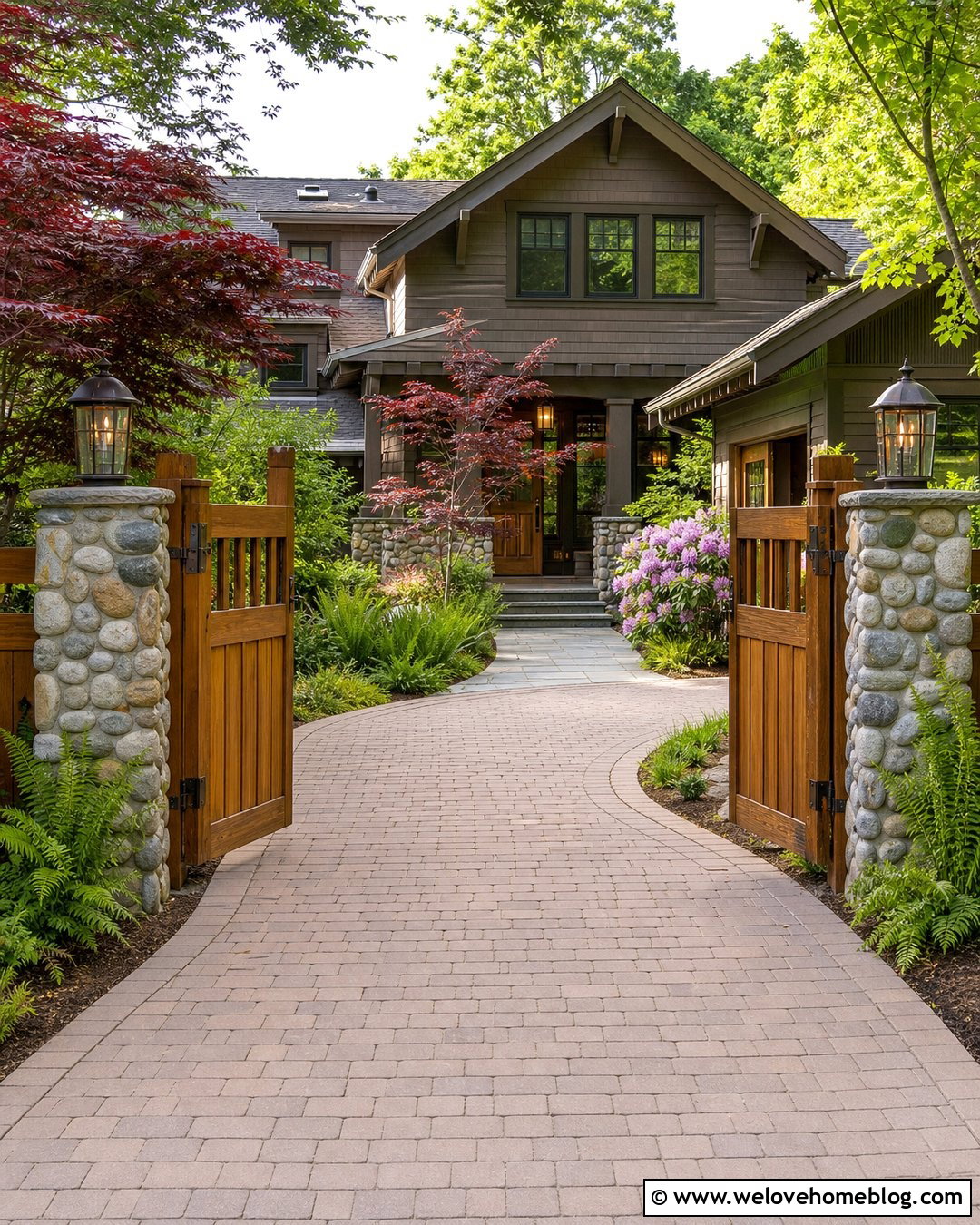
Warm Sahara/Chestnut pavingstones can make a curved driveway feel established and welcoming. Follow the driveway’s sweep with Cambridge Ledgestone 3-Pc. pavers, allowing the mixed sizes to create natural movement along the bend. A Mocha soldier-course border should follow both sides continuously, helping the curved shape read clearly from the street. Place layered planting beds along the outside curve, where they will be most visible. Dwarf evergreens, golden ornamental grasses, burgundy shrubs, and flowering perennials complement the warm paver blend. On the inside curve, maintain a simple lawn with one small shade tree to avoid crowding the driving area. This balanced design pairs beautifully with a craftsman house, tan siding, natural stone veneer, and stained wood garage doors.
5. Cambridge Bluestone Blend Herringbone Driveway
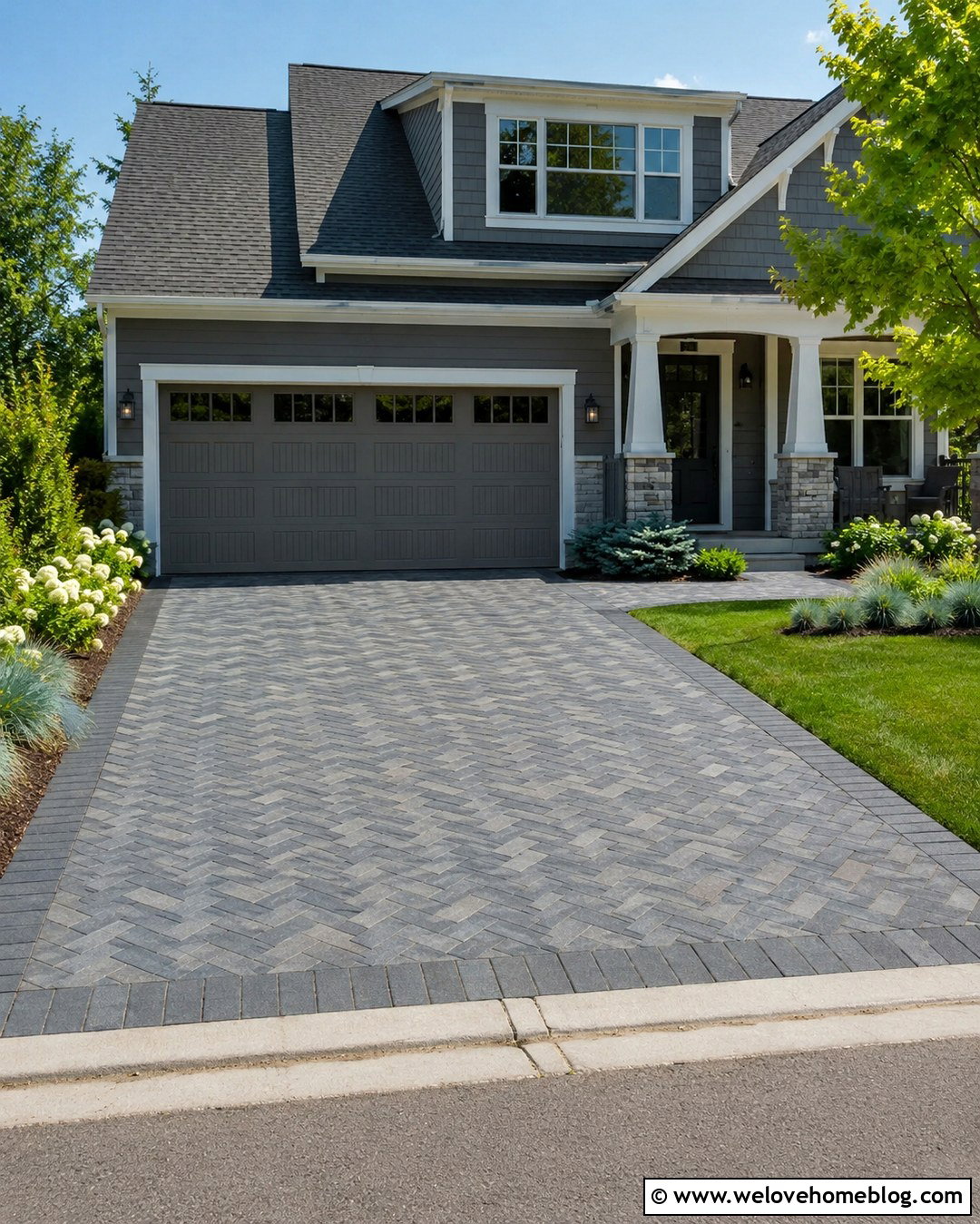
A herringbone layout adds strong direction and classic character to a Cambridge paver driveway. Use rectangular pavingstones in Bluestone Blend, laid at a 45-degree angle so the pattern draws attention toward the house. Surround the field with a straight Coal border that contains the angled cuts and gives the installation a finished edge. At the garage, repeat the border as a wider transition band. Bluestone tones coordinate well with gray siding, white trim, natural stone foundations, and slate-colored roofing. Frame the driveway with soft green junipers, blue-green grasses, and white flowering shrubs. The result feels formal but not fussy. Herringbone is also visually effective across broad driving surfaces because the repeating angled lines break up the width and make the entire approach feel more detailed.
6. Cambridge Circular Driveway With Center Medallion
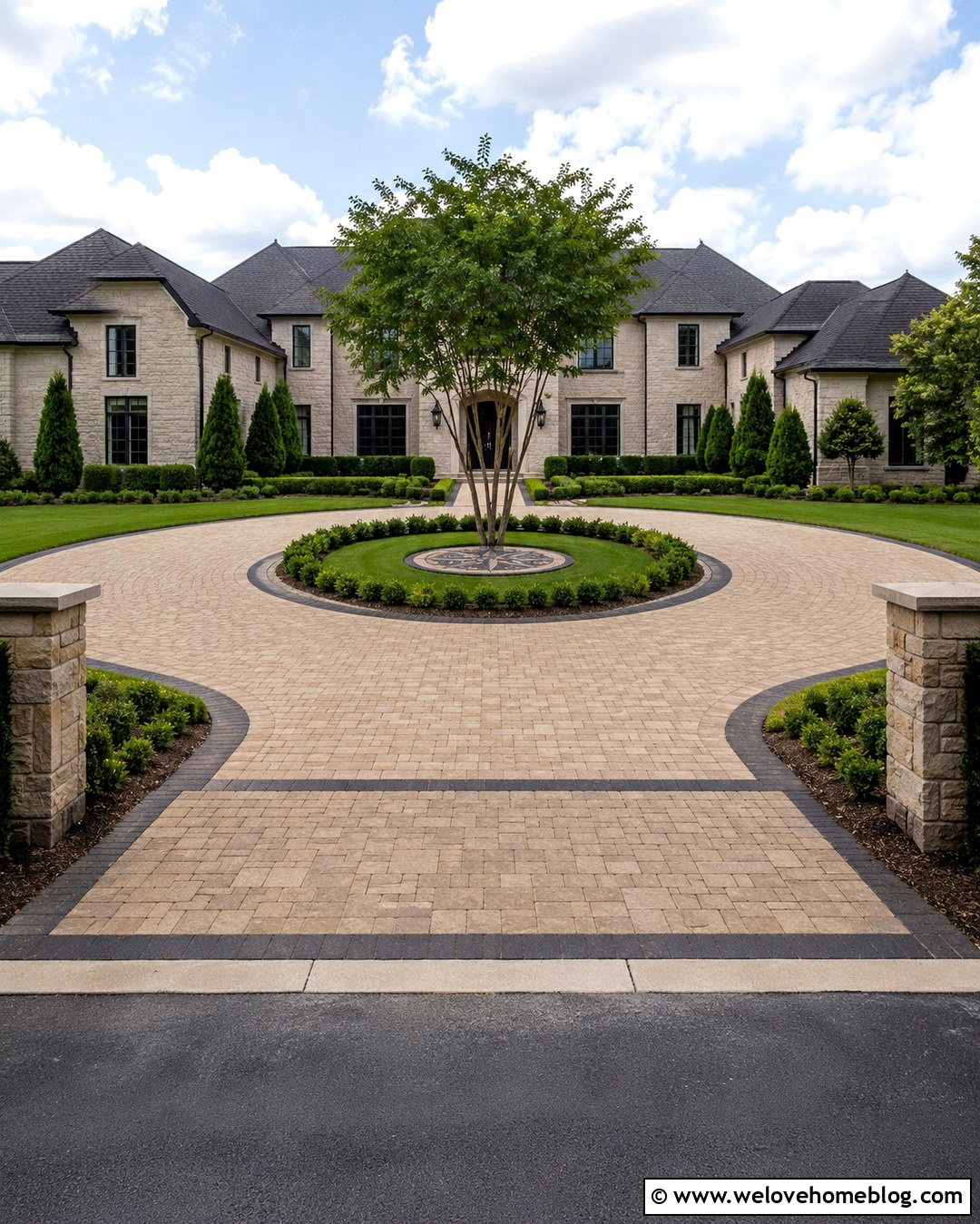
A circular driveway becomes a true landscape feature when its center and paving pattern are designed together. Use Cambridge RoundTable pavingstones in Sandstone Blend for the main circular lane. Place a contrasting Circle Design Kit medallion in the entrance zone or directly in front of the home, using Chestnut and Coal accents to define the rings. Cambridge circle kits can also be configured into fan patterns when installed with the required layout and precision cuts. () Build the center island with a low stone curb, manicured lawn, and one multi-stem ornamental tree. Add symmetrical shrubs near the front steps and matching masonry pillars at both driveway openings. This complete layout works best in a broad yard where comfortable turning space can be maintained around the landscaped island.
7. Cambridge Permeable Paver Driveway
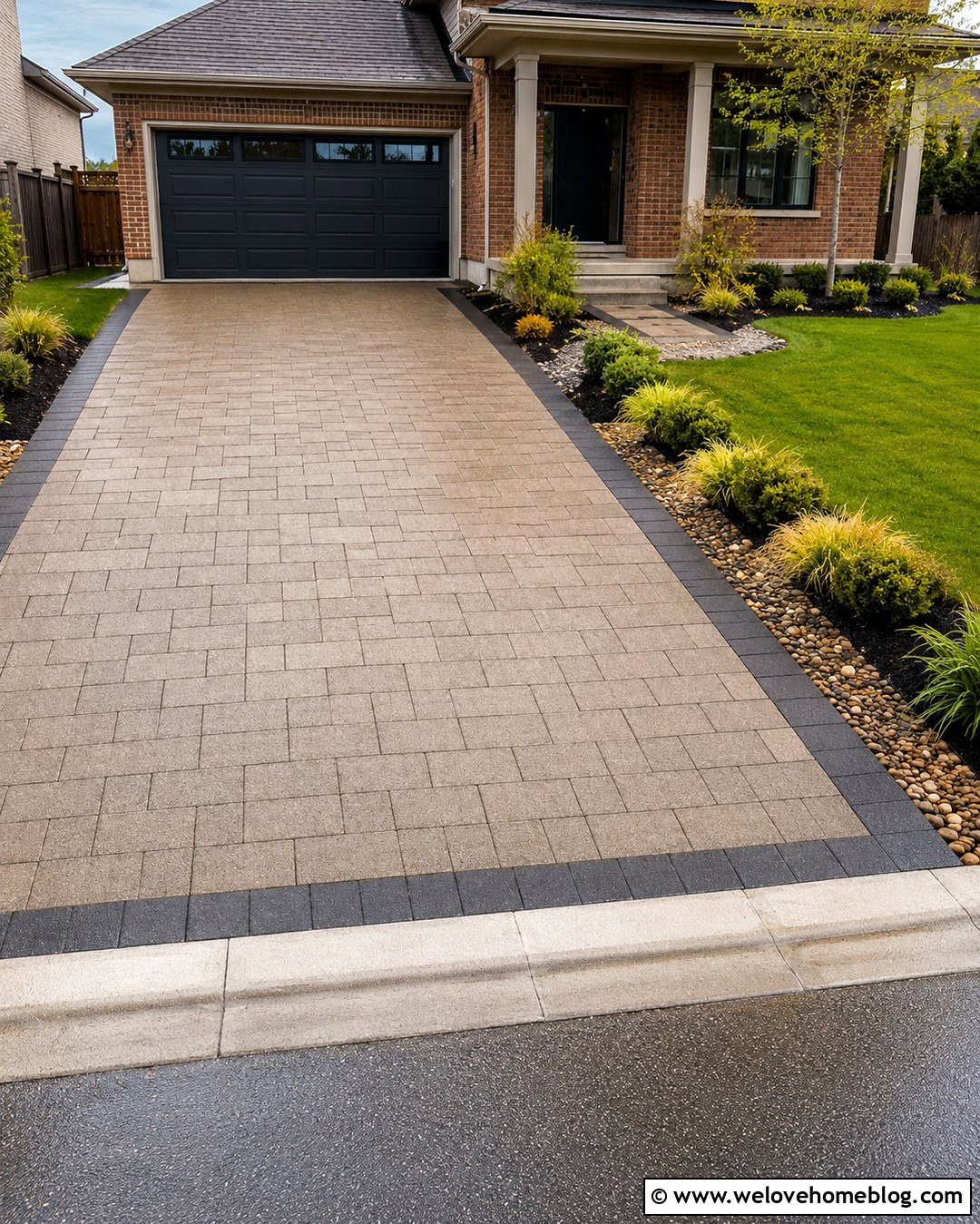
For a driveway that combines curb appeal with a drainage-conscious layout, consider Cambridge permeable pavingstones. A Toffee/Onyx Lite Ledgestone permeable field creates a warm, softly varied surface that suits brick, stone, and neutral siding. Use a deeper Onyx border to sharpen the edges without interrupting the permeable installation strategy. Wide joints filled with the specified aggregate should remain visible as part of the design. Cambridge has featured Ledgestone Permeable and Aqua-Bric systems for driveway and stormwater applications. () Surround the driveway with rain-tolerant grasses, compact shrubs, and a shallow planted drainage area where appropriate. A gently sloping lawn can guide water away from the house. Correct excavation, open-graded base materials, site drainage, and professional installation are essential for dependable performance.
8. Cambridge Fan Pattern Driveway Entrance
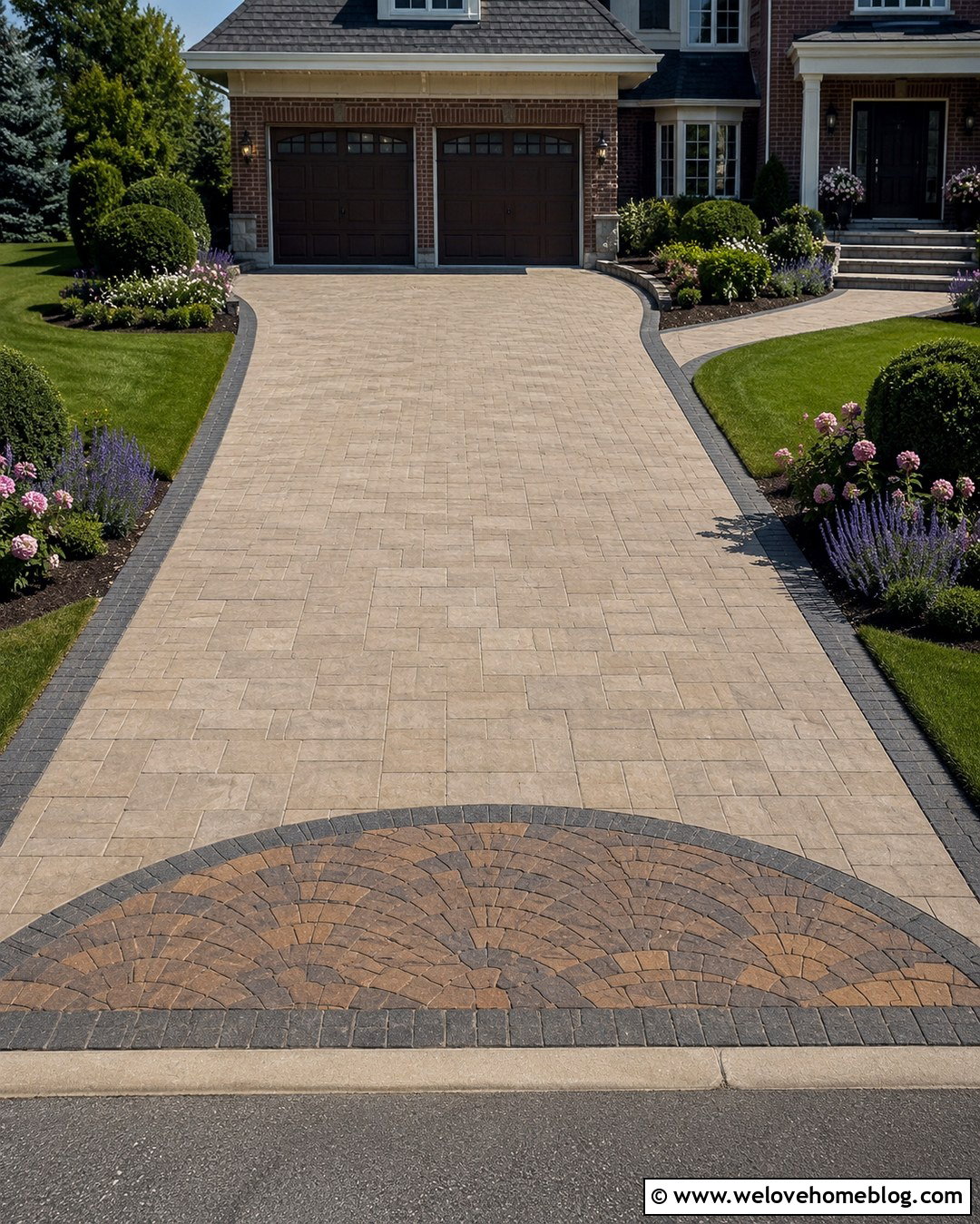
A fan-pattern entrance creates a decorative focal point without covering the entire driveway in a complicated layout. Begin with a neutral Cambridge Ledgestone field in Sandstone Blend. Across the curb apron, introduce repeated fan shapes made with compatible RoundTable Circle Design Kit components in Chestnut and Coal. Continue the darker Coal color as a simple border along both driveway edges, creating a visual connection between the apron and main surface. Keep the landscaping near the street low so the pattern remains visible and sightlines stay open. Curved beds filled with catmint, compact roses, and rounded evergreens can echo the fan shapes. This approach gives a traditional home an elegant arrival point while keeping the larger driving area calm, practical, and easier to coordinate with the garage.
9. Cambridge Driveway With Black Paver Border
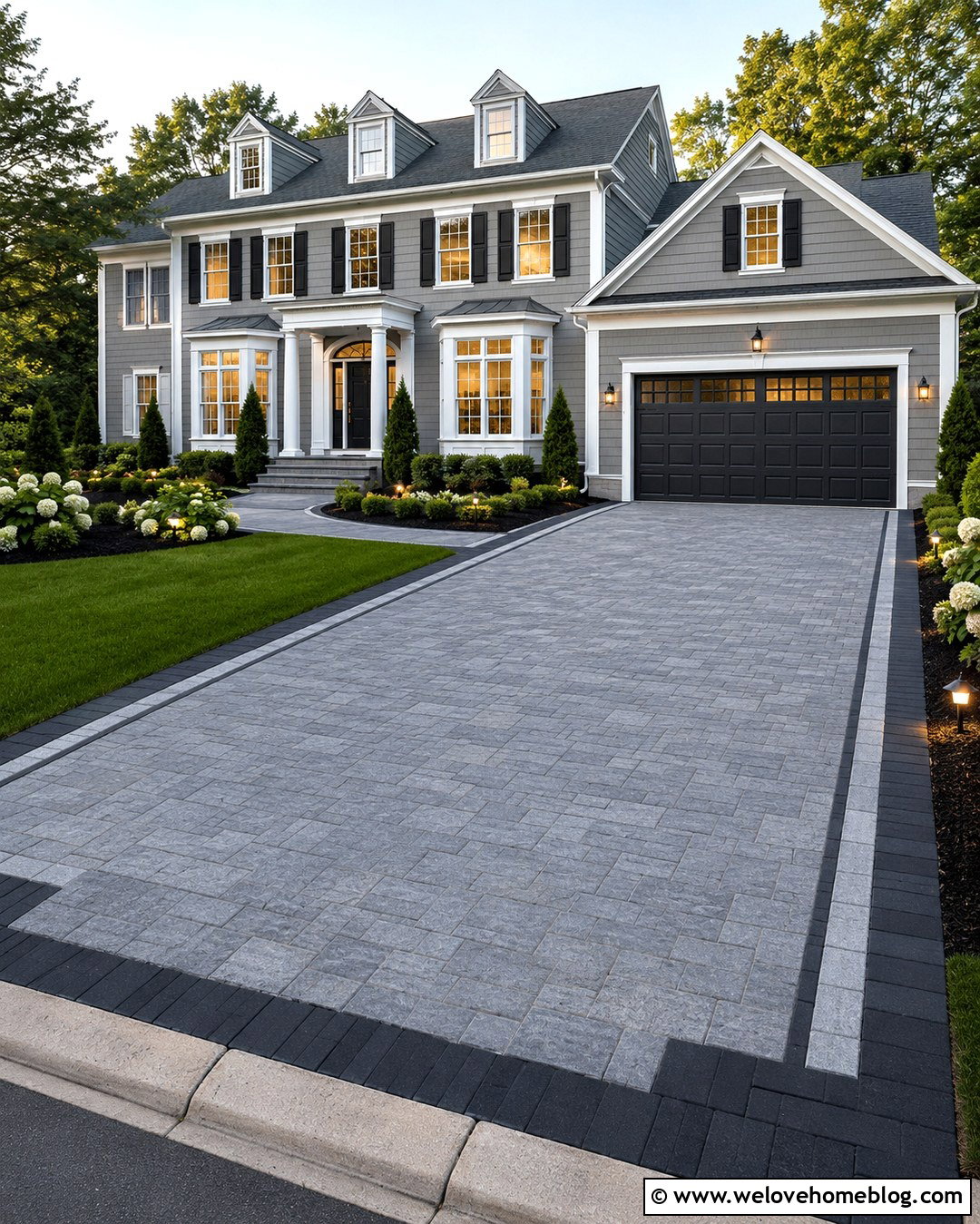
A dark border is one of the simplest ways to give a Cambridge pavingstone driveway stronger definition. Choose a medium-gray Ledgestone field in Limestone Quarry Blue or Bluestone Blend, then frame it with Coal pavingstones installed in a soldier course. Extend the border across the garage threshold and curb apron so the driveway reads as one complete composition. For greater depth, add a thin inner band in a lighter gray before the Coal edge. Black mulch, deep green evergreens, and white flowering plants reinforce the restrained color palette. Position low-voltage path lights beside the border instead of within the driving surface. This clean combination complements gray craftsman homes, modern colonials, and houses with black roofing. It also helps separate similar-toned paving from surrounding concrete sidewalks and curbs.
10. Cambridge Driveway With Double Paver Border
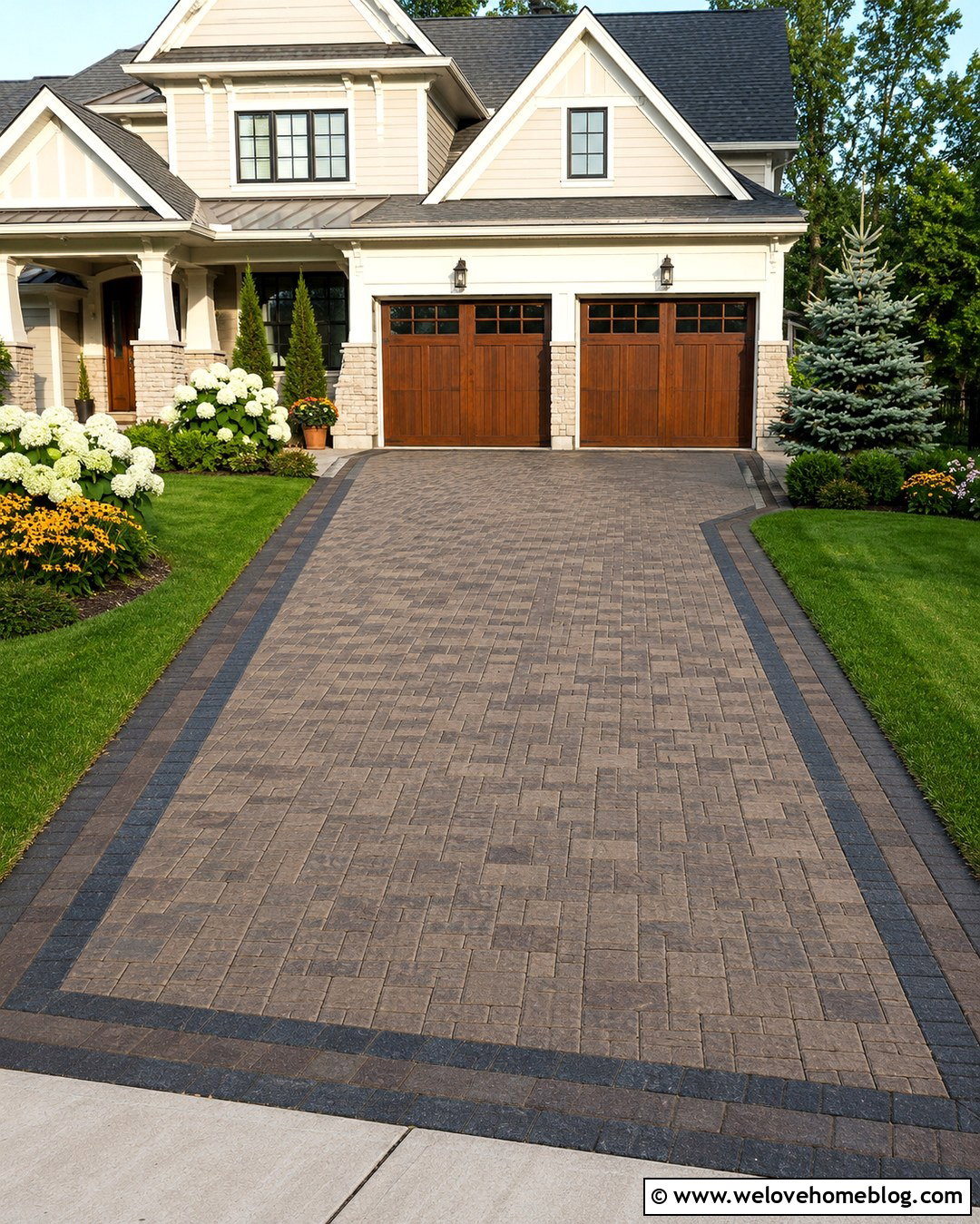
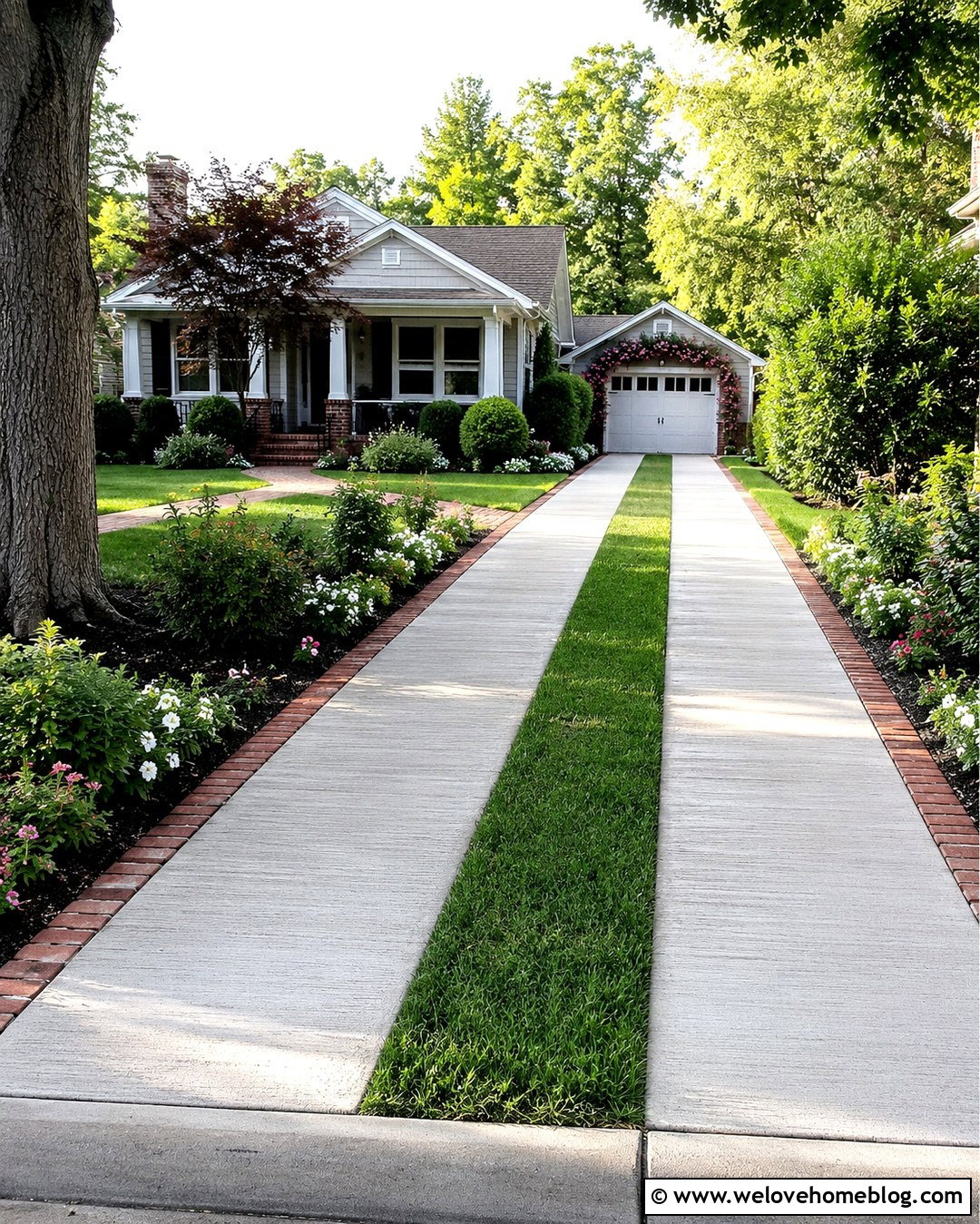
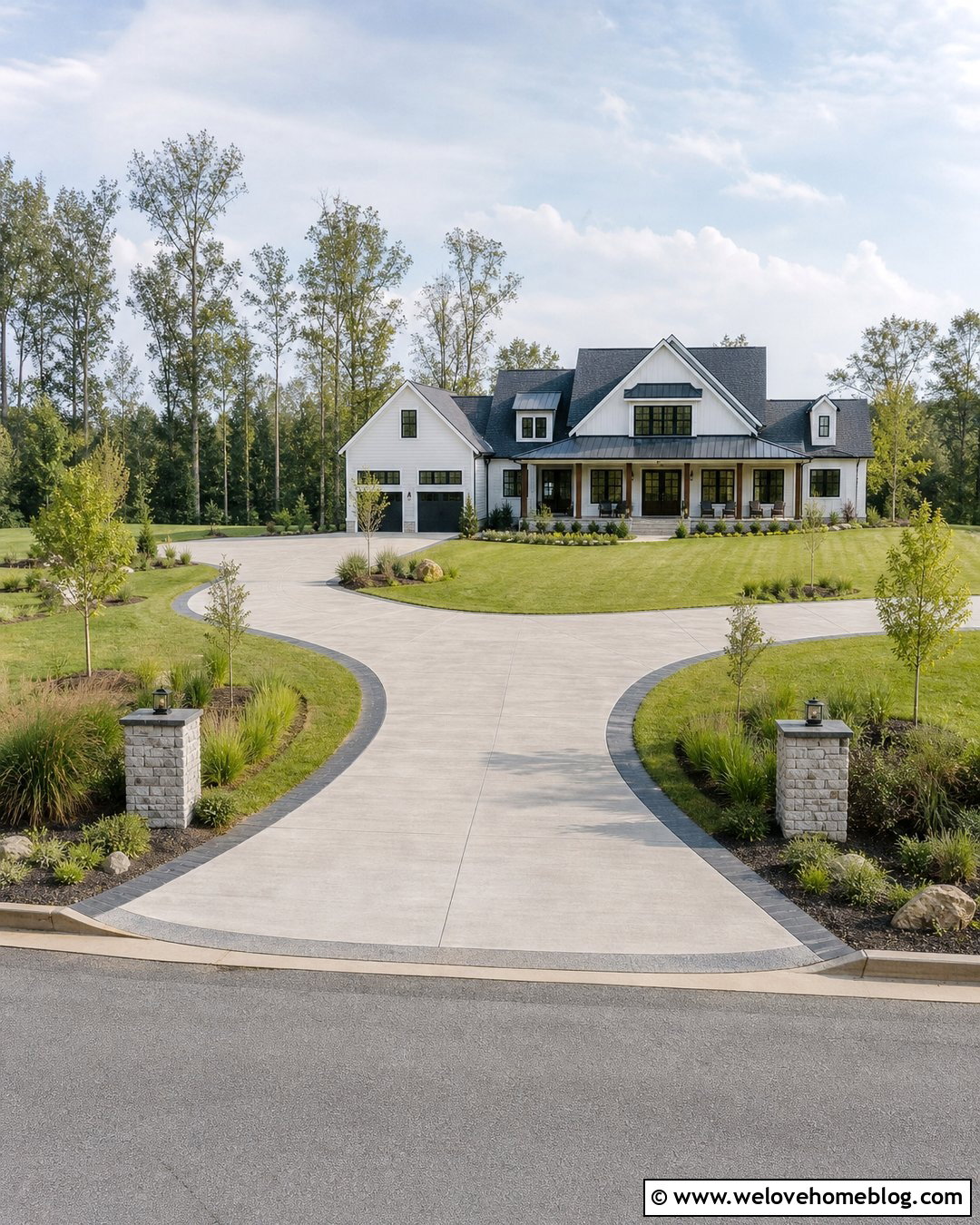
Two coordinated borders can make a wide driveway feel more detailed and appropriately scaled. Use Cambridge Ledgestone 3-Pc. pavingstones in Toffee/Onyx for the main field. Install a narrow inner border in Mocha, followed by a wider outer soldier course in Onyx. The first band blends with the field, while the second creates a clean stopping point against the lawn and planting beds. Repeat both colors in a rectangular apron near the garage to create a balanced finish. Warm masonry columns, wood garage doors, and cream-colored siding will connect naturally with this palette. Add broad beds of hydrangeas, dwarf spruce, and seasonal flowers along the driveway edges. The layered border provides enough visual interest that the center can remain in a simple random pattern without appearing unfinished.
11. Cambridge Brick Look Paver Driveway
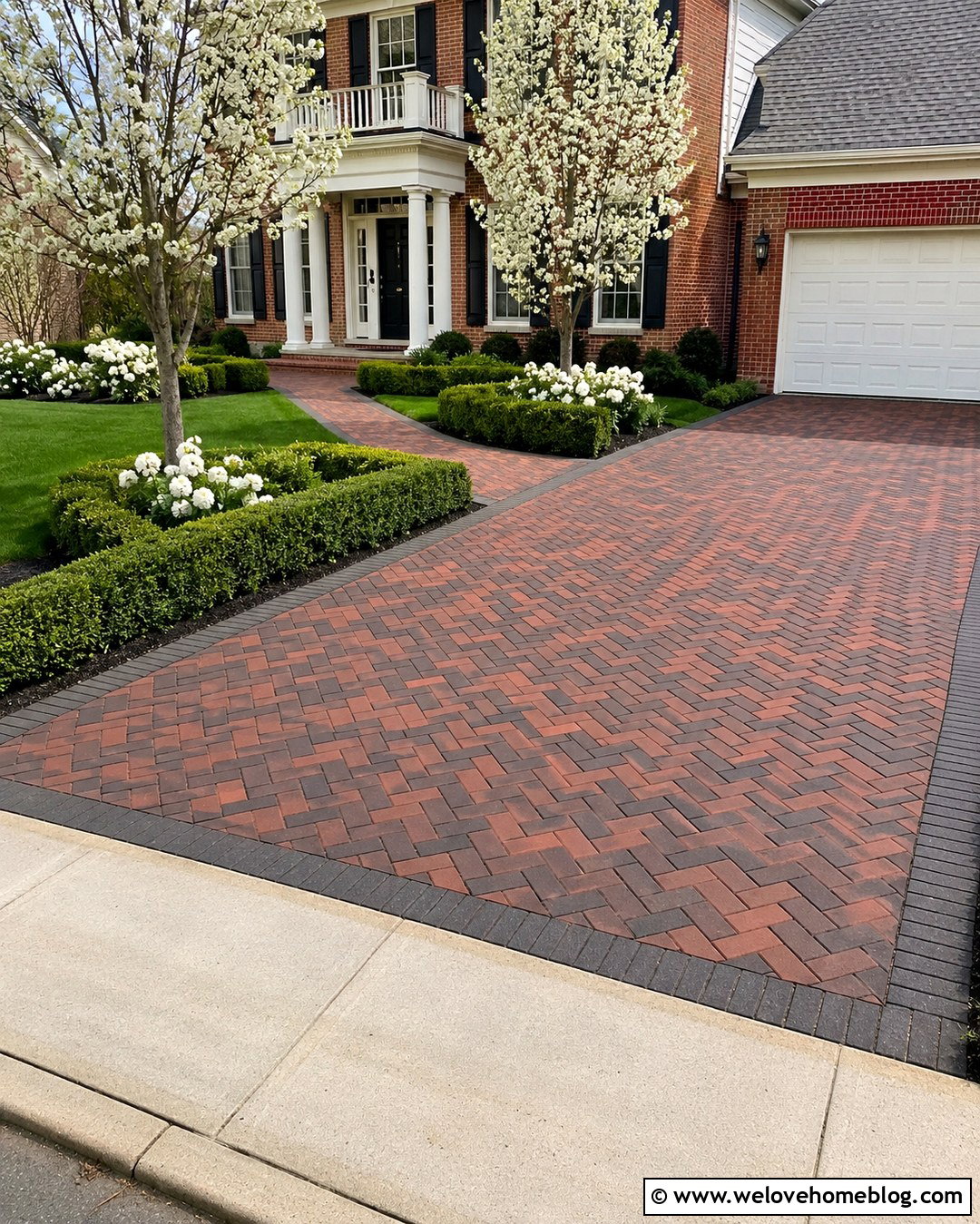
For classic brick character without using traditional clay brick, select Cambridge rectangular pavingstones in a rich Ruby/Onyx blend. Lay the main driveway in a 45-degree herringbone pattern, then surround it with a straight Coal soldier course. The dark border controls the red tones and connects them with black shutters or a dark roof. Use the same pavers in a running bond for the walkway, allowing the pattern change to distinguish pedestrian space from the driveway. Along the edges, add clipped boxwood, white roses, and small flowering trees for a formal but approachable landscape. This complete look fits a colonial or Georgian-inspired home particularly well. Ask to see physical product samples outdoors, since blended pavingstone colors can vary across units and may look different under changing daylight conditions.
12. Cambridge Driveway With Belgium Paver Edging
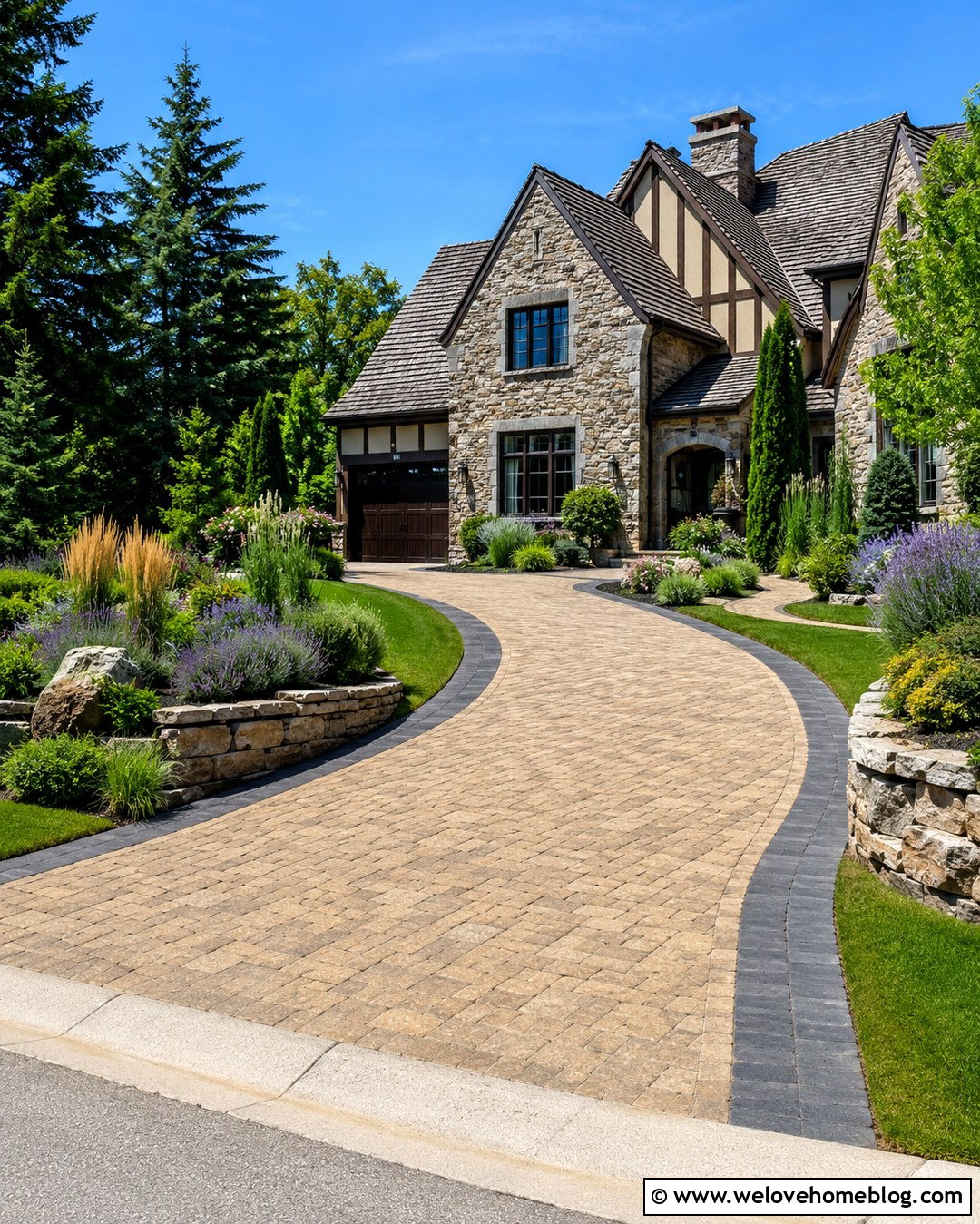
Textured Belgium-style edging gives a Cambridge driveway a substantial, old-world frame. Create the main field with Ledgestone 3-Pc. pavingstones in Sandstone Blend, arranged in a random modular pattern. Use Cambridge Belgium pavingstones in Coal as a wide border around the driveway and entrance apron. The irregular-looking texture contrasts with the flatter field while adding a durable visual transition beside planting beds. Cambridge’s current catalog shows Belgium design kits used as contrasting borders with Ledgestone surfaces. () Complete the setting with natural stone retaining walls, layered evergreens, lavender, and ornamental grasses. A gently curved layout will make the border more noticeable from the street. This design pairs well with Tudor, European-inspired, and stone-front homes, especially when the border color repeats tones found in the roof or facade.
13. Cambridge Driveway With River Rock Accent
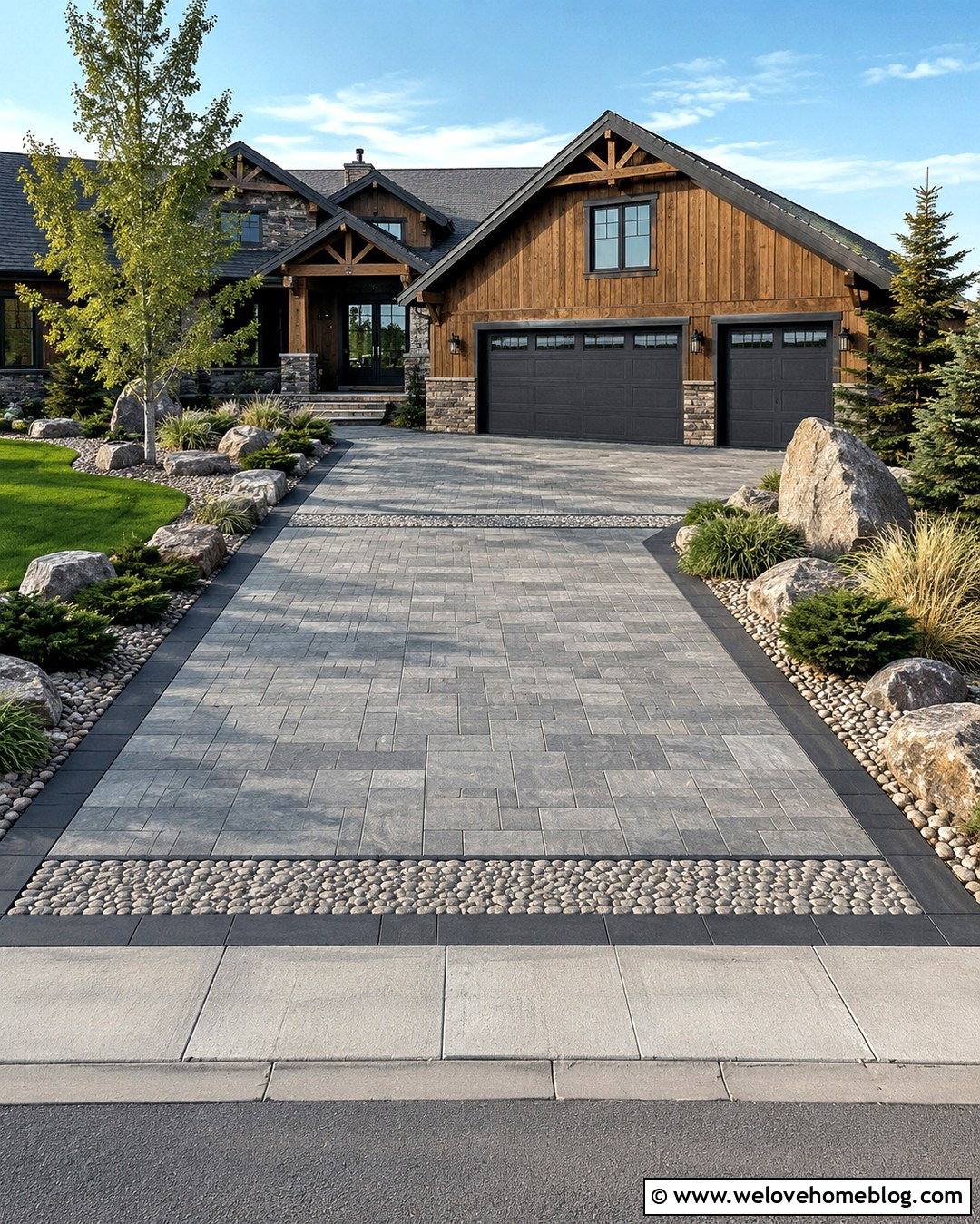
A River Rock accent can add texture without making the driving surface feel uneven or overly rustic. Start with a Cambridge Ledgestone field in Onyx/Natural, using a random three-size pattern. Create a decorative River Rock inlay across the entrance apron, then repeat it as a narrow band near the garage. Frame each accent with smooth Coal pavers so the transition looks deliberate. Keep the remaining perimeter simple with a matching Coal soldier-course border. In the surrounding yard, use smooth landscape boulders, feathery grasses, low junipers, and a small dry-creek feature that visually connects with the textured inlay. This complete driveway works particularly well with a rustic contemporary or mountain-inspired house. Reserve strongly textured products for accents and confirm their intended vehicular application with the installer before finalizing the plan.
14. Cambridge Pavers For A Small Driveway
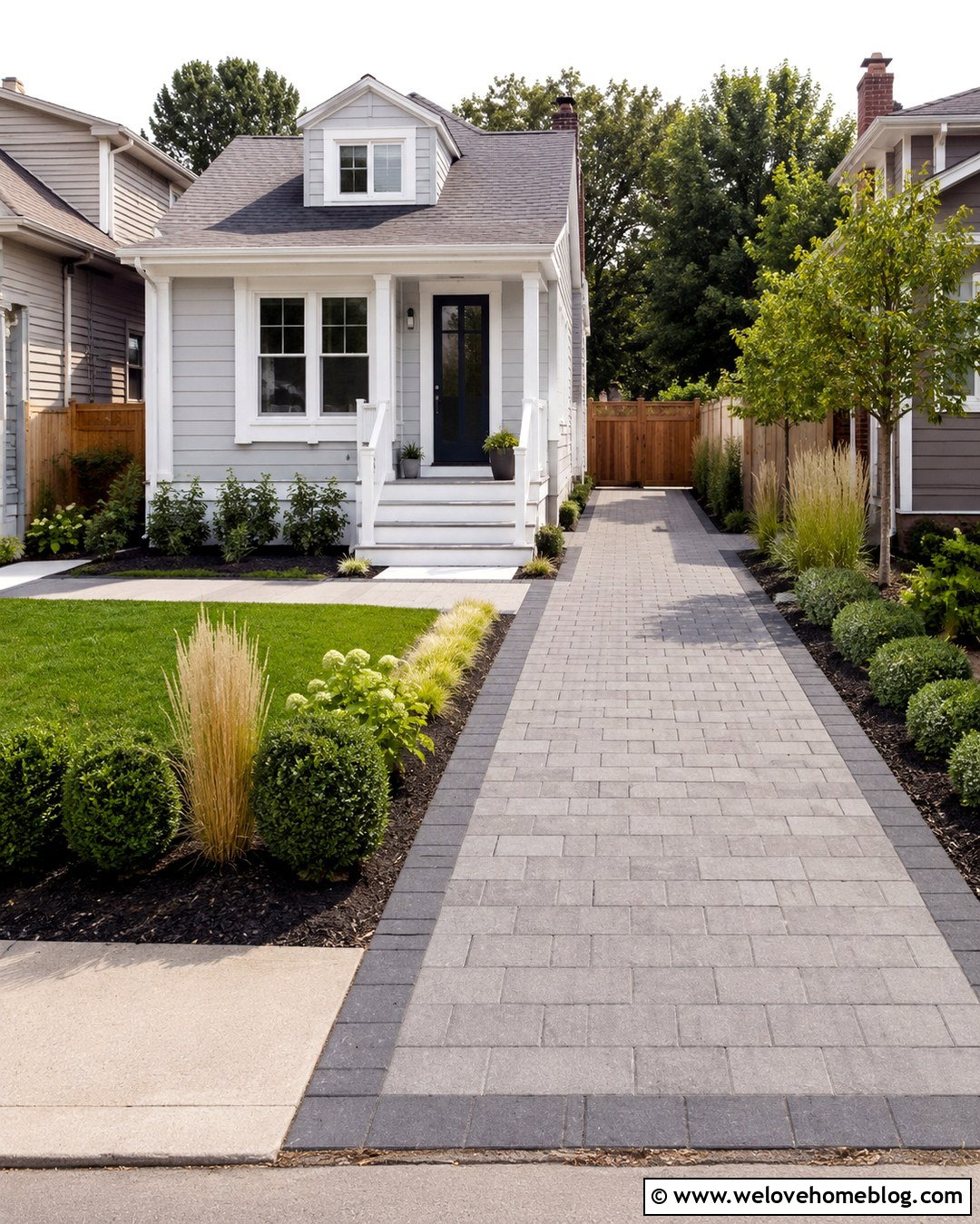
A compact driveway benefits from a limited color palette and a pattern that does not overwhelm the space. Use small or medium Cambridge pavingstones in Sandstone Lite, installed in a simple running bond parallel to the house. A narrow Mocha border will define the perimeter without reducing the driveway’s apparent width. Continue the same field paver into the front walkway so both surfaces feel connected. Where the walkway branches away, rotate the laying direction to mark the transition. Keep landscaping slim with upright evergreens, low flowering ground cover, and a narrow mulch bed beside the property line. Avoid bulky pillars or wide retaining walls near the curb. This bright, orderly design suits a Cape Cod cottage, townhouse, or small ranch and makes the entire front yard appear more cohesive.
15. Cambridge Pavers For A Long Driveway
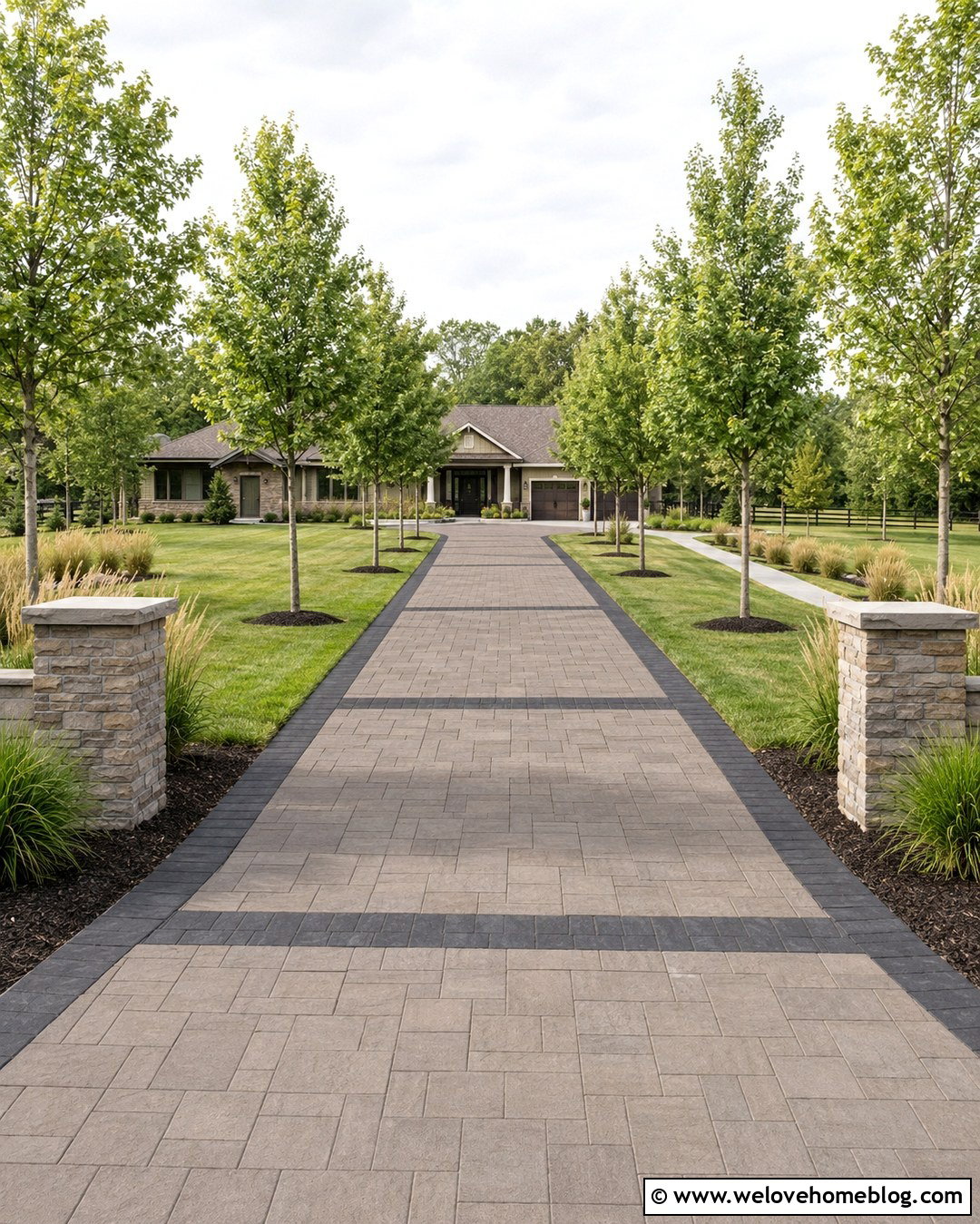
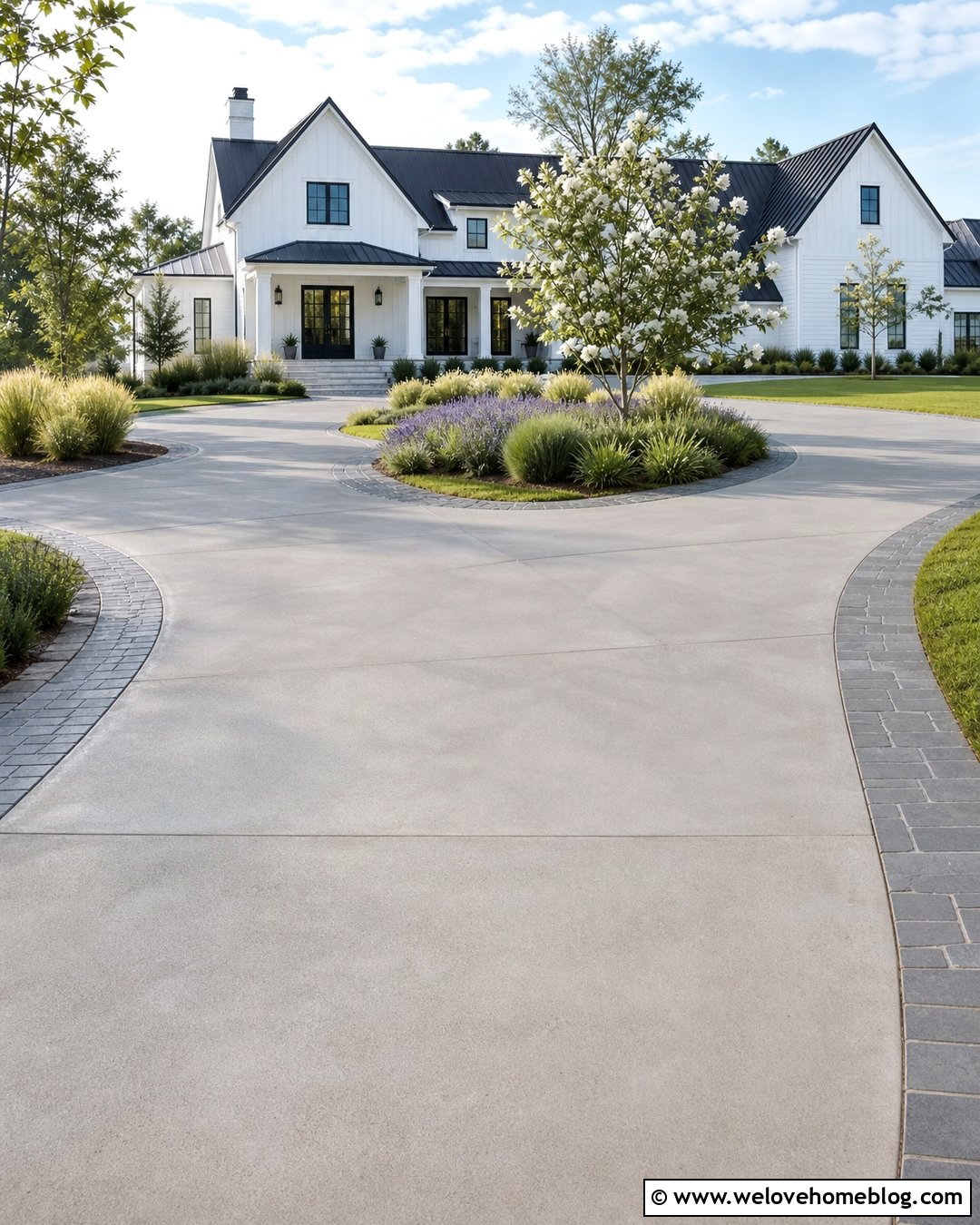
A long driveway needs repeating details that guide the eye without creating constant visual noise. Install Cambridge Ledgestone pavingstones in Driftwood using a relaxed random layout. Add a Coal border along both sides, then place matching crossbands at the entrance, halfway point, and garage apron. These bands divide the length into balanced sections while maintaining one continuous surface. Line the approach with evenly spaced deciduous trees, leaving enough clearance for mature trunks, branches, snow storage, and vehicle visibility. Beneath the trees, use broad lawn strips and simple masses of ornamental grass rather than many small flower beds. Low stone entrance pillars can repeat colors from the paving. This complete composition suits country homes, ranch properties, and wooded suburban lots where the driveway forms a major part of the arrival experience.
16. Cambridge Pavers For A Sloped Driveway
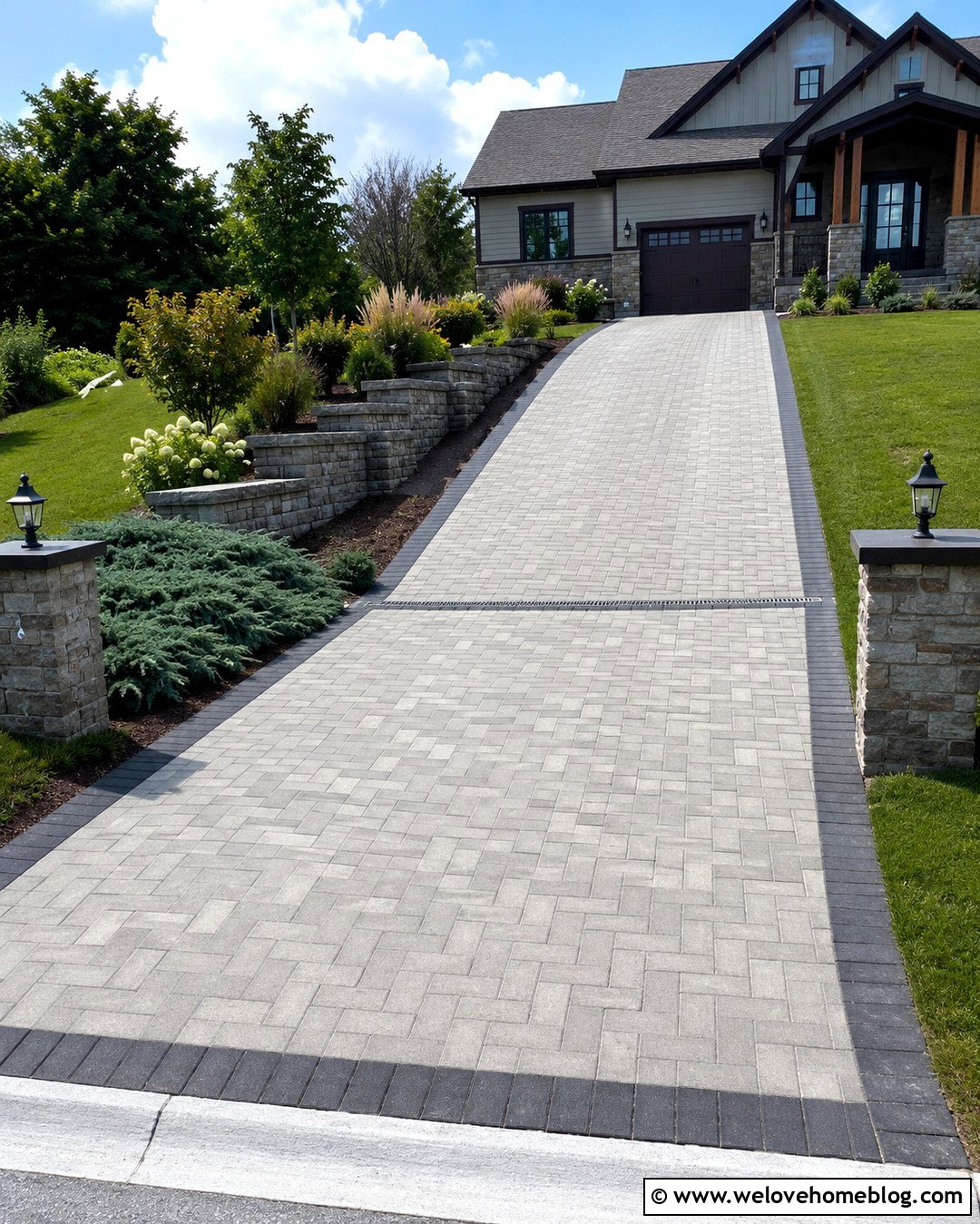
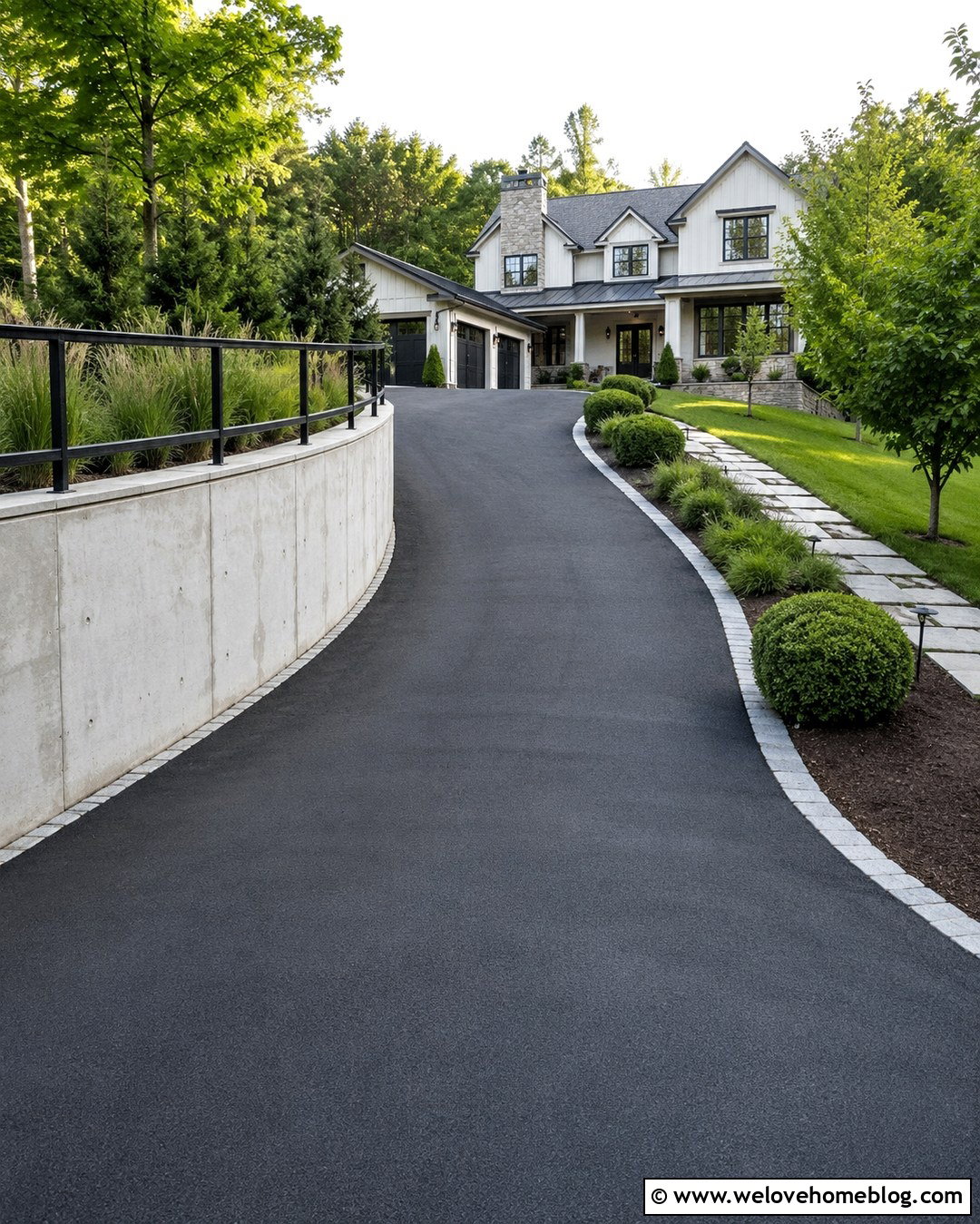
On a sloped site, paving pattern, drainage, borders, and retaining features must work as one system. Use Cambridge rectangular pavingstones in Bluestone Blend arranged in herringbone to emphasize the direction of travel. Frame the surface with drive-rated Coal border pavers and stable edge restraints. Along the higher side, install a stepped retaining wall with planting pockets for spreading juniper, ornamental grasses, and compact hydrangeas. Keep the lower side more open so runoff can move toward properly designed drainage infrastructure. A channel drain near the garage may be appropriate depending on grading and local conditions. Add low retaining columns and bright address lighting at the entrance. Because slope, soil, climate, and vehicle loads affect base design, this driveway should be planned and installed by qualified local professionals.
17. Cambridge Pavers For A Side Entry Garage
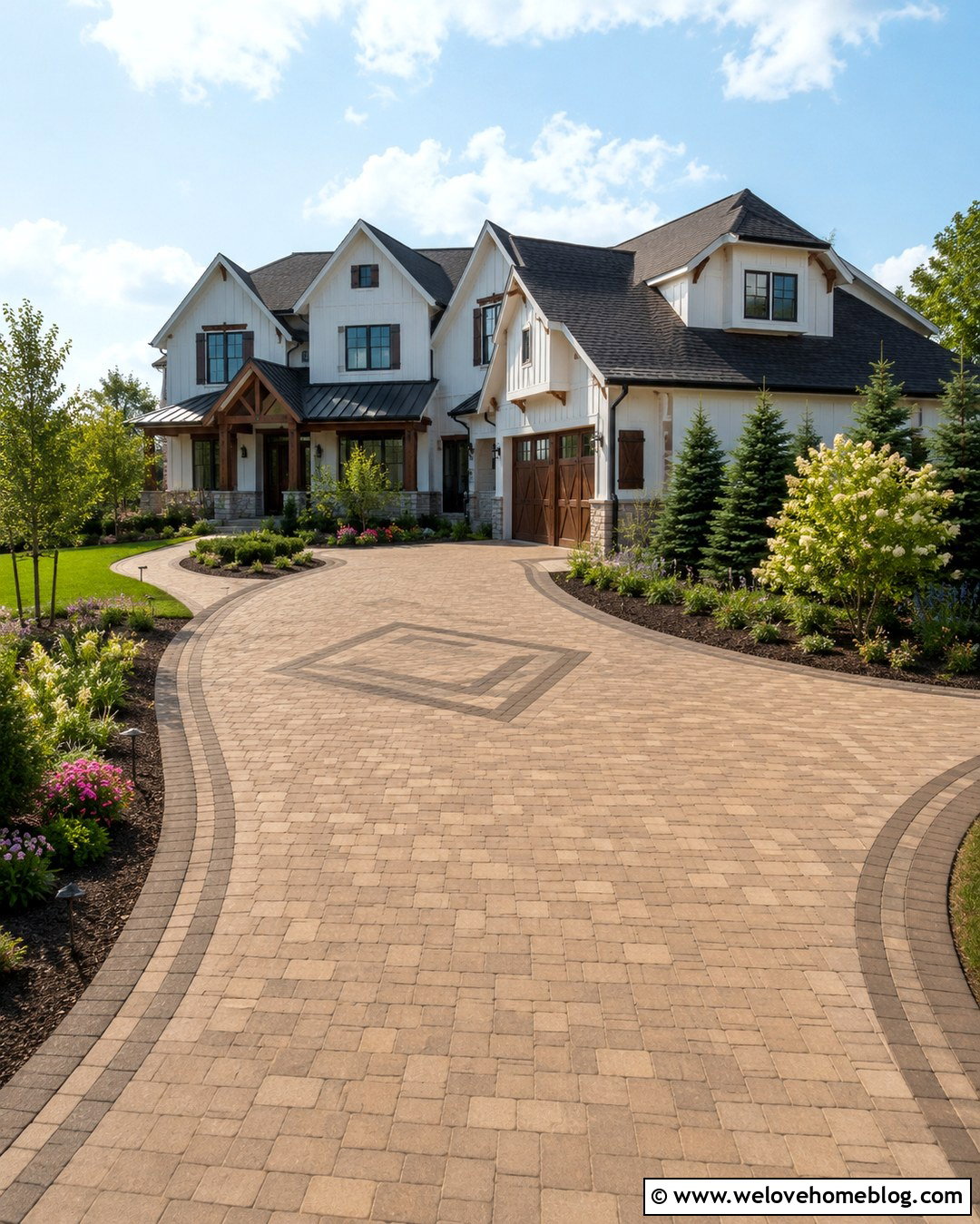
A side-entry garage keeps doors less visible from the street, but the driveway turn requires careful visual organization. Use Cambridge Ledgestone 3-Pc. pavingstones in Sahara/Chestnut Lite across a broad, gently curving approach. Define the turning zone with a large rectangular inlay laid in a different direction rather than adding another color. A Mocha border can follow the outer curve and continue around the parking court. Connect the front entrance with a narrower matching walkway that branches from the driveway before the turn. Plant a layered screen of evergreen shrubs between the parking area and front lawn, while keeping corners open for safe visibility. This complete arrangement complements modern farmhouse, craftsman, and traditional suburban homes and makes a large paved area feel intentionally divided into functional zones.
18. Cambridge Horseshoe Driveway With Pillars
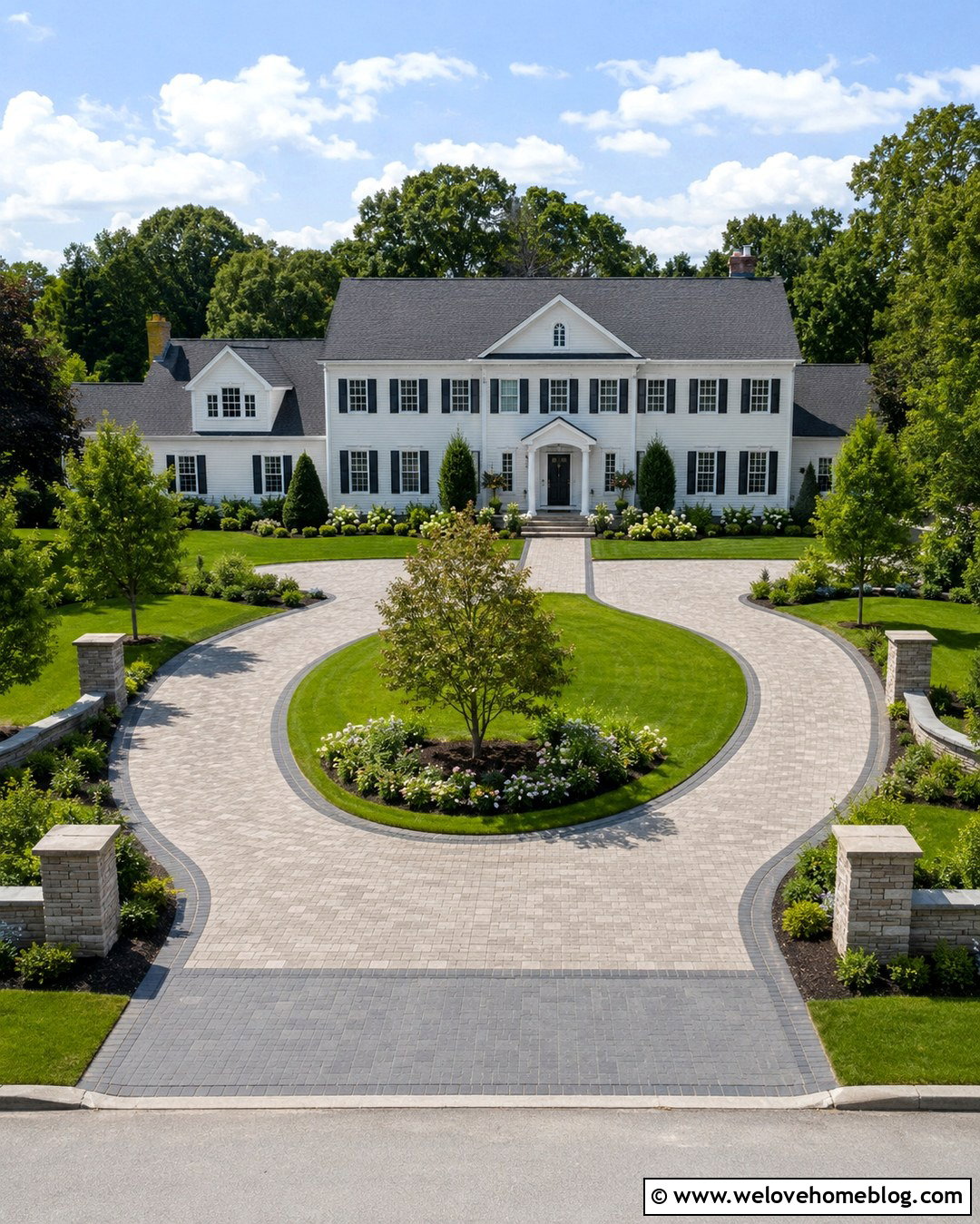
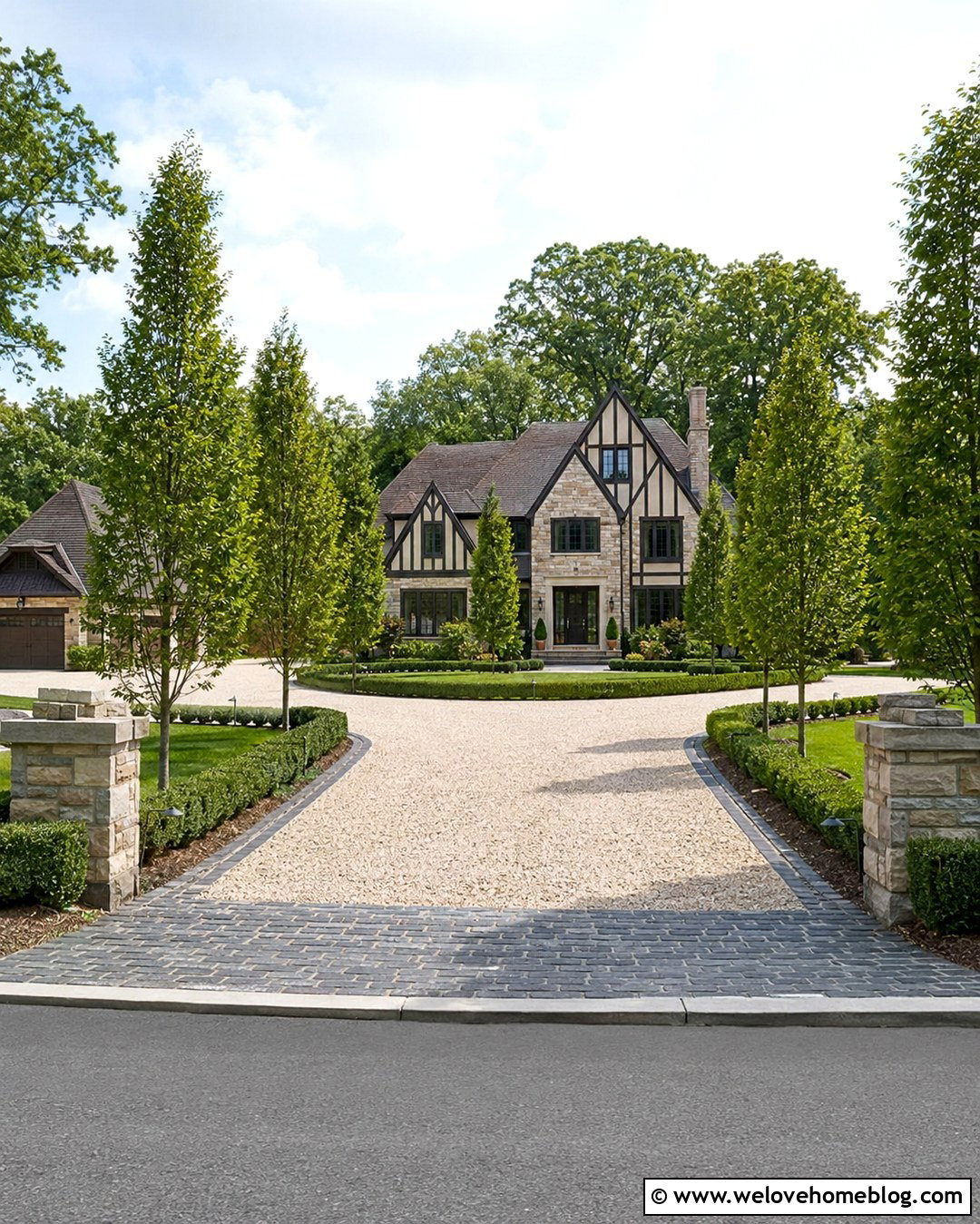
A horseshoe driveway creates two welcoming access points and allows vehicles to move through without backing toward the street. Use Cambridge pavingstones in Limestone Quarry Blend for the curved lane, installed in a random Ledgestone pattern. Outline both edges with Coal pavers, then widen the border at each entrance to create clearly marked aprons. Add matching Cambridge wallstone pillars with natural stone caps, placing them far enough from the travel path for comfortable clearance. Within the center lawn, plant one specimen tree surrounded by a broad circular bed of low shrubs and seasonal flowers. Keep taller plants away from both exits to protect visibility. A centered walkway can connect the island side of the driveway with a colonial or estate-style home, reinforcing the layout’s formal symmetry.
19. Cambridge Coastal Driveway In Stone Harbor
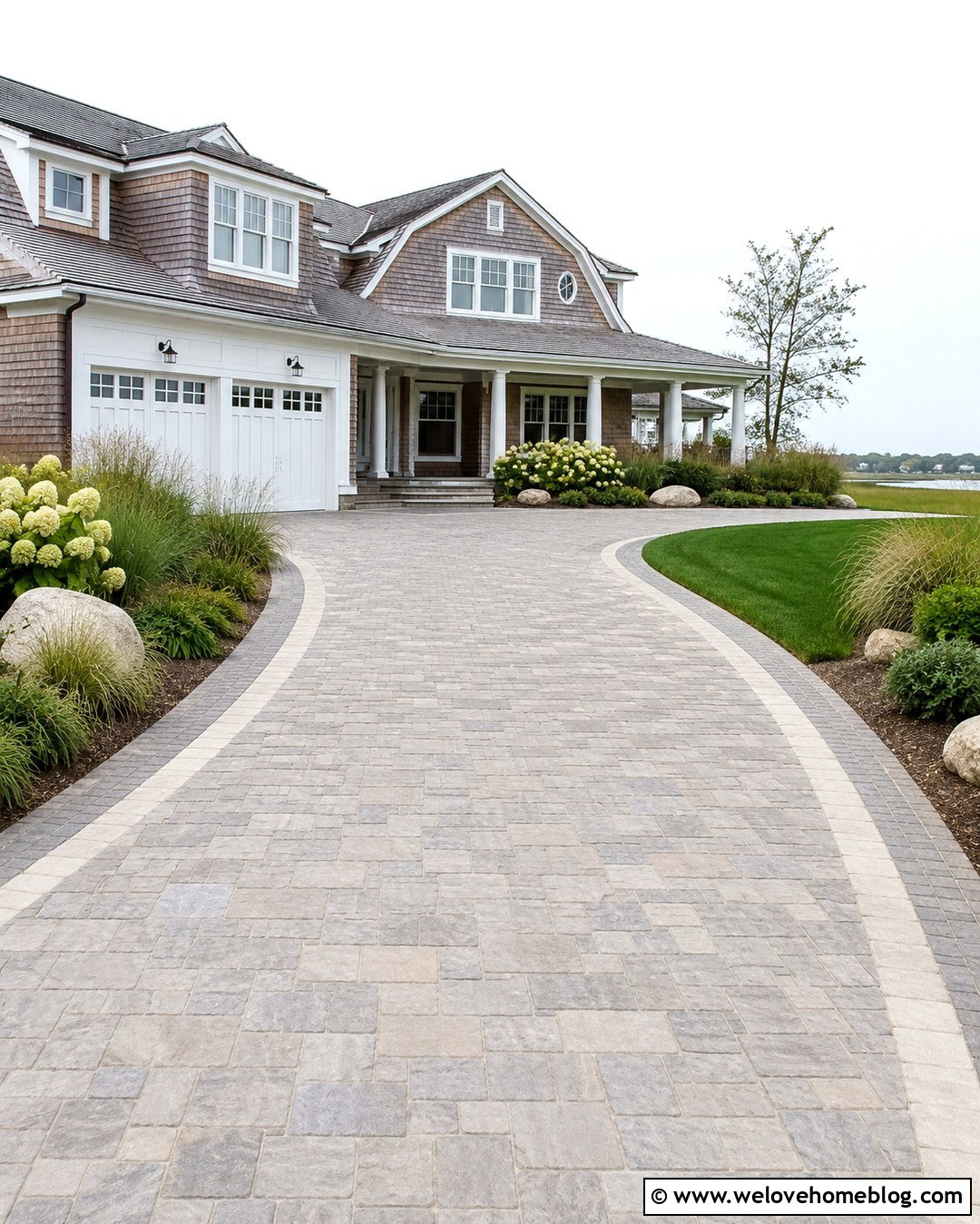
Cool Stone Harbor tones create a relaxed driveway palette for a coastal or shingle-style home. Choose Cambridge textured pavingstones in a soft blend of gray, taupe, and weathered beige. Install them across a gently curved driveway with a simple random layout. Use an Onyx/Natural border instead of a very dark edge, keeping the contrast soft and sun-washed. Add a wide paver apron beside the garage for convenient turning, then connect it to a matching walkway leading toward the porch. Surround the driveway with beach grass, inkberry holly, hydrangeas, and pale landscape stone. Avoid filling every edge with plants; areas of lawn give the textured paving room to stand out. White siding, cedar shingles, and light stone veneer complete the easy coastal appearance.
20. Cambridge Driveway With Matching Walkway
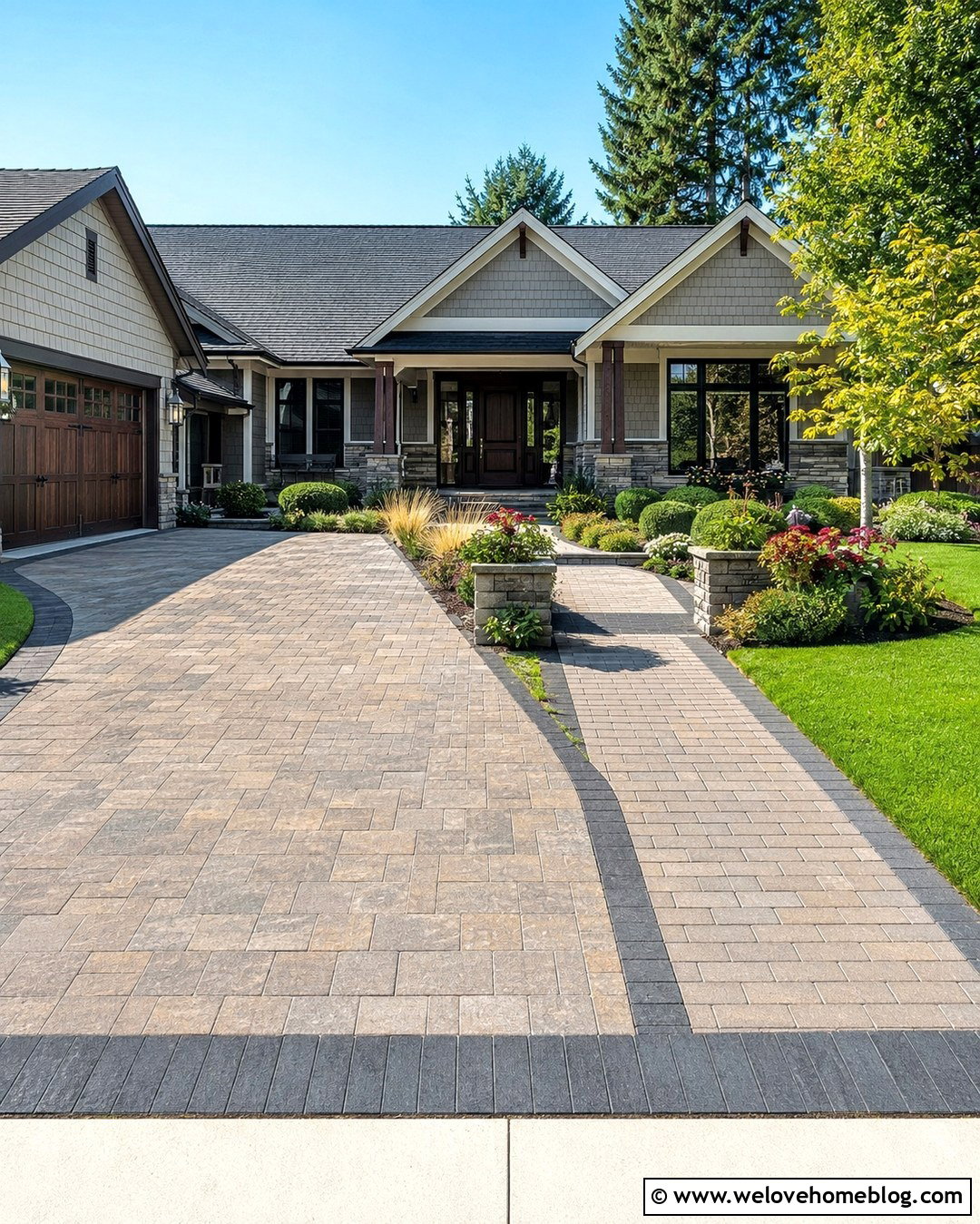
The driveway and front walkway should feel coordinated, but they do not need to use the exact same layout. Create the driveway with Cambridge Ledgestone 3-Pc. pavingstones in Toffee/Onyx Lite and a Coal soldier-course border. Use the same color blend for the walkway, switching to a smaller rectangular paver or a running bond pattern for clearer pedestrian scale. Where the path meets the driveway, add a wider Coal band that acts as a visual threshold. Repeat the paving colors in low wallstone planters beside the front steps. Rounded shrubs, ornamental grasses, and flowering perennials can frame the walkway while the driveway edges remain mostly open. Using one color family across connected hardscapes is a practical way to create cohesion while pattern and scale provide subtle variation. ()
Conclusion:
The best Cambridge Pavingstones Driveway Ideas combine surface color, paver scale, pattern, borders, landscaping, and architecture into one coordinated design. Textured Ledgestone can soften a traditional home, while smooth gray pavingstones suit cleaner modern facades. Coal borders add definition, warm blends make an entrance feel inviting, and permeable systems offer another option for drainage-conscious projects. Whatever look you prefer, begin with the driveway’s practical requirements. Consider vehicle loads, turning space, grading, drainage, edge support, and winter maintenance before choosing decorative details. Review physical samples beside the house and compare them in sun and shade. Finally, use an experienced pavingstone contractor to prepare the base and install the selected pattern correctly.

Related posts:
Leave a Reply