
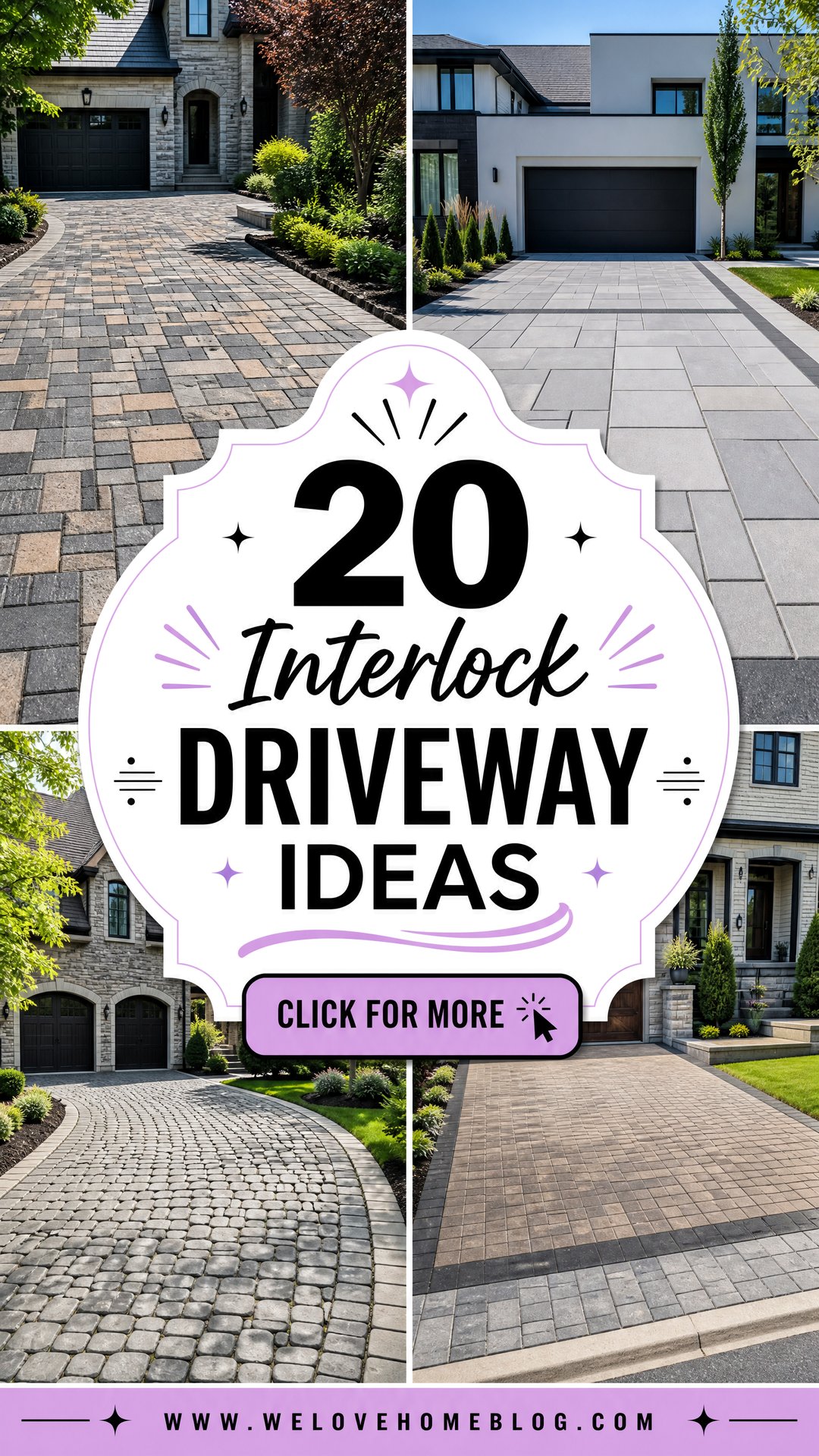
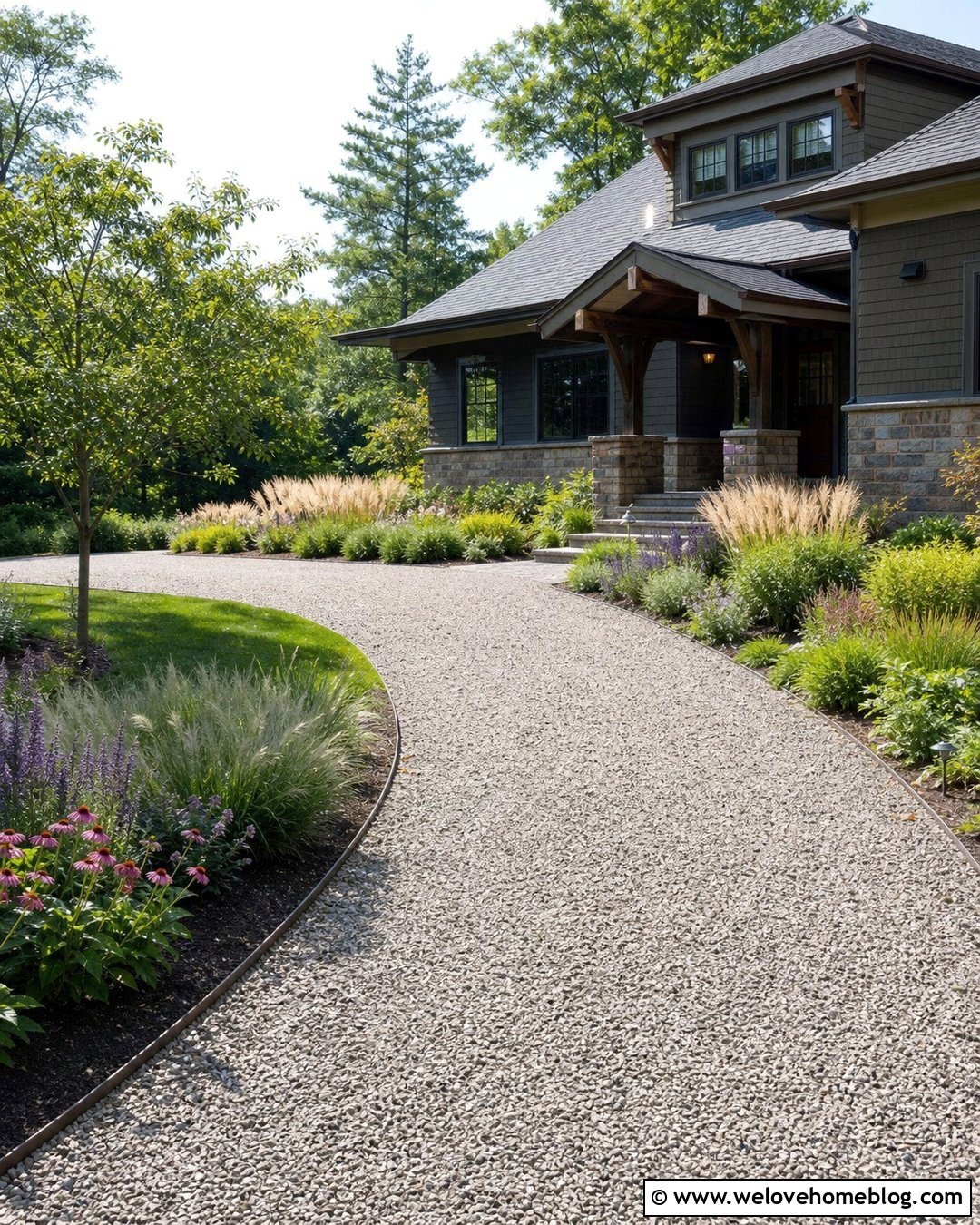
Interlock driveway ideas can turn a practical parking area into a polished part of your home’s exterior. Interlocking concrete pavers come in many colors, shapes, sizes, and laying patterns, making them suitable for traditional, modern, rustic, and transitional houses. The strongest designs consider the entire approach rather than focusing only on the pavers. Pattern direction, driveway shape, contrasting borders, drainage, walkways, and landscaping should all feel connected. Herringbone remains a popular choice for vehicle areas, while running bond, random ashlar, and geometric layouts offer different visual effects. A properly prepared base and secure edge restraints are also essential for lasting results. Use these **20 Interlock Driveway Ideas** to find a complete look that complements your home, lot size, and everyday parking needs. ()
1. Herringbone Interlock Driveway
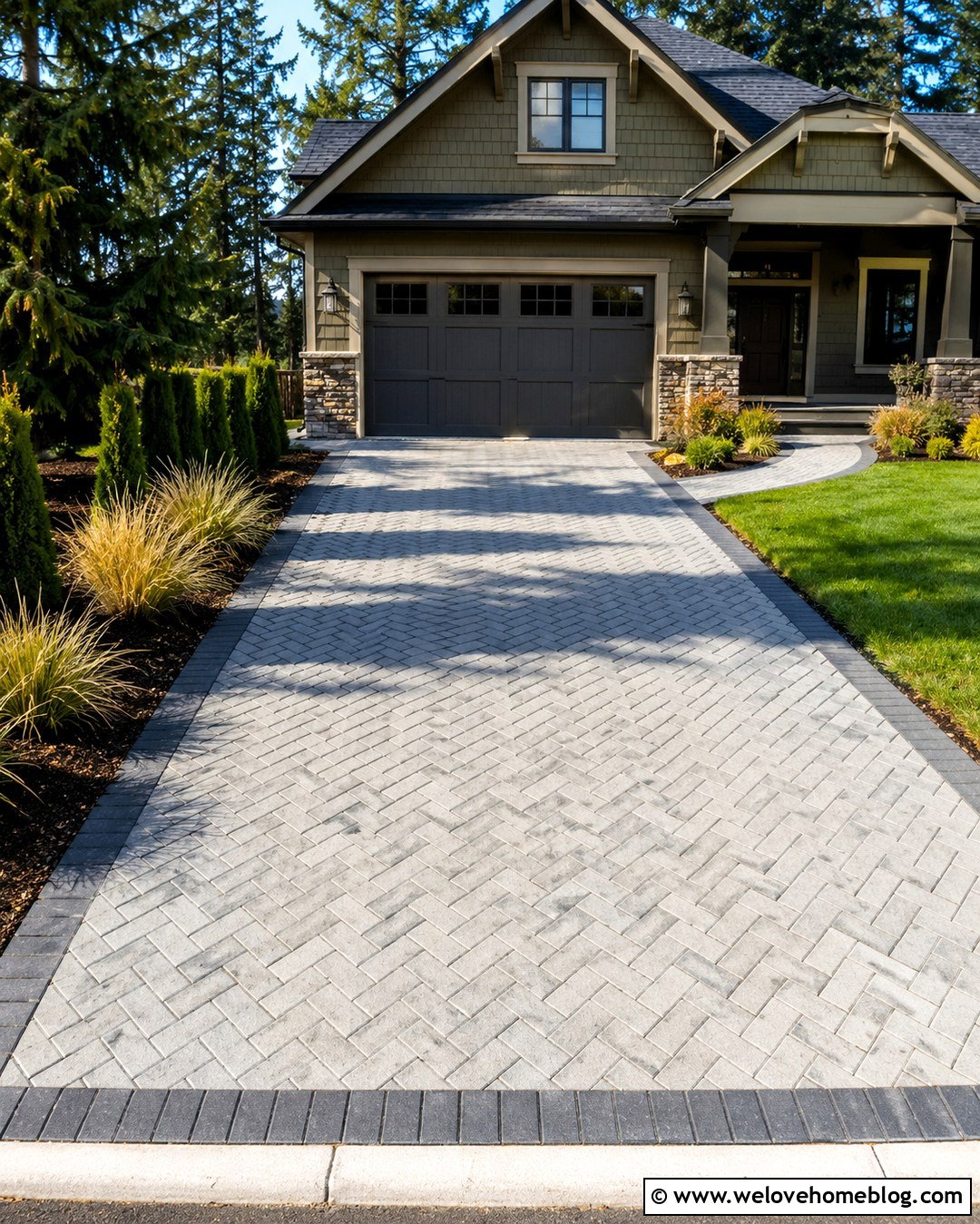
A herringbone interlock driveway creates a structured surface with plenty of visual movement. Rectangular concrete pavers are positioned in a repeating zigzag pattern, usually at a 45- or 90-degree angle. This tightly connected layout works especially well on busy driveways because the pattern directs attention across the surface instead of emphasizing long joints. Choose medium-gray pavers with a charcoal soldier-course border for a versatile look. A straight layout can lead toward a craftsman garage, while low evergreen beds and ornamental grasses soften both sides. Continue the same border around the walkway to make the entrance feel coordinated. Because herringbone involves numerous edge cuts, careful planning and professional installation can produce a cleaner, more balanced finish. ()
2. Running Bond Interlock Driveway
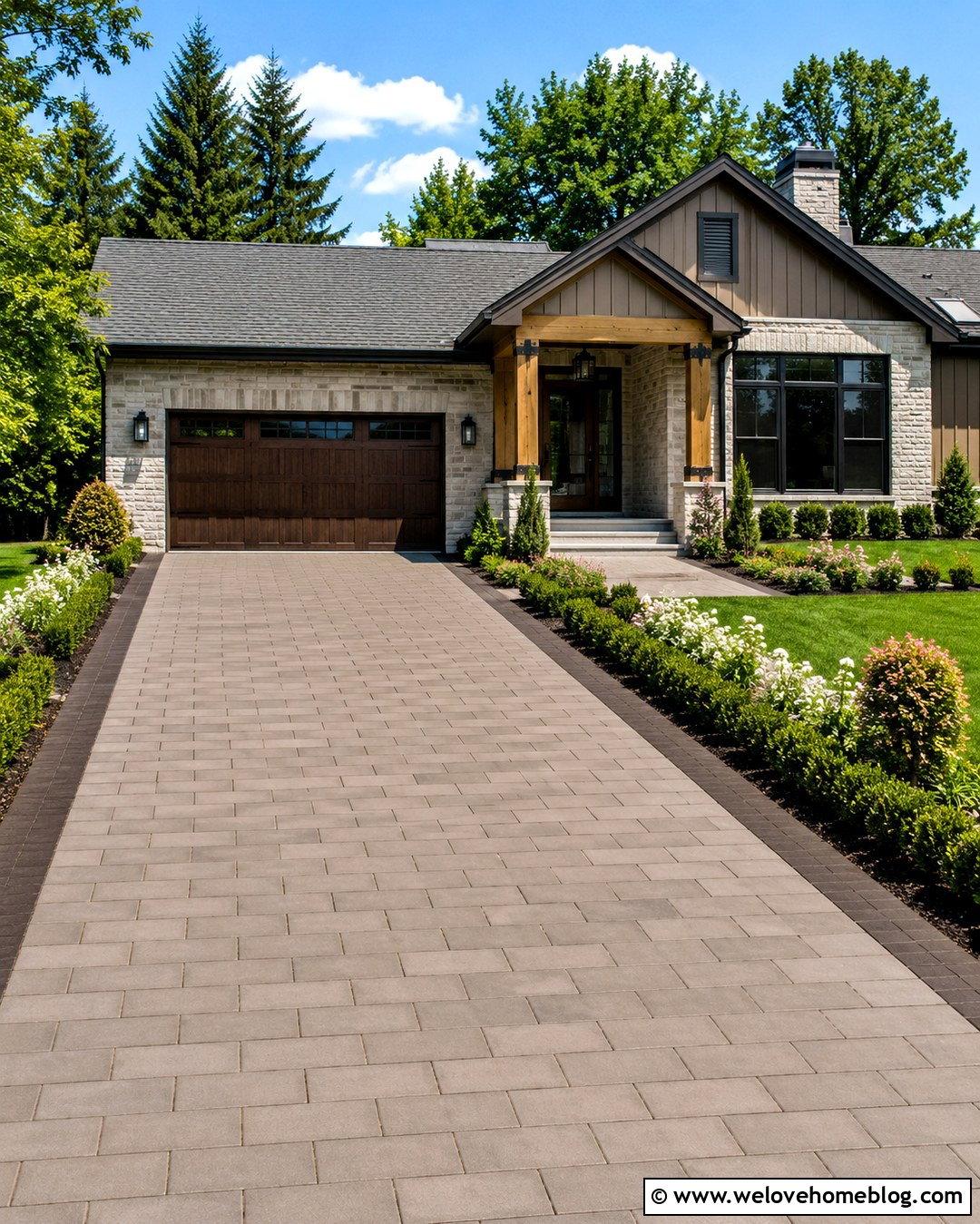
For a calm and uncluttered appearance, consider a running bond interlock driveway. Rectangular pavers are installed in offset rows, creating a familiar pattern that can visually lengthen a short approach. Lay the rows in the direction of travel to guide the eye toward the garage and front entrance. Smooth taupe pavers with a dark brown border would complement a warm contemporary or ranch-style home. Keep the driveway straight, then add narrow planting beds filled with boxwoods, flowering perennials, and landscape gravel. A matching paver walkway can branch toward the porch without disrupting the clean geometry. Running bond looks simple, so accurate alignment matters. Straight border courses and a well-planned transition at the sidewalk help the finished driveway look intentional rather than plain. ()
3. Basket Weave Interlock Driveway
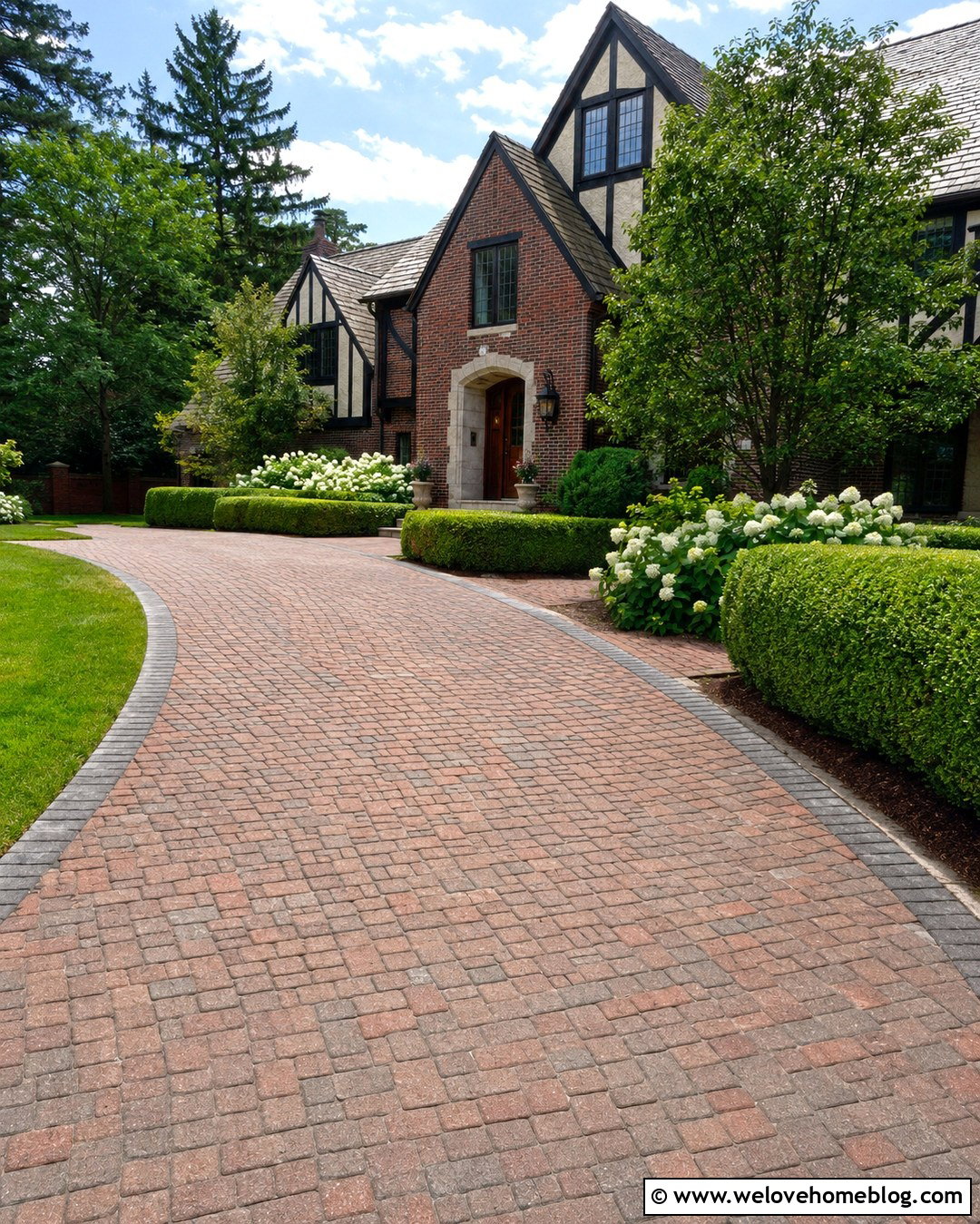
Would a traditional pattern suit your older home better than sleek oversized pavers? A basket weave interlock driveway uses pairs of rectangular units placed in alternating directions, forming a woven effect across the surface. This pattern looks especially appropriate beside Colonial, Tudor, and cottage-style architecture. Choose weathered red and brown concrete brick pavers, then frame the driveway with a solid charcoal border to control the busier interior pattern. A gently flared entrance can make the approach more welcoming and simplify turns from the street. Finish the design with clipped hedges, white flowering shrubs, and a brick walkway leading to the porch. Basket weave has rich texture, so keeping the landscaping orderly prevents the overall exterior from appearing overly detailed or crowded. ()
4. Random Ashlar Interlock Driveway
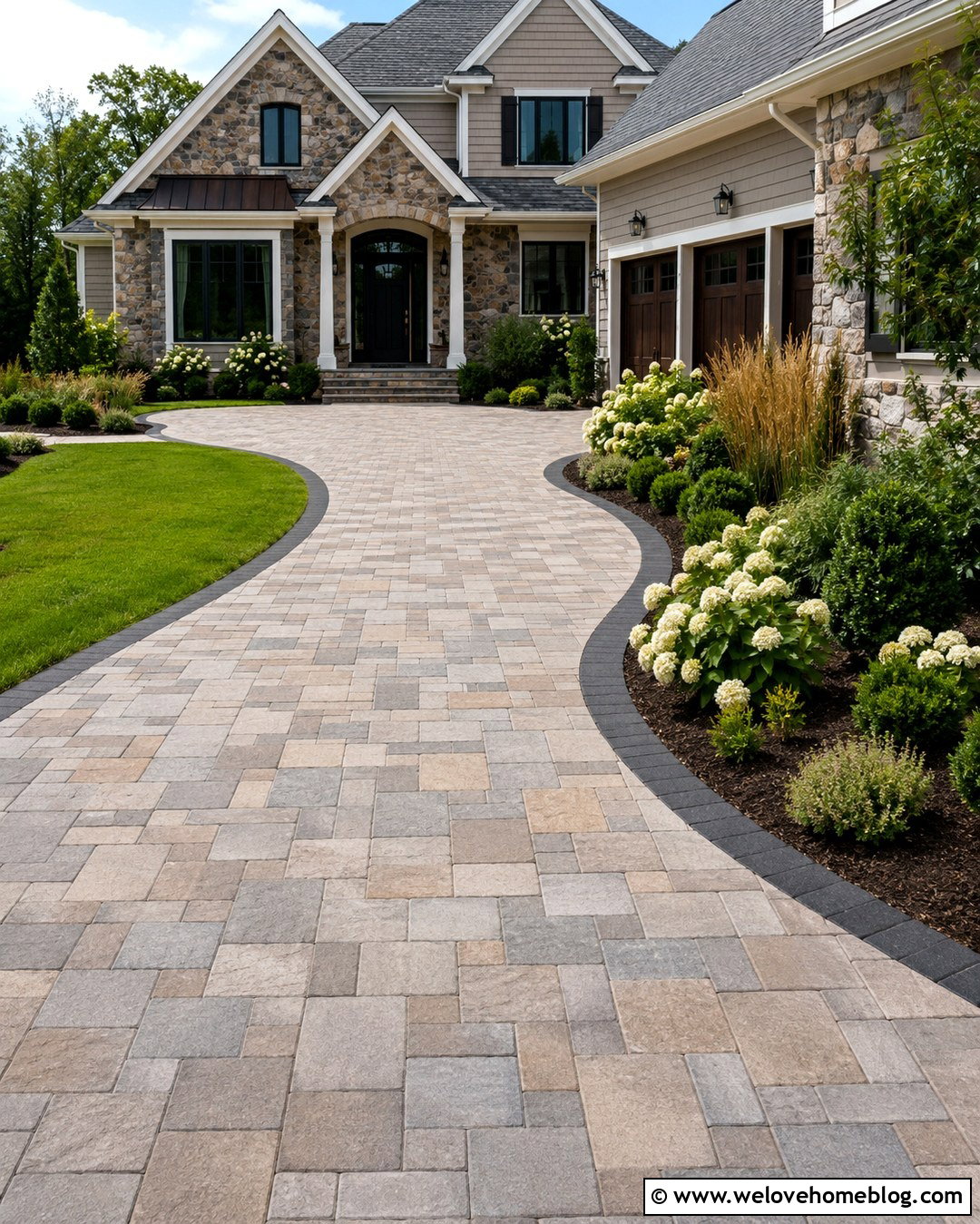
Large and small pavers arranged together can give a driveway the character of natural stone without requiring a rigid repeating pattern. A random ashlar interlock driveway combines several rectangular and square sizes in a carefully planned layout. Blended gray, tan, and muted brown pavers work beautifully with a stone-front house because the subtle color variation connects the paving to the facade. Use a curved driveway shape and a darker border to contain the mixed-size pattern. Broad beds of hydrangeas, dwarf evergreens, and ornamental grasses can follow the curve without hiding the paving. Although the arrangement appears spontaneous, the paver sizes should follow a coordinated installation plan. Repeating the same pavers on the front walkway helps the driveway and entrance read as one complete landscape. ()
5. Large Format Interlock Driveway
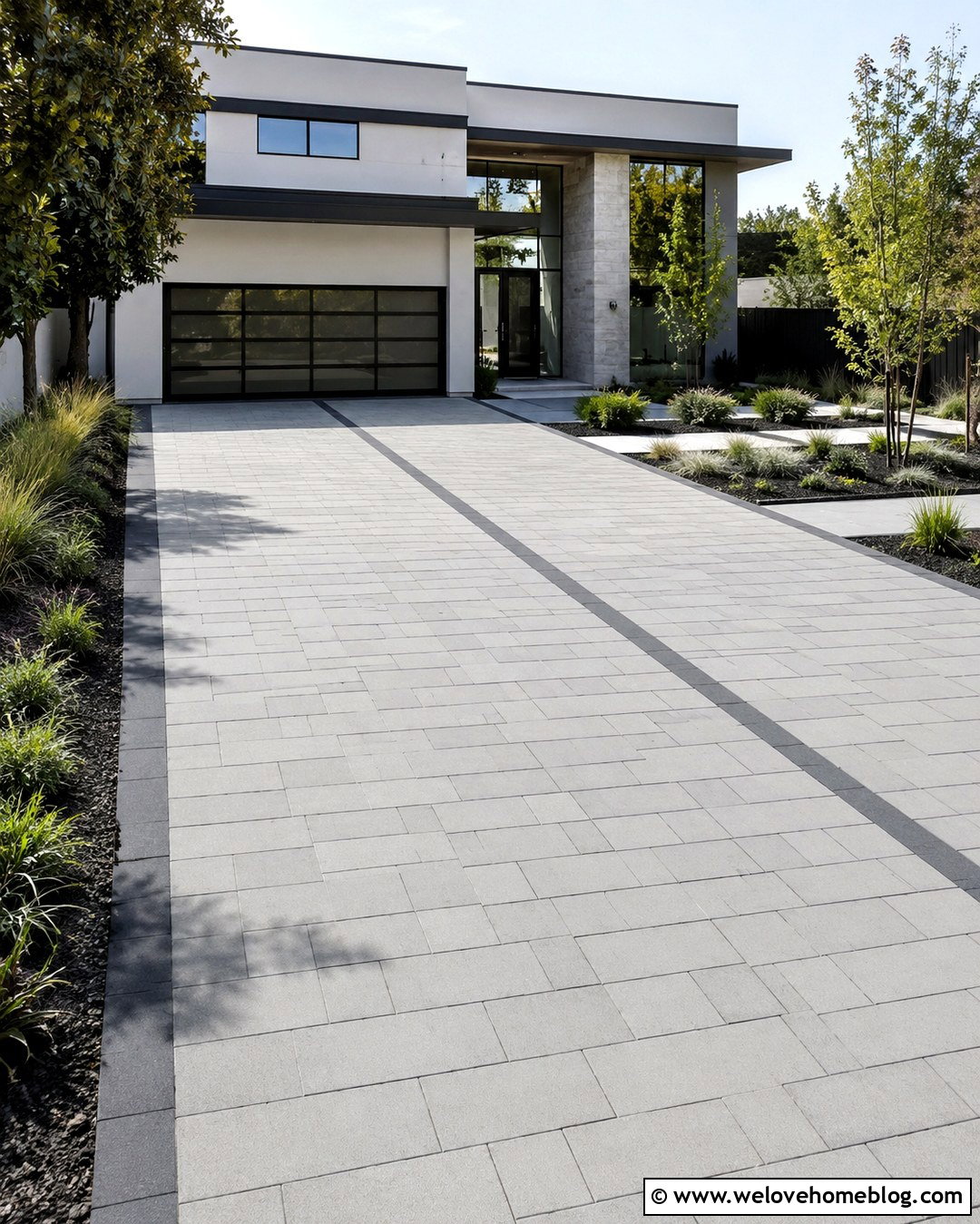
Crisp architecture often looks best with a large format interlock driveway. Oversized rectangular concrete pavers reduce the number of visible joints and create broad, orderly lines across the approach. Select smooth light-gray pavers and install them in a linear pattern leading toward a modern home. A narrow charcoal perimeter can sharpen the outline without distracting from the simple surface. On a wide driveway, a central band of darker pavers can separate parking spaces while adding definition. Surround the hardscape with architectural grasses, compact shrubs, and clean rectangular planting beds. The paver dimensions and thickness must be appropriate for vehicle use, not selected only for appearance. Coordinating the driveway grid with garage doors, windows, and walkway lines makes the entire frontage feel thoughtfully designed. ()
6. Cobblestone Look Interlock Driveway
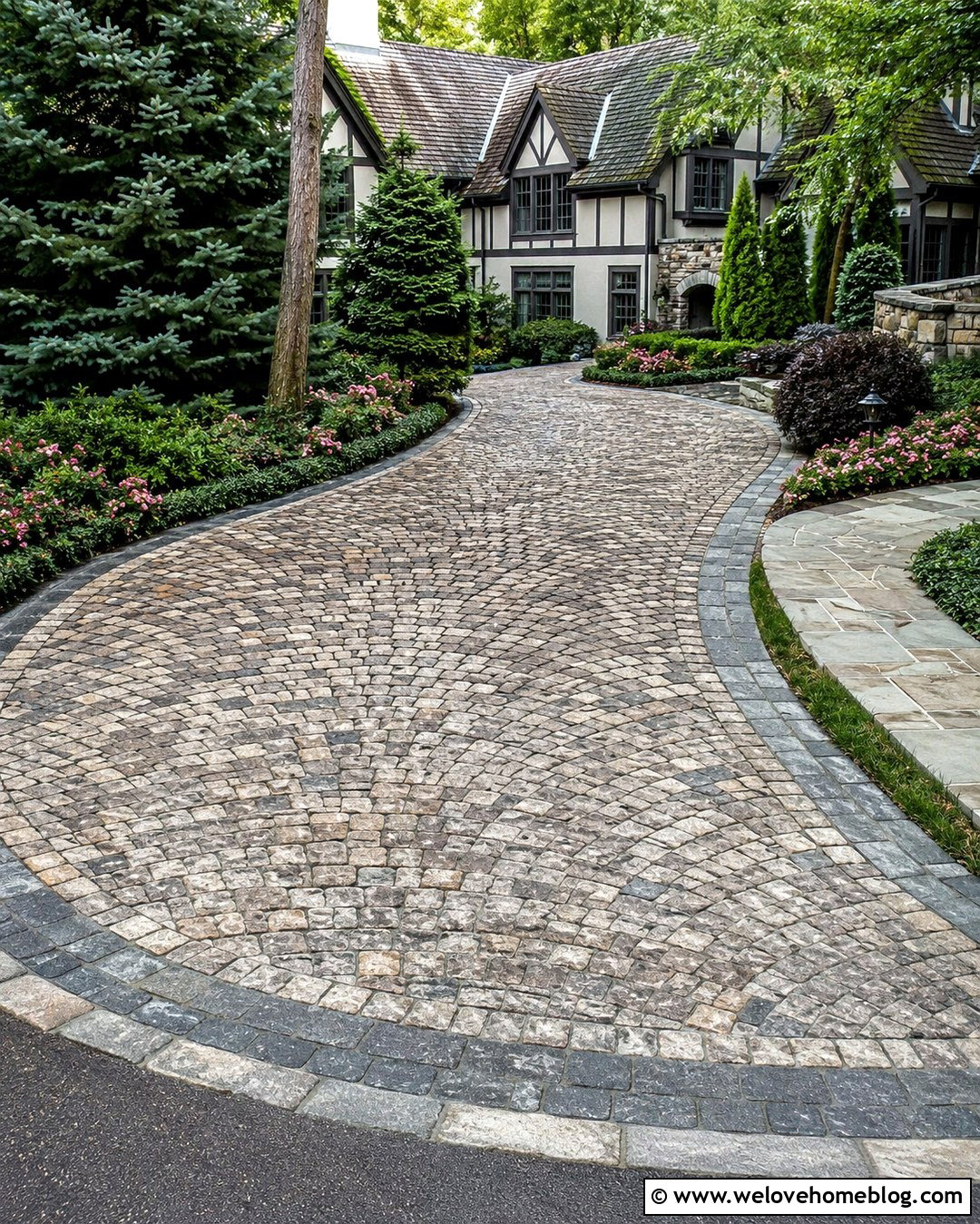
Soft edges and timeworn color can make a newer property feel more established. A cobblestone look interlock driveway uses tumbled concrete pavers with irregular-looking faces and blended gray or brown tones. Arrange them in a fan-inspired or gently arcing pattern to strengthen the old-world effect. A curved approach leading to a Tudor or European-style house is an especially natural match. Use larger charcoal cobble pavers as the border, then frame the driveway with layered evergreens, roses, and a curved flagstone walkway. The textured surface already provides considerable detail, so avoid adding too many contrasting colors. Instead, select pavers that echo the house stone, roof, or shutters. Subtle landscape lighting near the planting beds can define the route without interrupting its classic appearance. ()
7. Two Tone Interlock Driveway
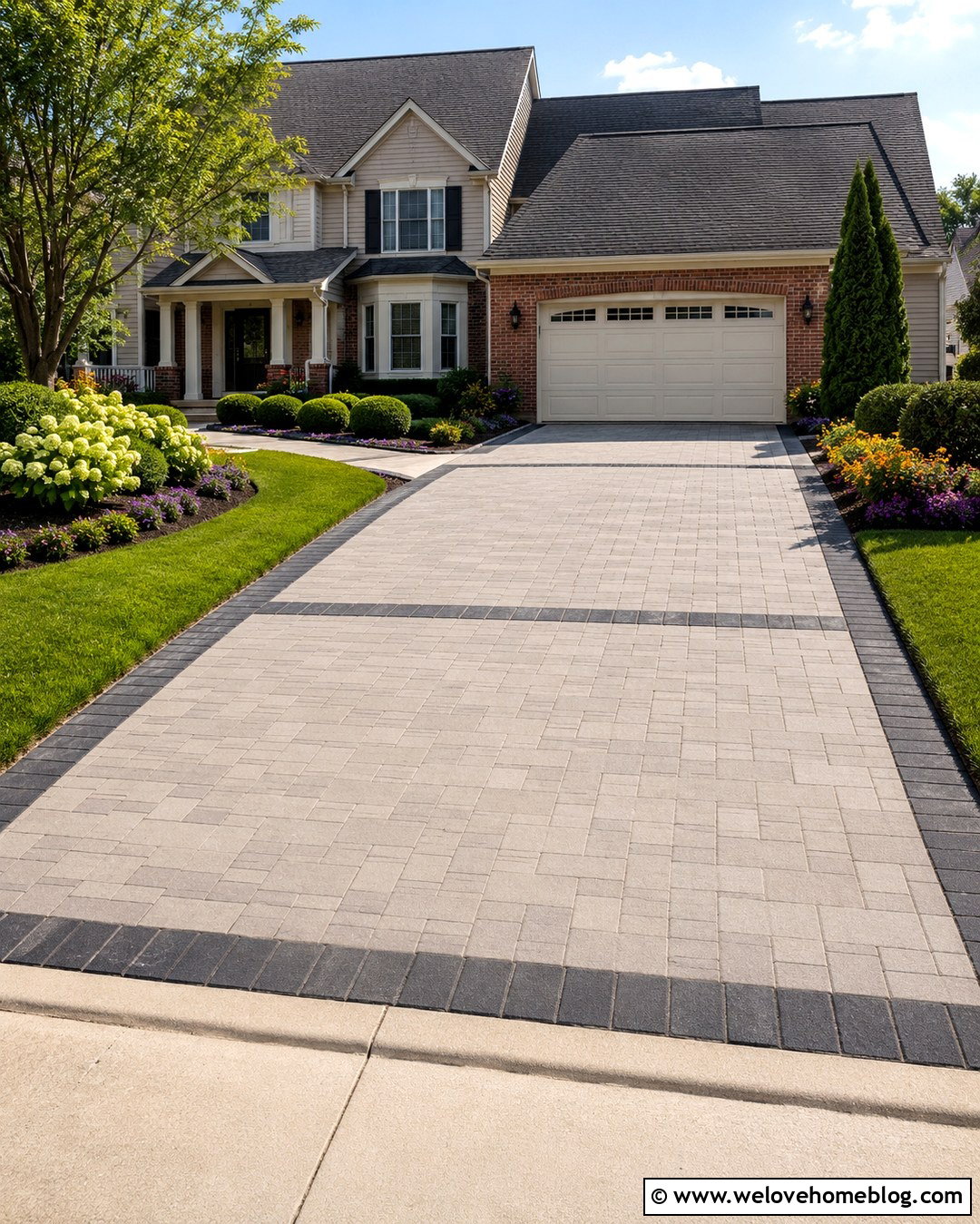
A two tone interlock driveway creates definition without requiring an elaborate pattern. Begin with warm gray concrete pavers across the main surface, then add a contrasting charcoal border around the entire perimeter. The darker edge gives the driveway a finished outline and can visually separate it from lawns, planting beds, and sidewalks. For additional detail, carry a narrow charcoal ribbon across the driveway near the garage and street entrance. This approach works well with a straight suburban driveway leading to a transitional brick-and-siding home. Repeat both colors in the walkway and front steps for consistency. Rounded shrubs, ornamental trees, and seasonal flowers can soften the geometric paving. Limit the palette to two coordinating tones so the contrast appears refined rather than overly busy. ()
8. Circular Interlock Driveway
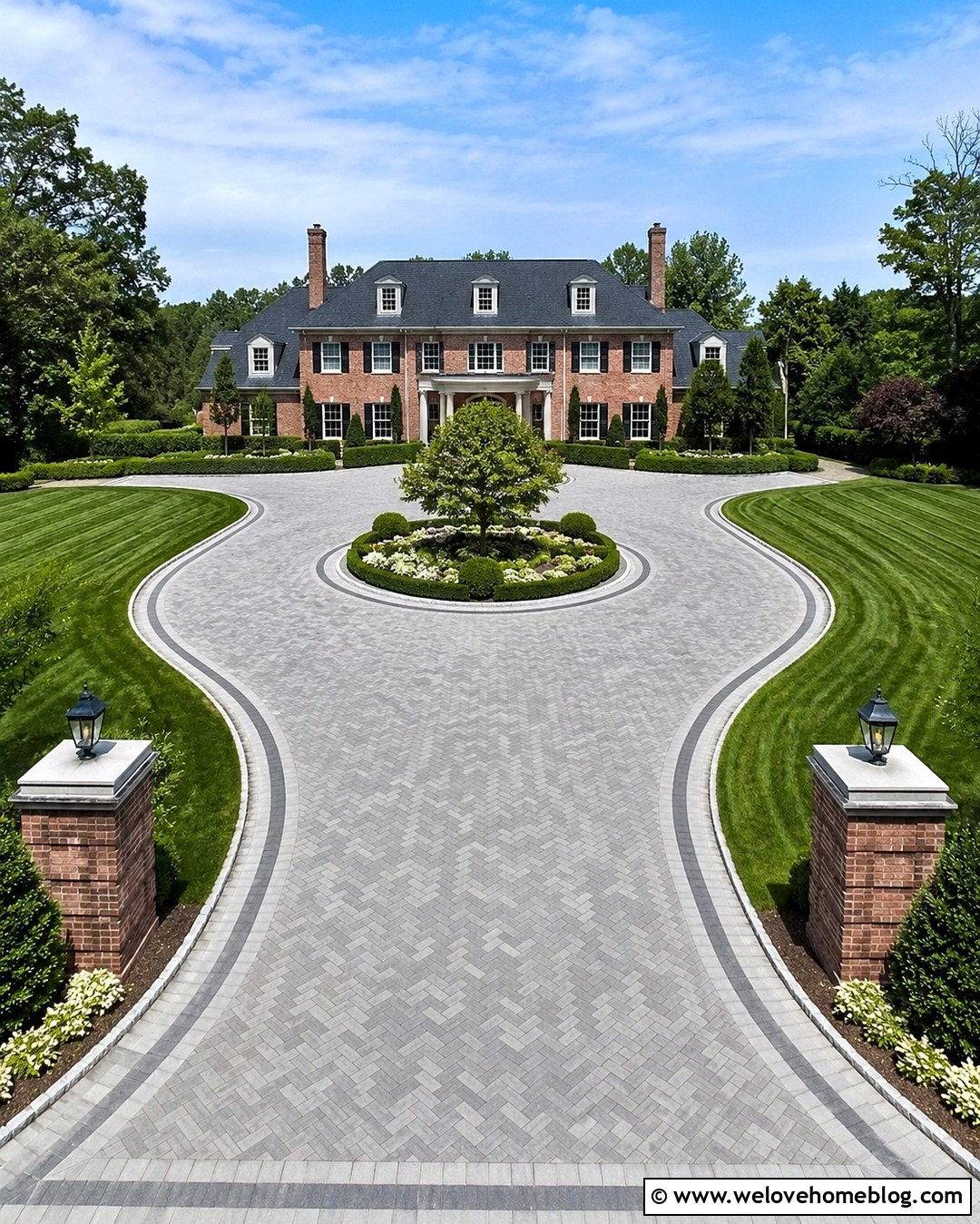
A circular interlock driveway can provide an impressive approach while creating a convenient route through a spacious front yard. Use mid-tone concrete pavers in a herringbone pattern for the driving lanes, then introduce a circular paver medallion around a central planting island. The island could contain a specimen tree, low shrubs, and ground cover that remain clear of driver sightlines. A double border in charcoal and light gray can emphasize the driveway’s curves and connect both entrances. This design works especially well in front of a large Colonial, Georgian, or country home. Allow generous turning space and plan the layout around actual vehicle movements. Repeating the circular motif near the front steps or walkway can make the entire entrance feel unified. ()
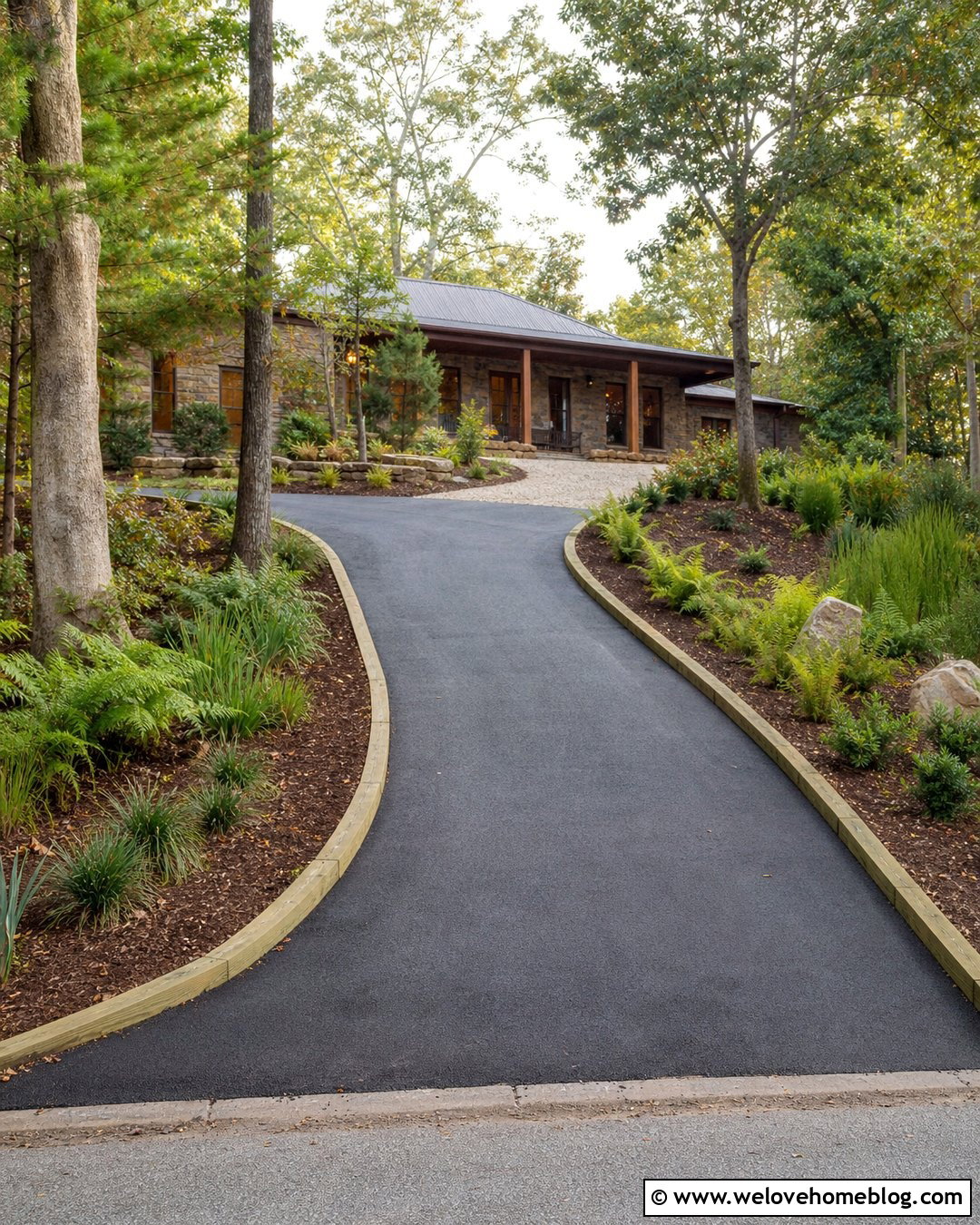
9. Curved Interlock Driveway
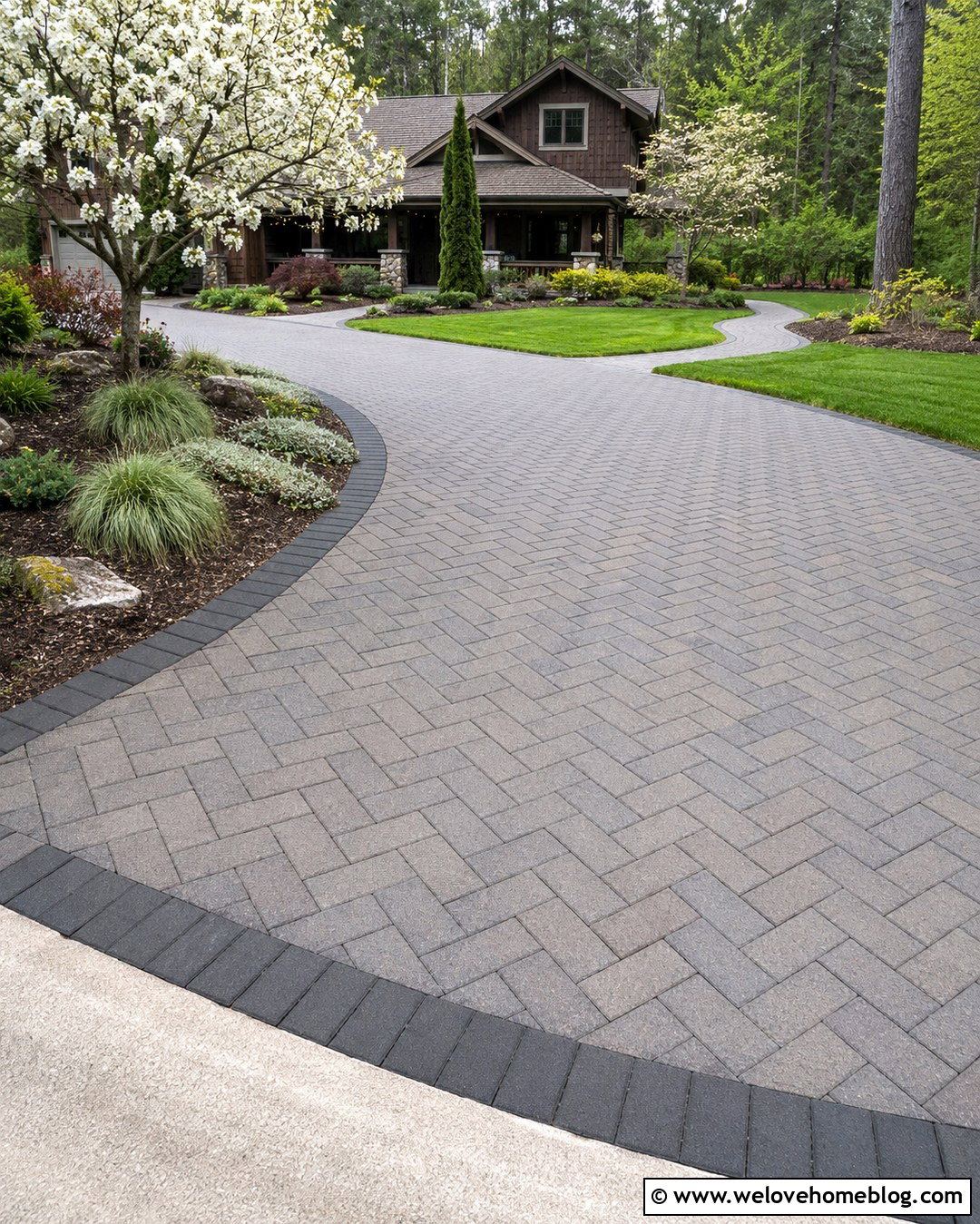
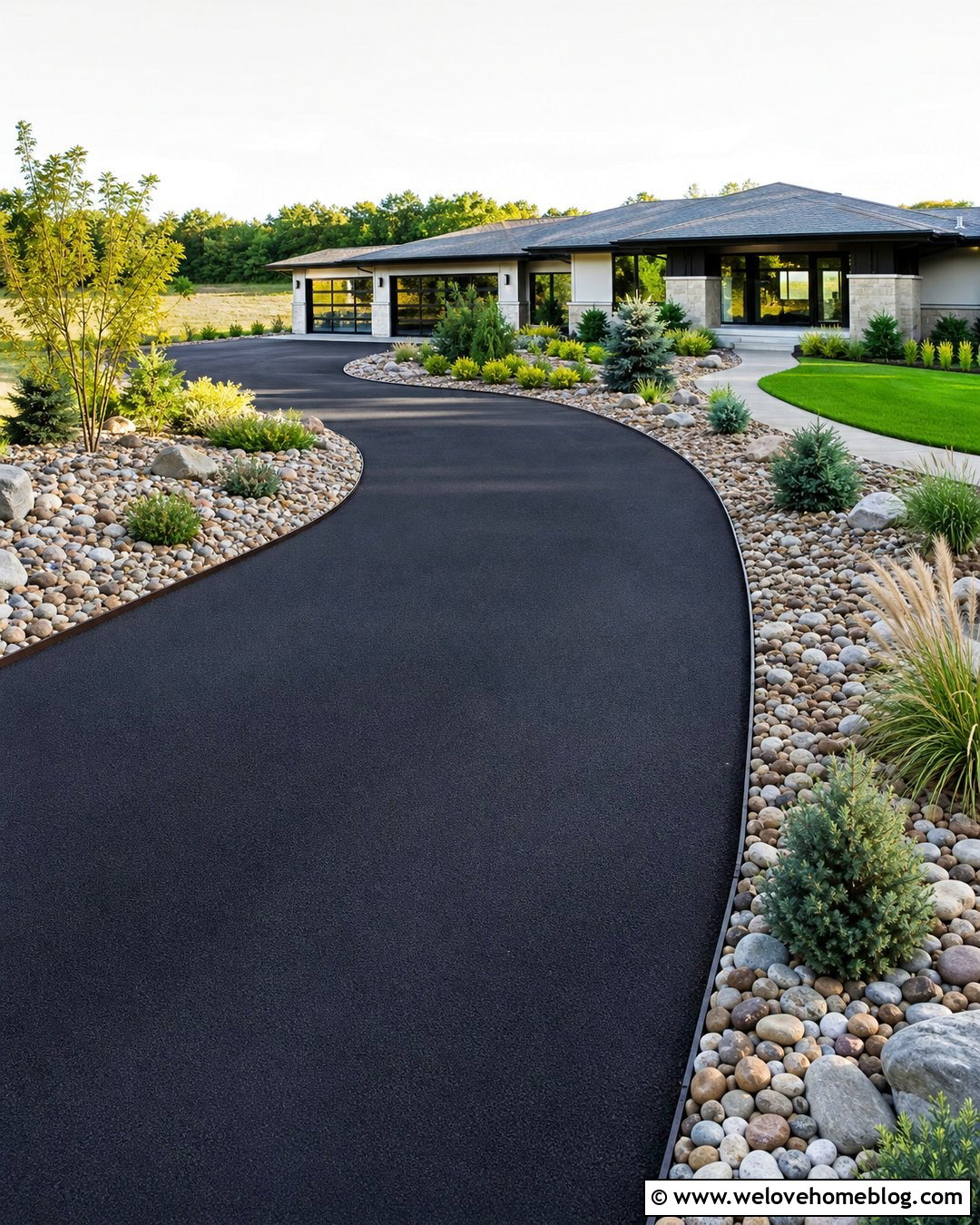
Instead of revealing the garage immediately, a curved interlock driveway creates a gradual and attractive approach. Choose rectangular gray-brown pavers in a 45-degree herringbone pattern, which adapts naturally to a sweeping layout. Define the outer curve with a dark soldier-course border and the inner curve with a wide planting bed. Layer small flowering trees, evergreen shrubs, ornamental grasses, and low ground cover so the landscape remains interesting in every season. A craftsman or wooded contemporary house makes a fitting background for this complete design. Keep large plants set back from turning areas to preserve visibility and usable width. Before installation, mark the proposed curves and test them with typical vehicles. Gentle bends usually look more natural and function better than abrupt changes in direction. ()
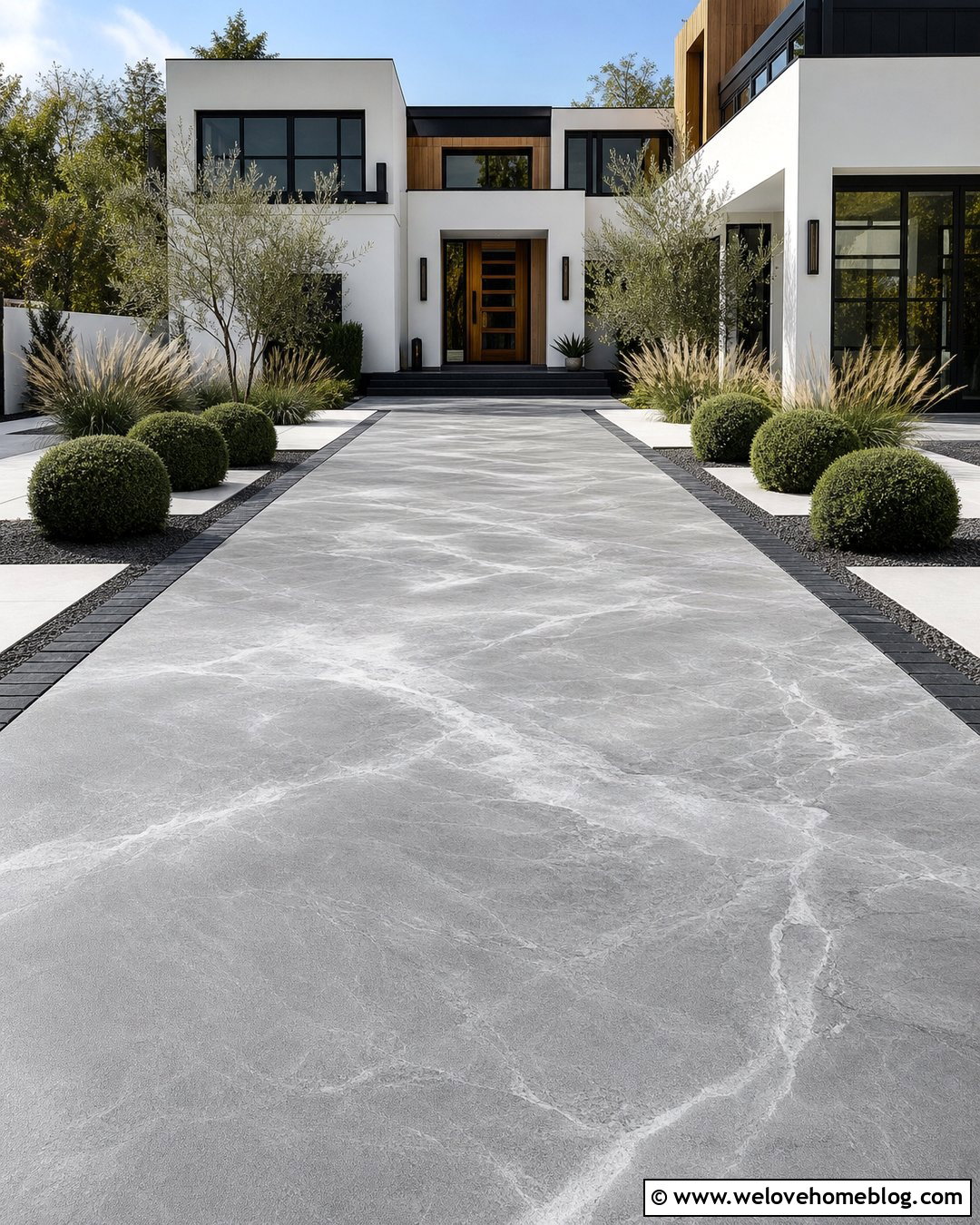
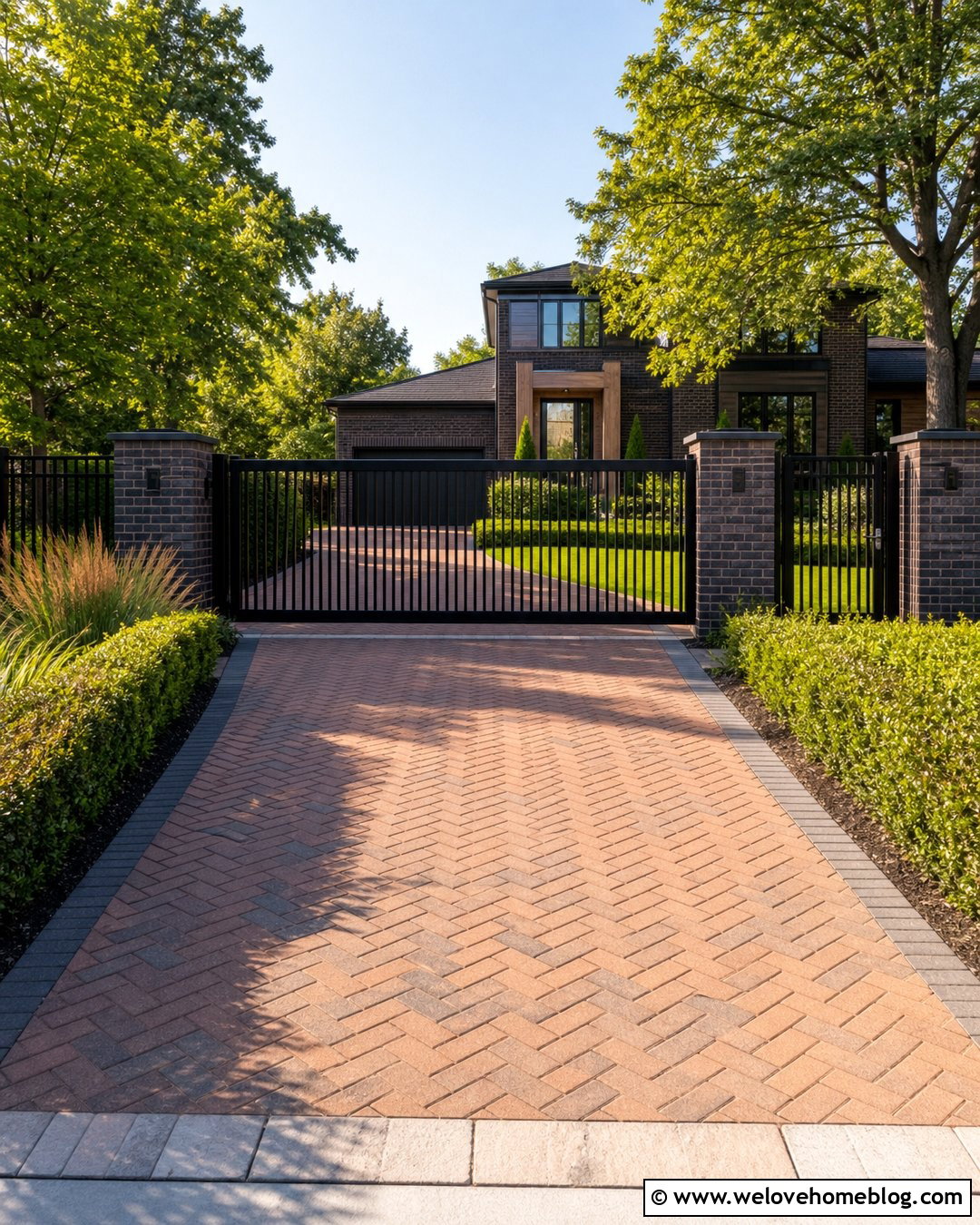
10. Permeable Interlock Driveway
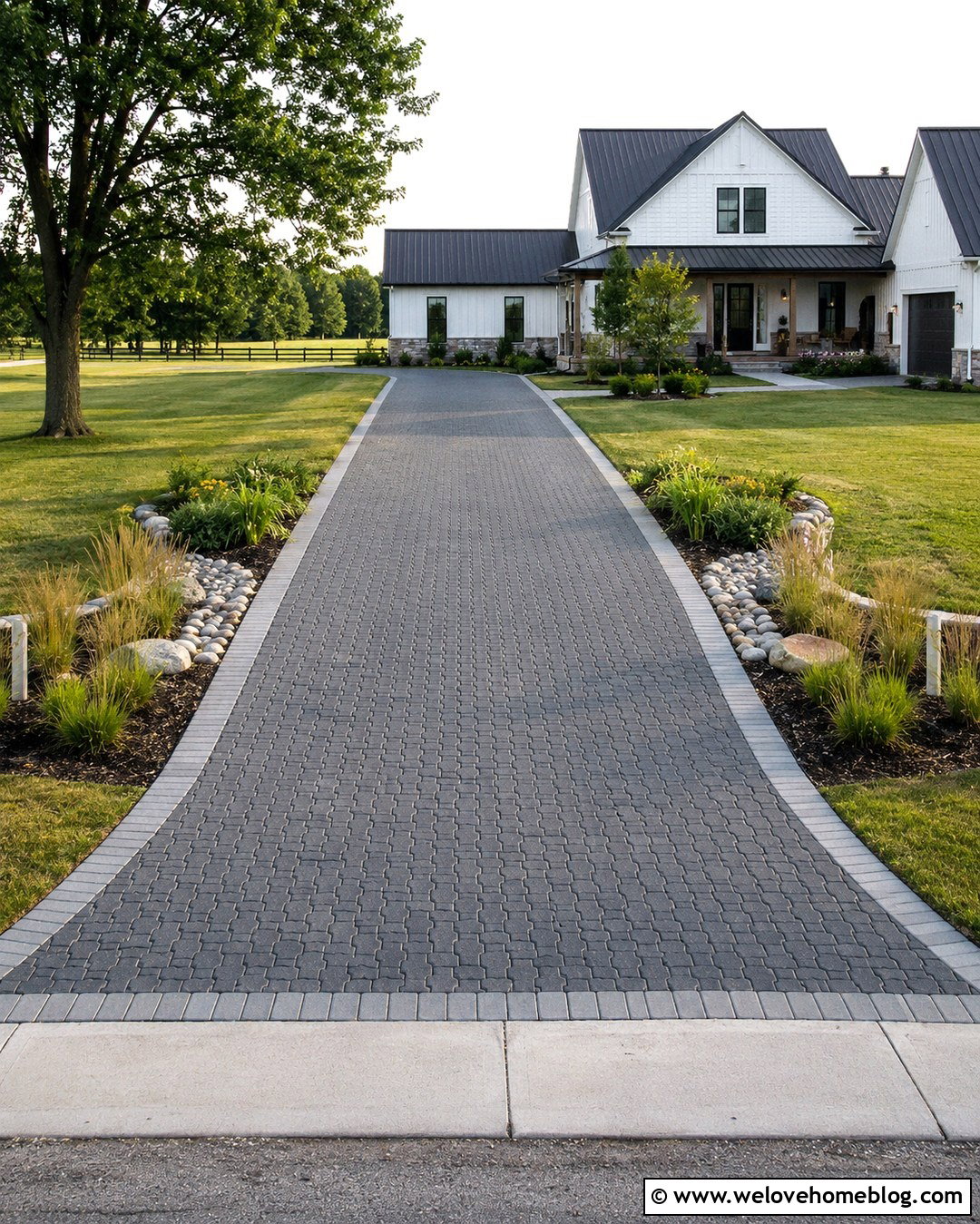
Rainwater becomes part of the design strategy with a permeable interlock driveway. Permeable concrete pavers have wider joints or openings that allow water to enter a specially prepared stone base instead of simply flowing across the surface. Select charcoal-gray pavers for a clean contemporary appearance and fill the joints with suitable small aggregate. A straight driveway with a subtle flare at the street can lead to a modern farmhouse or suburban home. Add stone-edged rain gardens beside the lower portions of the driveway, using grasses and moisture-tolerant plants suited to local conditions. The paving, base, grading, and site drainage must be designed as a complete system. A pale paver border can frame the darker surface while visually connecting it to the front walkway. ()
11. Black And Gray Interlock Driveway
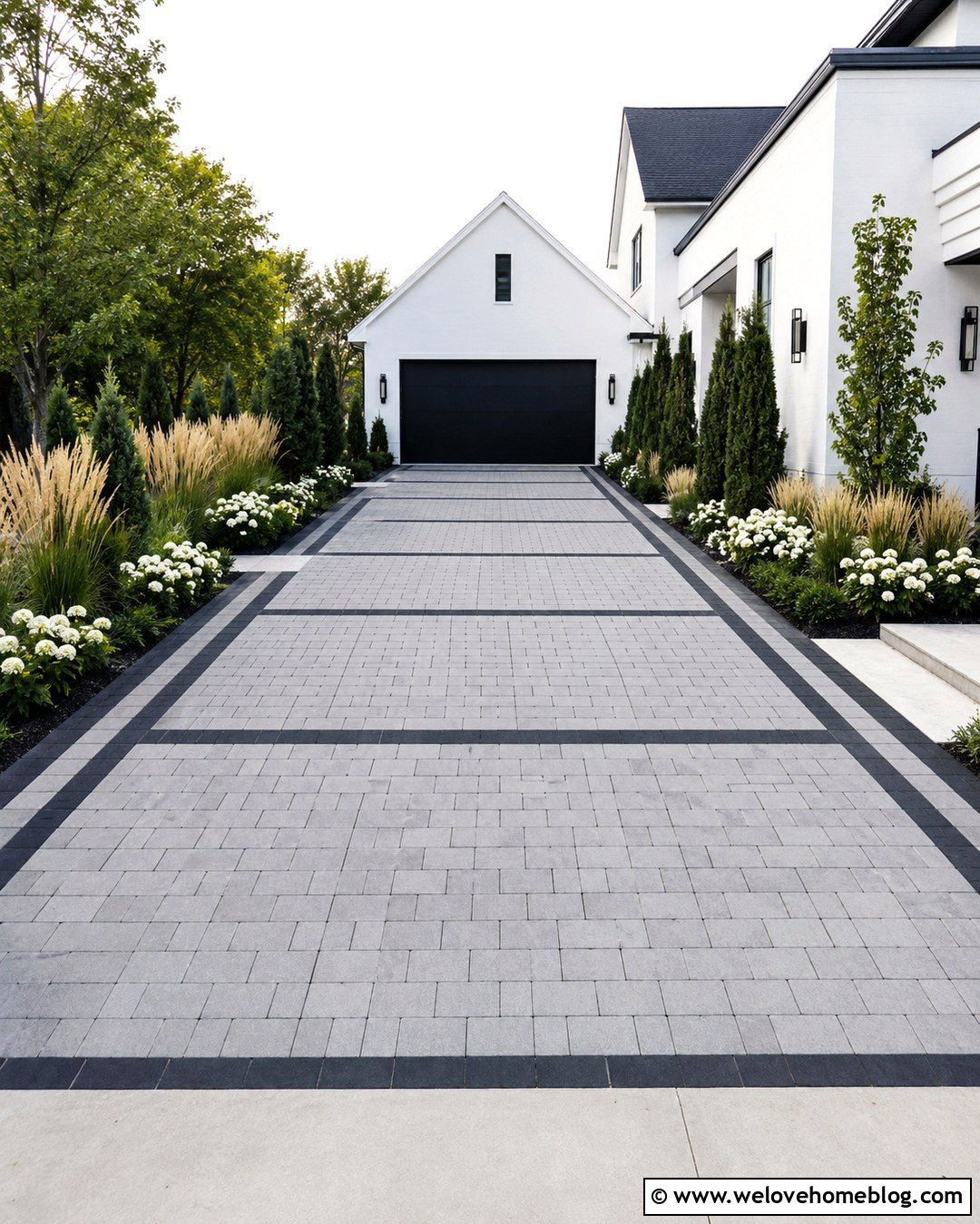
Bold contrast gives a black and gray interlock driveway a distinctly modern identity. Use medium-gray rectangular concrete pavers across the center, surrounded by a deep charcoal double border. A second charcoal band can run toward the garage, dividing a wide driveway into balanced parking zones. This layout looks particularly striking against white stucco, light brick, or pale horizontal siding. Keep the driveway straight and symmetrical to reinforce the contemporary architecture. Simple planting beds with feather reed grass, compact evergreens, and white flowering perennials will soften the hardscape without adding competing colors. Use the lighter gray paver near steps and walkways for a clear visual transition. Because very dark surfaces may show dust or mineral residue, review full-size paver samples outdoors before committing to the final blend. ()
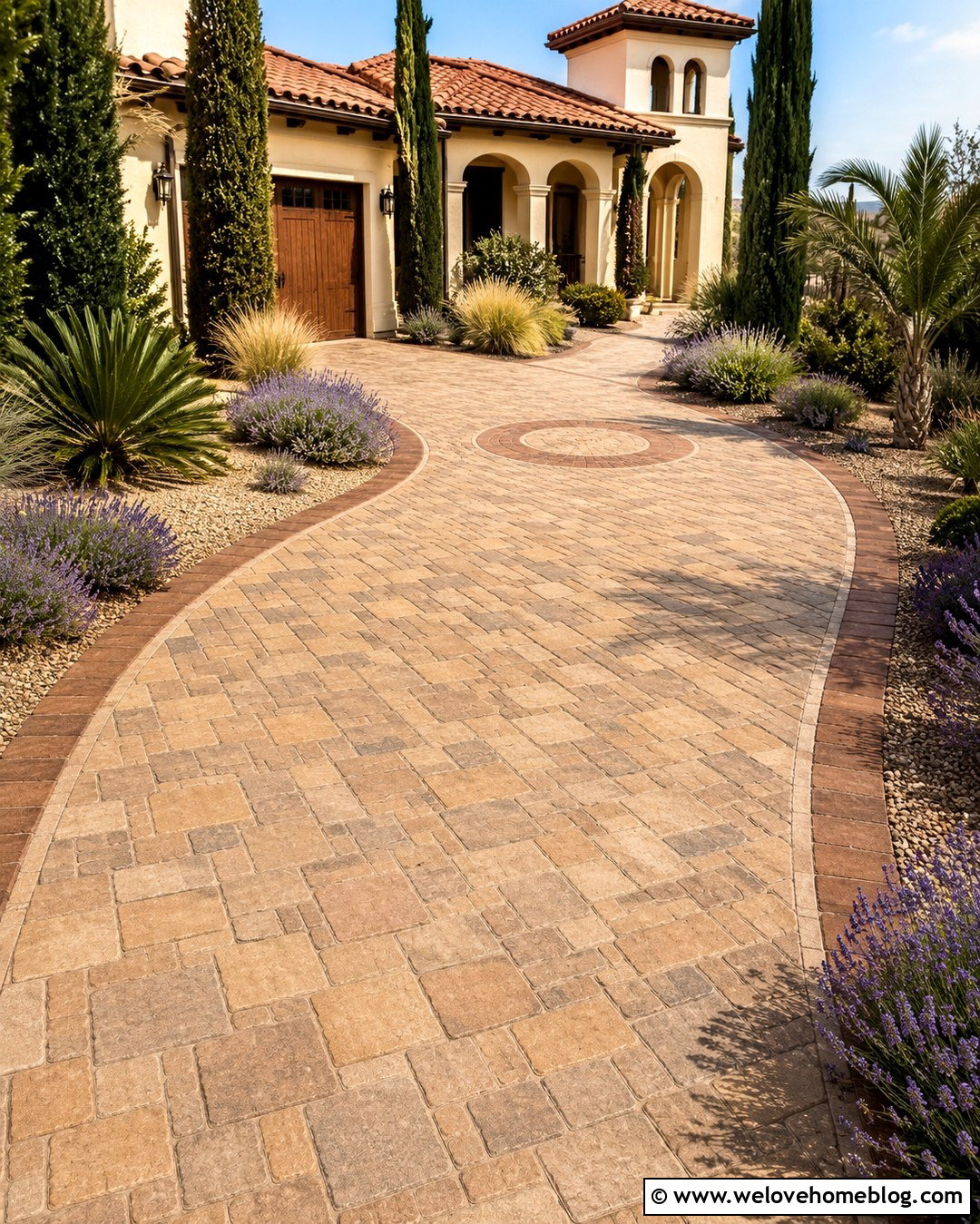
12. Beige Interlock Driveway
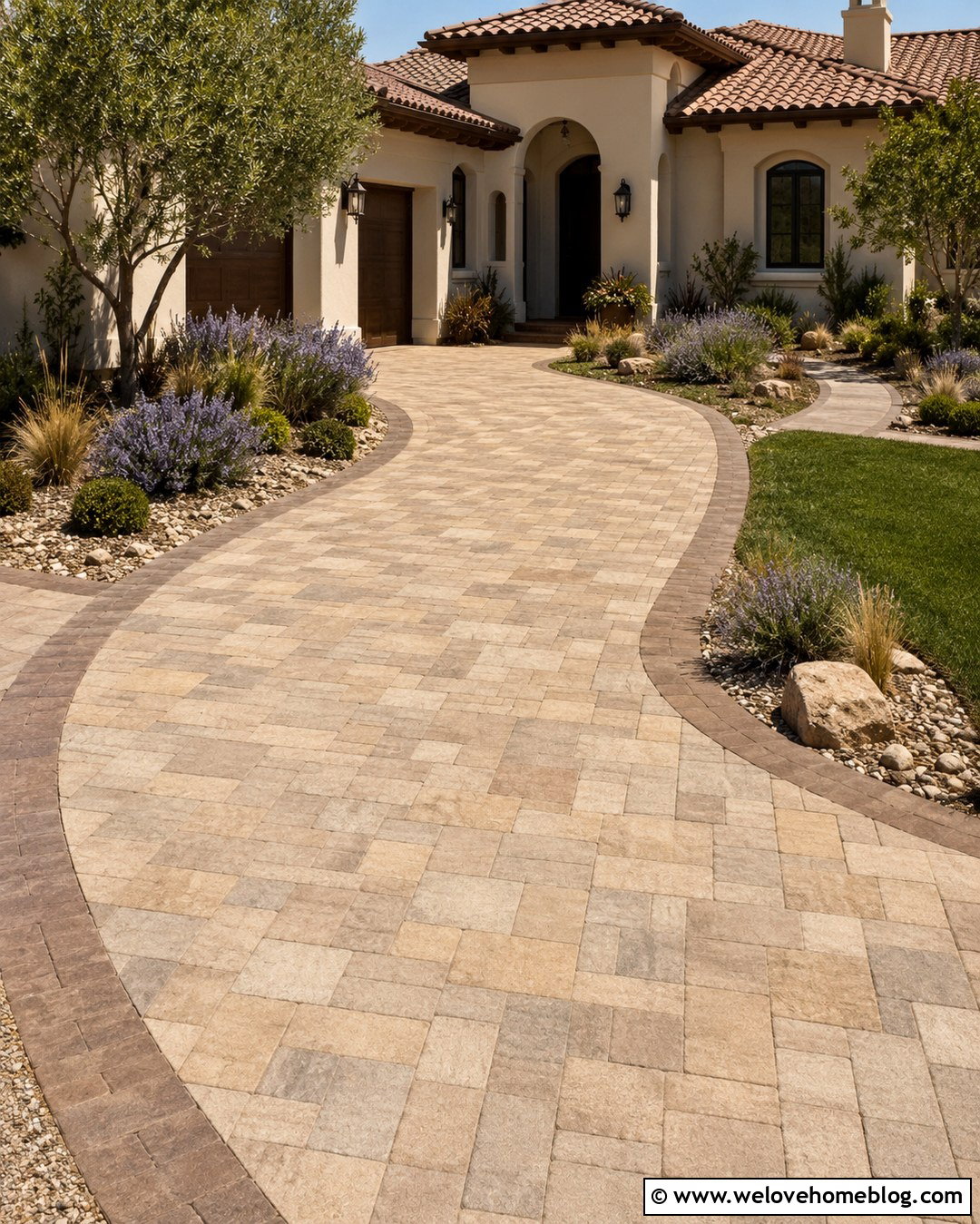
Warm sunlight brings out the subtle variation in a beige interlock driveway. Choose sand, cream, and soft taupe concrete pavers in a mixed-size modular pattern. These tones pair naturally with tan stucco, limestone, cream siding, and brown roofing. Frame the surface with a medium-brown border rather than a harsh black edge. A gently curved layout can lead toward a Mediterranean, Southwestern, or traditional suburban home while creating space for planting beds along both sides. Use drought-tolerant grasses, rounded shrubs, lavender, and pale decorative stone where the climate allows. Include a matching walkway with slightly smaller pavers to distinguish pedestrian space. Beige can vary considerably in natural light, so compare samples beside the house facade, roof, and existing masonry before selecting the final color blend. ()
13. Red Brick Interlock Driveway
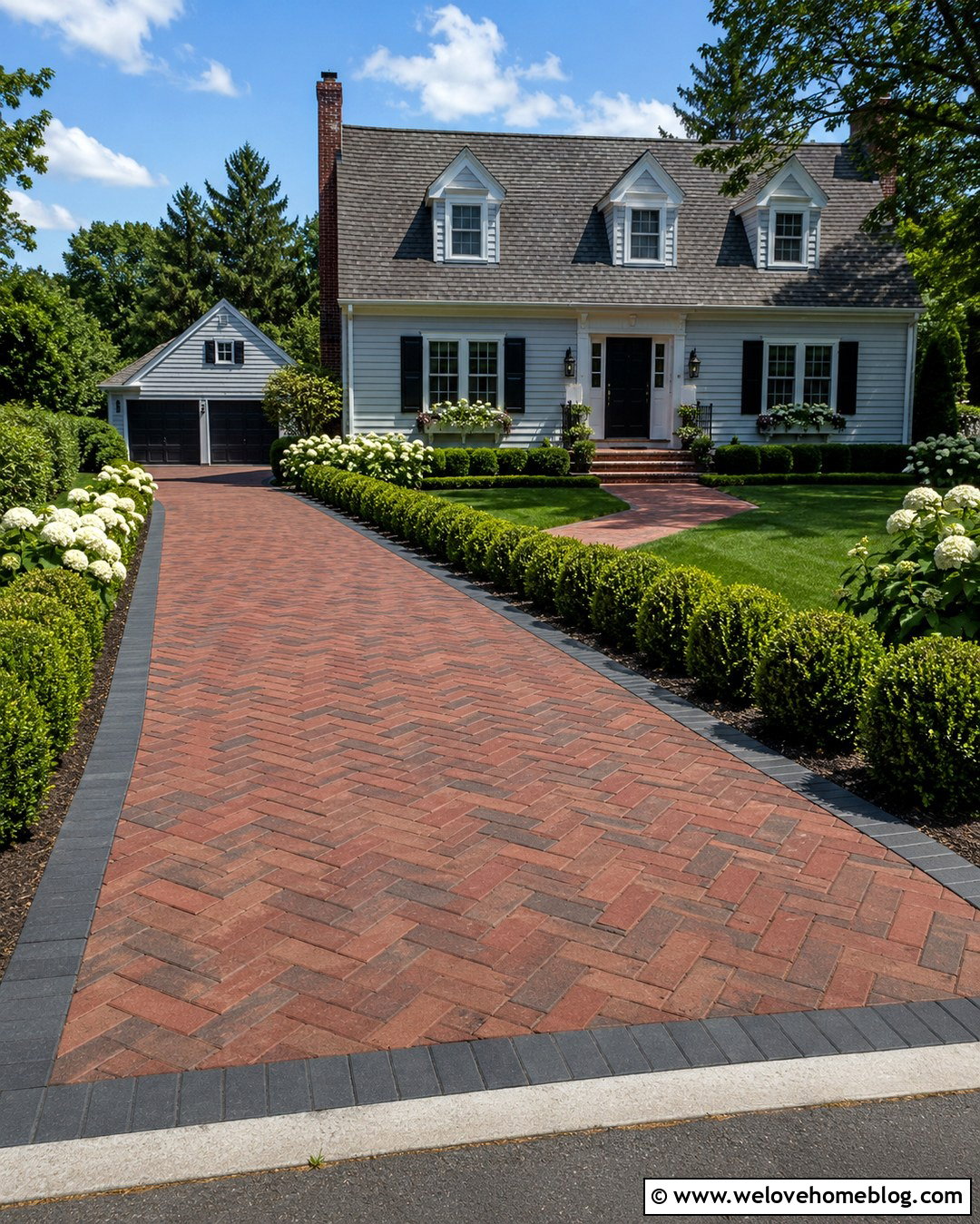
Few surfaces complement traditional architecture as naturally as a red brick interlock driveway. Use concrete brick pavers in blended red, burgundy, and muted brown, arranged in a herringbone pattern for a strong visual rhythm. A charcoal or dark brown border can contain the warm colors and keep the design from blending into adjacent planting beds. This complete look suits a Colonial, Cape Cod, or classic brick home with a straight or gently flared driveway. Add clipped boxwoods, white hydrangeas, and a matching brick walkway toward the front porch. If the house already has red brick, avoid forcing an exact color match. A coordinated blend with slightly deeper or softer tones will usually create more dimension while allowing the facade and driveway to remain distinct. ()
14. Small Interlock Driveway
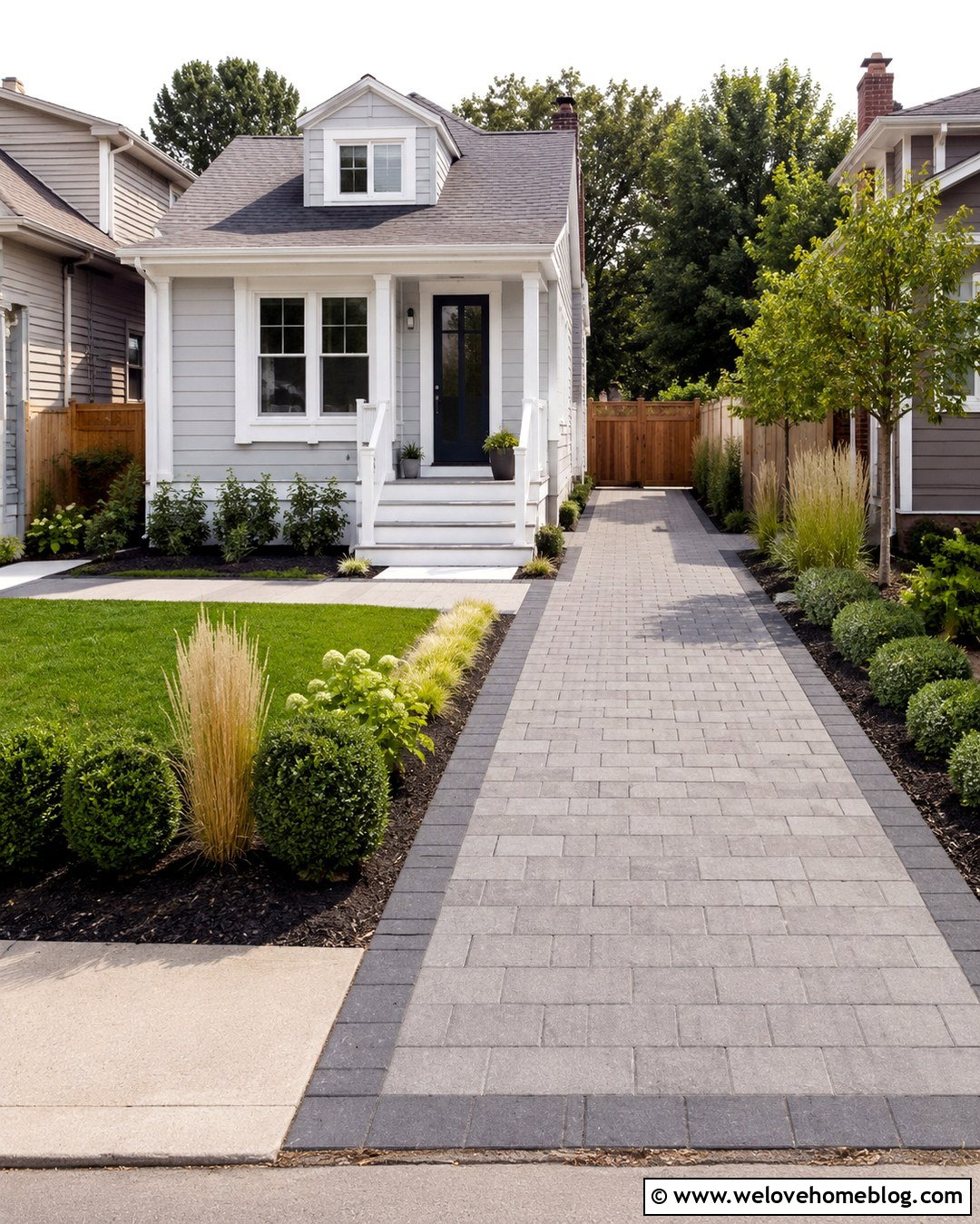
Limited frontage does not prevent a small interlock driveway from making a strong first impression. Choose medium-size rectangular pavers in one neutral color, then use a narrow contrasting border to maximize the visible driving area. Laying pavers lengthwise in a running bond can make a short driveway appear longer. Keep the layout straight and align it carefully with the garage door. A slim walkway can share the driveway border before turning toward the porch, saving space and materials. Replace oversized foundation plants with compact shrubs, upright grasses, and a small ornamental tree positioned away from parking. Avoid complicated medallions or multiple paver colors, which may make the area feel crowded. Simple pattern direction and consistent edges will give the smaller frontage a clean, organized appearance. ()
15. Wide Interlock Driveway
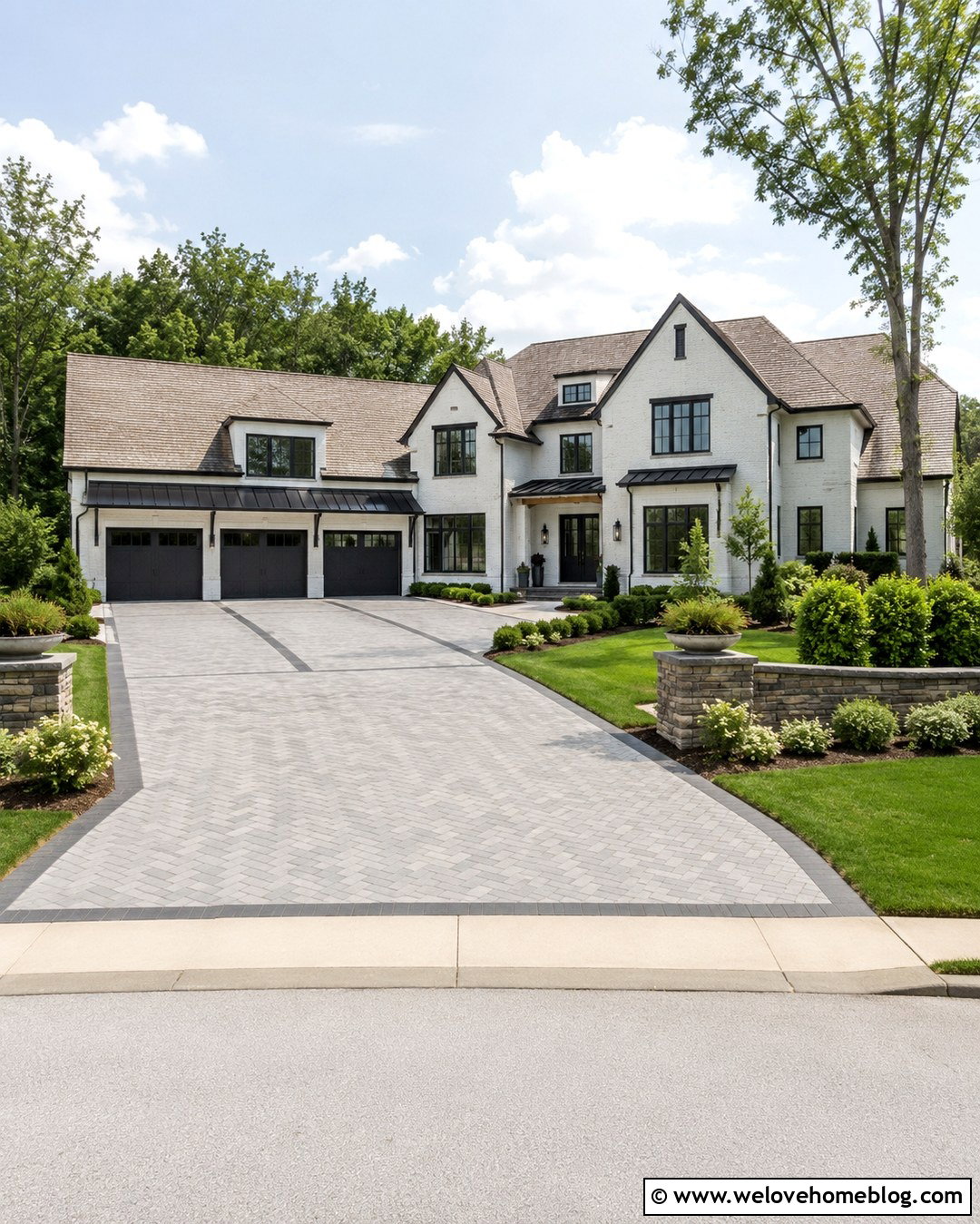
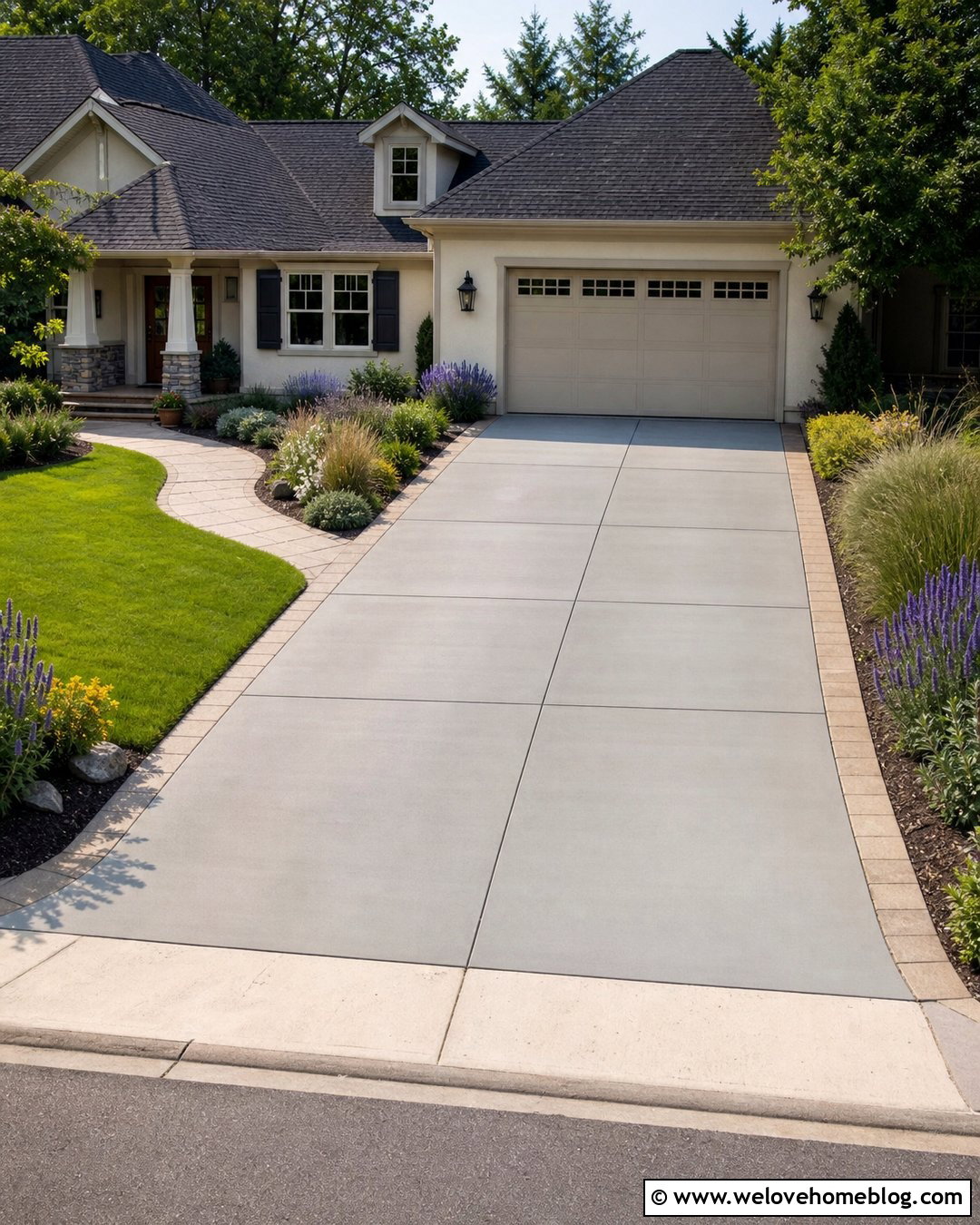
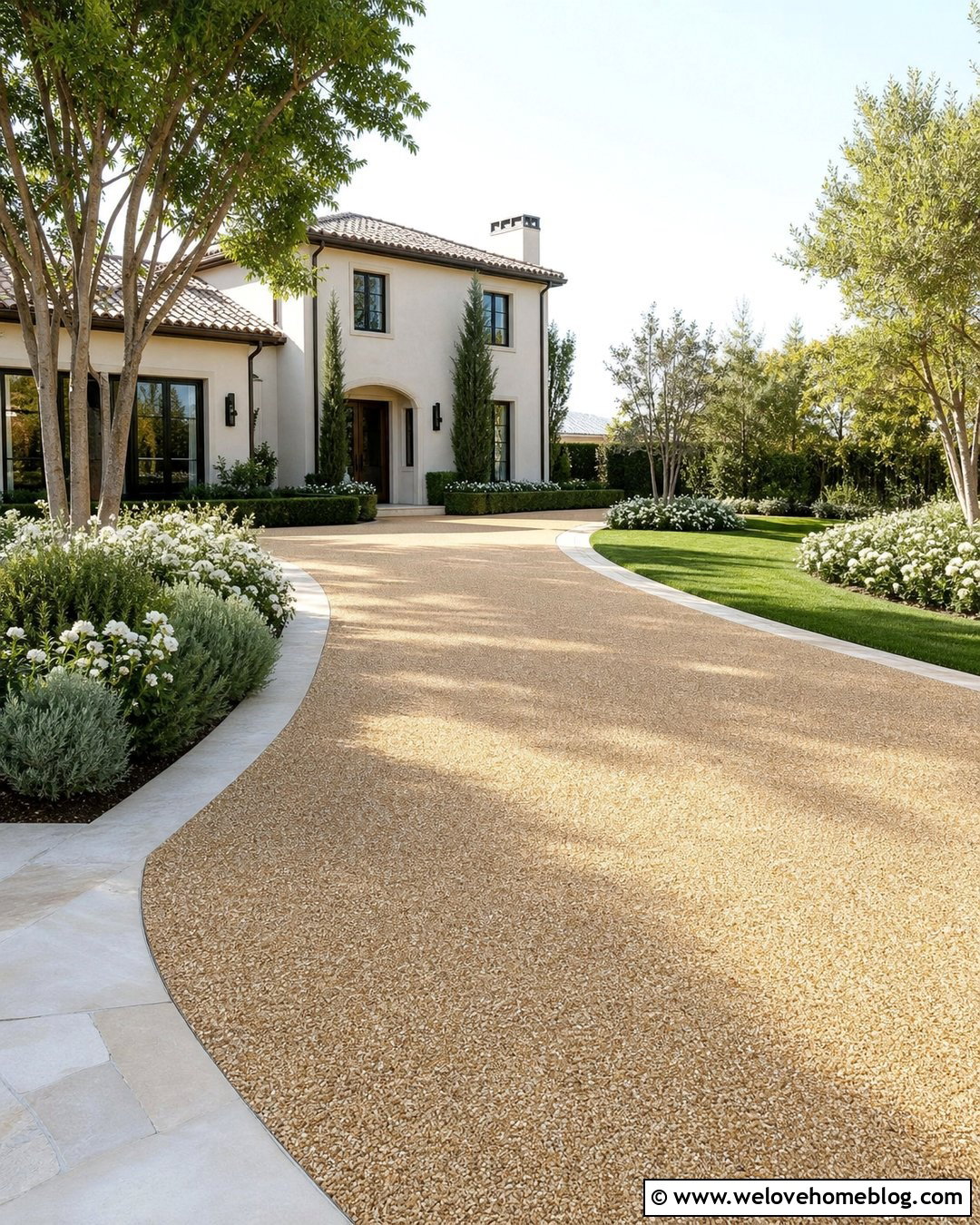
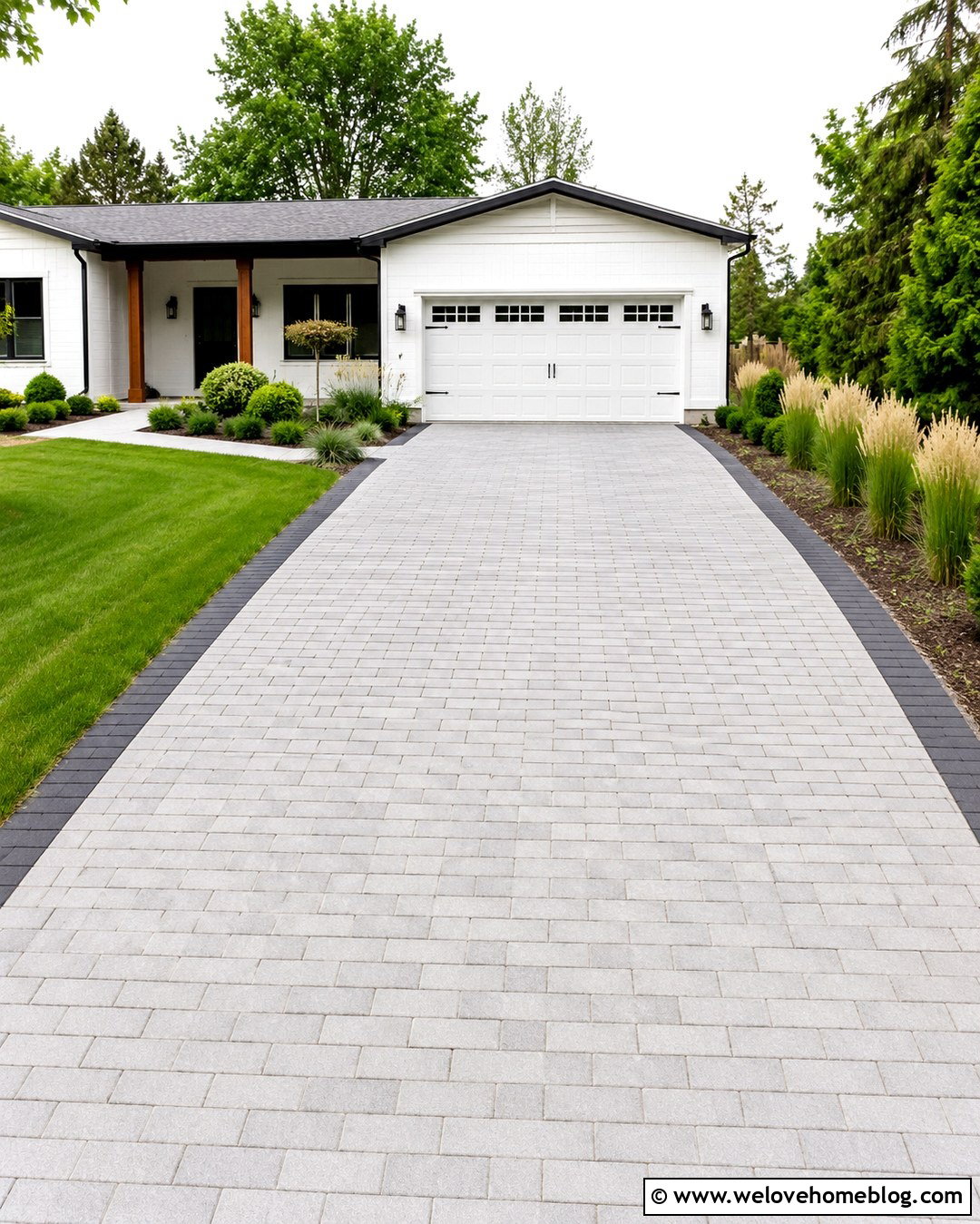
A wide interlock driveway needs visual organization so it does not resemble one uninterrupted paved field. Cover the main surface with blended gray concrete pavers in a 45-degree herringbone pattern, then divide the width using darker paver ribbons aligned with garage doors. A matching perimeter border will connect the separate sections and provide a finished outer edge. This layout works well for a three-car garage or a broad suburban property. Add generous planting beds near the house corners, but keep the driveway entrance open and easy to navigate. A central walkway can begin at one dividing ribbon and lead directly to the porch. Repeating the house stone in low landscape walls or entry pillars will further integrate the paving with the architecture and front yard. ()
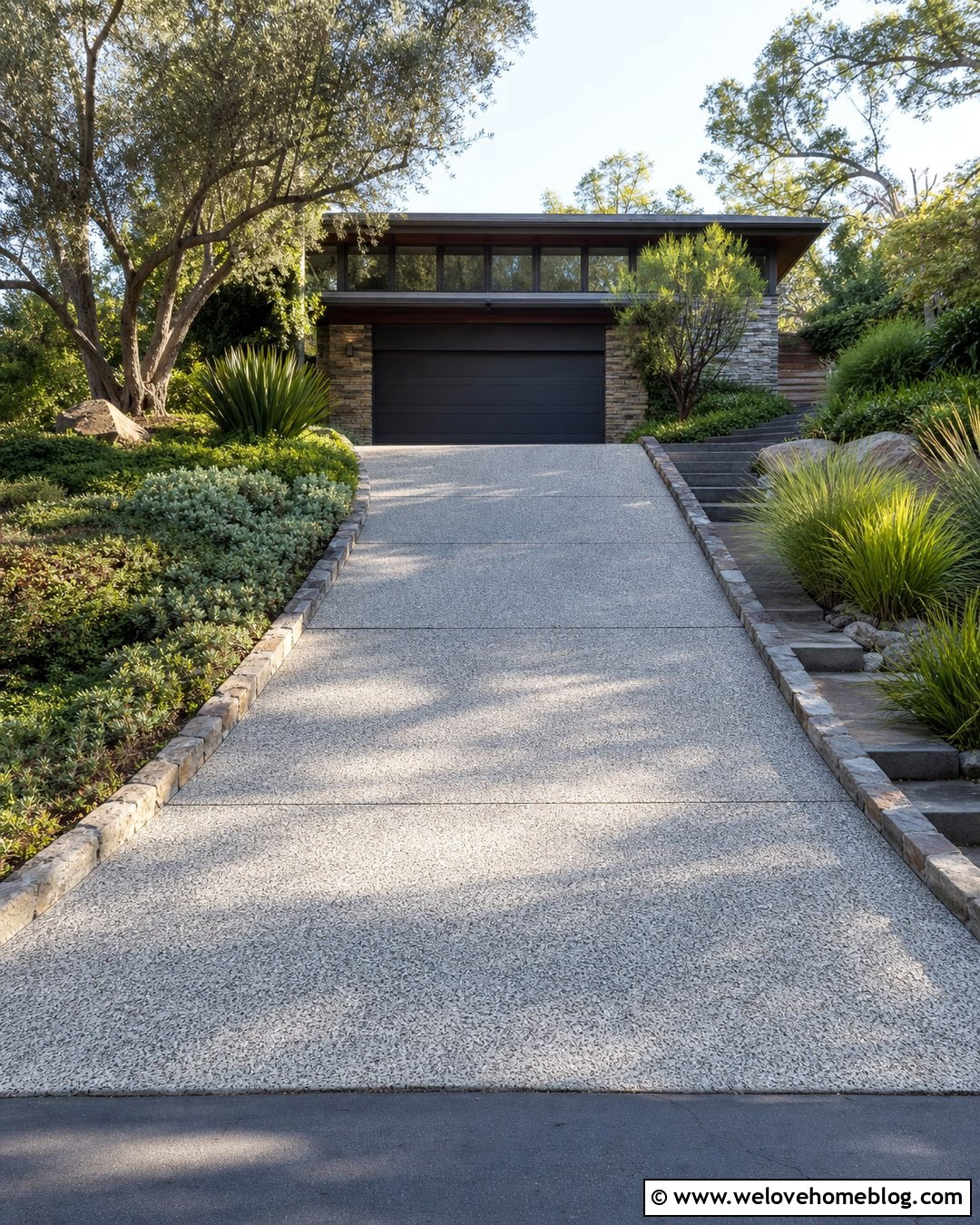
16. Sloped Interlock Driveway
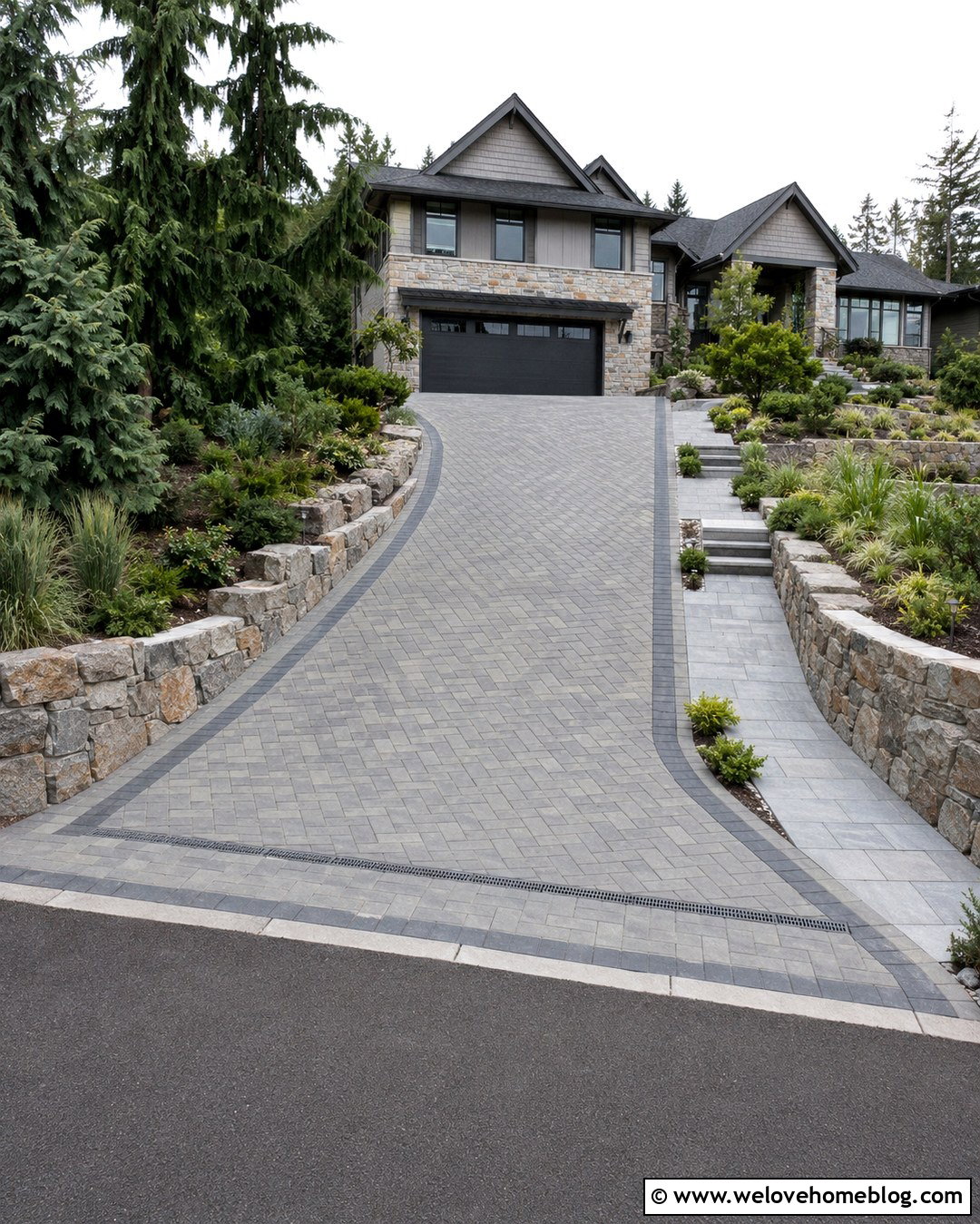
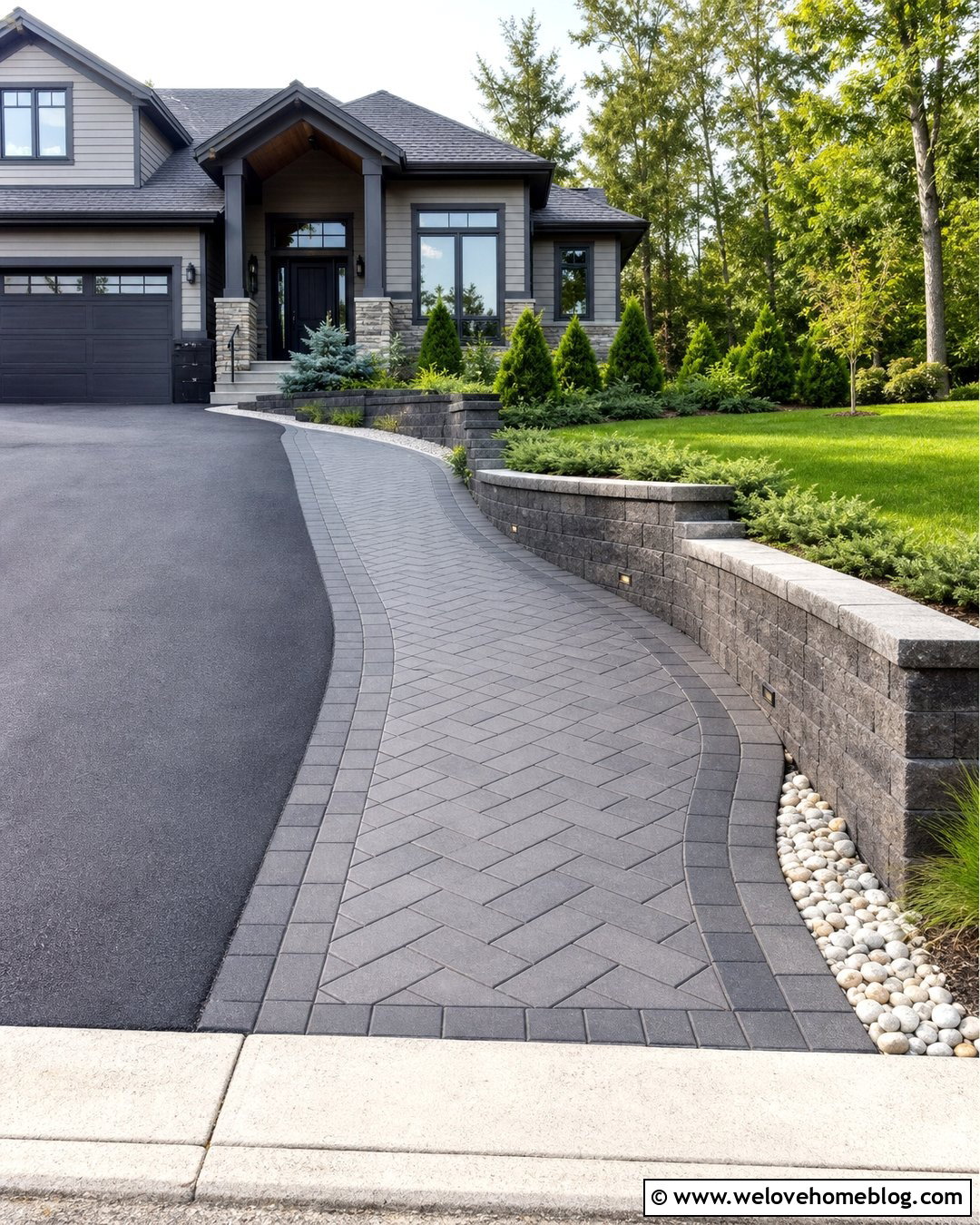
A sloped interlock driveway can be attractive, but its layout requires careful planning. Rectangular concrete pavers installed in a herringbone pattern create a tightly connected appearance that suits vehicle areas and avoids long uninterrupted joint lines running downhill. Choose textured medium-gray pavers for visual depth, then secure the sides with substantial edge restraints and contrasting border courses. Low retaining walls may help contain raised planting beds where the driveway cuts through a grade. Use spreading evergreens and ornamental grasses that soften the slope without blocking visibility. A channel drain or another professionally designed drainage solution may be needed near the garage or lower edge. Before choosing colors and patterns, have the base, slope, runoff, and transitions evaluated for local soil and climate conditions. ()
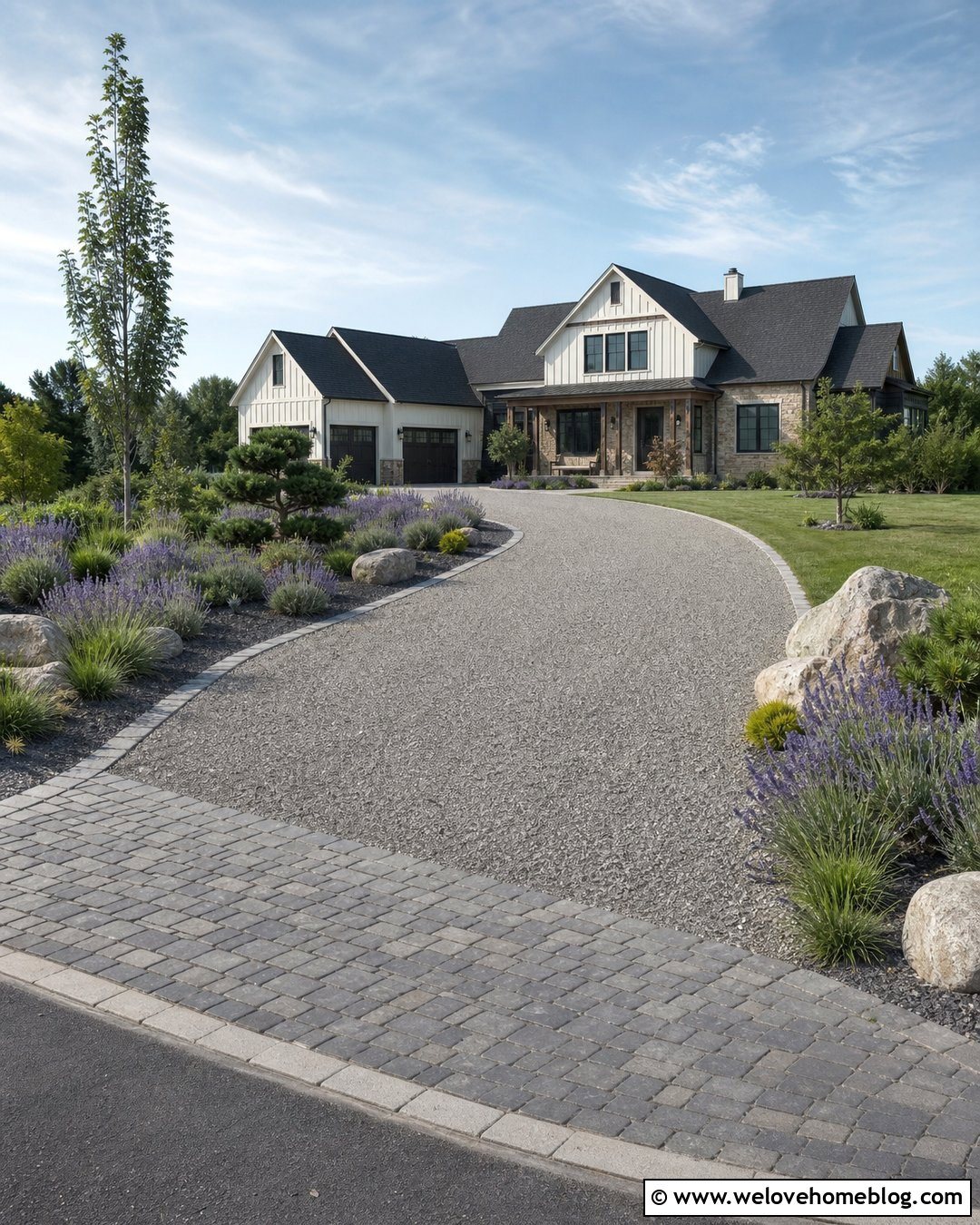
17. Farmhouse Interlock Driveway
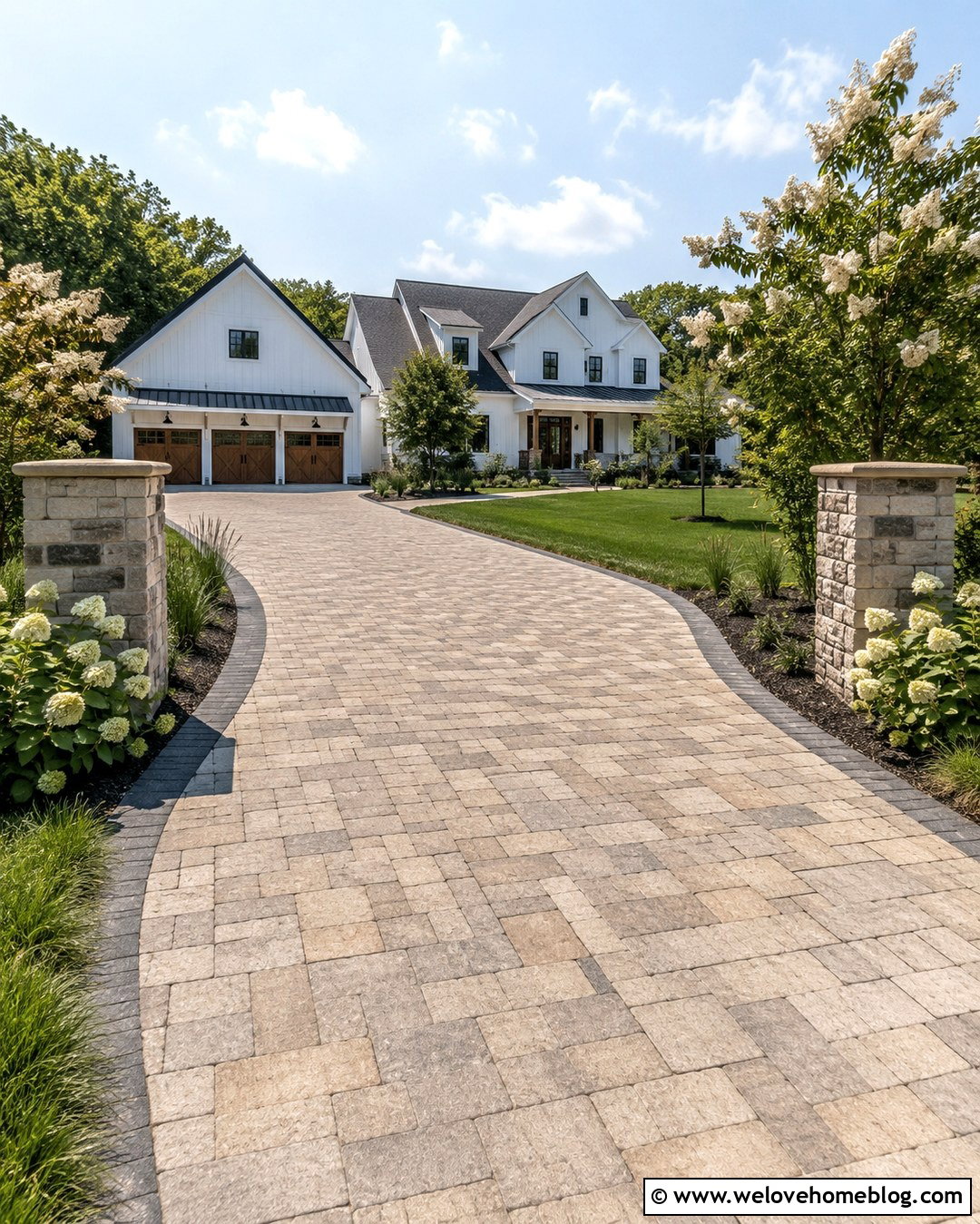
A farmhouse interlock driveway should feel relaxed, practical, and connected to the surrounding landscape. Choose tumbled concrete pavers in soft gray, weathered brown, and muted beige. Install them in a random ashlar pattern, then add a simple dark-gray border to create a clean edge. A wide, gently curved layout can lead toward a white modern farmhouse with a dark roof and wood garage doors. Frame the entrance with low stone pillars, native grasses, hydrangeas, and small flowering trees. A paver walkway in the same color blend can branch toward the porch through an informal garden bed. Keep the pattern and materials understated rather than overly rustic. The best result combines country character with smooth transitions, defined parking space, and landscaping that remains manageable throughout the year. ()
18. Colonial Interlock Driveway
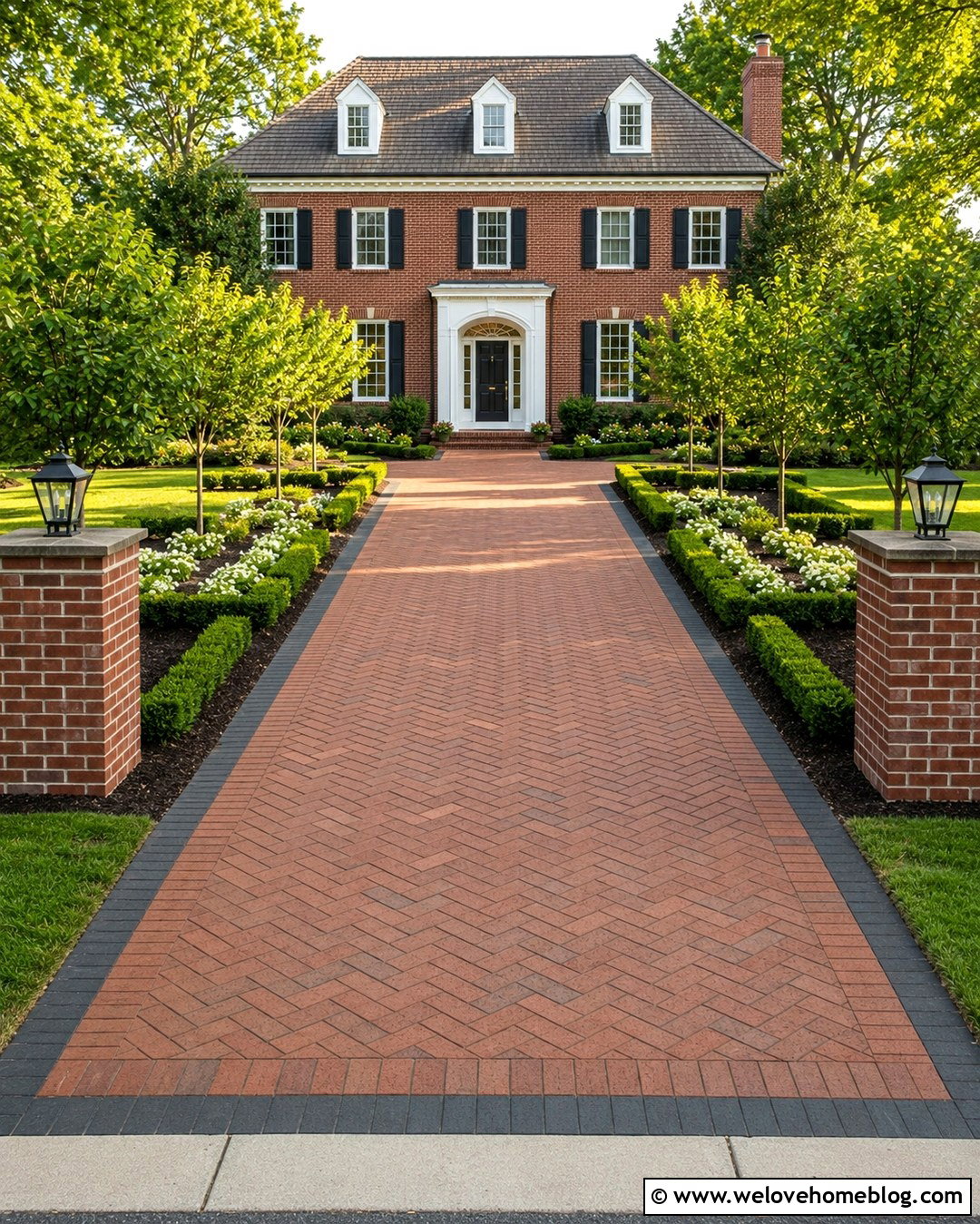
Symmetry is the foundation of a polished Colonial interlock driveway. Use traditional red-brown concrete brick pavers in a 90-degree herringbone or basket weave pattern. A charcoal border will outline the straight driveway and create contrast against a green lawn. Align the paved approach with the center of the garage or use a matching walkway to establish a clear route toward the front door. Balanced beds on both sides can include clipped boxwoods, white flowering shrubs, and evenly spaced ornamental trees. Brick or stone entrance pillars may be added where the driveway meets the street, provided they do not restrict visibility. Repeating the home’s formal lines through the paving, planting, and border placement creates a cohesive exterior that feels established without appearing overly decorative. ()
19. Modern Interlock Driveway With Grass Strips
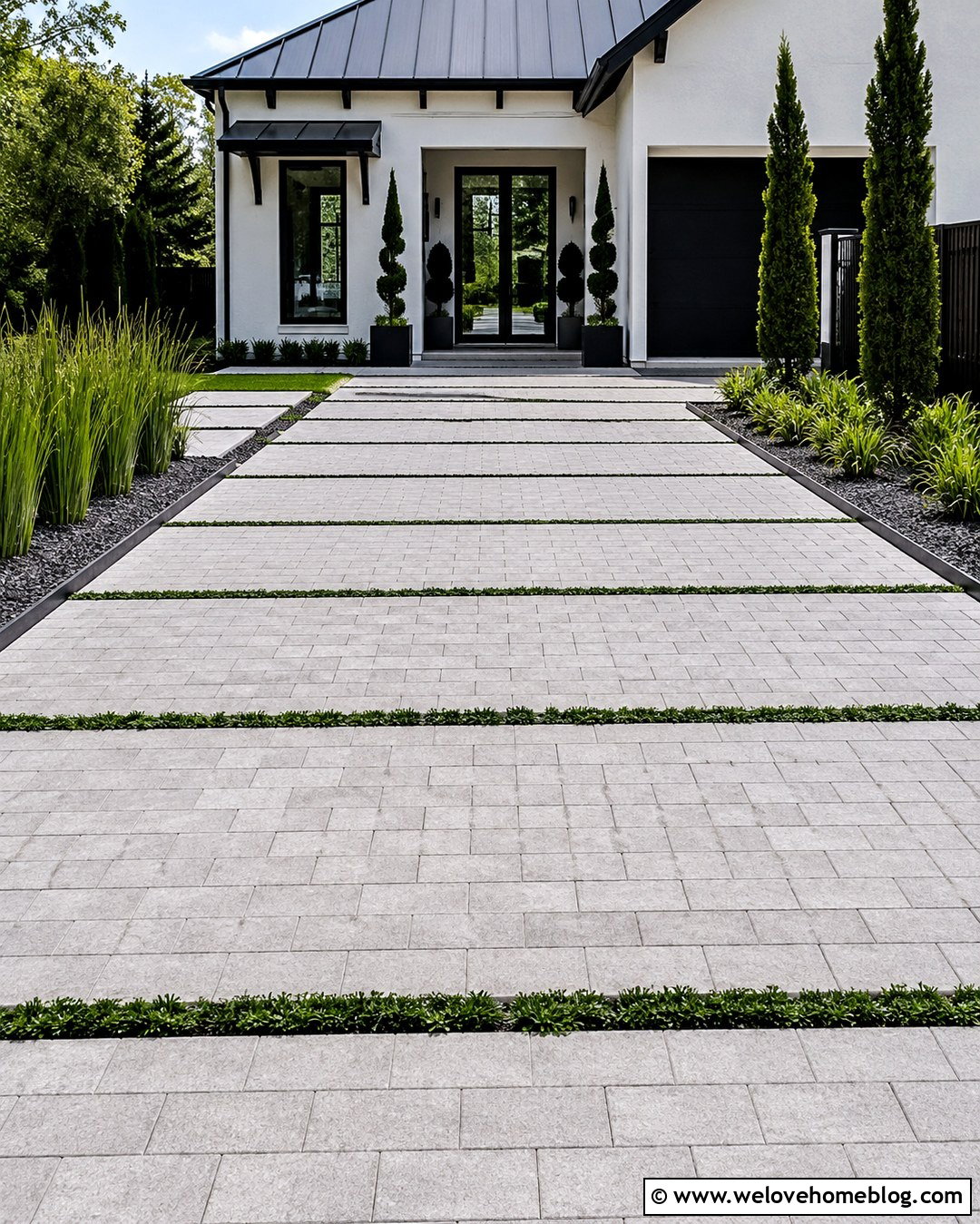
Green strips can break up a large paved area while reinforcing the geometry of a modern home. Use smooth light-gray concrete pavers in broad linear bands separated by narrow grass or low ground-cover channels. Keep the primary wheel paths fully paved and design planted sections around practical vehicle movements. A charcoal paver border can frame the entire straight driveway and connect it to a wide front walkway. This design looks best beside a contemporary house with white stucco, dark trim, and simple garage doors. Continue the clean look with rectangular planting beds, sculptural evergreens, and ornamental grasses. Irrigation, mowing access, drainage, and local climate should influence the choice between lawn and low ground cover. Precise alignment is essential because uneven strips can quickly disrupt the minimalist appearance. ()
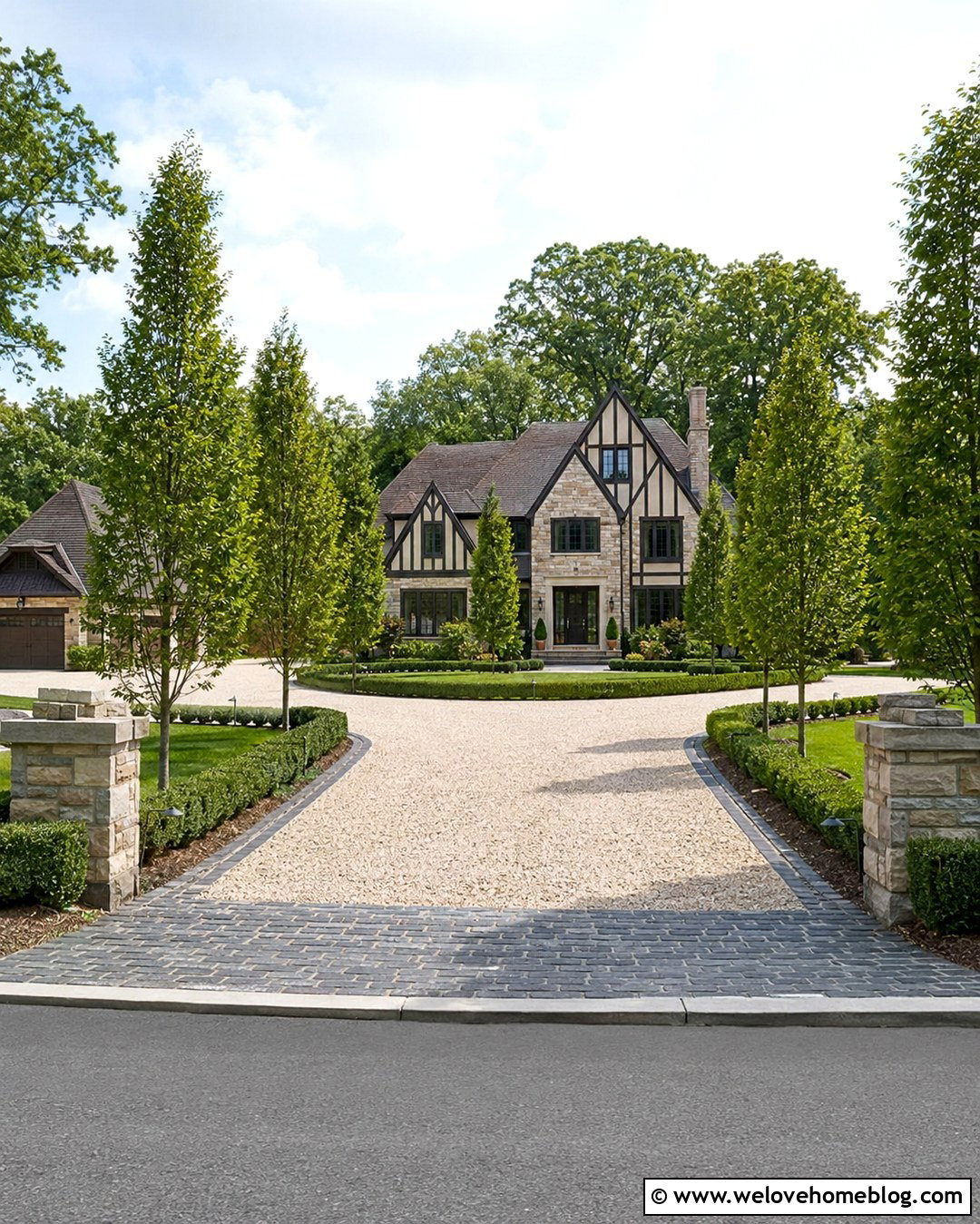
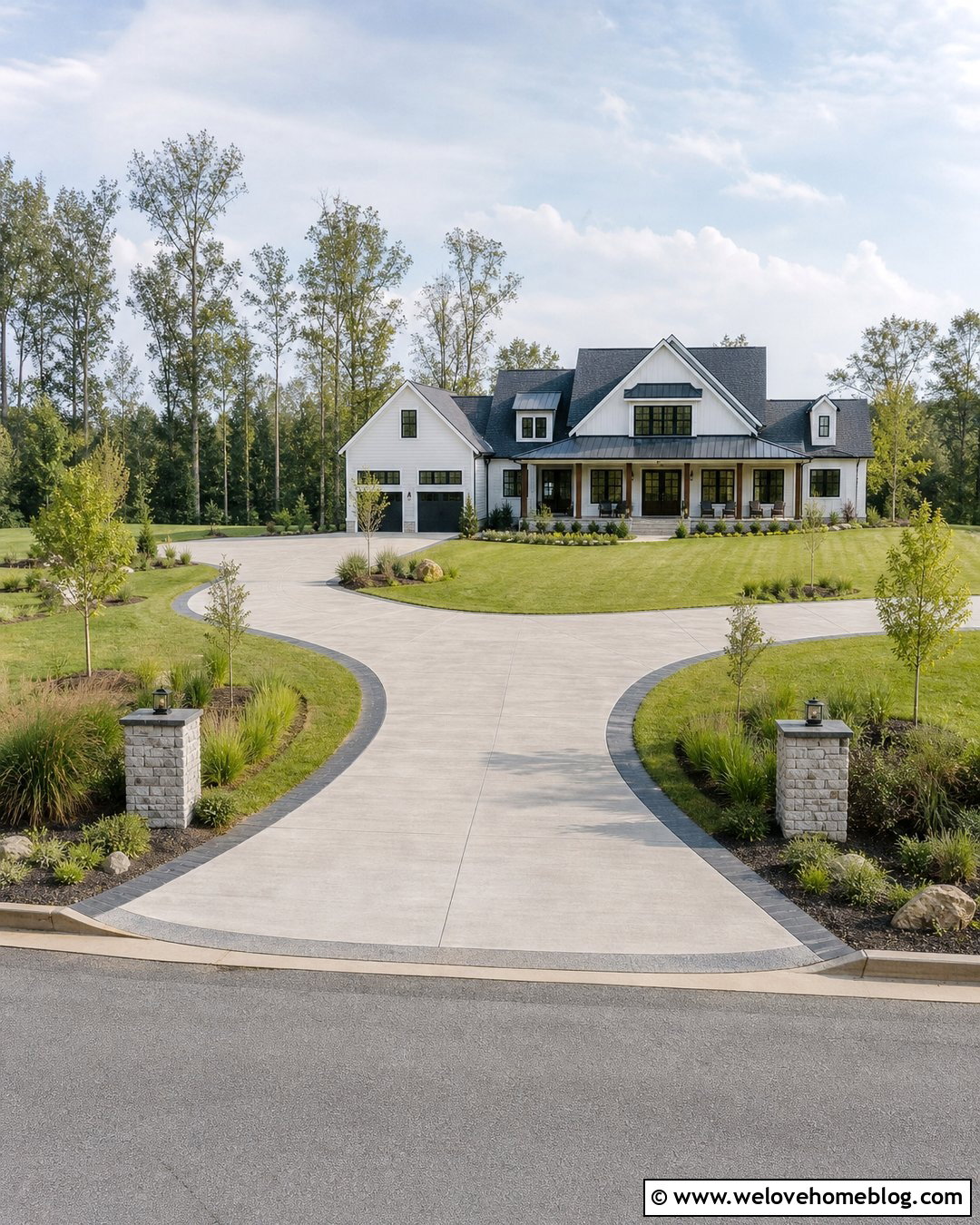
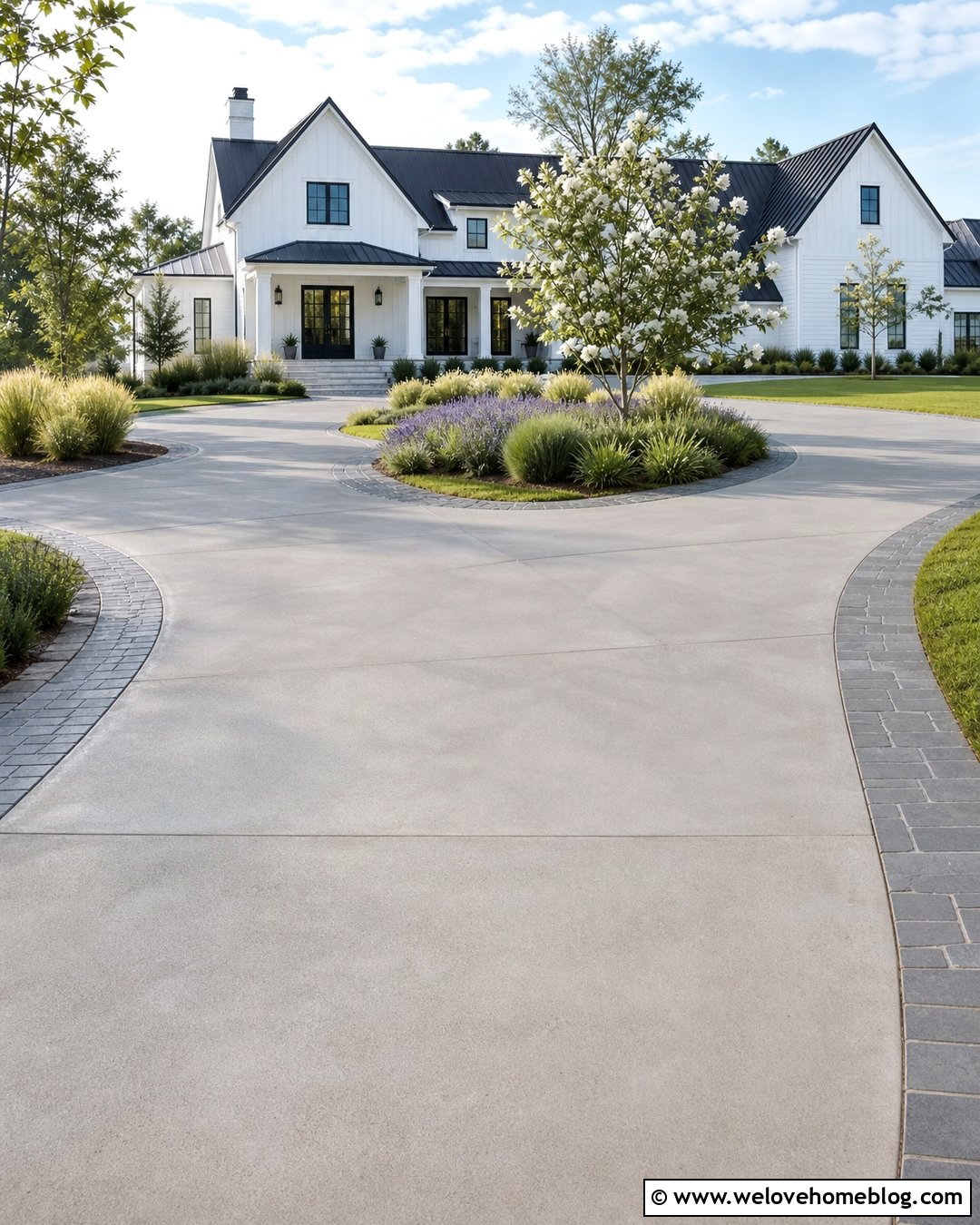
20. Interlock Driveway With Paver Apron
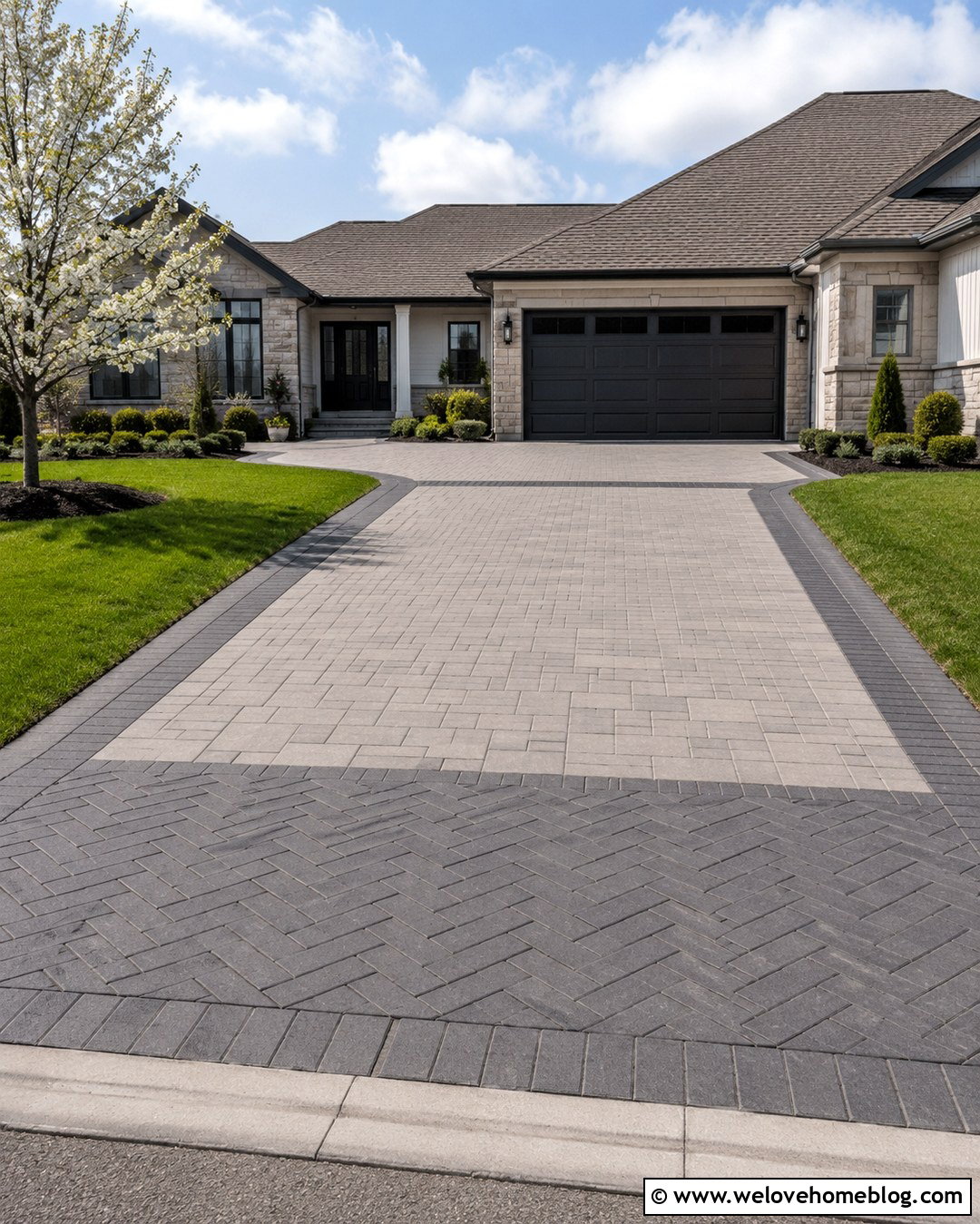
An interlock driveway with a contrasting paver apron creates a defined transition from the street to the main approach. Use warm-gray concrete pavers in a running bond for most of the driveway, then install a broad charcoal herringbone apron across the entrance. The darker section helps visually anchor a flared opening and can be repeated near the garage doors for balance. Continue a narrow charcoal border along both sides to connect the separate accents. This complete look works with ranch, craftsman, and transitional homes. Low shrubs, lawn, and a flowering tree can frame the entrance without hiding it. Plan the apron dimensions around the driveway width and turning path so it feels proportional. Matching walkway details will keep the contrasting sections from appearing unrelated. ()
Conclusion:
The best interlock driveway balances attractive pavers with a practical layout, defined edges, suitable drainage, and landscaping that complements the house. Herringbone can create a highly structured surface, while basket weave, running bond, random ashlar, and large-format patterns support different architectural looks. Color matters too. Gray feels versatile, beige adds warmth, red brick suits traditional homes, and charcoal creates contemporary contrast. Before installation, compare full-size samples outdoors and consider how vehicles will enter, turn, park, and reach the garage. The foundation and edge restraints deserve as much attention as the visible pattern. With thoughtful planning, these **20 Interlock Driveway Ideas** can inspire a durable, coordinated entrance with lasting curb appeal. ()

Related posts:
Leave a Reply