
Concrete can be simple, decorative, modern, traditional, or anything in between. The best concrete driveway ideas treat the entire front yard as one coordinated design. Surface color, finish, joint pattern, borders, landscaping, and the home’s exterior should all work together. A practical broom finish can look polished with crisp edging and balanced planting beds. Stamped patterns can bring the character of stone or brick without making the entrance feel overly busy. Exposed aggregate, grass strips, contrasting bands, and large geometric slabs offer even more ways to personalize the approach. The following complete driveway looks cover different house styles, yard sizes, layouts, and budgets, giving you 40 concrete driveway ideas to inspire a more attractive and functional entrance.

1. Broom Finish Concrete Driveway
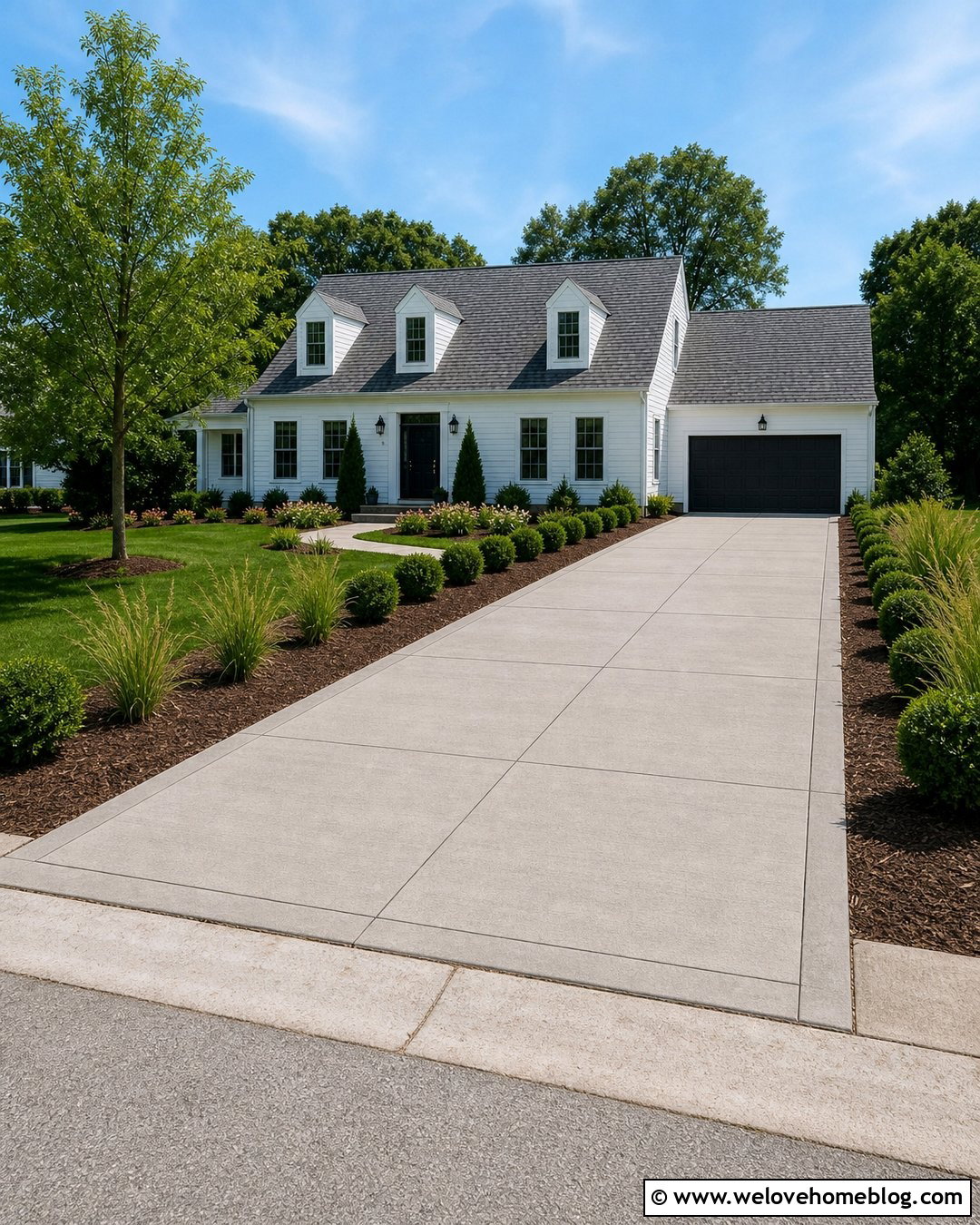
A broom finish concrete driveway is an excellent starting point when you want a clean surface without unnecessary decoration. Fine lines brushed across the wet concrete add subtle texture and keep the broad paved area from looking flat. Use a straight layout with evenly spaced control joints for an orderly appearance. A smooth concrete picture-frame border can create definition without introducing another material. Along each side, low boxwoods, ornamental grasses, and simple mulch beds soften the edges while remaining easy to maintain. This complete look works especially well with ranch, Cape Cod, and suburban homes. Choose a light or medium gray tone that complements the facade, and connect the driveway to a matching concrete walkway for a consistent front-yard design.
2. Smooth Modern Concrete Driveway
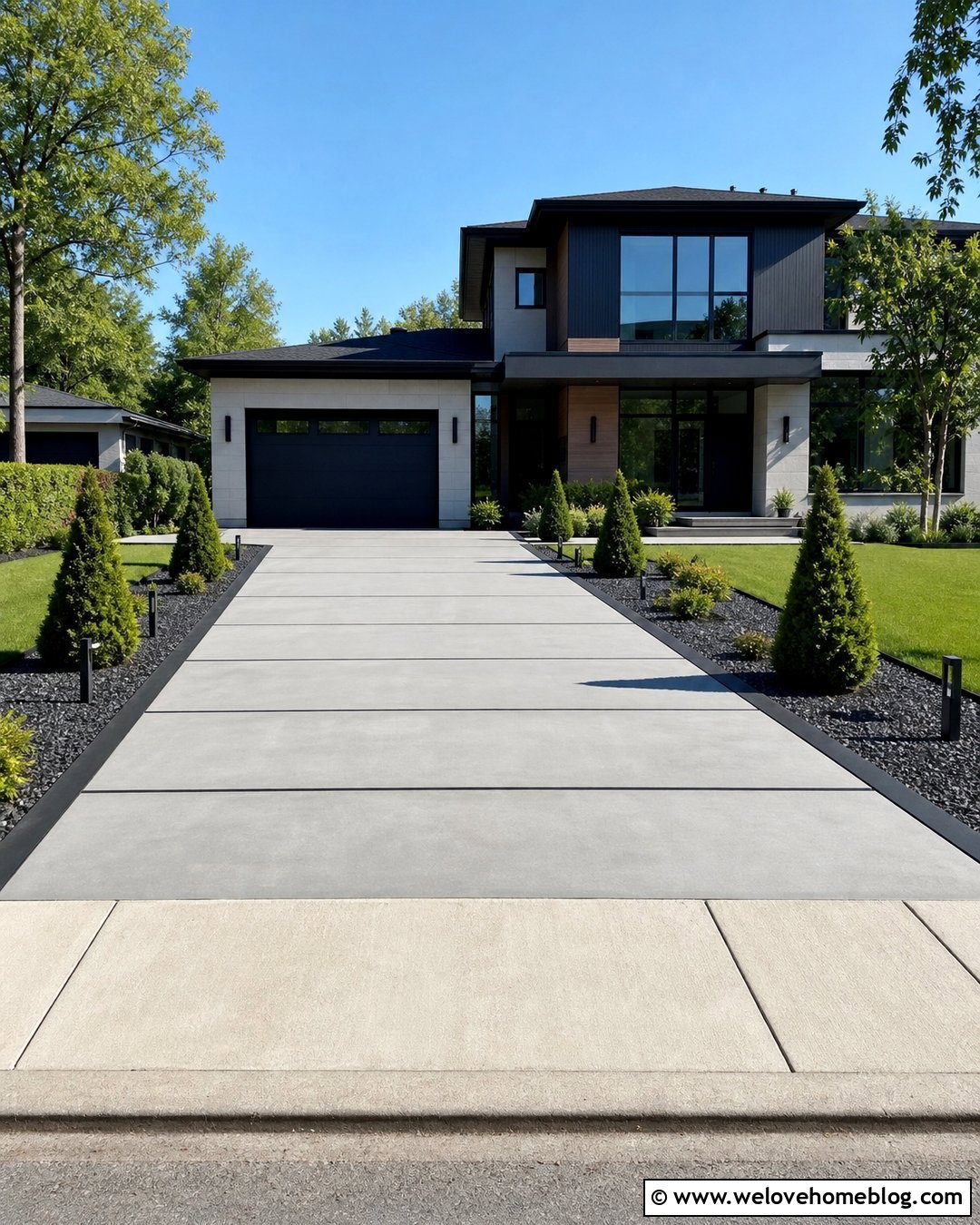
Wide, smooth concrete panels give a contemporary home an uncluttered and architectural entrance. Instead of pouring one visually heavy slab, divide the driveway into large rectangles with narrow saw-cut joints. Slight variations in panel size can follow the proportions of the garage door, windows, and front walkway. Keep the concrete light gray or warm white for a bright appearance. Black metal edging, dark gravel beds, and sculptural evergreen shrubs provide strong contrast around the surface. A straight driveway usually suits this design best because it reinforces clean lines. However, a gentle offset can help navigate a small front yard. Finish the look with simple path lights and a flush transition at the sidewalk so every detail feels intentional rather than overly decorative.
3. Exposed Aggregate Concrete Driveway
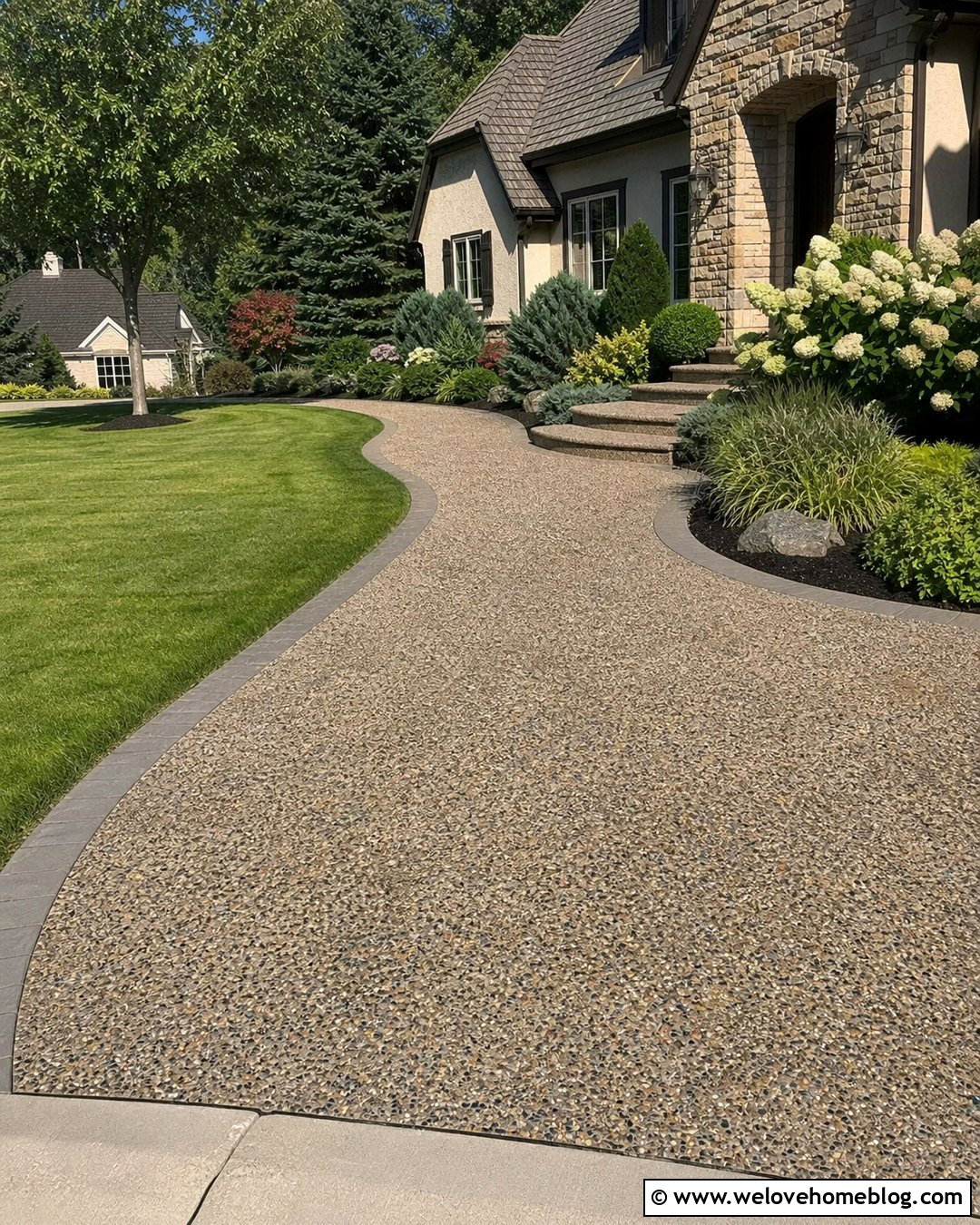
Exposed aggregate brings natural color and visible texture to a concrete driveway while retaining a cohesive poured surface. Small river stones in tan, cream, gray, and brown tones can complement traditional brick, stone veneer, or warm siding. Frame the driveway with a smooth concrete border so the textured center has a crisp visual boundary. A gently curved layout makes the aggregate feel more organic and helps the driveway blend into established landscaping. Plant hydrangeas, compact evergreens, and ornamental grasses in broad beds that follow the curve. Exposed aggregate can also be paired with matching front steps for continuity. Because the surface already has plenty of detail, keep the joint pattern straightforward and avoid too many competing colors around the entrance. ()
4. Stamped Slate Concrete Driveway
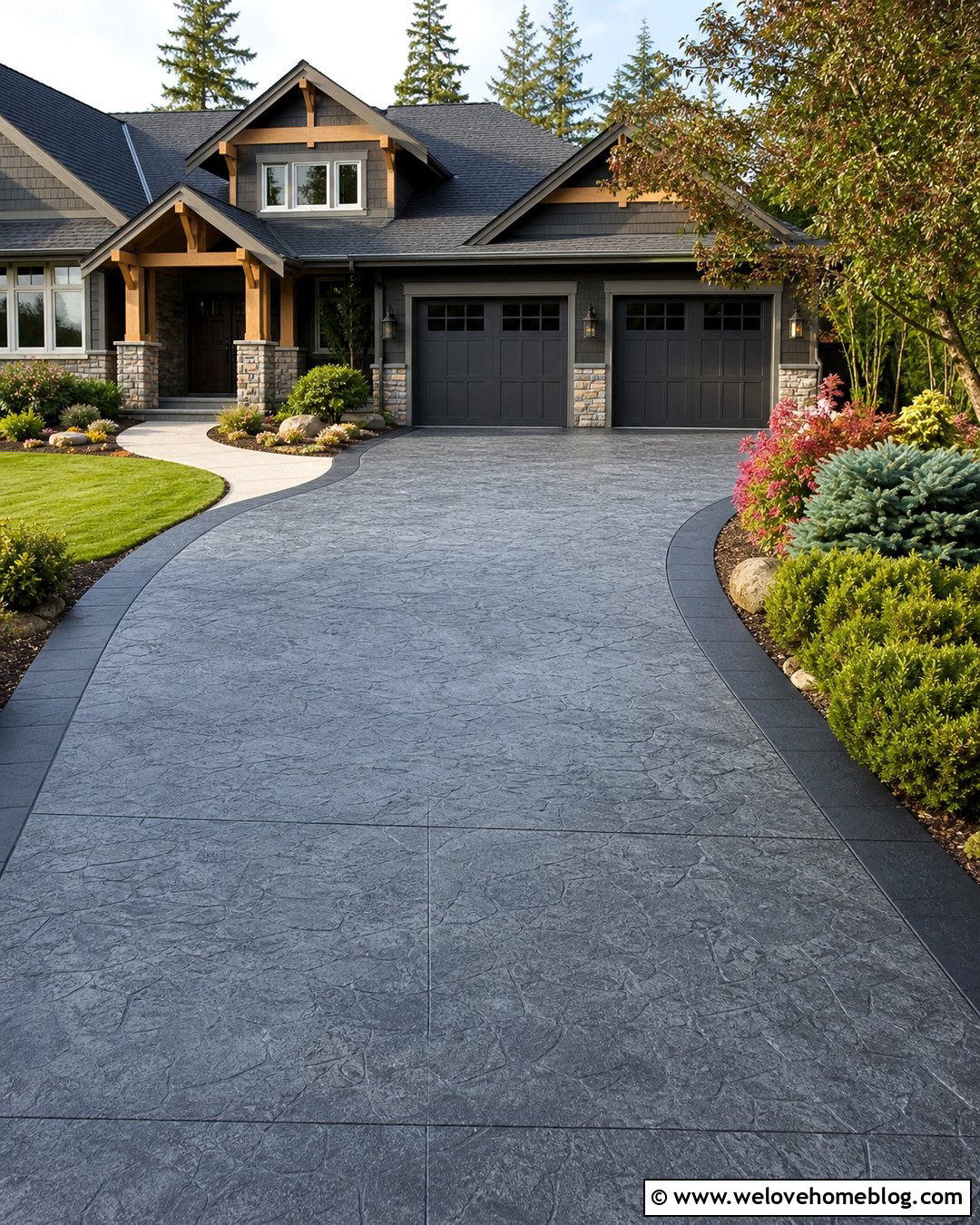
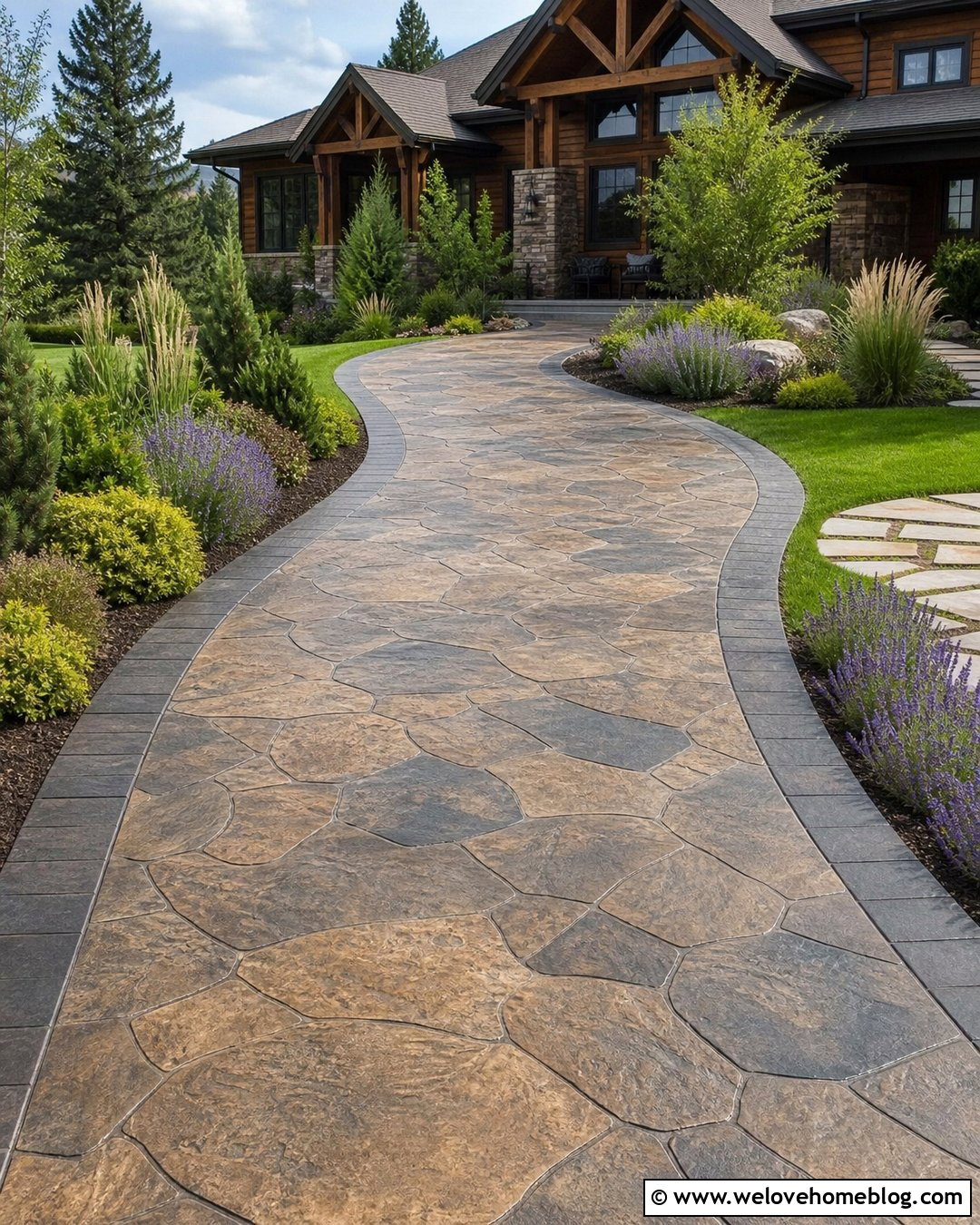
Stamped slate concrete creates the layered appearance of natural stone across a durable-looking, continuous driveway. Choose a seamless slate texture rather than a heavily outlined pattern if you prefer a calmer result. Charcoal, pewter, and muted brown color variations help the surface feel dimensional without becoming artificial. A smooth dark concrete border can frame the stamped field and repeat the color of shutters, roofing, or garage doors. For a complete look, use a curved driveway leading to a craftsman or stone-front home. Plant compact junipers, flowering shrubs, and small ornamental trees along the outside curve. Keep the walkway slightly lighter than the driveway so visitors can recognize the route to the front door. Simple landscaping allows the stamped texture to remain the central design feature.
5. Stamped Cobblestone Concrete Driveway
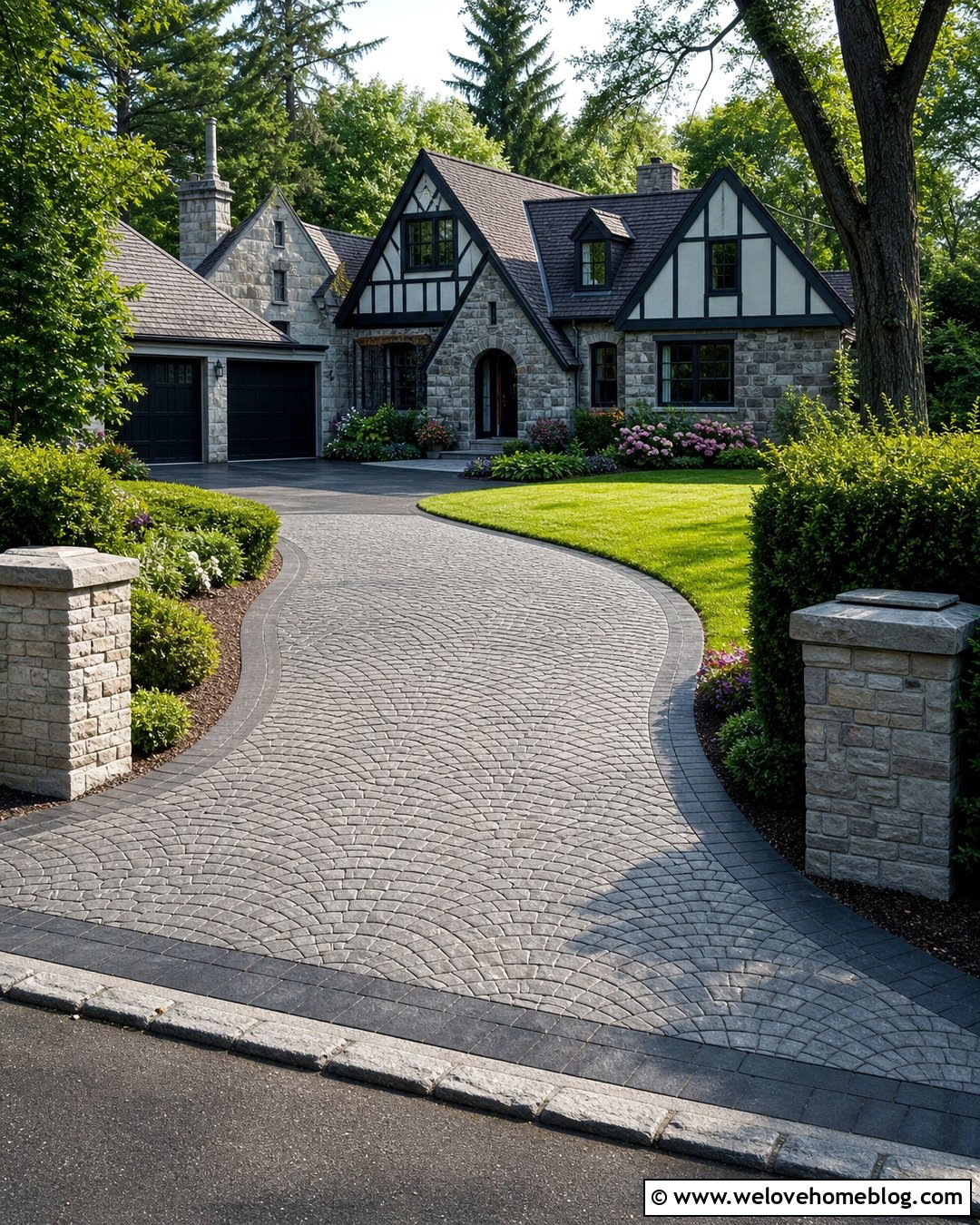
Cobblestone-stamped concrete can give a wide driveway the character of an older European entrance without using loose individual stones across the entire surface. A medium gray base with charcoal accents works well with colonial, Tudor, and traditional brick homes. Use the cobblestone pattern in a fan or running layout, then add a smooth concrete apron near the garage to create a cleaner transition. A curved driveway enhances the traditional appearance and leaves space for a central lawn or landscaped corner. Frame the pavement with clipped hedges, flowering perennials, and stone gate pillars near the street. Keep the pattern scale proportional to the property. Smaller cobblestone impressions suit compact driveways, while larger units read more clearly on a broad motor court or long approach.
6. Stamped Brick Concrete Driveway
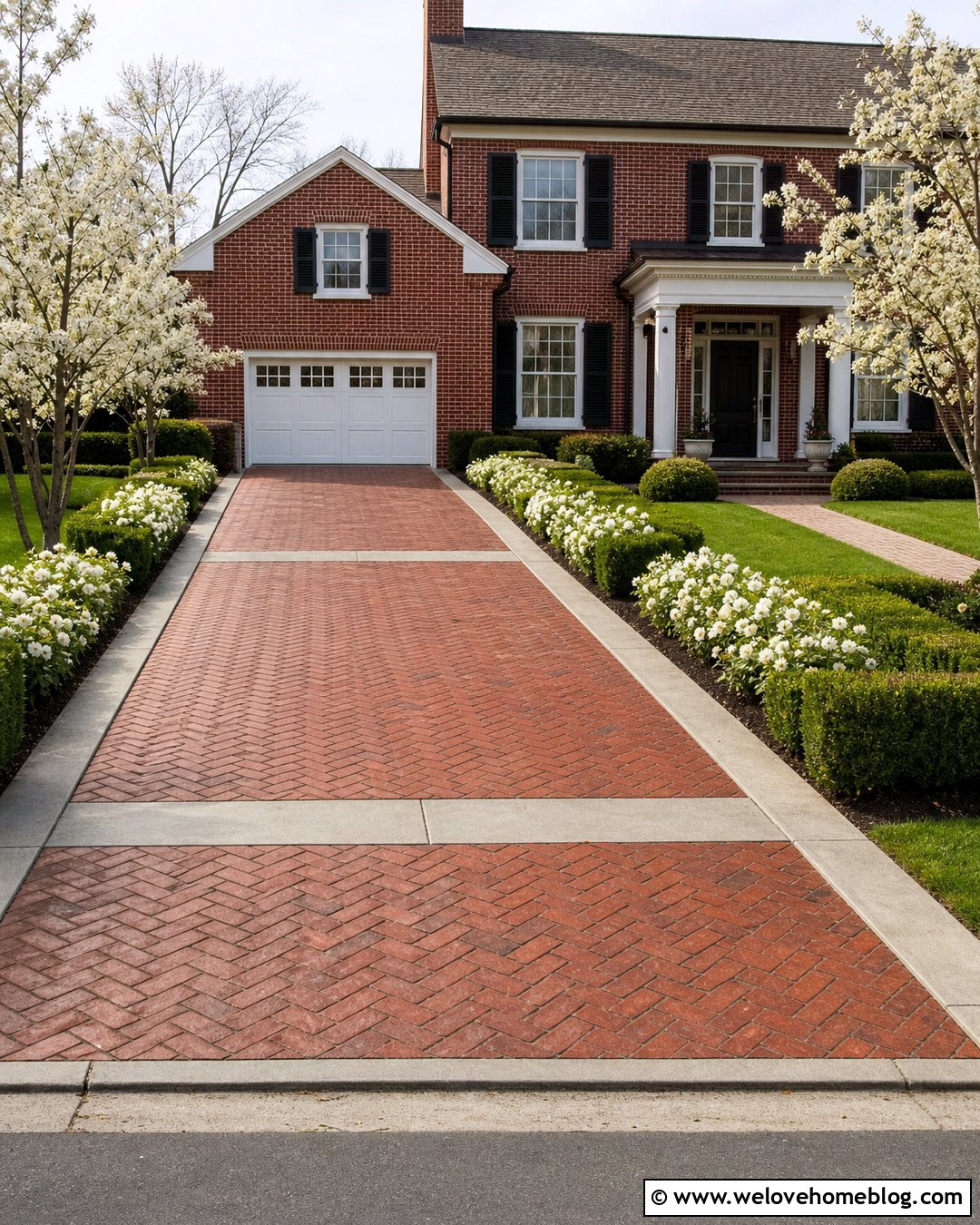
Warm brick-stamped concrete creates a welcoming connection between the driveway and a red brick or painted colonial home. Select muted clay, chestnut, or weathered red coloring rather than an intense orange tone. A running bond pattern provides a familiar, orderly look, while a herringbone layout creates stronger movement across a wide surface. Use gray concrete bands along the perimeter and between major parking sections to prevent the brick pattern from feeling overwhelming. Symmetrical planting beds with boxwood, white flowers, and small flowering trees reinforce the formal character. A straight driveway is especially effective because it aligns with the front elevation and garage. Repeat the brick tone in the walkway or front steps, but use a simpler pattern there to keep the overall entrance balanced.
7. Concrete Driveway With Grass Strips
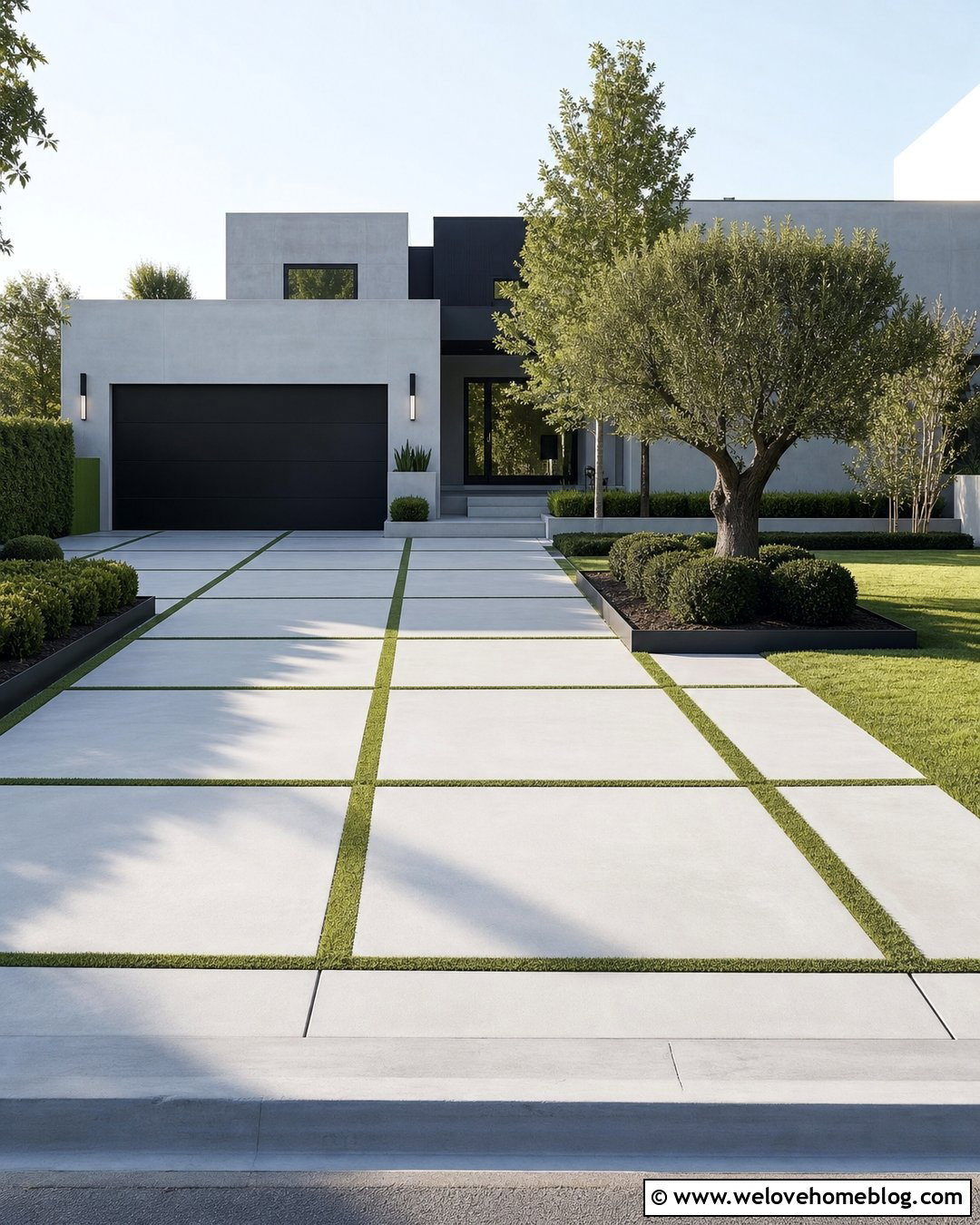
Large concrete slabs separated by grass strips create a fresh, modern entrance that feels less visually paved than a solid driveway. Arrange rectangular light gray concrete panels in two driving tracks or a full-width grid, depending on how the space will be used. Narrow green channels break up the hardscape and connect the driveway to the lawn. This layout looks especially natural beside a contemporary, midcentury, or minimalist home. Continue the geometry with square planting beds, clipped shrubs, and a straight walkway. Grass strips require careful maintenance, so consider low-growing groundcover where regular trimming would be inconvenient. Keep the slab edges precise and align the joints with major features on the house. The result should appear structured, green, and integrated with the surrounding yard.
8. Concrete Driveway With Gravel Joints
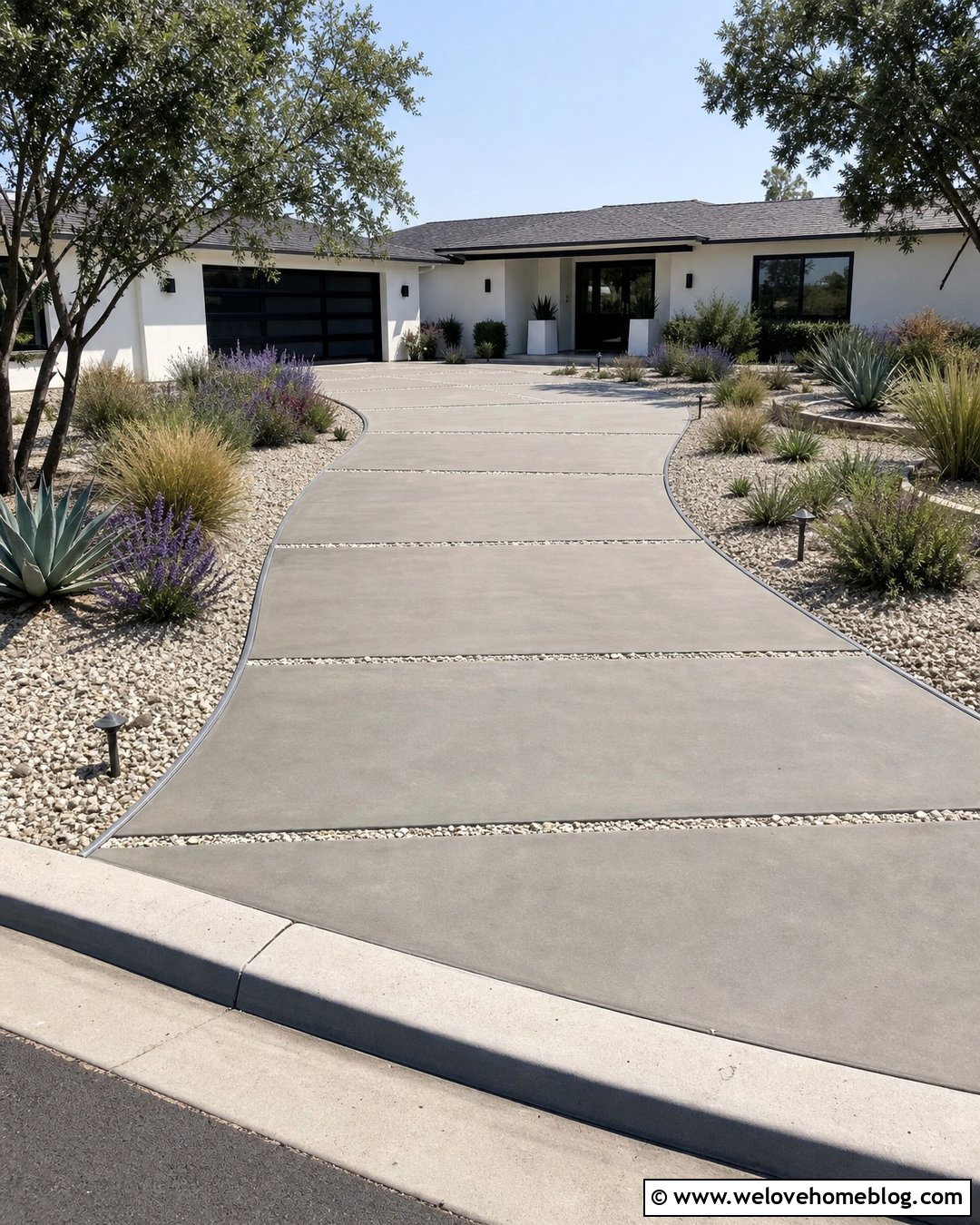
Gravel-filled joints provide a practical-looking contrast between broad concrete panels. Use warm gray poured concrete with narrow channels of pale crushed stone for a bright modern combination. Larger rectangular panels work well on straight driveways, while slightly tapered panels can follow a curved approach. Install metal or concrete separators to keep the gravel contained and preserve crisp lines. Around the driveway, repeat the same gravel in drought-tolerant planting beds filled with agave, lavender, salvia, or ornamental grasses. This repetition makes the joints feel connected to the landscape rather than randomly inserted. A smooth concrete walkway and simple front steps complete the entrance. The gravel should remain a narrow accent, allowing the concrete surface to support vehicles while the contrasting lines introduce rhythm and visual interest.
9. Concrete Driveway With Black Pebble Bands
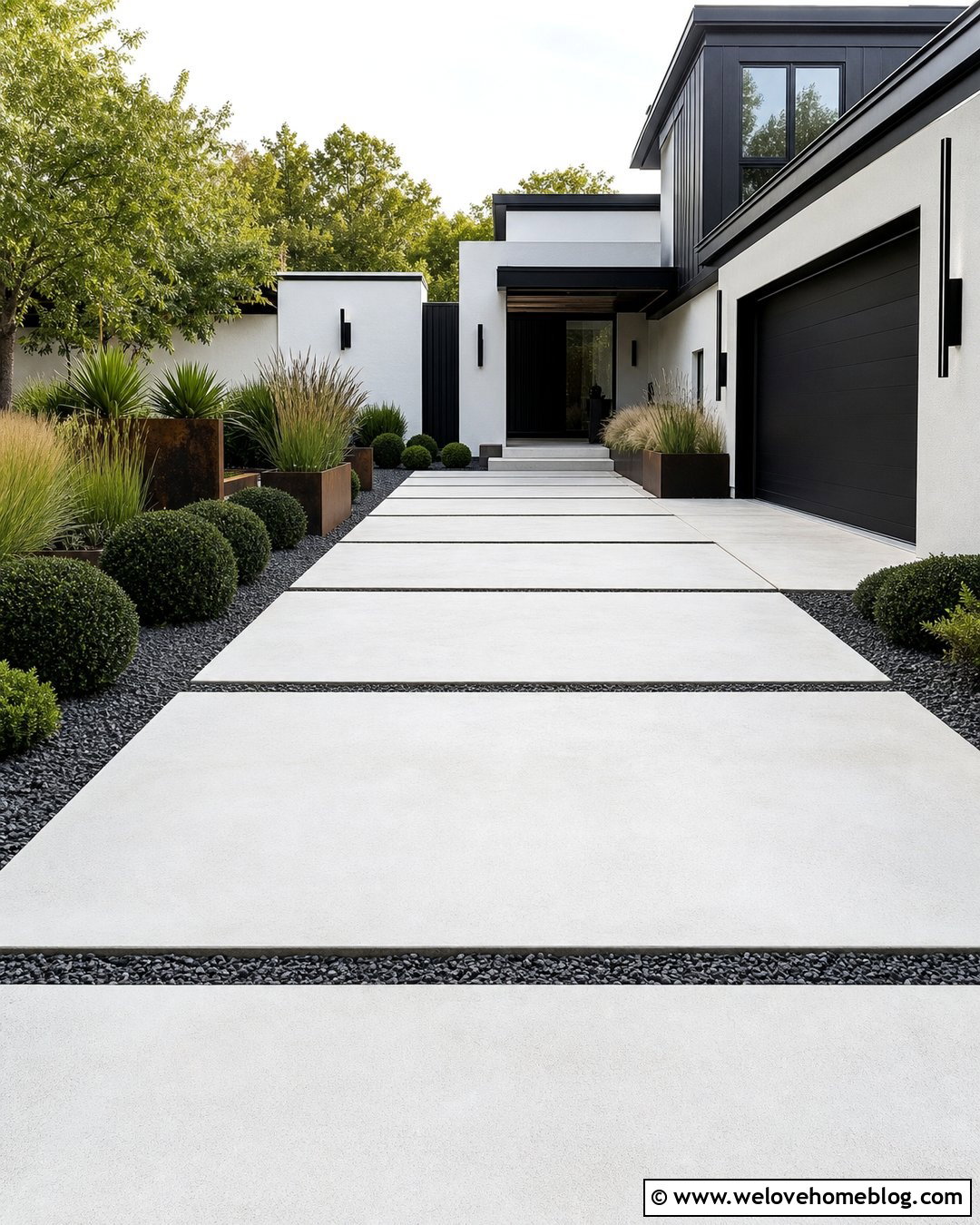
Dark pebble bands can turn a pale concrete driveway into a striking contemporary feature. Divide the surface into oversized rectangular sections, then place polished black pebbles or dark decorative gravel in narrow recessed channels. The contrast looks especially sharp against white, cream, or very light gray concrete. Carry the black tone into steel planters, garage doors, exterior lighting, or window frames for a coordinated facade. Use a straight or slightly offset driveway leading to a modern home with a simple lawn and structured planting beds. Sculptural grasses and rounded evergreens can soften the strict geometry. Keep the pebble bands out of primary tire paths when possible, and use solid concrete near the sidewalk and garage threshold. This preserves a clean approach while maintaining the dramatic grid effect.
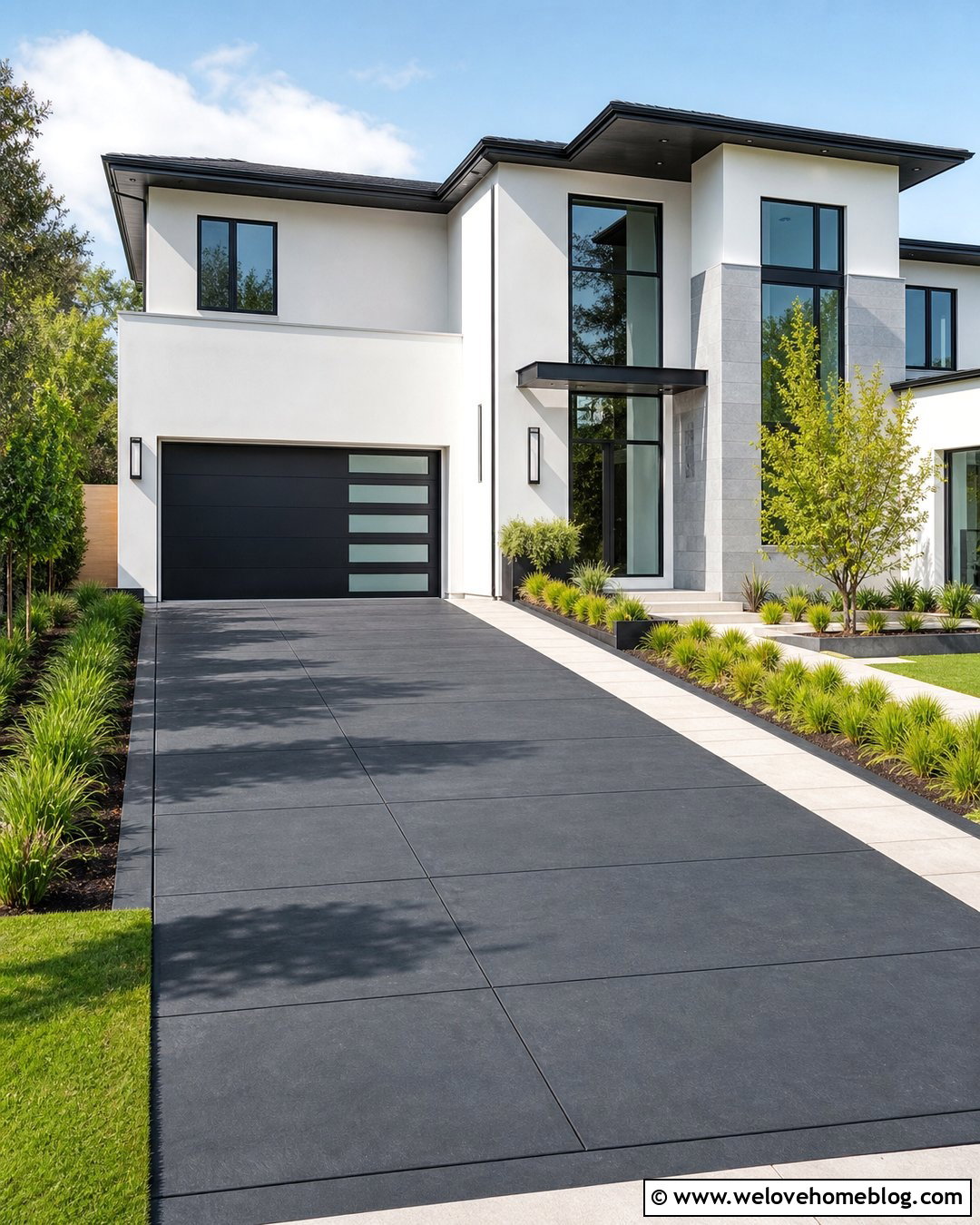
10. Concrete Driveway With Brick Border
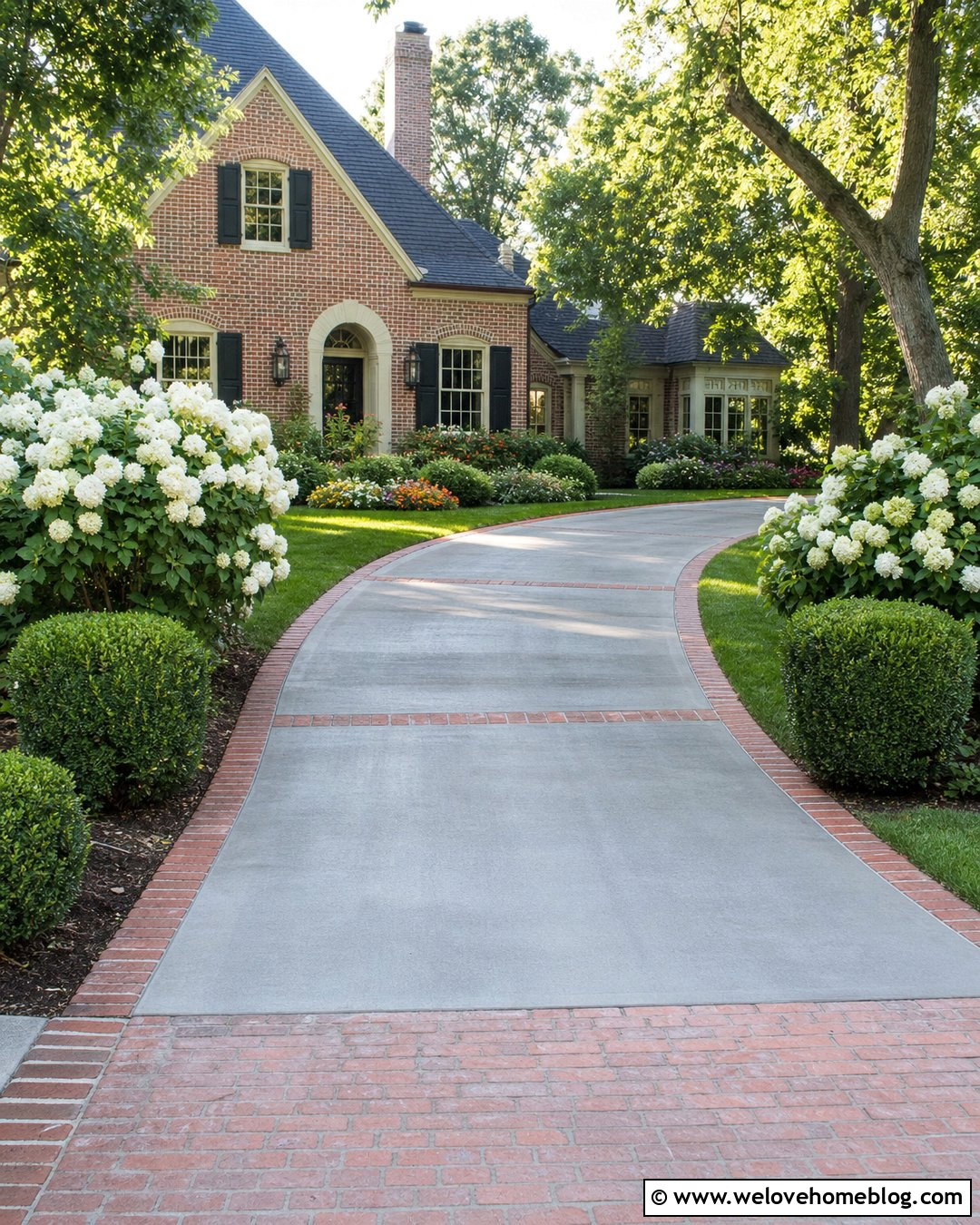
A brick border adds warmth and definition to a basic poured concrete driveway. Choose brick that coordinates with the house rather than matching it so closely that the design becomes visually flat. Weathered red brick pairs nicely with medium gray concrete, while charcoal brick creates a more updated appearance. Install the border along both sides and across the driveway apron to form a complete frame. A gently curved layout can showcase the brick edge and guide attention toward the garage. Add layered planting beds with hydrangeas, boxwoods, and seasonal flowers outside the border. Repeat the brick in the front walkway or porch steps for continuity. The center concrete can stay broom finished and affordable, allowing the smaller amount of decorative masonry to provide most of the character.
11. Concrete Driveway With Cobblestone Border
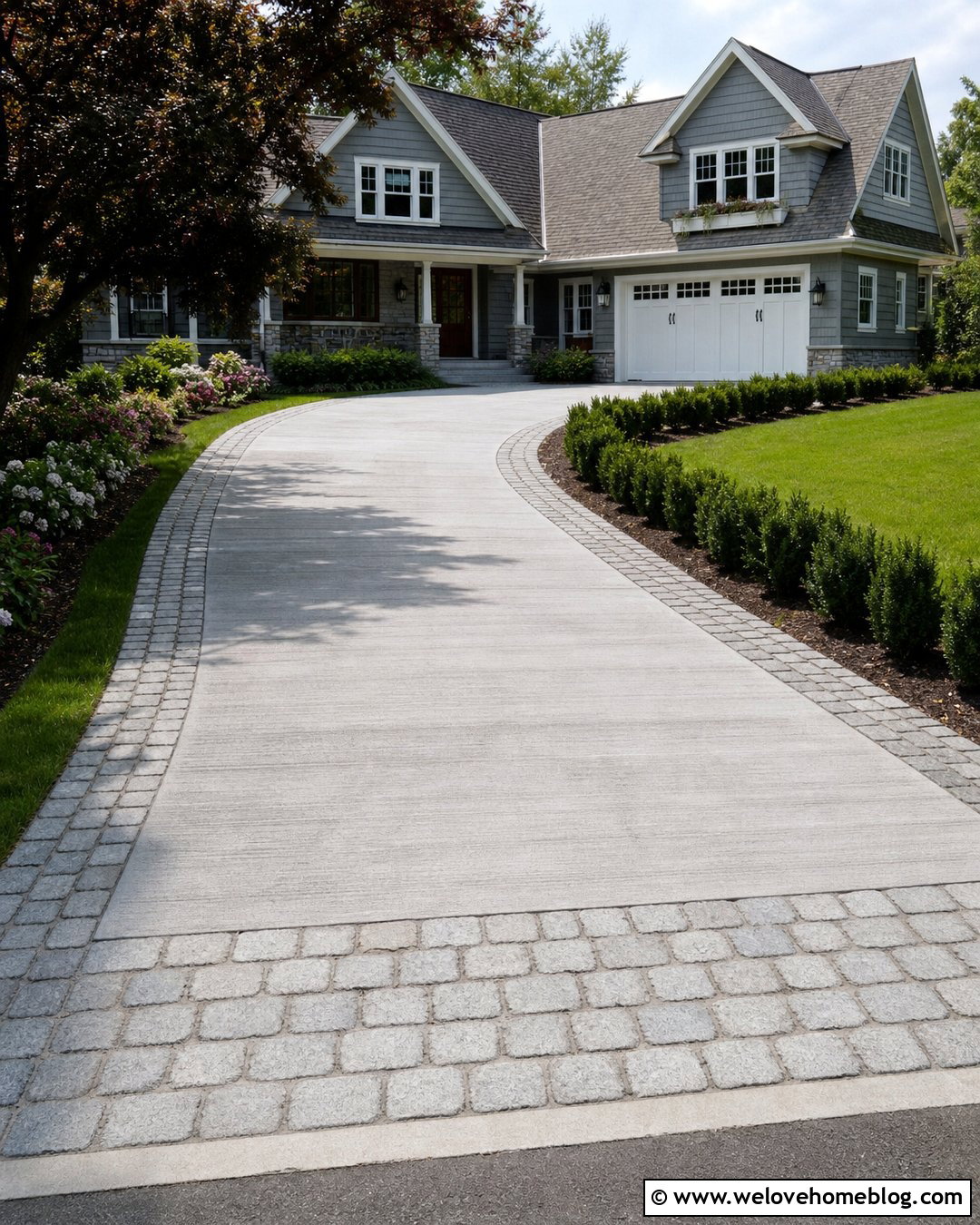
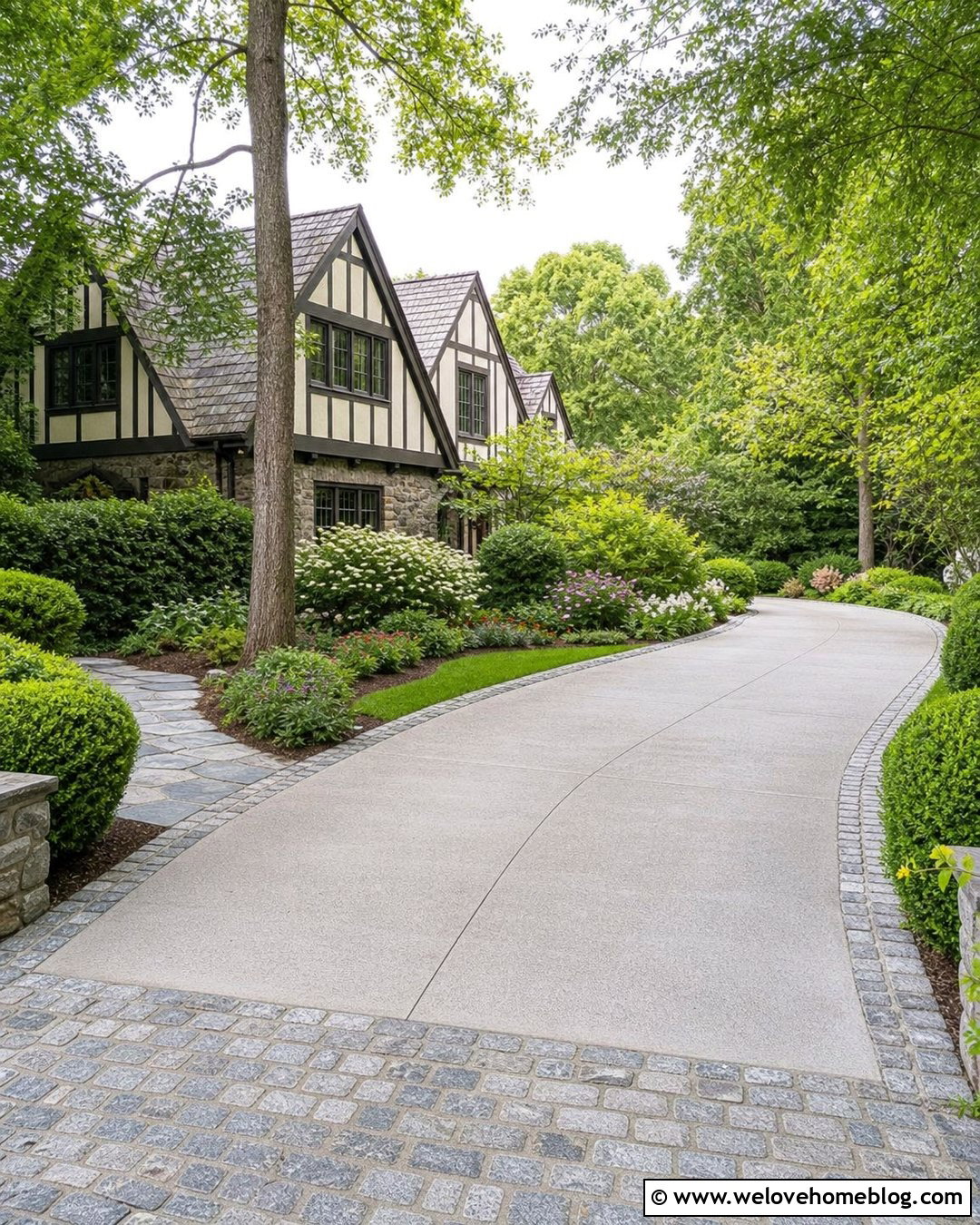
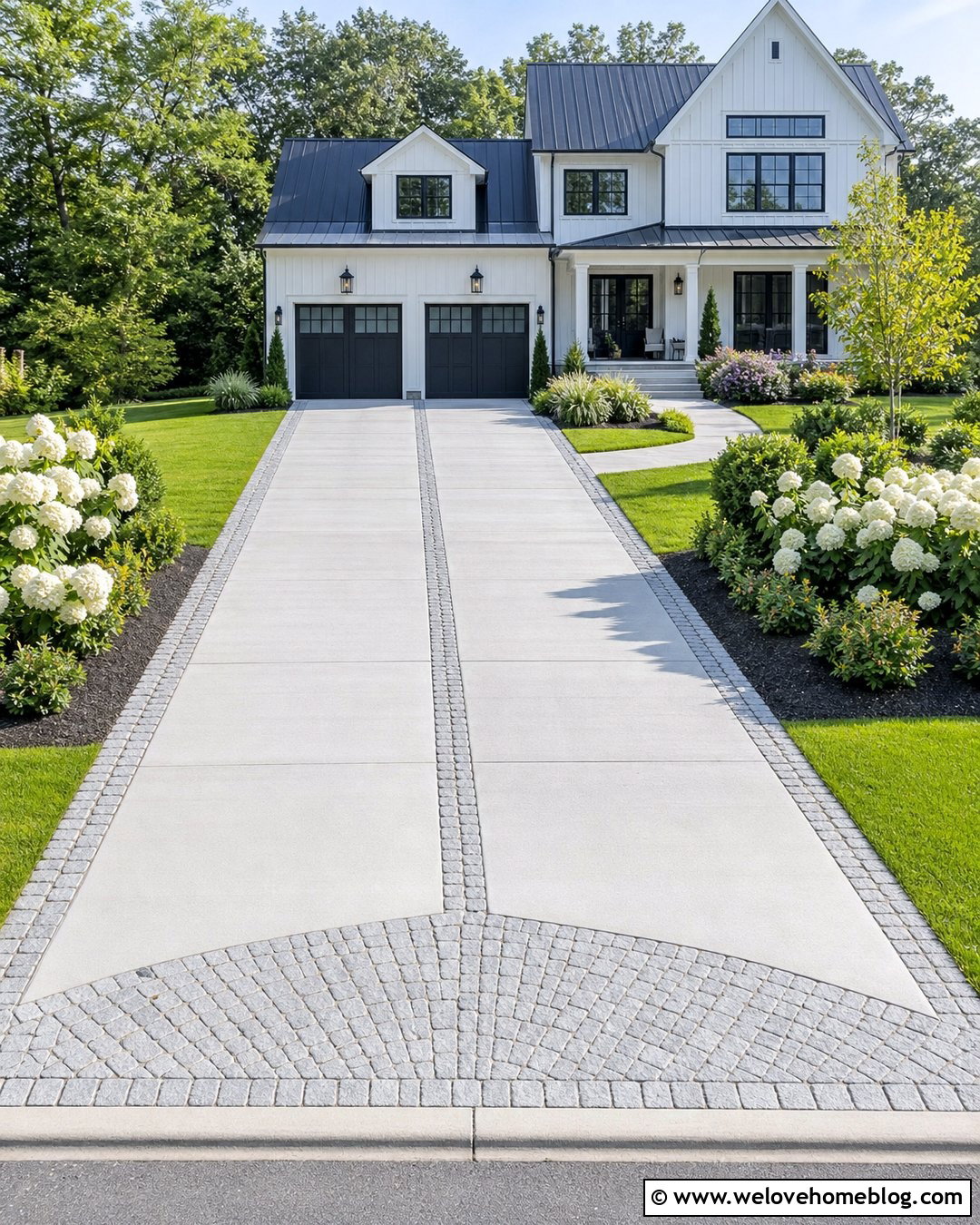
A cobblestone border gives a poured concrete driveway a substantial, traditional edge. Gray granite cobbles work well around light broom-finished concrete, while brown or buff stones complement warmer exposed aggregate. Create a double row at the street entrance for greater visual impact, then continue a single row along the driveway sides. On a curved approach, the small stones can follow the shape more naturally than large rectangular pavers. Surround the border with lawn, low evergreen shrubs, and informal flowering beds to soften its weight. Cobblestone pillars or a matching walkway accent can connect the entrance to the house. Avoid combining too many stone colors. One restrained cobblestone blend against a simple concrete center produces a timeless design that suits craftsman, colonial, farmhouse, and cottage-style properties.
12. Concrete Driveway With Dark Concrete Border
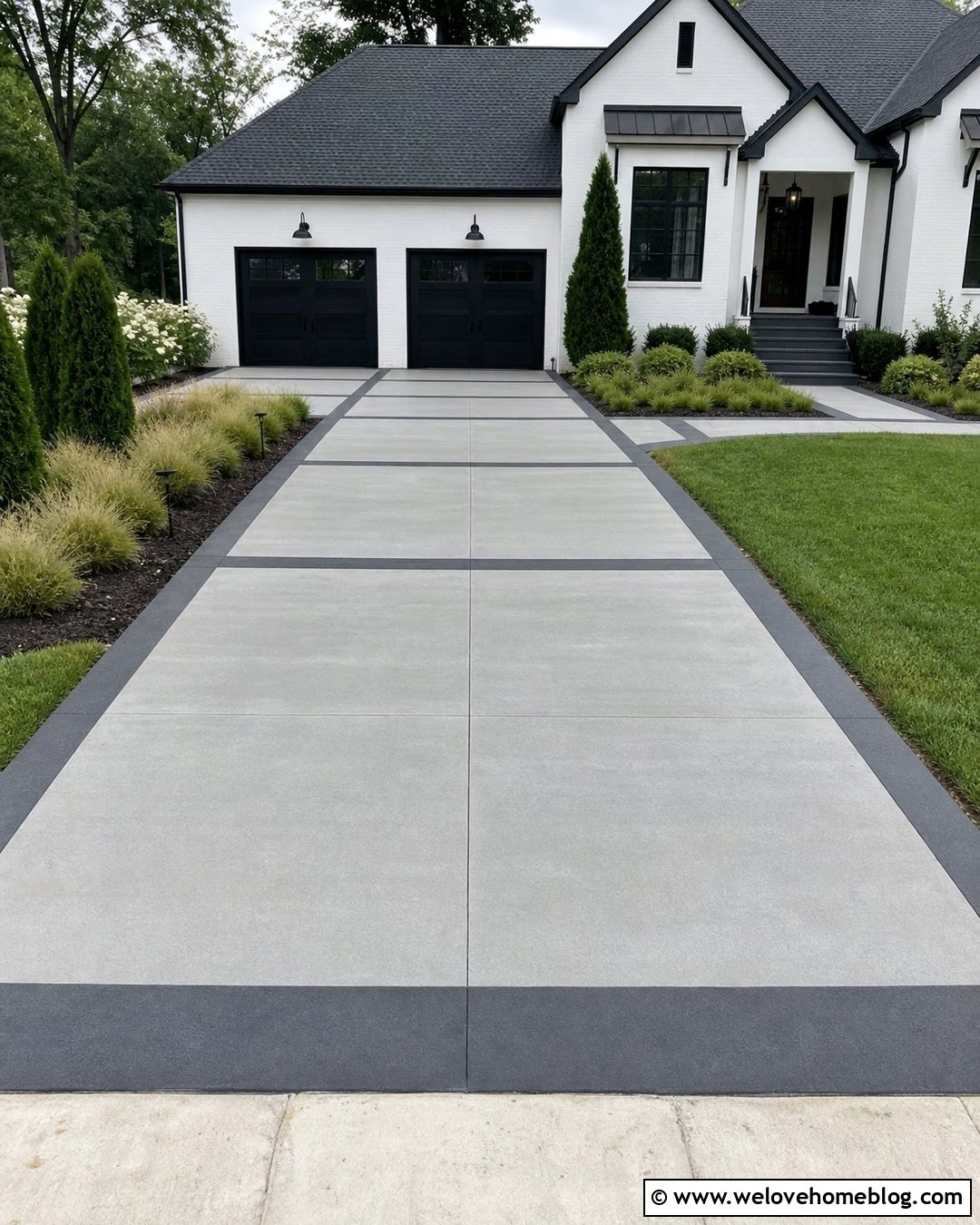
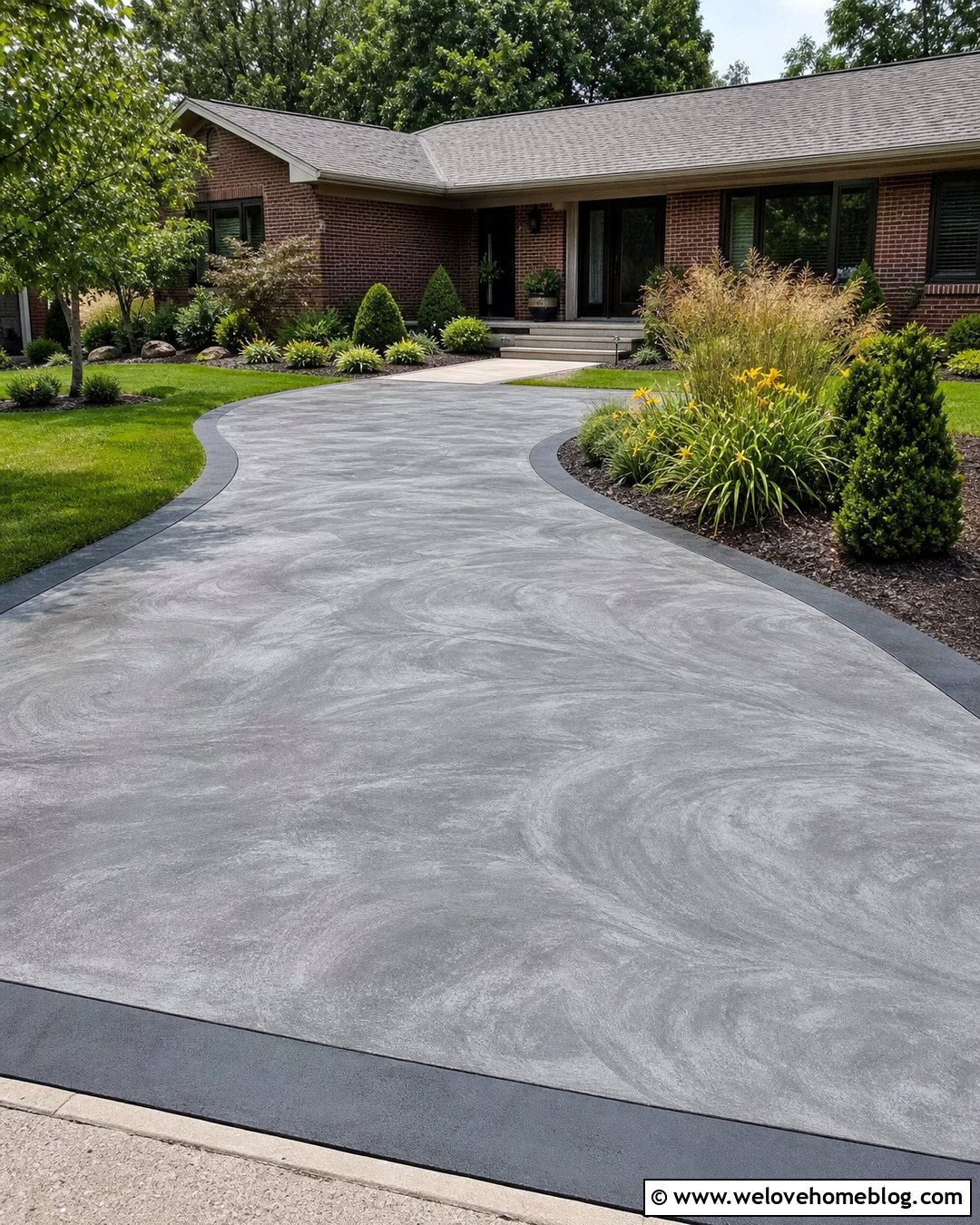
Contrasting concrete colors can define a driveway without adding a separate paving material. Pour the main field in a soft gray tone and create a charcoal concrete border around the perimeter. The darker frame can also extend across selected control joints, forming broad panels that make a large driveway feel organized. This treatment suits contemporary and updated traditional houses because it is decorative yet restrained. Use straight edges for a modern home or gentle curves for a more classic front yard. Repeat the charcoal tone in the garage door, roof, planters, or landscape edging. Low grasses and evergreen shrubs keep the surrounding beds neat. If the driveway meets a matching walkway, use the dark border to mark that connection clearly and guide guests toward the front entrance.
13. Picture Frame Concrete Driveway
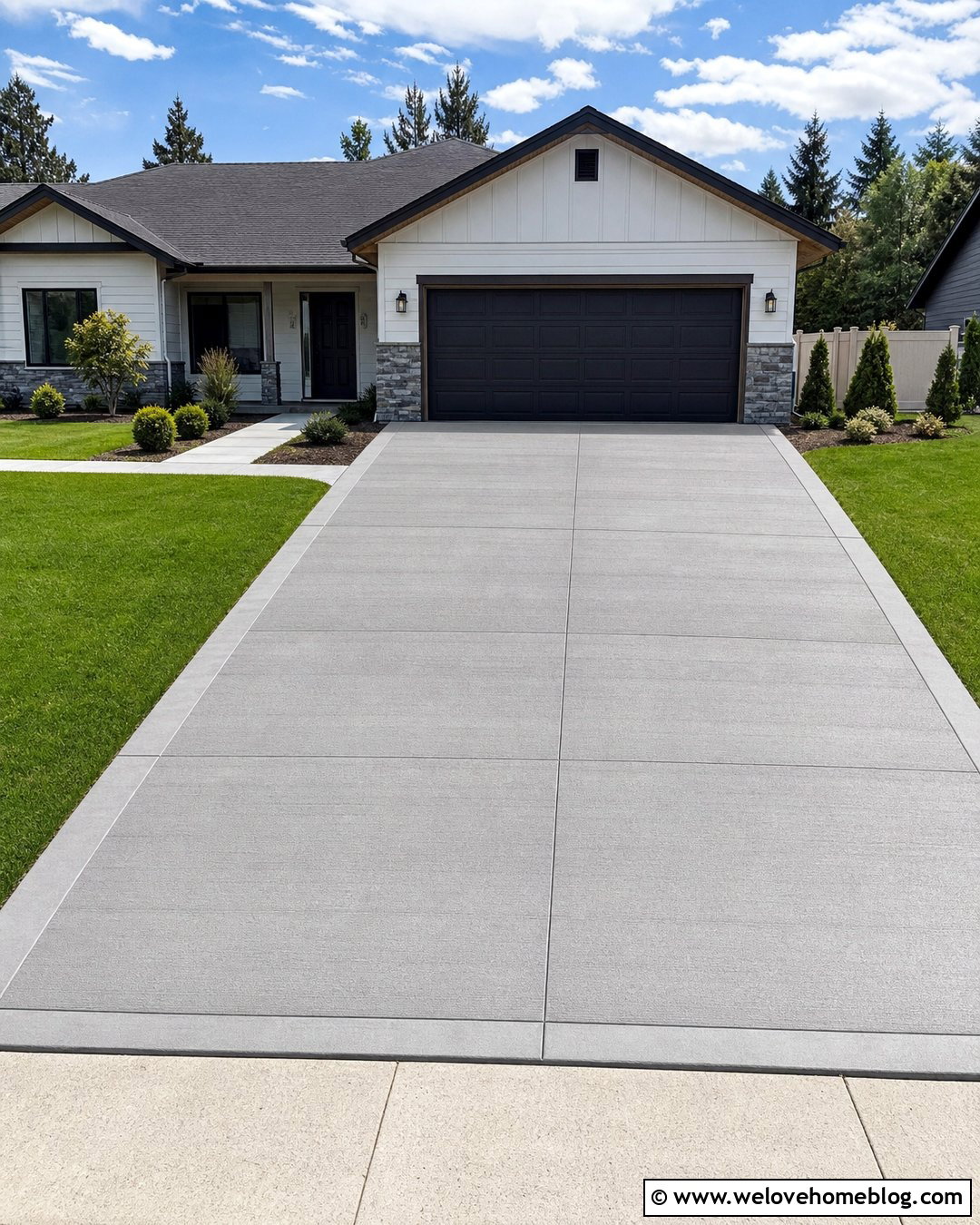
A picture-frame finish uses a smooth perimeter to surround a lightly textured concrete center. This small change gives a plain driveway a finished, custom appearance without relying on bold colors or elaborate stamping. Select a broom-finished center in medium gray and keep the smooth border in the same color for subtle contrast. Alternatively, darken the frame by one or two shades to make the shape more visible. A straight driveway with evenly aligned control joints creates the cleanest presentation. Pair it with rectangular lawn sections, simple foundation shrubs, and a matching picture-frame walkway. This complete look is flexible enough for ranch, craftsman, farmhouse, and modern suburban homes. It also allows landscaping and architecture to take priority while the concrete remains neat, attractive, and visually structured. ()
14. Geometric Saw Cut Concrete Driveway
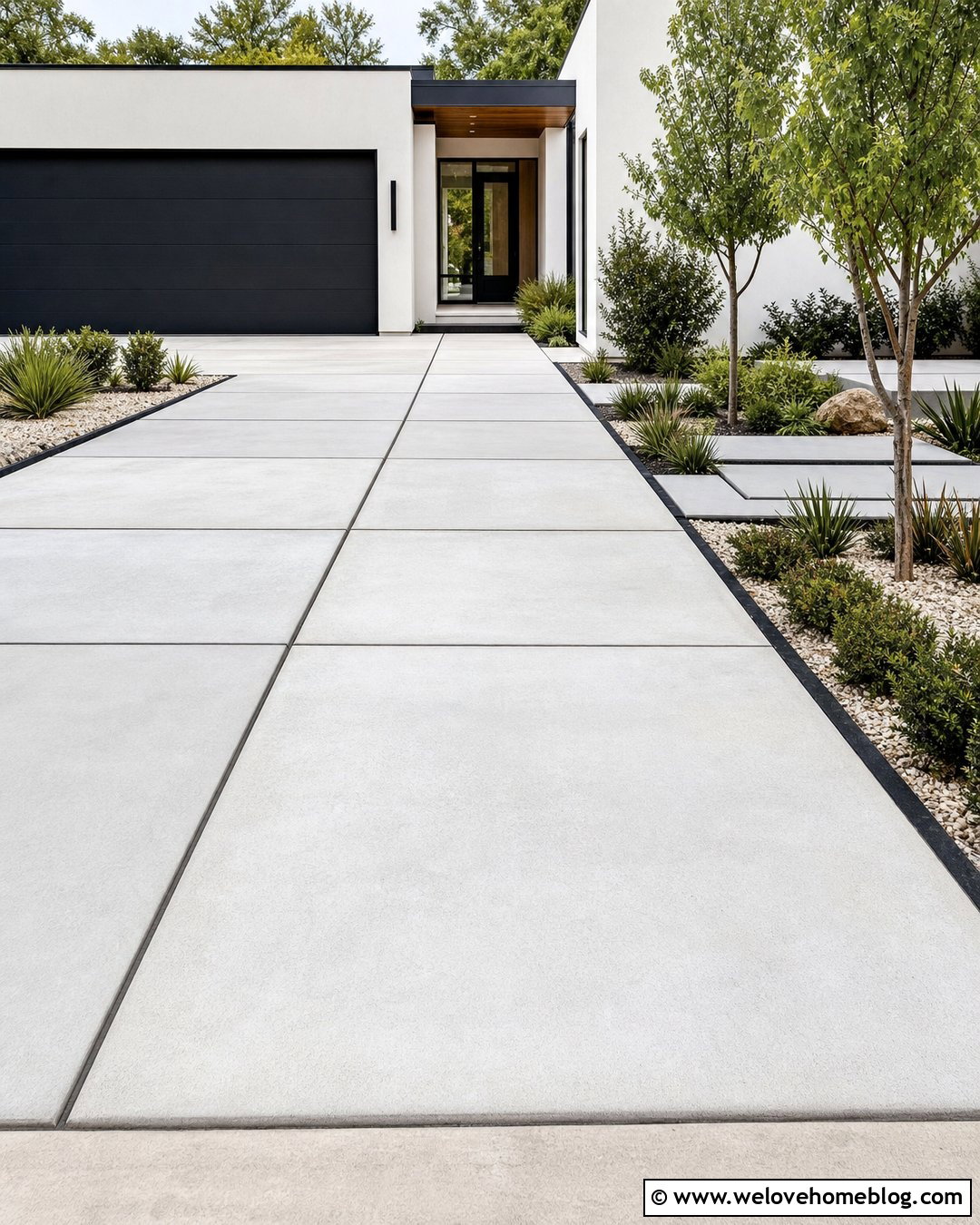
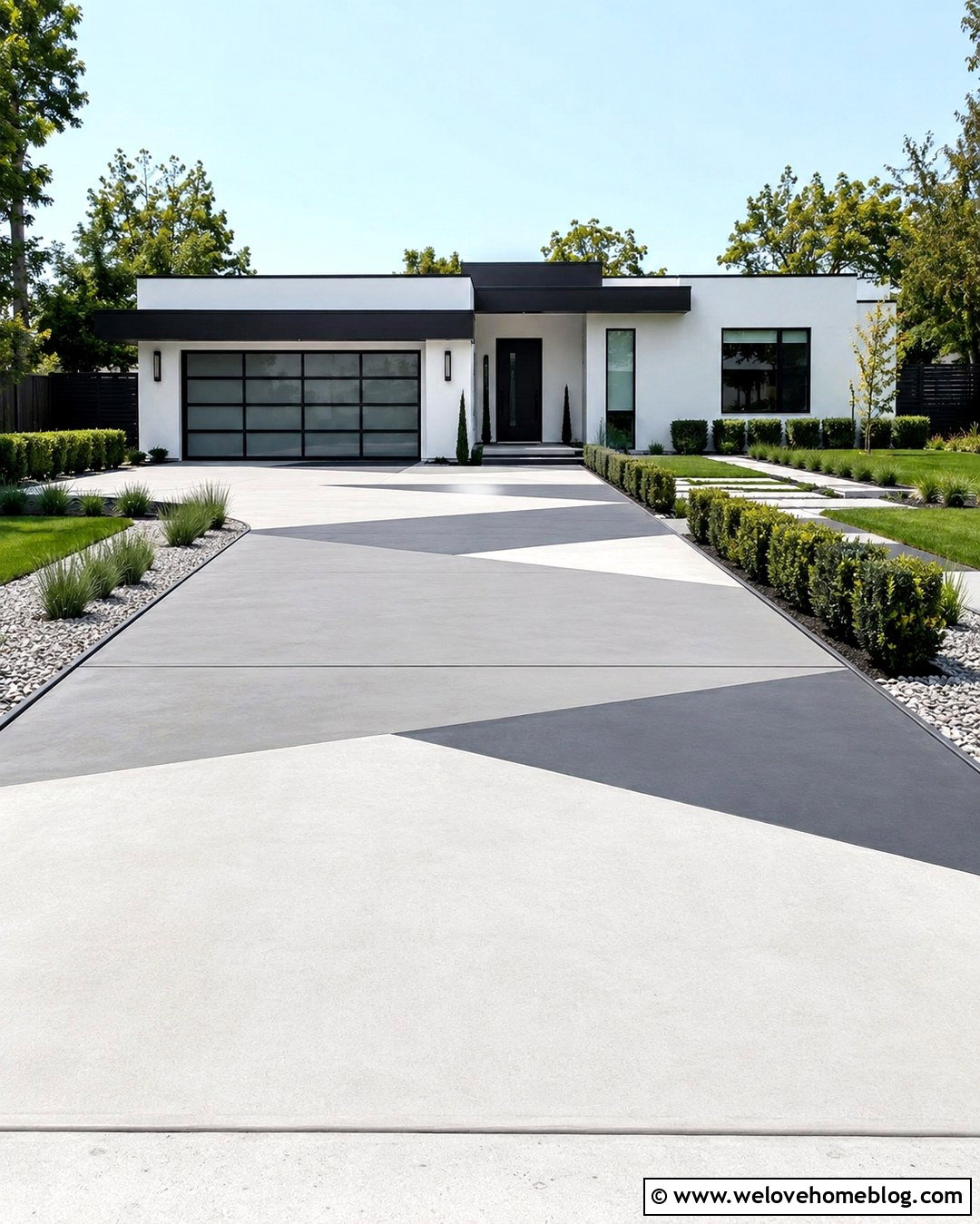
Decorative saw cuts can transform a smooth concrete driveway into a graphic surface without adding another material. Large squares, long rectangles, or offset linear patterns work best because they remain visible from the curb. Align important cuts with garage doors, walkway edges, and architectural lines on the house. For a modern design, use light gray concrete with narrow darkened joints and a straight approach. Add angular planting beds filled with compact grasses, low shrubs, and pale decorative stone. A few carefully placed trees can provide height without hiding the pattern. Avoid creating an overly tight grid, which can make the driveway look busy. The goal is to use joints as part of the composition while still maintaining a broad, comfortable surface for daily parking and movement.
15. Diamond Pattern Concrete Driveway
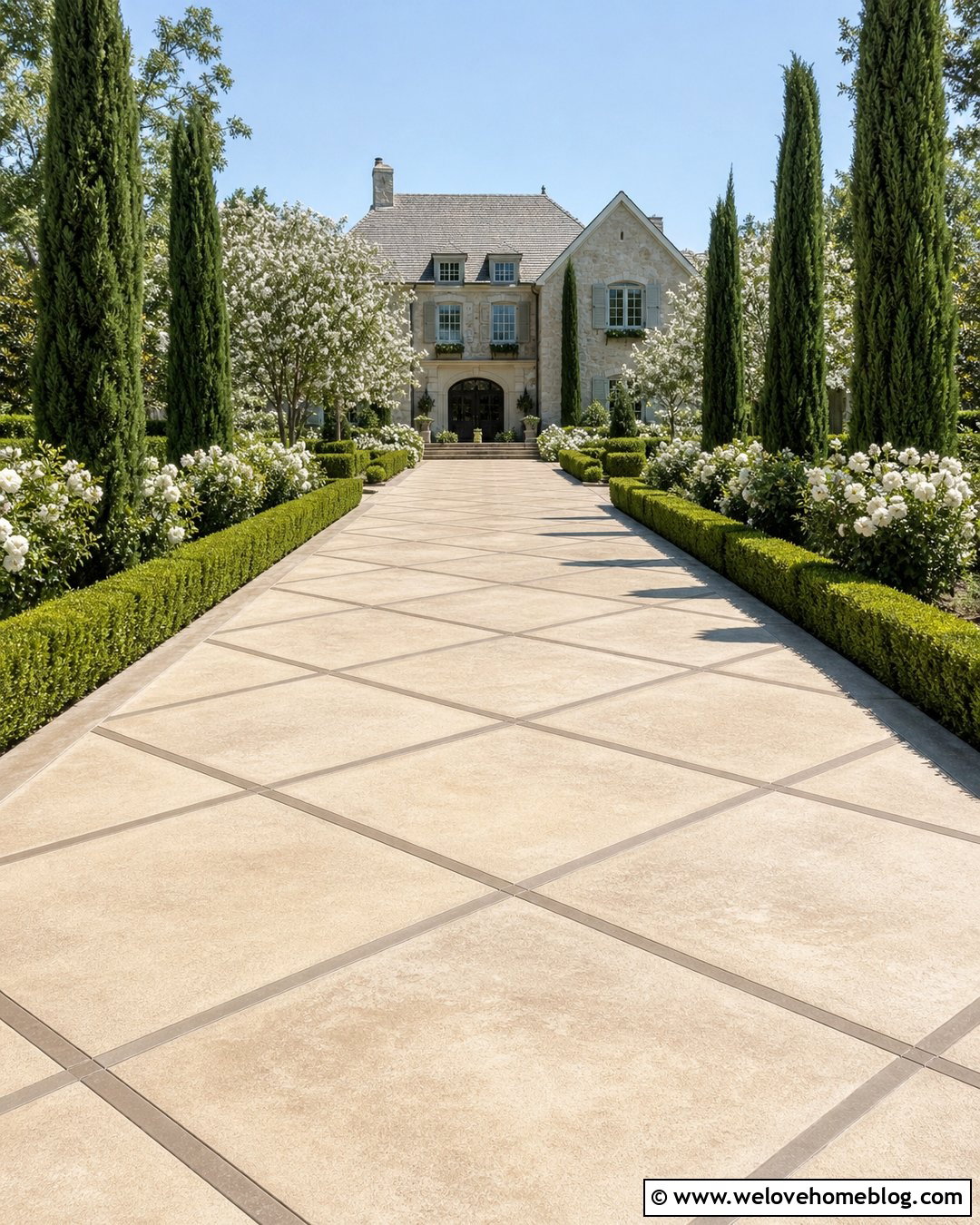
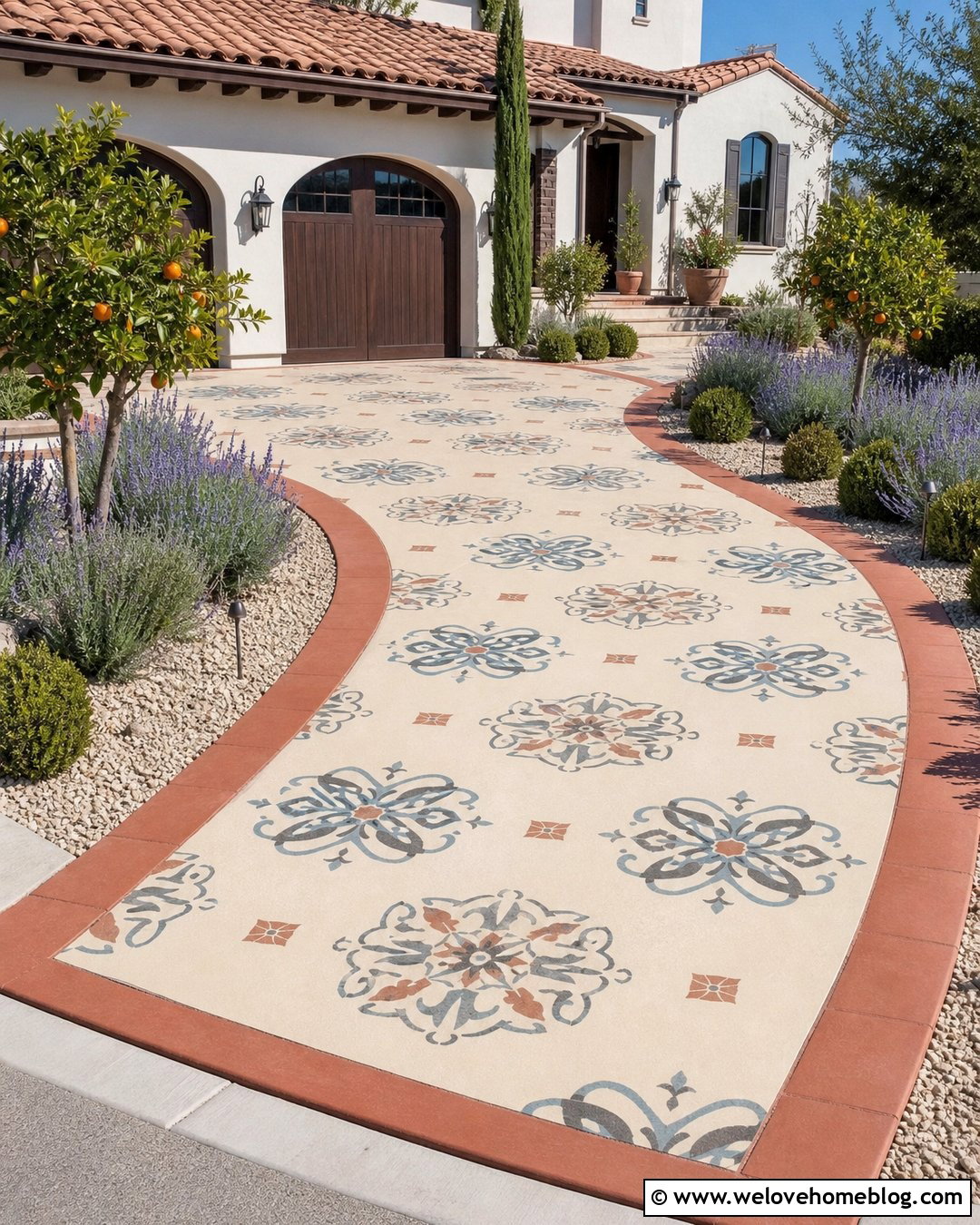
A diamond joint pattern brings traditional detail to a large concrete driveway while keeping the surface visually unified. The diagonal lines add movement and can make a broad parking area feel more proportioned. Use medium gray or warm beige concrete, then emphasize the pattern with slightly darker saw cuts or narrow stained bands. A straight driveway leading to a colonial, French country, or formal brick home provides an ideal setting. Create symmetrical planting beds on both sides with clipped hedges, roses, and upright evergreens. A centered walkway can branch from the diamond grid and continue toward the front steps. Keep surrounding materials simple so the diagonal design remains clear from the street. This treatment is particularly effective on wide driveways where plain concrete might otherwise appear empty or unfinished.
16. Checkerboard Concrete Driveway
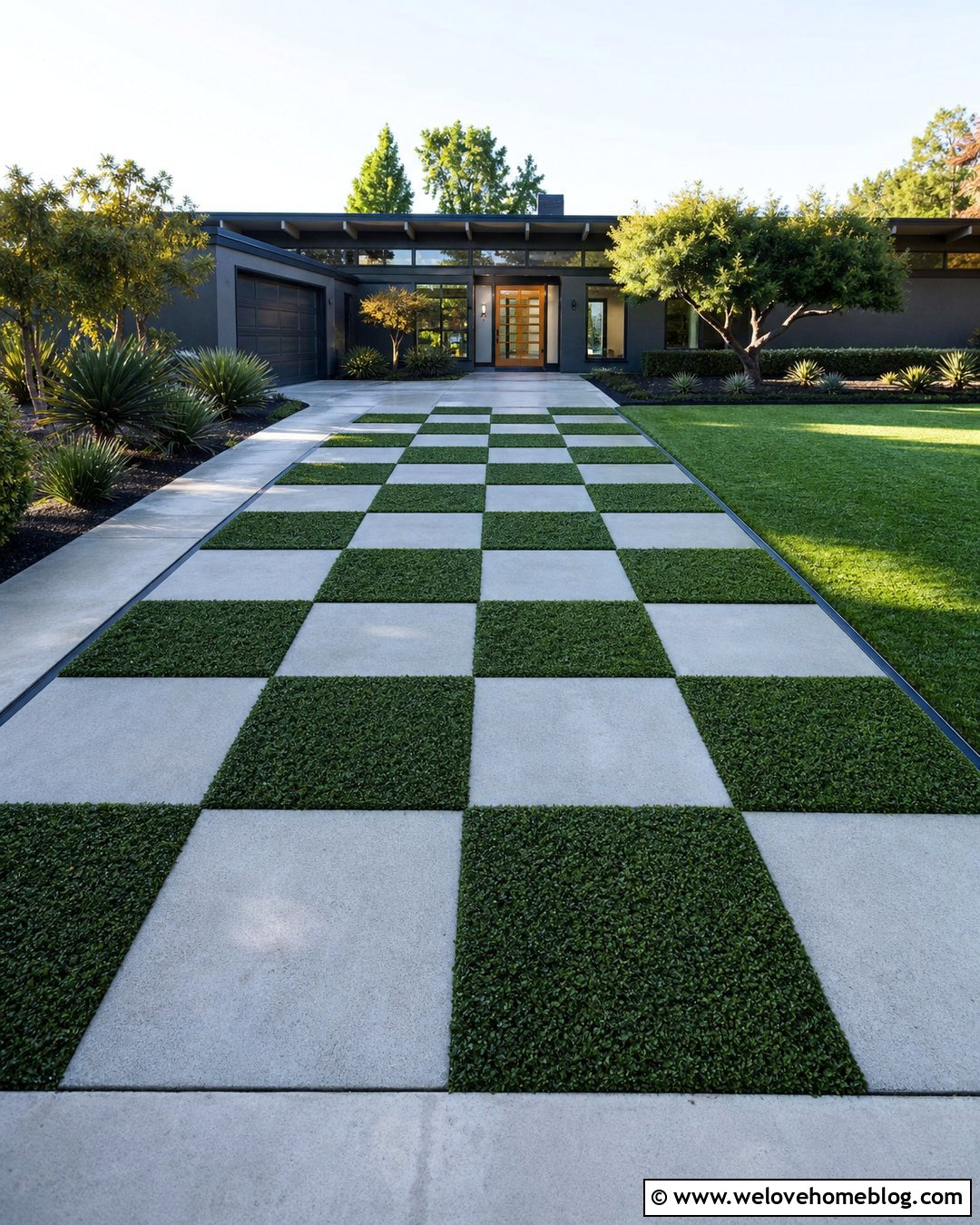
A checkerboard concrete driveway alternates solid concrete squares with grass or low groundcover for a bold geometric look. Use large pale gray slabs so the pattern reads clearly and does not feel fragmented. The green squares visually connect the paved area to the lawn while reducing the appearance of one massive hard surface. This design works best with modern, midcentury, or minimalist architecture and a relatively level front yard. Frame the driveway with steel edging, dark mulch beds, and sculptural shrubs. Keep the walkway solid concrete for comfortable pedestrian access. The checkerboard can cover the full driveway or appear only along a widened parking bay. Maintain consistent square dimensions and strong alignment with the garage facade to make the complete design look deliberate and professionally planned.
17. Curved Concrete Driveway
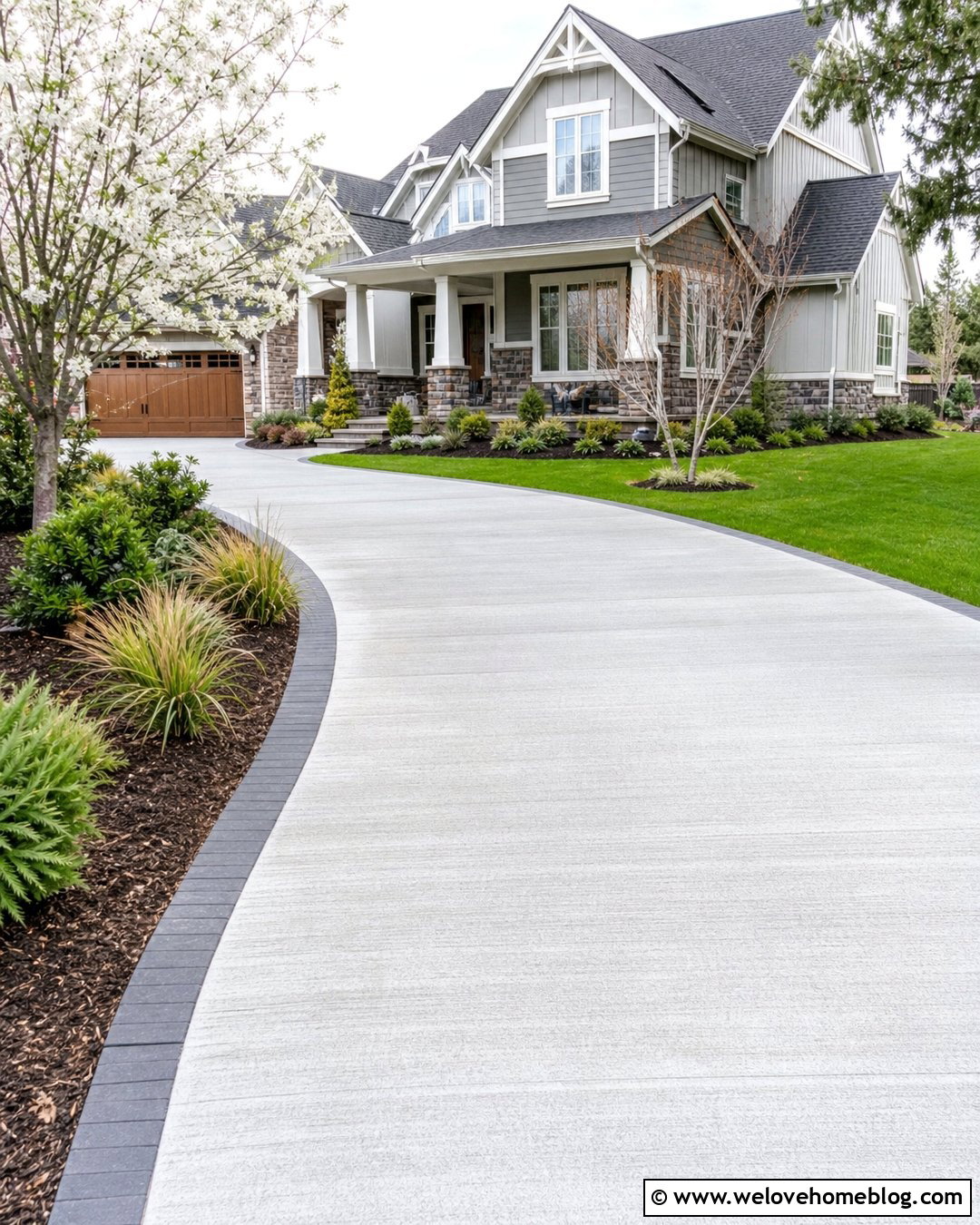
A curved concrete driveway can make the approach feel softer and more natural, especially on a wide or irregularly shaped lot. Use broom-finished concrete for a simple foundation, then emphasize the inside curve with a brick, cobblestone, or dark concrete border. Broad planting beds should follow the same line rather than cutting across it. Fill them with layered shrubs, ornamental grasses, and one or two flowering trees. On the outer edge, lawn can create breathing room and preserve visibility near the street. A curved driveway also offers an opportunity to reveal the house gradually instead of presenting the garage as the only focal point. Keep the bend gentle enough for comfortable movement, and widen the entrance slightly so the transition from the road feels smooth and inviting.
18. Circular Concrete Driveway

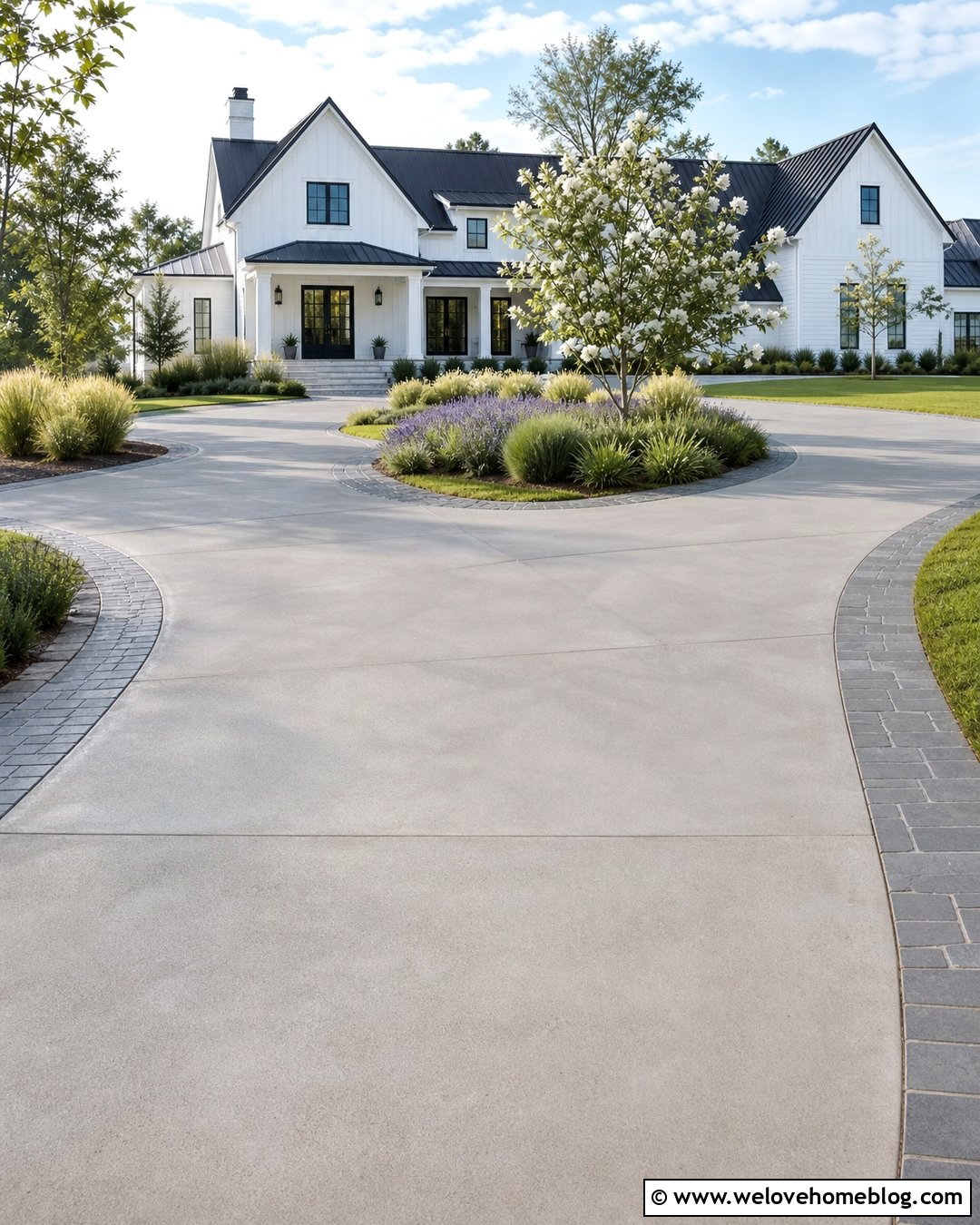
A circular concrete driveway creates a convenient, formal-looking approach when the front yard has enough width. Use light exposed aggregate or broom-finished concrete to keep the large paved area visually calm. At the center, install a landscaped island with a specimen tree, layered evergreens, or a simple lawn and flower bed. A contrasting concrete border can follow both the inner and outer curves, giving the circle a polished outline. Coordinate one branch with the main entrance and the other with the garage so traffic flows naturally around the property. Traditional, colonial, Mediterranean, and large ranch homes all work well with this arrangement. Low plantings near the street maintain open views, while taller landscaping closer to the house helps shift attention away from garage doors and toward the architecture.
19. Horseshoe Concrete Driveway
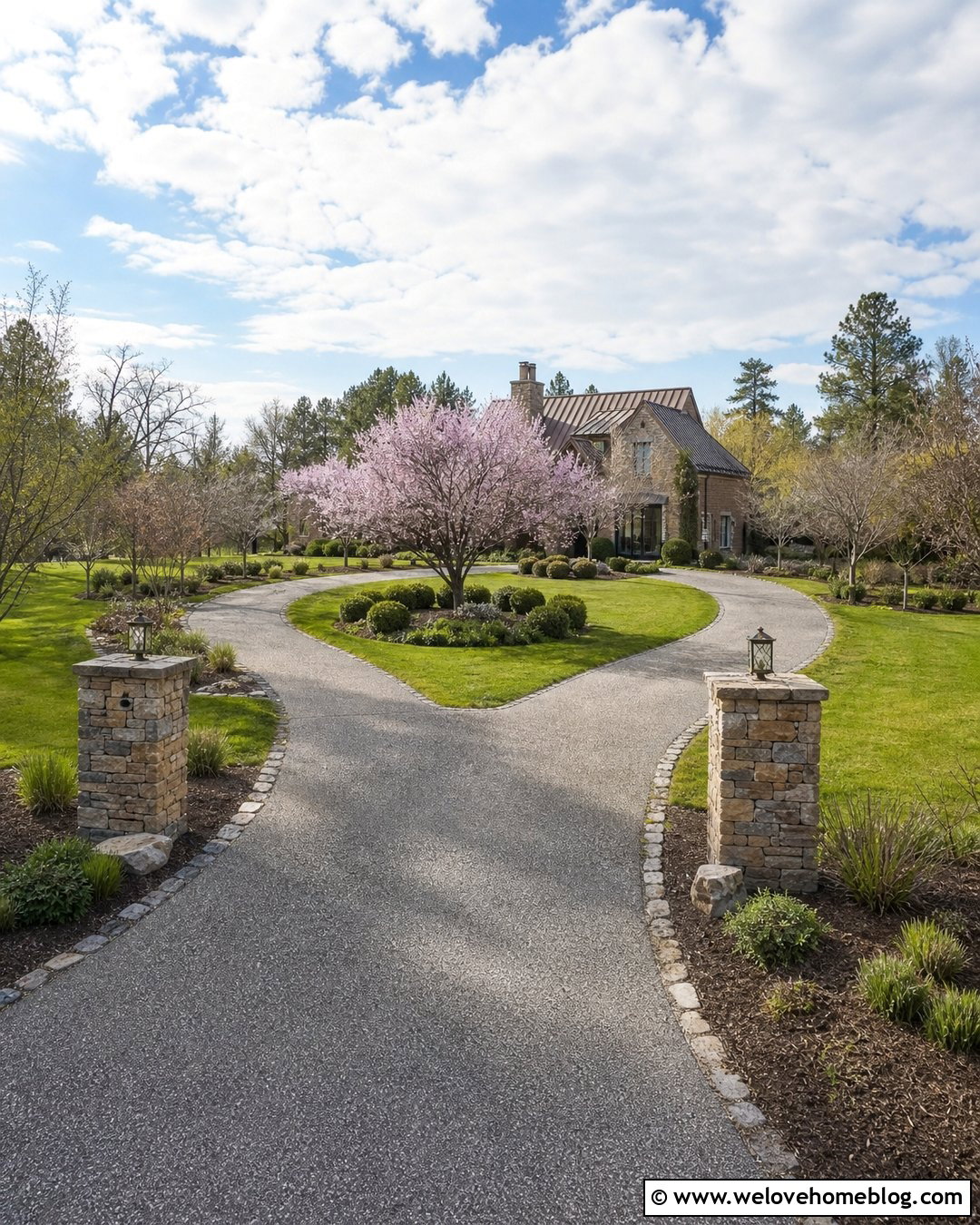
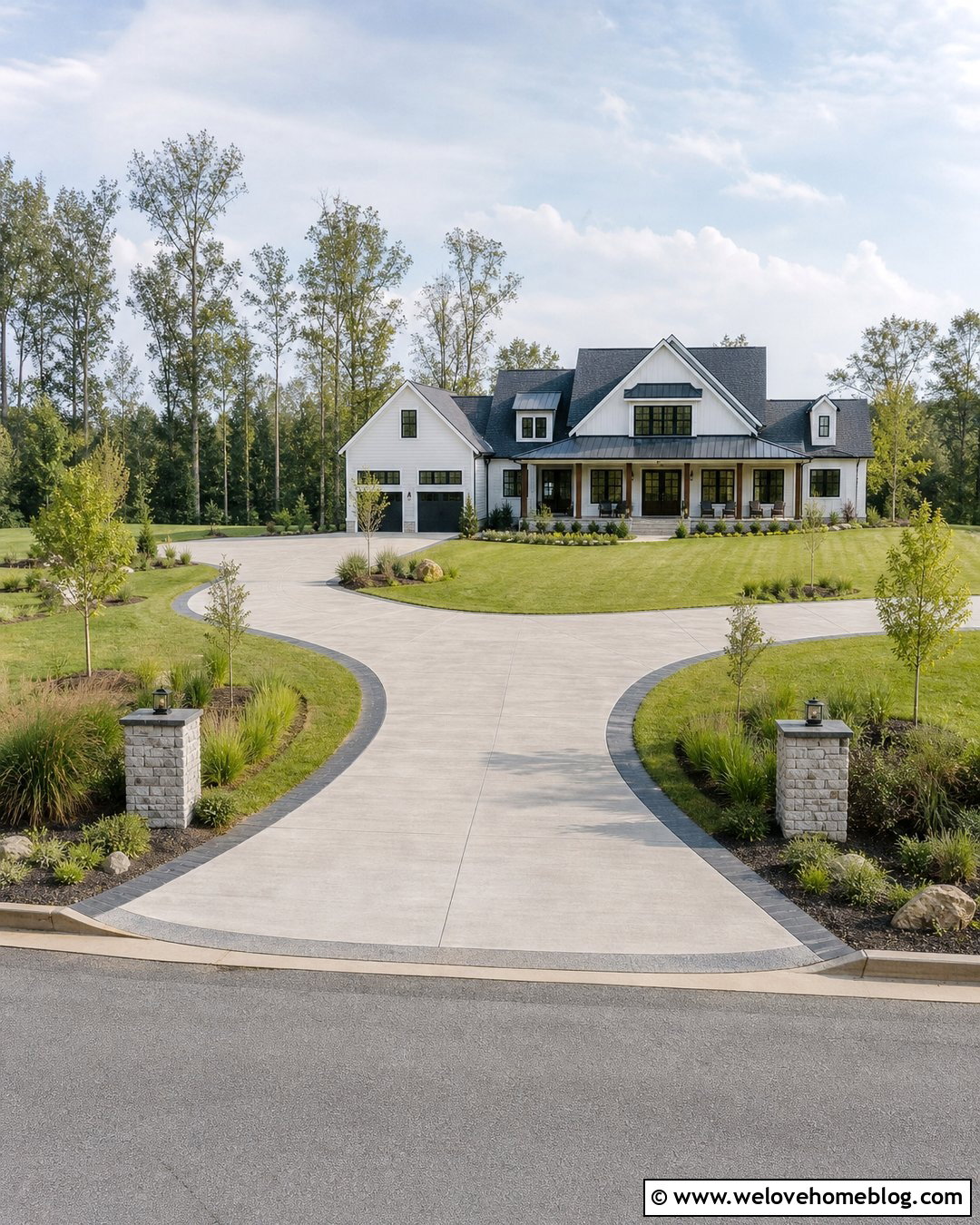
A horseshoe concrete driveway combines two street entrances with a broad curved approach in front of the home. It can feel relaxed or formal depending on the finish and landscaping. For a country-inspired property, choose warm exposed aggregate with natural stone edging. For a cleaner suburban look, select light broom-finished concrete with a smooth charcoal border. Use the central lawn as a major design feature rather than leaving it empty. A flowering tree, low shrubs, and a curved walkway can create a welcoming focal point. Mark each entrance with matching pillars, address lighting, or landscaped beds. Keep planting low around the curb for visibility. The driveway should maintain a consistent width through both curves, helping the complete horseshoe shape appear balanced from the street and easy to understand.

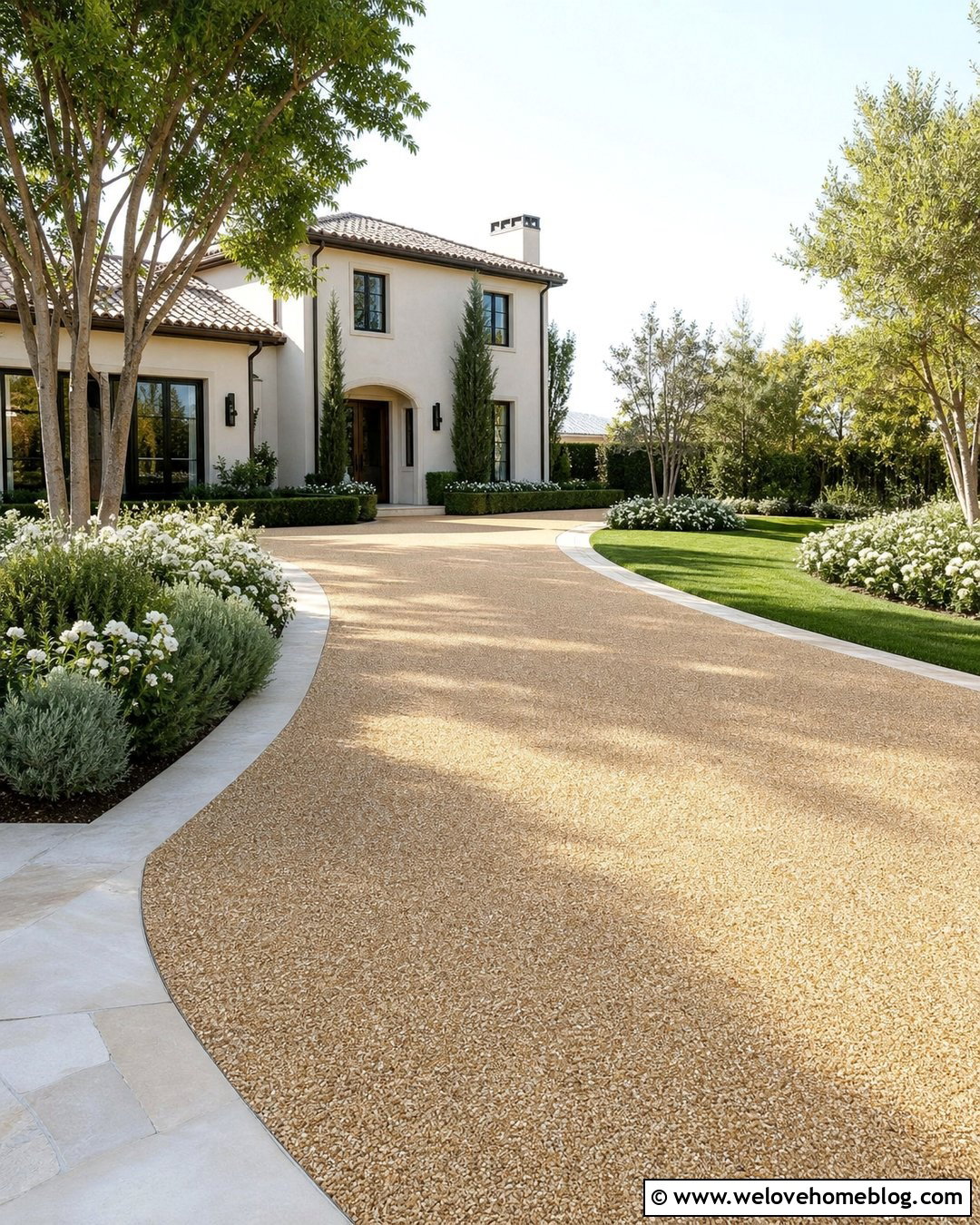
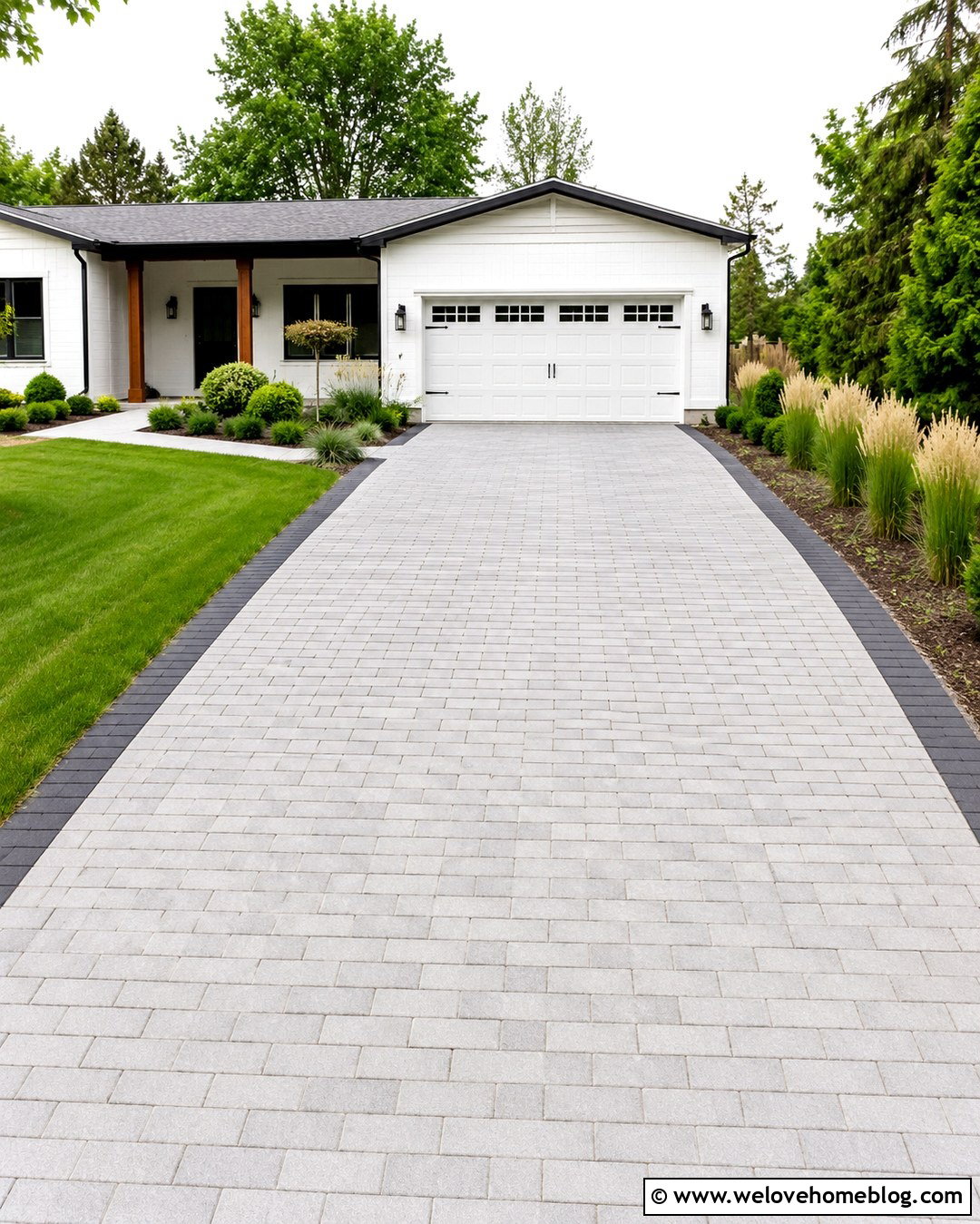
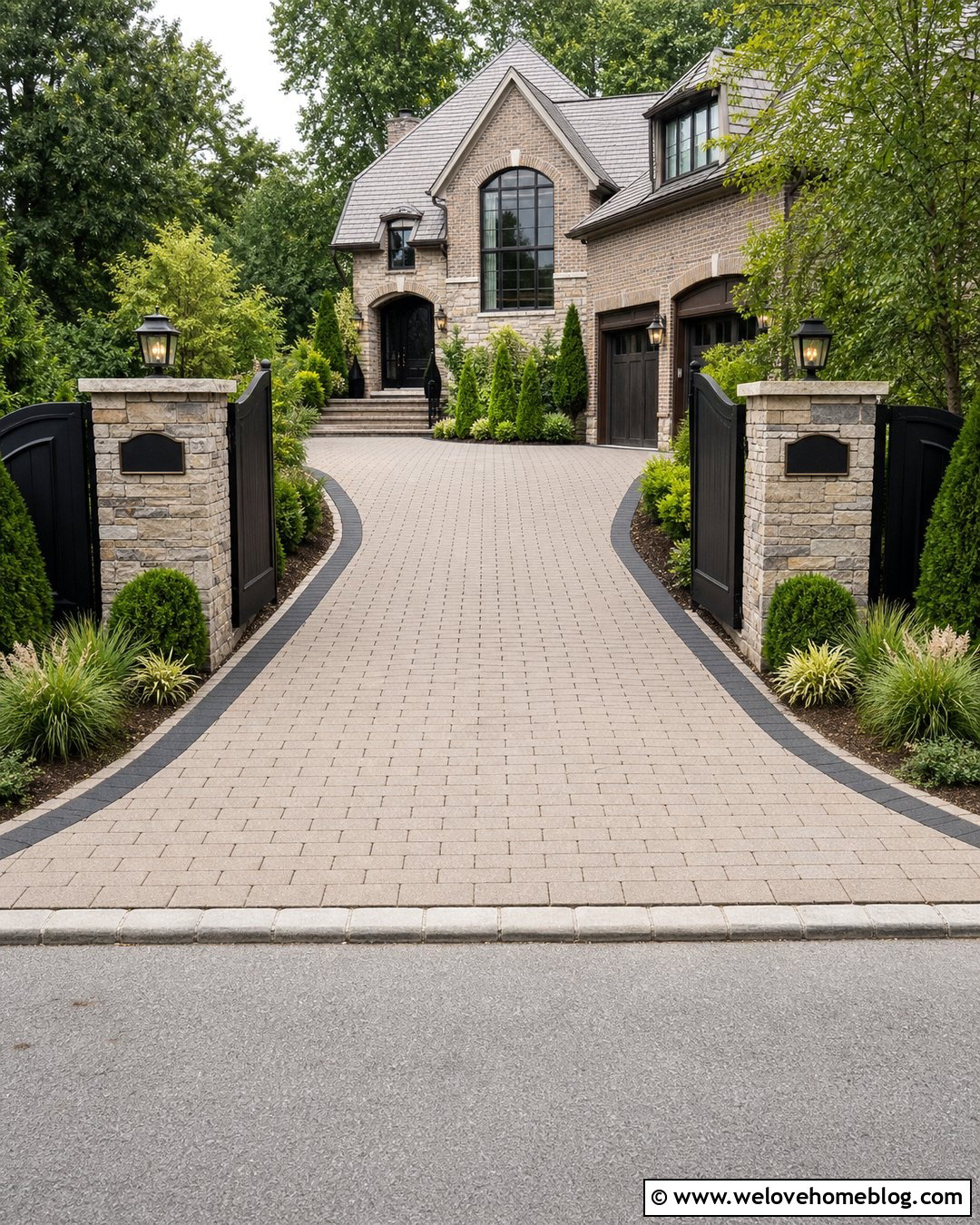
20. Long Tree Lined Concrete Driveway
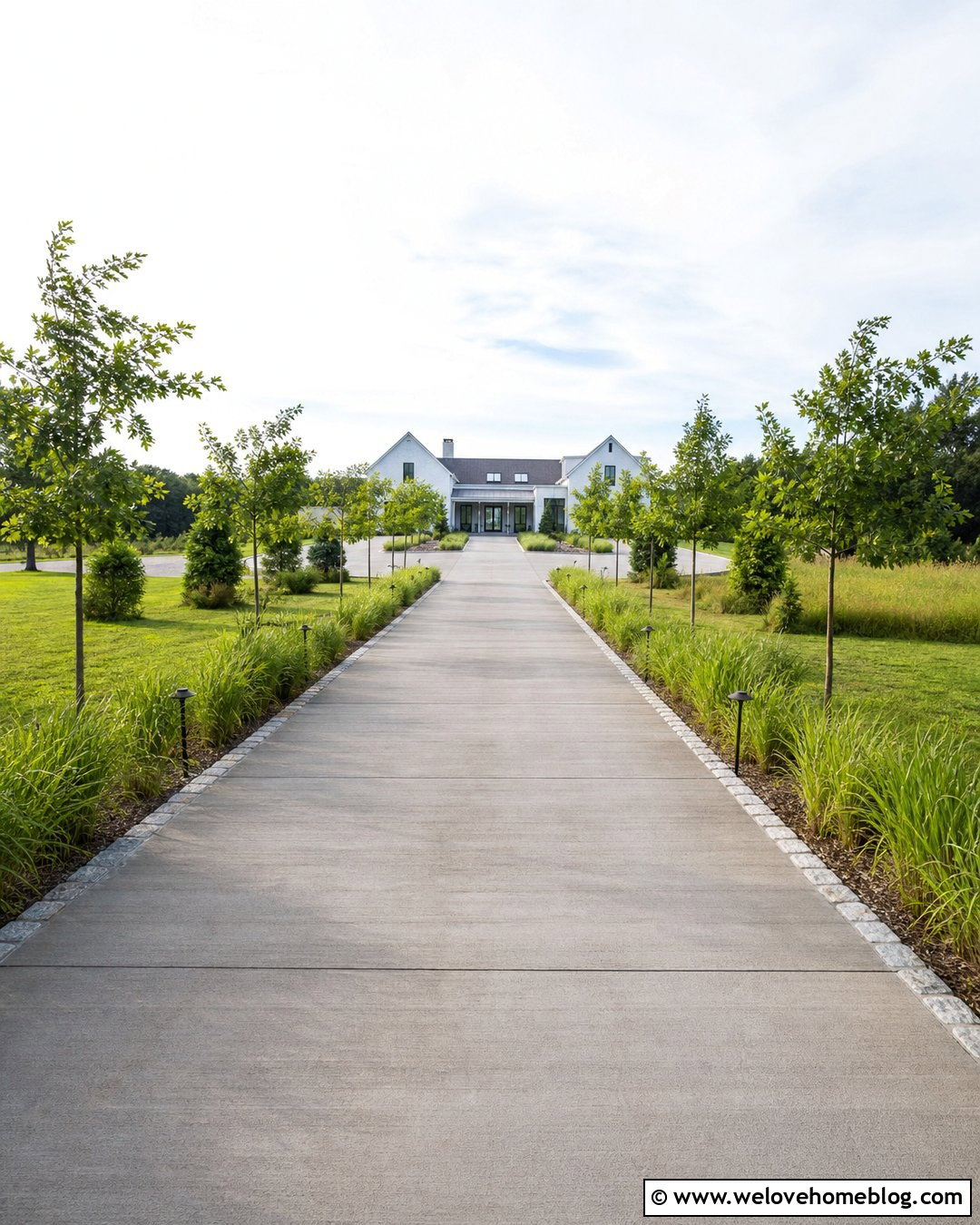
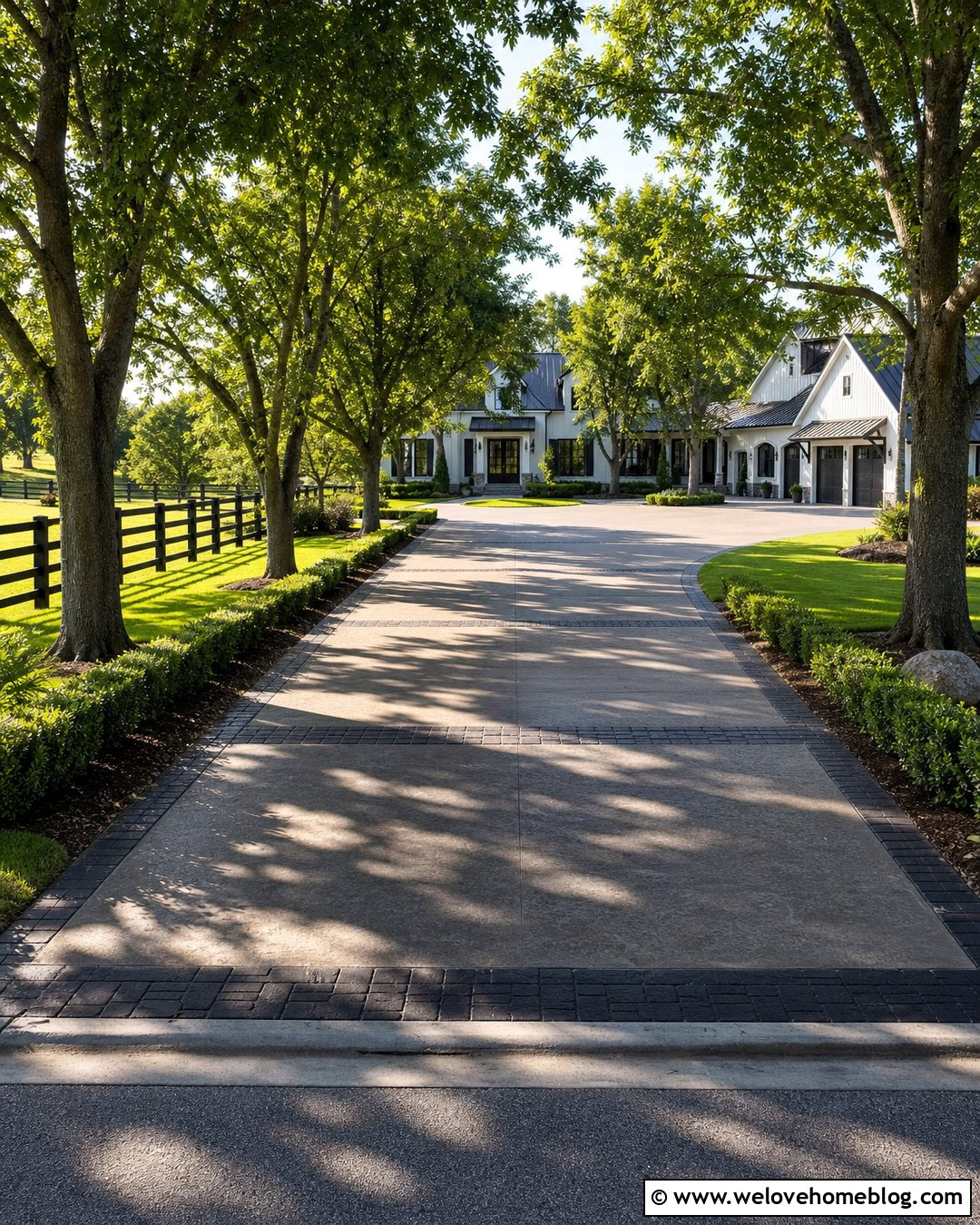
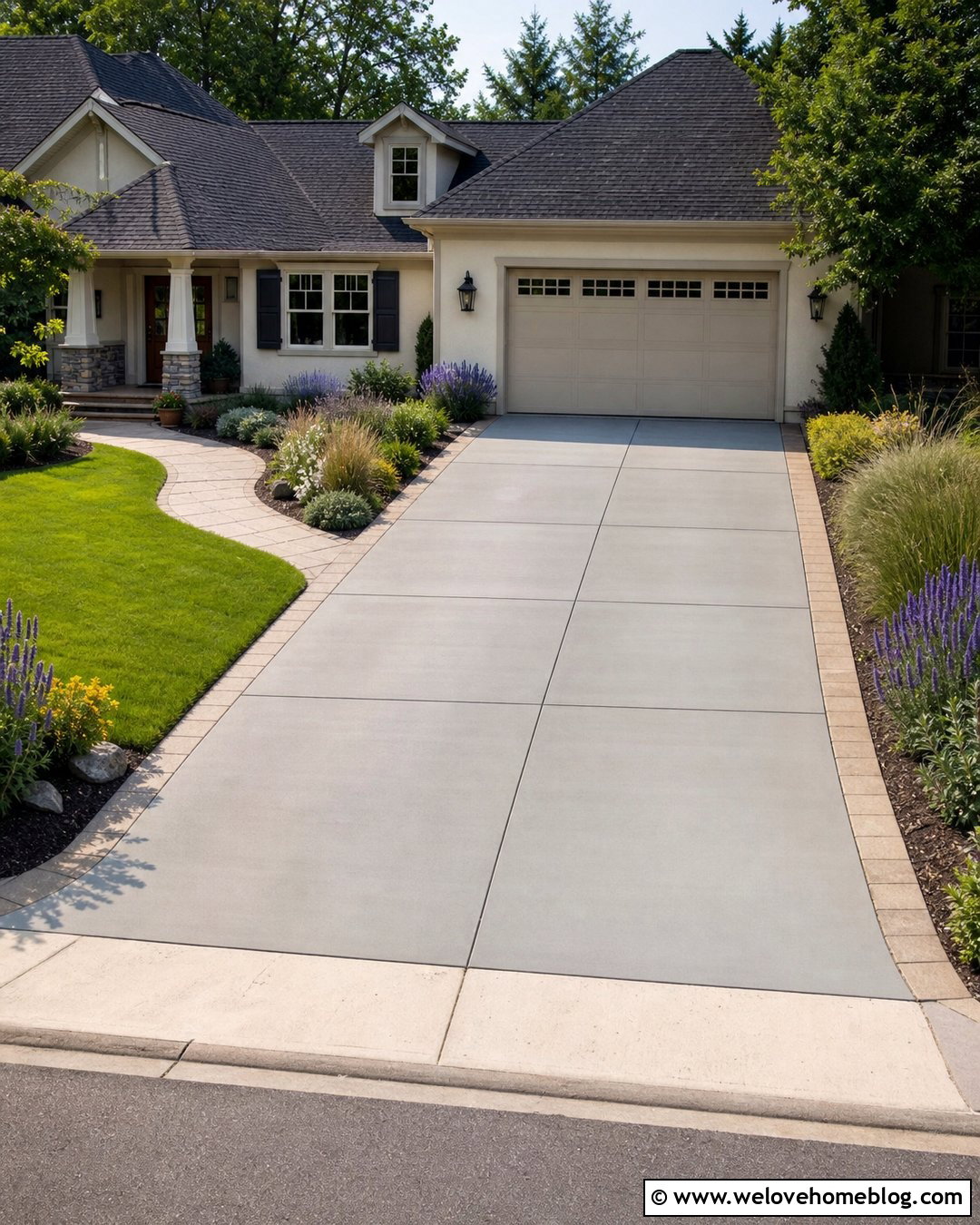
A long concrete driveway becomes more inviting when trees and borders establish rhythm along the entire approach. Choose a warm gray broom finish or subtle exposed aggregate that blends comfortably into a larger country or suburban property. Narrow stone or brick edging will keep the sides crisp while adding a finished transition to the landscape. Plant evenly spaced ornamental pears, maples, crape myrtles, or other regionally appropriate trees beyond the pavement edge. Underplant them with lawn, low grasses, or simple mulch rather than dense shrubs that could narrow the view. Gentle landscape lighting can repeat between the trees. At the house, widen the driveway into a parking court with matching concrete. This creates a strong visual journey from the road while keeping the complete entrance cohesive and practical.
21. Narrow Concrete Driveway
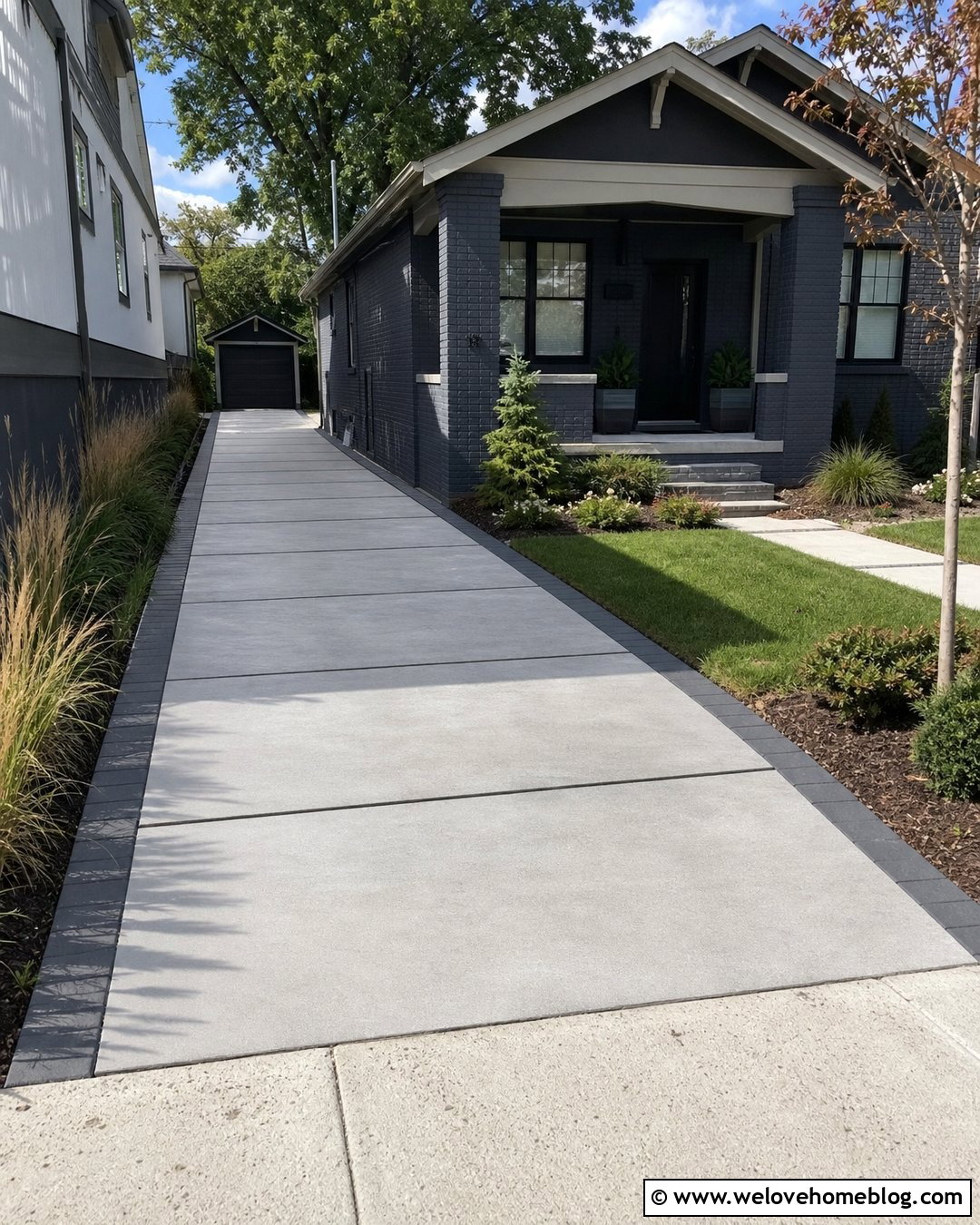
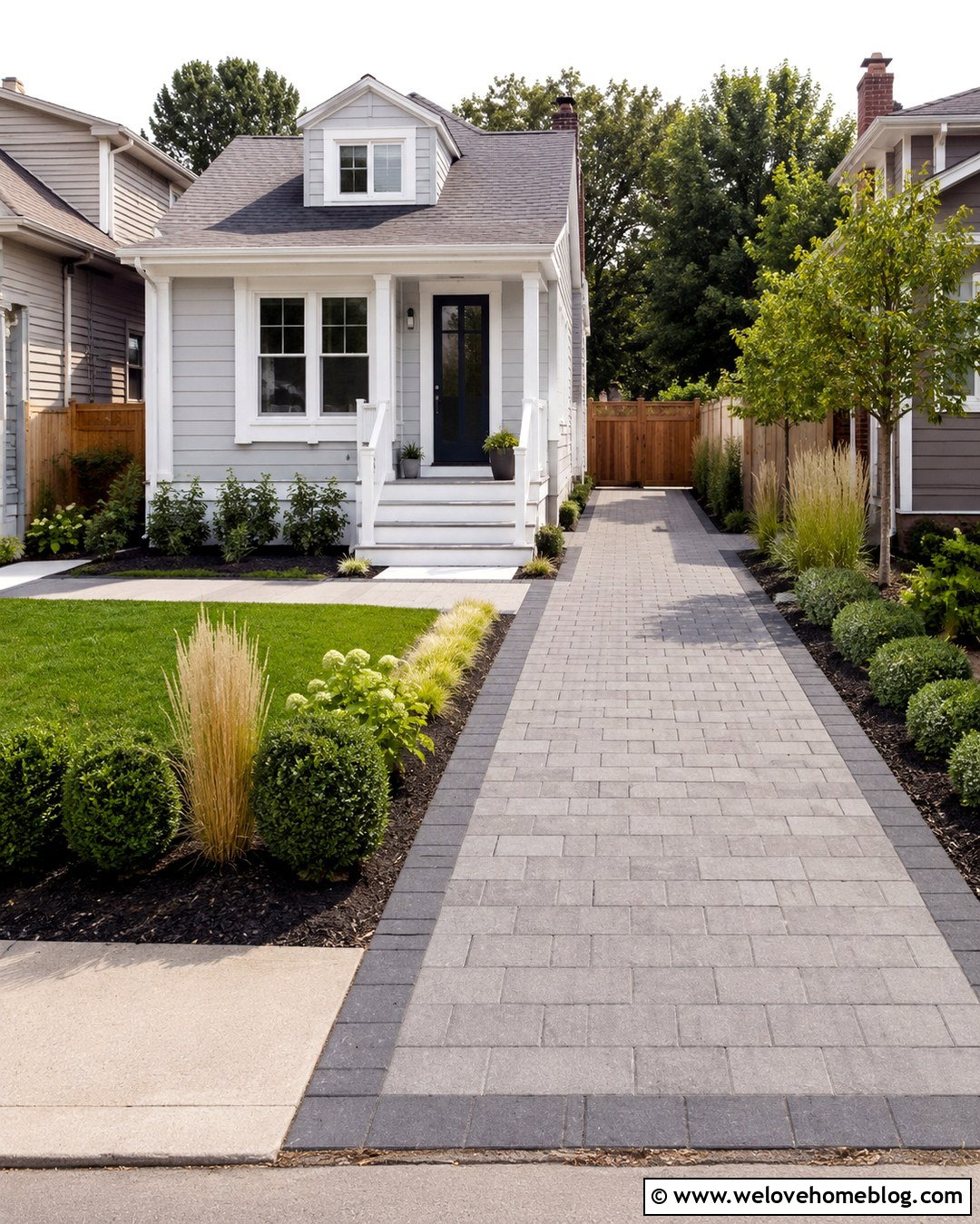
A narrow driveway can still look polished when its materials and borders are carefully controlled. Use light broom-finished concrete to make the space feel open, and divide the surface with long joints that emphasize depth. Avoid wide contrasting borders that consume valuable visual space. Instead, choose a single row of slim brick pavers or a narrow dark concrete band. Along one side, install a straightforward walkway or stepping path leading to the entrance. On the other, use vertical grasses, compact shrubs, or a neatly maintained lawn strip. A straight layout generally provides the clearest access beside a cottage, bungalow, or urban home. Keep plants away from turning areas and garage doors. Simple lighting mounted on the house or along the walkway can illuminate the approach without adding clutter.
22. Sloped Concrete Driveway
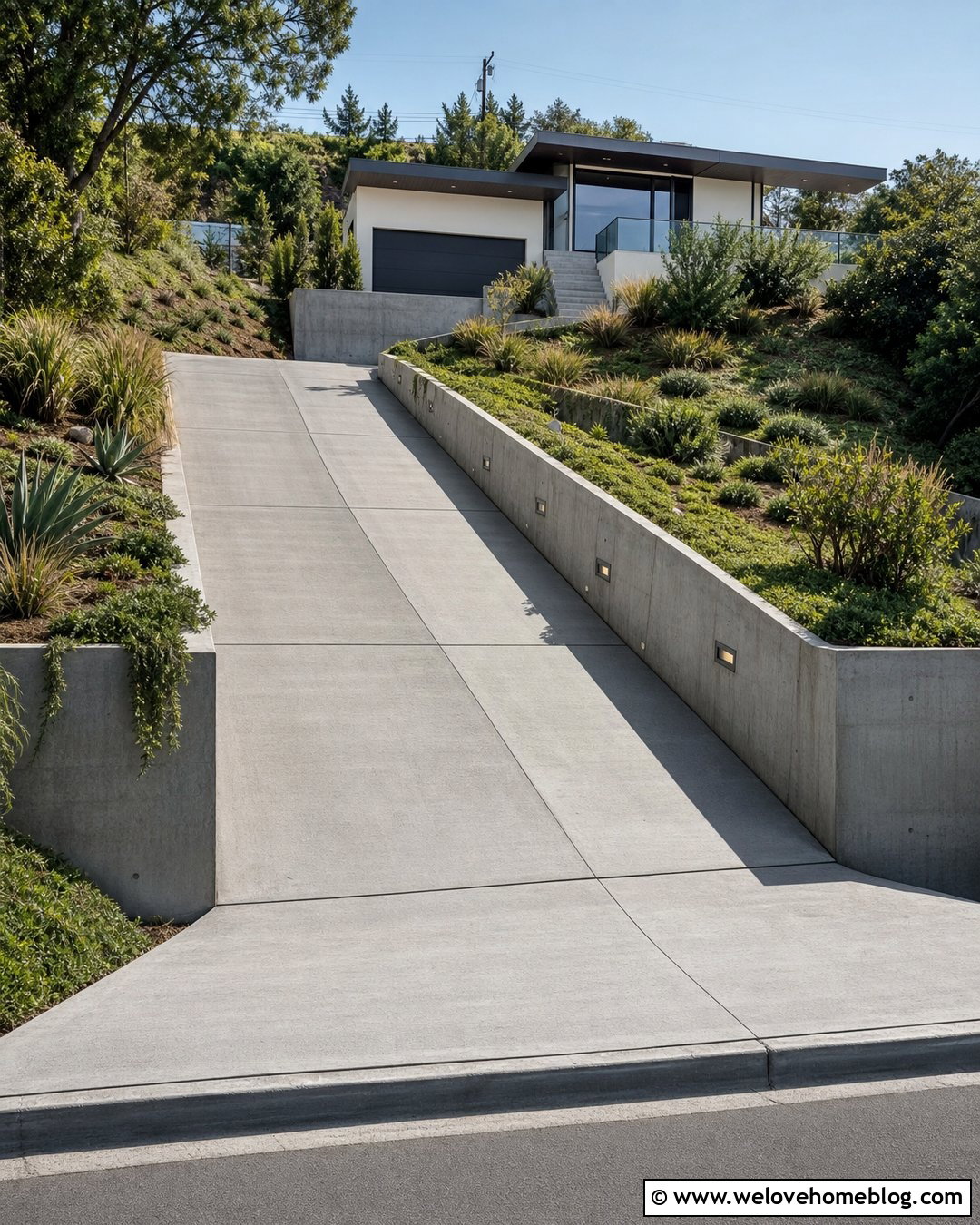
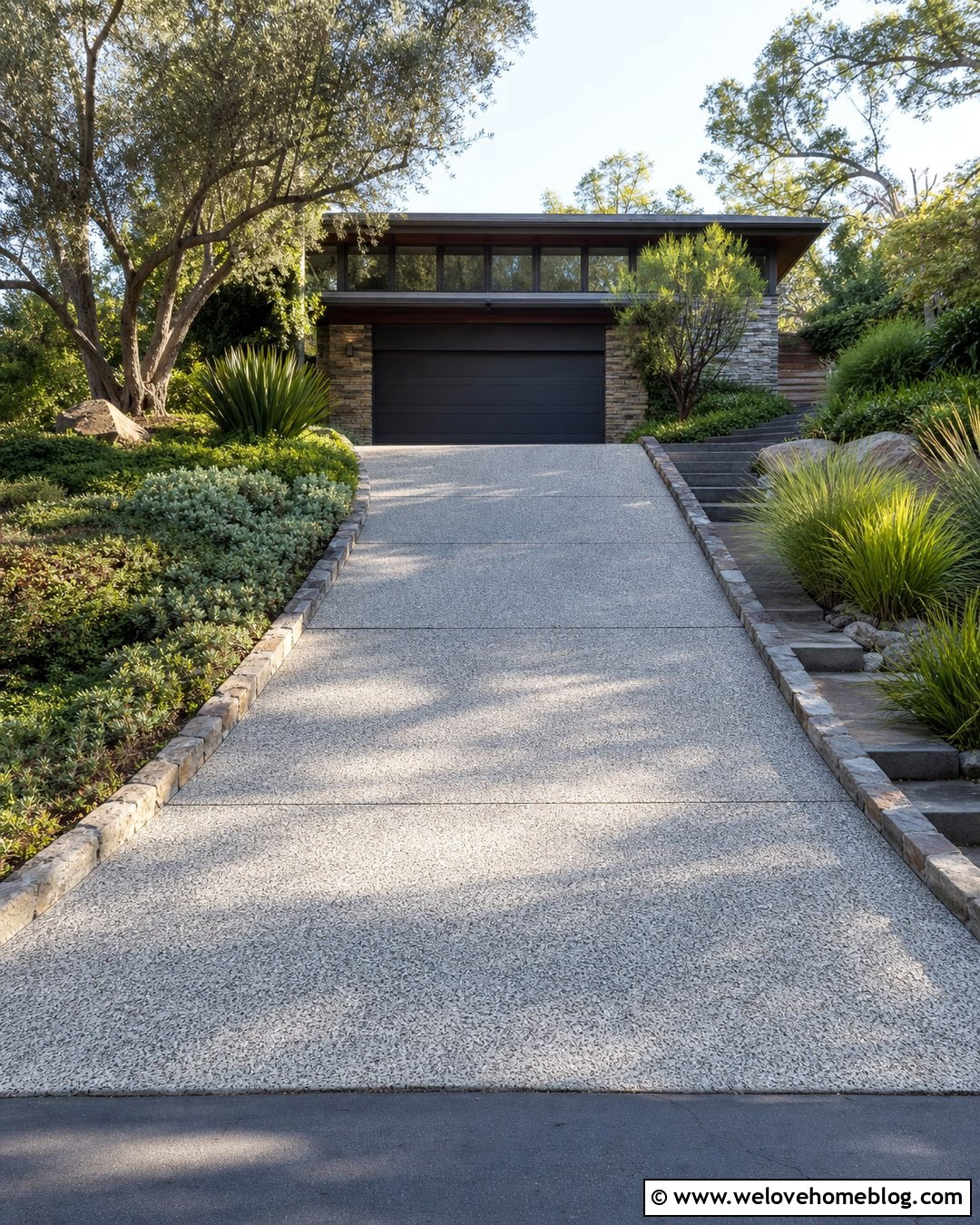
A sloped concrete driveway benefits from visible texture, strong borders, and landscaping that follows the grade. A medium broom finish creates fine lines across the surface, while exposed aggregate offers a more decorative textured appearance. Divide the slope into broad panels with joints that visually break up the incline. Low concrete retaining walls can hold planting beds on one or both sides and help the driveway feel integrated into the hillside. Use cascading groundcover, compact shrubs, and ornamental grasses that will not block views. At the top, create a flatter-looking transition near the garage with a contrasting border or apron. Keep decorative patterns restrained so the slope does not appear overly busy. Bright path lights and a clearly defined walkway can make the overall entrance feel more organized.
23. Small Front Yard Concrete Driveway
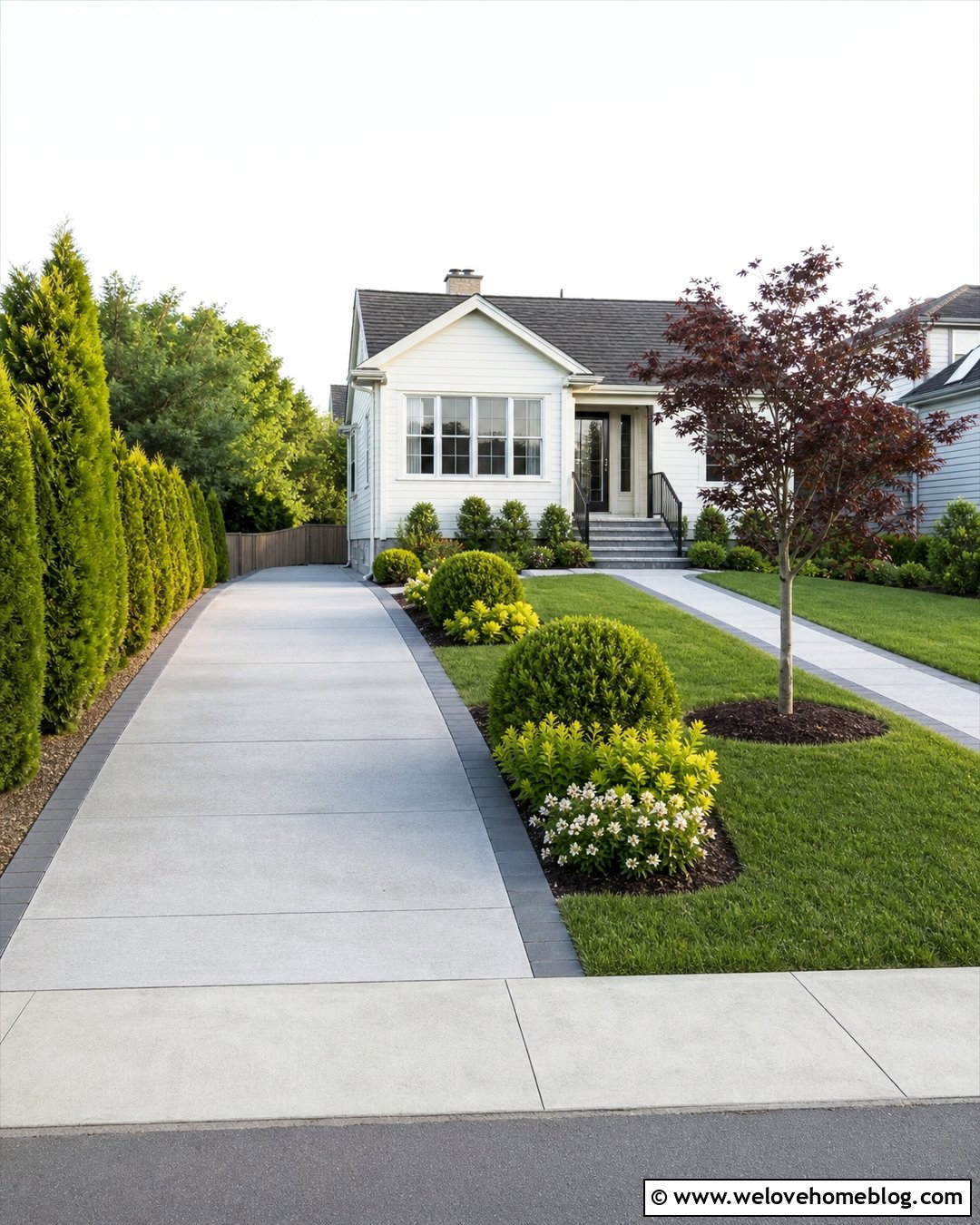
In a small front yard, the driveway often occupies most of the visible space, so a simple, coordinated design works best. Choose pale gray broom-finished concrete divided into medium rectangular panels. A narrow brick or charcoal concrete border can provide definition without making the driveway appear smaller. Use a straight layout, then carve out compact planting beds near the sidewalk and front porch. One small ornamental tree, rounded evergreen shrubs, and low flowers can add layers without crowding the pavement. Connect the driveway to the entrance with a clear walkway in matching concrete. Keep the lawn area simple and avoid too many separate materials. Repeating two or three colors from the home’s exterior will help the driveway, landscaping, and facade read as one balanced front-yard composition.
24. Wide Three Car Concrete Driveway
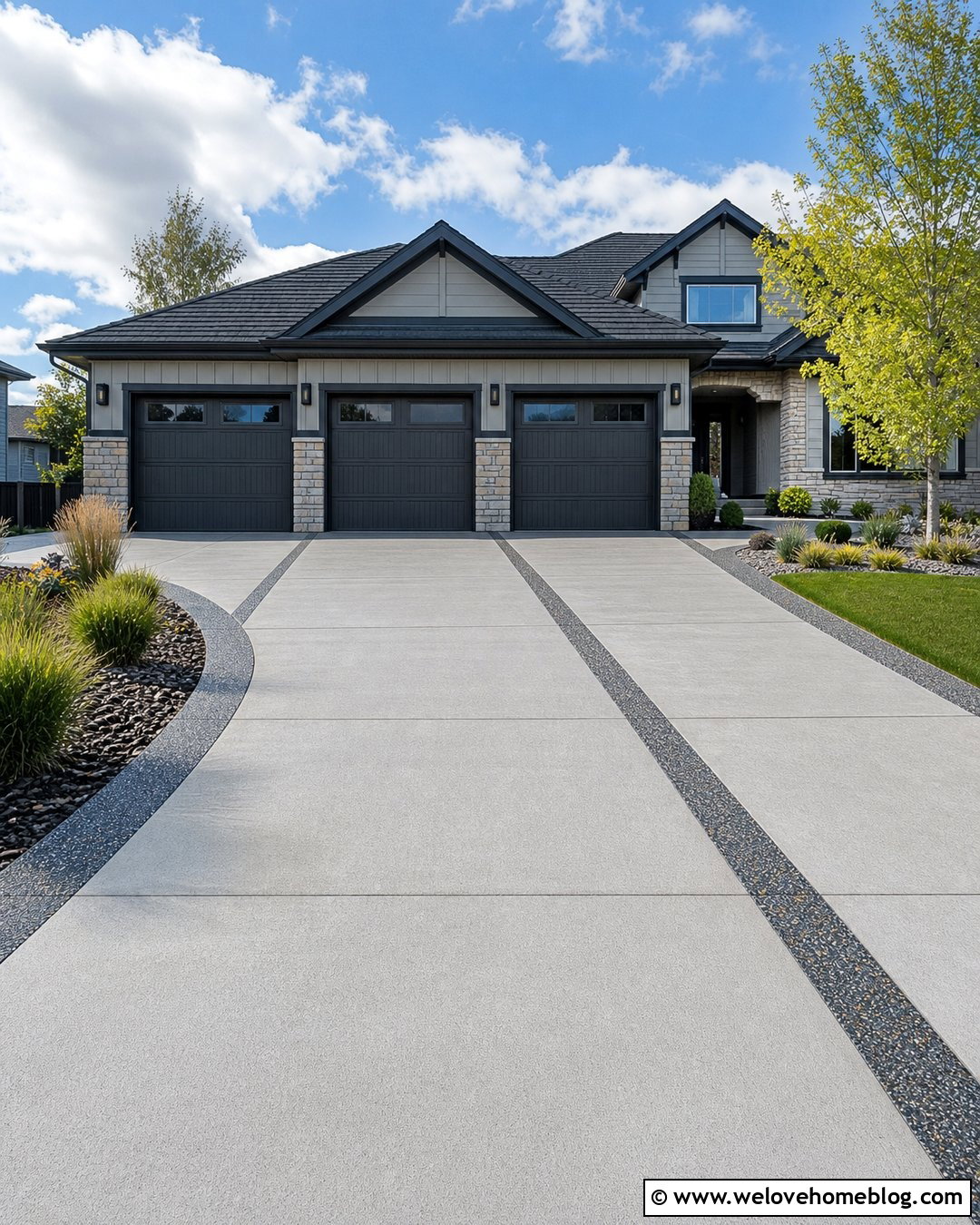
A three-car driveway can feel expansive and empty unless the surface is divided into clear visual sections. Use smooth or lightly broom-finished concrete with long bands aligned between the garage doors. Dark concrete, brick, or exposed aggregate ribbons can break the width into individual parking bays. Add a matching border around the perimeter for a complete framed effect. Near the street, soften the broad apron with curved planting beds at both corners. Low shrubs and ornamental grasses preserve visibility while reducing the amount of exposed pavement in the curb view. A medium-size tree placed away from turning zones can balance the garage facade. Keep the joint pattern symmetrical and coordinate it with the doors, columns, and walkway so the entire entrance feels orderly rather than oversized.
25. Modern Farmhouse Concrete Driveway
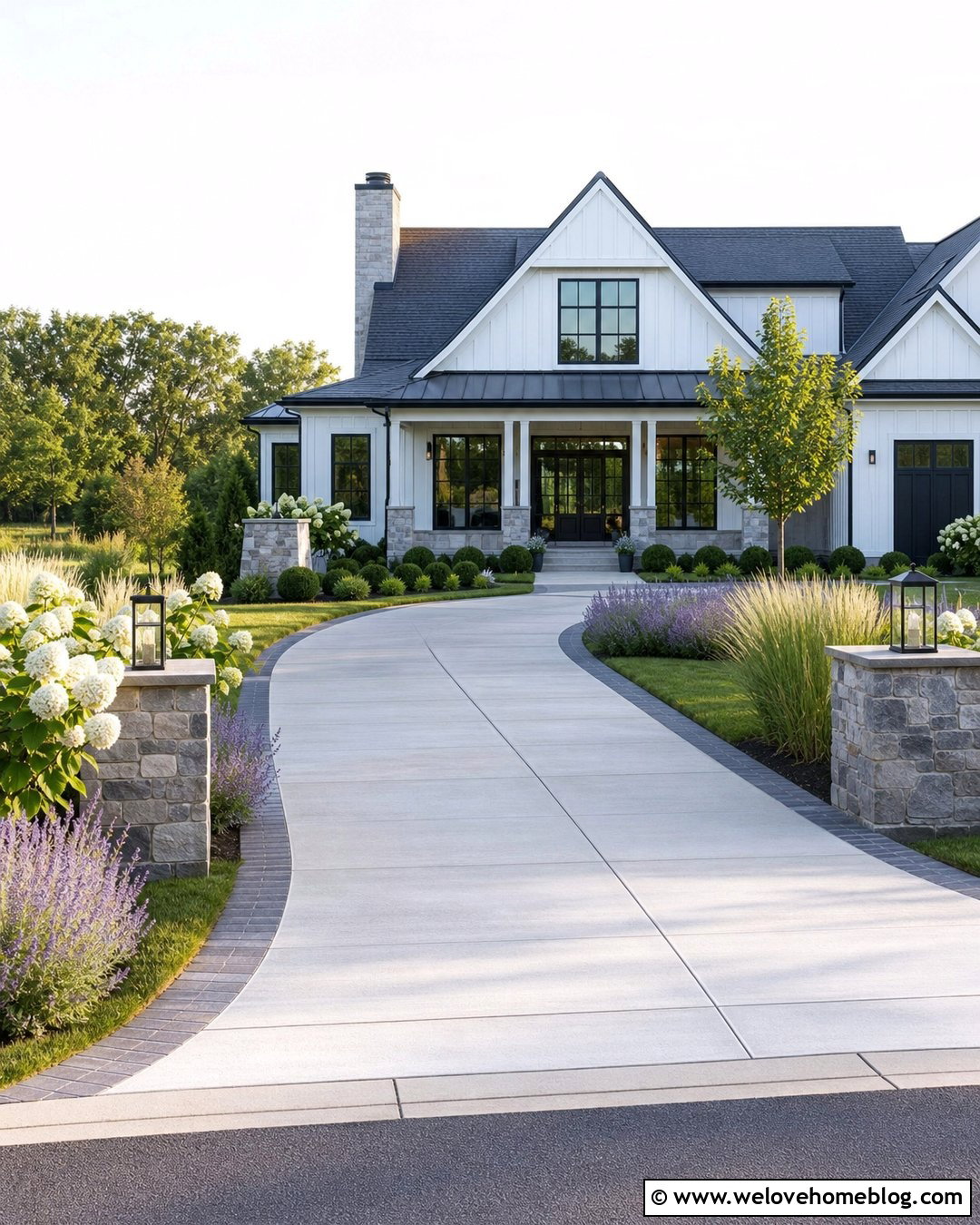
A modern farmhouse entrance looks best when clean concrete is balanced with warm, natural details. Choose a light gray broom-finished driveway with large rectangular panels and a straight or gently curved approach. Edge the pavement with charcoal brick, weathered cobblestone, or dark poured concrete to echo black windows and exterior fixtures. Broad beds of hydrangeas, fountain grass, lavender, and rounded evergreens soften the white siding and strong rooflines. Near the road, simple stone pillars can mark the entrance without creating an overly formal appearance. Continue matching concrete into the walkway, but use a narrower dark border to identify the pedestrian route. The final design should feel fresh and structured while retaining the welcoming character associated with farmhouse architecture, open lawns, and layered planting.
26. Ranch House Concrete Driveway
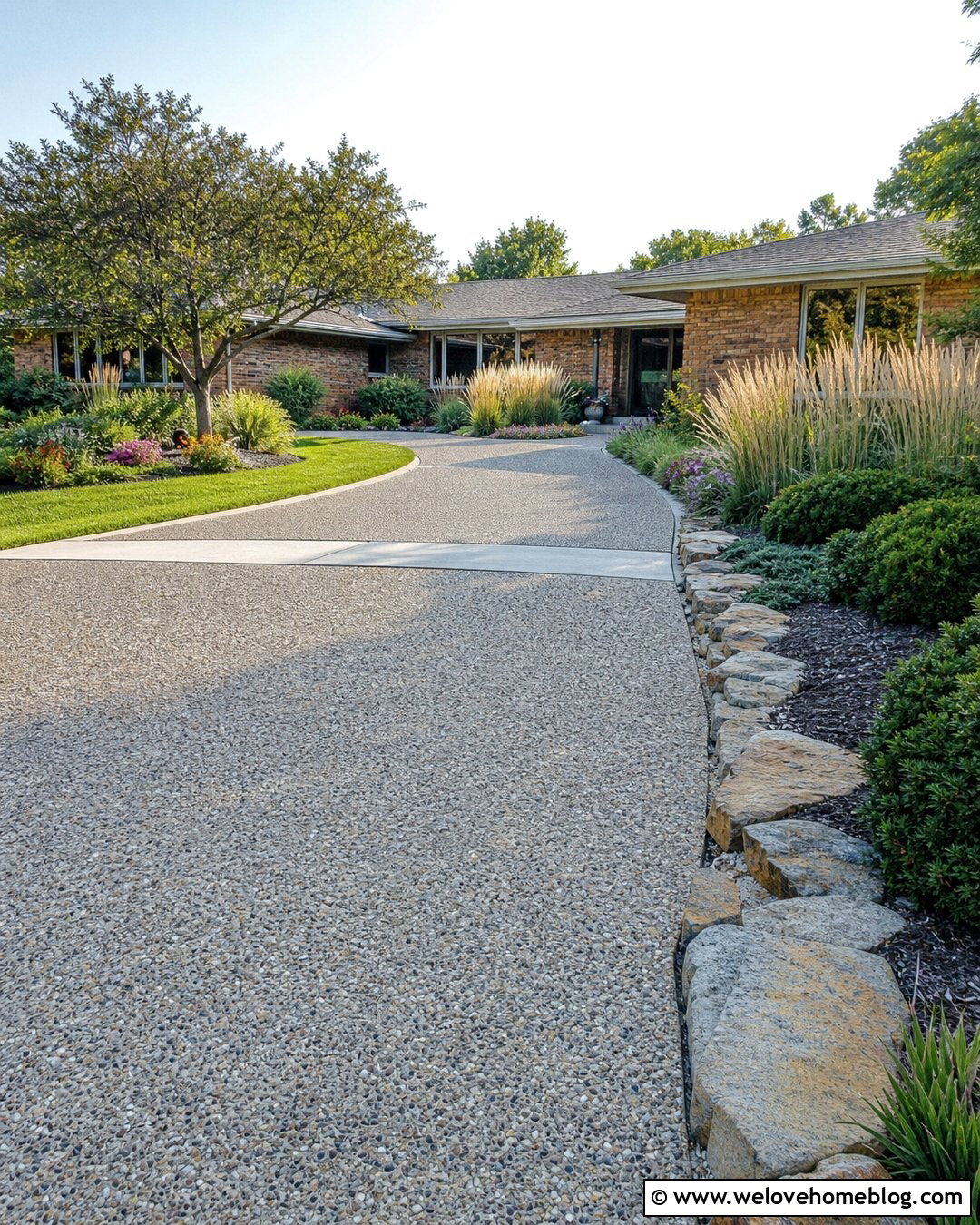
A ranch home usually has a wide, horizontal facade, so the driveway should reinforce that low, relaxed shape. Use warm gray exposed aggregate or a basic broom finish with broad rectangular sections. A gently curved approach can reduce the visual dominance of the garage and create space for a landscaped bed near the front entrance. Choose low shrubs, ornamental grasses, and a spreading ornamental tree that complement the home without blocking windows. Brick or natural stone edging can reference existing facade materials. If the driveway is wide, add a contrasting band between parking spaces rather than decorating the entire surface. Extend a matching concrete walkway toward the front door and surround it with colorful but uncomplicated planting. This creates comfortable curb appeal while respecting the ranch home’s simple proportions.
27. Craftsman House Concrete Driveway
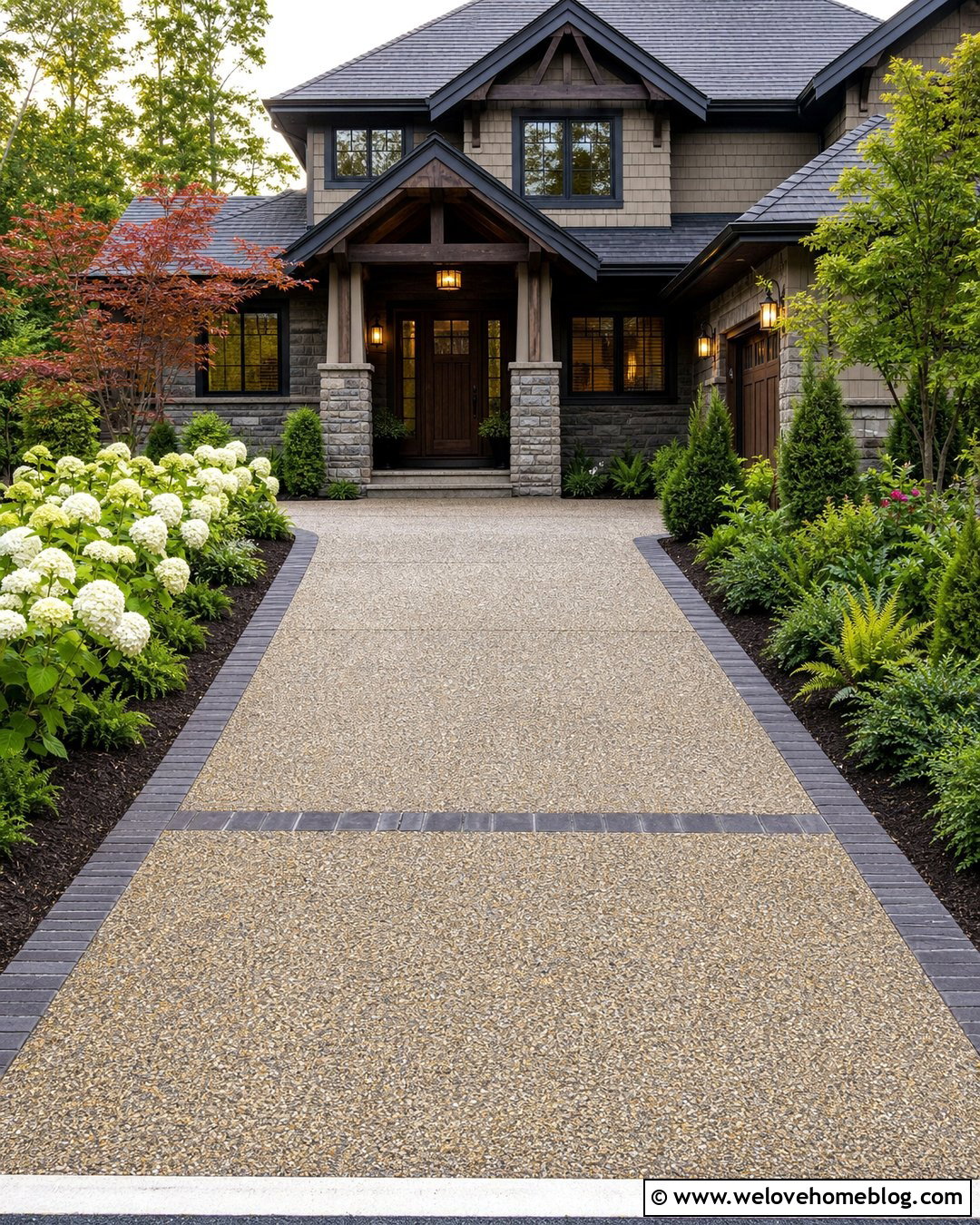
Craftsman architecture pairs naturally with textured concrete and earthy borders. Select exposed aggregate containing warm gray, tan, and brown stones, then frame it with dark brick or natural cobblestone. A straight driveway with a subtle widening near the garage maintains practical access while allowing the front porch to remain visible. Repeat the stone or brick border along the walkway leading to the steps. Layer the landscaping with compact evergreens, hydrangeas, ferns, and a small Japanese maple or dogwood. Deep mulch beds can connect the driveway to the porch columns and foundation stone. Avoid highly glossy or sharply contrasting colors that may compete with the handcrafted appearance of the house. A matte, natural palette will make the surface, borders, porch, and garden feel comfortably connected.
28. Colonial House Concrete Driveway
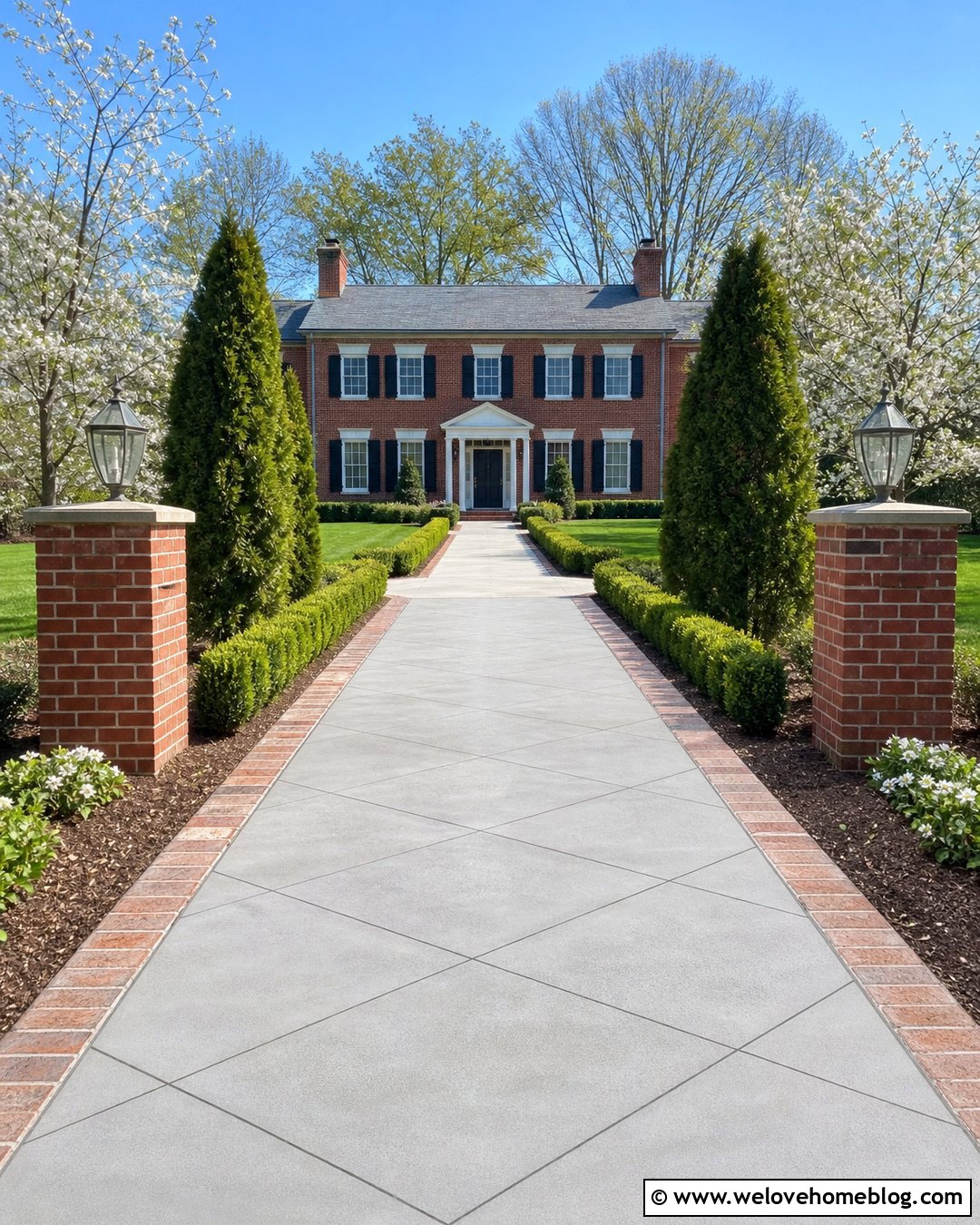
Symmetry is the key to a concrete driveway that suits a colonial home. Use a straight approach aligned with the garage or centered entrance, depending on the property layout. Medium gray concrete with a brick border creates a classic combination, especially when the brick repeats the chimney, steps, or facade. A diamond saw-cut pattern can add formal detail across wider sections without changing the basic material. On each side, mirror the landscaping with boxwood hedges, upright evergreens, and matching flowering trees. Install identical entrance pillars or lights near the street to strengthen the balanced appearance. The walkway should branch cleanly from the driveway and lead directly toward the front door. Restrained colors and consistent spacing allow the architecture’s ordered proportions to remain the focus of the complete design.
29. Midcentury Modern Concrete Driveway
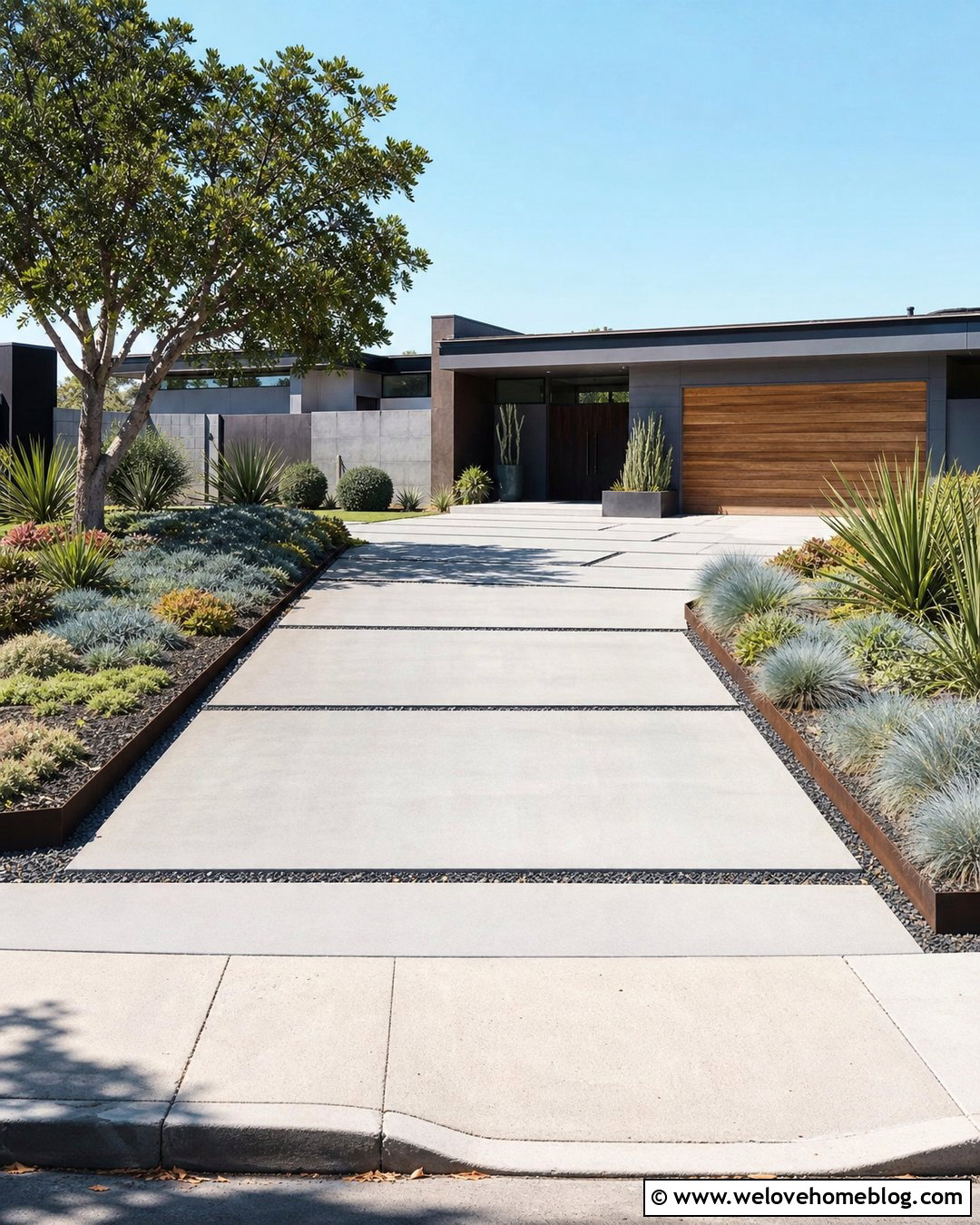
A midcentury home welcomes bold geometry, but the driveway should remain simple enough to complement the architecture. Pour large light gray concrete rectangles separated by narrow strips of dark gravel or low green groundcover. Arrange the panels in a straight or slightly offset path that lines up with the carport, garage, or horizontal roofline. Use weathered steel edging and asymmetrical planting beds filled with blue fescue, yucca, agave, sedum, or sculptural shrubs. A single ornamental tree can add height near the entrance without obscuring the facade. Continue the slab pattern into the front walkway to create one connected hardscape. Neutral concrete, dark joints, and distinctive foliage produce a complete look that feels true to the home’s period while remaining crisp and current.
30. Contemporary House Concrete Driveway
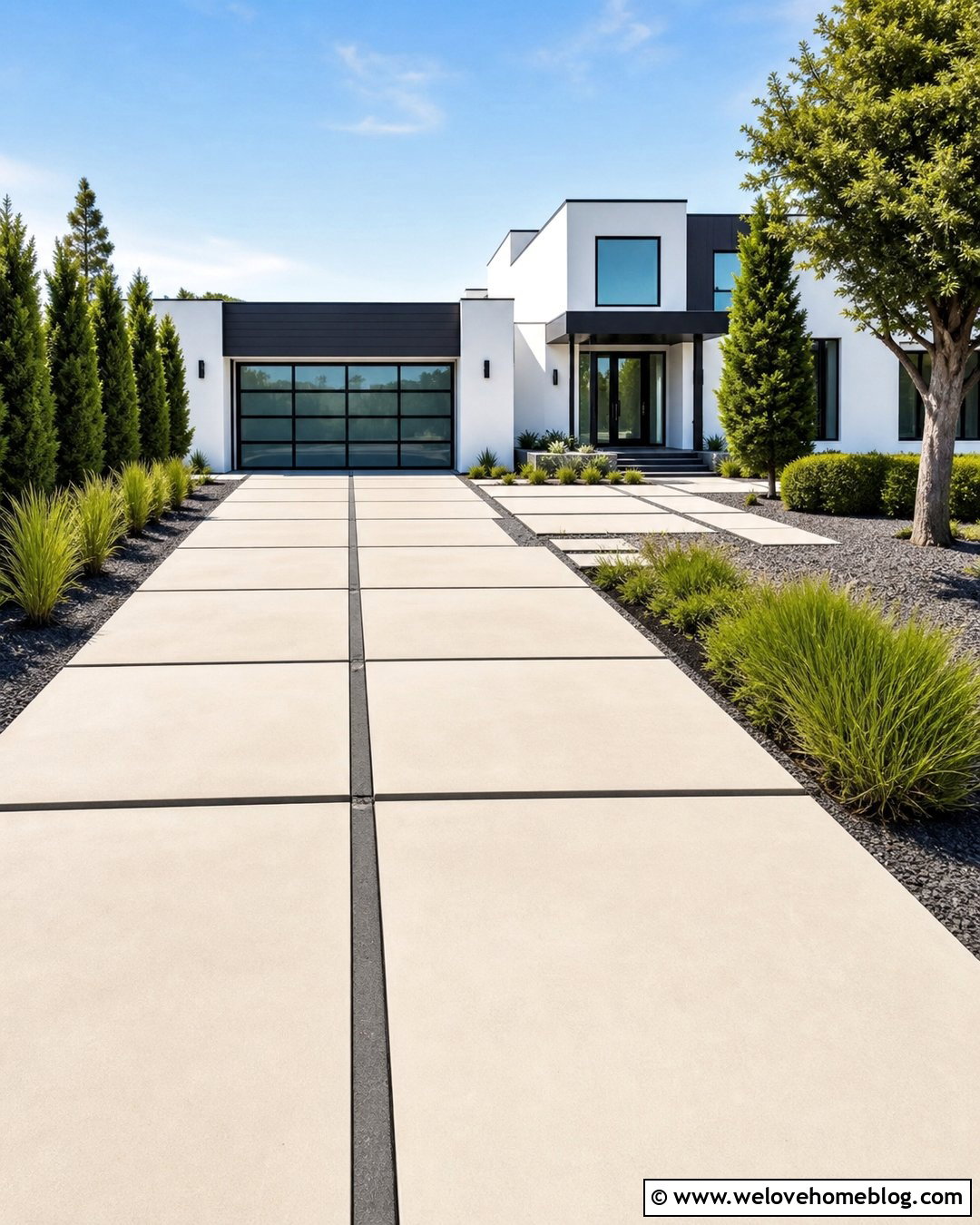
For a contemporary house, treat the driveway as an extension of the building’s geometry. Large smooth concrete panels in pale gray or warm white create a strong base. Separate them with thin black gravel channels or charcoal concrete strips that coordinate with dark window frames and garage doors. A straight layout offers the cleanest result, although staggered panels can accommodate an offset garage. Surround the driveway with structured planting beds containing upright grasses, clipped evergreens, and one or two sculptural trees. Keep the border flush and minimal rather than using rustic stone. Recessed or low-profile lighting can follow the side without interrupting the daytime view. Every line should relate to the facade, producing an entrance in which architecture, paving, walkway, and landscaping feel intentionally composed.
31. Cottage House Concrete Driveway
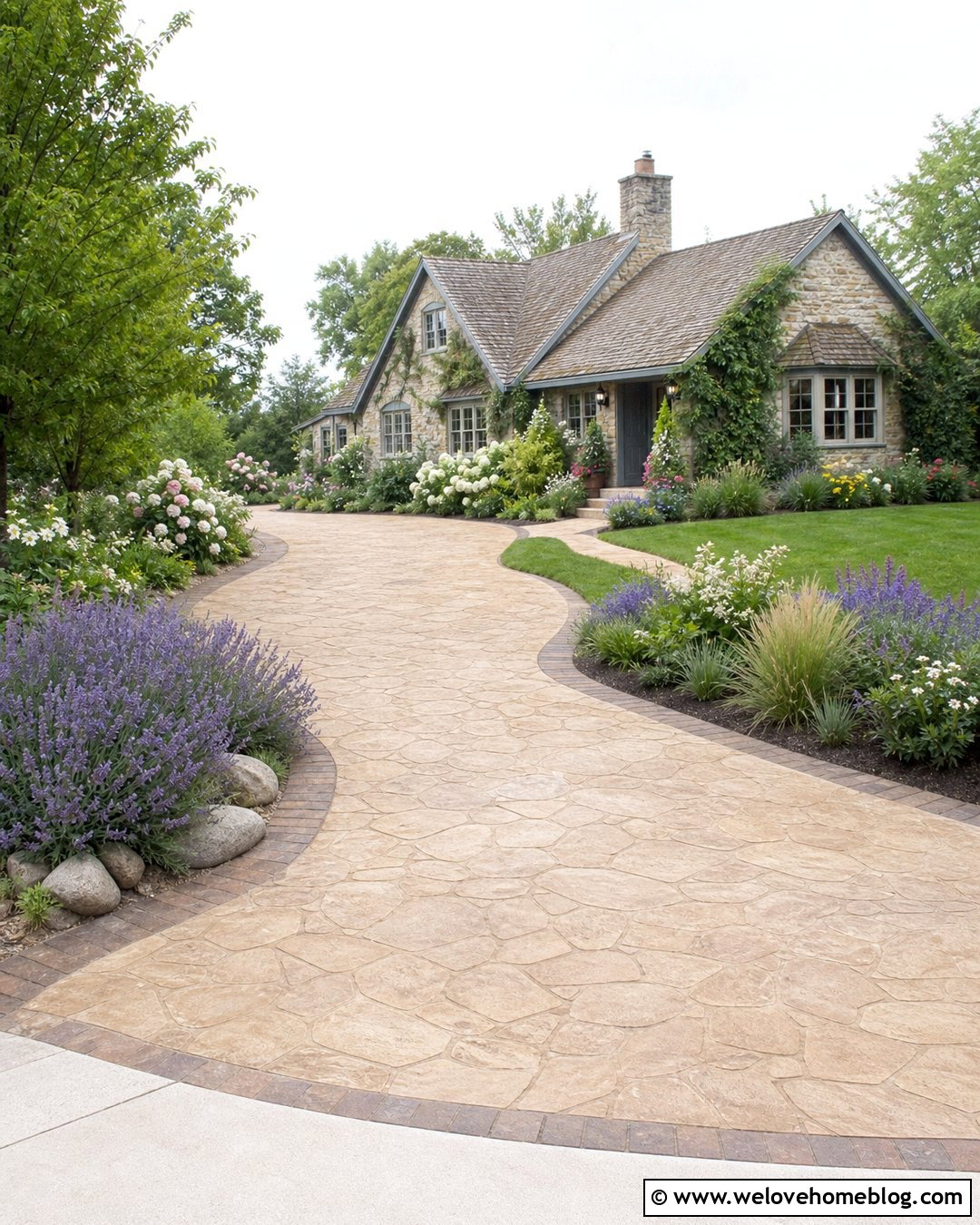
A cottage driveway should feel soft and inviting rather than rigid or oversized. Choose warm beige stamped concrete with a subtle stone texture, or use light exposed aggregate for a more natural surface. A gently curved layout can wind through informal planting beds and reveal the house gradually. Edge the driveway with weathered brick or small cobblestones that coordinate with garden paths and porch details. Allow lavender, catmint, hydrangeas, roses, and low ornamental grasses to soften the border without spilling into driving space. A narrow matching walkway can branch toward the front door through the garden. Keep the concrete color muted so the flowers and architecture remain prominent. The finished entrance should appear established and charming while still providing a clear, durable-looking route to the garage.
32. Desert Landscape Concrete Driveway
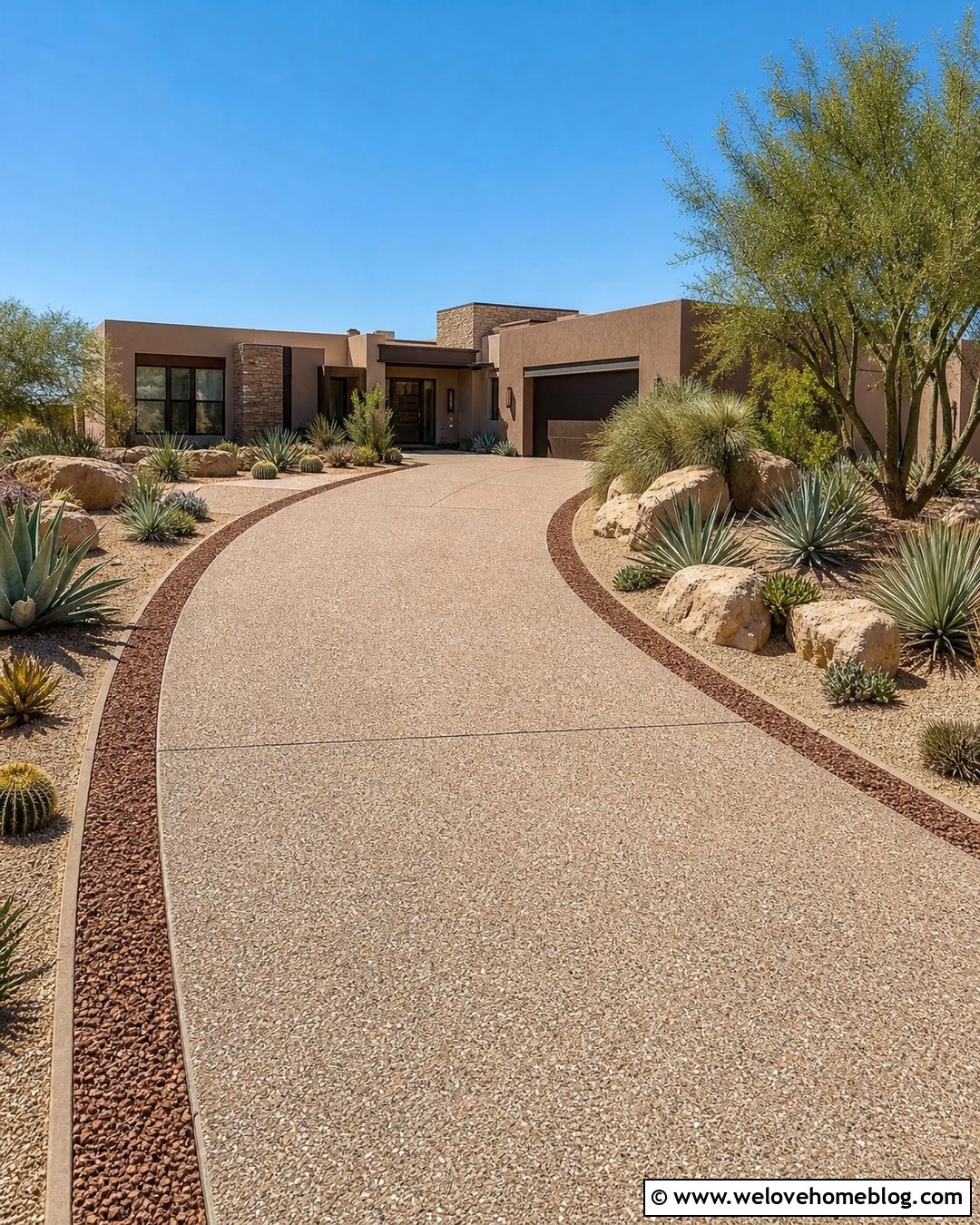
Concrete works beautifully in a desert landscape when its tone blends with sand, gravel, and stone. Select warm buff, pale taupe, or sandy exposed aggregate instead of cool standard gray. Divide a straight or gently curved driveway into large panels with narrow bands of rust-colored gravel. Use steel edging to separate the concrete from planting beds filled with agave, yucca, barrel cactus, desert spoon, and drought-tolerant grasses. Arrange rocks in small clusters rather than lining every edge. A flat-roof modern, Southwestern, or desert ranch home provides a natural backdrop. Keep the driveway border simple and repeat its gravel color around the walkway and address sign. This limited palette allows the concrete to feel integrated with the dry setting while maintaining a clean, modern curb view.
33. Tropical Concrete Driveway
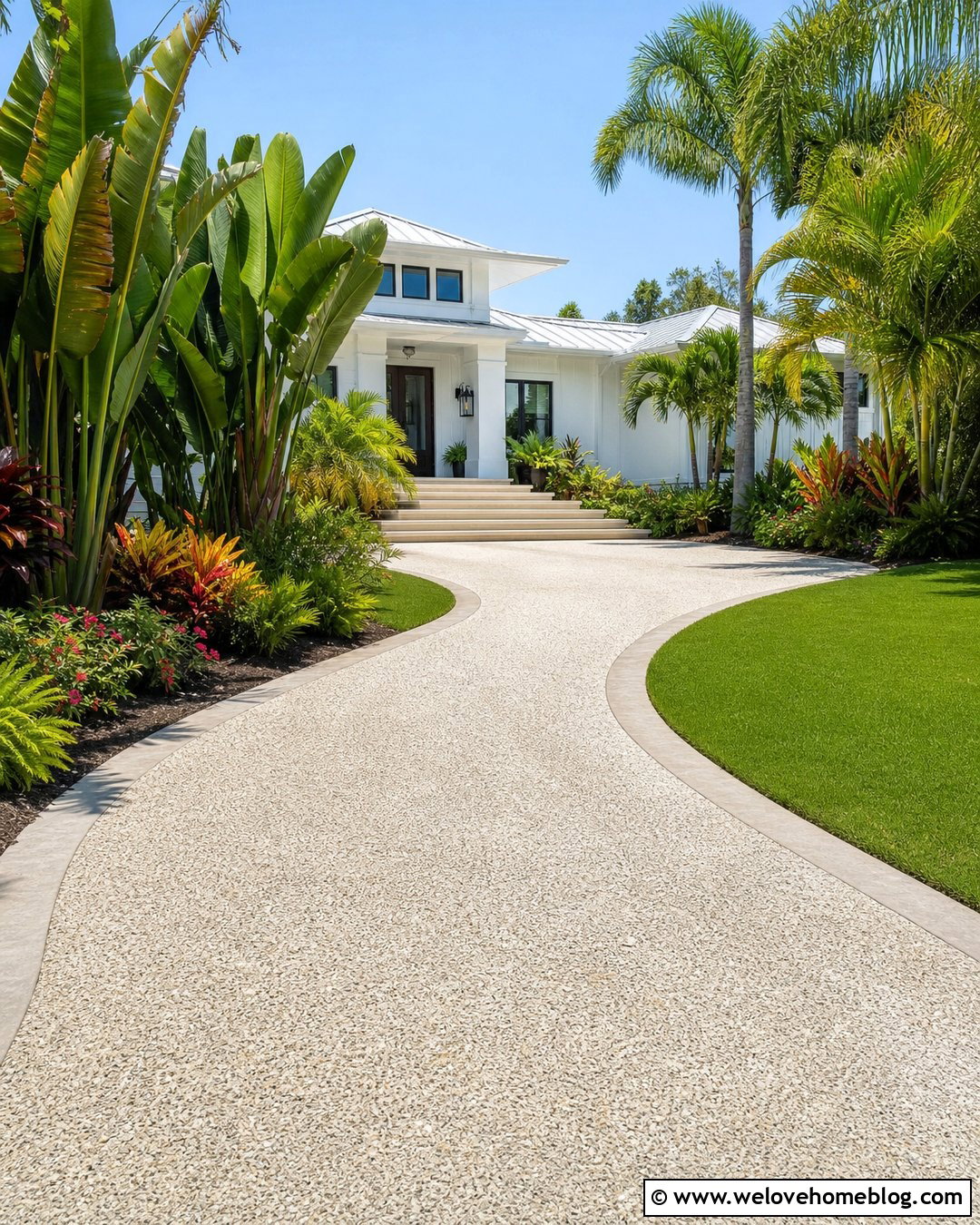
A tropical concrete driveway can feel bright and relaxed when the surface is paired with lush but controlled landscaping. Choose pale exposed aggregate with cream and light gray stones to complement stucco, coastal siding, or a white facade. Use a curved layout framed by smooth concrete edging. Beyond the edge, layer palms, bird of paradise, crotons, ferns, and compact flowering shrubs while keeping mature foliage away from the driving path. A strip of lawn can provide breathing room between the pavement and denser planting beds. Near the house, connect the driveway to broad concrete steps or a matching walkway. Avoid dark finishes that absorb visual attention. The pale textured surface, sweeping curve, and bold green planting should work together to create a fresh Florida or Gulf Coast entrance.
34. Concrete Driveway With Retaining Wall
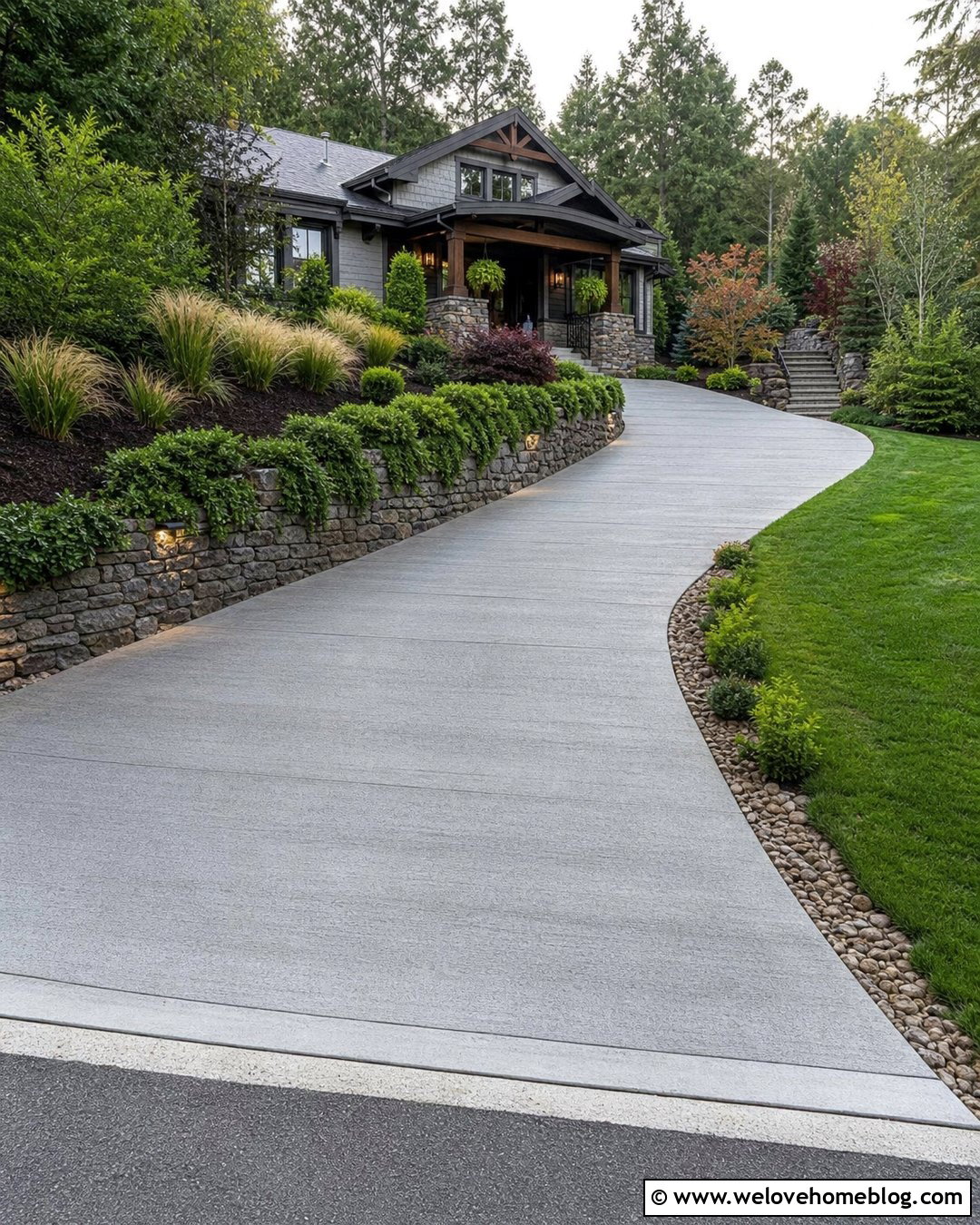
A retaining wall can make a driveway on an uneven property look purposeful rather than squeezed into the grade. Use medium gray broom-finished concrete with a straight or gently curving layout. Build the wall from natural stone, concrete block, or smooth poured concrete that complements the home. A narrow planting bed above the wall can hold cascading groundcover, ornamental grasses, and compact shrubs. On the open side of the driveway, use a low border and lawn to balance the heavier structure. Repeat the wall material around the front steps or porch for continuity. Integrated wall lights can brighten the approach without adding freestanding fixtures. Keep the driveway joints aligned and the wall height visually consistent, creating a complete design that organizes both the slope and the entrance.
35. Concrete Driveway With Landscaped Island
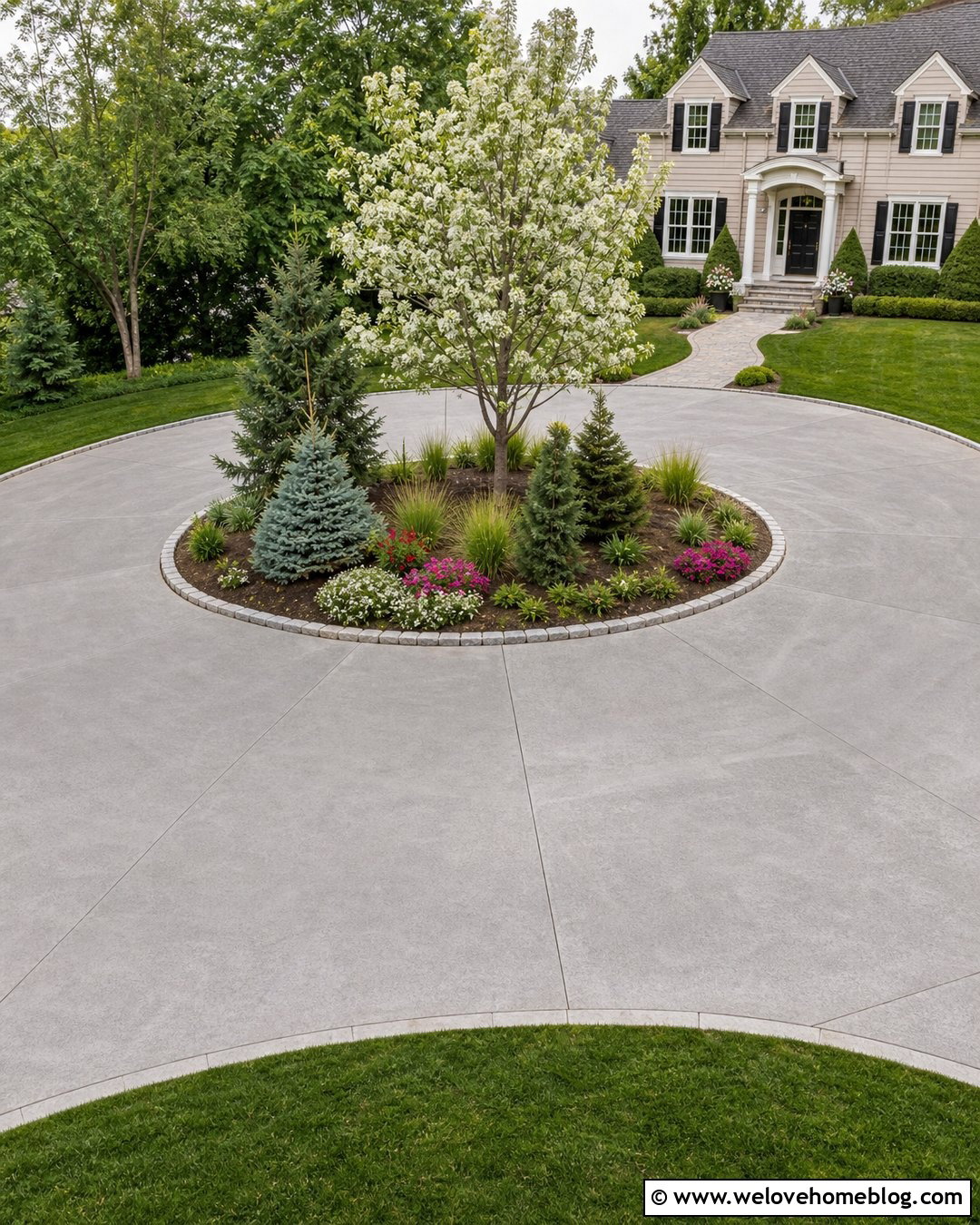
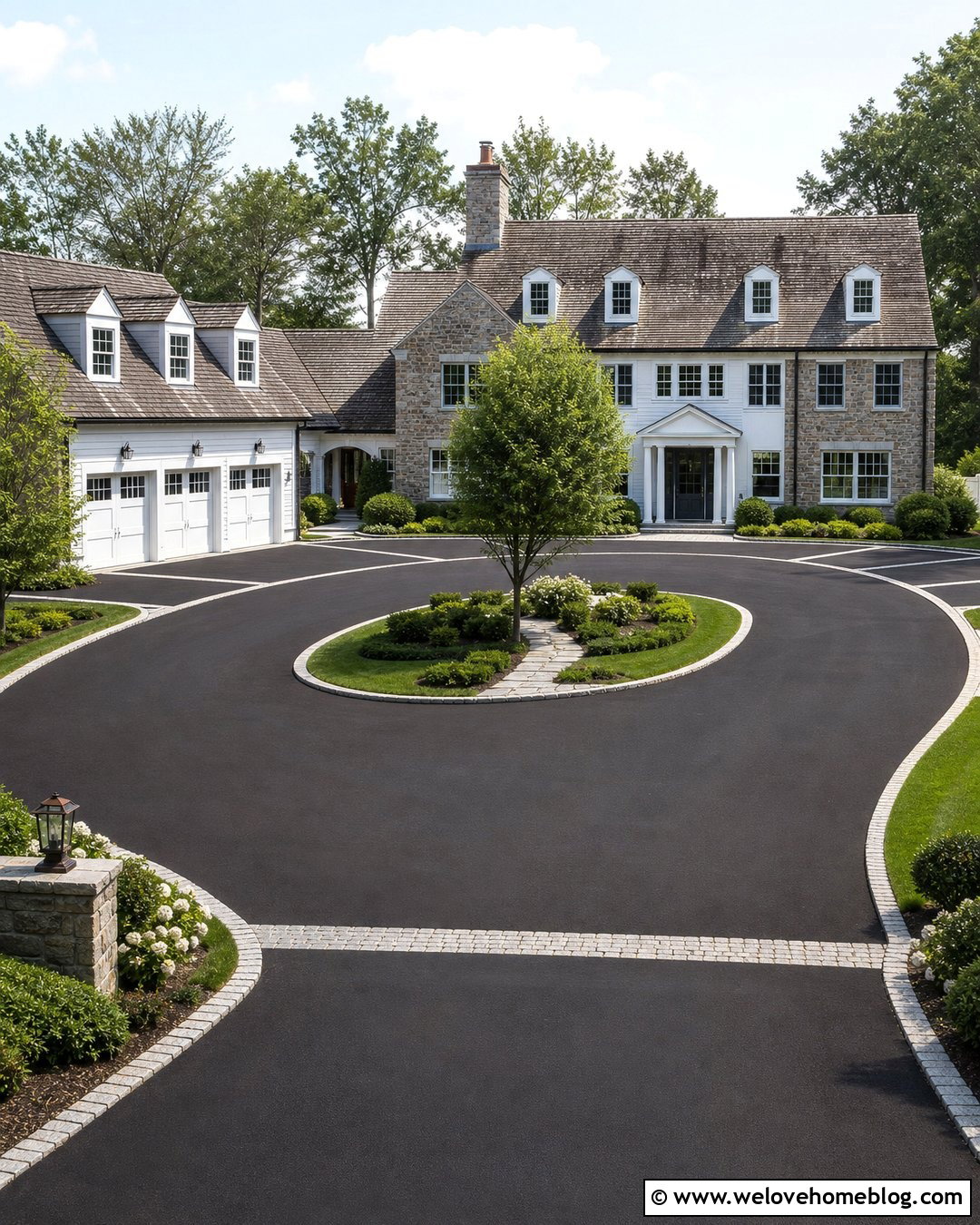
A landscaped island can divide a wide or circular concrete driveway while creating a strong focal point from the curb. Use smooth gray concrete or subtle exposed aggregate around a generously sized central bed. Shape the island as a circle, oval, or long curved form that follows the driveway’s movement. Edge it with brick, cobblestone, or a contrasting concrete curb. In the center, plant one ornamental tree and surround it with layered evergreens, grasses, and seasonal flowers. Avoid tall shrubs near critical turning areas. Repeat some of the same plants beside the house so the island feels connected to the broader landscape. A small path light or uplight can highlight the tree, but the planting should remain attractive and balanced in bright daytime views as well.
36. Concrete Driveway With Lighting
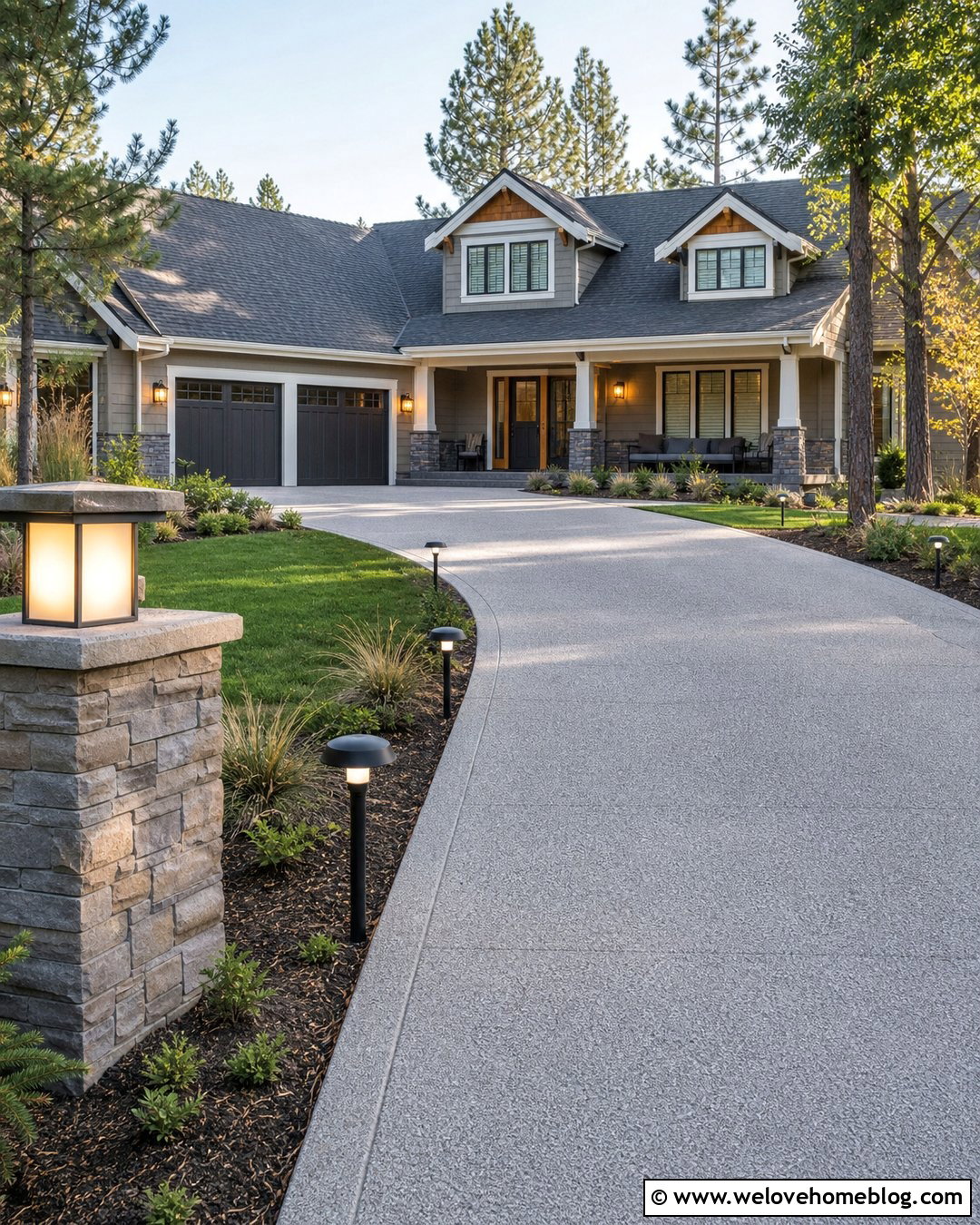
Well-placed lighting can strengthen a concrete driveway design even when the fixtures are viewed during the day. Start with light gray exposed aggregate or broom-finished concrete and a clean curved or straight layout. Install low-profile path lights at consistent intervals outside the pavement edge, leaving enough space for doors, equipment, and landscaping. Use dark metal fixtures that coordinate with the house, gate, or garage hardware. Plant low grasses and compact shrubs around the lights so they appear integrated rather than randomly placed. At the street, illuminate an address pillar or entrance bed instead of overcrowding the curb with fixtures. Matching lights along the walkway can guide attention toward the front door. The complete arrangement should define the approach while preserving an uncluttered, bright curb appearance.
37. Concrete Driveway With Gate And Pillars
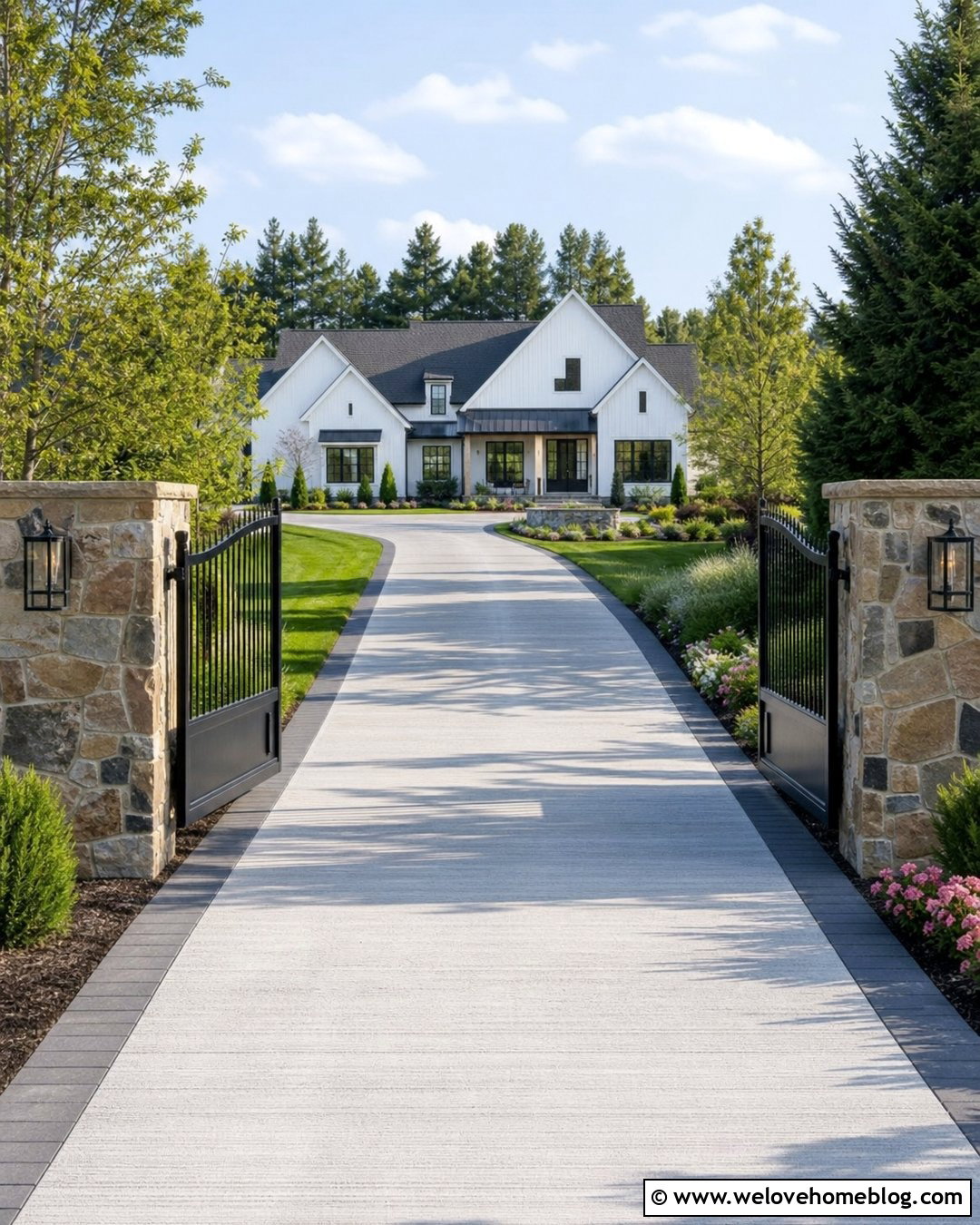
A gate and pillars can give a concrete driveway a clearly defined entrance, whether the property is formal, rural, or contemporary. Choose a driveway finish that matches the architecture: exposed aggregate for a natural home, broom-finished gray concrete for a farmhouse, or smooth large panels for a modern residence. Position stone, brick, or stucco pillars well outside the comfortable driving width. Add a metal gate with a simple pattern rather than excessive ornament. Low planting beds around the pillars can include grasses, evergreens, and seasonal color without reducing visibility. Continue the driveway border through the gateway so the paving feels uninterrupted. Coordinated lighting and an address plaque can complete the entrance. Every element should frame the approach while allowing the house to remain visible in the distance.
38. Concrete Driveway With Address Sign
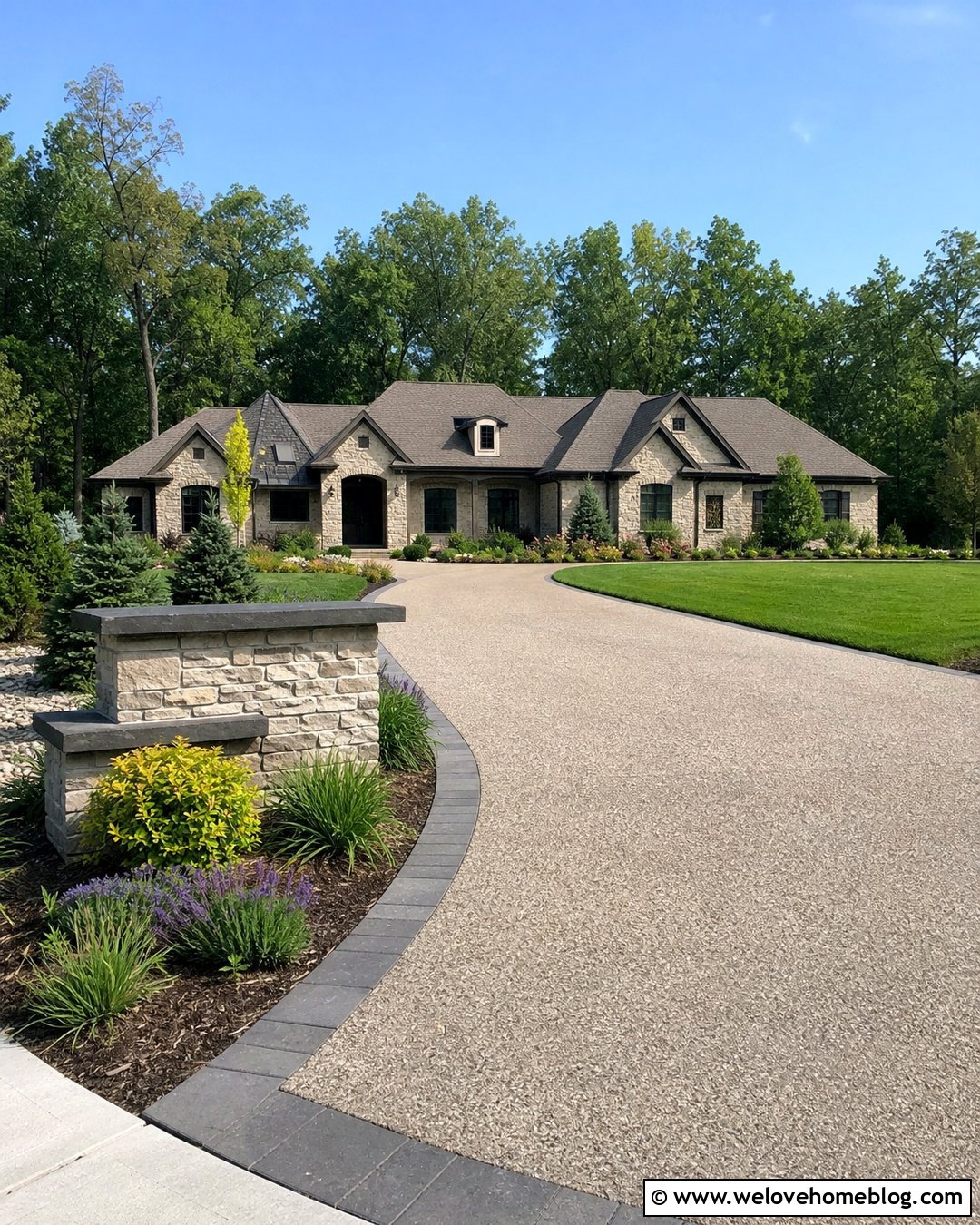
An address sign becomes more effective when it is designed as part of the complete driveway entrance. Pair a light broom-finished or exposed aggregate concrete surface with a low masonry monument placed beside the curb. Build the sign from brick, natural stone, smooth stucco, or poured concrete that repeats materials on the house. Surround it with a compact bed of ornamental grasses, dwarf evergreens, and low flowers. Keep the planting short so the address area remains open and balanced. A contrasting driveway apron or border can visually connect the sign to the pavement. On a curved approach, position the monument on the outer side where it naturally frames the entrance. Simple lighting, crisp edging, and a clear walkway connection help the sign look integrated rather than added as an afterthought.
39. Heated Concrete Driveway
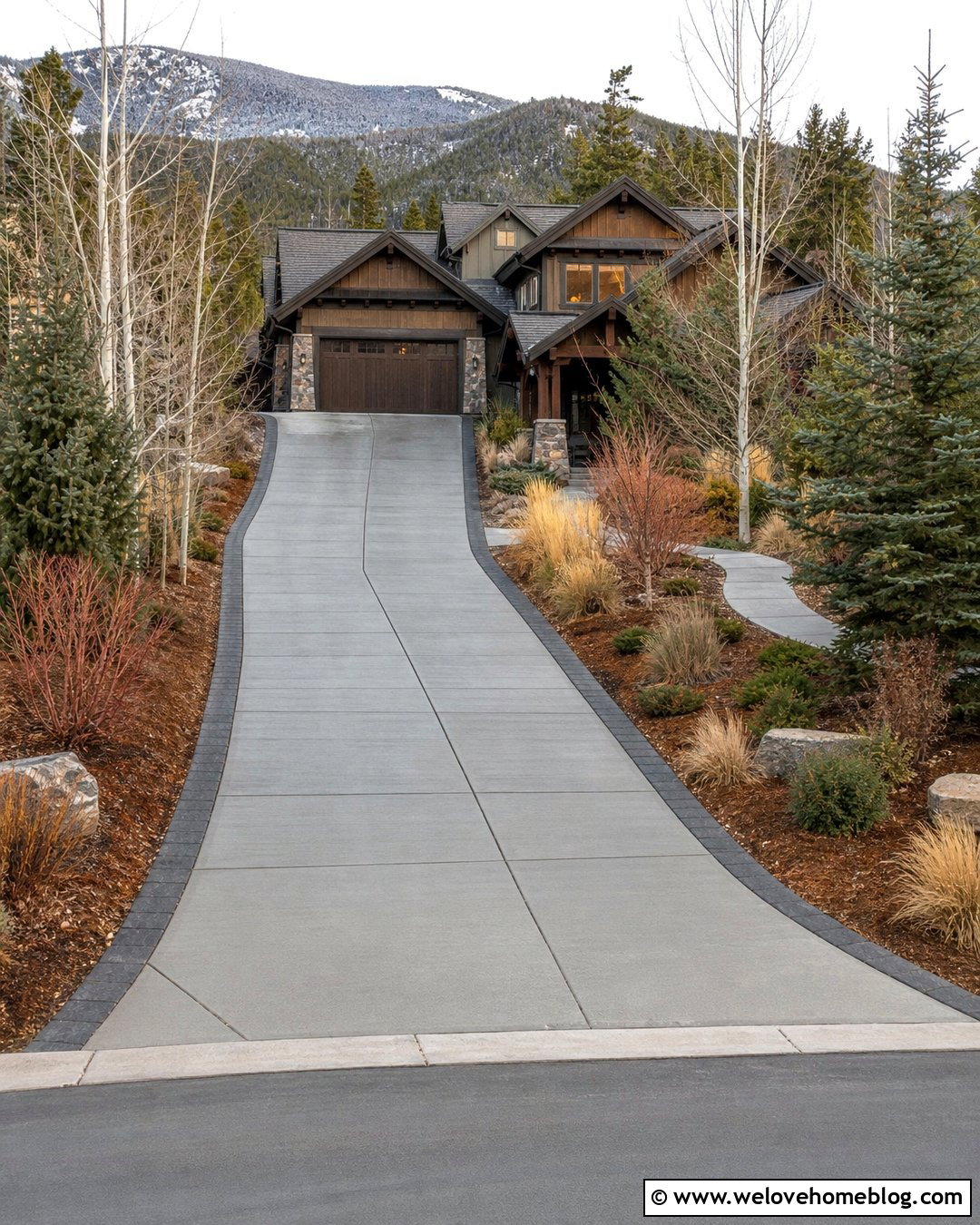
A heated concrete driveway can maintain an attractive appearance while supporting a snow-friendly entry plan in colder regions. The heating components remain concealed, so the visible design can still feature broom-finished concrete, exposed aggregate, or a restrained stamped pattern. Use a straight or gently sloped layout with clearly organized control joints. Dark brick or stone edging can define the perimeter against winter lawn and planting beds. Choose hardy evergreens, ornamental grasses, and deciduous shrubs that provide structure throughout the year. A matching heated walkway can continue toward the front door for a cohesive approach. Keep the surface pattern relatively simple so repair zones and joints do not compete visually. The finished driveway should look like a polished landscape feature during every season, not merely a functional installation.
40. Resurfaced Concrete Driveway Overlay
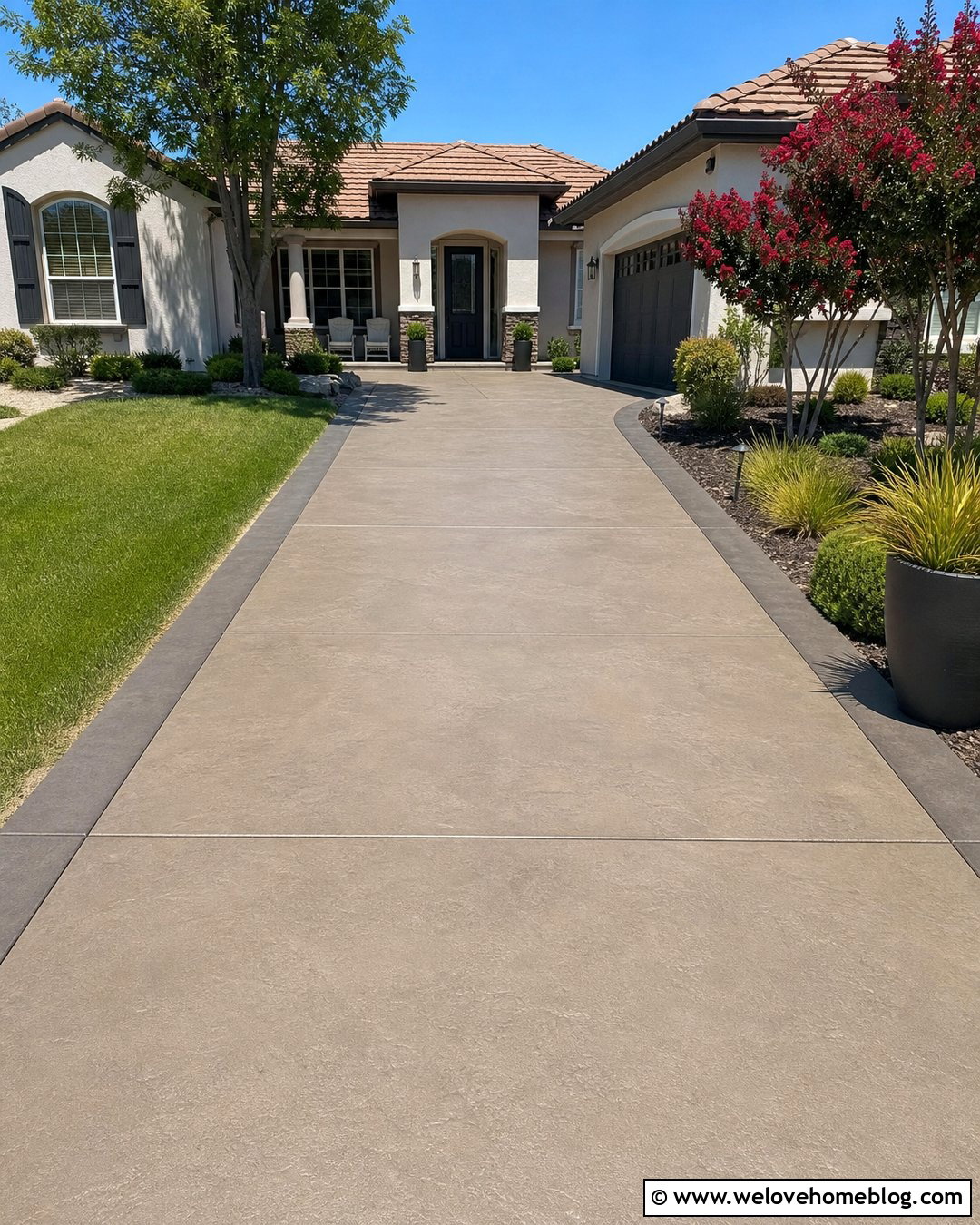
A decorative overlay can refresh the appearance of an existing concrete driveway when the underlying surface is suitable for professional resurfacing. Choose a light broom texture for a straightforward update, or use a restrained slate stamp to introduce more character. Medium gray, warm taupe, and soft charcoal are versatile colors that work with many home exteriors. Add darker border bands to define the driveway and disguise awkward visual transitions near the sidewalk or garage. New landscaping can support the updated surface without requiring a complete front-yard redesign. Trim overgrown shrubs, widen narrow beds, and repeat the overlay color in walkway accents or planters. The final result should look intentionally redesigned, with the surface finish, borders, joints, and surrounding yard contributing equally to the improved entrance. ()
Conclusion:
The most successful concrete driveway ideas go beyond choosing a color or finish. They coordinate the driveway’s shape, surface pattern, borders, landscaping, walkway, and home exterior as one complete curb-appeal design. Simple broom-finished concrete can look polished with crisp joints and planting beds, while exposed aggregate, stamped textures, geometric slabs, and contrasting bands offer greater visual detail. Consider the size and slope of your property, the width of the garage, and the architectural character of the house before settling on a look. Whether you prefer a modern grid, a landscaped circular approach, or a classic brick-bordered surface, these 40 concrete driveway ideas provide a practical starting point for planning a distinctive entrance.

Related posts:
Leave a Reply