
A worn driveway does not always need to be removed and replaced. When the underlying slab is stable, concrete resurfacing can cover discoloration, shallow pitting, minor surface damage, and an outdated finish. Today’s overlays can be broom-finished, stained, scored, textured, or stamped to resemble brick and natural stone. Proper cleaning, repairs, surface preparation, drainage, and product selection are essential for a lasting result. Severely heaved concrete, unstable slabs, and major structural cracks may require replacement instead of a decorative coating. () The best design should complement your home while providing practical traction for vehicles and foot traffic. Explore these **30 Concrete Driveway Resurfacing Ideas** to find a complete look for your property.

1. Broom Finish Concrete Driveway Resurfacing
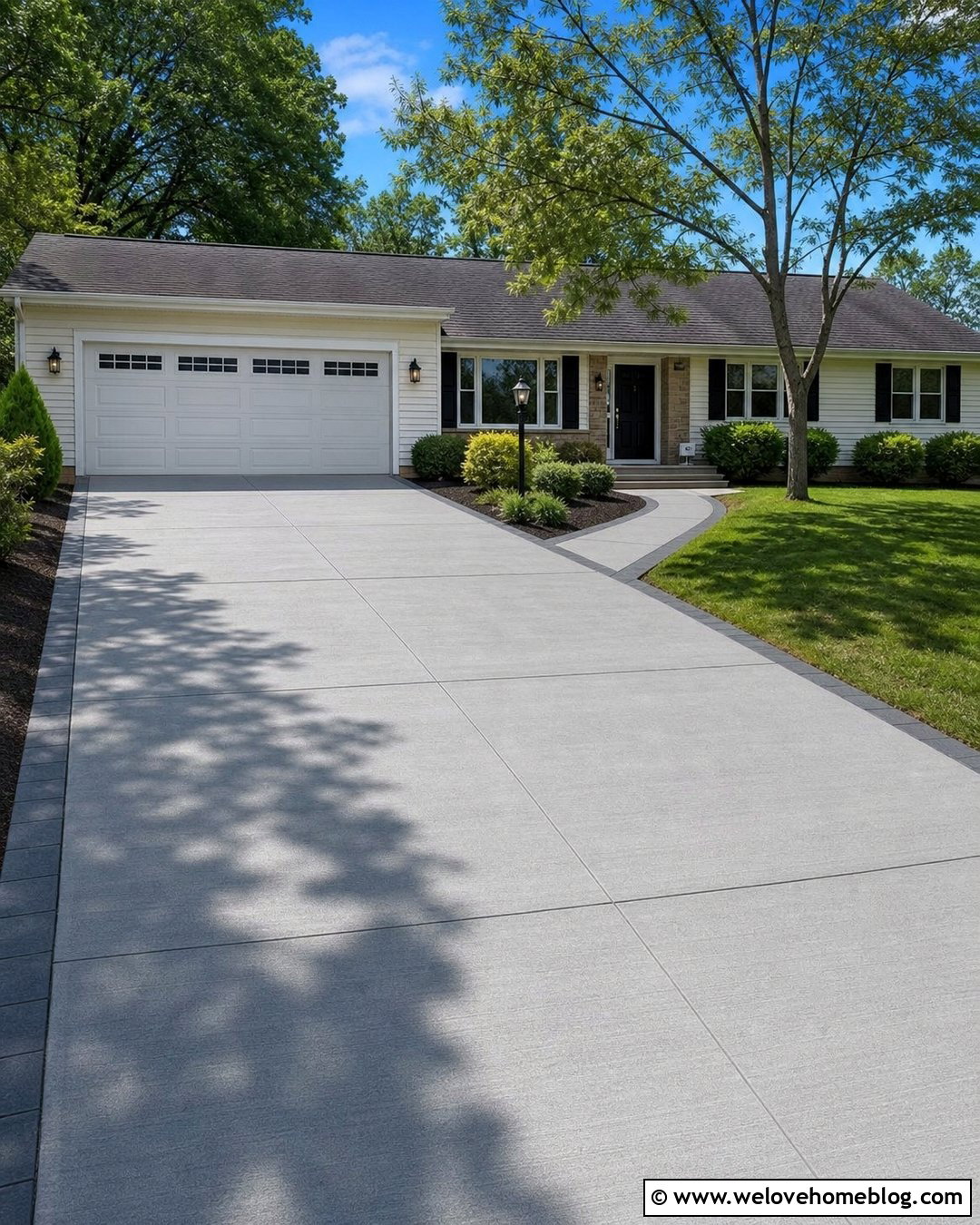
A fresh broom-finished overlay is one of the most practical ways to restore an aging driveway. The lightly brushed surface gives the concrete a clean appearance while adding useful texture under tires and shoes. Choose medium-gray resurfacing concrete for a traditional home, then frame it with a narrow charcoal paver border. A straight layout keeps the project simple and works especially well with ranch and Cape Cod houses. Low evergreen shrubs, fresh mulch, and a matching walkway can make the entire frontage feel renewed. Ask the installer to preserve control joints and create a consistent broom direction. This understated finish is ideal when you want the driveway to look new without introducing a decorative pattern that competes with the house.
2. Light Gray Concrete Driveway With Dark Border
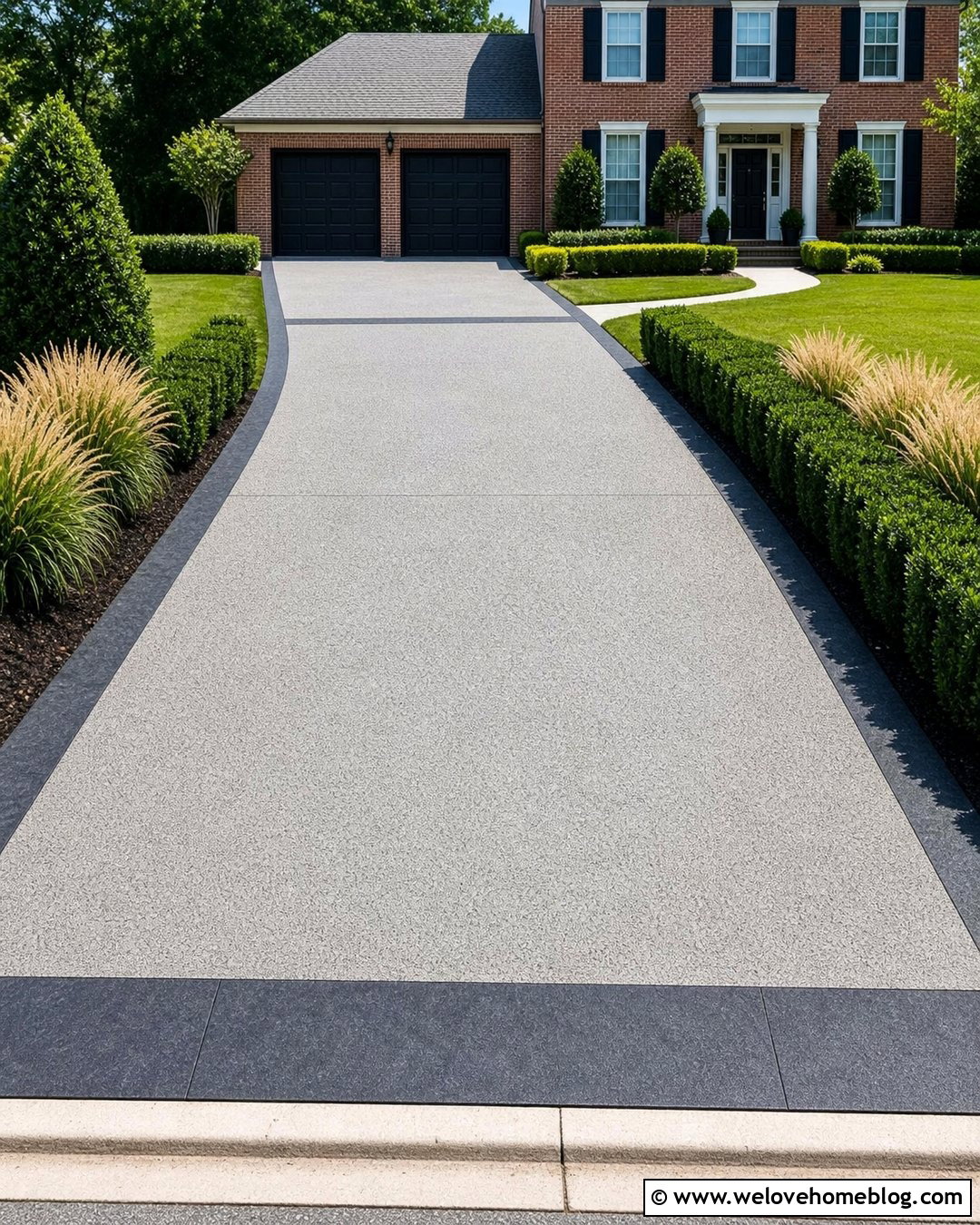
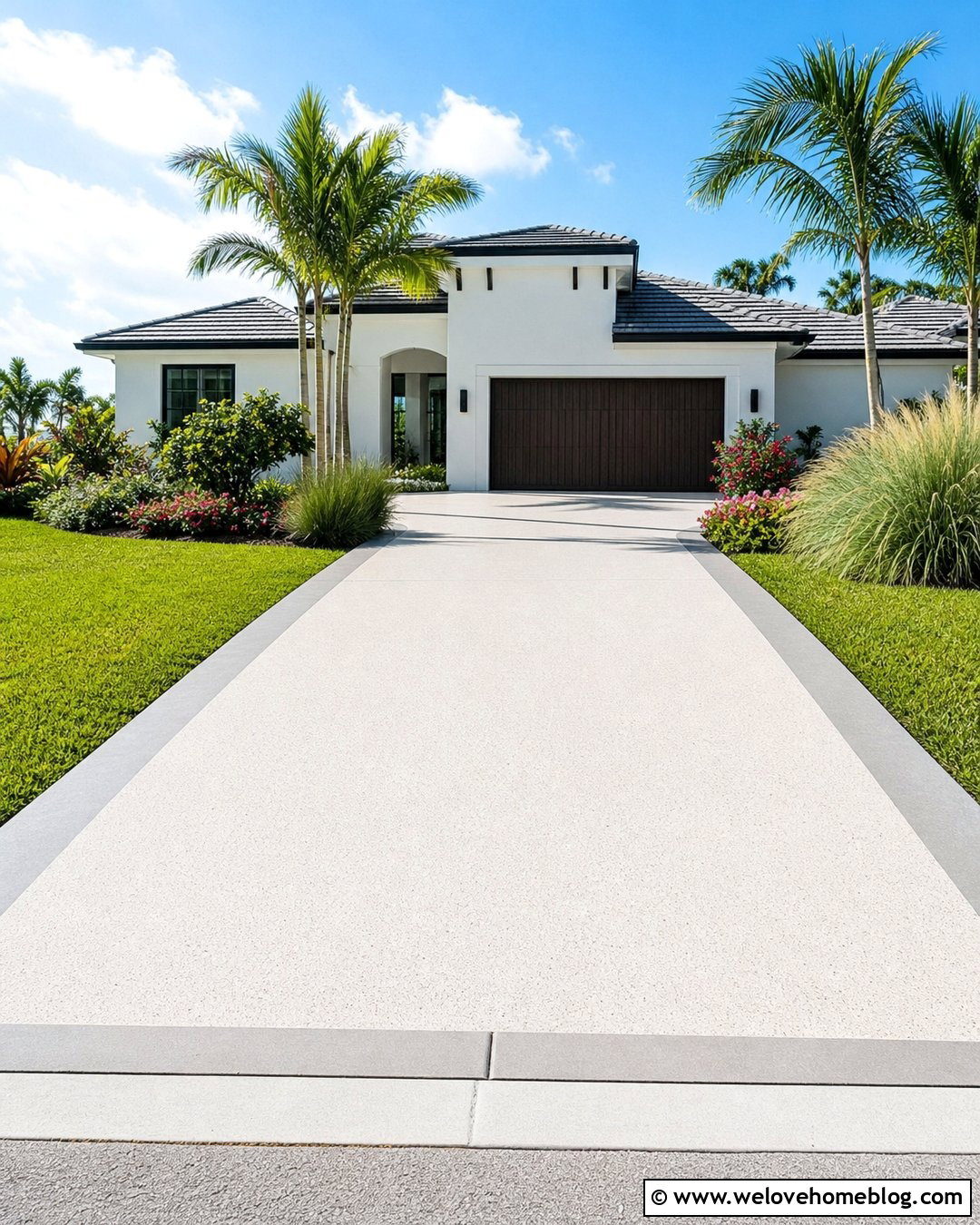
Light-gray resurfaced concrete creates a bright, orderly driveway that works with many exterior colors. Give the design more definition by applying a charcoal-colored overlay along the sides and across the garage apron. The contrasting border visually contains the pale center and helps a wide driveway feel more structured. A smooth-troweled decorative band can be paired with a subtly textured center for better traction. Continue the dark accent around the adjoining walkway to connect the driveway with the front entrance. Boxwood hedges, ornamental grasses, and a simple lawn maintain the polished look. This complete design suits brick colonials, transitional houses, and updated suburban homes. Test both colors beside the facade before installation because wet sealers may deepen their finished appearance.
3. Stamped Cobblestone Concrete Driveway
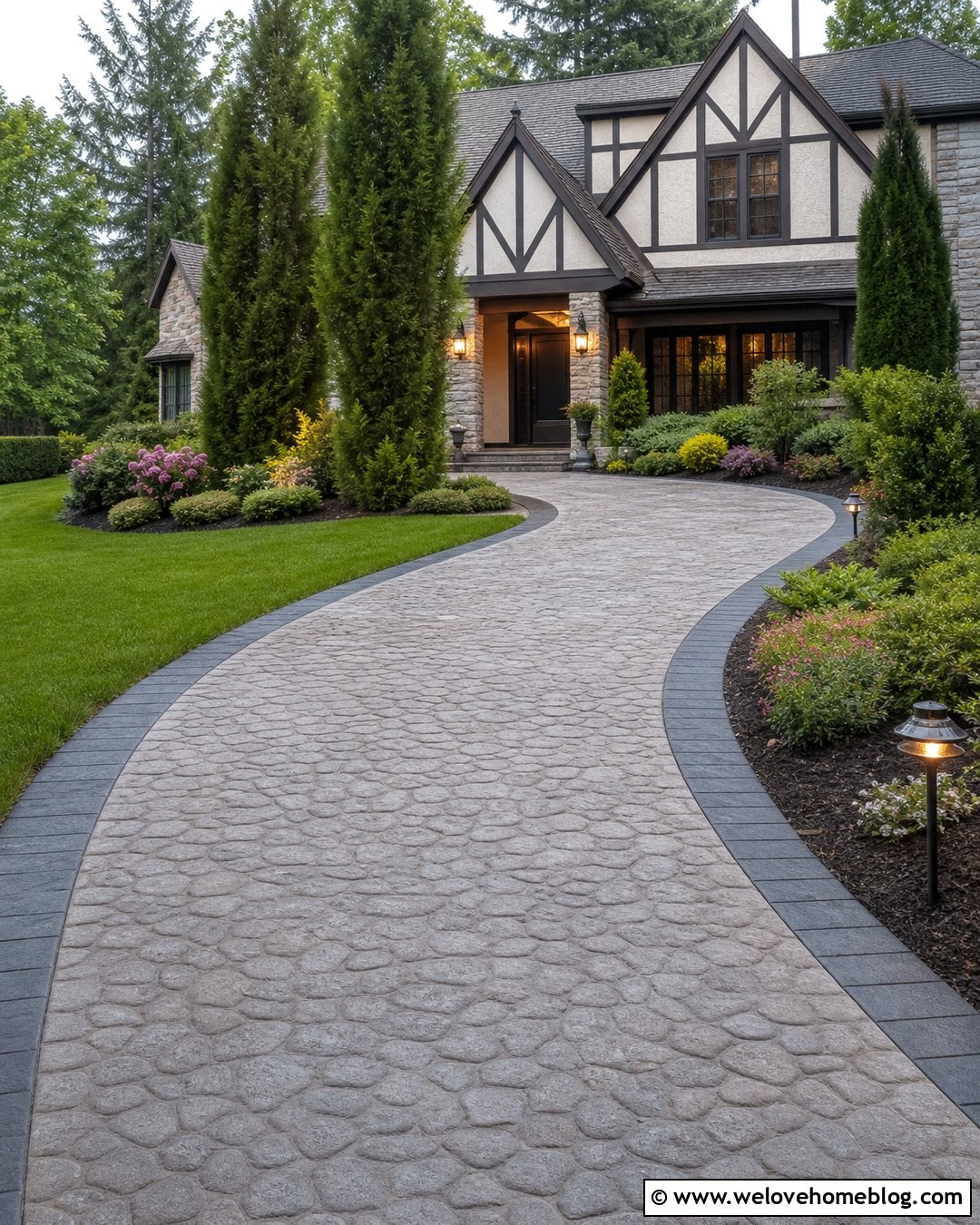
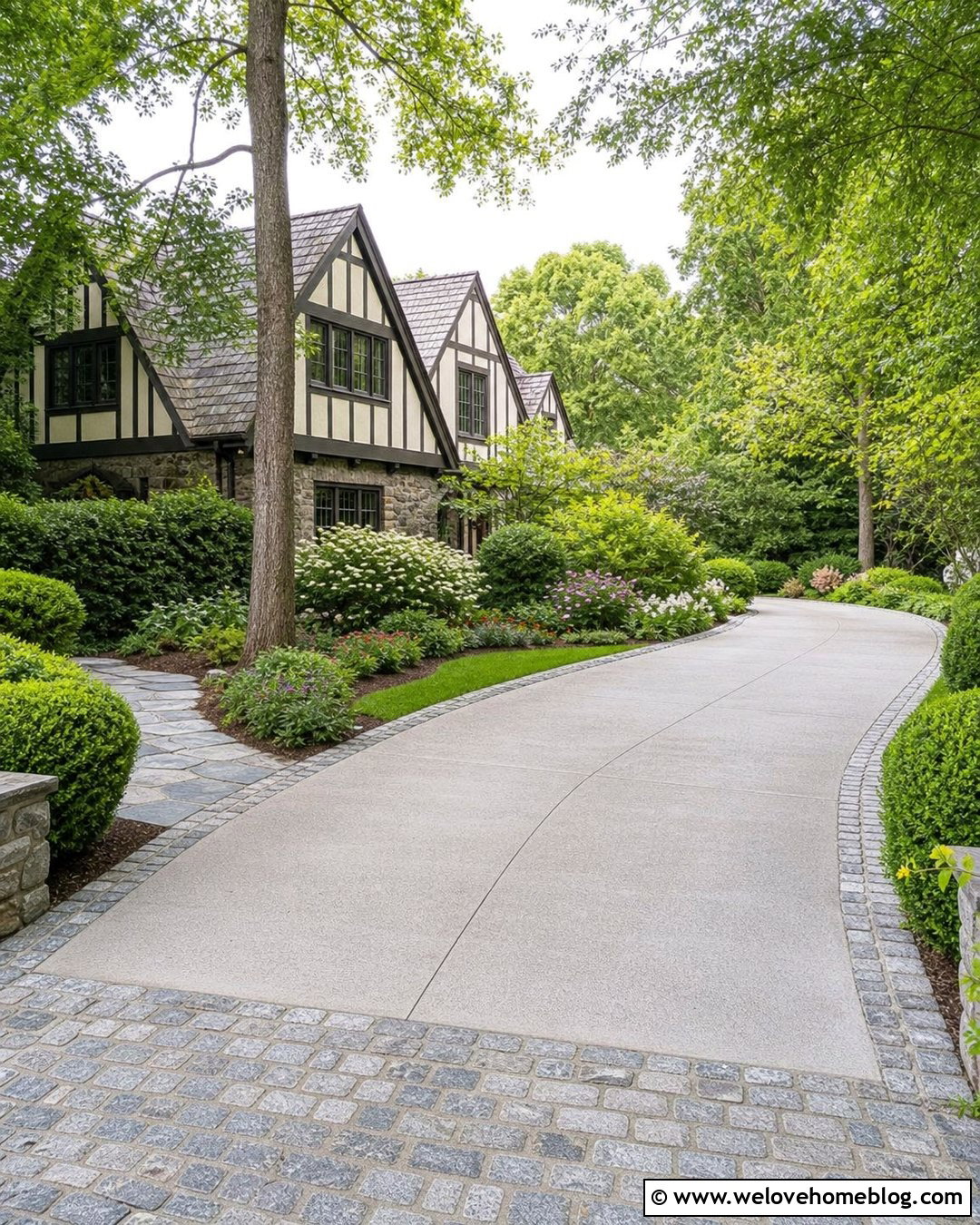
Stamped cobblestone resurfacing can give existing concrete the character of individual stones without removing the entire slab. A stampable overlay is applied over properly prepared concrete and patterned while workable. Multiple color tones and antiquing treatments can then emphasize the joints and surface texture. () Use a curved driveway layout with warm gray cobblestone stamping, a darker soldier-course border, and low planting beds following the edges. This combination works beautifully with Tudor, European-inspired, and traditional brick homes. Keep the pattern scale proportional to the driveway so it does not appear overly busy. Because deeply textured surfaces can collect debris, select moderate relief rather than an exaggerated stone profile. Soft landscape lighting and clipped shrubs complete the substantial entrance.
4. Ashlar Slate Concrete Driveway Overlay
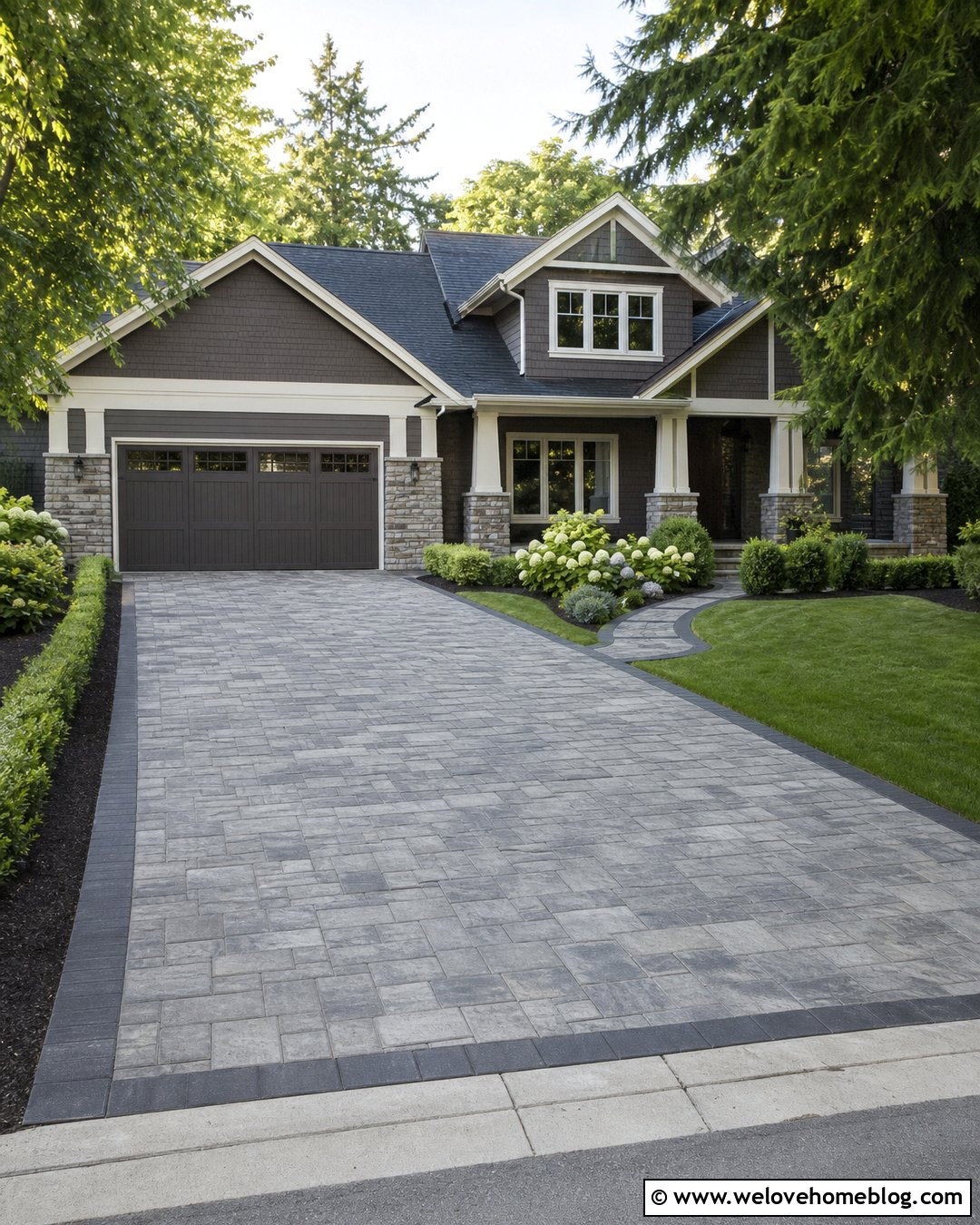
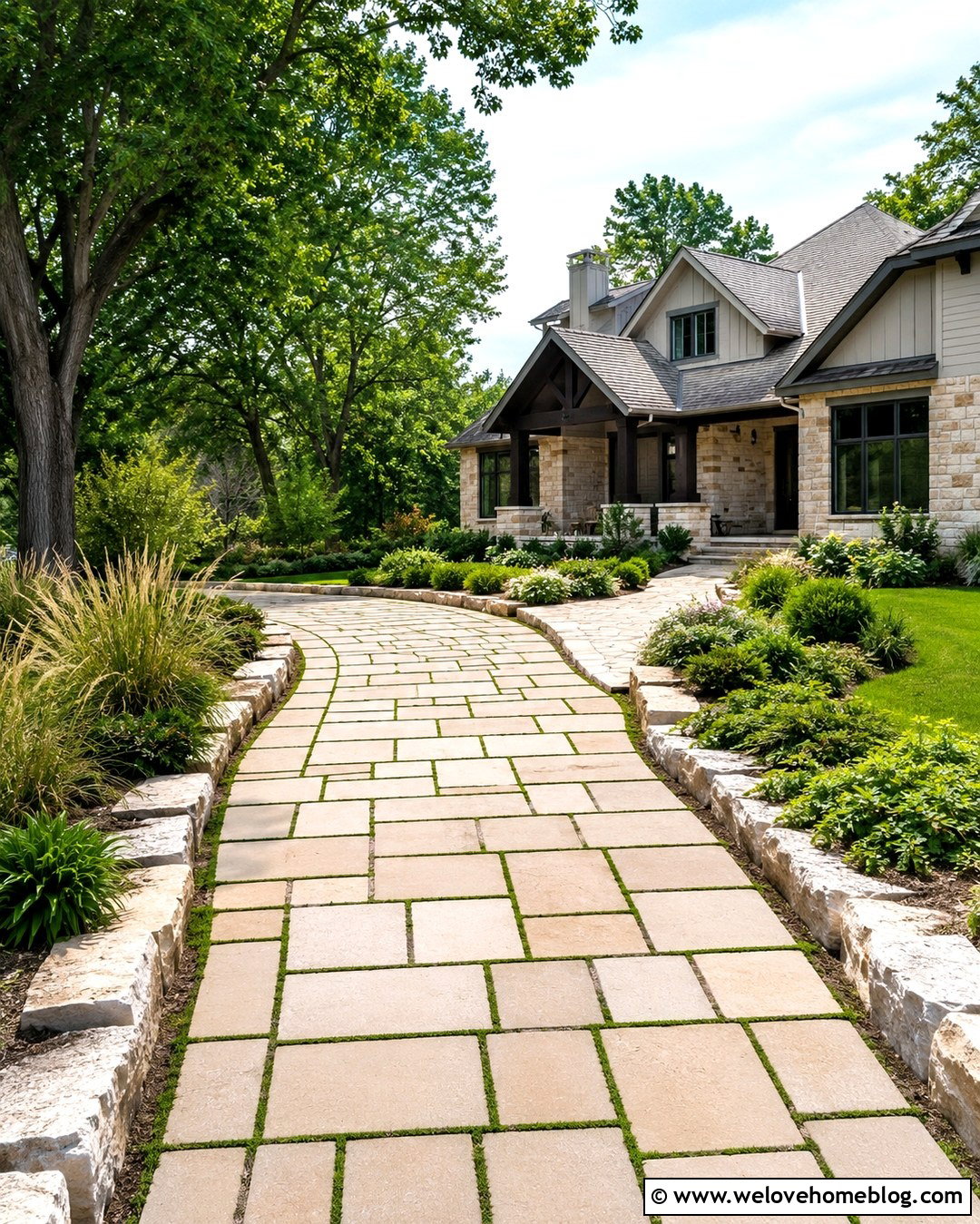
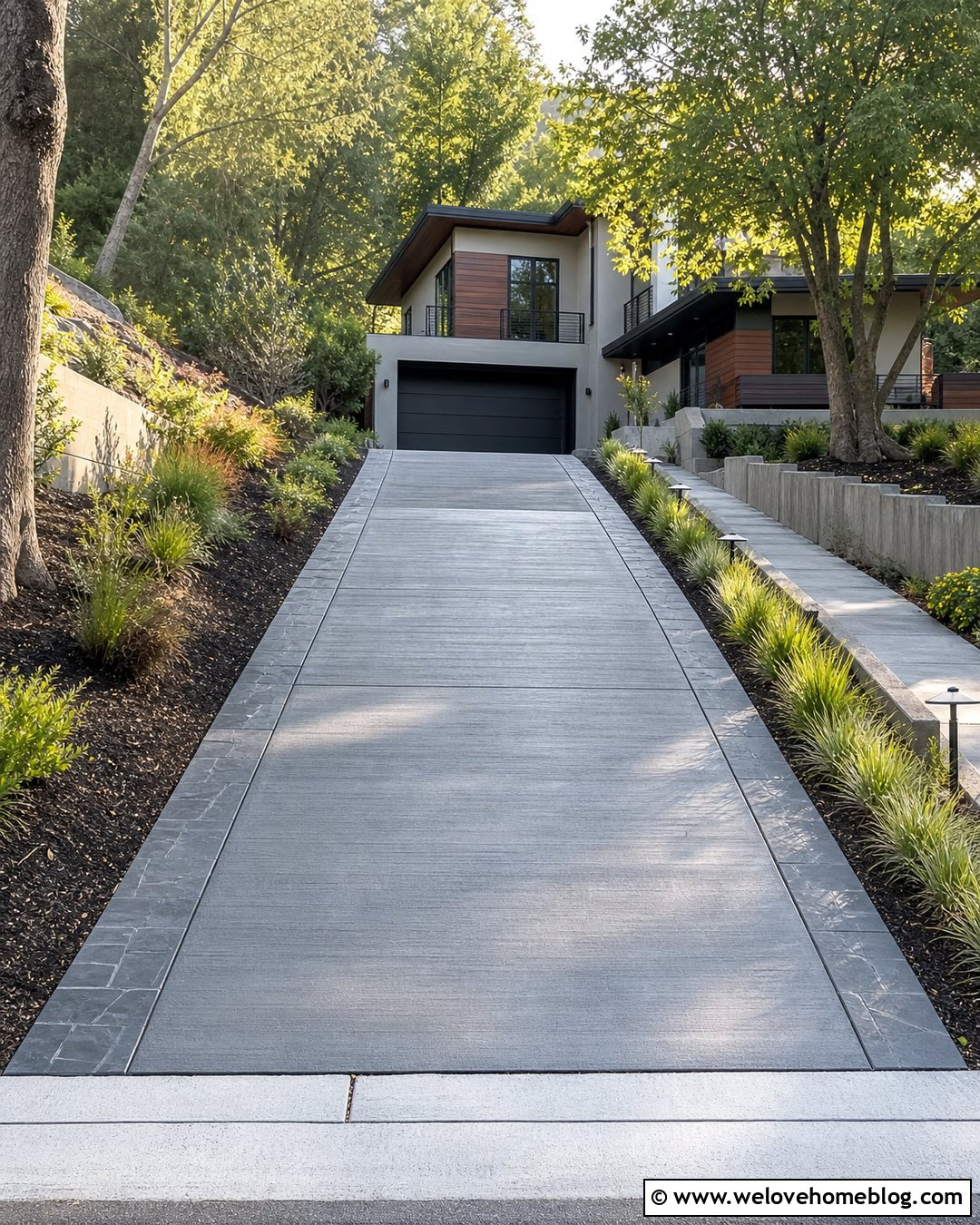
An ashlar slate overlay combines the organized appearance of rectangular masonry with the subtle texture of natural stone. Choose a blend of cool gray, taupe, and muted charcoal to create variation without making the driveway look patchy. The rectangular pattern is especially effective on a broad, straight driveway leading to a craftsman or stone-front house. Add a dark slate-colored border and repeat that tone on the front walkway. Planting beds filled with hydrangeas, dwarf evergreens, and ground cover soften the strong geometry. Ask for a matte or low-sheen exterior sealer so the surface looks natural. A traction additive may also be appropriate for sloped sections. The complete result feels detailed and upscale while still fitting comfortably into a residential landscape.
5. Brick Pattern Concrete Driveway Resurfacing
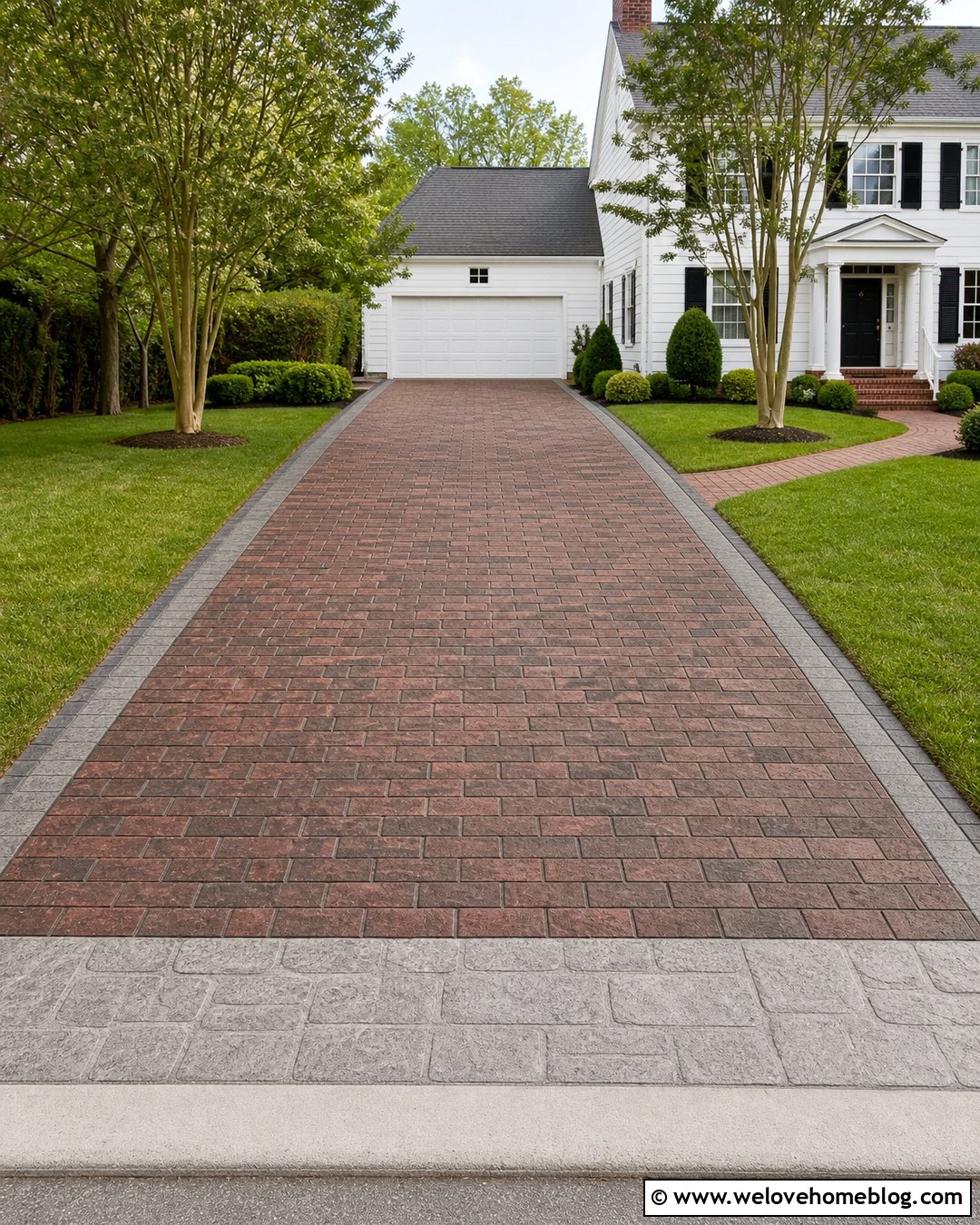
Brick-pattern resurfacing brings warm color to a plain concrete driveway while retaining the existing slab as the base. Select a stamped or stenciled running-bond pattern in muted red, brown, and charcoal rather than a single bright brick tone. A contrasting gray concrete border can prevent the pattern from overwhelming the front yard. This design works well on a straight driveway leading to a colonial, Georgian, or traditional white house. Include a wider gray apron near the street for a clear transition from the curb. Foundation shrubs, symmetrical trees, and a brick-edged walkway reinforce the formal layout. Decorative overlays can reproduce brick patterns through stamping, stenciling, coloring, and engraving, allowing the finish to coordinate closely with existing masonry. ()
6. Flagstone Concrete Driveway Overlay
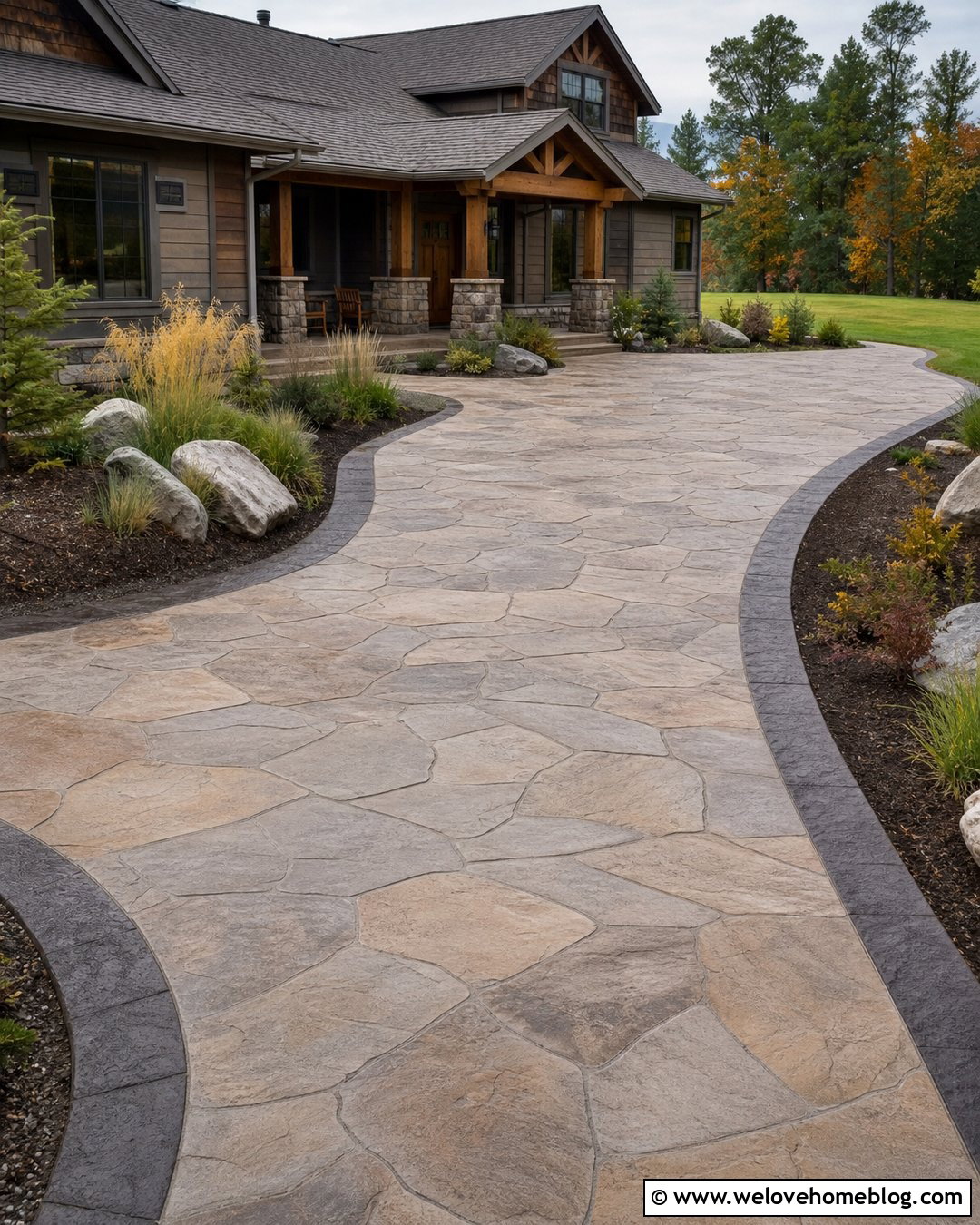
Irregular flagstone stamping creates an organic driveway surface that pairs naturally with rustic and wooded settings. Use a resurfacing overlay colored in layered shades of sandstone, warm gray, and soft brown. Darker grout lines will define each shape, while a simple textured concrete border keeps the irregular pattern visually contained. A gently curved layout can guide the eye toward a craftsman, lodge-style, or country house. Frame the driveway with native grasses, broad planting beds, and a few carefully positioned boulders. Avoid using too many competing stone colors, especially when the house already has a natural stone facade. Extending the same pattern onto a short front walkway creates continuity. The finished driveway should feel connected to the landscape rather than applied as a separate decorative feature.
7. Exposed Aggregate Concrete Driveway Resurfacing
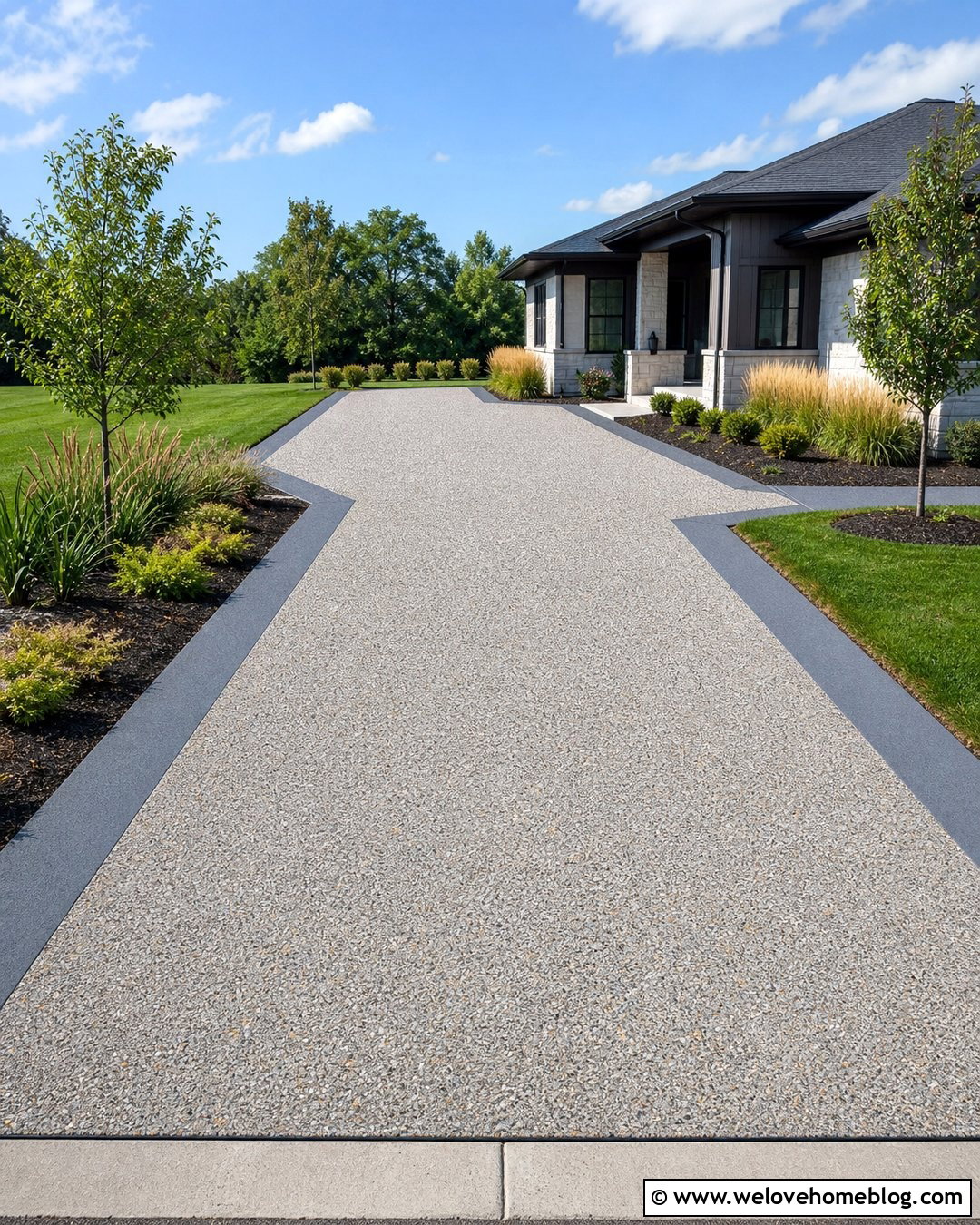
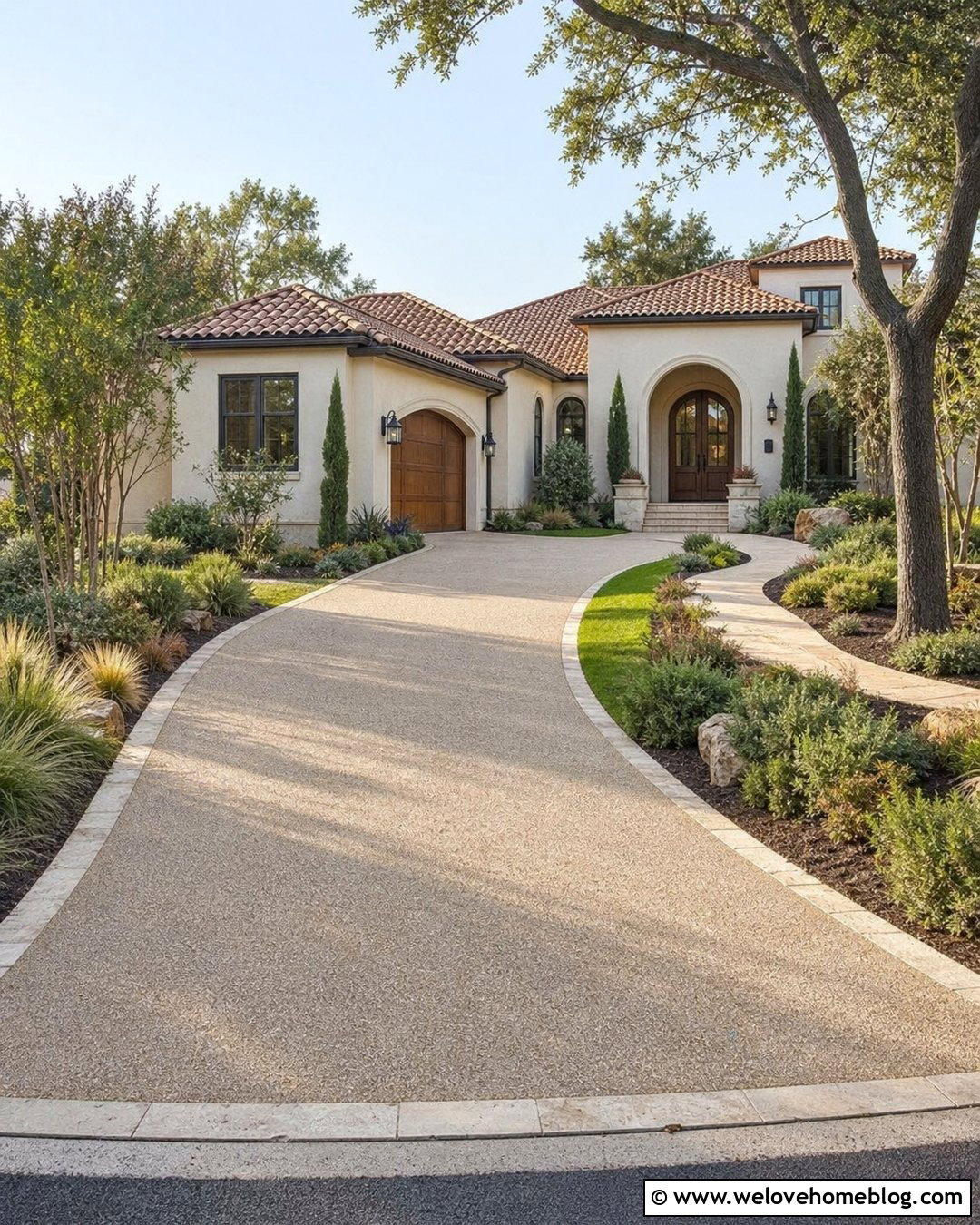
An exposed aggregate overlay offers visible stone texture and a naturally varied surface. Choose small, rounded aggregate in gray, cream, and tan so the driveway coordinates with both cool and warm exterior materials. Frame the aggregate center with smooth charcoal concrete bands to create a crisp, contemporary outline. A straight driveway with a gently widened parking area can suit a modern ranch or remodeled split-level home. Repeat the border material around the walkway and planting beds for a unified frontage. Because aggregate size, exposure, and color strongly influence the final look, review a full sample rather than selecting from a small photograph. Keep nearby landscaping simple with ornamental grasses, low shrubs, and clean lawn edges. The contrasting finishes make the resurfaced driveway look deliberate and custom.
8. Pebble Coating Concrete Driveway
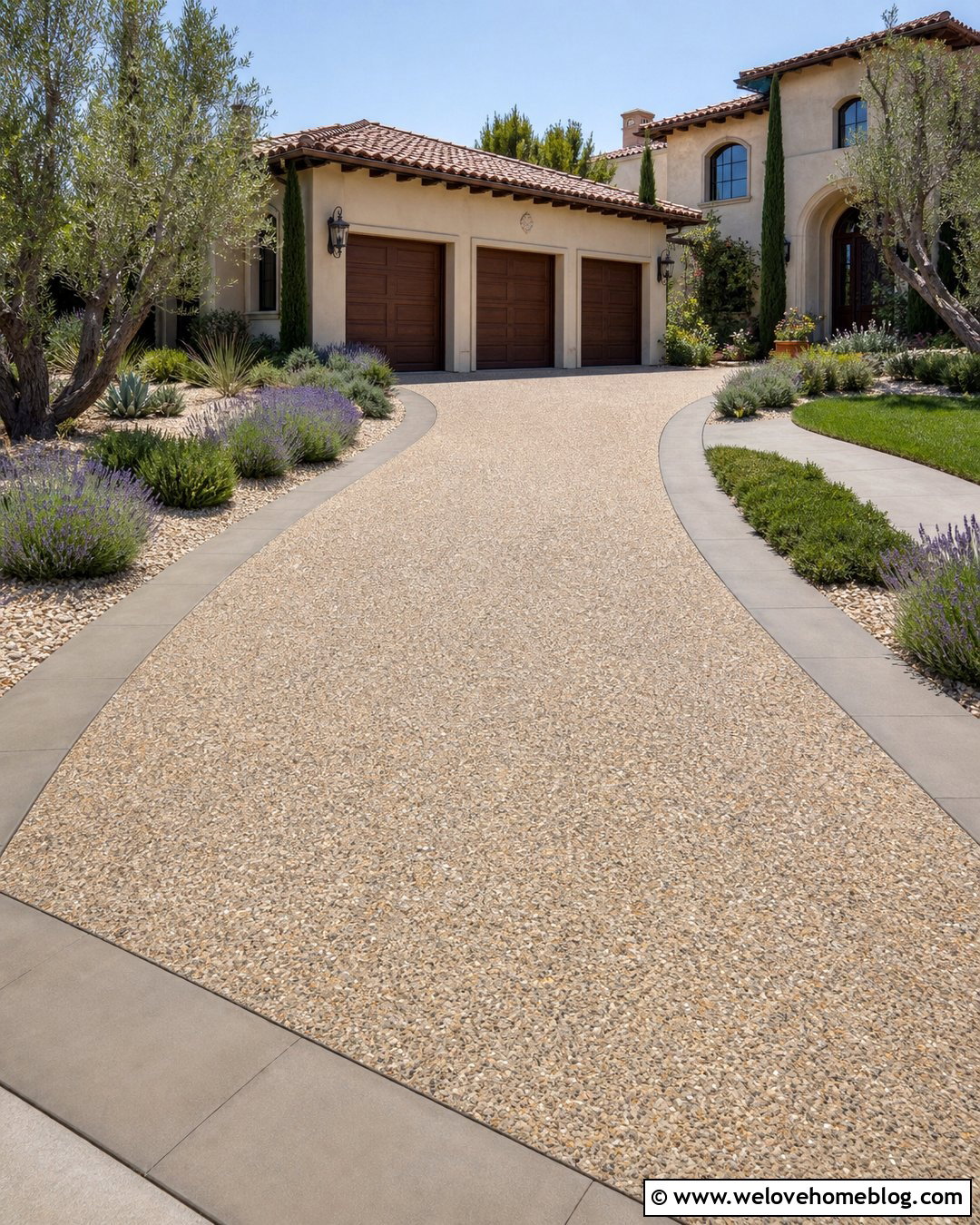
A bonded pebble coating can introduce warmer texture than standard gray concrete while covering a tired but sound surface. Small natural pebbles are incorporated into a resurfacing system to produce a river-stone appearance. Pebble and river-rock coatings are among the decorative options used to renew existing concrete. () Select tan, cream, and soft brown stones for a welcoming driveway leading to a Mediterranean or stucco home. Use smooth concrete bands at the curb, garage, and walkway transitions to keep edges neat. A curved layout surrounded by rosemary, lavender, and drought-tolerant shrubs enhances the relaxed character. Confirm that the selected system is rated for vehicular use and local weather. A restrained stone blend will age more gracefully than a highly contrasting multicolor mixture.
9. Salt And Pepper Concrete Microtopping
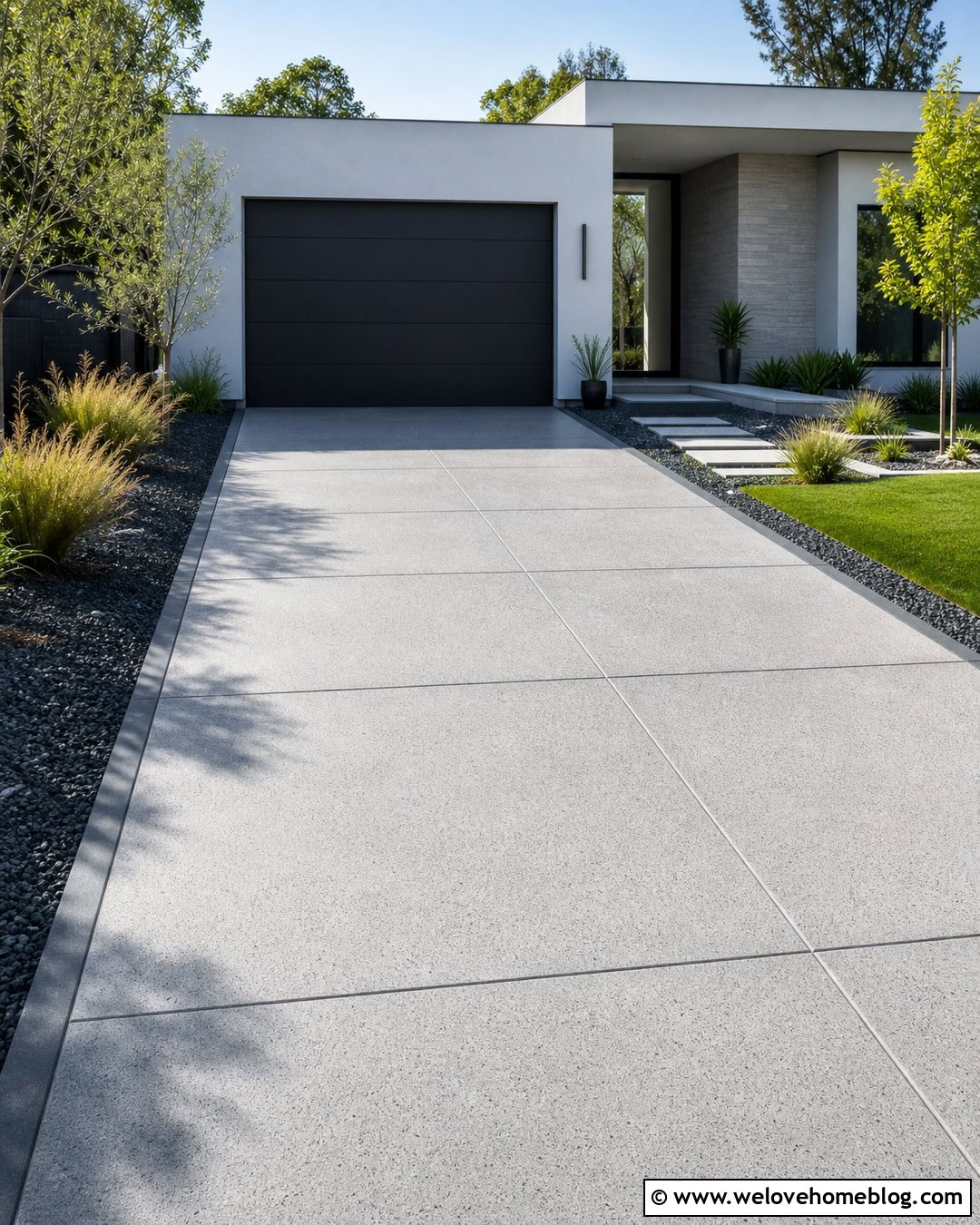
A salt-and-pepper microtopping gives an old driveway a refined, lightly speckled appearance. The fine texture works well when you want something more interesting than plain gray concrete but less decorative than a stamped pattern. Use a light-gray base with small black and white aggregate accents, then divide the surface into large rectangular sections with existing or decorative sawcuts. Charcoal borders along the lawn and garage apron sharpen the design. This complete look complements modern, midcentury, and minimalist homes. Add linear planting beds with compact grasses and architectural shrubs to echo the driveway geometry. Surface preparation is particularly important with thin resurfacing systems because the new material must bond securely to clean, stable concrete. Existing movement joints should remain functional rather than being hidden beneath the finish.
10. Spray Texture Concrete Driveway Resurfacing
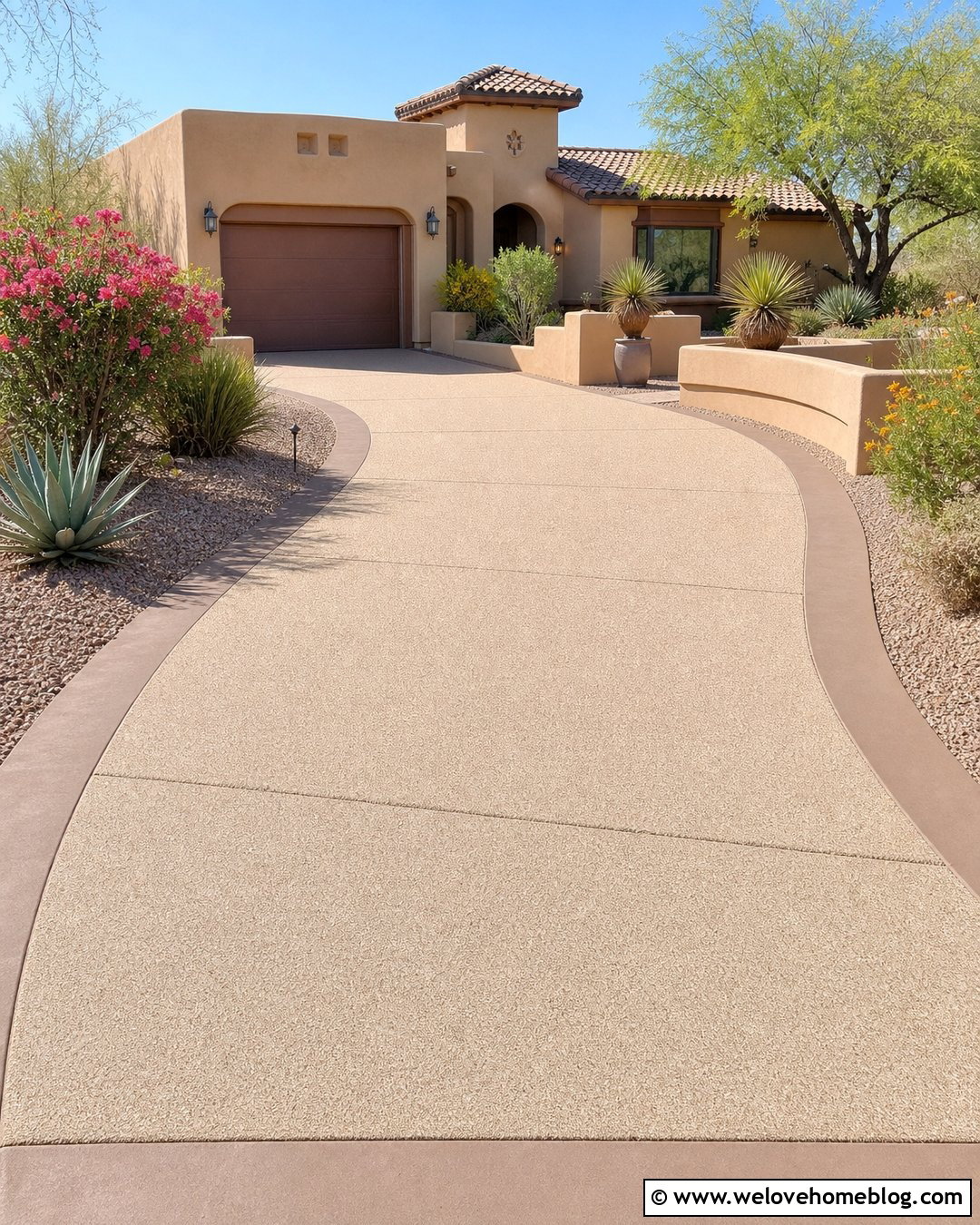
Spray texture resurfacing produces a uniform, lightly stippled finish that can disguise minor surface irregularities without adding a heavy pattern. A contractor sprays the coating and then adjusts the texture to create a consistent surface suitable for outdoor use. Spray-applied polymer concrete is one recognized resurfacing option for worn slabs. () Choose warm beige for the main driveway and medium brown for a narrow border. A straight or softly curved layout works well with stucco, southwestern, and contemporary homes. Coordinate the driveway with a smooth walkway in the same color family. Desert grasses, agave, gravel mulch, and low walls can frame the design. For a subtle result, keep the texture fine and avoid strong color mottling that could make a large driveway appear visually uneven.
11. Sand Finish Concrete Driveway Overlay
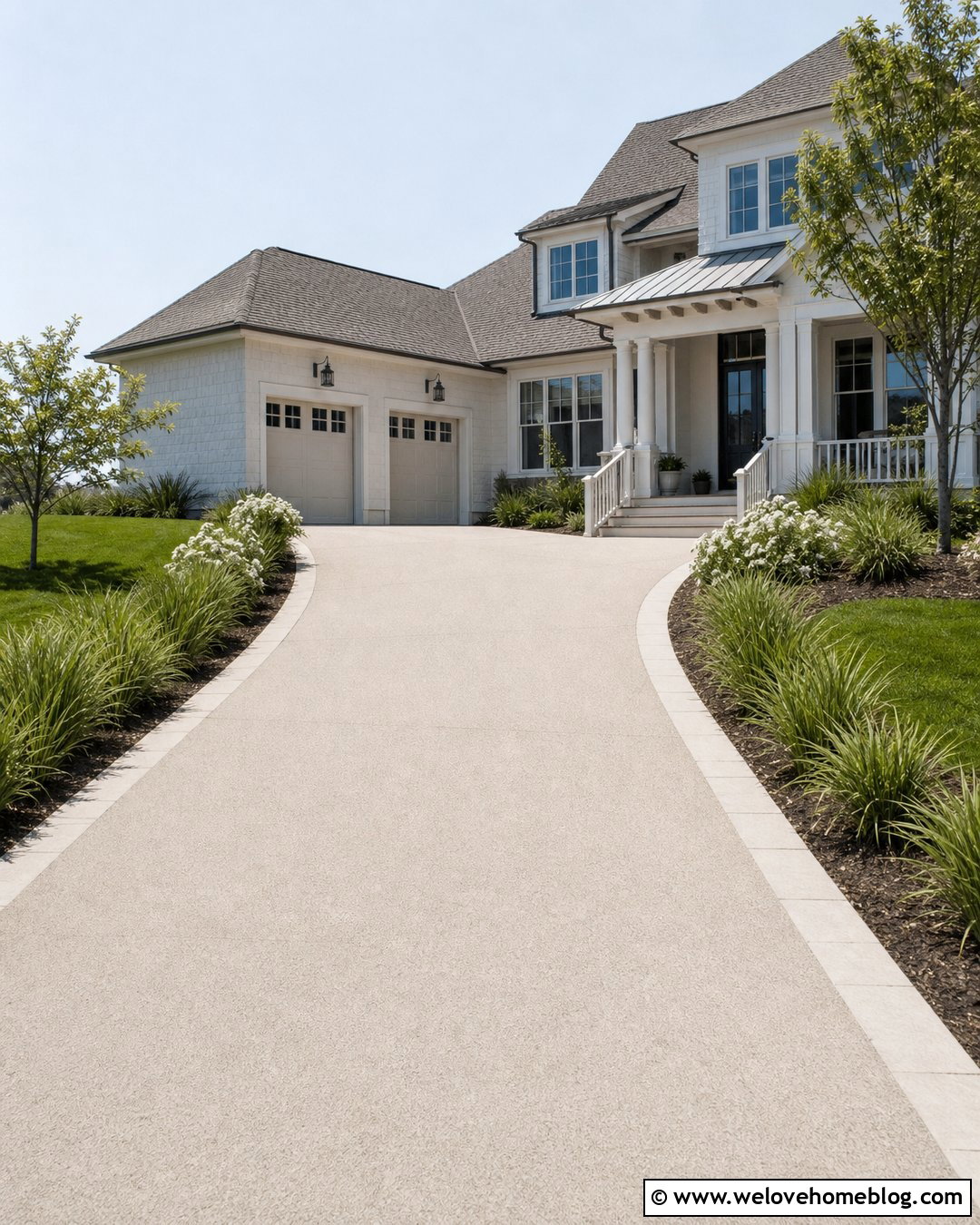
Sand-finished resurfaced concrete has a fine, natural texture that sits between smooth concrete and exposed aggregate. The surface looks understated from the curb, yet its subtle grain adds visual depth when viewed up close. Choose a pale greige overlay for a coastal or transitional home, then add cream concrete edging and a matching walkway. A wide, gently curved driveway can be softened with sweeping beds of ornamental grasses and compact flowering shrubs. Keep the color close to the home’s stone, siding, or trim for a seamless appearance. This design is particularly useful when architectural restraint matters more than bold pattern. Discuss traction, slope, drainage, and sealing with the contractor before choosing the final texture. The driveway should remain functional while contributing to a light, relaxed frontage.
12. Warm Tan Stained Concrete Driveway
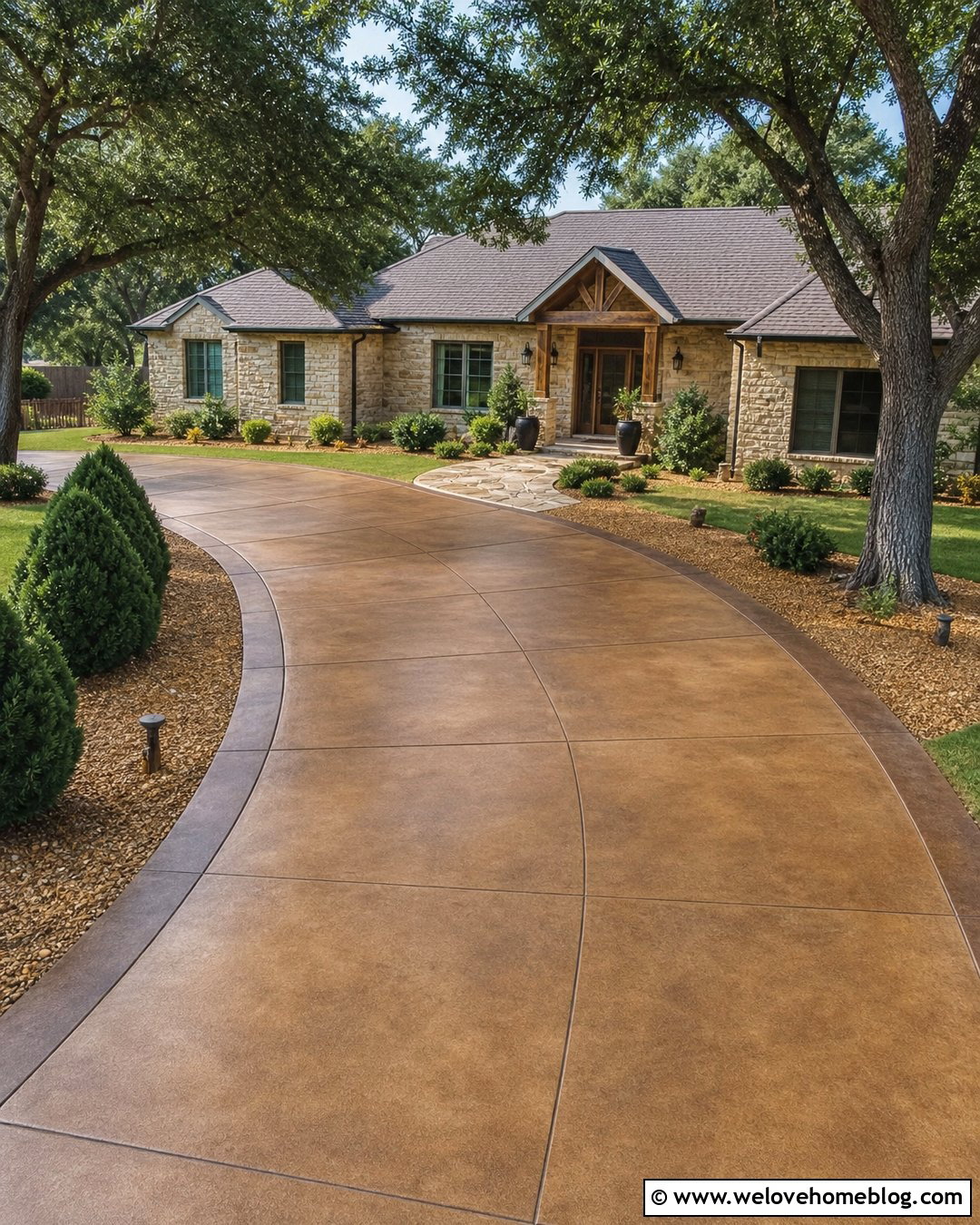
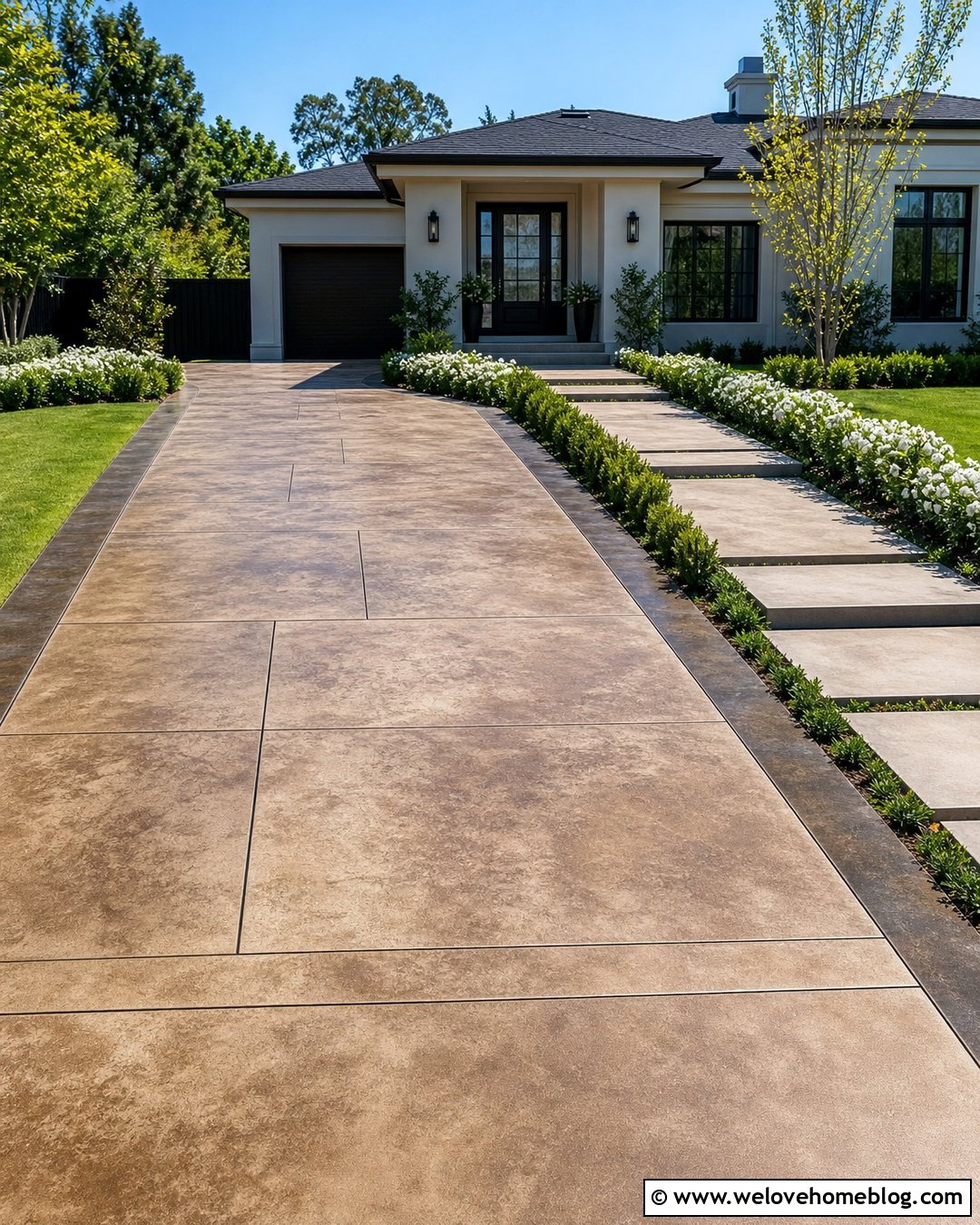
Warm tan stain can revive faded concrete and connect the driveway with beige siding, brick, or natural stone. Instead of covering the slab with a pronounced pattern, use a compatible stain or tinted resurfacing coat to create gentle color variation. Staining is generally best suited to concrete that is structurally sound and adequately prepared. () Divide a broad driveway into large sections with clean sawcut lines, then apply a slightly darker tone around the perimeter. A curved approach leading to a stone-front ranch house will make the earthy color feel especially natural. Finish the setting with evergreen shrubs, warm gravel mulch, and a flagstone walkway. Request a sample on the actual driveway because repairs and older areas may absorb color differently unless the surface receives a uniform overlay first.
13. Charcoal Concrete Driveway Resurfacing
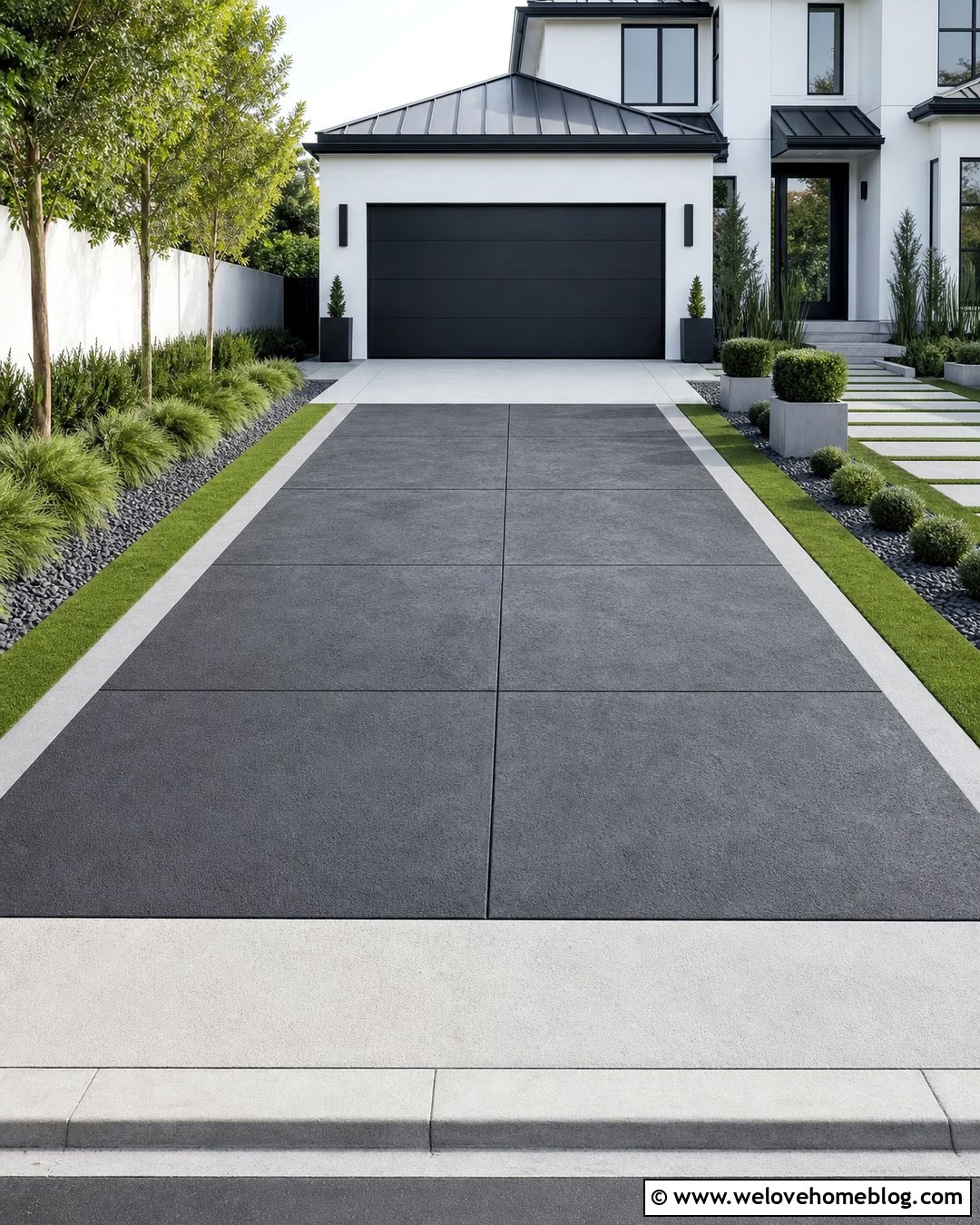
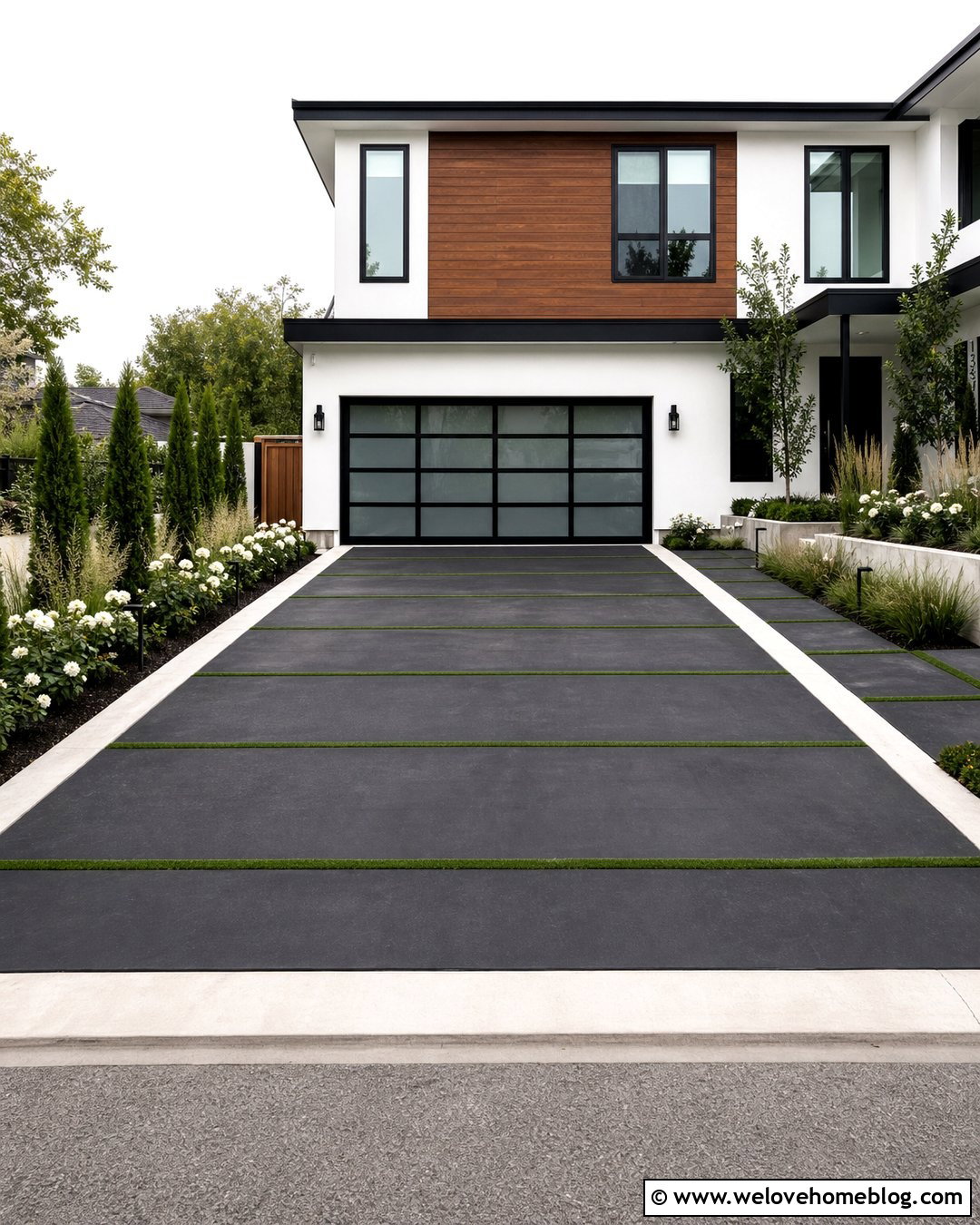
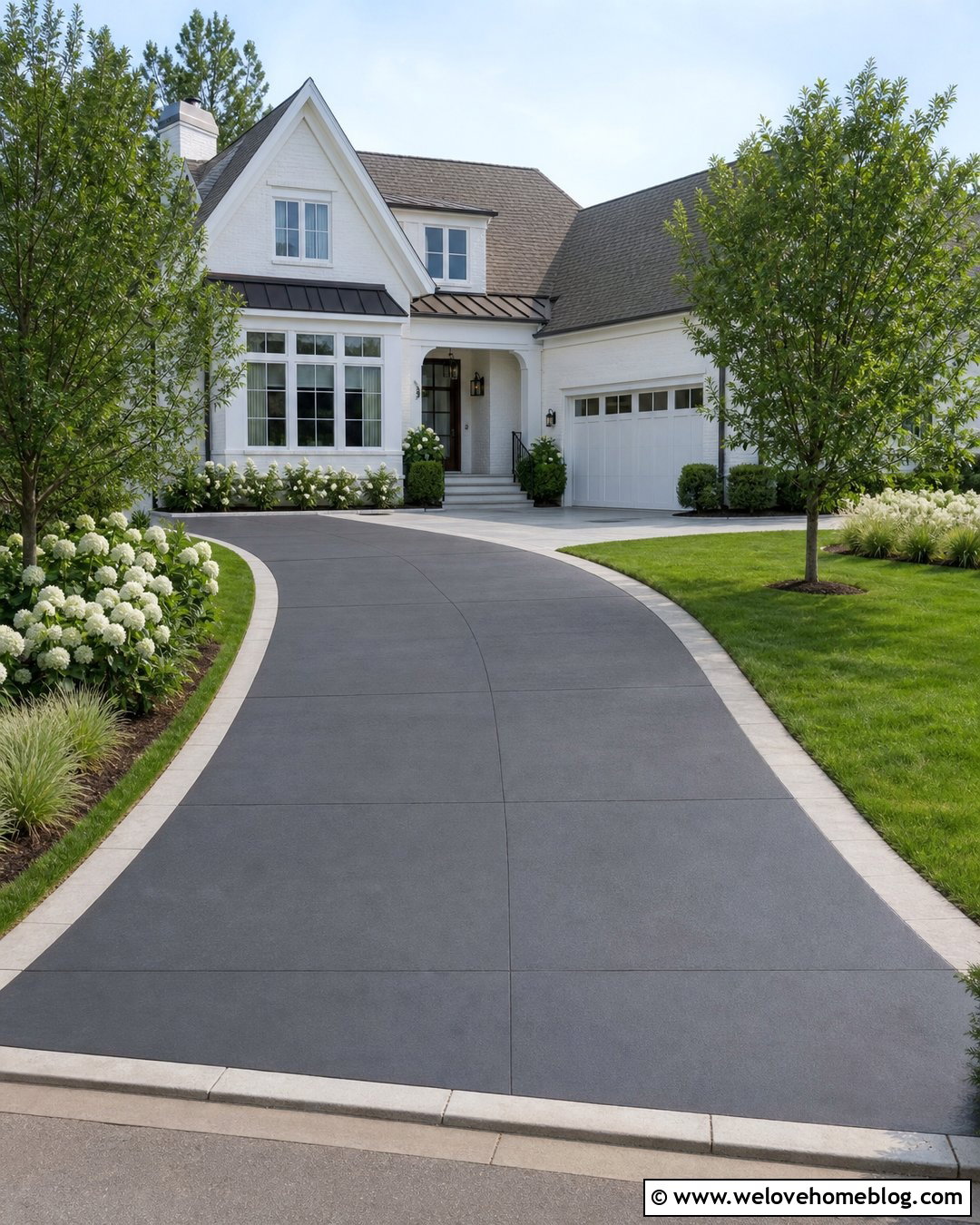
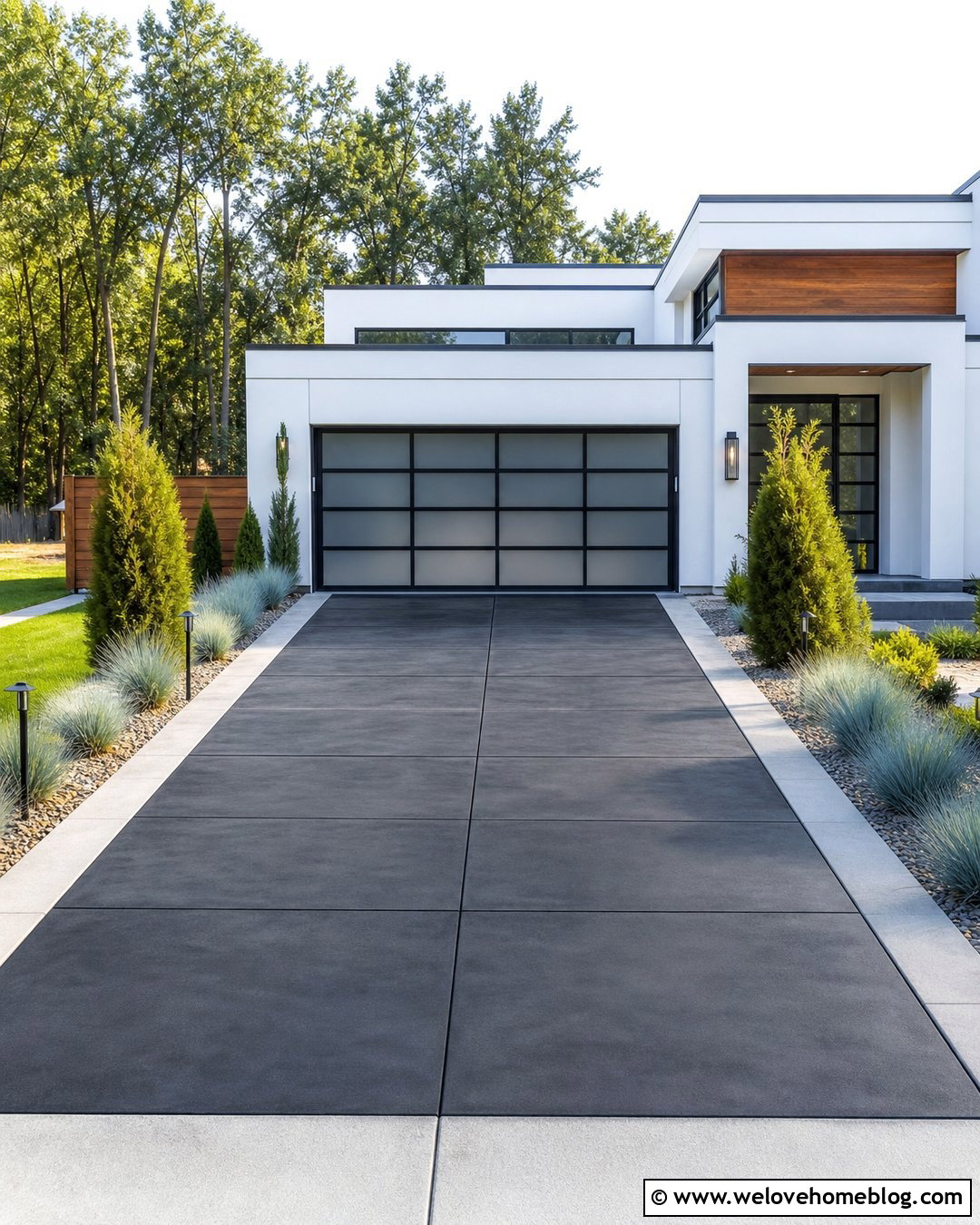
A charcoal resurfacing coat creates a striking foundation for a light-colored modern house. To prevent the surface from looking too dark or visually heavy, combine the charcoal center with light-gray perimeter bands and a broad pale apron near the garage. Large rectangular scoring reinforces the contemporary style. Keep the driveway straight and uncluttered, with narrow grass strips or gravel beds providing separation from the walkway. Sculptural shrubs, small trees, and simple concrete planters can add greenery without softening the design too much. Dark colors may show dust and surface deposits more clearly, so consider local conditions before committing to the shade. A matte protective sealer will usually look more natural than a highly glossy finish. The final composition should balance bold contrast with practical maintenance.
14. Two Tone Scored Concrete Driveway
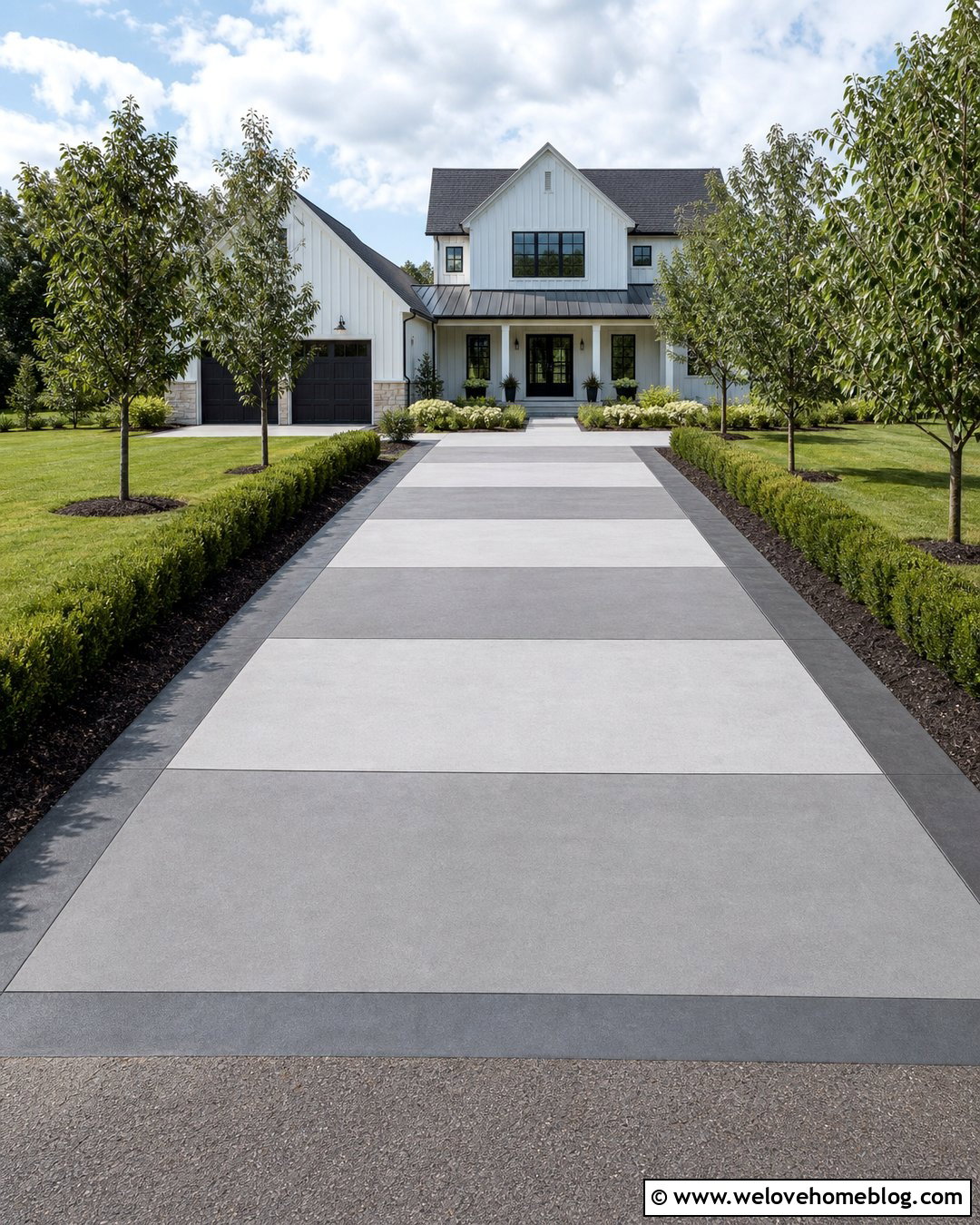
Decorative scoring can transform a plain resurfaced driveway into an orderly geometric surface. Apply a medium-gray overlay across the slab, then create large rectangular panels highlighted with alternating light and dark translucent color. Keep the variation subtle so the finished driveway does not resemble an indoor tile floor. A dark perimeter band and matching walkway border can pull the composition together. This approach is particularly suited to modern farmhouse, transitional, and contemporary homes with simple facade lines. Frame the driveway with clipped hedges, fresh lawn, and a pair of small ornamental trees near the garage. Scoring, staining, and resurfacing are often combined to create more customized decorative finishes. () Plan the cuts around existing joints whenever possible so the pattern supports the slab rather than disguising necessary movement points.
15. Diamond Pattern Concrete Driveway Overlay
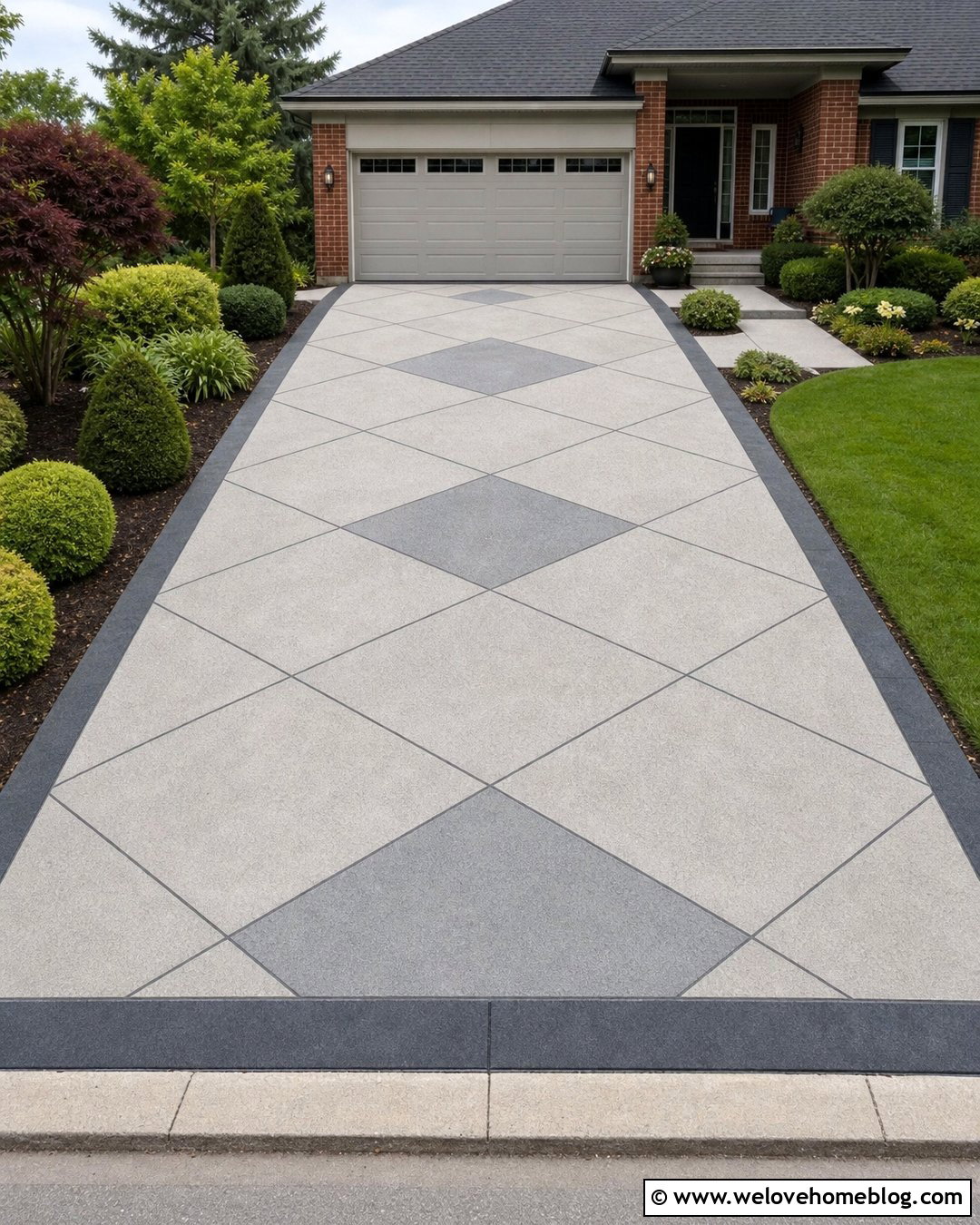
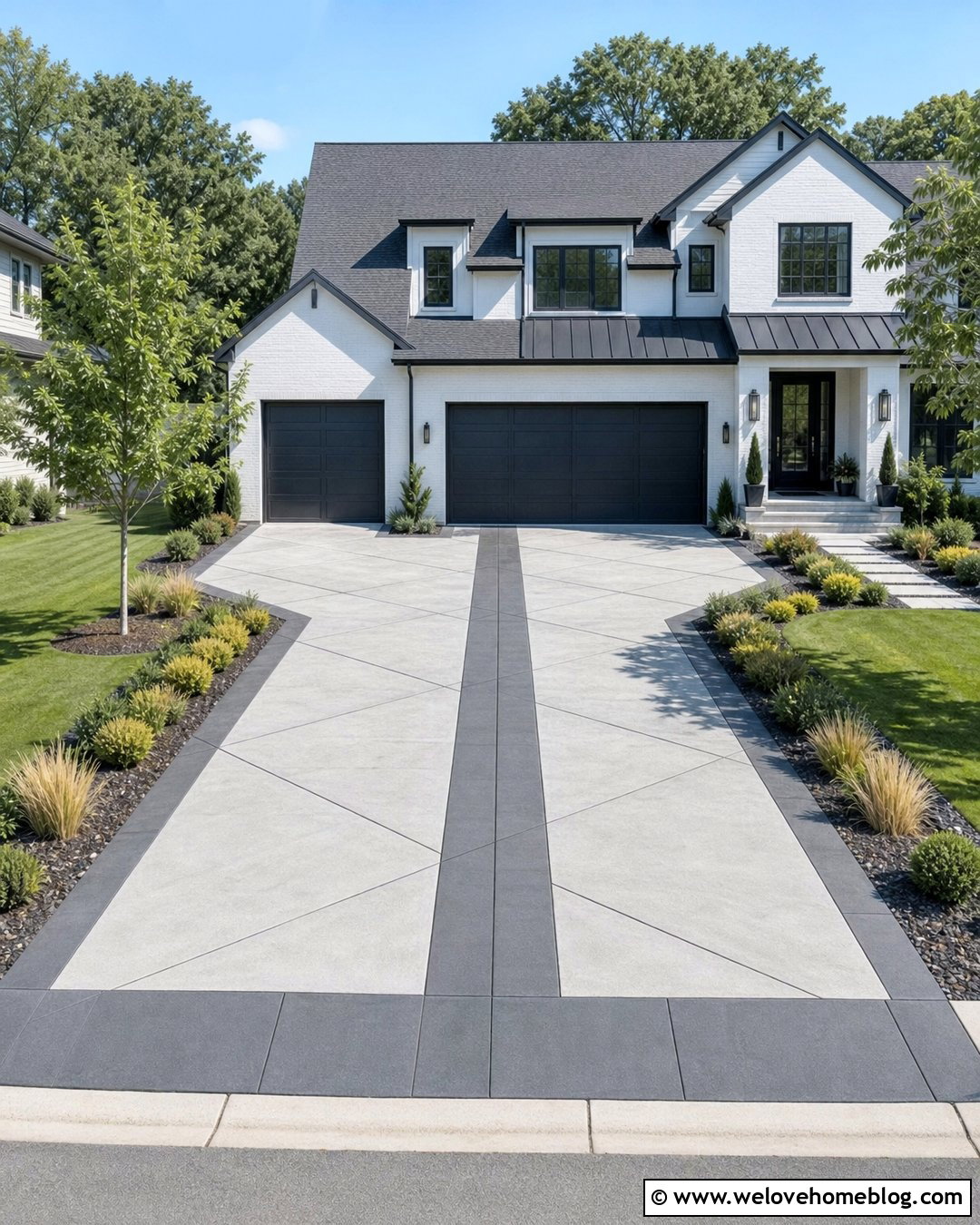
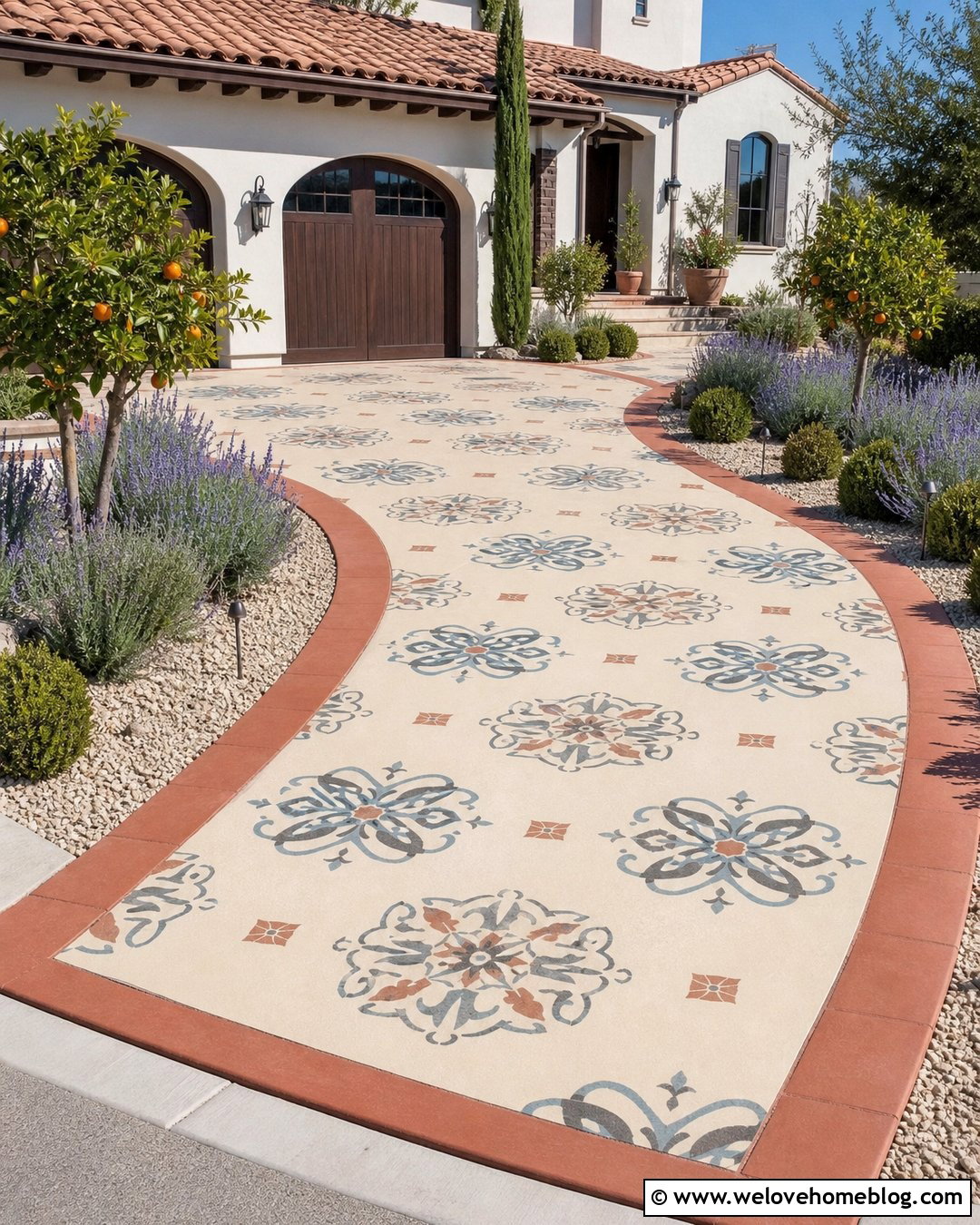
A large diamond pattern can give a wide driveway more visual rhythm without relying on an imitation stone finish. Start with a light-gray resurfacing overlay, then score oversized diagonal sections across the center. Use a slightly darker gray stain in selected diamonds and frame everything with a solid charcoal border. The pattern works best when its layout is centered on the garage doors and remains symmetrical from the street. Pair it with a brick ranch, updated colonial, or contemporary suburban house. Rounded shrubs and layered planting beds can soften the angular lines. Keep each diamond generously sized because small shapes may appear crowded across a vehicle-scale surface. A textured, low-sheen finish helps the pattern feel appropriate outdoors while supporting practical driveway use.
16. Limestone Look Concrete Driveway Overlay
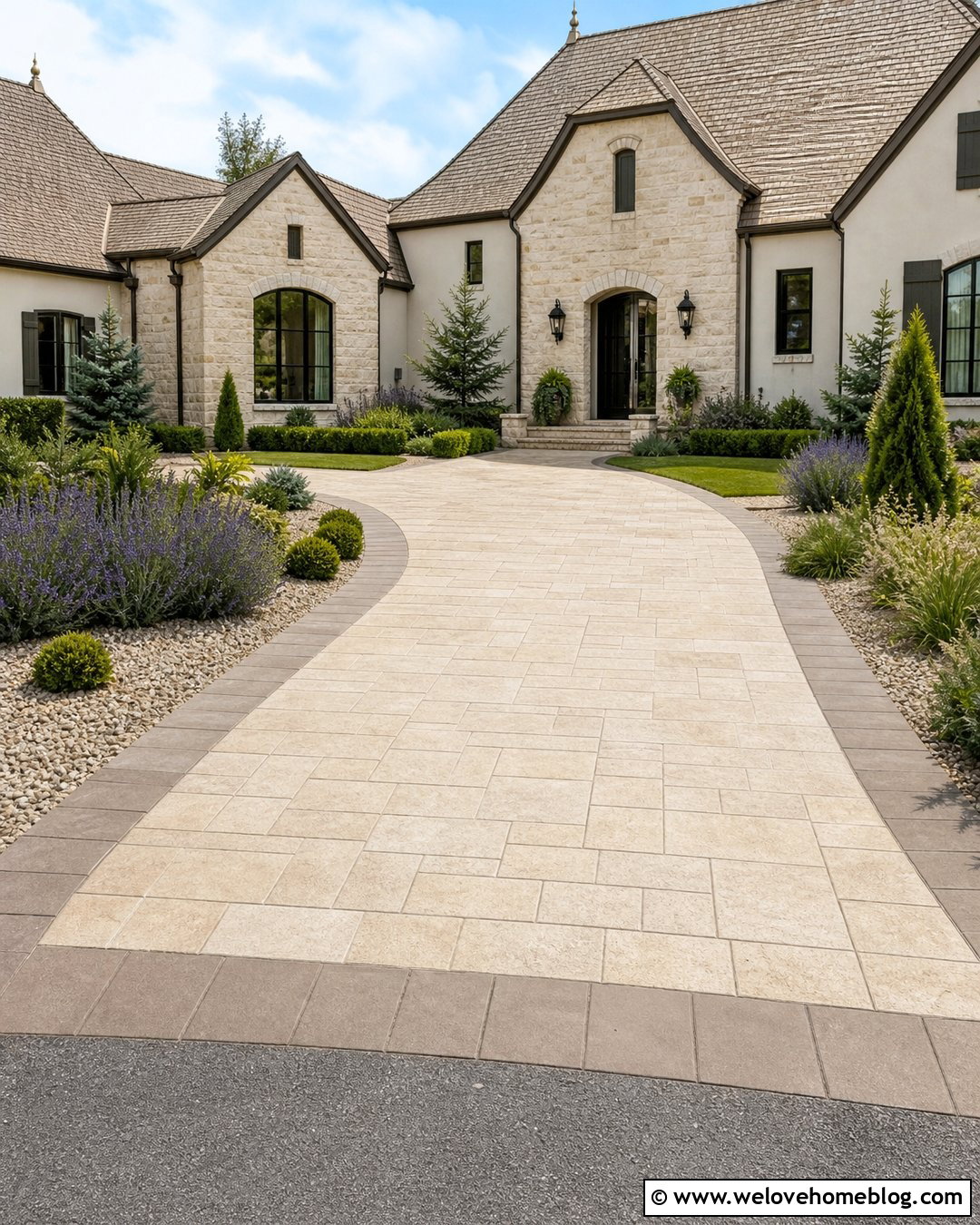
A limestone-look overlay can brighten a driveway while creating the appearance of softly cut stone. Choose cream, pale beige, and light taupe tones arranged in large rectangular sections. A warm-gray border will add definition without producing harsh contrast. This resurfacing treatment complements French country, Texas Hill Country, Mediterranean, and light-brick homes. Use a curved or gently flared layout with planting beds that follow the driveway edges. Lavender, sage, dwarf evergreens, and pale gravel mulch reinforce the soft natural palette. Stamped and colored overlays can imitate stone when the existing slab is an appropriate resurfacing candidate. () Avoid an overly smooth finish, especially on sloped areas. Subtle texture and carefully shaded joints will make the surface more believable and functional.
17. Travertine Pattern Concrete Driveway
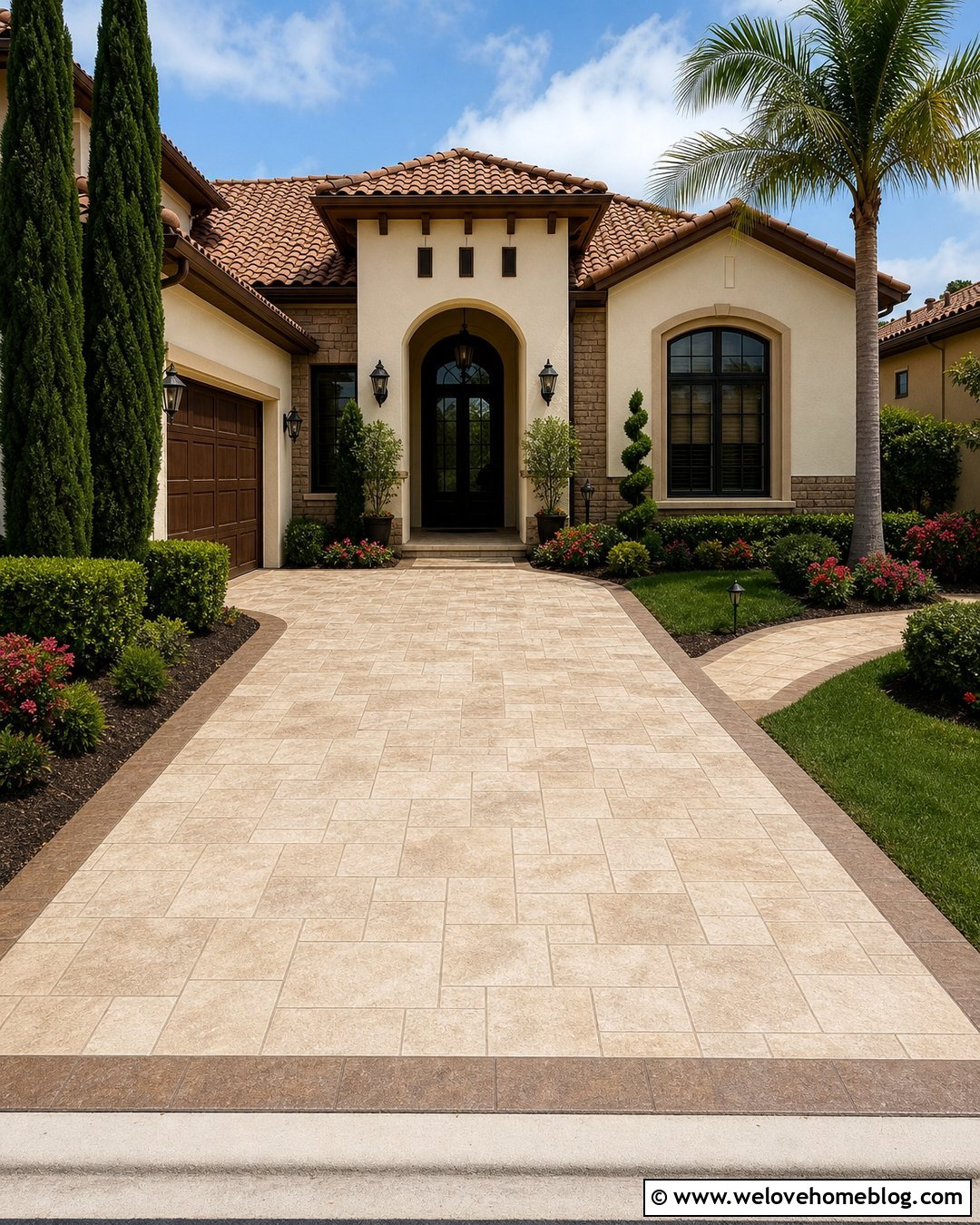
Travertine-pattern resurfacing creates a clean stone appearance with less visual irregularity than flagstone. Use rectangular stamps in ivory, sand, and muted beige, with shallow warm-gray joints between the sections. A straight driveway leading to a stucco or Mediterranean house provides an ideal setting. Add a contrasting border in medium-brown textured concrete, then repeat it around the walkway and front landing. Palm-like accents, evergreen shrubs, and neatly maintained planting beds can complete the resort-inspired frontage without becoming excessive. Keep the color variation controlled because real travertine usually has subtle movement rather than dramatic patches. Ask for a driveway-rated overlay system and an exterior sealer compatible with sunlight, rain, tires, and the local climate. The finished surface should appear softly weathered instead of shiny.
18. Wood Plank Stamped Concrete Driveway
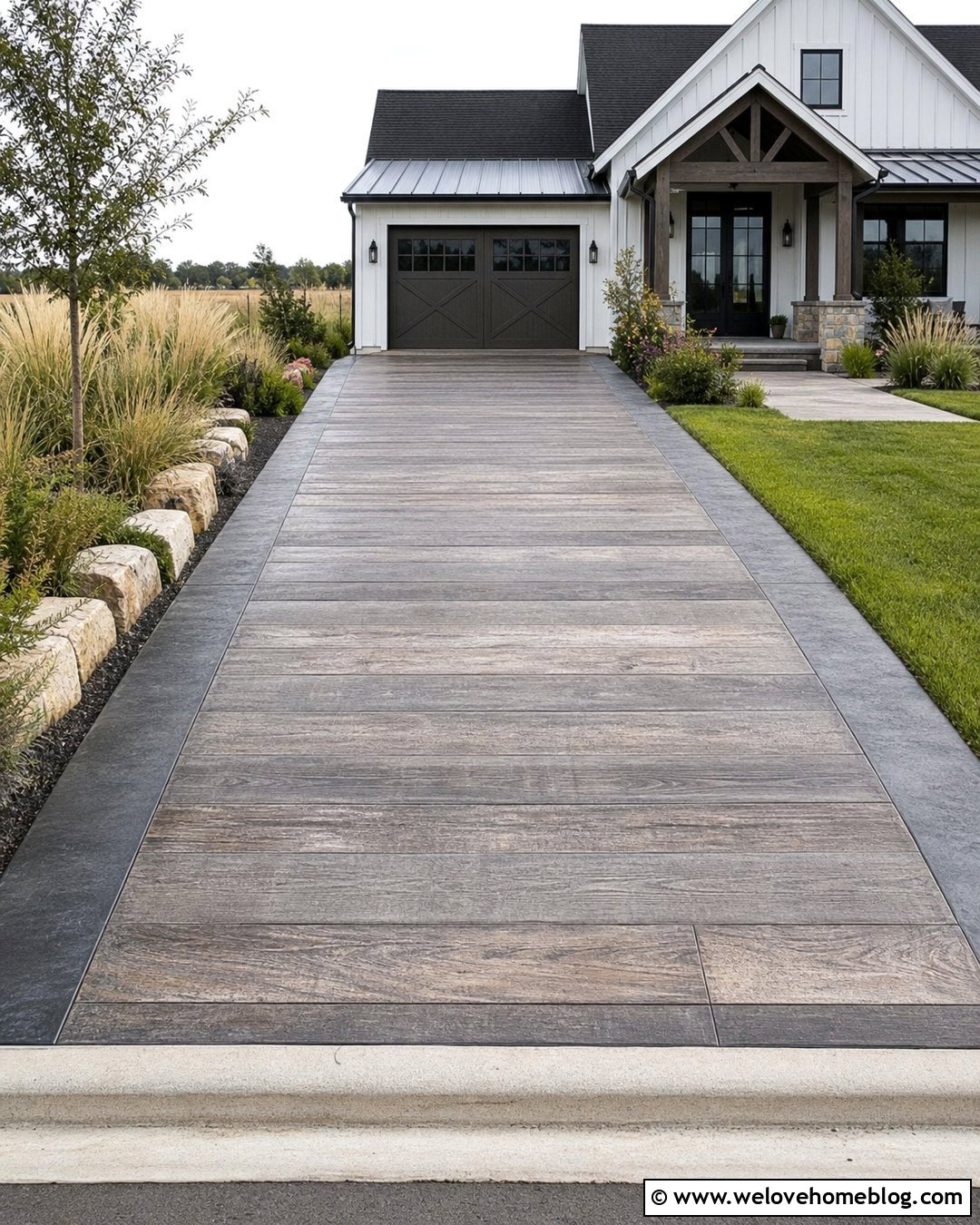
Wood-plank stamping offers an unexpected way to resurface concrete while retaining the strength and layout of a paved driveway. Use wide plank stamps in weathered gray-brown tones rather than bright orange wood colors. Position the plank pattern across the driveway so the lines visually widen a narrow approach. A charcoal concrete border and smooth garage apron will contain the design and create clean transitions. This treatment works naturally with modern farmhouse, rustic contemporary, and cabin-inspired houses. Surround it with native grasses, stone-edged beds, and a simple concrete walkway. Because the texture must accommodate vehicles, avoid deeply embossed knots and grooves that may trap dirt. A skilled decorative contractor can use layered coloring to suggest wood grain while keeping the complete driveway practical and visually balanced.
19. Fan Cobblestone Concrete Driveway
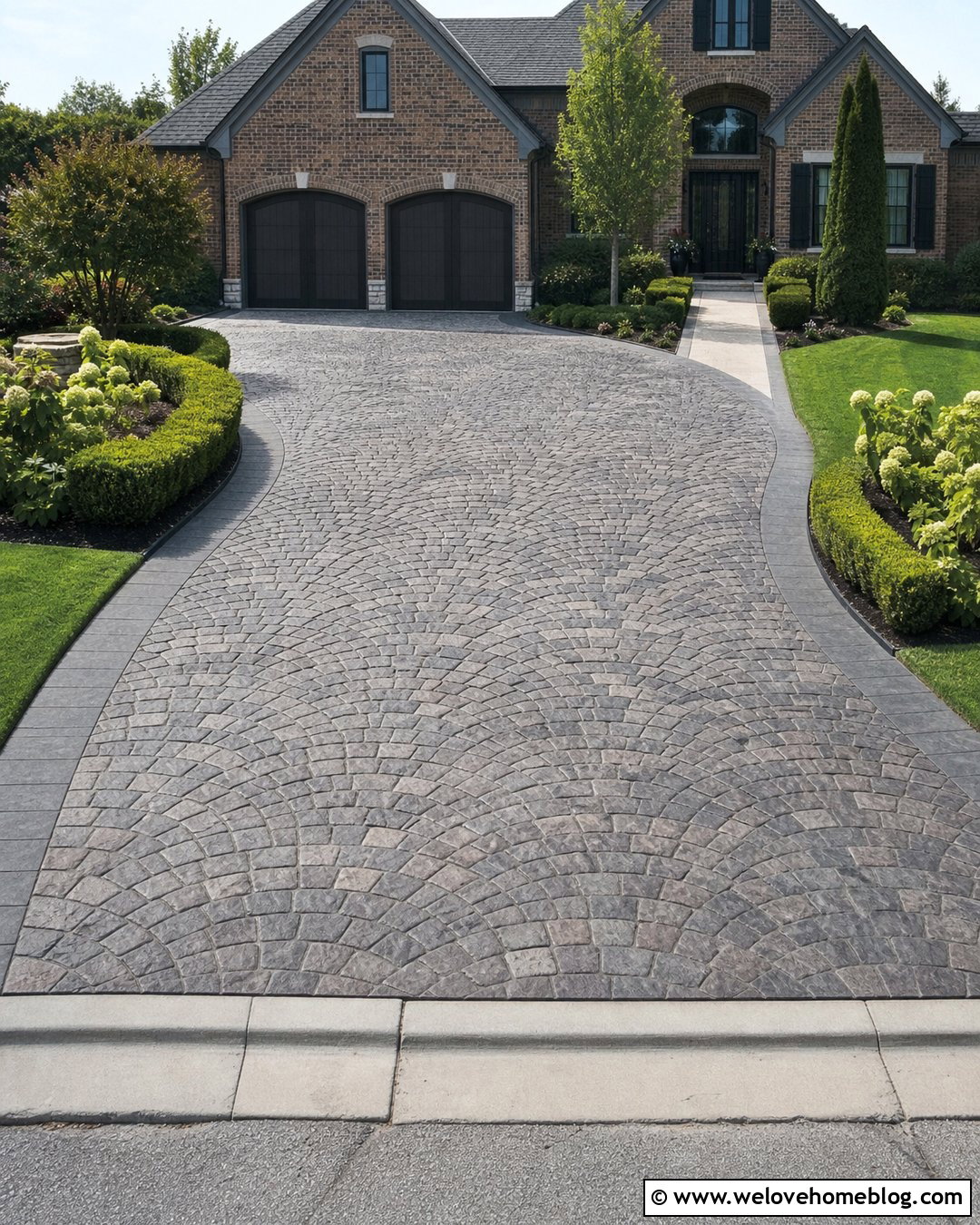
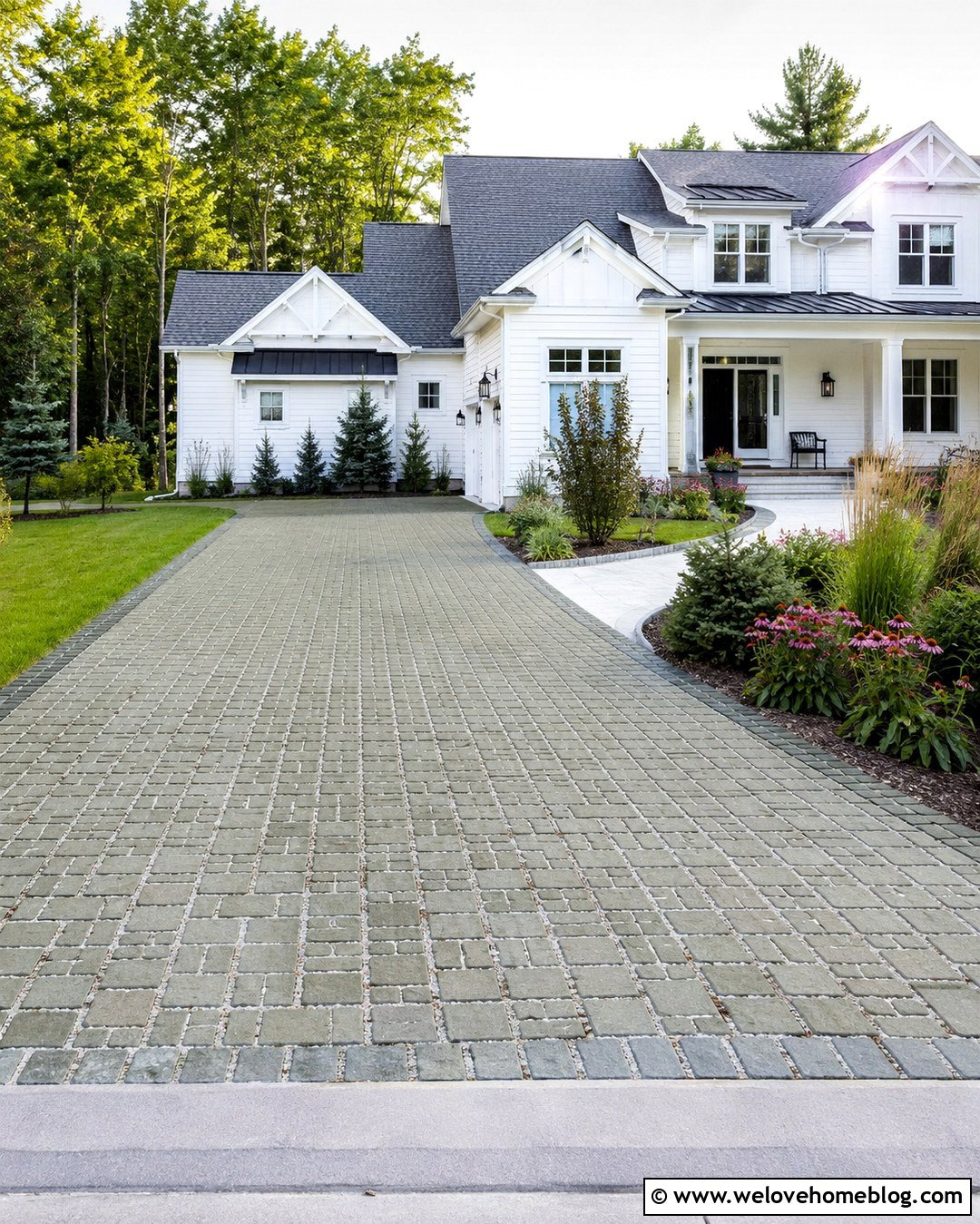
Fan-pattern cobblestone resurfacing introduces movement and traditional European character to a broad driveway. The arcing pattern is especially effective on a flared entrance or circular layout because it naturally follows changing directions. Choose a blend of medium gray, charcoal, and muted brown, then add a dark concrete border around the entire drive. A brick or stucco house with symmetrical landscaping will complement the formal surface. Use low hedges, column-shaped evergreens, and a defined walkway to maintain the organized appearance. Keep the stamped joints shallow enough for comfortable walking and routine cleaning. At the garage, switch to a straight border band so the transition looks finished. The completed design should feel cohesive from the curb, with the pattern scale large enough to remain readable across the full driveway.
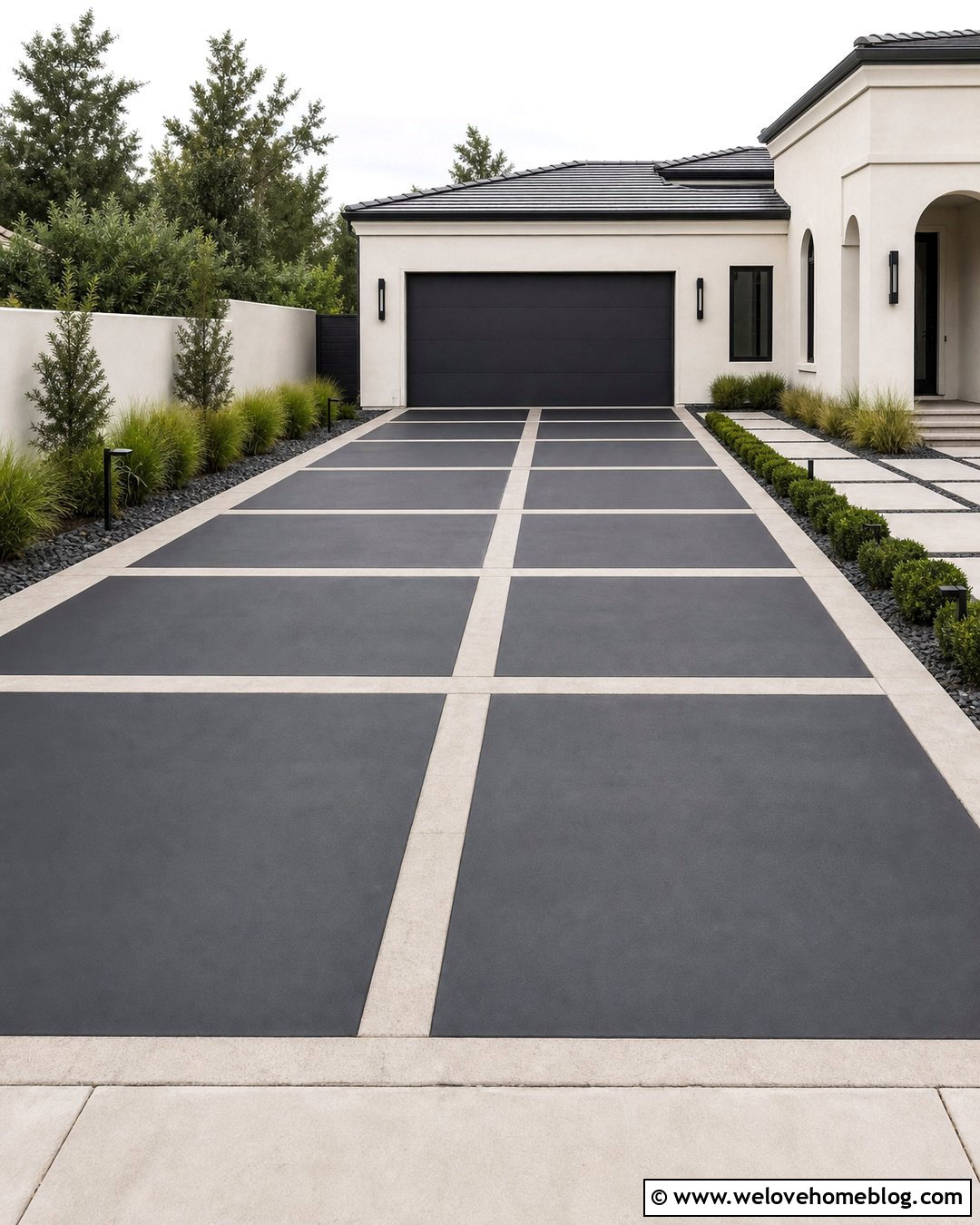
20. Herringbone Brick Concrete Overlay
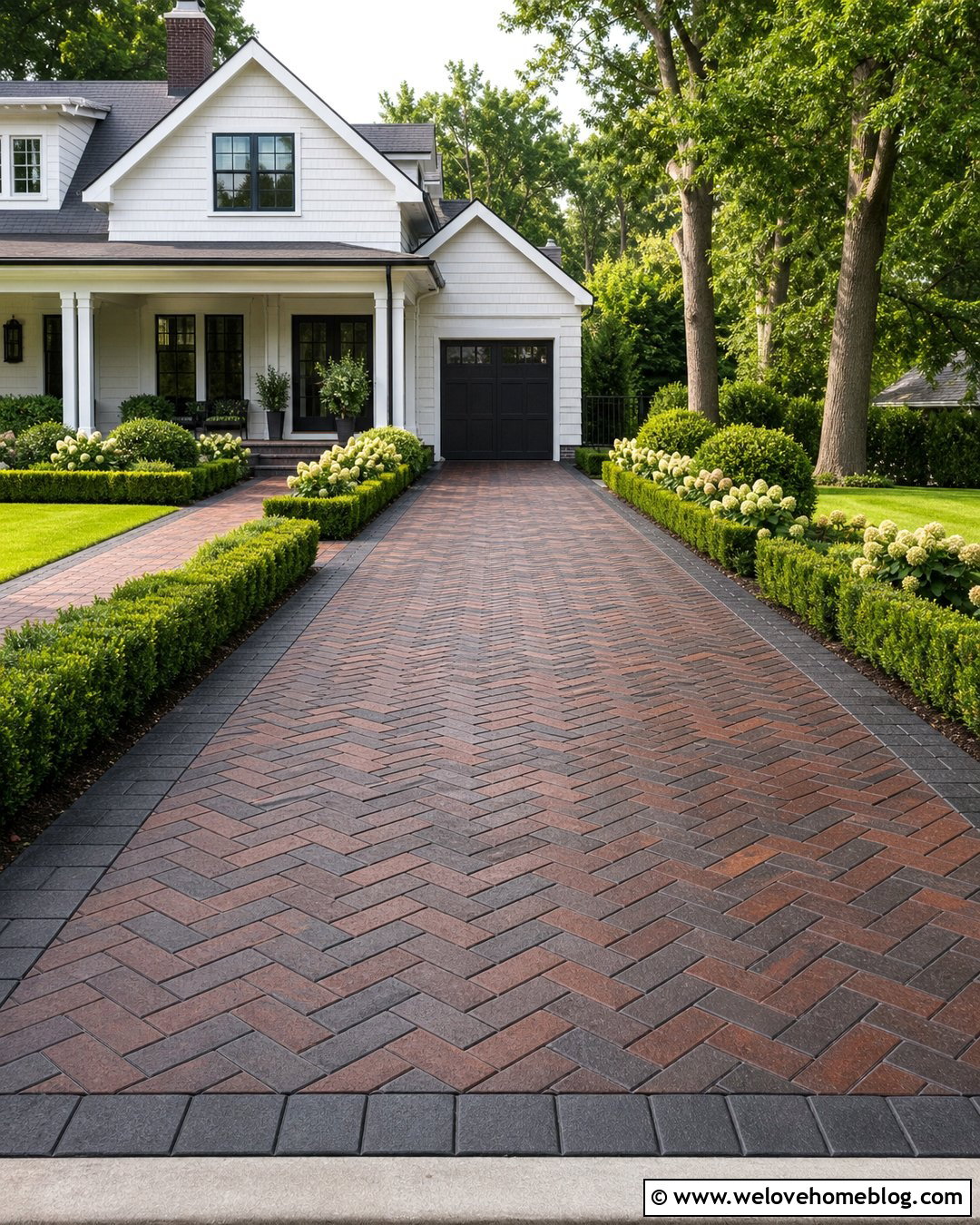
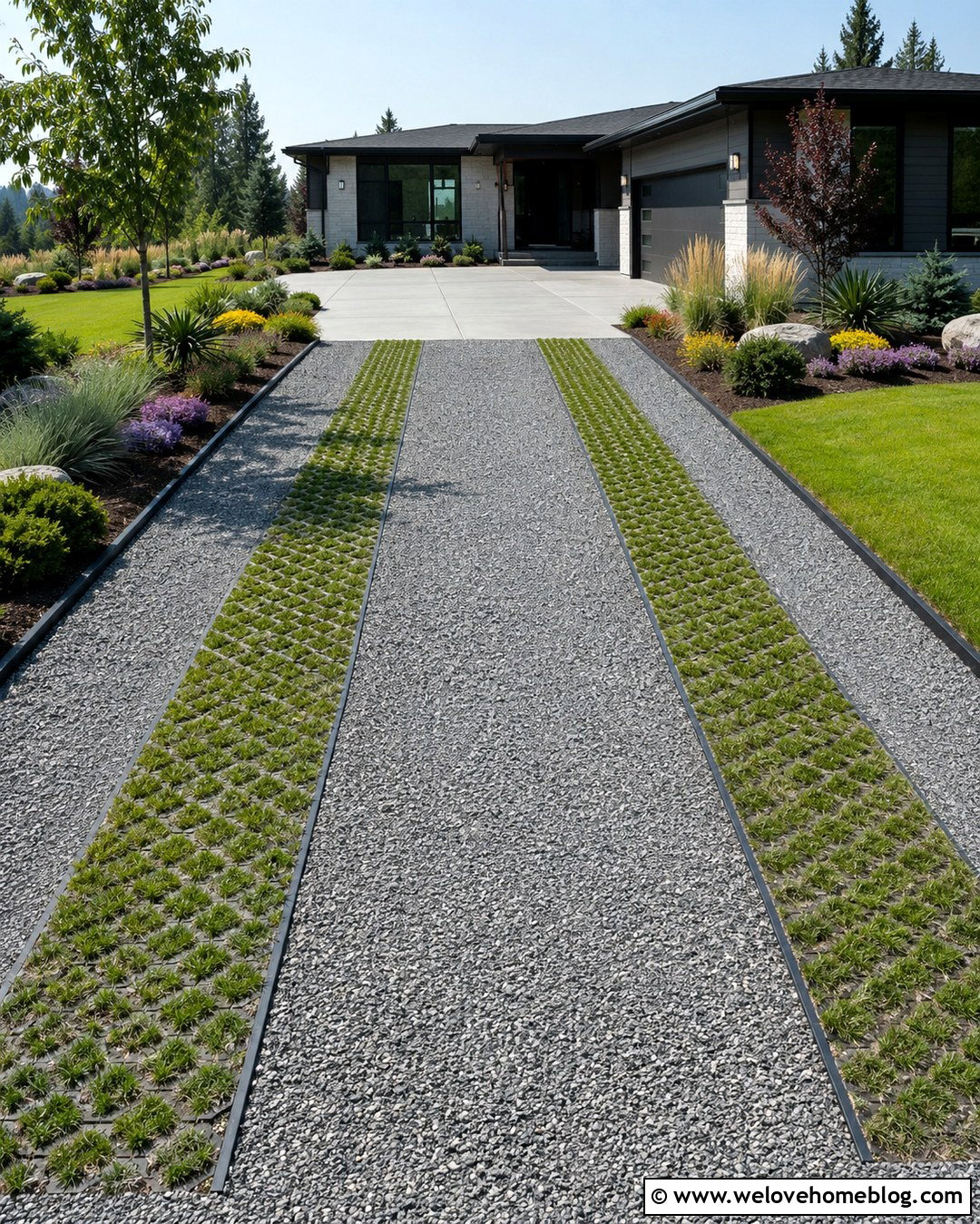
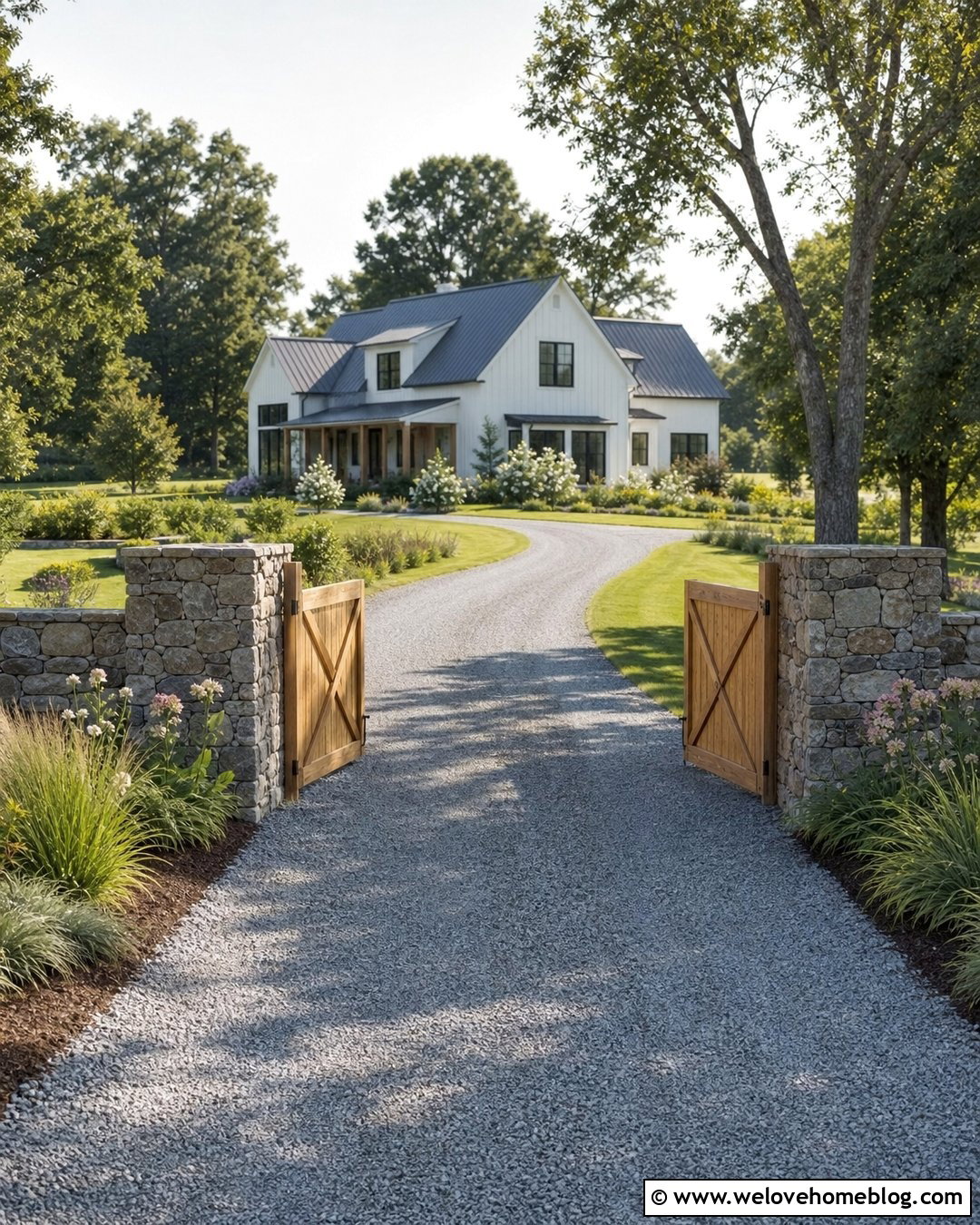
A herringbone brick overlay creates strong visual texture while allowing the original driveway slab to remain in place when conditions permit. Select muted burgundy, brown, and charcoal coloring for a realistic weathered-brick appearance. Surround the herringbone center with a straight running-bond border in a darker tone. A traditional driveway leading to a white colonial or craftsman home provides a balanced backdrop. Repeat the pattern on the front walkway, but simplify it near steps and door thresholds. Boxwood, hydrangeas, and a green lawn can make the warm masonry tones stand out. Brick, stone, and cobblestone effects can be produced with stampable resurfacing systems and coordinated coloring. () Careful alignment is essential because irregular pattern placement becomes noticeable across a large surface.
21. Concrete Driveway With Decorative Medallion
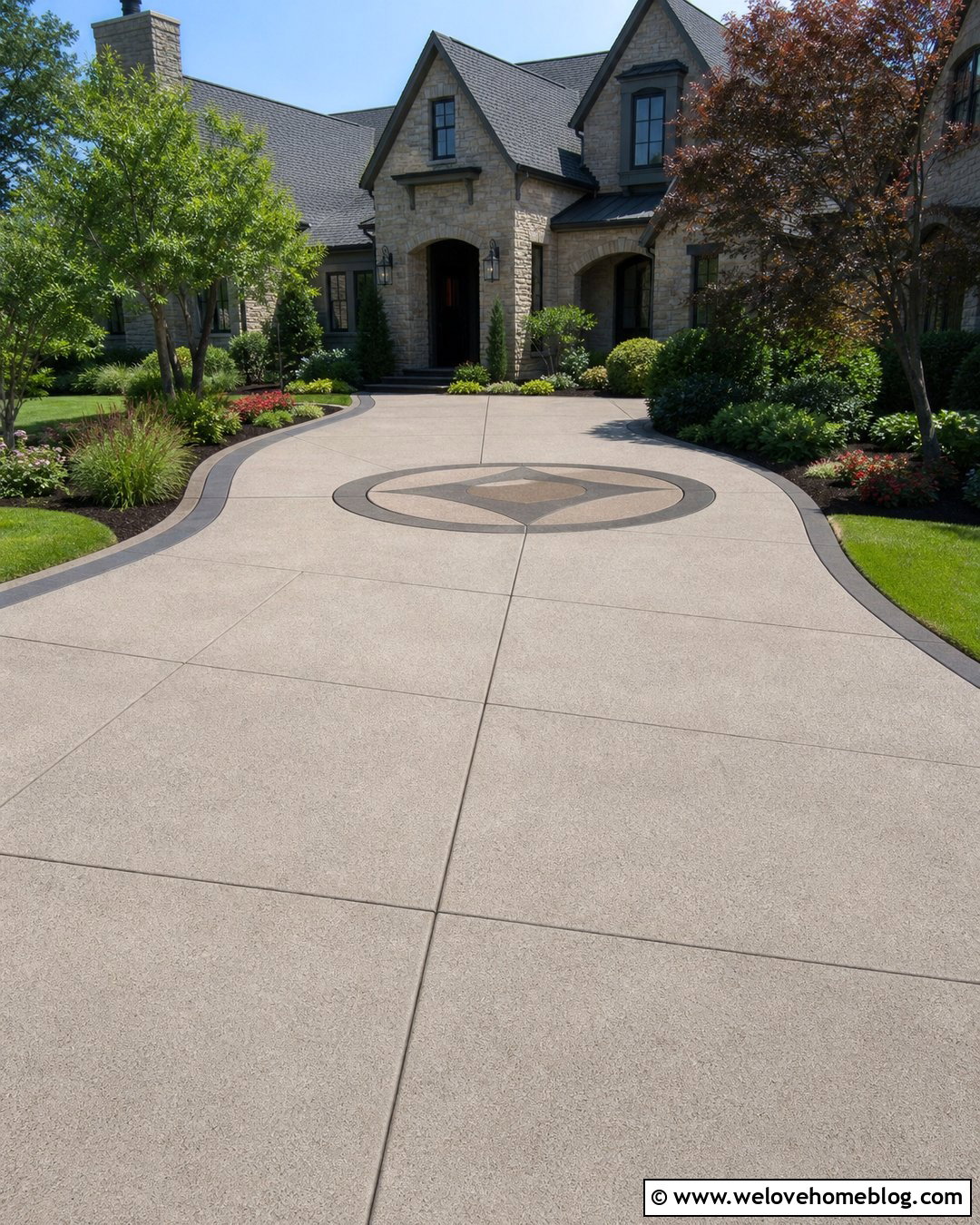
A decorative medallion can establish a focal point within an otherwise simple resurfaced driveway. Apply a light-taupe textured overlay across the main surface and score it into large rectangular panels. Position a circular compass, star, or geometric medallion near the entrance court rather than directly at the curb. Use charcoal and warm brown accents that coordinate with the house facade. A broad driveway leading to a craftsman, colonial, or Mediterranean home provides enough visual space for this feature. Keep the surrounding border restrained so the medallion remains the focus. Curved planting beds and a pair of ornamental trees can frame the marked area. Choose a pattern that reads clearly from a distance and avoid lettering, highly intricate imagery, or excessive color that may quickly look dated.
22. Concrete Driveway With Contrasting Border
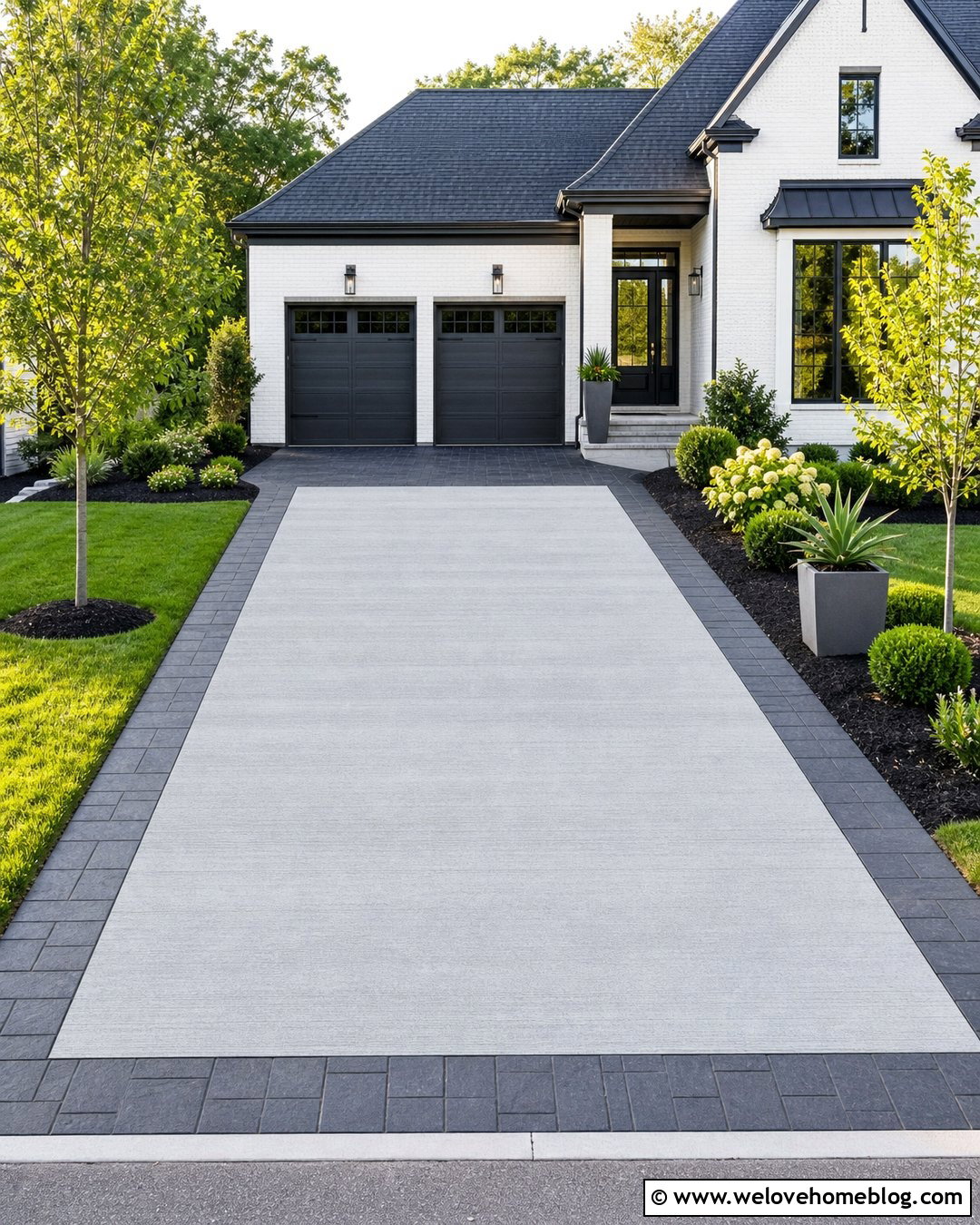
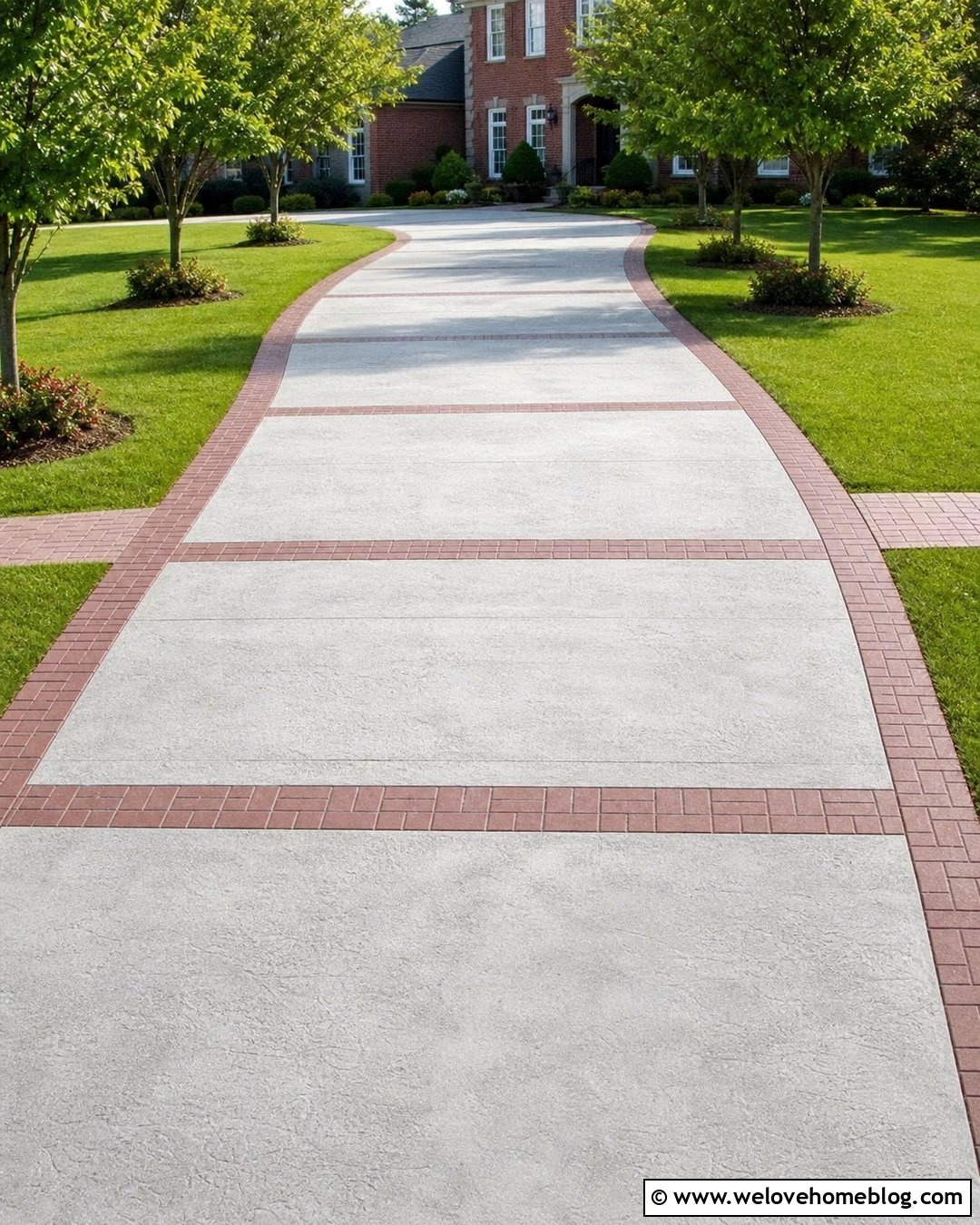
Resurfacing only looks complete when the driveway edges and transitions receive equal attention. Create a medium-gray broom-finished center with a wide charcoal stamped border resembling small rectangular pavers. Carry that border around the garage apron and along the attached front walkway. This strategy brings definition to a plain straight driveway without covering the entire surface in a busy pattern. Contrasting overlay textures and stain colors can provide strong visual impact while keeping the primary treatment relatively simple. () Use layered shrubs, crisp lawn edges, and matching dark planters near the entrance. The border width should suit the driveway scale and remain consistent on both sides. Coordinate its color with the roof, shutters, garage doors, or masonry accents for a connected exterior palette.
23. Curved Slate Concrete Driveway Resurfacing
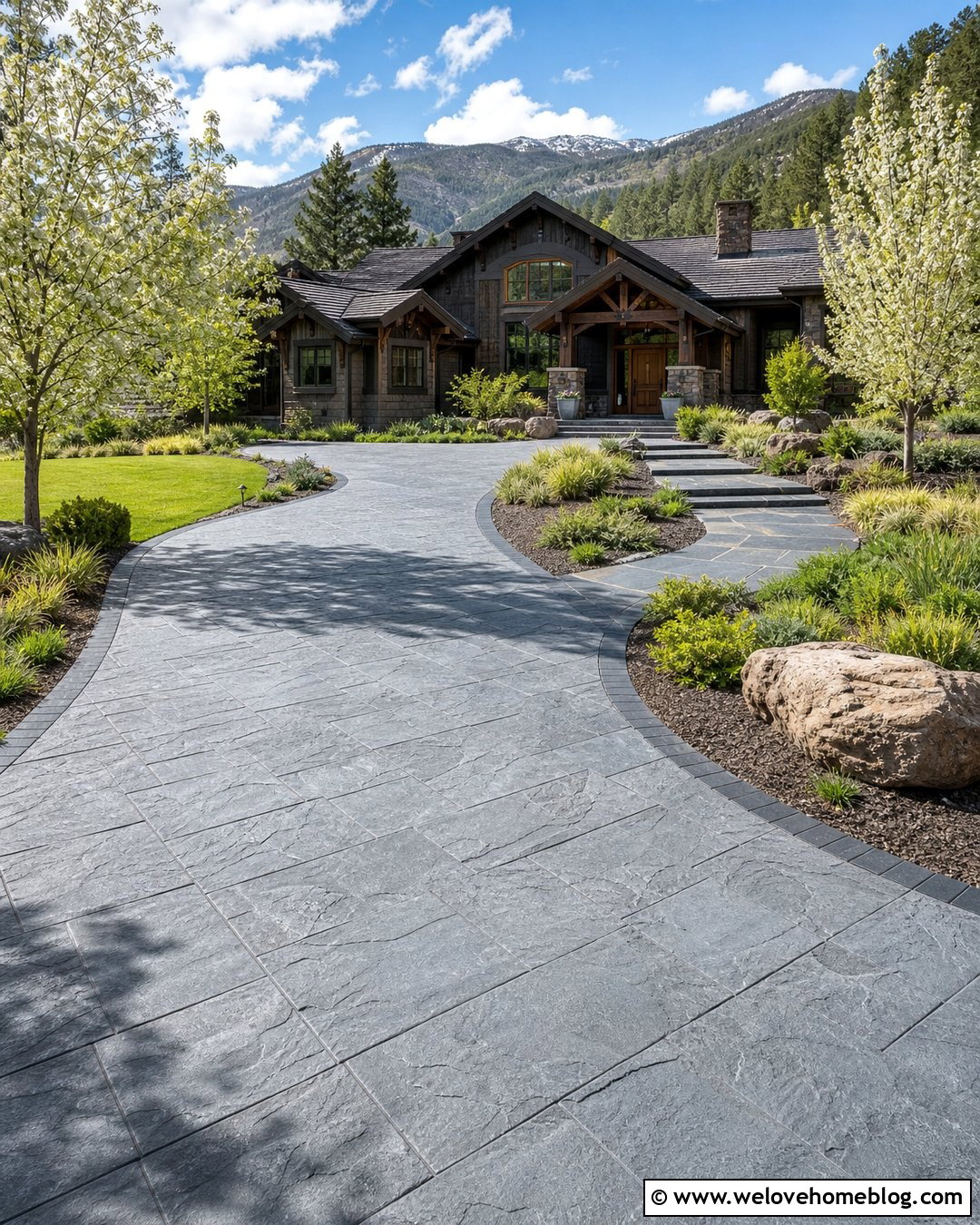
A curved driveway feels more intentional when the resurfacing pattern follows its movement. Choose a slate-textured overlay in cool gray and blue-gray tones, arranged in large irregular rectangles. Add a narrow charcoal border that traces both curves and separates the driveway from planting beds. This complete layout works well with craftsman, mountain contemporary, and stone-front houses. Plant native grasses, low junipers, and small flowering trees along the outer curve, while keeping the inside curve more open for visibility. Continue one slate-colored band toward the front walkway to connect the two paved areas. Avoid placing a rigid pattern that fights the driveway’s geometry. The texture, scoring, and border should guide the eye naturally from the street to the garage and main entrance.
24. Circular Concrete Driveway Resurfacing
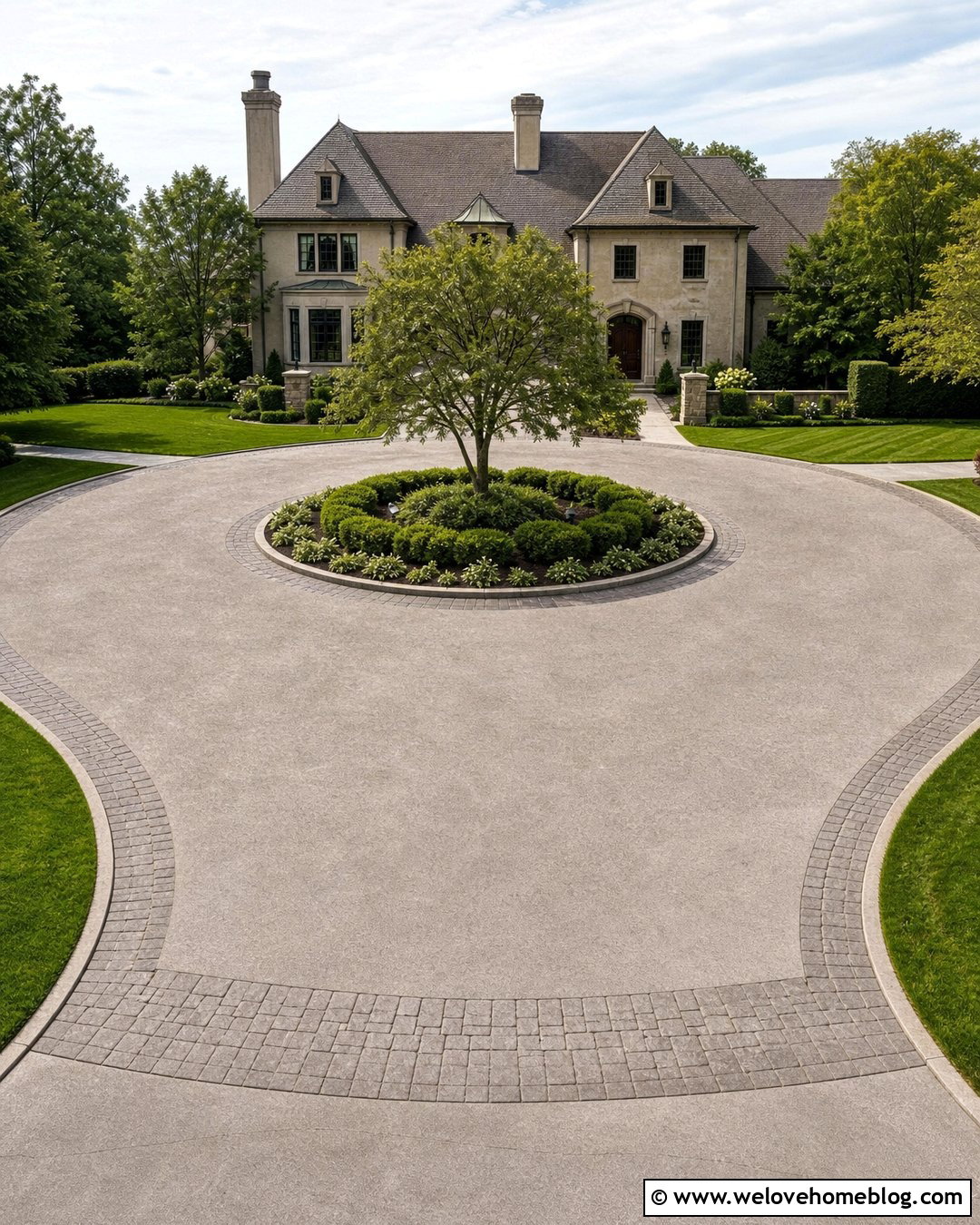
A circular driveway offers an opportunity to combine several resurfacing treatments without making the layout feel fragmented. Use a warm-gray textured overlay for the driving lanes and a stamped cobblestone band around the central landscape island. A matching band at each curb opening will clearly define the entrances. In the center, plant one ornamental tree with low shrubs and ground cover that will not obstruct visibility. This arrangement complements traditional, estate-style, and large ranch homes. Direct the surface pattern around the circle rather than running it awkwardly in one straight direction. Preserve drainage routes and make sure decorative cuts do not conflict with important joints. The house, island, borders, and resurfaced concrete should read as one balanced entrance when viewed from the street.
25. Farmhouse Concrete Driveway Resurfacing
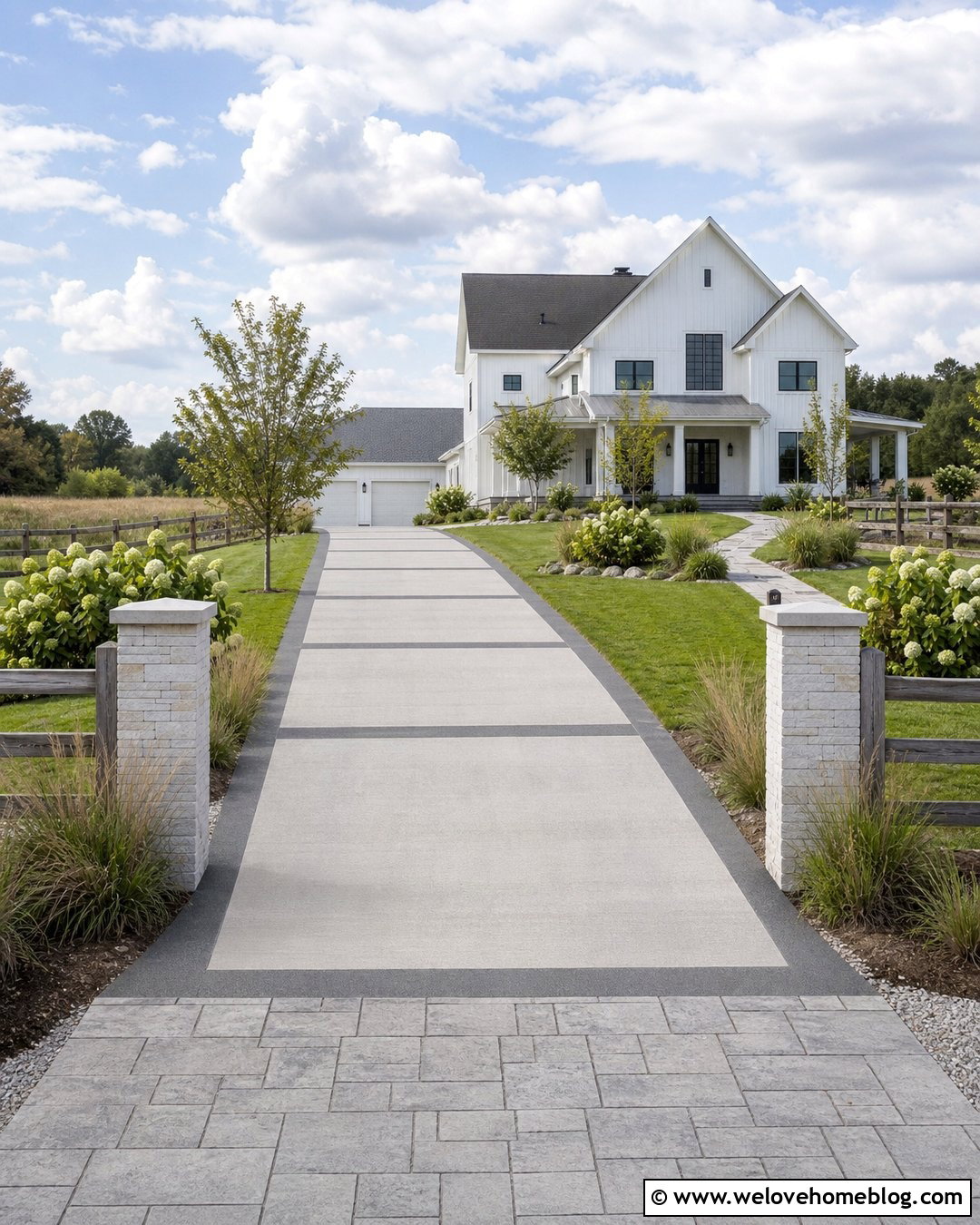
For a modern farmhouse, combine a pale-gray broom-finished overlay with dark charcoal bands and a widened entrance apron. The light concrete reflects the clean appearance of white siding, while the dark border relates to black windows, lighting, or roofing. Use a long, straight layout with evenly spaced scoring across the driveway. At the street, add a stamped stone-look section between simple masonry pillars to make the entrance feel established. Frame the approach with split-rail fencing, native grasses, hydrangeas, and a row of small deciduous trees. Keep the landscaping relaxed but orderly. Avoid excessive rustic patterns that compete with the home’s simple architecture. The strongest farmhouse driveway designs use practical materials, clear lines, and repeated exterior colors to connect the curb, garage, walkway, and facade.
26. Midcentury Concrete Driveway Resurfacing
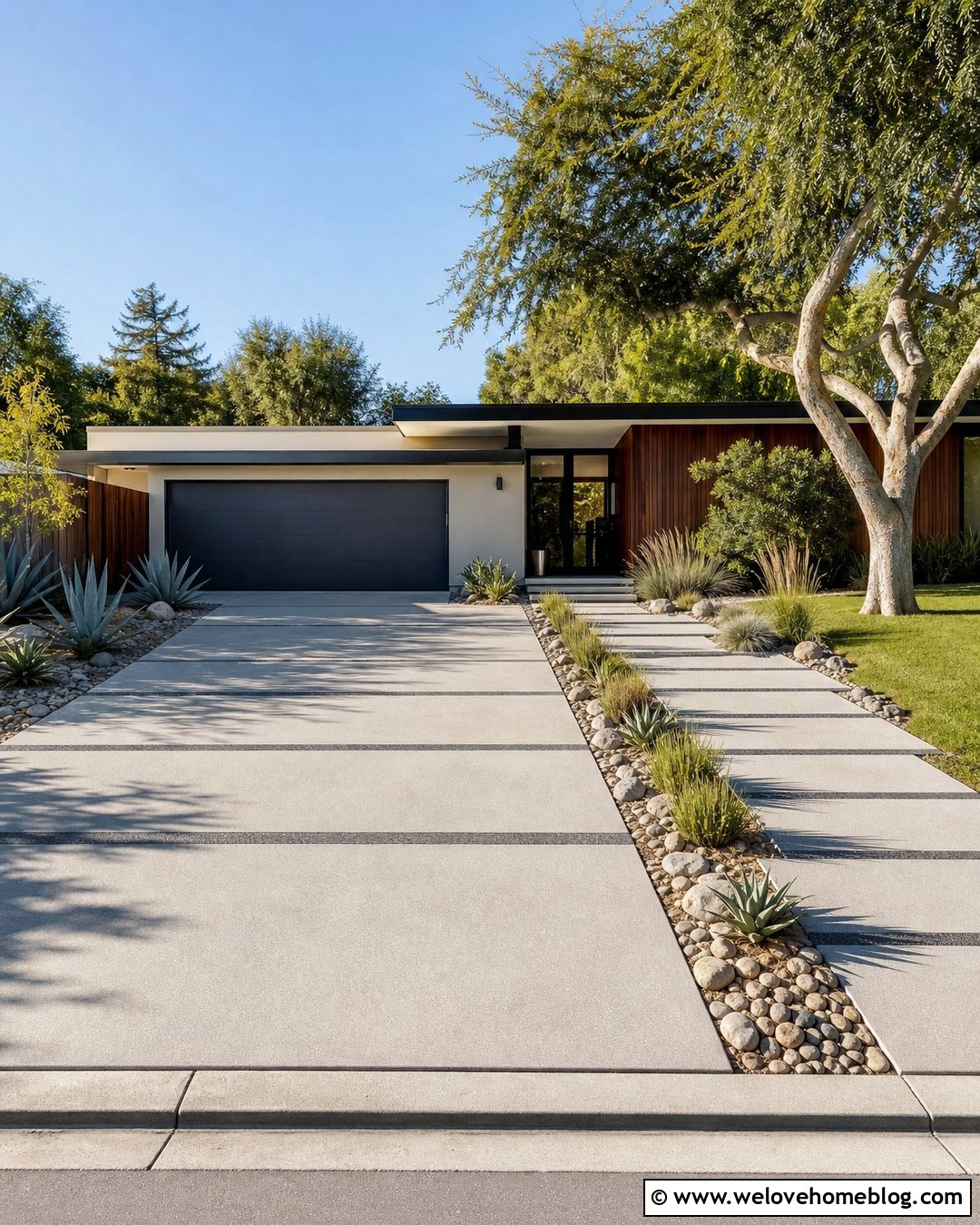
A midcentury home benefits from resurfacing that emphasizes horizontal lines and uncluttered geometry. Apply a smooth-looking but lightly textured warm-gray overlay, then score it into broad rectangular panels. Insert narrow charcoal bands between selected sections to create a graphic grid. Keep the driveway straight and integrate a matching path toward the front door. Low ornamental grasses, sculptural agaves, river rock, and one small specimen tree will support the architecture without hiding it. If the house includes brick or wood siding, select an overlay color that sits quietly beside those materials. Avoid ornate stamps, imitation cobblestone, and glossy finishes. The completed driveway should feel like part of the original site plan, with its panel proportions aligned to garage bays, rooflines, and walkway edges.
27. Coastal Concrete Driveway Resurfacing
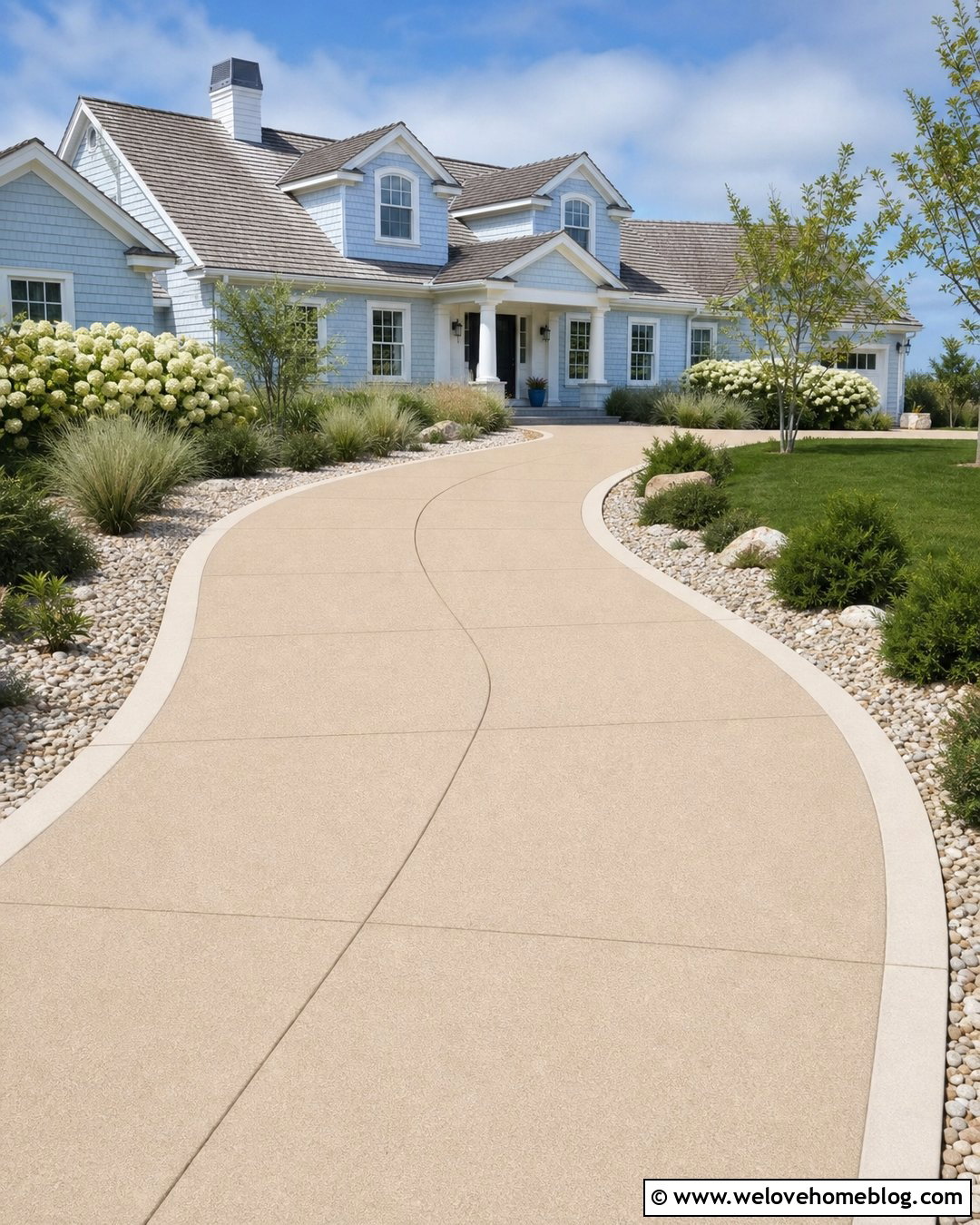
A coastal-inspired driveway should feel light, clean, and easygoing without becoming glaringly white. Use a pale sand-colored concrete overlay with a fine texture and soft cream border. A gently curved layout leading to a light-blue, gray, or white Cape Cod house will reinforce the relaxed setting. Score the surface into large irregular rectangles for subtle visual interest. Surround the drive with ornamental grasses, hydrangeas, low evergreen shrubs, and a simple shell-toned gravel bed. Keep the front walkway in the same color family so the hardscape does not appear disconnected. Choose a low-sheen sealer to maintain a natural surface. In rainy or humid areas, prioritize appropriate texture, drainage, and maintenance rather than selecting an overly smooth finish based on appearance alone.
28. Terracotta Concrete Driveway Overlay
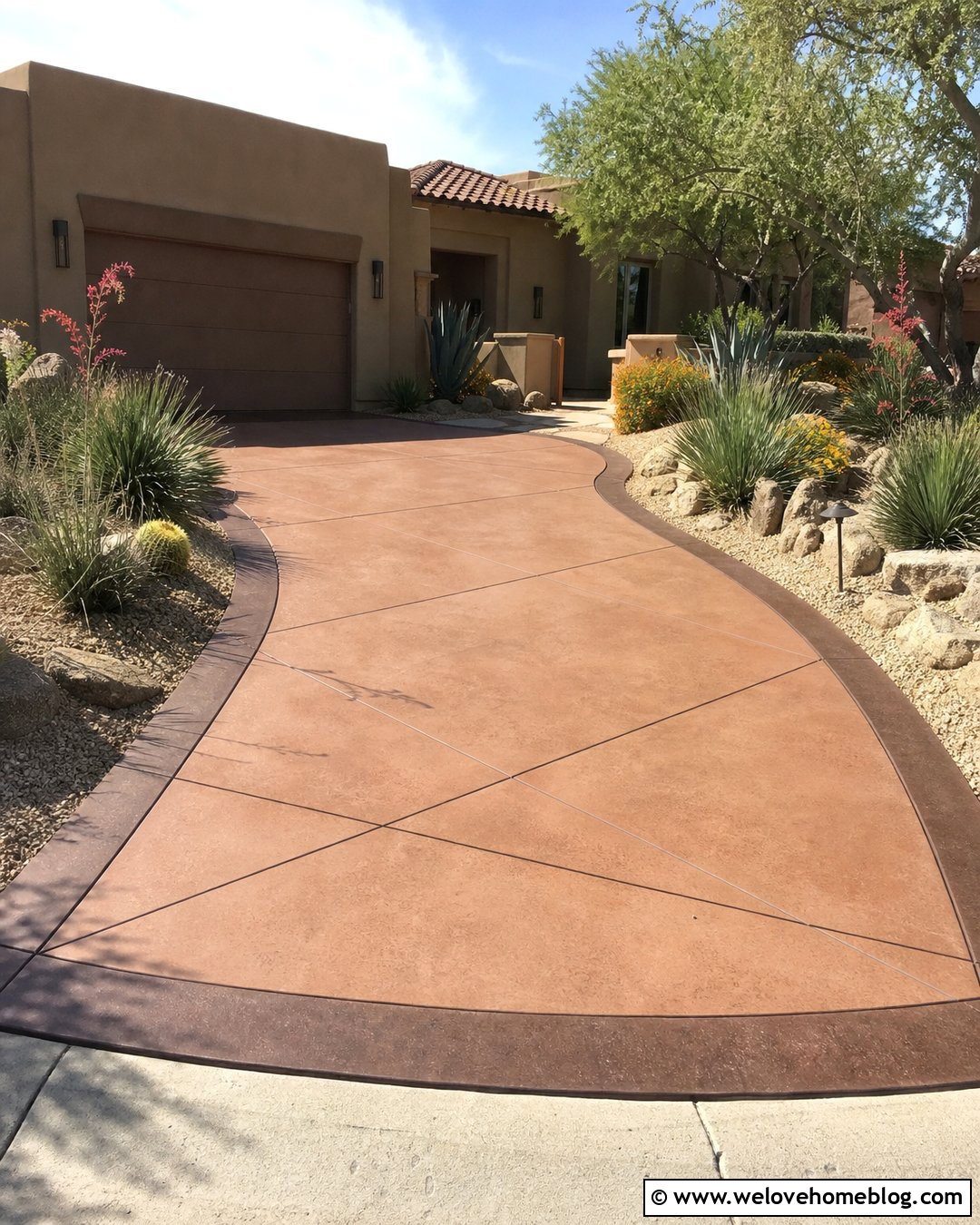
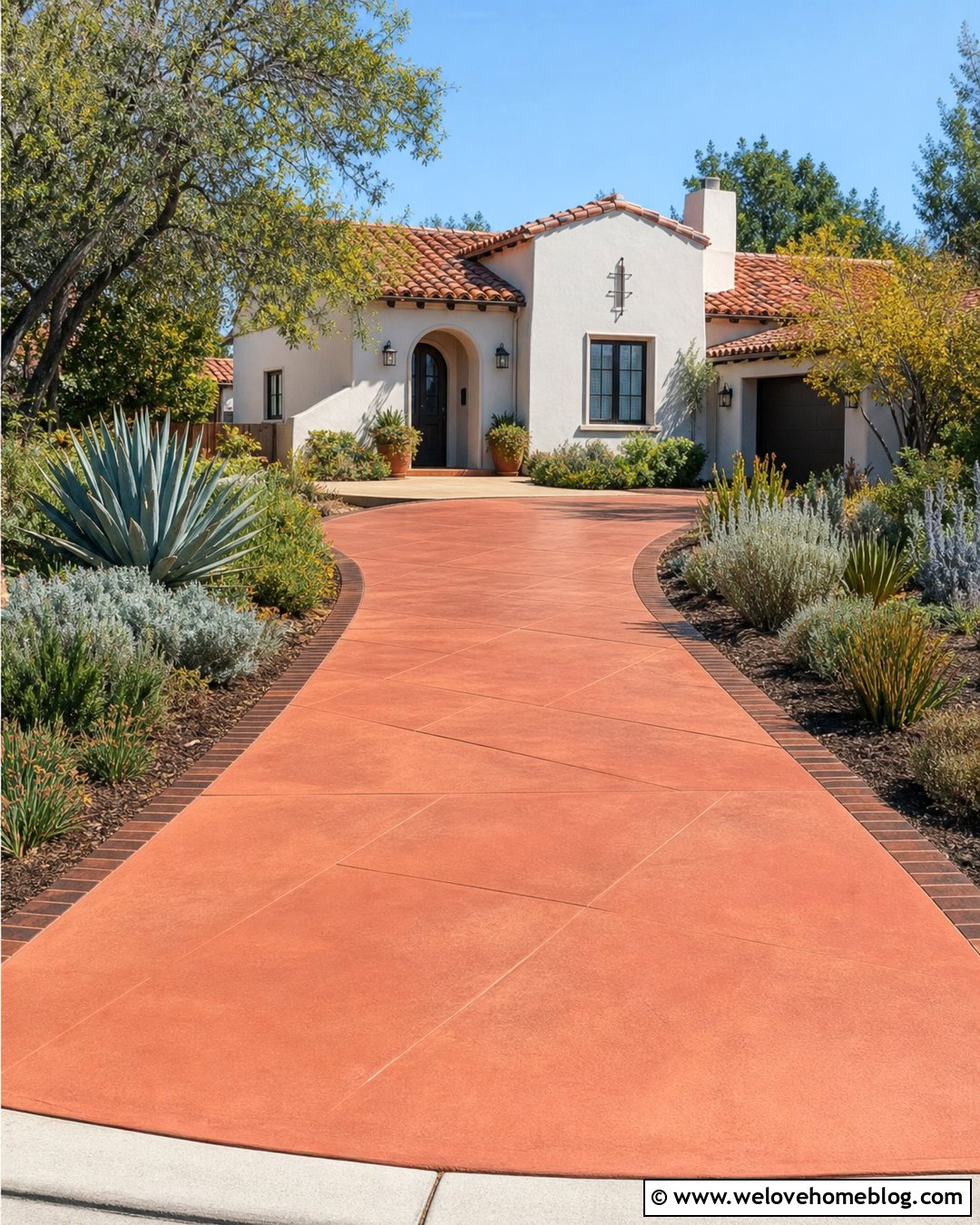
Terracotta-colored resurfacing can warm up a driveway beside stucco, adobe-inspired, or southwestern architecture. Use a muted clay base rather than a bright orange coating, then add deeper brown borders and large rectangular scoring. A curved layout will soften the strong color and complement rounded planting beds. Frame the driveway with desert grasses, agave, yucca, small flowering shrubs, and tan gravel mulch. At the garage, create a wide brown transition band that protects the visual edge of the pattern. Layered water-based color or a tinted overlay can produce more natural depth than one flat, opaque shade. Test the color in direct sun and shade before covering the entire driveway. The final design should echo regional earth tones while remaining neutral enough to age gracefully.
29. Black And White Concrete Driveway Resurfacing
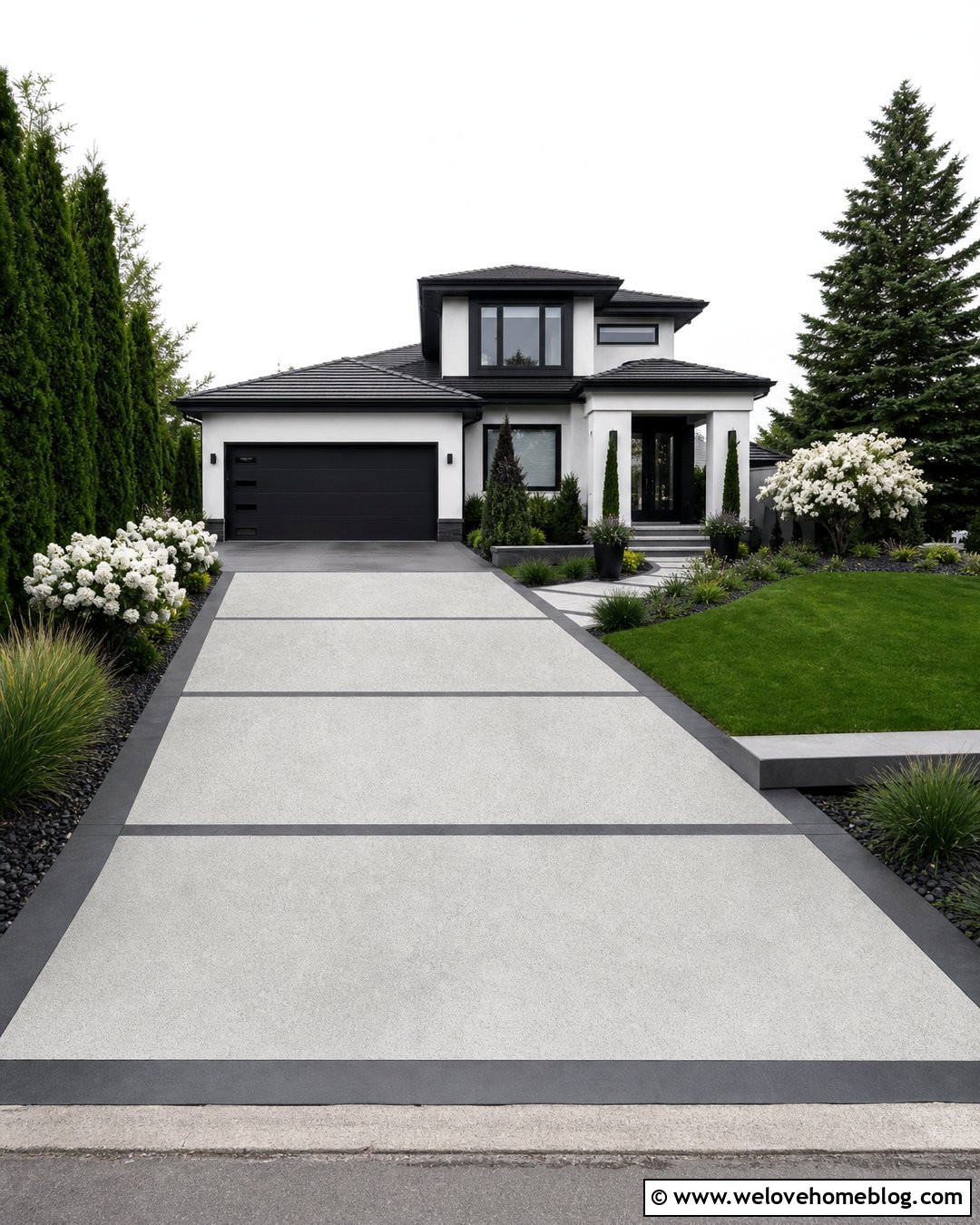
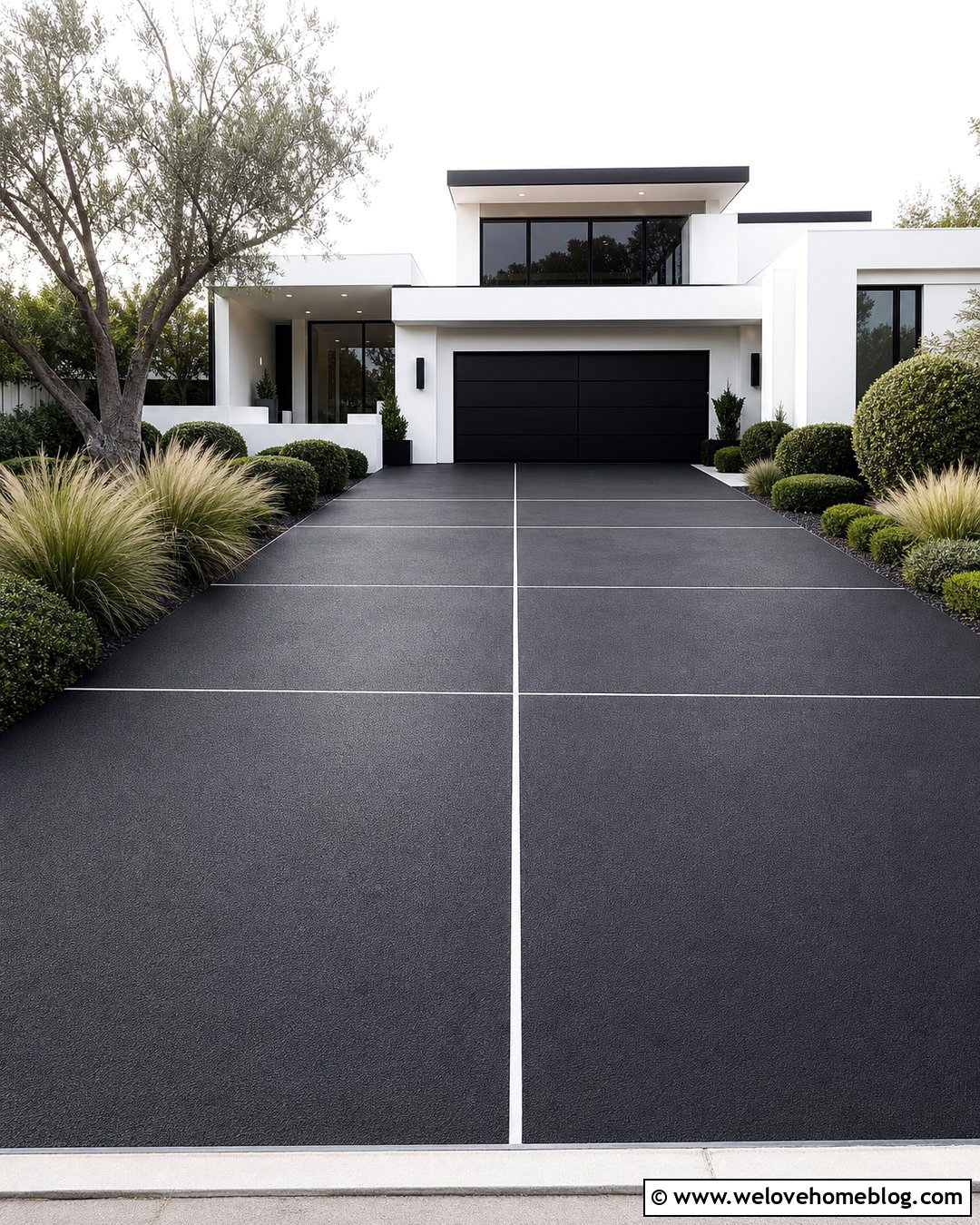
A high-contrast driveway can suit a modern black-and-white house when the dark and light areas are carefully balanced. Resurface the main driveway with light-gray textured concrete rather than pure white, which may show tire marks quickly. Add charcoal borders, narrow crossbands, and a dark apron close to the garage doors. Keep the layout straight, with large rectangular panels that reinforce the home’s sharp architecture. White flowering shrubs, deep-green evergreens, and ornamental grasses will soften the monochrome palette. Repeat the charcoal accent on the walkway edge and address pillar. Avoid creating small alternating blocks that could resemble a checkerboard. Broad areas of light concrete with limited dark detailing will feel cleaner, make the driveway easier to read, and produce stronger curb appeal.
30. Budget Concrete Driveway Resurfacing
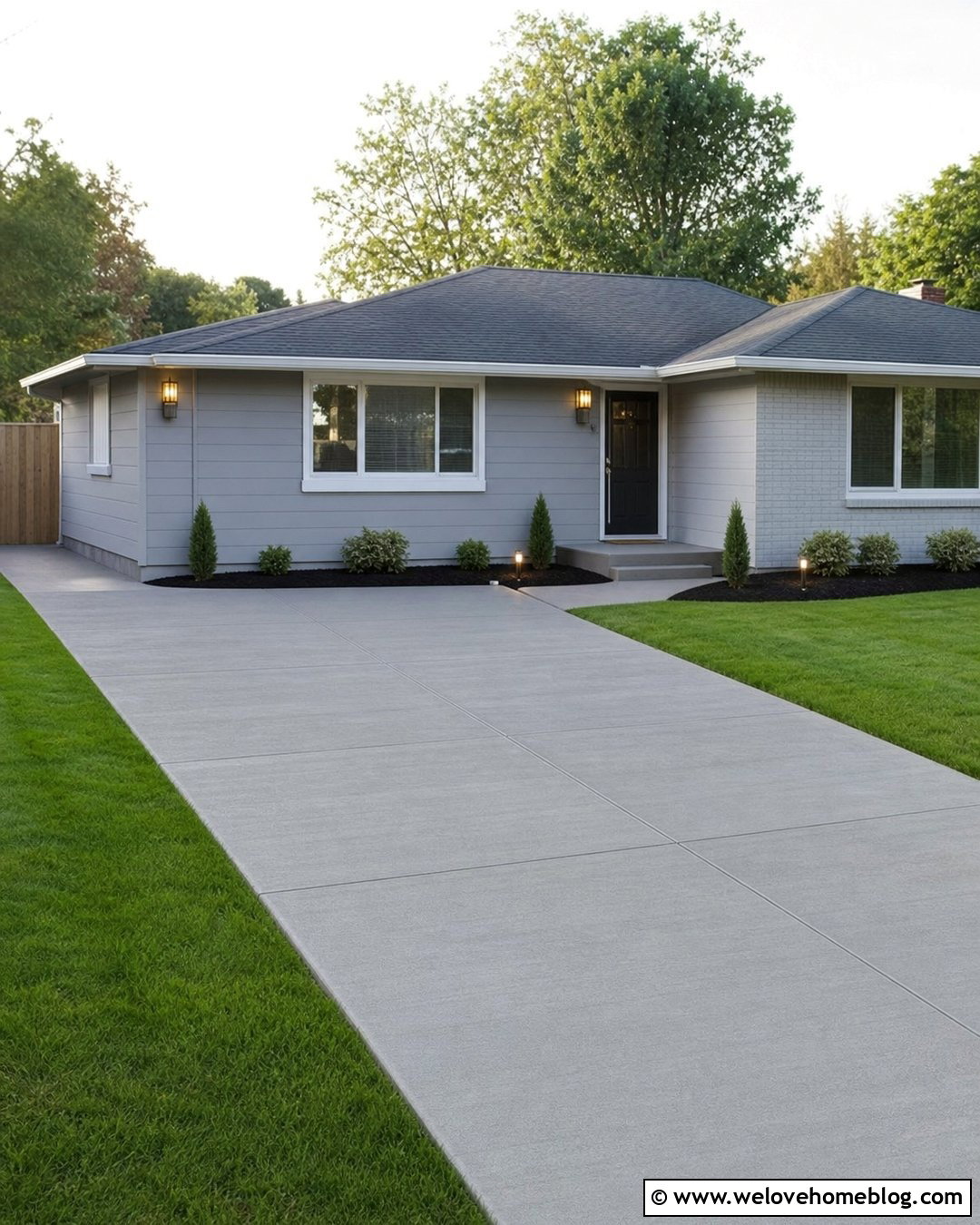
A straightforward resurfacing plan can make a major visual difference without relying on elaborate stamping. Begin by having the slab evaluated, cleaning it thoroughly, repairing suitable cracks, and preparing the surface according to the selected product. Apply a medium-gray resurfacer with a consistent broom finish, then refresh the driveway edges with simple planting beds and dark mulch. Existing joints can divide the driveway into orderly panels without adding decorative cuts. Paint the garage door or update exterior lighting to strengthen the overall makeover. Surface preparation is one of the most important parts of overlay performance, while severe heaving, extensive cracking, or unstable concrete may indicate that resurfacing is inappropriate. () A simple, well-installed finish will usually look better than an ambitious treatment applied to an unsuitable slab.
Conclusion:
These **30 Concrete Driveway Resurfacing Ideas** show how an existing slab can support finishes ranging from simple broom textures to detailed stone, brick, and wood-look patterns. Start by determining whether the driveway is structurally stable enough for an overlay or coating. Then choose colors, scoring, borders, and landscaping that fit the house instead of treating the surface as an isolated project. Proper repairs, cleaning, preparation, drainage, application, and sealing matter just as much as the decorative design. Request physical samples and review completed driveways before selecting a contractor or system. With a coordinated plan, resurfaced concrete can improve the full approach to your home while avoiding unnecessary demolition when the original slab remains serviceable.

Related posts:
Leave a Reply