
An acid wash concrete driveway can turn a plain slab into a richly colored surface with natural variation, depth, and character. In everyday design searches, “acid wash” often describes the mottled appearance of acid-stained concrete. Technically, acid washing etches and prepares concrete, while acid stain reacts with the surface to produce permanent, translucent earth tones. These treatments can work together, but they serve different purposes. Acid staining commonly creates brown, tan, rust, terra-cotta, and soft blue-green effects that resemble aged stone or leather. The final color depends on the concrete itself, so test samples are essential before covering the entire driveway. () The complete driveway looks below explore practical layouts, borders, landscaping, and house pairings for 20 acid wash concrete driveway ideas.

1. Brown Acid Wash Concrete Driveway With Brick Border
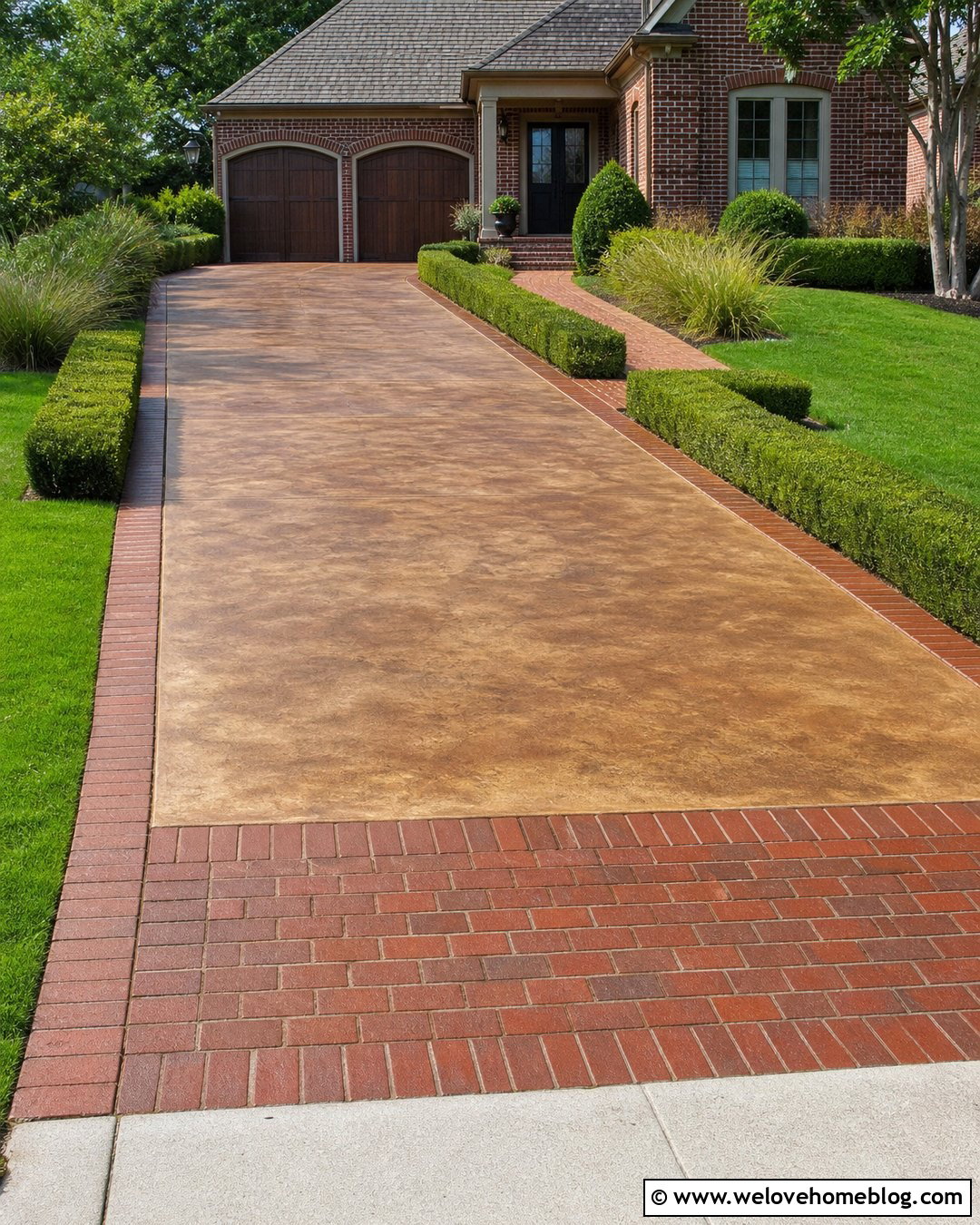
Warm brown acid-stained concrete creates an inviting driveway that works especially well with traditional brick homes. Choose a medium coffee-brown field with visible amber and walnut mottling rather than one flat color. A dark red clay brick border gives the concrete a clean stopping point and repeats the masonry used on the house. For a straight driveway, run the brick along both edges and across the garage apron. Low boxwood hedges, ornamental grasses, and a simple lawn keep the entrance organized without hiding the finish. Continue the brick into the front walkway for a more connected design. A satin, slip-resistant exterior sealer can deepen the color while avoiding the overly shiny appearance that sometimes makes decorative concrete look artificial.
2. Tan Acid Wash Concrete Driveway With Limestone Edging
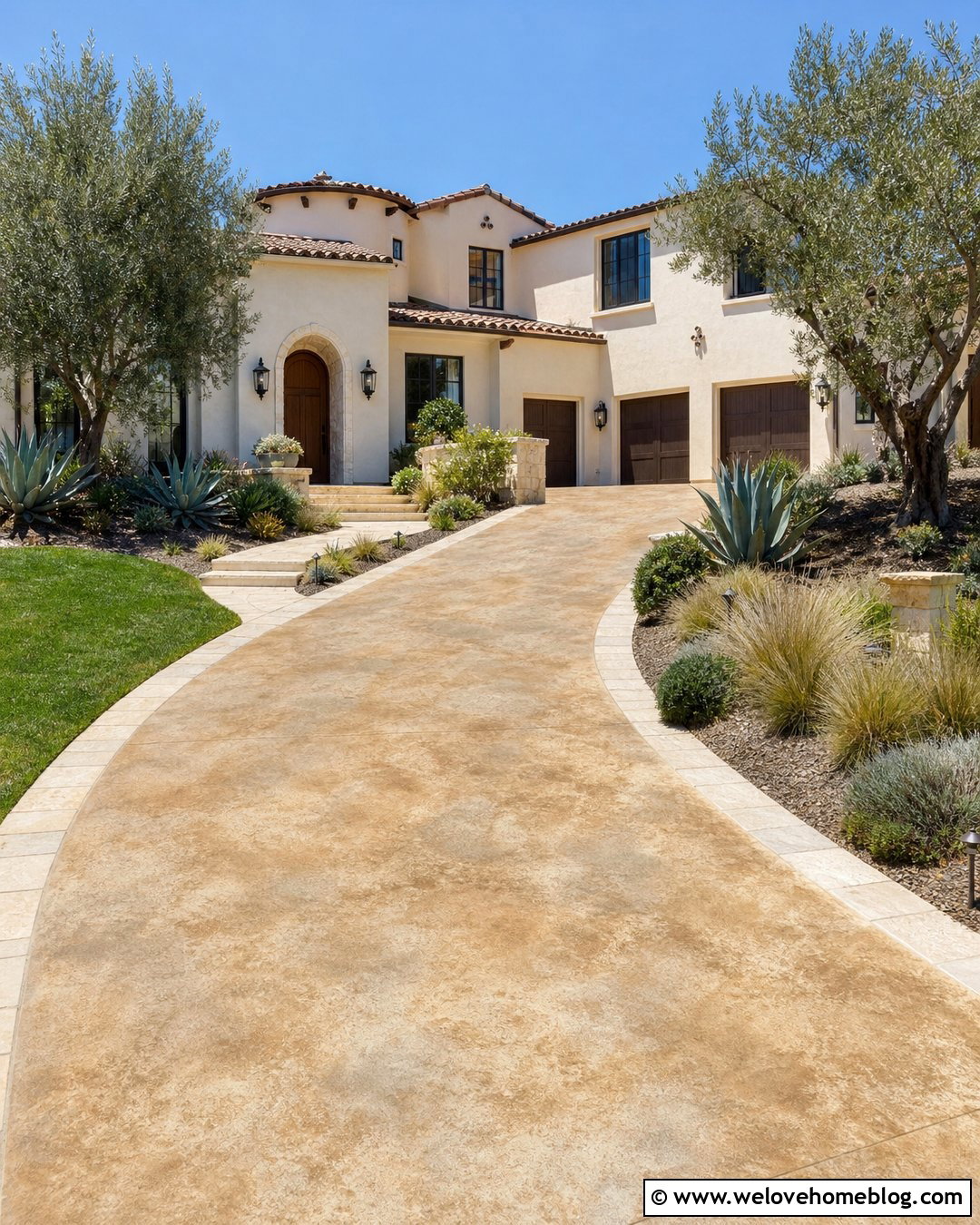
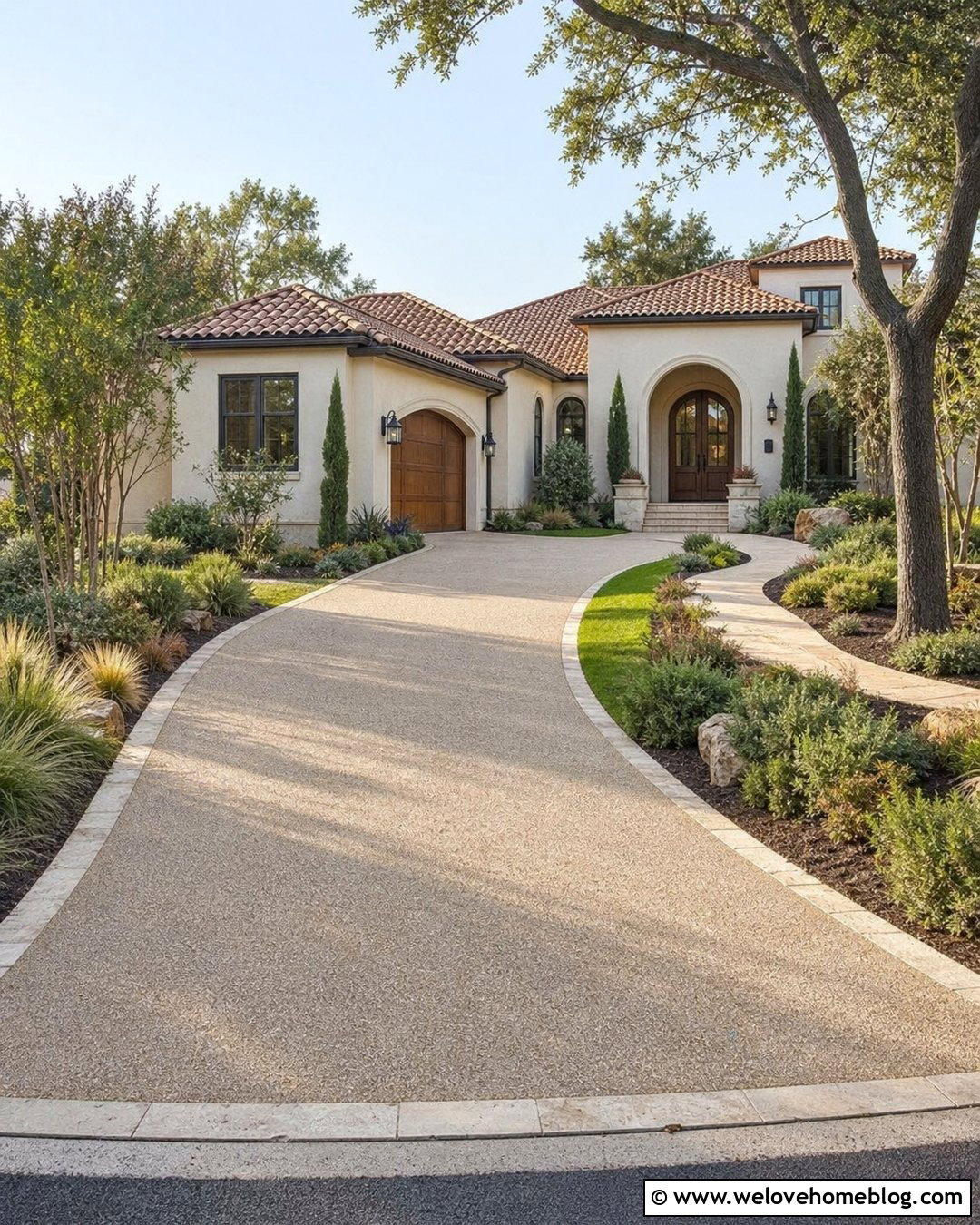
Soft tan concrete can brighten a front yard while maintaining the organic variation associated with an acid-reactive finish. This look uses sandy beige, honey, and muted caramel tones across a gently curved driveway. Pale limestone edging introduces a crisp contrast without feeling severe. Set the stones flush or slightly raised so they define the curves and help protect nearby planting beds. A cream stucco house, natural wood garage doors, and drought-tolerant landscaping complete the warm palette. Consider agave, feather grass, lantana, or neatly clipped shrubs where the climate allows. Use a slightly darker stain near the outer edges to create subtle visual depth. The driveway should still look naturally varied, so avoid demanding an absolutely uniform color from the installer.
3. Coffee Brown Acid Wash Concrete Driveway With Cobblestone Edging
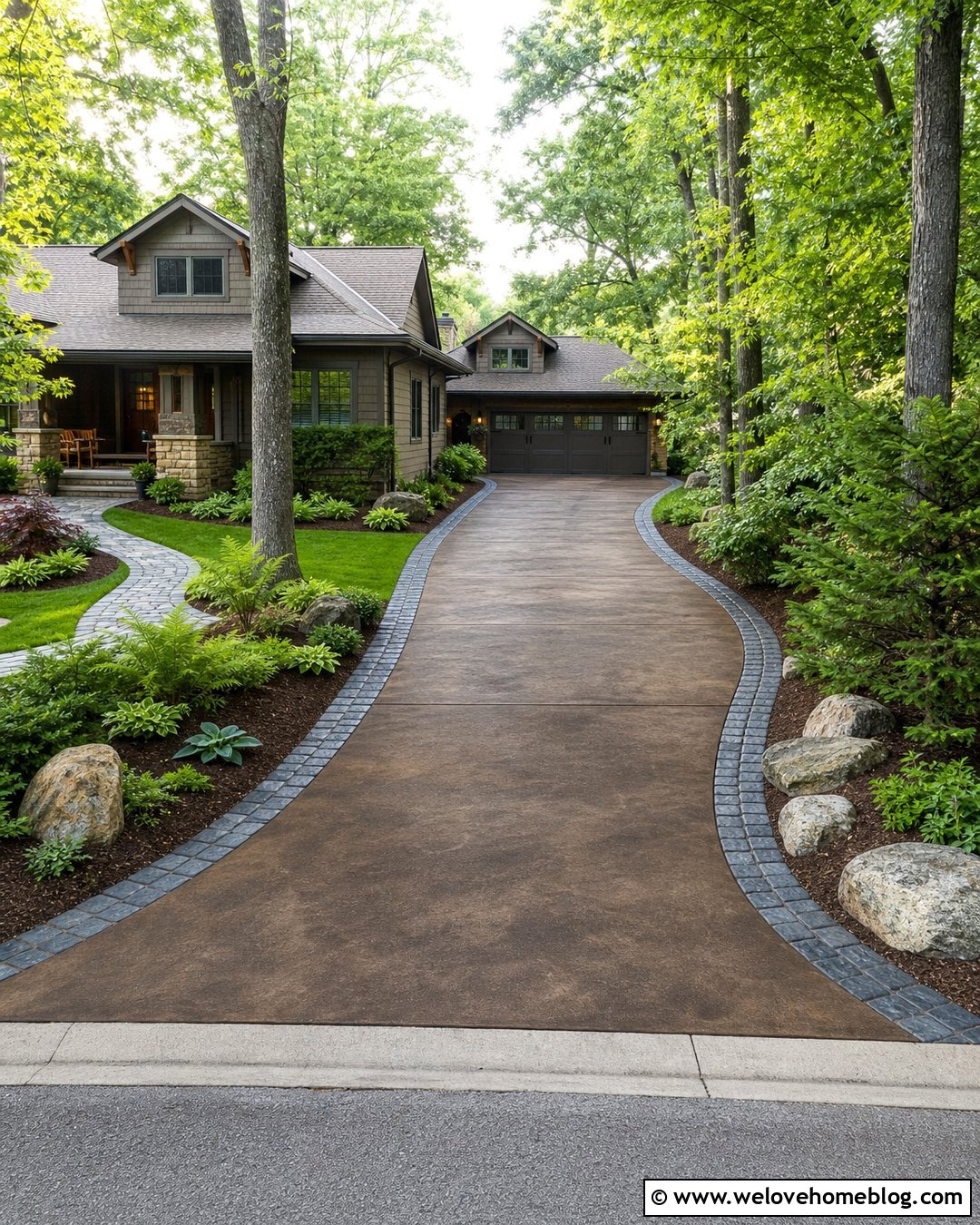
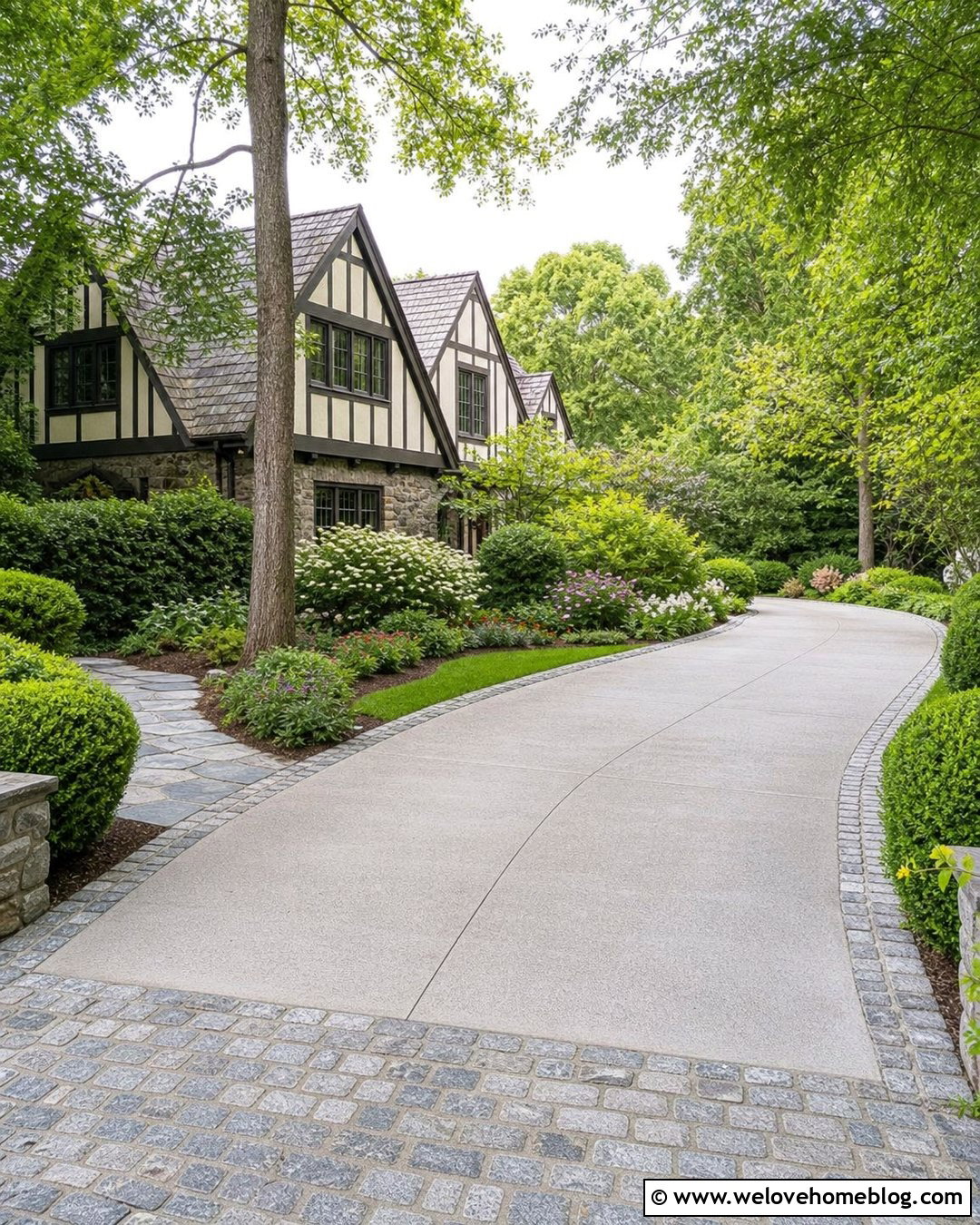
A deep coffee-brown driveway gains structure from a border of charcoal and gray cobblestones. The combination suits a craftsman house, stone cottage, or wooded suburban property because it feels established rather than newly installed. A curved layout is particularly effective, allowing the cobblestones to emphasize the approach to the garage. Layer brown and muted black tones carefully so the concrete develops a leather-like surface without becoming too dark. Beside the driveway, use evergreen shrubs, ferns, hostas, and natural boulders to reinforce the woodland setting. A matching cobblestone walkway can branch toward the front porch. Keep tree canopies trimmed enough to admit sunlight, since heavy shade and organic debris may make a dark driveway feel visually crowded and harder to keep clean.
4. Terra-Cotta Acid Wash Concrete Driveway With Red Brick Ribbons
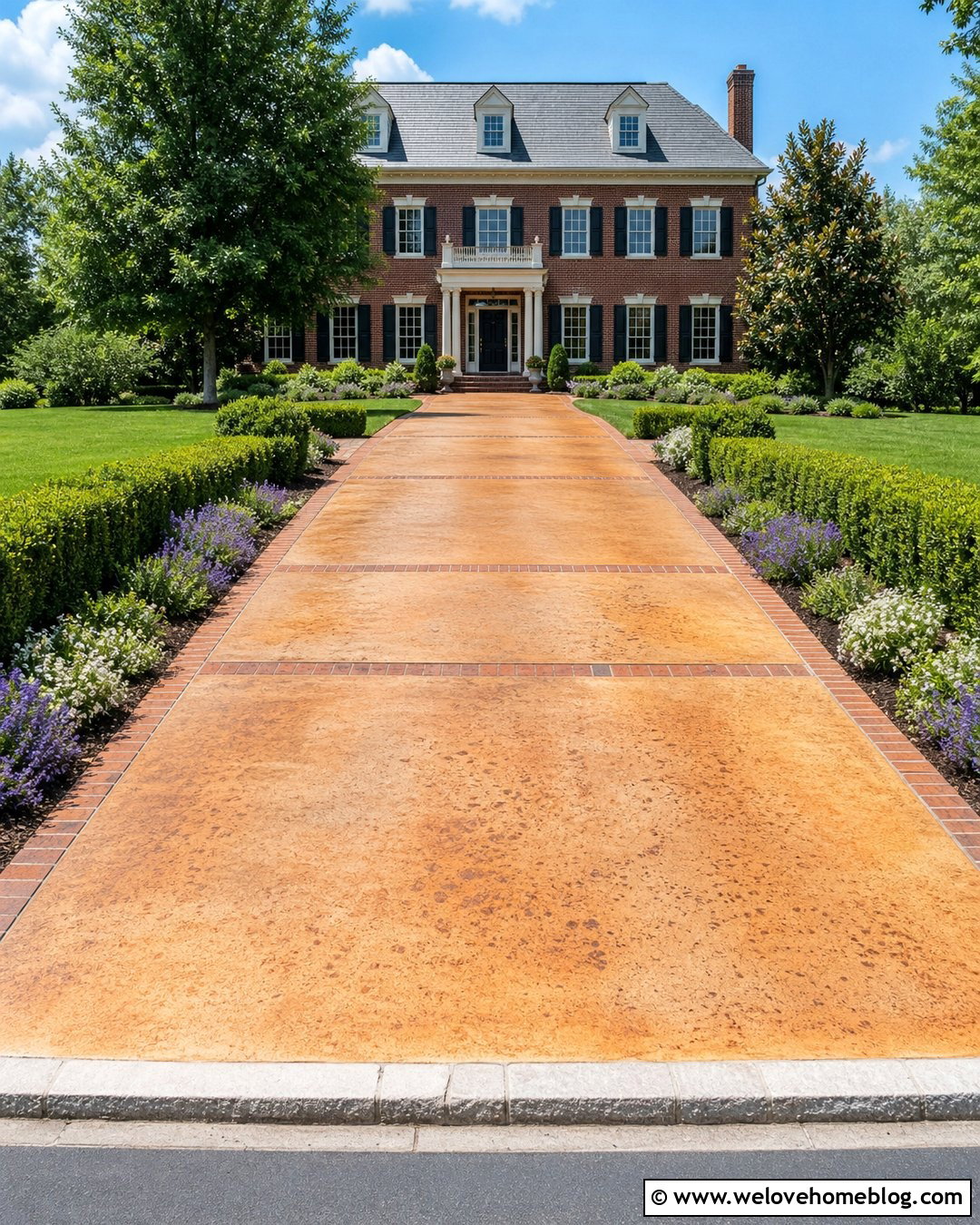
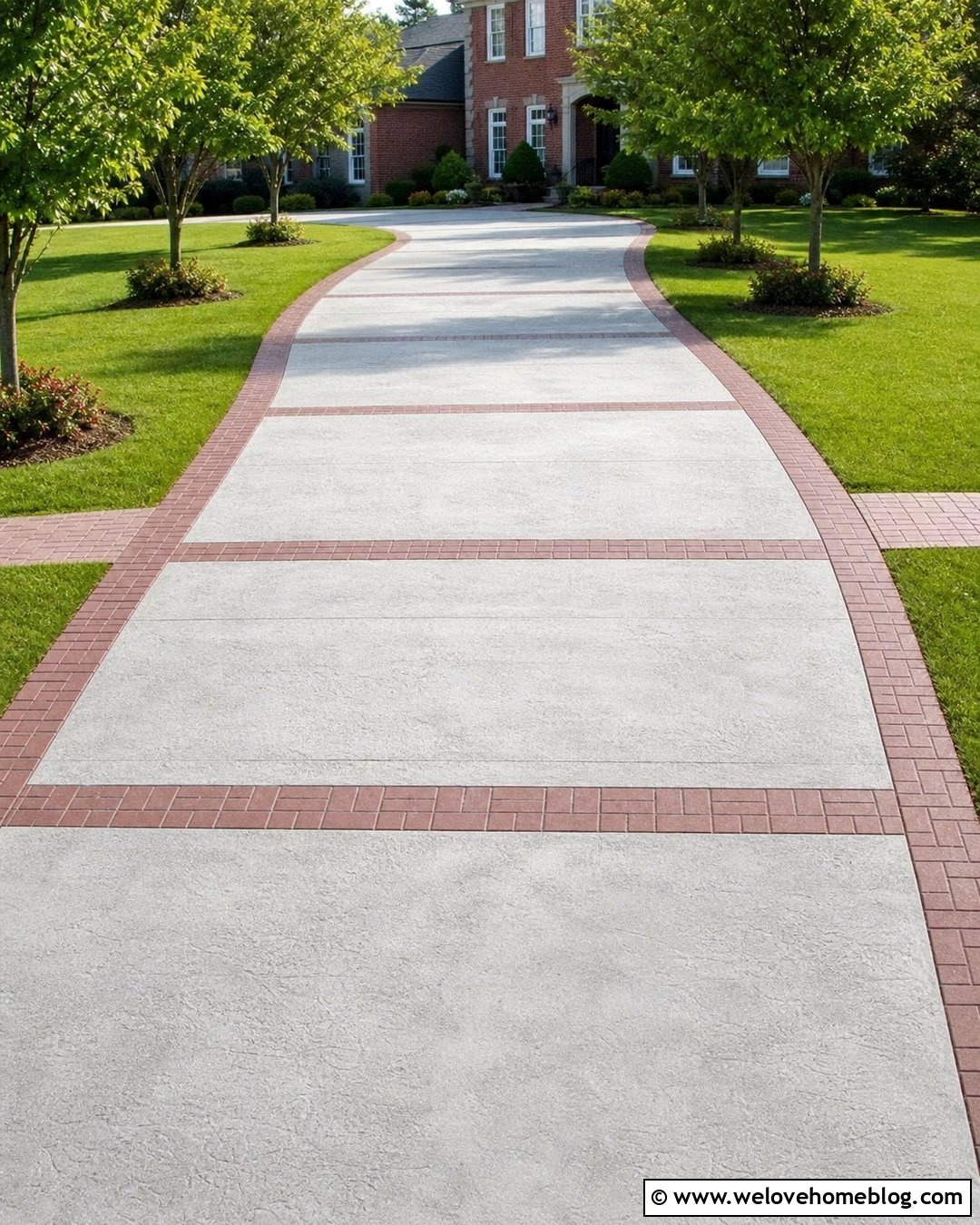
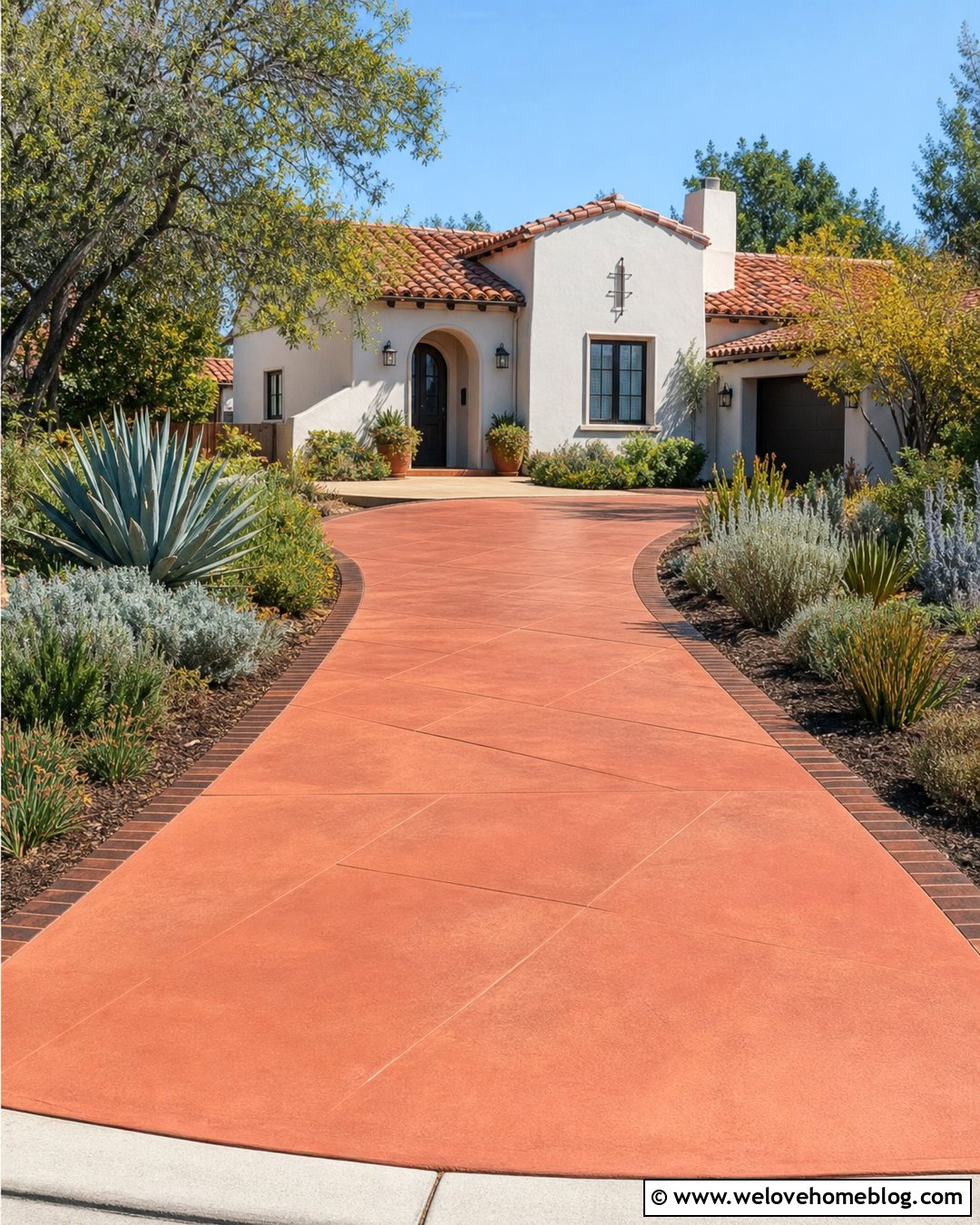
Terra-cotta acid-stained concrete brings warmth to a colonial, Spanish, Mediterranean, or red brick house. Instead of bordering only the perimeter, divide the driveway with narrow brick ribbons placed at logical expansion joints. The bands make a wide surface feel more proportionate and help the driveway relate to surrounding masonry. Use softened rust and burnt-orange tones rather than bright red, allowing darker areas to develop naturally across the slab. A straight or subtly flared layout works well, especially when the entrance widens near the street. Frame it with clipped hedges, flowering perennials, and a symmetrical pair of small ornamental trees. If the home already contains several red finishes, introduce cream stone curbing or green planting beds to prevent the overall color scheme from becoming too heavy.
5. Blue-Green Acid Wash Concrete Driveway With Gray Stone Border
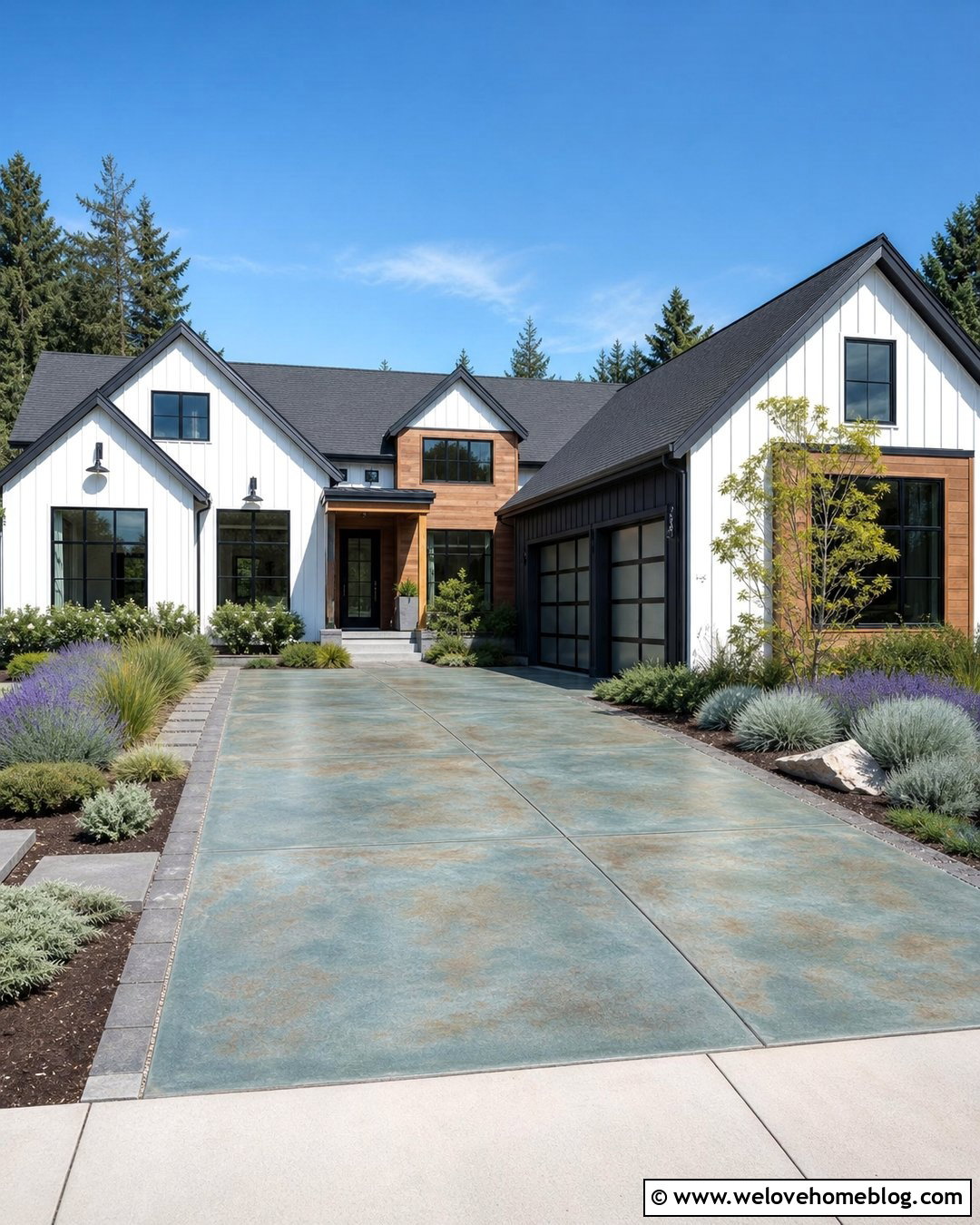
Would a cooler driveway color better complement your house? A soft blue-green acid stain can give concrete the character of weathered copper or mineral-rich stone. Because reactive colors vary considerably, test the product on the actual driveway before committing to the full surface. Pair the finish with a medium-gray natural stone border, broad rectangular stepping stones, and a modern house with white, charcoal, or light wood siding. A straight driveway with clean edges allows the unusual color to remain the main feature. Plant blue fescue, juniper, lavender, and silvery foliage nearby for a coordinated landscape. Keep the staining subtle instead of aiming for a saturated teal surface. The best result should read as mineral variation from the curb, not as brightly painted concrete.
6. Two-Tone Acid Wash Concrete Driveway With Sawcut Squares
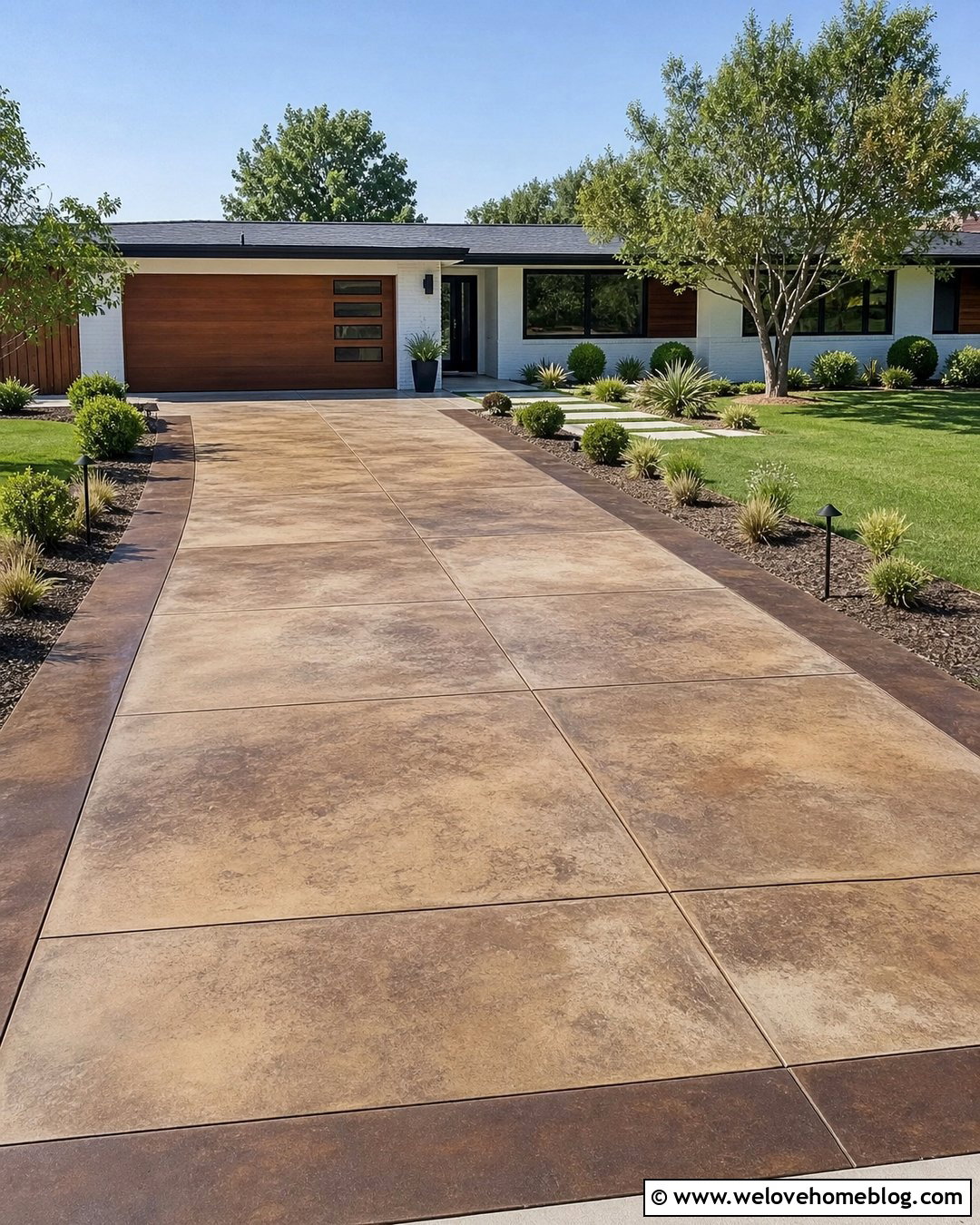
Large sawcut squares can give a basic concrete driveway the orderly appearance of oversized paving slabs. Stain the main squares with a light tan acid color, then use a deeper brown treatment along selected sections or around the perimeter. The tonal difference should be noticeable but not harsh. Align the sawcuts with the garage doors, walkway, and major architectural lines so the pattern feels intentional. This design is especially suitable for a contemporary ranch or updated midcentury home. Add narrow planting beds filled with structural grasses, rounded shrubs, and one small specimen tree. Dark metal house numbers and simple path lights provide restrained accents. Decorative scoring can be convincing, but the pattern should also respect necessary control joints rather than trying to disguise or compete with them.
7. Acid Wash Concrete Driveway With Faux Flagstone Pattern
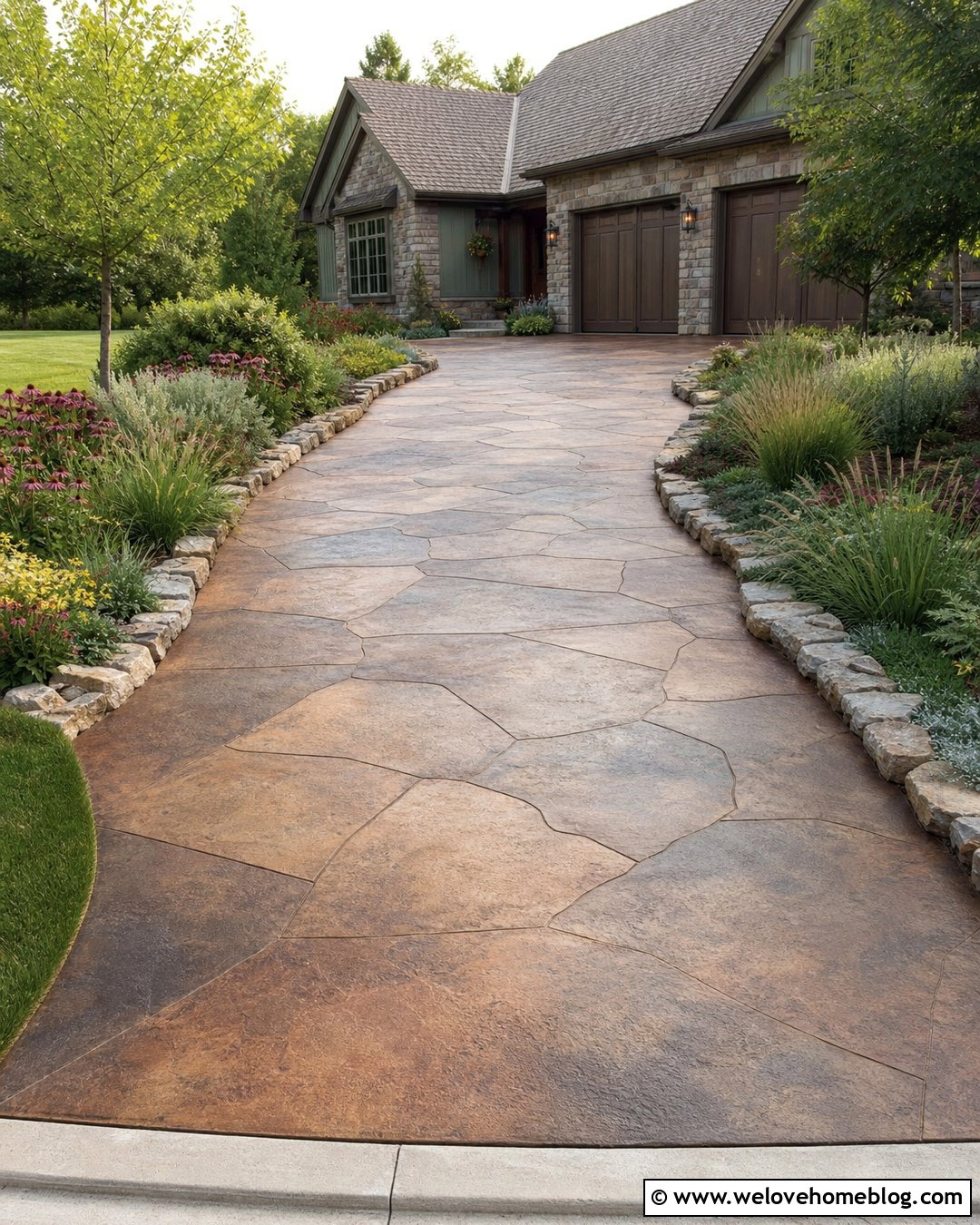
Random scoring and layered earth-tone stains can make poured concrete resemble broad pieces of natural flagstone. Use warm buff, chestnut, rust, and muted gray within an irregular pattern, keeping the “stones” large enough for a driveway-scale surface. Very small shapes may appear busy and create too many distracting lines. A darker stain in the scored joints strengthens the illusion without requiring individual pavers. This approach pairs naturally with a stone-front craftsman house or a rustic ranch surrounded by mature landscaping. Border the driveway with rough-cut stone and informal beds containing sage, coneflowers, ornamental grasses, and creeping ground cover. Carry the faux flagstone pattern into the front walk, but narrow the scale slightly. The repeated surface creates a smooth visual transition from the street to the porch.
8. Acid Wash Concrete Driveway With Large Tile Pattern
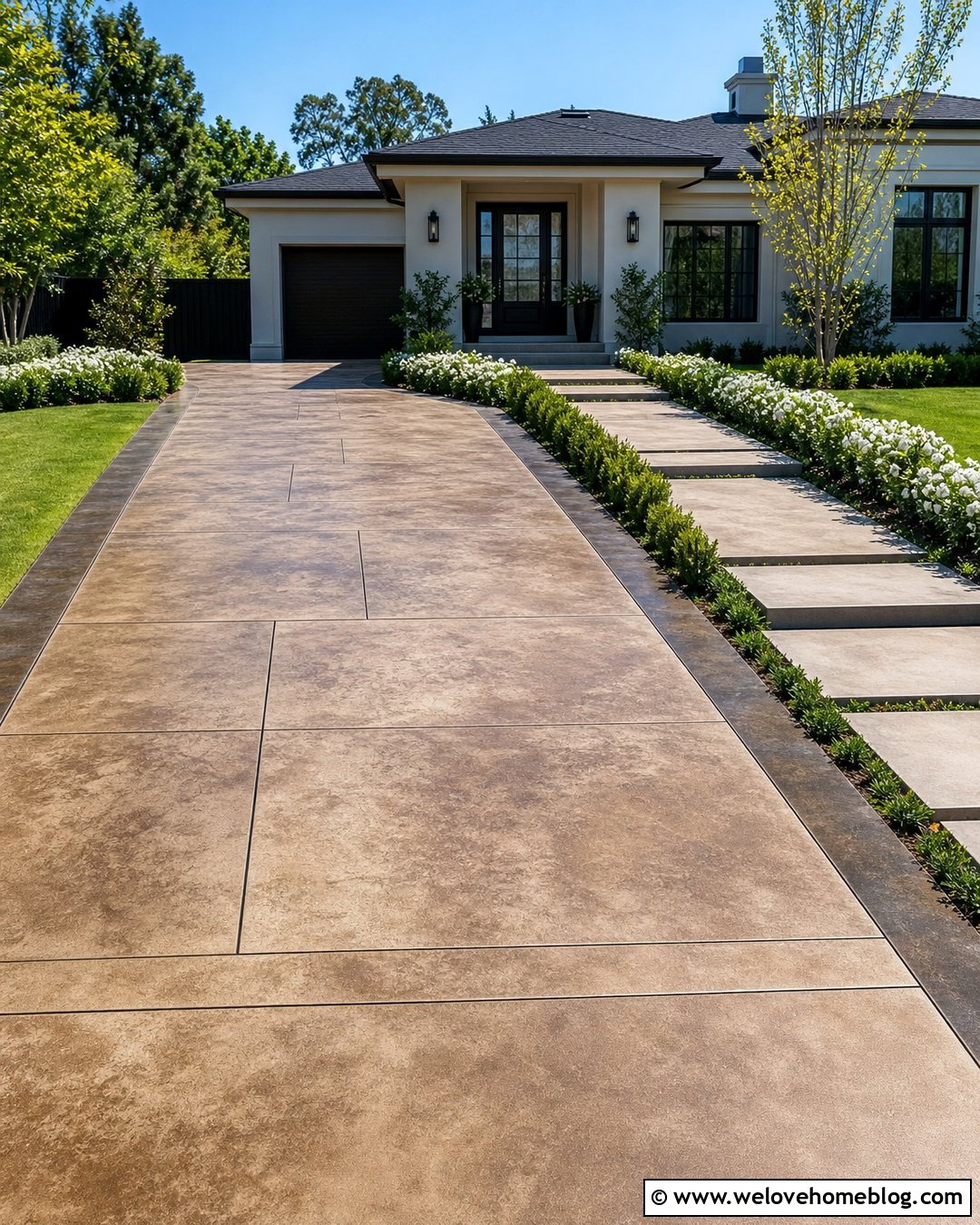
For a cleaner geometric appearance, score an acid-stained concrete driveway into large square or rectangular panels. A warm taupe stain with brown mottling can make these sections look like oversized stone tiles while retaining the strength and continuity of poured concrete. Choose a straight driveway and center the pattern carefully between the borders. Darker perimeter bands will frame the surface and reduce the visual width of a broad parking area. This look works well with a stucco, transitional, or contemporary house featuring simple window and garage-door lines. Use low evergreen hedges, white flowers, and neatly defined lawn edges to support the orderly layout. Sawcuts and multiple stain colors are established methods for producing a tile-like effect, although existing imperfections may remain visible through a translucent stain. ()
9. Acid Wash Concrete Driveway With Faux Brick Border
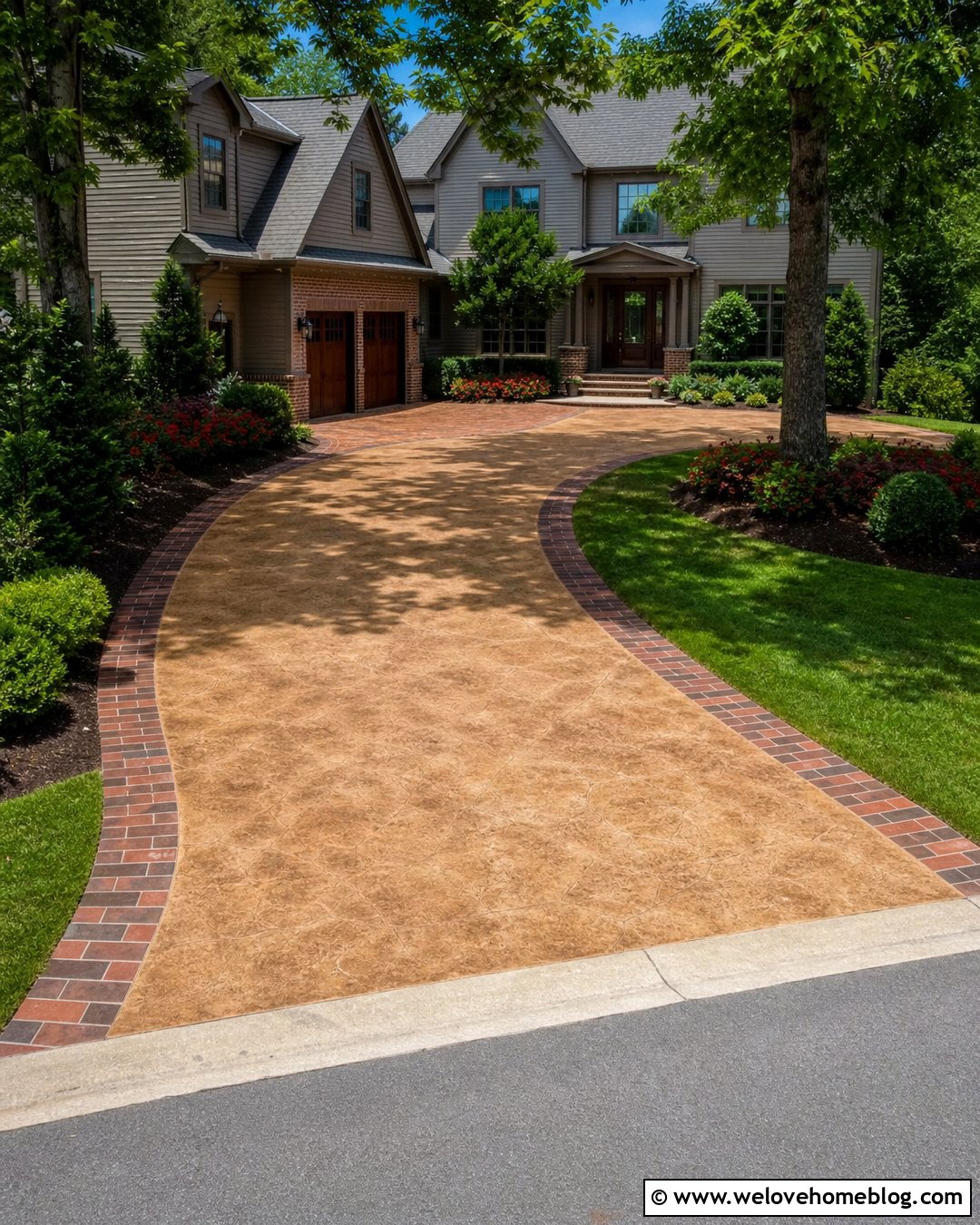
A faux brick border delivers the warmth of masonry without requiring a full perimeter of individual units. The border can be engraved, stenciled, or scored into the concrete before receiving several brick-red and dark brown stain tones. Fill the central driveway with a lighter caramel finish so the edge remains distinct. This is a useful treatment for an existing slab where adding thick pavers could create transition or drainage complications. A gently curved driveway leading to a traditional two-story house provides a balanced setting. Repeat the brick effect around the walkway and near the garage apron for continuity. Formal shrubs, red flowering plants, and mature shade trees complete the look. Make the faux joints consistent, but vary the brick colors enough to prevent the border from appearing printed onto the surface.
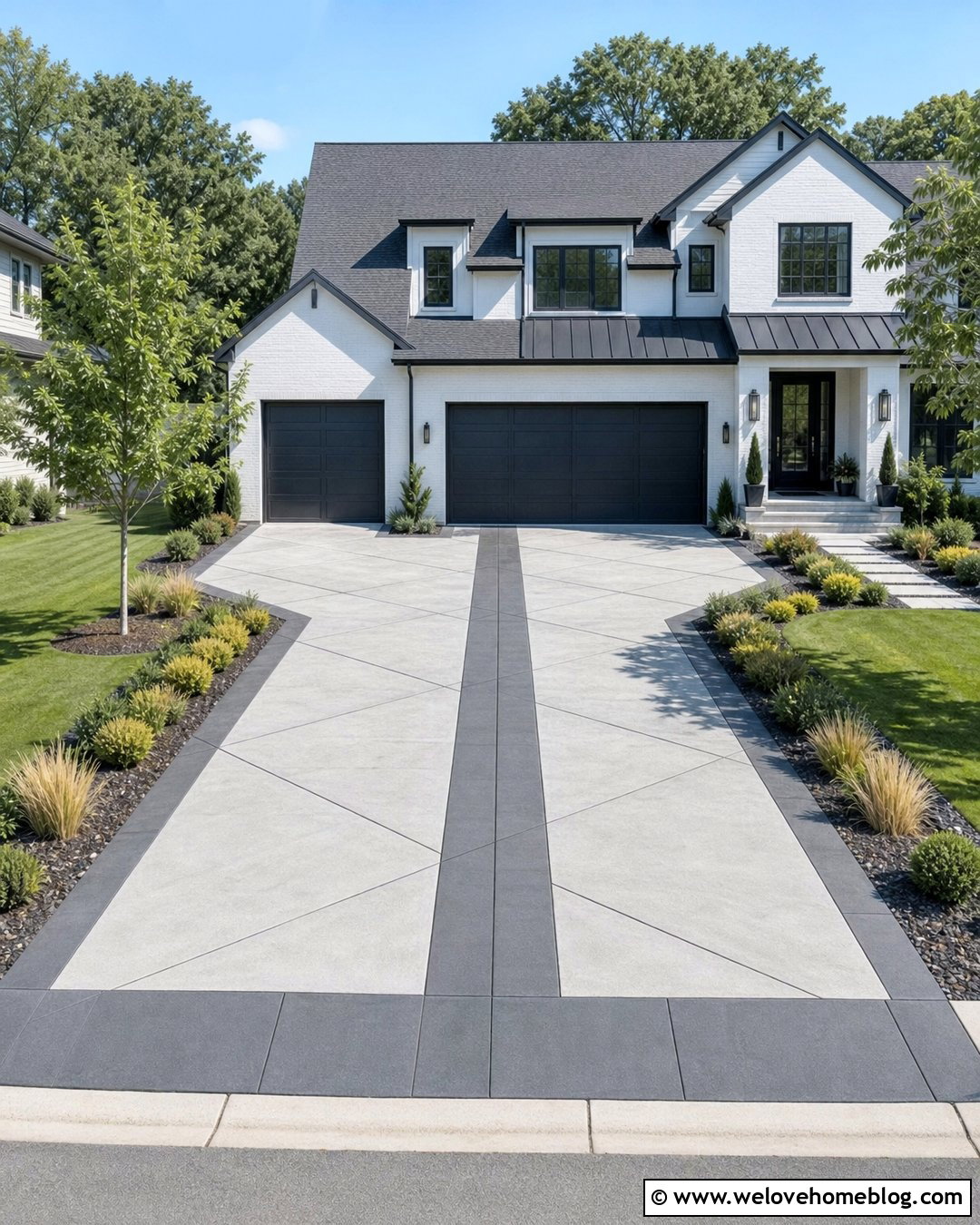
10. Circular Acid Wash Concrete Driveway With Center Medallion
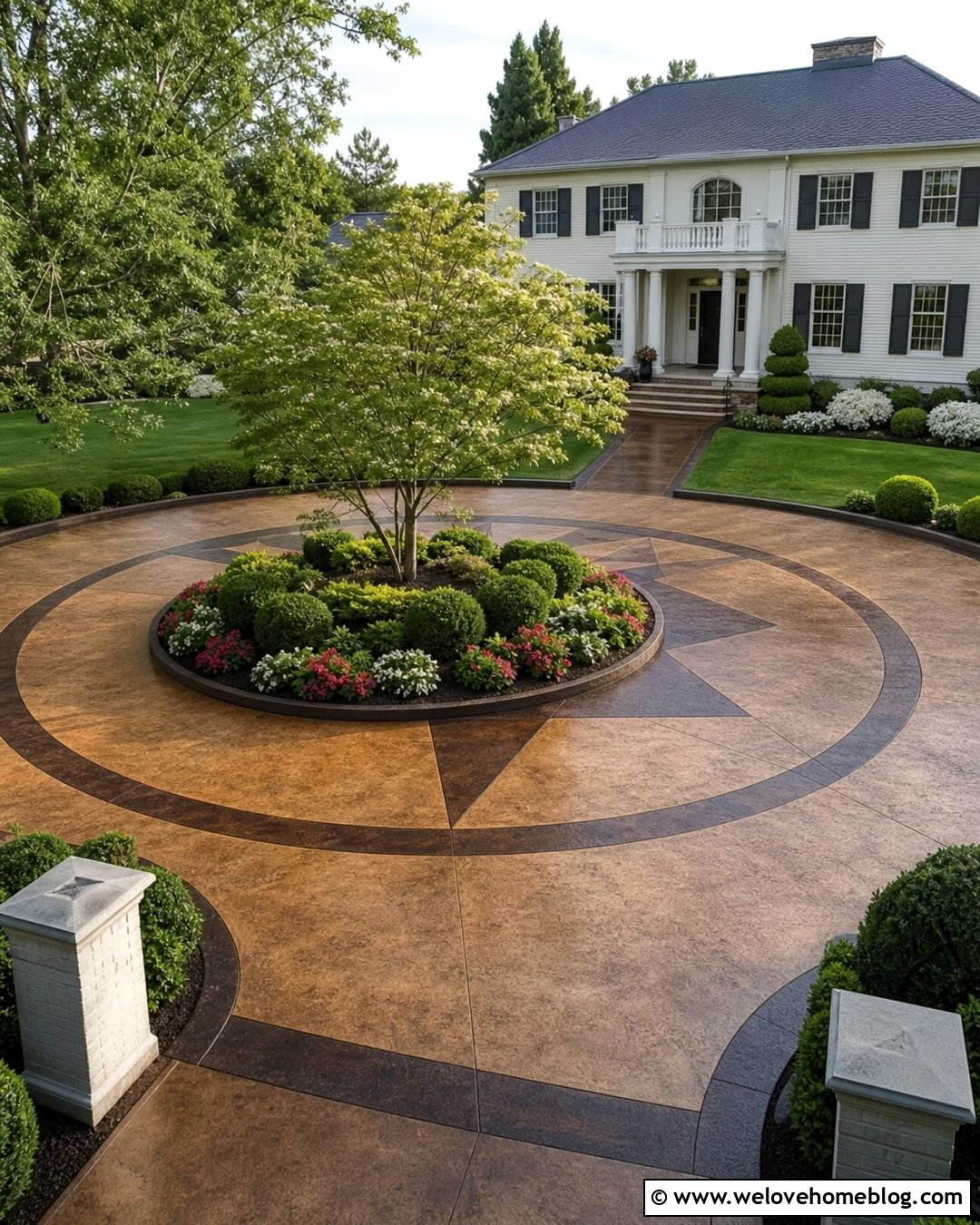
A circular driveway offers enough space for decorative acid staining to become a major curb-appeal feature. Use layered tan and brown tones across the driving lane, then place a simple compass, star, or geometric medallion near the center of the approach. Keep its palette related to the driveway by combining espresso, amber, and muted charcoal rather than introducing unrelated bright colors. A low landscaped island can occupy the center of the circle, surrounded by a matching stained concrete band. Use one sculptural tree, clipped shrubs, seasonal flowers, and low ground cover that will not block views across the driveway. This layout complements a symmetrical colonial or large transitional home. Decorative medallions, sawcut borders, and layered stain colors can add detail while still preserving the natural movement of acid-reactive color. ()
11. Horseshoe Acid Wash Concrete Driveway With Stone Pillars
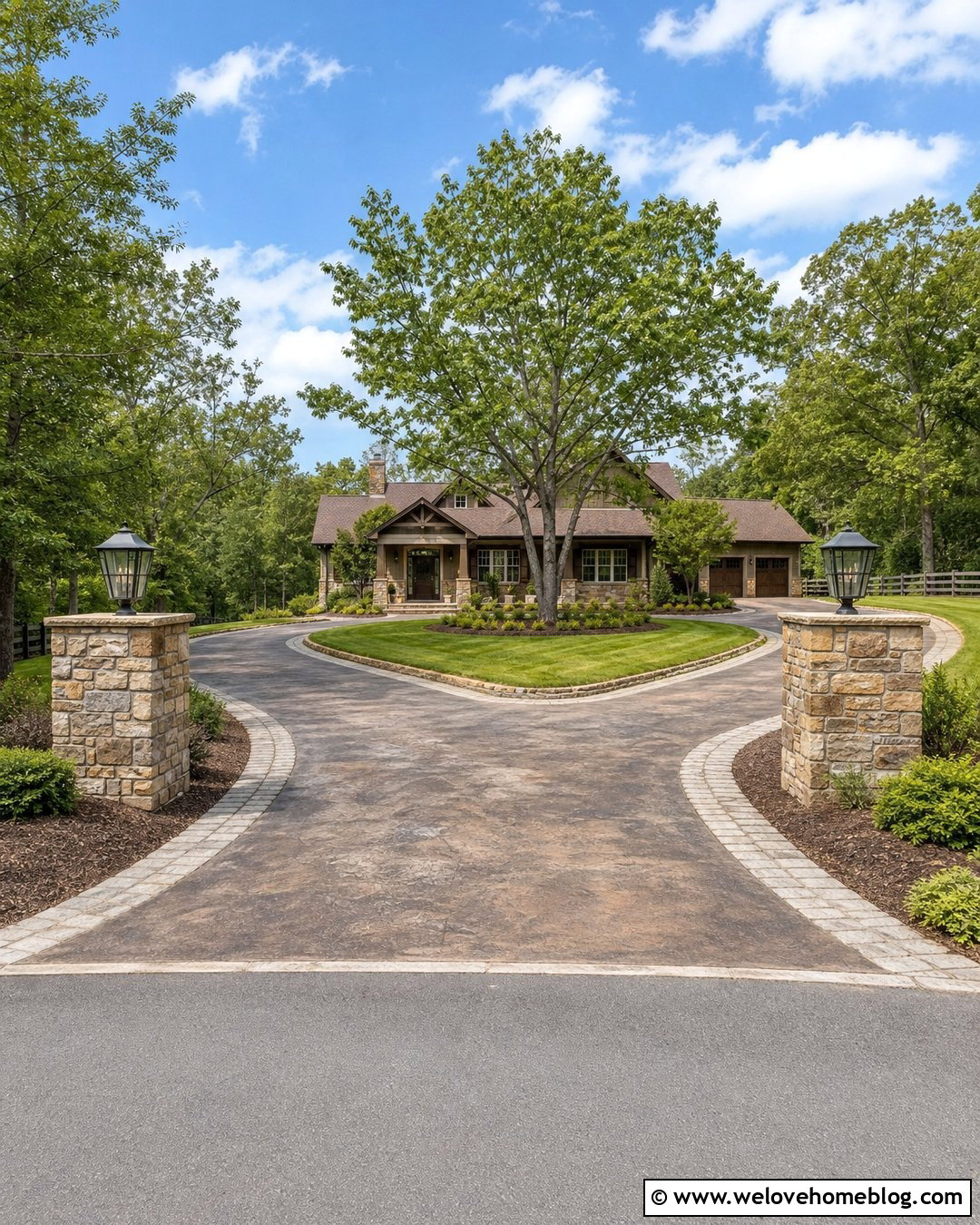
Stone entrance pillars give a horseshoe driveway a clear beginning and strengthen its connection to the house. Finish the concrete in layered walnut, tan, and muted charcoal tones that coordinate with the stone rather than matching it exactly. Follow the horseshoe curve with a narrow band of dark concrete or small granite setts. This creates a finished edge and highlights the layout from the street. Between the two driveway openings, install a broad lawn or landscaped island with one canopy tree and balanced planting beds. Stone pillars can support lanterns and discreet address plaques, but their height should remain proportionate to the property. A country, craftsman, or lodge-inspired house provides a natural backdrop. Keep plants low near each exit so drivers maintain clear sightlines when entering the road.
12. Modern Acid Wash Concrete Driveway With Grass Strips
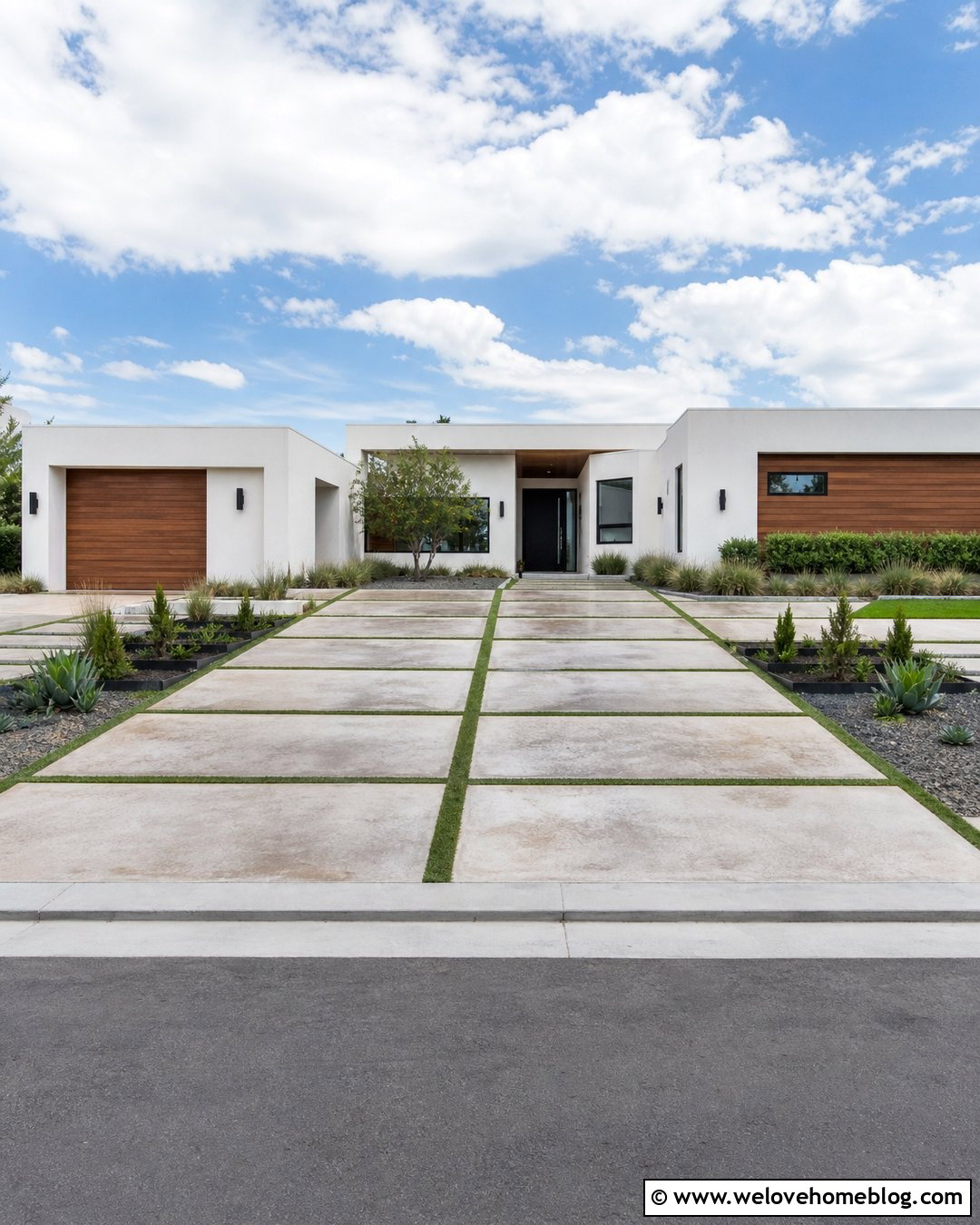
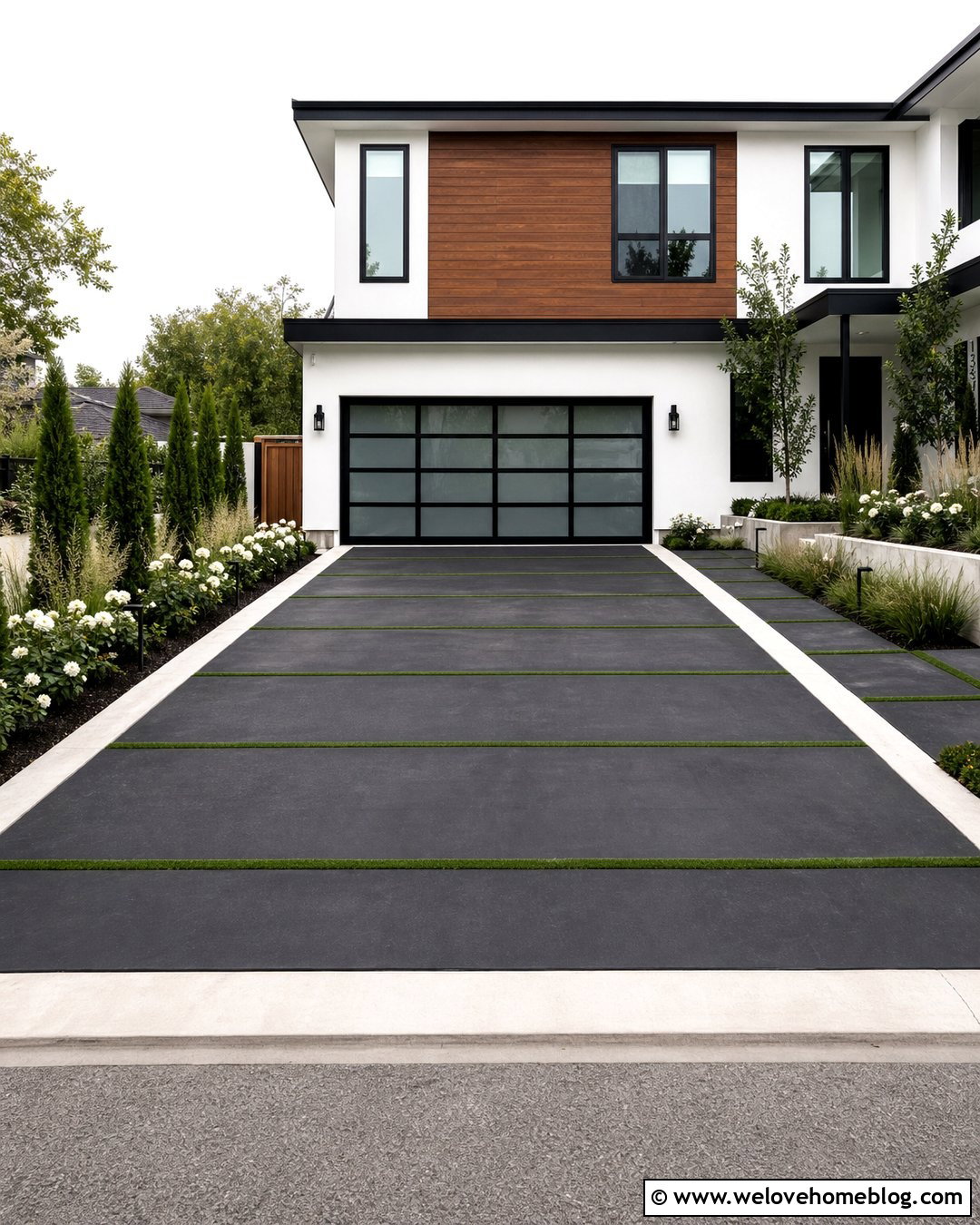
Long rectangular concrete panels separated by grass or ground-cover strips create a lighter, more contemporary driveway. Use a pale gray-brown acid treatment that adds soft mottling without fighting the strong geometry. The concrete should remain the dominant driving surface, with narrow planted joints positioned carefully so tires do not repeatedly cross vulnerable areas. Frame the layout with black metal edging and linear beds of ornamental grass, dwarf evergreens, or compact succulents. A flat-roofed modern house with white stucco and natural wood creates an ideal background. Extend one panel toward the entrance as a walkway to connect the hardscape. This design performs best when drainage, irrigation, and maintenance access are planned from the beginning. In colder regions, consider decorative gravel strips instead of grass for easier seasonal upkeep.
13. Acid Wash Concrete Driveway With Exposed Aggregate Bands
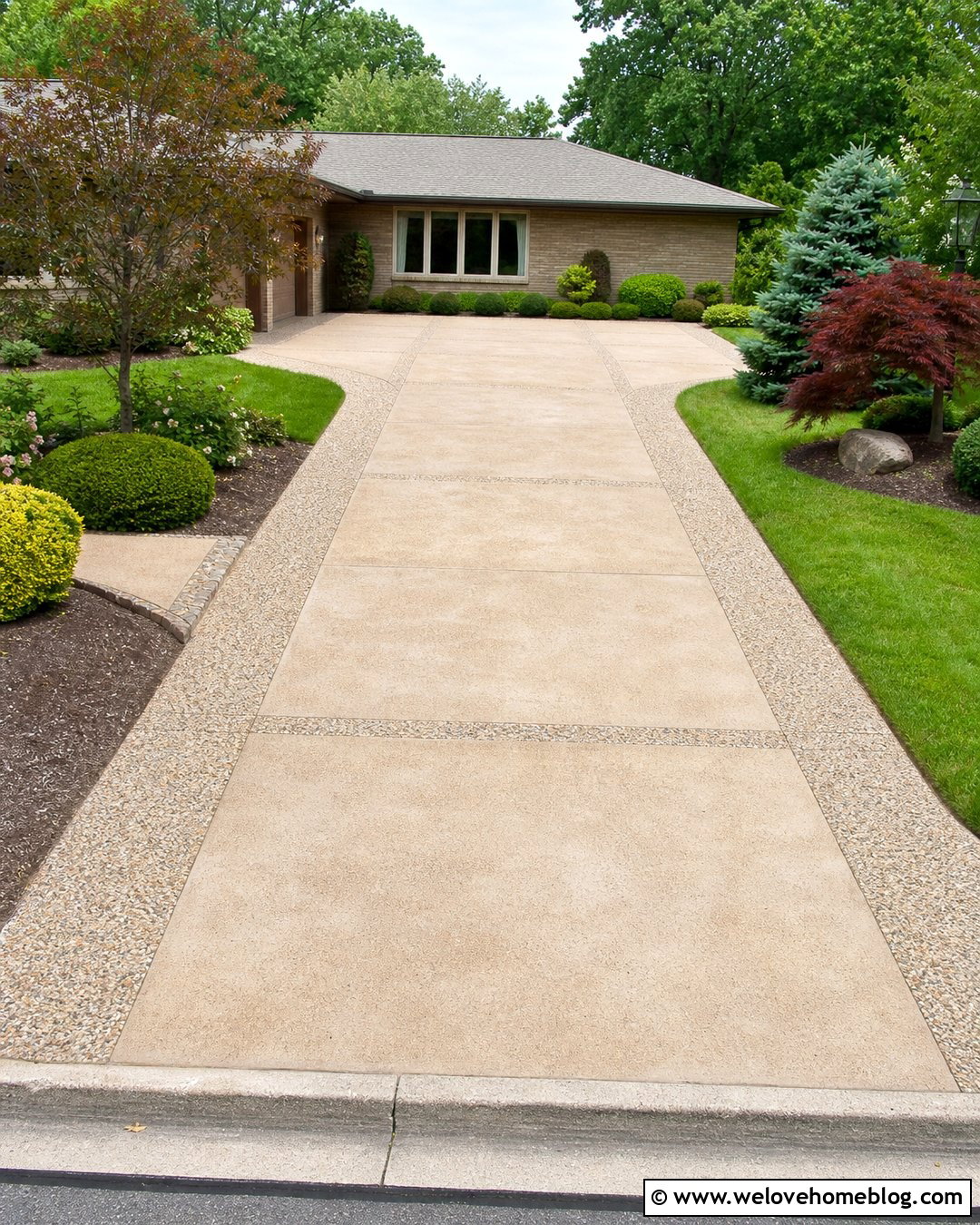
Combining acid-treated concrete with exposed aggregate bands gives a driveway both color variation and physical texture. Use a warm beige or light brown field, then place aggregate strips across the driveway at expansion joints and around the outer border. Select pebbles containing cream, gray, and brown tones that coordinate with the stain. A broad straight driveway leading to a ranch house benefits from these crossbands because they visually break up its length. Add wide lawn areas, layered foundation shrubs, and a walkway built from the same aggregate finish. The contrasting texture should be visible from the curb without making snow removal or sweeping unnecessarily difficult. A lightly etched surface may reveal fine aggregate, but deeper exposure is normally created through specialized finishing rather than aggressive, uncontrolled acid treatment alone.
14. Dark Acid Wash Concrete Driveway With Granite Border
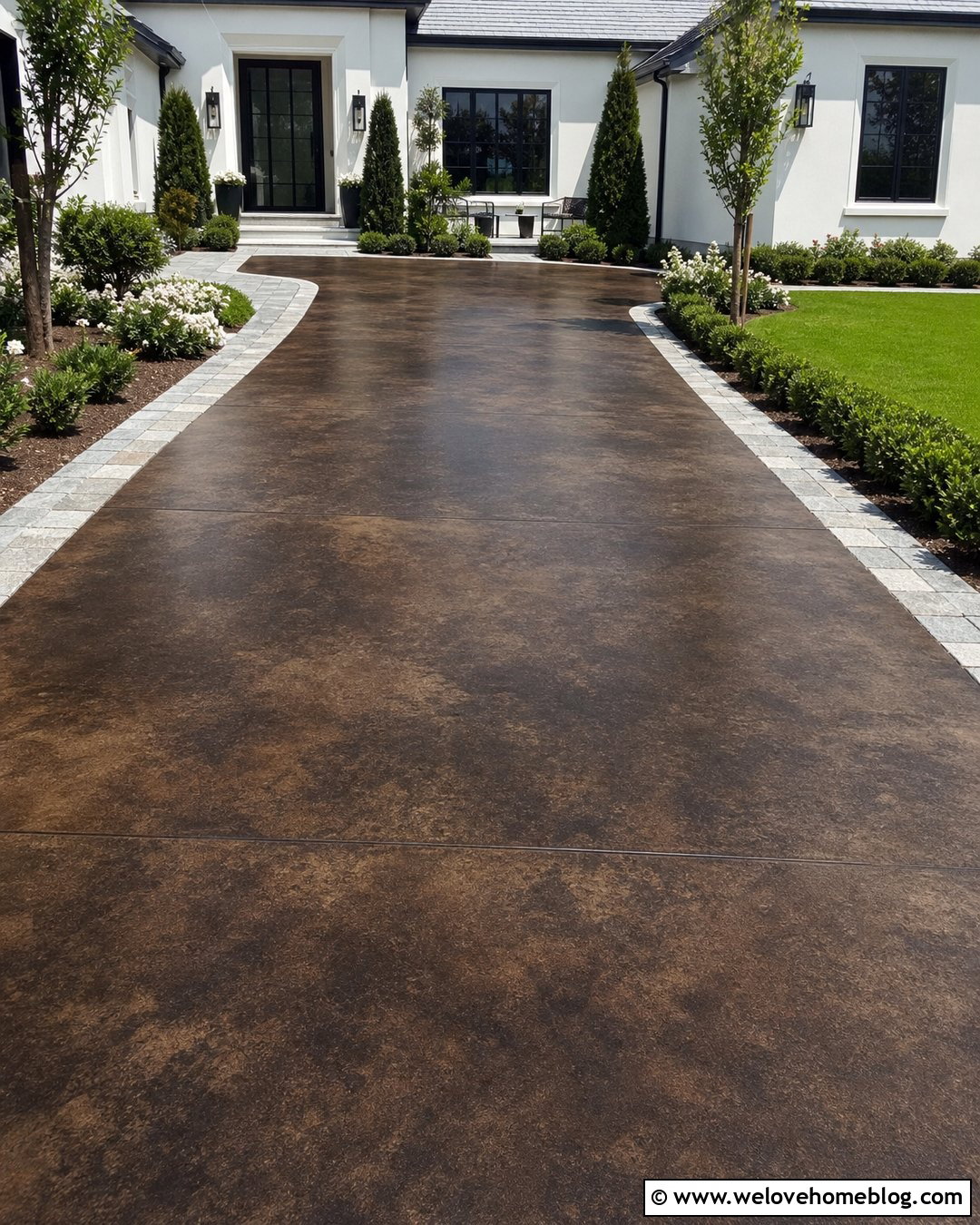
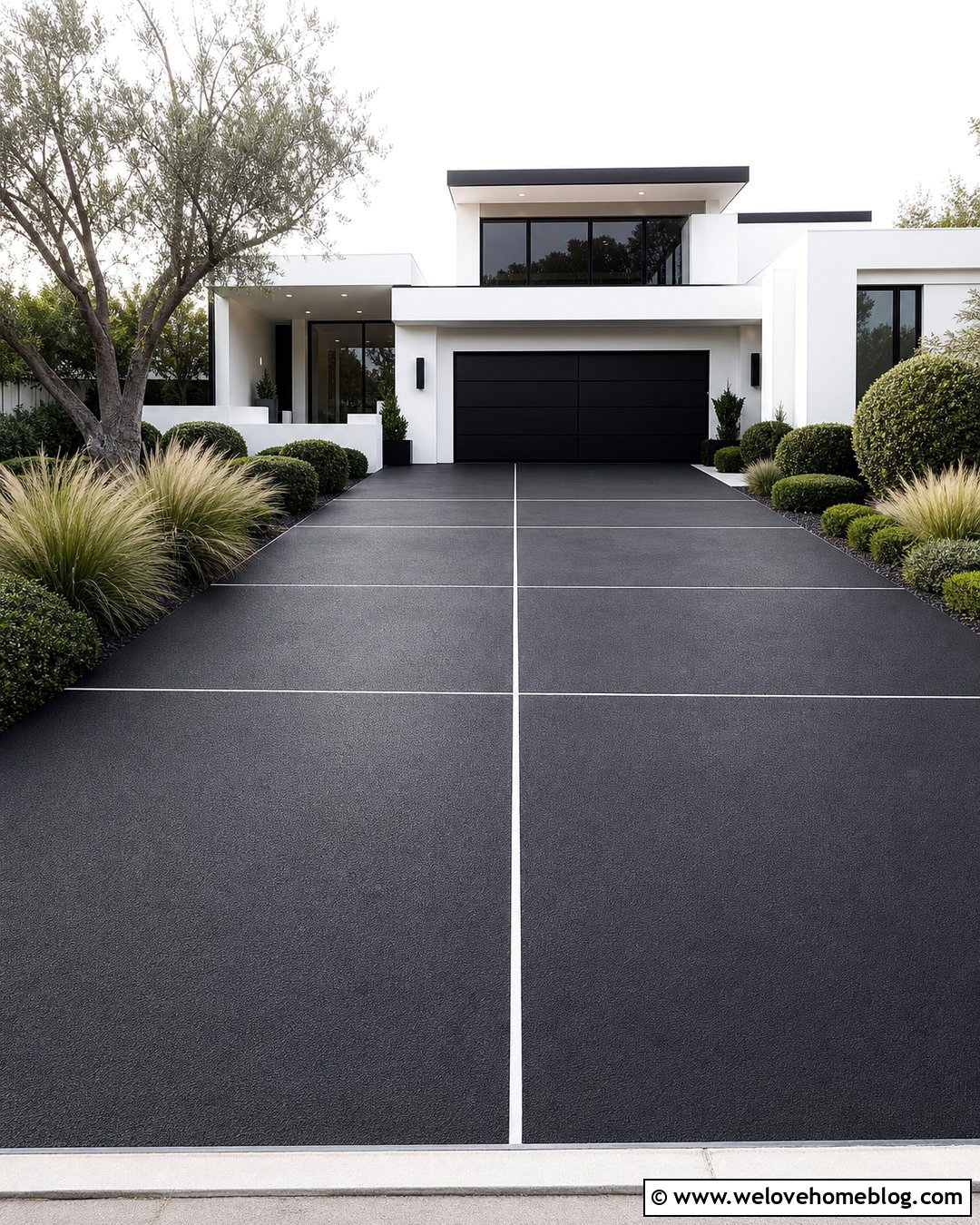
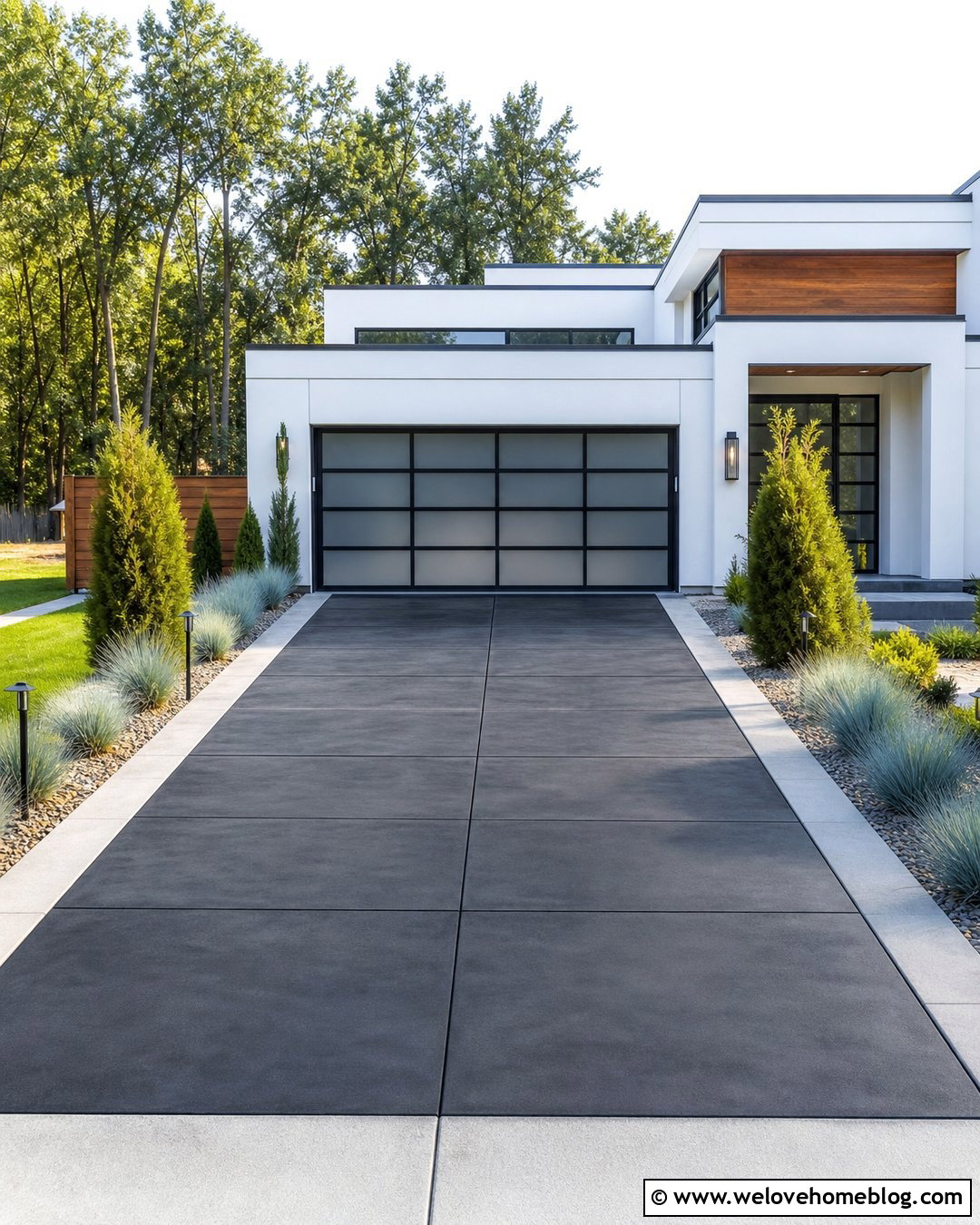
Dark brown acid-stained concrete can look sophisticated beside a light-colored contemporary home. Layer espresso, charcoal-brown, and subtle bronze tones, allowing lighter sections to remain visible so the driveway does not become a visually solid black slab. A border of pale gray granite setts delivers contrast and helps define the surface after rain. Use a straight driveway with a slightly wider parking court near the garage. White stucco, light brick, or pale fiber-cement siding will prevent the overall exterior from feeling too dark. Landscaping should be equally restrained, with green hedges, white flowering shrubs, and a few upright ornamental trees. Because translucent stains can emphasize existing marks and repairs, inspect and prepare the slab carefully. Dark colors may highlight dust, mineral residue, or surface imperfections more readily than midrange earth tones.
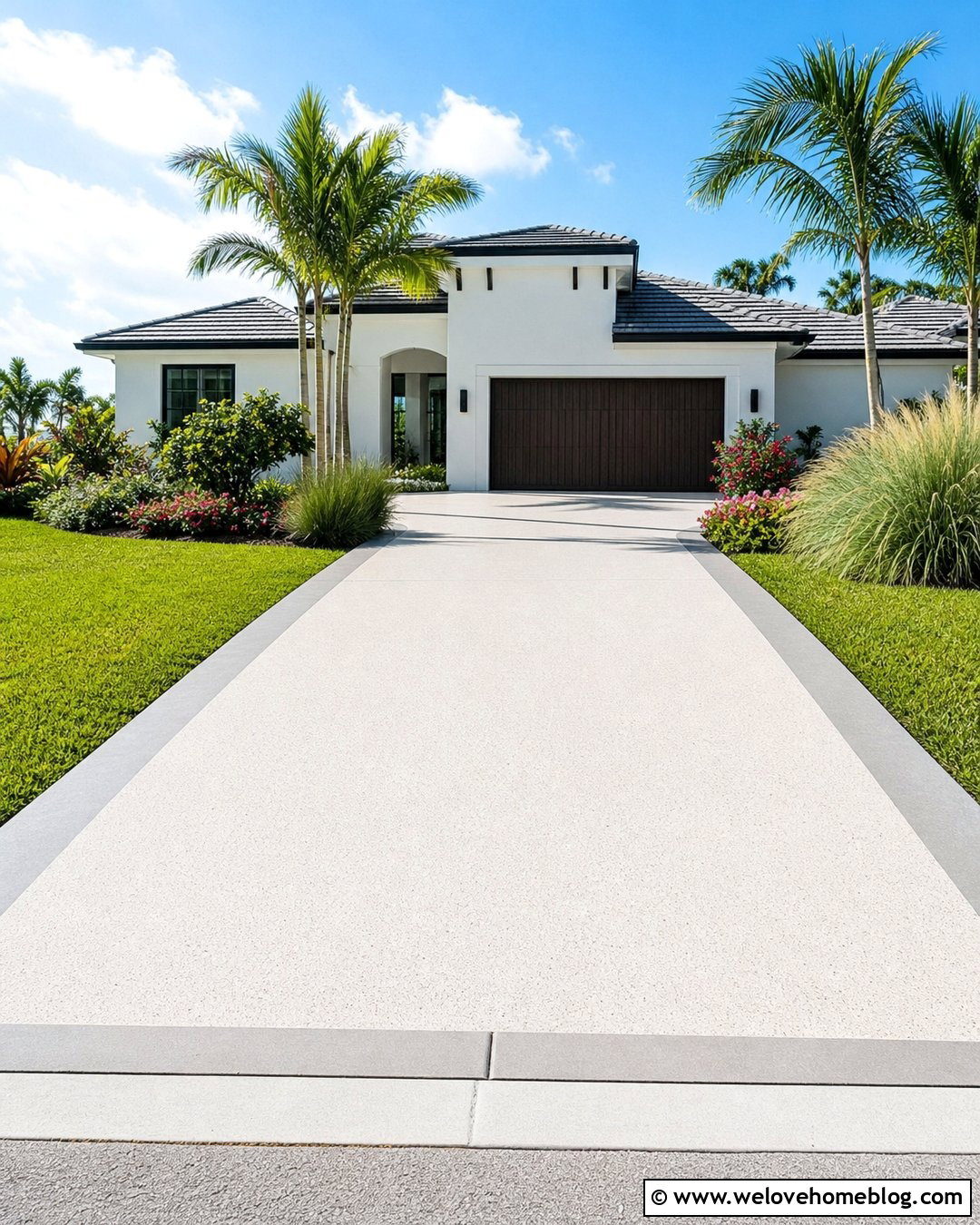
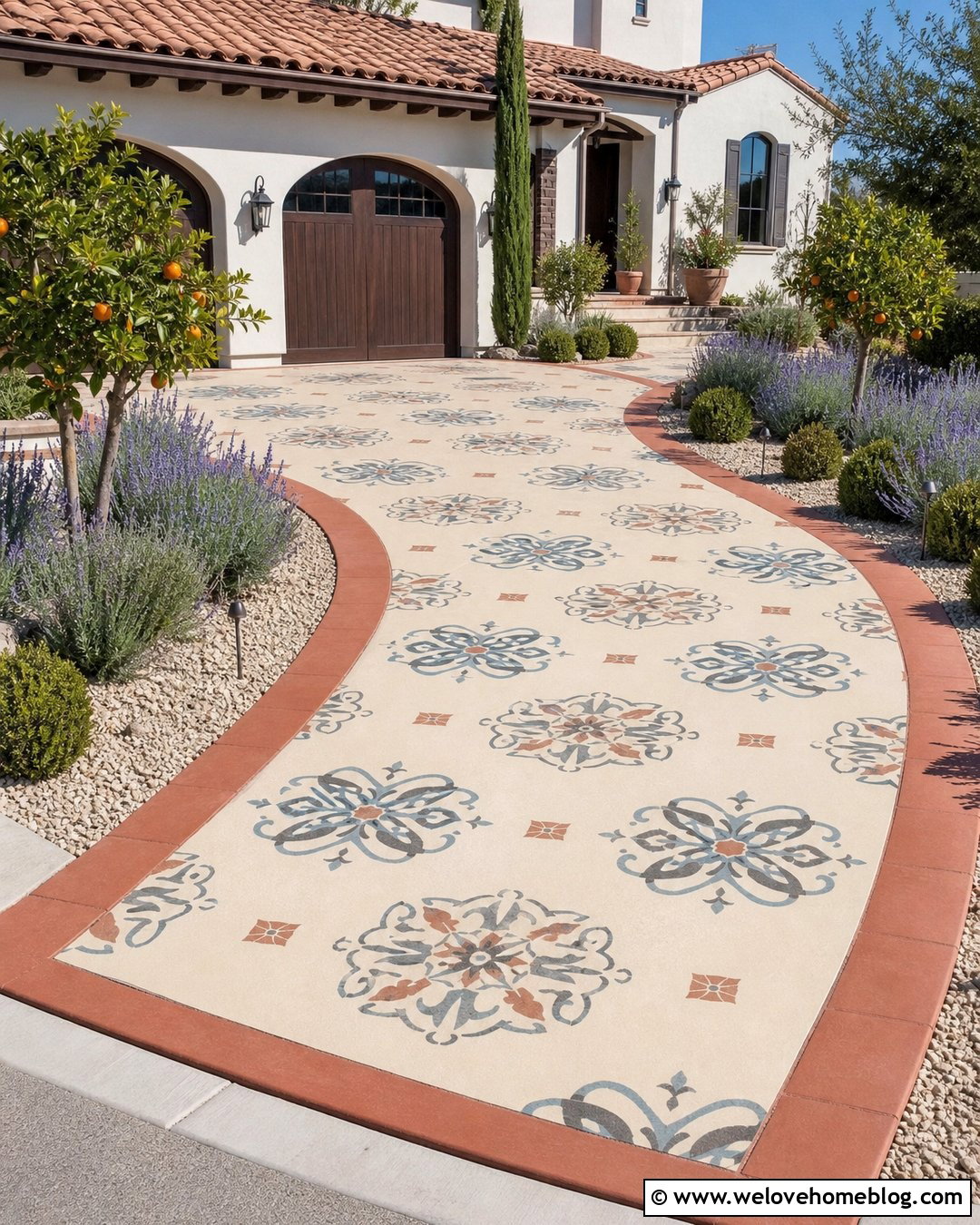
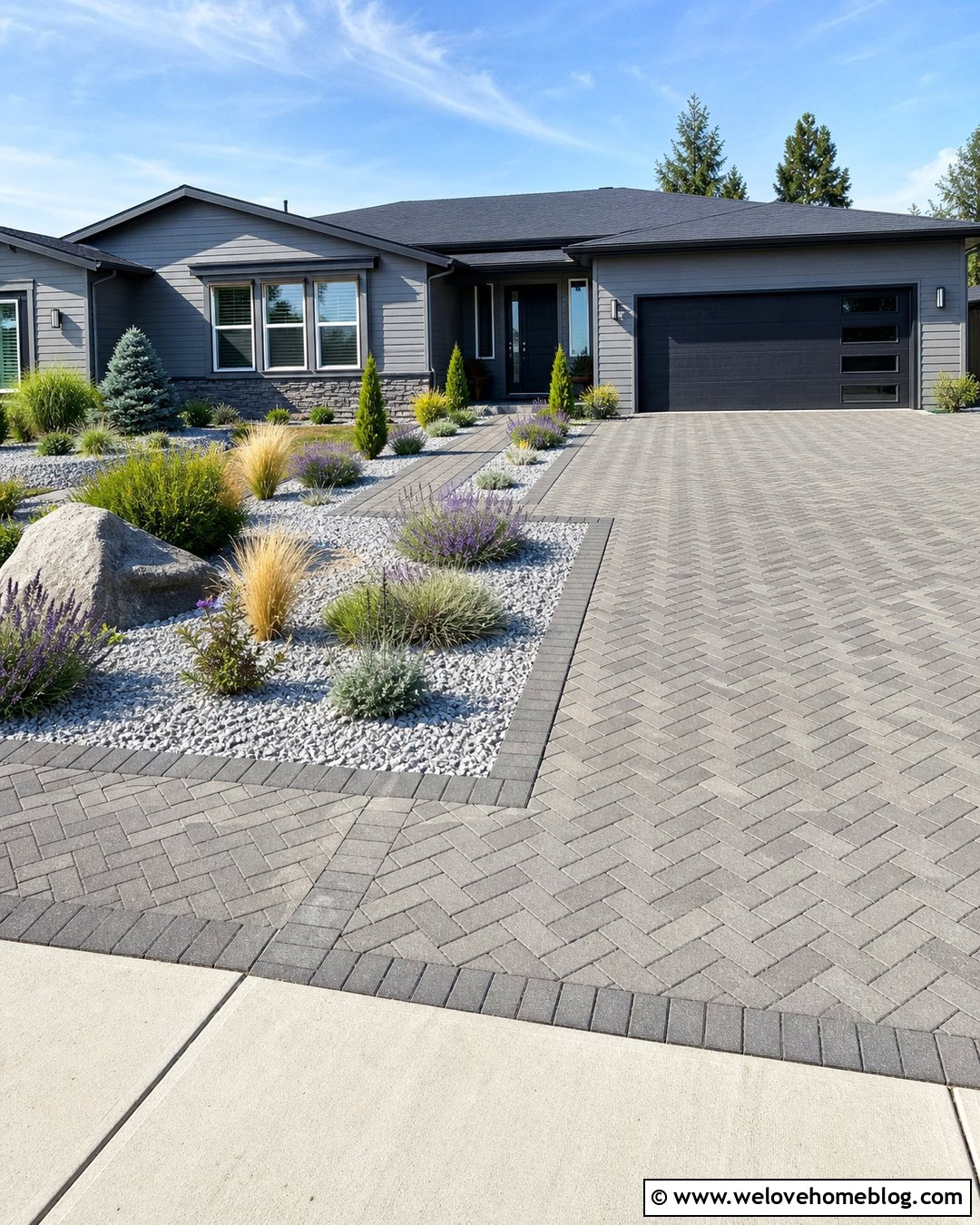
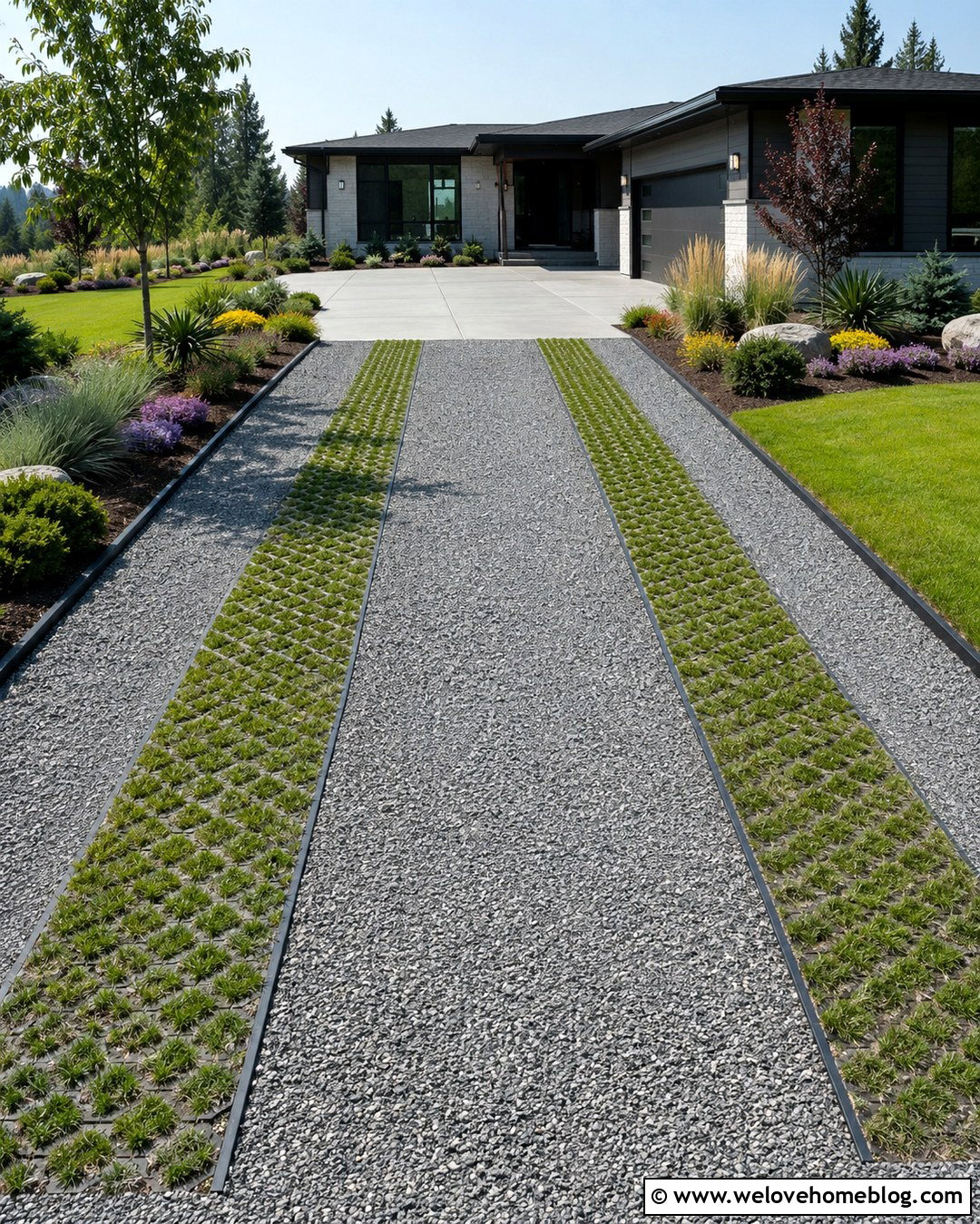
15. Sandy Acid Wash Concrete Driveway With Coastal Landscaping
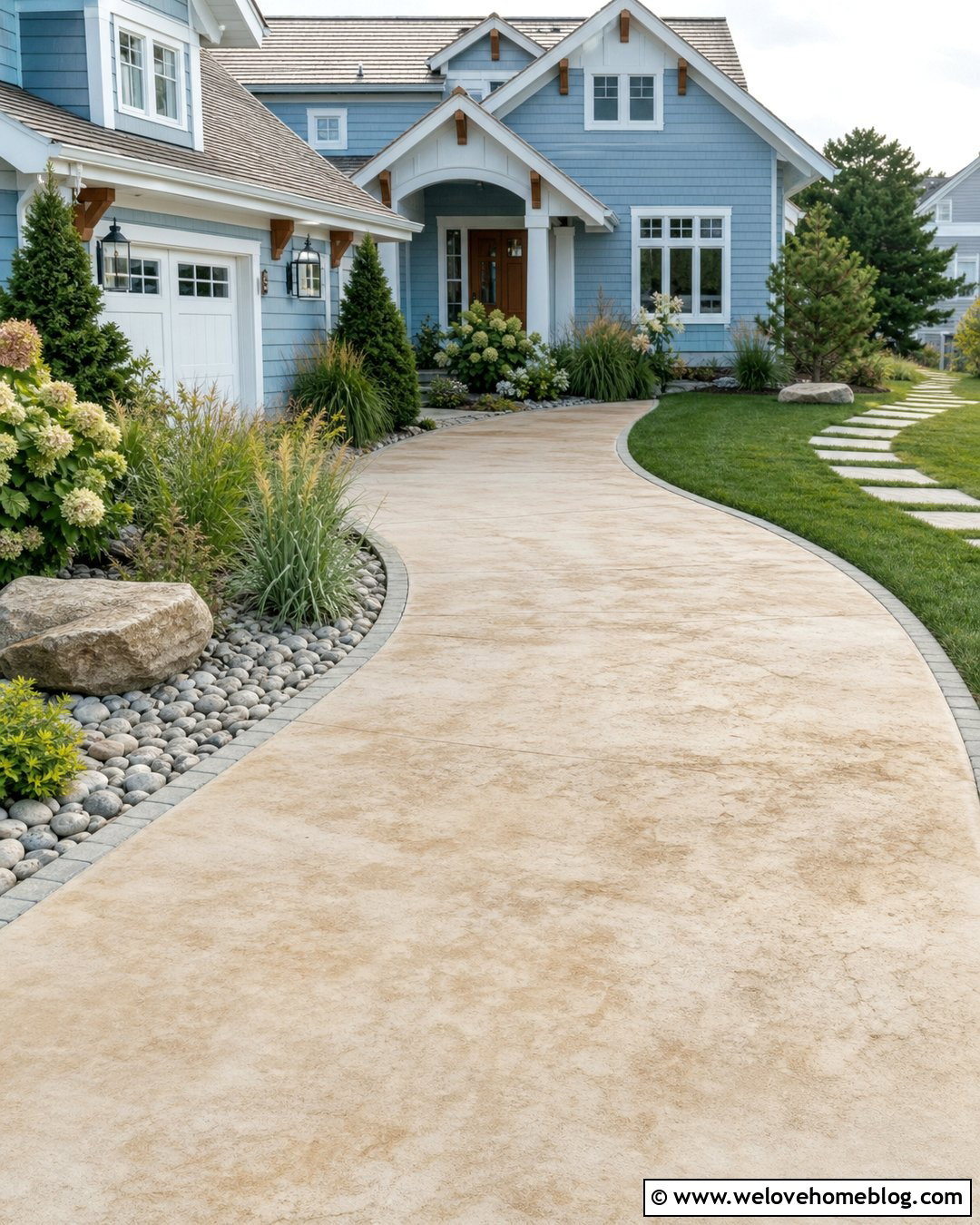
A sandy beige finish can give a driveway an airy appearance that suits a Cape Cod, coastal cottage, or light blue suburban home. Blend pale tan with soft amber mottling, keeping the color quiet enough to complement white trim and natural cedar details. A gently curved driveway edged with light gray pavers will feel more relaxed than a rigid rectangular slab. Surround it with beach grass, hydrangeas, dwarf evergreens, and beds of smooth decorative stone. A stepping-stone walkway can cross the planting bed and meet the front porch. Avoid overly dark sealers that could turn the sand-colored finish orange or muddy. Instead, review sealed test areas under both sun and shade. The result should look fresh and natural while still offering more depth and warmth than standard unfinished gray concrete.
16. Rustic Acid Wash Concrete Driveway With Leather Finish
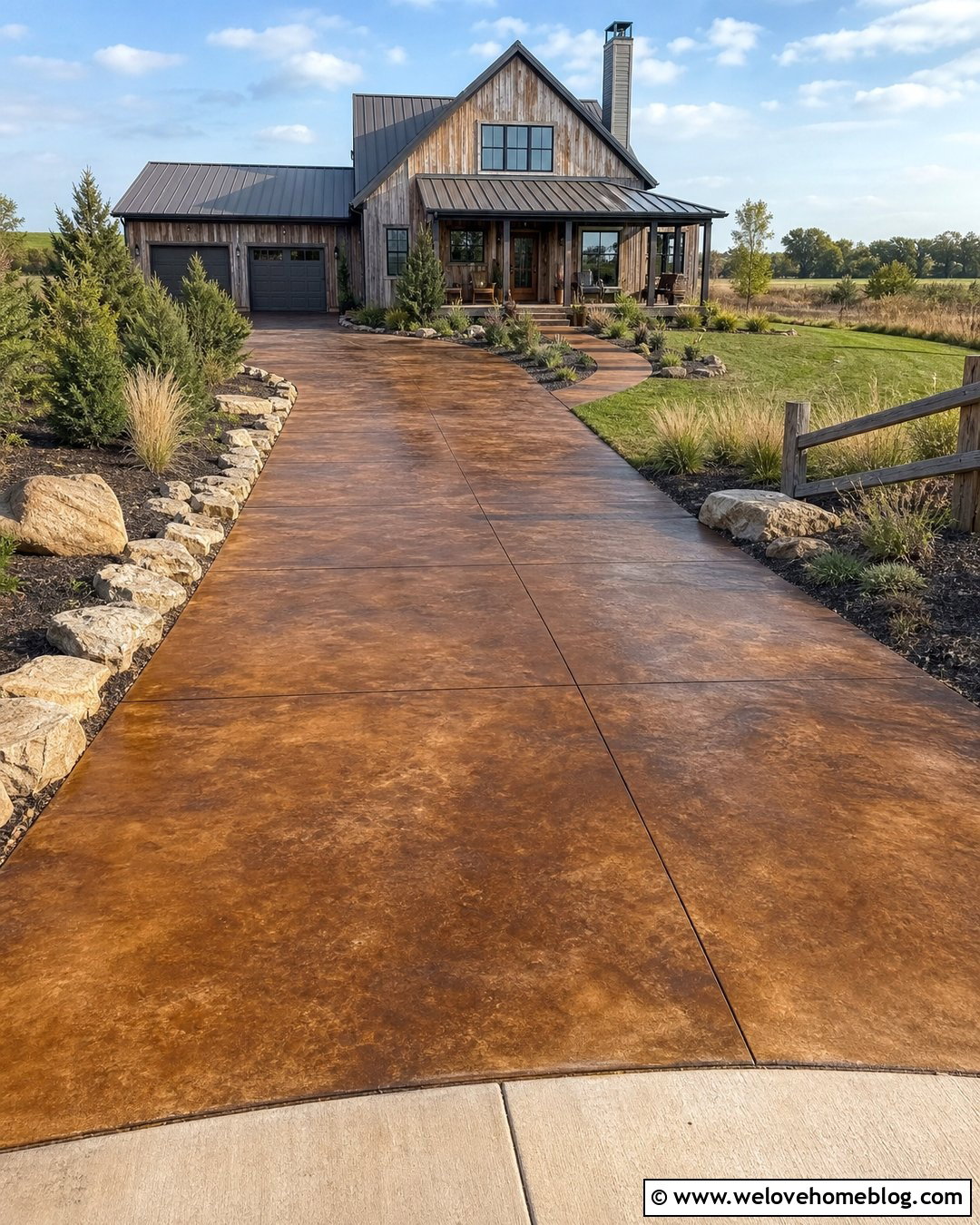
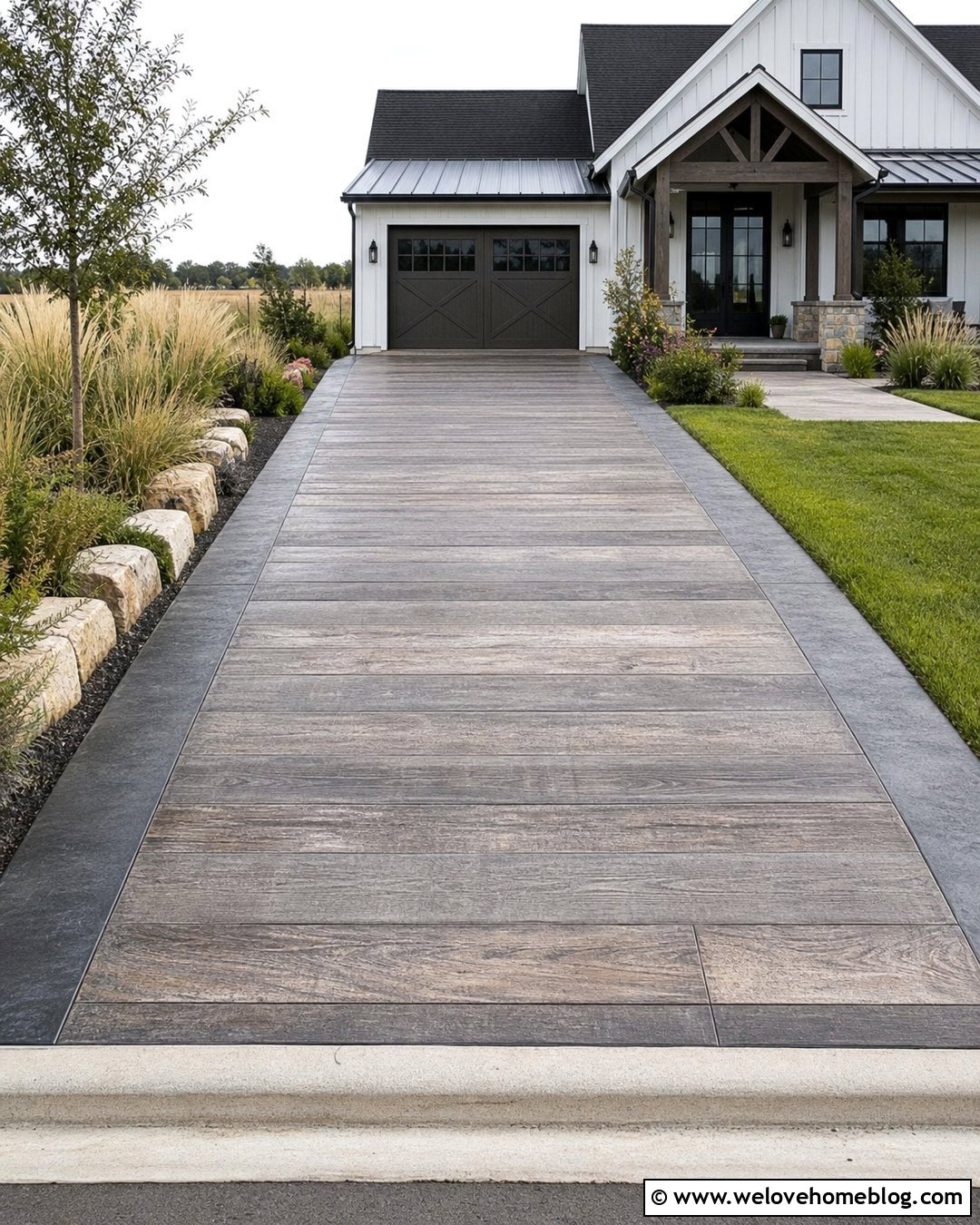
An older concrete driveway does not always need to look completely new. Brown acid staining can emphasize mild tonal variation and create a distressed, leather-like appearance that feels appropriate beside a farmhouse, cabin, or rustic ranch. Start with repaired, structurally sound concrete, but understand that a translucent finish will not conceal every patch, mark, or color difference. Use coffee, saddle brown, and muted amber tones across a straight driveway with slightly irregular stone edging. Native grasses, weathered boulders, evergreen shrubs, and a simple timber fence can frame the approach. Carry the stain onto a connected walkway for a cohesive surface. Avoid making random cracks part of the plan unless a professional has confirmed they are stable. Necessary repairs and drainage corrections should come before any decorative staining work.
17. Olive Brown Acid Wash Concrete Driveway With Woodland Border
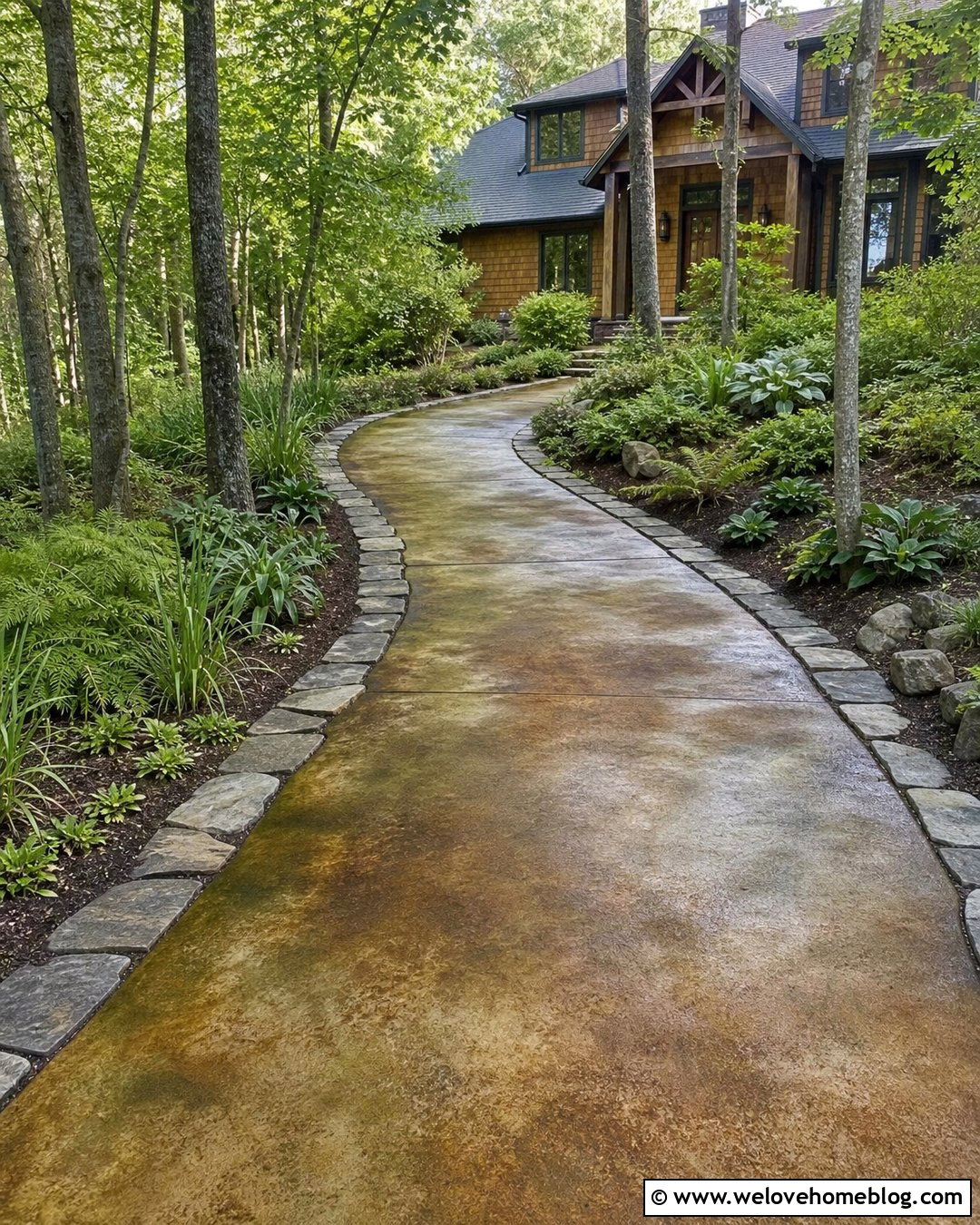
Muted olive-brown concrete settles naturally into a yard filled with mature trees. The finish can combine mossy green undertones, bronze, and soft brown mottling to echo surrounding bark and foliage. Use it on a curved driveway that follows the landscape rather than cutting through it in one severe line. A border of irregular gray fieldstone provides definition while keeping the woodland character. Plant ferns, shade-tolerant grasses, hostas, inkberry, and low native ground covers beyond the stone. A craftsman or cedar-sided house will reinforce the earthy palette. Keep wet leaves and soil from accumulating on the driveway by leaving a narrow maintenance strip beside dense beds. The surface should remain bright enough to guide visitors toward the house, even where trees create shifting areas of sunlight and shade.
18. Farmhouse Acid Wash Concrete Driveway With Paver Apron
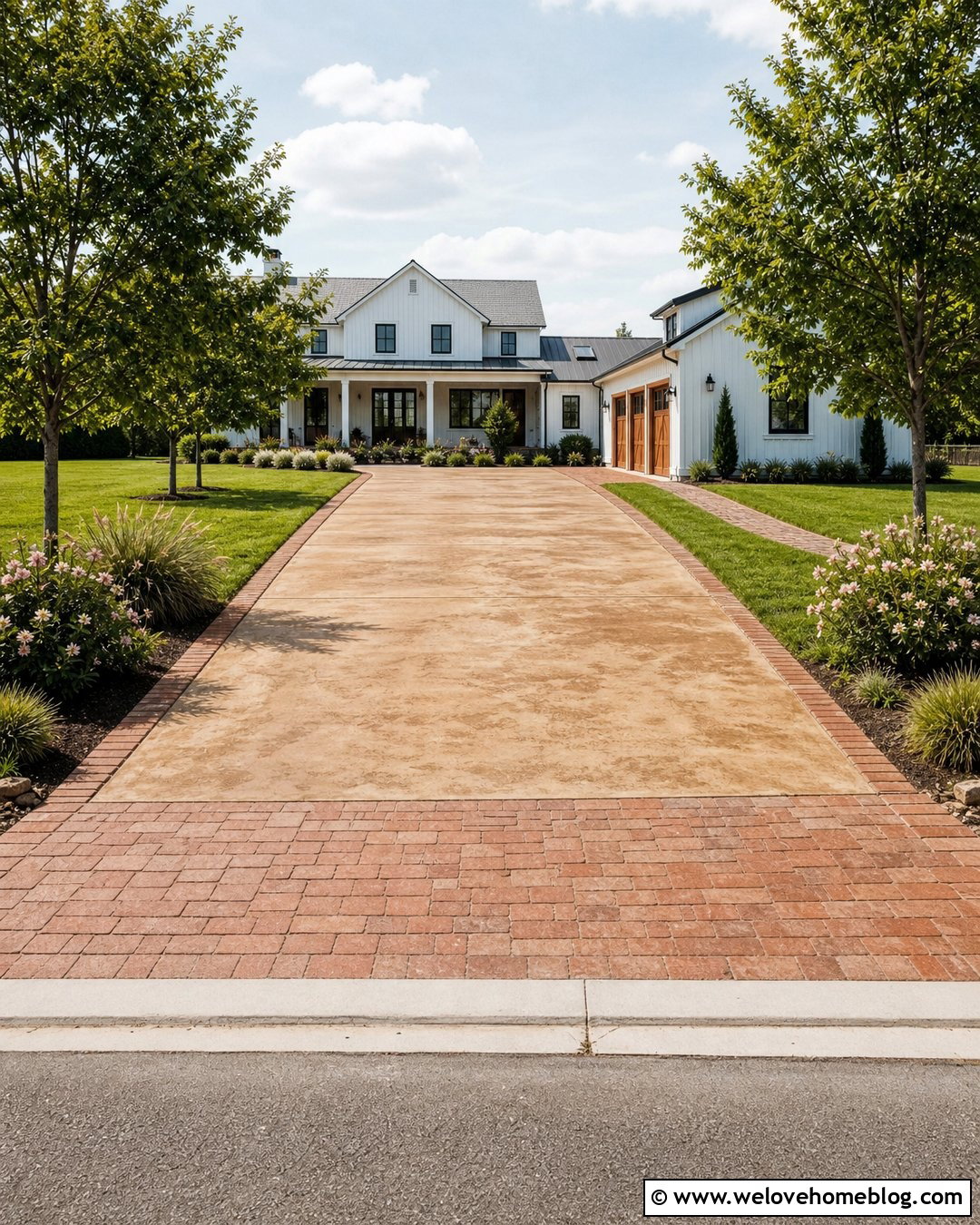
A paver apron can add a traditional entrance detail to an otherwise simple acid-stained driveway. Choose warm buff concrete with chestnut mottling, then install weathered red or charcoal clay pavers across the first several feet near the street. Repeat the same pavers in a narrow ribbon near the garage so the entrance does not feel disconnected. A long, straight layout suits a modern farmhouse with white siding, black windows, and natural wood doors. Frame the drive with clipped lawn, native grasses, flowering shrubs, and evenly spaced small trees. The apron should sit flush with the concrete to provide a smooth transition. Plan drainage carefully at the meeting point between materials. This complete arrangement gives the driveway a strong visual beginning while allowing the economical stained concrete field to cover most of the distance.
19. Small Acid Wash Concrete Driveway With Dark Border
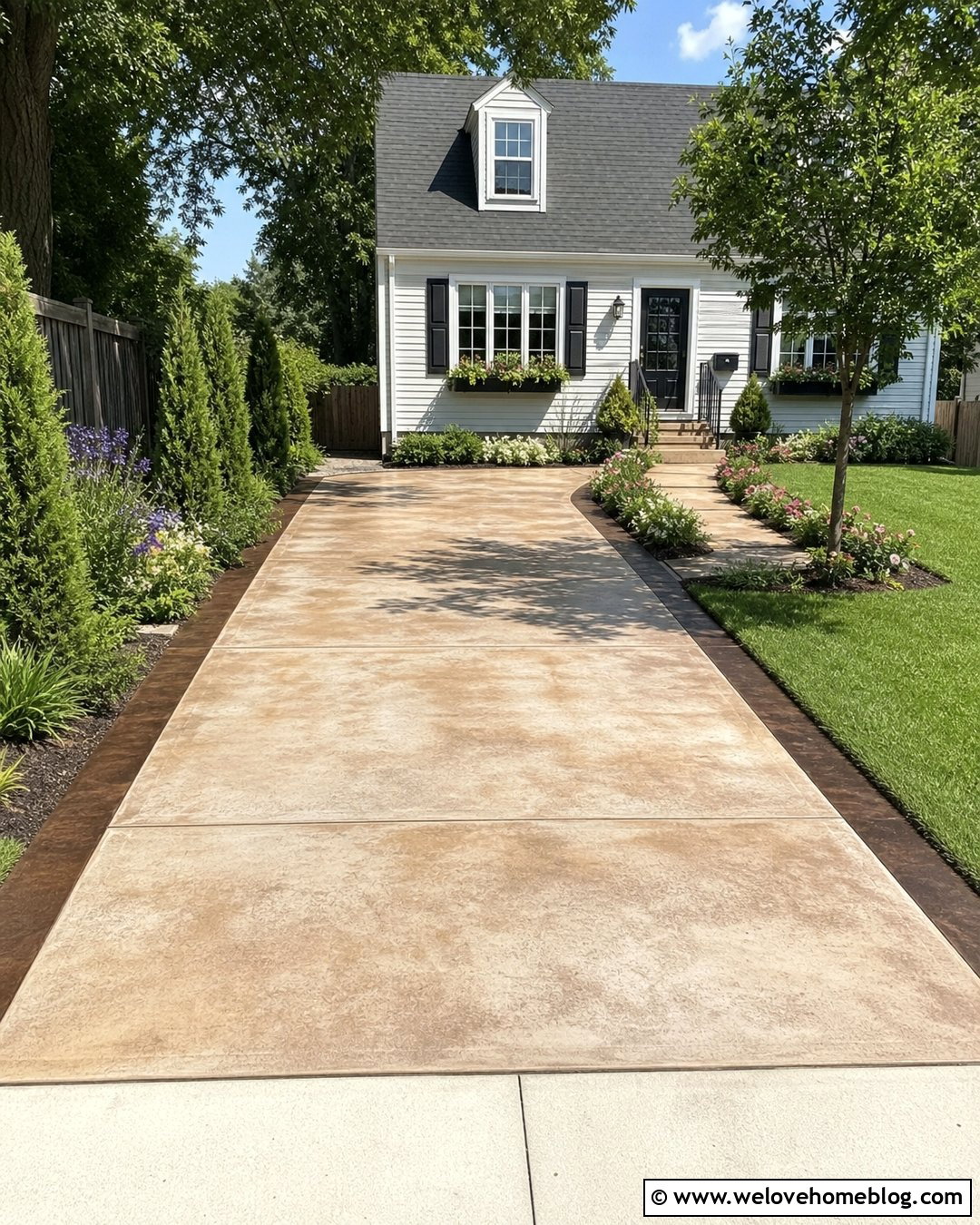
Limited frontage calls for a restrained design rather than a complicated decorative pattern. Use light caramel acid-stained concrete across a compact, straight driveway, then add a narrow dark brown stained border to sharpen its shape. The contrast can make the central field feel wider and more organized. Continue one side of the border into a slim walkway leading to the front door, reducing the number of unrelated hardscape materials. A small bungalow, Cape Cod, or urban cottage provides an appropriate setting. Plant narrow upright shrubs, low flowering perennials, and one compact ornamental tree without crowding the parking area. Keep utility access and trash-bin storage in mind when planning beds. A simple two-tone treatment provides character while preserving the open, uncluttered appearance that a small front yard needs.
20. Long Acid Wash Concrete Driveway With Layered Earth Tones
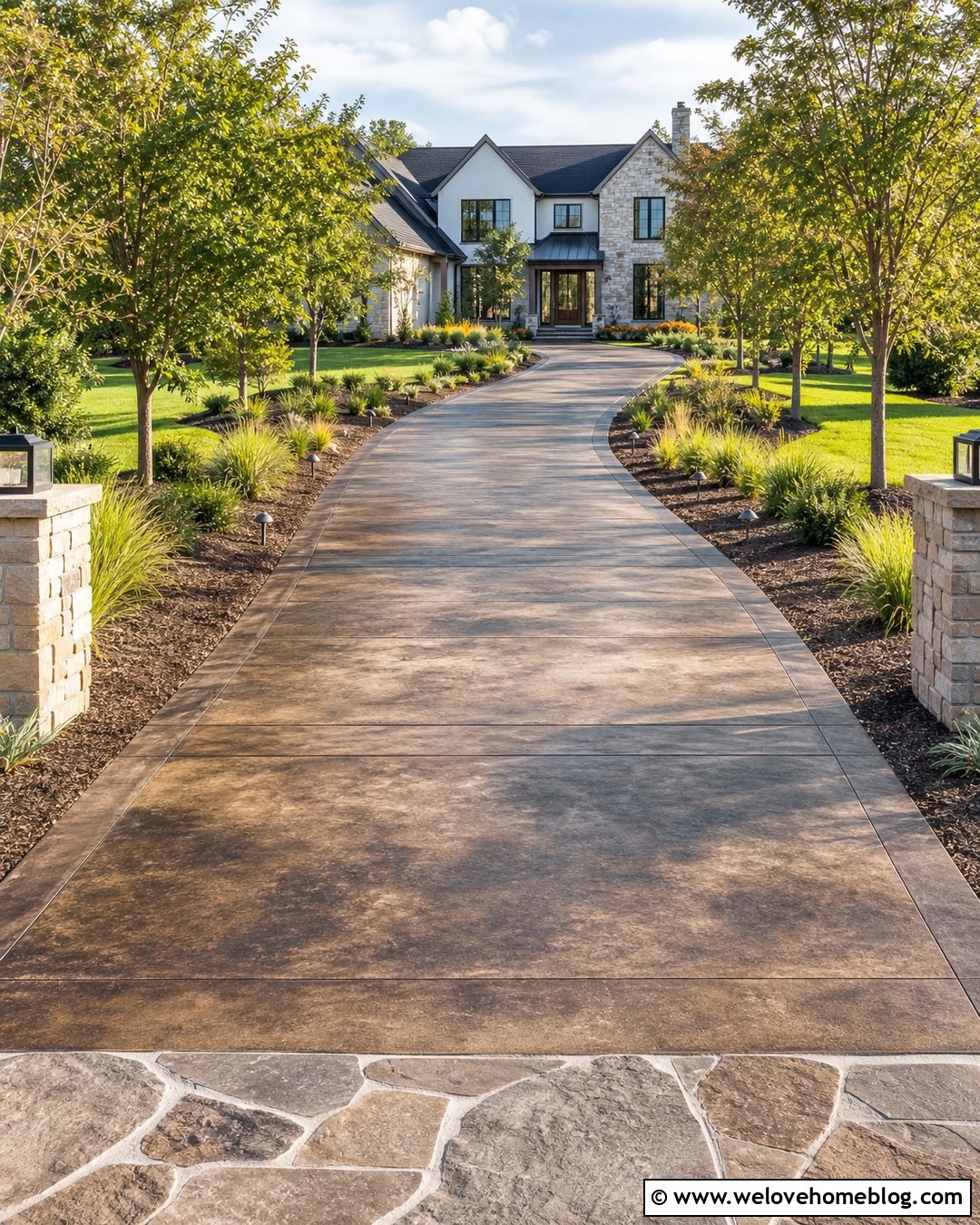
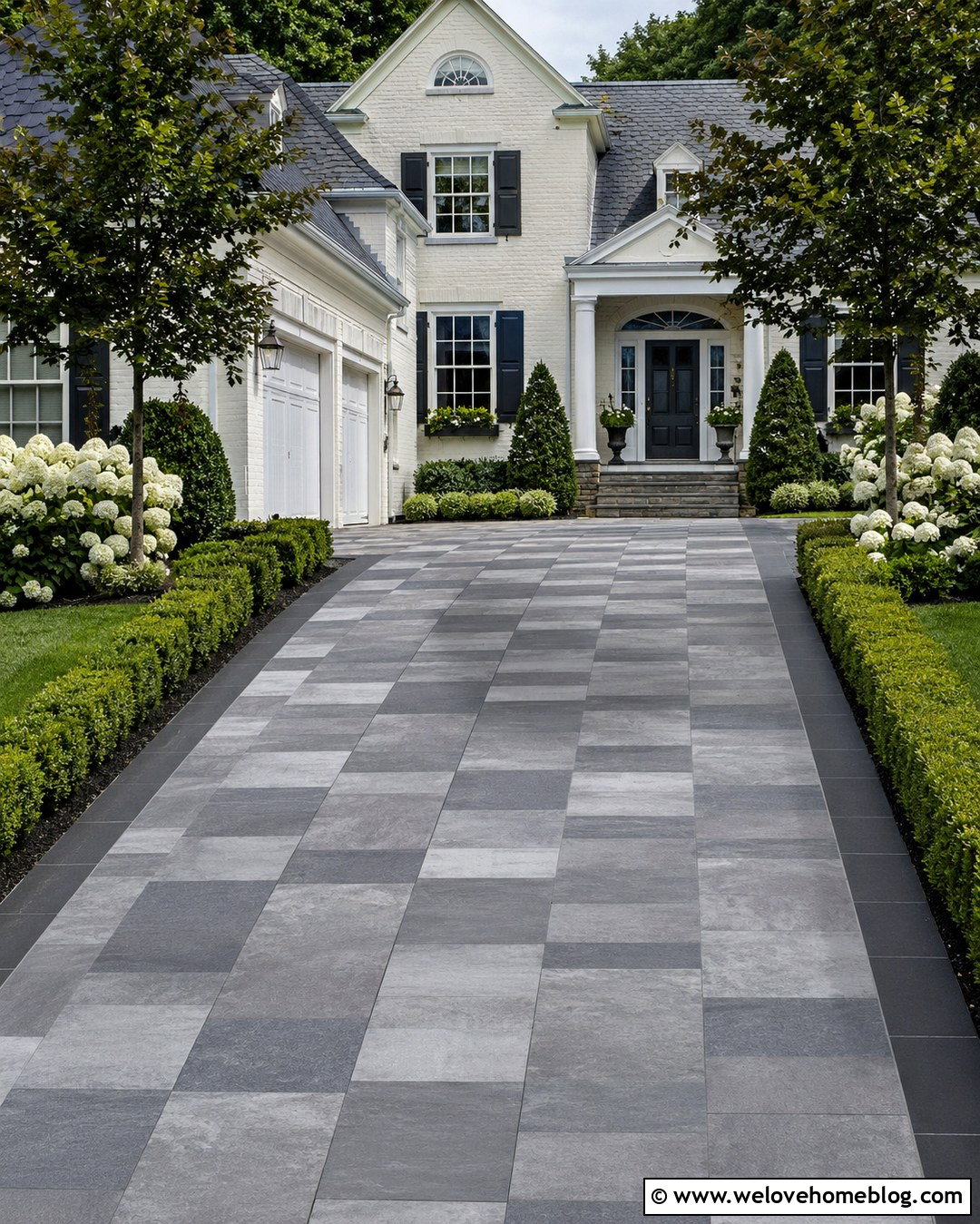
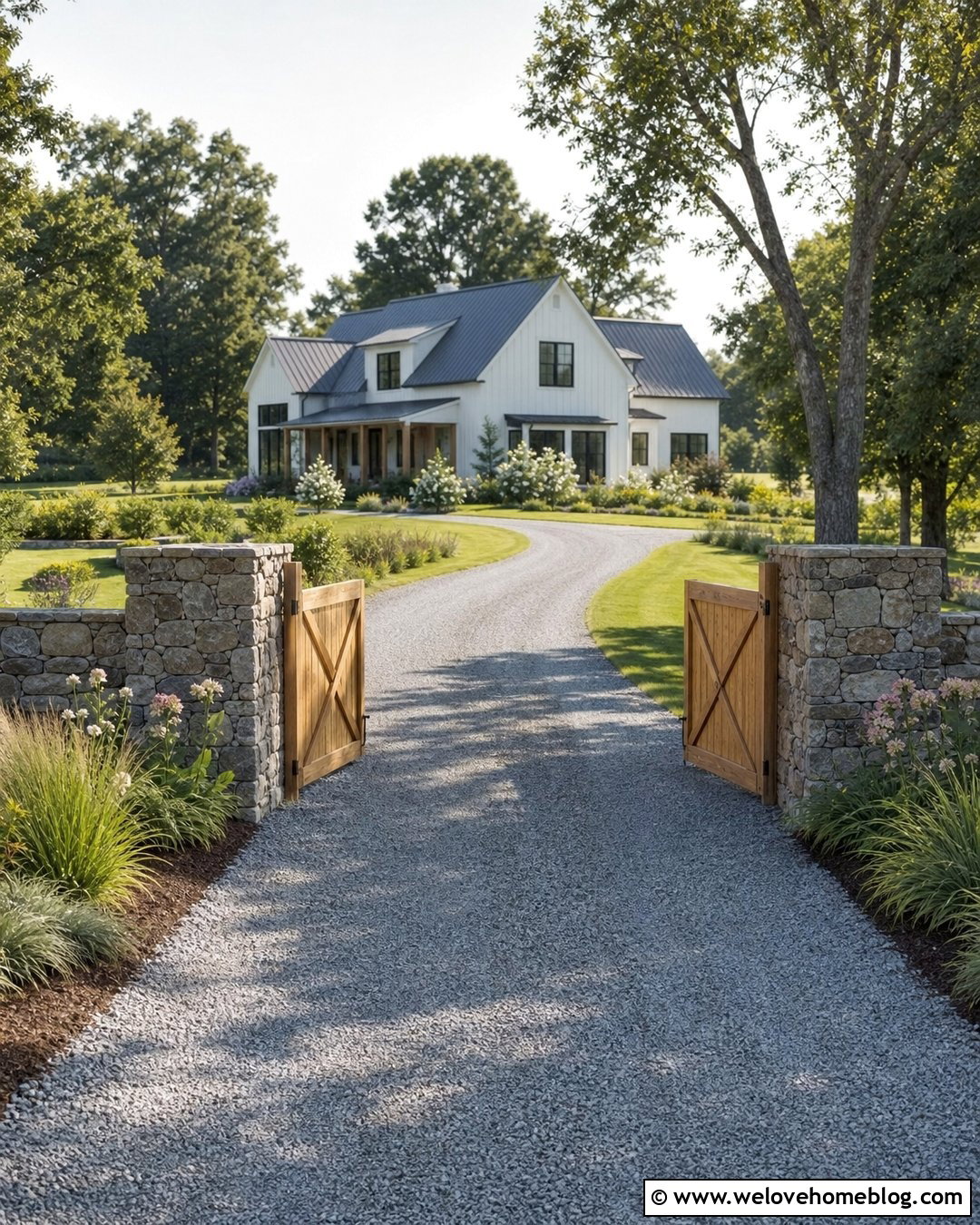
A long driveway needs visual rhythm to keep it from appearing like one uninterrupted strip of concrete. Layer tan, walnut, and soft charcoal acid colors across broad sections, using subtle crossbands or sawcuts at regular intervals. Edge the drive with natural stone near the entrance, then transition to a simpler flush border closer to the house. Rows of deciduous trees can frame the approach, while low shrubs and ornamental grasses fill the spaces beneath them. For evening function, place discreet downlights or low fixtures beside the landscaping rather than directly in the driving surface. A country house, large ranch, or modern farmhouse works well at the end of this approach. Repeat the driveway’s warm brown tones in the garage doors, porch columns, or front walkway to unify the property.
Conclusion:
The strongest 20 acid wash concrete driveway ideas treat the surface, layout, border, landscaping, and house as one complete composition. Warm browns support traditional and rustic homes, while soft tan, blue-green, or olive finishes can complement coastal and contemporary settings. Scored patterns, brick ribbons, stone edging, paver aprons, and aggregate bands add definition without covering the concrete’s natural variation. Remember that true acid washing prepares or etches a surface, while acid staining creates the decorative color most homeowners want. Test the finish on the actual slab, repair significant defects first, and choose an exterior sealer with suitable slip resistance. Professional preparation and thoughtful color coordination will help the finished driveway look intentional from the curb.

Related posts:
Leave a Reply