
A white gravel driveway can make a front yard feel brighter, cleaner, and more thoughtfully designed. The pale surface works with everything from dark modern siding to red brick, natural stone, and classic white clapboard. It can also suit straight, curved, circular, and compact parking layouts. The strongest designs treat the driveway as part of the landscape rather than an isolated parking area. Defined edging helps contain loose stone, while layered planting softens the bright color and connects the surface to the house. A properly prepared base is equally important for maintaining a neat, usable finish. () Below, you will find complete, practical, and distinctive **25 white gravel driveway ideas**.

1. White Gravel Driveway With Cobblestone Edging
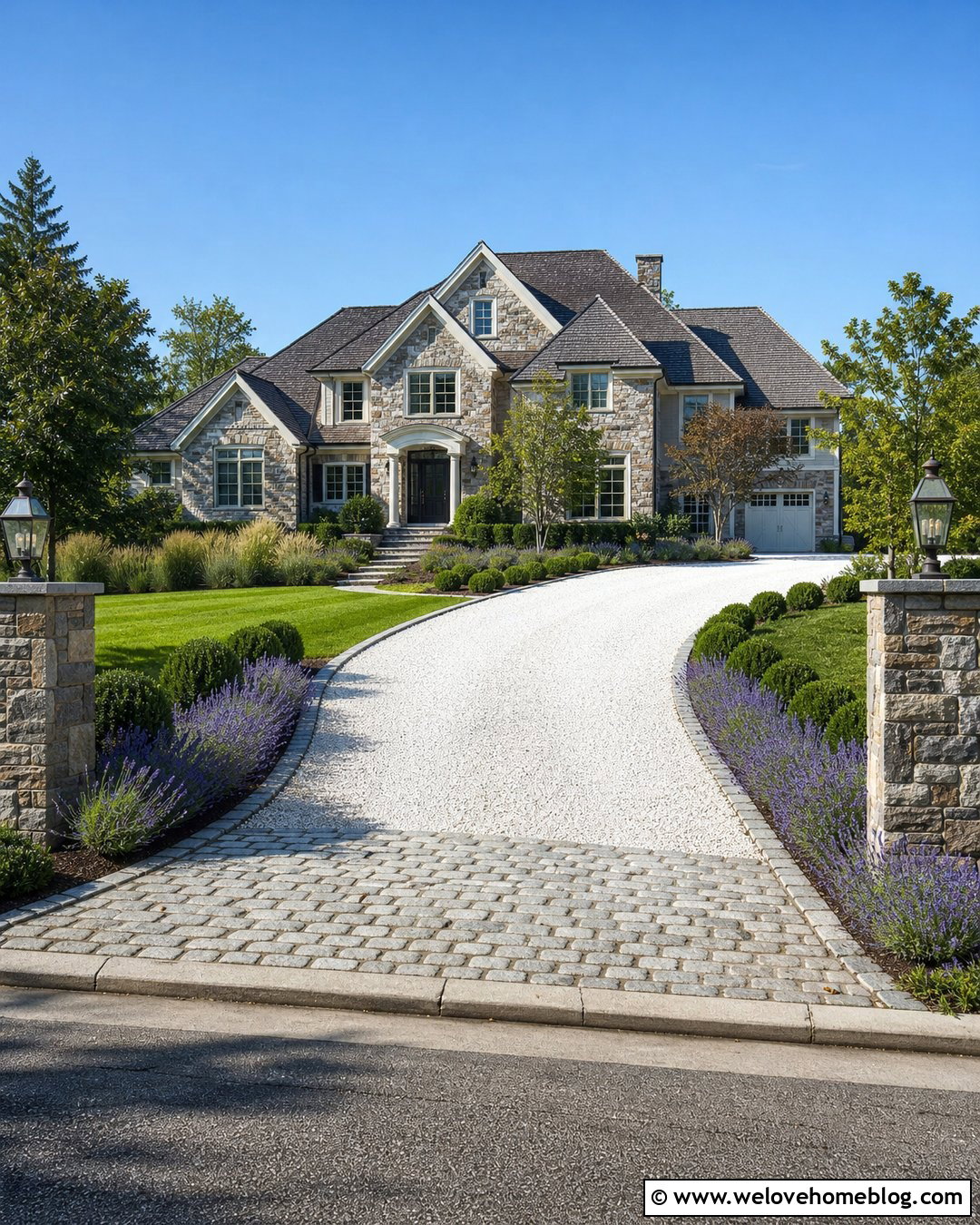
A white gravel driveway with cobblestone edging creates a defined look that suits traditional and transitional homes. Use angular white marble chips or crushed limestone for the main surface, then frame both sides with gray granite cobbles. The darker border makes the pale gravel stand out without creating a harsh contrast. A gently curved layout can soften a large front yard and guide attention toward the entrance. Add low boxwood, lavender, and ornamental grasses beyond the cobblestones to provide layered color. Near the street, widen the cobblestone border into a practical entrance apron. This gives the driveway a more permanent appearance and creates a clear transition between the gravel and the public road.
2. White Gravel Driveway With Brick Border
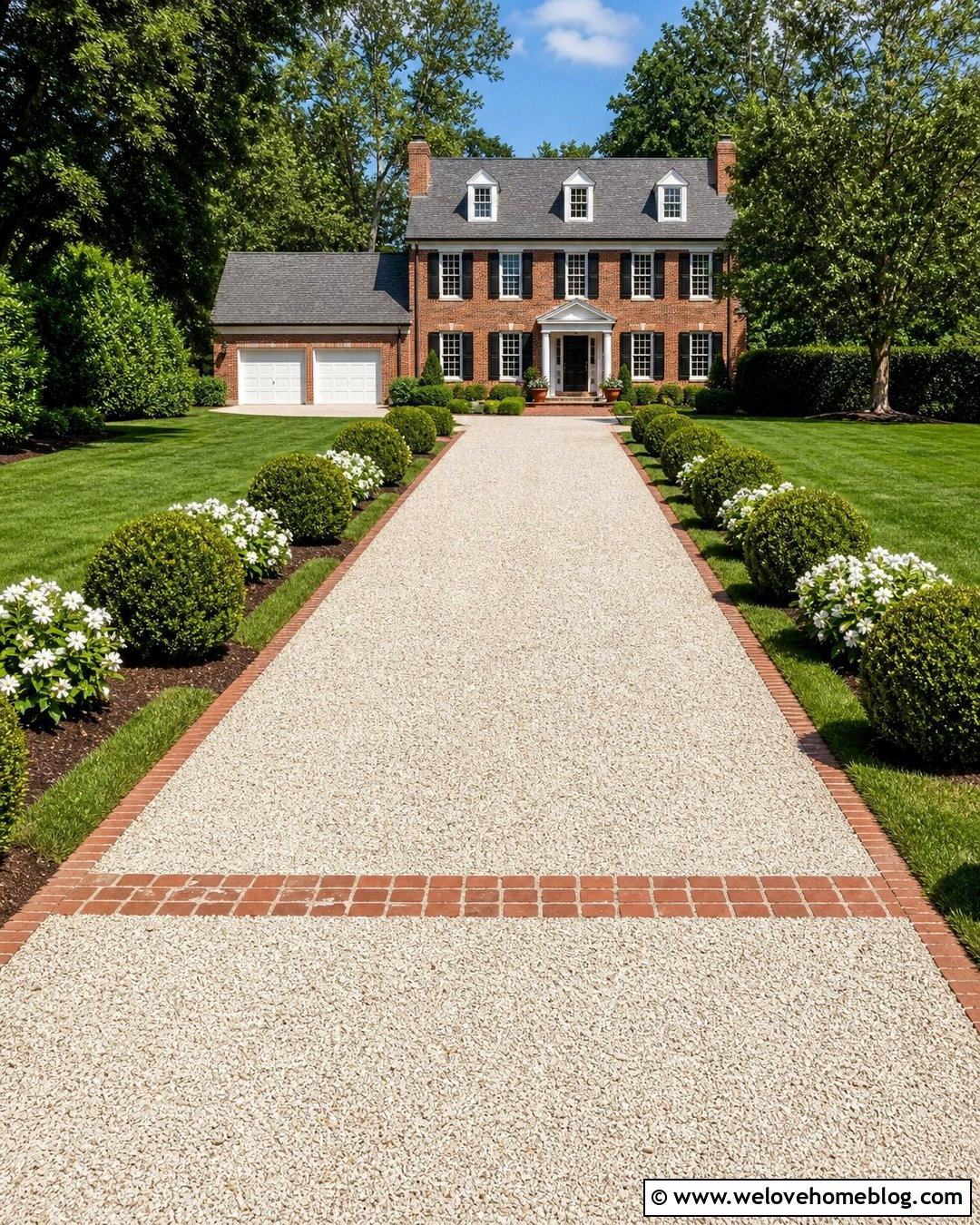
Warm red brick brings balance to a cool white gravel surface. This combination works especially well beside Colonial, Cape Cod, and red brick houses. Keep the driveway straight and symmetrical, with a single row of clay bricks installed along each side. A matching brick ribbon near the garage can repeat the border and visually finish the layout. Surround the driveway with clipped evergreen shrubs, green lawn, and simple foundation planting. If the house has a brick walkway, connect it directly to the driveway border for a unified front yard. The edging should sit securely enough to resist movement and keep gravel away from grass and planting beds. Defined borders can reduce loose stone spreading into neighboring landscape areas. ()
3. White Gravel Driveway With Black Metal Edging
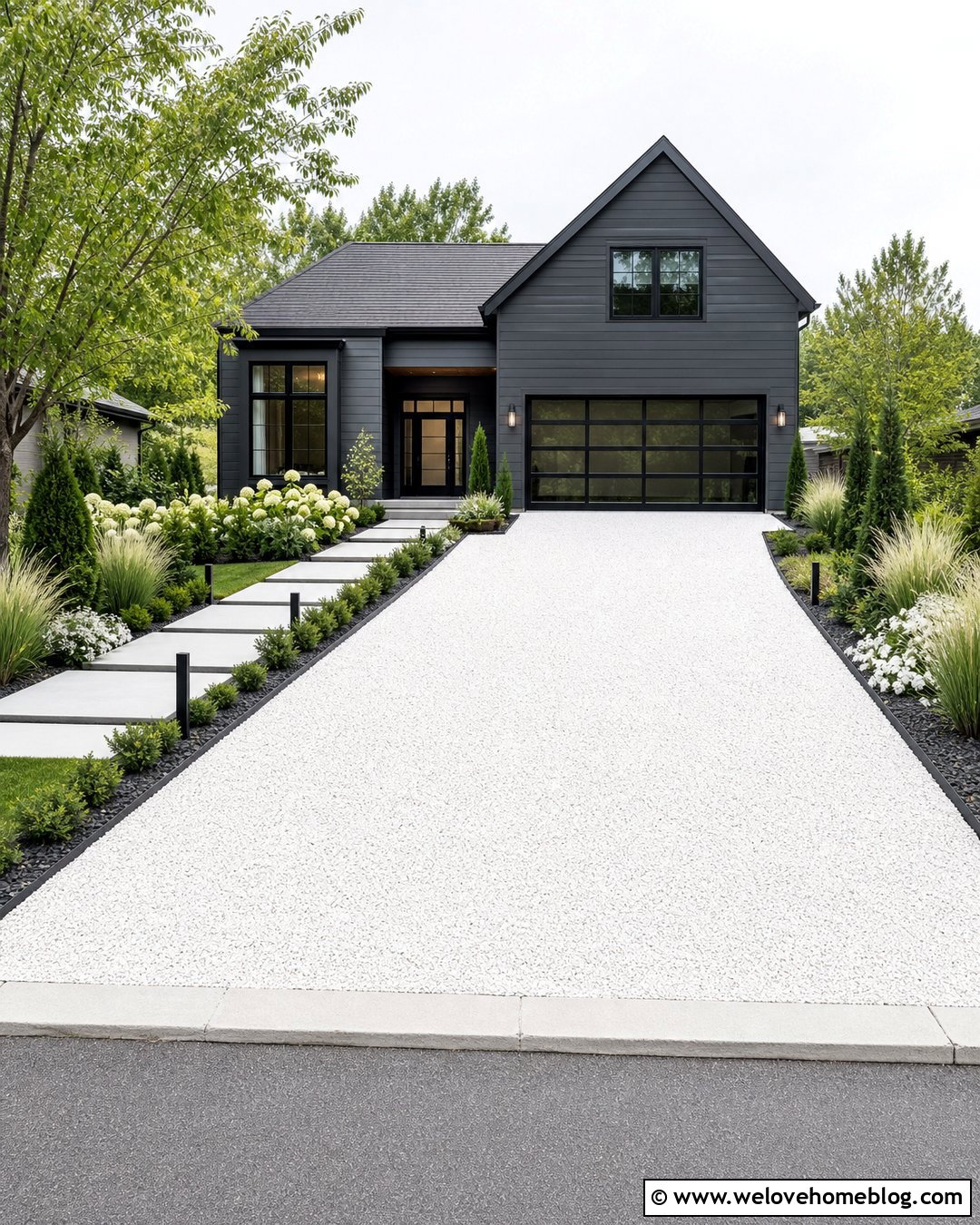
For a crisp contemporary exterior, pair white crushed gravel with slim black metal edging. The dark line creates a sharp outline while allowing the pale driveway to remain the main feature. A straight rectangular layout looks particularly effective in front of a modern house with black windows or charcoal siding. Continue the minimalist theme with rectangular planting beds containing ornamental grasses, compact evergreens, and a few sculptural plants. Large concrete stepping pads can form the walkway without covering too much gravel. Use generous lawn areas or dark mulch outside the edging to strengthen the contrast. Because metal edging has a narrow profile, it can define straight lines and gentle curves without making the driveway feel visually heavy. ()
4. Curved White Gravel Driveway With Lavender
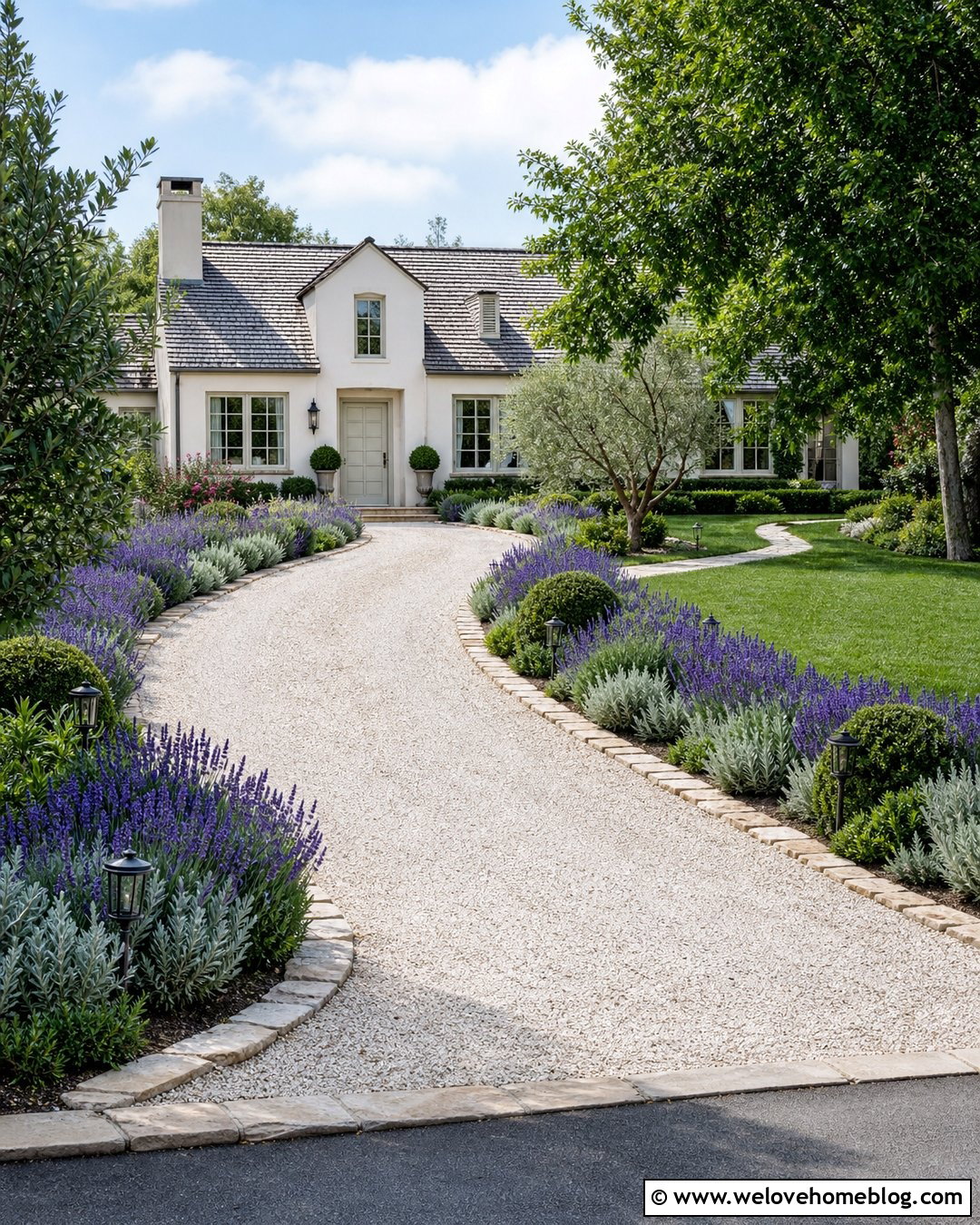
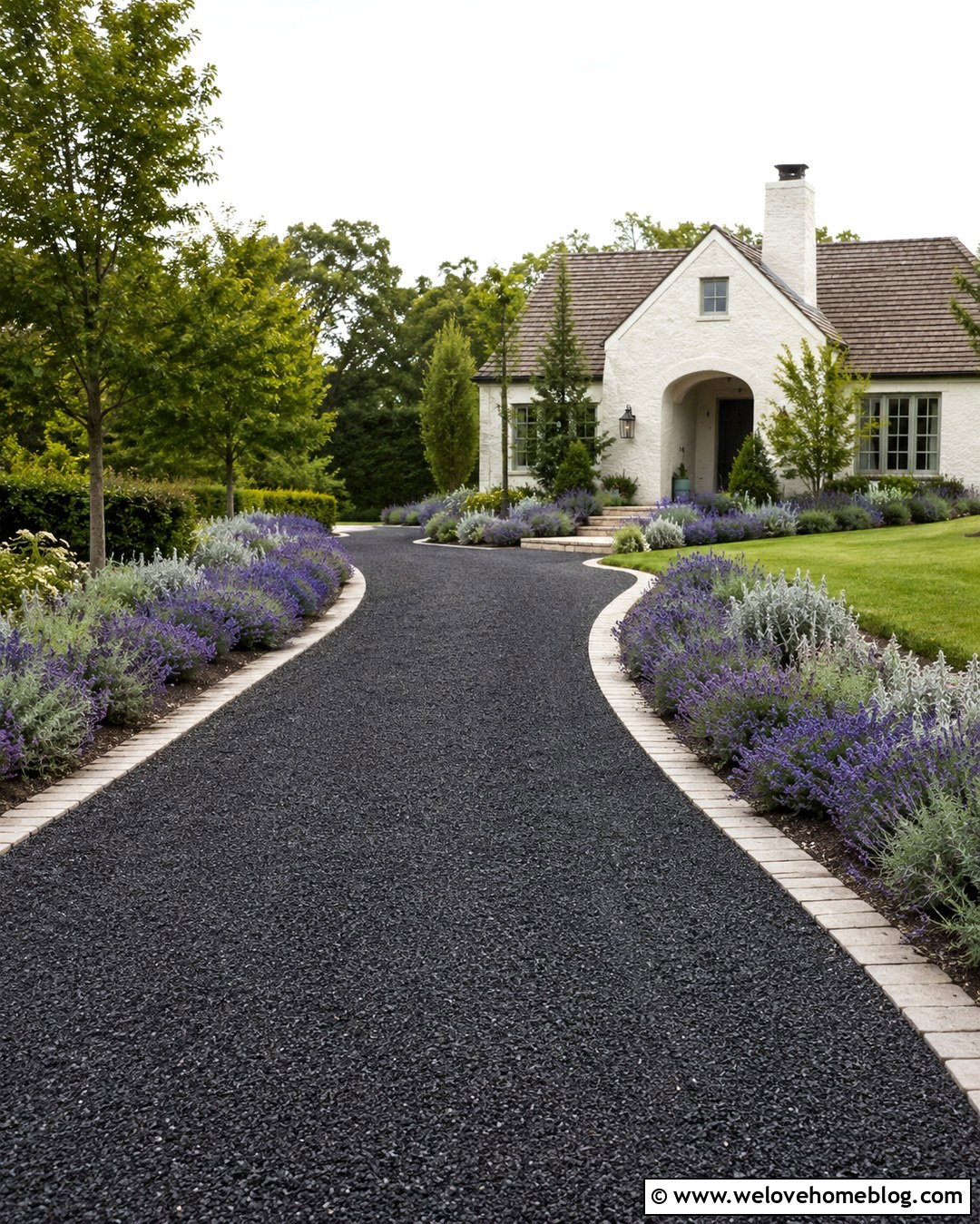
Imagine a soft white driveway winding through wide bands of purple lavender. This complete look is ideal for cottages, country houses, and Mediterranean-inspired homes. Choose crushed white limestone with enough angular texture to create a practical driving surface. Frame the curve with natural stone set slightly above the surrounding soil. Plant lavender in broad groups beyond the edging, leaving enough clearance so mature plants do not spill into the driving area. Silver foliage, rosemary, and compact evergreen shrubs can fill any seasonal gaps. The curve should feel gradual rather than tight, creating an easy approach to the house. Repeat the white gravel in a nearby garden path so the driveway feels connected to the wider landscape instead of appearing like a separate feature.
5. Circular White Gravel Driveway With Center Garden
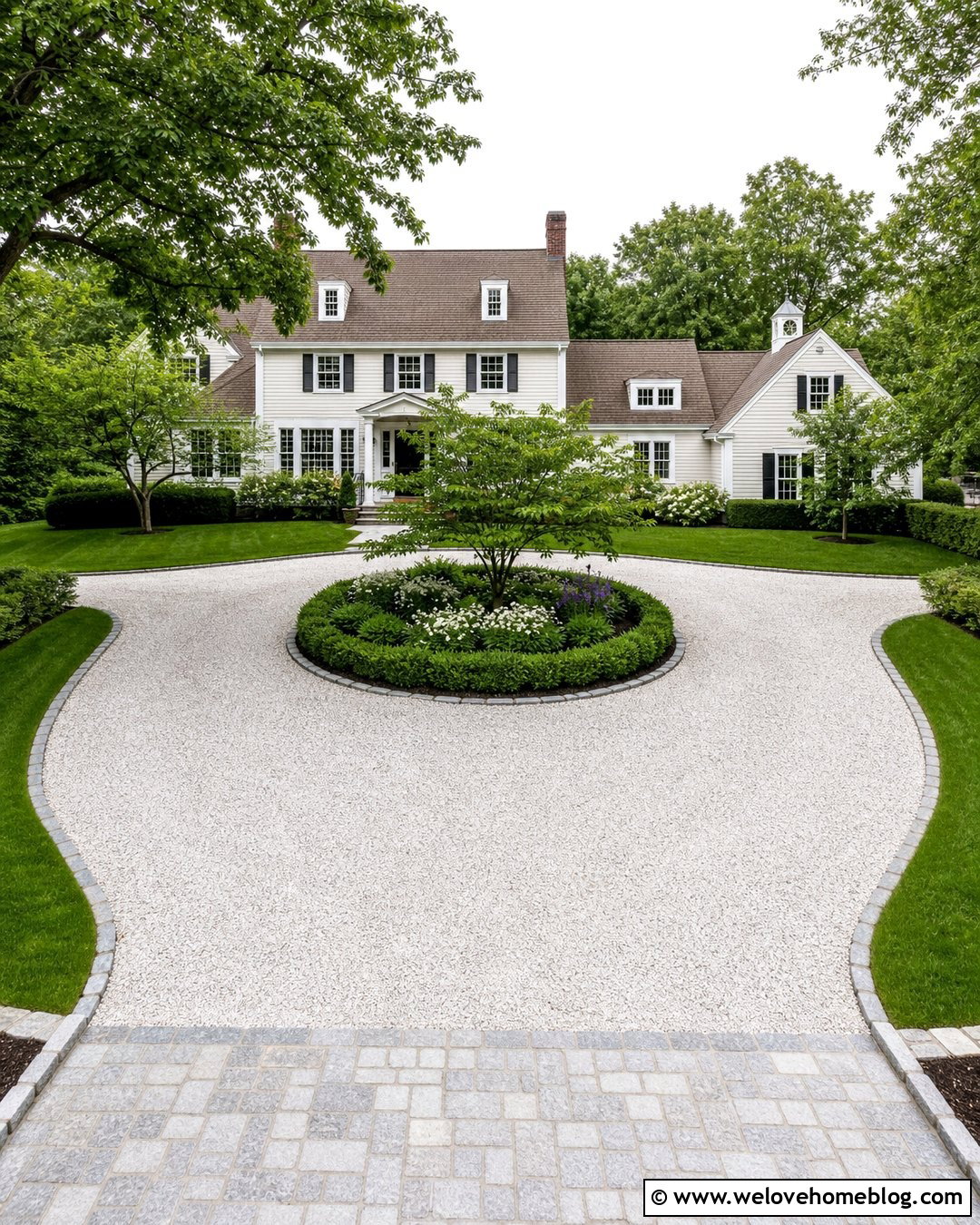
A circular white gravel driveway can give a larger front yard a graceful and practical layout. Create a broad loop with crushed white marble gravel and define its inner edge using gray stone setts. In the center, install an oval or circular planting island with a small ornamental tree, low evergreen shrubs, and seasonal perennials. Keep plants lower near the entrance to preserve open views across the driveway. The outside border can meet a wide lawn, formal hedge, or mixed planting bed. A paved apron at the road helps establish the entrance and reduces gravel migration. The center garden should be scaled to leave comfortable driving space, making the entire circle feel balanced rather than crowded.
6. White Gravel Driveway With Concrete Paver Ribbons
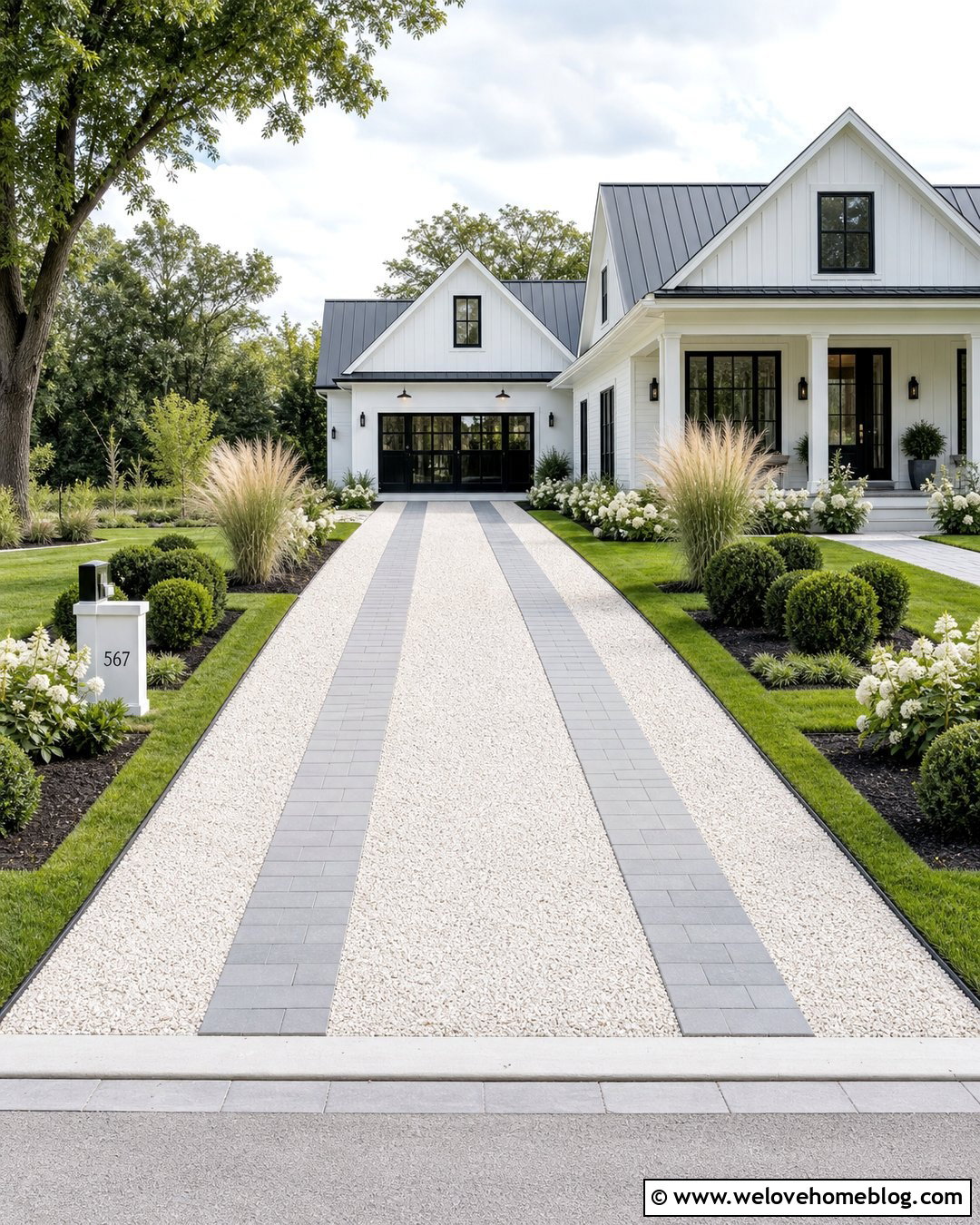
Concrete paver ribbons bring structure to white gravel while maintaining a light, modern appearance. Lay two parallel rows of pale gray concrete pavers where vehicle tires normally travel, then fill the surrounding driveway with compacted white crushed stone. This layout visually organizes a long straight driveway and can reduce noticeable tracking through the gravel. Continue the pavers into a matching walkway leading toward the front door. Along the edges, use dark metal restraints and simple planting beds filled with grasses, rounded shrubs, and white flowering perennials. The design complements modern farmhouse and contemporary homes because it combines a relaxed gravel texture with clean geometry. Keep the paver spacing consistent so the ribbons create a deliberate, properly planned approach.
7. White Gravel Driveway With Timber Edging
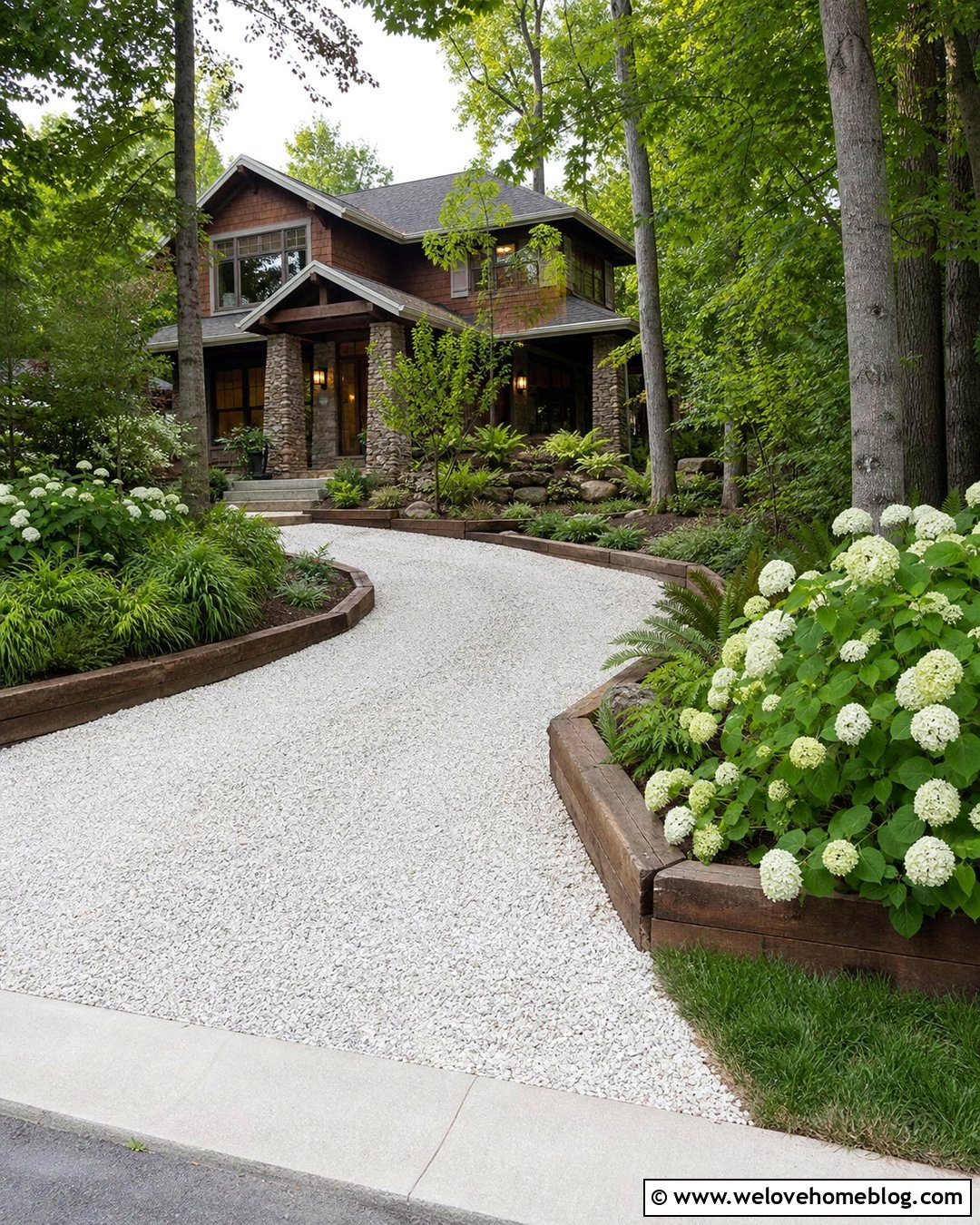
A white gravel driveway with timber edging can feel warm, informal, and naturally connected to a wooded property. Use pressure-treated landscape timbers or substantial wood sleepers to frame a straight or slightly curved surface of white crushed granite. Set the timber securely and keep the upper edge close to the finished gravel level. On the landscape side, add deep planting beds with ferns, hydrangeas, native grasses, and shade-tolerant ground covers. A Craftsman or rustic ranch house provides a suitable backdrop for this relaxed combination. Timber can also form raised planters near the driveway entrance, creating visual weight where the layout meets the street. Repeat the same wood around a nearby path or mailbox bed to make the materials feel intentional.
8. White Gravel Driveway With Hydrangea Borders
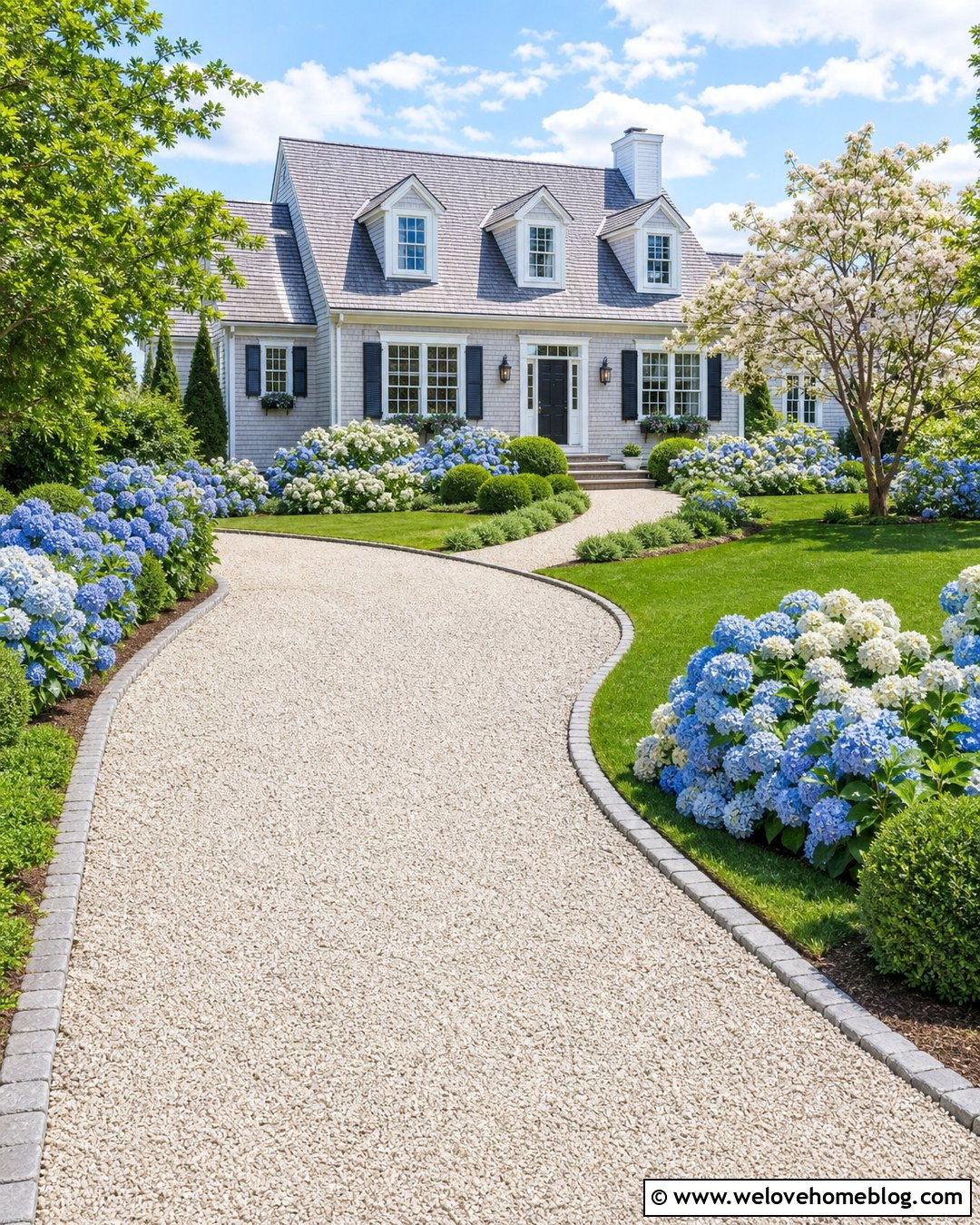
Clouds of hydrangea blooms can soften the brightness of a white gravel driveway and make the entire approach feel welcoming. Build the driveway with white crushed limestone in a wide, gently curved layout. Use gray cobblestone edging to separate the driving surface from generous planting beds. Arrange hydrangeas in repeating groups, supported by compact evergreens that provide structure when flowers are absent. Shade-tolerant ground covers can fill the front of each bed without blocking the edge. This combination looks especially attractive near Cape Cod, coastal, and traditional homes. Allow enough space between mature shrubs and the driveway to prevent branches from restricting access. A matching white gravel walkway can branch toward the porch, creating a natural connection between parking and the main entrance.
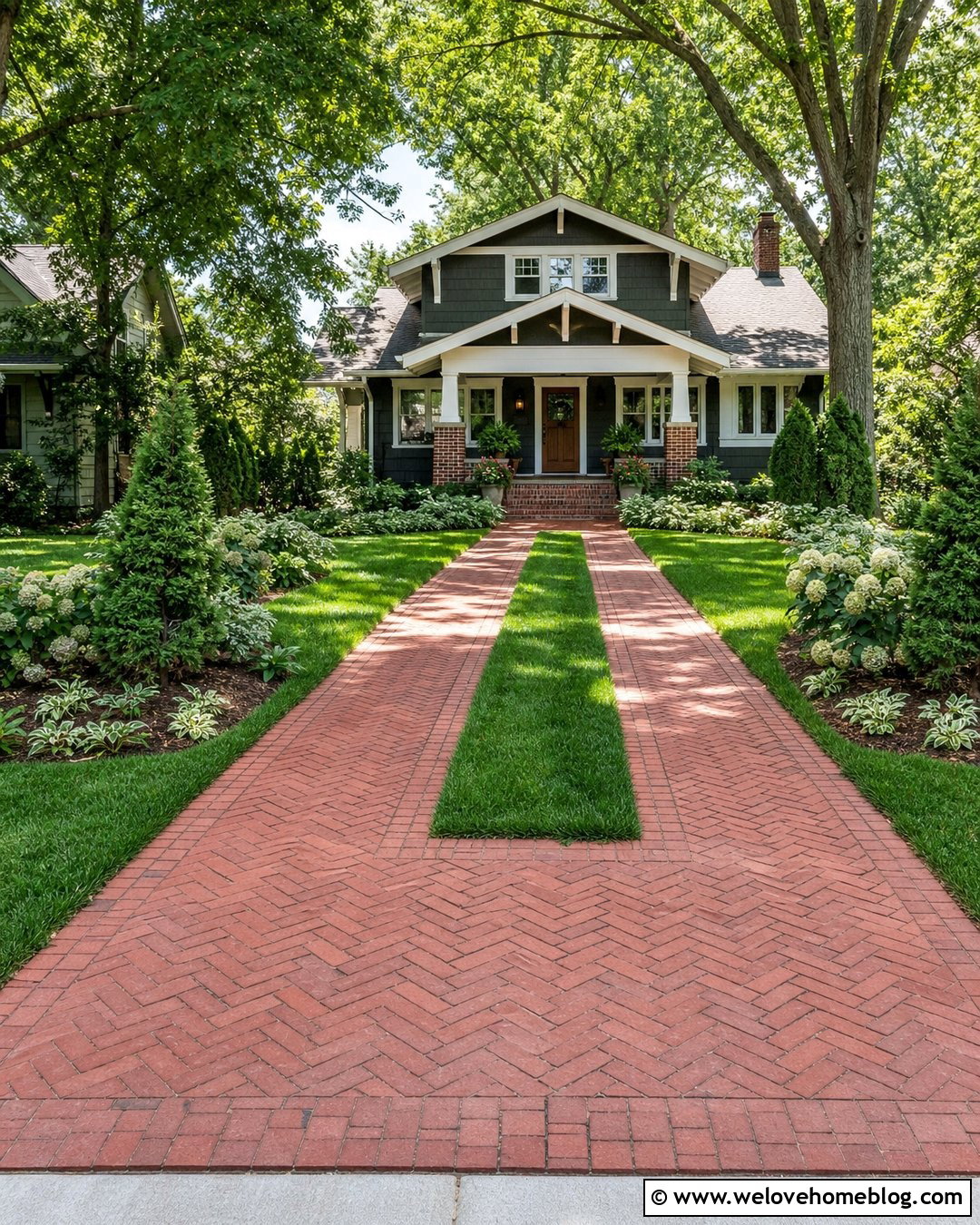
9. White Gravel Driveway With Grass Strip Center
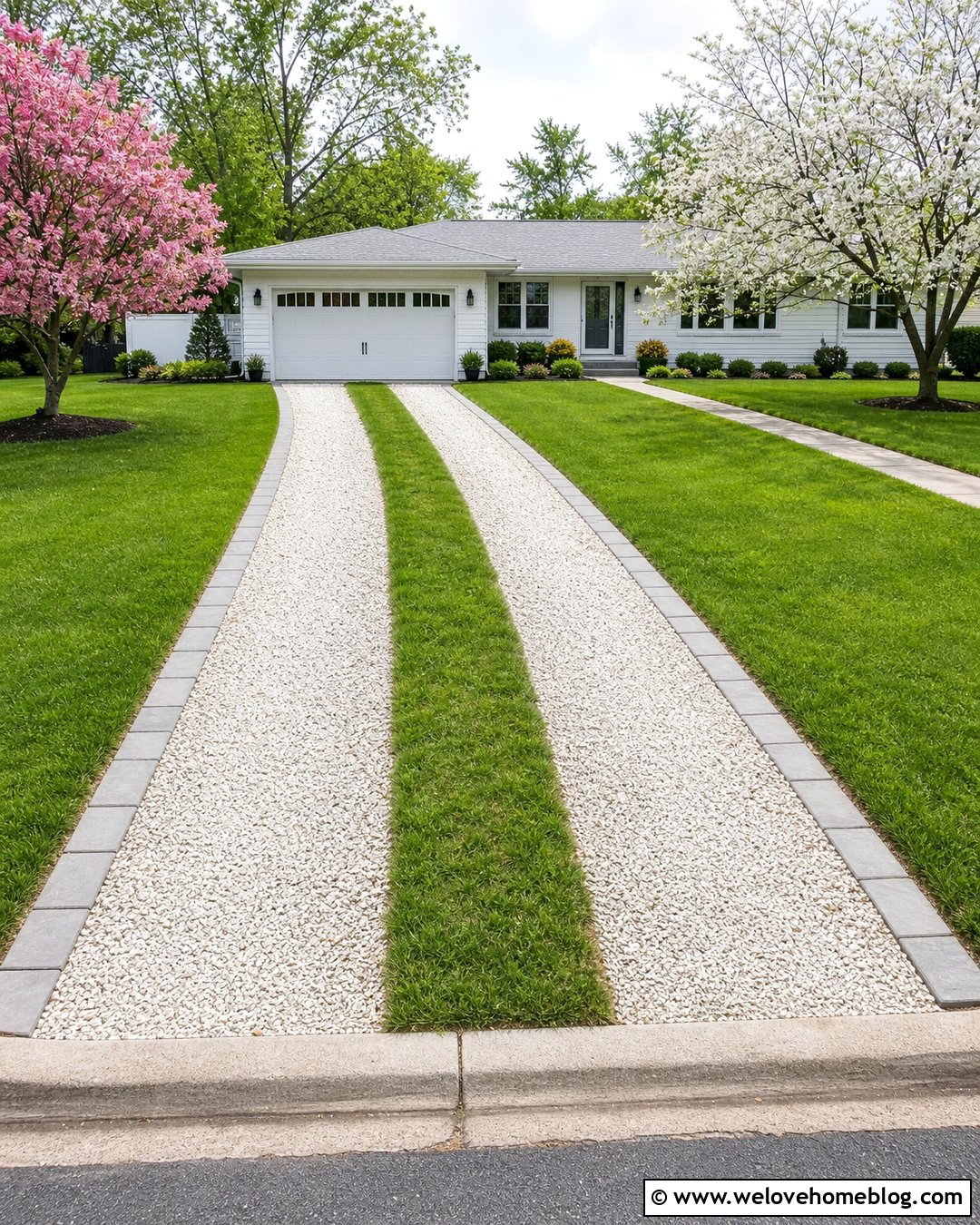
A central grass strip can break up a white gravel driveway and help it blend into a green front yard. Create two broad wheel lanes using compacted white angular gravel, leaving a neatly maintained strip of turf between them. Frame the outer edges with flush gray pavers so mowing remains simple and the gravel stays clearly contained. This layout is best suited to a straight driveway with predictable vehicle movement. Continue the surrounding lawn on both sides, then add small flowering trees near the house for height and shade. The restrained design works well with ranch houses, cottages, and simple farmhouses. Keep the center strip wide enough to look intentional but narrow enough that tires remain comfortably within the gravel lanes.
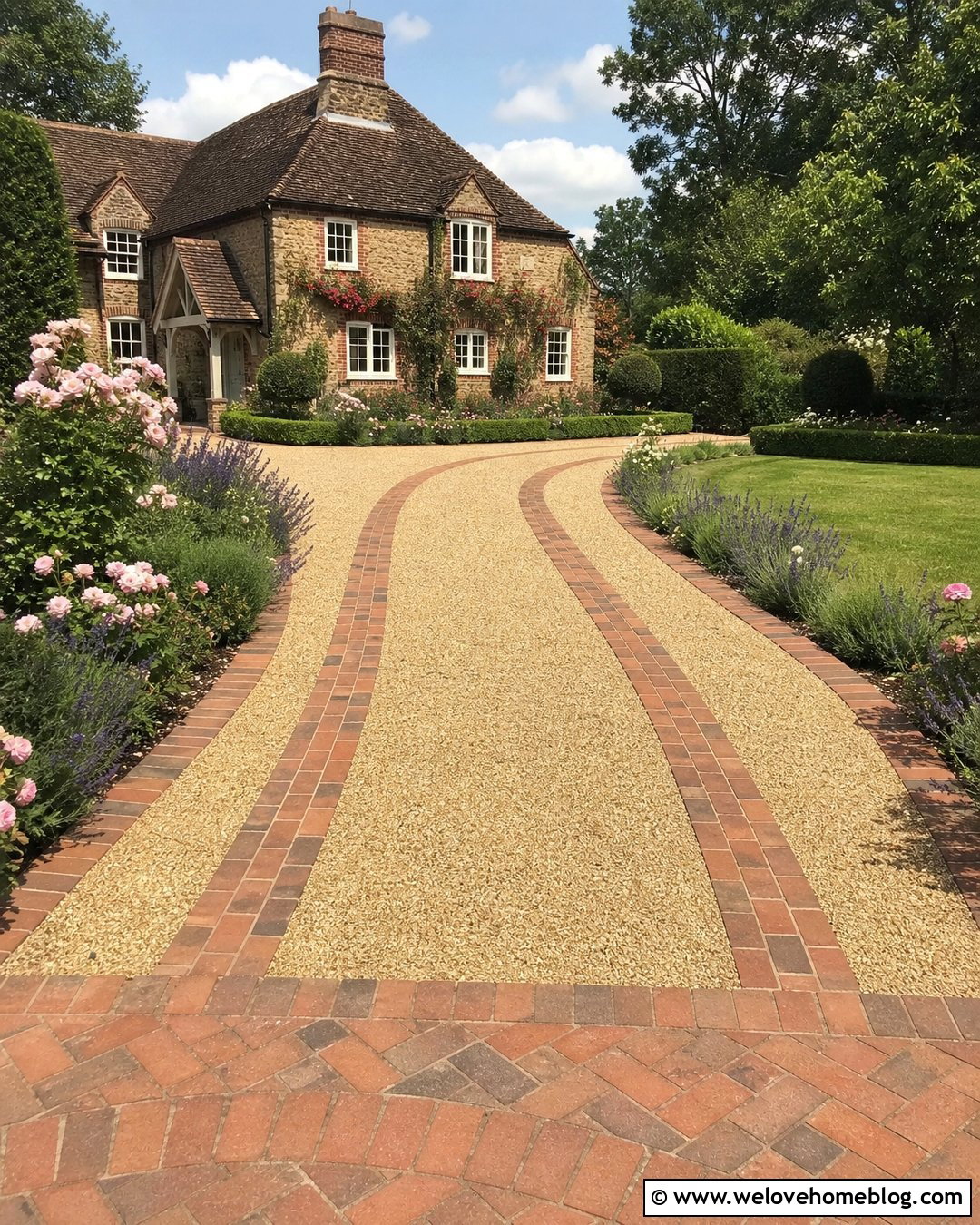
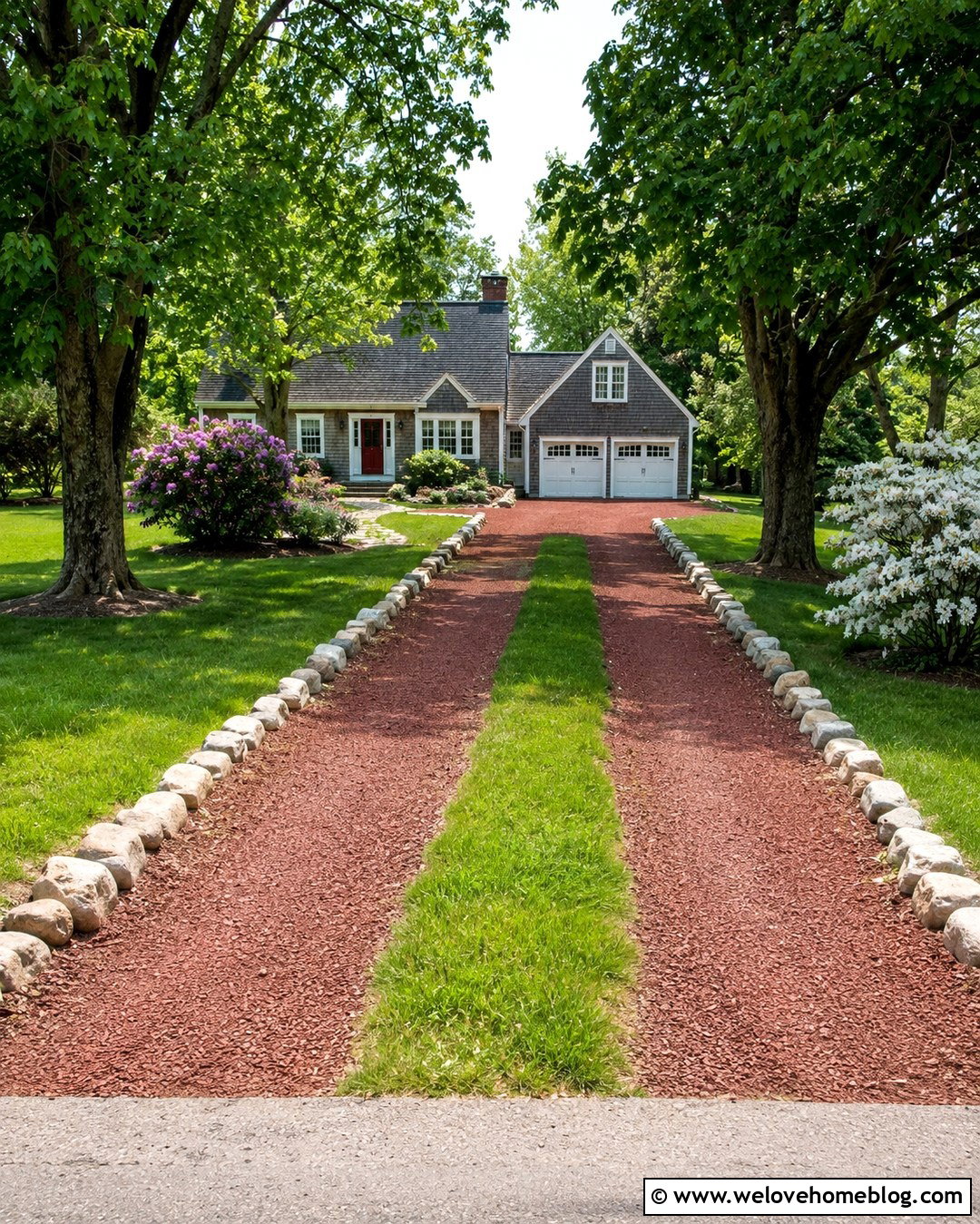
10. White Gravel Driveway With Stone Pillars
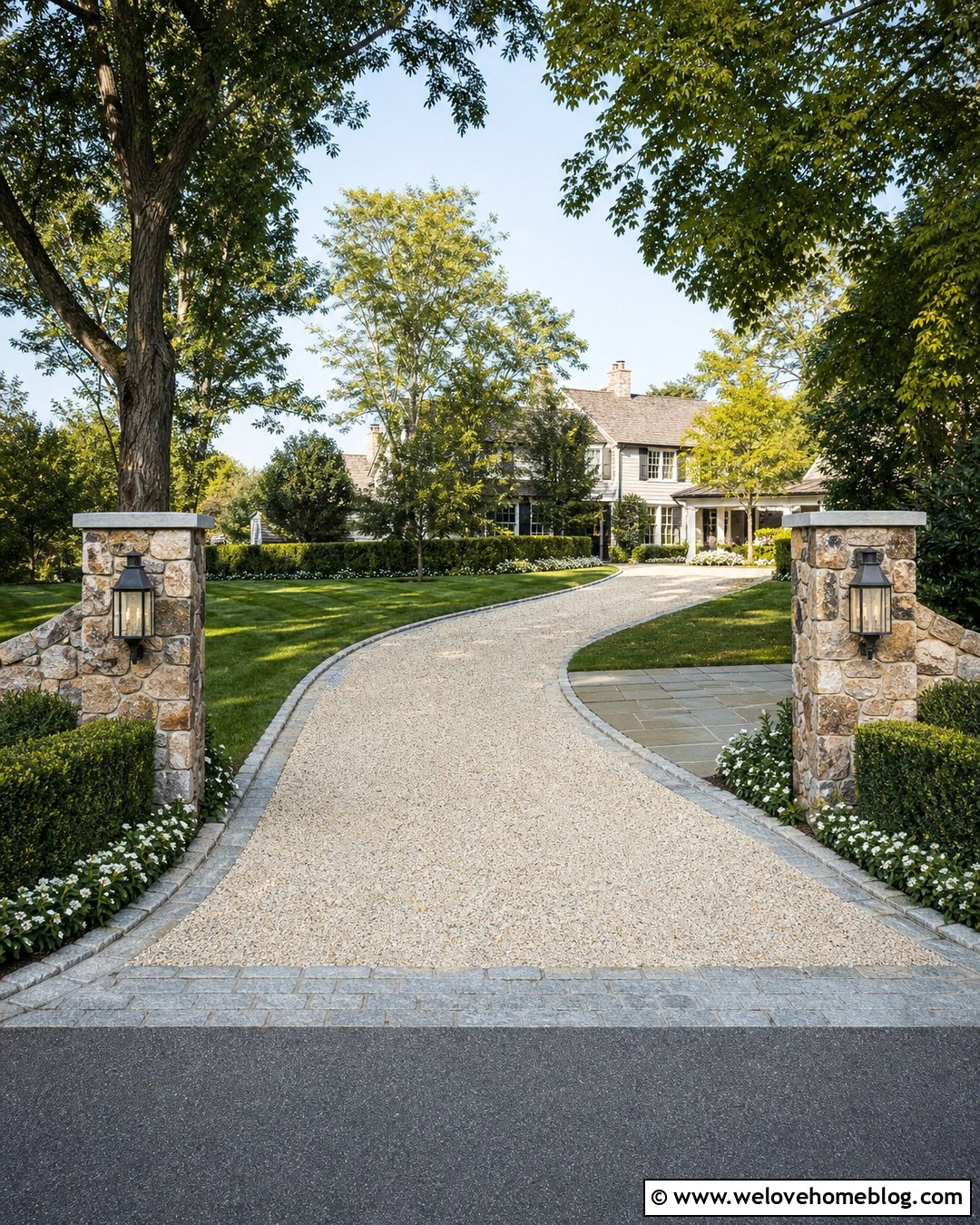
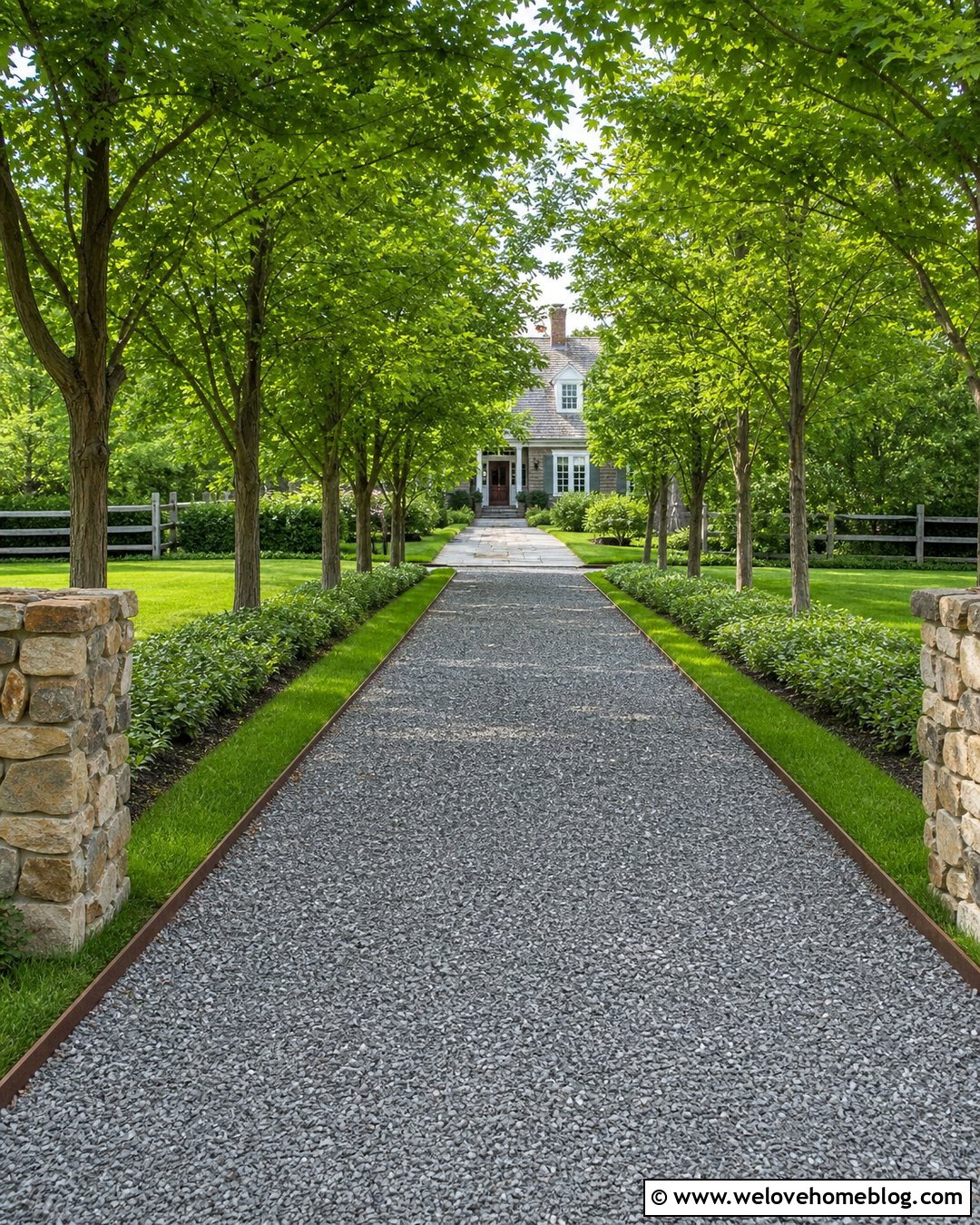
Strong stone pillars can turn a simple white gravel driveway into a clearly defined property entrance. Use warm white limestone gravel in a long straight or softly curving layout. At the street, place two substantial pillars faced with natural fieldstone or cut limestone. Low stone walls can extend a short distance from each pillar before transitioning into evergreen hedges. Add simple lanterns or understated address plaques to the pillars, ensuring they match the scale of the entrance. Inside the property, continue the driveway toward a stone, brick, or traditional farmhouse facade. A darker cobblestone edge will connect the gravel to the masonry. Keep planting low around the pillars so the driveway entrance remains visible, open, and easy to navigate.
11. White Gravel Driveway With Farmhouse Gate
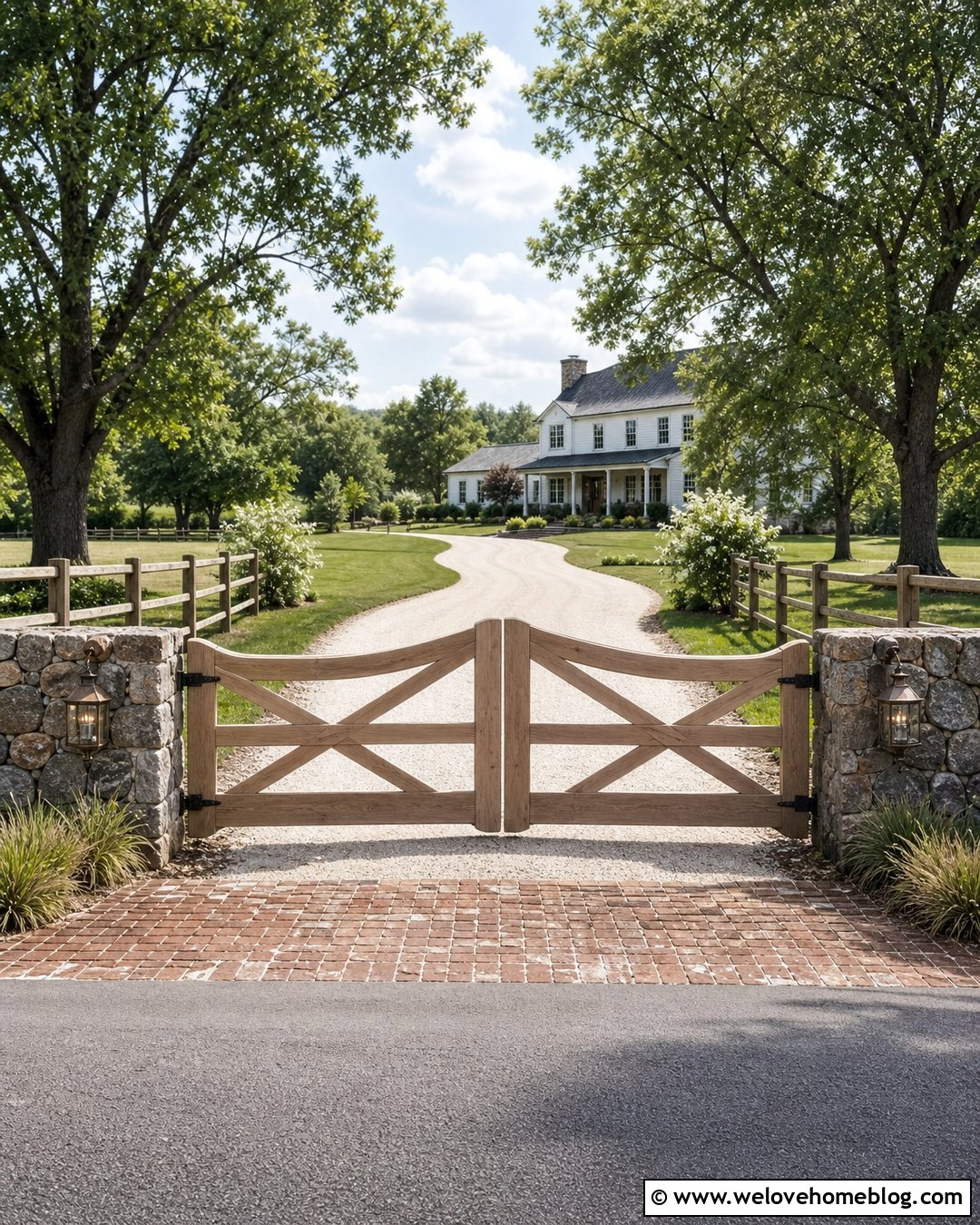
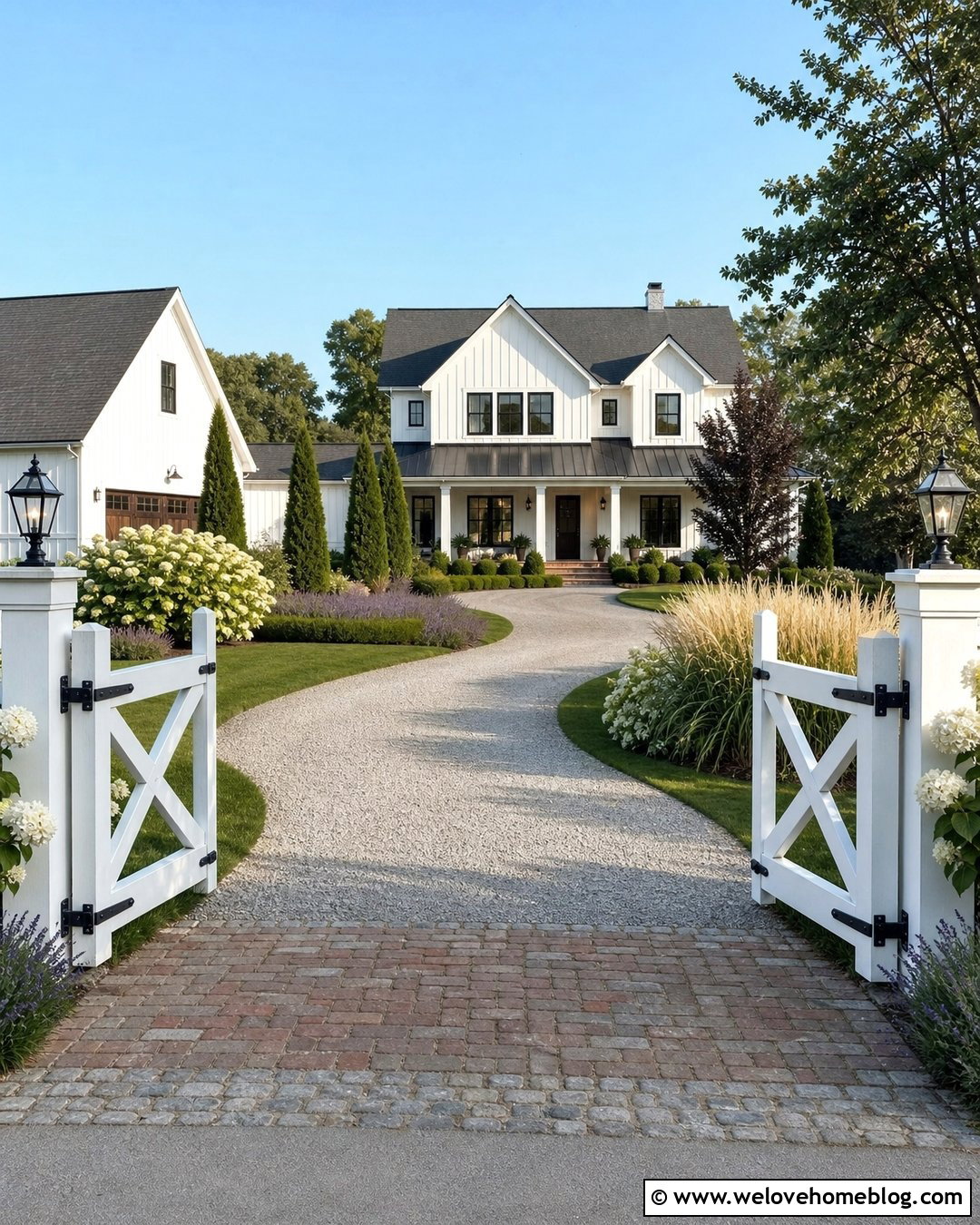
Could a white gravel driveway look more inviting with a simple farmhouse gate? A wide timber or white-painted gate creates a welcoming focal point when paired with pale crushed gravel and a gently curved approach. Support it with square wood posts or low stone pillars, then continue post-and-rail fencing along both sides. Plant native grasses, white flowering shrubs, and a few shade trees beyond the fence. Use reclaimed brick or natural cobblestone at the threshold to form a durable visual transition. The driveway should widen slightly inside the gate before narrowing toward the house. This arrangement suits rural properties and modern farmhouses because it combines practical entrance definition with a relaxed landscape that does not feel overly formal.
12. White Gravel Driveway With Black Gate
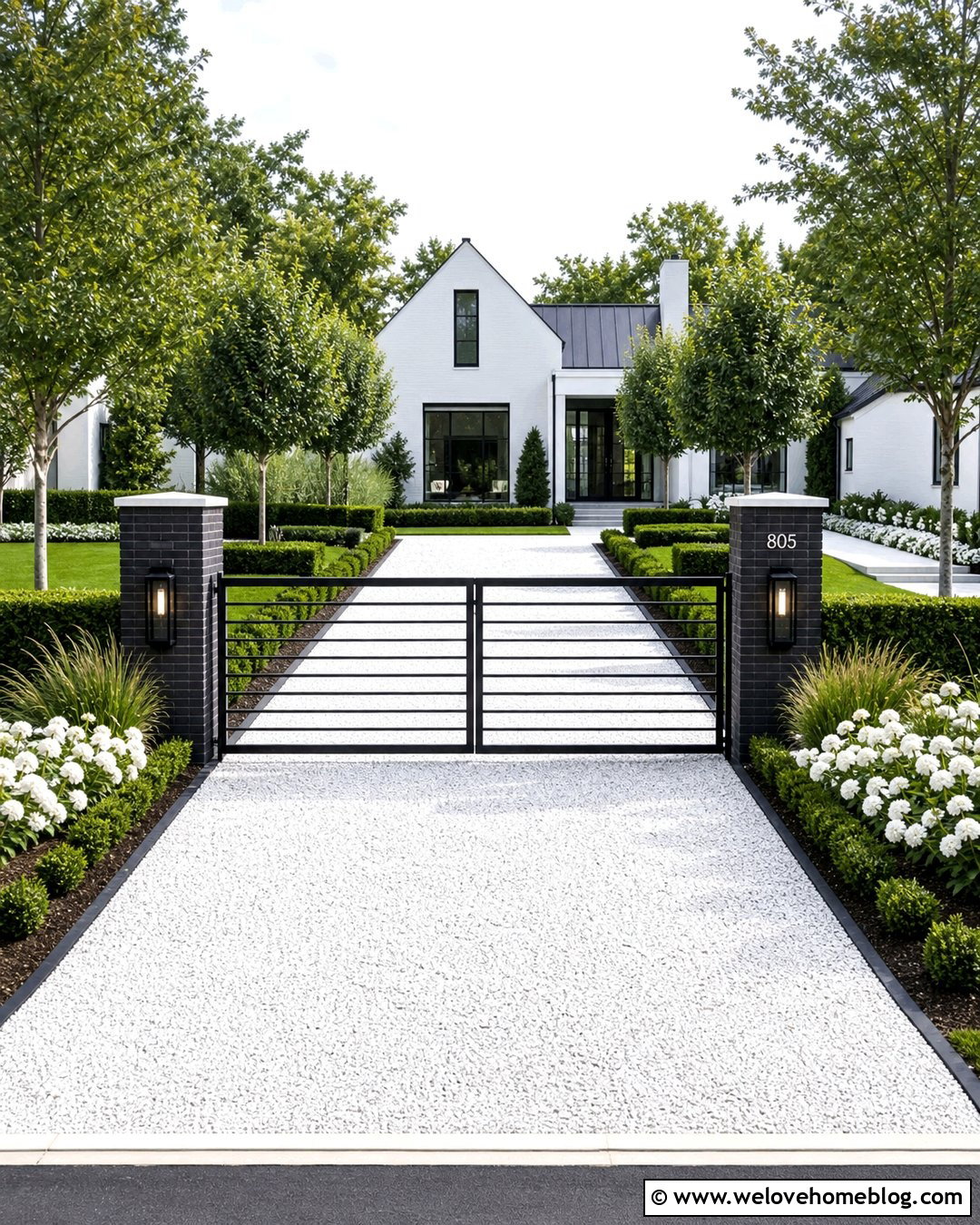
A black metal gate makes a dramatic contrast against white gravel. Choose a simple horizontal or vertical-bar design rather than heavily decorative ironwork, particularly for a contemporary house. Lay crushed white marble or quartz gravel in a straight, symmetrical driveway leading from the gate to the garage. Black steel edging can repeat the gate color along both sides. Frame the approach with clipped evergreen hedges, white flowering plants, and structured ornamental grasses. Square concrete or dark brick pillars will give the gate enough visual support without distracting from its clean design. Include a paved entrance apron where the gravel meets the street. This creates a polished threshold and allows the bright driveway, dark metalwork, and green planting to work as one coordinated composition.
13. White Gravel Driveway With Olive Trees
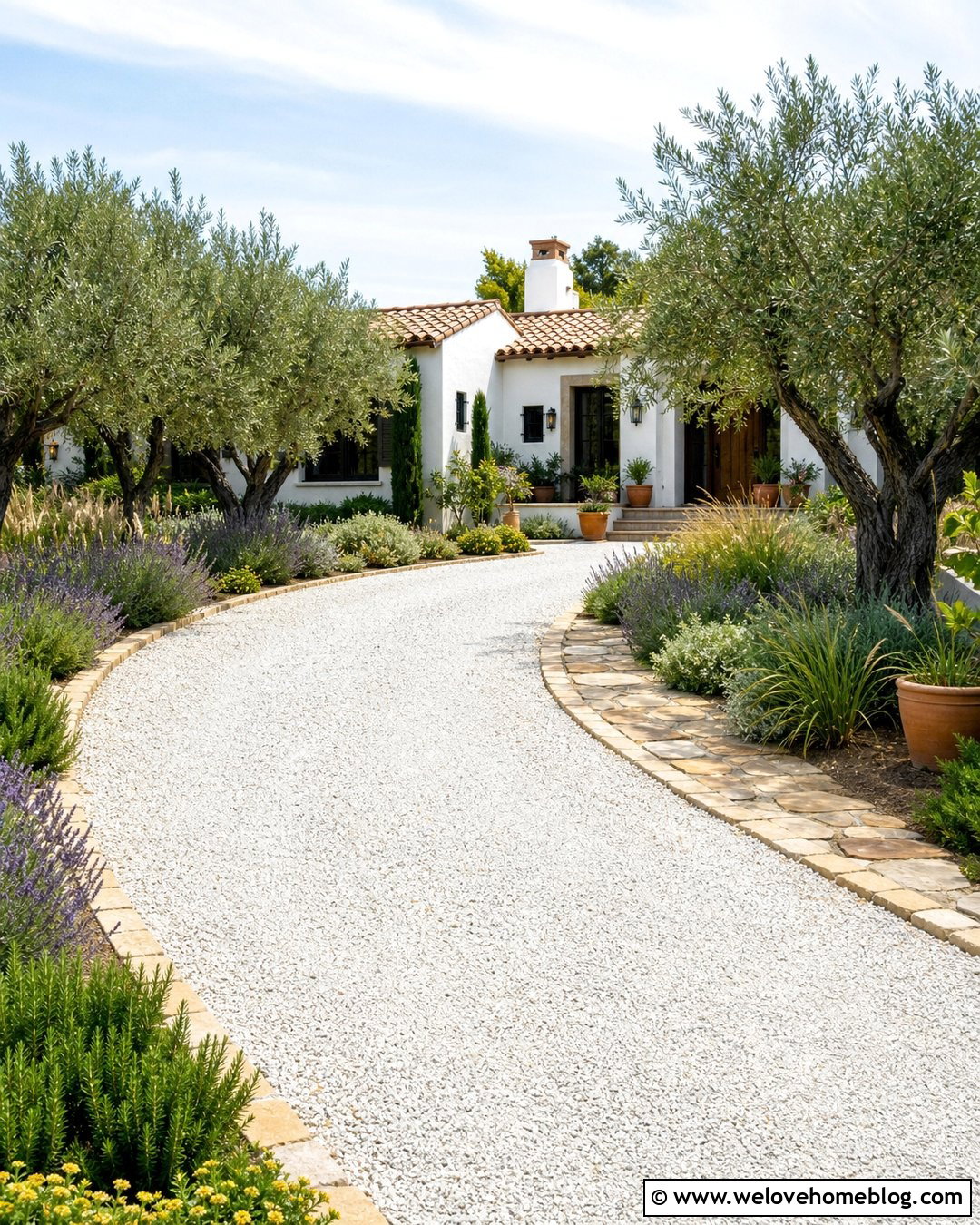
White gravel and olive trees create a relaxed Mediterranean look with strong texture and soft color. Use pale crushed limestone in a wide curved driveway leading to a stucco, adobe-inspired, or Spanish Colonial home. Edge the surface with warm beige stone, then plant evenly spaced olive trees beyond the border. Fill the lower beds with lavender, rosemary, santolina, and drought-tolerant ornamental grasses. Terracotta planters near the entrance can repeat the warm tones of the roof and stonework. Keep planting areas broad and uncluttered so each tree has room to develop its sculptural shape. If olives are unsuitable for the local climate, choose a hardy tree with similarly narrow gray-green foliage to preserve the visual effect while supporting healthier long-term landscaping.
14. White Gravel Driveway With Desert Landscaping
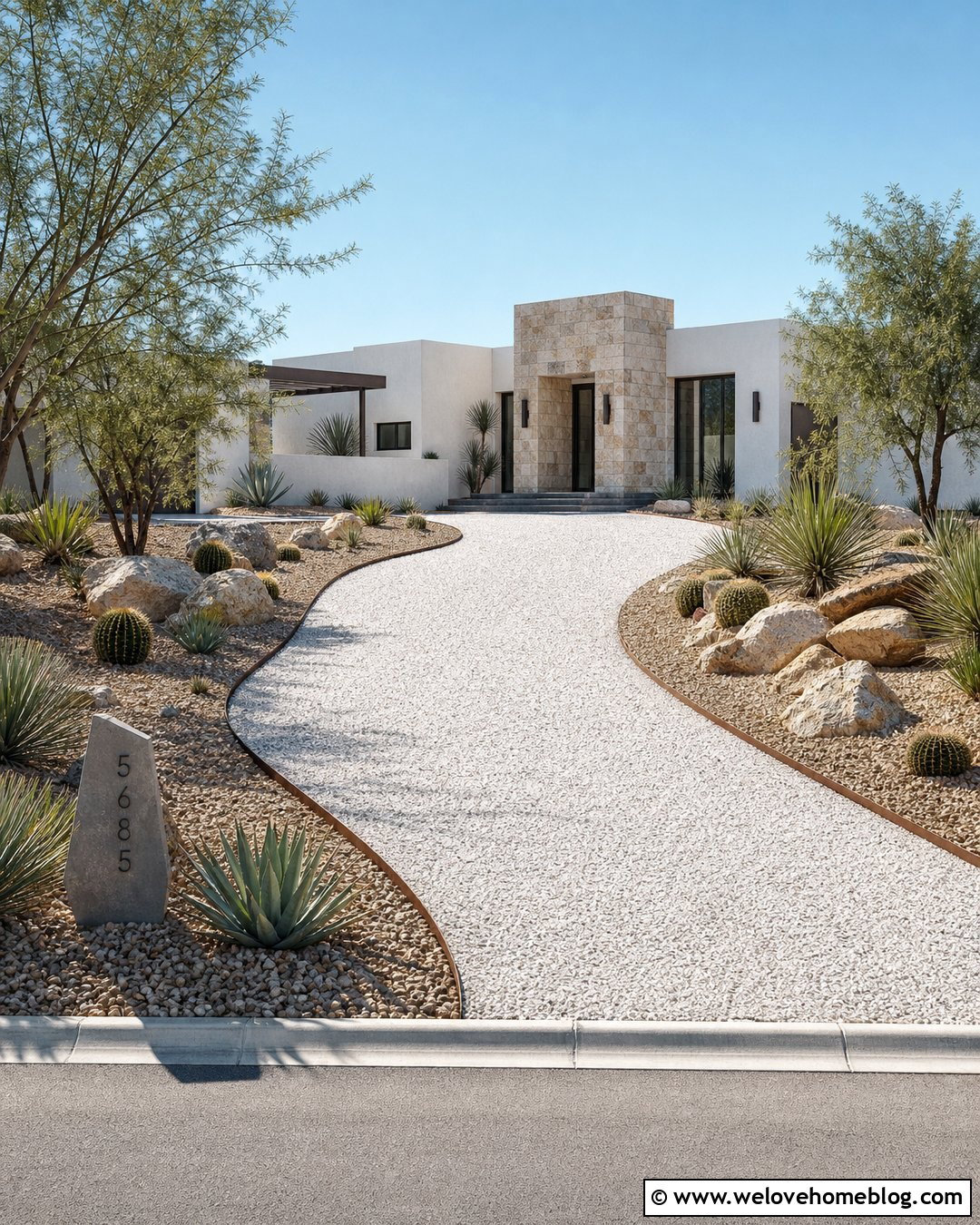
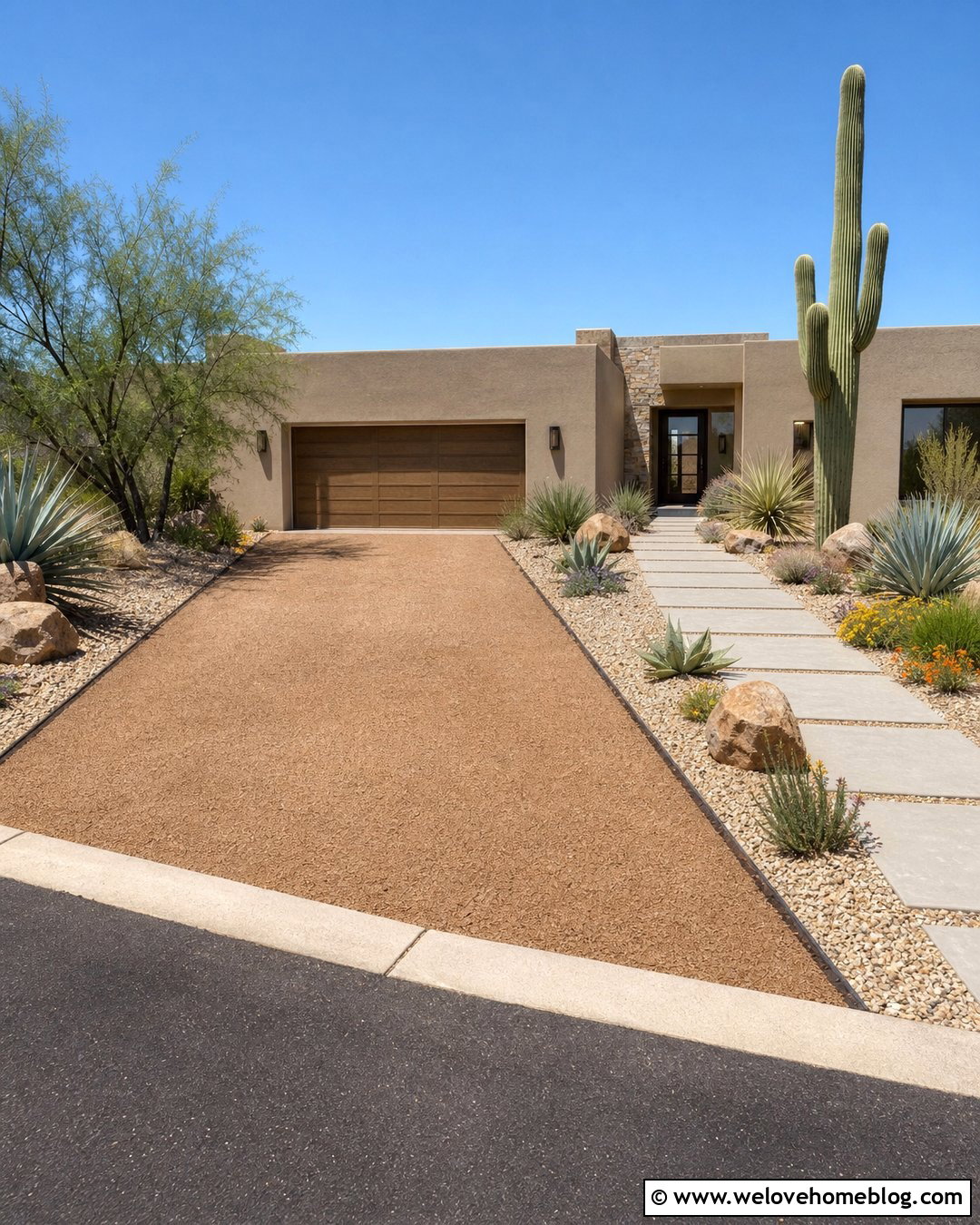
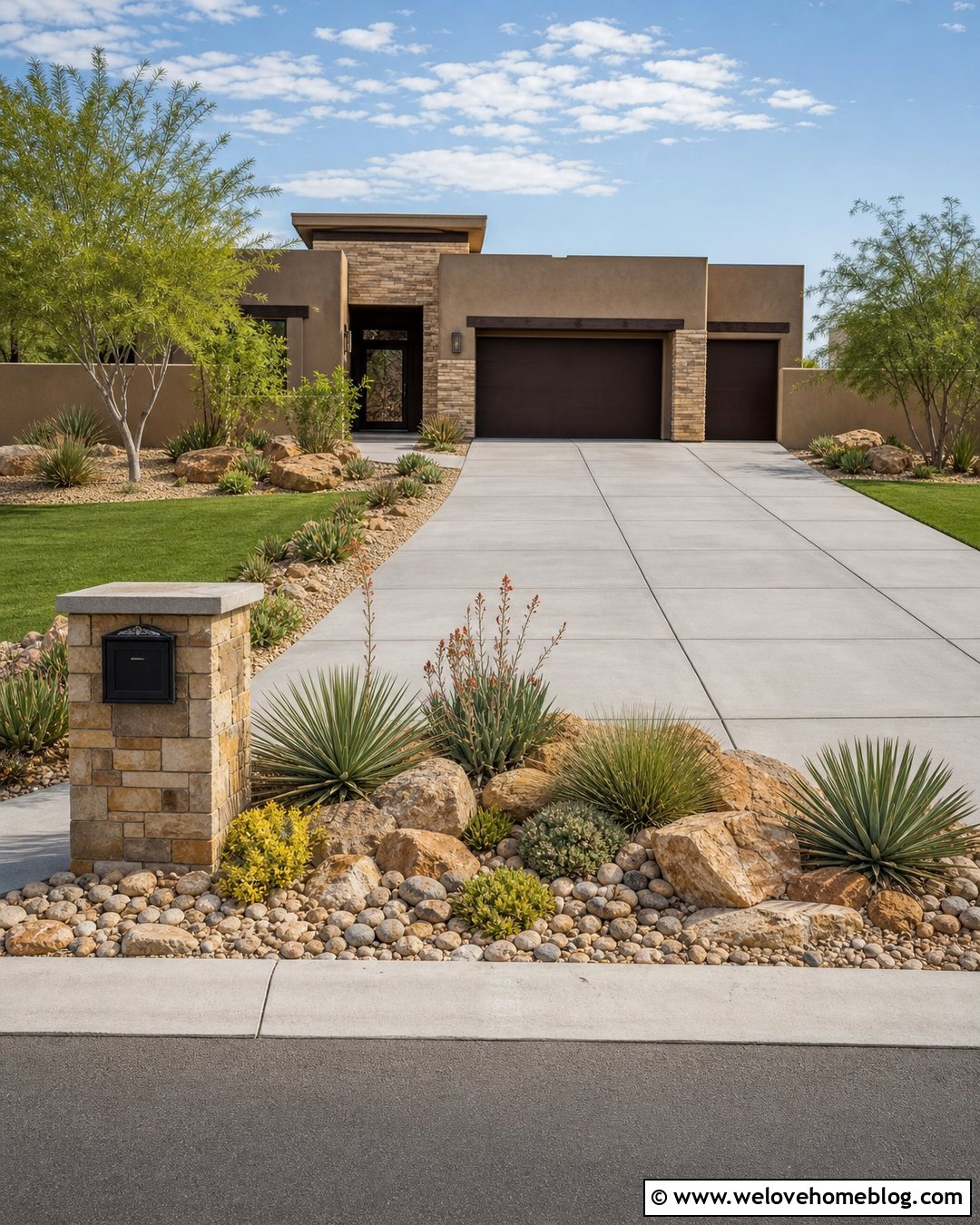
In a dry climate, a white gravel driveway can become part of a water-conscious front yard rather than competing with it. Select angular white granite or crushed quartz and shape the driveway into a broad, gentle curve. Install weathered steel edging to separate the driving surface from tan rock mulch. Group agave, yucca, desert spoon, barrel cactus, and low ornamental grasses in spacious planting beds. Add several large boulders to create height and connect the pale driveway to the surrounding terrain. A modern stucco home with wood and charcoal accents provides a fitting background. Avoid scattering plants evenly. Instead, create bold clusters with open areas between them, allowing the driveway, architecture, and drought-tolerant landscape to read as one clean composition.
15. White Gravel Driveway With Boxwood Hedges
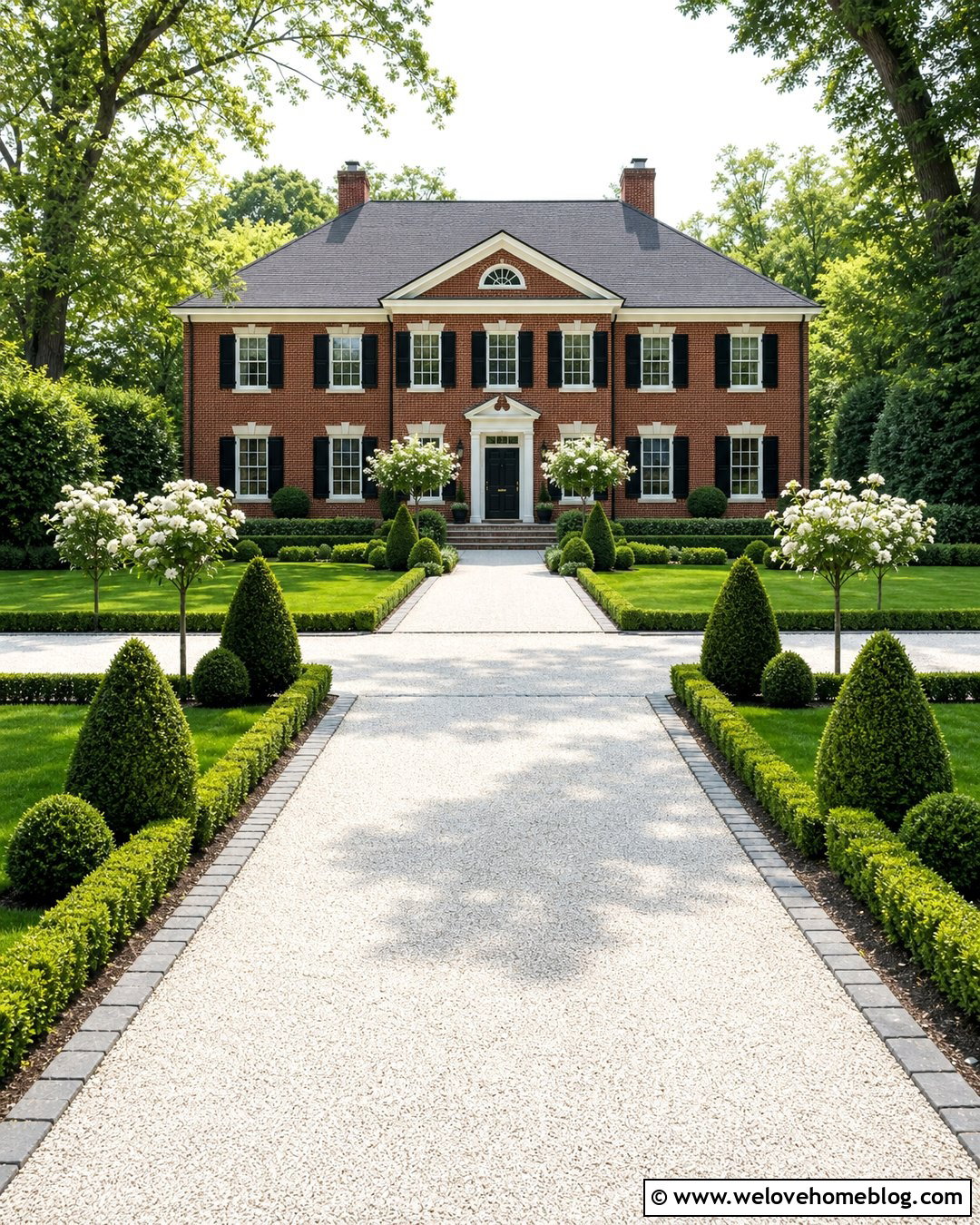
Neatly clipped boxwood can give a white gravel driveway a formal, orderly character. Use crushed white limestone for a straight driveway aligned with the front door or garage. Define both sides with dark gray granite setts, then plant continuous low hedges beyond the stone. Place matching topiary, flowering standards, or larger evergreen forms near the house to mark the end of the approach. The center line should remain open and symmetrical, particularly in front of Colonial, Georgian, and traditional brick homes. A matching gravel path can cross the lawn and connect the driveway to the porch. Keep hedge height low enough to maintain visibility and prevent the entrance from feeling narrow. Repeated shapes and restrained materials are what make this complete design feel polished.
16. White Gravel Driveway With Wildflower Borders
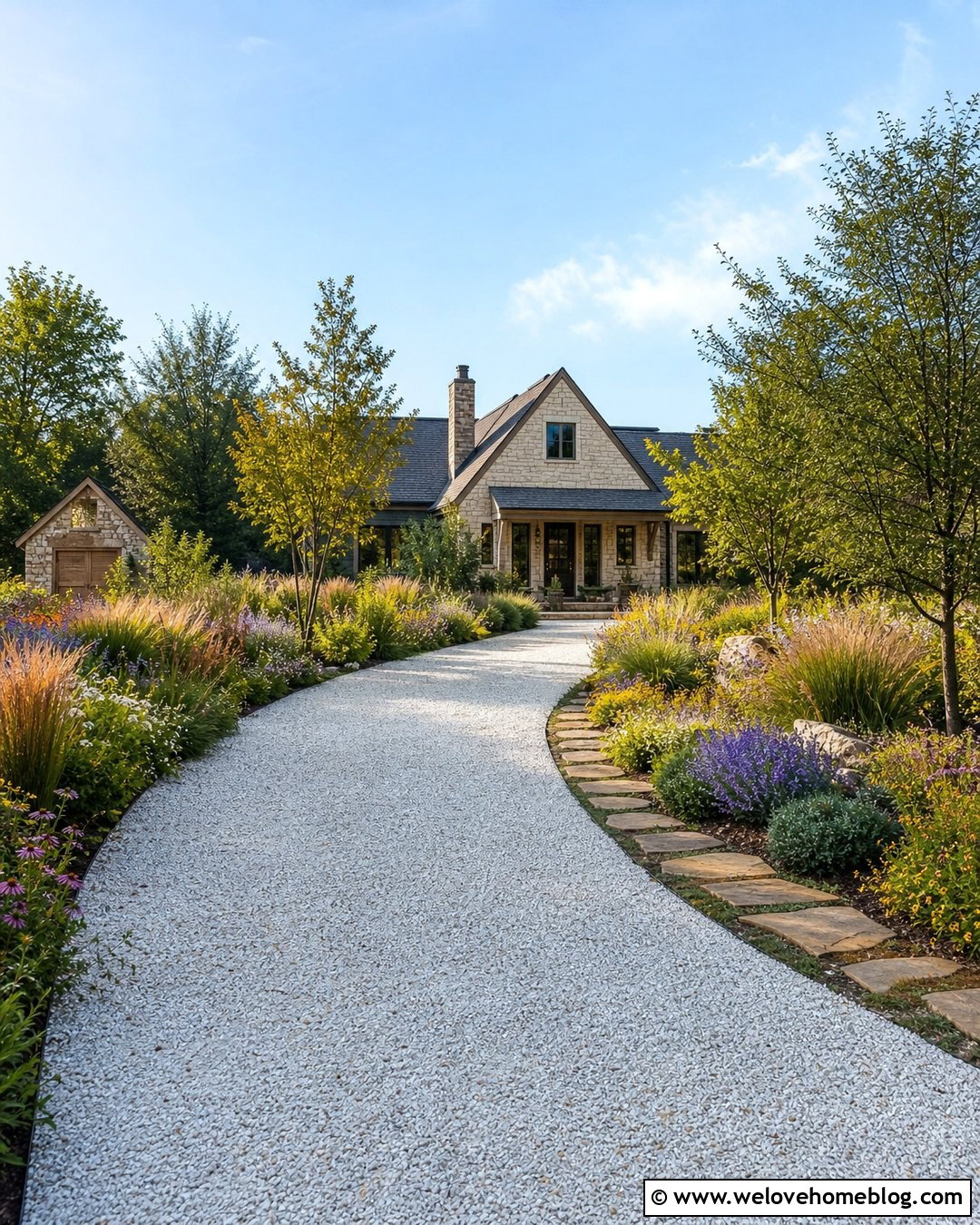
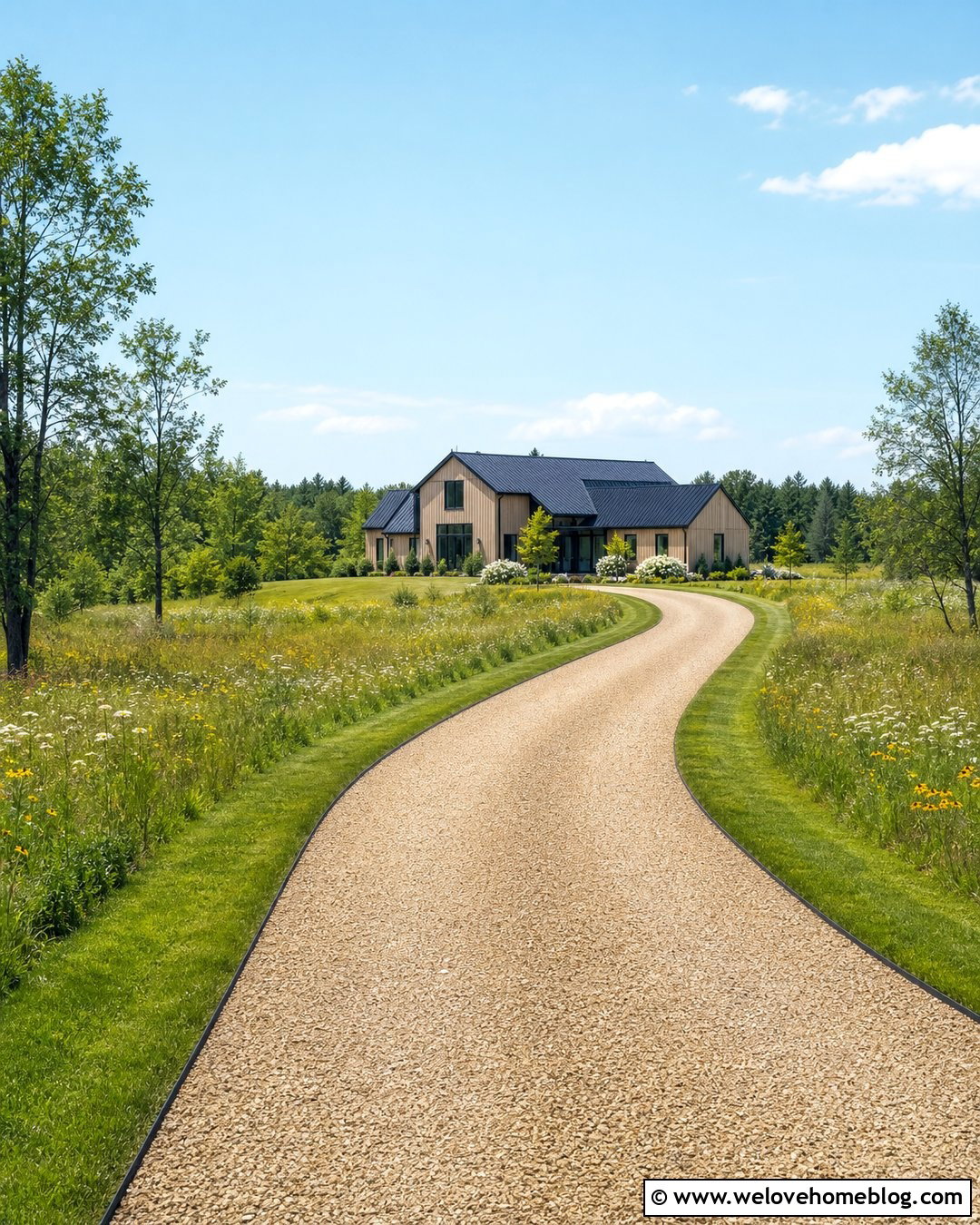
For a softer front yard, surround a white gravel driveway with loose bands of native flowers and ornamental grasses. A winding layout works well because its curves can follow the natural contours of the planting beds. Use white crushed granite, contained by low steel edging that nearly disappears from view. Arrange wildflowers in generous drifts instead of isolated single plants. Add native grasses and compact shrubs to provide texture beyond the main flowering season. Near the road, keep the planting lower and more controlled for a clear entrance. A cottage, Craftsman, or country home suits this relaxed landscape. The contrast between pale gravel and colorful planting creates interest, while the defined edge prevents the overall design from appearing untidy or accidental.
17. White Gravel Driveway With Gray Paver Apron
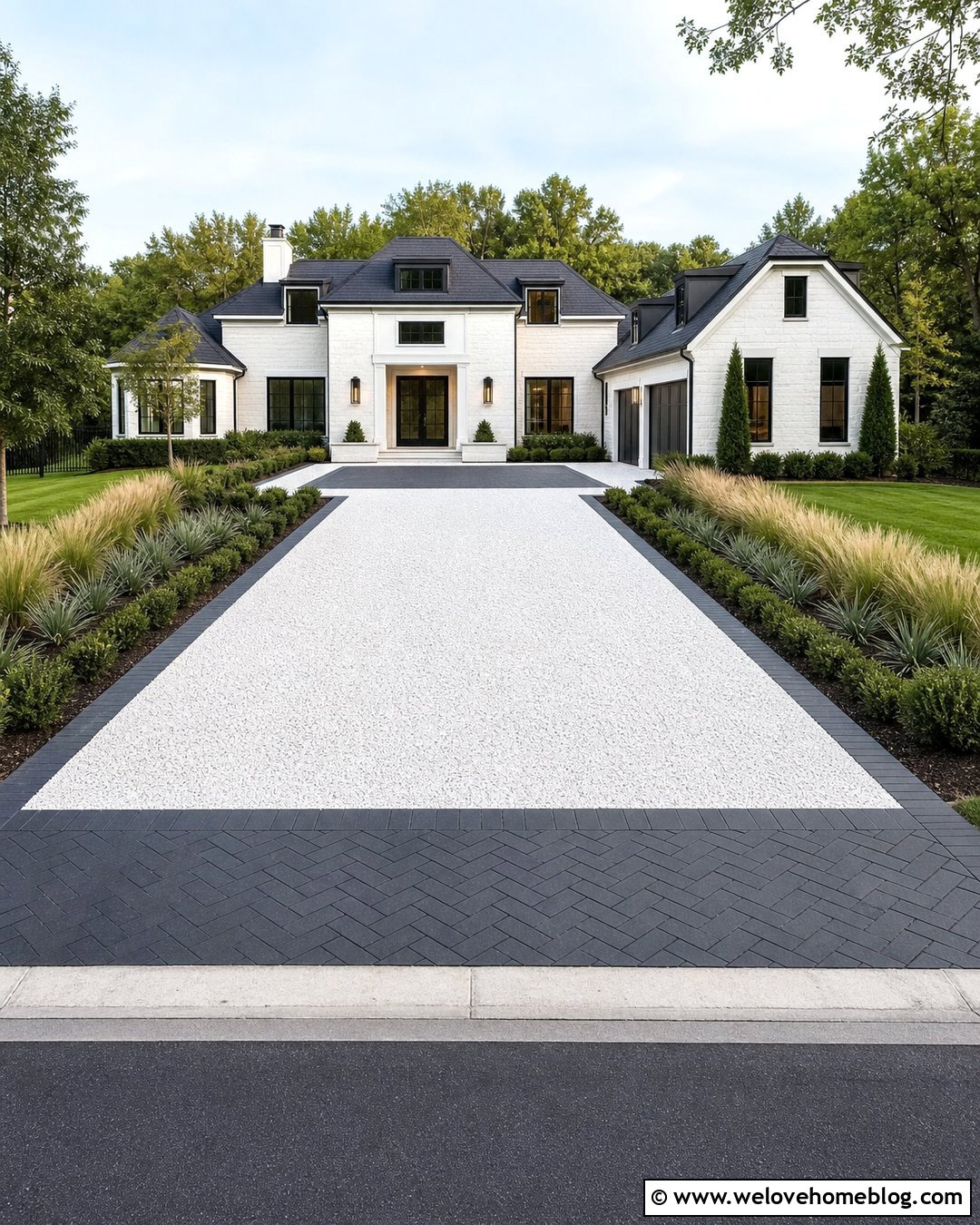
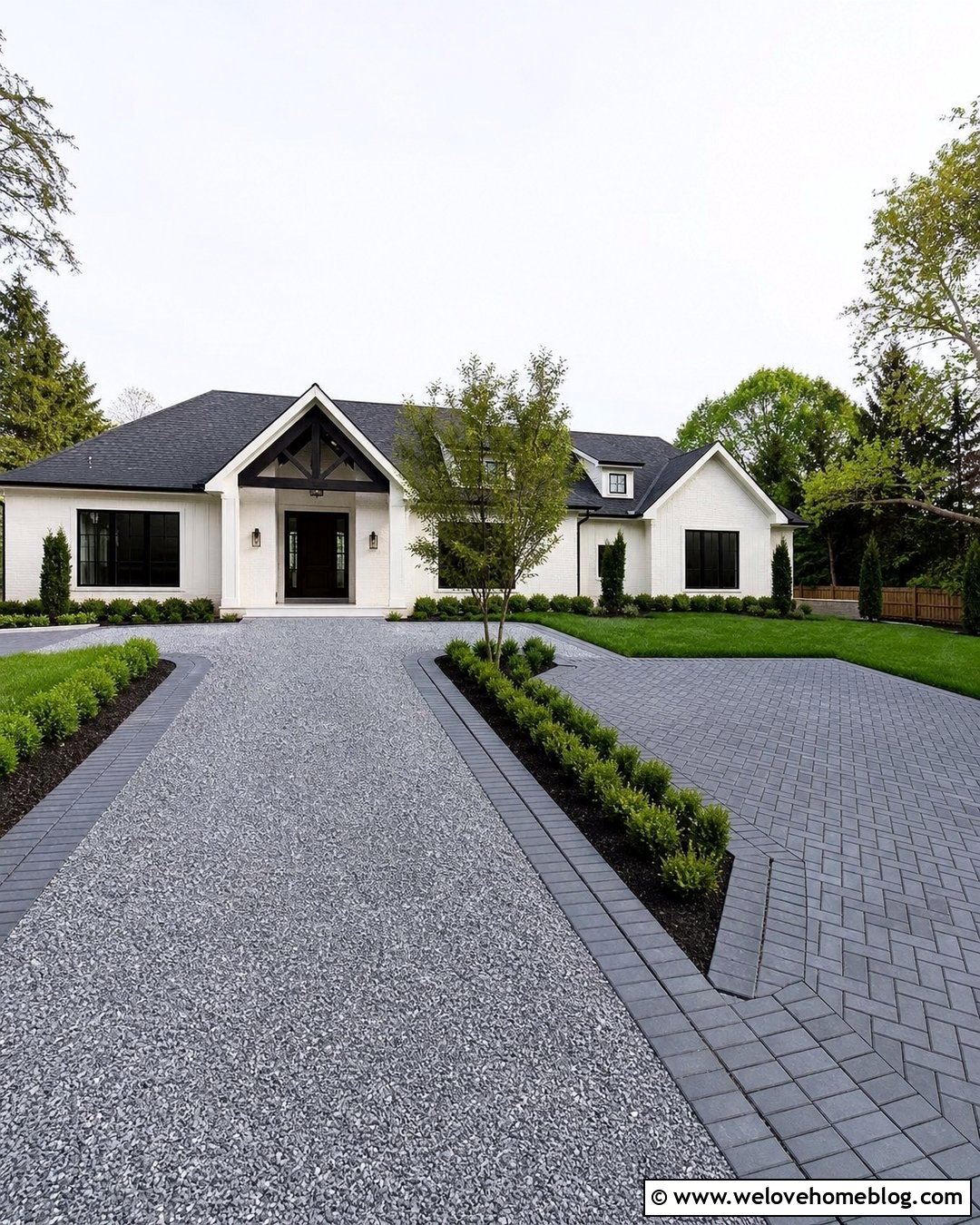
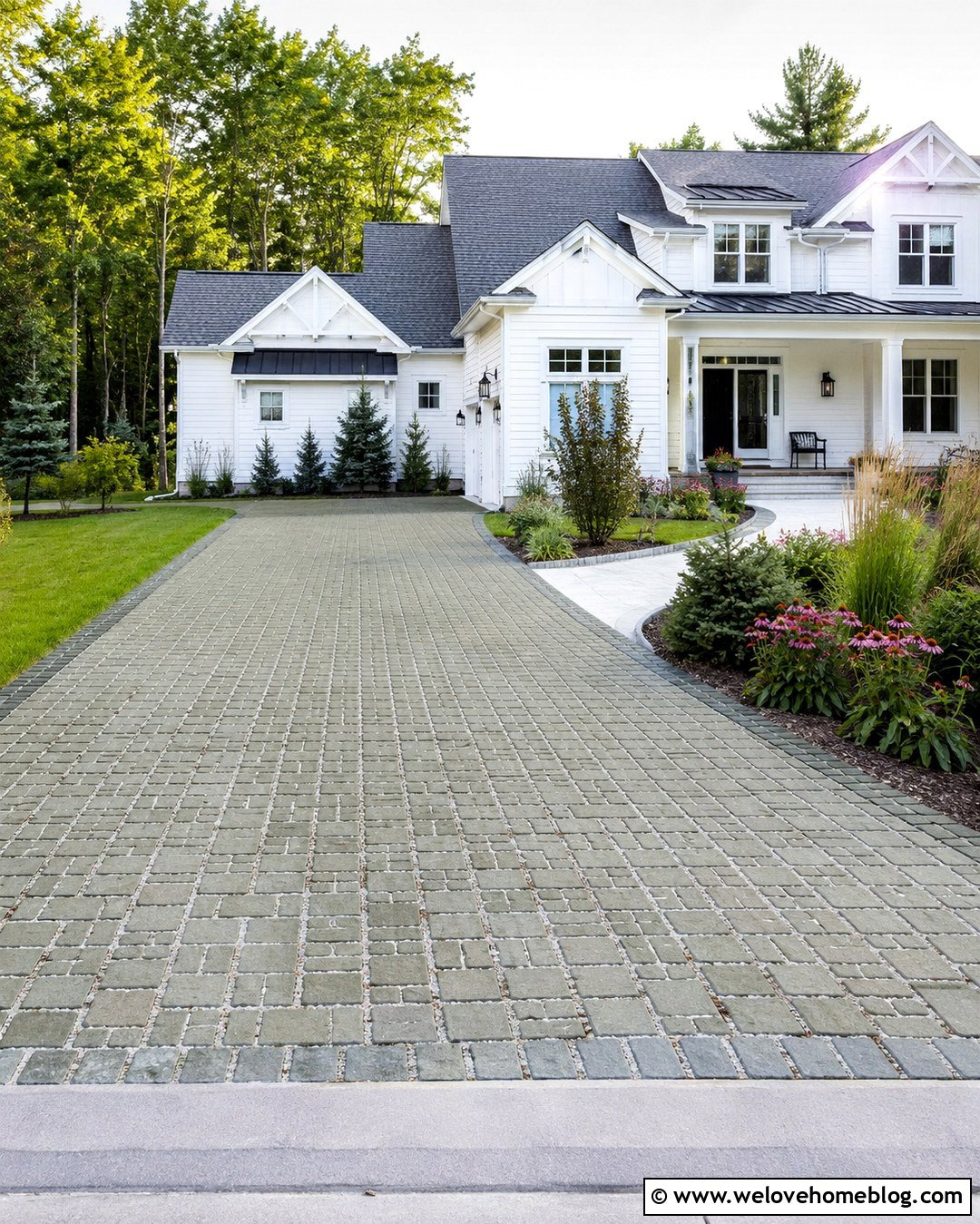
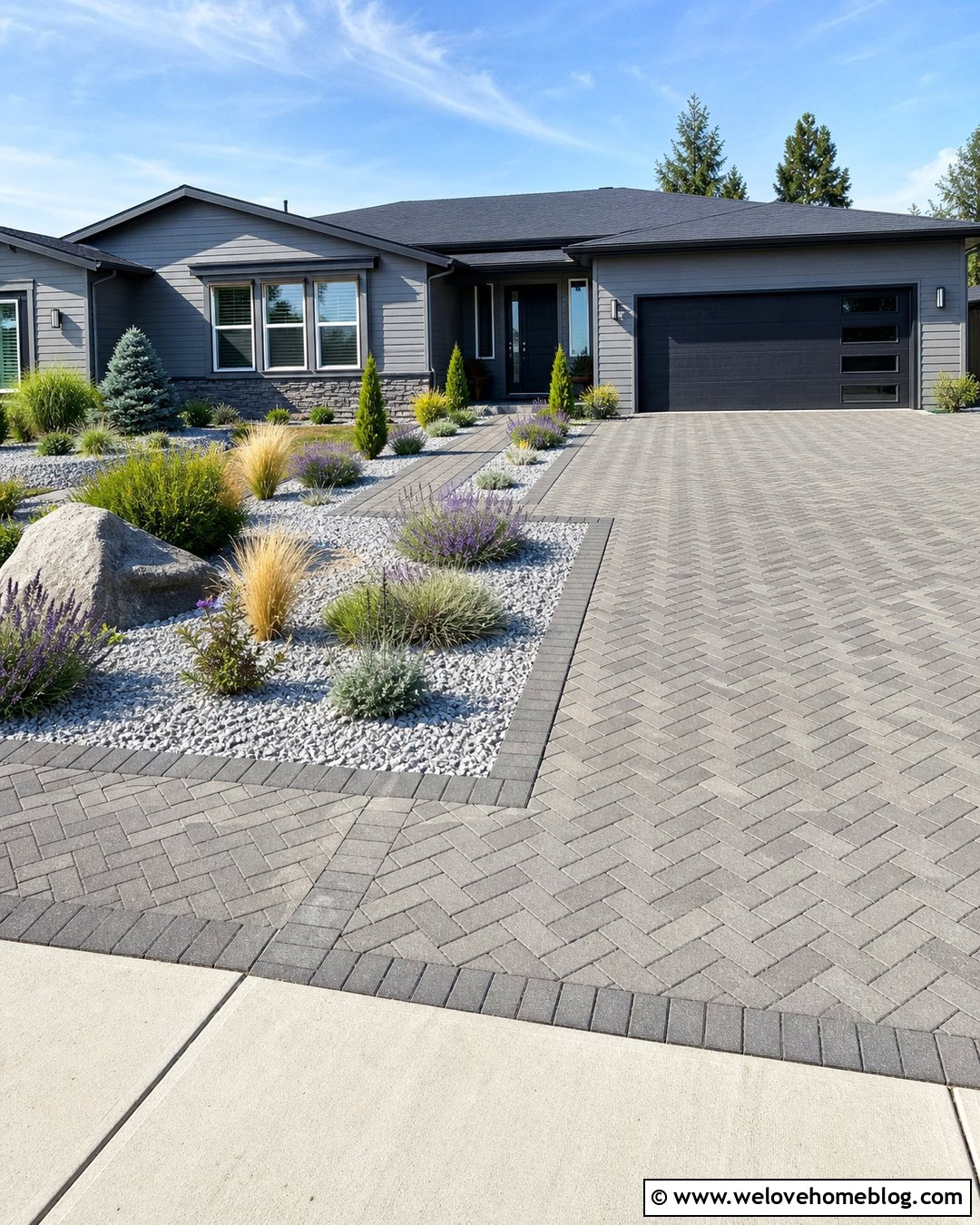
A gray paver apron gives a white gravel driveway a strong beginning and a practical visual anchor. Install charcoal or medium-gray concrete pavers across the full entrance, using a running bond or herringbone pattern. Continue white crushed marble gravel beyond the apron in a straight driveway leading toward a modern or transitional home. Repeat the pavers as narrow side borders and as a wider turning area near the garage. Surround the drive with clipped grasses, low shrubs, lawn, and a direct concrete walkway. The darker paving hides some of the visual mess that can occur where loose gravel meets the road. This combination also creates a clear contrast between the public entrance, the driving surface, and the private parking area closer to the house.
18. White Gravel Driveway With Red Brick House
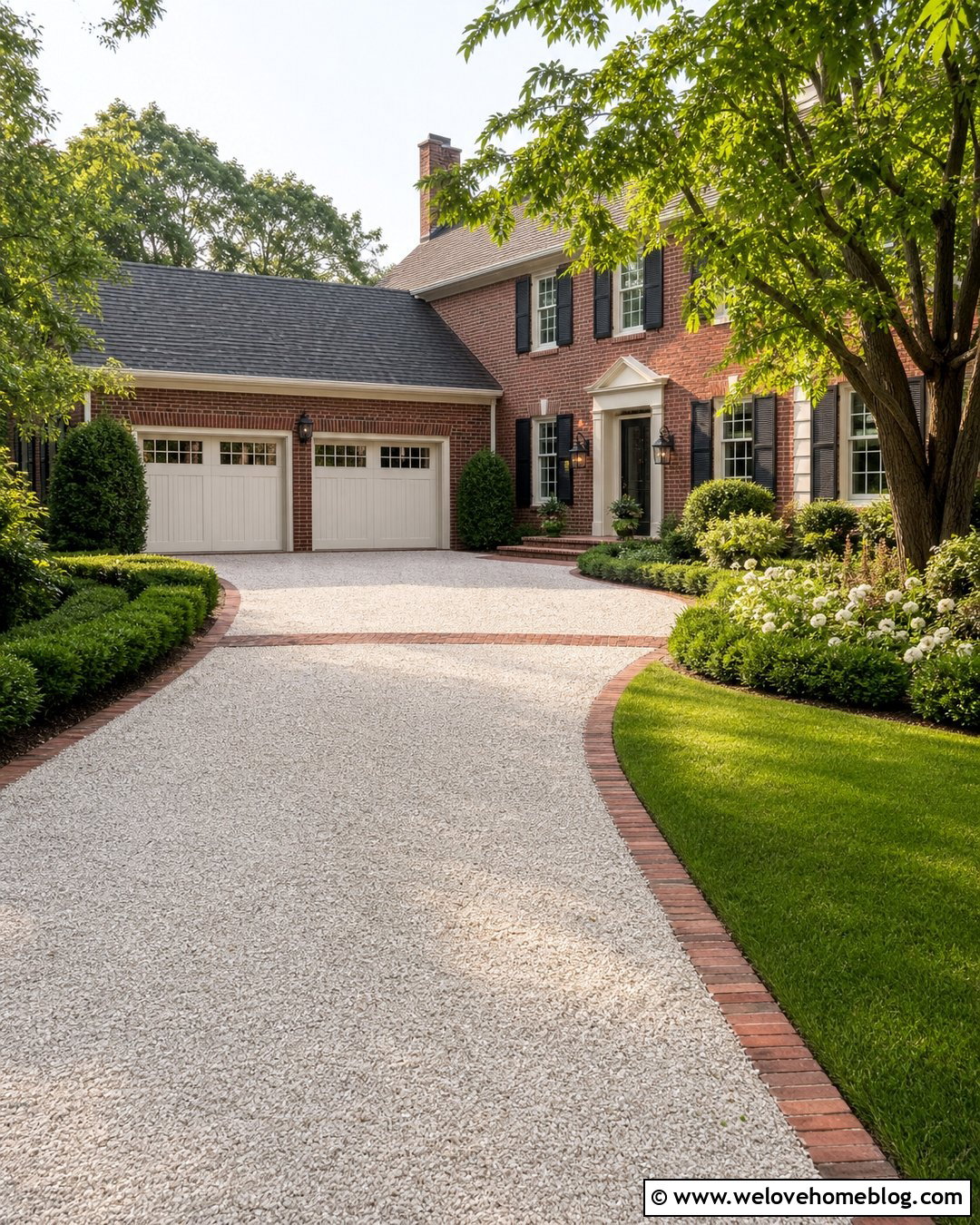
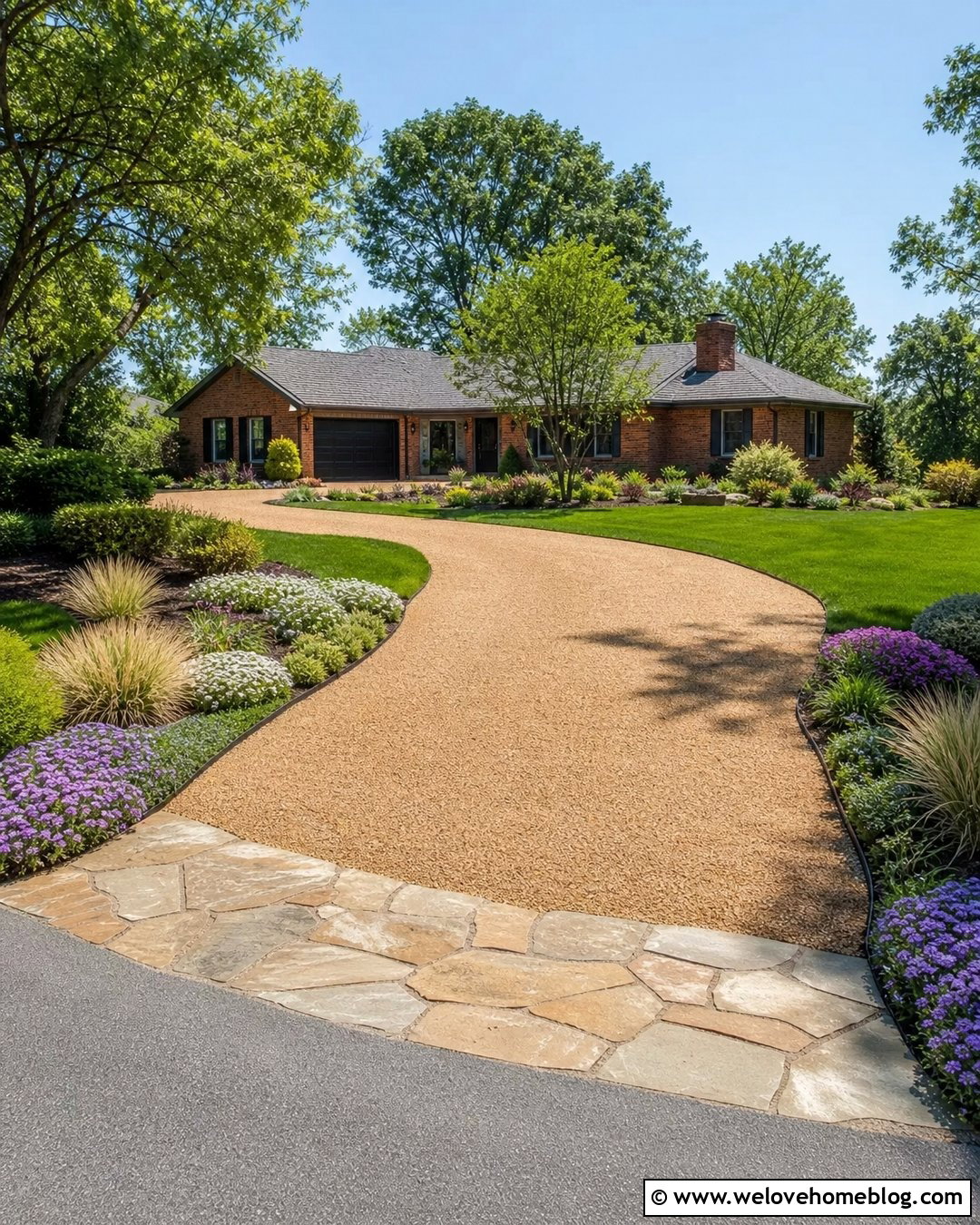
White gravel can brighten the exterior of a traditional red brick house without competing with its warm color. Choose off-white crushed limestone rather than brilliant white stone for a softer transition. Shape the driveway into a simple straight or gently curved approach, then edge it with reclaimed red brick that echoes the facade. Add deep green yew, boxwood, or holly shrubs around the foundation. White flowering perennials can connect the driveway color to the planting, while a green lawn keeps the composition fresh. Use a brick walkway between the driveway and front steps for continuity. A matching brick band across the garage entrance will visually contain the gravel and create a finished endpoint, making the surface feel integrated with the architecture.
19. White Gravel Driveway With Modern Farmhouse
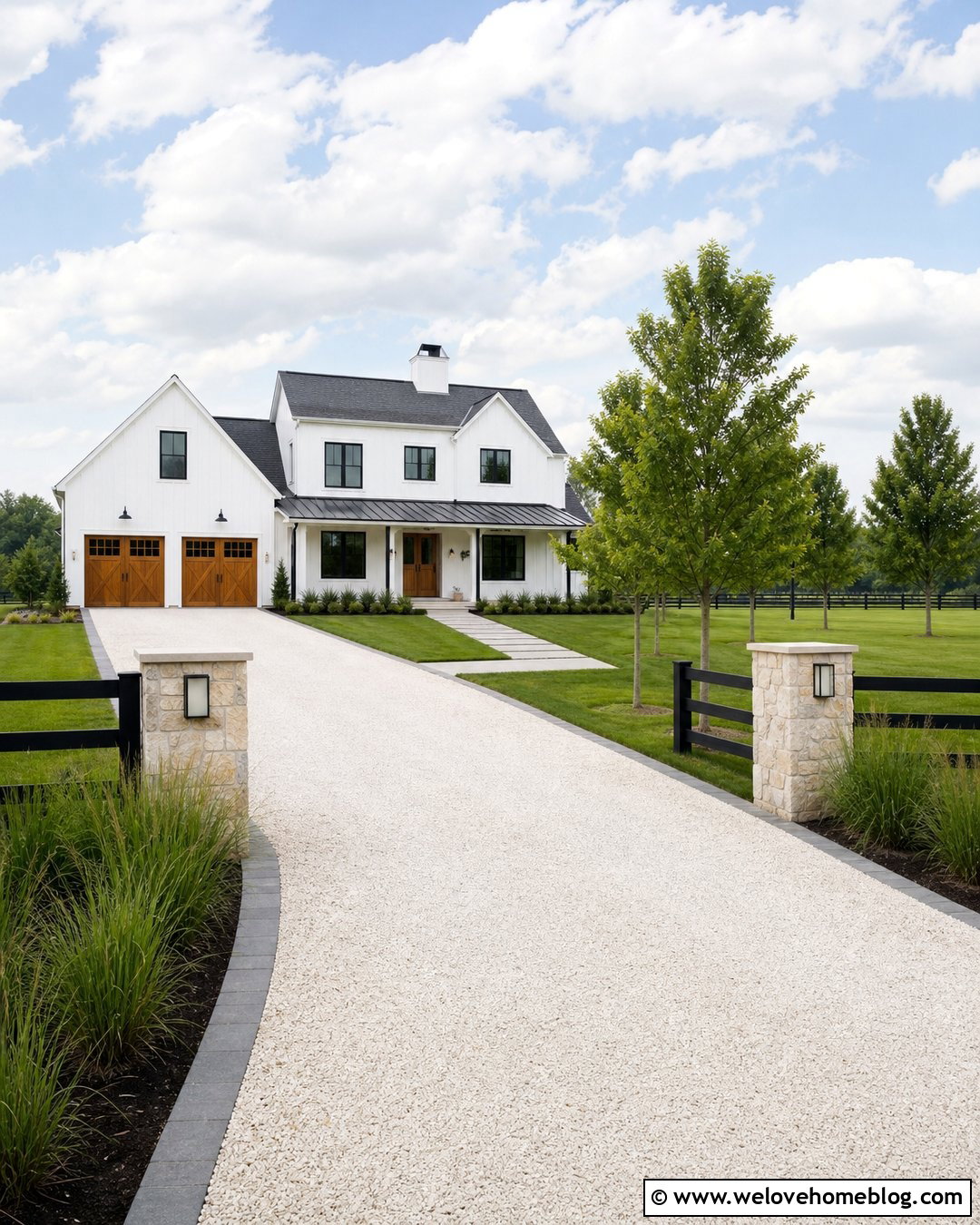
A modern farmhouse exterior offers an ideal backdrop for a bright white gravel driveway. Use compacted white crushed granite in a broad straight layout leading to a black or natural wood garage door. Frame the surface with charcoal concrete pavers to repeat dark window frames and exterior hardware. On one side, add a simple concrete walkway separated from the gravel by a narrow bed of ornamental grasses. On the other, maintain an open lawn with a few evenly spaced trees. Near the street, use black wood fencing and understated stone posts to define the entrance. The palette should remain limited to white, charcoal, natural wood, and green. This keeps the complete driveway design clean while preserving the approachable character associated with farmhouse architecture.
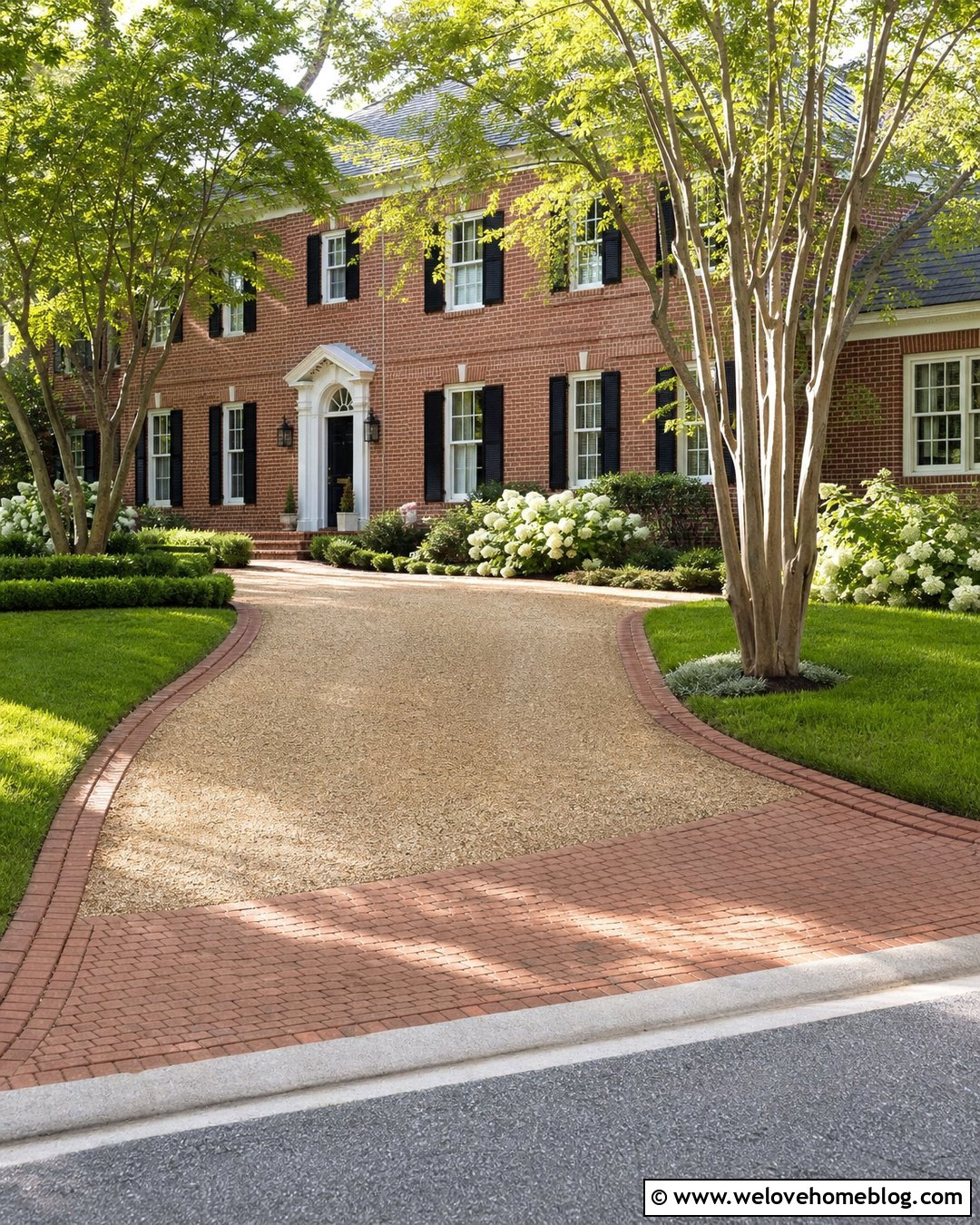
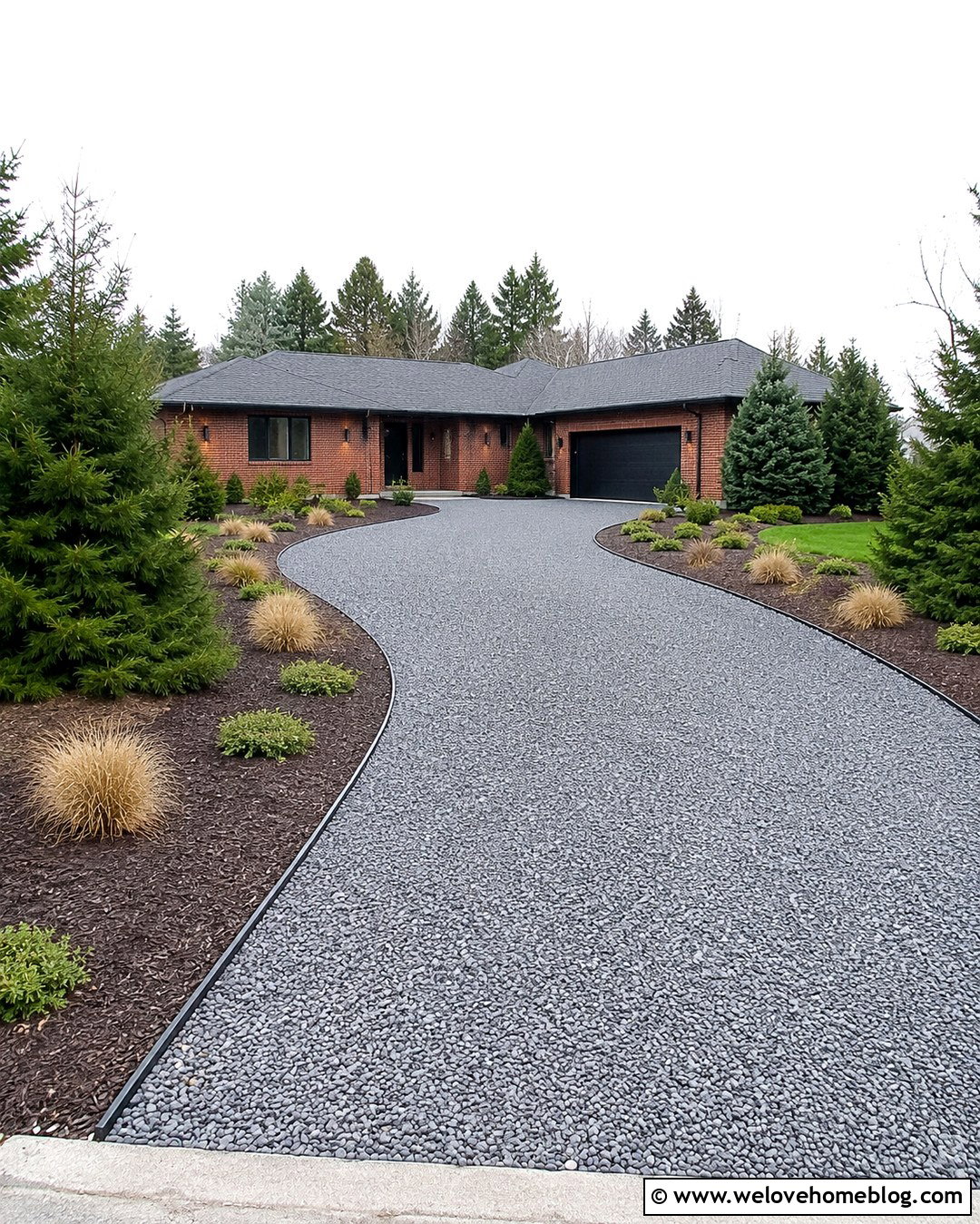
20. White Gravel Driveway With Coastal Landscaping
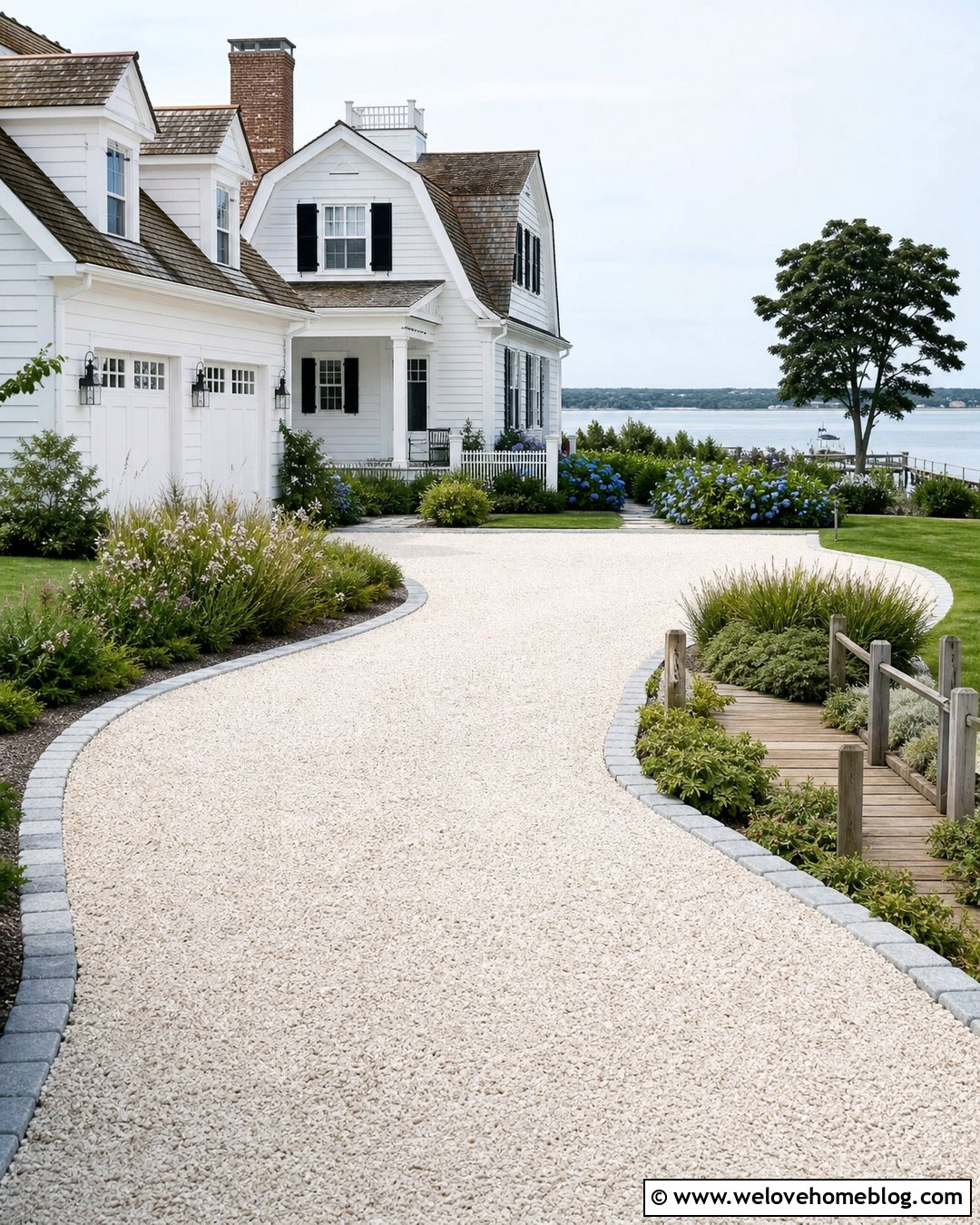
A pale gravel driveway naturally complements a breezy coastal home. Choose white crushed quartz or limestone with subtle cream tones, then form a relaxed curved approach to a shingle-sided or white clapboard house. Use light gray cobblestone edging to create definition without introducing a heavy color. Plant beach grass, hydrangeas, bayberry, low juniper, and other salt-tolerant choices appropriate to the location. Weathered wood fencing and a simple boardwalk-style path can reinforce the coastal setting. Keep the planting loose but provide clear gaps at the driveway entrance and walkway crossing. A small gravel parking court near the garage can reduce the visual impact of a large paved area while maintaining the same pale, cohesive surface throughout the property.
21. White Gravel Driveway With Large Boulders
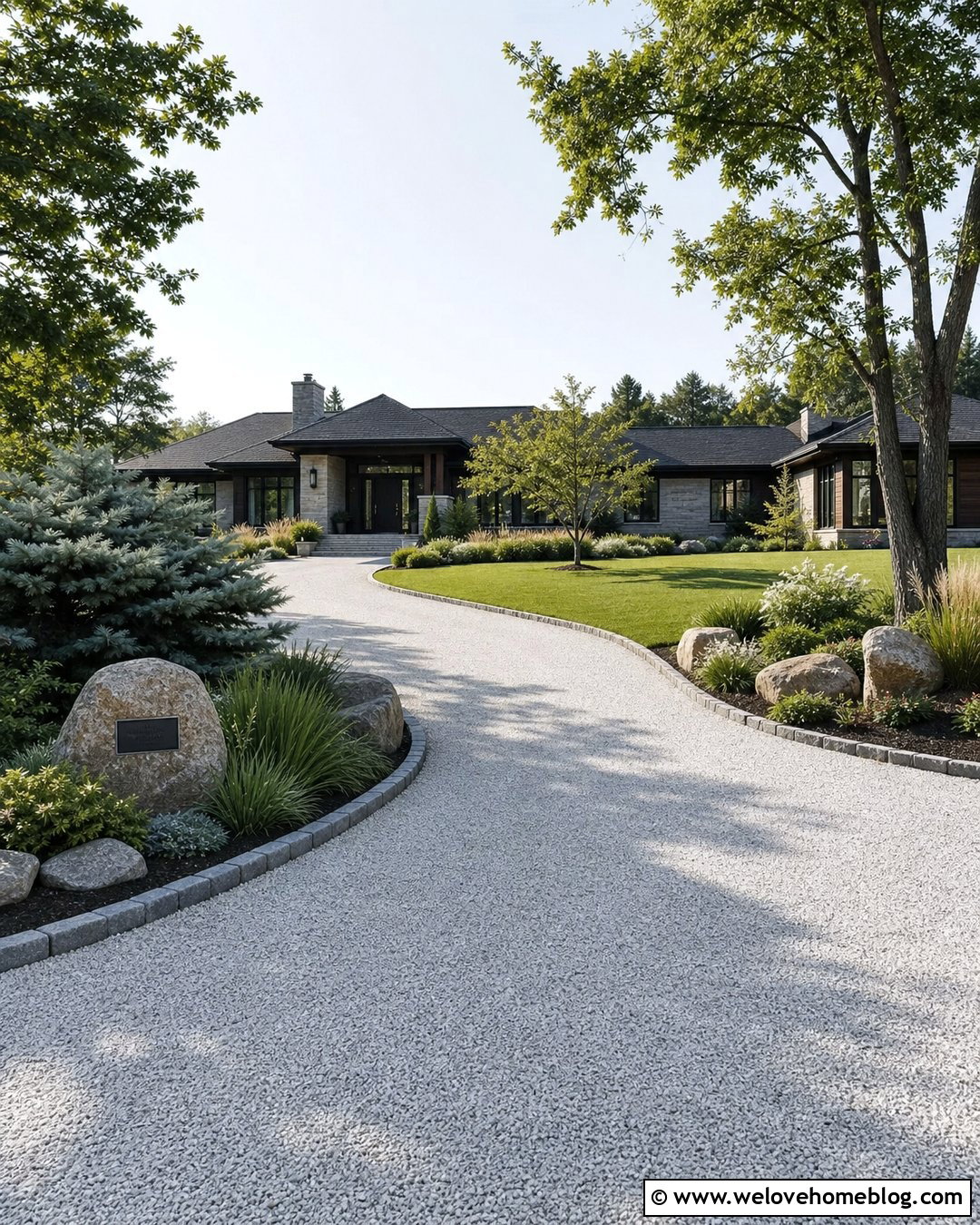
Large boulders add natural weight to a white gravel driveway and help it settle into a spacious landscape. Begin with a sweeping surface of crushed white granite edged by low gray stone. Position several substantial boulders outside the driving area, using asymmetrical groups instead of identical pairs. Surround them with ornamental grasses, spreading evergreens, and low native perennials. The stones should relate to the house facade or nearby retaining walls so they do not appear randomly placed. This look works well with mountain homes, contemporary ranches, and wooded properties. At the entrance, one carefully positioned boulder can support a simple address marker. Keep all large stones safely beyond turning zones, drainage paths, and areas needed for opening vehicle doors.
22. White Gravel Driveway With Raised Planters
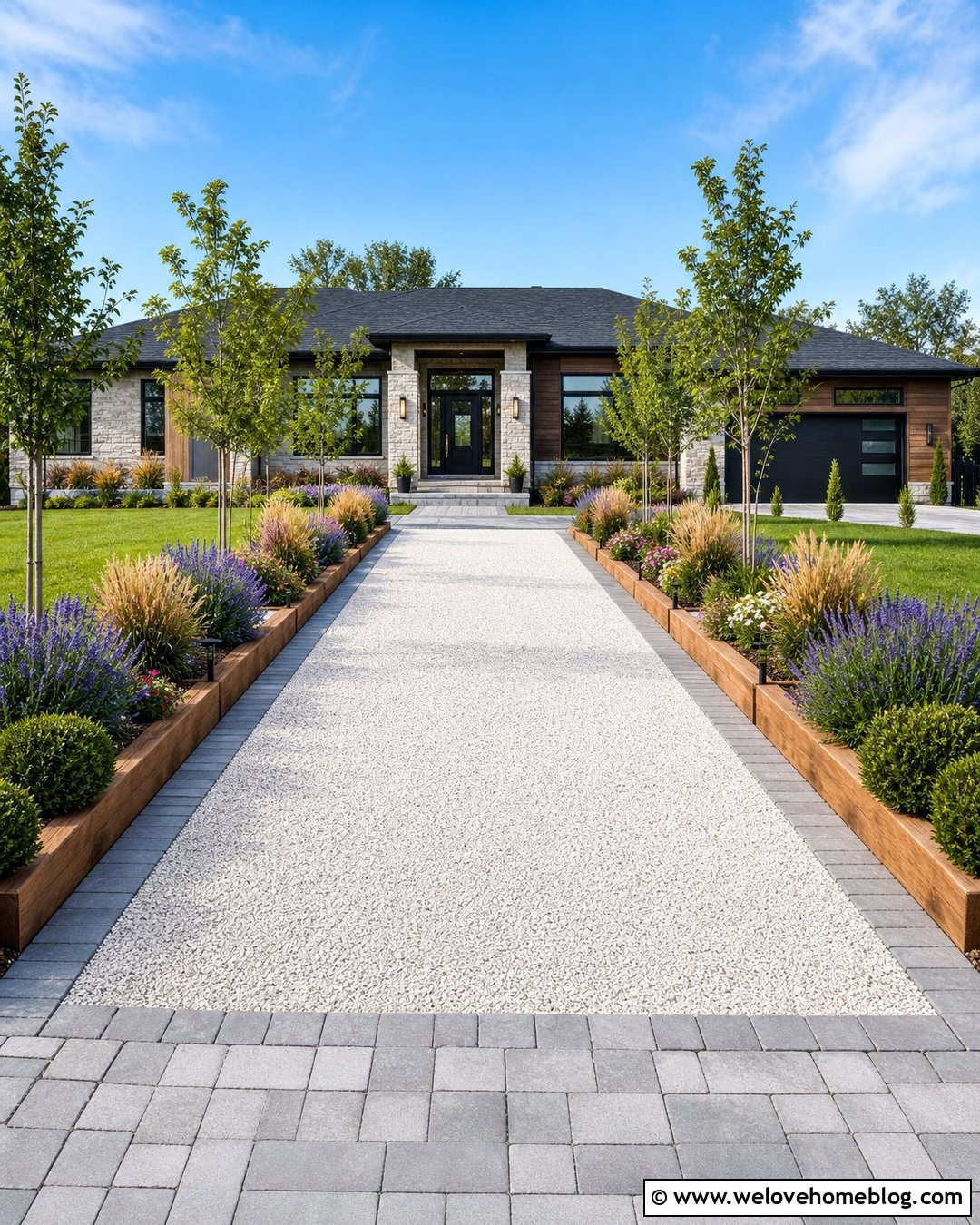
Raised planters can give a white gravel driveway more dimension, especially where the yard is flat or the entrance feels undefined. Use angular white limestone gravel in a straight layout with warm gray paver edging. Build long, low planters from timber sleepers, brick, board-formed concrete, or matching stone. Position them near the street or alongside the final section approaching the garage. Fill the beds with lavender, grasses, compact shrubs, and seasonal flowers that will not grow into the driving area. A recent driveway project combined white decorative gravel with contrasting block paving and a raised timber lavender planter, showing how these materials can create clear zones within a wide frontage. () Match the planter material to the house for a cohesive result.
23. White Gravel Driveway With Stepping Stone Walkway
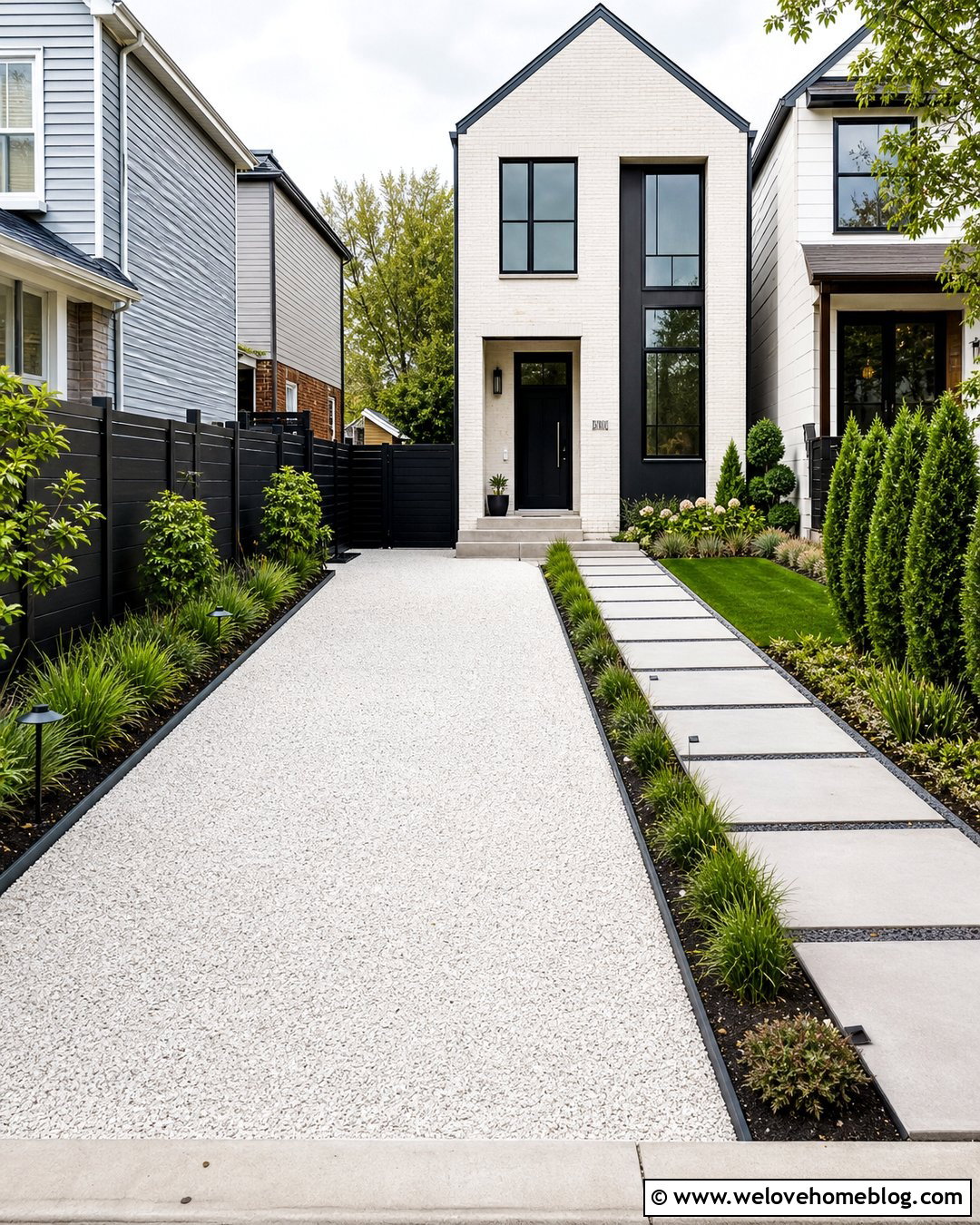
A separate stepping stone walkway can make a white gravel driveway easier to navigate while adding an attractive geometric pattern. Lay large rectangular concrete slabs along one side of a compact white crushed gravel drive. Leave narrow gravel joints between the slabs, but maintain a continuous and comfortable walking route toward the front door. Use black metal edging around the outer perimeter and repeat the concrete in a small porch landing. Plant low grasses, creeping ground covers, and compact evergreen shrubs beside the walkway. This design works particularly well for narrow suburban lots where the driveway and main path must share limited frontage. Keep the walkway visibly distinct from tire areas so the layout remains organized and visitors can quickly identify the safest route to the entrance.
24. White Gravel Horseshoe Driveway With Trees
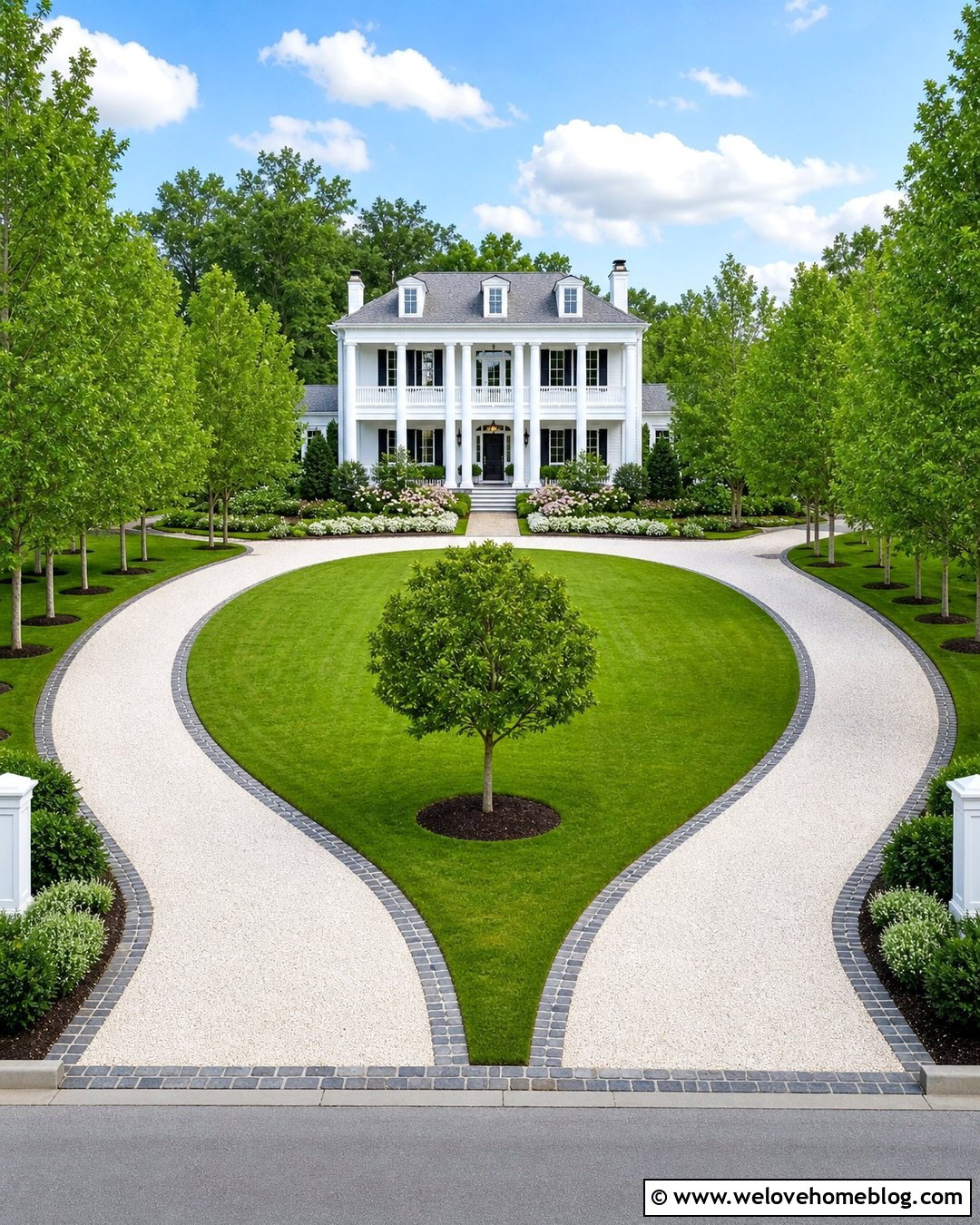
A horseshoe driveway provides a graceful approach and two convenient street connections on a wider property. Cover the full loop with compacted white crushed granite, then frame it with charcoal cobblestone or natural fieldstone edging. Plant evenly spaced deciduous trees along the outer curve, leaving open lawn beneath their canopies. In the central island, use a broad lawn, a specimen tree, or a restrained mix of evergreen shrubs and flowering perennials. Keep both entrances open and symmetrical so the shape can be read clearly from the road. A Colonial, Southern, or large country house makes an appropriate focal point at the back of the loop. Repeating the same edging and planting rhythm on both sides gives the expansive design a unified appearance.
25. White Gravel Driveway With Integrated Lighting
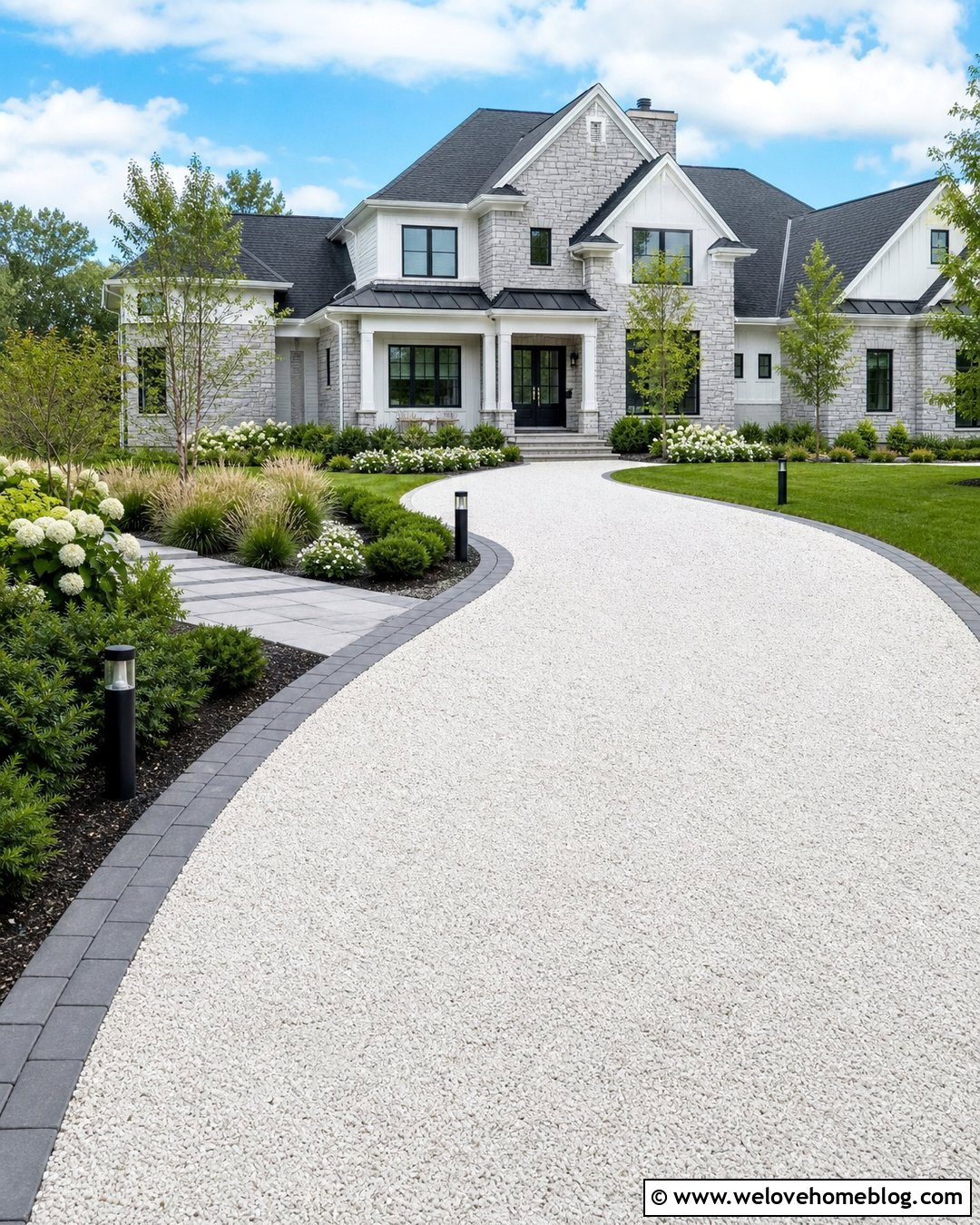
Integrated lighting can enhance the structure of a white gravel driveway without overwhelming its daytime appearance. Start with pale crushed marble or limestone in a gently curved layout. Add low black bollard lights at generous intervals beyond a dark paver edge, positioning them where they identify curves, walkways, and the driveway entrance. During the day, the black fixtures create a crisp contrast with the white surface and green planting. Surround the driveway with low shrubs, ornamental grasses, and a few small trees rather than dense vegetation that could hide the lights. Near the house, repeat the fixture finish in porch lights and exterior hardware. Plan cable routes and fixture locations before completing the gravel so the installation remains clean and unobtrusive.
Conclusion:
The best white gravel driveway balances a bright surface with practical structure and landscaping that complements the home. Cobblestone, brick, steel, timber, and concrete borders can each create a different character while helping define the driving area. Curved layouts feel relaxed, straight driveways look organized, and circular or horseshoe designs suit larger properties. Planting is equally important. Hedges bring formality, while grasses, hydrangeas, lavender, and native flowers create a softer approach. Whichever layout you prefer, begin with proper grading, a stable compacted base, suitable angular driveway gravel, and durable edge restraints. Use these **25 white gravel driveway ideas** to plan a complete entrance that feels attractive, usable, and connected to your house.

Related posts:
Leave a Reply