
Dark gravel brings depth, contrast, and a polished character to the front of a home. The best **20 Dark Gravel Driveway Ideas** go beyond choosing charcoal stone. They combine the right gravel finish with a practical layout, sturdy edging, thoughtful drainage, and landscaping that connects the driveway to the architecture. Pale borders can create crisp contrast, while brick, timber, and natural stone produce a softer transition. Dark gravel also works with straight suburban driveways, sweeping country approaches, compact parking areas, and formal circular layouts. Angular crushed gravel is generally more suitable for vehicle traffic than smooth rounded stones, while defined edges help reduce spreading. () Explore these complete, curb-friendly **20 Dark Gravel Driveway Ideas**.

1. Dark Gravel Driveway With White Concrete Edging
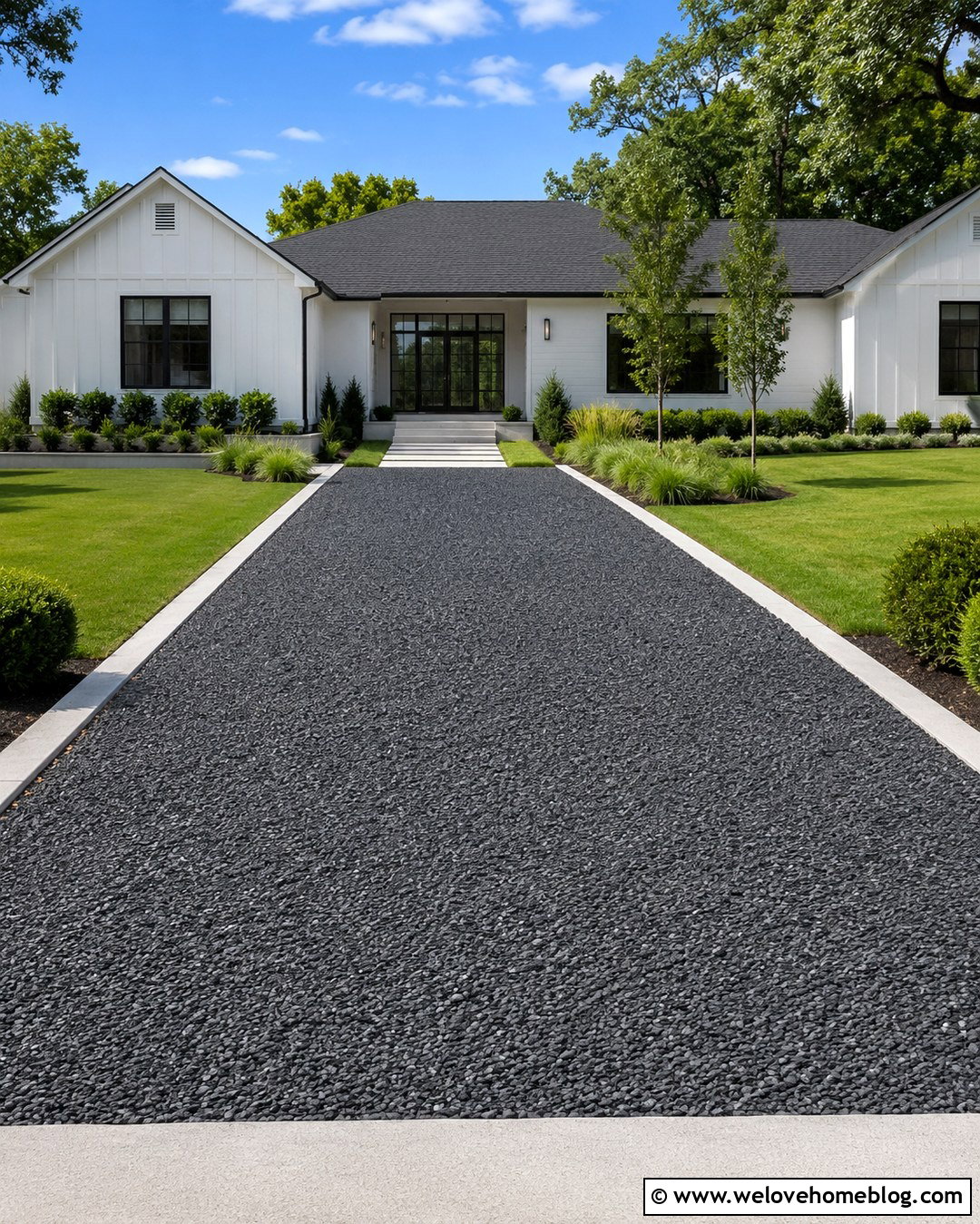
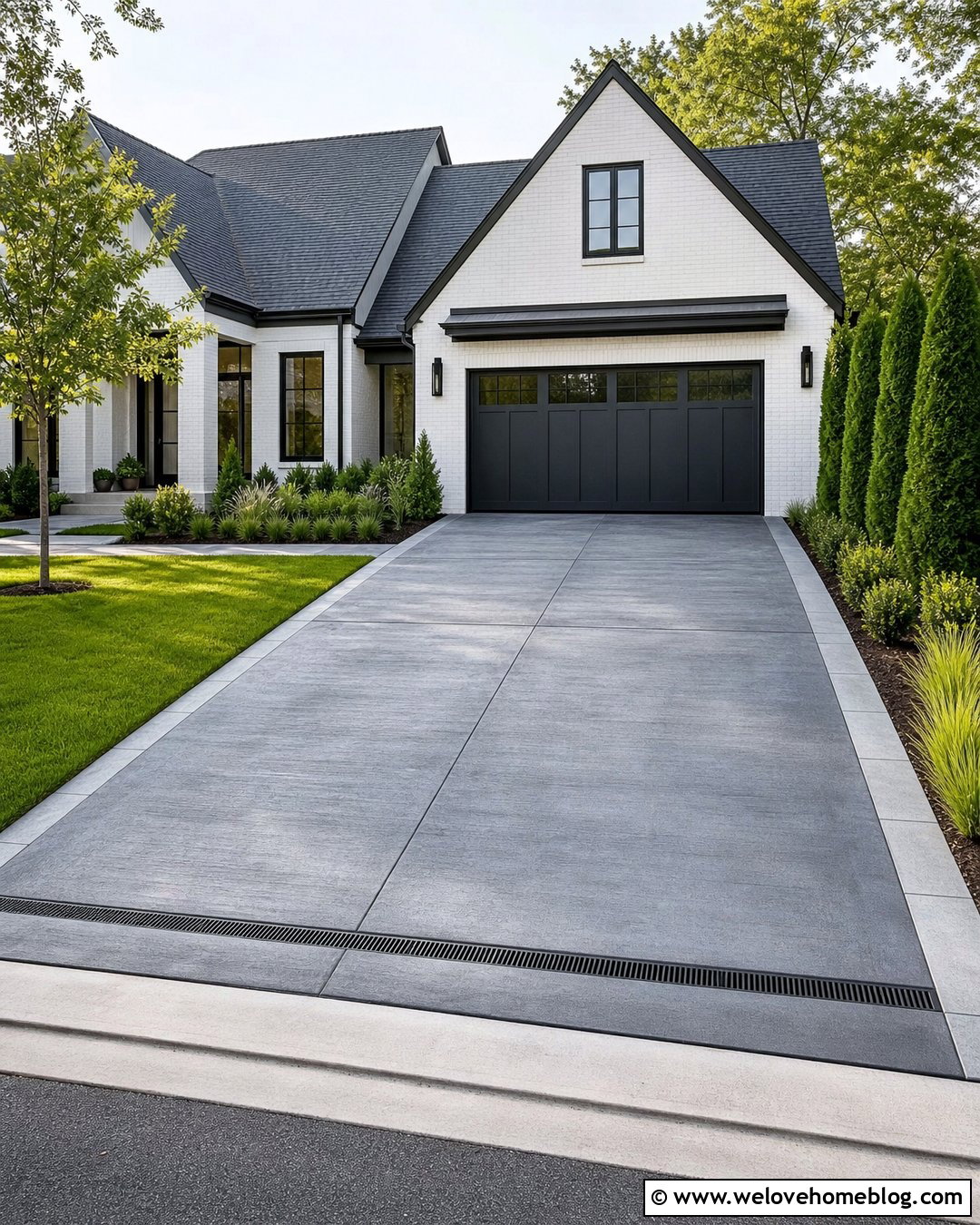
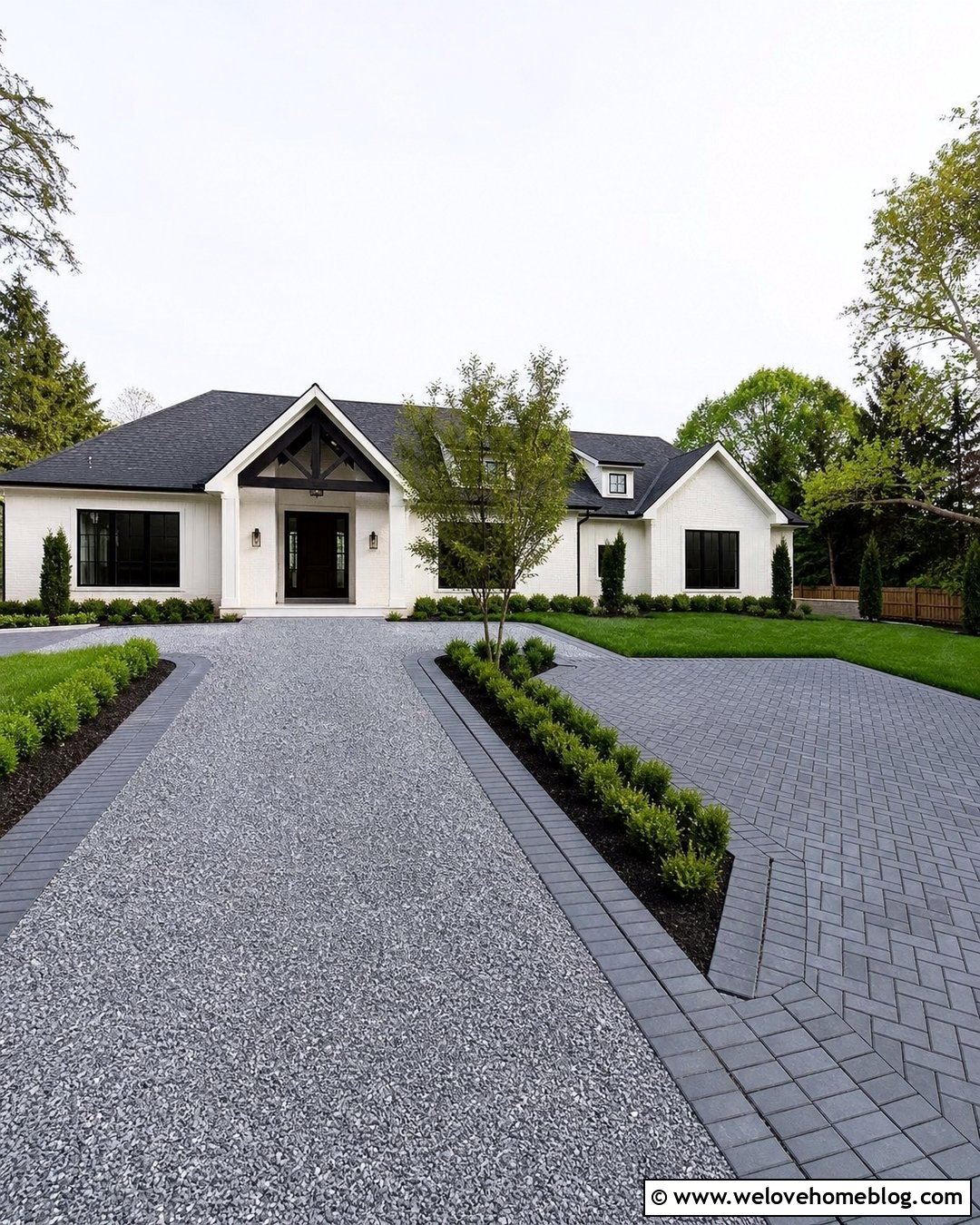
A charcoal gravel surface looks especially sharp beside a clean white concrete border. Use a straight or gently tapered layout to strengthen the modern effect. The pale edging should follow both sides of the driveway and continue around nearby planting beds for visual consistency. Choose angular dark granite or basalt gravel rather than polished decorative pebbles, which may move more easily under tires. Low evergreen shrubs, ornamental grasses, and a simple concrete walkway can connect the driveway to a white or light-gray house. Keep the planting restrained so the contrasting materials remain the main feature. This complete look works particularly well with modern homes, renovated ranch houses, and contemporary facades featuring black windows or garage doors.
2. Dark Gravel Driveway With Belgian Block Border
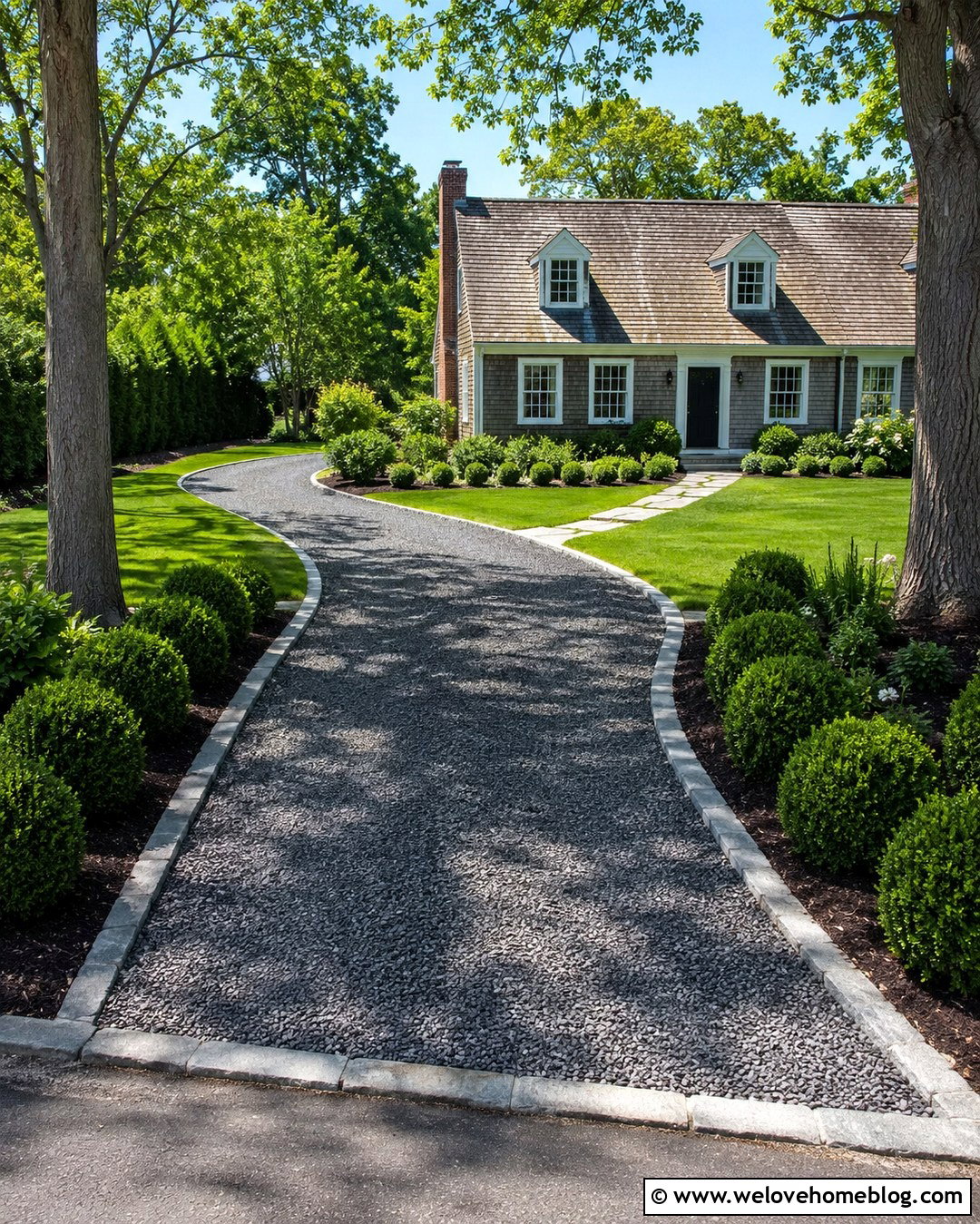
Belgian block gives a dark gravel driveway a substantial, established edge. Its chunky shape contains the loose surface while creating a visible line between the driveway and lawn. Choose gray blocks for a quiet, coordinated palette or warm granite blocks to introduce natural variation. A gently curved driveway works beautifully with this border because the individual blocks can follow gradual bends. Complete the setting with clipped shrubs, mature shade trees, and a flagstone walkway leading toward a colonial or Cape Cod home. The gravel should sit slightly below the top of the block so the edge remains visible. This pairing feels formal without looking overly perfect, making it suitable for traditional homes and wooded suburban properties. ()
3. Dark Gravel Driveway With Red Brick Ribbon
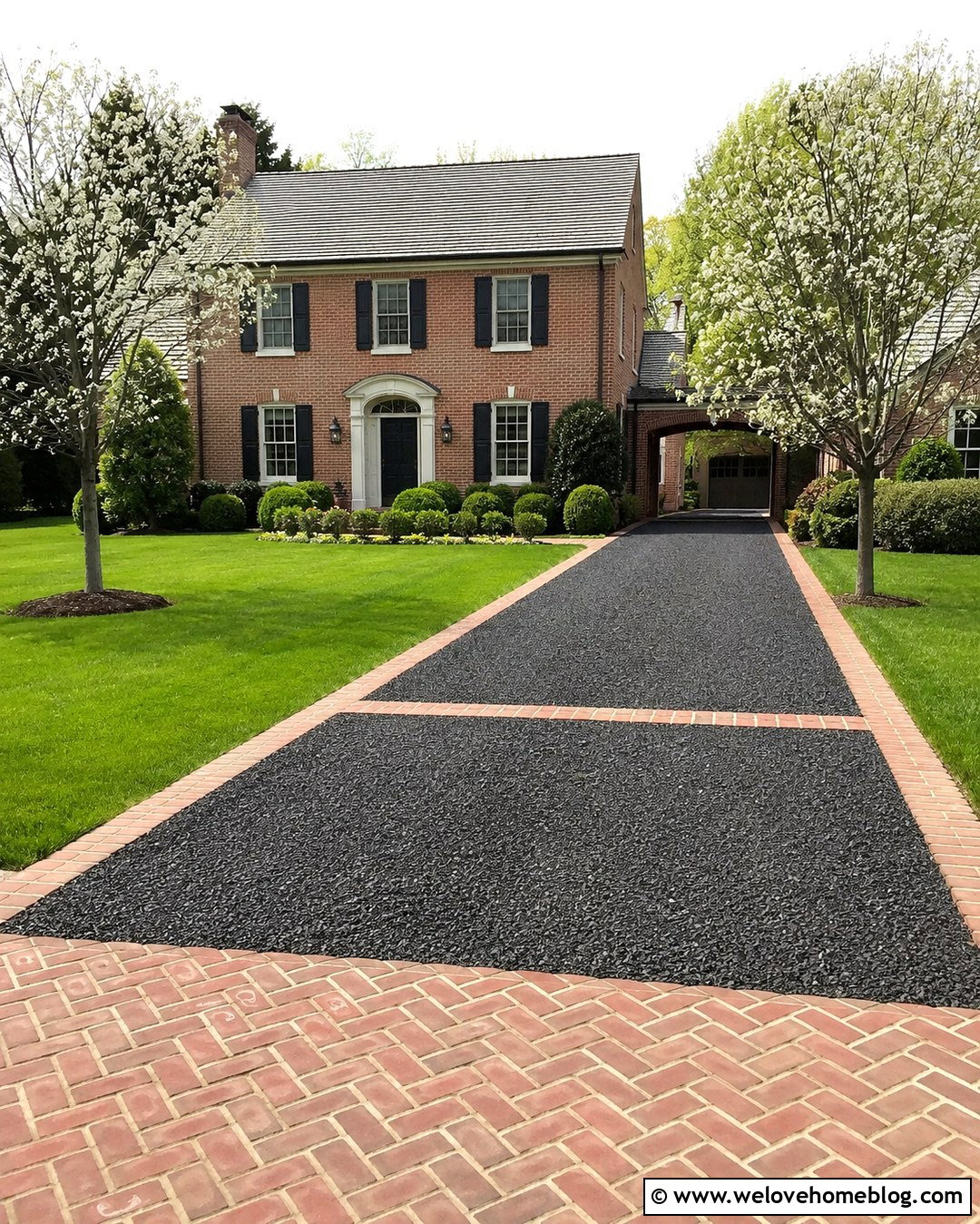
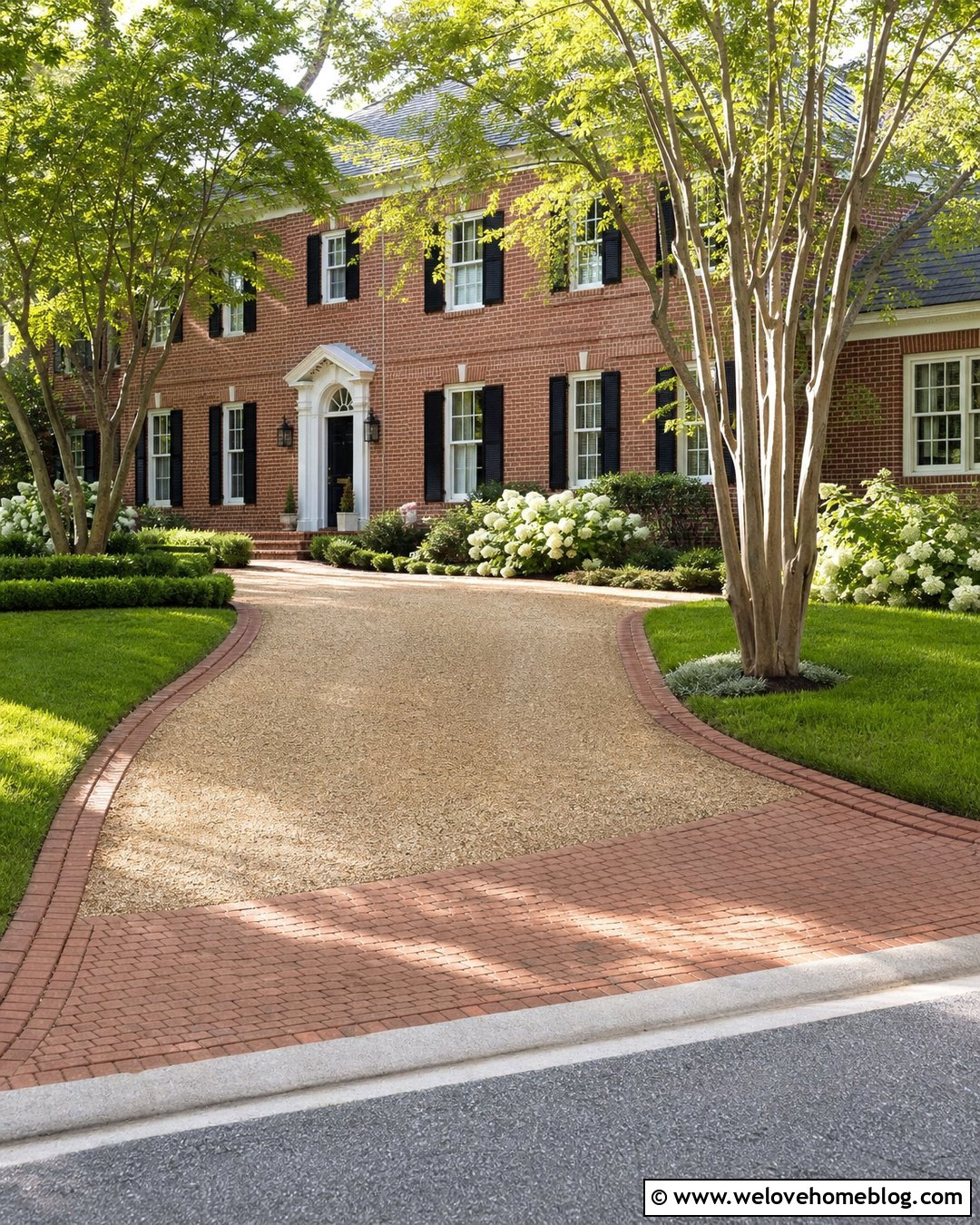
Warm red brick can soften the cool appearance of dark gravel and connect the driveway to a traditional brick home. Install a single or double brick ribbon along the edges, then repeat the material across the entrance apron or near the garage. A herringbone brick threshold can create an attractive transition where loose gravel meets a paved walkway. Surround the driveway with green lawn, rounded foundation shrubs, and small flowering trees for balanced color. A straight layout suits a symmetrical colonial house, while a slight curve can make the approach feel less rigid. Choose weathered red or brown brick rather than bright orange tones. The aged finish creates a comfortable, settled appearance and disguises minor dirt or staining near the driveway edge.
4. Dark Gravel Driveway With Steel Edging
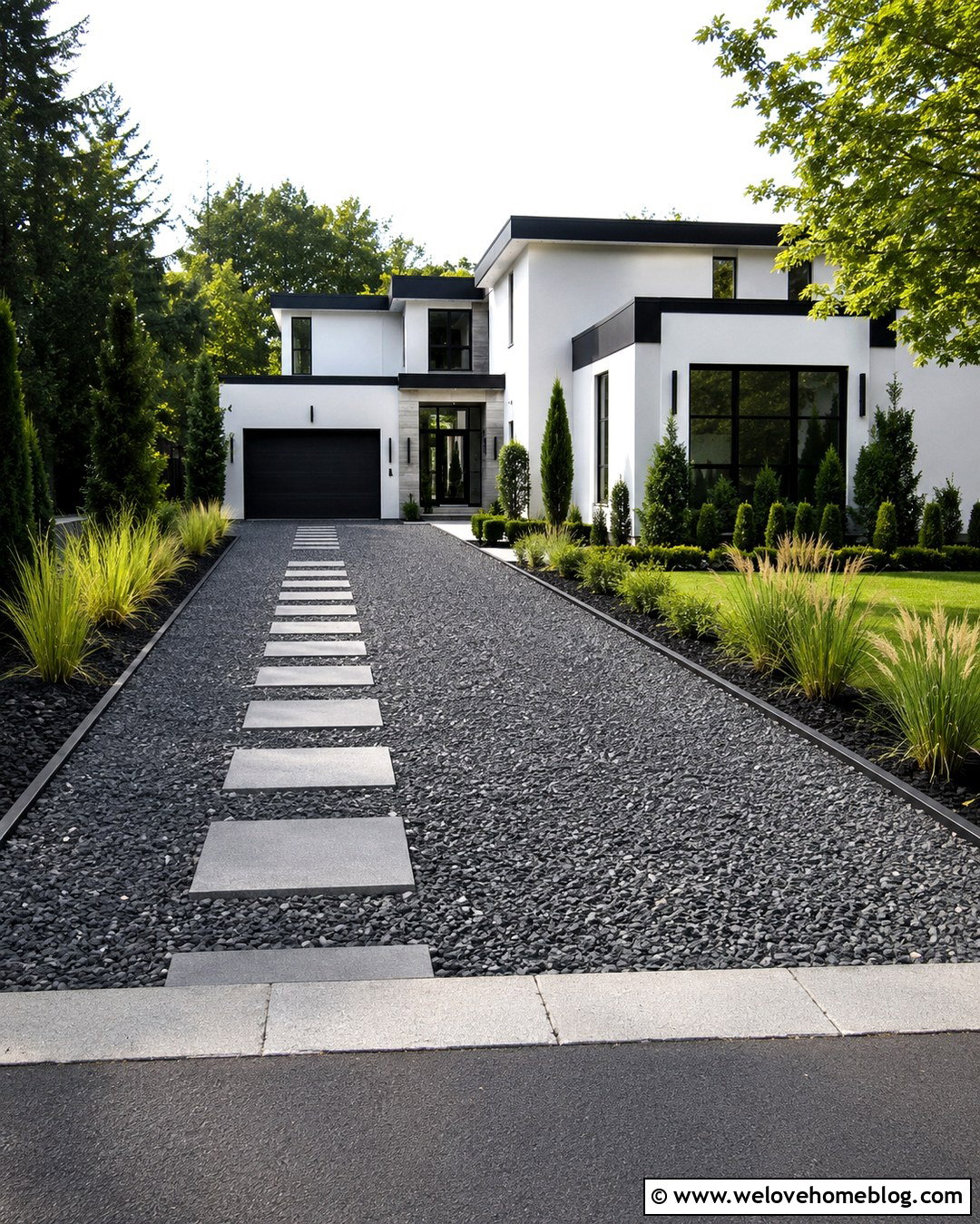
Thin steel edging creates one of the cleanest boundaries for a contemporary dark gravel driveway. The metal can sit nearly flush with the gravel, producing a crisp line without becoming visually heavy. Use charcoal crushed granite with a straight driveway or a geometric parking court. Add rectangular concrete stepping pads beside the drive to form a practical route to the front door. Drought-tolerant grasses, compact evergreens, and architectural plants can fill narrow beds without covering the edging. Blackened or weathered steel complements dark window frames, metal roofs, and minimalist facades. Properly supported edging is especially useful where gravel meets lawn, mulch, or contrasting decorative stone. The finished design feels controlled and modern while allowing the textured gravel to remain the dominant material.
5. Dark Gravel Driveway With Timber Edging
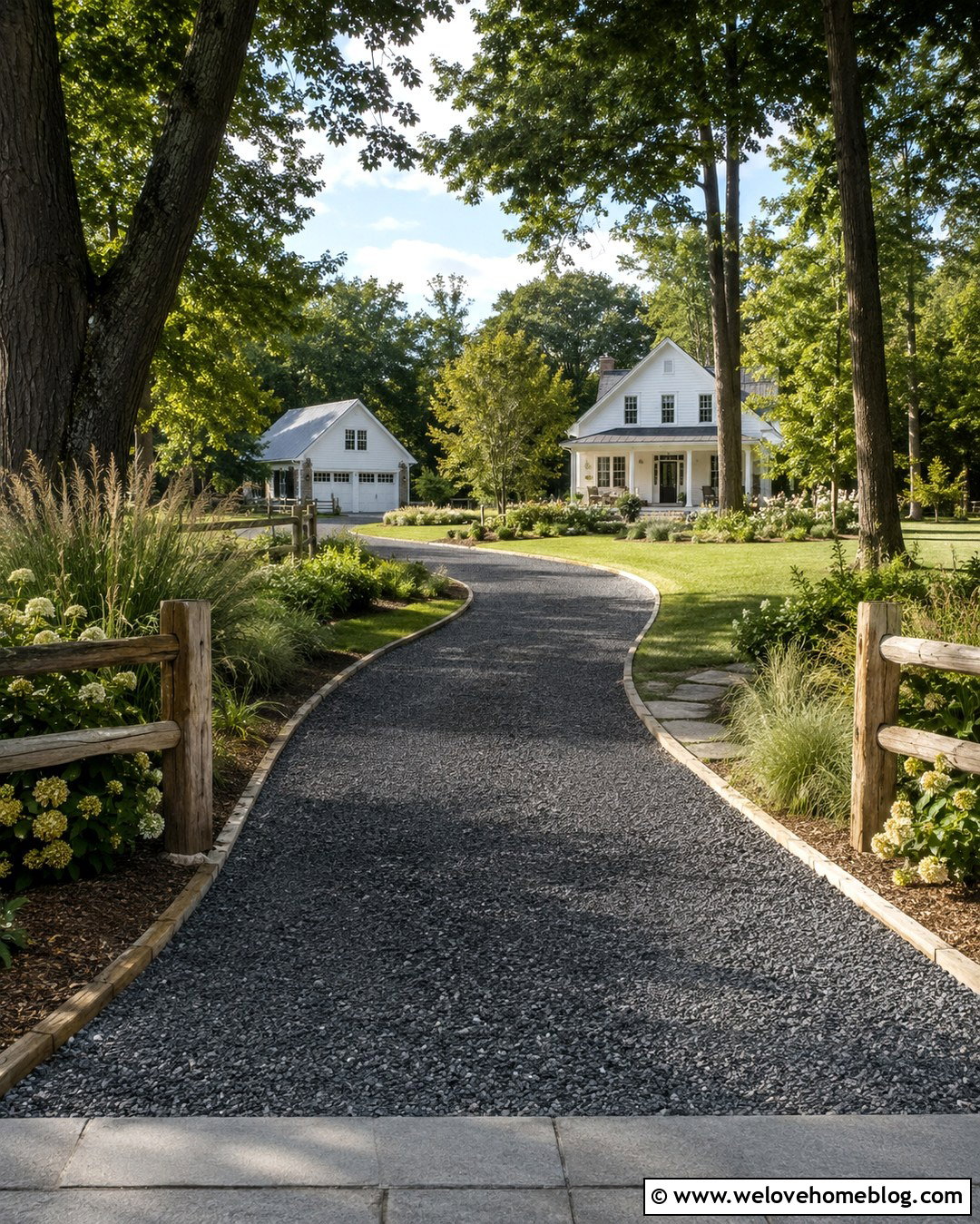
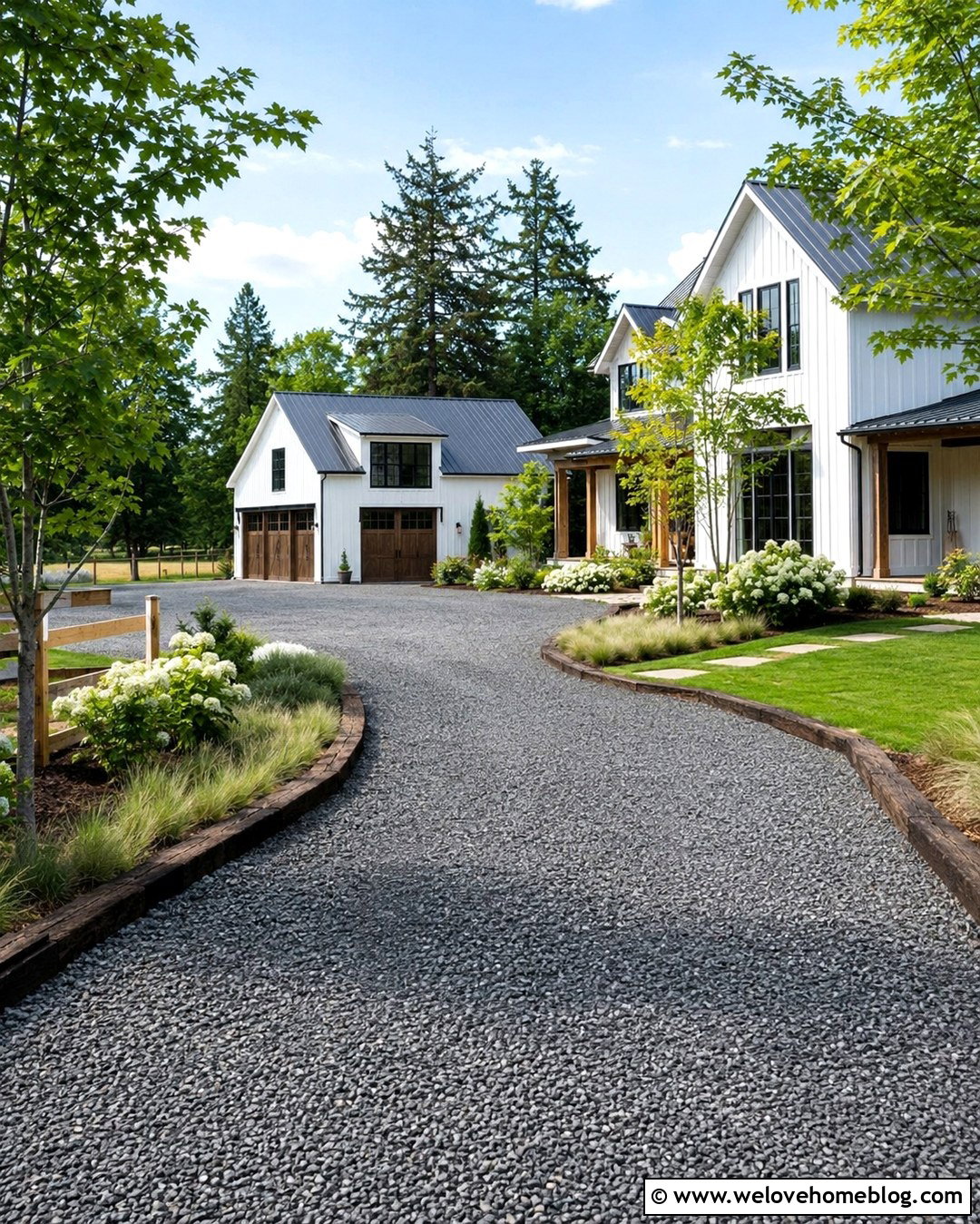
For a relaxed country appearance, frame dark gravel with sturdy landscape timbers. The warm brown wood adds contrast without making the driveway feel formal. This combination works best on a straight rural approach, a gently winding driveway, or a simple parking area beside a farmhouse. Set the timbers in clean, continuous lines and coordinate them with wooden porch posts, fencing, or raised planting beds. Native grasses, hydrangeas, and informal clusters of shrubs can soften the edges. Select angular charcoal gravel that compacts into a stable driving surface while retaining visible texture. Because wood creates a more casual boundary than masonry, keep the surrounding landscaping natural but organized. Repeated plant groups and a neatly cut lawn prevent the overall design from looking unfinished.
6. Curved Dark Gravel Driveway With Stone Edging
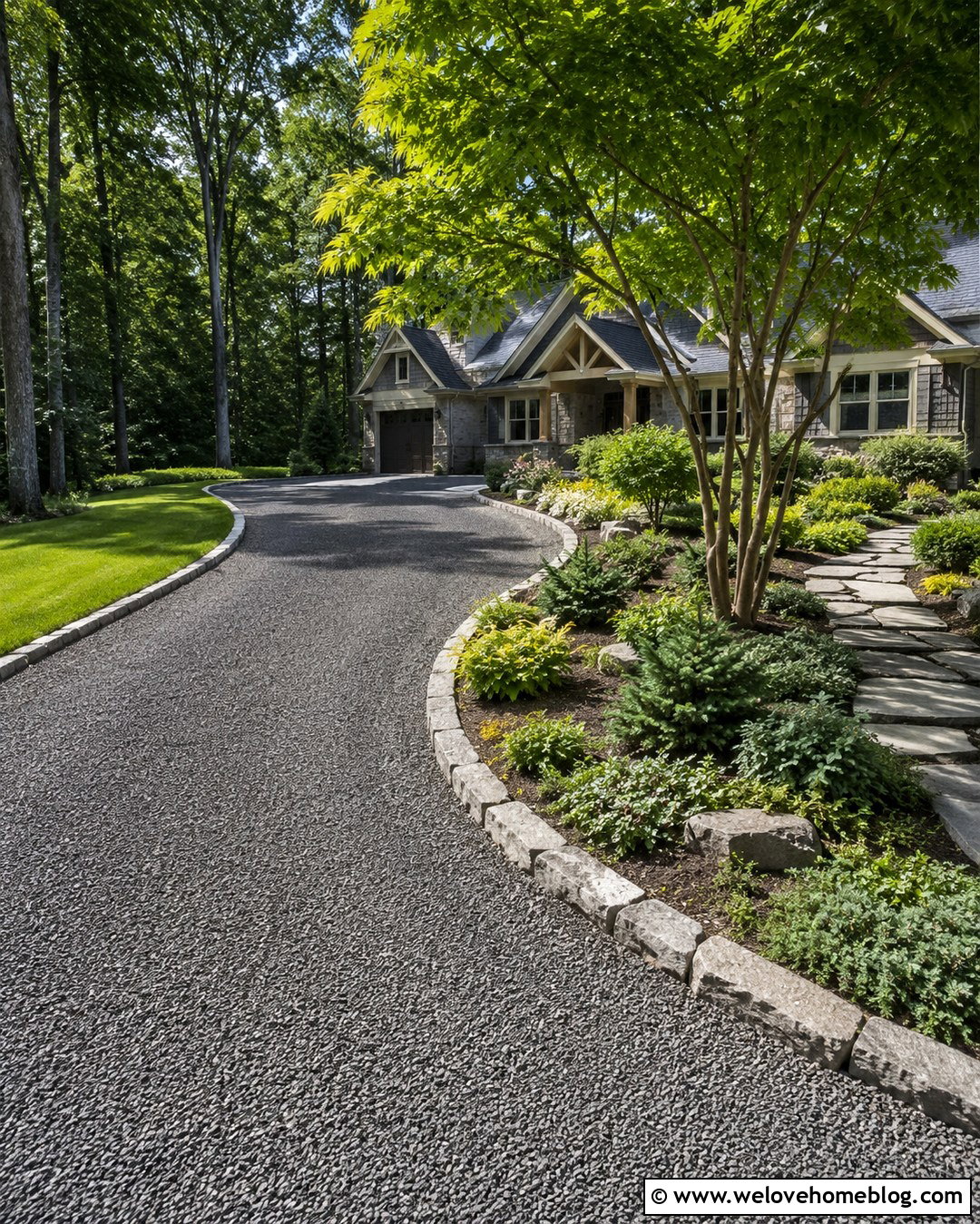
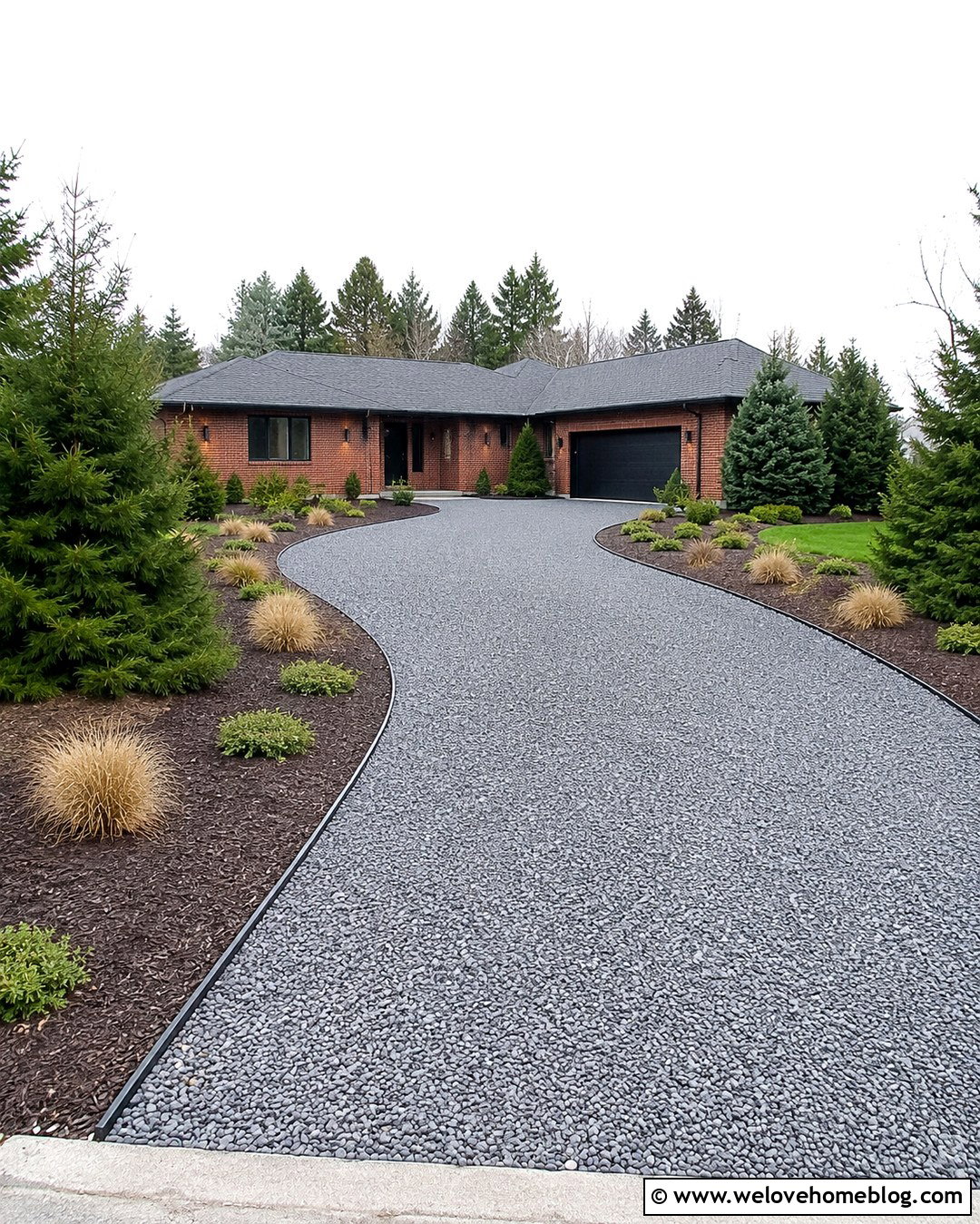
A curved dark gravel driveway makes the arrival feel longer and more inviting, even on a moderately sized property. Follow the bend with natural stone edging rather than forcing rigid straight borders. Medium-gray fieldstone or granite creates enough separation from the charcoal gravel while maintaining an organic palette. Place a broad planting bed on the inside curve, using one ornamental tree surrounded by shrubs and ground cover. Keep taller plants away from the street entrance so drivers retain a clear view. On the outside edge, lawn or a low meadow planting can make the curve easy to read. This layout complements Craftsman homes, stone cottages, and houses positioned at an angle to the road. Gentle curves are easier to navigate and maintain than several tight turns.
7. Circular Dark Gravel Driveway With Center Landscaping
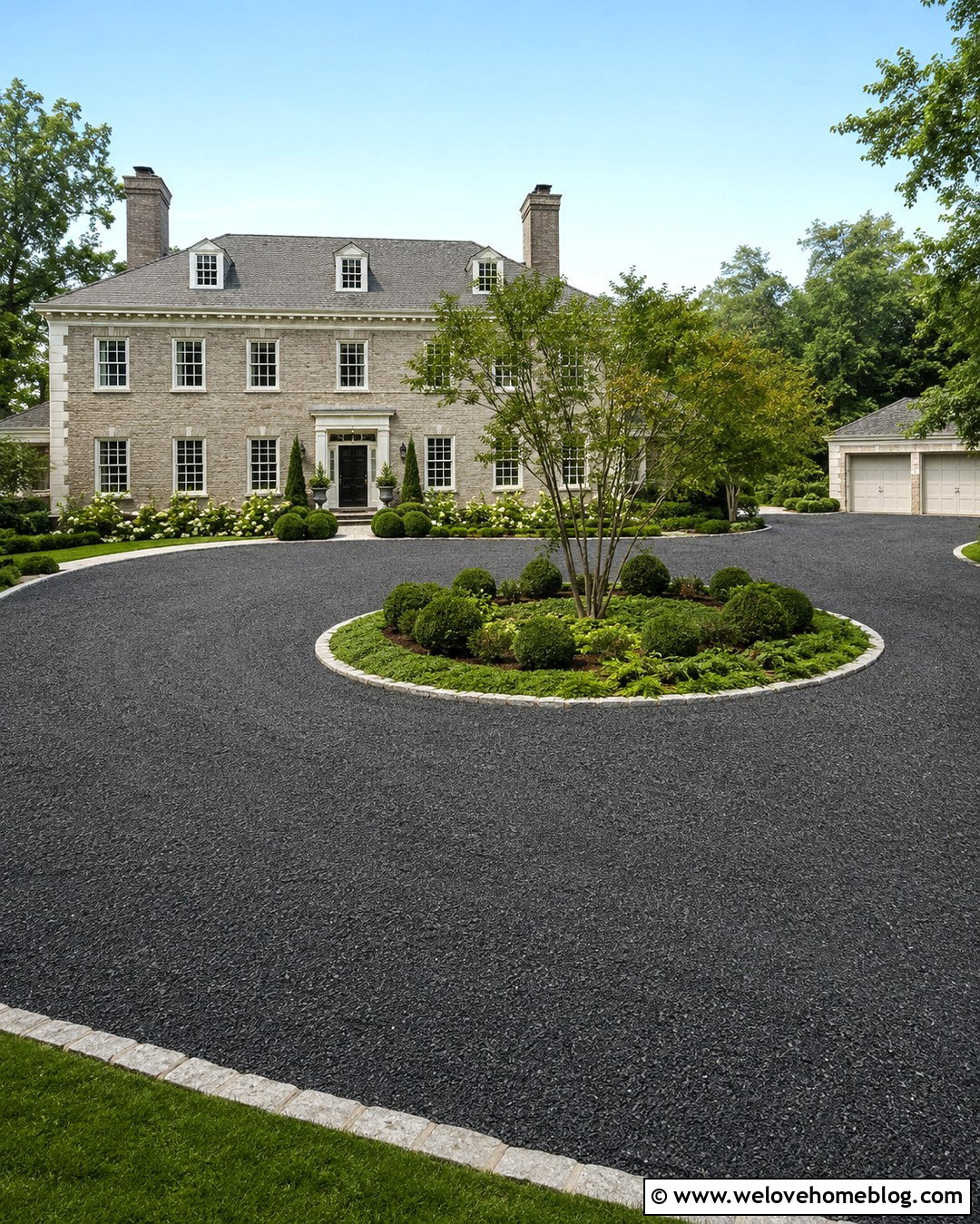
A circular driveway becomes a strong front-yard feature when dark gravel surrounds a thoughtfully planted center island. Use angular black basalt or charcoal granite to define the driving loop, then contain it with stone, brick, or steel edging. The island can include a small multi-stem tree, evergreen shrubs, and low ground cover arranged in layers. Avoid oversized plants that block the house or reduce visibility around the circle. A matching gravel spur can connect the loop to a side garage without disrupting the symmetrical approach. This design works especially well in front of colonial, Georgian, and larger ranch homes. Repeating the driveway’s edging around the center bed ties everything together and makes the circular shape look intentional from the curb.
8. Dark Gravel Driveway With Grass Strip
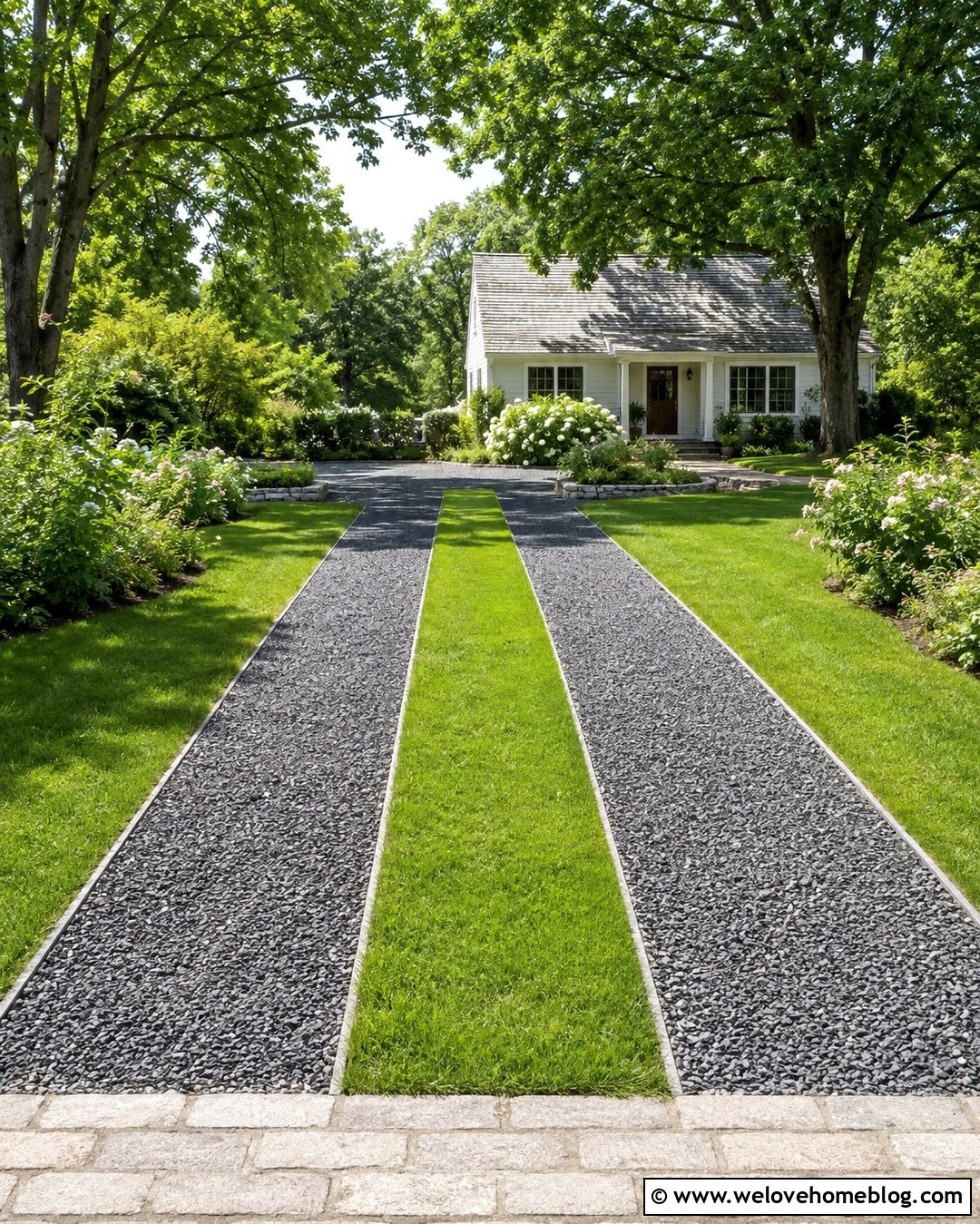
A central grass strip can make a dark gravel driveway feel greener and less expansive. Place compacted charcoal gravel in two defined tire lanes, leaving a broad ribbon of turf between them. Use flush stone or metal edging to prevent the gravel and soil from mixing. This design is most practical on a straight, lightly trafficked residential driveway where vehicles follow a predictable path. Extend the grass strip toward the house, but end it before complicated turning or parking areas. Shade-tolerant ground cover may be a better choice where trees reduce sunlight. Pair the layout with simple lawn edges, informal shrubs, and a cottage or country-style home. The dark stone outlines the driving path clearly, while the living center strip creates a softer transition into the yard.
9. Dark Gravel Driveway With Concrete Paver Bands
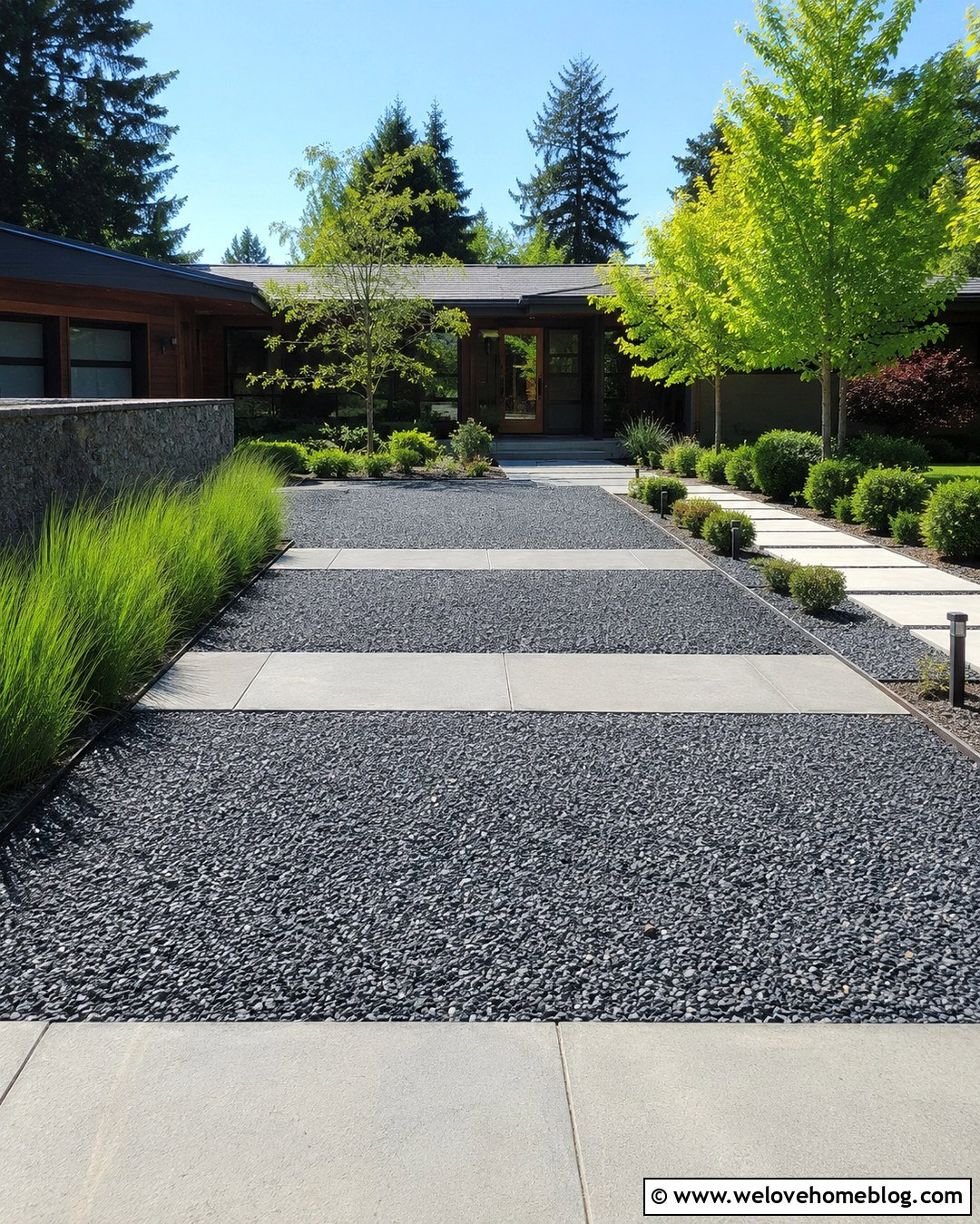
Large concrete paver bands can organize a broad dark gravel driveway and provide useful visual structure. Place pale rectangular pavers across the gravel at the entrance, near the garage, or at measured intervals along a long approach. The bands should sit level with the surrounding charcoal crushed stone to create a smooth transition. Repeat the same pavers in the walkway for a coordinated front-yard design. Straight steel edging, clipped grasses, and linear planting beds reinforce the clean geometry. This complete look suits modern ranch houses, midcentury homes, and contemporary facades with flat or low-pitched roofs. Avoid adding too many bands, which can make the surface appear busy. A few carefully positioned accents create contrast while allowing the dark gravel to visually connect the entire driveway.
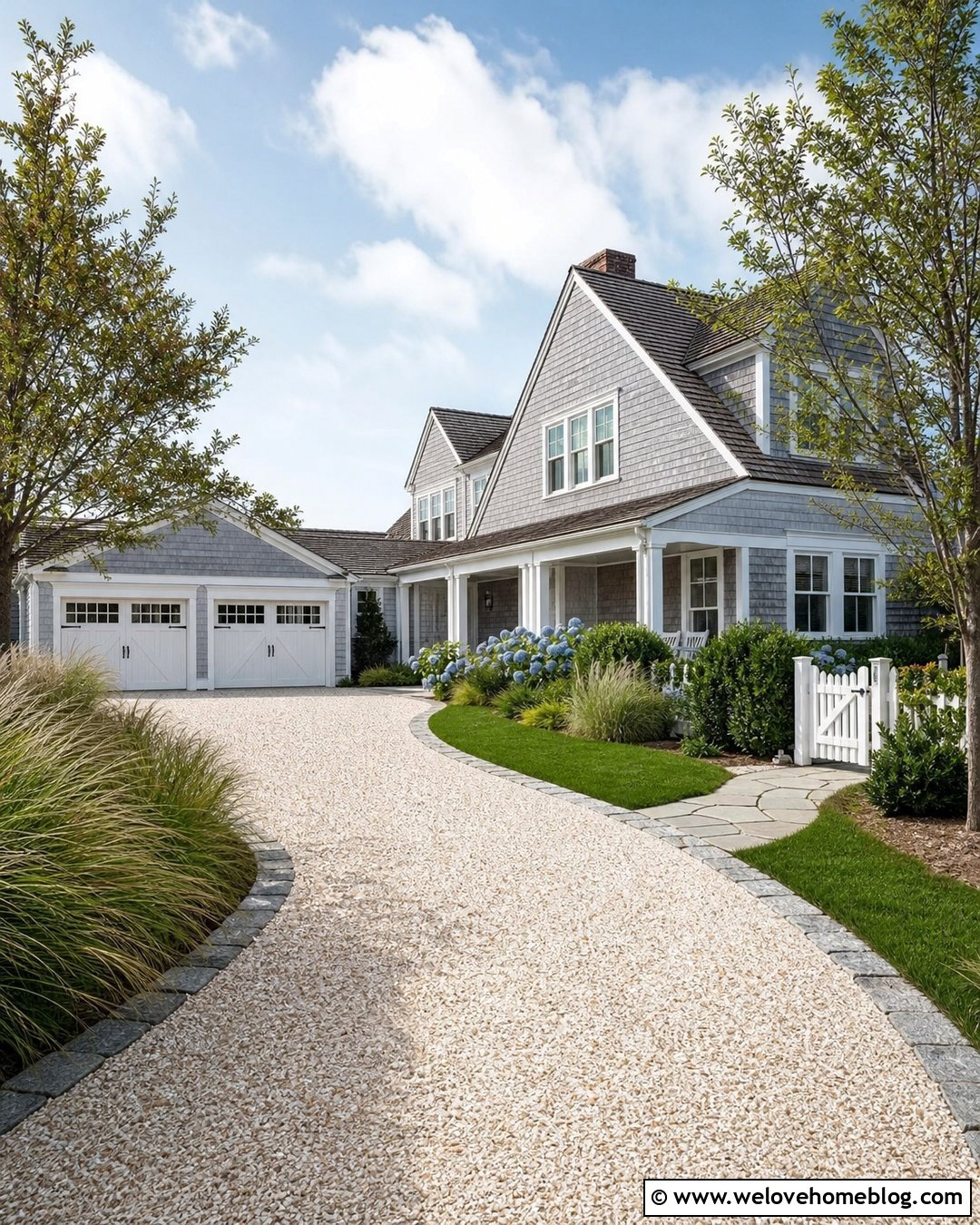
10. Dark Gravel Driveway With Lavender Borders
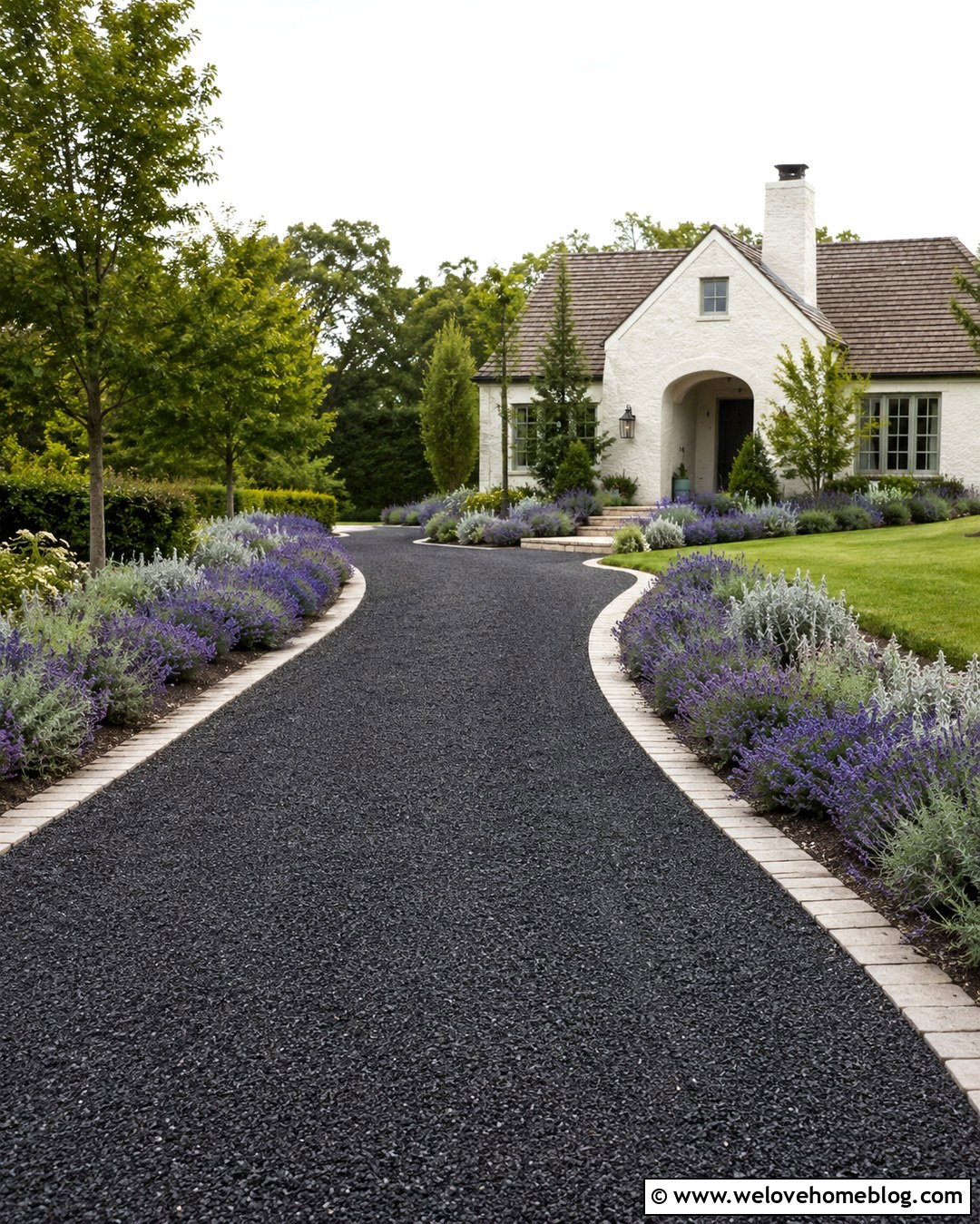
Silvery foliage and purple flowers provide a beautiful contrast against dark gravel. Frame a straight or gently curved charcoal driveway with wide planting beds filled with repeated lavender mounds. Add low evergreen shrubs or ornamental grasses to maintain structure when the flowers are not at their peak. A pale stone curb can separate the gravel from the plants and give the border a cleaner finish. This combination works particularly well beside cottage homes, stucco houses, and modern farmhouses with light siding. Keep the planting pattern simple, using several generous groups rather than many unrelated varieties. In climates where lavender is unsuitable, choose locally adapted plants with similar color and form. The finished driveway should feel fragrant, open, and carefully connected to the surrounding garden.
11. Dark Gravel Driveway With Ornamental Grasses
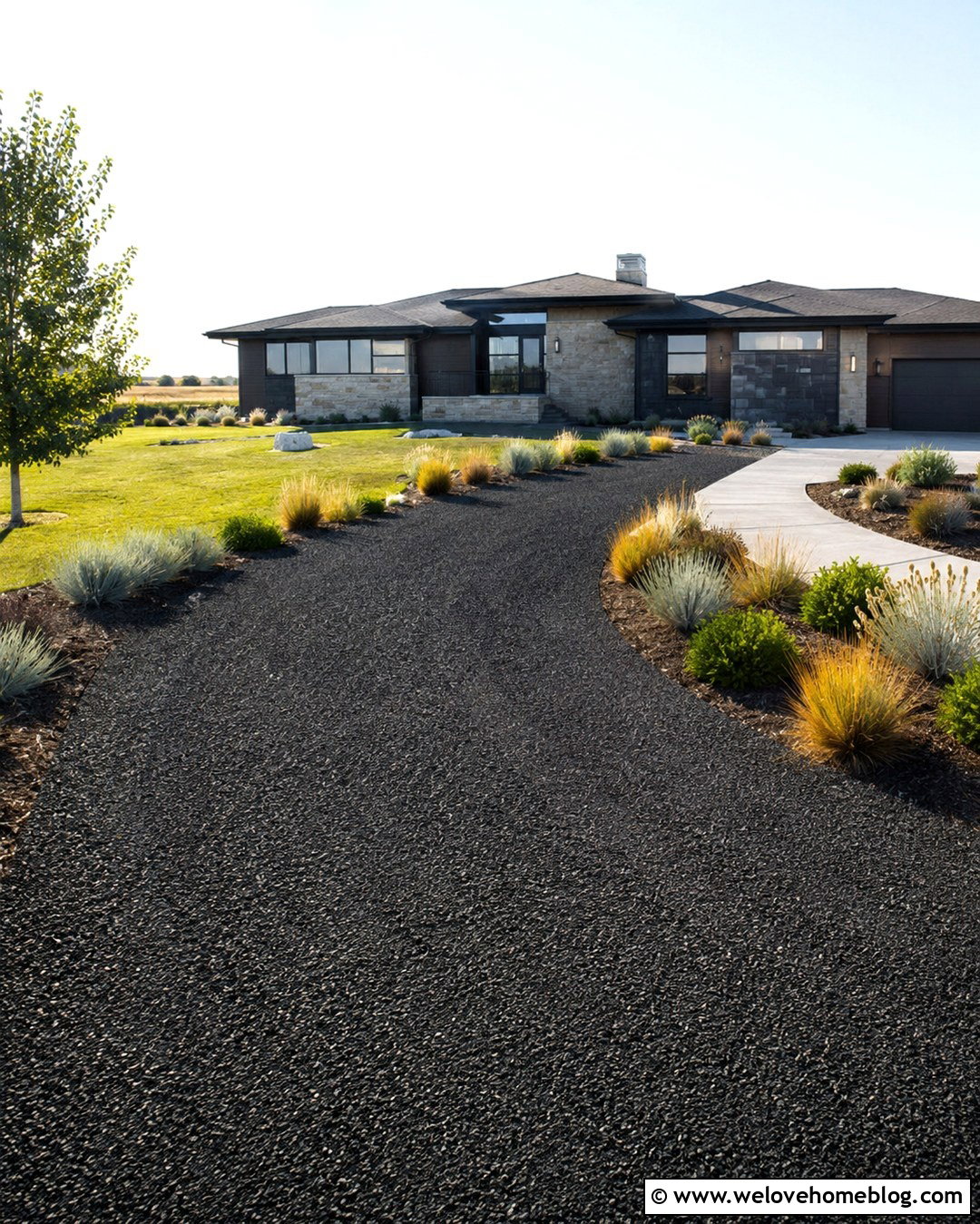
Ornamental grasses soften the hard edges of dark gravel without hiding the driveway’s shape. Use a sweeping layout bordered by repeated clumps of upright grasses, leaving enough distance to prevent mature foliage from leaning into the driving area. Charcoal crushed granite provides a strong background for green, gold, or blue-gray leaves. A narrow steel edge can disappear between the gravel and planting beds while keeping the materials separate. Add a few low shrubs near the house and a broad concrete walkway near the garage. This planting approach pairs naturally with modern, prairie-inspired, and midcentury homes. Select grass varieties suited to the local climate and available space. A limited plant palette creates movement and texture while keeping the complete driveway entrance uncluttered and easy to understand.
12. Dark Gravel Driveway With Boxwood Hedges
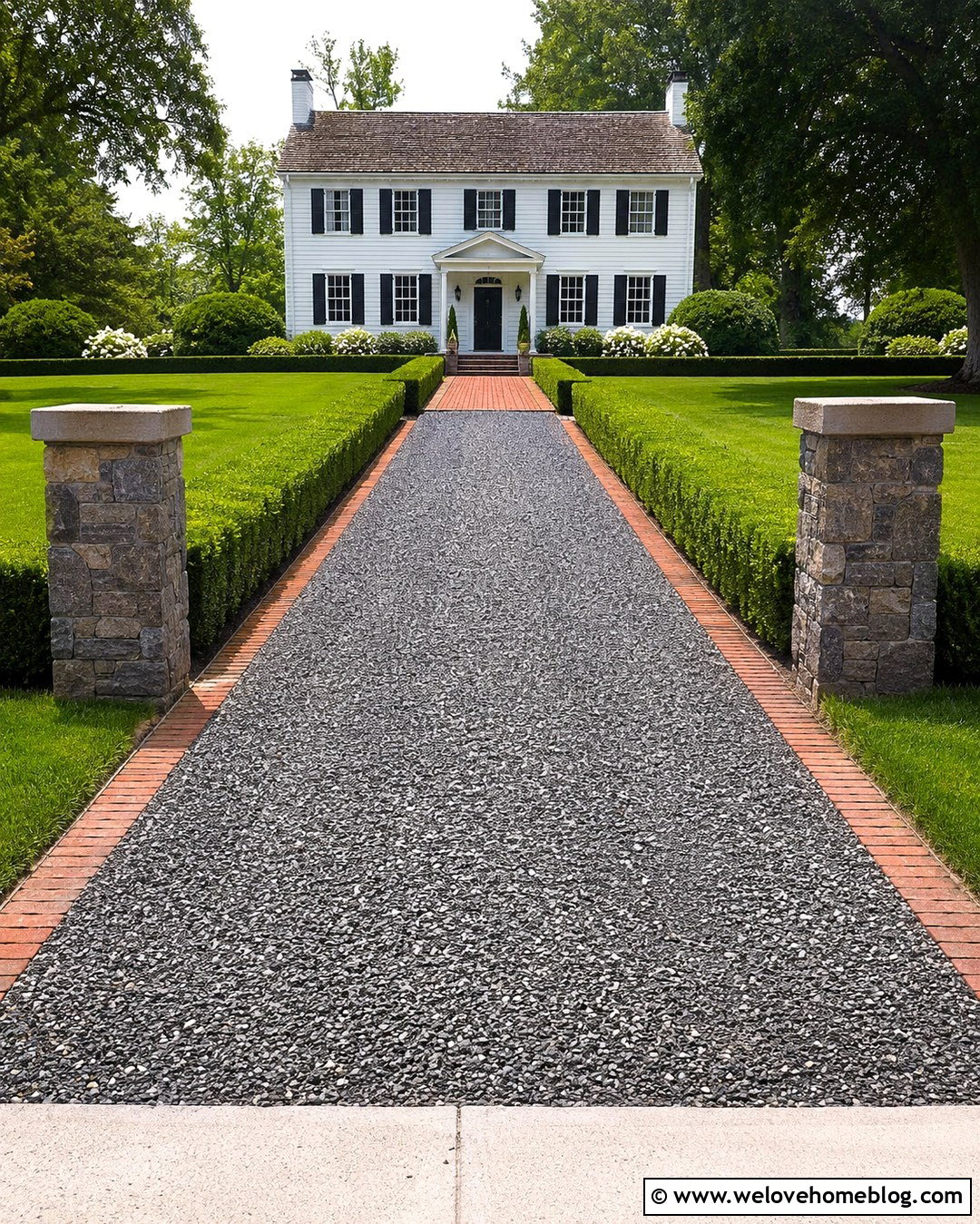
Low boxwood hedges can turn a simple dark gravel driveway into a more formal approach. Run the hedges along both sides of a straight charcoal gravel surface, leaving breaks for the walkway and side garden entrances. Stone or brick edging between the gravel and soil keeps the boundary neat and prevents branches from being damaged during maintenance. At the street, finish the rows with matching stone pillars or slightly taller shrubs. This symmetrical arrangement suits colonial, Georgian, and traditional brick homes. Keep the hedges low enough to preserve visibility and avoid making the driveway feel narrow. Behind them, use lawn or restrained planting beds rather than dense mixed borders. The repeated evergreen lines guide the eye toward the house and provide a strong year-round framework for the dark surface.
13. Dark Gravel Driveway With Native Planting
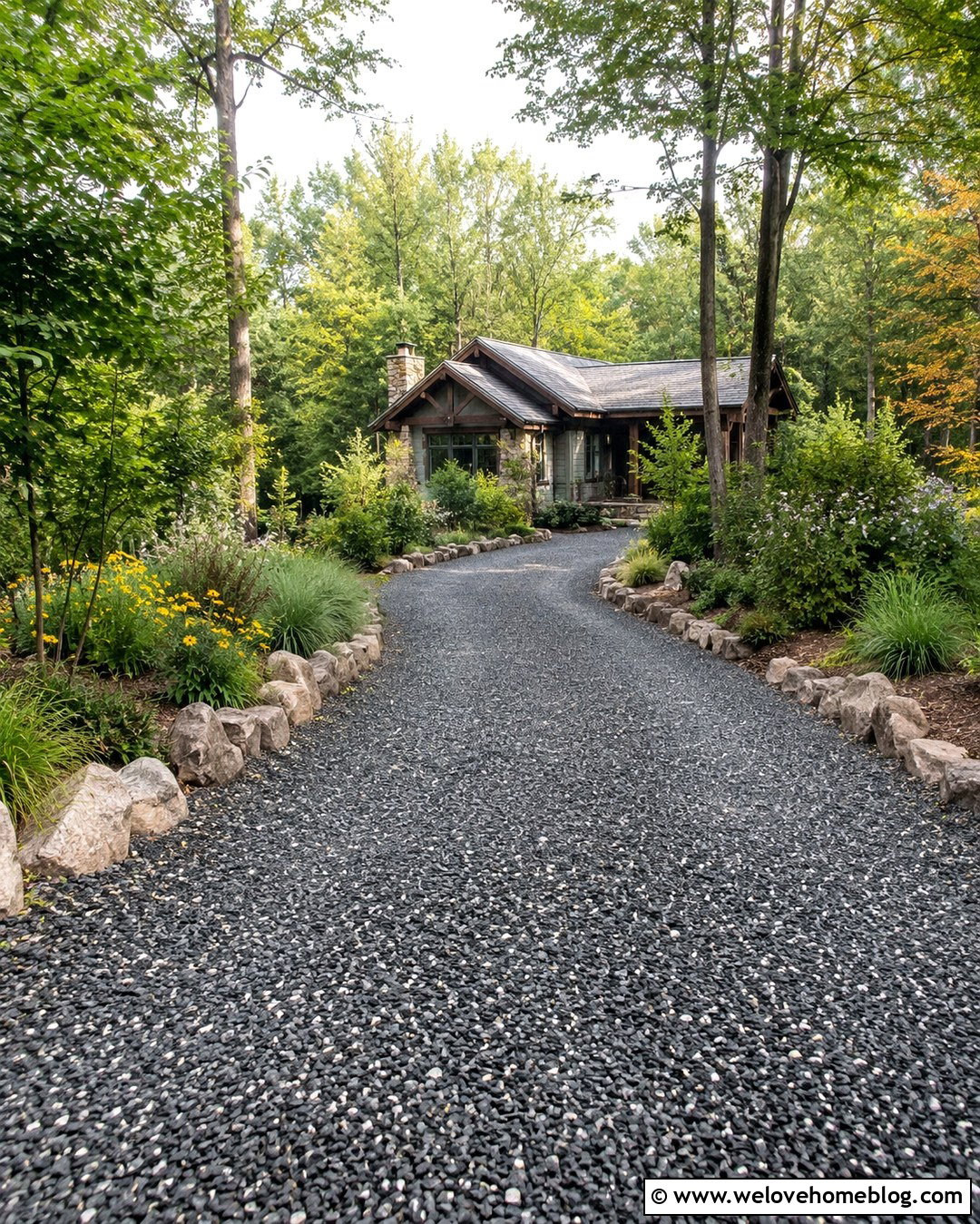
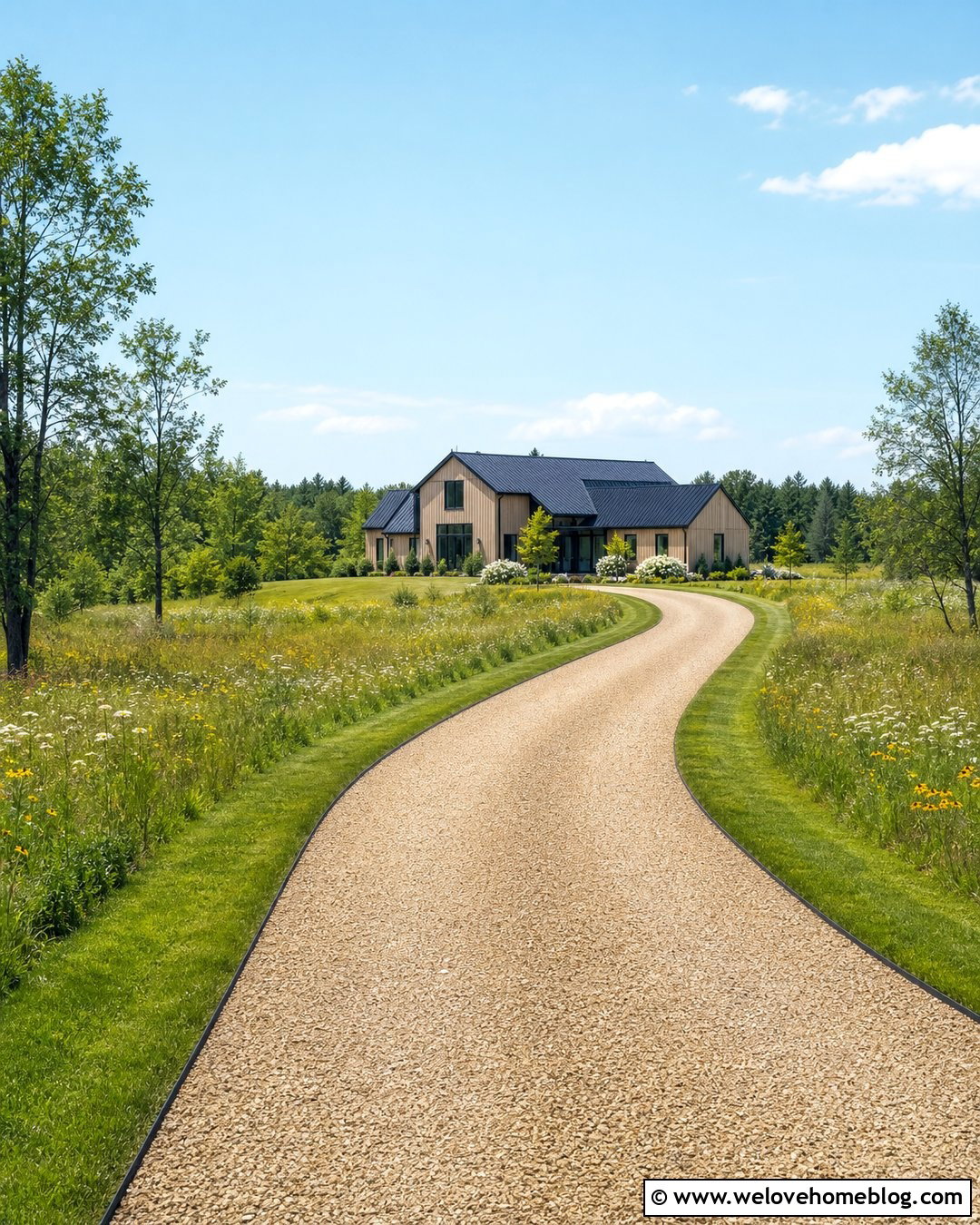
Dark gravel can feel natural rather than stark when it is surrounded by regionally appropriate planting. Shape the driveway with a gentle curve and border it with informal beds containing native grasses, flowering perennials, and compact shrubs. Use local stone as edging or allow a carefully defined planted shoulder to create a softer boundary. Charcoal or dark-gray crushed rock works as a neutral base for changing seasonal colors. Concentrate taller plants away from intersections and turning areas, then use lower species near the driveway entrance. A modest stone walkway can connect the parking area to a Craftsman, ranch, or woodland home. Repeating a manageable selection of plants creates cohesion. It also produces a more intentional result than filling the border with many unrelated specimens.
14. Dark Gravel Driveway With Stone Pillars
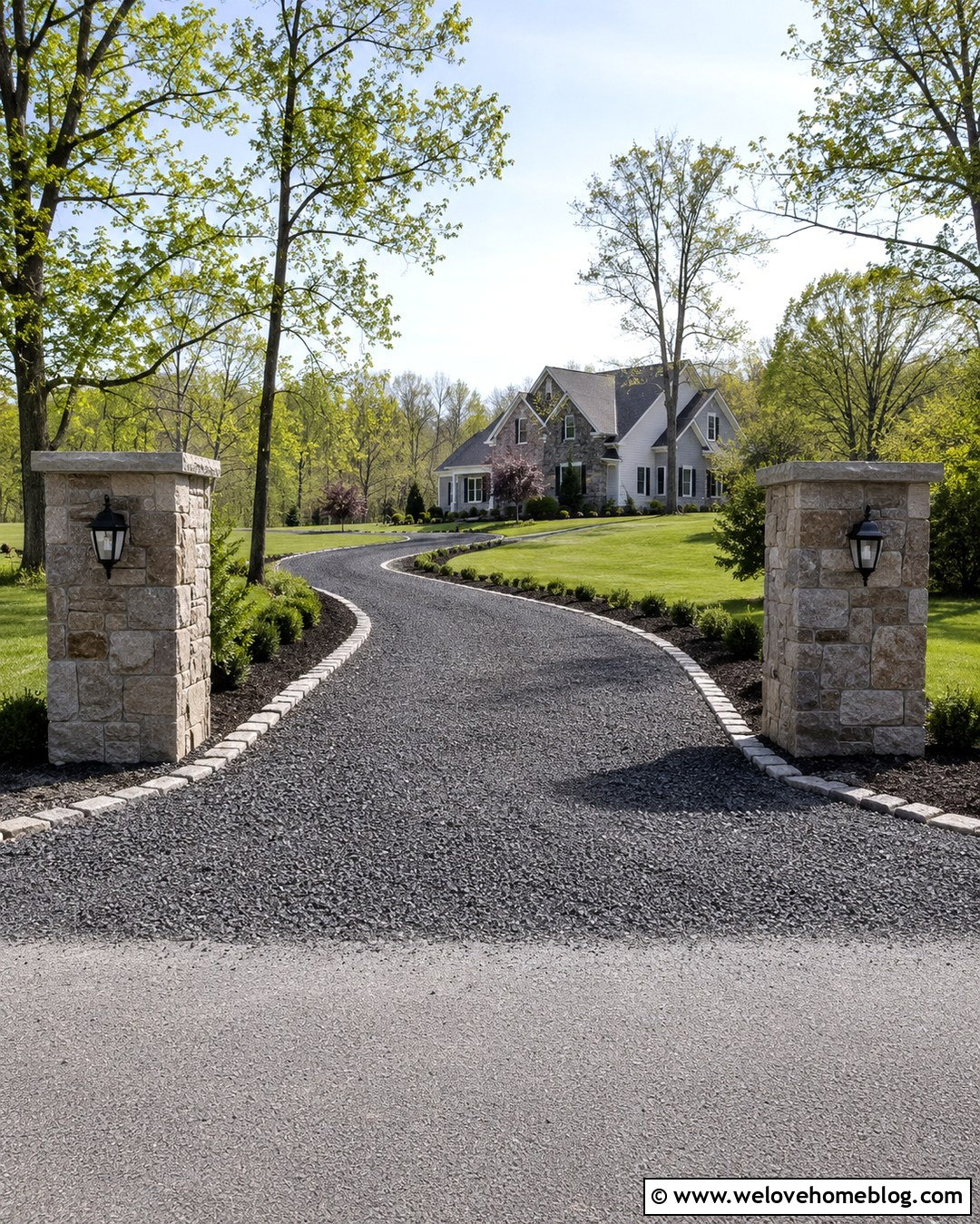
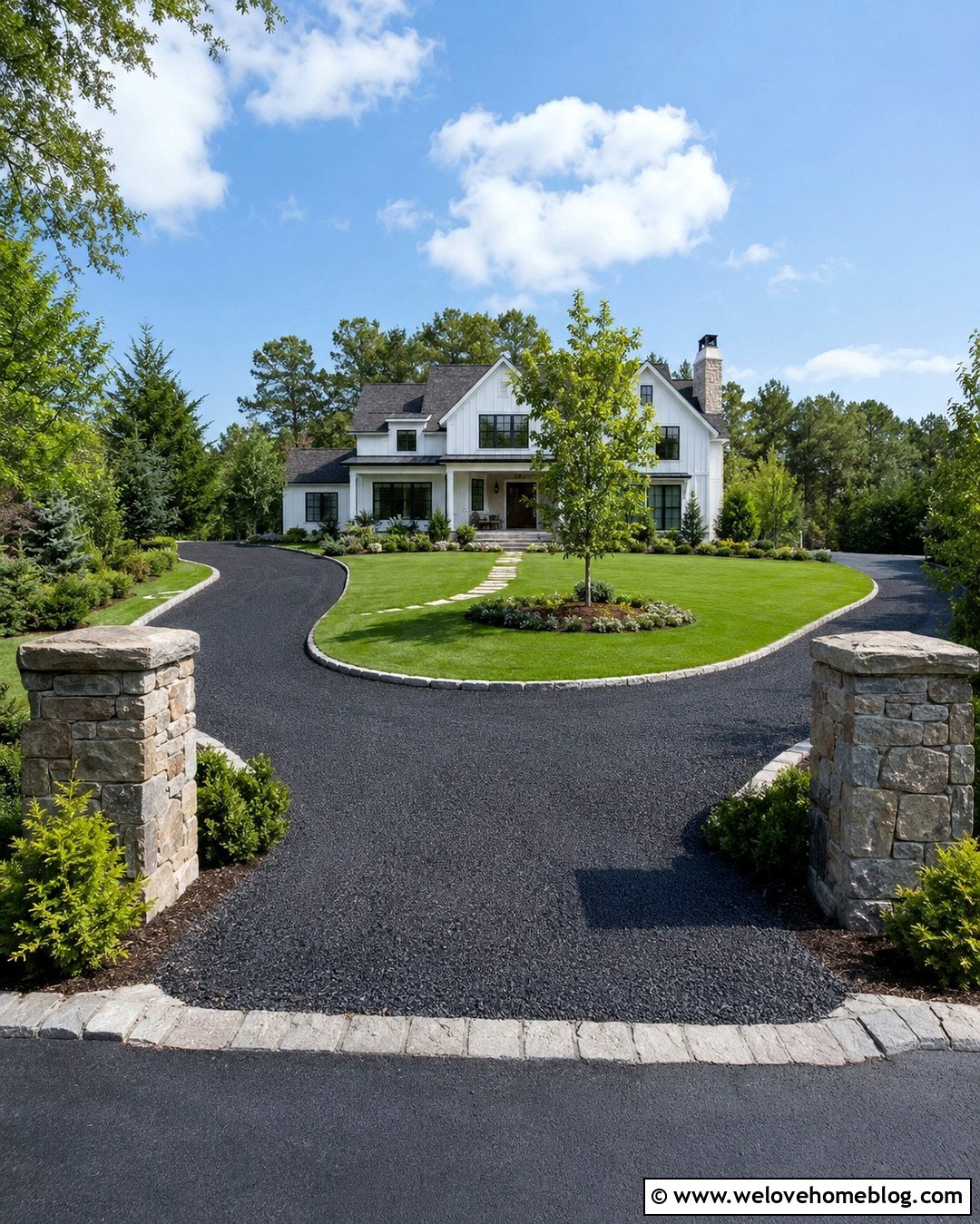
Stone entrance pillars give a dark gravel driveway a clear starting point and make a long approach easier to recognize from the street. Build the pillars from stone that relates to the house foundation, retaining walls, or nearby landscape. Charcoal gravel can run between them in a straight or gently curving layout. Add a wider gravel apron at the entrance to create a comfortable transition from the road. Low shrubs, lawn, and matching stone edging should frame the pillars without obscuring them. Simple lanterns or downward-facing fixtures can be integrated into the masonry while keeping the daytime appearance uncluttered. This complete entrance works with country houses, Craftsman homes, and traditional suburban properties. Balanced pillar proportions are more important than excessive height or decoration.
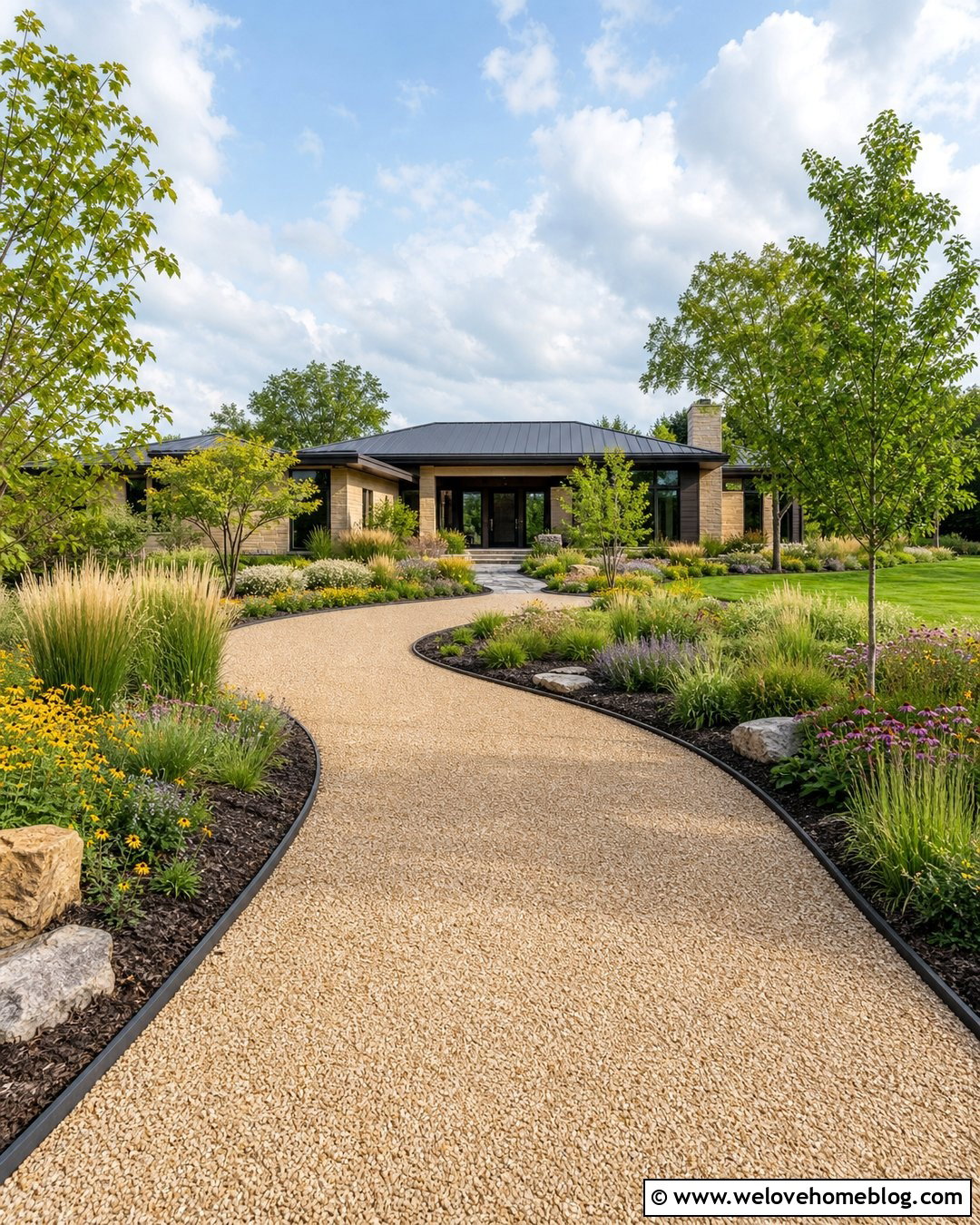
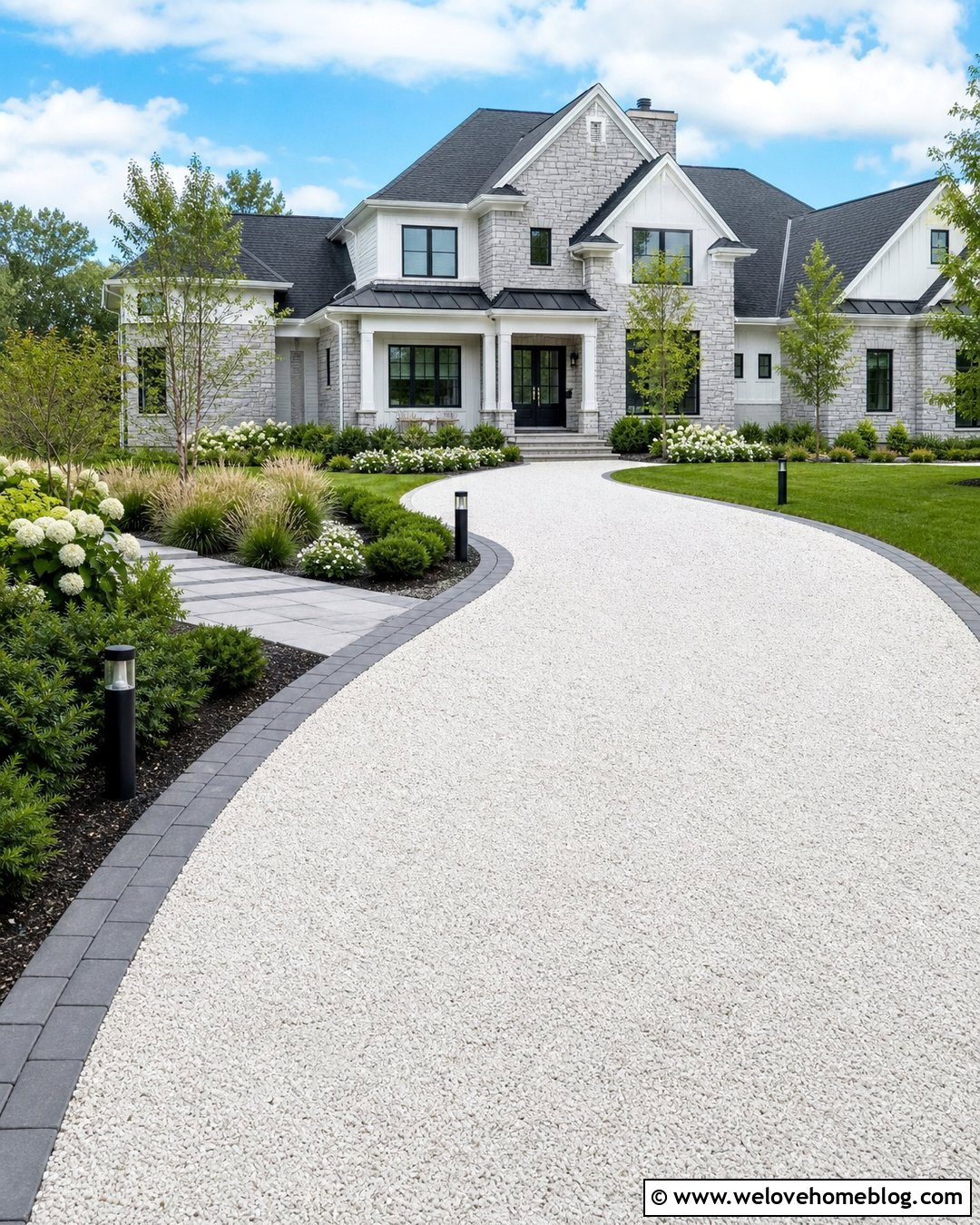
15. Dark Gravel Driveway With Black Metal Gate
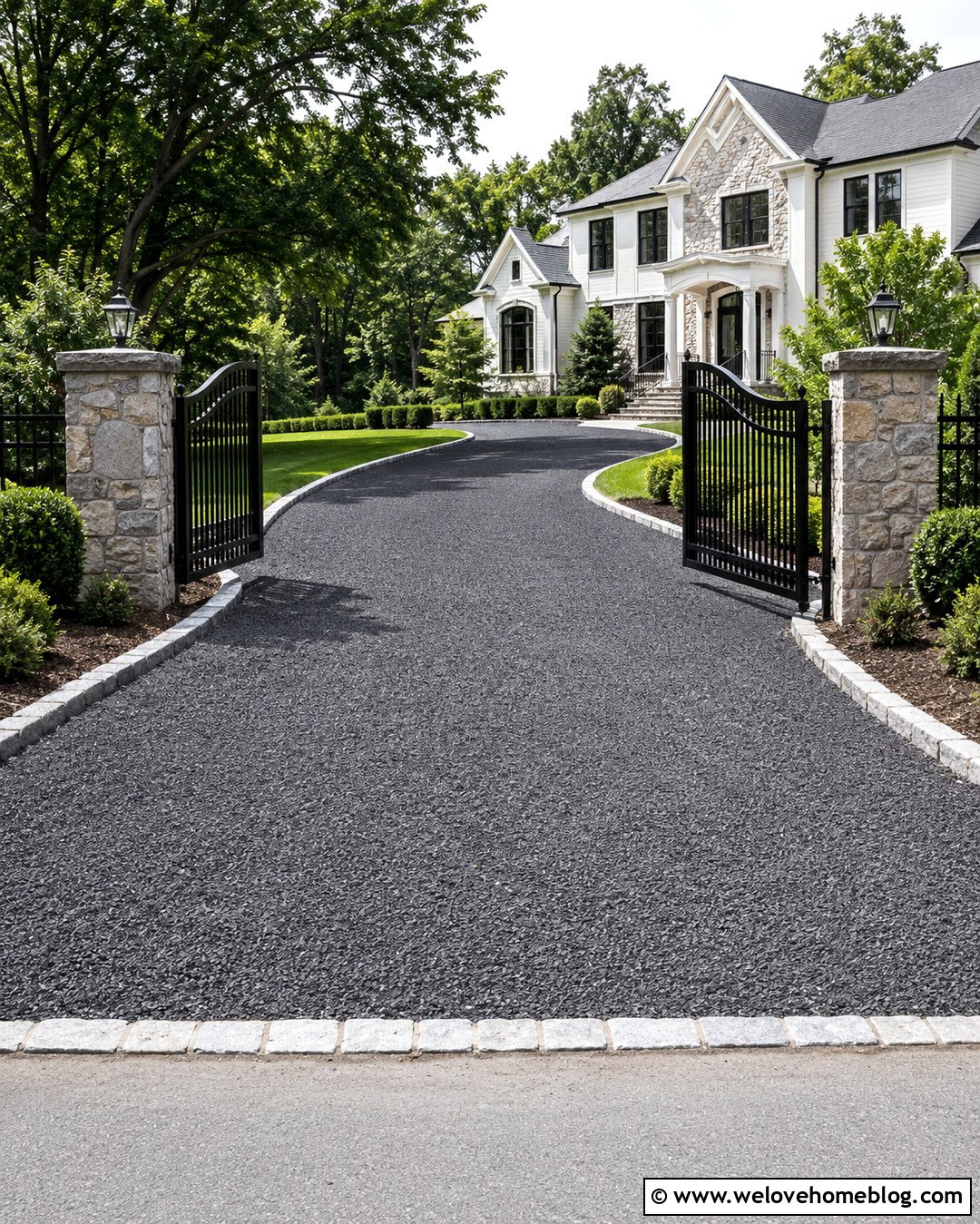
A black metal gate naturally coordinates with a charcoal or black gravel driveway. Use a simple swing or sliding design with open vertical bars so the house remains visible from the curb. Anchor the gate between brick, stucco, or natural stone pillars that connect with the home’s facade. The driveway can curve gently beyond the entrance, creating a gradual reveal of the house and front landscape. Dark gravel should continue beneath and beyond the gate without abrupt material changes. Keep planting low near moving gate sections and provide clean edging around mechanical areas. Repeated evergreens and a matching pedestrian gate can complete the composition. The result feels secure and polished, yet the loose gravel keeps the entrance from appearing overly severe or commercial.
16. Dark Gravel Driveway With Modern Lighting
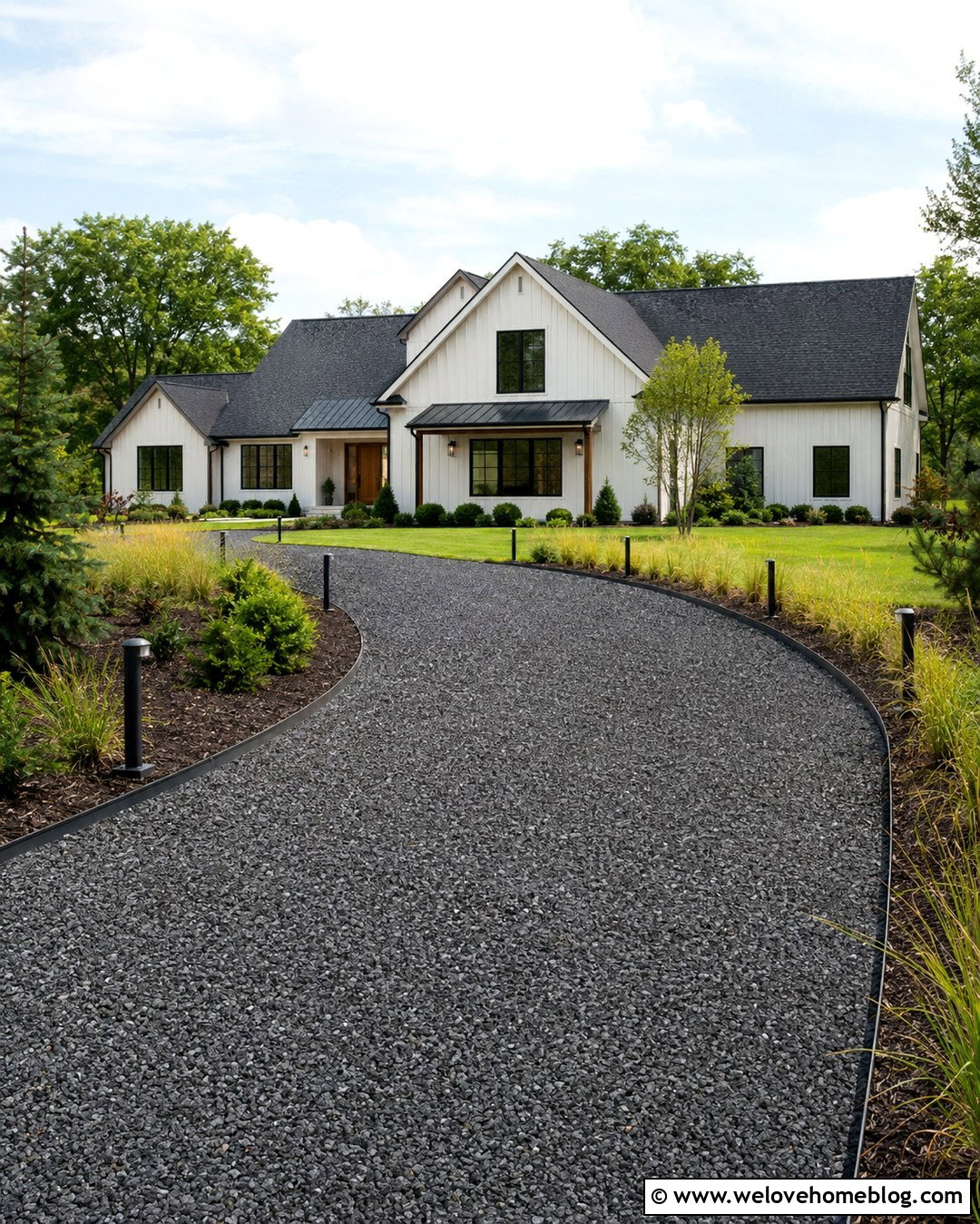
Integrated lighting can improve the organization and curb presence of a dark gravel driveway. During the day, slim black bollards or low-profile fixtures blend into the charcoal surface and surrounding beds. Position them along a curved edge, near changes in direction, and beside the walkway rather than scattering them randomly. Use metal or concrete edging to create a clear daytime boundary. Ornamental grasses and low shrubs can surround the fixtures without blocking them. A straight driveway may suit evenly spaced lights, while a sweeping approach looks better with carefully selected focal points. Choose fixtures that coordinate with the home’s exterior hardware and architecture. The complete design works particularly well with contemporary houses, modern farmhouses, and updated ranch homes featuring black-framed windows and simple landscaping.
17. Dark Gravel Driveway With Address Sign
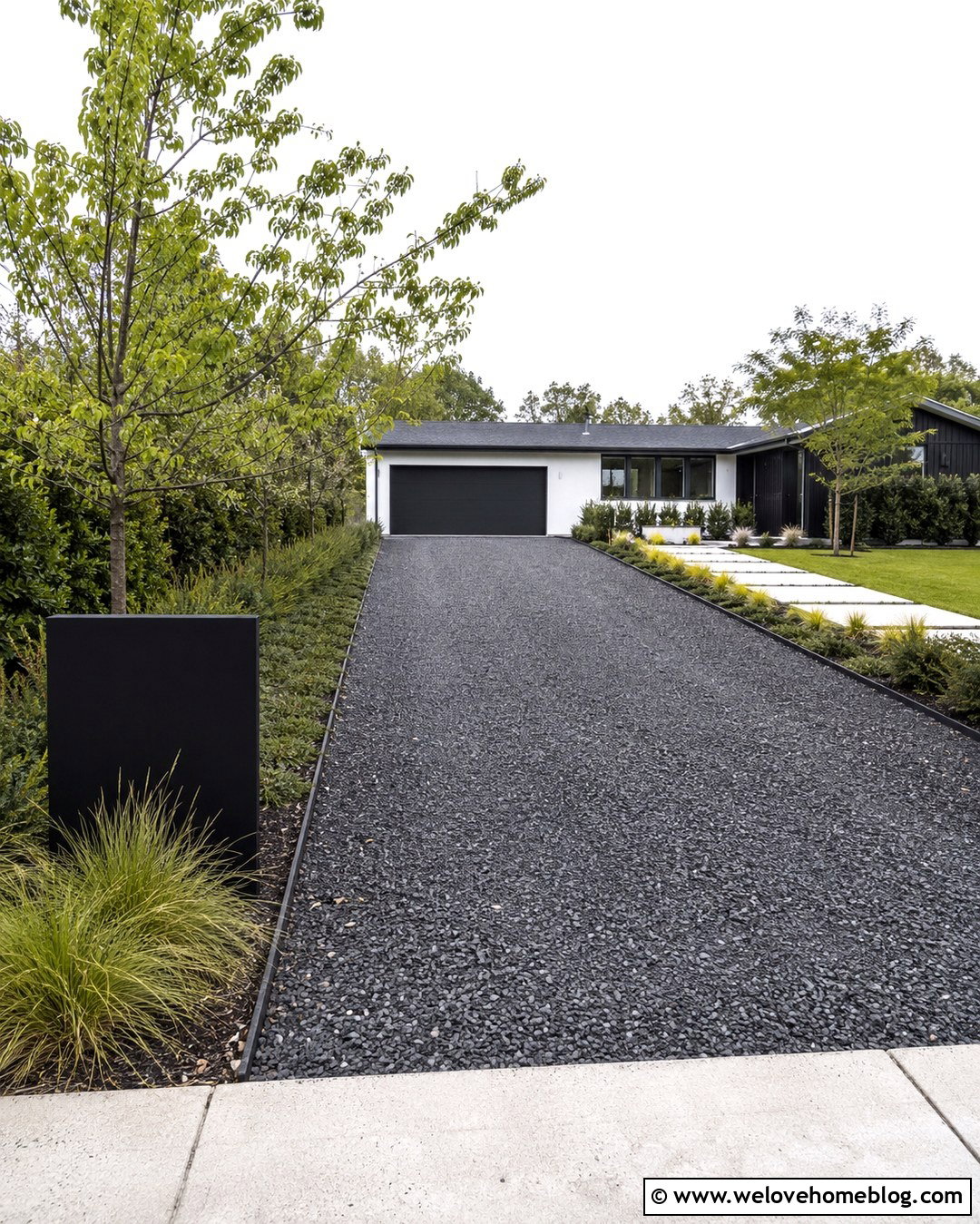
A well-placed address sign can become part of the entire driveway entrance rather than an isolated accessory. Pair a dark gravel surface with a stone, wood, or matte-black sign mounted beside the entrance apron. Repeat the sign material in the edging, mailbox post, gate, or house details. A small planting bed with low grasses and evergreen ground cover can anchor the sign without making the address difficult to see. Continue the charcoal gravel in a straight line toward the house or use a broad curve around a front lawn. Keep the entrance open and uncluttered, especially near the road. A simple sign with strong proportions complements the rich texture of dark stone and gives visitors a clear visual marker as they approach the property.
18. Dark Gravel Driveway For Modern Farmhouse
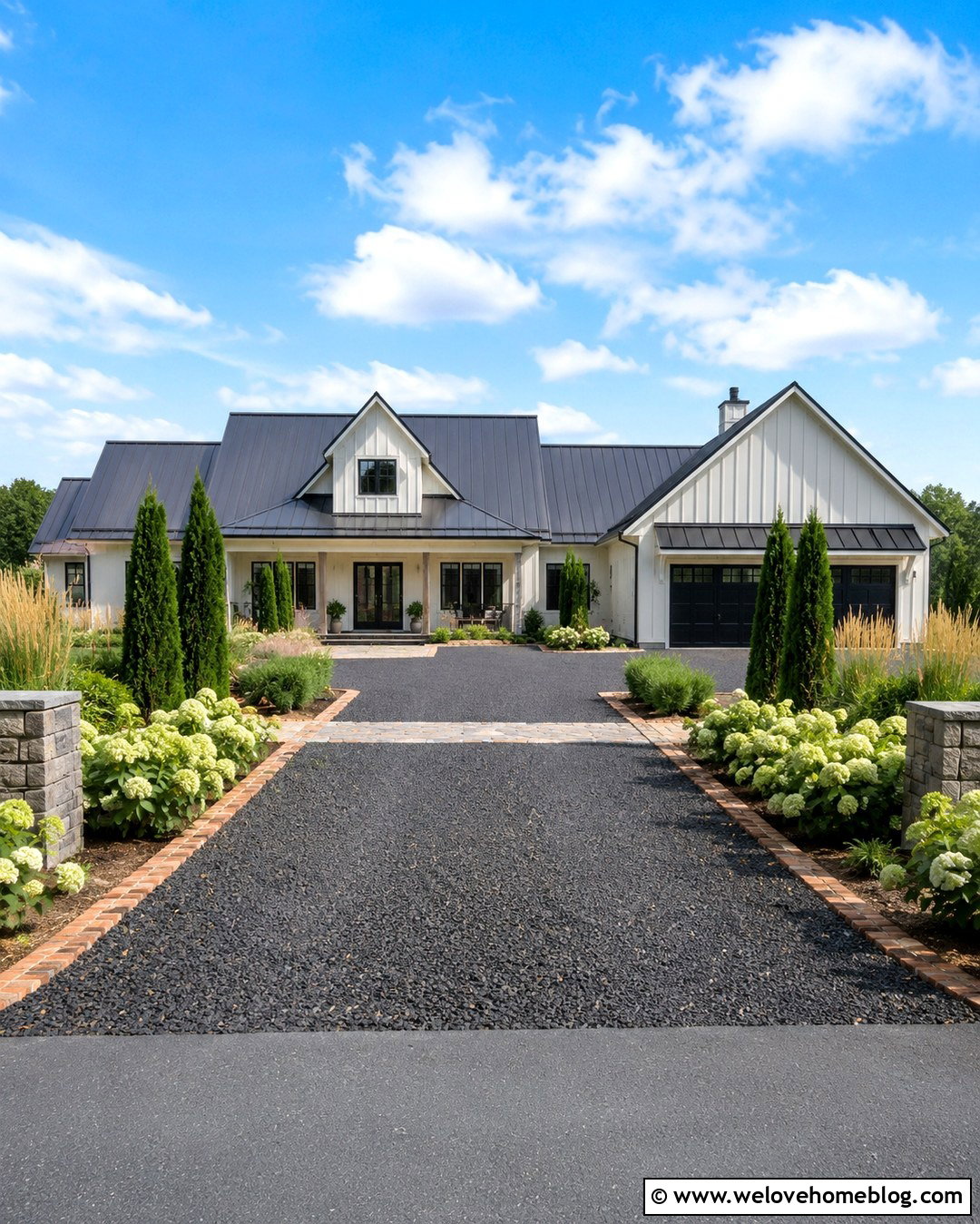
A modern farmhouse gains contrast from a charcoal gravel driveway paired with white siding and black exterior details. Choose a broad straight layout or a subtle curve leading toward a detached garage or covered parking area. Edge the gravel with warm reclaimed brick, natural stone, or black steel, depending on how rustic or streamlined the house appears. Add symmetrical clusters of hydrangeas, upright evergreens, and ornamental grasses near the front approach. A concrete or flagstone walkway can cross the gravel and continue to the porch. Repeat dark tones through the garage doors, roof, lighting, and window frames. The gravel introduces texture that keeps the black-and-white exterior palette from feeling flat, while the landscaping creates a welcoming transition between the driveway and house.
19. Dark Gravel Driveway For Small Front Yard
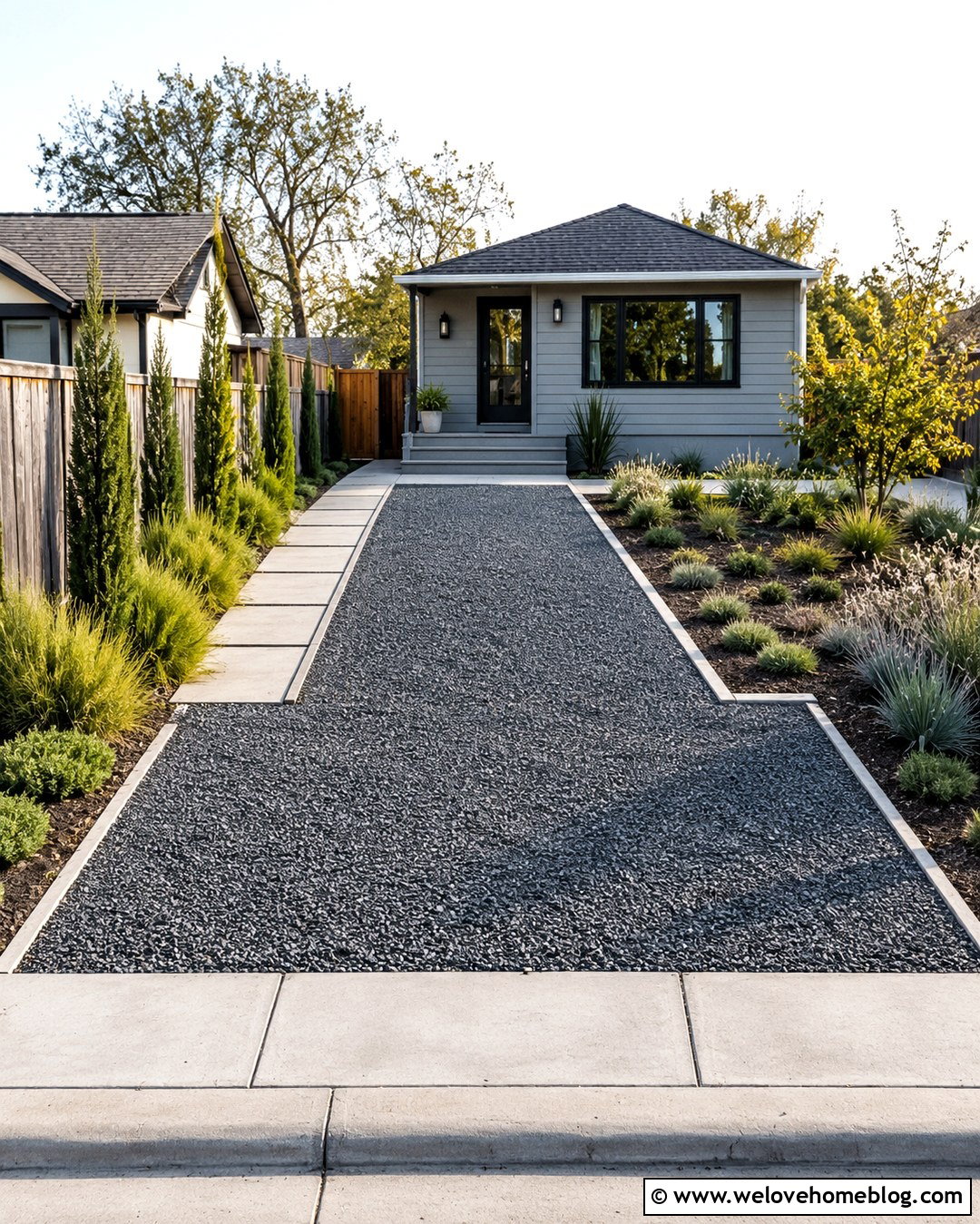
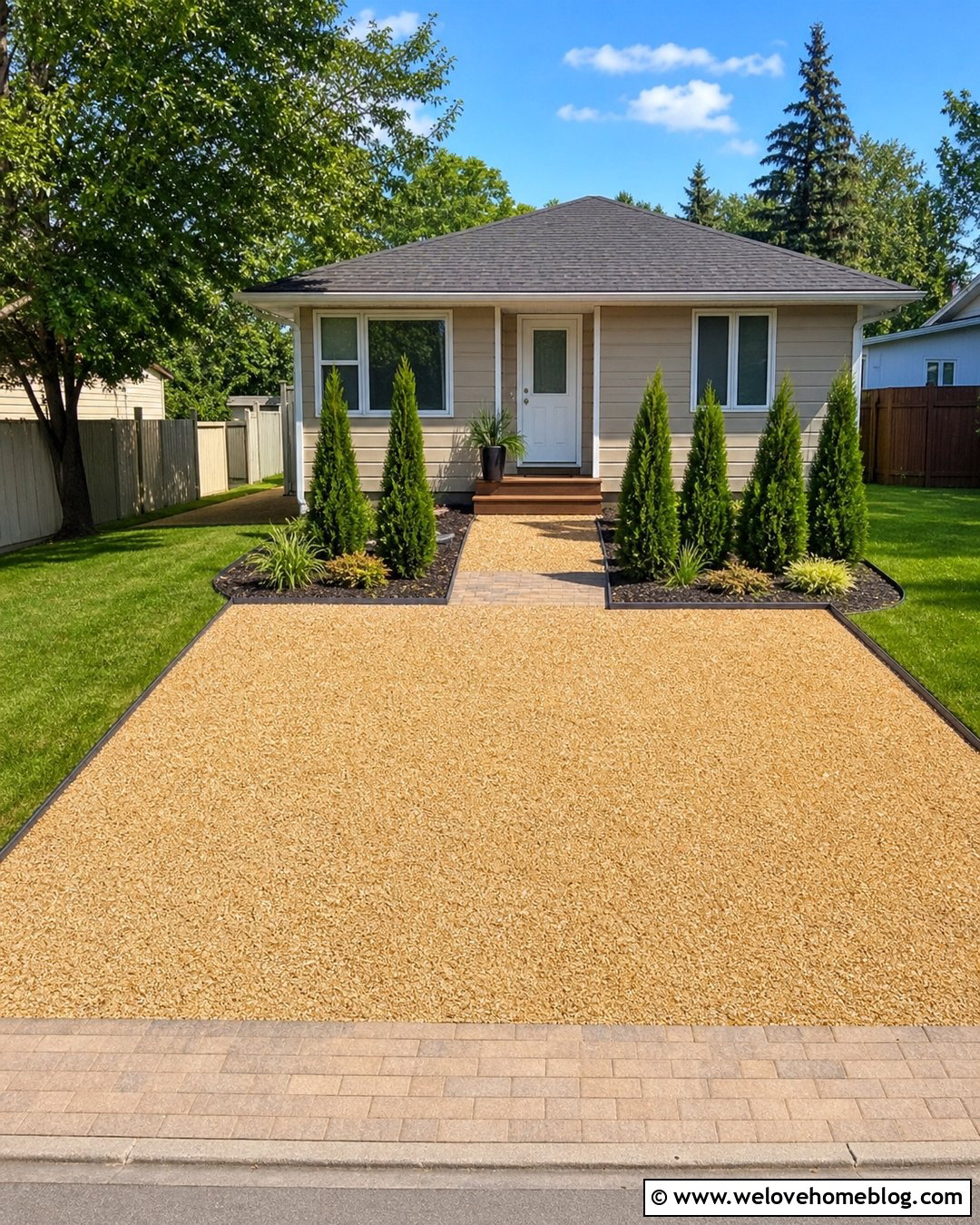
In a compact front yard, a dark gravel driveway should look clearly organized rather than visually crowded. Use a straight single-width layout with flush steel, brick, or concrete edging. Charcoal gravel can make the parking zone feel polished, but pale borders and green planting prevent the small area from becoming too dark. Add a narrow walkway along one side instead of cutting several paths through the driveway. Columnar shrubs, compact grasses, and low ground cover fit into slim beds without reducing usable space. A slightly wider entrance apron can make daily access easier while maintaining a tidy rectangular footprint. This design works with townhomes, bungalows, cottages, and narrow suburban lots. Keeping materials consistent across the driveway, walkway, and planting edges creates the strongest sense of order.
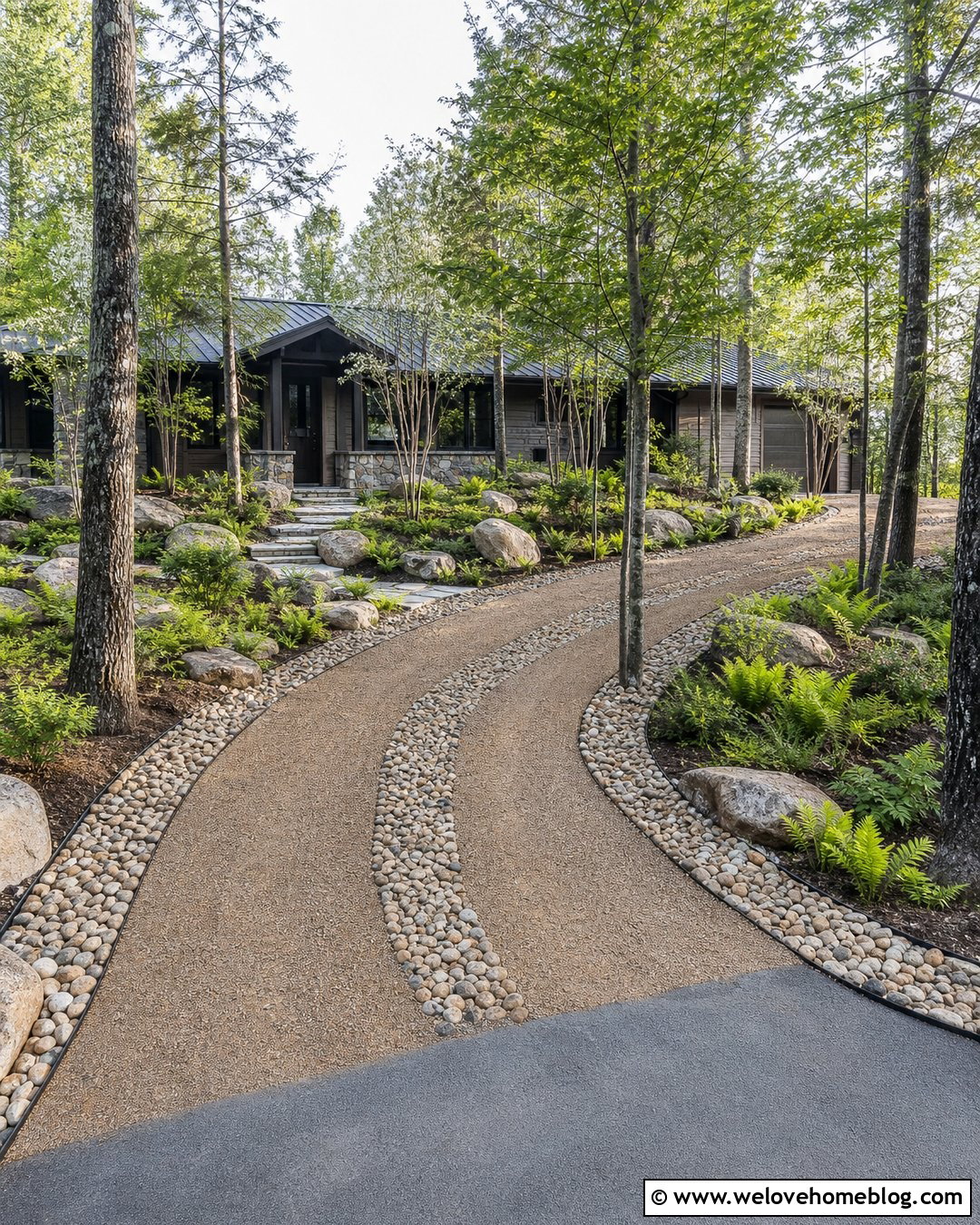
20. Dark Gravel Driveway With Drainage Swale
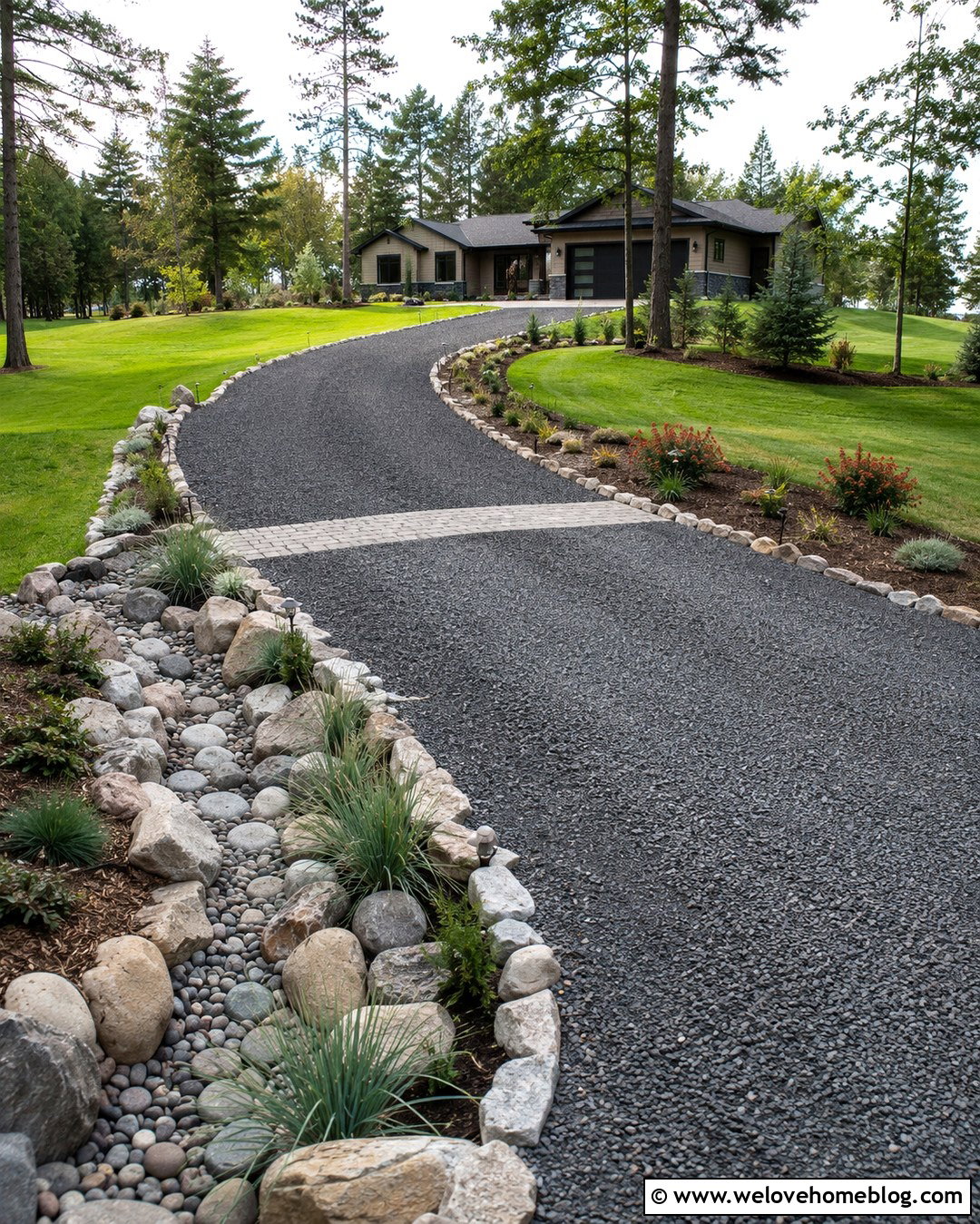
A shallow planted swale can become an attractive part of a dark gravel driveway when drainage must be considered. Shape the driveway with a subtle crown or planned slope, then place the swale along the lower edge where it can fit naturally into the yard. Separate the charcoal crushed gravel from the planted channel with stone, a reinforced shoulder, or suitable edging. Fill the swale with locally appropriate grasses, moisture-tolerant plants, and decorative rock selected for the site. A small bridge or paved crossing can connect the driveway to the front walkway. This complete look suits country properties, woodland homes, and larger suburban lots. Because soil, rainfall, and local requirements vary, the final grading and drainage design should be planned for the specific property. ()
Conclusion:
These **20 Dark Gravel Driveway Ideas** show how one versatile surface can complement many homes and landscapes. The most successful design combines angular, traffic-suitable gravel with a shape that fits the property, defined borders, practical drainage, and landscaping that remains clear of driving areas. White concrete and steel create modern contrast, while brick, timber, and natural stone offer a warmer transition. Curves, circular layouts, planting islands, entrance pillars, and coordinated walkways can make the entire front yard feel intentional. Before selecting a stone, compare local samples in natural light because charcoal, granite, basalt, and trap rock can vary noticeably. Build the driveway as one complete landscape instead of treating the surface as an isolated feature.

Related posts:
Leave a Reply