
A well-planned driveway should feel like part of the garden, not simply a strip of pavement leading to the garage. These driveway planting ideas combine durable surfaces, practical layouts, defined borders, and attractive plants to create a complete entrance. The strongest designs account for reflected heat, road salt, drainage, visibility, mature plant size, and space for car doors. They also repeat colors and materials found on the home, creating a more connected look. Whether your property has a narrow concrete drive, a sweeping gravel approach, or a circular paver layout, thoughtful planting can soften hard edges and improve curb appeal. Explore these complete, practical, and inspiring **35 Driveway Planting Ideas** for homes, yards, and budgets of every size. ()

1. Lavender Driveway Planting
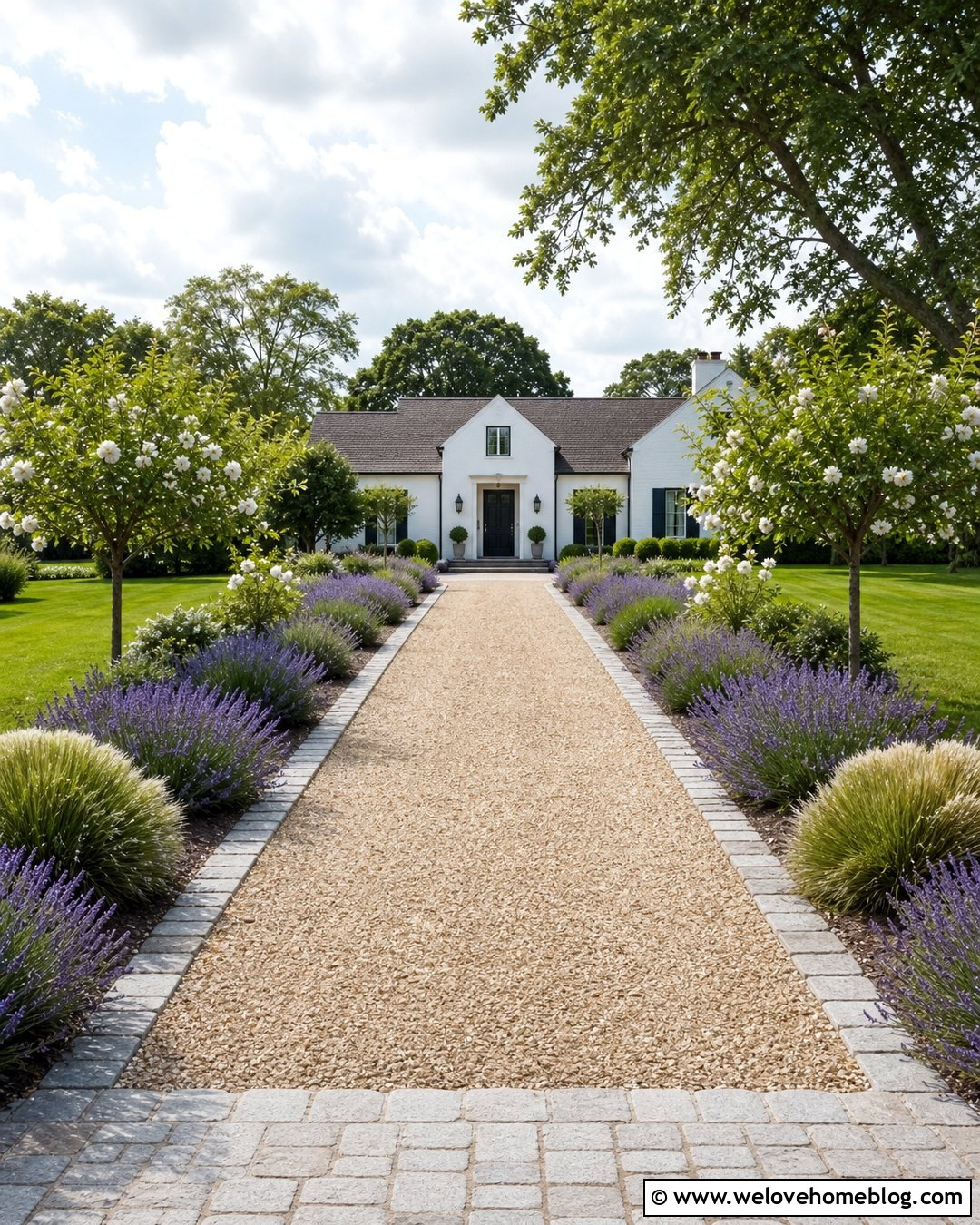
A straight pea gravel driveway bordered by lavender creates a relaxed entrance with color, fragrance, and strong definition. Install a cobblestone edge between the gravel and planting beds so loose stones do not scatter into the soil. Place lavender in broad repeating groups instead of a thin, uneven row. This makes the planting look fuller and more intentional from the street. Add small ornamental grasses between selected groups for movement and winter texture. The combination suits cottages, ranch homes, and modern farmhouses, especially in sunny locations with well-drained soil. Leave enough clearance beside the driveway for open car doors. A nearby flagstone walkway can repeat the cobblestone tones and connect the driveway naturally to the front entrance.
2. Boxwood Driveway Planting
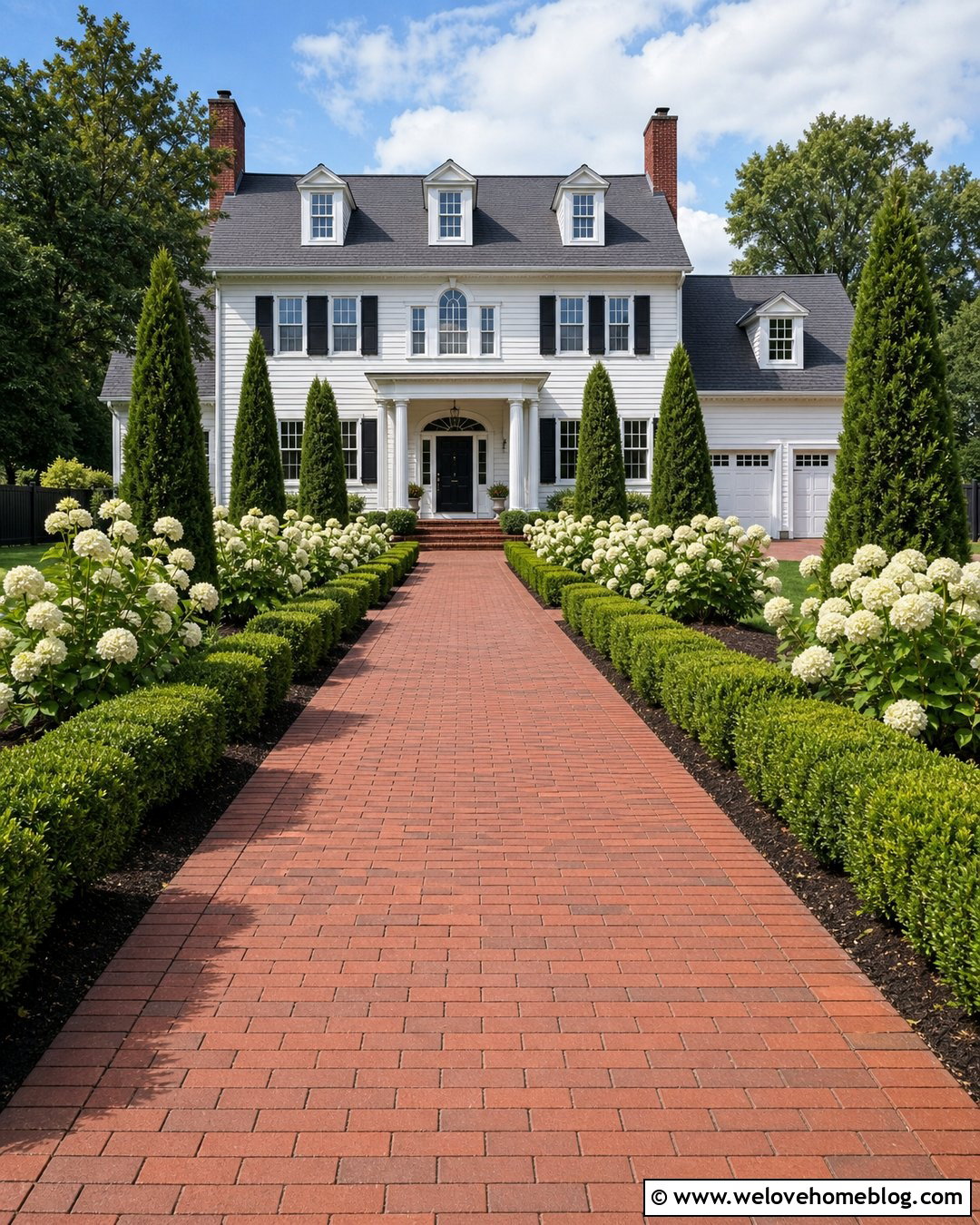
For an orderly traditional entrance, frame a straight brick driveway with low boxwood hedges and balanced planting beds. The clipped greenery creates a clean boundary without competing with the brick pattern. Set the shrubs slightly back from the driveway to prevent tires, snow, and opening doors from damaging them. Behind the hedge, use repeating groups of white hydrangeas, upright evergreens, or seasonal flowers. A narrow mulch strip makes routine trimming easier and keeps soil from washing onto the bricks. This complete look works especially well with Colonial, Georgian, and Cape Cod homes. Match the driveway brick to the home’s facade or walkway, then repeat the boxwood near the porch to create one continuous landscape from the curb to the front door.
3. Ornamental Grass Driveway Planting
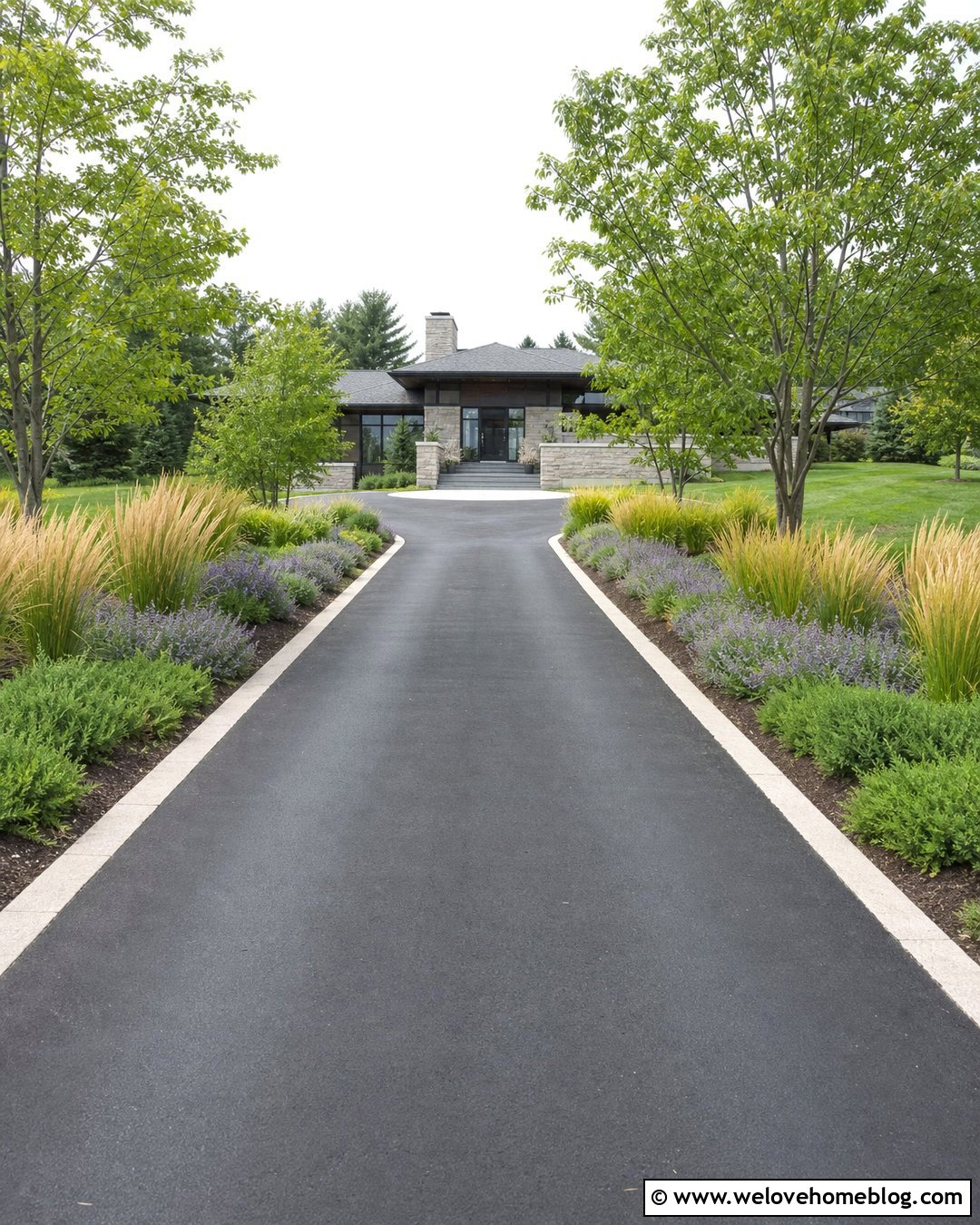
Tall ornamental grasses can transform a long black asphalt driveway into a softer, more architectural approach. Create generous beds along both sides, using repeated grass clumps rather than planting an unbroken wall. Lower plants such as sedum, catmint, or creeping juniper can fill the front edge without blocking the pavement. Add a flush concrete curb to separate asphalt from mulch and simplify maintenance. The grasses should sit far enough away to keep mature foliage from leaning over passing vehicles. This planting arrangement looks especially effective beside contemporary homes and prairie-style houses. Select varieties suited to the local climate and avoid aggressive spreaders. A few small multi-stem trees near the house can provide a strong endpoint while leaving the driveway entrance open and visible.
4. Hydrangea Driveway Planting
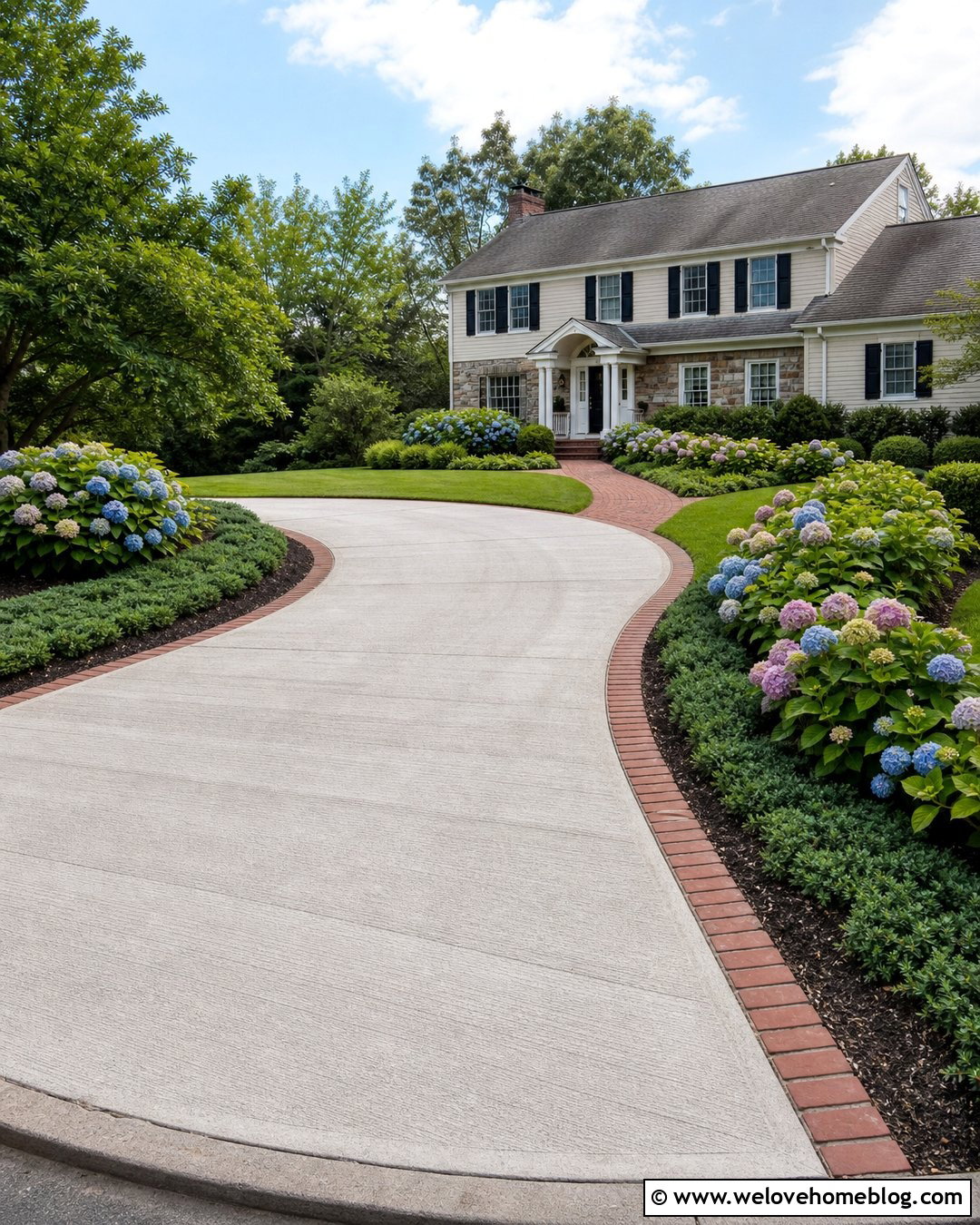
A curved poured-concrete driveway lined with hydrangeas creates a lush, welcoming arrival when the growing conditions are suitable. Use a durable brick ribbon along the concrete to define the curves and coordinate with a traditional home. Plant hydrangeas in deep beds where their mature branches will not crowd vehicles. Low evergreen ground cover at the front provides structure when the shrubs are bare or out of bloom. Repeat the same hydrangeas near the porch to connect the driveway border with the foundation landscaping. Since different hydrangeas have different light, pruning, and climate needs, choose locally appropriate varieties. Finish the beds with an even mulch layer and simple steel edging on the lawn side. The result feels abundant while remaining organized and easy to navigate.
5. Rose Driveway Planting
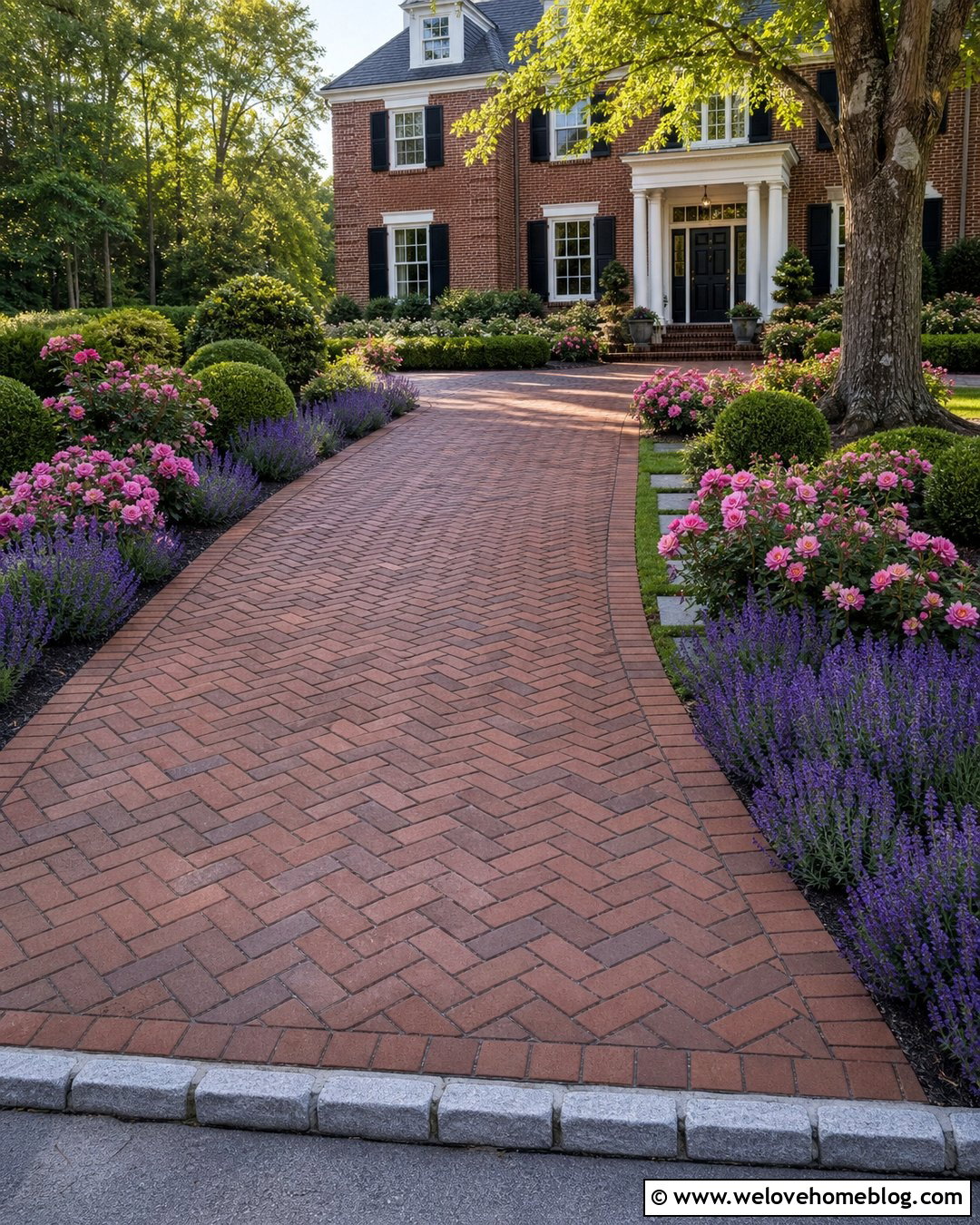
Imagine a warm clay brick driveway bordered by generous clusters of landscape roses, catmint, and compact evergreen shrubs. The roses provide long-lasting color, while soft purple flowers help disguise bare lower stems. Keep the planting in wide beds instead of placing thorny branches directly beside parking areas. A soldier-course brick edge can contain the soil and make the driveway look finished. Repeat one rose color throughout the border for a cohesive design rather than mixing many unrelated shades. This approach complements cottage homes, brick Colonials, and traditional ranch houses. Include stepping stones where people commonly move between parked vehicles and the lawn. Drip irrigation under mulch can water the root zones without regularly soaking foliage or staining the driveway surface.
6. Native Flower Driveway Planting
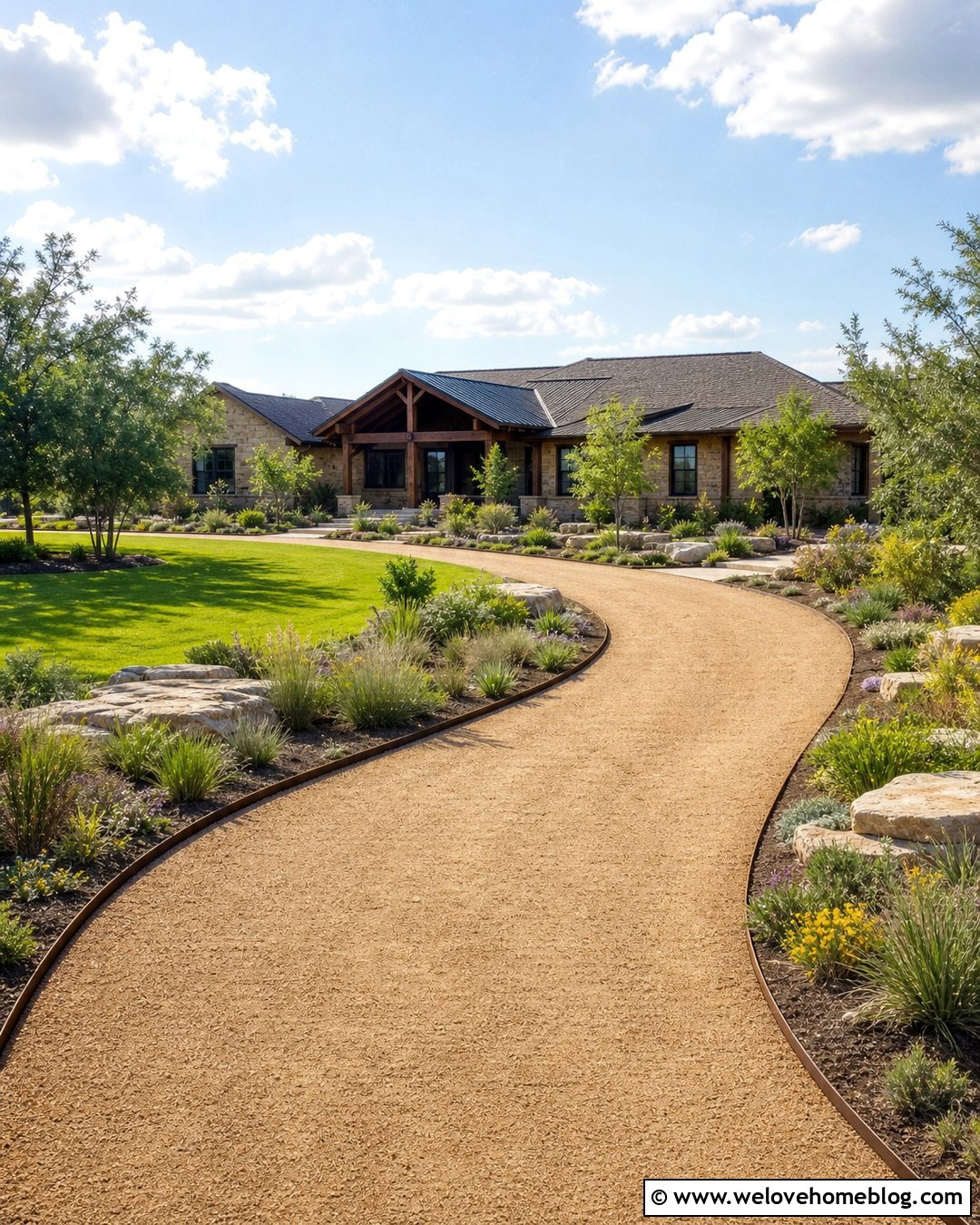
A decomposed granite driveway surrounded by native flowers creates a natural entrance that supports the character of the wider landscape. Design broad, gently curved planting beds containing several repeated groups rather than a random seed mix. Combine locally suitable flowering perennials with compact grasses and low ground covers. Position the shortest plants near the driveway and taller varieties toward the lawn or property boundary. Steel edging keeps the decomposed granite contained while maintaining a simple appearance. Add a few flat boulders for year-round structure and to visually connect the driveway with the garden. This look is ideal for rustic ranch homes, contemporary houses, and properties near natural areas. Check local native-plant resources before selecting species because climate, rainfall, soil, and growing conditions vary widely.
7. Evergreen Driveway Planting
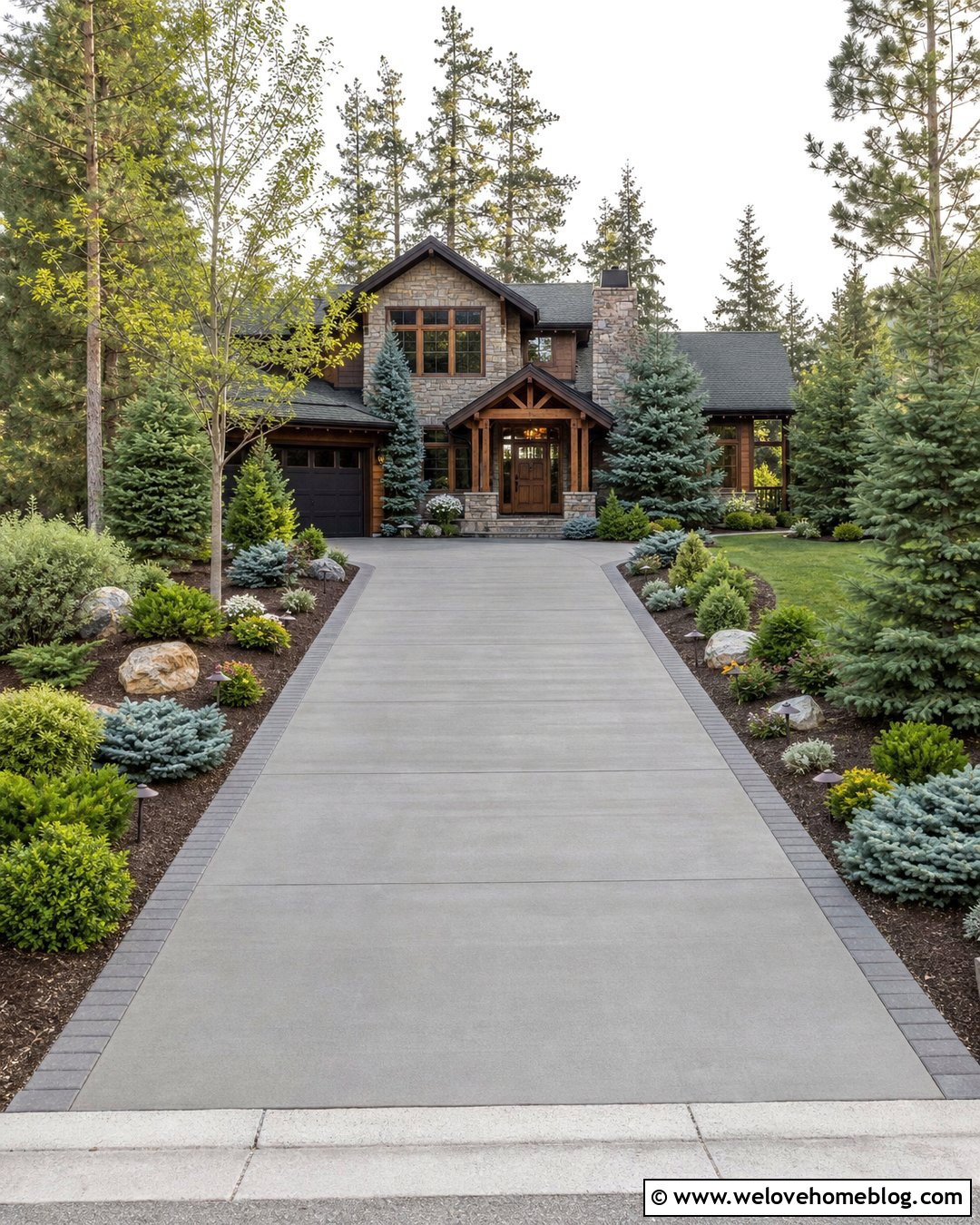
Evergreen planting gives a gray concrete driveway dependable structure in every season. Use compact conifers, spreading junipers, and rounded evergreen shrubs in layered beds along the approach. Vary their shapes and shades of green so the landscape does not appear flat. A charcoal paver border can sharpen the edge and coordinate with a dark roof or garage door. Keep taller evergreens near the house or property line rather than close to the street, where they could reduce visibility. Small pockets of flowering perennials can add seasonal interest without weakening the simple palette. This complete design works for modern, Craftsman, and mountain-inspired homes. Before planting, confirm the mature spread of every evergreen so the border remains clear of vehicles, utilities, walkways, and neighboring property.
8. Tree-Lined Driveway Planting
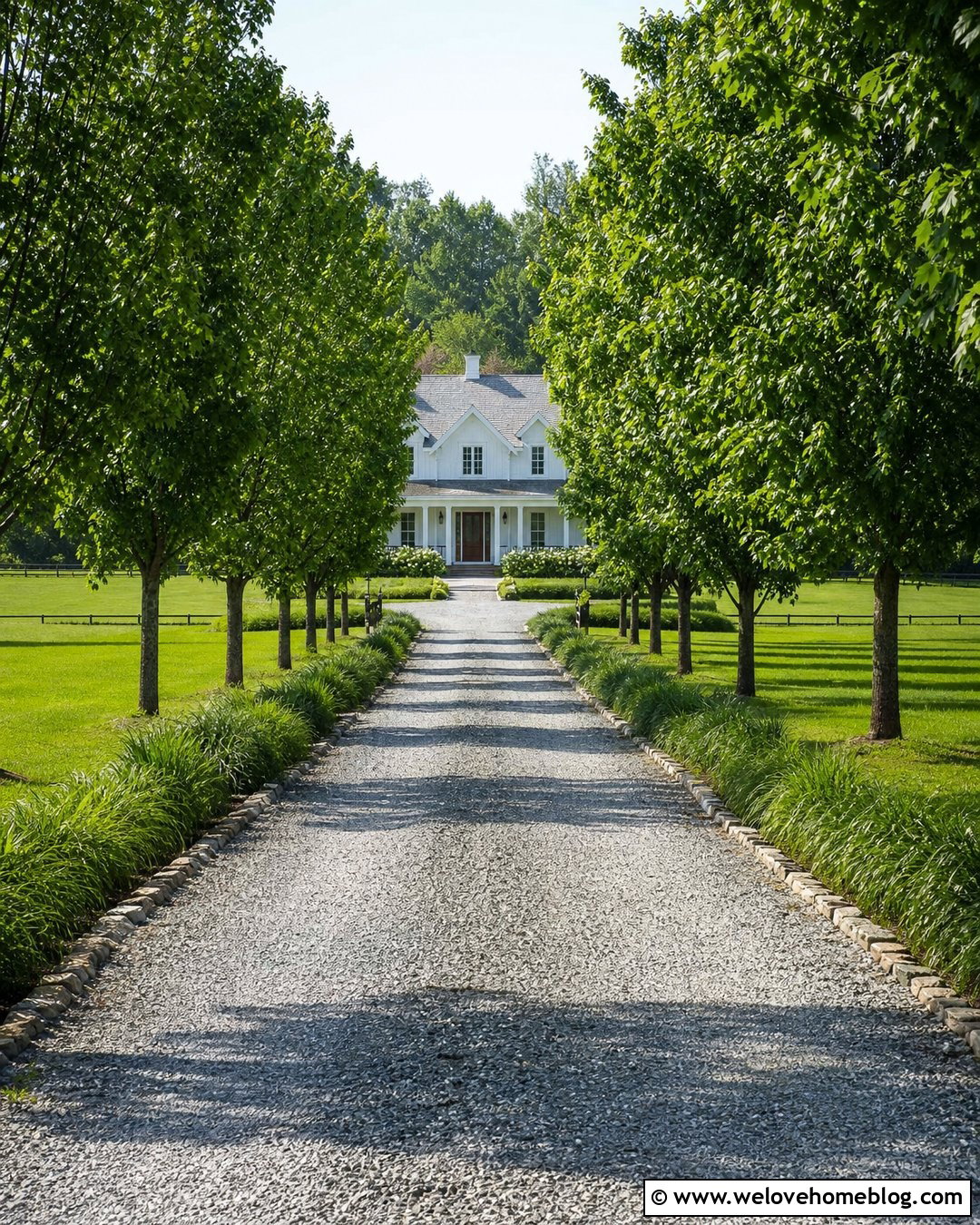
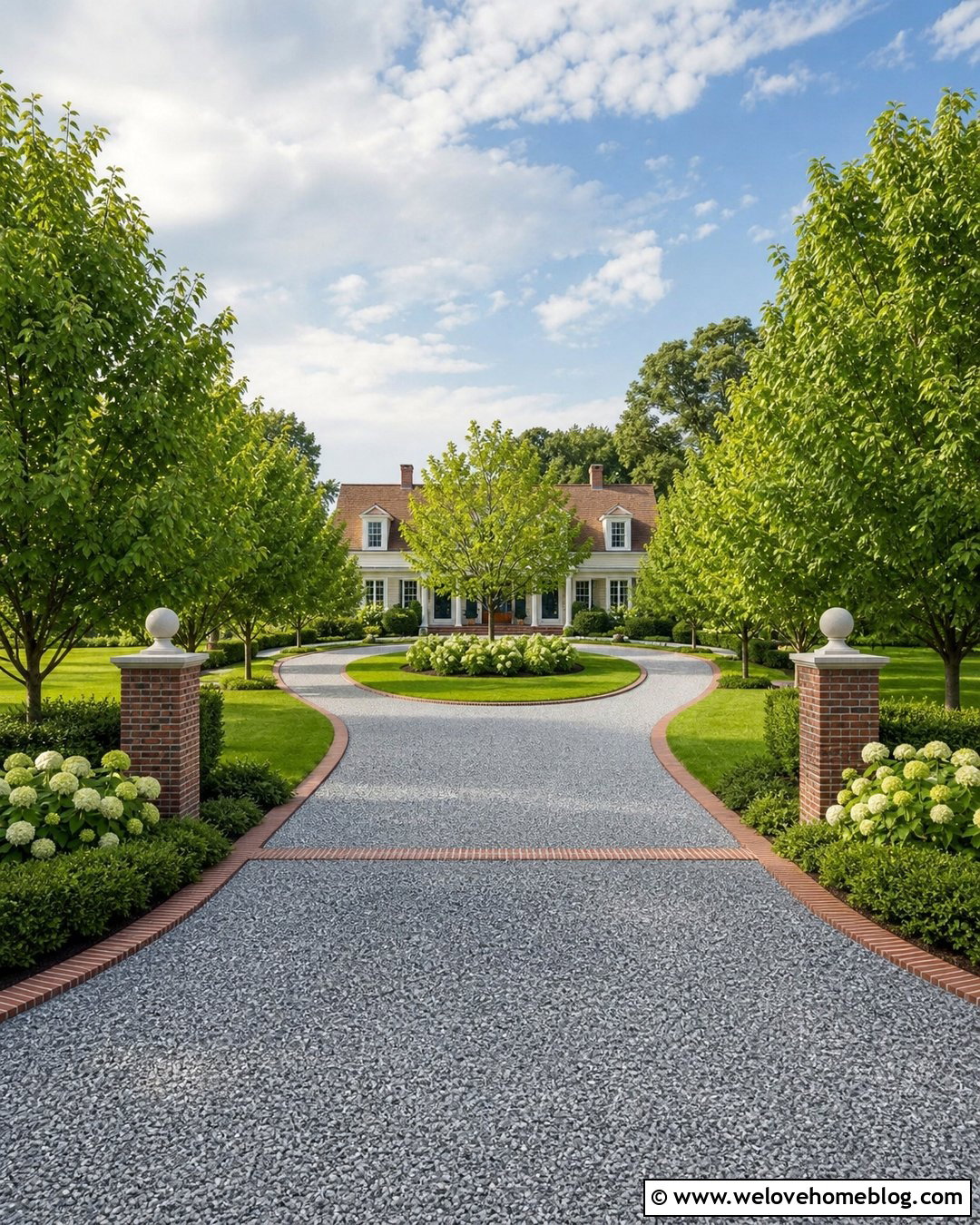
A long gravel driveway framed by evenly spaced deciduous trees creates a strong sense of arrival. Set the trees well beyond the driving edge and account for mature trunk size, canopy width, roots, overhead lines, and snow-clearing needs. Beneath them, use a continuous bed of low ornamental grasses or durable ground cover to unify the layout. Natural stone edging helps contain the gravel and protects the planting area. The tree spacing should reflect the length of the driveway and scale of the house, rather than feeling crowded. This look suits country homes, large farmhouses, and traditional estates. Choose tree species with dependable local performance and manageable fruit or leaf drop. Low entrance plantings preserve sightlines where the driveway meets the public road.
9. Small Driveway Planting
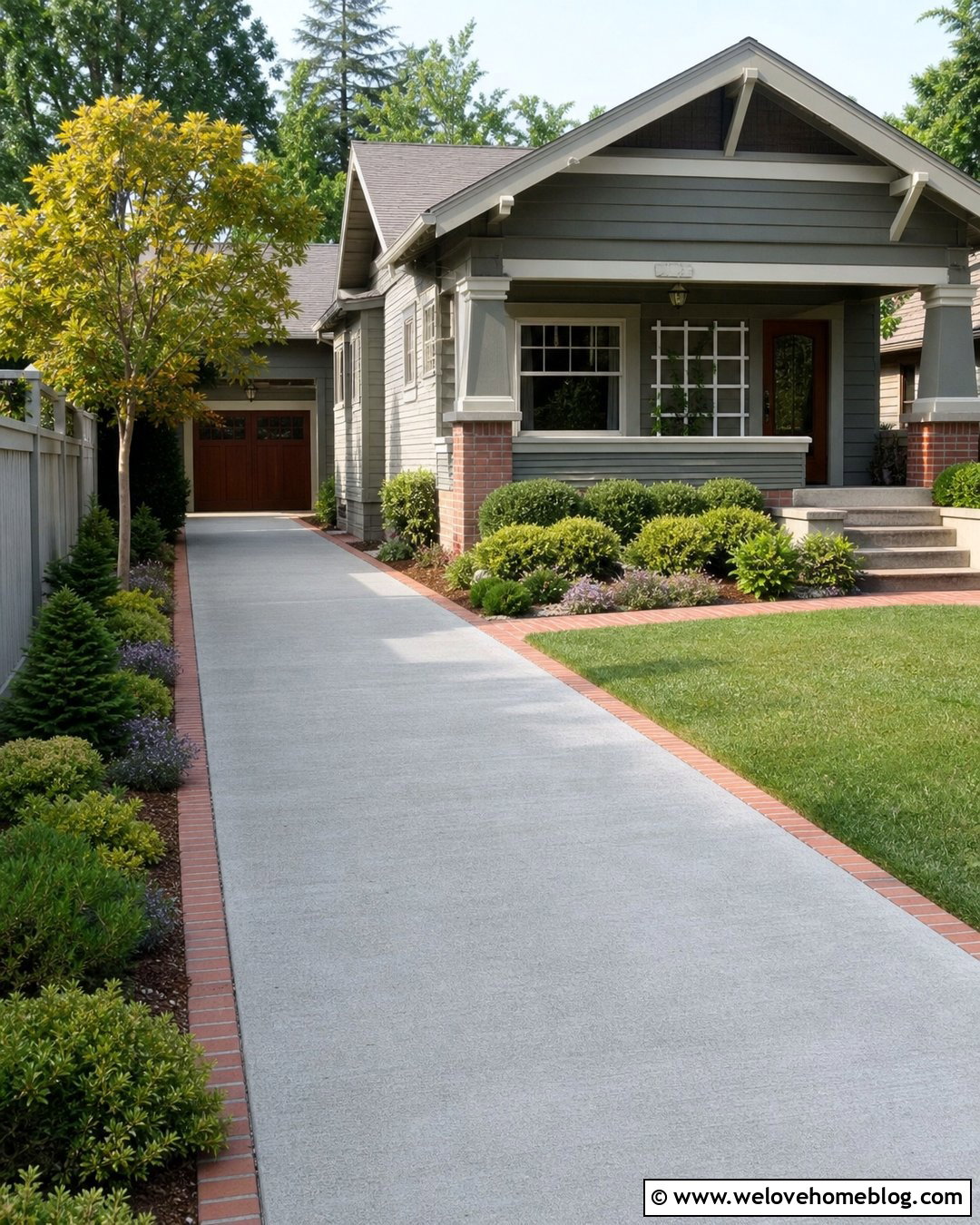
Even a compact driveway can include meaningful greenery without sacrificing parking space. Frame a narrow concrete drive with slim planting beds, low ground cover, and one small ornamental tree near the front walkway. Use flush brick edging so car doors and feet can cross the boundary safely. Upright grasses or compact evergreen shrubs can add height near the house, while creeping thyme or sedum softens the street-facing edge. Avoid oversized shrubs that will quickly narrow the usable pavement. A matching wall-mounted trellis can bring greenery upward where ground space is limited. This layout suits townhomes, bungalows, and small suburban lots. Keep the plant palette simple, repeating two or three dependable varieties so the driveway feels neat rather than crowded with disconnected colors and textures.
10. Circular Driveway Island Planting
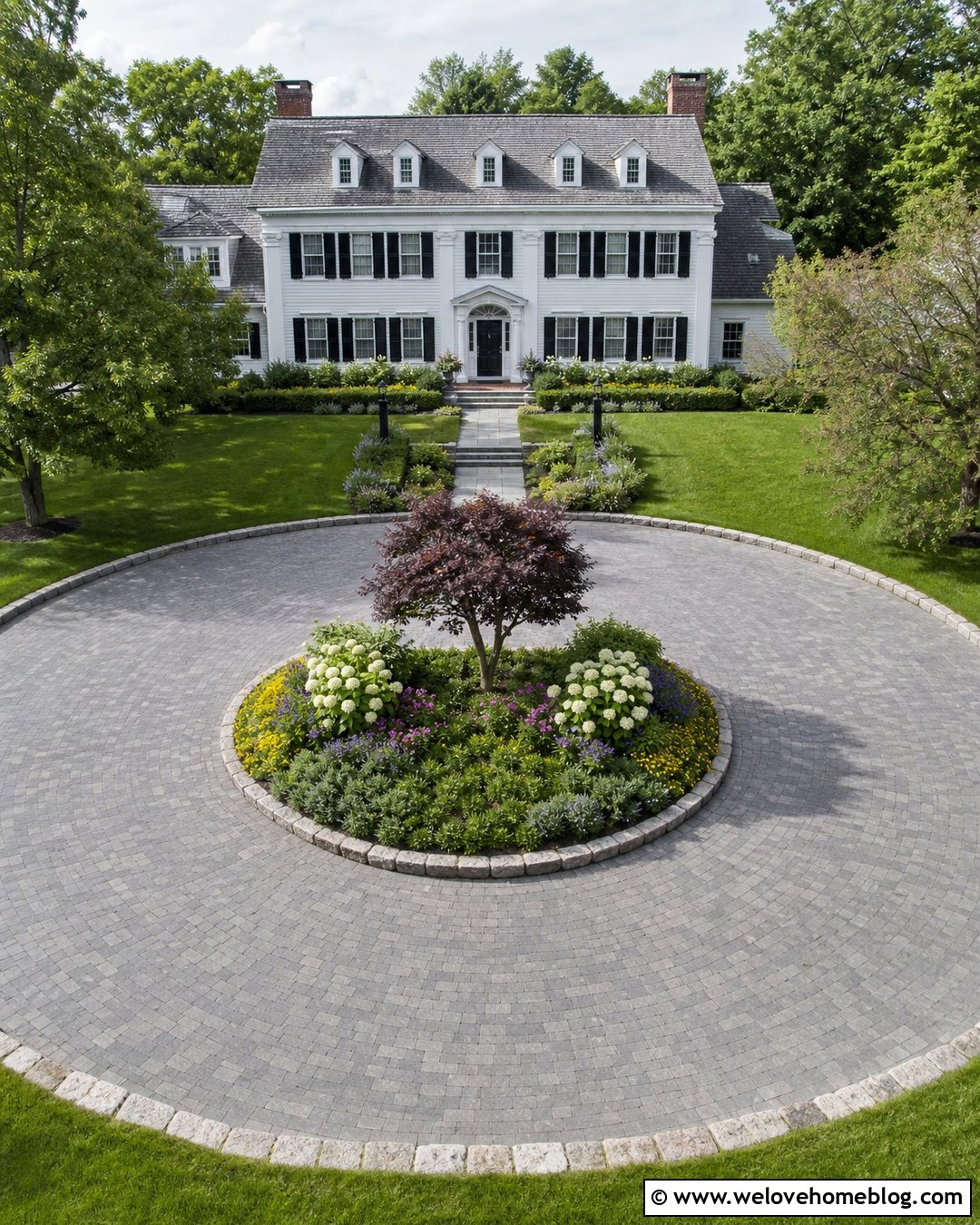
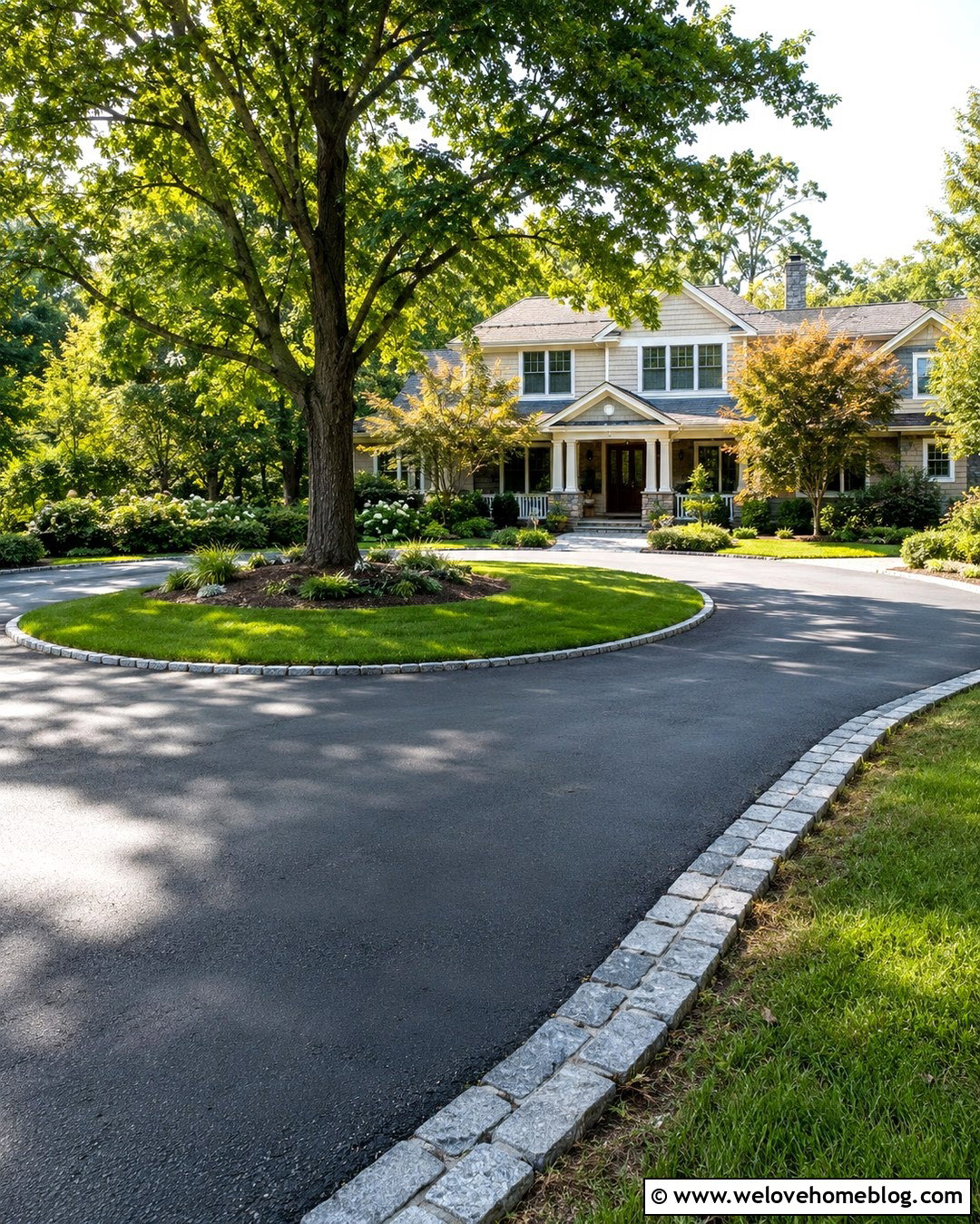
The center island of a circular paver driveway offers space for a complete focal garden. Begin with one appropriately sized ornamental tree, then surround it with layered shrubs, flowering perennials, and low ground cover. Keep plants near the island edge short so drivers can see across the turnaround. A raised natural-stone curb protects the soil while echoing stone accents on the house. Repeat the driveway’s circular shape in the planting rings for a composed look. One restrained color palette usually creates more impact than many scattered flower colors. Consider drainage carefully because runoff may collect around the island. This design works beautifully with Colonial, Mediterranean, and large ranch homes, giving the front yard a central feature without obstructing the practical movement of vehicles.
11. Curved Driveway Planting
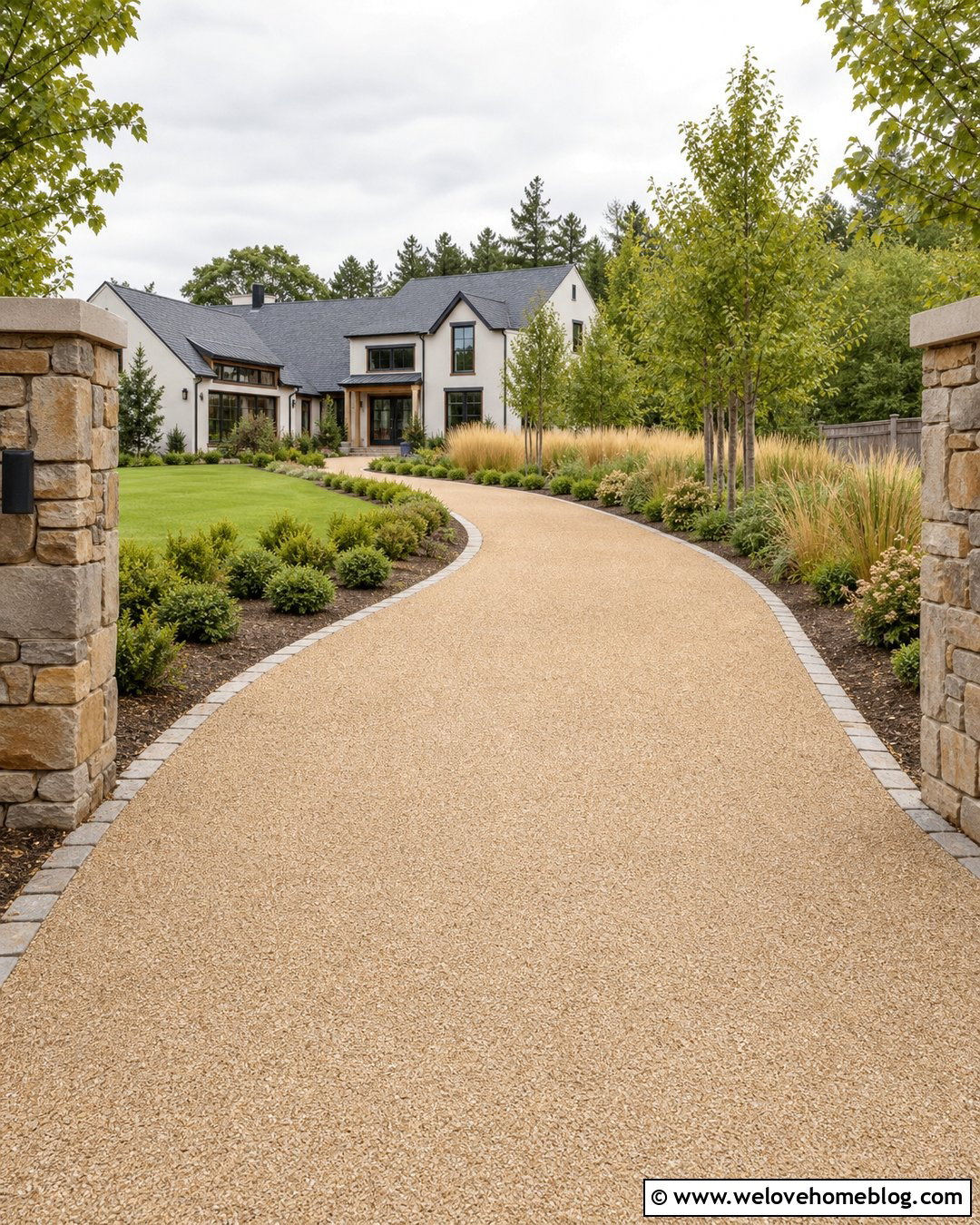
A sweeping resin-bound gravel driveway looks more integrated with the yard when the planting beds follow its curves. Use low shrubs and ground covers on the inside bend, then place taller grasses and small trees along the outer edge. This preserves visibility while emphasizing the graceful layout. A granite-sett border defines the resin surface and prevents mulch from spilling across it. Repeat selected plants at regular intervals to guide the eye toward the house. Near the entrance, broaden the beds and include matching stone pillars for additional structure. The landscape should frame the driveway rather than hide the destination. This complete approach suits modern farmhouse, contemporary, and country properties. Leave practical pull-off areas clear and ensure every plant has adequate room at maturity.
12. Modern Driveway Planting
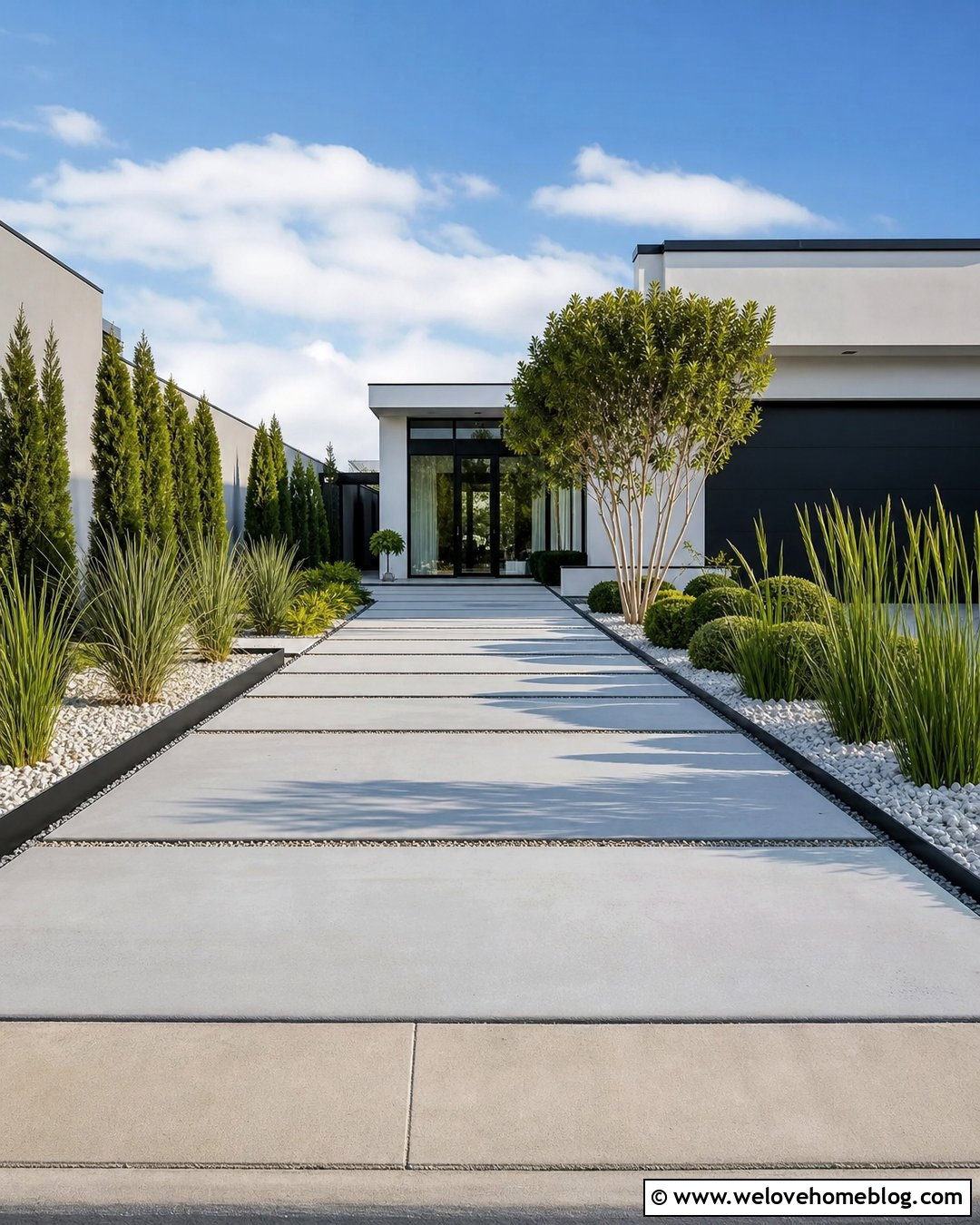
Clean geometry and restrained planting can make a modern driveway feel polished without appearing bare. Pair large-format light-gray concrete slabs with narrow gravel joints and linear beds of upright grasses. Add clipped evergreen forms near the garage and one sculptural multi-stem tree closer to the entry walk. Black steel edging reinforces the crisp layout and separates decorative gravel from planting soil. Choose a limited palette of green, silver, and one flower color for consistency. The plants should soften the architecture while maintaining visible straight lines. Integrated drainage channels can be placed neatly between the driveway and beds. This look works best when the facade, walkway, planters, and driveway share related colors. Keep foliage away from vehicle paths so the minimalist arrangement remains functional and uncluttered.
13. Cottage Driveway Planting
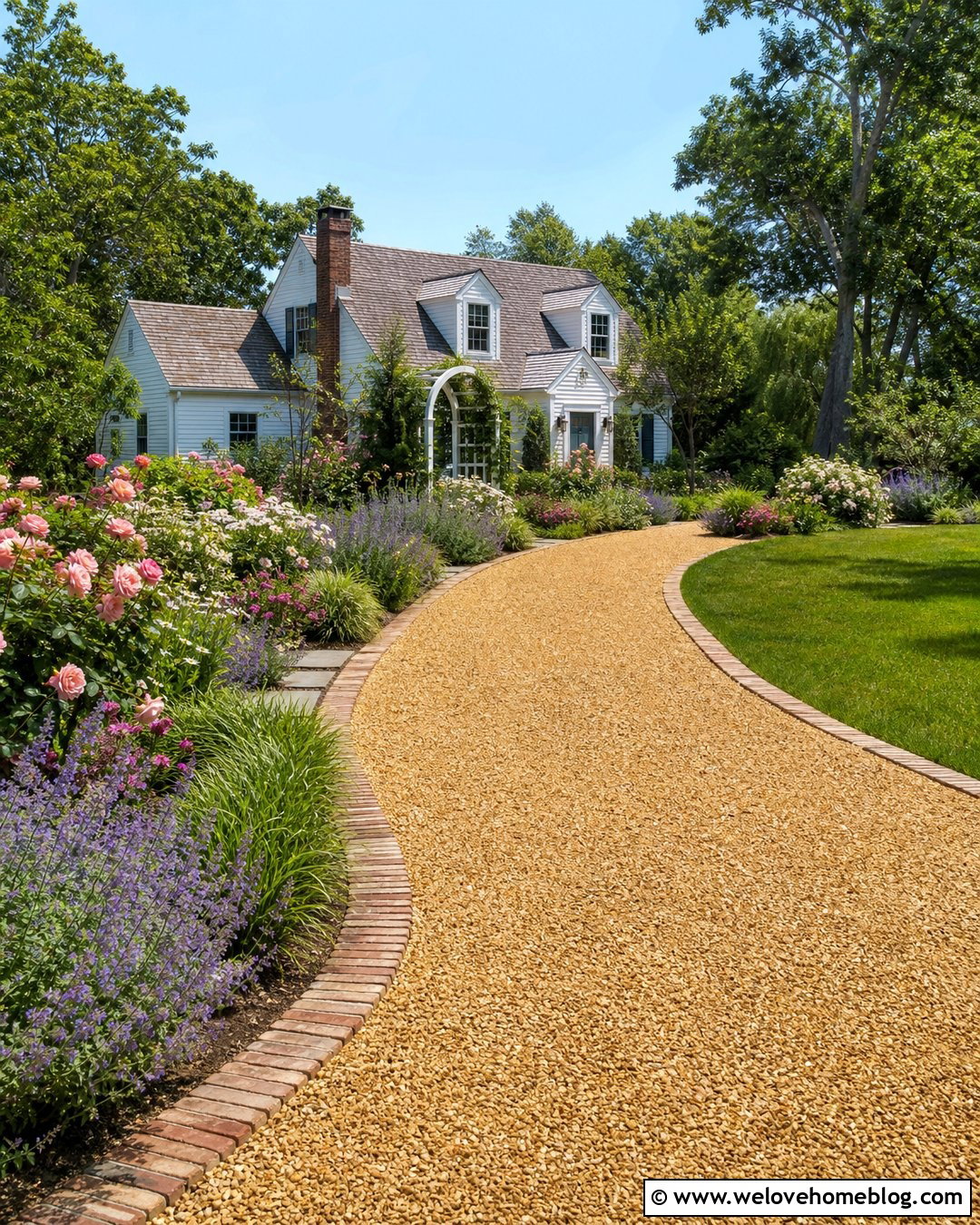
A cottage driveway can feel generous and romantic without becoming difficult to use. Begin with a warm-toned gravel surface and a reclaimed brick edge, then create deep informal beds filled with roses, salvia, catmint, daisies, and compact grasses. Repeat key plants down the driveway so the border has rhythm beneath its relaxed appearance. Keep the lowest flowers beside the pavement and move taller plants toward fences or walls. Add a simple stepping-stone path through the bed where passengers need lawn access. Near the house, an arbor or climbing plant can strengthen the garden character. Allow space for natural growth but remove stems that lean into the driving area. The complete look is particularly effective with cottages, Cape Cod homes, and older brick houses.
14. Farmhouse Driveway Planting
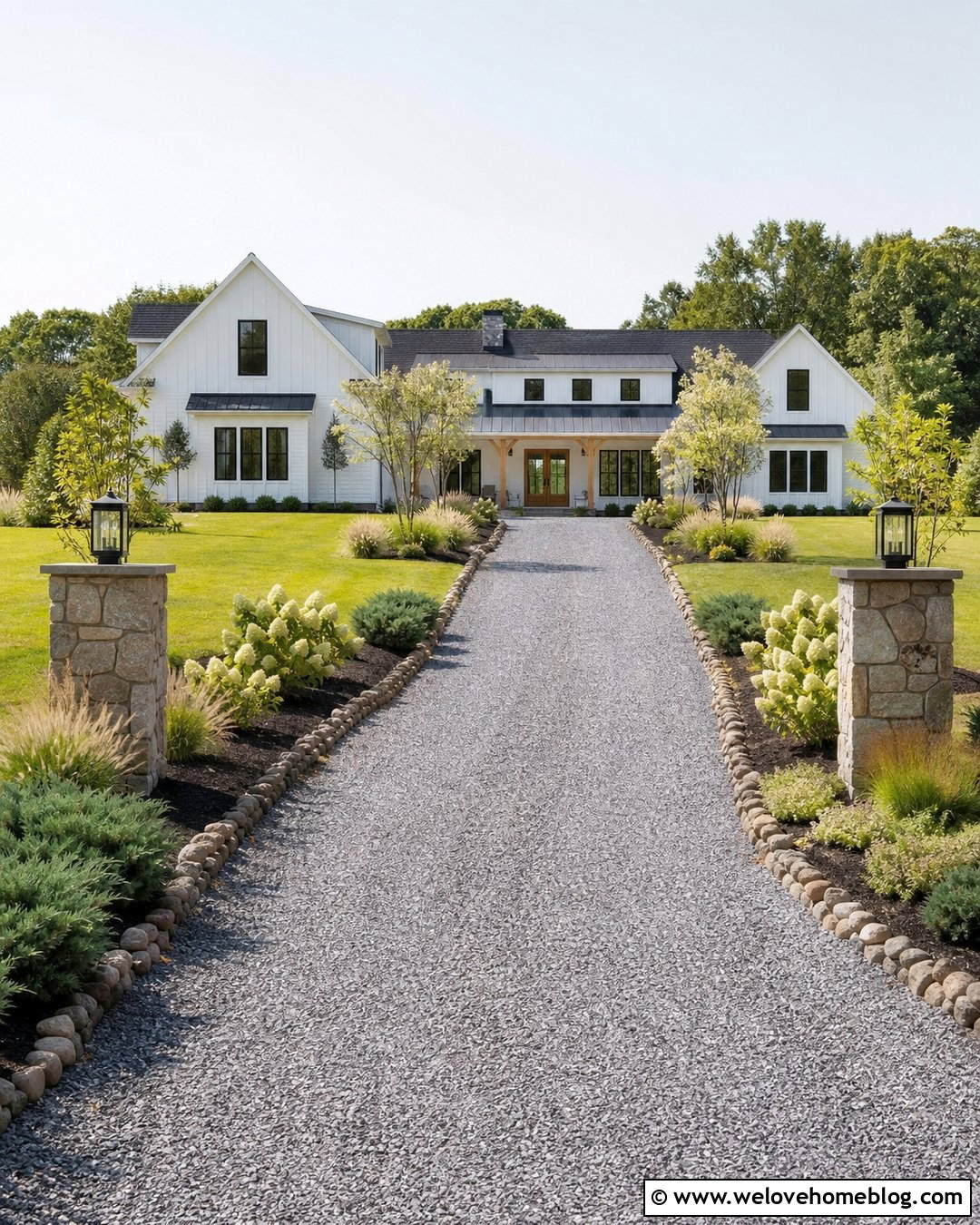
A farmhouse entrance feels grounded when gravel, timber, fieldstone, and simple planting work together. Use compacted gray gravel for the driveway, bordered by large natural stones or weathered steel. Plant repeating groups of panicle hydrangeas, ornamental grasses, and low junipers along the approach. Near the road, place matching fieldstone pillars with broad beds that curve into the lawn. A pair of small flowering trees can add height without creating a rigid formal avenue. Keep the planting palette relaxed and practical, using varieties suited to local sun, soil, and winter conditions. This design complements white siding, black windows, and natural wood details. Generous spacing prevents the shrubs from overwhelming the driveway and leaves room for snow storage, drainage, and routine gravel maintenance.


15. Ranch House Driveway Planting
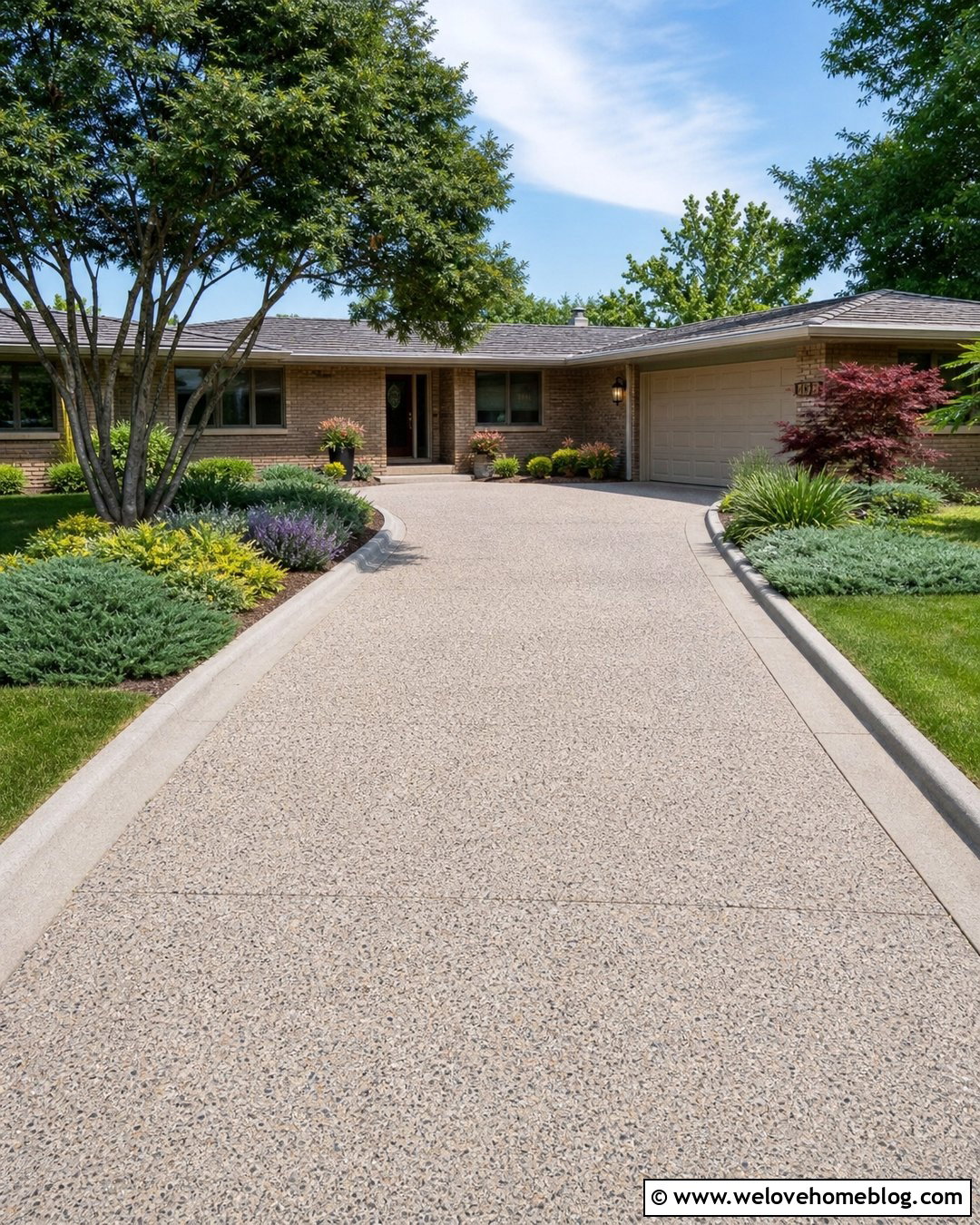
A wide ranch house benefits from driveway planting that emphasizes its low horizontal profile. Pair an exposed aggregate driveway with broad, gently curved beds containing spreading junipers, ornamental grasses, flowering shrubs, and low perennials. Use long planting groups rather than tall narrow accents. A smooth concrete curb keeps mulch and irrigation water away from the driveway. Place one multi-trunk ornamental tree near the front walk to connect the garage side of the property with the main entrance. Repeat facade colors through foliage, gravel, and edging materials. This balanced arrangement adds depth without hiding windows or making the house appear smaller. Keep entrance plants low for clear views of the street, and leave open paved space beside frequently used vehicle doors and walking routes.
16. Colonial Driveway Planting
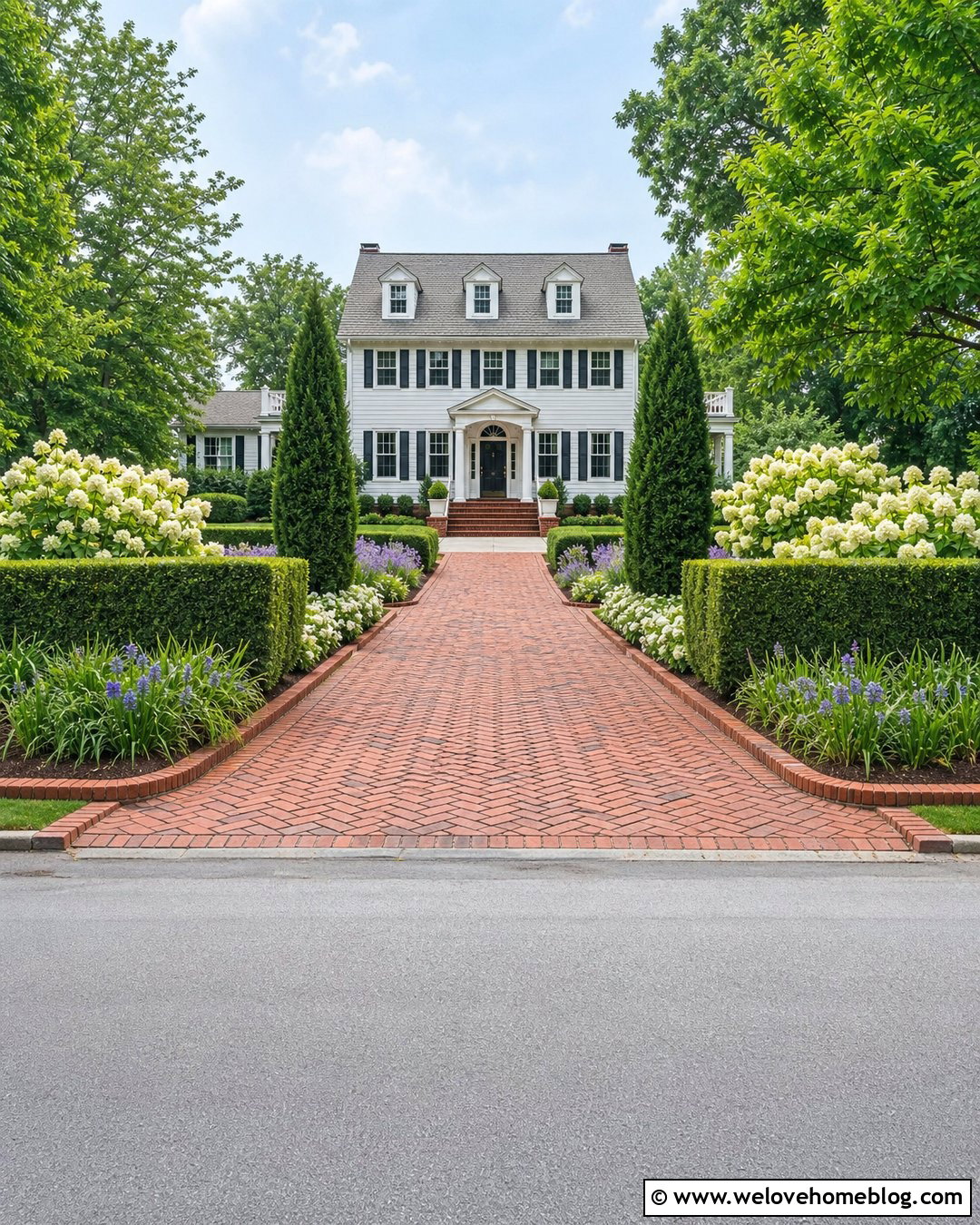
Symmetry brings a Colonial driveway and front facade into one unified composition. Use a red brick paver driveway with matching low brick curbs, then establish mirrored beds on each side. Clipped evergreen hedges provide the framework, while white flowering shrubs and seasonal perennials add softer detail. Place matching upright evergreens near the driveway entrance or garage, but verify that their mature size will suit the space. A centered walkway should connect the drive to the front door and repeat the same brick material. Keep every planting group balanced without making the entire border rigid. Slight variation in flower texture can add life. This layout creates a formal appearance while maintaining practical clearance, clear street views, and an easy transition from vehicle parking to the main entrance.
17. Craftsman Driveway Planting
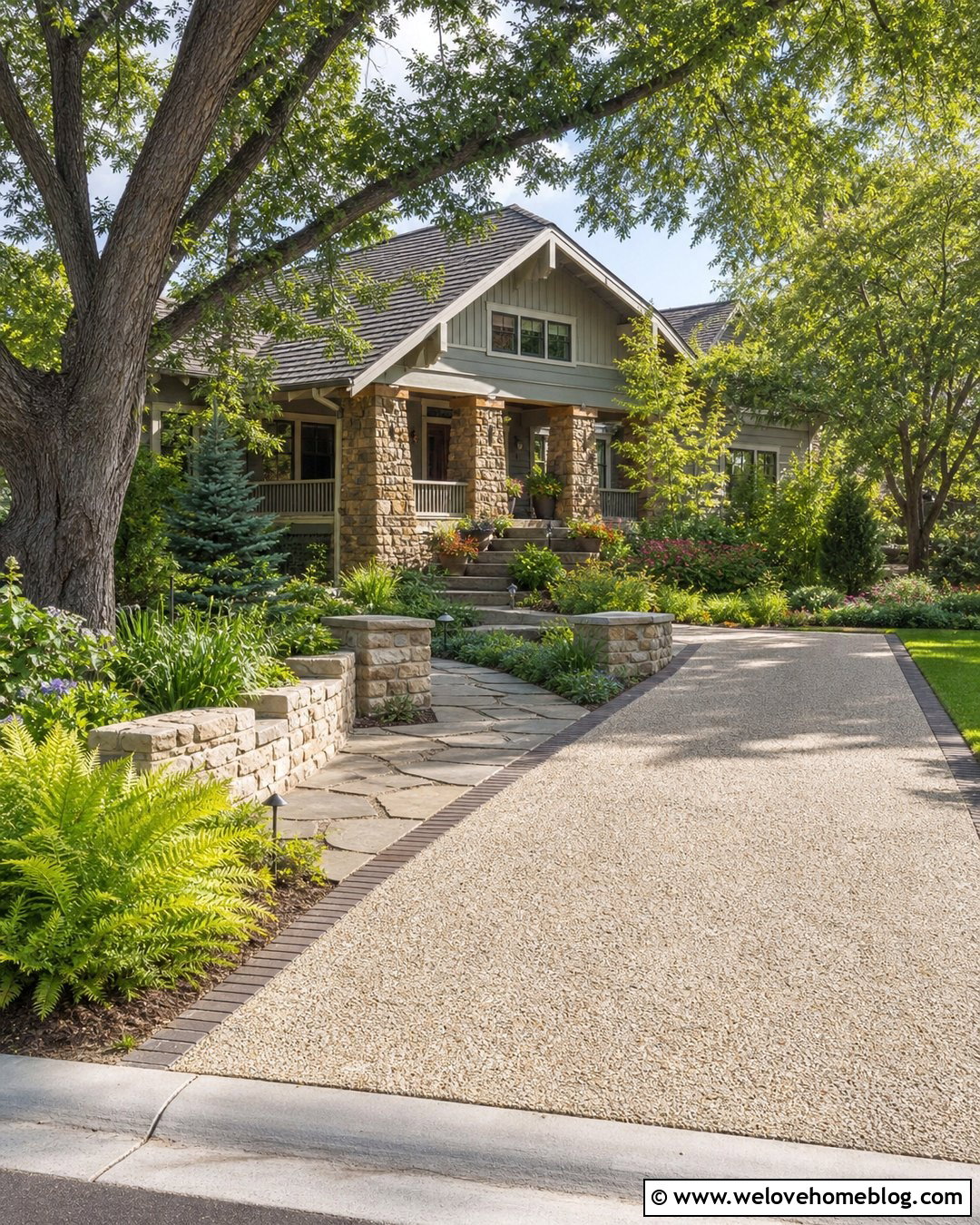
Craftsman homes look best with layered, natural planting and substantial materials. Frame a warm exposed aggregate driveway with dark brick ribbons and broad beds of evergreen shrubs, ferns, flowering perennials, and ornamental grasses. Echo the home’s porch columns by using low stone walls or square masonry planters near the entrance. The planting should feel full but carefully structured, with taller shrubs near the house and lower plants beside the driveway. Where shade from mature trees reaches the border, select plants that match those conditions instead of forcing sun-loving flowers. Repeat warm green, bronze, and burgundy foliage tones found in the facade. A flagstone walkway branching from the driveway can complete the handcrafted appearance while giving guests a clear, comfortable route to the porch.
18. Drought-Tolerant Driveway Planting
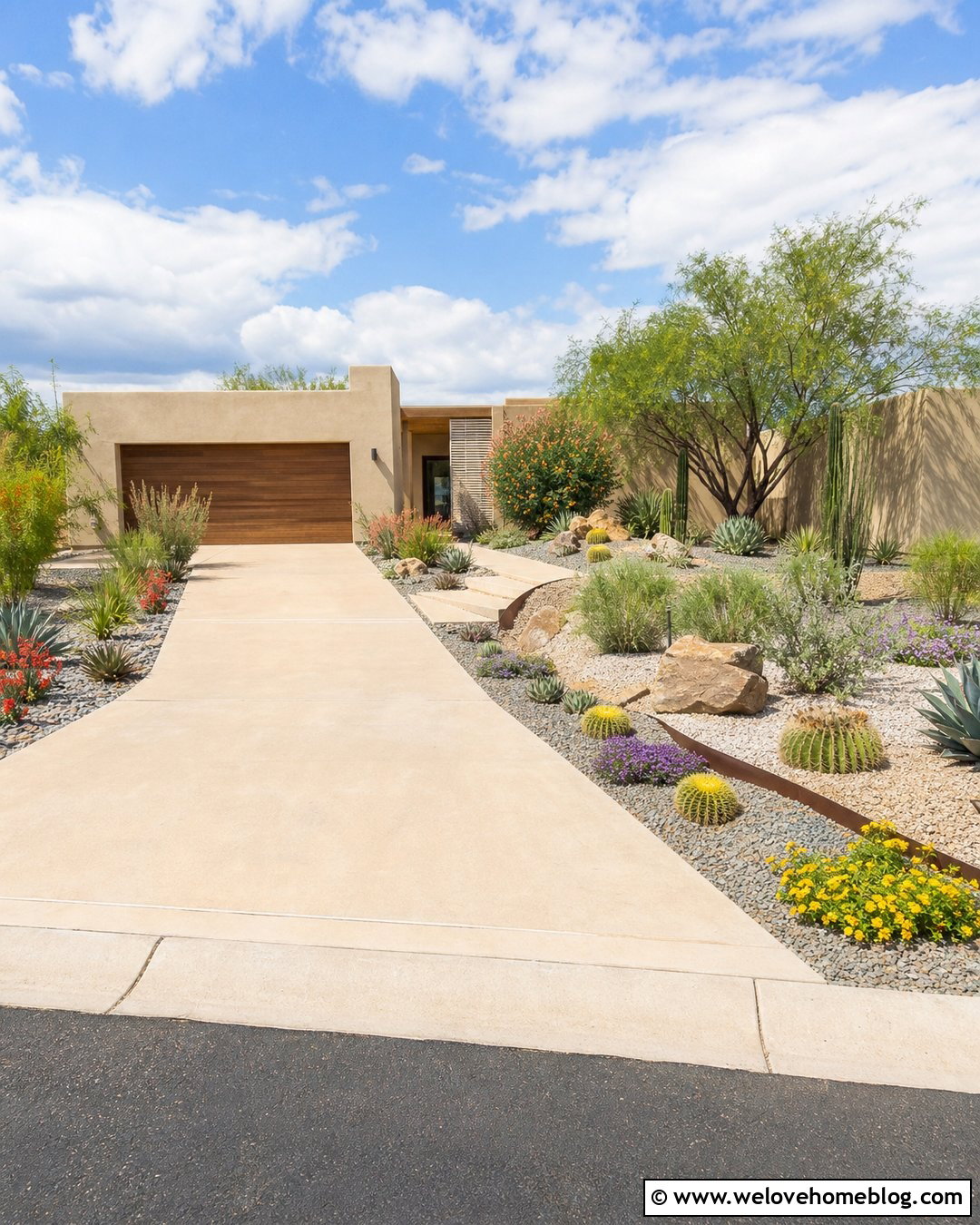
A drought-conscious driveway can deliver strong curb appeal through shape, texture, and thoughtful spacing. Surround a light-colored concrete driveway with gravel-mulched beds containing locally suitable succulents, ornamental grasses, flowering perennials, and sculptural evergreen plants. Use rusted steel or dark stone edging to create a clear boundary. Group plants by water needs and install efficient irrigation where establishment watering is necessary. Boulders can anchor broad corners and provide visual interest when flowers are not present. Keep sharp or rigid foliage away from car doors and pedestrian routes. The light driveway surface and open planting arrangement pair especially well with Southwestern, mid-century, and contemporary homes. Research local fire-safety guidance, invasive-plant rules, and climate suitability before finalizing plants or placing organic mulch near structures.
19. Shade Driveway Planting
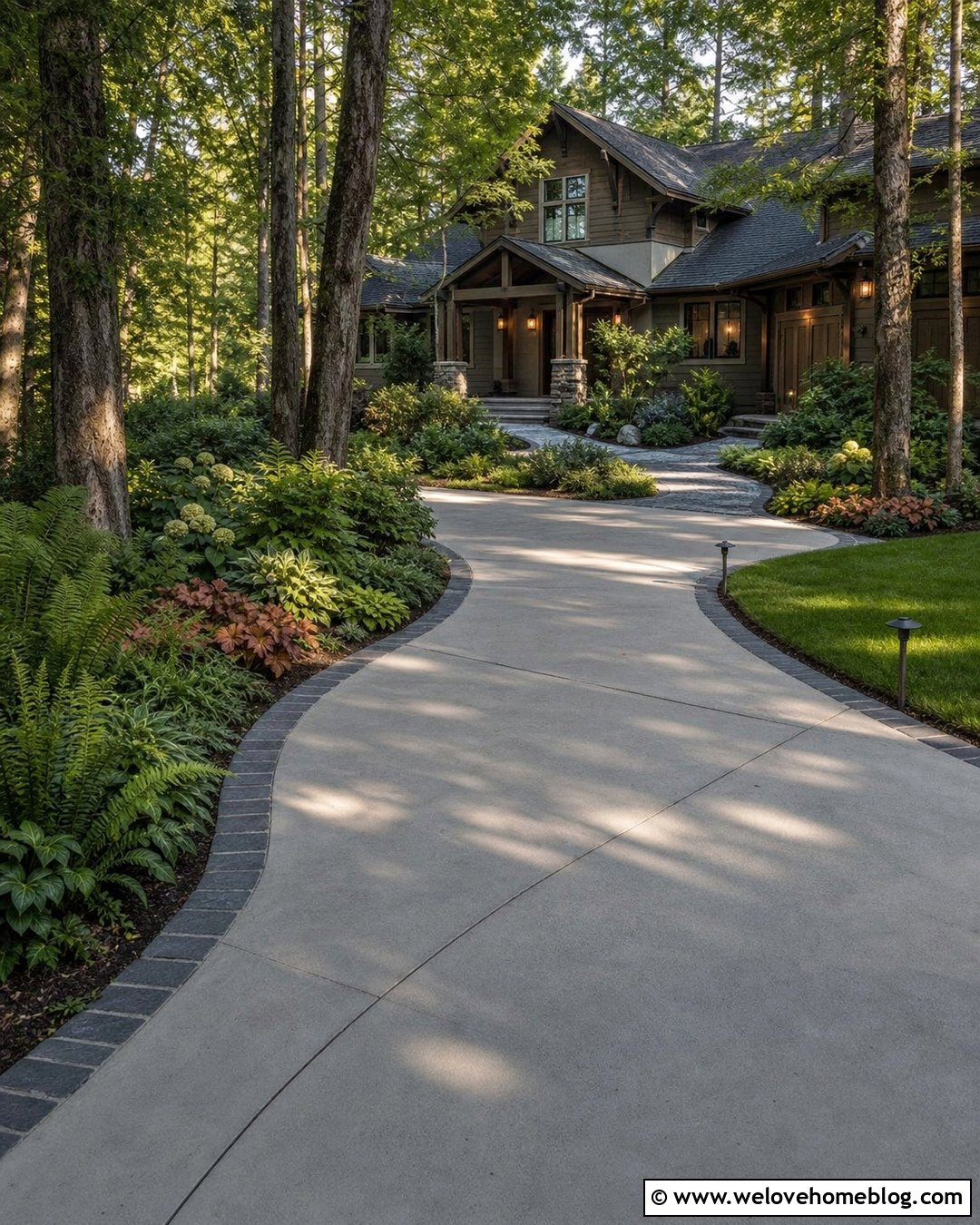
Shaded driveways need a planting plan based on foliage, texture, and seasonal variation rather than constant flowers. Edge a gray concrete driveway with charcoal cobblestones, then layer ferns, coral bells, sedges, compact hydrangeas, and shade-tolerant ground covers. Use plants with contrasting leaf sizes and colors to brighten the border beneath mature trees. Curved beds can protect visible surface roots and help the driveway blend into a woodland yard. Avoid raising soil deeply around existing tree trunks. Low-voltage path lights may improve navigation, but fixtures should remain set back from tires and snow equipment. This design works beautifully with wooded Craftsman homes, cabins, and traditional suburban houses. Confirm moisture conditions because dry shade and damp shade require very different plant selections.
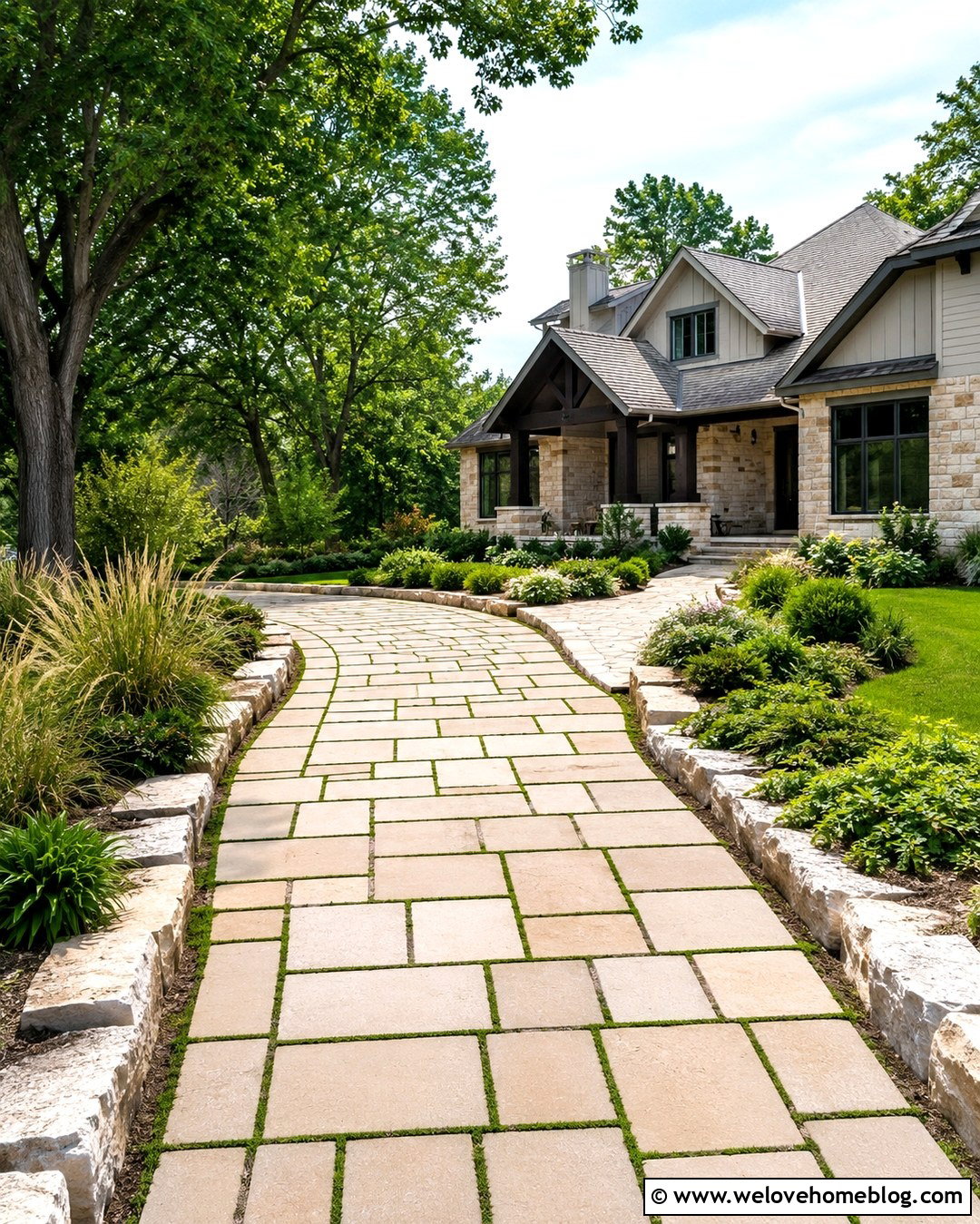
20. Sunny Driveway Planting
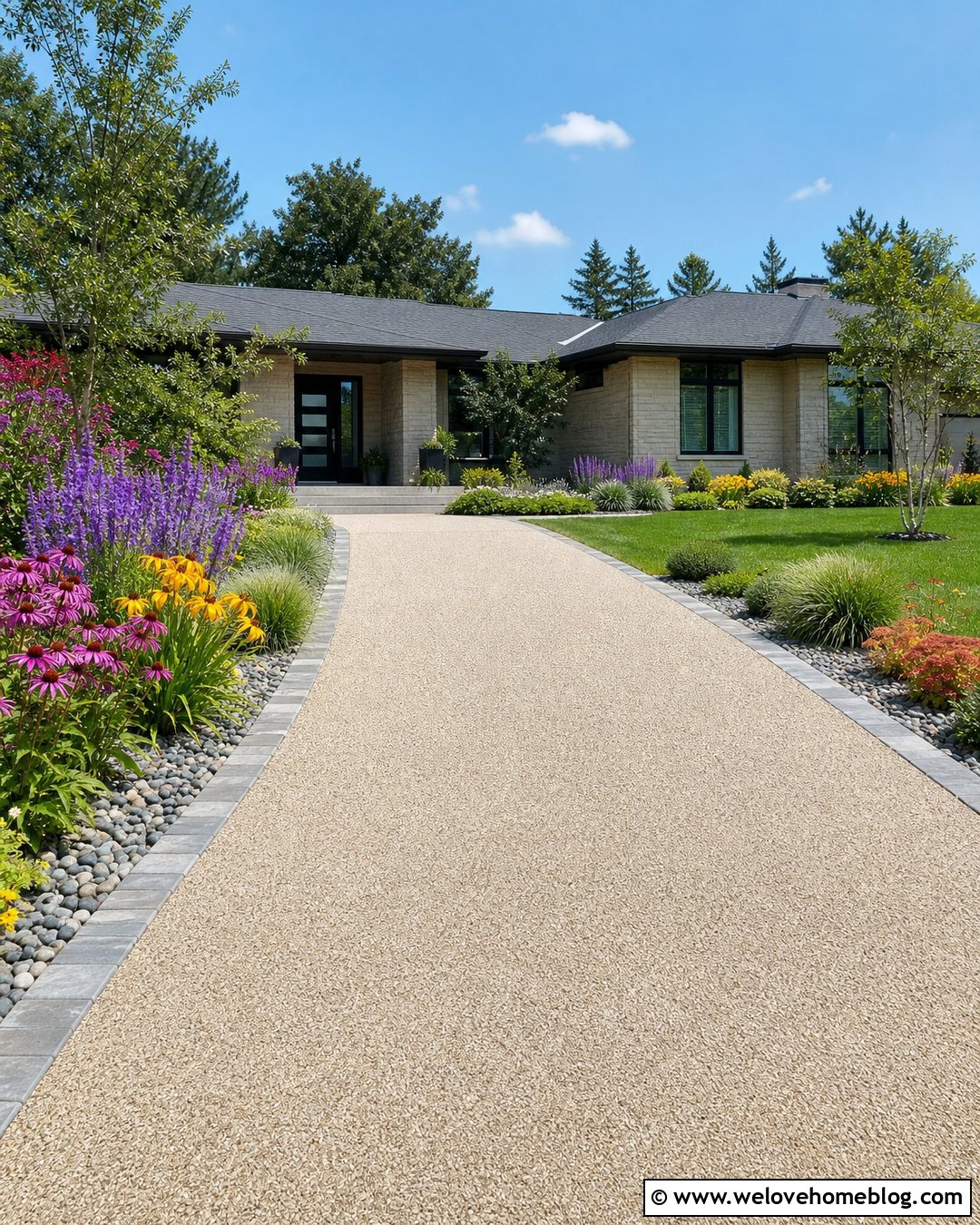
A sunny driveway border can support bold color, but the design should also address reflected heat and dry soil. Pair a pale resin-bound gravel driveway with stone edging and wide beds of salvia, coneflowers, daylilies, sedum, and compact ornamental grasses. Arrange plants in repeating drifts to prevent the border from looking scattered. Mulch or decorative gravel can reduce bare soil while defining plant groups. Keep flowers low near the road and place taller grasses closer to the house or outer lawn edge. Add drip irrigation if local rainfall will not support the selected plants. This bright, colorful look complements ranch, contemporary, and cottage homes. Choose varieties suited to the property’s hardiness zone, soil drainage, maintenance schedule, and actual daily hours of direct sunlight.
21. Low-Maintenance Driveway Planting
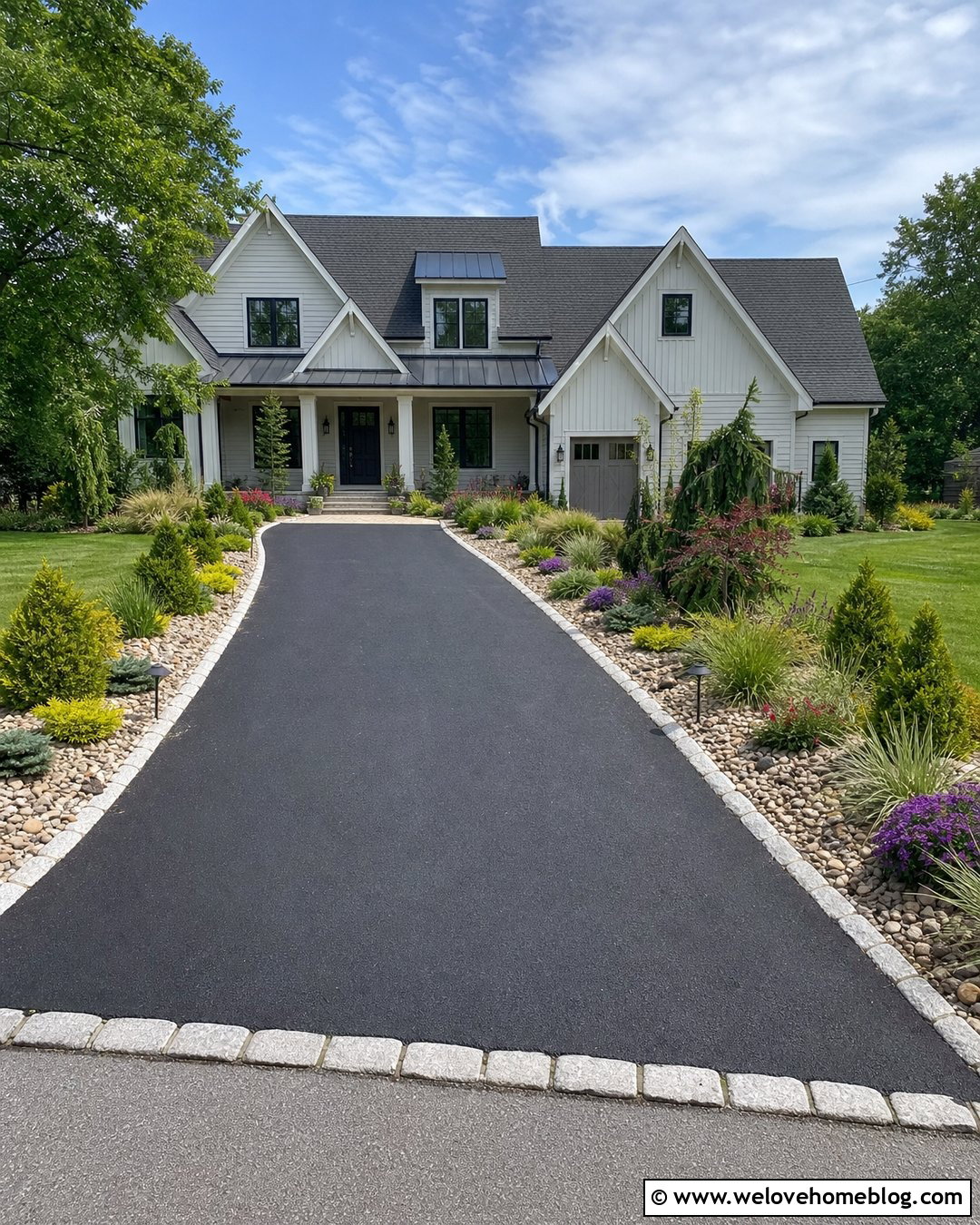
For a simpler landscape, combine a black asphalt driveway with broad beds of durable evergreens, ornamental grasses, and long-lived ground covers. Limit the palette to a few repeated plants that match the site’s sunlight, soil, and rainfall. A wide granite curb prevents lawn and mulch from creeping onto the asphalt. Place taller plants at key points, such as the entrance and garage corner, rather than filling every available space. Decorative stone mulch can create clean negative space between young plants while they mature. Avoid shrubs that require frequent shearing to remain within bounds. This complete design works with nearly any suburban home and remains attractive beyond peak flowering season. An irrigation inspection and fresh edge once or twice a year can keep the layout consistently tidy.
22. Driveway Planting With Ground Cover
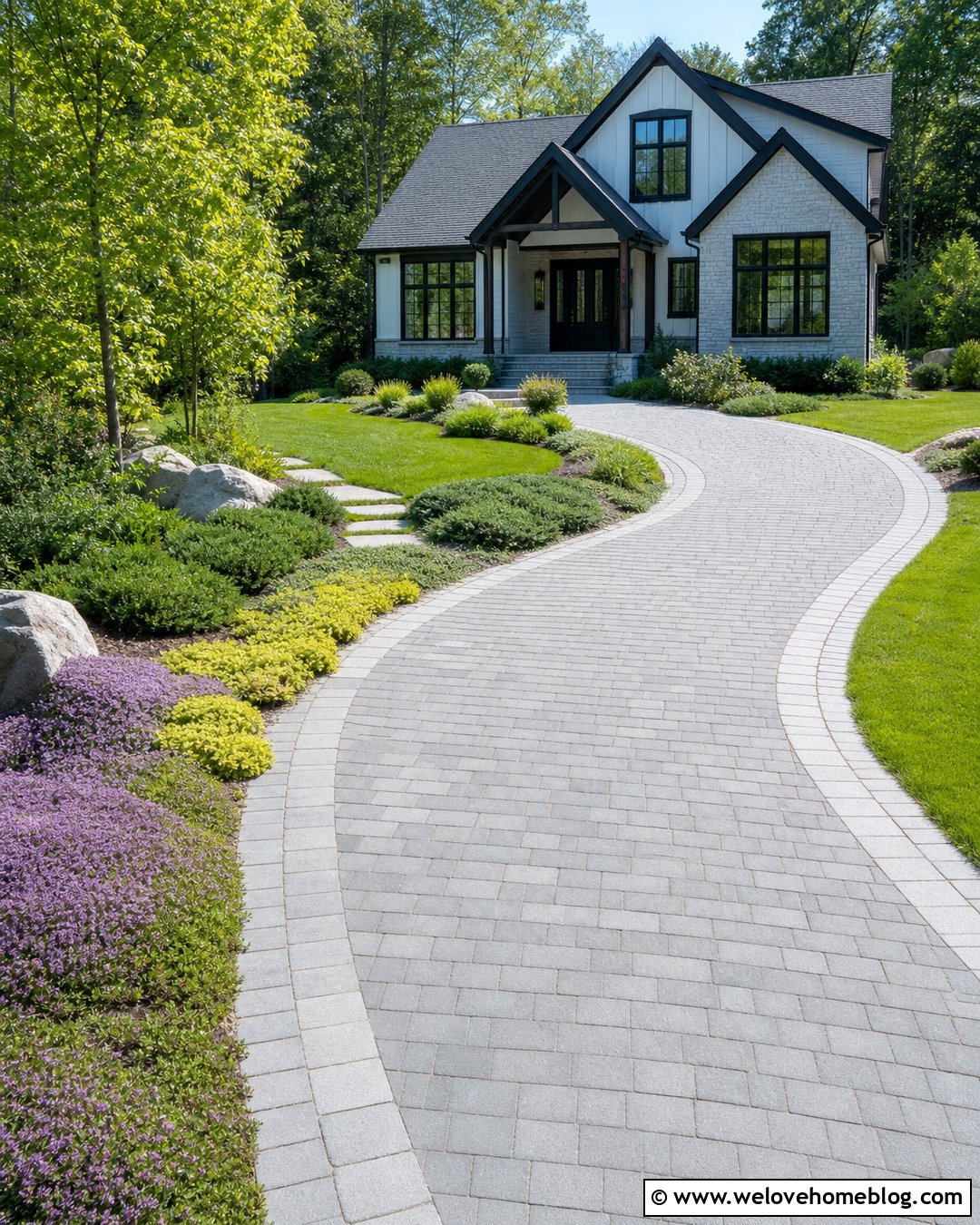
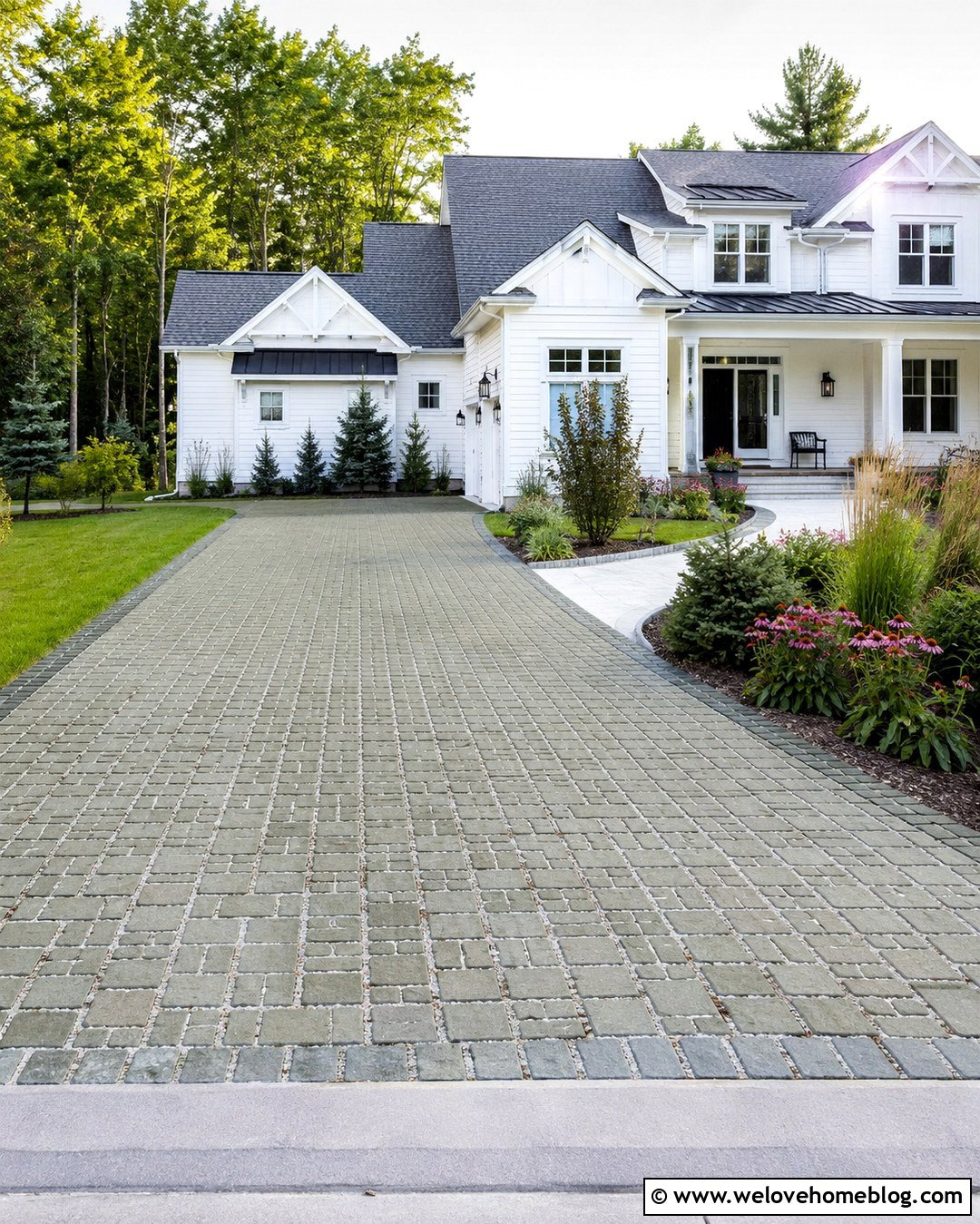
Ground cover can soften a hard driveway edge while preserving an open, low profile. Use permeable concrete pavers for the driveway and border them with a flush stone band. Beyond the band, plant broad sweeps of creeping thyme, sedum, low juniper, or another regionally suitable ground cover. Small islands of compact grasses add height and prevent the landscape from appearing flat. Select plants that can tolerate the site conditions, but do not assume every ground cover will withstand vehicle traffic. Maintain a clear buffer beside parking spaces and provide stepping stones where passengers cross the beds. This look suits modern cottages, bungalows, and small ranch homes. The continuous low planting visually widens the yard while allowing the driveway material, curves, and house facade to remain clearly visible.
23. Driveway Planting With Flower Beds
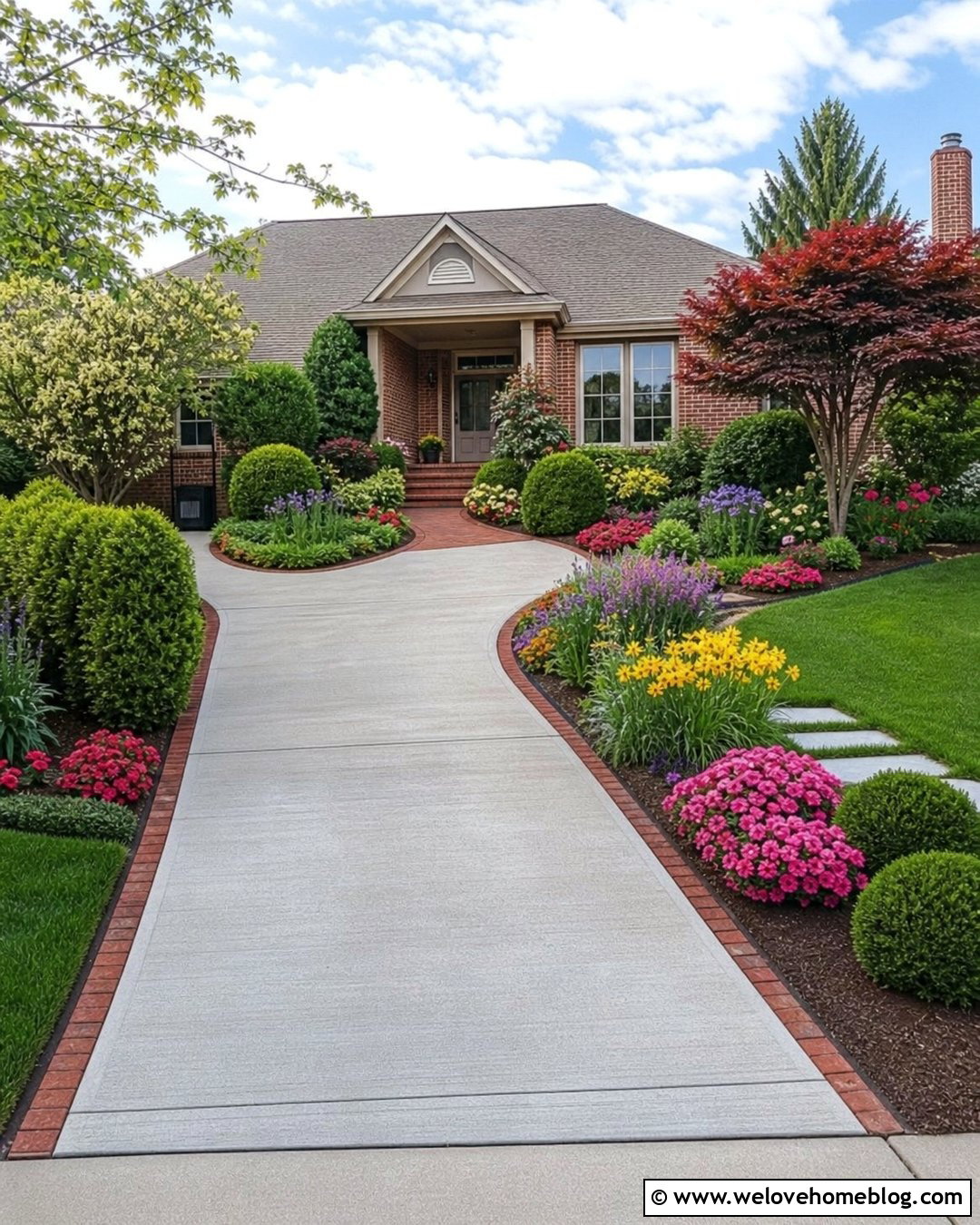
Deep flower beds can turn a plain concrete driveway into a colorful garden approach. Shape the beds with smooth curves and define them using a brick border that coordinates with the house. Build the planting in layers: low edging flowers beside the pavement, medium perennials through the center, and flowering shrubs toward the lawn. Include evergreen structure so the beds do not disappear outside the main blooming season. Repeat key colors along the driveway instead of introducing a new combination every few feet. Leave occasional stepping-stone gaps for practical access between vehicles and the yard. A small ornamental tree near the front walkway can connect the border with the house. This balanced layout brings abundant color while retaining clear driving space and an organized curb view.
24. Driveway Planting With Raised Beds
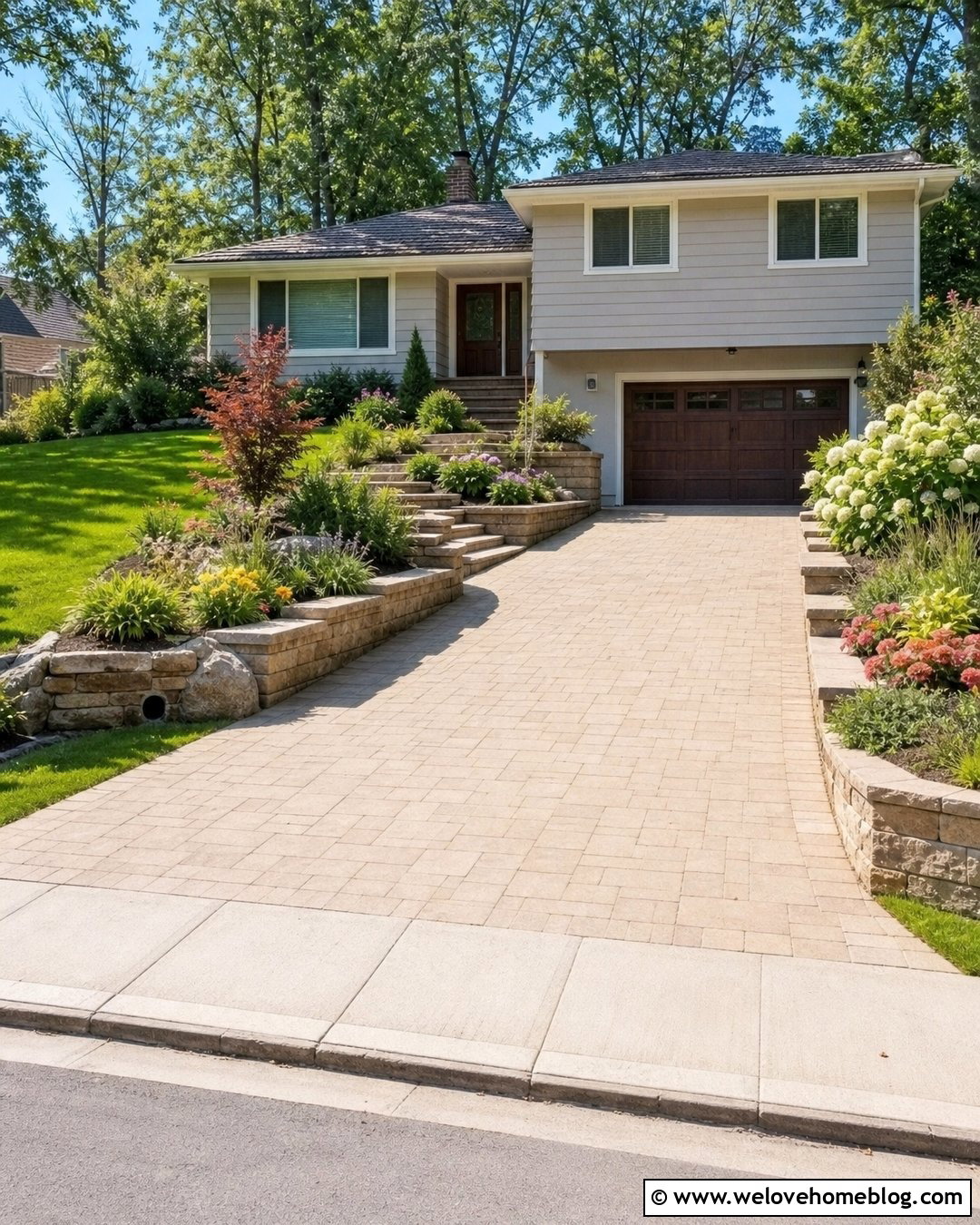
Raised beds are useful when driveway soil is compacted, poorly drained, or difficult to reach. Frame a straight concrete paver driveway with low beds constructed from brick or natural stone. Keep the walls at a comfortable visual height and set them outside the vehicle clearance zone. Fill the beds with compact shrubs, ornamental grasses, cascading ground covers, and seasonal flowers. Plants that trail slightly over the wall can soften the masonry, but they should not extend onto the driving surface. Match the bed material to the house foundation or front steps for continuity. Include drainage outlets that direct water safely away from pavement and structures. This complete arrangement works well for split-level homes, sloped lots, and properties needing a stronger division between the driveway and lawn.
25. Driveway Planting With Stone Borders
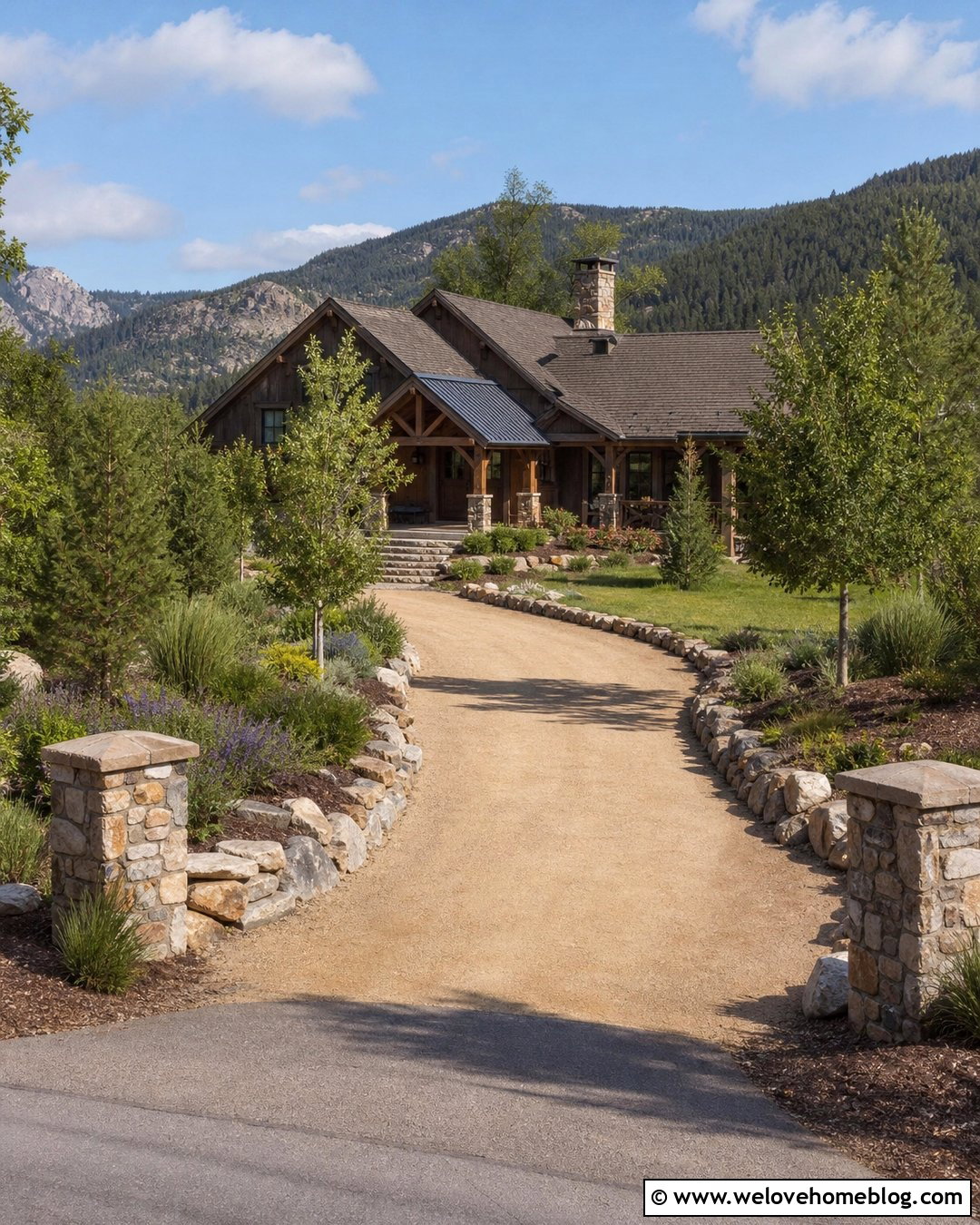
Natural stone borders create a durable transition between an informal driveway and planted landscape. Use compacted tan gravel for the surface and install an irregular fieldstone edge along broad curving beds. Repeat the same stone in entrance pillars, retaining walls, or the front walkway. Behind the border, combine low evergreen shrubs, ornamental grasses, flowering perennials, and one or two small trees. Space the plants in generous groups so they balance the visual weight of the stone. Avoid loose rocks where tires or snowplows may move them. This look is ideal for country homes, mountain houses, and rustic ranch properties. The planting should appear relaxed but not overgrown, with enough open mulch or gravel to reveal the bed shape and make maintenance manageable.
26. Driveway Planting With Brick Edging
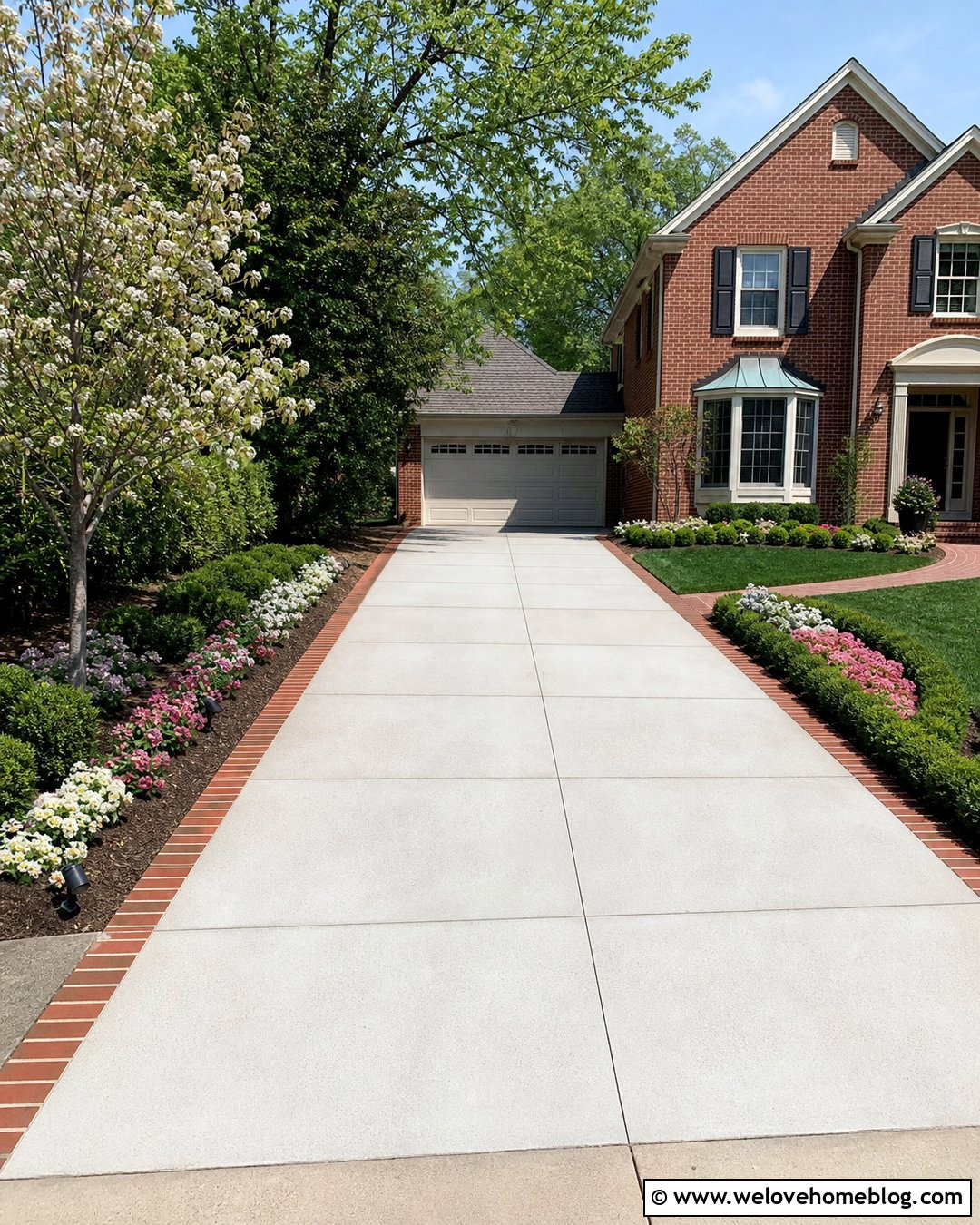
Brick edging can connect a modern concrete driveway to a traditional brick home. Install a clean brick ribbon along both sides of the driveway and continue it around nearby planting beds. Use compact evergreen shrubs as the main structure, then add groups of flowering perennials that complement the brick’s warm color. A small flowering tree near the driveway-to-walkway transition can mark the route to the front door. Keep the planting lower near the street and gradually increase its height toward the house. This creates depth without compromising visibility. Select bricks rated for exterior ground use and install a stable base to reduce movement. The finished driveway feels coordinated and complete because the surface, border, landscape, walkway, and home share a consistent material palette.
27. Driveway Entrance Planting
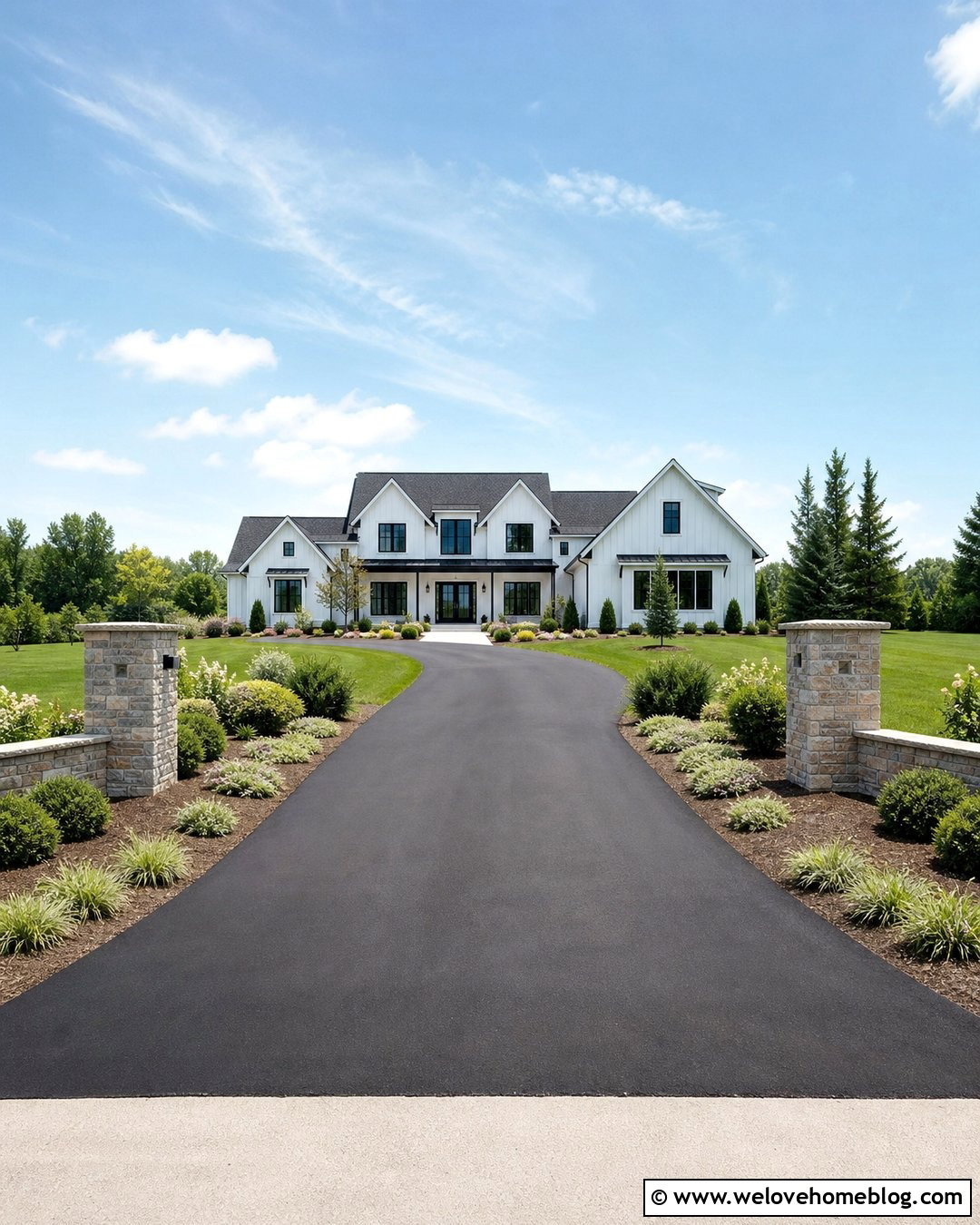
A carefully planted driveway entrance should feel welcoming while maintaining safe views of traffic and pedestrians. Frame a black asphalt drive with matching stone pillars and broad crescent-shaped beds. Use low flowering shrubs, ornamental grasses, and ground covers near the pavement. Taller evergreens can stand farther back to create a visible gateway without narrowing the opening. Repeat the pillar stone as a thin driveway border or mailbox base. If an address marker is included, keep foliage from covering it as plants mature. The two entrance beds can be balanced without being perfectly identical. This arrangement fits suburban, country, and modern farmhouse properties. Before installation, confirm local setback requirements, utility locations, drainage patterns, and sight-distance rules for the point where the private driveway meets the road.
28. Driveway Pillar Planting
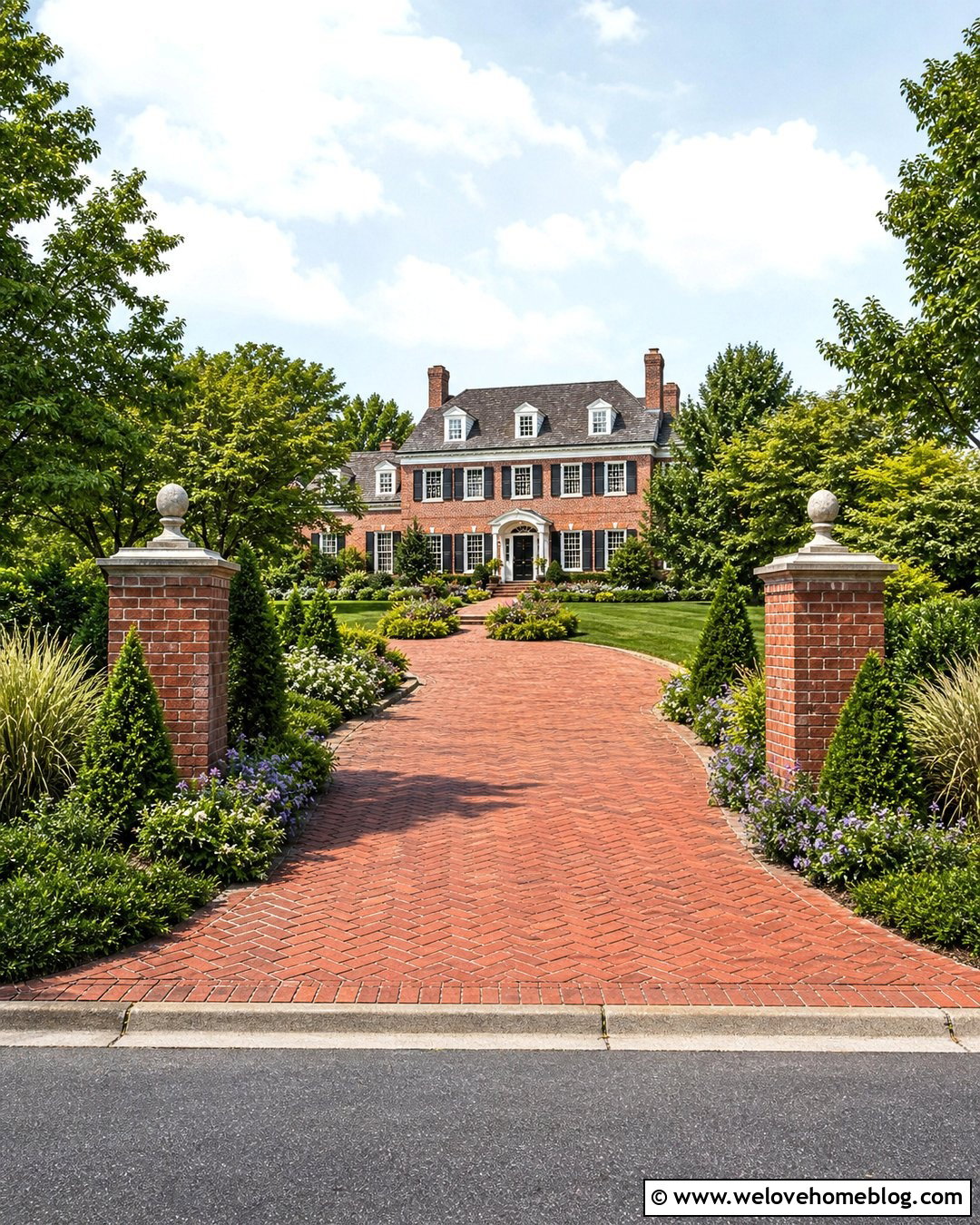
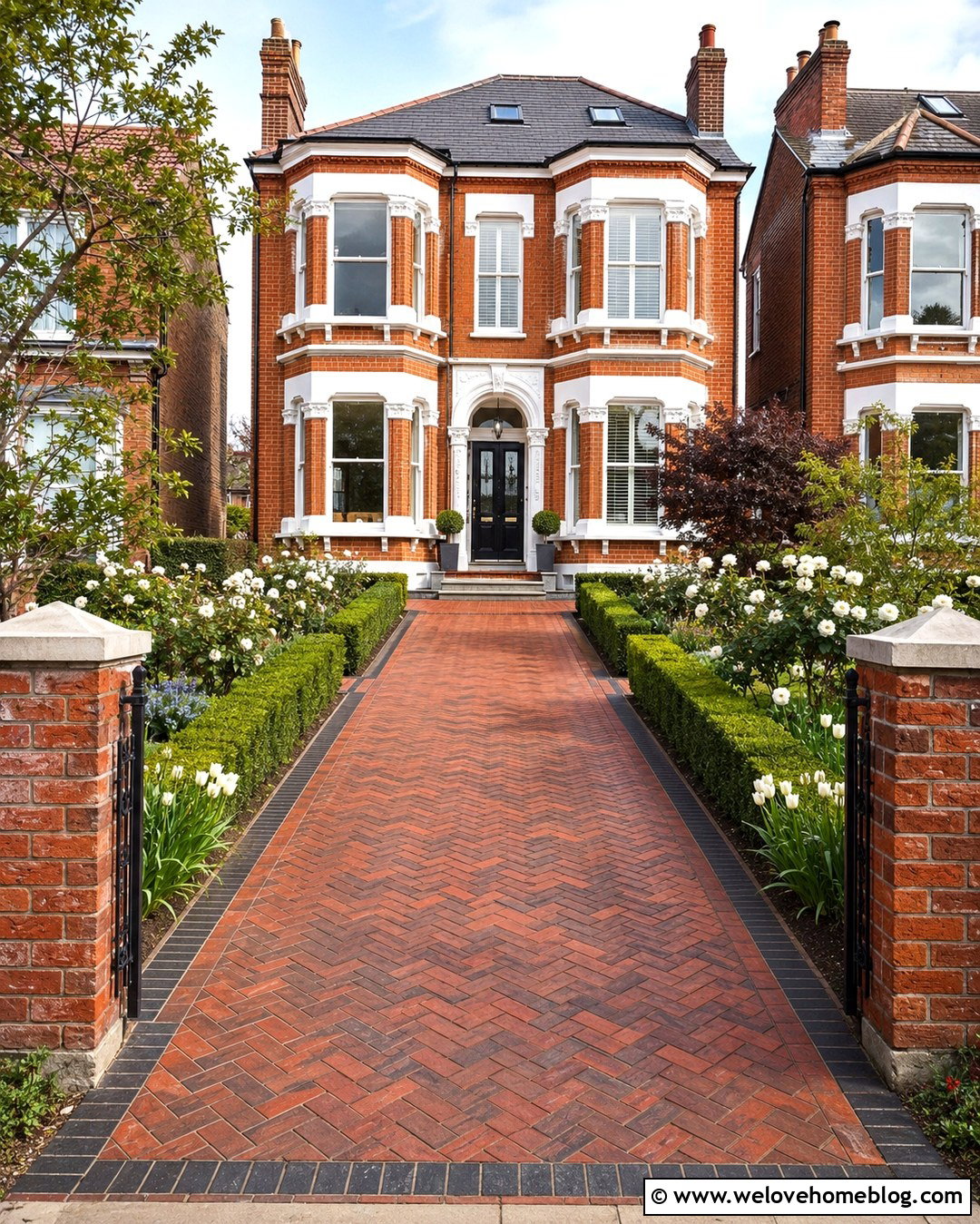
Brick or stone pillars gain a more established appearance when planting connects them to the surrounding yard. Use a herringbone brick driveway with substantial brick pillars, then create matching beds around their outer bases. Compact evergreen shrubs establish year-round shape, while low perennials and ornamental grasses introduce seasonal color. Keep plants away from gate hardware, lights, address plaques, and vehicle turning paths. Sweep the beds outward into the lawn rather than wrapping them tightly around each pillar. This makes the entrance feel wider and more integrated. Repeat one or two plants farther along the driveway to lead the eye toward the house. The materials and planting should coordinate with the facade, creating a complete entrance rather than two isolated columns placed beside an unrelated driveway.
29. Driveway Gate Planting
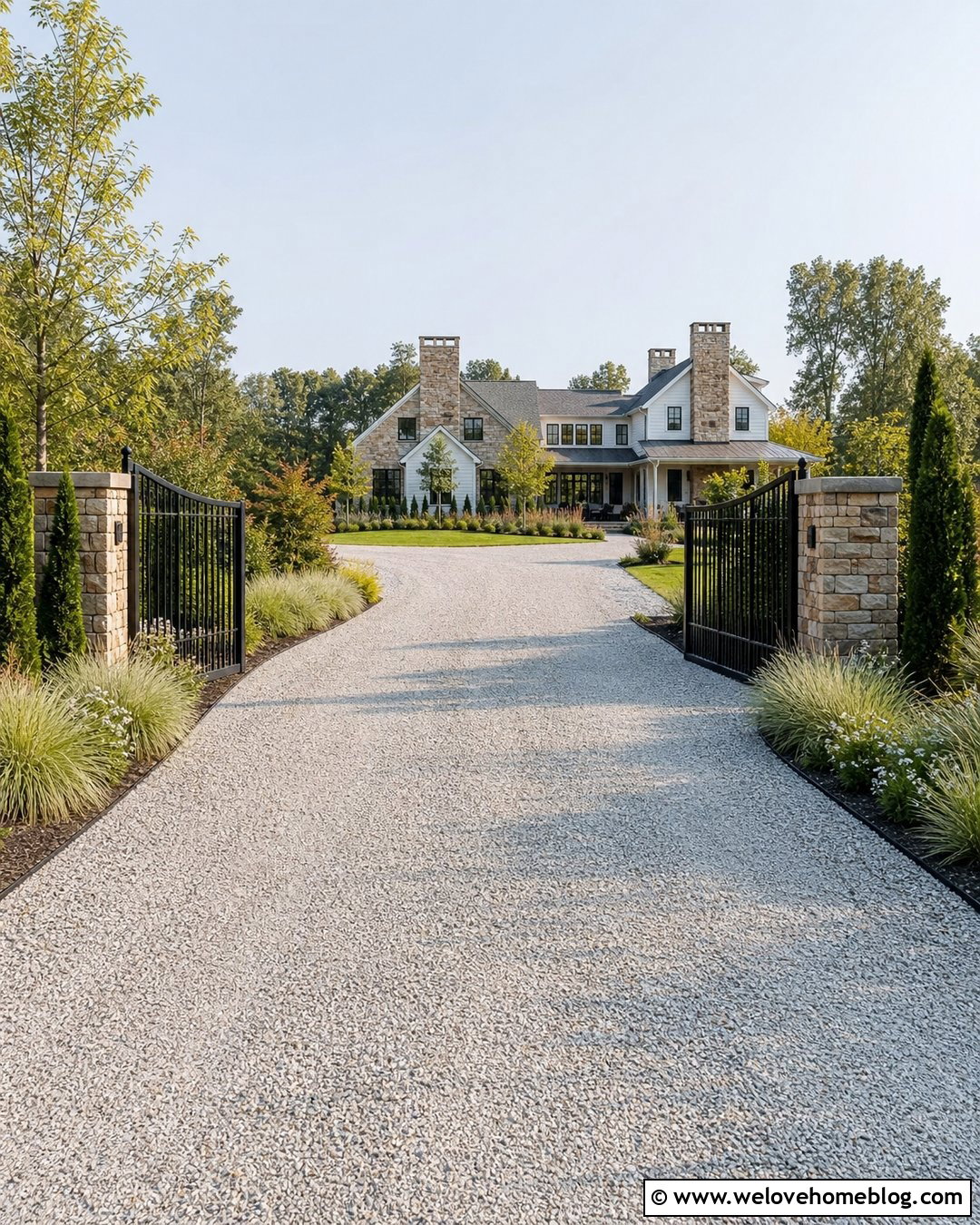
A driveway gate looks more inviting when it is framed by planting that respects its movement and security equipment. Pair a light gravel driveway with a simple black metal gate, stone pillars, and layered evergreen beds. Upright shrubs behind the pillars provide height, while low grasses and flowering ground covers soften the foreground. Leave clear service space around hinges, keypads, sensors, motors, and underground utilities. The planting should guide attention toward the gate without concealing visitors or reducing visibility. Continue the gravel into a generous vehicle waiting area so cars do not block the road. This complete design complements country, modern farmhouse, and transitional homes. Repeat the black metal finish in landscape edging or lighting to connect the gate with the rest of the approach.
30. Sloped Driveway Planting
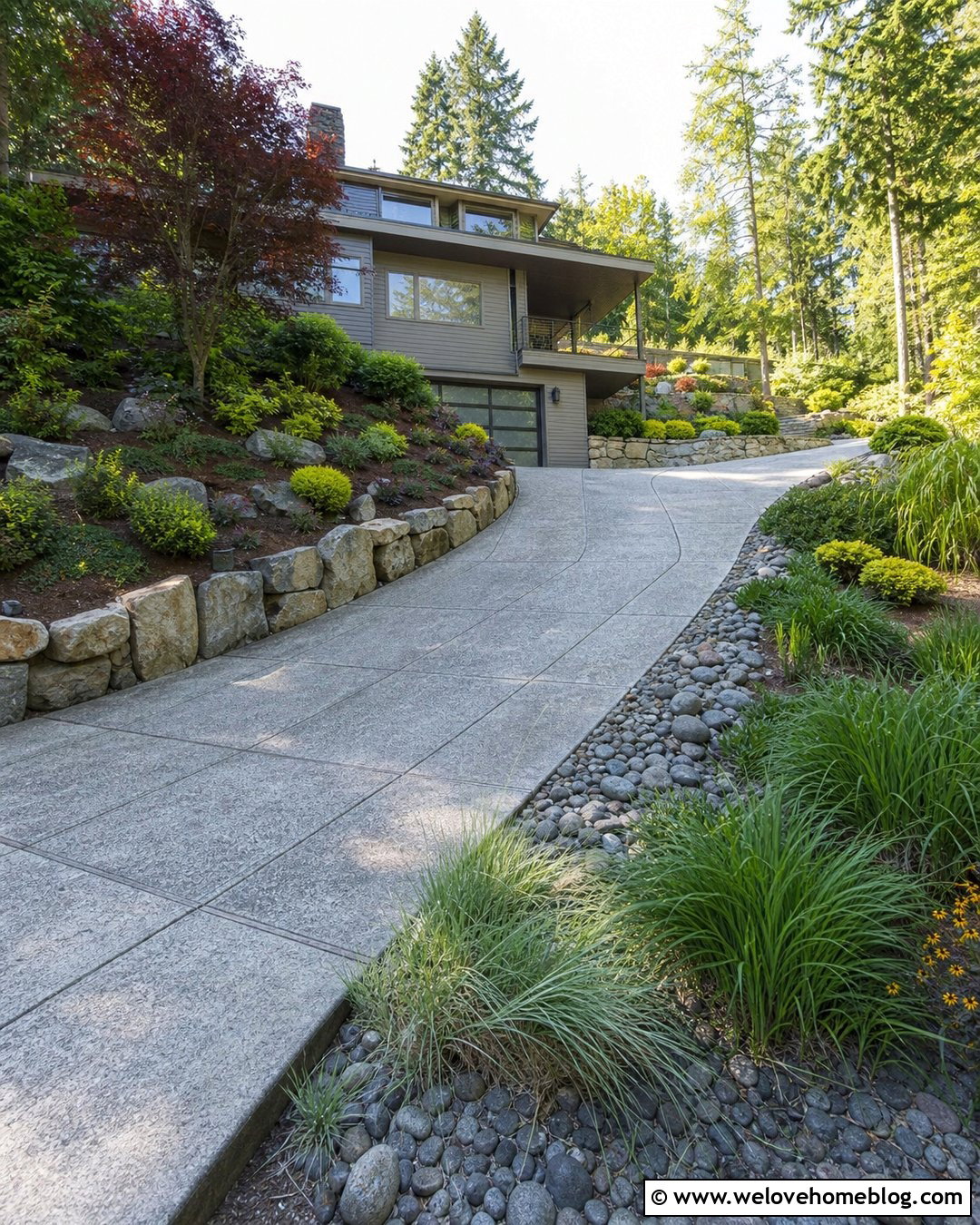
Planting beside a sloped driveway requires dependable soil retention and controlled drainage. Border a textured concrete driveway with a low natural-stone retaining wall placed beyond the vehicle clearance area. Above it, establish layered shrubs, ornamental grasses, and deep-rooted perennials suited to the slope’s exposure. Ground covers can fill gaps and reduce large areas of bare soil. Direct roof and surface runoff toward an approved drainage route rather than allowing water and mulch to wash across the driveway. On the lower side, use a broad planted swale where site conditions permit. Keep tall plants away from sharp bends and garage approaches. This practical design suits hillside ranches, mountain homes, and split-level properties, combining an attractive planted edge with safer visibility and better control of loose soil.
31. Narrow Driveway Planting
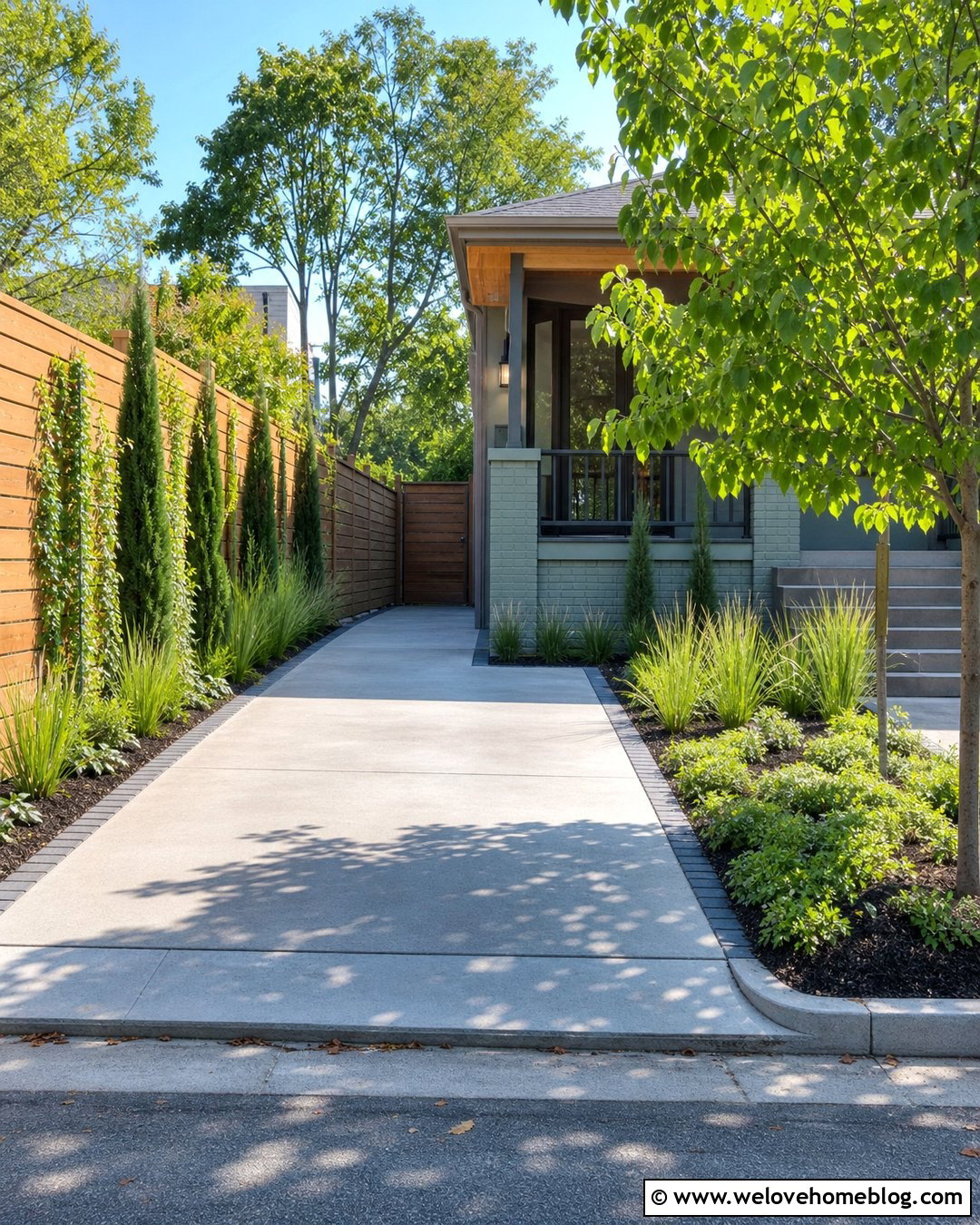
A narrow side driveway needs vertical greenery and carefully controlled plant widths. Use smooth gray poured concrete with a flush dark-paver edge, then create a slim bed along a fence or house wall. Columnar evergreens, upright grasses, espaliered shrubs, or climbing vines can provide height without consuming valuable driving space. Place low ground covers beneath them to hide bare soil and soften the hard boundary. Keep stems trimmed away from mirrors, doors, siding, meters, and air-conditioning equipment. At the front, broaden the bed slightly around one compact ornamental tree to create a stronger curb-facing feature. This arrangement works well for urban homes, bungalows, and narrow suburban lots. Every plant should be chosen according to its mature width, not its compact nursery size.
32. Wide Driveway Planting
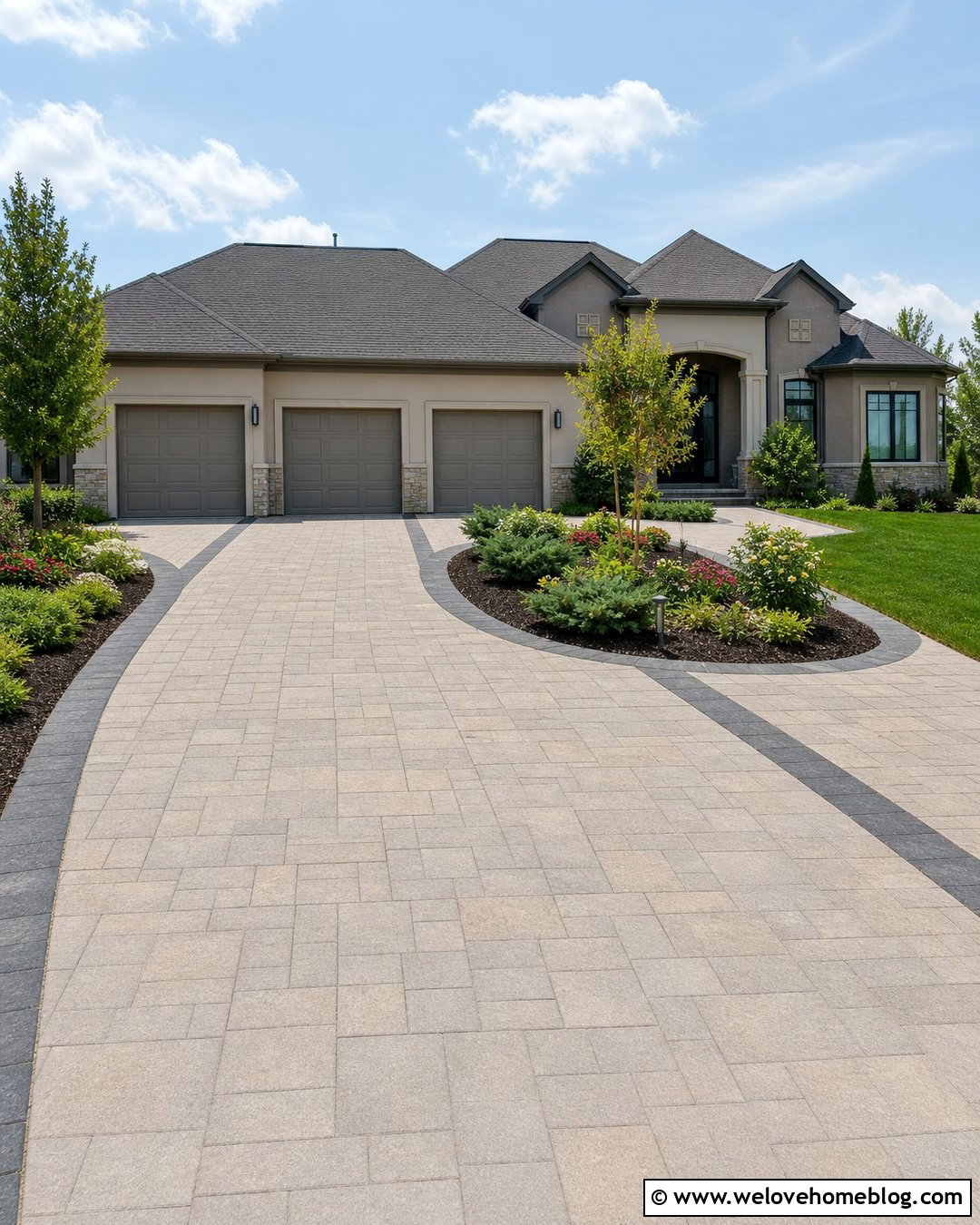
A broad driveway can dominate the front yard unless planting breaks up the expanse. Use warm-toned concrete pavers for the main surface and add a large curved bed between the parking area and front walkway. Anchor the bed with a small tree, then layer evergreen shrubs, flowering perennials, and ground cover around it. Continue narrower versions of the bed along the driveway edges to create visual continuity. A contrasting paver ribbon can define parking lanes without adding more structures. Keep the garage apron open and provide enough turning room before extending plants into paved areas. This layout is ideal for three-car garages and wide suburban properties. The central greenery redirects attention from the garage doors toward the entrance and makes the driveway feel intentionally integrated with the front garden.
33. Gravel Driveway Planting
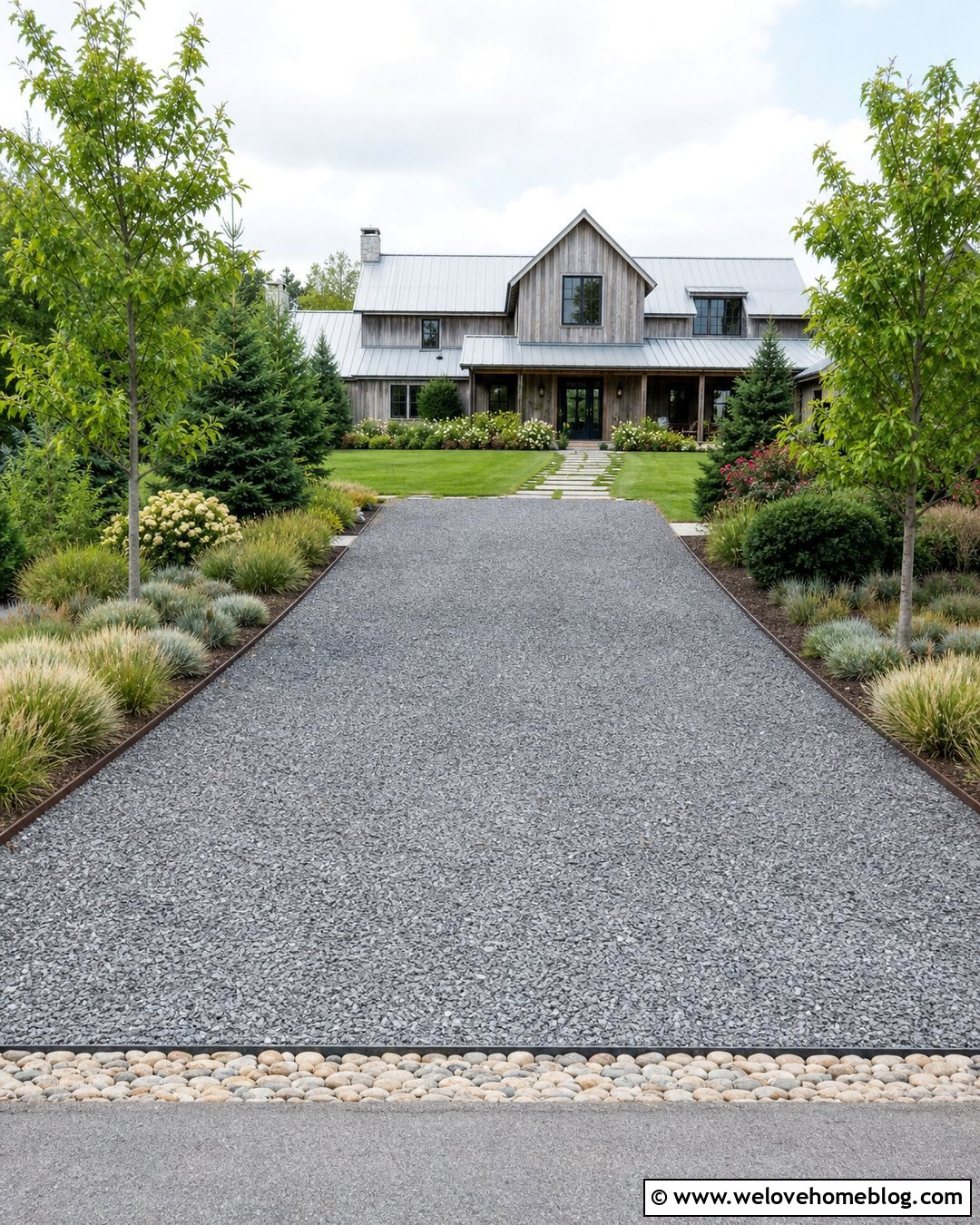
A gravel driveway becomes easier to read and maintain when planting clearly defines its boundaries. Use gray crushed gravel over a properly prepared base, bordered by steel edging and a narrow band of larger river stone. Create informal beds with drought-tolerant grasses, flowering shrubs, perennials, and spreading evergreens. Repeat groups along the driveway rather than planting every available inch. Near parking zones, increase the setback to prevent doors and tires from damaging foliage. At the entrance, widen the planting beds and include a pair of small trees or understated stone markers. This complete landscape suits farmhouse, cottage, and rustic contemporary homes. Regularly rake displaced gravel back into place, control weeds early, and prune plants before they begin hiding the clean edge that gives the design its structure.
34. Concrete Driveway Planting
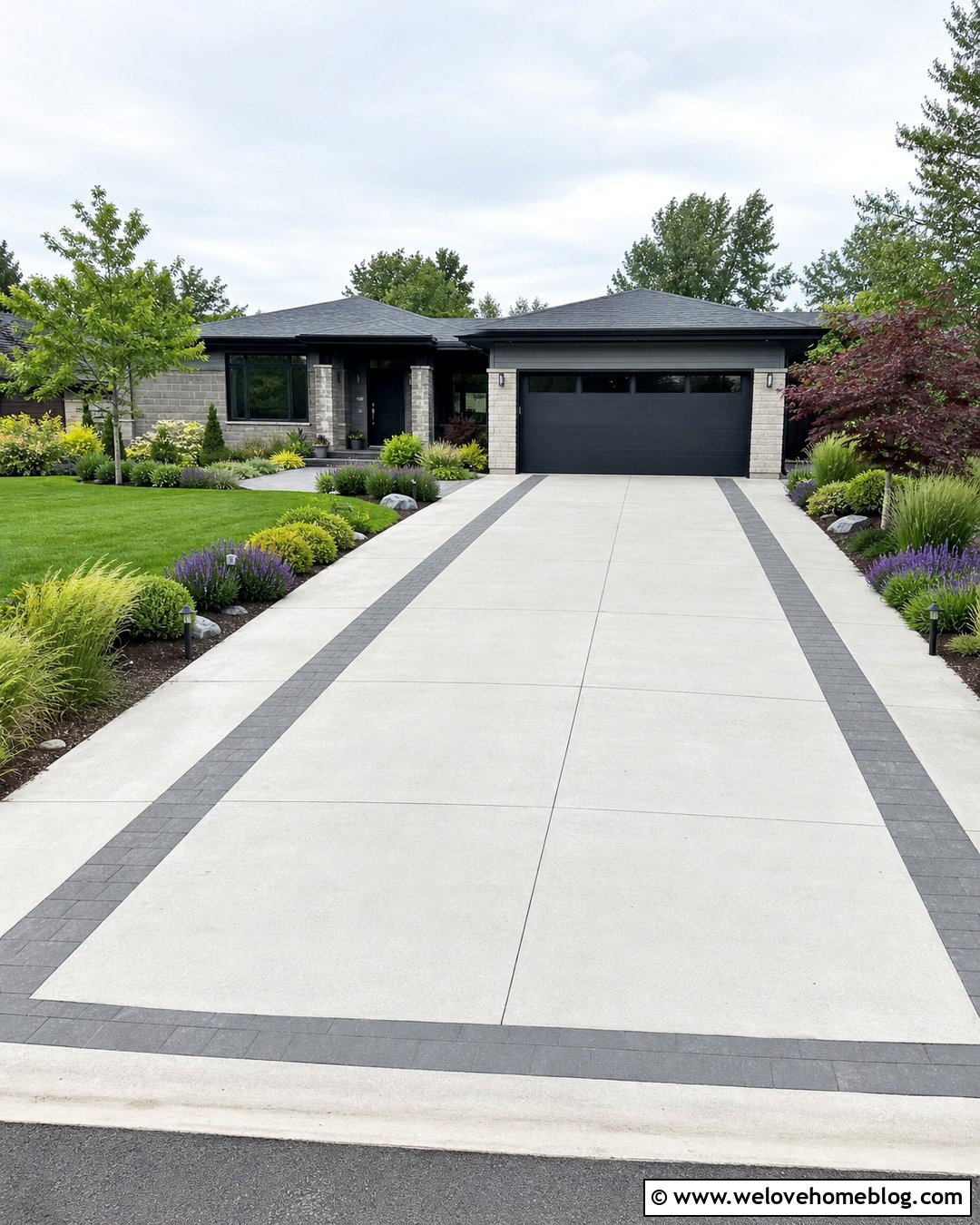
A concrete driveway can feel warmer and more connected to the yard with layered planting and a contrasting border. Choose lightly broom-finished gray concrete and add a narrow charcoal paver ribbon along each side. Plant low catmint, sedum, or compact grasses nearest the pavement, with rounded shrubs and small trees farther back. Broad curves in the planting beds help soften the driveway’s straight geometry. Repeat the charcoal pavers in the front walkway or porch steps to connect the full entrance. Avoid placing irrigation heads where they spray vehicles or constantly wet the concrete. Leave a clear walking zone beside the usual parking position. This versatile arrangement complements ranch, Craftsman, and contemporary homes while making a basic driveway appear more deliberate, colorful, and established.
35. Paver Driveway Planting
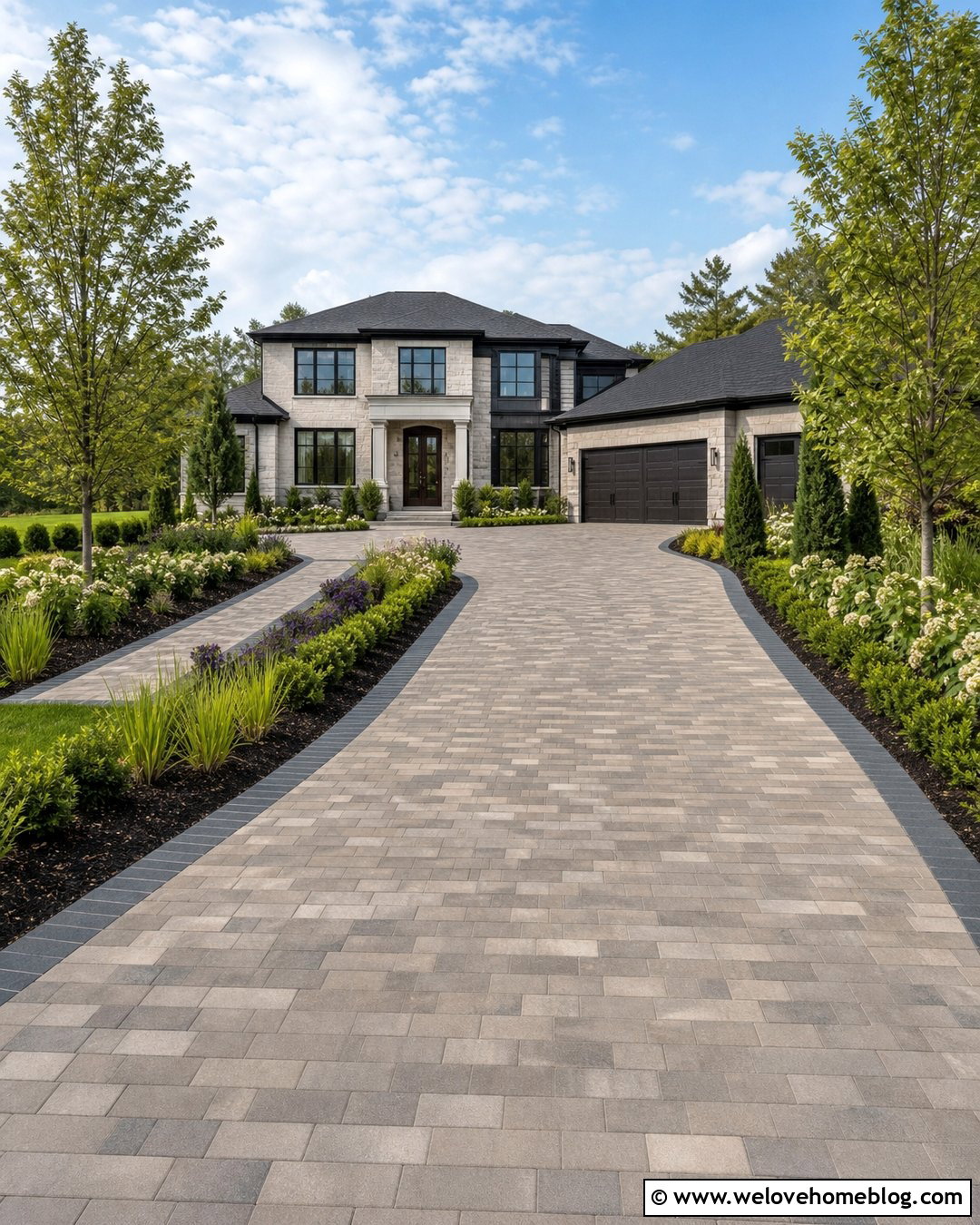
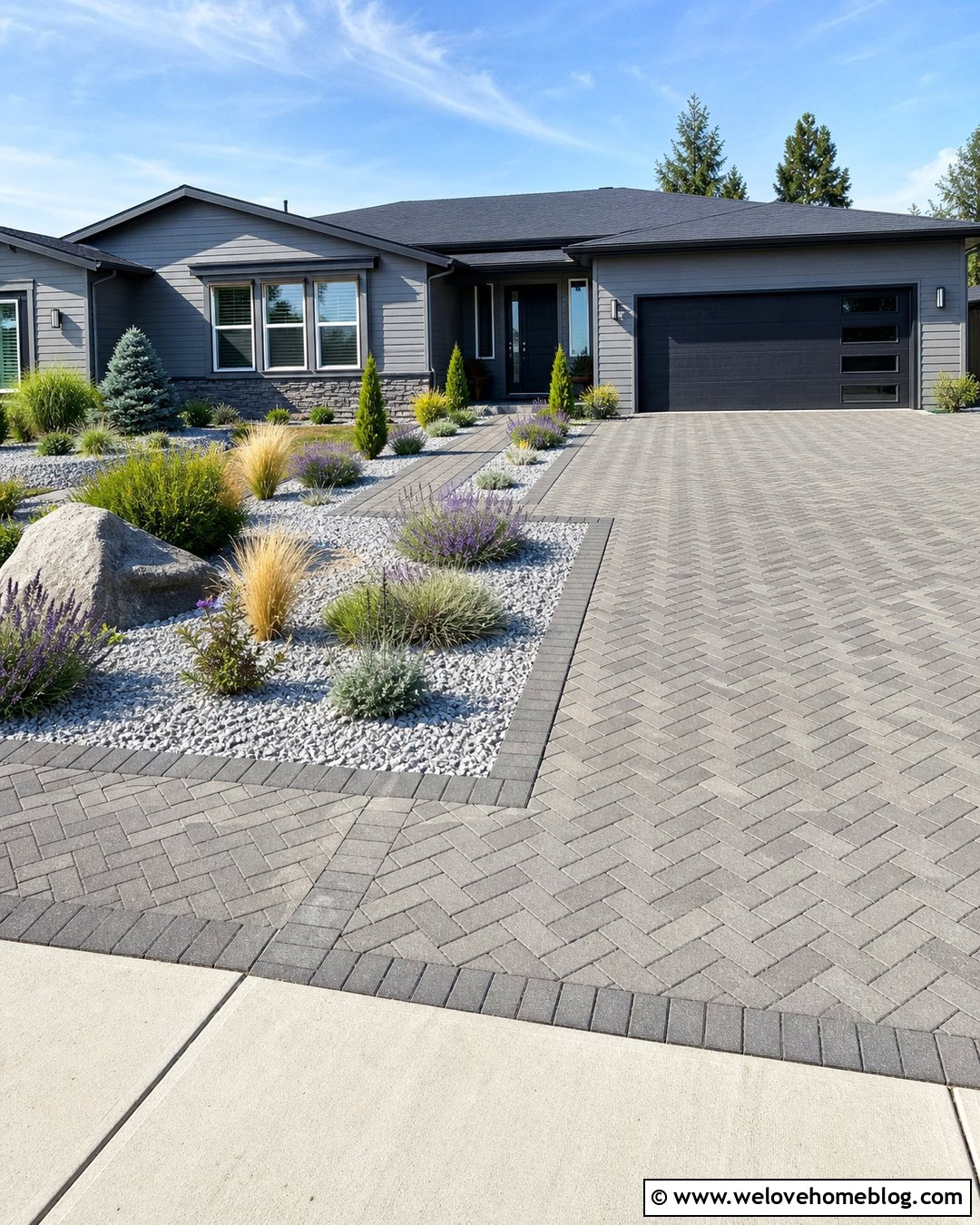
A paver driveway offers a strong foundation for detailed planting because its color and pattern can be repeated throughout the landscape. Use blended beige and charcoal concrete pavers in a running-bond pattern, bordered by a darker soldier course. Create sweeping beds with compact evergreens, white flowering shrubs, ornamental grasses, and low purple perennials. Continue selected pavers into a walkway that passes through the planting and reaches the porch. A pair of small ornamental trees can frame the garage without concealing the home. Keep shrubs far enough from the surface to allow paver maintenance and comfortable vehicle access. This complete approach suits transitional and contemporary houses, creating a coordinated relationship between driveway pattern, bed shape, foliage color, lawn, walkway, and facade.
Conclusion:
The best **35 Driveway Planting Ideas** treat the driveway, borders, plants, walkway, entrance, and home as one connected design. Start by evaluating sunlight, drainage, soil, utilities, local rules, winter maintenance, and the space needed for vehicles. Then select a driveway surface and edging material that complement the house. Build planting in layers, keeping shorter varieties beside the pavement and larger shrubs or trees farther back. Repeating a limited plant palette will usually look stronger than using many unrelated varieties. Most importantly, choose plants for their mature size and local growing conditions. With practical spacing and thoughtful materials, driveway planting can improve curb appeal while keeping the approach safe, visible, durable, and easy to maintain.

Related posts:


Leave a Reply