
A gravel driveway can stay smooth, attractive, and dependable for years when small problems are handled before they spread. These 20 Gravel Driveway Maintenance Ideas cover the work that matters most, from restoring the crown and filling potholes to controlling weeds, managing runoff, and preparing for winter. The right routine depends on your driveway’s slope, gravel type, soil conditions, traffic, and local weather. However, every property benefits from regular inspections and prompt repairs. Simple tools such as a landscape rake, tamper, shovel, and leaf blower can handle many routine jobs. Larger grading or drainage problems may require powered equipment or professional help. Use these practical 20 Gravel Driveway Maintenance Ideas to create a cleaner, safer, and more polished approach to your home.

1. Grade Gravel Driveway Regularly

Does your driveway feel uneven even though no large potholes are visible? Regular grading redistributes loose aggregate, removes shallow depressions, and brings escaped gravel back from the edges. Work when the material is slightly damp because moist gravel is easier to shape than a dusty or waterlogged surface. For a short driveway, use a sturdy landscape rake to loosen and level the top layer. A tractor-mounted box blade or grading scraper is more efficient for a long country driveway. Avoid simply smoothing over deep damage. Scarify compacted ruts and potholes first so new material can bond with the existing gravel. Finish with an even surface and a gentle crown that sends rainwater toward open side drainage areas. ()
2. Maintain Gravel Driveway Crown
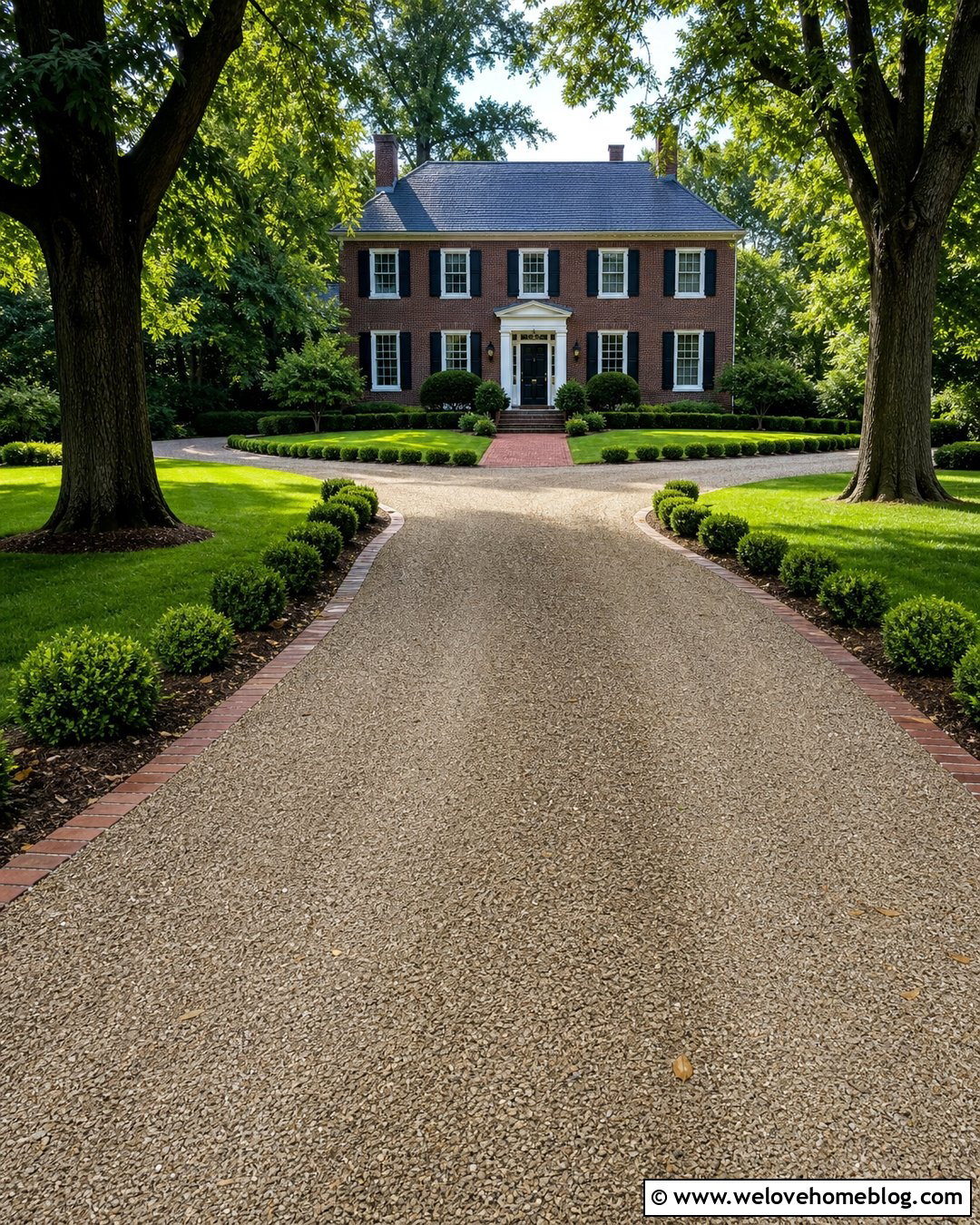
A slightly raised center gives a gravel driveway a simple but important defense against standing water. The surface should slope gently from the middle toward both sides without creating an uncomfortable ridge. Over time, vehicle tires push material outward and flatten this crown, allowing rain to travel along the driveway instead of moving off it. Rake displaced gravel from the shoulders toward the center, shape a consistent cross-slope, and compact the finished surface. Check the crown after heavy storms, snow removal, and periods of frequent vehicle traffic. Pay particular attention to low sections near garages and parking pads. A properly maintained crown works with clean ditches, stable borders, and surrounding lawn grades to keep the entire driveway dry, firm, and visually balanced. ()
3. Fix Gravel Driveway Potholes

That small dip collecting water will rarely disappear on its own. Begin a pothole repair by removing standing water and loosening the compacted material around the hole. Dig deeply enough to eliminate the hard, polished bowl that caused the gravel to pop back out during traffic. Add compatible crushed aggregate in shallow layers rather than dumping decorative stone into the depression. Tamp or mechanically compact each layer before adding the next one. Slightly overfill the repaired area, compact it level, and restore the driveway’s crown so water cannot settle there again. If a pothole repeatedly returns, inspect the base and nearby drainage. A soft subgrade, clogged ditch, buried organic material, or concentrated roof runoff may require correction before another surface repair will last. ()
4. Repair Gravel Driveway Ruts
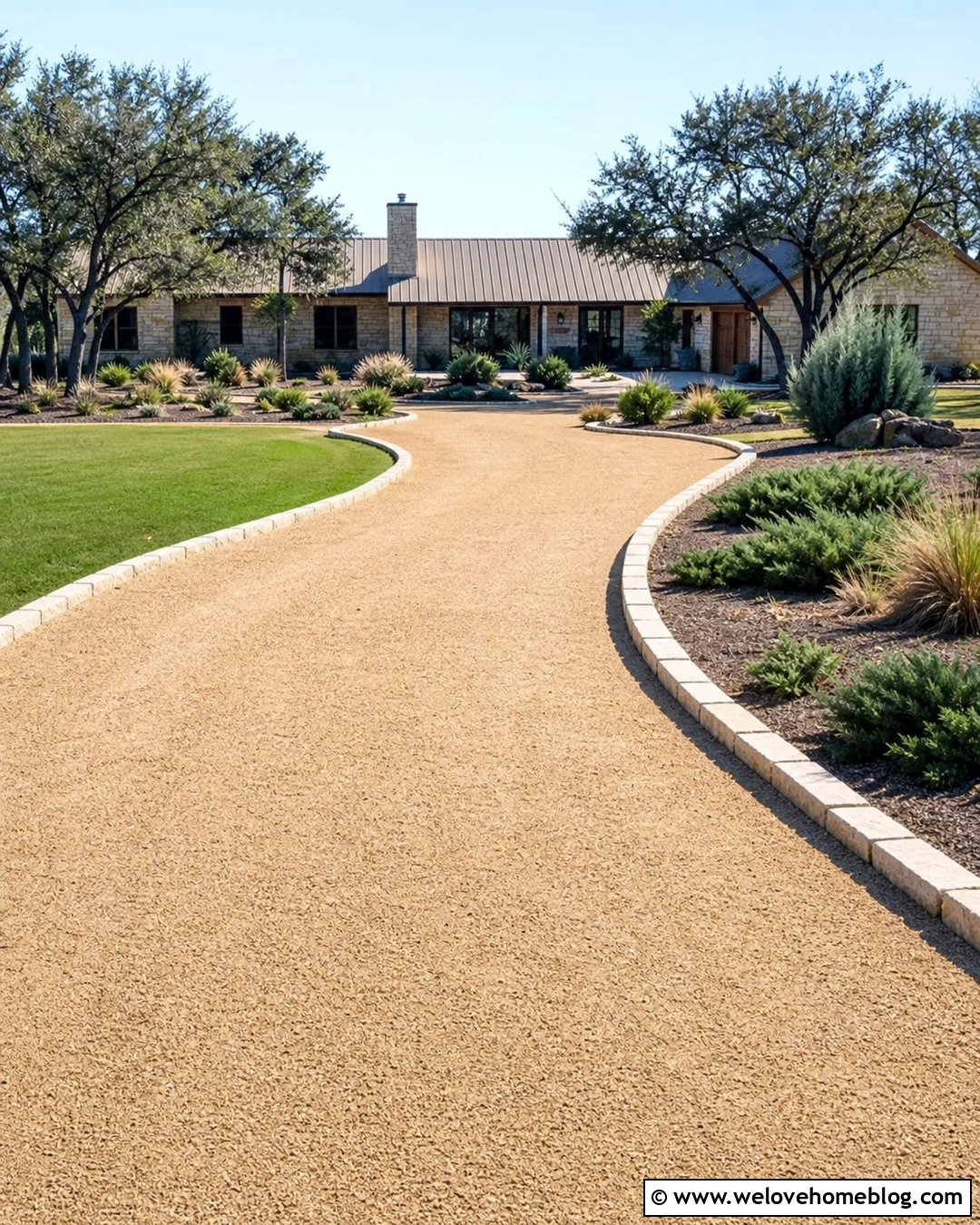
Two sunken tire tracks can quickly turn a neat gravel driveway into a muddy, uncomfortable approach. Shallow ruts may be corrected by loosening the surrounding surface, pulling gravel back into the tracks, and compacting the entire travel lane. Deep ruts need more attention because they may indicate a weak base or poor drainage. Remove soft material, rebuild the affected area with well-graded crushed stone, and compact it in layers. Do not fill only the visible grooves while leaving the adjacent surface hard and elevated. The repaired material needs to connect with the existing driveway. Once the ruts are stable, reshape the crown and vary your driving path slightly when space allows. This spreads vehicle loads across the surface instead of repeatedly stressing the same narrow tracks.
5. Replenish Gravel Driveway Surface

Gravel slowly migrates into lawns, drainage channels, tire tracks, and the soil beneath the driveway. When bare spots, exposed base rock, or thin travel lanes appear, a fresh surface layer can restore both performance and curb appeal. Match the new aggregate to the existing material whenever possible. Angular crushed stone with a useful range of particle sizes generally locks together more effectively than uniformly rounded decorative gravel. Prepare the driveway before delivery by repairing drainage, removing weeds, correcting potholes, and grading the existing surface. Spread the gravel evenly instead of concentrating it in damaged areas alone. Shape the crown while the material is loose, then compact it thoroughly. Ordering a small amount of extra matching gravel also provides convenient material for future pothole, edge, and entrance repairs.
6. Compact Loose Gravel Driveway

Freshly spread gravel can look finished while remaining too loose for dependable daily use. Proper compaction helps particles settle together, reduces excessive movement, and creates a firmer driving surface. Compact after grading, replenishing gravel, filling potholes, or rebuilding rutted sections. A hand tamper works for localized repairs, while a plate compactor or roller gives more consistent results across large areas. Apply and compact the material in manageable layers rather than trying to compress one thick lift. Slight moisture can assist settling, but avoid working on saturated ground because the base may deform under pressure. Make several controlled passes without pushing gravel away from the crown. The final driveway should remain permeable and textured, yet feel stable underfoot and resist deep tire displacement during normal residential traffic.
7. Improve Gravel Driveway Drainage
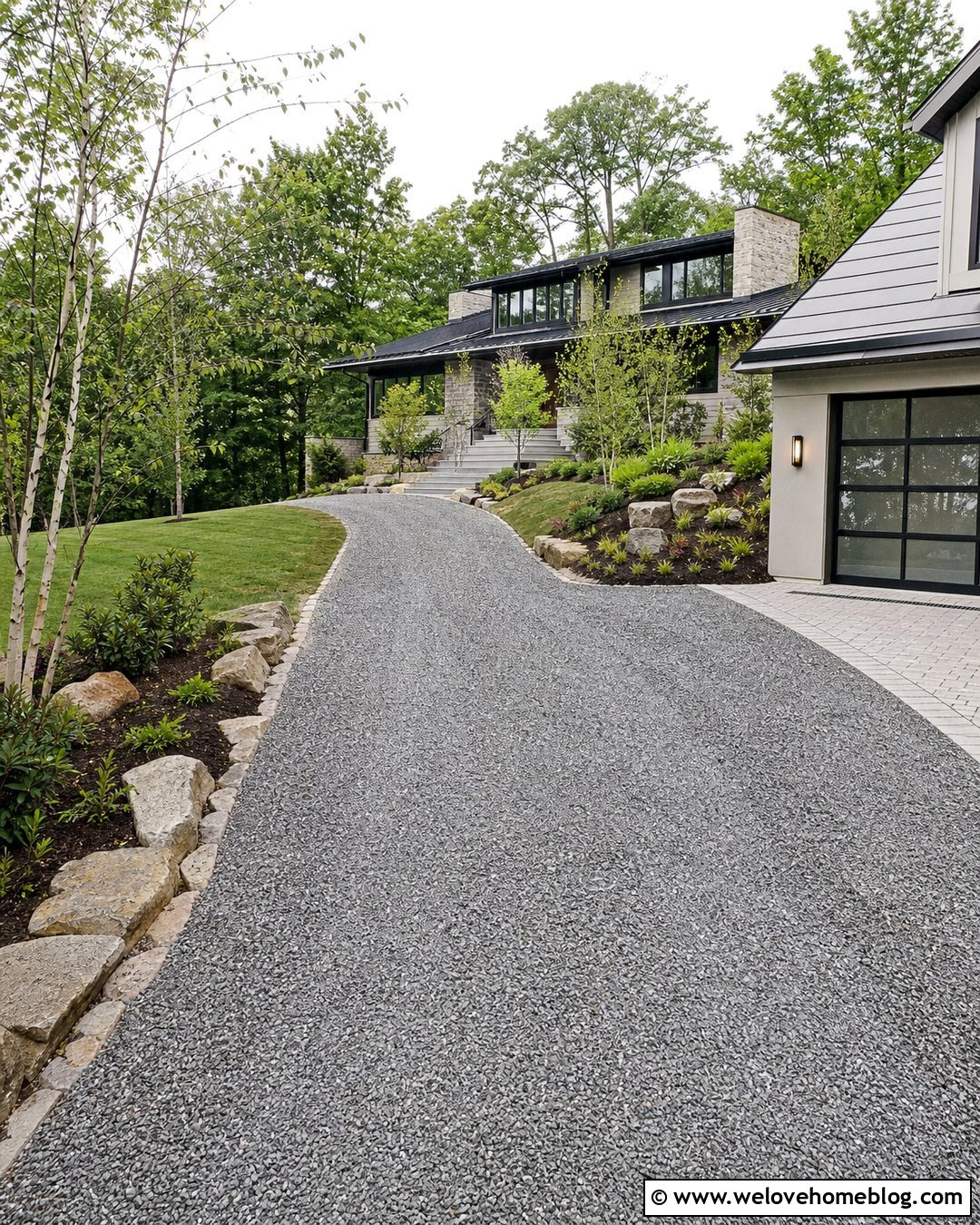
Water often causes the damage that homeowners mistakenly blame on poor gravel. Walk the driveway during or immediately after rainfall and note puddles, flowing channels, soggy shoulders, and runoff entering from nearby slopes. Correct minor low spots through grading, but address the water source when problems return. A maintained crown can direct water toward the sides, while swales, French drains, culverts, and channel drains can carry it safely away. Downspouts should discharge beyond the driveway rather than across a travel lane. Keep runoff away from the garage, house foundation, and neighboring property. Any drainage improvement should have a clear outlet and suit local conditions. Complex installations or changes affecting public roads, wetlands, or property boundaries are best planned with a qualified local contractor. ()
8. Clear Gravel Driveway Ditches
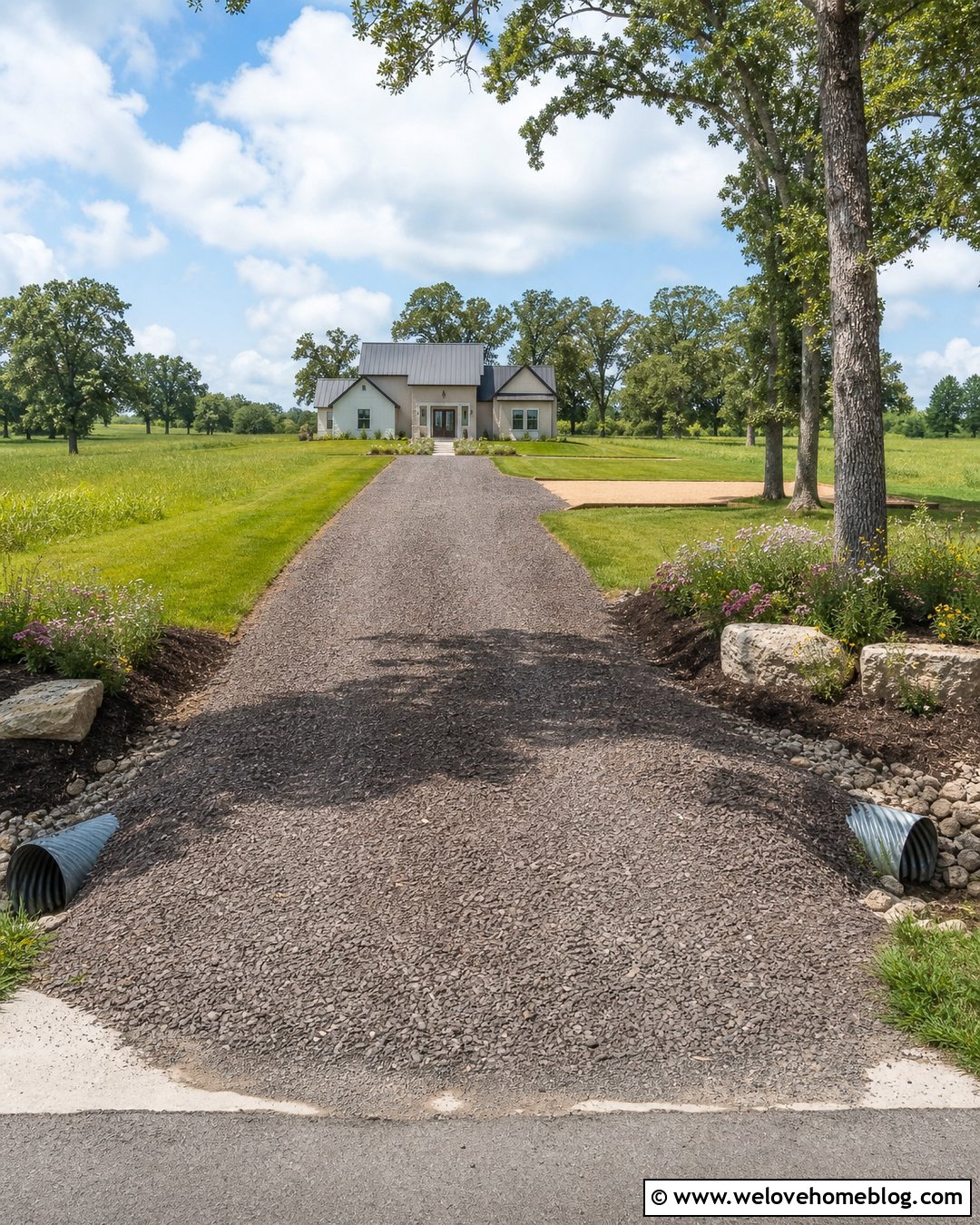
A clean roadside ditch can be as valuable as the gravel surface itself. Leaves, sediment, fallen branches, and aggressive vegetation gradually reduce a ditch’s capacity and force stormwater back onto the driveway. Inspect drainage channels in spring, fall, and after major storms. Remove debris without digging so deeply that you create unstable banks or disturb buried utilities. Preserve a continuous downhill path toward a safe outlet, and clear culvert openings at both ends. Keep grass trimmed enough to reveal blockages while retaining useful vegetation that protects the soil from erosion. If sediment returns quickly, runoff may be carrying loose material from an uphill slope. Stabilize that source rather than repeatedly cleaning the same section. Well-kept ditches also create a defined, orderly edge along long rural driveways.
9. Protect Sloped Gravel Driveway
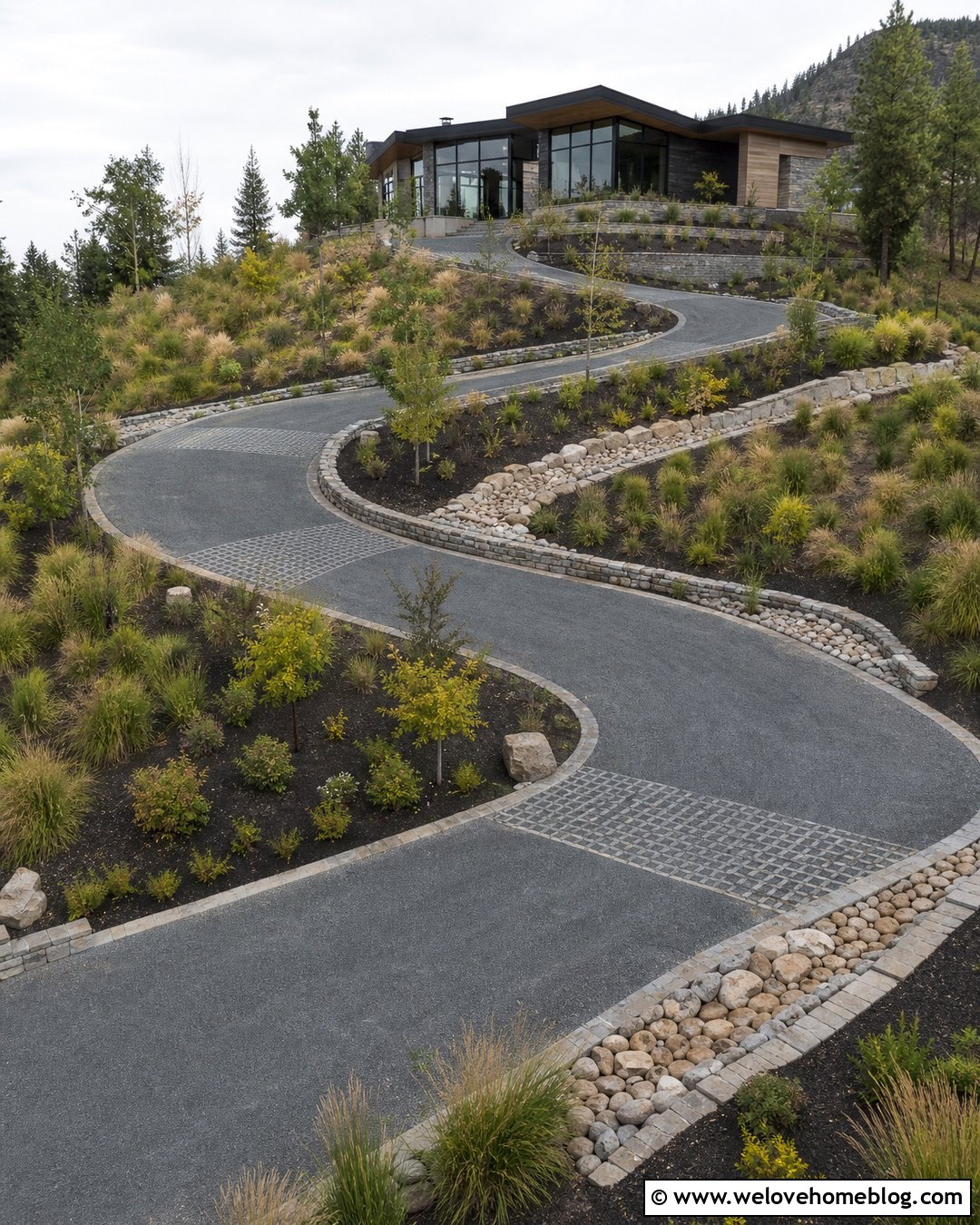
A sloped driveway needs more protection because fast-moving water can carry surface stone downhill. Start by preserving a strong, compacted base and using angular gravel that binds rather than rolling freely. Shape the driveway so runoff leaves the surface at controlled points instead of racing down the tire tracks. Strategic drainage swales, broad water bars, or properly designed cross-drains may be helpful on longer grades. Stone edging can contain loose aggregate, but it should never trap water on the driveway. Repair small washouts immediately and return displaced material uphill before the channels deepen. At the bottom, use a stable transition that prevents gravel from spilling into the street. Severe erosion, steep grades, or recurring washouts may justify professional regrading, stabilization grids, or a more durable bound surface.
10. Control Gravel Driveway Weeds
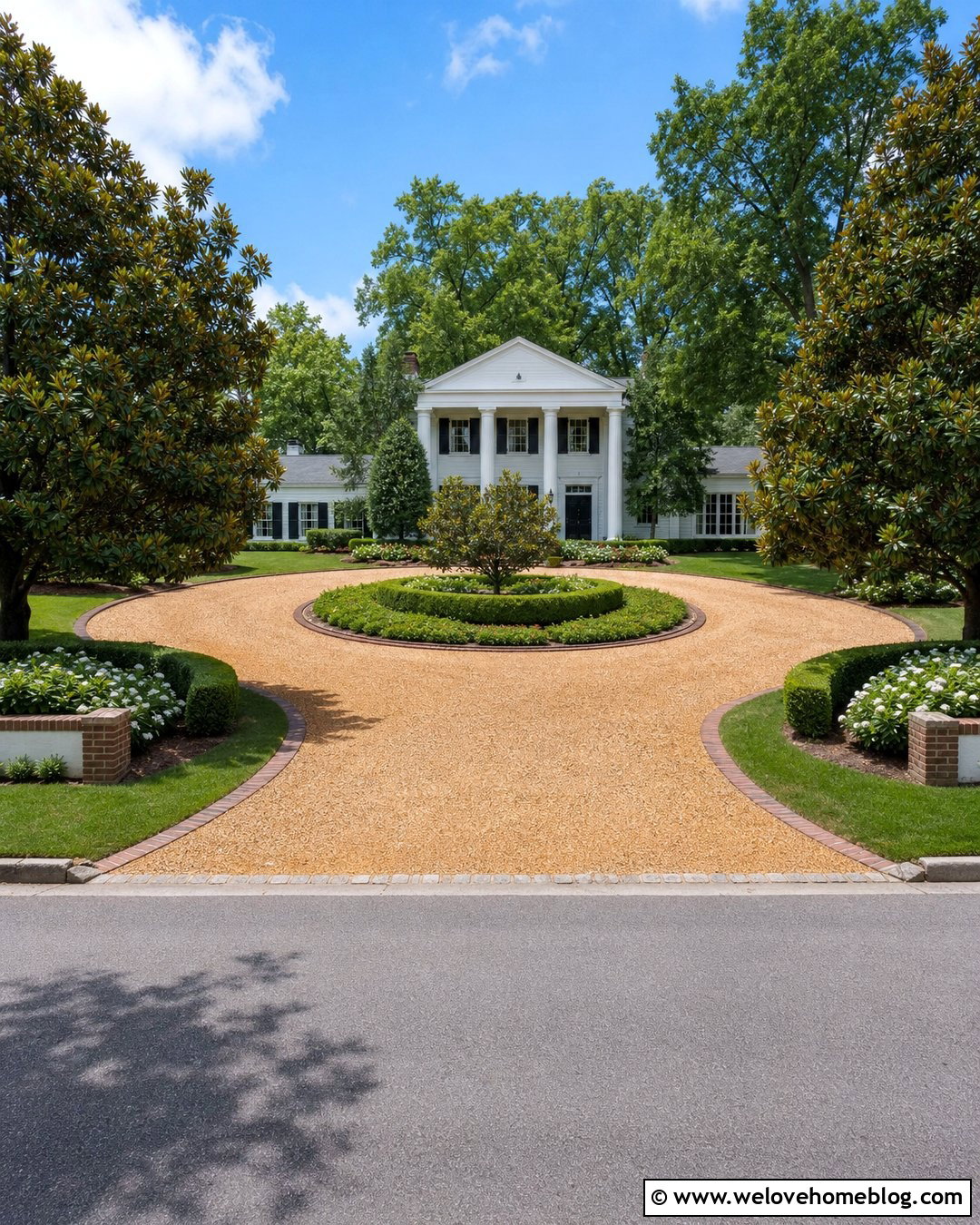
Green growth between stones makes a driveway look neglected and can trap the soil and moisture that encourage additional weeds. Pull isolated plants while the ground is damp, removing as much of each root as possible. A hoe, weeding tool, or careful flame treatment may work on larger open areas, provided local fire rules and dry conditions are considered. If using an herbicide, select a product labeled for the intended location and follow every instruction. Avoid overspray near lawns, trees, drains, wells, and planting beds. Sweep or blow away leaves and soil because weed seeds commonly germinate in organic debris accumulating above the gravel. When rebuilding a badly overgrown driveway, a suitable geotextile beneath the aggregate can reduce soil migration and some future growth.
11. Remove Leaves From Gravel Driveway

Autumn leaves can quickly settle between stones, break down into soil, and create ideal conditions for weeds and moss. Remove them before they become wet, compacted mats. A leaf blower set to moderate power can lift dry debris without scattering too much gravel. Aim across the driveway rather than directly down into the surface, and work from the center toward collection areas. A spring-tine rake can handle damp leaves, but use light pressure to avoid dragging stone into the lawn. Clear pine needles, seed pods, grass clippings, and soil at the same time. Pay extra attention beneath overhanging trees, around gates, and beside curbs. Keeping the gravel clean improves its color, maintains permeability, and gives the entire entrance a sharper appearance with relatively little effort.
12. Keep Gravel Within Driveway Edging

Loose stone spreading across the lawn creates extra cleanup and gradually narrows the usable driveway. Install or repair edging where regular traffic, turning tires, and landscape slopes cause gravel migration. Cobblestone, brick, concrete curbing, steel edging, and pressure-treated landscape timbers can all work when properly supported. The border should be high enough to contain surface gravel but not so tall that it becomes a tire hazard or blocks drainage. Set rigid edging on a stable base and keep its top line consistent with the driveway layout. Rake escaped gravel back before mowing so stones do not become dangerous projectiles. At wider parking and turning areas, reinforce the corners because tires often push material outward. Defined borders also create a tidy transition between the gravel, walkway, planting beds, and lawn.
13. Add Gravel Grids To High-Traffic Areas
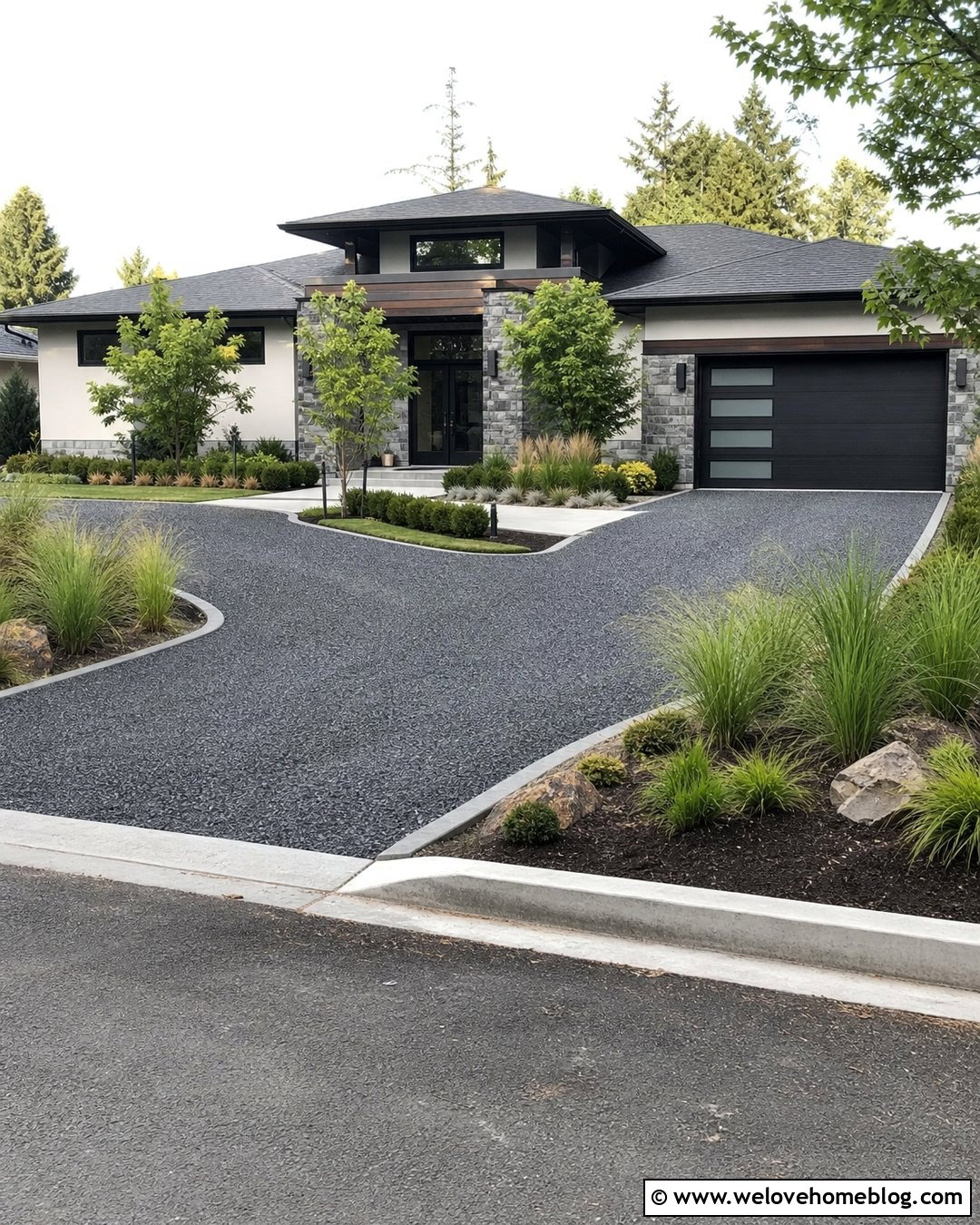
Parking spaces, sharp turns, gates, and steep sections often lose gravel faster than straight travel lanes. Permeable stabilization grids can hold aggregate in individual cells and reduce shifting under repeated vehicle movement. They perform best over a properly excavated, drained, and compacted base. Installing grids over soft mud or an unresolved pothole will not correct the underlying problem. Choose a system rated for residential vehicle loads and fill it with a compatible aggregate recommended by the manufacturer. The cells should be completely covered or filled to the specified level so tires do not catch exposed edges. Grids can be used across the full driveway or limited to troublesome zones. When integrated carefully, they preserve the natural gravel appearance while making heavily used sections feel more stable and organized.
14. Reduce Gravel Driveway Dust
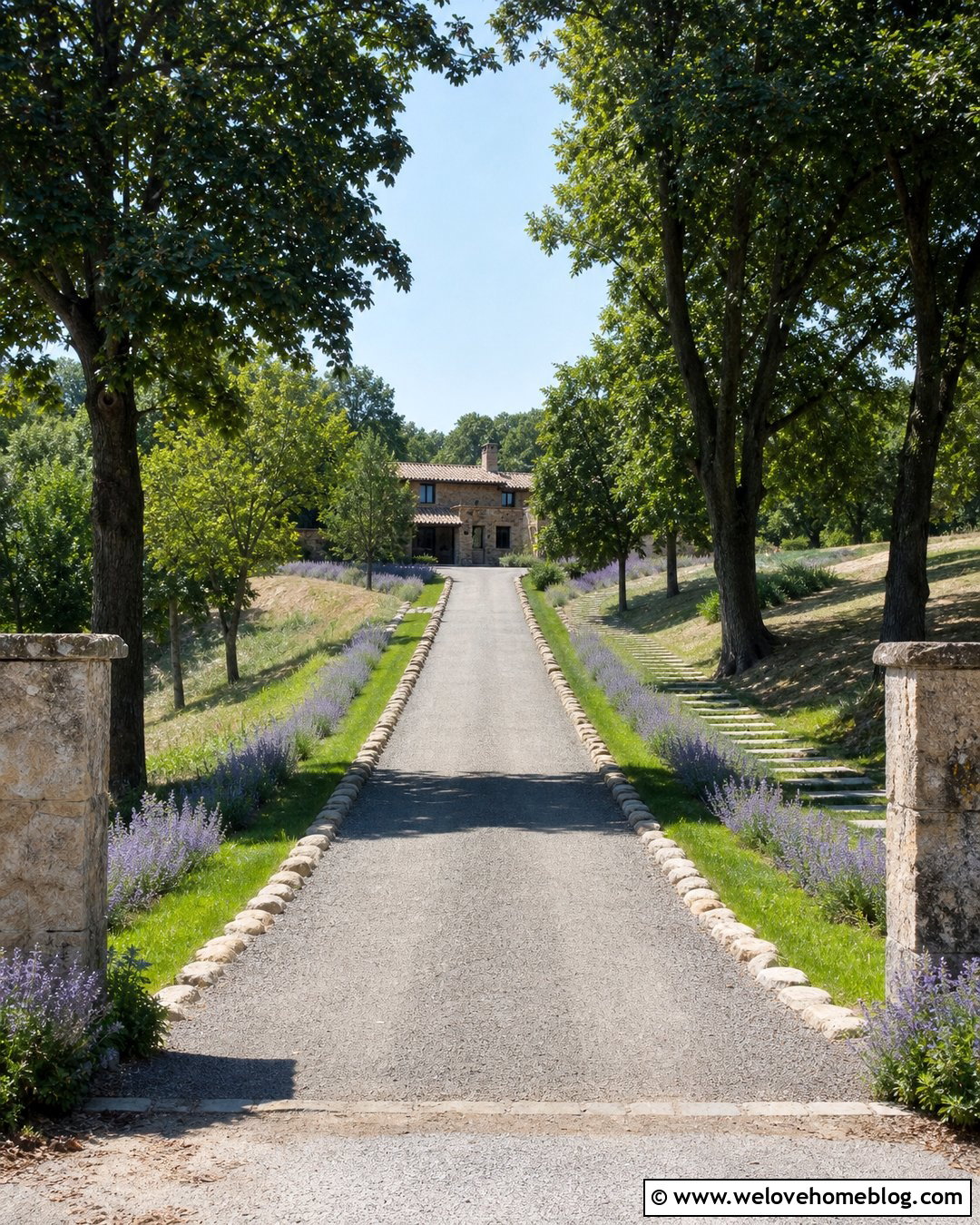
A cloud of dust around every arriving vehicle is annoying and may signal a surface that has lost moisture or fine binding particles. Start with simple changes, including lower driving speeds and regular compaction. Regrading can blend separated material and correct rough areas that encourage fast traffic-related movement. If the driveway needs fresh aggregate, choose a well-graded crushed product suited to local conditions rather than adding only clean, oversized stone. Water provides temporary relief but is rarely practical as a long-term solution. Commercial dust suppressants and stabilizers vary in performance, cost, application requirements, and environmental impact. Consult local suppliers or contractors before applying one, especially near wells, waterways, gardens, or sensitive vegetation. Proper drainage must remain in place because dust control should never create a sealed surface that holds puddles.


15. Prevent Gravel Driveway Washboarding
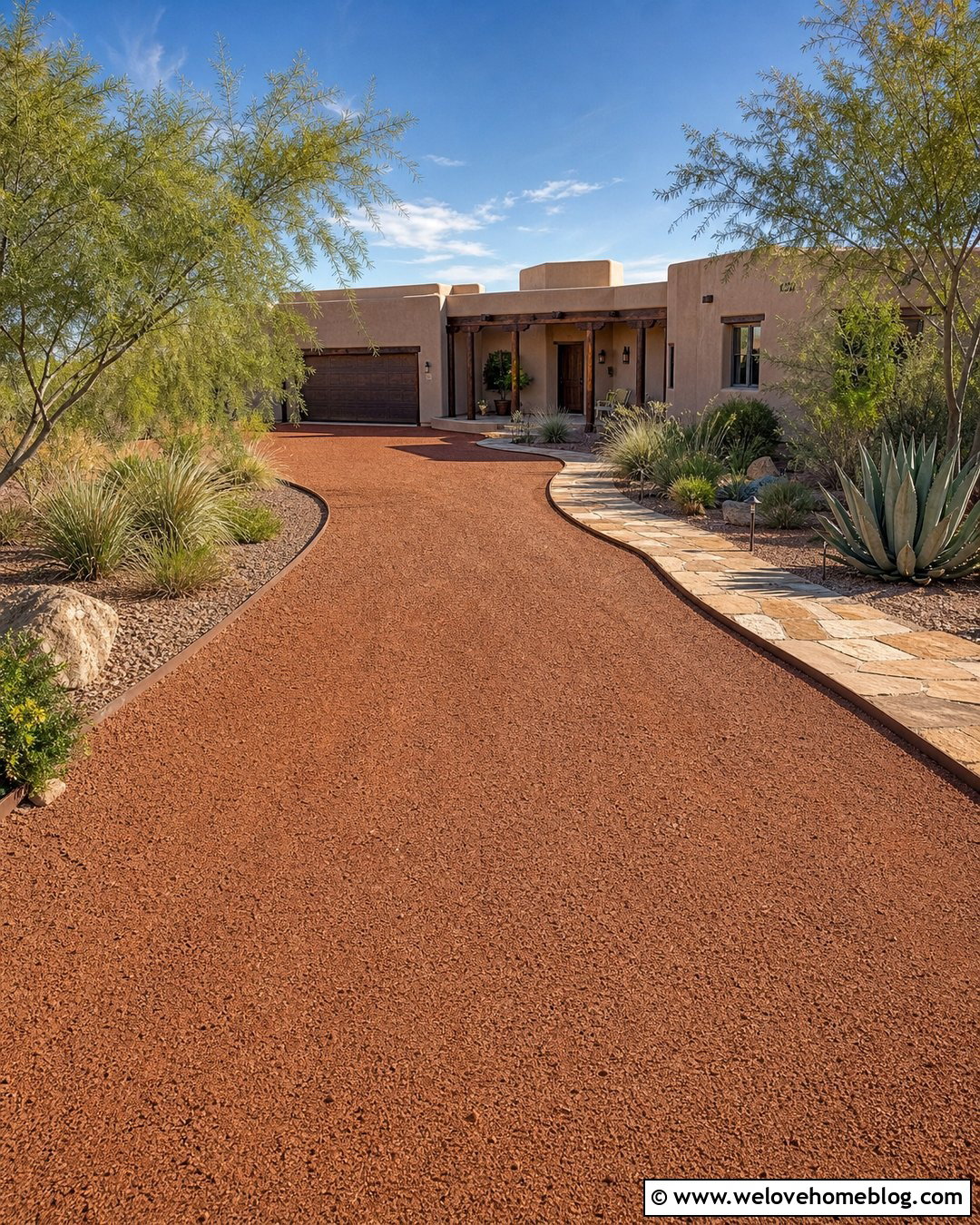
Regular ripples across a gravel driveway are called washboarding, and simply filling the low grooves rarely provides a lasting repair. Loosen the corrugated surface deeply enough to remove the compacted pattern, redistribute the aggregate, restore the crown, and compact the area evenly. Check whether the gravel contains a balanced mixture of stone sizes and fines that can bind together. Material made mostly of loose, uniform particles may shift again quickly. Vehicle speed, sudden braking, rapid acceleration, and spinning tires can also worsen the ridges, especially near hills, curves, and entrances. Encourage slow, steady driving and repair early ripples before they spread. Recurring washboarding may indicate that the surface layer is too thin or the base has become unstable, requiring a more complete driveway rehabilitation.
16. Prepare Gravel Driveway For Winter
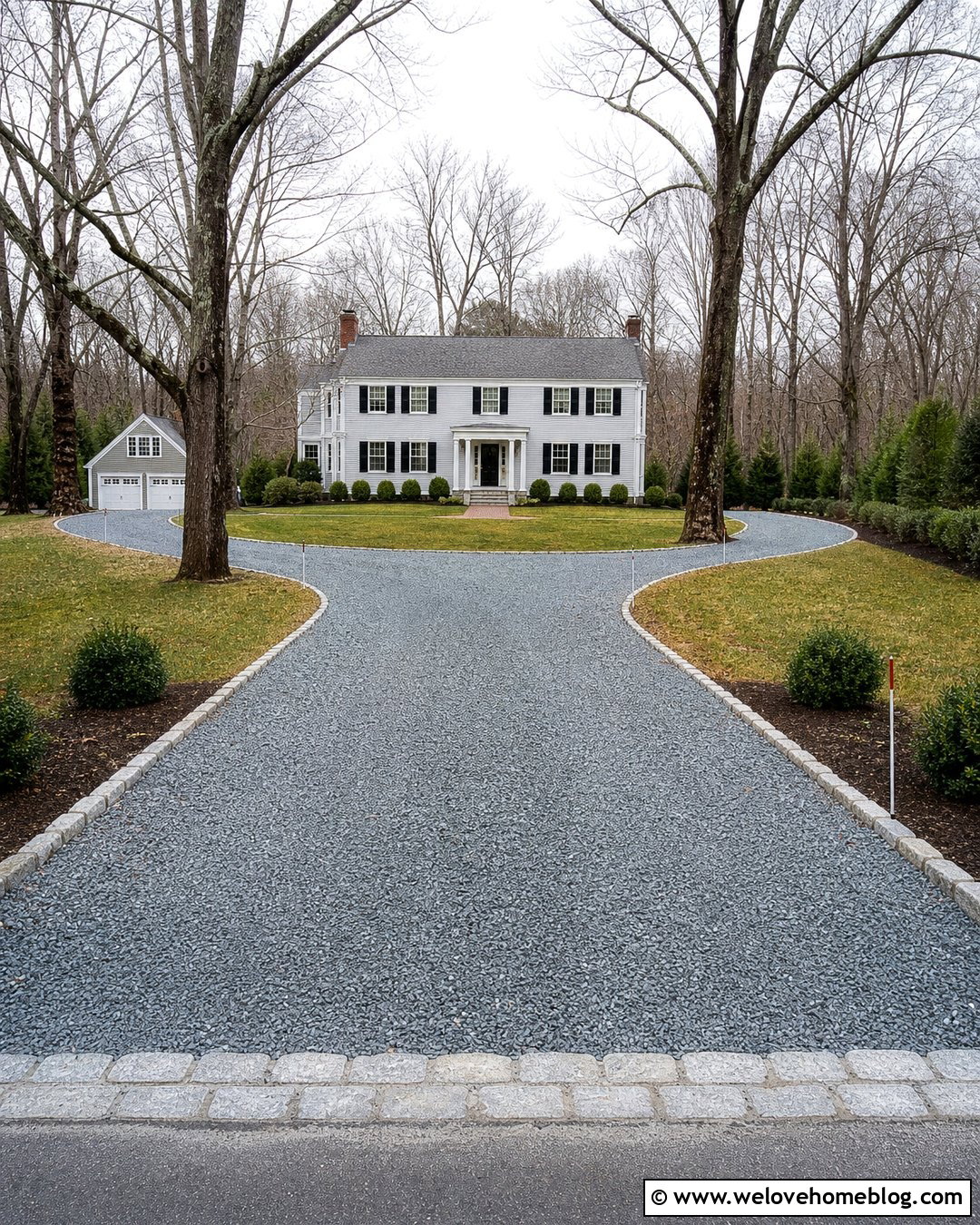
Cold weather can magnify weak drainage, thin gravel, and unresolved potholes. Inspect the driveway in fall while the ground is still workable. Fill depressions, restore the crown, clear ditches, and compact loose repairs before freeze-thaw cycles begin. Trim vegetation along the edges so the full driveway width remains visible after snowfall. Mark borders, culverts, drainage features, decorative stones, and narrow turns with flexible snow stakes. Store a pile of matching gravel where it will remain accessible for temporary repairs during mild periods. Confirm that downspouts and hillside runoff will not create icy channels across the driving path. In snowy regions, plan where removed snow can be stored without blocking drainage or pushing gravel into planting beds. Good preparation reduces both winter hazards and spring cleanup.
17. Plow Snow Without Removing Gravel
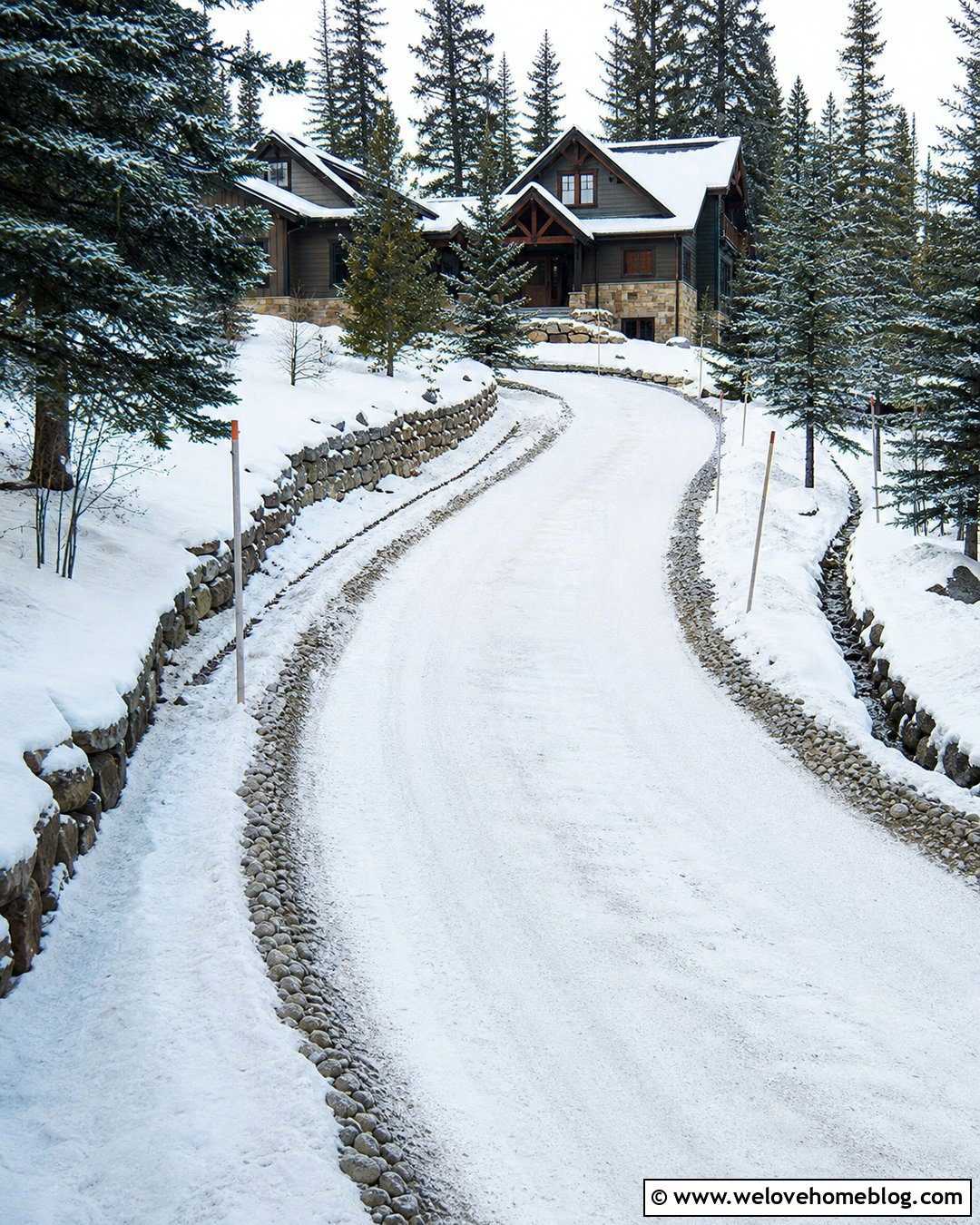
The first snow-clearing pass can remove an expensive layer of gravel if the blade is set too low. Raise the plow slightly above the driveway surface, particularly before the ground has frozen firmly. Skid shoes or a compatible edge can help maintain clearance, while slower speeds reduce gravel displacement. Leave a thin packed layer of snow when conditions permit instead of scraping down to bare stone. Use a snow blower carefully and adjust its height so the intake does not collect loose aggregate. Push snow toward designated storage areas that will not obstruct ditches or melt across the driveway. In spring, rake displaced gravel from lawn edges and snow piles back onto the surface. Repair plow-created grooves promptly, then grade and compact the driveway after the thaw. ()
18. Repair Gravel Driveway After Heavy Rain
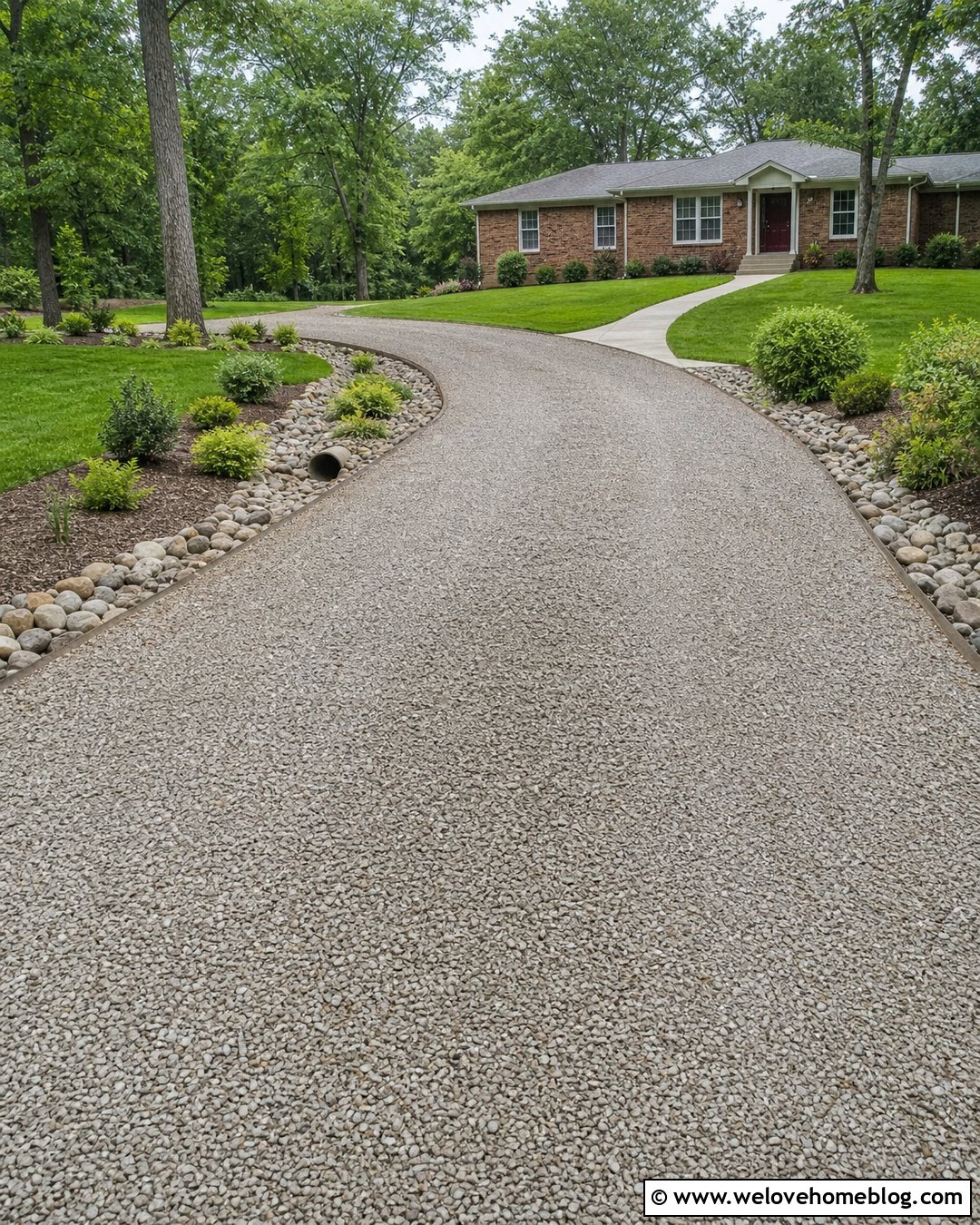
Once a major storm passes, inspect the complete driveway before small channels dry and become harder to notice. Look for washed-out shoulders, fresh potholes, exposed base material, clogged culverts, and sediment deposits near the street. Photograph extensive damage before making repairs, especially if outside runoff or construction contributed to the problem. Return displaced gravel only when it remains clean and free from soil, leaves, and other debris. Loosen eroded sections, rebuild them in compacted layers, and restore the crown. Clear drainage outlets before the next rainfall. If runoff carved the same path as before, change how water reaches or leaves that location instead of repeating a surface-only repair. Wait for saturated ground to firm up before using heavy grading equipment that could damage the base.
19. Inspect Gravel Driveway Entrance

The driveway entrance handles turning tires, street runoff, snowplows, and the transition between two different surfaces. These forces can create spreading gravel, edge ruts, dips, and loose stone on the roadway. Inspect this area frequently and sweep escaped aggregate off the street for safety. Rebuild low sections with compactable crushed gravel rather than a thin covering of decorative stone. Maintain a smooth transition that does not trap water or scrape low vehicles. Cobblestone aprons, paver ribbons, reinforced gravel grids, or concrete transition strips can help stabilize a heavily used entrance when local requirements allow them. Keep nearby culverts open and ensure address markers remain visible. Before changing the apron, drainage, or public right-of-way, check applicable municipal or homeowners association rules and obtain any required approval.



20. Follow Seasonal Gravel Driveway Schedule
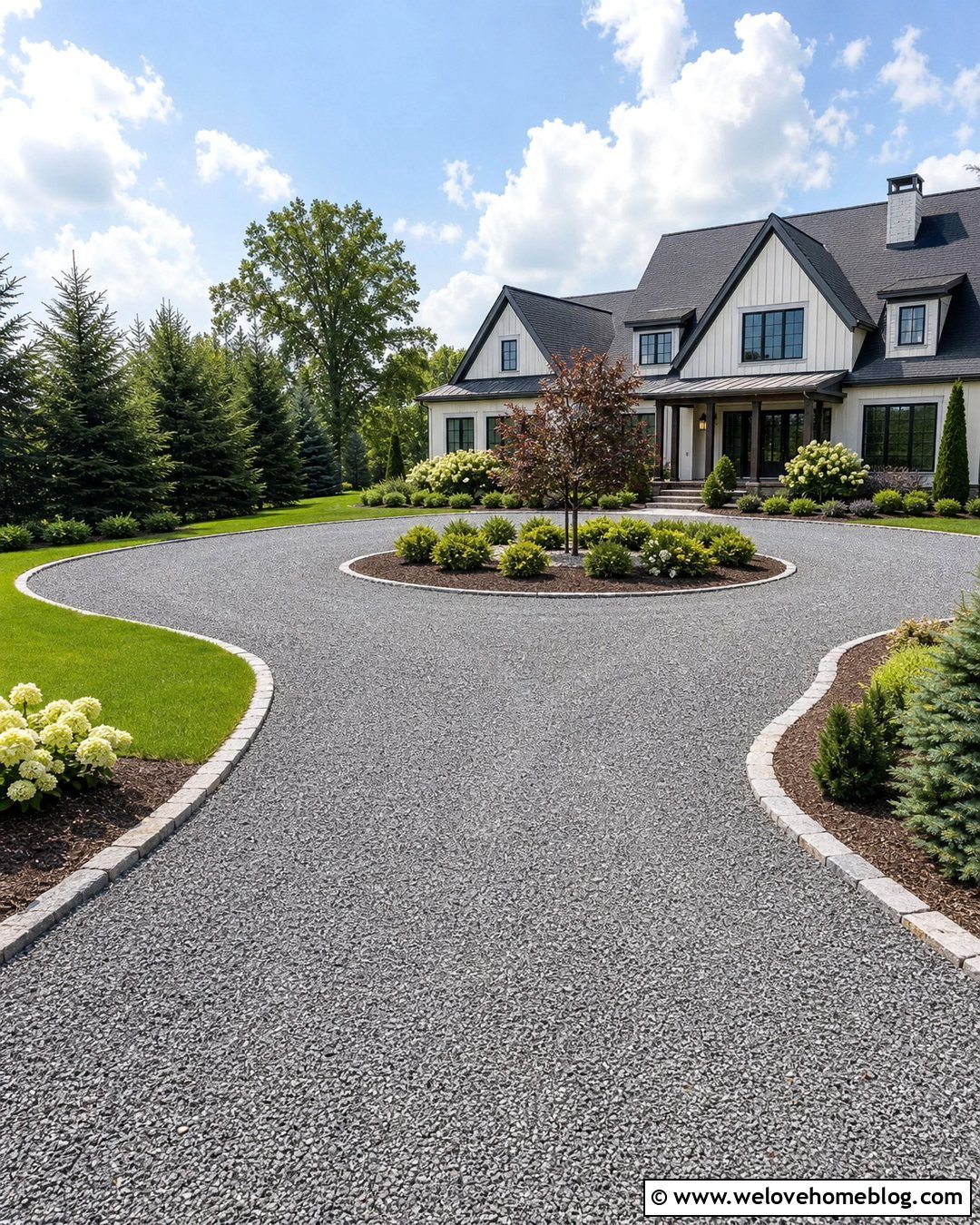
A seasonal schedule makes gravel driveway maintenance easier to manage and less likely to become an expensive emergency. In spring, inspect winter damage, clear drainage channels, repair potholes, control emerging weeds, and regrade after the ground firms. During summer, watch for dust, loose edges, washboarding, and gravel movement around parking areas. Fall is the time to remove organic debris, replenish thin sections, clean culverts, and install snow markers. Winter maintenance centers on careful snow removal, safe traction, and monitoring icy runoff. Walk the driveway after major storms in every season. Keep notes about recurring trouble spots and record when gravel was added or grading was completed. This simple history helps reveal whether a surface repair is working or a deeper base and drainage correction is needed.
Conclusion:
Good maintenance protects more than the appearance of a gravel driveway. It preserves drainage, improves everyday driving, limits gravel loss, and helps prevent small surface flaws from becoming major base repairs. Start with regular inspections and prioritize water control, since puddles and uncontrolled runoff contribute to many recurring problems. Grade and compact the surface when needed, repair potholes properly, keep the edges contained, and adjust your routine for seasonal weather. Some work can be completed with basic hand tools, while long, steep, or badly damaged driveways may need professional equipment. By applying these 20 Gravel Driveway Maintenance Ideas consistently, you can maintain a smoother, cleaner entrance that complements the house and surrounding landscape.

Related posts:



Leave a Reply