
A well-planned driveway garden bed can soften hard paving, frame the route to your home, and create a stronger first impression from the street. The best designs treat the driveway, edging, plants, walkway, and house as one complete landscape. You might use colorful perennial borders beside concrete, drought-tolerant grasses around modern pavers, or a tree-filled island in a circular gravel drive. Before planting, consider sunlight, drainage, mature plant size, snow storage, and space for opening car doors. Keep taller growth away from the street so drivers can see pedestrians and traffic clearly. The following 20 driveway garden beds ideas cover narrow spaces, large entrances, slopes, curves, and different home styles, making it easier to find practical **20 driveway garden beds ideas** for your property.

1. Curved Driveway Garden Bed With Hydrangeas
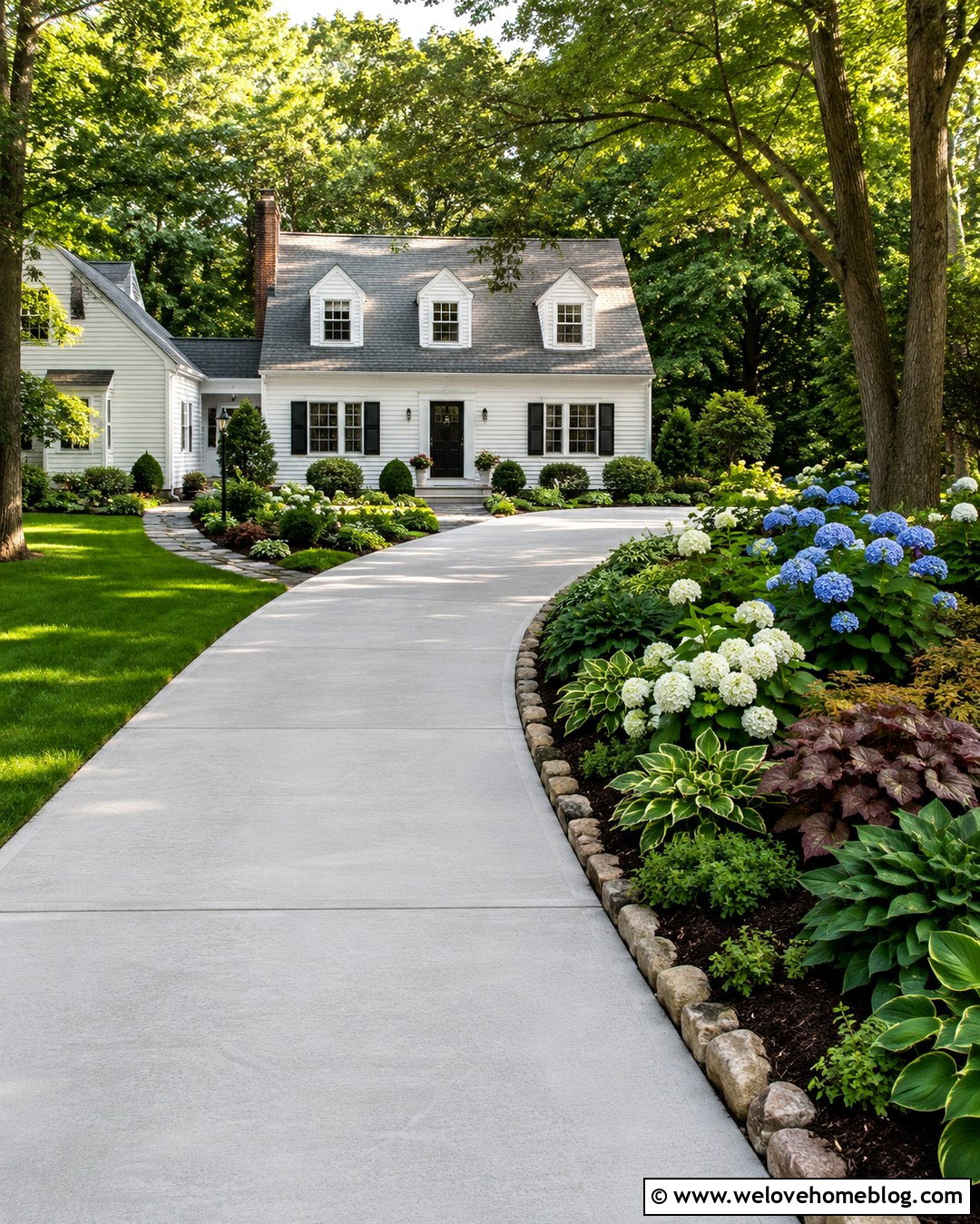
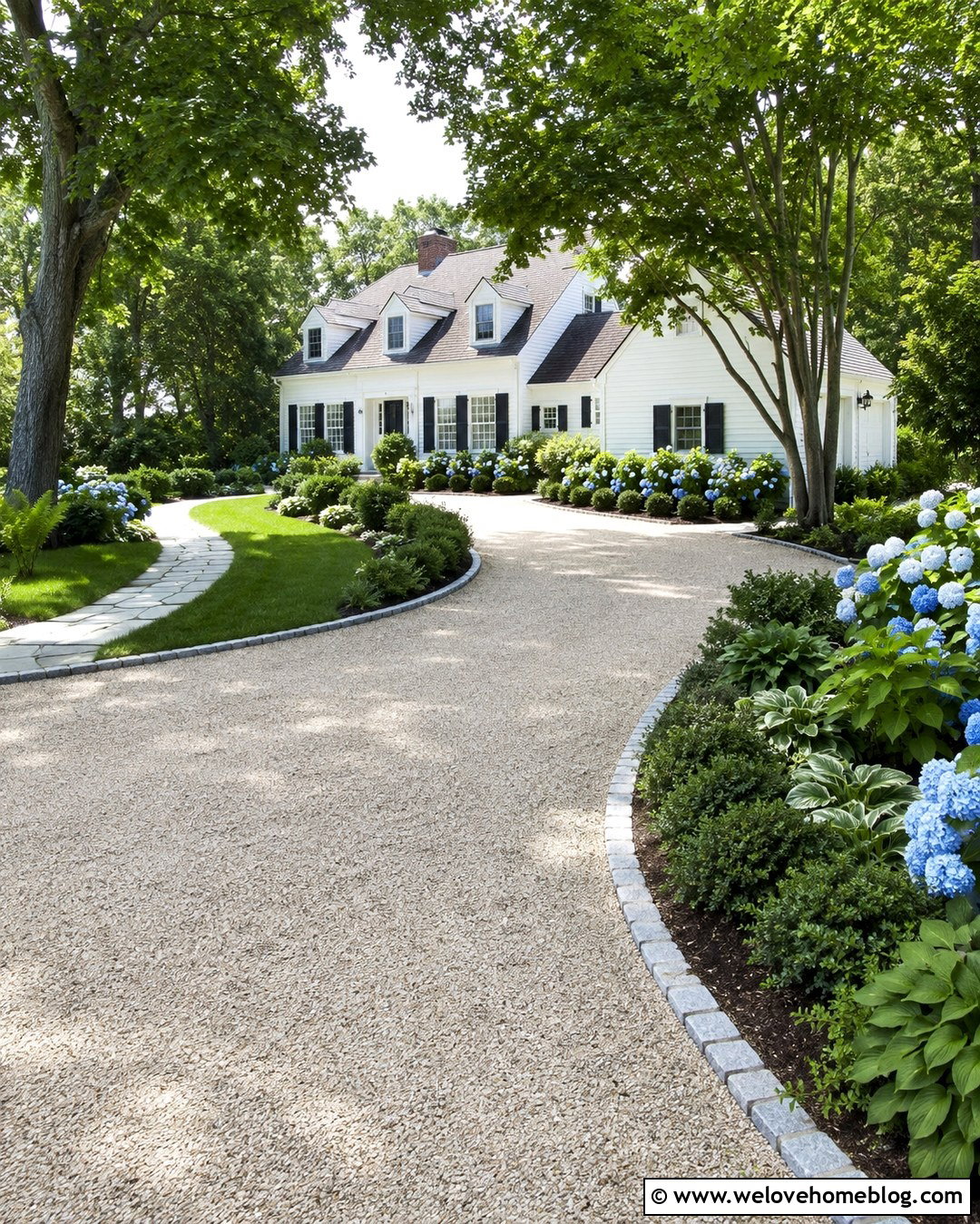
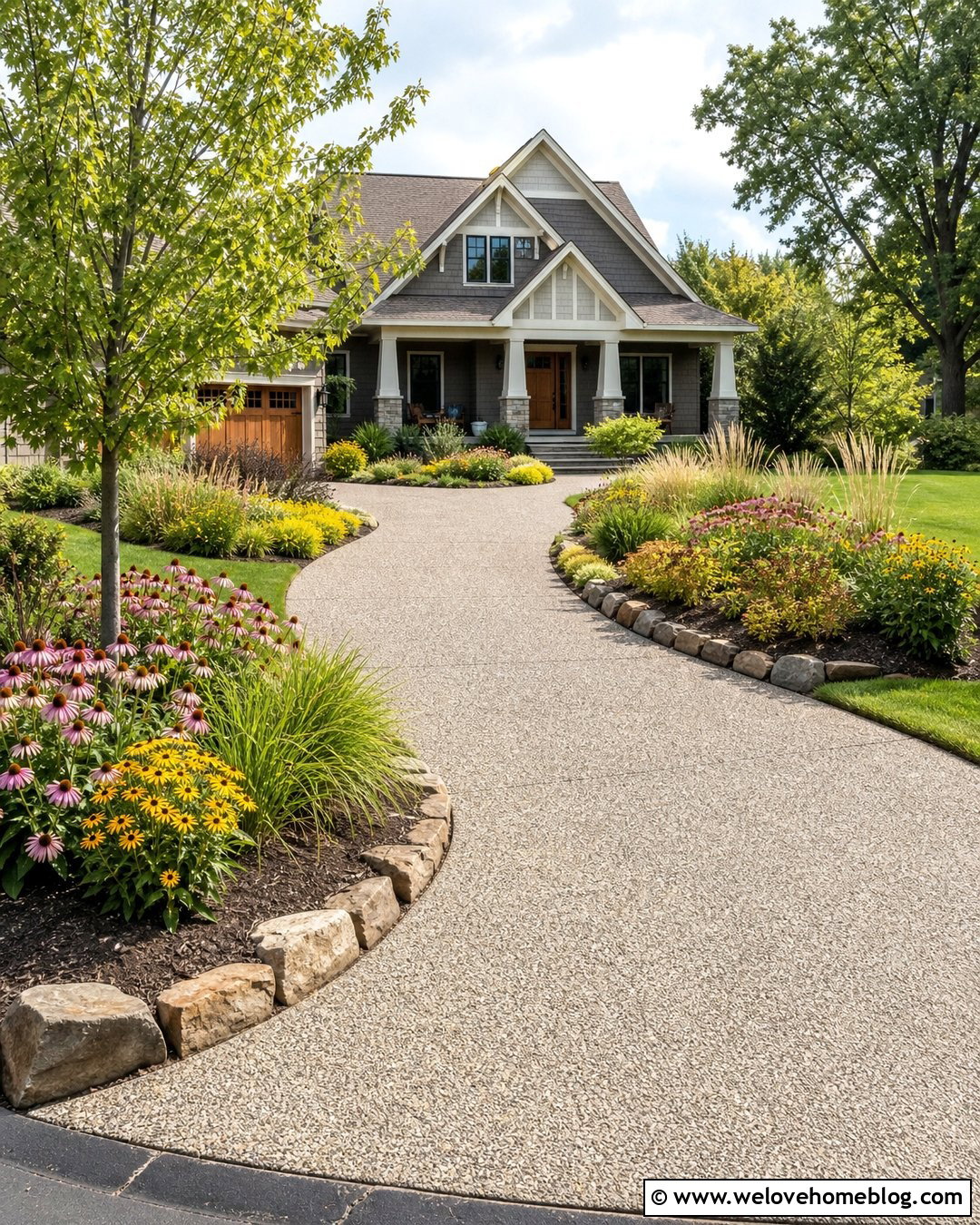
A sweeping garden bed can make a straight concrete driveway feel softer and more connected to the front yard. Shape the bed with a broad curve rather than several small waves, which may look busy from the street. Plant compact hydrangeas toward the back, where their rounded flowers can create a strong summer display without spilling into the driving area. Add low hostas, heucheras, or shade-tolerant ground cover along the front edge. A natural stone border keeps mulch away from the pavement and gives the planting a finished appearance. This complete look works especially well beside a Cape Cod or colonial home. Leave an unplanted buffer near parking spaces so doors can open without damaging flowers.
2. Modern Driveway Garden Bed With Ornamental Grasses
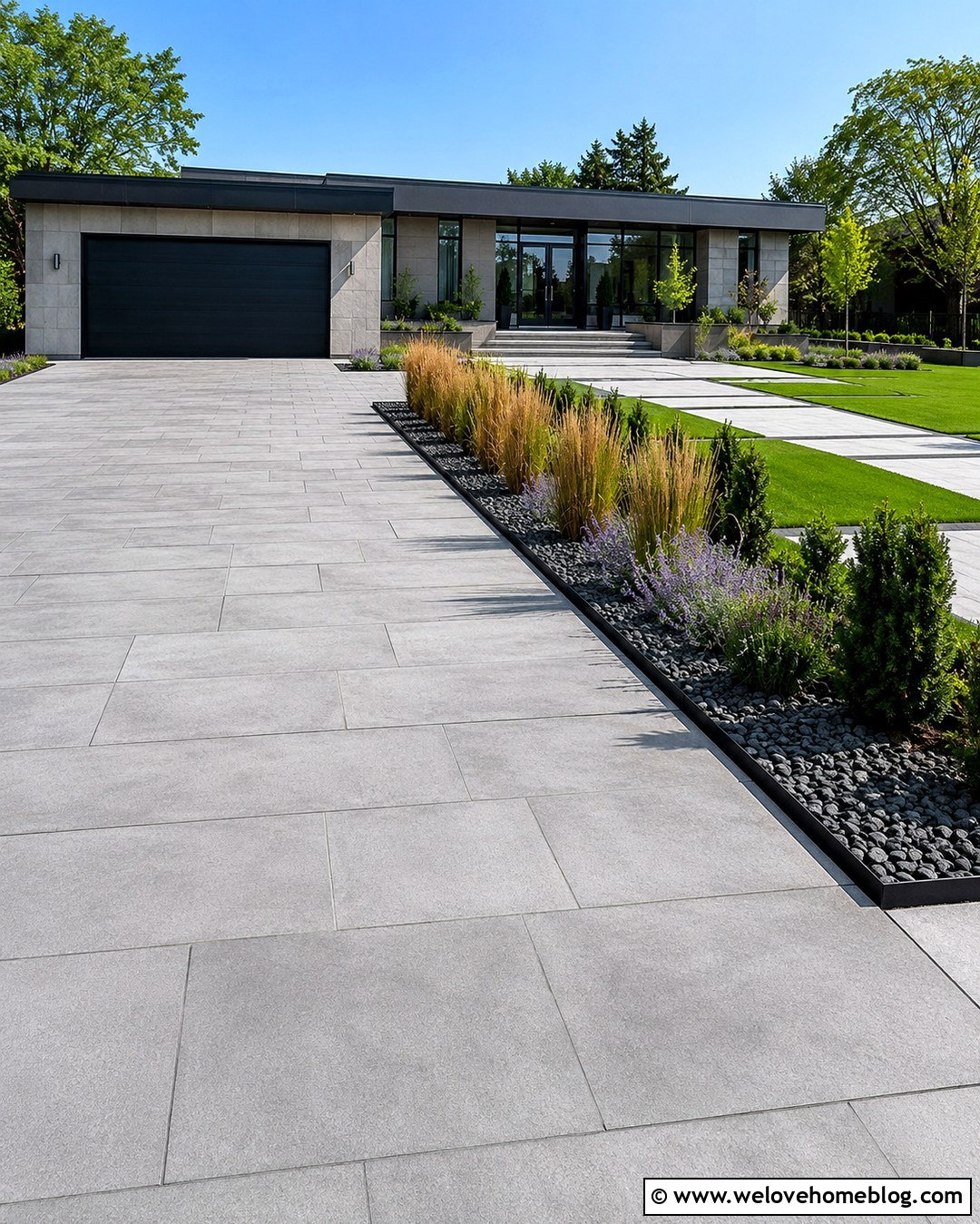
Clean lines and repeated plants create a simple driveway landscape for a modern home. Pair large-format gray concrete pavers with a long rectangular garden bed edged in black steel. Use clumps of ornamental grass at even intervals, then fill the gaps with compact evergreen shrubs or low flowering perennials. Decorative gravel can replace traditional wood mulch for a sharper, more architectural finish. Choose grasses that remain upright and fit the available space when mature. Plants that flop across the paving can reduce usable driveway width and require frequent trimming. Continue the same gravel, edging, and plant palette beside the front walkway. This repetition connects the driveway to the entrance and makes the entire yard look thoughtfully planned.
3. Gravel Driveway Garden Bed With Lavender
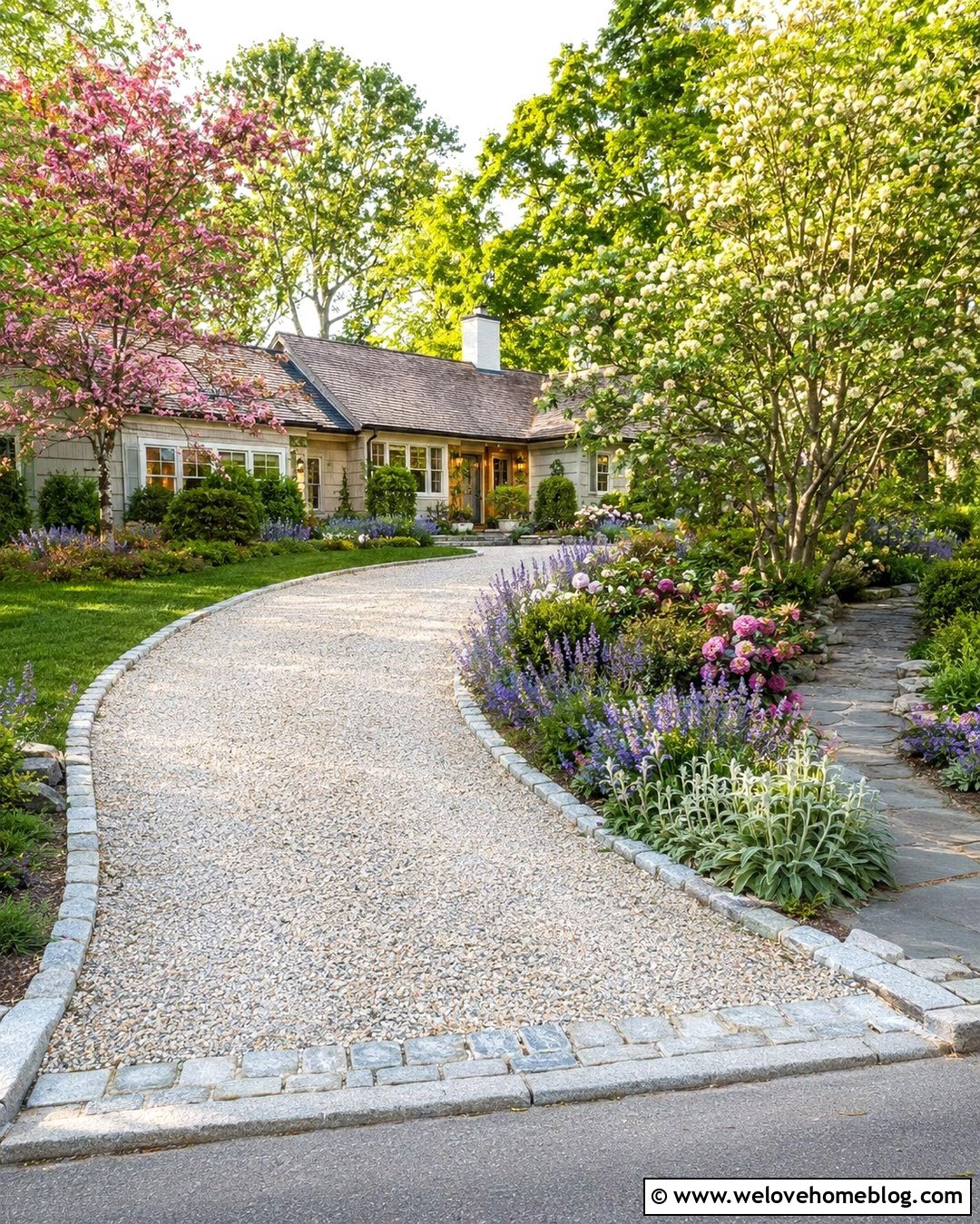
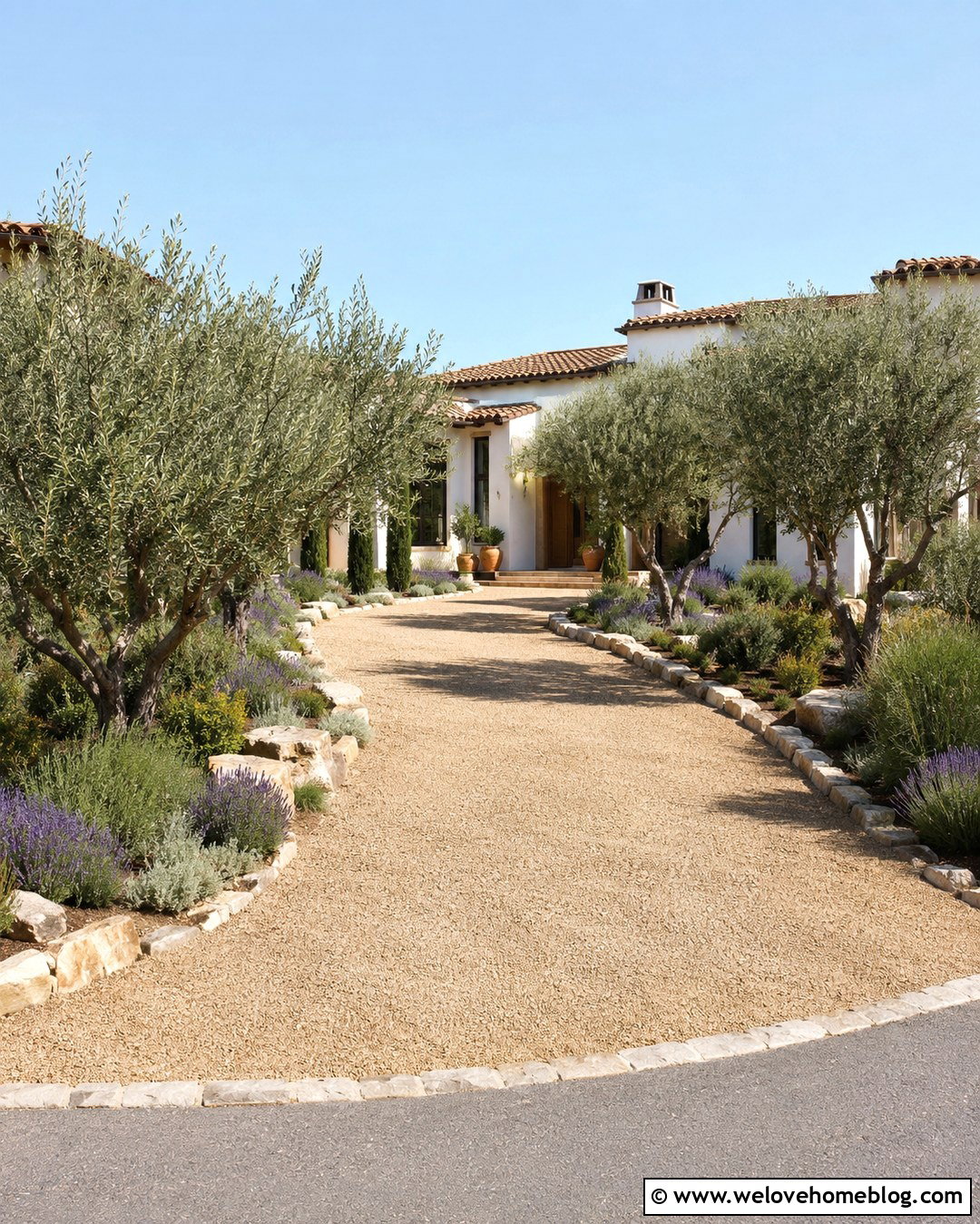
The soft color and relaxed texture of lavender pair naturally with a light gravel driveway. Create a gently curved bed along one side of the drive and contain it with cobblestone edging. Plant lavender in broad repeating groups instead of a single rigid row. Add catmint, compact roses, and low ornamental grasses for varied height and a longer season of color. Silver foliage looks especially attractive against warm beige or pale gray gravel. This complete design complements cottages, ranch homes, and country houses. Good drainage is important, so avoid placing moisture-sensitive plants in a low area where driveway runoff collects. Keep the flower bed slightly set back from the gravel to prevent stems from being crushed by tires.
4. Raised Driveway Garden Bed With Stone Walls
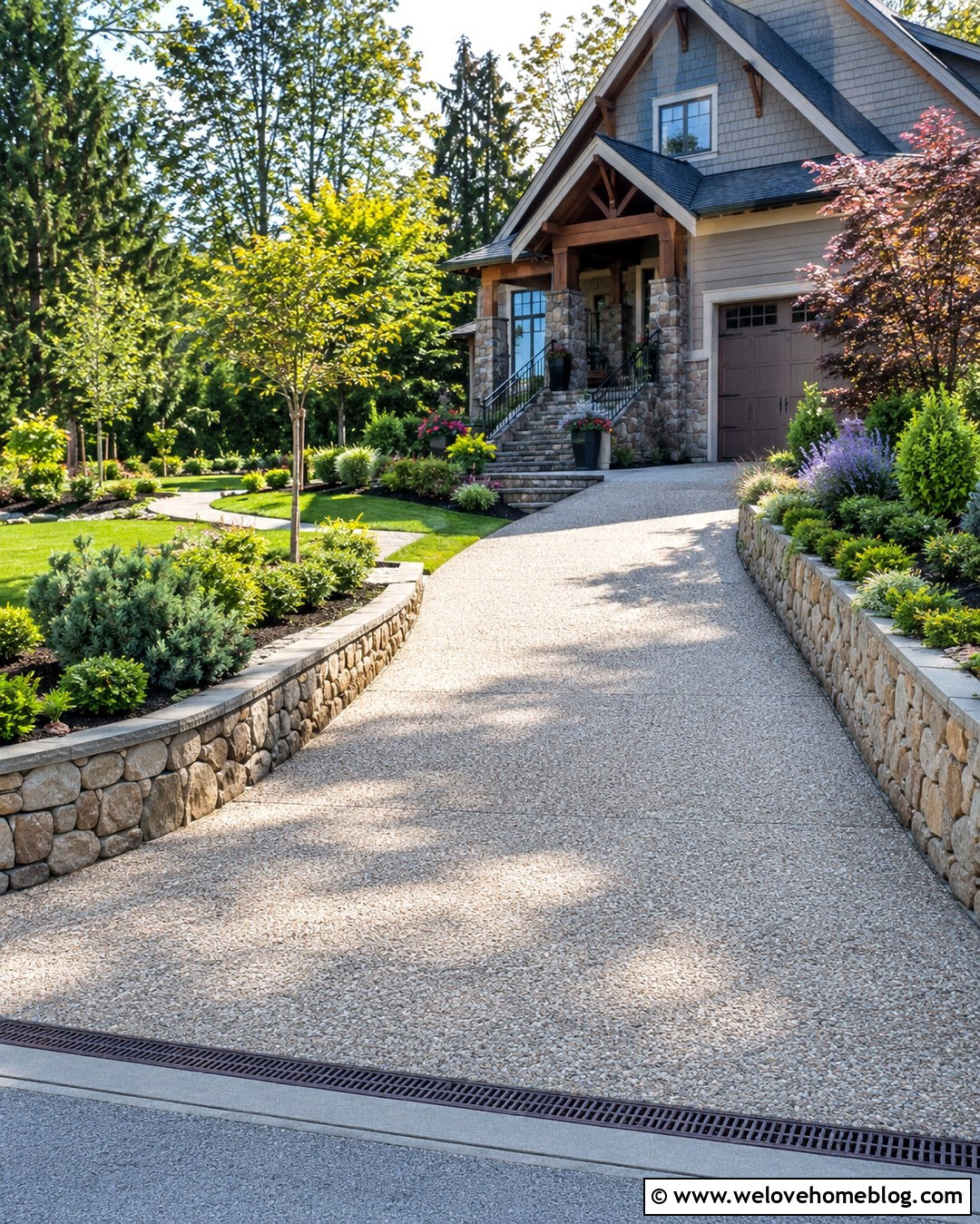
A raised garden bed can handle a change in grade while giving the driveway a substantial, finished border. Build a low wall from natural fieldstone or concrete wall blocks that coordinate with the home’s facade. Behind it, layer compact evergreen shrubs, flowering perennials, and one small ornamental tree. The tree anchors the composition, while lower plants preserve visibility around the driveway. Pair the wall with an exposed aggregate concrete surface for a durable, textured look. Include drainage openings and prepare the soil carefully so water does not build up behind the wall. On a sloped property, a professionally designed retaining structure may be necessary. Extend matching stone toward the entry steps to visually connect the driveway garden bed with the house.
5. Narrow Driveway Garden Bed With Evergreen Shrubs
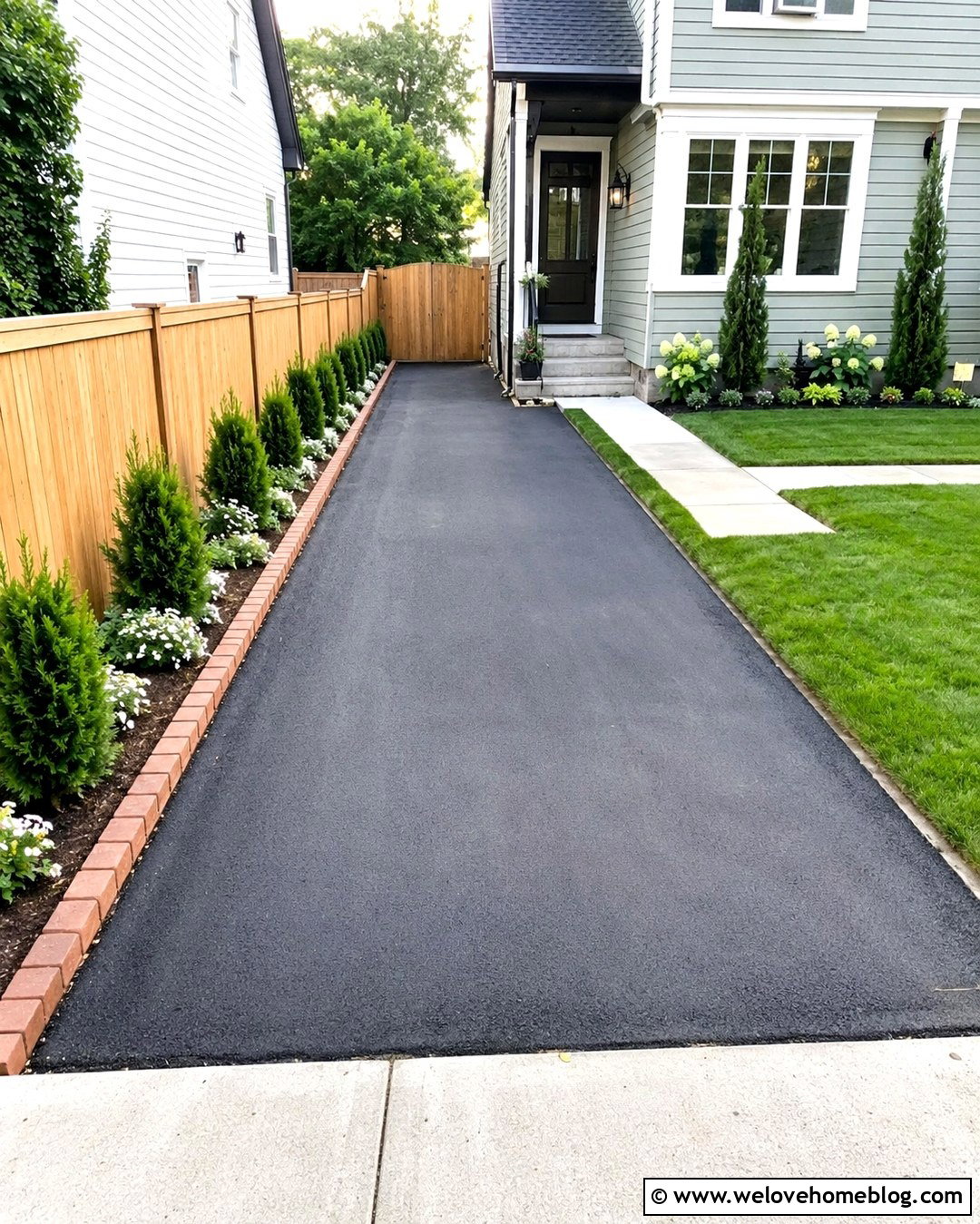
Even a slim strip between the driveway and property line can become useful landscaping. Start with a straight black asphalt driveway and install a narrow brick-edged bed beside it. Choose compact evergreen shrubs with a naturally tidy shape, then add low ground cover around their bases. A restrained planting plan prevents the small area from looking crowded. It also reduces the amount of trimming needed to keep branches away from vehicles. Where space allows, repeat one flowering perennial between every two or three shrubs for seasonal color. Avoid thorny plants near car doors and pedestrian routes. This complete layout works well for townhomes, small suburban lots, and side-entry garages where every inch matters but curb appeal is still important.
6. Circular Driveway Garden Bed With A Feature Tree
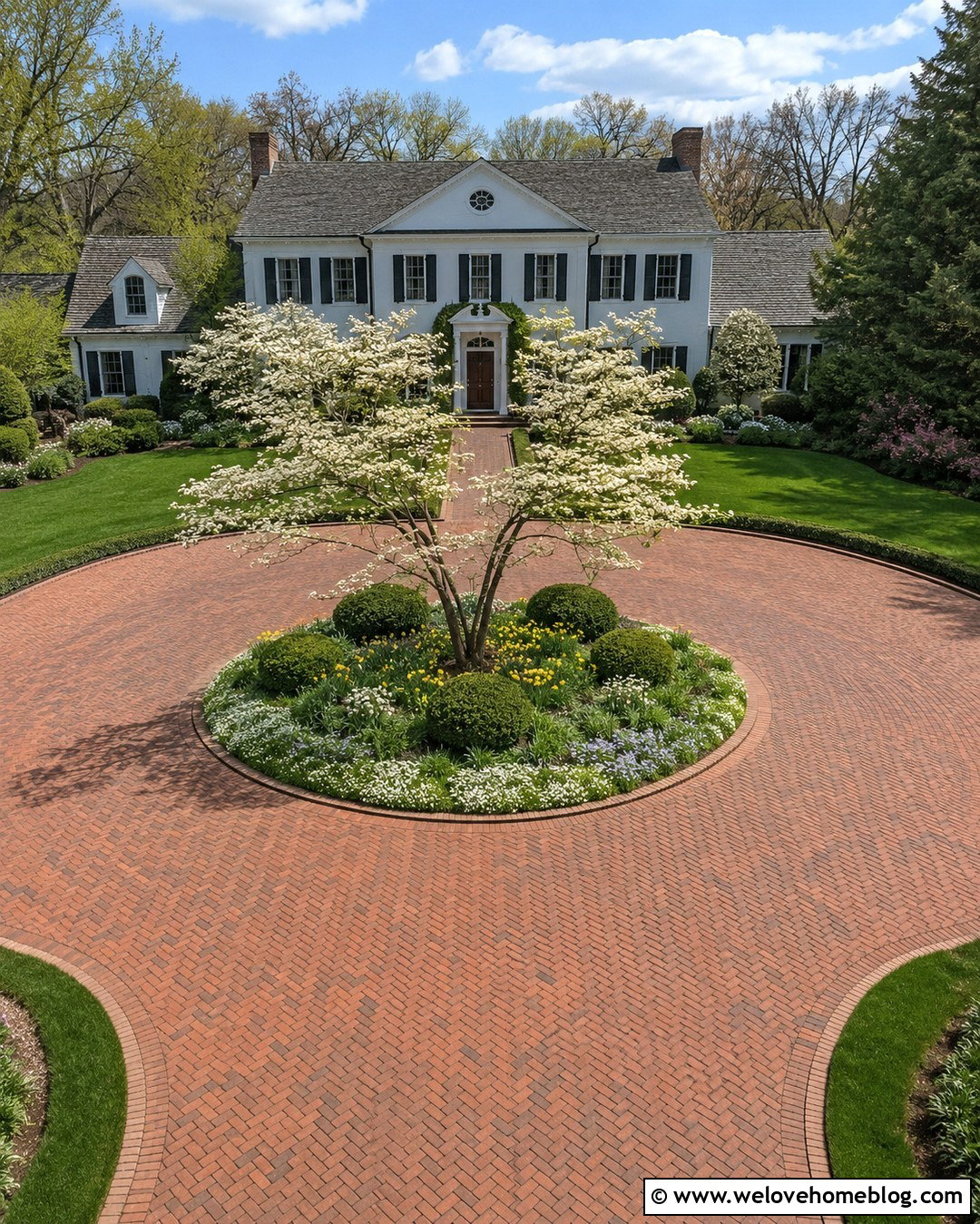
An island bed can turn the center of a circular driveway into the main focal point of the front yard. Surround a brick paver drive with a generous circular planting area edged in matching brick. Place a single ornamental tree slightly off center for a more natural composition. Underplant it with low shrubs, spring bulbs, and spreading ground cover that will not block the view across the circle. Repeating the same brick in the driveway and border makes the design feel unified. Keep plants away from the curb so tires have enough turning space. Adding a simple path through the island may help with maintenance. This arrangement is especially attractive in front of colonial, traditional, and Georgian-inspired houses.
7. Cottage Driveway Garden Bed With Mixed Flowers
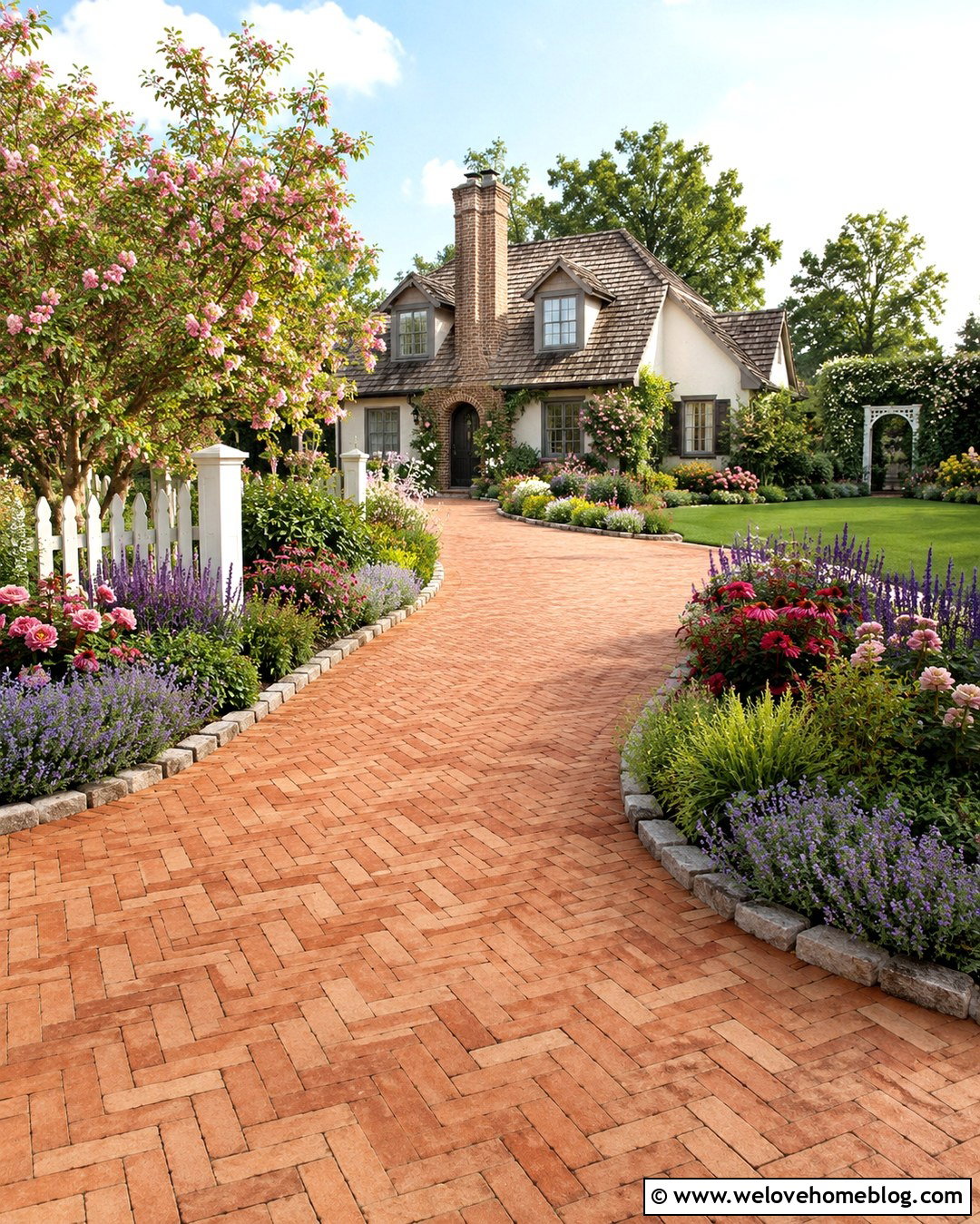
A cottage-style driveway bed should feel abundant without becoming difficult to navigate. Pair clay brick pavers in a herringbone pattern with deep, gently curved beds on both sides. Combine roses, salvia, coneflowers, catmint, and compact flowering shrubs in loose groups. Place the tallest plants toward the lawn or fence, with shorter flowers beside the driveway edge. A low cobblestone border keeps soil contained while preserving the informal character. Repeat several plants throughout the beds so the display feels coordinated rather than random. Leave open pockets near parking areas and the walkway. The result is a welcoming garden approach filled with color and texture, while the clear edging and repeated planting maintain enough structure for a polished front yard.
8. Low-Maintenance Driveway Garden Bed With River Rock
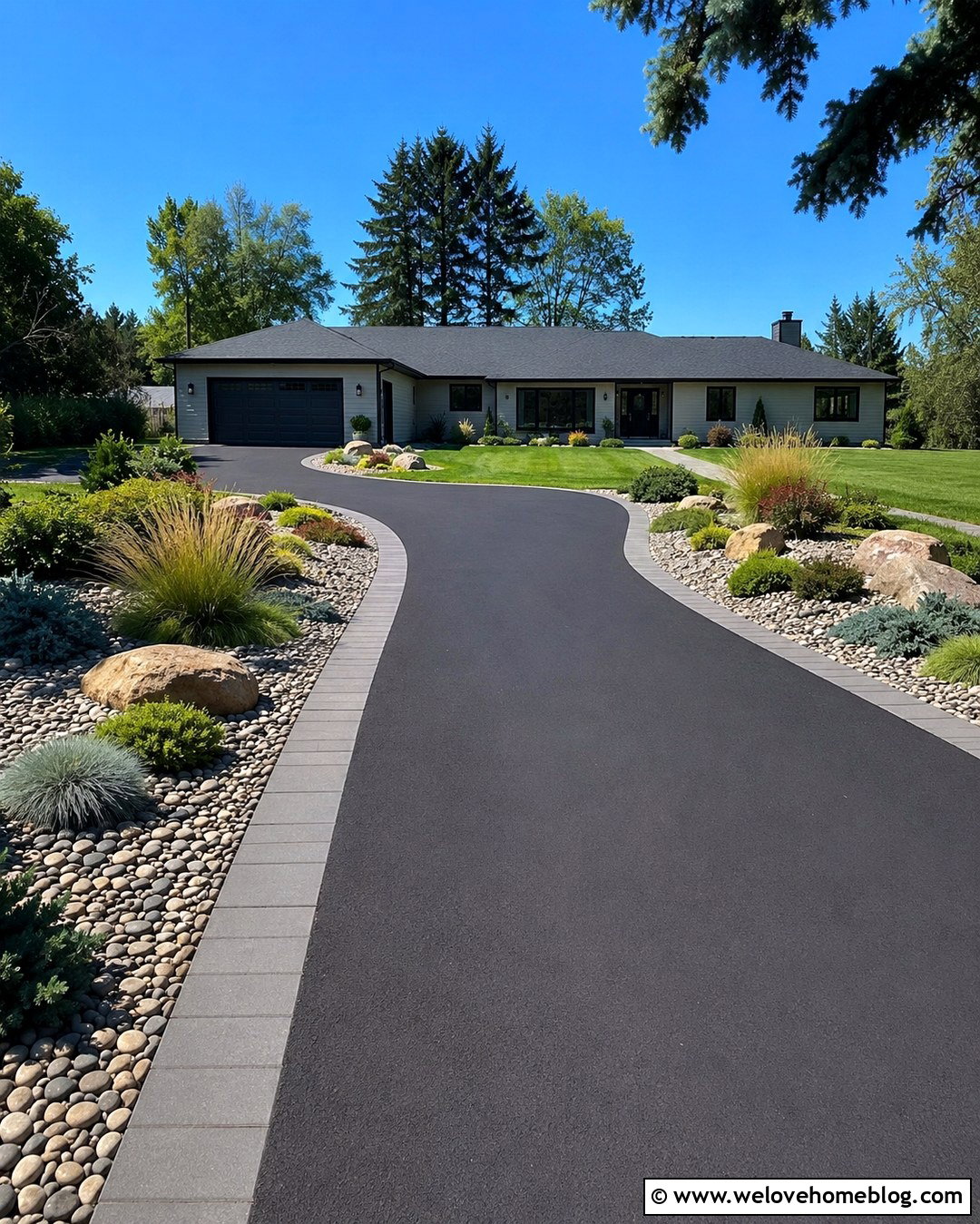
River rock can produce a neat driveway garden bed where wood mulch frequently washes or blows onto the pavement. Set the bed beside a black asphalt driveway and define it with a wide concrete paver border. Arrange compact junipers, dwarf ornamental grasses, sedum, and other plants suited to the property’s light and climate. Use larger stones rather than tiny loose pebbles near the driving surface, since they are less likely to scatter. A few carefully placed boulders can add height without creating heavy maintenance. Avoid filling the space with too many different rock colors. Gray, tan, and charcoal tones usually create a more cohesive result. This rugged design complements ranch, contemporary, and mountain-influenced homes.
9. Driveway Entrance Garden Beds With Stone Pillars
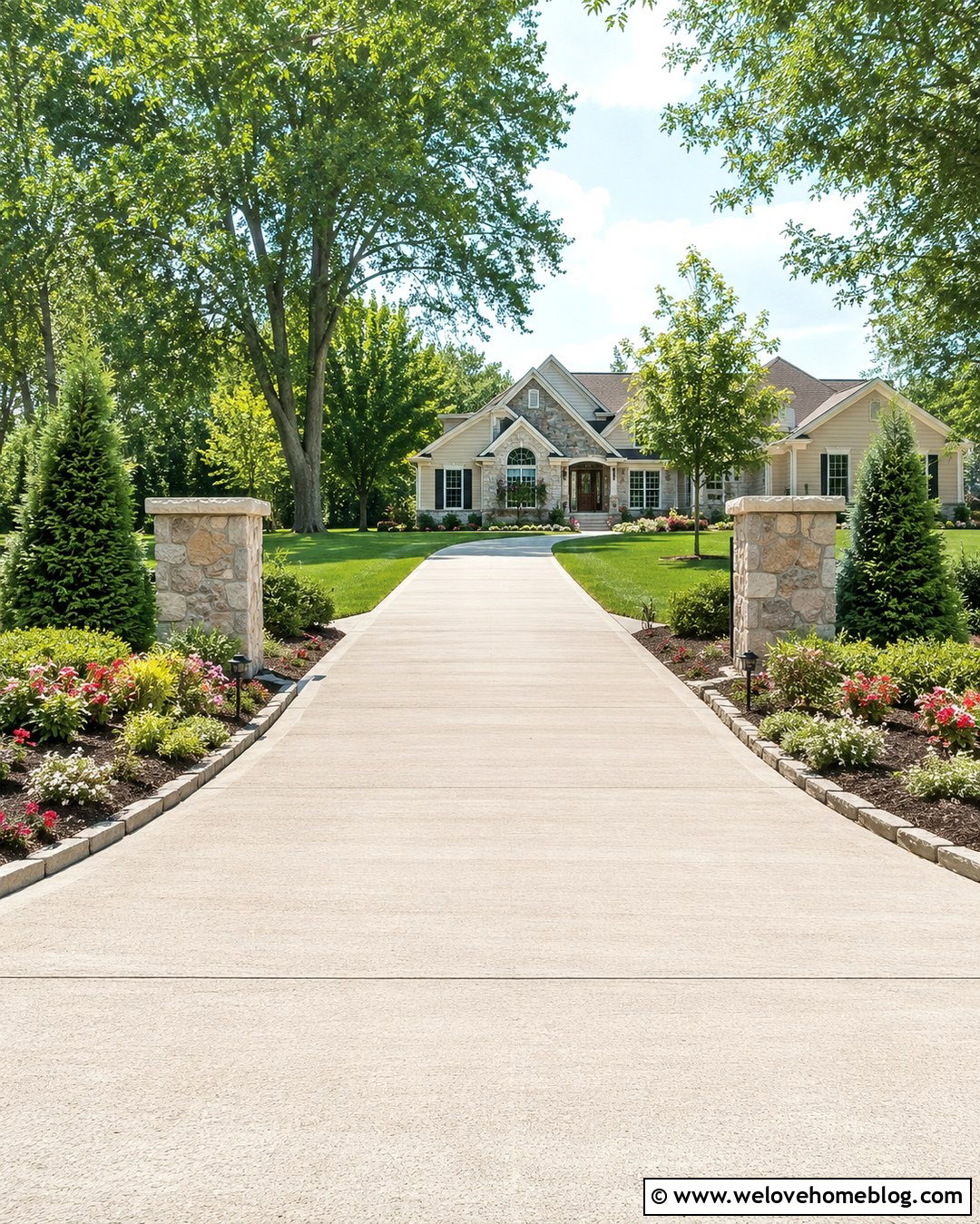
Matching garden beds on both sides of a driveway entrance can make the arrival feel organized and welcoming. Frame a pale concrete driveway with low stone pillars that coordinate with the house or front steps. Curve the planting beds outward from each pillar, leaving clear sightlines toward the street. Use compact evergreens as anchors, then add flowering perennials and seasonal annuals closer to the front. Low landscape lighting can illuminate the pillars and edges without shining directly toward drivers. Keep the design balanced, but it does not need to be perfectly identical. Slight plant variations create a more natural appearance. This entrance treatment works particularly well on long suburban and country driveways where the home sits back from the road.
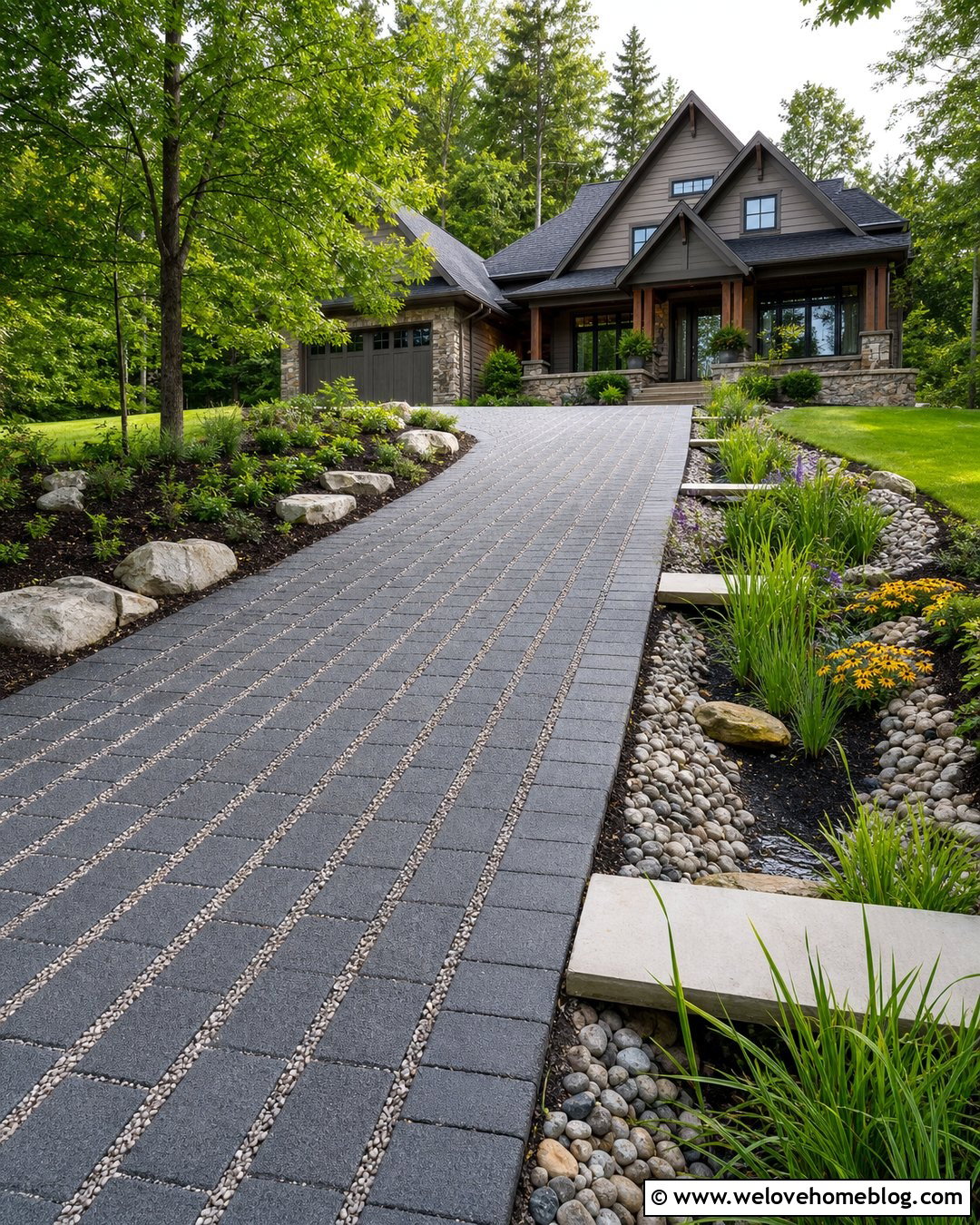

10. Sloped Driveway Garden Bed With Terraced Planting
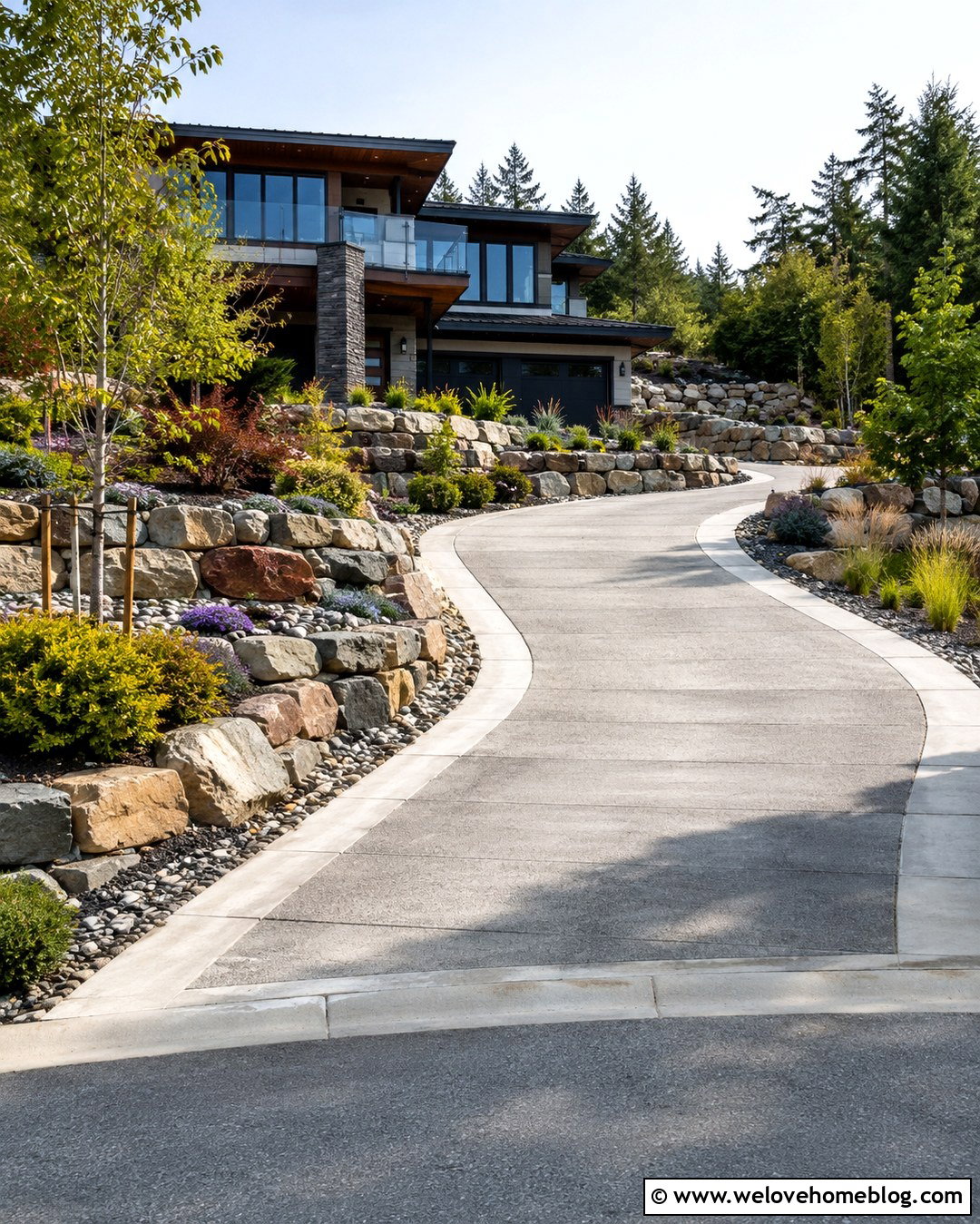
A sloping driveway needs garden beds that manage the grade while keeping soil and mulch off the pavement. Pair a textured concrete driveway with two or three broad planting terraces built from natural stone. Fill each level with deep-rooted shrubs, spreading ground cover, and ornamental grasses suited to the site. Use repeated plant groups to connect the terraces visually. Decorative stone mulch near the lowest edge can provide a cleaner transition than lightweight bark. Water should move toward a suitable drainage area rather than collecting against the driveway or retaining walls. Because slopes can involve runoff and structural concerns, larger walls may require professional planning. The finished landscape turns a difficult incline into an attractive, layered approach to the house.
11. Driveway Garden Bed With Native Plants
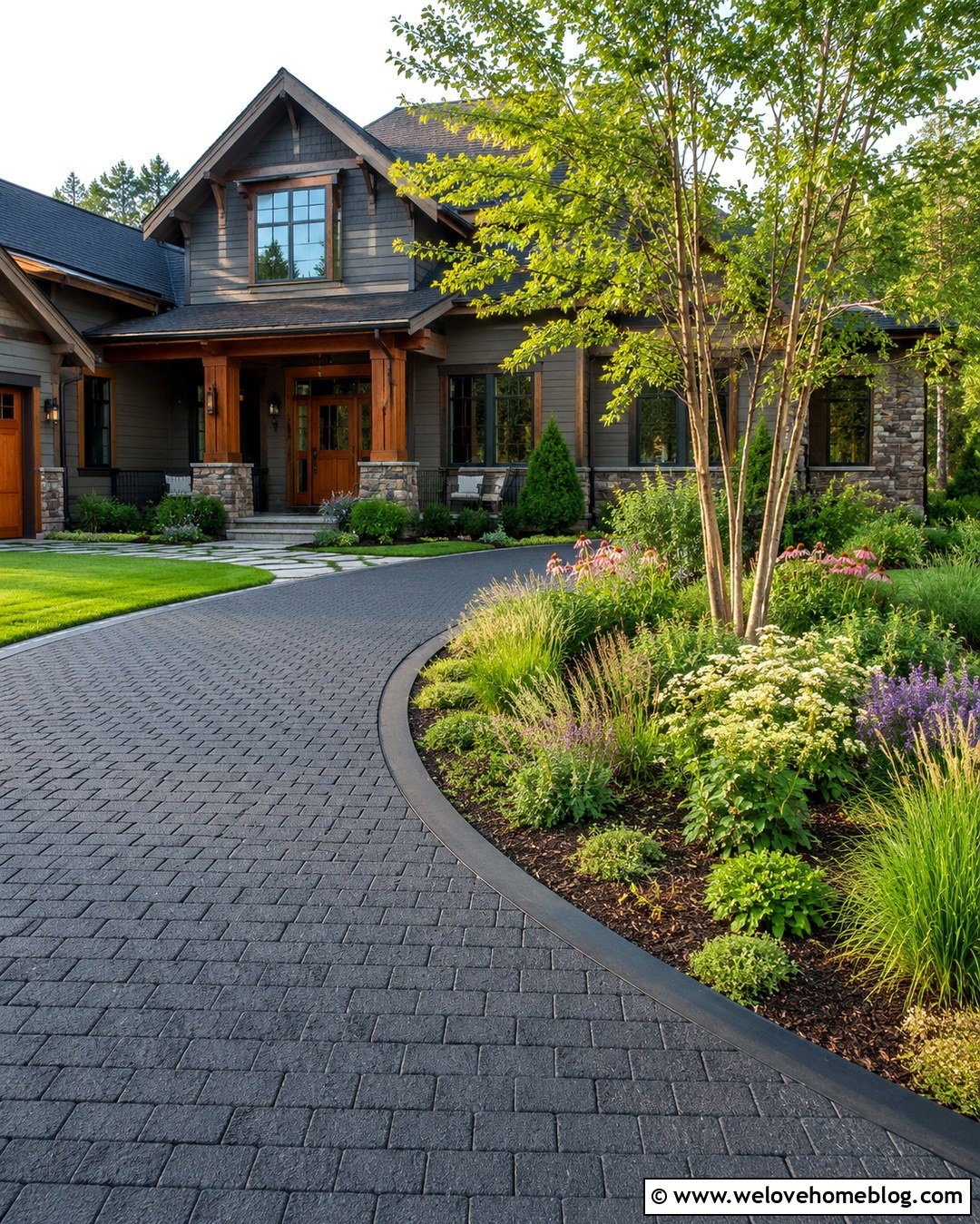
Native planting can give a driveway border a relaxed character that fits naturally into the surrounding region. Start with a permeable paver driveway and create a wide, sweeping bed with steel or stone edging. Select locally appropriate flowering perennials, grasses, shrubs, and one small tree based on soil, sunlight, and available moisture. Arrange plants in repeated drifts rather than scattering individual specimens throughout the bed. This creates a stronger visual rhythm from the curb. Place shorter species near the pavement and taller plants toward the back. A defined border is valuable because it separates the natural planting from the functional driving area. Check regional extension guidance or a reputable local nursery before choosing species for your property.
12. Farmhouse Driveway Garden Bed With White Flowers
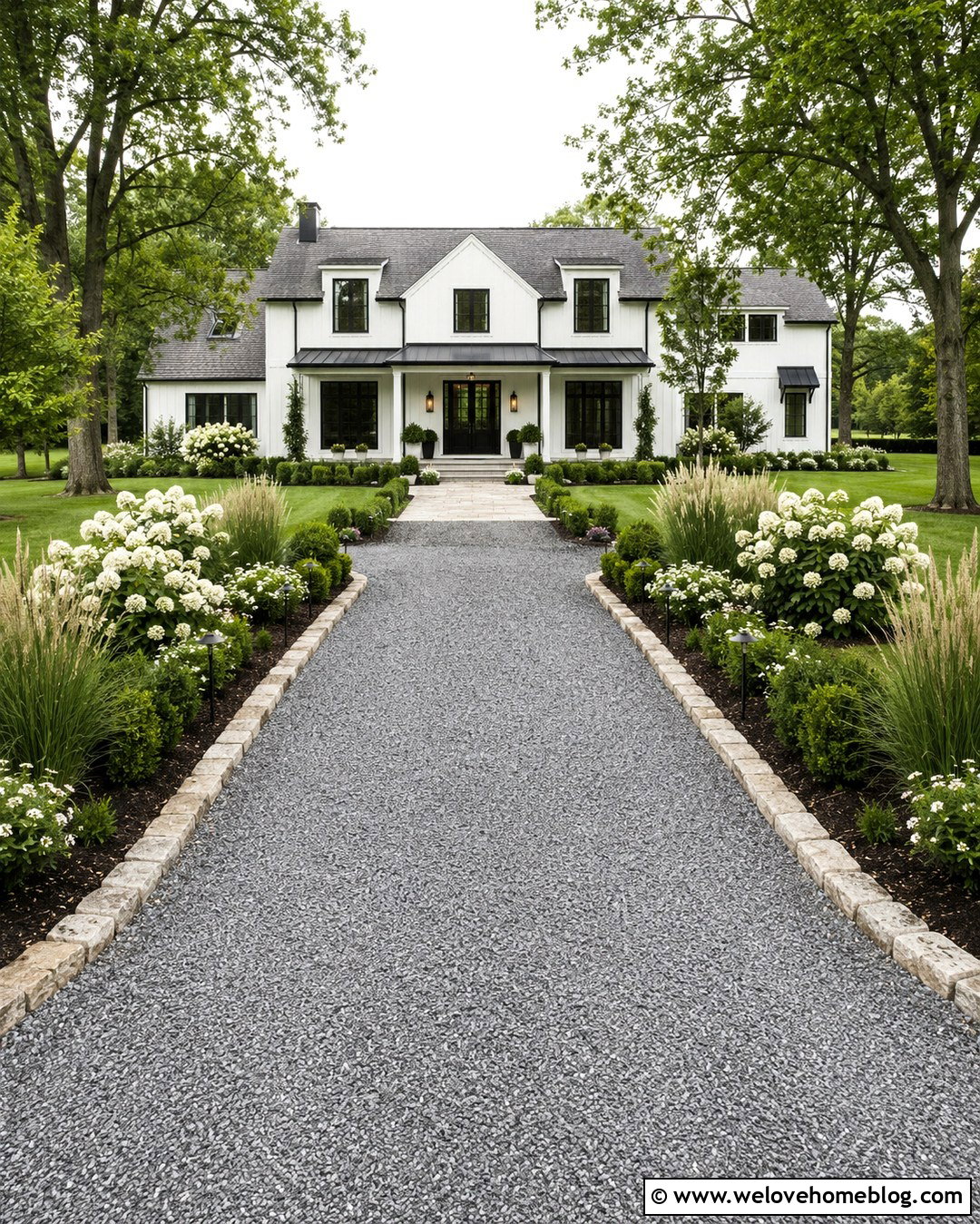
A simple white and green planting palette can complement a modern farmhouse without competing with its exterior. Pair a straight gray gravel driveway with beds edged in weathered limestone. Use white hydrangeas, compact roses, flowering perennials, and rounded evergreen shrubs in repeating clusters. Add a few upright grasses to introduce movement and contrast with the soft flowers. The neutral gravel, pale stone, and white blooms create a cohesive approach to the house. Beds can widen near the porch or garage and become narrower toward the road. Keep the edges broad and gently curved rather than overly decorative. Black path lights or a dark address marker can echo common farmhouse details and provide a crisp finishing accent within the overall landscape.
13. Brick Driveway Garden Bed With Boxwood Borders
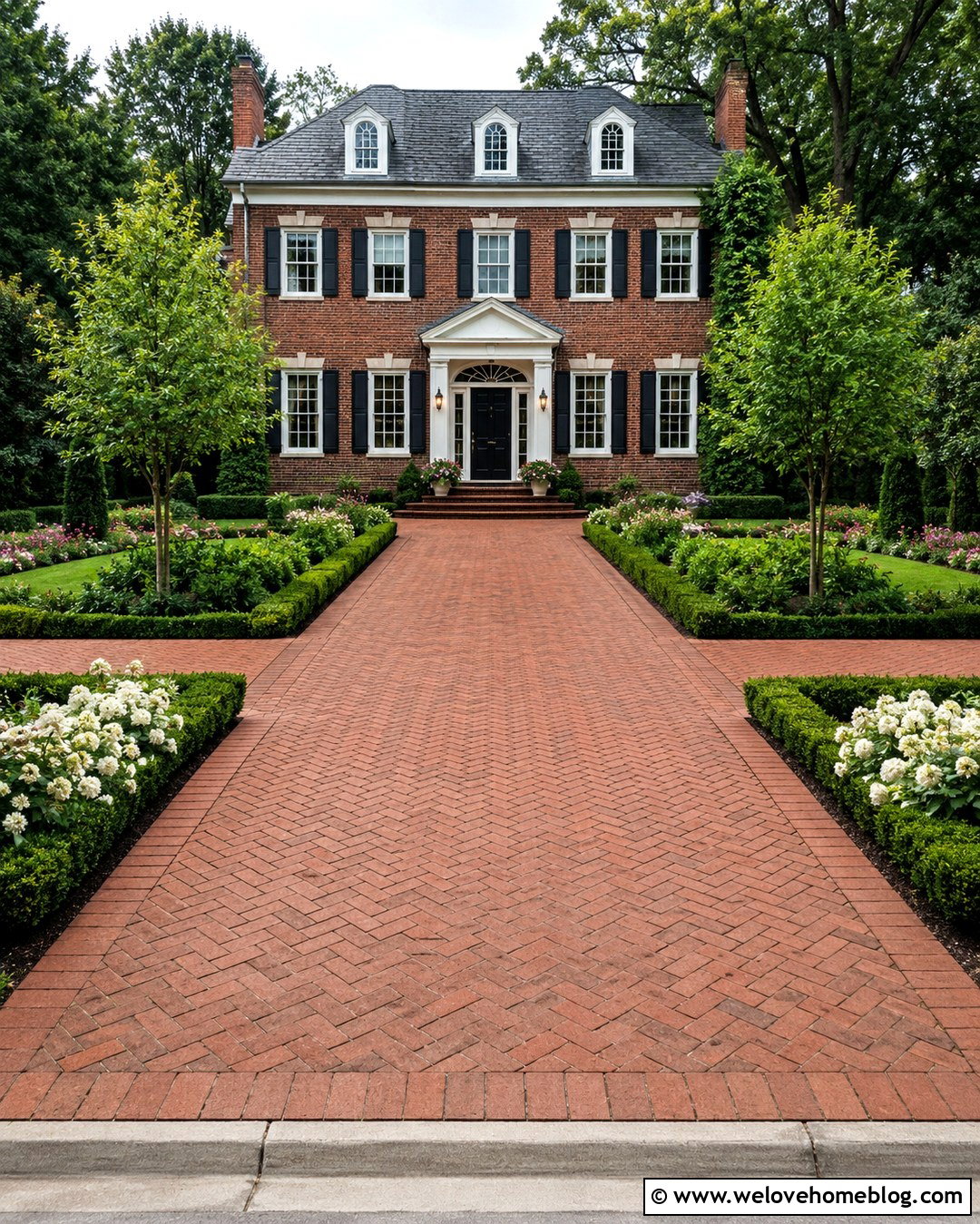
Traditional architecture often benefits from a more structured driveway garden bed. Install red or brown clay brick pavers in a herringbone pattern, then frame both sides with crisp brick-edged planting beds. A low boxwood border can define the front edge, while taller flowering shrubs and a small ornamental tree add height behind it. Repeat the same arrangement near the walkway to create a clear connection with the front entrance. Keep shrubs set back far enough to avoid scratching vehicles as they mature. Regular spacing supports the formal character, but seasonal flowers can introduce controlled color. This complete design suits colonial, Georgian, and traditional brick homes, especially when the driveway brick relates closely to the facade, steps, or garden walls.
14. Desert Driveway Garden Bed With Boulders
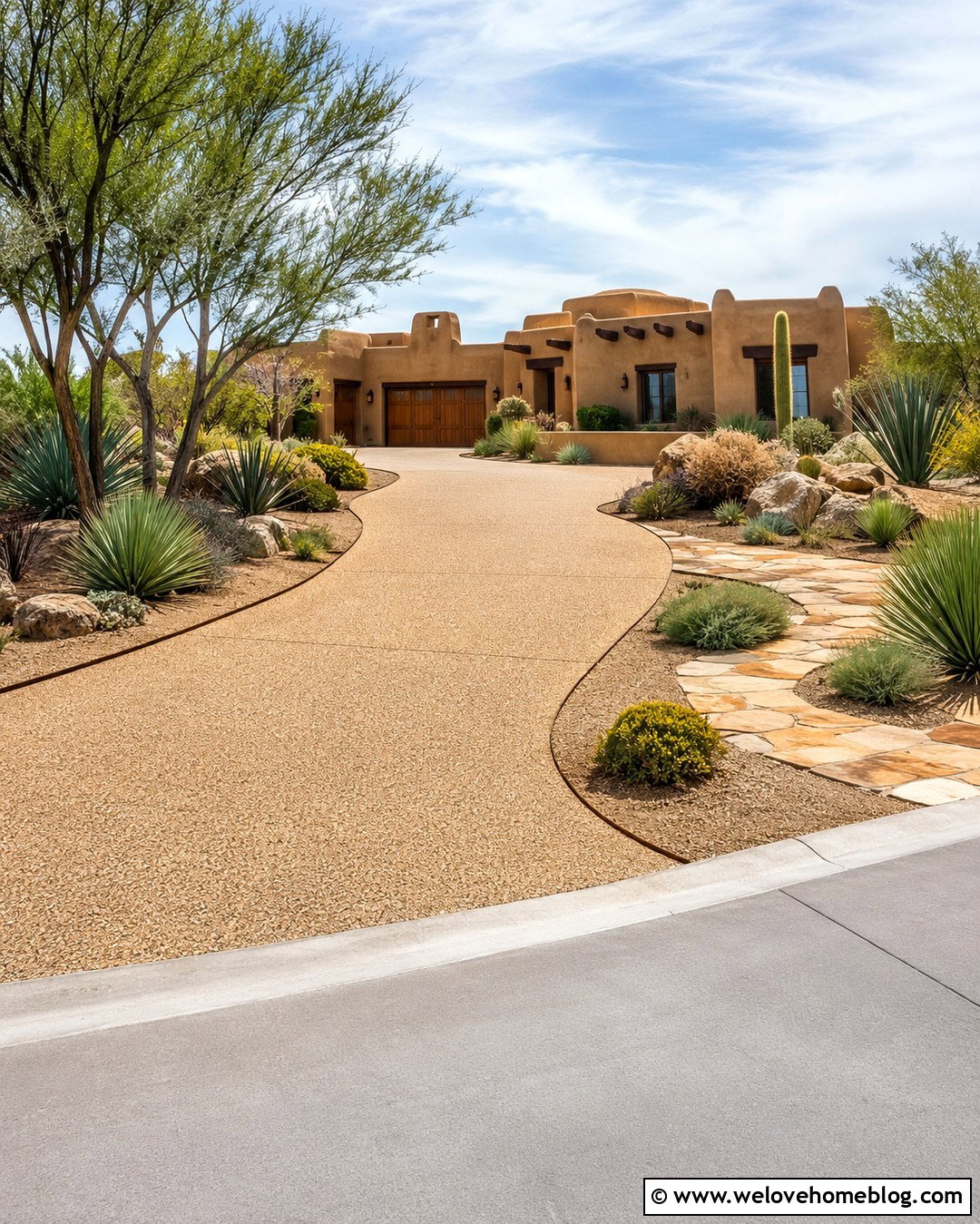
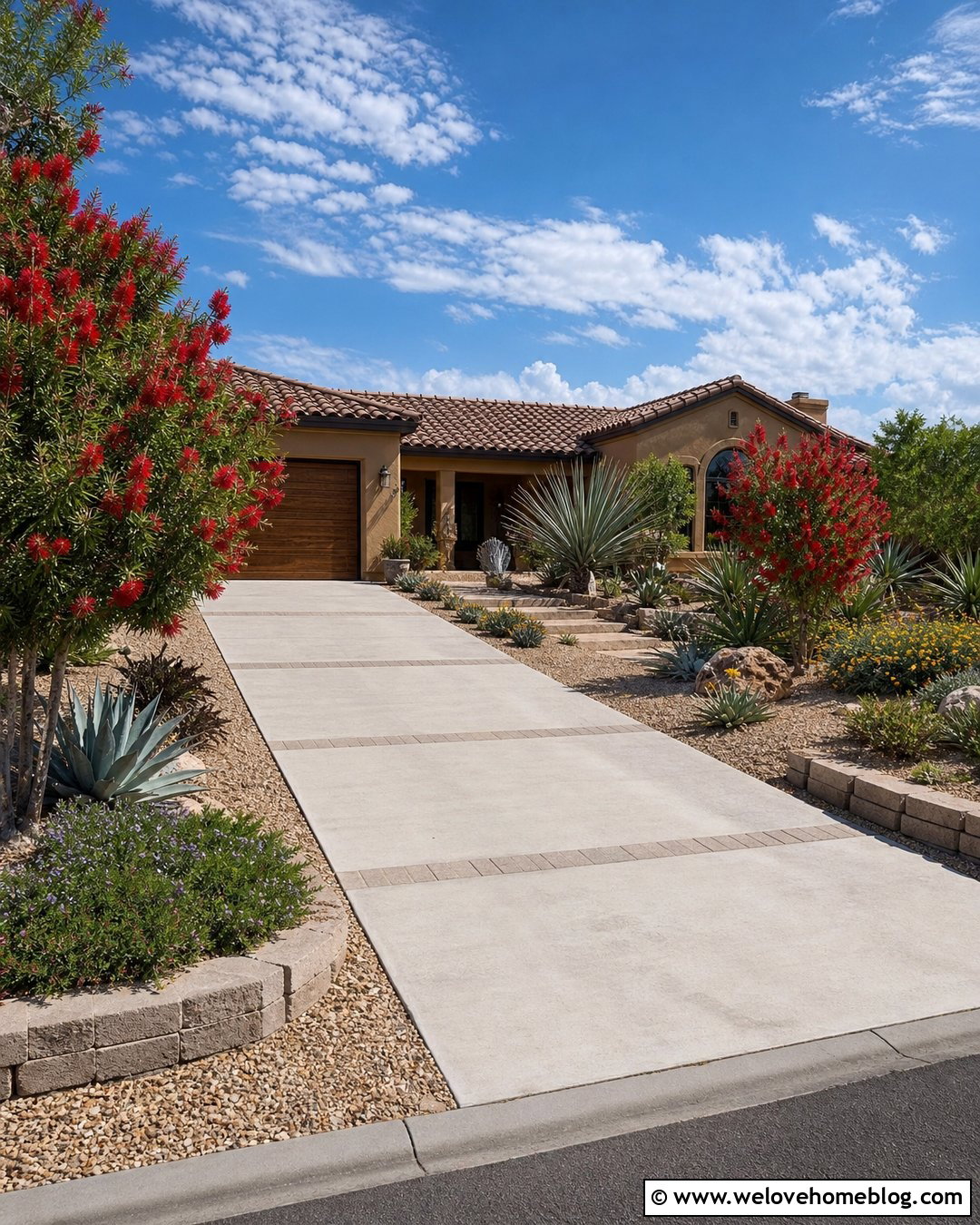
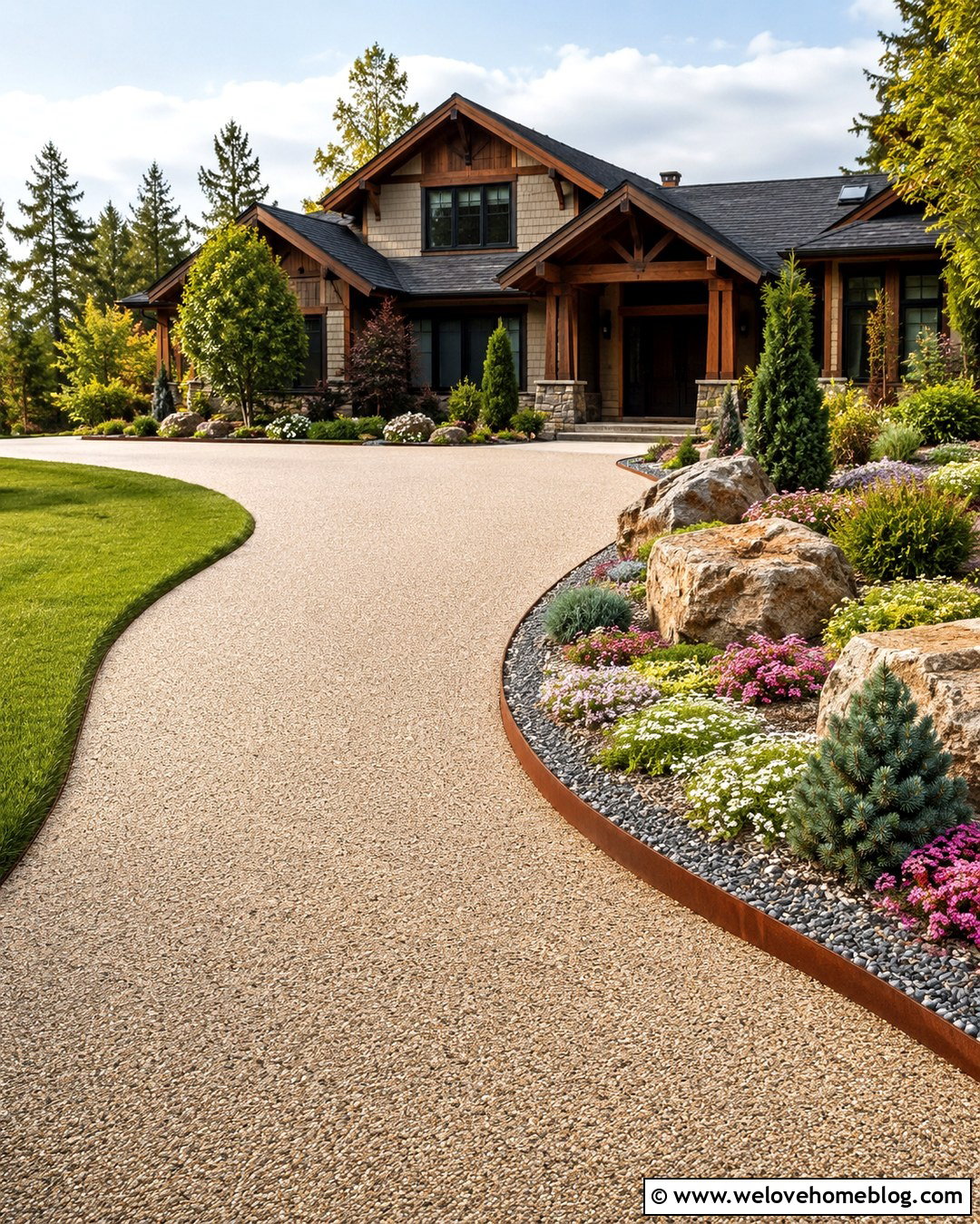
In a dry climate, a driveway garden can rely on strong shapes and contrasting textures instead of dense flowers. Border a warm-toned exposed aggregate driveway with wide beds of decomposed granite. Place several large regional boulders in asymmetrical groups, then surround them with agave, yucca, compact desert shrubs, and ornamental grasses suited to local conditions. Keep sharp or spiny plants away from areas where people exit vehicles. A steel edge between the bed and driveway provides a precise transition and prevents loose material from spreading. Choose a limited stone palette that matches the house and natural surroundings. This complete landscape looks especially effective with Southwestern, adobe, desert modern, and low-profile ranch architecture.


15. Shaded Driveway Garden Bed With Hostas And Ferns
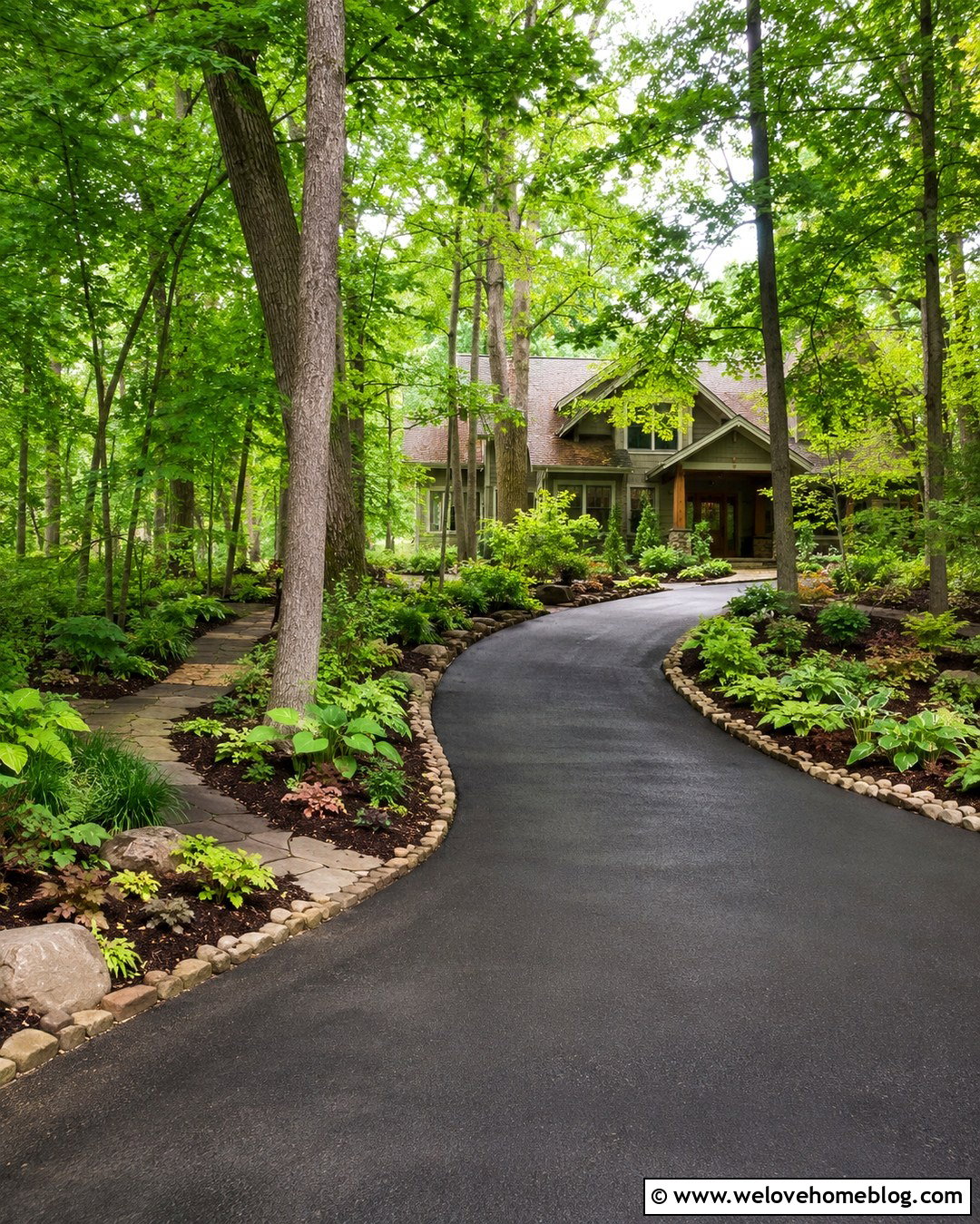
A driveway bordered by mature trees can become a cool, layered garden rather than a bare strip of mulch. Pair a charcoal asphalt driveway with a curved natural stone edge. Plant hostas, ferns, heucheras, sedges, and compact shade-tolerant shrubs in broad groups. Vary leaf size and color so the bed remains interesting even when few plants are flowering. A small woodland-style path can provide access for pruning and watering without compacting the soil. Before digging, locate major tree roots and avoid changing the soil level around established trunks. Leaf mulch or finely shredded bark reinforces the woodland feeling. This complete look works beautifully beside Craftsman, cottage, and wooded contemporary homes where shade is part of the property’s character.
16. Driveway Garden Bed With Roses And Paver Edging
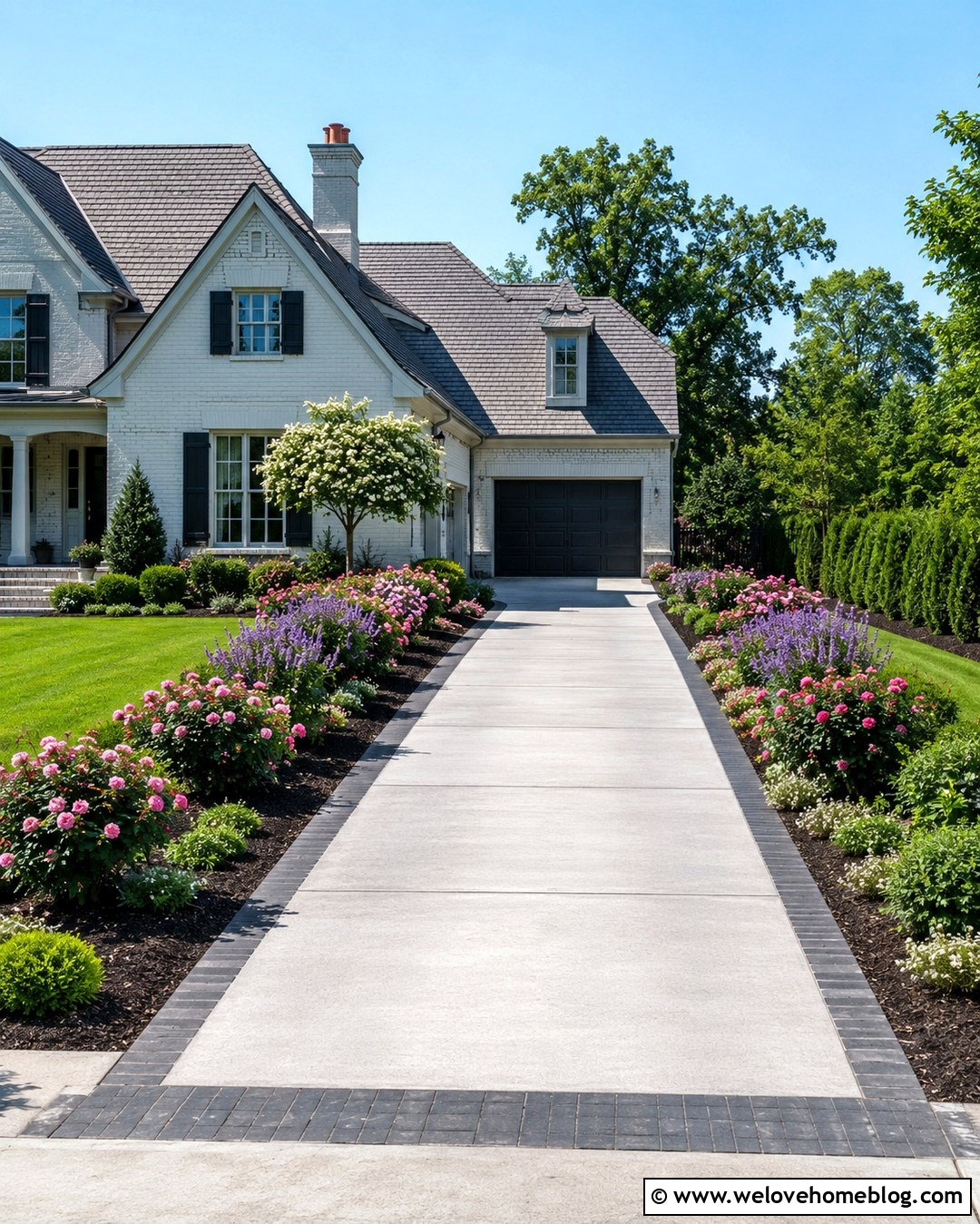
Roses can create a refined driveway border when they are given enough room and paired with lower companion plants. Use a light gray poured concrete driveway with a contrasting charcoal paver ribbon along the edge. Behind it, plant compact shrub roses in repeating clusters, followed by catmint, salvia, or low ground cover at the front. The smaller plants help conceal bare lower stems and create a fuller garden appearance. Choose roses appropriate for local growing conditions and place thorny growth away from vehicle doors. A drip irrigation line can keep watering focused within the bed rather than on the driveway. This colorful but orderly combination complements suburban, cottage, and traditional homes without making the driveway feel overly formal.
17. Driveway Garden Bed With A Mailbox
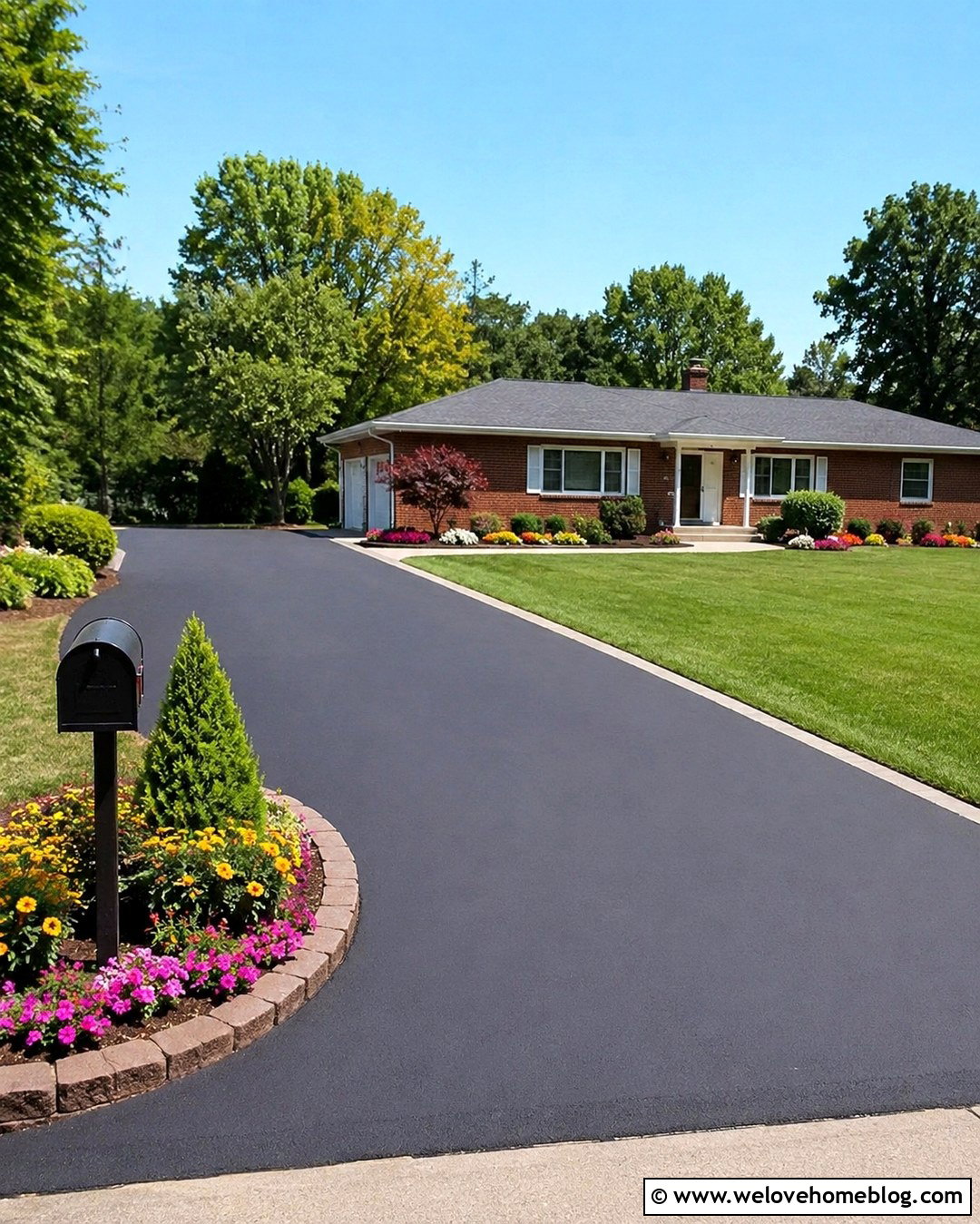
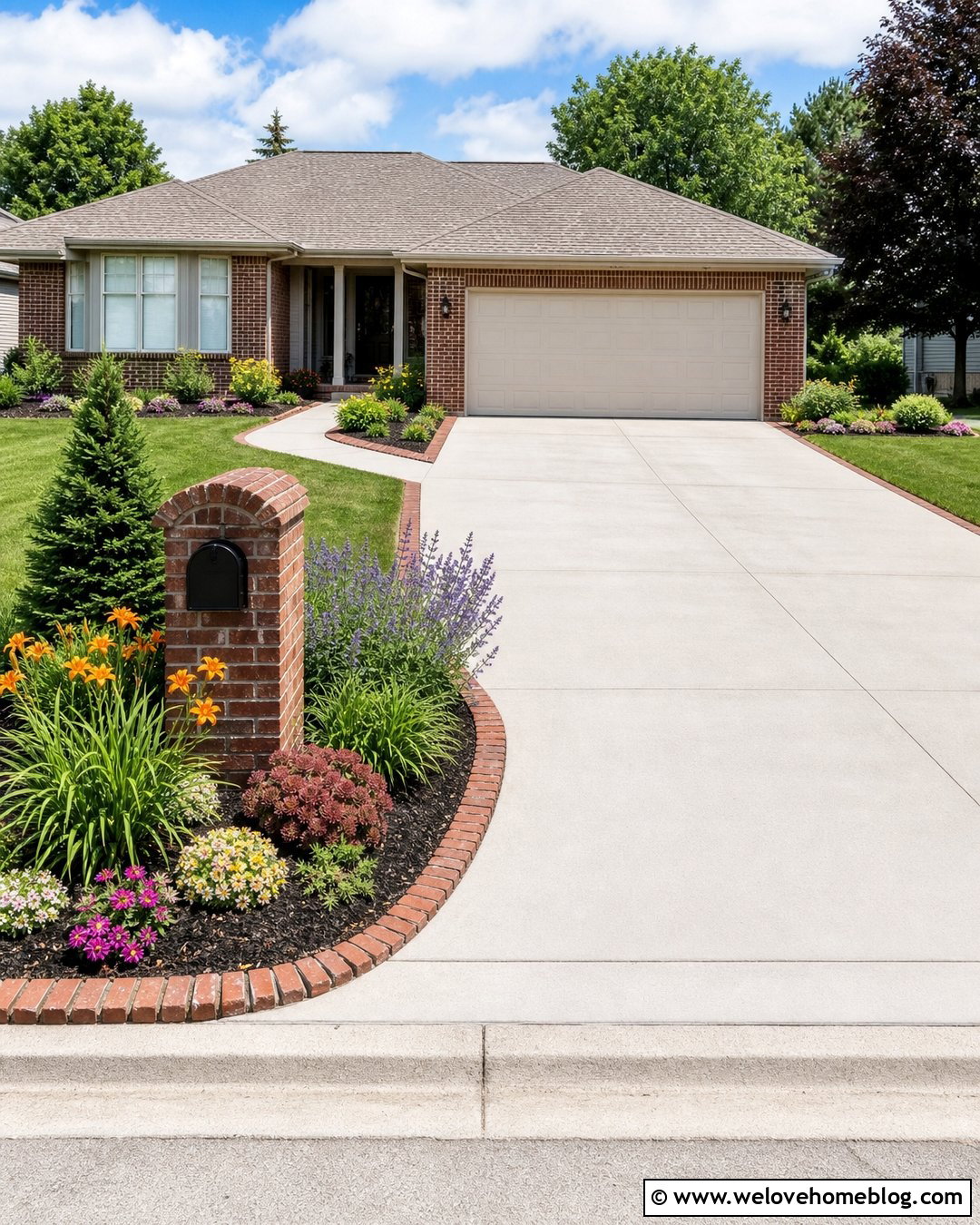
A mailbox bed can mark the driveway entrance while connecting it to the larger front-yard landscape. Surround a black asphalt driveway apron with a curved bed edged in clay brick. Place the mailbox toward the back of the bed so plants do not interfere with delivery access. Use one compact evergreen, several low perennials, and seasonal flowers that stay below the mailbox opening. Repeat the same brick and flowers in a longer bed closer to the house. This creates visual continuity instead of leaving the mailbox as an isolated feature. Leave enough clear space for maintenance, snow removal, and safe roadside visibility. A simple address plaque can complete the entrance without adding unnecessary clutter or competing colors.
18. Corner Driveway Garden Bed With A Small Tree
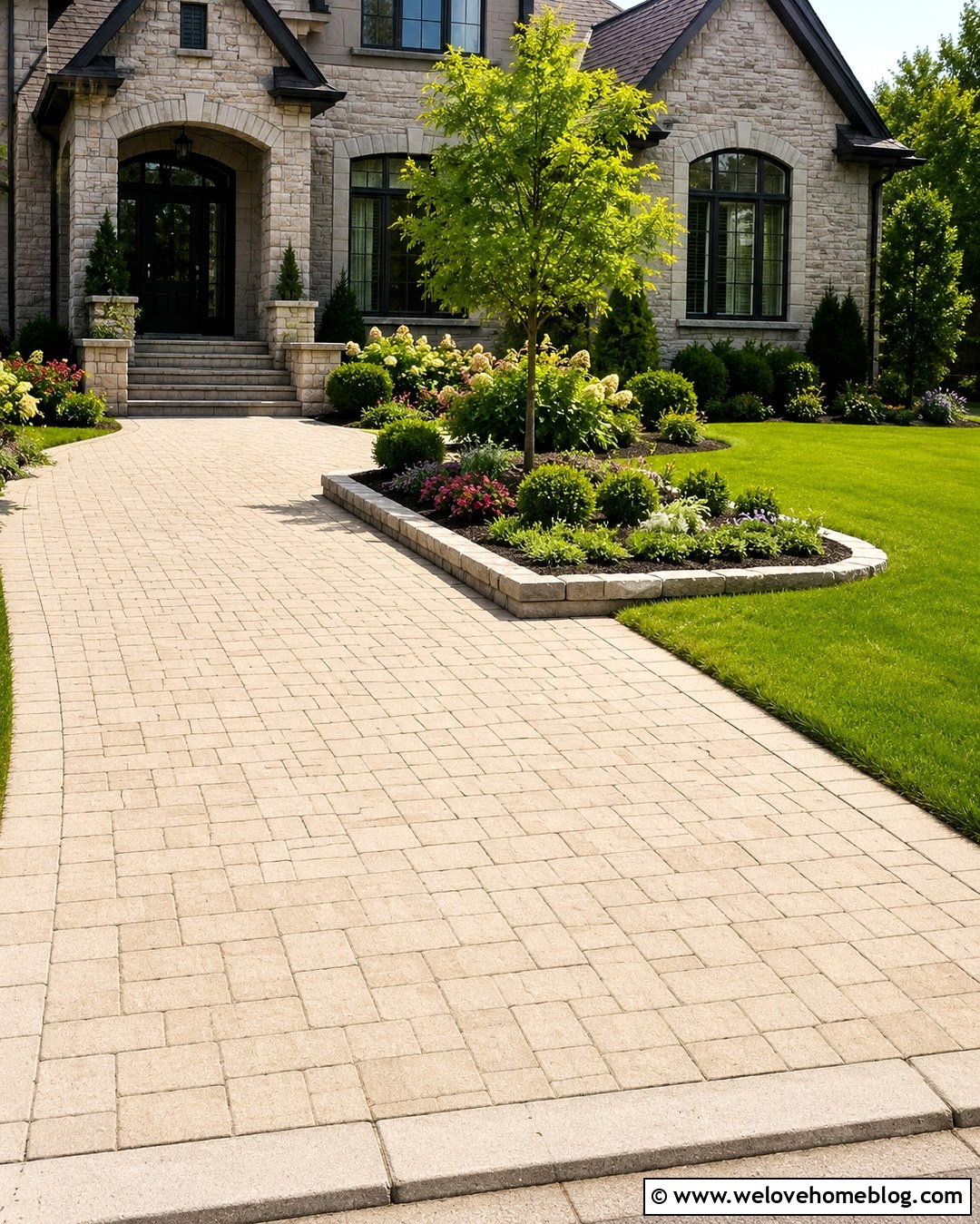
The open corner where a driveway meets a front walkway is an ideal place for a layered planting bed. Pair tan concrete pavers with an L-shaped garden bed defined by limestone blocks. Place a small ornamental tree near the center, but allow enough distance from the pavement for roots and branches to develop safely. Surround it with compact shrubs, flowering perennials, and low ground cover. Curve the outside edge toward the lawn to soften the hard angle between the two paved surfaces. Keep the lowest plants near the walkway for clear movement and visibility. Repeating the limestone around the porch steps or foundation beds makes the corner garden feel like an intentional part of the complete entrance design.
19. Long Driveway Garden Beds With Repeating Plants
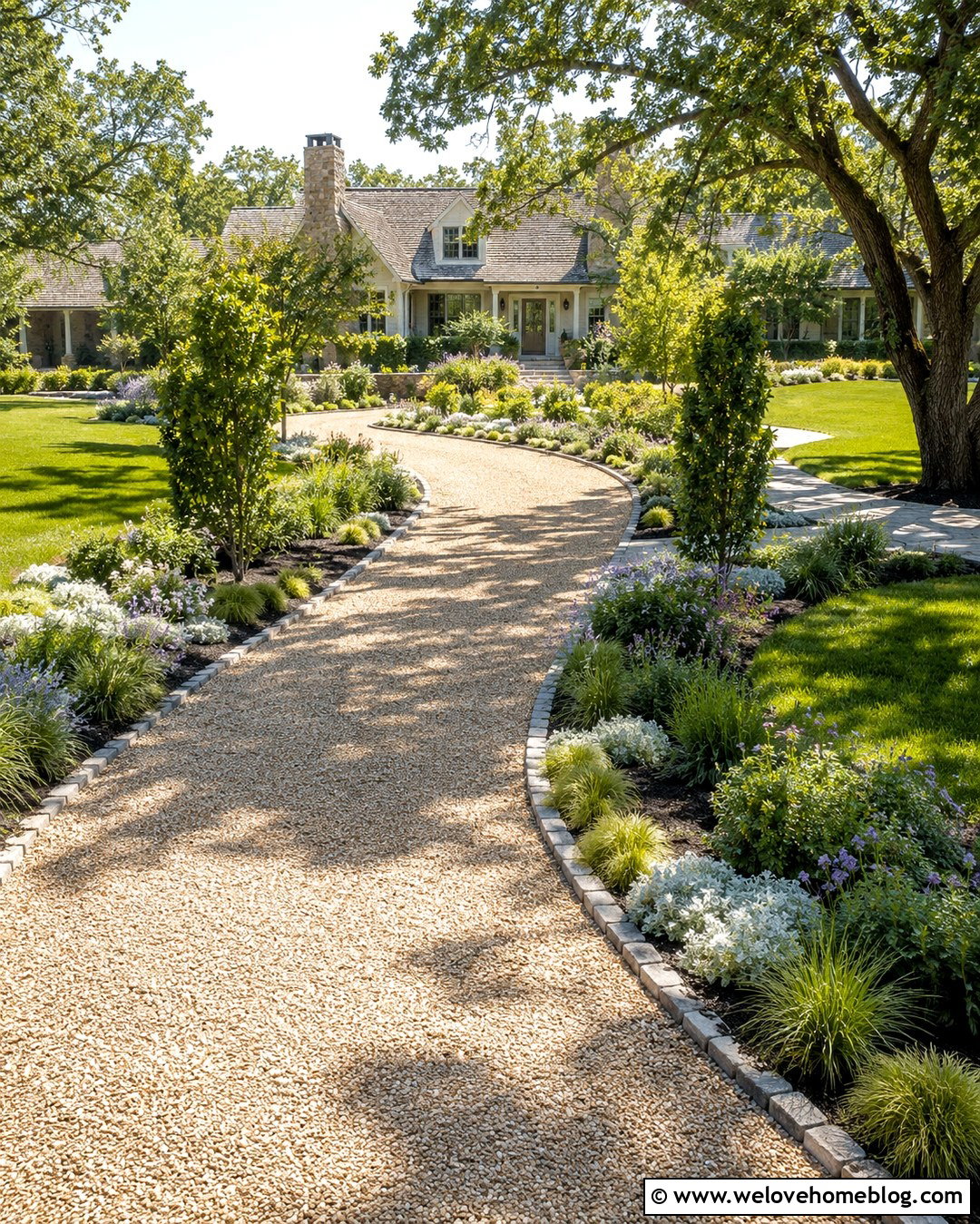
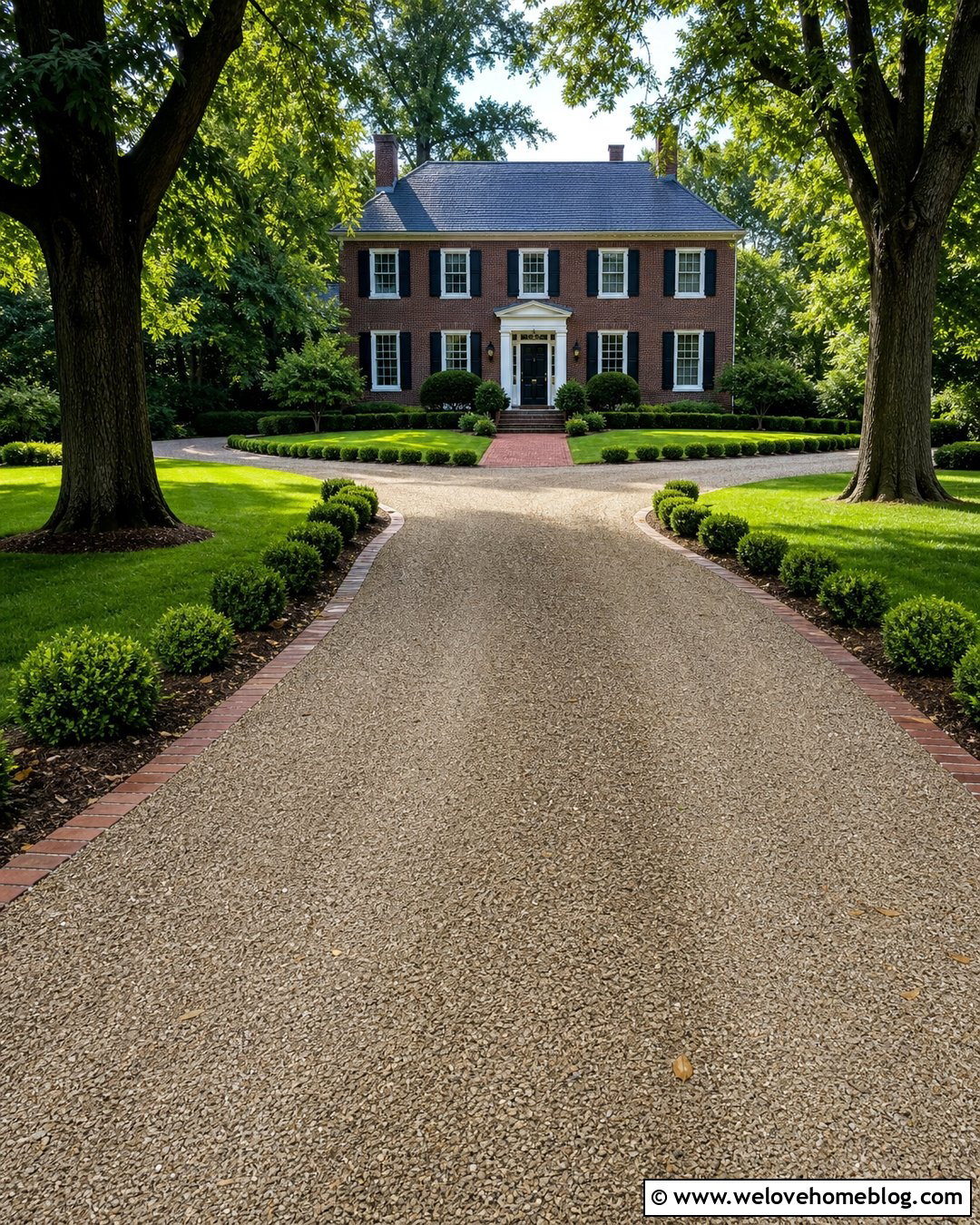
A long driveway needs a simple planting rhythm that can be appreciated from both the street and the house. Frame a curved pea gravel drive with broad beds edged in weathered cobblestone. Repeat groups of ornamental grasses, flowering shrubs, and small trees at measured intervals rather than planting one continuous hedge. Open sections of ground cover or lawn between the groups provide breathing room and reduce maintenance. Near the house, increase the planting density to create a stronger sense of arrival. Keep the roadside section lower for visibility. Repeating a few dependable plants makes the long landscape feel unified and avoids a patchwork appearance. The approach is particularly suitable for country homes, large ranches, and wooded residential properties.

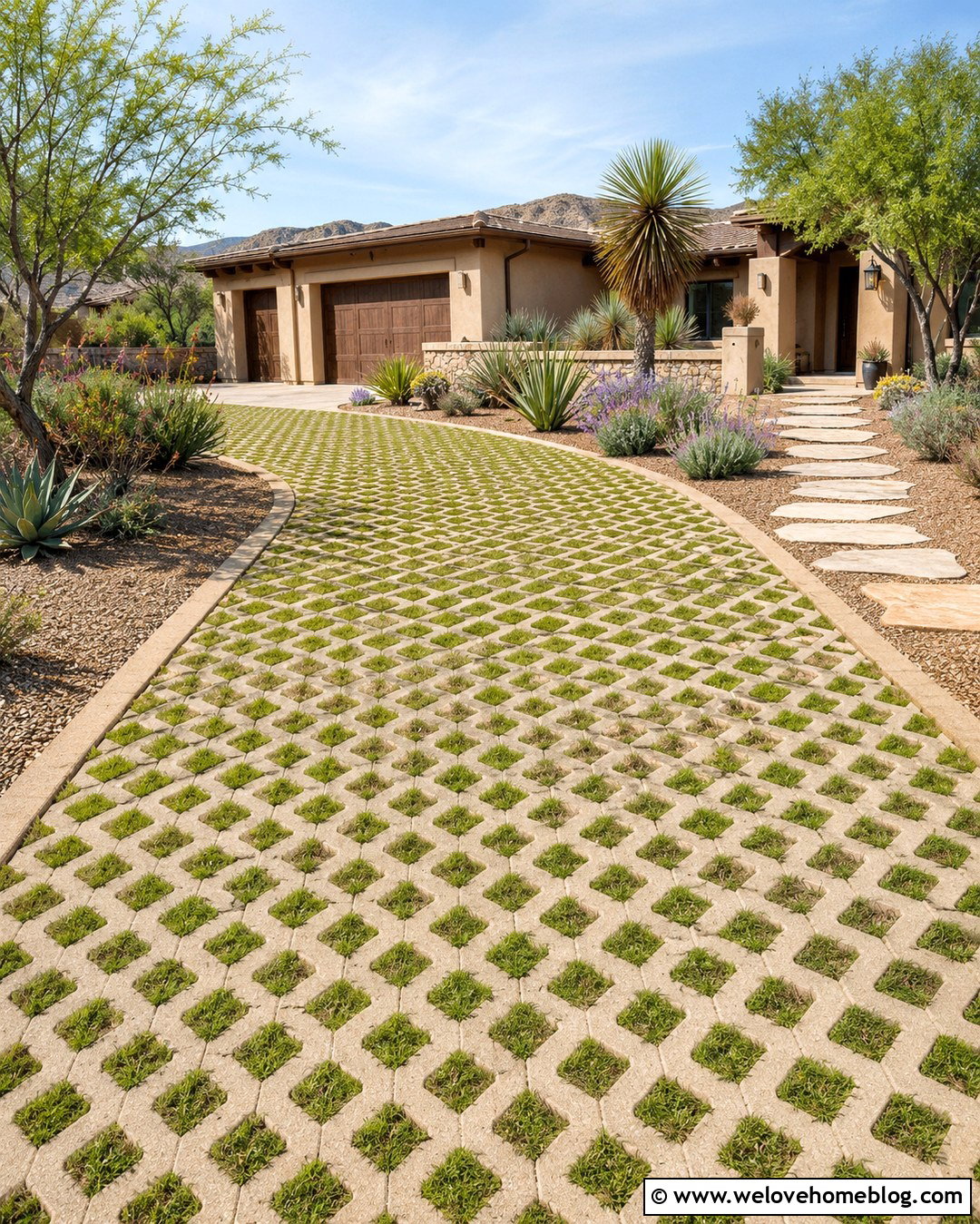
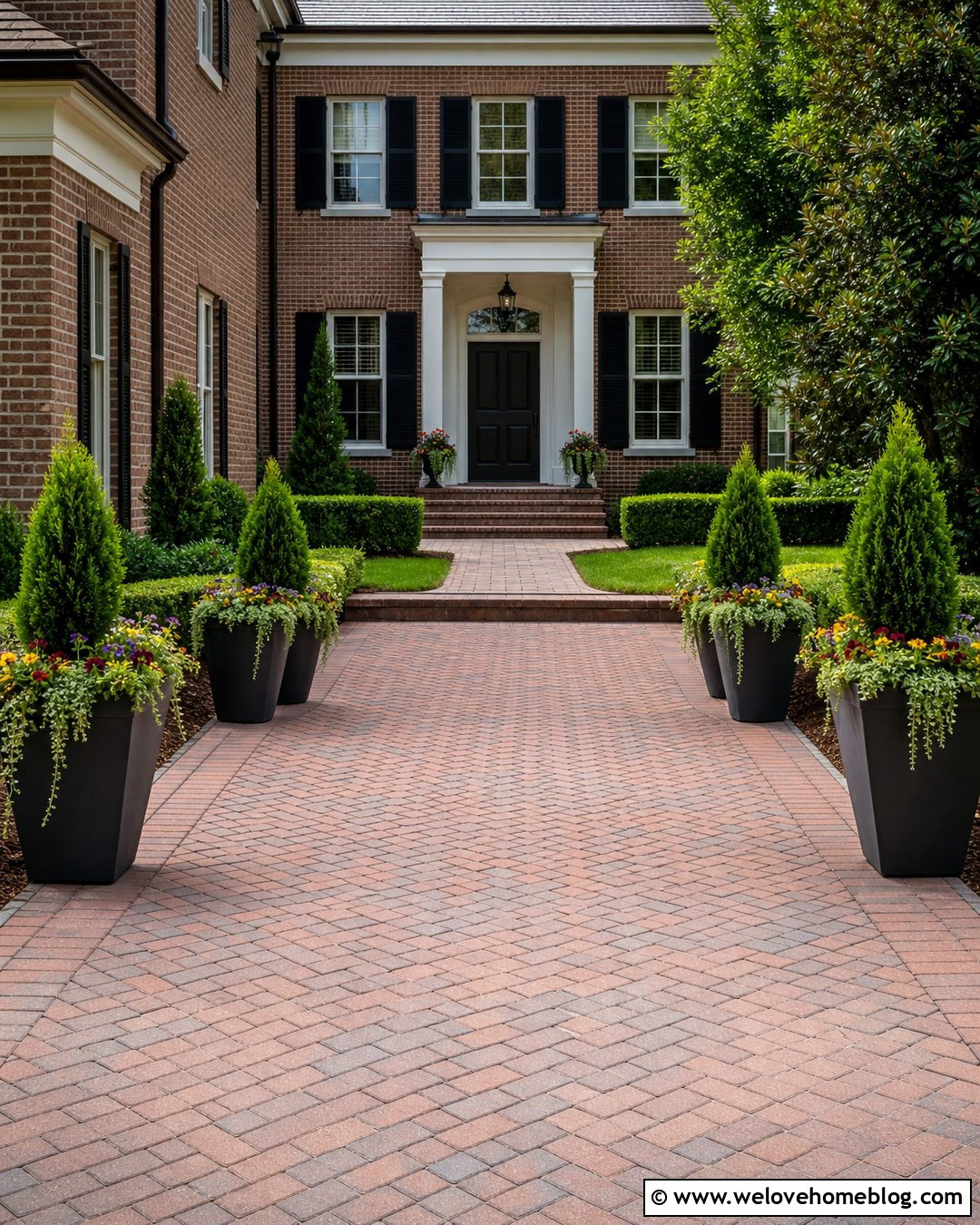
20. Driveway Rain Garden Bed With Permeable Pavers
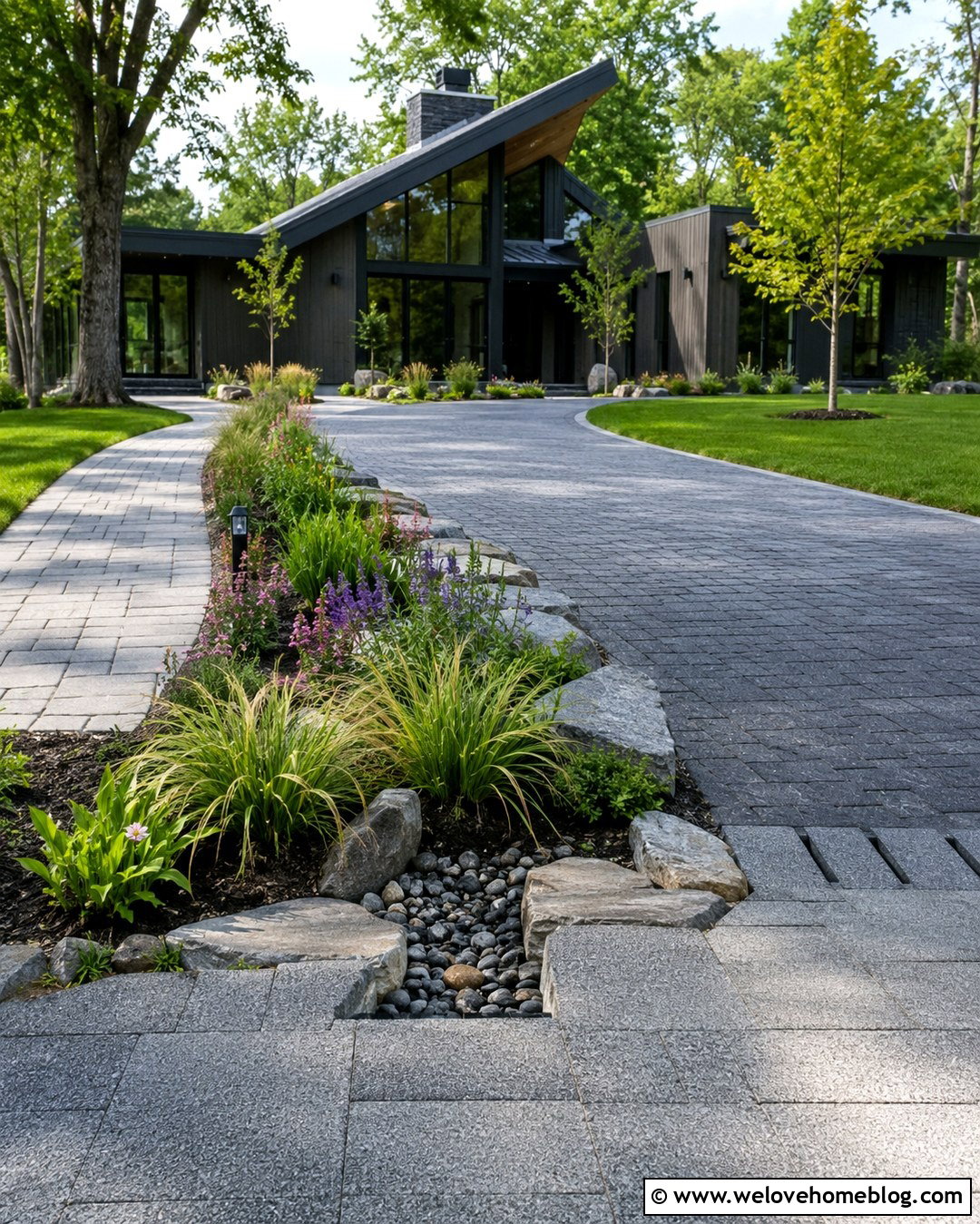
A shallow rain garden can become an attractive part of the driveway landscape when site conditions and drainage allow it. Use permeable concrete pavers for the driveway and create a gently depressed planting bed on the lower side. Define the edge with flat stone or a clean paver curb that allows water to enter at planned openings. Fill the bed with moisture-tolerant grasses, flowering perennials, and compact shrubs appropriate for local conditions. The depression should remain separate from building foundations, septic areas, and underground utilities. Include an overflow route for heavier storms. When professionally planned, this complete design combines a contemporary driveway surface with layered planting and a practical place for temporarily collecting and filtering runoff. ()
Conclusion:
These 20 driveway garden beds ideas show how planting can improve almost any driveway, from a narrow asphalt strip to a large circular entrance. Begin with the practical details, including sunlight, drainage, visibility, vehicle clearance, and mature plant size. Then choose a bed shape, border material, and limited plant palette that suits your home. Repeating colors and materials between the driveway, walkway, and facade will create a more connected design. For easier maintenance, use defined edges and plants adapted to your local climate. Whether you prefer cottage flowers, formal shrubs, native plants, or modern grasses, the strongest design will balance attractive landscaping with safe, convenient access to your home.

Related posts:


Leave a Reply