
A well-designed driveway entrance should feel like part of the garden, not simply a place where pavement meets the street. This collection of **20 Driveway Garden Entrance Ideas** explores complete looks that combine practical driveway surfaces with thoughtful planting, attractive borders, gates, pillars, lighting, and walkways. The best layout reflects the home’s architecture while keeping sightlines open and leaving enough room for vehicles to turn safely. It should also account for drainage, maintenance, mature plant size, and local growing conditions. From cottage flower borders and tree-lined gravel approaches to modern concrete entrances with ornamental grasses, there is an option for nearly every property. Use these **20 Driveway Garden Entrance Ideas** to create a welcoming approach that improves both function and curb appeal.

1. Gravel Driveway Cottage Garden Entrance
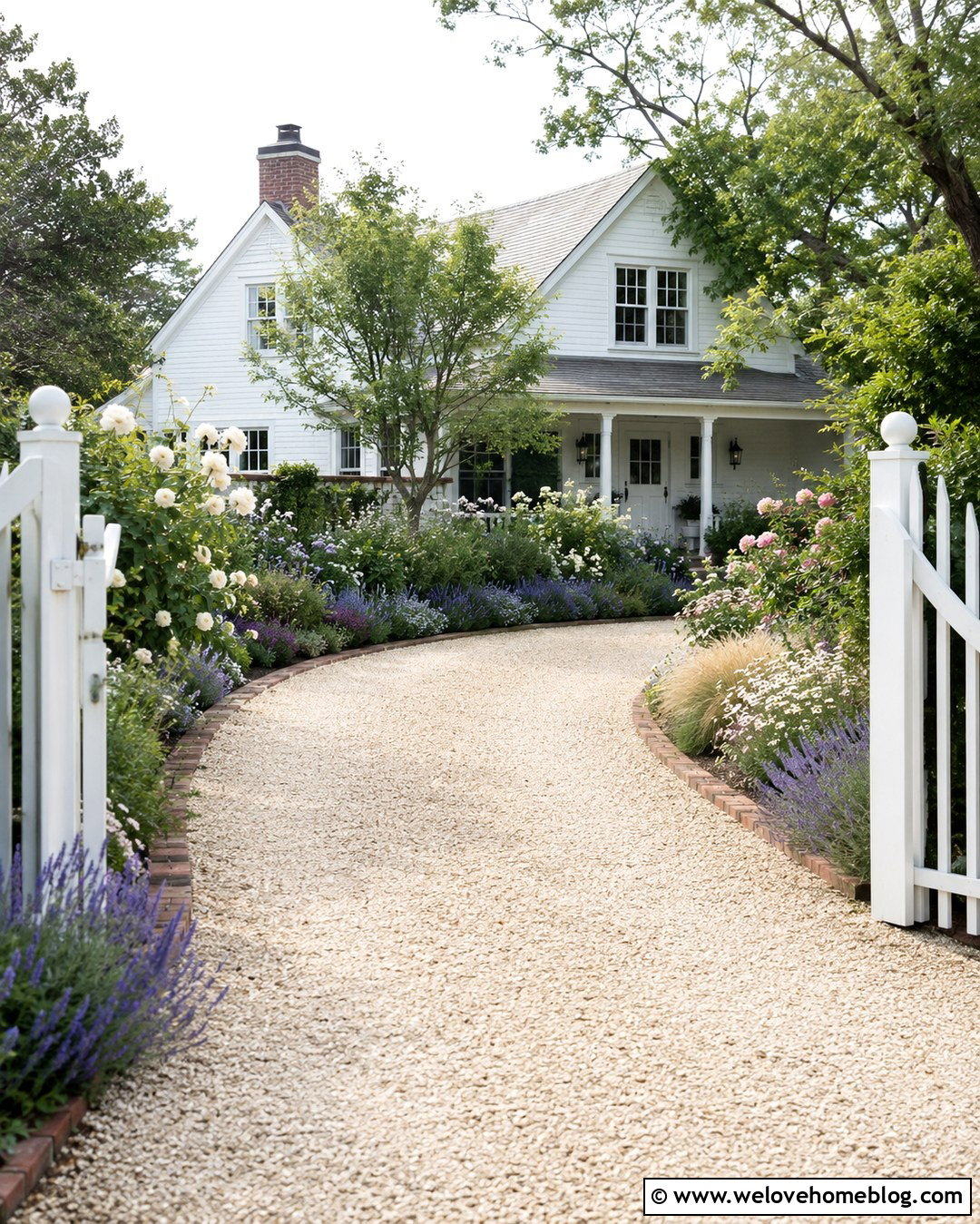
A pale gravel driveway framed by overflowing flower beds creates an inviting cottage-style entrance. Use compacted crushed limestone or warm beige gravel for the main surface, then contain it with clay brick or natural cobblestone edging. At the roadside, widen the planting beds into gentle curves so the entrance feels generous rather than narrow. Layer compact roses, catmint, salvia, daisies, and ornamental grasses for long-lasting color and texture. A simple painted wood gate can mark the entrance without making it feel closed off. Keep taller plants behind low ground covers to protect visibility when leaving the driveway. Repeating several flowers near the house helps connect the entrance garden with the rest of the front yard and creates a more cohesive arrival.
2. Modern Concrete Driveway Garden Entrance
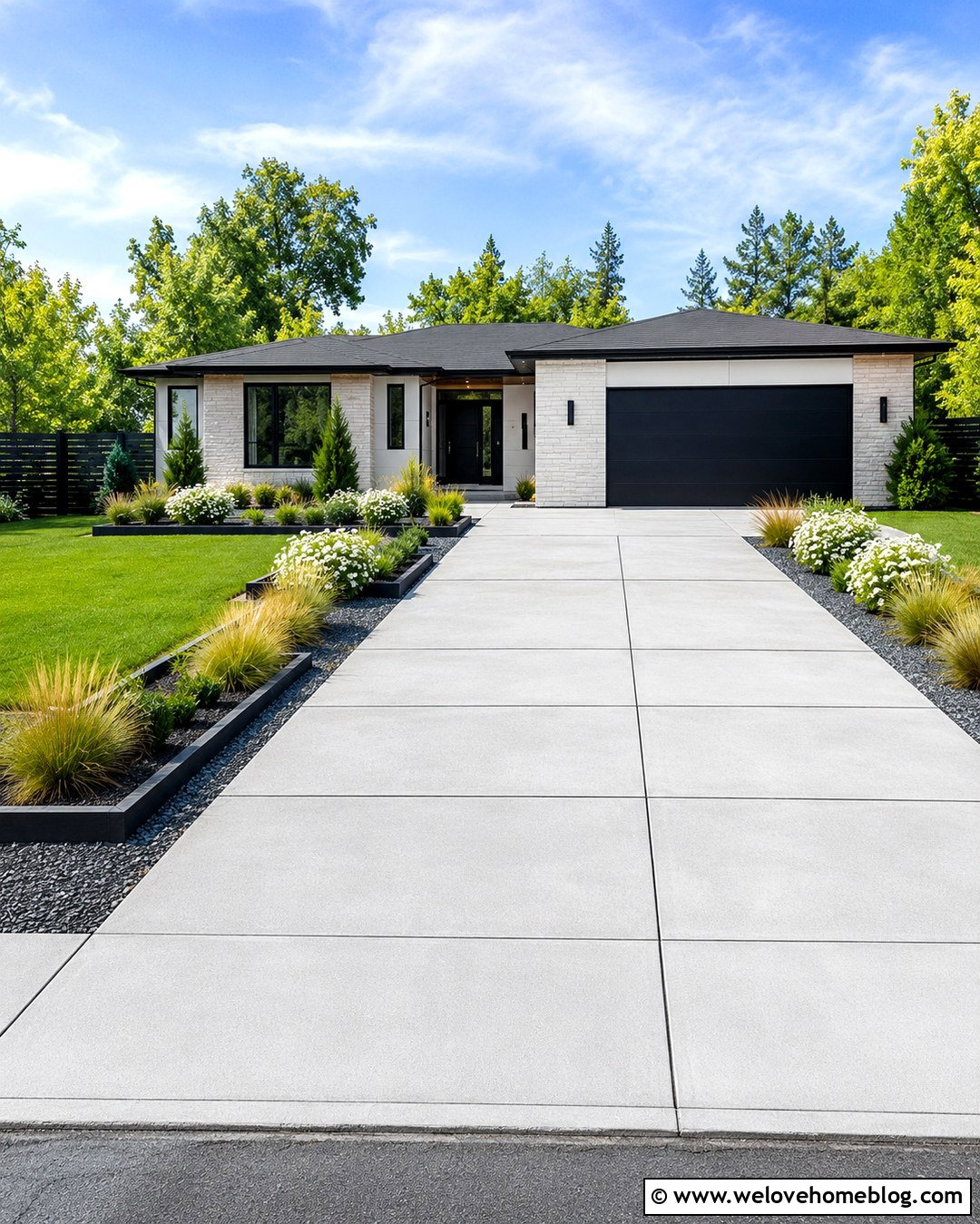
Clean lines work especially well when the planting is simple but strong. Start with a light gray poured concrete driveway divided by narrow control joints or darker paver bands. Form rectangular garden beds on both sides of the entrance and fill them with ornamental grasses, compact evergreens, and low flowering perennials. Black steel edging provides a crisp transition between concrete, gravel mulch, and plants. A horizontal slat fence or matching pedestrian gate can add privacy without overwhelming the design. Choose a restrained plant palette and repeat each variety in groups instead of mixing many unrelated colors. Upright grasses soften the hard surface, while spreading ground covers make the entrance feel established. This complete look suits contemporary homes, modern ranch houses, and updated midcentury properties.
3. Brick Driveway Colonial Garden Entrance
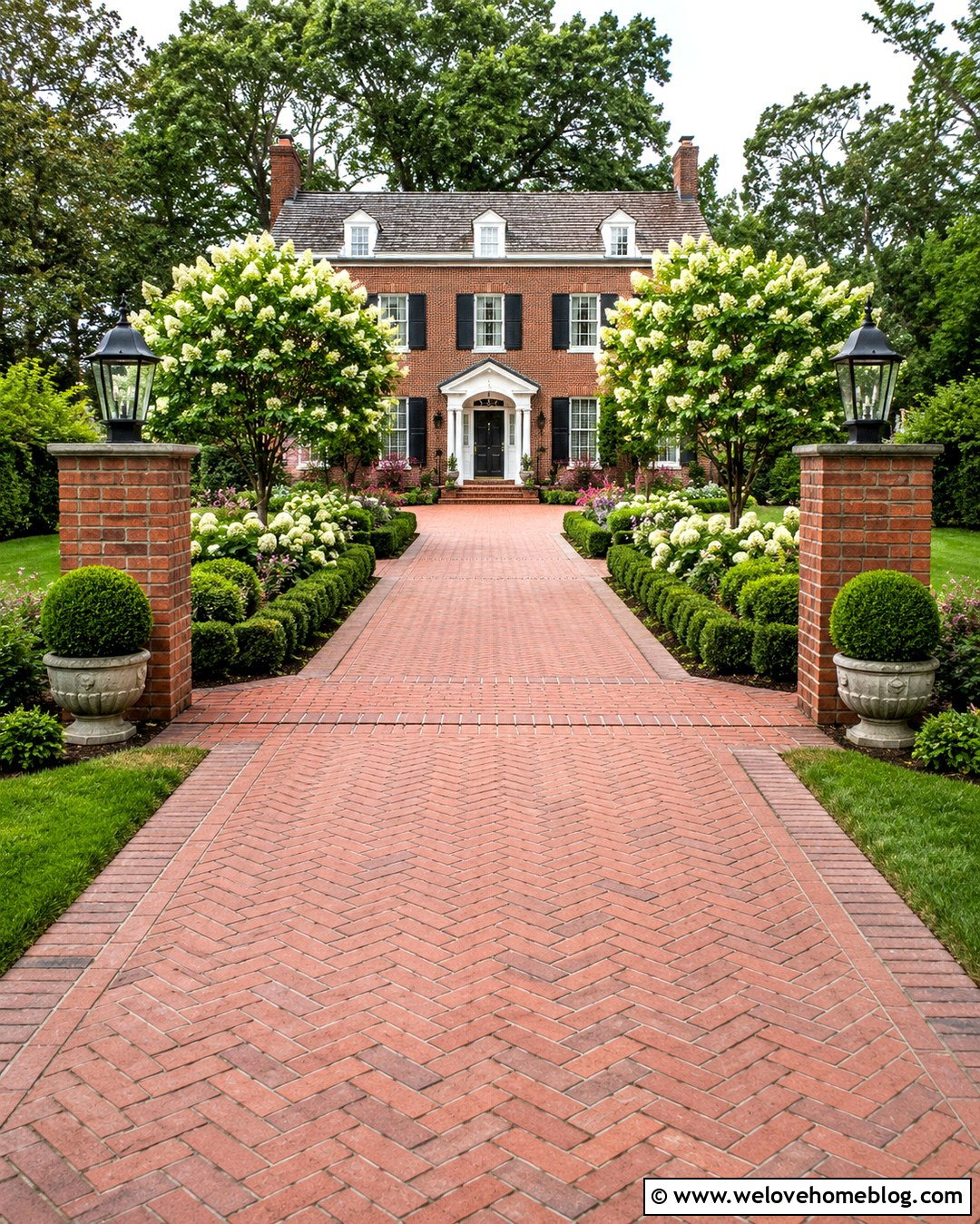
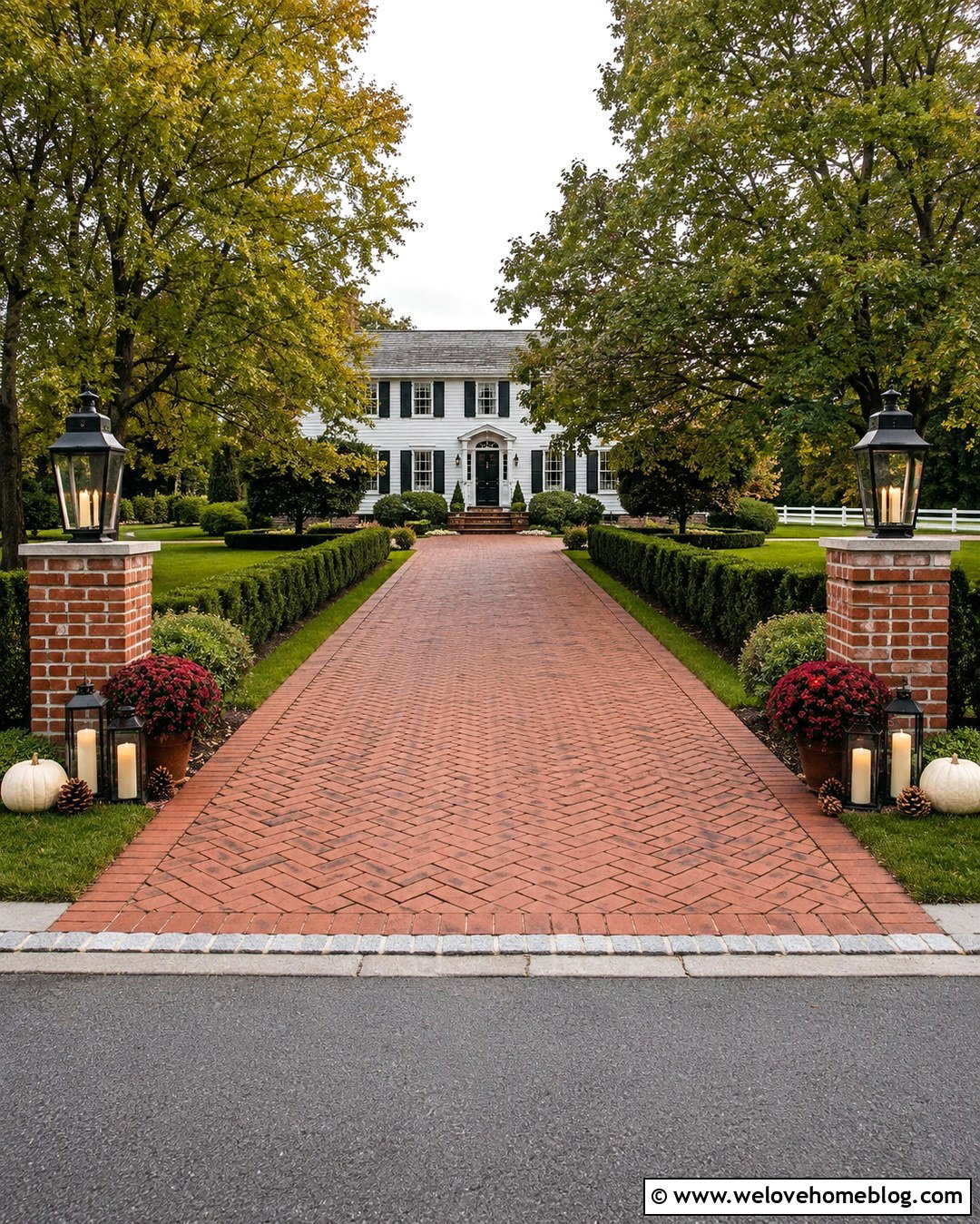
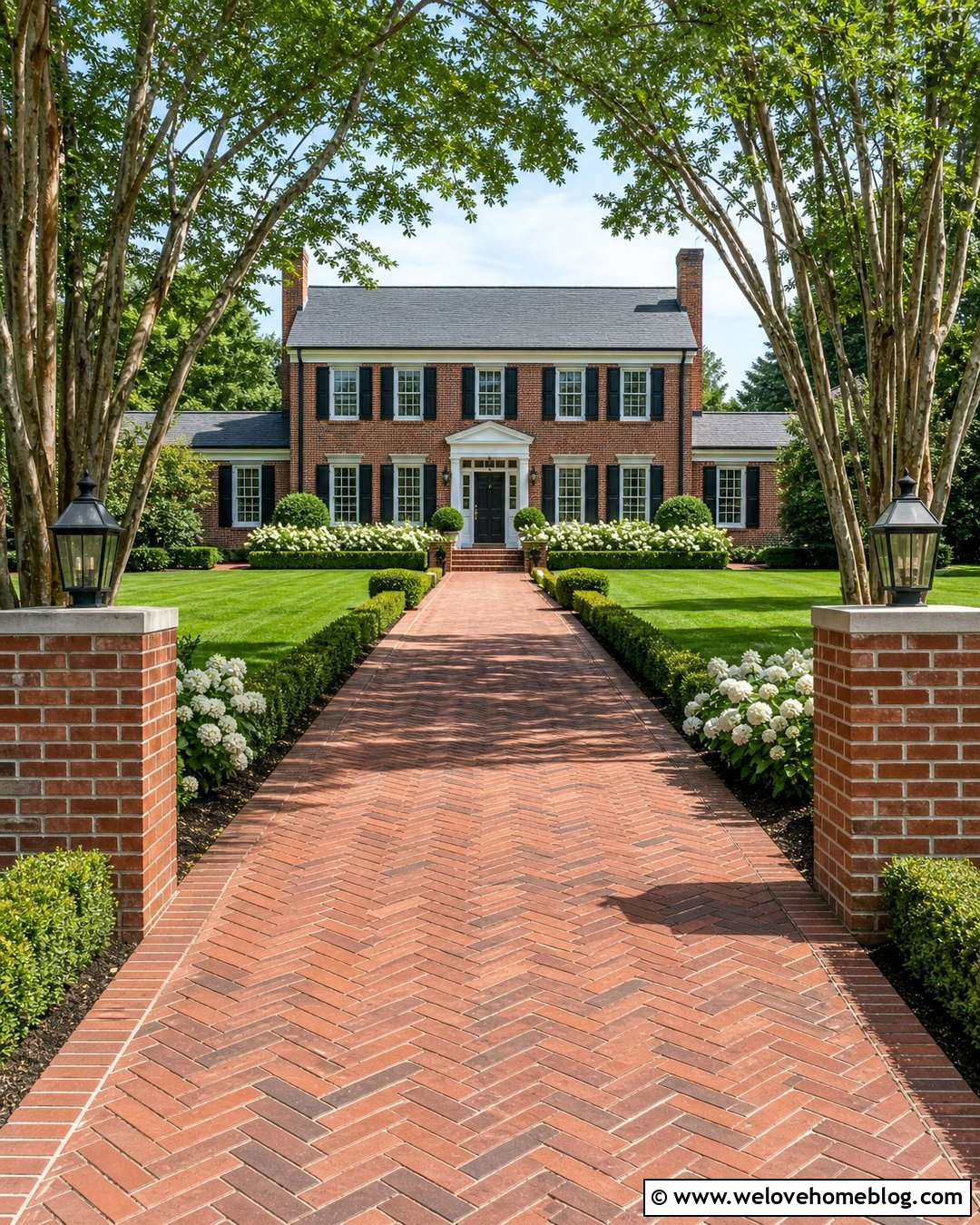
Red clay brick pavers can create a traditional entrance that feels naturally connected to a Colonial home. Lay the driveway in a herringbone pattern for visual movement, then use a straight soldier-course border to define the edges. Symmetrical garden beds reinforce the home’s balanced architecture. Place clipped boxwoods near the road, followed by hydrangeas, white flowering perennials, and one small ornamental tree on each side. Brick pillars topped with simple lanterns can frame the opening without requiring a gate. Match the pillar brick as closely as possible to the driveway or house facade. A brick walkway branching toward the front door completes the design. Keep shrubs pruned below driver sightlines, and leave a clear buffer beside the pavement so branches do not scrape vehicles.
4. Paver Driveway Formal Garden Entrance
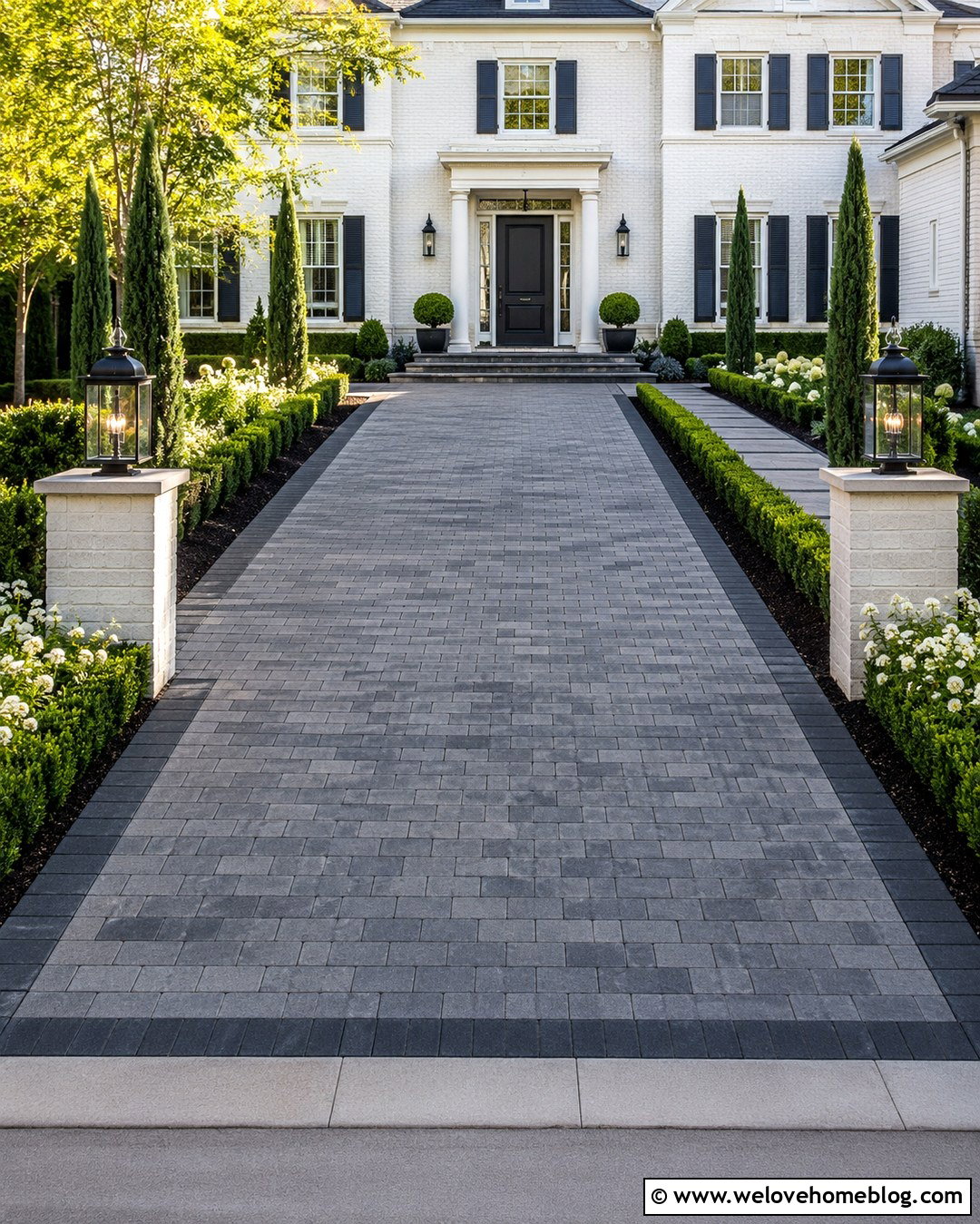
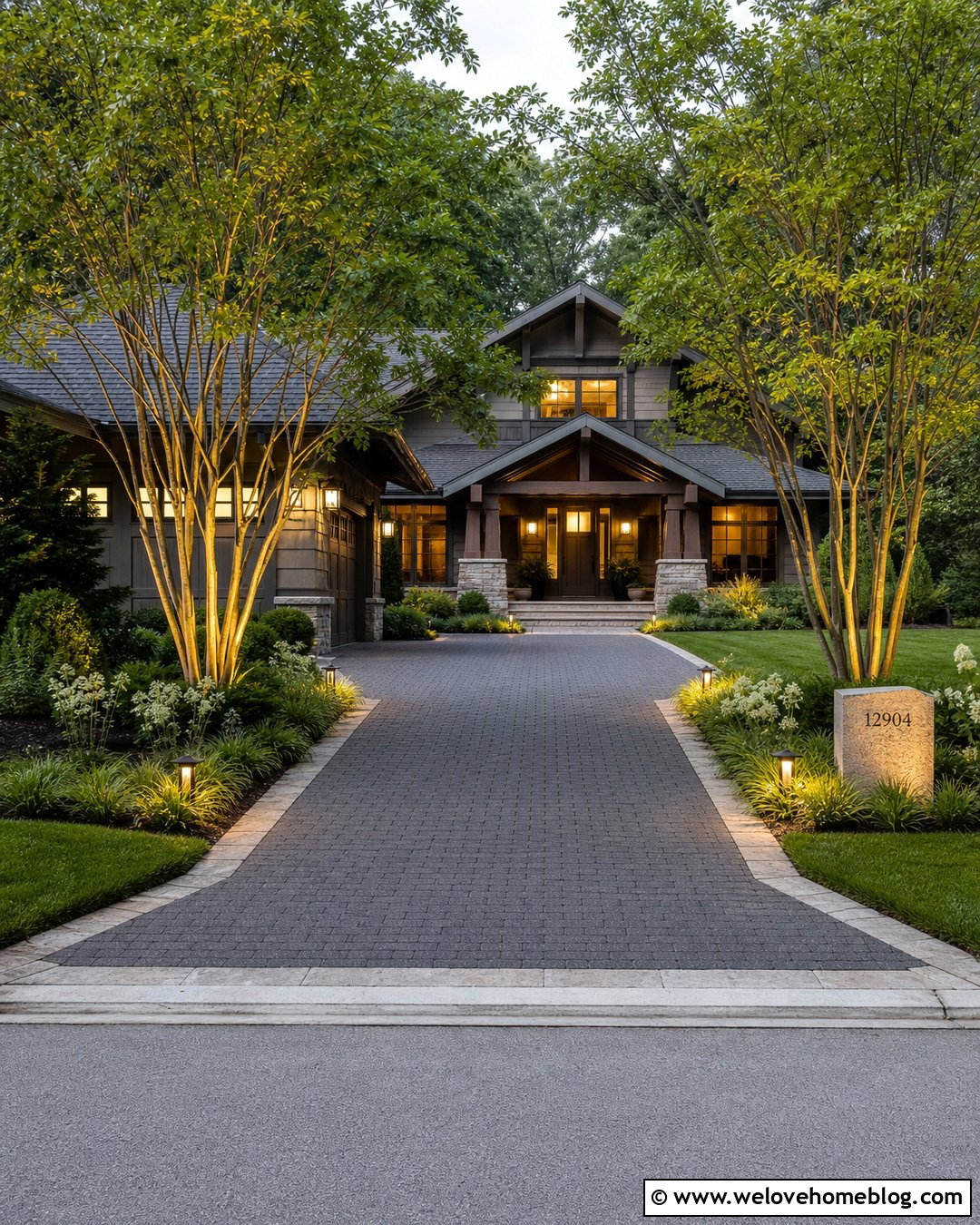
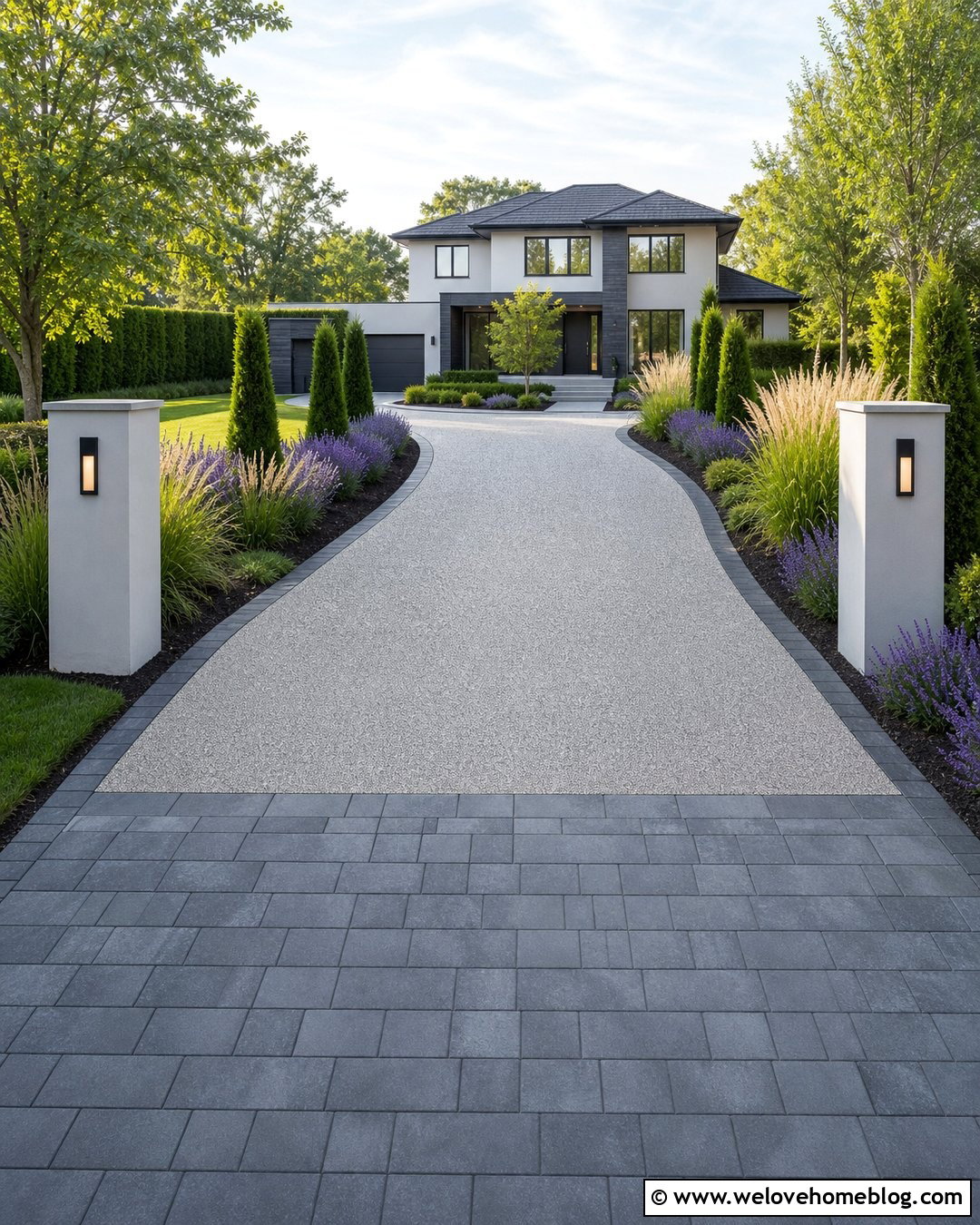
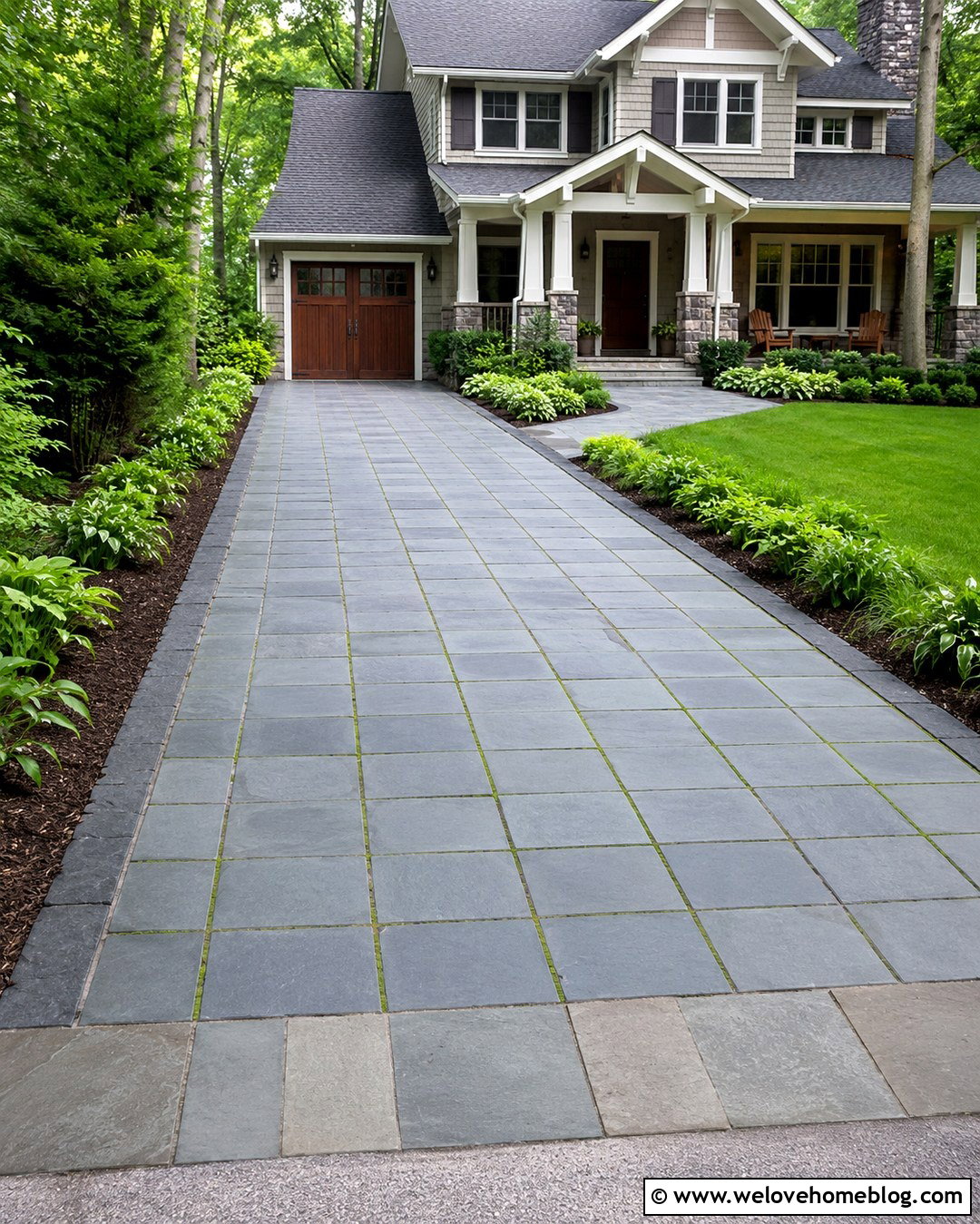
Do you want the entrance to feel polished throughout the year? Choose charcoal and gray concrete pavers in a running-bond pattern, paired with symmetrical evergreen planting. A slightly darker paver border can outline the driveway and create a finished transition at the street. On each side, install matching rectangular beds with clipped boxwoods, columnar evergreens, and white seasonal flowers. Low stone walls or square masonry pillars give the entrance structure and can hold lantern-style lighting. Continue the same pavers into a separate walkway so guests are not forced to use the vehicle route. Formal does not have to mean complicated. Repeated plants, balanced proportions, and a limited material palette produce a calm entrance that complements Georgian, French-inspired, and traditional brick homes.
5. Asphalt Driveway Low-Maintenance Garden Entrance
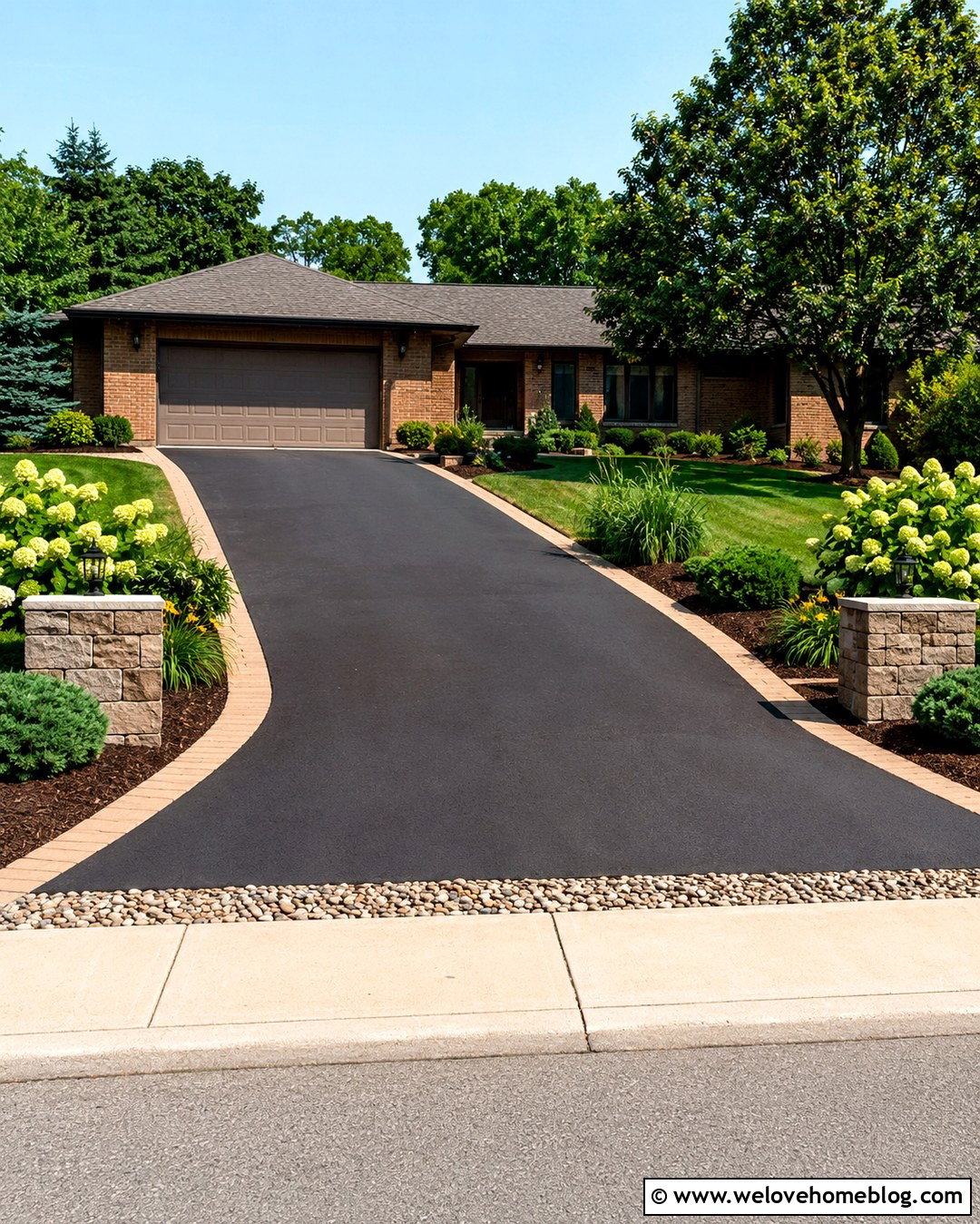
Black asphalt becomes much more attractive when it is balanced by defined edges and durable planting. Add a warm-toned concrete paver ribbon along both sides to sharpen the outline and protect vulnerable asphalt edges. At the road, create broad mulched beds planted with dwarf junipers, compact panicle hydrangeas, daylilies, and tough ornamental grasses. These plants provide structure without demanding constant attention. Two low stone columns can support modest address plaques or downlighting while keeping the entrance open. Avoid placing loose mulch directly beside the pavement, where rain and tires may scatter it. Instead, use metal edging or a narrow strip of decorative river rock. This affordable combination works particularly well with ranch homes, split-level houses, and practical suburban landscapes.
6. Circular Driveway Island Garden Entrance
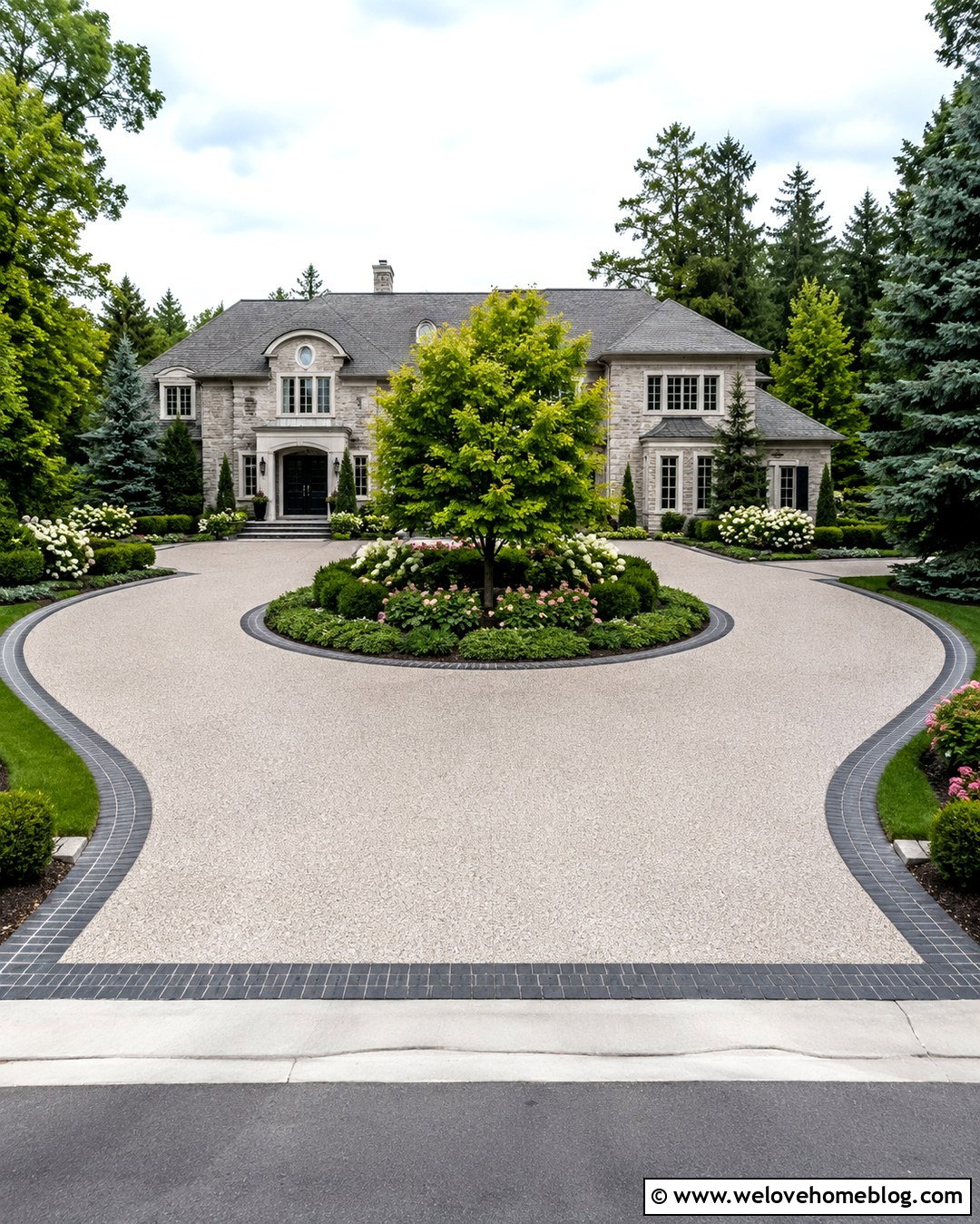
A circular driveway provides an excellent opportunity to turn the central island into a memorable front garden. Use exposed aggregate concrete for the drive and outline both edges with a dark brick ribbon. In the center, plant one appropriately scaled ornamental tree as the main feature. Surround it with layered evergreens, flowering shrubs, low perennials, and a clean ground-cover border. The planting should look attractive from every direction because it will be viewed from the street, driveway, and house. Keep plants low near entry and exit points so drivers can see approaching pedestrians and traffic. Repeating a few island plants in beds beside the house creates continuity. This layout feels spacious and elegant while also giving vehicles a convenient route through the property.
7. Curved Gravel Driveway Tree-Lined Entrance
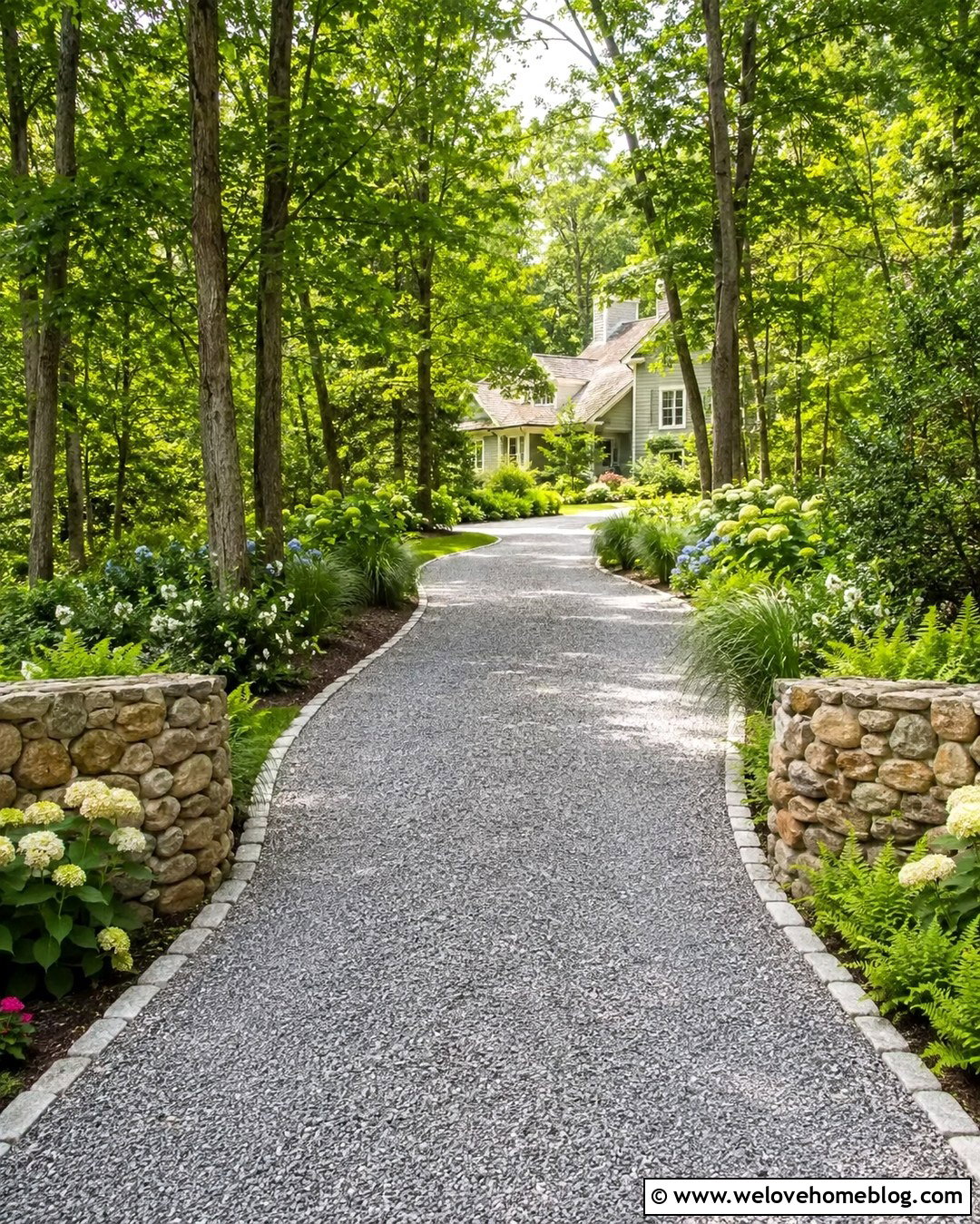
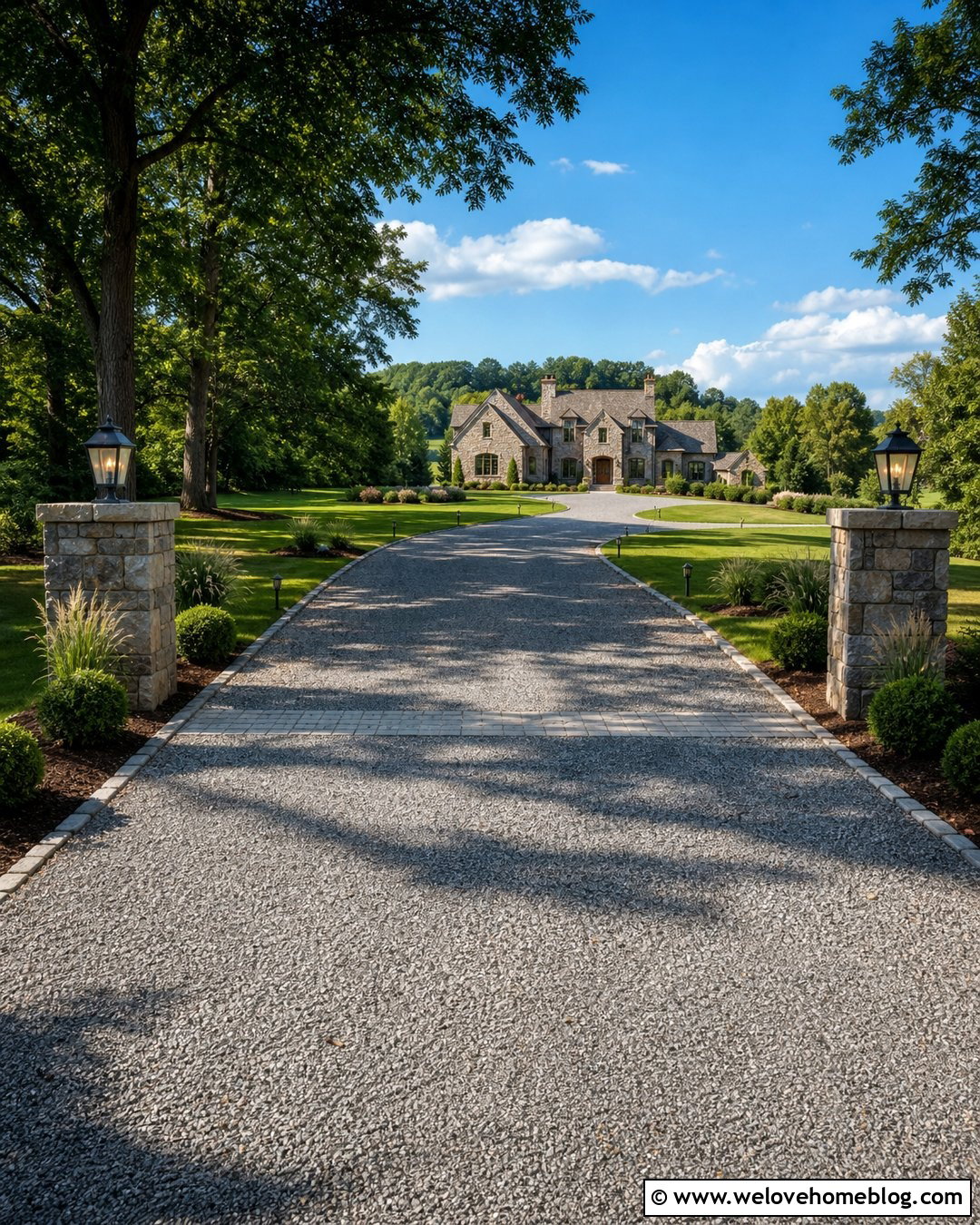
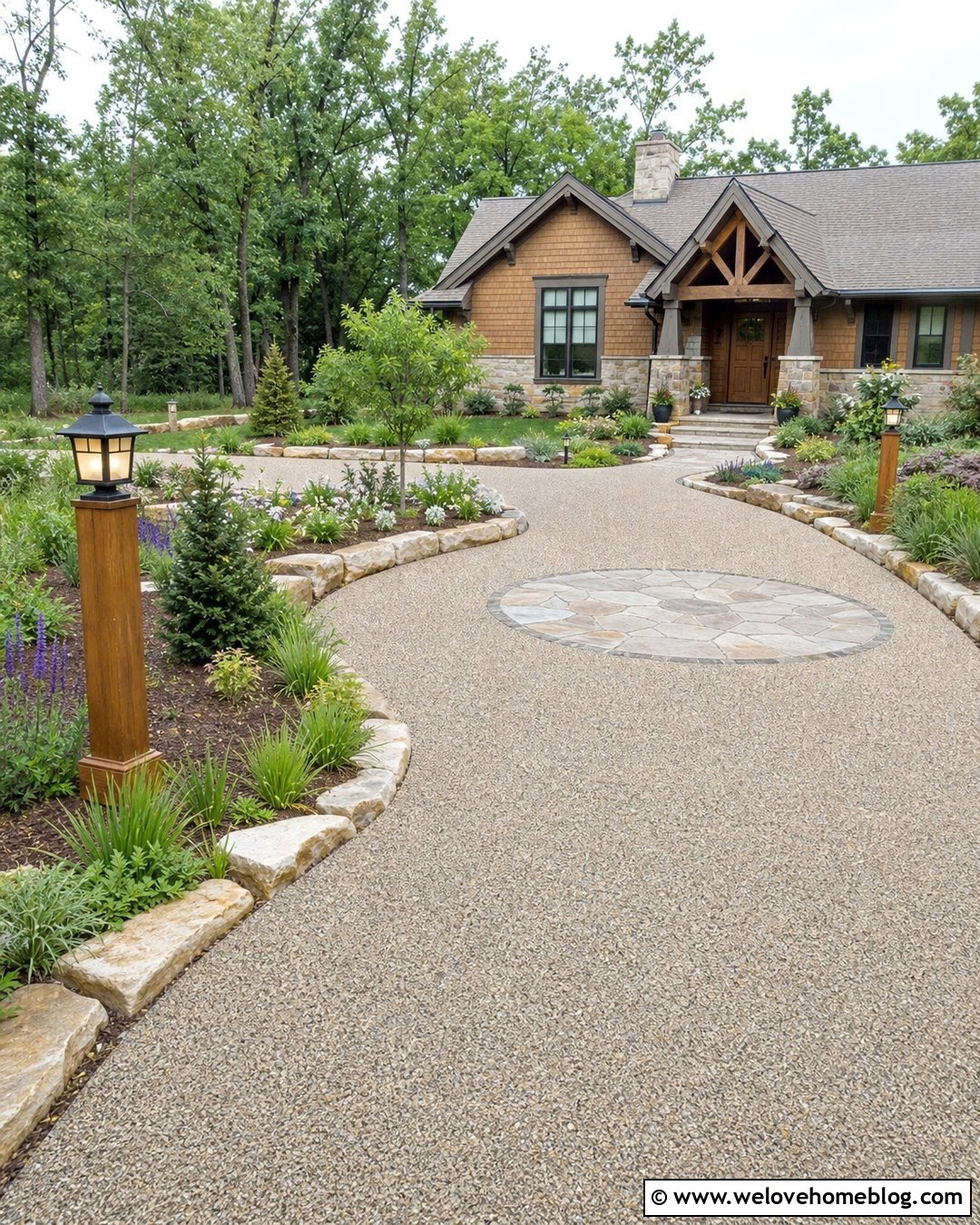
A gently curved gravel driveway can make a deep front yard feel more natural and private. Choose compacted gray crushed stone and hold it in place with flush granite or steel edging. Plant small deciduous trees in staggered groups rather than perfectly straight rows for a relaxed garden effect. Underplant them with ferns, shade-tolerant grasses, hydrangeas, and spring bulbs. Trees should be positioned according to their mature canopy and root spread, with sufficient clearance from the road and driving surface. () A low fieldstone wall can mark the entrance and echo the landscape without blocking the view. As the driveway curves, reveal the house gradually through gaps in the planting. This approach suits wooded properties, country homes, and larger suburban lots.
8. Cobblestone Driveway Stone Pillar Entrance
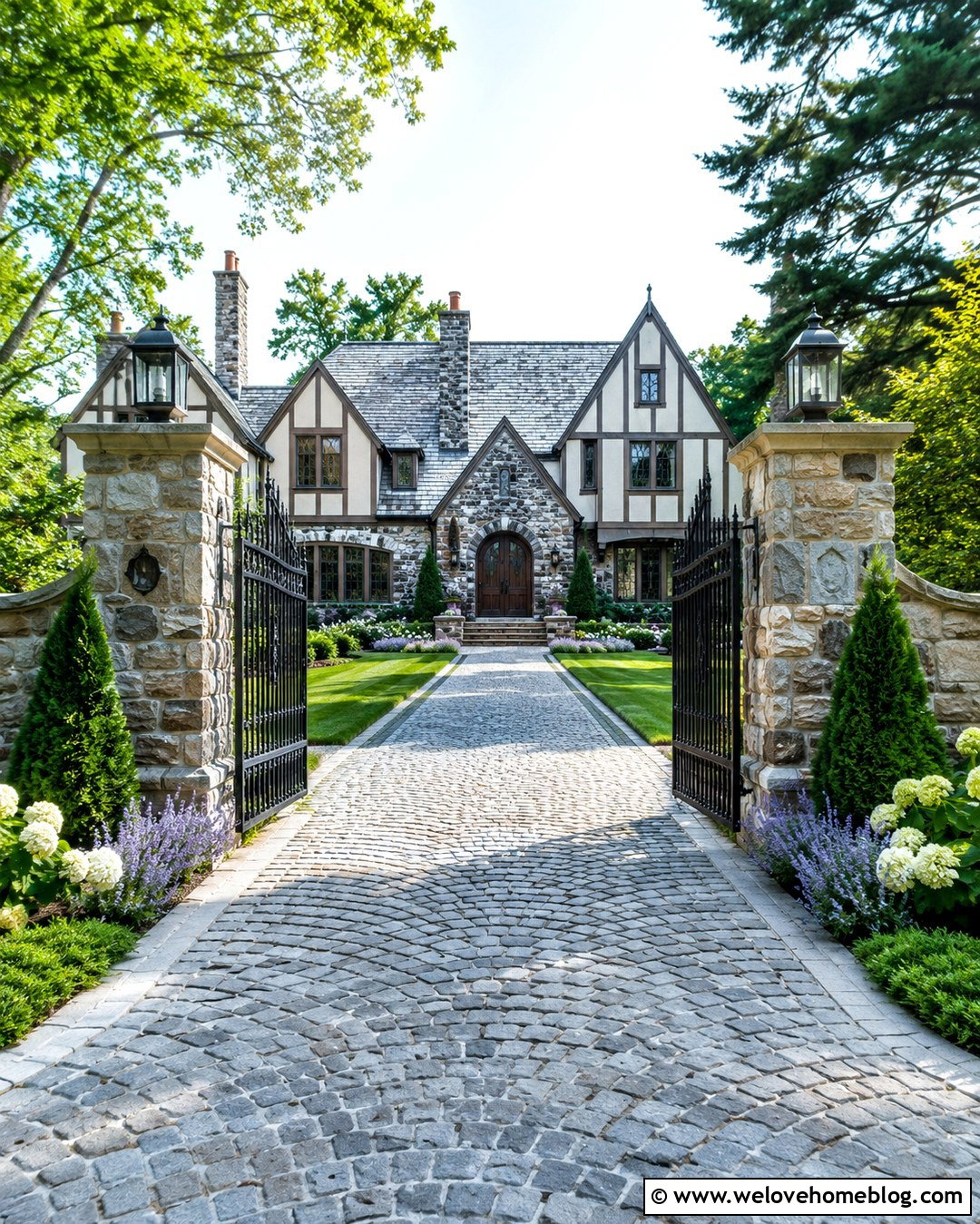
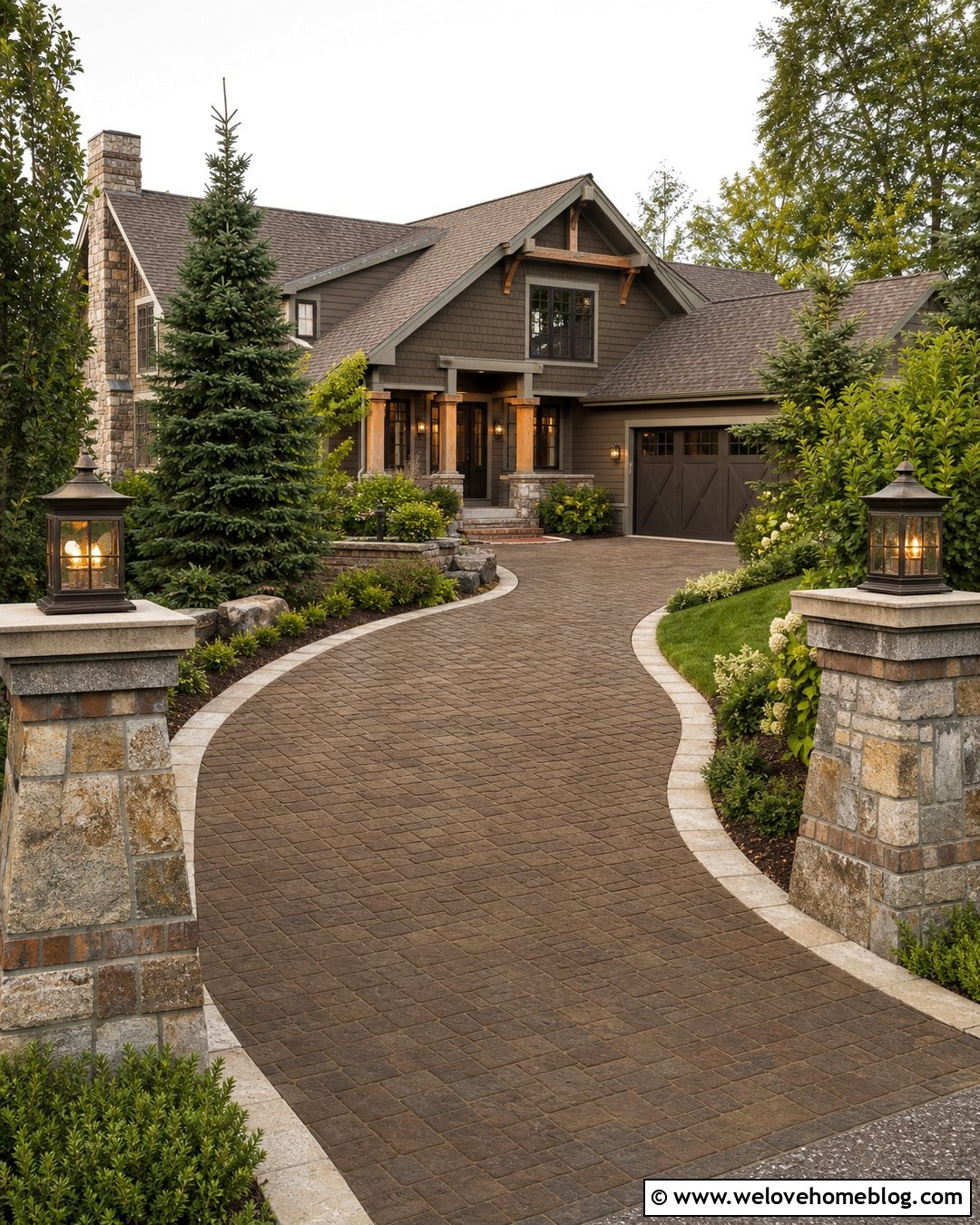
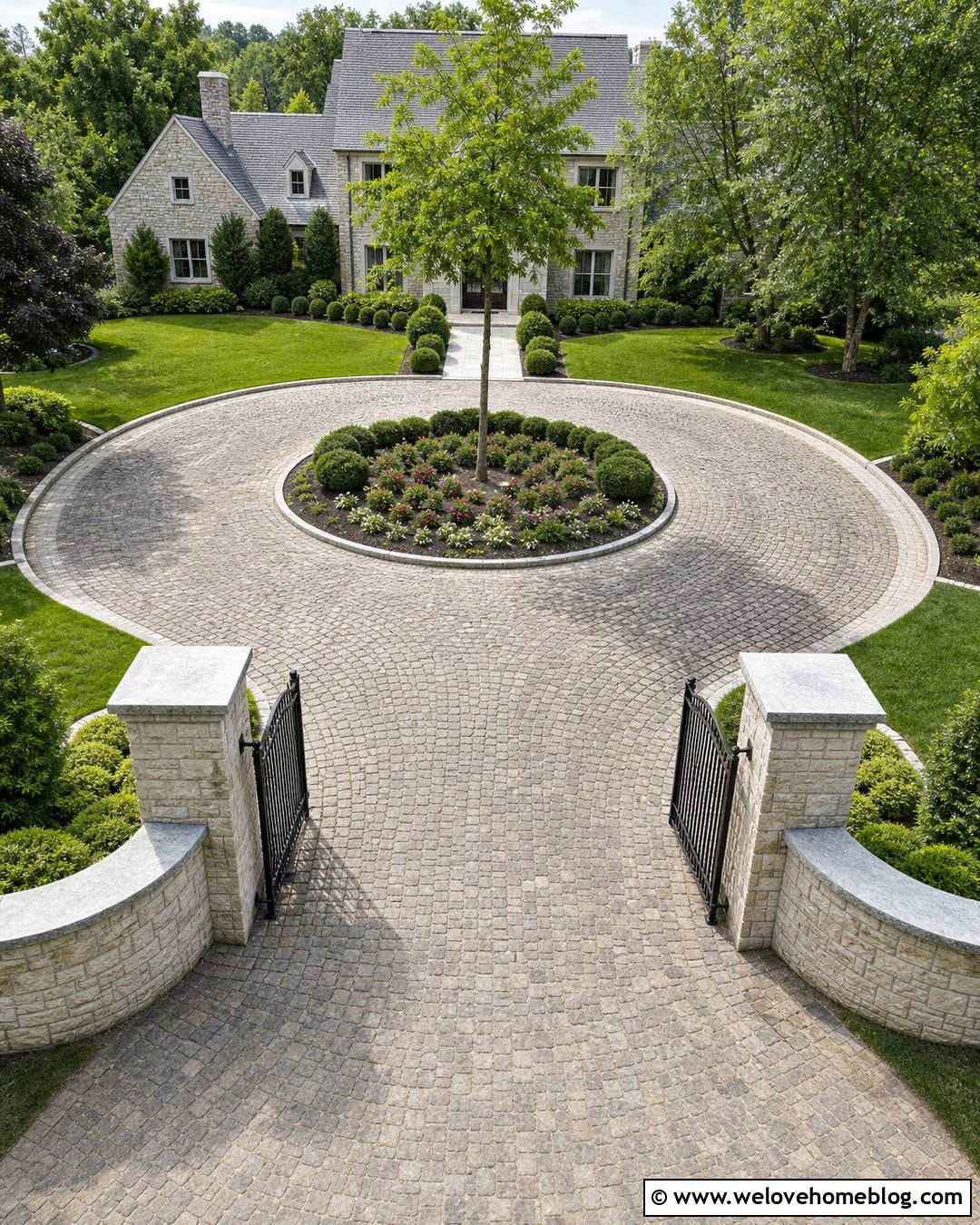
Rugged cobblestone and substantial stone pillars create a garden entrance with lasting visual weight. Use gray granite cobblestones in a fan or running pattern, with larger stone setts forming a strong outer border. Build the entrance pillars from natural fieldstone in colors that relate to the home’s facade. Deep beds around their bases can include compact evergreens, white hydrangeas, catmint, and low creeping ground covers. Avoid allowing vines or dense shrubs to hide lighting, hardware, or sightlines. If gates are included, an open black metal design keeps the entrance visible and prevents the stonework from feeling too heavy. Continue smaller cobblestone details into the walkway or porch area. This coordinated design fits Tudor, craftsman, European-inspired, and traditional stone houses especially well.
9. Resin-Bound Coastal Garden Entrance
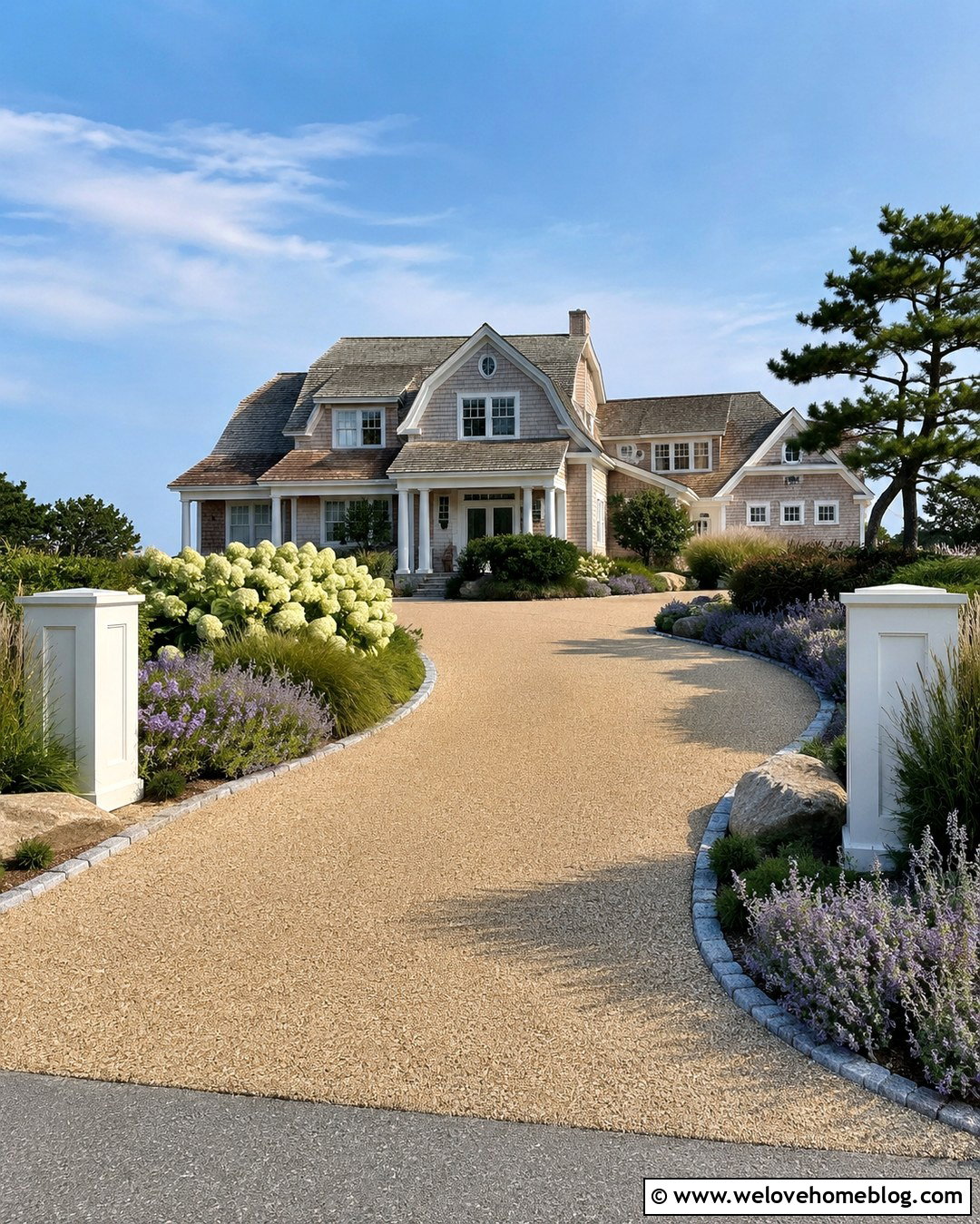
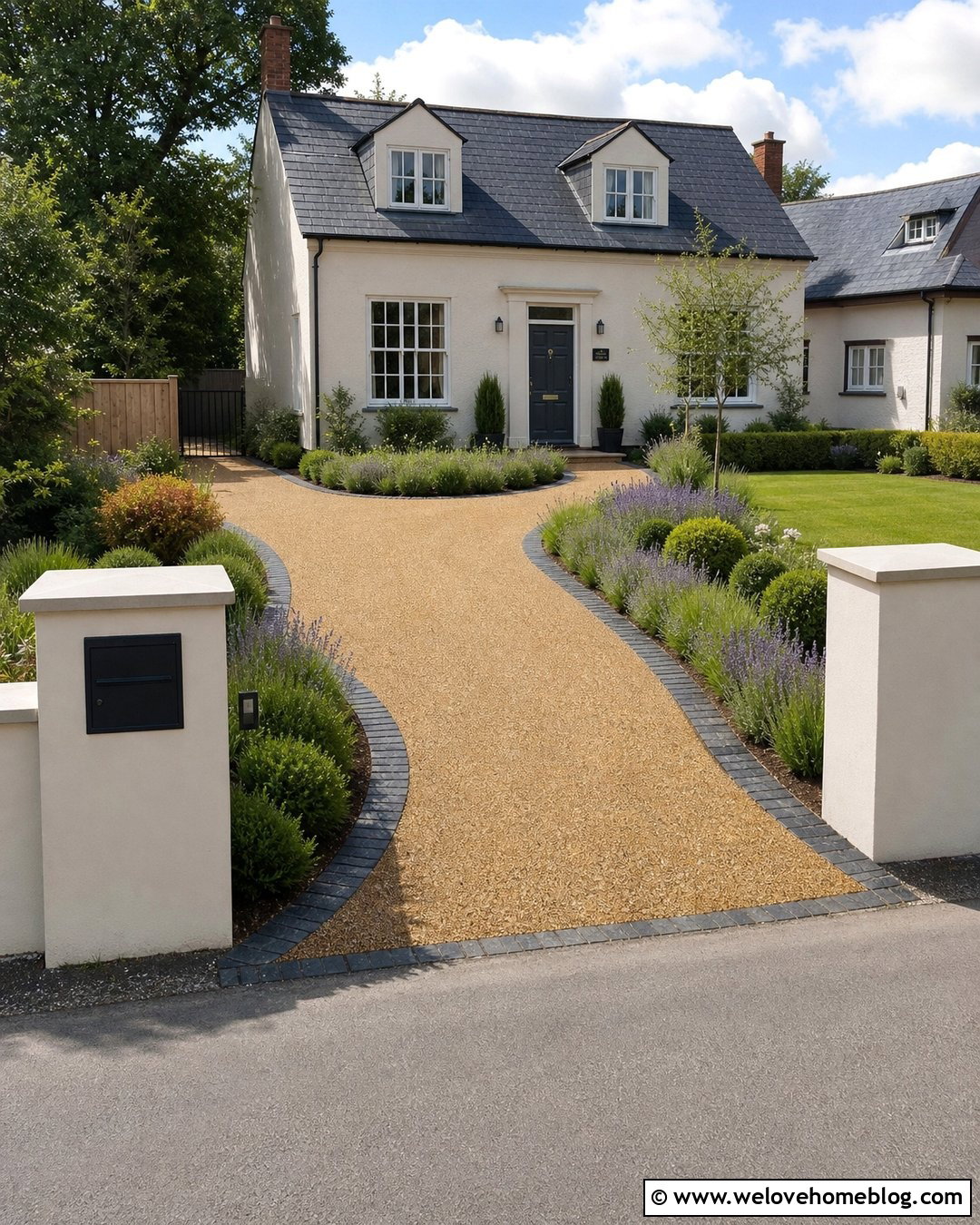
A warm sand-colored resin-bound gravel driveway creates a smooth, clean foundation for a coastal entrance garden. Use a softly curved layout with pale stone edging that reflects the color of the house or nearby walkway. Plant salt-tolerant ornamental grasses, compact hydrangeas, lavender, seaside goldenrod, and low evergreen shrubs in wide informal beds. Add several weathered boulders for natural structure, but position them well away from vehicle turning areas. White or light gray gate pillars can support simple lanterns and coordinate with a shingle-style or coastal cottage facade. The restrained colors keep the entrance bright, while blue, purple, and white flowers provide seasonal interest. A permeable-looking surface and loose planting style help the entire approach feel relaxed rather than overly formal.
10. Farmhouse Driveway Timber Gate Entrance
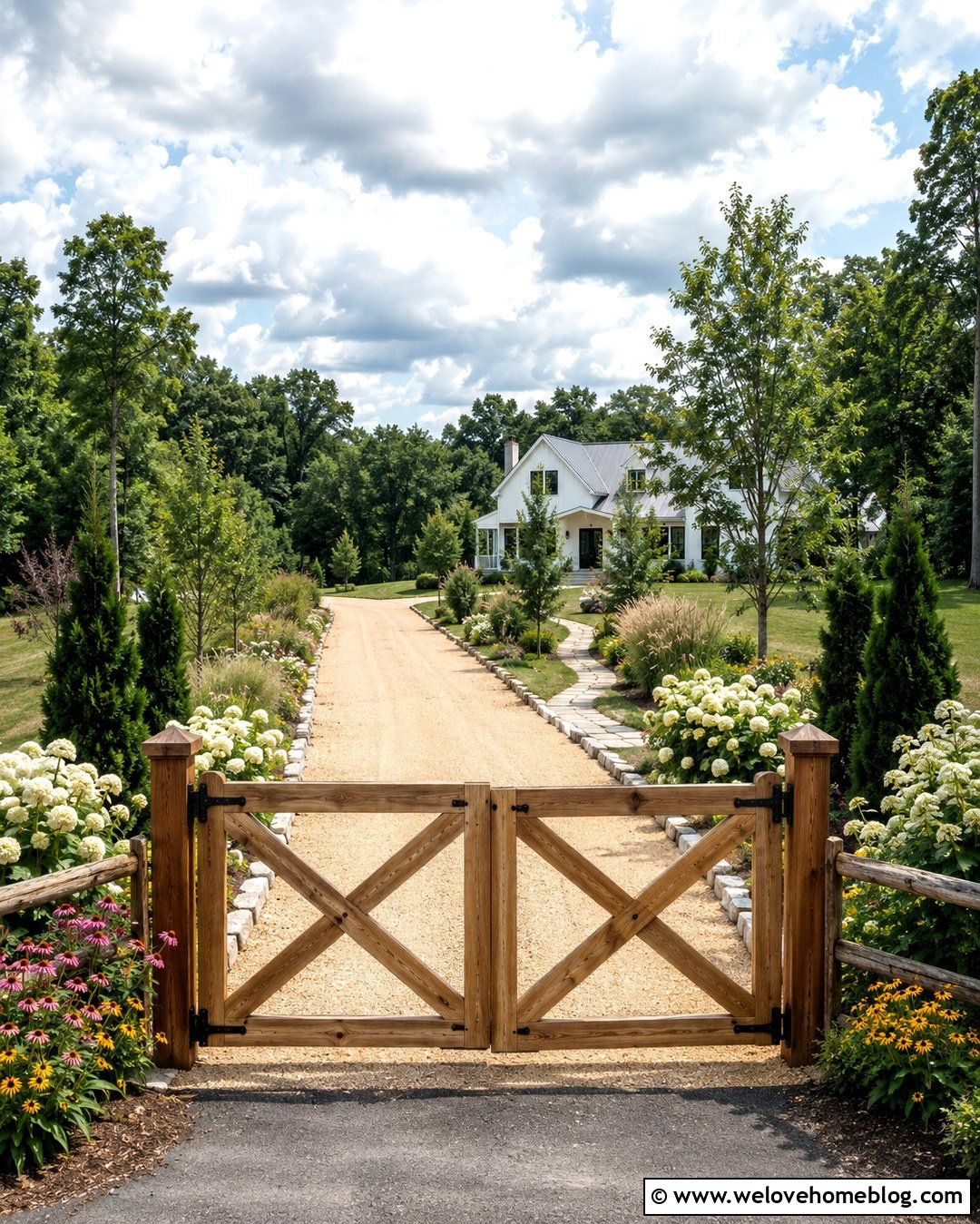
Nothing suits a rural approach quite like a gravel driveway, timber gate, and layered country planting. Use tan crushed gravel for the surface and line it with low weathered timber or natural stone edging. Install a wide, simple wood gate between chunky posts, leaving enough setback for a vehicle to wait safely without blocking the road. Continue split-rail fencing outward from the posts to visually widen the entrance. Plant panicle hydrangeas, black-eyed Susans, coneflowers, ornamental grasses, and a few upright evergreens along the fence line. A matching pedestrian gate can connect to a flagstone walkway. Keep the planting loose but intentional, and repeat materials used on the farmhouse. This combination creates a practical entrance that feels warm, established, and connected to the surrounding landscape.
11. Wrought Iron Gate Rose Garden Entrance
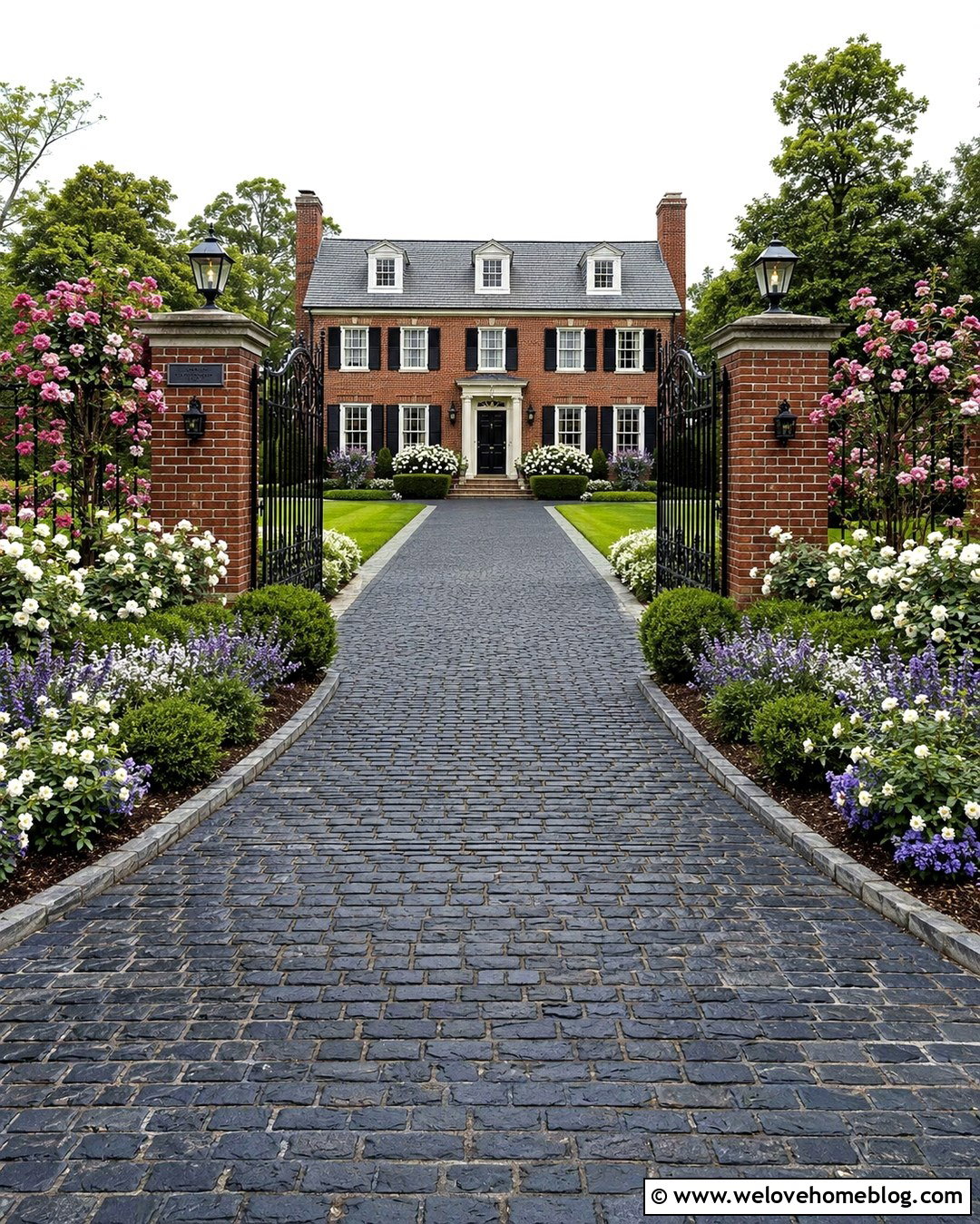
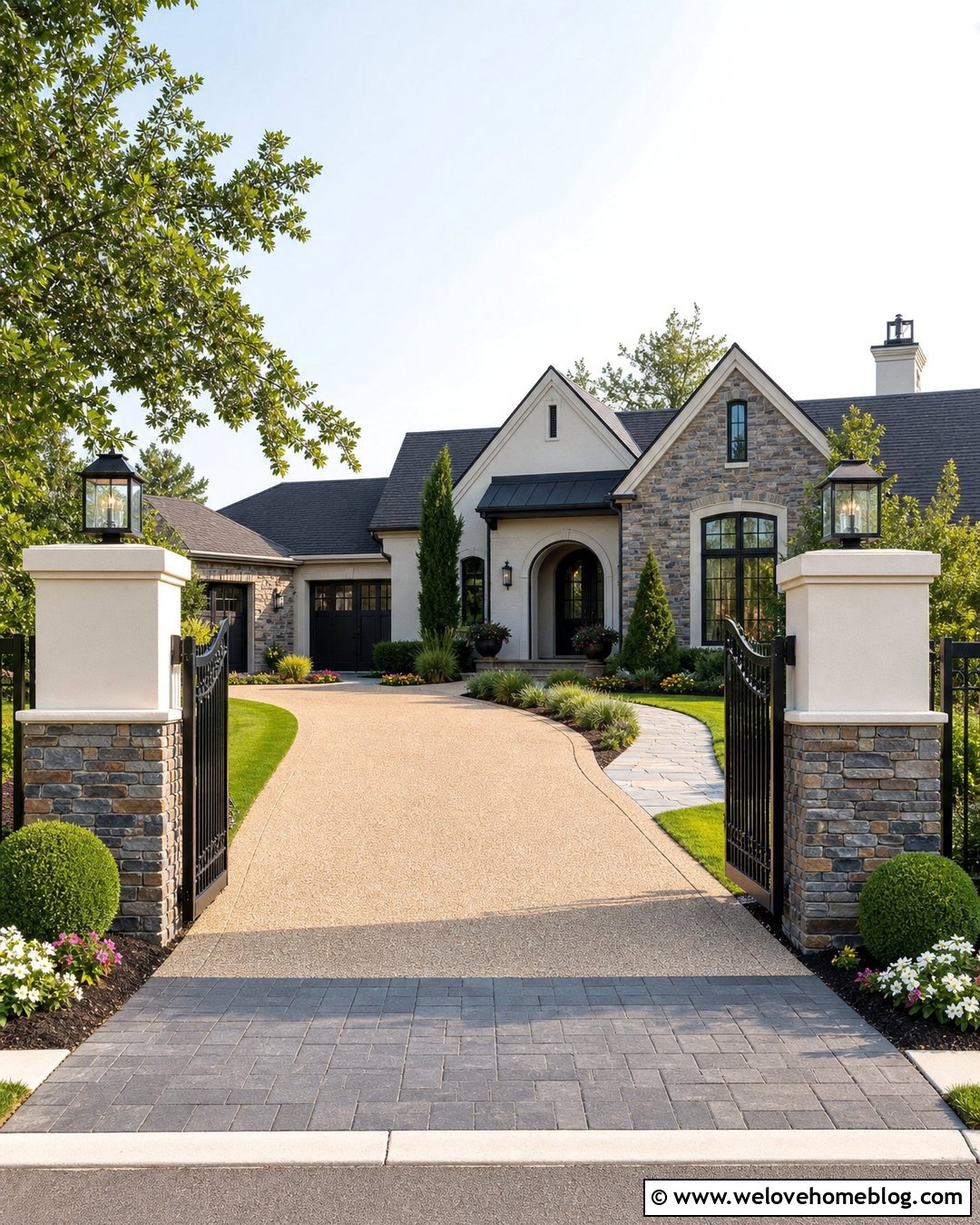
An open wrought iron gate can provide security while allowing a colorful entrance garden to remain visible. Pair the gate with a charcoal cobblestone driveway or dark concrete pavers for a refined traditional look. Use brick or stone pillars that match the house, then create deep beds that curve around their outer edges. Plant shrub roses where their thorns and branches will not interfere with gate movement. Add catmint, salvia, boxwood, and low ground covers to hide bare soil and extend the flowering season. Instead of placing climbing roses directly on automated gate equipment, train them over separate metal trellises behind the pillars. This protects moving components and simplifies pruning. The complete design works beautifully with brick Colonial, French country, and traditional stucco homes.
12. Split-Rail Driveway Native Garden Entrance
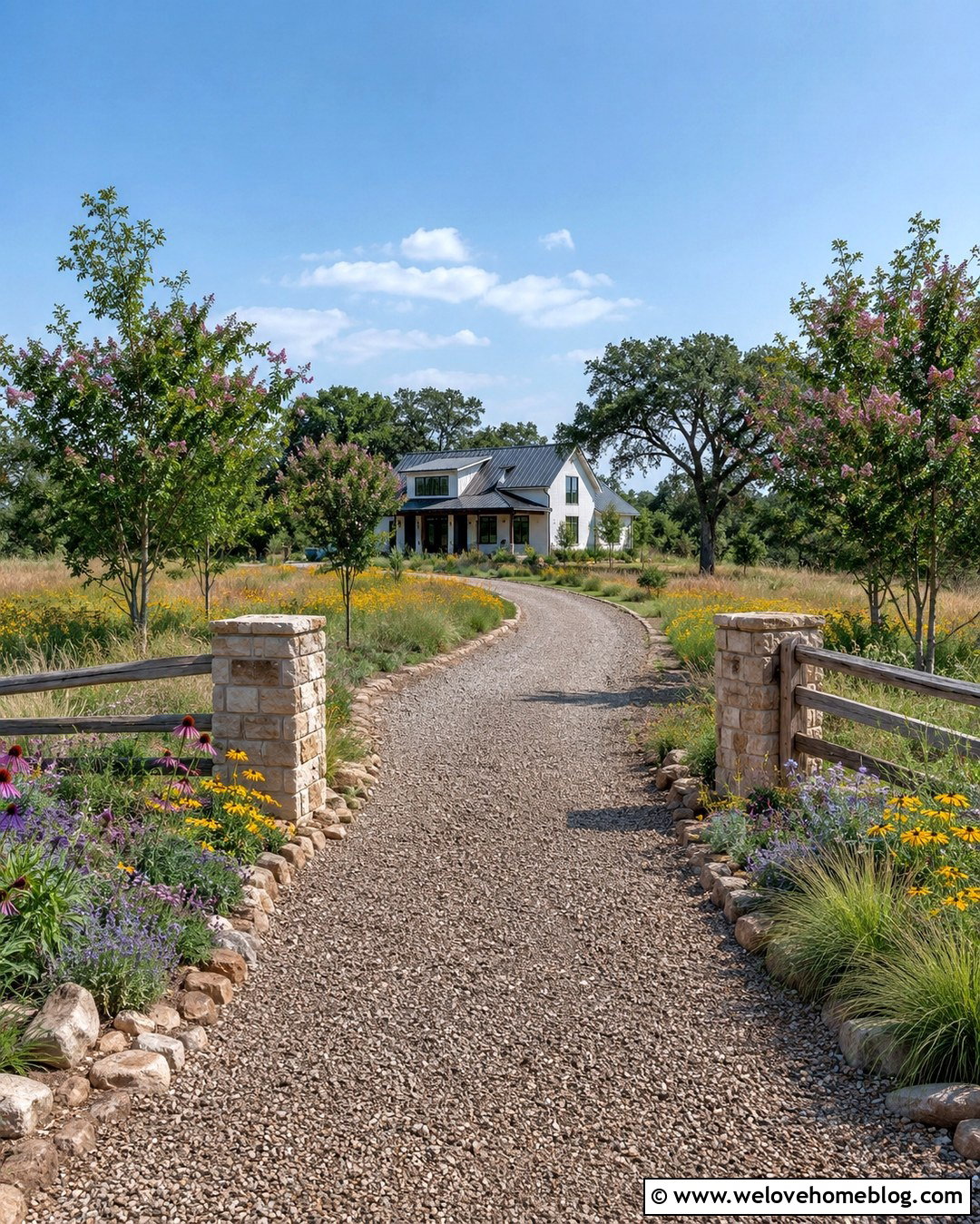
A native planting scheme can make a driveway entrance feel connected to the wider landscape. Begin with a brown-gray crushed stone driveway edged by a simple split-rail fence. Plant broad sweeps of regionally suitable grasses and flowering perennials outside the fence, keeping the lowest varieties near the road. Coneflowers, asters, coreopsis, switchgrass, and little bluestem can create a meadow effect in many regions, but the final selection should suit local soil and climate. Add one or two native flowering trees farther inside the property for height and seasonal character. Decorative stone mulch around the gate posts helps reduce trimming work. This informal entrance is especially effective for country homes, woodland properties, and modern farmhouses where rigid foundation planting might look out of place.
13. Small Driveway Raised Garden Entrance
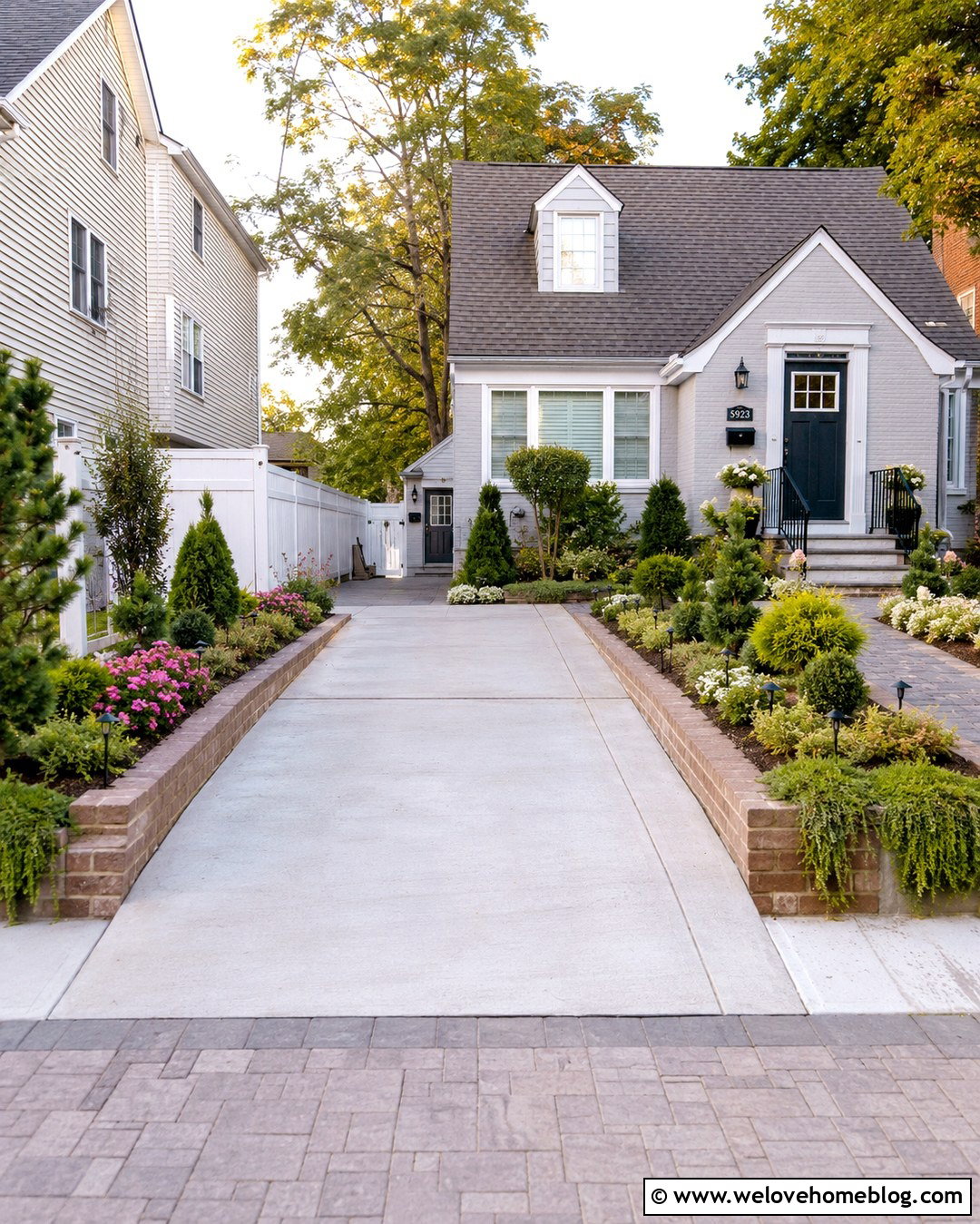
Limited frontage does not mean the entrance has to feel bare. A narrow light gray concrete driveway can be paired with compact raised beds built from brick or natural stone. Shape the beds so they widen near the sidewalk but taper along the driveway, preserving door clearance and usable parking space. Fill them with dwarf evergreens, compact flowering shrubs, trailing ground covers, and seasonal color. A separate paver walkway should guide visitors toward the front door without reducing the driving width. Place a slim address marker inside one bed rather than adding another freestanding object. Wall-mounted or low bollard lights save additional space. By using plants with tidy mature sizes, this complete garden entrance remains attractive without spilling onto the pavement or making the property feel crowded.
14. Sloped Driveway Retaining Wall Entrance
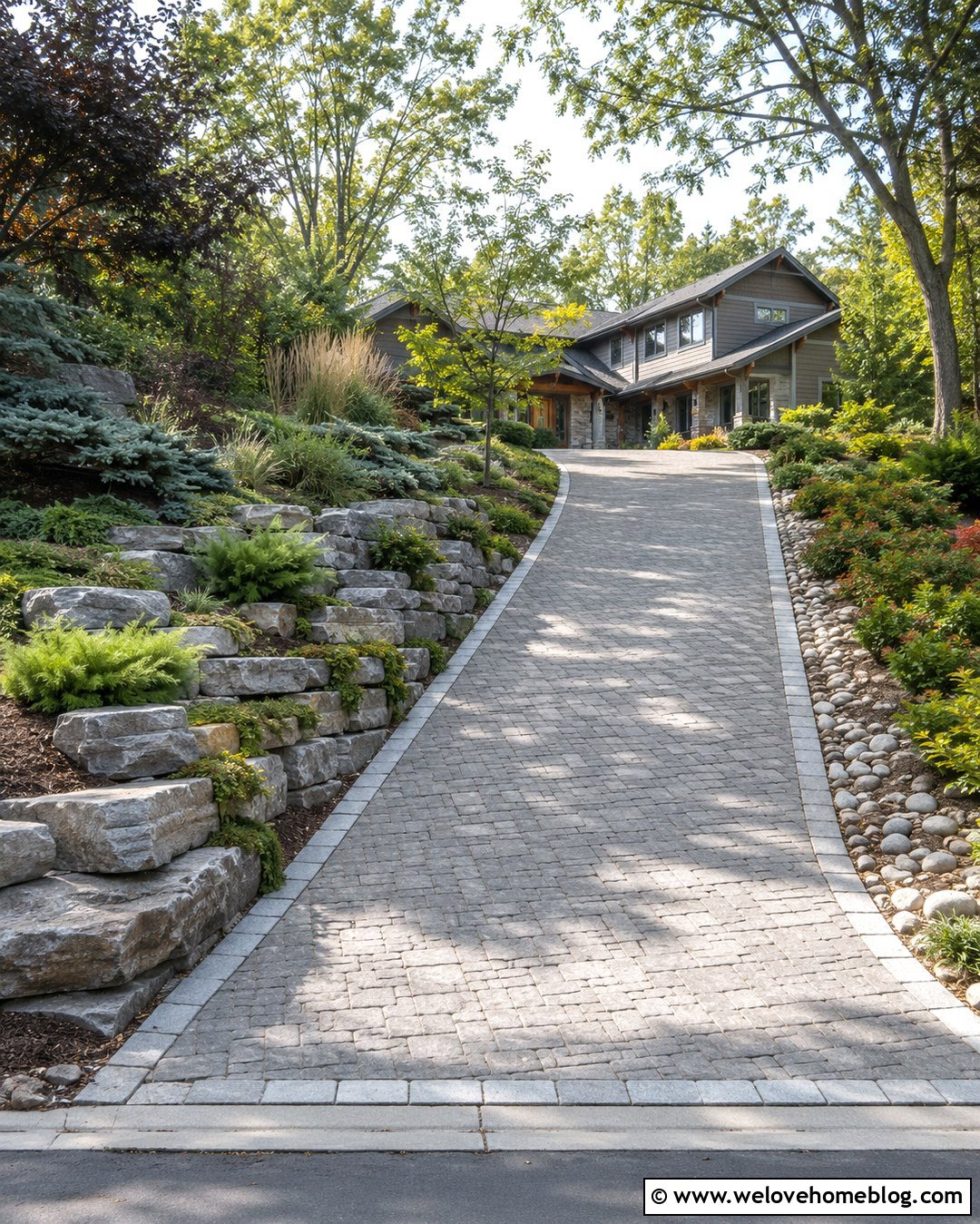
Sloped entrances often need stronger structure to prevent planting beds from washing onto the driveway. Use textured gray concrete or concrete pavers for dependable visual definition, then support the higher side with a low natural stone retaining wall. Step the wall gradually with the grade rather than creating one tall, imposing barrier. Plant trailing ground covers near the wall’s top, followed by ornamental grasses, spreading junipers, and erosion-resistant shrubs. On the lower side, a shallow planted swale can slow and direct runoff away from the driving surface. Rain gardens and planted drainage areas can help manage water when they are properly positioned and designed for the site. () Keep the entrance lighting low and evenly spaced to clarify edges without adding clutter.
15. Woodland Driveway Garden Entrance
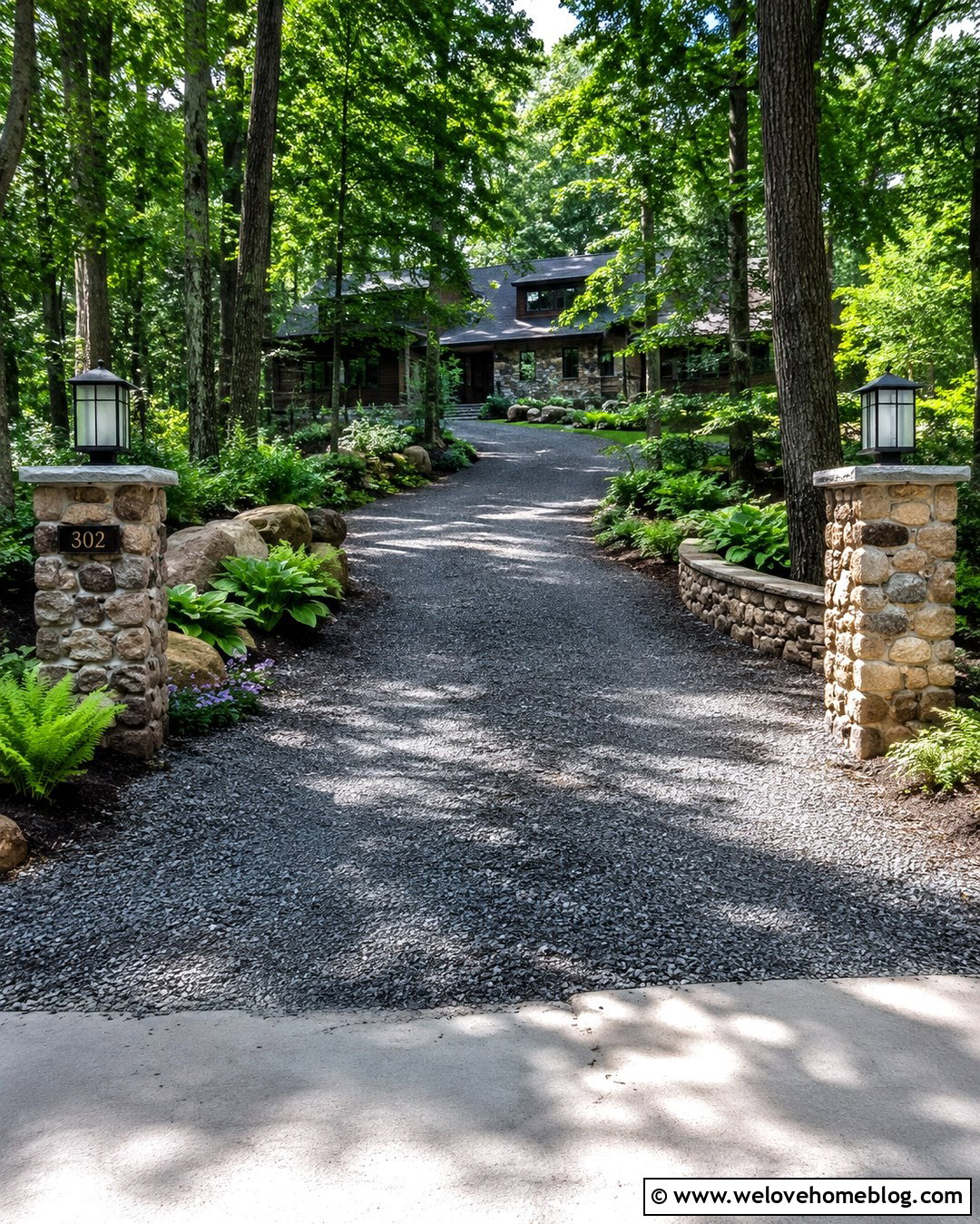
Picture a shaded driveway disappearing beneath mature trees, with ferns and woodland flowers softening every edge. A dark gray gravel surface feels natural in this setting and allows the greenery to remain the main attraction. Define the entrance with rough fieldstone columns and a low matching wall that curves into the property. Plant ferns, hostas, sedges, woodland phlox, and native shrubs in broad groups instead of isolated specimens. Preserve clear space around tree trunks and avoid piling soil or mulch against them. Large decorative rocks can help transition between the constructed entrance and the wooded yard. Select understated fixtures with bright, downward-directed light. A craftsman, mountain, or rustic contemporary house works especially well at the end of this quiet, garden-focused approach.
16. Mediterranean Driveway Garden Entrance
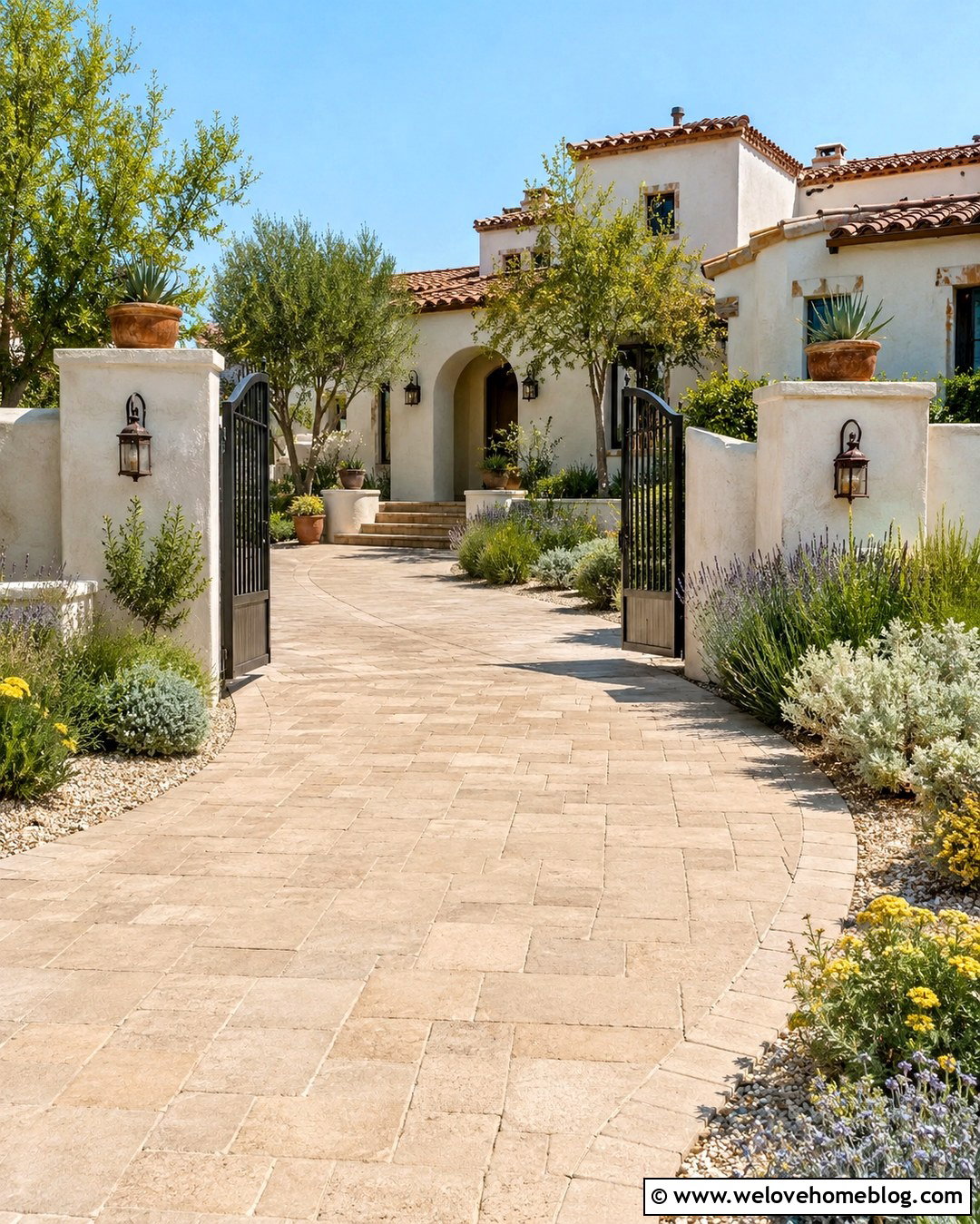
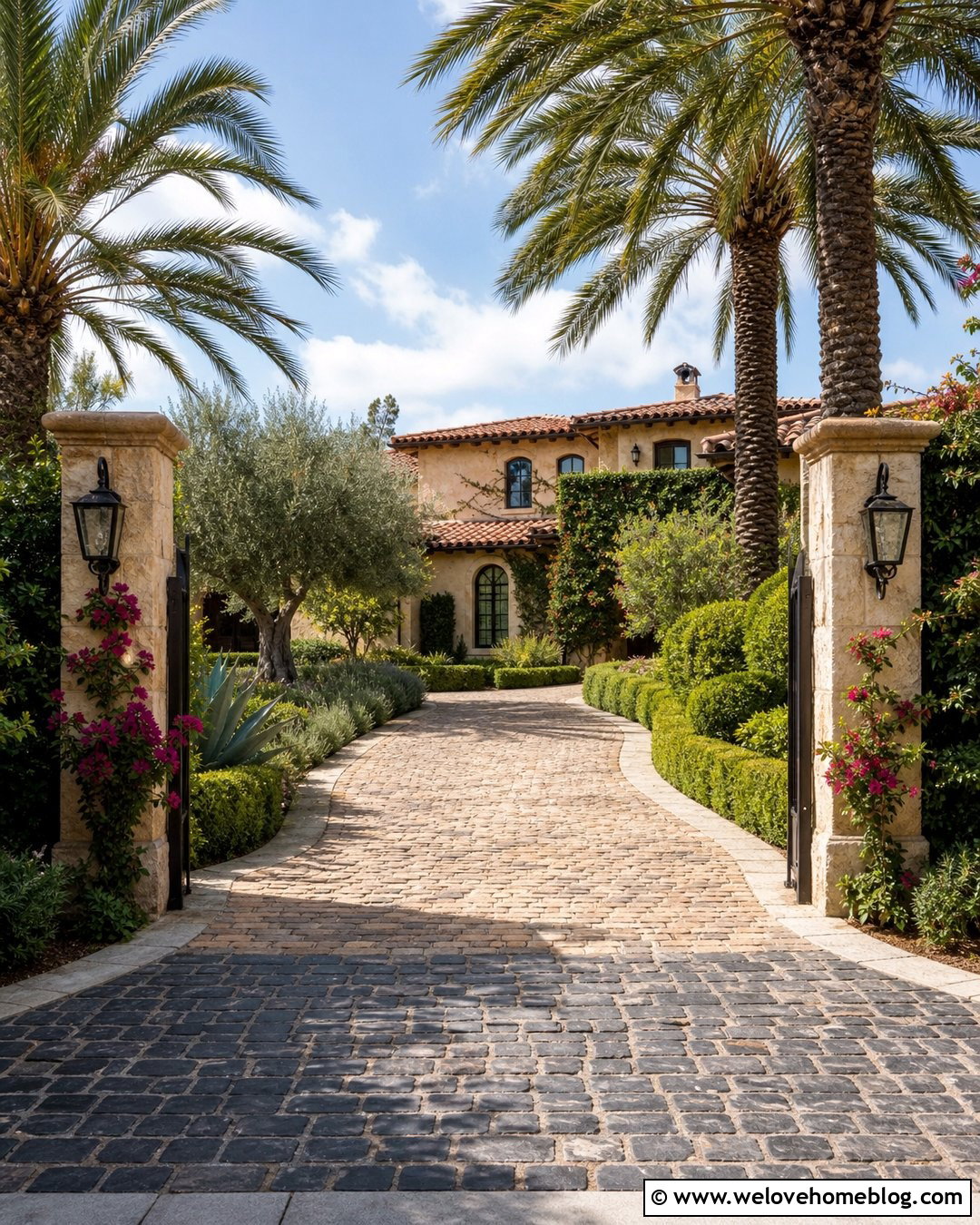
Warm paving, silvery foliage, and terracotta accents give a driveway entrance a relaxed Mediterranean character. Use sandy beige concrete pavers or tumbled travertine-style pavers in a modular pattern. Frame the opening with stucco pillars and a simple dark metal gate, then continue low stucco walls into curved planting beds. Lavender, rosemary, santolina, ornamental grasses, and compact evergreen shrubs create fragrance and texture where the climate allows. In colder regions, use hardy plants with similar colors and forms. Place terracotta planters behind the pillars so they do not restrict vehicle clearance. Pale gravel mulch reflects light and reinforces the dry-garden appearance. Repeat the driveway paving in the front walkway to connect the entrance with a stucco, Spanish Colonial, or Mediterranean-inspired home.
17. Prairie Driveway Garden Entrance
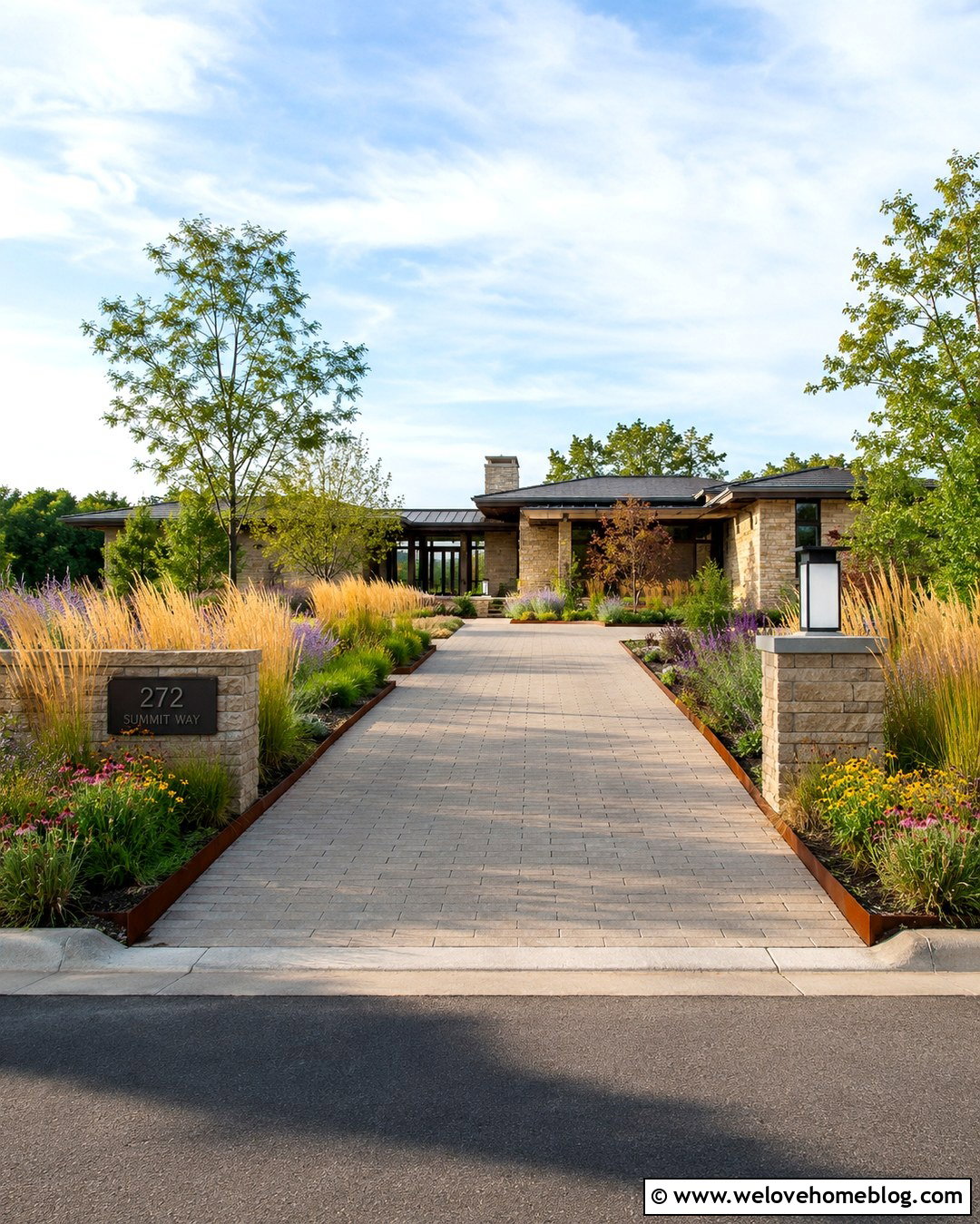
Movement and texture can make a wide driveway entrance feel softer without hiding it. Pair a straight buff-colored permeable paver driveway with generous beds of switchgrass, little bluestem, coneflowers, rudbeckia, and asters. Arrange the planting in broad drifts, with low flowers closest to the road and taller grasses farther inside the property. Slim corten steel edging provides a neat boundary while complementing the warm colors of the grasses. Square stone columns or a low horizontal address monument can give the entrance a clear focal point. Leave intentional gaps between plant groups to preserve sightlines and make seasonal cleanup easier. This complete design looks especially appropriate beside prairie-style, modern farmhouse, and contemporary homes with horizontal architectural lines and natural exterior materials.
18. Driveway Rain Garden Entrance
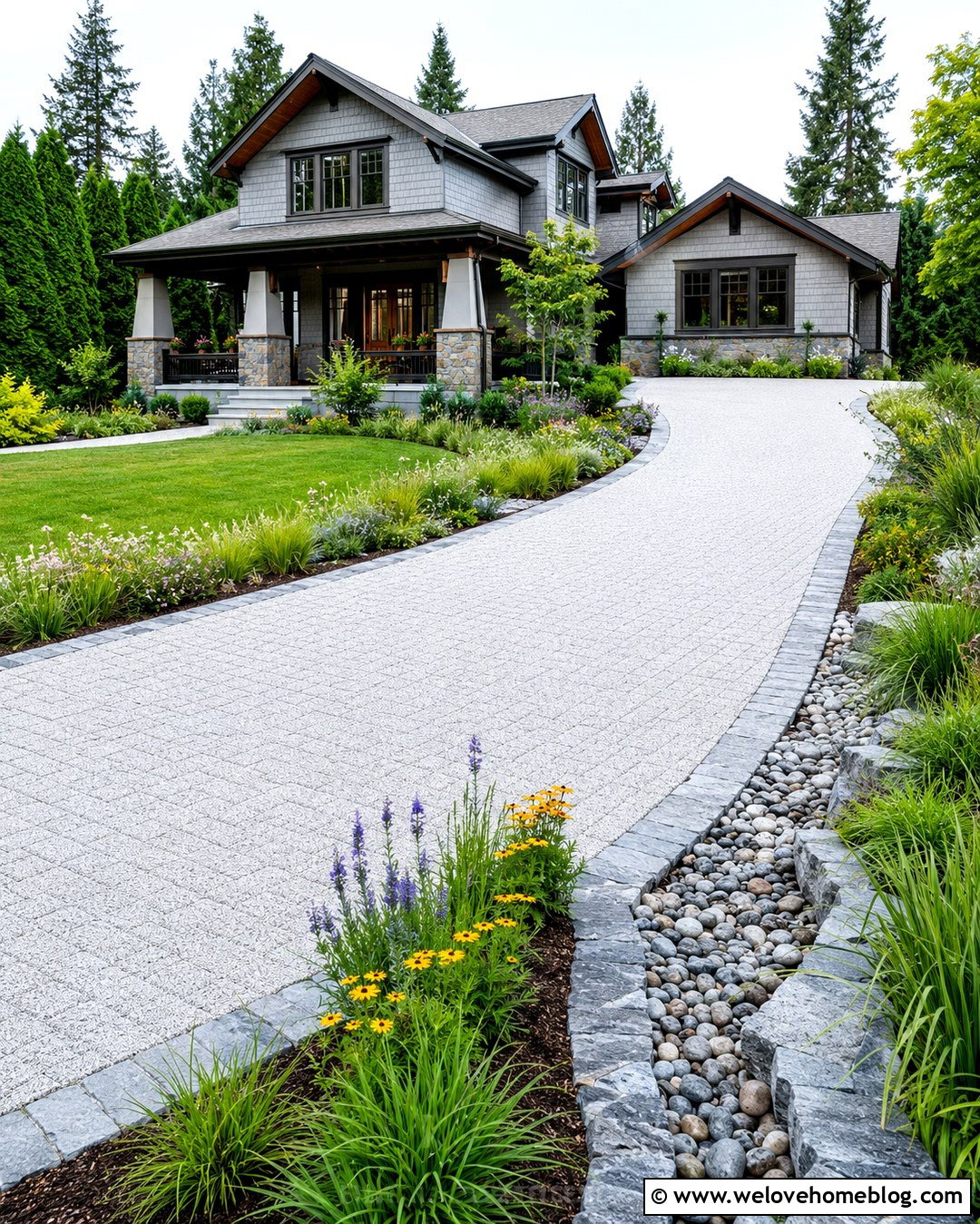
A rain garden can turn a drainage problem into an attractive entrance feature when site conditions are suitable. Use permeable concrete pavers for the driveway and direct runoff toward shallow planted depressions positioned beside, not within, the vehicle path. Edge the pavers with granite setts, then shape the rain gardens with gently sloping sides. Fill them with moisture-tolerant native sedges, rushes, flowering perennials, and shrubs selected for local conditions. Add a stone overflow route so excess water has a planned direction during heavy storms. Keep the basin away from foundations, utilities, and unstable slopes, and seek local guidance before changing drainage patterns. The result can soften the paved area, support seasonal interest, and create a greener welcome for a contemporary or craftsman-style home.
19. Driveway Address Sign Garden Entrance
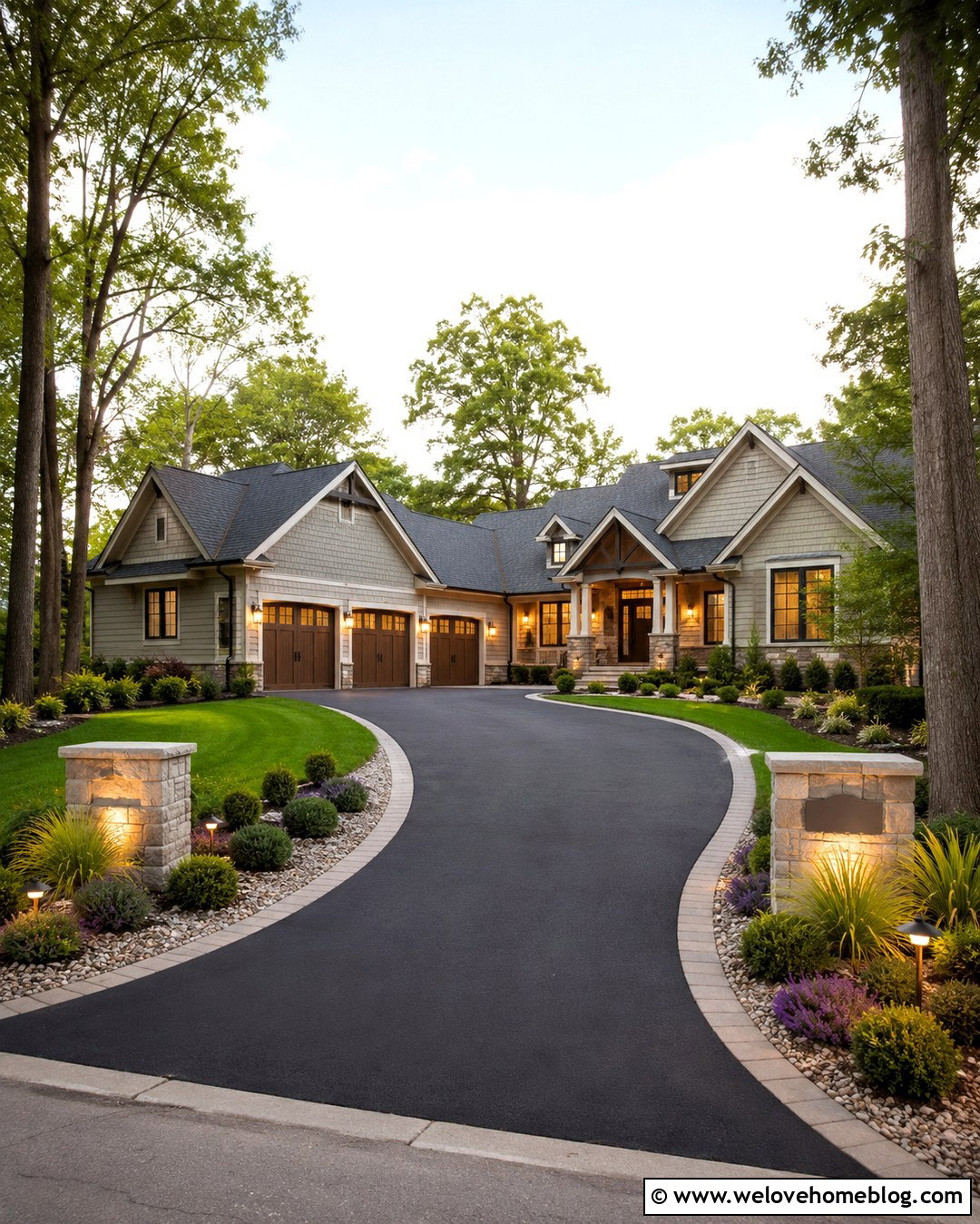
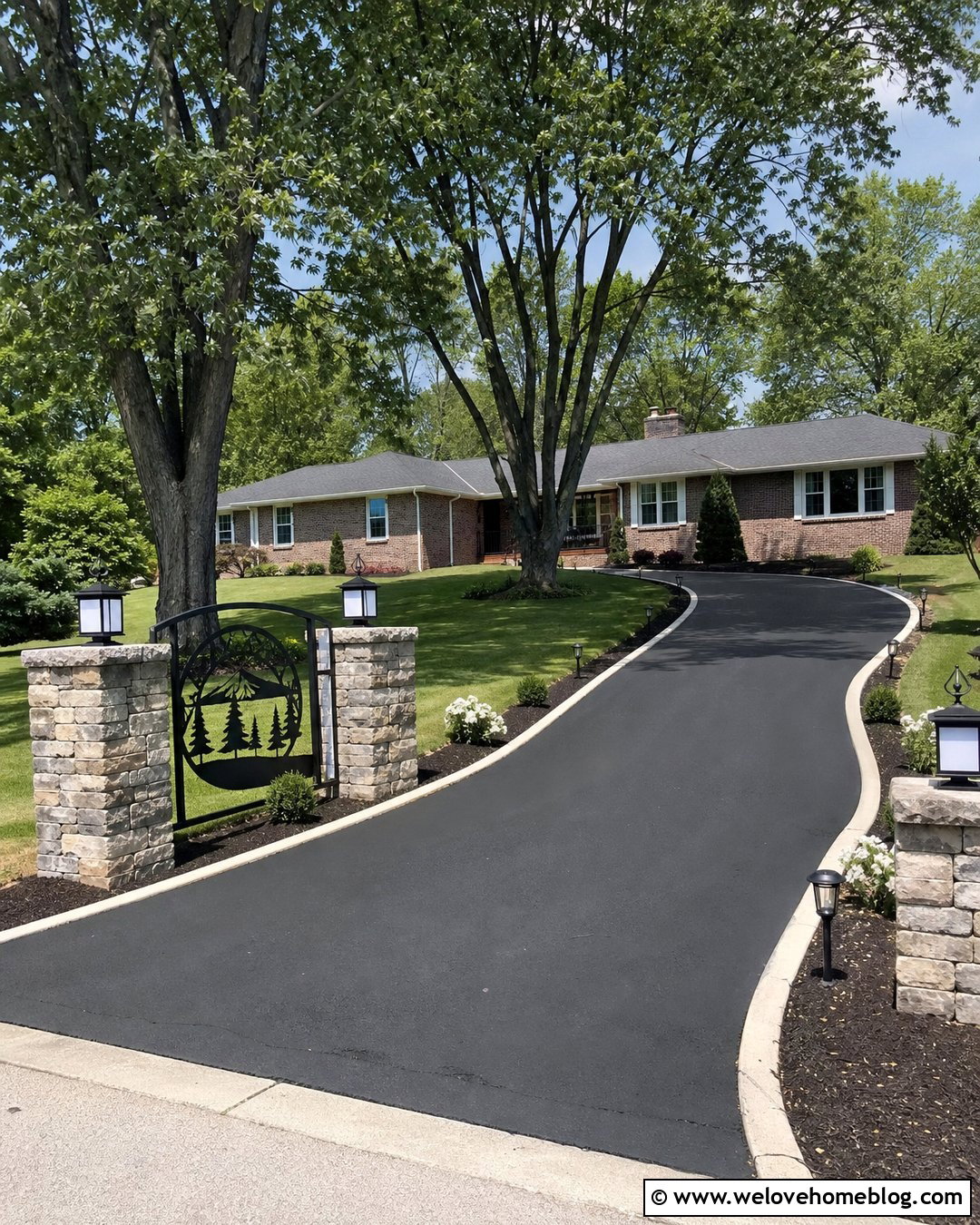
An address sign works best when it belongs to the overall landscape instead of standing alone beside the road. Start with a curved black asphalt driveway edged in warm gray pavers. Build a low stone monument on one side of the entrance and balance it with a matching planted bed on the other. Surround the sign with compact ornamental grasses, dwarf boxwoods, flowering ground covers, and decorative gravel. Keep every plant below the address panel so the numbers remain visible throughout the year. Install downward-facing lighting within or beside the monument, taking care to avoid glare toward drivers. Continue the same stone near the front walkway or porch. This coordinated approach improves wayfinding while giving ranch, craftsman, and transitional homes a clear and polished entrance.
20. Budget Driveway Garden Entrance
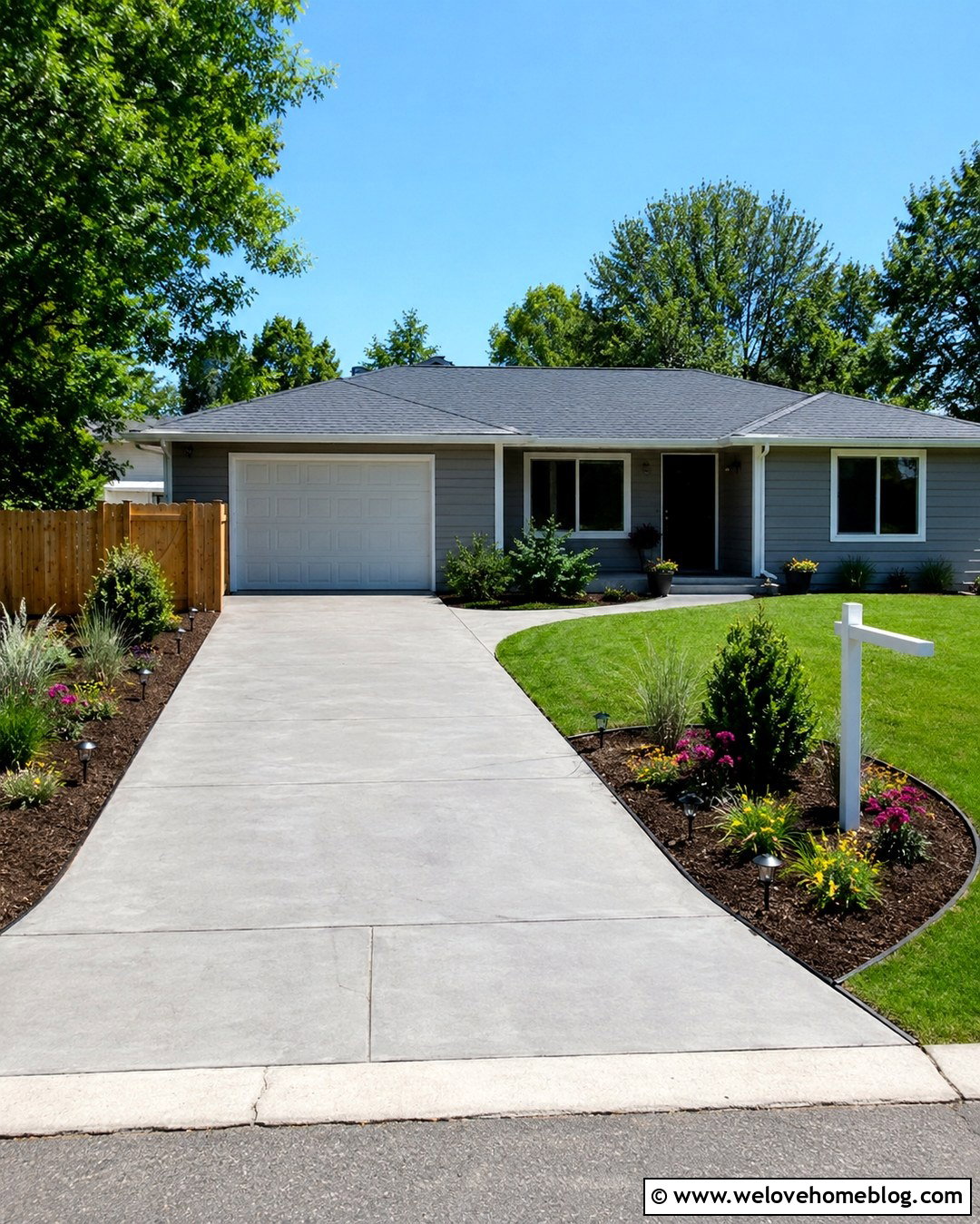
A welcoming entrance can be created without replacing the entire driveway. Refresh an existing gray concrete or black asphalt surface, repair obvious cracks, and add affordable plastic, steel, or concrete edging. Form two matching curved beds near the street and cover them with locally available mulch or decorative stone. Choose a small group of reliable perennials, ornamental grasses, and compact shrubs, then repeat them on both sides for a planned appearance. Young plants cost less and will fill the beds over time when spaced according to mature size. Solar fixtures can provide a simple lighting upgrade, while a painted wood address post adds personality. Concentrating the budget at the entrance delivers stronger curb appeal than scattering small improvements along the full length of the driveway.
Conclusion:
The most successful driveway entrances treat paving, planting, borders, lighting, and architecture as one connected design. Before making changes, measure the available space, study vehicle movement, protect road visibility, and consider how large each plant will eventually become. Choose driveway materials that complement the house, then use repeated colors and textures to connect the entrance with the front yard. Even a modest project can make a noticeable difference when the beds are clearly shaped and the edges are tidy. Whether you prefer cottage flowers, native grasses, formal evergreens, or clean modern planting, these **20 Driveway Garden Entrance Ideas** offer practical ways to create a safer, more welcoming, and more attractive approach to your home.

Related posts:
Leave a Reply