
Garden areas beside a driveway can turn a plain parking surface into a welcoming part of the front yard. The best **Garden Beside Driveway Ideas** combine suitable plants with the driveway’s material, shape, edging, drainage, and surrounding architecture. Low flowers can preserve visibility near the street, while shrubs and ornamental grasses add structure farther up the drive. Gravel strips, brick borders, raised beds, and rain gardens also help create a tidy transition between pavement and lawn. Before planting, consider sunlight, reflected heat, winter salt exposure, water movement, car-door clearance, and mature plant size. Whether your home is modern, traditional, cottage-inspired, or rustic, the following complete designs offer practical and attractive **Garden Beside Driveway Ideas**.

1. Lavender Garden Beside Concrete Driveway
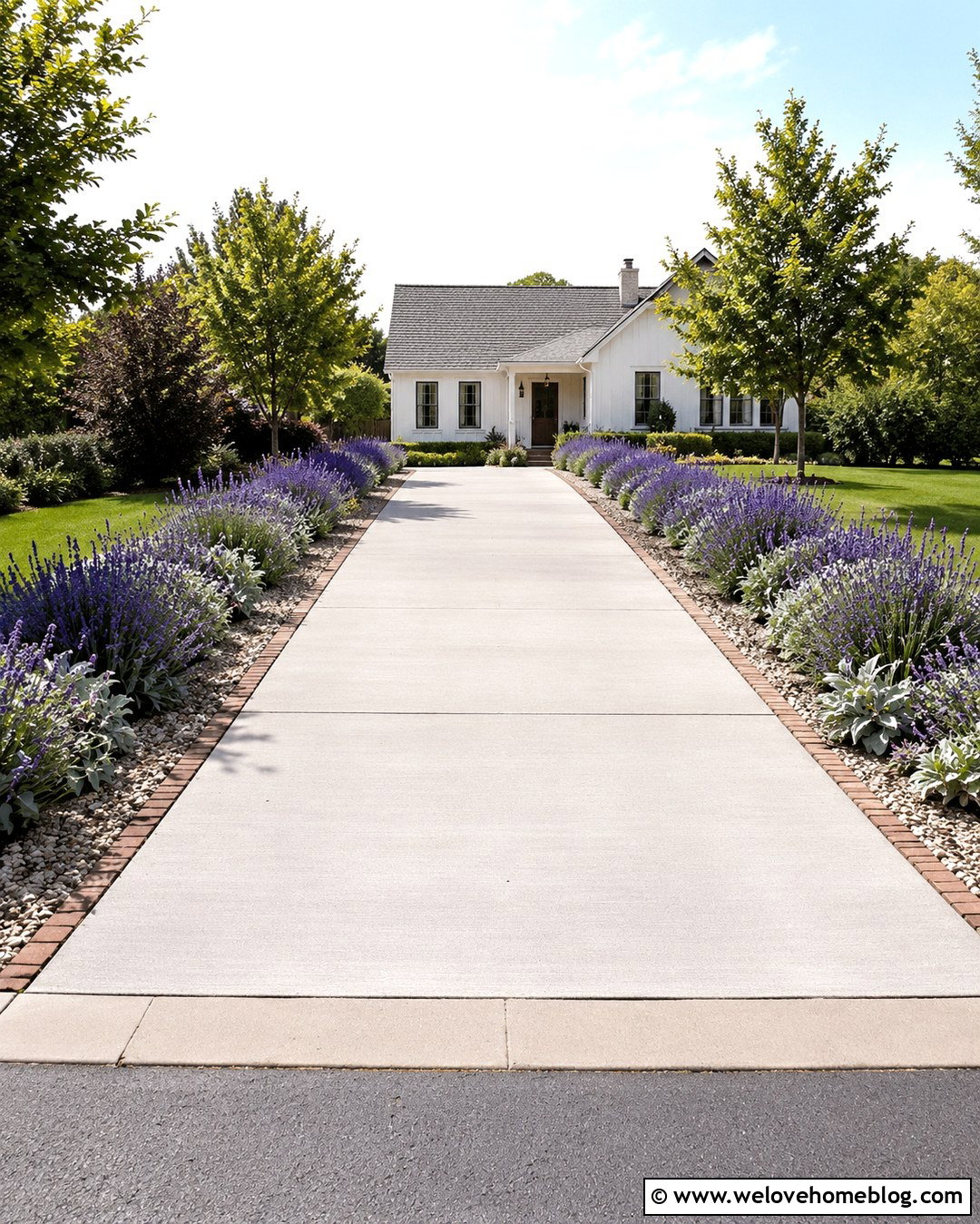
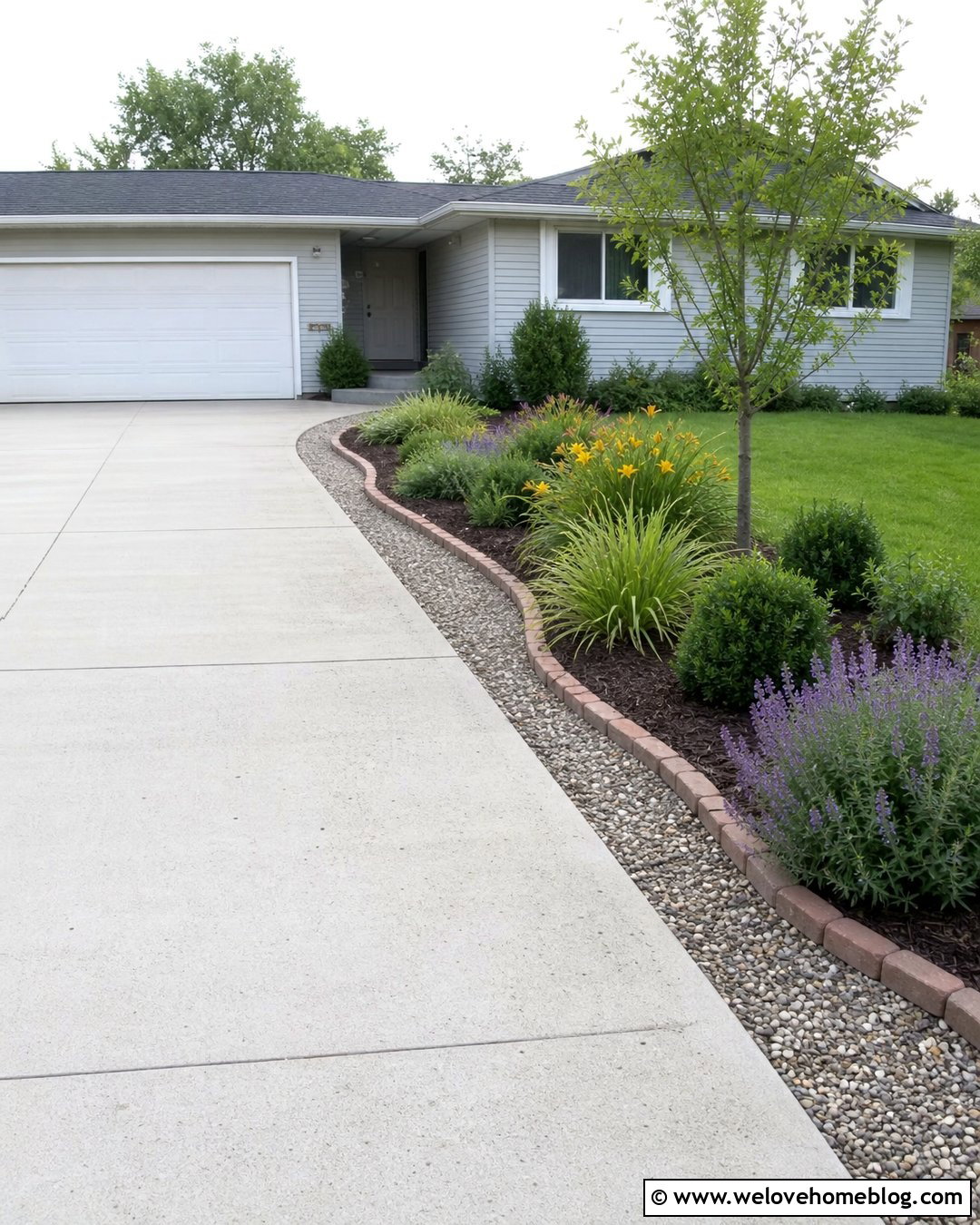
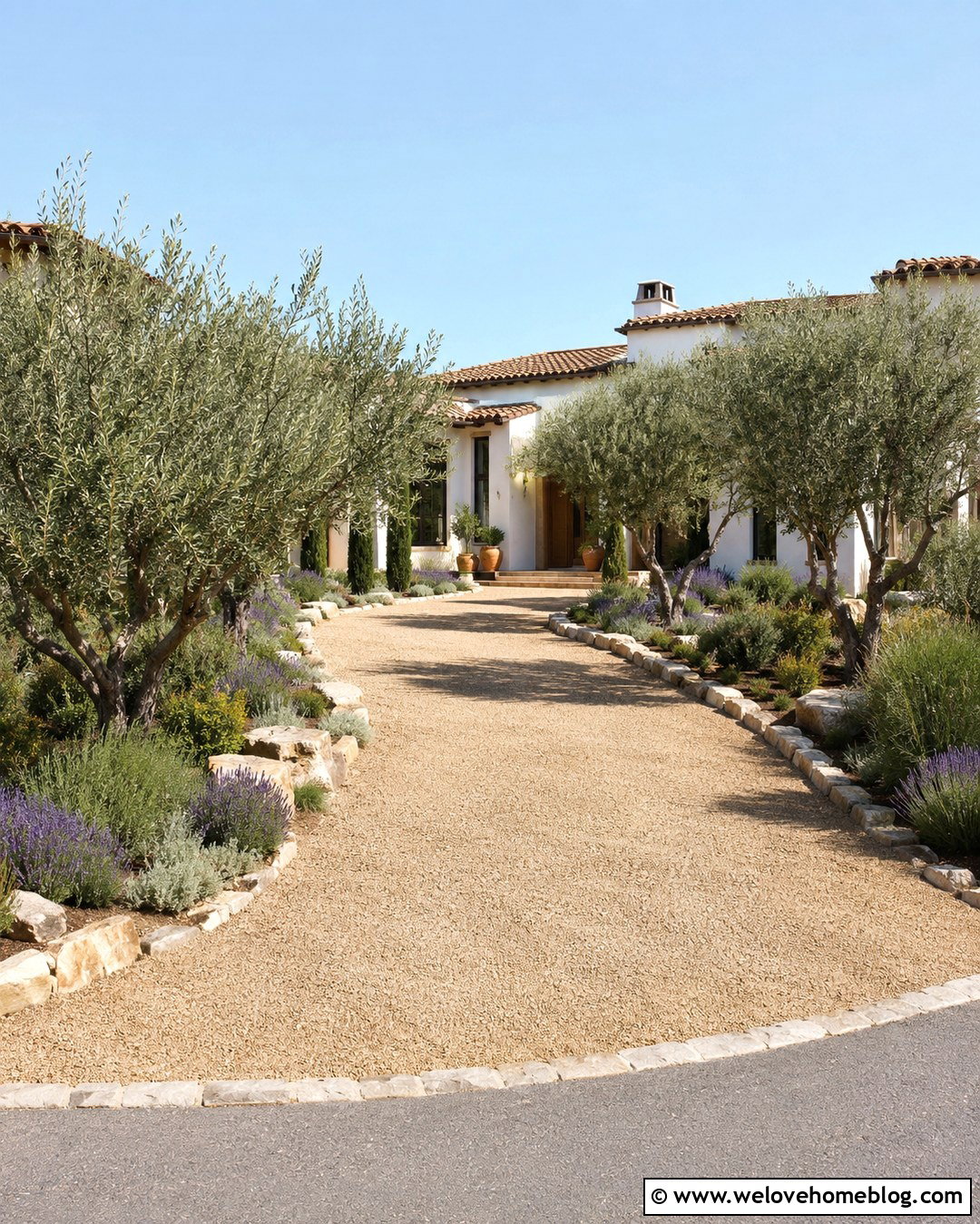
A straight, light-gray concrete driveway becomes warmer and more inviting when bordered by long sweeps of lavender. Use a narrow gravel strip between the pavement and planting bed to improve definition and keep soil away from the concrete. Repeating the same lavender variety creates a calm, organized look that works especially well with ranch, cottage, and Mediterranean-inspired homes. Add small groups of silvery artemisia or lamb’s ear for extra foliage contrast. Choose a sunny, well-drained location, and keep the plants far enough from the driving surface that their stems will not be crushed by tires. A low brick or steel edge can hold the gravel and soil neatly in place while preserving a clean line.
2. Native Garden Beside Gravel Driveway
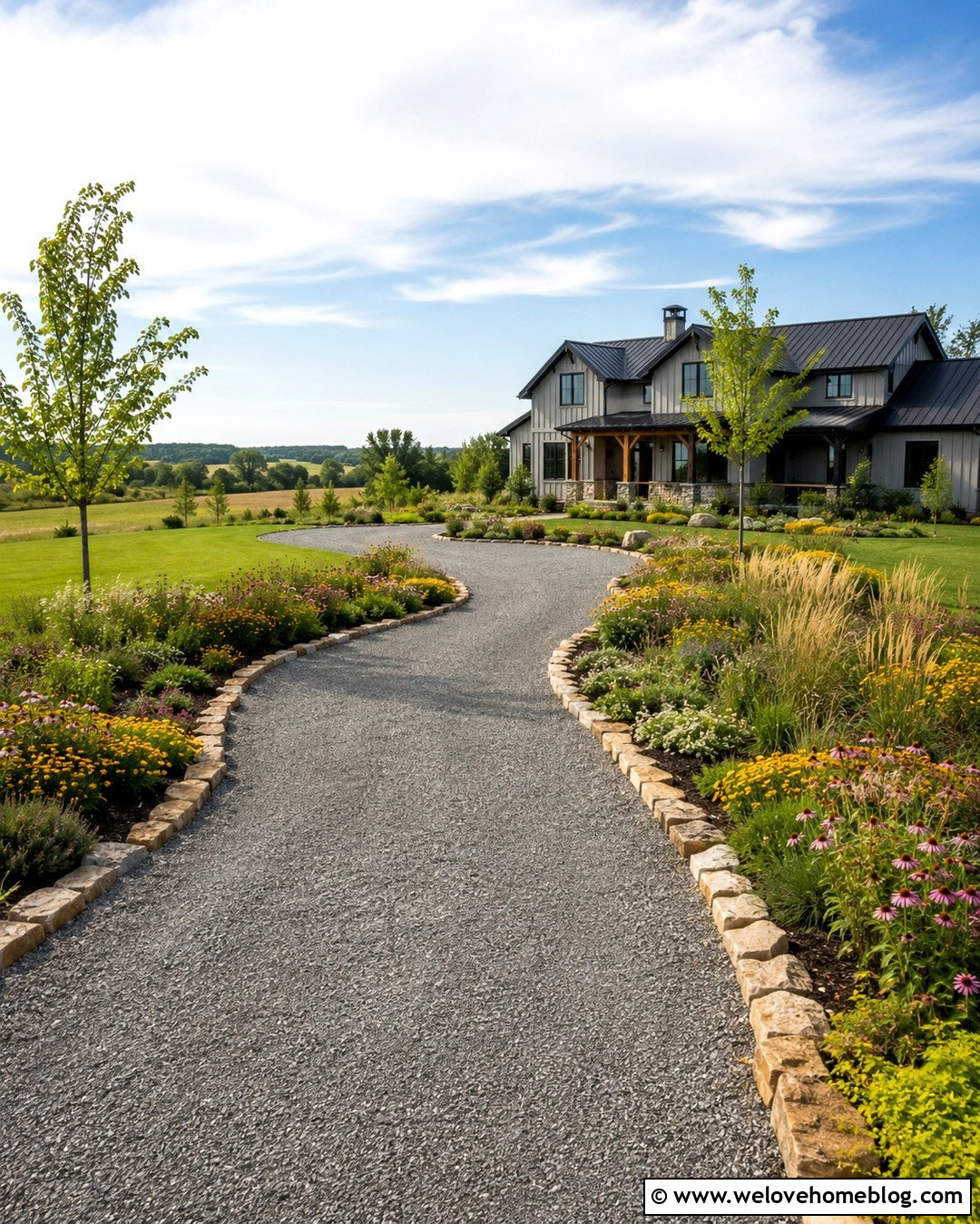
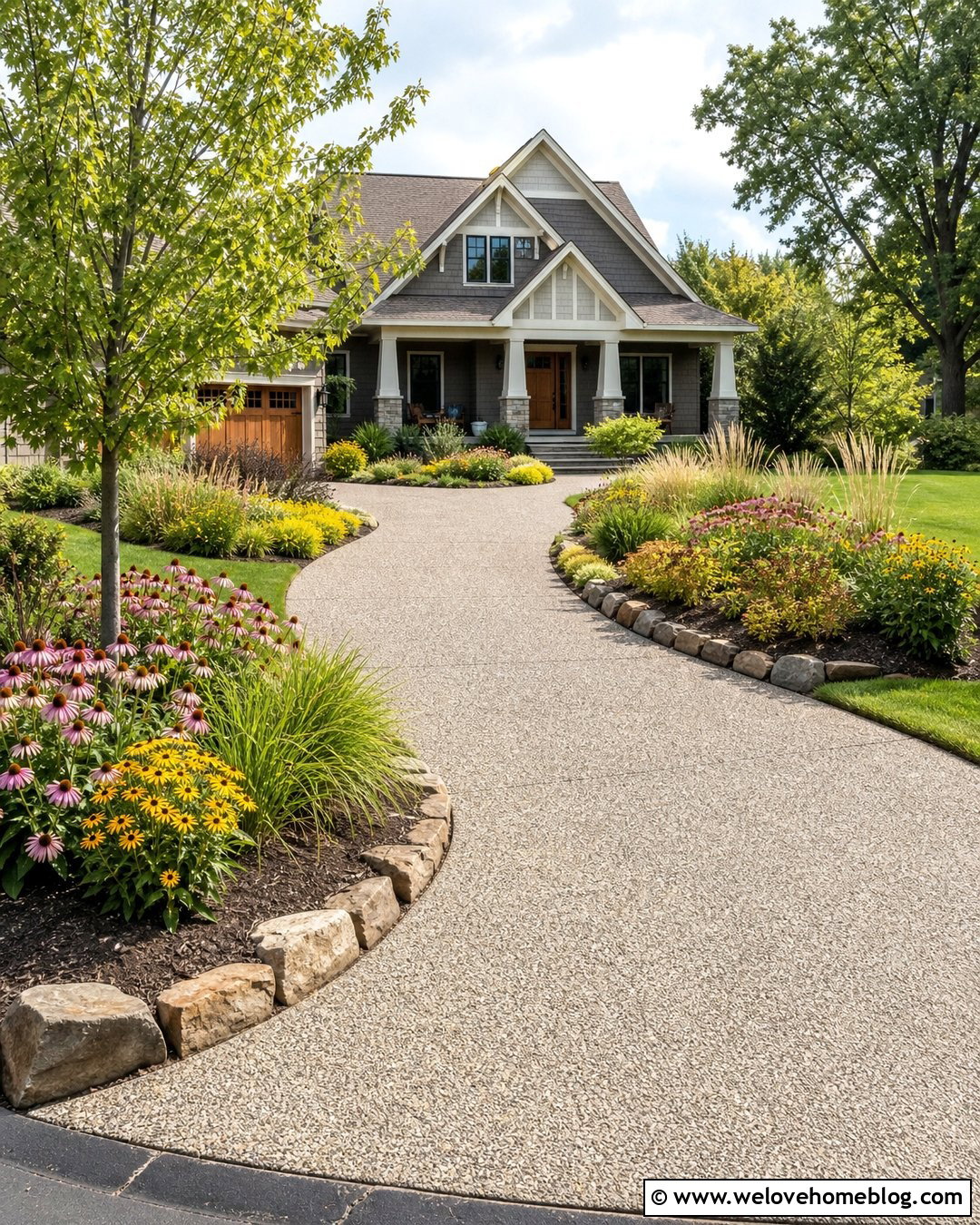
A native planting border fits naturally beside a relaxed gravel driveway, especially when the drive curves through a larger front yard. Begin with locally appropriate grasses and flowering perennials that match your soil, rainfall, and sunlight. Arrange them in broad groups rather than scattering individual plants. Taller grasses and seed-producing flowers can sit toward the lawn, while lower plants belong near the gravel edge. A row of weathered fieldstones creates a subtle border and helps prevent loose driveway gravel from entering the bed. Leave a clear landing area wherever passengers frequently step out. This complete look suits farmhouse, country, and craftsman homes, providing changing color, texture, and movement without making the driveway appear overly formal.
3. Boxwood Garden Beside Brick Driveway
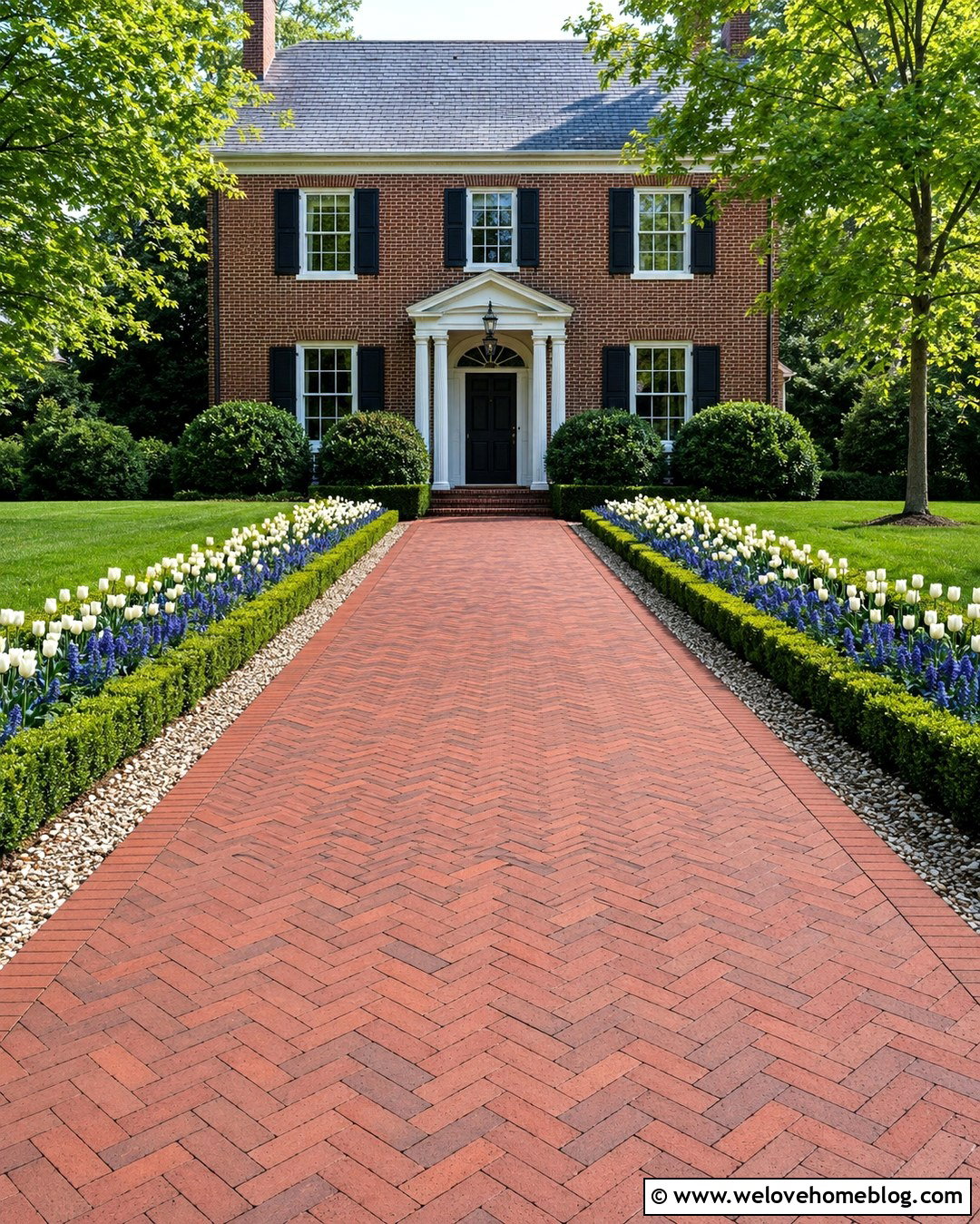
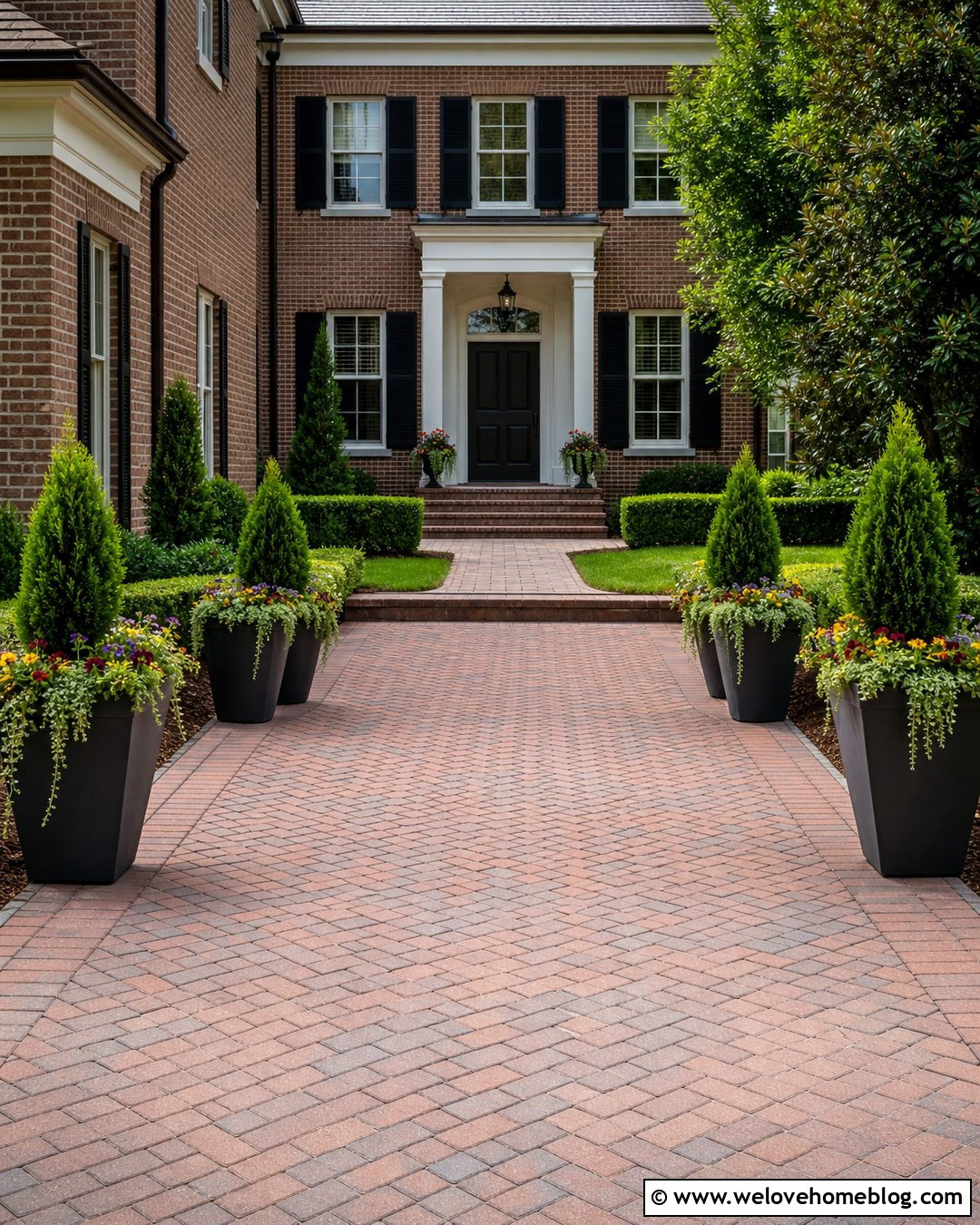
For a polished entrance, pair a red or brown brick paver driveway with low evergreen boxwood borders. The repeating green shapes complement the strong pattern of the brick without competing with it. Keep the hedge below window and headlight level, particularly near the street and garage. Behind the boxwood, add simple seasonal flowers in two or three coordinated colors. White tulips, blue salvia, or soft pink begonias can provide contrast while maintaining the formal layout. A narrow stone-mulch strip along the pavement makes trimming easier and protects the shrubs from vehicle traffic. This symmetrical driveway garden is particularly effective in front of colonial, Georgian, and traditional brick houses with balanced windows, straight walkways, and centered entrances.
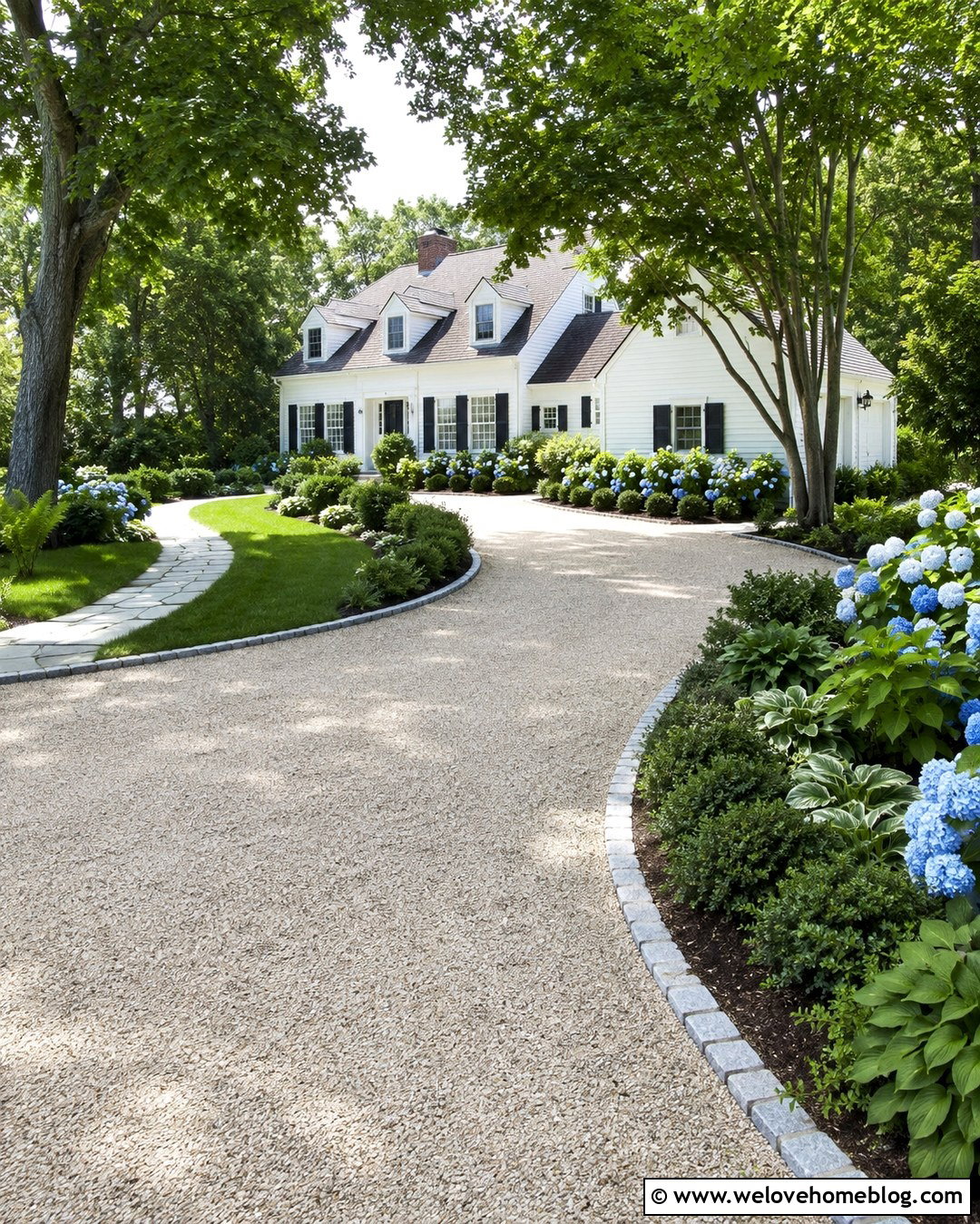
4. Hydrangea Garden Beside Curved Asphalt Driveway
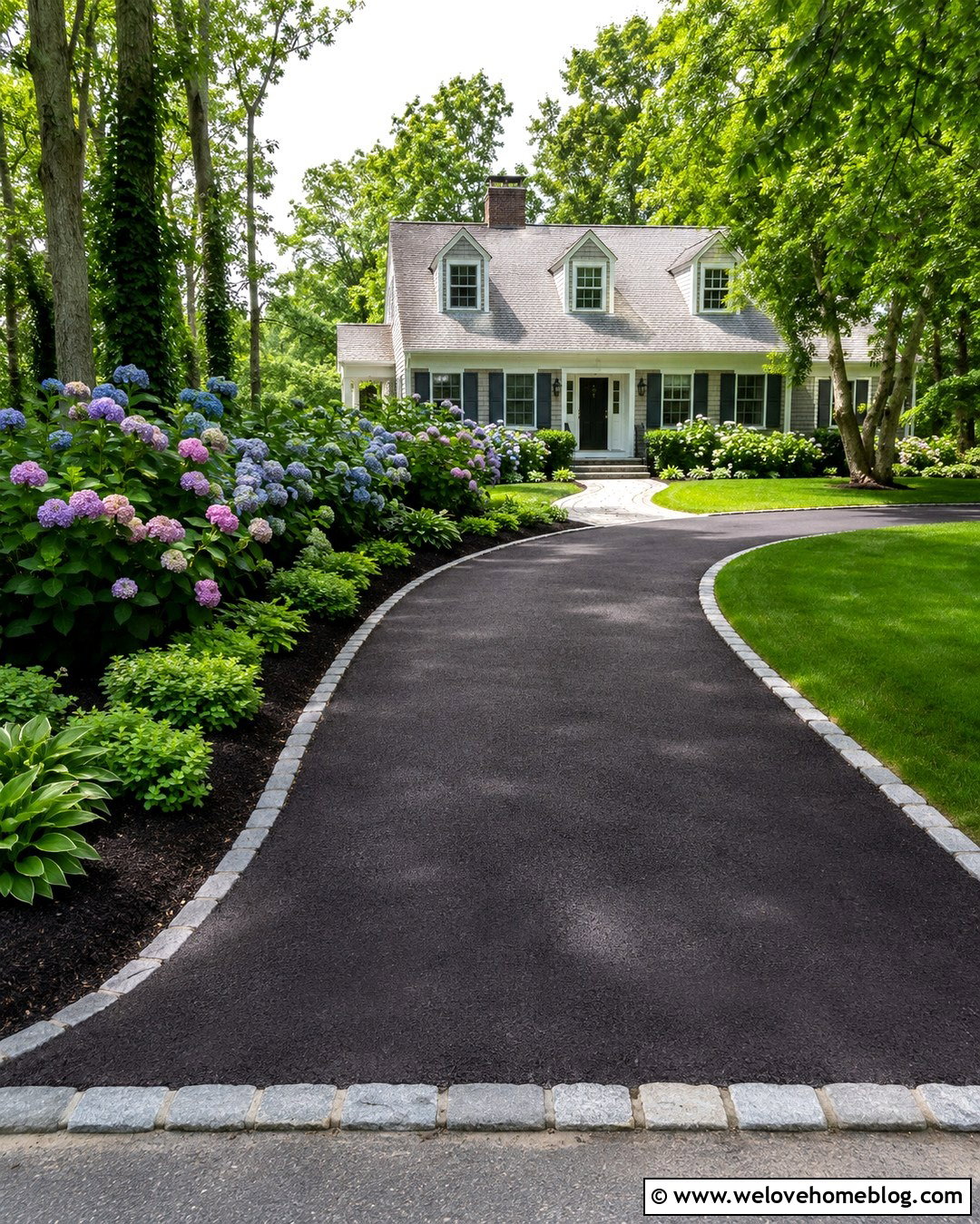
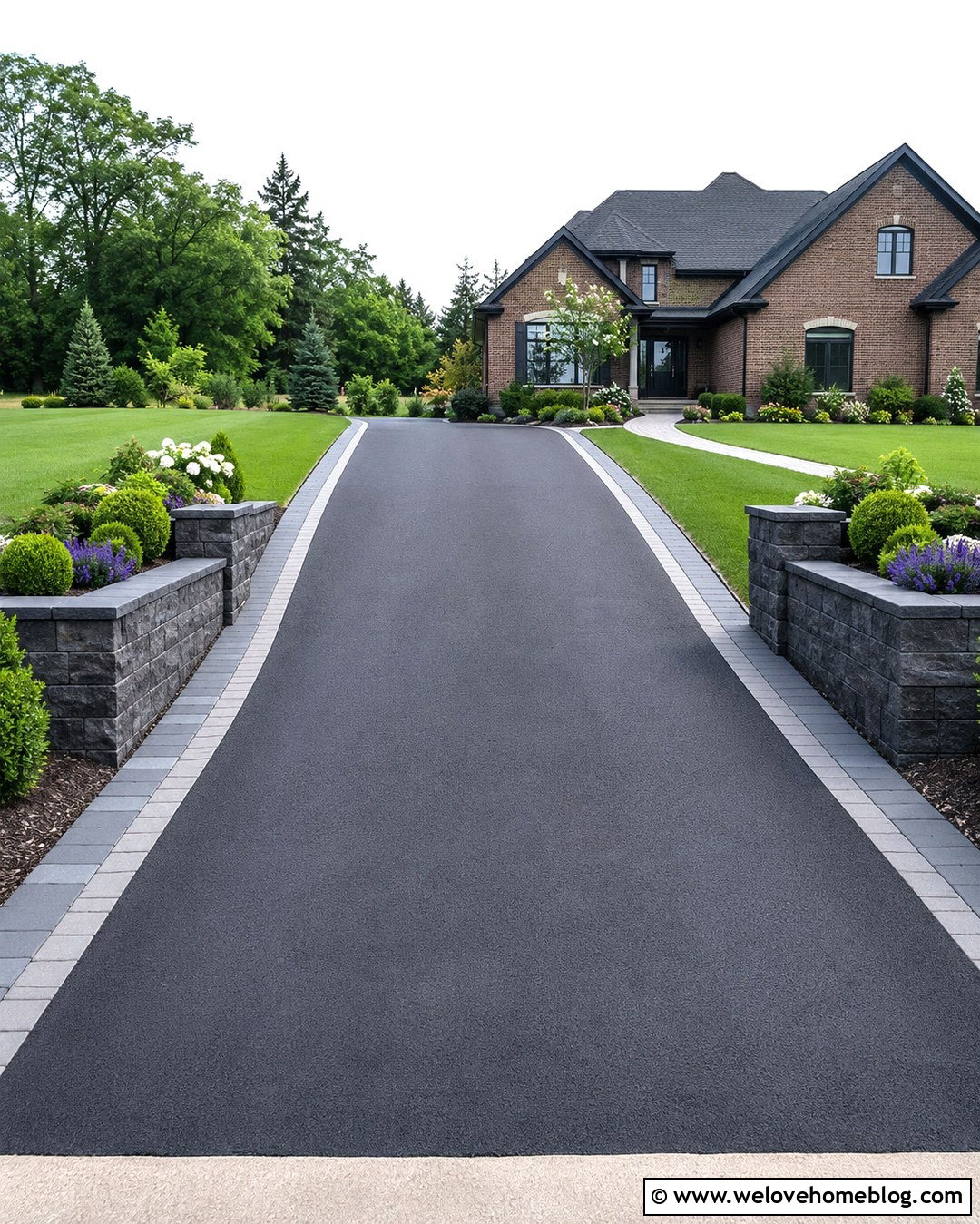
Large hydrangeas can soften the dark surface of a curved black asphalt driveway and help guide the eye toward the house. Position the shrubs along the outer curve, where a deeper bed provides enough room for mature growth. A light cobblestone border creates contrast and keeps mulch from washing onto the asphalt. Plant lower shade-tolerant ground covers beneath the hydrangeas to hide bare stems and complete the layered appearance. On the inside curve, maintain an open lawn or use shorter plants so drivers can see clearly around the bend. Select hydrangeas suited to the site’s light and climate rather than choosing by flower color alone. This lush arrangement complements Cape Cod, coastal, cottage, and traditional suburban homes.
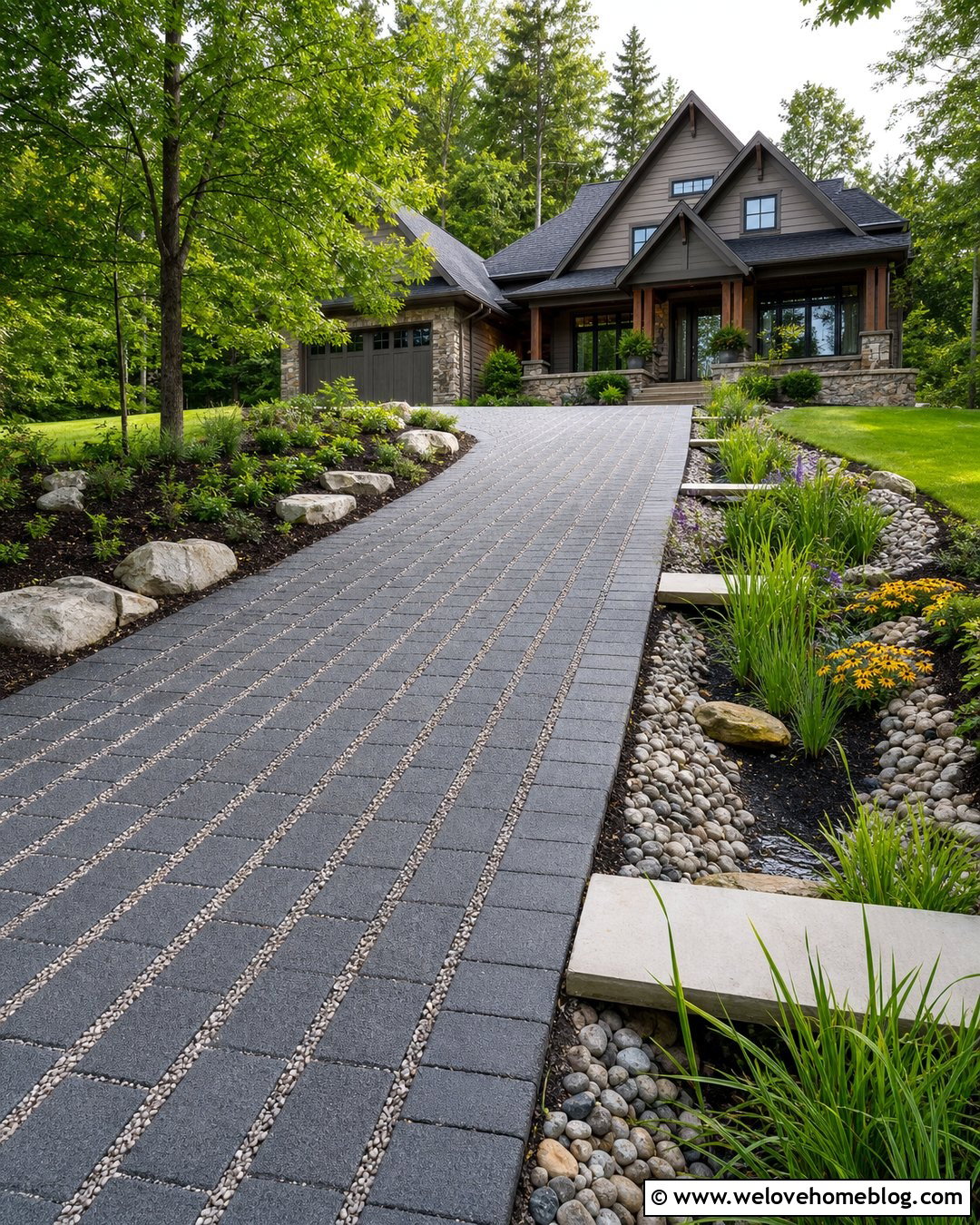
5. Rain Garden Beside Sloped Driveway
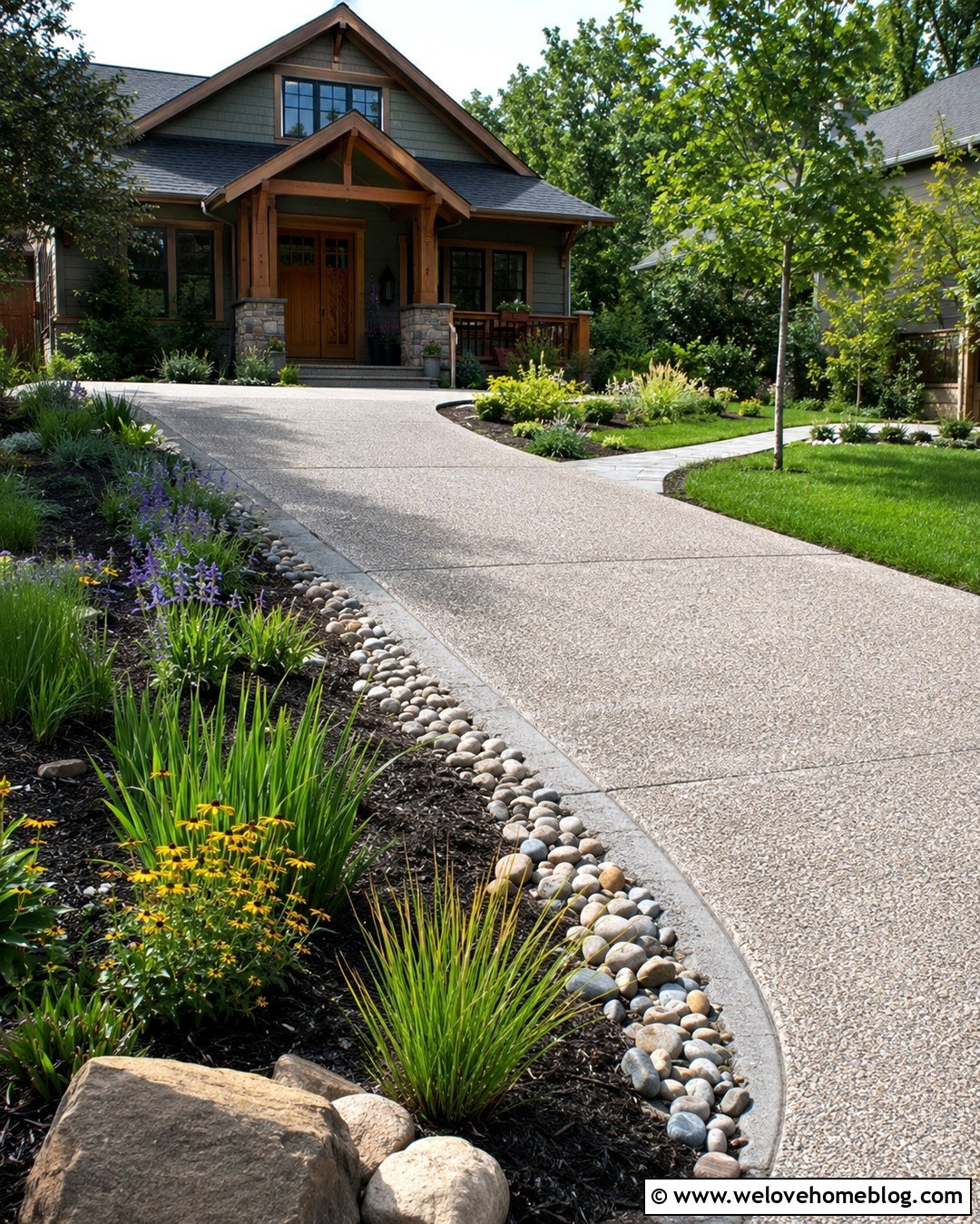
When runoff collects beside a sloped driveway, a carefully positioned rain garden can make the wet area look intentional. Direct water toward a shallow planted depression located safely away from the house foundation and important structures. Use moisture-tolerant native grasses, sedges, and flowering plants that can handle both temporary saturation and drier periods. River rock placed at the water entry point can reduce erosion and connect visually with an exposed aggregate or concrete driveway. Define the bed with a broad, gently curved shape instead of a narrow trench. The garden should remain lower than the surrounding grade without creating an unsafe drop beside the pavement. Proper grading and overflow planning are essential before planting. ()
6. Cottage Garden Beside Pea Gravel Driveway
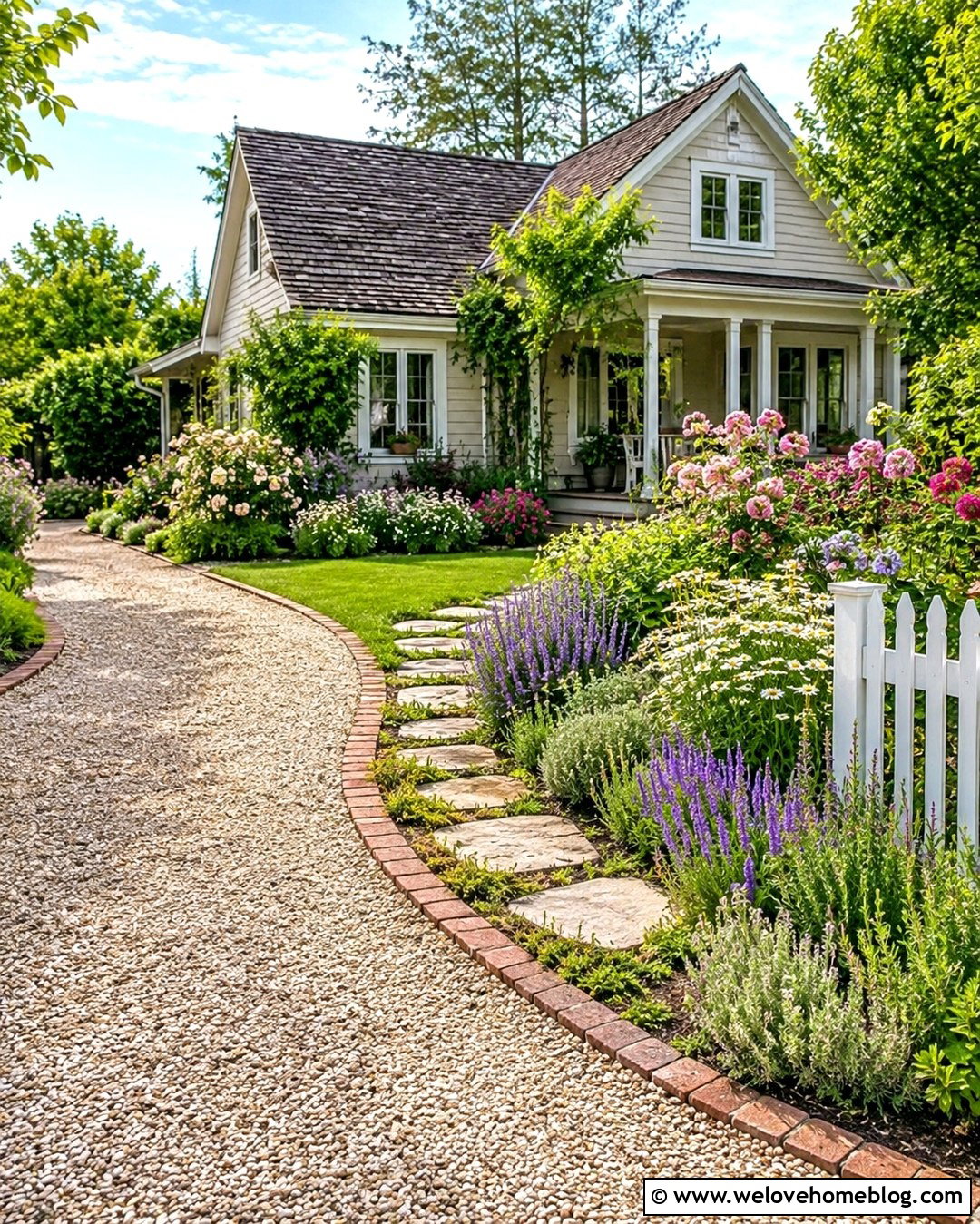
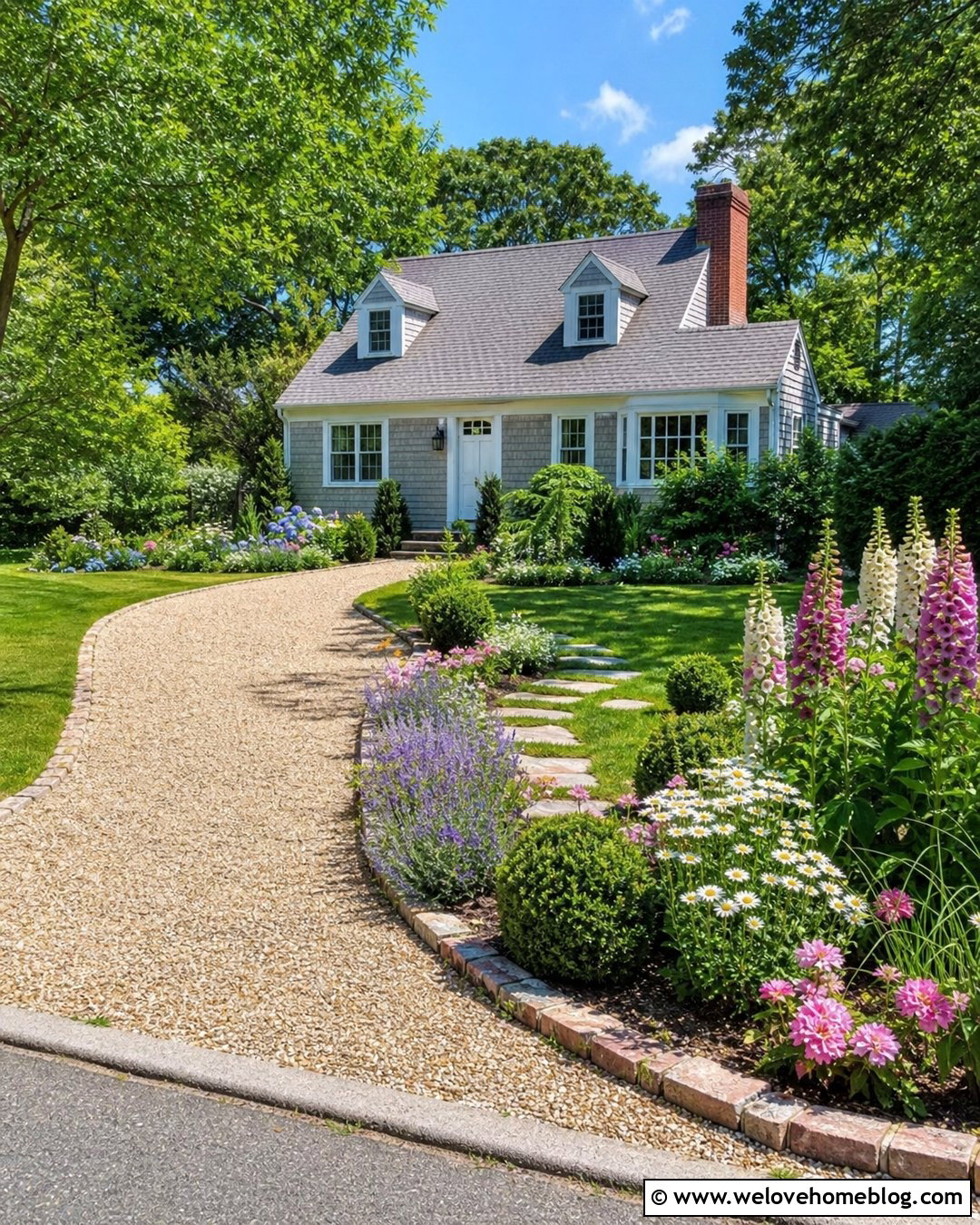
Imagine a pale pea gravel driveway framed by loose waves of roses, catmint, salvia, daisies, and ornamental herbs. This cottage-style arrangement feels abundant, but it still needs a strong underlying structure. Use reclaimed brick edging to contain the gravel and separate it from the planting soil. Place compact flowers near the driveway, medium-height perennials behind them, and a few taller shrubs toward the fence or house. Repeating several plants throughout the bed prevents the mixture from looking chaotic. Include stepping stones where passengers need to cross the border or reach a side gate. The soft planting works beautifully with a cottage, farmhouse, or small craftsman house, especially when flower colors echo the front door and exterior trim.
7. Ornamental Grass Garden Beside Modern Concrete Driveway
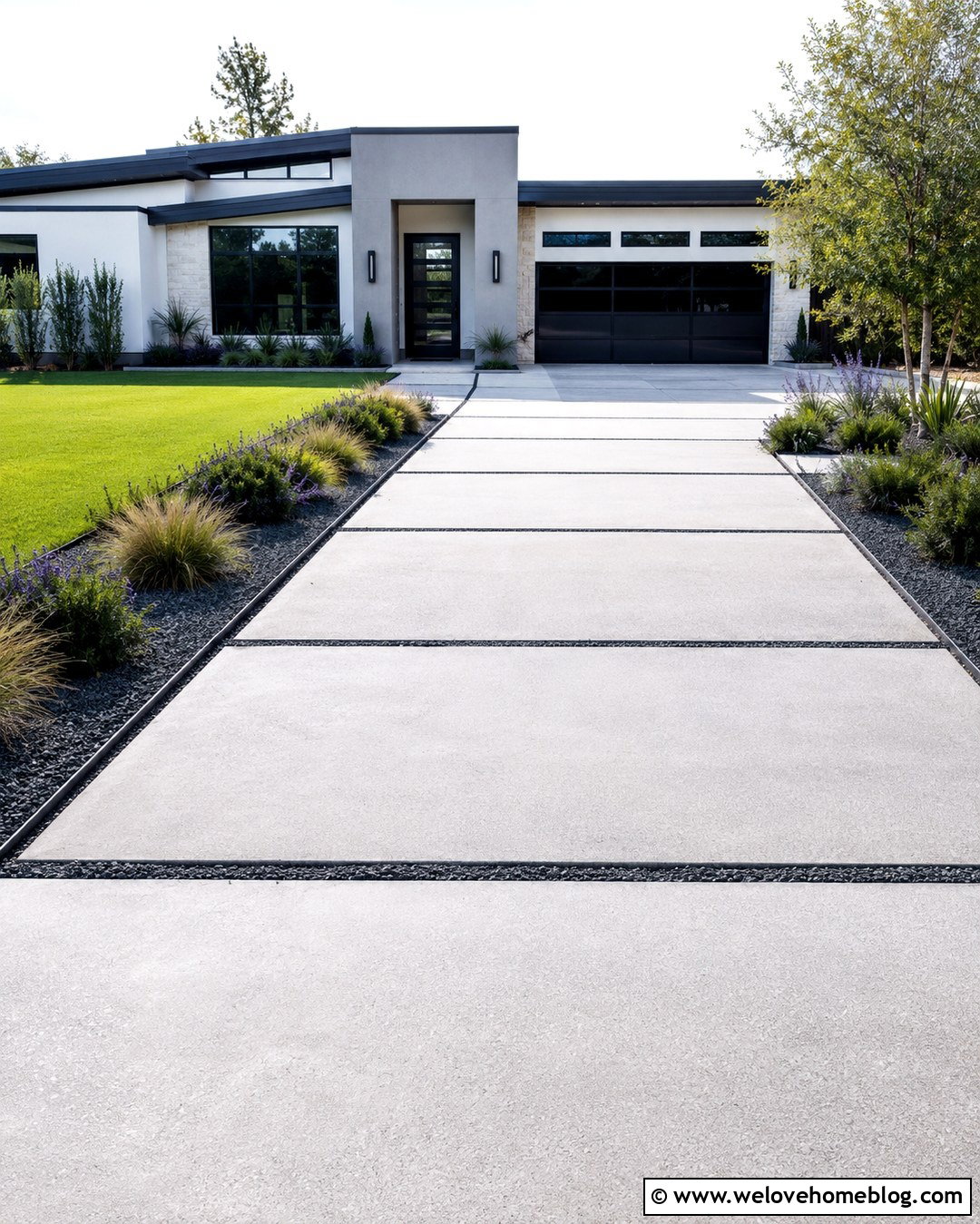
Clean lines and repeated grasses can give a poured concrete driveway a sophisticated modern finish. Divide a wide driveway into large concrete panels, then run a narrow garden bed along one side using dark metal edging. Plant compact ornamental grasses in evenly spaced groups, mixing them with low evergreen ground covers or architectural perennials. Keep the palette limited to green, bronze, and one flower color for a crisp appearance. Black gravel mulch can visually connect the plants to charcoal window frames or a dark garage door. Choose grasses that remain upright and do not spread aggressively into the driveway. The finished landscape feels simple rather than empty, with foliage movement softening the concrete while preserving the strong geometry of a contemporary home.
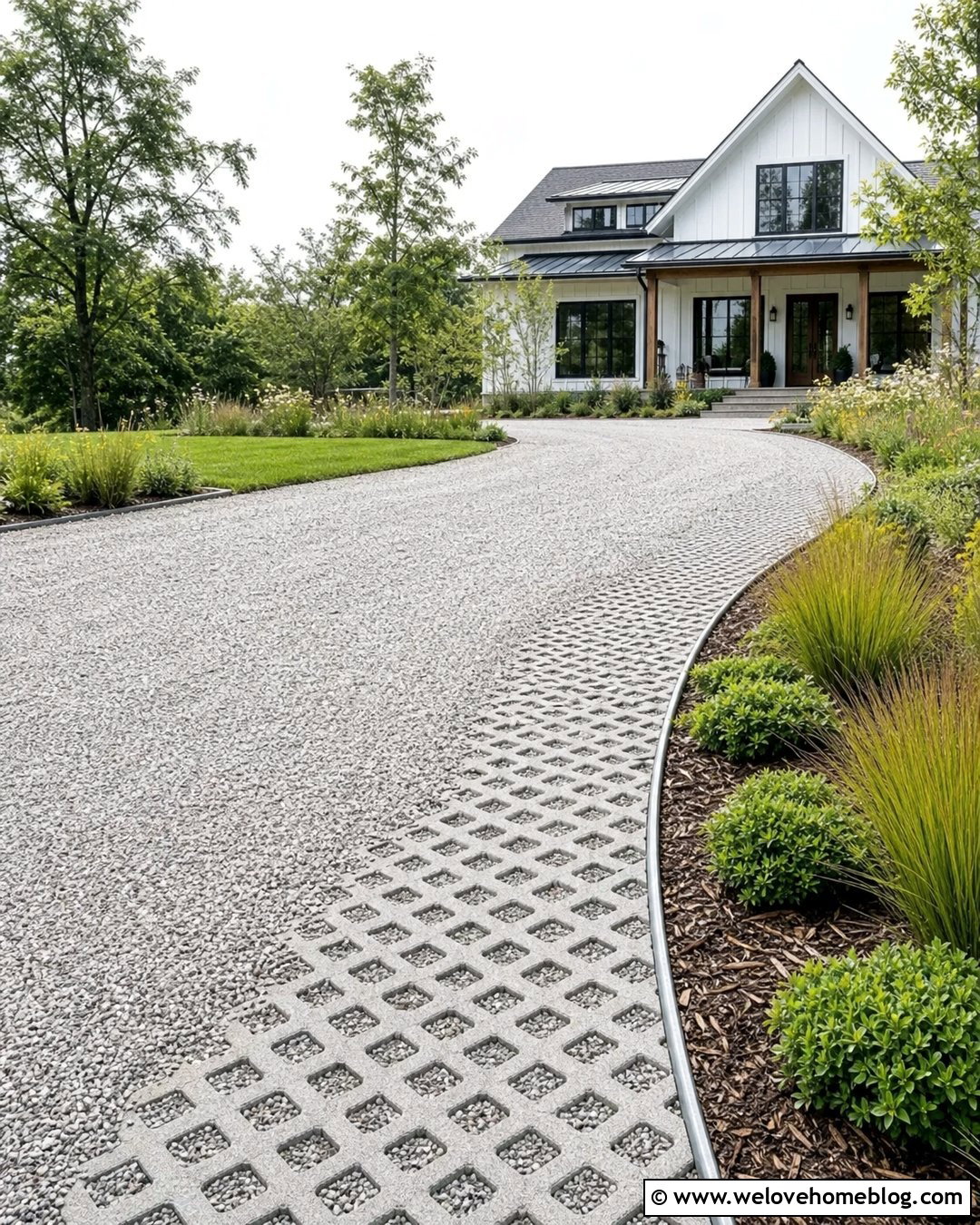
8. Rock Garden Beside Resin-Bound Driveway
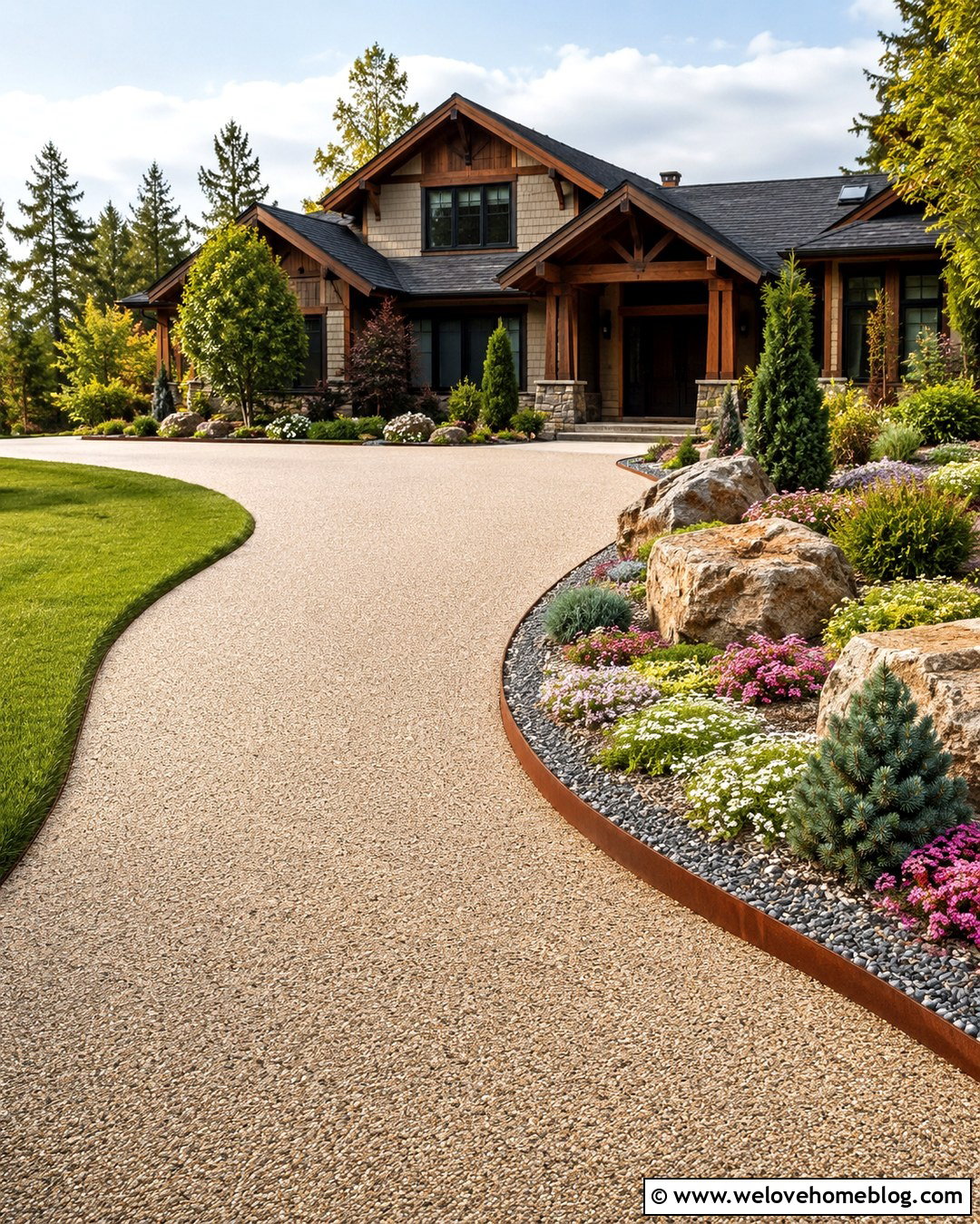
A rock garden makes an attractive companion for a warm beige resin-bound gravel driveway. Start with a gently raised bed that follows the drive’s shape, then arrange boulders in natural-looking groups rather than placing them at equal intervals. Fill the spaces with creeping thyme, compact conifers, sedum, dianthus, and other plants suited to the local climate and drainage. Smaller gravel around the plants should contrast slightly with the driveway while remaining in the same neutral color family. Use a sturdy stone or metal edge to keep the materials separate. This design works particularly well on a sunny slope or beside a contemporary craftsman home. Keep large rocks back from vehicle doors, tire paths, and the driveway entrance for safe everyday use.
9. Rose Garden Beside Cobblestone Driveway
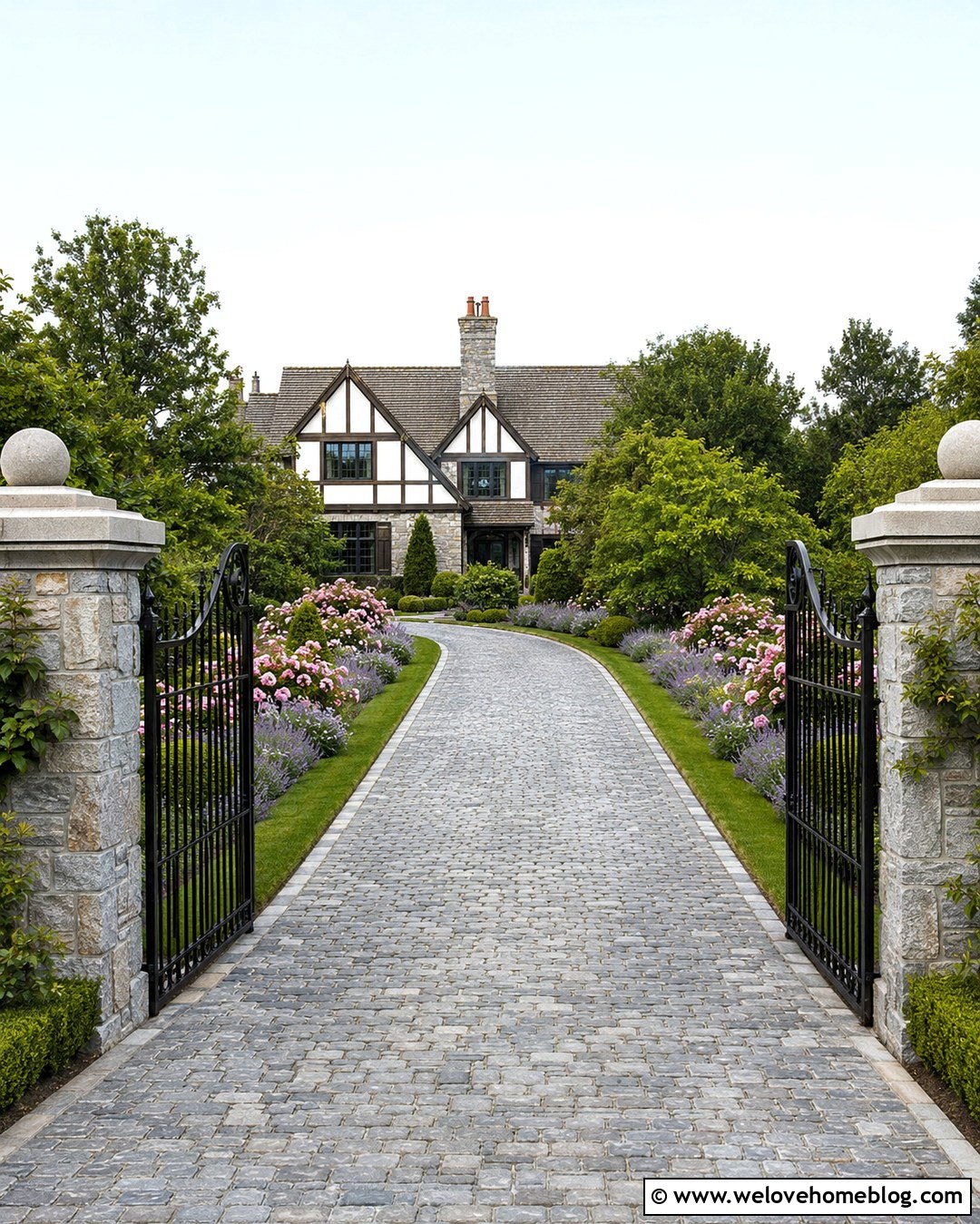
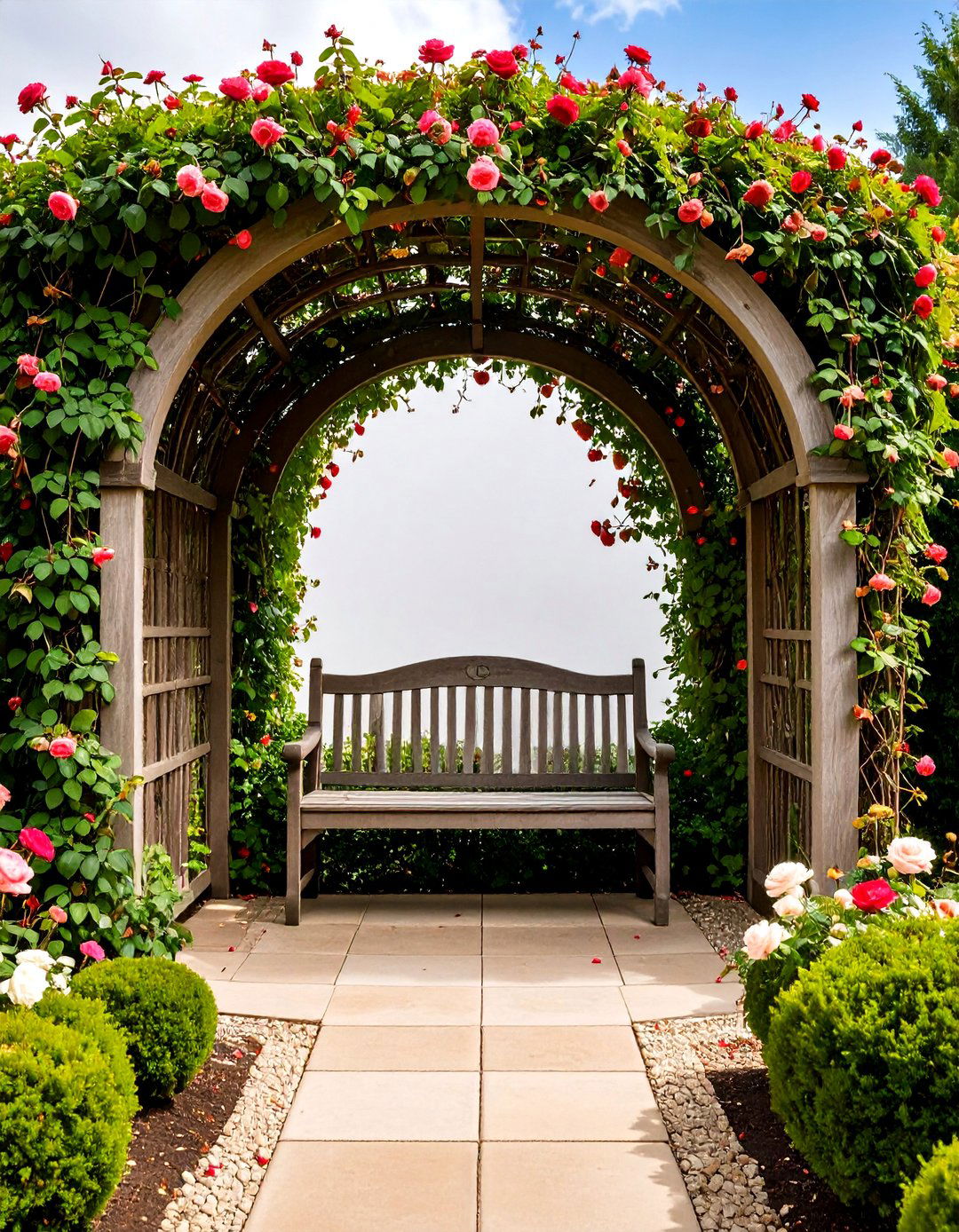
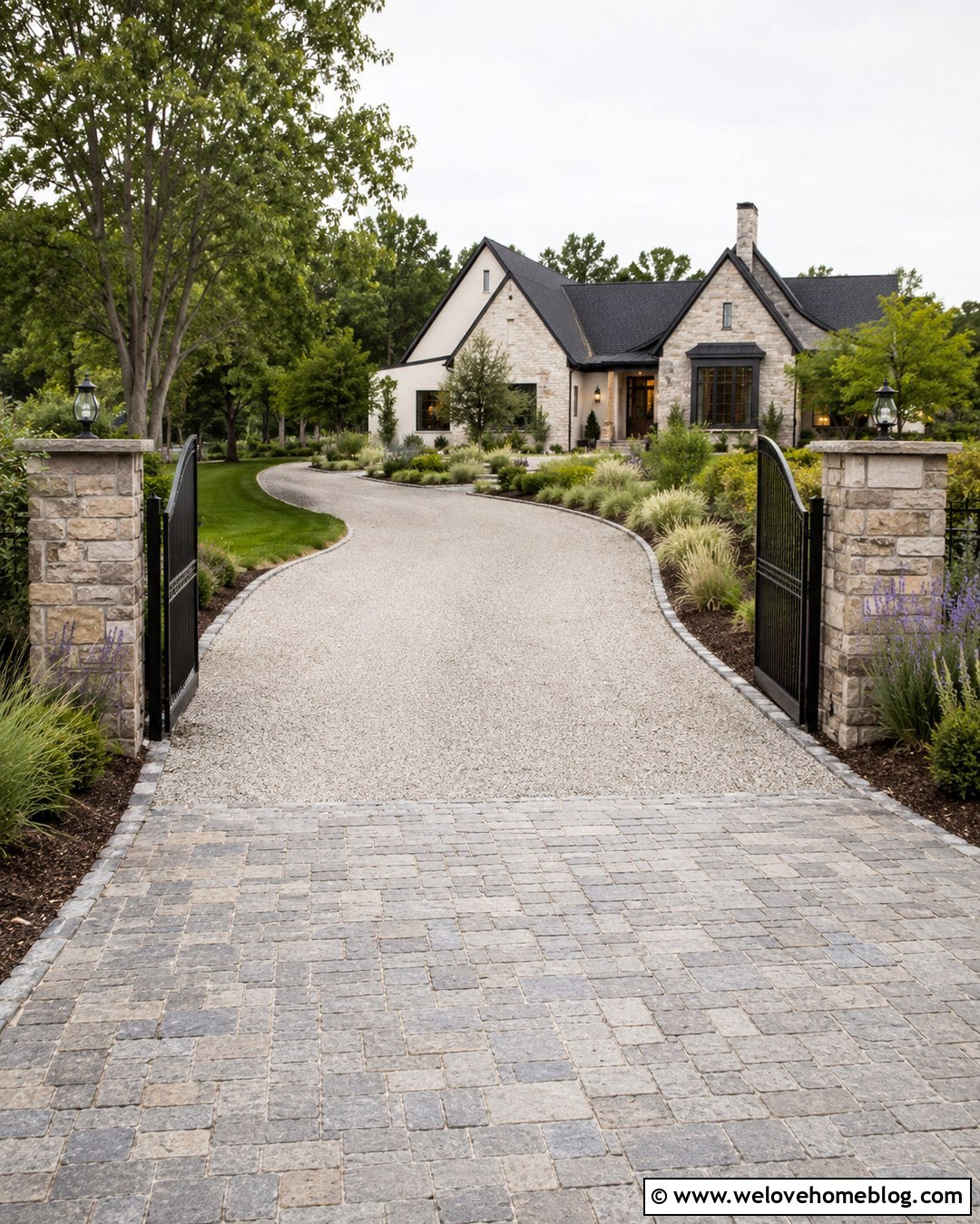
A cobblestone driveway and a structured rose border can create a traditional entrance without requiring an oversized estate. Choose compact shrub roses rather than thorny climbing varieties beside areas where people walk or open car doors. Place the roses behind a low clipped hedge or narrow band of lawn to create valuable separation from the driveway. Lavender, catmint, or hardy geraniums can cover the lower edge and provide a softer transition to the cobblestones. Repeat the same rose color along the full bed for unity, or use a restrained blend of two complementary tones. Stone pillars and a simple metal gate can finish the street-facing entrance. This complete garden look suits Tudor, colonial, European-inspired, and classic brick homes.
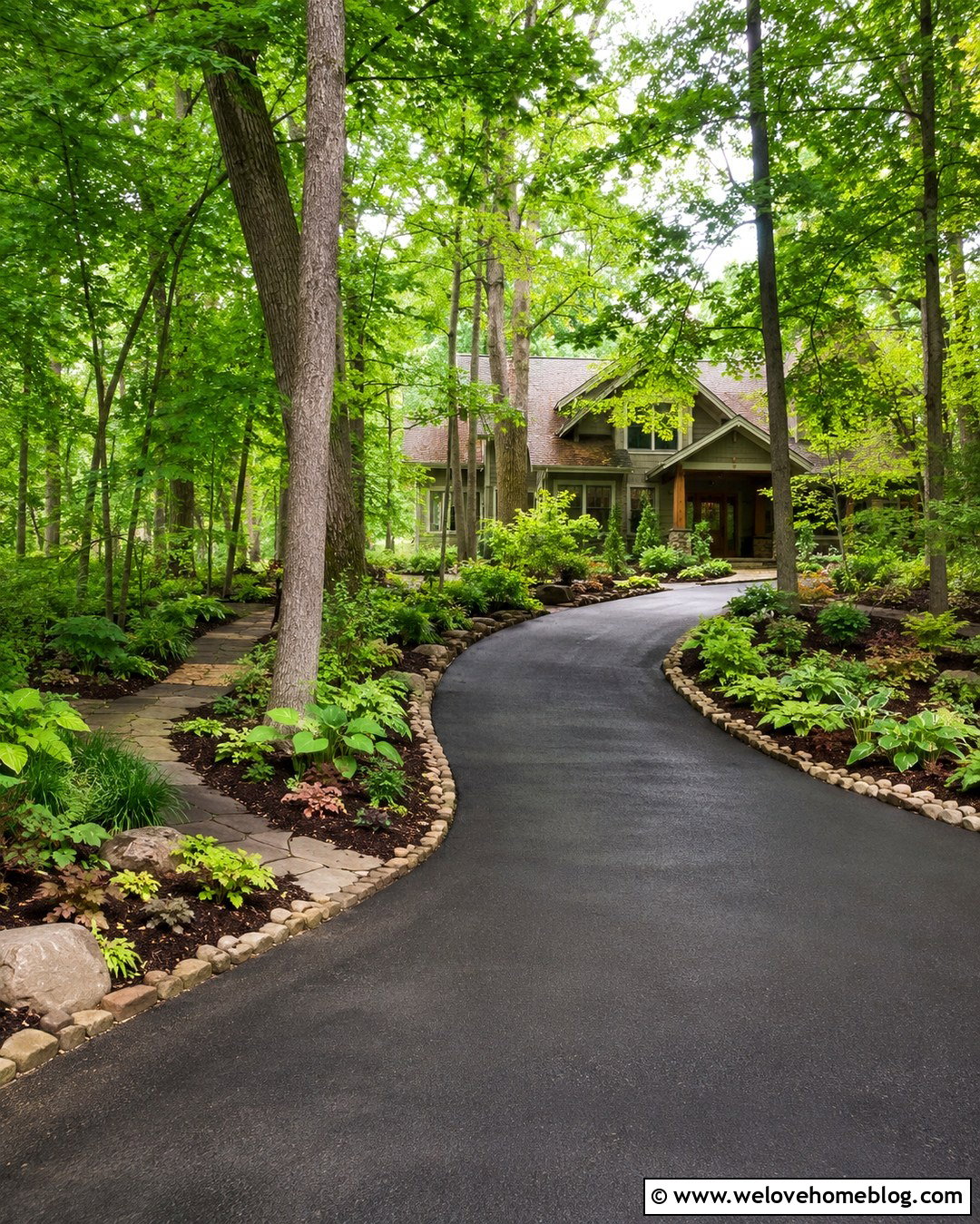
10. Shade Garden Beside Tree-Lined Driveway
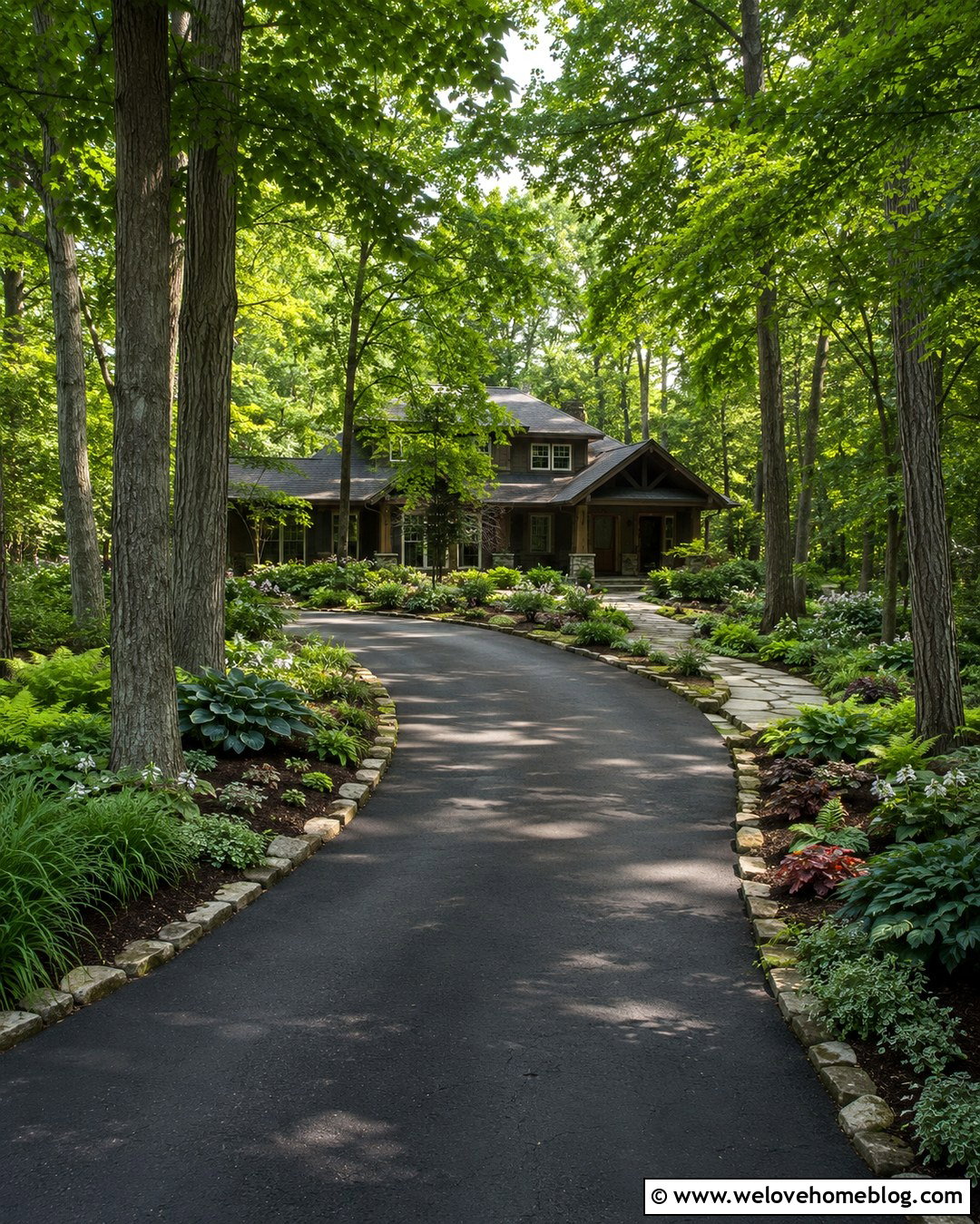
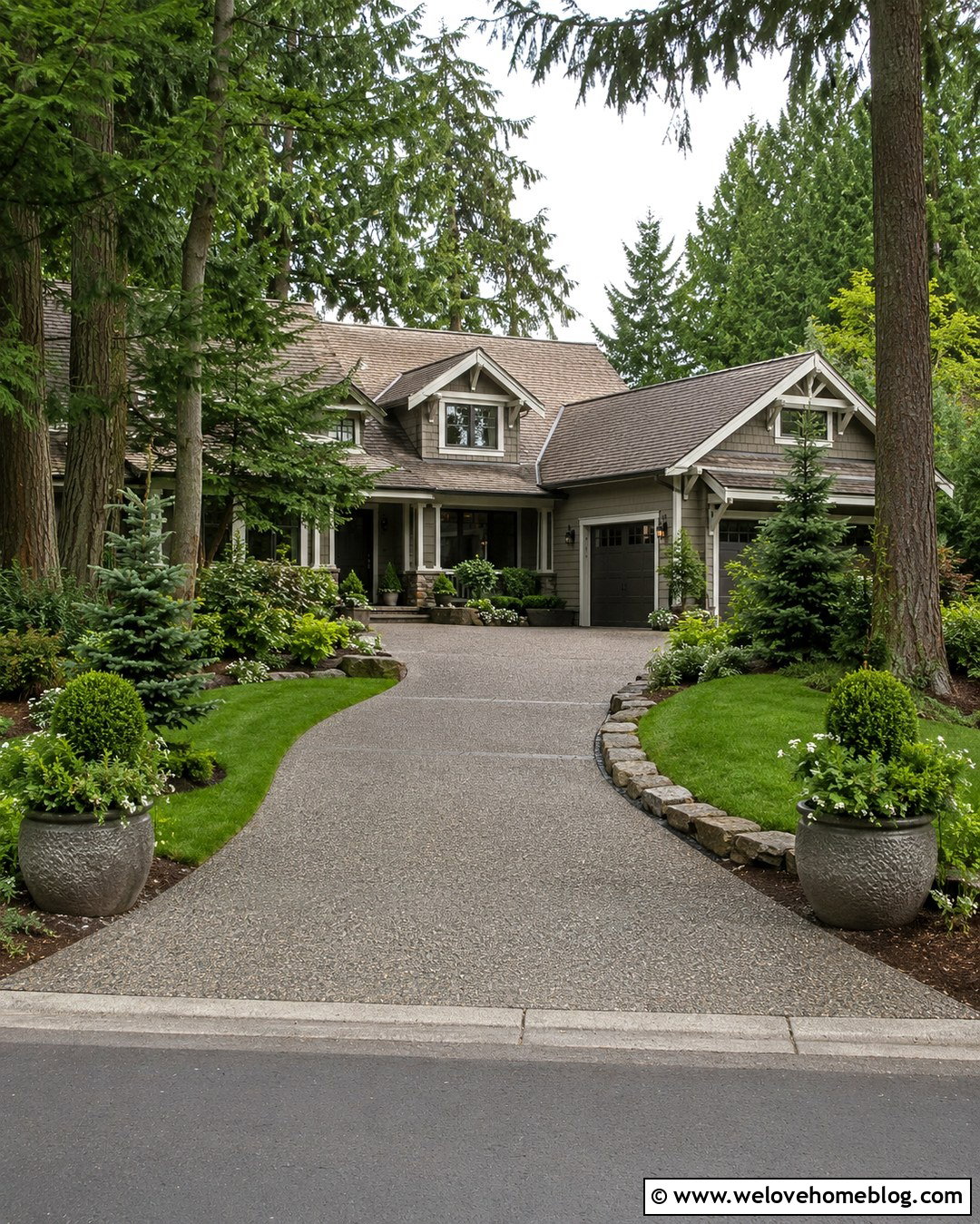
A driveway shaded by mature trees calls for foliage-driven planting rather than flowers that need strong sun. Beside a curved gray gravel or asphalt drive, create broad woodland beds containing hostas, ferns, heuchera, sedges, and shade-tolerant ground covers. Use plants with different leaf sizes and colors so the garden remains interesting when few flowers are present. Natural stone edging can follow the informal curve while preventing mulch and soil from spilling onto the driveway. Protect established tree roots by avoiding deep excavation and major grade changes. A simple stepping-stone path can connect the driveway to the front walk without cutting through delicate plants. This cool, layered setting works especially well around craftsman, rustic, and wooded suburban homes.
11. Pollinator Garden Beside Paver Driveway
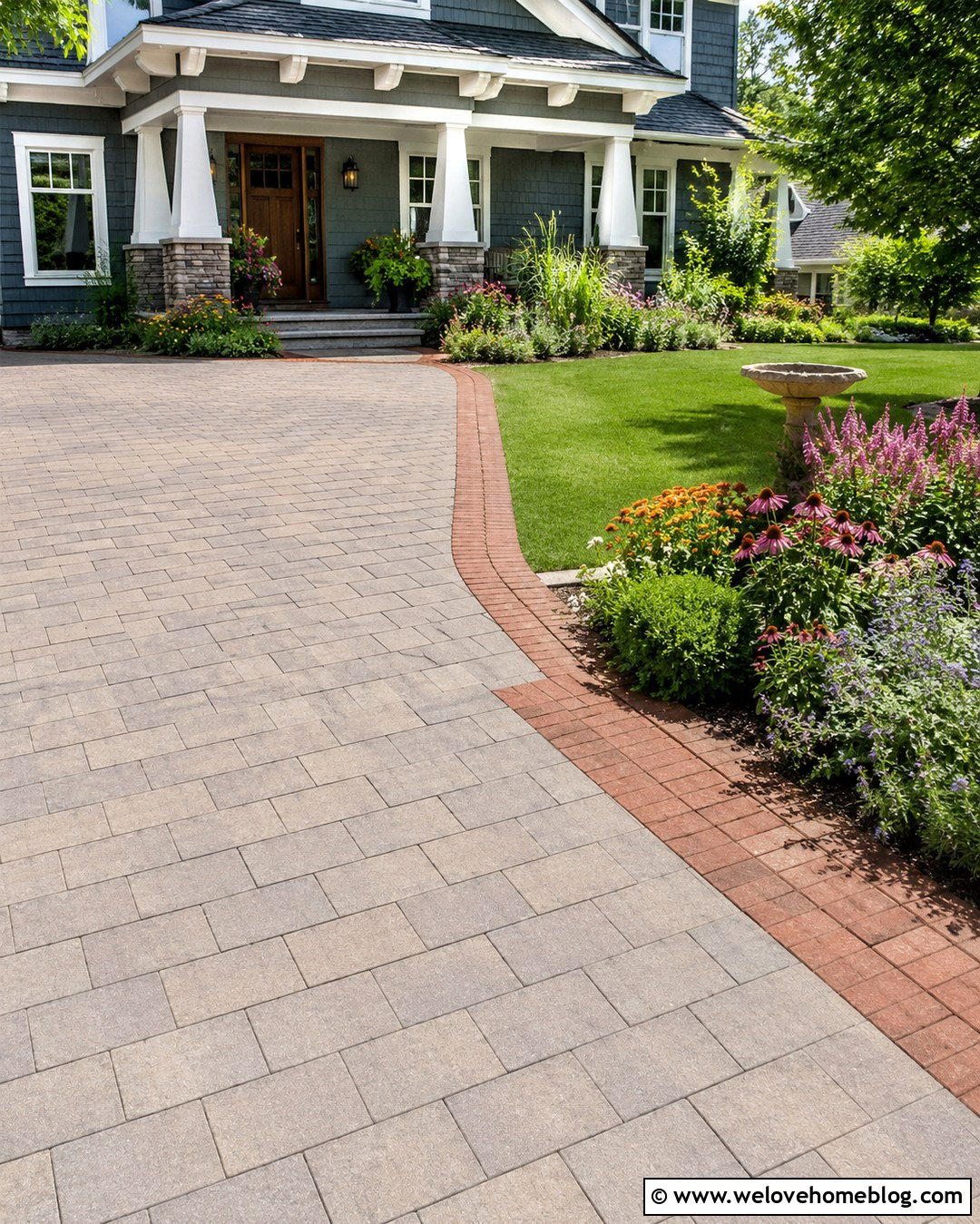
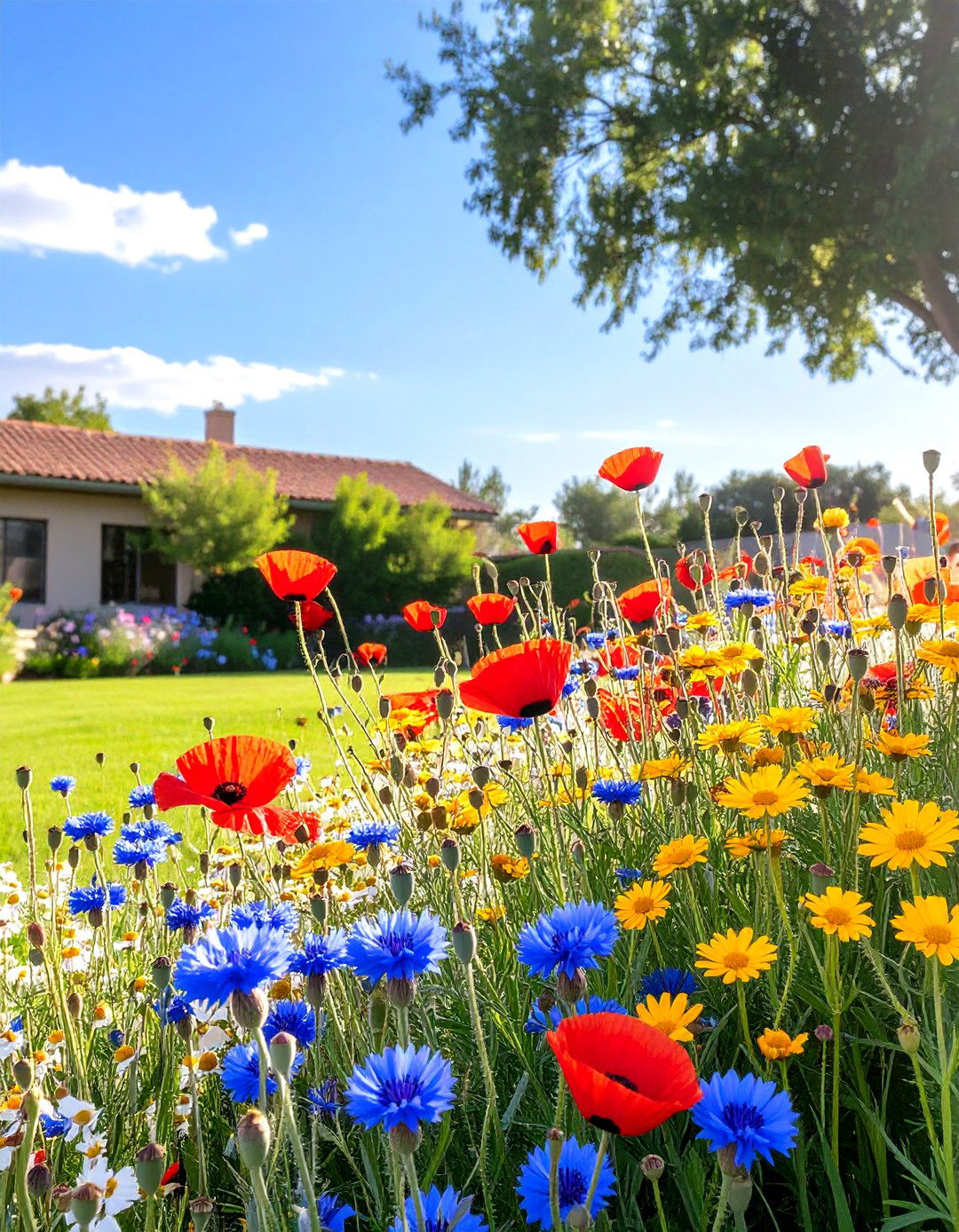
Colorful pollinator planting can energize a driveway made from warm gray interlocking concrete pavers. Build the border around repeating groups of locally suitable nectar and host plants, choosing species that flower at different points in the growing season. Place low plants closest to the driveway and taller blooms toward the lawn or fence. A flush brick mowing strip keeps the bed tidy and provides a convenient surface beside parked vehicles. Include ornamental grasses or small evergreen shrubs so the garden retains structure outside peak flowering periods. Avoid placing floppy stems where they may obstruct the driveway. A nearby stone birdbath can serve as a focal point, but it should remain well outside vehicle clearance. This cheerful layout complements casual suburban and craftsman homes.
12. Succulent Garden Beside Desert Driveway
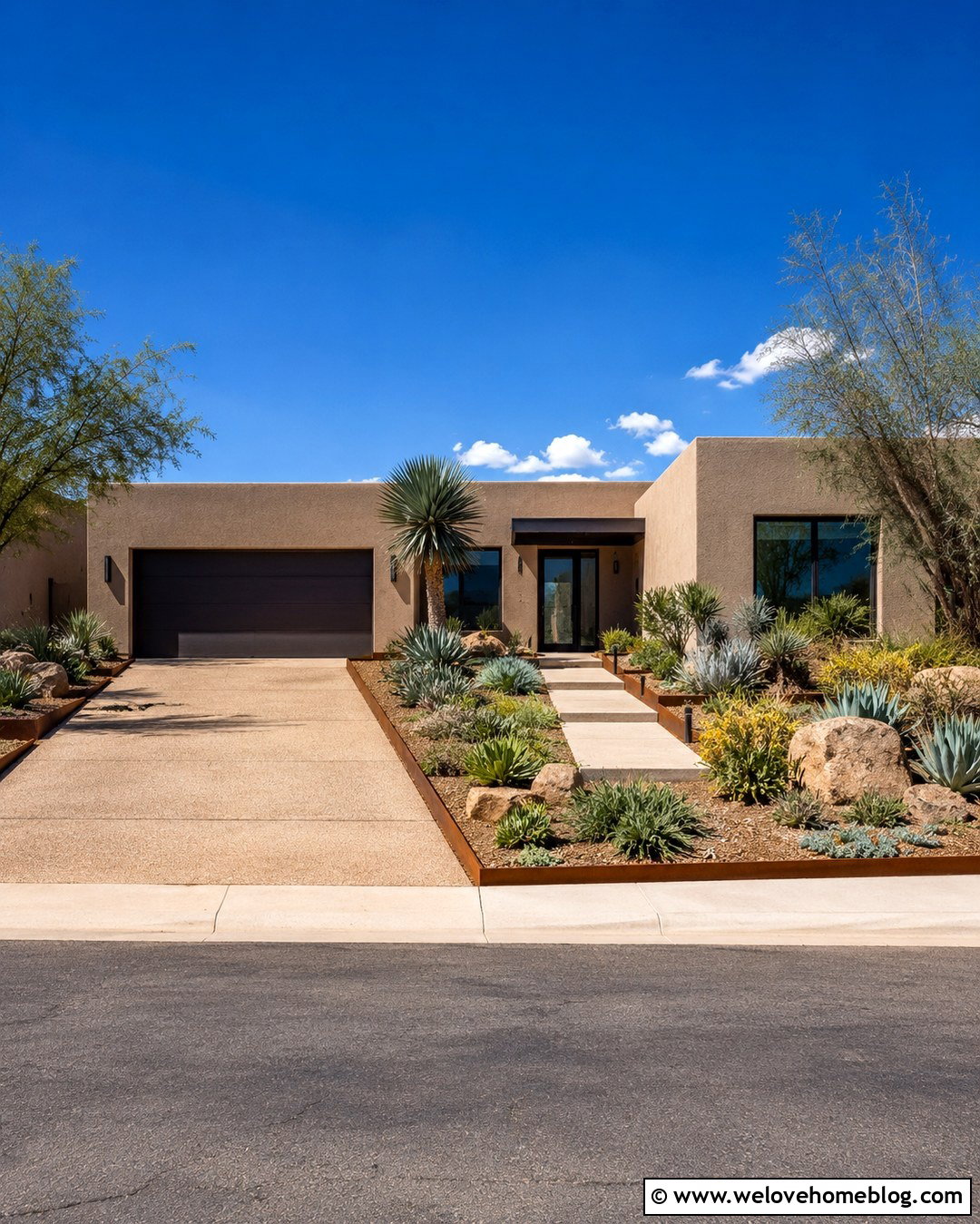
In a hot, dry front yard, combine a sand-colored concrete driveway with a sculptural succulent and gravel garden. Use agave, yucca, aloe, compact ornamental grasses, and low spreading plants selected for the local hardiness zone. Arrange the largest forms farther from the pavement, especially if they have sharp leaves. Near the driveway, use smooth river rock, small succulents, or low ground covers that will not interfere with doors. Corten steel edging can create a crisp separation between the concrete and warm-toned gravel mulch. A few weathered boulders add height without requiring additional irrigation. This drought-conscious design looks especially cohesive beside stucco, Pueblo Revival, midcentury modern, and contemporary desert homes with simple walls and strong architectural lines.
13. Raised Garden Bed Beside Narrow Driveway
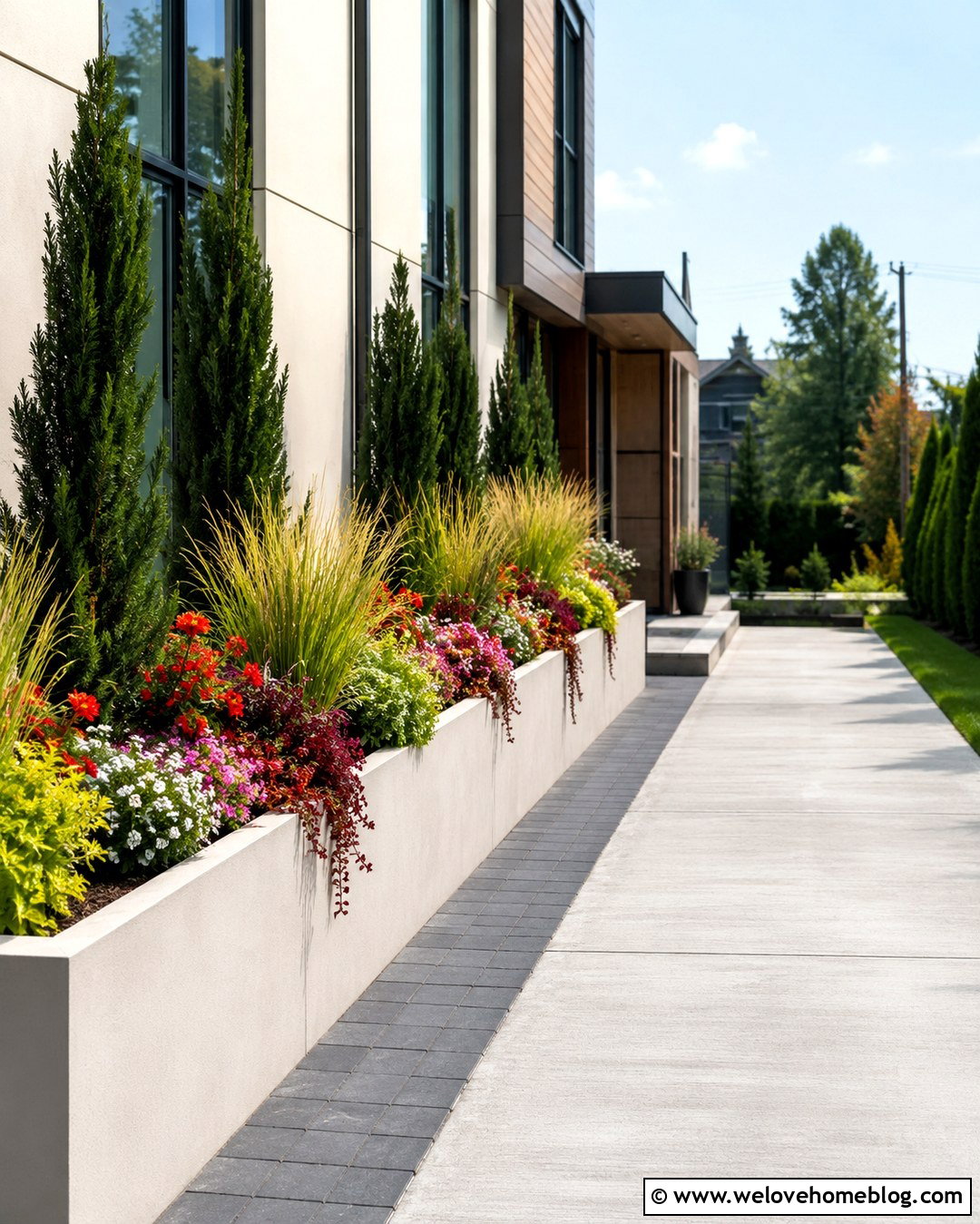
A raised bed can bring greenery to a narrow driveway where an in-ground border would be too difficult to maintain. Pair a straight concrete or asphalt driveway with one long planter made from brick, stone, or smooth rendered block. Keep the structure low enough to preserve visibility and set it back from the pavement so mirrors, doors, and passengers have room. Fill the bed with upright evergreen shrubs, compact grasses, and trailing plants that soften the outer wall. A narrow paver landing strip between the driveway and planter makes access safer and reduces damage to foliage. Match the raised bed material to the house foundation or front walkway. This space-efficient arrangement is ideal for townhomes, small suburban lots, and side driveways beside boundary fences.
14. Evergreen Garden Beside Long Gravel Driveway
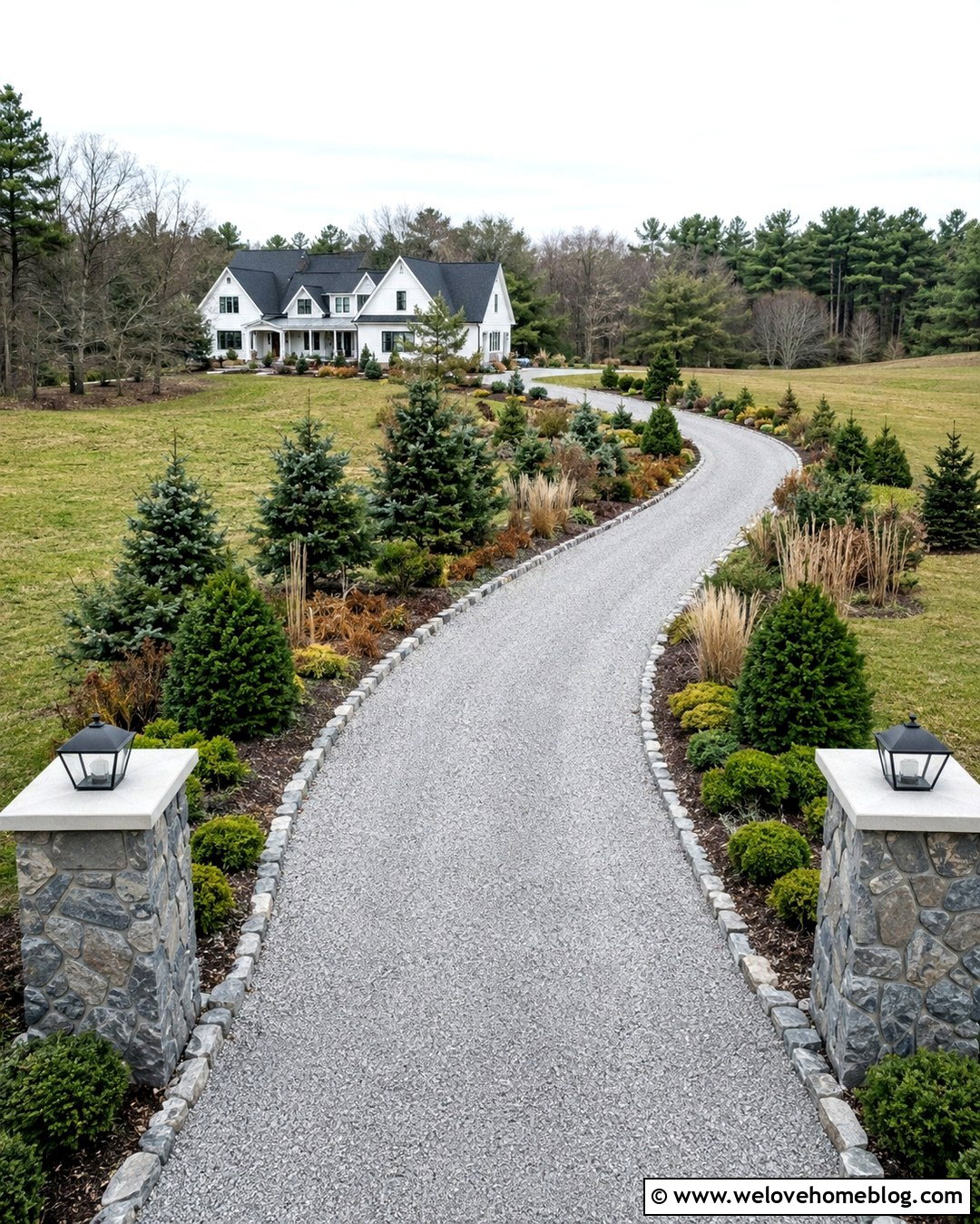
A long driveway benefits from repeating evergreen planting that creates rhythm without requiring continuous flower beds. Along a curved gray gravel surface, space compact conifers, inkberry, holly, or other regionally suitable evergreen shrubs in generous mulched beds. Connect the groups with ornamental grasses or durable ground covers instead of forming one unbroken hedge. Natural fieldstone edging helps contain loose gravel while matching a rural setting. Near the street, frame the entrance with two balanced planting beds and simple stone pillars. As the driveway approaches the house, increase the planting density to create a welcoming arrival area. This approach provides year-round structure and suits modern farmhouses, mountain homes, cabins, and larger craftsman properties surrounded by open lawn or woodland.


15. Tropical Garden Beside Circular Driveway
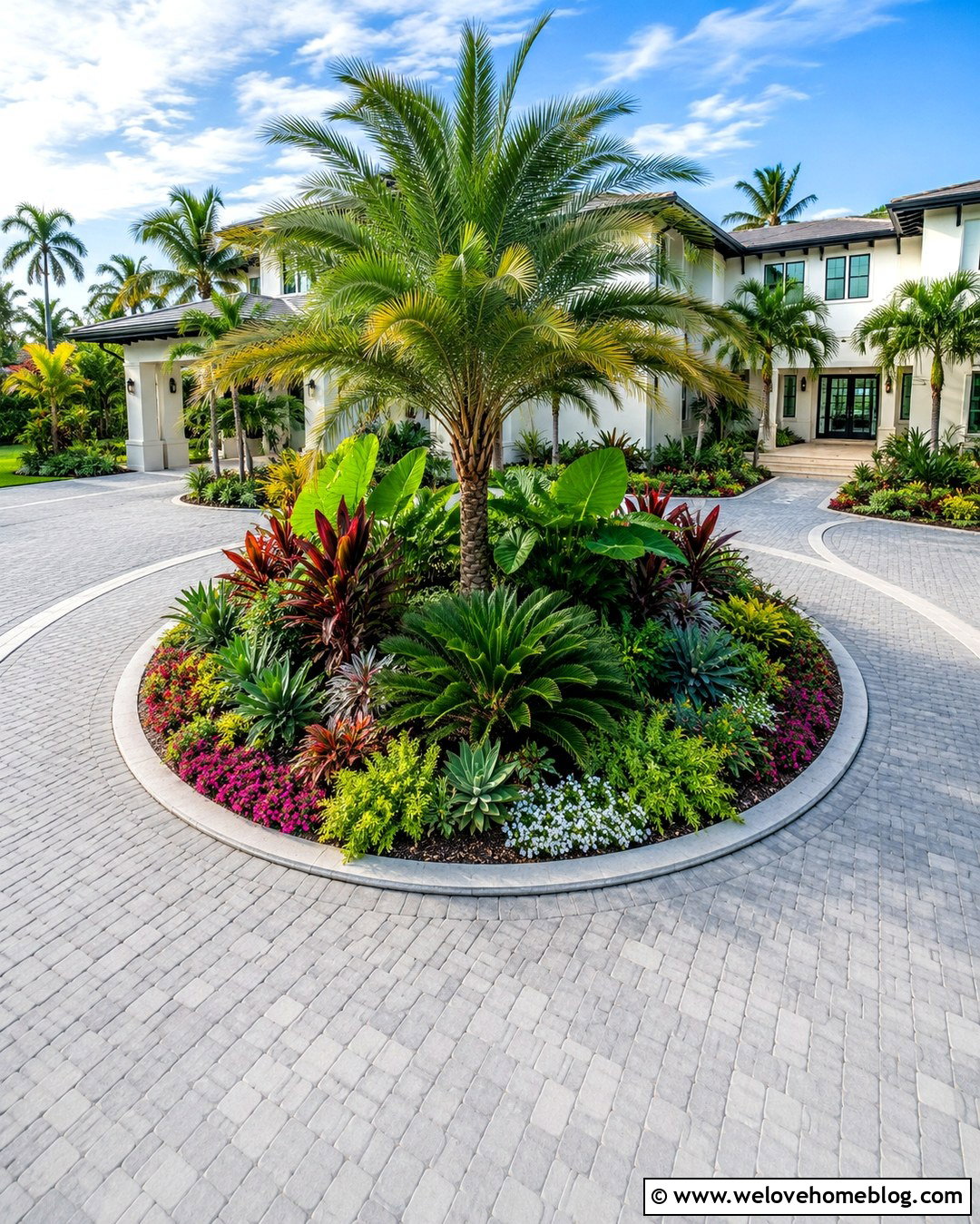
A circular driveway can wrap around a bold central garden filled with layered tropical-looking foliage. Use smooth light-gray concrete or pale pavers to reflect light and contrast with deep green leaves. In warm climates, combine palms, cycads, elephant ears, colorful foliage plants, and low flowering ground covers. In colder regions, create a similar effect with hardy plants that offer large leaves and upright forms. A curved stone curb should clearly separate the garden from vehicle space and contain the soil. Keep taller plants near the middle of the island so drivers maintain visibility around the circle. Repeating smaller foliage plants in perimeter beds connects the center island to the house, creating a unified resort-inspired entrance for a coastal or contemporary residence.
16. White Flower Garden Beside Black Asphalt Driveway
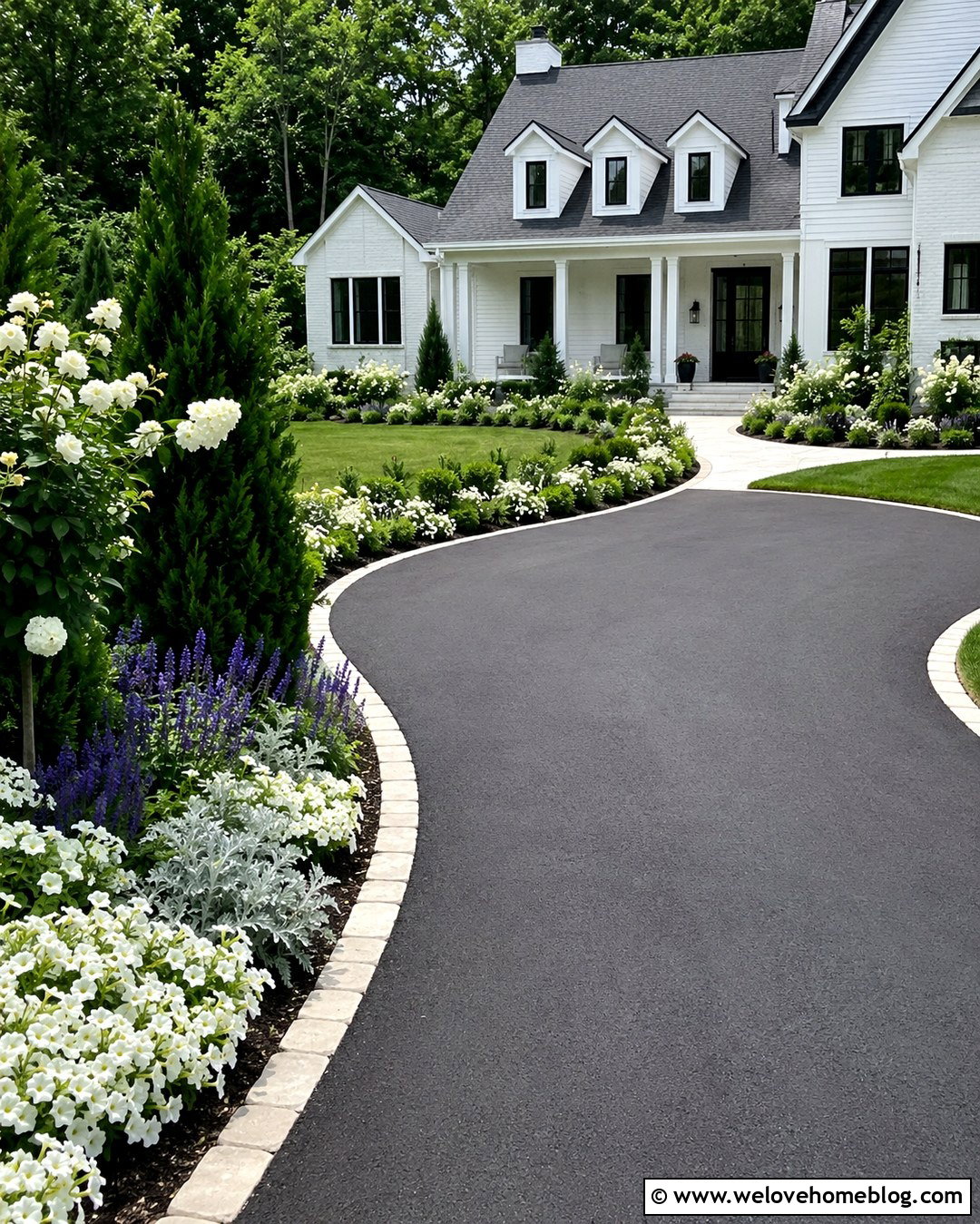
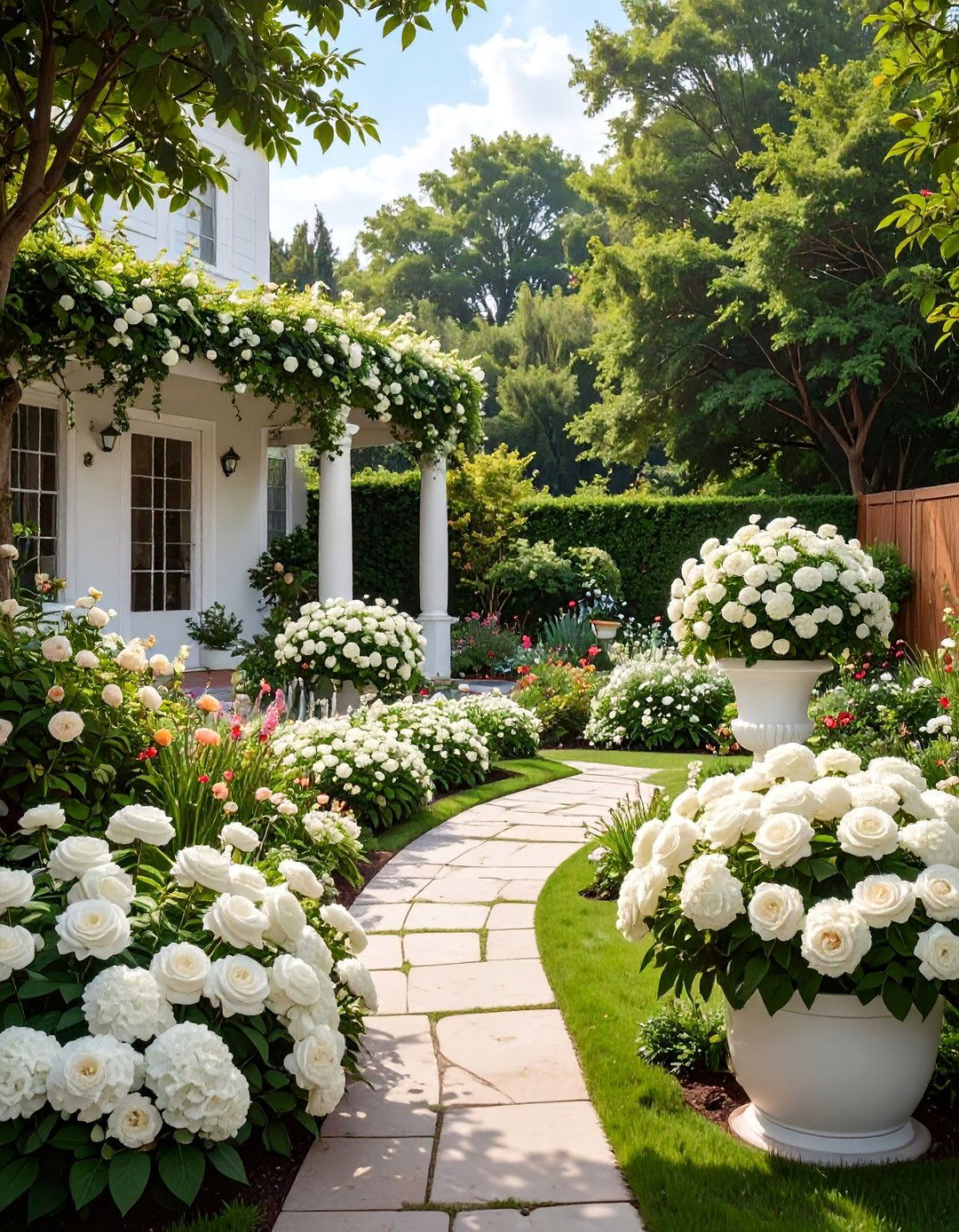
White flowers can create striking contrast beside a smooth black asphalt driveway while keeping the front yard calm and coordinated. Begin with a pale stone border that clearly separates the pavement from the planting bed. Use white roses, hydrangeas, salvia, petunias, or other flowers suited to the site, then add silvery foliage and dark green evergreen shrubs for depth. Repeating the same plants in broad sections will appear more intentional than mixing many unrelated varieties. A gentle S-shaped bed can soften a straight driveway and guide attention toward the entrance. Continue the white palette near the porch or walkway for visual continuity. This crisp combination works with modern farmhouse, colonial, Cape Cod, and black-and-white contemporary exteriors.
17. Woodland Garden Beside Gravel Driveway
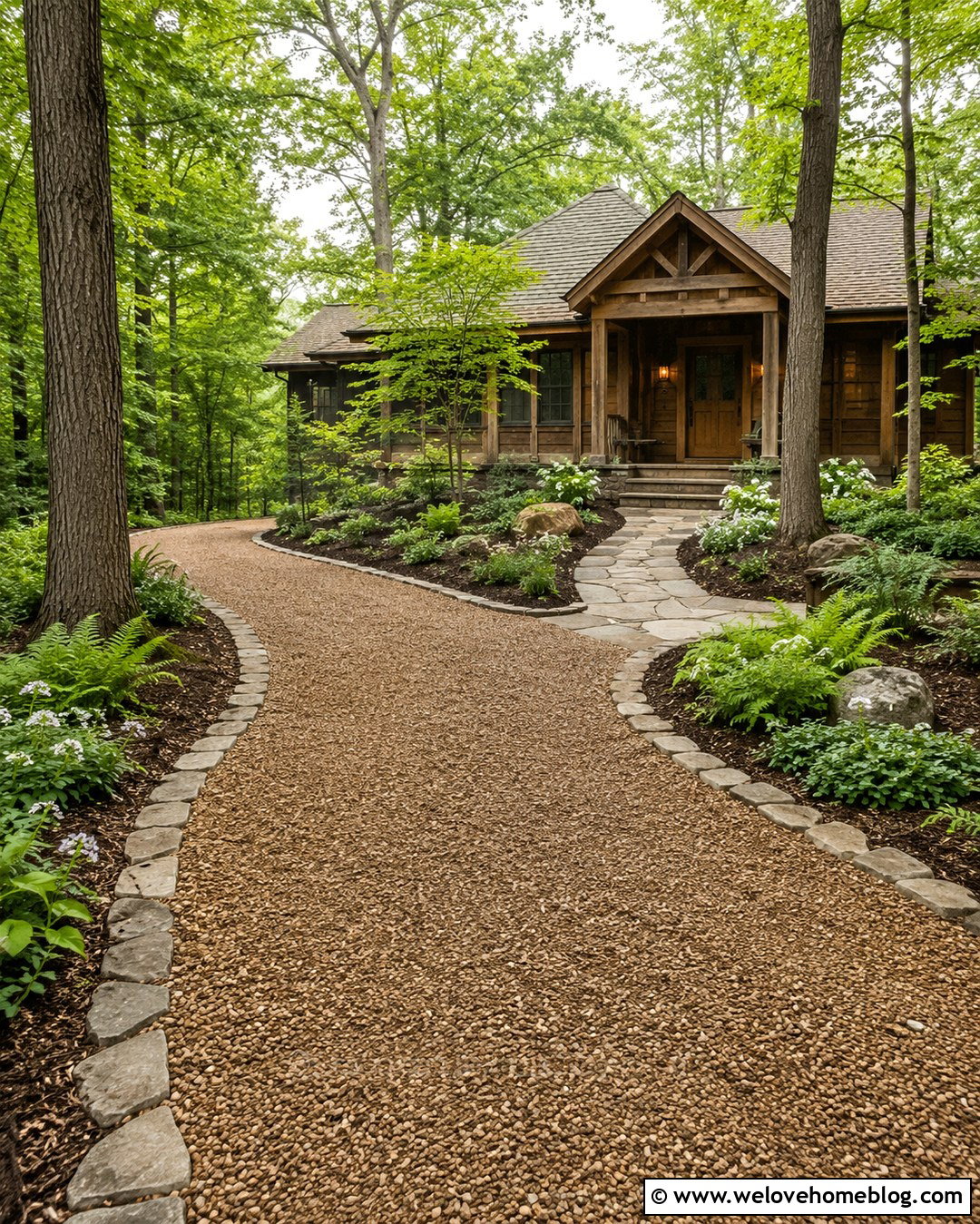
A woodland border can make a gravel driveway feel as though it belongs naturally within the landscape. Use brown or charcoal crushed gravel for a gently curving drive, then define its edge with irregular fieldstones. Plant native understory shrubs, ferns, woodland sedges, and shade-tolerant flowering perennials in loose, layered groups. Preserve patches of fallen leaves as natural mulch where appropriate, but keep organic debris off the driving surface. Small multi-stem trees can frame the approach without forming a dense tunnel or limiting visibility. Add a simple flagstone walkway that branches from the driveway and leads to the porch. The mixture of gravel, stone, foliage, and dappled shade creates a relaxed entrance suited to rustic cabins, craftsman homes, and wooded country properties.
18. Low-Maintenance Garden Beside Concrete Driveway
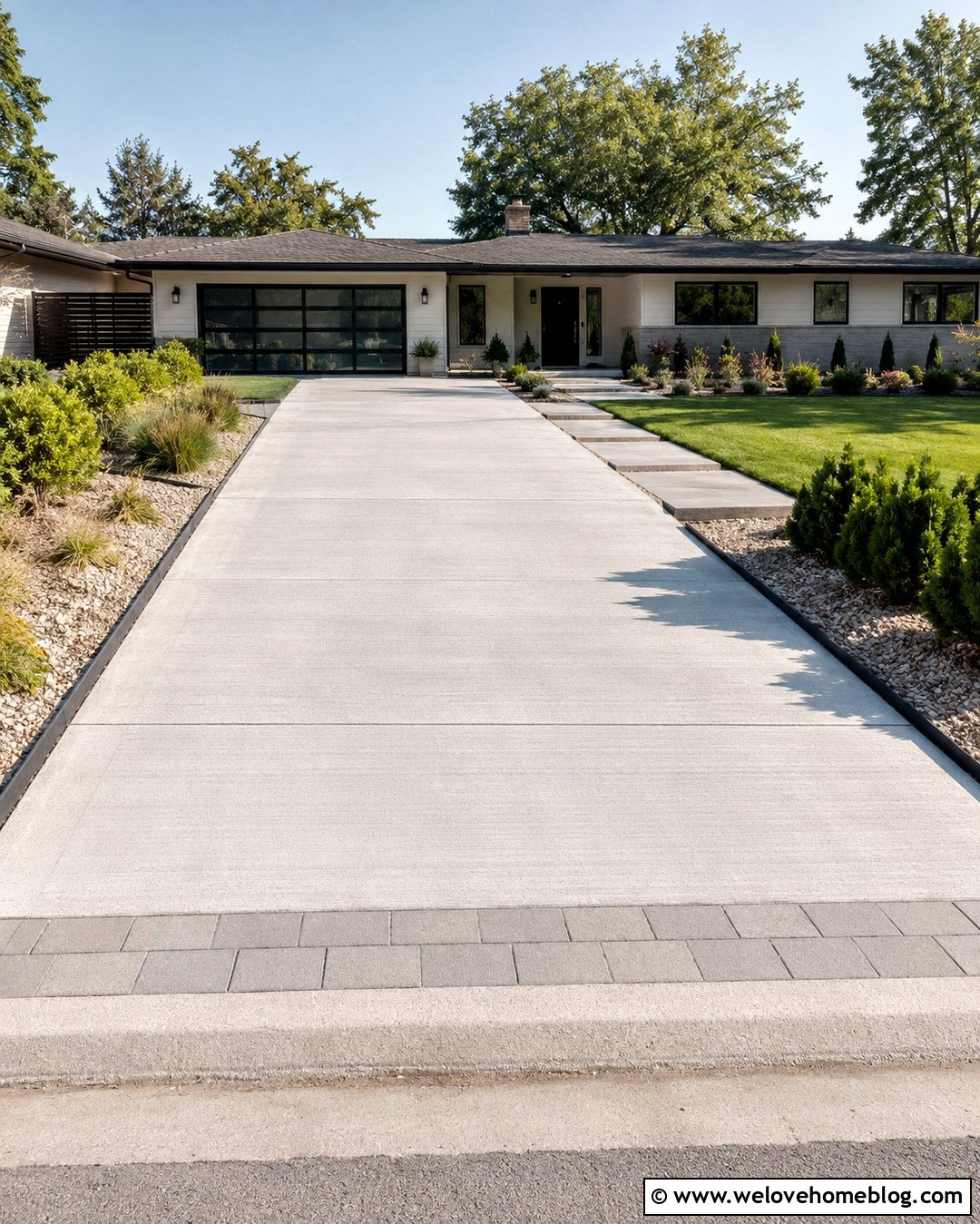
For a front yard that stays neat with limited routine work, pair a broom-finished concrete driveway with broad beds of durable, climate-appropriate plants. Build the design around compact evergreens, ornamental grasses, and dependable ground covers rather than numerous high-maintenance flowers. Plant in repeated groups and leave enough room for mature growth. Decorative gravel mulch provides a clean surface, while steel edging prevents stones and soil from moving onto the concrete. Include a paved landing strip along the section where passengers exit vehicles. Drip irrigation can deliver water directly to planting areas when supplemental watering is needed. The restrained palette suits ranch, contemporary, and midcentury homes, producing a complete landscape that feels organized without appearing bare or overly formal.
19. Mailbox Garden Beside Driveway Entrance
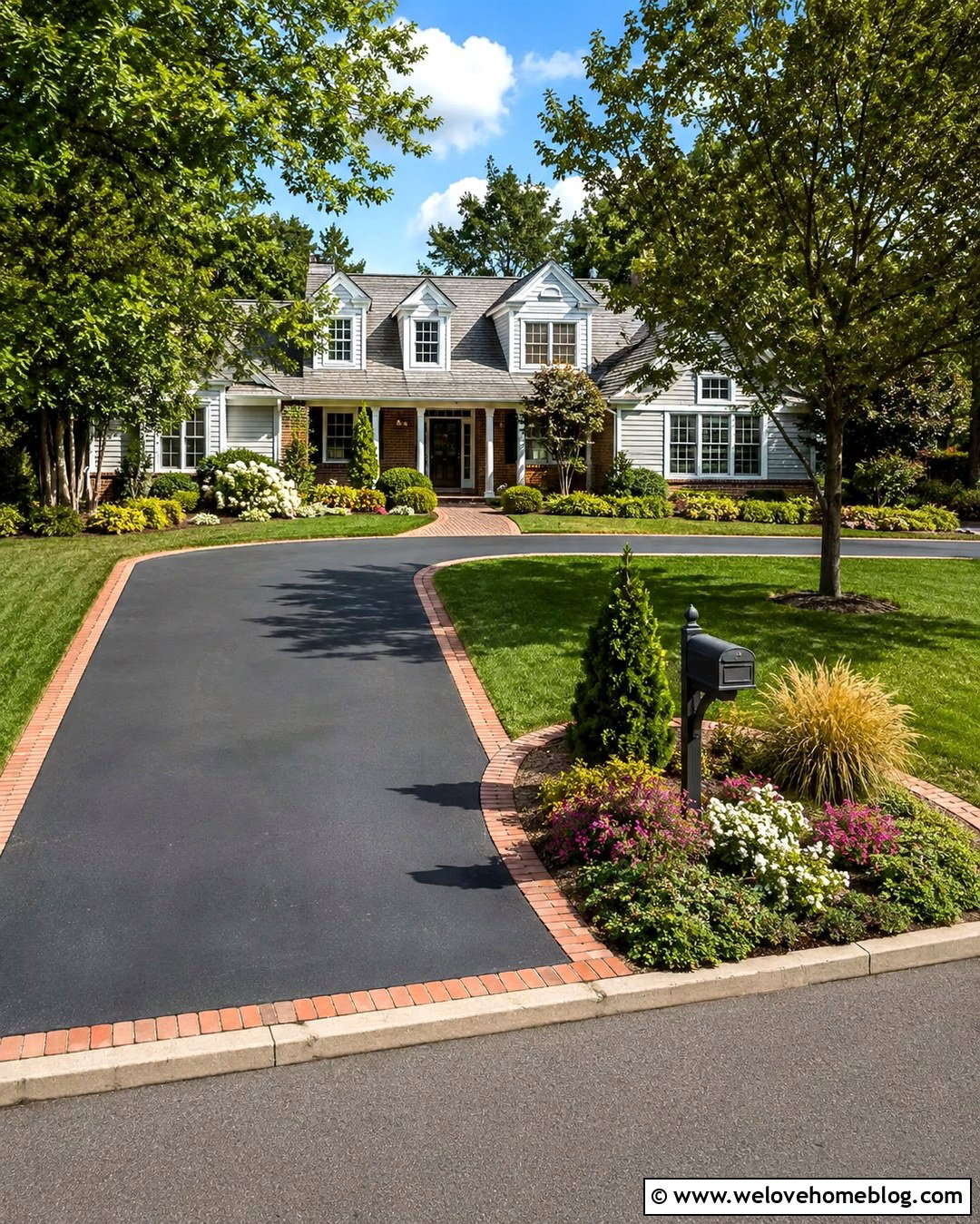
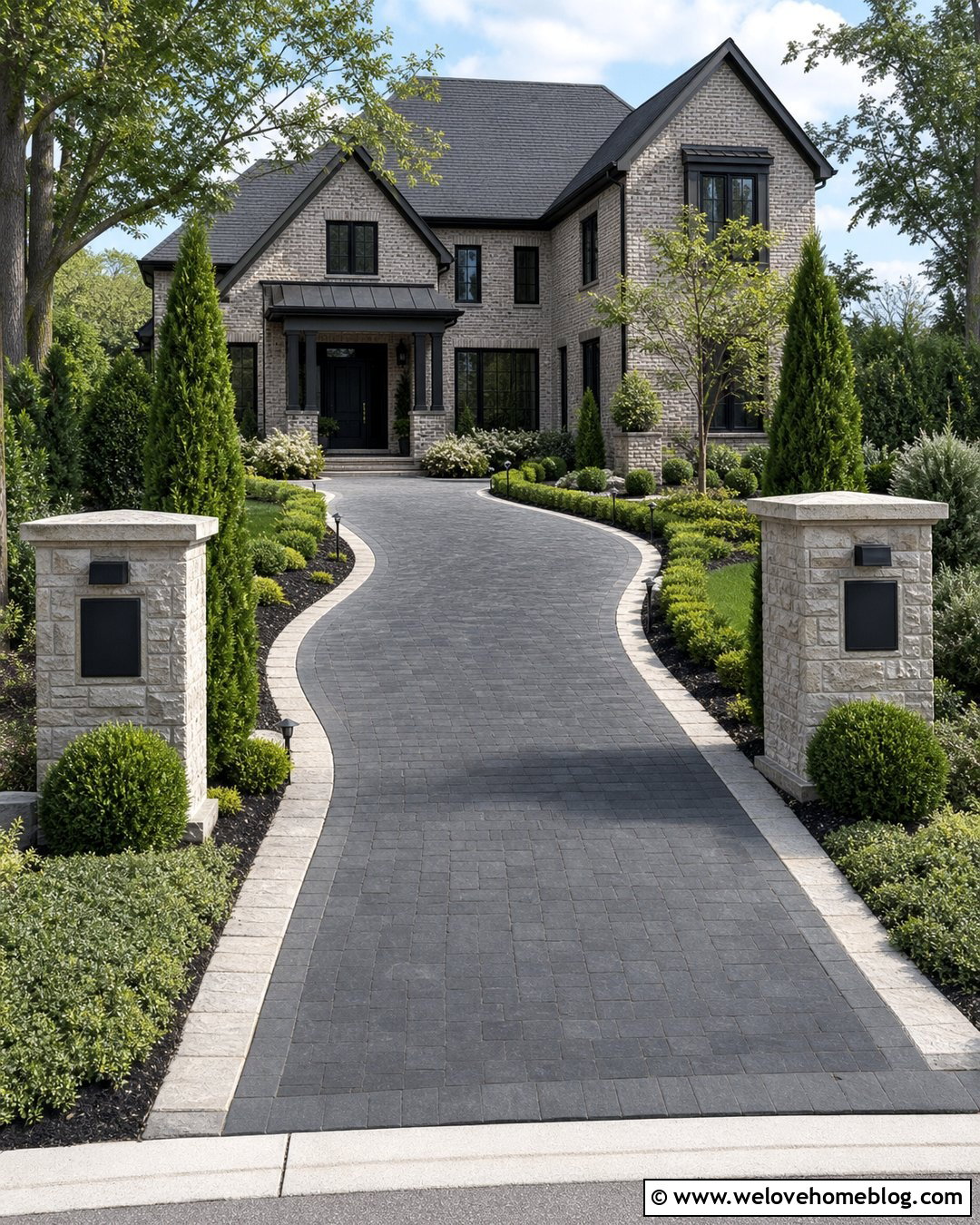
The driveway entrance offers a natural place for a small garden that connects the street to the rest of the landscape. Surround a simple mailbox with a curved bed beside a brick-edged asphalt or concrete driveway. Use low flowers and ground covers near the road to preserve sightlines, then add one compact shrub or ornamental grass behind the mailbox for height. Repeat plants already used near the house so the entrance does not feel disconnected. A stone or brick mowing edge keeps the shape crisp and prevents lawn from spreading into the bed. Avoid thorny plants where mail must be collected. Solar lighting can highlight the entrance, while a matching address marker, walkway detail, or border material ties the garden to the home’s architecture.

20. Vegetable And Flower Garden Beside Gravel Driveway
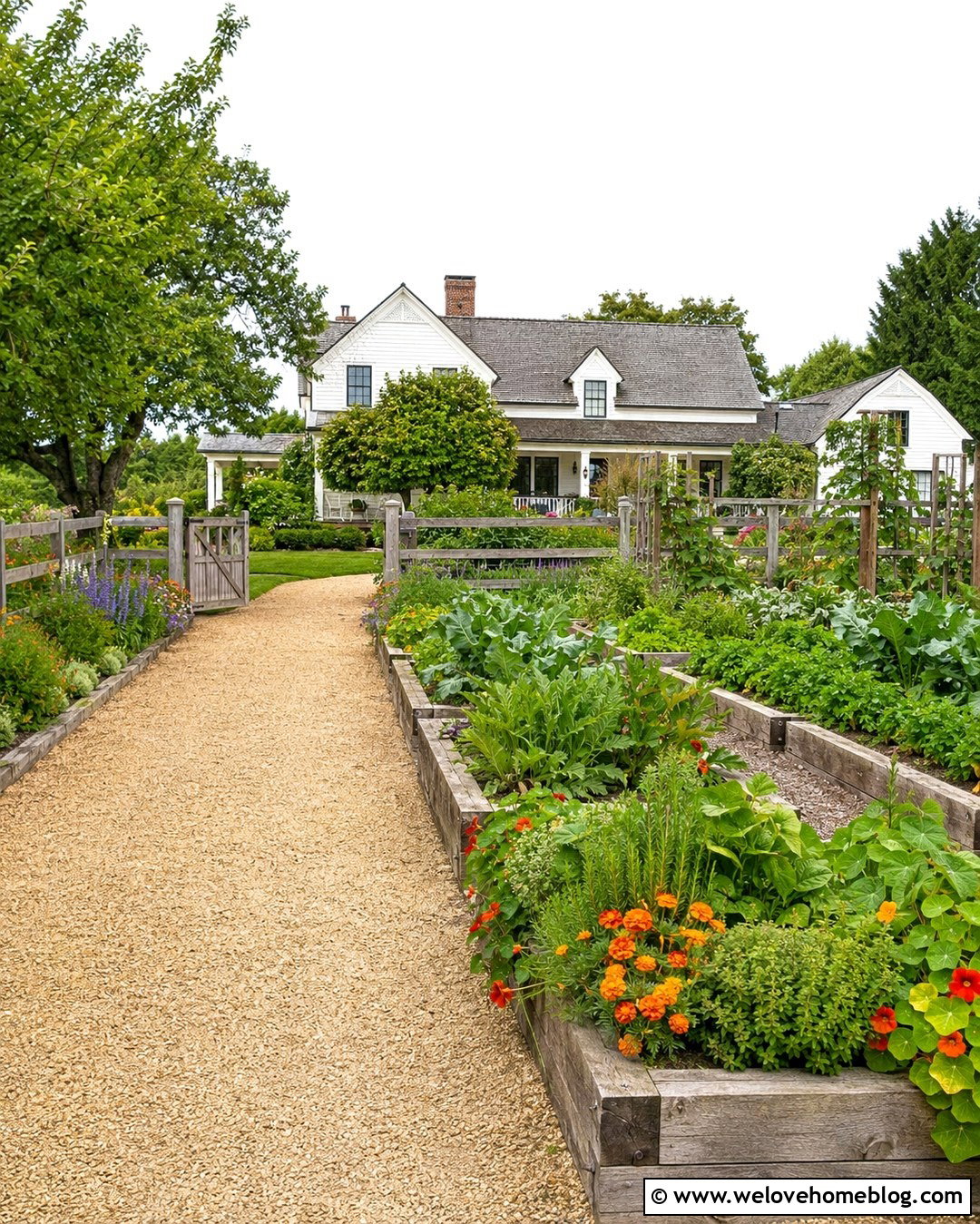
An attractive edible garden can share space with a driveway when beds are arranged neatly and access remains convenient. Beside a straight tan gravel drive, install several low cedar raised beds separated by compacted gravel paths. Mix vegetables and culinary herbs with marigolds, nasturtiums, calendula, or other compatible flowers for a colorful, organized display. Place trellises toward the rear so vines do not lean into parked vehicles. A sturdy timber or steel edge should contain the driveway gravel and protect the garden soil. Add a small gate and simple fence if wildlife pressure is a concern. This productive landscape works particularly well beside farmhouse, cottage, and country homes, turning an overlooked sunny strip into a useful and visually engaging front-yard feature.
Conclusion:
The most successful **Garden Beside Driveway Ideas** treat pavement, plants, edging, drainage, and the house as one connected design. Start by studying the area’s sunlight, soil, water flow, available width, and vehicle clearance. Then select a complete look that fits both your climate and architecture. A lavender border can soften concrete, while native planting brings life to gravel. Rain gardens address wet areas, and raised beds make narrow spaces more useful. Keep plants low near the street, provide comfortable passenger landing areas, and choose materials already found around the home. With thoughtful spacing and repetition, even a small driveway border can become an attractive, practical, and memorable part of your front yard.

Related posts:
Leave a Reply