
Hedges can turn a plain driveway into a polished, welcoming approach that feels connected to the rest of the yard. They soften hard paving, define vehicle routes, improve privacy, and frame the view toward the house. Driveway planting is especially effective when the hedge height, surface material, edging, and surrounding landscape are planned as one complete composition. () Low clipped shrubs suit compact properties, while taller evergreen screens work well along long driveways and exposed boundaries. Before planting, consider mature width, drainage, winter conditions, maintenance access, and visibility near the street. The following complete designs combine practical layouts with attractive materials, borders, gates, lighting, and planting. Explore these **20 Hedge Driveway Ideas** to find a look that fits your home.

1. Low Boxwood Hedge Driveway
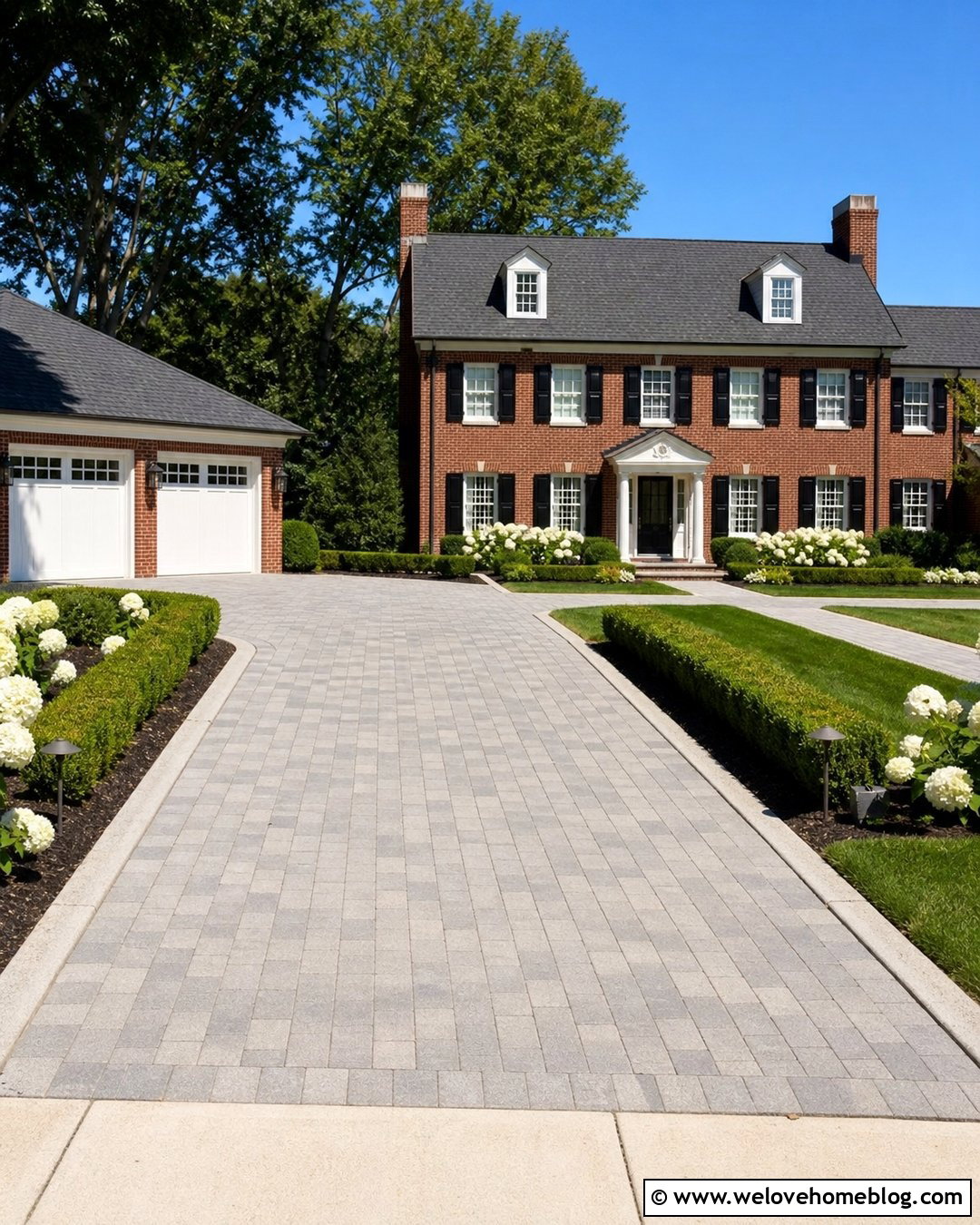
A low boxwood hedge gives a straight driveway a clean outline without making the entrance feel enclosed. Pair neatly clipped shrubs with warm gray concrete pavers laid in a running-bond pattern. A narrow strip of dark mulch between the hedge and paving keeps roots protected and simplifies maintenance. Keep the plants below car-window height, especially near the sidewalk, so drivers can see approaching pedestrians. Behind the hedge, add a few white hydrangeas or ornamental grasses for depth. This balanced layout works particularly well with Colonial, Cape Cod, and traditional brick houses. Leave generous openings beside parking areas and garage doors. That extra clearance prevents branches from scratching vehicles and gives passengers enough room to step out comfortably.
2. Tall Evergreen Hedge Driveway
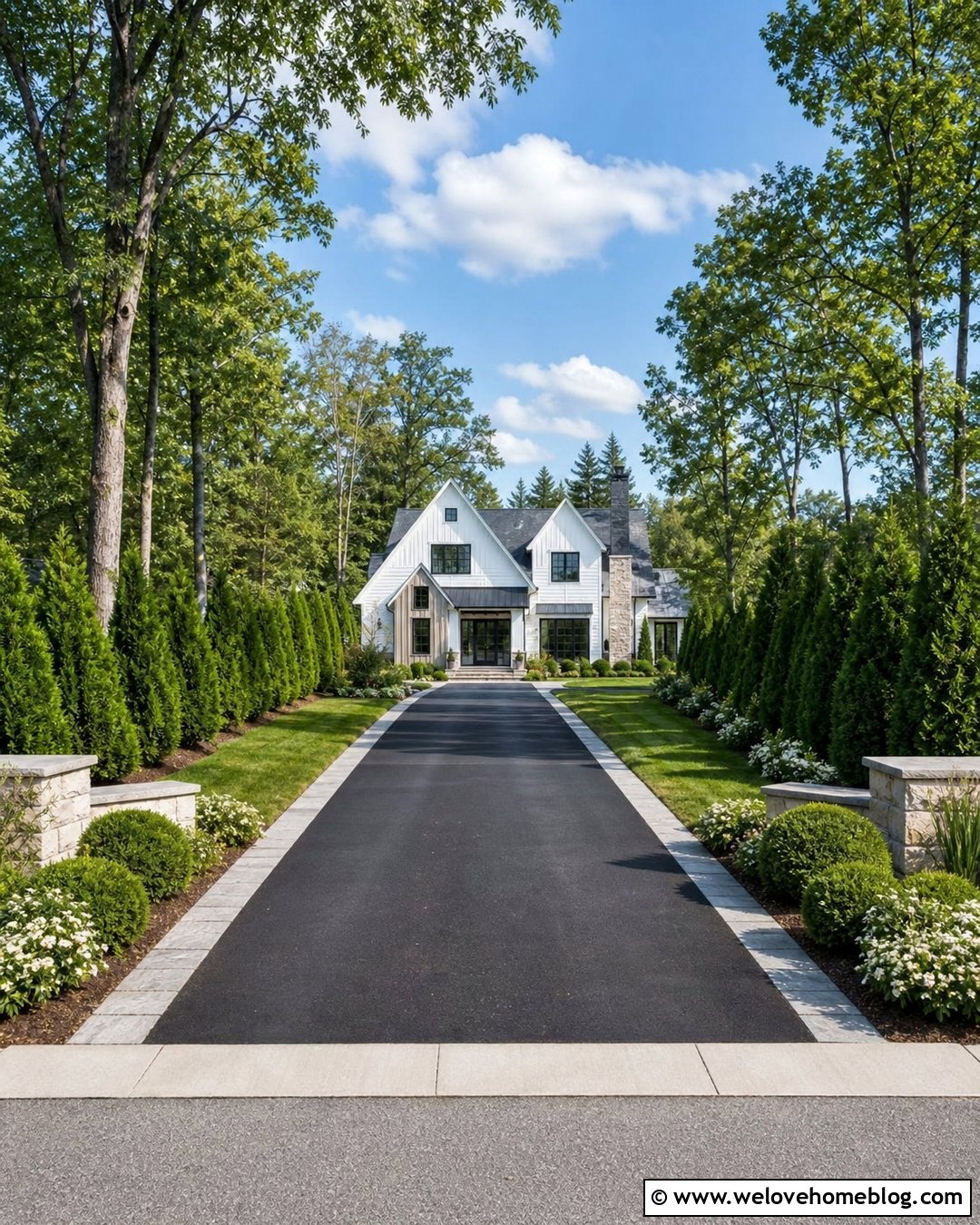
Tall evergreen hedges can transform an exposed driveway into a private green corridor. Use smooth black asphalt for the driving surface and add a soldier-course border of charcoal concrete pavers to create a crisp transition. Plant dense evergreens several feet back from the pavement, allowing enough room for their mature width and seasonal trimming. A straight layout makes the property feel longer, while matching hedges on both sides create a formal sense of arrival. Break up the solid greenery near the house with a stone walkway and layered planting beds. Avoid extending tall growth directly to the street. Lower shrubs at the entrance will preserve visibility while maintaining the overall screen. This complete look suits larger suburban homes, contemporary farmhouses, and wooded properties.
3. Curved Gravel Hedge Driveway
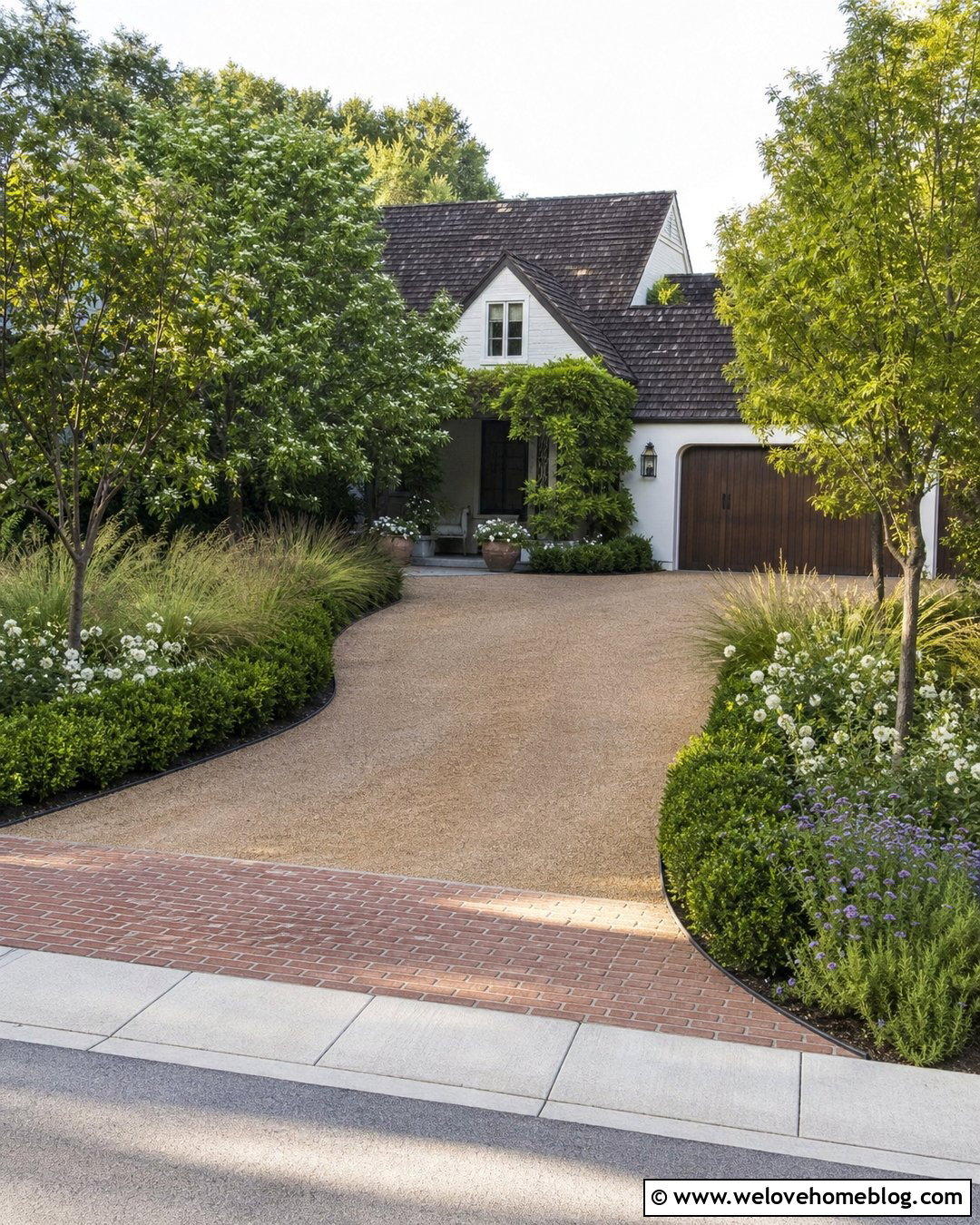
The soft crunch and natural color of gravel pair beautifully with relaxed hedging. Choose compacted tan crushed gravel for a curved driveway leading toward a country or cottage-style home. Steel edging will hold the aggregate in place, while an informal hedge of inkberry holly or another regionally suitable evergreen follows the sweeping shape. Instead of clipping every plant into a rigid wall, allow slightly varied heights for a softer appearance. Add native grasses, flowering perennials, and small ornamental trees behind the hedge. A brick apron at the street can stop loose gravel from migrating toward the road. The combination of a flowing layout, practical edging, and layered greenery creates an inviting driveway that feels established rather than overly formal.
4. Modern Concrete Hedge Driveway
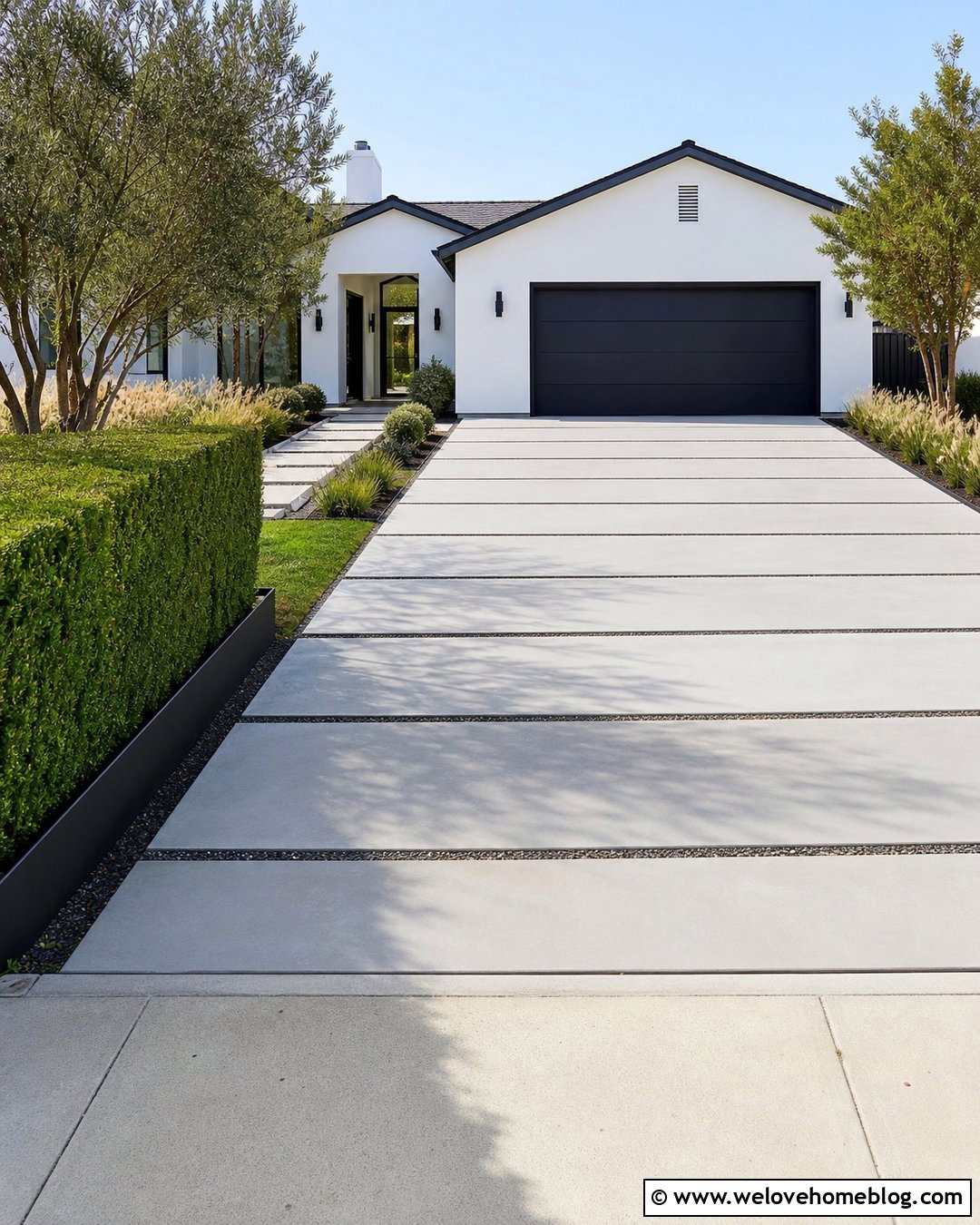
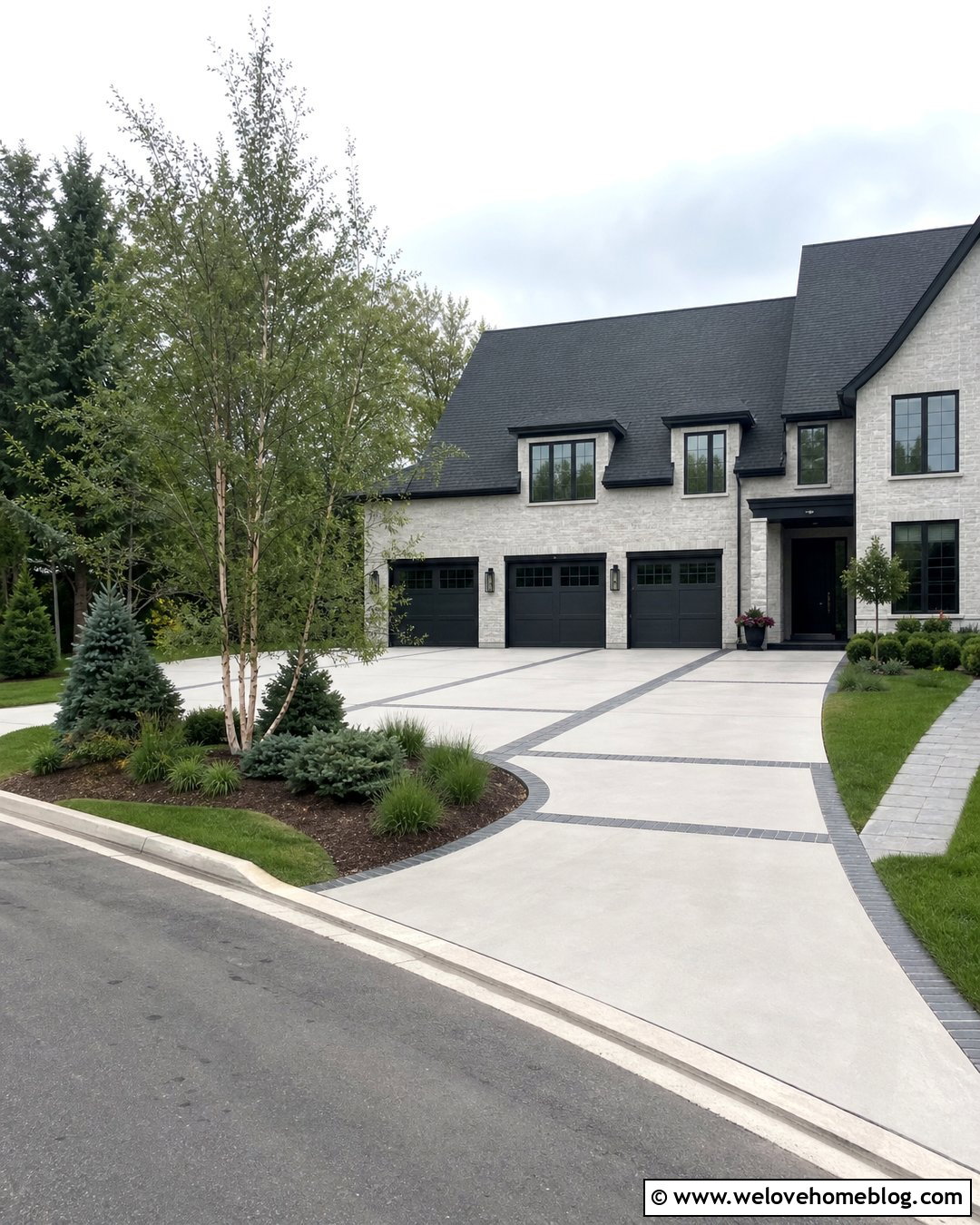
Wide concrete panels and architectural hedges create a sharp, modern entrance. Use light gray poured concrete with narrow gravel joints to divide the driveway into clean geometric sections. Along one side, install a rectangular hedge of compact evergreen shrubs, keeping the top level and the face precisely trimmed. On the opposite side, repeat the straight lines with a paved walkway, ornamental grasses, and a few multi-stem trees. Black steel edging will separate the plants from the gravel and prevent soil from washing onto the concrete. This asymmetrical arrangement provides structure without making the driveway feel narrow. It works especially well with flat-roofed houses, white stucco facades, and dark siding. Simple planting and restrained colors allow the entire approach to remain uncluttered.
5. Brick Driveway With Formal Hedges
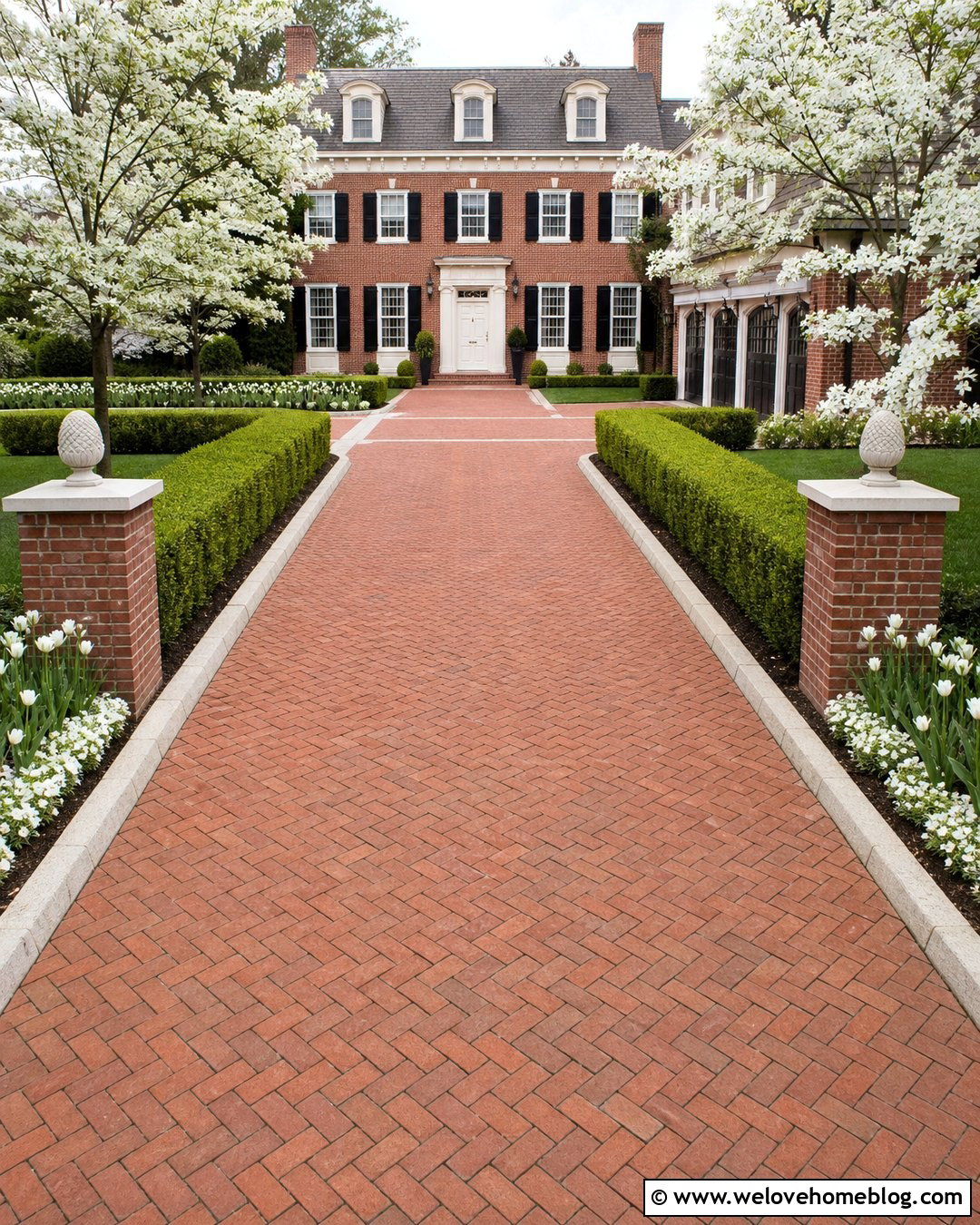
Red clay brick pavers and clipped green hedges produce a timeless driveway suited to Georgian, Federal, and Colonial homes. Lay the brick in a herringbone pattern so the surface feels detailed and substantial. Frame both sides with low evergreen hedges planted behind narrow limestone curbs. At the entrance, widen the beds into symmetrical corners containing small flowering trees and seasonal perennials. The hedges can then continue toward the house, directing attention to the front door and garage. Keep their shape consistent, but provide small breaks where walkways cross the driveway. Brick pillars or simple stone markers can reinforce the formal arrangement without overpowering it. This design looks most cohesive when the driveway brick repeats colors found in the home’s facade or front steps.
6. Asphalt Driveway With Mixed Hedges
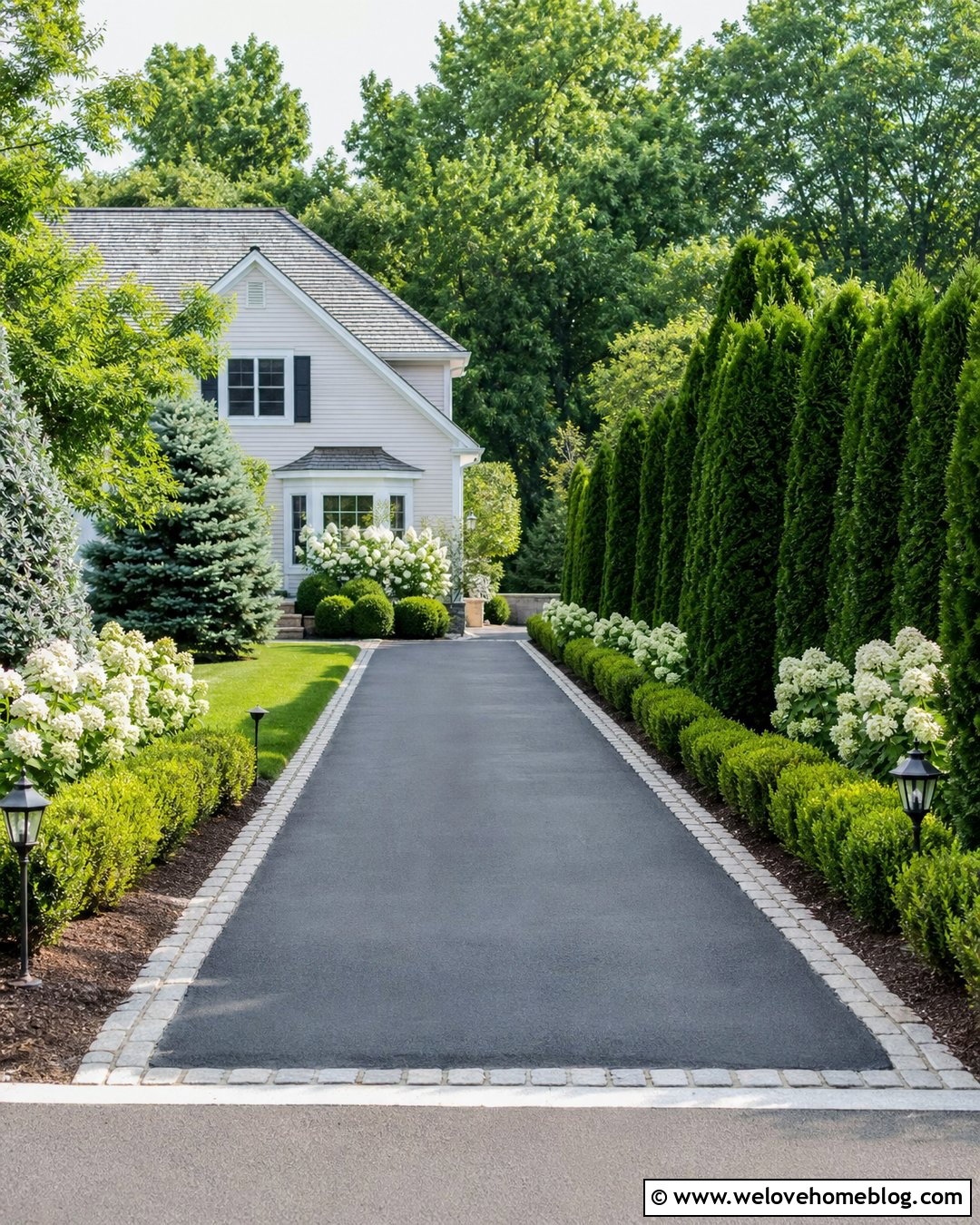
A basic asphalt driveway becomes more inviting when its borders combine several hedge textures. Start with smooth black asphalt edged by a narrow row of light gray cobblestones. Along the longer property line, use an evergreen hedge for dependable screening. Add a shorter flowering hedge near the house, where seasonal blooms can be appreciated from windows and walkways. Repeating a few shrubs on both sides will connect the different planting areas. Keep the street end open and low, then gradually increase plant height farther into the property. This layered approach prevents the driveway from resembling a narrow tunnel. It is also adaptable because plants can be selected for local soil, sunlight, and winter conditions. The result is practical, affordable, and visually richer than asphalt alone.
7. Circular Driveway With Center Hedges
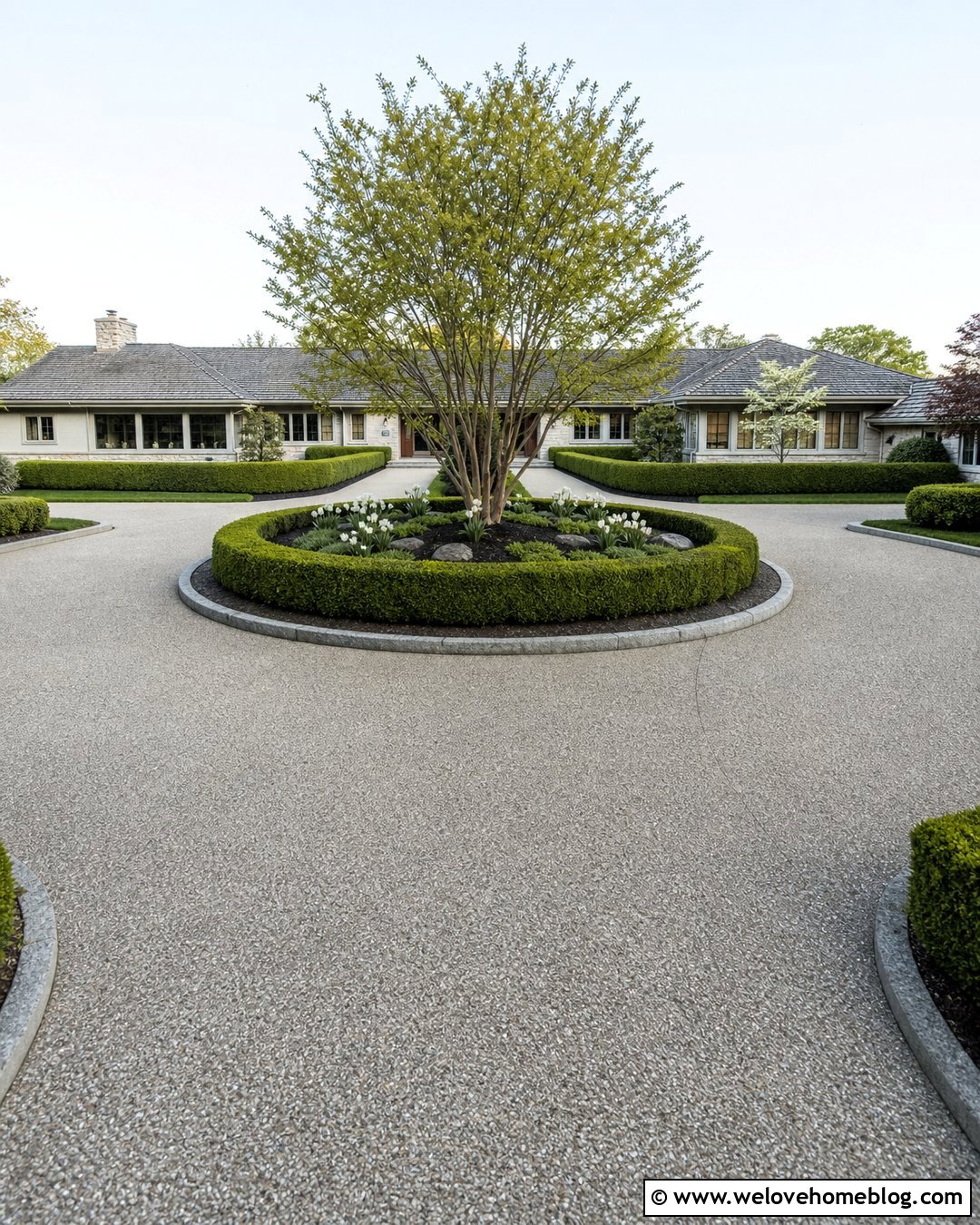
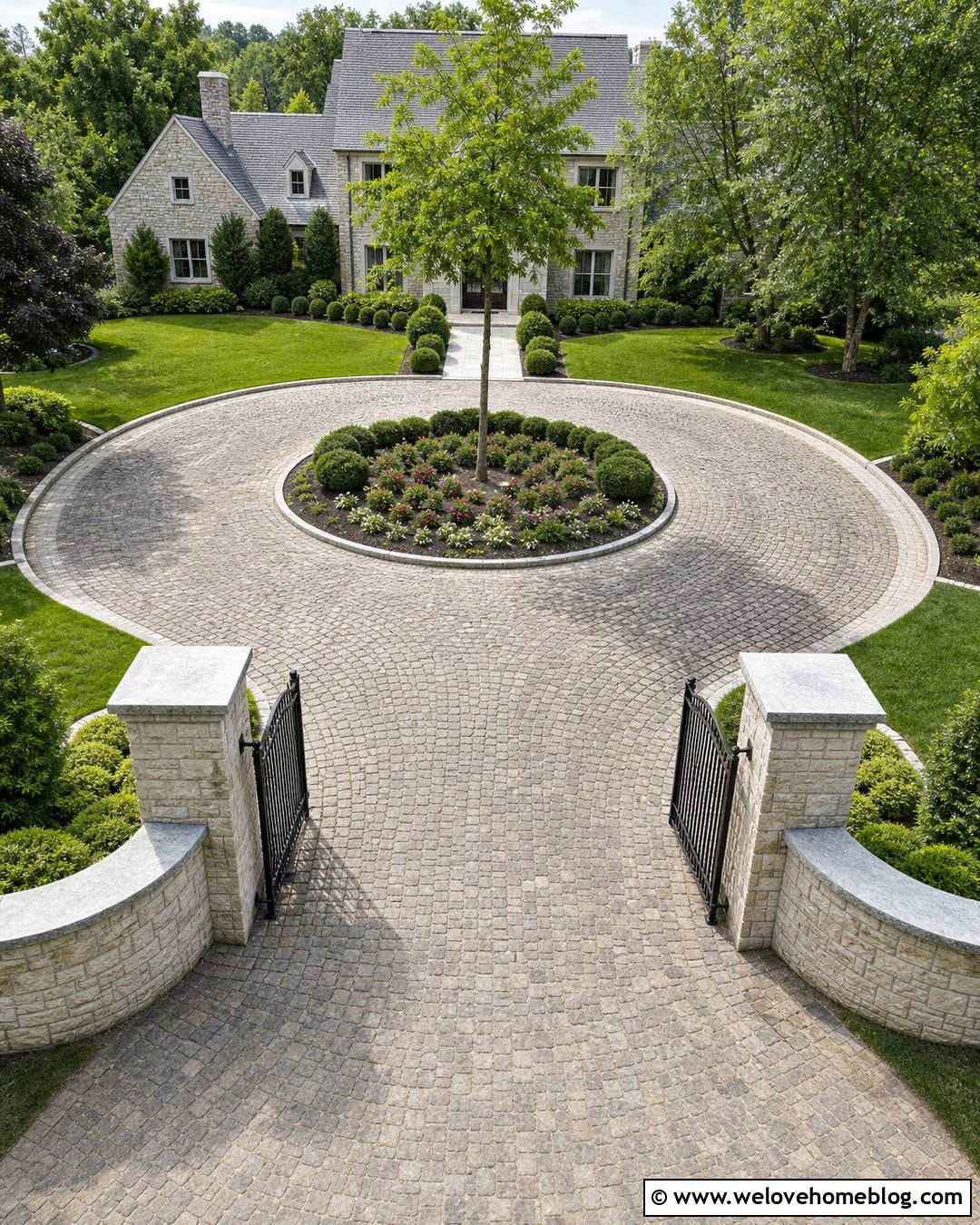
A circular driveway needs a strong center landscape to keep the paved loop from dominating the front yard. Use exposed aggregate concrete for the driving surface and define the inner curve with a low granite curb. Inside the island, plant a ring of clipped evergreen hedging around a multi-stem ornamental tree. Fill the remaining space with ground cover, flowering bulbs, and dark mulch. Repeat smaller sections of the same hedge near the driveway entrance to visually connect the island with the property boundary. Keep the center hedge low enough to preserve views across the loop. This arrangement suits broad ranch houses, traditional estates, and larger suburban lots. The circular shape, rounded hedge, and central tree work together to create an organized and impressive arrival.
8. Narrow Driveway With Slim Hedges
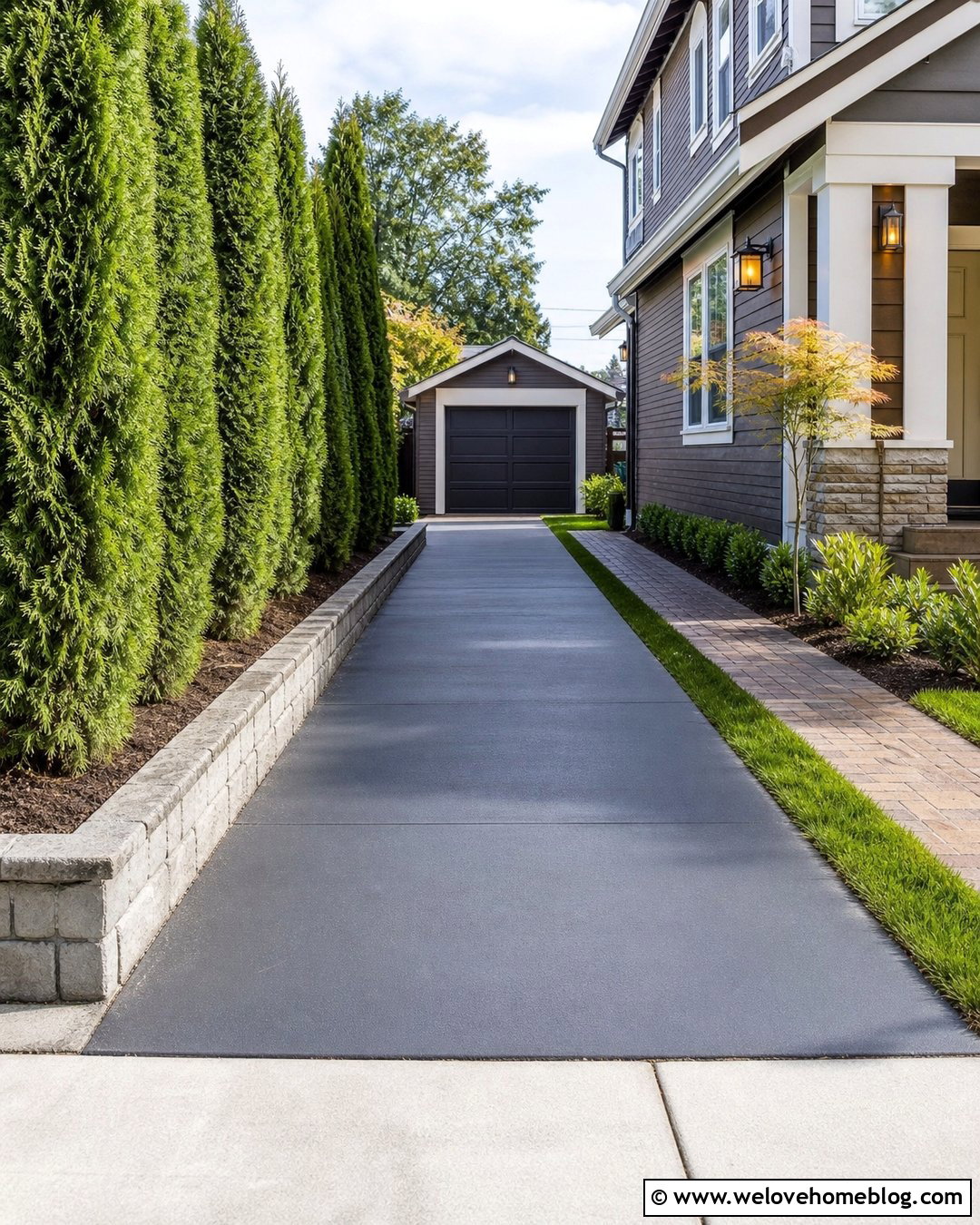
Could a narrow side driveway support hedges without feeling cramped? The key is selecting naturally upright shrubs and setting them behind a protective border. Pair a straight charcoal concrete driveway with slim evergreen hedges along only one side. On the other side, use a narrow brick walkway or simple lawn strip to preserve breathing room. A raised steel or stone edge will prevent vehicle tires from entering the planting bed. Keep the hedge tightly maintained and stop it before the garage parking zone, where doors need to open. Small wall-mounted lights can illuminate the route without occupying valuable ground space. This practical design gives a compact urban or suburban property privacy and structure while keeping the full usable width of the driveway visually clear.
9. Long Driveway With Tree And Hedge Border
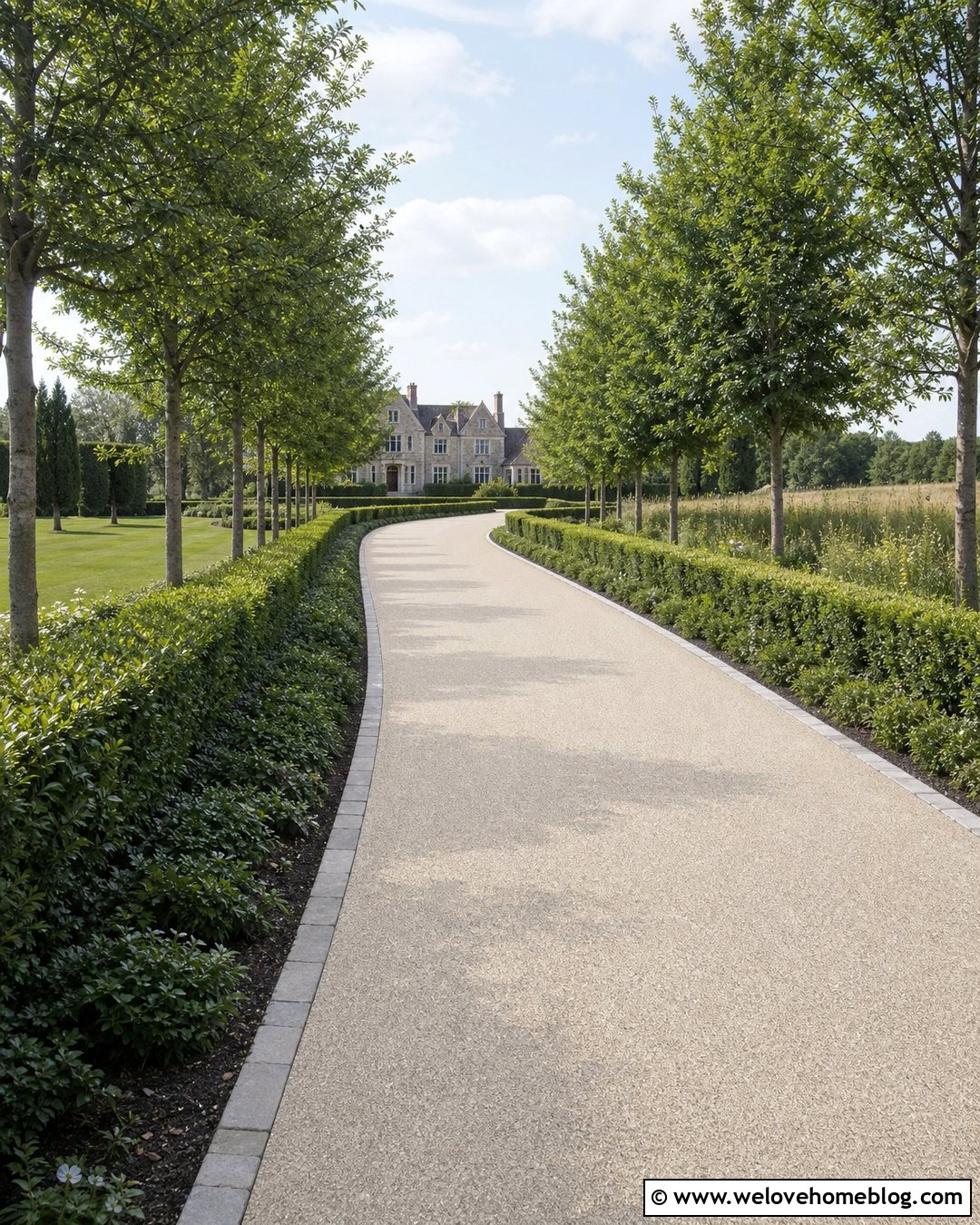
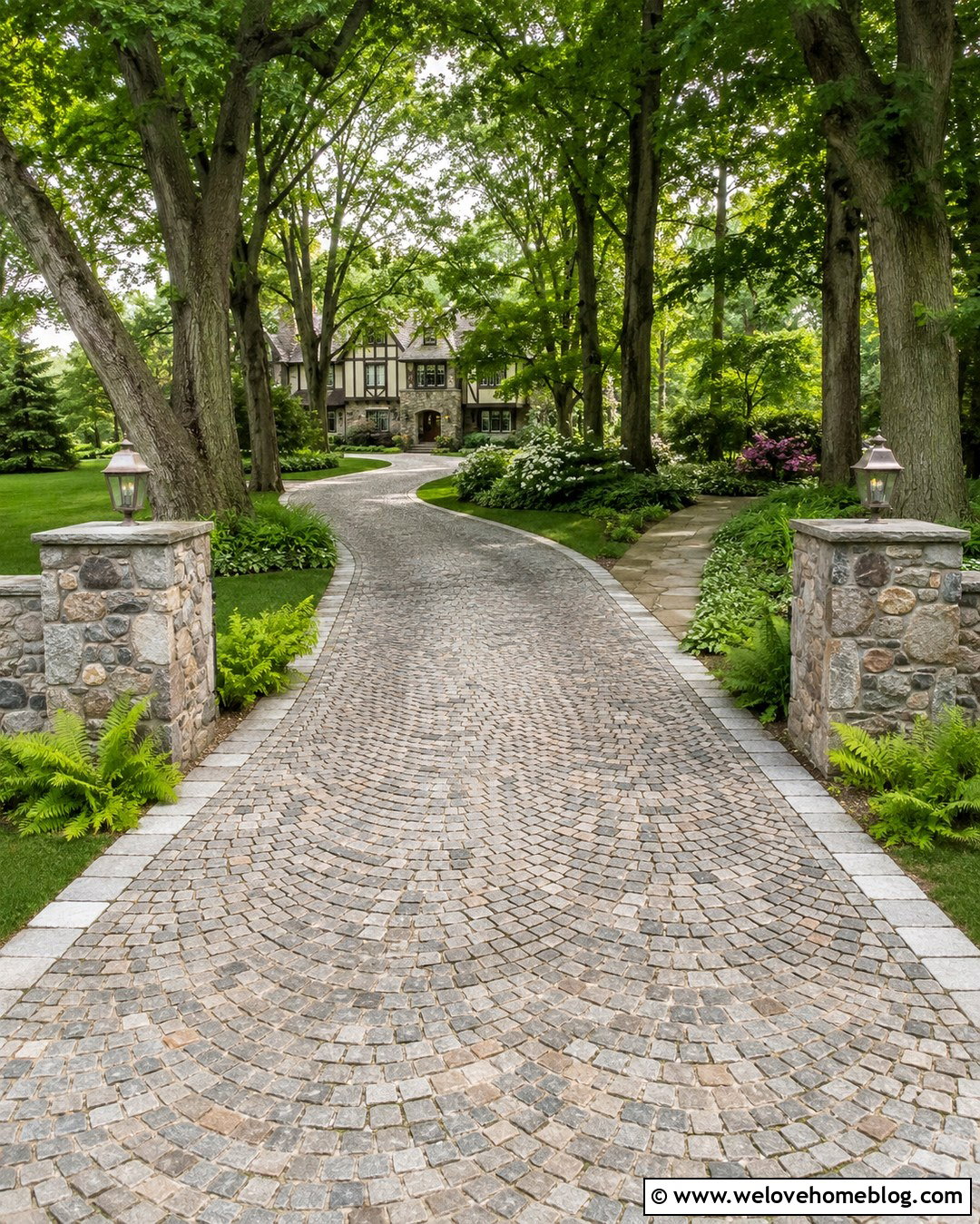
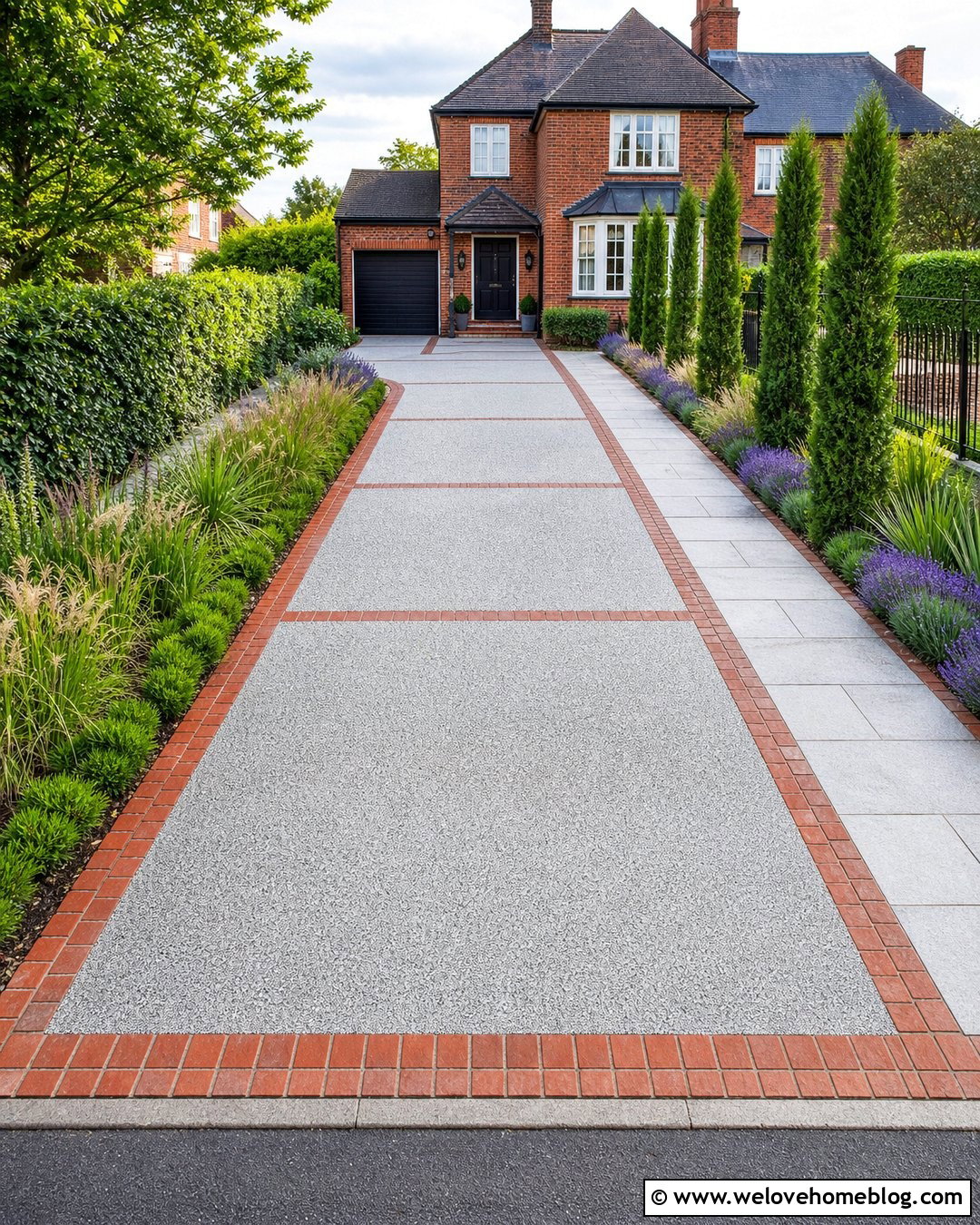
Regularly spaced trees above a modest hedge can establish a strong visual rhythm along a long driveway. () Use pale resin-bound gravel for a smooth, refined surface and add flush granite edging along both sides. Plant a continuous evergreen hedge several feet behind the edge, then position upright deciduous trees at consistent intervals. Their trunks remain visible above the hedge, while their canopies bring height and seasonal interest. On a very long approach, leave occasional breaks that reveal lawn, meadow planting, or distant garden views. This keeps the route from becoming monotonous. Low ground cover around the tree bases can reduce exposed soil. The finished design feels park-like and works especially well for country homes, large farmhouses, and secluded residential properties.
10. Cottage Driveway With Flowering Hedges
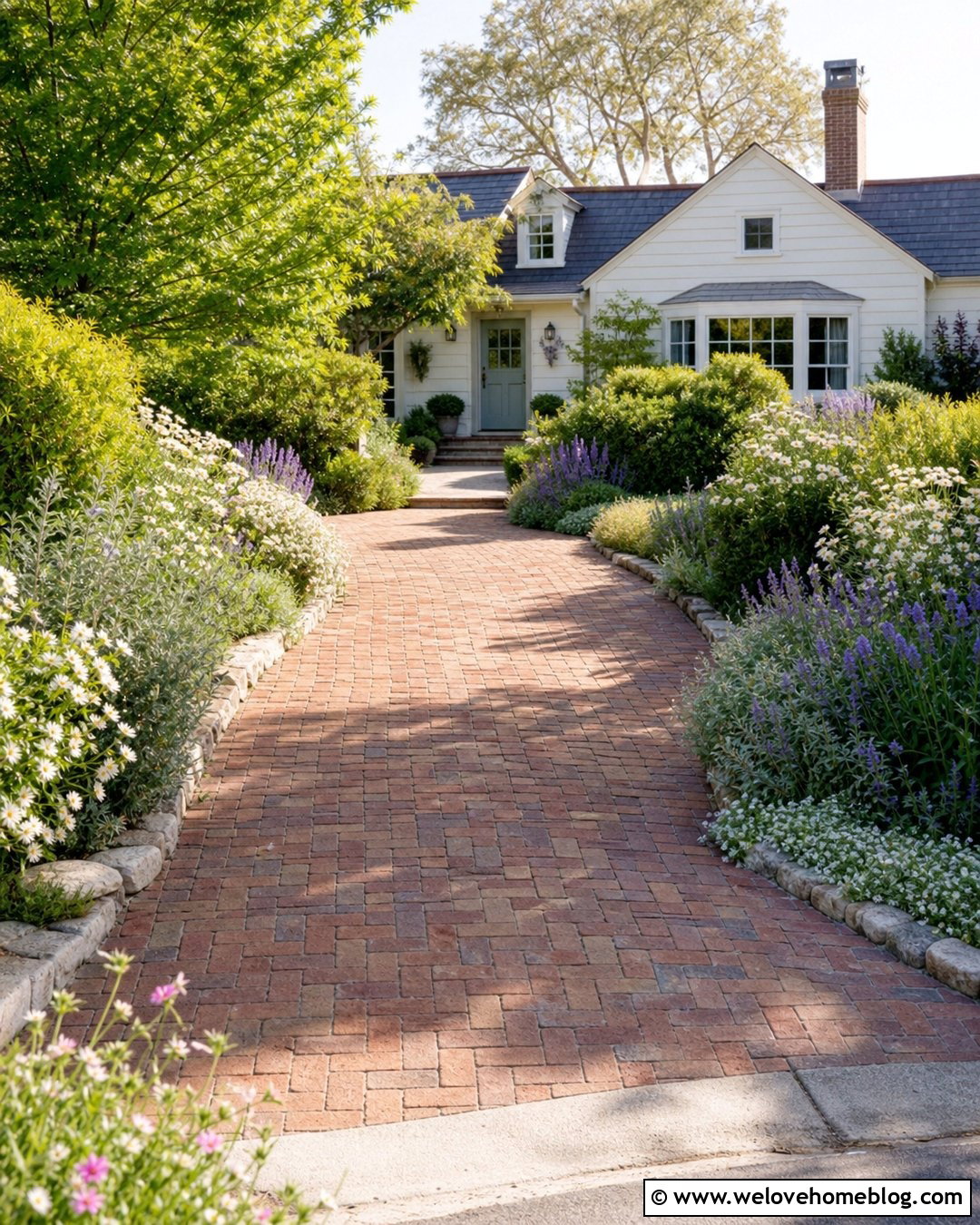
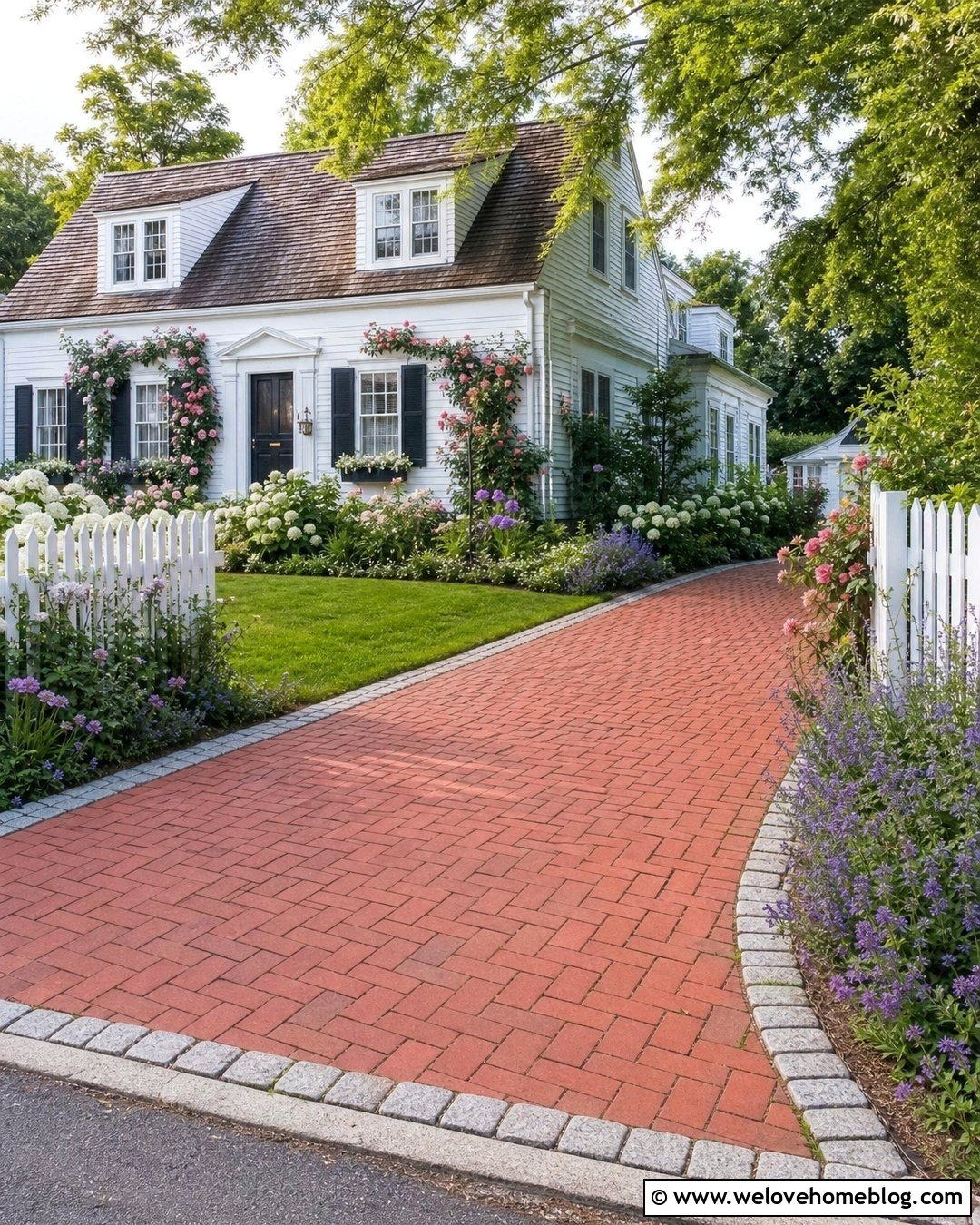
Flowering hedges give a cottage driveway color, fragrance, and an intentionally relaxed character. Build the surface with weathered clay brick pavers arranged in a simple basket-weave pattern. Allow a gently curved driveway to pass between low flowering shrubs suited to the local climate. Rather than forcing the hedge into a perfect rectangle, prune it lightly so the foliage retains a natural outline. Add lavender, catmint, daisies, and creeping ground cover along the front edge of the beds. Reclaimed stone edging will keep soil away from the brick while supporting the informal mood. Near the house, widen the planting areas and connect them to the front walkway. The finished approach feels abundant and welcoming without allowing flowers or branches to spill into the vehicle path.
11. Farmhouse Driveway With Informal Hedges
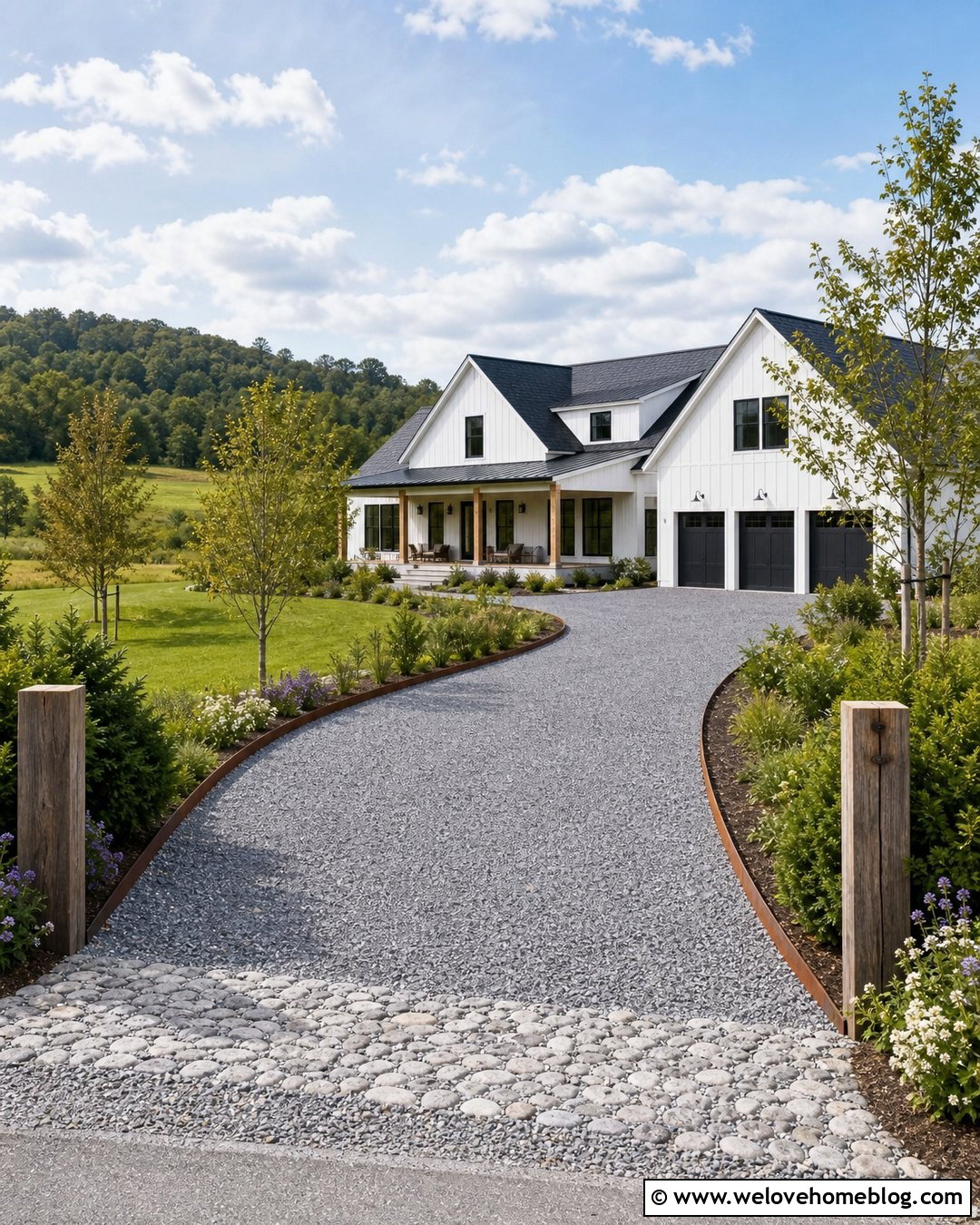
A farmhouse driveway looks most natural when its hedges feel structured but not overly manicured. Choose gray crushed stone for a broad, gently curved surface and contain it with timber or weathered steel edging. Plant a mixed evergreen hedge along the outer boundary, using shrubs with compatible growth habits but slightly different leaf textures. Behind it, add occasional small trees and native flowering plants. The hedge can remain taller near neighboring properties and become lower as it approaches the house. At the street, install a compacted stone apron and simple wooden posts to mark the entrance. This design complements white siding, metal roofs, porches, and rustic outbuildings. It also allows a spacious driveway to blend comfortably into open lawn and surrounding countryside.
12. Privacy Hedge Driveway Entrance
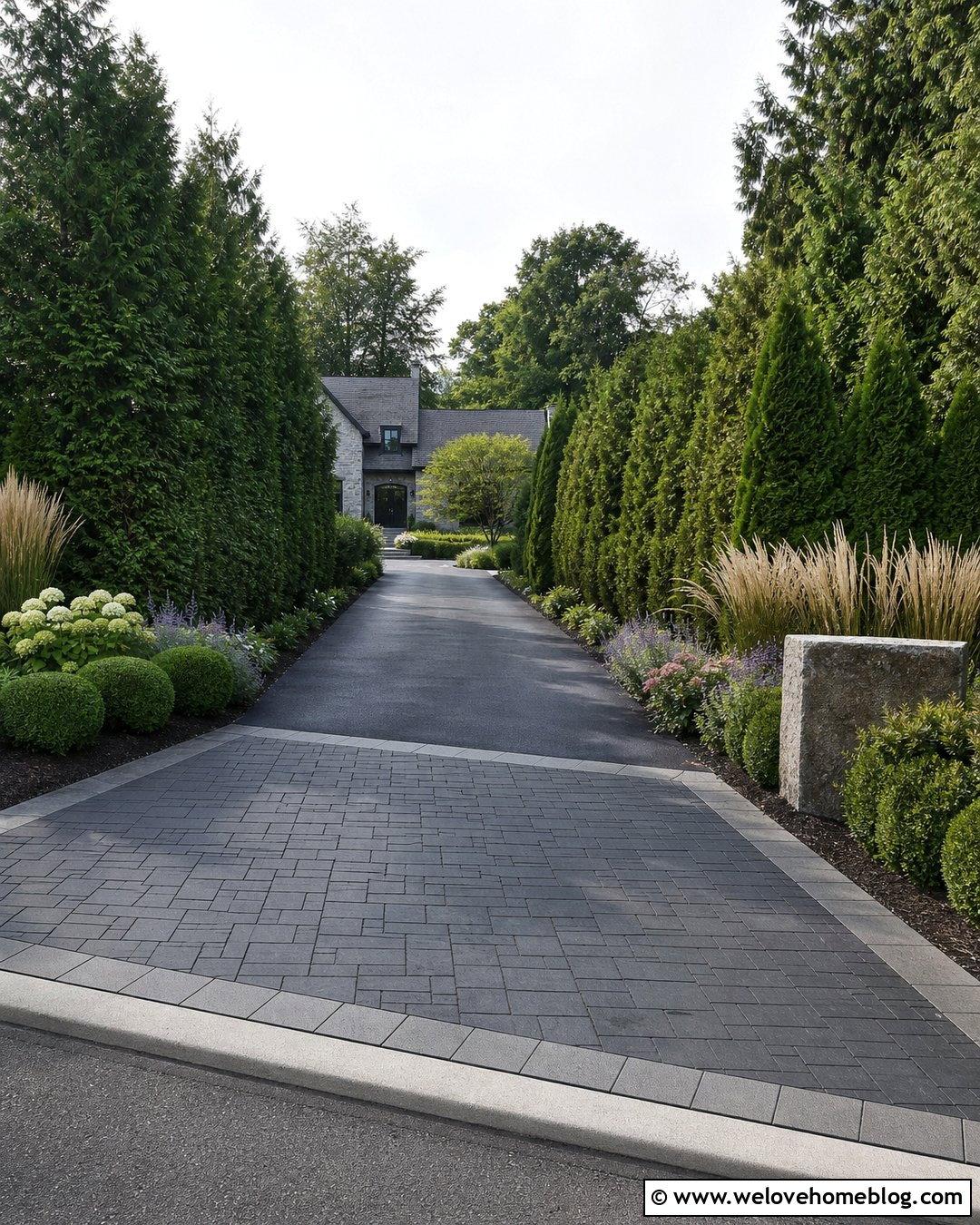
A private entrance should provide screening without hiding the roadway from drivers. Create a wide entry apron using charcoal interlocking concrete pavers, then transition into a straight black asphalt driveway. Position tall evergreen hedge sections along the property boundary, set well back from the street corners. Use lower clipped shrubs around the actual driveway opening to maintain clear sightlines. Two broad planting beds can soften the transition between the tall and short hedges with ornamental grasses and flowering perennials. An address marker placed in front of the greenery will remain easy to see. Farther inside the property, the tall hedge can close around the driveway and reduce views toward the house. This graduated design feels secure, welcoming, and much safer than a solid wall of foliage at the curb.
13. Hedge Driveway With Stone Pillars
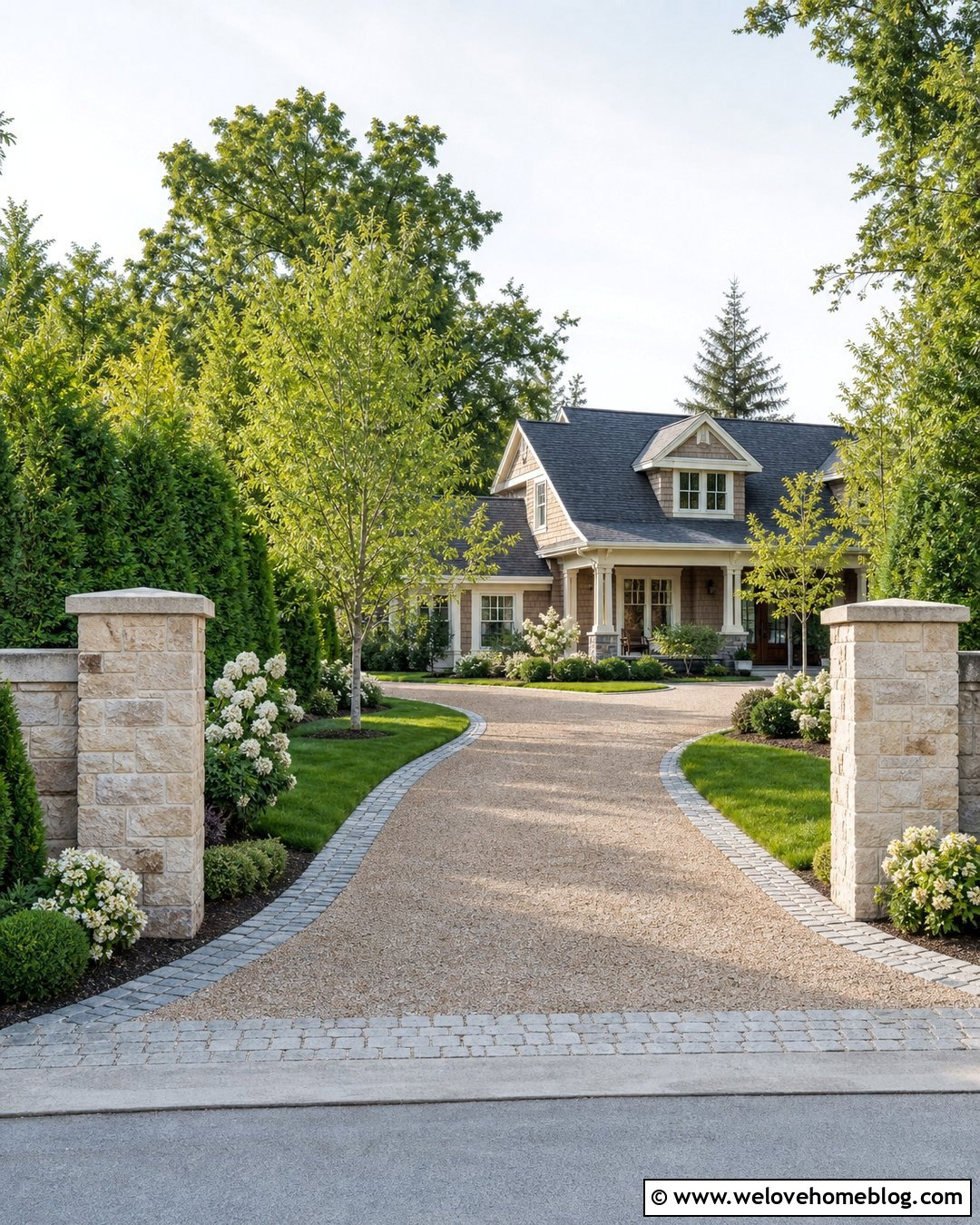
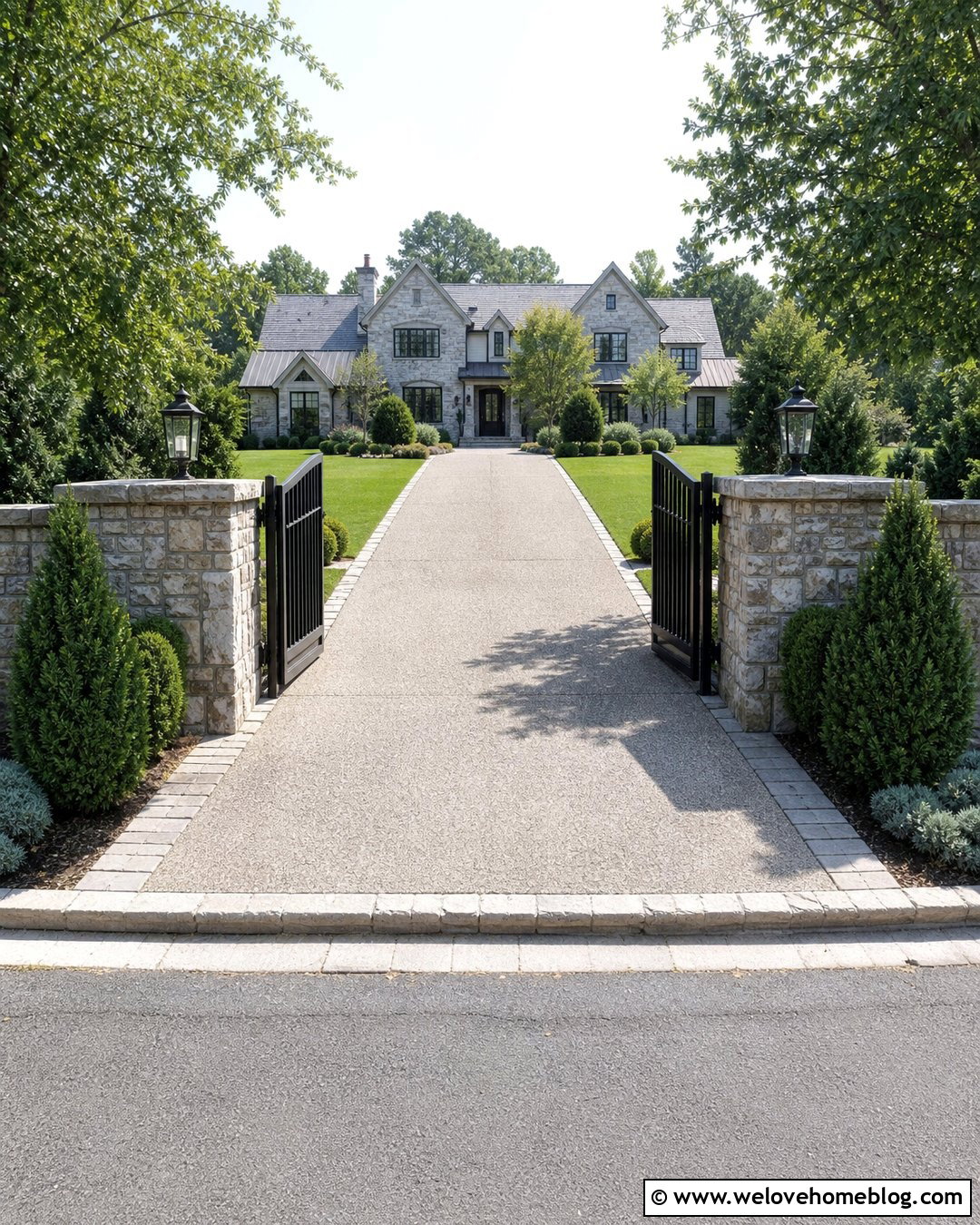
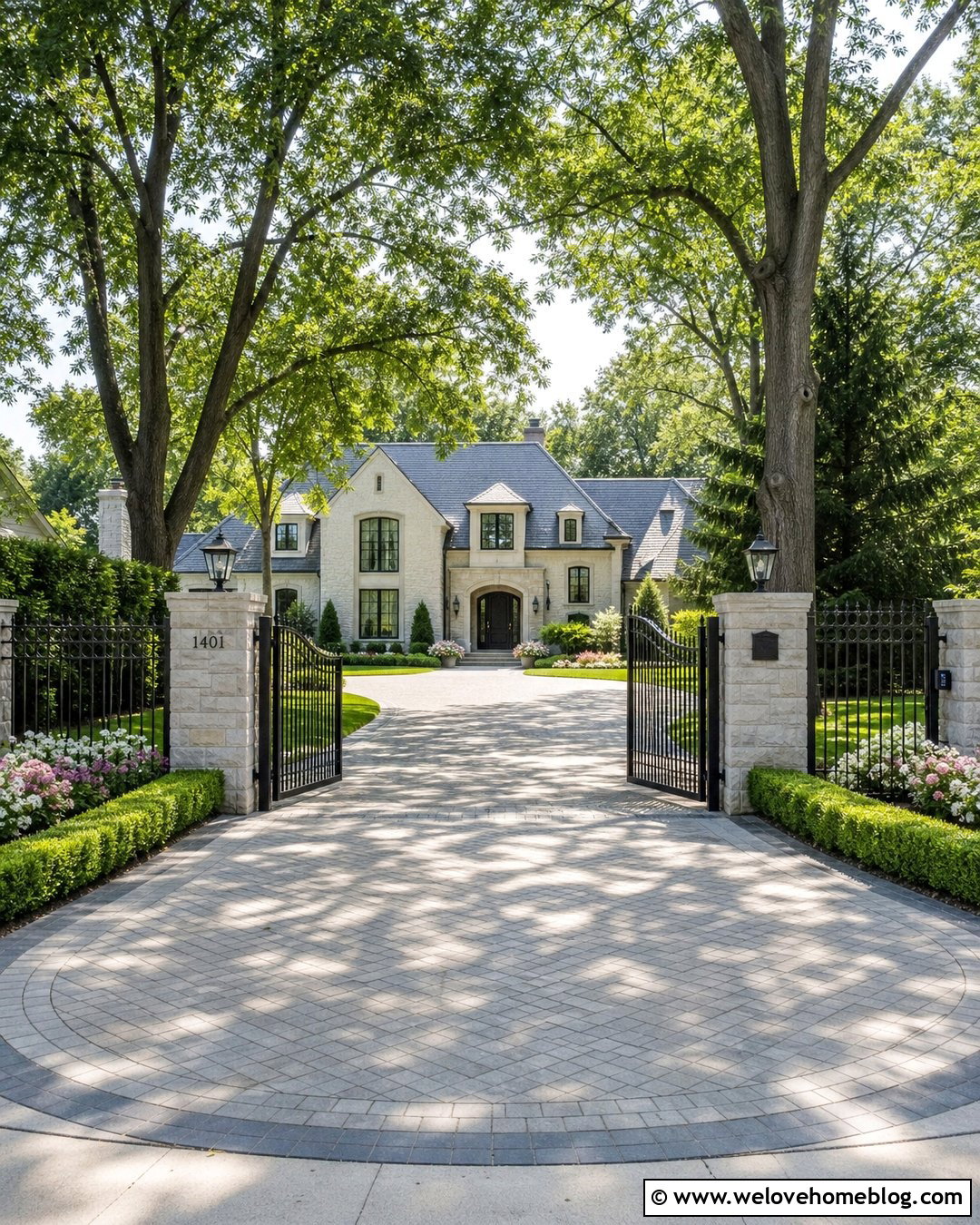
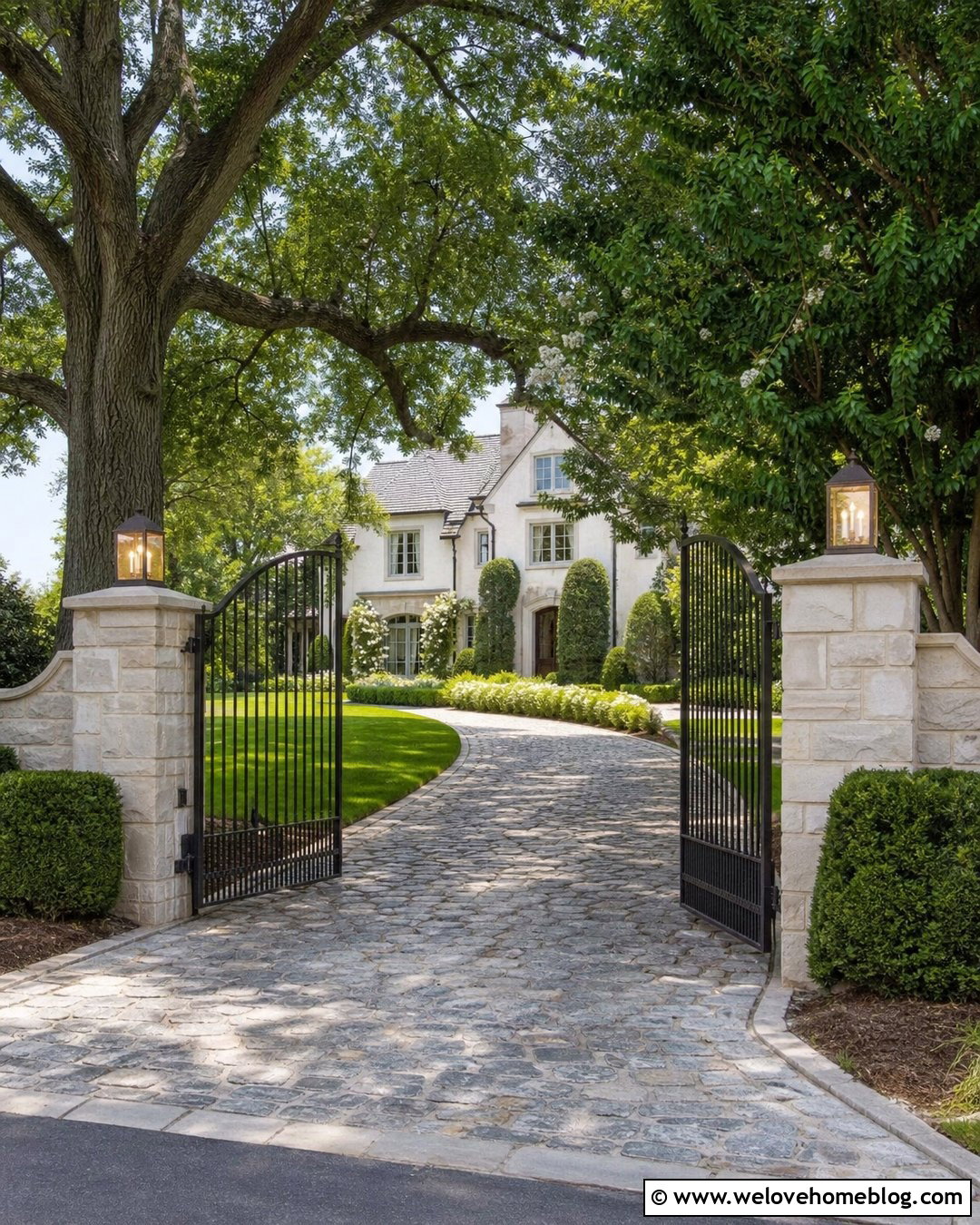
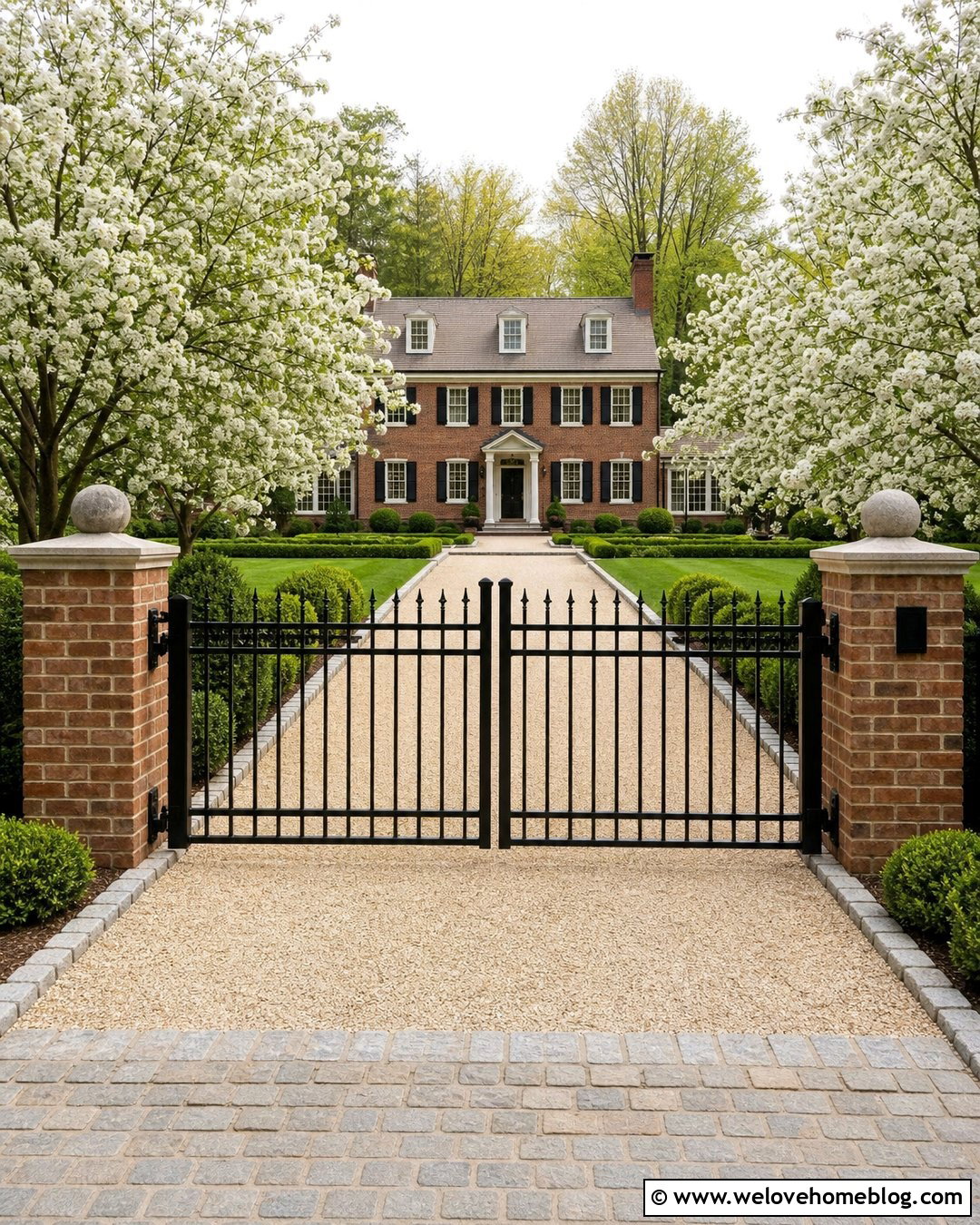
Stone pillars give a hedge-lined driveway entrance a permanent architectural anchor. Pair warm beige limestone pillars with a tan pea gravel driveway that curves gently toward a Craftsman house. Continue an evergreen hedge outward from each pillar along the property line, but keep the plants lower near the entrance. A steel edge and narrow cobblestone ribbon will contain the gravel and emphasize the curve. Behind the hedges, use flowering shrubs and small canopy trees to soften the boundary. Match the pillar stone to the home’s foundation, porch, or chimney for a connected appearance. The pillars should frame the opening rather than restrict it, so plan enough width for comfortable turning. This complete arrangement balances greenery, masonry, and loose aggregate in a polished but approachable way.
14. Hedge Driveway With Wooden Gate
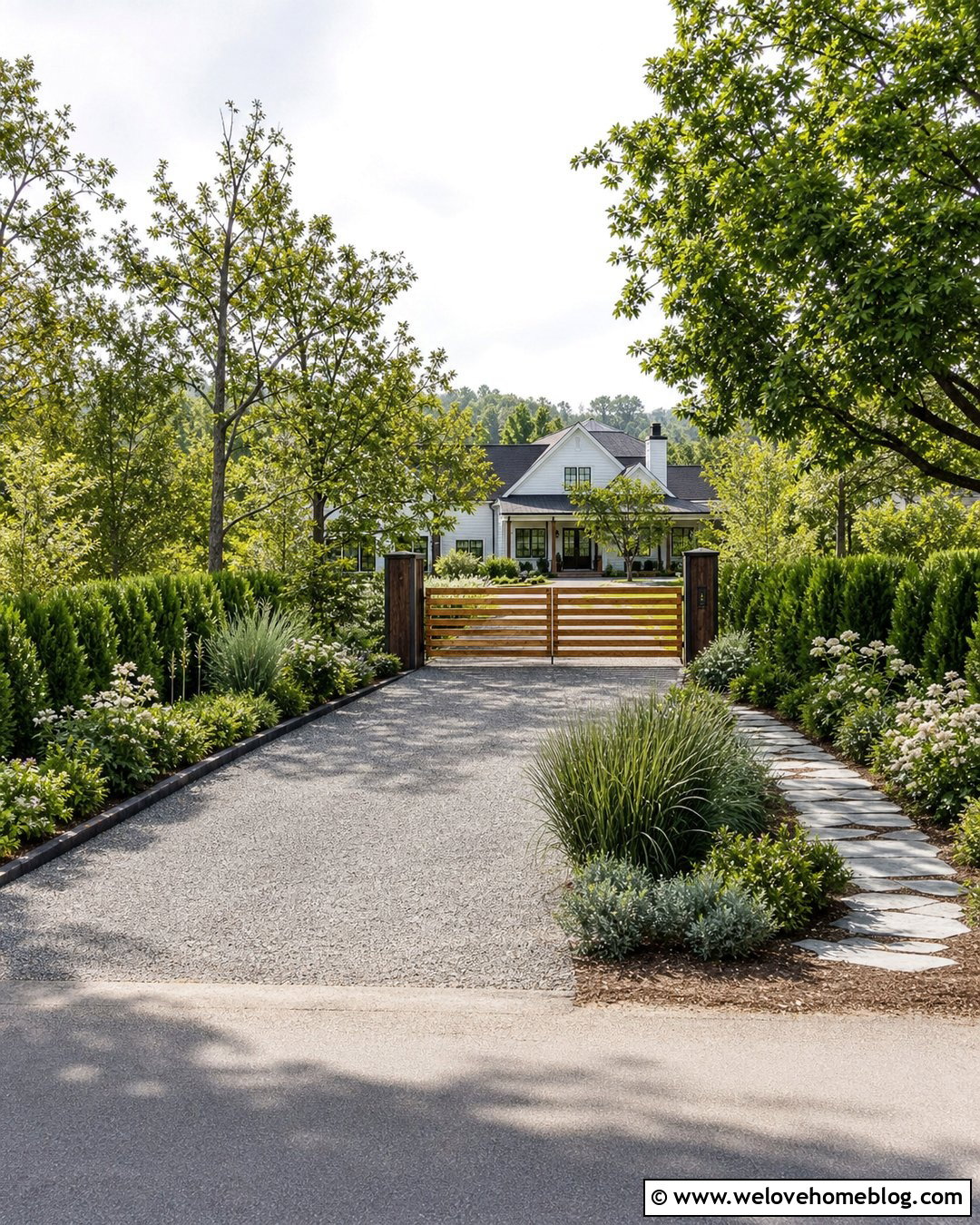
A wooden gate feels especially at home between informal hedges and a natural gravel surface. Use compacted gray crushed gravel for a straight country driveway, bordered by dark timber edging. Install a simple horizontal cedar gate between sturdy wood posts, leaving room for hardware and safe vehicle clearance. Mixed evergreen hedging can continue from the posts along both sides, while lower flowering shrubs soften the entrance corners. Set the gate farther inside the property when possible so a vehicle can leave the road before stopping. Add a separate pedestrian opening connected to a flagstone walkway. Native grasses and shade trees will complete the relaxed setting. The combination works well with ranch houses, cabins, and modern farmhouses, offering privacy without the severity of a solid masonry entrance.
15. Layered Hedge Driveway Border
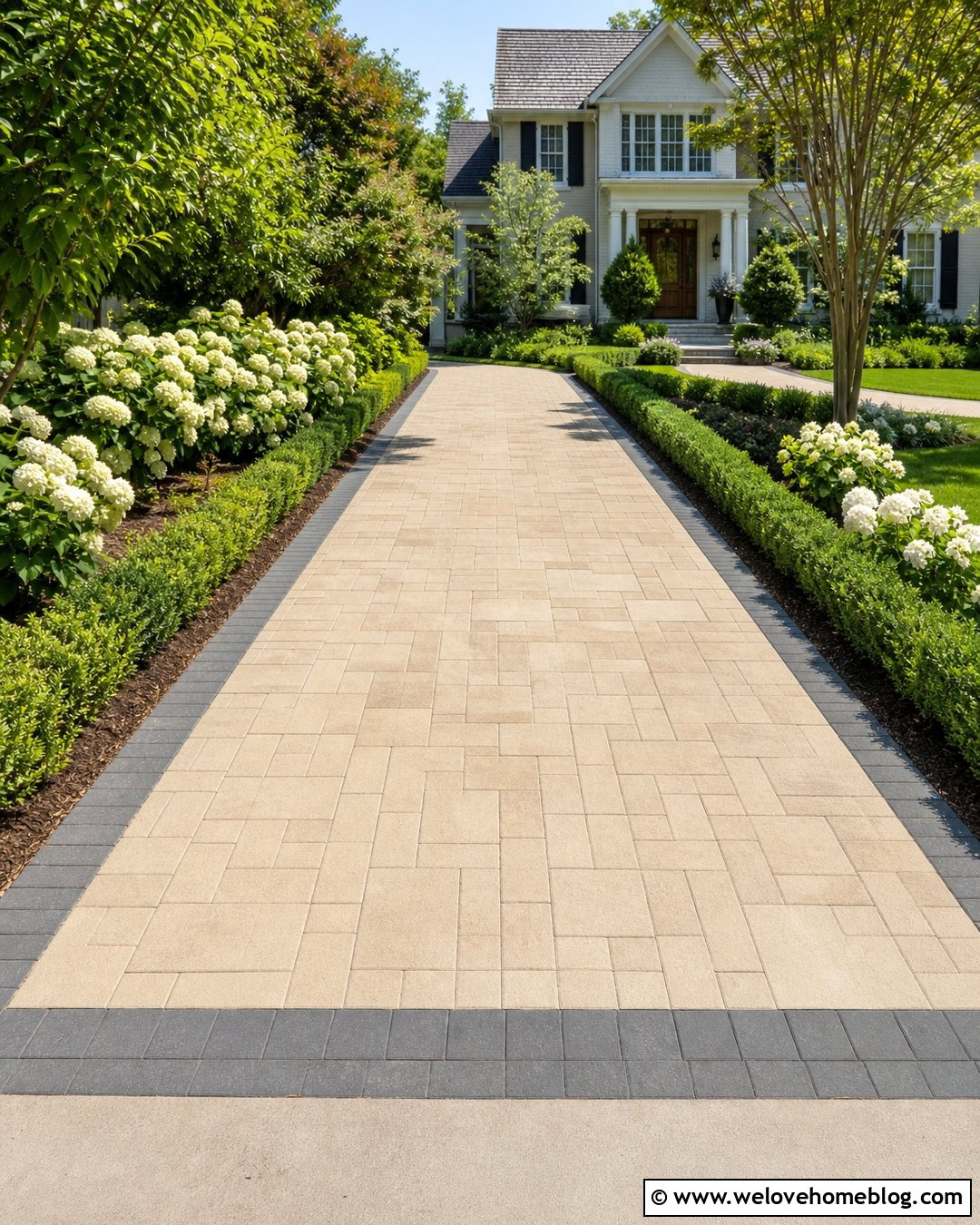
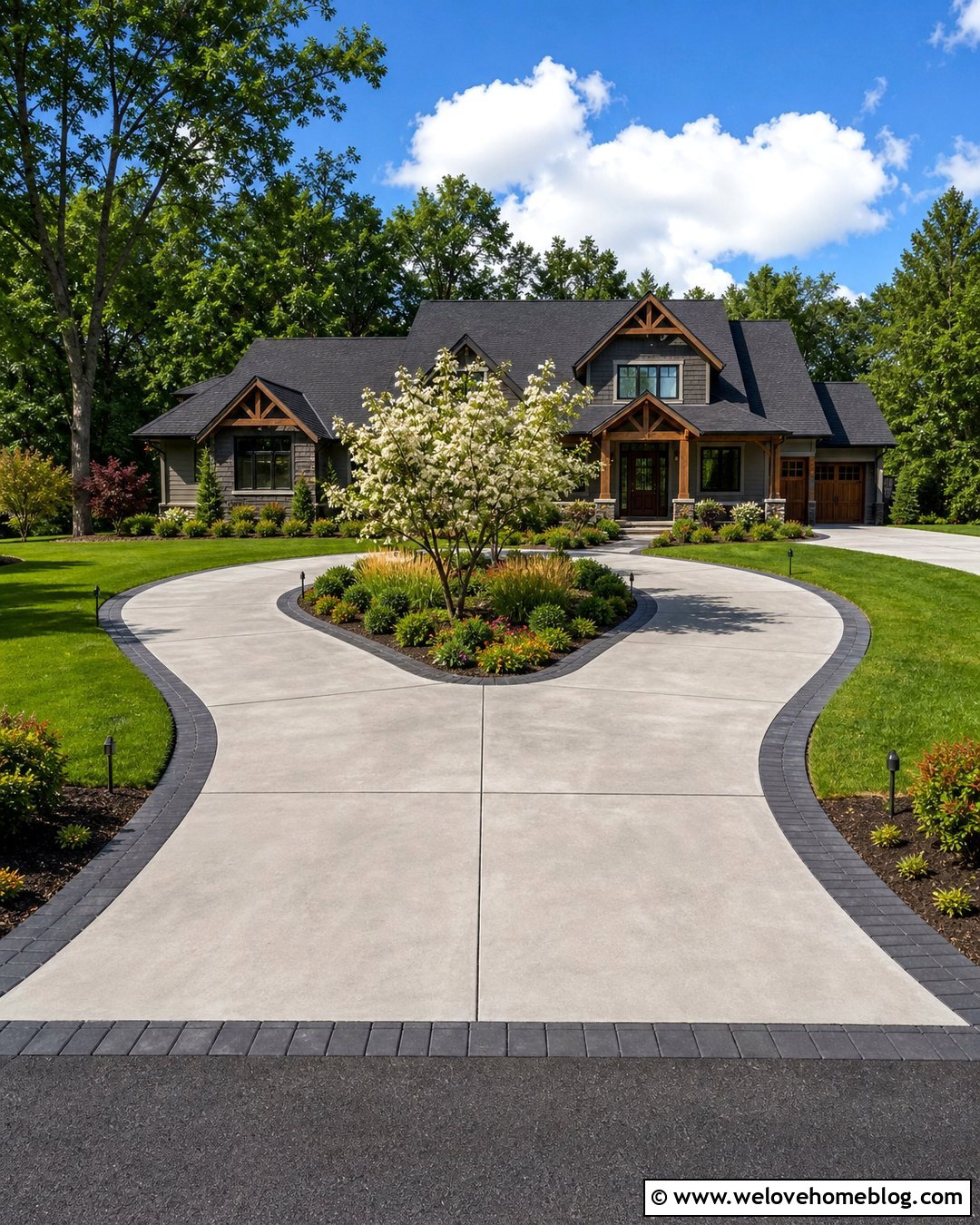
Layered planting can make a driveway hedge feel deeper and more natural than a single clipped row. Begin with a straight buff-colored concrete paver driveway and add a dark brick border. Plant a low evergreen hedge nearest the paving, leaving a mulched maintenance strip between the shrubs and border. Behind it, arrange taller flowering shrubs in loose groups rather than another continuous line. Ornamental trees can form the final layer, providing height without blocking the entire facade. Repeat the same plant groupings on the opposite side in selected areas instead of creating perfect symmetry. This approach suits traditional and transitional homes with wide front yards. The different heights soften the hardscape, frame the route, and create changing views as visitors move toward the house.
16. Native Hedge Driveway
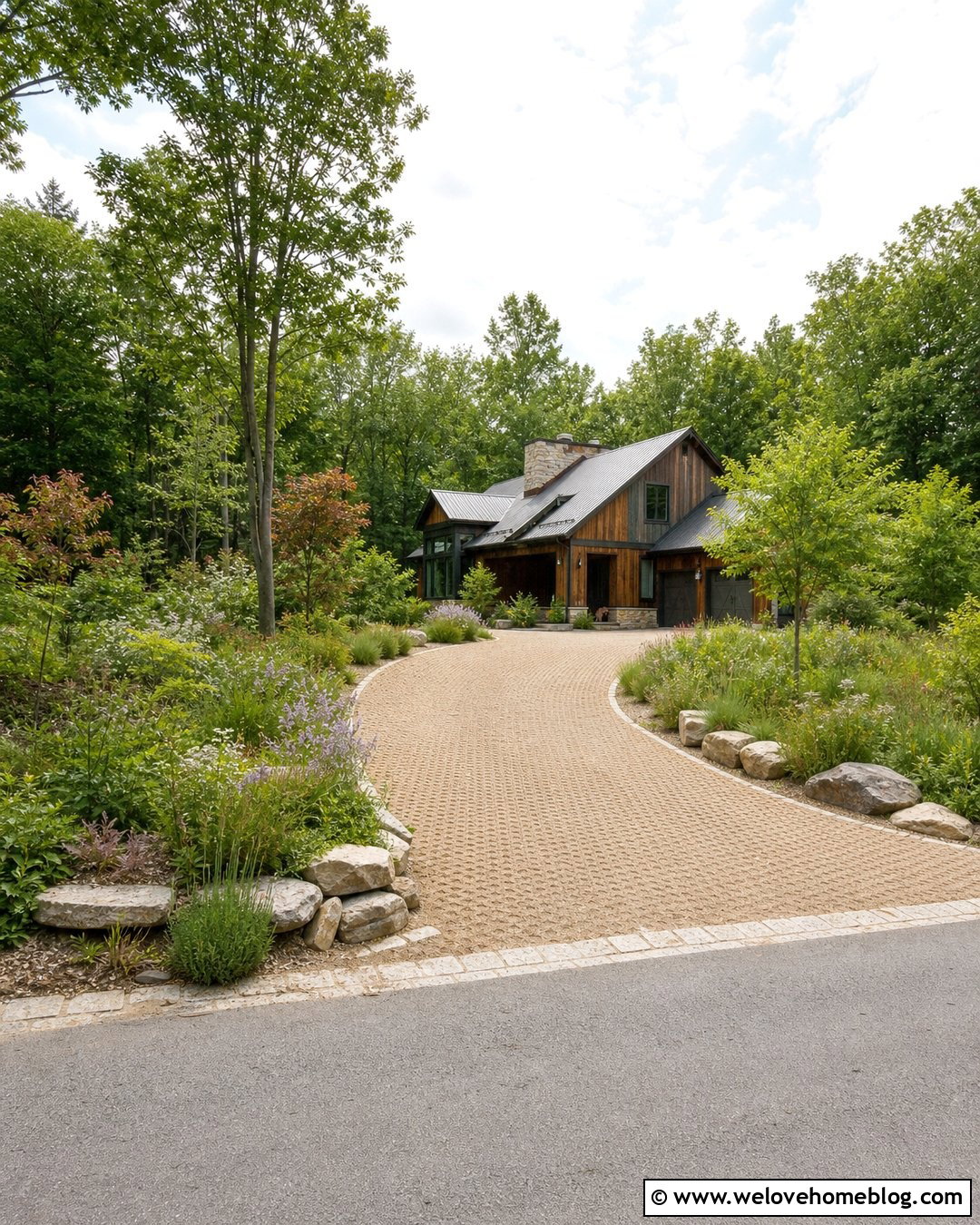
A native hedge can provide structure while making the driveway feel connected to the surrounding landscape. Select regionally appropriate evergreen and deciduous shrubs that tolerate the property’s light, soil, rainfall, and winter conditions. Pair the mixed hedge with a permeable driveway made from tan gravel-filled grid pavers. Use natural fieldstone edging and allow the driveway to follow a shallow curve through the yard. Instead of clipping the hedge into a rigid block, maintain a tidy but varied outline. Native grasses, flowering perennials, and small trees can fill gaps and extend the planting into nearby beds. Keep thorny or spreading branches away from parking areas. The resulting driveway feels less formal than traditional hedging, yet it still clearly defines the route and screens neighboring views.
17. Low-Maintenance Hedge Driveway
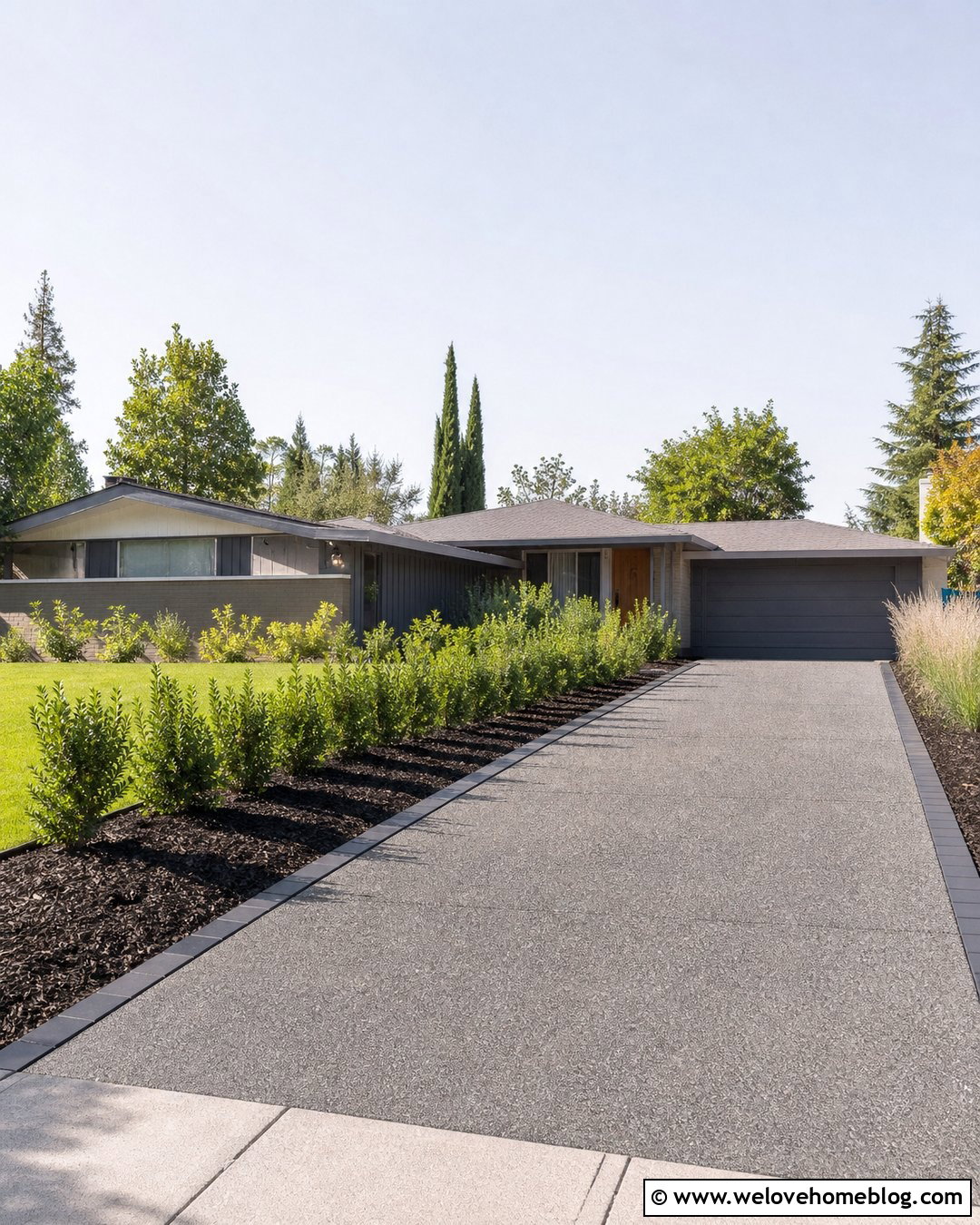
For a simpler landscape, combine a durable surface with slow-growing shrubs and generous spacing. Use medium gray exposed aggregate concrete for a straight driveway, edged with flush charcoal pavers. Plant one dependable hedge variety in a wide bed along the property boundary rather than placing shrubs directly beside the pavement. Apply organic mulch around the plants and install a clean metal edge along the lawn. Choose a hedge that fits the desired mature height so constant size reduction is unnecessary. Near the garage, replace hedging with ornamental grasses or ground cover to maintain access around parked vehicles. A few large planting groups usually look calmer and require less detailed care than many small varieties. This restrained design complements ranch, contemporary, and midcentury homes.
18. Sloped Driveway With Retaining Hedge
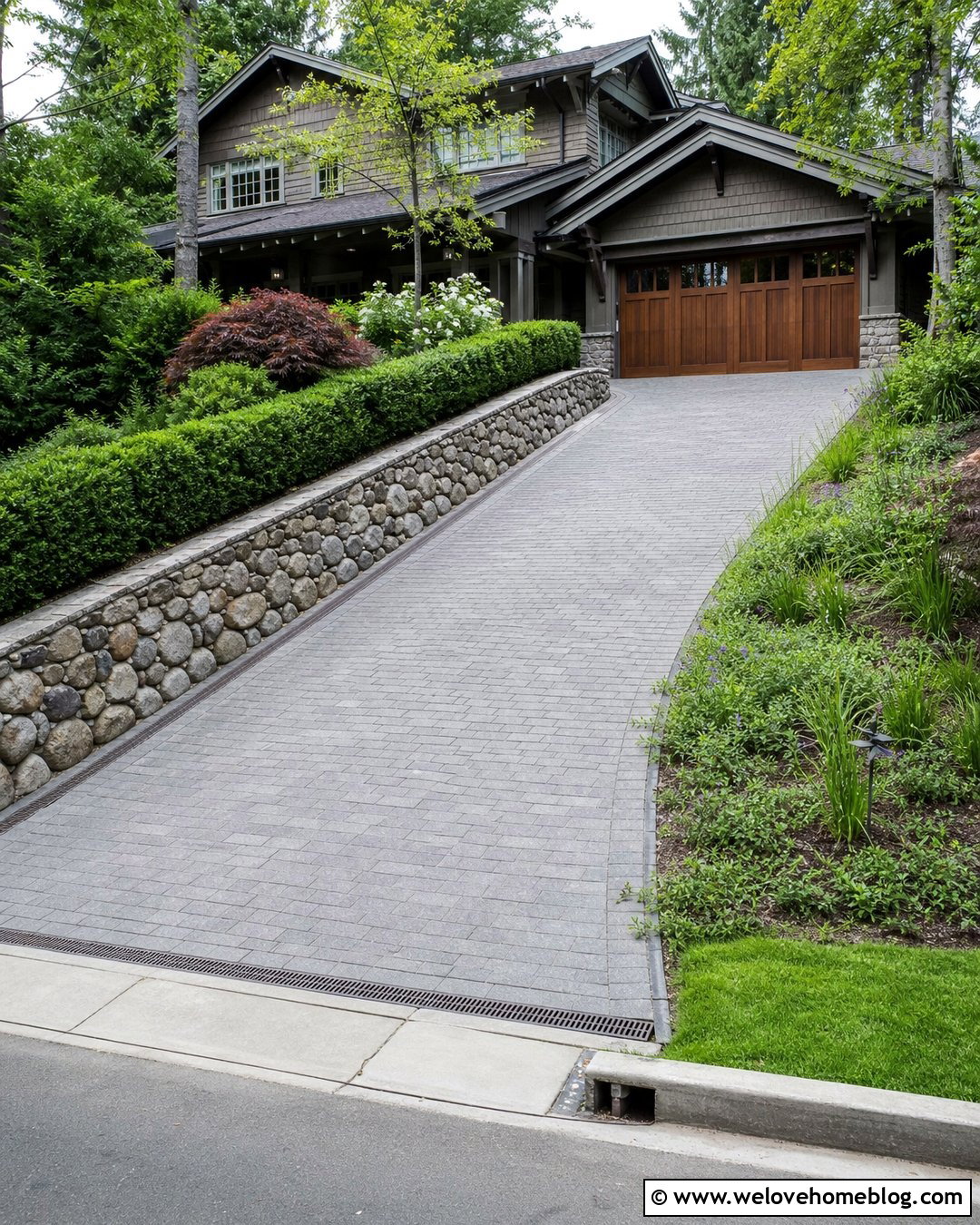
A sloped driveway benefits from a clear separation between paving, soil, and hedge roots. Build the surface from textured concrete pavers in a medium gray tone, using a straight or gently curving layout that follows the grade. On the uphill side, install a low fieldstone retaining wall set slightly back from the driveway. Plant a clipped evergreen hedge above the wall, where it can provide screening without leaning into the vehicle route. On the lower side, use a grass slope or deep planting bed containing erosion-tolerant ground cover and shrubs. Channel drainage away from the garage and planting beds during construction. The wall, hedge, and paver border create distinct layers, making the incline look intentional while reducing loose soil along the driveway edge.
19. Small Front Yard Hedge Driveway
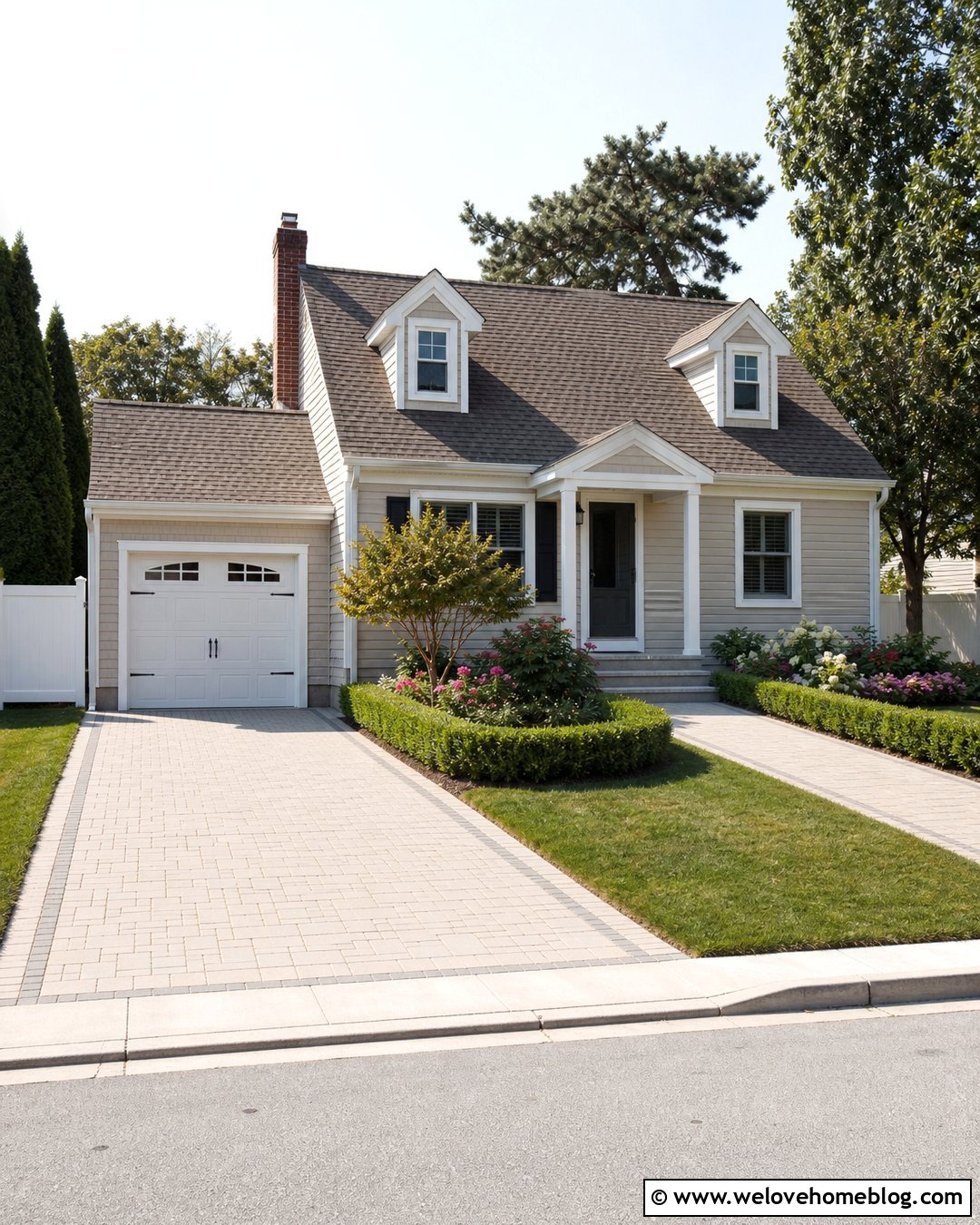
In a small front yard, a short hedge can define the driveway without dividing the property into cramped sections. Use light beige concrete pavers for a compact straight driveway leading to an attached garage. Add a low hedge along one side and wrap it around a small front planting bed near the porch. Keep the opposite side open with a narrow lawn strip and stepping-stone walkway. Repeating the driveway pavers in the path will make the entire space feel more coordinated. Choose shrubs that remain compact at maturity, and keep the street-facing corner especially low. One small ornamental tree near the house can add height without occupying parking space. This simple layout brings order, greenery, and curb appeal to a limited suburban lot.
20. Hedge Driveway With Lighting
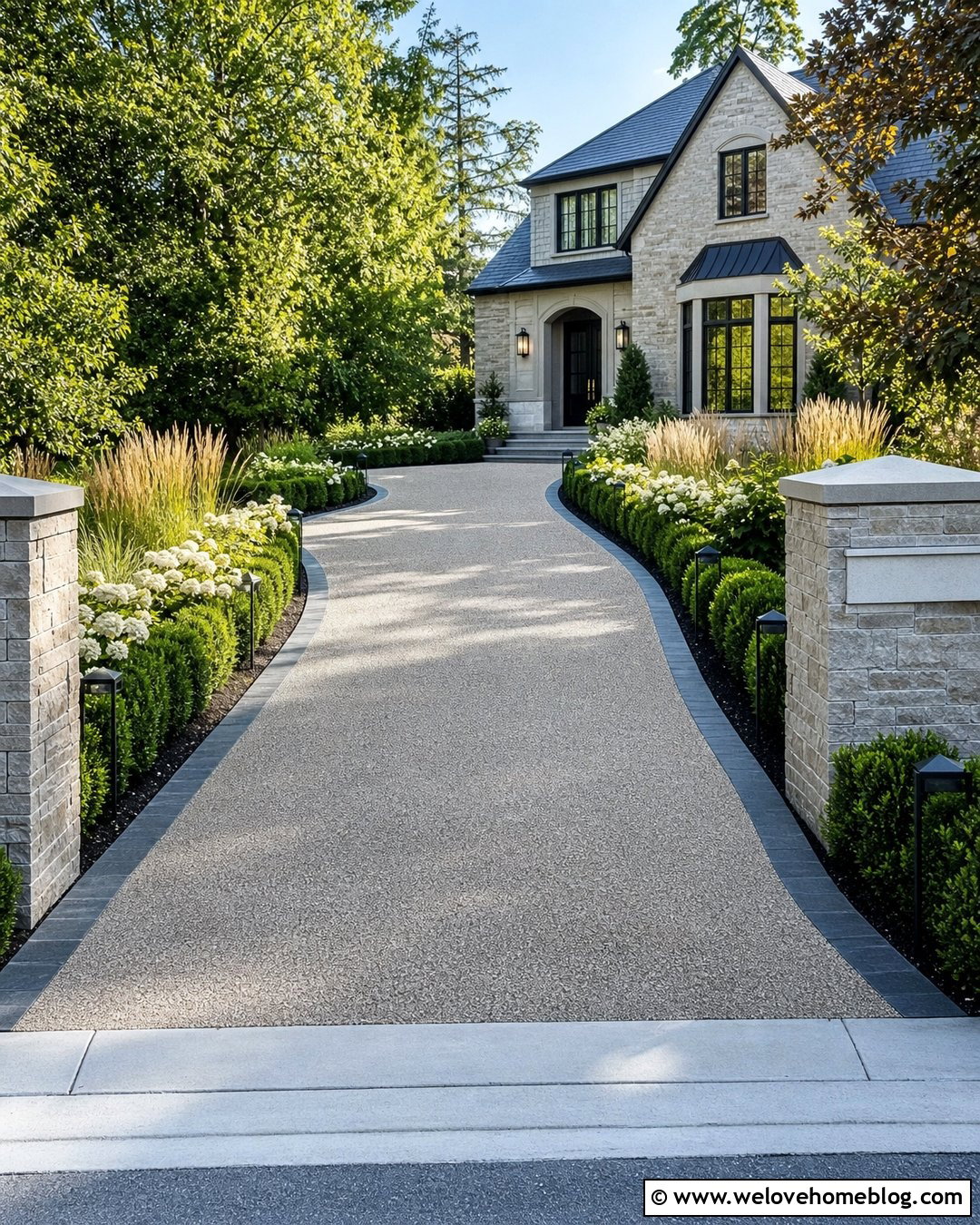
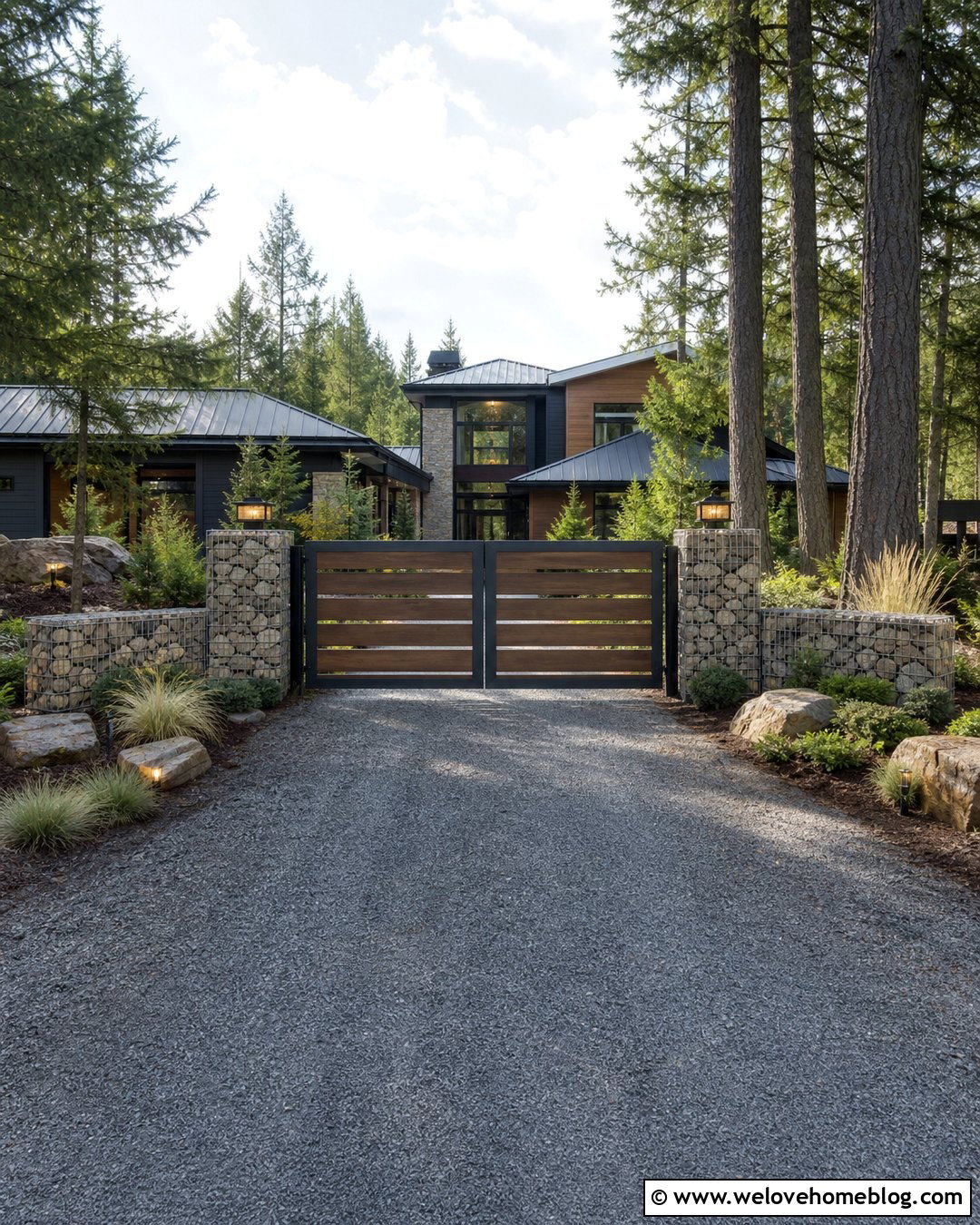
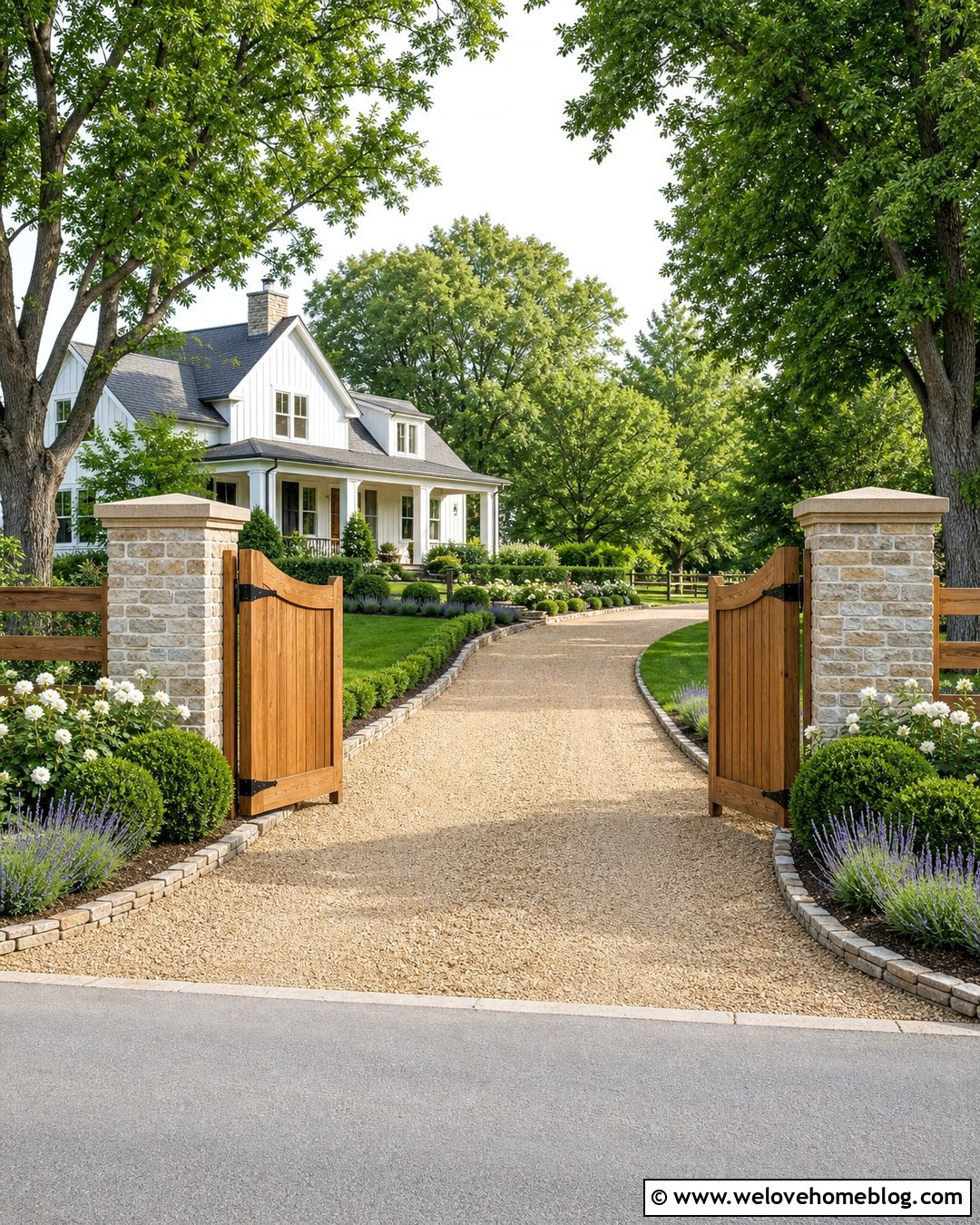
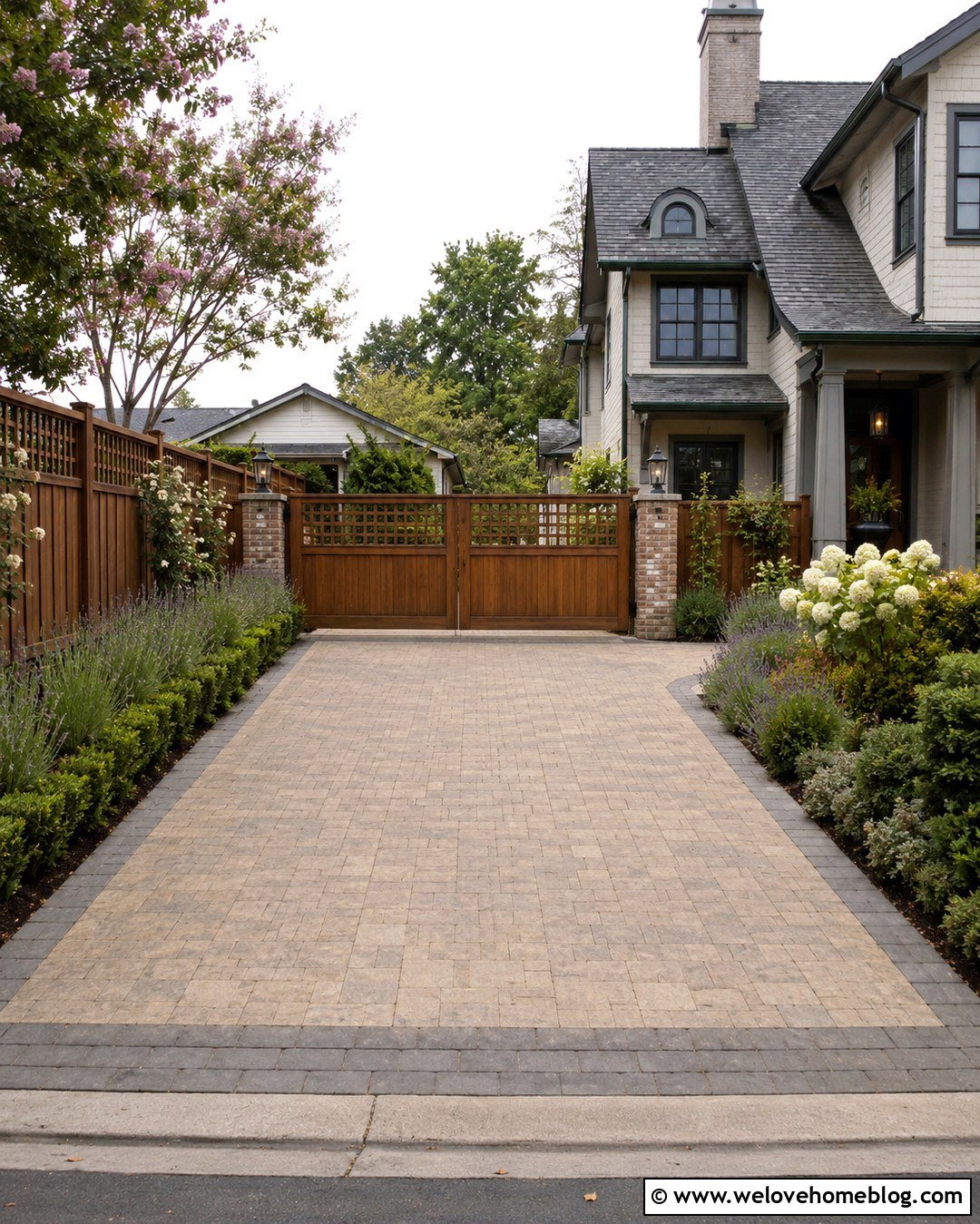
Driveway lighting should reveal the route and hedge structure without filling the landscape with visible fixtures. Start with a curved resin-bound gravel driveway in a warm gray finish, bordered by a dark granite ribbon. Plant medium-height evergreen hedges behind the edging and punctuate them with low shielded path lights. Space the fixtures evenly, aiming light toward the pavement rather than into drivers’ eyes or neighboring windows. At the entrance, integrate additional lighting into stone pillars or a low address wall. During daylight, ornamental grasses and white flowering shrubs can brighten the hedge base. The curved surface, repeated lighting, and continuous greenery create a coordinated approach. Select simple black fixtures that complement modern, transitional, or updated traditional homes without competing with the planting.
Conclusion:
The best **20 Hedge Driveway Ideas** treat paving, plants, borders, and entrances as parts of one connected landscape. Begin with the practical details: driveway width, turning space, visibility, drainage, mature plant size, and access for trimming. Then select a hedge height and shape that complement the surface material and architecture of the house. Low clipped hedges create definition, taller evergreens improve privacy, and mixed native hedges bring a softer character. Leave comfortable clearance beside parking zones and keep street corners open. Whether you prefer gravel, brick, asphalt, concrete, or resin-bound gravel, a thoughtfully positioned hedge can soften the hardscape and create a more polished, welcoming route home.

Related posts:
Leave a Reply