
Gravel can do much more than fill an entire driveway. Used in narrow strips, broad borders, drainage channels, and planted beds, it can soften hard paving while giving the entrance a clean, finished appearance. These 20 Gravel Along Driveway Ideas combine practical surfaces with thoughtful edging, attractive planting, and layouts suited to different homes and yard sizes. You can pair gravel with concrete, asphalt, brick, pavers, or resin-bound surfaces. The right stone color can also connect the driveway to your home’s facade, walkway, or garden walls. Proper containment is important, especially near lawns and vehicle areas. Explore the complete driveway looks below to find 20 Gravel Along Driveway Ideas that balance curb appeal, drainage, maintenance, and everyday function.

1. Pea Gravel Along Concrete Driveway
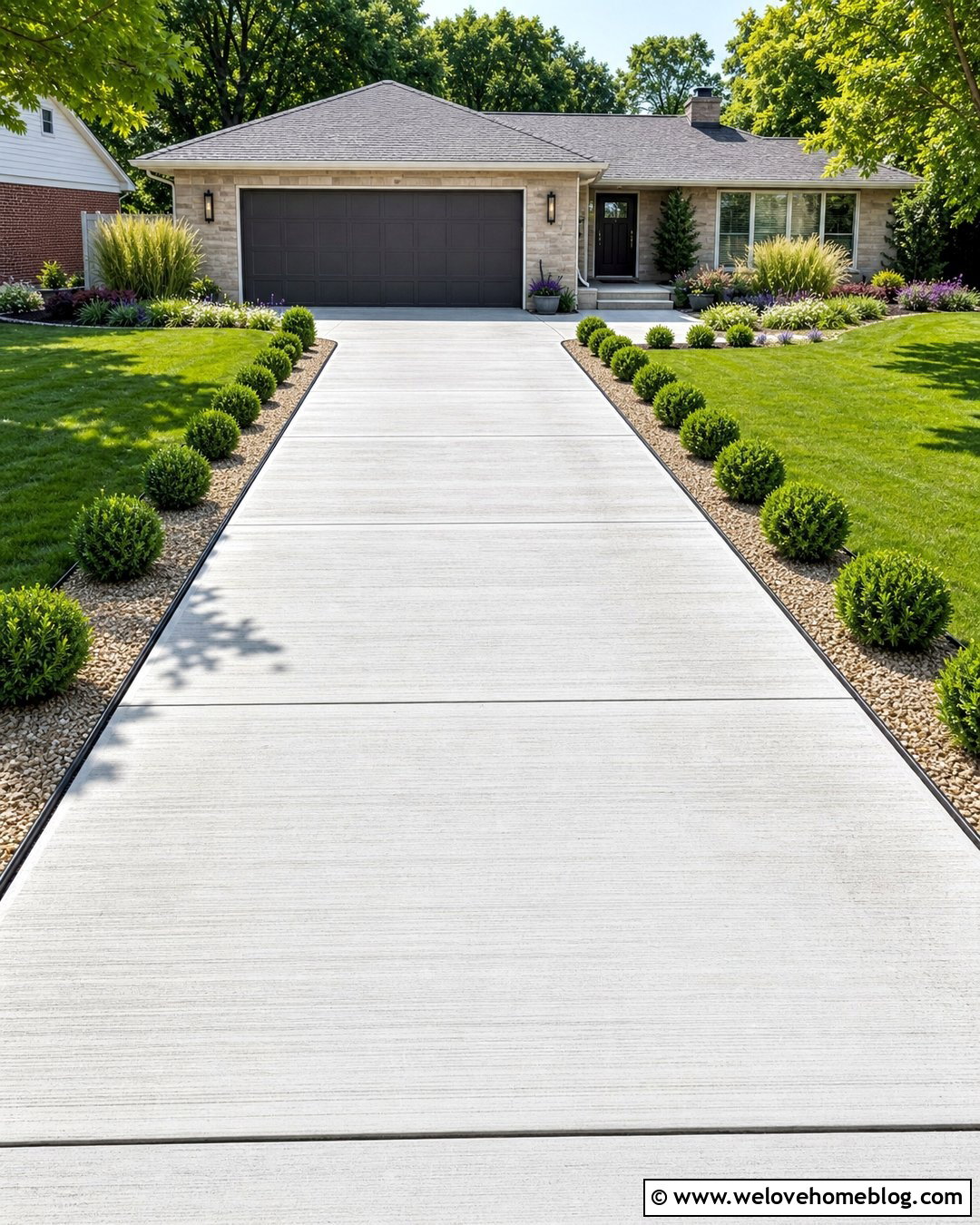
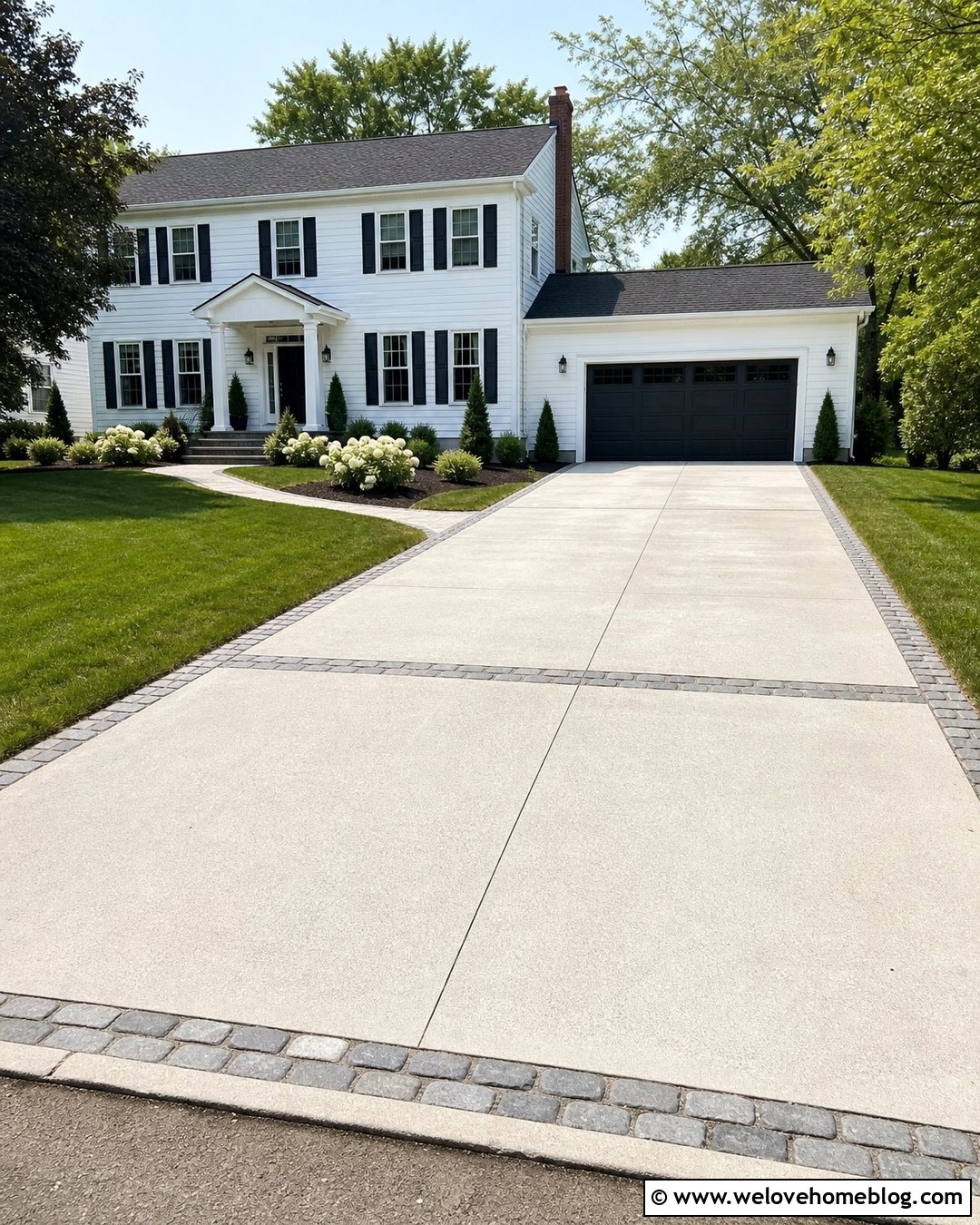
A straight concrete driveway can feel softer and more welcoming when narrow pea gravel borders run along both sides. Choose warm tan pea gravel to balance the cool tone of light gray poured concrete. Install slim steel edging between the gravel and lawn so the small stones remain contained. Low ornamental grasses, dwarf boxwoods, and a few flowering perennials can be planted within wider sections near the house. Keep the area beside the street simple to improve visibility and make snow removal easier. A matching concrete walkway creates a connected approach to the front door. This complete layout works especially well with ranch houses and newer suburban homes because it looks neat without requiring complicated landscaping or frequent trimming.
2. River Rock Along Asphalt Driveway
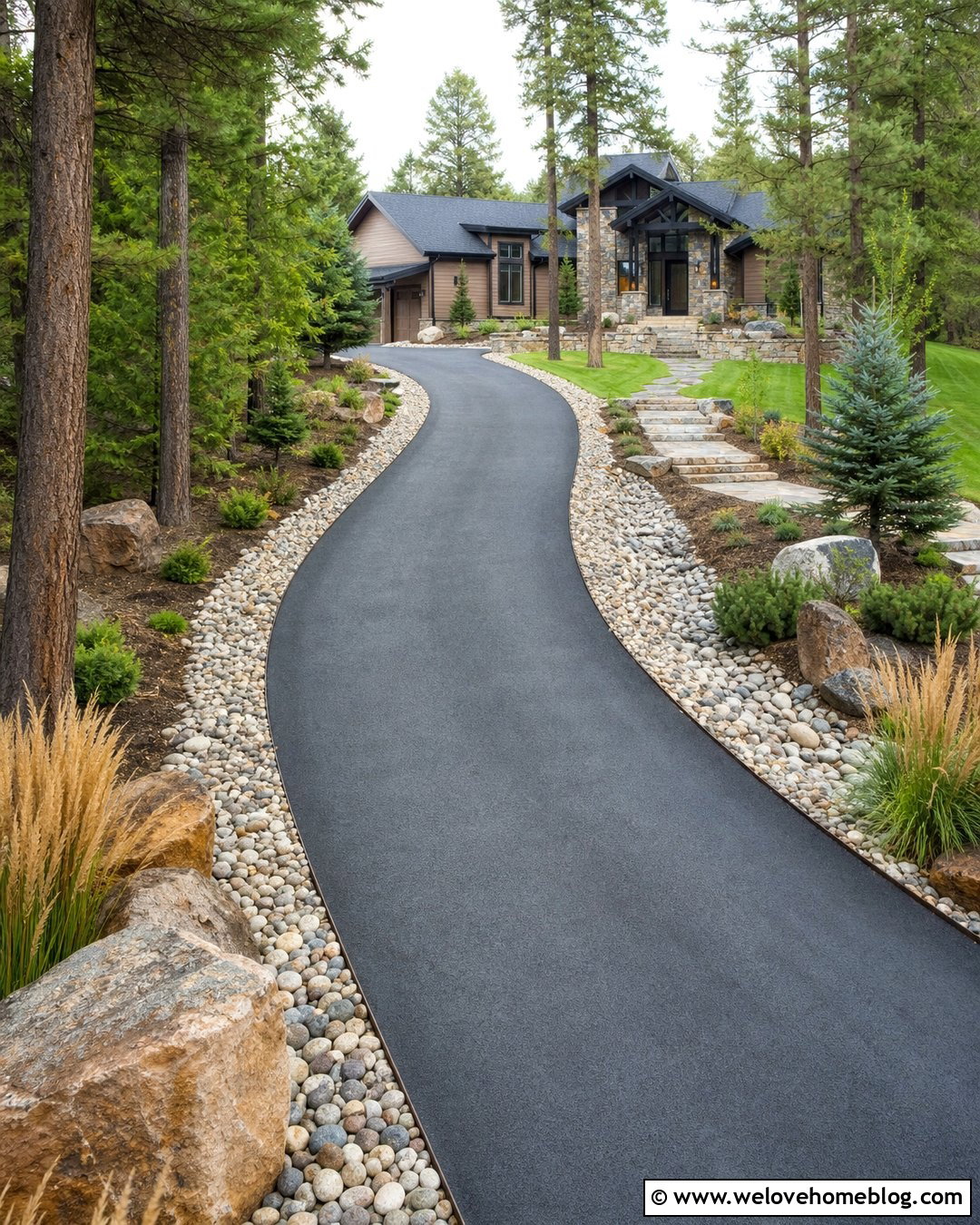
Smooth river rock brings natural color and texture to a black asphalt driveway. Create broad gravel strips along each edge using a mixture of gray, brown, cream, and muted rust stones. A dark metal divider can separate the river rock from the asphalt without becoming visually distracting. Place larger boulders near the entrance, then add compact evergreen shrubs and clumps of switchgrass farther up the driveway. The stone border can also follow a shallow drainage swale where runoff commonly collects. This look suits woodland homes, mountain-inspired houses, and properties with mature trees. Keep the river rock slightly lower than the paved surface, and avoid placing loose rounded stones where vehicle tires regularly cross the border.
3. White Gravel Along Paver Driveway
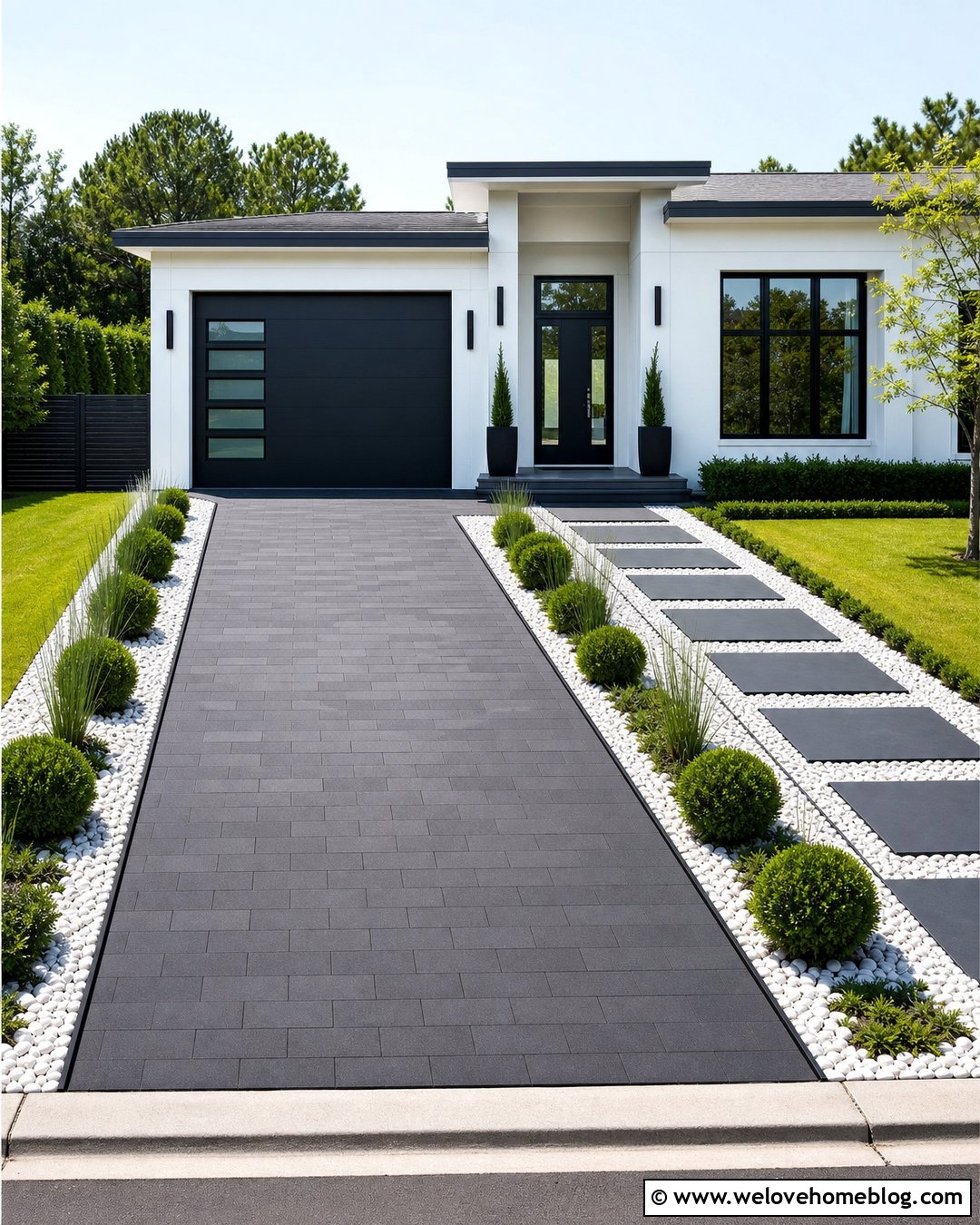
Bright white gravel creates crisp contrast beside a charcoal paver driveway. Use rectangular concrete pavers in a running bond pattern for the main surface, then frame them with narrow strips of white marble chips. Black aluminum edging keeps the light stone separate from surrounding planting beds. For a modern look, repeat rounded boxwoods, upright grasses, and low evergreen ground cover along the borders. A straight layout reinforces the clean geometry, while large square stepping stones can connect the driveway to the entrance walkway. This design works best when the house has a white, gray, or black exterior. White stone can show leaves and soil easily, so use it in open areas rather than directly beneath messy trees.
4. Crushed Granite Along Brick Driveway
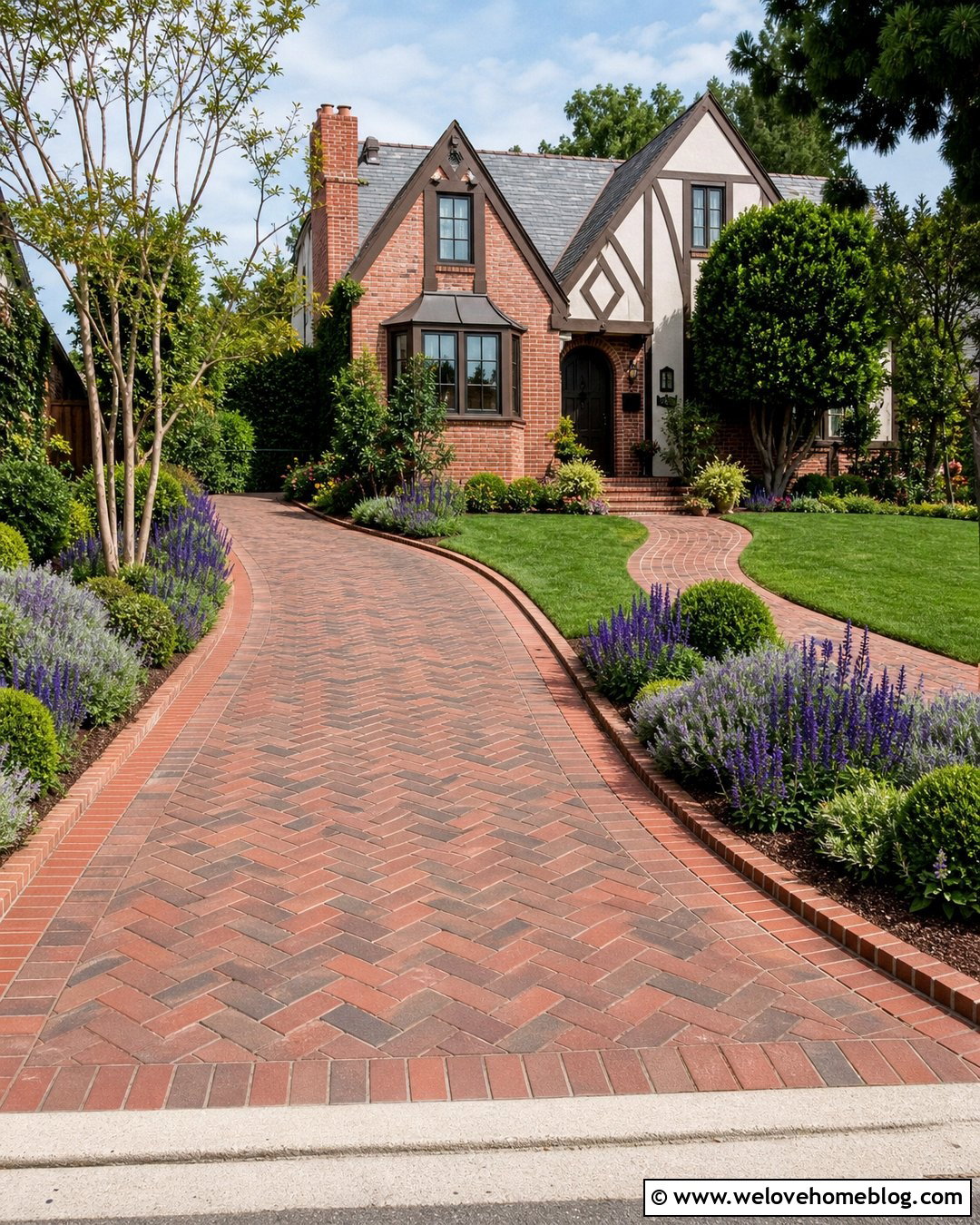
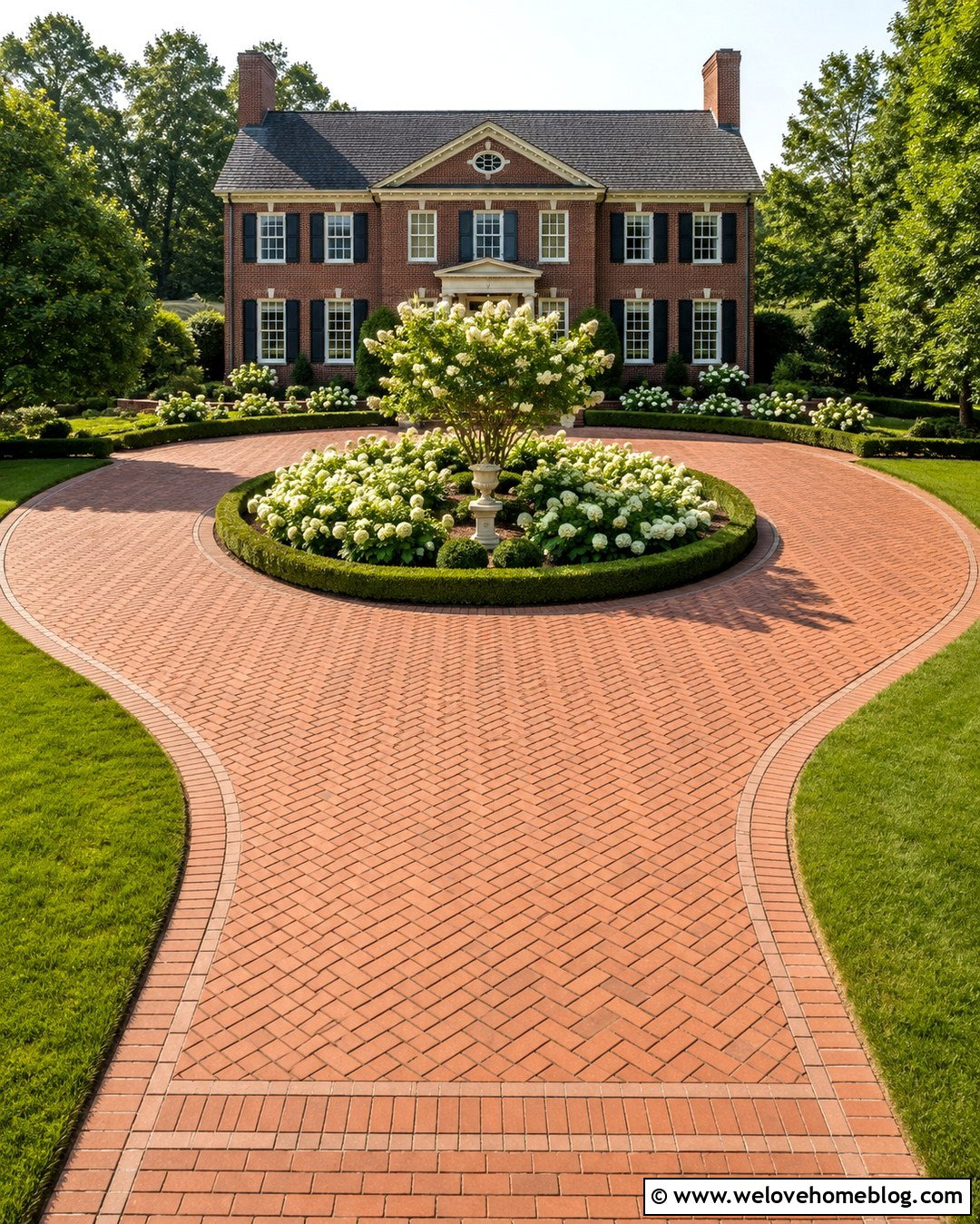
Crushed granite adds a relaxed, earthy border to the strong color and pattern of a brick driveway. Select reddish-brown or warm gray granite that connects visually with the clay brick pavers. Set the bricks in a herringbone pattern and use a single soldier-course row to create a stable outer edge. Beyond that edge, install the granite in gently widening beds filled with lavender, salvia, and compact evergreen shrubs. A curved driveway layout can make this combination feel especially established and inviting. It is a natural match for Colonial, Tudor, and traditional brick homes. Repeating the same crushed granite around nearby trees or along the front walkway helps the entire front yard feel planned rather than pieced together.
5. Limestone Gravel Along Curved Driveway
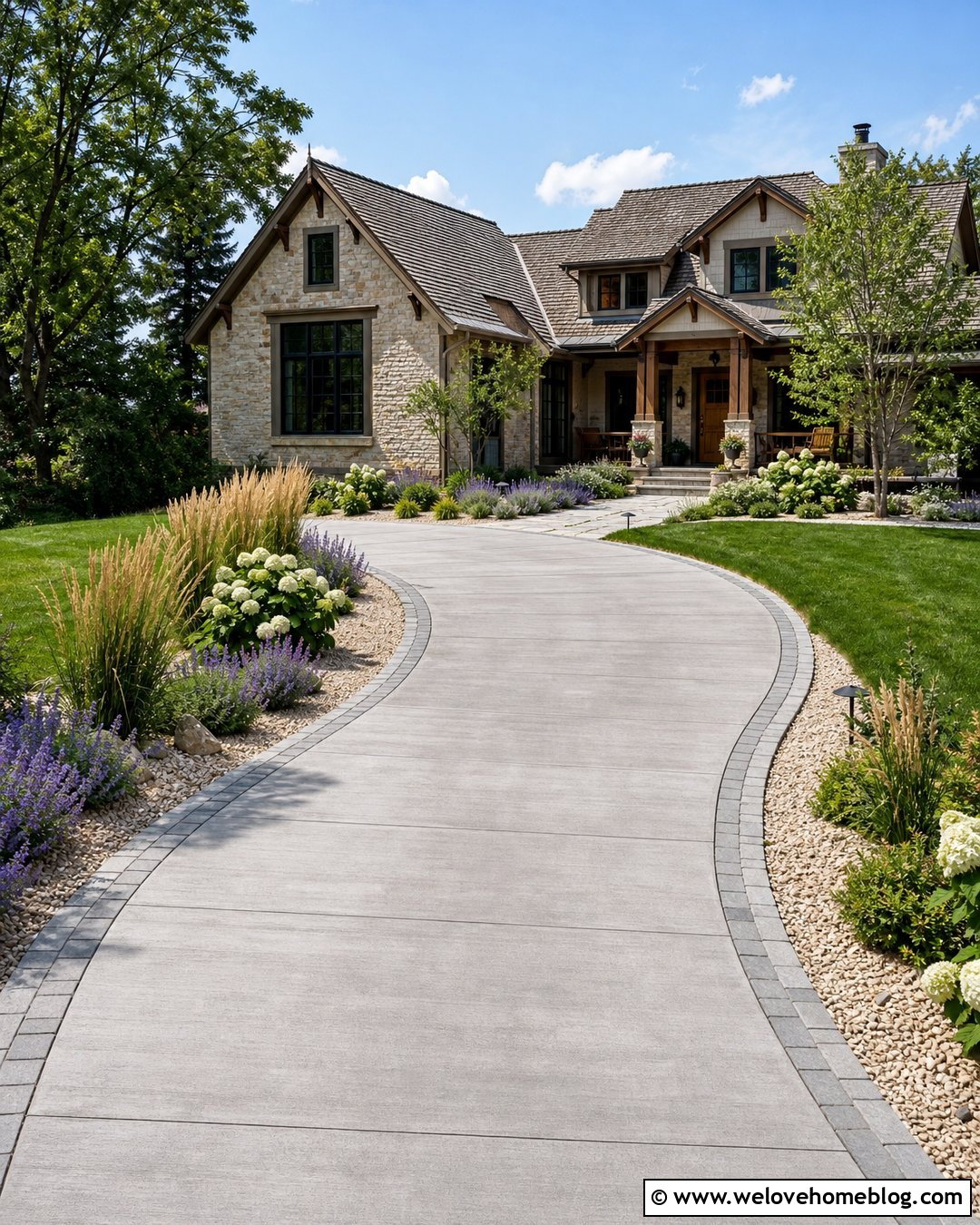
A softly curved driveway becomes more defined when pale limestone gravel follows its entire shape. Use broom-finished gray concrete for the driving surface and creamy crushed limestone for the side borders. Belgian block edging creates a durable transition and gives the curve a precise outline. Plant drifts of feather reed grass, catmint, and dwarf hydrangeas beyond the gravel, leaving clear space around the inside bend for safe visibility. The light stone brightens shaded yards and complements homes with beige siding or natural stone details. Make one border wider than the other where space allows. This asymmetrical approach provides room for landscaping without making a smaller front yard feel overly formal or crowded.
6. Black Gravel Along Modern Driveway
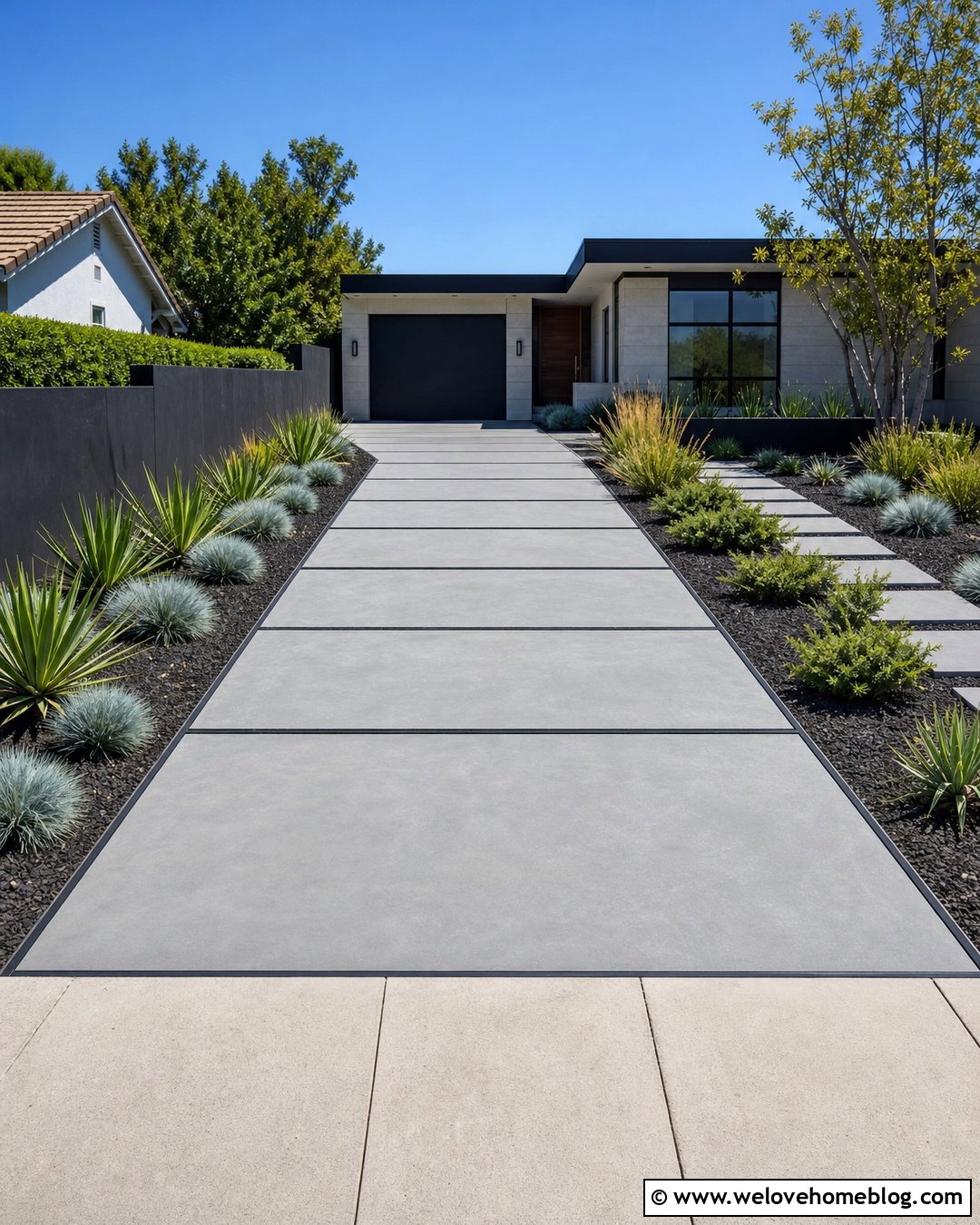
Black gravel can turn an ordinary side strip into a strong feature beside a modern concrete driveway. Build the main surface with large gray poured-concrete panels separated by narrow expansion joints. Add angular black basalt gravel along both sides, contained by nearly invisible steel edging. Architectural plants such as yucca, blue fescue, compact juniper, and upright ornamental grass reinforce the streamlined appearance. Use rectangular concrete stepping pads through one gravel border to connect the driveway and front door. A straight driveway works best for this sharp, geometric composition. The dark gravel also coordinates well with black window frames, metal roofs, and contemporary address signs. Limit the plant palette so the overall entrance remains clean and uncluttered.
7. Gravel Garden Along Driveway Edge
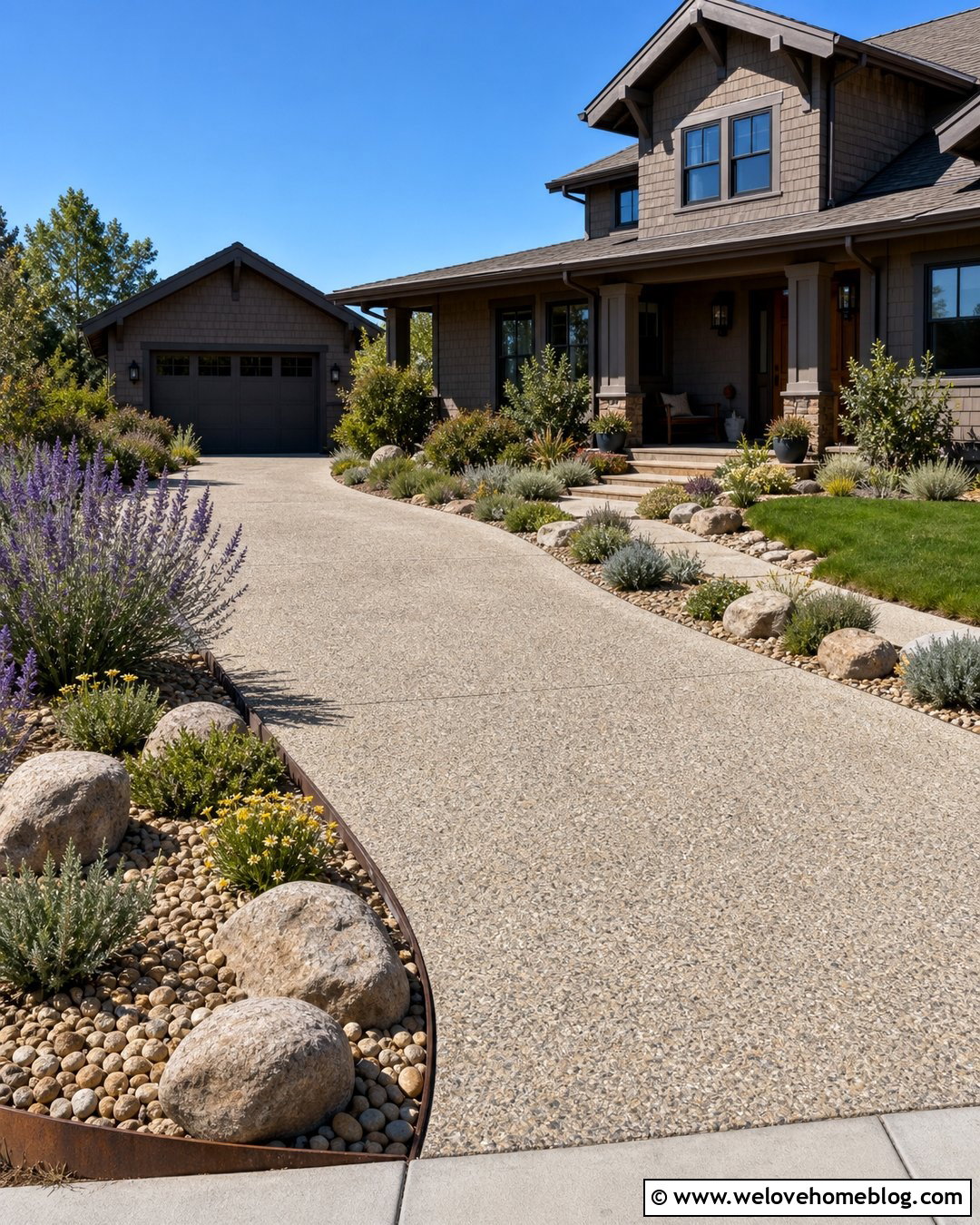
A gravel garden can transform a wide driveway edge into an attractive, low-water landscape. Pair an exposed aggregate concrete driveway with a generous border of tan pea gravel and small areas of larger cobbles. Plant drought-tolerant selections in repeating groups, including sedum, yarrow, lavender, blue fescue, and compact sage. Use weathered steel edging where the gravel meets the lawn, but allow the planted border to widen naturally near the house. A gentle curved layout gives the garden room to flow without narrowing the driving area. This complete look fits Craftsman homes, Southwestern properties, and sunny suburban yards. Choose plants suited to local conditions and leave open gravel around each group so individual forms remain visible.
8. Gravel Drainage Strip Along Driveway
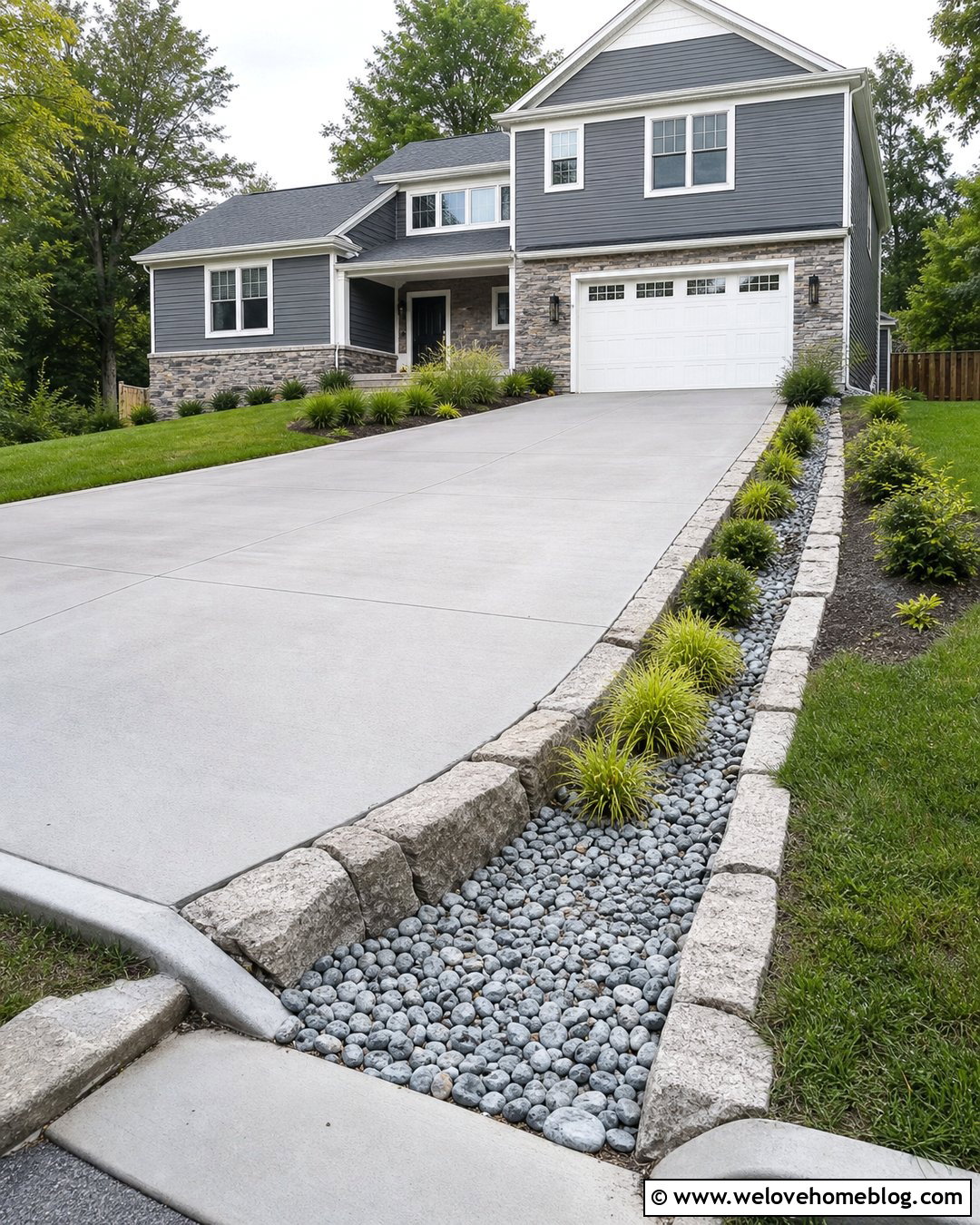
A gravel drainage strip can look intentional rather than purely functional. Beside a sloped concrete driveway, create a shallow channel filled with washed gray drainage gravel over an appropriate drainage base. Edge the driveway side with granite cobbles and soften the outer side with moisture-tolerant grasses, sedges, and compact shrubs. The channel should follow the driveway toward a suitable runoff area without directing water toward the house or neighboring property. Repeat the cobbles around a nearby planting bed to connect the drainage feature with the overall landscape. This treatment suits homes where water regularly gathers along paving. For complicated drainage problems, confirm the slope and discharge plan with a qualified local professional before installation.
9. Gravel Border Along Circular Driveway
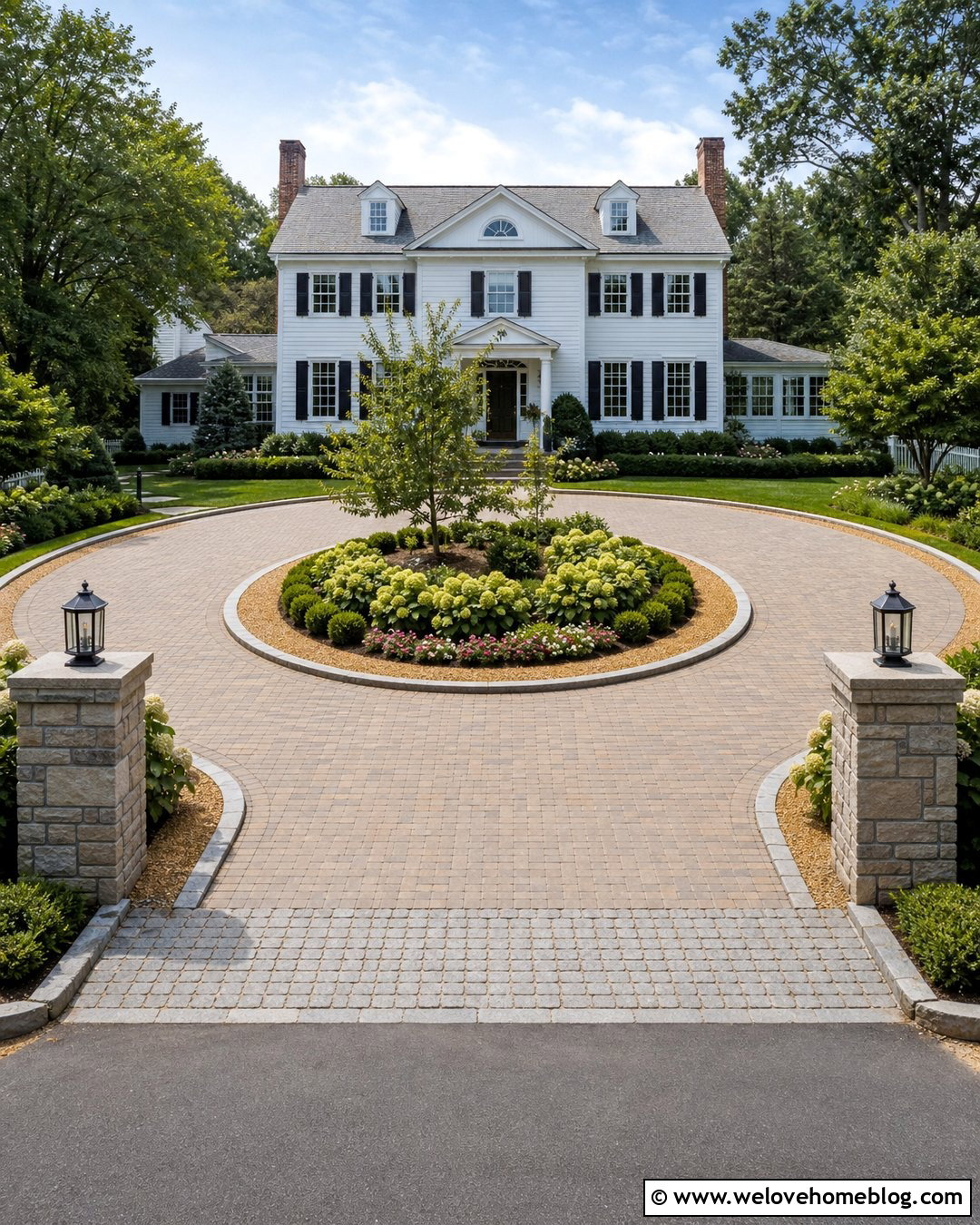
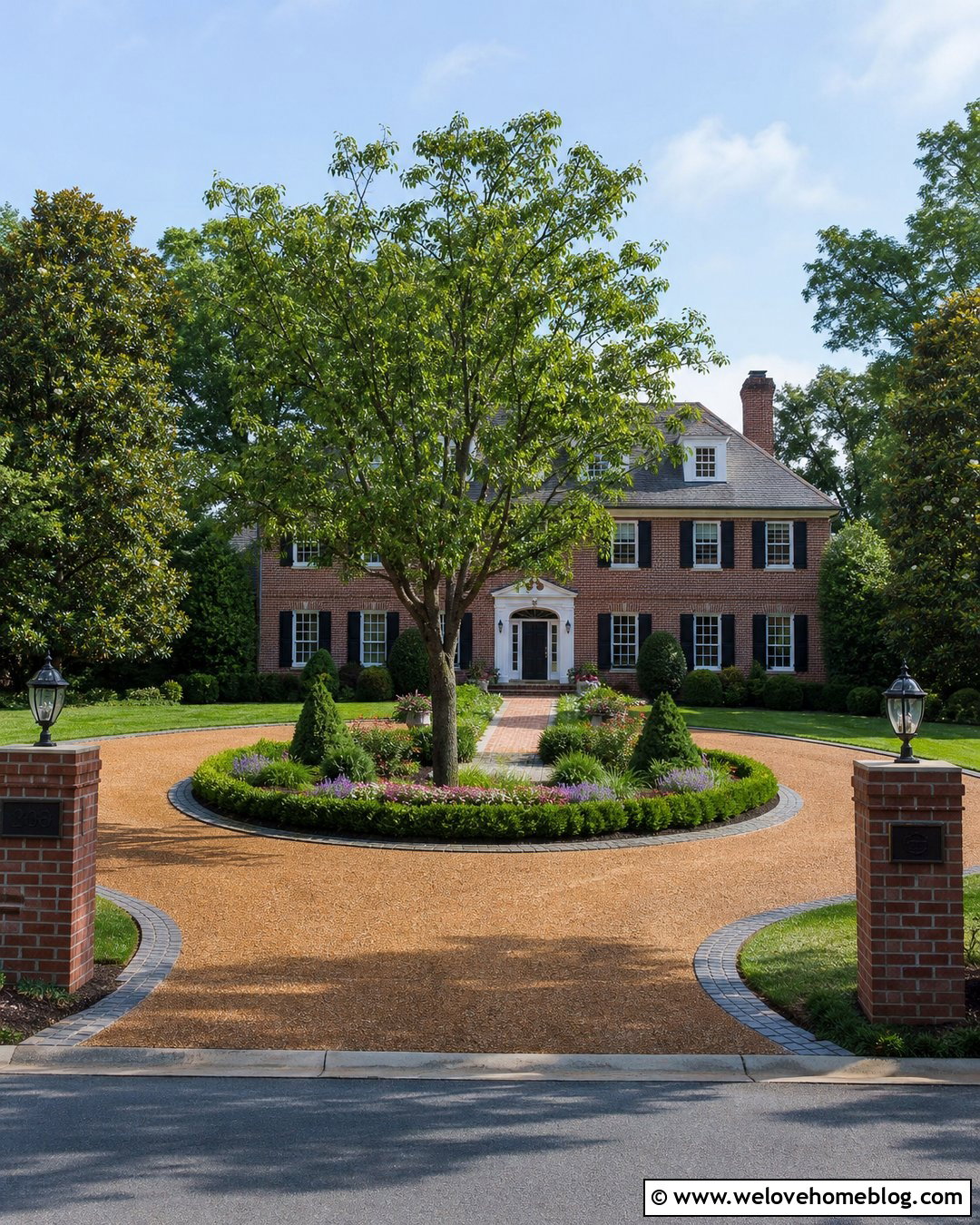
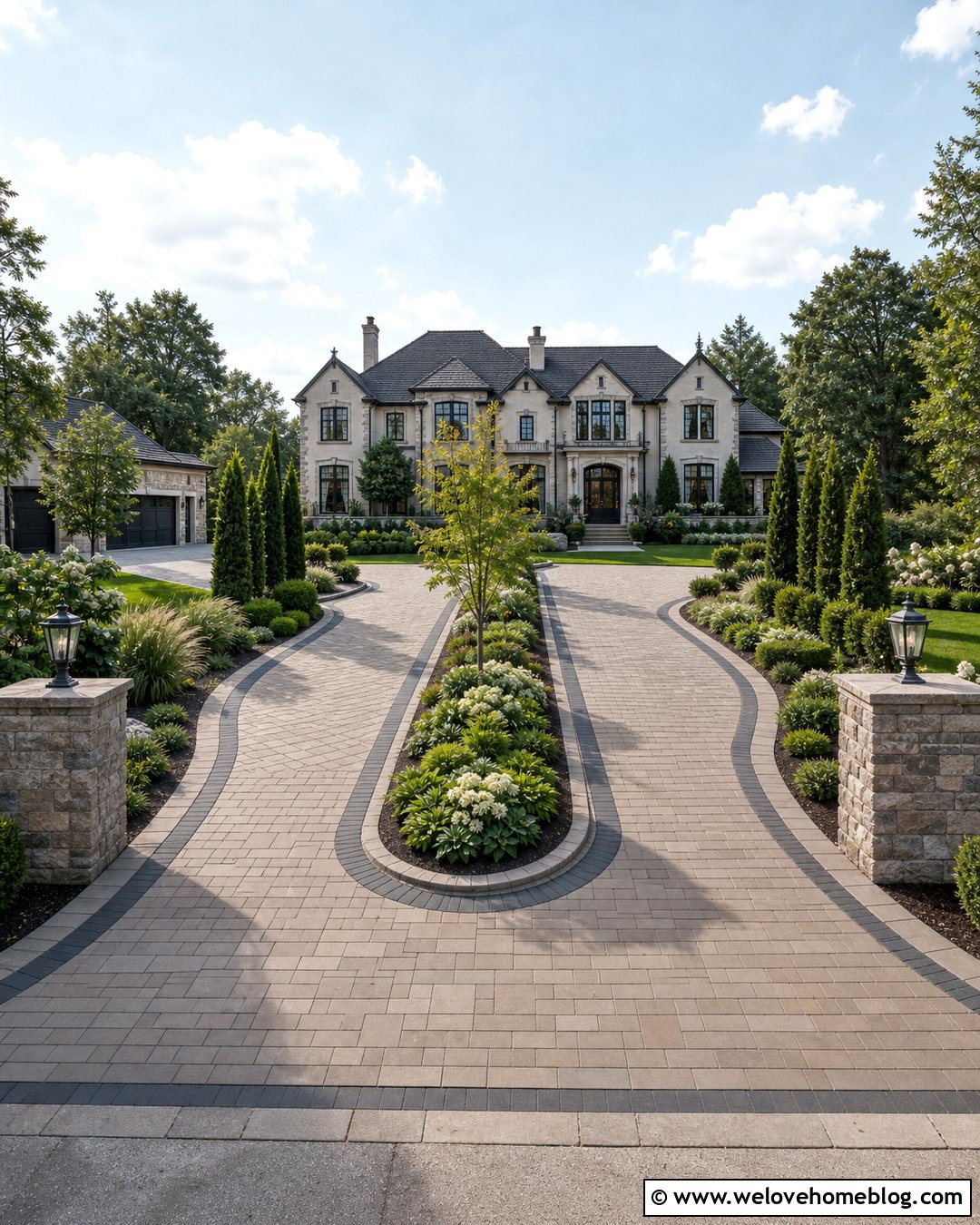
A circular driveway gains structure when a continuous gravel border emphasizes its sweeping shape. Use warm buff concrete pavers for the driving surface and install a wide band of golden gravel around the central island. Natural stone curbing can hold the gravel in place while creating a polished transition. Plant a small ornamental tree at the center, surrounded by low hydrangeas, evergreen mounds, and seasonal flowers that will not block sightlines. Along the outer curve, repeat the gravel in narrower strips beside the lawn. This layout works beautifully with Colonial and Southern traditional homes. Matching stone pillars at the entrance can complete the composition and make the circular approach feel connected to the architecture.
10. Gravel Strip Along Narrow Driveway
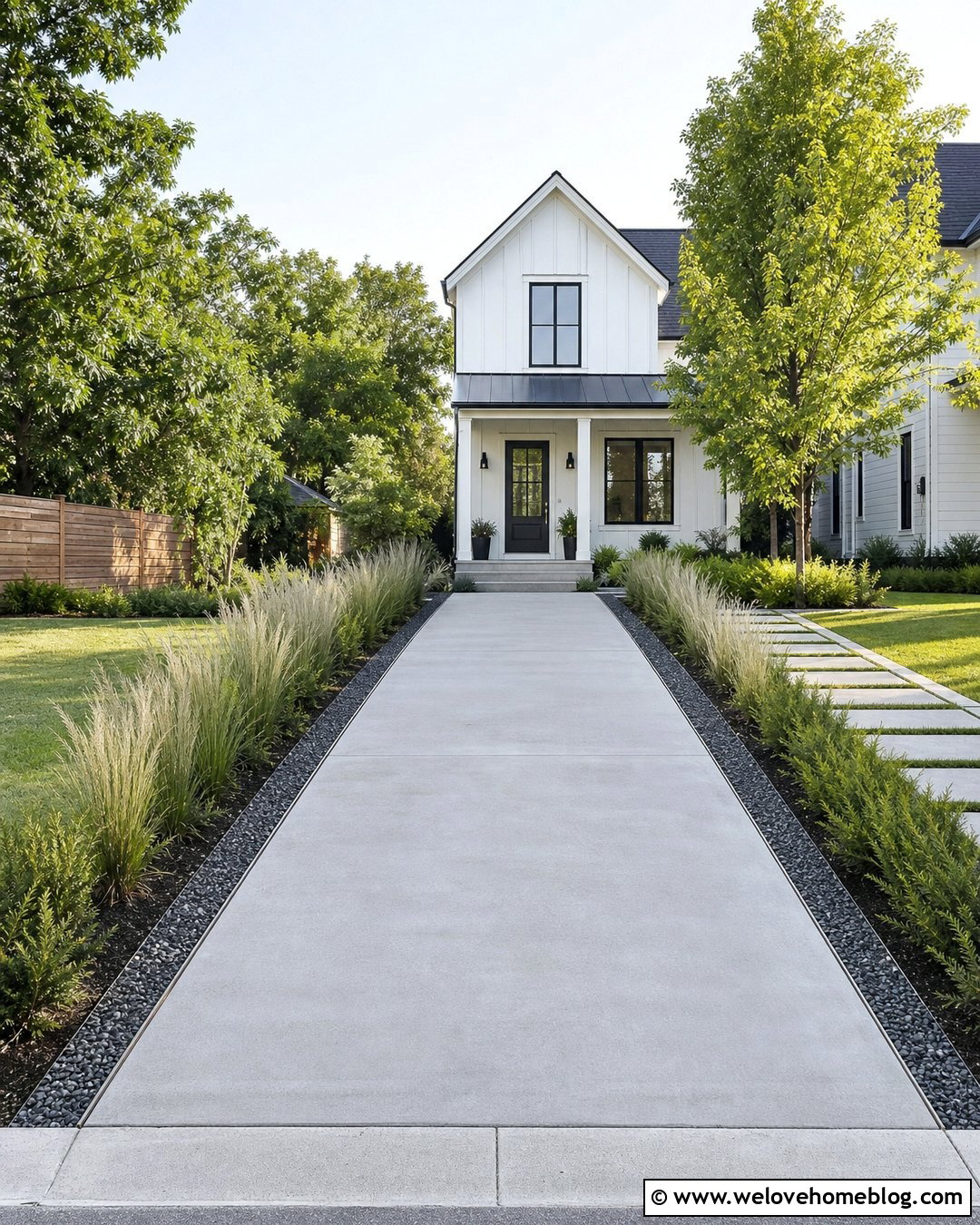
When a driveway has limited width, a slim gravel strip can provide definition without taking over the yard. Choose smooth gray concrete for the main straight driveway and place a twelve- to eighteen-inch band of small charcoal gravel along one or both edges. Flush steel edging reduces trip hazards and keeps the transition visually simple. Add a narrow row of upright grasses or compact evergreen shrubs on the house side, while leaving the street-facing section open. A stepping-stone path can cross the gravel to connect the driveway with a side entrance. This space-saving layout suits small urban and suburban lots. Keeping the colors consistent helps the driveway appear wider, calmer, and more connected to the home.
11. Gravel And Cobblestone Along Driveway
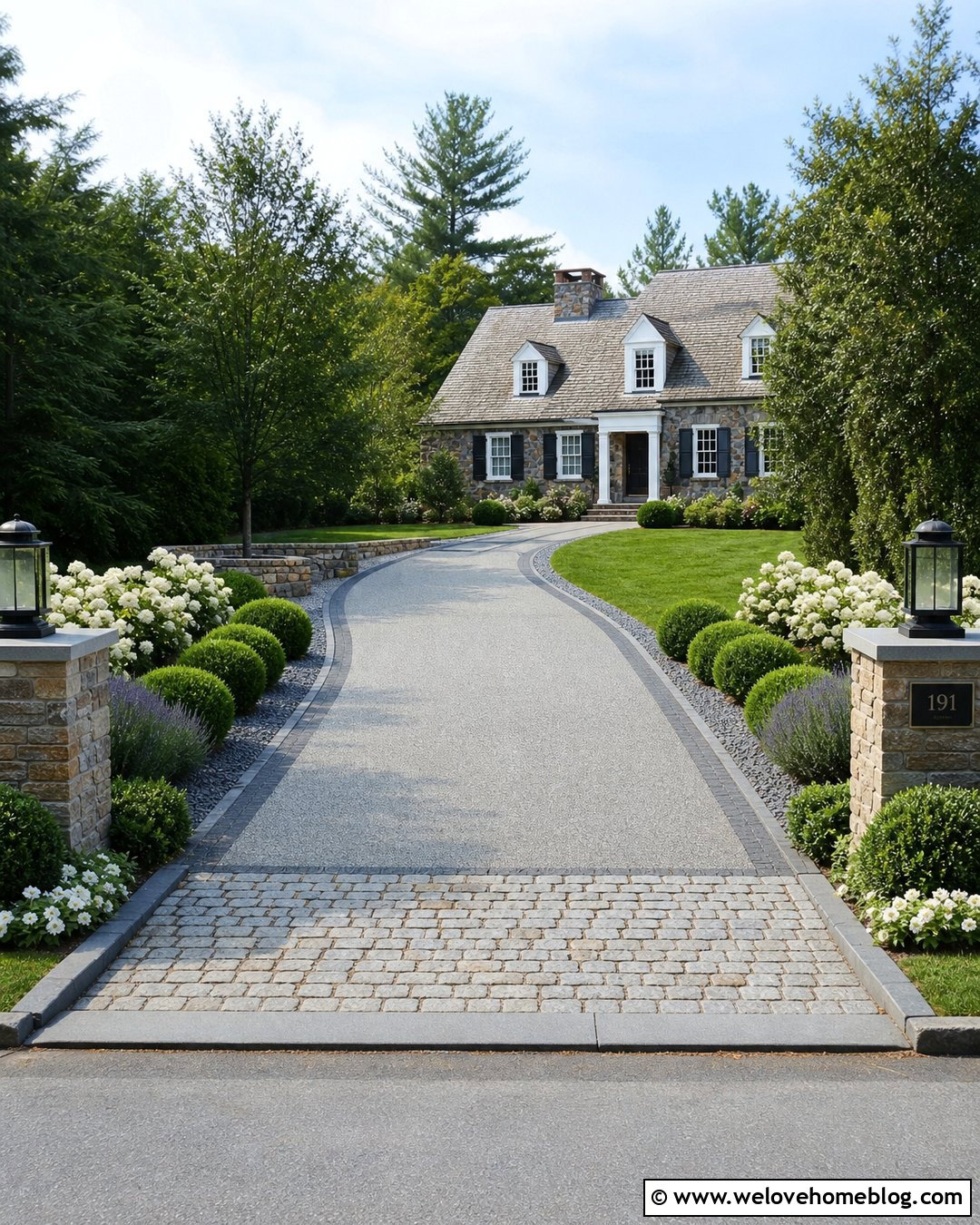
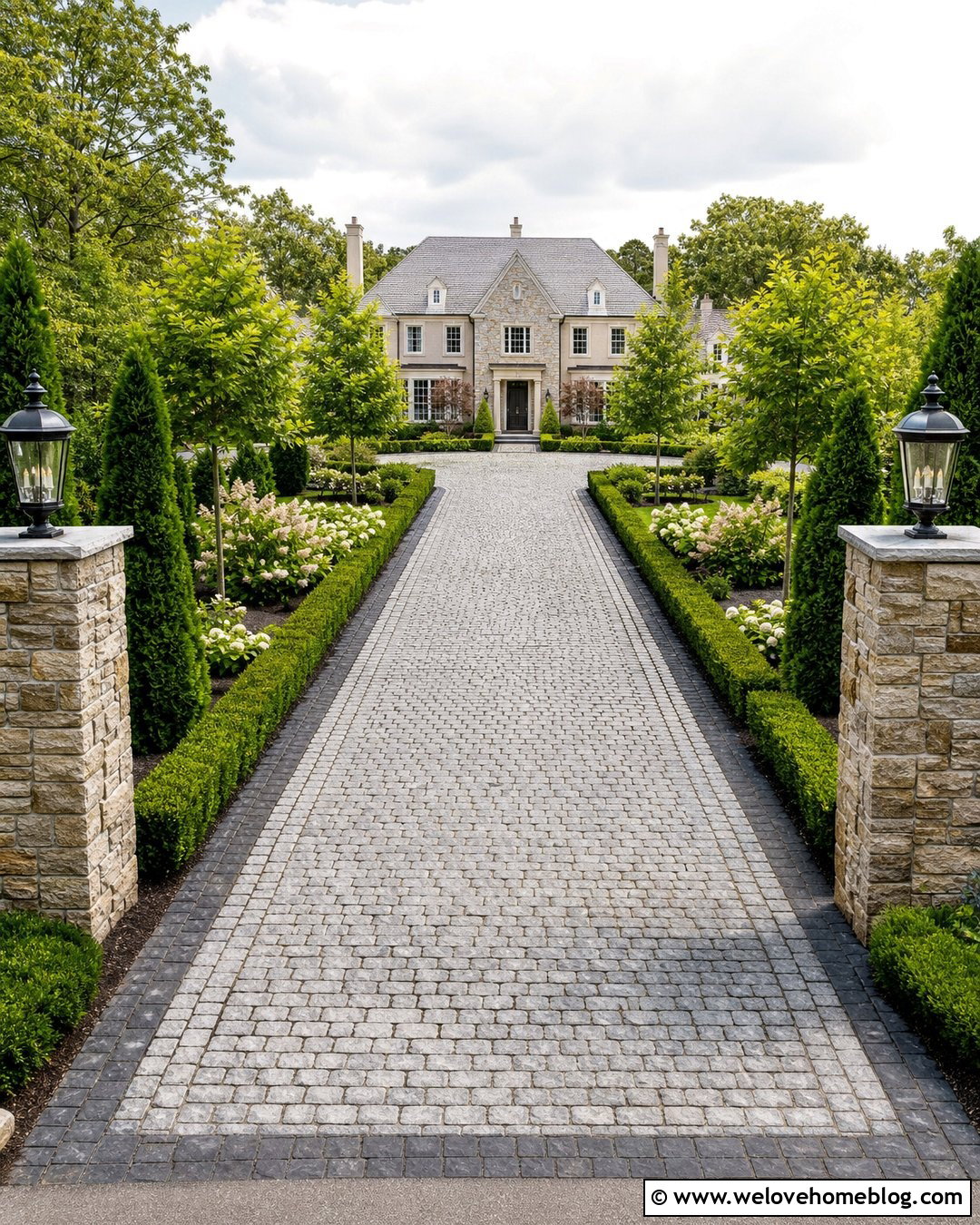
Cobblestone edging gives loose gravel a strong, traditional boundary beside a paved driveway. Start with a light gray asphalt or resin-bound gravel driving surface, then install a single row of dark granite cobbles along each side. Beyond the cobbles, add narrow strips of warm gray gravel that expand into planted pockets near the entrance. Boxwood, lavender, white roses, and clipped evergreen shrubs complement the classic materials. A gently curved layout creates an established country-house effect without requiring a large circular drive. Use the same cobbles around the entrance apron or walkway for visual continuity. This complete look pairs especially well with stone cottages, Cape Cod homes, and traditional houses with dark shutters.
12. Gravel And Timber Along Country Driveway
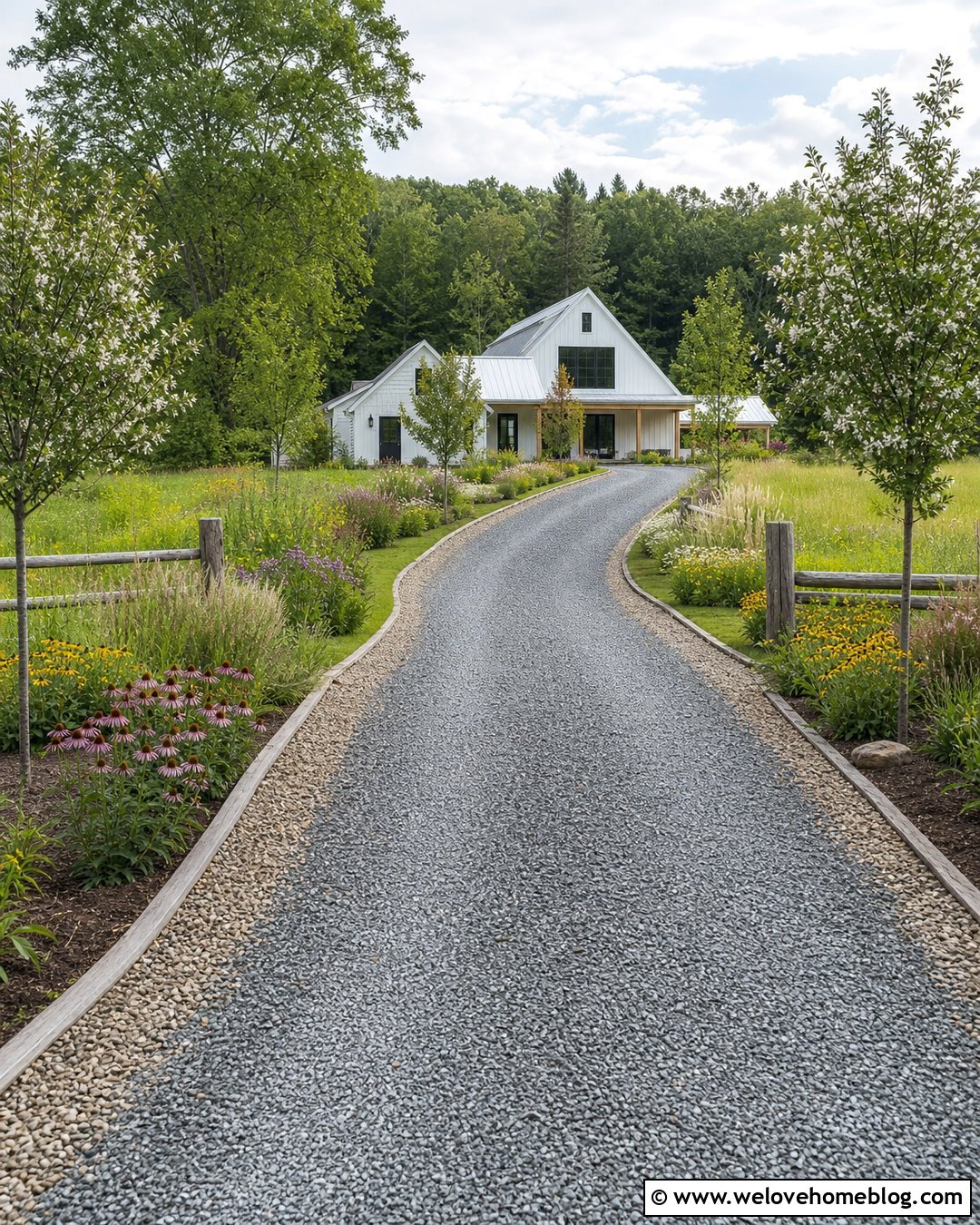
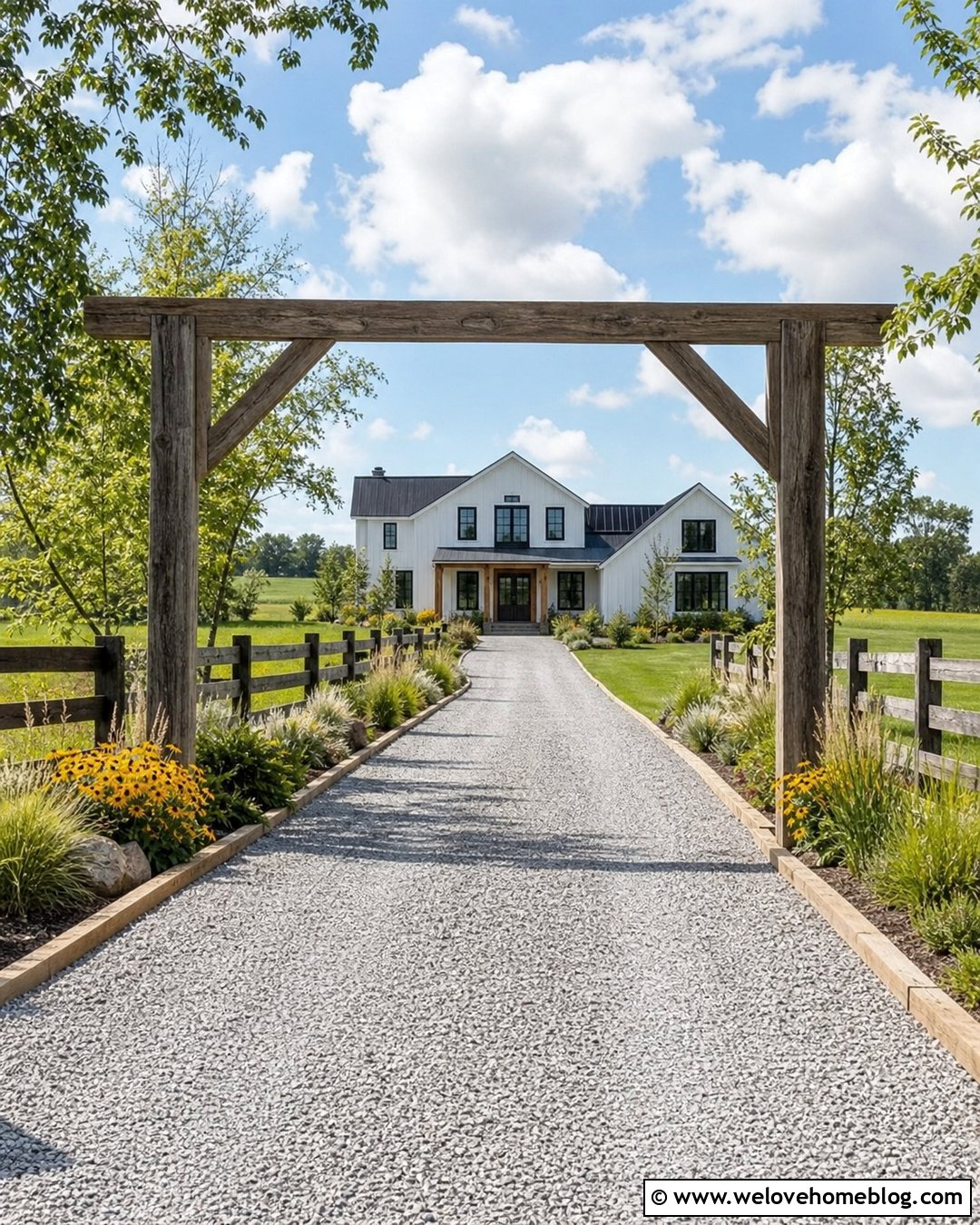
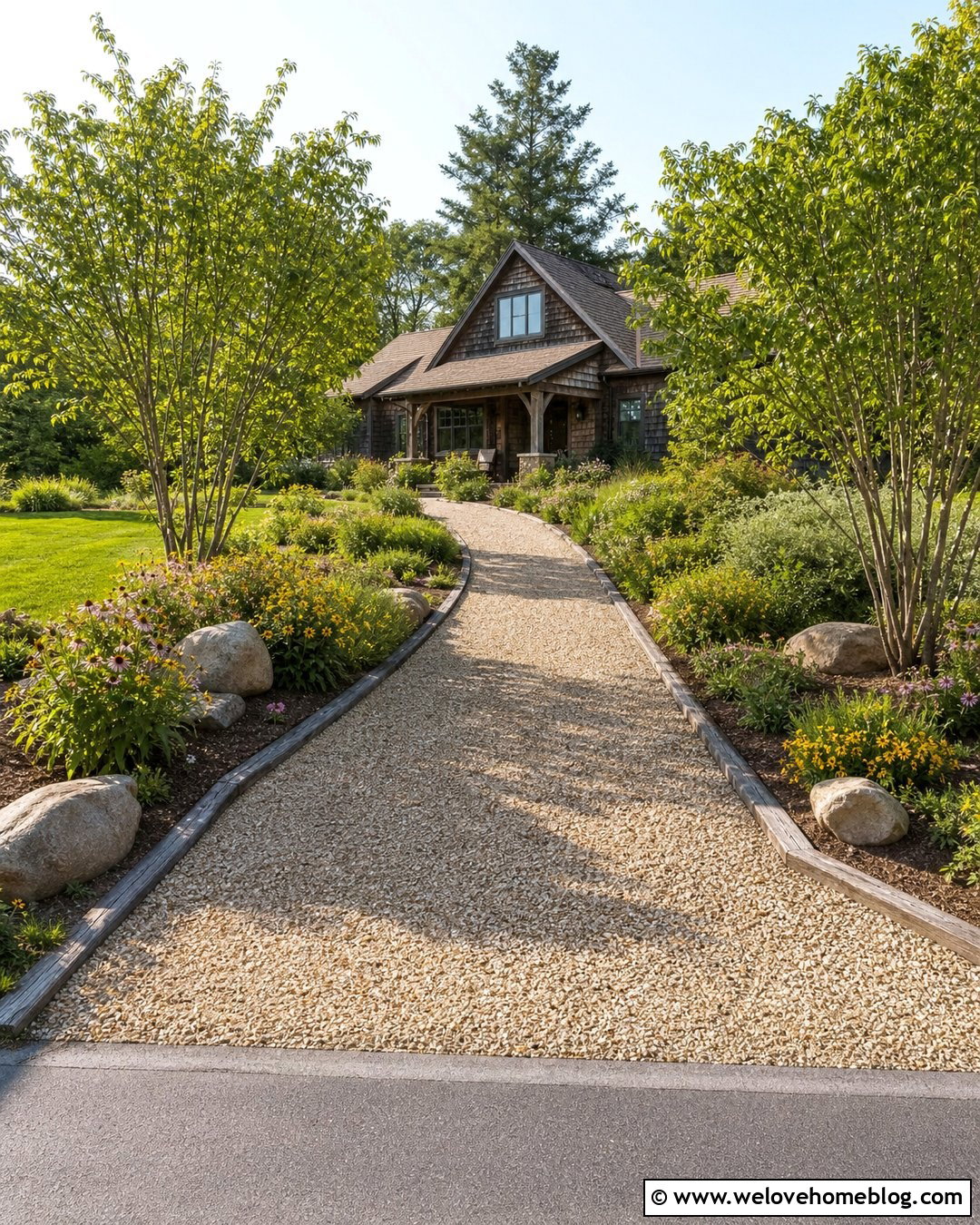
Timber edging creates a simple rural finish along a long country driveway. Use compacted gray crushed stone for the main driving surface and place lighter pea gravel borders outside sturdy, pressure-treated landscape timbers. The slight color difference makes the driveway edges easy to recognize without looking formal. Add native grasses, black-eyed Susans, coneflowers, and a few small flowering trees along the outer borders. Allow the driveway to curve gently toward a farmhouse or rustic ranch home. Timber should be securely anchored and positioned away from areas where tires frequently turn. Repeating the same wood around nearby garden beds helps unify the landscape. This design feels relaxed, practical, and suitable for larger properties with informal planting.
13. Gravel And Brick Along Driveway Edge
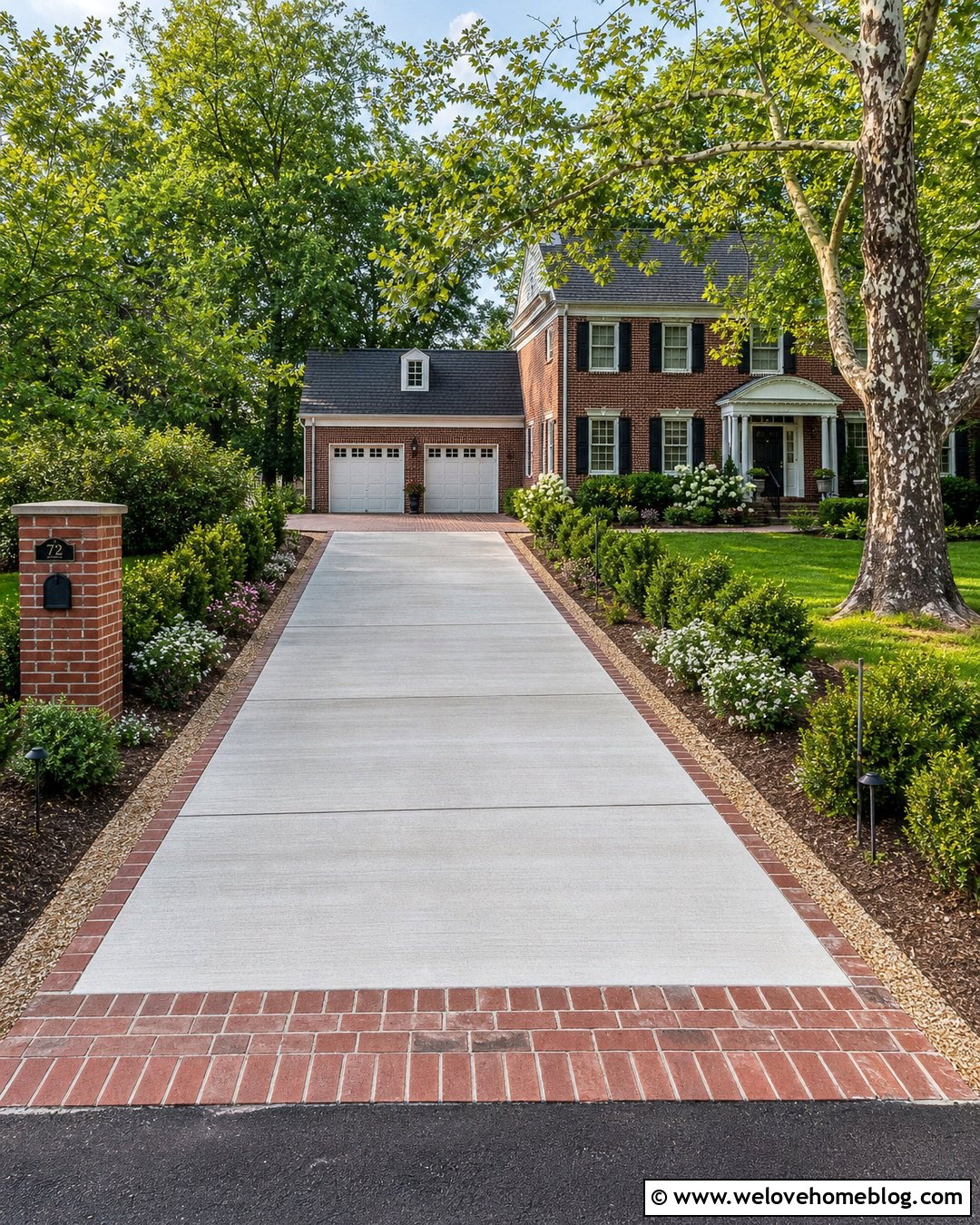
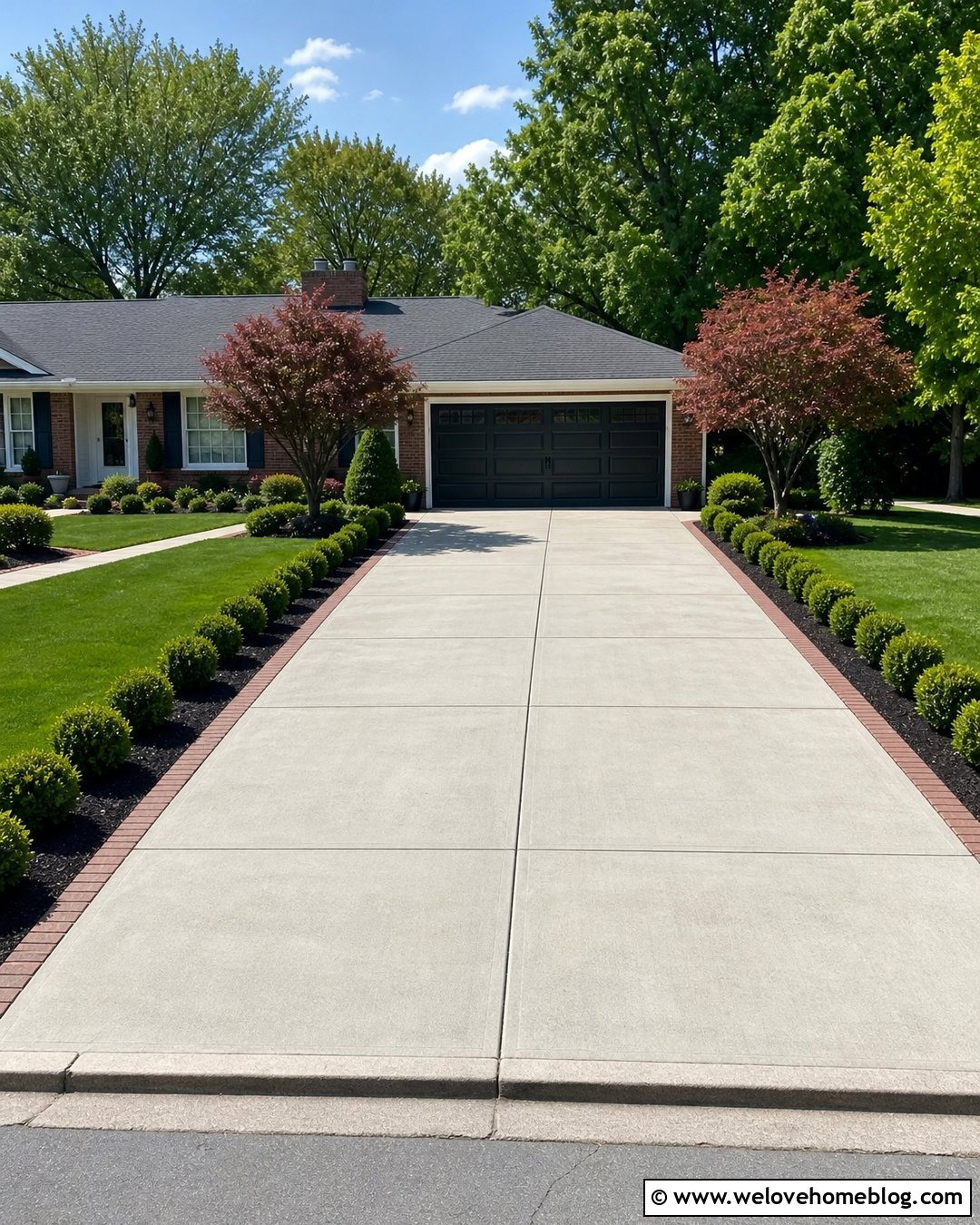
Red brick edging introduces warmth beside a pale concrete driveway and provides a clear border for loose gravel. Lay the bricks in a straight soldier course along both sides of the driveway. Add compacted beige gravel outside the brick, allowing the strips to widen near the garage and front walkway. Plant small hollies, white flowering shrubs, and ground-cover roses beyond the gravel for a balanced traditional landscape. A matching brick entrance apron can visually connect the border across the driveway without covering the entire surface in brick. This complete design is a strong choice for Colonial, Georgian, and red brick homes. Keep the brick edge level and well supported so it remains neat under regular vehicle use.
14. Gravel And Steel Along Contemporary Driveway
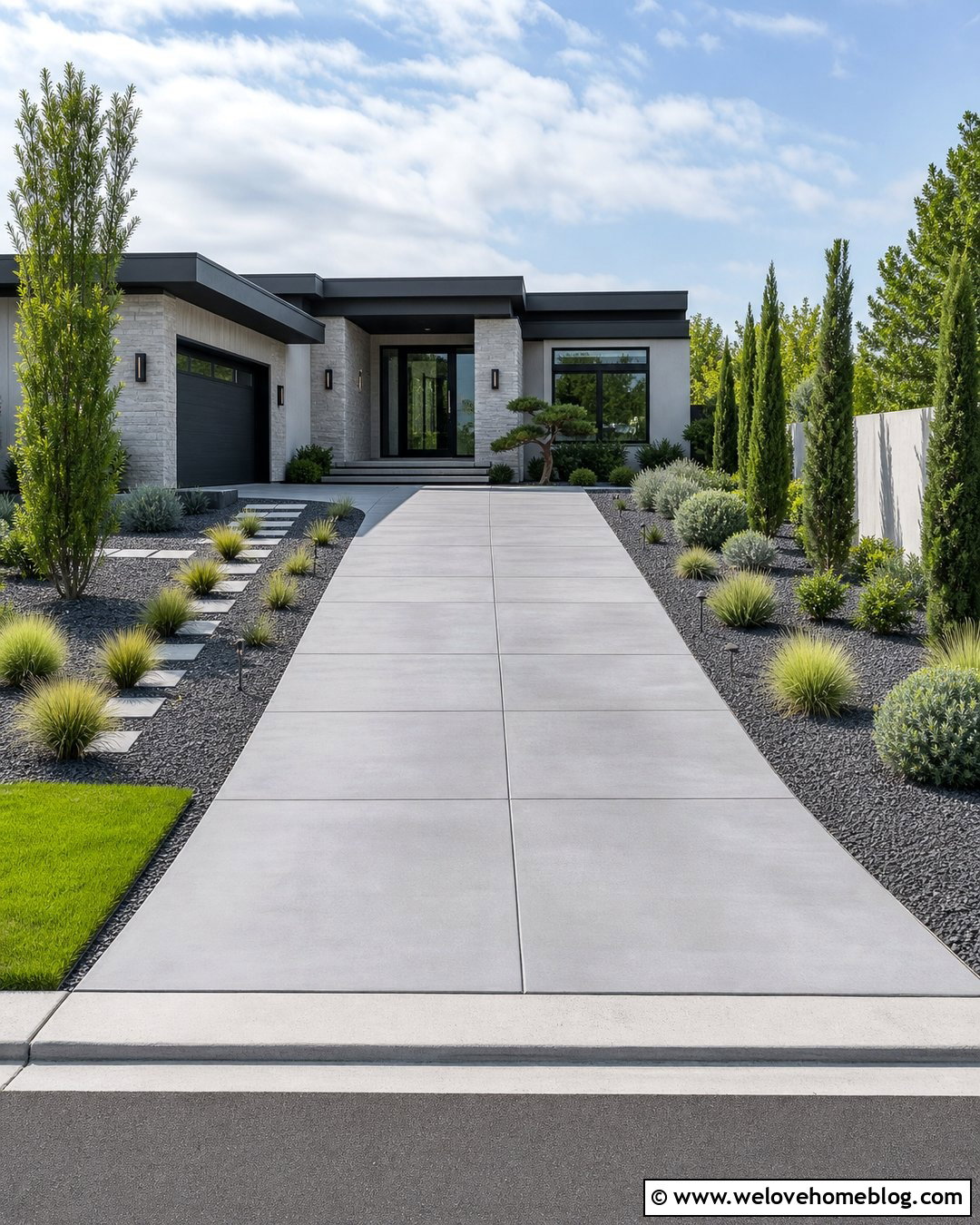
Thin steel edging gives gravel borders a precise finish beside a contemporary driveway. Build the main surface from large-format concrete pavers in a medium gray tone, arranged in a straight grid. Install charcoal crushed gravel along the sides and contain it with dark powder-coated steel. Place sculptural shrubs, upright junipers, and evenly spaced ornamental grasses within the wider gravel areas. Integrated rectangular stepping stones can form a direct path from the curb to the front entrance. This look is especially effective with flat-roofed homes and simple modern facades. Keep the gravel depth consistent and set the edging at a practical height. The goal is a sharp visual line without creating an obstacle near doors, walkways, or parking areas.
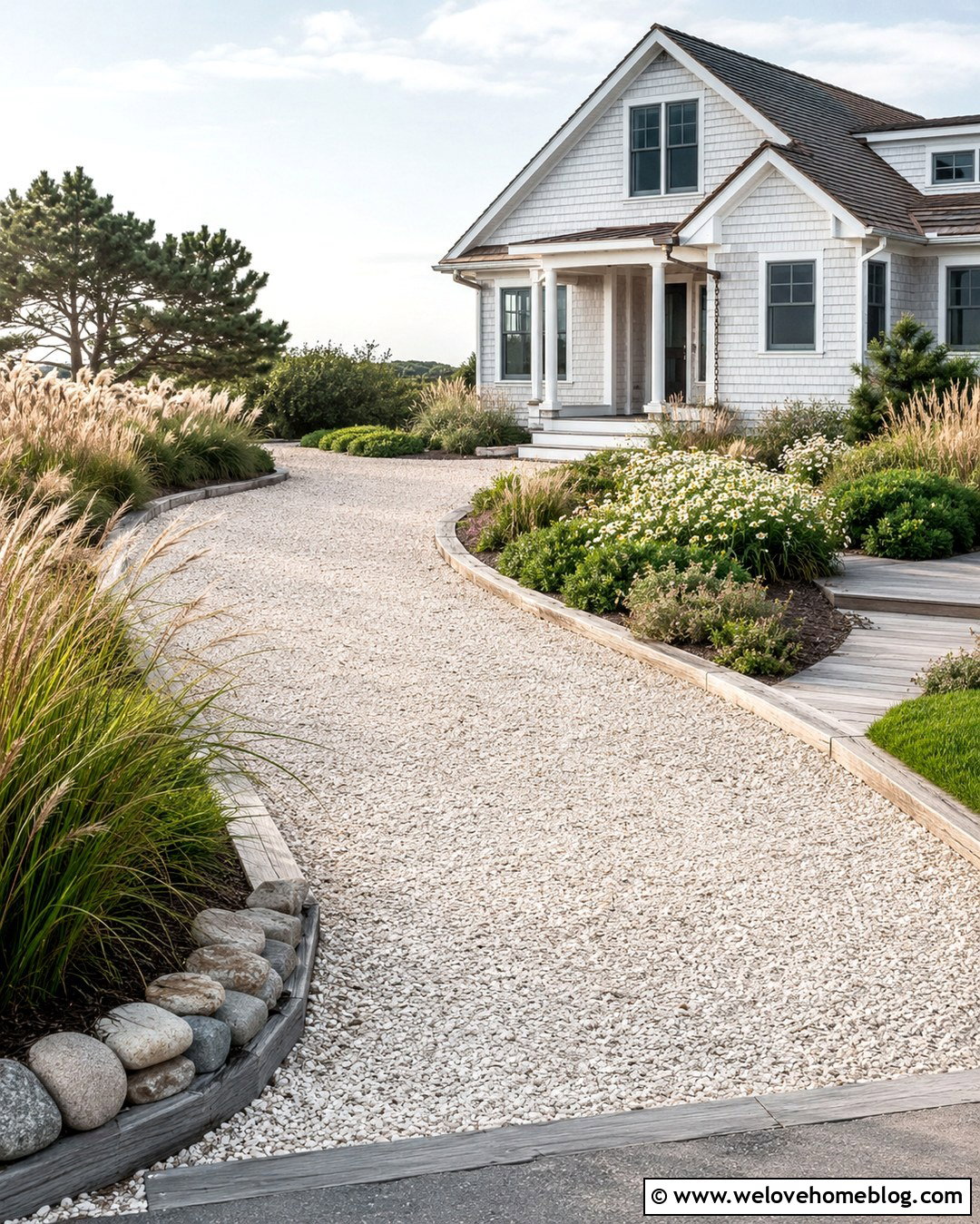
15. Gravel And Grass Along Driveway
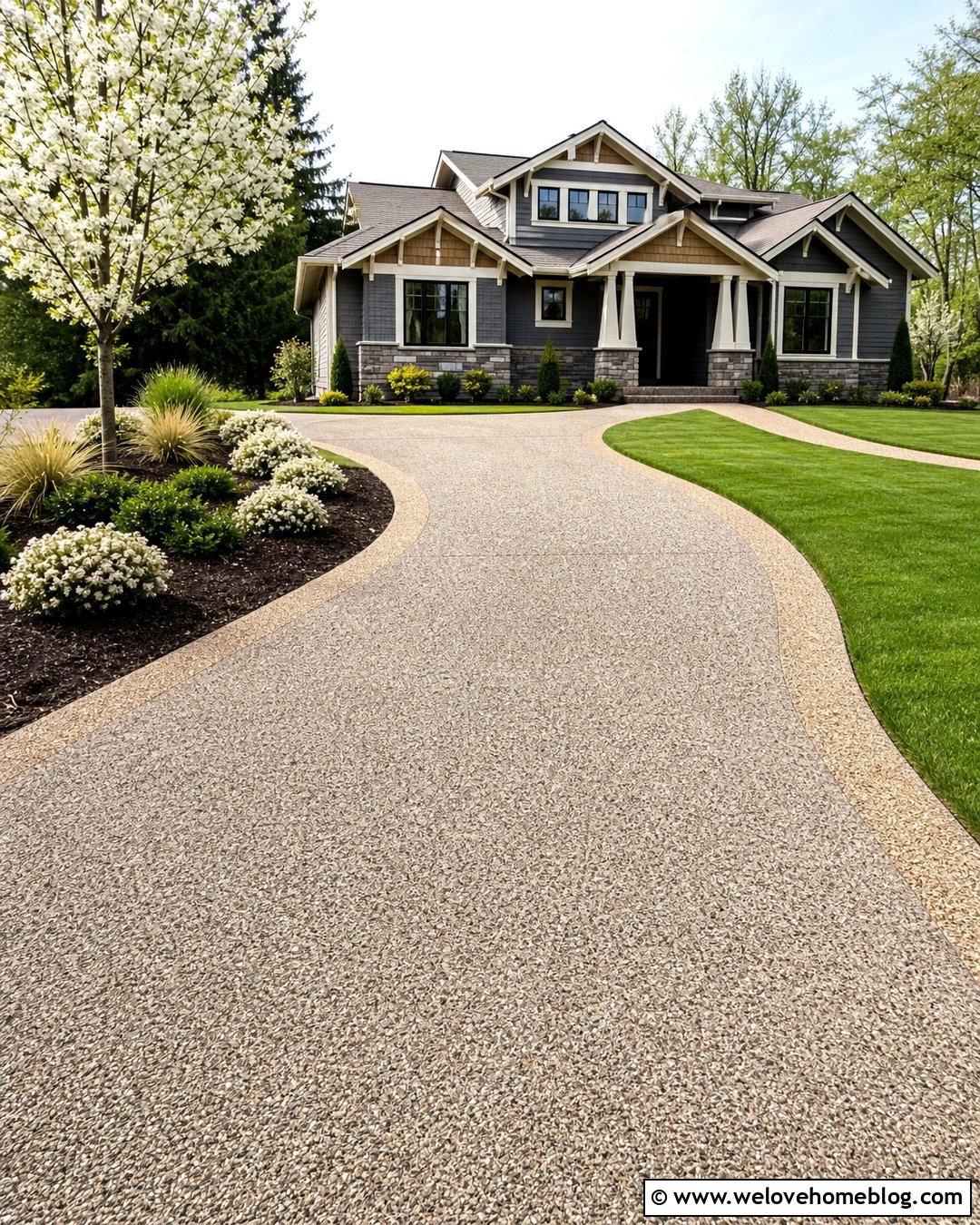
Gravel and lawn can meet cleanly when a strong edge separates the two surfaces. Pair a warm exposed aggregate driveway with narrow borders of rounded tan gravel, then install a concealed aluminum restraint beside the grass. The gravel creates breathing room between paving and lawn, reducing the harsh appearance of a large driveway. Add wider planting areas at the entrance with ornamental grasses, dwarf spirea, and one small flowering tree. A curved driveway makes the gravel bands feel natural, while the crisp lawn edge keeps the design tidy. This combination suits family homes, Craftsman houses, and updated ranch properties. Keep loose stone below the mowing height and use a stable border that can tolerate routine yard maintenance.
16. Gravel And Hedge Along Driveway
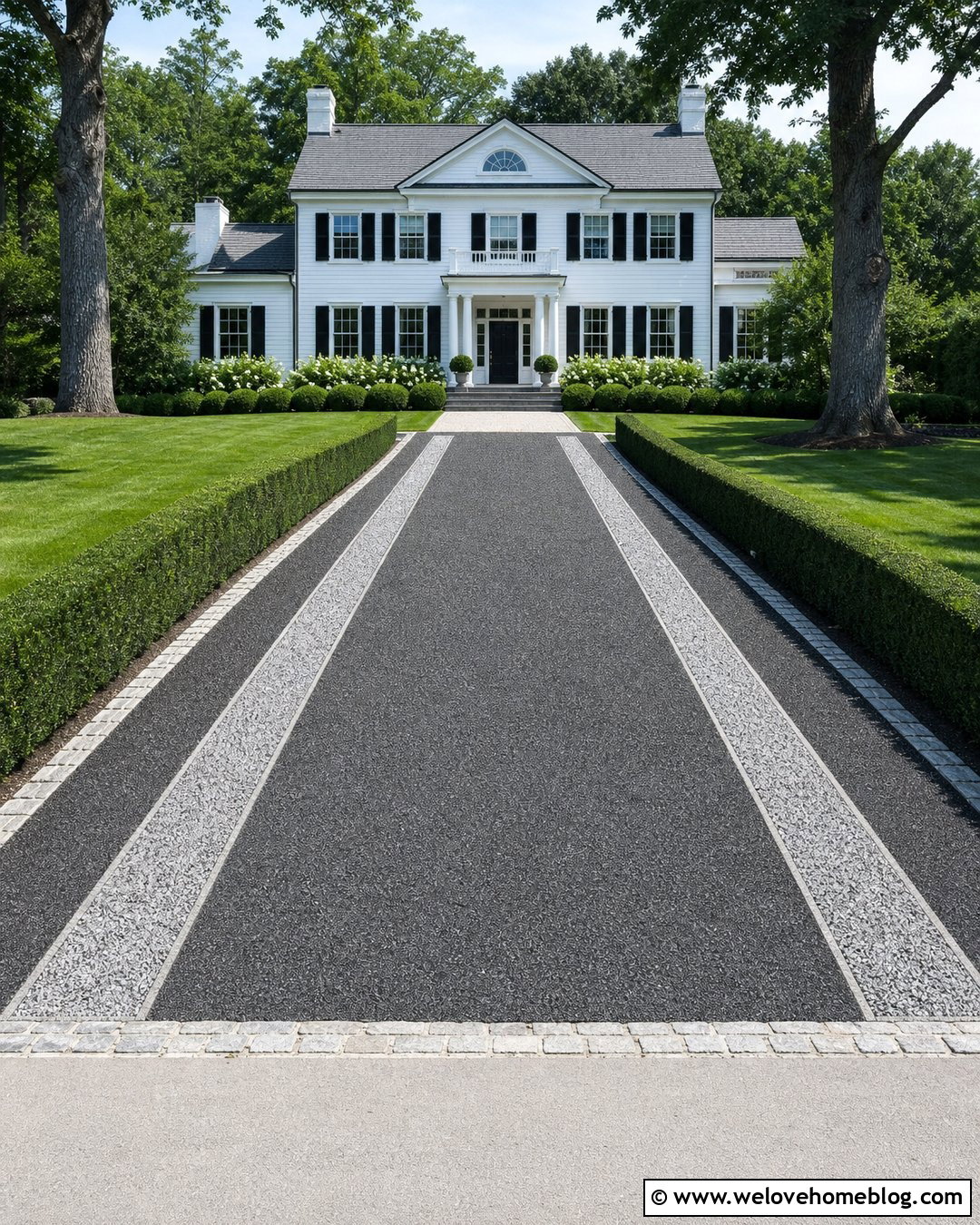
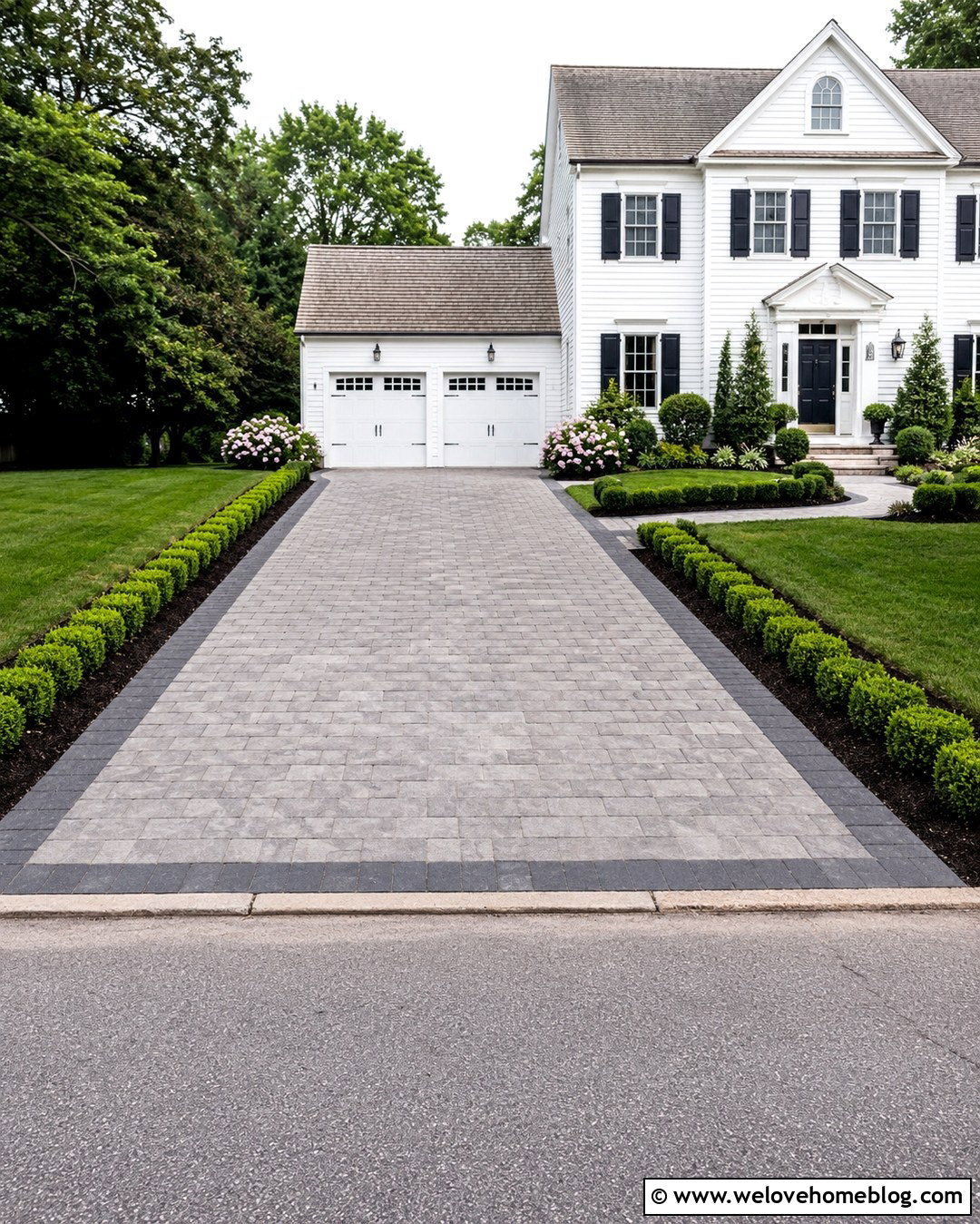
A clipped hedge backed by gravel creates a polished boundary without placing plants directly against the driving surface. Use a dark resin-bound gravel driveway for the main surface and install lighter gray gravel strips beside it. A line of granite setts can separate the two materials and help protect the planting area. Plant compact boxwood, inkberry, or another locally suitable evergreen hedge beyond the loose gravel. Keep the hedge low near the street and gradually increase its height toward the house. A straight driveway reinforces the orderly look, making this design ideal for Colonial and formal traditional homes. Regular trimming is needed, but the gravel base keeps the hedge line visually open and easier to access.
17. Gravel And Flower Beds Along Driveway
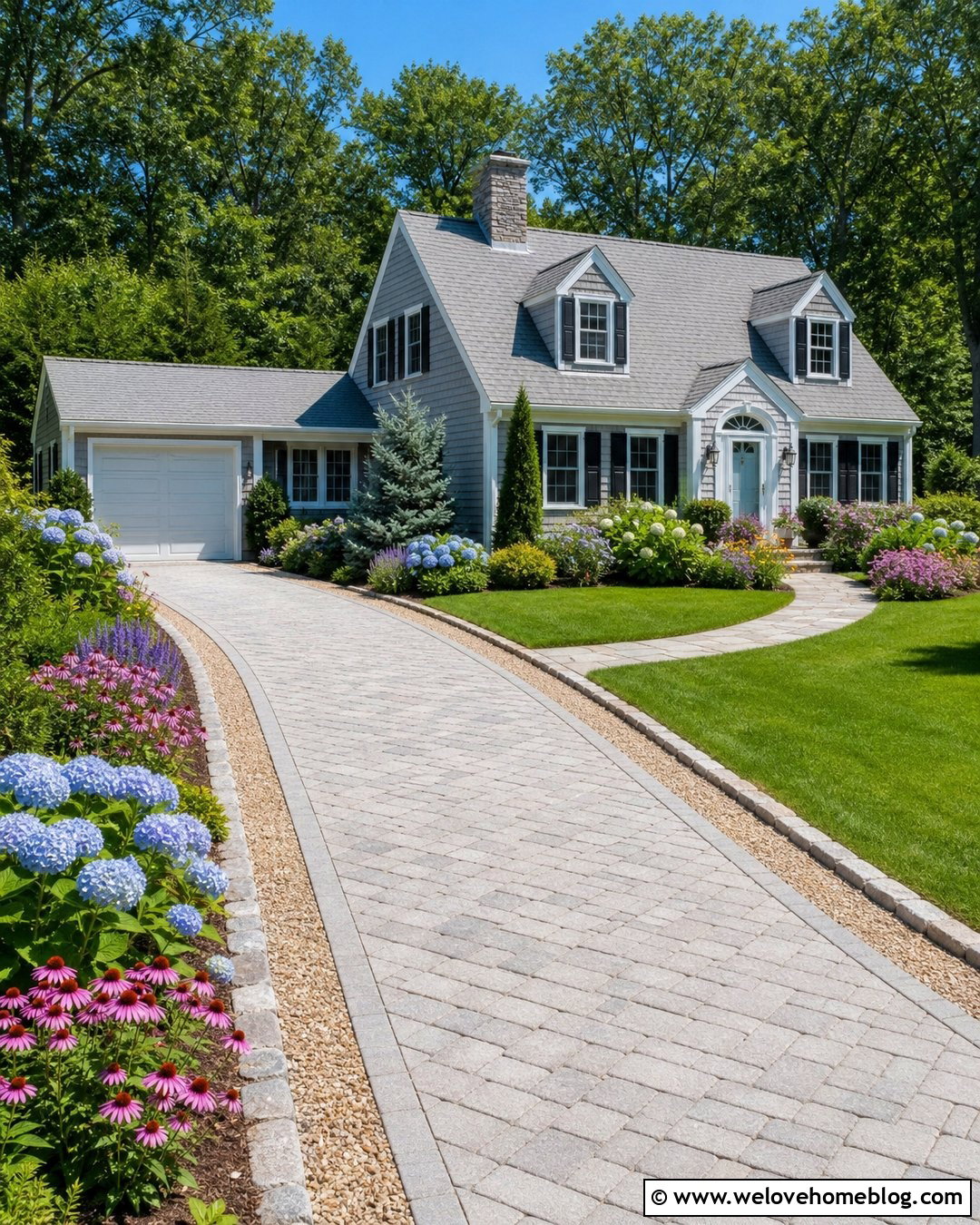
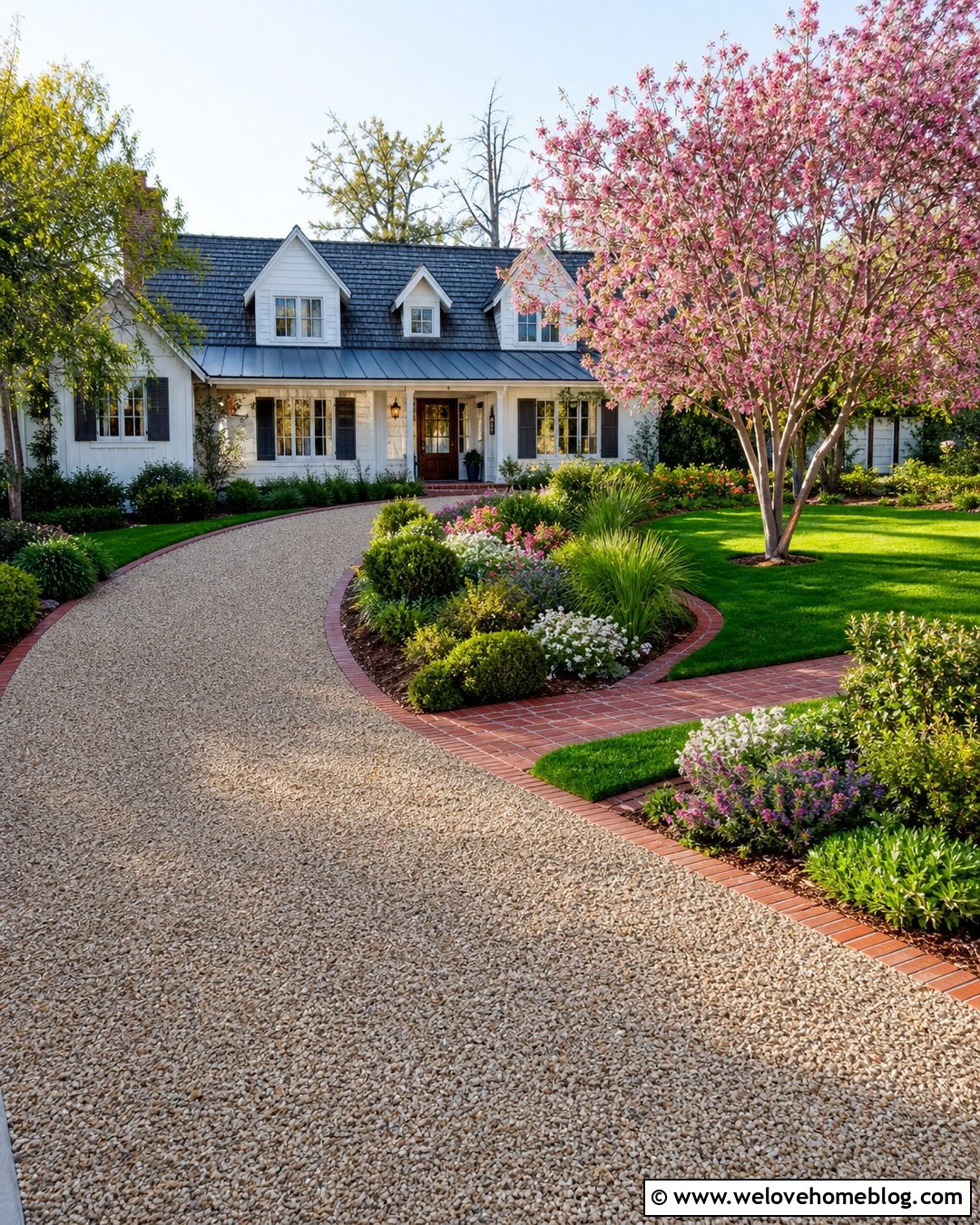
Colorful flower beds can look organized beside a driveway when gravel provides a calm transition. Begin with a light gray concrete paver driveway and add warm buff gravel bands along each side. Curve the gravel gently around layered beds filled with compact hydrangeas, coneflowers, salvia, daylilies, and evergreen foundation shrubs. Natural stone edging should separate the gravel from the soil and prevent the materials from mixing. Repeat the same stone around the walkway and porch beds to make the landscaping feel connected. This welcoming arrangement suits cottage, Cape Cod, and Craftsman homes. Choose a limited flower palette and repeat plants in groups. That approach creates seasonal color without making the driveway border appear busy or difficult to maintain.
18. Gravel And Boulders Along Driveway
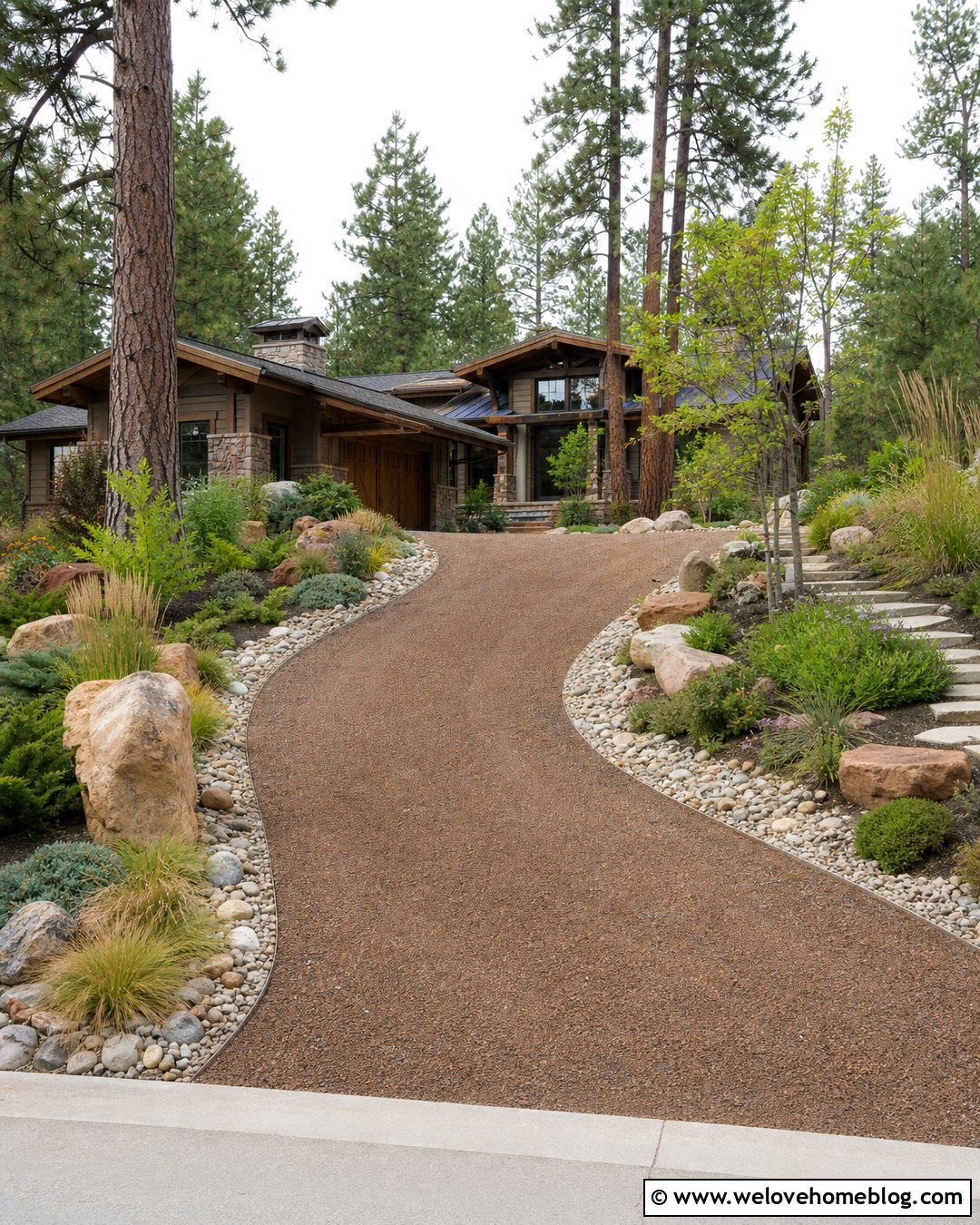
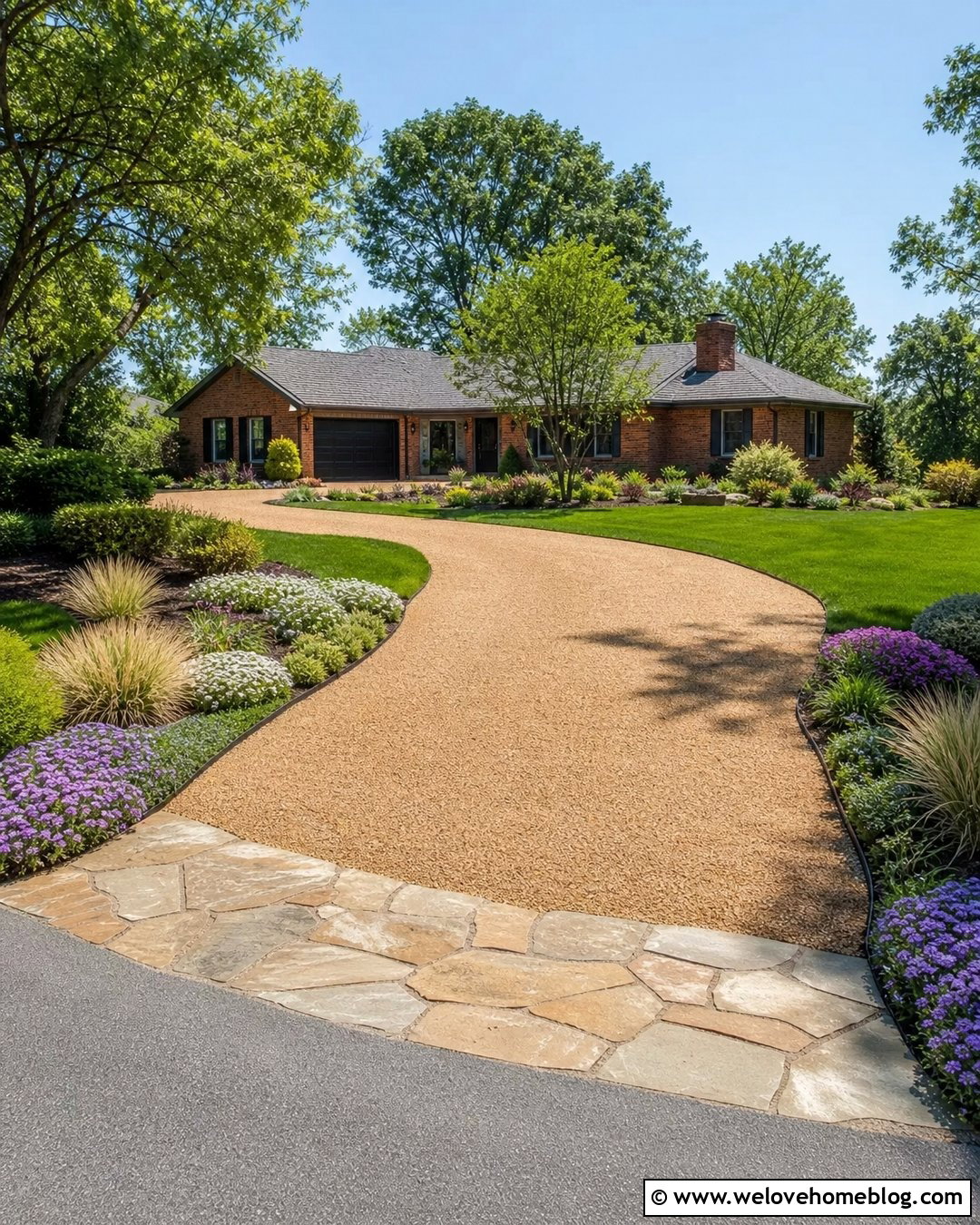
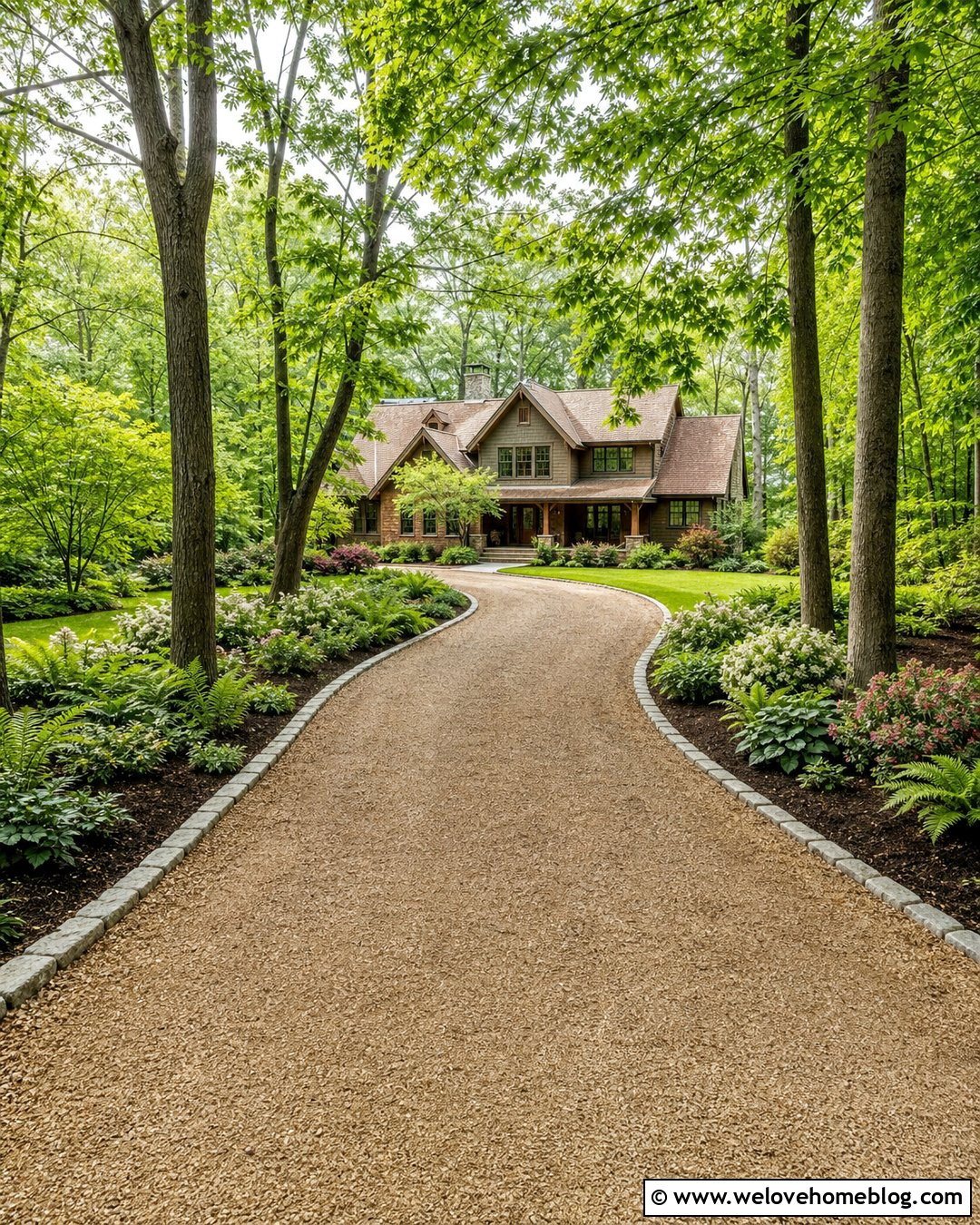
Large boulders give a gravel-edged driveway a natural sense of scale, especially on wide or sloped properties. Use brown crushed gravel for the main curved driveway and place broader bands of mixed river stone along the outside edges. Position several locally sourced boulders within planted pockets rather than lining them in a rigid row. Surround them with juniper, ornamental grasses, sedum, and low native shrubs. Keep rocks well away from vehicle turning areas and preserve clear visibility near the street. A woodland ranch, mountain home, or rustic contemporary house provides the ideal backdrop. Matching the boulder color to stone on the house or retaining walls makes the entire entrance feel cohesive and grounded in its setting.
19. Gravel And Lighting Along Driveway
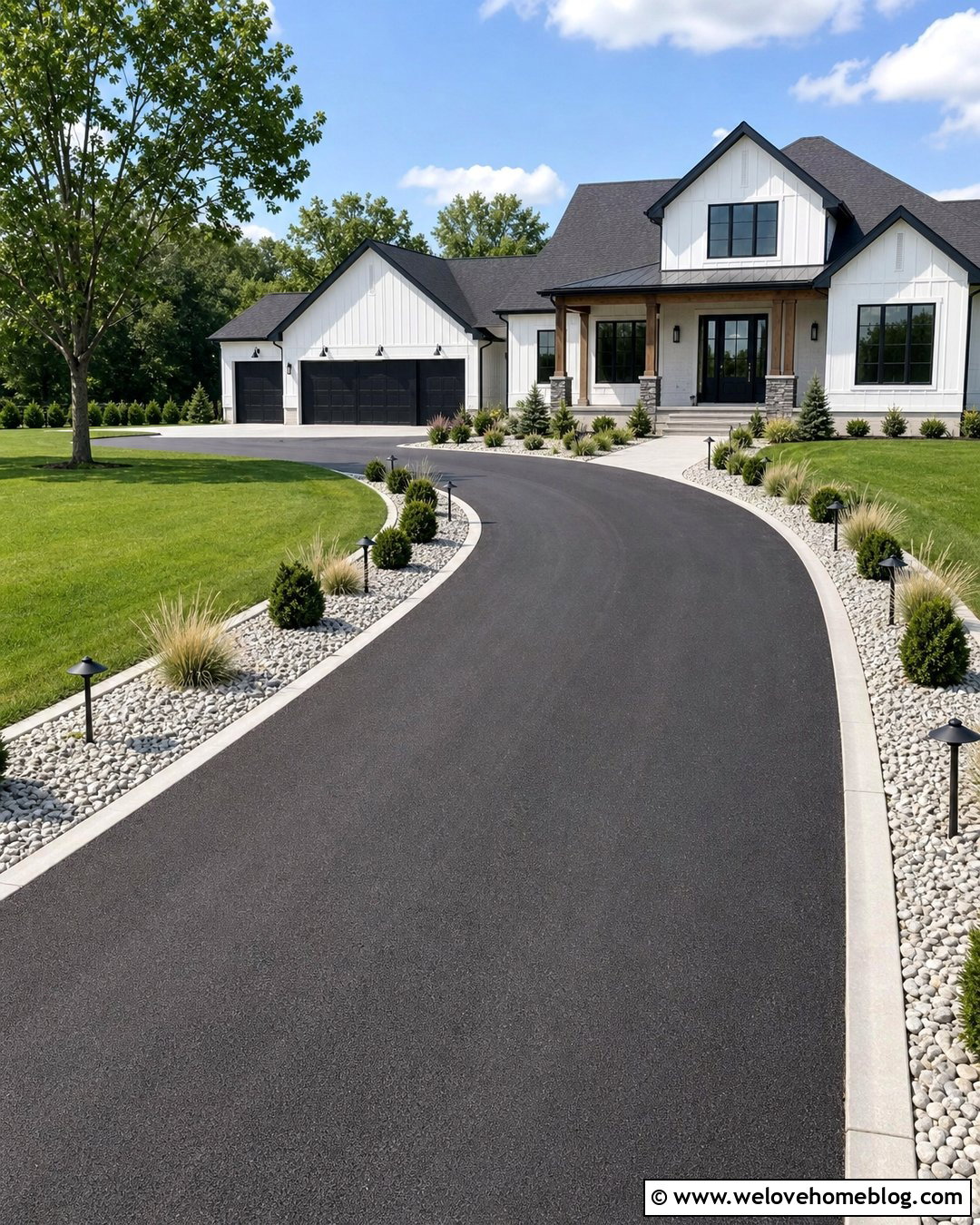
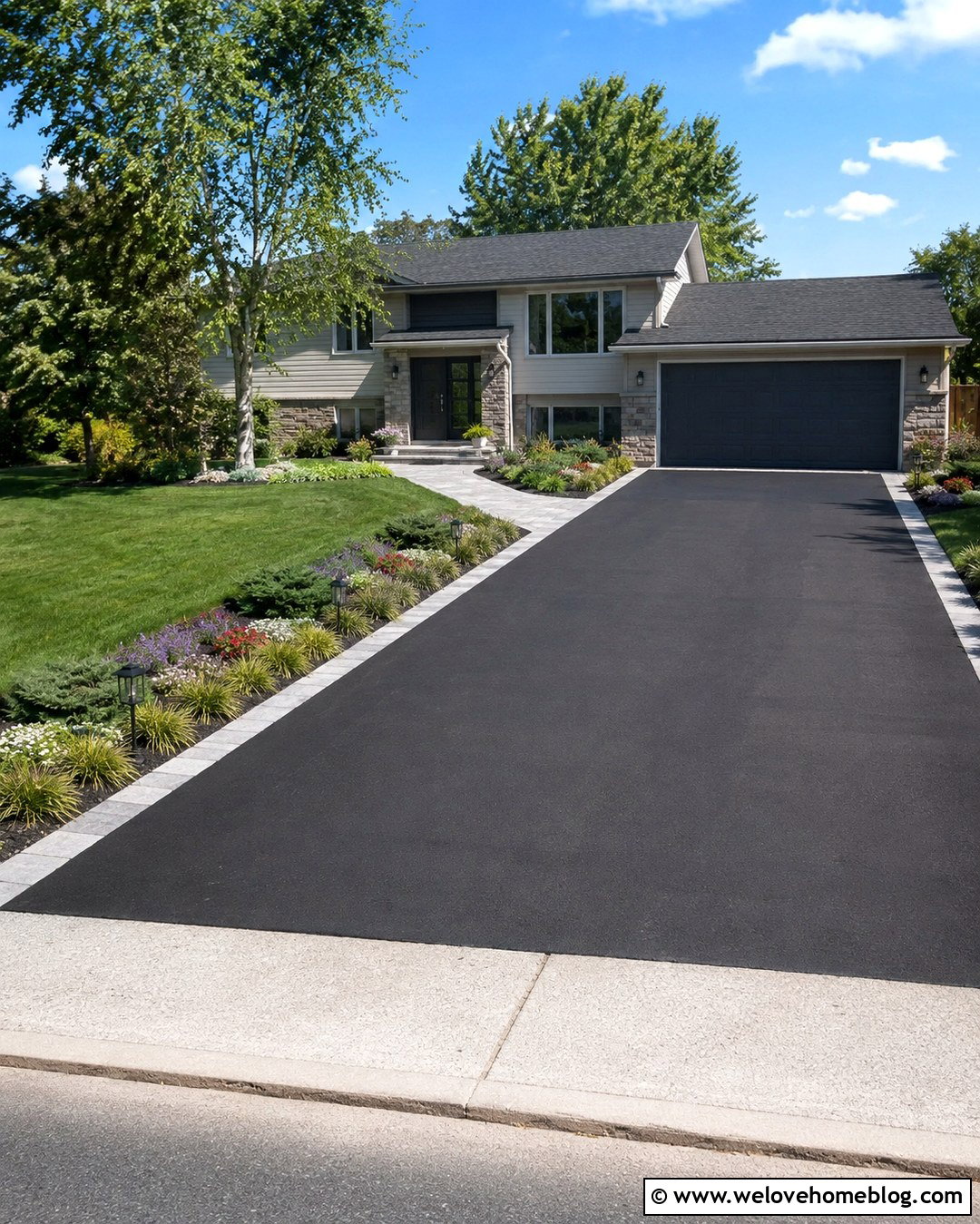
Low-voltage lighting can make gravel borders useful after dark while still looking attractive in daylight. Pair a charcoal asphalt driveway with pale gray crushed gravel strips and a neat concrete curb. Place simple black path lights at consistent intervals within the gravel, positioning them far enough from the pavement to avoid contact with tires or maintenance equipment. Add small grasses and compact evergreen shrubs between selected fixtures rather than crowding the full border. During the day, the contrasting gravel outlines the gently curved driveway. At night, the lights clarify the approach to the house and walkway. This design works with modern farmhouse, transitional, and contemporary homes. Choose downward-facing fixtures to keep the entrance comfortable and visually tidy.
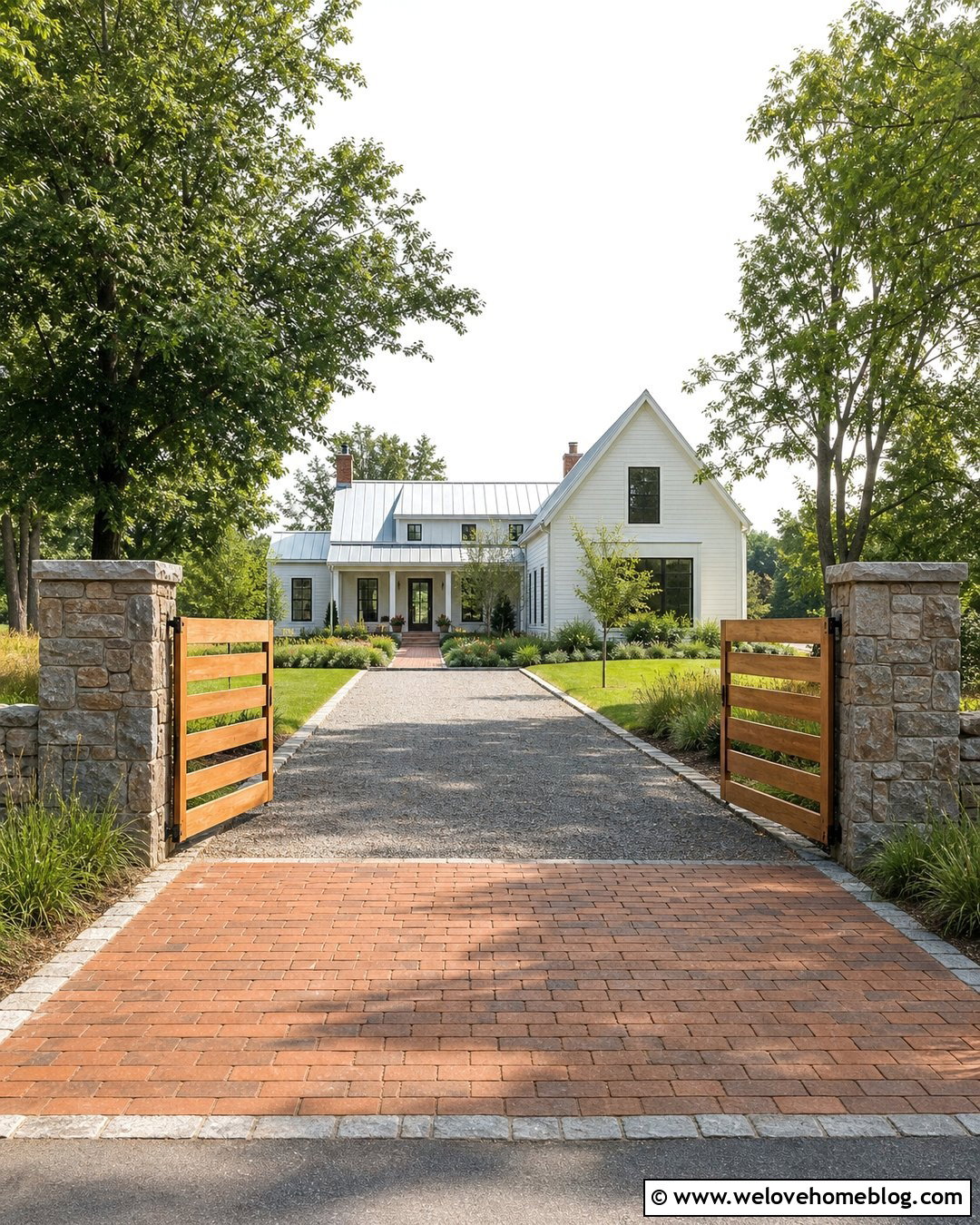
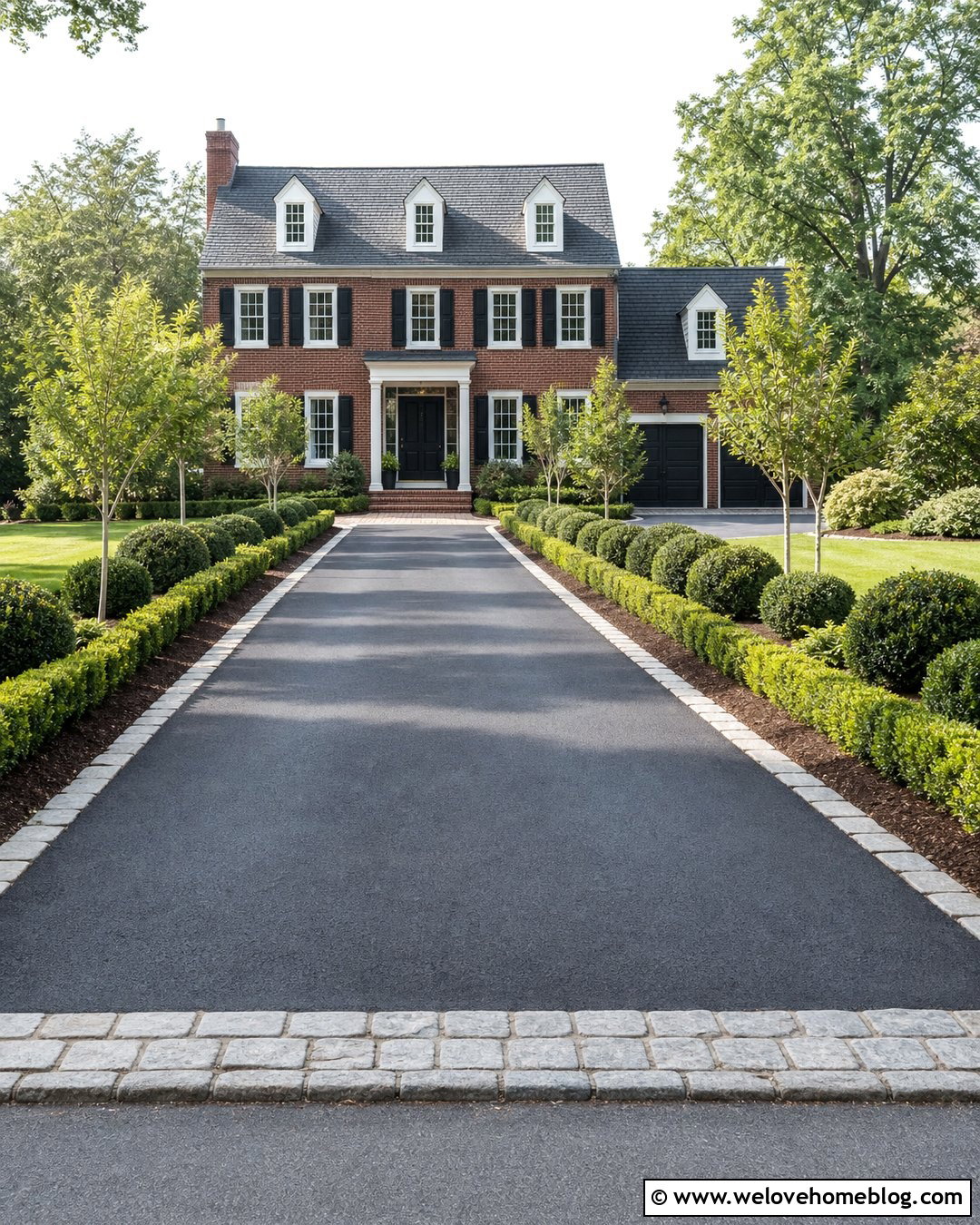
20. Gravel Entrance Along Driveway
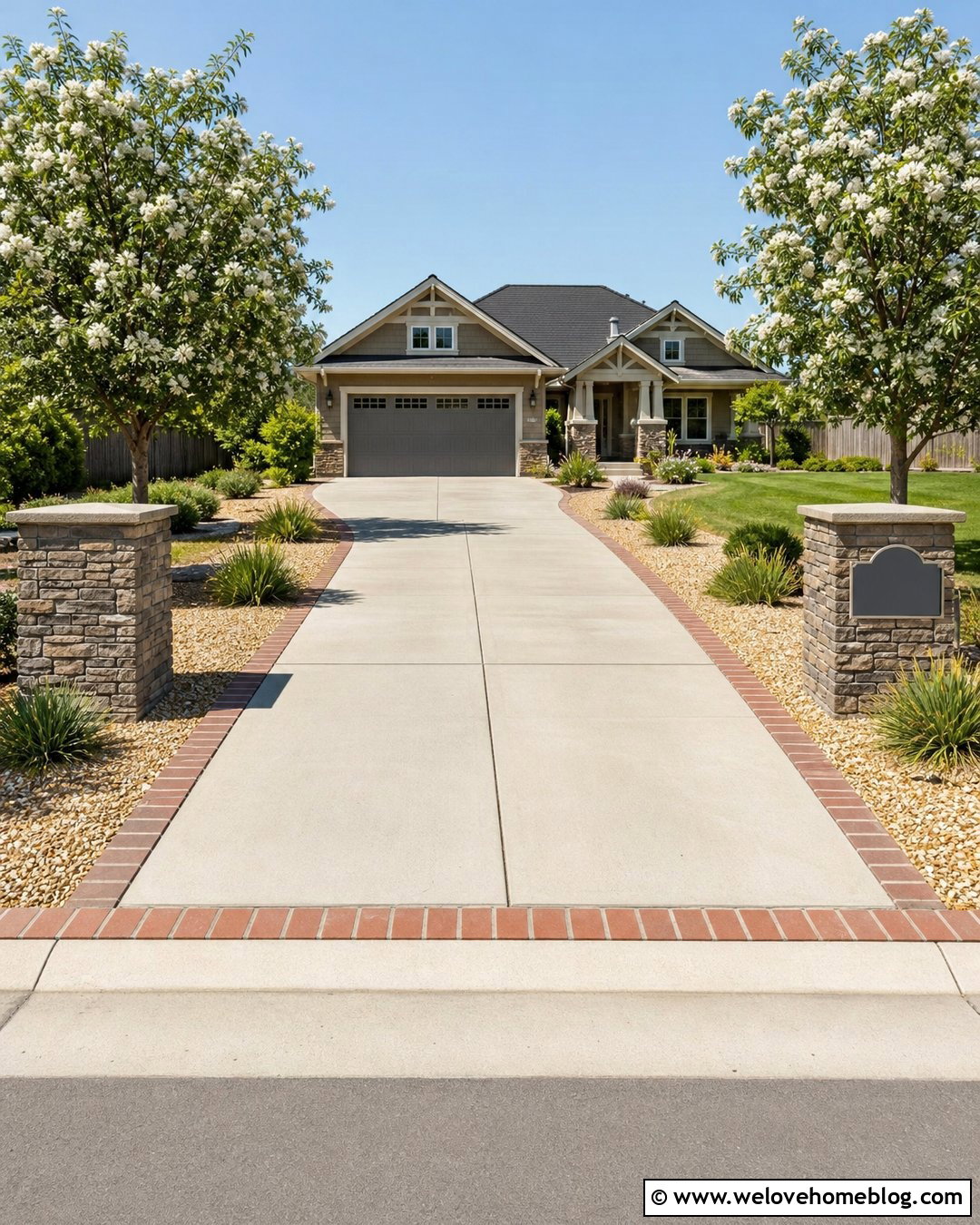
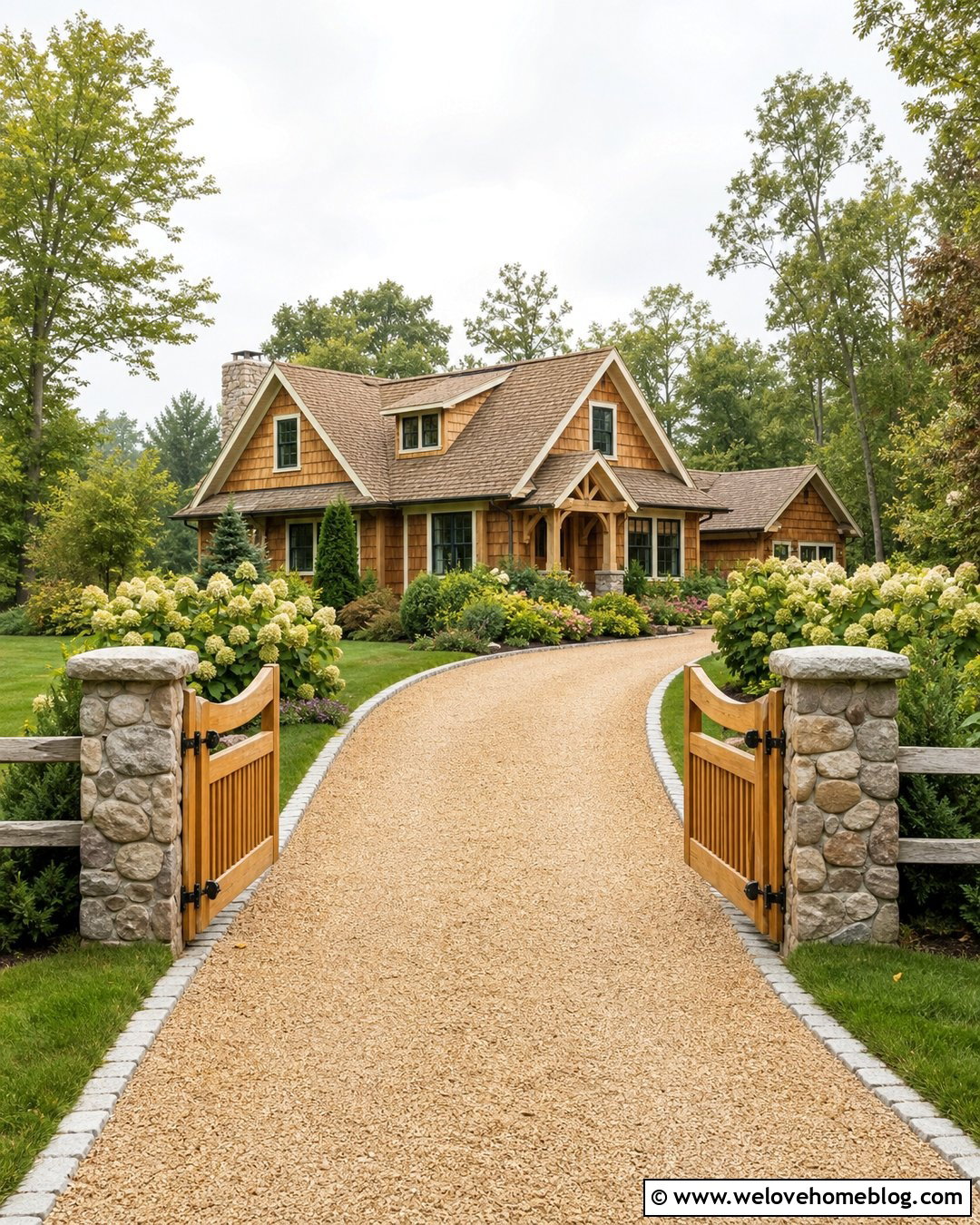
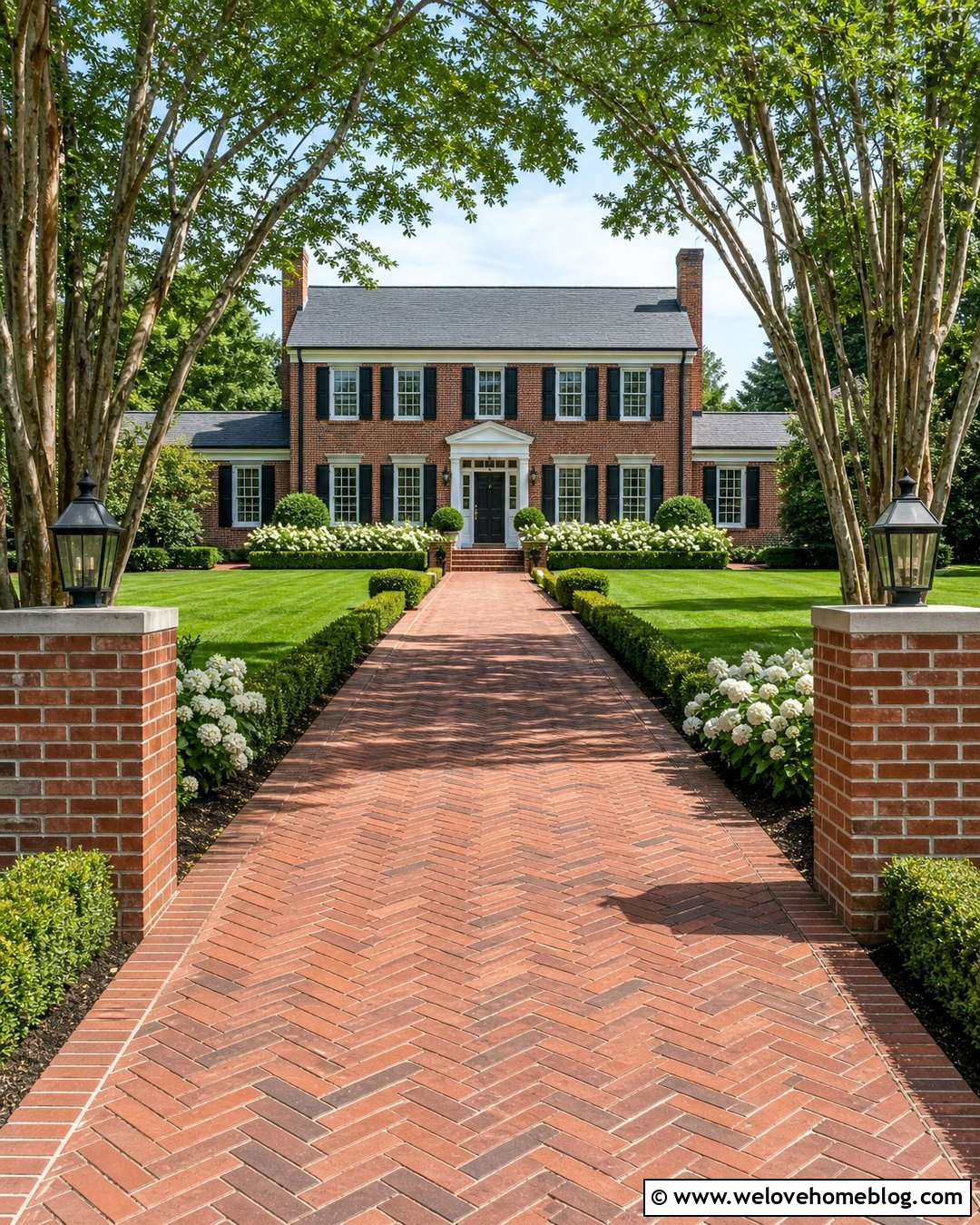
A wider gravel entrance border can give even a simple driveway a stronger street presence. Use broom-finished concrete for the straight main surface and frame the first section with broad beds of golden gravel. Add brick edging that matches the house, then place low stone pillars or a clearly visible address marker on one side. Compact shrubs, ornamental grasses, and two small flowering trees can create balance without hiding the driveway opening. Narrow the gravel borders gradually as the driveway approaches the garage. This layout focuses attention at the curb while keeping the upper driveway easy to maintain. It suits suburban homes with medium-size front yards and can be adapted to traditional, Craftsman, or modern farmhouse architecture.
Conclusion:
The best gravel borders combine appearance with practical containment, safe access, and manageable maintenance. These 20 Gravel Along Driveway Ideas show how loose stone can complement concrete, asphalt, pavers, brick, resin-bound surfaces, and even full gravel drives. Select a gravel color and size that works with your home, then use dependable edging to separate it from lawns, beds, and vehicle areas. Landscaping should frame the approach without blocking visibility or crowding the pavement. Before building, consider drainage, snow removal, turning space, and underground utilities. With a complete plan for the surface, border, planting, and entrance, gravel can make your driveway feel more attractive, intentional, and connected to the surrounding yard.

Related posts:
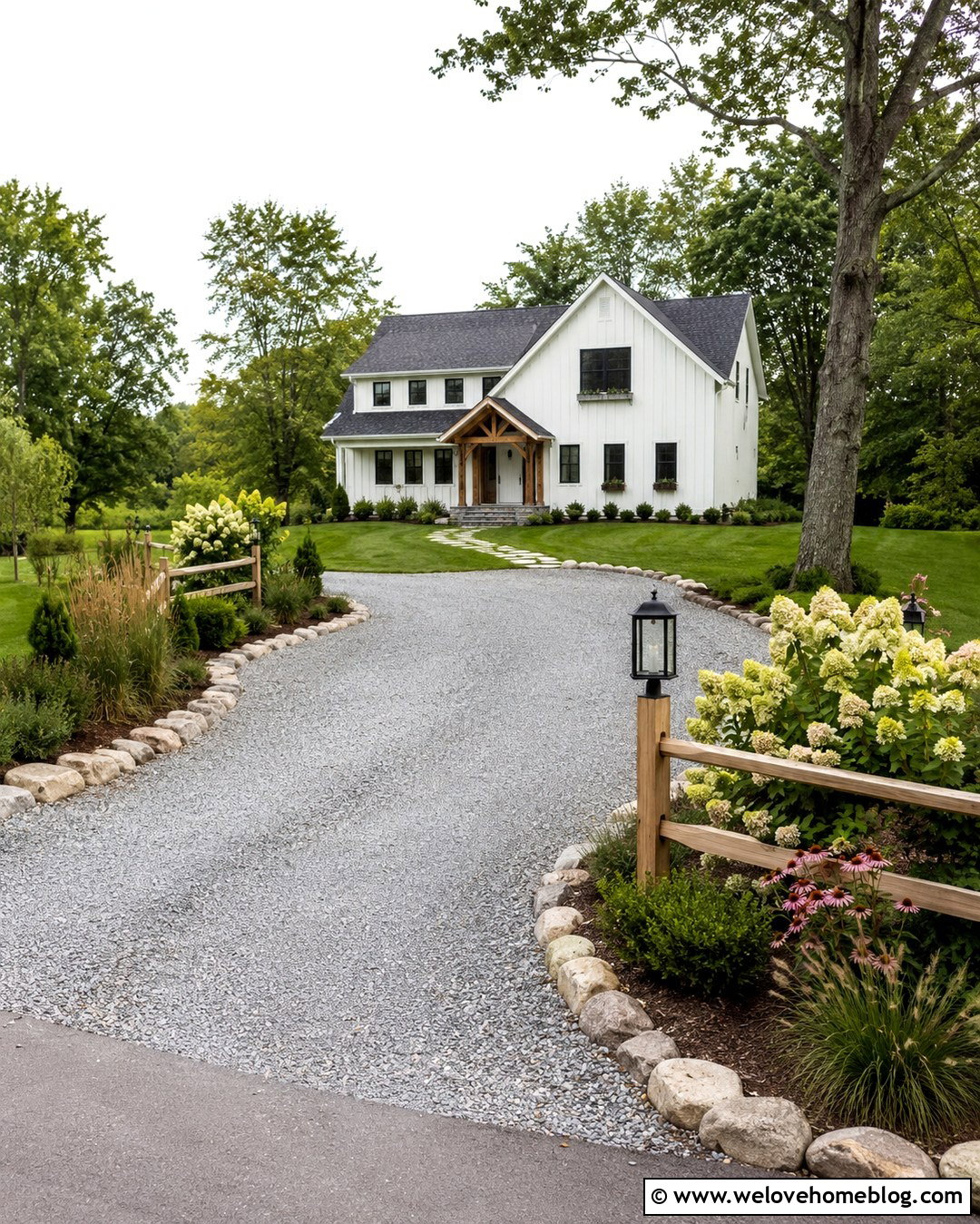
Leave a Reply