
A well-edged gravel driveway feels intentional, stays neater, and connects the parking area with the architecture and front yard. The right border helps contain loose aggregate while creating a clean transition to lawns, planting beds, walkways, or drainage zones. It can also transform inexpensive gravel into a more polished surface. Popular choices include cobblestone, brick, steel, timber, poured concrete, natural stone, and concealed gravel grids. Each option creates a different effect, from relaxed cottage character to sharp modern curb appeal. The best design combines suitable gravel, a practical driveway shape, secure edge restraints, and landscaping that supports drainage rather than blocking it. Explore these **20 Edge Gravel Driveway Ideas** to find a complete look that fits your home, site, and budget. ()

1. Pea Gravel Driveway With Cobblestone Edging
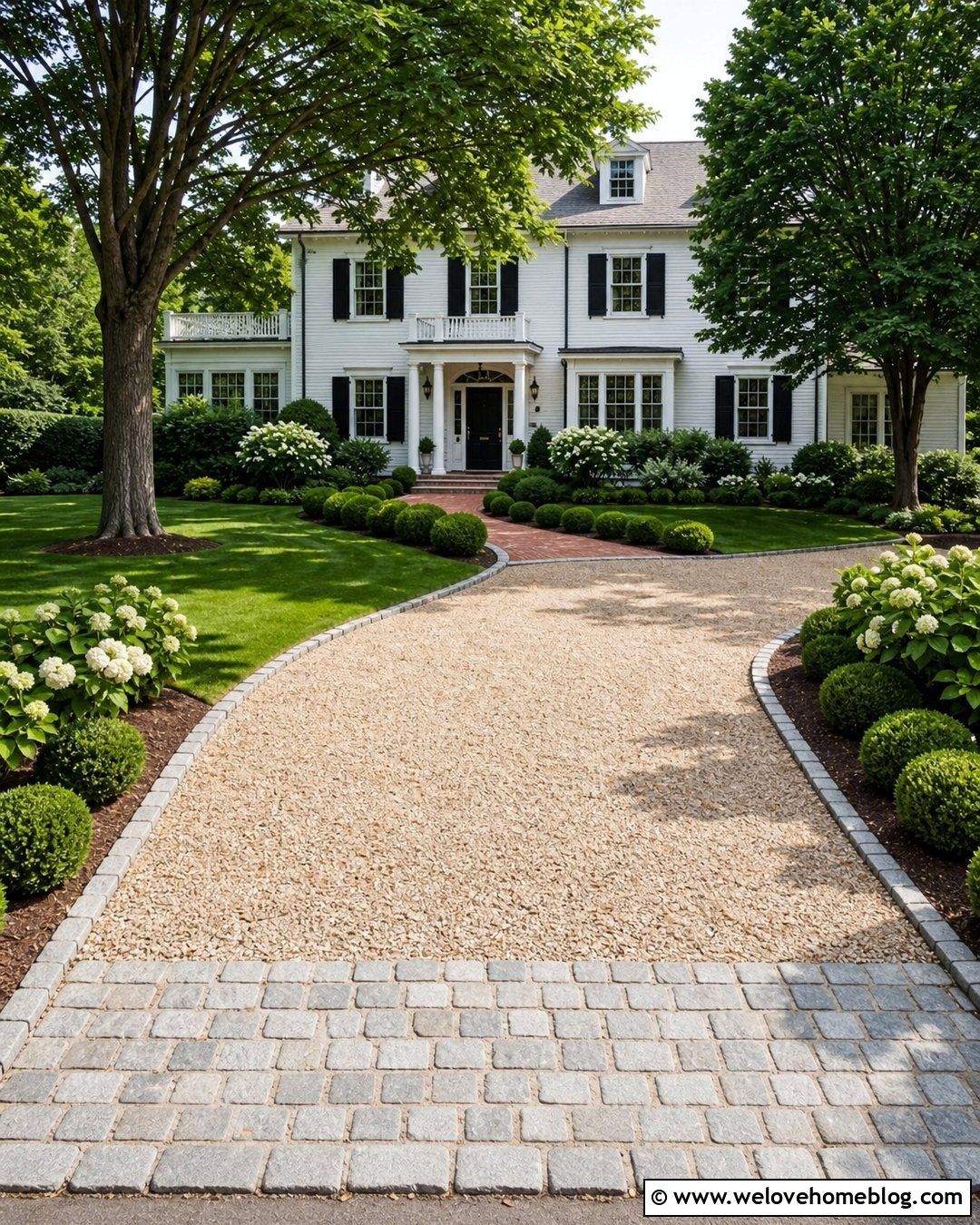
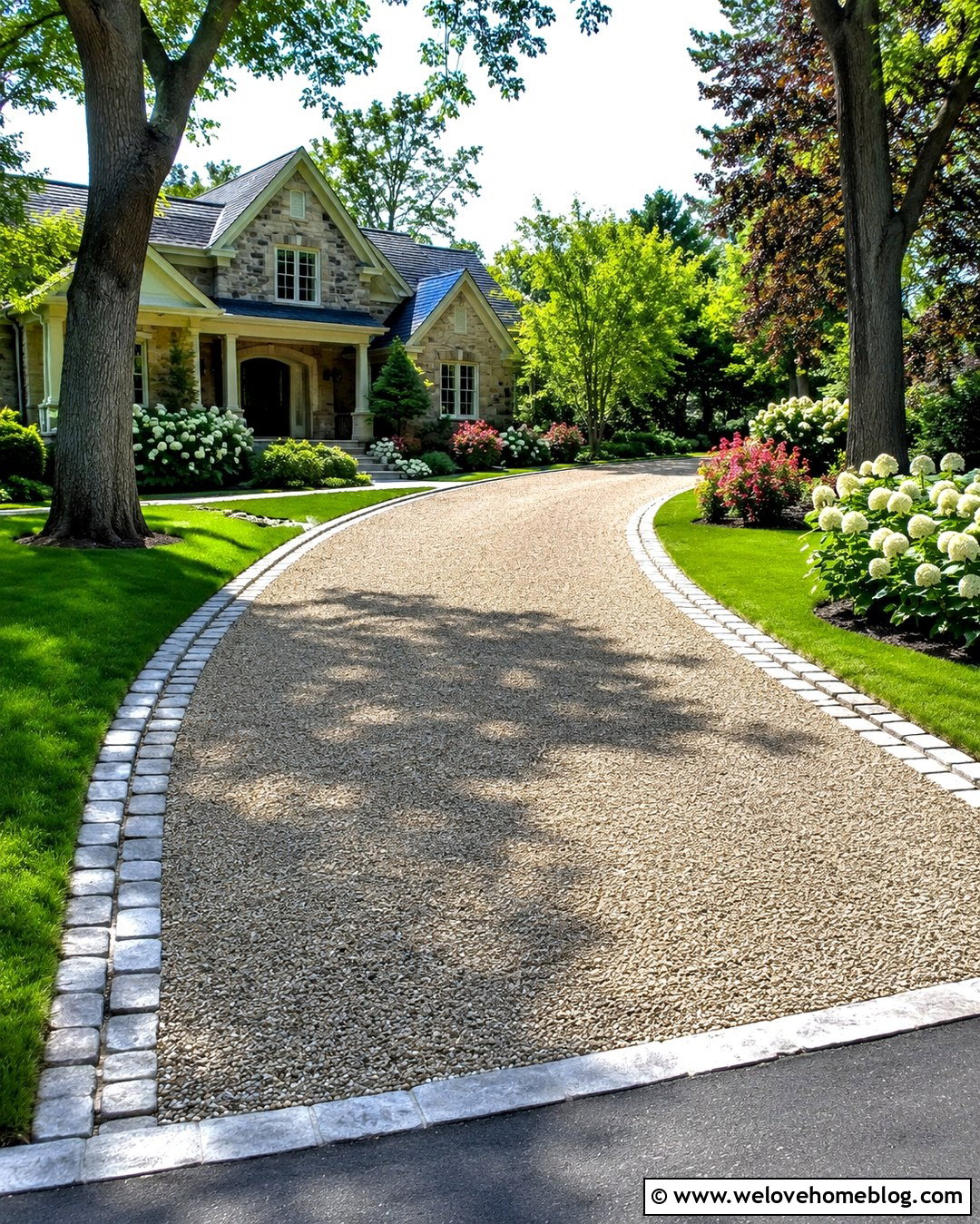
Warm pea gravel and gray cobblestone create a balanced driveway that feels relaxed yet carefully finished. Use the rounded gravel across a gently curved approach, then install cobblestones along both sides as a strong visual frame. A matching cobblestone apron near the street can make the entrance feel more substantial. This combination suits Colonial, Cape Cod, and traditional brick homes especially well. Add low boxwoods, hydrangeas, and a narrow lawn strip beyond the stones to soften the hardscape. Because pea gravel rolls more easily than angular aggregate, a properly installed edge restraint is particularly useful. Keep the cobblestone slightly raised but low enough that doors, tires, and maintenance equipment can move safely around the driveway. ()
2. Golden Gravel Driveway With Brick Edging
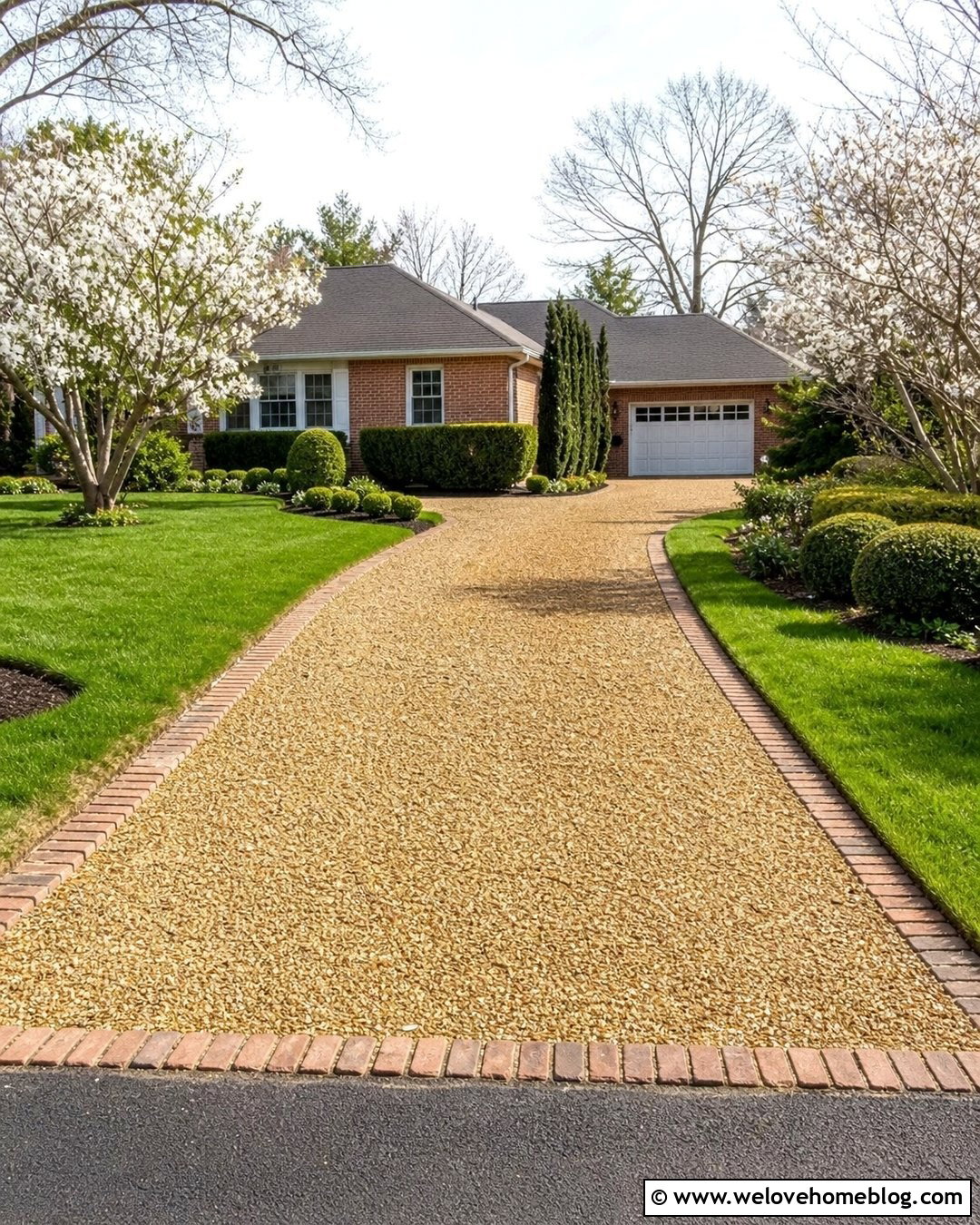
Golden gravel brings warmth to a straight driveway, while red or weathered clay brick creates a clear, traditional border. Lay the bricks in a soldier-course pattern for a narrow edge, or use two rows in a running-bond pattern for more visual weight. Repeat the same brick around the front walkway to connect the driveway with the entrance. This complete look works beautifully with red brick homes, cream siding, and classic ranch houses. Frame the edges with green lawn, clipped shrubs, and small flowering trees. Choose gravel with enough texture to settle into a stable driving surface rather than relying entirely on smooth, loose stones. The brick color should echo the home without matching it so closely that the design appears flat. ()
3. Gray Gravel Driveway With Steel Edging
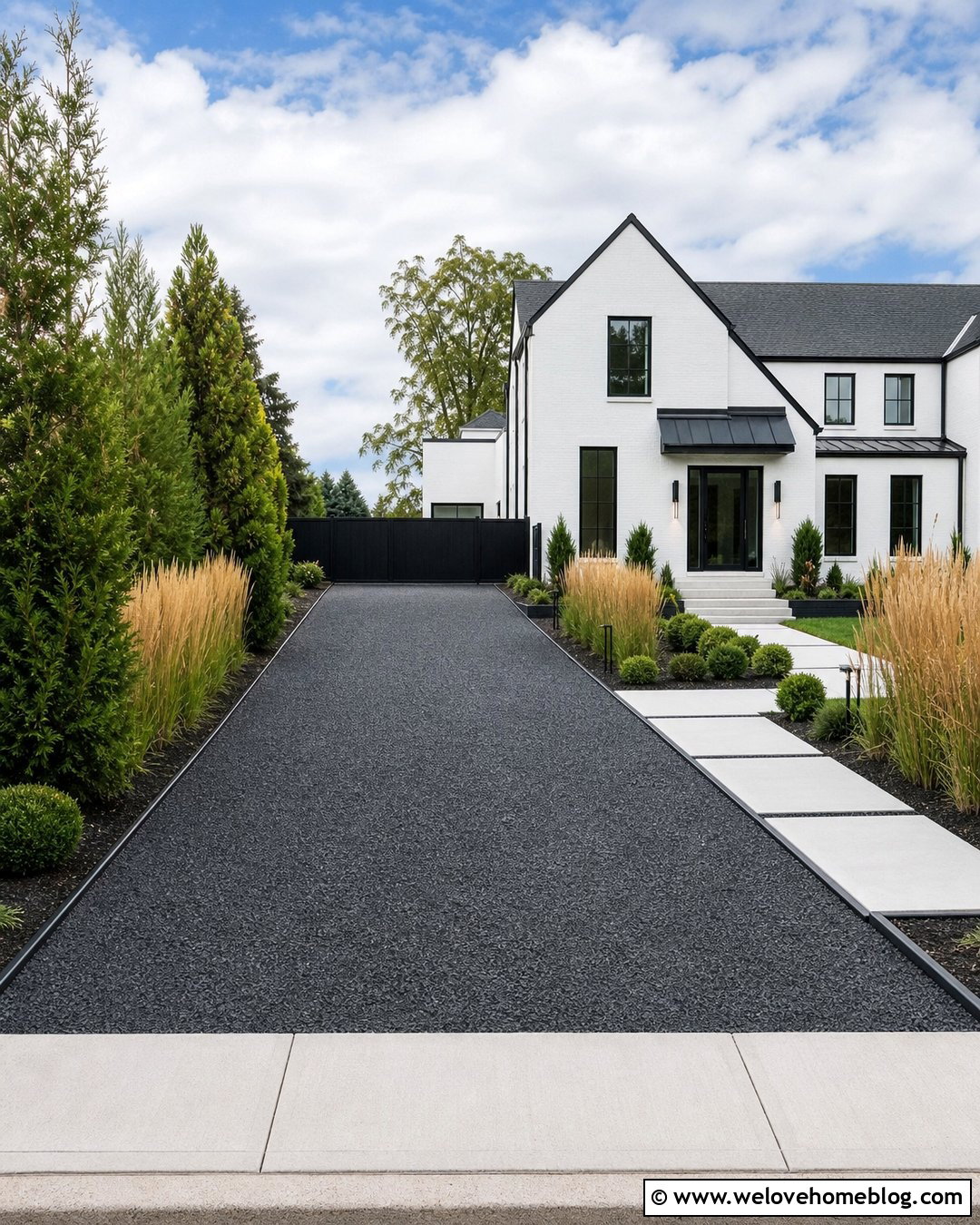
For a clean modern approach, combine angular gray gravel with slim black or galvanized steel edging. The metal can follow a straight driveway or form controlled curves without creating a heavy border. Set it close to the finished gravel height so it contains the surface while remaining visually subtle. This design looks particularly effective beside a contemporary house with white stucco, dark siding, or large windows. Add structured ornamental grasses, compact evergreens, and rectangular planting beds along the perimeter. A wide concrete walkway can cross the gravel near the garage, creating a practical transition to the front door. Steel edging produces a crisp separation between aggregate and planting areas, helping the entire front yard maintain its geometric appearance. ()
4. Crushed Stone Driveway With Timber Edging
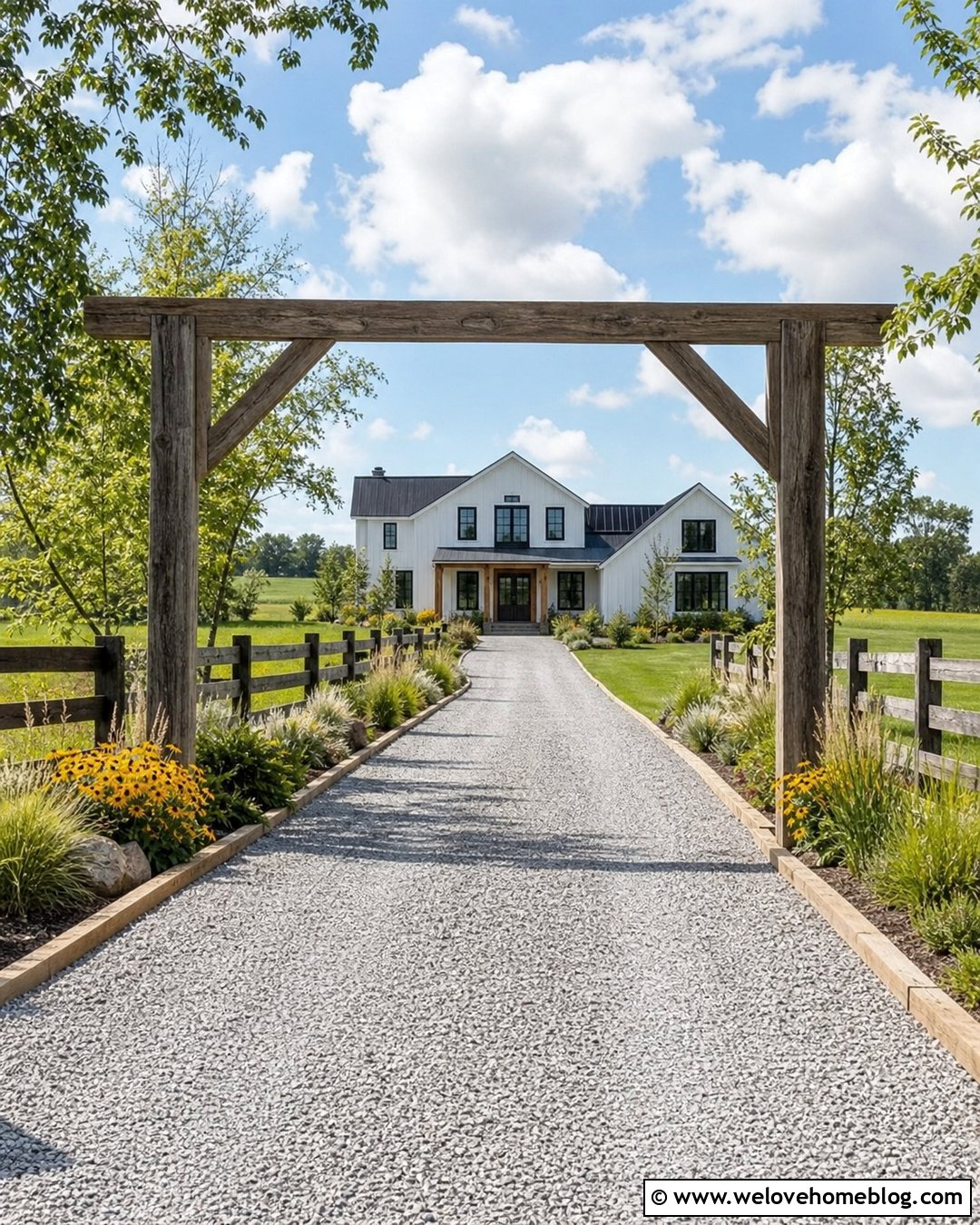
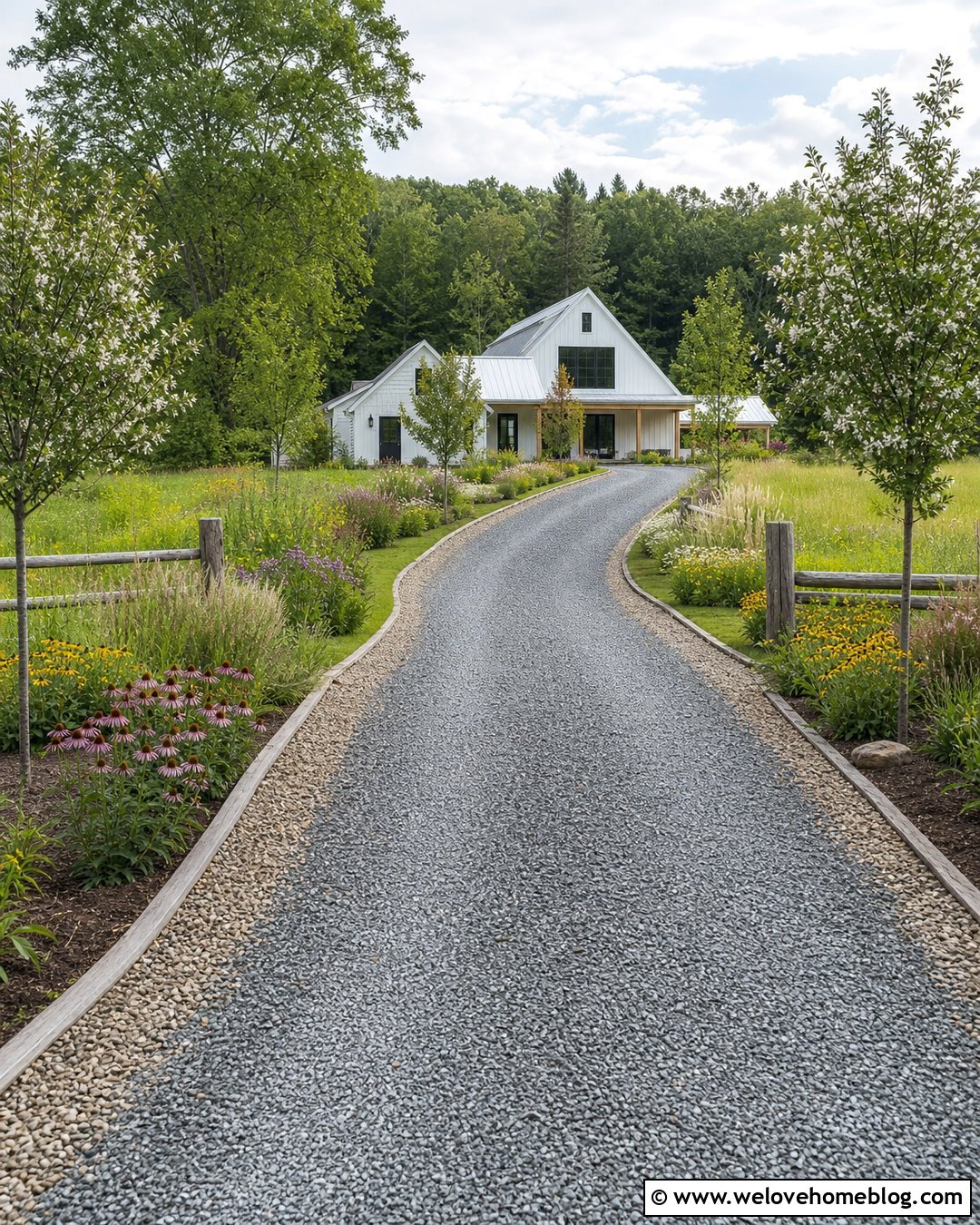
A straight crushed stone driveway bordered by landscape timbers creates an approachable look for a farmhouse, cabin, or country ranch. Select pressure-treated or naturally durable timbers designed for ground contact, then secure them so vehicle movement cannot push the edge outward. The linear shape of timber makes it especially suitable for straight sections and broad parking pads. Use compacted gray or tan crushed stone rather than highly rounded gravel for a firmer appearance. Beyond the edging, plant native grasses, black-eyed Susans, or informal shrubs that suit the rural setting. A simple timber-framed address sign near the entrance can repeat the border material. Keep soil and mulch below the timber edge so they do not spill onto the driving surface during heavy rain. ()
5. White Gravel Driveway With Concrete Curb Edging
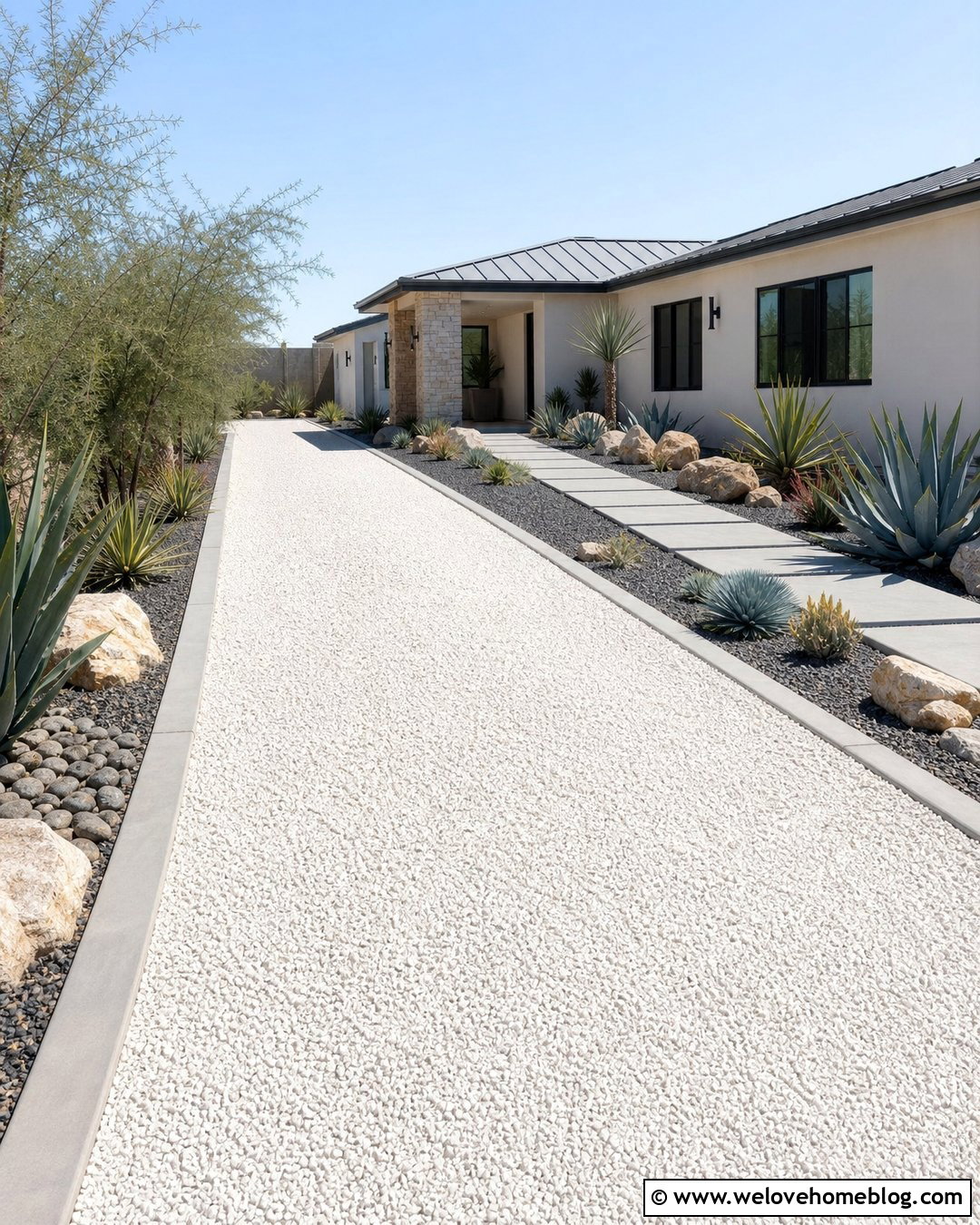
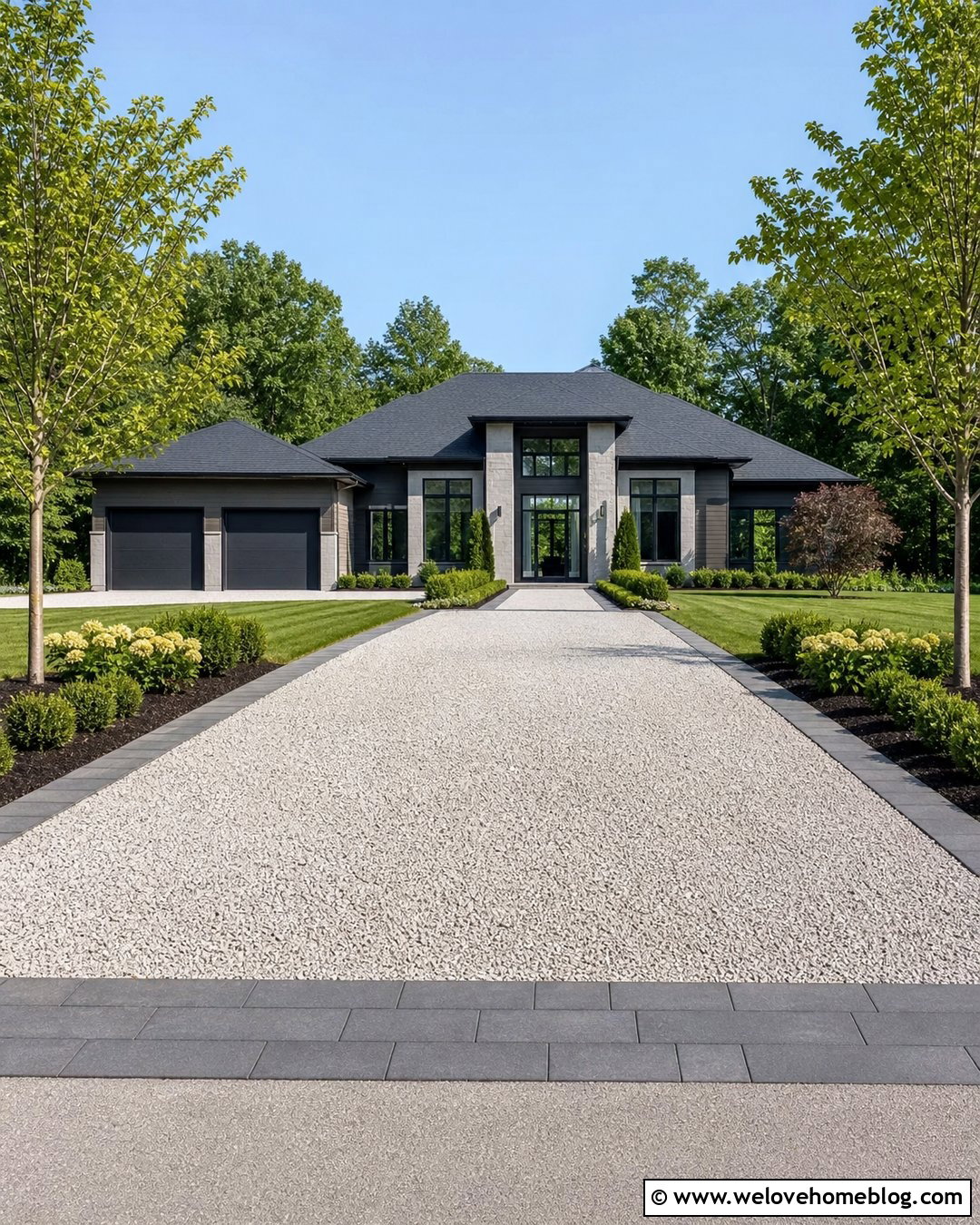
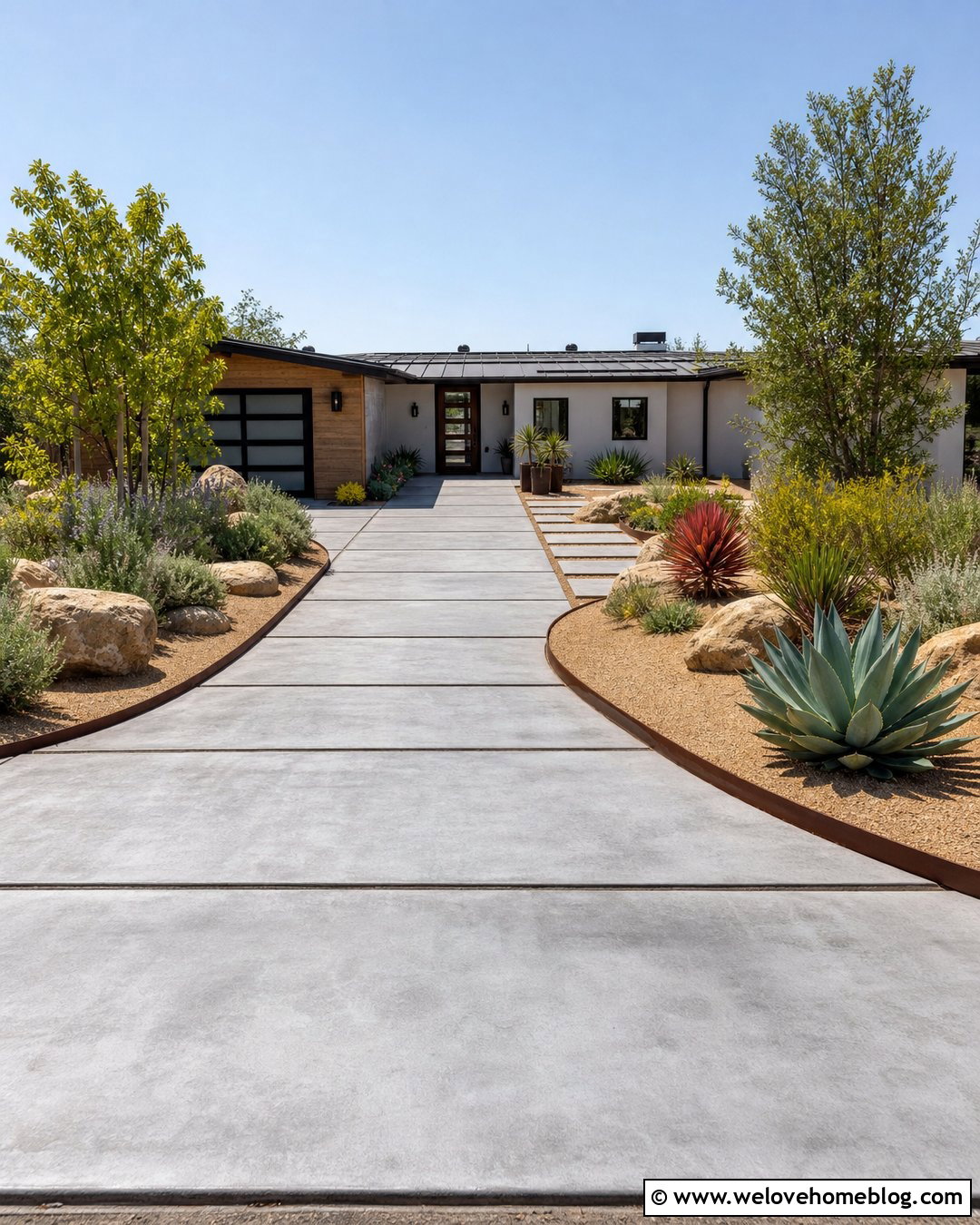
Bright white or pale limestone gravel looks especially sharp inside a smooth poured-concrete curb. Use this combination on a straight or gently angled driveway leading to a midcentury ranch or minimalist stucco home. The concrete edge can be narrow and nearly flush for a subtle finish, or slightly wider to form a visible gray frame. Add drought-tolerant planting beds with agave, yucca, blue fescue, and decorative boulders beyond the curb. The pale driveway reflects light and makes a smaller front yard feel more open. To prevent the white surface from looking messy, separate it carefully from dark mulch and exposed soil. A coordinating concrete walkway and simple rectangular entry steps will help the gravel, border, landscaping, and house read as one unified design. ()
6. Tan Gravel Driveway With Paver Ribbon Edging
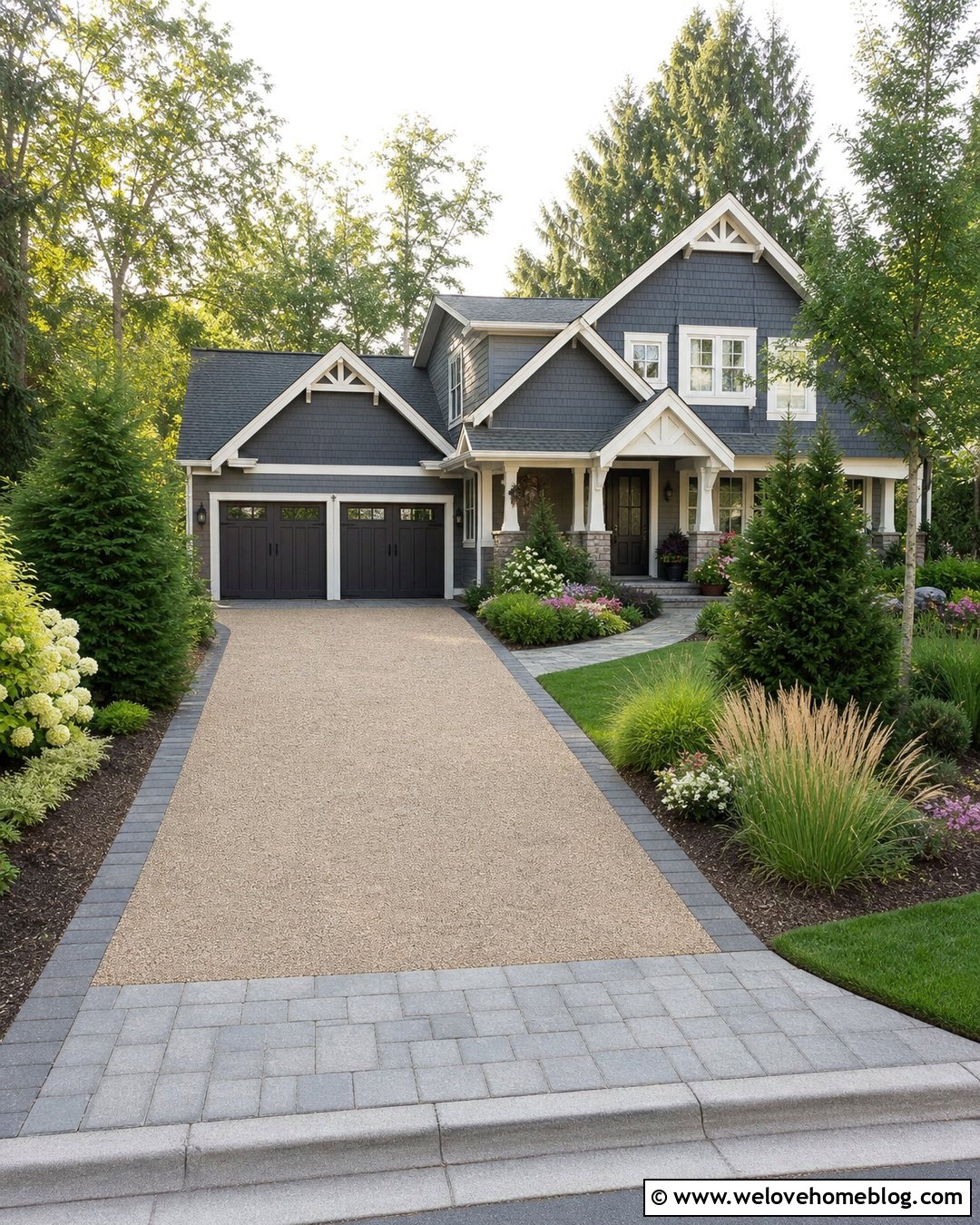
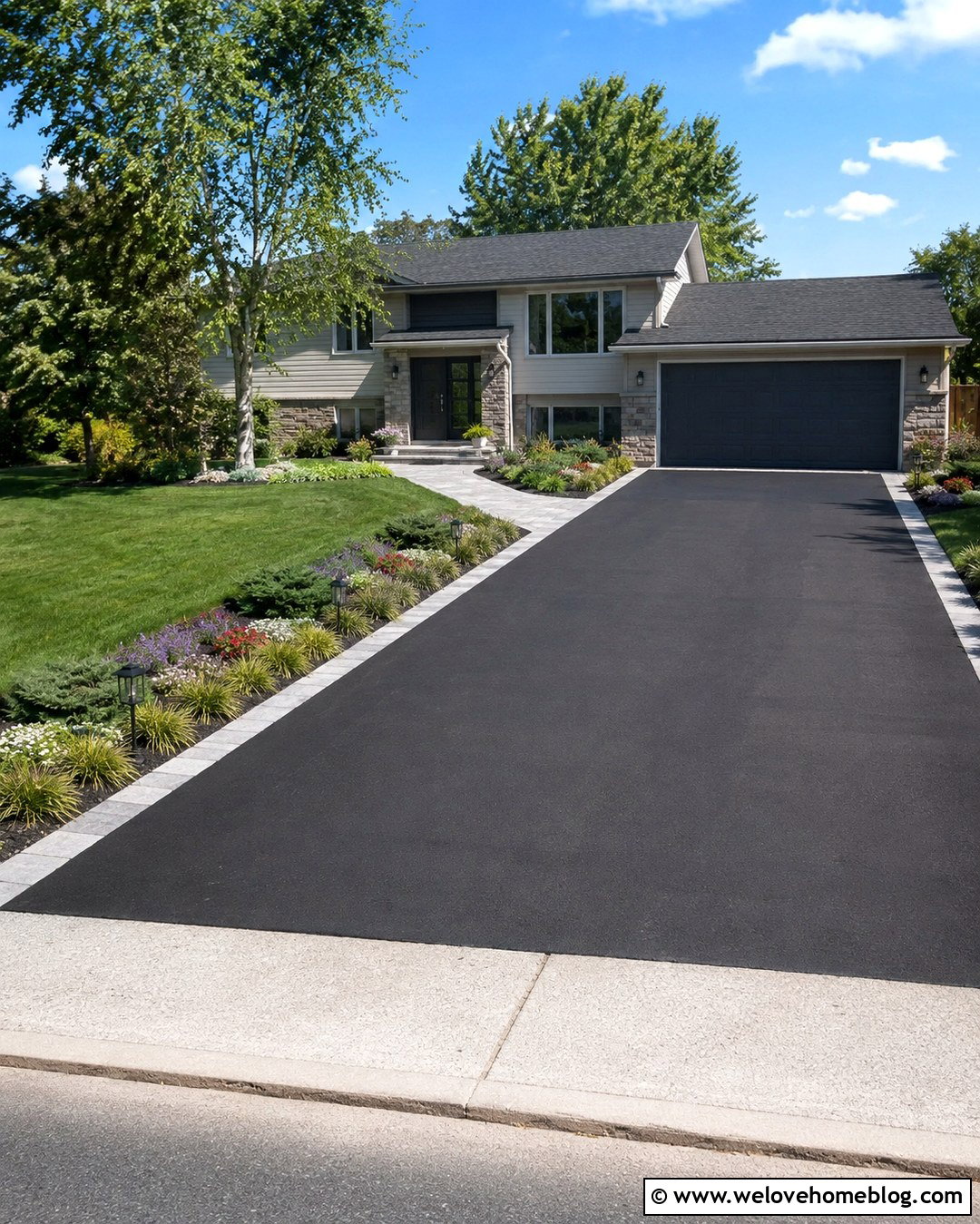
A wide paver ribbon gives a tan gravel driveway a refined border without the expense of paving the entire surface. Choose charcoal, brown, or sandstone-colored concrete pavers and install them in one or two continuous rows. Use the same pavers to define the driveway apron and connect the parking area with the front walkway. This design fits Craftsman homes, suburban houses, and modern farmhouses because the colors can be adjusted to suit the facade. Add layered foundation beds containing evergreen shrubs, flowering perennials, and ornamental grasses. The paver ribbon should rest on a stable base so it remains aligned under regular vehicle traffic. A strong contrast between the pavers and gravel makes the driveway shape easier to see and gives the front yard a more organized appearance. ()
7. Country Gravel Driveway With Fieldstone Edging
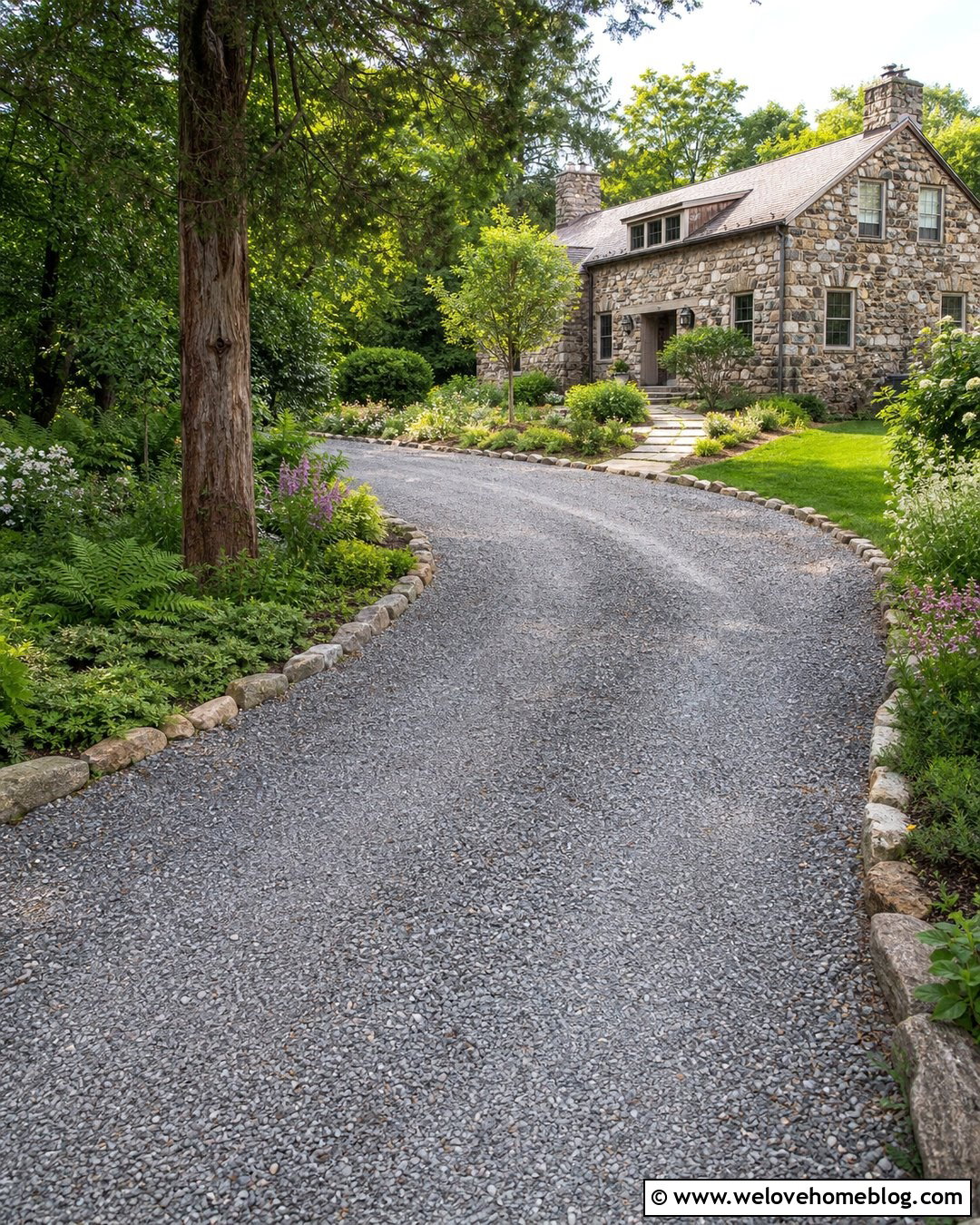
Irregular fieldstone provides a natural border for a winding gravel driveway through a large country yard. Pair mixed gray and brown crushed gravel with stones that reflect the colors found in the house foundation, garden walls, or surrounding landscape. Bury part of each fieldstone so the edge appears settled rather than loosely placed on the ground. Allow the driveway to curve gently past existing trees before reaching a farmhouse, cottage, or stone-front residence. Informal planting beds filled with ferns, native shrubs, and flowering ground covers can soften the outer edge. Avoid crowding plants too close to the driving lane. The finished design should feel natural, but the gravel depth, border alignment, grading, and drainage still need to be carefully planned for a durable result. ()
8. Gravel Driveway With Belgian Block Edging
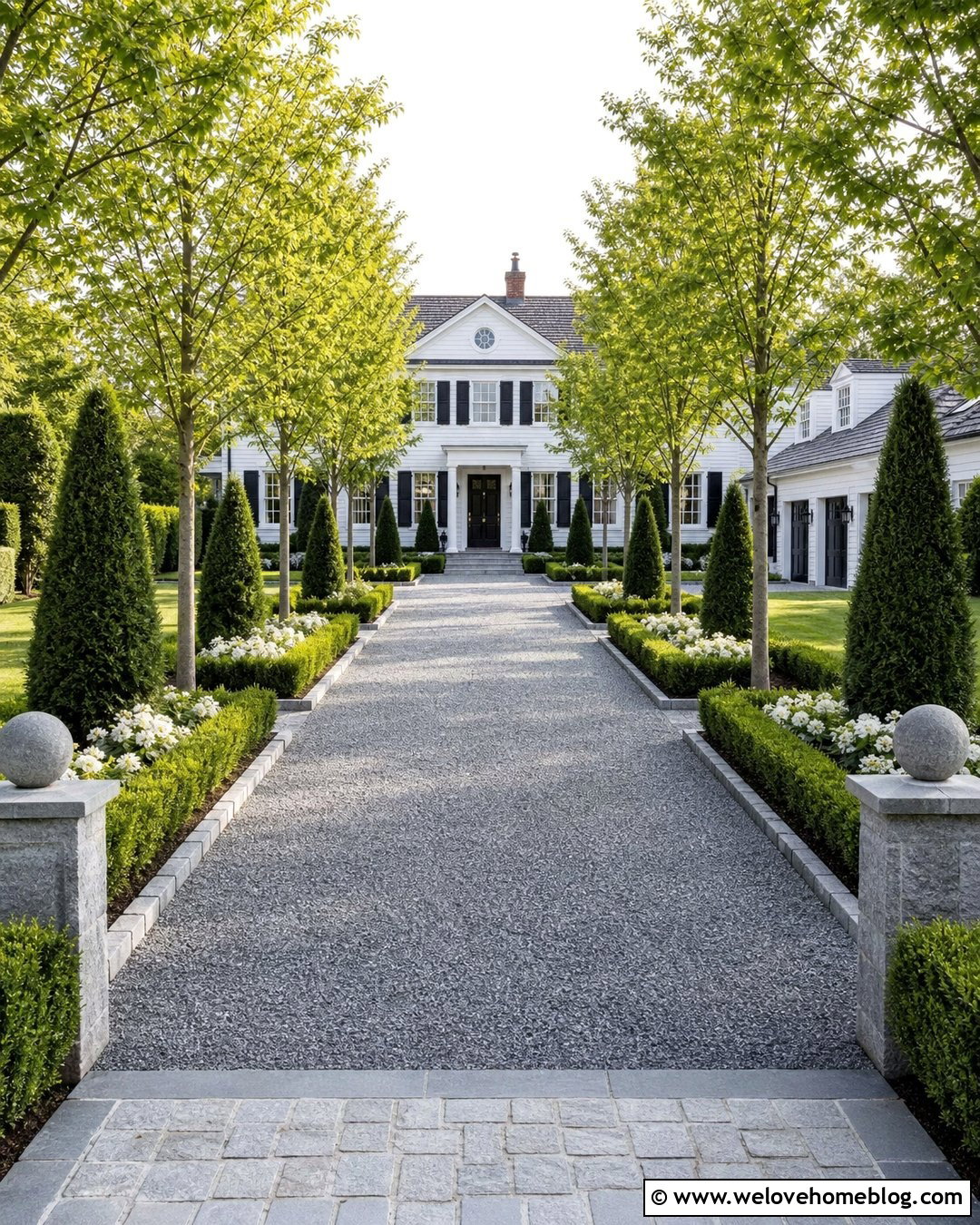
Belgian block edging can give an ordinary gravel driveway the structure of a formal paved entrance. Border light gray crushed gravel with dark granite blocks, then extend the blocks across the street entrance to create a defined apron. A straight layout works well for Georgian and Colonial homes, while a soft curve can complement a larger traditional property. Continue the granite around nearby planting islands or the front walkway for visual consistency. Formal landscaping may include clipped boxwoods, upright evergreens, symmetrical flower beds, and evenly spaced trees. The blocks should be installed as functional restraints rather than placed loosely as decoration. Their substantial appearance makes them useful for visually separating the pale gravel from green lawn while creating a strong architectural line from the curb to the house. ()
9. Gravel Driveway With Grass Edging
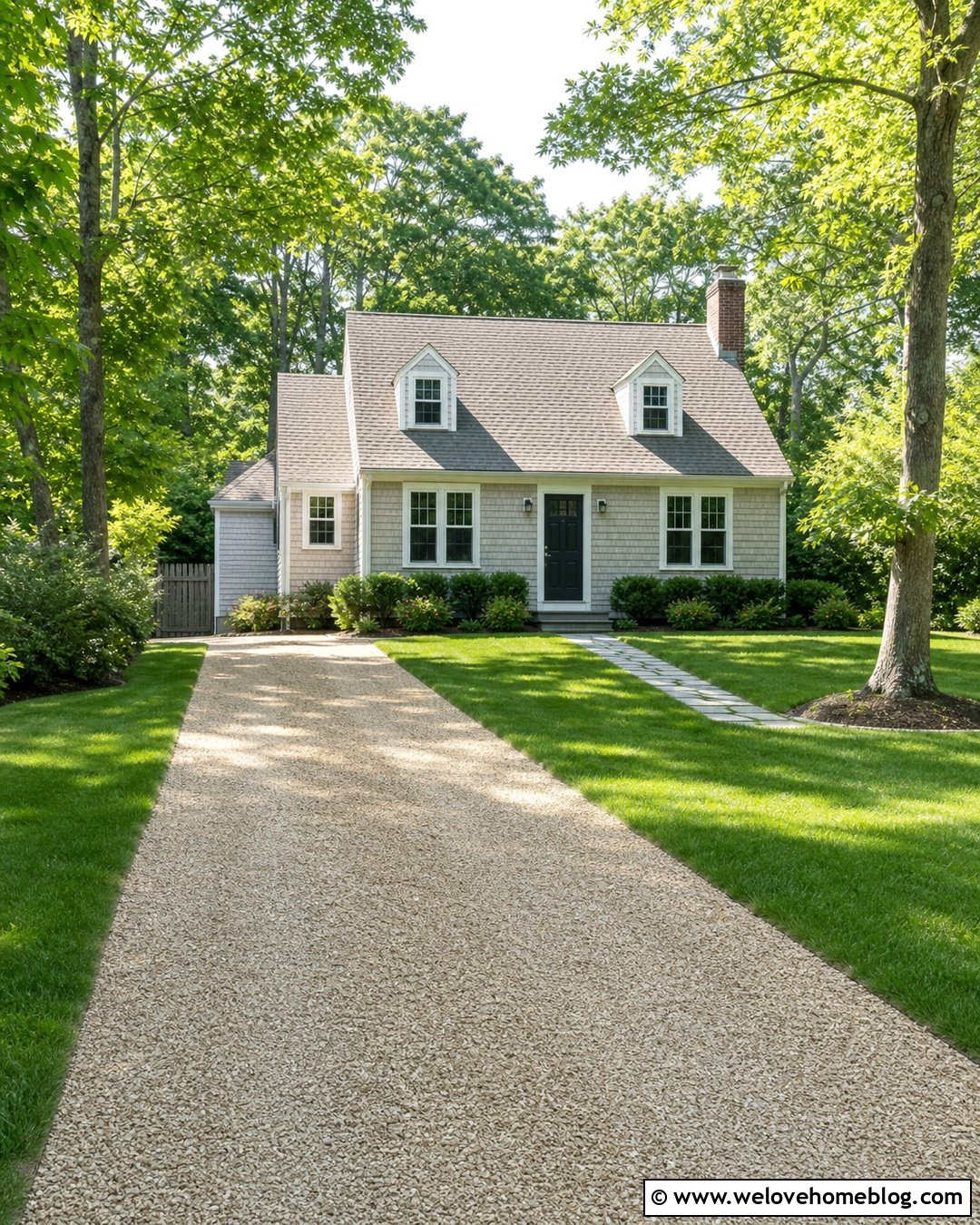
A clean grass edge offers one of the simplest ways to give a gravel driveway a relaxed, open appearance. Use compacted angular gravel on a straight driveway and install a concealed metal or plastic restraint just below the visible lawn line. This hidden structure helps preserve the shape while allowing the grass to appear as the only border. The look suits modest ranch homes, cottages, and rural properties where a heavy stone edge might feel unnecessary. Maintain a clear separation with regular trimming, and avoid allowing turf to creep into the gravel. Broad lawn areas, a few shade trees, and simple foundation shrubs are enough to frame the approach. The understated design places greater importance on consistent grading, a stable base, and a smooth transition at the curb. ()
10. Gravel Driveway With River Rock Drainage Border
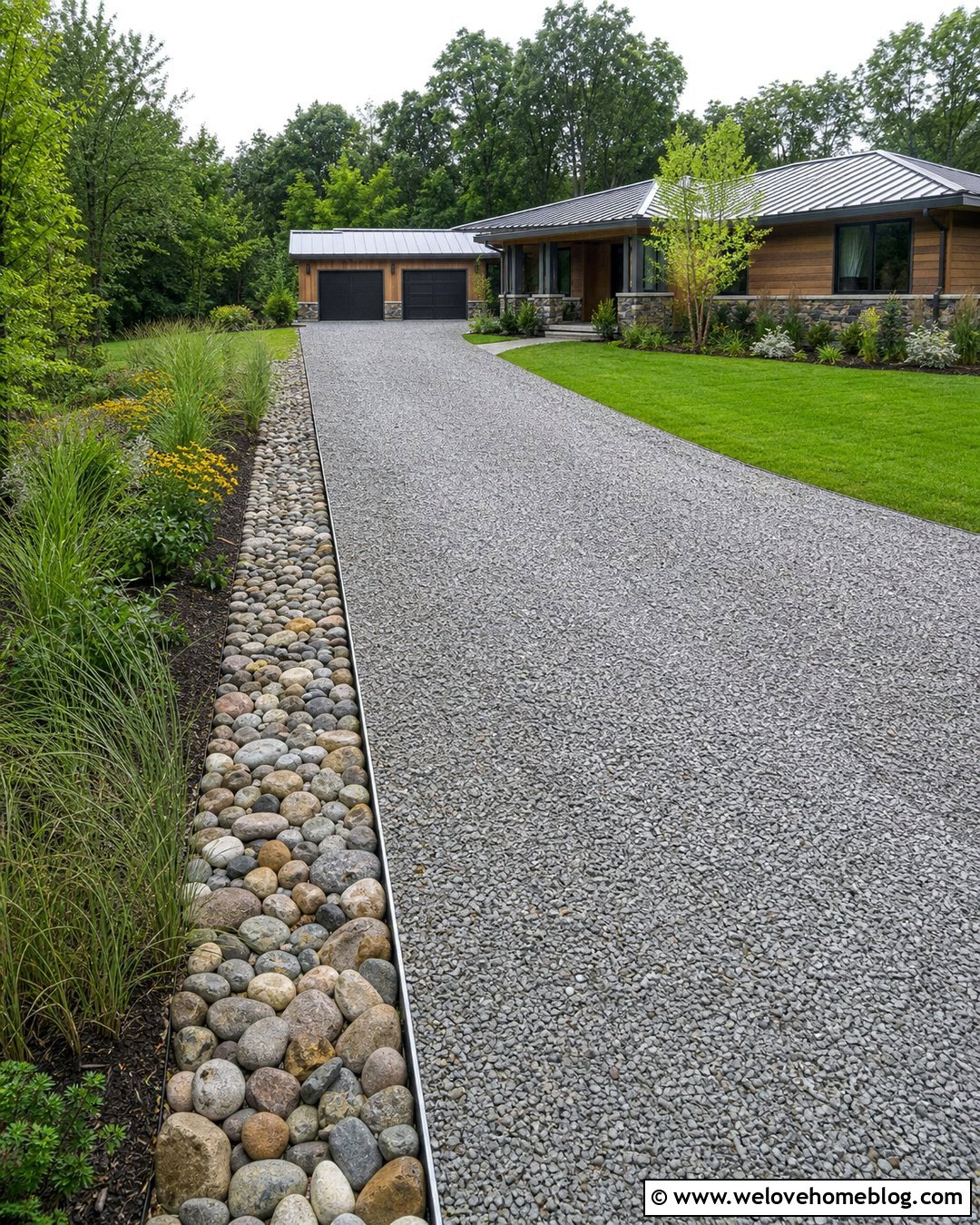
Where water regularly reaches the driveway, turn the edge into an attractive drainage feature. Use compacted gray crushed gravel for the driving surface and create a shallow river-rock channel along the lower side. Rounded stones in mixed gray, cream, and brown tones can direct attention toward a rain garden or safe landscape outlet. A steel or stone divider between the driveway gravel and larger river rocks keeps the two materials from mixing. This solution fits contemporary ranch homes, wooded properties, and sloped suburban lots. Plant moisture-tolerant grasses and shrubs beyond the channel without restricting water movement. The driveway should still be graded professionally for local conditions because decorative stones cannot correct an unsuitable slope. Planned drainage helps reduce pooling, erosion, and displacement of the gravel surface. ()
11. Limestone Gravel Driveway With Limestone Block Edging
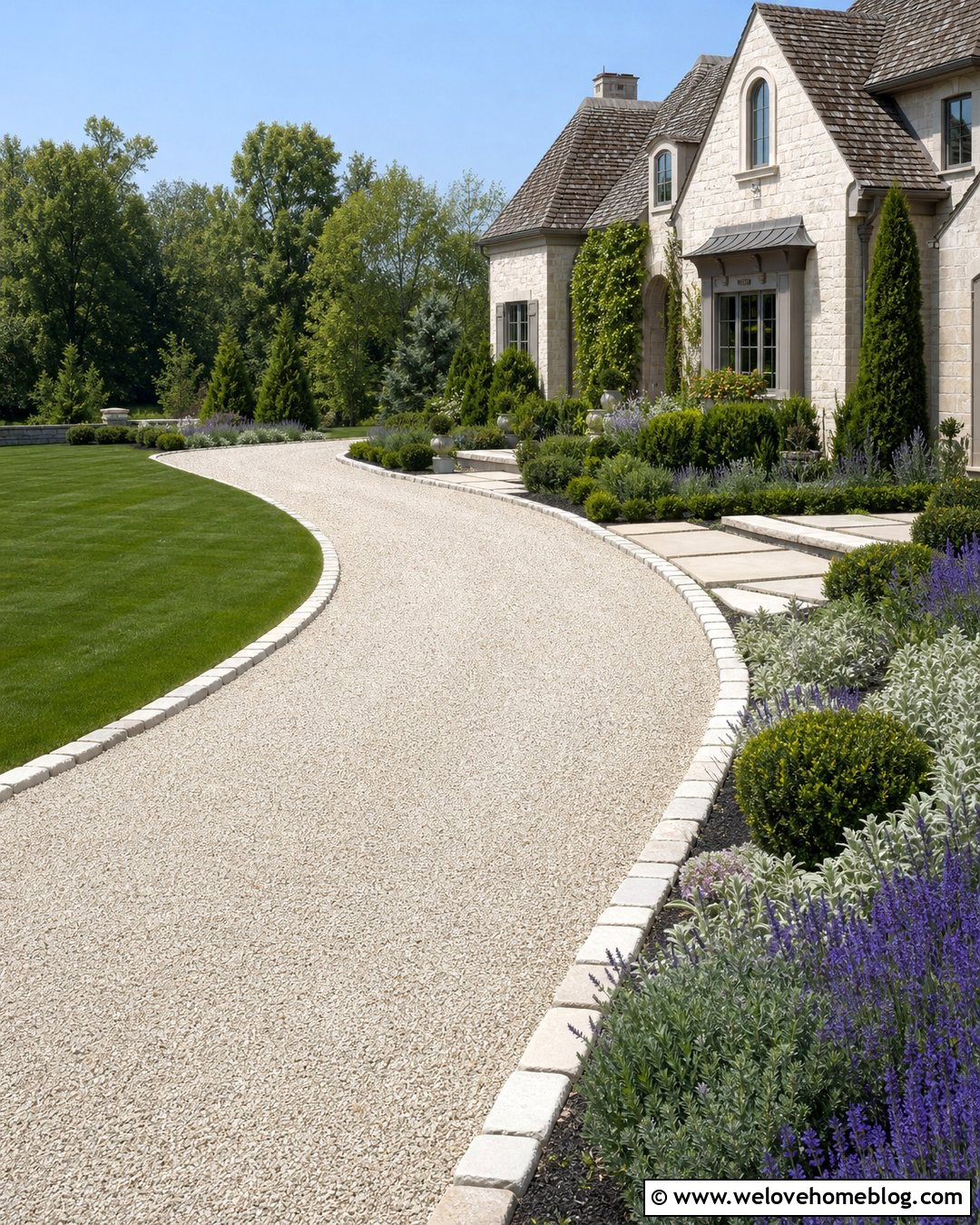
Using related materials in different sizes creates a calm, coordinated driveway. Fill the surface with pale crushed limestone and border it with larger rectangular limestone blocks. A gently curved layout can lead toward a French country, Mediterranean, or light-brick home. Select blocks with enough variation to feel natural, but keep their top line relatively consistent for a finished appearance. Lavender, catmint, dwarf evergreens, and silvery foliage complement the soft cream tones. Add a walkway of large limestone slabs that crosses the gravel and continues to the front entrance. Because the driveway and border belong to the same color family, use deeper green planting beds to provide contrast. This restrained palette works particularly well in sunny yards where pale materials create bright, welcoming curb appeal.
12. Dark Gravel Driveway With Corten Steel Edging
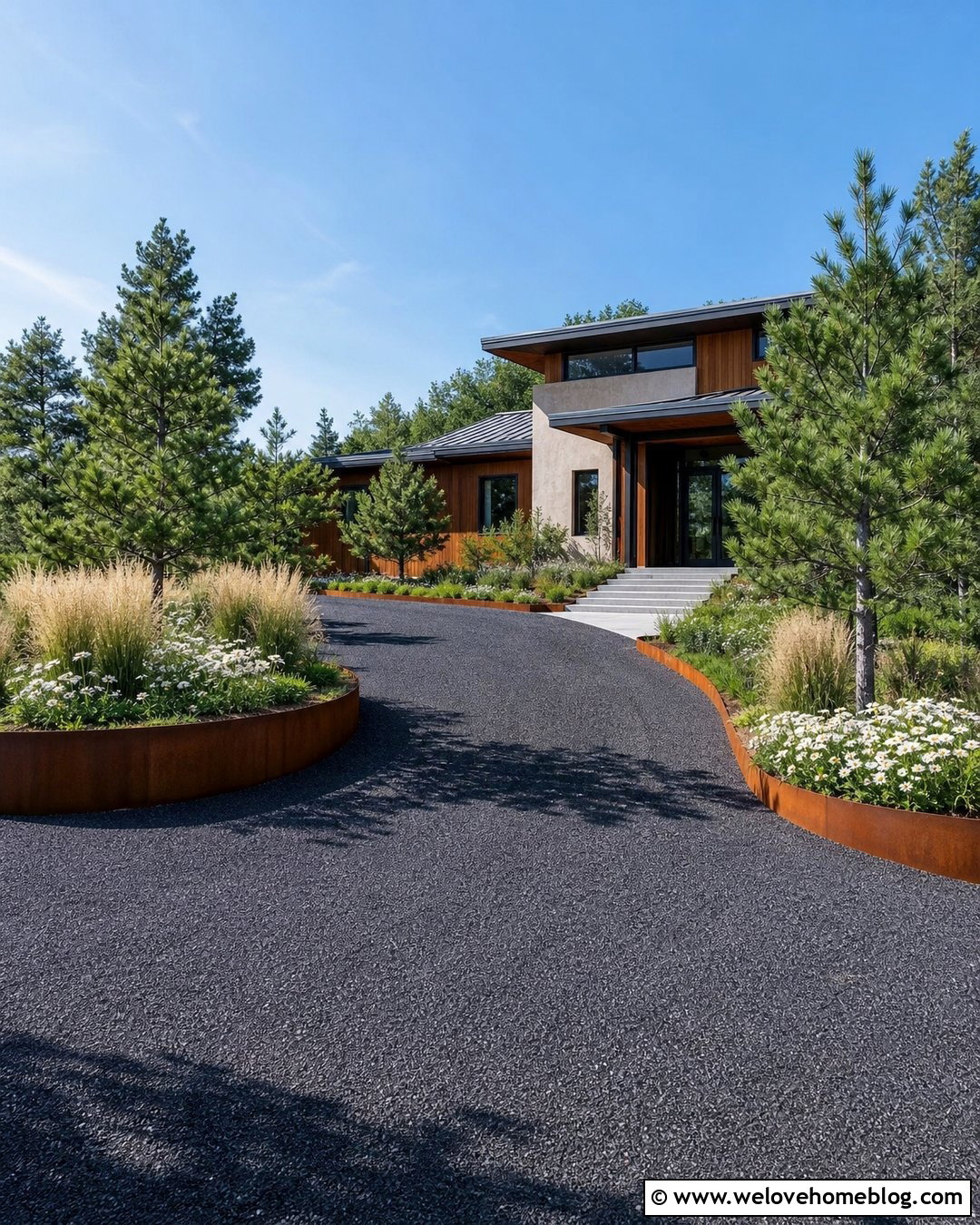
Dark charcoal gravel framed by weathered Corten steel makes a strong statement without requiring elaborate decoration. Use the combination on a curved driveway approaching a contemporary home with natural wood, black metal, or concrete details. The warm rust-colored edging clearly separates the dark aggregate from lawn and planting beds. Repeat the steel in rectangular planters, a mailbox surround, or a simple address monument near the entrance. Plant feather reed grass, sedges, compact pine, and white flowering perennials to balance the darker surface. Keep the steel line smooth and intentional, especially around curves and planting islands. The color contrast works best when the driveway is broad enough for both materials to remain visible from the street, creating a complete modern landscape rather than an isolated decorative edge. ()
13. Circular Gravel Driveway With Granite Edging
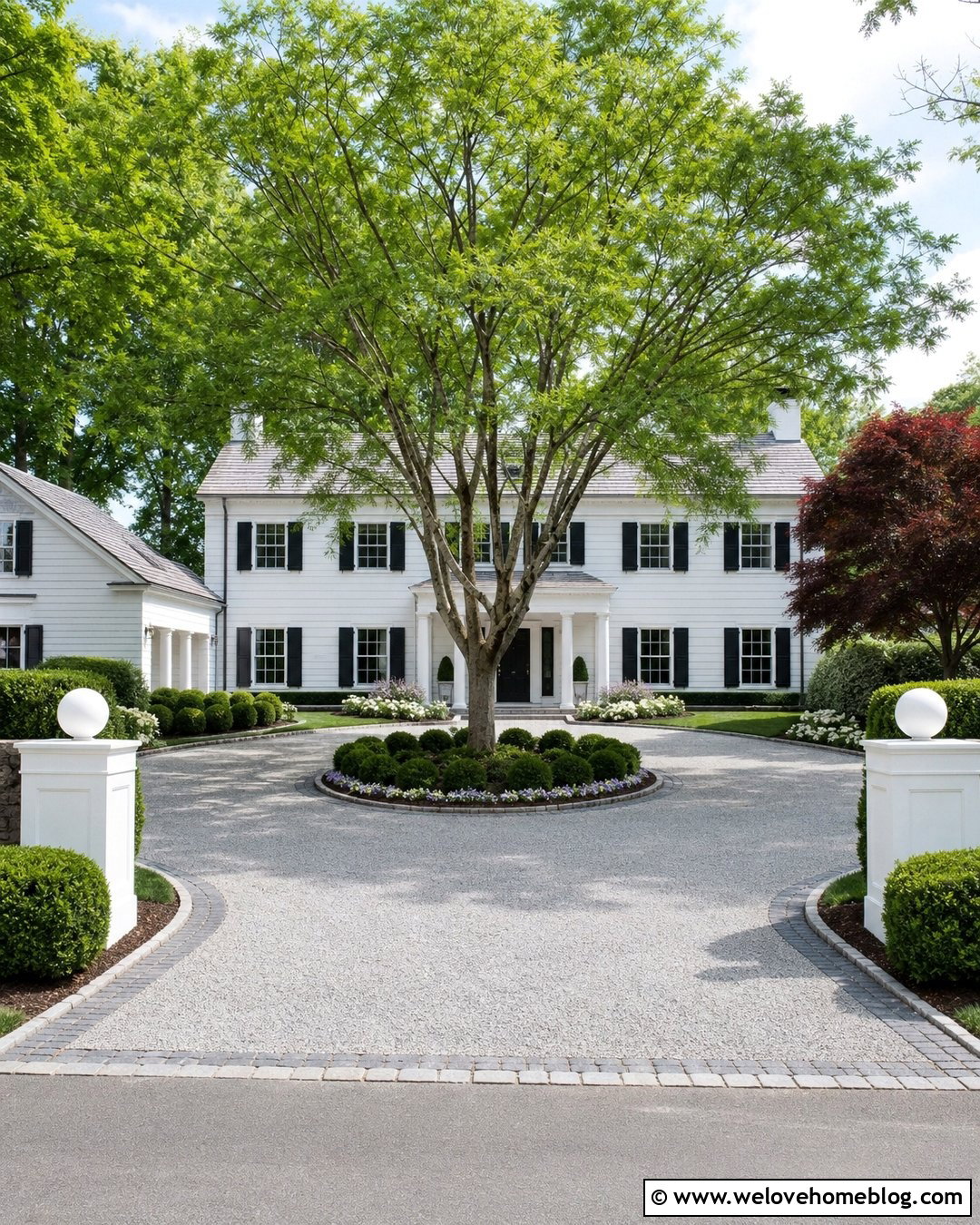
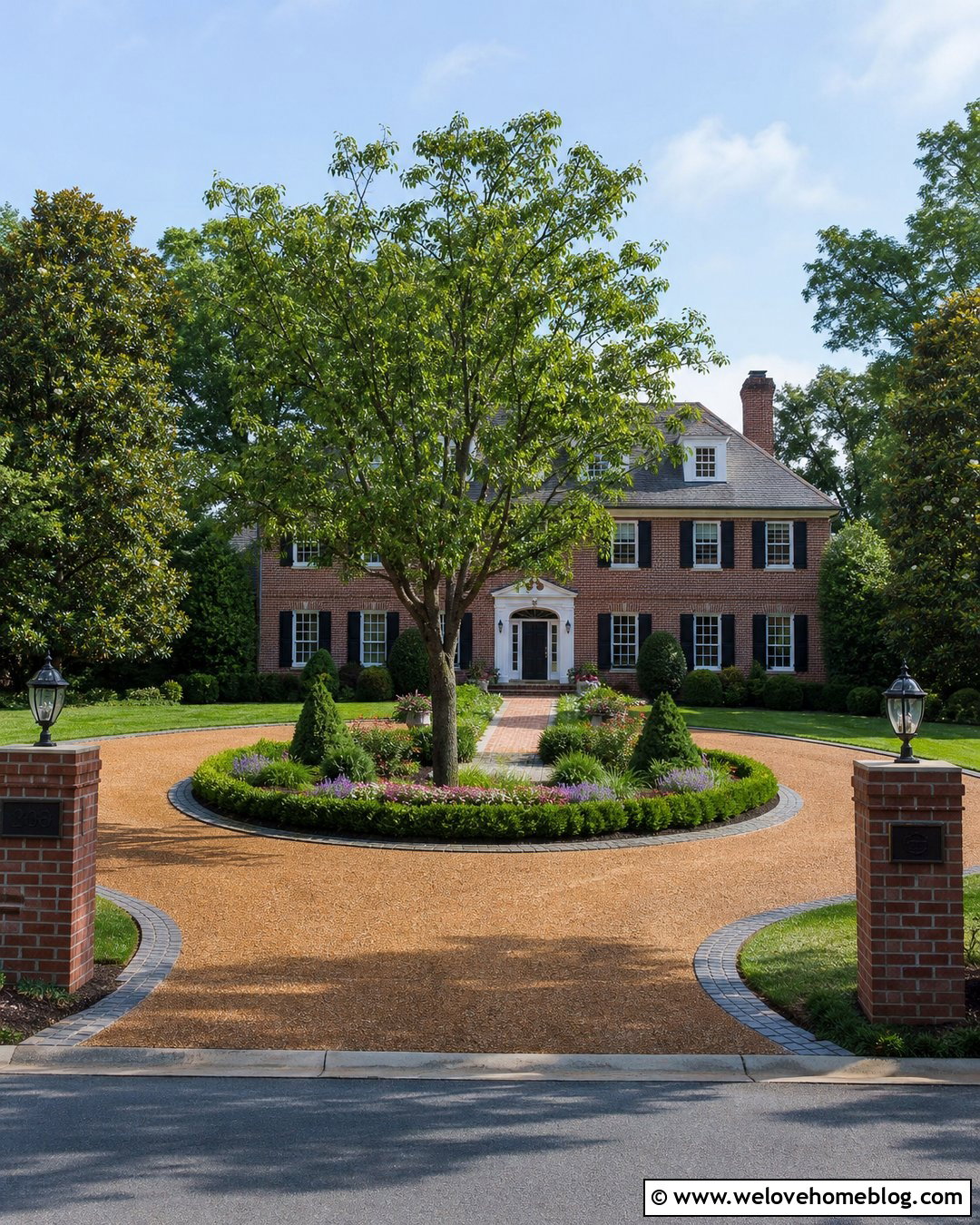
A circular gravel driveway becomes easier to understand visually when granite edging clearly defines the inner island and outer curve. Use medium-gray crushed granite across the driving lane and darker granite setts around both edges. Place a broad planting island in the center with a specimen tree, low evergreen shrubs, and seasonal flowers that remain below important sightlines. This formal layout complements Colonial, Georgian, and large traditional homes. At the two street entrances, widen the granite border into matching aprons for a more substantial arrival. A separate stone walkway can connect the center of the circle with the front steps. Accurate curves, adequate turning space, and clear drainage paths are essential because an elegant border cannot compensate for a circular layout that is too tight or poorly graded.
14. Gravel Driveway With Flagstone Edging
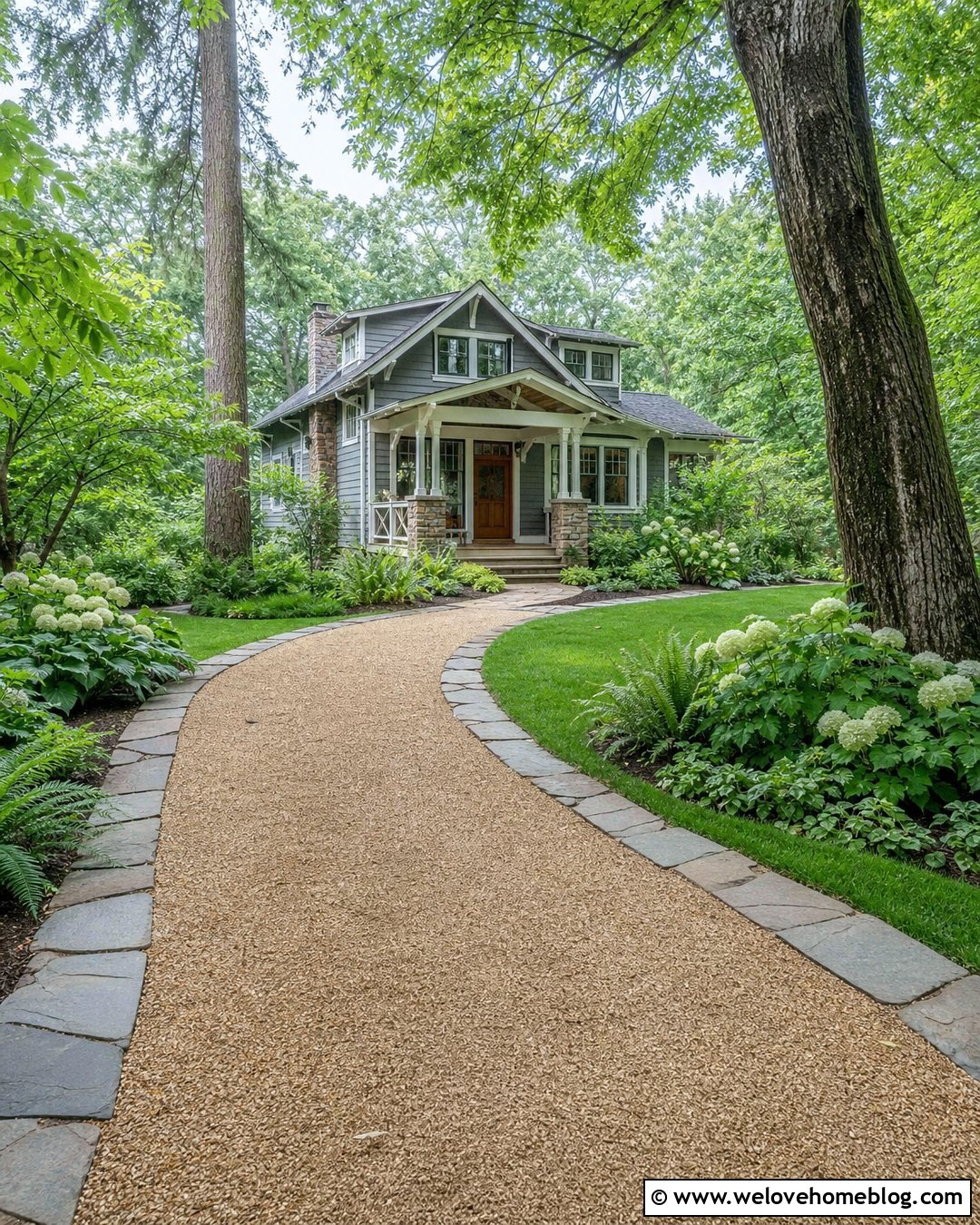
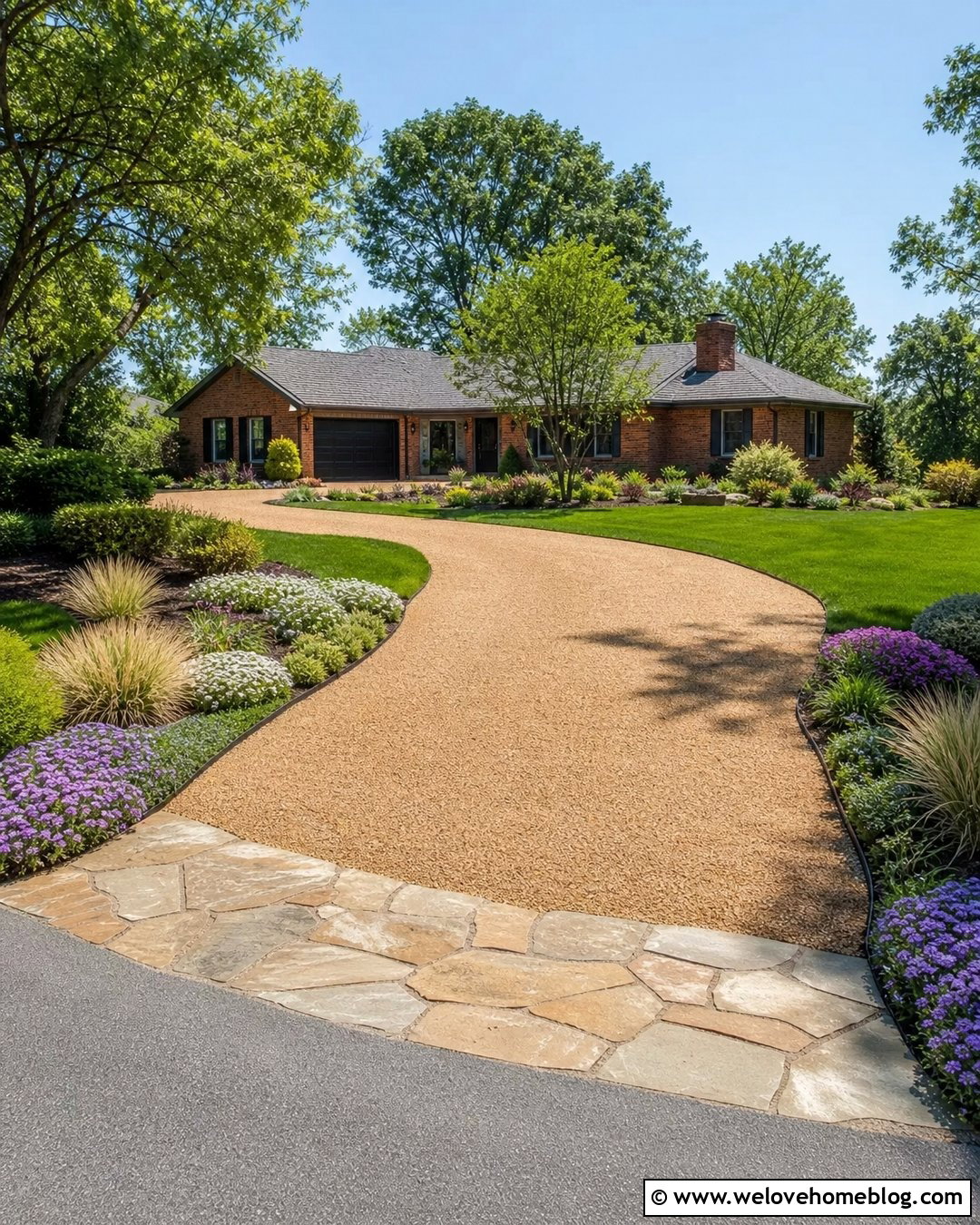
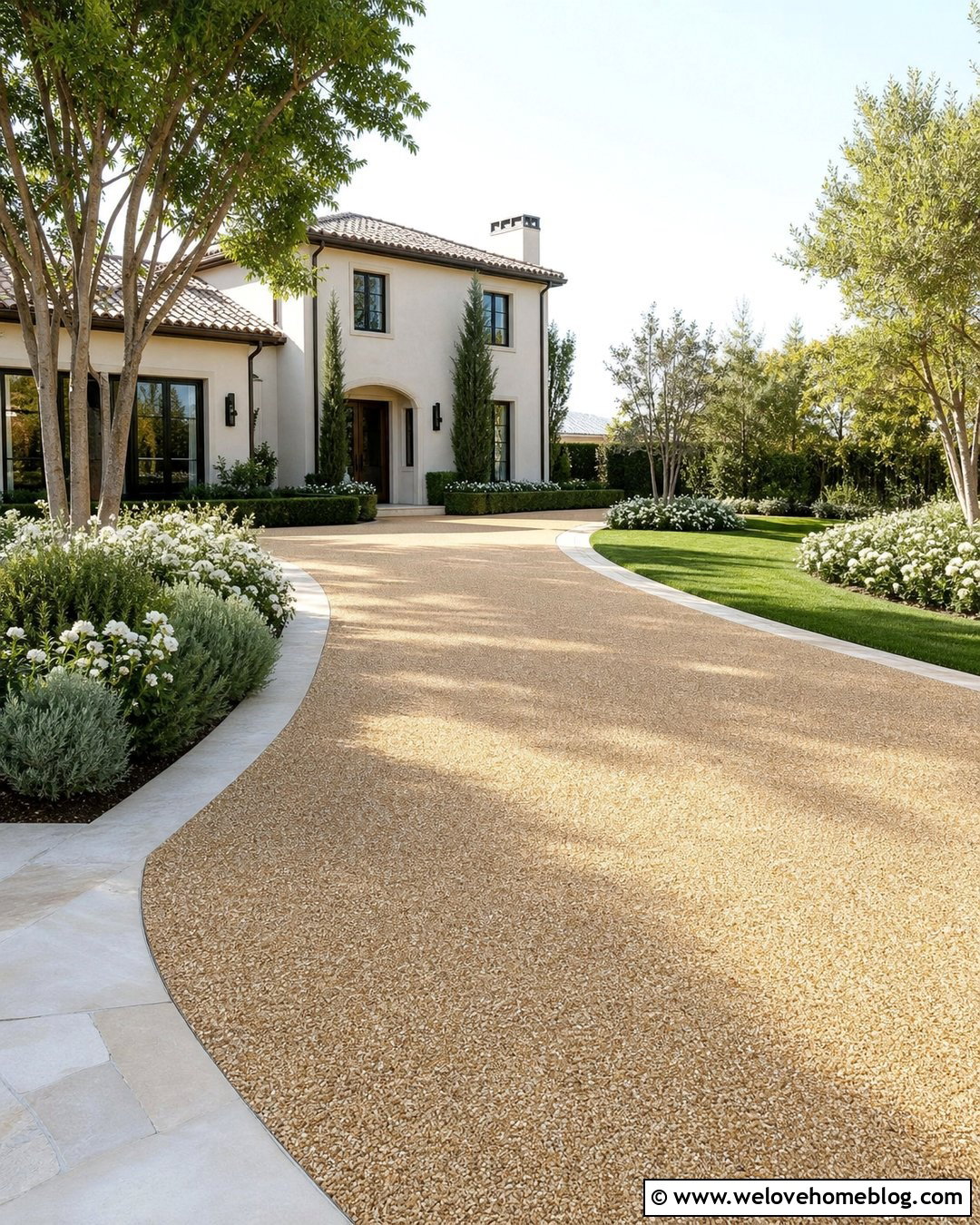
Wide pieces of natural flagstone can create a soft, handcrafted edge around a buff gravel driveway. Use irregular stones in muted gray, tan, and brown tones, setting them into a continuous band that follows a gentle curve. The border can widen near the house to become a stepping-stone walkway or small parking transition. This approach suits cottages, Craftsman homes, and wooded properties with naturalistic landscaping. Frame the driveway with ferns, hostas, hydrangeas, and low ground covers where the climate allows. Keep plants from spreading across the flagstone, since the border should remain visible and easy to maintain. The stones need a stable setting bed and consistent placement so they do not rock or shift. Matching the flagstone to existing porch or foundation stone helps unify the property.
15. Cottage Gravel Driveway With Reclaimed Brick Edging
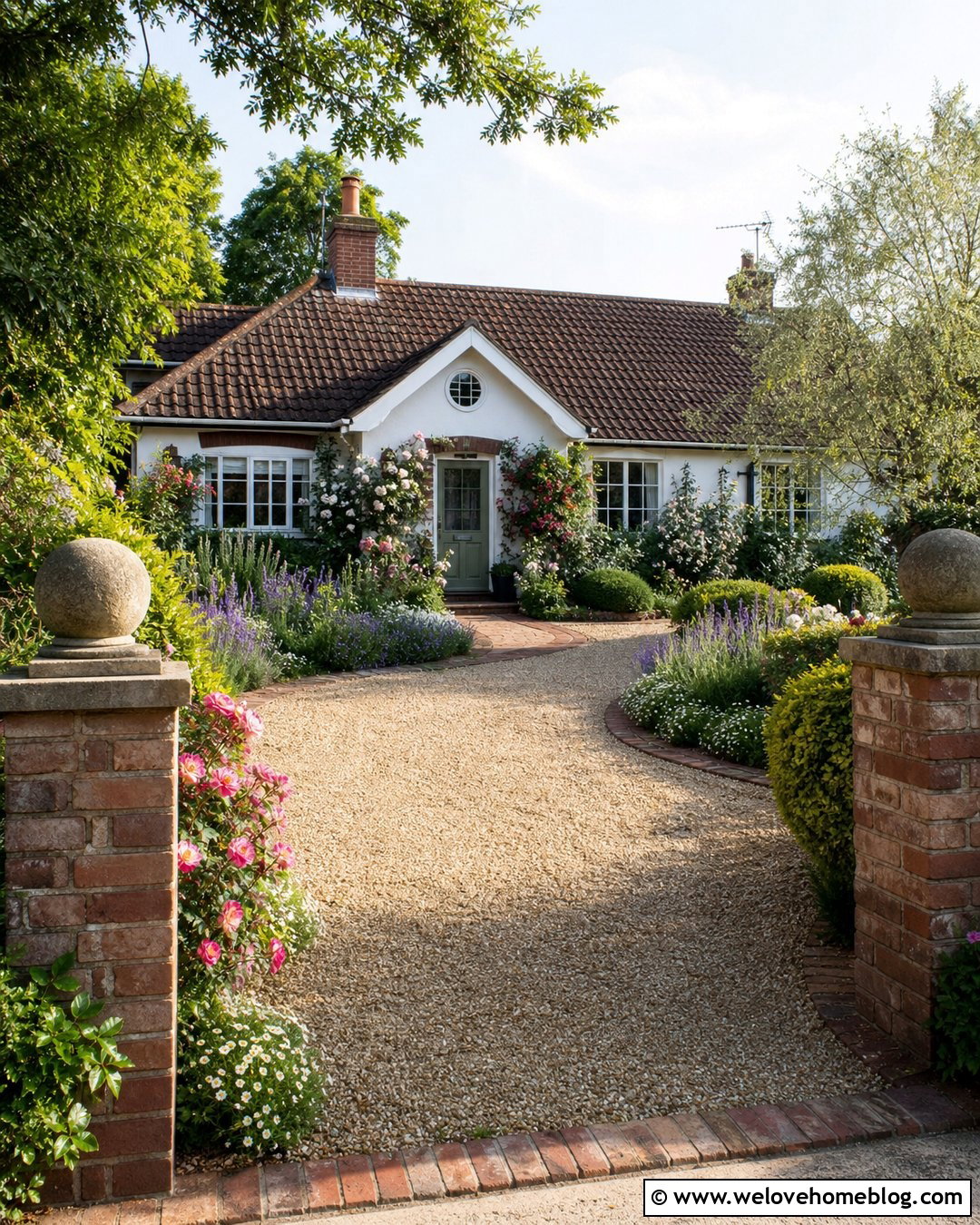
Reclaimed brick adds age and texture to a small gravel driveway leading to a cottage or bungalow. Pair soft beige pea gravel with weathered red, brown, and charcoal bricks arranged in a single soldier course. Let the driveway curve slightly toward the garage or side parking area, leaving room for generous flower beds along the approach. Roses, salvia, daisies, lavender, and clipped evergreen shrubs create a colorful but organized frame. Repeat the brick in a curved walkway leading to the front porch. Reclaimed units vary in size and condition, so select sound bricks and install them on an appropriate base rather than relying on appearance alone. The finished driveway should feel established and charming while still offering a clearly contained surface and practical access to the house.
16. Sloped Gravel Driveway With Gabion Edging
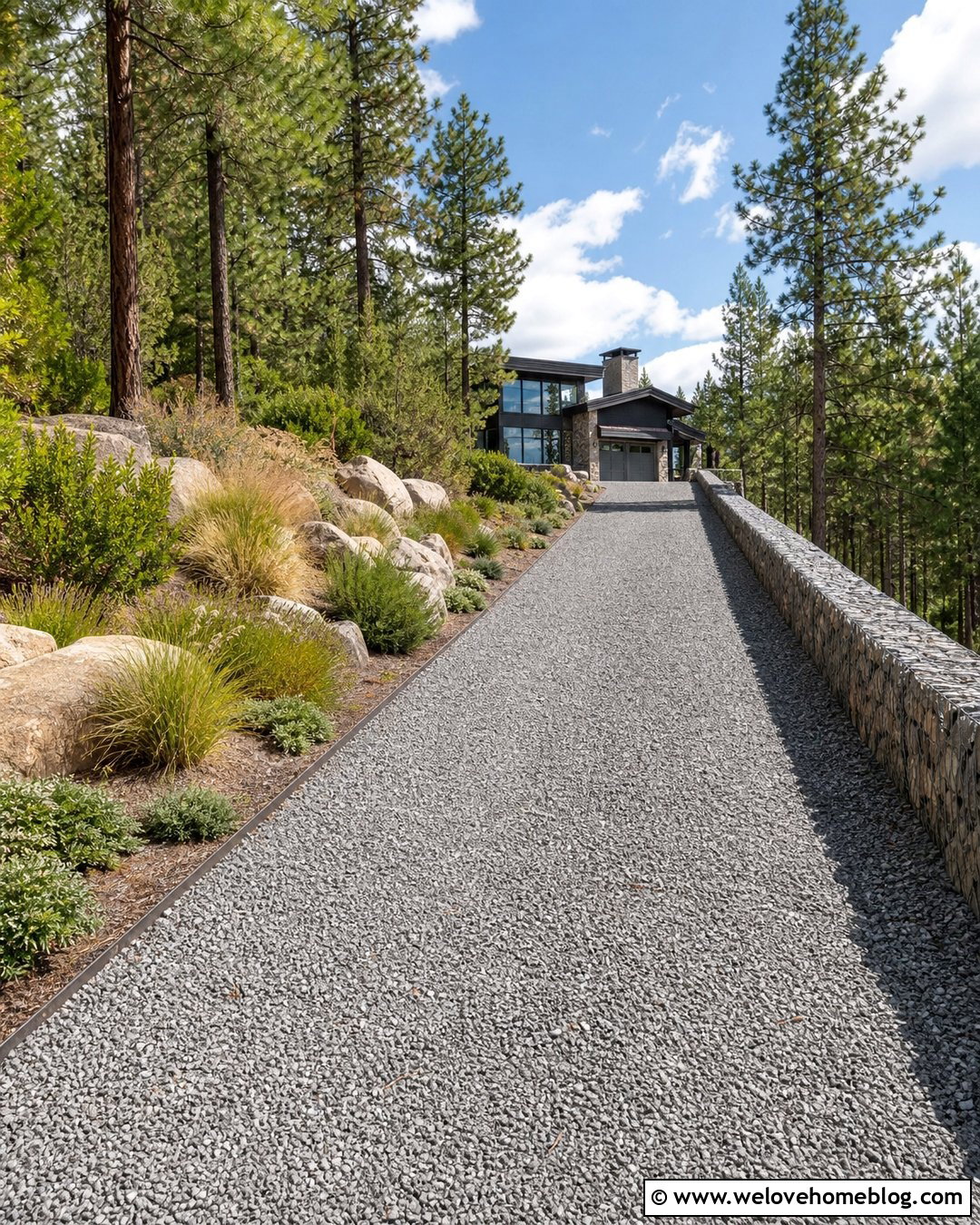
A sloped driveway may need more substantial edge treatment where the surrounding ground changes elevation. Use angular gray crushed stone across the driving surface and install a low gabion wall along the downhill side. Fill the wire baskets with durable local stone in colors that complement the house. On the uphill side, use a narrower steel or stone edge beside a planted bank. This complete design suits modern mountain homes, cabins, and contemporary rural houses. Add deep-rooted shrubs, ornamental grasses, and ground covers around the slope, keeping mature growth away from the driving lane. The gabion should be properly engineered for the site rather than treated as a decorative basket. Grading and managed runoff are particularly important on inclines because flowing water can carry loose gravel downhill. ()
17. Gravel Driveway With Low Stone Wall Edging
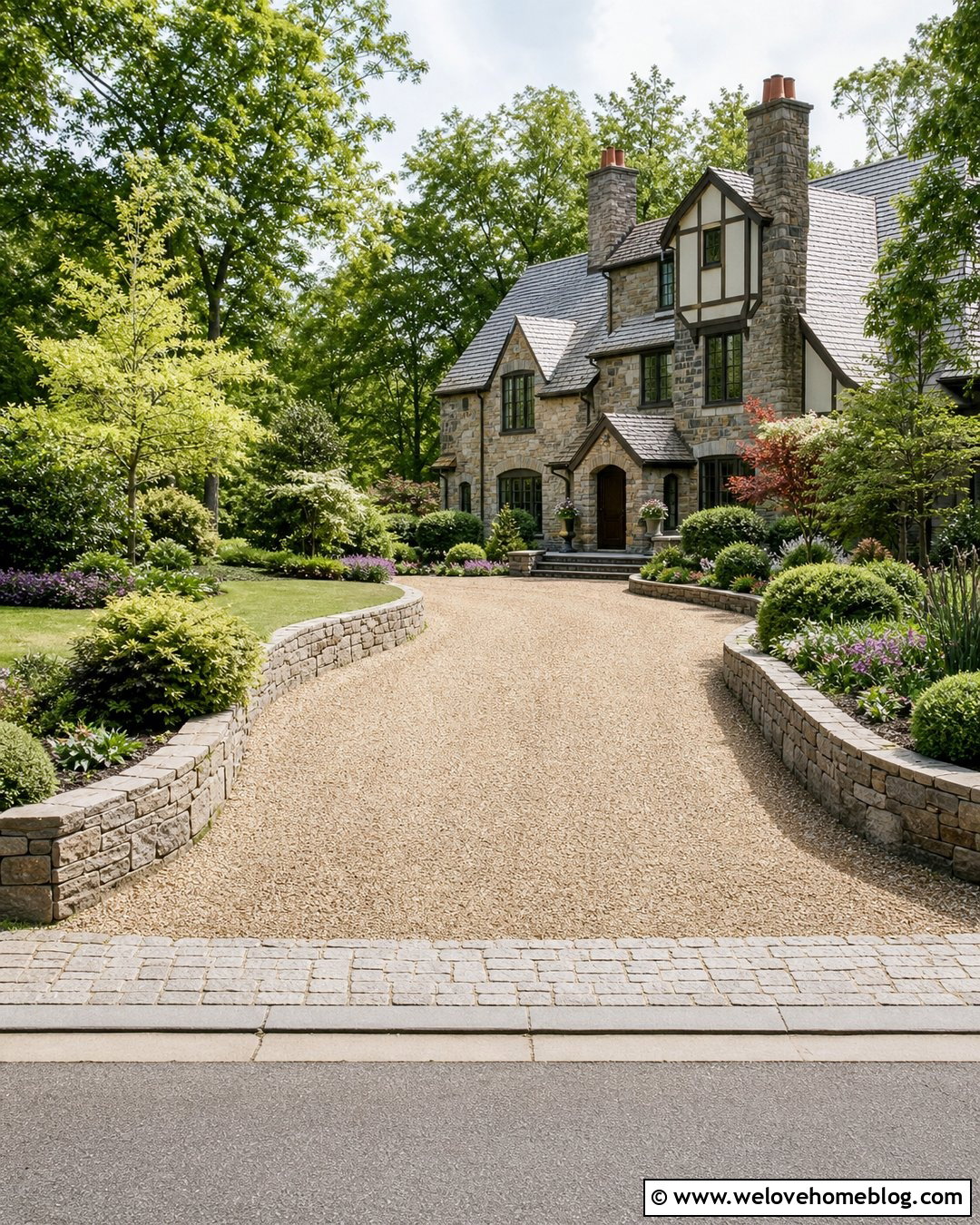
A low stone wall can define a gravel driveway while connecting it to raised planting beds. Use tan crushed gravel on a gently curved approach and construct the wall from ledgestone, fieldstone, or rectangular masonry that matches the home. Keep the wall low near the street and around corners so drivers have clear views when entering or leaving. Behind it, create layered beds with compact shrubs, flowering perennials, and small ornamental trees. This treatment is well suited to Craftsman, Tudor, and stone-front houses. Integrate broad openings for the front walkway and any garden paths rather than making the wall feel continuous and restrictive. Where the wall retains soil, include appropriate drainage and construction details. The result should frame the entire driveway without making the entrance feel narrow or enclosed.
18. Stabilized Gravel Driveway With Hidden Edging
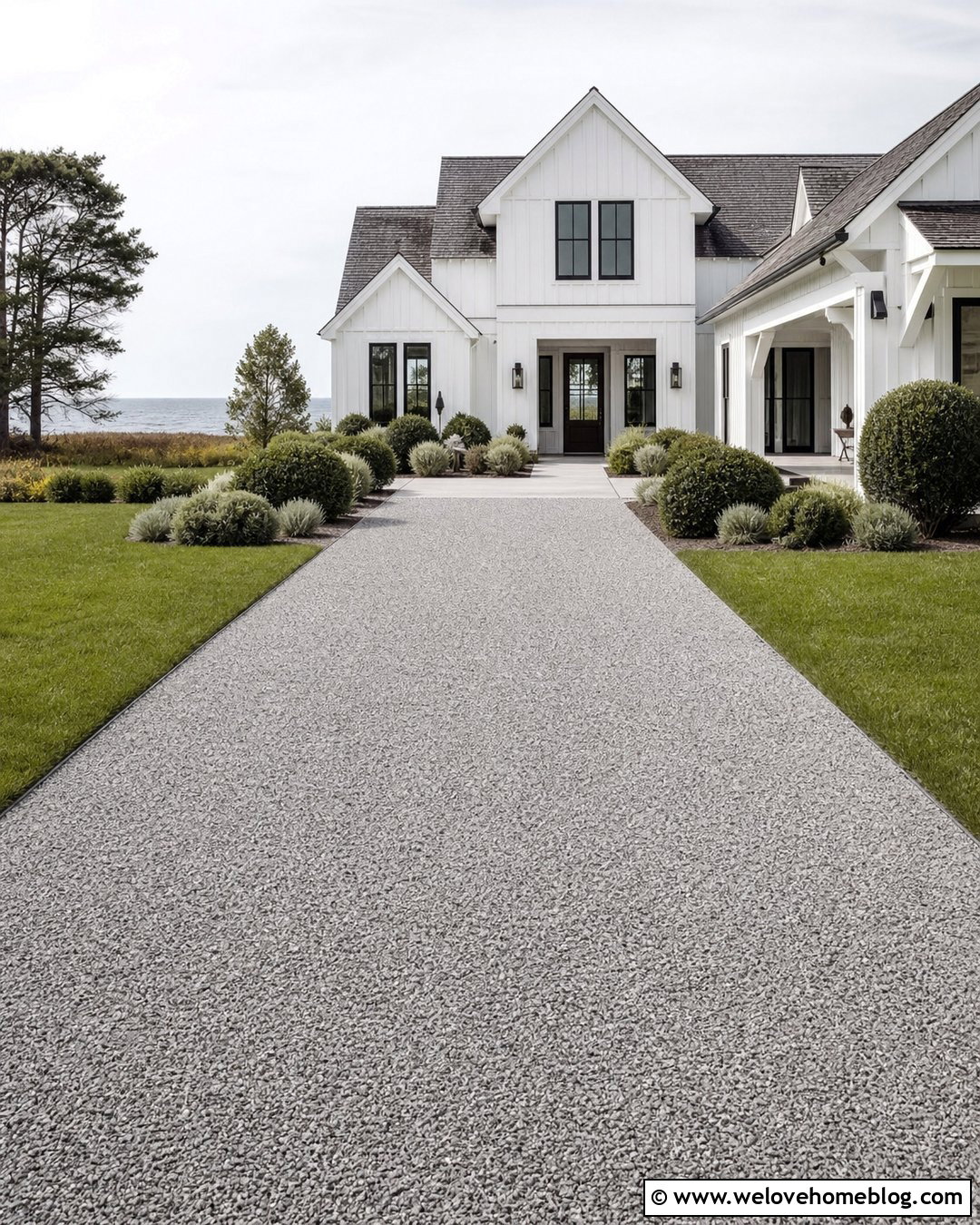
For a nearly borderless appearance, combine light gray gravel with a load-bearing stabilization grid and concealed edge restraints. Use this system across a wide, straight driveway leading to a minimalist, coastal, or modern farmhouse exterior. The hidden border allows lawn or low planting beds to meet the gravel with a crisp line, while the internal grid helps maintain a more even surface. Add broad grass strips, rounded shrubs, and a simple concrete walkway to keep the landscaping calm. Choose gravel sized for the grid system and follow the manufacturer’s specifications for excavation, base preparation, and filling. This driveway looks simple from the street, but its success depends on careful construction below the surface. Edge restraints remain an important part of permeable gravel driveway design, even when they are intentionally concealed. ()
19. Gravel Driveway With Flower Bed Edging
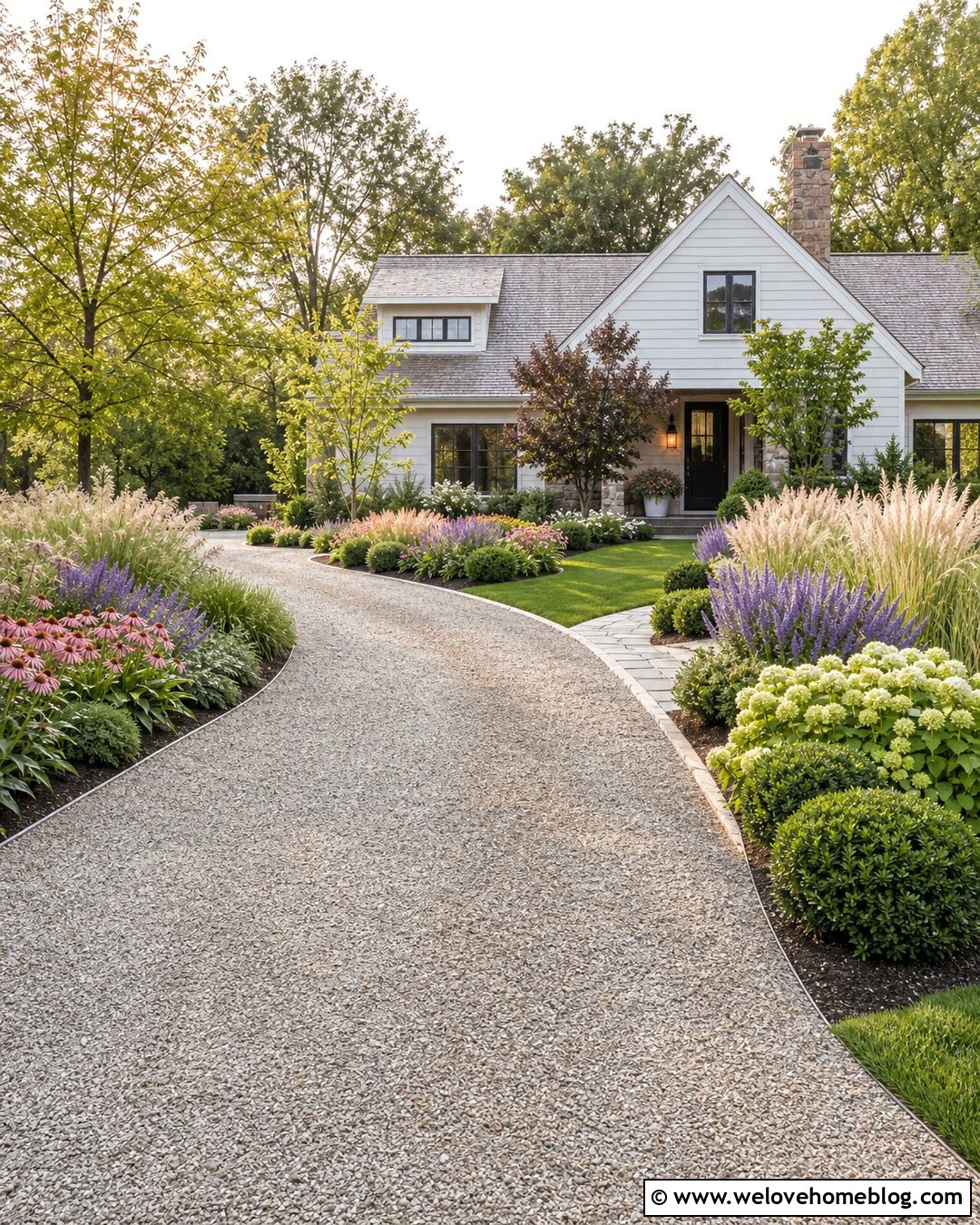
A planted border can soften a gravel driveway when it is paired with a durable hidden restraint. Use warm gray crushed gravel on a gently winding approach, then install low aluminum edging between the aggregate and flower beds. Layer the landscaping with compact evergreens, ornamental grasses, long-blooming perennials, and spring bulbs. Keep taller plants farther from the driving area so they do not obstruct doors, mirrors, or visibility. This complete look can complement a farmhouse, cottage, ranch, or suburban home depending on the plant palette. Repeat a few plant varieties on both sides rather than using too many unrelated species. Mulch should sit below the edging to reduce spillover. The concealed structure controls the gravel, while the visible planting creates a colorful and welcoming frame from the street to the entrance. ()
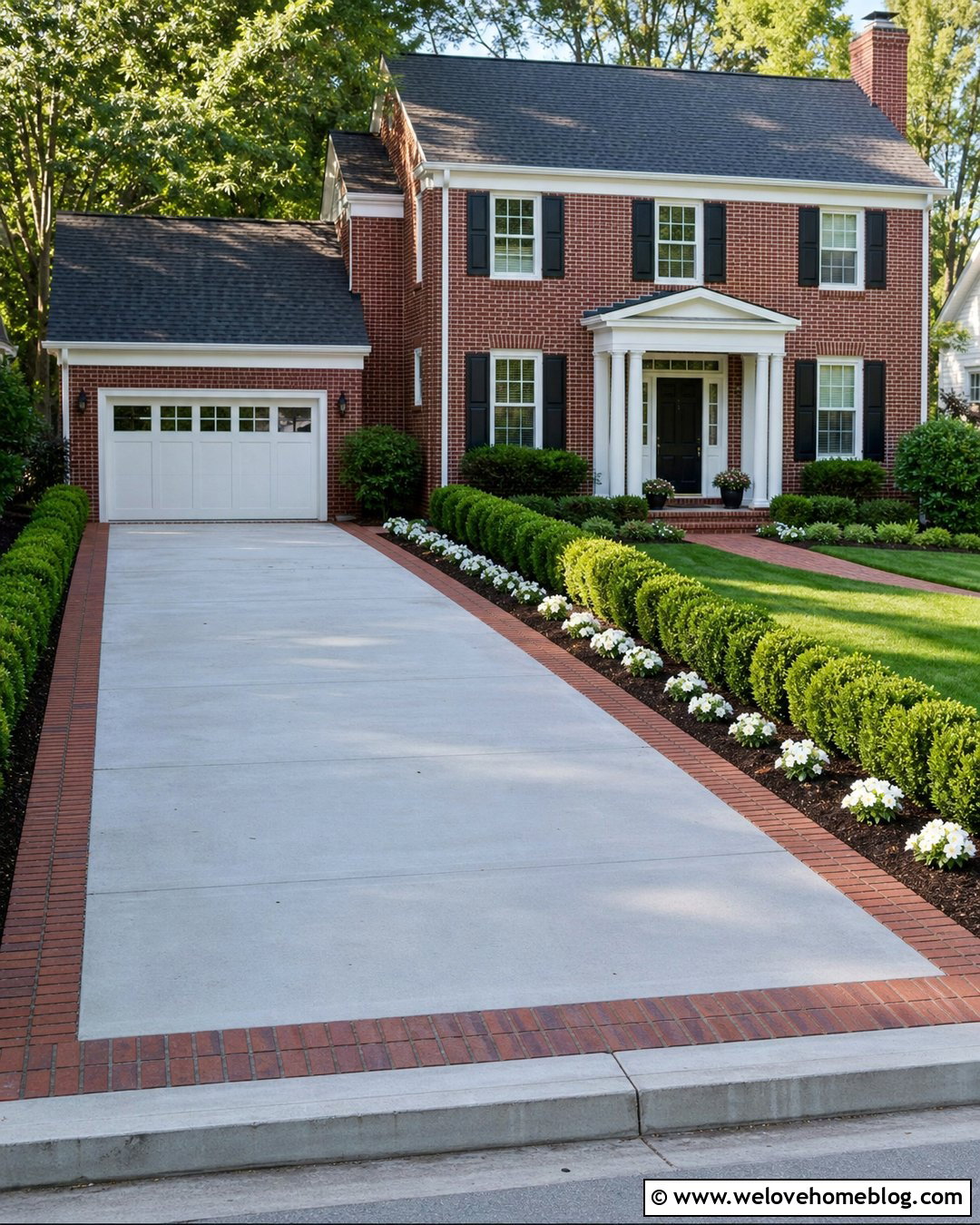
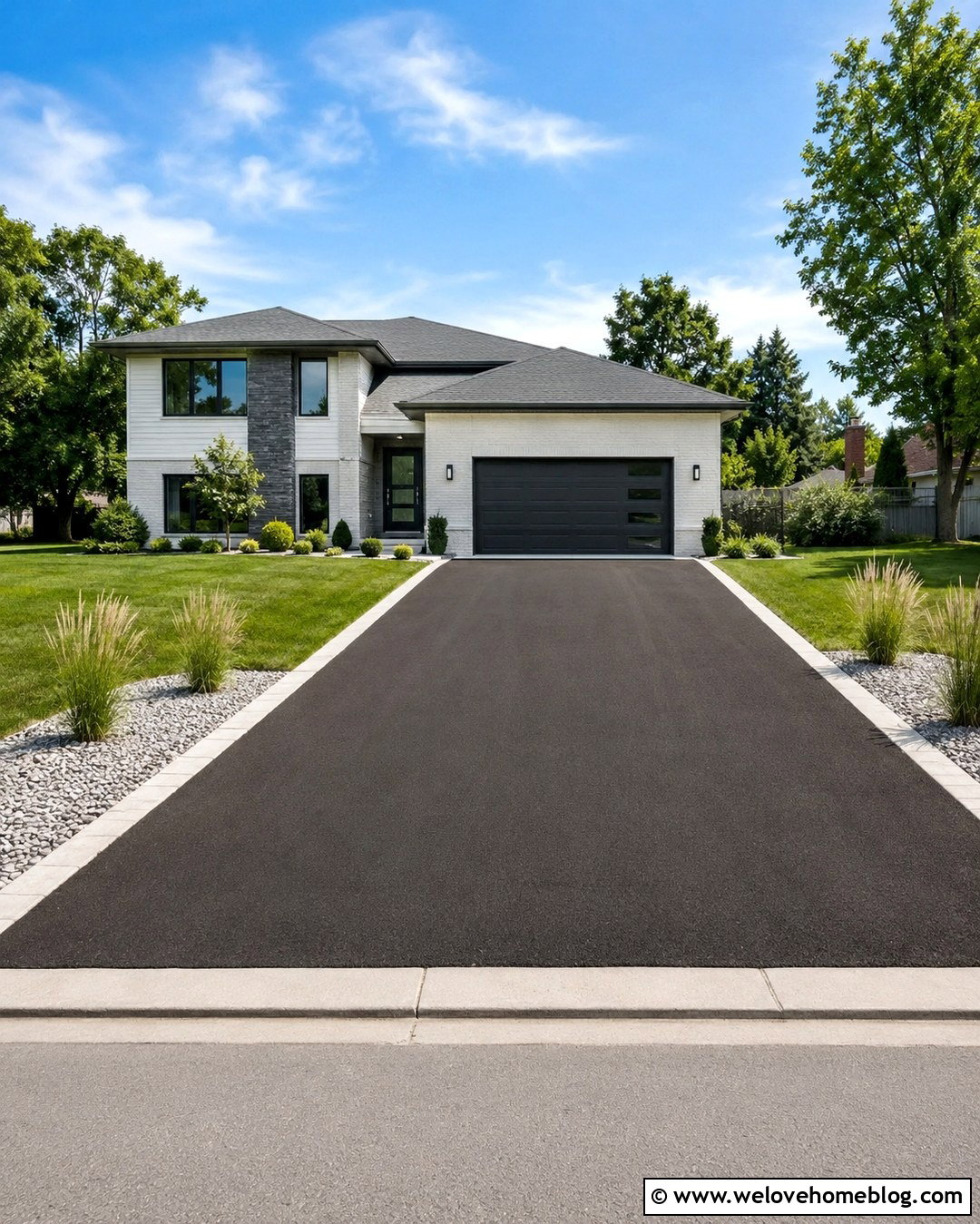
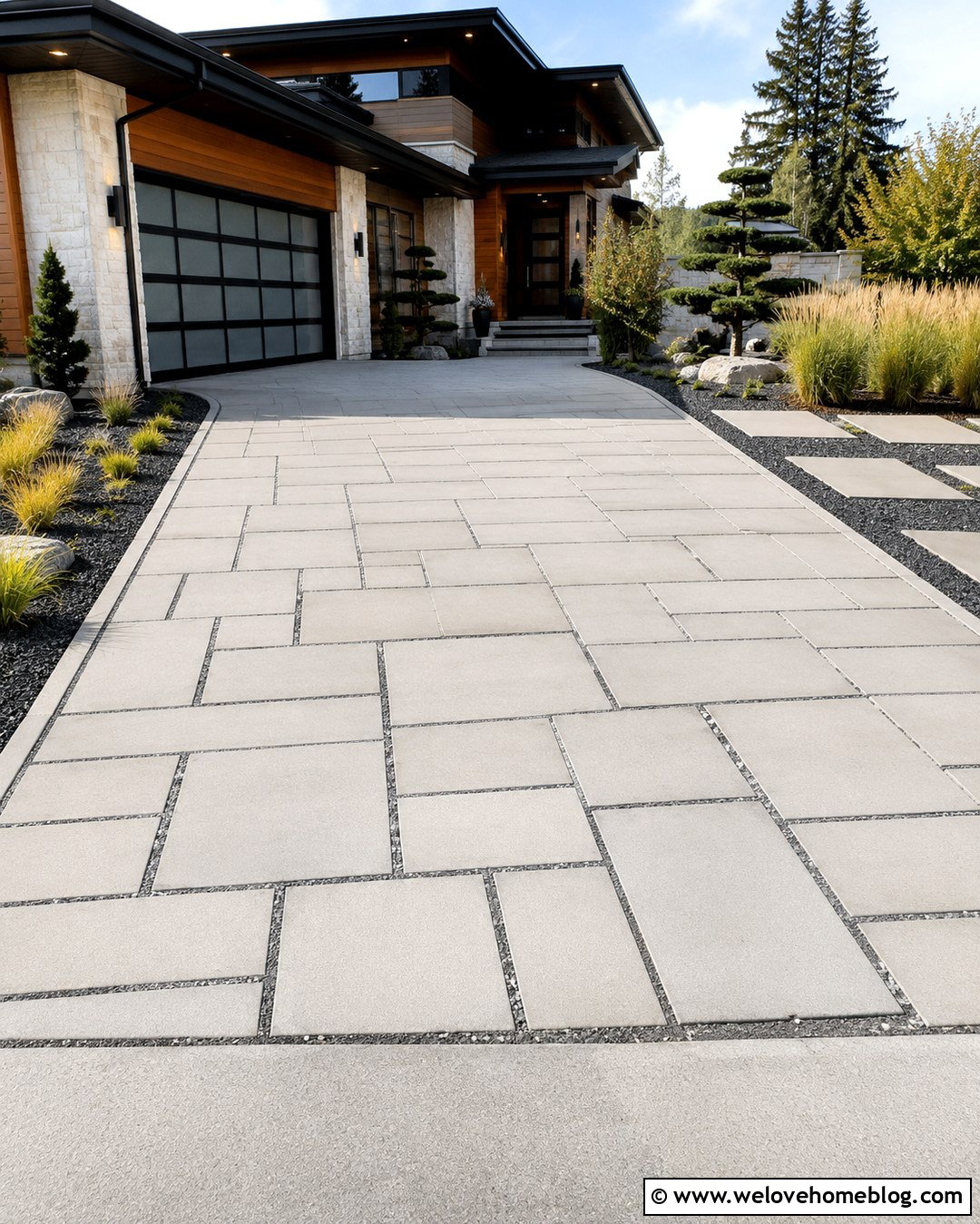
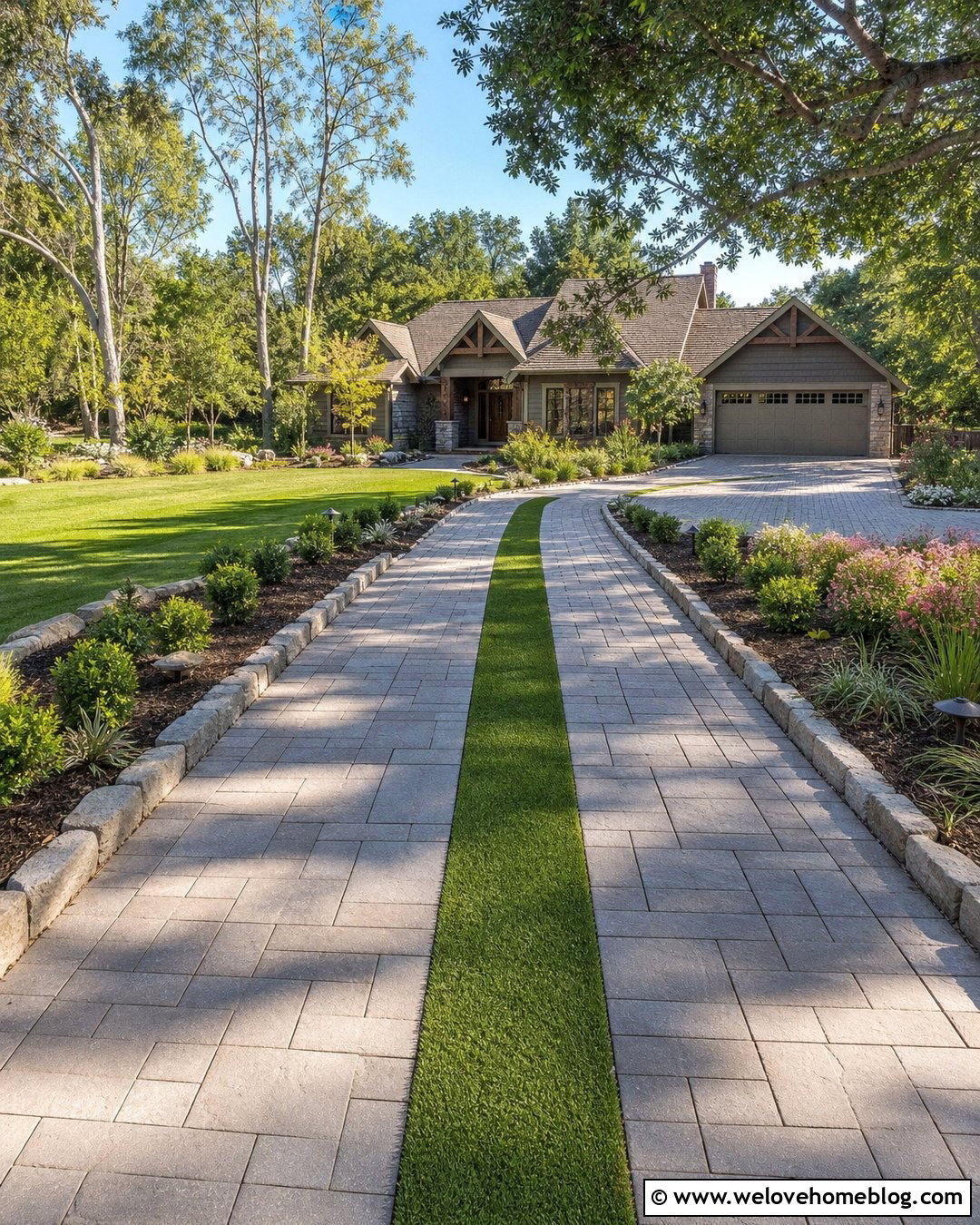
20. Gravel Driveway Entrance With Stone Pillars And Edging
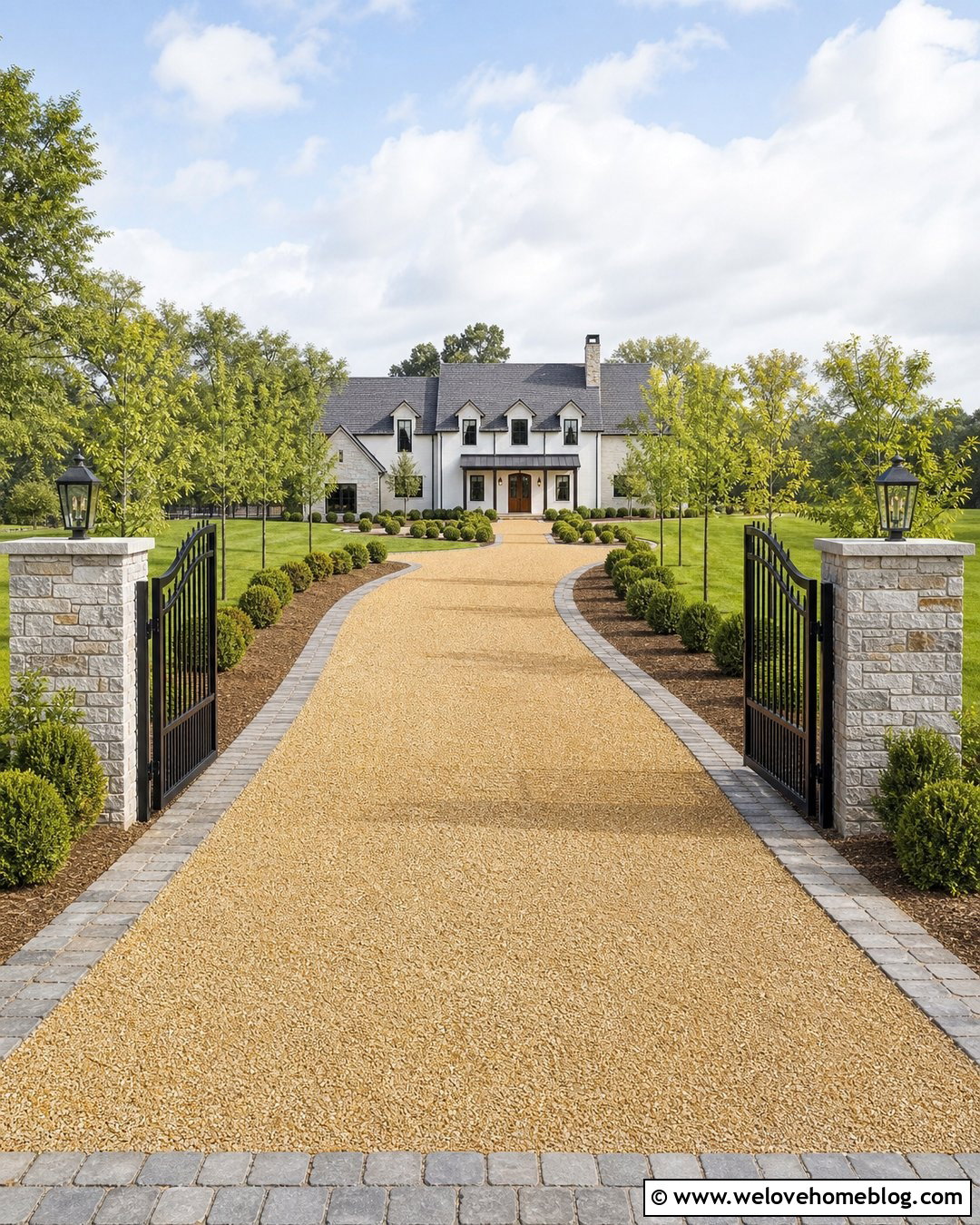
Create a memorable entrance by combining a gravel driveway, continuous stone edging, and matching masonry pillars. Use golden crushed gravel on a broad curved approach, with gray-brown stone setts lining both sides. Build low pillars at the street and repeat the same stone around an address marker or mailbox. A simple open gate can be included if it does not crowd the entrance or reduce visibility. Continue the edging past rows of small trees, clipped shrubs, and wide lawn areas toward a traditional farmhouse or estate-style home. The pillars should feel proportional to the house and driveway rather than oversized. Matching materials across the entrance, borders, walkway, and foundation creates visual continuity. This coordinated approach makes gravel feel like a deliberate part of the architecture instead of a temporary surface.
Conclusion:
The best gravel driveway edge does more than create a tidy line. It helps the surface, layout, landscaping, and house work together as one complete design. Cobblestone and granite bring traditional character, while steel and concrete suit modern properties. Timber feels relaxed and rural, and brick adds warmth around cottages or classic homes. Drainage channels, low walls, and stabilized grids can solve practical site challenges without sacrificing curb appeal. Before choosing a border, consider driveway curves, vehicle clearance, runoff, maintenance, and nearby materials. Proper base preparation and secure installation are just as important as appearance. Use these **20 Edge Gravel Driveway Ideas** to create an attractive entrance that remains defined, functional, and welcoming.

Related posts:

Leave a Reply