
A well-paved driveway can make your home feel more polished before guests even reach the front door. The best **Pave Driveway Ideas** combine a durable driving surface with a practical layout, defined borders, thoughtful drainage, and landscaping that complements the house. Current designs range from traditional clay brick and cobblestone to permeable concrete pavers, large-format slabs, and mixed-material patterns. () Consider your home’s architecture, local climate, maintenance expectations, and available turning space before selecting a look. Small details also matter, including the driveway apron, walkway connection, lighting, and transition into the garage. The complete designs below offer adaptable inspiration for different homes, lot sizes, and budgets through 20 Pave Driveway Ideas.

1. Gray Herringbone Paver Driveway
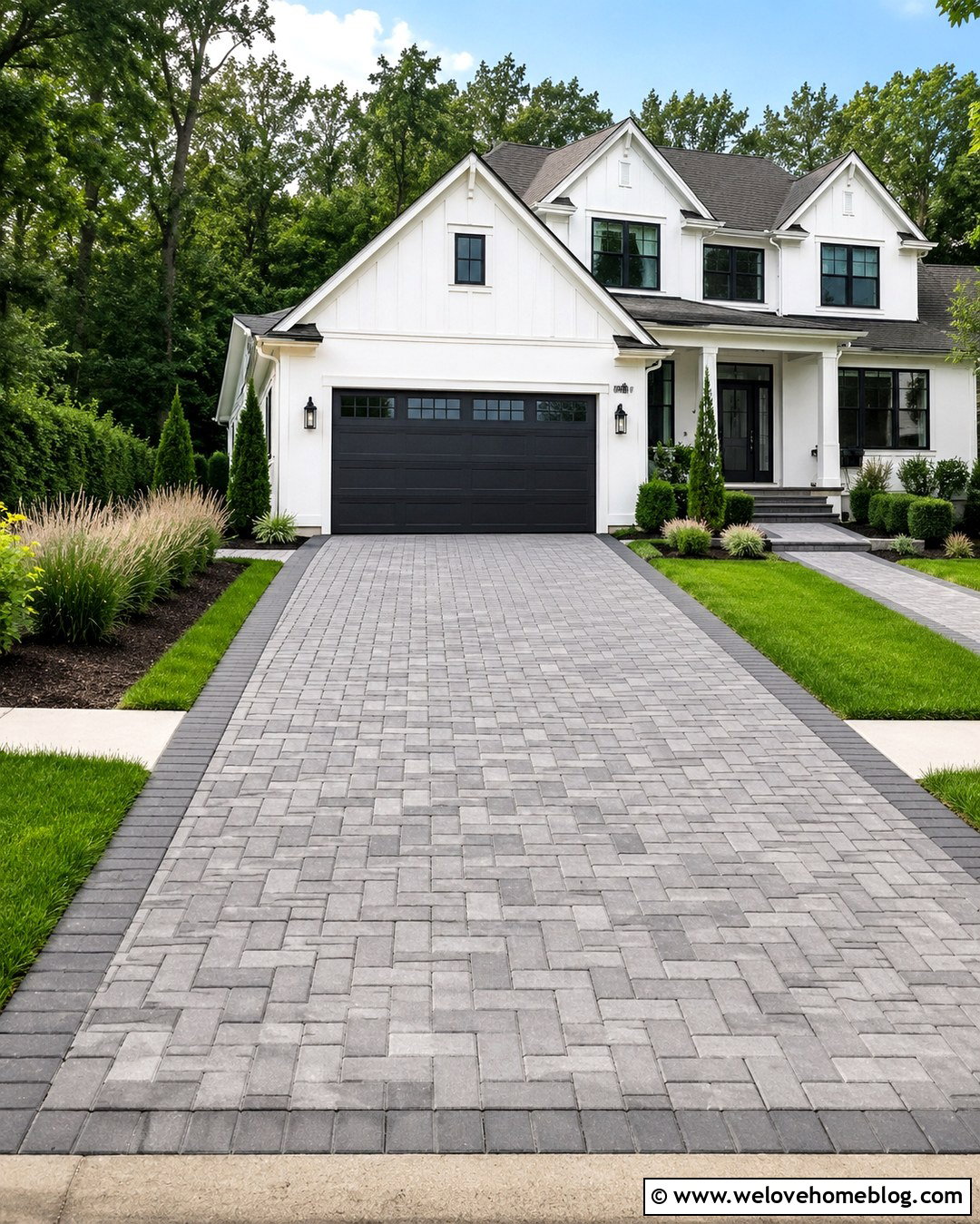
A gray herringbone paver driveway creates a clean, tailored entrance that works especially well with modern and transitional homes. Choose medium-gray concrete pavers with subtle color variation so dirt and tire marks remain less noticeable. The interlocking pattern gives a long, straight driveway more movement without making the design feel busy. Frame the surface with charcoal soldier-course pavers to define both edges and contain the field pattern. Low ornamental grasses, rounded evergreen shrubs, and a straight walkway can reinforce the organized appearance. At the garage, continue the dark border across the driveway to create a finished transition. Proper grading and a compacted base are essential, particularly where runoff could otherwise collect near the home.
2. Red Brick Paver Driveway
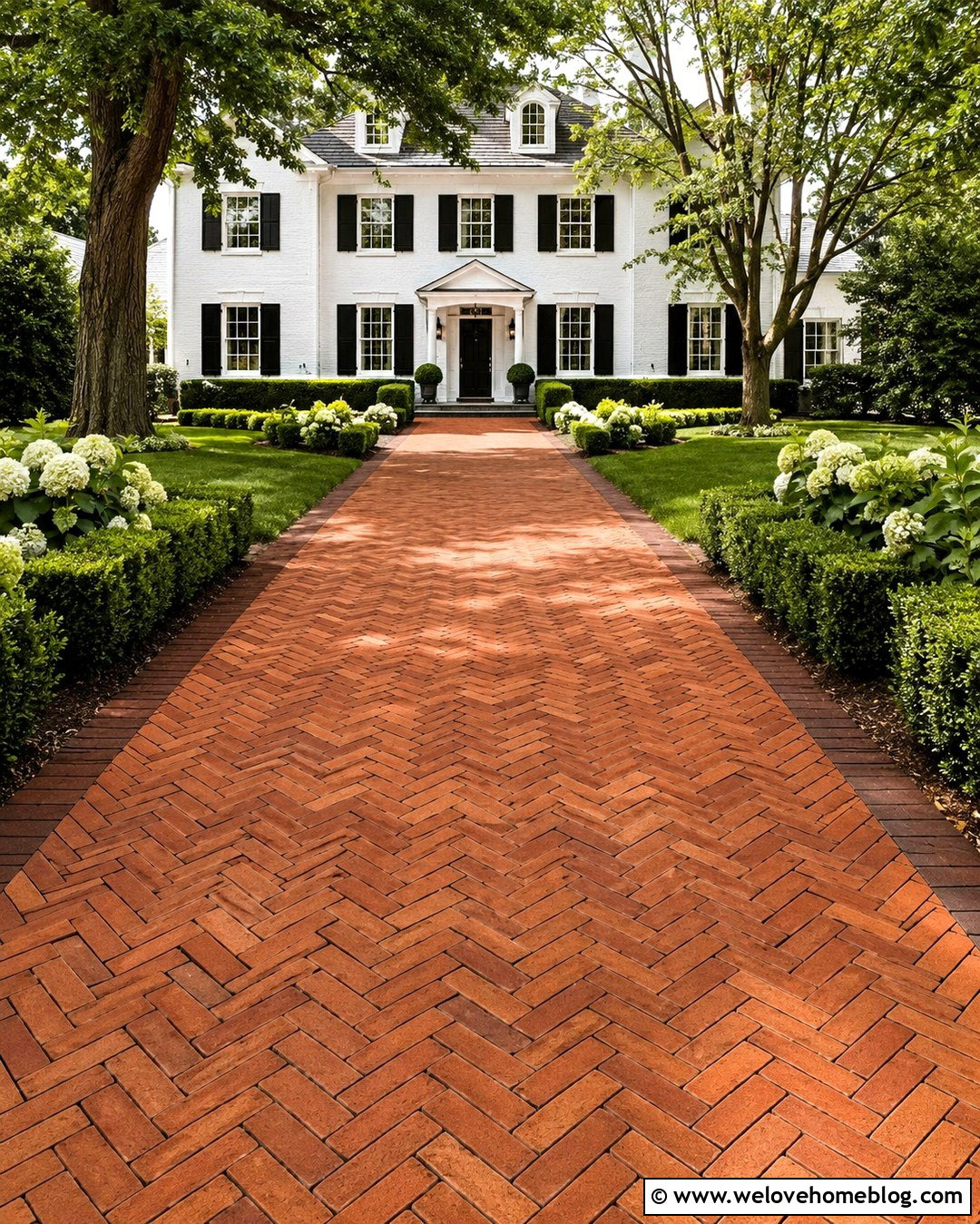
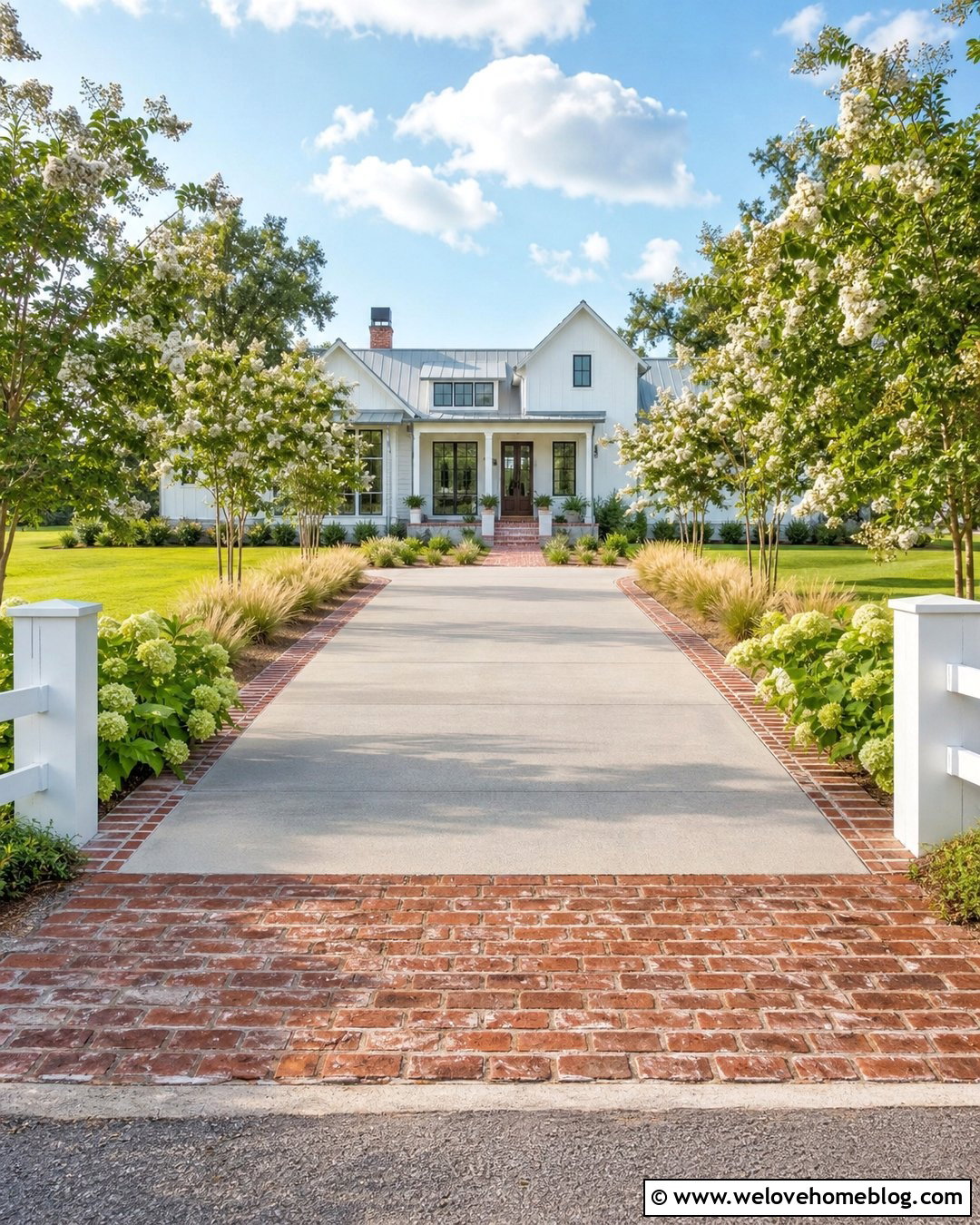
Warm red clay brick pavers bring natural character to a colonial, Cape Cod, or traditional brick house. A herringbone field is a smart choice for the main driveway because its angled pattern visually disguises minor alignment changes and creates a strong sense of craftsmanship. Add a straight running-bond border in a slightly darker brick to keep the edges crisp. On both sides, use clipped boxwood, flowering hydrangeas, and a green lawn for a balanced residential look. Connecting the driveway to a matching brick walkway makes the entire front yard feel planned rather than pieced together. Before installation, choose brick pavers manufactured and rated for vehicle traffic, freeze-thaw exposure, and the conditions found in your region.
3. Curved Cobblestone Driveway
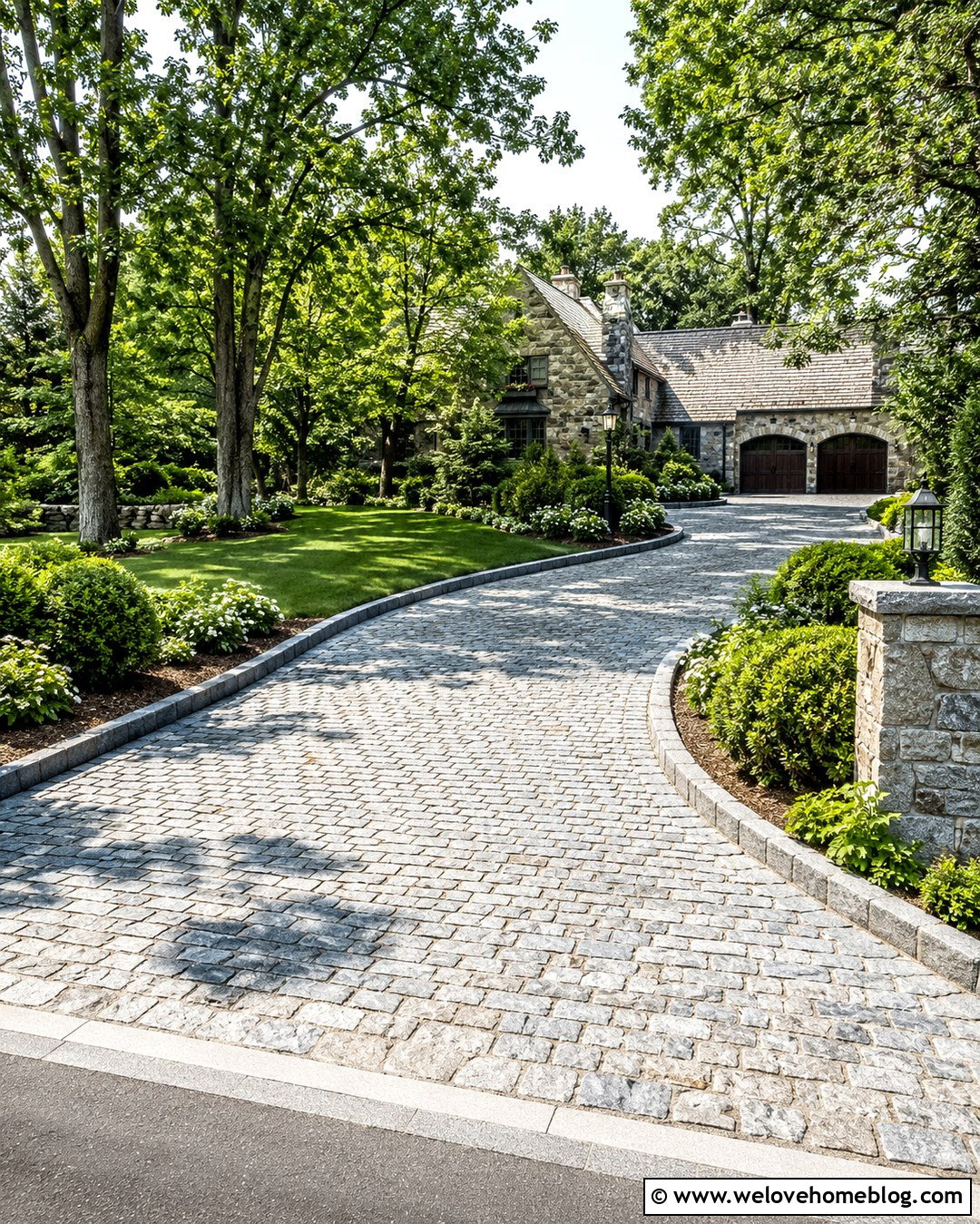
A curved cobblestone driveway can soften a wide front yard while giving the approach an established, European-inspired appearance. Use gray granite cobblestones in a gently arcing layout that reveals the house gradually rather than creating one rigid line from the street. Larger granite curbs can stabilize the edges and provide a clear divide between the paving and planting beds. Surround the curve with shade trees, layered evergreen shrubs, and informal ground covers that complement the stone’s irregular texture. A broad cobblestone apron at the curb makes the entrance feel more generous. Because the surface naturally has more texture than smooth paving, careful installation is important for comfortable walking, dependable drainage, and an even transition into the garage.
4. Large Concrete Paver Driveway
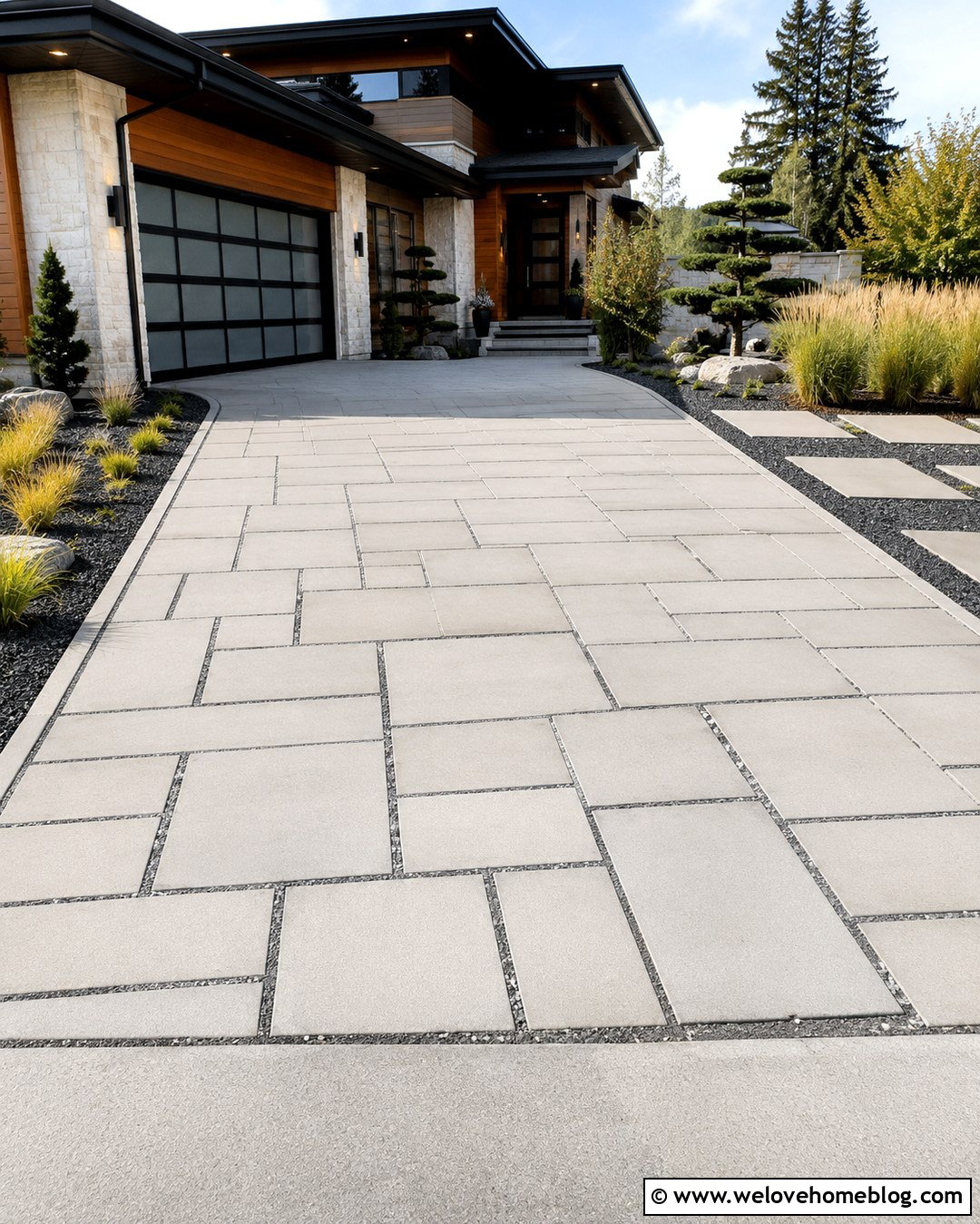
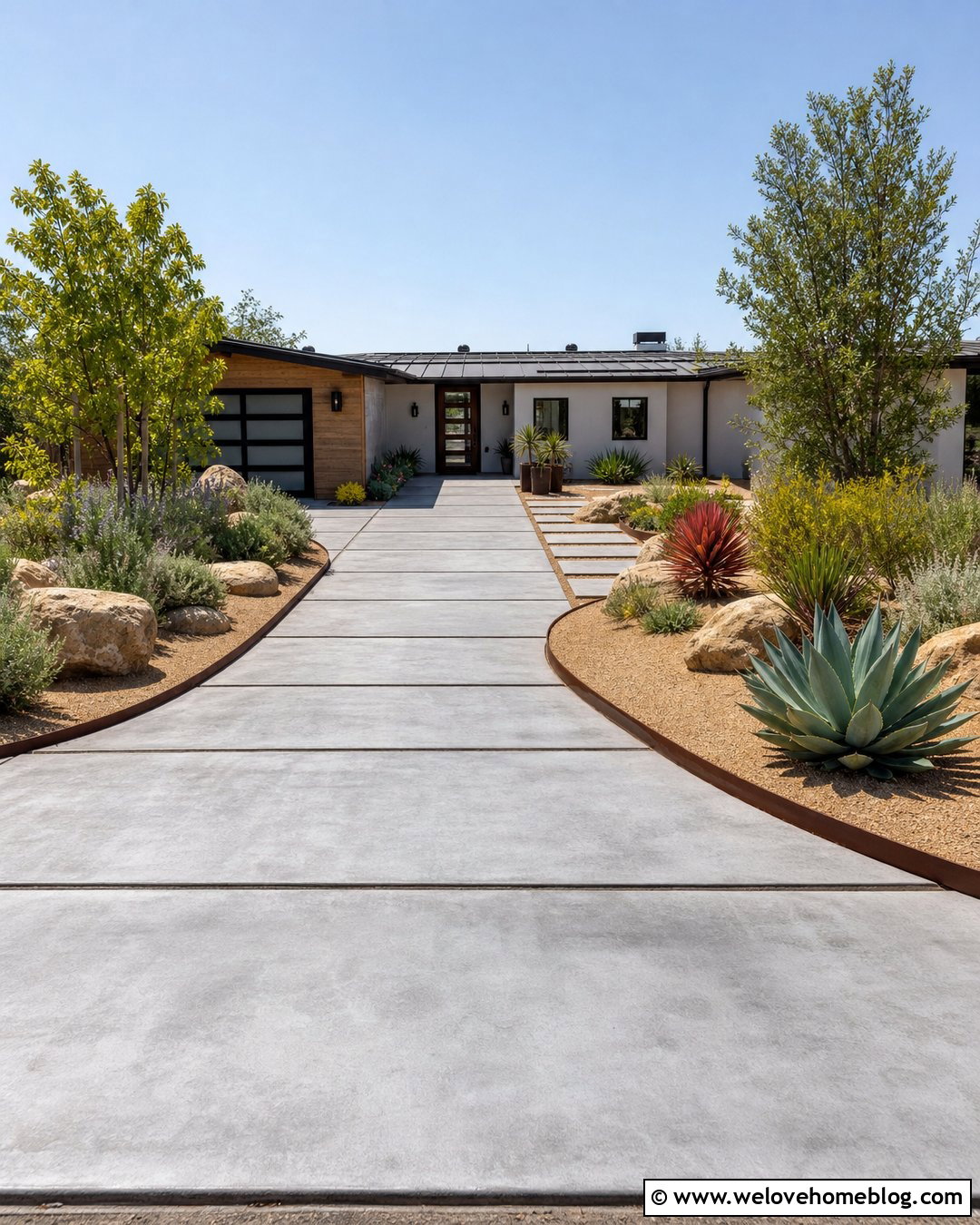
Large concrete pavers deliver a streamlined paved driveway without relying on one continuous gray slab. Select oversized rectangular units in a light warm-gray finish and arrange them in a staggered pattern for a contemporary look. Narrow joints filled with dark aggregate can emphasize the geometry, while flush concrete curbs prevent the edges from shifting. This design works beautifully with a modern house featuring stucco, wood, glass, or dark metal details. Keep the landscaping equally simple with sculptural evergreens, ornamental grasses, and broad areas of mulch or decorative stone. Carry the same paver size into the front walkway to connect the garage and entrance visually. Use driveway-rated units with adequate thickness rather than thinner patio slabs that were not designed for vehicles.
5. Permeable Paver Driveway With Rain Garden
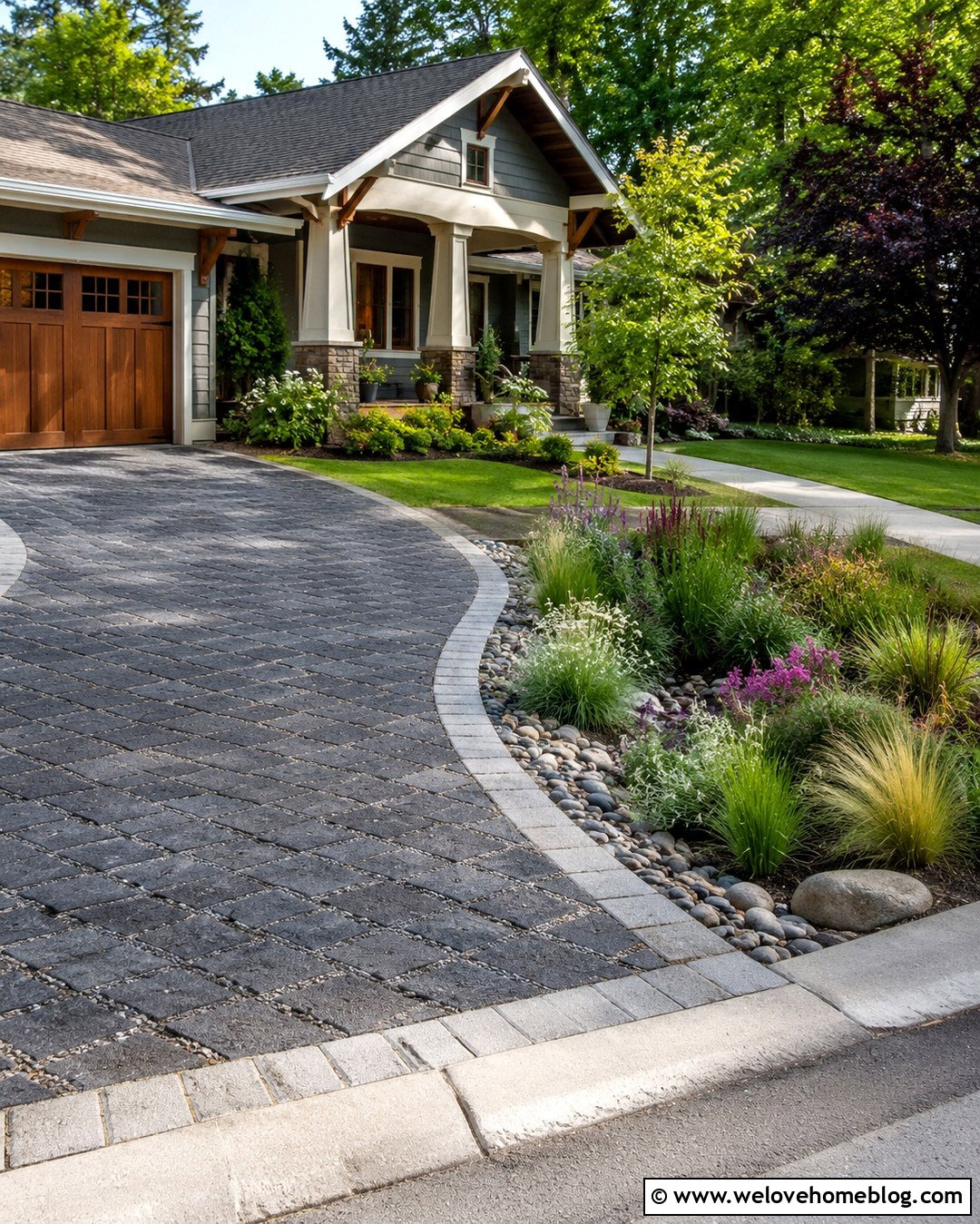
Permeable concrete pavers can turn a paved driveway into a more drainage-conscious part of the landscape. Choose charcoal or natural-gray permeable units with wider aggregate-filled joints that allow water to move through the surface. A straight or gently curved layout can direct the eye toward a Craftsman home while a shallow rain garden sits along the lower edge. Fill the garden with regionally appropriate grasses, moisture-tolerant perennials, and decorative river stone. A contrasting paver border helps frame the driveway without blocking surface flow. This complete look feels greener than an uninterrupted expanse of hardscape. Successful performance depends on the entire system, including the excavated base, open-graded stone layers, joint material, soil conditions, and a suitable drainage plan.
6. Circular Paver Driveway With Center Garden
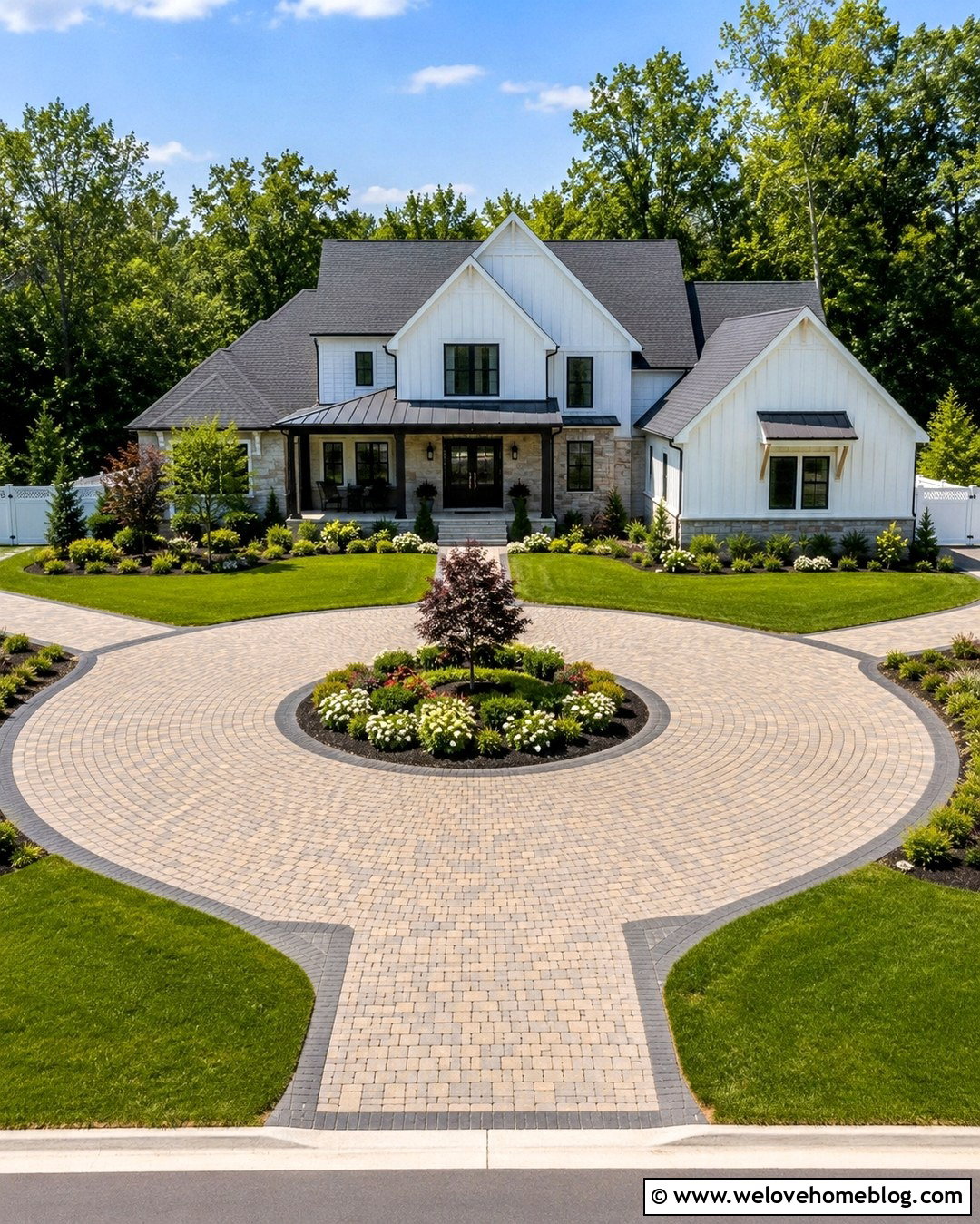
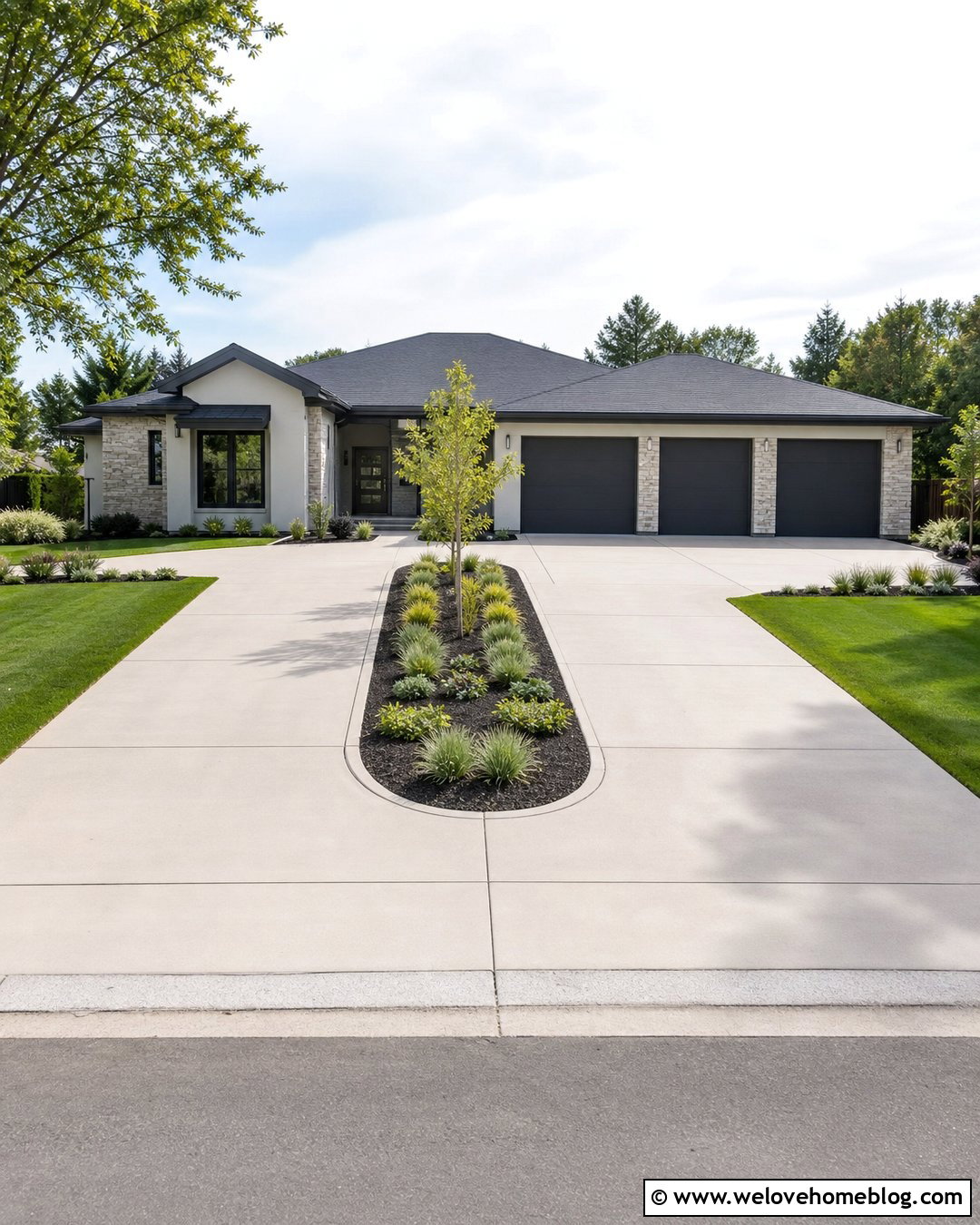
A circular paver driveway creates a welcoming arrival area and allows vehicles to move through without lengthy reversing. Tumbled concrete pavers in blended tan and gray tones suit a modern farmhouse, French country home, or large traditional residence. Arrange the pavers in a fan or concentric pattern so the surface follows the curve naturally. In the center island, plant one small ornamental tree surrounded by low shrubs and seasonal perennials that will not obstruct sightlines. A darker paver border can outline both the outer drive and inner garden. Add a matching walkway from the circle to the front porch. Confirm that the turning radius, driveway width, gate placement, and street connections provide comfortable vehicle movement before finalizing the layout.
7. Bluestone Paver Driveway
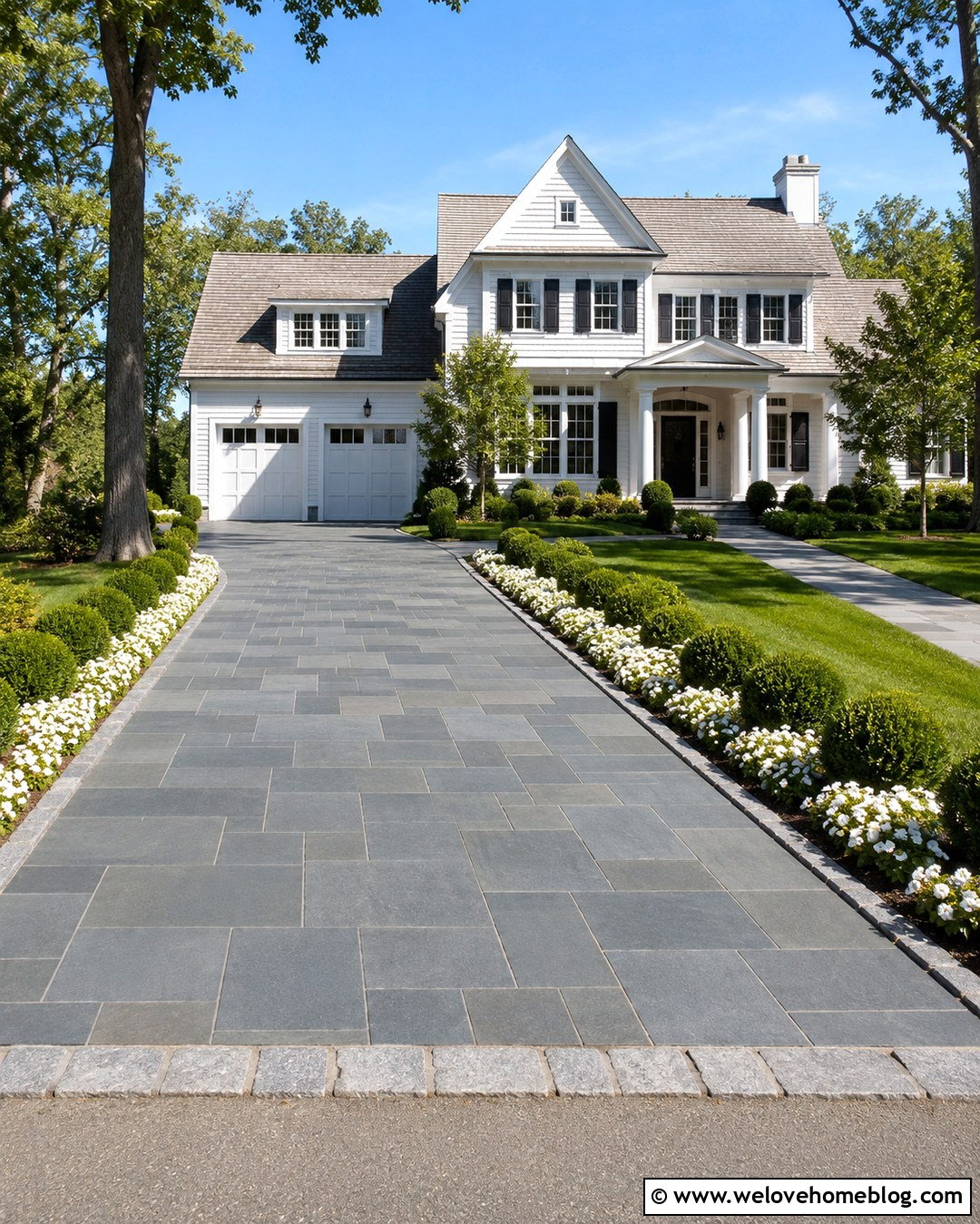
Bluestone pavers give a driveway a refined natural-stone surface with rich blue-gray color and subtle tonal movement. Use rectangular, vehicle-rated stone in a random ashlar layout for a sophisticated approach to a white colonial or shingle-style house. A thermal or textured finish can provide a more practical outdoor surface than highly polished stone. Edge the driveway with granite curbing, then repeat bluestone on the front steps or walkway to create visual continuity. Soft green shrubs, white flowering plants, and mature shade trees will allow the stone color to remain the focal point. Since natural stone can vary in thickness, color, and performance, review samples and discuss the local climate, base preparation, drainage, and sealing expectations with an experienced installer.
8. Travertine Paver Driveway
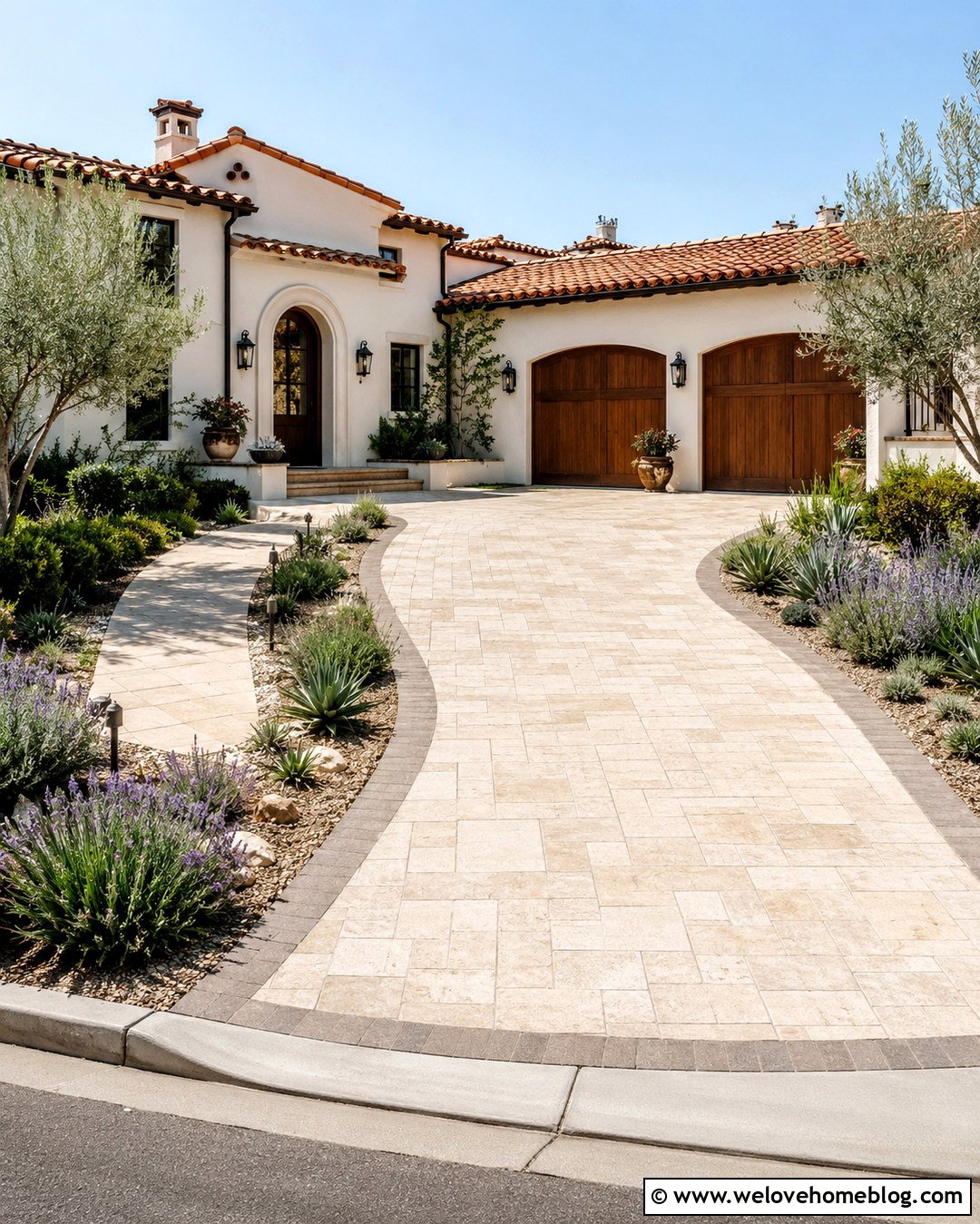
Cream and beige travertine pavers can brighten the entrance of a Mediterranean, Spanish Revival, or stucco home. Choose dense, driveway-suitable stone with a textured finish and arrange it in a mixed rectangular pattern. A darker taupe border will outline the paving and provide contrast against pale exterior walls. Frame the driveway with drought-tolerant planting beds containing olive-like trees, lavender, agave, and low evergreen shrubs suited to the local region. Terracotta roof tiles and warm wood garage doors complete the coordinated palette. Travertine requires careful product selection because stone quality, porosity, and climate suitability can differ. In areas with frequent freezing conditions, ask a qualified local installer whether a specific product and installation system are appropriate before making an investment.
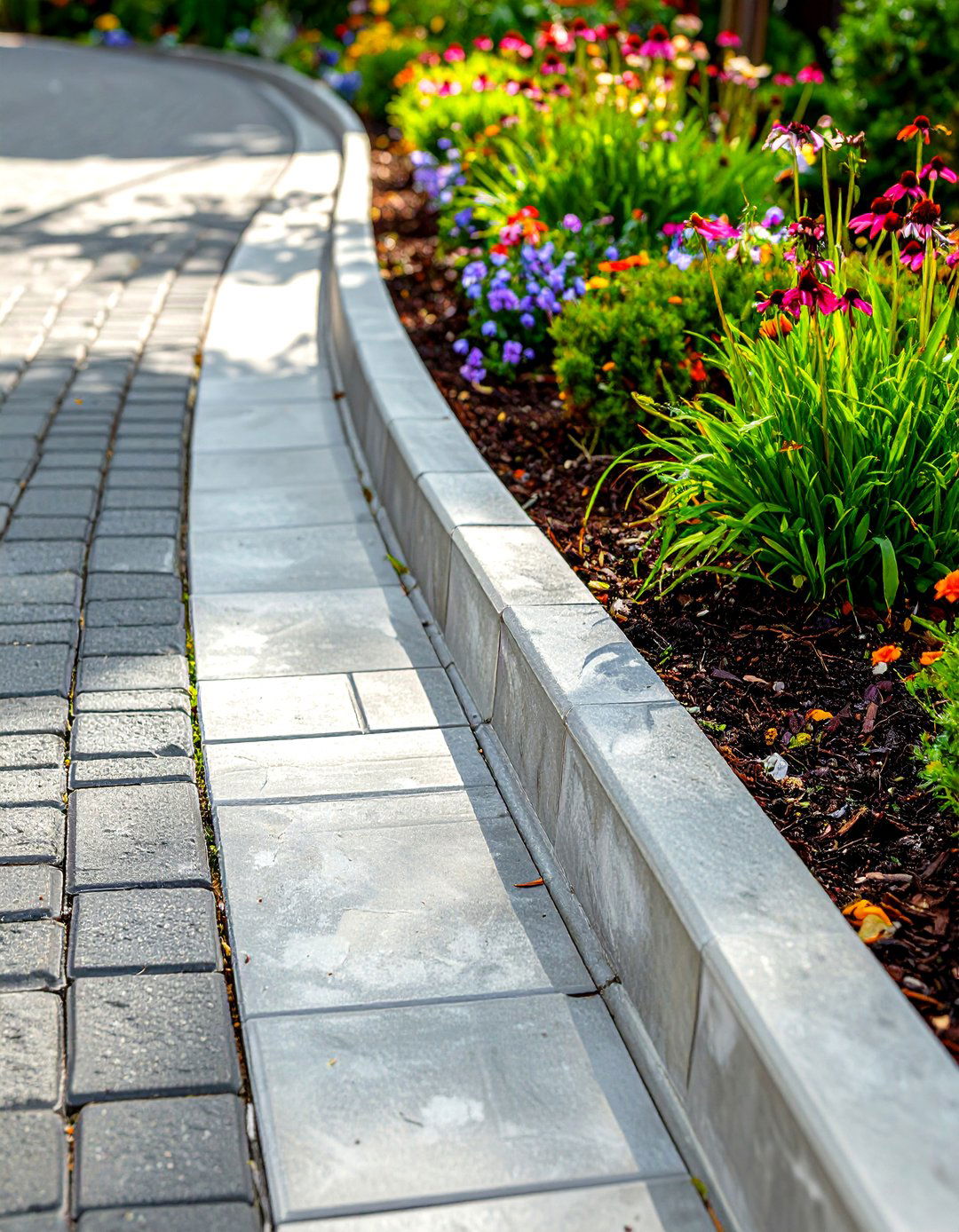
9. Granite Sett Motor Court Driveway
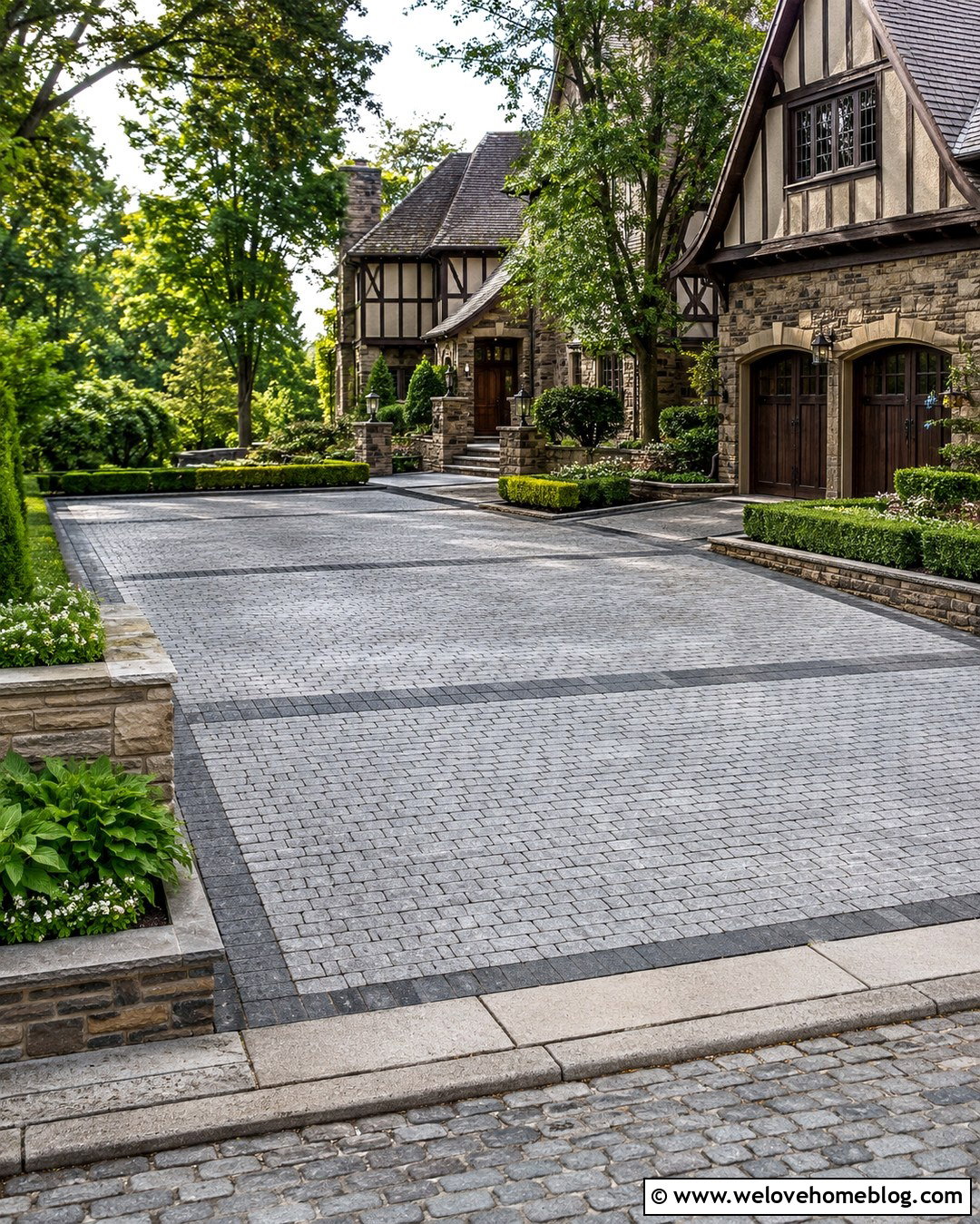
Granite setts create a durable, richly textured motor court that complements Tudor, stone, and historic-inspired homes. Use rectangular gray granite units in a running bond or repeating fan pattern across the parking and turning area. A broad circular or rectangular court can be visually divided with darker granite bands, preventing the paved space from looking like one oversized field. Raised stone planting beds, clipped hedges, and mature trees will soften the scale without interfering with vehicle circulation. Repeat the house masonry in low retaining walls or entrance pillars for a cohesive appearance. Because granite setts can create a noticeably textured surface, accurate grading and skilled installation matter. Smooth, flush transitions should be planned around walkways, garage thresholds, and frequently used pedestrian routes.

10. Charcoal Paver Driveway With Light Border
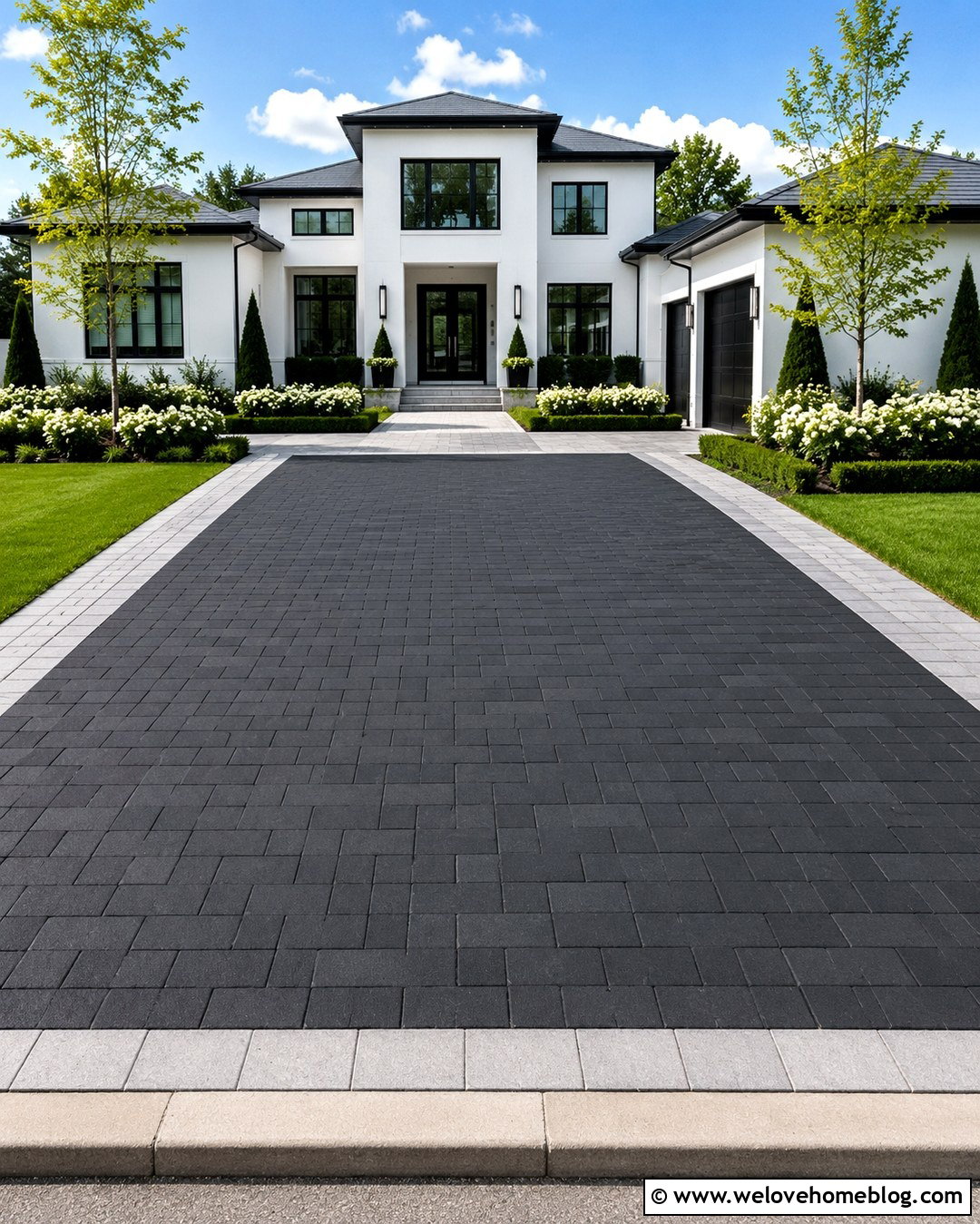
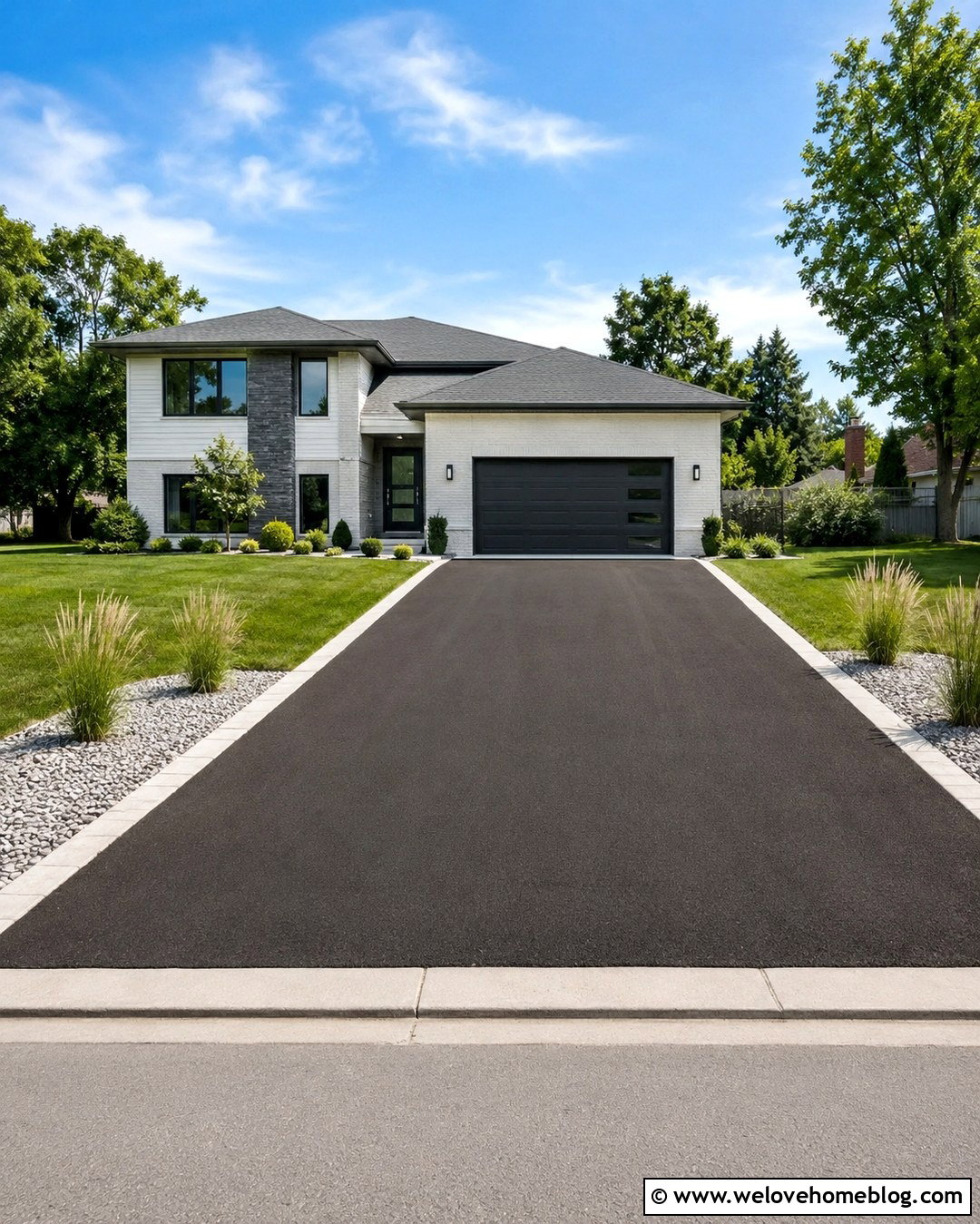
Dark charcoal concrete pavers create bold contrast against a white, cream, or light-gray contemporary house. To prevent the driveway from appearing too heavy, outline it with a wide border of pale gray pavers. A straight layout with a simple running bond keeps the two-tone palette controlled and modern. Repeat the lighter material in the front walkway and entrance landing so the border has a clear visual purpose. Along the sides, use bright green lawn, structured evergreens, and white flowering perennials to soften the darker paving. In hot, sunny regions, compare physical samples outdoors because deep colors may absorb more heat and can look different under direct sunlight. Subtle blended charcoal tones usually hide dust and surface variation better than one flat black color.
11. Mixed-Size Paver Driveway
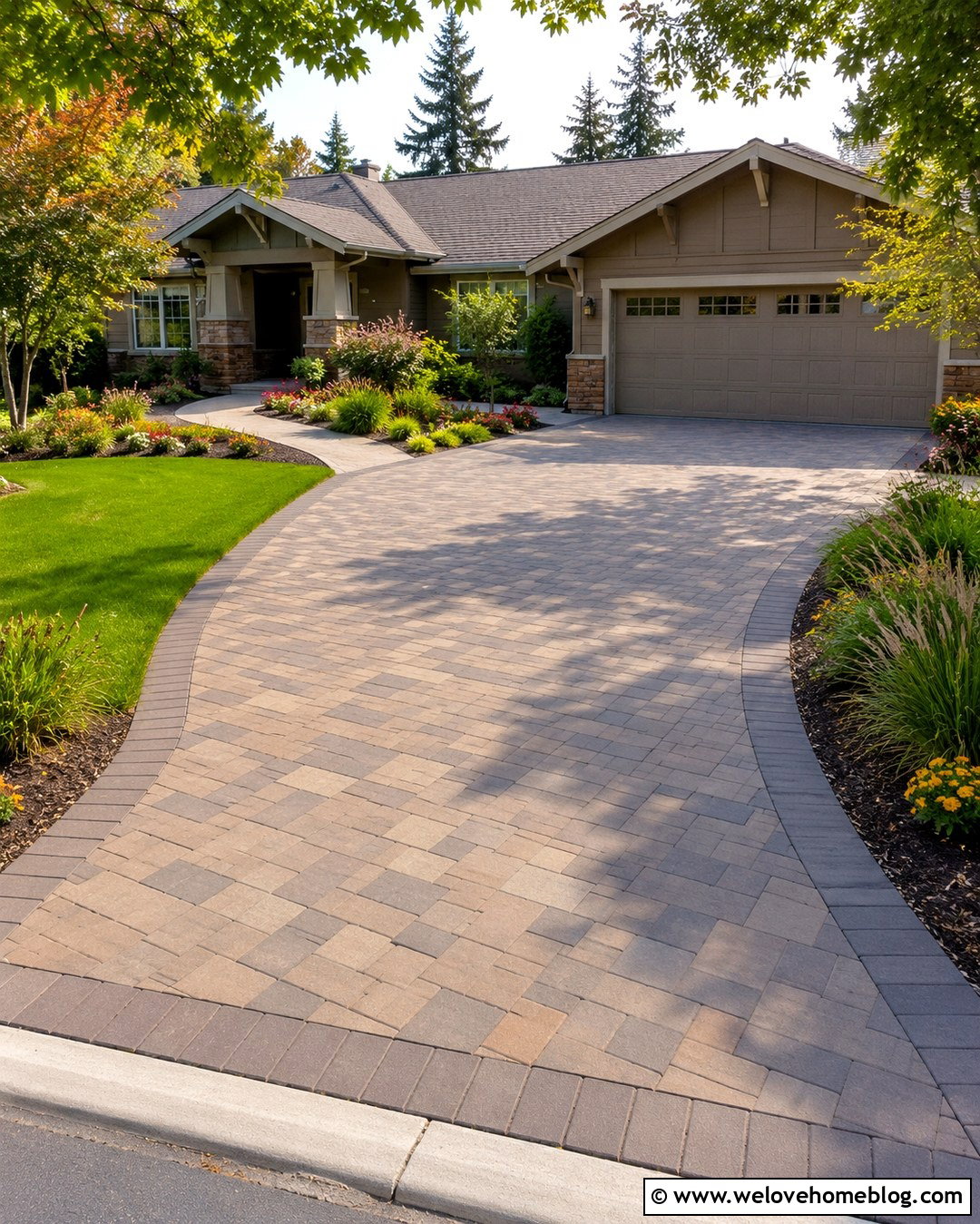
Mixed-size concrete pavers can make a wide driveway feel detailed and inviting without using bright colors or complicated motifs. Select three or four compatible rectangular sizes in blended beige, taupe, and gray tones. Arrange them in a repeating modular pattern, then surround the field with a single-size soldier-course border. This look suits ranch, Craftsman, and transitional homes because the surface feels relaxed but still organized. Curved planting beds filled with low shrubs, grasses, and flowering perennials can soften the broad paved area. Carry one paver size into the walkway for a subtle connection rather than repeating the full pattern everywhere. Before ordering materials, map the pattern carefully so cuts remain balanced around curves, drainage structures, garage doors, and the driveway entrance.
12. Basketweave Brick Paver Driveway
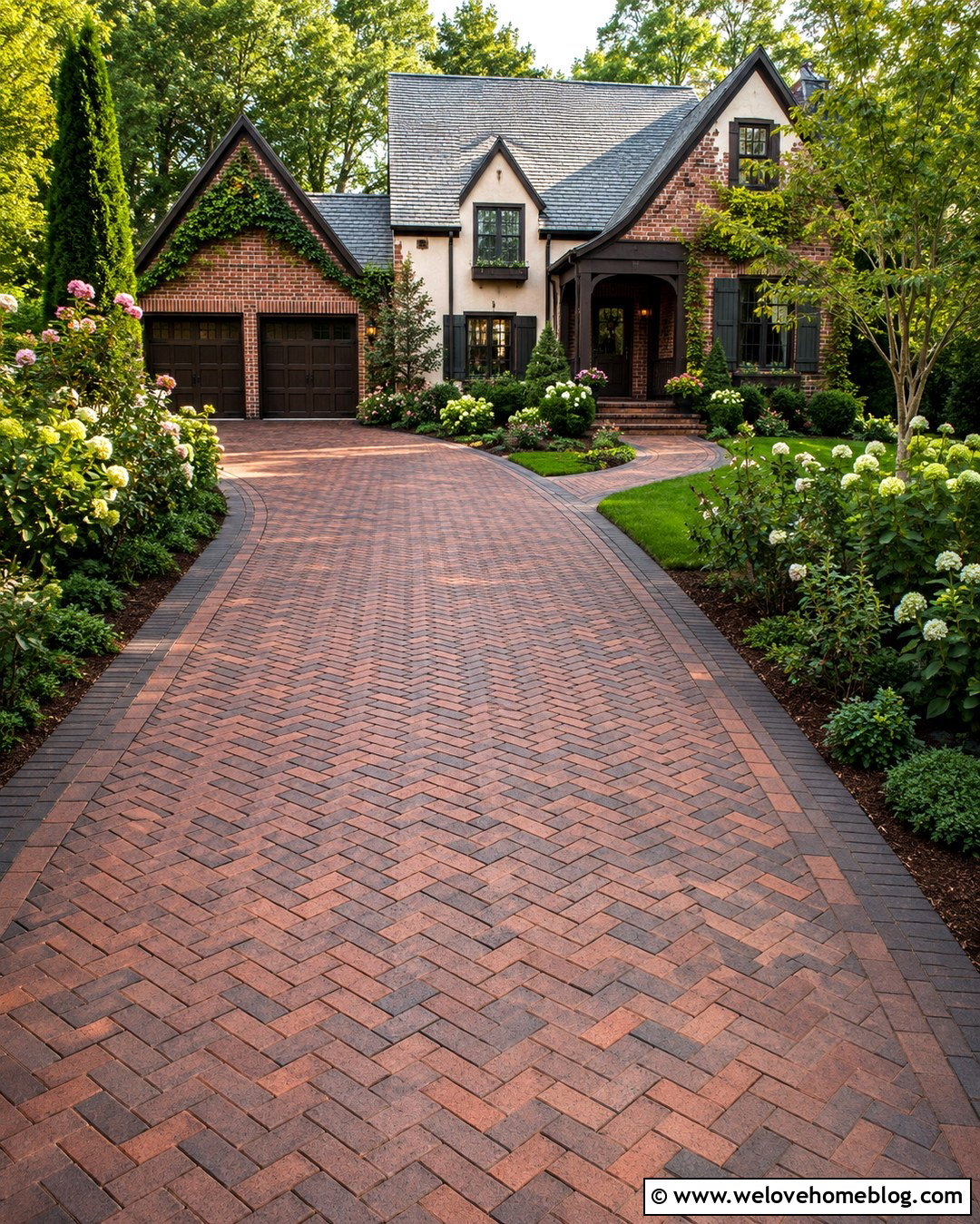
A basketweave brick driveway gives a cottage or traditional home a charming patterned entrance. Pair groups of warm red and brown clay pavers to form the woven effect, then frame the pattern with a strong double border. The border can use darker brick laid in a soldier course, creating a neat outline along planting beds and the street apron. Add informal landscaping with hydrangeas, roses, small evergreen shrubs, and a narrow lawn strip. A matching brick path leading to the porch helps the driveway feel integrated with the garden. Basketweave contains many visible lines, so it works best when the surrounding architecture is relatively simple. Use properly rated paving brick and ask the installer to plan edge restraint, base depth, drainage, and pattern alignment for vehicle use.
13. Running Bond Paver Driveway
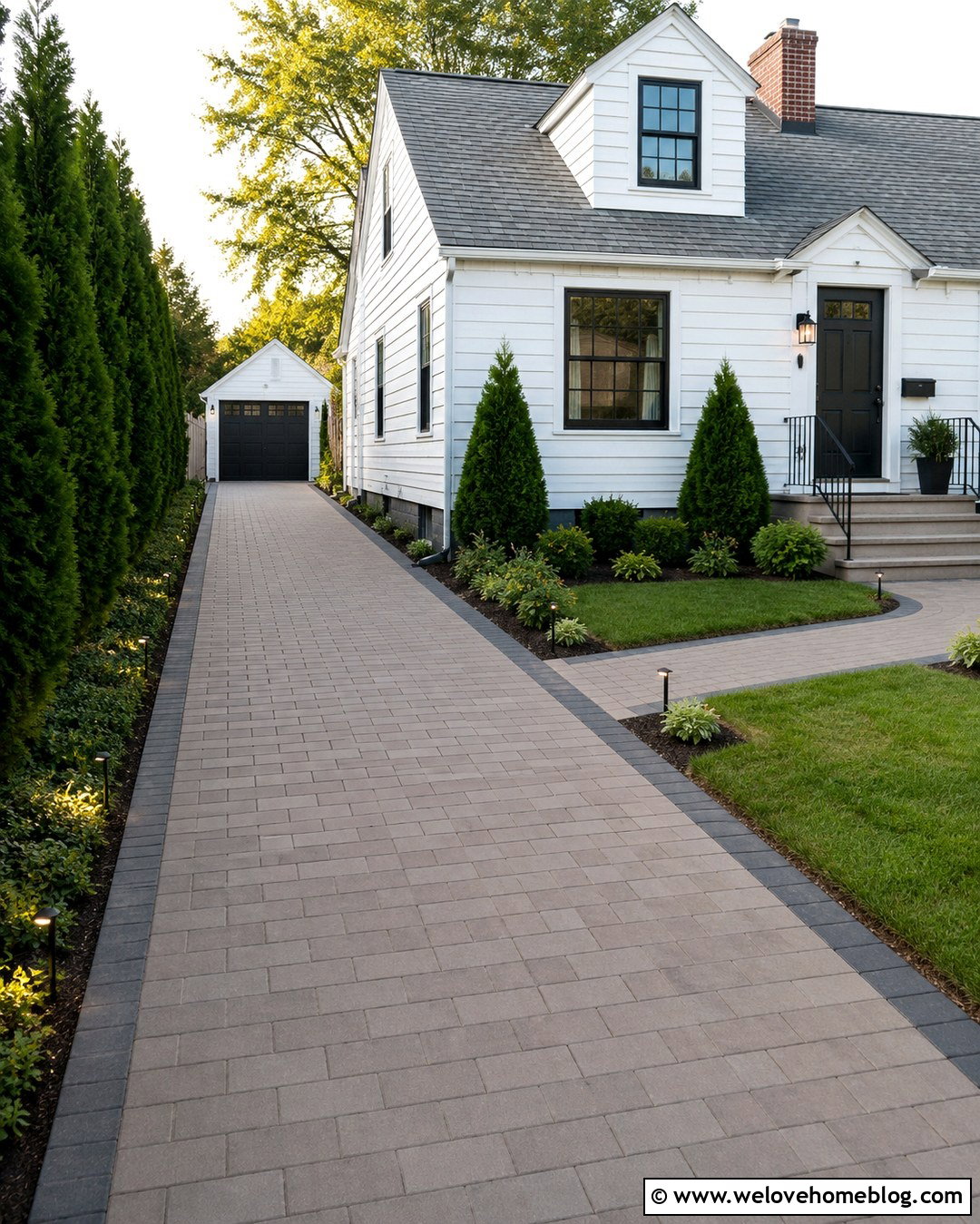
Running bond paving is a practical visual solution for a narrow driveway or a long side-yard approach. Lay rectangular concrete or clay pavers lengthwise to emphasize the route toward the garage. A contrasting border on each side will prevent the surface from appearing unfinished and can help separate it from fencing, lawn, or planting beds. For a narrow suburban property, keep landscaping compact with upright evergreens, low ground covers, and wall-mounted or low-profile lighting. Connect the driveway to the front door using a small matching-paver walkway positioned near the street or garage. The simple pattern is easy to coordinate with many house styles, including ranch, bungalow, and Cape Cod homes. Introduce color through the border and landscaping rather than adding several competing paving patterns.
14. Fan Pattern Cobblestone Driveway
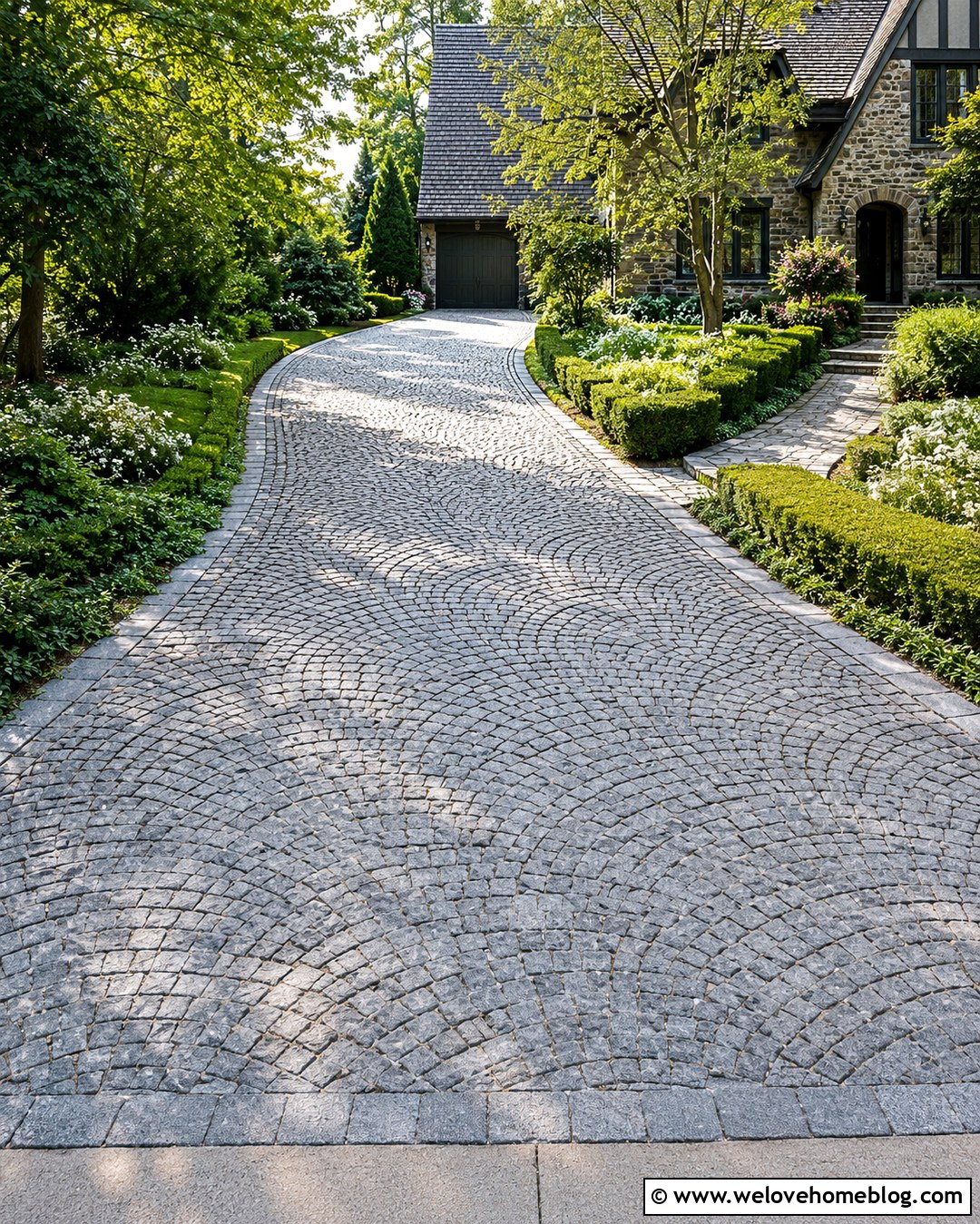
A fan pattern turns a cobblestone driveway into a graceful feature while supporting the shape of a curved or circular approach. Use small gray granite cobbles arranged in overlapping arcs, with each fan flowing naturally into the next. A straight granite sett border will create a calm frame around the decorative field. This complete design looks especially fitting beside a Tudor, European country, or stone-clad residence. Layer the surrounding landscape with clipped hedges, spreading ground covers, and medium-height trees to reinforce the established character. Avoid placing tall plants close to the street, where they could restrict visibility. Fan patterns require many precise cuts and transitions, so request a sample layout before installation. The workmanship should remain consistent at curves, drainage channels, walkways, and garage entrances.
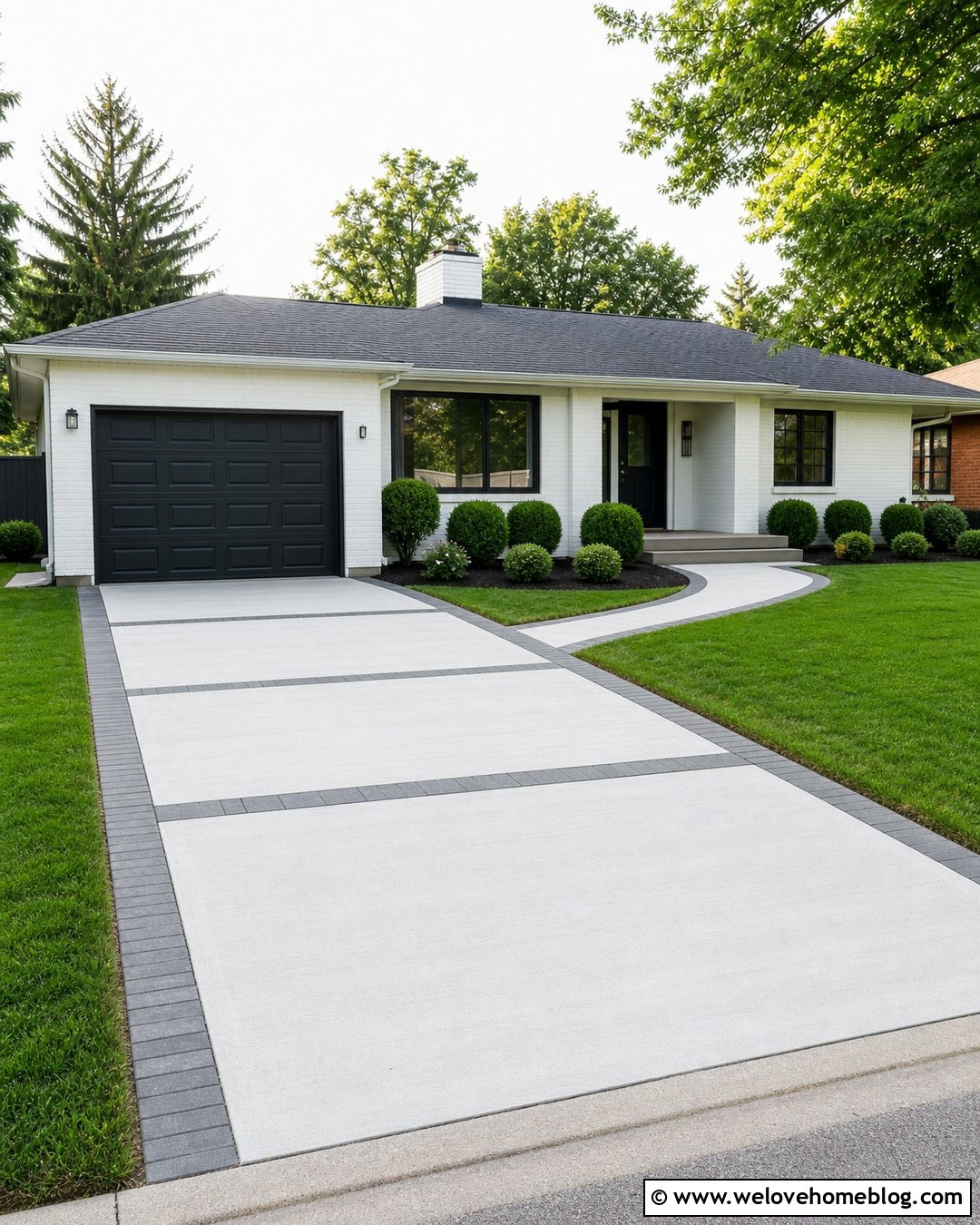
15. Concrete Paver Driveway With Brick Border
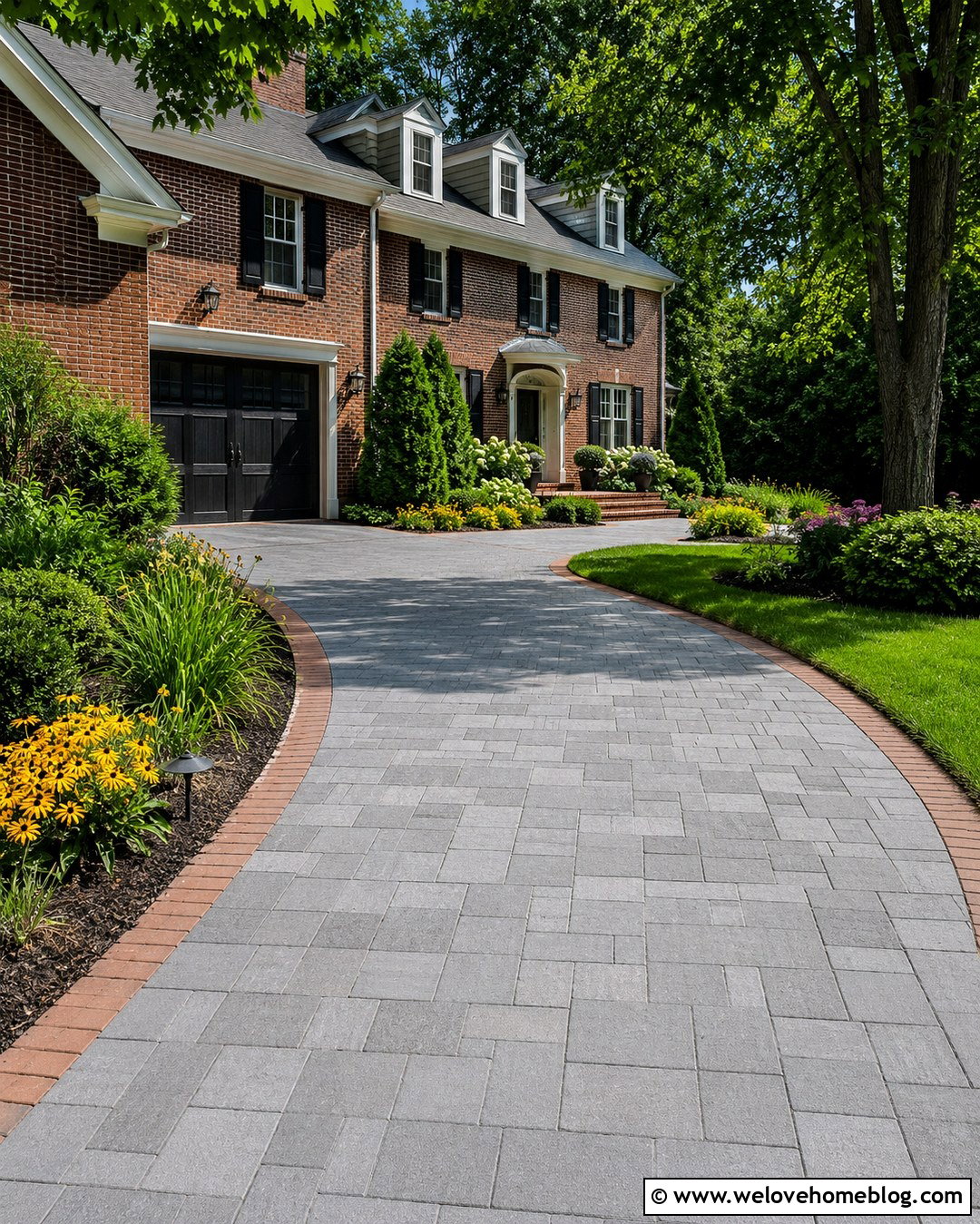
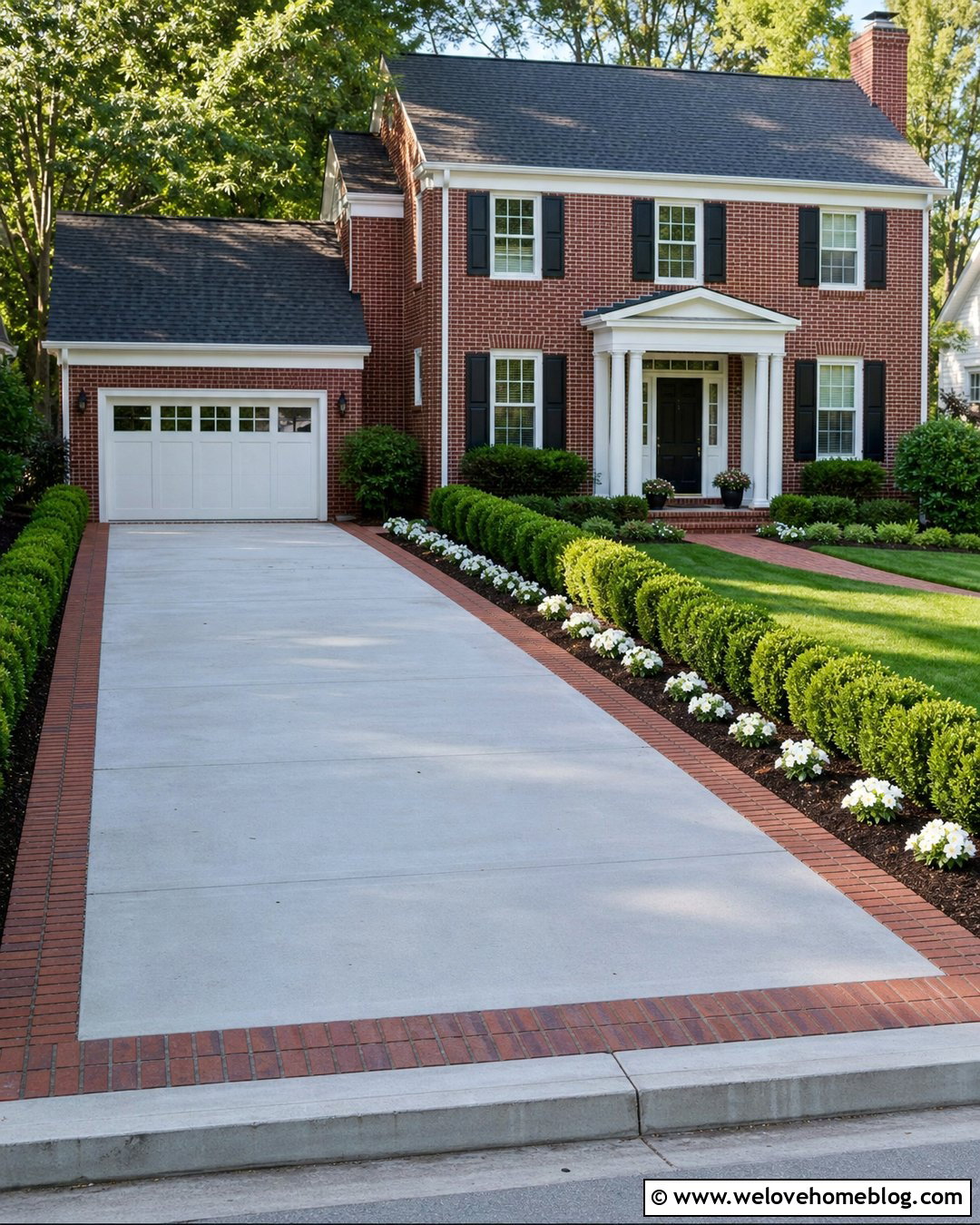
Combining concrete pavers with a brick border is an effective way to connect a new driveway to an existing brick house. Use simple gray rectangular concrete pavers for the main surface and warm red clay brick around the perimeter. The gray field keeps the larger area visually quiet, while the brick picks up colors from the facade, chimney, or front steps. A gentle curve can make the entrance feel less rigid, especially when planting beds follow the same line. Fill those beds with evergreen shrubs, ornamental grasses, and seasonal flowers in a restrained palette. Repeat the brick border across the garage threshold and curb apron for a finished appearance. Check both materials carefully so their thicknesses, installation requirements, and surface textures work together without uneven transitions.
16. Paver Ribbon Driveway With Grass Center
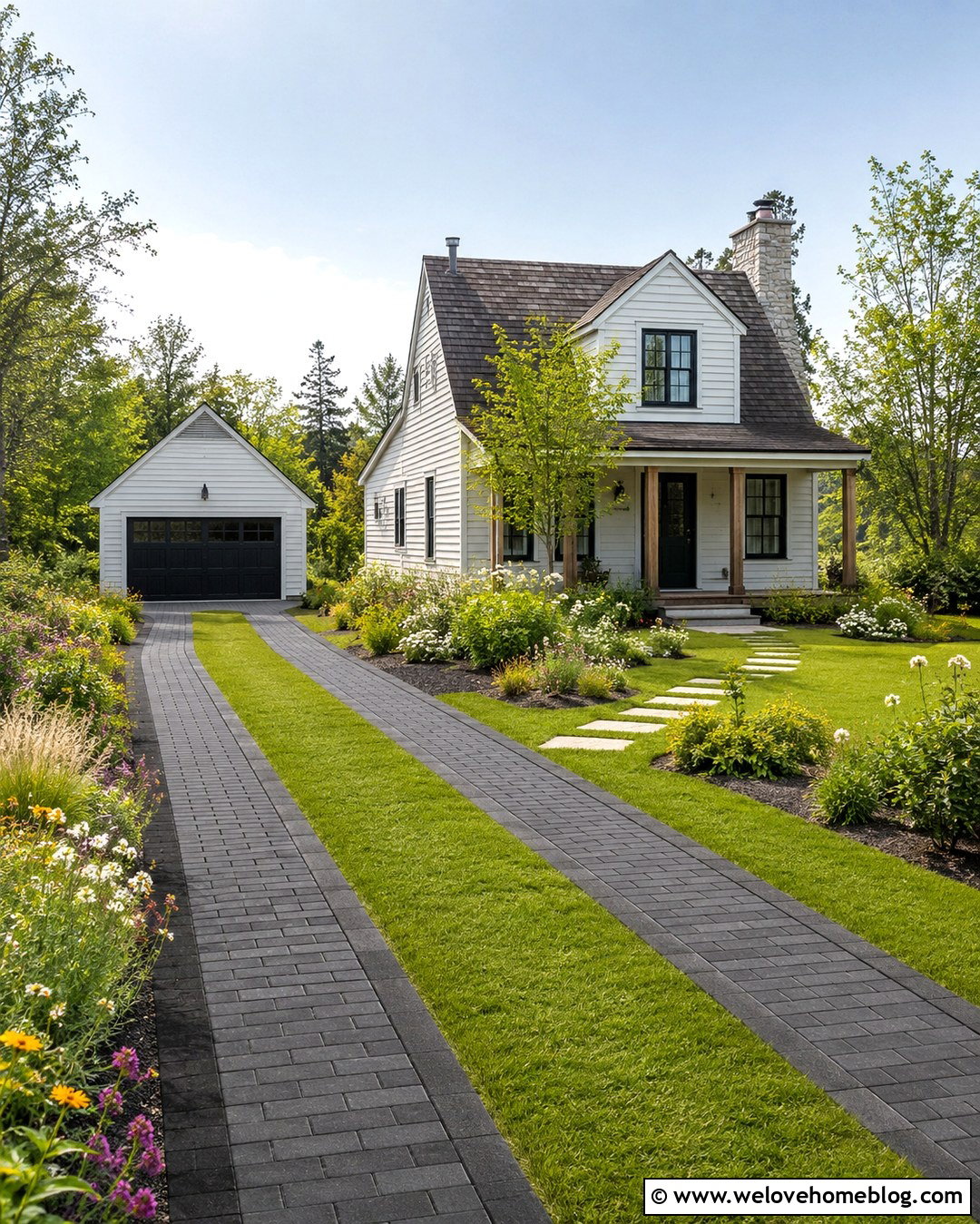
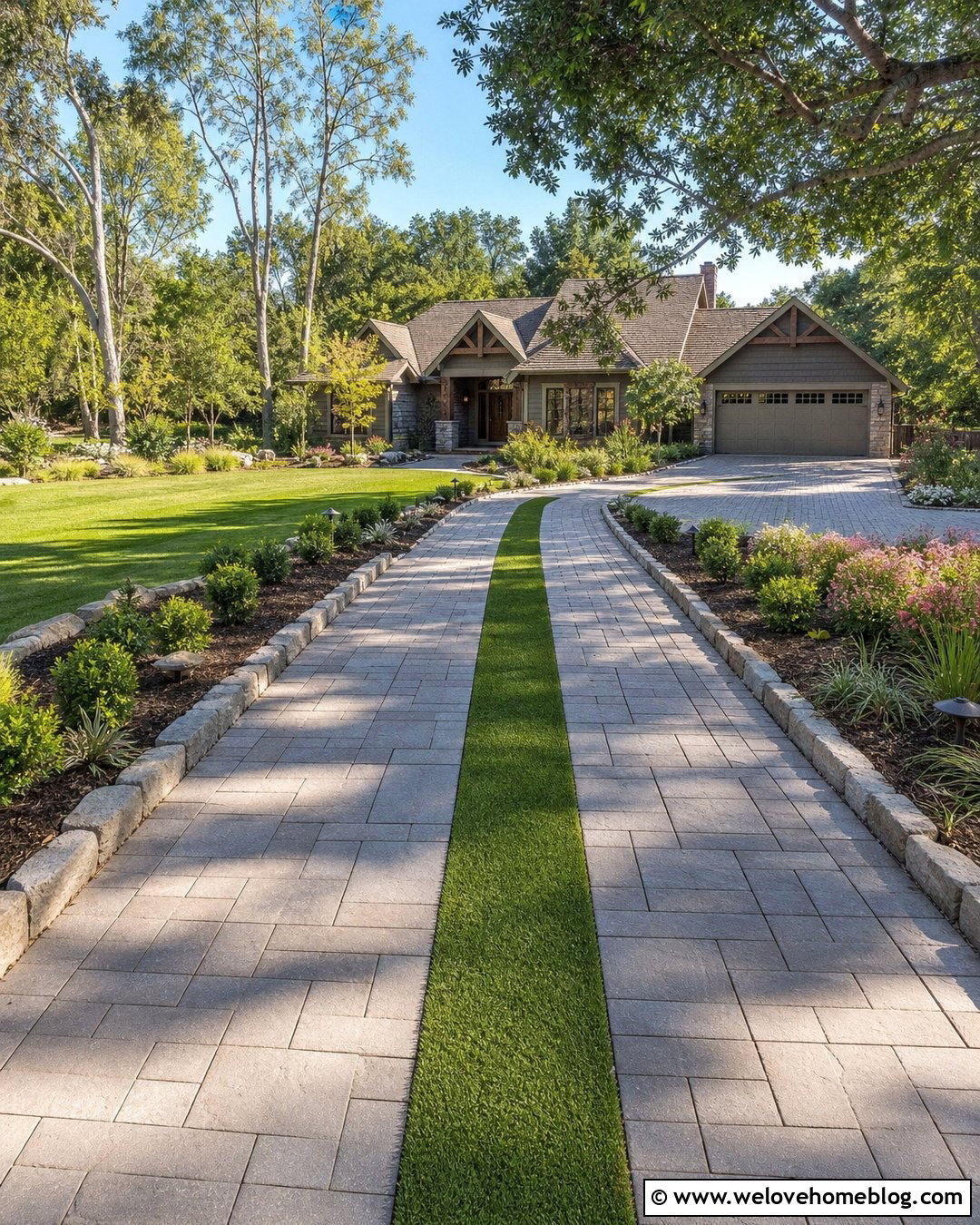
A paver ribbon driveway uses two paved tracks with a green strip between them, reducing the visual weight of the hardscape. Construct the driving lanes from charcoal concrete pavers or traditional brick sized for vehicle loads. Keep the ribbons aligned with typical tire paths, and use sturdy edge restraints along every side. The center can feature reinforced turf, low ground cover, or a designed permeable planting system suited to occasional vehicle contact. This layout works particularly well with cottages, detached garages, and casual country homes. Surround it with meadow-like planting, flowering shrubs, and a simple stepping-stone path to the porch. Ribbon driveways require precise planning because vehicle widths vary, while turning movements, snow removal, mowing access, drainage, and guest parking may affect everyday practicality.
17. Curved Paver Driveway With Trees
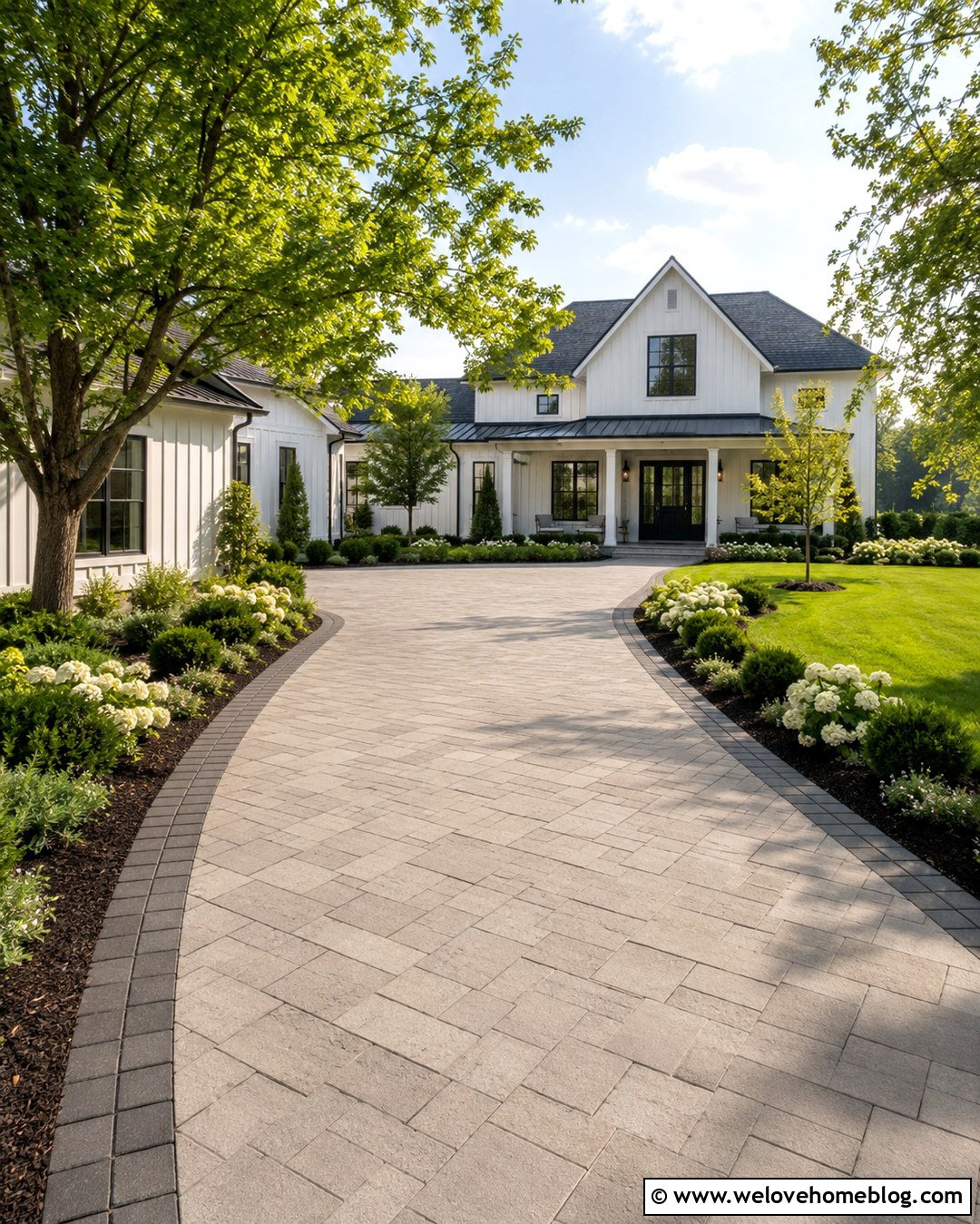
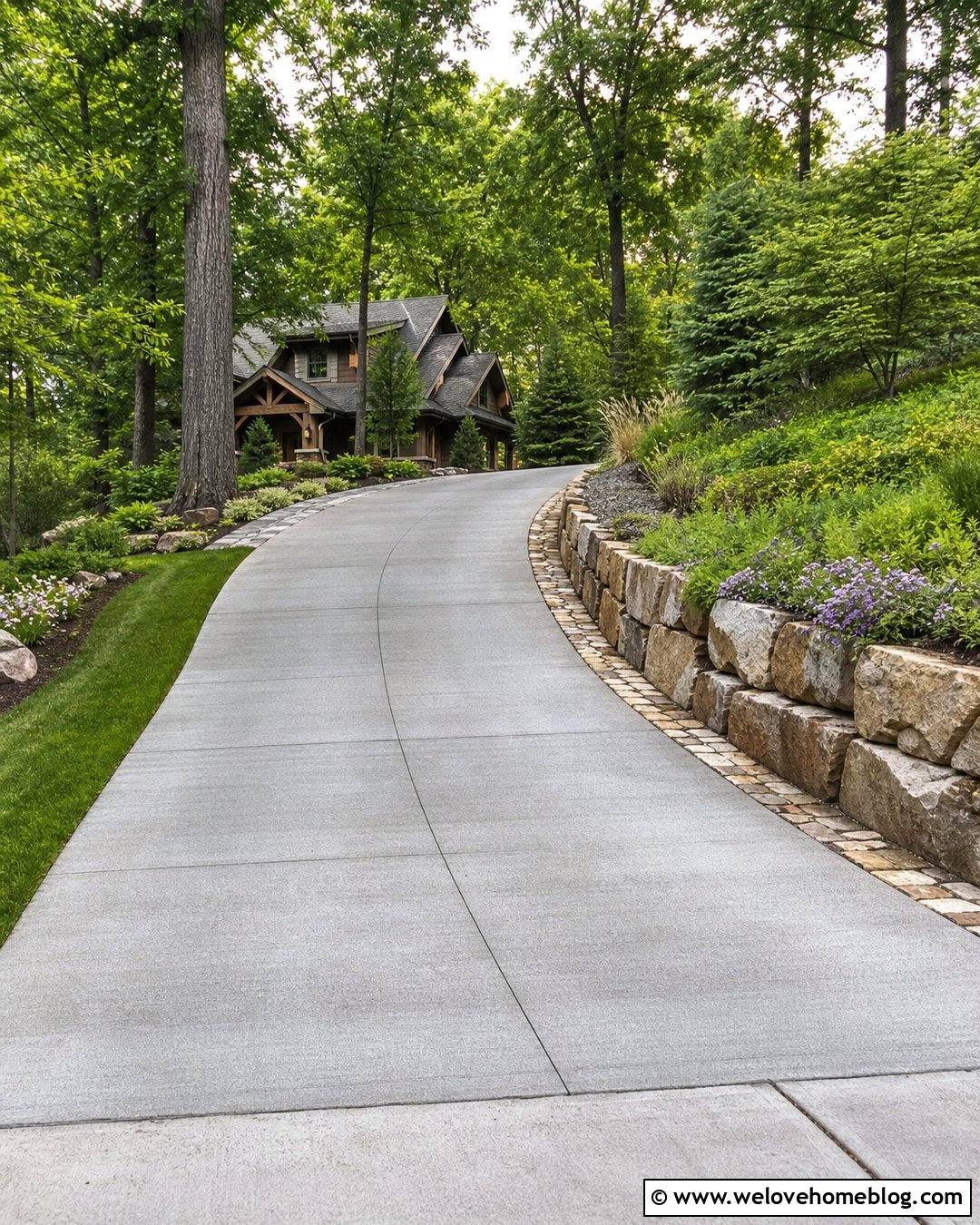
Imagine approaching the house along a gently curved driveway framed by leafy trees and layered planting beds. Warm-gray concrete pavers in a subtle modular pattern will provide a stable visual foundation without competing with the landscape. Outline the curve using darker pavers installed in a soldier course, allowing the border to emphasize the driveway’s shape. Position new trees far enough from the pavement to account for mature trunks, canopies, and root systems. Between them, use low shrubs and ground covers that preserve clear views toward the street and house. This complete design fits Craftsman, ranch, and modern farmhouse properties with medium or large front yards. Include drainage early in the plan because curving edges and sloped planting beds can direct water toward unwanted areas.
18. Two-Tone Geometric Paver Driveway
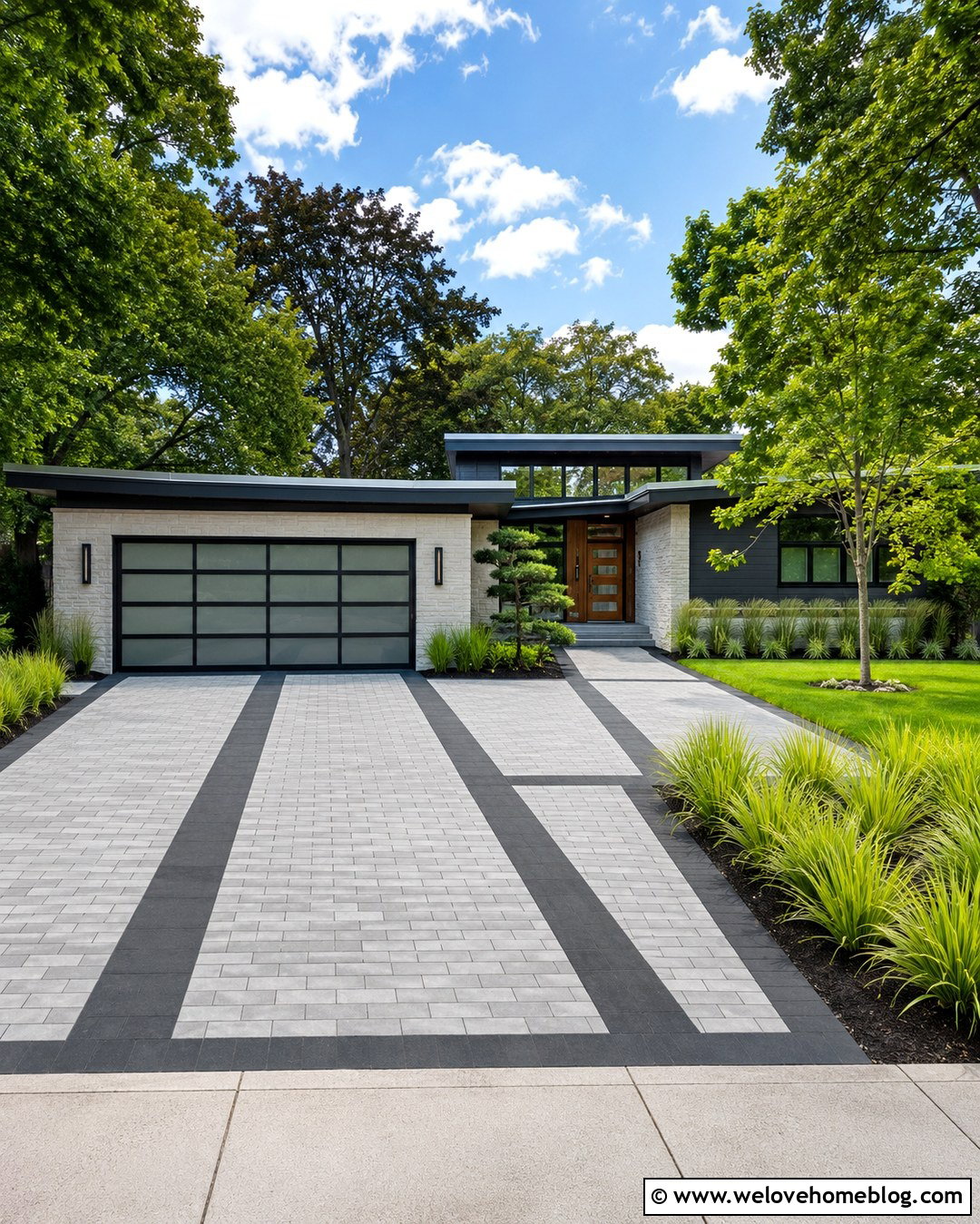
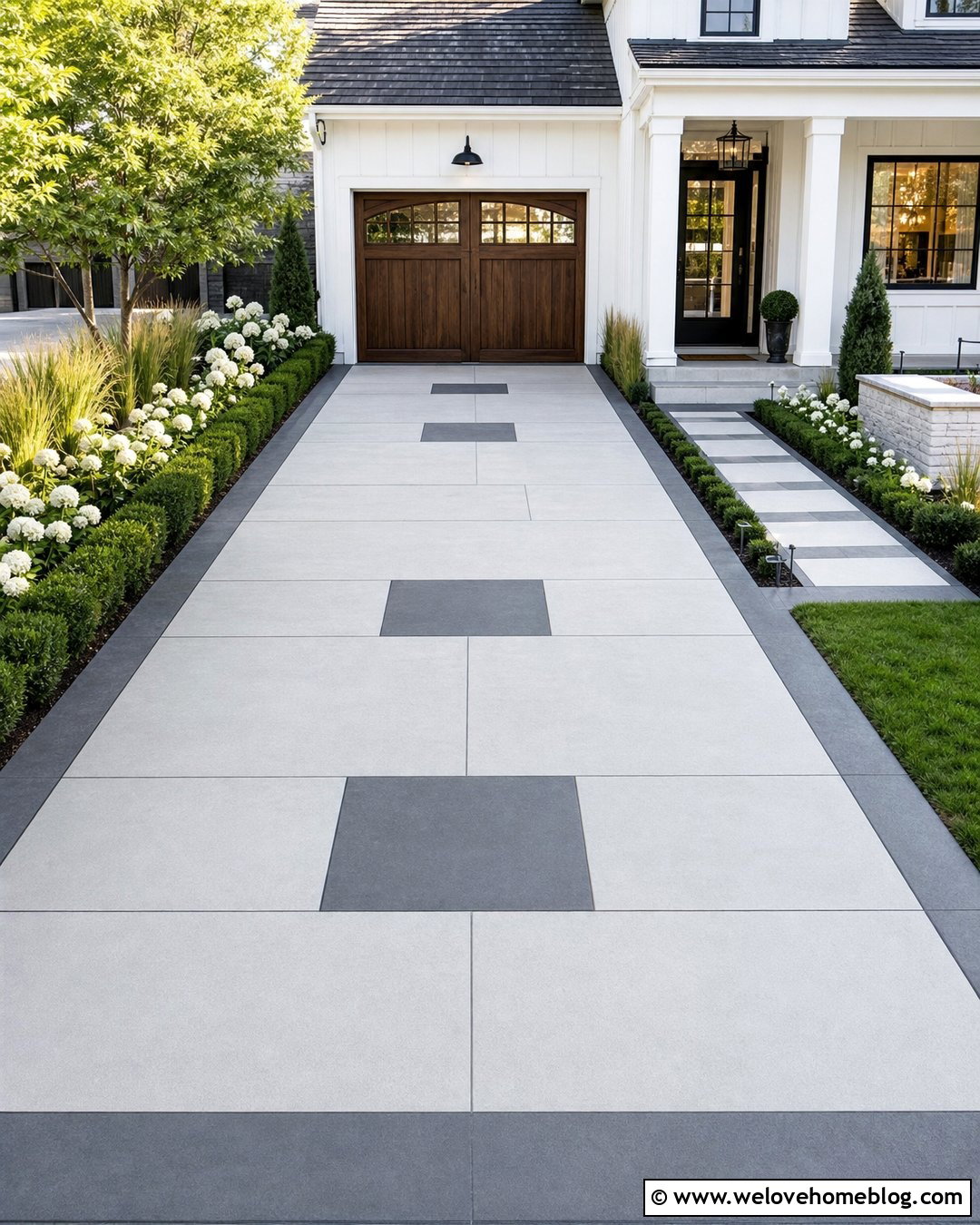
Two-tone paving can add modern character when the pattern remains simple and connected to the architecture. Start with light-gray square or rectangular concrete pavers, then add charcoal bands that align with the garage doors, walkway, or front entrance. The bands might form broad rectangles rather than a busy checkerboard, giving the driveway a clear geometric structure. Use flush metal or dark concrete edging for a crisp boundary. Minimal landscaping with ornamental grasses, sculptural shrubs, and carefully placed small trees will complement the strong lines. This design is ideal for a modern or midcentury home with a restrained exterior palette. Draw the complete layout to scale before installation so accent bands do not end awkwardly at drains, curves, utility covers, or garage thresholds.
19. Paver Driveway With Contrasting Apron
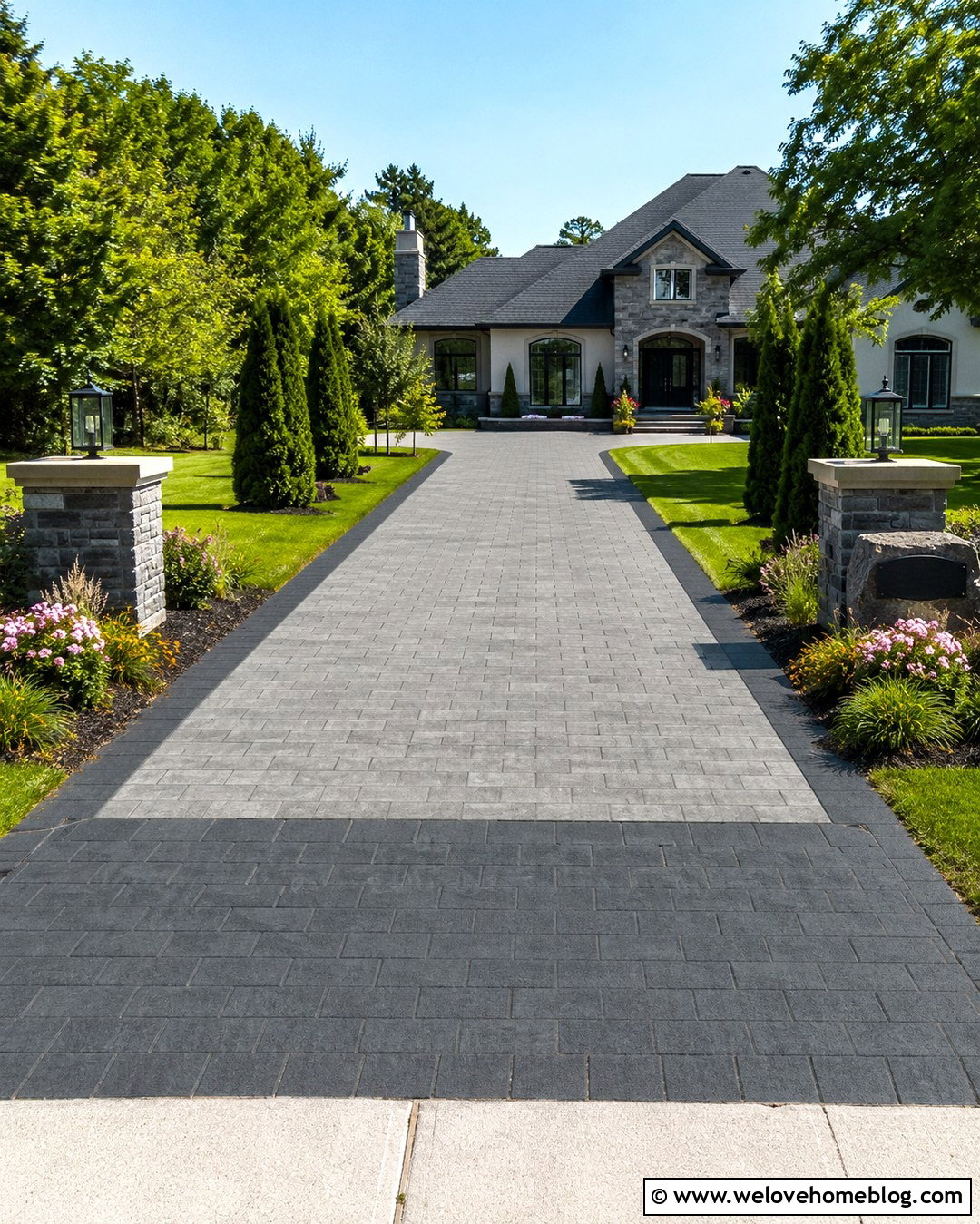
A contrasting driveway apron can make a straightforward paved surface feel more intentional from the curb. Use medium-gray concrete pavers in a running bond for the main driveway, then install darker tumbled pavers across the first several feet of the entrance. Frame the apron with matching side borders that continue toward the house, visually tying both surfaces together. Brick, cobblestone-look, or charcoal concrete pavers can all create an attractive entrance accent when their thickness and performance are compatible. Add low stone pillars, an address marker, and symmetrical planting beds to define the opening without narrowing it. Keep the house-side landscaping simpler so the entrance remains the focal point. Plan the street transition carefully to create a smooth, durable edge rather than an abrupt raised lip.
20. Small Diagonal Paver Driveway
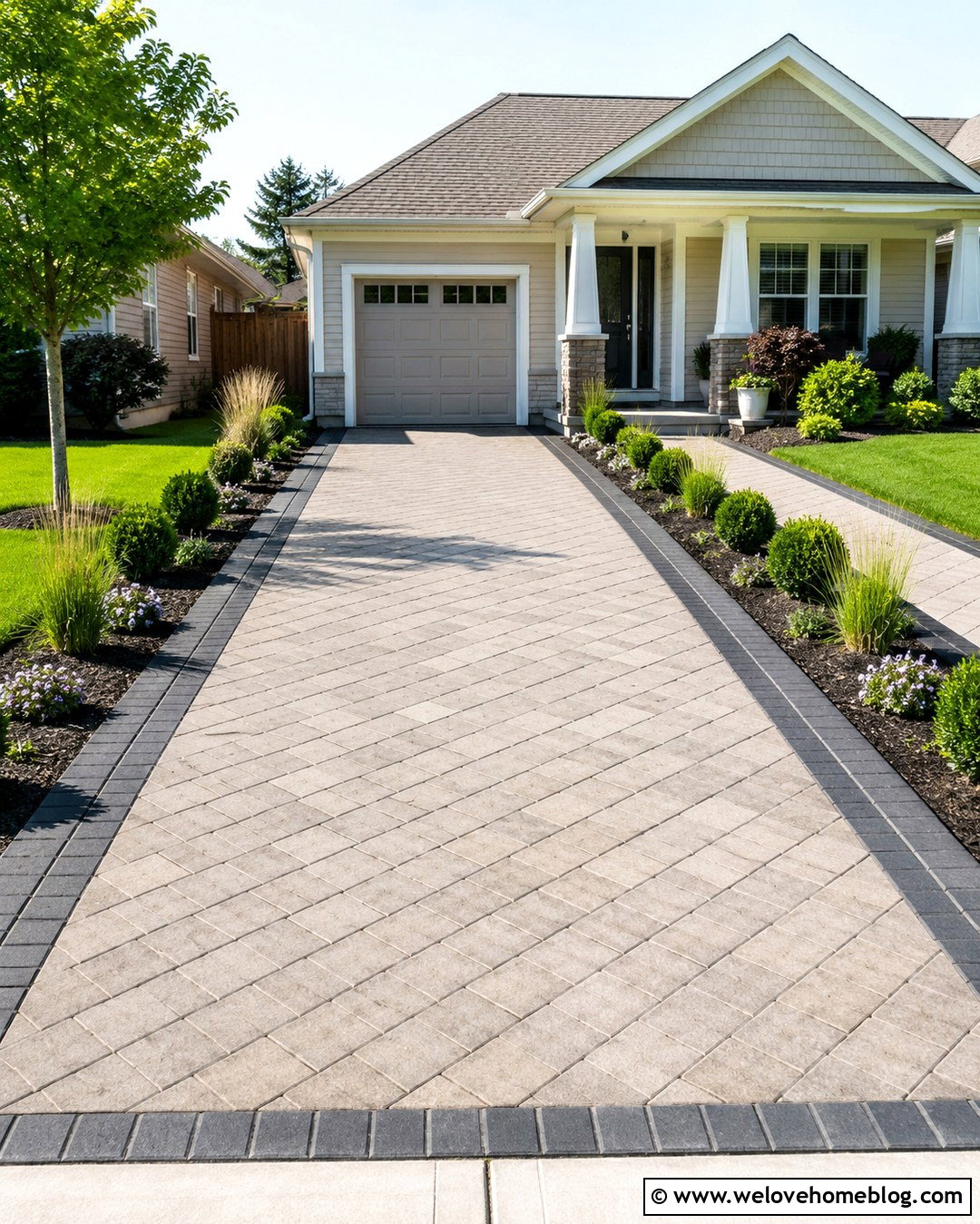
A diagonal paver pattern can make a small driveway appear wider and more dynamic. Choose compact rectangular concrete pavers in soft gray, beige, or a blended neutral tone, then install them at a 45-degree angle to the house. Finish the perimeter with a straight darker border that contains the angled cuts and gives the design a professional appearance. This works well for bungalows, townhomes, and compact ranch houses where every part of the front yard is visible from the street. Add narrow planting beds with dwarf shrubs, grasses, and low flowers instead of oversized landscaping. A matching walkway can branch toward the porch without consuming valuable parking space. Limit the palette to two paver colors so the smaller area remains clean, open, and coordinated.
Conclusion:
The strongest **Pave Driveway Ideas** treat the driveway as a complete part of the home rather than an isolated parking surface. Material, pattern, shape, edging, drainage, landscaping, and architecture should all support one another. Gray concrete pavers offer flexibility, while brick, cobblestone, granite, and bluestone add distinctive texture and character. Permeable surfaces, green ribbon layouts, and rain gardens can also make hardscaping feel more connected to the yard. Before choosing a final design, compare full-size samples outside and review vehicle access, maintenance, climate, and installation requirements. A properly planned paved driveway can improve daily function while creating a more welcoming and polished approach to your home.

Related posts:
Leave a Reply