
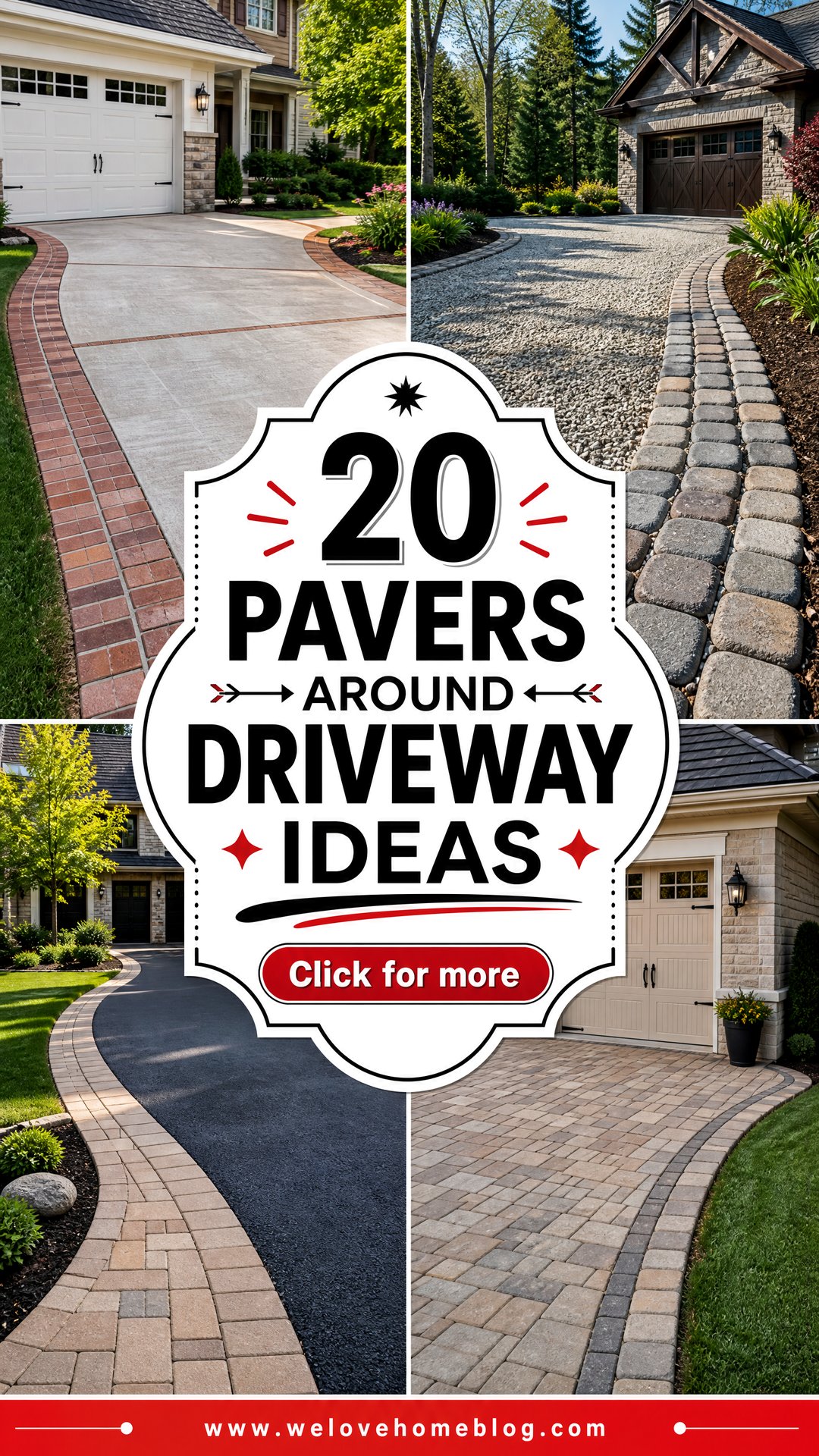
The best **20 Pavers Around Driveway Ideas** do more than decorate the edges of a parking surface. They frame the driveway, connect it to the home, and create a cleaner transition into lawns, walkways, and planting beds. Pavers can bring warmth to gray concrete, contrast with black asphalt, or keep loose gravel visually contained. A thoughtfully planned border may also help define driving areas and support a polished, finished appearance. Proper edge restraint and a compacted foundation are especially important where pavers may experience vehicle pressure or seasonal ground movement. () From traditional brick and cobblestone to modern concrete blocks, the following complete designs turn **20 Pavers Around Driveway Ideas** into practical inspiration for different homes, yards, and budgets.
1. Brick Pavers Around a Concrete Driveway
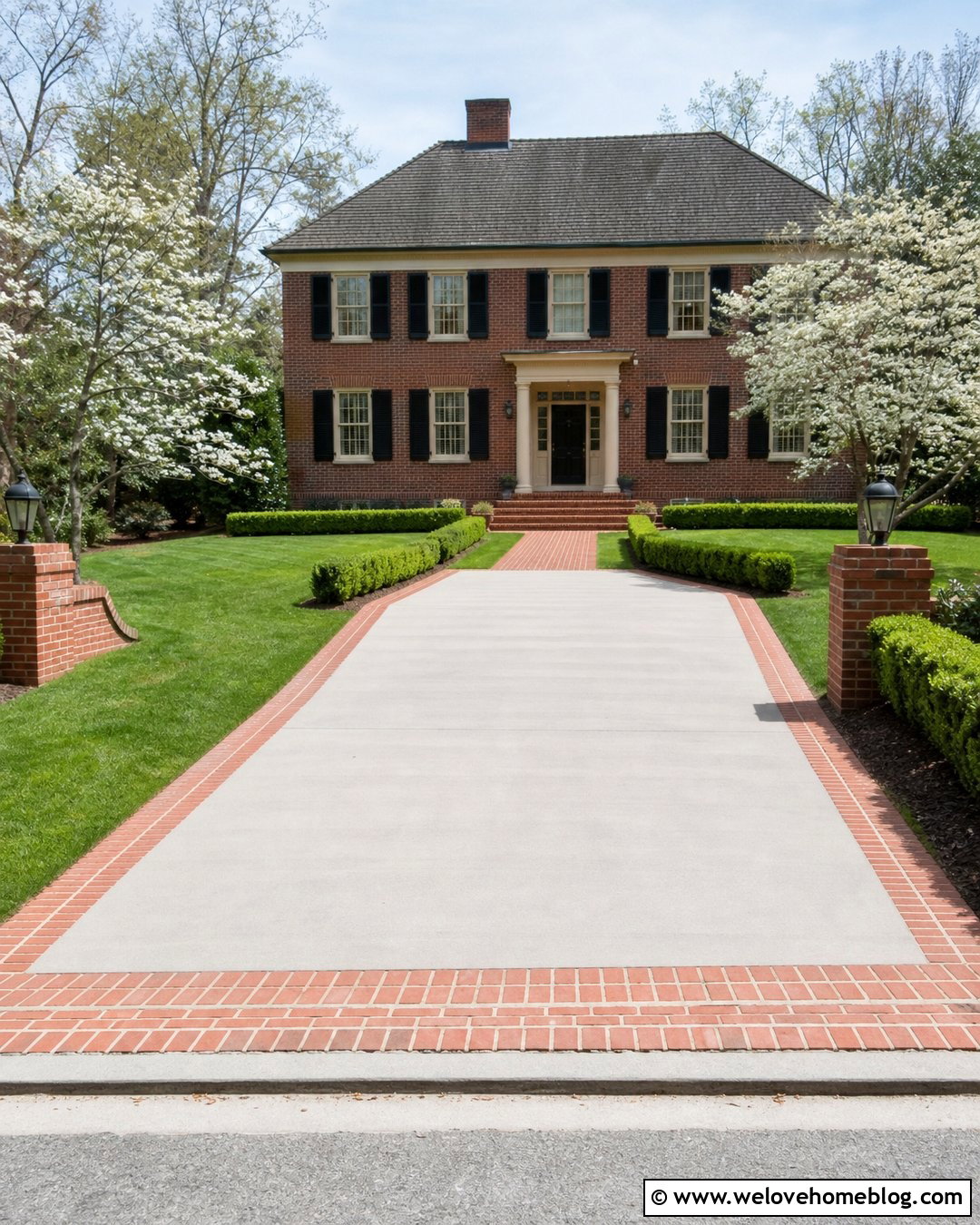
Red or brown brick pavers can make a basic concrete driveway feel warmer and more connected to a traditional home. Install a single or double soldier-course border along both sides, then repeat the brick across the driveway entrance. The continuous frame gives the concrete a purposeful shape rather than leaving it as a plain slab. Beside the pavers, use low boxwood, compact hollies, or neatly trimmed lawn to maintain a clean edge. A matching brick walkway can branch toward the porch without interrupting the driving area. This complete look works especially well with Colonial, Cape Cod, and ranch houses featuring red brick details. Select pavers rated for exterior paving and coordinate their undertones with the home’s facade.
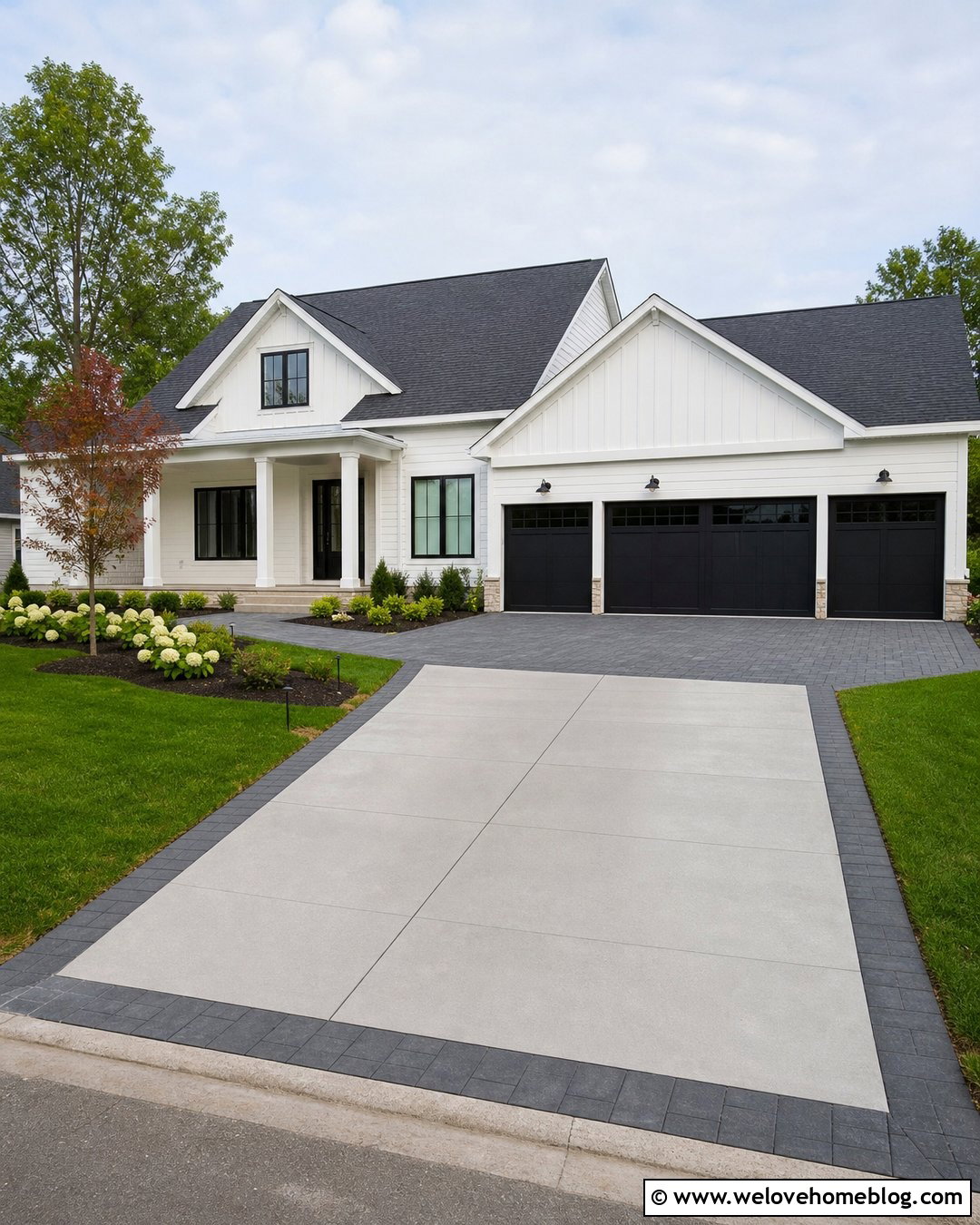
2. Charcoal Pavers Around a Light Concrete Driveway
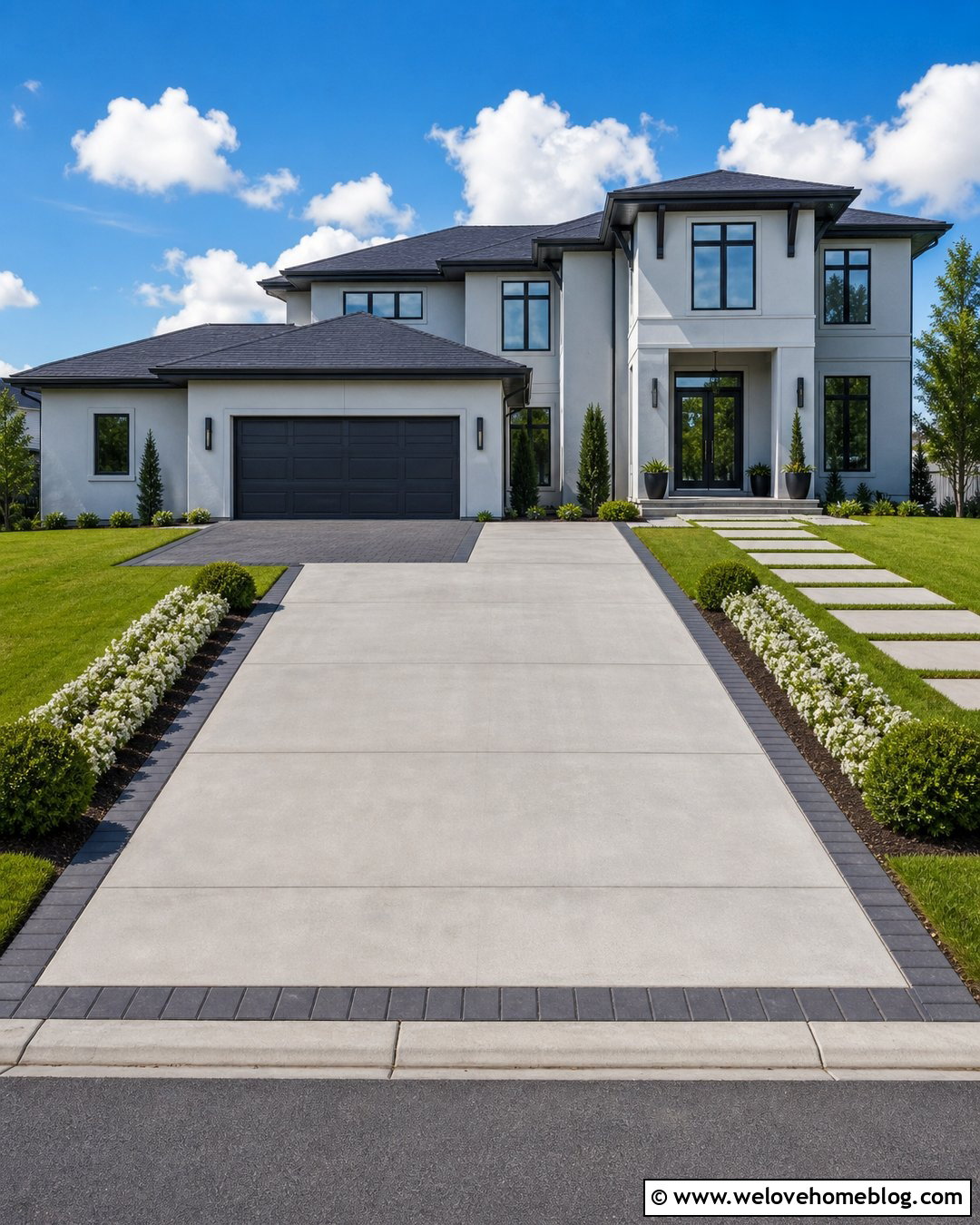
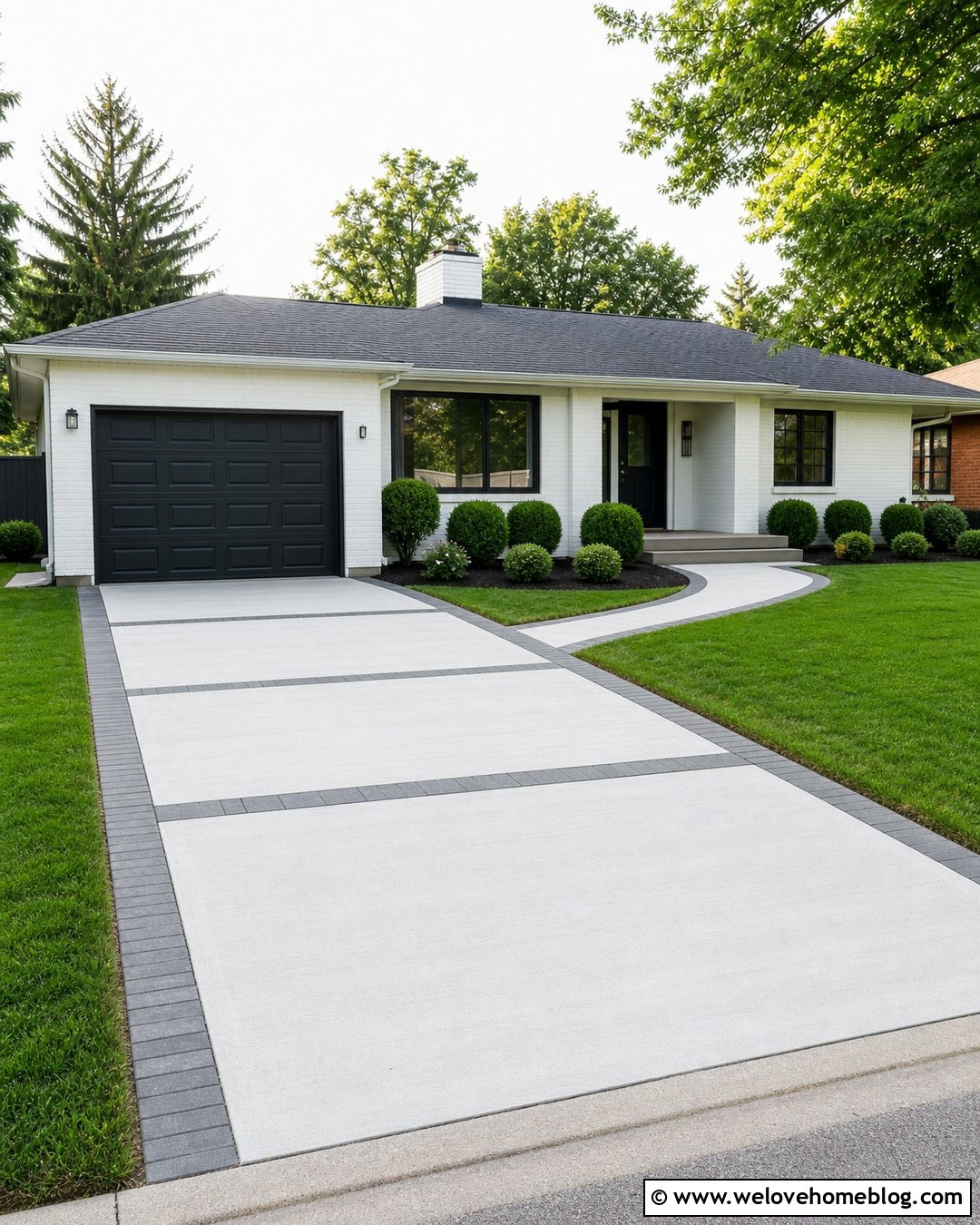
Crisp contrast can transform an ordinary driveway without replacing the main surface. Frame a light-gray poured concrete driveway with charcoal concrete pavers laid in a straight soldier course. The dark outline creates a sharp visual boundary that suits contemporary homes and updated suburban properties. Extend the charcoal pavers across the garage apron or add two narrow bands near the sidewalk for a more coordinated design. Simple landscaping keeps the strong geometry from feeling busy. Consider clipped shrubs, rectangular planting beds, white flowers, and a flat lawn edge. Large concrete stepping stones can connect the border to the front walk. Because the pavers are darker than the driveway, they also visually anchor the broad concrete area and emphasize its clean, symmetrical layout.
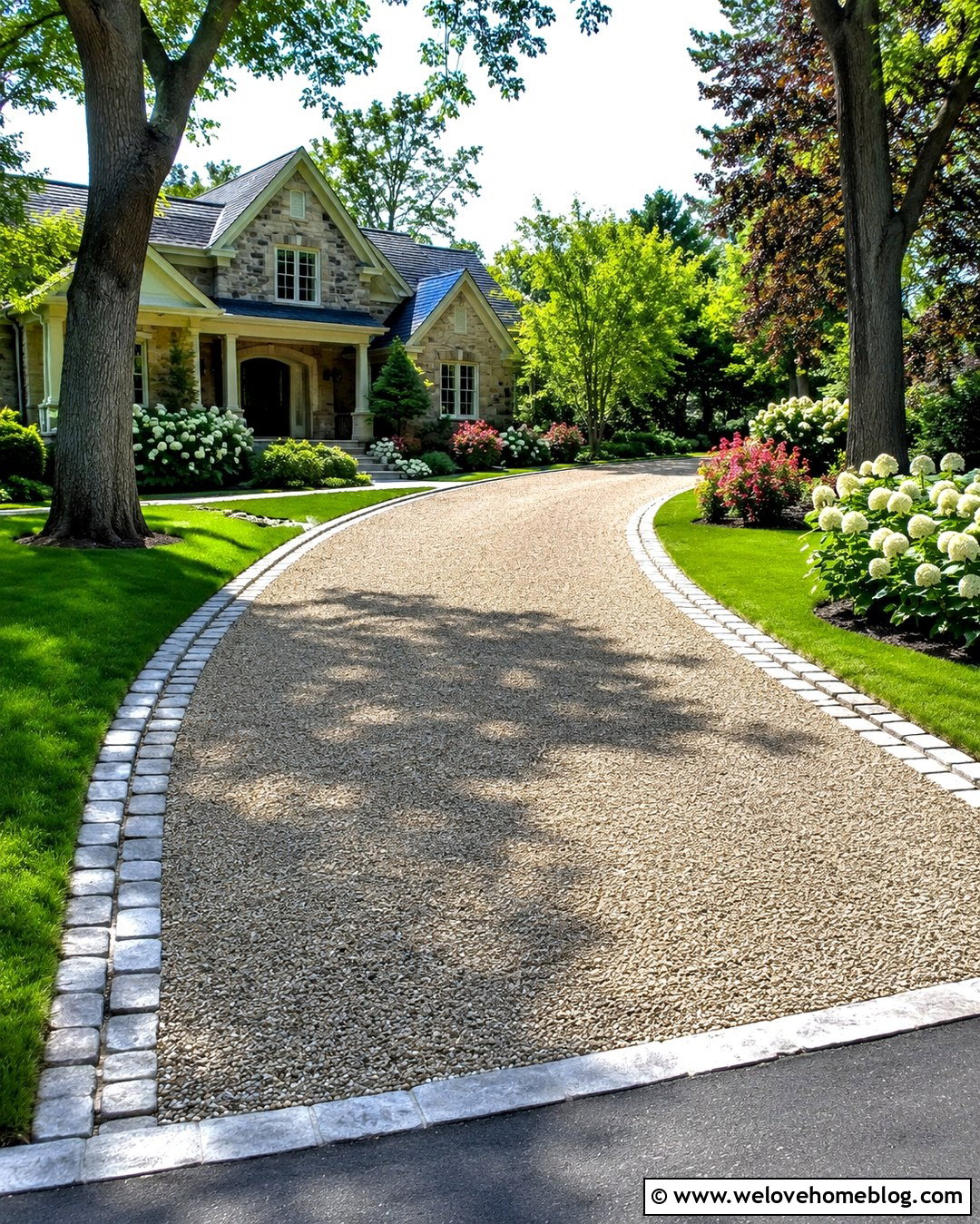
3. Cobblestone Pavers Around a Gravel Driveway
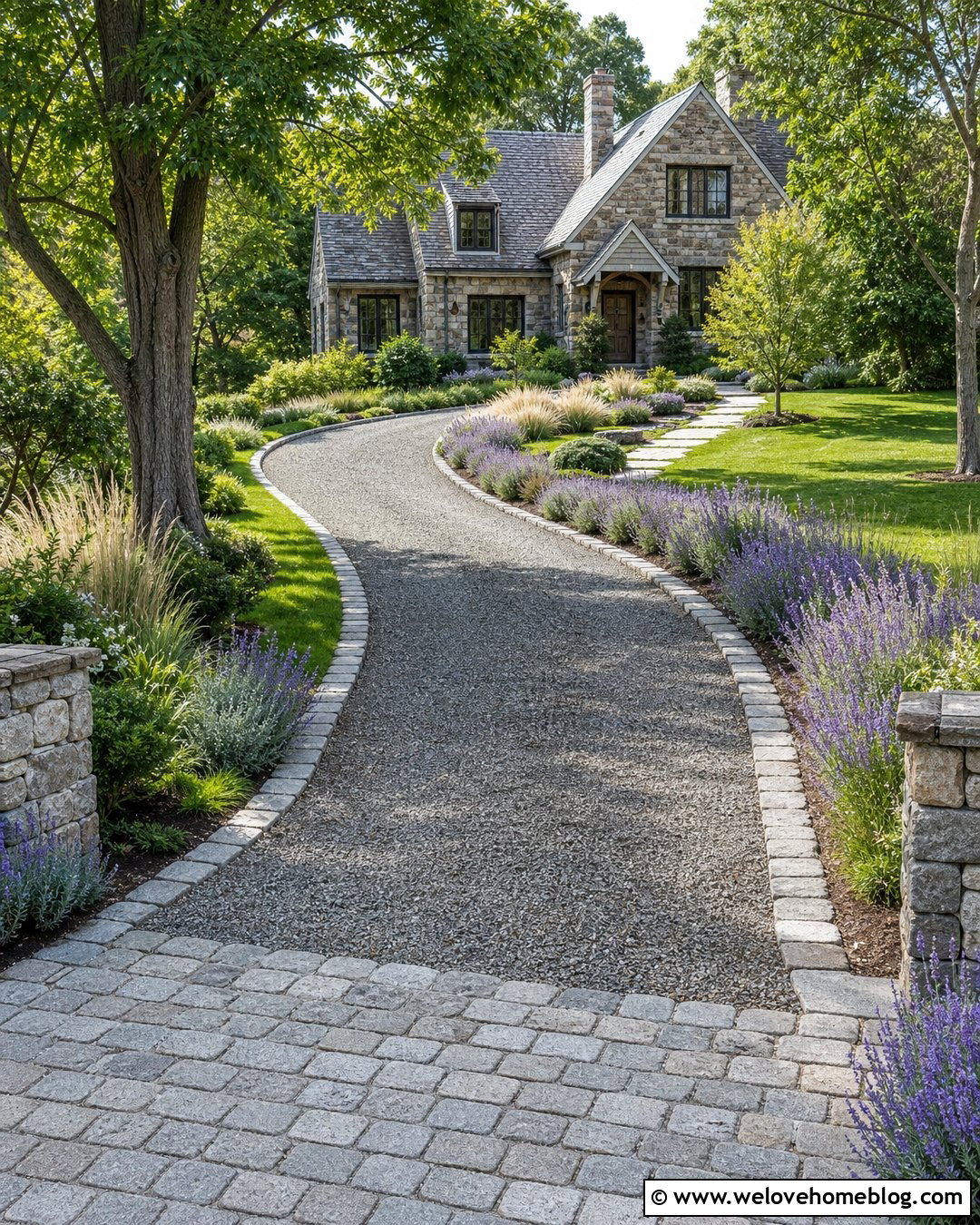
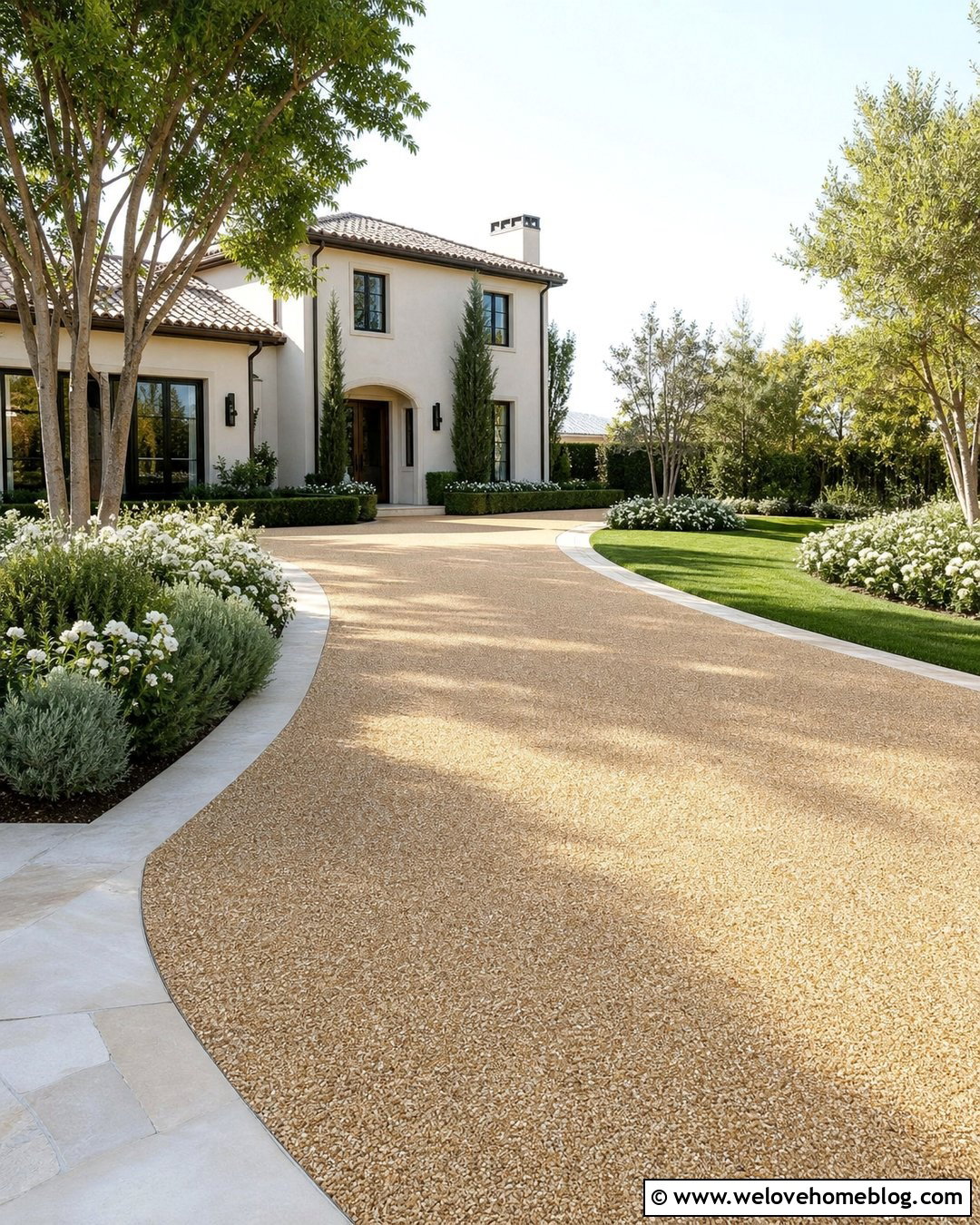
A gravel driveway gains structure when rugged cobblestone pavers define its perimeter. Choose gray granite cobbles for cool-toned pea gravel or warm buff stones for golden crushed gravel. A gently curved layout feels especially natural around a country house, cottage, or wooded property. Set the cobblestones in a consistent line, keeping their upper surfaces close to the finished gravel level for a comfortable transition. Behind the border, plant sweeping groups of lavender, catmint, ornamental grasses, or hardy native perennials. A wider cobblestone apron at the road can prevent the entrance from looking unfinished. The combination of loose stone, substantial edging, and relaxed planting creates a complete driveway that feels rustic but still controlled, attractive, and easy to understand from the curb.
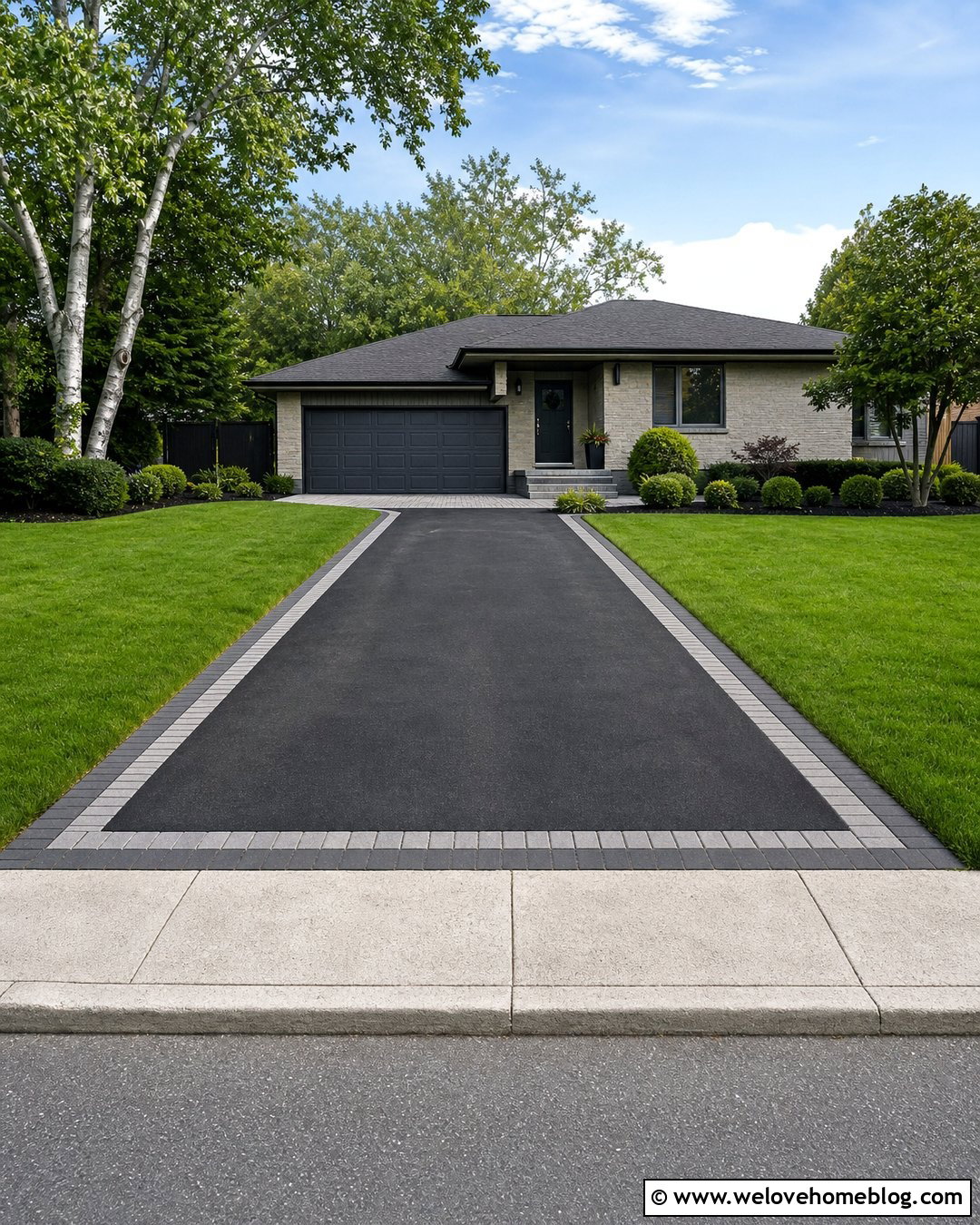
4. Tan Pavers Around a Black Asphalt Driveway
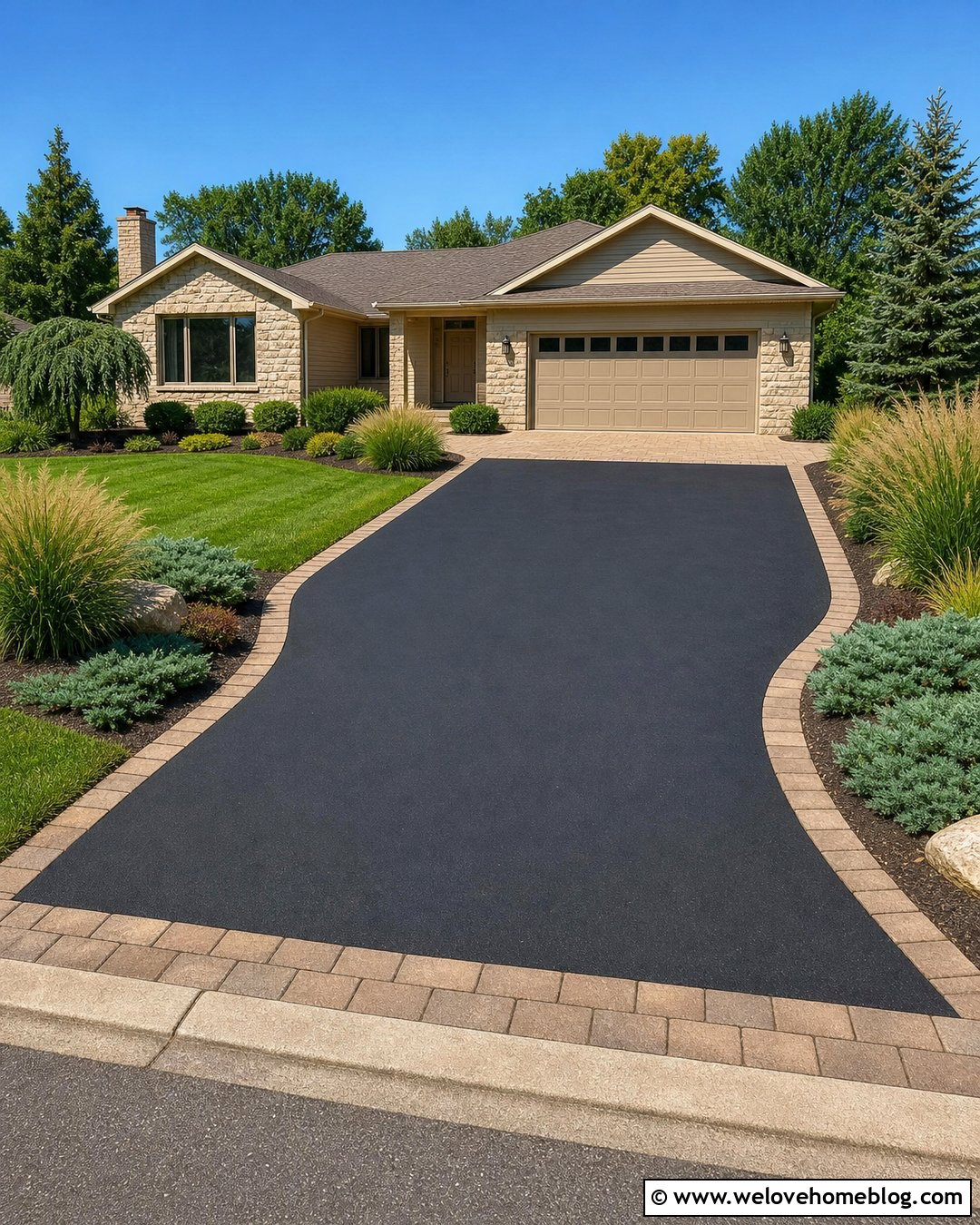
Black asphalt becomes noticeably more inviting when bordered by warm tan pavers. The lighter frame softens the dark surface and creates an attractive connection to beige siding, natural stone veneers, and warm brick facades. Use rectangular concrete pavers in a running bond along a straight driveway, then widen the paver area near the garage doors. A narrow planting strip between the border and lawn can hold evergreen ground cover, small grasses, or seasonal flowers. Keep plants low enough to preserve sightlines near the street. At the entrance, curve the tan pavers outward slightly to make the approach feel broader. This design offers a practical way to update an existing asphalt driveway while leaving most of the original paving in place.
5. Double Paver Border Around a Straight Driveway
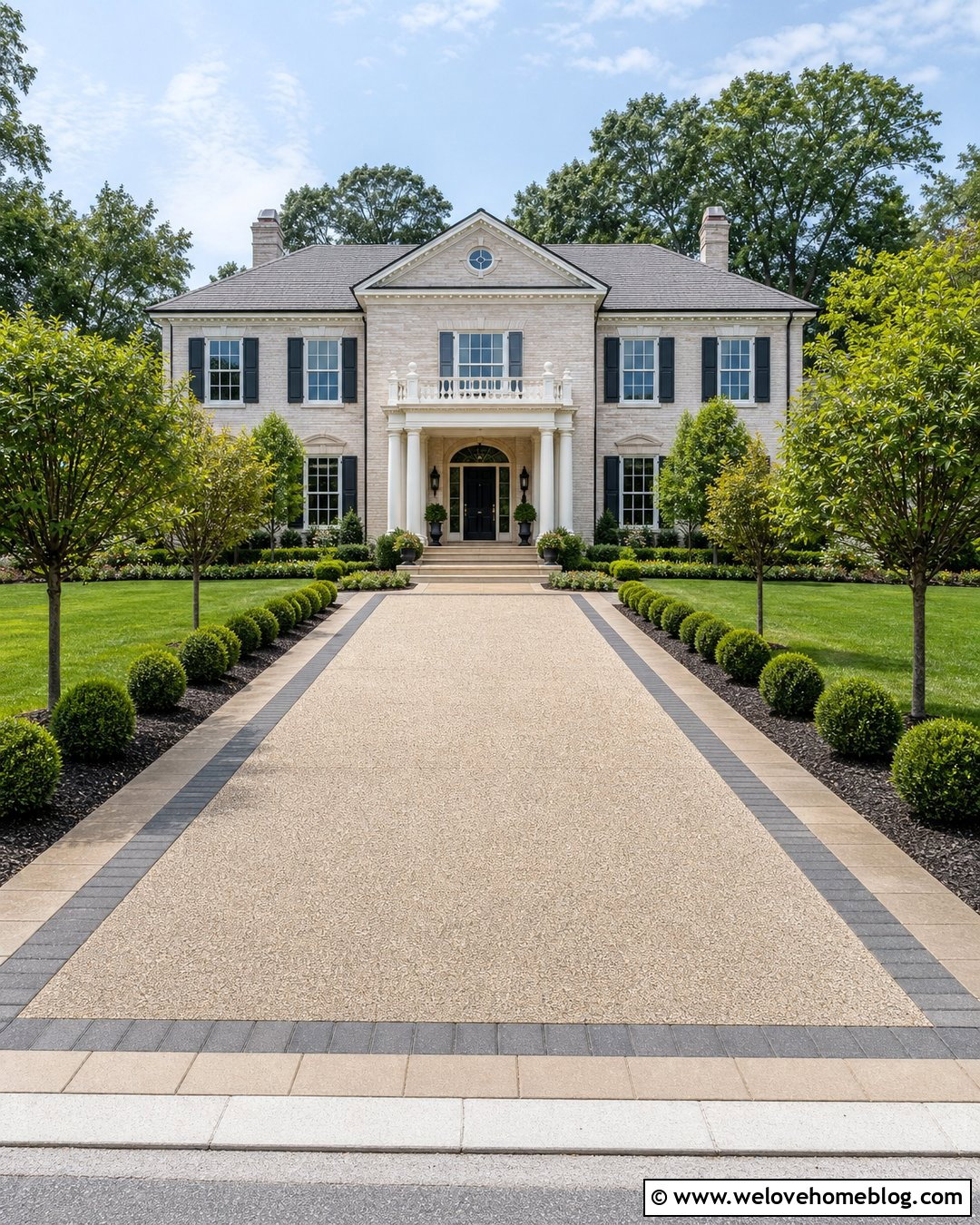
A double border adds detail without overwhelming a long, straight driveway. Start with a narrow inner row of dark charcoal pavers beside the driveway surface. Add a wider outer row of medium-gray or taupe pavers to create layered contrast. This arrangement works around smooth concrete, exposed aggregate, or asphalt and can visually balance a wide garage facade. Keep the lines uninterrupted from the curb to the garage for a formal, lengthening effect. Along the outside edge, use lawn on one side and a coordinated planting bed on the other. Repeating shrubs or small ornamental trees at regular intervals reinforces the symmetry. The finished driveway feels tailored and substantial, making the double paver frame particularly suitable for Colonial, Georgian, and traditional two-story homes.
6. Paver Mowing Strip Around a Lawn Driveway
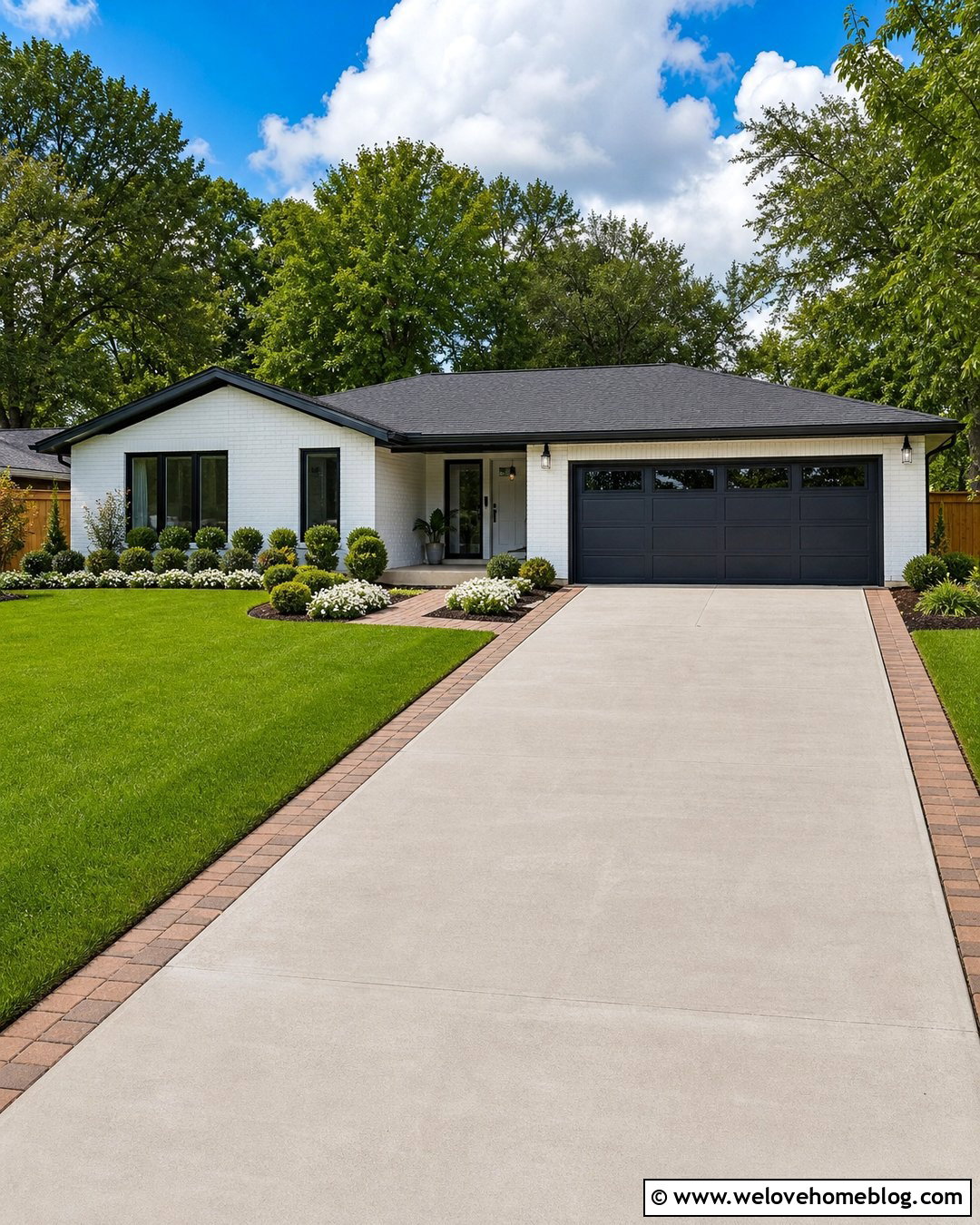
If grass constantly grows over the driveway edge, a flat paver mowing strip offers a clean and useful solution. Install two rows of durable concrete or brick pavers level with the surrounding lawn around a straight poured-concrete driveway. The broad strip creates space for mower wheels while visually separating the turf from the driving surface. Choose a color that relates to the house, front walkway, or porch steps so the border feels integrated. Rounded planting beds can interrupt the lawn near the entrance and garage, adding small shrubs without complicating maintenance. Avoid positioning loose mulch directly against the driveway where it may wash onto the surface. With precise installation and simple landscaping, this complete look creates an orderly suburban entrance that remains easy to trim and maintain.
7. Curved Pavers Around Driveway Planting Beds
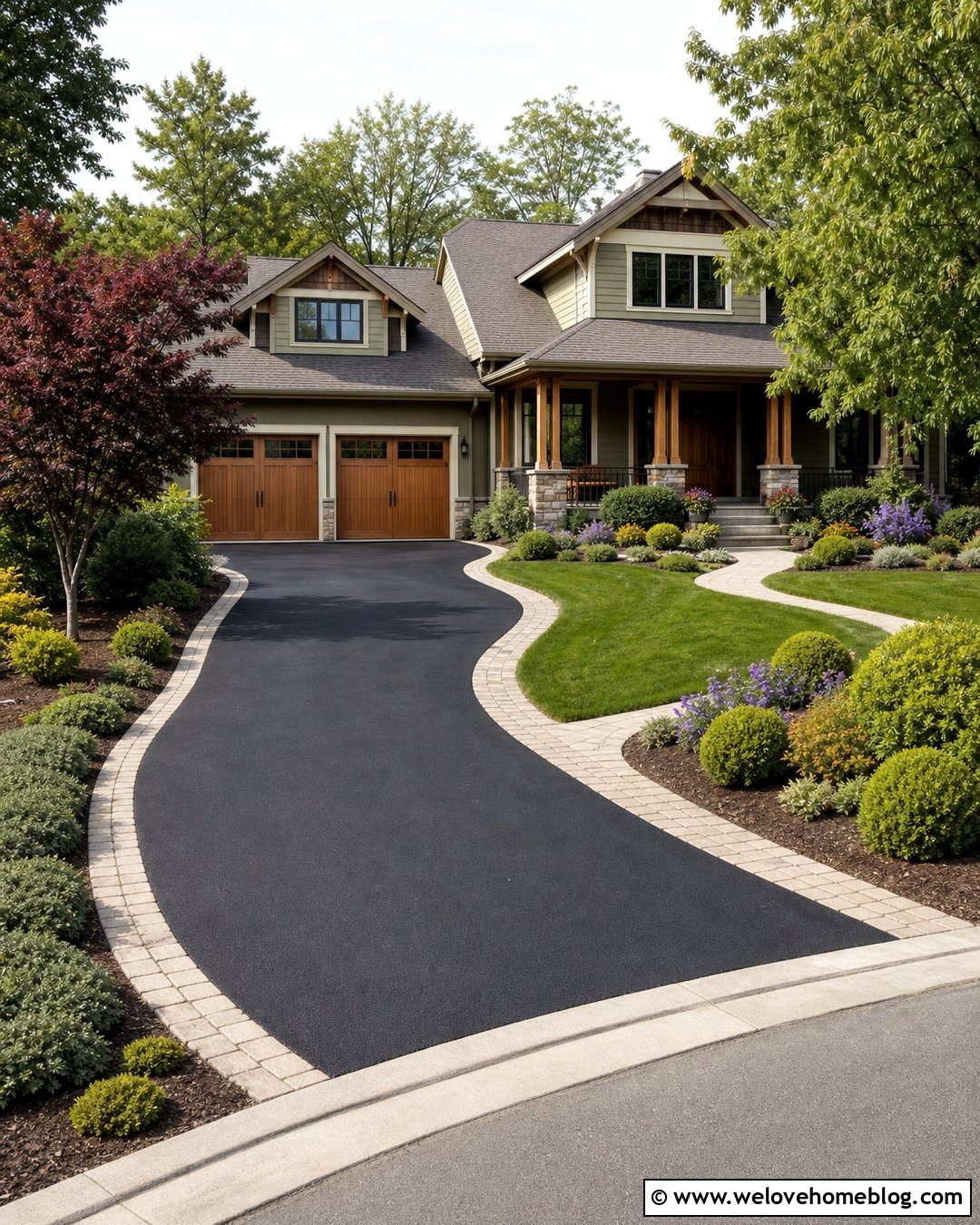
A curved driveway looks most convincing when its paver border follows the same sweeping lines. Use tumbled concrete pavers or clay brick pavers around the outer edge, then create generous planting beds that echo each curve. Repeating the same pavers around the beds ties the hardscape and landscaping together. Fill the planting areas with layered greenery, placing ground covers near the driveway, rounded shrubs in the middle, and small ornamental trees toward the back. This graduated arrangement keeps branches away from vehicles while adding depth. A smooth asphalt or light concrete surface provides a calm background for the textured border. The completed design feels natural and welcoming, making it ideal for Craftsman houses, cottage-inspired homes, and properties with broad or irregularly shaped front yards.
8. Permeable Pavers Around a Concrete Driveway
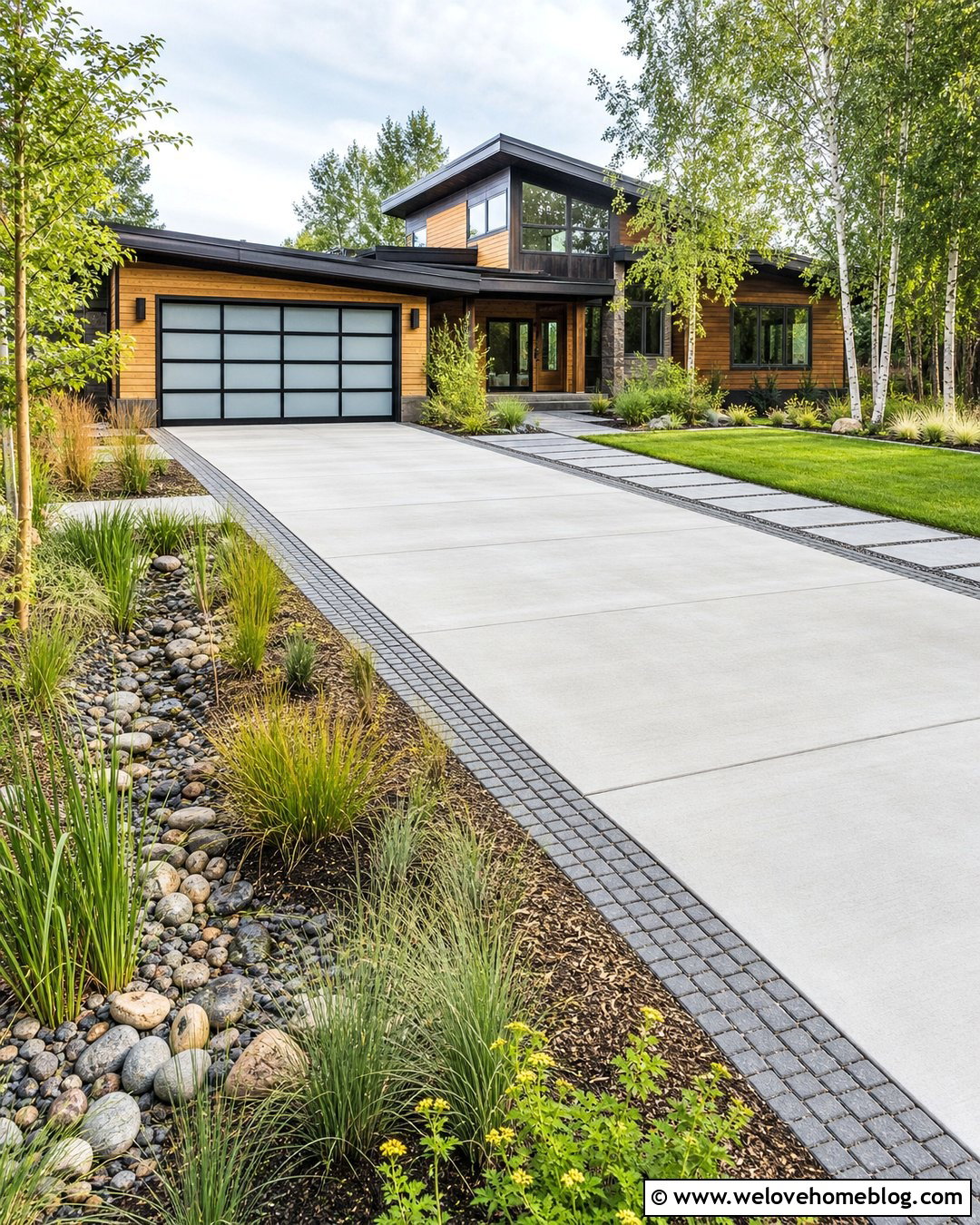
Permeable paver strips can create an attractive transition along a concrete driveway while allowing water to move through their open joints. Use vehicle-rated permeable concrete pavers filled with small clean aggregate rather than ordinary joint sand. Place the strips beside a light-gray driveway and connect them to rain gardens or planted drainage areas where site conditions permit. Permeable installations depend on carefully prepared base layers, correctly sized joint stone, and secure edging, so local soil and drainage requirements should guide the plan. () Visually, medium-gray pavers, native grasses, and river birch or serviceberry trees produce a relaxed contemporary look. The result is a complete driveway edge that combines pattern, landscaping, and water-conscious design without making the front yard appear overly technical.
9. Herringbone Paver Apron Around a Driveway
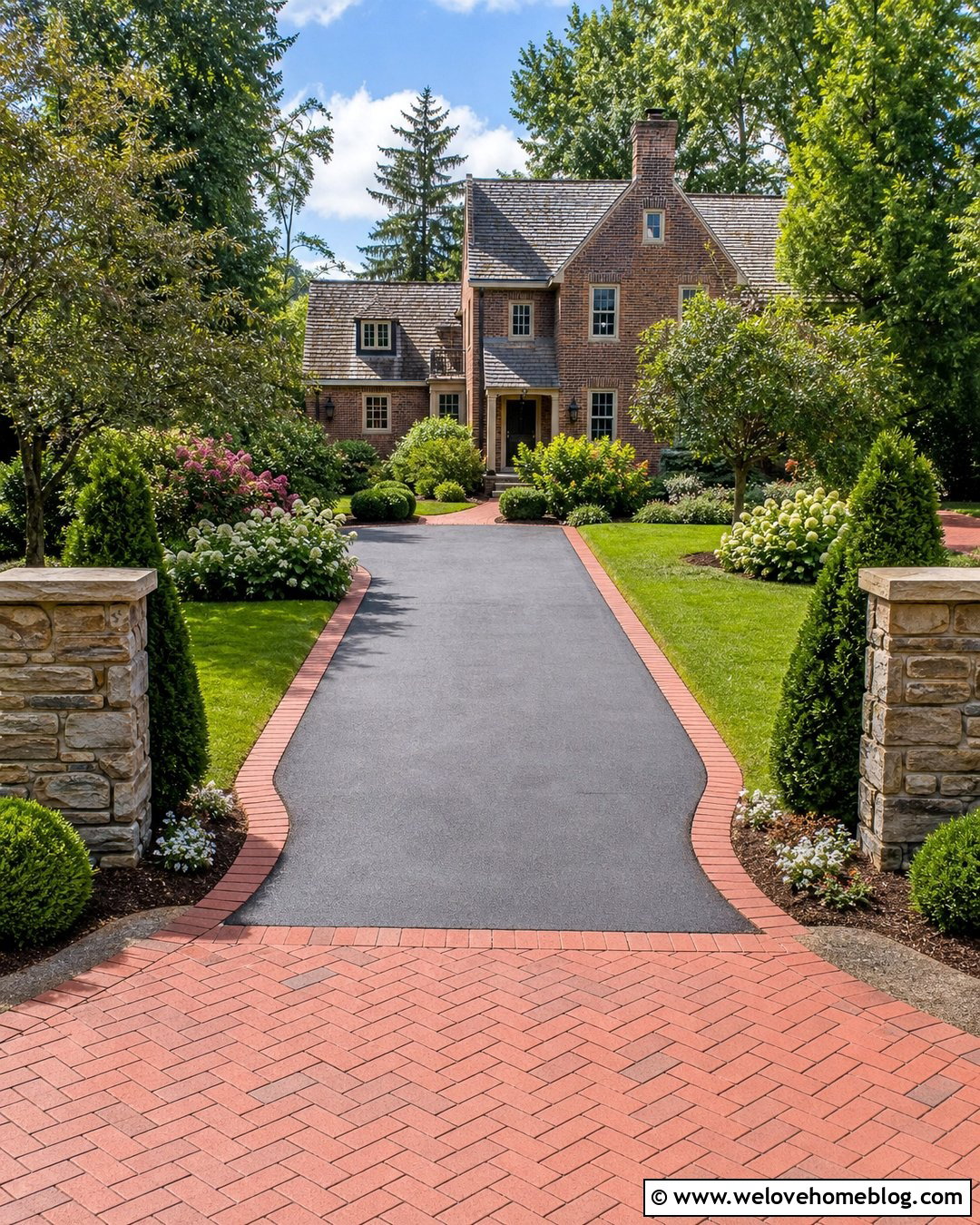
A herringbone paver apron can become the focal point of a simple driveway entrance. Place clay brick or concrete brick pavers across the first several feet near the street, then continue matching pavers as narrow borders along both sides of the driveway. The apron signals the entry and creates a strong transition from the road to poured concrete or asphalt. Herringbone layouts offer substantial visual movement and interlock, making them well suited to areas designed for vehicle use when installed on an appropriate base. () Add low stone columns, neatly edged lawn, and balanced planting beds to finish the approach. Matching the apron color to the home’s brick, shutters, or front door helps the entire property feel coordinated rather than decorated in separate pieces.
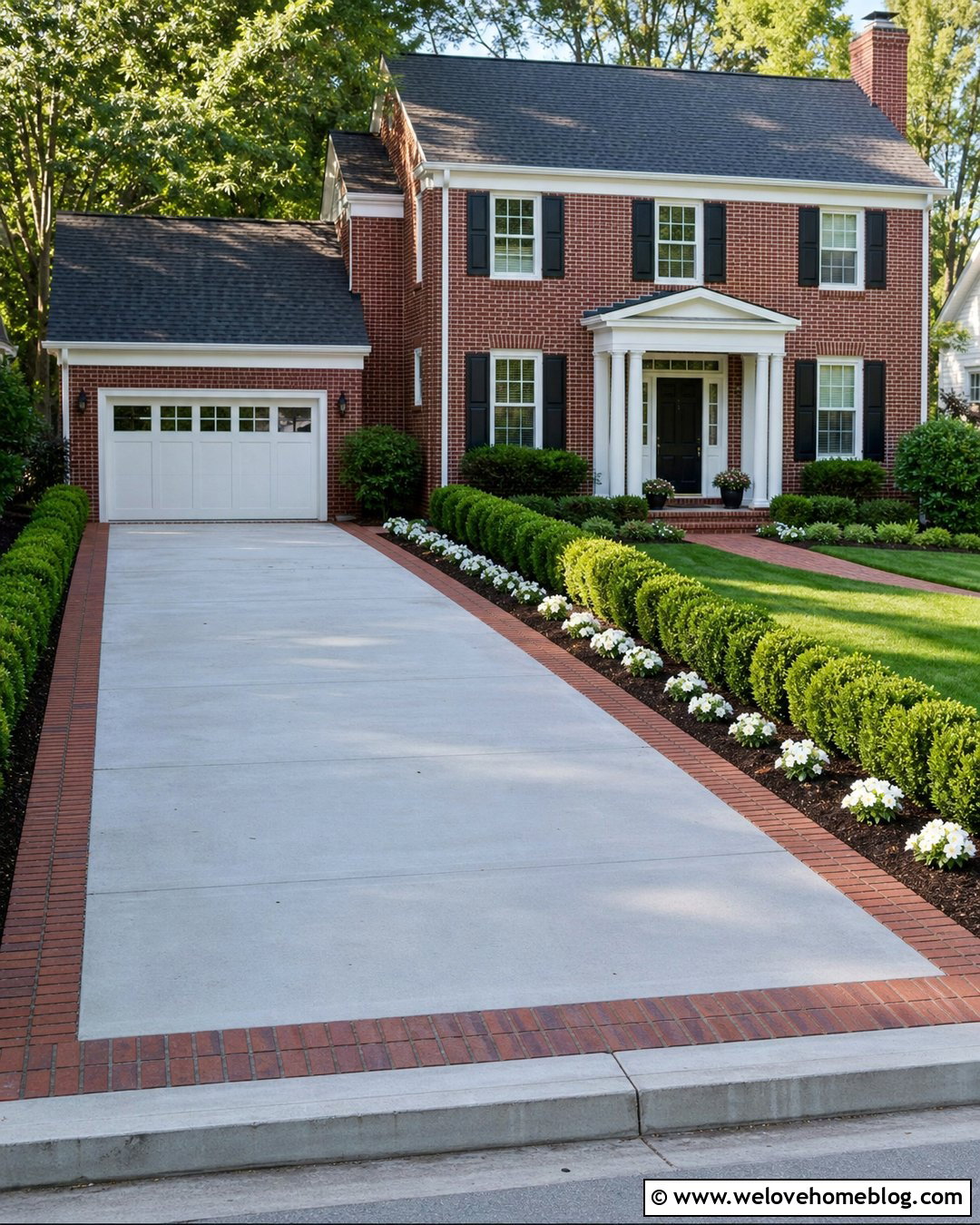
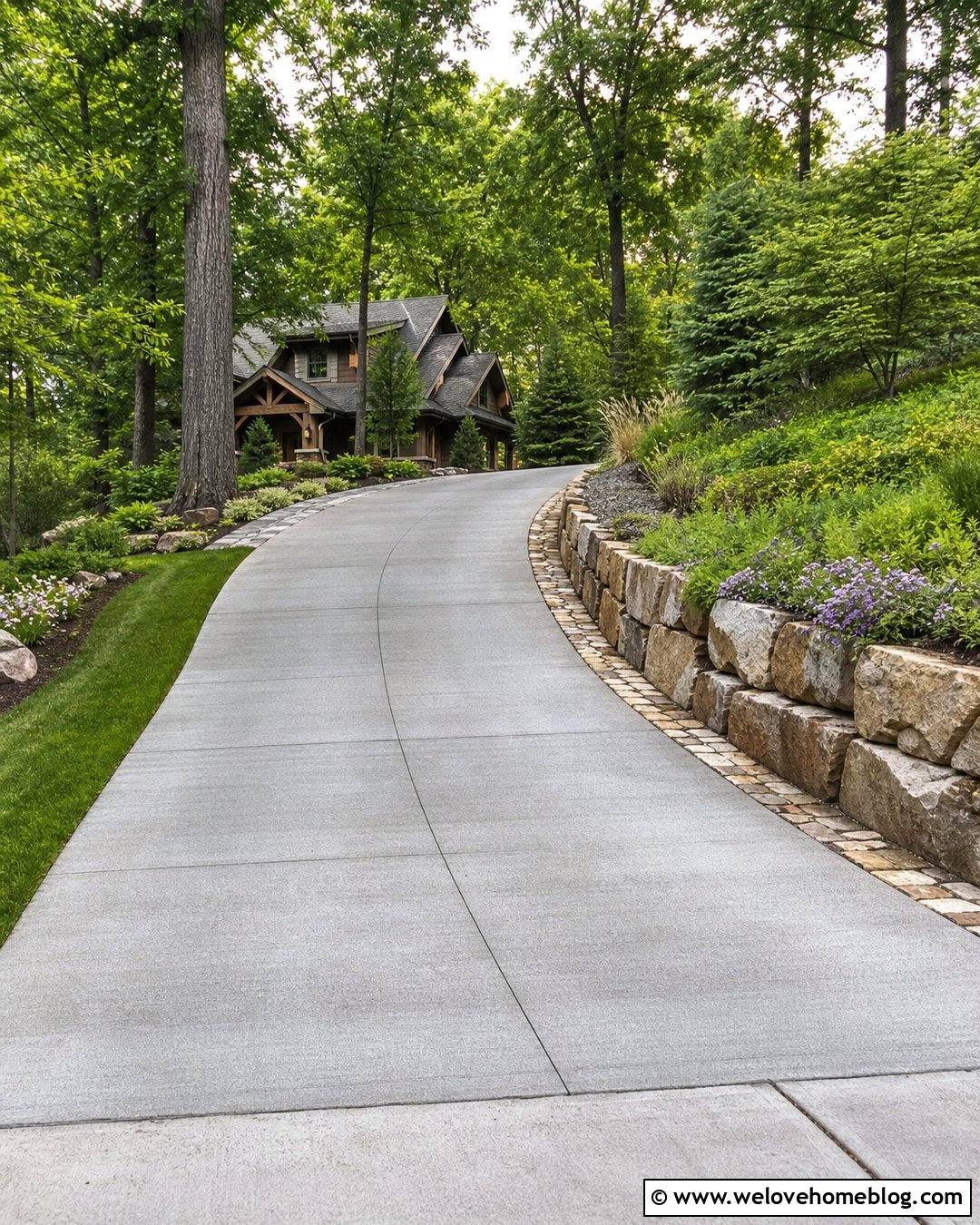
10. Paver Walkway Around a Narrow Driveway
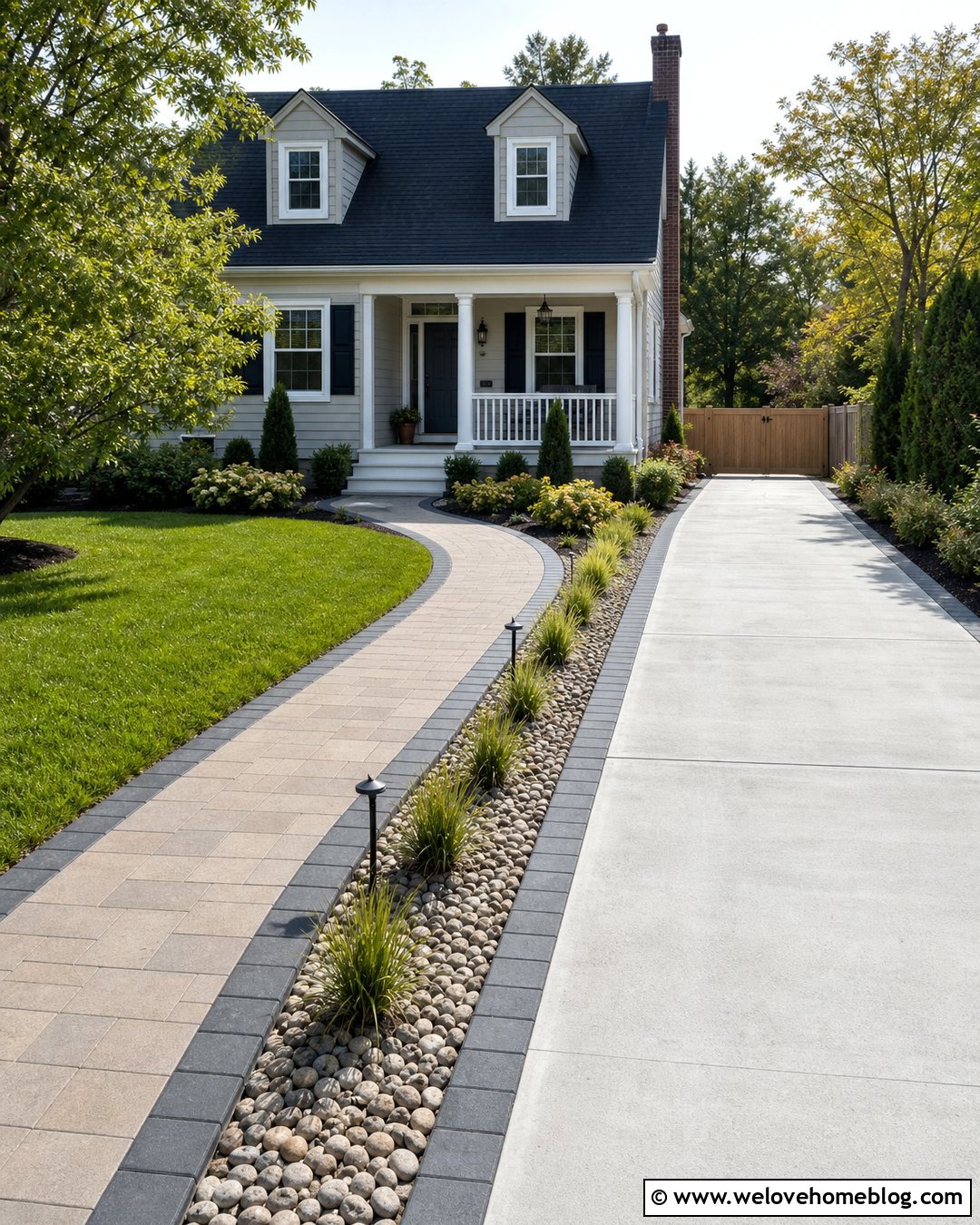
A paver walkway placed beside a narrow driveway improves the entrance without taking over the front yard. Use rectangular concrete pavers in a running bond to form a clearly defined pedestrian path from the sidewalk to the porch. Separate it from the poured-concrete or asphalt driveway with a slim planting strip, river-stone channel, or contrasting paver border. A gentle curve near the front steps can make the walkway feel less rigid. Low-profile lighting and compact plants help visitors recognize the walking route while keeping the driving area open. For consistency, repeat the walkway pavers along the opposite driveway edge or across the garage threshold. This coordinated layout is especially useful for compact ranch homes, townhouses, and suburban lots where every foot of frontage needs a clear purpose.
11. Pavers Around a Circular Driveway
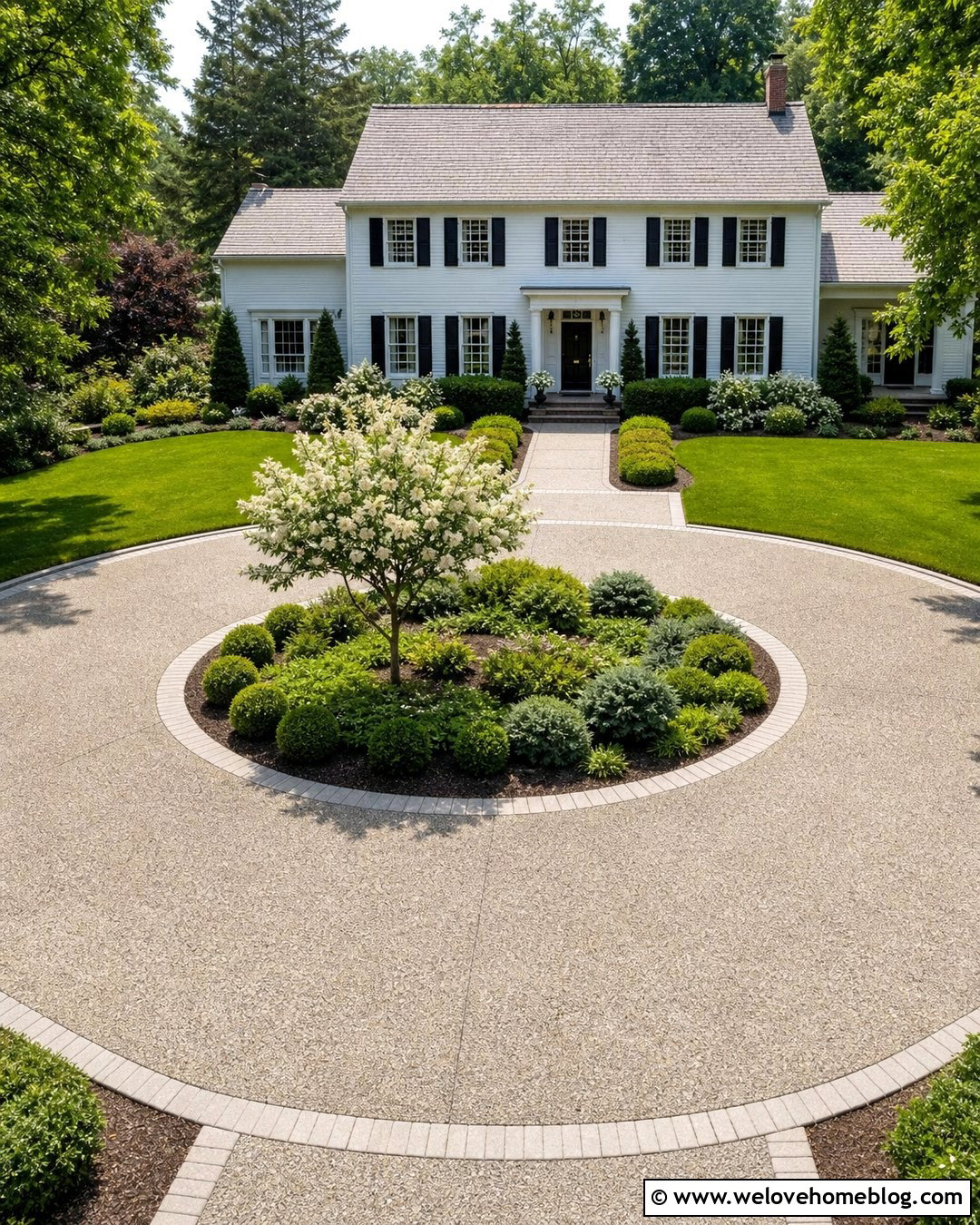
A circular driveway benefits from a border that clearly defines both the outer edge and center island. Surround a smooth asphalt or exposed-aggregate surface with warm gray concrete pavers laid in a flexible soldier course. Repeat the same pavers around the island so the entire loop reads as one continuous composition. Inside the island, select a small ornamental tree, layered evergreen shrubs, and low ground cover that will not obstruct visibility. At the road entrances, widen the pavers into modest aprons for a more finished arrival. If the home has a central front door, align the island planting and walkway with that architectural axis. This complete design suits larger ranch, Colonial, and estate-style homes while keeping the circular layout visually organized from every approach.
12. Reclaimed Brick Pavers Around a Farmhouse Driveway
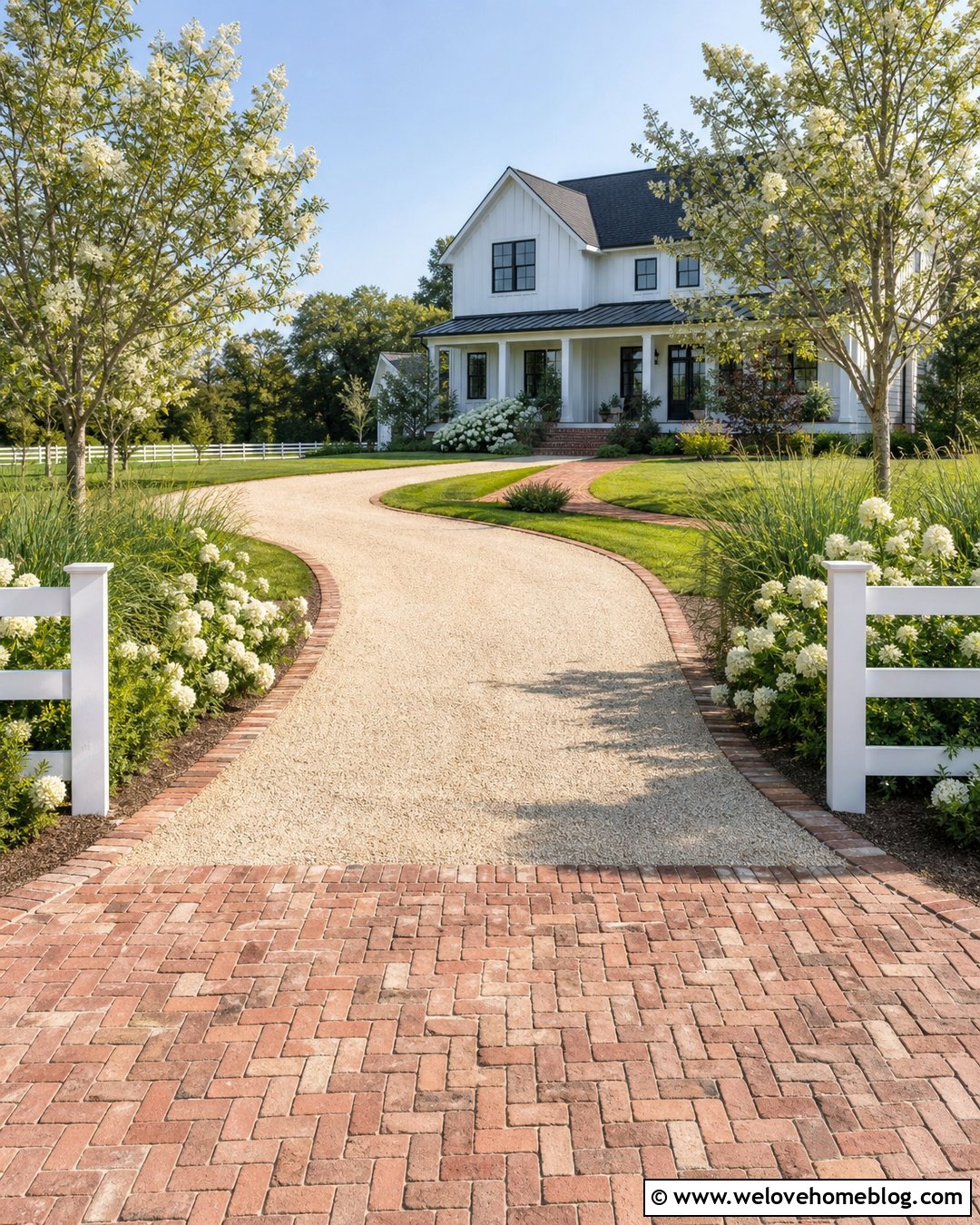
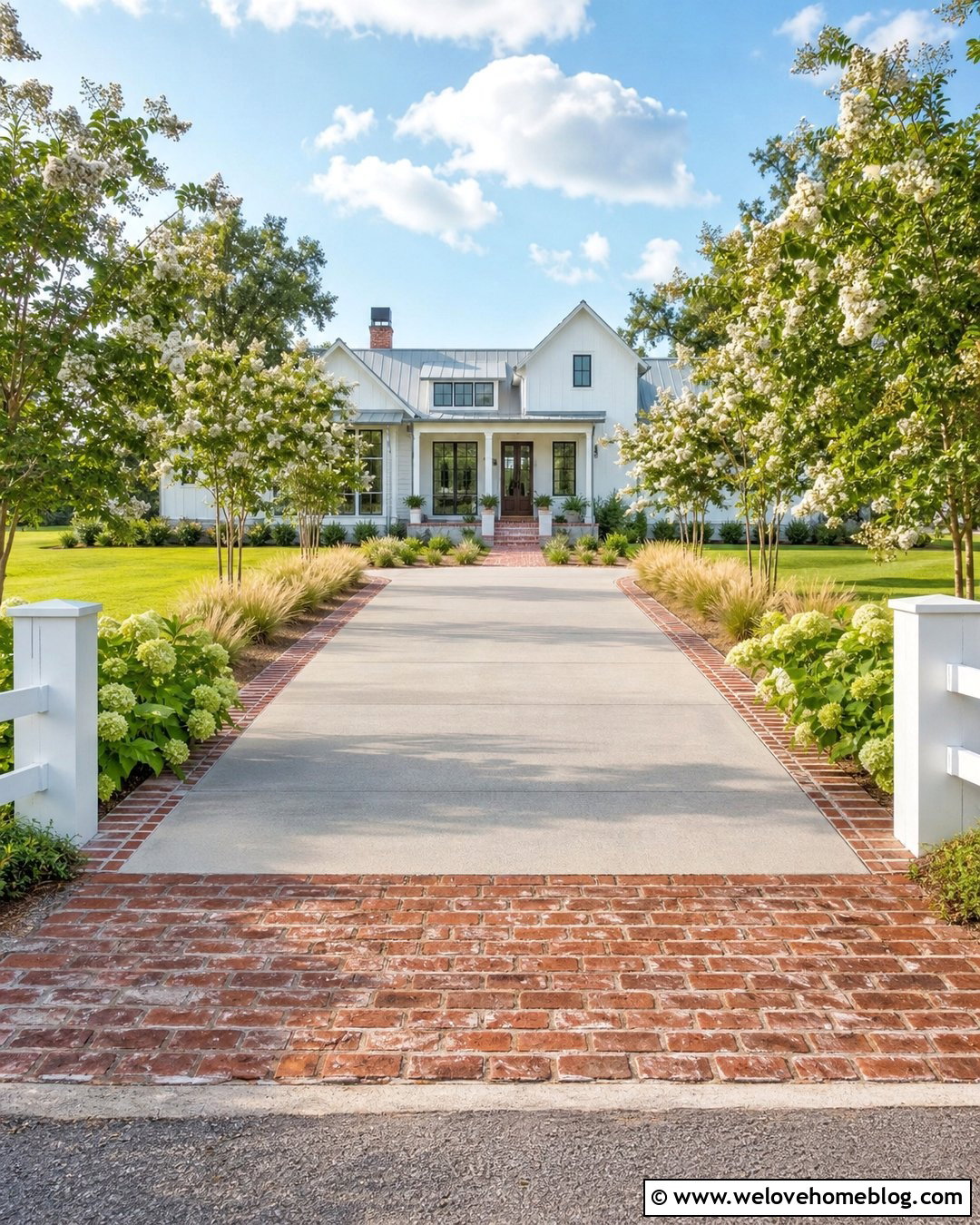
Weathered reclaimed brick pavers bring character to a farmhouse driveway when their variations are used deliberately. Frame a pale gravel or brushed-concrete surface with a wide brick border in mixed red, brown, and muted terracotta tones. A gently curved driveway enhances the relaxed rural character, while a matching brick apron makes the road entrance feel established. Pair the border with white fencing, native grasses, hydrangeas, and small flowering trees. Near the house, continue the brick into a simple walkway leading to a covered porch. Because reclaimed units can vary in strength and condition, use suitable paving bricks in locations exposed to vehicles and reserve delicate pieces for pedestrian areas. The resulting look feels collected over time while remaining orderly, usable, and visually connected to the farmhouse architecture.
13. Large Concrete Pavers Around a Modern Driveway
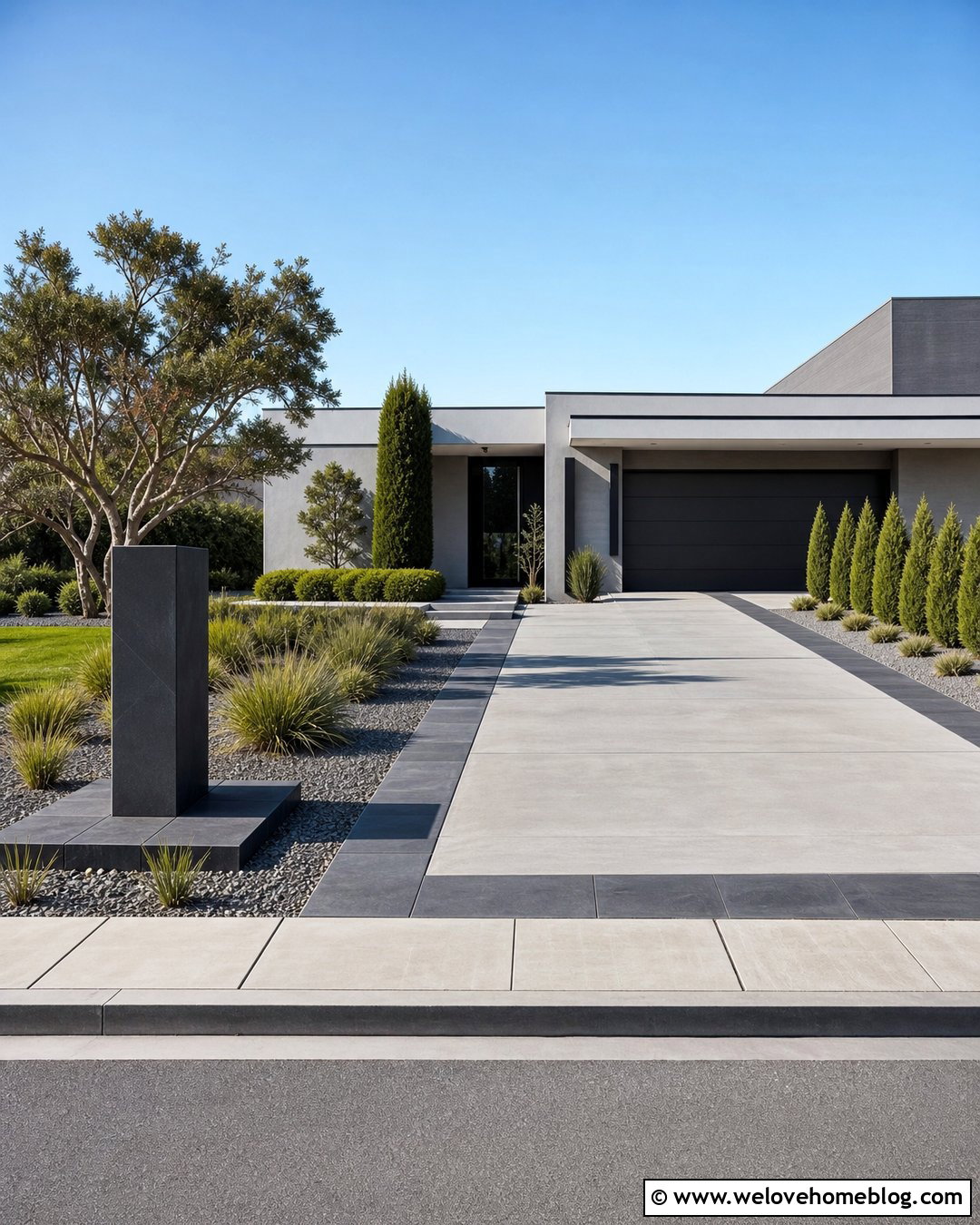
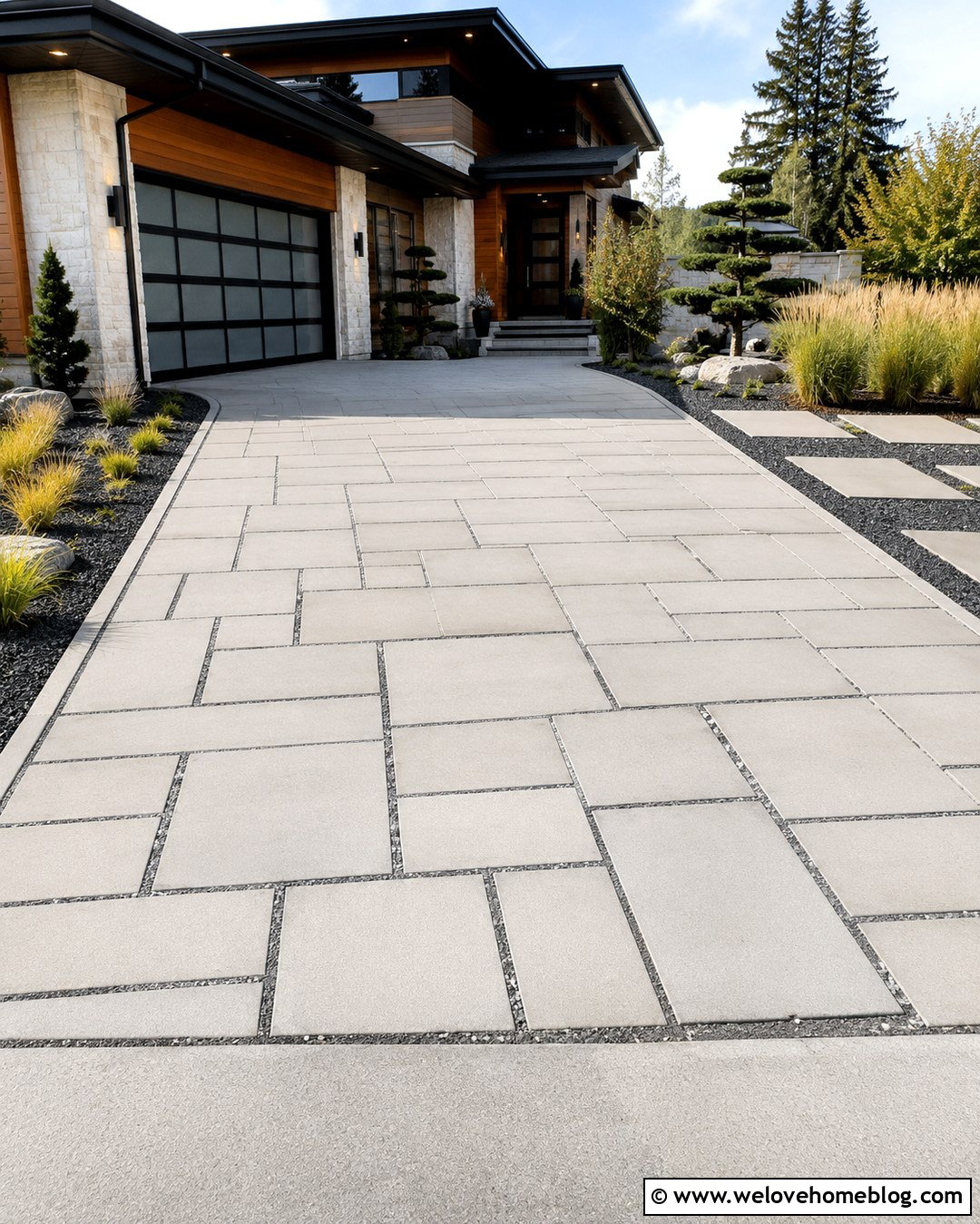
Large-format concrete pavers can create a streamlined border around a modern poured-concrete driveway. Choose smooth rectangular units in charcoal, graphite, or warm gray and place them in long, uninterrupted bands. A straight or slightly angled driveway complements the strong geometry. Repeat the pavers in the front walkway and beneath a minimalist address sign to unify the entrance. Landscaping should be equally structured, with ornamental grasses, clipped evergreen forms, gravel mulch, and one sculptural tree. Thin steel edging can create a precise separation between planting areas and pavers without competing visually. Keep the color palette limited to two or three tones. This complete approach gives the driveway a refined architectural frame while preserving the uncluttered appearance expected around modern and midcentury-inspired homes.
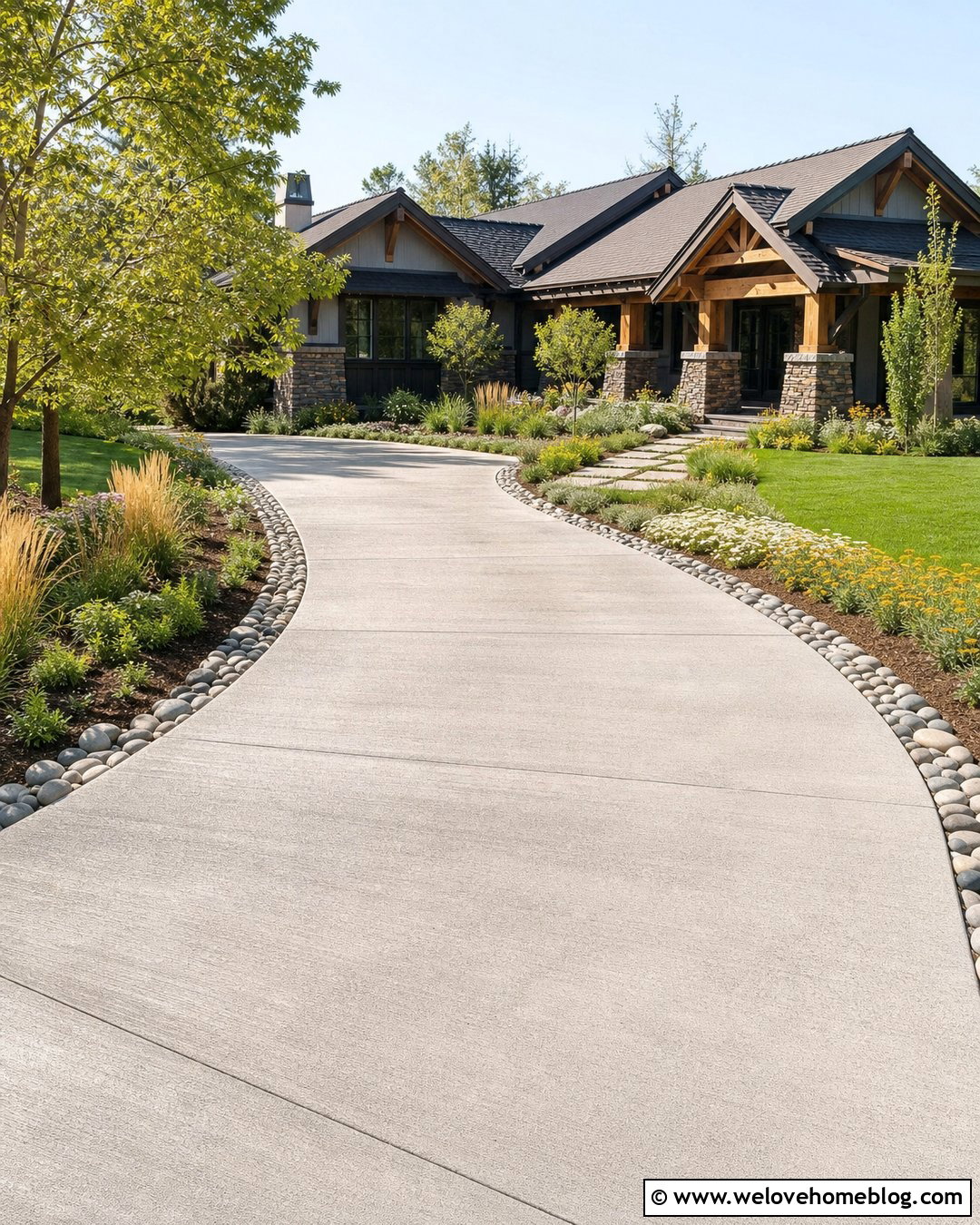
14. Pavers and River Rock Around a Driveway
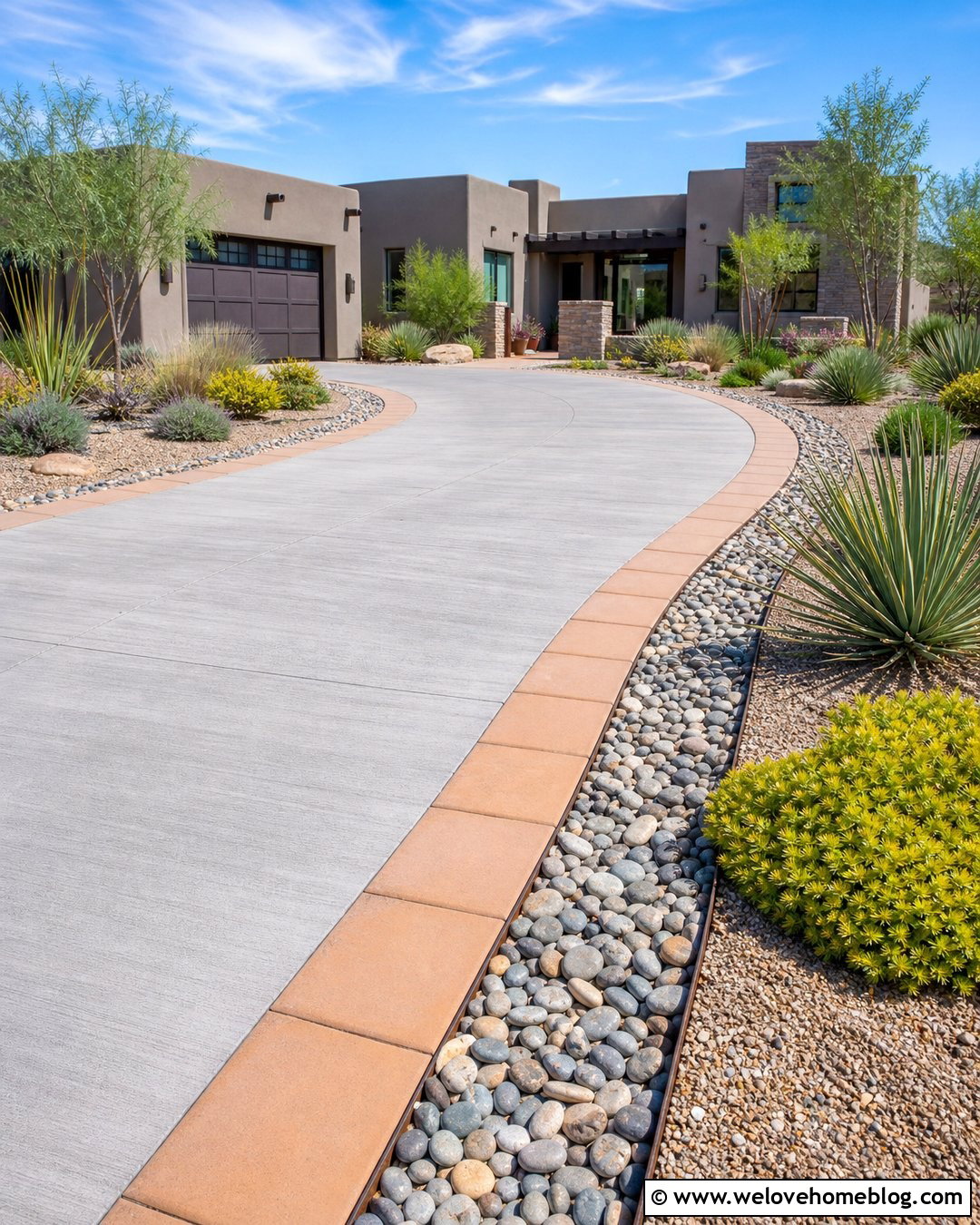
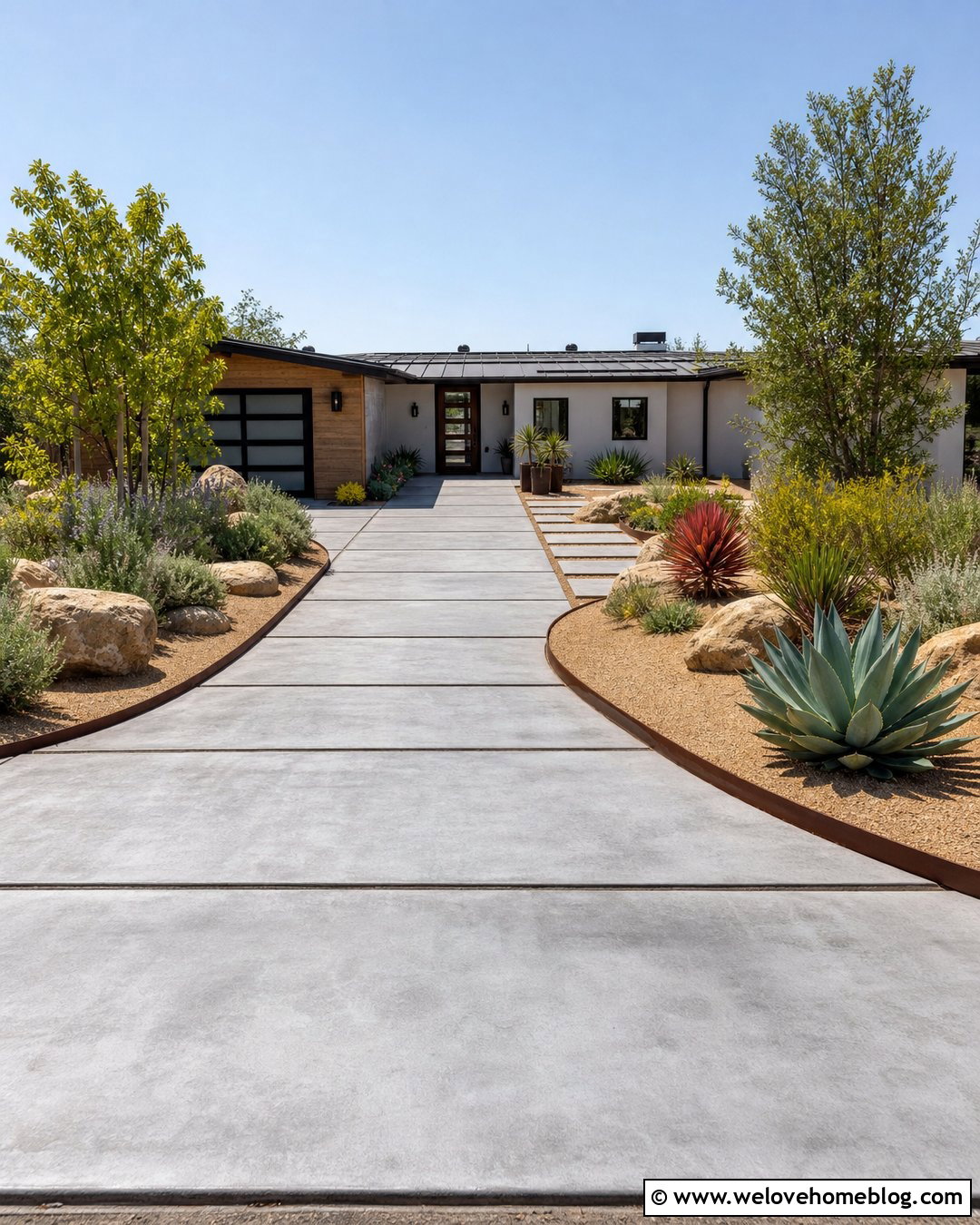
Combining pavers with river rock introduces texture while keeping loose stones away from the driving surface. Start with a single line of concrete or granite pavers beside a gray concrete driveway. Beyond it, add a wider channel of medium river rock contained by metal edging or another paver row. The pavers create a stable boundary, while the stones form a decorative transition into planting beds. Use larger, consistently sized rock rather than tiny pebbles that may scatter easily. Drought-tolerant grasses, yucca, sedum, and compact shrubs can continue the layered look without requiring dense planting. A curved border works beautifully around Southwestern and contemporary homes. Repeat the river rock near the front walkway or foundation so the driveway feature feels like part of the overall landscape.
15. Lighted Pavers Around a Long Driveway
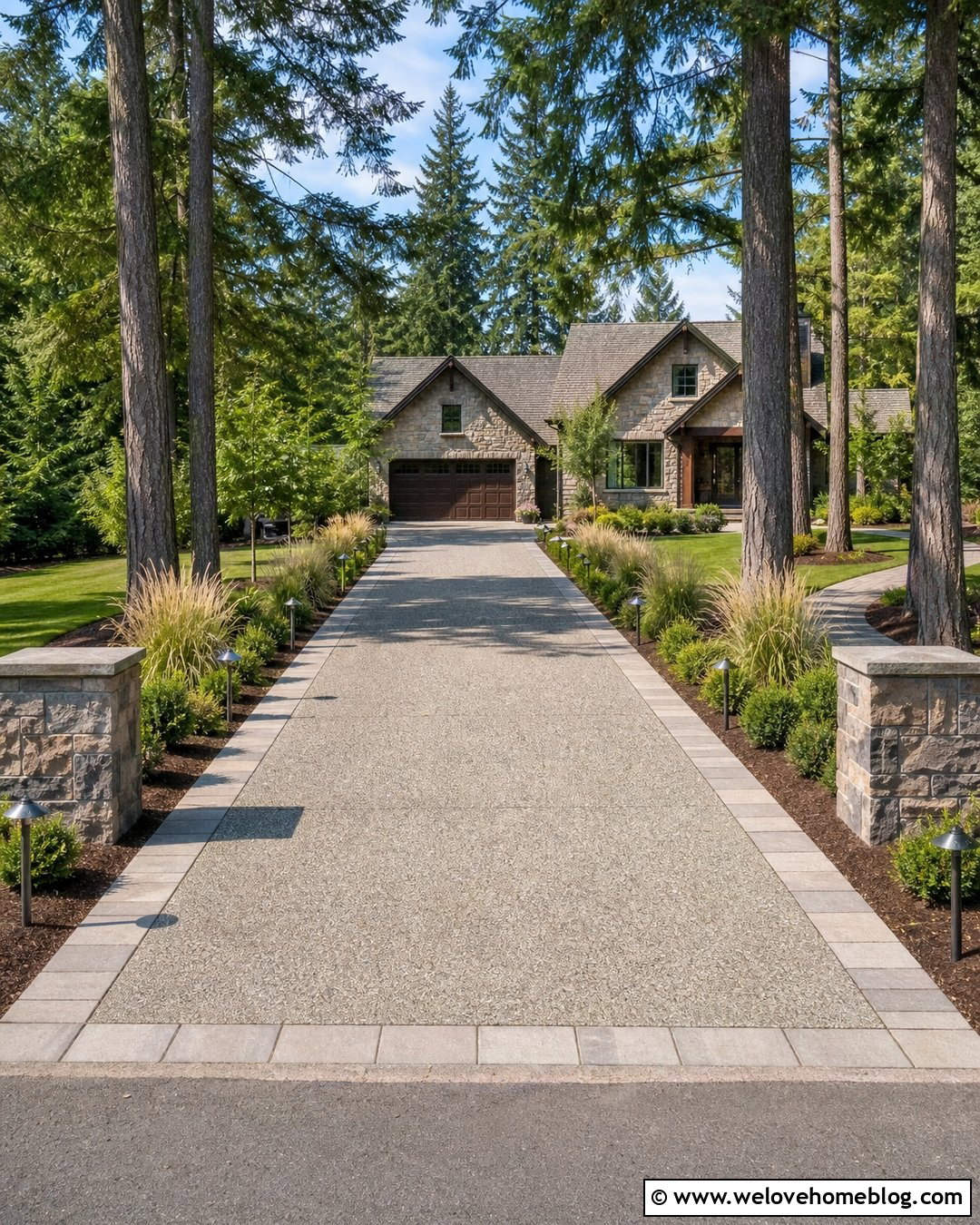
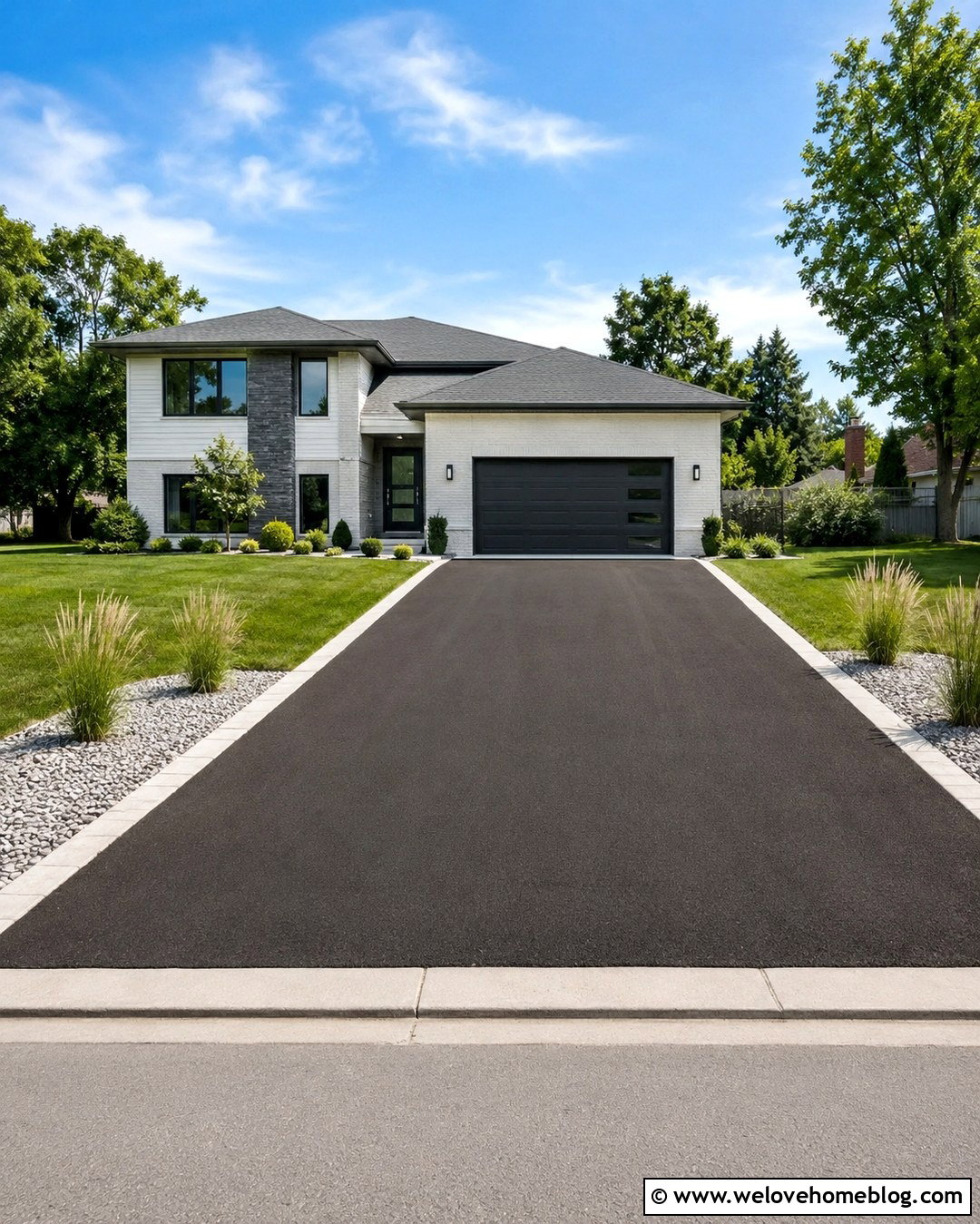
A long driveway becomes easier to read when its paver border and lighting follow one coordinated rhythm. Use textured concrete pavers in warm gray along a straight asphalt or exposed-aggregate surface. Position low-profile lights just beyond the pavers, spacing them evenly without turning the border into a runway. During daylight, the paver bands provide a clear frame. After dark, the fixtures can identify curves, planting beds, and the approach to the garage. Add repeating clusters of ornamental grasses or compact evergreen shrubs between selected lights. At the entrance, coordinate the pavers with stone pillars or a clearly visible address marker. Plan wiring, drainage, and fixture placement before installing the border. This creates a clean finished design without cutting newly completed paving later.
16. Pavers and Ornamental Grasses Around a Driveway
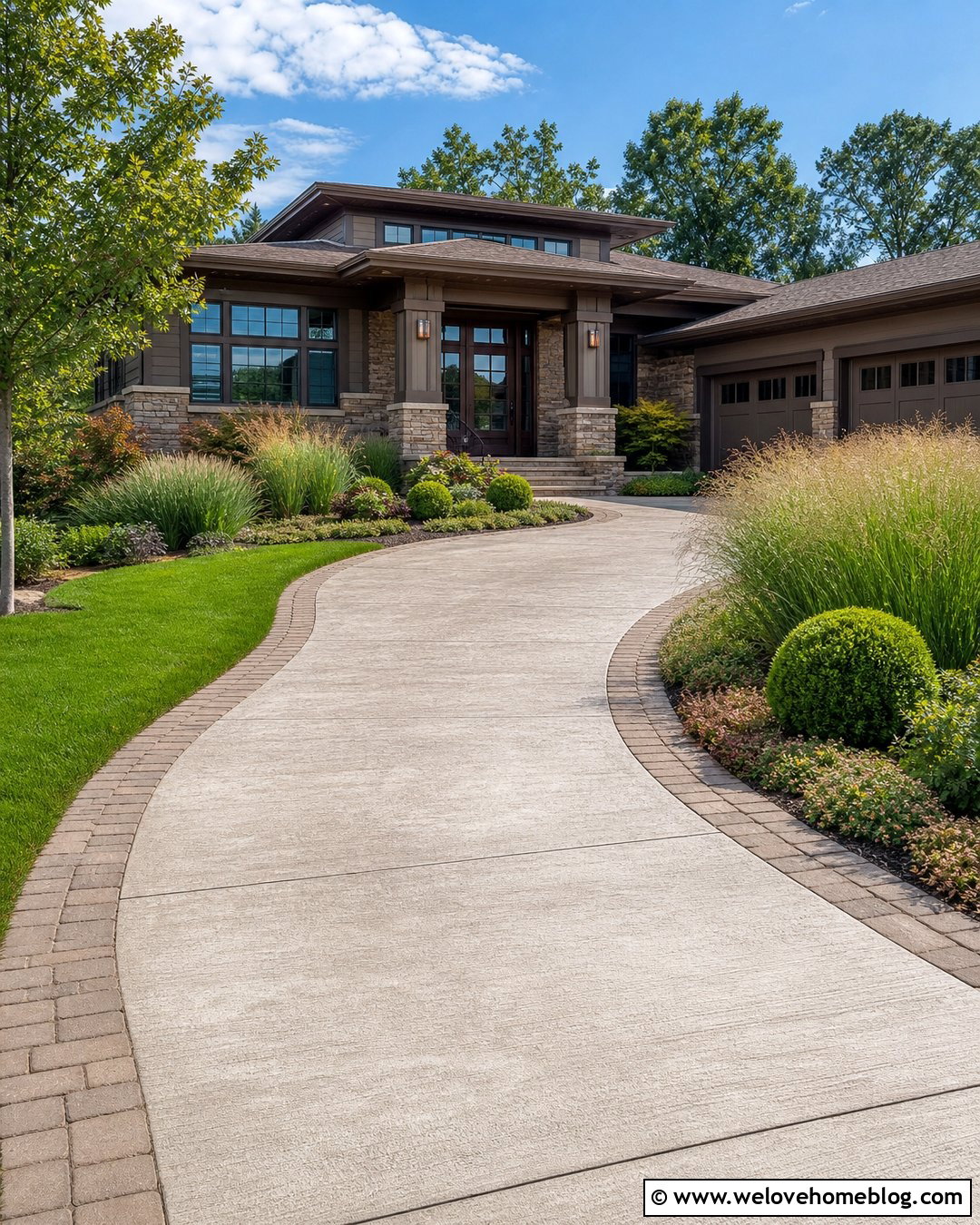
Soft ornamental grasses can balance the hard lines of pavers and concrete. Border a brushed-concrete driveway with tumbled taupe pavers, then create a planting strip filled with repeated groups of fountain grass, switchgrass, or another locally appropriate variety. Keep mature plant size in mind so foliage does not lean into the driving area or block visibility near the street. Low ground cover between grass clusters can suppress bare-looking gaps and create a layered edge. A sweeping driveway curve makes the movement of the grasses especially effective. Continue the same pavers around the front walkway and planting beds to unify the design. This full look pairs naturally with Craftsman, prairie, contemporary farmhouse, and ranch homes, giving the property texture without relying on complicated flower combinations.
17. Wide Paver Strips Around a Parking Area
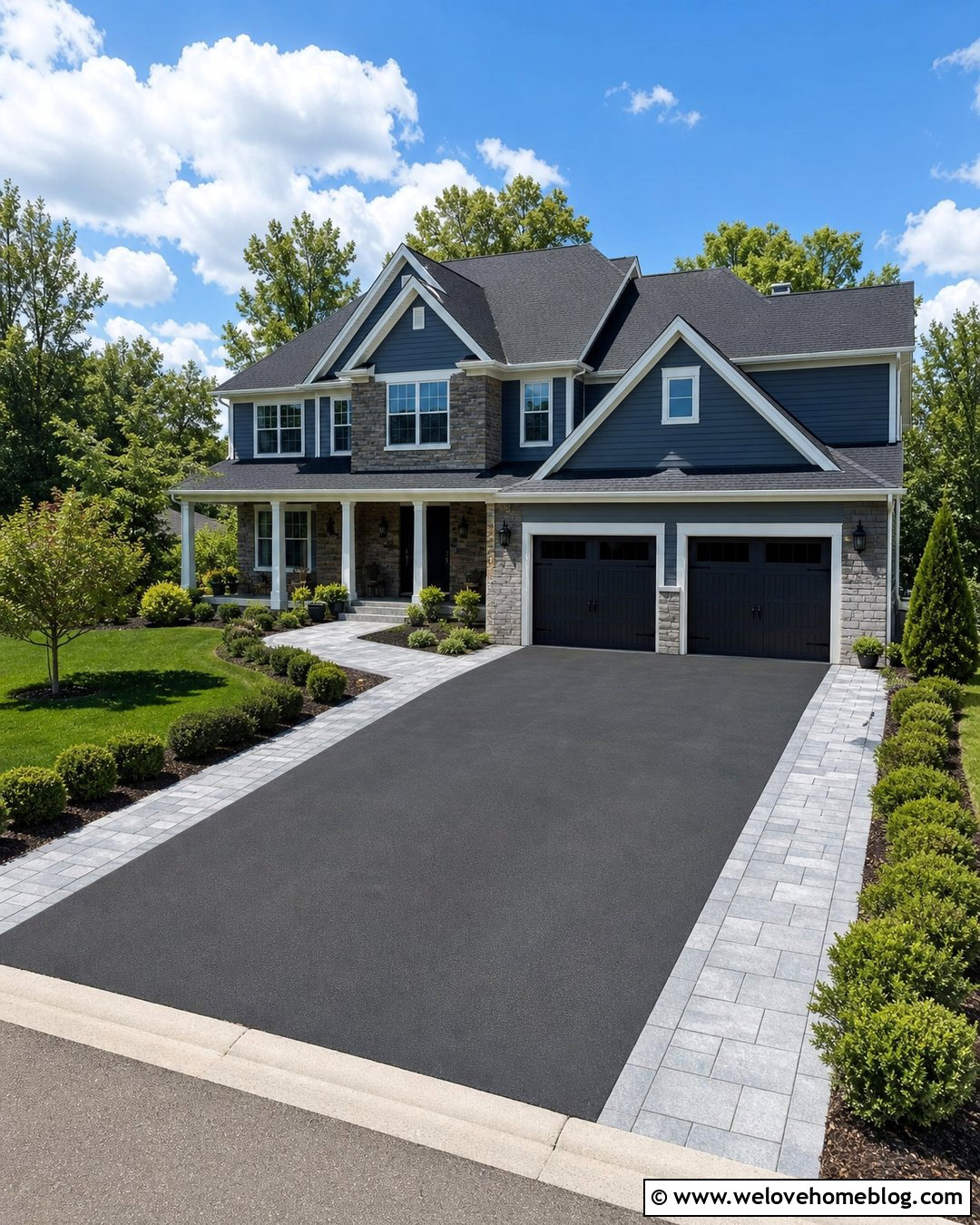
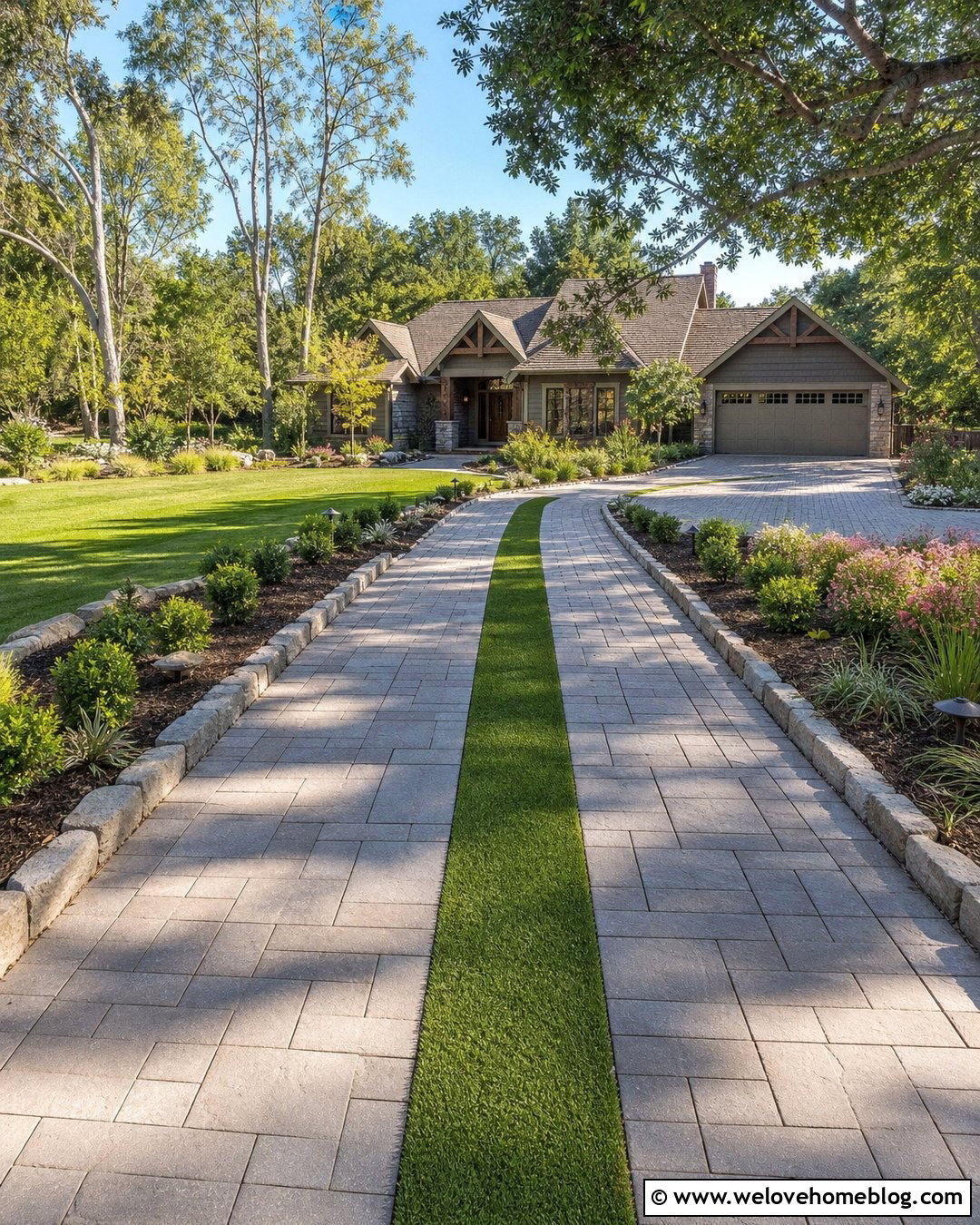
Wide paver strips can provide convenient stepping areas beside a driveway where passengers frequently exit onto wet grass or mulch. Install three- to four-foot bands of textured concrete pavers along one or both sides of a smooth asphalt driveway. Use a running bond or modular pattern that visually distinguishes the strips from the driving surface. Connect one side directly to the front walkway, creating a logical pedestrian route to the house. On the outer edges, add narrow planting beds with compact shrubs and durable ground cover. The paver color should coordinate with the garage facade or entry steps rather than sharply compete with them. This complete arrangement is particularly useful for wide suburban driveways, side-by-side parking areas, and homes where the main walkway begins near parked vehicles.
18. Stepped Pavers Around a Sloped Driveway
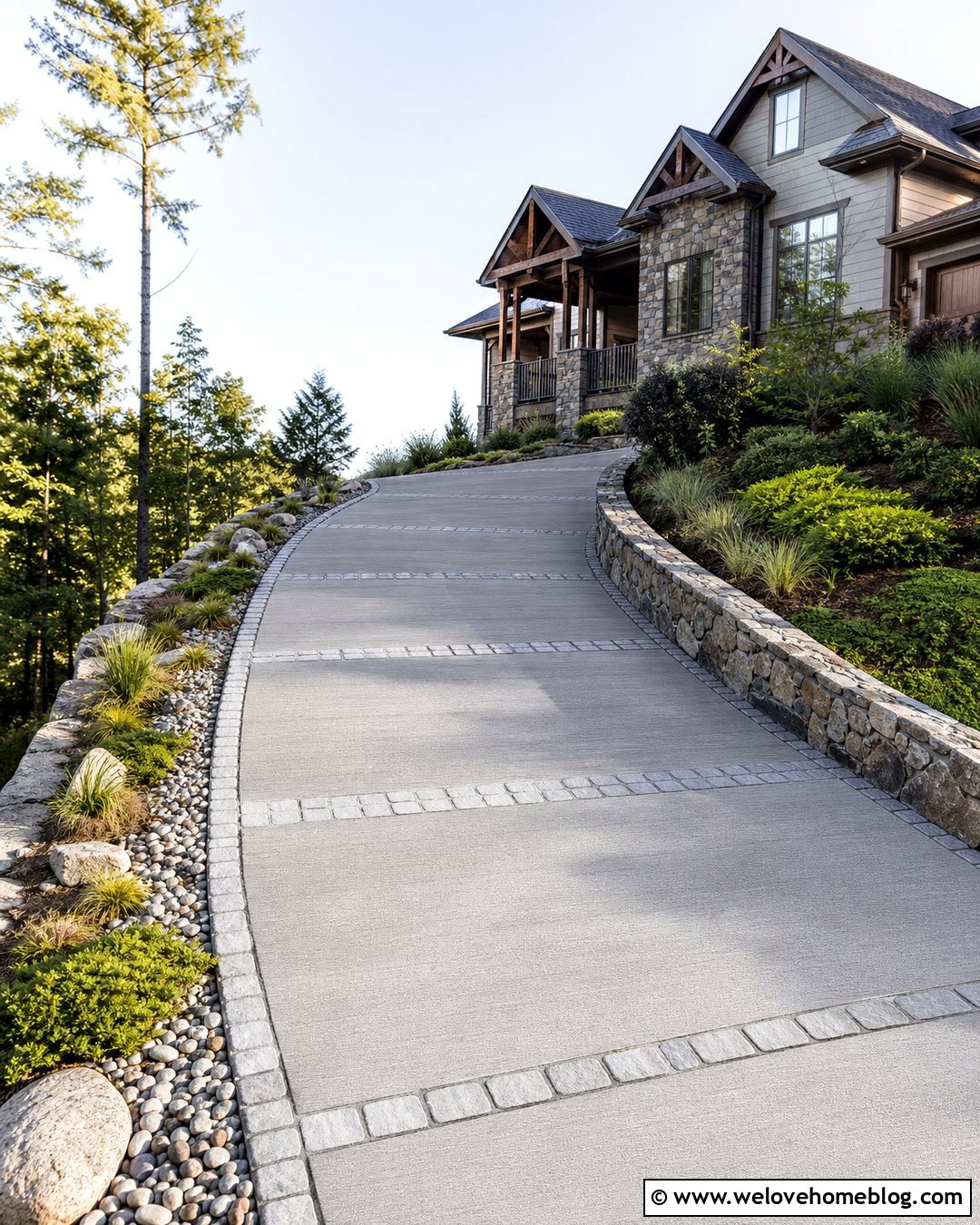
Sloped driveways require borders that respond carefully to changing grades. Use textured concrete pavers or granite setts arranged in subtle stepped sections beside a broom-finished concrete surface. Each section should follow the slope smoothly without producing awkward raised edges near vehicle tires or pedestrian routes. On the uphill side, a low retaining edge may help separate the pavers from a mulched planting bed. On the downhill side, combine the border with lawn or a planned drainage strip. Deep-rooted shrubs, spreading ground covers, and ornamental grasses can stabilize the visual transition while softening the grade. Professional assessment is worthwhile where runoff, retaining walls, or frost movement may affect the installation. The completed driveway should look naturally fitted to the hill rather than forced across it.
19. Matching Pavers Around a Garage Apron
The space in front of a garage offers an ideal place to repeat driveway border pavers on a larger scale. Surround a light concrete driveway with brown or charcoal interlocking pavers, then expand them into a broad apron across all garage doors. This larger paved zone visually connects the driveway to the house and hides an abrupt material transition. Match the pavers to the front walkway, porch columns, or masonry accents for a cohesive facade. Low planting beds on either side of the garage can soften the broad hardscape without narrowing vehicle access. Choose restrained patterns, such as running bond or modular ashlar, so the apron supports rather than competes with the architecture. The final design works with ranch, Craftsman, Colonial, and modern farmhouse exteriors.
20. Contrasting Pavers Around a Driveway Entrance
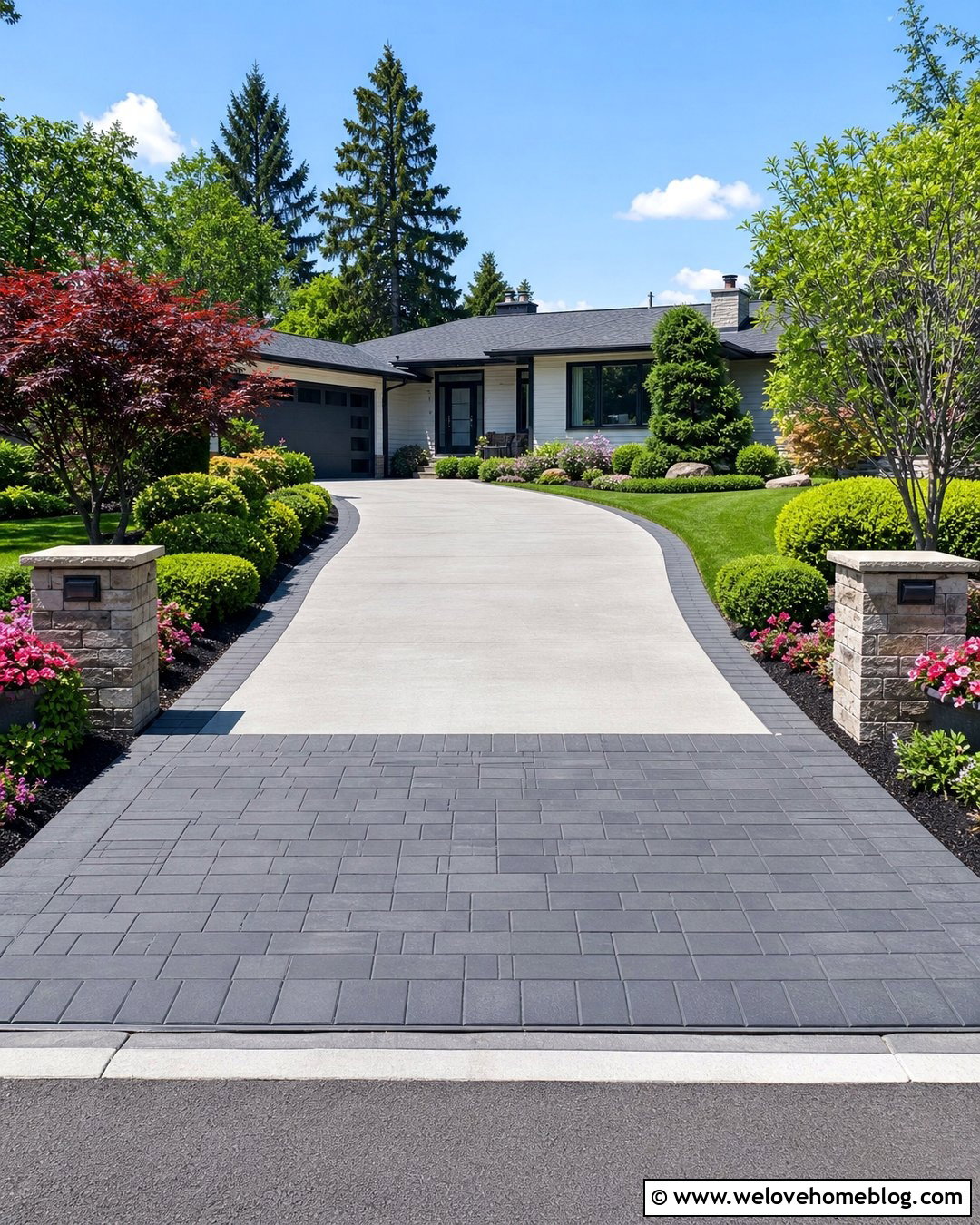
A contrasting paver entrance creates a strong first impression while preserving a simpler driveway farther inside the property. Use dark charcoal pavers around the first section of a pale concrete driveway, forming a wide apron and short side borders. Connect the pavers to low stone pillars, an address marker, or symmetrical planting beds to make the entrance easy to recognize. Beyond the apron, transition to a narrower paver edge that continues toward the house. Rounded shrubs, seasonal flowers, and small ornamental trees can soften the strong color contrast. Keep the planting low near the road so drivers can see approaching traffic. This complete look works on straight, curved, and long driveways, providing curb appeal where it is most visible without requiring decorative paving across the entire surface.
Conclusion:
These **20 Pavers Around Driveway Ideas** show how a well-planned border can improve the complete approach to a home. Brick adds traditional warmth, charcoal concrete creates modern contrast, and cobblestone gives gravel driveways a more established appearance. The best choice should complement the driveway material, architecture, yard size, and level of maintenance you prefer. Think beyond the paver color alone. Consider the driveway’s shape, border width, planting arrangement, walkway connection, entrance, and garage transition together. Most importantly, use pavers designed for the expected traffic and install them over a properly prepared base with dependable edge restraint. A coordinated plan will look more intentional and remain easier to maintain than a collection of unrelated details.

Related posts:

Leave a Reply