
A driveway can feel green and welcoming without giving up the strength needed for daily parking. The best paver-and-turf combinations balance a stable driving surface with planted areas that soften the hardscape and connect it to the lawn. Concrete slabs, clay brick, cobblestone, and open-cell grids can all work beautifully when matched with the right layout, edging, drainage base, and grass type. Permeable designs typically use open joints or planted cells over prepared stone layers, helping rain filter through the surface instead of collecting on top. () From sleek modern slabs to charming ribbon driveways, the following **20 Pavers And Grass Driveway Ideas** offer practical inspiration for different homes, climates, budgets, and yard sizes.

1. Modern Concrete Paver And Grass Driveway
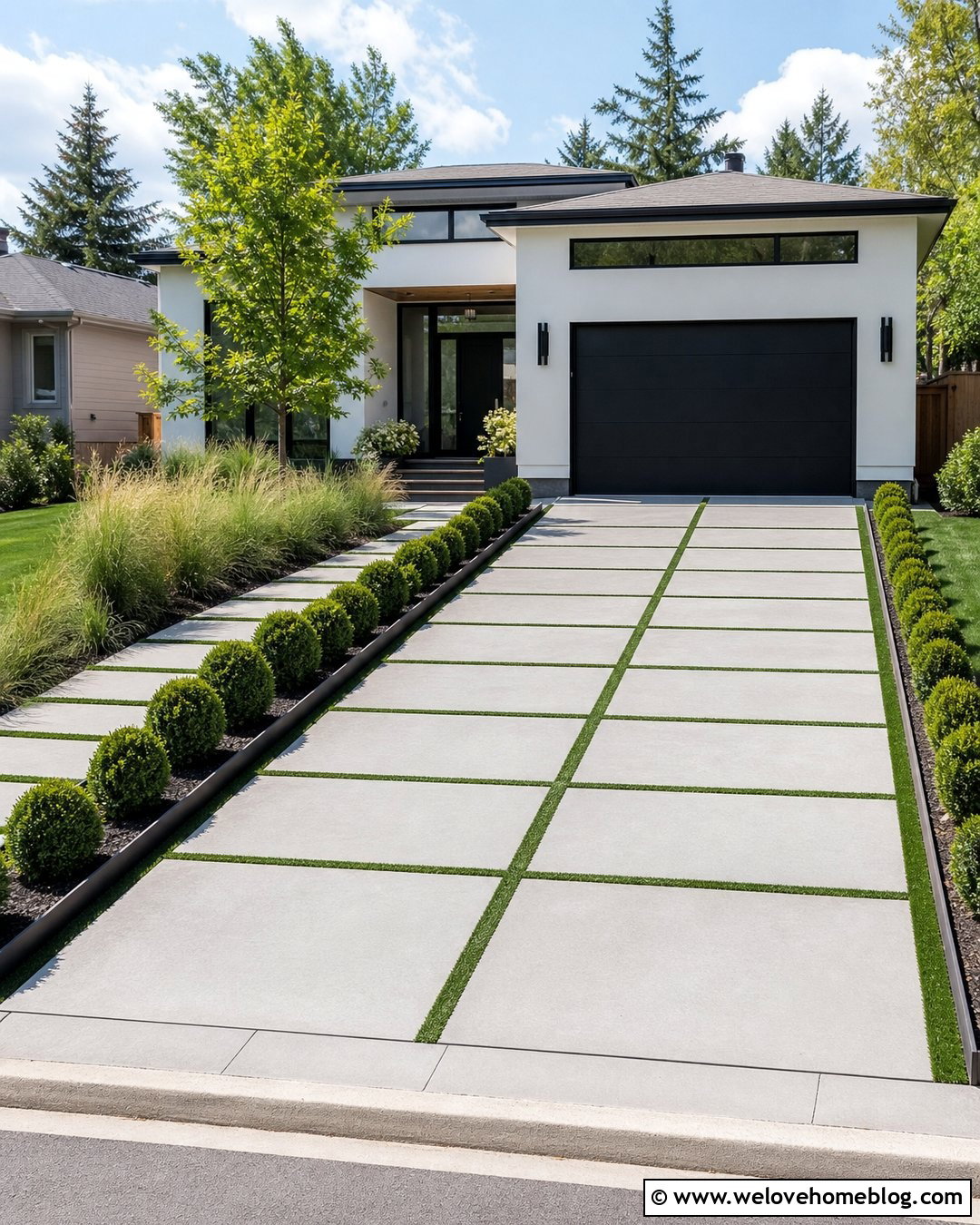
Large rectangular concrete pavers separated by slim grass joints create a clean driveway for a modern home. Choose smooth, light gray pavers and arrange them in straight rows that emphasize the architecture. Narrow turf lines provide contrast without making the surface look overly busy. Continue the same pavers into the front walkway for a seamless arrival. Dark metal edging along the outer lawn keeps the boundary crisp, while simple ornamental grasses or rounded evergreen shrubs soften the facade. This design works best with a professionally prepared, compacted base that supports vehicle weight and keeps the slabs level. Keep grass joints wide enough to receive sunlight and irrigation, but narrow enough to make mowing and tire placement manageable.
2. Paver Ribbon Driveway With Grass Center
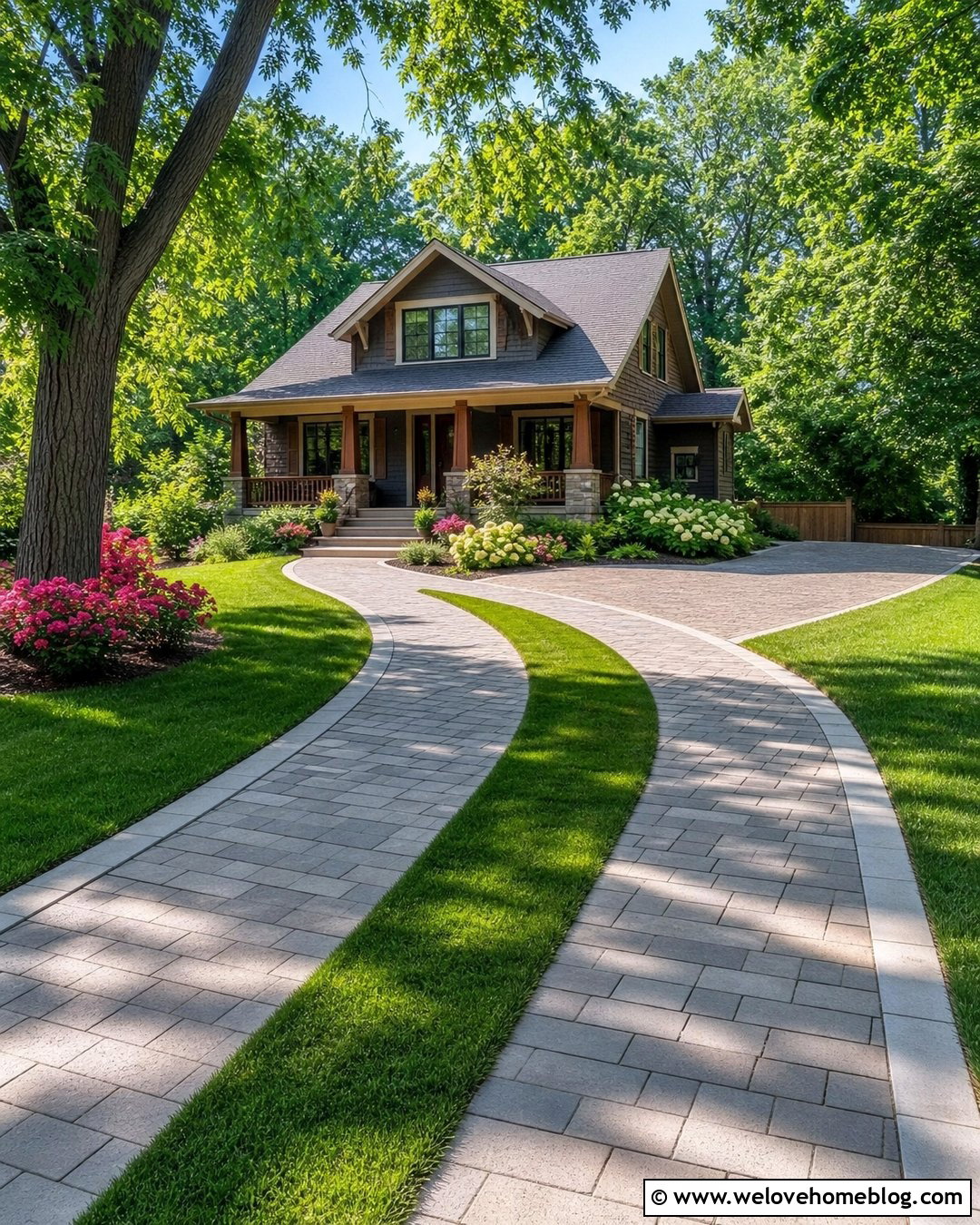
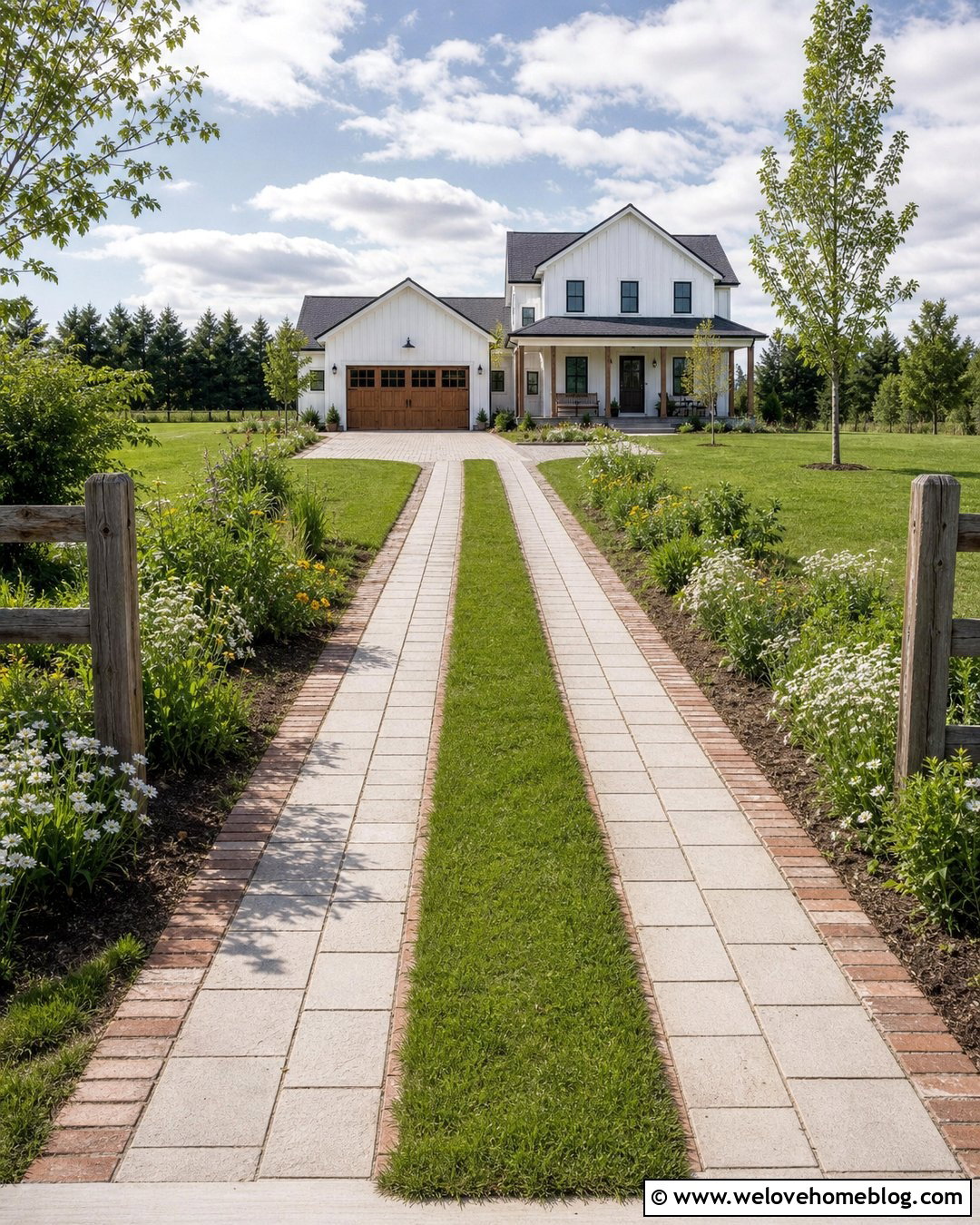
A ribbon driveway uses two paved tracks beneath the vehicle tires while leaving a generous strip of grass through the center. This layout reduces the amount of hardscape and gives a traditional front yard a softer appearance. Select concrete or stone pavers that complement the home’s walkway, porch, or foundation. Straight tracks look neat beside a ranch house, while gently curved tracks suit a cottage or wooded property. Install flush paver edging so mower wheels can pass over the boundaries without catching. The planted center should sit level with the pavers to prevent scalping and muddy depressions. Ribbon strips are recognized as a permeable driveway approach when the planted areas and underlying construction are properly designed. ()
3. Brick Paver Driveway With Grass Median
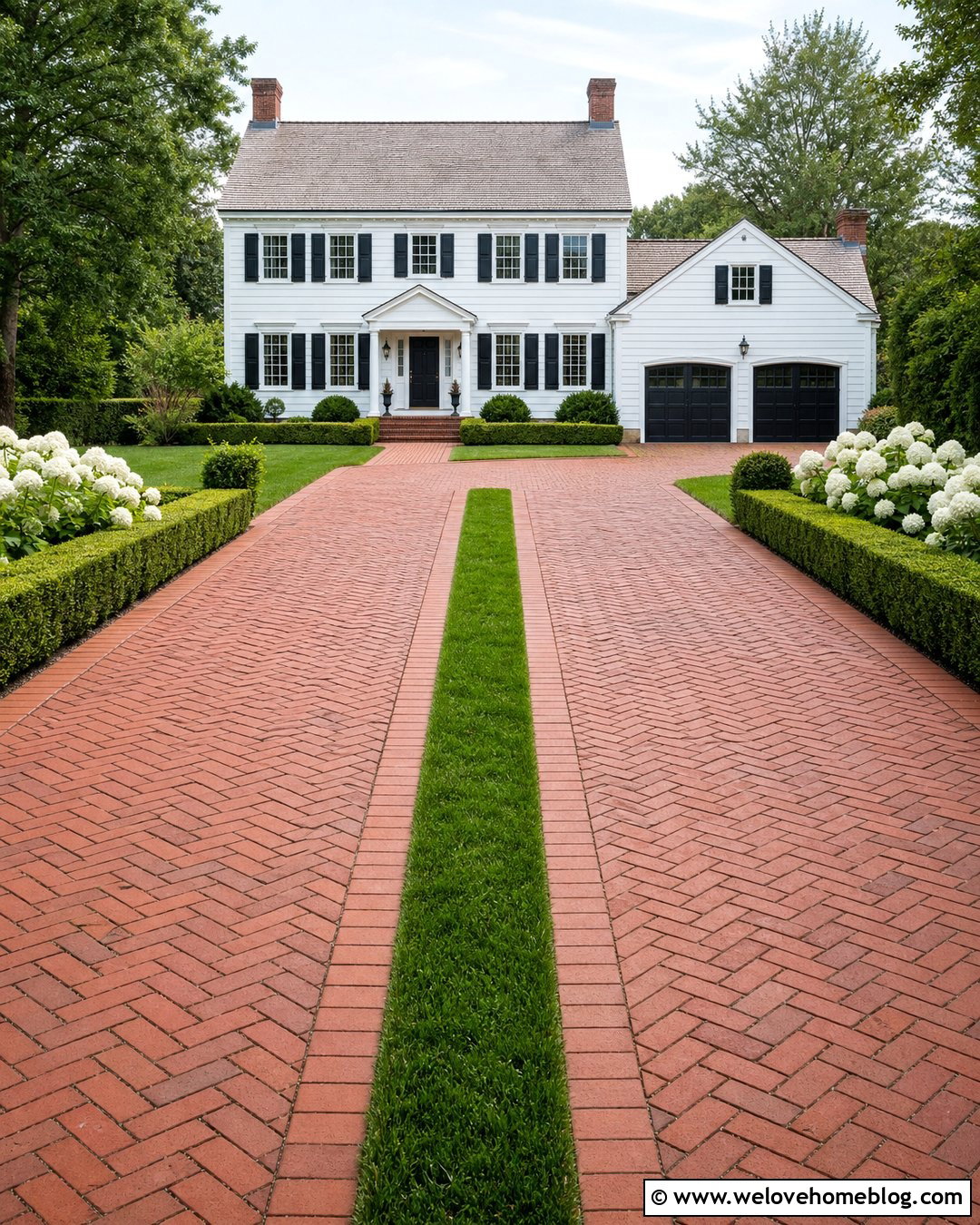
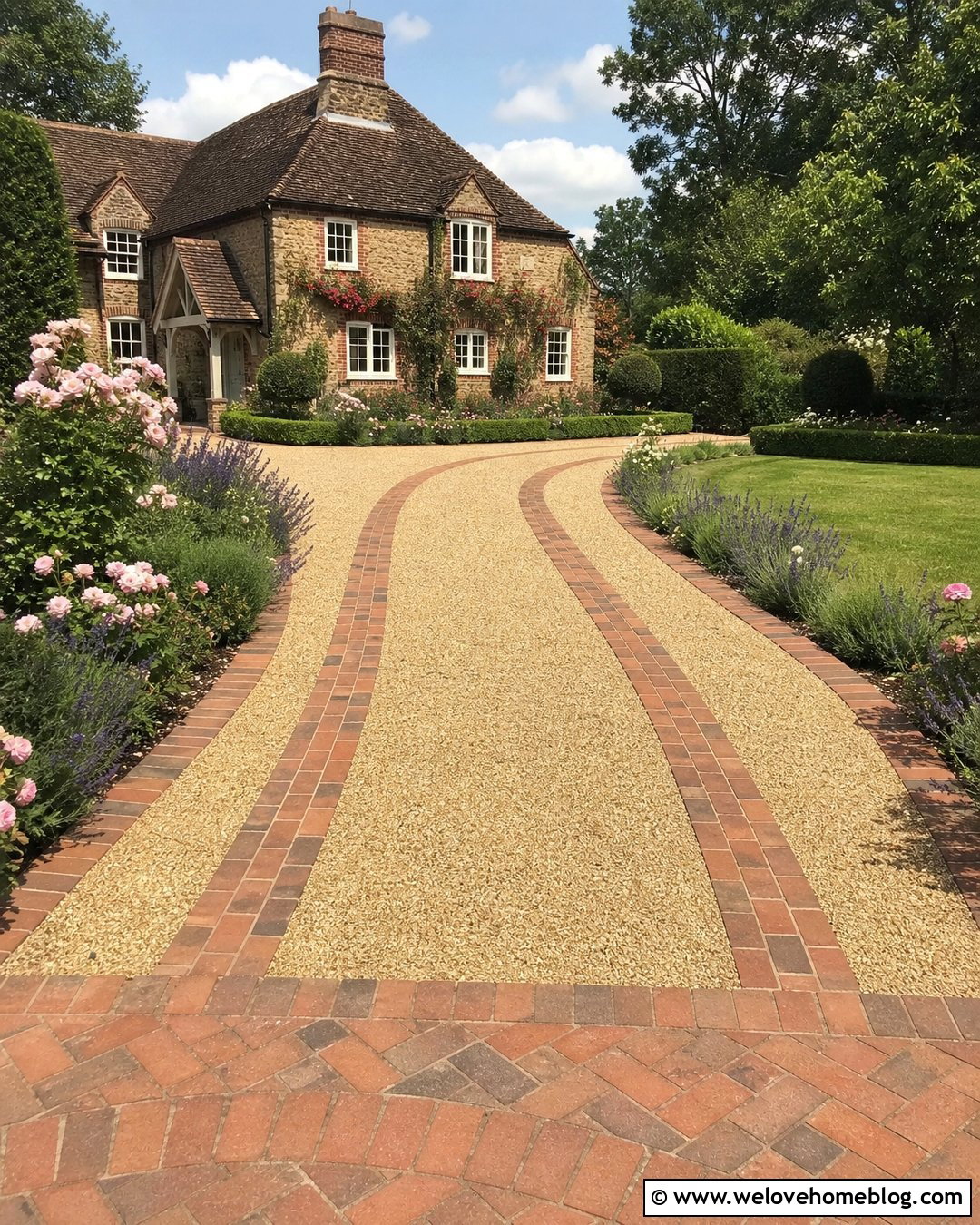
Warm clay brick pavers and a green center median bring traditional character to a Colonial, Cape Cod, or Tudor-style house. Lay the brick in a herringbone pattern across two broad driving lanes, then separate them with a straight grass strip. A soldier-course brick border gives the entire driveway a tailored outline. Near the garage, join the lanes into one fully paved parking apron so turning and parking remain simple. Low boxwood hedges, white flowering shrubs, and a brick front walkway can repeat the formal symmetry. Choose driveway-rated brick pavers rather than thin decorative brick. A deep, compacted aggregate base is especially important beneath the wheel paths because proper support helps prevent settling, spreading, and uneven edges.
4. Checkerboard Paver And Grass Driveway
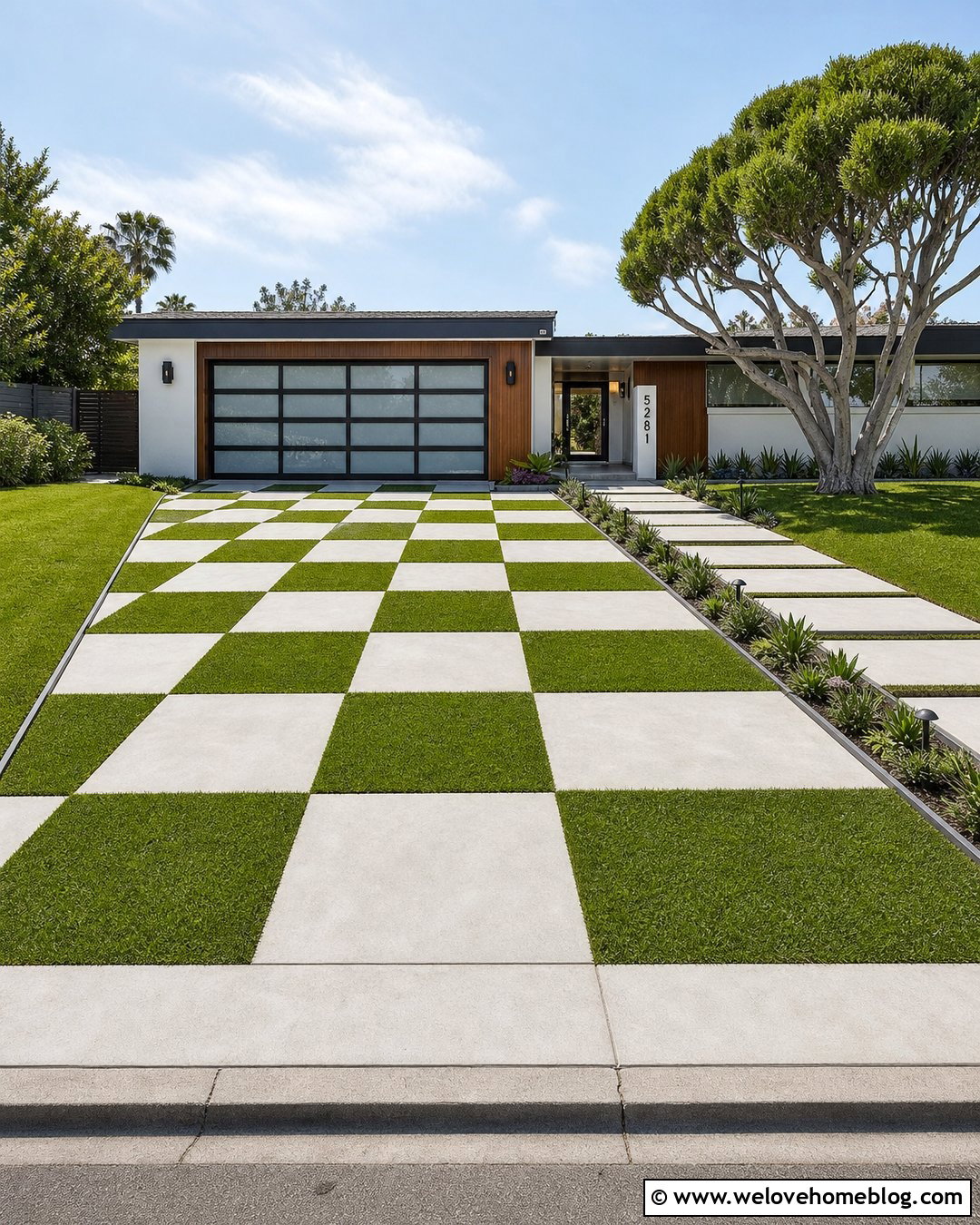
A checkerboard arrangement turns the entire driveway into a bold geometric feature. Large square concrete pavers alternate with square patches of turf, creating a grid that appears organized from the street. This look is especially effective in a wide, flat front yard leading to a minimalist or midcentury modern home. Keep the surrounding landscaping restrained so the driveway remains the focal point. A plain lawn, sculptural tree, low hedge, and linear walkway are often enough. The grass squares require dependable irrigation and enough direct light to stay evenly green. Set every paver and planted opening at the same finished height for smooth driving and mowing. Use a reinforced base designed for vehicles rather than placing individual slabs directly on ordinary garden soil.
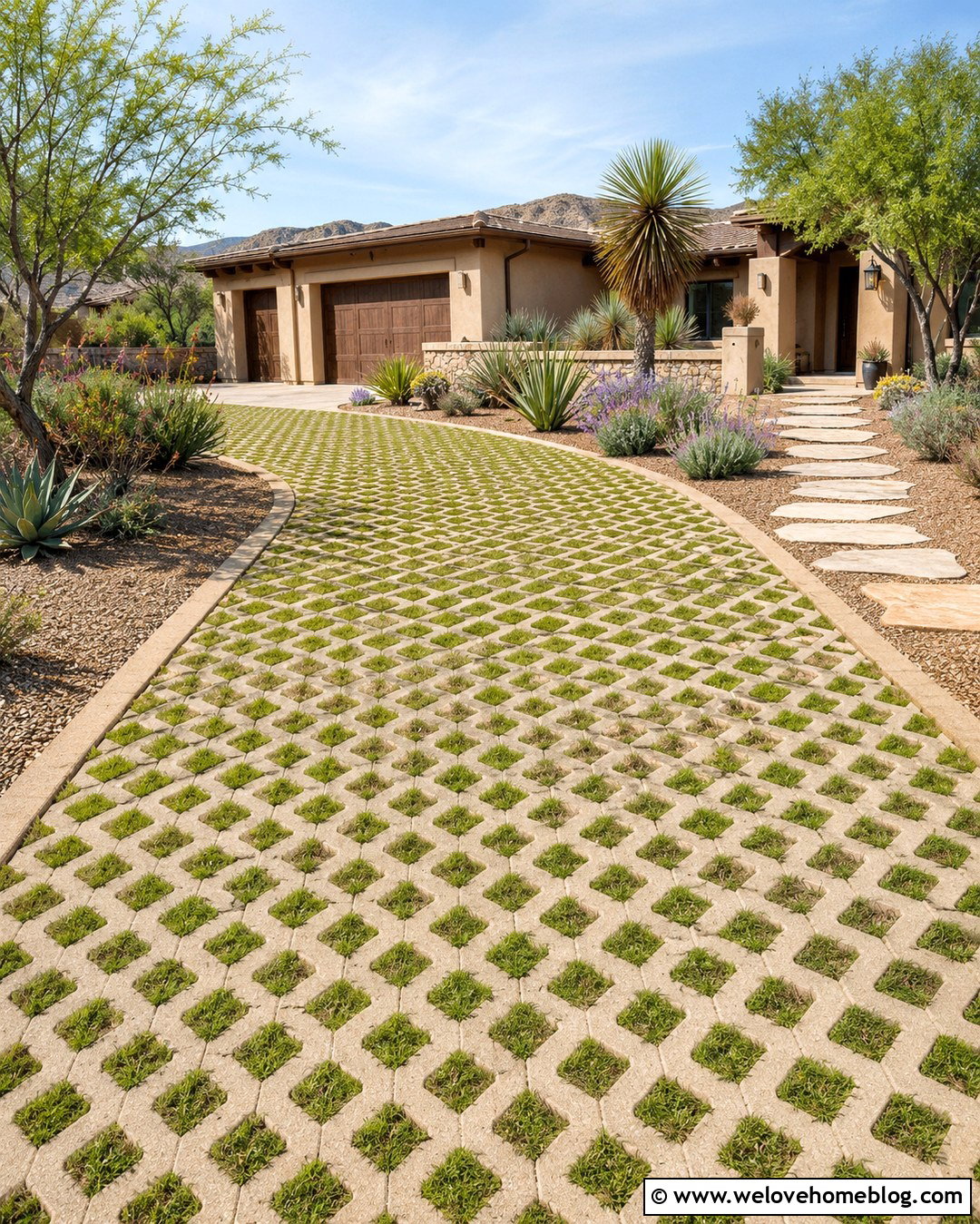
5. Grass Grid Paver Driveway
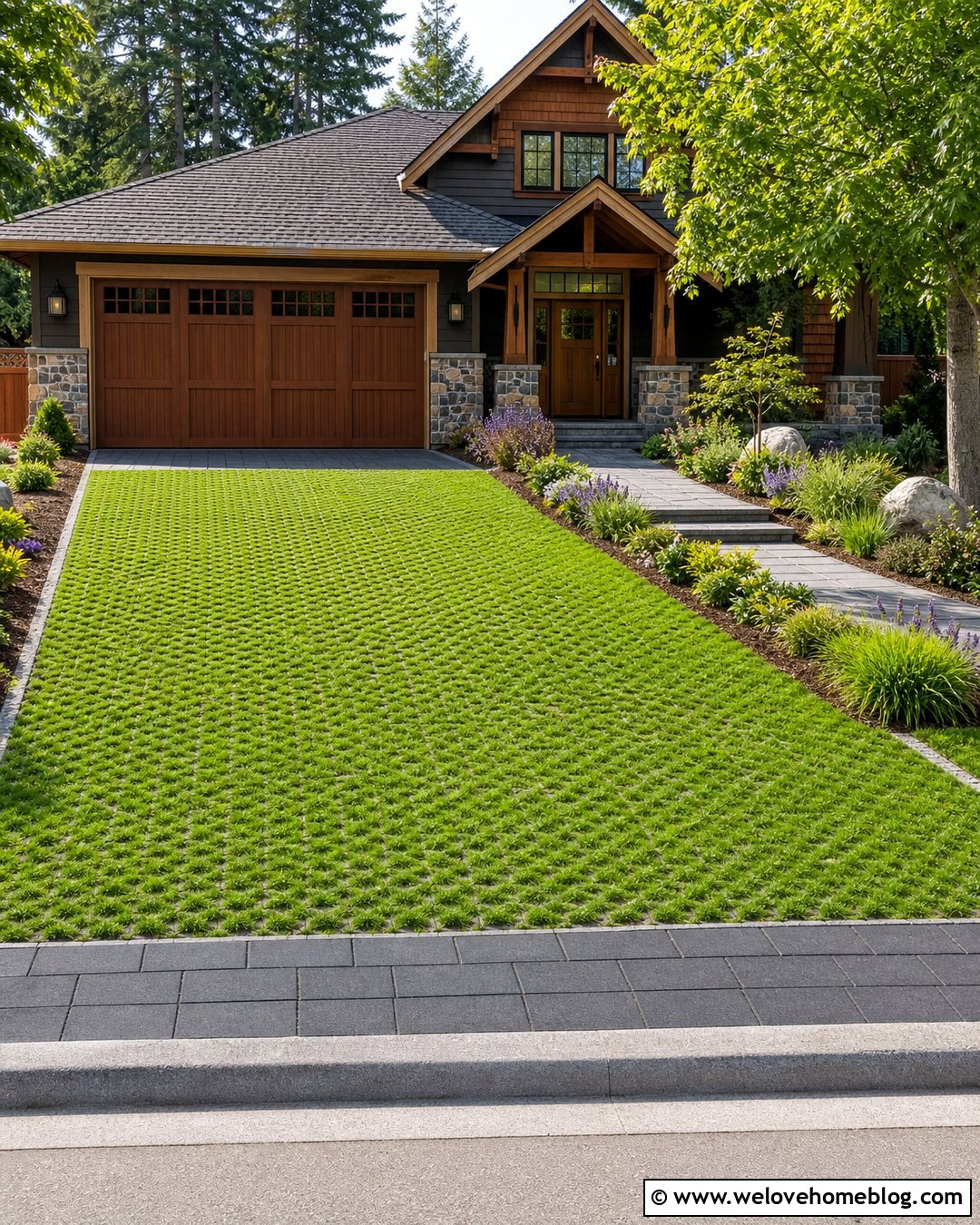
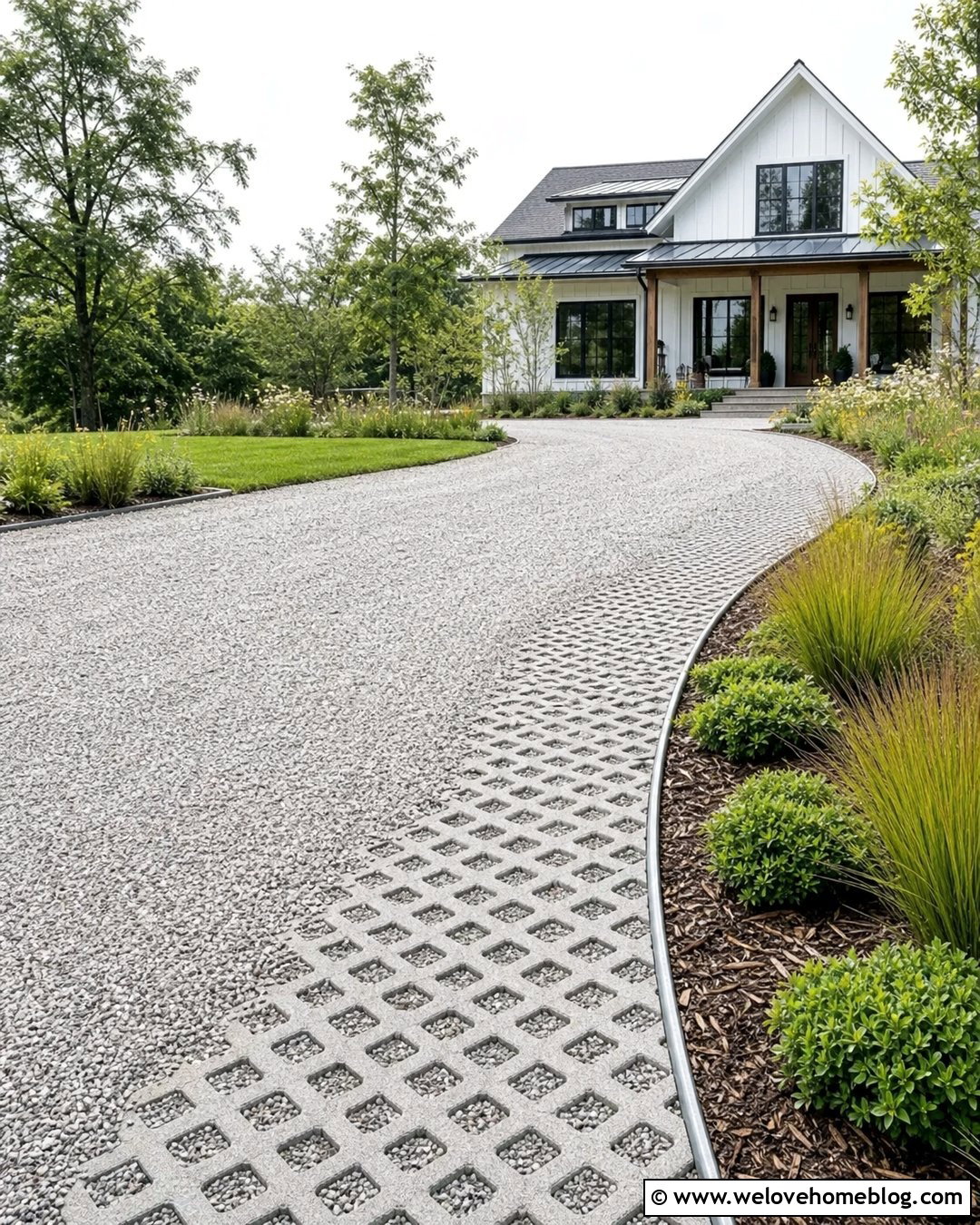
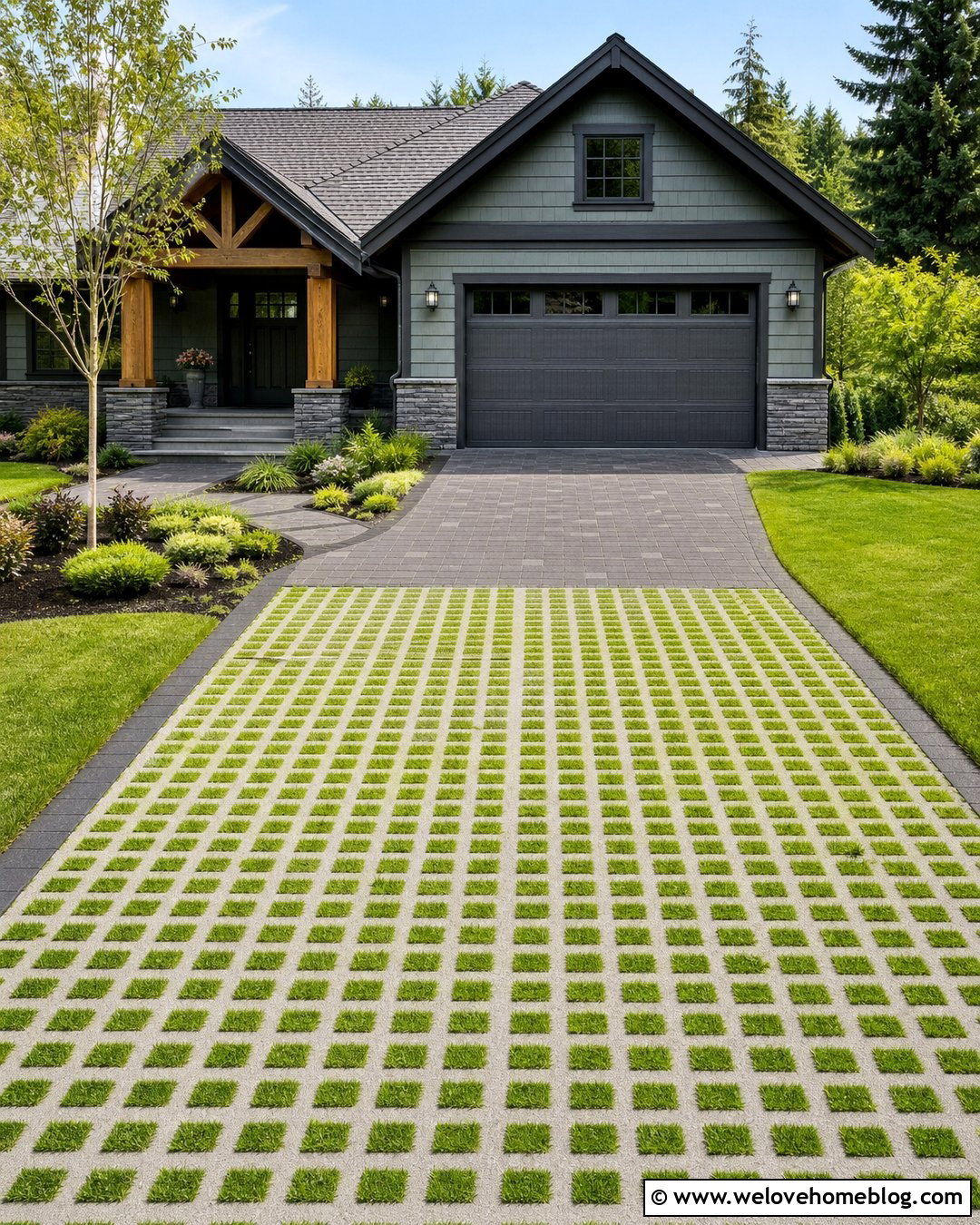
Open-cell concrete grass pavers create a durable surface that can visually blend into the surrounding lawn. Their patterned openings hold soil and grass while the structural grid spreads vehicle loads across the prepared base. Concrete, plastic interlocking blocks, and other stabilized grid systems are common grass-paver options, but each product has specific installation and loading requirements. () Use the system across a straight driveway, then frame it with solid paver bands at the curb and garage. Those bands create cleaner transitions and make the entrance feel finished. This green surface pairs naturally with a craftsman house, native planting beds, and shade trees. Select turf suited to the property’s sunlight, traffic, and regional climate, and plan convenient irrigation before installation.
6. Curved Paver Driveway With Grass Joints
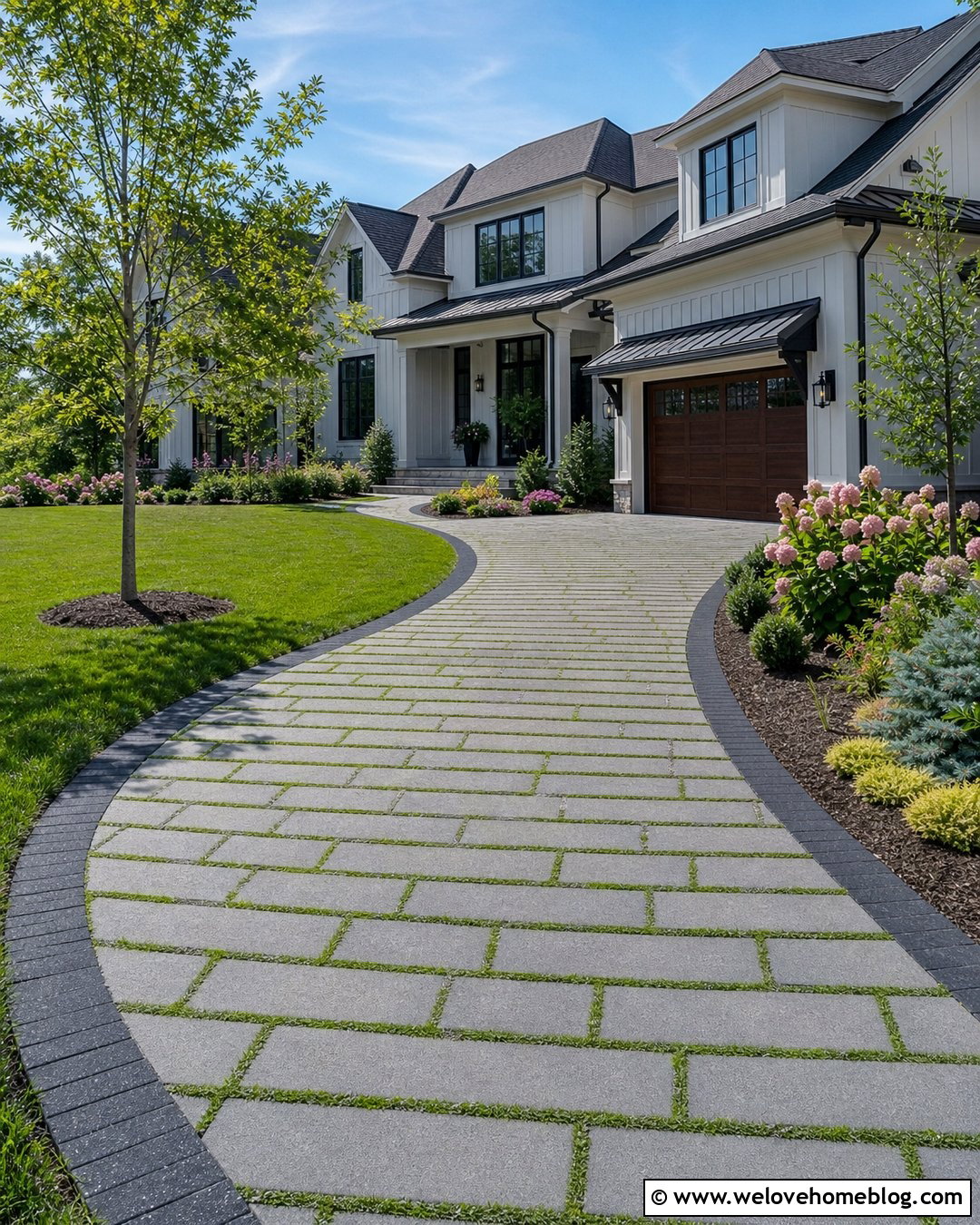
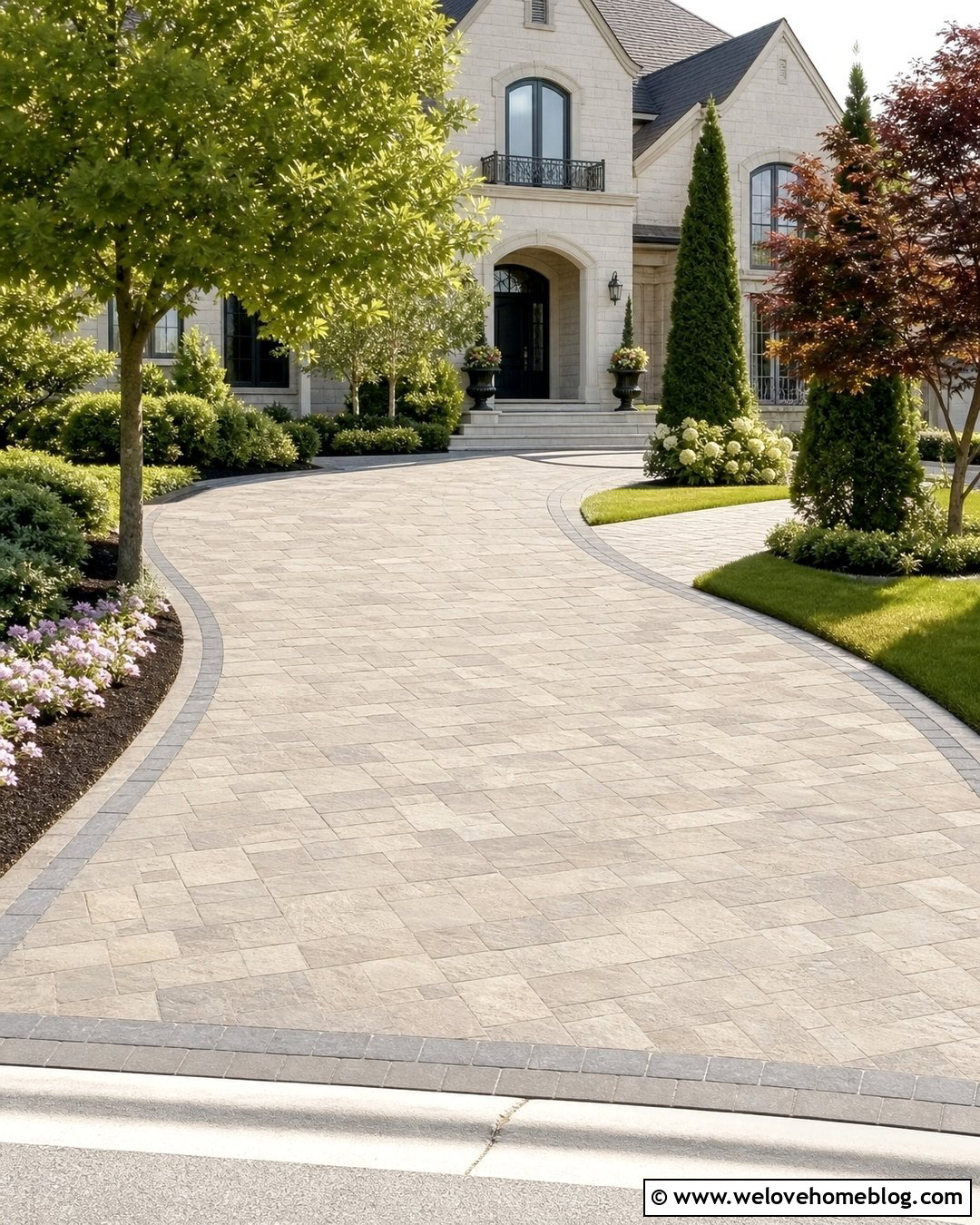
A gently curved driveway can guide the eye through the landscape while making the approach feel less rigid. Use rectangular concrete or natural stone pavers with consistent grass joints that follow the bend. A darker paver border will emphasize the curve and help separate the driving surface from planting beds. On the outer edge, layer a small ornamental tree with flowering shrubs and low ground cover. Keep the inside of the curve more open with lawn so drivers have a clear view toward the garage. Rectangular pavers can be installed in staggered courses to handle gradual changes in direction without creating awkward gaps. Before finalizing the layout, confirm that the driveway provides enough width and turning space for vehicles to follow the curve comfortably.
7. Circular Paver Driveway With Grass Island
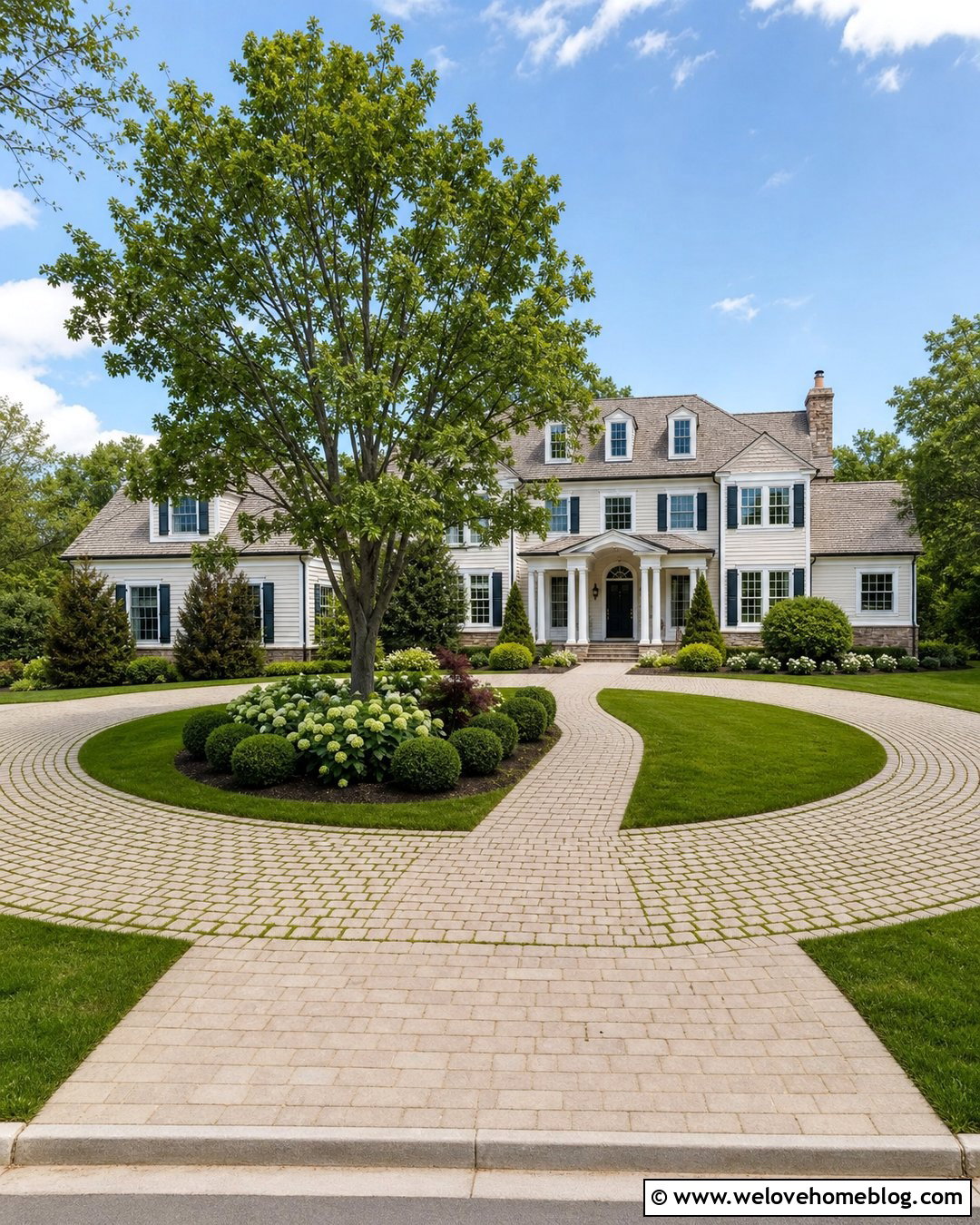
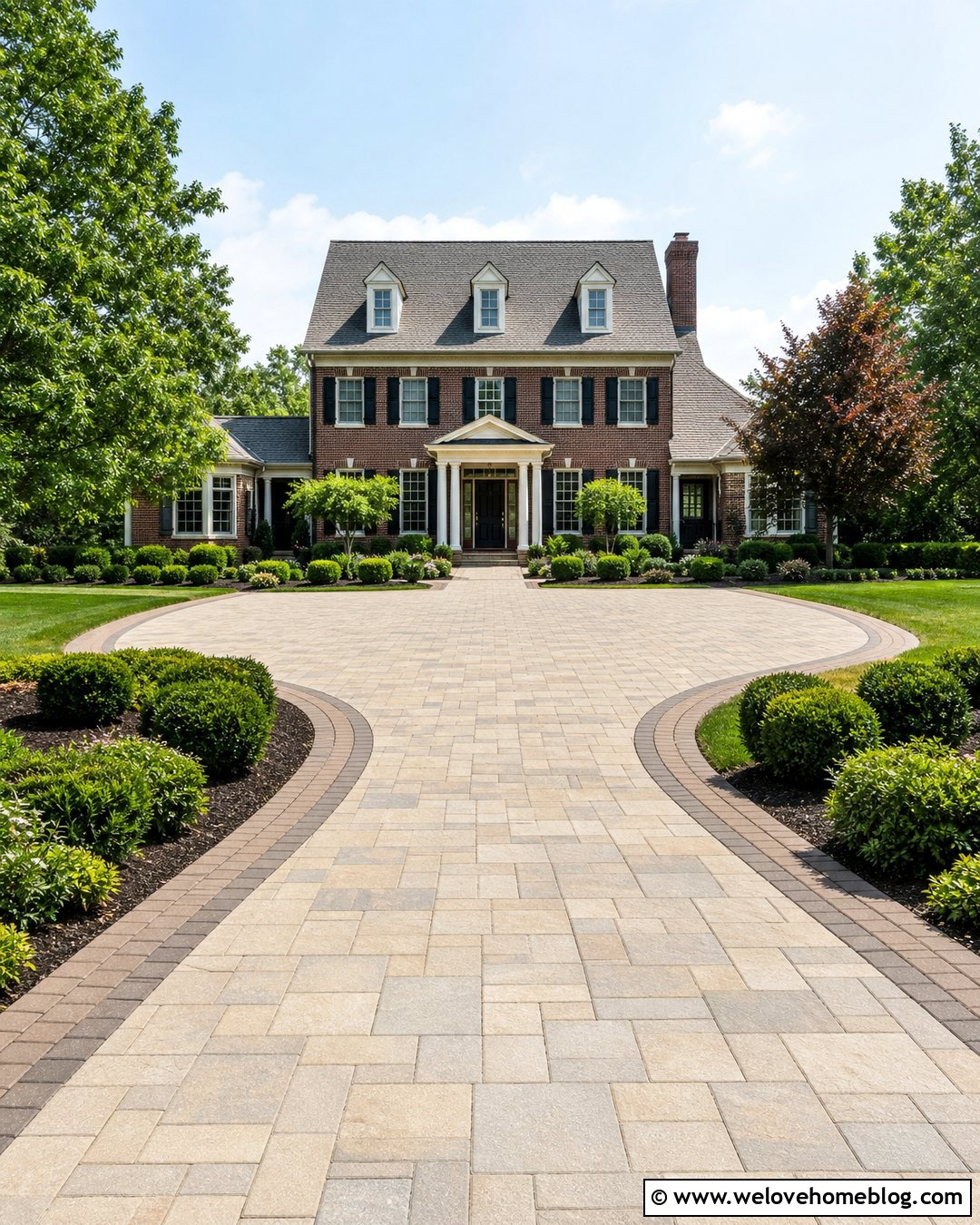
A circular paver driveway gains an elegant, garden-focused look when grass becomes part of both the surface and central island. Install pale concrete pavers with narrow planted joints around the driving loop, then create a generous lawn island with a specimen tree or layered shrub bed. A solid paver apron at the street makes the entrance easier to recognize and protects the turf near frequent turning points. Repeat the driveway pavers in a walkway crossing the island toward the front door. This layout suits a wide Colonial, Mediterranean, or contemporary house with enough front-yard depth. Avoid making the center island too small, since a tiny circle can look accidental and restrict turning. Check local access, drainage, and setback requirements before construction begins.
8. Cobblestone Paver And Grass Driveway
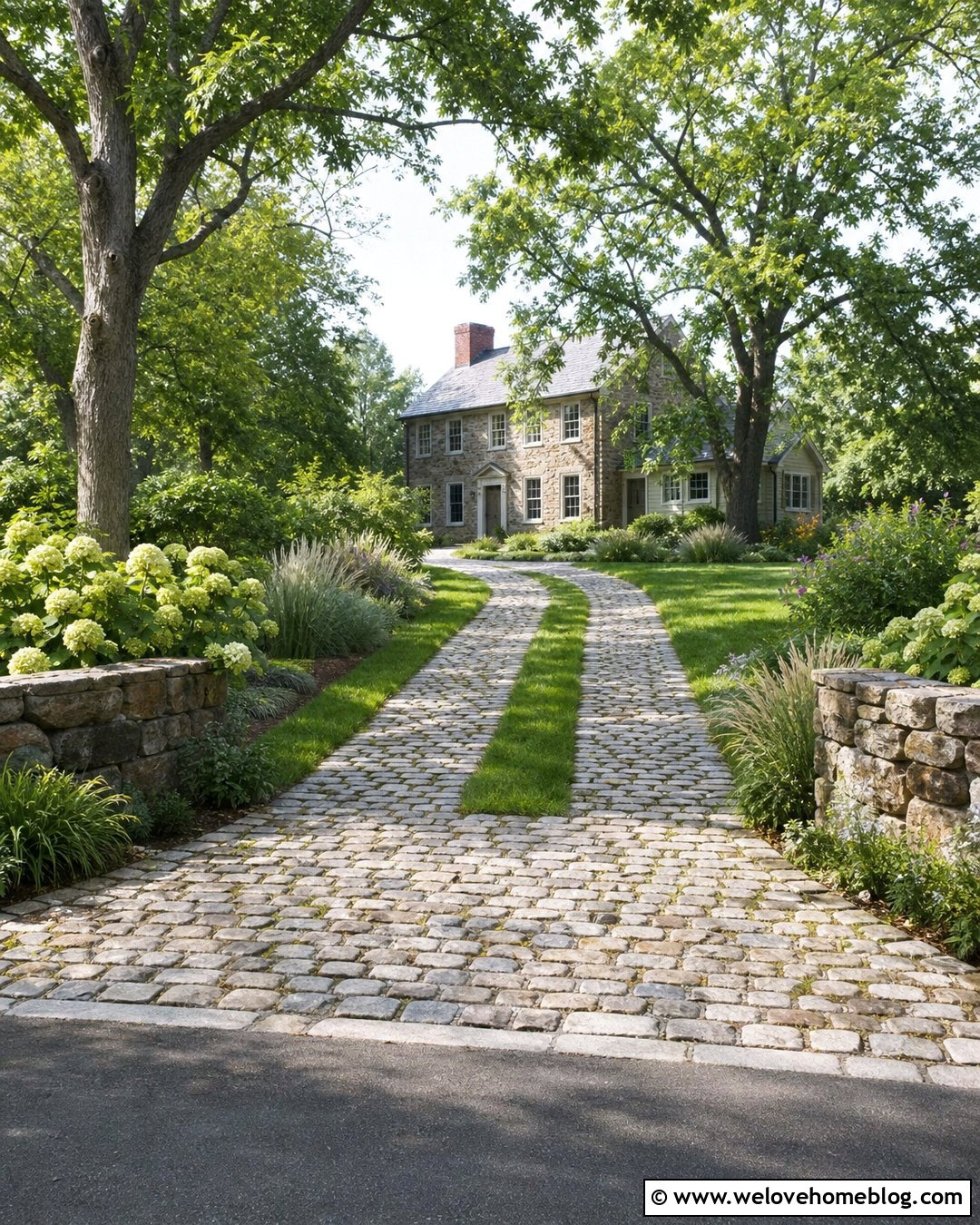
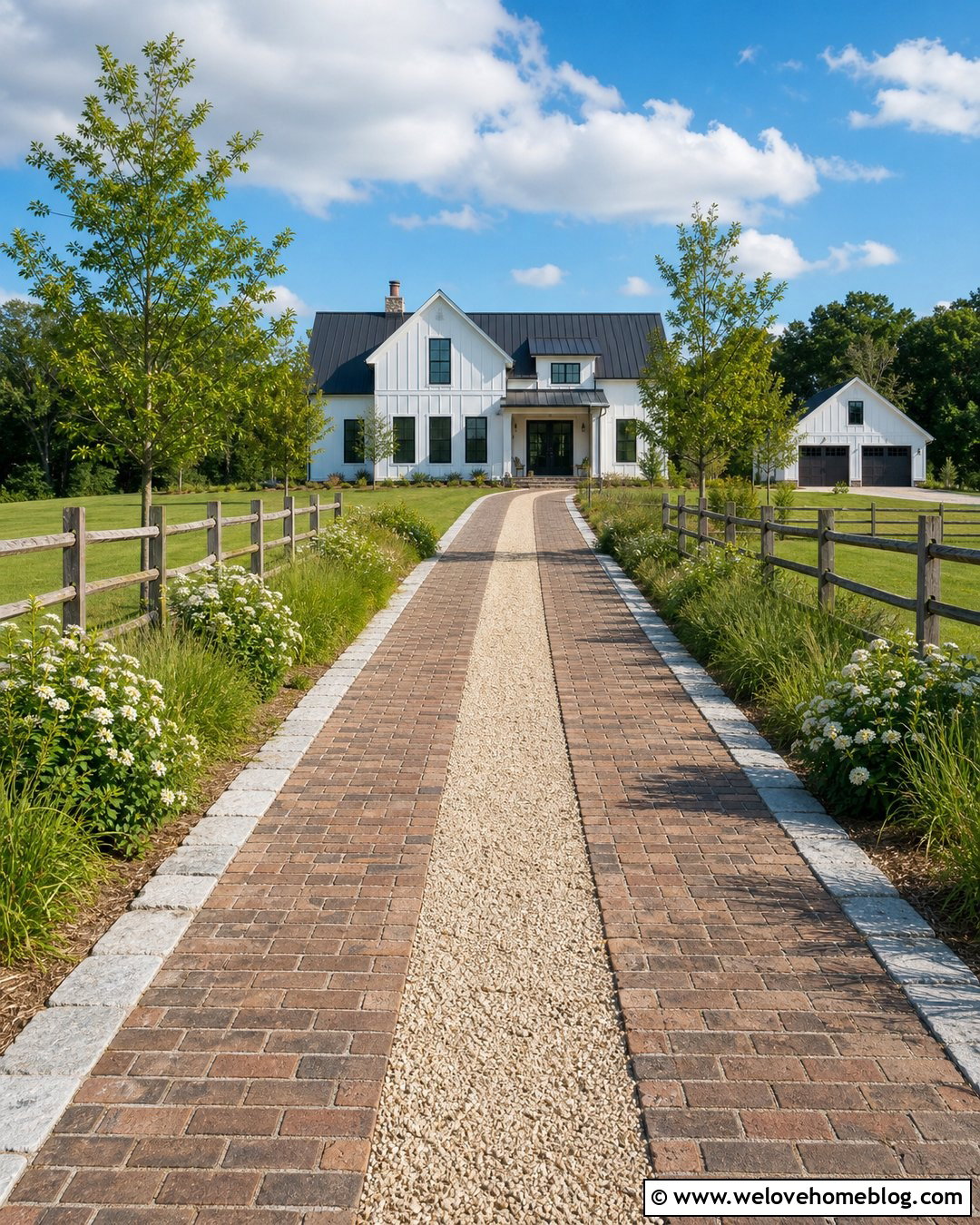
Cobblestone pavers paired with grass create an established country look that works beautifully with stone cottages and traditional farmhouses. Use cobblestones for two broad wheel tracks and allow a soft grass strip to run between them. Add full-width cobblestone paving near the road and garage to handle turning, braking, and repeated parking. Irregular stone tones can be echoed in low fieldstone walls, porch steps, or entrance pillars. Keep the planting natural with hydrangeas, native grasses, flowering perennials, and a few mature-looking shade trees. Because rounded or irregular cobbles may produce a textured driving surface, select relatively flat driveway-grade units and maintain tight, stable joints. A concealed edge restraint will help preserve the curved or straight outline over time.
9. Narrow Paver Track And Grass Driveway
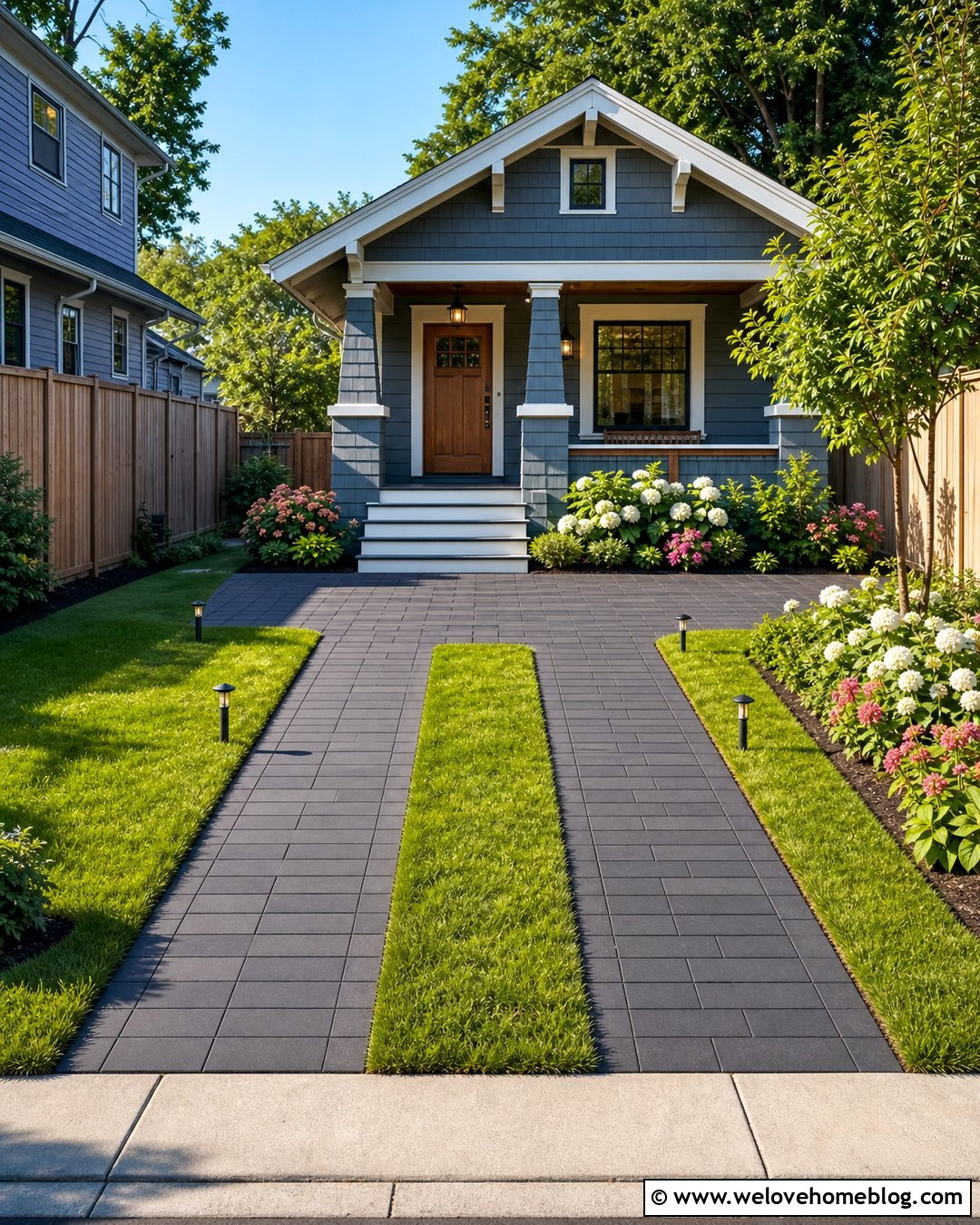
Small front yards can benefit from narrow paved tracks that preserve more lawn than a conventional full-width driveway. Two straight bands of rectangular concrete pavers provide clear tire paths, while grass fills the center and both outer edges. Match the track width to the vehicles that regularly use the property instead of relying on a generic measurement. At the garage, widen the pavers into a practical parking pad and connect them to a simple front walkway. This design feels especially appropriate beside a compact bungalow or urban cottage. Flush edges create a tidy finish and simplify lawn care. Mark the track boundaries with low path lights or contrasting border pavers so guests can follow the intended route without accidentally driving across softer sections of the yard.


10. Oversized Pavers With Artificial Grass
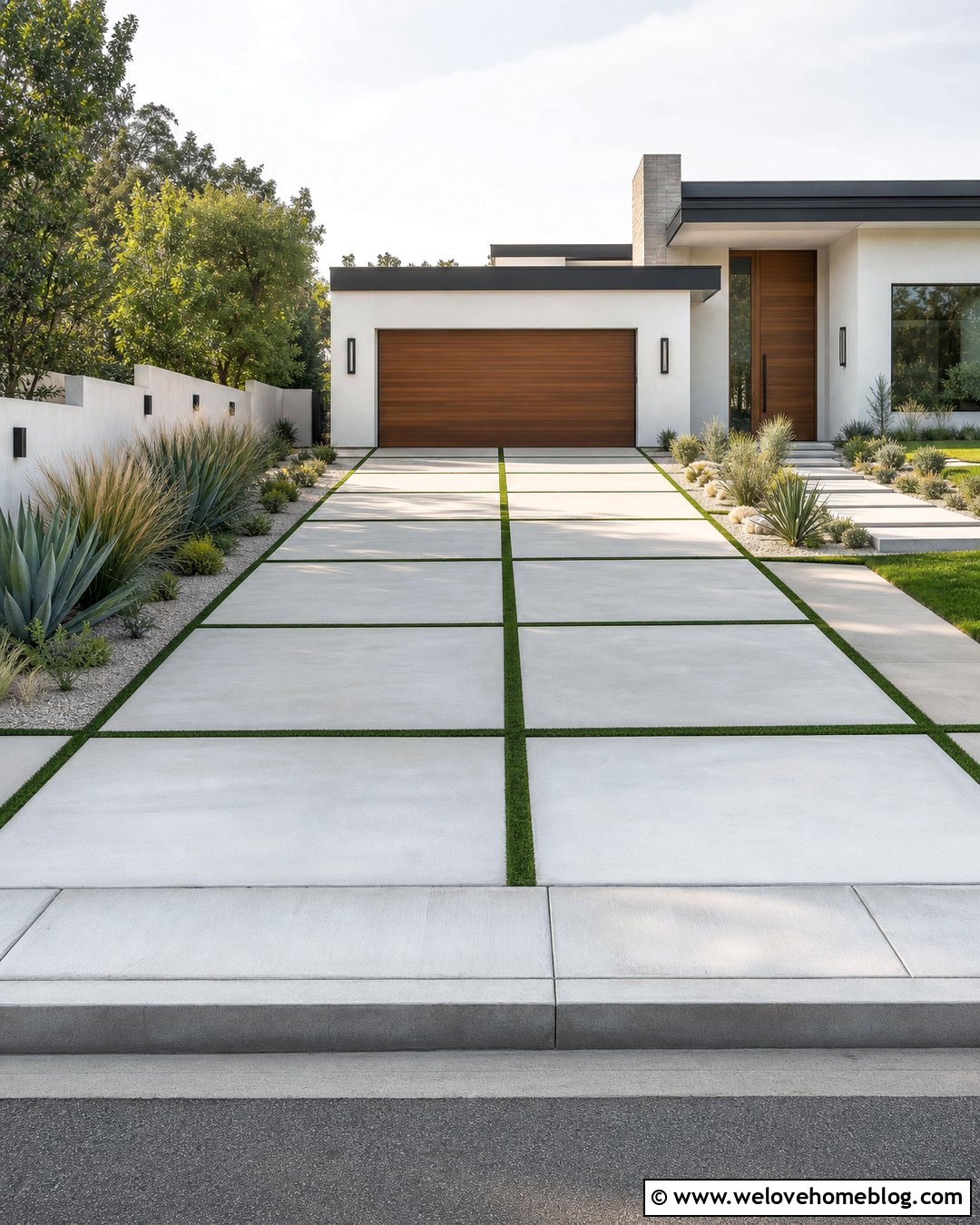
Oversized concrete slabs divided by artificial grass strips provide a consistently green, graphic appearance where maintaining living turf would be difficult. This combination can suit hot climates, shaded side yards, or homeowners who prefer less mowing. Use warm white or pale gray driveway-rated pavers in a straight grid leading to a contemporary stucco house. Narrow synthetic turf joints should be securely anchored and installed with drainage in mind, rather than treated as decorative strips laid over an unsuitable base. Surround the driveway with drought-tolerant planting, including agave, compact shrubs, ornamental grasses, or small desert trees. Select artificial turf intended for outdoor traffic and heat exposure. Keep it below the paver surface so tires contact the hard material instead of pulling at the turf edges.
11. Permeable Paver Driveway With Grass Borders
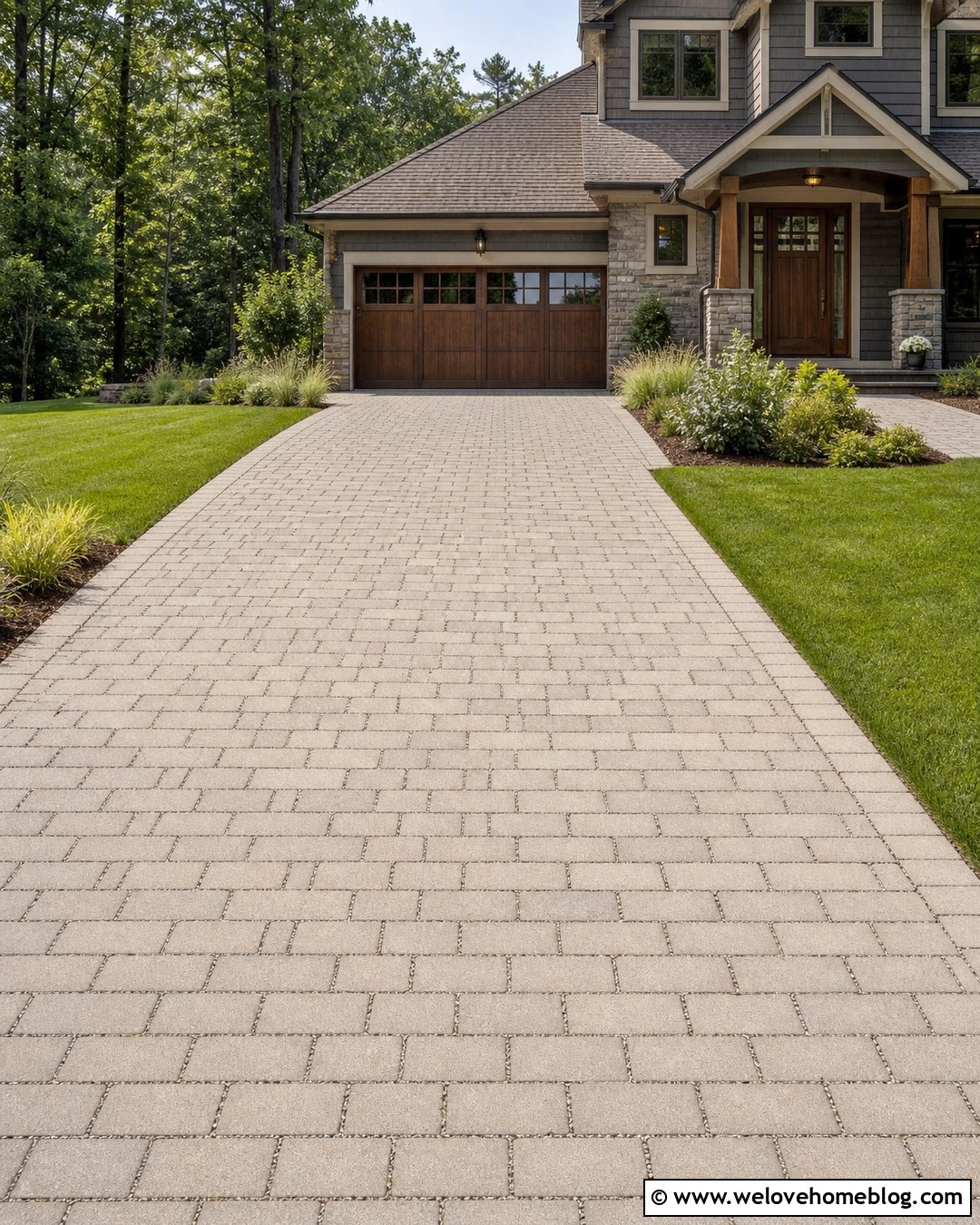
A full paver driveway can still feel connected to the landscape when broad grass borders frame both sides. Choose permeable interlocking concrete pavers with open aggregate-filled joints, then place uninterrupted lawn strips between the driveway and planting beds. The paver field offers a defined parking surface, while the grass margins reduce the visual width of the hardscape. Gray-beige pavers in a running bond pattern work well with a suburban craftsman or transitional home. Add rain-tolerant shrubs near the lower edge and a paved walkway near the house. Permeable paving depends on more than the visible pavers; it generally includes an open surface, underlying stone reservoir layers, and site-specific drainage preparation. () Have soil conditions and runoff direction evaluated before choosing the assembly.
12. Hexagon Paver And Grass Driveway
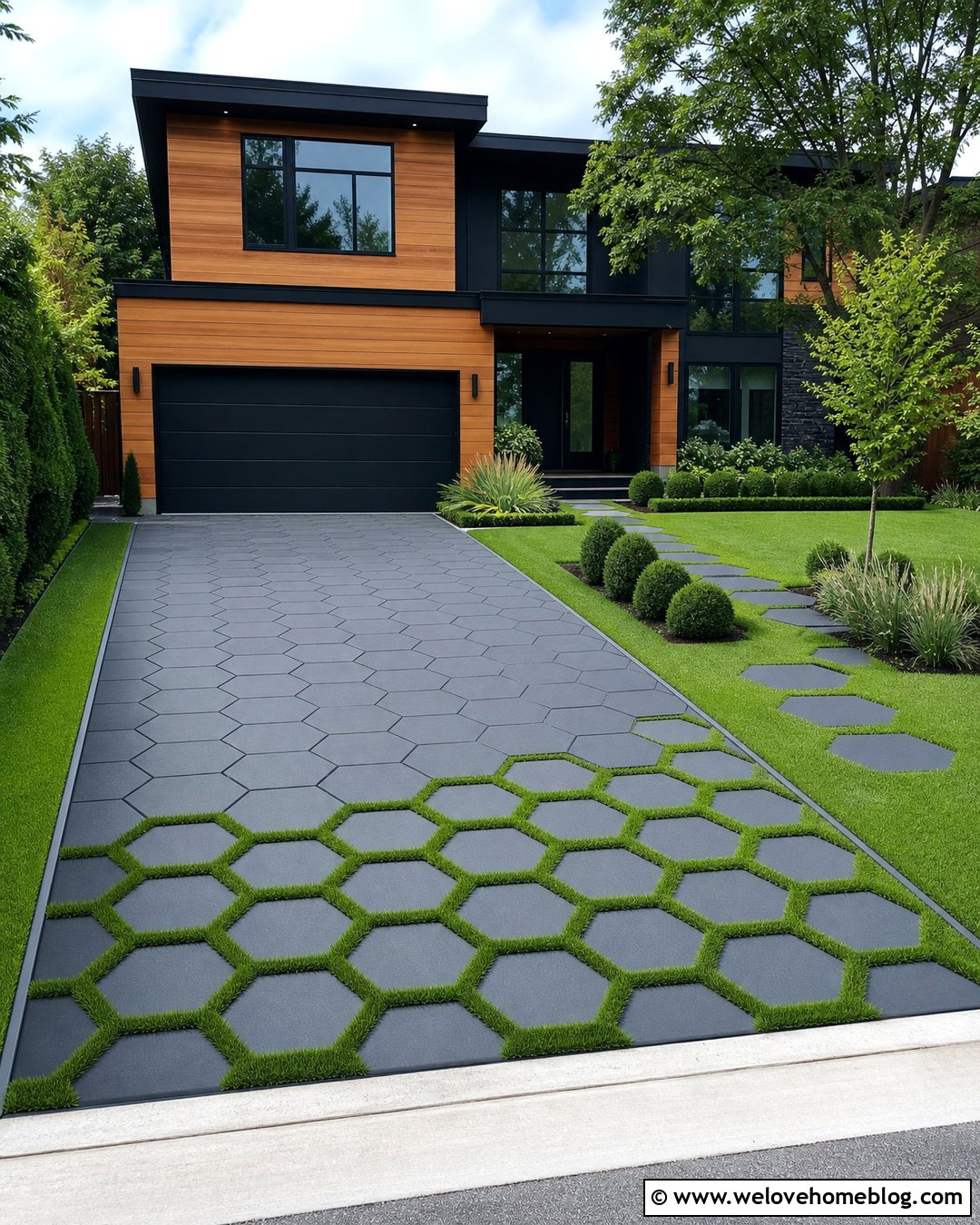
Large hexagonal pavers with turf growing through selected gaps produce a distinctive geometric driveway without relying on a rigid square grid. Use charcoal or medium gray concrete units and allow the pattern to gradually dissolve into lawn along the edges. Near the garage, place the pavers closer together for a stronger, more practical parking surface. Wider grass openings can appear closer to the street or along low-traffic margins. This transition looks striking in front of a modern house with black-framed windows and simple wood details. Repeat a few hexagonal units in the walkway or mailbox area to connect the design. Custom spacing and edge cuts require careful planning, so map the complete pattern before excavation. Maintain predictable tire paths and avoid large planted voids where wheels frequently turn.
13. Charcoal Paver Driveway With Lawn Strips
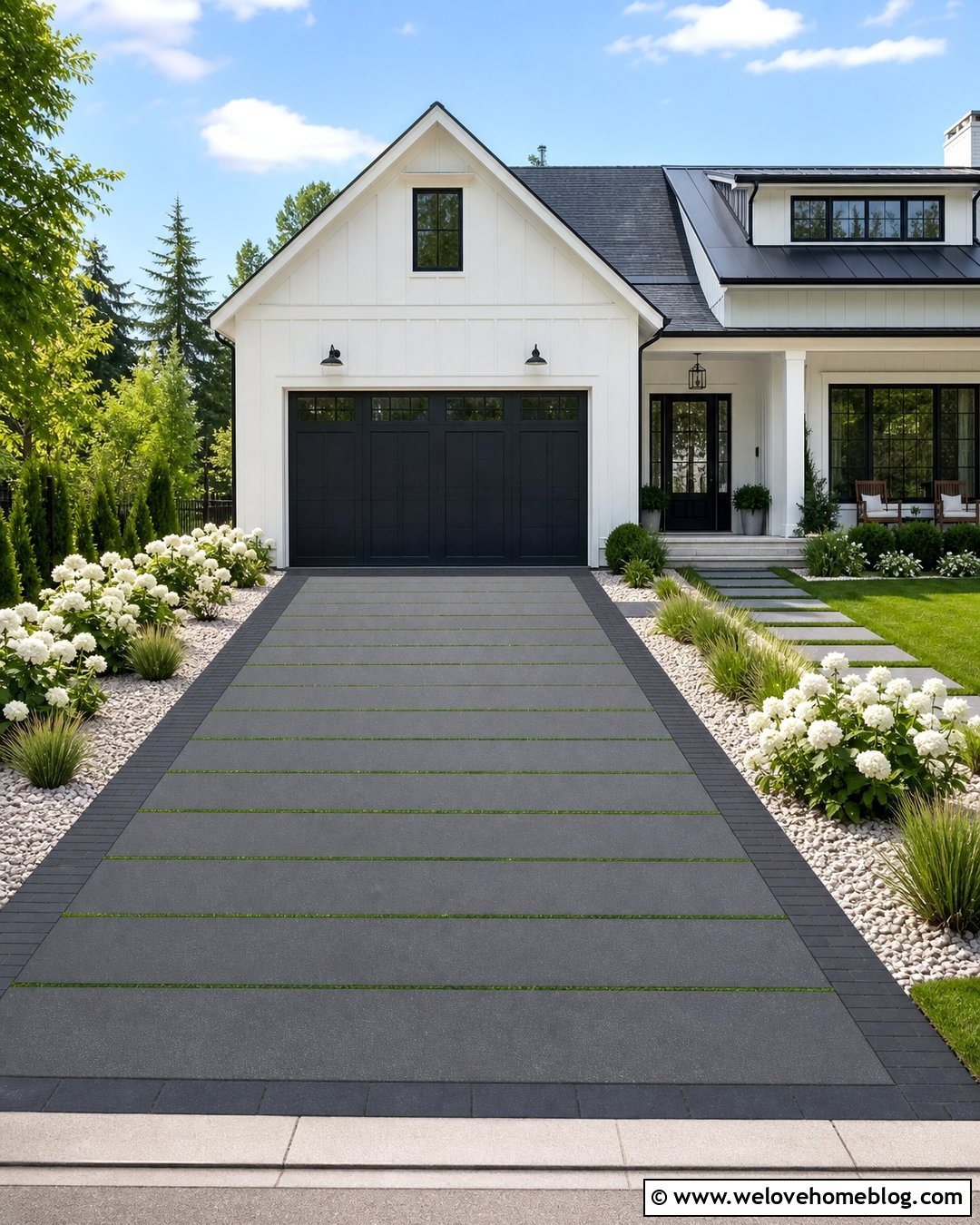
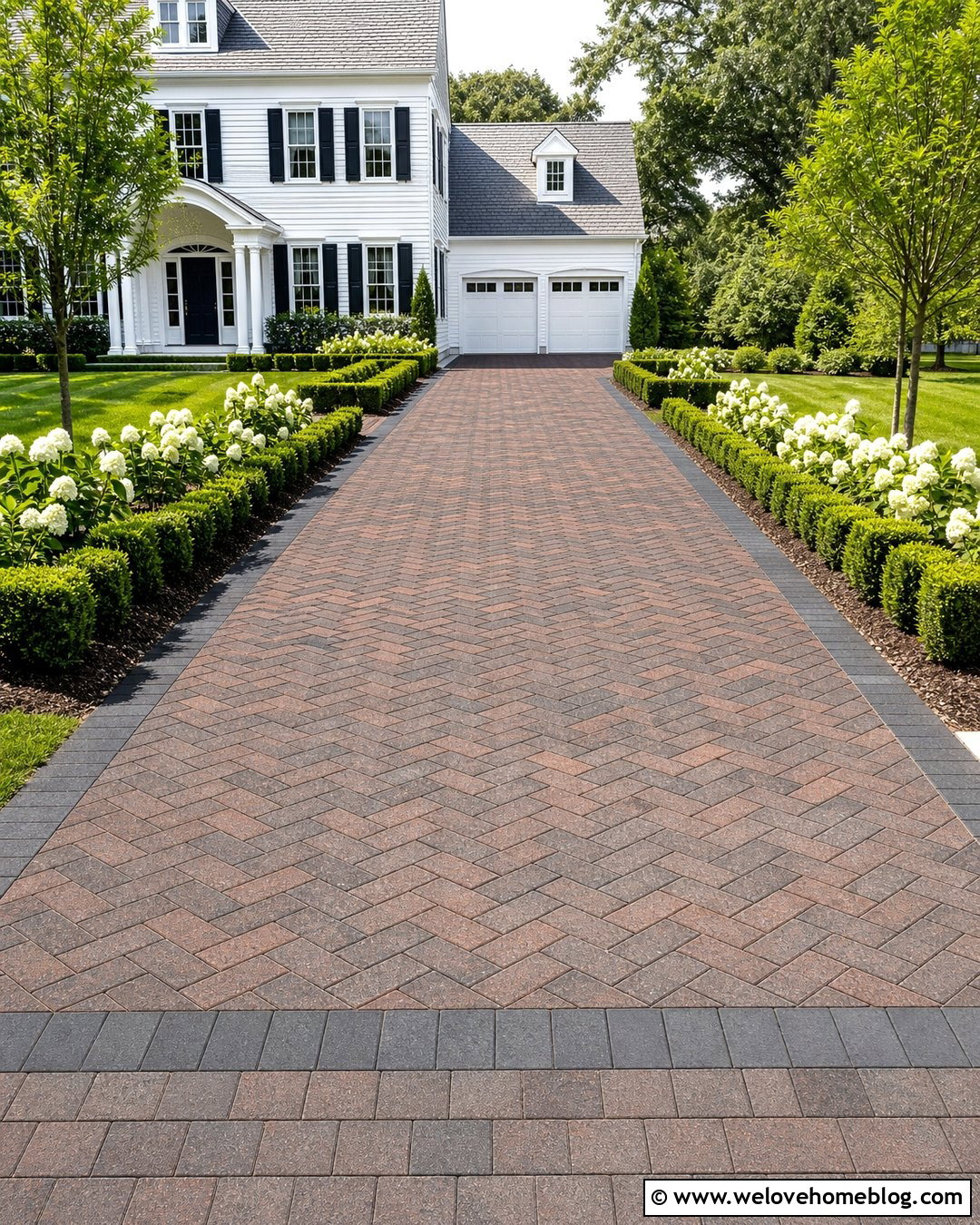
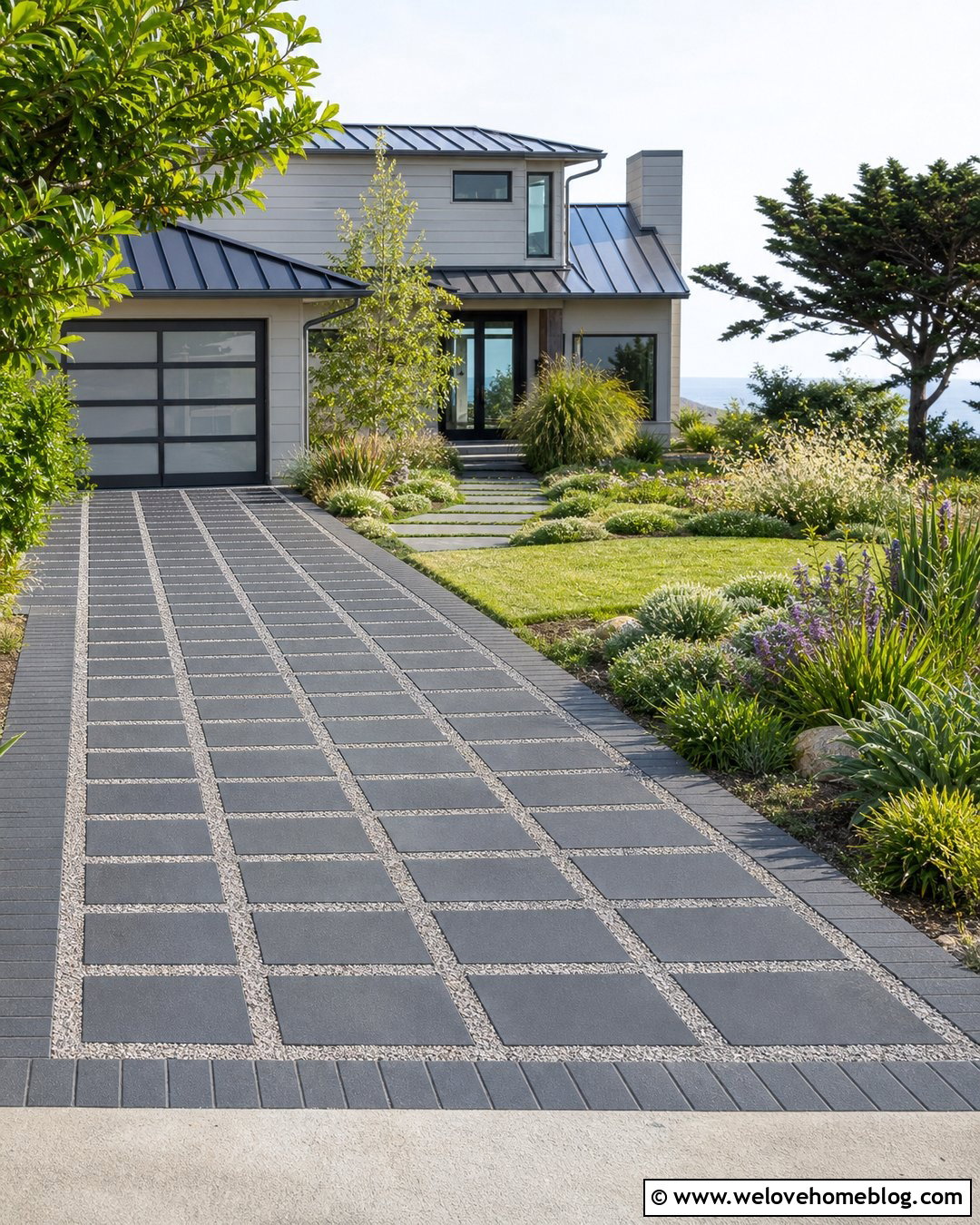
Dark charcoal pavers make green lawn strips appear brighter and can anchor a pale house facade. Arrange long rectangular pavers in horizontal bands across a straight driveway, leaving slender planted joints between selected rows. A matching charcoal border should outline the driveway and create a polished transition at the sidewalk. Balance the deep paving color with white flowering shrubs, airy ornamental grasses, and light gravel mulch in nearby beds. This palette works well with a modern farmhouse, updated ranch, or monochrome contemporary home. Dark materials can become warm in strong sunlight, so consider the property’s climate and exposure. Grass joints will also dry more quickly beside heat-absorbing pavers. Choose resilient turf, provide consistent watering, and keep the planted strips slightly recessed from the driving surface.
14. Limestone Paver And Grass Driveway
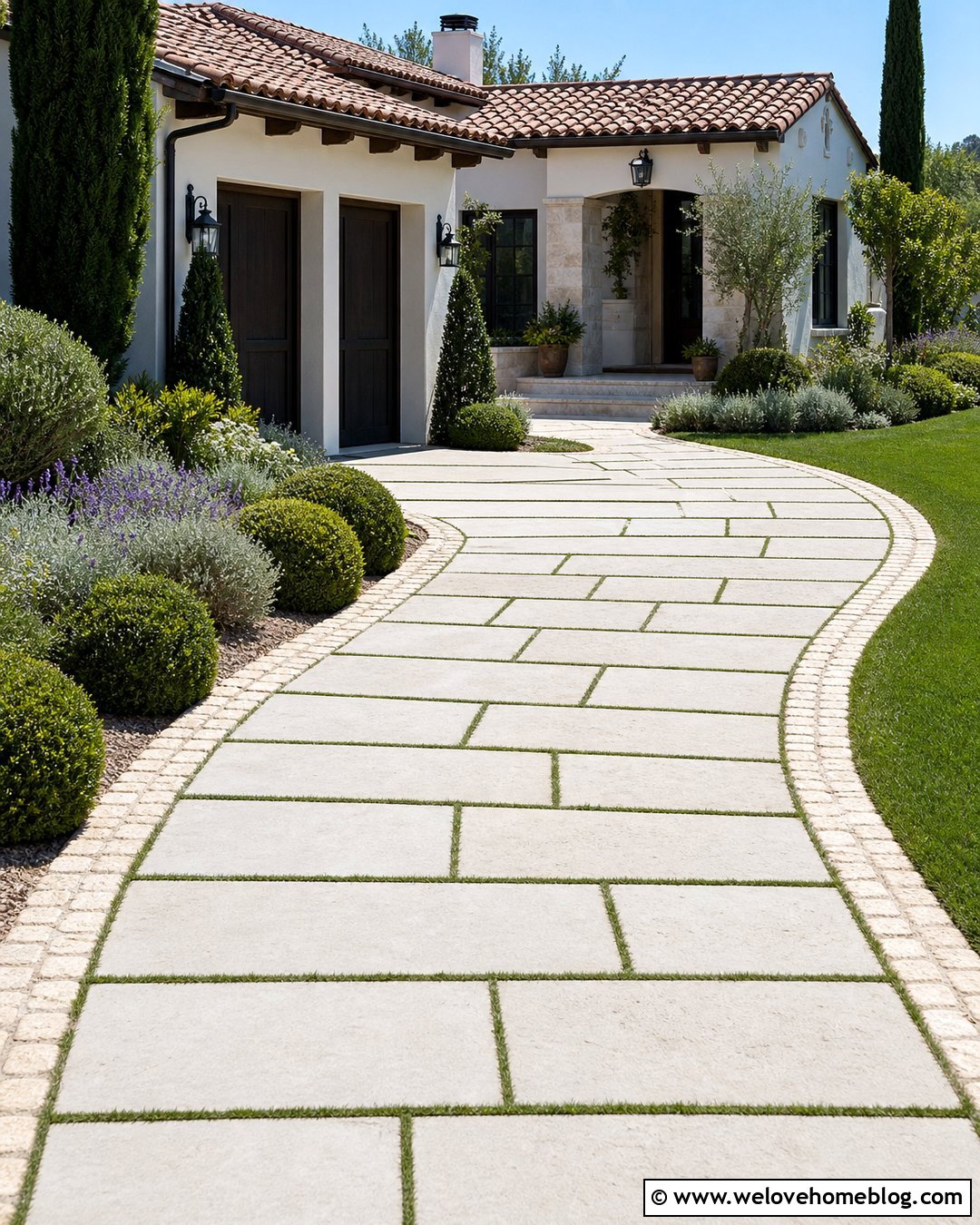
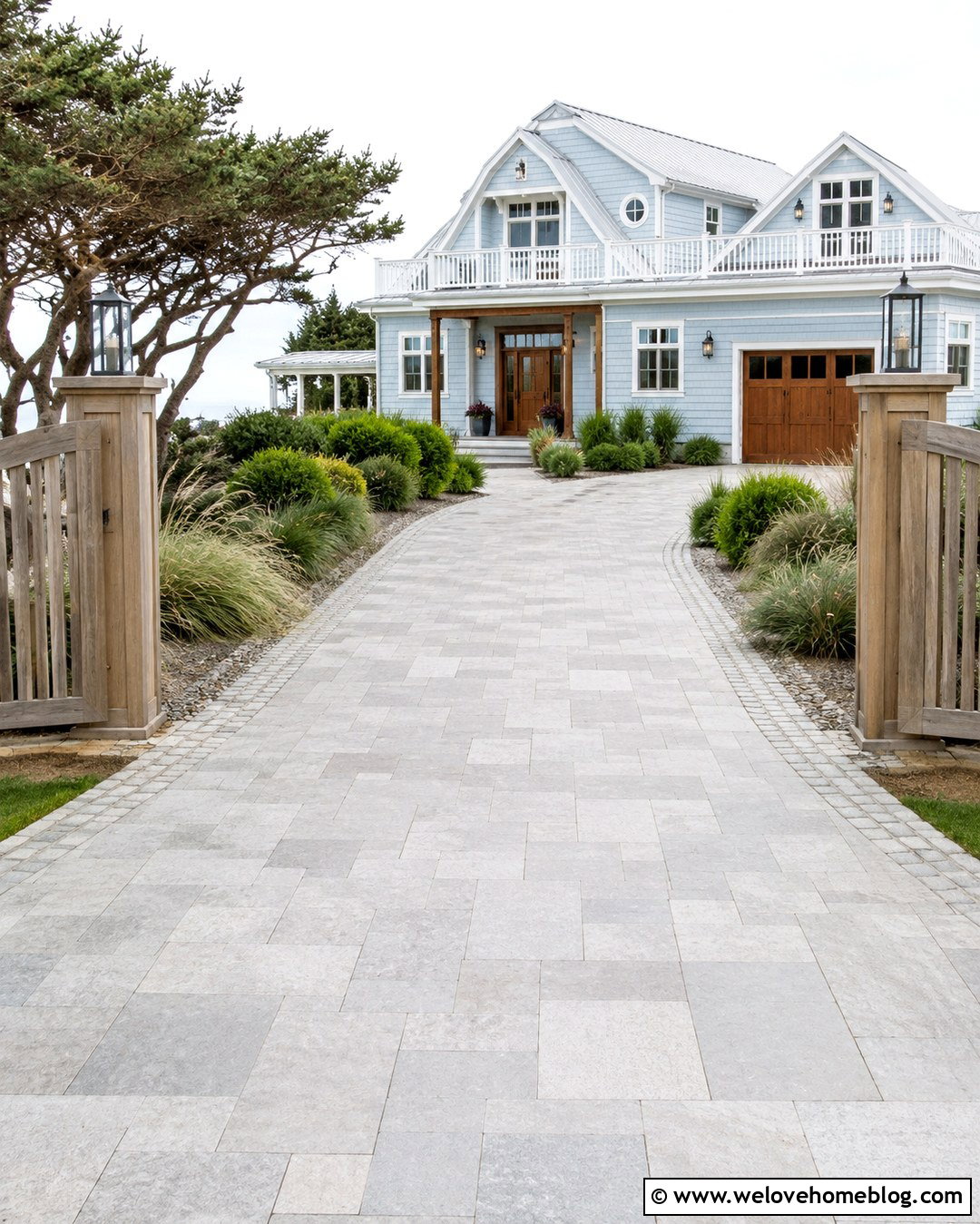
Pale limestone pavers with narrow green joints create a relaxed, upscale driveway for a Mediterranean, coastal, or French country house. Select dense stone rated for exterior vehicular use and choose a lightly textured finish that provides traction. Lay large rectangular pieces in offset rows along a gently curving approach. Cream-colored cobblestone edging can define the perimeter while connecting the driveway to stone walls or porch columns. Frame the route with clipped shrubs, silvery foliage, flowering herbs, and an open lawn. Natural limestone varies in color, so review several pieces together before selecting the final blend. Ask the installer about local freeze-thaw conditions, sealing options, drainage, and stain care. Near the garage, reduce planted joint widths to create a more stable area for frequent parking and turning.
15. Red Brick Paver Driveway With Grass Edges
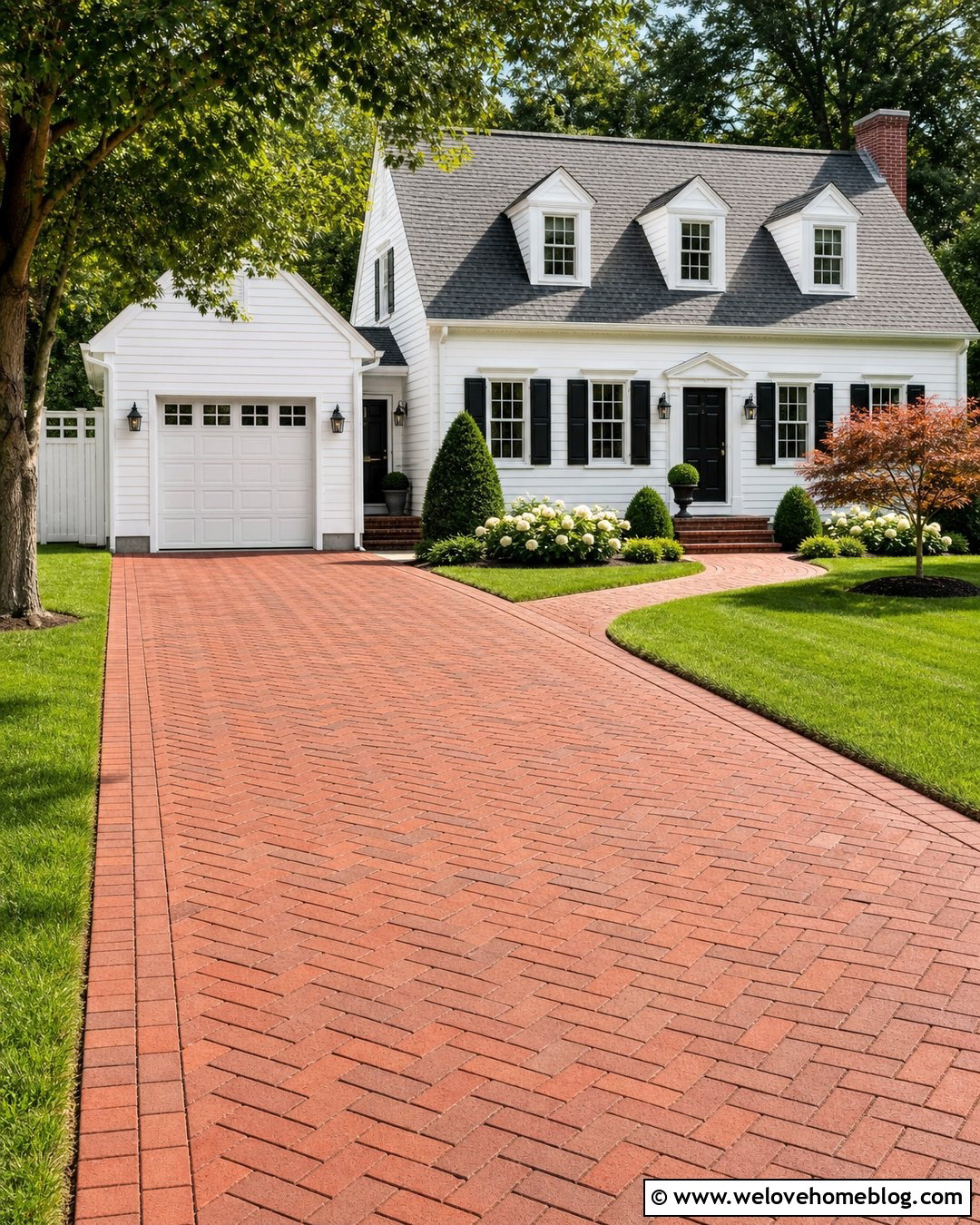
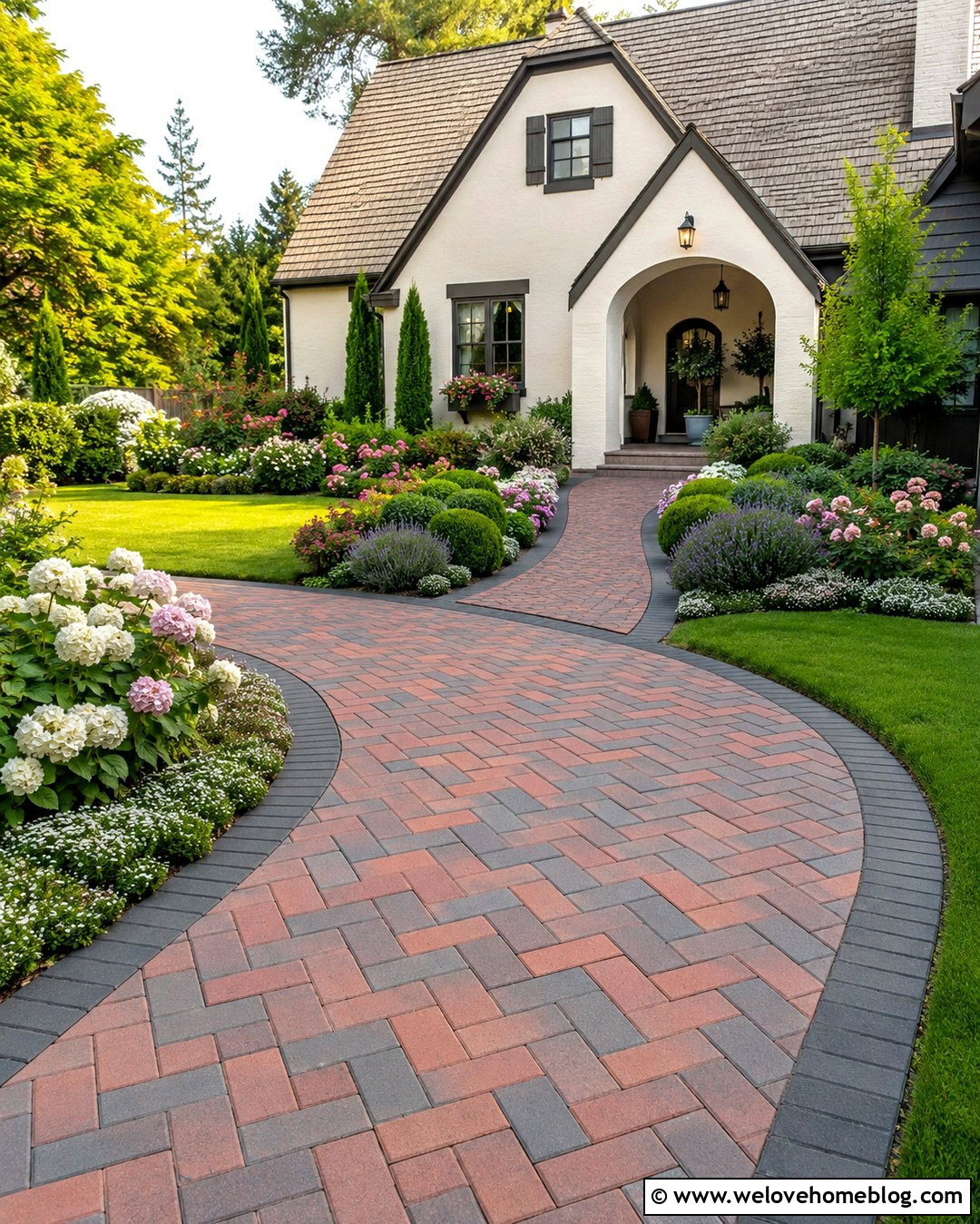
A red brick paver driveway bordered by lawn brings warmth and familiar character to an American traditional home. Install driveway-rated clay pavers in herringbone through the main driving area, then add straight brick courses along the perimeter. Instead of placing flower beds directly beside both edges, use slim lawn panels as green breathing room between the brick and deeper foundation planting. The grass creates a calm transition and prevents the red surface from overwhelming a small yard. Connect the driveway to a curved brick walkway leading toward the porch. White siding, black shutters, and simple evergreen shrubs complete the classic palette. Keep lawn and pavers flush where possible, but prevent irrigation overspray from constantly soaking shaded brick, which may encourage staining or unwanted organic growth.
16. Paver Driveway With Grass And Gravel Joints
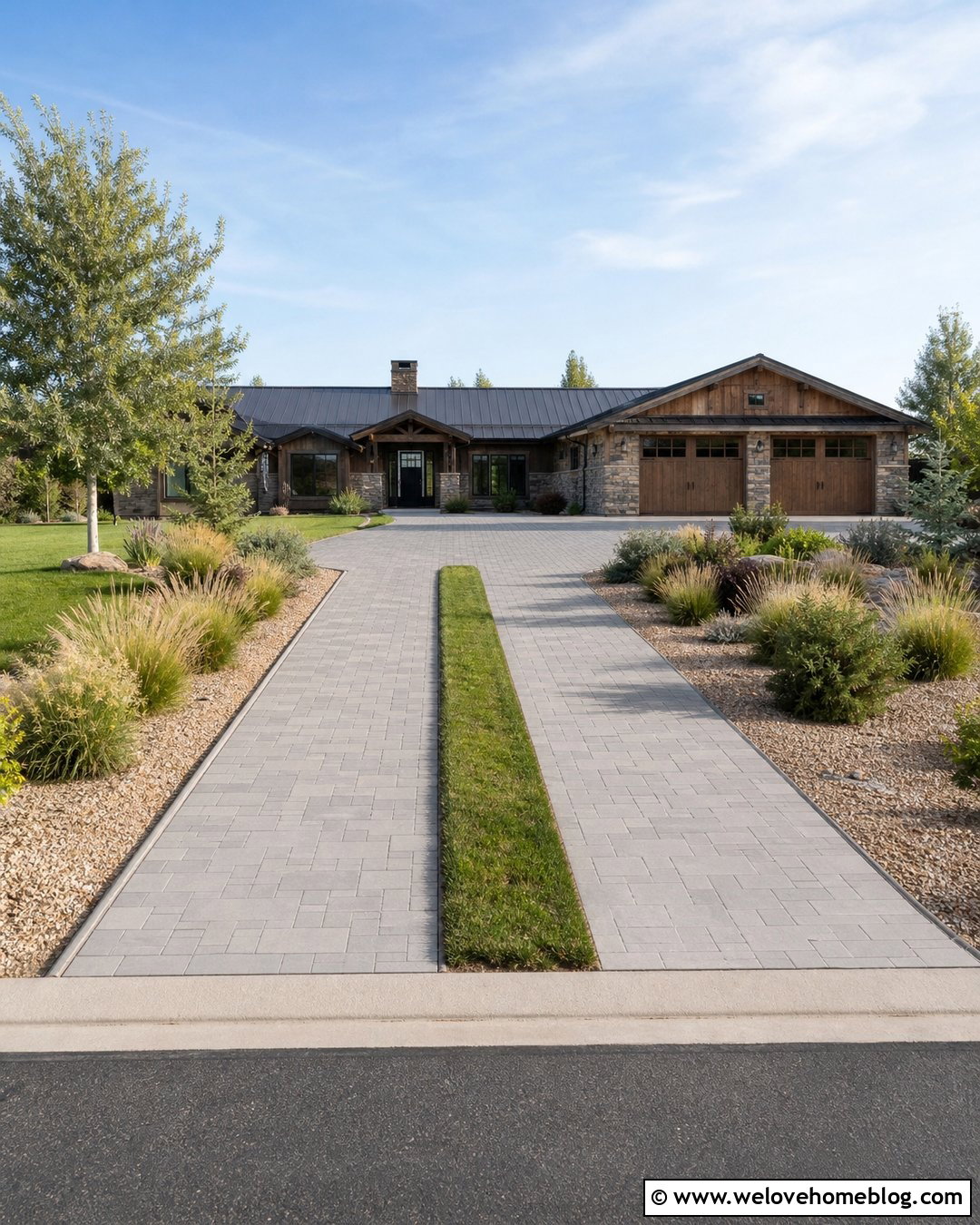
Grass and decorative gravel can share the same paver driveway when each material has a clear purpose. Use broad concrete paver tracks for vehicle tires, a planted grass strip through the center, and narrow bands of washed gravel along the outer edges. The gravel provides visual separation and can protect the turf from wheels cutting corners. Warm gray pavers, tan stone, and green grass create a balanced palette for a rustic modern or contemporary ranch house. Continue the gravel into drought-tolerant beds filled with compact shrubs and ornamental grasses. Install solid restraints so loose stones do not migrate onto the lawn or street. The planted center still needs suitable soil, sunlight, and water, while the gravel areas require an open, stable base if they are intended to receive runoff.
17. Sloped Paver And Grass Driveway
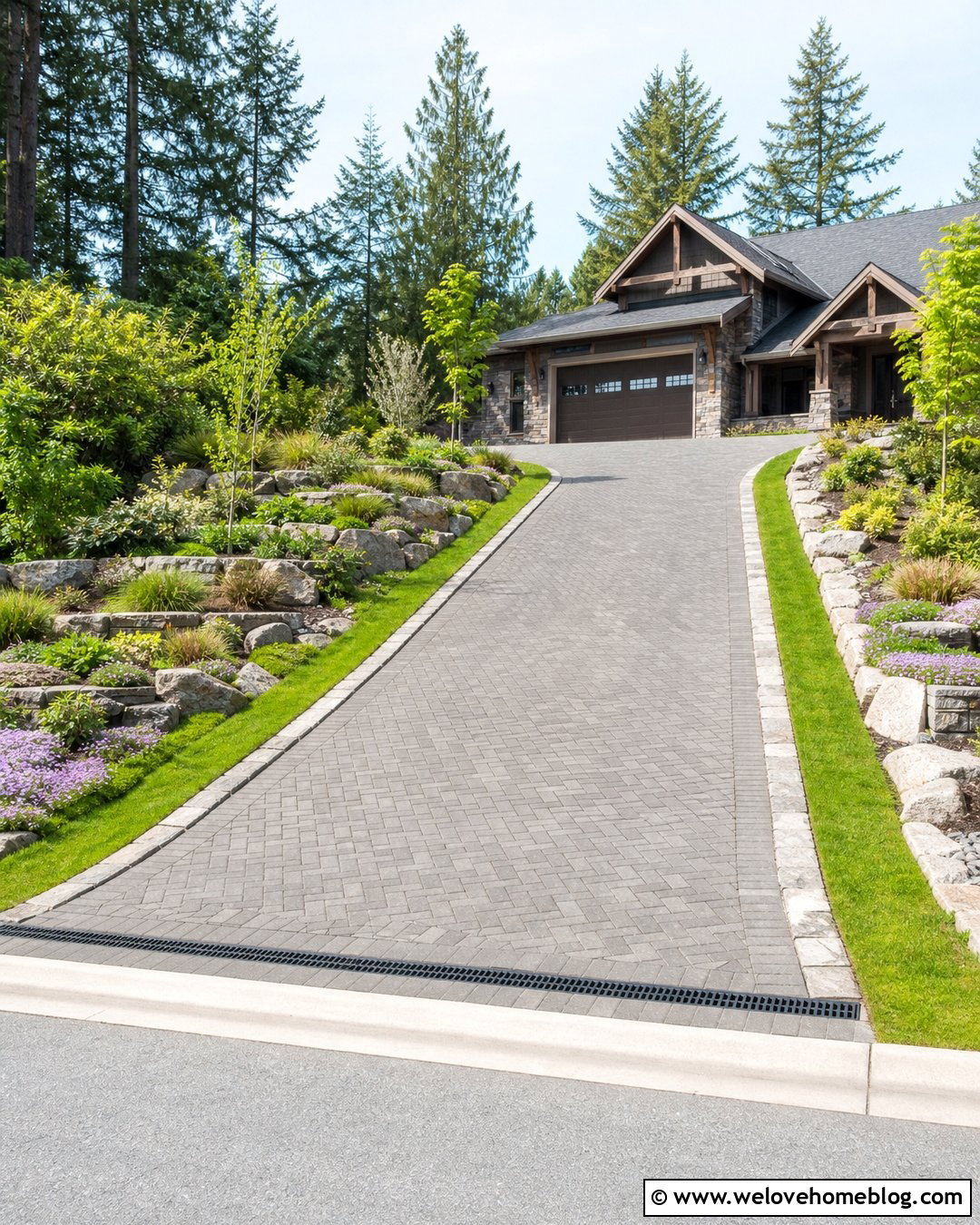
A sloped paver-and-grass driveway needs a design that controls movement while maintaining a clean, intentional appearance. Use textured concrete pavers in a herringbone layout for the main driving surface, then introduce narrow grass bands on level outer terraces rather than directly across steep tire paths. Strong stone edging and planted retaining beds can step down the slope beside the driveway. Deep-rooted shrubs, ornamental grasses, and ground covers help visually stabilize the banks. At the garage, create a flatter paver apron for safer parking and easier entry. Water should be directed away from the house and prevented from washing soil across the paving. Because slope, soil, drainage, and vehicle loads interact, this design is best developed with an experienced landscape or hardscape professional familiar with local conditions.
18. Small Front Yard Paver And Grass Driveway
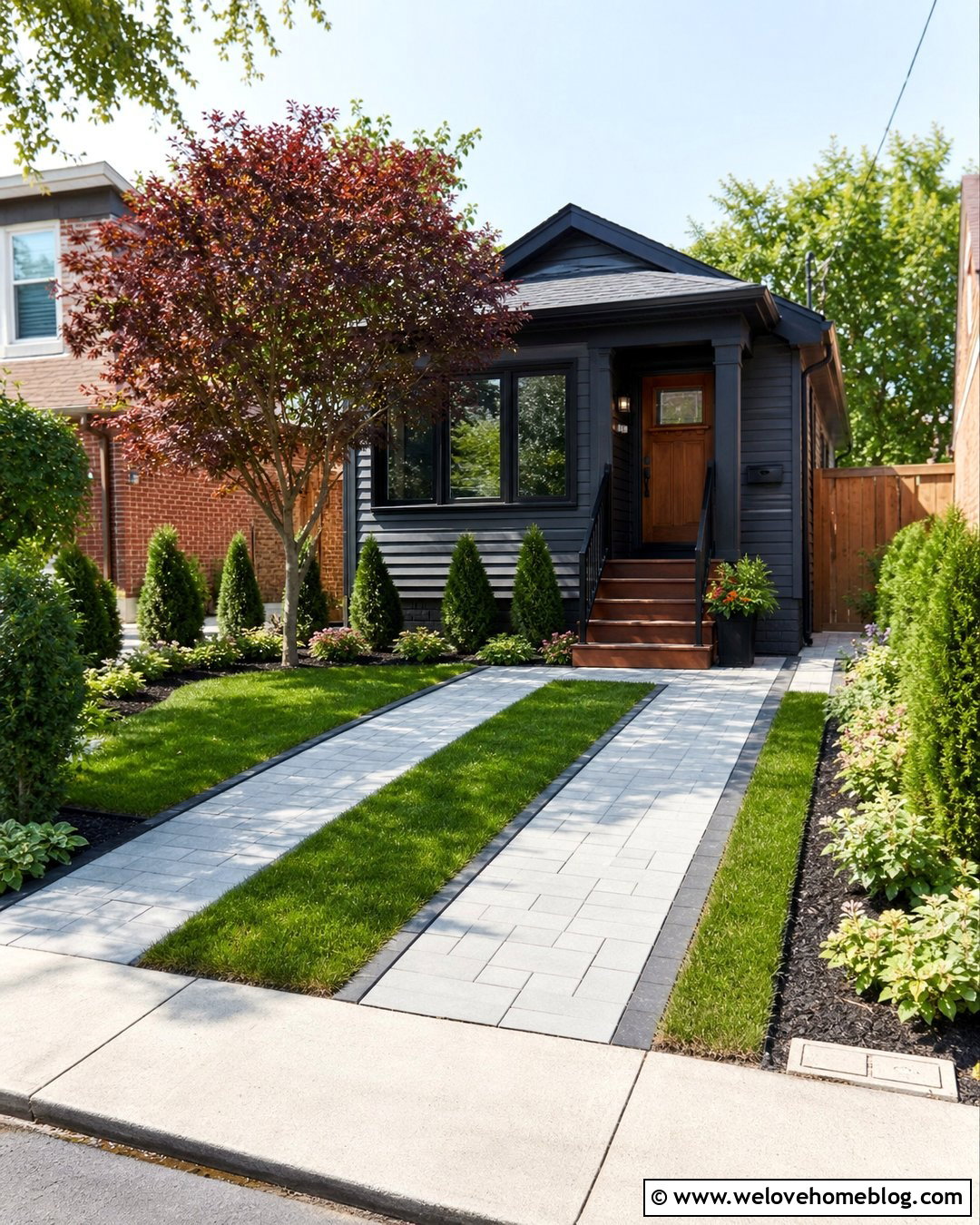
When the front yard is compact, a paver-and-grass driveway should handle parking without making the entire frontage feel paved. Use light concrete pavers in two tire tracks and maintain a central grass strip that visually connects with the remaining lawn. A single paver ribbon along one side can become the front walkway, avoiding the need for another separate hardscape area. Keep foundation beds narrow and layered with compact evergreen shrubs, low perennials, and one small ornamental tree. A straight layout usually uses space more efficiently than a dramatic curve. Match the paver tone to the porch steps or house trim for a coordinated look. Accurate measurements are essential because doors, gates, trash bins, and pedestrian routes still need comfortable clearance around the parked vehicle.
19. Paver And Grass Driveway With Matching Walkway
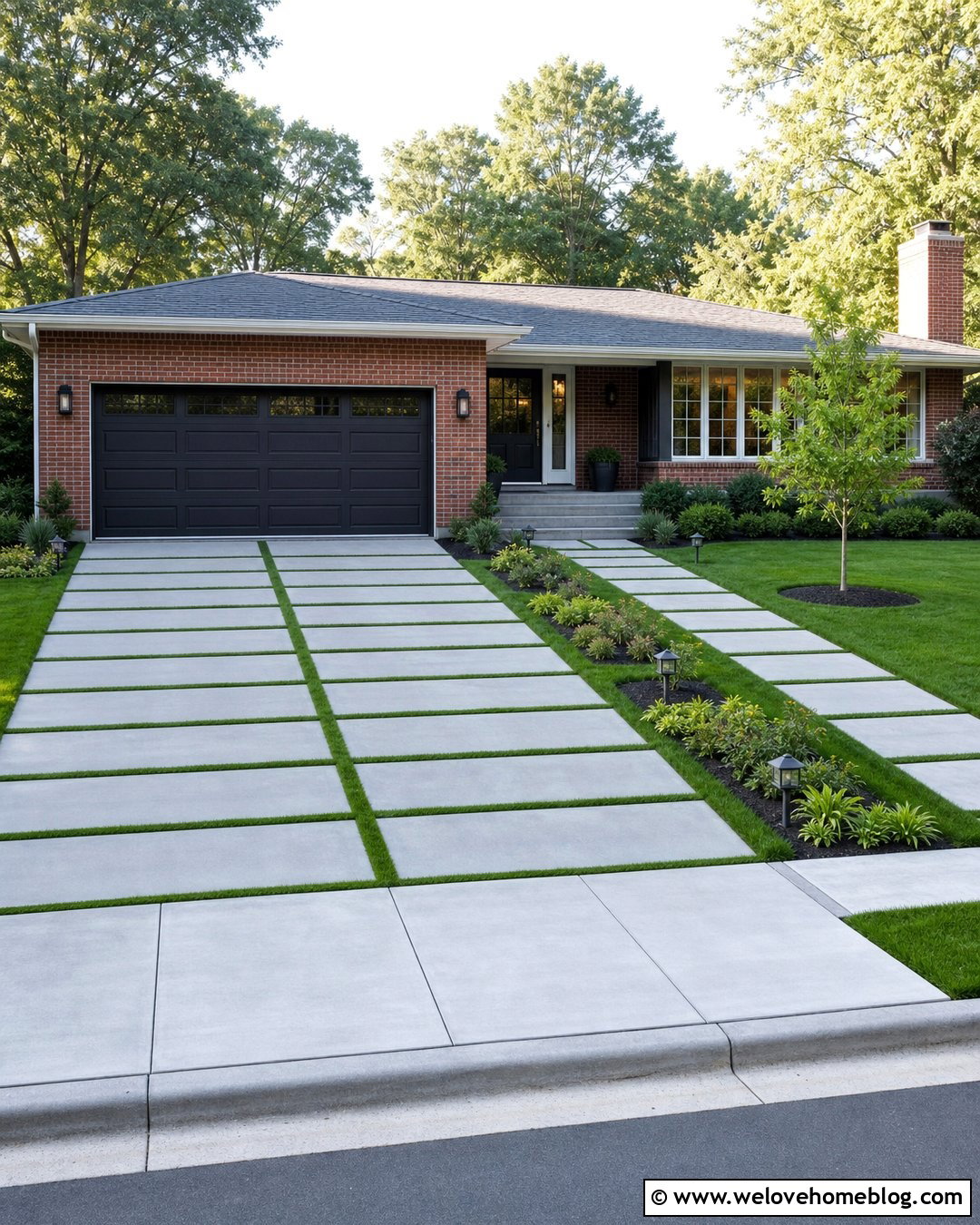
Repeating the driveway pattern in the front walkway helps the entire landscape feel planned as one composition. Create a straight driveway with large square concrete pavers and grass joints, then branch a narrower version of the grid toward the porch. Make the walkway joints smaller and easier to step across while preserving the same materials and alignment. A solid paver landing at the curb, garage, and front steps provides comfortable transitions. Frame both routes with continuous lawn, layered planting beds, and low lighting placed outside the driving zone. This coordinated layout works with many house types, from a brick ranch to a modern craftsman. Keep the walkway visually clear so visitors do not mistake planted driveway joints for the primary pedestrian route, particularly near the street and parking area.
20. Paver And Grass Driveway With Gate
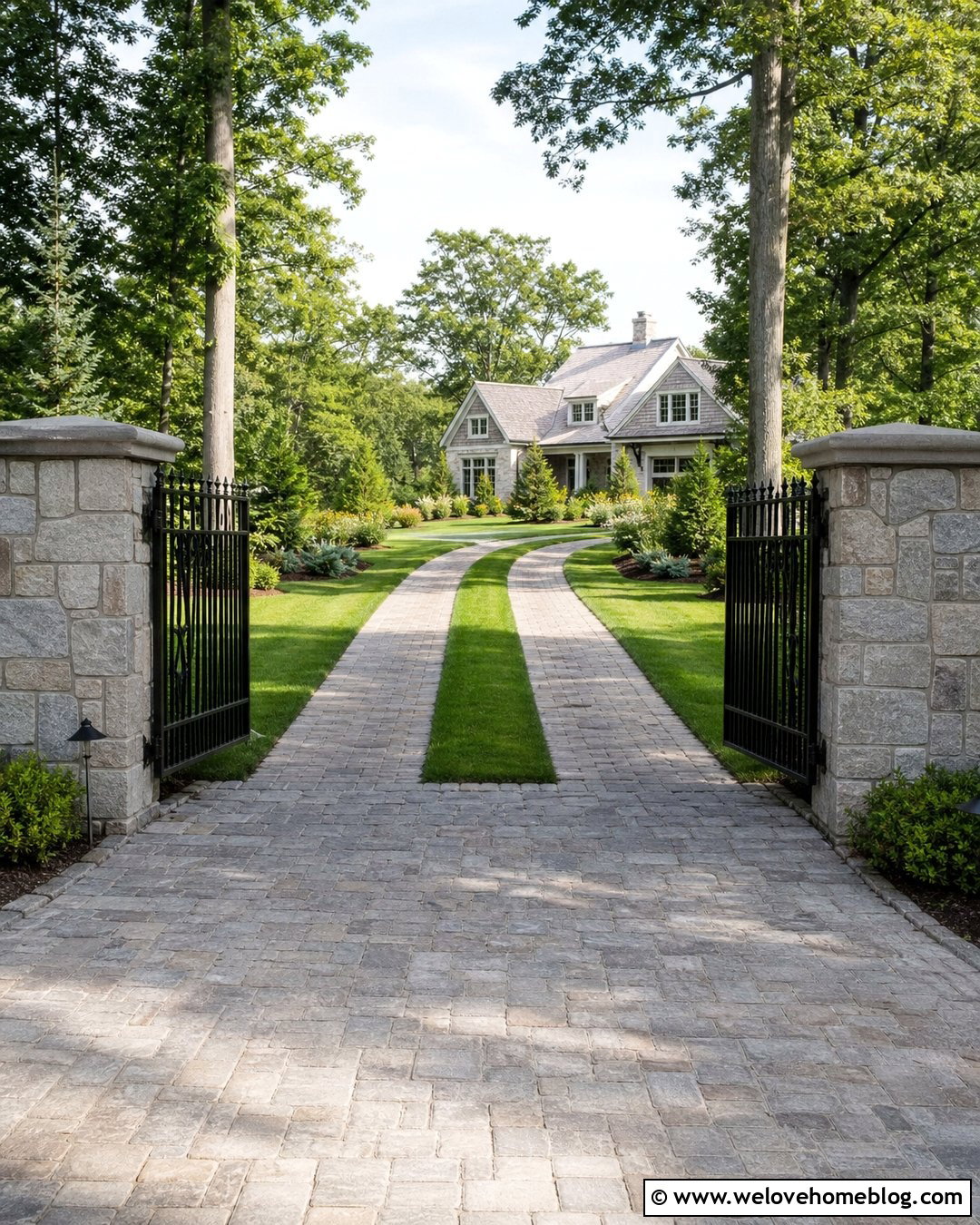
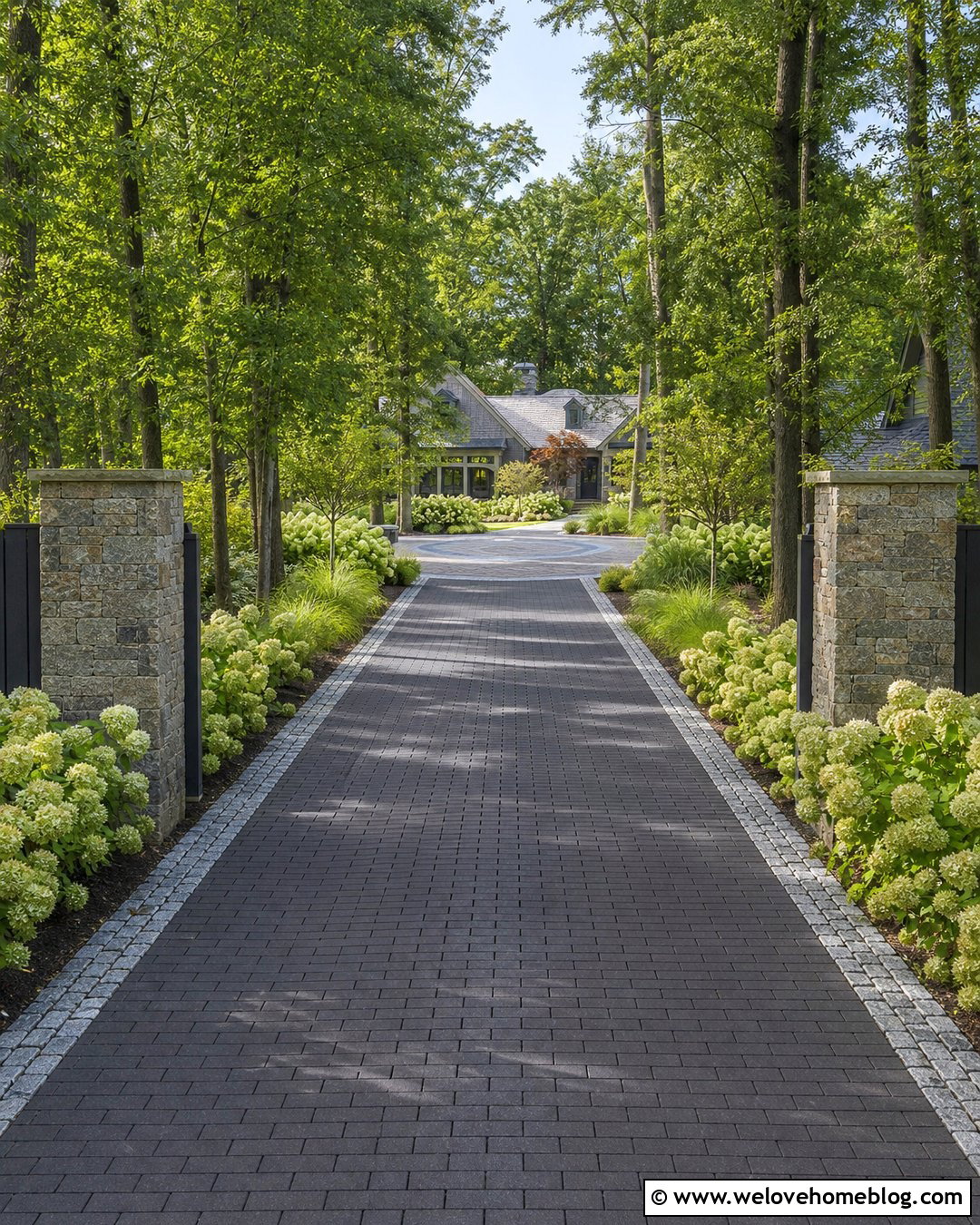
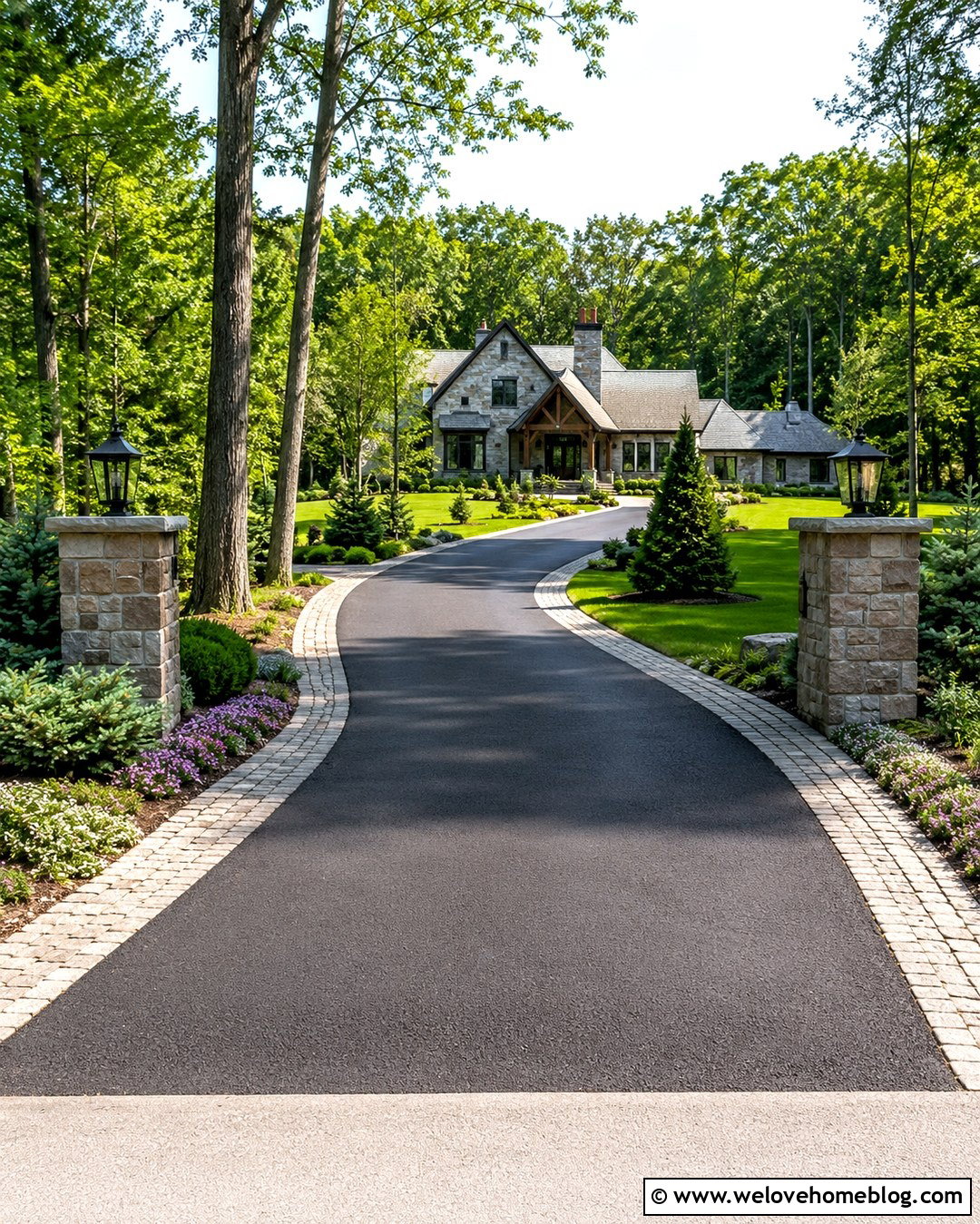
A driveway gate can become part of a complete green entrance rather than an isolated feature. Use weathered concrete or stone pavers with a broad grass median leading toward simple wood or black metal gates. Anchor the entrance with masonry pillars that repeat stone from the house or driveway border. Solid paving beneath the gate prevents the moving panels and vehicle stopping area from interfering with turf. Beyond the entrance, allow the paver tracks to curve gently through lawn and tree-lined planting toward the house. Low lights can mark the wheel paths without cluttering the landscape. Confirm gate clearance, drainage, delivery access, and emergency requirements during planning. Keep shrubs well away from hinges, sensors, and sightlines so the entrance remains practical as the planting matures.
Conclusion:
The most successful **20 Pavers And Grass Driveway Ideas** combine curb appeal with realistic plans for vehicle movement, drainage, sunlight, and lawn care. Large concrete slabs can create a sleek modern grid, while brick tracks, cobblestones, and grass medians offer a more traditional look. Open-cell systems can make an even larger portion of the surface appear green. Whatever layout you prefer, do not overlook the supporting base, edge restraints, finished grades, and driveway-rated materials. Match the grass to local growing conditions and place solid paving where vehicles turn most often. With thoughtful planning, pavers and grass can transform an ordinary parking area into a durable, attractive extension of the front landscape.

Related posts:
Leave a Reply