
A sharply sloped driveway can create problems with tire grip, stormwater runoff, erosion, vehicle clearance, and safe winter access. However, the right combination of grading, surface material, drainage, retaining structures, and landscaping can turn a difficult incline into a practical entrance. This guide to **35 Steep Driveway Solutions Ideas** explores complete designs rather than isolated fixes. You will find textured concrete, stabilized gravel, asphalt, pavers, switchbacks, drainage channels, retaining walls, transition aprons, and heated surfaces. Each solution also considers borders, planting, pedestrian access, and the style of the home. Because slope limits and drainage requirements vary locally, major changes should always begin with professional site evaluation and permit checks. () Explore these **35 Steep Driveway Solutions Ideas** to find a safer, longer-lasting approach for your property.

1. Brushed Concrete Steep Driveway
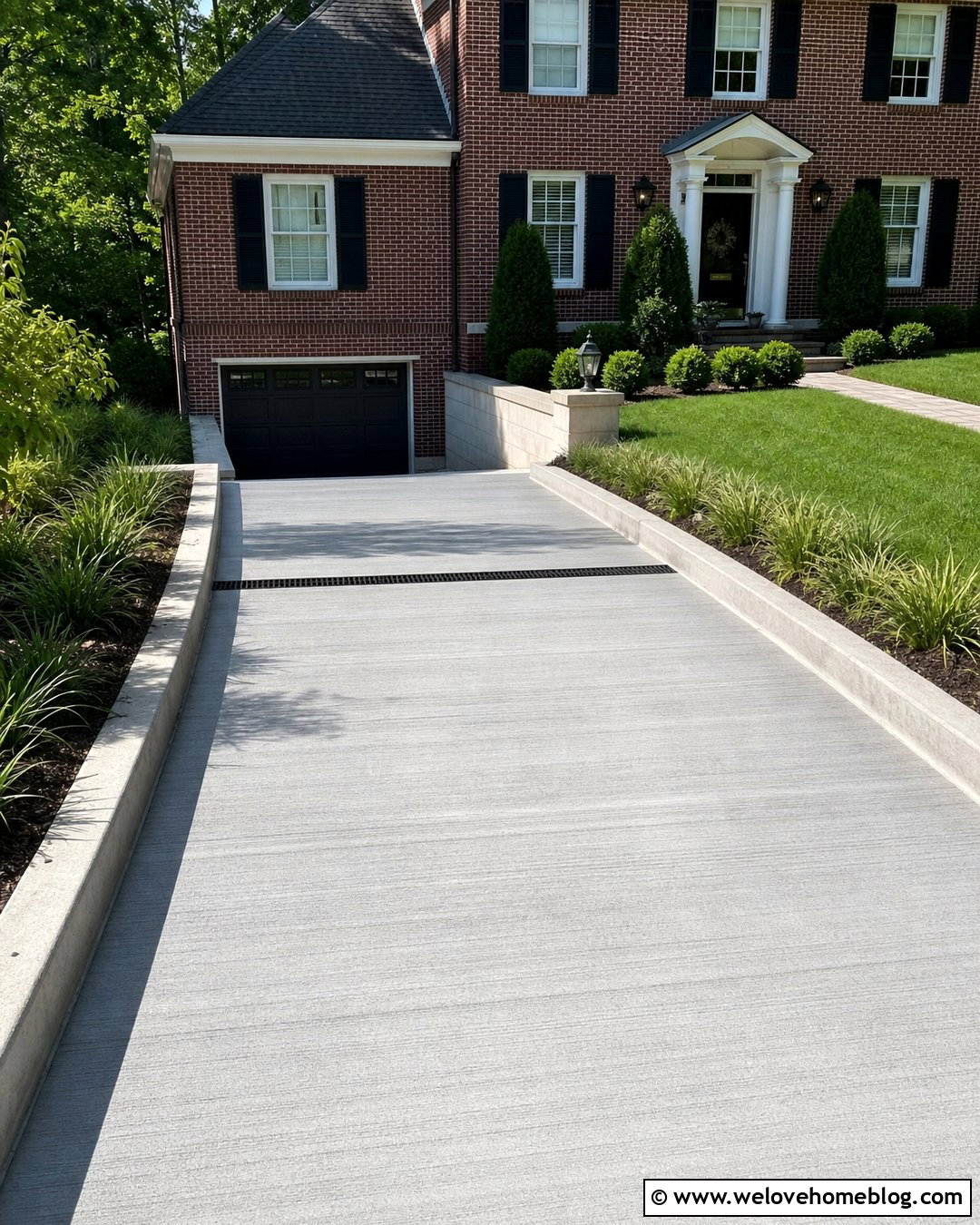
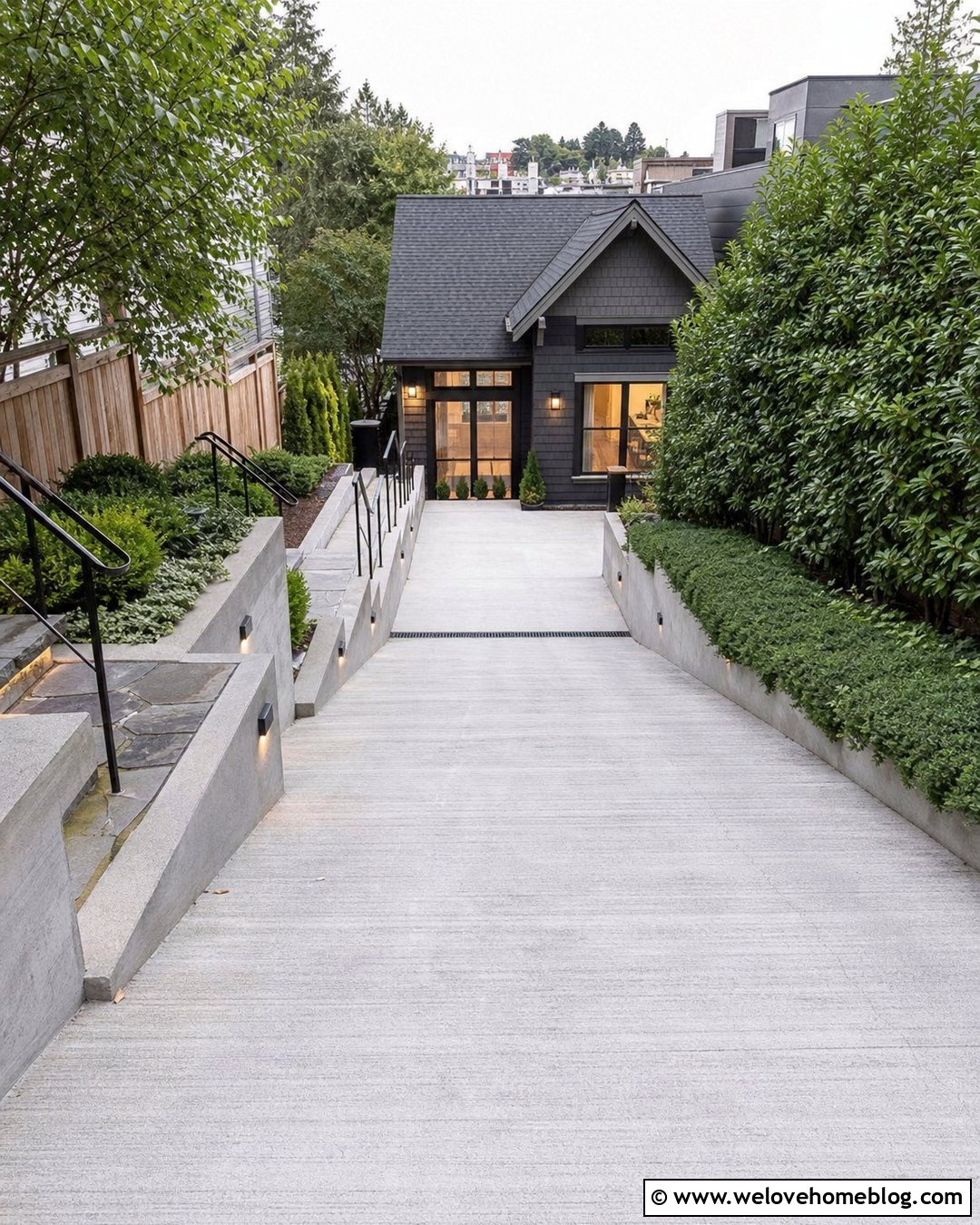
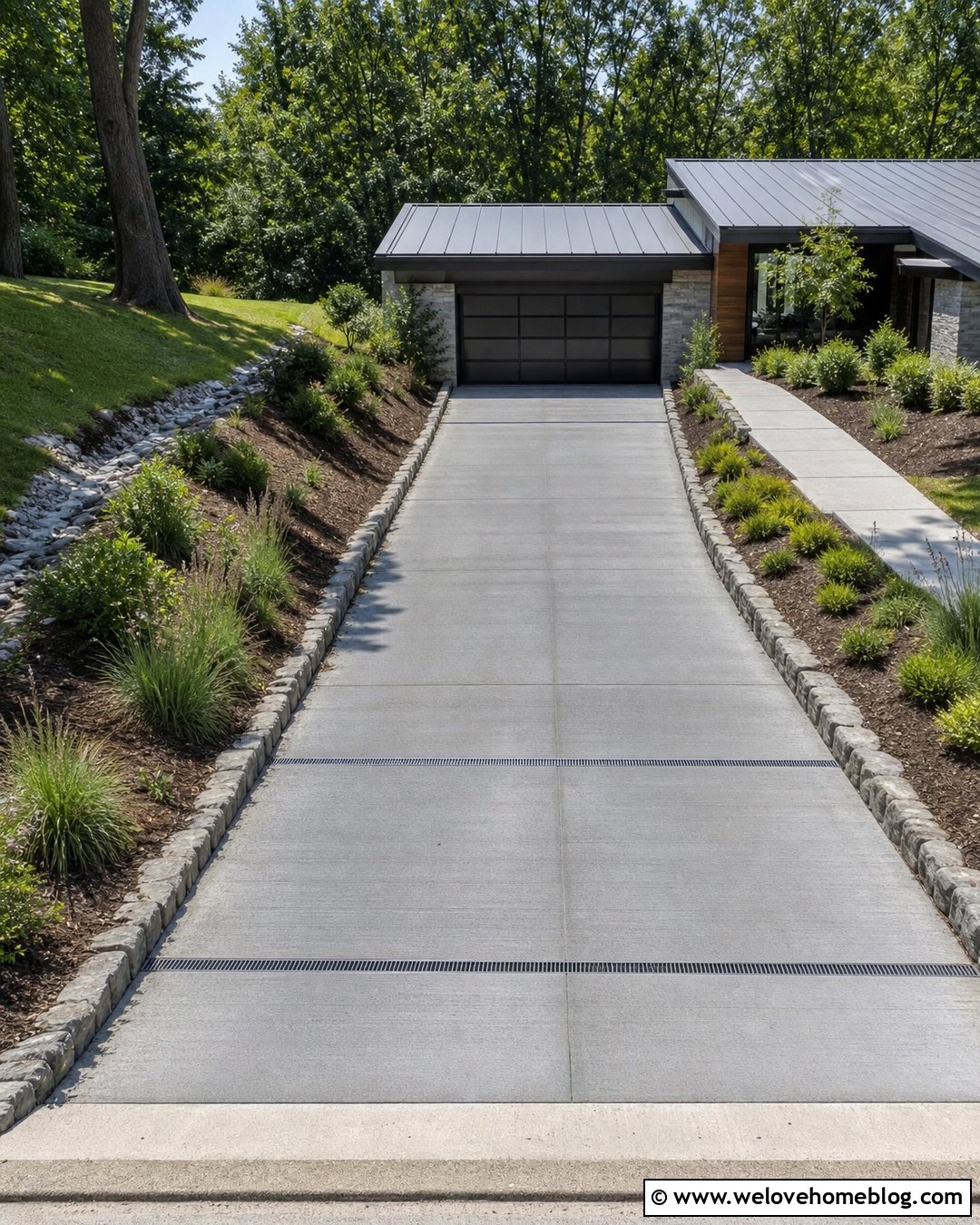
Brushed concrete creates a practical surface when a steep driveway needs dependable traction without a complicated pattern. Before the concrete hardens, a broom is pulled across it to form fine grooves that help tires grip the incline. A straight layout works well on narrow suburban lots, while reinforced concrete curbs keep runoff and soil away from the driving surface. Add a grated channel drain near the garage and another across the lower approach to intercept moving water. Low planting beds filled with ornamental grasses soften the hard edges without blocking sightlines. Choose a medium-gray finish that hides tire marks and complements brick, siding, or stone. Proper base preparation, reinforcement, control joints, and curing remain essential because sloped concrete experiences water flow and braking forces.
2. Grooved Concrete Steep Driveway
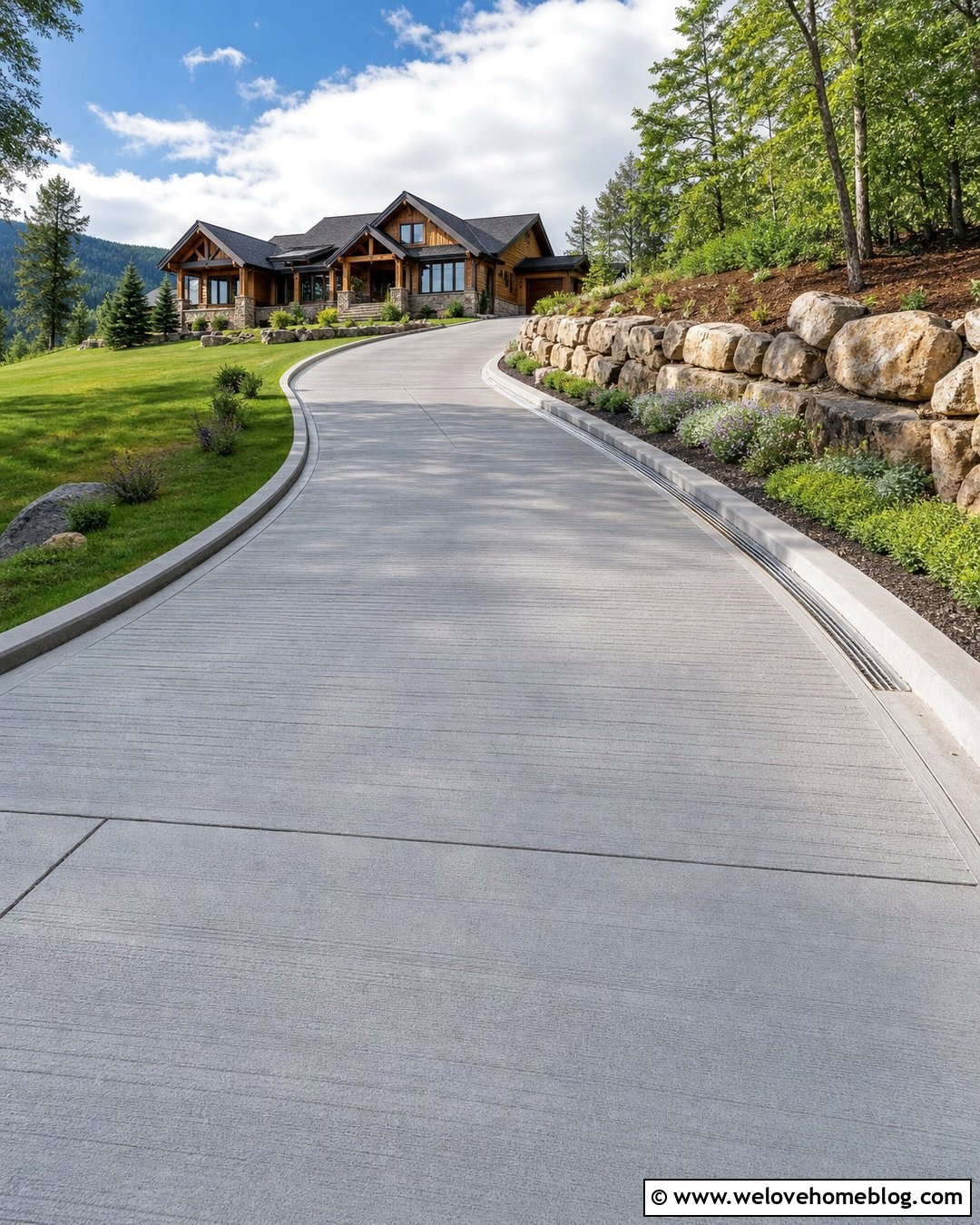
Deep transverse grooves can provide more pronounced traction than a lightly brushed finish. In this complete steep driveway design, narrow grooves run across the direction of travel instead of following the slope. That orientation gives tires additional edges to grip during wet weather. A gently curved layout reduces the harsh appearance of the incline and creates space for a planted inside border. Use cast concrete curbing along the downhill side to contain the pavement and guide runoff toward planned drains. A stone retaining wall can support the uphill bank while adding a natural transition to the yard. Keep the grooves consistent and comfortably spaced so the surface remains easy to shovel and walk on. This treatment suits mountain homes, ranch houses, and contemporary properties where safety should look intentionally designed.
3. Exposed Aggregate Steep Driveway
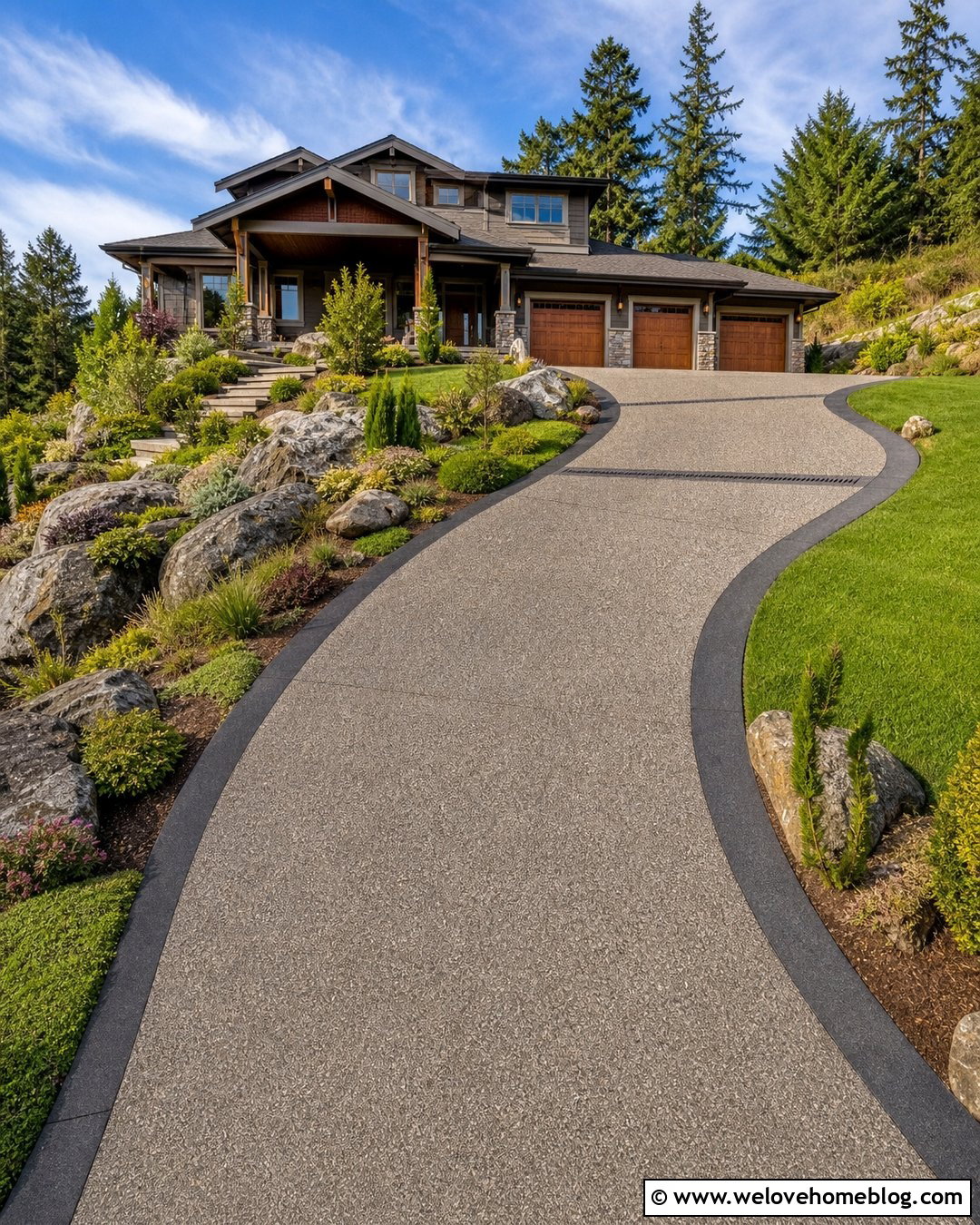
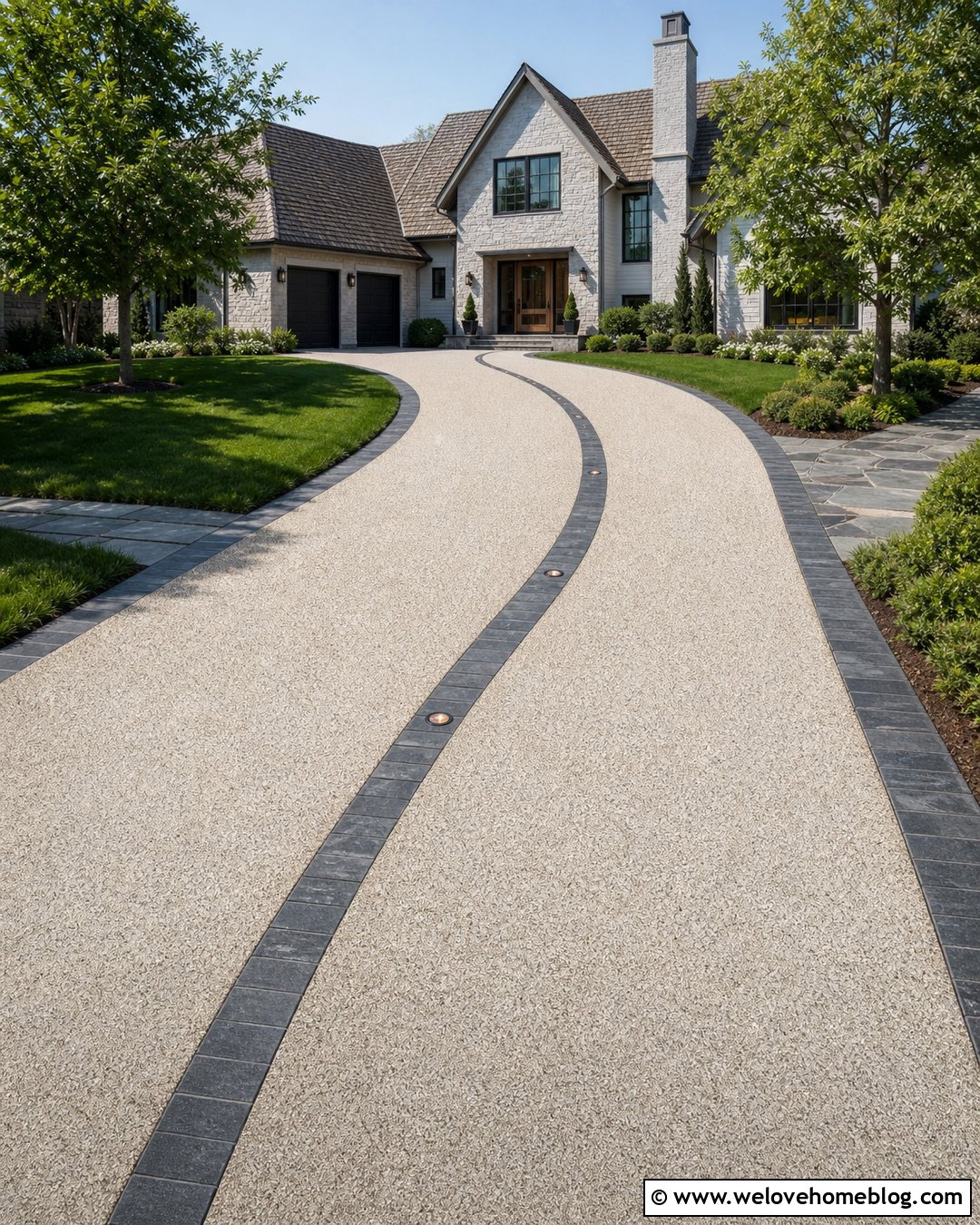
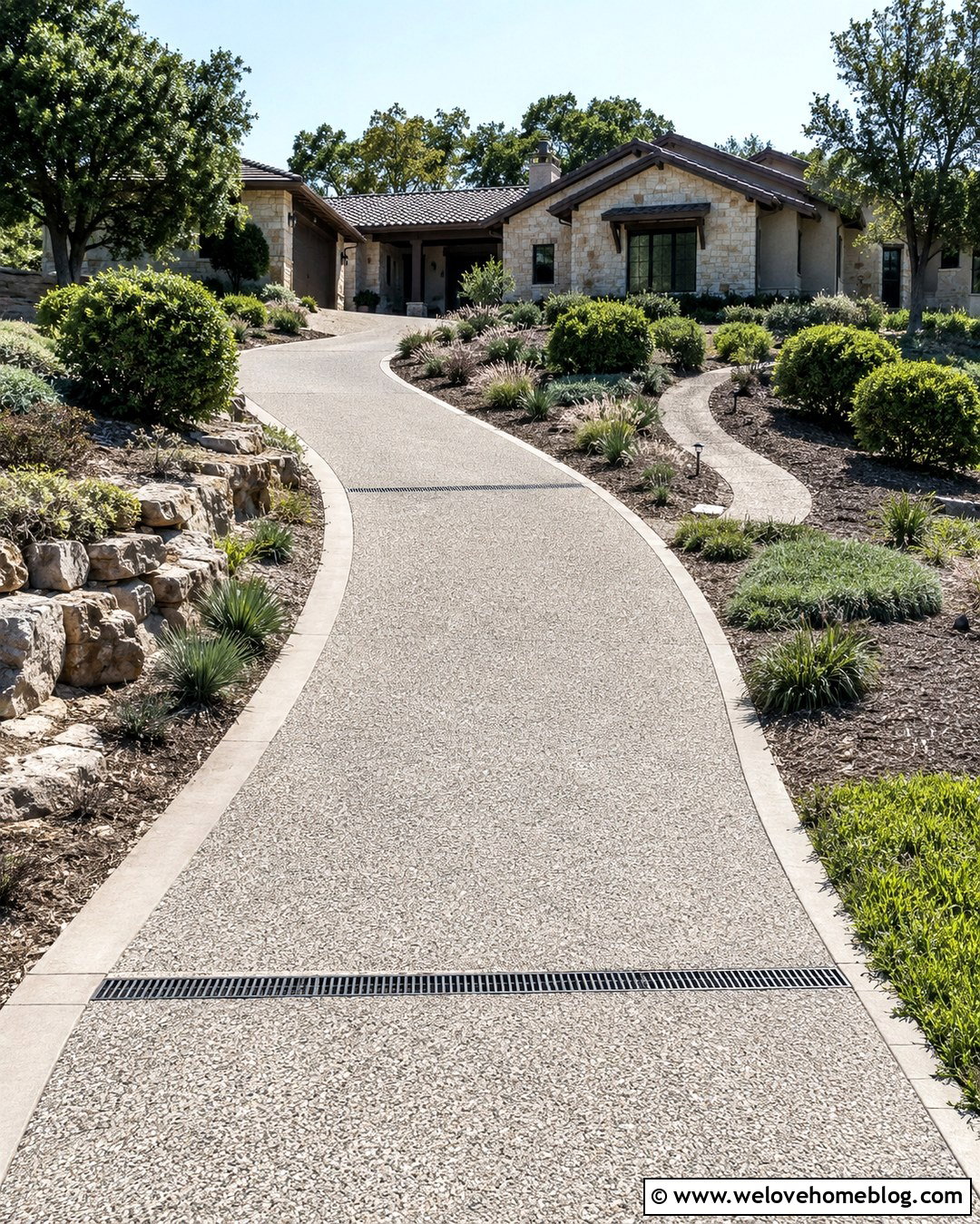
Exposed aggregate combines a textured driving surface with a decorative finish that feels more refined than standard concrete. Small stones are revealed at the top of the slab, producing natural color variation and extra surface texture. A sweeping curved driveway can lengthen the route up the hill, helping vehicles approach the house more gradually where the site allows. Dark concrete bands along both edges contain the aggregate and create crisp visual definition. Install a channel drain before the garage and direct it to an approved outlet rather than allowing water to cross nearby planting beds. Drought-tolerant shrubs, creeping groundcovers, and boulders can stabilize the surrounding slope. Select rounded aggregate that is comfortable underfoot but still textured enough to improve traction on the incline.
4. Asphalt Steep Driveway With Channel Drains
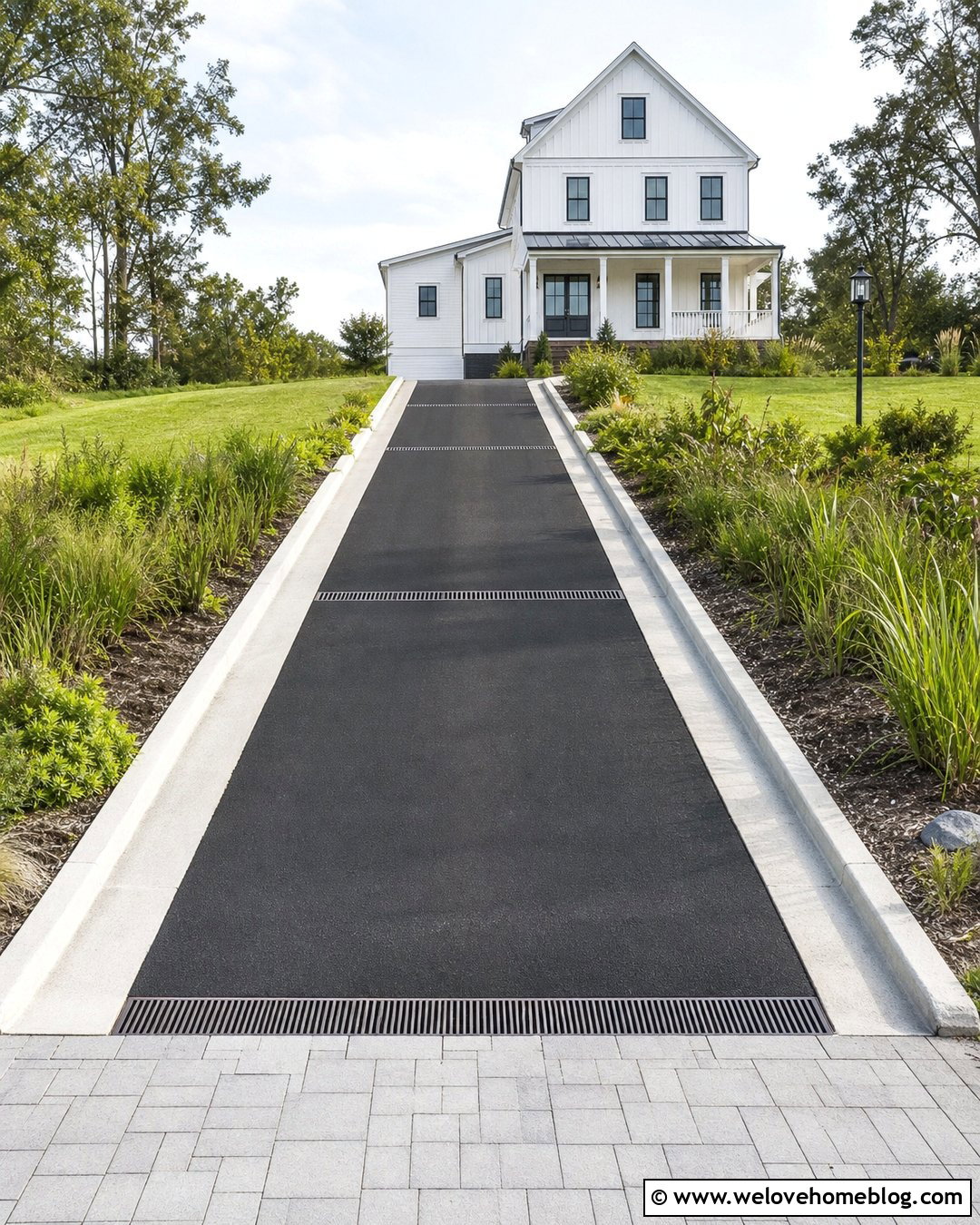
Black asphalt offers a naturally textured, visually simple surface for a long steep driveway. Pairing it with several channel drains helps prevent stormwater from gathering speed as it moves downhill. Position one drain near the top, another around the midpoint, and a final drain before the street or garage, depending on the direction of the slope. Each drain needs a suitable discharge route sized for local rainfall and site conditions. Concrete curbs along the edges keep water from eroding the base and stop asphalt from visually disappearing into the landscape. Frame the entrance with native grasses and low shrubs that preserve visibility. A light-colored paver apron at the road provides contrast and creates a durable transition where turning vehicles place additional pressure on the surface.
5. Asphalt Switchback Steep Driveway
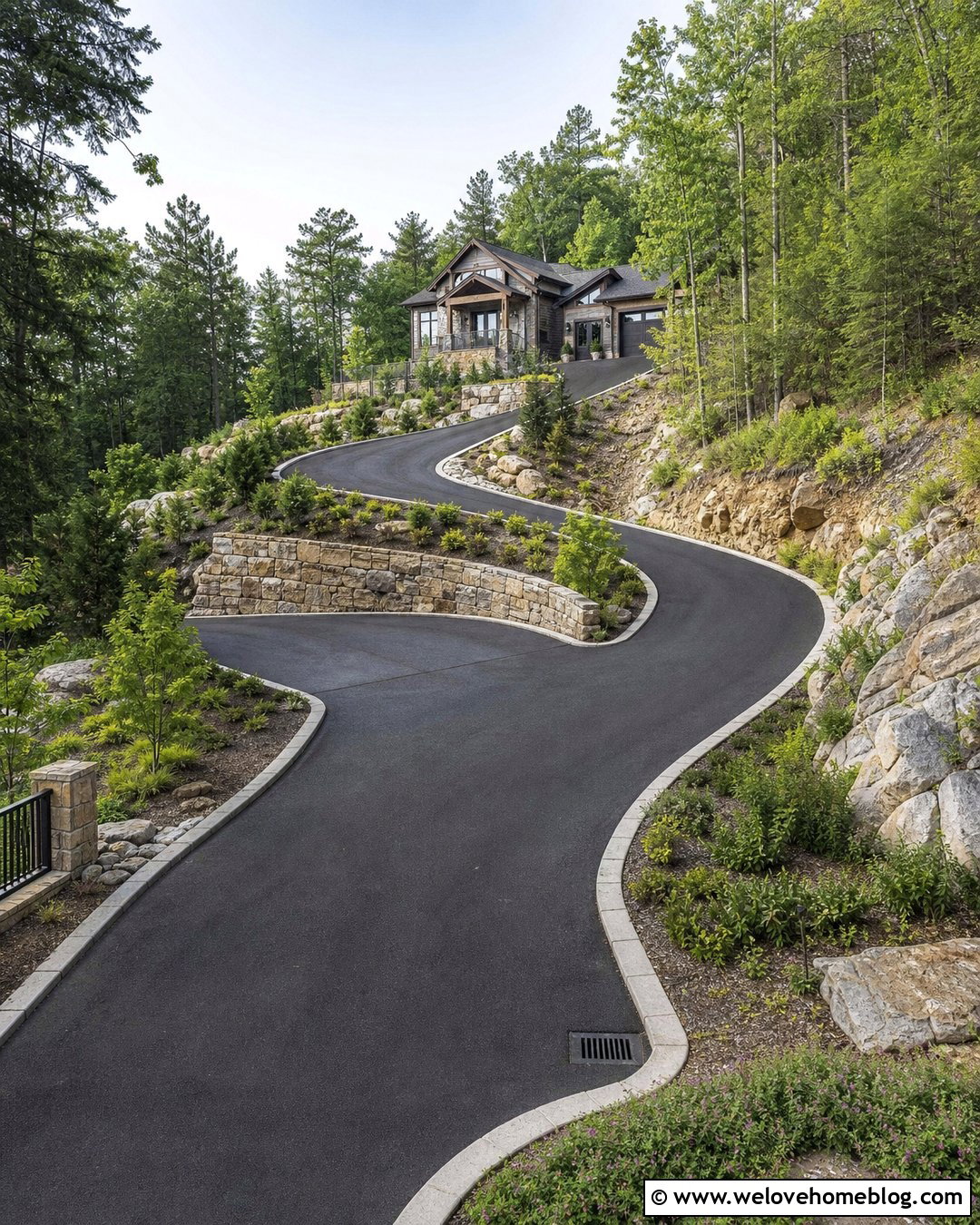
When a property has enough width, an asphalt switchback can replace one severe climb with longer, more manageable runs. The driveway travels across the hillside, turns on a broad reinforced landing, and continues toward the house. This configuration can reduce the effective driving grade, but turning geometry, emergency access, soil stability, and drainage should be professionally engineered. () Rough black asphalt provides visual continuity throughout the route. Concrete curbs and stone retaining walls stabilize the outside and inside edges of each turn. Place catch basins at low points where water may collect, then connect them to a controlled outlet. Groundcovers and low shrubs planted above the walls help reduce exposed soil. Keep trees and tall plants away from the turning area so drivers maintain clear sightlines.
6. Permeable Paver Steep Driveway
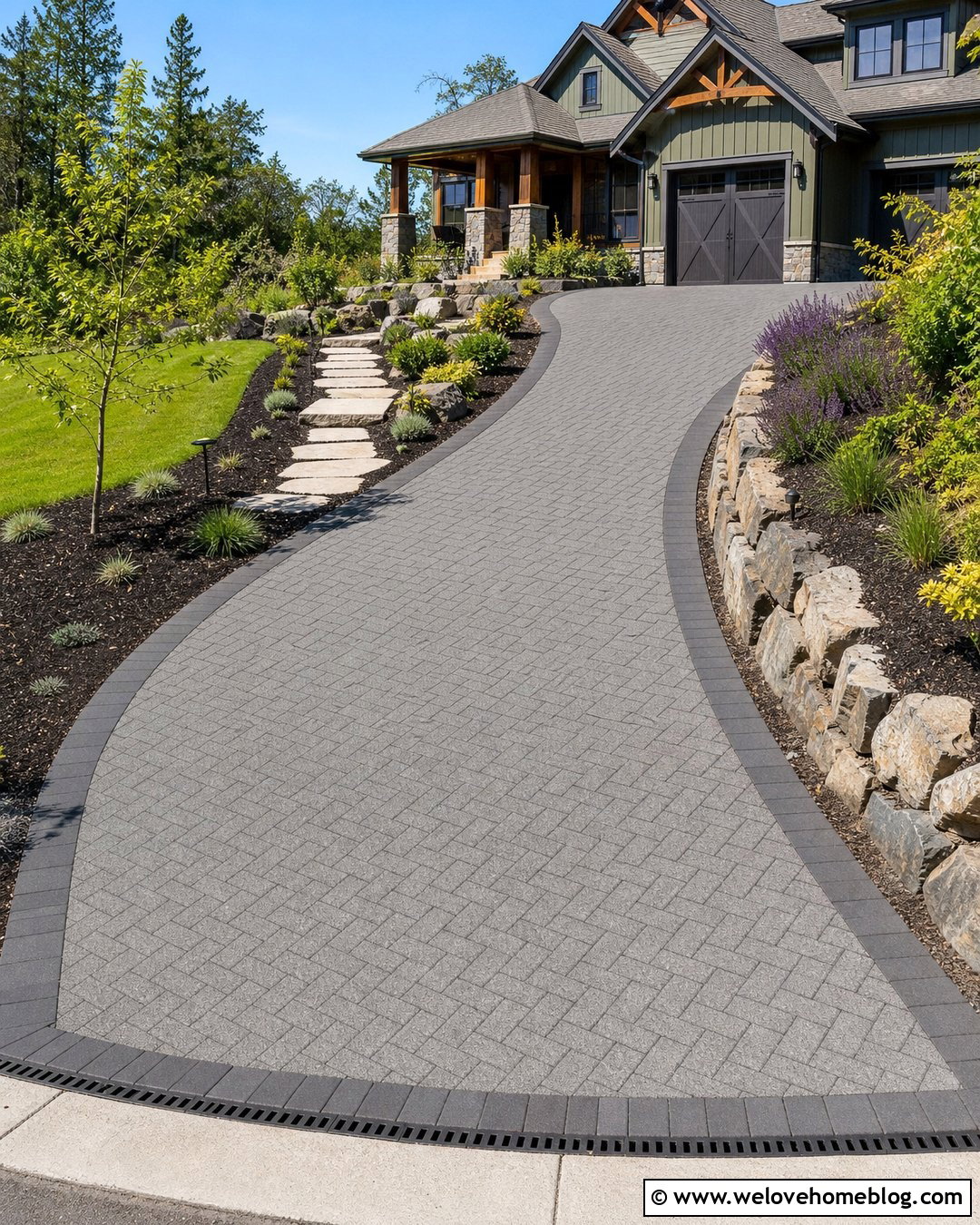
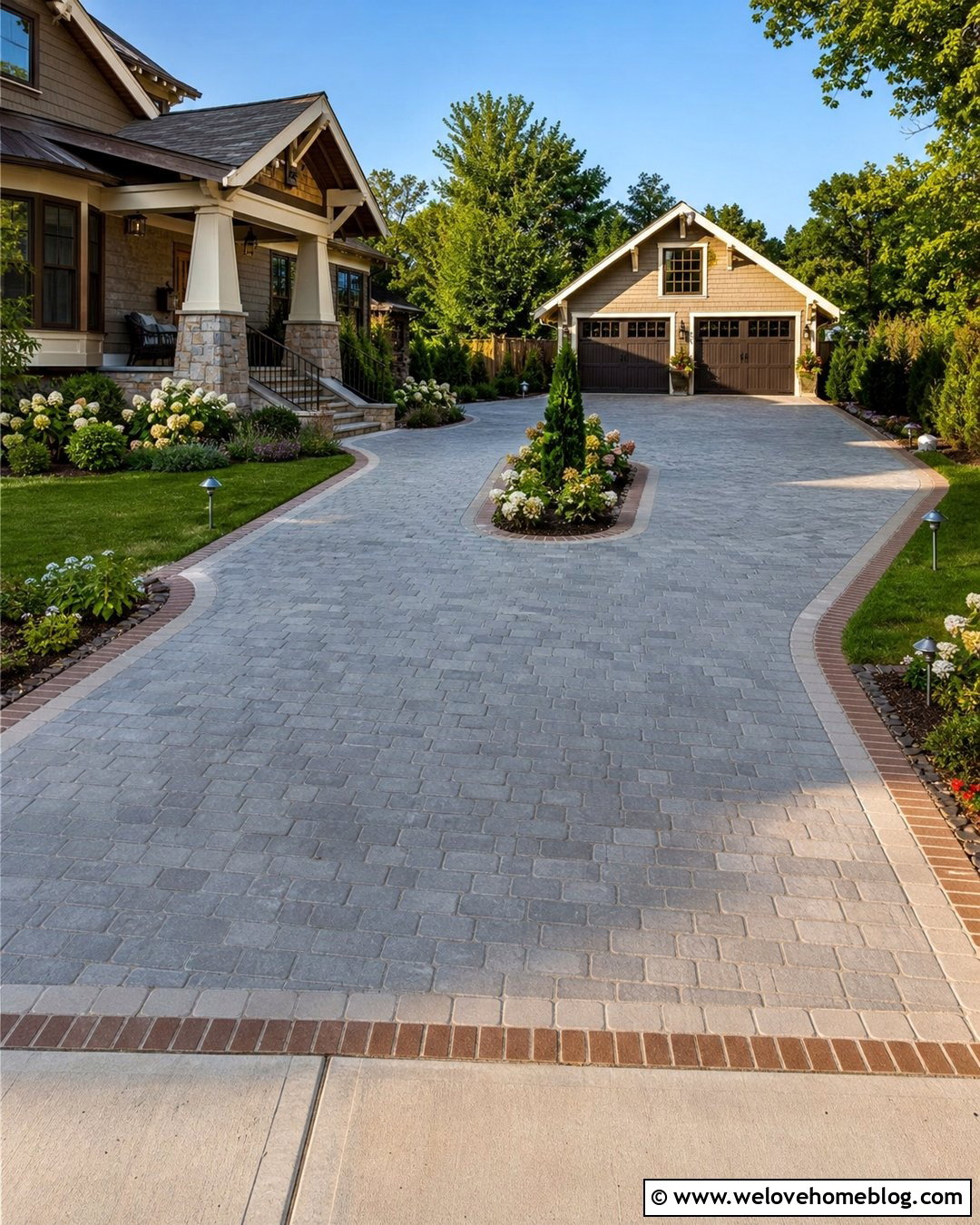
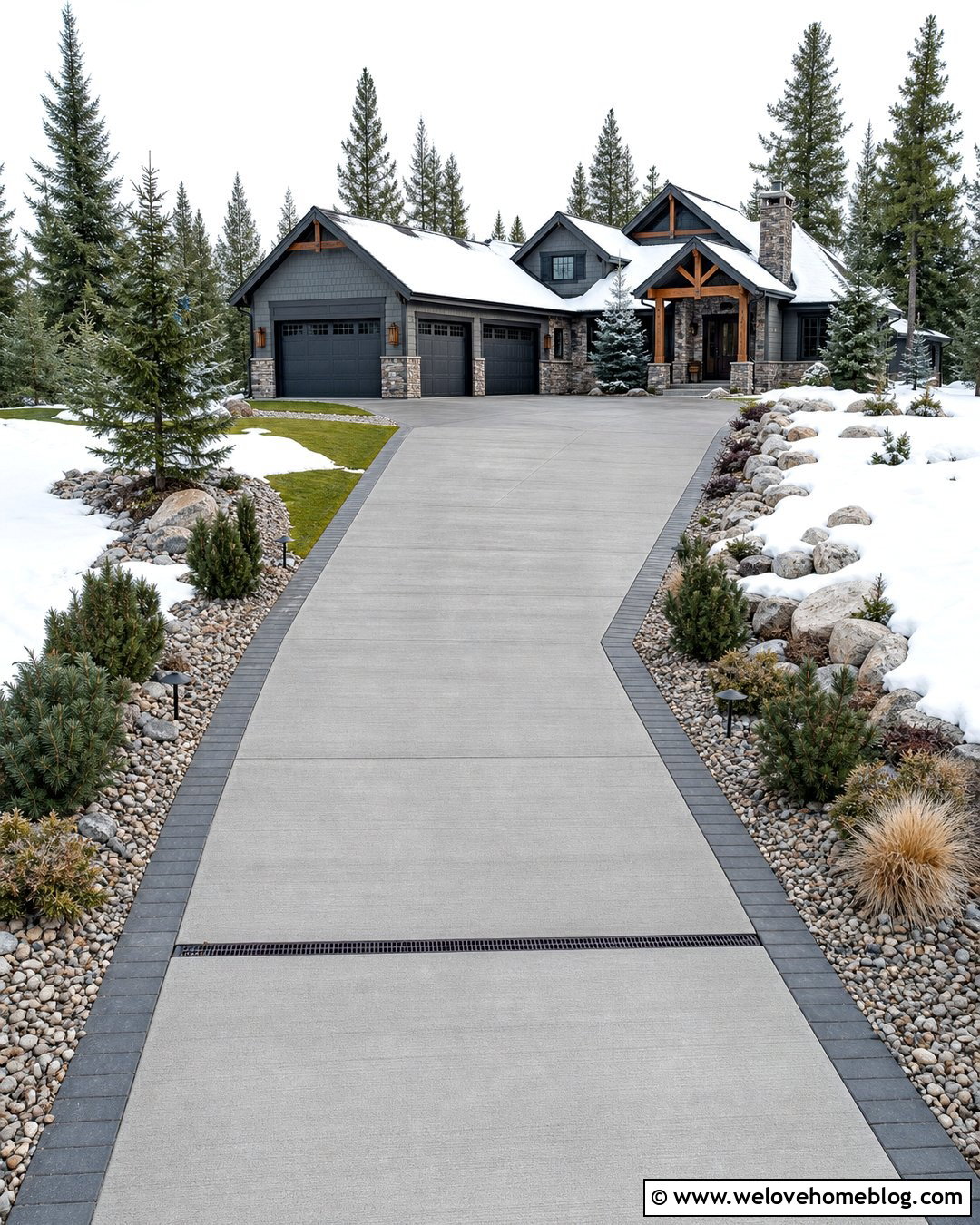
Permeable concrete pavers can manage rainfall while creating a structured, upscale driveway surface. They are most appropriate when the specific paver system, base, soil, and slope are approved for the site. Install the pavers in a compact interlocking pattern over an engineered open-graded stone base. Dark charcoal border pavers can strengthen the visual edges and distinguish the driving lane from adjacent landscaping. A gently curving route pairs beautifully with a craftsman house and terraced native planting beds. Although water can enter the joints, the design may still require uphill interception drains and an overflow system during heavy storms. Strong edge restraints are especially important on an incline because they help prevent lateral movement. Regular joint maintenance keeps the permeable spaces open and the surface visually consistent.
7. Herringbone Paver Steep Driveway
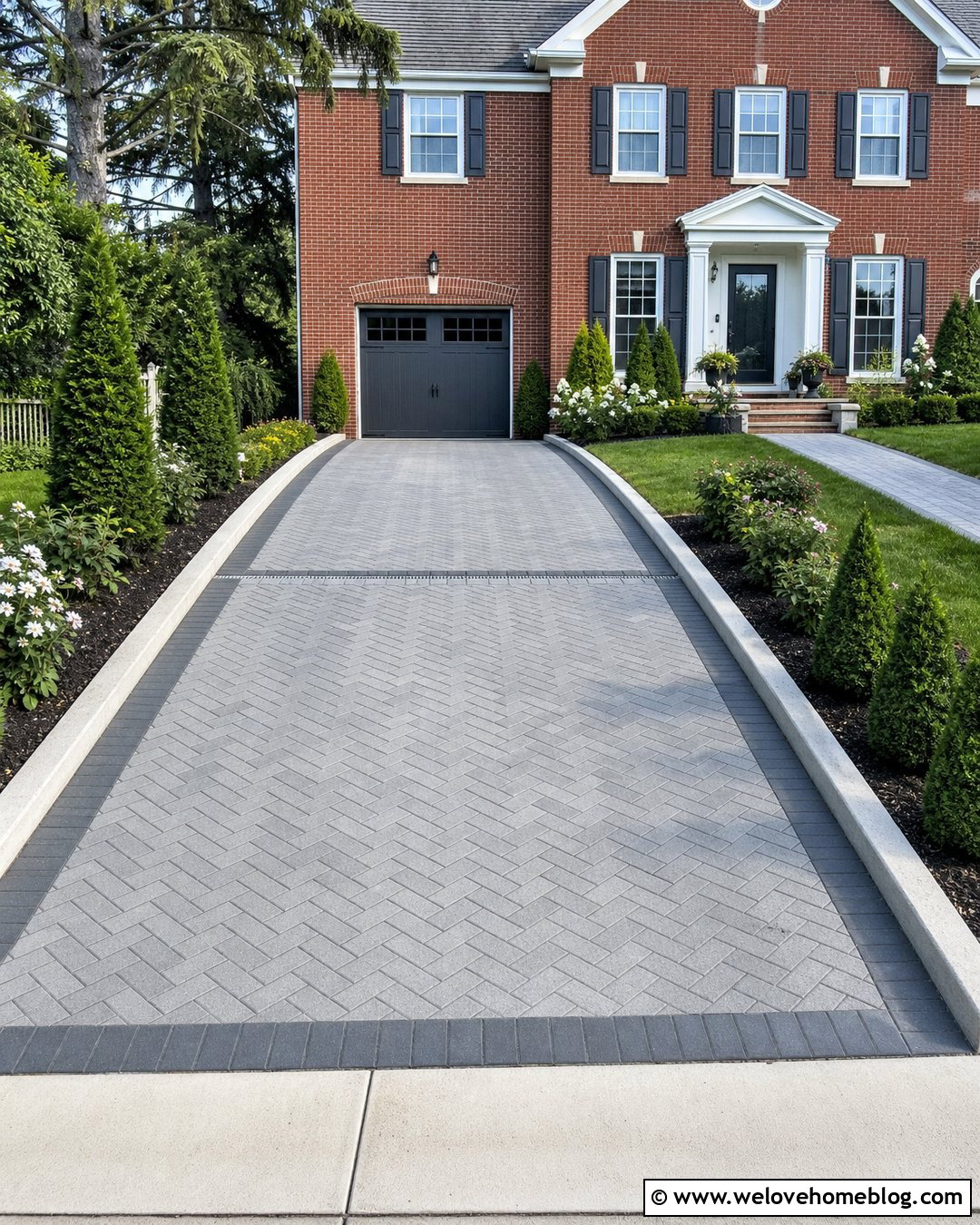
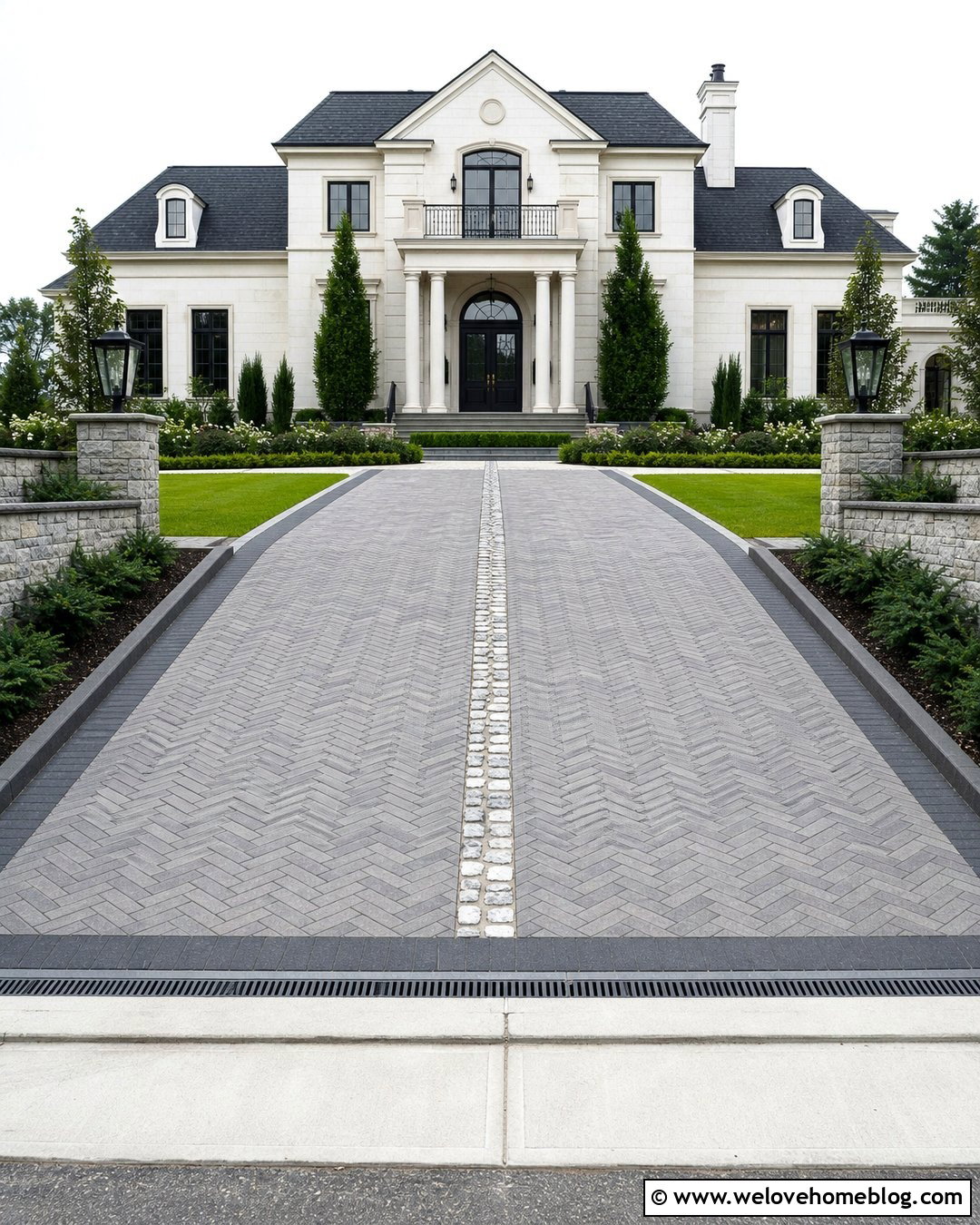
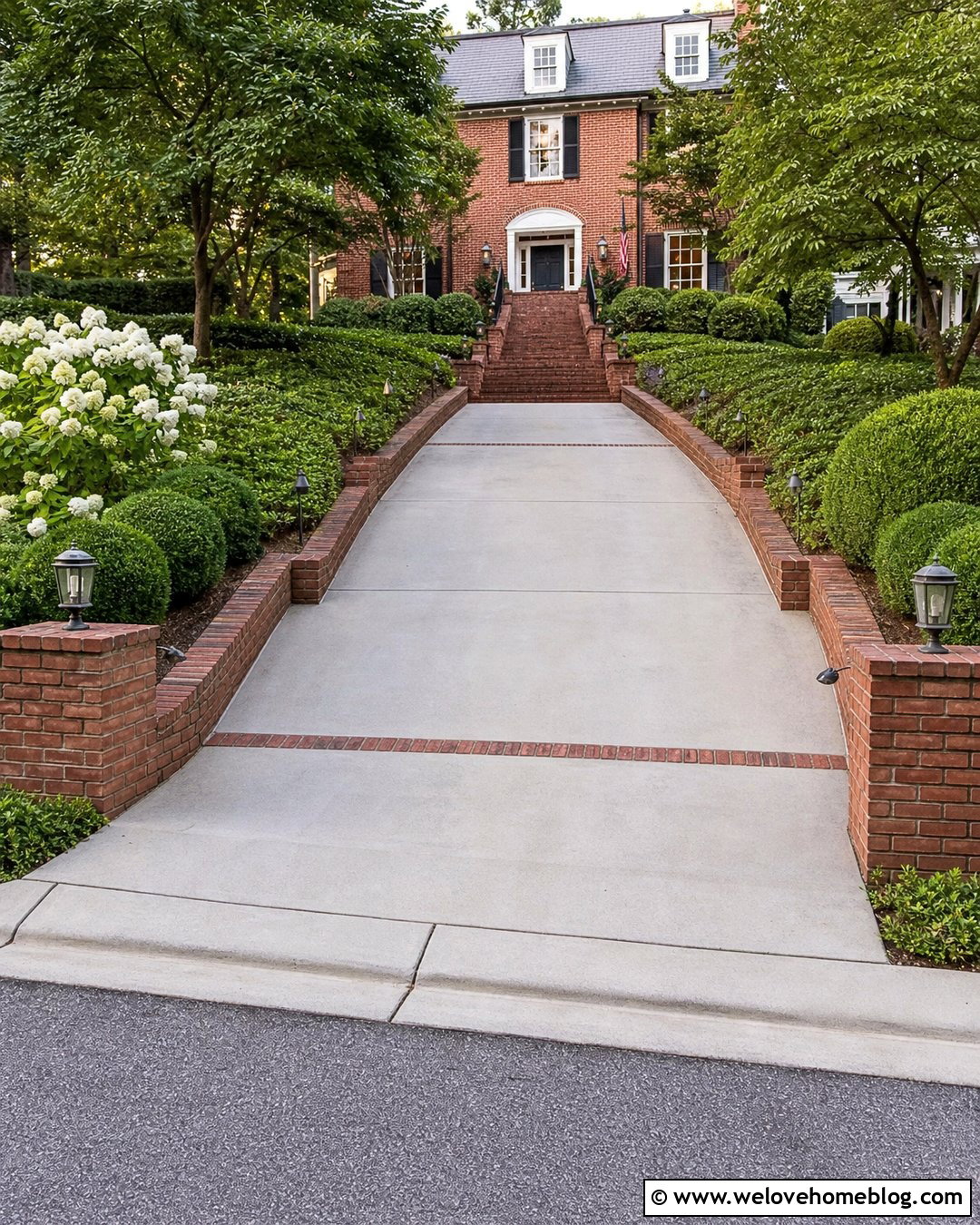
Concrete pavers laid in a herringbone pattern create numerous interlocking joints that suit a formal steep driveway. The angled pattern also makes tire marks less noticeable than long straight paving lines. Choose textured pavers rather than polished units, and place them over a professionally compacted base designed for the slope. A straight driveway bordered by contrasting soldier-course pavers looks balanced in front of a colonial home. Raised concrete curbs help contain the installation, while a channel drain near the garage protects the building from runoff. Add symmetrical planting beds with compact evergreens and low flowering perennials. Avoid loose sand or soil spilling onto the pavers because debris can reduce grip. Proper edge restraint and drainage are just as important as the paver pattern on sloping ground.
8. Interlocking Paver Steep Driveway With Curbs
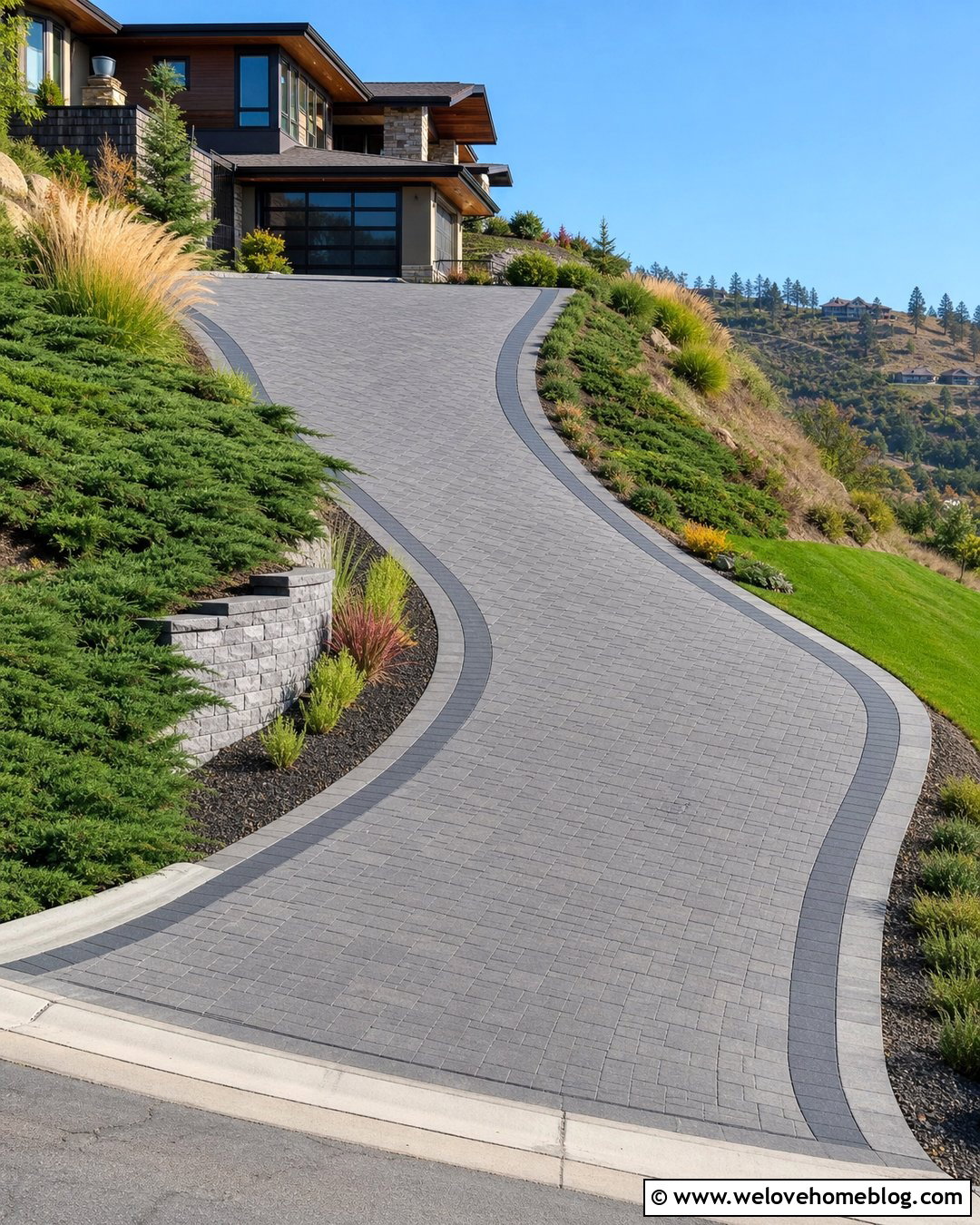
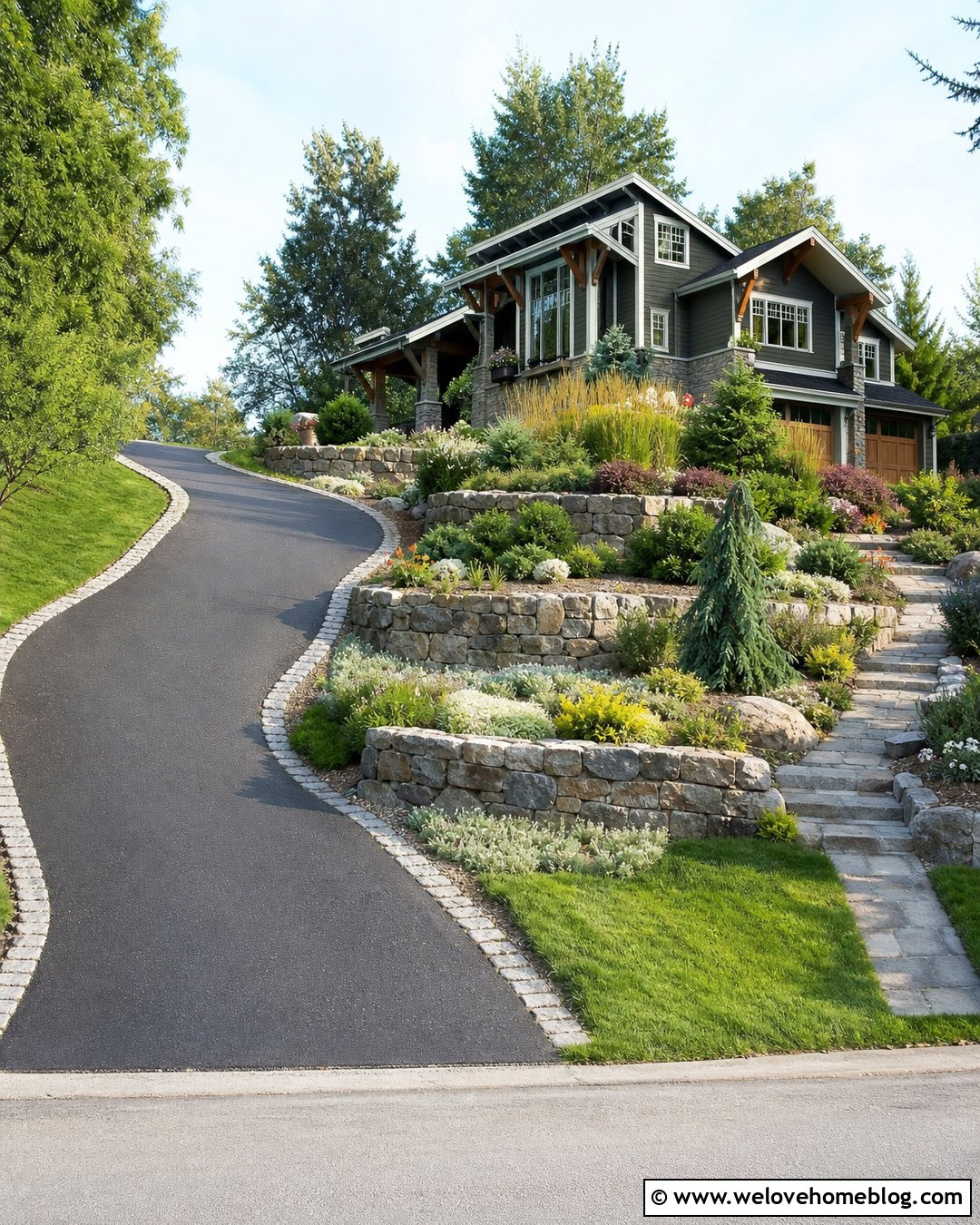
Heavy-duty interlocking pavers create a durable driveway when they are paired with strong curbs and a stable base. A curved layout can follow natural contours instead of cutting directly up the steepest part of the property. Use medium-gray textured pavers with charcoal edge bands for a clean, contemporary appearance. Cast concrete curbs on the downhill edge support the pavement and direct water toward regularly spaced collection points. On the uphill side, a low segmental retaining wall can prevent soil from washing onto the driving lane. Plant spreading juniper, ornamental grasses, and other slope-tolerant plants above the wall. The finished design should include a flat turning or parking pad near the house. This gives drivers room to maneuver without stopping or reversing on the steepest section.
9. Gravel Grid Steep Driveway
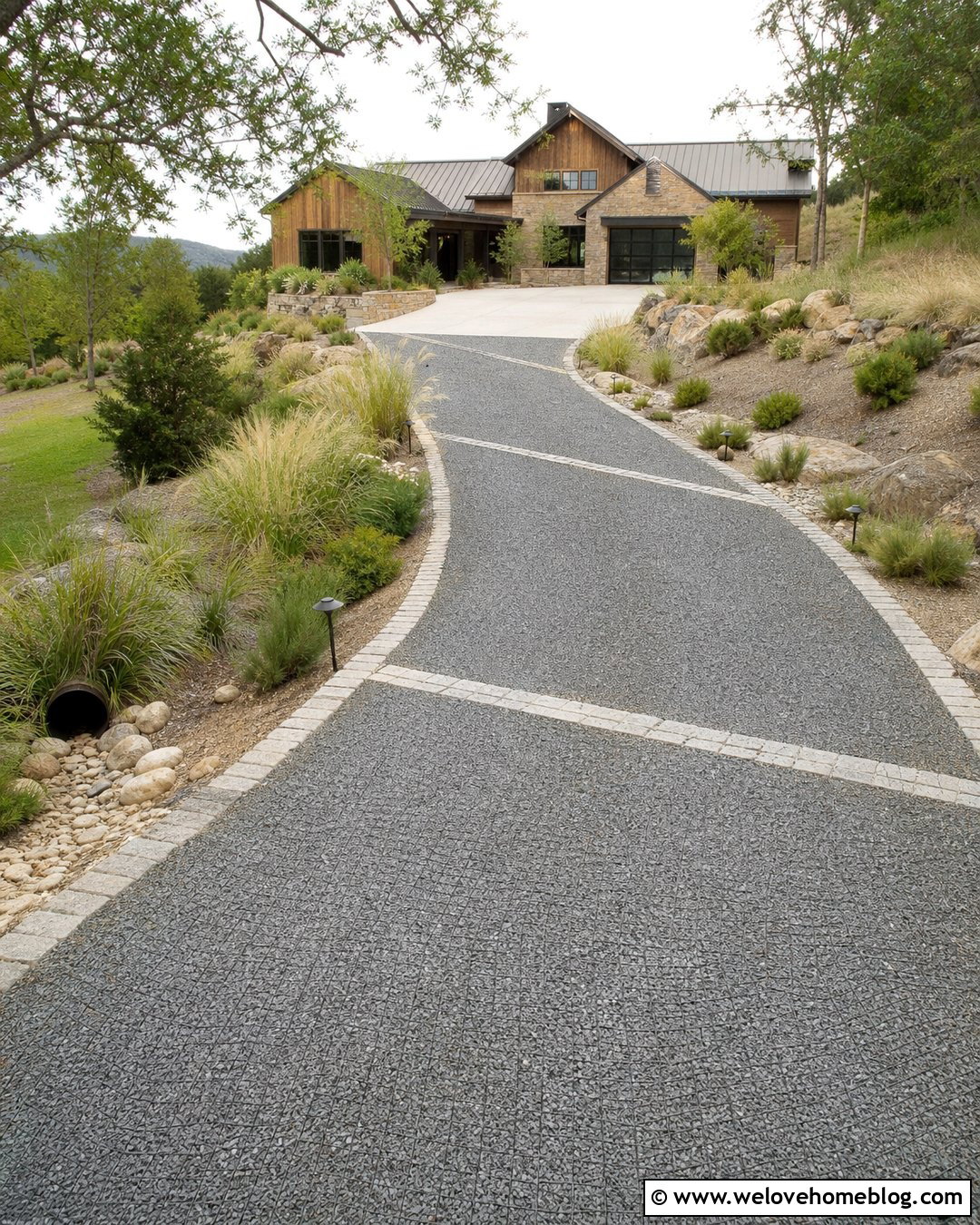
A cellular stabilization grid makes gravel more practical on a steep driveway by holding aggregate within individual cells. Without containment, loose stones can migrate downhill under tire movement and fast runoff. Fill the grid with angular crushed gravel that locks together rather than smooth, rolling pea gravel. Concrete or stone curbs along both sides provide firm boundaries and keep the grid securely covered. A broad curved driveway can follow the hillside toward a rustic farmhouse, with planted swales positioned beside the lower edge. Include cross-drains at planned intervals to move water away before it gains speed. At the top, transition to a level paver parking area for easier turning. Routine maintenance should include replacing displaced gravel, clearing drainage outlets, and repairing any edge where the grid becomes exposed.
10. Crushed Stone Steep Driveway With Concrete Tracks
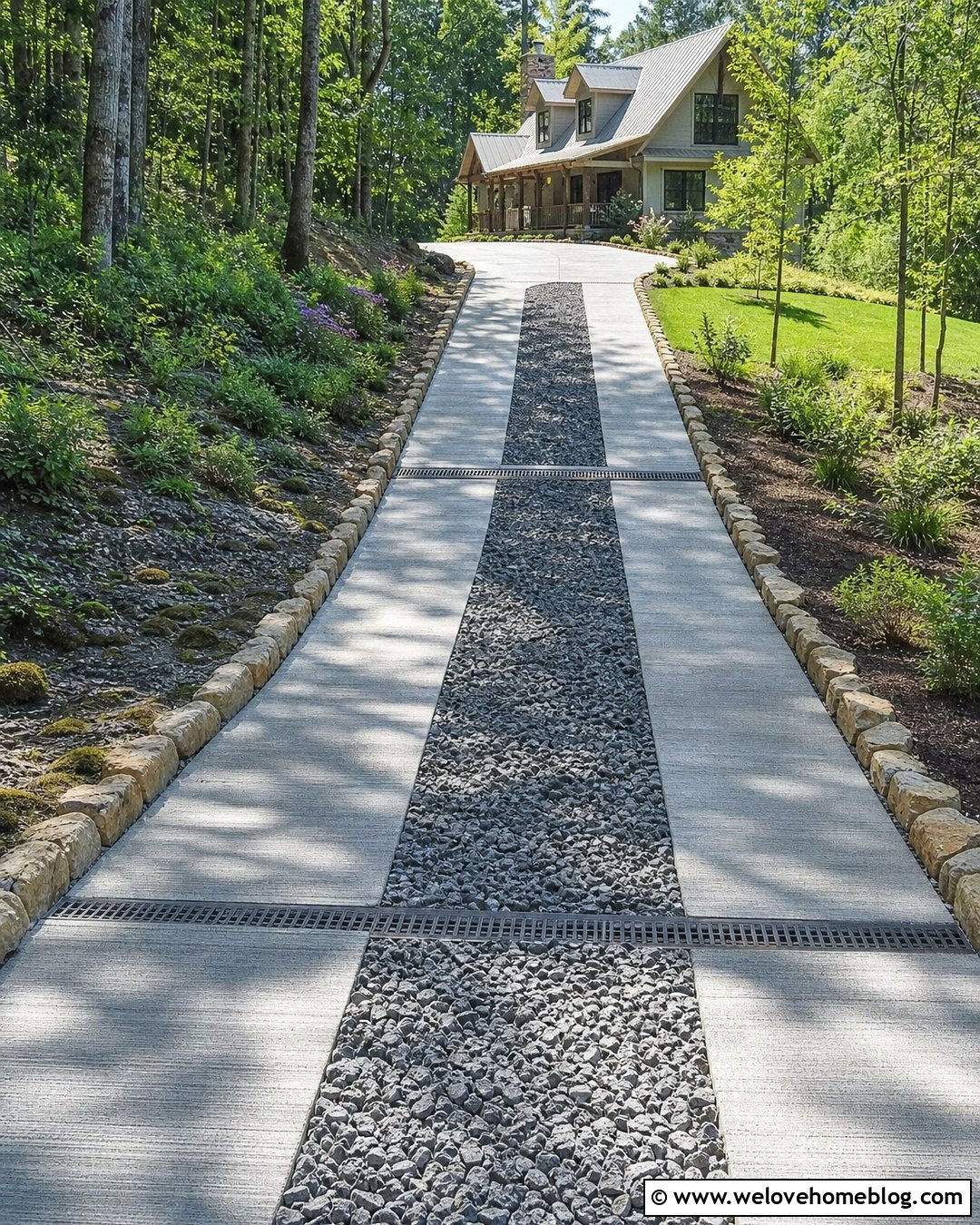
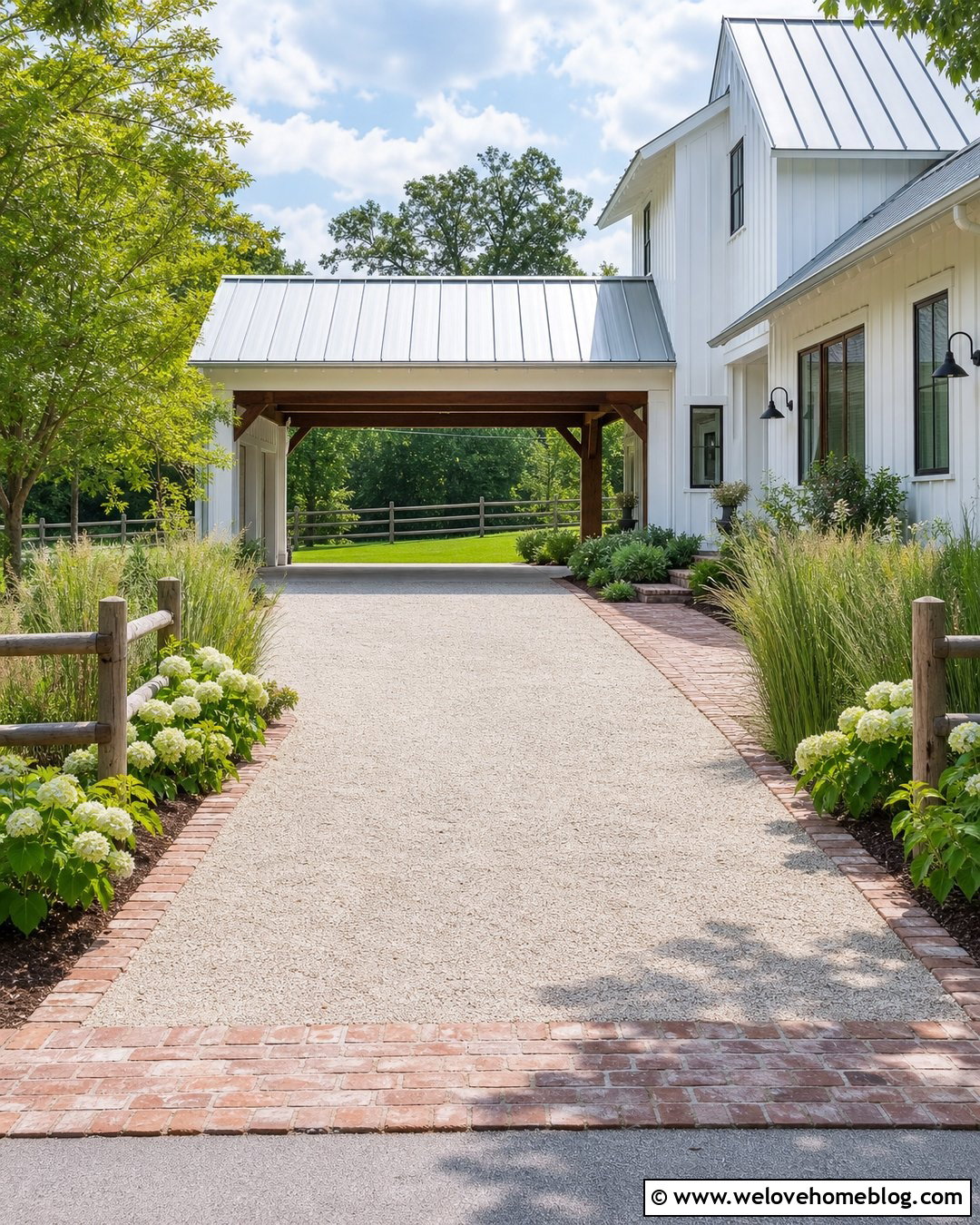
Concrete tire tracks set within compacted crushed stone provide focused traction while preserving a relaxed rural appearance. Two reinforced, broom-finished concrete strips follow the expected wheel path up the driveway. Angular crushed stone fills the center and side areas, allowing the surface to blend naturally into a wooded or country property. Stone edging keeps the aggregate from spreading into nearby planting beds. For reliable drainage, slightly crown or cross-slope the layout according to the site plan and install cross-drains where concentrated runoff needs to leave the driving lane. A wide landing near the house should use full-width concrete or pavers so vehicles can turn safely. This solution works best when the track spacing accommodates regular vehicles and the concrete transitions are shaped to prevent low bumpers from scraping.
11. Resin-Bound Steep Driveway
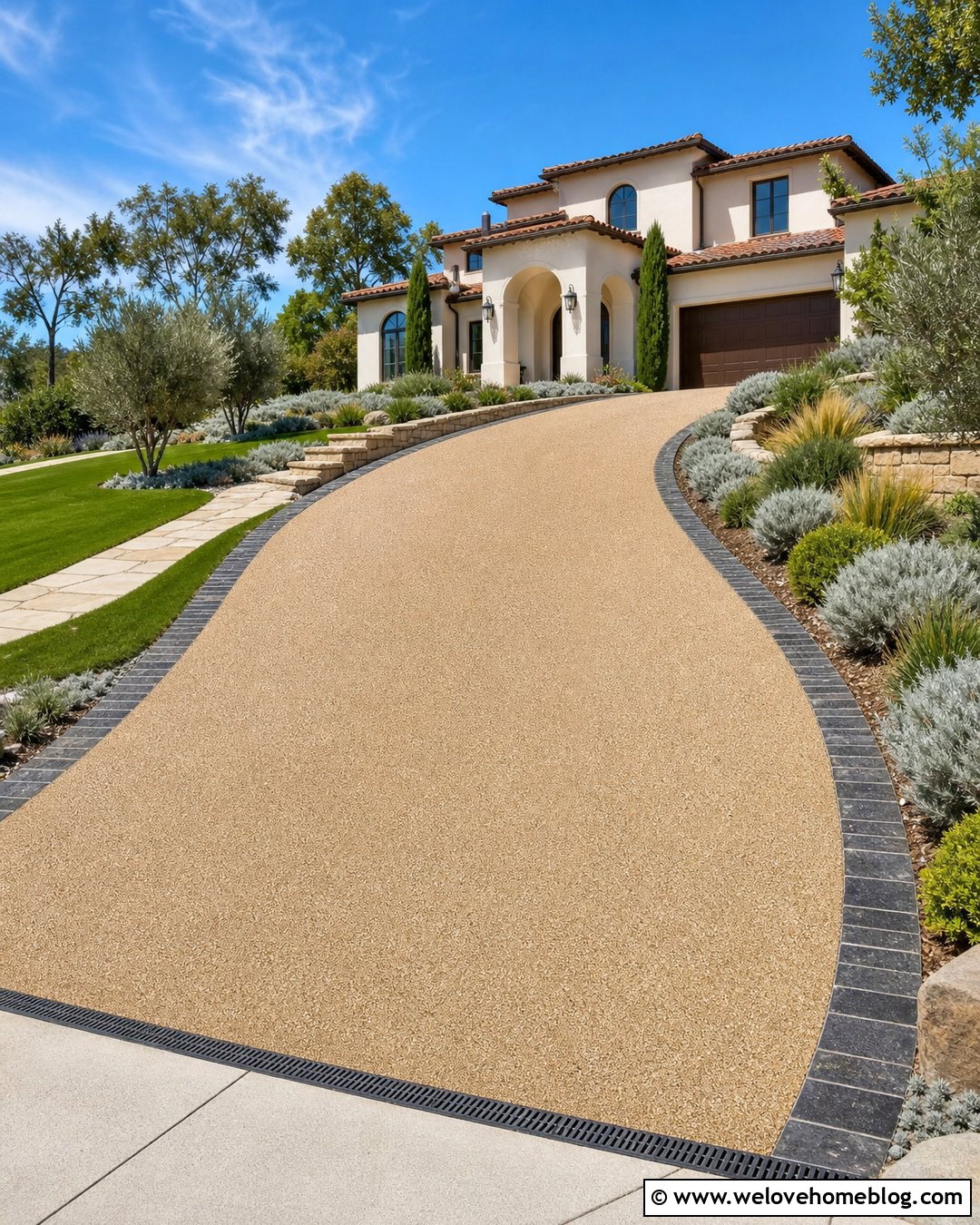
Resin-bound gravel creates a smooth-looking surface with visible stone texture and no loose aggregate rolling downhill. The selected system must be rated for the driveway’s slope, climate, vehicle use, and existing base. A warm beige resin-bound finish can brighten a curved approach to a stucco, Mediterranean, or transitional home. Dark granite setts along the edges add contrast and form durable restraints. Include a linear drain at the garage and additional runoff control where water enters from the uphill landscape. Terraced planting beds filled with lavender-like perennials, compact shrubs, and ornamental grasses can soften the slope without narrowing the driveway. Because installation quality strongly affects durability, the substrate, mixing process, depth, and curing conditions require careful control. Avoid overly smooth finishes that may become slippery when contaminated by leaves or algae.
12. Heated Concrete Steep Driveway
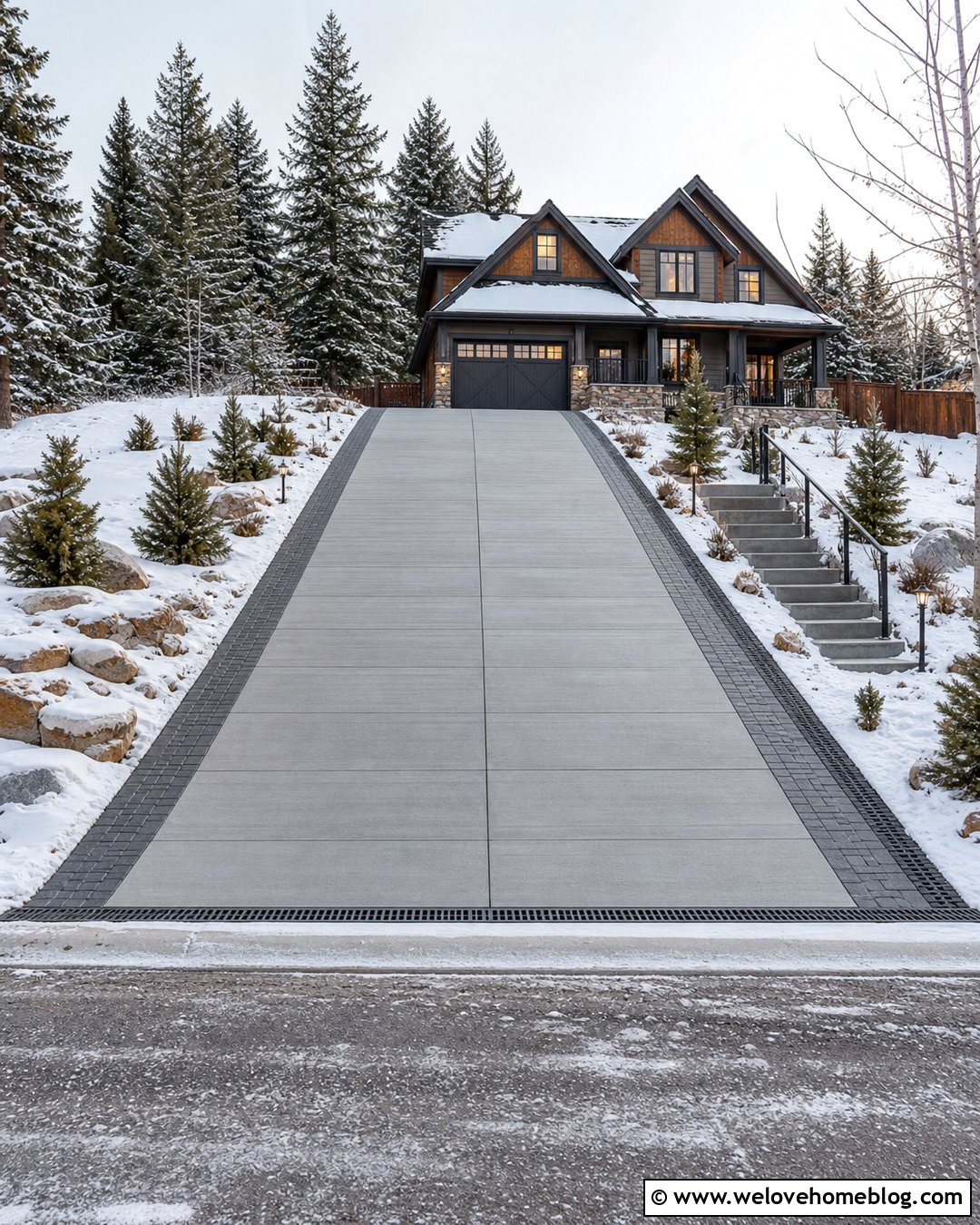
A heated concrete driveway can improve winter access where snow and ice regularly make a steep incline difficult to use. Electric cables or hydronic tubing are installed beneath the pavement to warm selected areas. Heating the full driveway provides the most complete coverage, while targeted heating along tire paths, the garage threshold, and the steepest section can reduce energy use. Choose broom-finished gray concrete for traction, then border it with dark pavers that clearly define the route during light snowfall. A channel drain remains necessary because melted snow must leave the surface instead of refreezing at the bottom. Add evergreen planting beds and a separate stairway with a handrail for pedestrians. The heating system, insulation strategy, controls, electrical capacity, and drainage should be designed together before concrete placement. ()
13. Heated Asphalt Steep Driveway
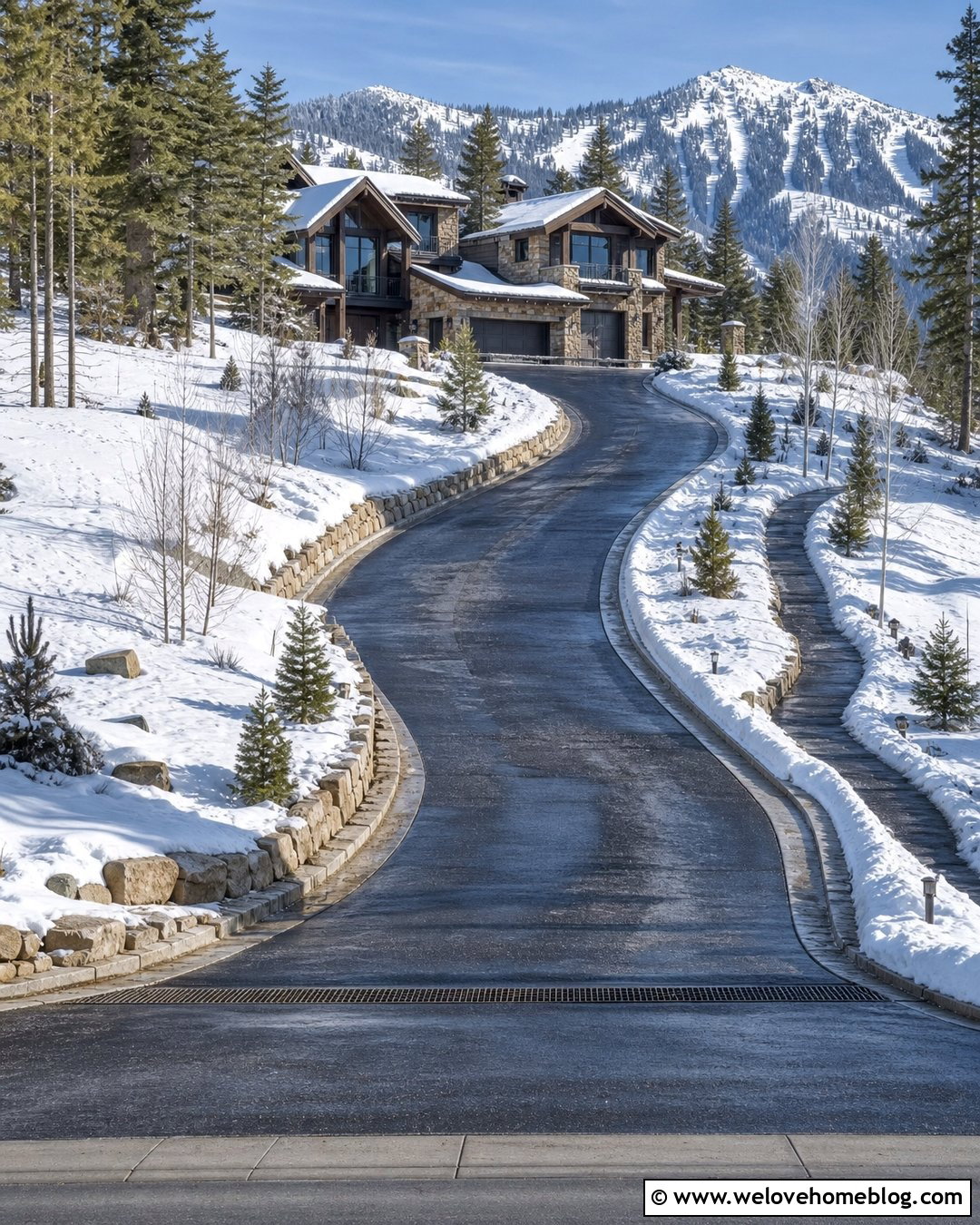
Heated asphalt combines a slightly forgiving, textured driving surface with an embedded snow-melting system. It can suit long sloped driveways in cold climates where repeated plowing is difficult. The most efficient layout may heat tire lanes, the lower entrance, switchback turns, and the final approach to the garage instead of every square foot. Stone curbs frame the black asphalt and protect landscaped edges from plow damage. Install grated drains at low points to collect meltwater before temperatures drop again. A broad top landing gives vehicles a safer place to stop and turn. Use low evergreen shrubs and groundcovers around the driveway so winter snow storage remains available. Professional planning is essential because the paving sequence must protect heating components while producing even asphalt thickness, compaction, and reliable surface drainage.
14. Steep Driveway With Trench Drains
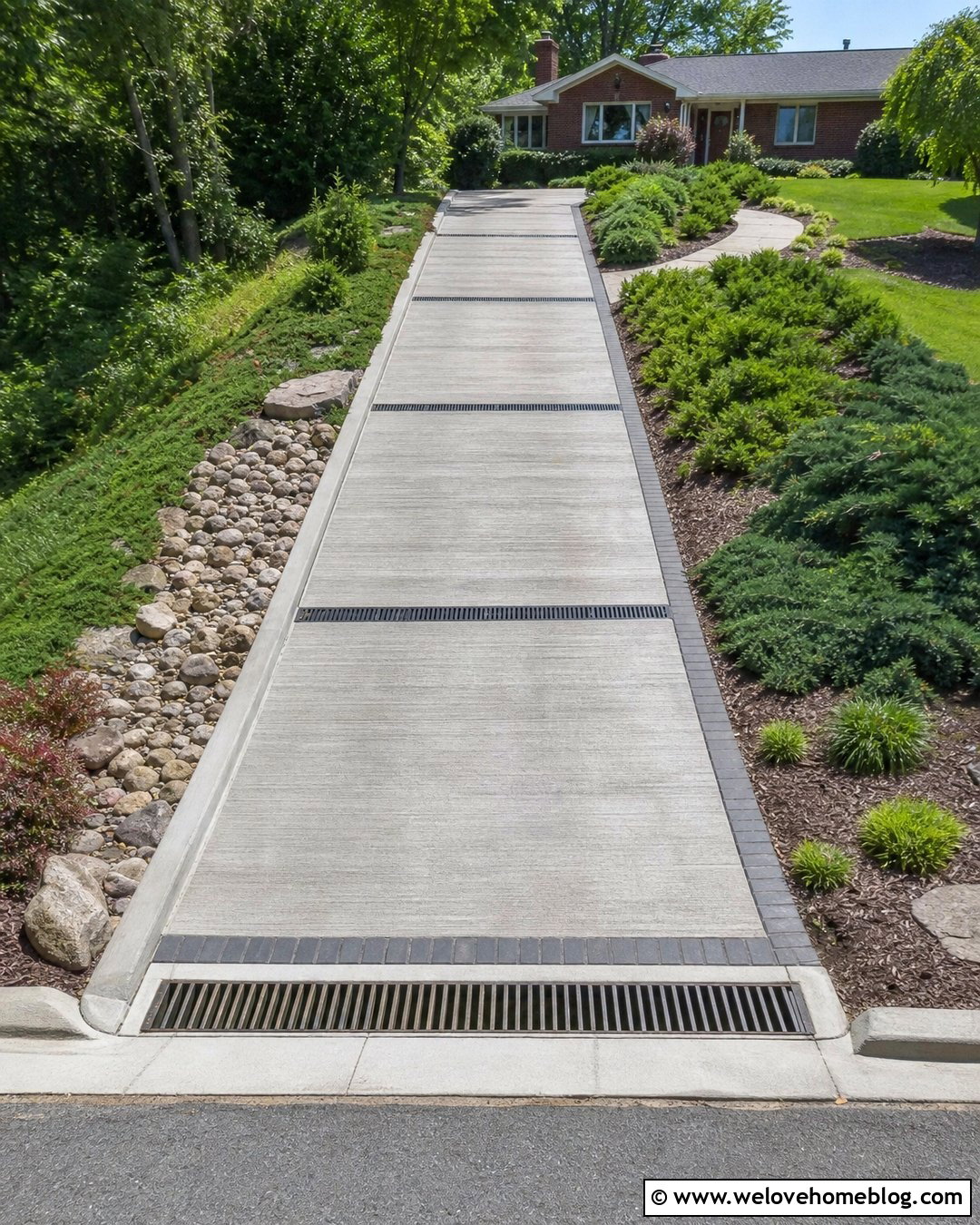
Fast-moving stormwater can damage even a strong driveway if it travels uninterrupted from top to bottom. Multiple trench drains create interception points across a steep concrete or asphalt surface. Install the drains perpendicular to the direction of travel and position them where runoff naturally concentrates. Heavy-duty grates should sit flush with the pavement so tires cross smoothly and snow-removal equipment does not catch an exposed edge. A broom-finished concrete driveway with dark brick borders gives the drainage system an intentional, integrated appearance. Along one side, a stone-lined swale can receive overflow and carry it toward a safe outlet. Add low shrubs and erosion-resistant groundcovers above the swale. The drain size, pipe capacity, cleanouts, and discharge location should be based on the drainage area rather than appearance alone. ()
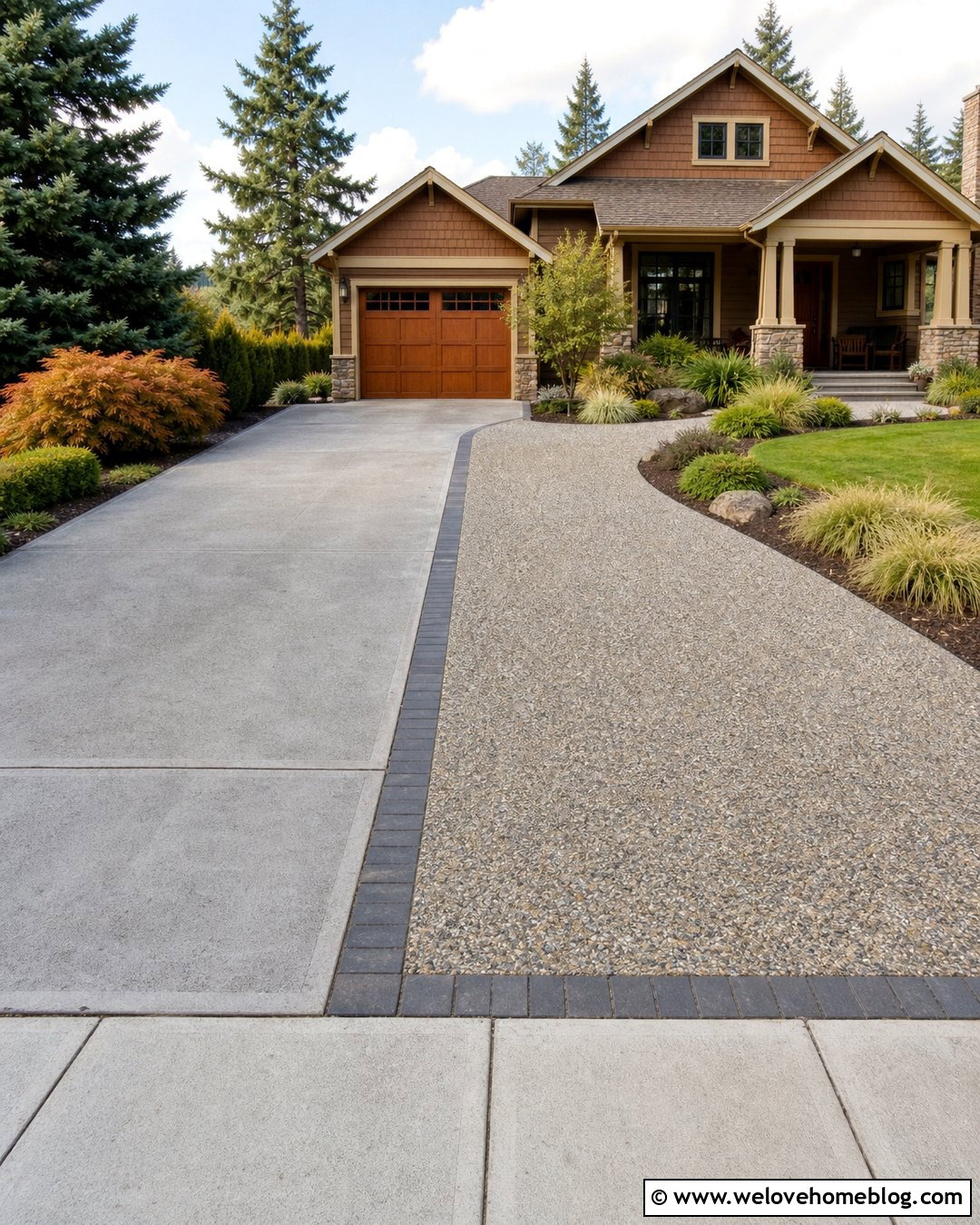
15. Steep Driveway With French Drains
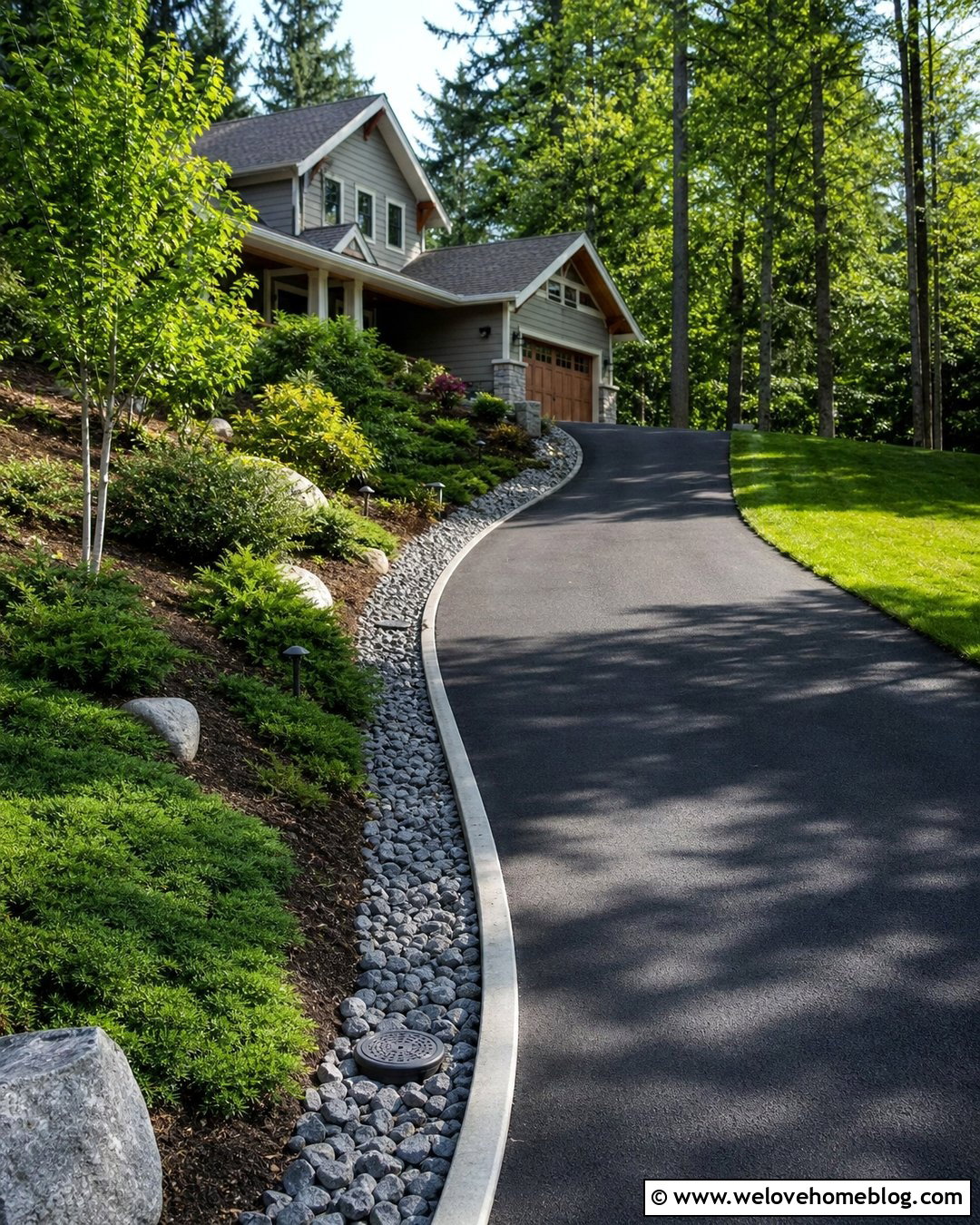
A French drain addresses water moving through saturated soil beside or beneath a steep driveway. In a complete design, a curved asphalt surface follows the hillside while gravel-filled drainage trenches run along the uphill edge. Perforated pipe inside the trench collects subsurface water and carries it toward an appropriate outlet. A low concrete curb separates the drainage stone from the driving surface and prevents soil from washing onto the asphalt. On the downhill side, a planted embankment with deep-rooted groundcovers helps hold the soil. French drains do not replace surface drains when large amounts of water flow across the pavement, so both systems may be necessary. Provide accessible cleanouts and use filter fabric suited to the soil. The finished trench can appear as a neat decorative gravel ribbon rather than an unfinished utility feature.
16. Steep Driveway With Planted Swales
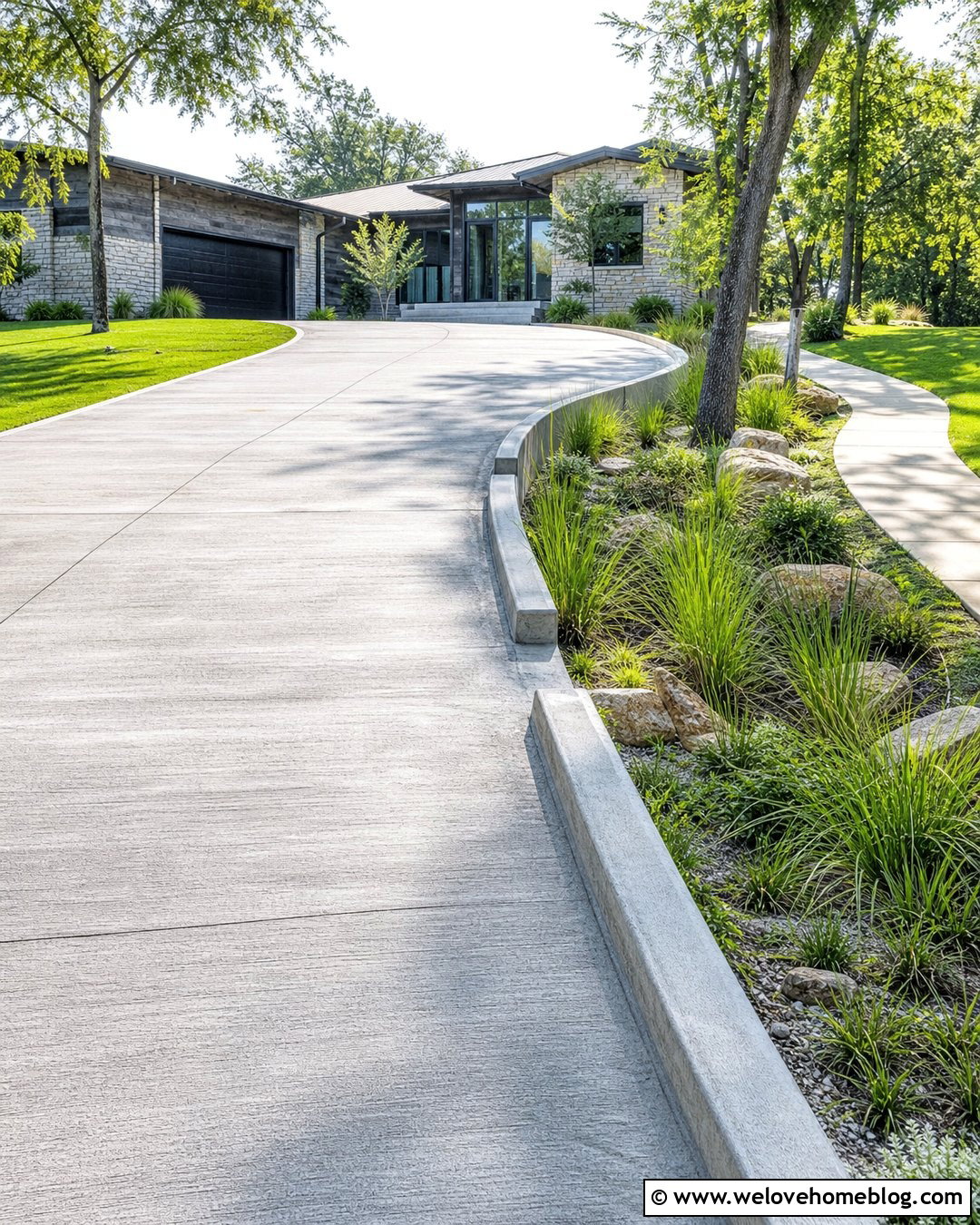
A planted swale can slow, guide, and filter runoff beside a sloped driveway while adding natural curb appeal. Shape a shallow channel along the downhill side of a brushed concrete or stabilized gravel driveway. Line the swale with erosion-resistant grasses, sedges, groundcovers, and occasional stones placed to reduce water velocity. A raised curb with planned openings allows runoff to enter at controlled points rather than spilling over the entire edge. On a curved driveway, the swale can follow the outside arc and visually connect the road entrance to the house. Add a separate walkway on the uphill side for safer pedestrian access. The swale must lead to a lawful discharge or infiltration area and should not direct water toward neighboring property. Choose plants that tolerate both temporary moisture and dry periods.
17. Steep Driveway With Catch Basins
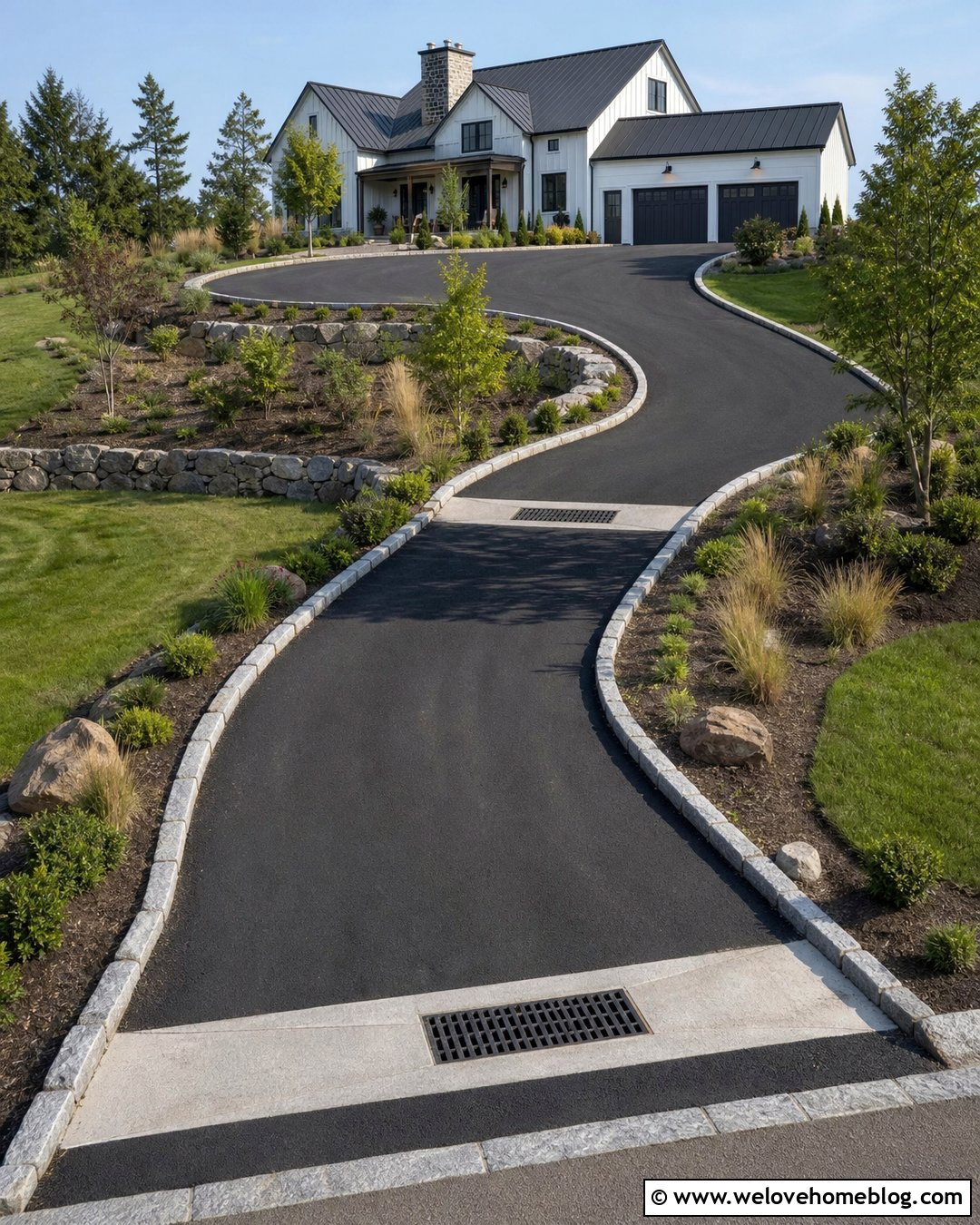
Catch basins are useful where water gathers at distinct low points rather than flowing evenly along the surface. A dark asphalt driveway can slope toward grated basins positioned near a switchback landing, garage entrance, and lower road apron. Each basin collects runoff and traps heavier sediment before water enters underground piping. Concrete collars around the grates provide a stable transition and make maintenance areas easy to identify. Use granite curbs along the downhill side to contain the asphalt and guide water toward the inlets. Terraced beds with compact shrubs stabilize the adjacent bank without hiding the basins. The grates should remain clear of leaves, gravel, and mulch. A practical design also includes accessible sumps or cleanouts, since sediment accumulation can eventually reduce capacity and cause water to bypass the system.
18. Steep Driveway With Cross Drains
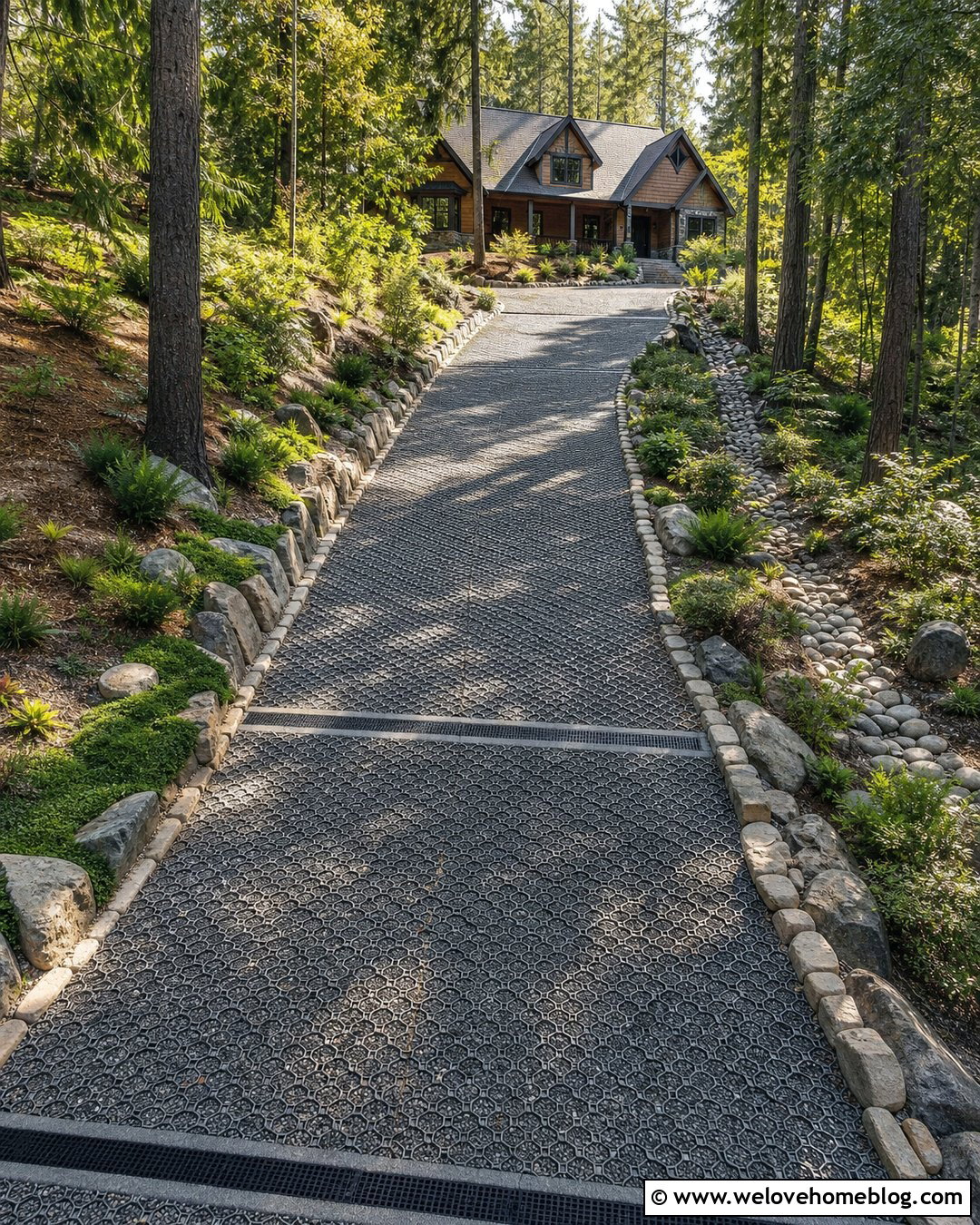
Cross drains interrupt runoff before it can carve channels down a long driveway. This approach works especially well with stabilized gravel, crushed stone, or mountain access drives. Install properly designed drains across the route at selected intervals, giving each one a slight diagonal orientation that guides water toward a ditch or protected outlet. The surface should transition smoothly over each drain so vehicles do not bounce or scrape. Angular gray gravel held in a stabilization grid creates a firm driving lane, while timber or stone edging defines both sides. A rock-lined ditch along the downhill edge receives collected water and resists erosion. Native shrubs and groundcovers help blend the system into a wooded site. Drain spacing and outlet protection should reflect the driveway length, grade, soil, and expected storm intensity.
19. Regraded Steep Driveway
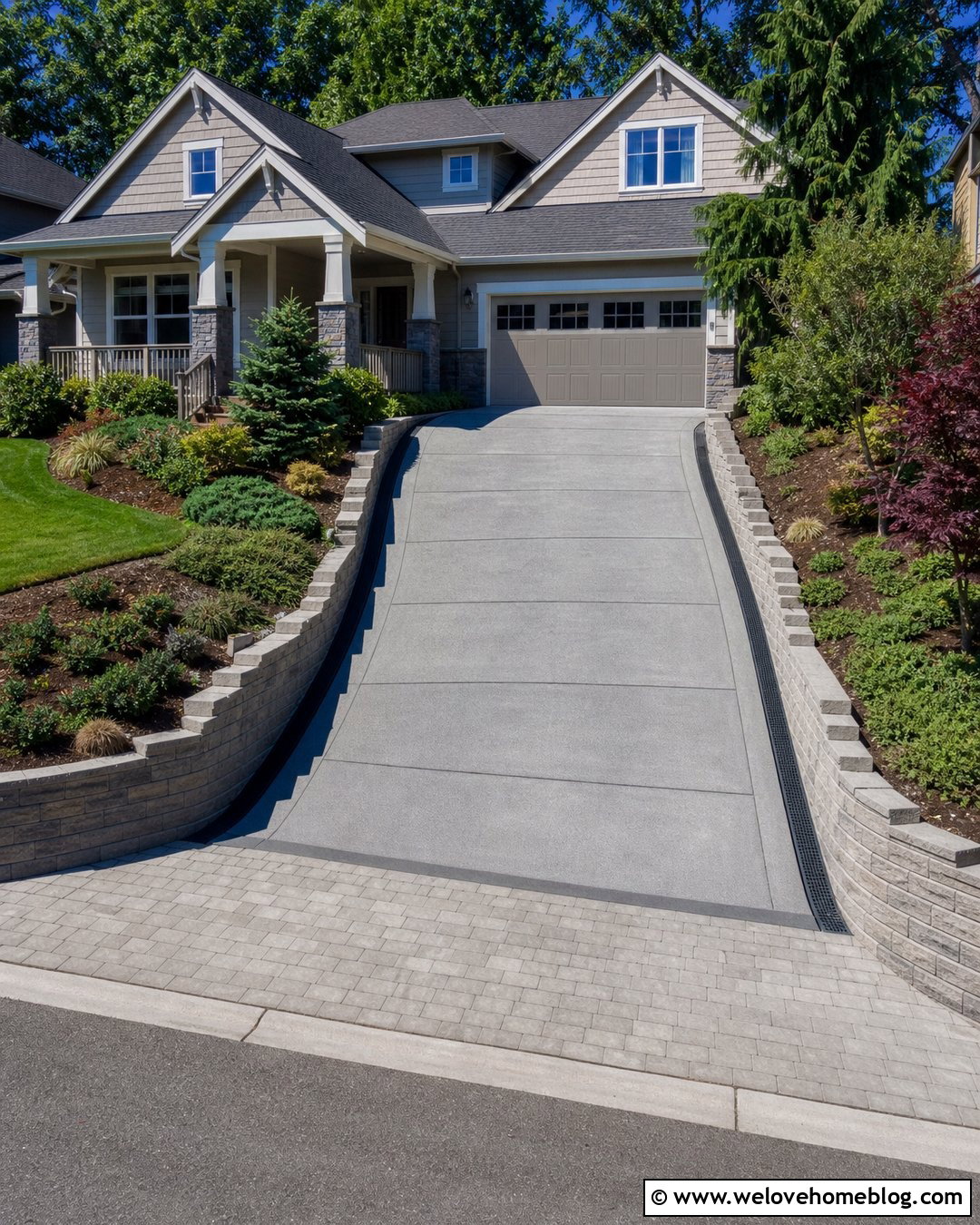
Sometimes the most effective solution is to rebuild the driveway profile rather than add surface treatments to an excessive slope. Regrading can lengthen the approach, lower abrupt high points, fill depressions, and create smoother vertical transitions. A newly graded driveway might use broom-finished concrete on the main incline and a textured paver apron at the street. Low retaining walls can support cut and fill areas, while channel drains manage water at each transition. The final approach to the garage should become flatter so vehicles can stop without scraping or struggling for traction. Plant disturbed banks with erosion-control groundcovers and shrubs after construction. Regrading affects utilities, drainage, soil stability, sidewalks, and street access, so surveys, engineered plans, permits, and utility marking may be required before excavation begins.
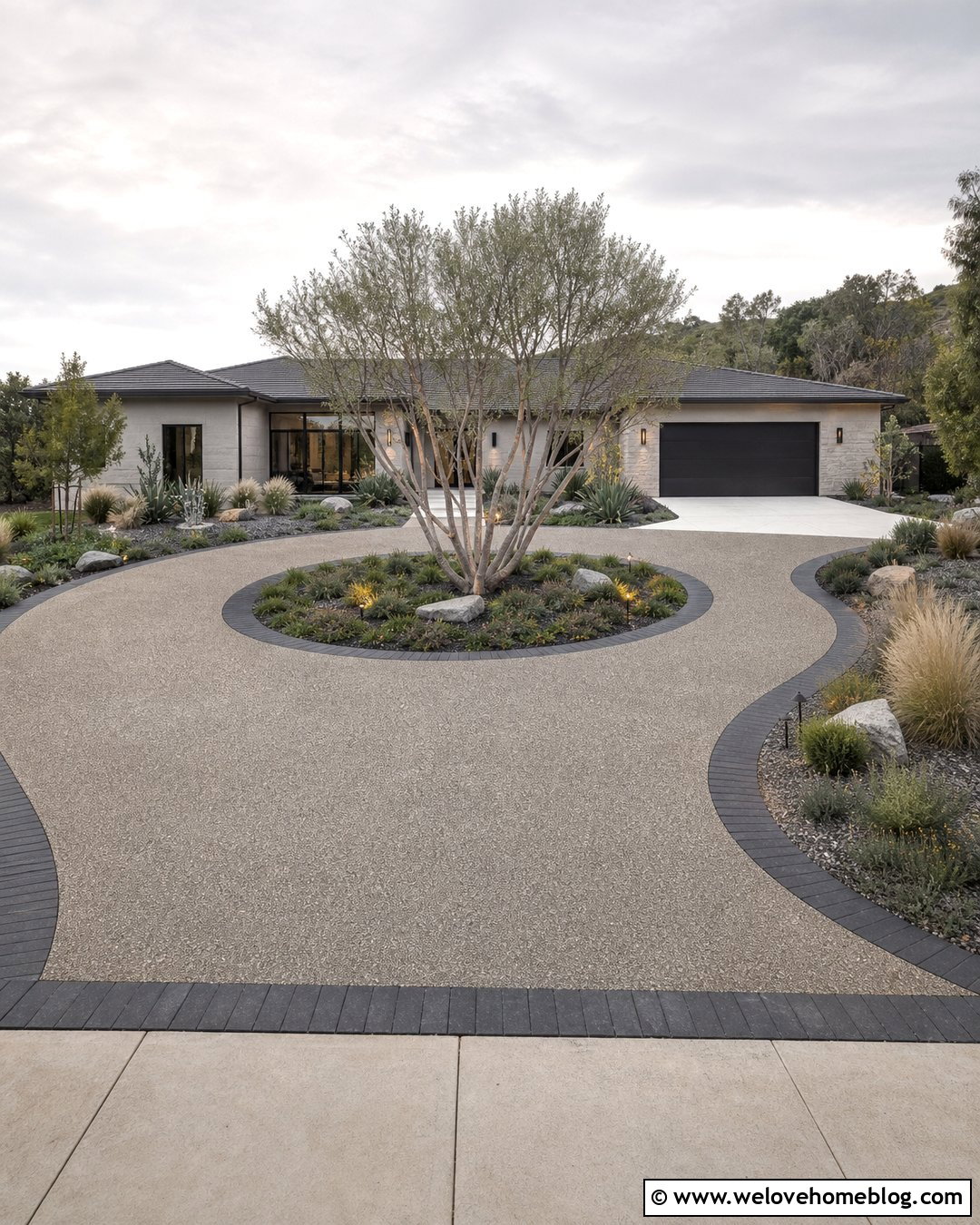
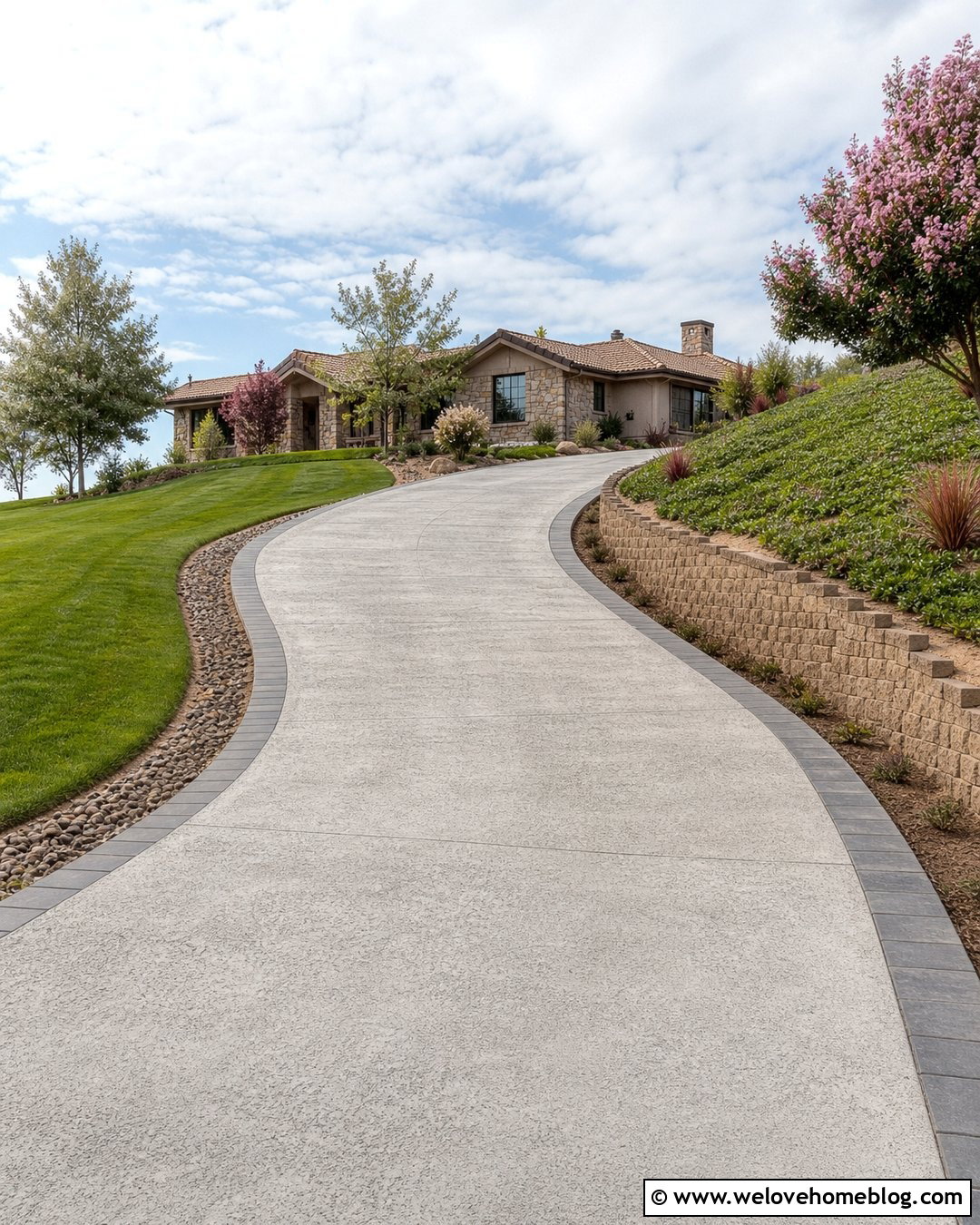
20. Steep Driveway With Level Landings
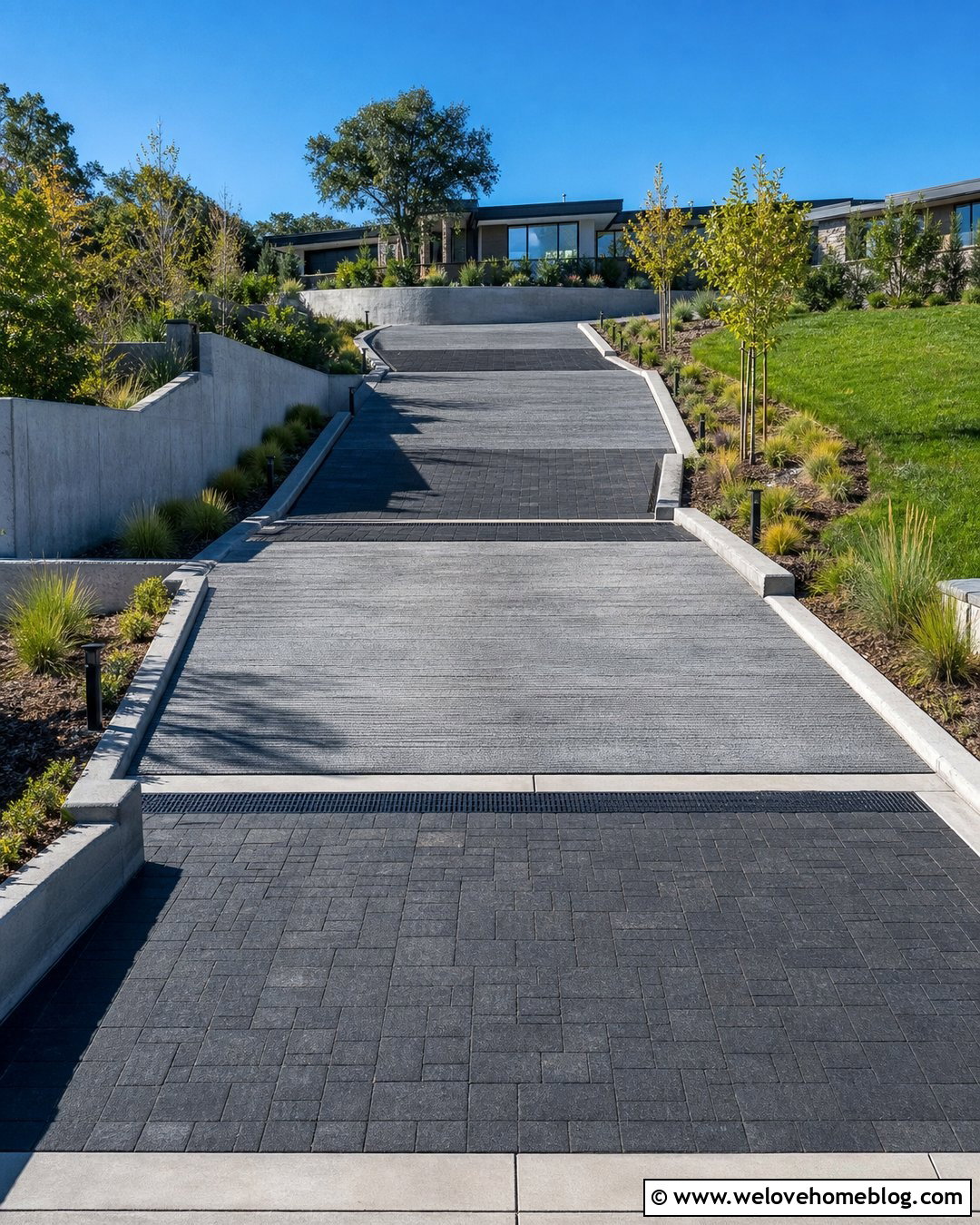
Breaking one long incline into shorter sloped sections with flatter landings can make a driveway easier to navigate. A landing near the midpoint offers a visual and functional pause, while a larger pad near the garage provides turning and parking space. Use textured concrete on the inclines and contrasting concrete pavers on the level areas so drivers can recognize each transition. Reinforced retaining walls support the surrounding terraces and create room for low planting beds. Install catch basins on the landings because these areas may collect runoff from the sections above. Edge lighting can mark changes in direction without creating glare. The transitions between grades should be smooth enough for low-clearance vehicles. On complex terrain, the dimensions and structure of each landing need professional engineering to support vehicles and control water.
21. Steep Driveway With Smooth Transition Aprons
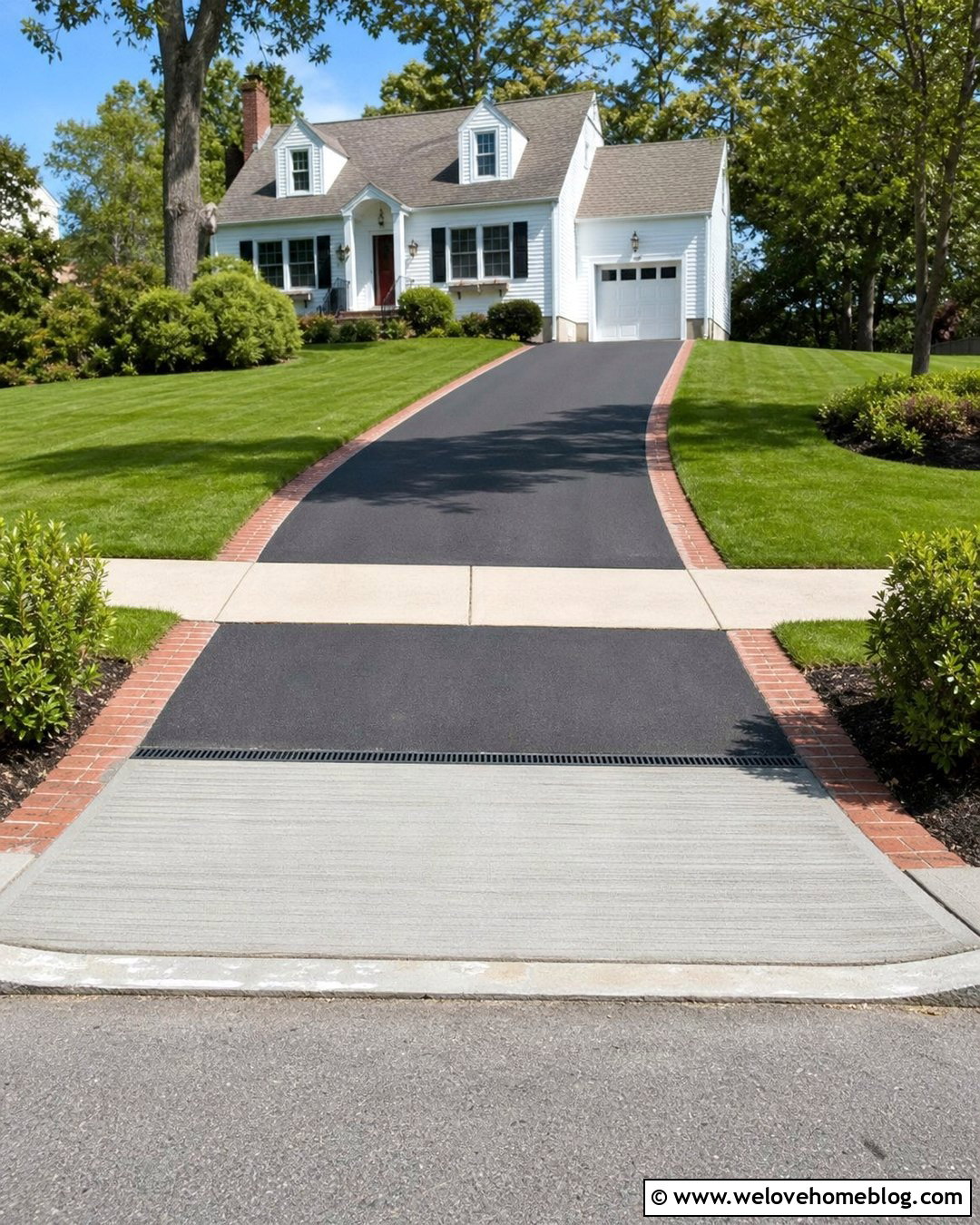
An abrupt angle at the street or garage can cause bumpers, exhaust components, or trailer hitches to scrape. A carefully shaped transition apron softens the change between a steep driveway and a flatter surface. Use reinforced, broom-finished concrete at the lower approach, even if the main driveway is asphalt, because the apron receives concentrated turning and braking forces. A broad vertical curve is usually more effective than a small wedge placed over the existing pavement. Add a narrow channel drain where the apron meets the driveway so water does not collect in the transition. Brick borders can make the mixed materials look intentional. Keep shrubs low around the entrance for clear visibility. The apron must coordinate with the public curb, sidewalk, drainage route, and local right-of-way requirements before construction begins.
22. Steep Driveway With Stone Retaining Walls
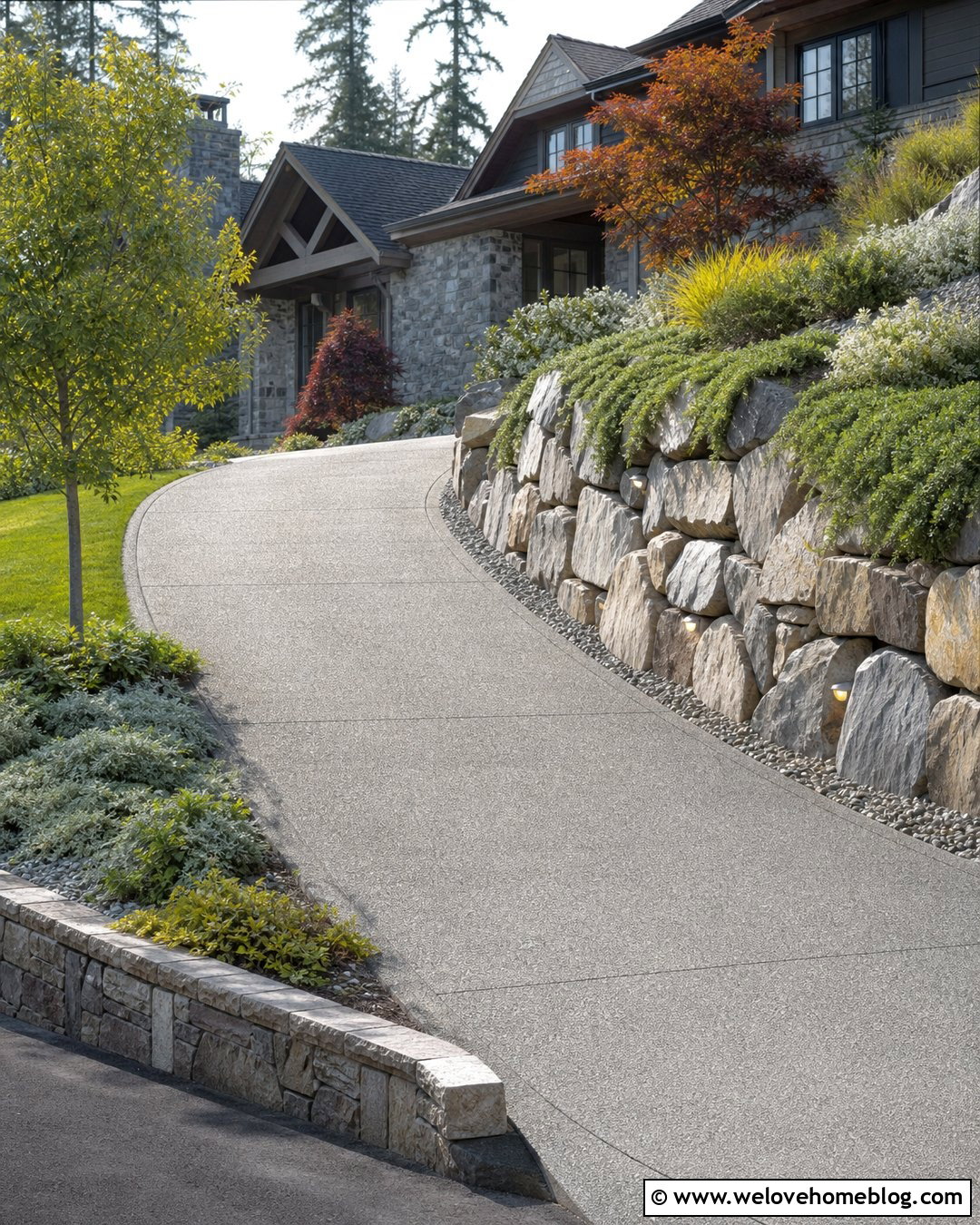
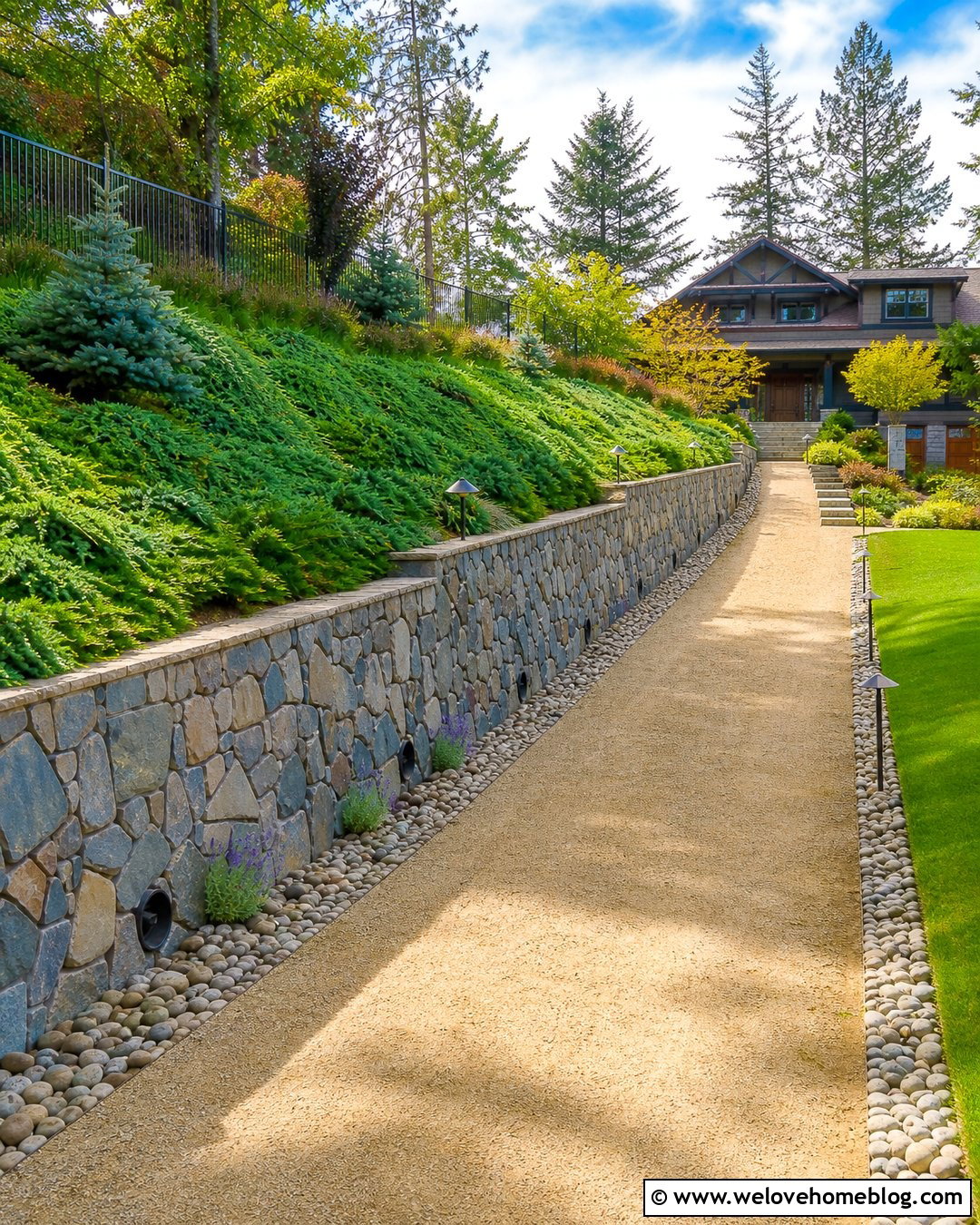
A natural stone retaining wall can stabilize a cut hillside and give a steep driveway a substantial, established appearance. Pair irregular fieldstone walls with an exposed aggregate concrete surface and a gently curved layout. The wall should sit on the uphill side, holding back soil while leaving enough clearance for doors, mirrors, and snow storage. Behind it, drainage stone and a perforated pipe relieve water pressure that could otherwise damage the structure. () A matching low curb along the downhill edge defines the pavement without creating a visually narrow corridor. Plant trailing groundcovers above the wall and place small ornamental trees farther back. Integrated step lights can improve visibility, but fixtures should face downward. Wall height, foundation design, soil loads, and vehicle surcharge may require an engineer and local permits.
23. Steep Driveway With Tiered Retaining Walls
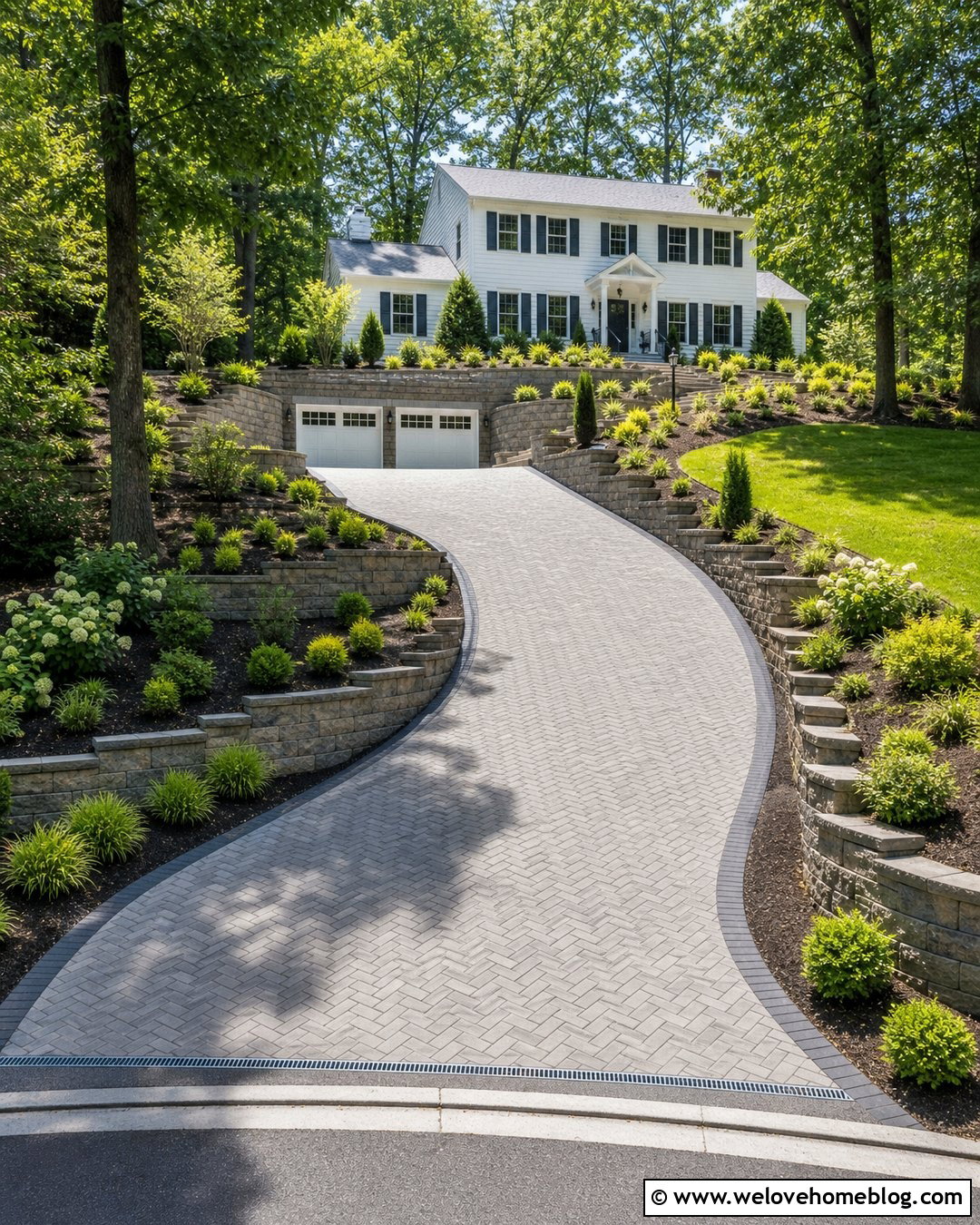
Tiered retaining walls divide a tall, imposing bank into smaller terraces. This layout works particularly well beside a long paver or concrete driveway that climbs toward an elevated house. Use two or three segmental block walls with planted spaces between them rather than one uninterrupted vertical face. The terraces can hold compact shrubs, ornamental grasses, and spreading groundcovers that reduce exposed soil. A herringbone concrete paver driveway with sturdy edge restraints adds a refined surface between the landscaped slopes. Include drainage aggregate and pipe behind each wall, and route the outlets away from the driveway base. Wall spacing cannot be chosen only for appearance because closely placed tiers can affect structural loading. A broad top parking pad and a channel drain before the garage complete the design while making the steep approach more functional.
24. Steep Driveway With Boulder Retaining Walls
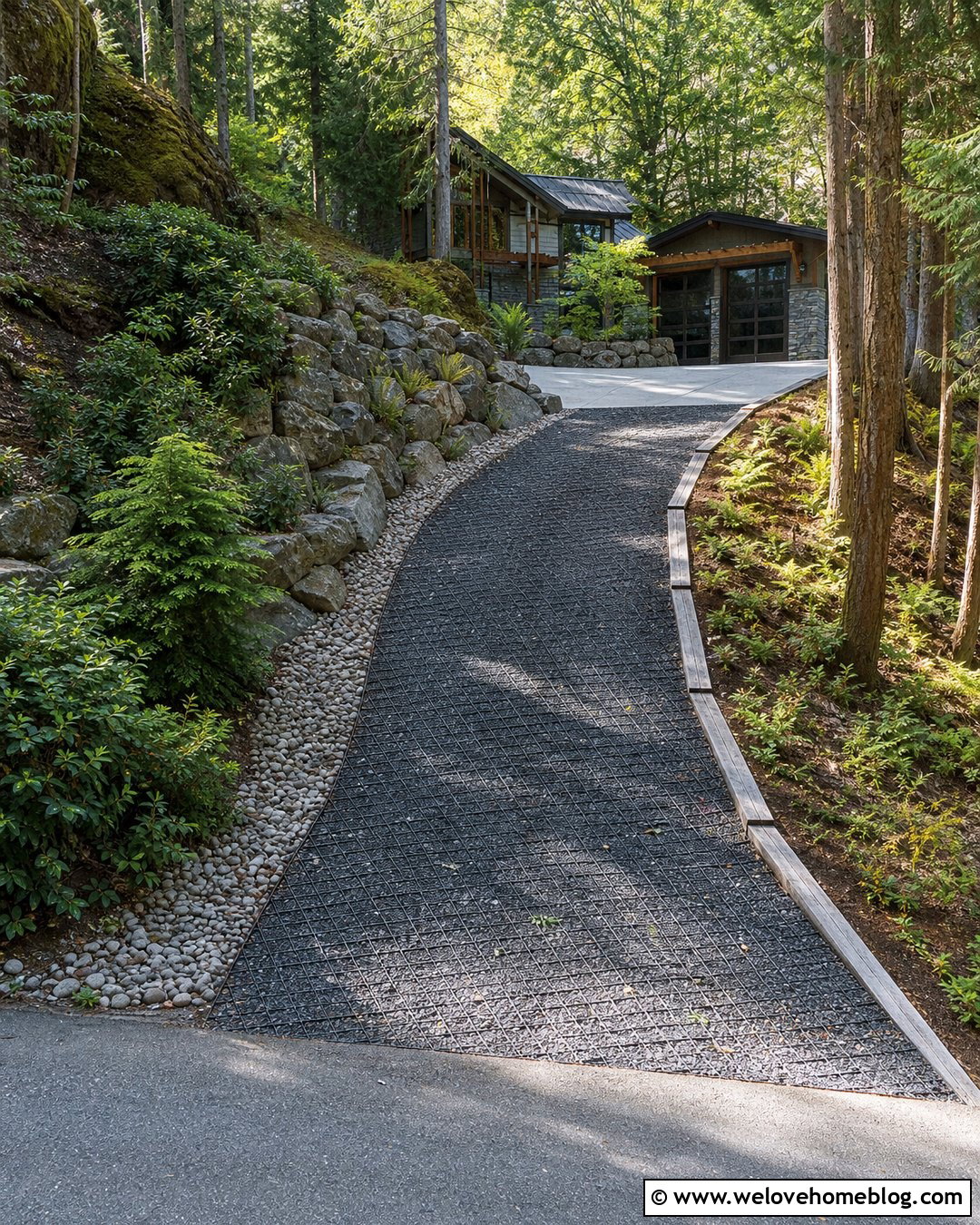
Large boulders create a rugged retaining edge that fits wooded, mountain, and rustic properties. A stabilized crushed-gravel driveway can curve between the natural rock wall and a planted downhill slope. Select substantial stones that are properly embedded and arranged for stability rather than stacking small decorative rocks beside the driving lane. The spaces between boulders can hold low groundcovers, but plants should not conceal drainage outlets or narrow the usable width. A gravel-filled French drain behind the wall helps collect hillside water before it reaches the driveway. On the outer edge, a timber curb or row of set stones contains the aggregate. Add a level asphalt or concrete pad near the house for easier parking. Boulder placement, bank excavation, and soil stability should be evaluated by experienced professionals on challenging slopes.
25. Steep Driveway With Gabion Walls
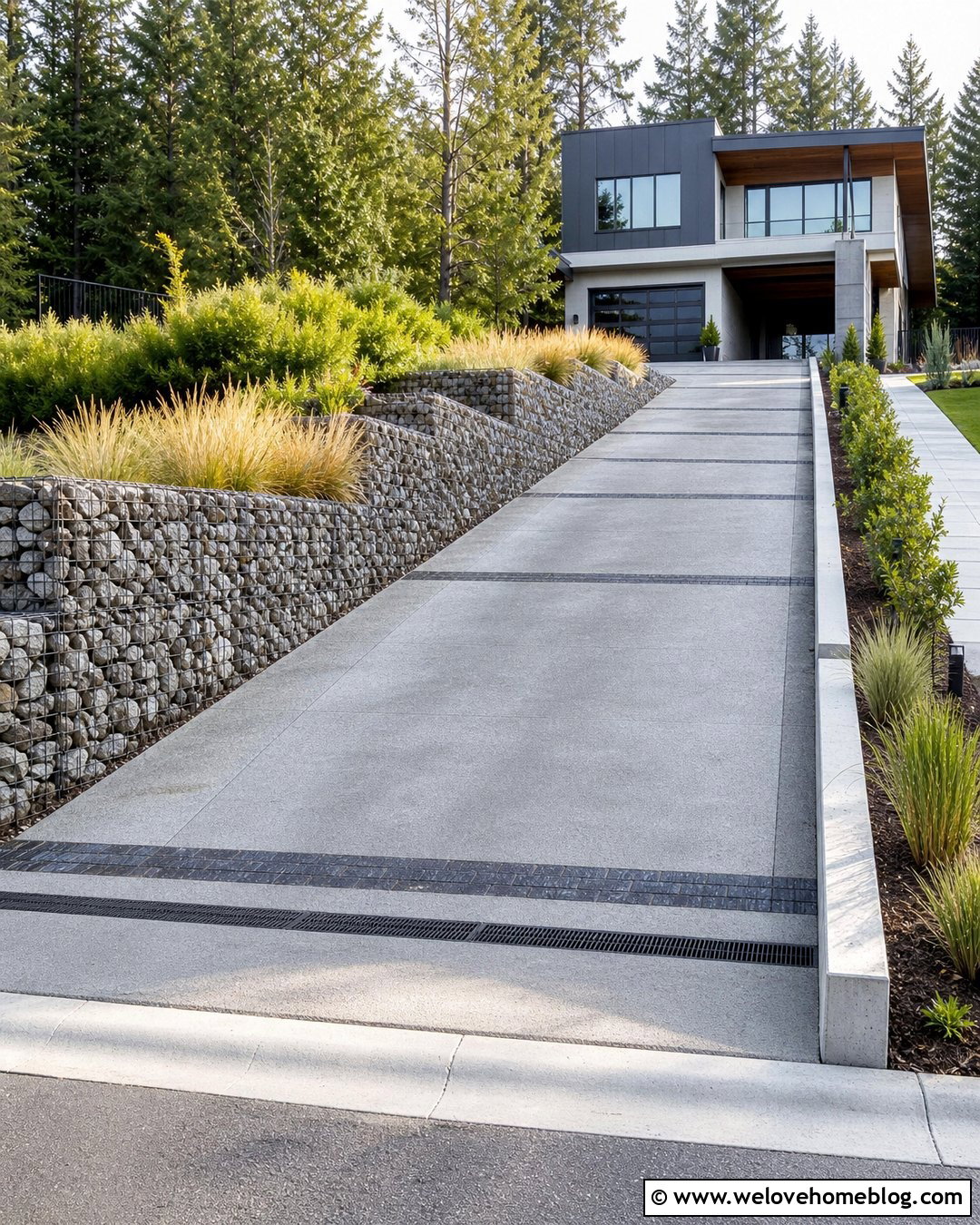
Gabion walls use wire baskets filled with durable stone to retain soil and create a contemporary, highly textured border. They can complement a gray poured-concrete driveway leading to a modern or industrial-inspired home. Position the gabions along the uphill cut, leaving safe vehicle clearance and a narrow planted strip at the top. A brushed concrete surface provides traction, while dark linear paver bands visually break up the long incline. Include drainage behind and beneath the baskets according to the engineered wall design. On the downhill side, a raised concrete curb directs runoff toward catch basins instead of allowing water to spill over the bank. Plant ornamental grasses and low evergreen shrubs around the wall to soften the metal framework. Quality stone placement gives the baskets a cleaner, more deliberate finished appearance.
26. Steep Driveway With Raised Curbs
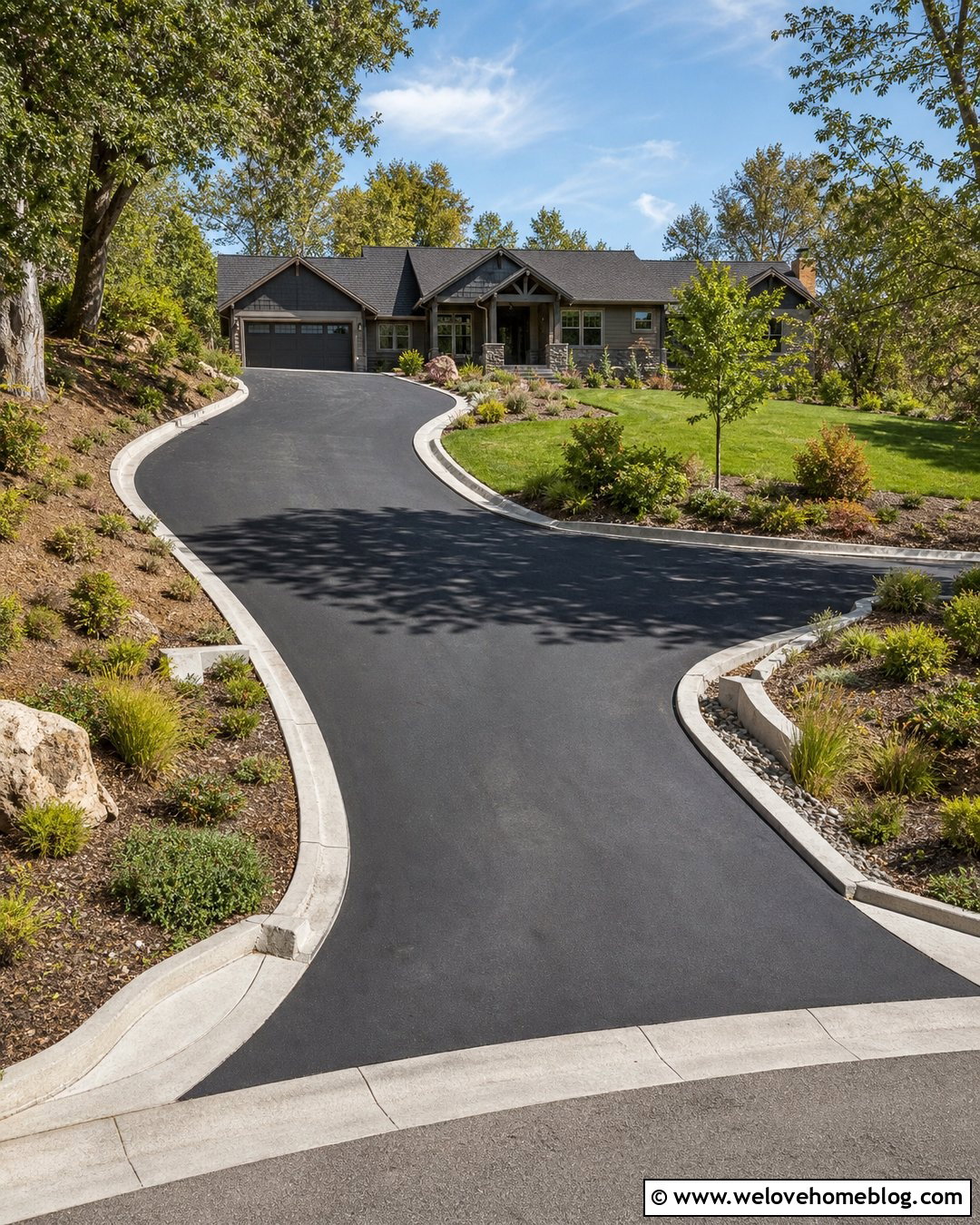
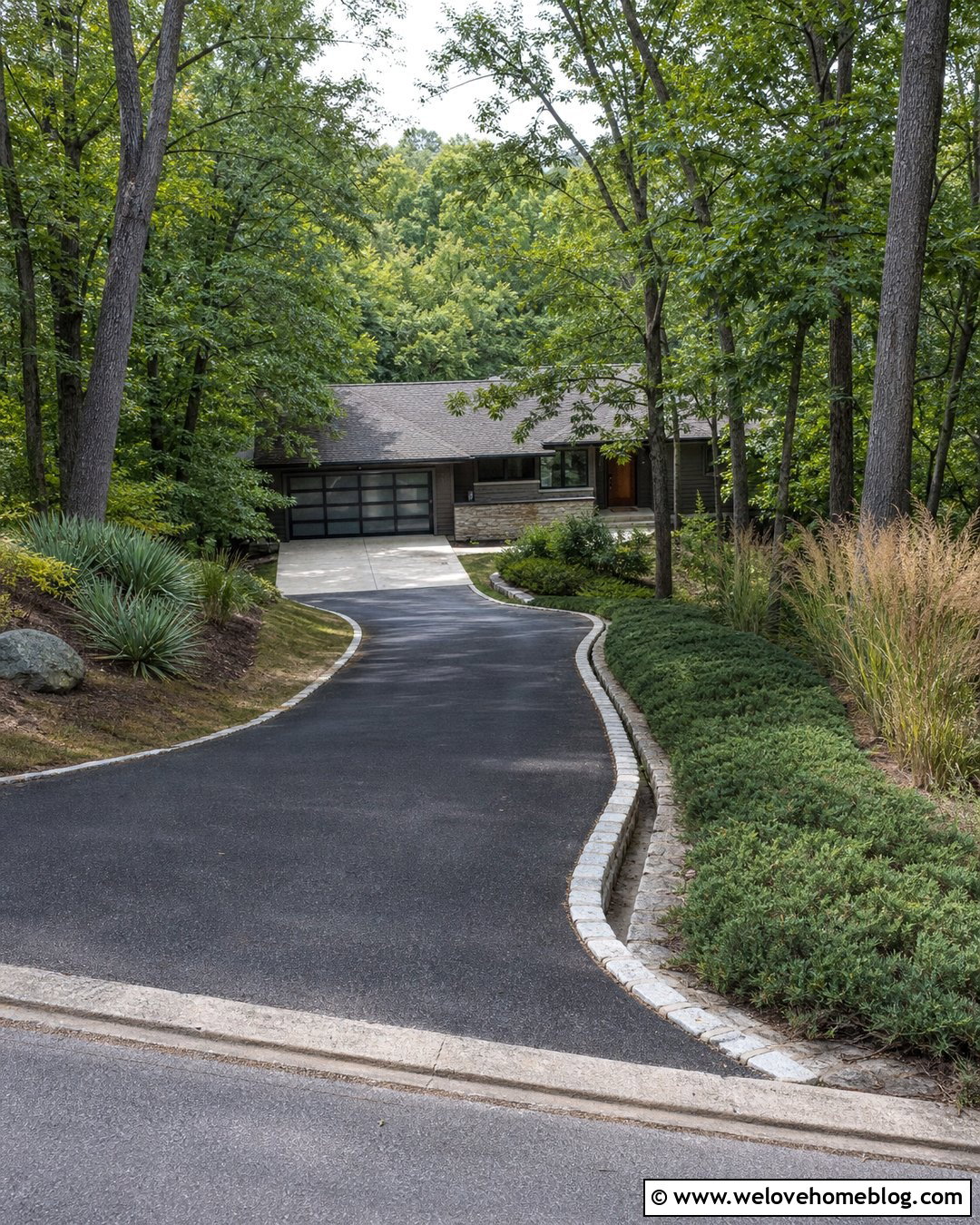
Raised curbs help define a steep driveway, contain pavement edges, and guide runoff toward drains. A black asphalt surface framed by pale concrete curbs creates strong contrast that remains visible in rain or light snow. The curbs can follow a sweeping curve toward a ranch or craftsman home, with controlled openings that release water into planted swales or catch basins. Avoid creating an unplanned trough that sends all runoff toward the garage. Along the uphill side, place the curb in front of a shallow planting bed filled with low shrubs and erosion-resistant groundcovers. The downhill curb should be structurally supported so soil movement does not push it away from the pavement. At the street and parking areas, taper the curb carefully to provide smooth entry, pedestrian movement, and space for snow-clearing equipment.
27. Steep Driveway With Textured Traction Bands
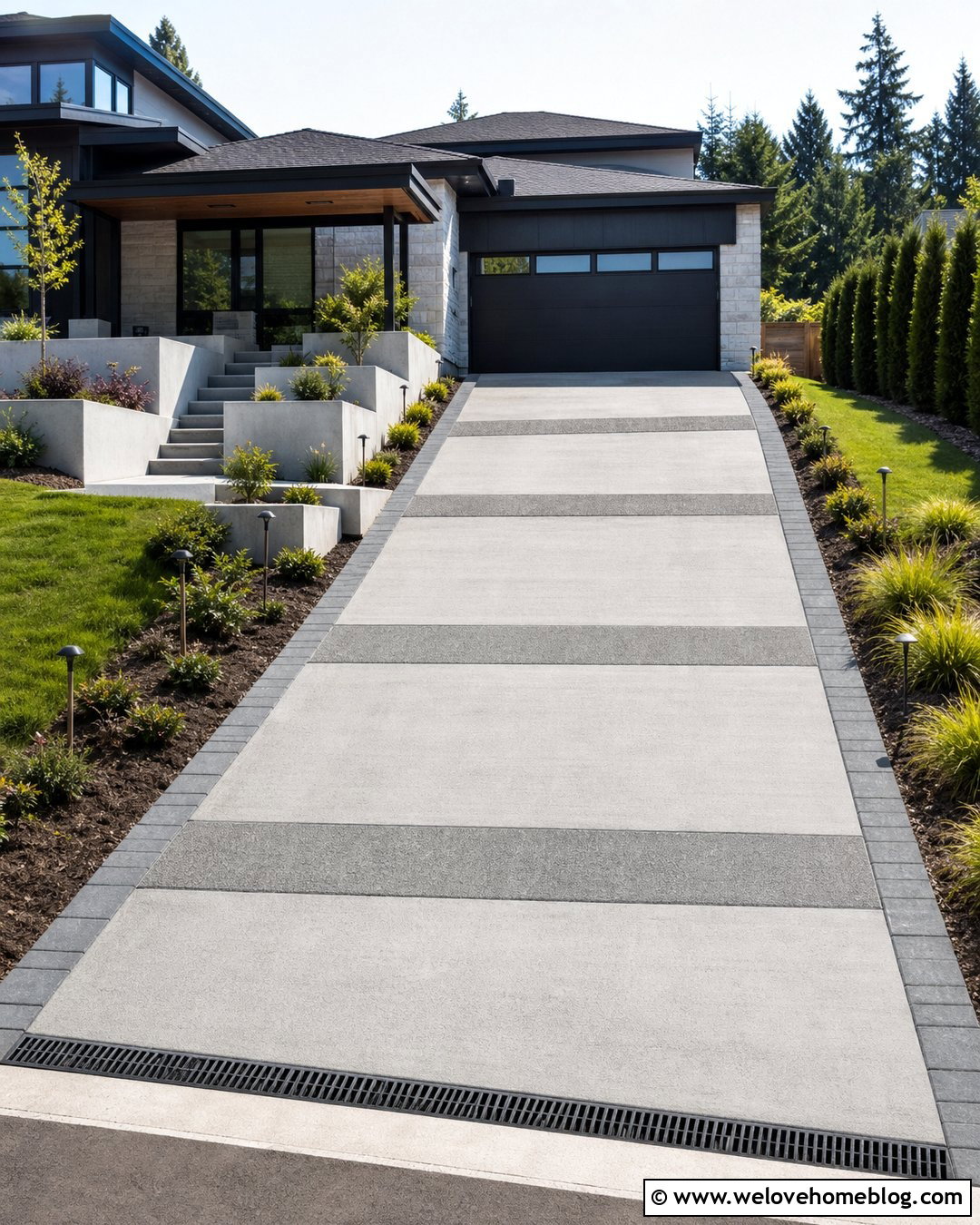
Textured traction bands can strengthen tire grip on the most demanding portions of a concrete driveway. Instead of treating the whole surface identically, install rough broom-finished or ribbed concrete bands across the wheel paths at regular intervals. Keep the bands flush with the surrounding concrete so they do not act like harsh speed bumps. A straight incline can be softened visually with charcoal paver borders and tiered planting beds on both sides. Add a trench drain above the first band and another near the garage to reduce water crossing the textured areas. Low pathway lights make the edges easier to recognize after dark. This treatment should be integrated into a properly reinforced slab rather than attached as thin strips that may break away. The texture also needs to remain practical for walking, shoveling, and routine cleaning.
28. Steep Driveway With Concrete Rumble Strips
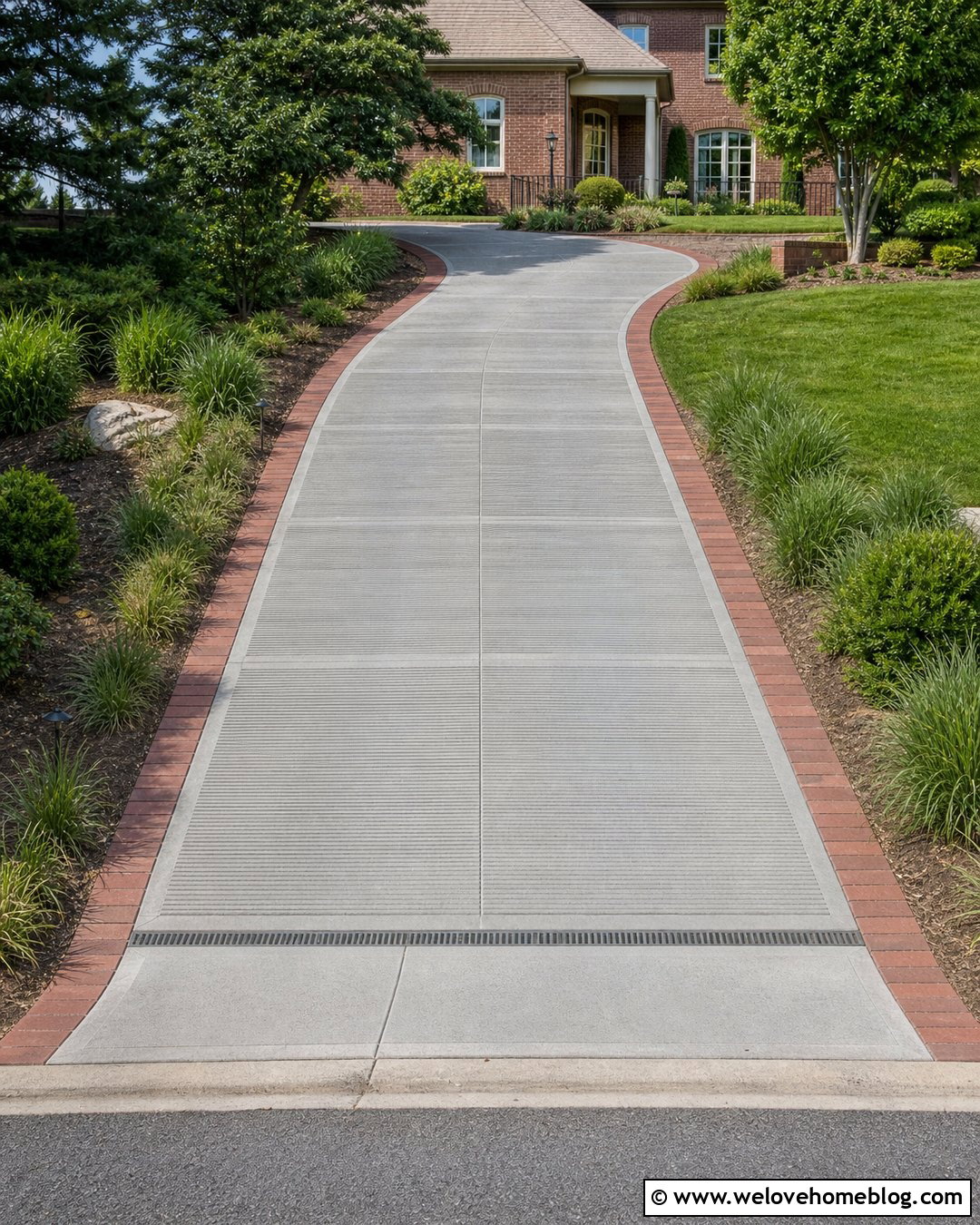
Wide, shallow rumble strips can visually mark a particularly steep zone and provide extra texture beneath vehicle tires. They should be professionally formed as subtle raised or recessed concrete sections, not improvised bumps that reduce vehicle clearance. Use them on a broom-finished concrete driveway with a straight lower run and a broad curved approach near the house. Brick edge ribbons connect the strips to the home’s facade and make the safety feature appear intentional. A channel drain above the textured zone keeps heavy runoff from flowing across it. Plant low grasses and compact shrubs beside the driveway while maintaining open sightlines. This design is best suited to controlled private approaches with slow vehicle movement. Transition shape, strip height, spacing, and drainage require careful planning for the vehicles that regularly use the property.
29. Steep Driveway With Rough-Finish Asphalt
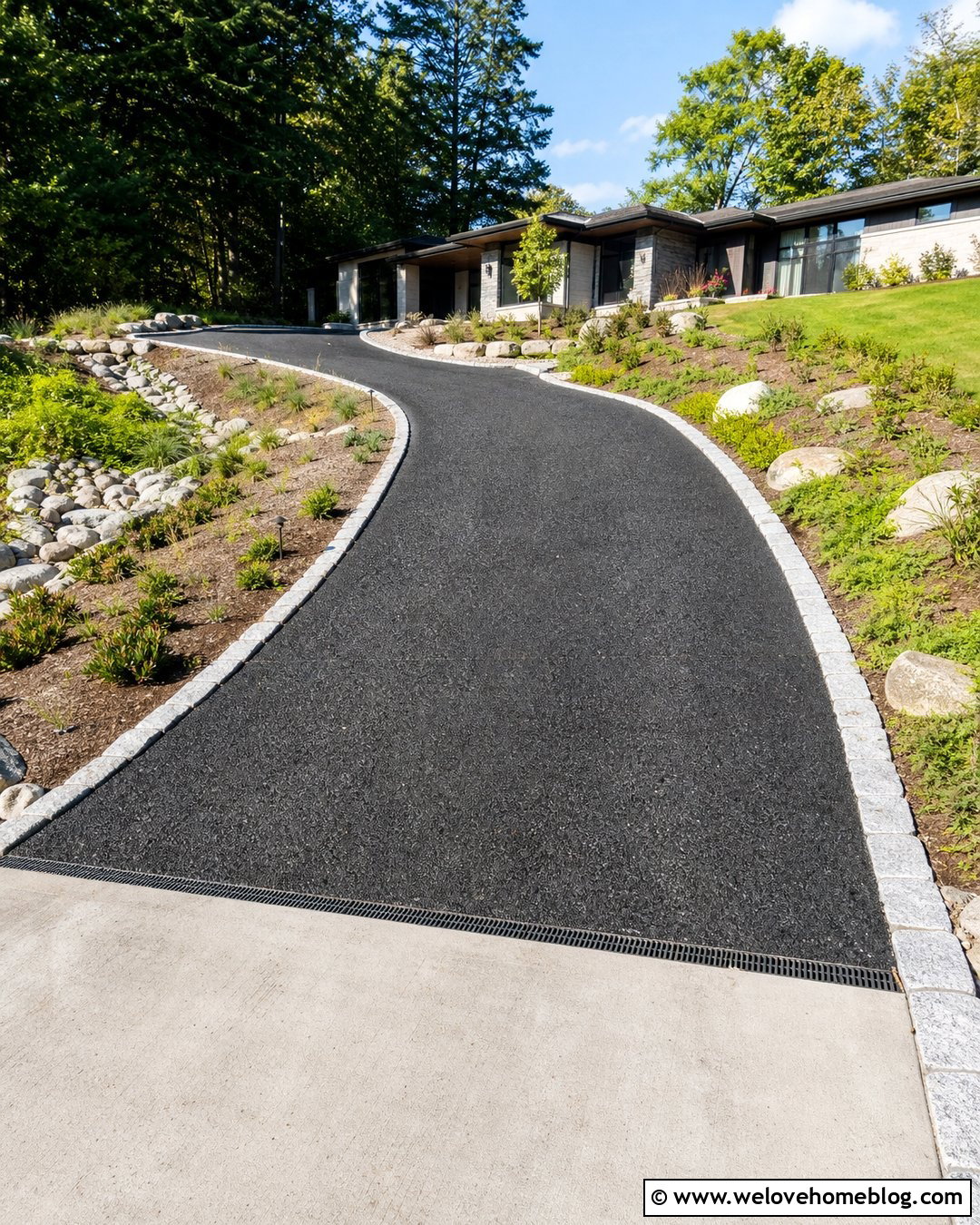
A coarse, well-compacted asphalt finish can offer better grip than a slick or heavily sealed surface. This complete design uses black asphalt on a curved driveway with granite block edging and a light concrete apron at the road. The curve follows the natural contour of the hill, while a broad landing near the top allows vehicles to straighten before entering the garage. Install channel drains where the grade changes and a stone-lined swale along the downhill edge. Avoid glossy sealants that may reduce texture, especially when the surface is wet. Native groundcovers and compact evergreen shrubs stabilize the adjoining slopes without dropping excessive debris onto the pavement. Regular crack repair and drain cleaning protect the base from water. The asphalt mix, thickness, compaction, and subbase should be selected for the site and climate.
30. Steep Driveway With Heated Tire Tracks
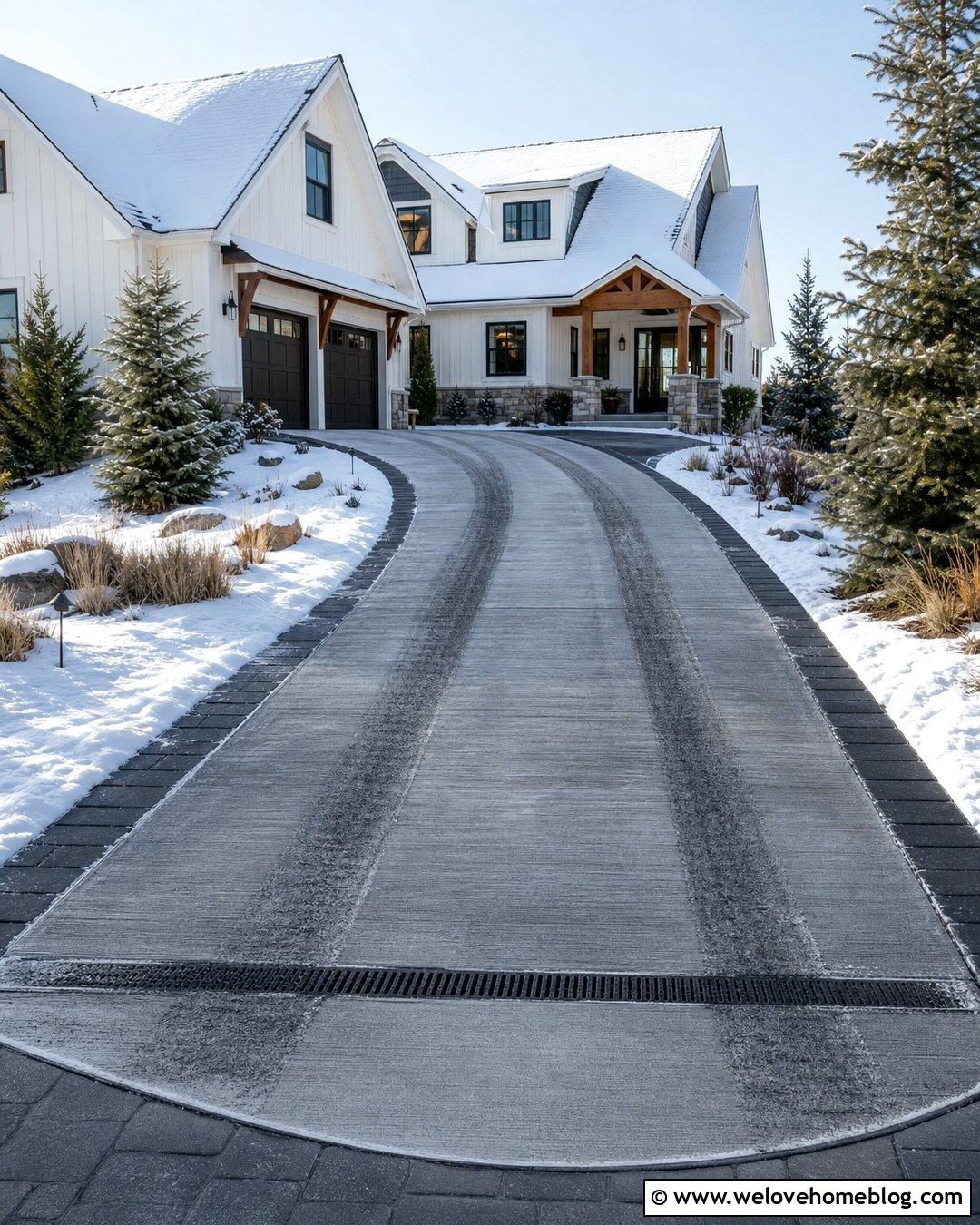
Heating only the tire paths can provide focused snow-melting coverage at a lower operating area than a fully heated driveway. Two heated lanes follow a broom-finished concrete driveway from the street entrance to the garage. The remaining concrete keeps the same color and texture, creating a unified appearance even when the system is off. Dark paver borders outline the driveway, while a center grass or decorative aggregate strip may be used only where drainage and maintenance conditions allow. Meltwater must flow toward channel drains and away from unheated areas where it could freeze again. Add a heated section at the pedestrian crossing and garage threshold for continuity. Smart moisture and temperature controls can operate the system when needed. Professional installation protects cables or tubing during reinforcement, placement, and concrete finishing.
31. Steep Driveway With Side Stairs
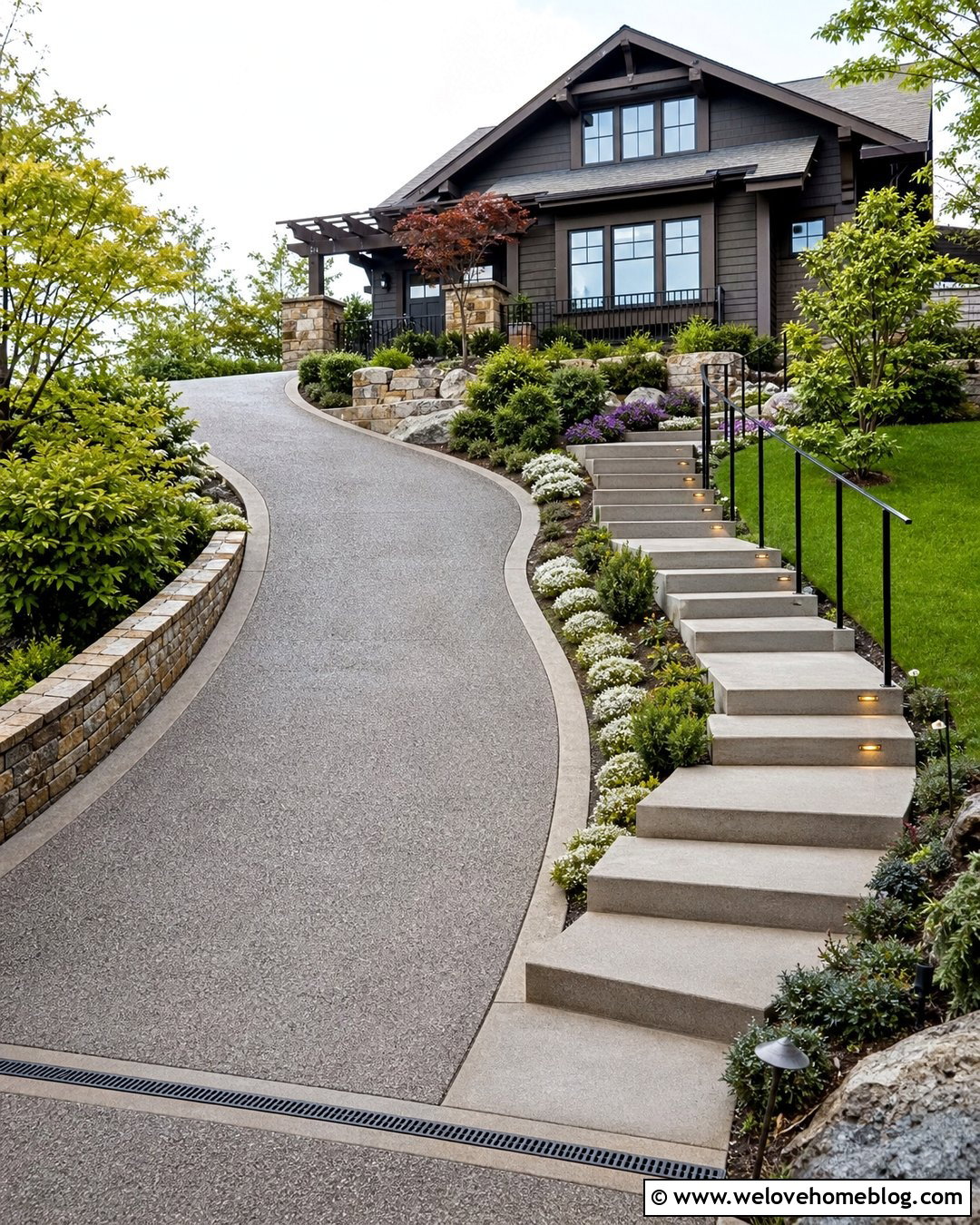
Walking directly on a steep driveway can be uncomfortable, especially when vehicles, water, or winter conditions share the same route. A separate stairway provides safer pedestrian access beside the driving lane. Pair a curved exposed aggregate driveway with broad concrete steps built into the uphill landscape. Add a sturdy handrail, consistent step dimensions, and intermediate landings on a long climb. A low stone retaining wall separates the stairs from the driveway without making the route feel confined. Channel drains carry runoff away from both surfaces, while downward-facing lights illuminate each landing. Plant low groundcovers between the steps and wall to soften the hardscape. The stairs should connect the sidewalk, parking area, and front entrance logically. Local codes may regulate handrails, guards, landing dimensions, and step construction, so check requirements before building.
32. Steep Driveway With Edge Lighting
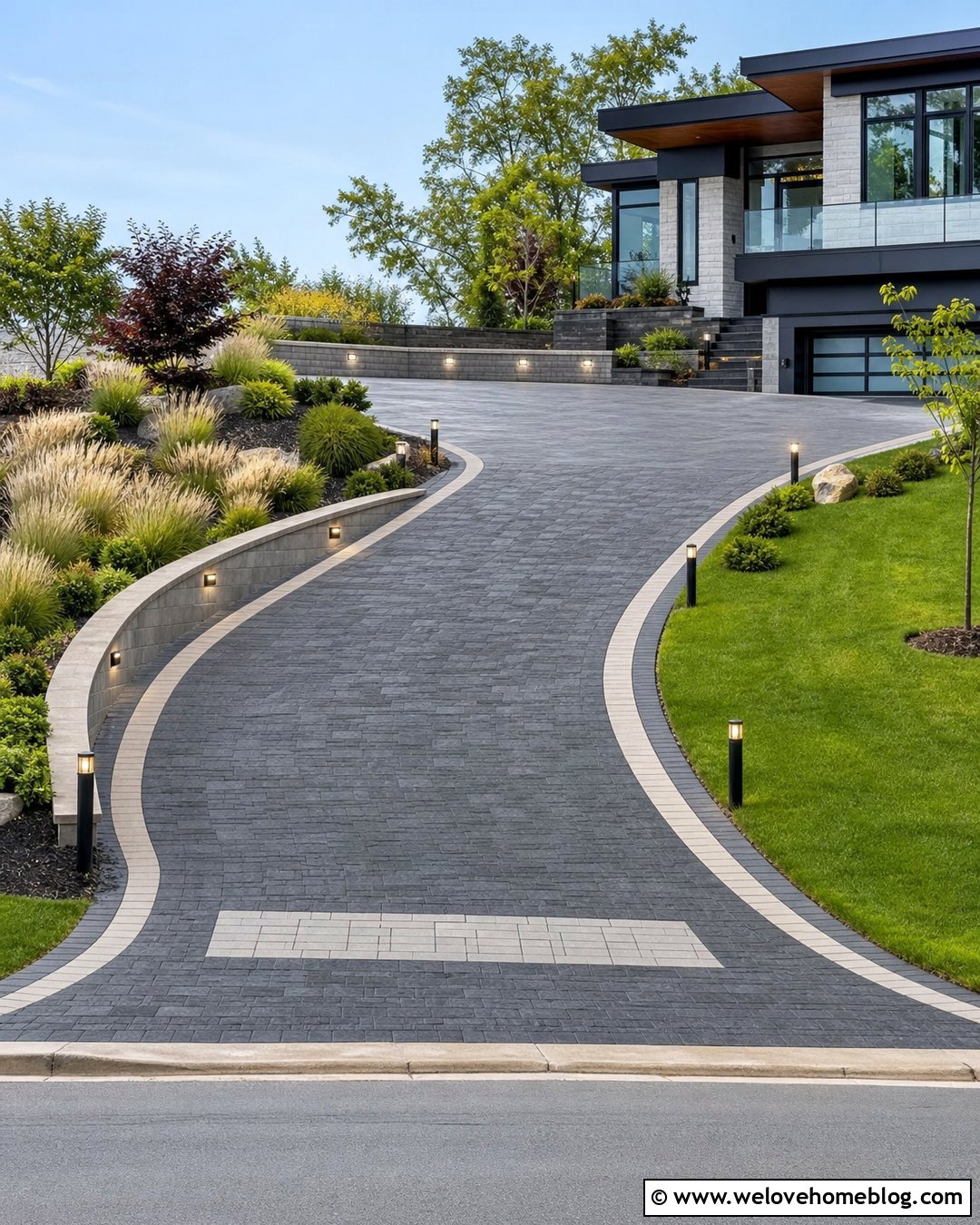
Well-placed lighting can clarify driveway edges, turns, grade changes, drains, and retaining walls after sunset. During daylight, a charcoal concrete paver driveway with pale borders creates clear visual guidance. After dark, low shielded fixtures mark the route without shining into drivers’ eyes or neighboring windows. Place lights along the downhill edge, switchback turn, garage approach, and pedestrian crossing rather than spacing them randomly. Recessed fixtures may be integrated into a stone retaining wall, while short bollards can frame a top parking pad. Keep electrical components away from drainage paths and protect fixtures from snowplows or landscaping equipment. The surrounding design can include ornamental grasses and compact shrubs that stay below the light beams. Brightness should remain even and restrained so drivers can see pavement texture without harsh glare.
33. Steep Driveway With A Wide Entry Apron
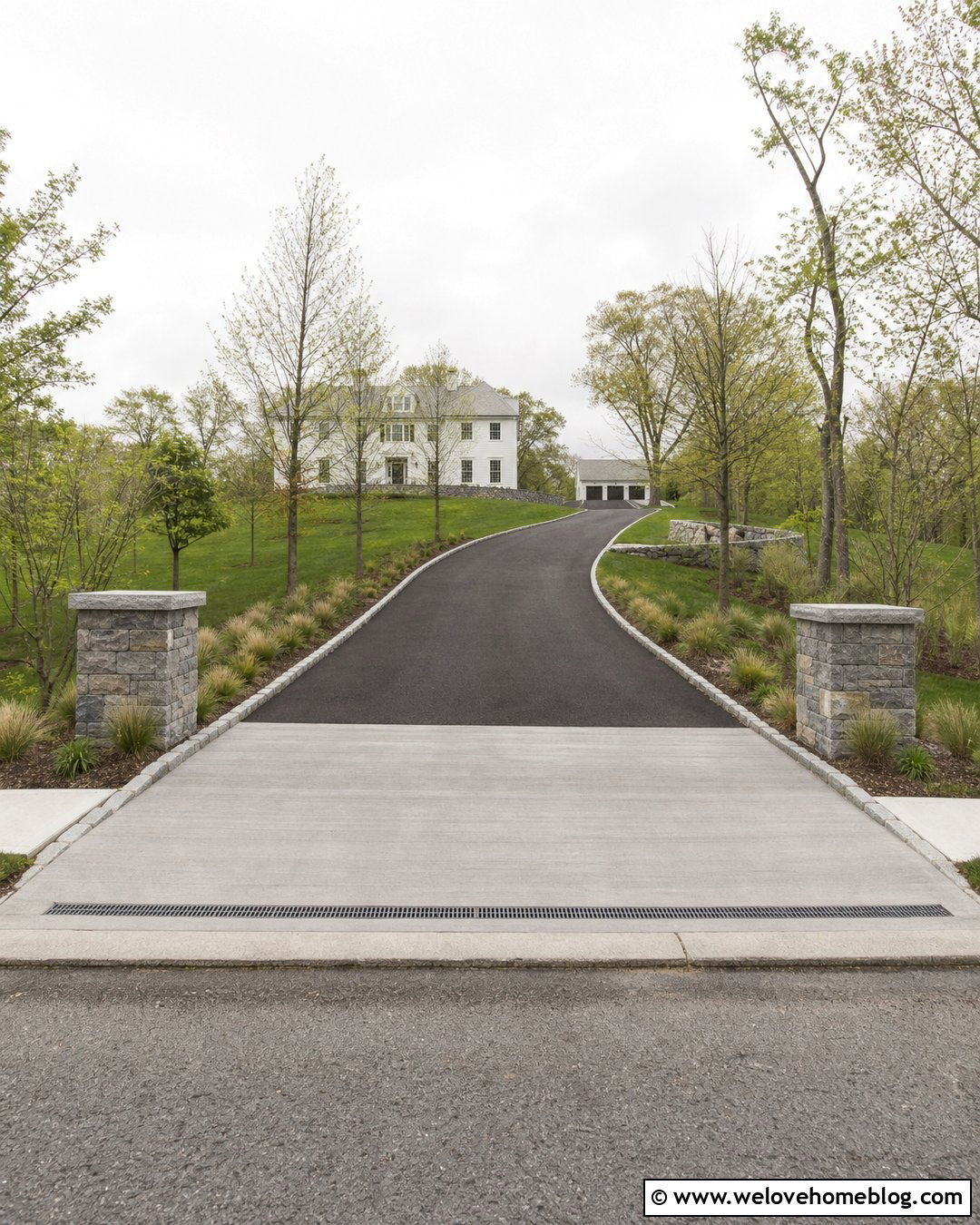
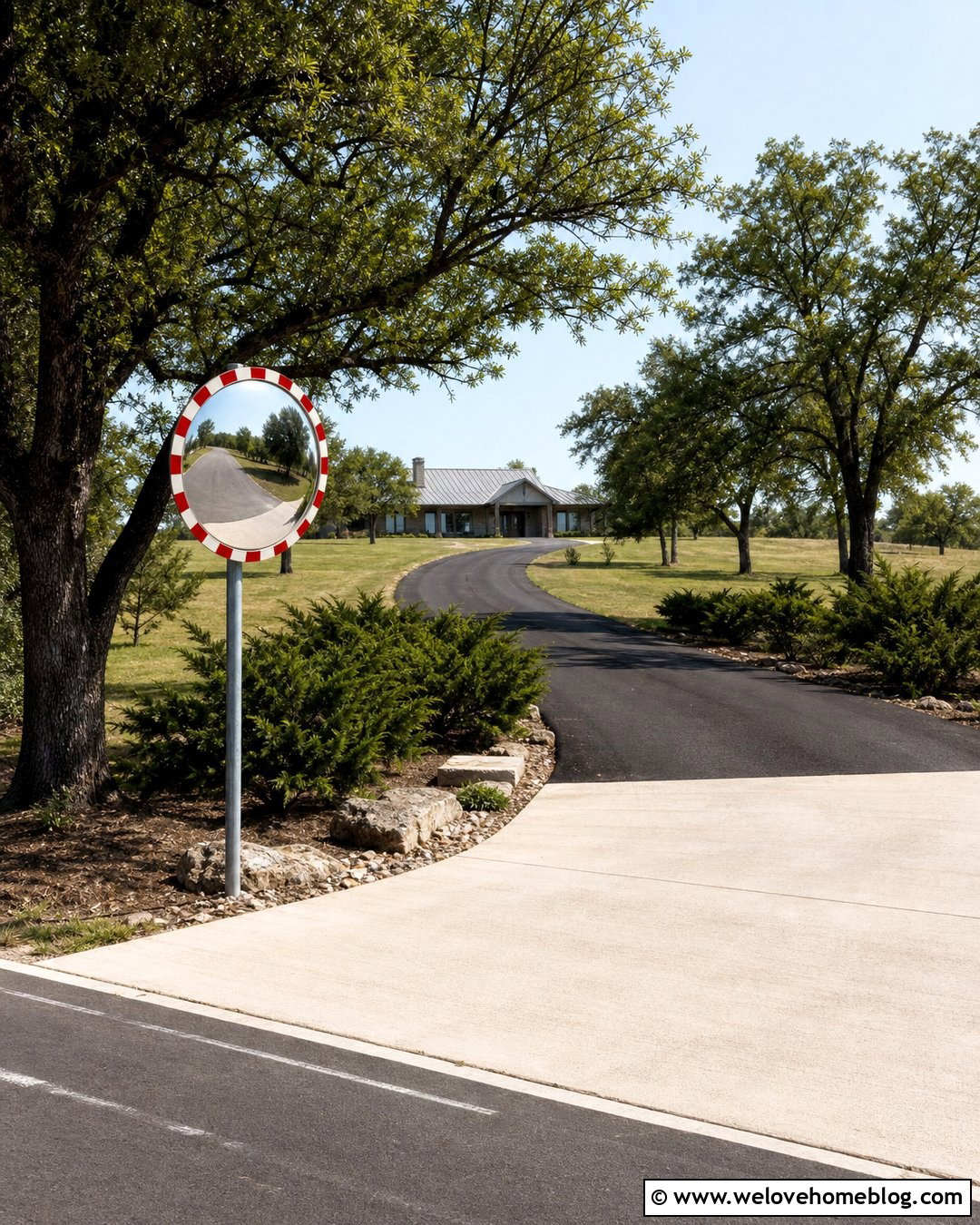
A wide entry apron makes it easier to leave the road, align the vehicle, and begin climbing without a sharp turn. Use textured concrete pavers or broom-finished concrete across the apron, then transition to a curved asphalt driveway farther uphill. Contrasting granite setts define the edges and protect corners from repeated tire contact. Keep pillars, address signs, mailboxes, and large plants set back from the turning area to preserve visibility. A trench drain along the uphill edge of the apron prevents driveway runoff from reaching the street where local drainage rules allow interception. Low native grasses and stone mulch create an attractive entrance without blocking approaching traffic. The apron’s width, culvert, curb cut, sidewalk crossing, and drainage connection may be regulated, so coordinate the design with the local authority responsible for the road.
34. Steep Driveway With A Top Parking Pad
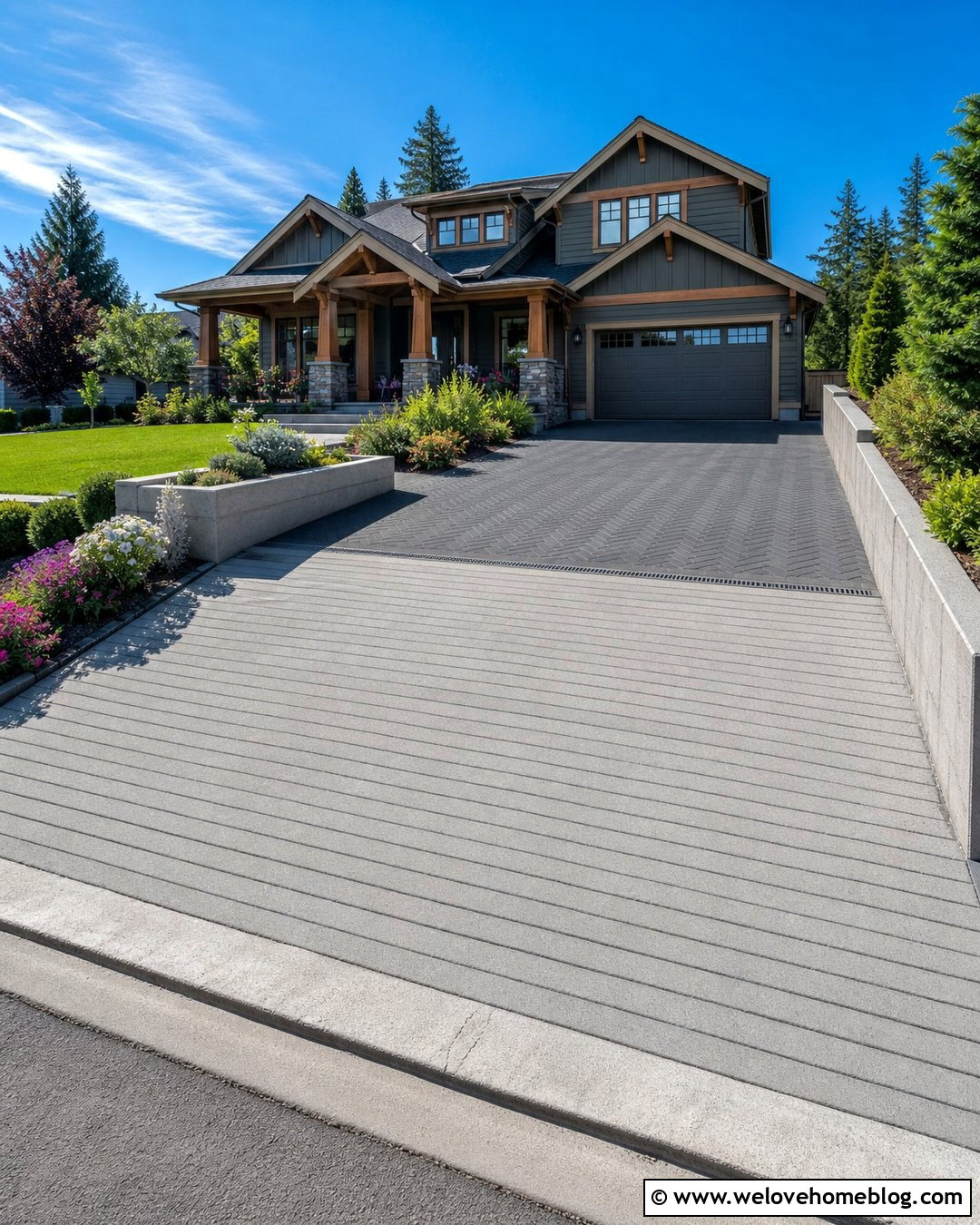
A level parking and turning pad at the top prevents drivers from having to reverse down the steepest section. The main approach can use grooved concrete, while the pad uses herringbone concrete pavers to distinguish the flatter maneuvering area. Size the pad for the household’s vehicles, delivery access, garage doors, and snow storage. A channel drain should separate the pad from the incline so runoff does not collect against the house. Low retaining walls can create the level platform and support planting beds filled with compact evergreens and flowering perennials. Add a direct walkway from the parking pad to the front entrance so pedestrians avoid the driving slope. Structural fill, compaction, wall design, and drainage need careful engineering because the pad must support repeated vehicle loads near a hillside edge.
35. Steep Driveway With Grass Pavers
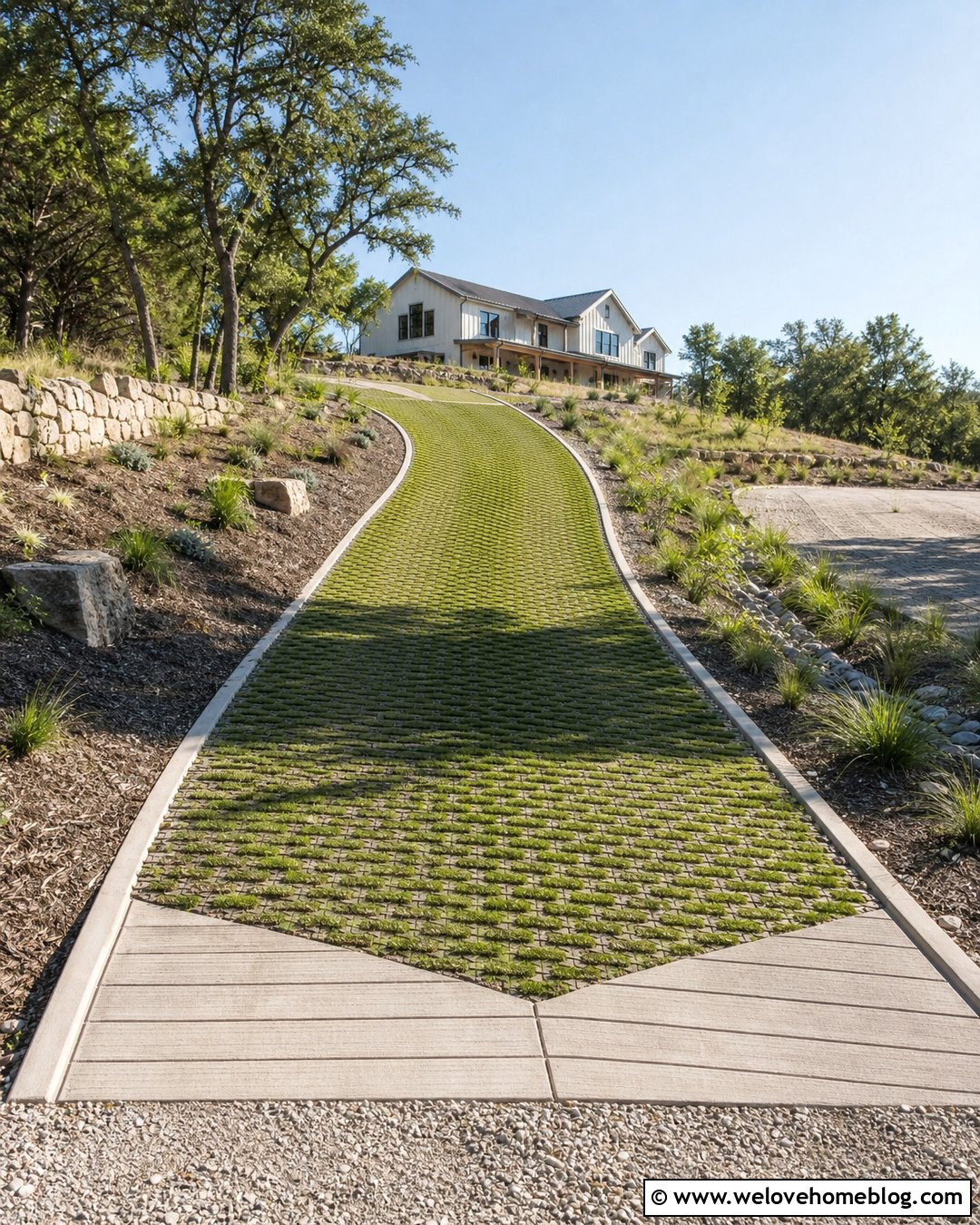
Heavy-duty grass pavers create a reinforced surface that blends with the landscape while carrying occasional vehicle traffic. They work best for a secondary lane, overflow parking area, or gently moderated section rather than every extremely steep site. A curved grass-paver driveway can climb toward a modern farmhouse, with concrete tire strips added on the most heavily traveled section for reliable traction. Strong edge restraints prevent the grid from spreading, while a gravel subbase supports drainage and vehicle loads. Use hardy turf suited to local sunlight, rainfall, and maintenance conditions. A planted swale along the downhill side captures runoff, and a stone retaining edge supports the uphill bank. Avoid placing loose topsoil above the grid surface, since mud can reduce grip. The chosen system must be rated for slope and residential vehicles.
Conclusion:
The best steep driveway is rarely created by changing only the surface. It usually combines a stable base, manageable alignment, textured material, controlled transitions, effective drainage, secure borders, and erosion-resistant landscaping. Switchbacks and landings can improve difficult layouts, while brushed concrete, asphalt, interlocking pavers, or stabilized gravel can provide practical traction. Retaining walls support surrounding slopes, and drains protect the driveway from fast-moving water. Heated sections may offer valuable winter safety in colder regions. Use these **35 Steep Driveway Solutions Ideas** as planning inspiration, but have demanding grades evaluated by qualified local professionals. A site-specific design will protect vehicles, structures, neighboring land, and the long-term value of your investment.

Related posts:
Leave a Reply