
The right retaining wall can turn a difficult slope into a safer, more polished entrance. These 25 Driveway With Retaining Wall Ideas explore complete designs that combine practical support with strong curb appeal. You will find concrete, gravel, asphalt, brick, paver, and resin-bound driveways paired with walls made from natural stone, concrete block, timber, boulders, and other materials. Each look also considers the driveway shape, wall height, drainage, lighting, steps, and surrounding plants. Because driveway walls may support heavy soil and vehicle loads, taller or load-bearing designs should be planned with qualified local professionals and checked against local codes. () Whether your property has a gentle grade or a steep hillside, these complete layouts offer useful inspiration. Here are 25 Driveway With Retaining Wall Ideas.
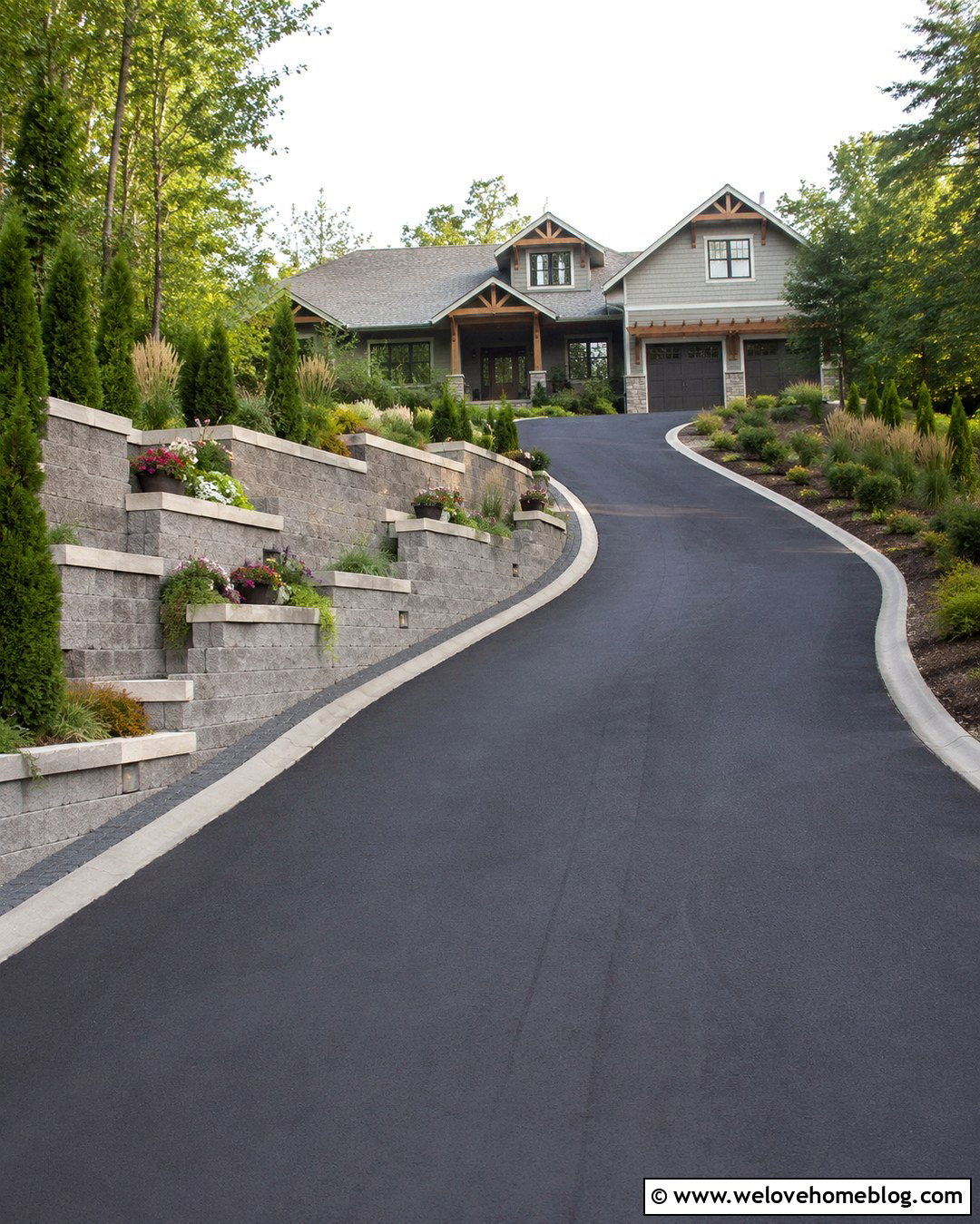
1. Sloped Concrete Driveway With Block Retaining Wall
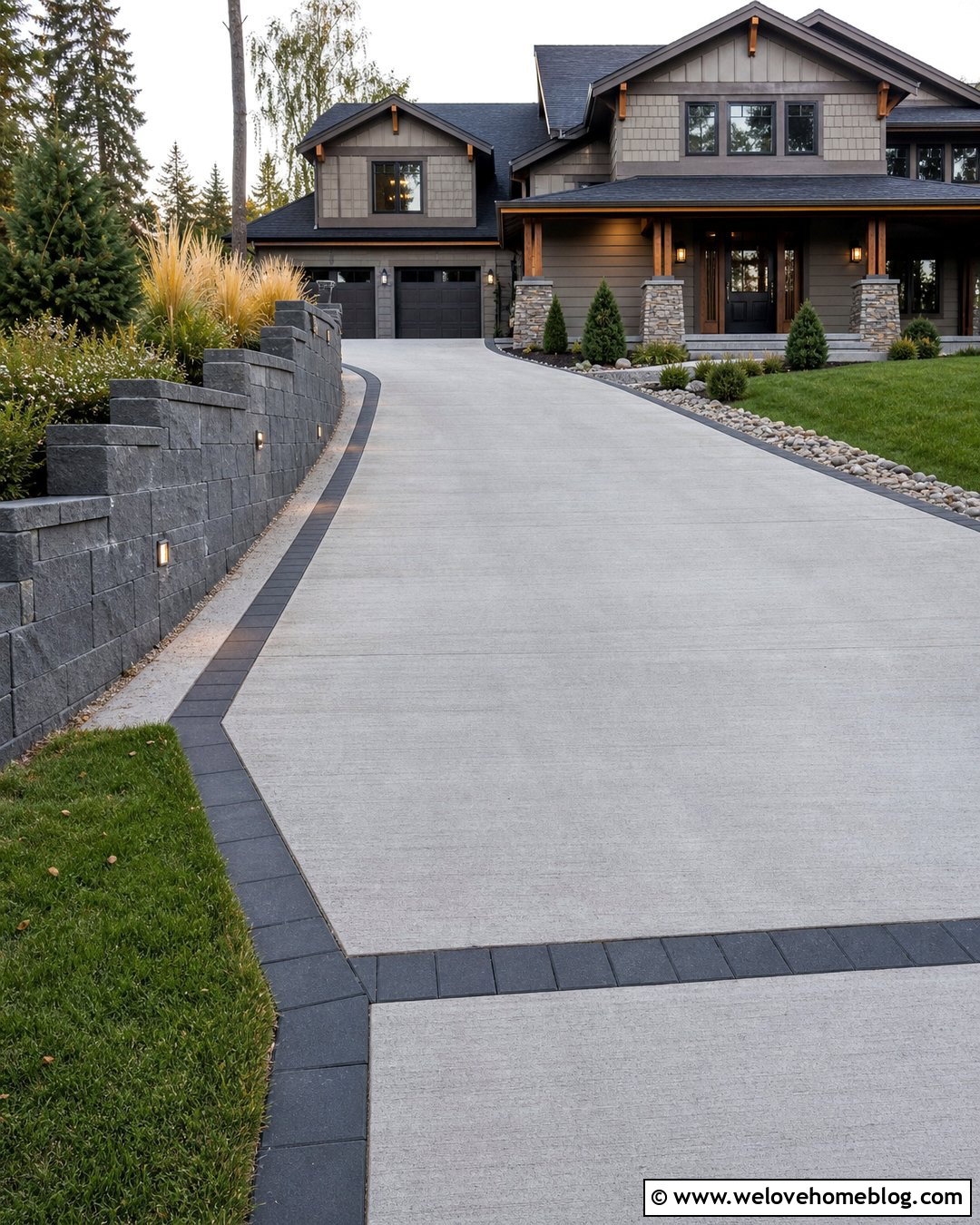
A sloped concrete driveway feels more finished when a textured block retaining wall follows its uphill edge. Choose light gray poured concrete with a subtle broom finish for reliable traction and a clean appearance. Use charcoal or warm taupe interlocking wall blocks to create visible contrast without making the entrance feel busy. A gently stepped wall can follow the driveway grade more naturally than one tall horizontal structure. Leave a narrow planting bed above it for ornamental grasses, compact evergreens, and spreading ground cover. A contrasting paver ribbon along the opposite driveway edge visually balances the wall. Recessed wall lights can improve nighttime visibility, while a defined drainage channel helps direct runoff away from the garage and neighboring landscape.
2. Gravel Driveway With Natural Stone Retaining Wall
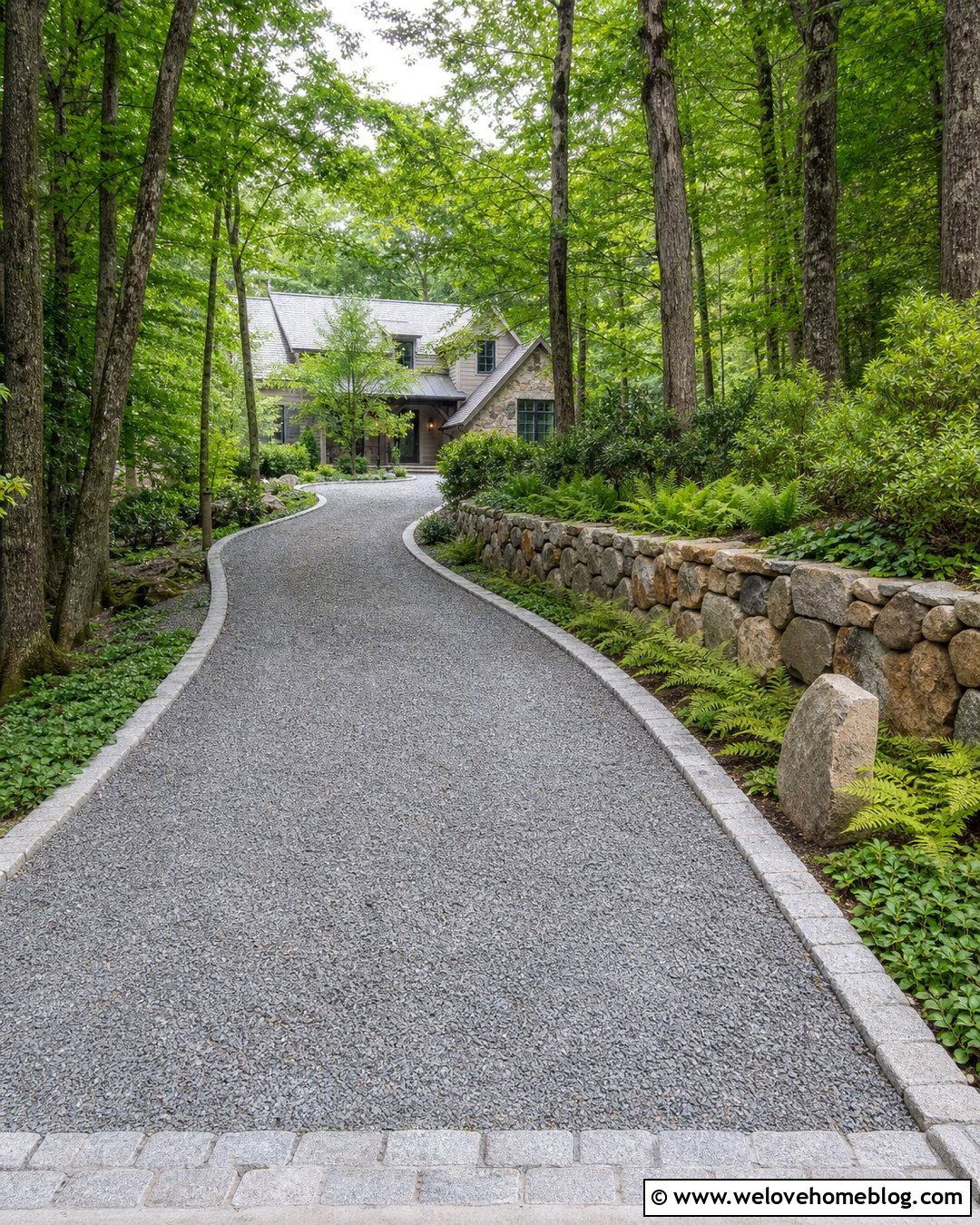
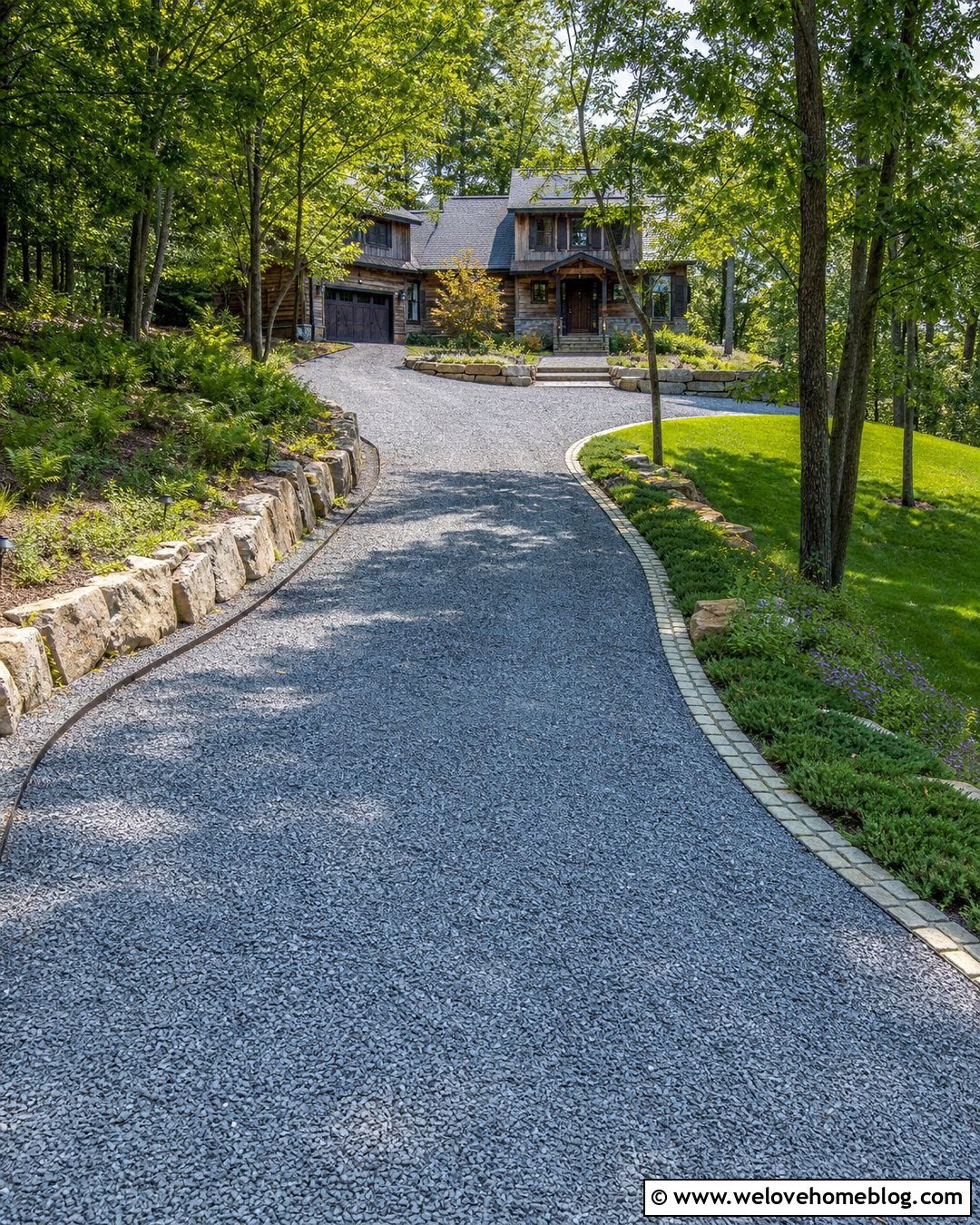
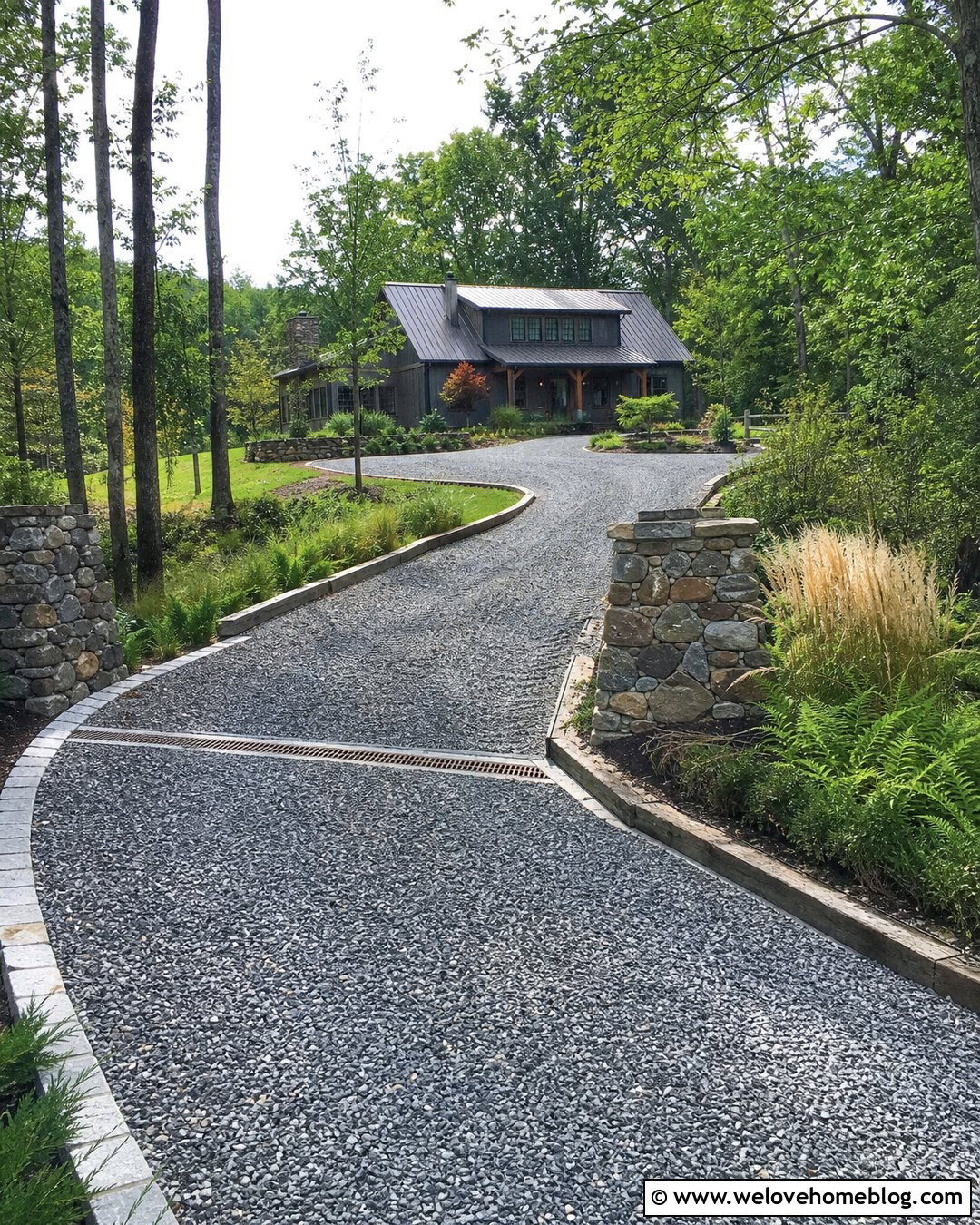
Crunchy gravel and irregular natural stone create a relaxed driveway that blends comfortably into a wooded or country property. Use compacted gray crushed gravel for the main surface because its angular texture looks more structured than loose decorative pebbles. Build the retaining wall from locally inspired fieldstone in mixed tan, gray, and brown tones. A curved wall can follow the slope and guide the eye toward the house. Add a steel or granite edge along the open side to keep gravel contained. Ferns, low junipers, flowering perennials, and small native shrubs can soften the rugged masonry. Finish the entrance with broad stone pillars or a matching address marker so the entire driveway feels intentional rather than purely functional.
3. Paver Driveway With Matching Retaining Wall
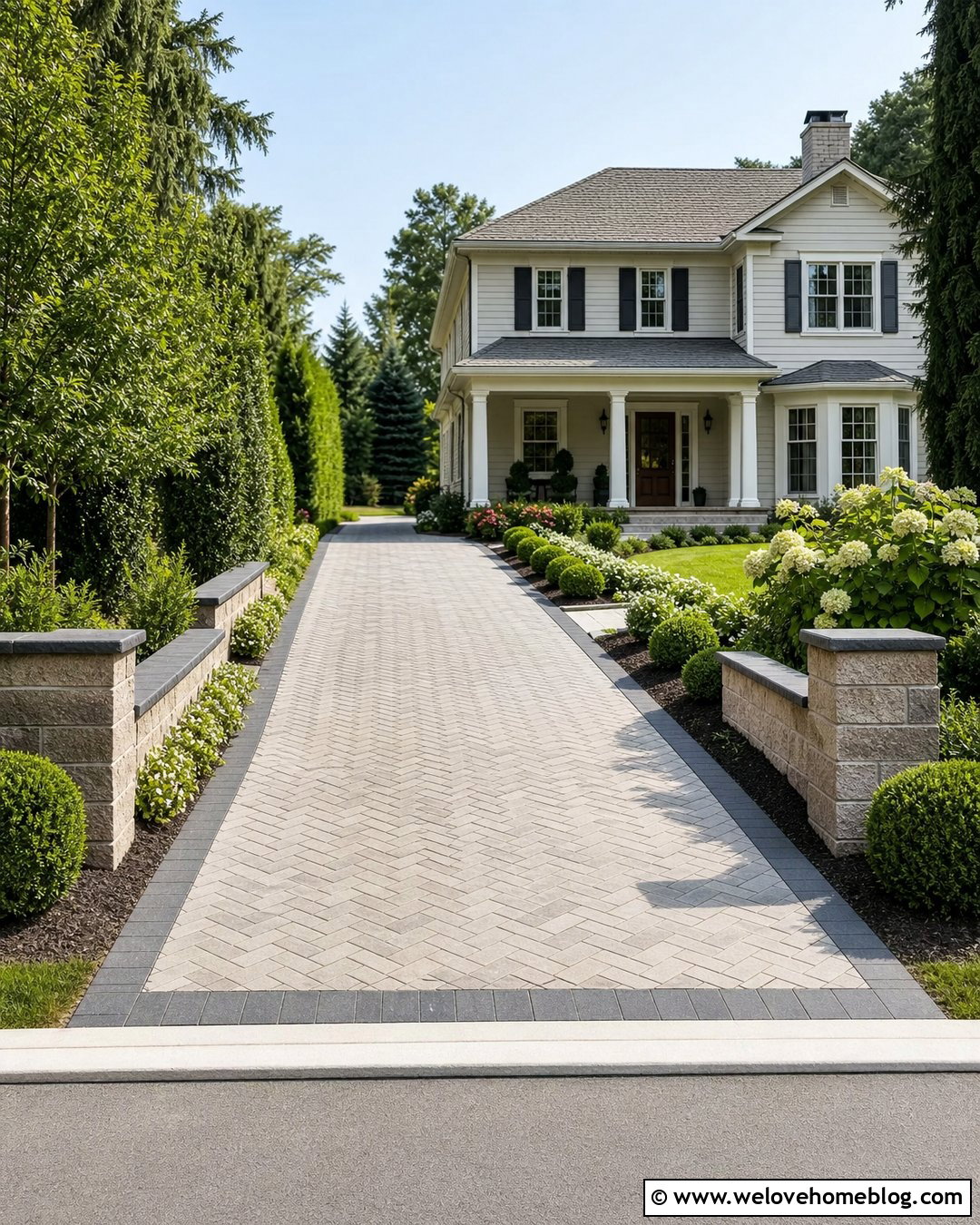
Matching the driveway and retaining wall creates a coordinated look that works especially well with traditional homes. Lay warm gray concrete pavers in a running bond or herringbone pattern, then select retaining wall blocks from the same color family. The materials do not need to be identical. Slight variation keeps the design from looking flat. Define the driveway with a darker soldier-course border and cap the wall with matching charcoal units. Above the wall, plant clipped boxwood, hydrangeas, and seasonal flowers in a layered bed. A straight driveway suits formal architecture, while a subtle flare near the street makes turning easier and creates a welcoming entrance. Add wide wall returns at each end to blend the structure naturally into the lawn.
4. Asphalt Driveway With Curved Retaining Wall
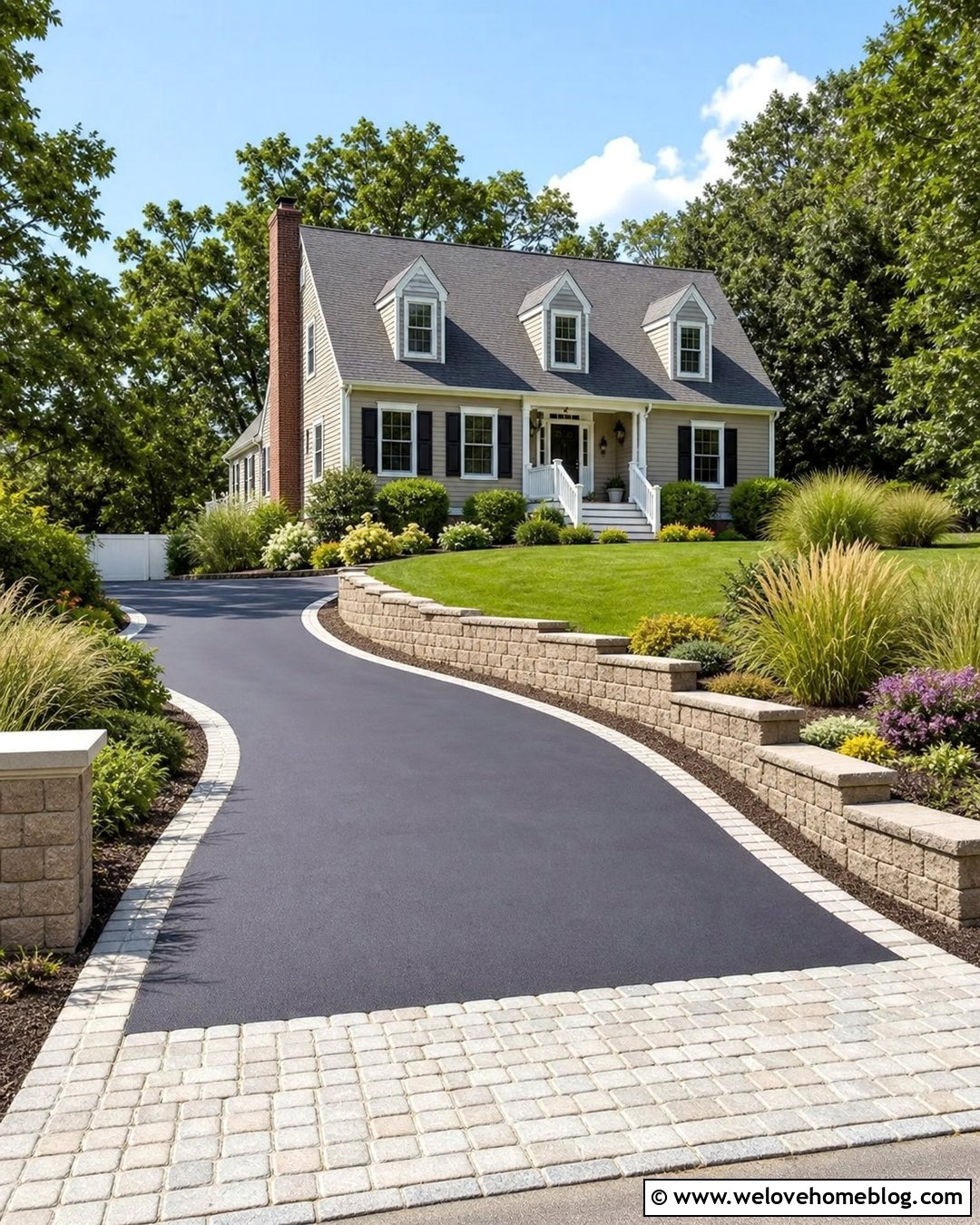
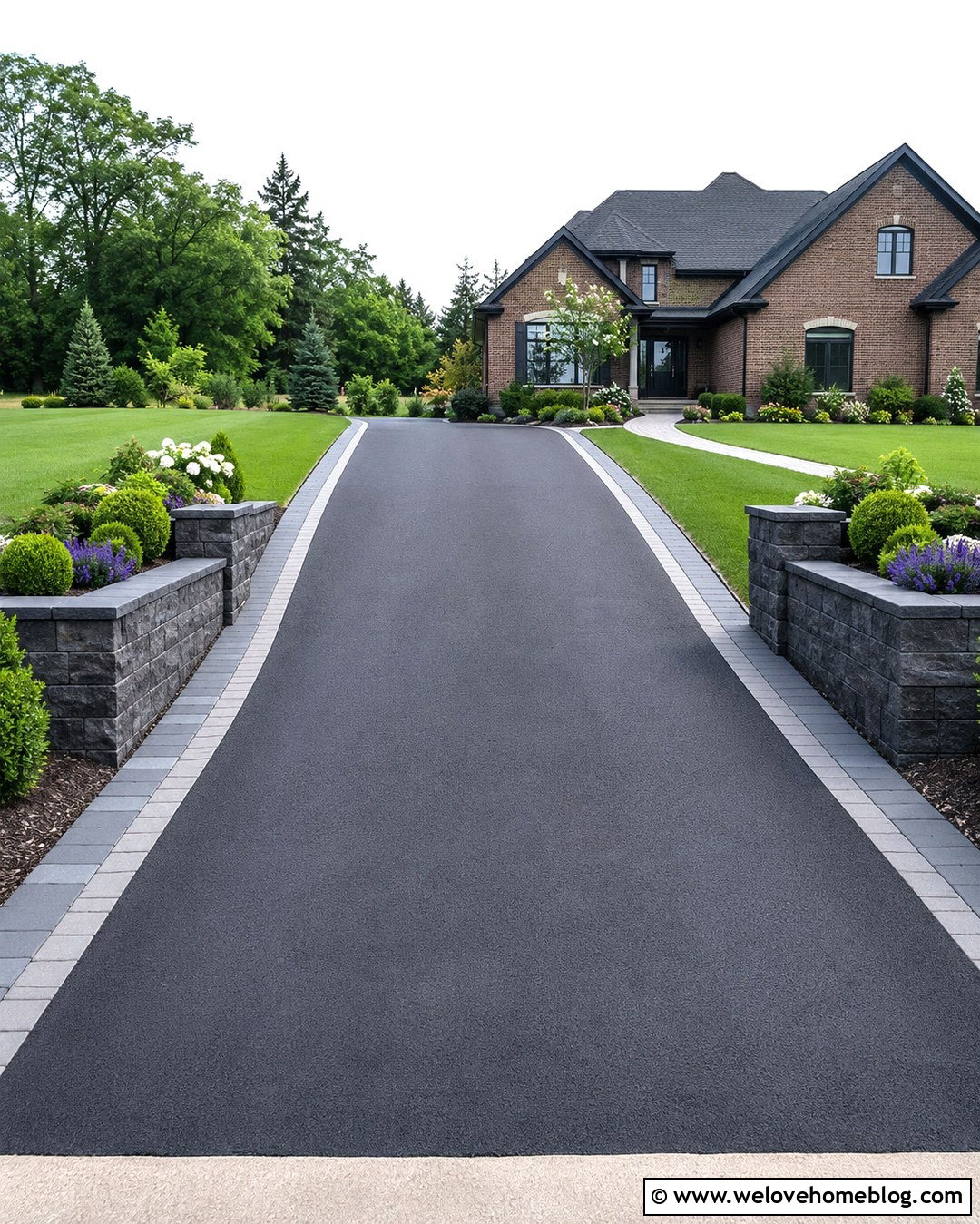
Deep black asphalt creates a simple backdrop for a softly curved retaining wall made from warm stone or textured concrete block. This combination works well when the driveway must bend around an elevated front lawn. Instead of forcing the wall into a rigid line, let it follow the driveway curve and gradually taper toward ground level. A light-colored wall brightens the dark surface and makes the driveway edge easier to read. Install a narrow cobblestone apron at the street and repeat the stone as a border between the asphalt and wall. Above the wall, use low-maintenance shrubs, ornamental grasses, and flowering ground cover. Keep taller plants away from tight curves so drivers retain clear visibility when entering or leaving the property.
5. Modern Driveway With Poured Concrete Retaining Wall
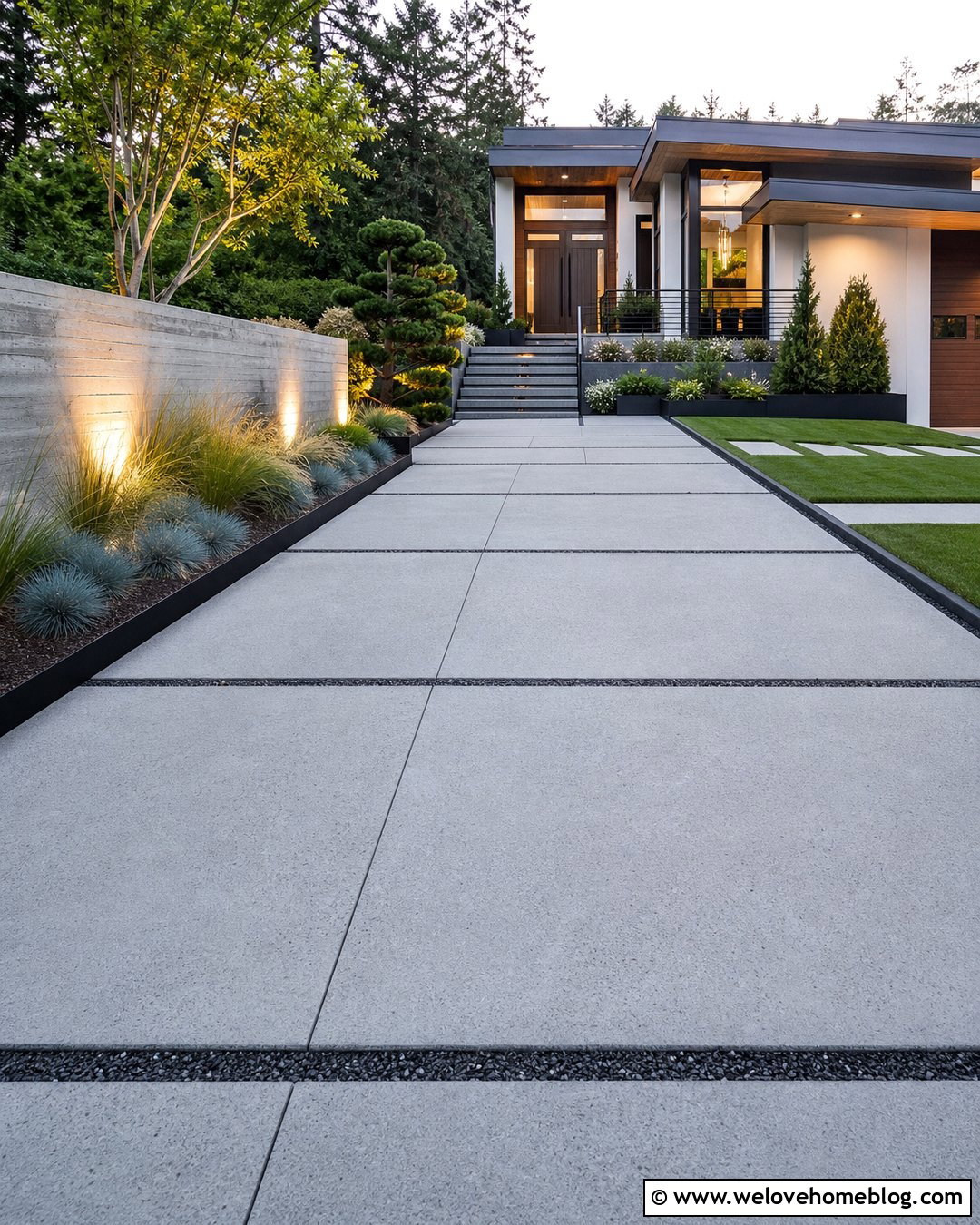
Clean geometry makes a poured concrete retaining wall a natural companion for a contemporary driveway. Use large gray concrete slabs separated by narrow gravel joints or dark grass strips. Position a smooth, board-formed concrete wall along the higher side of the property, keeping its lines parallel with the house facade. The subtle wood-grain impression adds texture without disrupting the minimalist look. A slim bed filled with feather reed grass, blue fescue, and compact evergreen forms can soften the hard surfaces. Add linear recessed lighting inside the wall rather than decorative lanterns. Dark steel edging and a black address panel complete the modern palette. For greater visual balance, repeat the concrete wall finish around the front steps or a nearby raised planting area.
6. Steep Driveway With Tiered Retaining Walls
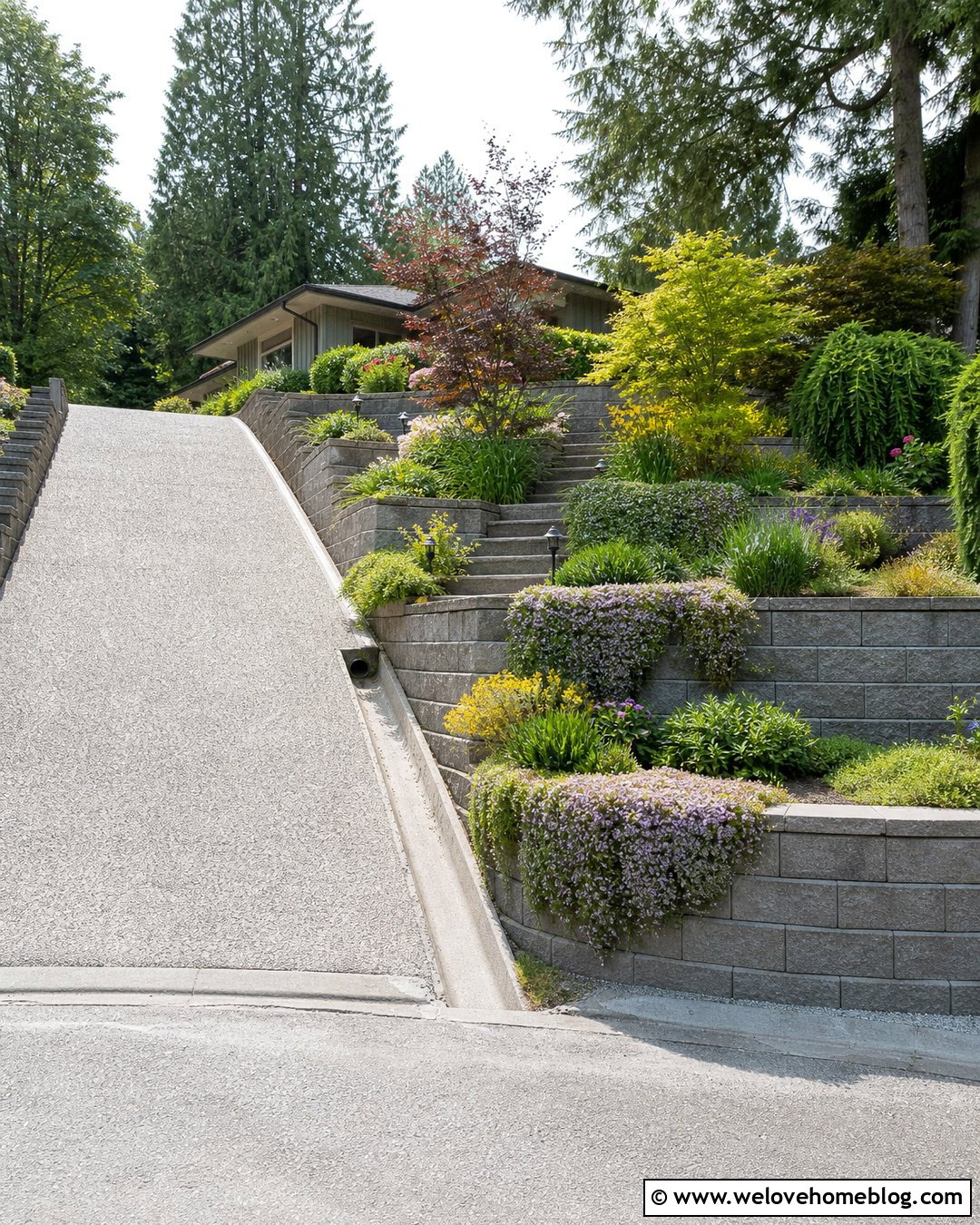
One very tall wall can dominate a steep driveway, while several lower terraces create a more comfortable residential scale. Use exposed aggregate concrete for the driveway and build two or three retaining wall levels from warm gray segmental blocks. Set each wall back enough to create planting pockets between the tiers. Fill them with cascading ground cover, compact shrubs, flowering perennials, and small ornamental trees that will not obstruct sightlines. Let each wall step down with the driveway rather than ending abruptly. A contrasting concrete drainage channel can run along the bottom wall to manage surface water. Include a separate stairway through the terraces so pedestrians do not have to climb the steep driveway. Matching wall caps keep the layered design visually consistent.
7. Narrow Driveway With Low Retaining Wall
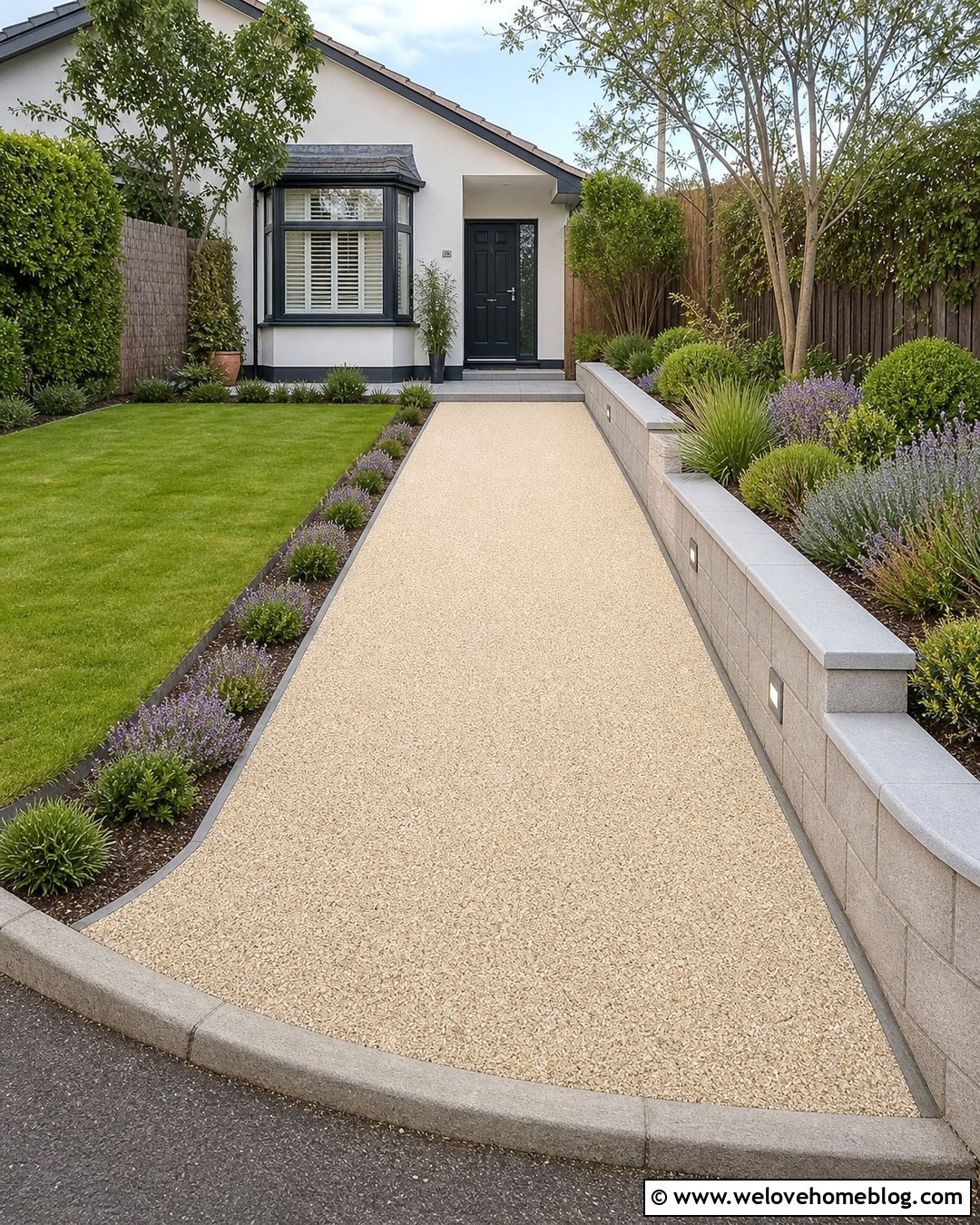
Limited width requires a retaining wall that feels protective without making the driveway resemble a corridor. Pair a narrow resin-bound gravel driveway with a low, light-colored concrete block wall along the elevated lawn. A pale beige or soft gray surface reflects light and makes the space appear wider. Keep the wall straight and relatively simple, with a smooth cap that does not project too far into the driving area. On top, create a shallow planting bed with low sedges, creeping thyme, and compact flowering shrubs. Use flush metal edging on the opposite side instead of another heavy border. Small recessed wall lights can mark the usable width after dark. At the street, curve the wall away from the driveway to provide a wider, more forgiving entrance.
8. Circular Driveway With Stone Retaining Wall
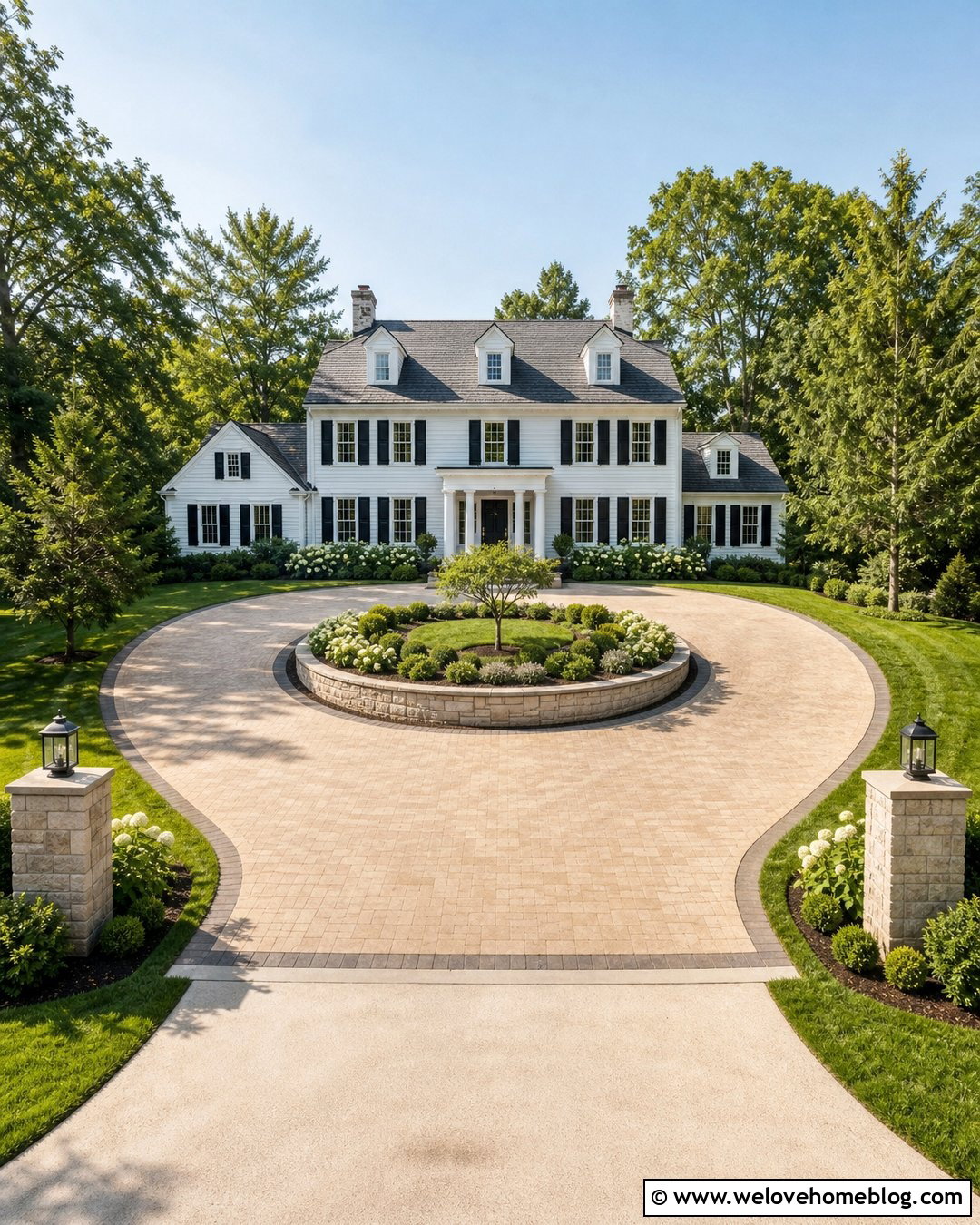
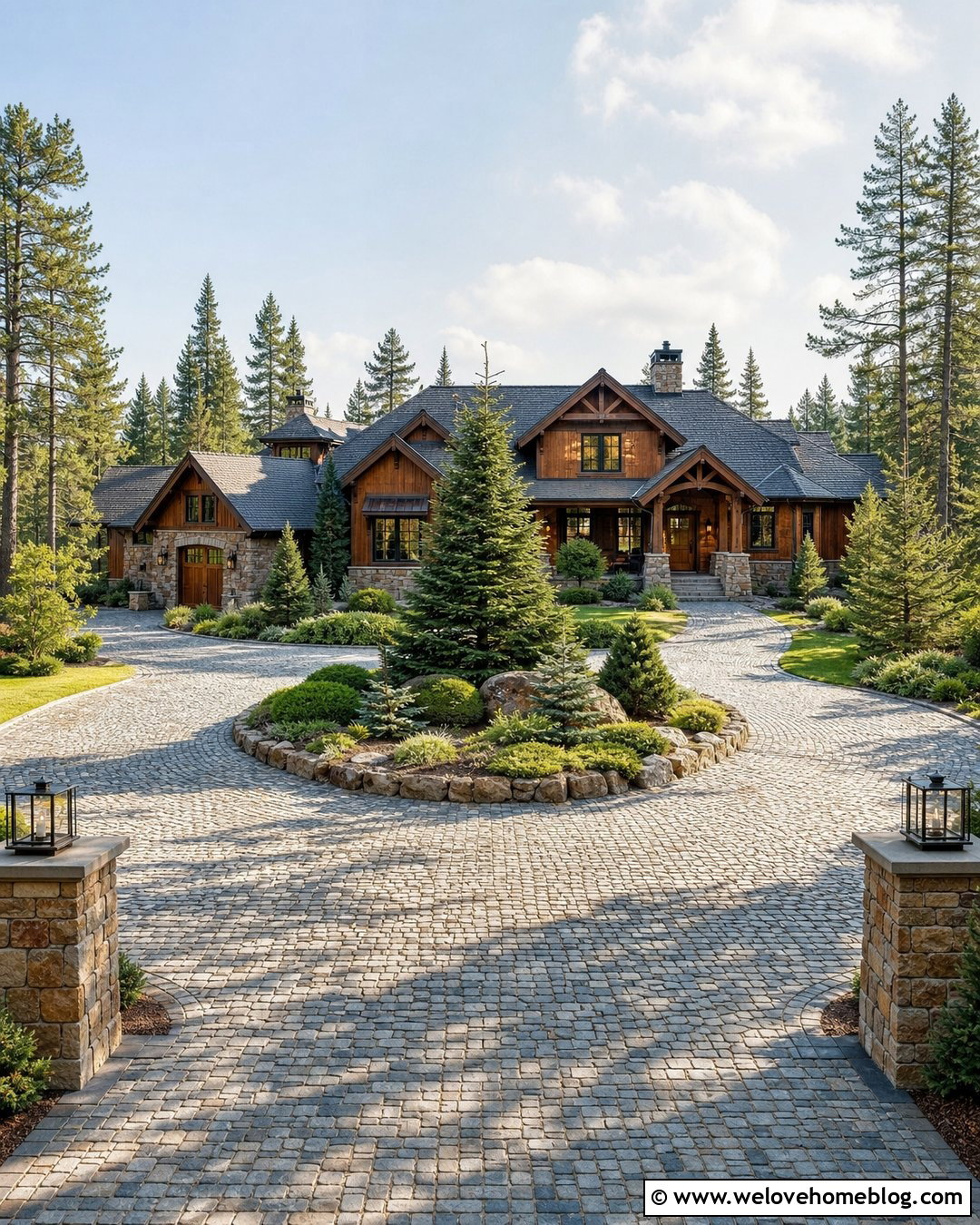
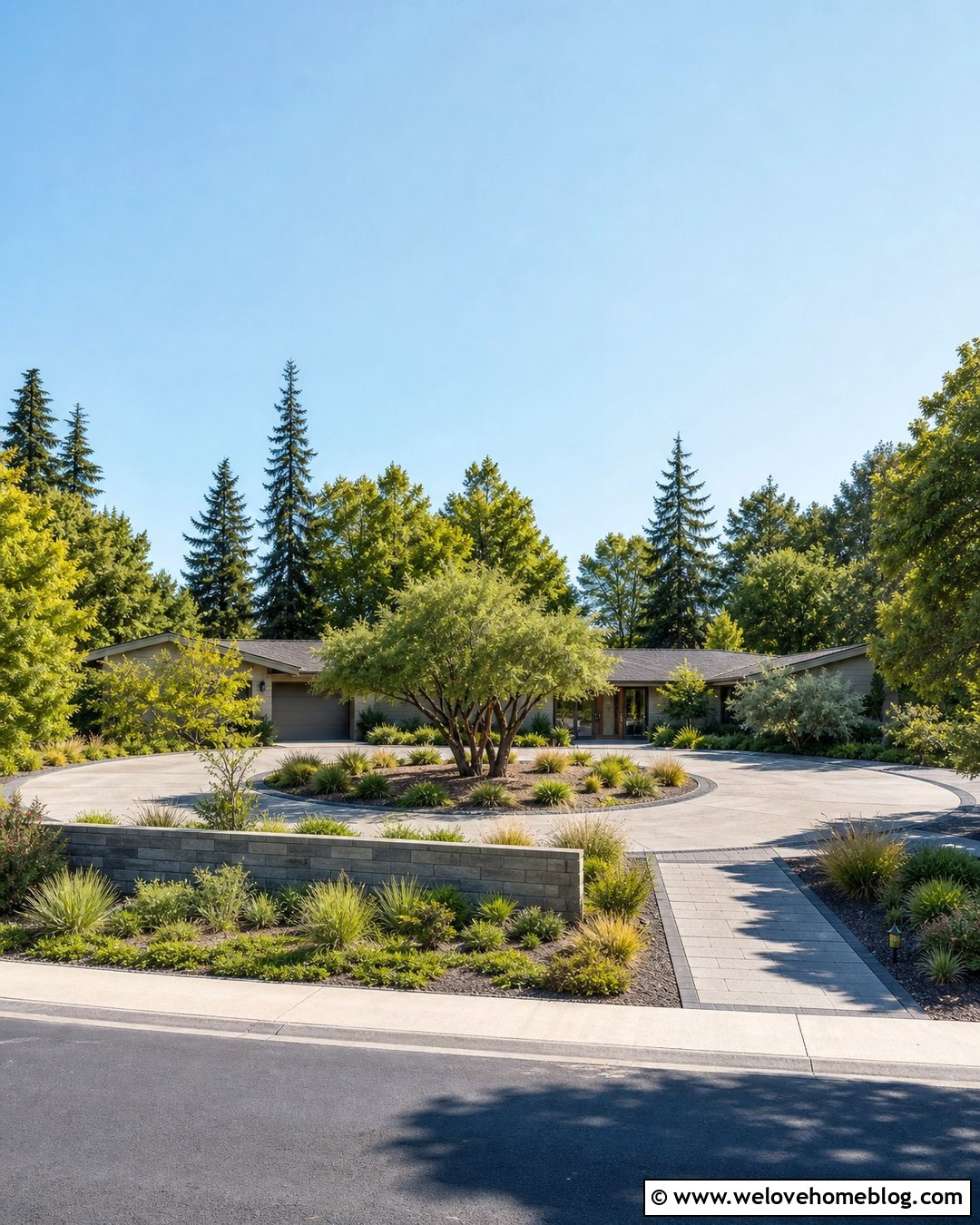
A circular driveway can use a curved retaining wall to reinforce its graceful shape while creating an elevated center garden. Lay tan concrete pavers across the horseshoe layout and build a low limestone wall around the inner planting island. Continue a second section of wall along the higher outer slope if additional support is needed. The repeated stone ties the complete composition together. Fill the center with a small ornamental tree, clipped shrubs, flowering perennials, and a simple ground cover that looks attractive from every direction. Use darker pavers as a border to define the driveway loop. Broad entry and exit openings make the curve feel comfortable, while low walls preserve visibility. Matching stone columns at the road can complete the formal, balanced entrance.
9. Curved Driveway With Boulder Retaining Wall
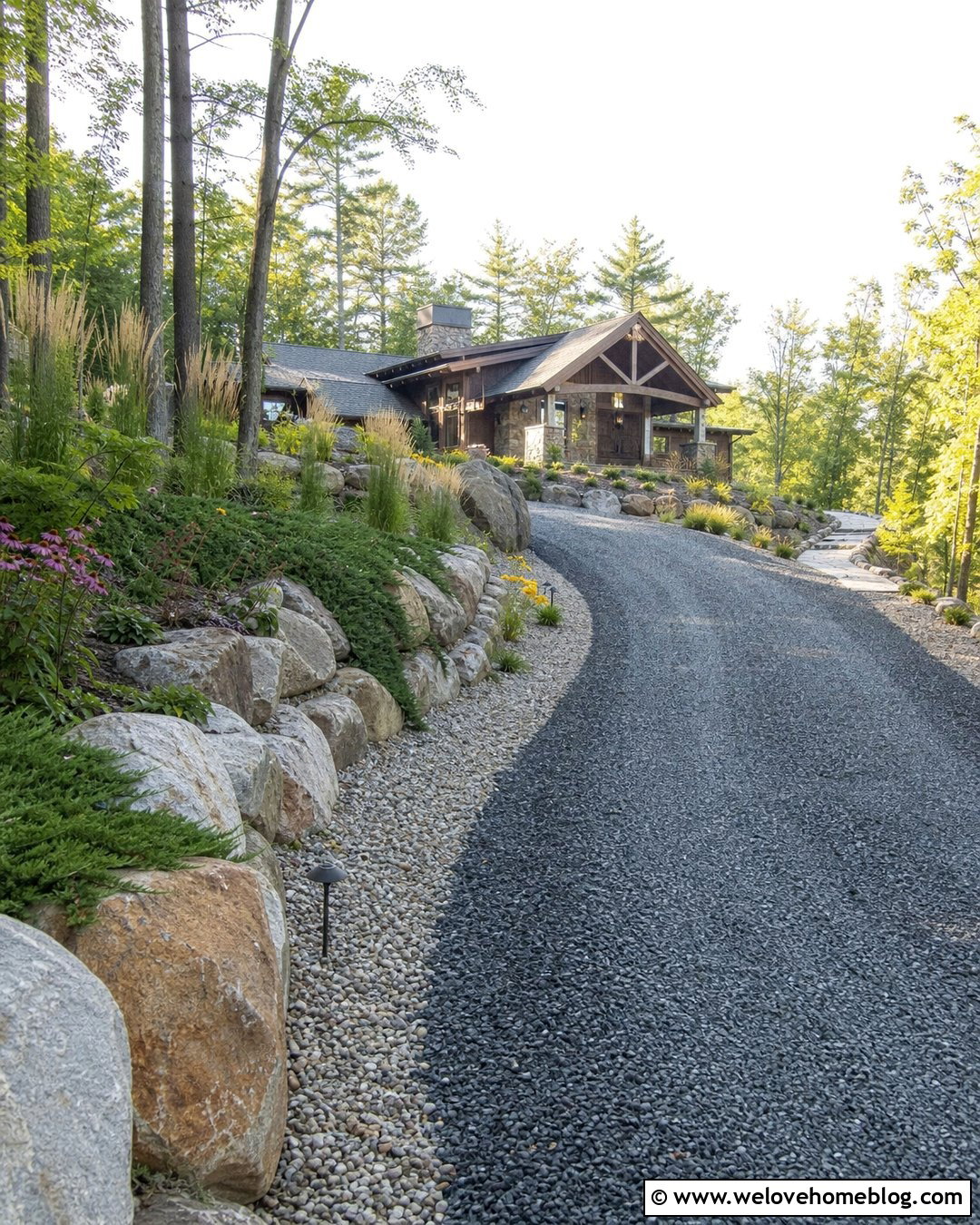
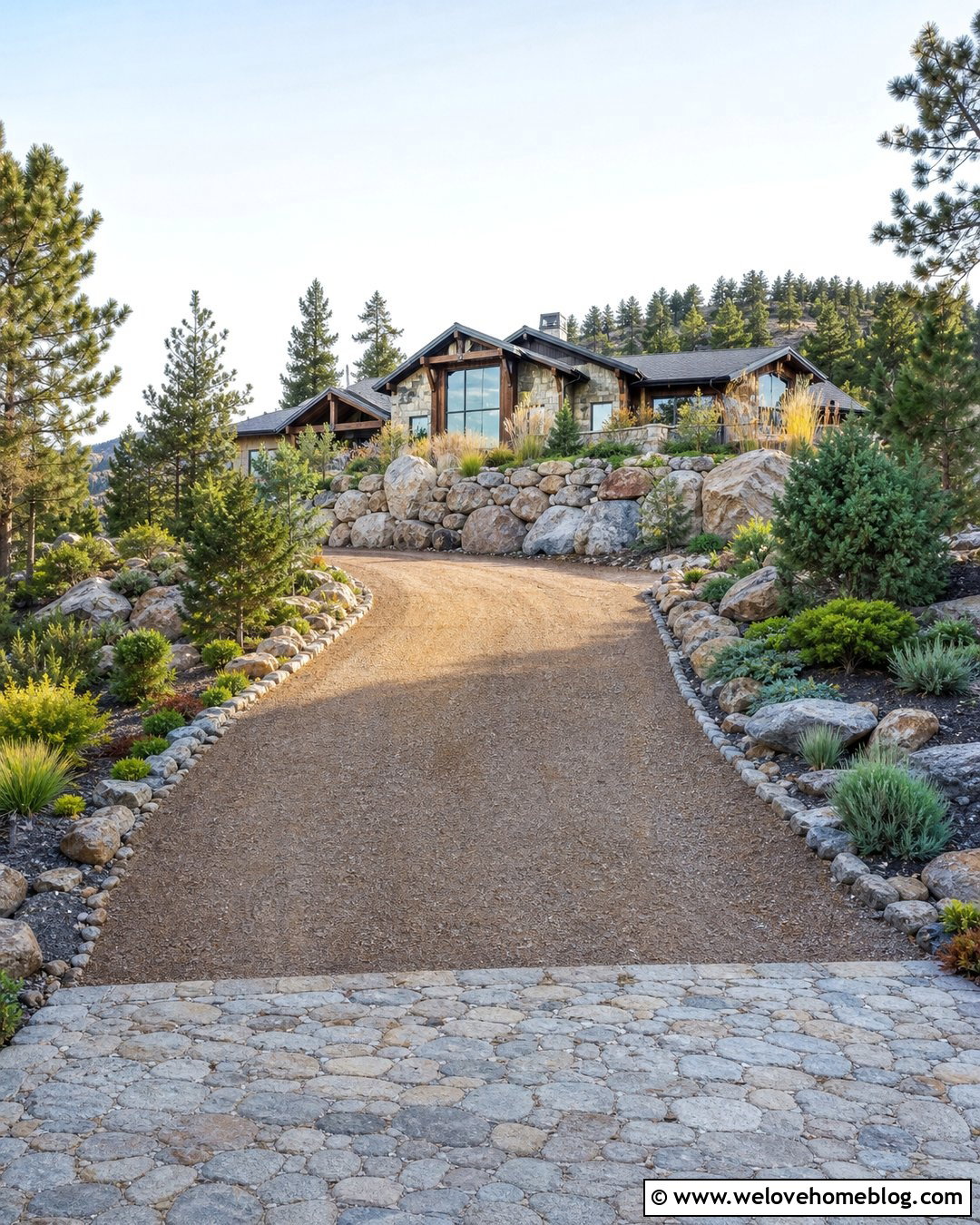
Large boulders give a curved driveway a natural appearance that suits mountain, woodland, and rustic suburban settings. Use dark gray crushed stone or exposed aggregate for the driveway so the surface complements the varied rock colors. Arrange irregular boulders along the uphill curve, partially embedding them into the landscape instead of stacking them like uniform masonry. Plant the spaces above and between the rocks with creeping juniper, ornamental grasses, coneflowers, and drought-tolerant ground cover. A broad gravel shoulder provides separation between vehicles and the boulders. Let the wall taper gradually at both ends and follow the land’s existing contours. Near the house, transition to smaller stones and a paved walkway so the rugged entrance connects smoothly with the architecture.

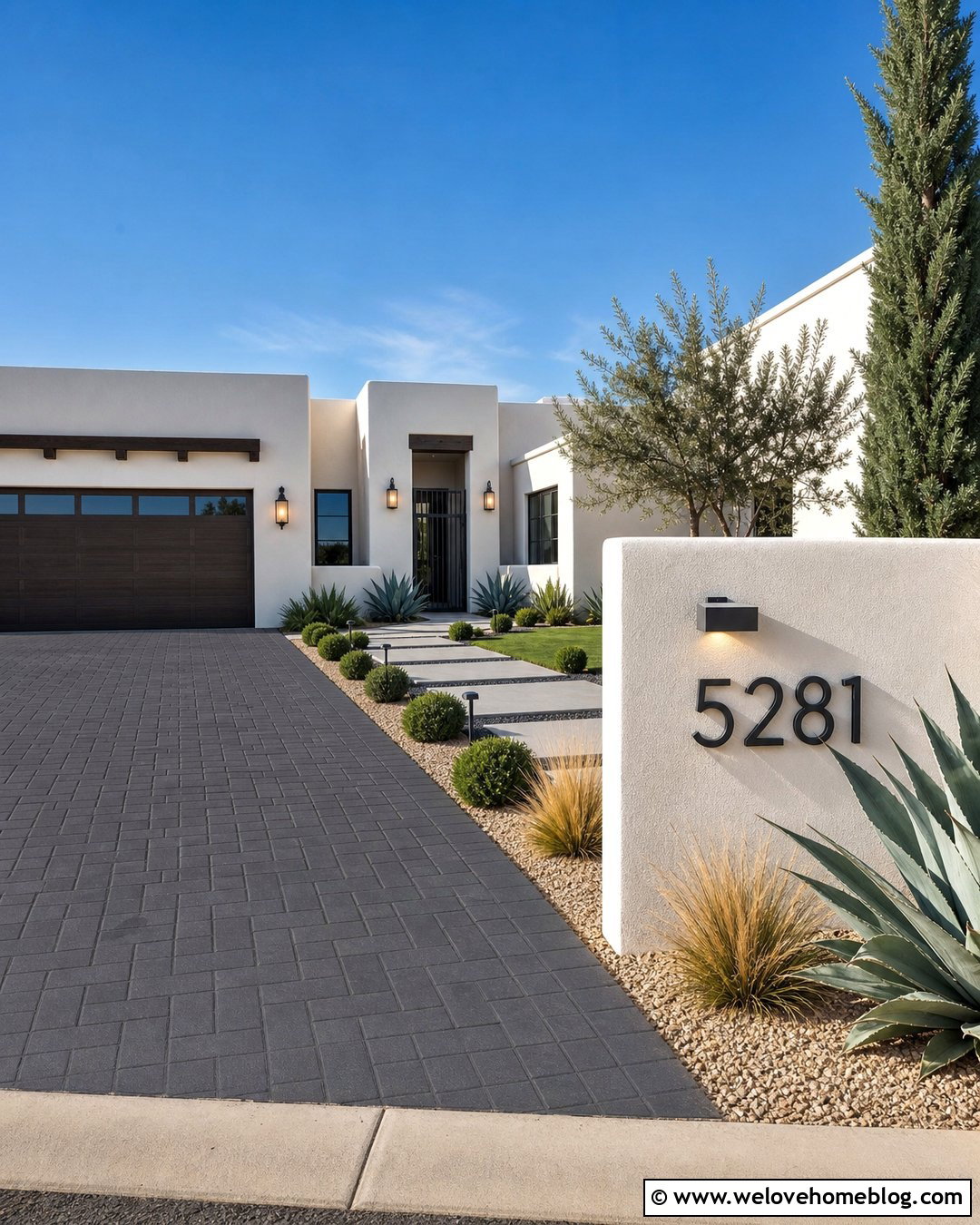
10. Brick Driveway With Brick Retaining Wall
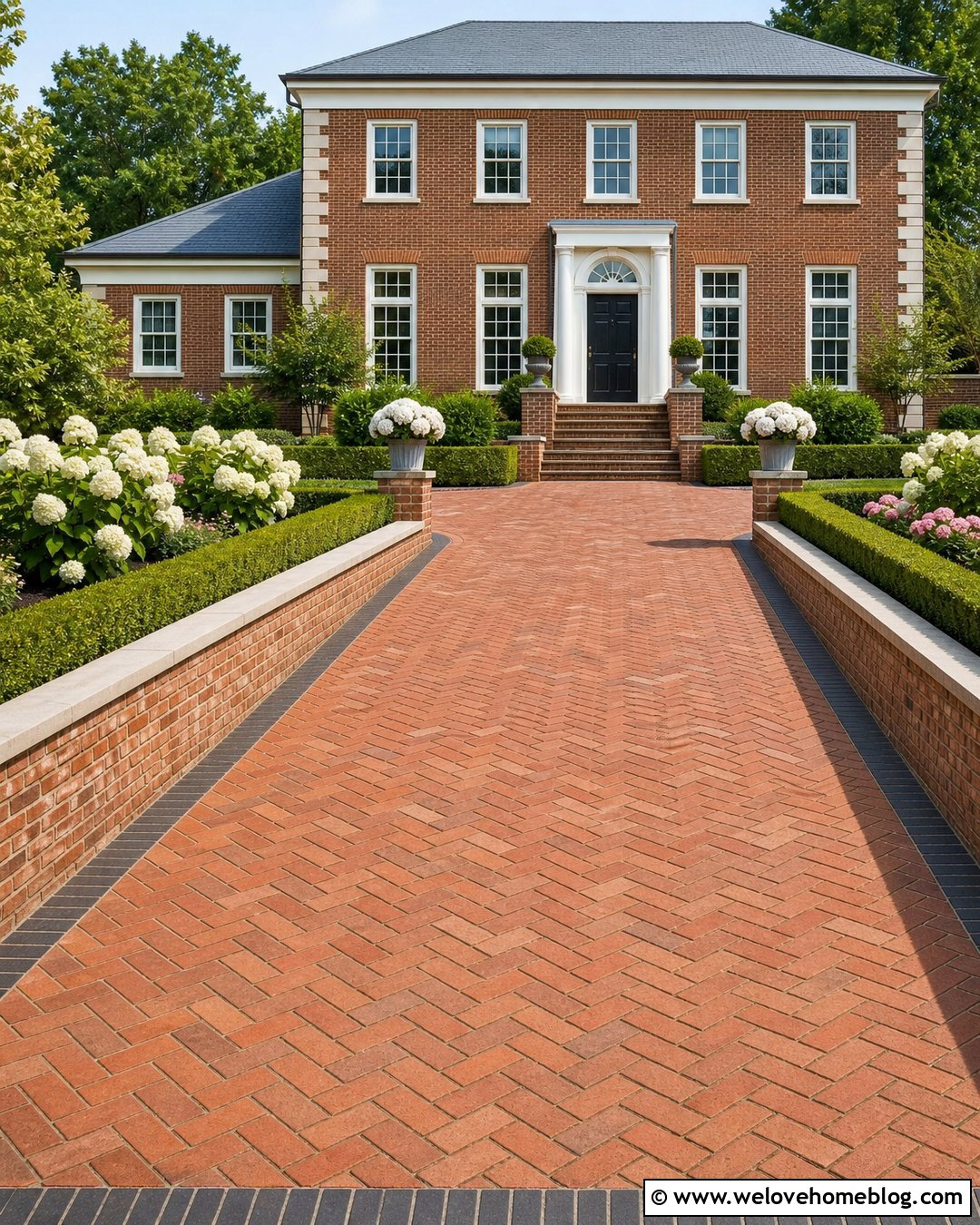
Red clay brick creates a warm, established look that pairs beautifully with Colonial, Georgian, and traditional homes. Install brick driveway pavers in a herringbone pattern for visual movement, then use coordinating masonry brick for the retaining wall. A dark brick border can define the driveway edges and prevent the large surface from feeling monotonous. Cap the wall with limestone or cast-stone coping to introduce a lighter accent. Above it, arrange formal hedges, white flowering shrubs, and tidy seasonal planting. Gentle wall curves near the entrance can soften the otherwise symmetrical design. Repeat the limestone at the front steps or gate pillars for consistency. Properly placed drainage openings should remain visually discreet while helping the masonry assembly function as intended.
11. Farmhouse Gravel Driveway With Timber Retaining Wall
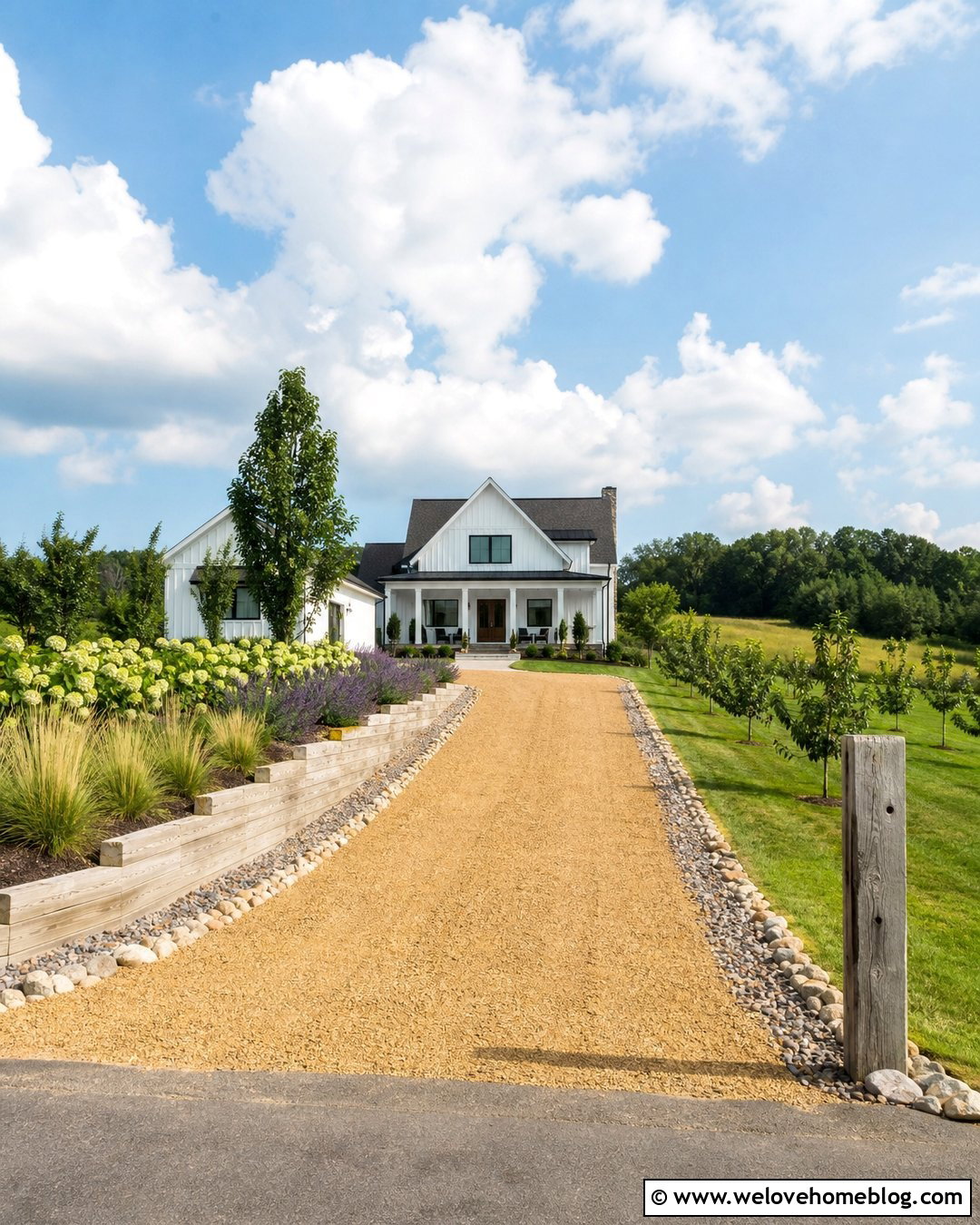
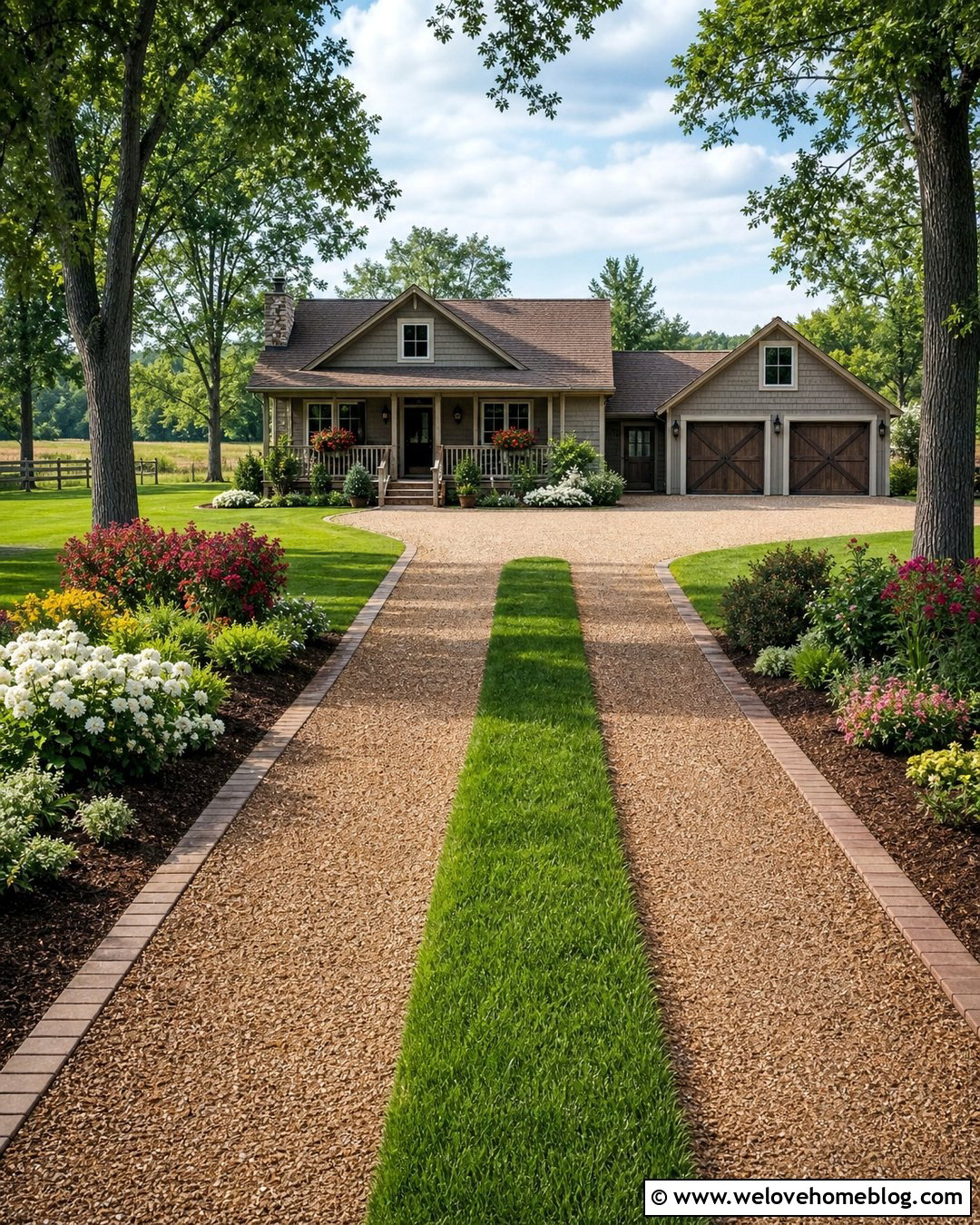
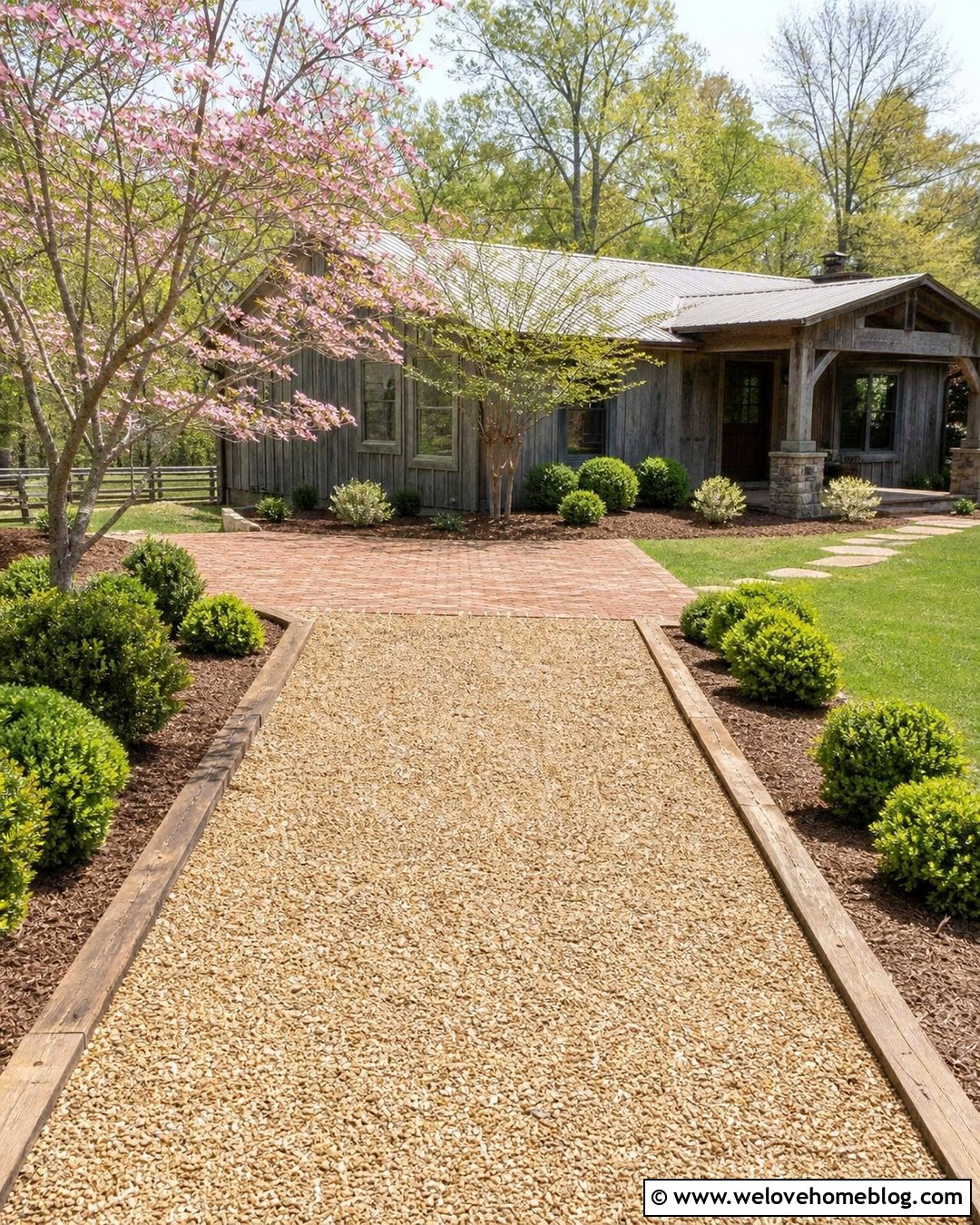
A timber retaining wall gives a farmhouse gravel driveway an informal, practical character. Use compacted tan crushed gravel for the driveway and pressure-treated landscape timbers for a low wall along the raised garden side. Stagger the timber courses and step them down with the slope to keep the structure visually connected to the land. Add a simple gravel drainage strip between the driveway and wall. Above it, plant hydrangeas, salvia, ornamental grasses, and compact fruit trees for a loose country garden effect. A weathered timber address post can repeat the wall material at the entrance. Define the opposite driveway edge with larger fieldstones or a mown grass border. This combination feels especially natural beside a white modern farmhouse, ranch house, or renovated country cottage.
12. Driveway With Gabion Retaining Wall
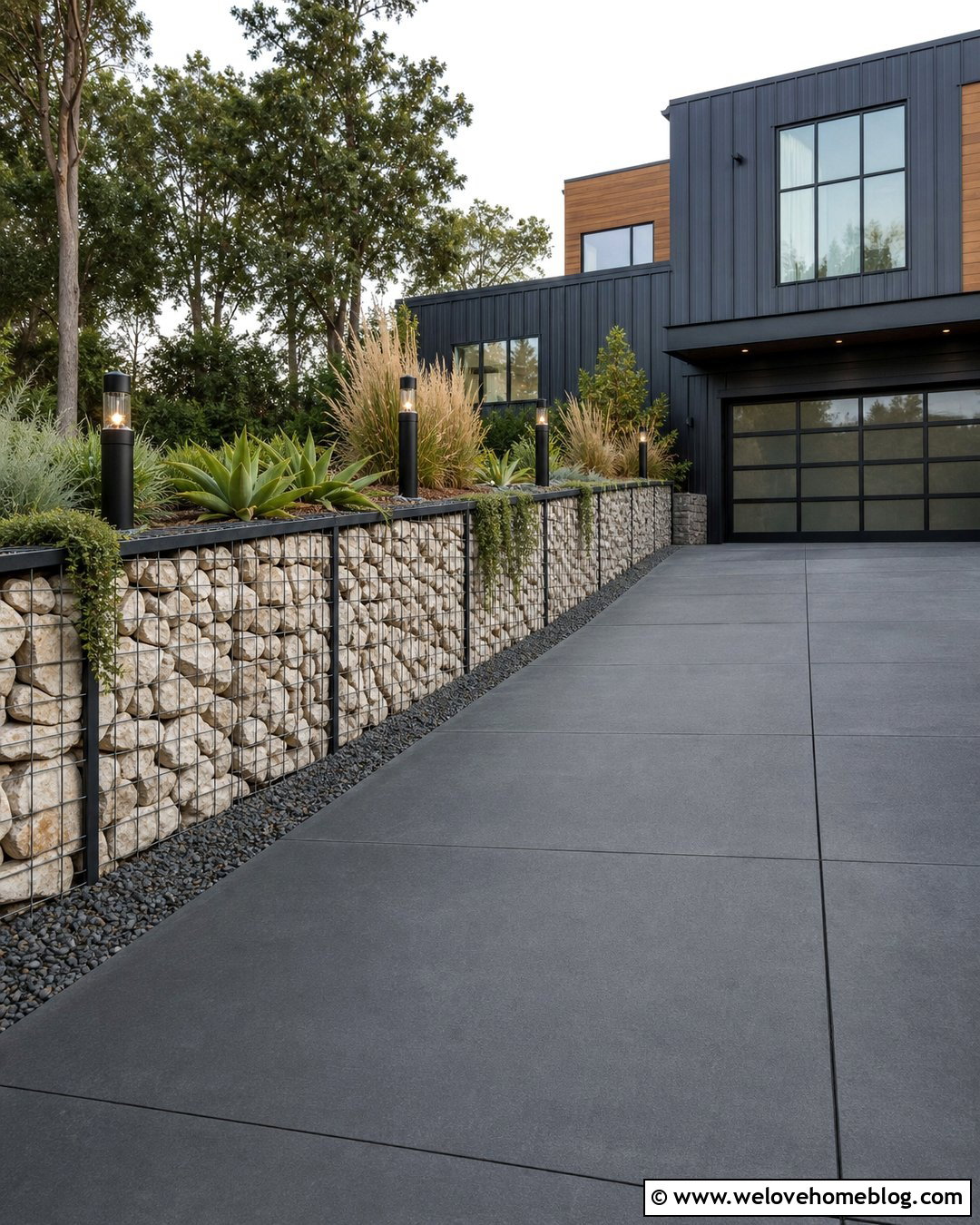
A gabion retaining wall introduces strong texture while giving a modern or industrial-style property a distinctive entrance. Pair it with a smooth charcoal concrete driveway or medium-gray permeable pavers. Fill the metal cages with angular stones that coordinate with the house facade, such as pale limestone, dark basalt, or mixed river rock. Keep the cages aligned in clean horizontal sections along the higher driveway edge. A gravel strip at the base provides a neat visual transition and prevents plants from crowding the structure. Above the wall, use simple masses of ornamental grasses, succulents, and low evergreen shrubs. Black bollard lights can echo the metal framework. For a softer appearance, allow a few controlled trailing plants to spill over selected areas without hiding the stone texture.
13. Driveway With Retaining Wall Planters
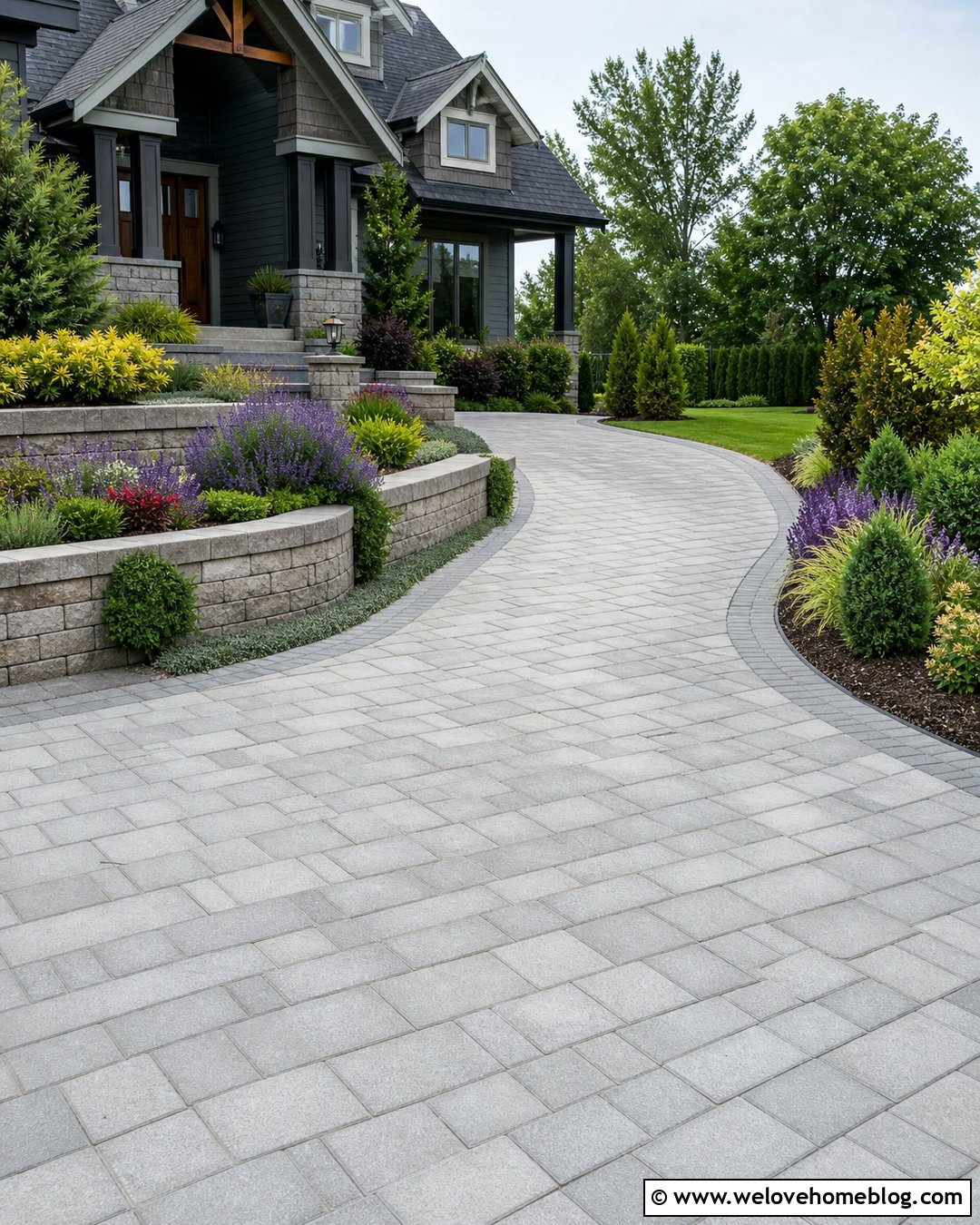
Built-in planters can transform a structural wall into a lush part of the front landscape. Start with a light gray paver driveway that curves gently toward the garage. Build a two-level concrete block retaining wall along the slope, leaving wide planting sections between the upper and lower courses. Use compact evergreen shrubs as the permanent framework, then add lavender, salvia, sedges, and seasonal flowers for color. Trailing plants along the wall cap soften the transition without spreading into the driving area. Repeat the driveway border pavers around each planter for a unified finish. An integrated drip system can simplify watering and reduce overspray on the driveway. Keep plants low near the street and inside curves, where open views are important for safe navigation.
14. Driveway With Retaining Wall Steps
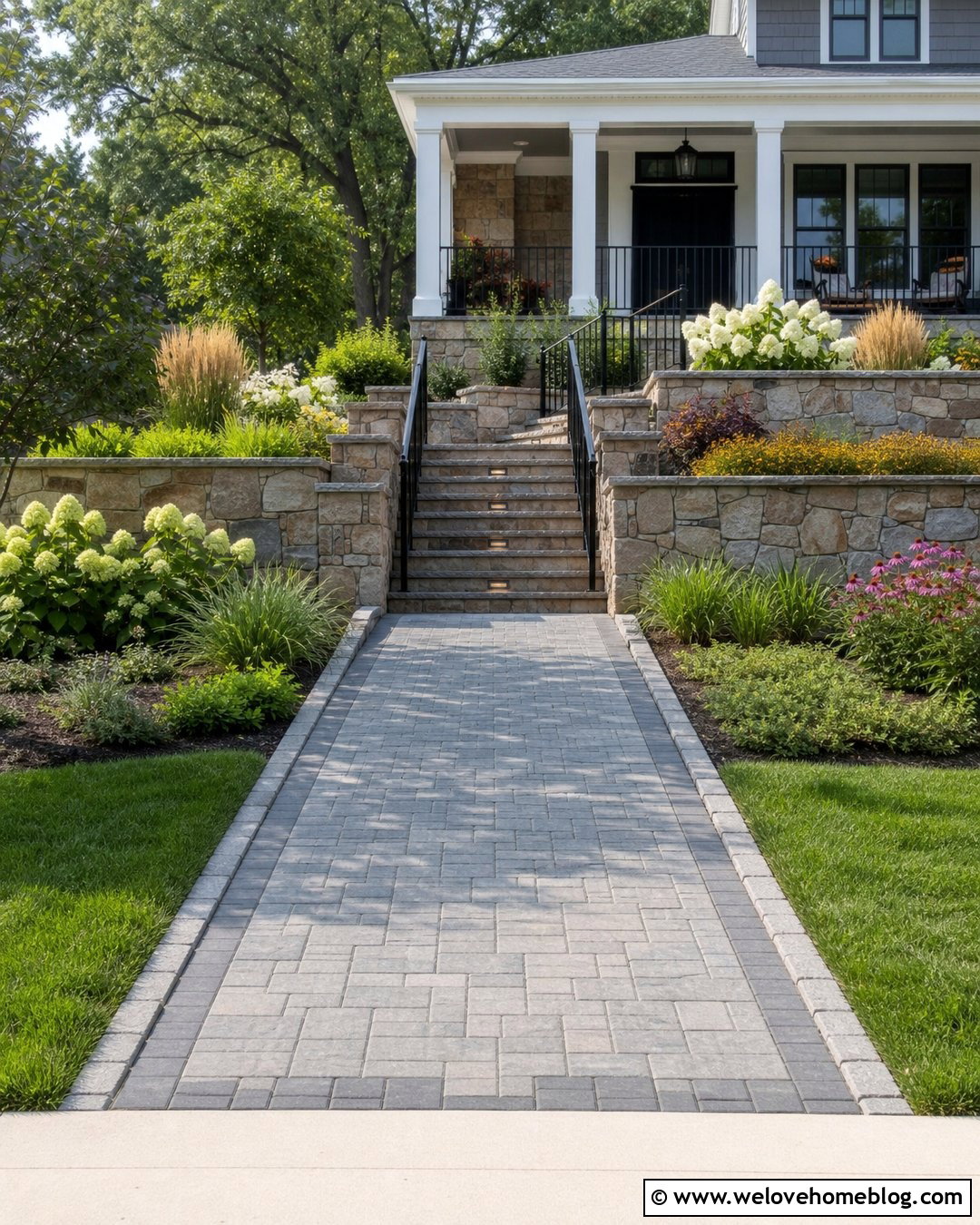
When the front door sits above the driveway, integrated steps can create a clear and attractive pedestrian route. Pair a medium-gray concrete paver driveway with a natural stone retaining wall built into the raised front yard. Cut a broad staircase through the wall and align it with the porch or main walkway. Use matching stone for the risers and slip-resistant pavers for the treads. Low wall sections on both sides can frame the stairs and double as planting edges. Add handrails where required, choosing a simple black metal design that works with many house styles. Layer ornamental grasses, flowering shrubs, and ground cover beside the steps. Recessed stair and wall lighting improves visibility while preserving a clean daytime appearance and cohesive curb view.
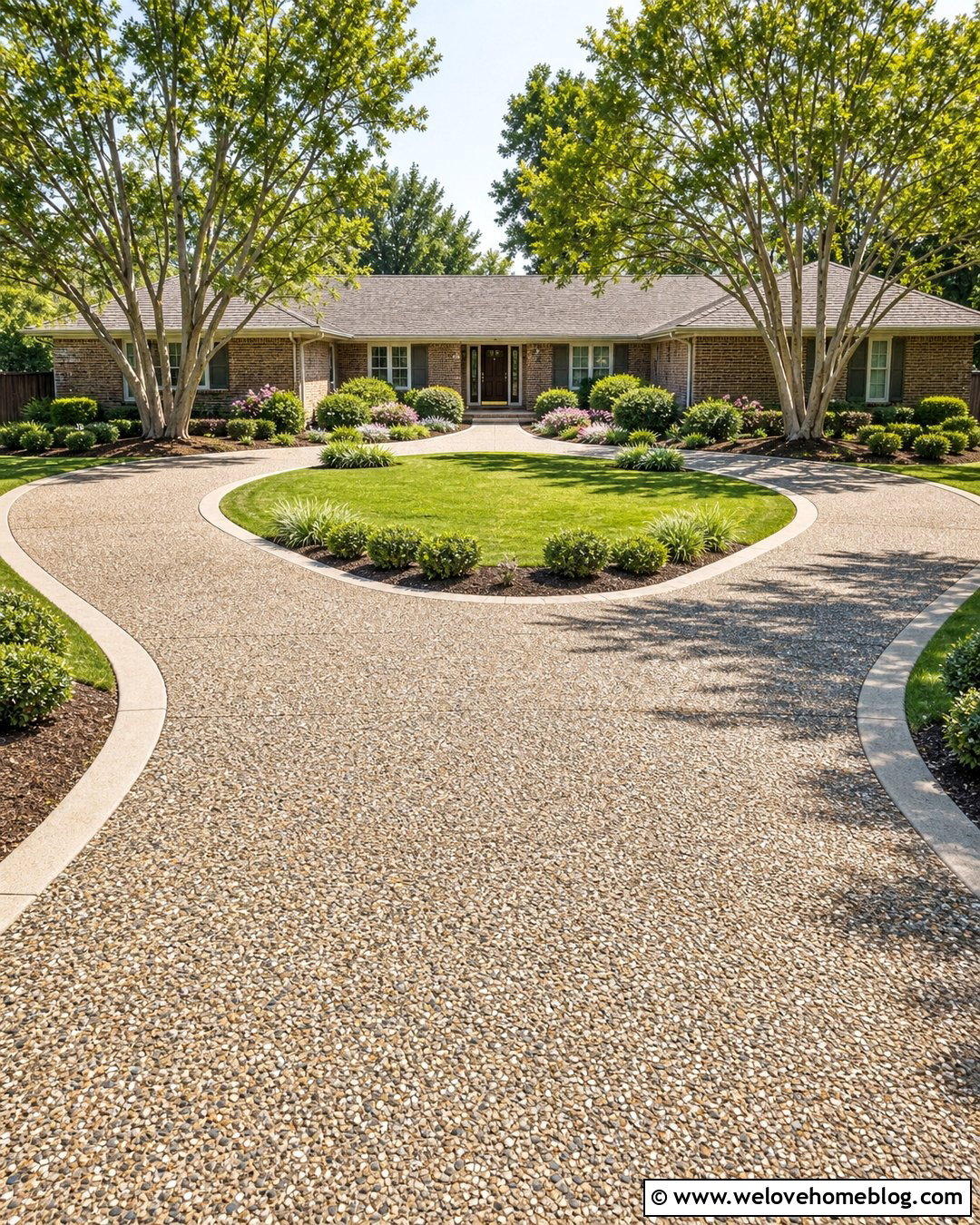
15. Driveway With Retaining Wall Lighting
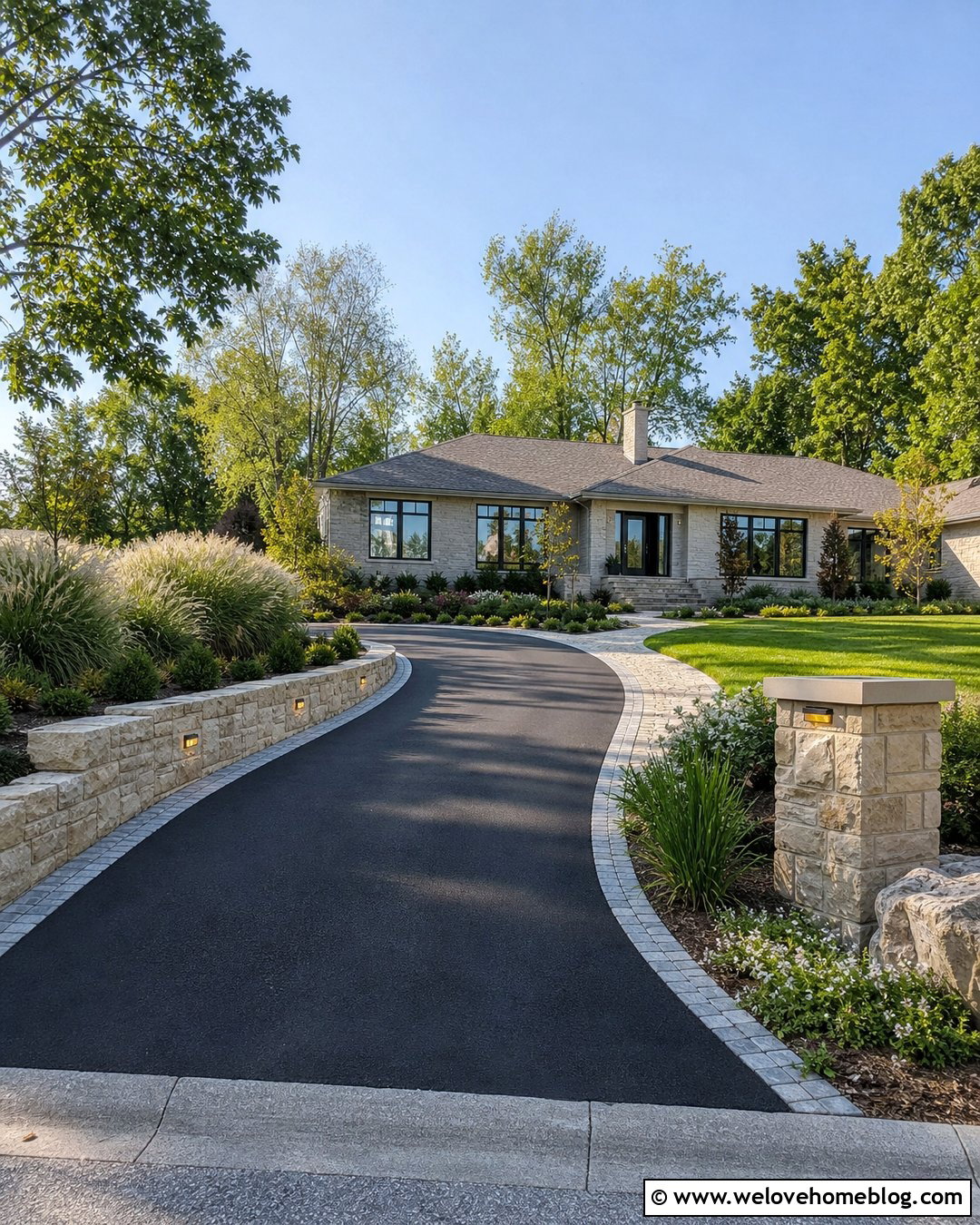
Integrated lighting helps a retaining wall define the driveway edge without filling the landscape with visible fixtures. Choose a black asphalt driveway with a pale limestone wall for strong daytime contrast. Install small recessed lights at consistent intervals along the wall, aiming the light downward across the driveway border. Use warm but clear illumination that marks the route without creating glare. Continue the limestone into a low entrance wall and matching address monument for a connected design. Above the retaining wall, plant low evergreen shrubs and airy ornamental grasses that will not block the fixtures. A narrow cobblestone strip between the asphalt and masonry adds texture. During daylight, the simple stone, dark paving, and layered greenery provide just as much curb appeal as the lighting.
16. Driveway Entrance With Retaining Wall
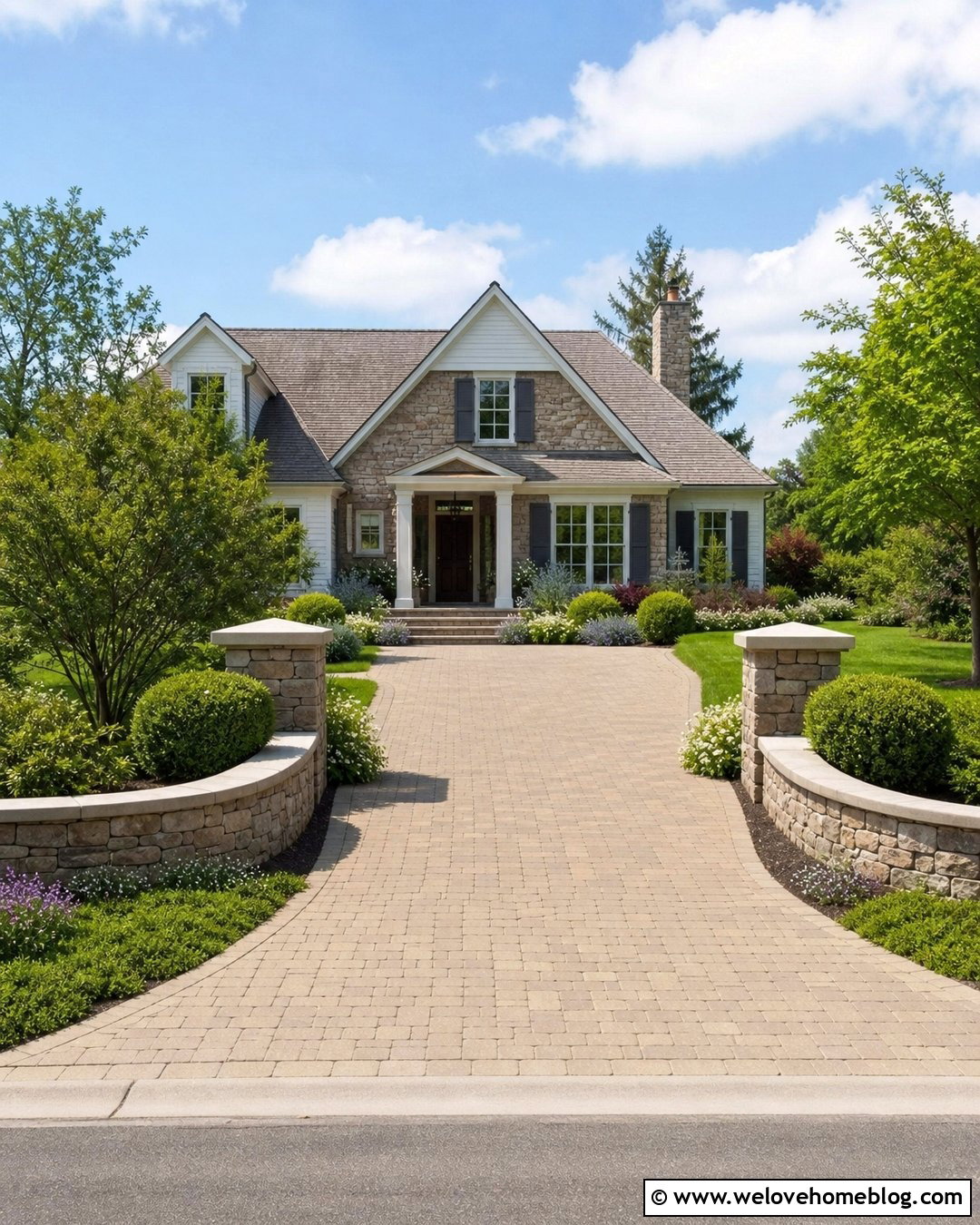
A driveway entrance feels more substantial when retaining walls curve outward toward the street and frame the approach. Use warm beige concrete pavers for a wide flared driveway, then build low fieldstone walls on both sides of the opening. If the property slopes, one wall can continue uphill while the other tapers into the lawn. Cap both with smooth stone for a finished edge. Plant low boxwood, flowering perennials, and creeping ground cover behind the masonry, keeping the immediate roadside area open. Stone columns can hold lanterns or a small address plaque without overwhelming the entrance. Repeat the wall stone in the driveway apron or border. This creates a complete arrival sequence that looks connected to the house rather than added as an afterthought.
17. Driveway With Retaining Wall And Fence
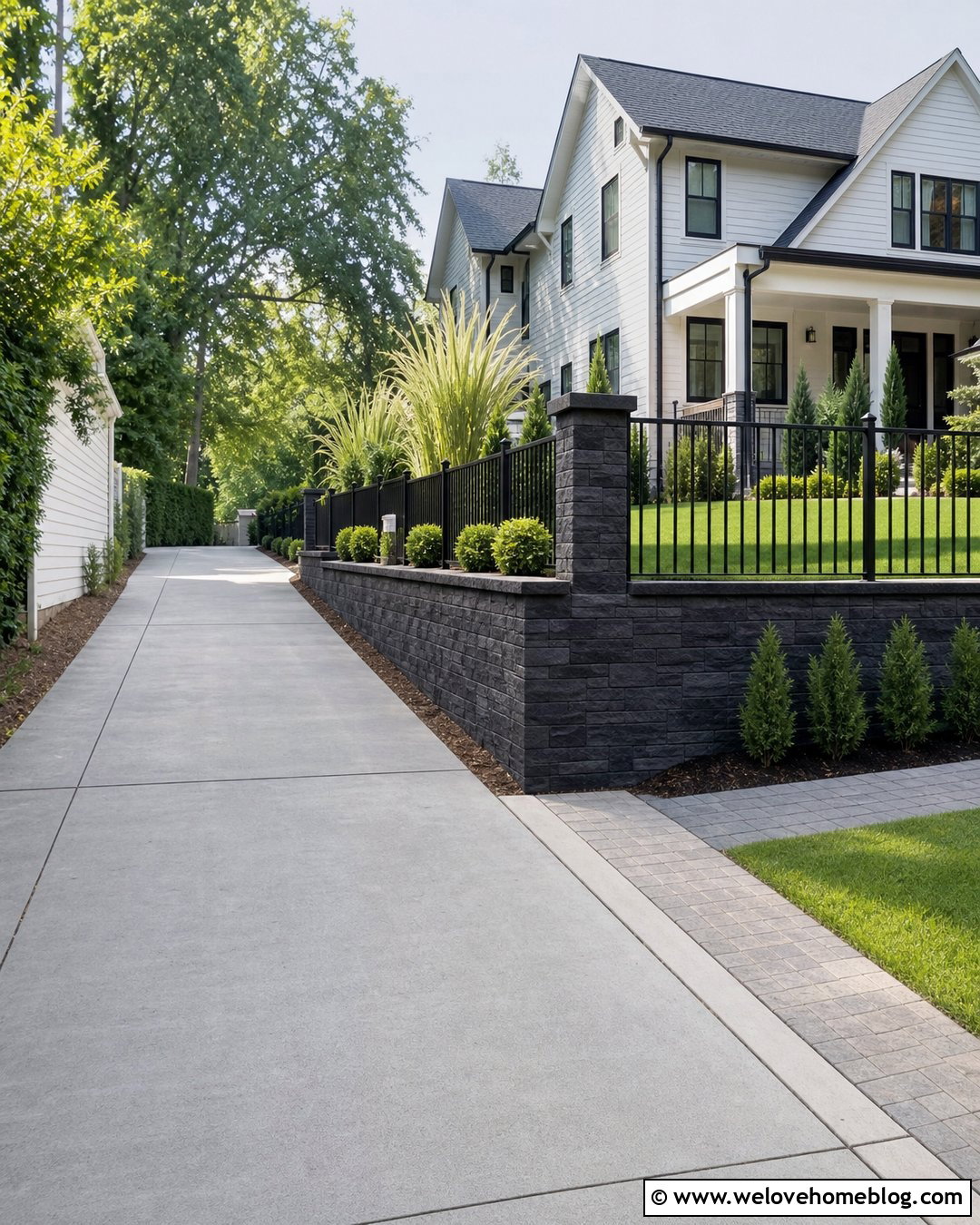
Combining a fence with a retaining wall provides separation while preserving valuable driveway width. Install a light gray poured concrete driveway beside a low split-face block wall. Mount a simple black metal fence behind or above the wall, subject to the structural design and local requirements. The open pickets keep the boundary visually light and allow views into the planted yard. Use darker wall caps to coordinate with the metal. A narrow bed of upright grasses and compact shrubs behind the fence adds movement without leaning into the driveway. Continue the fence toward the front walkway or side yard for a purposeful layout. At the road, lower the wall and fence gradually to maintain open sightlines and create a softer connection with the surrounding neighborhood.
18. Driveway With Retaining Wall And Gate
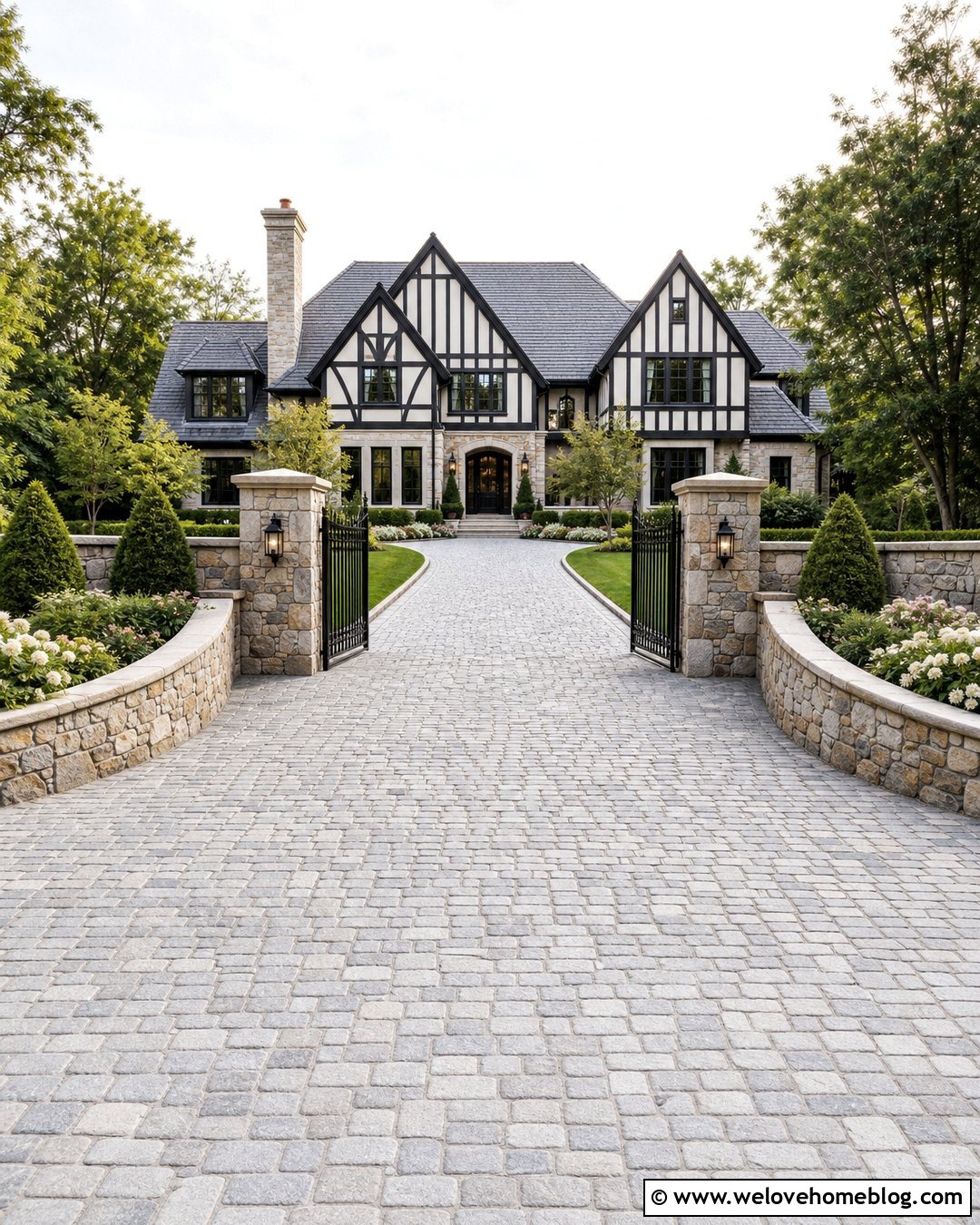
A gate can fit naturally into a retaining wall design when the materials and proportions are planned together. Use a wide cobblestone driveway with low stone walls that curve inward from the entrance. Finish the walls with substantial square pillars that support a black metal swing or sliding gate. If the land rises beside the driveway, extend one wall along the slope and gradually step it toward the house. Plant clipped evergreens and low flowering borders behind the masonry to soften the secure entrance. Keep operating equipment, drainage, and utility access visually discreet but easy to service. Repeat the gate’s black metal in house lights or railings. The stone, driveway pattern, wall, pillars, and landscaping should read as one coordinated composition from the curb.
19. Driveway With Terraced Garden Retaining Wall
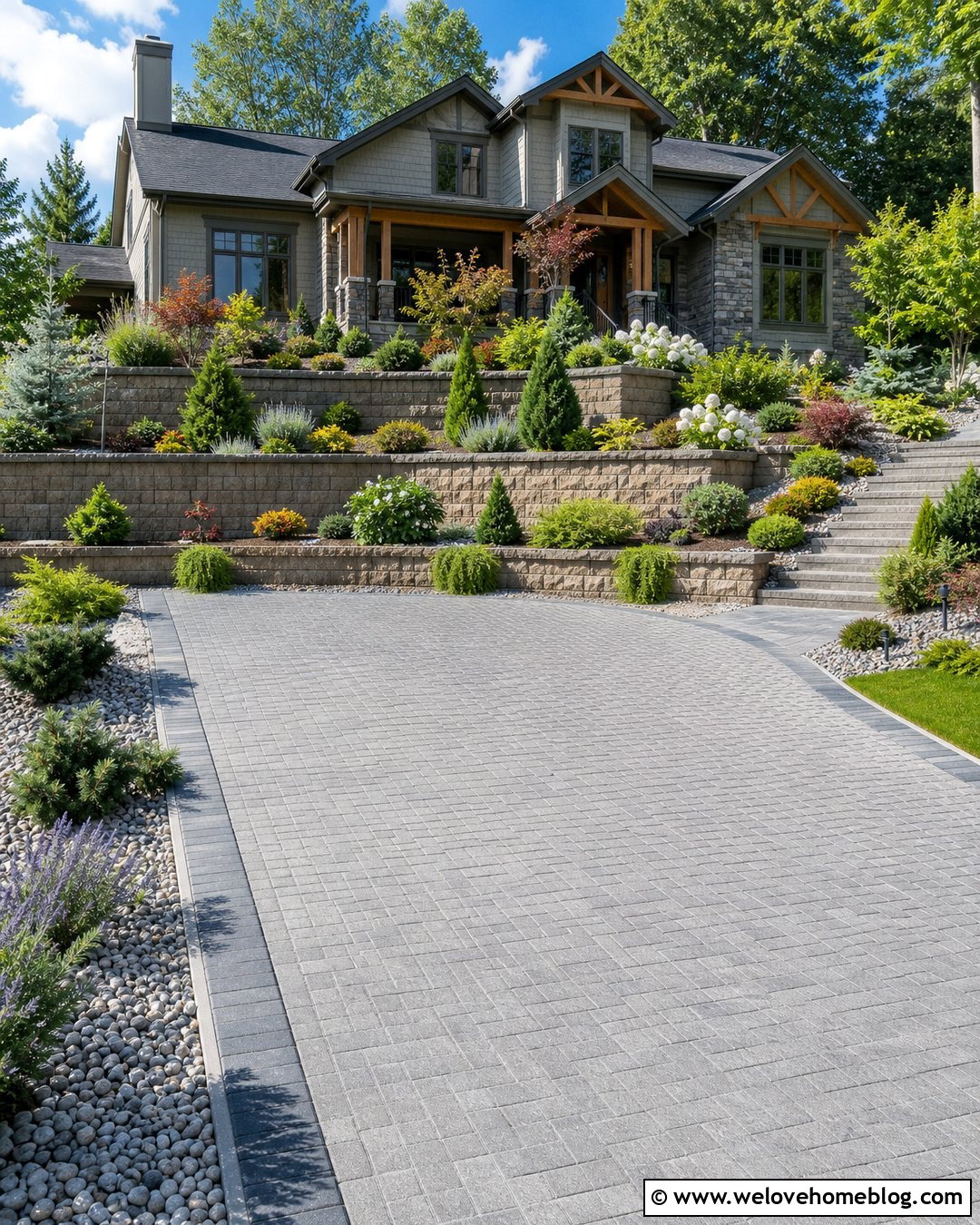
A terraced wall system can turn an awkward driveway slope into several attractive garden levels. Pair a permeable gray paver driveway with three low retaining walls made from warm tan concrete blocks. Stagger the terraces rather than placing them directly above one another, creating deeper planting pockets and a more natural rhythm. Use compact evergreens on the upper level, flowering shrubs in the middle, and trailing ground cover near the driveway. A stone staircase can connect the terraces to the front walkway. Carry the tan wall color into the driveway border for unity. Mulch or decorative gravel helps distinguish the planting beds from the paving. This complete design brings softness and seasonal interest to a slope while keeping the driving surface clearly defined.
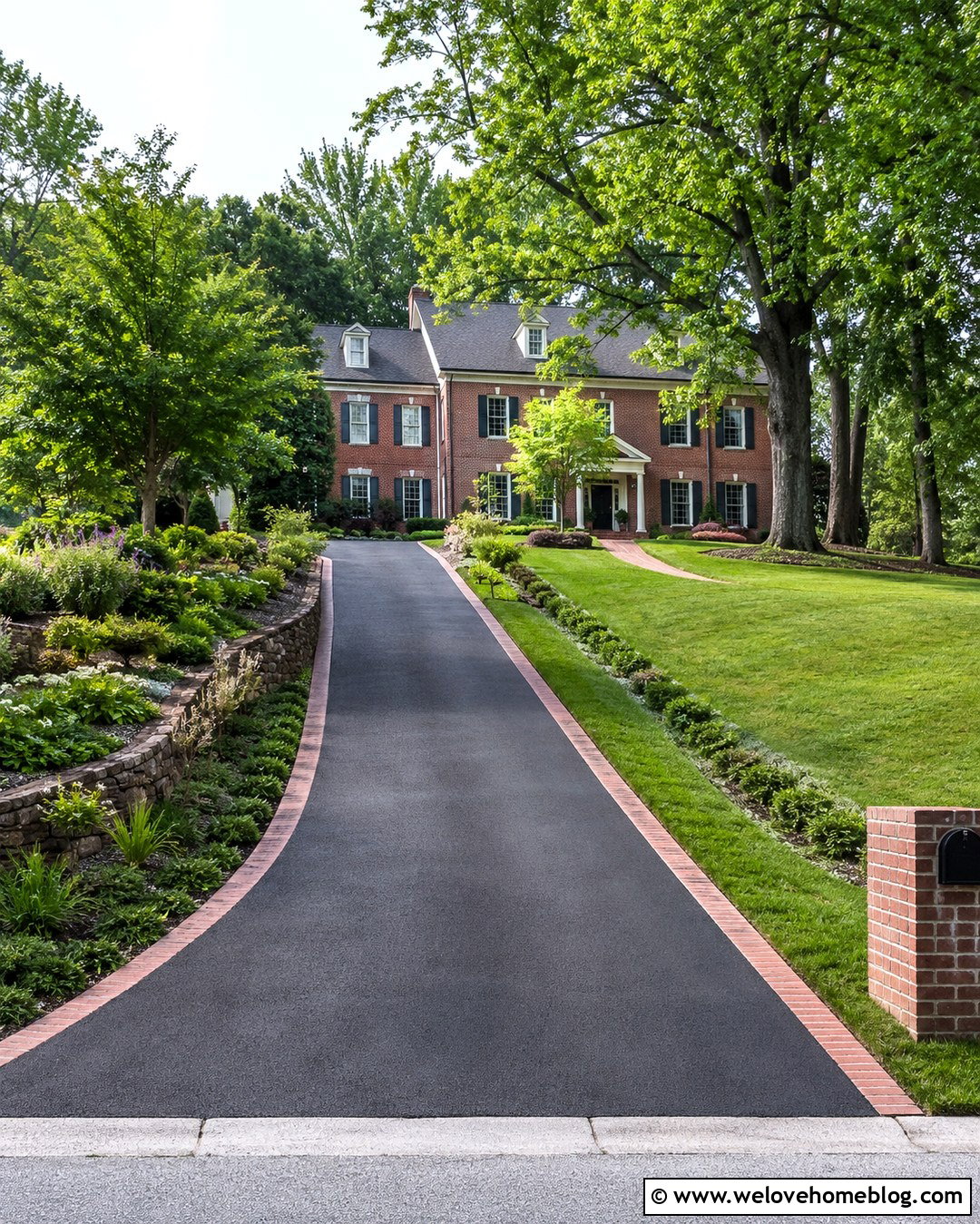
20. Driveway With Dry Stack Retaining Wall
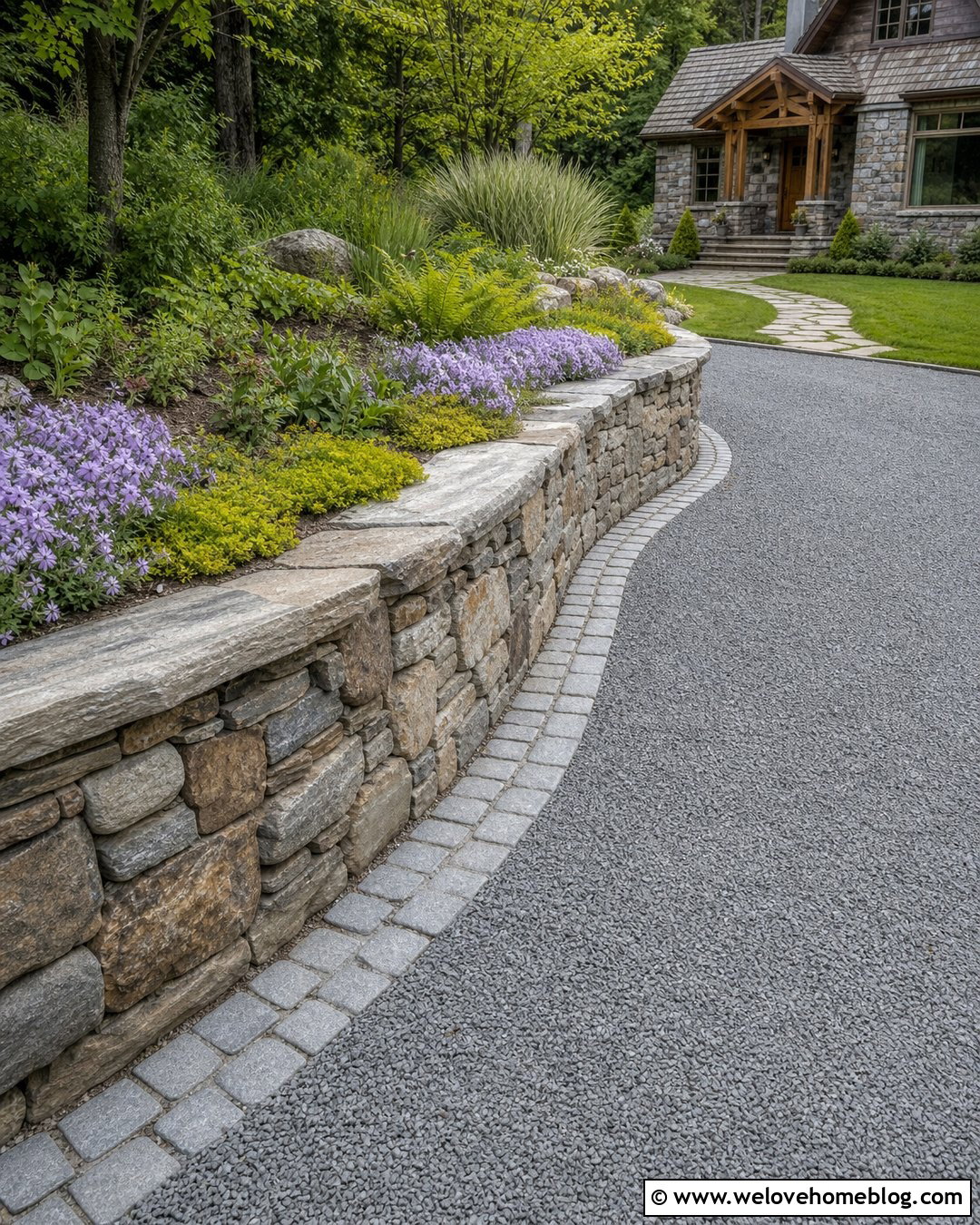
Dry-stacked stone gives a driveway wall a handcrafted character that works with cottage, Craftsman, and rustic homes. Use fine gray gravel or muted concrete pavers for the driveway so the irregular stone remains the visual focus. Build the wall from flat pieces of fieldstone in varied earthy tones, carefully fitted into a slightly tapered profile. Let the structure follow a gentle driveway curve and step down toward the street. Plant creeping phlox, sedum, ferns, and small grasses above the wall, allowing limited greenery to soften selected joints. A wide stone cap can provide a clean upper line. Add a flush cobblestone drainage strip at the driveway edge. Matching stone around the porch or walkway helps connect the wall to the house.
21. Driveway With Limestone Retaining Wall
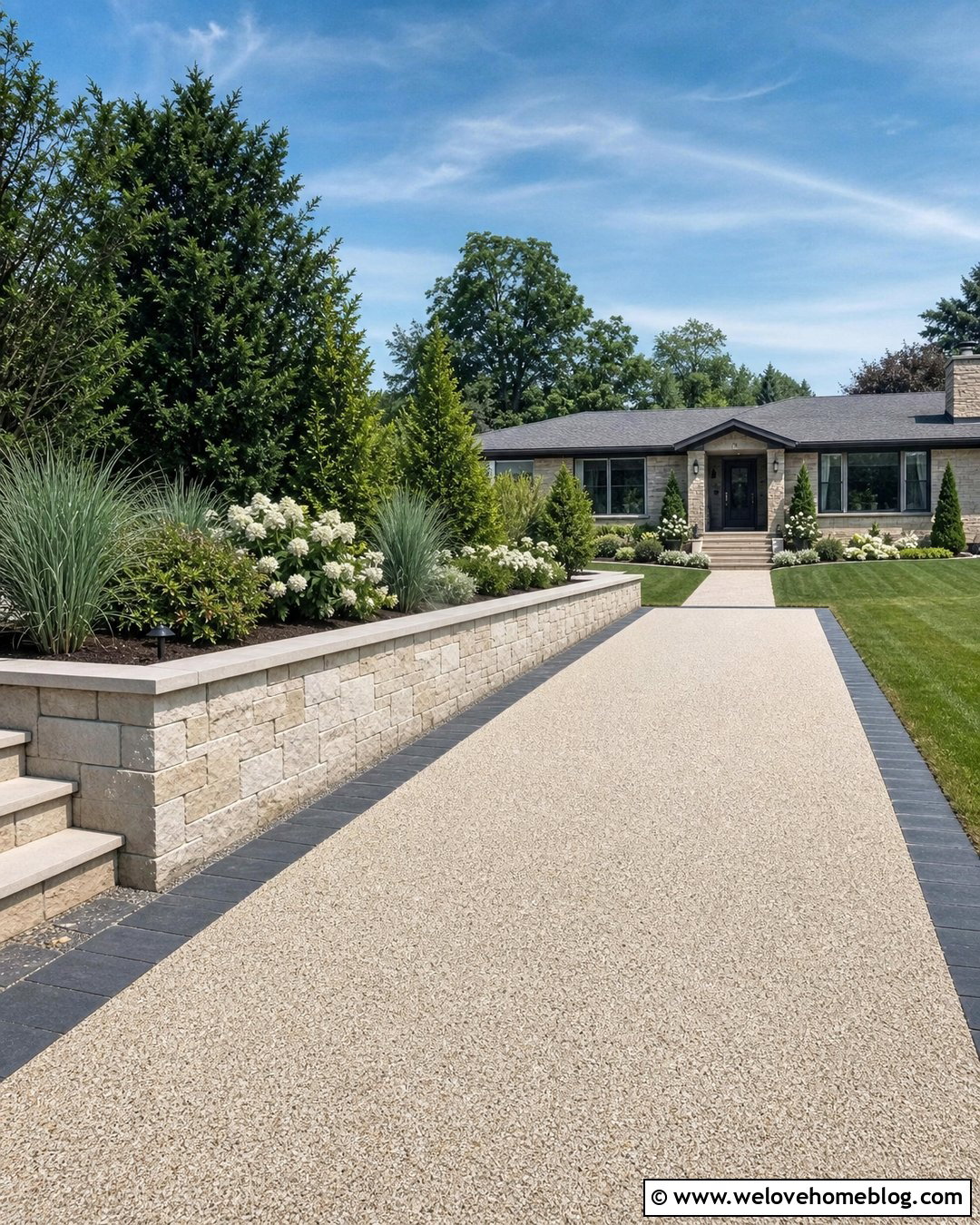
Pale limestone can brighten a driveway and give the entrance a refined but approachable appearance. Pair a cream resin-bound gravel driveway with a retaining wall made from rectangular limestone blocks. Use a smooth cap and carefully aligned joints for a clean architectural finish. A straight layout works well beside a contemporary ranch or updated traditional home, while a slight curve can accommodate an elevated lawn. Add a charcoal paver border around the driveway to ground the light palette. Above the wall, plant deep green evergreens, blue-green grasses, and white flowering perennials for crisp contrast. Repeat limestone on the front steps or mailbox base. Avoid overcrowding the wall with plants so its texture and horizontal lines remain visible from the street.
22. Driveway With Split Face Block Retaining Wall
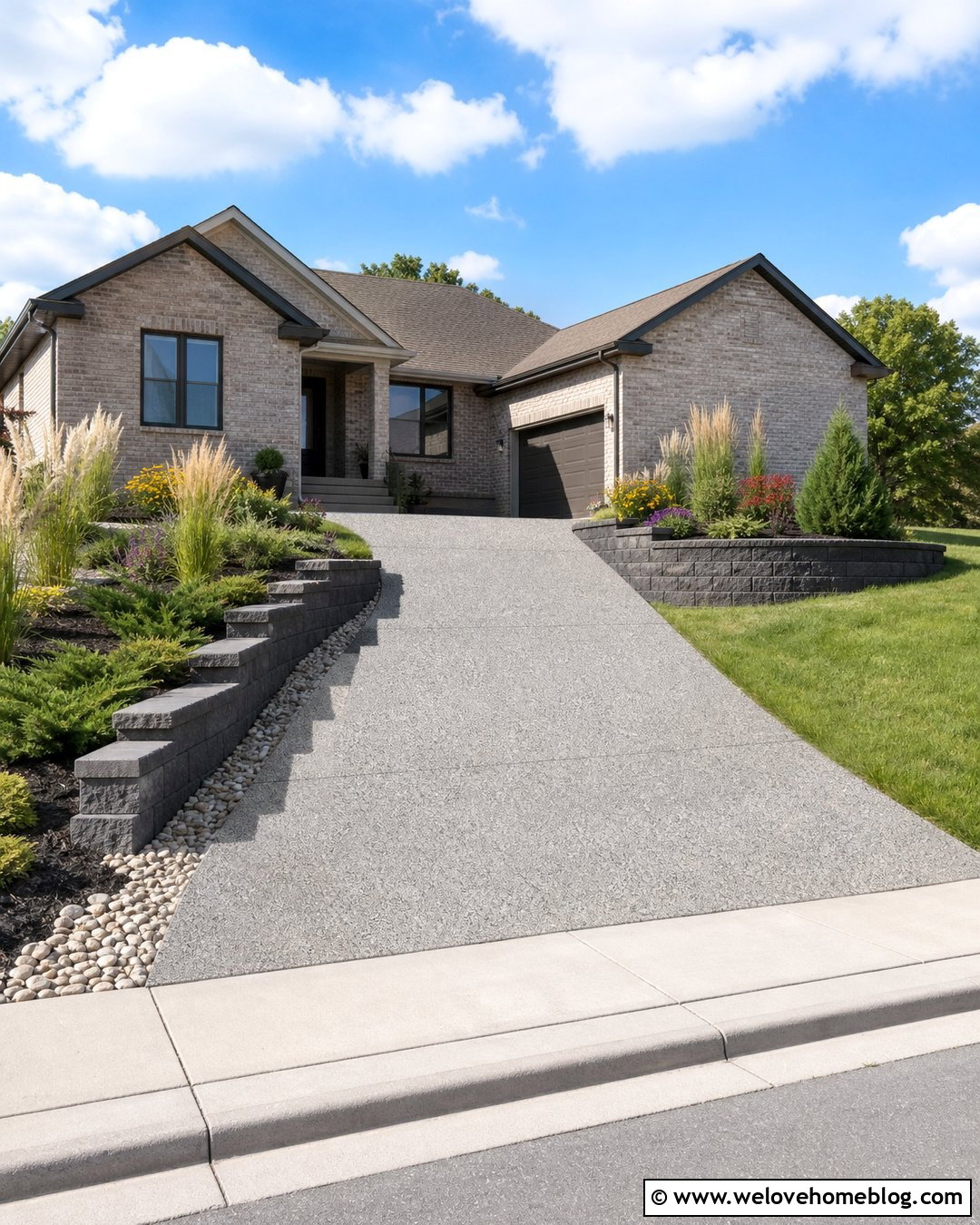
Split-face concrete block delivers noticeable texture without requiring an irregular stone layout. Use a medium-gray exposed aggregate driveway and select warm charcoal wall blocks with rough faces. Build the wall in stepped sections that rise gradually along the driveway, finishing each level with smooth matching caps. A thin strip of pale river rock between the driveway and wall creates separation and highlights the contrasting materials. Plant upright grasses, compact junipers, and colorful perennials above the structure. Include a wider planting pocket near the garage to soften the transition to the house. If the facade includes brick or stone, choose a block color that relates to those existing tones. The finished driveway will feel coordinated, practical, and visually layered rather than overly utilitarian.
23. Driveway With Corten Steel Retaining Wall
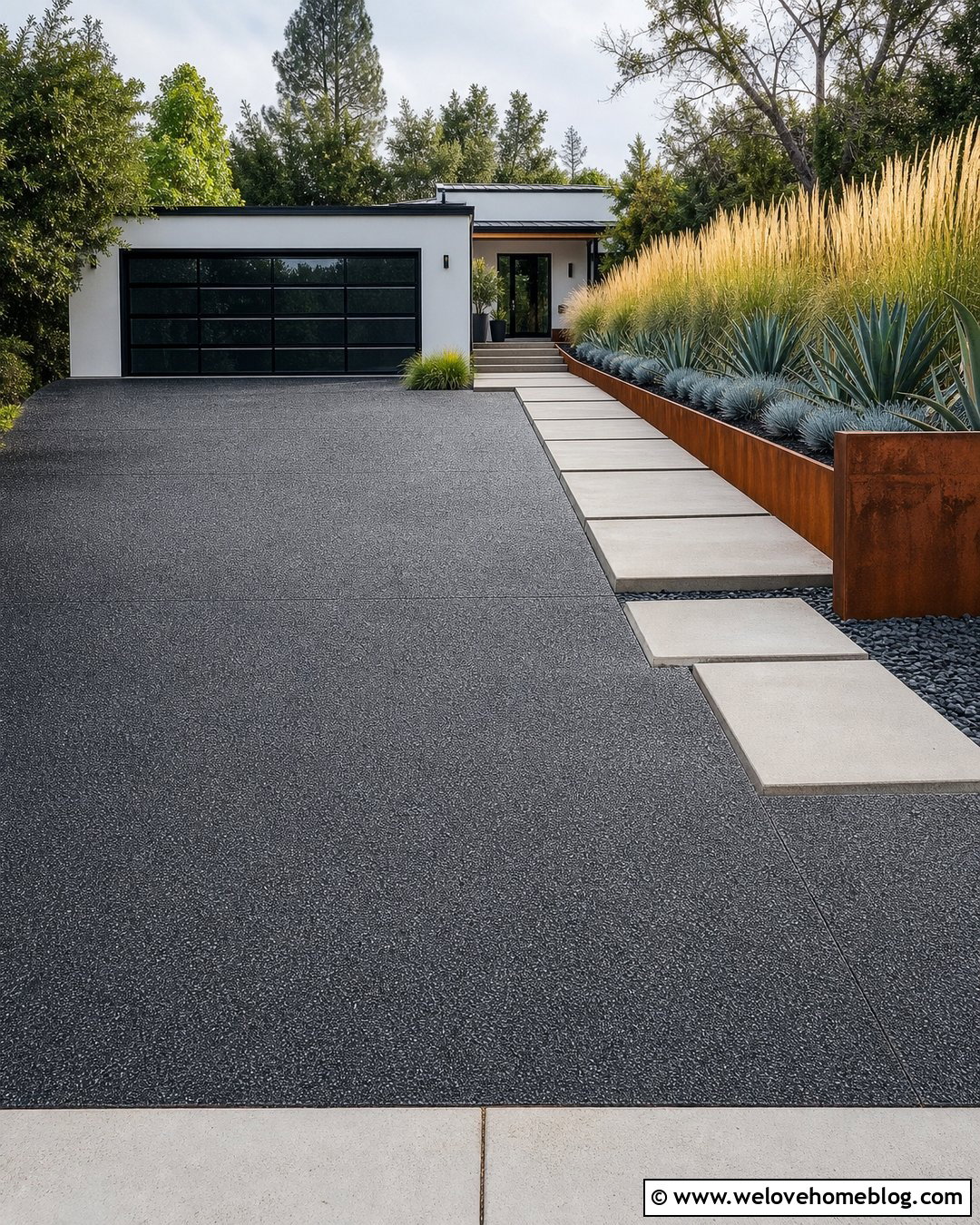
Weathered steel creates a slim retaining edge that works especially well with modern homes and tight driveway layouts. Pair a dark charcoal resin-bound gravel driveway with a long Corten steel wall along the elevated planting bed. Its rust-colored surface provides warmth against gray paving, white siding, or dark contemporary cladding. Keep the wall shape crisp, with one or two angular turns that follow the architecture. Plant blue fescue, feather reed grass, agave, and low ground cover above it for a restrained landscape. A narrow strip of black river stone at the base makes the transition look deliberate. Repeat the weathered steel in an address sign or planter near the entrance. The result is streamlined but still rich in color and texture.
24. Small Driveway With Budget Retaining Wall
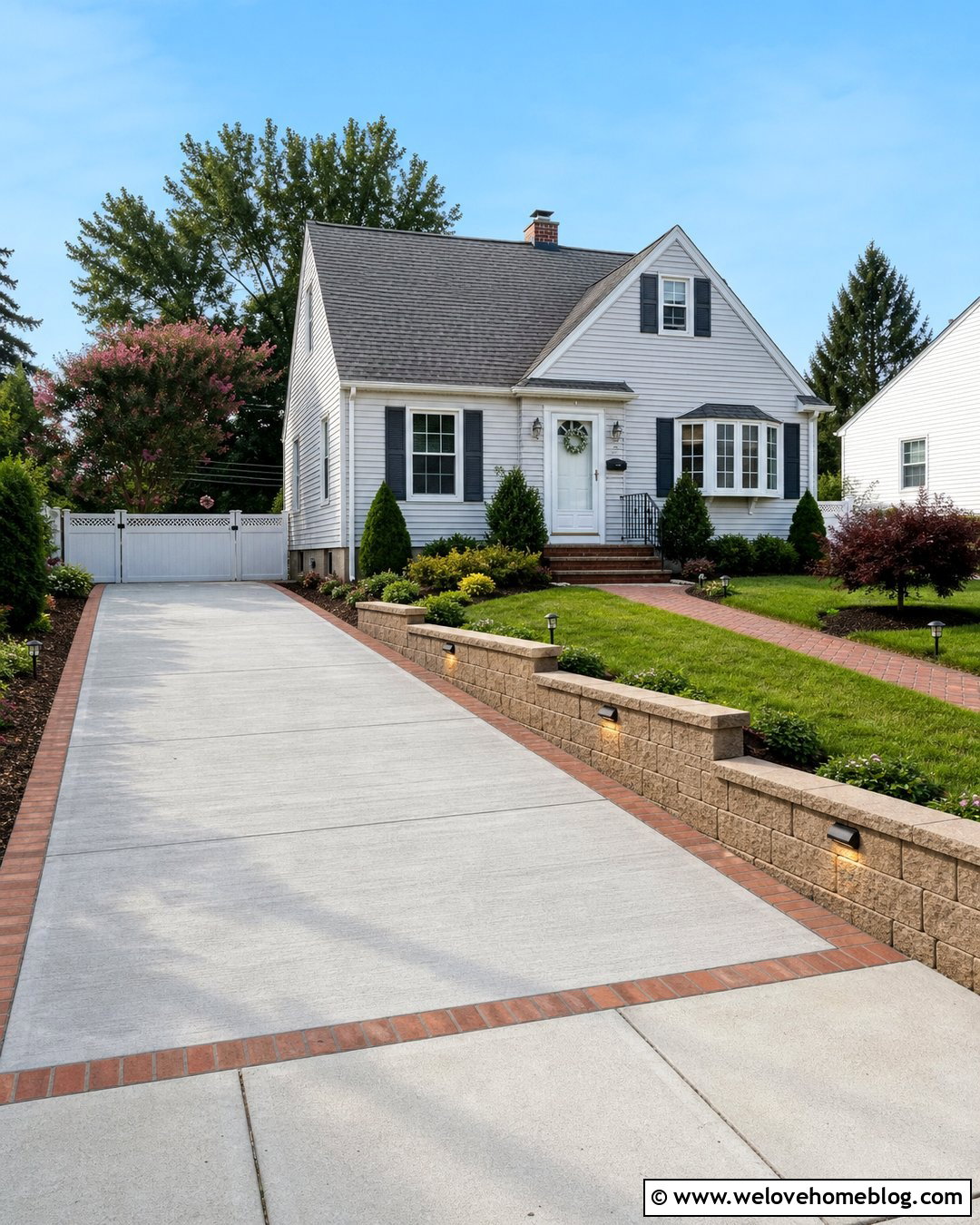
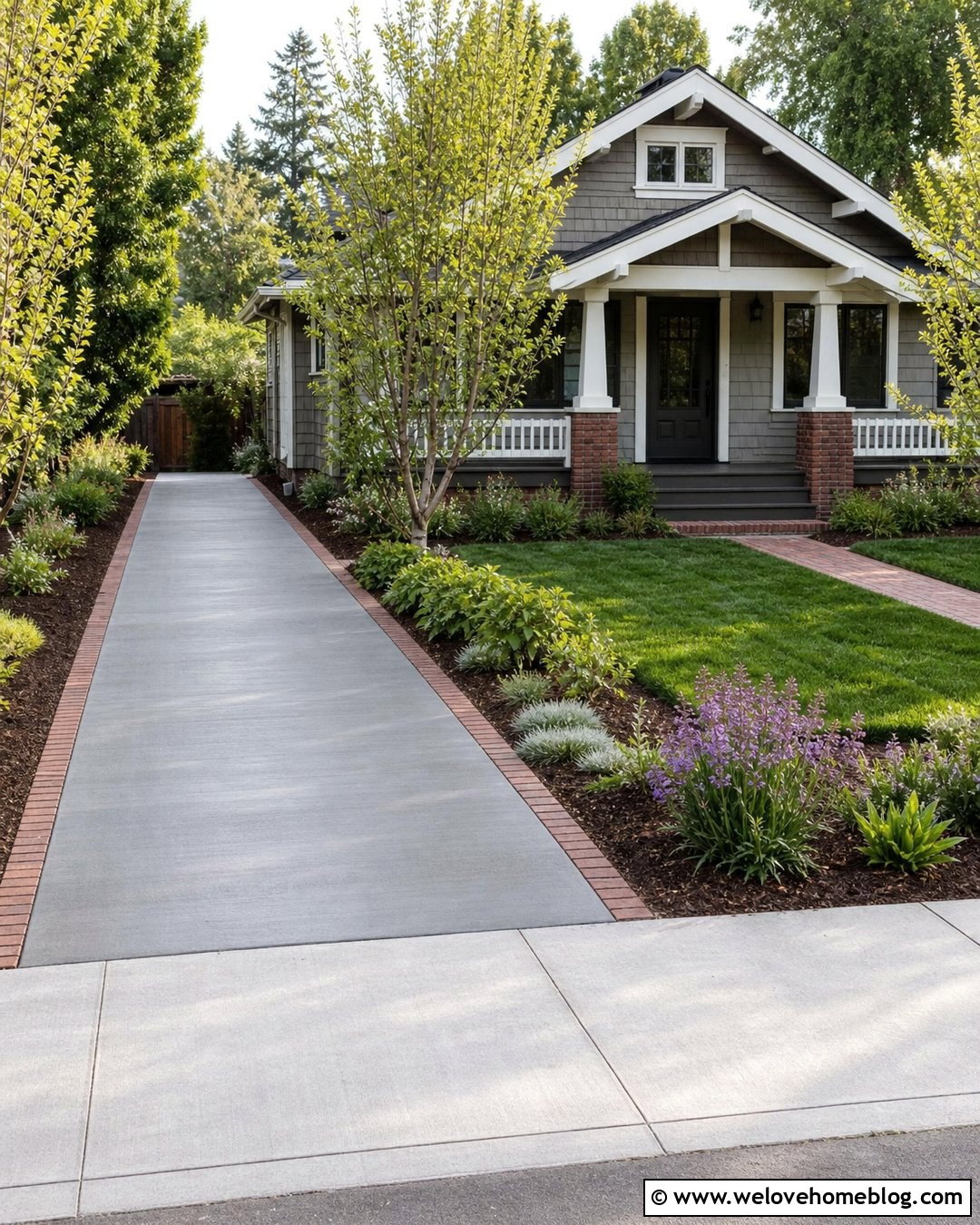
A compact driveway can look polished without using expensive materials across every surface. Choose practical gray concrete for the parking area and install a low retaining wall made from affordable interlocking landscape blocks. Limit the wall to the section that actually needs grade support, then taper both ends smoothly into the yard. Add a narrow red brick ribbon along the driveway edge to provide color and make the basic concrete feel more customized. Above the wall, use mulch, hardy ground cover, and a few compact shrubs instead of a complicated planting scheme. Solar-compatible wall lights may offer simple edge definition where appropriate. Repeating the brick around a short front walkway ties the entrance together. The restrained material palette also prevents a small front yard from feeling crowded.
25. Driveway Parking Pad With Retaining Wall
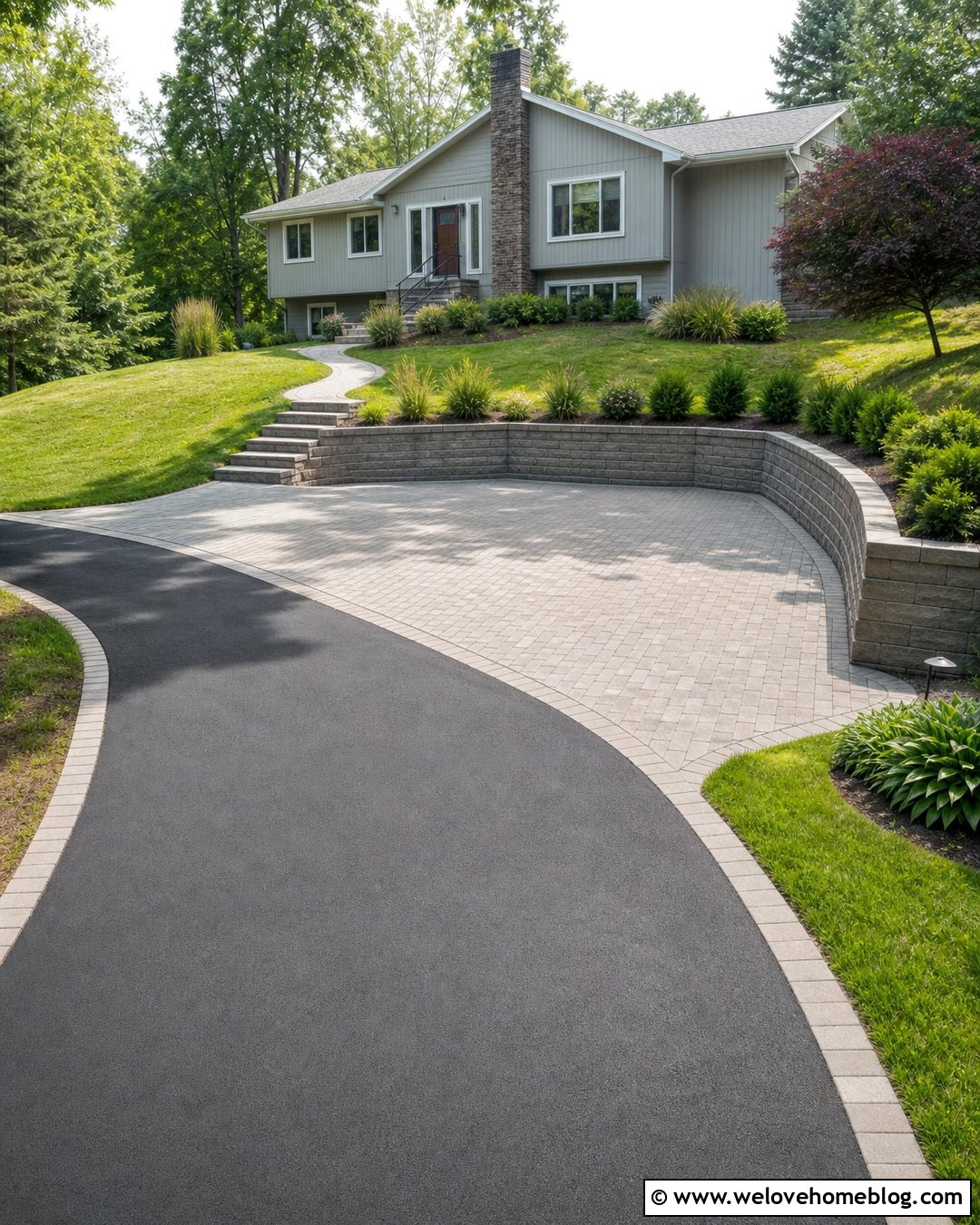
An extra parking pad can fit into a sloped yard when the retaining wall is treated as part of the overall design. Use permeable concrete pavers for a rectangular pad connected to a curved asphalt driveway. Build a sturdy segmental block wall around the uphill and rear edges, leaving the open side clear for easy vehicle movement. Choose warm gray blocks and repeat the same tone in a paver border around the pad. Plant low shrubs and ornamental grasses above the wall to screen the parking area without creating an enclosed feeling. A short path can connect the pad to the front entrance or side door. Keep the wall ends rounded or angled away from the driving lane, reducing visual bulk and improving the transition into the surrounding lawn.
Conclusion:
These 25 Driveway With Retaining Wall Ideas show how structural landscaping can become an important part of your home’s curb appeal. The strongest designs coordinate the driveway material, wall finish, slope, borders, lighting, planting, and house architecture. Natural stone offers an organic appearance, while concrete, block, steel, and gabion walls support more contemporary layouts. Terraces can soften steep grades, and low walls can provide definition on smaller properties. Before construction, evaluate drainage, underground utilities, vehicle clearance, soil conditions, and local permit requirements. Walls supporting driveways or substantial slopes may require professional engineering rather than a basic DIY approach. () With thoughtful planning, the finished entrance can feel secure, attractive, and fully connected to the surrounding landscape.

Related posts:



Leave a Reply