
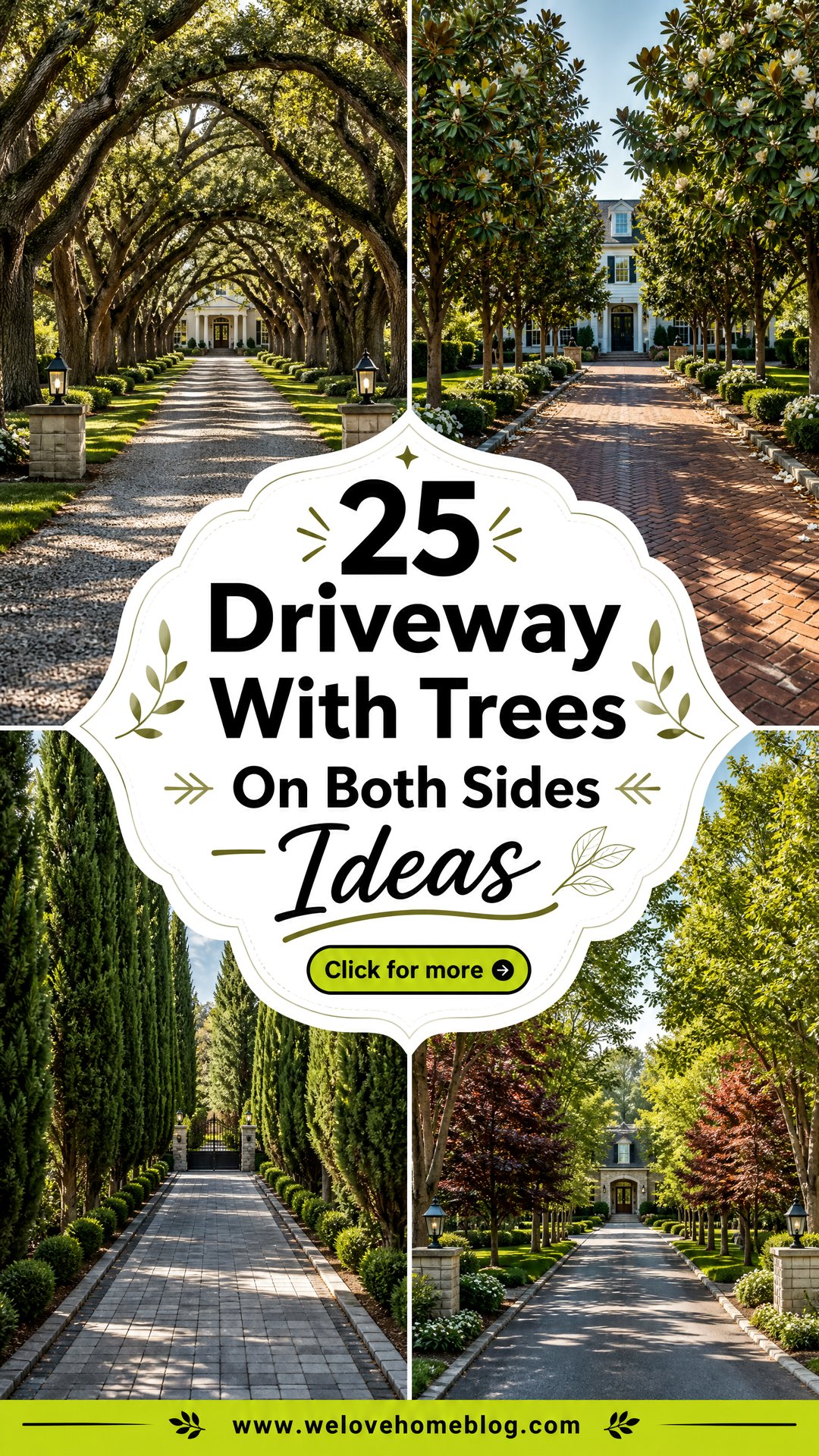
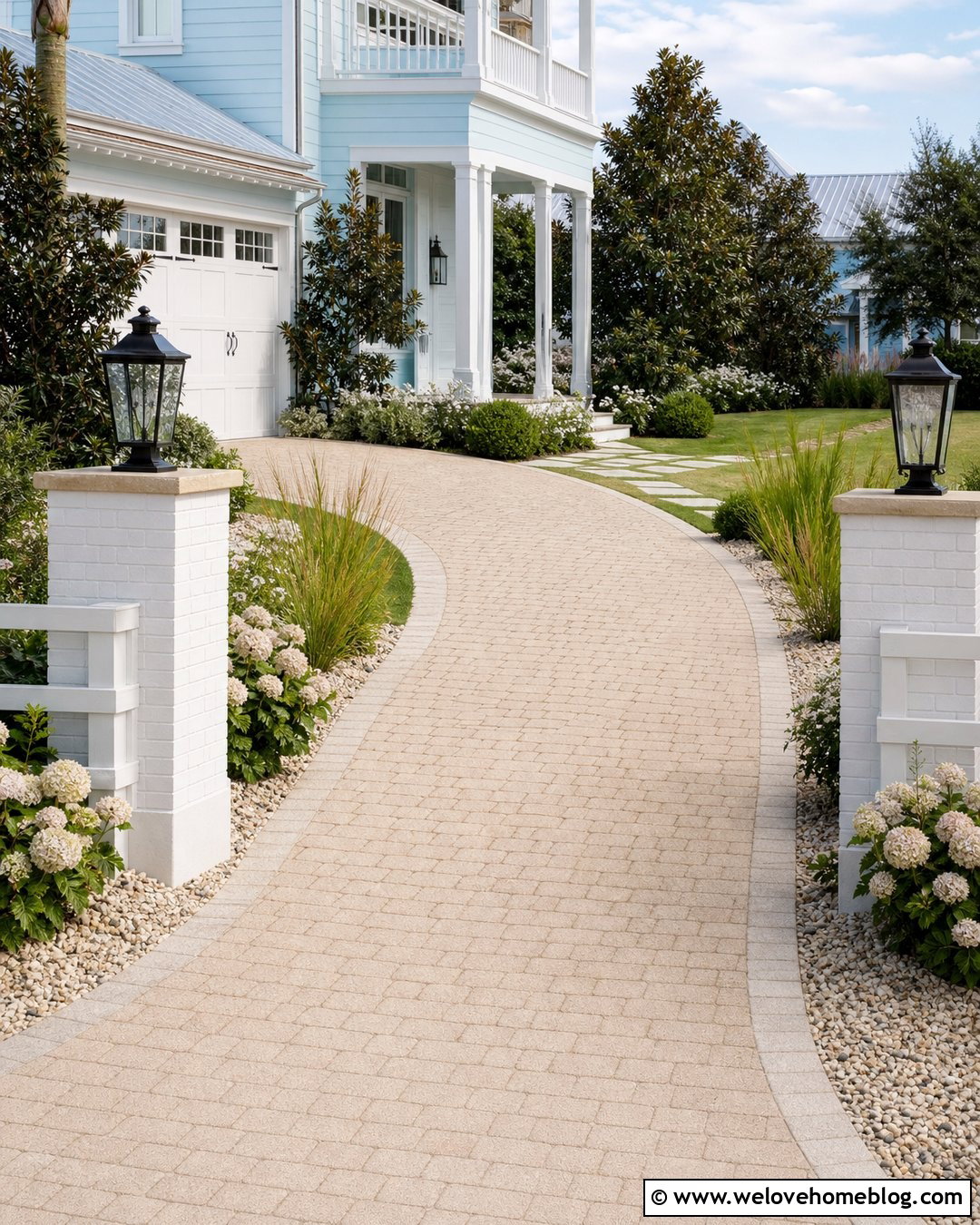
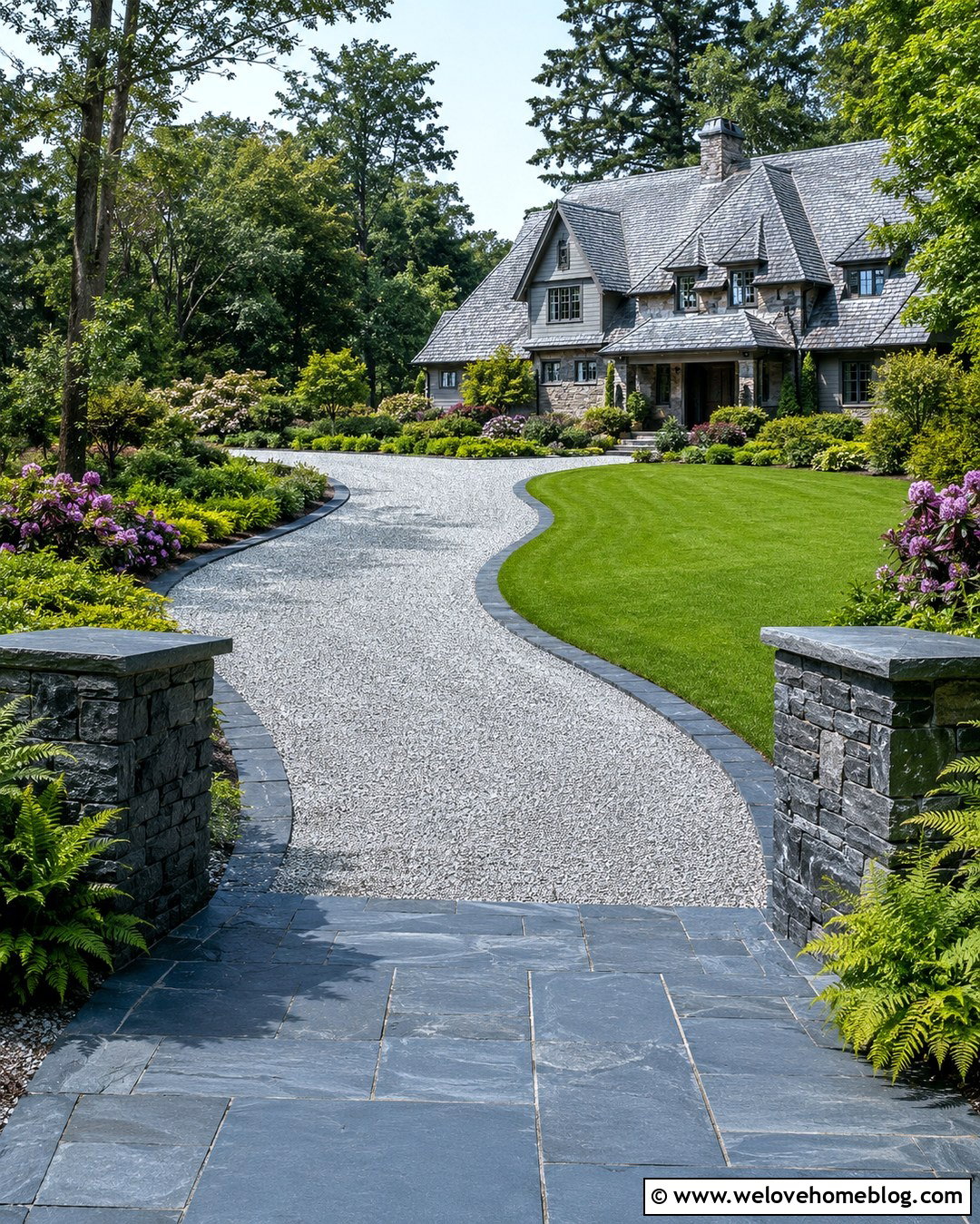
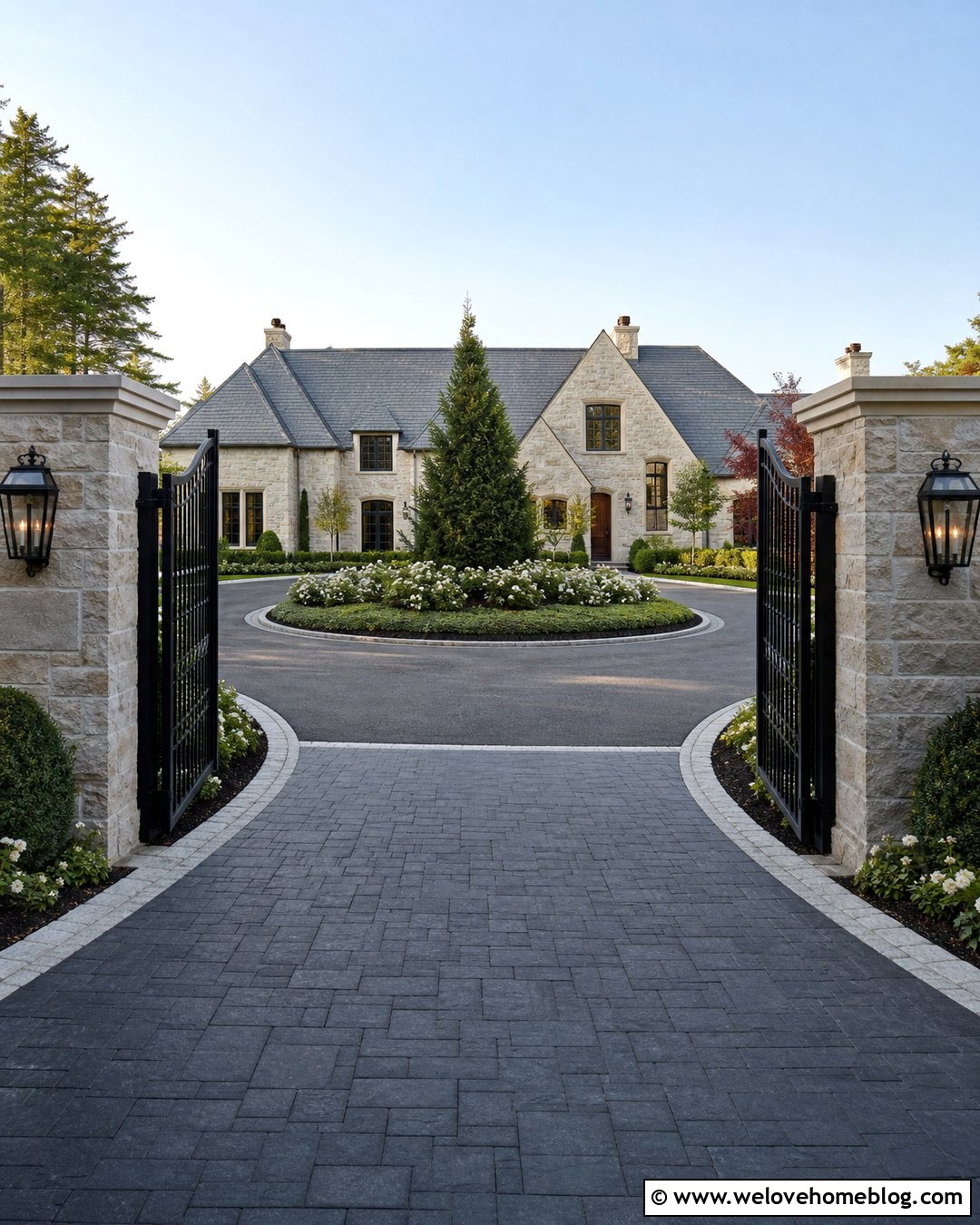
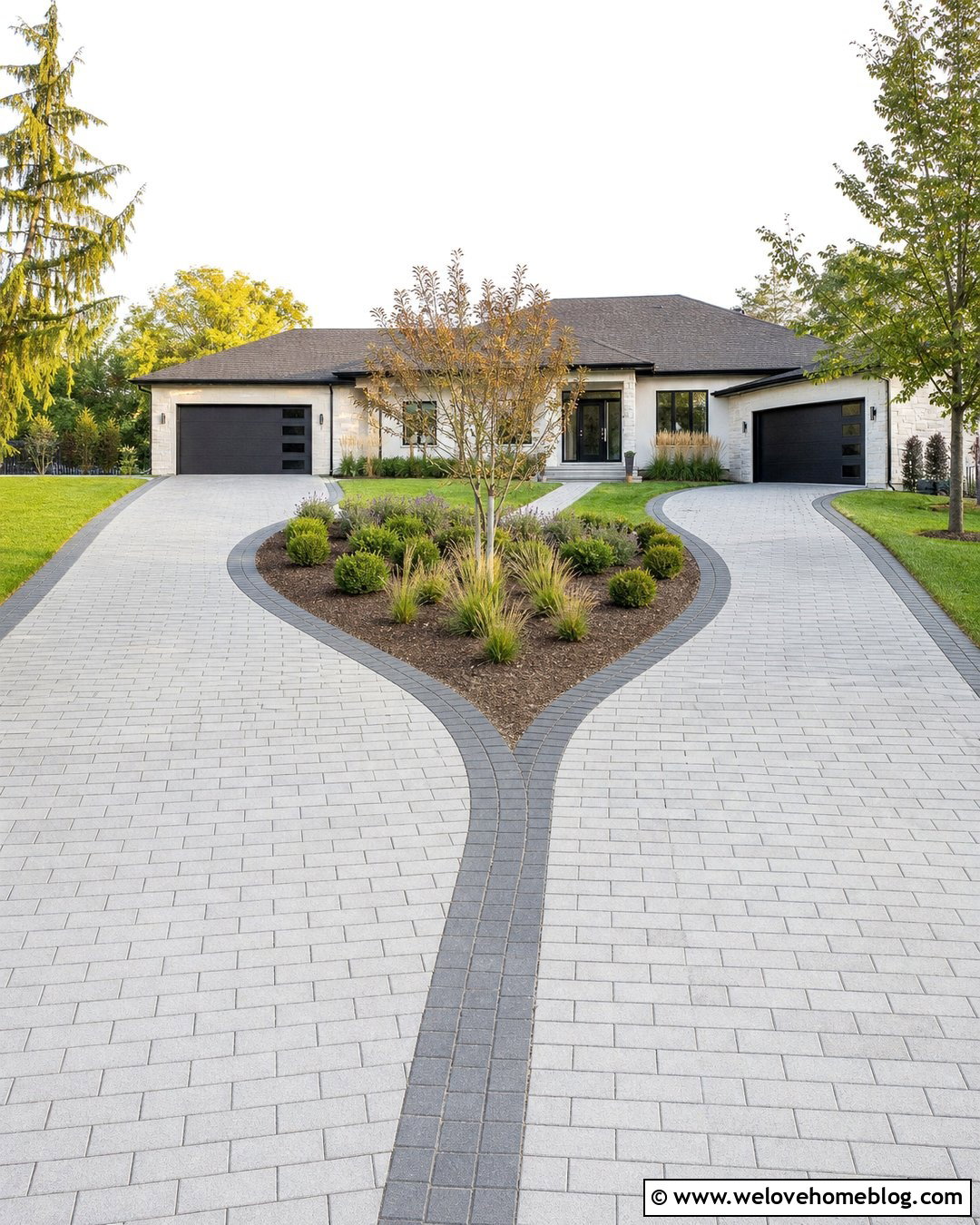
A tree-lined driveway can turn an ordinary route to the garage into a welcoming landscape feature. The best 25 Driveway With Trees On Both Sides Ideas combine the right surface, driveway shape, tree size, borders, lighting, and house style. Repeated trees create rhythm and make the approach feel more intentional, while mixed planting can soften the space and give it a natural character. Tree placement matters just as much as species selection because mature canopies, roots, visibility, and maintenance all affect the finished design. () Whether you have a short suburban drive or a long country entrance, these complete looks offer practical inspiration for creating shade, privacy, seasonal color, and stronger curb appeal. Explore these 25 Driveway With Trees On Both Sides Ideas.
1. Gravel Driveway With Oak Trees On Both Sides
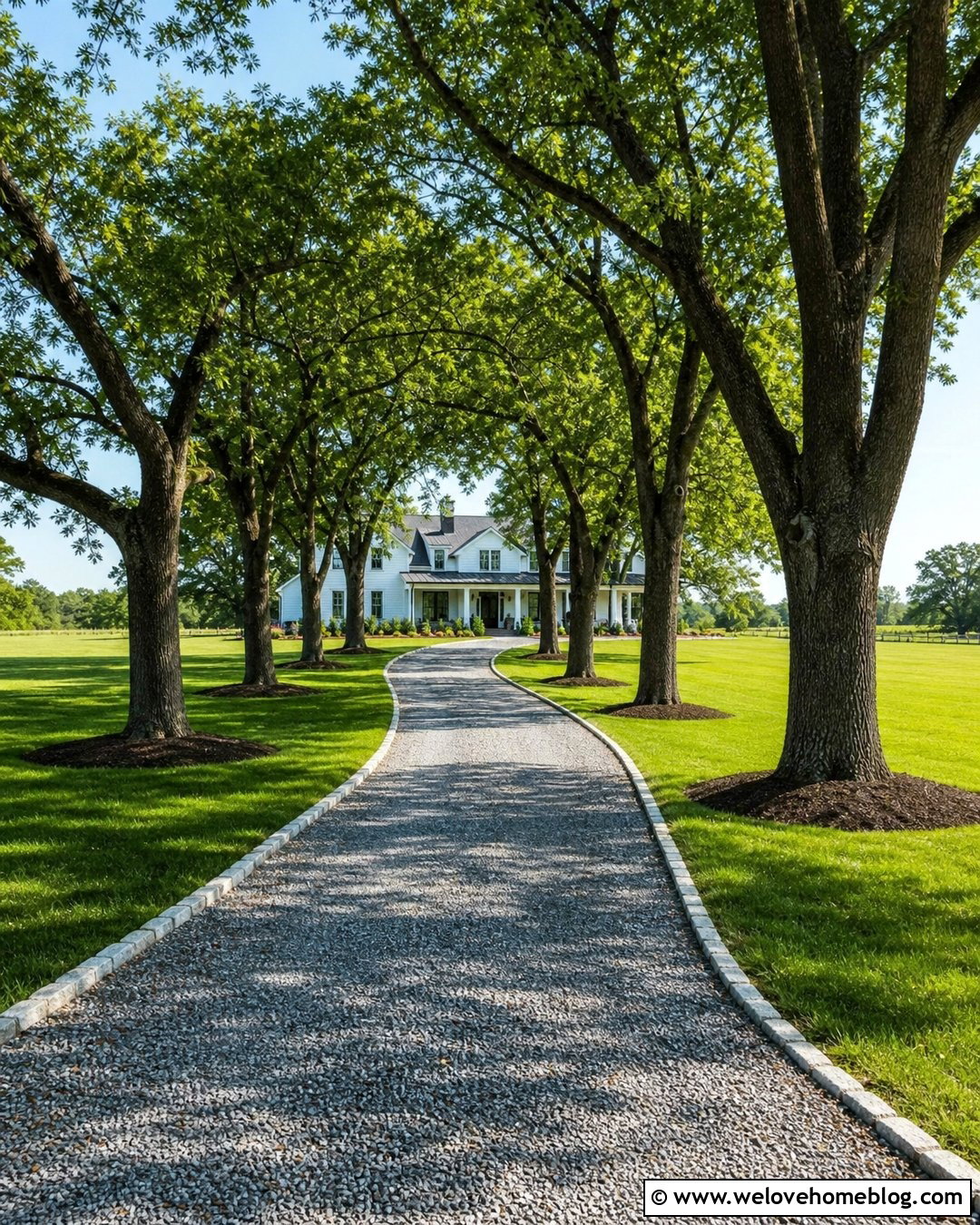
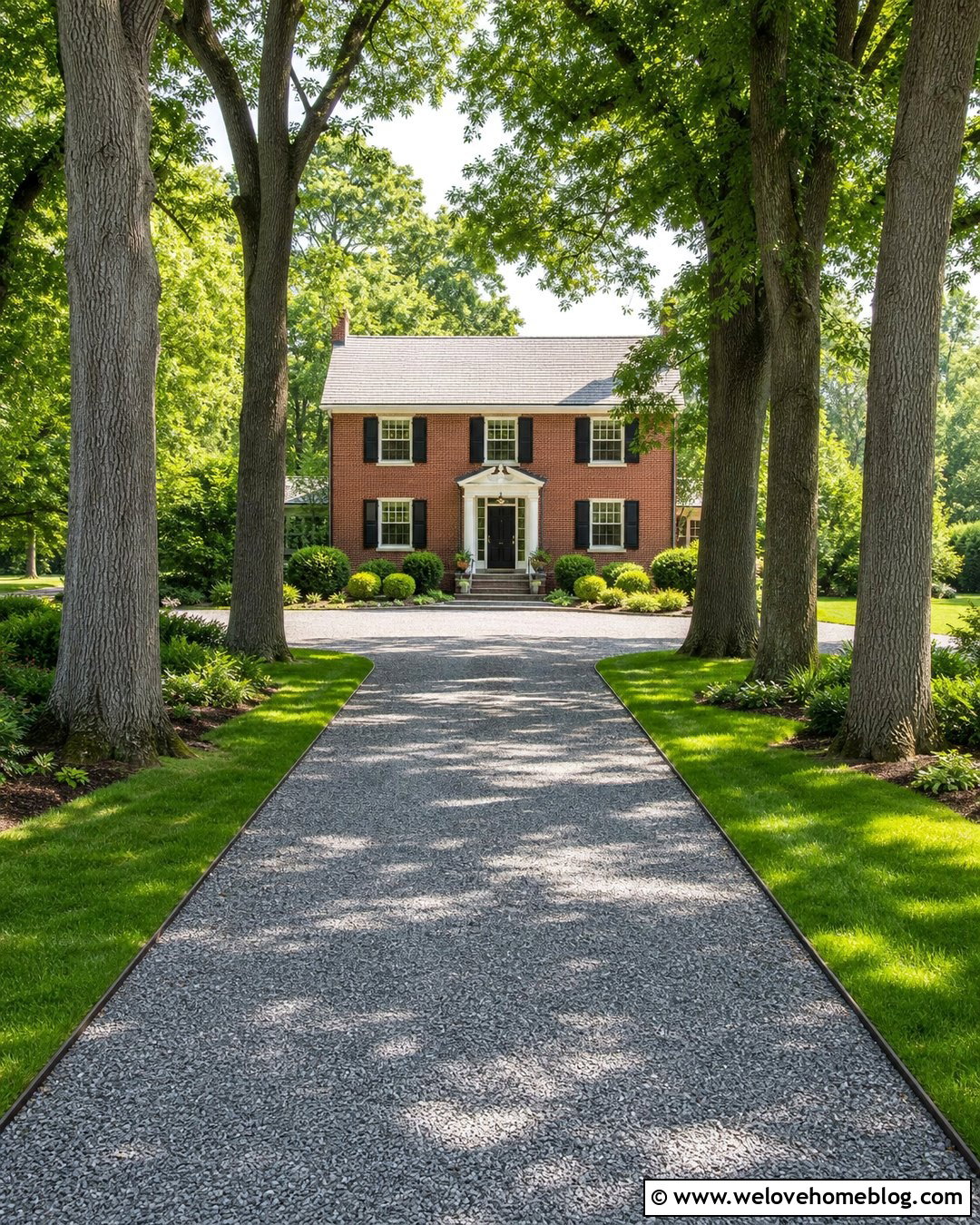
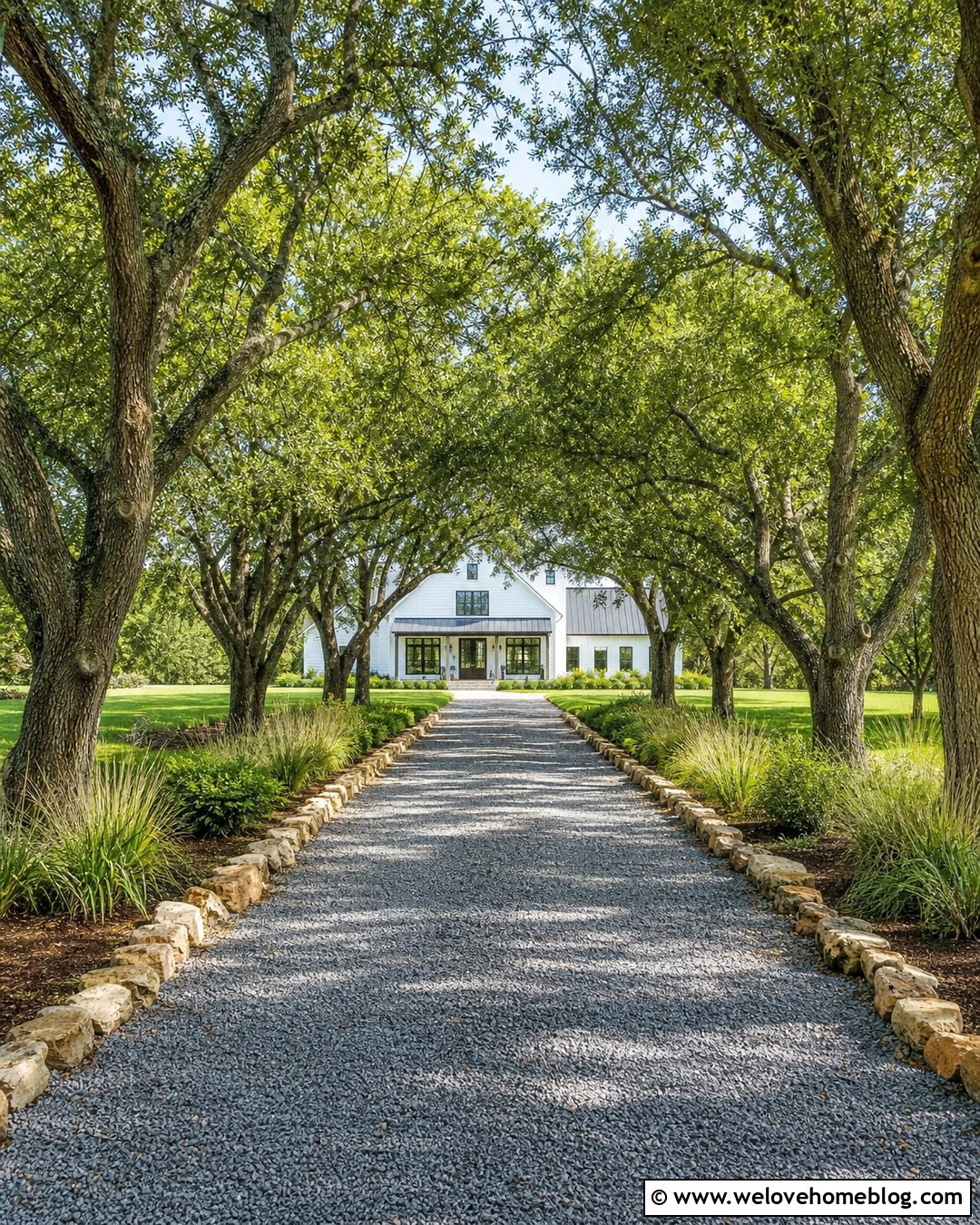
A long gravel driveway framed by evenly spaced oak trees creates a relaxed country entrance with impressive scale. Choose compacted gray crushed stone rather than loose, rounded gravel so the driving surface stays more stable. Steel or granite edging can keep stones from spreading into the surrounding lawn. Leave generous planting strips between the driveway and each tree row, accounting for the mature trunks and canopies rather than their nursery size. Beneath the oaks, simple grass verges maintain an open, park-like appearance. A slight curve can make the route feel natural while revealing the house gradually. This complete design works especially well with traditional farmhouses, brick Colonials, and rural properties where there is enough space for large trees to mature comfortably.
2. Asphalt Driveway With Maple Trees On Both Sides
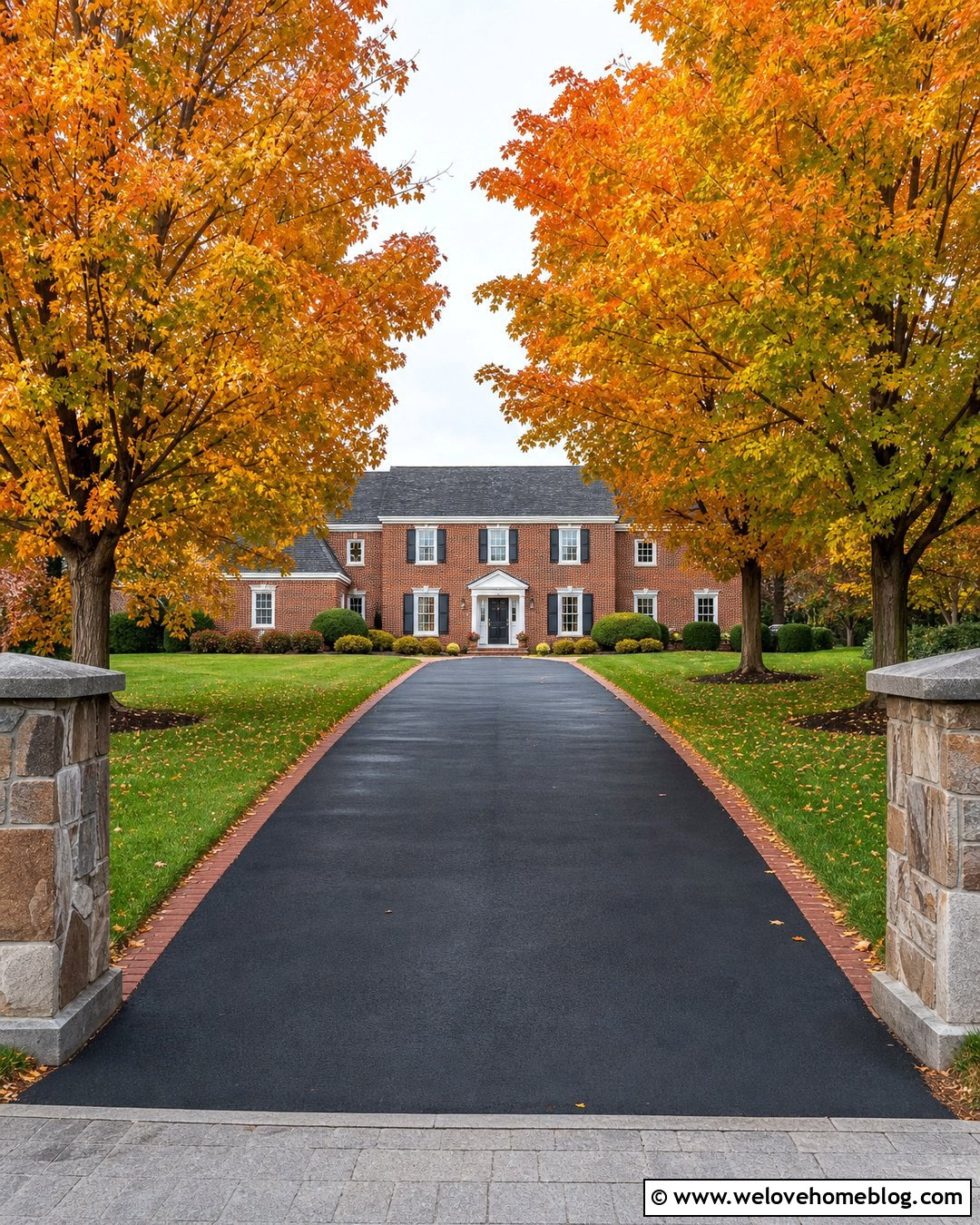
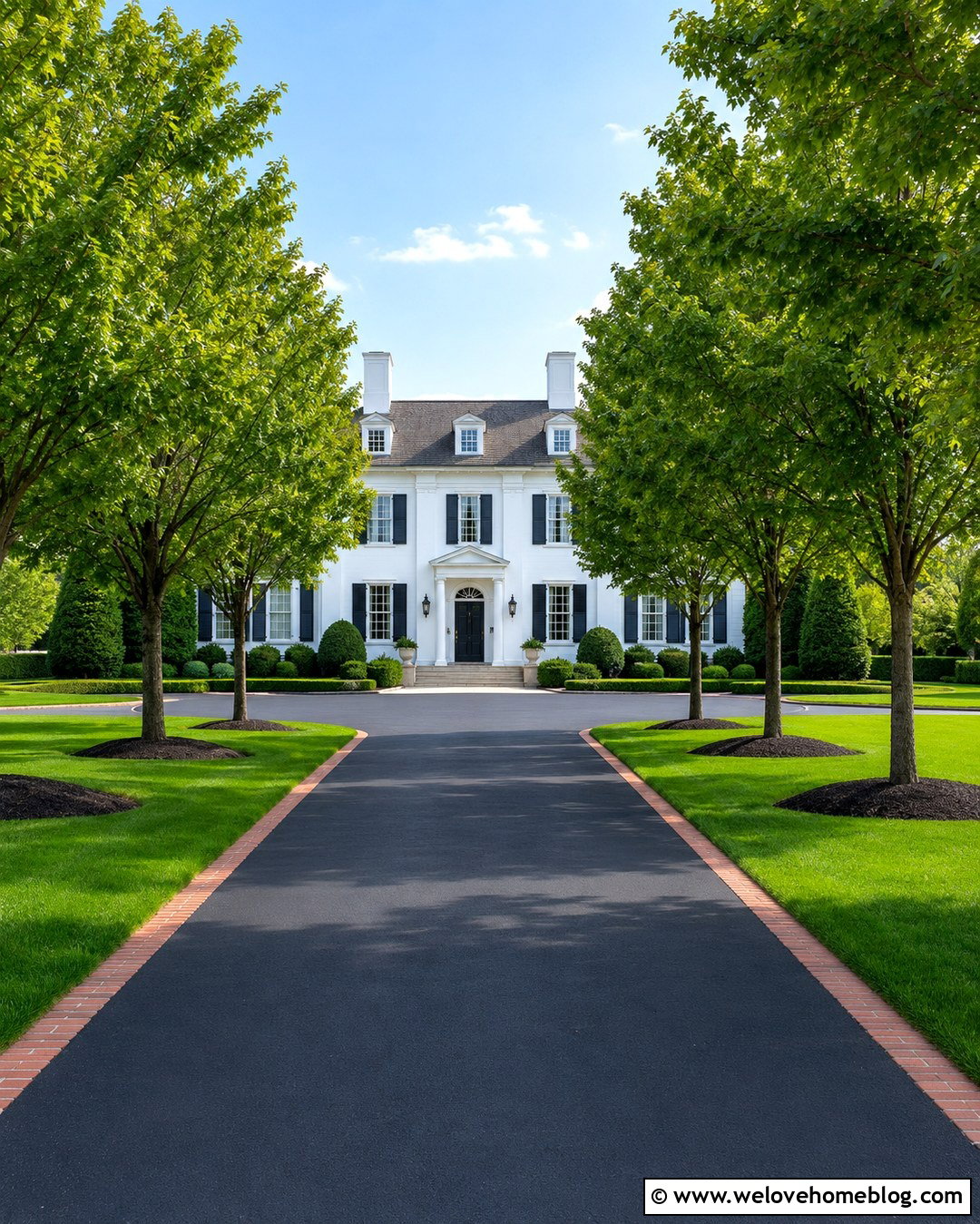
Black asphalt forms a clean visual line beneath the bright foliage of maple trees. This combination is especially attractive in fall, when red, orange, and gold leaves contrast with the dark driveway. Use a straight layout for a formal view toward the front door or garage. Narrow brick ribbons along both edges add warm color and prevent the asphalt from looking too commercial. The maples can sit in wide lawn strips with matching mulch circles or continuous planted beds. Avoid placing trunks close to pavement, and choose a mature tree size that fits the available width. A pair of stone pillars at the curb can strengthen the entrance. The overall look feels polished but approachable beside a Craftsman, Colonial, or classic suburban home.
3. Concrete Driveway With Birch Trees On Both Sides
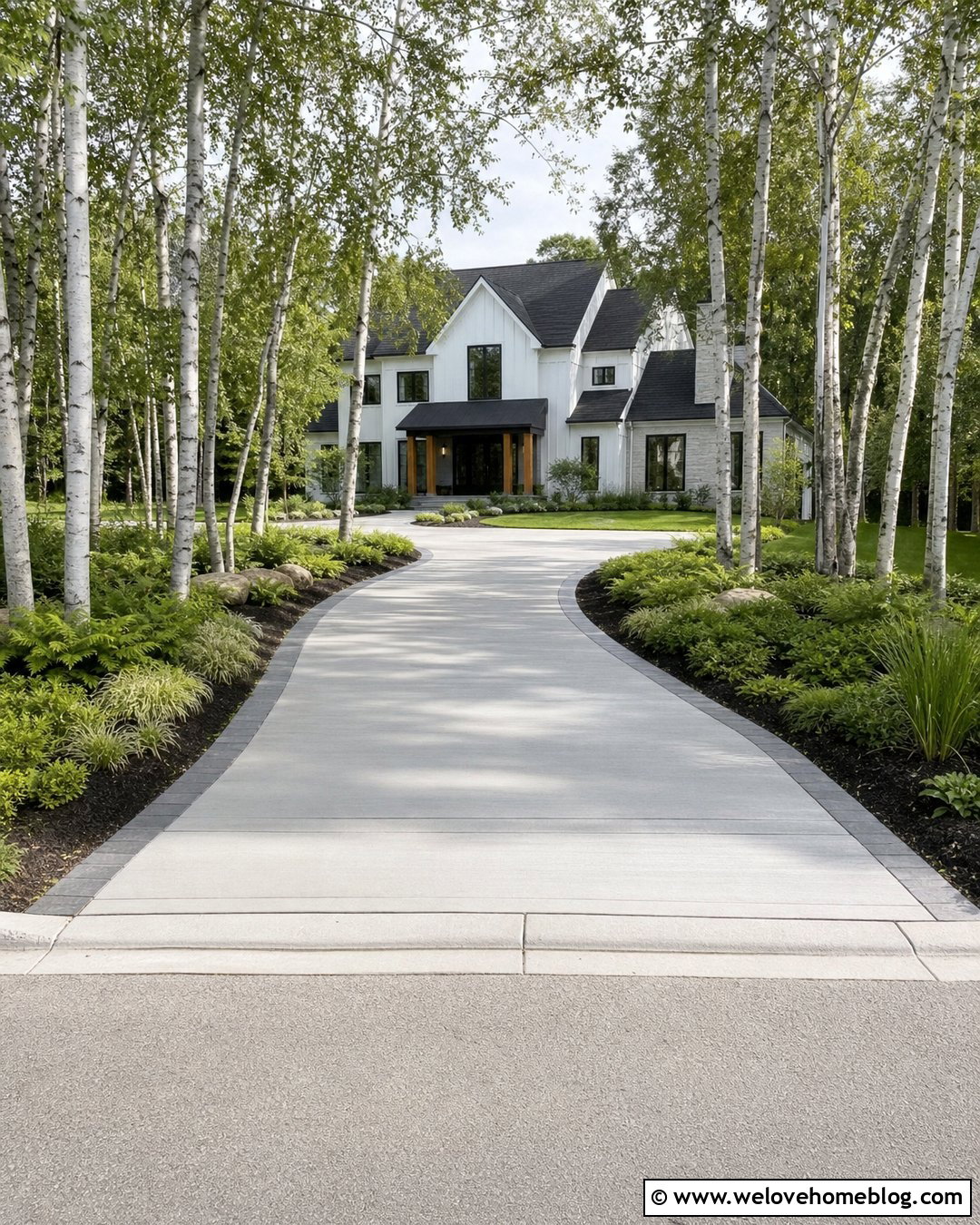
Bright white bark makes birch trees a striking match for a light-gray concrete driveway. Arrange small groups on both sides rather than rigid single-file rows to create a soft woodland effect. A gently curved driveway helps the clusters look natural and provides changing views as visitors approach the house. Use broom-finished concrete for practical traction, then define its edges with dark charcoal pavers. Ferns, sedges, and low ornamental grasses can fill the beds beneath the trees without hiding their distinctive trunks. This design is best where the selected birch variety suits local soil, moisture, and climate conditions. The fresh color palette complements contemporary cabins, Cape Cod homes, and modern farmhouses, especially when white siding and black exterior details repeat the driveway’s contrasts.
4. Brick Driveway With Magnolia Trees On Both Sides
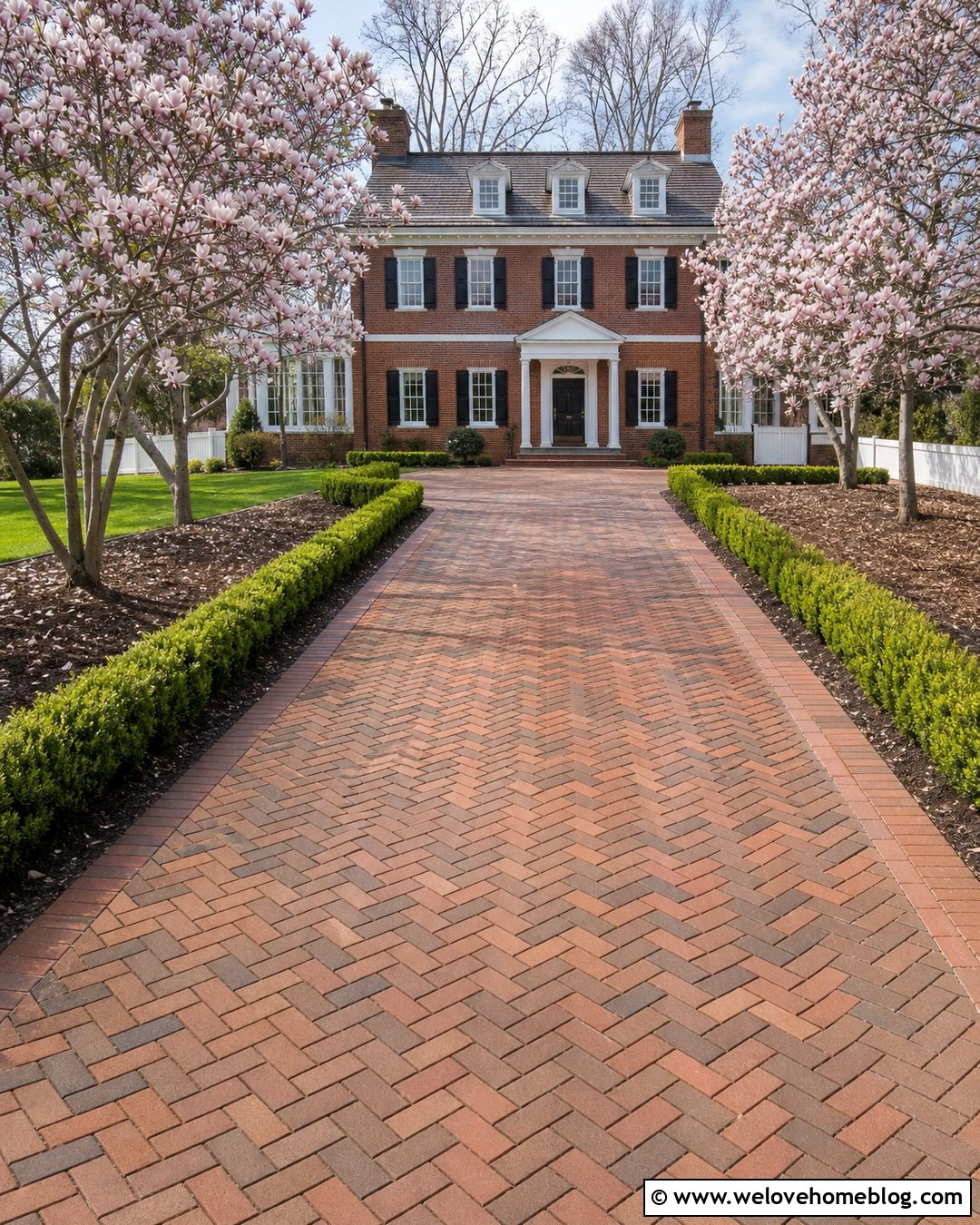
Clay brick pavers and flowering magnolia trees create a warm, traditional driveway with beautiful spring color. Lay red and brown bricks in a herringbone pattern to give the driving area strong visual texture. A straight driveway emphasizes symmetry, while matching magnolias on both sides create a graceful frame around the house. Low boxwood borders can define the planting beds without competing with the flowers. Add a wider brick apron near the garage so vehicles have room to turn without disturbing the landscaping. Because magnolias vary greatly in mature size, select compact or upright cultivars for smaller front yards. This complete driveway look suits Georgian, Colonial, and Southern-inspired homes, particularly when the brick surface echoes chimneys, steps, garden walls, or facade details.
5. Paver Driveway With Redbud Trees On Both Sides
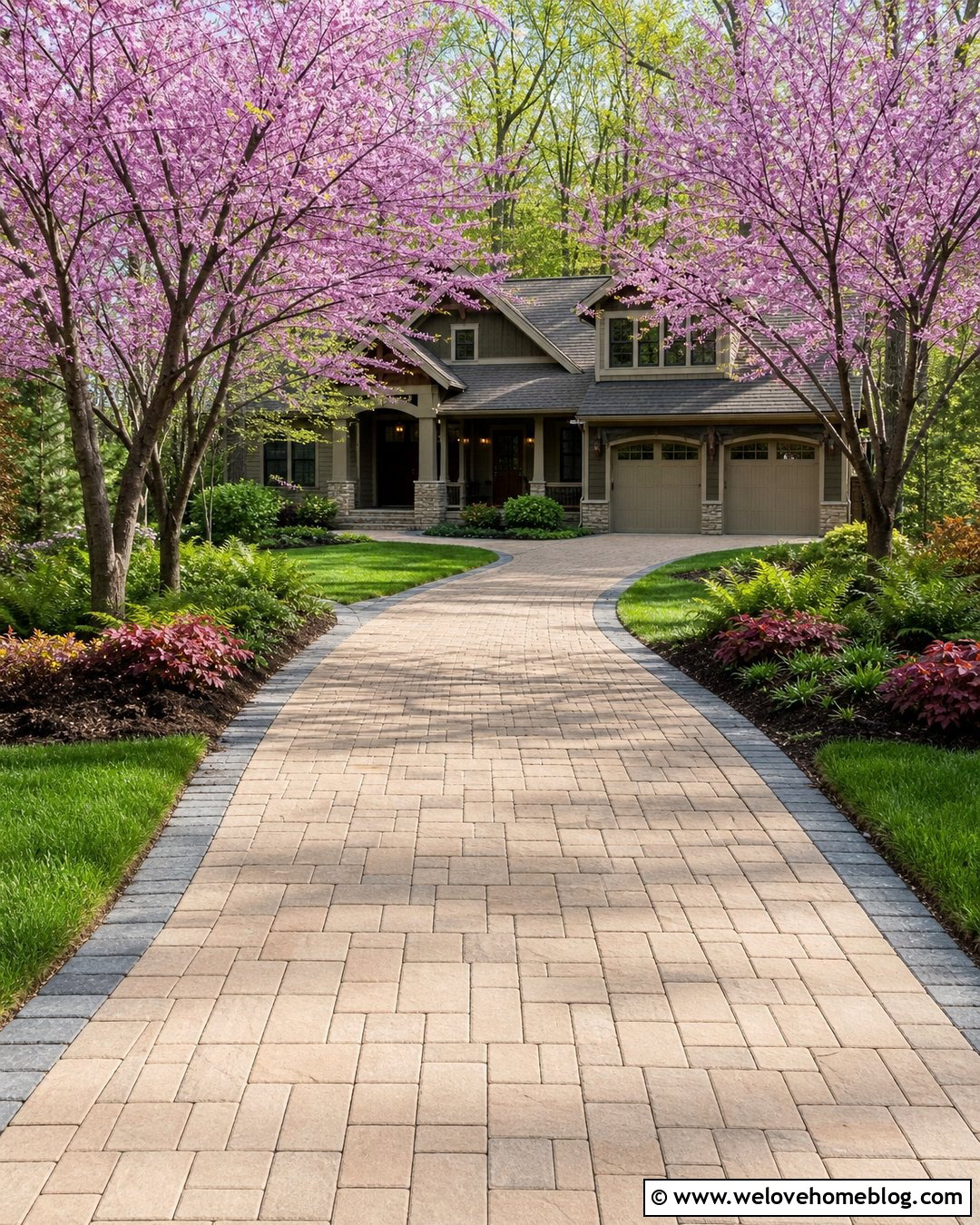
Redbud trees bring airy branching and vivid spring flowers to a driveway without creating the heavy appearance of a large shade-tree avenue. Pair them with warm beige concrete pavers arranged in a running-bond pattern. A softly curved layout highlights the flowering trees in stages and works well on medium-size suburban lots. Dark cobblestone edging gives the pale paving a crisp boundary, while beds of ferns, coral bells, and low ground cover create a layered woodland edge. Keep the central portion visually open so the driveway remains easy to navigate. Repeating the same tree on both sides provides unity, but slightly staggered placement feels more natural. This welcoming design complements Craftsman homes, cottages, brick ranch houses, and updated traditional exteriors.
6. Circular Driveway With Olive Trees On Both Sides
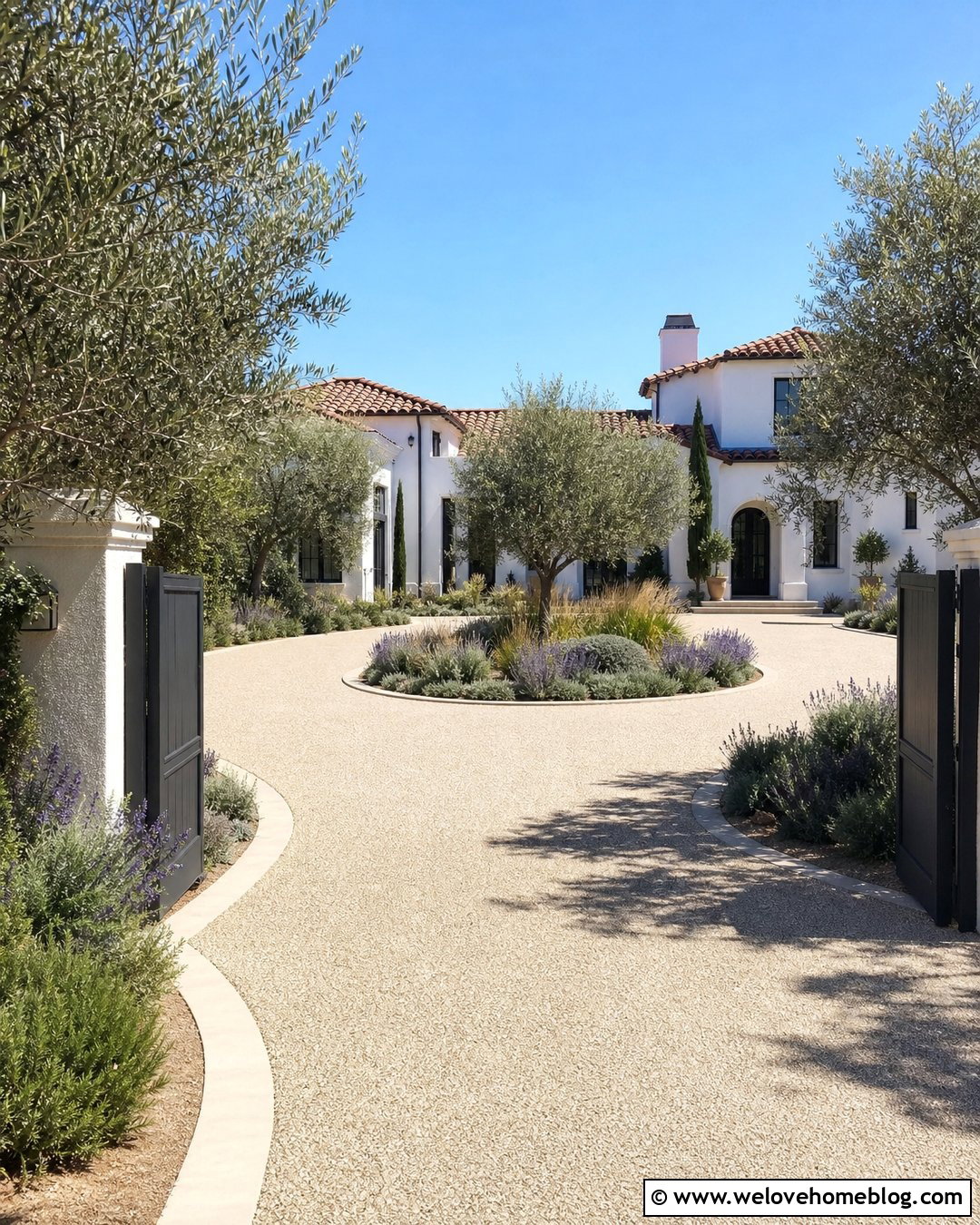
A circular driveway bordered by silvery olive trees can give a warm-climate home a refined Mediterranean character. Use cream-colored resin-bound gravel for a smooth, understated surface that allows the gray-green foliage to stand out. Plant matching olive trees around both outside edges of the circle, then use one sculptural specimen in the center island. Pale limestone curbing ties the driveway to stucco walls and light-colored walkways. Lavender, rosemary, and ornamental grasses can fill the beds while maintaining a low, uncluttered profile. Keep sightlines clear near the road and entrance gate. In climates unsuitable for olives, choose a locally adapted tree with a similar narrow leaf and open canopy. The finished driveway works beautifully with Spanish, Southwestern, and contemporary stucco homes.
7. Long Driveway With Columnar Trees On Both Sides
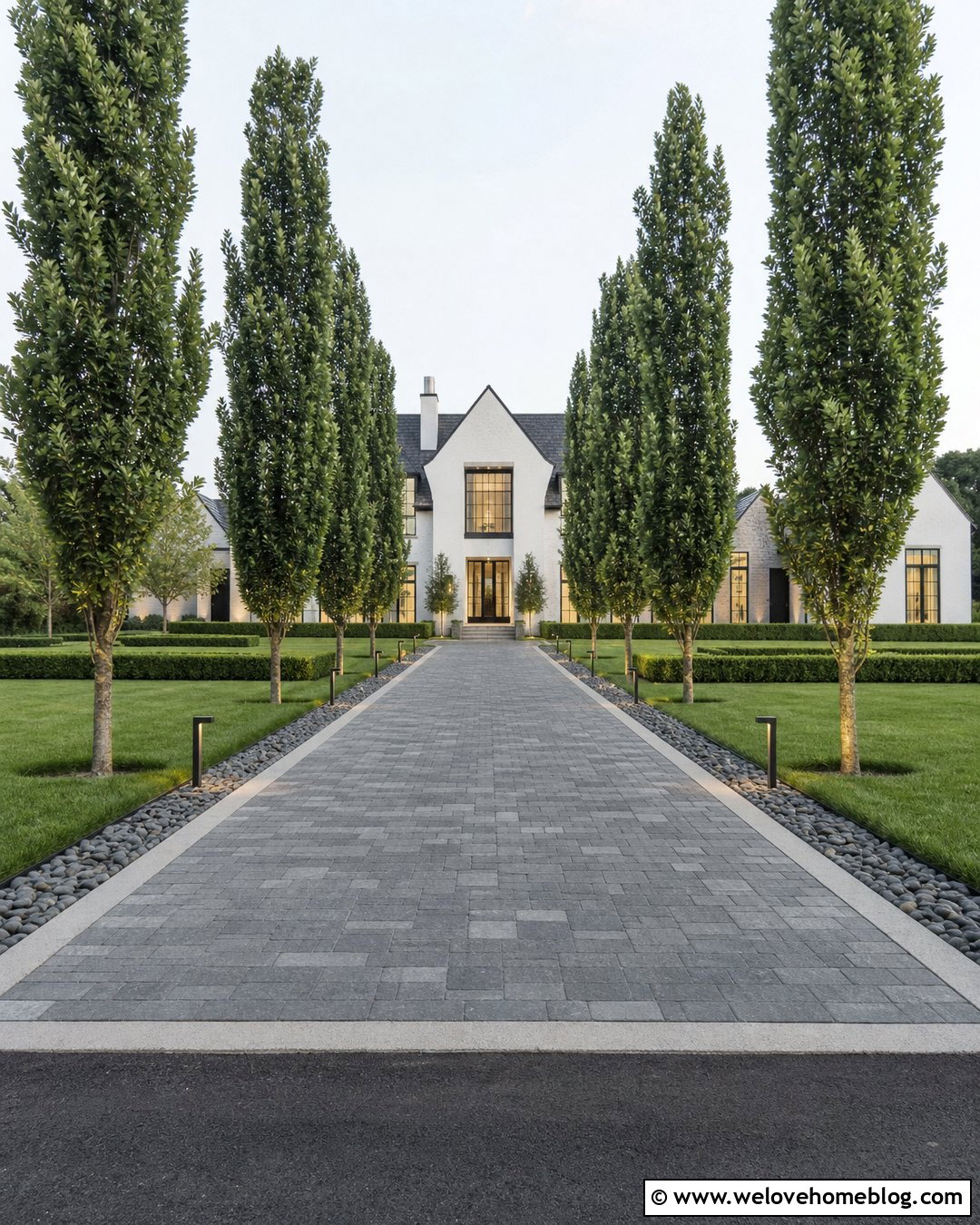
Columnar trees are a practical option when you want a dramatic avenue but do not have room for wide-spreading canopies. Place upright trees in evenly matched rows beside a long, straight driveway surfaced with dark-gray concrete pavers. Their vertical shape draws attention toward the house while preserving usable lawn and planting space. A narrow band of river rock between the pavement and trees can improve definition and simplify routine trimming. Add low landscape lights at alternating intervals rather than lighting every trunk, which could make the route feel overly formal. The repeated vertical lines pair especially well with a tall modern farmhouse or symmetrical brick residence. Before planting, verify the mature width, root behavior, sun requirements, and regional suitability of the exact tree variety.
8. Curved Driveway With Dogwood Trees On Both Sides
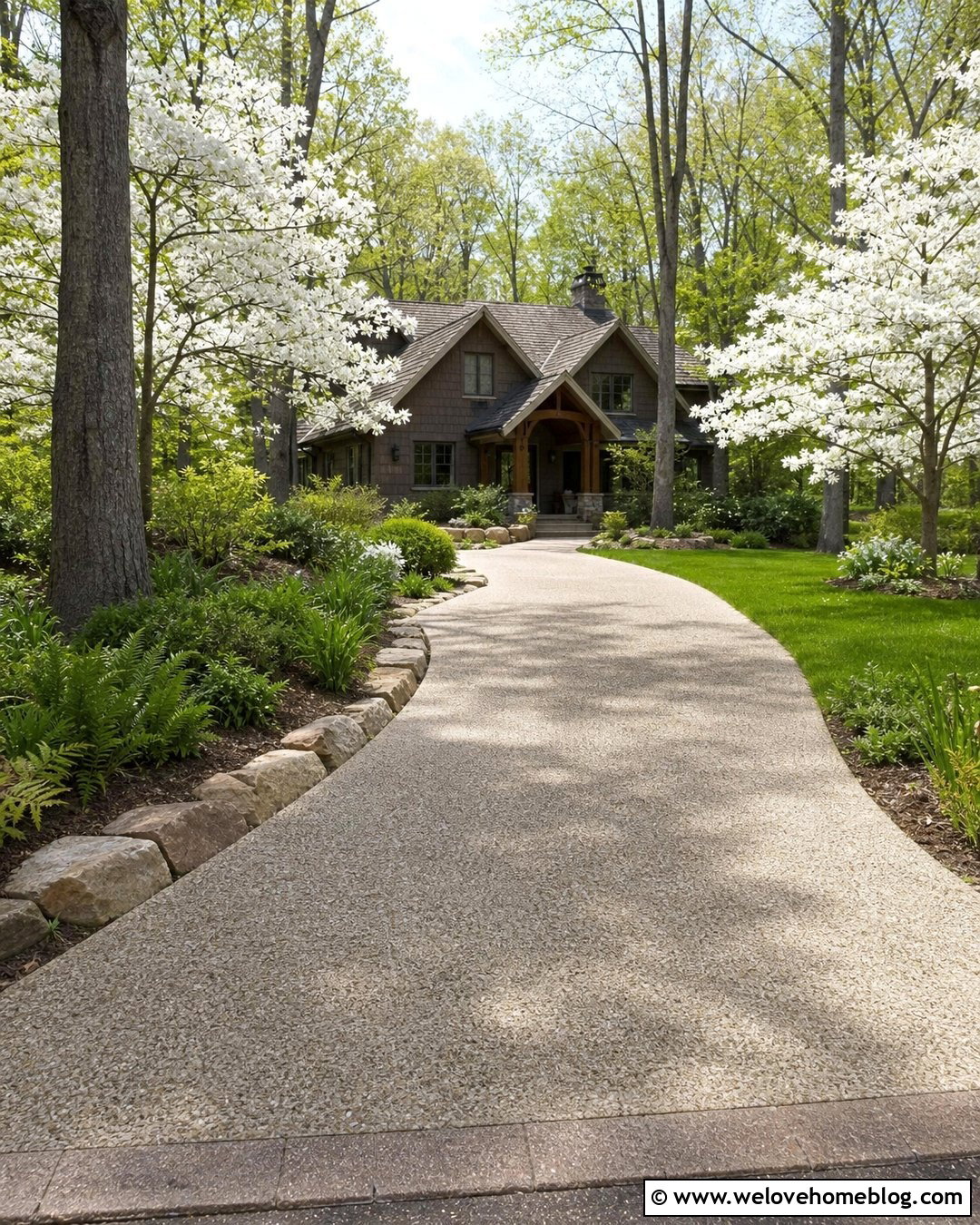
A curved driveway lined with dogwood trees creates a gentle, garden-focused approach. Pale exposed-aggregate concrete provides subtle texture without overpowering the flowers, branching, and seasonal foliage. Follow the driveway’s bends with loosely repeated dogwoods on both sides, keeping enough open space between specimens for each canopy to develop. Natural stone edging can echo the organic curve and stop adjacent mulch from washing onto the surface. Fill the planting beds with shade-tolerant ground cover, native ferns, and compact flowering shrubs. The design should feel balanced rather than perfectly mirrored, especially on a wooded property. Dogwoods can offer ornamental interest across several seasons, but locally appropriate selections are important. This look is a natural fit for cottages, Craftsman houses, and traditional woodland homes.
9. Modern Driveway With Hornbeam Trees On Both Sides
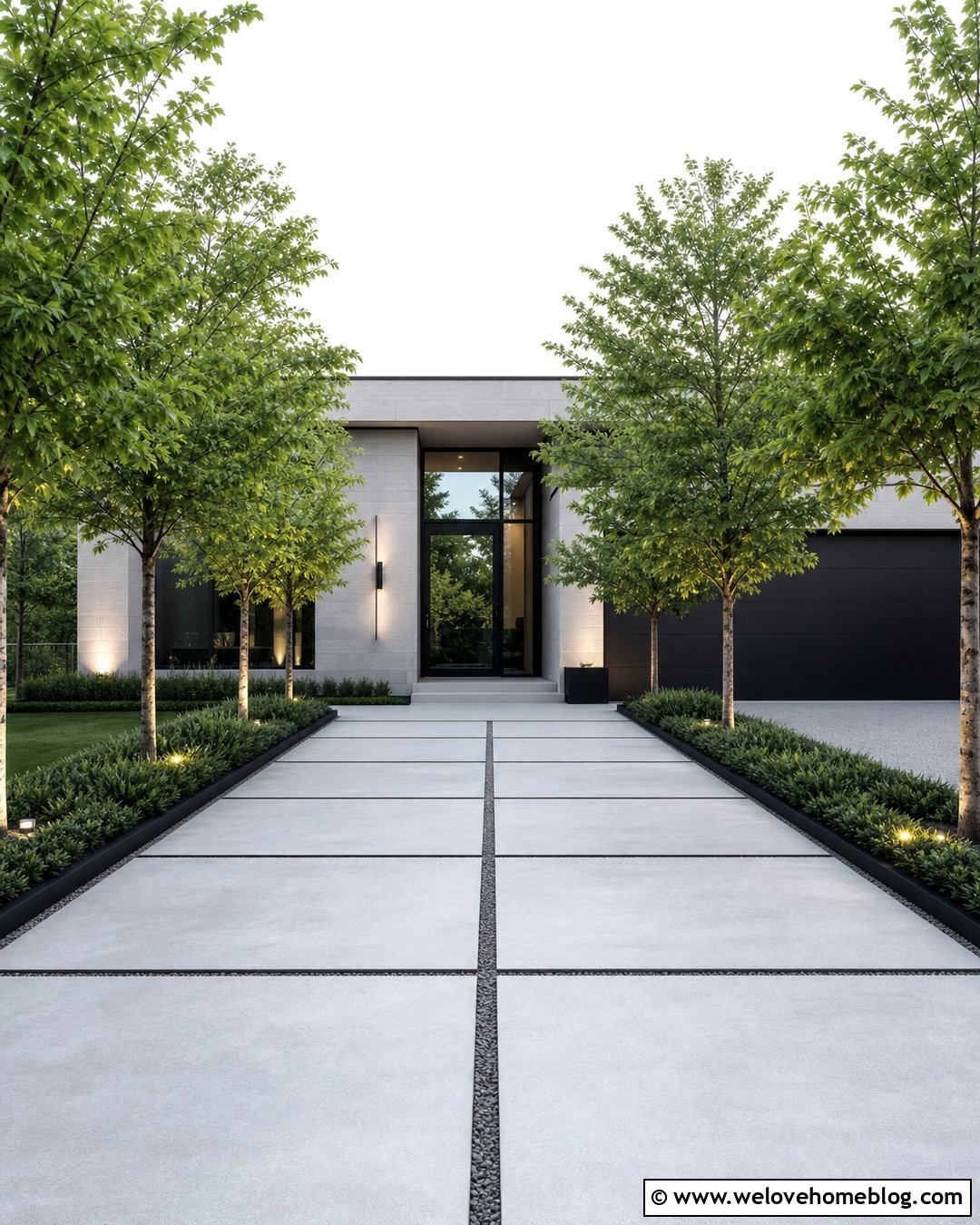
For a clean contemporary entrance, pair linear concrete slabs with rows of upright hornbeam trees. Large light-gray slabs separated by narrow gravel joints make the driveway feel architectural, while the trees provide height and soften the hard surfaces. Plant the hornbeams in rectangular beds aligned with the paving grid. Black steel edging maintains sharp lines around gravel, lawn, and planting areas. Beneath the trees, use a restrained layer of clipped ground cover or dark mulch rather than colorful mixed flowers. Integrated low-profile lighting can mark the edges without dominating the daytime design. The result is formal but not old-fashioned. It suits modern houses with flat or low-pitched roofs, black-framed windows, and simple facades, particularly when the driveway alignment reflects the home’s geometry.
10. Farmhouse Driveway With Pear Trees On Both Sides
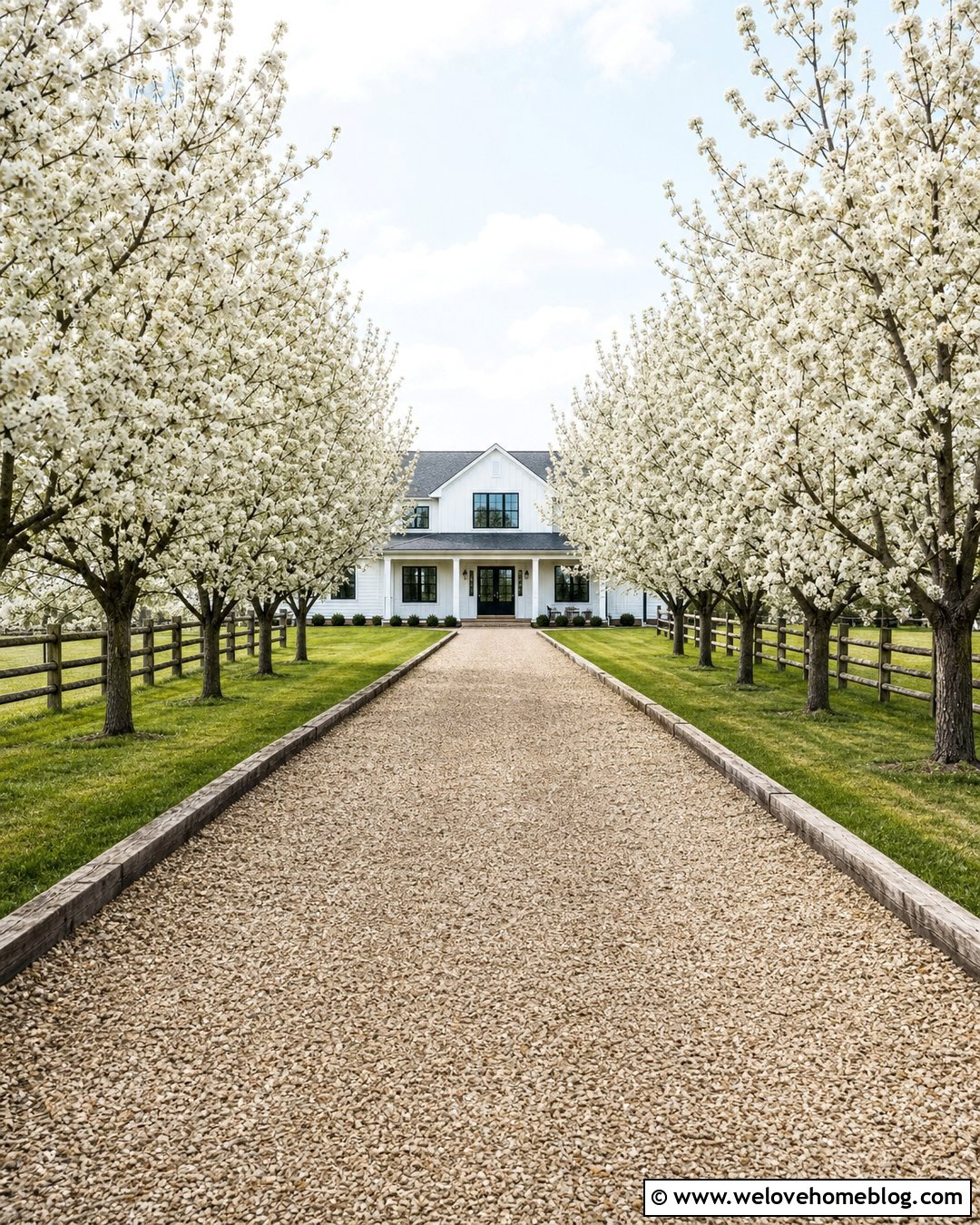
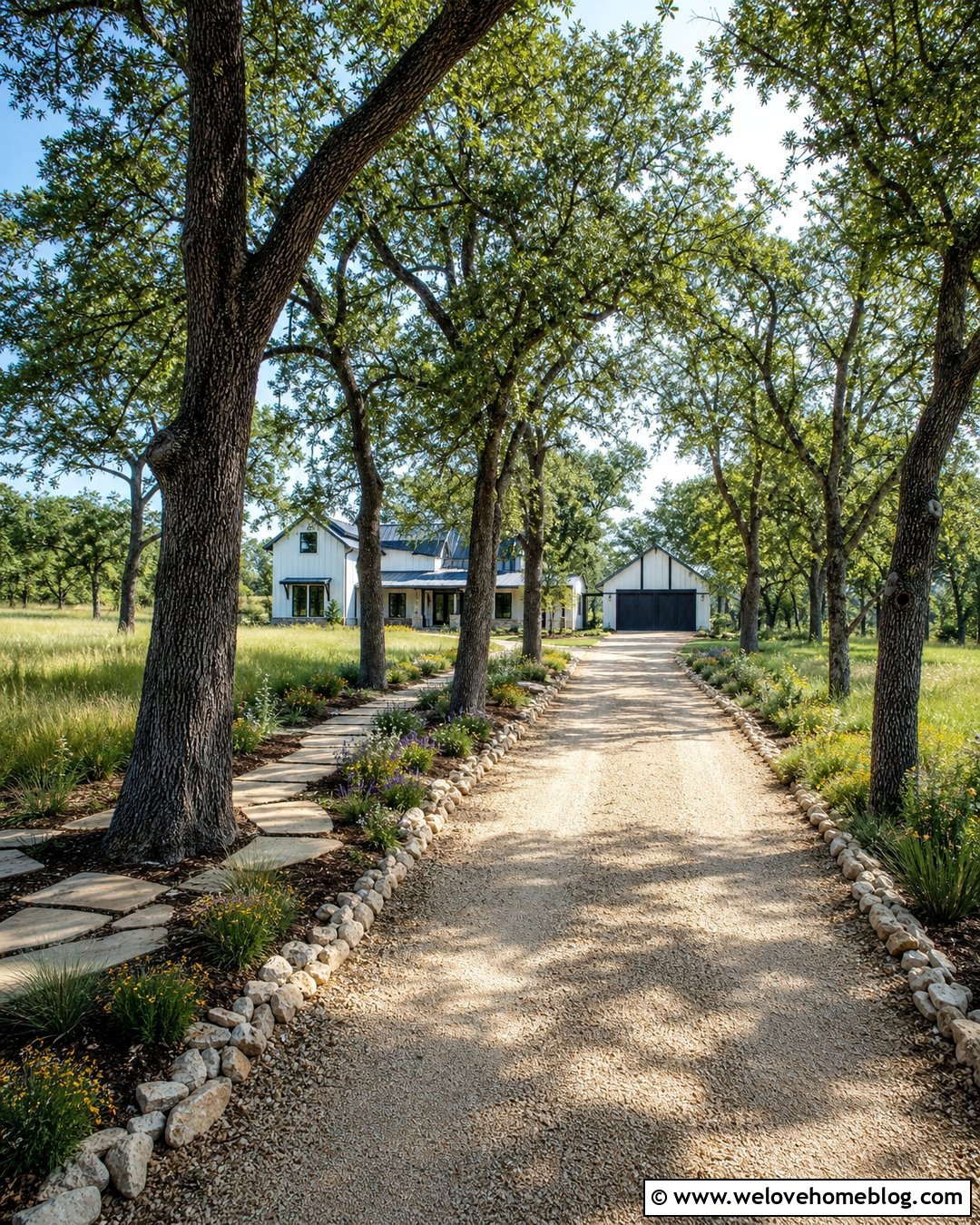
Flowering pear trees can form a tidy avenue leading toward a modern farmhouse, provided a durable, regionally suitable cultivar is selected. Use tan crushed-stone gravel for the main driveway and frame it with weathered timber or steel edging. A straight route creates a strong view of the porch, barn-style garage, or central entrance. Place the trees within broad grass strips, then add a simple split-rail fence outside each row to reinforce the rural setting. White flowering branches provide spring interest, while the lawn and gravel keep the overall palette calm. For greater ecological value and reliability, consider native flowering trees with a similar upright shape. This complete look works best with white siding, dark roofing, natural wood details, and an open front yard.
11. Cobblestone Driveway With Linden Trees On Both Sides
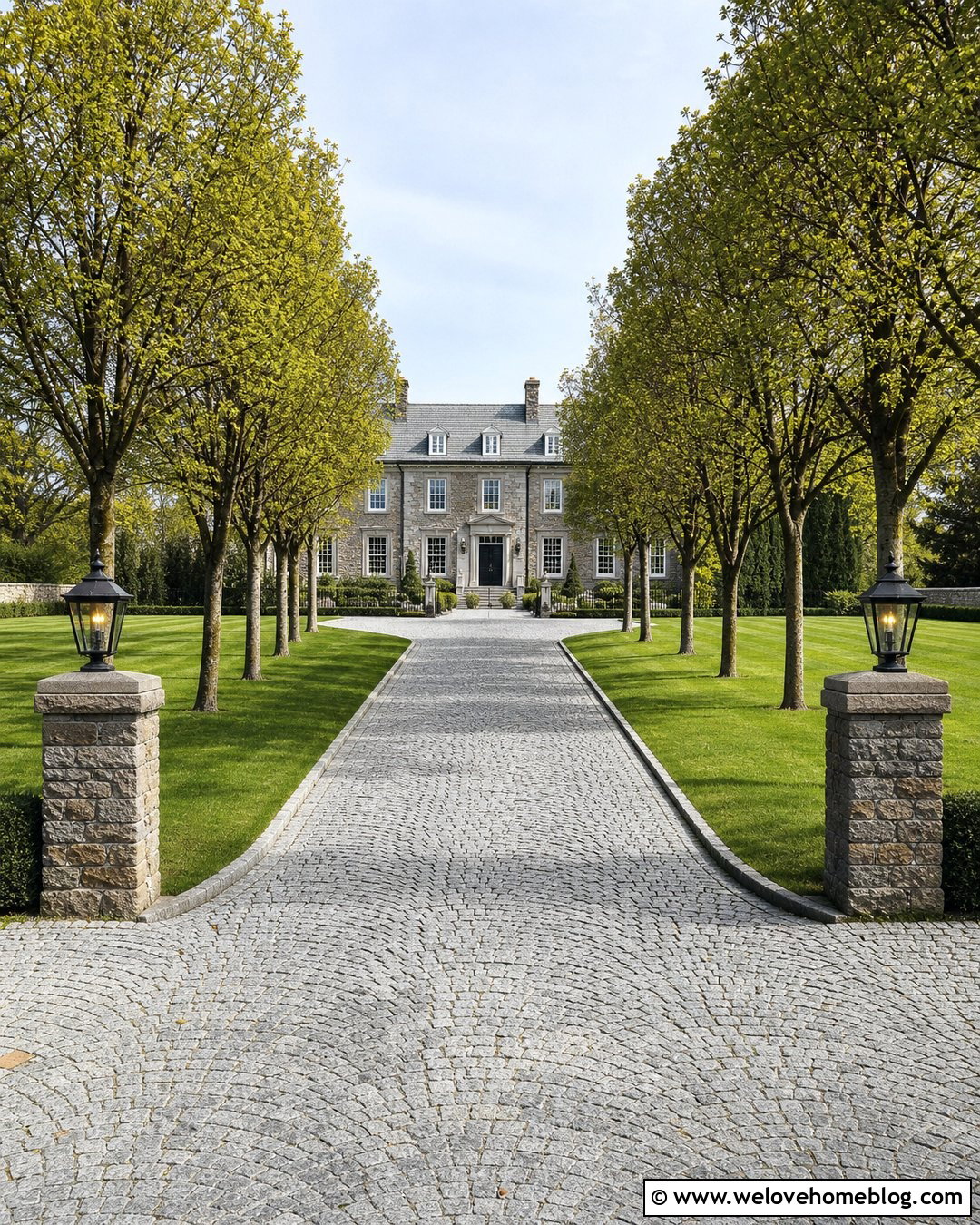
A cobblestone driveway beneath orderly linden trees recalls the elegant approach to a historic home. Choose gray granite cobbles with slightly varied tones and install them in a fan or running pattern. A long, straight layout gives the tree rows a formal rhythm, while flush granite curbs create durable boundaries. Continuous lawn panels beneath the lindens keep the scene spacious and prevent the heavy paving from overwhelming the landscape. At the house, widen the driveway into a simple turning court using the same cobblestone. Classic lanterns can be placed near the entrance pillars rather than scattered along the entire route. Because mature lindens can become substantial trees, this arrangement needs a broad property. It pairs naturally with stone estates, Georgian homes, and traditional brick architecture.
12. Narrow Driveway With Upright Trees On Both Sides
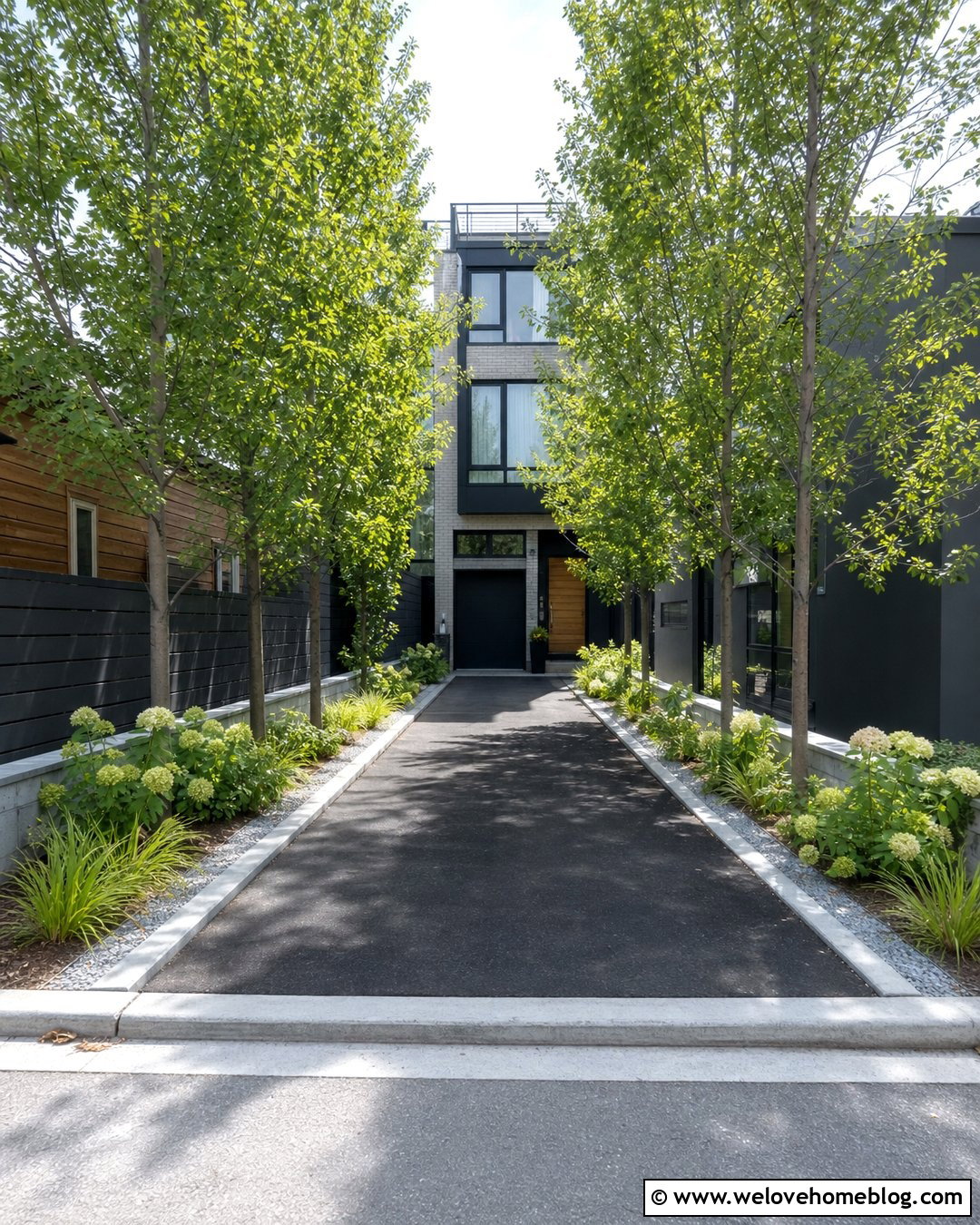
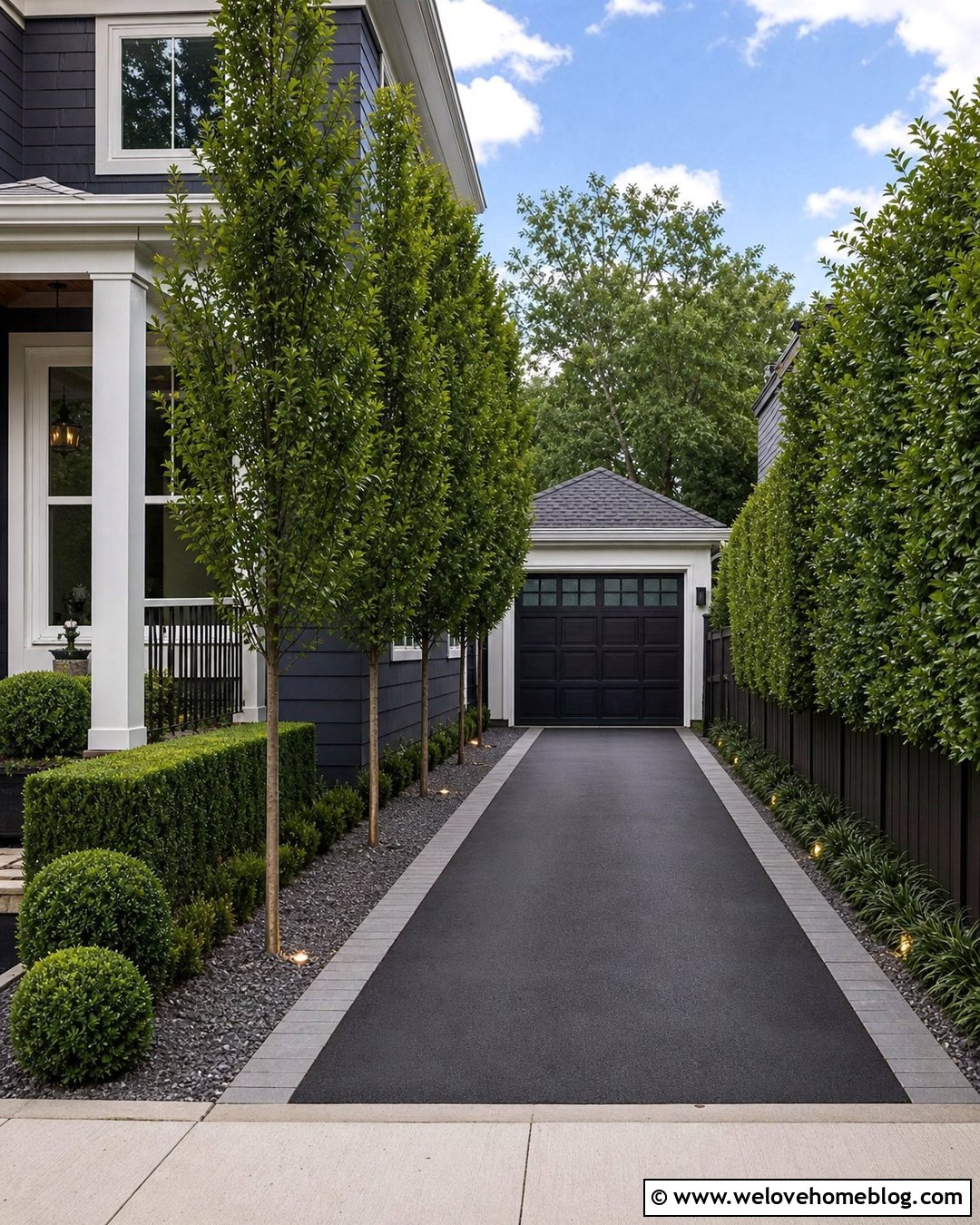
A narrow driveway can still accommodate trees if the entire design is based on compact proportions. Start with smooth charcoal asphalt or dark permeable pavers to create a simple driving surface. Choose narrow, upright trees and place them in slim planting beds beyond a low concrete curb. Avoid broad shrubs beneath the trees because branches can reduce door-opening space and make the passage feel crowded. Instead, use flat ground cover, decorative gravel, or neatly maintained mulch. Staggering the trees may provide a more comfortable fit than planting directly opposite pairs. Keep the first section near the street open to preserve visibility. With disciplined spacing and limited materials, this layout can bring privacy and vertical greenery to townhouses, side-yard driveways, and smaller urban or suburban properties.
13. Driveway With Evergreen Trees On Both Sides
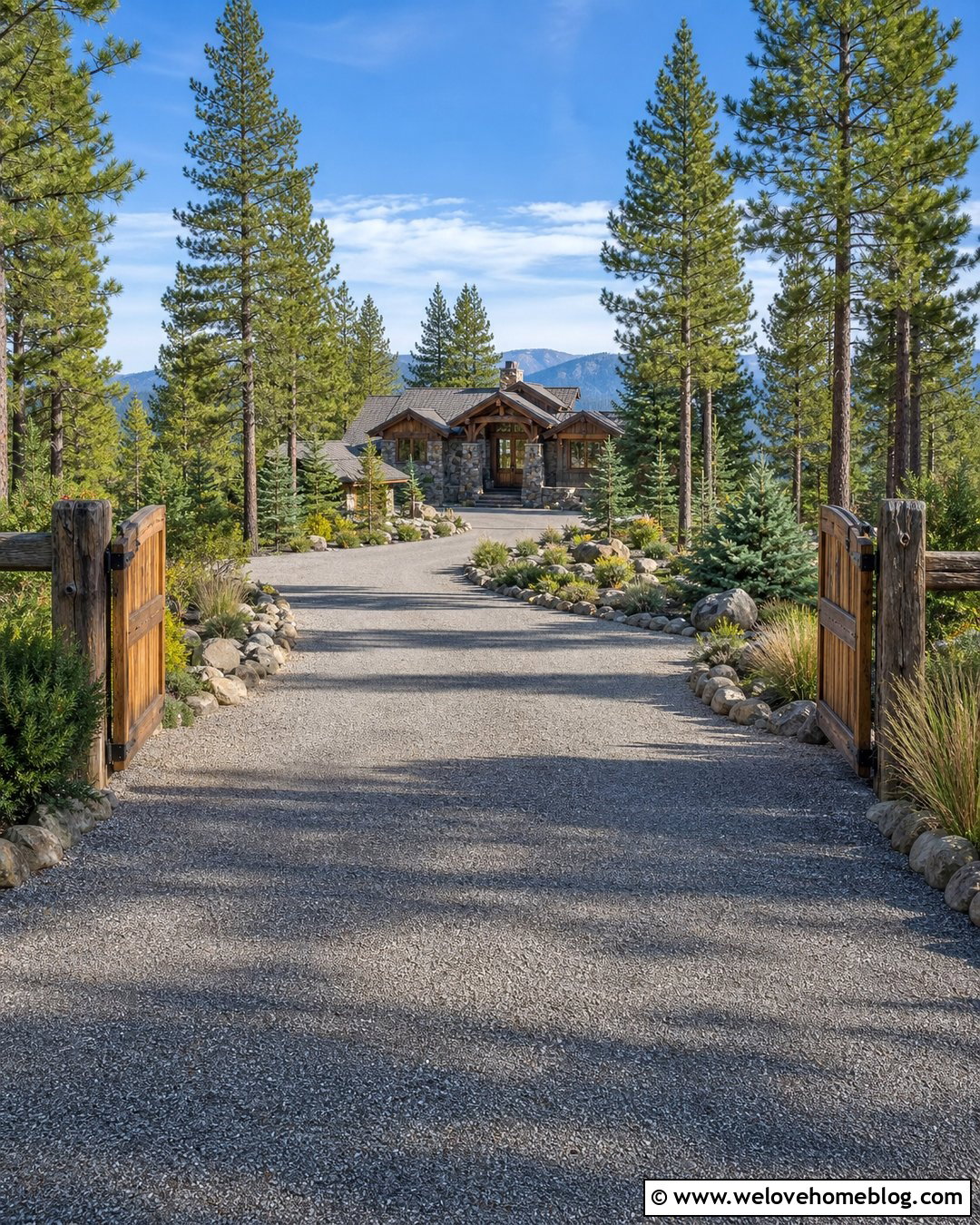
Rows of evergreen trees can give a driveway year-round structure and useful visual screening. Pair them with a warm gray gravel surface and a gently sweeping layout that feels comfortable in a country setting. Rather than creating a solid wall, leave enough space between trees for healthy growth and glimpses into the surrounding landscape. Natural boulder edging and bands of native grasses can soften the transition between gravel and planting areas. Near the house, reduce the tree density so the entrance feels open and welcoming. A pair of timber gates can define the beginning of the drive without blocking the view. This design is well suited to mountain homes, cabins, ranch properties, and modern houses where green foliage helps balance stone, wood, and dark exterior finishes.
14. Driveway With Crepe Myrtle Trees On Both Sides
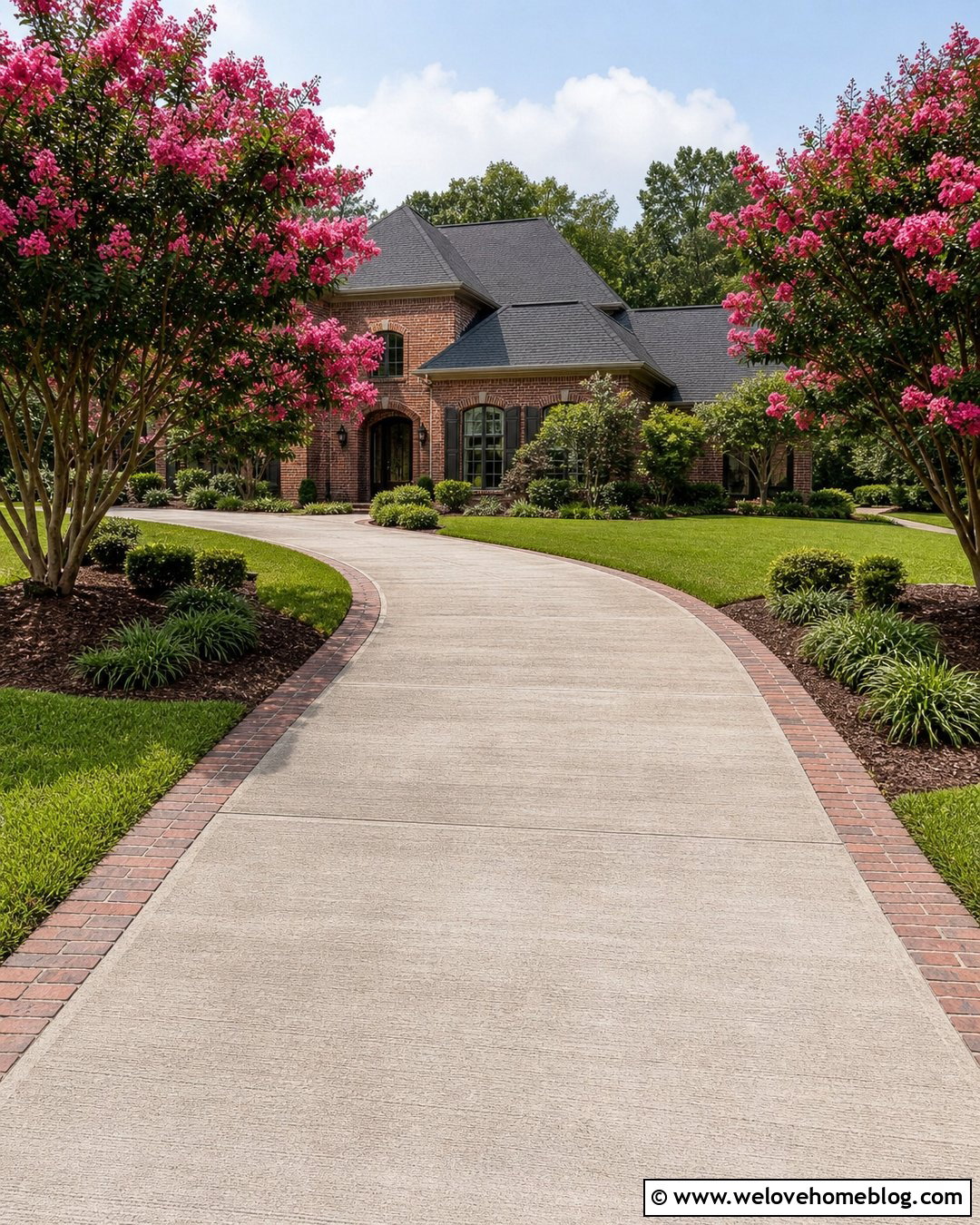
Crepe myrtles can transform a sunny driveway into a colorful summer avenue in regions where they grow well. A light beige concrete driveway keeps the space bright and allows pink, red, purple, or white flowers to become the main feature. Use a straight or slightly curved layout, with trees repeated at consistent intervals in wide mulched beds. A red-brick border can connect the driveway to brick steps, walkways, or facade details. Underplant with low liriope, compact grasses, or simple ground cover so the sculptural trunks remain visible. Select cultivars according to their mature height rather than choosing by flower color alone. This complete look feels especially natural beside Southern brick homes, white cottages, ranch houses, and traditional residences with broad front lawns.
15. Driveway With Cherry Trees On Both Sides
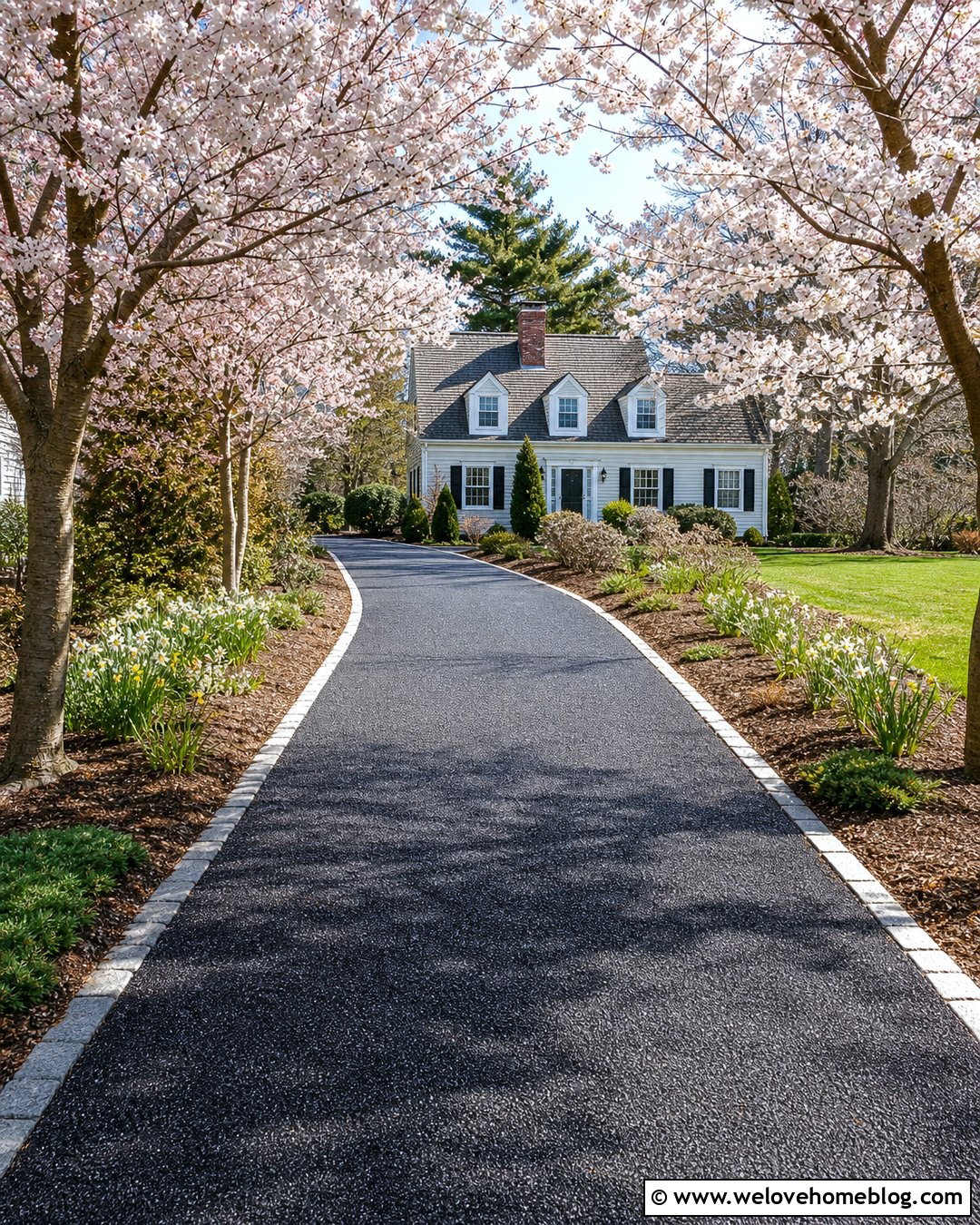
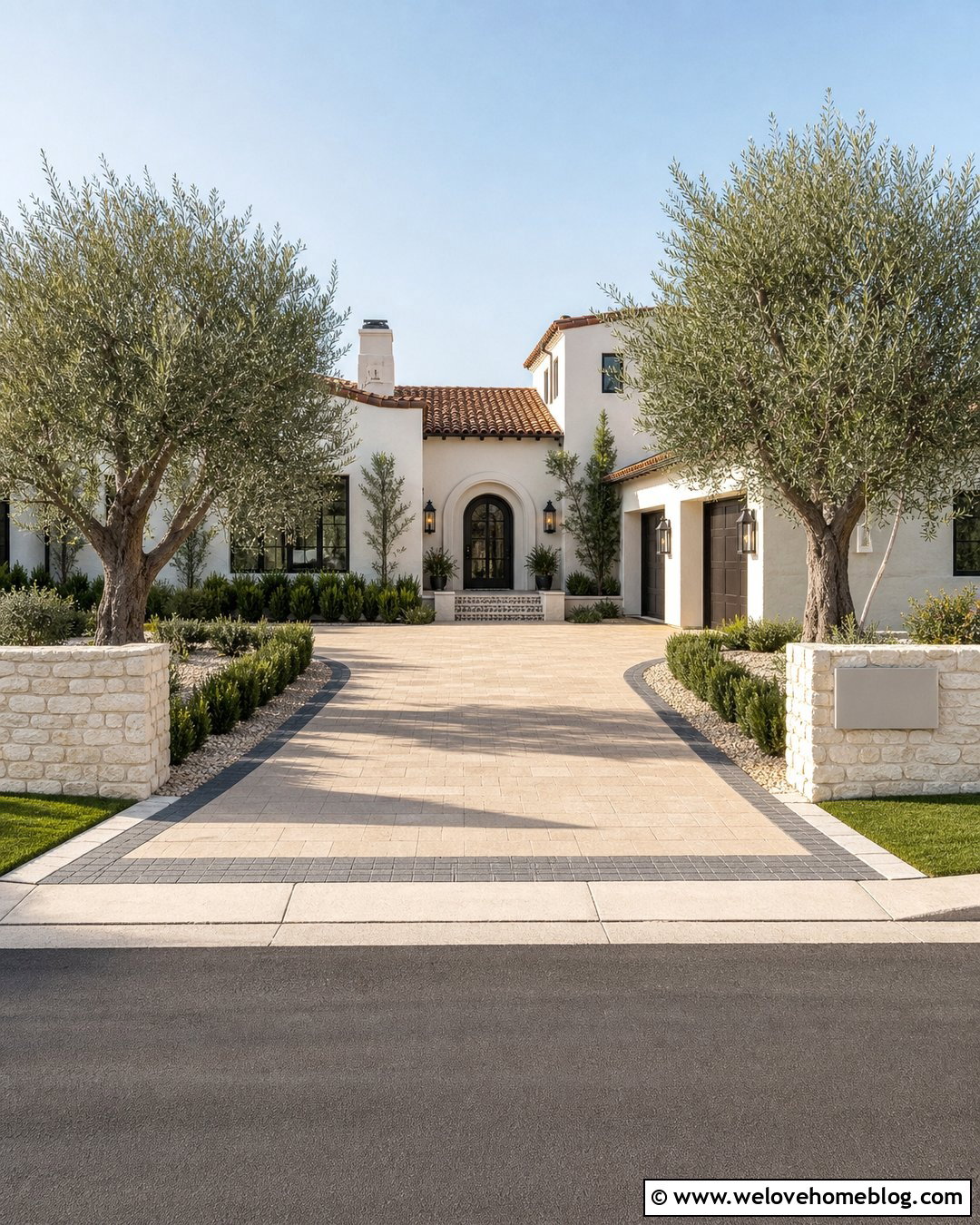
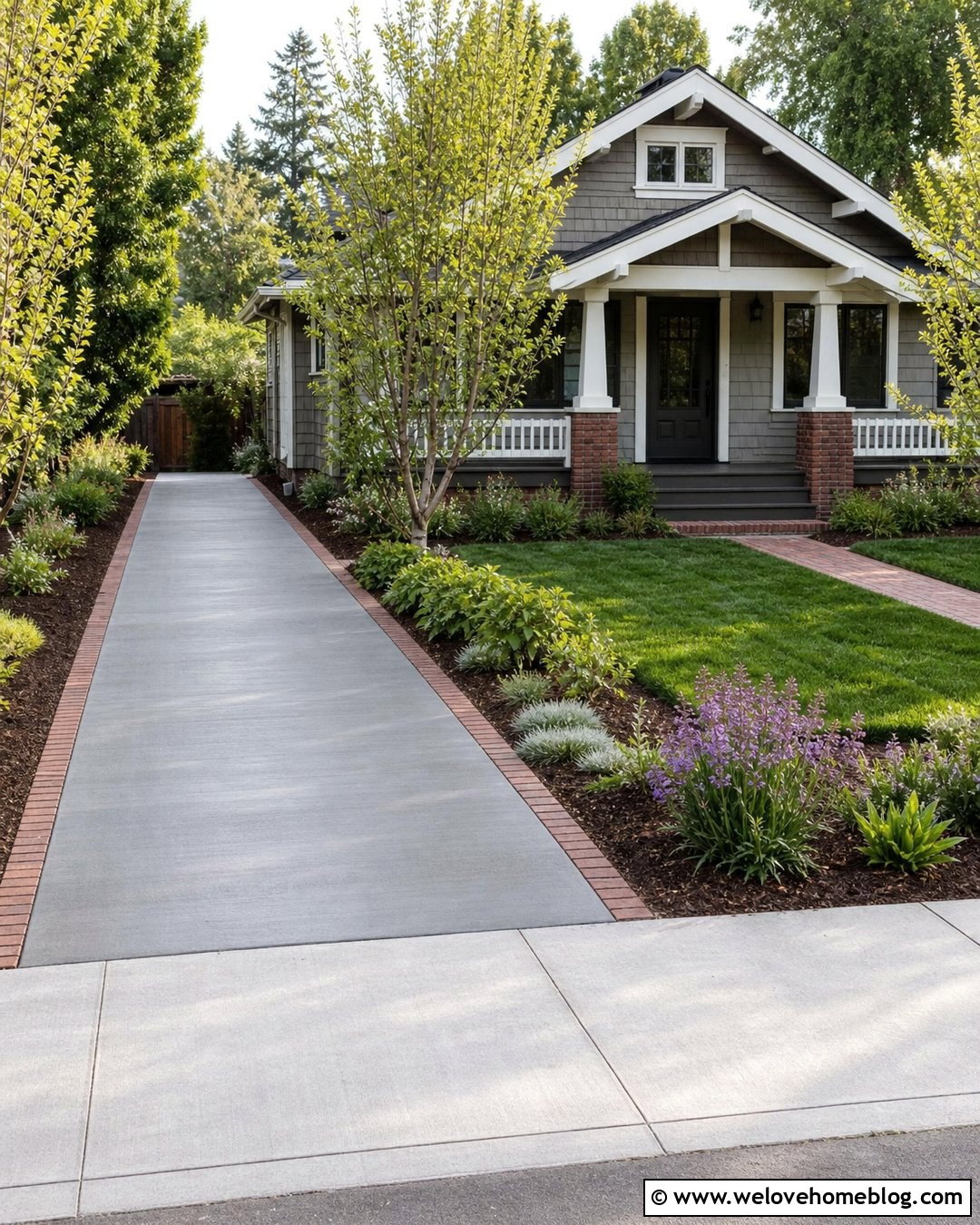
A driveway framed by flowering cherry trees creates an unforgettable spring approach. Soft rose and white blossoms look especially delicate above a dark resin-bound gravel surface. Use a straight driveway for a formal avenue or a slight curve for a more romantic garden effect. Pale granite setts along the edges can prevent the dark surface from merging visually with mulched planting beds. Keep the understory simple with lawn, bulbs, and low evergreen ground cover. The trees should have enough room to form individual crowns without growing into a dense tunnel. Since ornamental cherry performance varies by region, select a locally recommended type and plan for its mature spread. This balanced design complements cottages, Cape Cod homes, Japanese-influenced gardens, and light-colored contemporary houses.
16. Driveway With Palm Trees On Both Sides
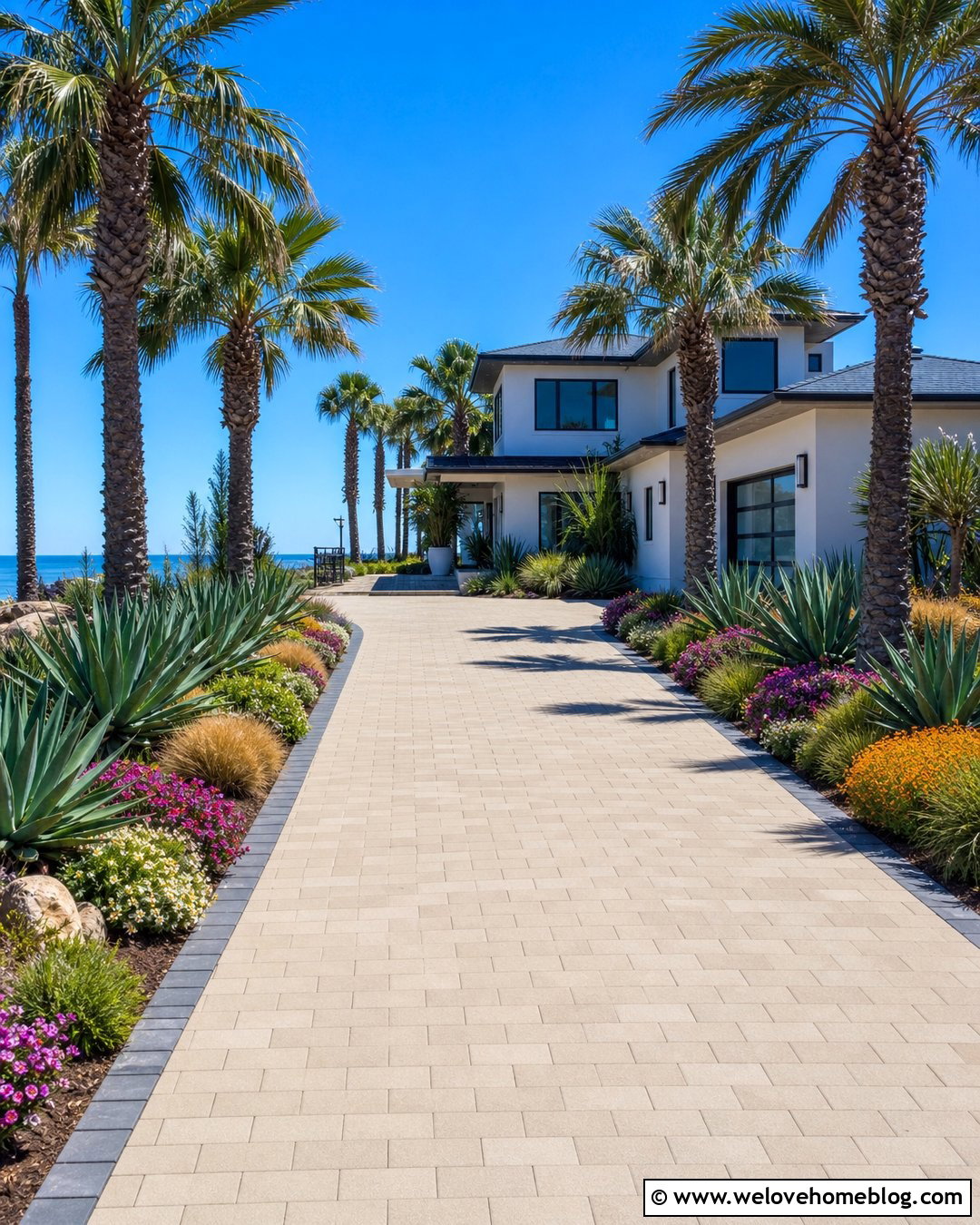
Tall palm trees can give a long driveway a bold, resort-like appearance in an appropriate warm climate. Use pale sand-colored concrete pavers in a clean running pattern to reflect heat visually and emphasize the palms’ strong vertical form. A straight layout makes the symmetrical rows feel especially dramatic. Border the paving with charcoal soldier-course pavers, then add broad beds of drought-tolerant grasses, agaves, and low flowering plants. Keep these beds set back from turning areas so sharp or spreading foliage does not interfere with vehicles. Low white landscape lights can mark the trunks and driveway edges while preserving a clean daytime view. This complete design works with coastal contemporary, Spanish, Florida ranch, and modern stucco homes surrounded by sunny, open landscaping.
17. Driveway With Pine Trees On Both Sides
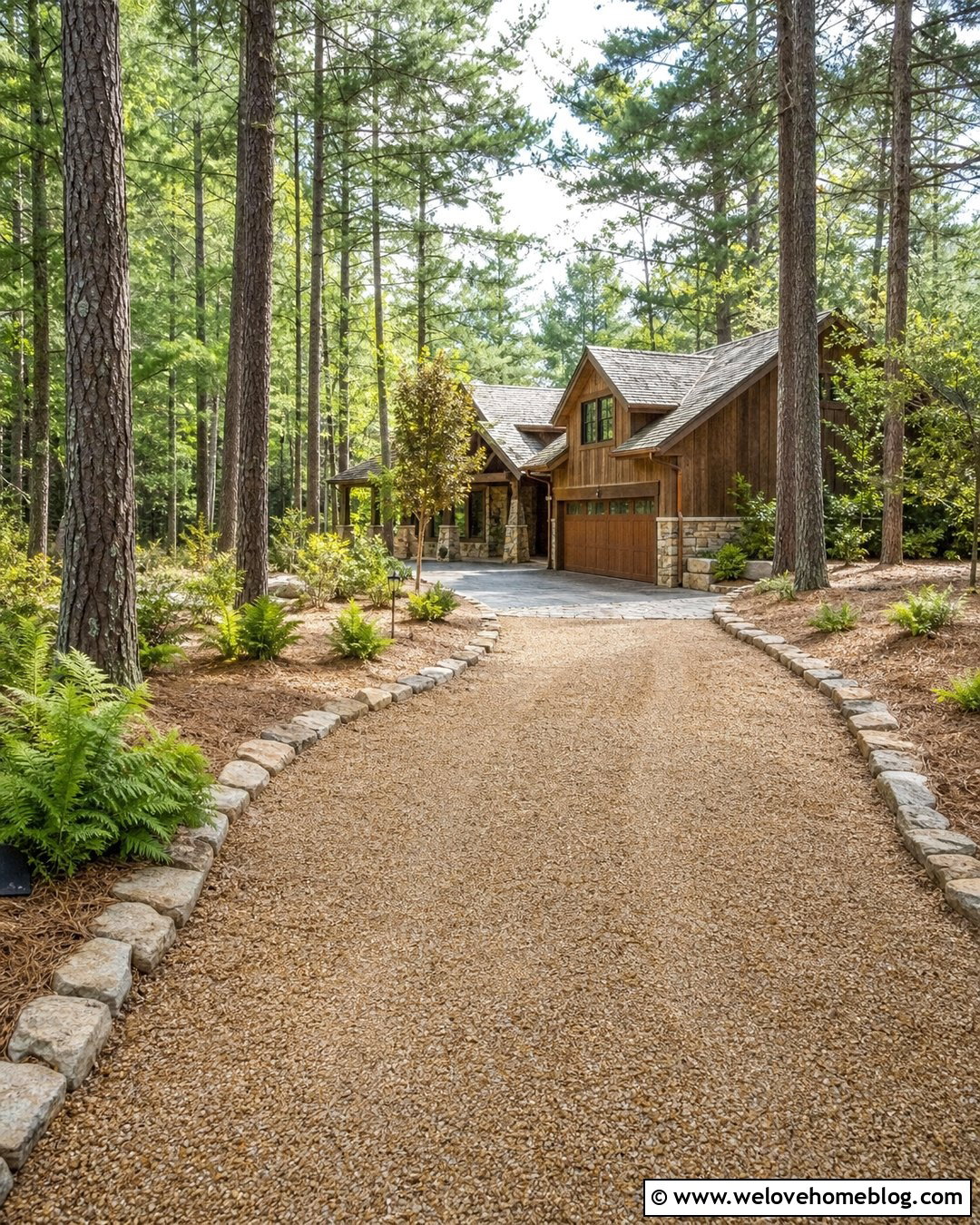
Pine trees can frame a driveway with rich green color and a natural woodland character. A compacted brown gravel driveway with a broad curve fits this relaxed setting better than a highly polished surface. Retain generous pine-needle beds beneath the trees and define the driving edge with large, irregular fieldstones. Add native grasses, ferns, and small shrubs in scattered groups rather than symmetrical formal borders. The driveway should follow the existing terrain where possible, reducing the need to disturb established roots. Near the home, transition from gravel to a small paver apron for a cleaner parking and garage area. This design feels established and peaceful around cabins, mountain houses, rustic ranch homes, and contemporary residences designed with natural wood, stone, and large windows.
18. Driveway With Italian Cypress Trees On Both Sides
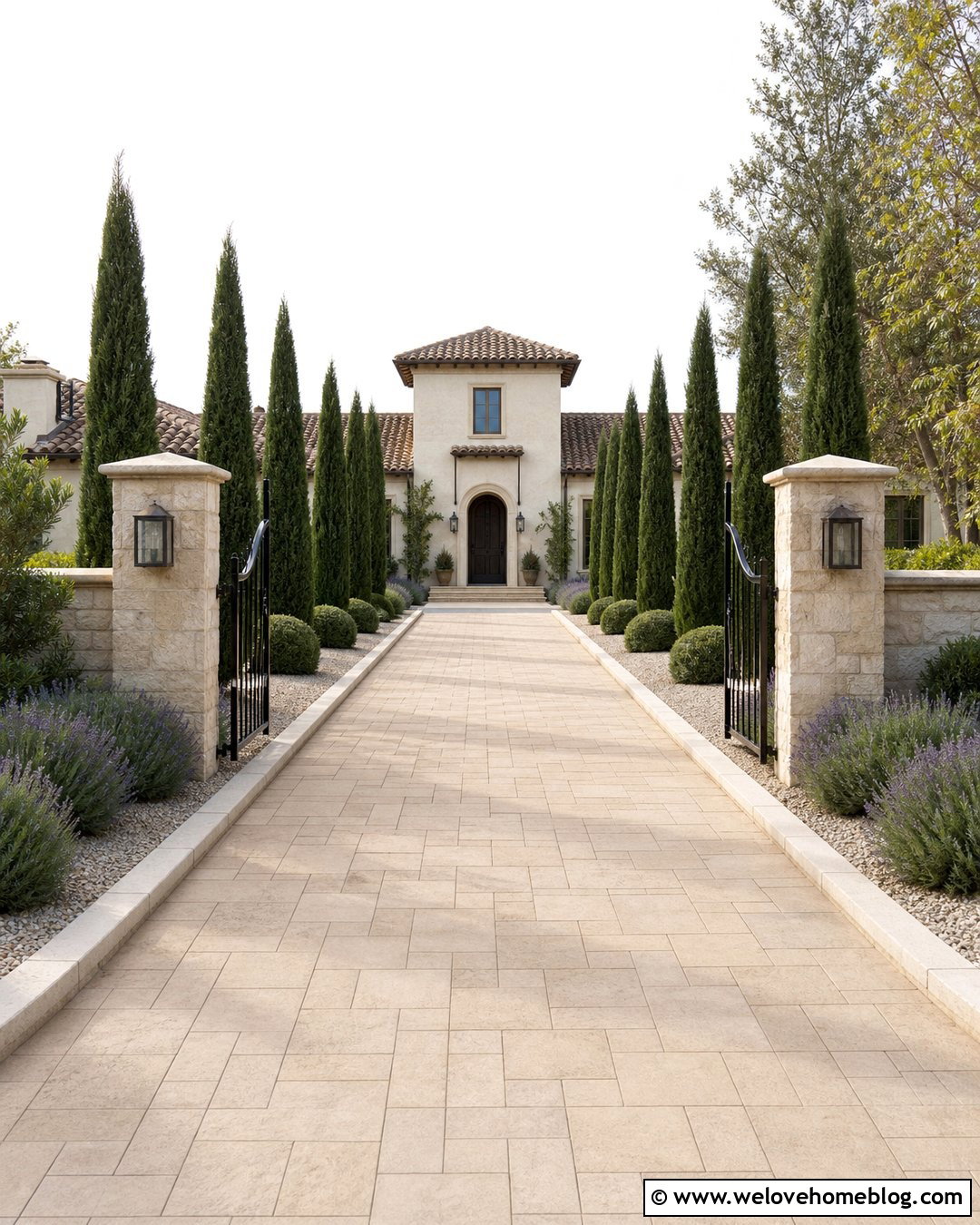
Italian cypress trees create one of the strongest formal looks for a driveway because their narrow silhouettes act like living columns. Pair them with warm limestone-colored pavers in a straight layout leading to a stucco home. Space the trees evenly in long gravel beds edged with matching limestone curbs. Small clipped shrubs or lavender can fill the spaces between trunks without weakening the vertical rhythm. At the curb, stone pillars and a simple metal gate can reinforce the Mediterranean character. Avoid overcrowding the rows; distinct tree forms usually look cleaner than one continuous green wall. Where true Italian cypress is not climate appropriate, use a narrow evergreen recommended locally. The complete design suits Tuscan, Spanish Revival, Mediterranean, and formal contemporary houses.
19. Driveway With Cedar Trees On Both Sides
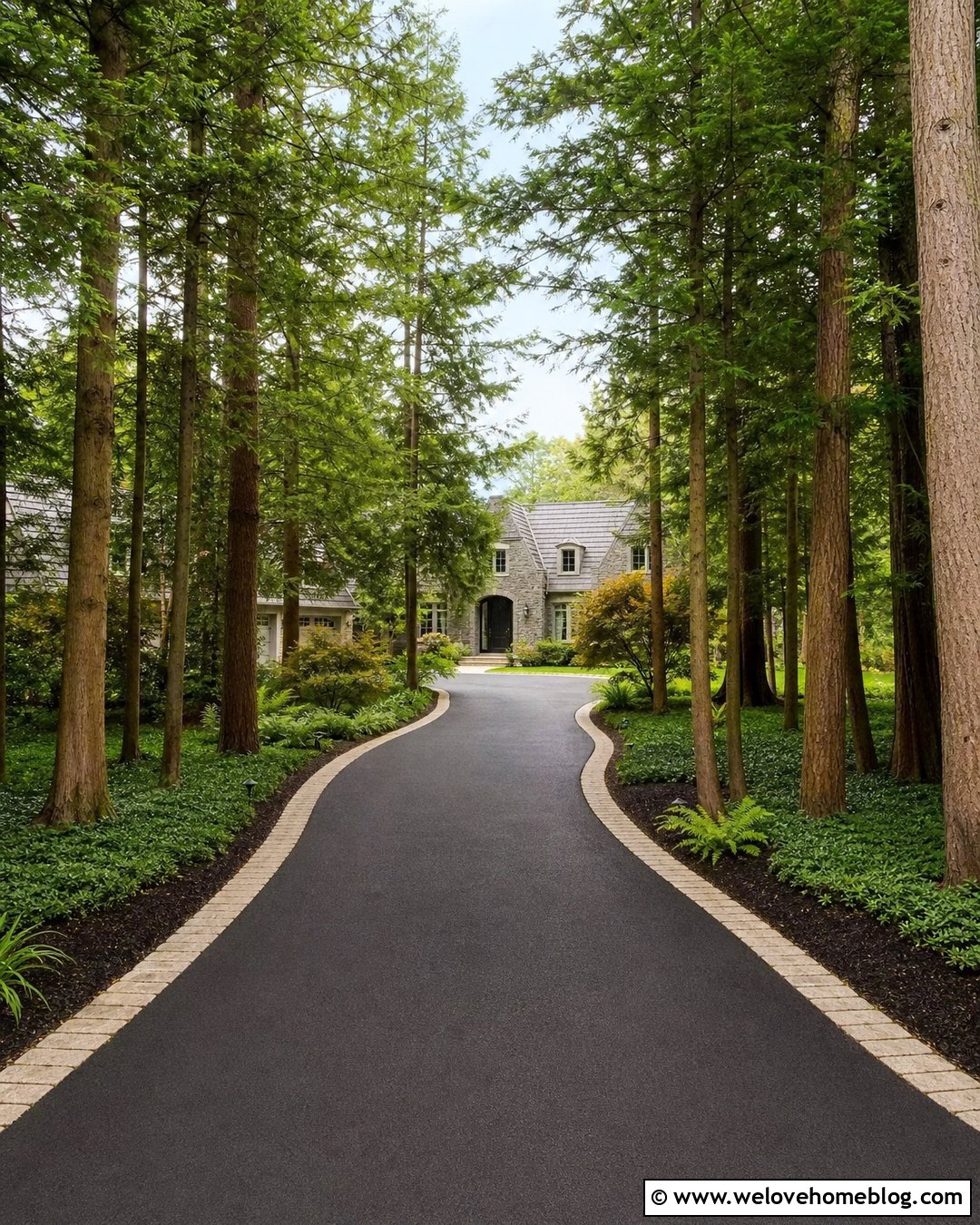
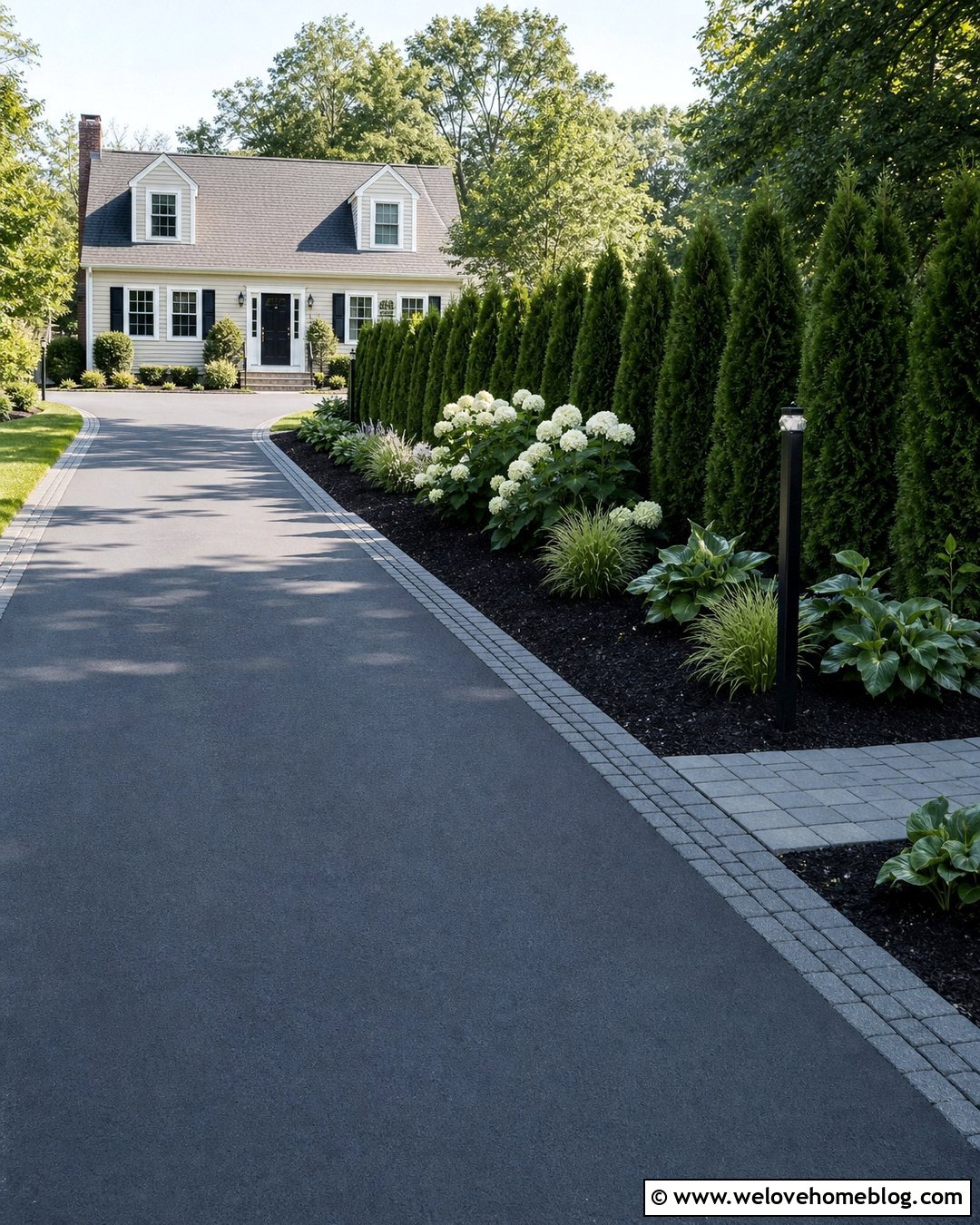
Cedar trees can provide privacy while giving a long driveway a sheltered, quiet feeling. Choose black asphalt for a smooth surface, then soften its edges with warm-toned Belgian block and deep evergreen planting beds. A gentle S-curve prevents the driveway from resembling a narrow corridor and creates occasional views of the lawn and house. Keep the cedars spaced as individual trees rather than forcing them into tightly sheared hedges. Low woodland ground cover and brown mulch can conceal bare soil without adding excessive maintenance. Place occasional deciduous shrubs near the entrance for seasonal contrast. This design works well on larger suburban lots, wooded properties, and traditional homes where screening from neighboring houses or the road is important, but a welcoming approach is still desired.
20. Driveway With Sycamore Trees On Both Sides
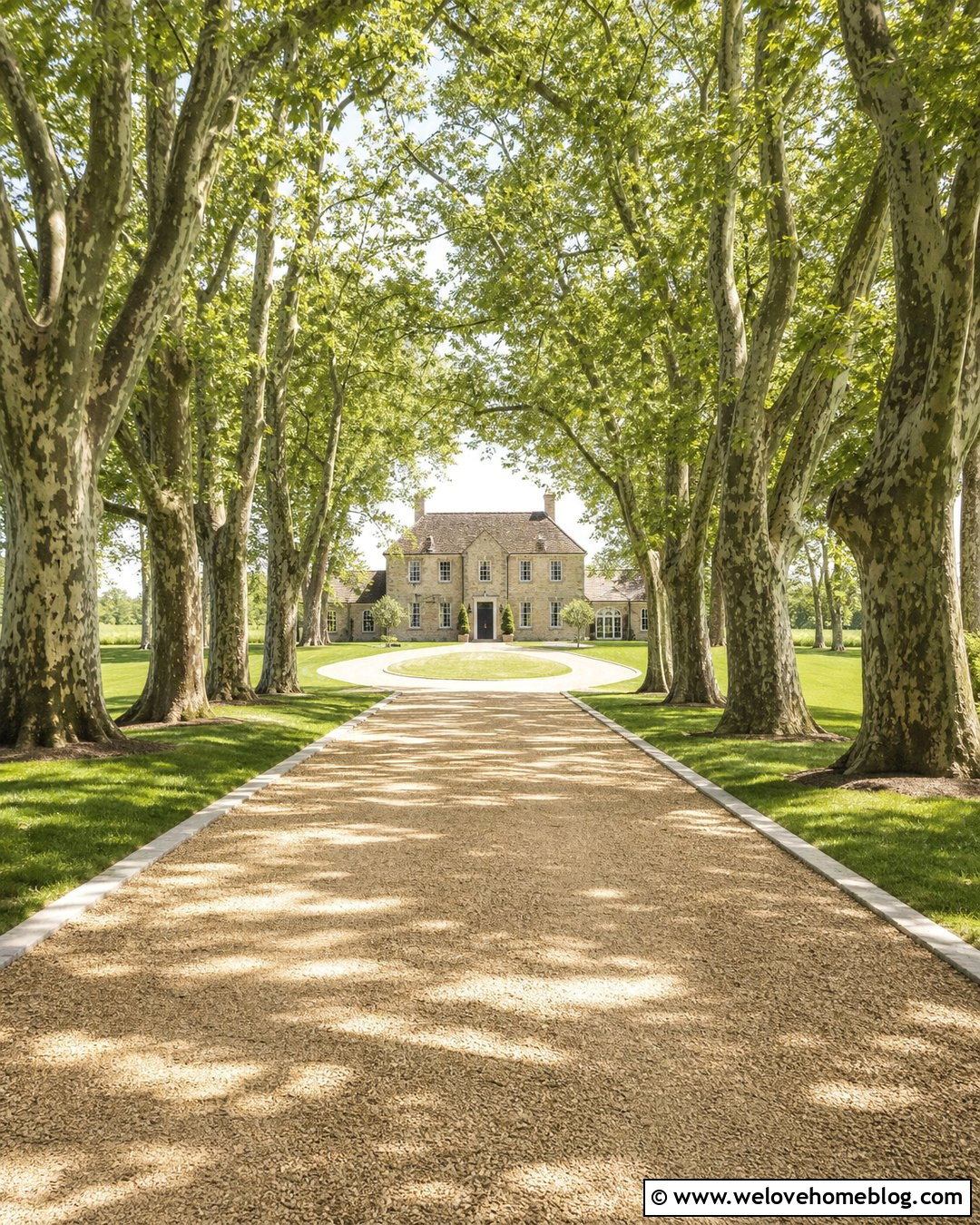
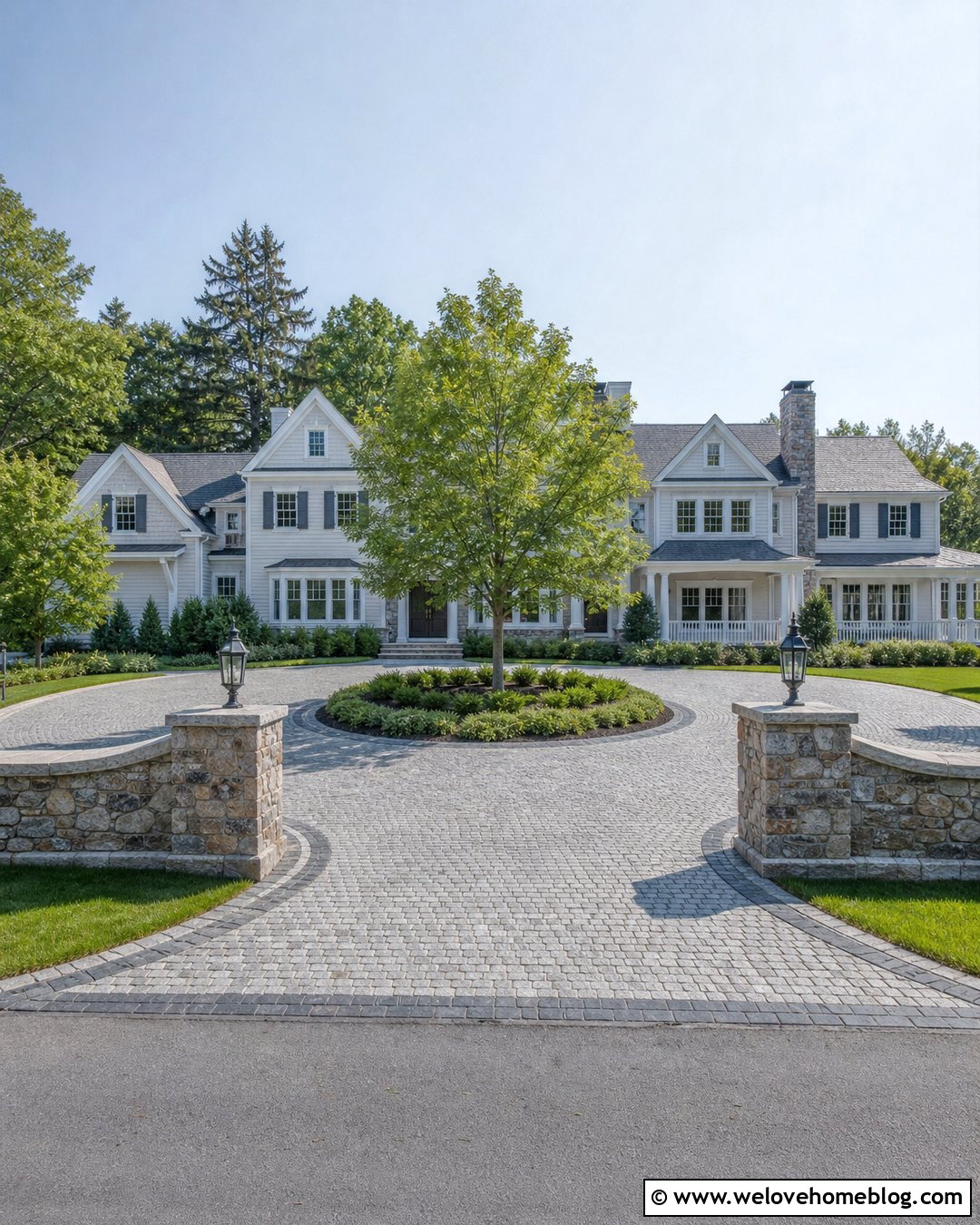
Mature sycamores can create a high, impressive canopy over a broad estate driveway. Their pale, patterned trunks look striking beside a warm tan gravel surface with clean granite edging. A long straight layout emphasizes the scale of the trees and establishes a clear view toward the residence. Wide grass verges give trunks and roots breathing room while making the entrance resemble a private park road. Keep planting beneath the trees minimal, using lawn or a simple ground cover that tolerates the site conditions. A large turning circle near the house can repeat the gravel and granite materials. This design requires substantial space and careful long-term planning, but it can suit stone manor houses, historic farmsteads, and large traditional homes with expansive front grounds.
21. Driveway With Mixed Trees On Both Sides
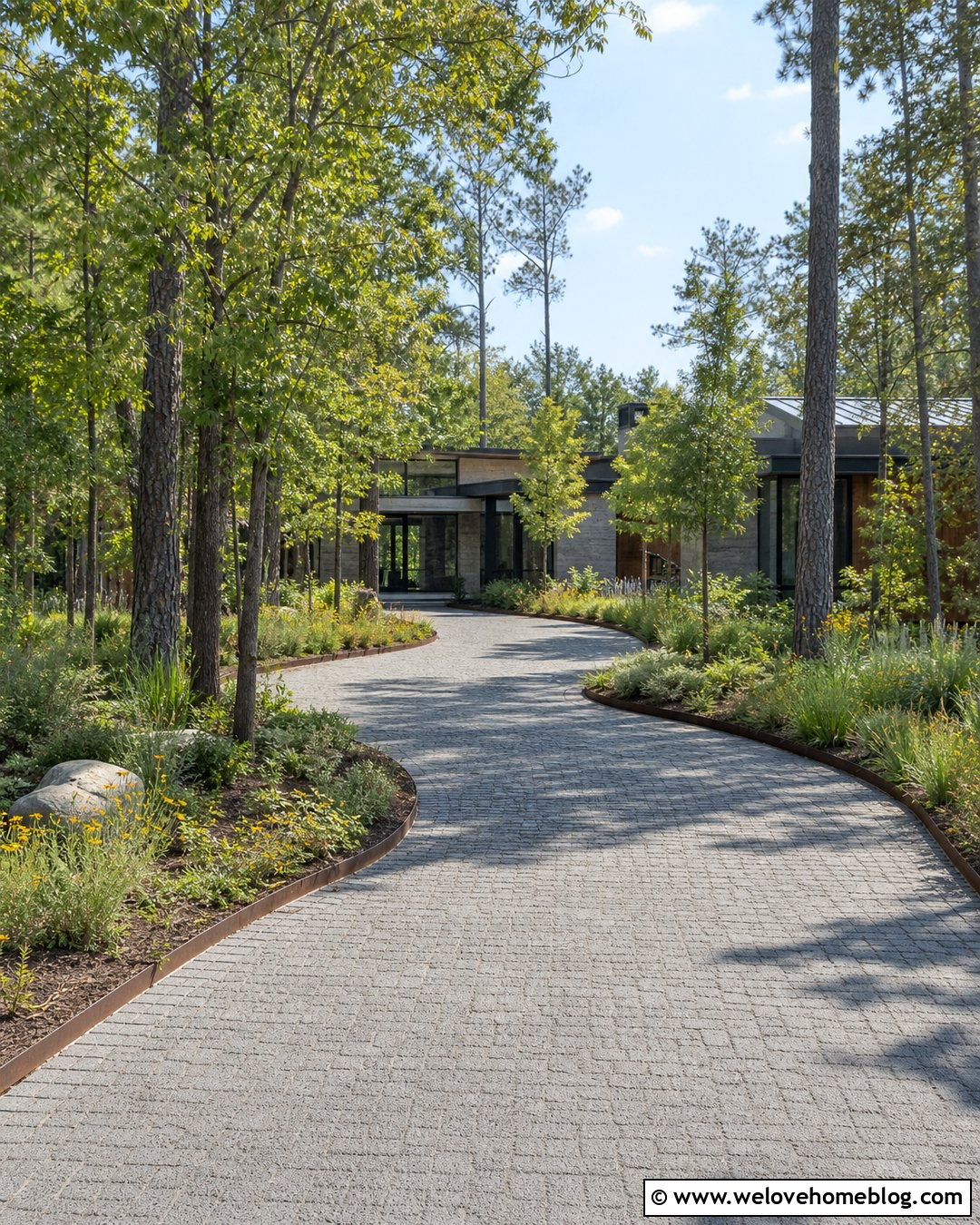
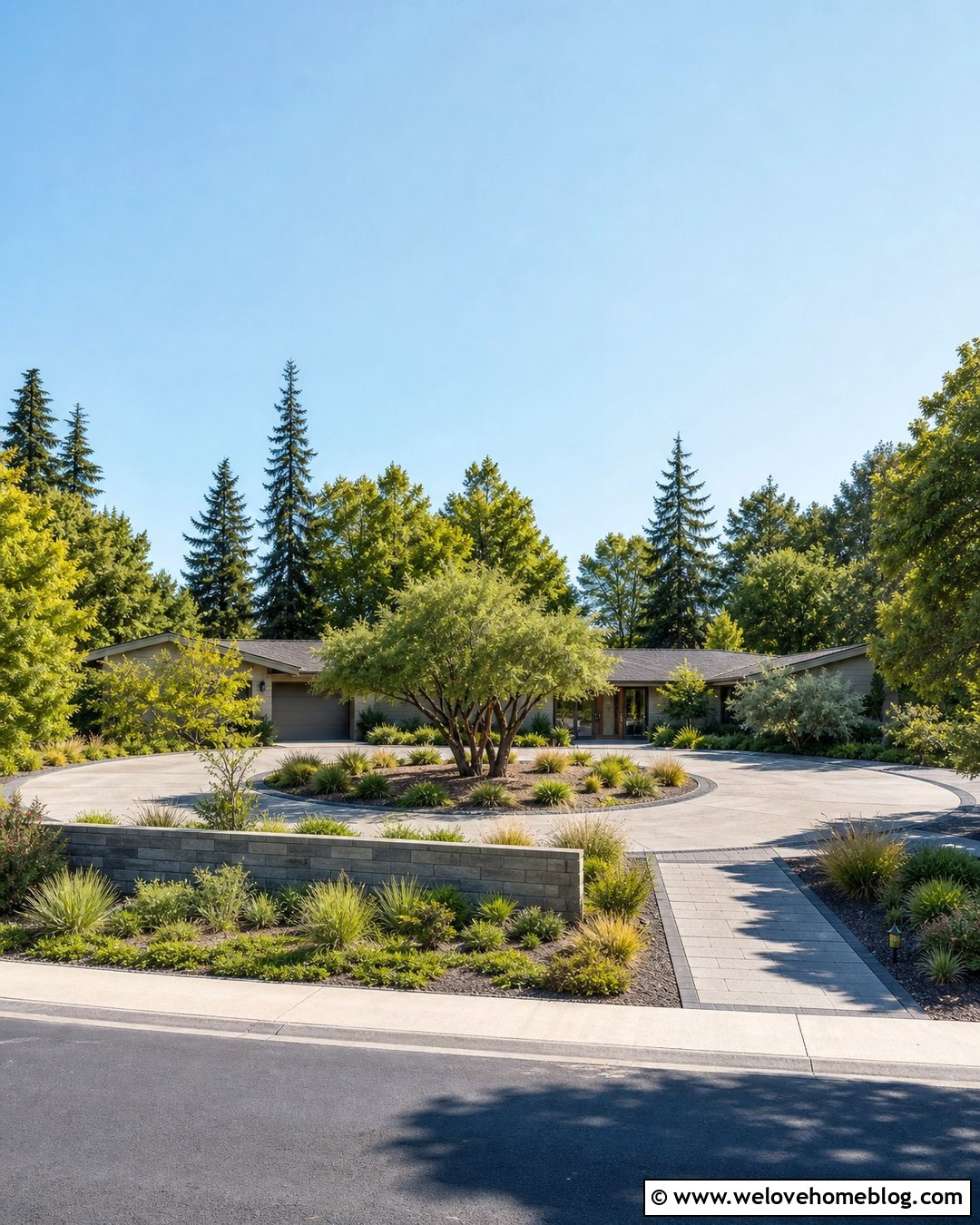
Not every tree-lined driveway needs perfectly matching rows. A mix of compatible native trees can create a resilient, layered woodland approach with varied foliage and seasonal interest. Use permeable gray pavers for a gently curved driveway, edged with weathered steel that nearly disappears into the landscape. Arrange trees in balanced groups on both sides rather than pairing every trunk. Include a thoughtful mixture of canopy trees and smaller flowering specimens, but repeat several species to keep the design connected. Native shrubs, grasses, and ground covers can fill the wider planting beds. Preserve clear views at the curb and around bends. This complete look is ideal for contemporary woodland homes, eco-conscious landscapes, and properties where a natural atmosphere is more appropriate than a rigid formal avenue.
22. Driveway With Trees And Low Hedges On Both Sides
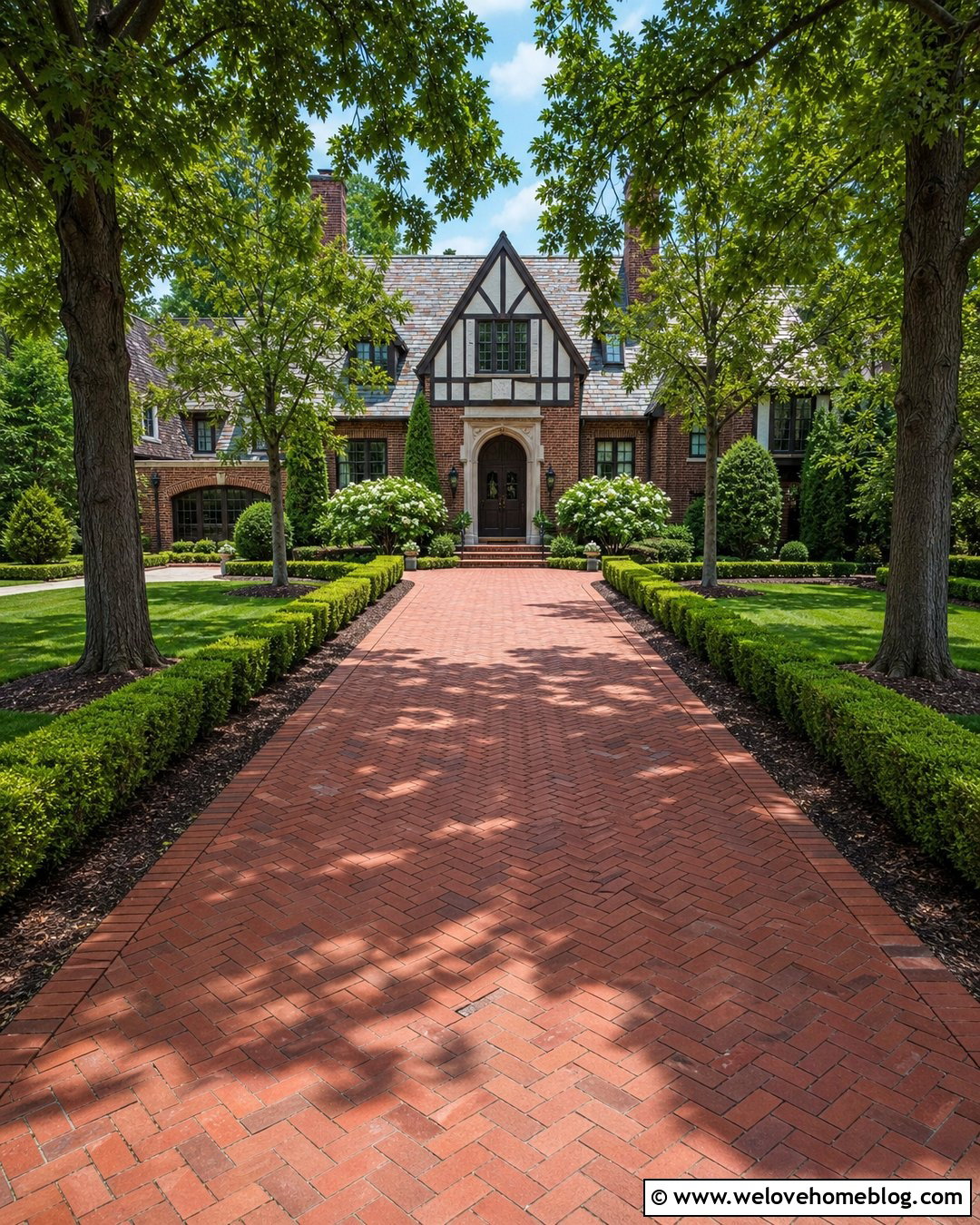
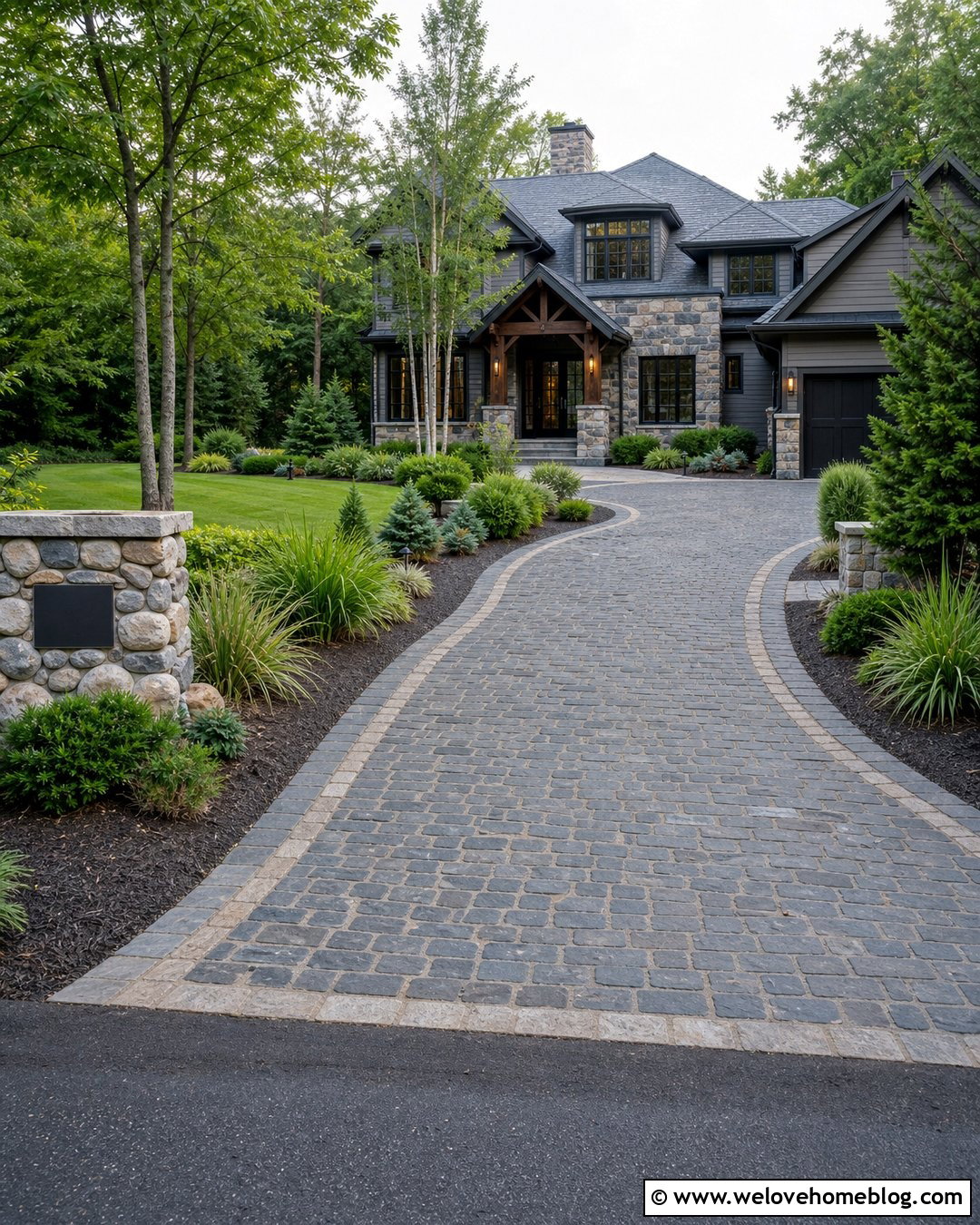
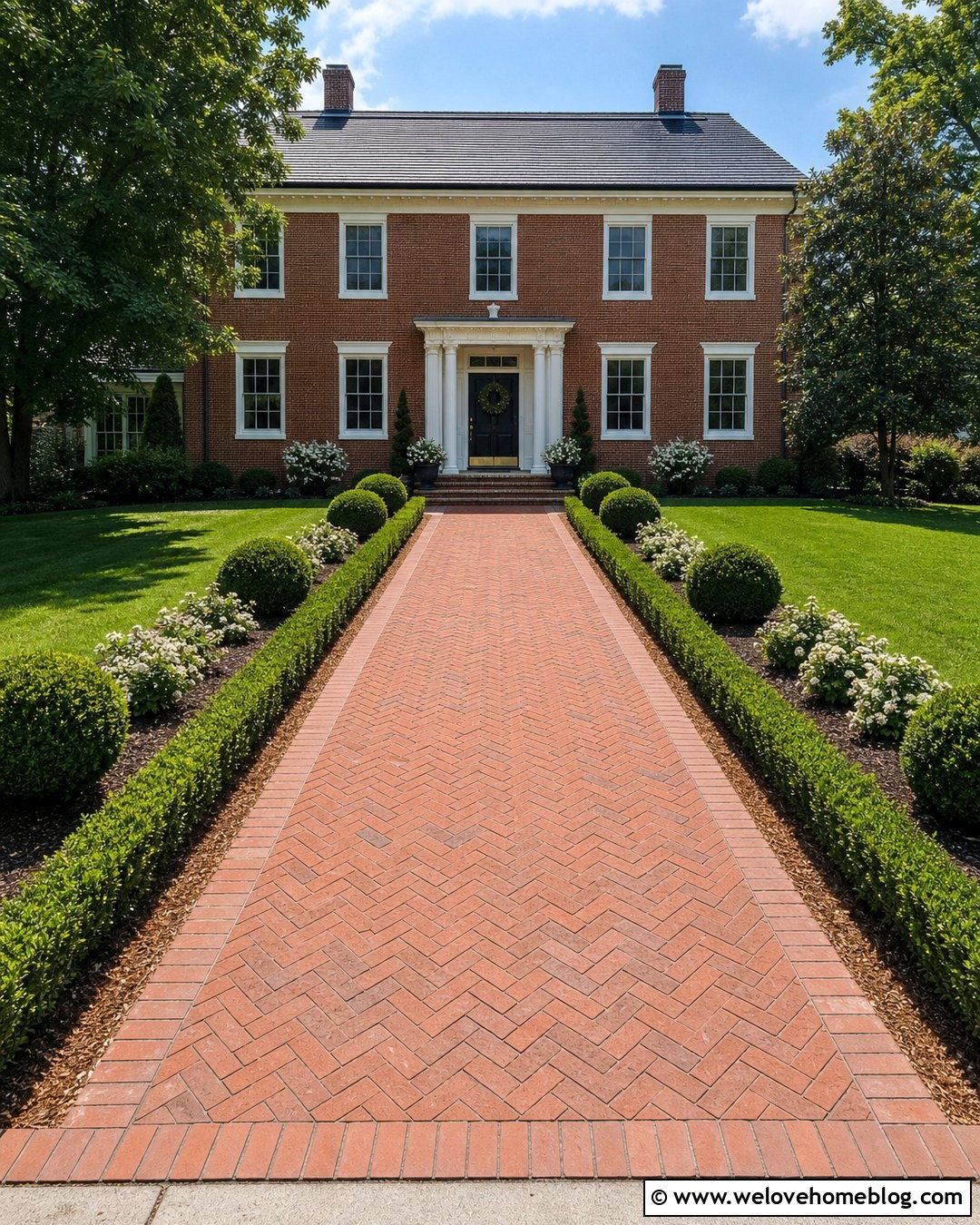
Combining trees with low hedges gives a driveway both height and a strong ground-level border. Start with red-brown brick pavers in a herringbone pattern and use a straight layout for a formal appearance. Plant matching shade trees at regular intervals inside broad lawn strips, then run a clipped hedge along the driveway edge. Keep the hedge low enough to maintain visibility and prevent the route from feeling enclosed. A narrow mulch band between the hedge and trees simplifies maintenance and visually connects the planting. Repeat the brick around the front walkway and entrance steps. Regularly spaced trees paired with modest-height hedging can provide useful structure through the seasons. () This tailored design fits Colonial, Georgian, Tudor, and formal brick homes particularly well.
23. Driveway With Trees And Lighting On Both Sides
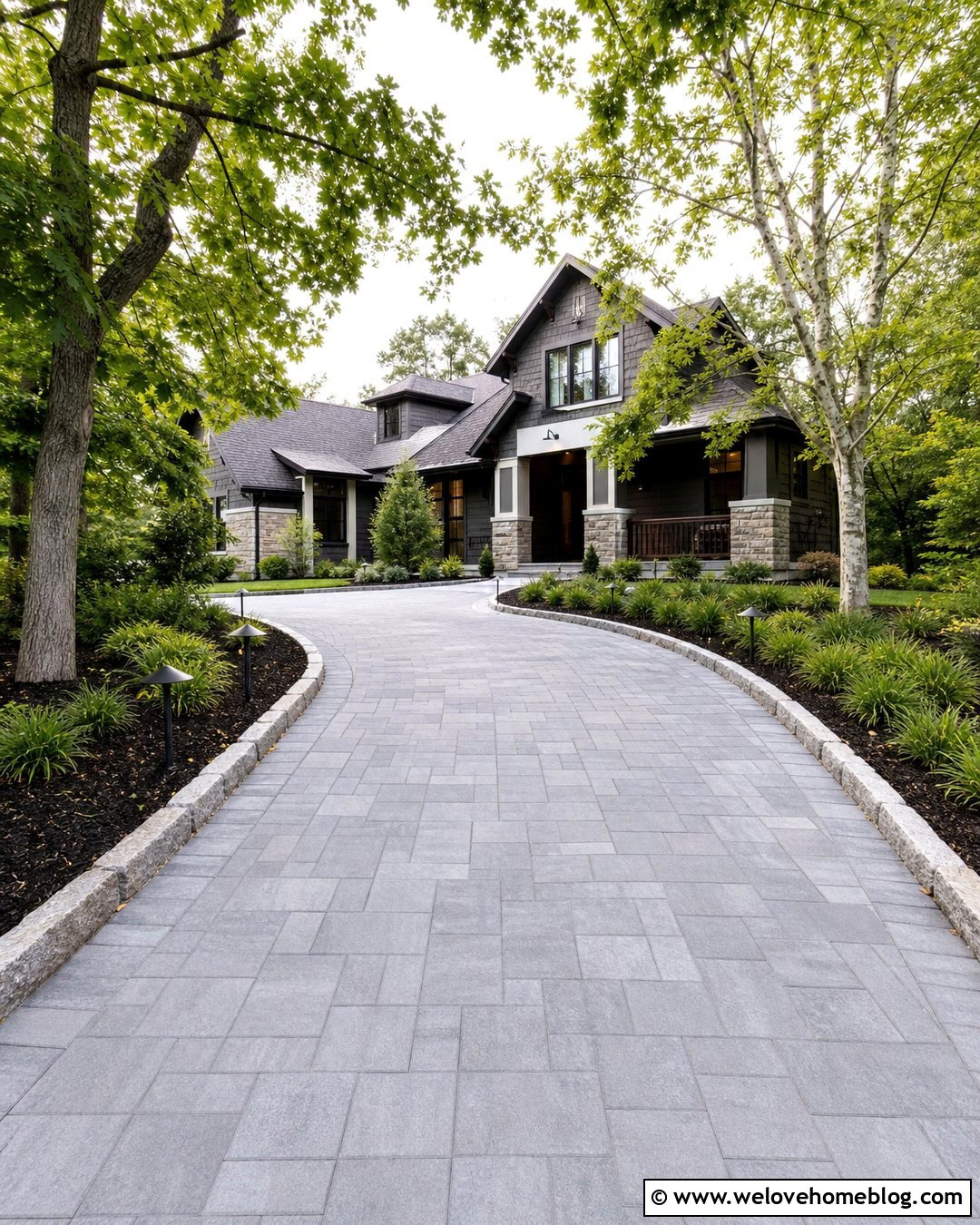
Well-planned lighting can make a tree-lined driveway easier to follow without turning it into an airport runway. Choose medium-gray concrete pavers for a softly curved drive and place deciduous trees in matching lawn strips on both sides. Install low shielded path lights near important curves, the curb entrance, and pedestrian crossing points. Add selective uplighting to a few feature trees rather than illuminating every trunk. Dark metal fixtures disappear into mulched beds during the day, keeping the landscape visually clean. Granite curbs and low ornamental grasses can form a neat transition between the pavers and tree rows. Coordinate fixture placement with irrigation, tree roots, and snow-removal needs. This complete layout works with modern farmhouses, Craftsman homes, and contemporary suburban properties.
24. Driveway With Trees And Stone Pillars On Both Sides
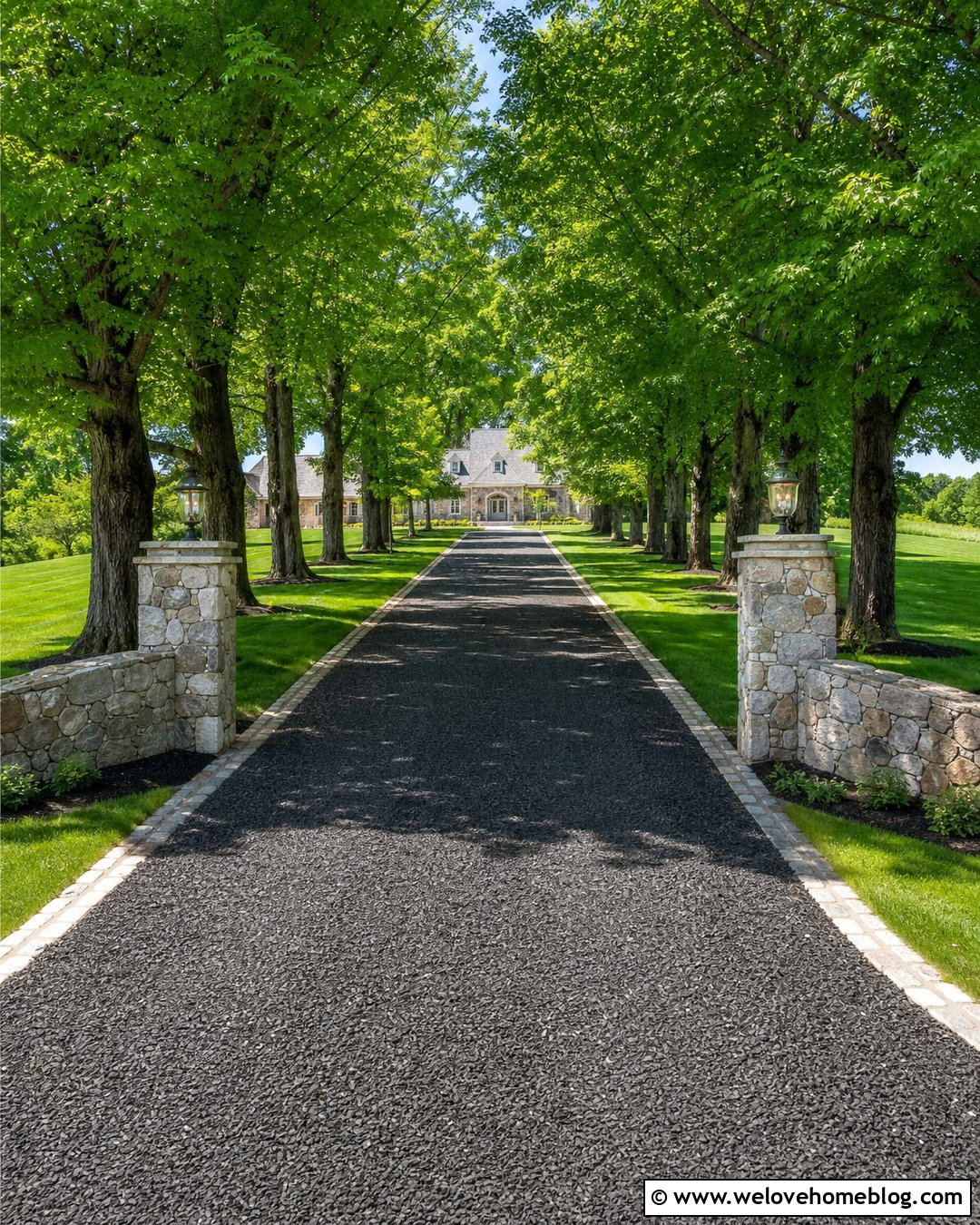
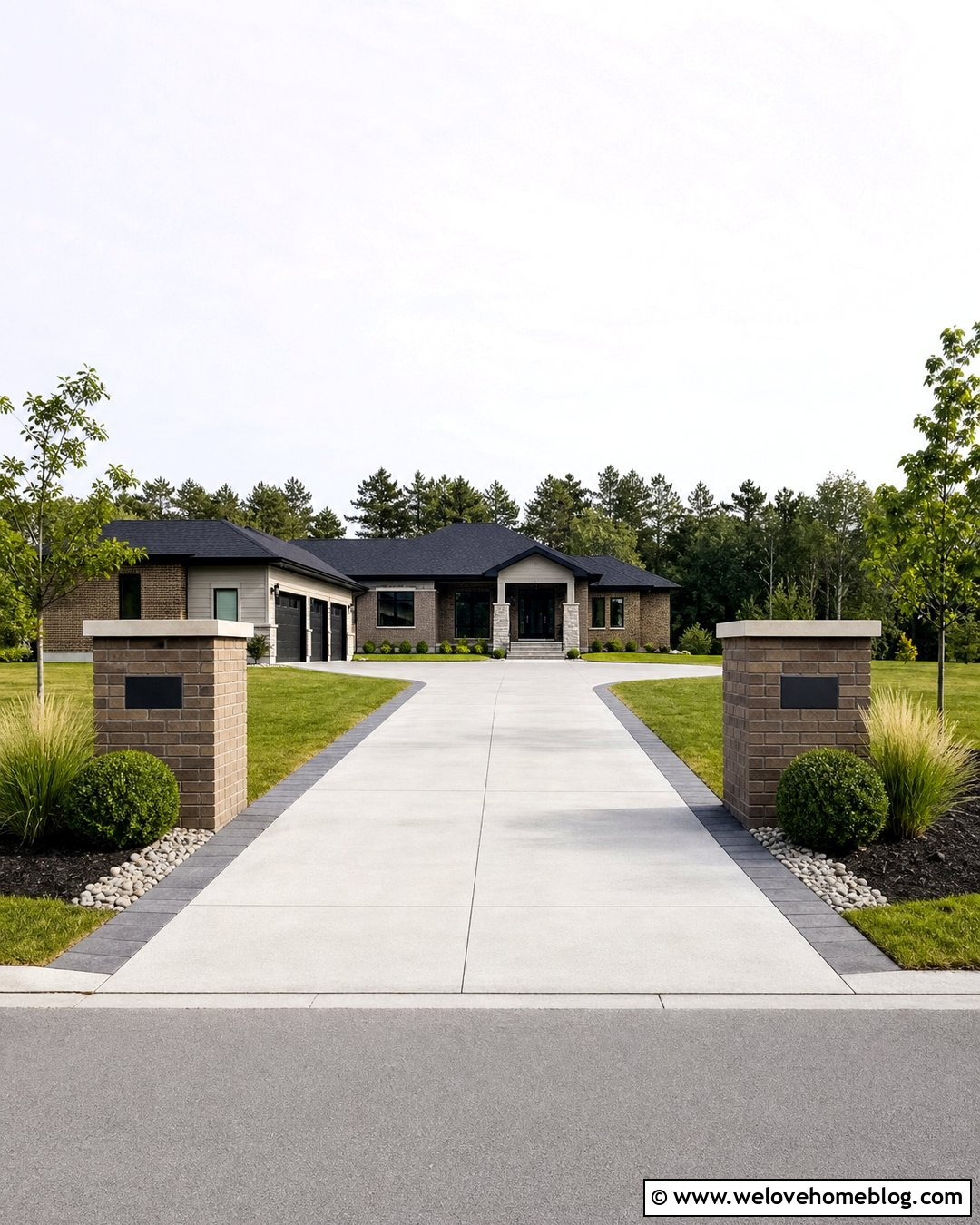
Stone pillars create a clear beginning to a tree-lined driveway and help the entrance feel connected to the house. Use charcoal crushed gravel for a long straight drive, framed by rows of maples or another locally suitable canopy tree. Build two proportional fieldstone pillars at the curb and cap them with simple lanterns. Low stone walls can curve away from the pillars before ending in broad planting beds, preventing the entrance from feeling cramped. Continue the same fieldstone as intermittent driveway edging or around the front walkway. Lawn beneath the trees keeps the center view open and highlights the repeating trunks. The design works best when pillar stone, roof color, and house masonry share similar tones. It suits country, Craftsman, ranch, and traditional stone-front homes.
25. Driveway With Trees And Wildflowers On Both Sides
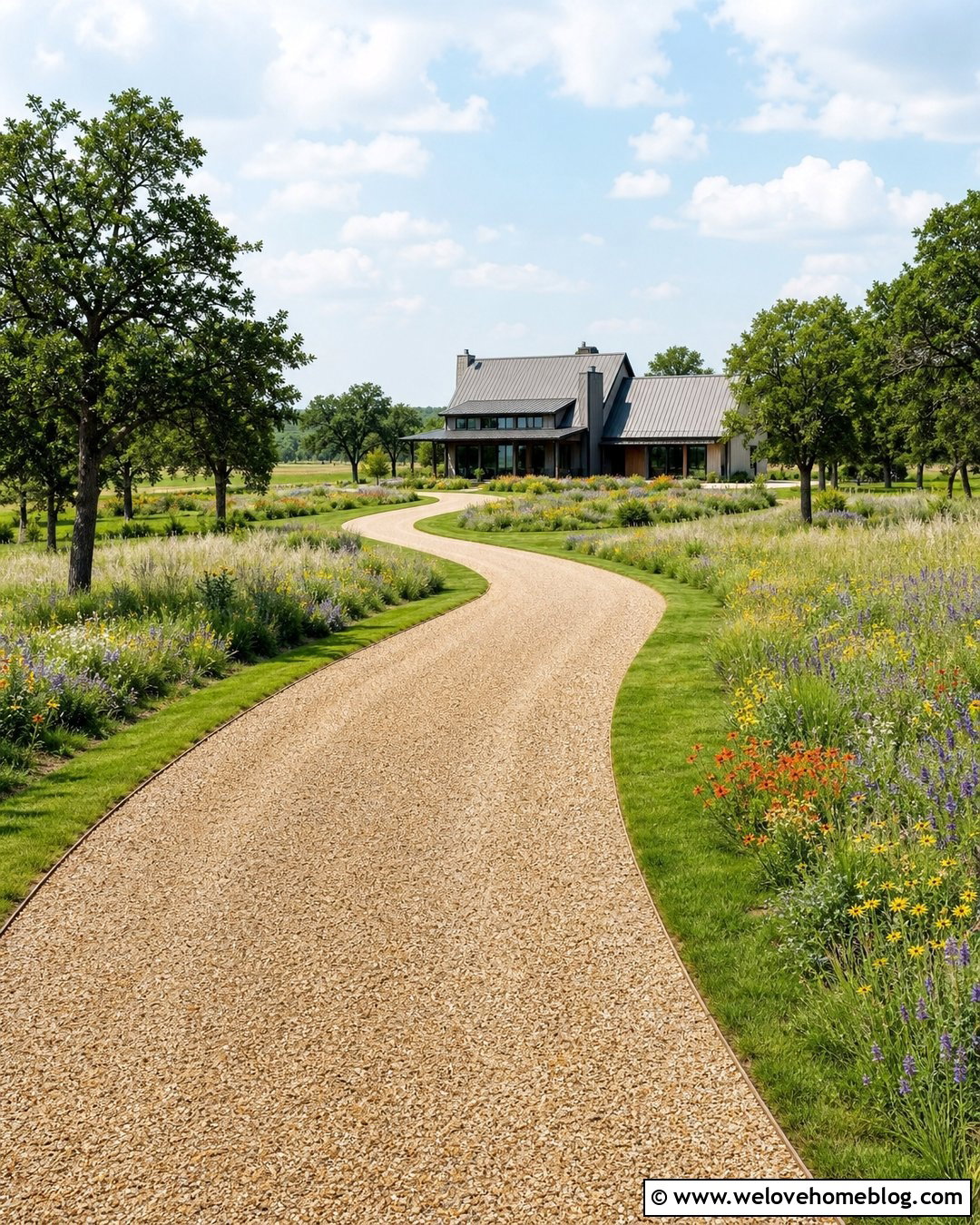
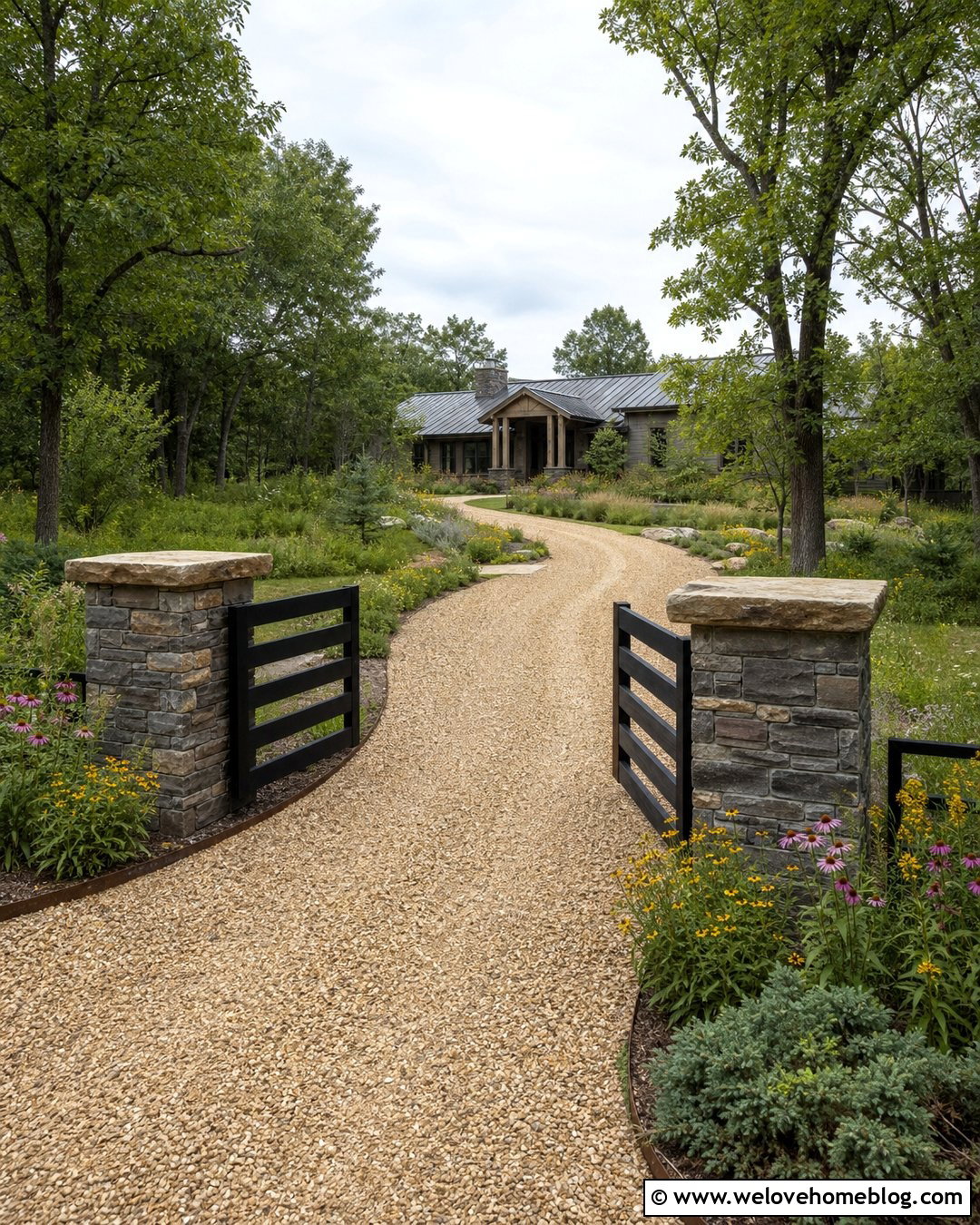
Wildflower planting can give a tree-lined driveway a softer, meadow-inspired edge. Use golden pea gravel for a gently winding driveway that leads toward a country cottage or modern barn home. Plant widely spaced native trees on both sides, then establish broad ribbons of locally adapted wildflowers and grasses between the trunks. A narrow mowed strip beside the gravel keeps growth away from vehicles and makes the natural planting look intentional. Discreet steel edging can contain the gravel without introducing a formal border. Vary flower heights farther from the driving surface while maintaining clear visibility at curves and the road entrance. This complete landscape changes through the seasons, supports a relaxed sense of place, and reduces the need for continuous lawn along a long rural driveway.
Conclusion:
The strongest 25 Driveway With Trees On Both Sides Ideas treat the driveway, trees, borders, planting, and house as one connected landscape. Start by choosing a surface and layout that suit your property’s architecture and daily traffic. Then select trees for the available width, local climate, soil, mature canopy, and maintenance needs. Keep trunks far enough from pavement, utilities, gates, and sightlines, and consult a qualified local arborist before finalizing placement. Formal rows work beautifully with symmetrical homes, while staggered groups feel more natural around cottages and wooded properties. Whether you prefer gravel and oaks, pavers and redbuds, or asphalt and evergreens, thoughtful planning will create an attractive driveway that improves with age.

Related posts:
Leave a Reply