
The right trees can turn an ordinary driveway into a welcoming, shaded, and beautifully framed approach to your home. These 30 driveway trees ideas combine complete driveway designs with practical planting choices, attractive borders, and landscaping that complements the house. Before selecting a tree, consider its mature canopy, root behavior, climate needs, maintenance, and distance from pavement. Narrow or smaller ornamental trees generally fit compact spaces better, while large shade trees need generous planting beds and setbacks to protect paving. () Also think about leaf, flower, fruit, and needle drop near parking areas. From flowering entrances to evergreen-lined country lanes, the following complete designs offer adaptable inspiration through 30 driveway trees ideas.

1. Dogwood Trees Along A Concrete Driveway
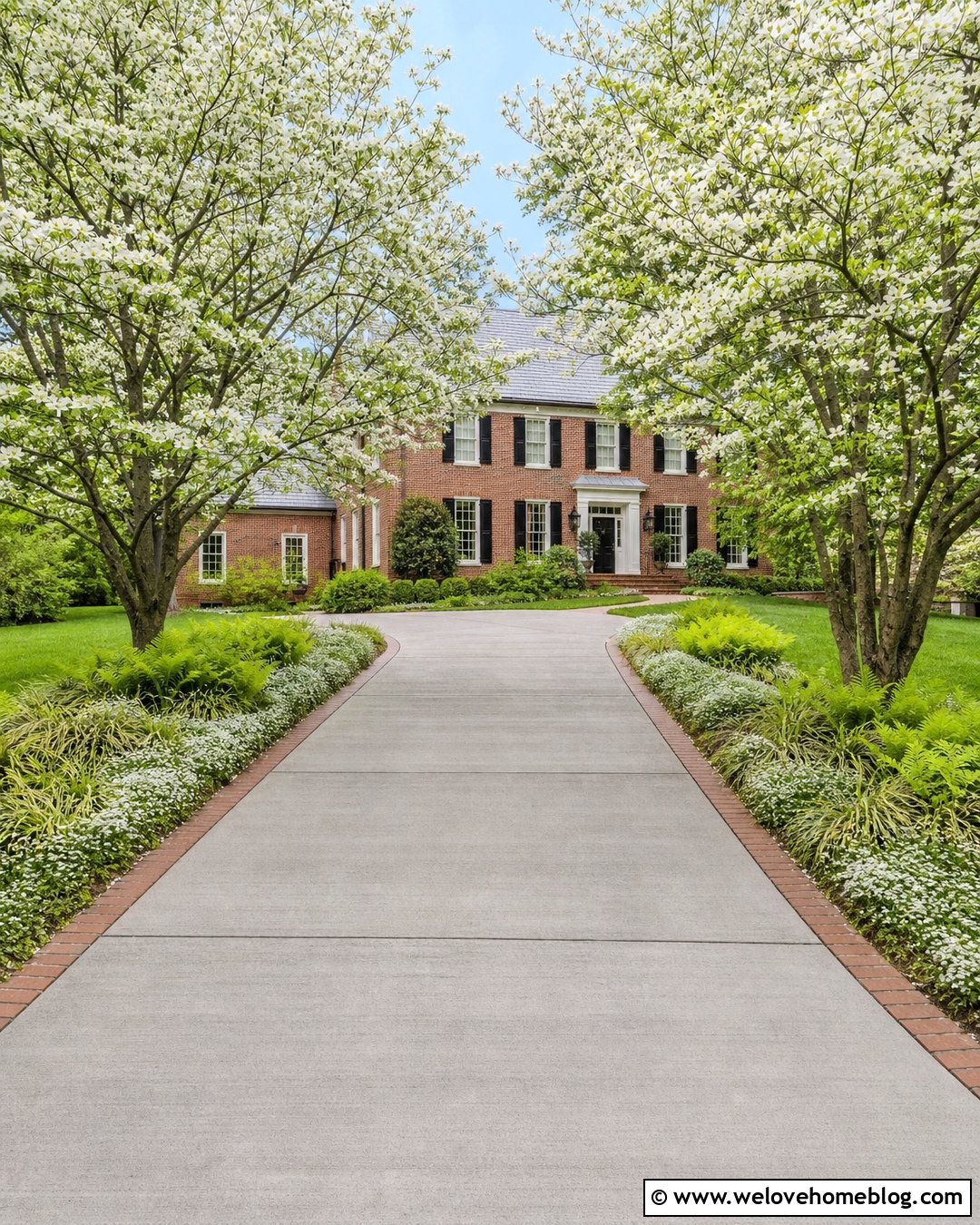
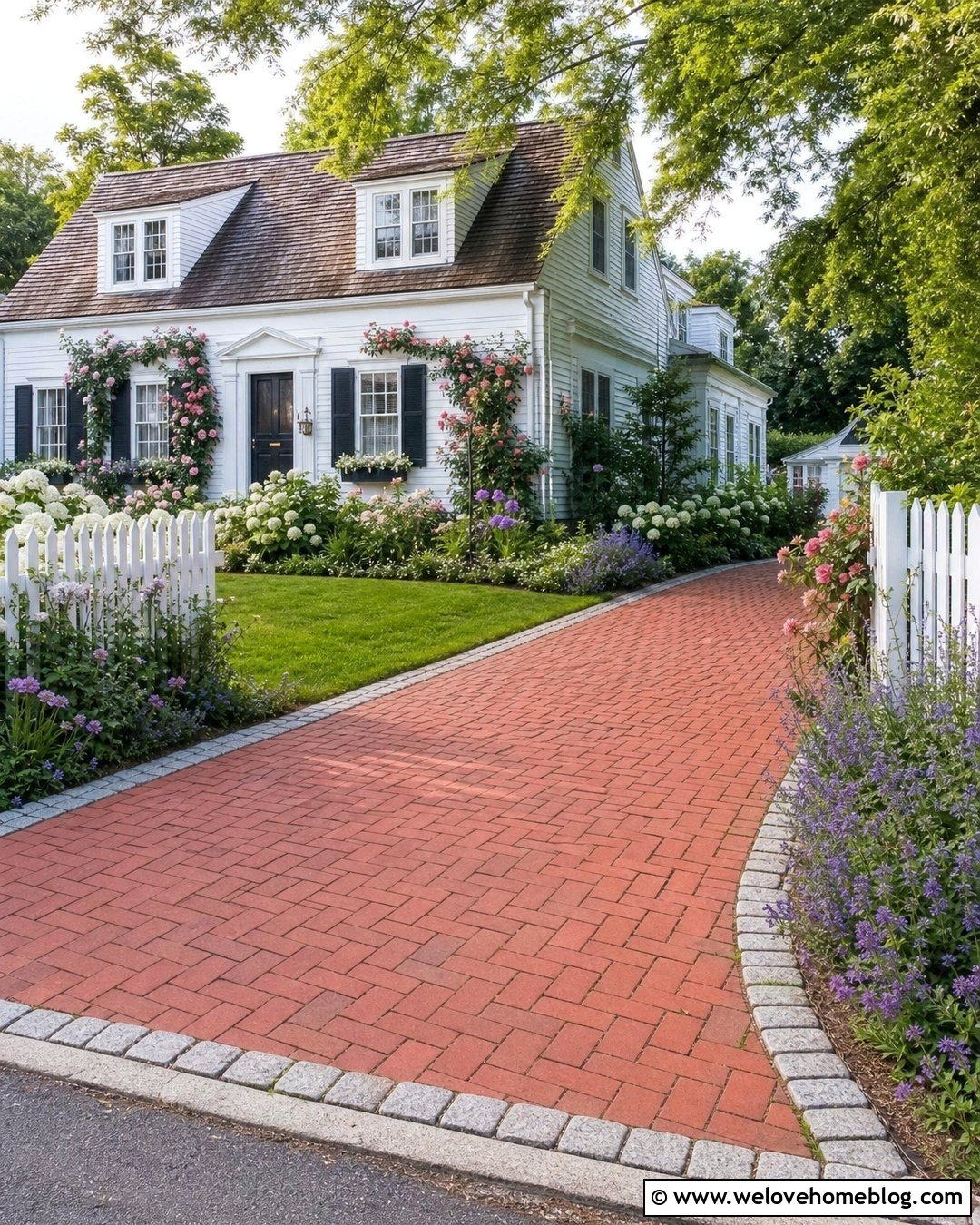
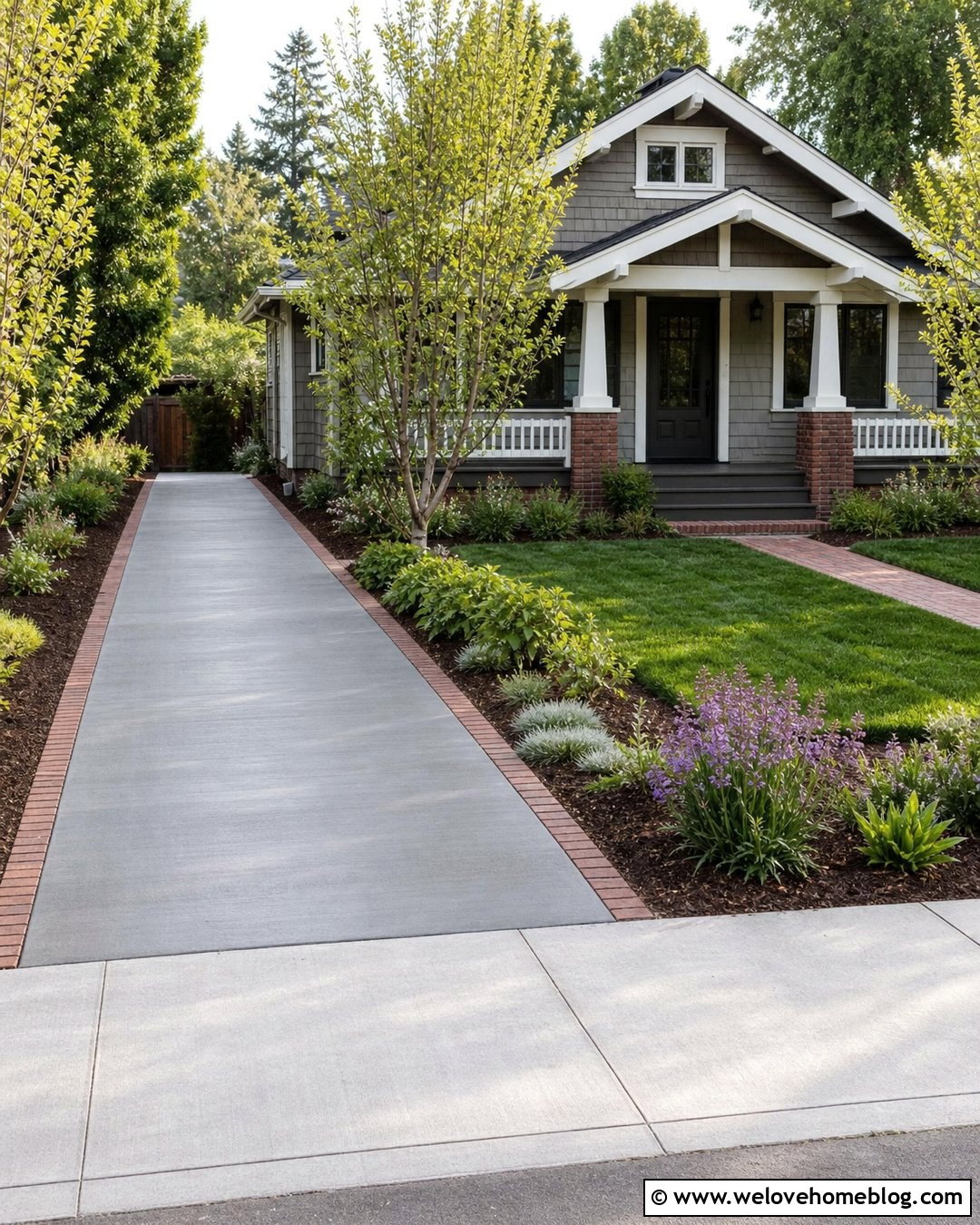
Flowering dogwoods can soften a straight concrete driveway with layered branches and seasonal color. Place a balanced row in wide planting beds rather than squeezing the trunks against the pavement. A soft gray poured-concrete surface keeps the design clean, while a narrow brick border introduces warmth. Beneath the trees, use low-growing native sedges, ferns, or flowering ground cover that will not block visibility when backing out. This combination works especially well with brick Colonials, Cape Cod homes, and traditional cottages. Leave open lawn between selected trees if you prefer a less formal effect. Dogwoods are relatively compact compared with many large shade trees, making them useful where the front yard has moderate planting space. ()
2. Serviceberry Trees Beside A Gravel Driveway
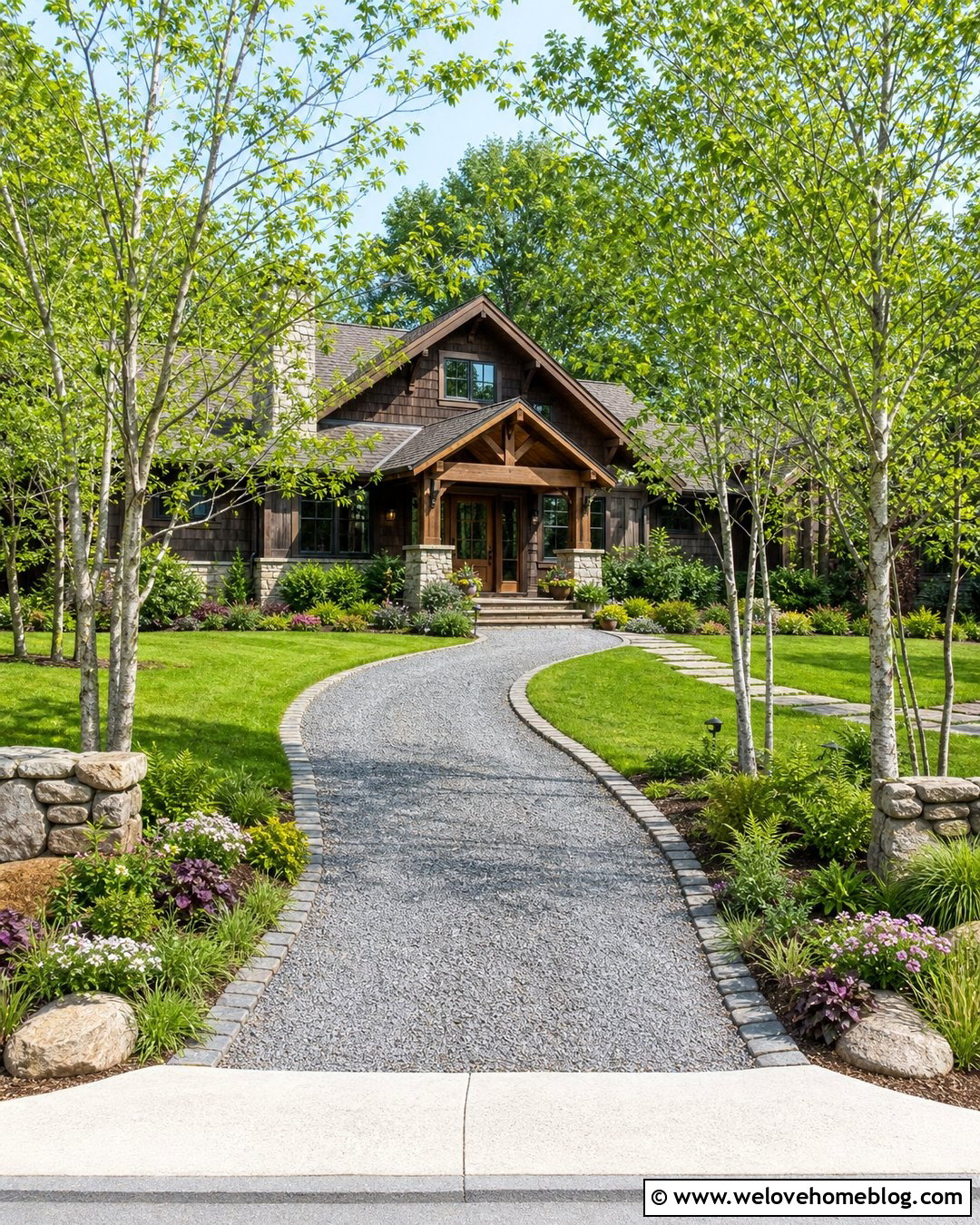
A curved gravel driveway lined with serviceberry trees creates a relaxed, natural entrance that changes beautifully with the seasons. Use compacted gray gravel for the driving surface and install a cobblestone edge to keep loose material inside the driveway. Arrange the trees informally instead of planting them in a perfectly straight row. This produces a woodland character that suits Craftsman homes, cabins, and country houses. Underplant the serviceberries with ferns, coral bells, woodland phlox, and low ornamental grasses. Leave enough open soil around each trunk for watering and future growth. The light canopy will frame the approach without making it feel like a dark tunnel. A simple flagstone walkway can branch from the driveway and continue naturally toward the front porch.
3. Redbud Trees Along A Brick Driveway
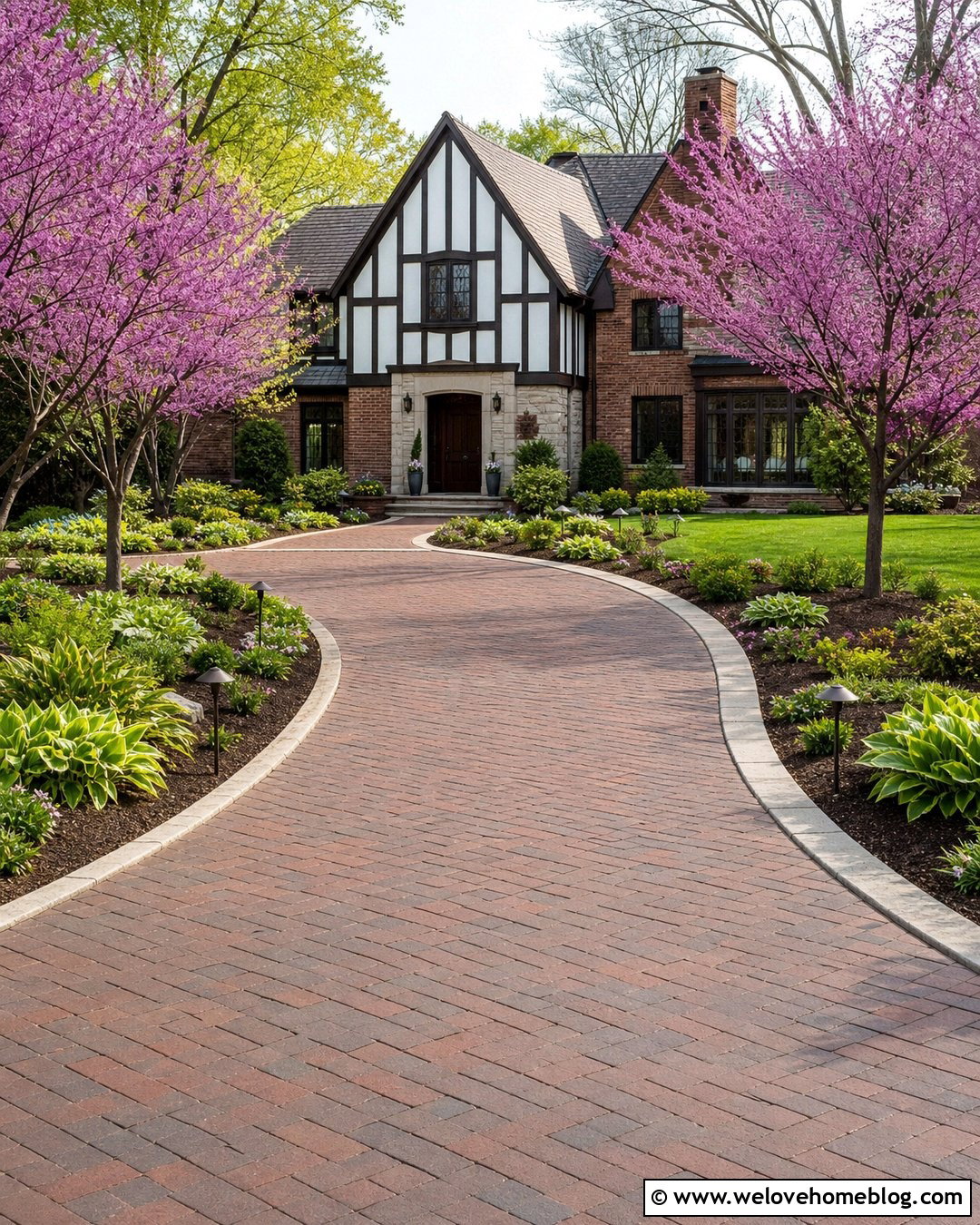
Redbuds bring a striking spring accent to a warm brick driveway without requiring the scale of towering canopy trees. Create a gently curved approach using clay brick pavers laid in a herringbone pattern. Plant redbuds in broad beds on alternating sides so their rounded forms guide the eye toward the house. Cream limestone edging can separate the brick surface from dark mulch and colorful perennial planting. Add hostas or woodland plants in partly shaded areas, then use flowering ground cover near the sunny entrance. This complete driveway look complements Tudor, cottage, and traditional brick homes. Position the trees where branches will not interfere with vehicles or sightlines. Low landscape lighting among the beds can highlight the trunks while keeping fixtures safely beyond the driving area.
4. Crape Myrtle Trees Along An Asphalt Driveway
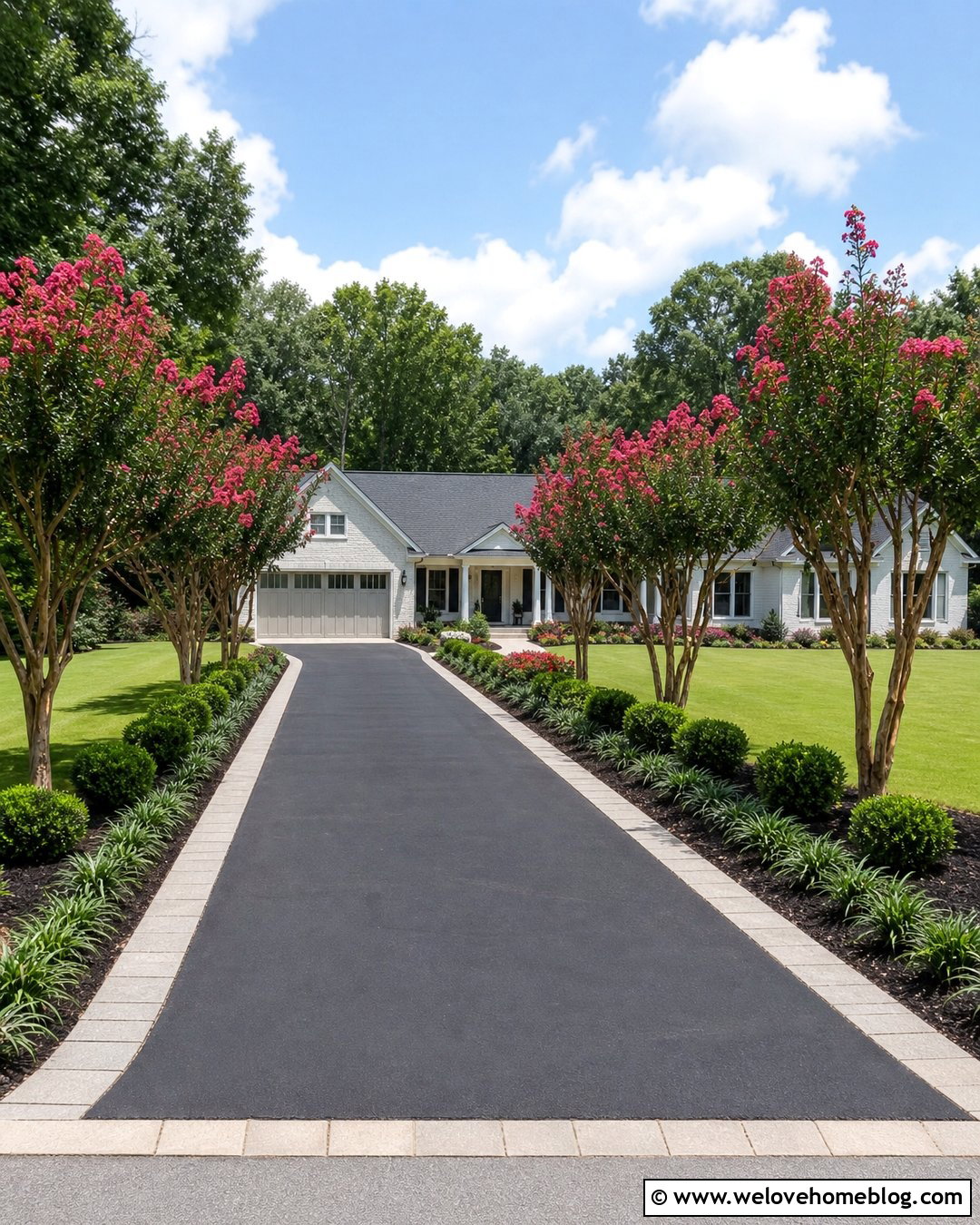
A black asphalt driveway can look polished rather than purely practical when it is lined with evenly spaced crape myrtles. Their sculptural trunks and colorful summer display help break up the broad dark surface. Use a pale concrete or light-gray paver border to create a crisp transition between asphalt and planting beds. Beneath the trees, combine dwarf evergreen shrubs, liriope, and a restrained layer of mulch. This design suits Southern ranch homes, updated traditional houses, and long suburban lots. Choose cultivars with a mature size appropriate for the available planting strip. Crape myrtles are commonly used as smaller ornamental driveway trees, but spacing and cultivar selection still matter. () Keep lower trunks visible to maintain an open appearance and preserve driveway visibility.
5. Japanese Maple Trees Beside A Paver Driveway
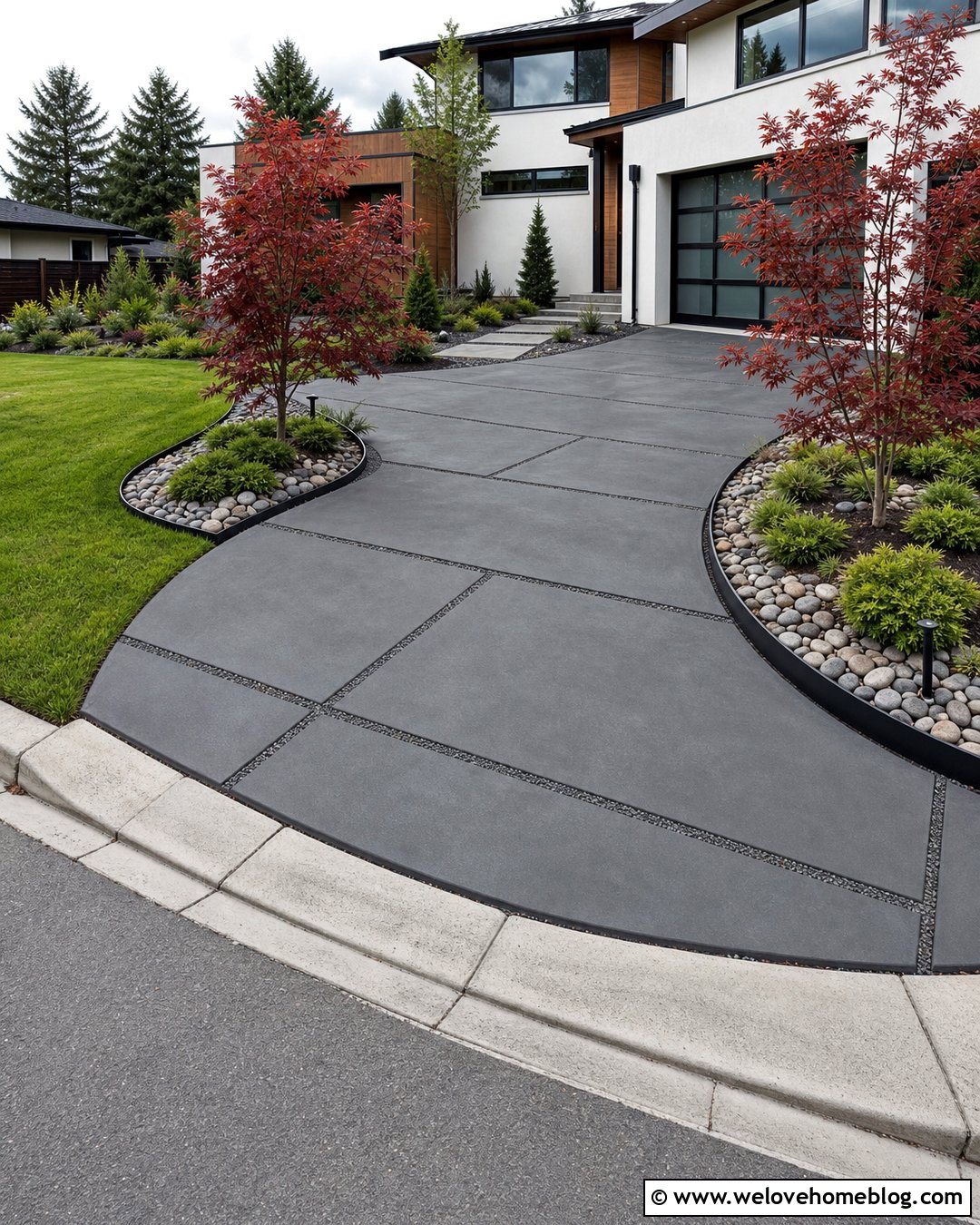
Imagine a smooth paver driveway curving past finely textured Japanese maples before reaching a contemporary home. Use large charcoal concrete pavers with narrow gravel joints for a modern surface. Place the trees in offset planting pockets where their foliage can be appreciated without hanging over parked vehicles. Black metal edging, rounded river rock, dwarf conifers, and shade-tolerant ground covers reinforce the refined design. Japanese maples work best as carefully positioned accents rather than a dense driveway avenue. A pair near the entrance can create symmetry, while one specimen near a bend can mark a change in direction. Select a variety suited to the site’s sunlight and local climate. This driveway looks especially cohesive when the house facade repeats the paver, stone, or dark metal colors.
6. Crabapple Trees Along A Cobblestone Driveway
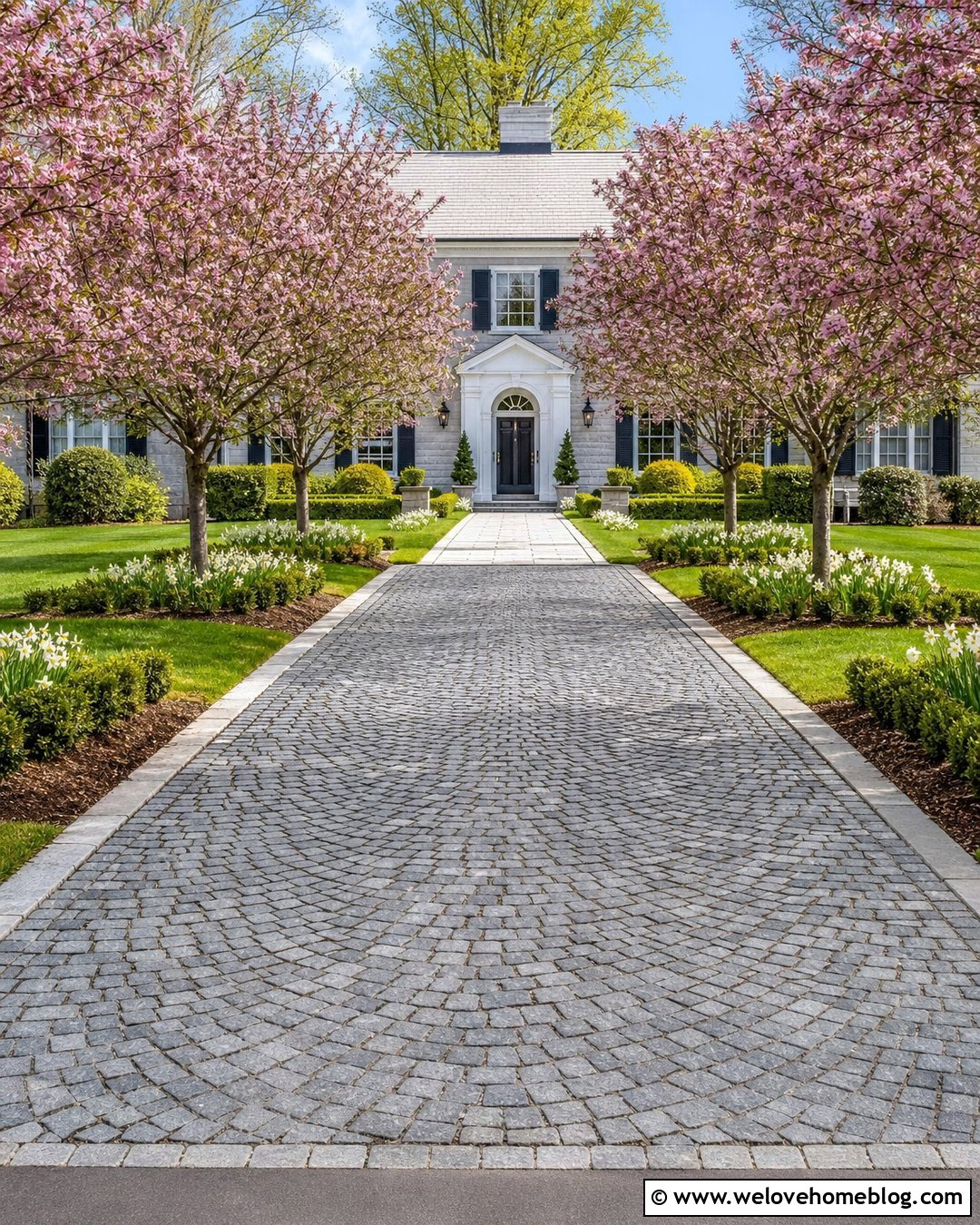
A cobblestone driveway lined with flowering crabapple trees creates a classic approach with strong seasonal character. Use weathered gray cobblestones in a fan pattern, then define both edges with slightly larger granite setts. Plant matched crabapples in generous lawn panels or mulched beds to form a loose avenue toward the house. White flowering varieties look crisp beside dark stone, while pink varieties add warmth to neutral facades. Underplanting can remain simple with spring bulbs and clipped low shrubs. Select disease-resistant cultivars and consider fruit size or persistence when planning around frequently parked vehicles. Keep the central driving lane wide and branches pruned above necessary clearance. This design pairs naturally with Colonial, Georgian, and traditional farmhouse architecture.
7. Magnolia Trees Around A Circular Driveway
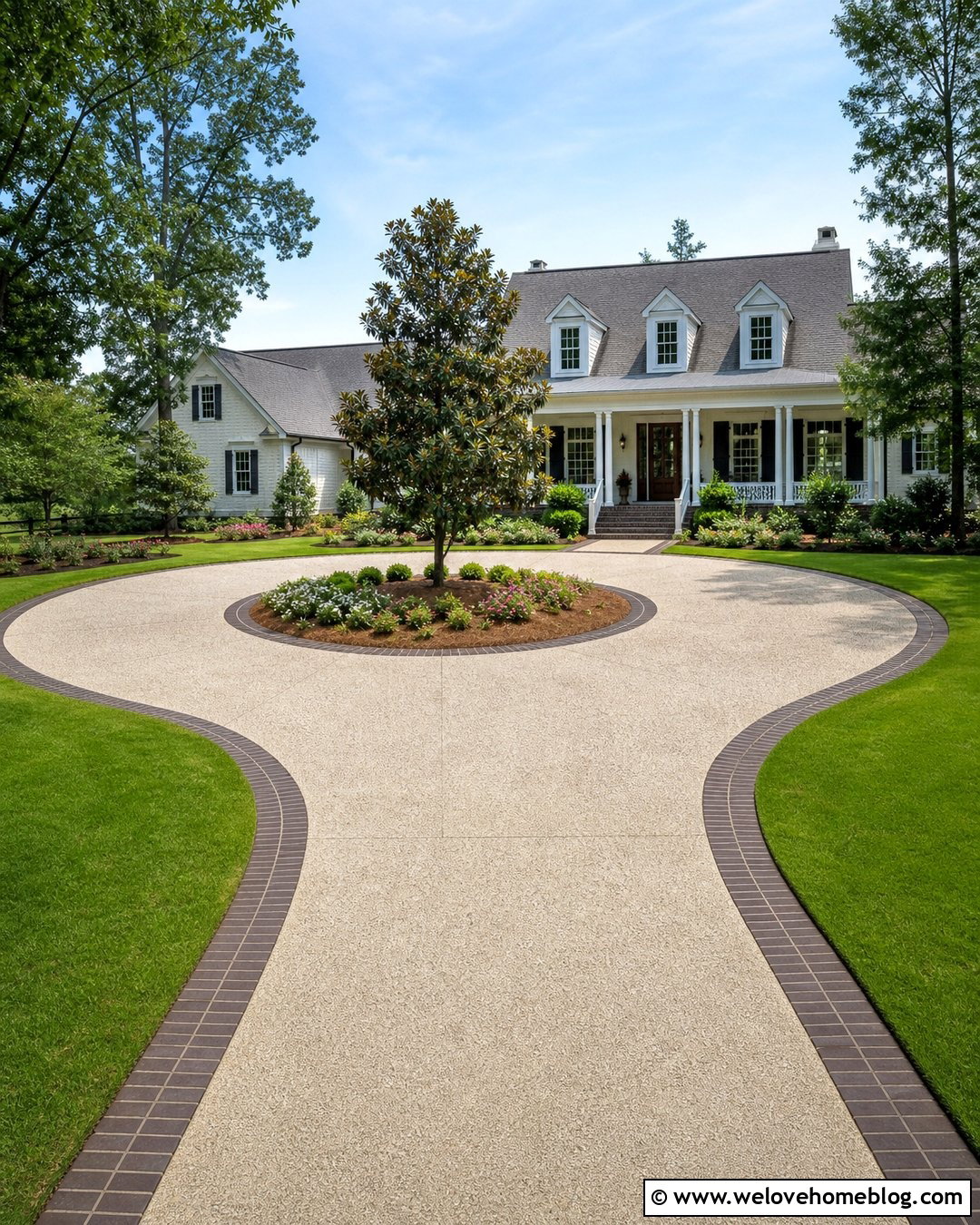
A circular driveway offers enough visual space for magnolia trees to become major landscape features. Build the driveway from light exposed-aggregate concrete and outline its curves with a dark brick ribbon. Plant one medium-scale magnolia in the central island, then repeat smaller flowering trees or shrubs near the entrance. A broad lawn, evergreen foundation planting, and a curved walkway will connect the island to the home without overcrowding the composition. The tree should sit in a generous soil area rather than a tiny pavement opening. Keep low plants near driveway junctions so drivers can see approaching traffic. This graceful arrangement works particularly well with Southern traditional homes and spacious suburban properties. Repeating the island’s brick edging around nearby beds makes the entire front yard feel intentionally designed.
8. Fringe Trees Beside A Narrow Driveway
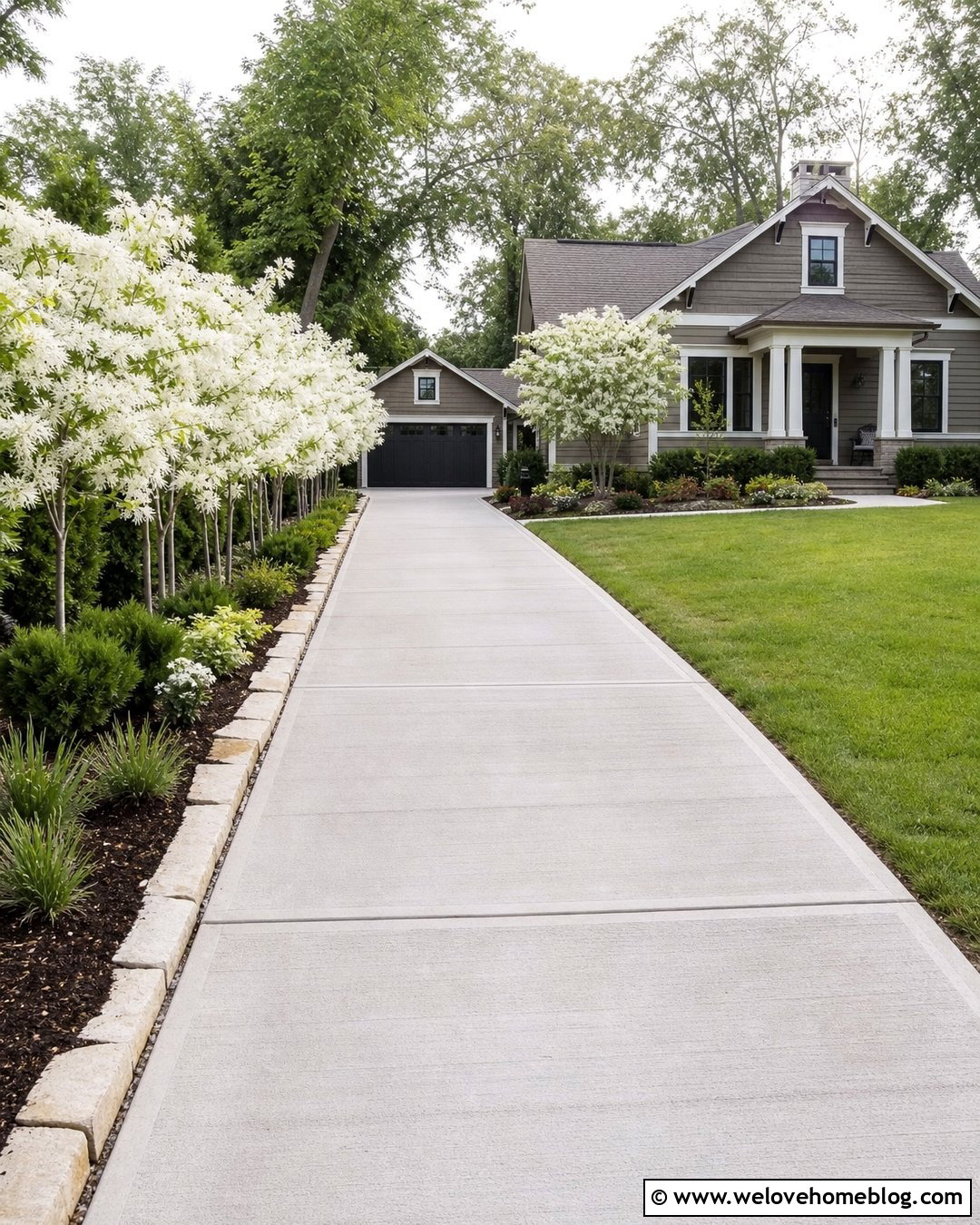
White fringe trees can add soft flowers and an airy canopy without overwhelming a relatively narrow residential driveway. Pair them with a straight, broom-finished concrete surface divided by clean control joints. Along one side, create a continuous planting bed with limestone edging, fringe trees, low evergreen shrubs, and drifts of native perennials. Keep the opposite edge more open with lawn to prevent the space from feeling confined. This asymmetrical layout provides interest while preserving room for doors, mirrors, and snow removal where applicable. A single matching tree near the garage can visually complete the line. The combination fits cottages, Craftsman homes, and smaller ranch properties. Confirm the selected tree’s mature dimensions and growing requirements before deciding how closely to place it near pavement.
9. Desert Willow Trees Along A Gravel Driveway
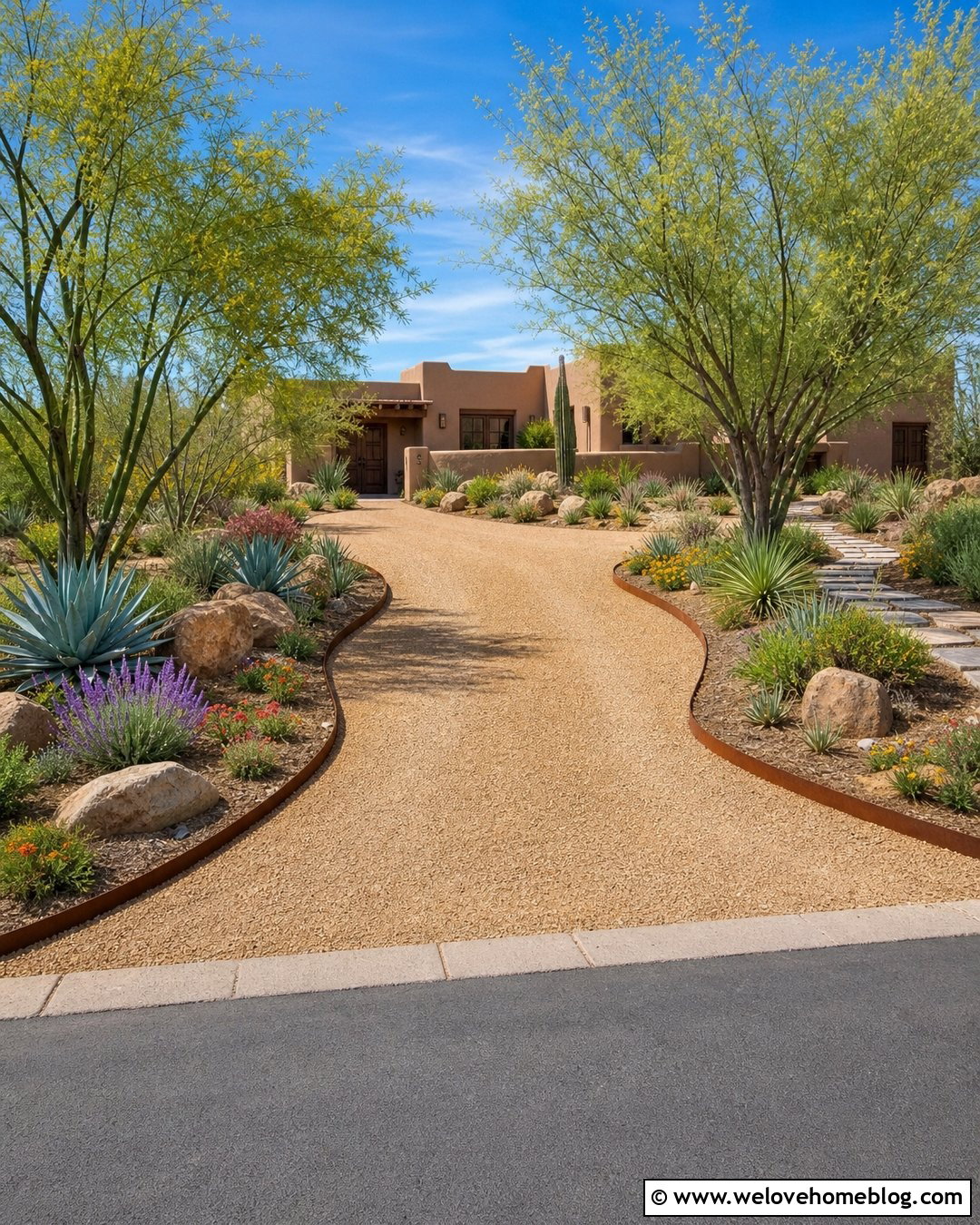
For an arid front yard, desert willow trees can frame a gravel driveway with delicate foliage and colorful flowers. Use warm tan crushed gravel for the surface, stabilized over a properly prepared base. Edge it with rust-colored steel or larger desert stones to prevent gravel from spreading into planting areas. Arrange the trees in irregular groups beside boulders, agaves, yuccas, ornamental grasses, and flowering desert perennials. This natural layout looks more convincing than a rigid row in a xeriscape setting. A gentle driveway curve will reveal the house gradually while providing additional planting pockets. The design works with Southwestern, adobe, and desert-modern homes. Drip irrigation can deliver water directly to establishing trees without soaking the full gravel area or encouraging weeds throughout the driveway border.
10. Olive Trees Along A Resin-Bound Driveway
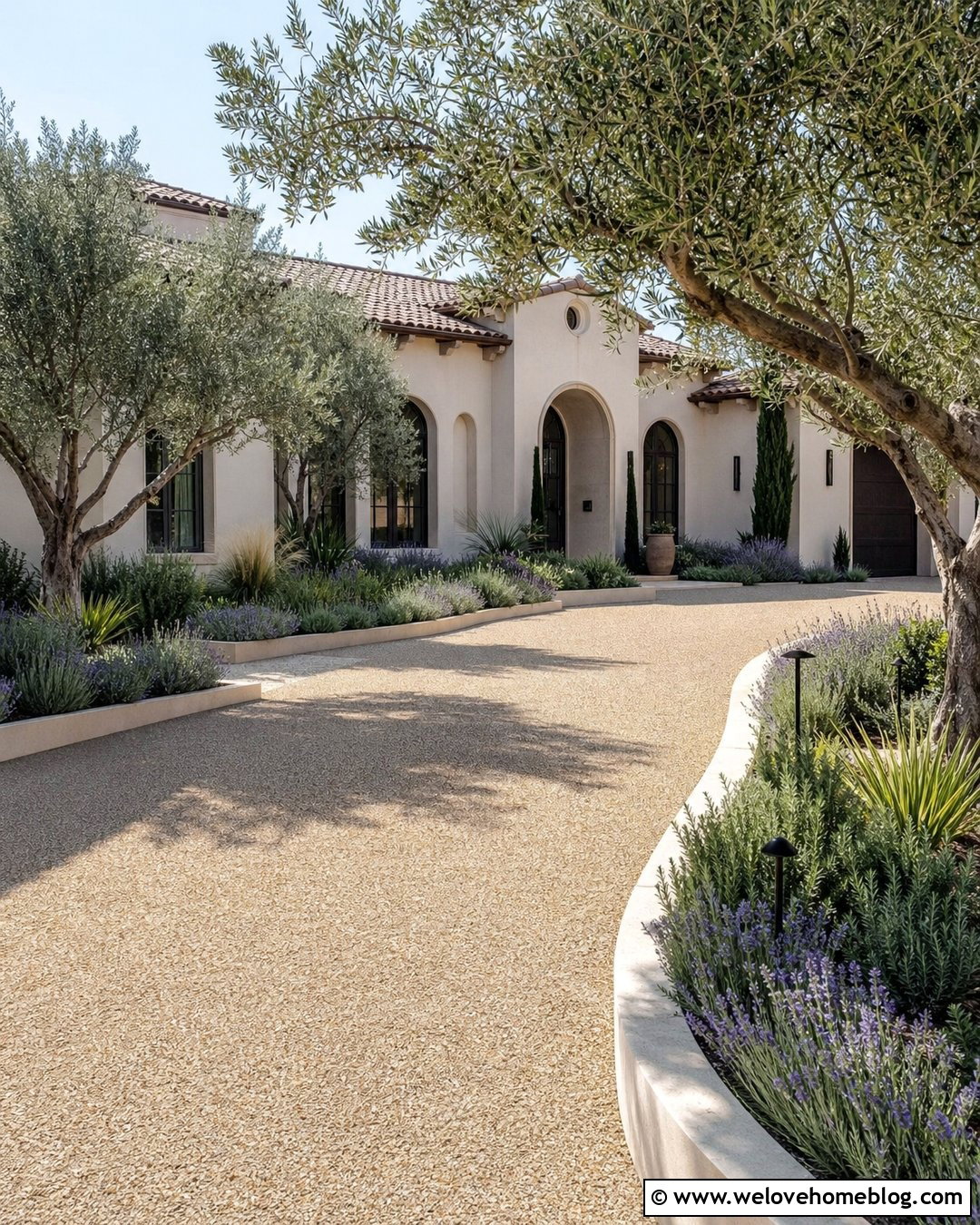
Silvery olive trees and a pale resin-bound gravel driveway create a bright Mediterranean-inspired entrance. Choose a warm beige aggregate finish and shape the driveway into a broad, gentle curve. Plant evenly spaced olive trees in rectangular beds bordered by cream limestone. Lavender, rosemary, sage, and low ornamental grasses can fill the ground plane while maintaining visibility. If fruit drop is a concern, look for a suitable low-fruiting or fruitless selection that is permitted and adapted to your region. The design complements stucco, Spanish Revival, Mediterranean, and California contemporary homes. Black metal lights provide a crisp contrast against the pale surface and gray-green foliage. Keep the tree canopies open and balanced so sunlight reaches the planting beds and the driveway retains its clean, spacious character.
11. Italian Cypress Trees At A Driveway Entrance
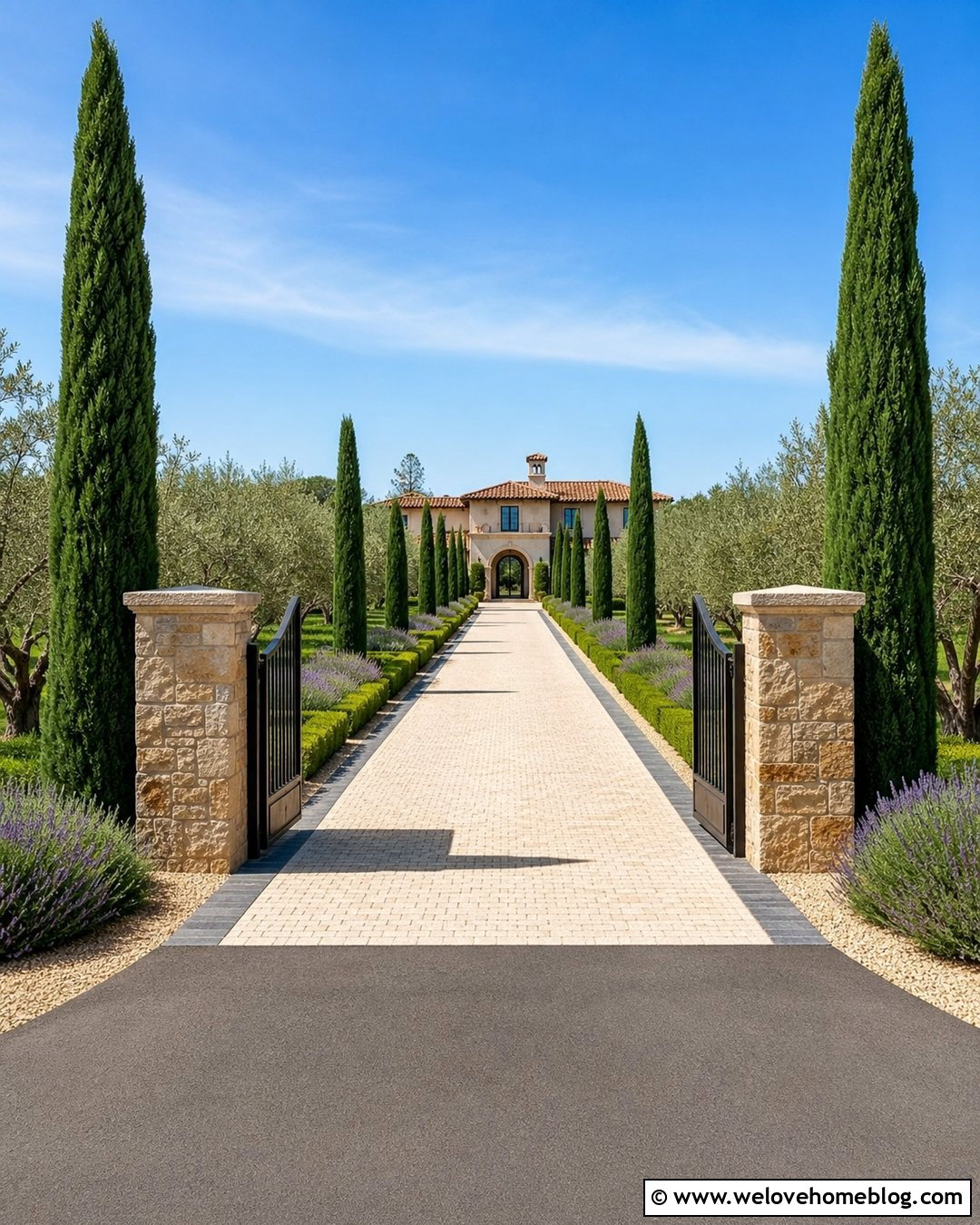
Tall Italian cypress trees can create a formal entrance without requiring broad spreading canopies. Position a matched pair behind stone pillars at the beginning of a straight driveway. A cream-colored permeable paver surface, dark stone border, and low clipped hedges will strengthen the symmetrical layout. Repeat smaller groups of cypress near the house, but avoid lining every foot if that would make the approach feel rigid or enclosed. This design is especially effective with Mediterranean, Spanish, and Tuscan-inspired architecture. Warm-toned gravel beds and drought-tolerant herbs can soften the masonry around the entrance. Italian cypress needs a compatible climate and suitable drainage, so local growing conditions should guide final selection. The trees and pillars should remain far enough from the road to preserve safe exit visibility.
12. Arborvitae Trees Along A Private Driveway
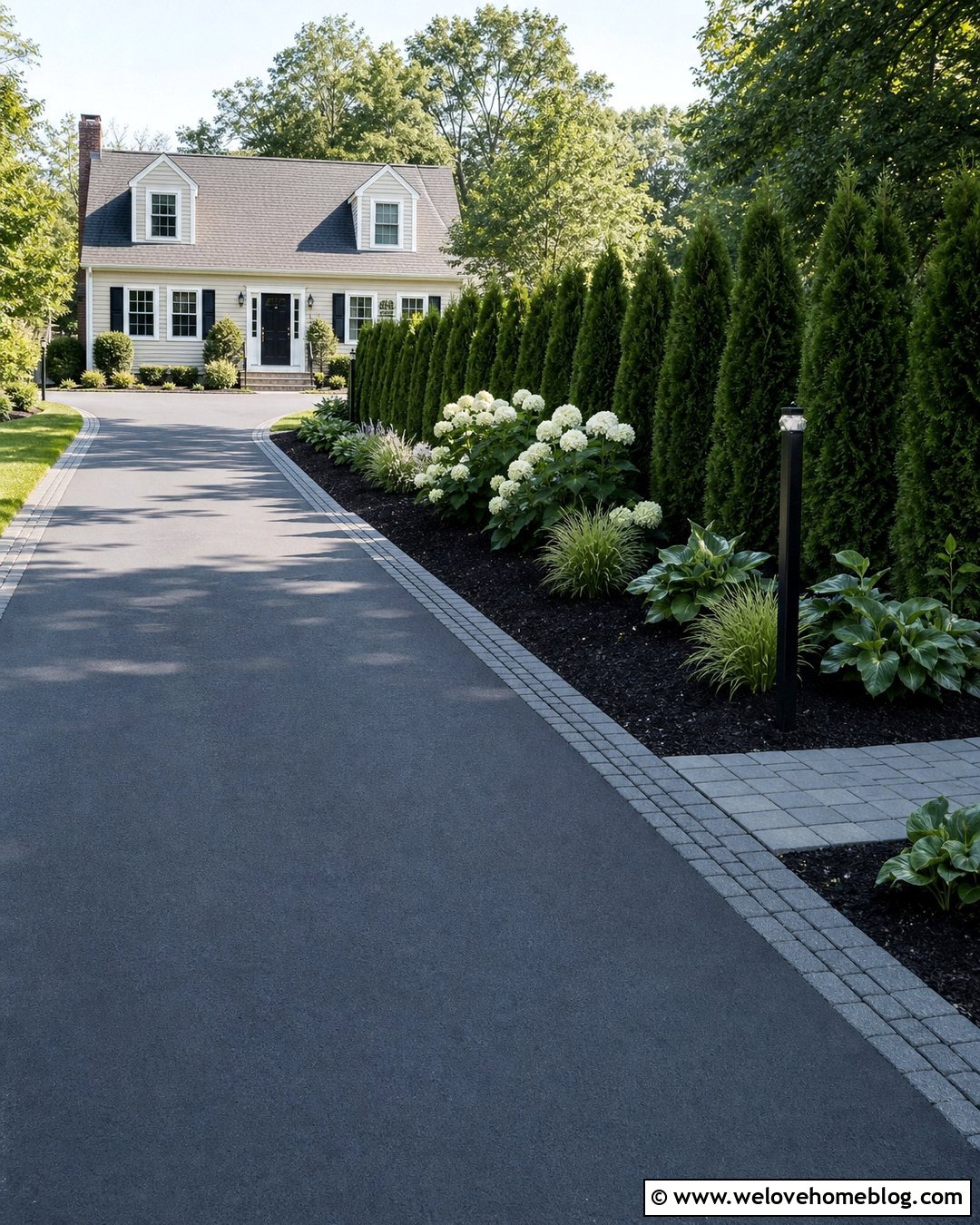
A row of arborvitae can turn an exposed side driveway into a private green approach. Use smooth gray asphalt bordered with a double row of charcoal pavers for a tailored surface. Place the arborvitae in a wide mulched strip beyond the border, allowing enough room for their mature width. Add low hydrangeas, compact grasses, or shade-tolerant perennials near the foreground to avoid a flat wall of foliage. This design is useful when the driveway runs beside a neighboring yard, fence, or busy sidewalk. Narrow cultivars can provide structure where broad trees would consume too much usable space. () A gate or address post at the entrance can repeat the charcoal edging and connect the evergreen screen to the house’s exterior finishes.
13. Juniper Trees Beside A Modern Driveway
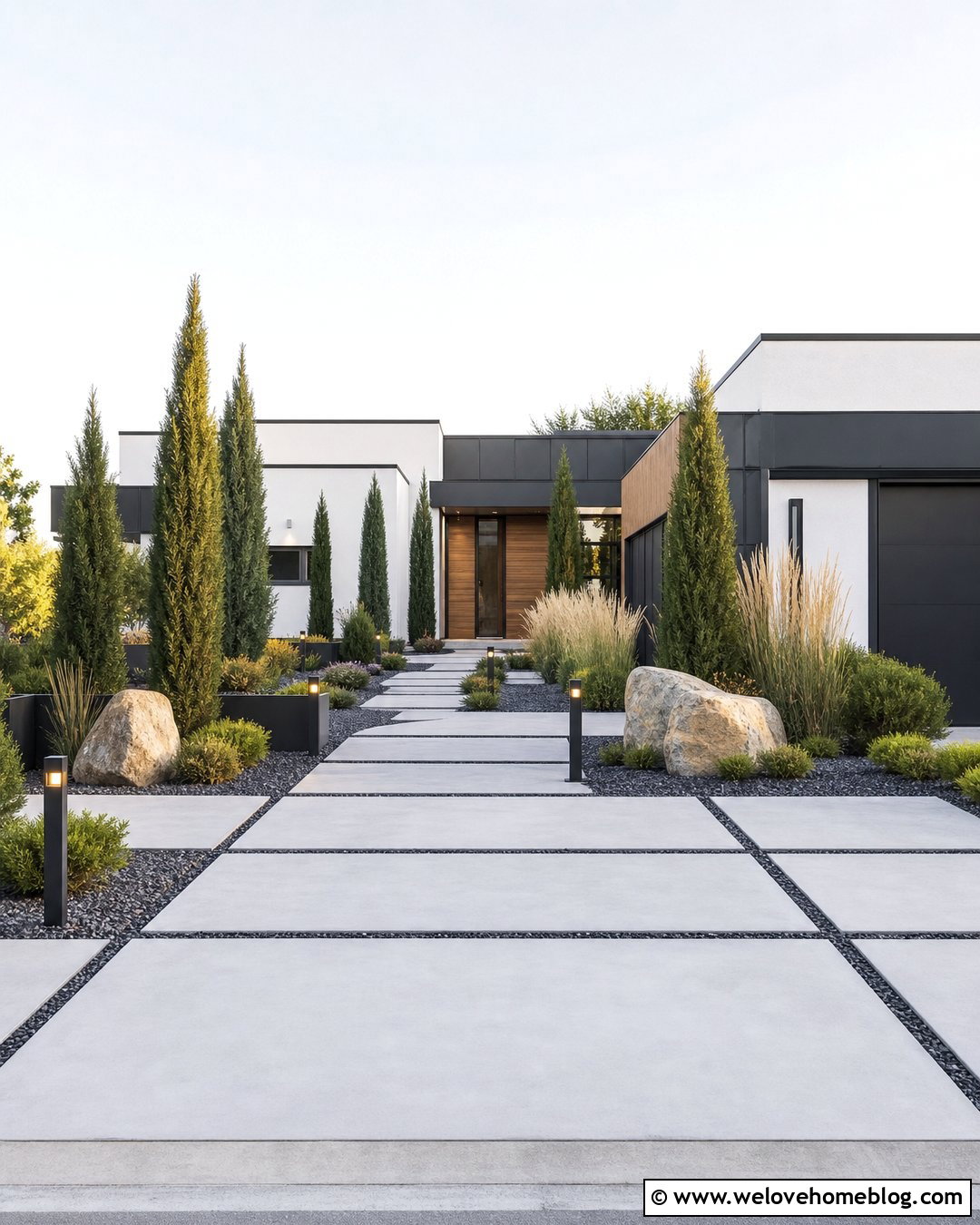
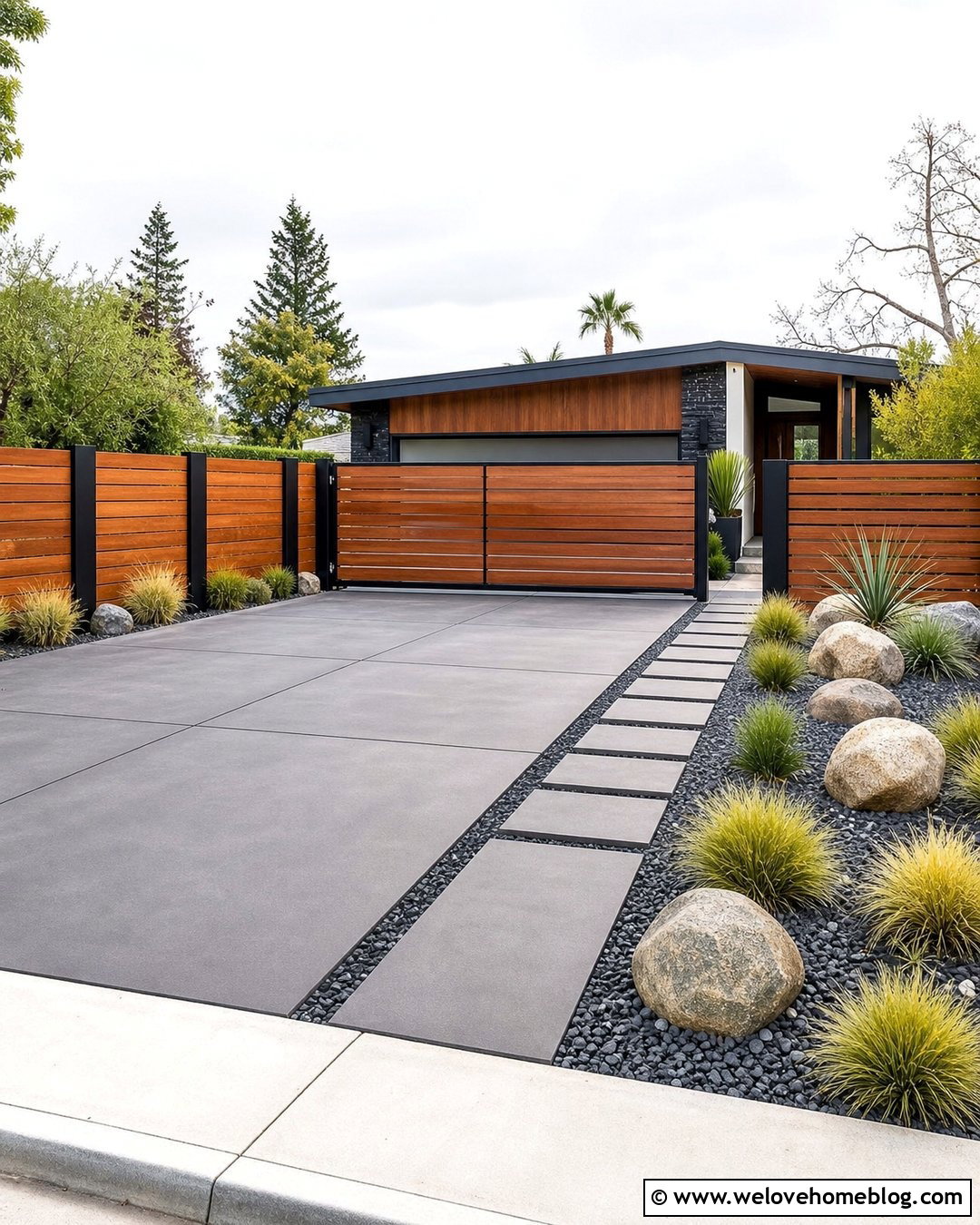
Columnar junipers bring vertical structure to a modern driveway while maintaining a relatively narrow visual footprint. Start with large-format light-gray concrete slabs separated by slim strips of dark gravel. Plant the junipers in staggered rectangular beds instead of a continuous hedge, then combine them with feather reed grass, low mounded shrubs, and sculptural boulders. Straight steel edging reinforces the driveway geometry. This arrangement creates privacy while leaving open sections that prevent the landscape from feeling heavy. Blue-green foliage looks especially attractive beside white stucco, natural wood, or charcoal siding. Add simple bollard lights at wider intervals to illuminate the route without clutter. Research the mature size of the specific juniper cultivar, since growth habits vary, and provide enough soil width between the driveway and any property boundary.
14. Hornbeam Trees Along A Formal Driveway
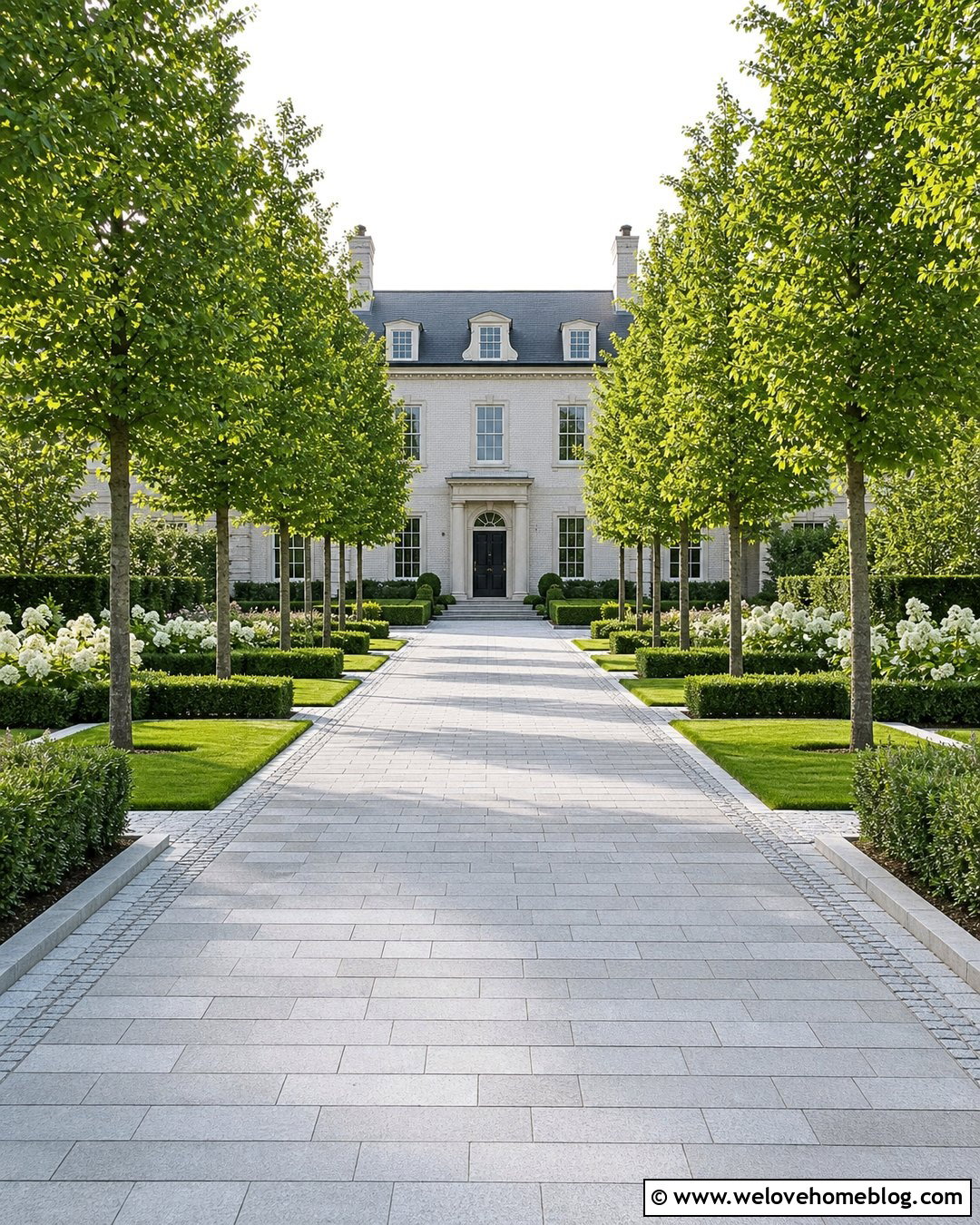
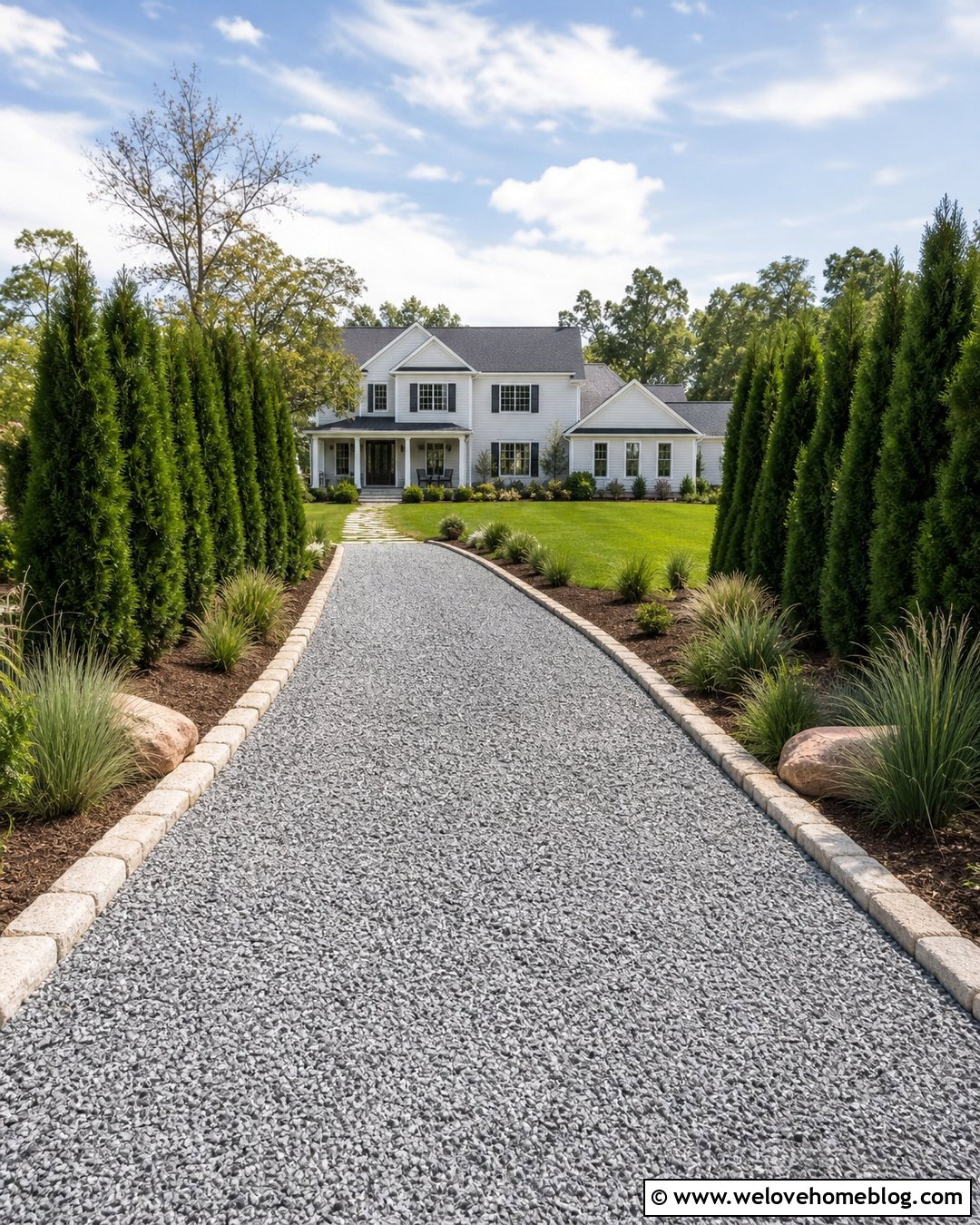
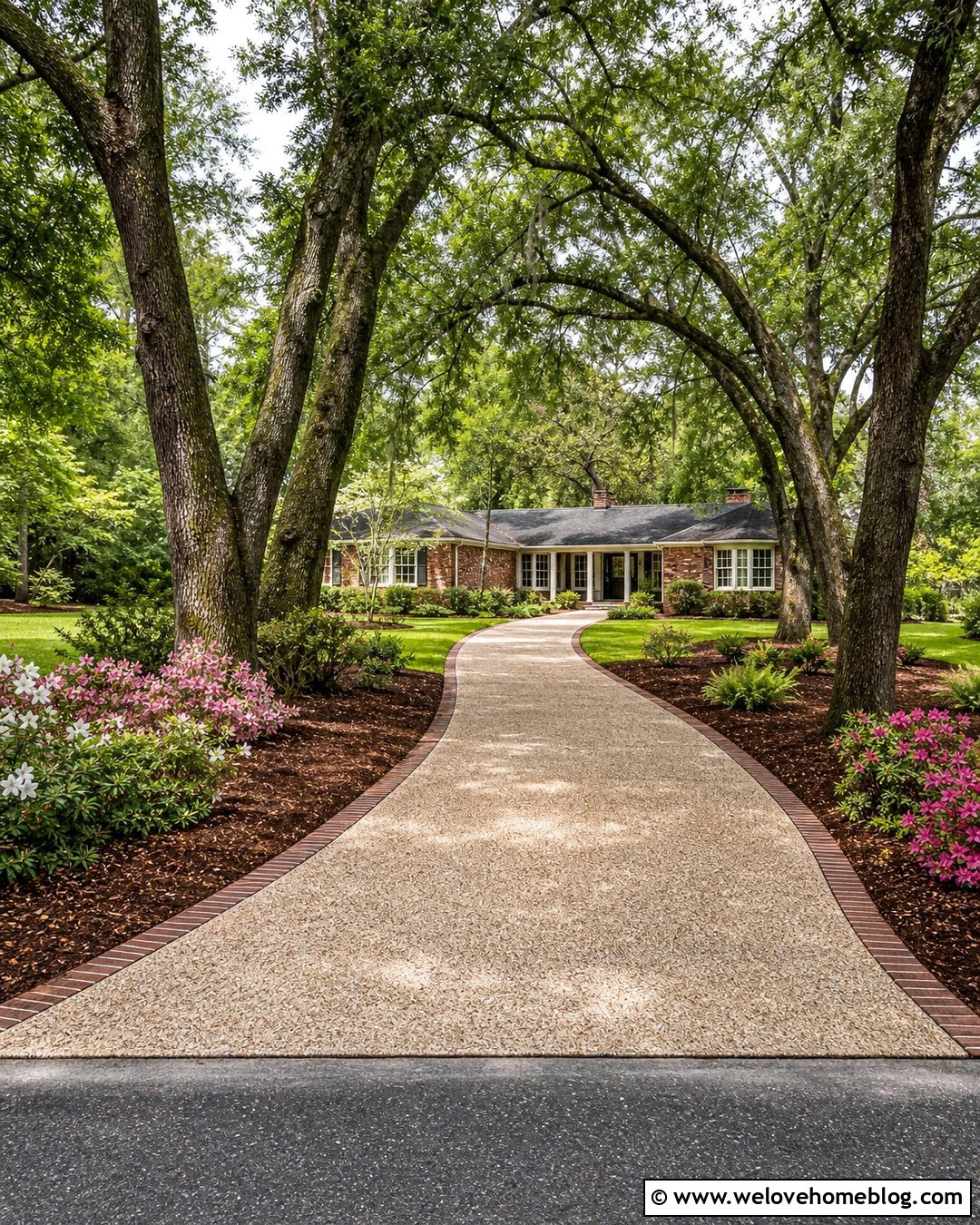
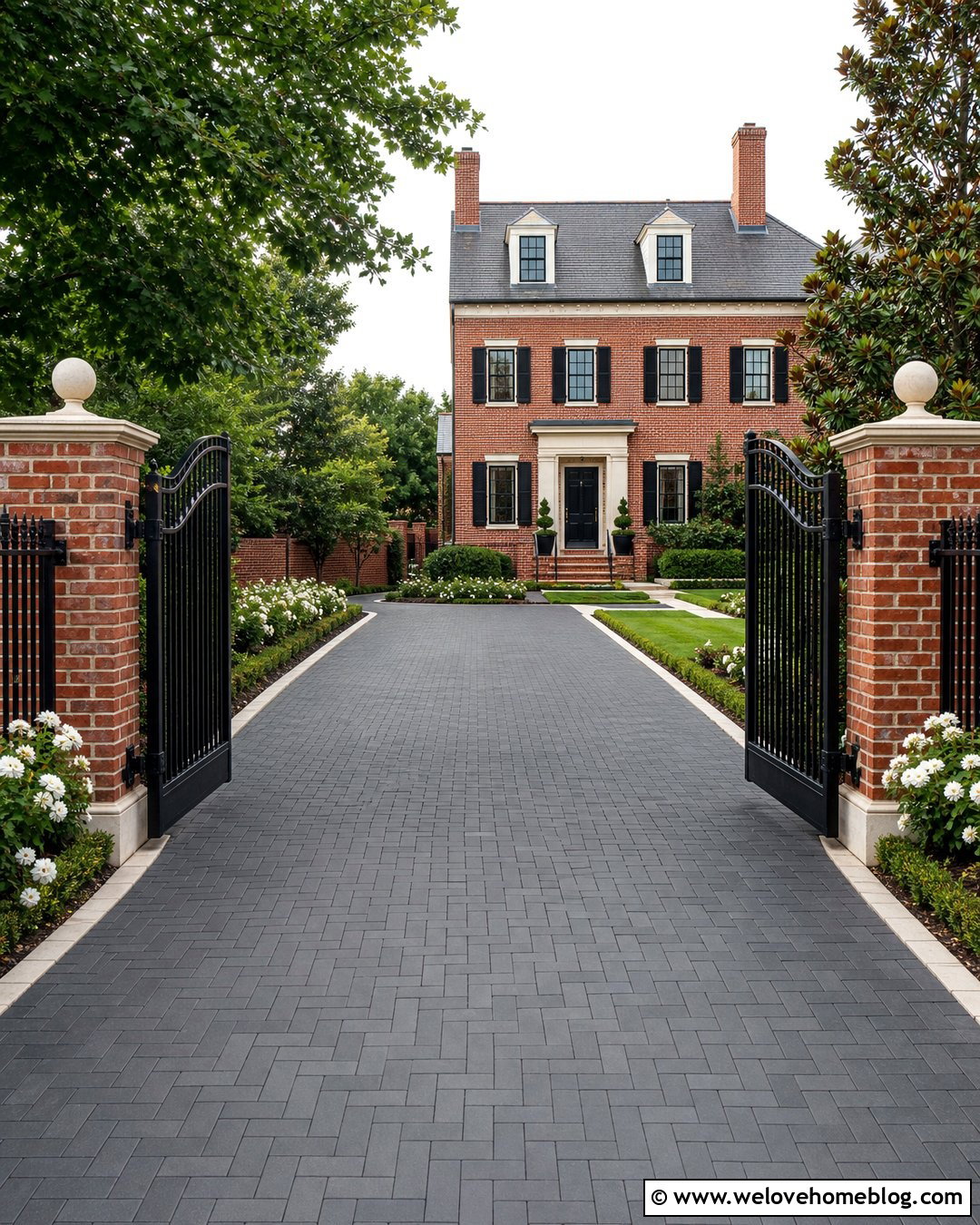
European hornbeam trees can form an orderly avenue along a long formal driveway. Use gray granite pavers laid in a running bond, with a narrow cobblestone strip on both sides. Plant the hornbeams at consistent intervals in broad lawn panels or rectangular gravel beds. Their upright structure creates rhythm and directs attention toward the front door. Low boxwood-like shrubs, white perennials, and neatly clipped ground cover can reinforce the composition without competing with the trees. This design suits Georgian, Federal, and European-inspired houses with symmetrical facades. Allow the trees to retain a natural upright canopy, or use careful professional pruning for a more architectural appearance. The planting beds must still provide adequate soil volume, irrigation, and separation from hardscape rather than treating the trees as decorative posts.


15. Columnar Oak Trees Along A Long Driveway
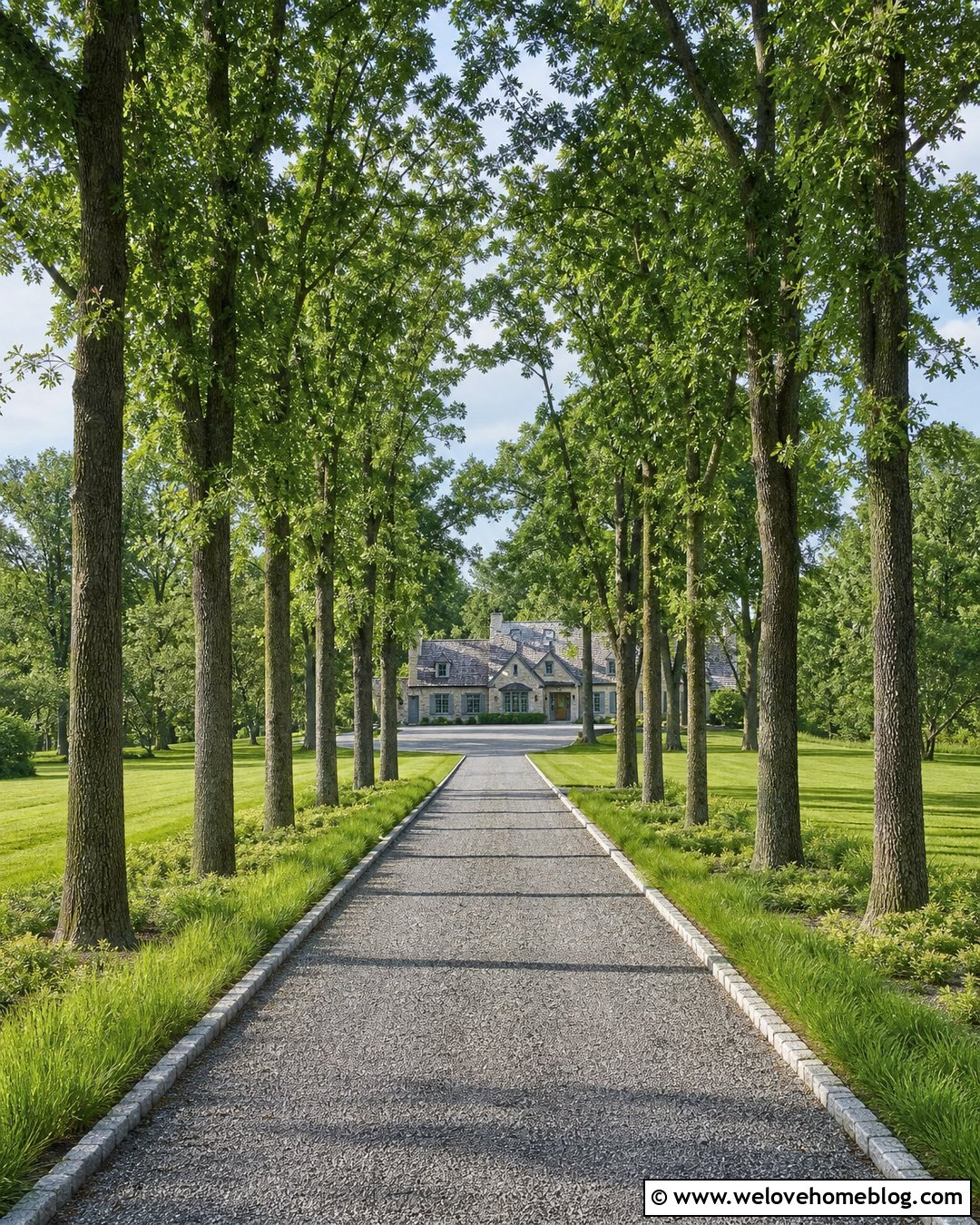
A long rural or estate driveway can support the scale of columnar oak trees when they are planted with appropriate space. Pair the trees with a broad driveway made from compacted gray gravel and framed by weathered granite curbing. Their upright silhouettes create a stately avenue while leaving more horizontal clearance than broad-canopied forms. Keep the immediate ground treatment simple with lawn, meadow grass, or low native planting. This allows the repeated tree forms to remain the primary feature. At the house, transition the gravel into a generous paver parking court that shares the same gray tones. Columnar trees are frequently considered for narrow or formal approaches, but mature height, root space, and overhead clearance remain important. () This layout best suits large properties rather than compact front yards.
16. Ginkgo Trees Beside A Concrete Driveway
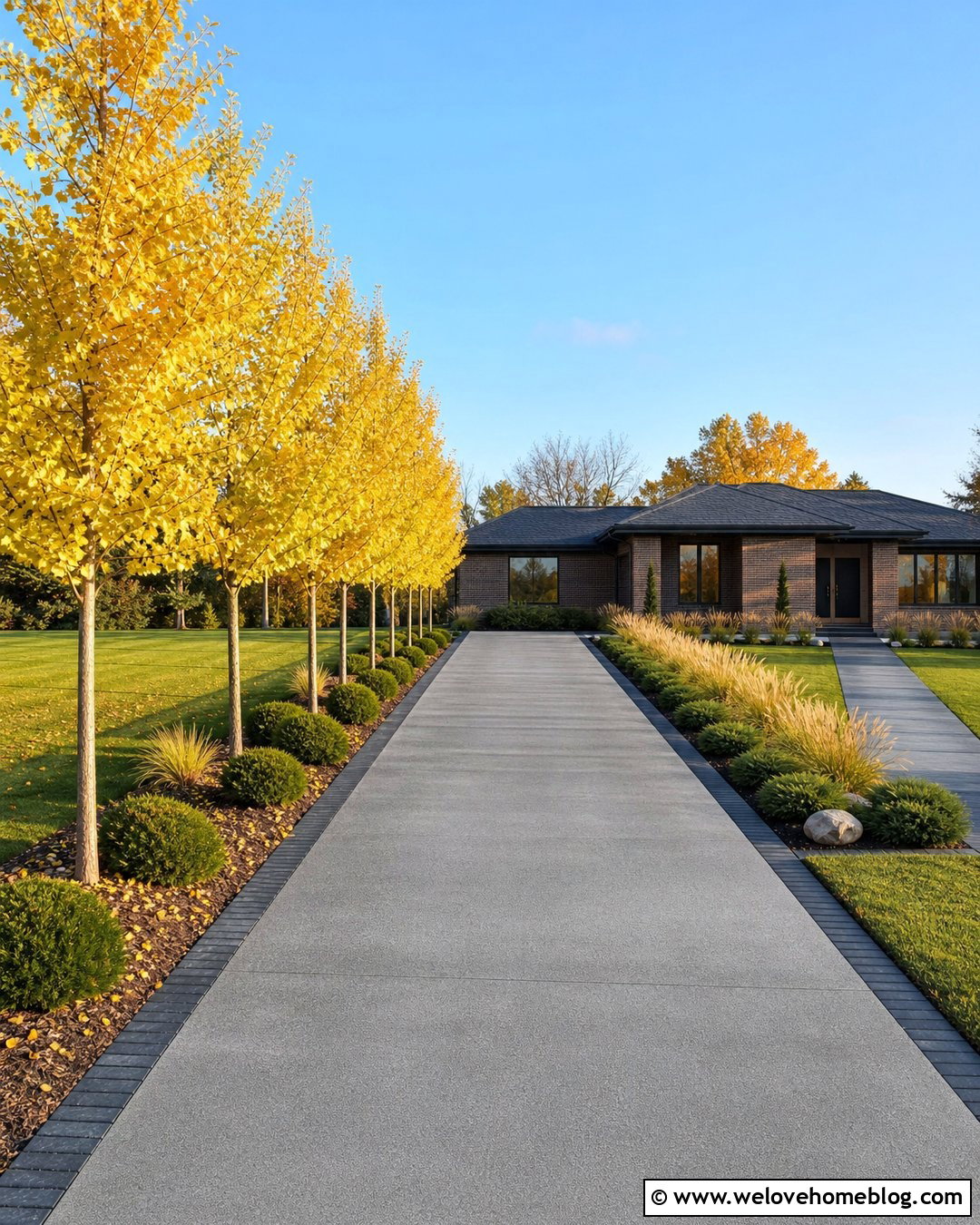
Narrow ginkgo cultivars can bring strong vertical form and vivid fall color to a contemporary concrete driveway. Use medium-gray poured concrete with a lightly sandblasted finish and a dark basalt paver border. Plant the trees in a single row along the wider side of the driveway, leaving the opposite side open for a walkway and lawn. Low evergreen mounds and ornamental grasses create a tidy base without obscuring the trunks. Select male cultivars to avoid the unwanted fruit produced by female trees. A narrow or columnar form should be chosen when horizontal space is limited. () This restrained composition suits modern brick homes, updated ranch houses, and minimalist facades. Repeat the basalt material in porch steps or address pillars for a cohesive finish.
17. Holly Trees Along A Brick Border Driveway
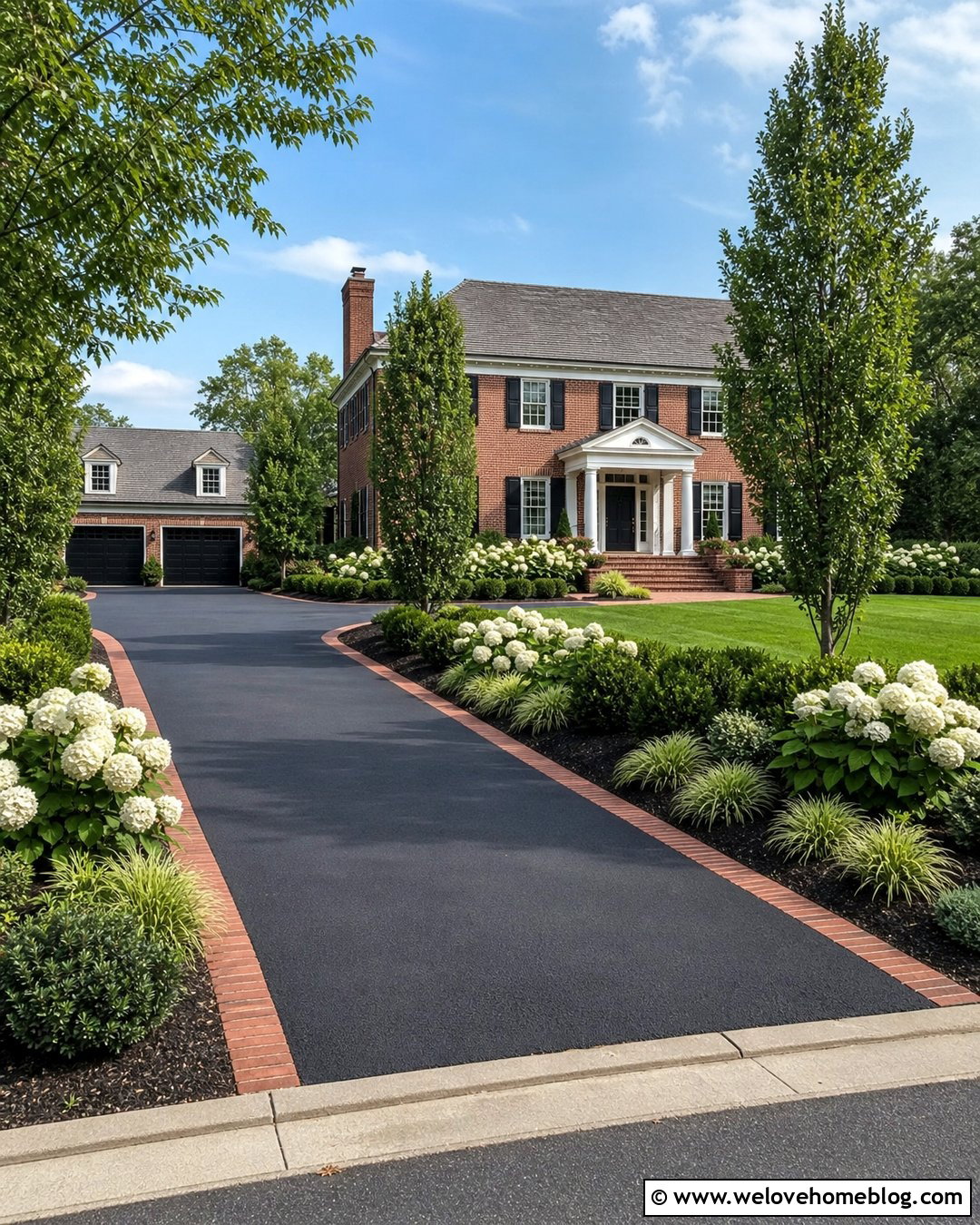
Tree-form hollies can provide year-round greenery beside a practical asphalt driveway. Give the black surface a more finished appearance with a red brick border laid in a soldier course. Plant upright hollies in wide beds behind the brick, spacing them as individual trees rather than shearing them into one dense mass. White hydrangeas, dwarf grasses, and dark mulch can fill the spaces between trunks. The mixture feels polished beside Colonial, Cape Cod, and traditional red-brick homes. If berries are desired, check the pollination requirements of the selected variety and keep fallen material in mind near parking spaces. Maintain clear sightlines at the street by using lower planting around the driveway entrance. Matching brick paths and porch details will visually connect the driveway border with the house.
18. Evergreen Magnolia Trees Beside A Paver Driveway
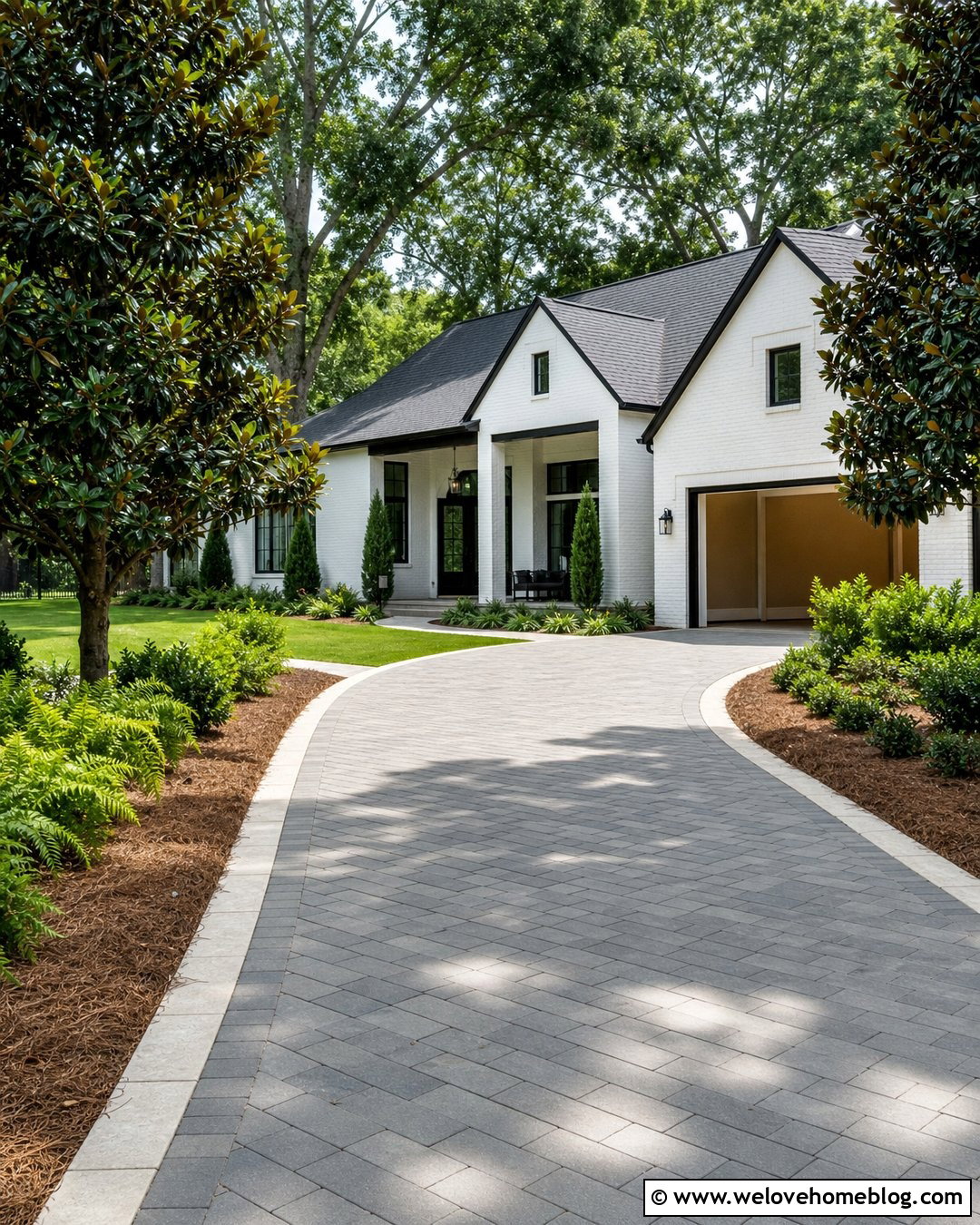
Evergreen magnolias can give a broad driveway substantial structure and glossy year-round foliage. Use warm gray concrete pavers in a large running-bond pattern and shape the approach with a gentle curve. Place the magnolias in expansive planting beds several feet beyond the paver border, where their future canopies have room to develop. Layer the beds with shade-tolerant shrubs, ferns, and a clean pine-straw or mulch finish. A light limestone ribbon can brighten the transition between paving and plants. This design pairs naturally with Southern homes, painted brick houses, and generous modern farmhouses. Avoid placing large-growing forms in tight strips between pavement and foundations. Where space is more limited, consider a smaller cultivar recommended for the region and preserve an open view around the garage and street entrance.
19. Birch Trees Along A Curved Driveway
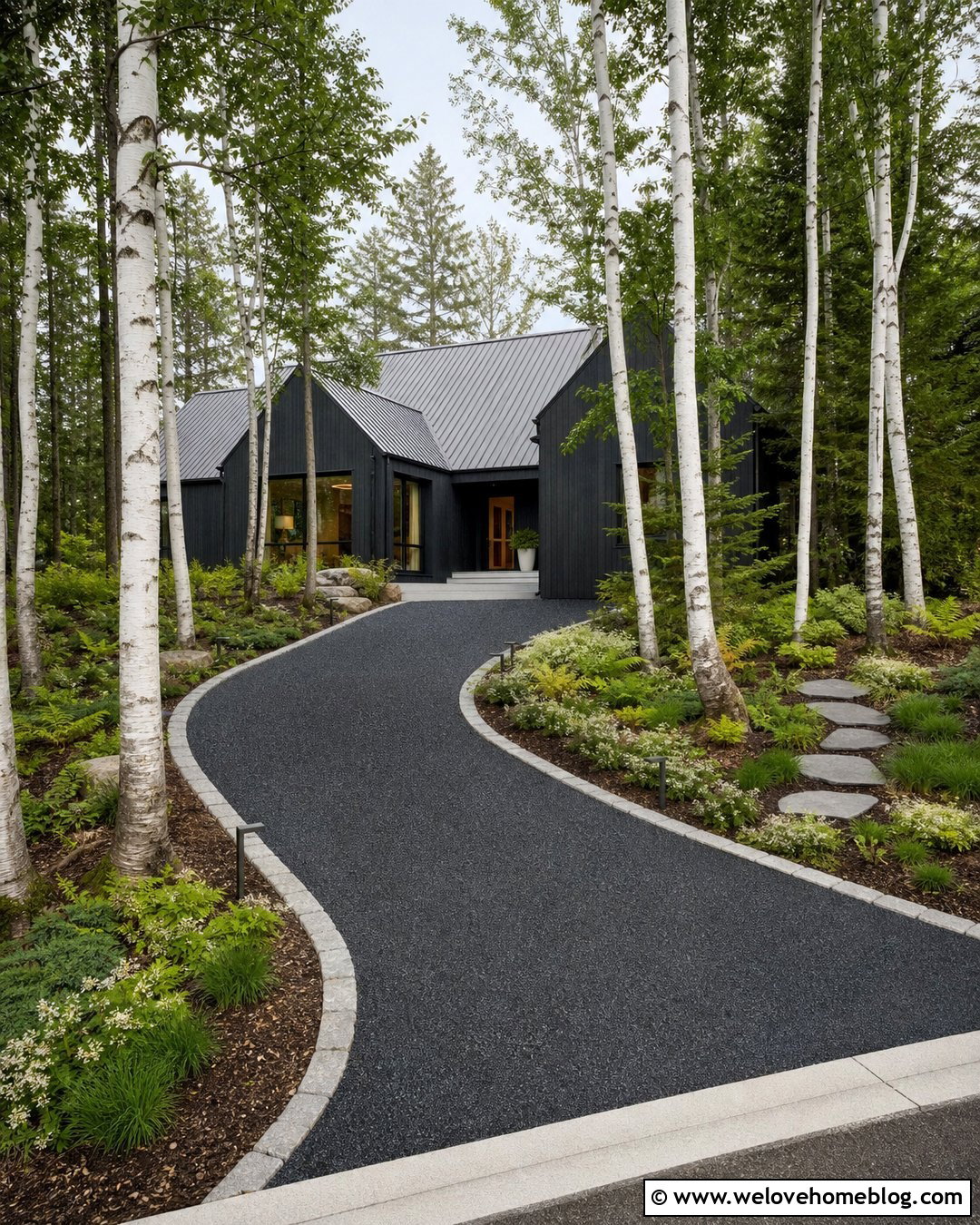
A small grove of birch trees can brighten a curved driveway with pale trunks and a light, layered canopy. Choose a driveway surface of charcoal resin-bound gravel to create contrast with the bark. Define the curve using flush granite setts that will not interfere with tires or snow equipment. Instead of placing single trees at rigid intervals, arrange several loose clusters in broad beds. Underplant them with ferns, sedges, white flowering ground cover, and low evergreen shrubs. This woodland-inspired look complements Scandinavian, contemporary, and cottage architecture. Select a birch species suited to local heat, moisture, and pest conditions. Keep the trees far enough from the driveway to prevent branches from scraping vehicles. A simple stepping-stone path through one planting bed can connect the driveway to the front entrance.

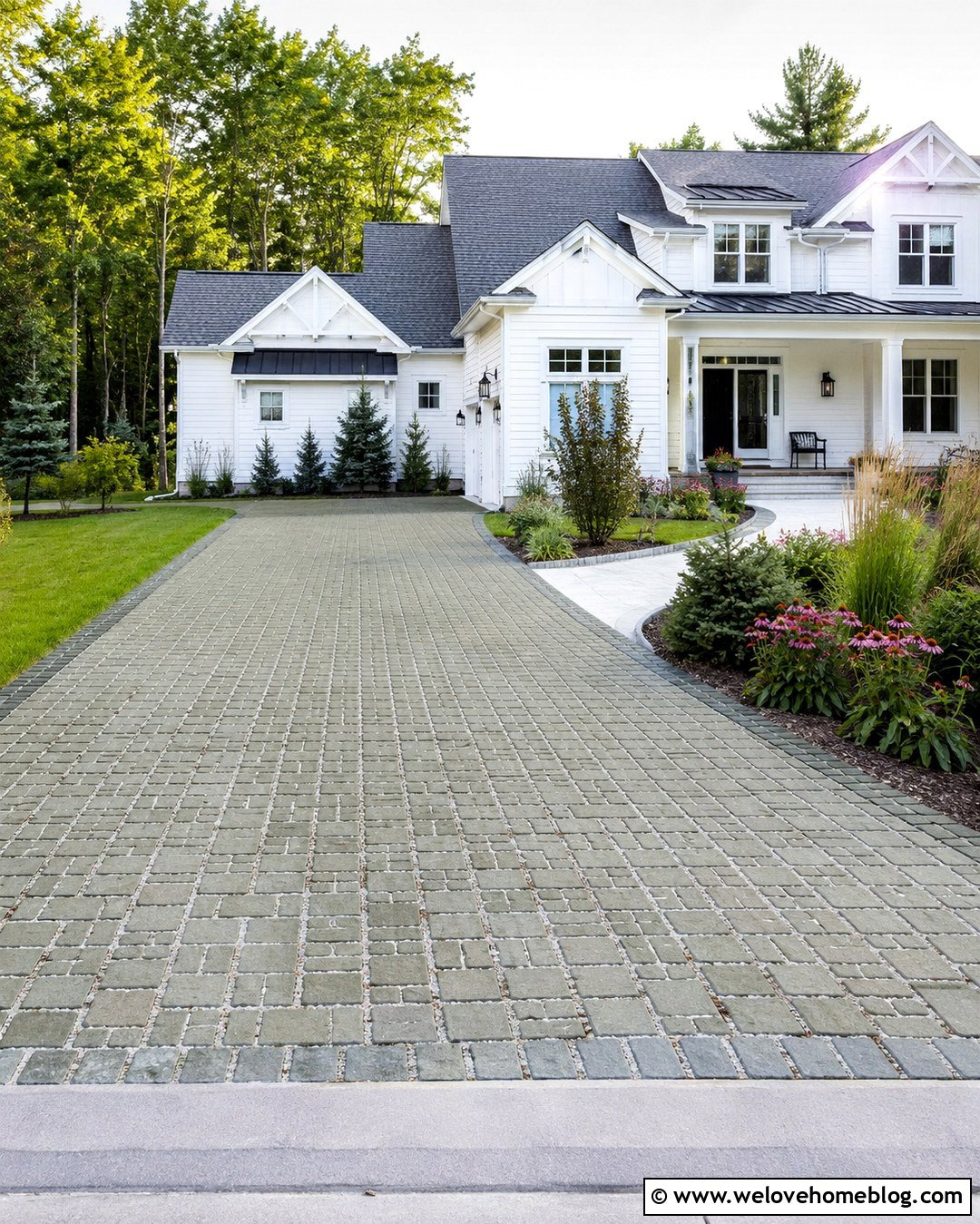
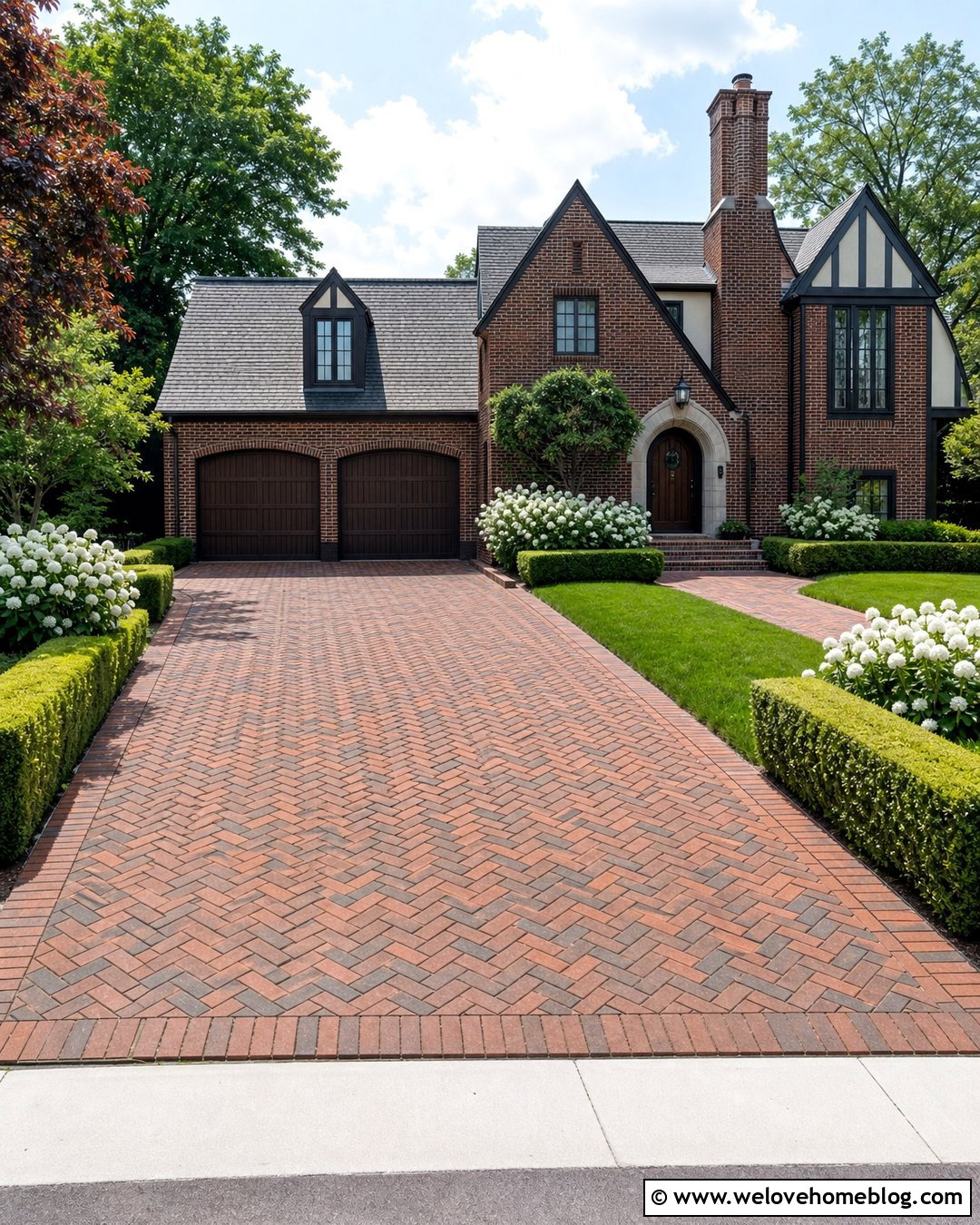
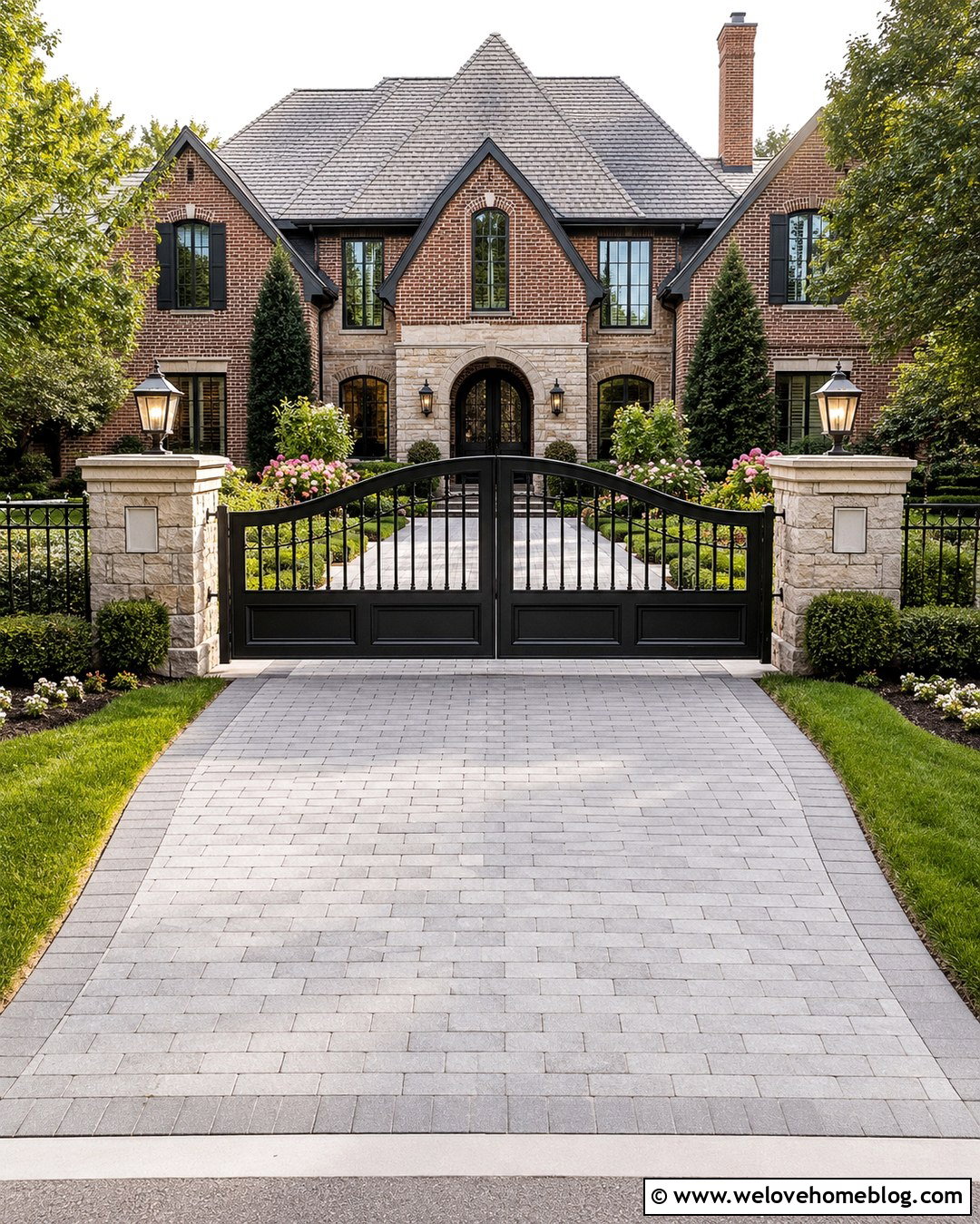
20. Cherry Trees Along A Cottage Driveway
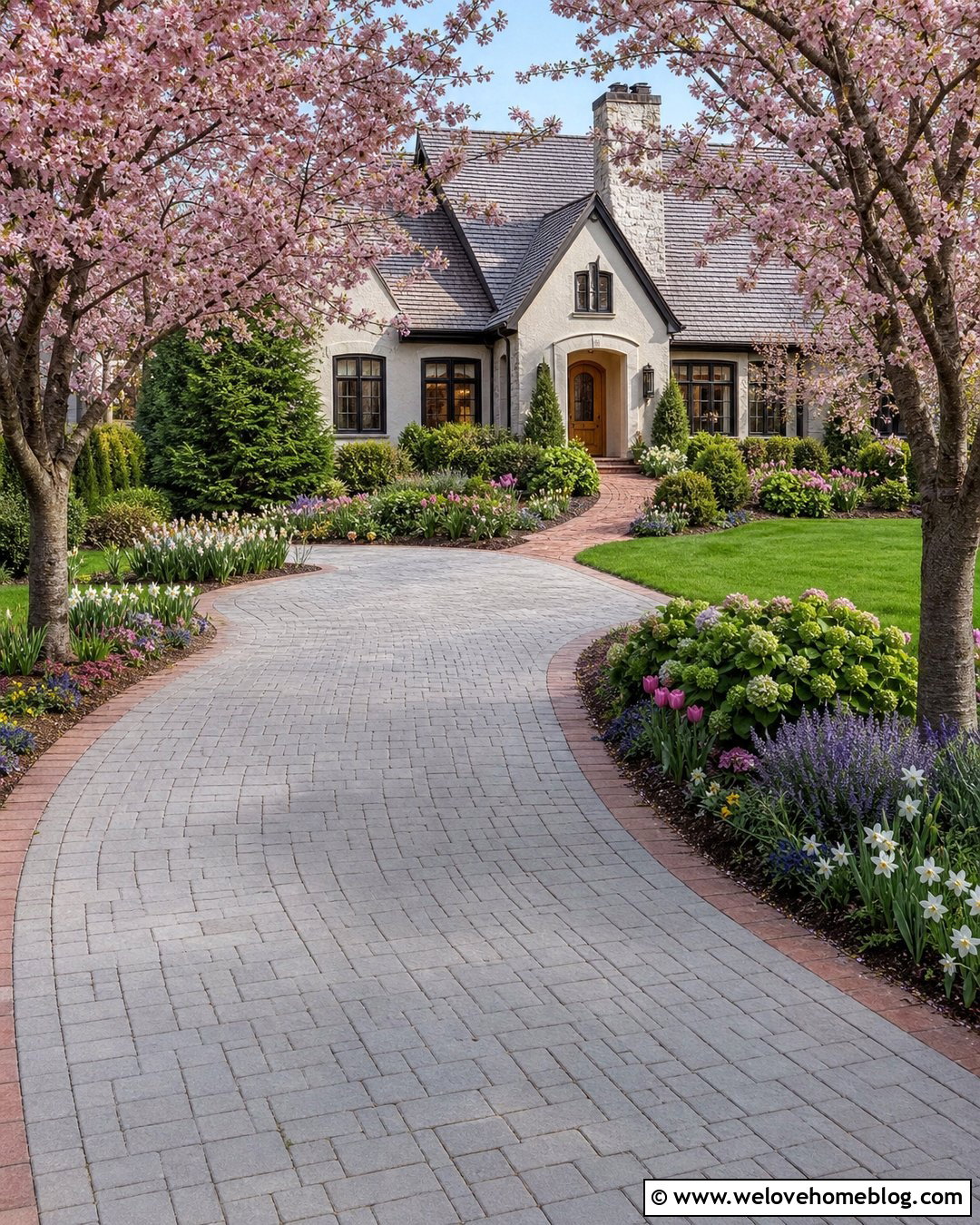
Flowering cherry trees can create an inviting seasonal canopy over a cottage driveway when they have sufficient room to spread. Build the driveway from warm gray permeable pavers and add a narrow clay-brick ribbon along each edge. Plant the cherries in alternating positions within mixed borders rather than forming a severe straight line. Include spring bulbs, compact hydrangeas, catmint, and low evergreen shrubs to extend interest beyond the flowering period. The soft arrangement works with cottages, storybook homes, and traditional bungalows. Choose locally appropriate cultivars with manageable mature dimensions and good disease resistance. Keep the branches trained above the driving zone and avoid placing trees where dropped petals or leaves would become a problem on frequently parked vehicles. A matching brick walkway can curve gently through the border toward the porch.
21. Hawthorn Trees Beside A Country Driveway
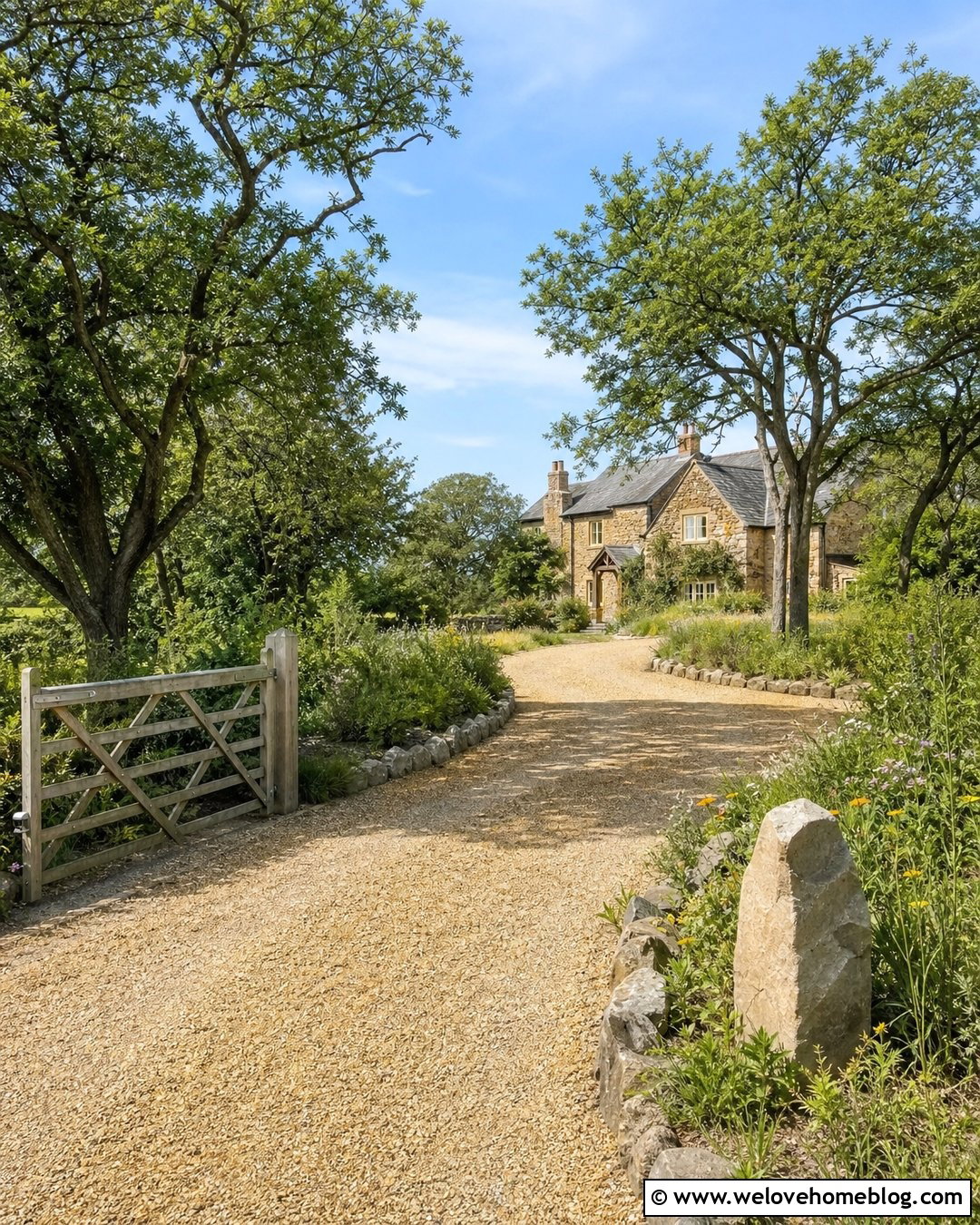
Hawthorn trees can give a country driveway a natural hedgerow character while still creating a clear sense of arrival. Use honey-colored gravel compacted over a stable base, then contain it with rough-cut local stone edging. Position the trees in relaxed groups among native shrubs, meadow grasses, and seasonal wildflowers. Keep the planting lower at the road entrance and around curves so visibility remains open. This design looks particularly appropriate beside stone cottages, farmhouses, and rural Craftsman homes. Select a variety adapted to the local climate and consider thorns, fruit, and maintenance before placing it close to walkways or parking areas. A timber farm gate and simple stone address marker can complete the entrance. Leave occasional breaks in the planting to reveal lawn, fields, or attractive views beyond.
22. Pine Trees Along A Rural Gravel Driveway
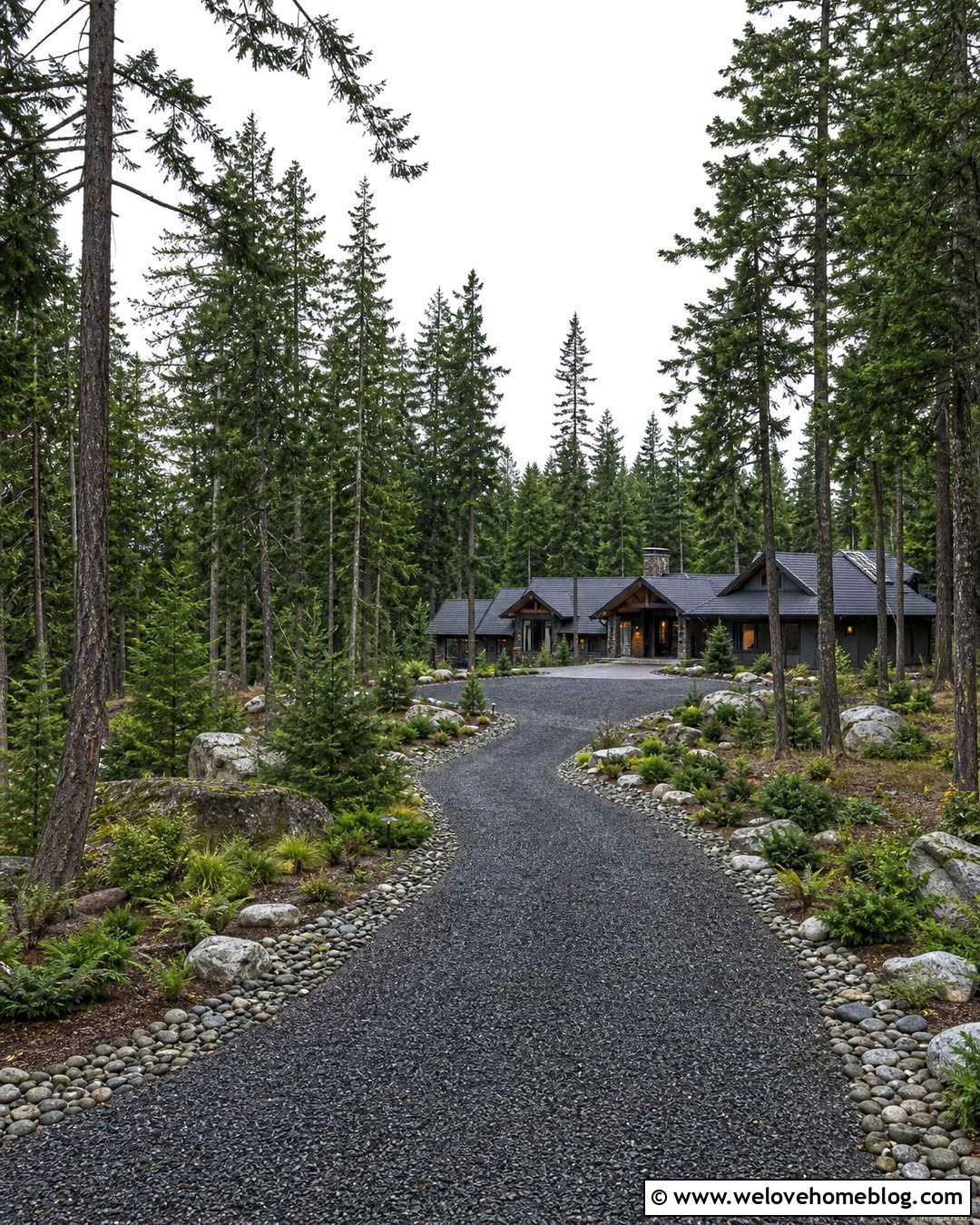
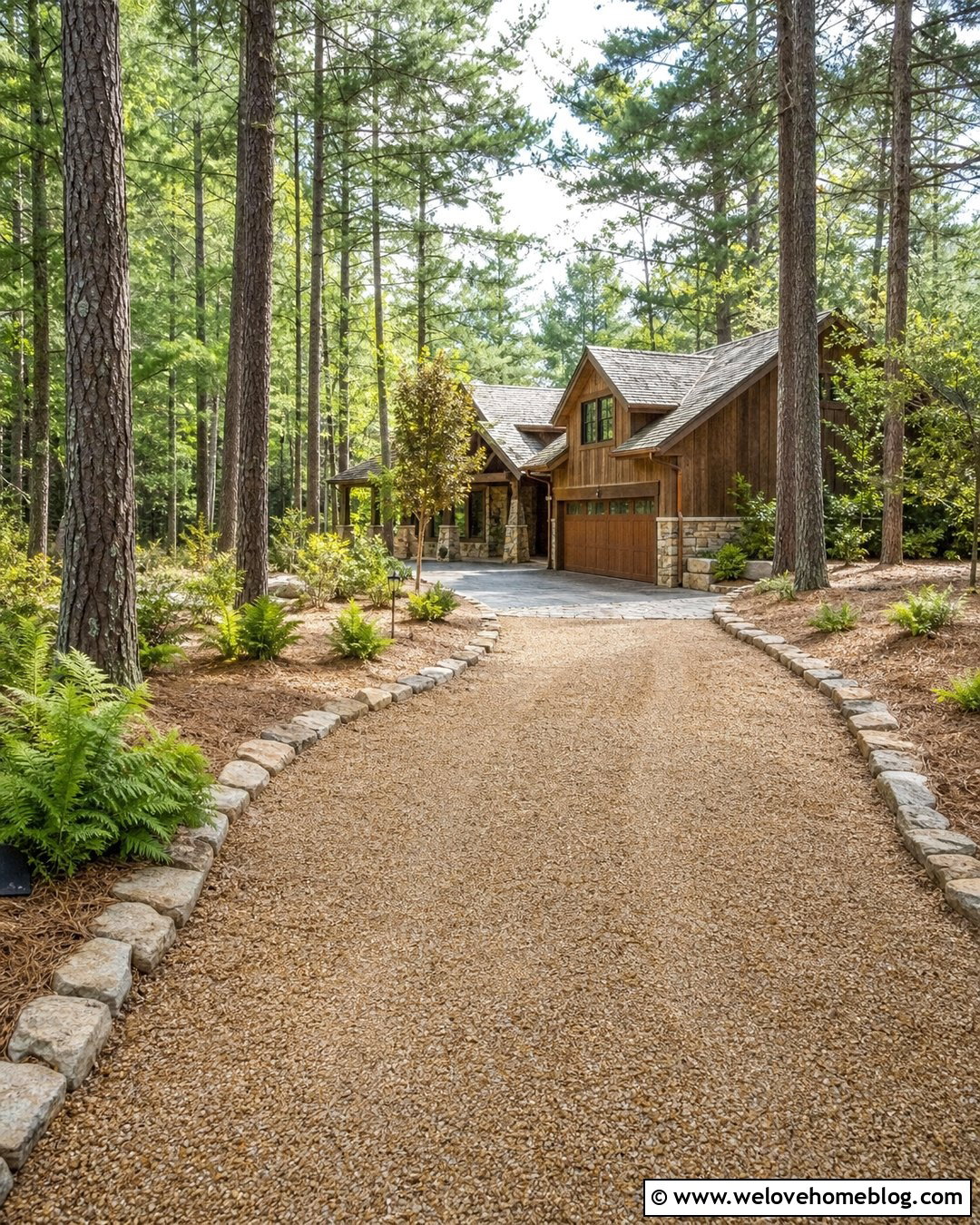
Pine trees can make a long gravel driveway feel established and connected to the surrounding landscape. Use dark gray crushed stone for the driving surface and create shallow drainage swales beyond simple stone shoulders. Plant pines in loose, uneven groups instead of perfectly matched rows. This mimics a natural woodland edge and provides room for each tree’s mature form. Native grasses, low junipers, ferns, and exposed boulders can fill the understory according to local conditions. Keep branches pruned away from the driving lane and maintain generous clearance near overhead utilities. The design suits cabins, mountain houses, modern lodges, and rural properties. At the house, widen the gravel into a turnaround bordered by the same boulders and planting palette, creating a smooth transition from wooded approach to residential arrival area.
23. Spruce Trees Along An Asphalt Driveway
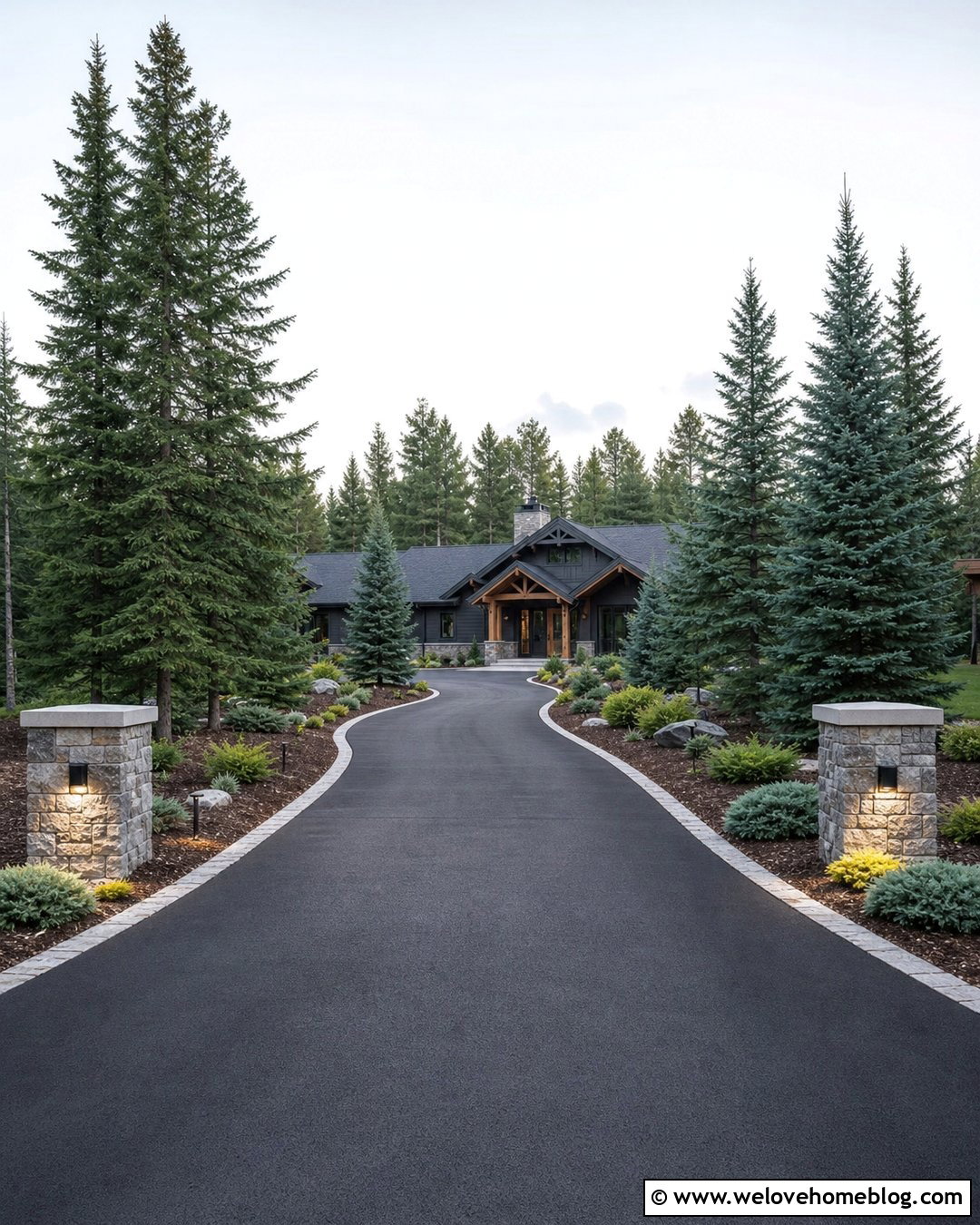
A broad asphalt driveway can gain year-round depth from carefully spaced spruce trees. Offset the dark pavement with a light granite curb and wide planting beds covered in shredded bark. Place the spruce trees far enough back to accommodate their mature width, then add dwarf evergreens and tough ground cover nearer the border. Avoid creating a tight wall that traps snow, blocks views, or narrows the driving lane. A staggered arrangement looks more natural and lets individual forms remain visible. This complete design works well with mountain homes, northern ranch houses, and contemporary cabins. Use a smaller or narrower spruce selection if the available planting area is limited. Stone entrance pillars and understated address lighting can repeat the granite edge while giving the evergreen-lined driveway a clear, welcoming starting point.
24. Palm Trees Along A Circular Driveway
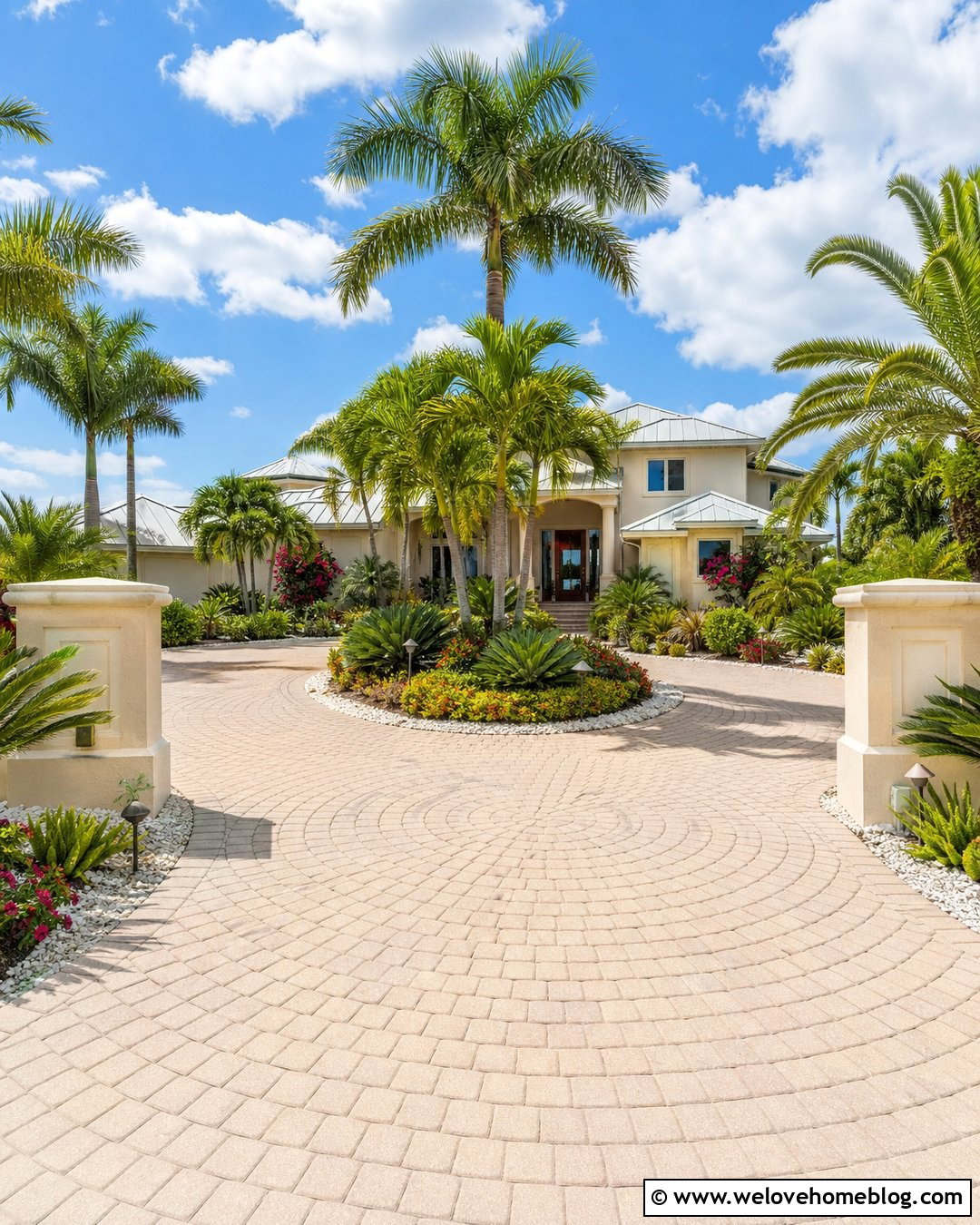
In a warm climate, palm trees can define a circular driveway with an open, resort-like appearance. Use pale shell-colored concrete pavers laid in a sweeping radial pattern around a central planting island. Place palms in balanced groups within the island and near the outer curve, keeping trunks away from vehicle turning paths. Layer the beds with cycads, bird-friendly flowering shrubs, ornamental grasses, and clean white landscape stone. The open canopies preserve sunlight and views toward the house. This design complements coastal contemporary, Florida ranch, and Spanish Revival architecture. Select palms that are appropriate for the region’s temperature, wind, and soil conditions. Low pathway lights can follow the circular edge, while matching stucco pillars at the entrance repeat colors from the home and create a finished transition from street to driveway.
25. Bay Laurel Trees At A Driveway Gate
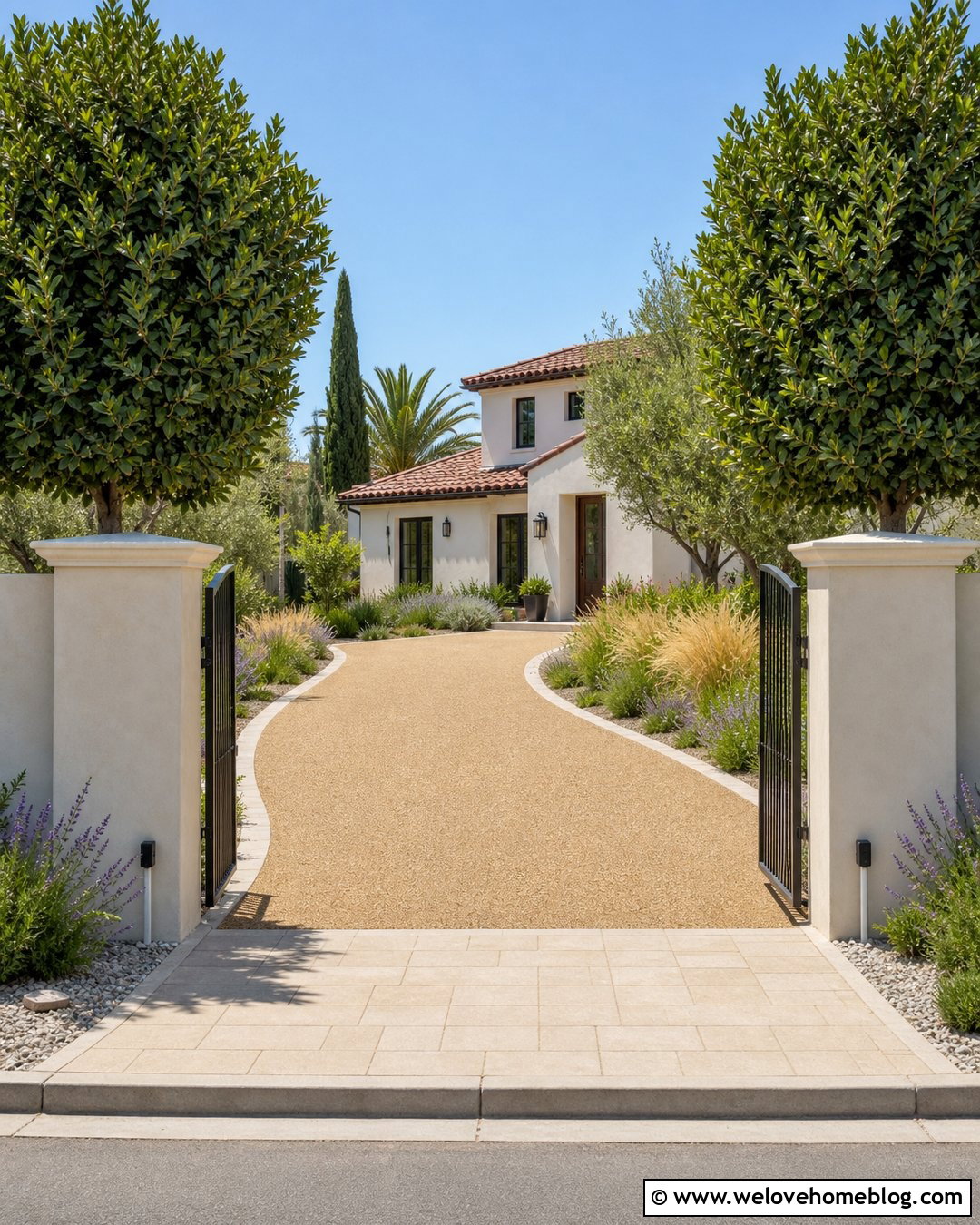
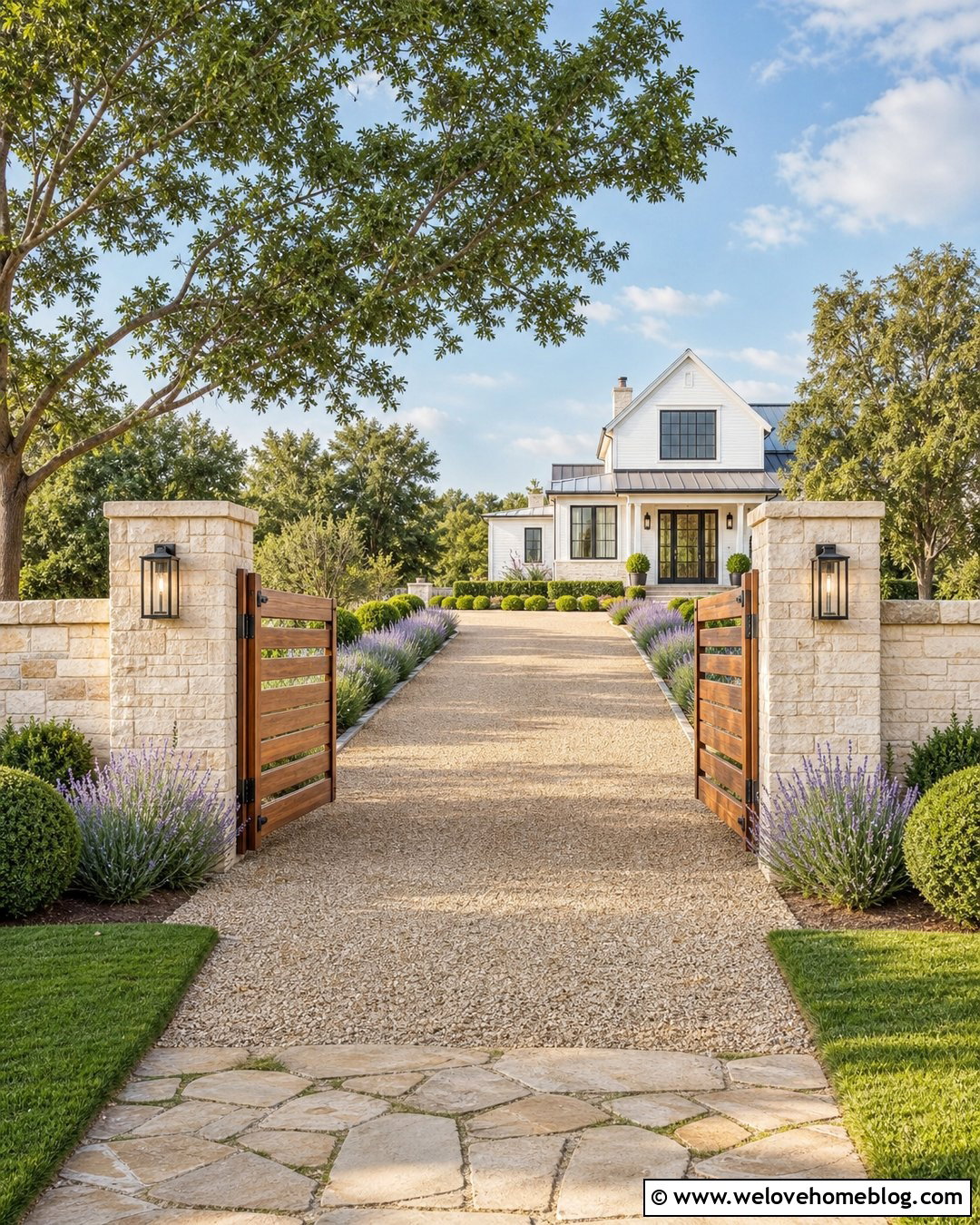
Bay laurel trees can frame a driveway gate with dense green foliage and a clean Mediterranean form. Use a warm beige resin-bound gravel driveway leading through simple black metal gates set between cream stucco pillars. Position one tree behind each pillar in generous square planting beds. Keep the trees naturally upright or maintain a formal shape with regular, thoughtful pruning. Lavender, low rosemary, ornamental grasses, and pale gravel can fill the surrounding beds. This entrance works with Mediterranean, Spanish, and California-style homes. Continue the same resin surface in a gentle curve toward the house, using limestone edging to hold the layout together. Make sure the trees do not interfere with gate movement, sensors, lighting, address numbers, or visibility. The result should feel structured without becoming crowded or overly decorative.
26. Stewartia Trees Beside A Small Driveway
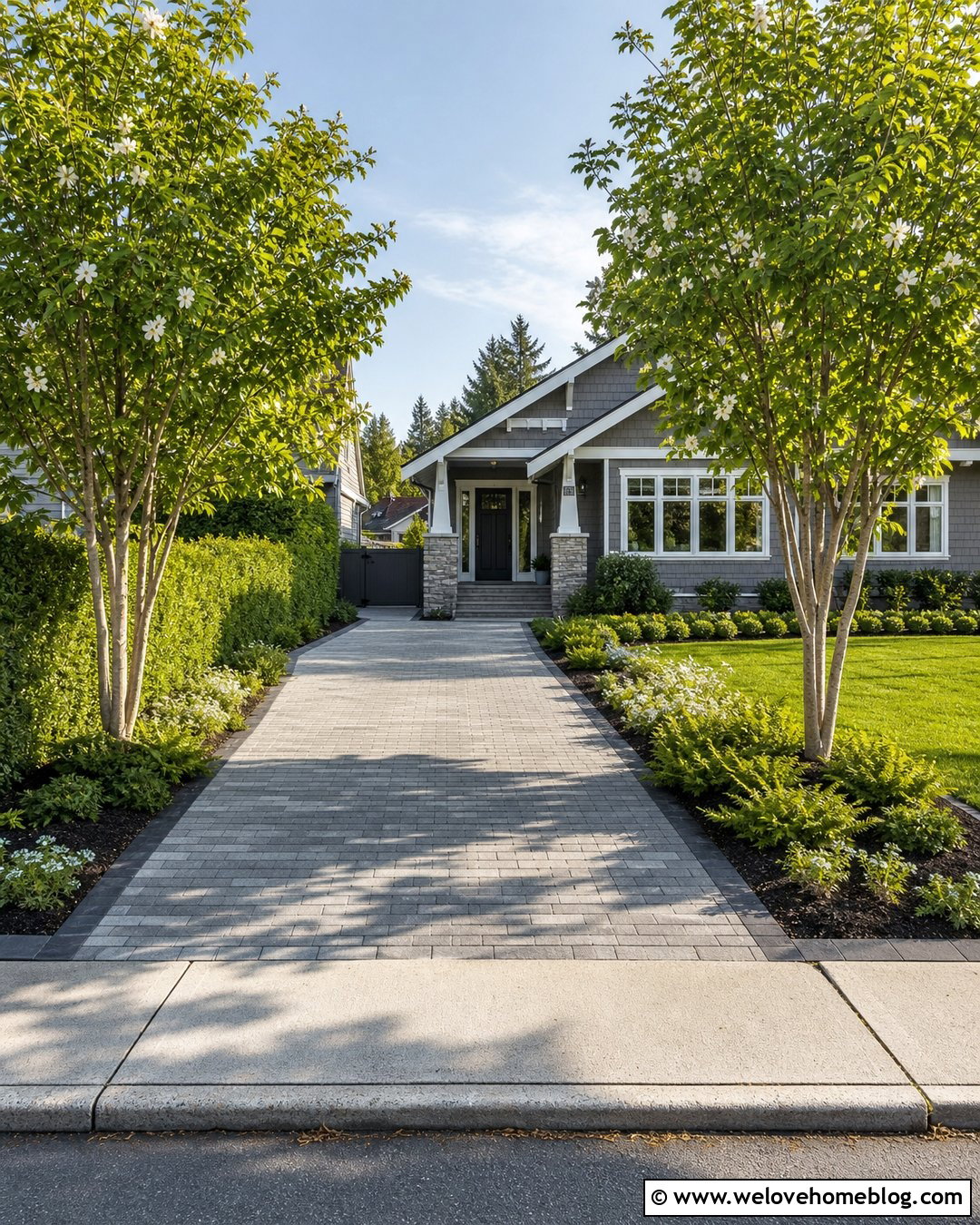
A small suburban driveway can still accommodate trees when compact ornamental choices are placed in meaningful locations. Pair a straight driveway of light-gray permeable pavers with one stewartia near the front corner and another near the walkway transition. Broad planting pockets provide more root space than narrow strips beside the pavement. Use dark granite edging, evergreen ground cover, ferns, and white flowering perennials to complement the tree’s refined appearance. Keep one side of the driveway open to lawn so passengers can step out comfortably. This balanced design works with Craftsman houses, updated ranch homes, and contemporary cottages. The trees act as accents rather than forming a continuous row. Check local suitability and mature size before planting, since even a smaller ornamental tree needs adequate soil, water, and canopy clearance.
27. Maple Trees Set Back From A Driveway
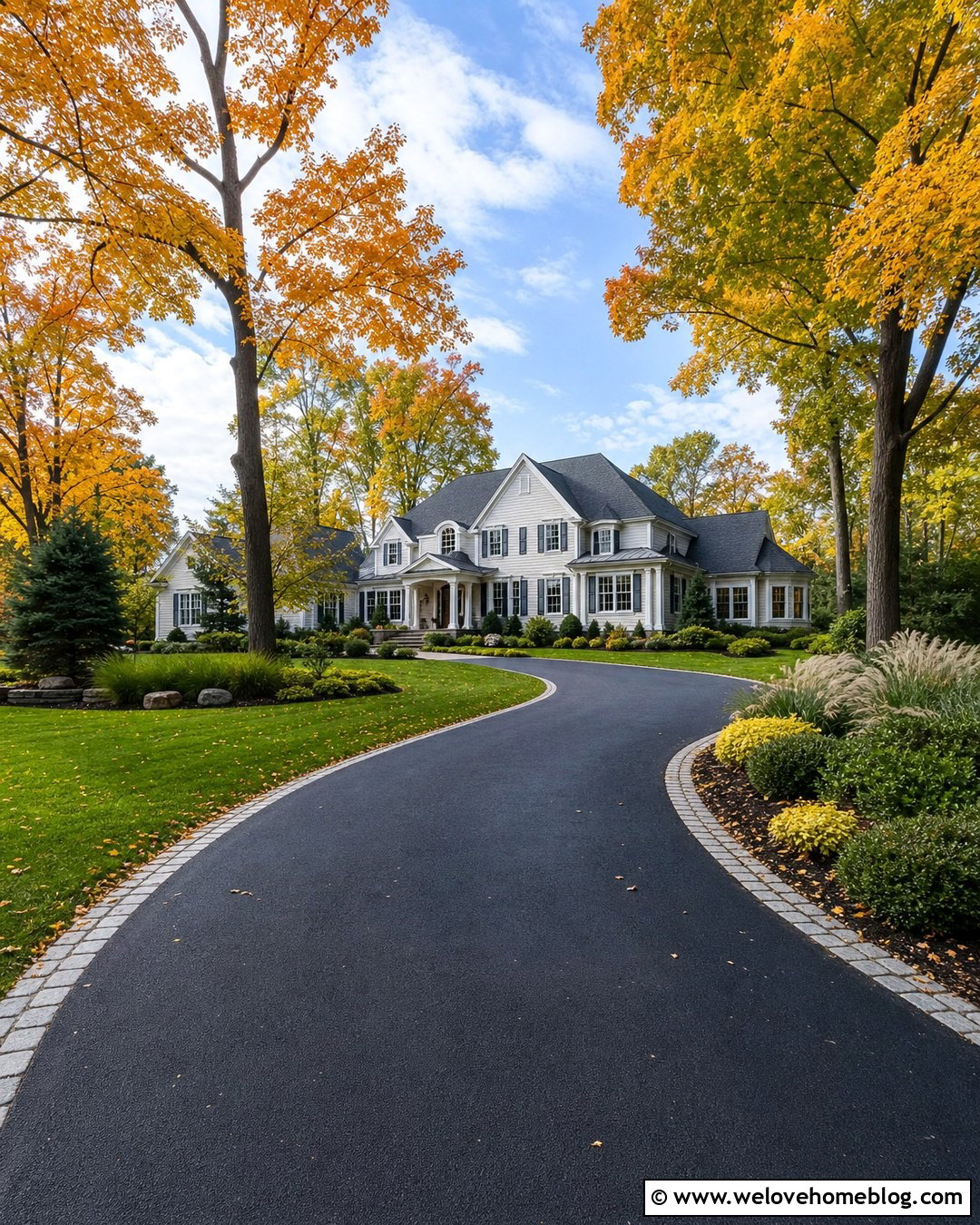
Large maple trees can shade a driveway beautifully, but they should be treated as front-yard canopy trees rather than planted in cramped pavement-side strips. Use a wide, curved asphalt driveway with a flush cobblestone border. Set the maples well back in broad lawn areas where their roots and canopies have more room. Between the trees and driveway, add sweeping beds of low shrubs and ornamental grasses to create a safe visual buffer. This layout suits spacious suburban yards, traditional homes, and large ranch properties. Choose species and cultivars according to mature size, regional climate, and soil conditions. The trees can frame distant views of the house without forming a tight tunnel. Maintain high branch clearance and keep the driveway entrance open, particularly where the curve meets the public road.
28. Live Oak Trees Along An Estate Driveway
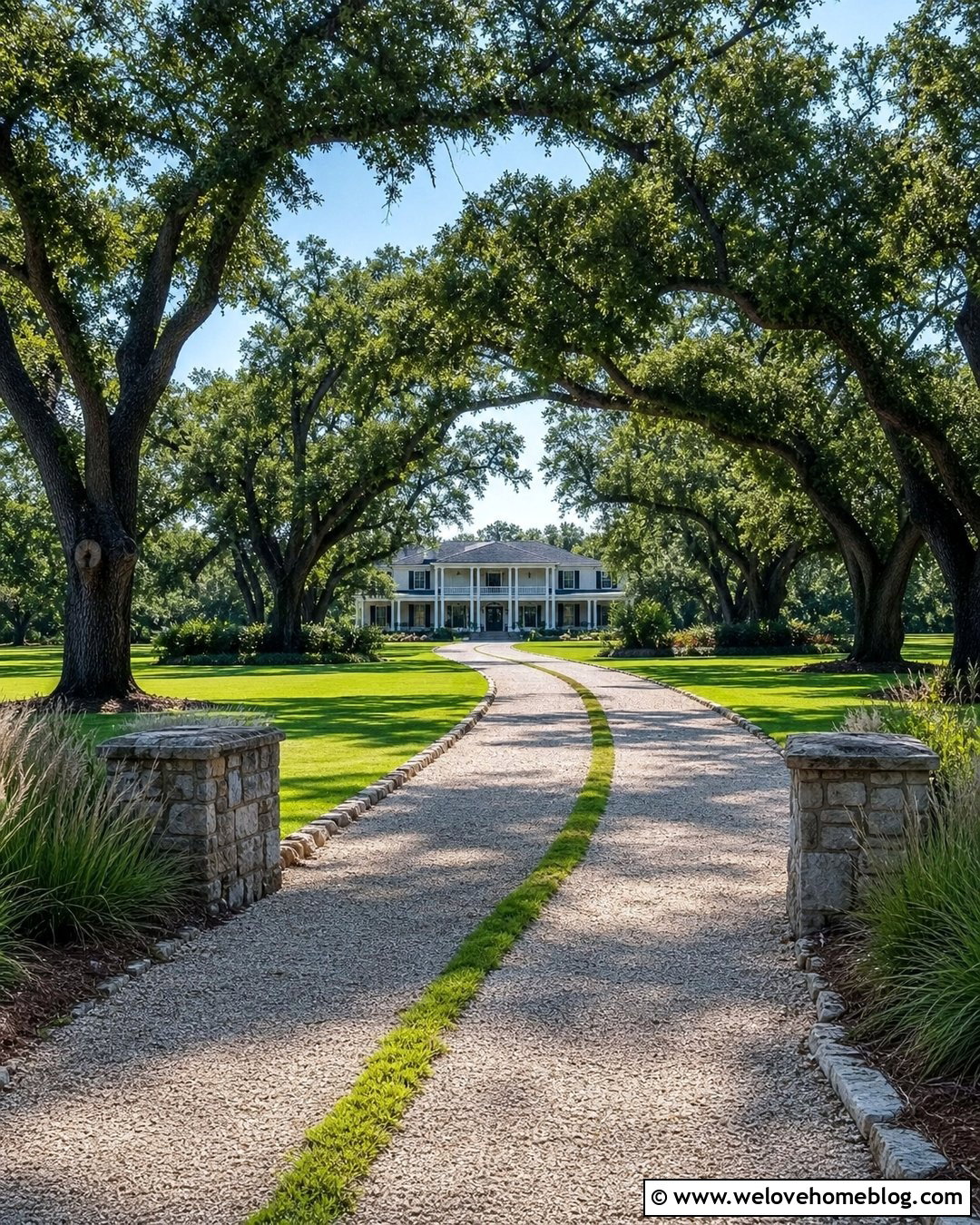
A spacious estate driveway can gain a memorable sense of scale from live oak trees planted far beyond the pavement edge. Use a wide surface of warm gray crushed gravel with thick stone edging and a subtle central grass strip where conditions allow. Position the trees in expansive lawn panels so their broad canopies have room to mature without crowding the road. Native grasses and simple ground cover can soften the trunks, while low stone markers define the entrance. This design is best suited to large Southern properties rather than typical suburban lots. A long curve allows the canopy to frame changing views of the house. Plan placement with an arborist or local professional because mature scale, storm exposure, utilities, drainage, and long-term branch clearance all influence a successful oak-lined approach.
29. Citrus Trees Beside A Courtyard Driveway
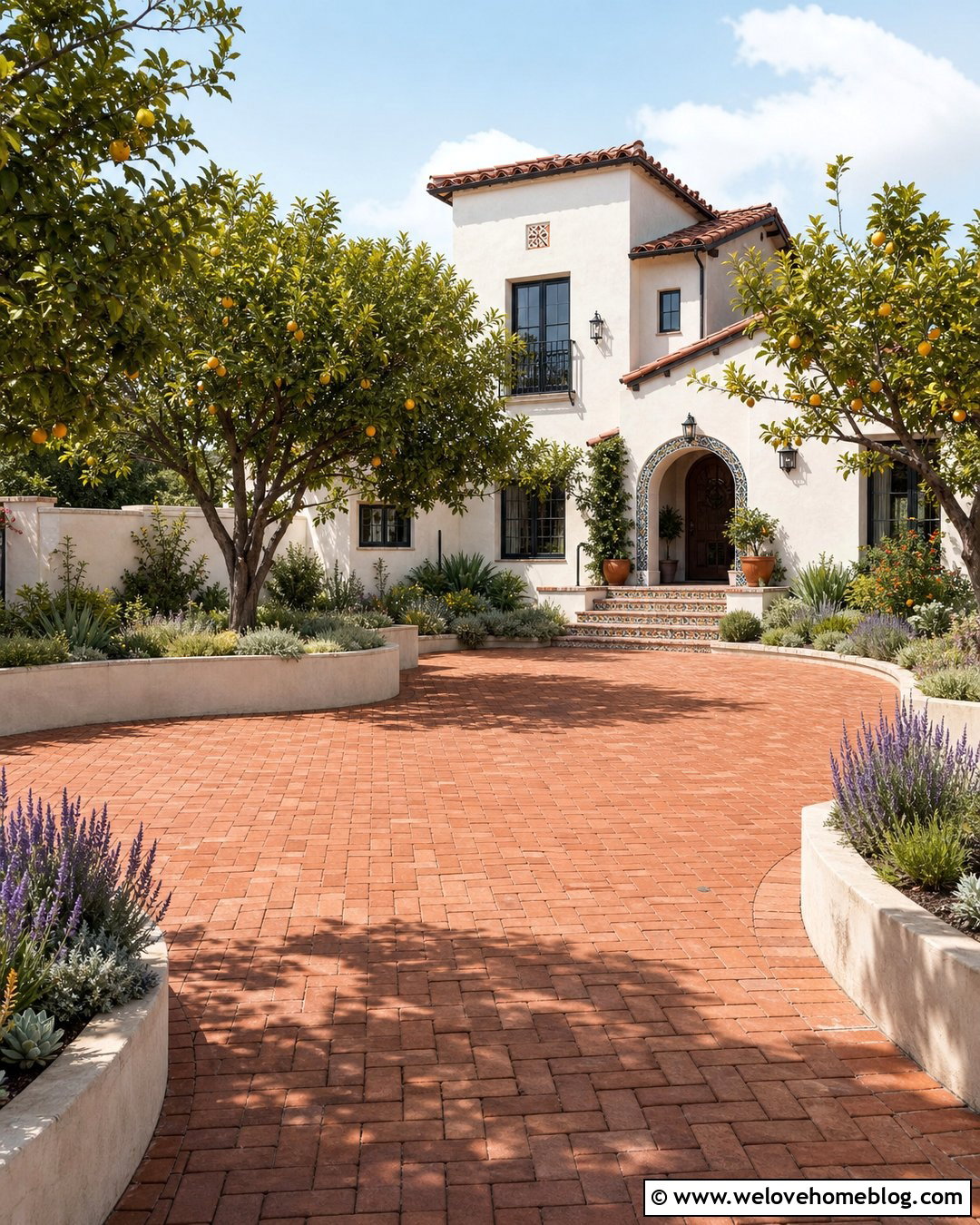
Citrus trees can bring color and fragrance to a sunny courtyard driveway in a suitable warm climate. Use terracotta-toned brick pavers laid in a basketweave pattern, then surround the parking court with raised stucco beds. Plant citrus trees where fallen fruit can be collected easily and will not land on primary parking or walking areas. Underplant with thyme, lavender, low succulents, or other climate-appropriate plants. A central fountain is unnecessary; instead, preserve an open turning space and use a simple tiled walkway to connect the driveway with the front door. This cheerful combination suits Spanish Revival, adobe, and Mediterranean homes. Choose citrus varieties adapted to local winter temperatures and growing conditions. Regular pruning can maintain comfortable clearance while allowing the rounded tree forms to soften the courtyard walls.
30. Mixed Trees Along A Farmhouse Driveway
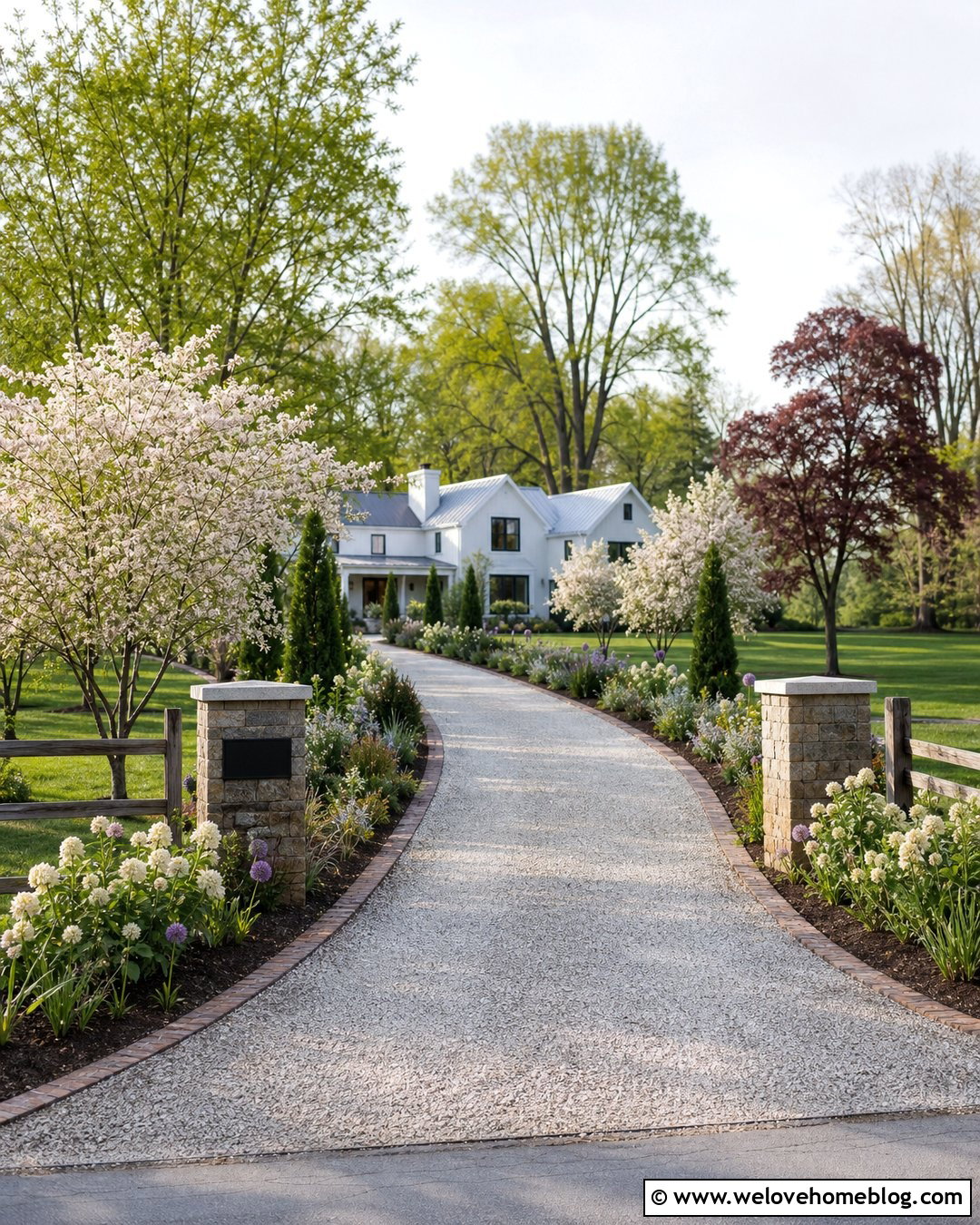
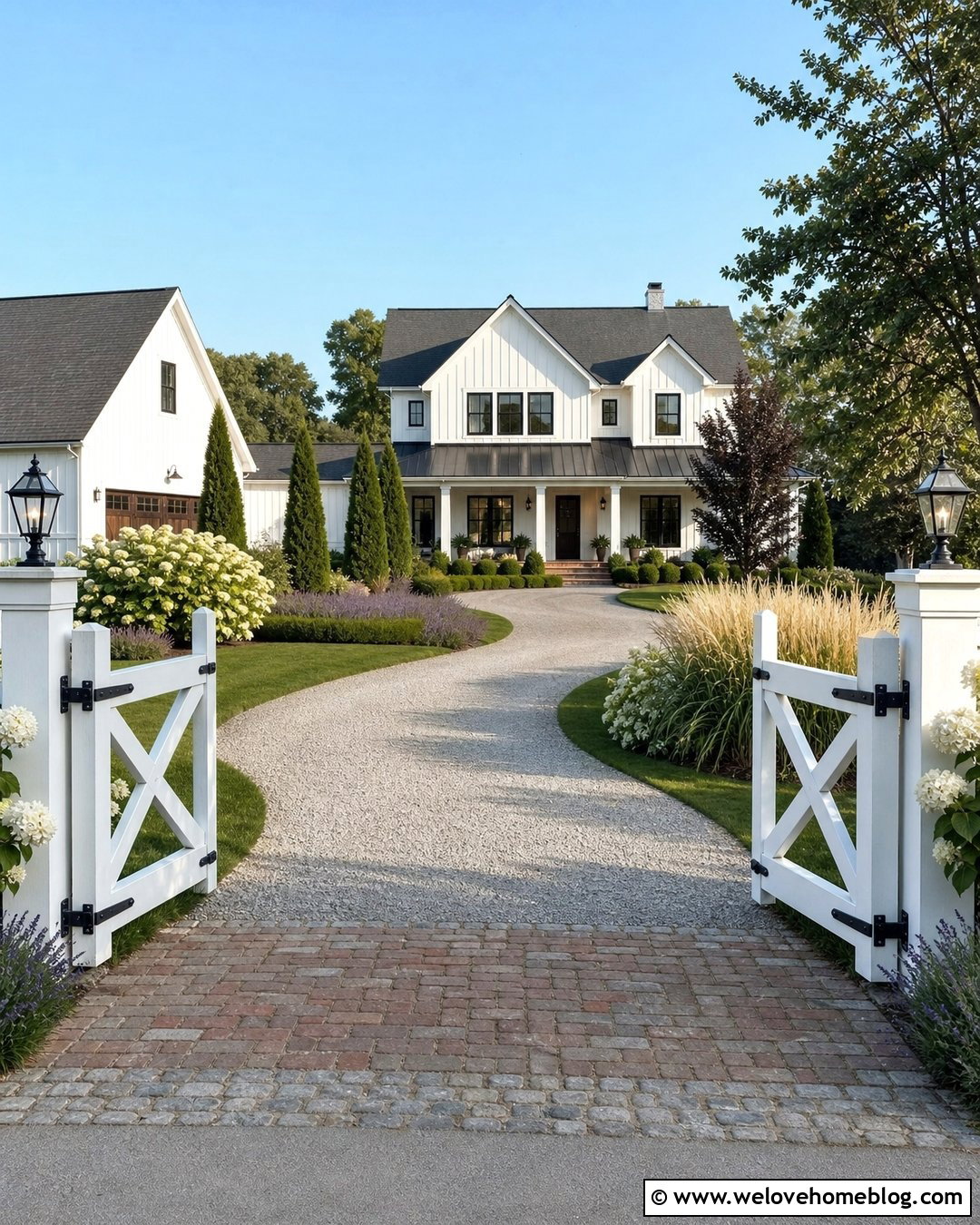
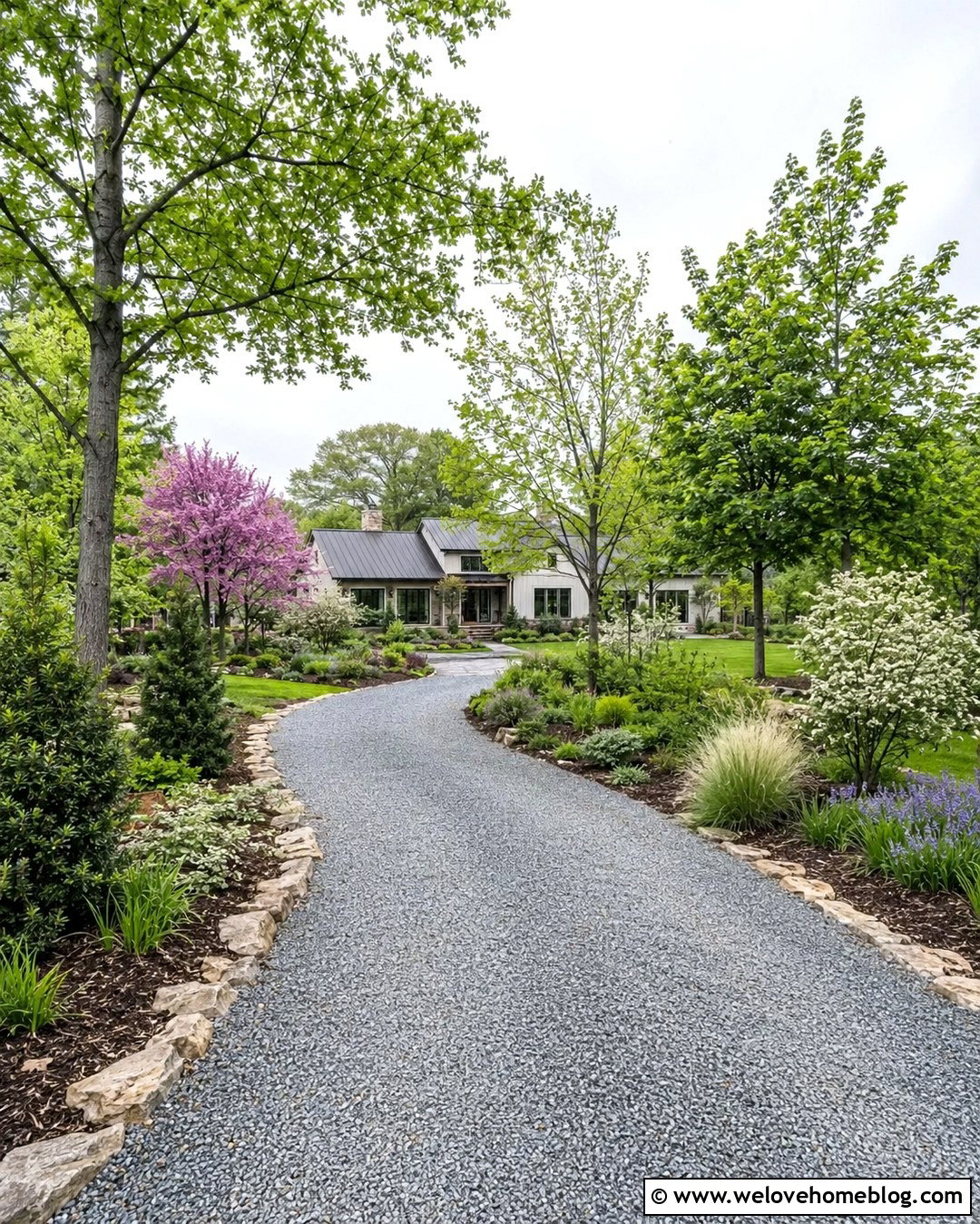
A mixed tree planting can make a farmhouse driveway look established without the stiffness of a single-species avenue. Use light gray gravel for a gently curving approach, contained by reclaimed brick edging. Combine appropriately spaced flowering trees, upright evergreens, and one or two larger shade trees set well back in the lawn. Repeat species in small groups so the layout feels connected rather than random. Add hydrangeas, native grasses, spring bulbs, and simple split-rail fencing along selected sections. Keep the entrance open with low planting, stone pillars, and a modest address sign. This layered design creates spring flowers, summer shade, fall color, and winter structure. Verify that every tree suits the site and has enough mature space, then use consistent edging and landscaping to unify the varied planting.
Conclusion:
Successful driveway landscaping depends on more than choosing a beautiful tree. The surface, driveway shape, planting distance, border, house style, and mature scale should work as one complete composition. Narrow evergreens can add privacy, flowering trees can brighten an entrance, and larger canopy trees can frame a long approach when they have ample room. Always check regional suitability, mature dimensions, utility locations, visibility requirements, and potential maintenance before planting. Generous soil space and thoughtful setbacks can reduce conflicts between trees and pavement over time. Use these 30 driveway trees ideas as adaptable starting points, then refine your favorite look around your climate, property size, maintenance preferences, and existing architecture.

Related posts:
Leave a Reply