
Fast-growing trees can turn a plain driveway into a shaded, private, and welcoming entrance in less time than slower landscape trees. The best choice depends on your climate, soil drainage, driveway material, available planting width, and nearby utility lines. It is also important to plan for the tree’s mature height and canopy, not just its size at planting. Large trees generally need more distance from pavement, buildings, and overhead wires, while narrower trees work better beside compact driveways. Before digging, call 811 to locate underground utilities and confirm that each species is suitable for your USDA hardiness zone. () The complete driveway looks below combine practical layouts, attractive borders, and 20 Fast Growing Driveway Trees Ideas.
1. Green Giant Arborvitae Gravel Driveway
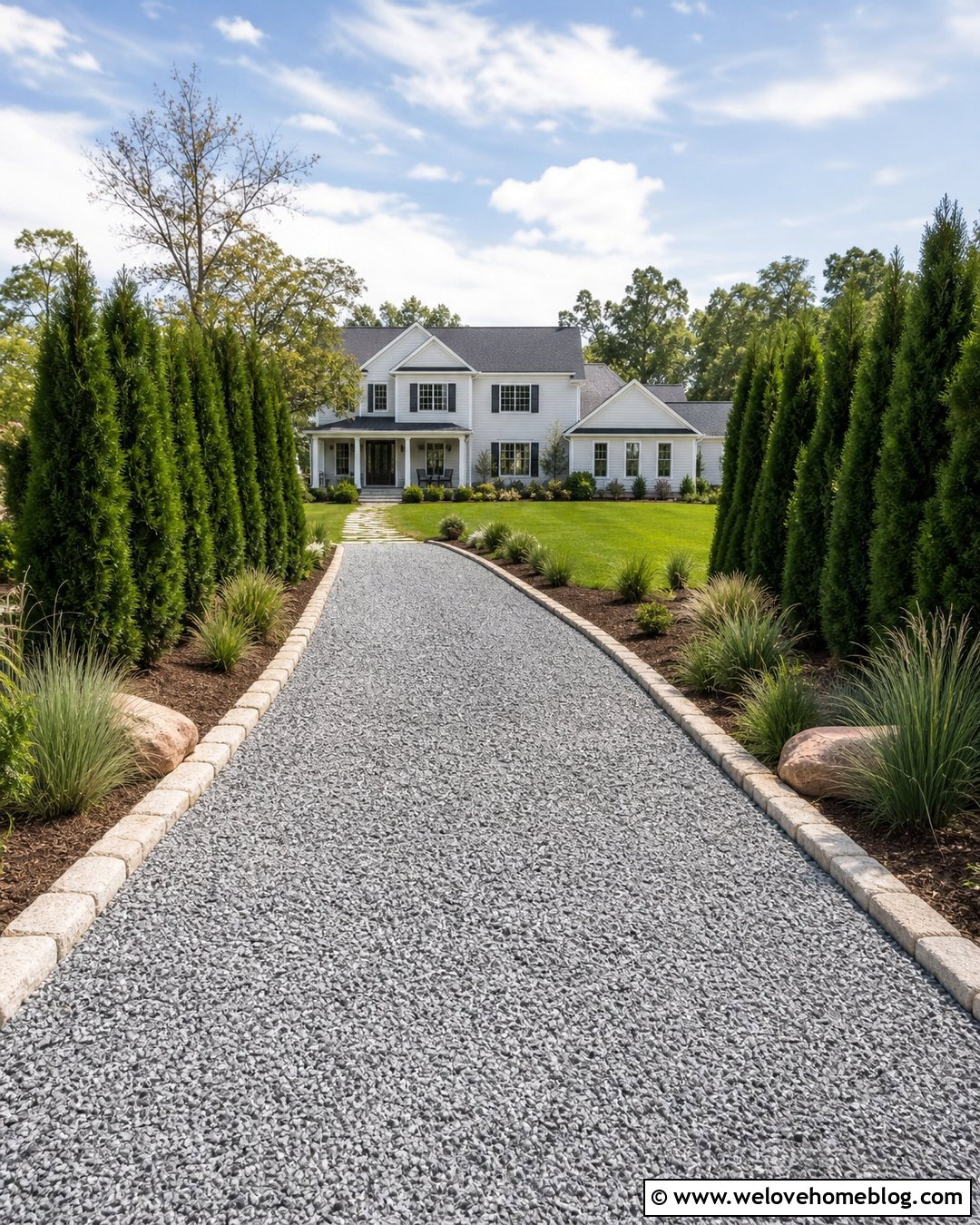
A long gravel driveway feels more private when Green Giant arborvitae forms a dense evergreen wall along both sides. Use compacted gray crushed stone for the driving surface, with larger cobblestones holding the gravel neatly in place. Plant the trees in wide beds beyond the edging so their trunks and roots do not crowd the pavement. Repeating ornamental grasses between young trees can fill visible gaps while the screen develops. This layout works especially well with a modern farmhouse or country home surrounded by open land. Keep the entrance slightly wider and lower so drivers have a clear view of the road. Before planting a continuous row, account for each tree’s mature width, available sunlight, and access needed for pruning or utility maintenance.
2. River Birch Curved Concrete Driveway
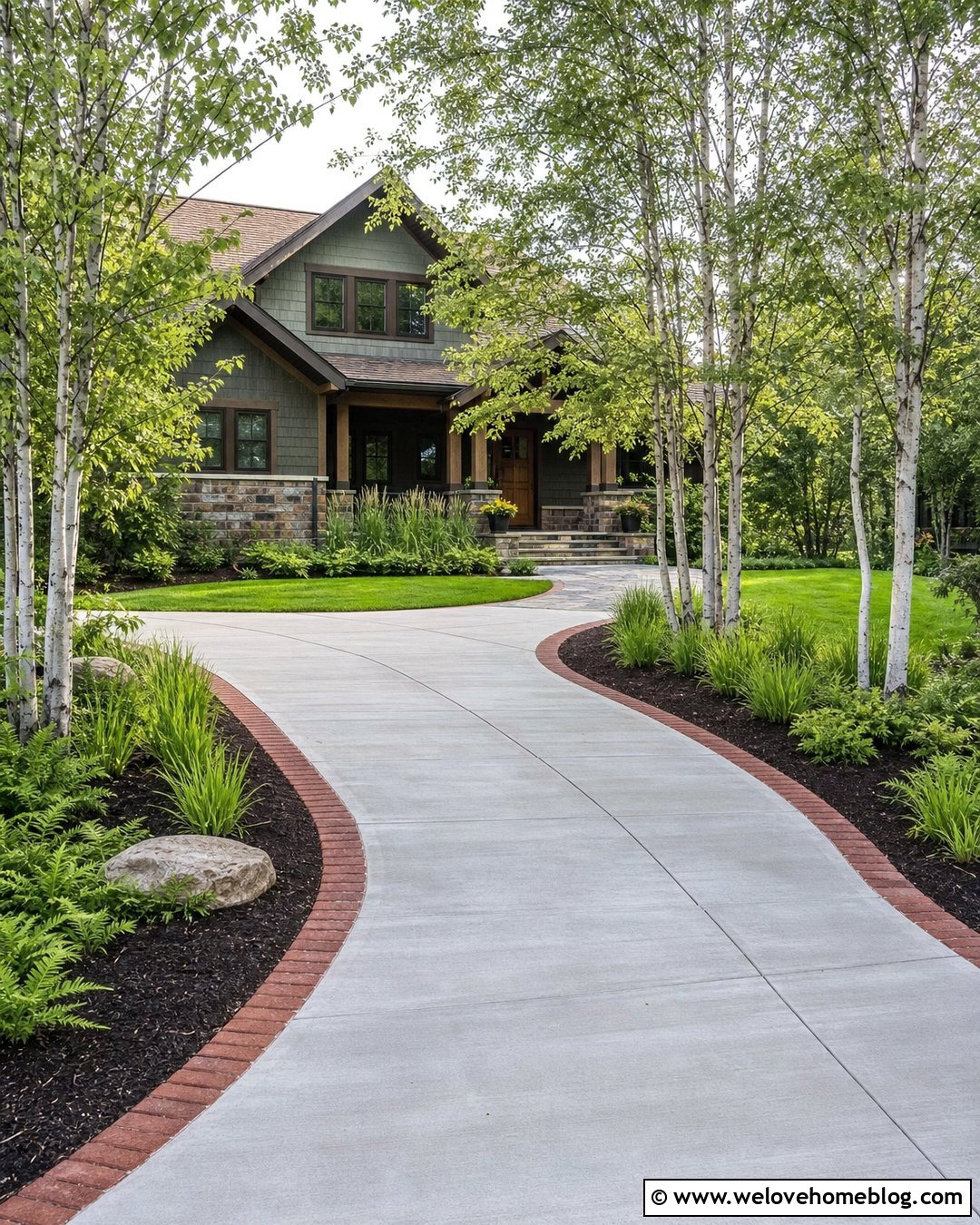
River birches bring movement and natural character to a curved concrete driveway. Their light, peeling bark creates year-round interest, while the loose canopy softens a large paved area. Use gray poured concrete with a subtle broom finish and a narrow brick ribbon following each curve. Plant the birches in broad mulched beds on the outside of the bends, where their trunks become visible focal points without limiting vehicle clearance. Moisture-loving perennials and low ornamental grasses complement the relaxed look. River birches are especially useful in yards with damp areas, although consistent watering is still important while young. Give them generous soil space rather than squeezing them into narrow strips. A grouped, asymmetrical arrangement usually looks more natural than perfectly matched rows.
3. Autumn Blaze Maple Paver Driveway
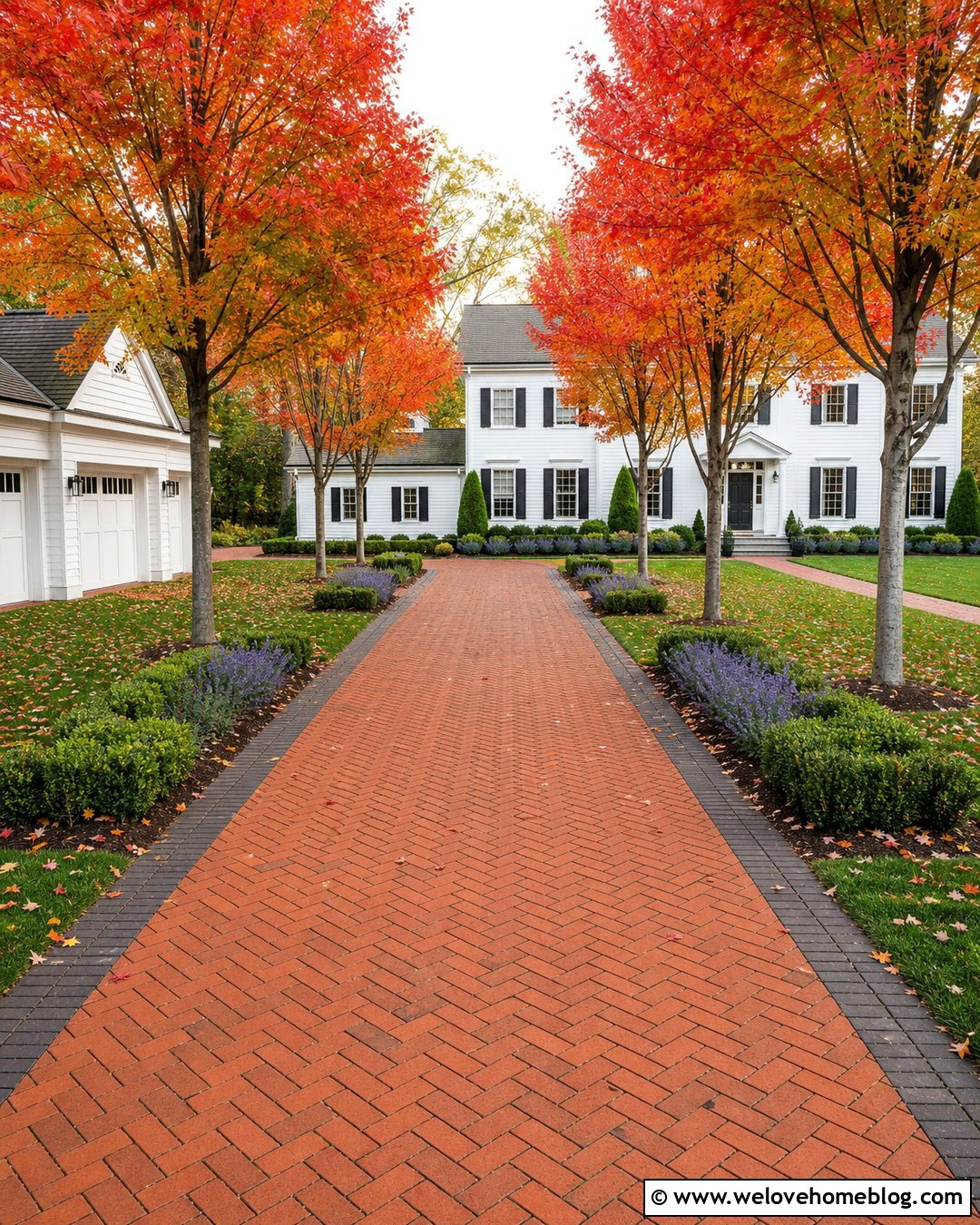
For strong fall color, frame a straight paver driveway with evenly spaced Autumn Blaze maples. Warm clay brick pavers laid in herringbone create a traditional surface, while charcoal soldier-course borders add definition. Position the trees in lawn panels or large planting beds beyond the paver edge. This helps preserve planting space and makes fallen leaves easier to collect. The repeating trunks create a formal approach that suits Colonial, Georgian, and traditional suburban homes. Underplant the row with low boxwood, catmint, or simple ground cover, but leave an open circle around each trunk. Because maples can develop broad crowns, check the expected mature spread before deciding the spacing. Avoid placing them directly beneath overhead lines or immediately beside the driveway apron.
4. Lacebark Elm Circular Asphalt Driveway
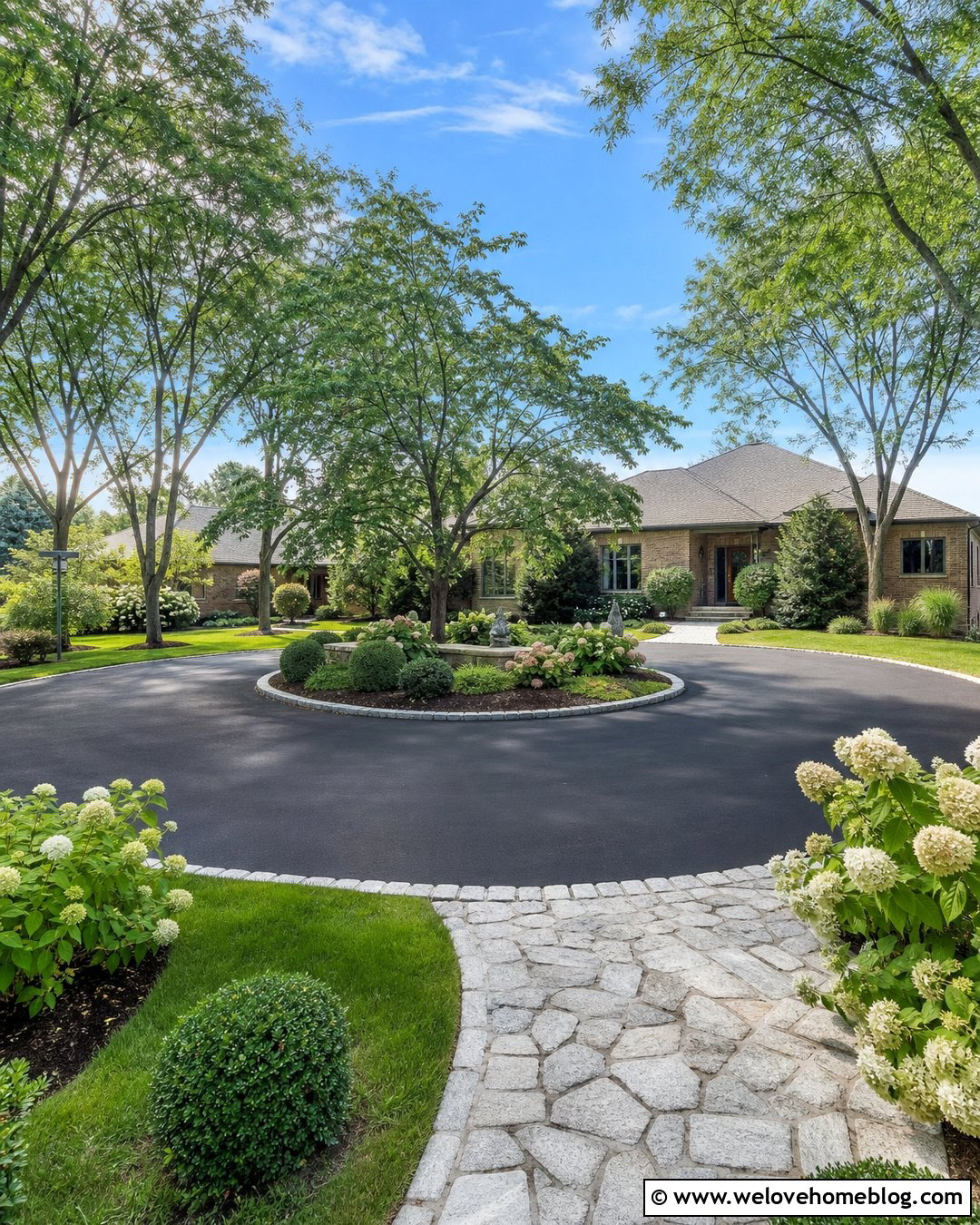
A circular black asphalt driveway becomes more elegant when lacebark elms define its sweeping outer edge. Their upright branching can eventually form a high canopy while preserving usable space beneath it. Add a pale granite cobblestone border to brighten the asphalt and repeat the stone around the center island. Plant one elm at each major curve, then fill the surrounding beds with hydrangeas, evergreen shrubs, and seasonal ground cover. The center island can hold a smaller flowering tree or a simple lawn for balanced curb appeal. Keep trunks far enough from the pavement to accommodate future growth and maintenance equipment. This design works beautifully in front of a brick ranch or large Craftsman house, where the circular layout provides both practical turnaround space and a strong landscape framework.
5. Dawn Redwood Long Gravel Driveway
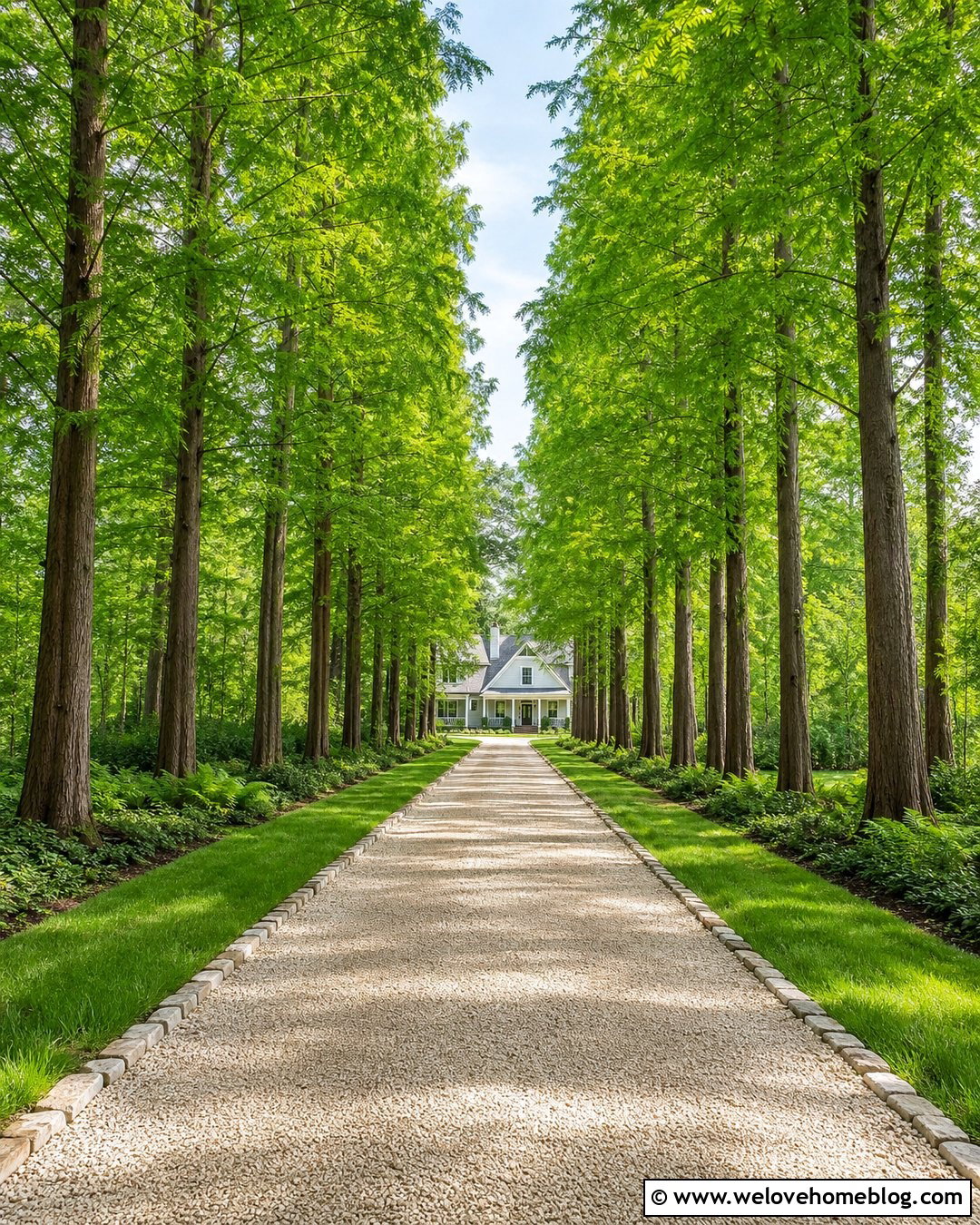
Nothing gives a spacious property a grand sense of scale like dawn redwoods lining a long gravel driveway. Their tall, pyramidal form creates a dramatic avenue that suits rural homes with substantial planting room. Choose tan crushed gravel with weathered fieldstone edging to keep the approach warm and natural. Set the trees well beyond the driveway border because this is a large landscape tree, not a choice for narrow suburban strips. A wide grass verge between the gravel and trunks provides additional root space and keeps low branches away from vehicles. Ferns, sedges, and woodland ground covers can soften the outer planting beds. The trees are deciduous conifers, so the driveway receives more winter light after the soft foliage drops. Use this arrangement only where overhead utilities and buildings are comfortably distant.
6. Bald Cypress Resin-Bound Driveway
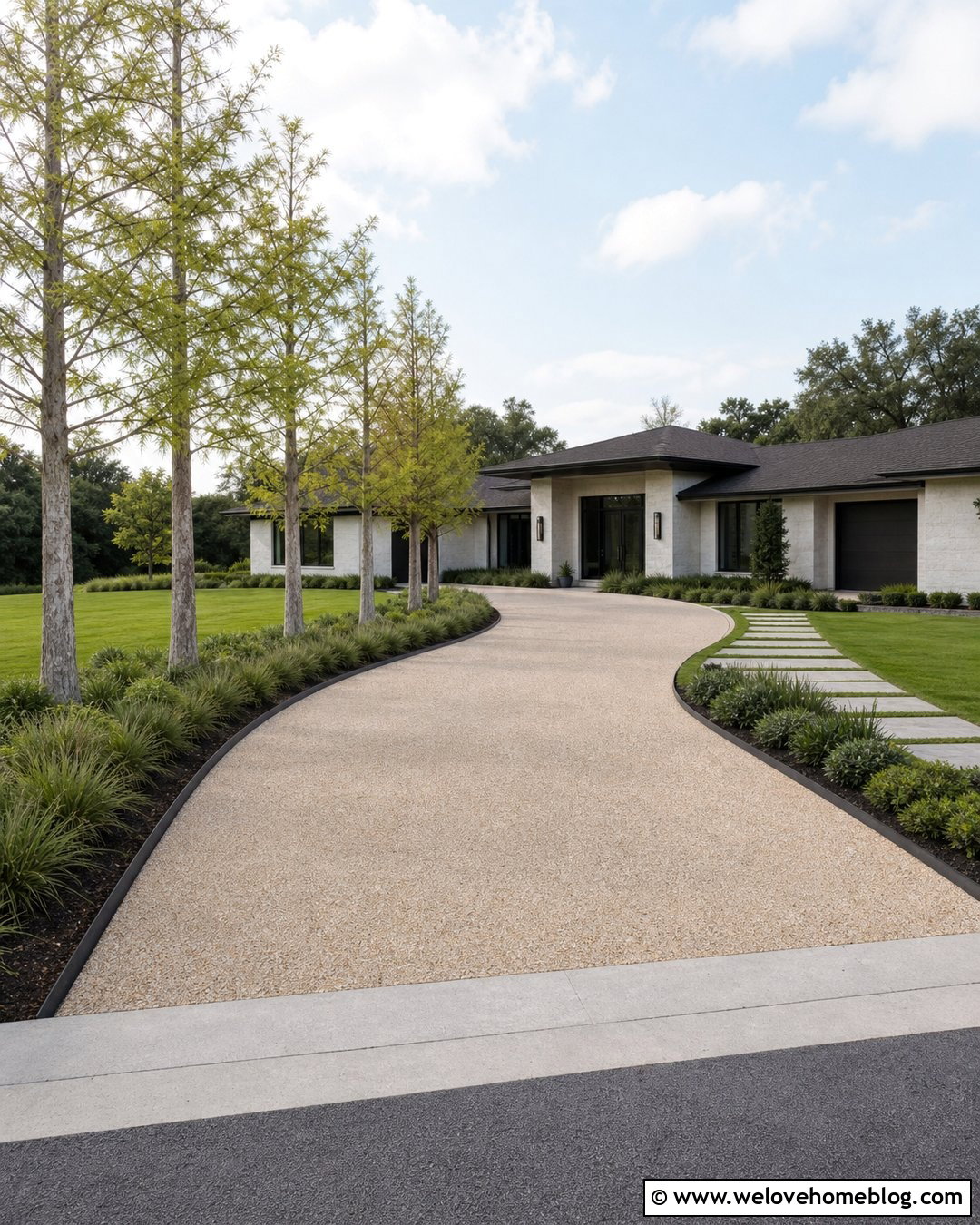
A pale resin-bound gravel driveway paired with bald cypress trees creates a clean look for a low-lying or moisture-retentive yard. Use a gently curved layout that follows the natural grade rather than forcing a rigid straight line. Dark steel edging provides a crisp transition between the smooth resin surface and wide planting beds. Arrange the trees informally along the outside curve, leaving open lawn on the inside for visibility. Moisture-tolerant grasses and low shrubs reinforce the natural setting without hiding the trunks. Bald cypress develops into a substantial tree, so generous setbacks are essential near pavement and structures. This design pairs well with a contemporary ranch or modern home because the fine foliage contrasts with simple architecture. Make sure the selected planting area offers enough long-term canopy and root space.
7. Tulip Poplar Country Gravel Driveway
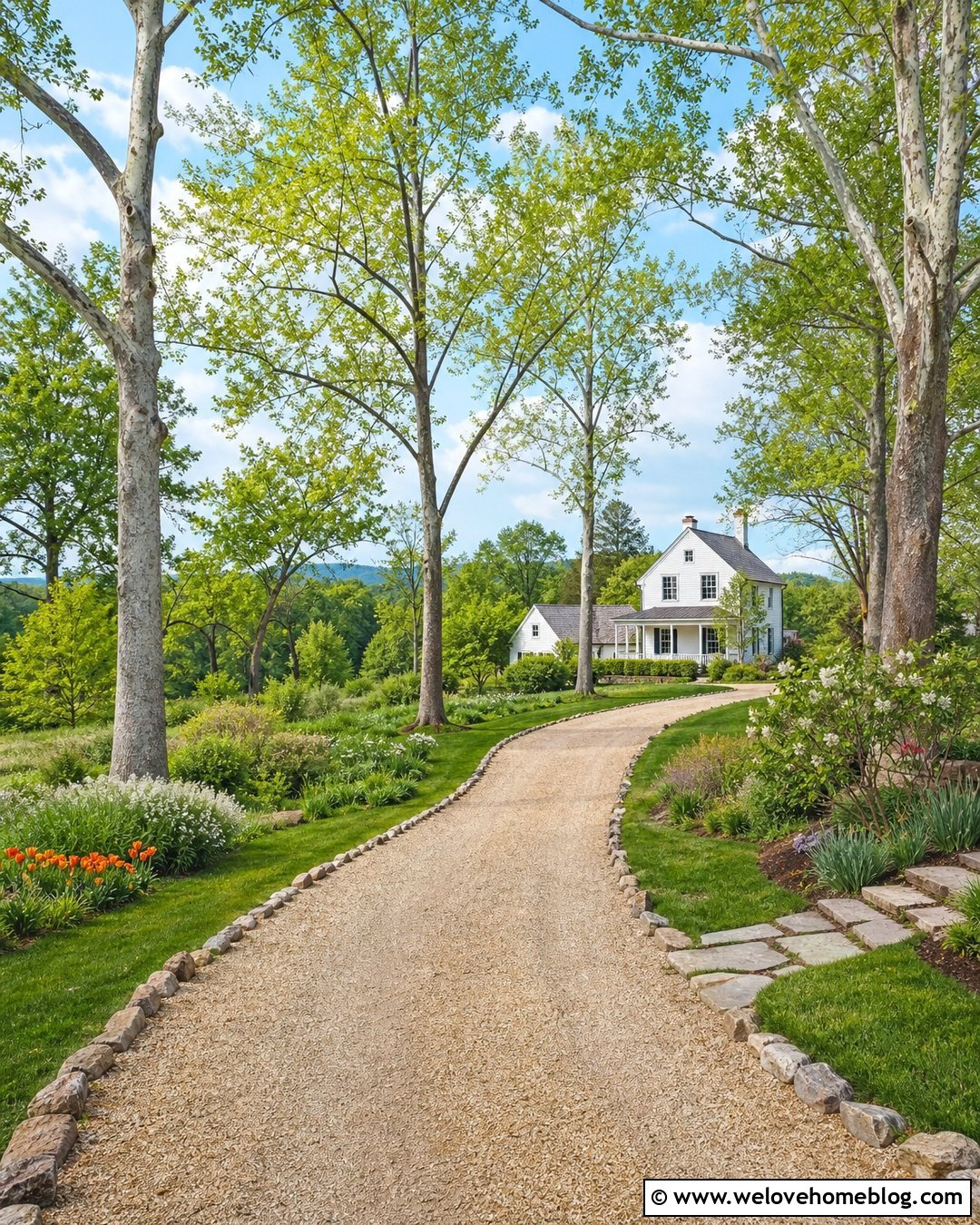
A country driveway bordered by tulip poplars can develop shade quickly while maintaining a tall, open feeling. Begin with a wide surface of buff crushed limestone and use rough fieldstone edging at the entrance. Plant the trees beyond broad grass shoulders instead of placing them close to the gravel. Their eventual size makes this layout appropriate for acreage, long approaches, and homes without nearby overhead lines. Native shrubs, meadow grasses, and spring bulbs can fill the outer landscape without competing with the strong vertical trunks. A curved alignment prevents the row from looking overly rigid and reveals the farmhouse gradually. Prune young trees carefully to encourage sturdy structure and vehicle clearance. Avoid this option for short urban driveways, where the mature height and canopy would overwhelm the available space.
8. Thornless Honeylocust Modern Concrete Driveway
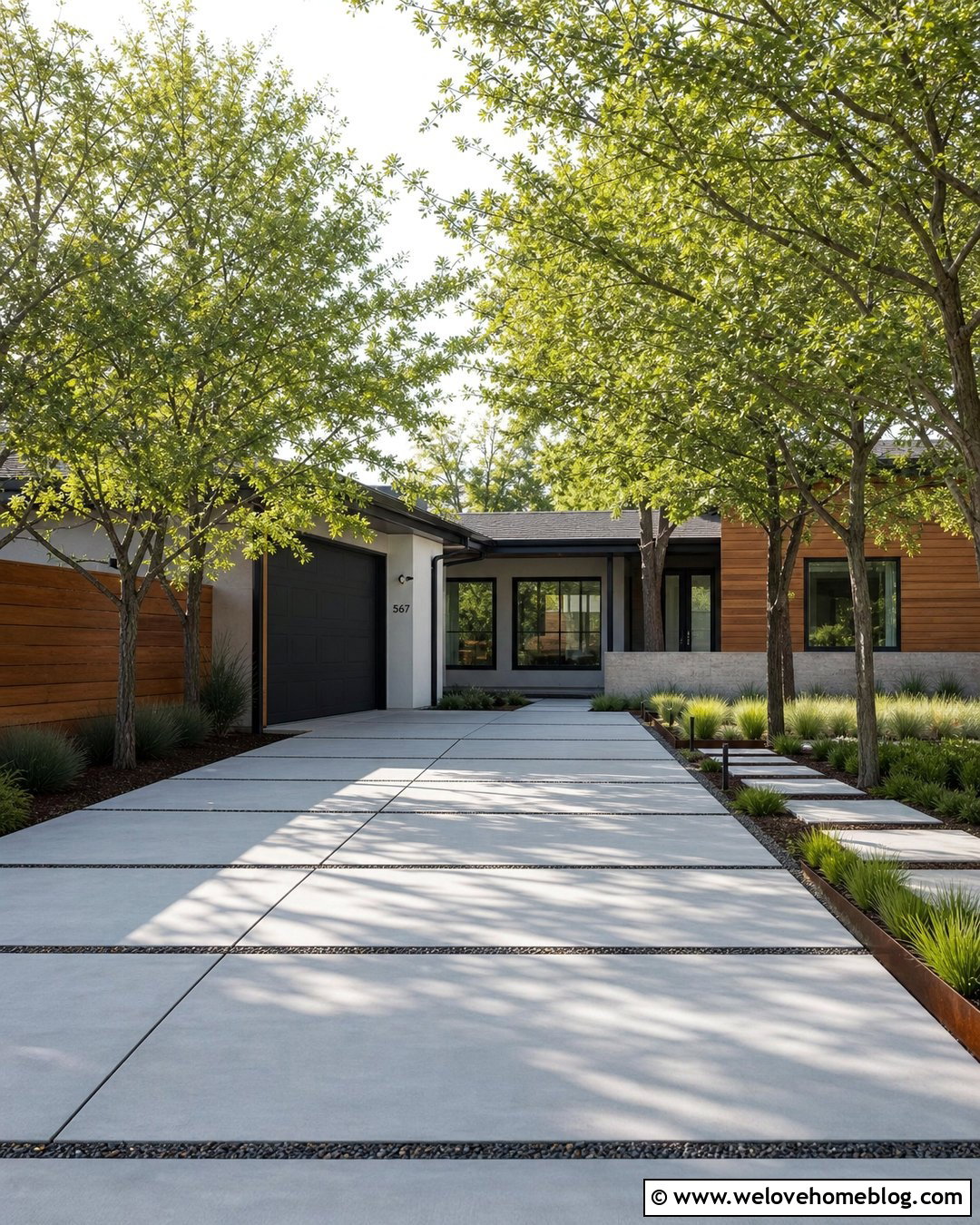
Thornless honeylocust creates filtered shade over a modern concrete driveway without making the entrance feel dark or enclosed. Use large rectangular slabs of light gray poured concrete separated by narrow gravel joints. Plant the trees in spacious linear beds beside the driveway, with corten steel edging and low ornamental grasses continuing the architectural lines. An offset arrangement feels more contemporary than matching trees directly across from one another. The fine-textured canopy allows light to reach plants and lawn below, making the landscape appear airy. Choose a thornless, pod-free cultivar when available to reduce driveway cleanup. Maintain clear sightlines near the street and garage doors. This complete look works especially well with a low-profile modern home featuring wood siding, black windows, and a simple concrete walkway connected to the driveway.
9. Red Maple Brick Driveway
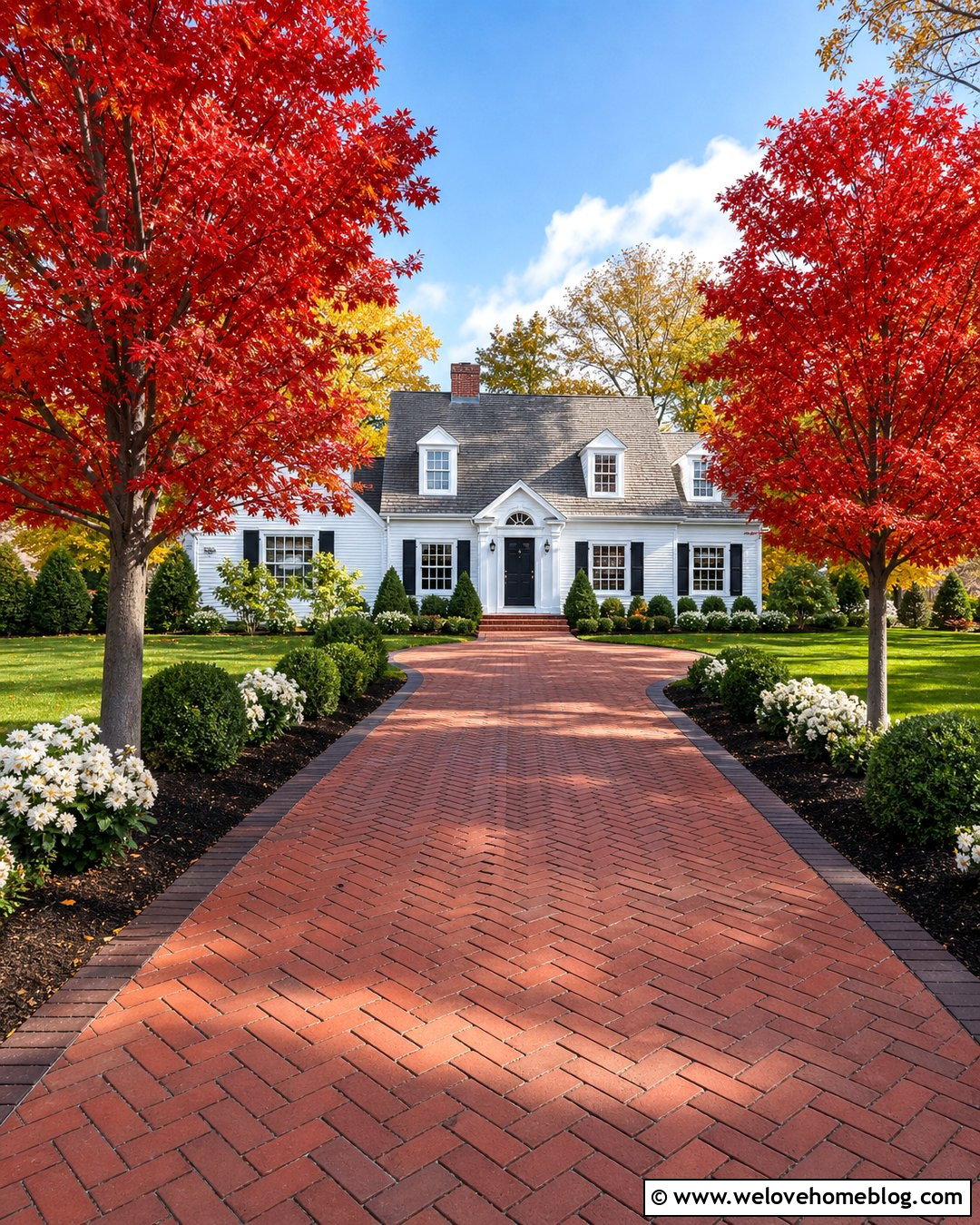
Red maples add seasonal color to a red brick driveway while preserving a classic residential appearance. Use clay brick pavers in a running-bond or herringbone pattern, then frame the surface with a darker brick soldier course. Plant the trees in generous curved beds rather than narrow openings surrounded by paving. Evergreen shrubs provide winter structure, while white flowering perennials help balance the warm brick and autumn foliage. A straight driveway creates a formal axis toward a white Colonial or Cape Cod house. For a softer look, stagger the trees slightly instead of forming a perfectly rigid row. Local suitability matters because soil conditions, regional climate, and cultivar characteristics can vary. Allow enough separation from the driveway to reduce conflicts between expanding trunks, shallow soil, and the finished paver surface.


10. London Plane Tree Cobblestone Driveway
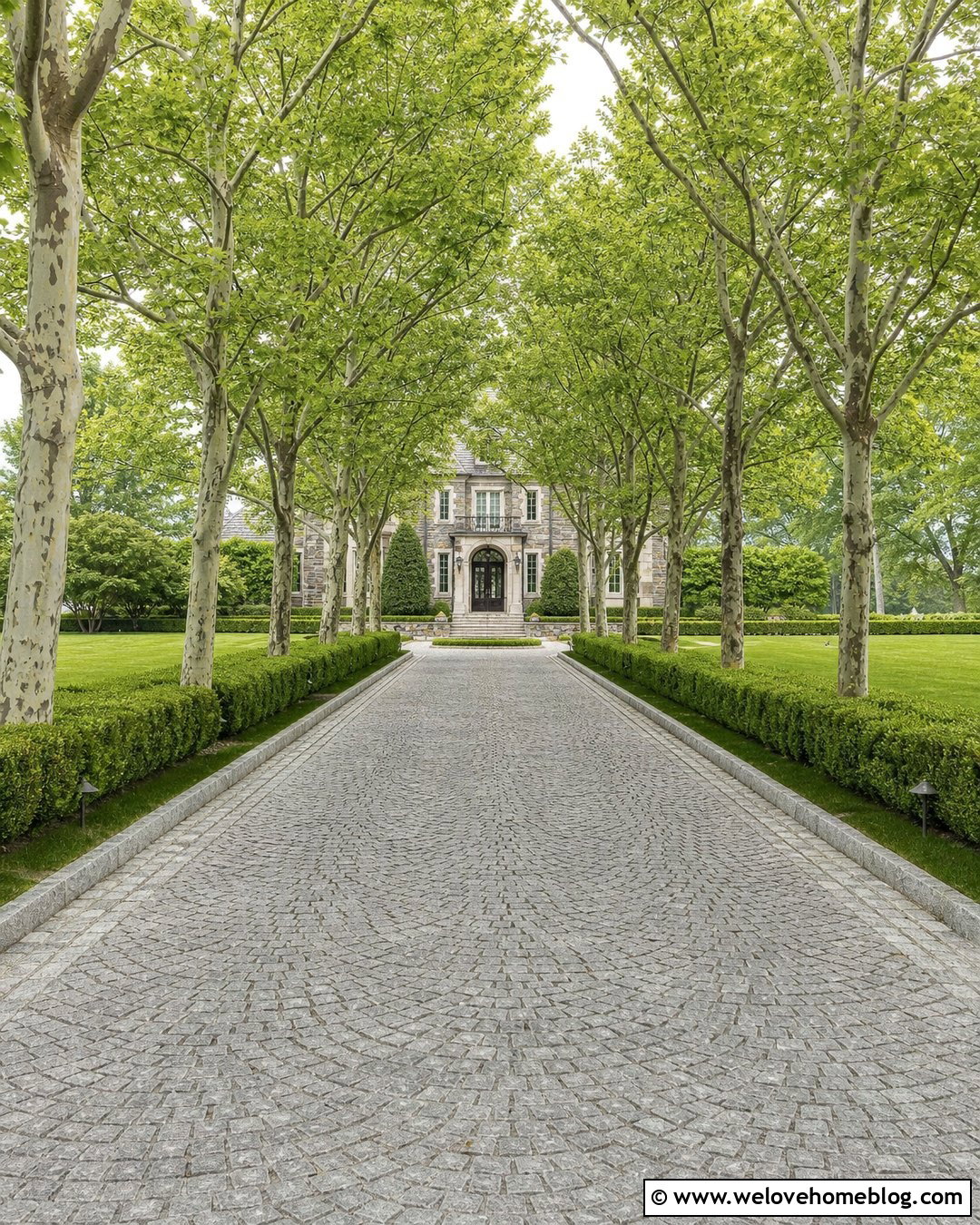
London plane trees can create a stately canopy above a broad cobblestone driveway in a large suburban or estate setting. Use gray granite cobblestones laid in a fan pattern, with flush-cut stone edges that allow water to reach adjoining lawn. Plant the trees in wide grass panels on both sides, keeping the trunks well away from the driving surface. A symmetrical row guides the eye toward a substantial brick or stone house. Formal hedges can run behind the trees, but keep the foreground open so the driveway remains easy to navigate. These trees require considerable room at maturity, making careful placement essential. Trees planted near driveways should be selected and positioned according to their mature crown and root requirements rather than their nursery size. ()
11. Japanese Zelkova Exposed Aggregate Driveway
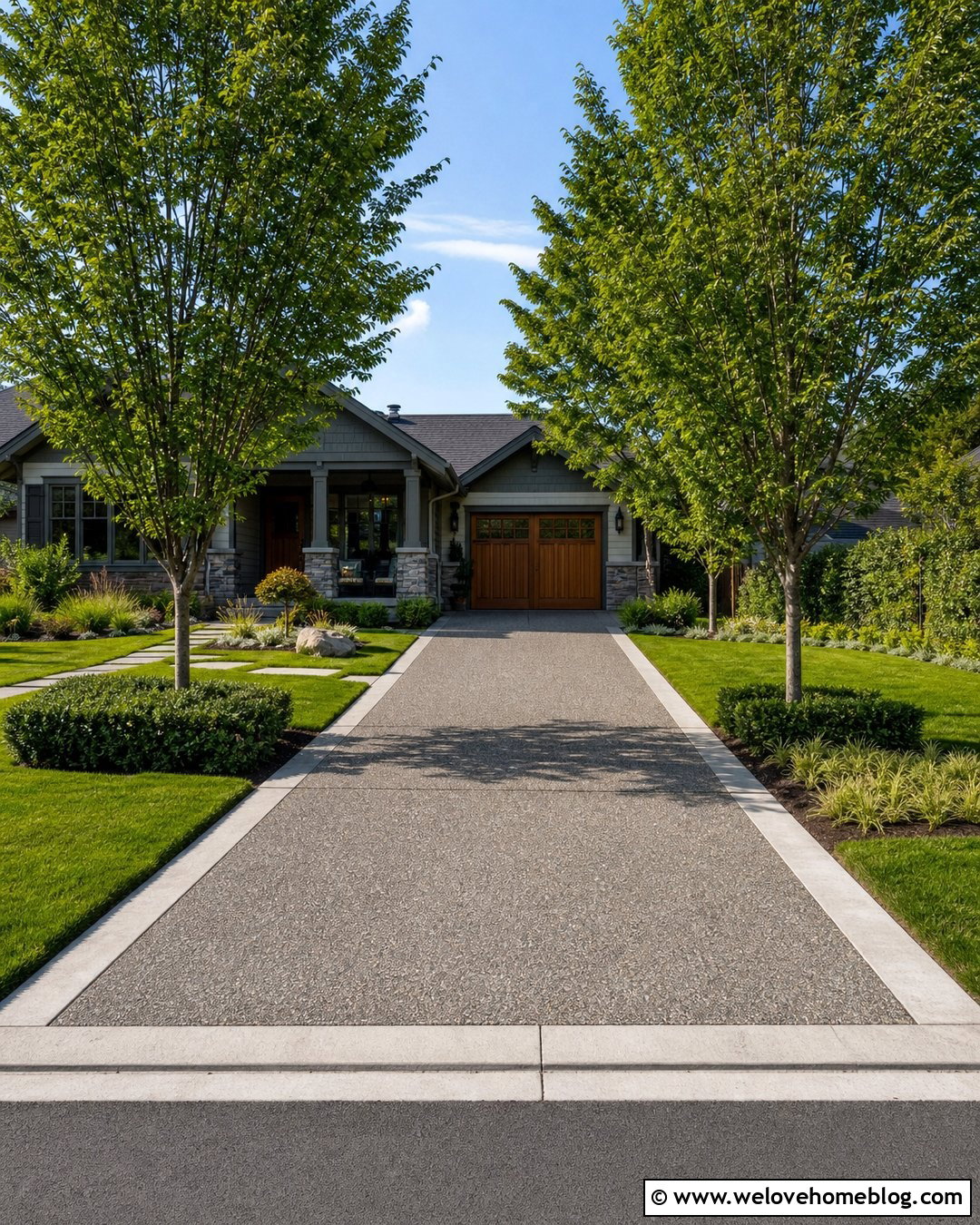
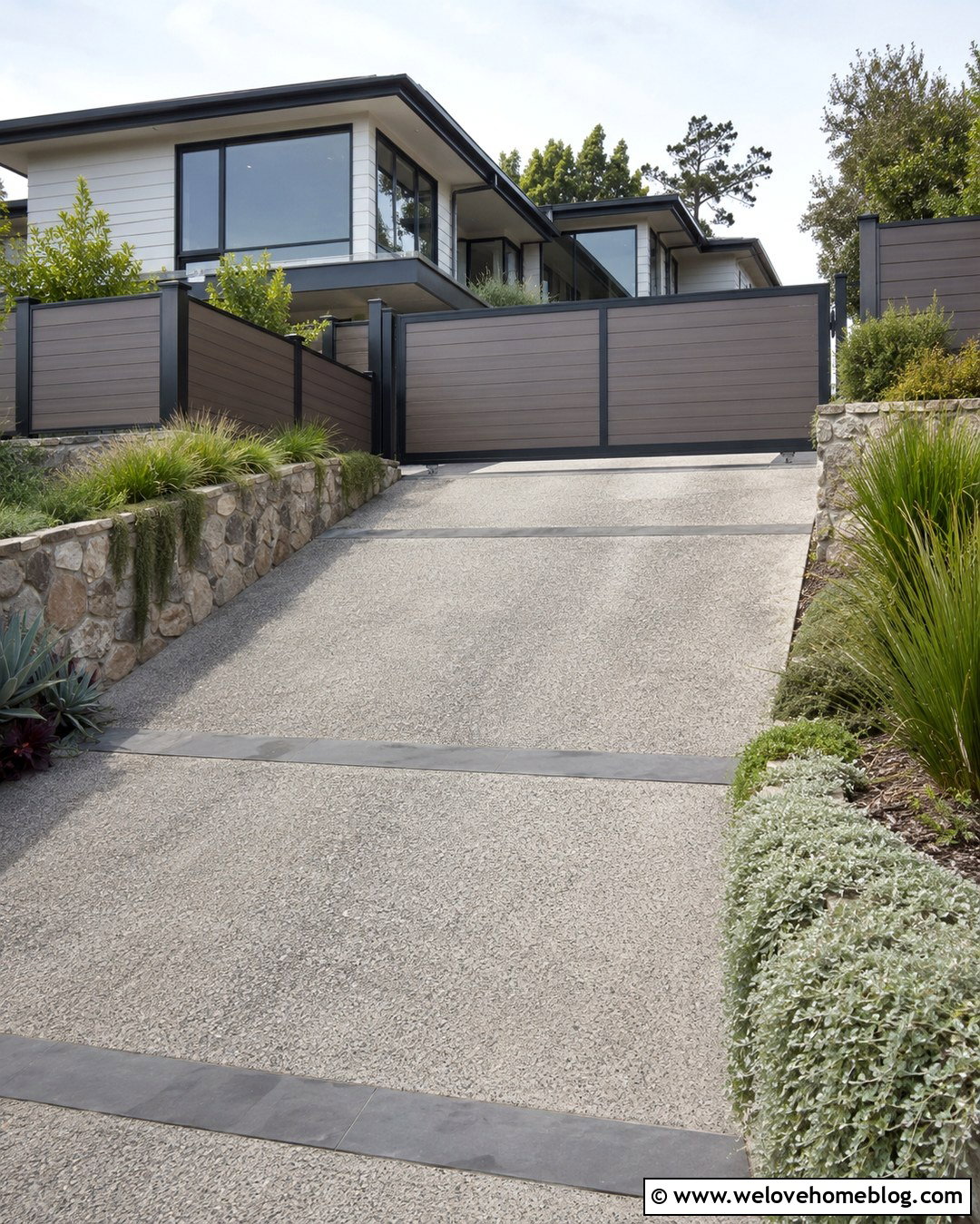
Japanese zelkova suits a broad exposed aggregate driveway where an upright, vase-shaped canopy can frame the house without immediately spreading across the pavement. Choose warm gray exposed aggregate with a smooth poured-concrete border around the perimeter. Plant matching trees in deep lawn areas beyond the border, using low evergreen shrubs near the entrance and simpler ground cover closer to the garage. The design feels organized but not overly formal, making it a good fit for Craftsman and contemporary suburban homes. Raised stone beds should be avoided directly around the trunks because natural soil grades are easier to manage. Young trees may need structural pruning to support a balanced canopy and dependable clearance. Confirm local pest concerns and cultivar performance with a nursery or county extension professional before planting an entire row.
12. Eastern Redcedar Rural Asphalt Driveway
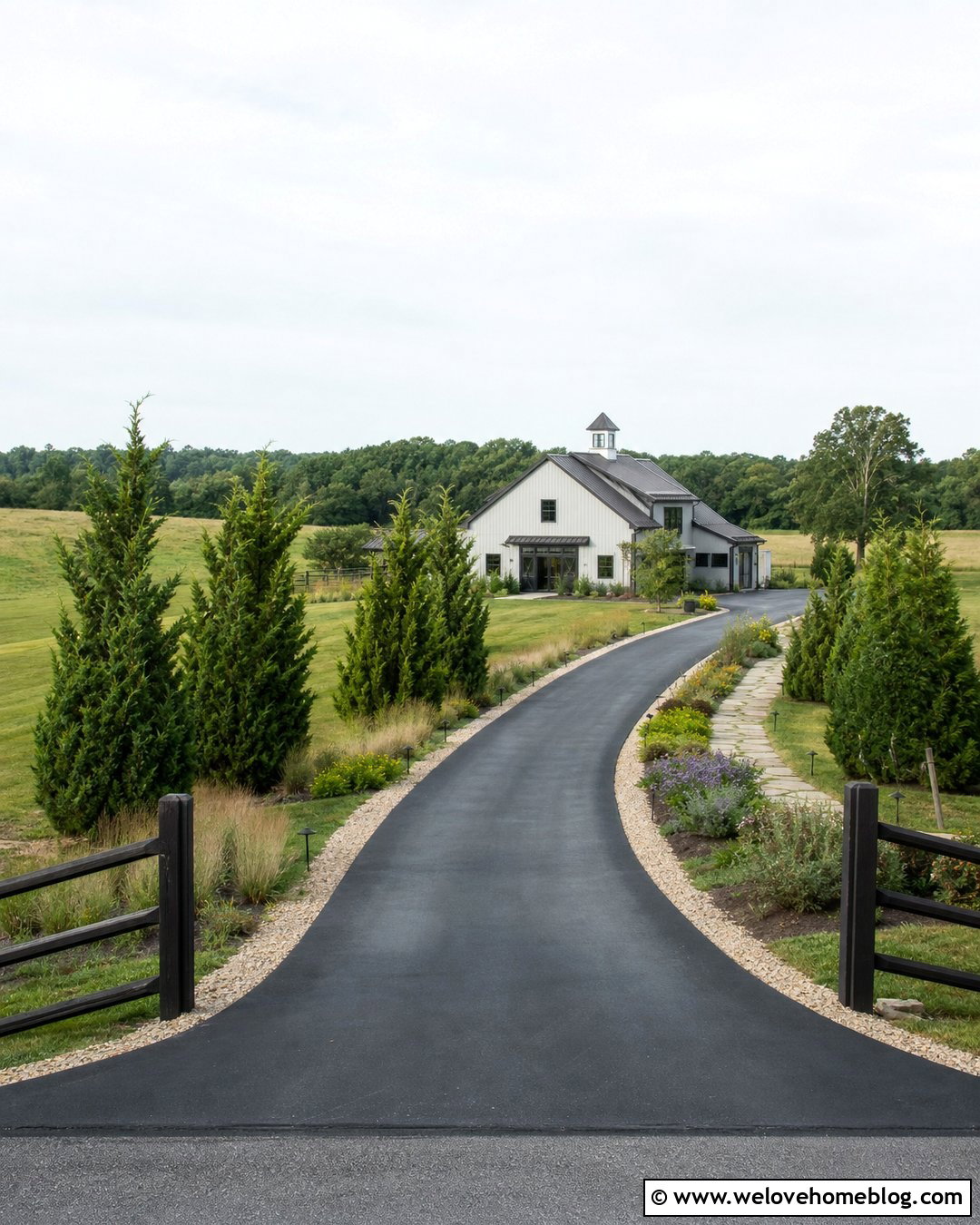
Eastern redcedars create a rugged evergreen frame for a rural black asphalt driveway. Their dense foliage provides year-round screening and can help define the approach across open land. Use a gently winding layout with a narrow band of tan gravel between the asphalt and grass. Arrange the trees in loose groups rather than one uninterrupted hedge, leaving occasional views toward fields, fences, or the house. Native grasses and low flowering shrubs make the planting feel connected to the surrounding landscape. Keep trees back from intersections so the dense branches do not block sightlines. This complete design works well with a barn-style home, cabin, or traditional ranch. Local selection is important because regional cedar-apple rust concerns and site conditions may influence whether redcedar is appropriate near nearby orchards or ornamental apple trees.
13. Arizona Cypress Southwestern Gravel Driveway
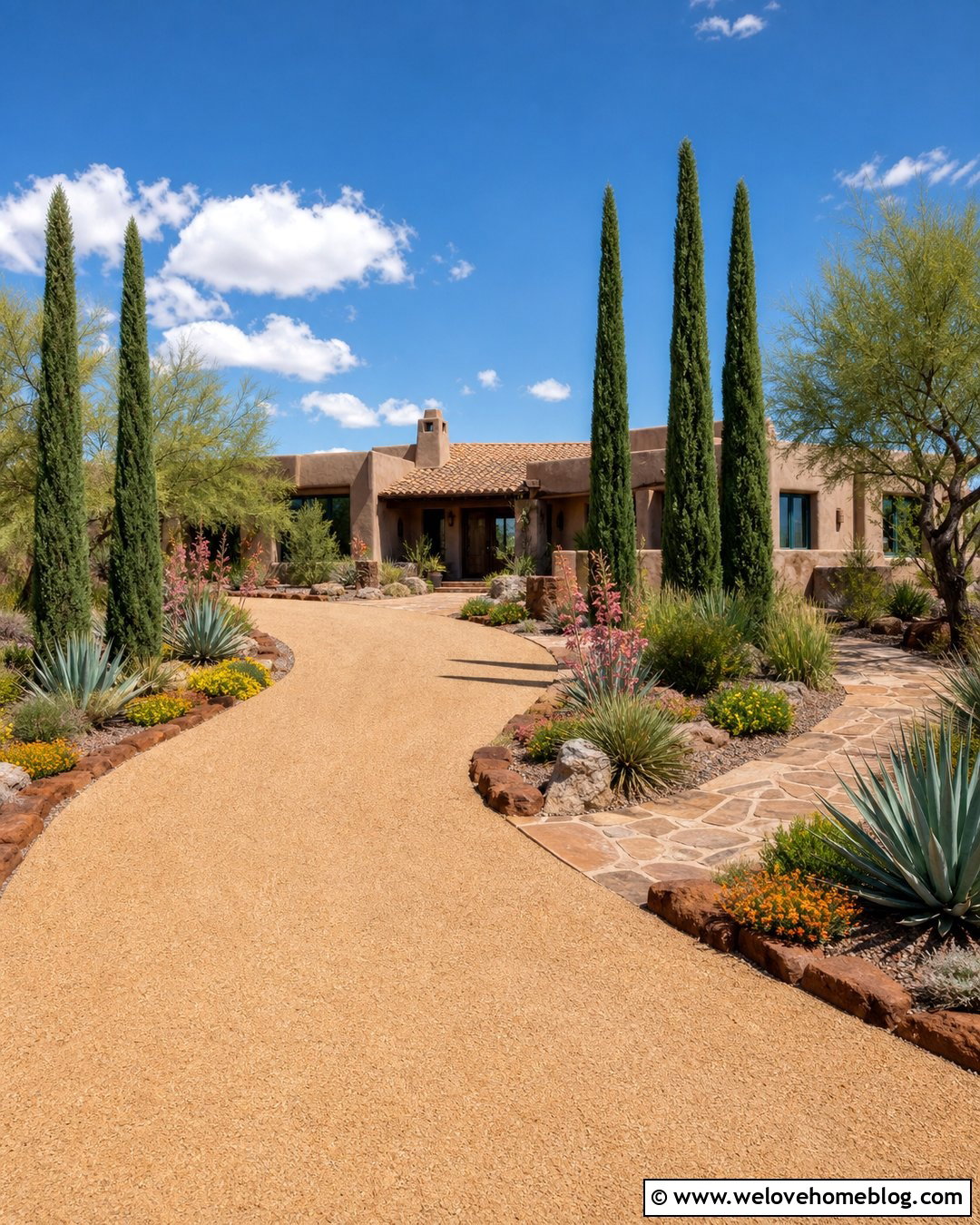
A blue-green row of Arizona cypress looks striking beside a warm desert gravel driveway. Use compacted tan decomposed granite for the driving surface, with rust-colored stone edging and a broad, gently curved approach. Plant the cypress trees in irregular groups to create privacy without producing a rigid wall. Agaves, yuccas, desert grasses, and low flowering perennials can fill the spaces between groups while keeping maintenance manageable. This palette complements stucco ranch homes, Southwestern architecture, and modern desert houses. Add a matching flagstone walkway that branches toward the front entrance. Allow wide planting zones so the evergreens can develop naturally without constant shearing. In dry regions, install efficient drip irrigation for establishment and check local fire-safe landscaping recommendations before placing dense evergreen vegetation near the house or driveway evacuation route.
14. Pin Oak Horseshoe Driveway
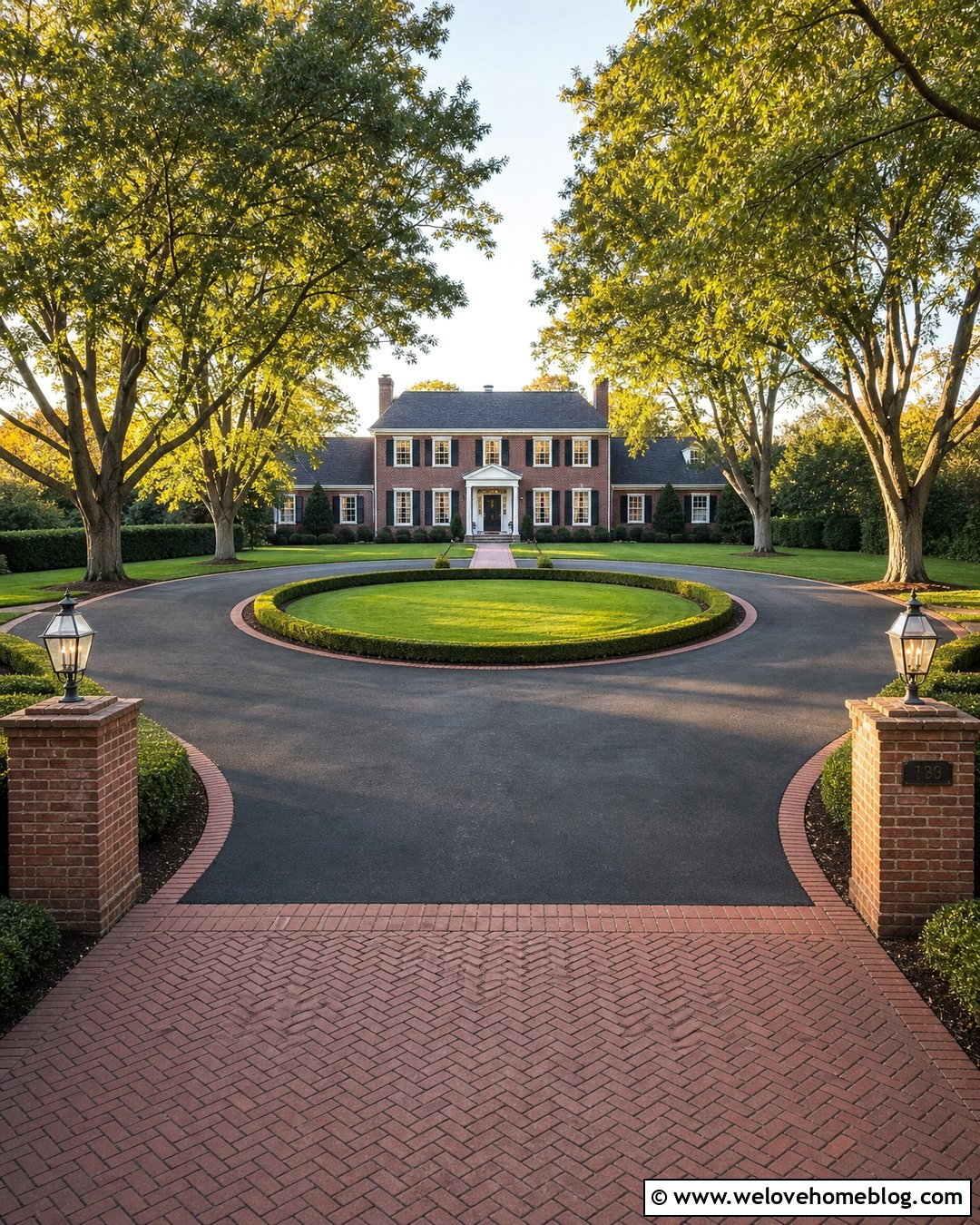
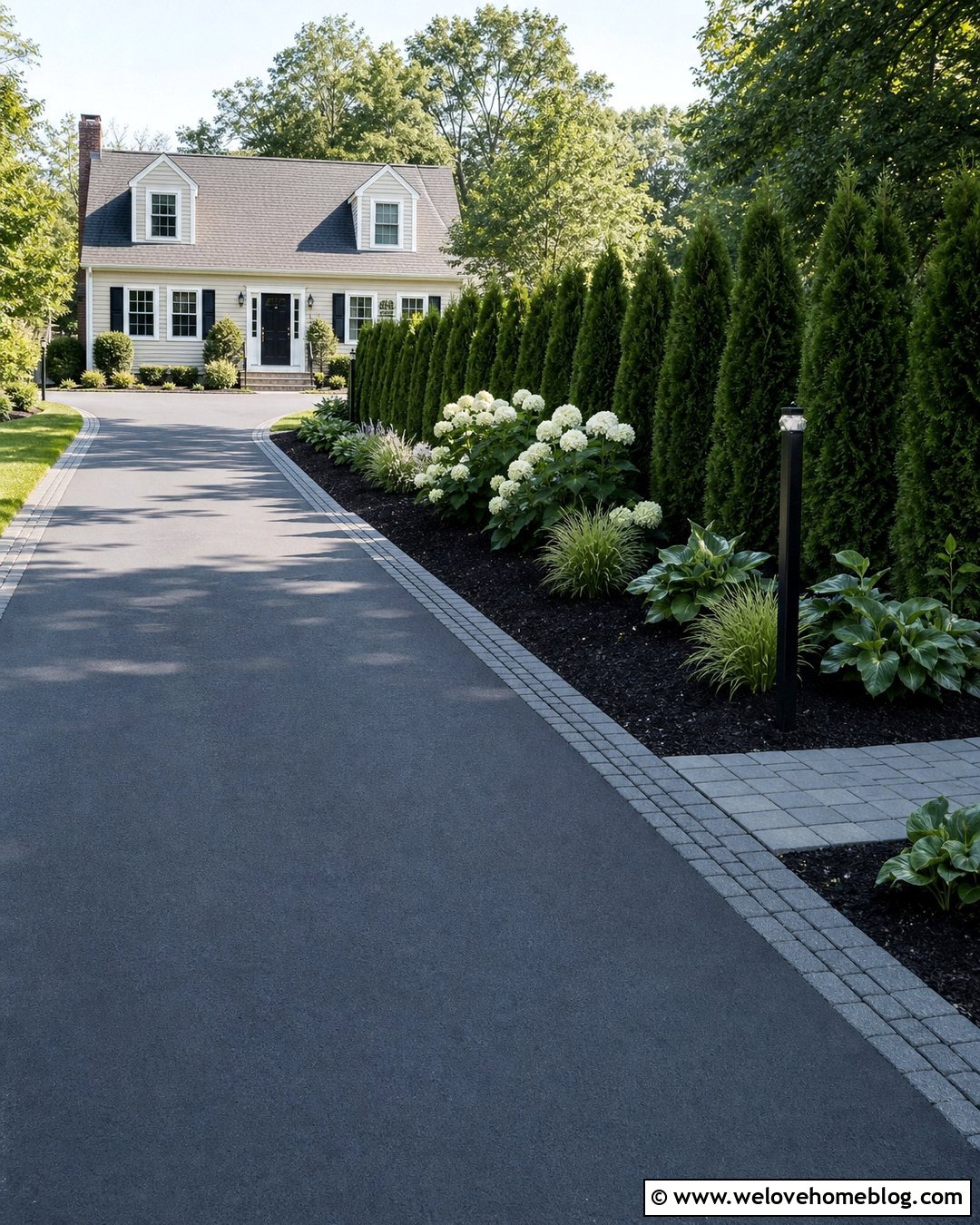
Pin oaks can bring structure and long-term shade to a wide horseshoe driveway with plenty of open lawn. Use dark gray asphalt for the main surface and line its edges with red clay brick ribbons. Place the trees along the outer curve where they can frame the property without crowding the center lawn. Their strong vertical presence works well with a large traditional home, especially when the entrance is centered between brick pillars. Keep the inner island simple with lawn, a low hedge, and one clear walkway to the front door. Soil selection is important because pin oaks perform poorly where site chemistry or drainage is unsuitable. Avoid installing them in compacted pockets between pavement sections. A broad setback gives the roots, trunks, and descending lower branches more manageable space as the trees mature.
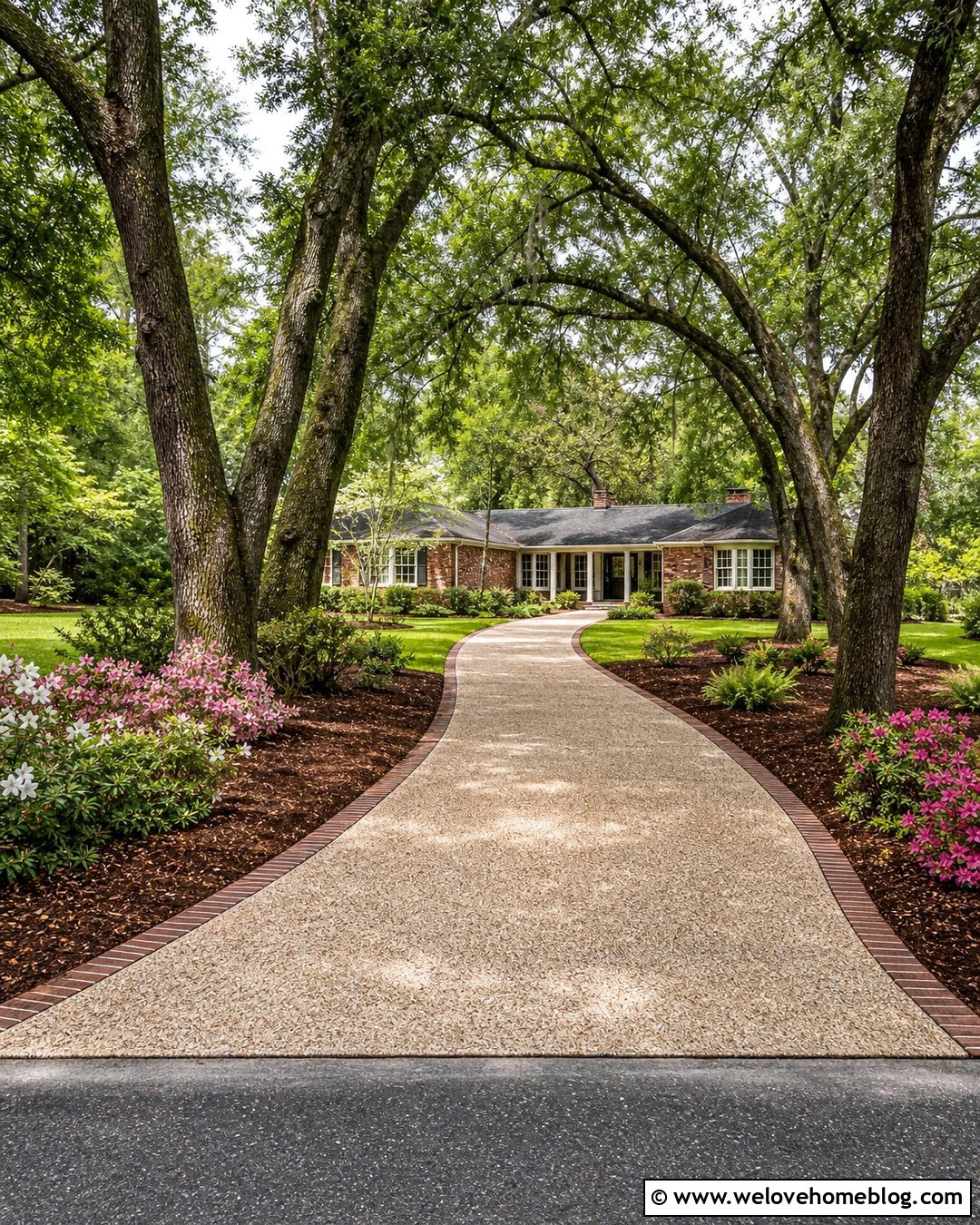
15. Willow Oak Straight Concrete Driveway
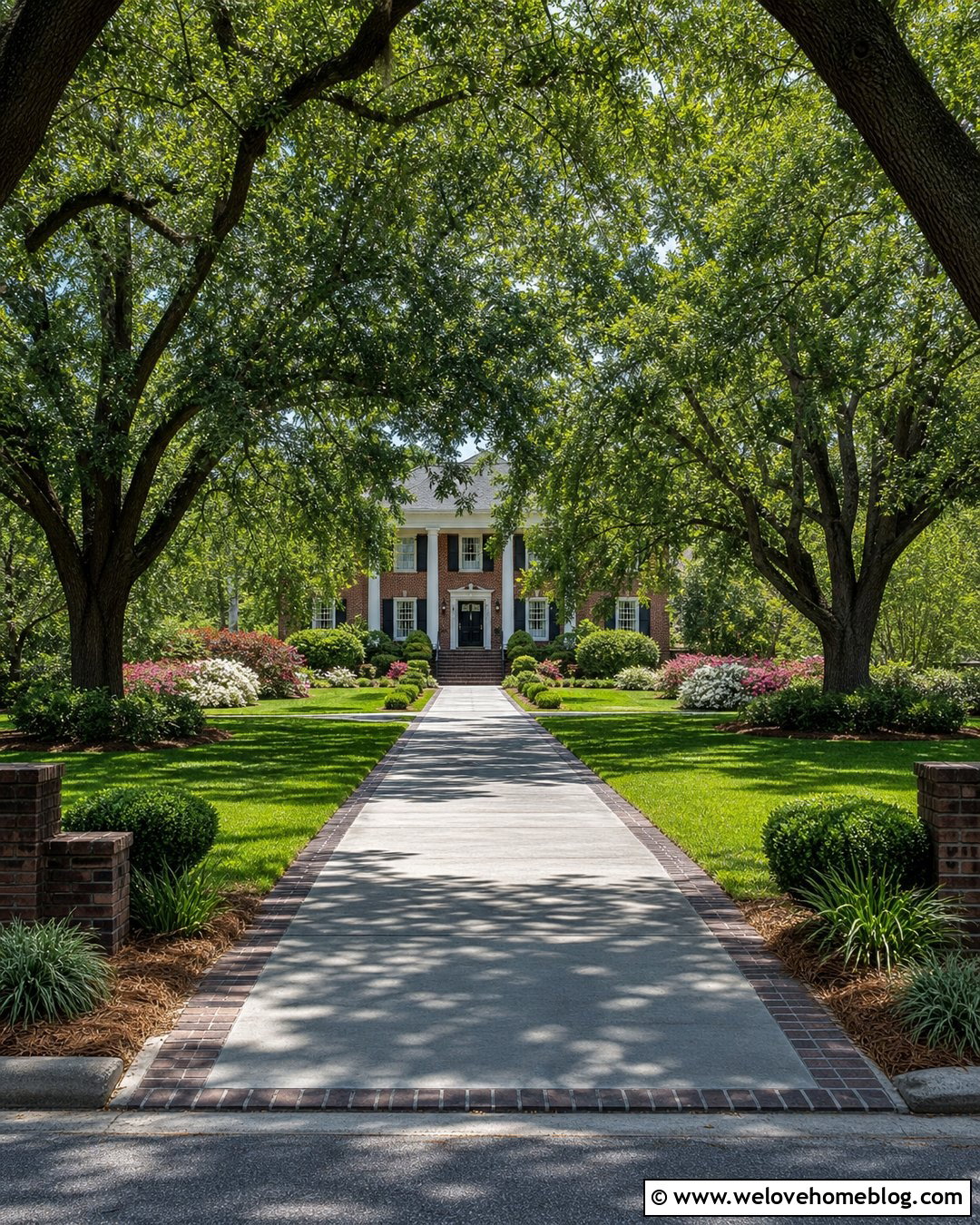
Willow oaks offer a refined tree-lined look beside a long, straight concrete driveway in regions where they are well adapted. The narrow leaves create a finer texture than many other oaks, helping the landscape feel lighter. Choose medium gray broom-finished concrete with dark brick borders and broad grass verges along both sides. Plant the trees at consistent intervals beyond the grass strips, then use low azaleas or native shrubs near the house. The strong perspective suits a Southern Colonial, Georgian, or large brick residence. Keep the first trees back from the street so branches do not interfere with signs or turning views. Because this tree ultimately needs considerable room, it is best for wide properties. Plan spacing around mature dimensions, pavement, drainage systems, buildings, and any overhead utility corridor.
16. Nuttall Oak Curved Paver Driveway
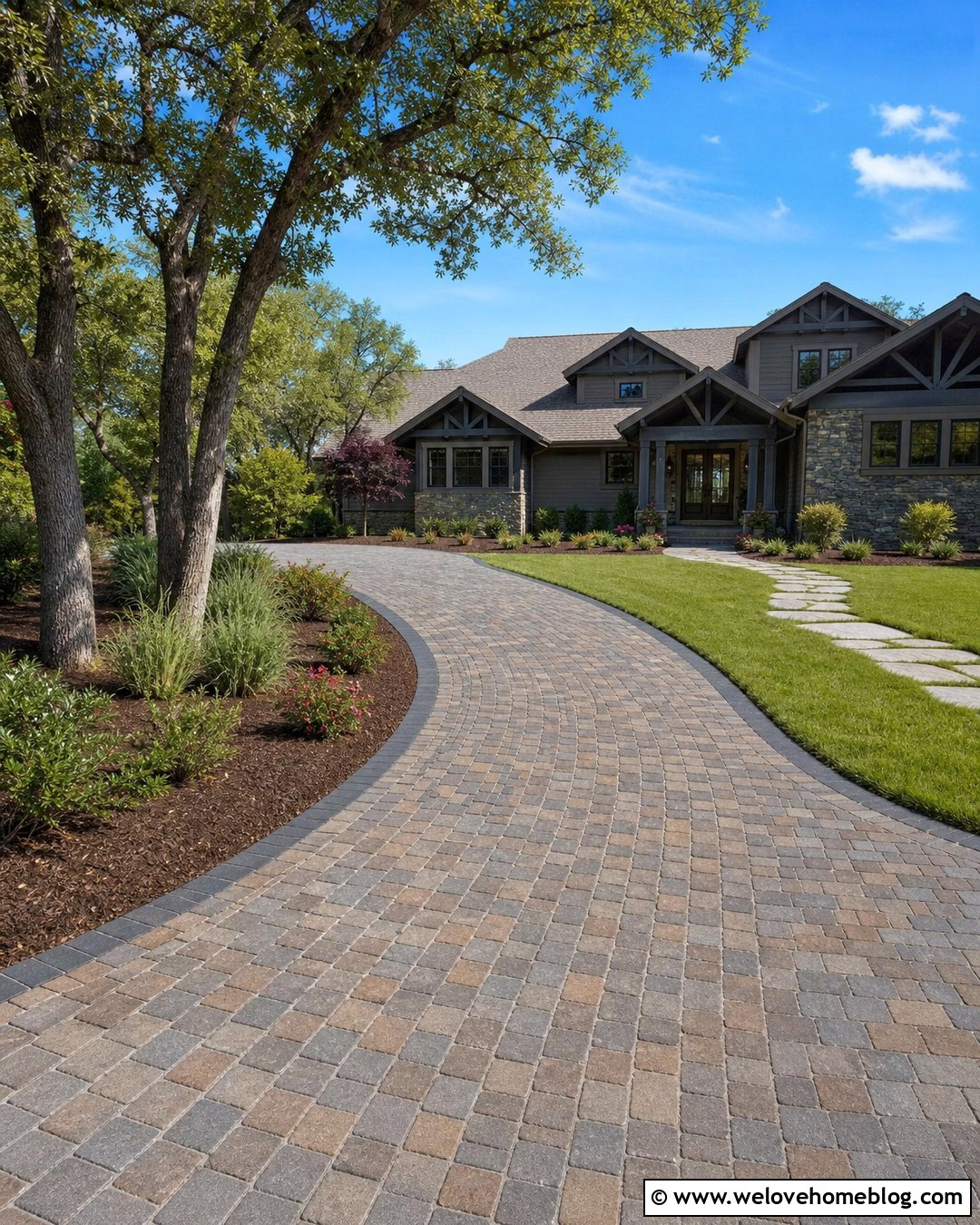
A curved paver driveway lined with Nuttall oaks creates a shaded, natural approach for a spacious Southern property. Select tumbled concrete pavers in blended gray and brown tones, bordered by smooth charcoal pavers. Plant the trees beyond wide mulched beds on the outer curve, where the trunks emphasize the driveway’s shape. Native grasses, inkberry, and low flowering shrubs can fill the beds while preserving a clear view of the paving. The inner curve can remain open lawn, making the route feel wider and improving visibility. This arrangement works with Craftsman, ranch, and traditional brick homes. Nuttall oak is a substantial shade tree, so do not treat it like a narrow ornamental. Check drainage, regional availability, mature crown spread, and distance from utilities before creating a repeated driveway planting.
17. Crape Myrtle Circular Brick Driveway
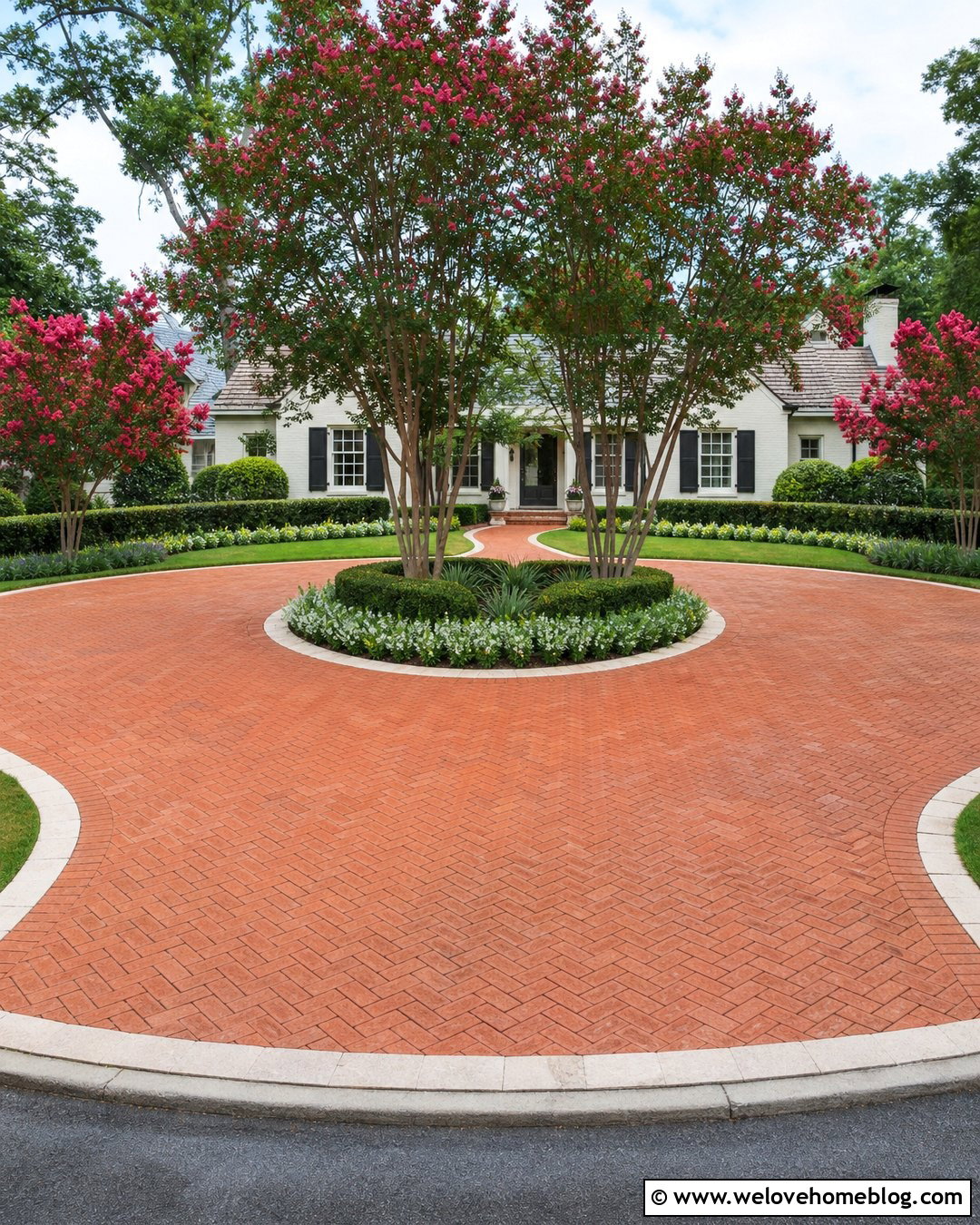
Crape myrtles bring flowers, attractive trunks, and manageable scale to a circular brick driveway in a warm climate. Use red clay brick pavers in a herringbone pattern, with cream limestone edging around the outer curve and center island. Plant matching multi-trunk trees at key points rather than packing them into a continuous row. Low evergreen hedges, liriope, and white flowering ground cover can connect the planting visually. Choose a cultivar whose mature height fits the available space, especially if power lines cross the front property line. The branching should be raised gradually to maintain views and vehicle clearance without severe topping. This layout complements Southern cottages, painted brick homes, and traditional ranch houses. Keep fallen flowers and seed capsules in mind when deciding how close the trunks should sit to the paving.
18. American Sycamore Estate Gravel Driveway
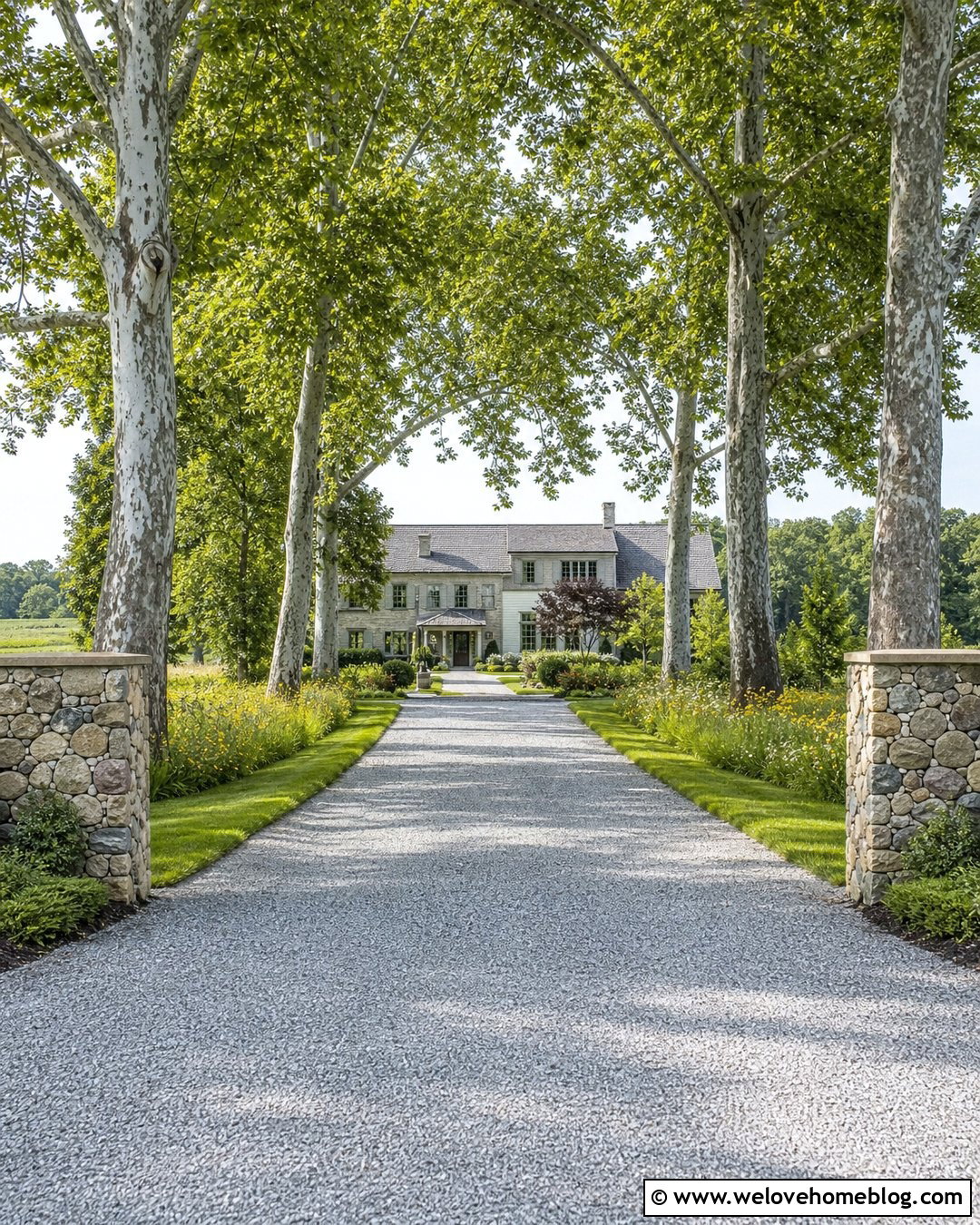
American sycamores create an impressive avenue along an expansive estate driveway, but they need more room than most residential sites provide. Use pale gray crushed gravel in a broad straight layout, with deep grass shoulders and natural fieldstone entrance pillars. Position the trees far from the gravel so their massive trunks and crowns can develop without enclosing the driving lane. A distant row also highlights the mottled bark against open lawn. Keep landscaping simple with native meadow edges and occasional shrub groups. This approach suits large country homes, restored farmhouses, and properties with unobstructed skies. Sycamores can produce leaves, twigs, and seed material, so regular cleanup should be expected. Their scale makes them unsuitable beneath utility lines or beside narrow paving, garages, retaining walls, and compact front yards.
19. Hybrid Poplar Farm Driveway
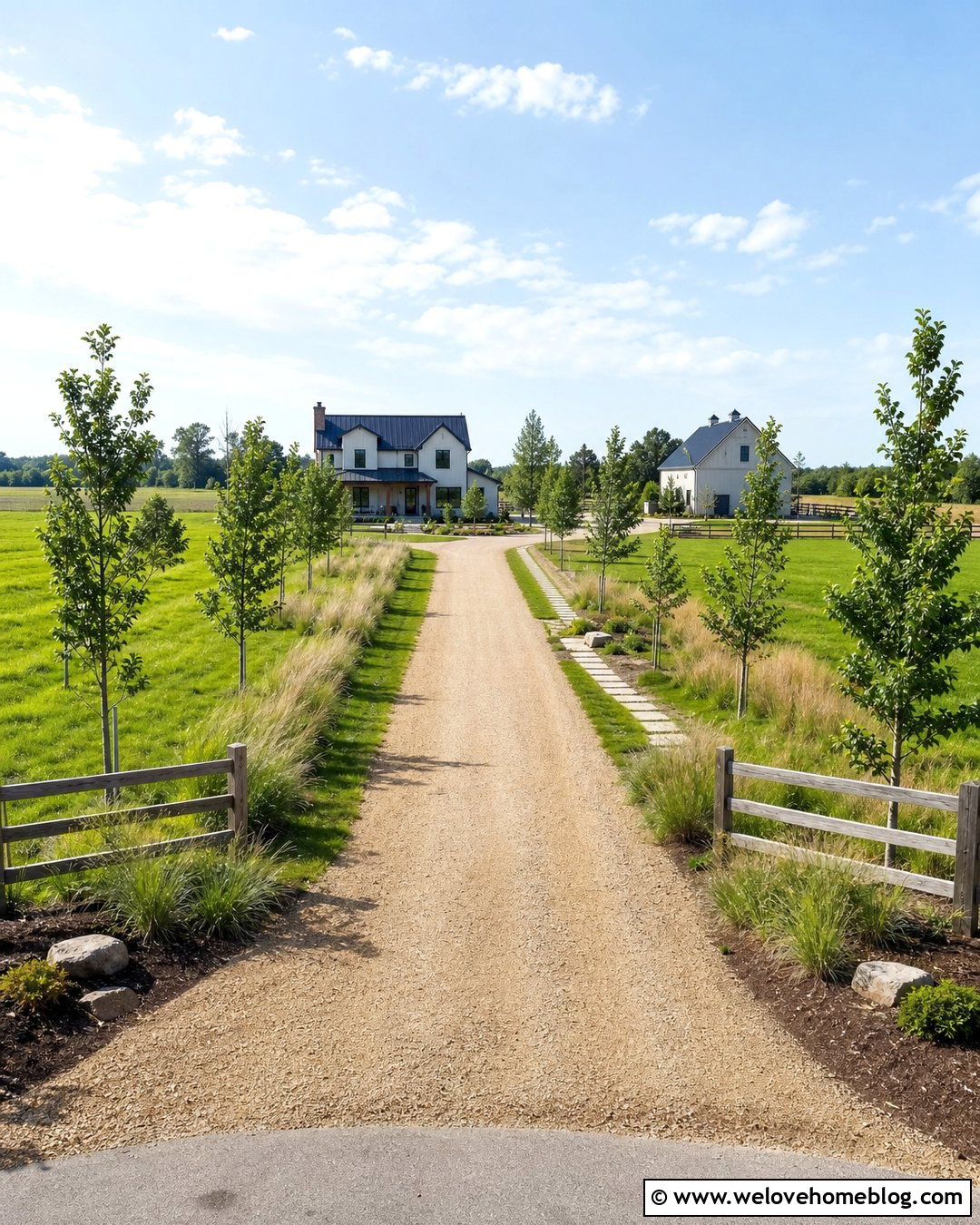
Hybrid poplars can provide a quick vertical screen along a distant farm driveway where ample land allows generous setbacks. Pair them with a straight tan gravel surface, timber edging near the entrance, and broad meadow strips between the trees and driving lane. Rather than relying on poplars as permanent close-set specimens, mix them with longer-lived trees planted farther apart. This creates early height while the overall landscape matures. The arrangement looks natural beside a modern farmhouse, barn, or rural ranch home. Keep poplars well away from pavement, drainage pipes, septic systems, buildings, and overhead lines because vigorous trees need substantial growing space. Regional performance varies, and some selections may have weak wood or limited longevity. Ask a local extension office which cultivars are appropriate before committing to a full row.



20. Princeton American Elm Permeable Paver Driveway
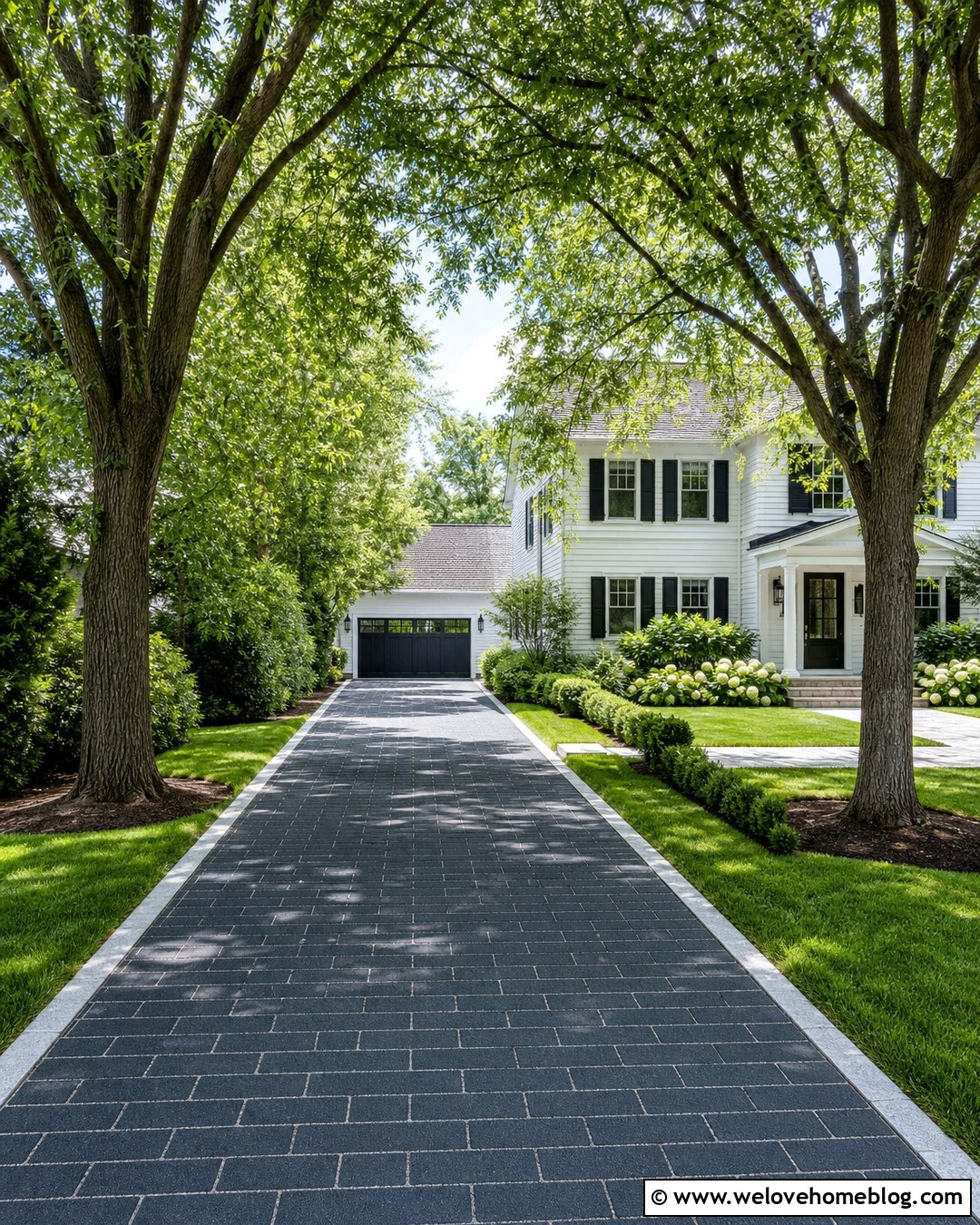
Princeton American elms create a graceful, arching entrance beside a wide permeable paver driveway. Use charcoal permeable concrete pavers with lighter stone-filled joints, allowing the surface to feel both polished and landscape-friendly. Plant the elms in large lawn panels beyond a smooth granite border. A symmetrical arrangement works well with a classic American home, while native shrubs and hydrangeas soften the area near the facade. Select healthy nursery stock from a reputable supplier and confirm current regional guidance on disease-resistant elm cultivars. Encourage a strong central structure while the trees are young, and raise lower branches gradually as the canopy develops. This is a large-tree design requiring open root zones and substantial setbacks. It should not be compressed into narrow beds between the driveway and property boundary.
Conclusion:
The best driveway tree should grow efficiently without creating avoidable problems for paving, utilities, buildings, or vehicle access. Start by measuring the available planting width and checking overhead and underground services. Then compare mature height, canopy spread, soil needs, climate tolerance, cleanup, and long-term maintenance. Small trees generally fit constrained entrances, while large shade trees belong beside wide driveways with generous setbacks. Using varied species instead of one continuous monoculture can also create a more resilient landscape. Most importantly, select trees for their mature dimensions rather than their size at the garden center. With careful spacing and a complete landscape plan, these 20 Fast Growing Driveway Trees Ideas can create privacy, shade, structure, and memorable curb appeal.

Related posts:




Leave a Reply