
Florida driveways need more than attractive plants. The best designs balance year-round curb appeal with intense sun, heavy rain, sandy soil, humidity, and, in coastal areas, salt exposure. These 20 Florida driveway landscaping ideas combine practical driveway surfaces with attractive borders, climate-conscious plants, clear sightlines, and welcoming entrances. You will find tropical paver layouts, permeable surfaces, native planting beds, modern concrete designs, and low-maintenance options for different budgets and house styles. Each complete look also considers drainage, mature plant size, vehicle clearance, and the connection between the driveway and front walkway. Florida-Friendly Landscaping principles encourage matching plants to site conditions while using water and other resources efficiently. () Use the following complete designs to inspire your own 20 Florida driveway landscaping ideas.

1. Tropical Paver Driveway With Palm Borders
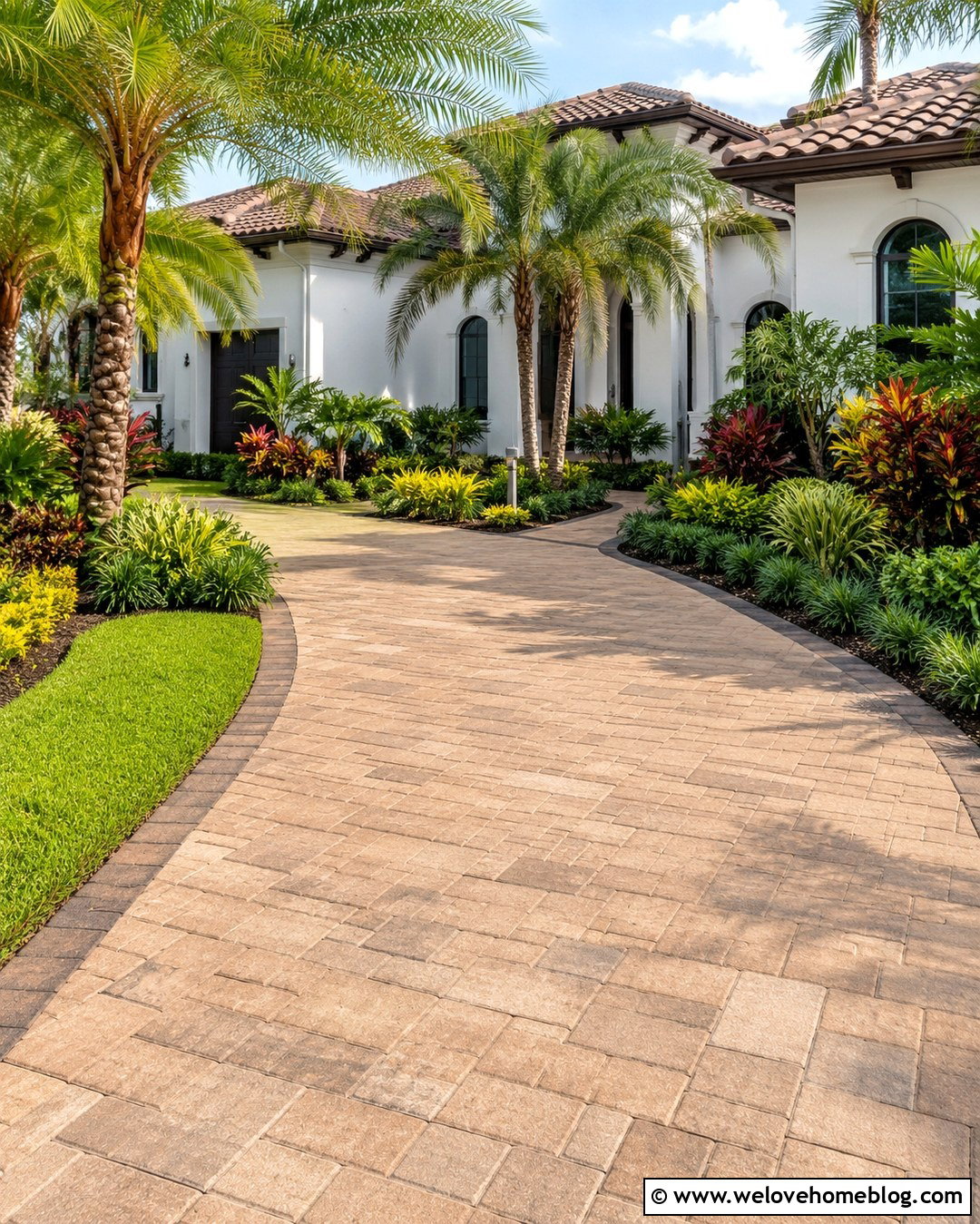
Warm tan concrete pavers create a polished foundation for a tropical Florida driveway. Use a gently curved layout that leads naturally toward the garage while leaving broad planting beds on both sides. Small palm groupings can mark the entrance, but place them far enough from the pavement to allow room for mature trunks and fronds. Fill the lower layer with crotons, dwarf schefflera, flax lily, and neatly clipped shrubs suited to the property’s conditions. A darker paver border gives the driveway a finished outline and helps connect it to the front walkway. Keep plants low near the street for safe visibility. This layered arrangement works especially well with stucco houses because the rich foliage softens large walls and hard paved areas.
2. Circular Concrete Driveway With Native Island
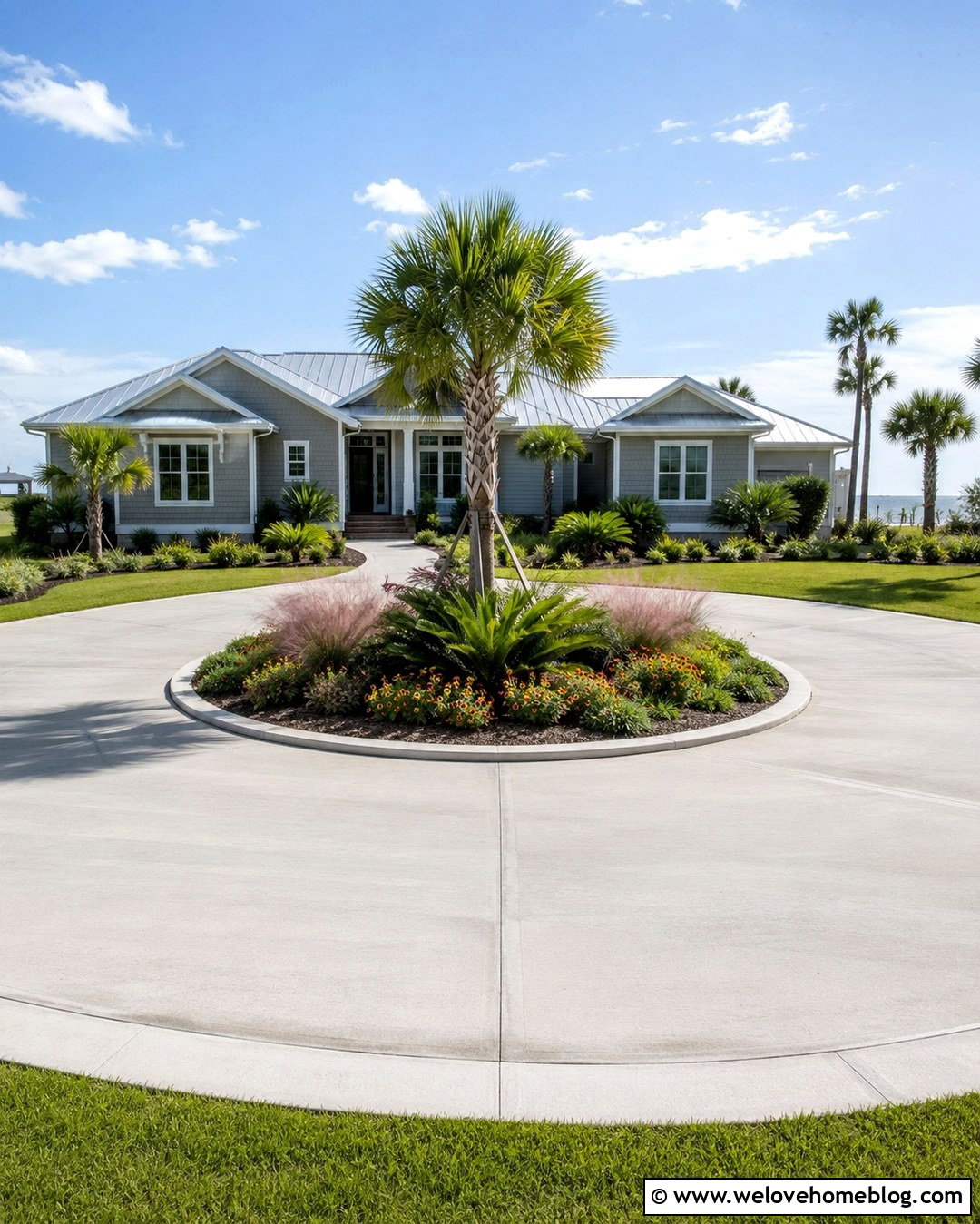
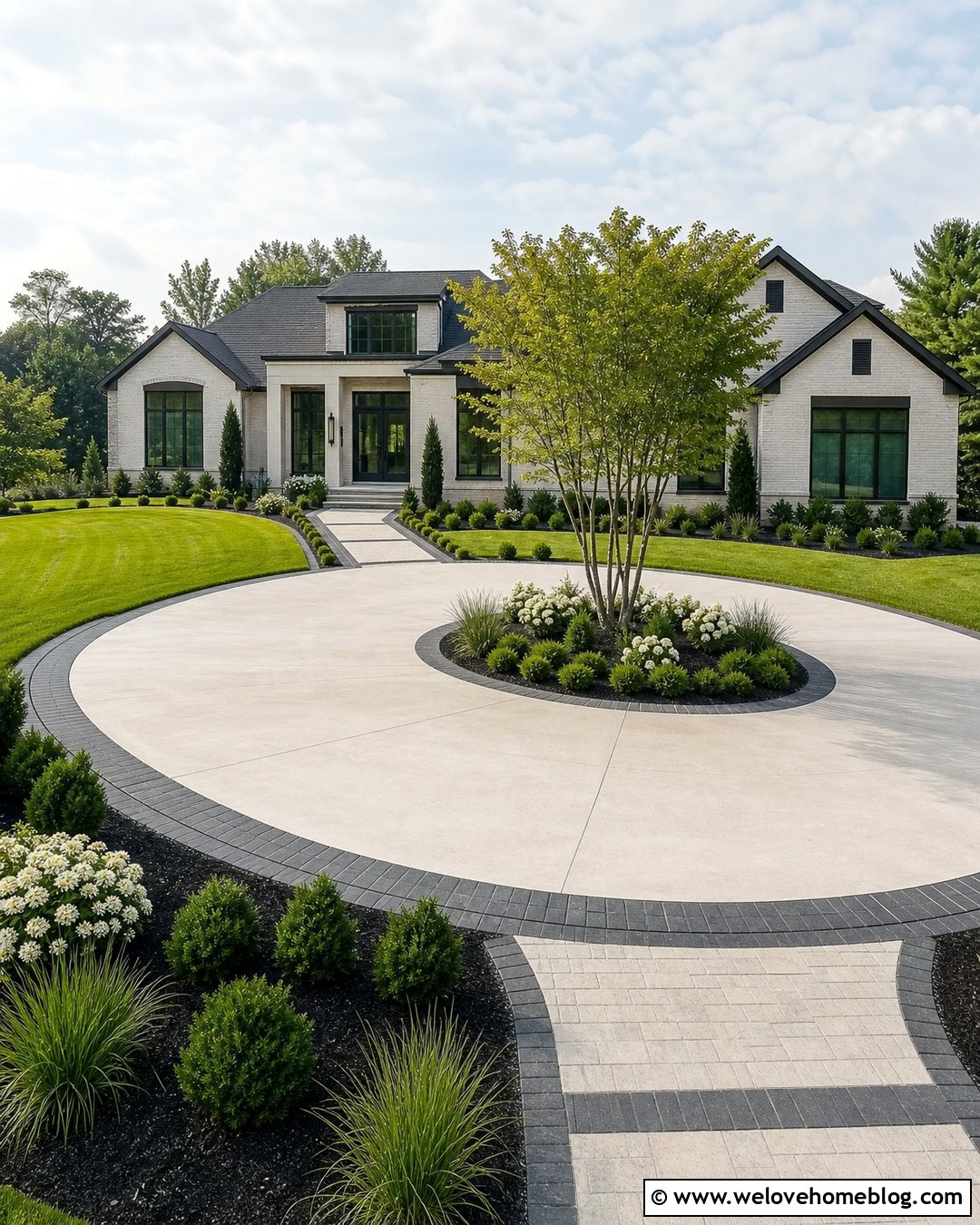
A circular driveway becomes much more inviting when its center island feels connected to the wider yard. Start with light gray poured concrete or a concrete surface finished with a subtle stone texture. Inside the circle, plant one well-positioned cabbage palm or another appropriately sized Florida tree as the main feature. Surround it with sweeping groups of coontie, muhly grass, blanket flower, and low native groundcover rather than scattered individual plants. A clean concrete curb keeps soil and mulch away from vehicle tires. Repeat several island plants beside the house to create visual continuity. The design should preserve a generous turning radius and an open view across the entrance. This complete look brings softness and movement to larger ranch, coastal, and contemporary homes.
3. Permeable Paver Driveway With Rain Garden
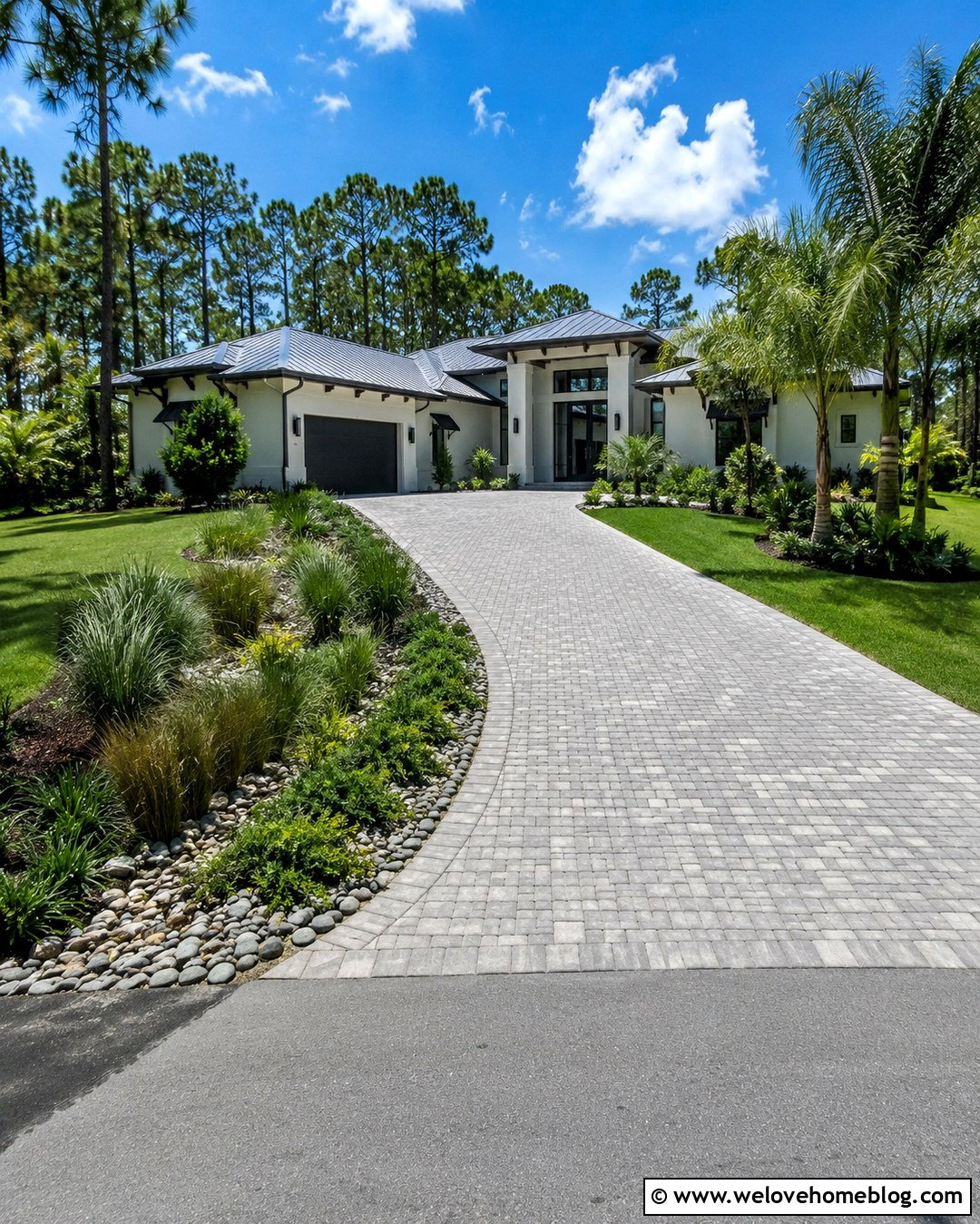
Florida downpours can inspire a landscape feature instead of creating an unattractive wet area. Install permeable concrete pavers in a soft gray or sand tone, using a straight or slightly curved pattern that complements the house. Along the lower side of the driveway, create a shallow rain garden with gently sloped edges. Select plants according to the garden’s wet and dry cycles, available sunlight, and local growing conditions. Decorative river rock can define the inlet while flat paver edging creates a tidy transition. Keep taller vegetation away from the street and garage approach. Permeable paving and planted drainage areas can help water soak into the landscape when they are properly designed for the site. ()
4. White Shell Driveway With Coquina Edging
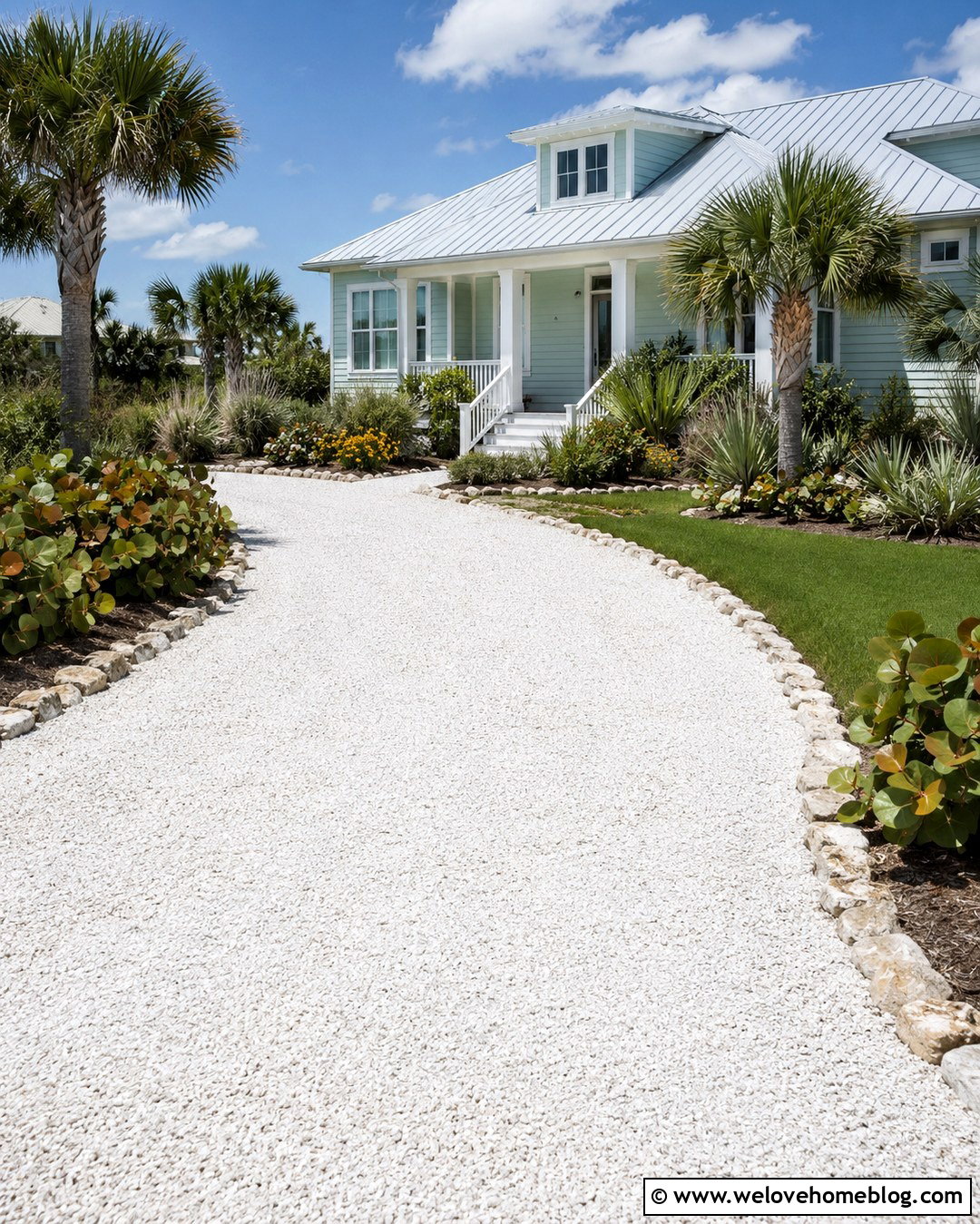
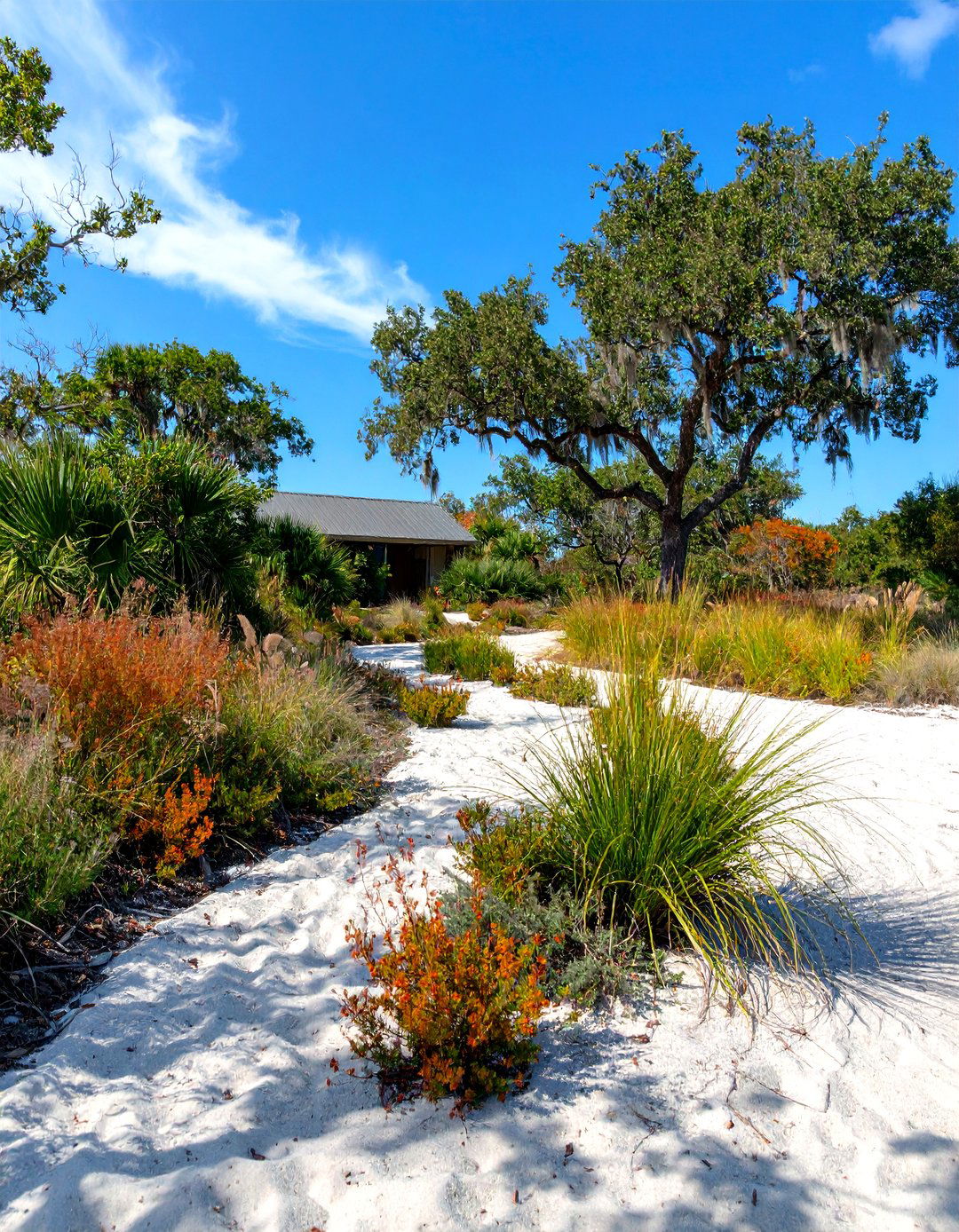
A white shell driveway captures an easygoing coastal Florida look, especially around cottages and bungalow-style homes. Give the driveway a broad curved shape and use compacted crushed shell rather than a loose decorative layer that shifts under tires. Coquina stone edging provides a natural-looking border and prevents the pale surface from blending into surrounding beds. Frame the approach with sea grape, saw palmetto, beach sunflower, and ornamental grasses selected for the property’s exposure. A matching shell walkway can branch toward the front porch, creating one connected arrival sequence. Avoid placing sharp stone or spreading plants where passengers step out. The combination of creamy shell, rugged stone, and relaxed coastal planting feels informal while still looking intentionally planned and well maintained.
5. Coastal Driveway With Salt-Tolerant Landscaping
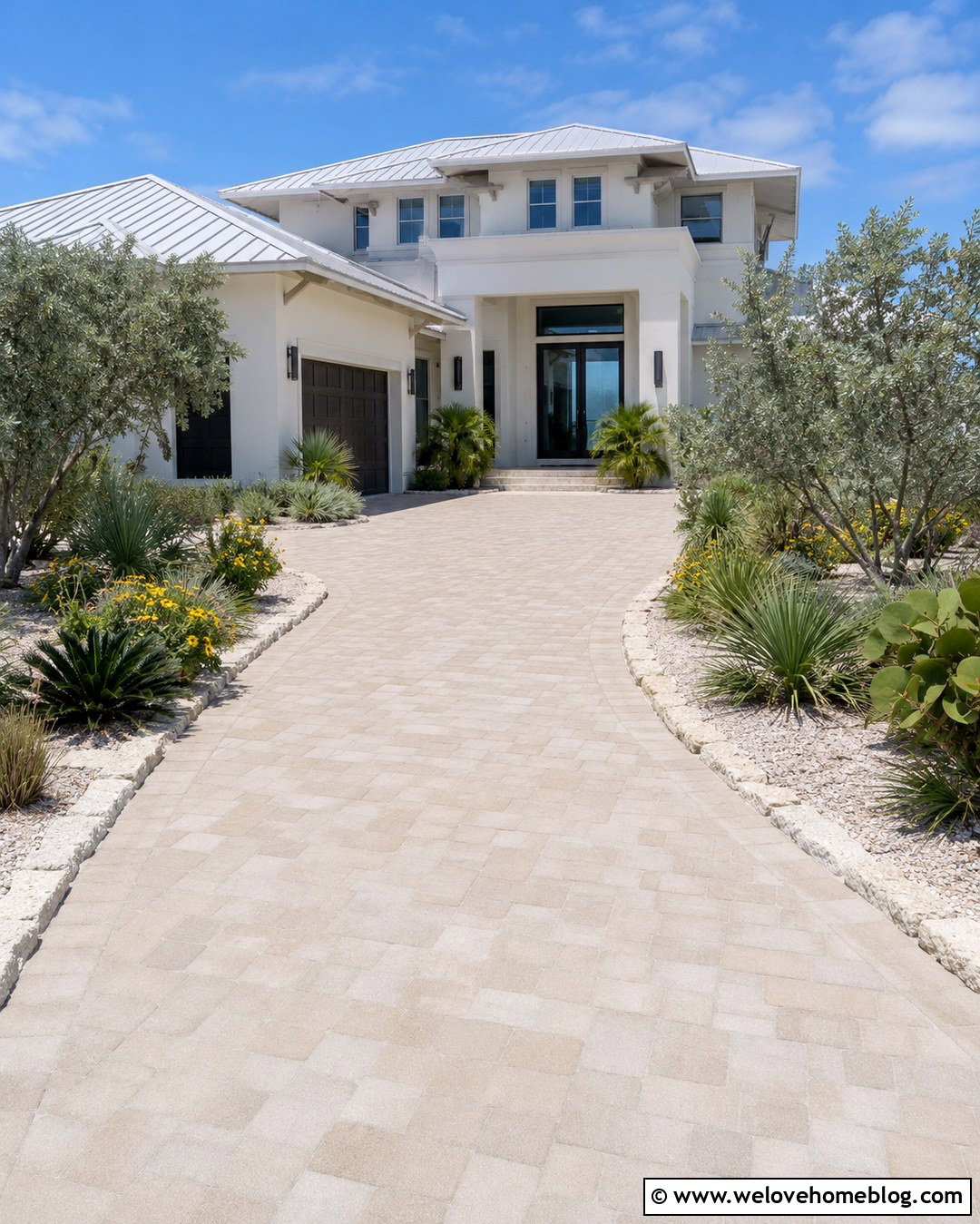
Near the coast, a driveway landscape should be designed around the property’s actual level of wind and salt exposure. Choose sand-colored concrete pavers for a clean surface that echoes the beach without looking overly themed. Create curved planting beds containing sea grape, silver buttonwood, saw palmetto, coontie, and beach sunflower where those plants match the site. Use pale gravel mulch to reduce visual clutter and complement the driveway. A simple limestone border can hold the beds in place and protect plants from turning tires. Keep the street entrance open, with low groundcover around the corners and taller screening plants closer to the house. This arrangement suits a coastal contemporary or Key West home and remains attractive without depending on delicate, water-demanding flower displays.
6. Modern Concrete Driveway With Grass Strips
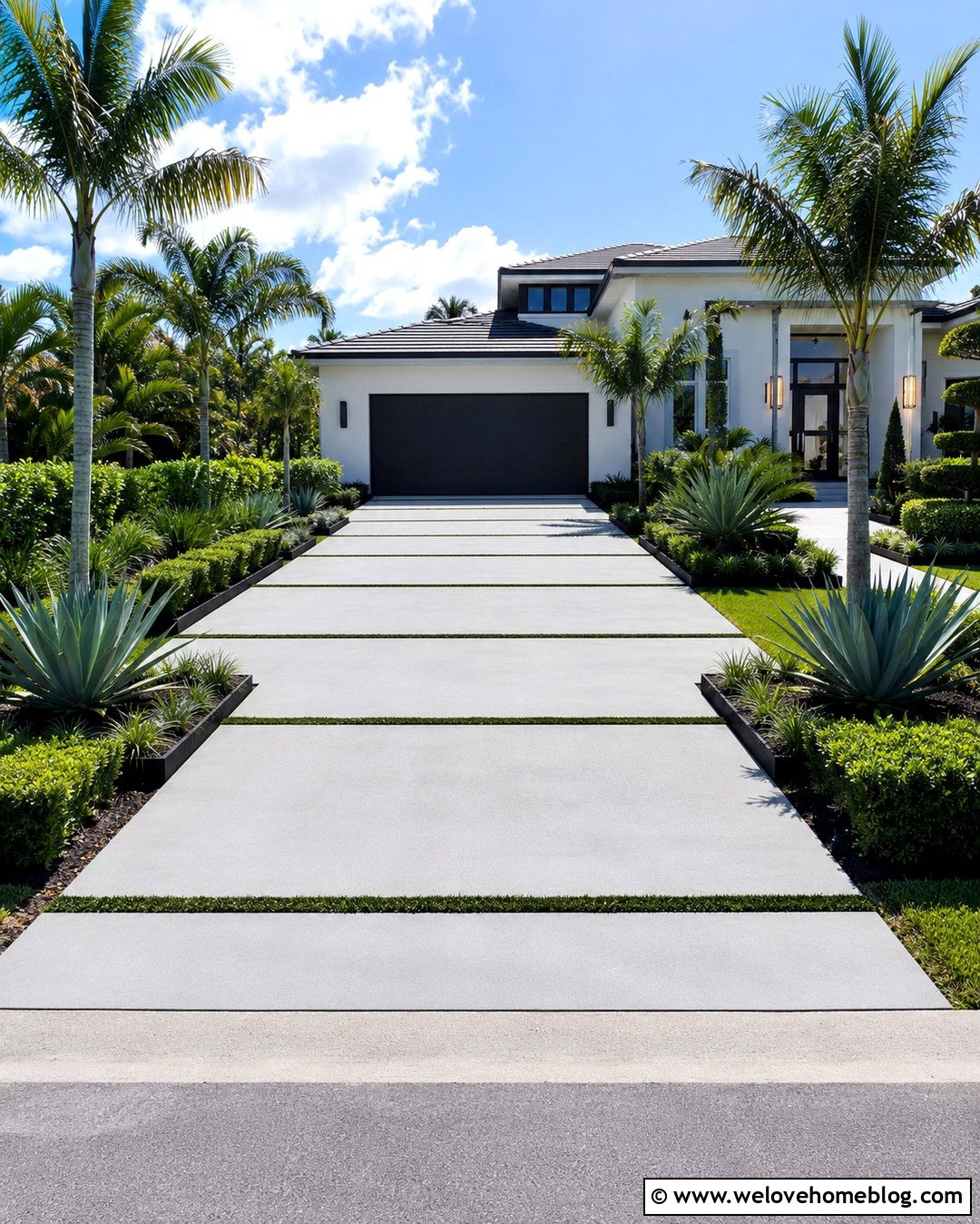
Large rectangular concrete slabs separated by narrow green strips can make a Florida home feel clean and contemporary. Use smooth, light gray poured concrete with precise joints and a straight approach to the garage. Fill the spaces with a low groundcover or durable turf selected for the light, traffic, and maintenance conditions. Continue the geometry into nearby planting beds using compact palms, structural agaves, ornamental grasses, and clipped shrubs. Black metal edging can create crisp boundaries between plants, lawn, and pavement. Allow enough concrete beneath normal tire paths so vehicles do not repeatedly damage the planted joints. This driveway works best when the slab dimensions align with the garage, walkway, windows, or roofline. The result feels modern but remains softened by carefully controlled greenery.
7. Brick Paver Driveway With Formal Hedges
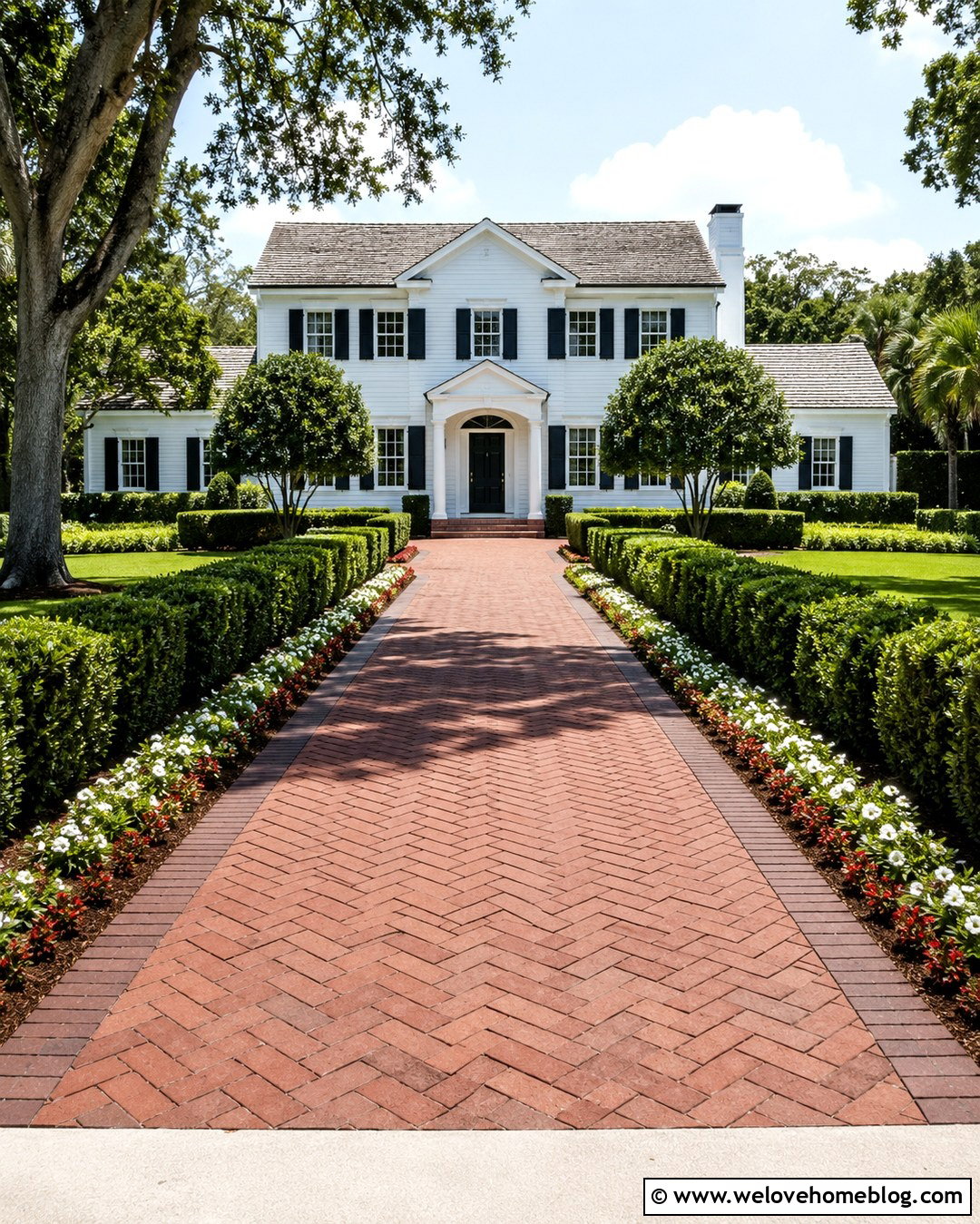
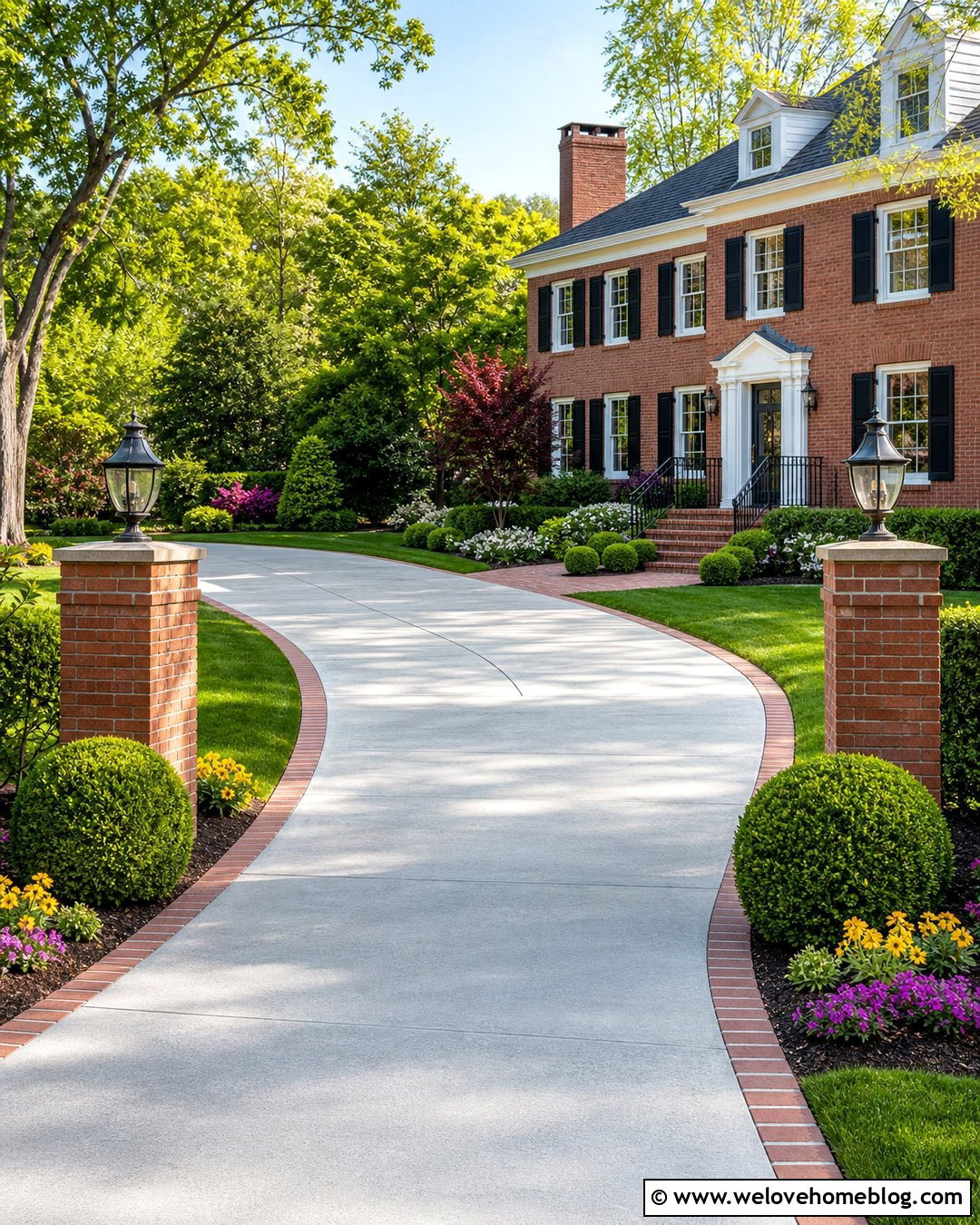
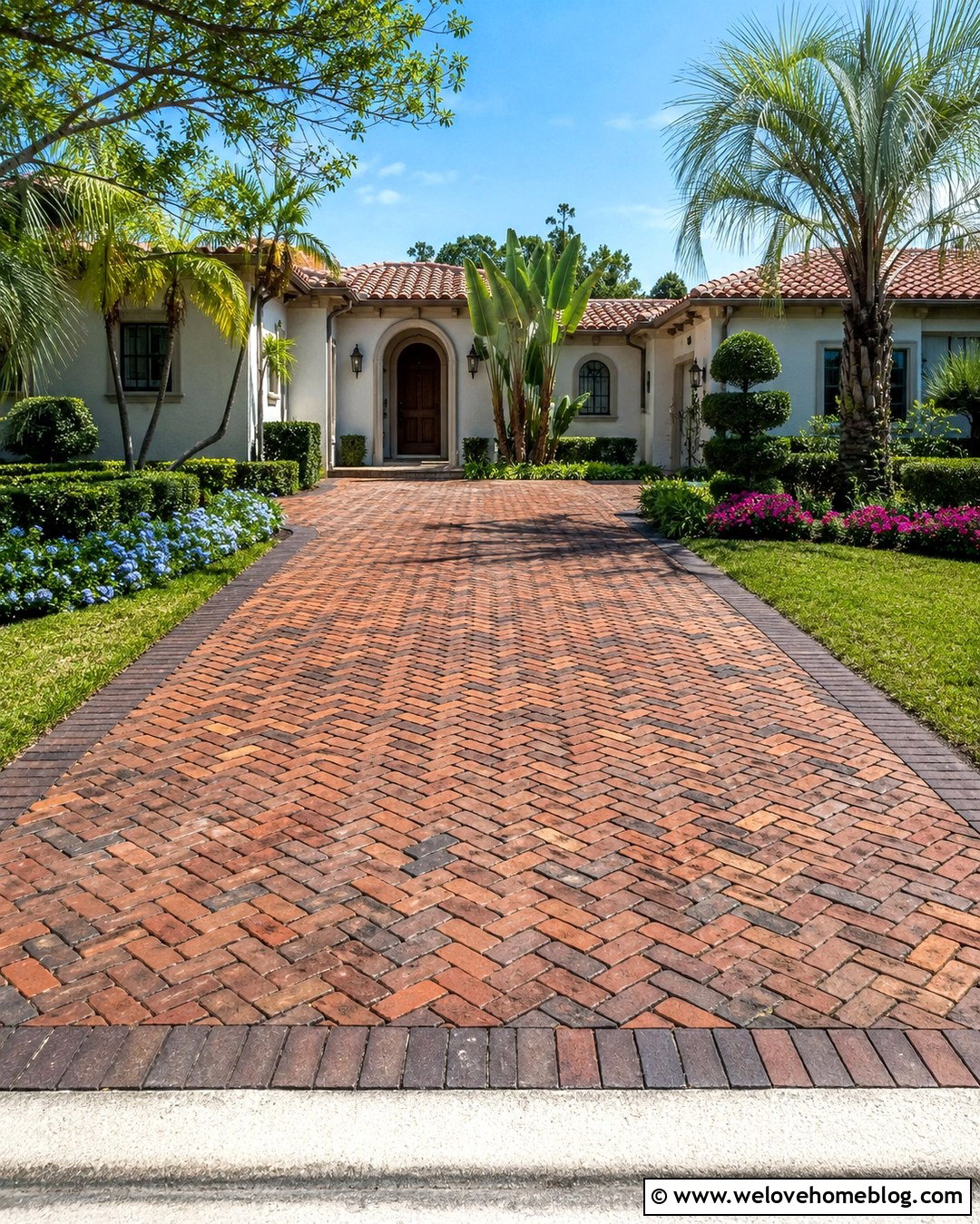
Brick pavers and symmetrical landscaping give a Florida colonial or traditional home a strong, established appearance. Choose red-brown clay brick or concrete brick pavers arranged in a herringbone pattern for visual texture. Define the outer edge with a soldier-course border in a slightly darker shade. On both sides, install matching curved beds with compact hedges, dwarf yaupon holly, Simpson stopper, or another shrub suitable for the location. Add one small ornamental tree near each side of the entrance, ensuring mature canopies will not interfere with cars. Seasonal color can be concentrated near the walkway rather than spread along the entire drive. The balanced planting, brick pattern, and clear central approach create a formal look without requiring oversized gates, fountains, or elaborate architectural features.
8. Curved Asphalt Driveway With Palm Clusters
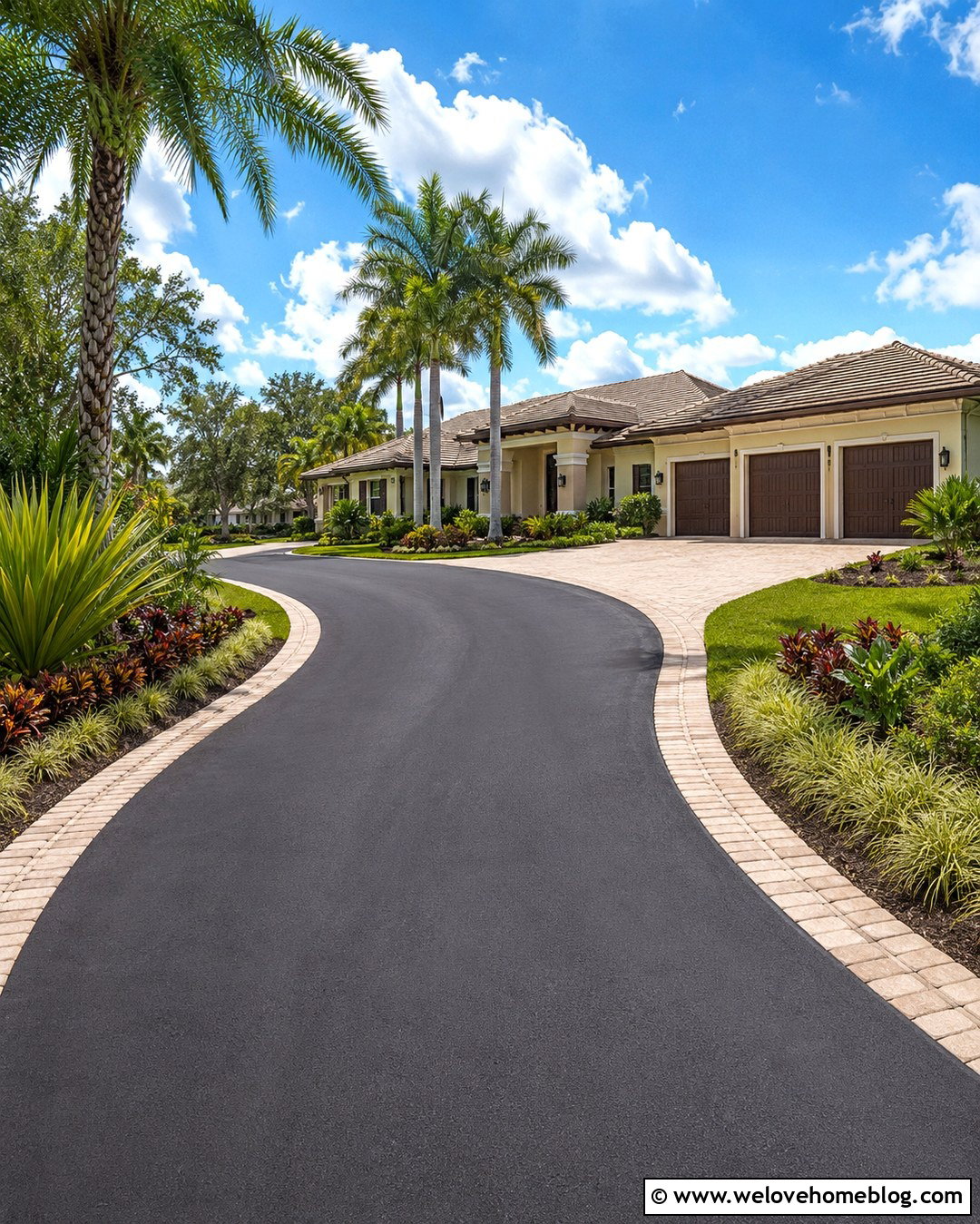
Black asphalt becomes more attractive when its shape and landscaping feel intentional. A sweeping curved driveway can follow the natural outline of a wide Florida lot while reducing the harsh appearance of a long paved strip. Add a tan concrete paver ribbon along both edges to create contrast and a durable transition into the beds. Place palms in loose groups at major curves, then fill below them with layered shrubs and grasses that will not grow into the driving area. Broad sections of lawn between planting clusters keep the design from feeling crowded. Near the house, repeat the tan pavers in the front walkway or garage apron. The finished look is practical for a long driveway but still provides the tropical character homeowners often want.
9. Small Driveway With Low-Maintenance Beds
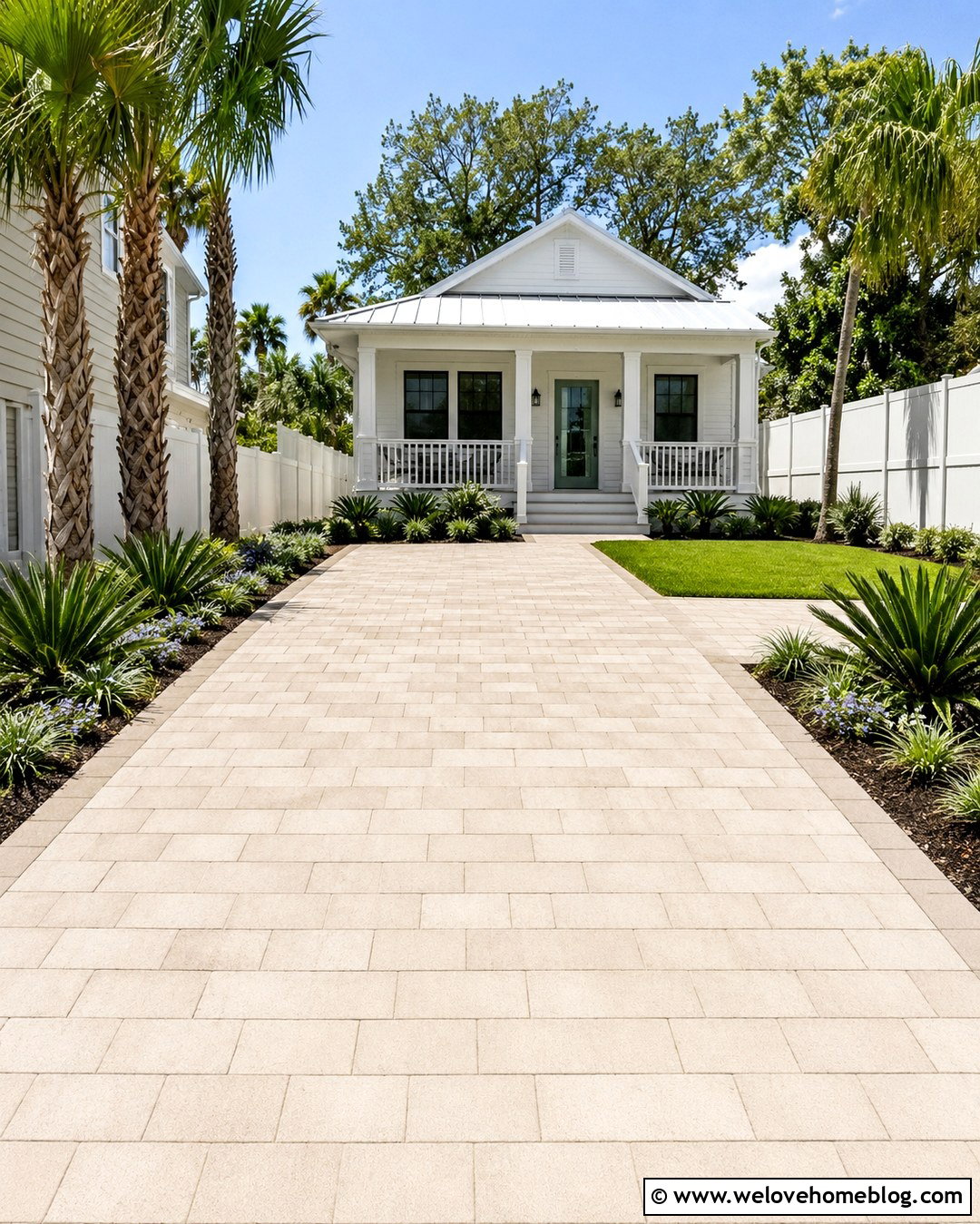
A compact driveway can feel larger when its landscaping is simple, low, and carefully proportioned. Use pale concrete pavers in a running-bond pattern to brighten the space and clearly define the parking area. Add narrow beds along only one side and near the front walkway instead of squeezing plants against every edge. Repeating groups of coontie, dwarf mondo grass, blue daze, and small ornamental grasses can provide texture without overwhelming the yard. Use dark brown mulch or small tan gravel for a clean background. A flush paver border prevents the beds from reducing usable driveway width. Keep shrubs away from car doors, utility equipment, and the street sight triangle. This streamlined design is well suited to Florida townhomes, cottages, and houses on narrow suburban lots.
10. Long Driveway With Shade Trees
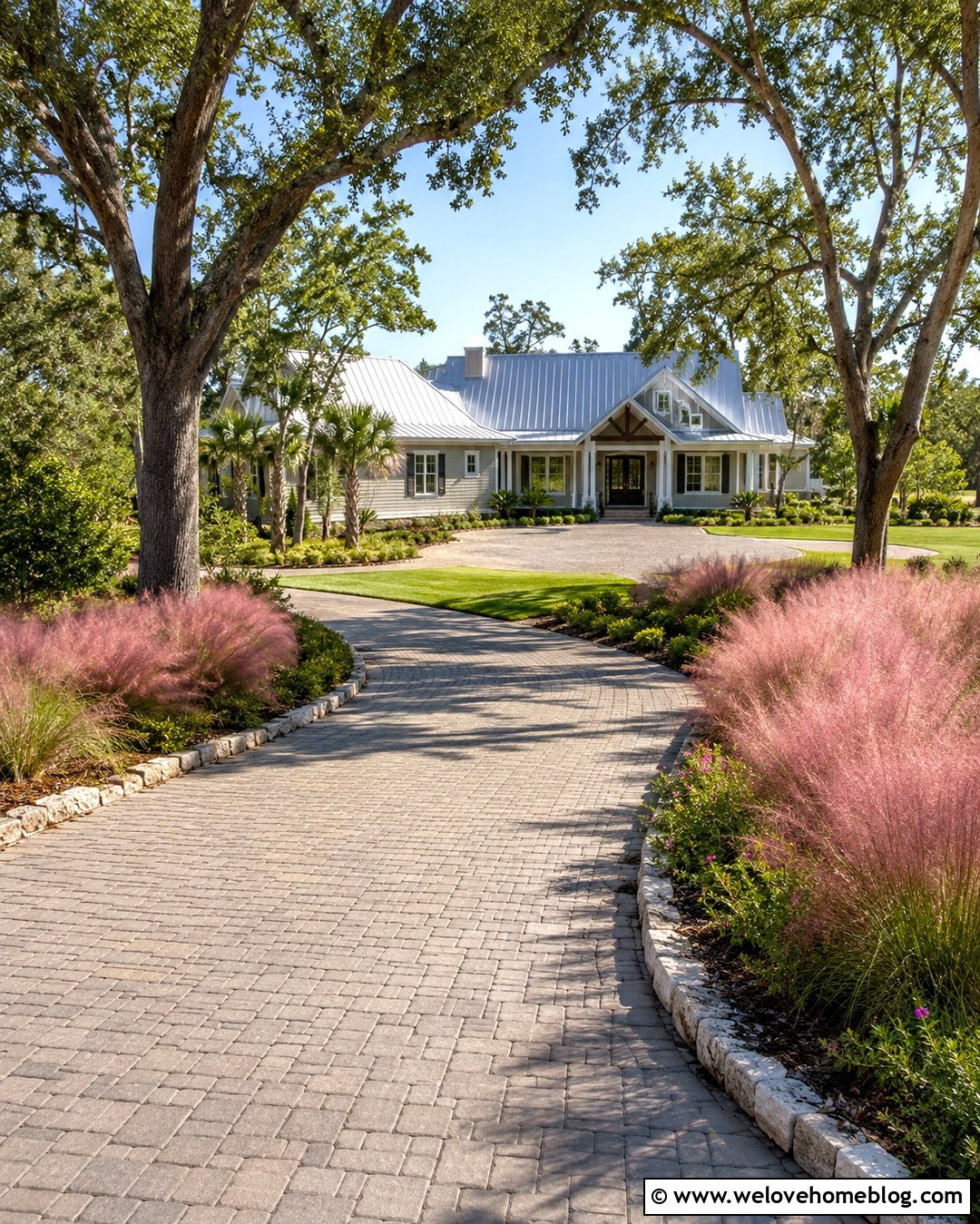
A long Florida driveway feels welcoming when trees create rhythm without forming a dark, crowded tunnel. Begin with warm gray interlocking pavers or exposed aggregate concrete in a gentle curve. Position appropriately sized shade trees at wide, consistent intervals outside the pavement’s edge and away from utilities. Underplant them with broad sweeps of muhly grass, native groundcover, and compact evergreen shrubs. Leave open lawn between selected planting zones so the approach remains airy and easy to maintain. Low stone edging can define beds without competing with the trees. At the house, widen the driveway into a simple parking court and repeat the same plant palette around the walkway. Planning for mature trunk, root, and canopy size is essential before establishing a formal tree-lined entrance.
11. Gravel Driveway With Native Wildflowers
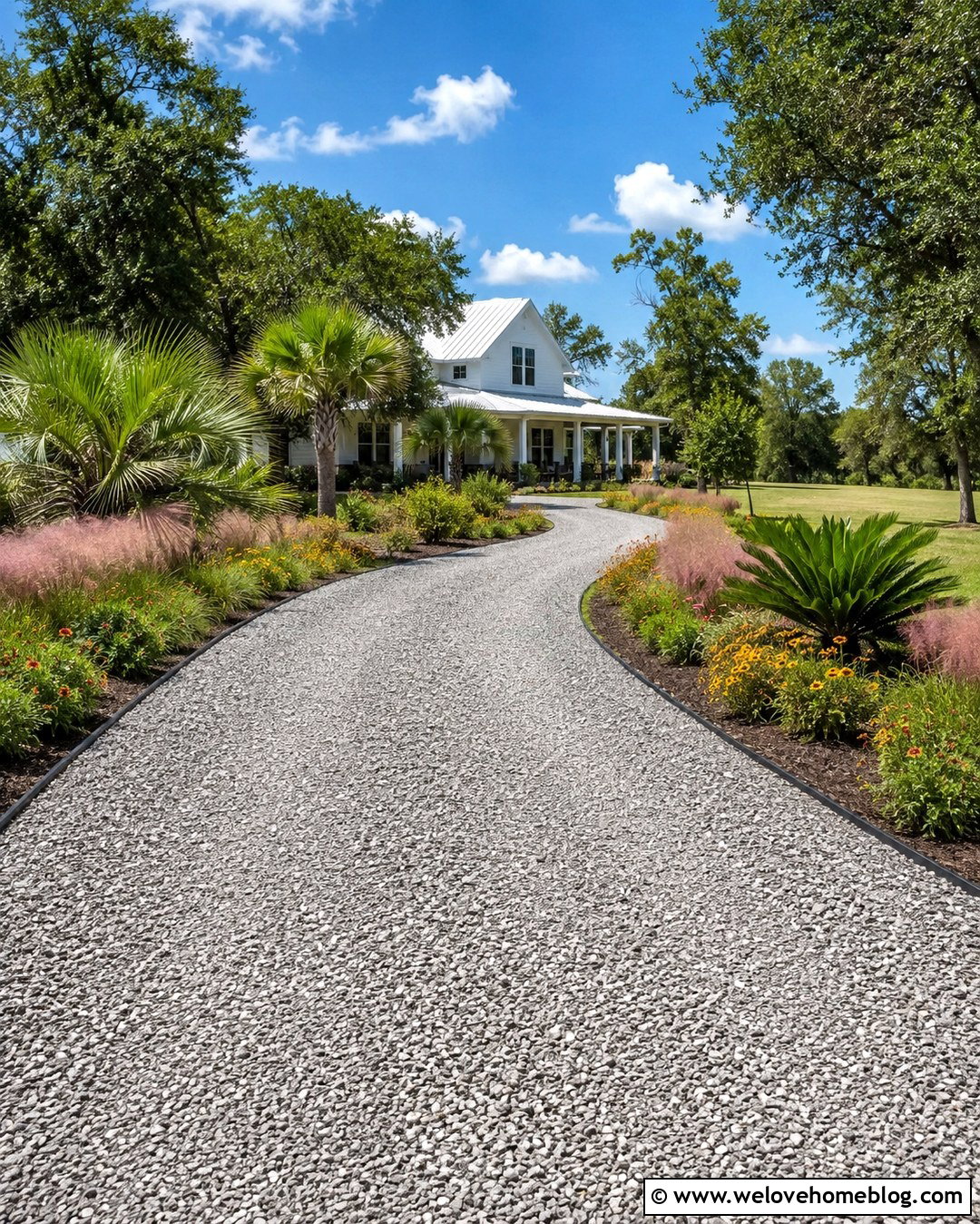
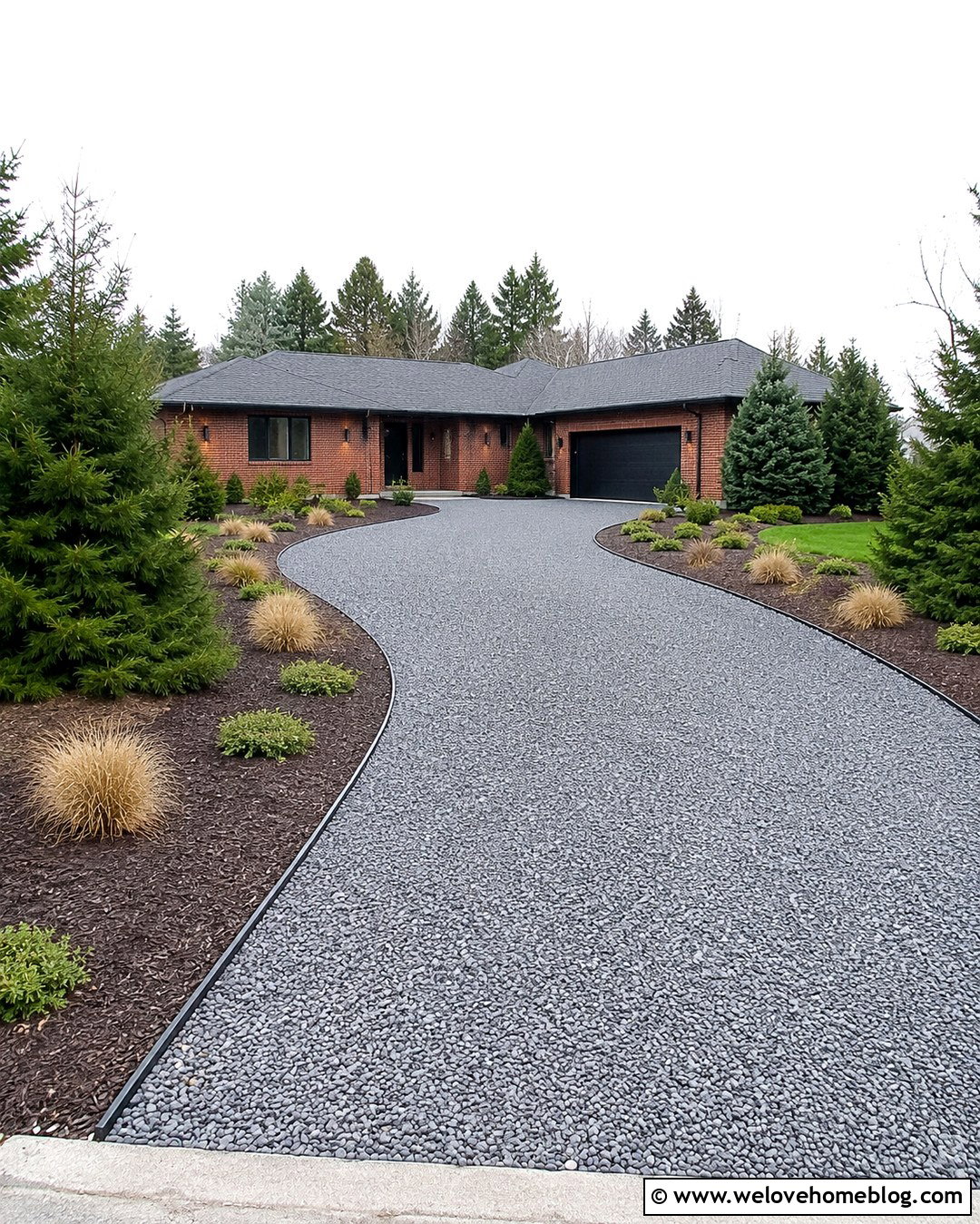
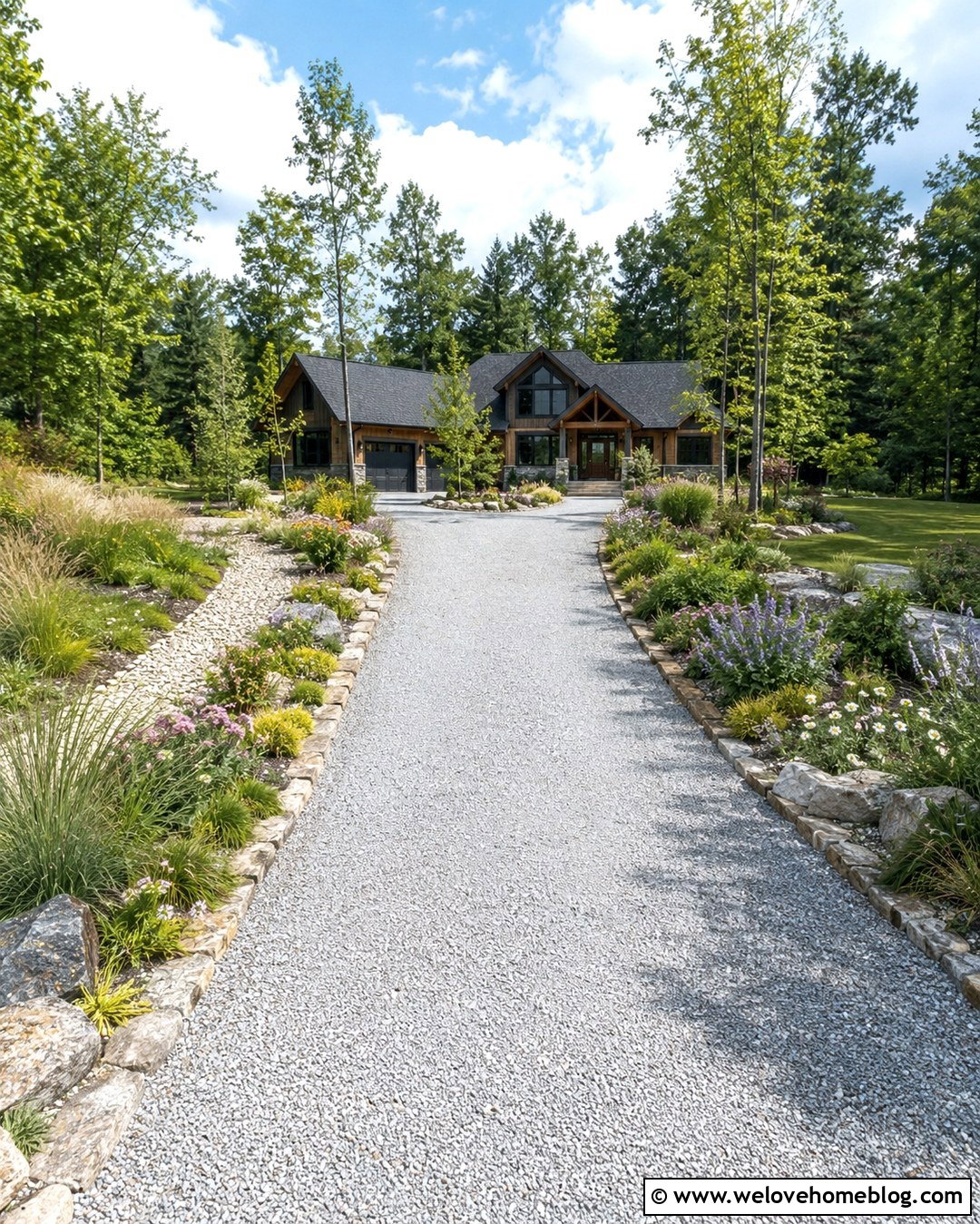
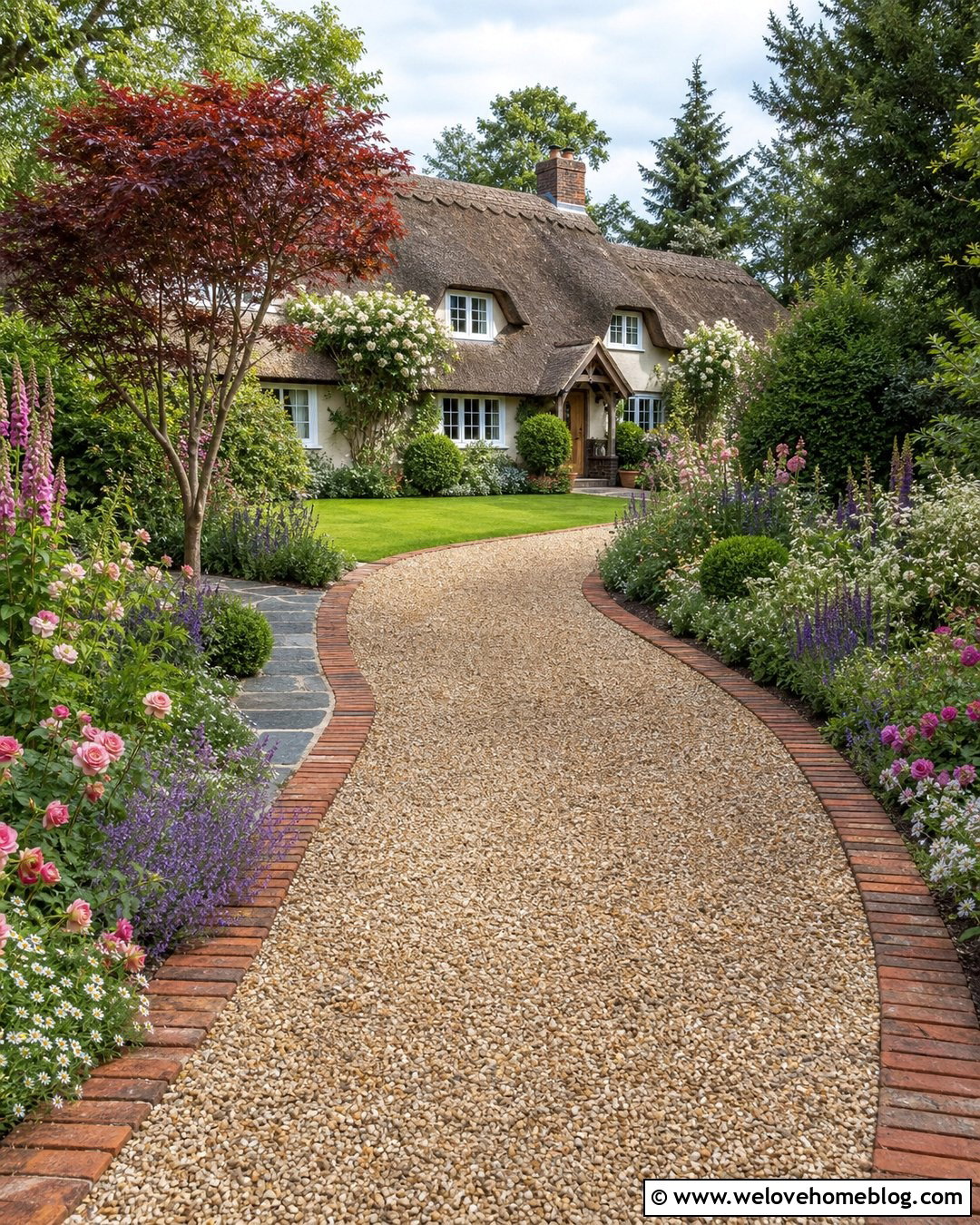
A warm gray gravel driveway can blend naturally into a casual Florida landscape when it has stable construction and strong edges. Use compacted angular gravel over a professionally prepared base, then contain it with brick, steel, or concrete edging. Shape the driveway with a gentle curve leading toward a farmhouse, cottage, or rural ranch house. Along the sunny outer border, create broad drifts of blanket flower, coreopsis, muhly grass, coontie, and other plants selected for the local region. Keep the first several feet beside the pavement low and neat so the planting does not hide the driveway line. Small cabbage palms or pines can provide height farther back. The organized plant masses prevent the wildflower border from looking messy while preserving a relaxed, natural character.
12. Horseshoe Driveway With Center Fountain
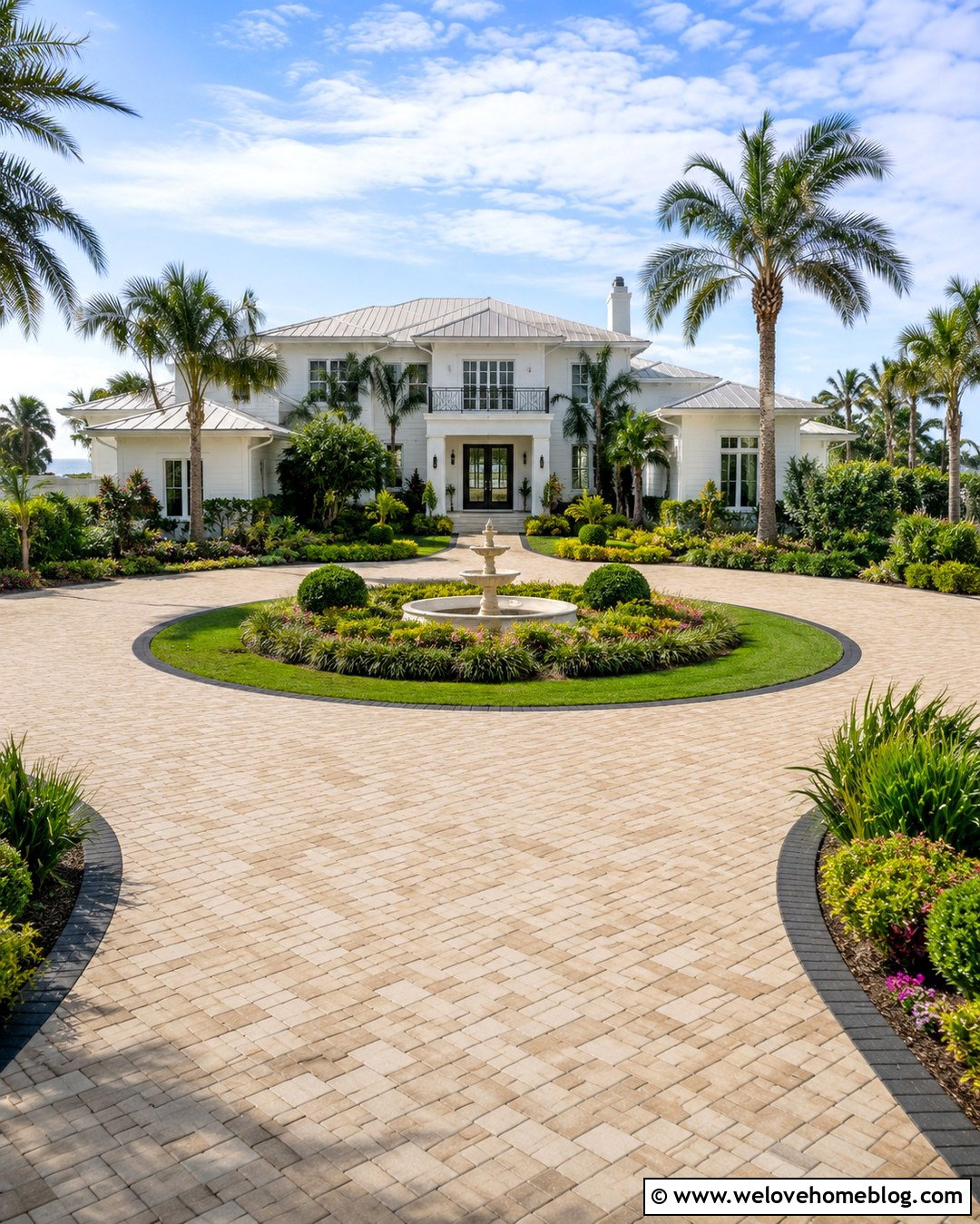
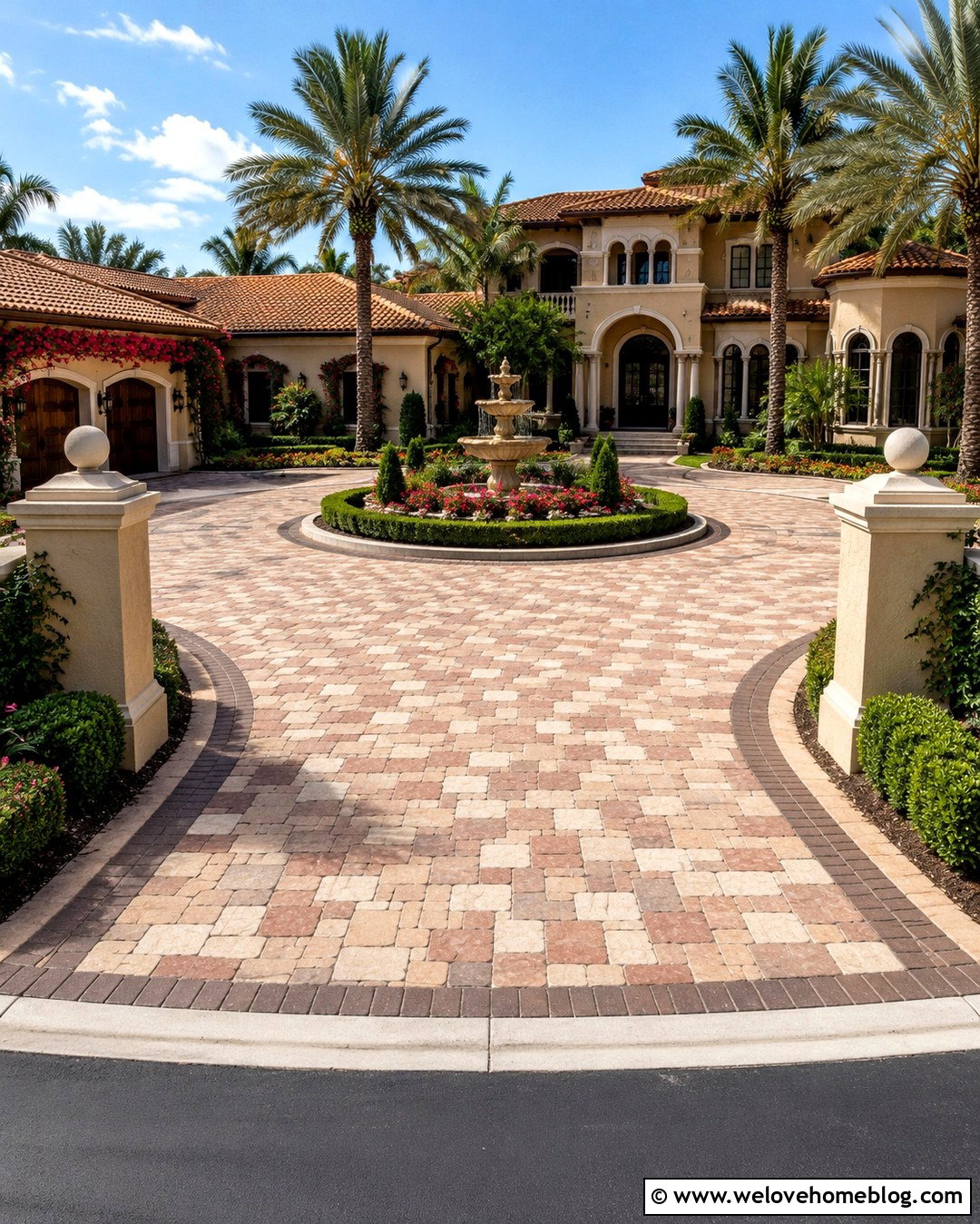
A horseshoe driveway gives a larger Florida front yard an elegant arrival and an easy path back toward the street. Use sand-toned concrete pavers in a fan or running-bond pattern, with darker pavers defining both curves. In the center lawn, create a round planting island with a simple stone fountain as the focal point. Surround it with clipped shrubs, liriope, colorful tropical foliage, and low flowers arranged in balanced rings. The fountain should be scaled to the house rather than dominating it. Keep plants low where the two driveway openings meet the road, and place taller palms closer to the center. Matching walkway pavers can connect the inner curve to the front door, making the driveway, fountain, lawn, and entrance feel like one coordinated landscape.
13. Driveway Entrance With Stone Pillars And Palms
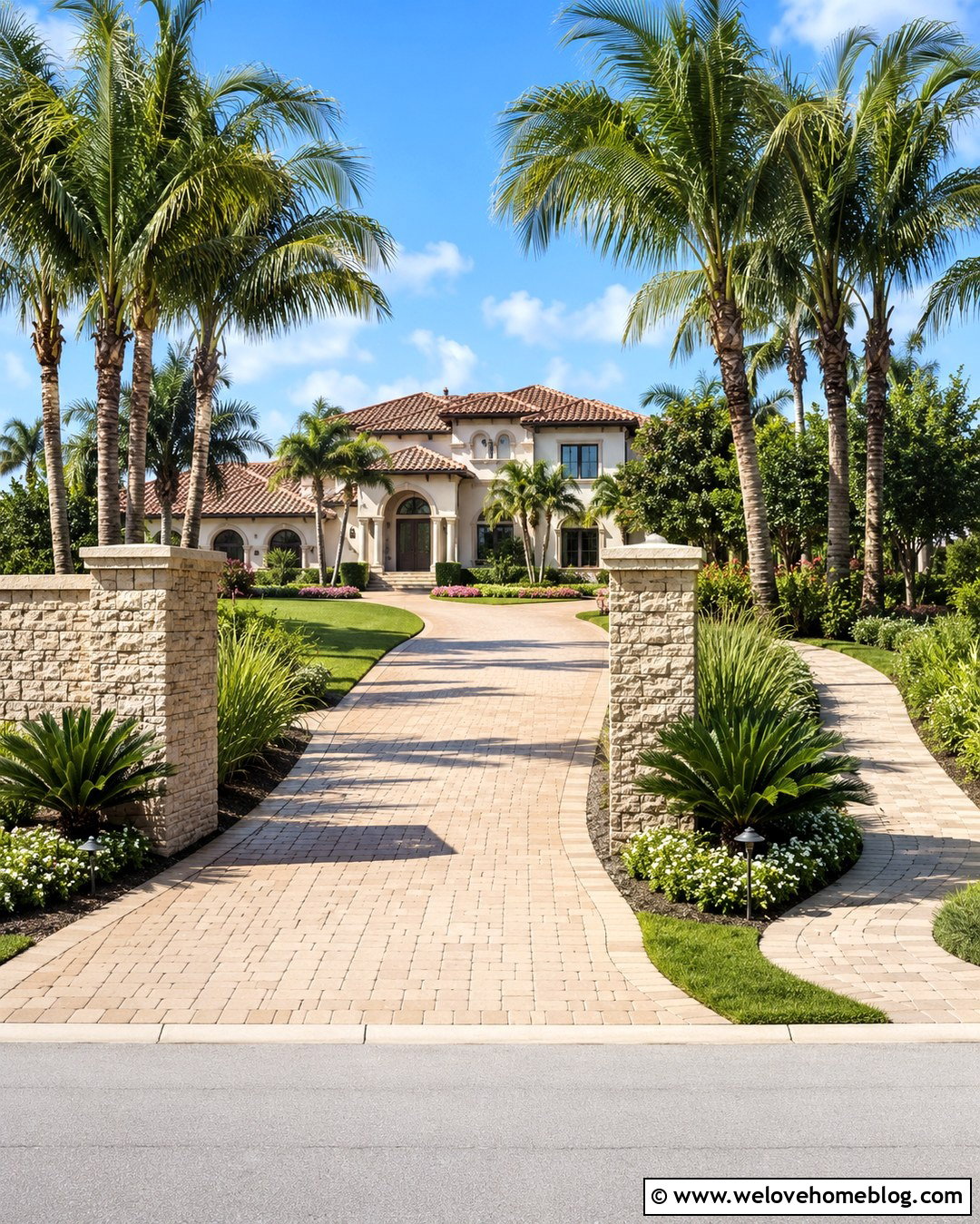
Stone pillars can make a driveway entrance feel substantial without requiring a closed gate. Pair limestone or stacked-stone pillars with a light tan paver driveway that curves gently toward a Mediterranean or coastal home. Place the pillars far enough from the pavement to provide comfortable clearance for vehicles, deliveries, and trailers. Behind each pillar, use matching palm clusters with coontie, ornamental grass, and low flowering groundcover. Continue a low stone wall for a short distance if the entrance needs more definition, but keep it below important sightlines. The driveway border should repeat a color found in the pillars so the design feels unified. Soft landscape lighting can highlight the masonry and plants, while a separate paved pedestrian path improves the entrance’s function and overall sense of welcome.
14. Driveway Border With Muhly Grass And Coontie
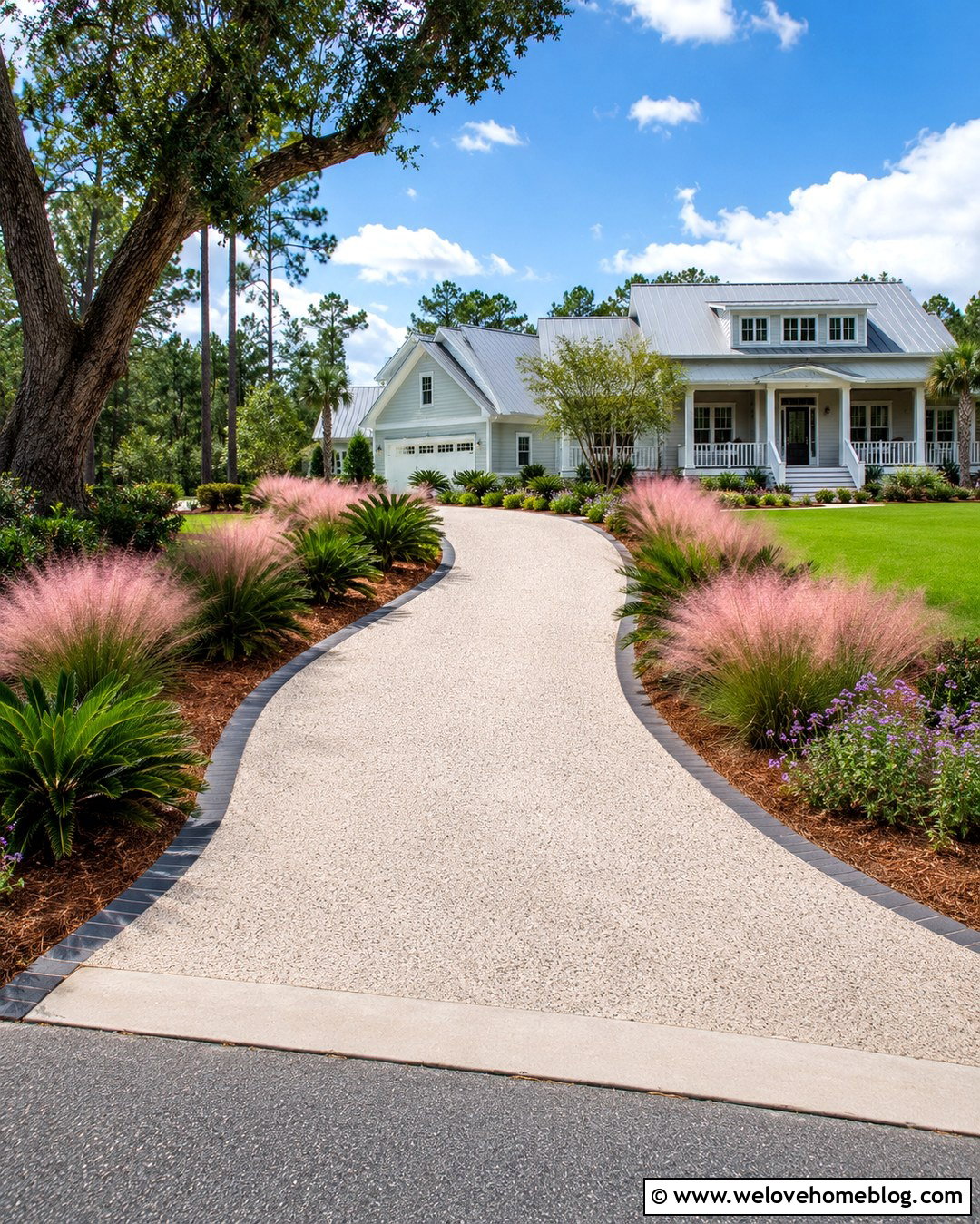
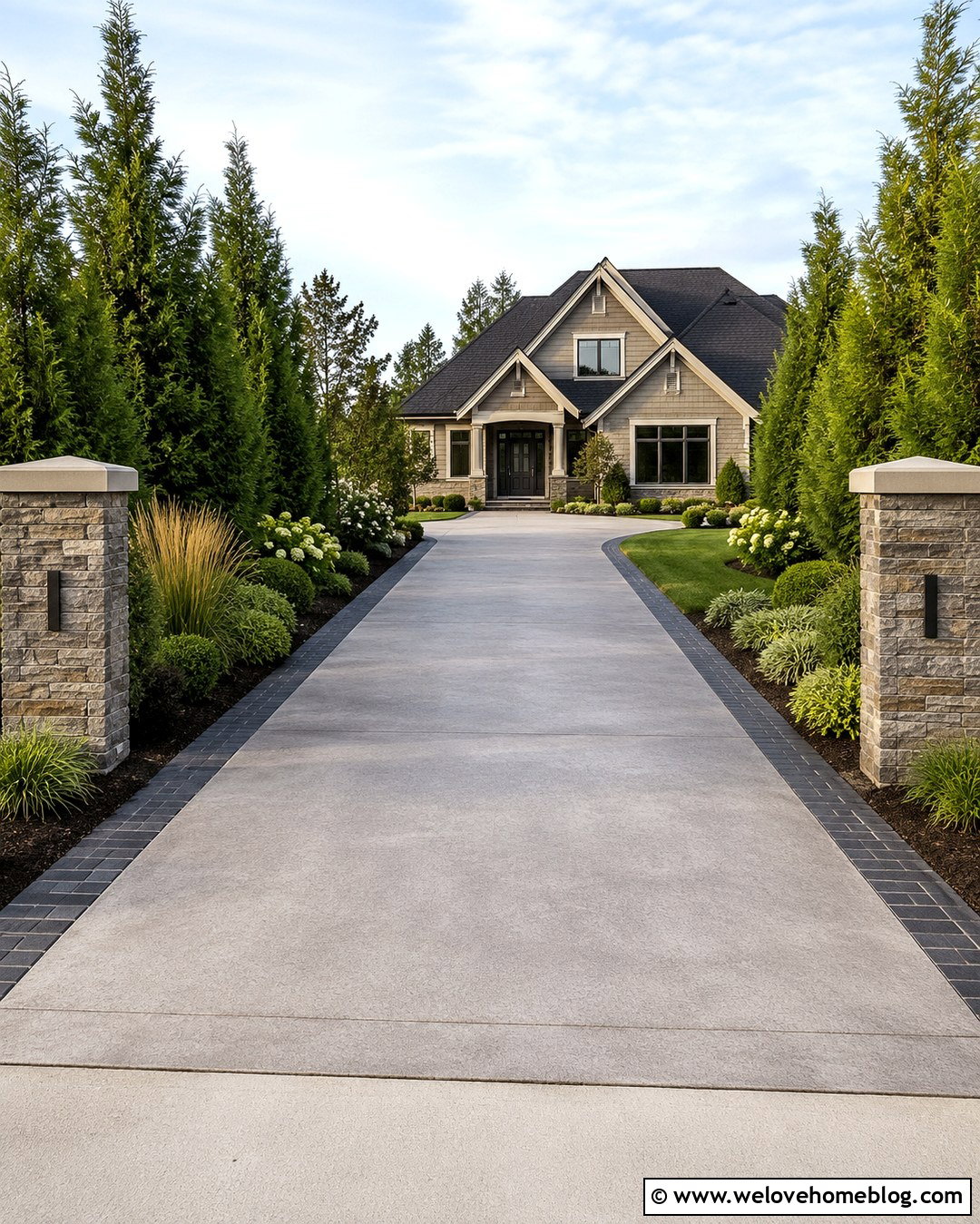
Pink muhly grass and deep green coontie create a distinctly Florida border with strong seasonal texture. Pair them with an exposed aggregate concrete driveway in a straight or gently curved layout. Use repeated groups rather than alternating single plants, allowing the muhly grass to form soft clouds behind lower coontie. A narrow band of charcoal pavers can separate the planting bed from the aggregate surface and provide a crisp mowing edge. Add a few low native flowers near the mailbox or walkway for controlled color. Maintain open space around car doors, drainage outlets, and driveway corners. This combination works well with ranch, craftsman, and modern farmhouse exteriors because it offers movement without looking overly tropical. The restrained palette also keeps a long driveway border from becoming visually busy.
15. Side-Entry Driveway With Privacy Planting
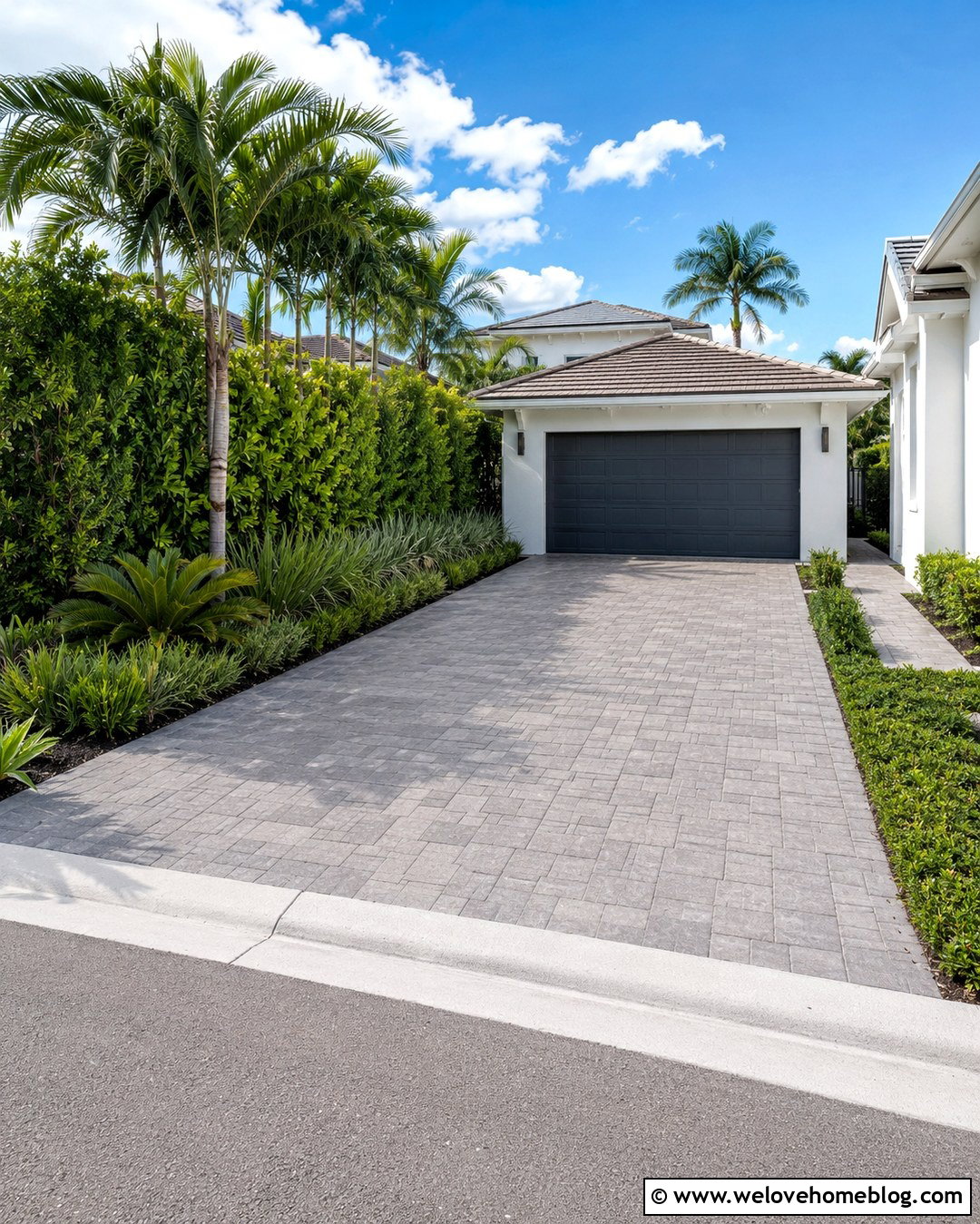
A side-entry driveway often needs screening, but a solid wall of plants can make the space feel cramped. Use medium-gray concrete pavers for the driveway and create a layered privacy bed along the property line. Place taller Simpson stopper, podocarpus, clumping palms, or other site-appropriate screening plants toward the back. Add coontie, flax lily, or ornamental grasses in front to hide bare lower stems. A low concrete curb protects the bed from tires and keeps mulch off the paving. On the house side, use only a narrow strip of groundcover and a clear walkway so passengers have room to move. Staggered planting produces a softer effect than one rigid hedge. The finished design screens neighboring views while keeping the garage approach bright, accessible, and visually connected to the front yard.
16. Ranch House Driveway With Rock Landscaping
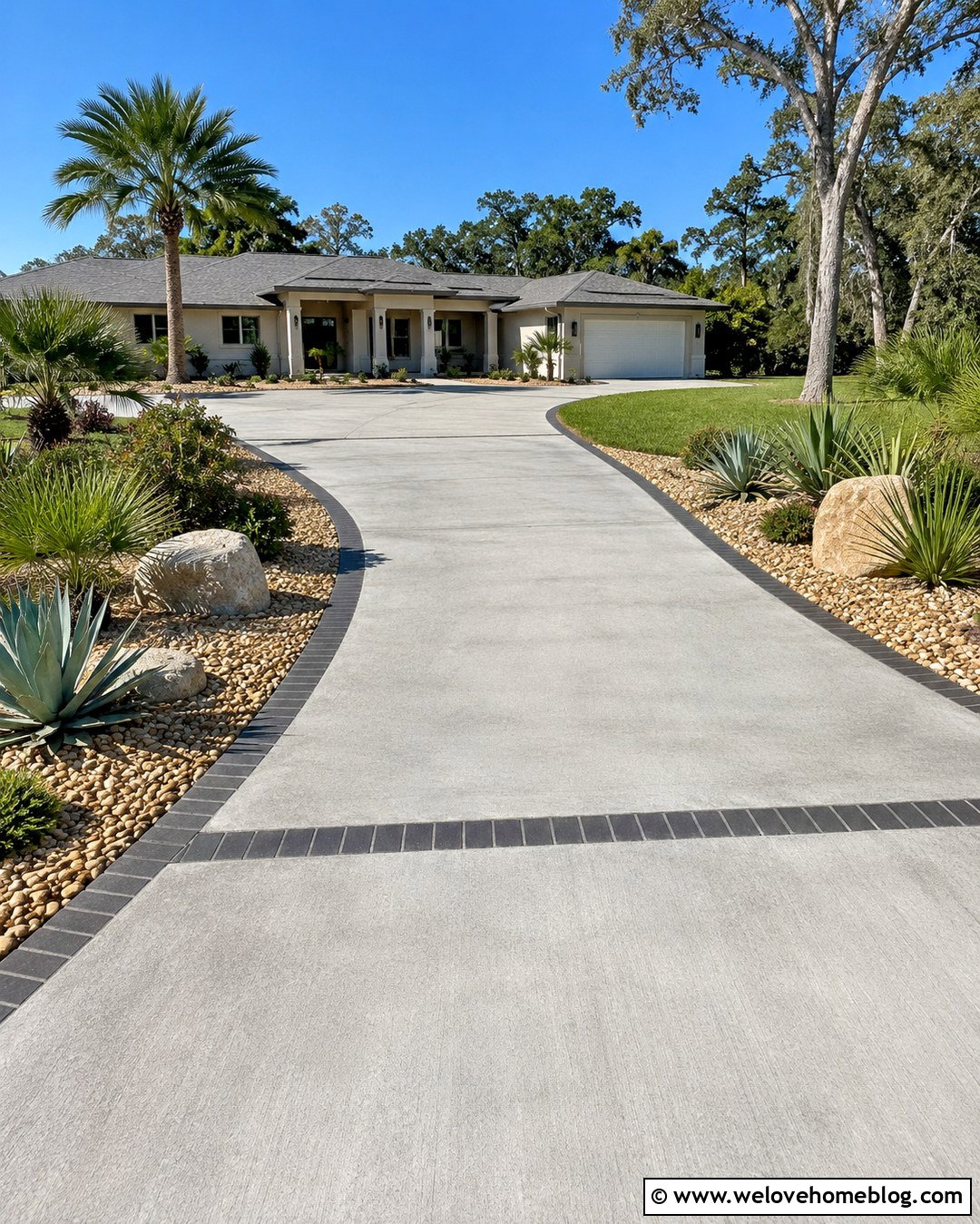
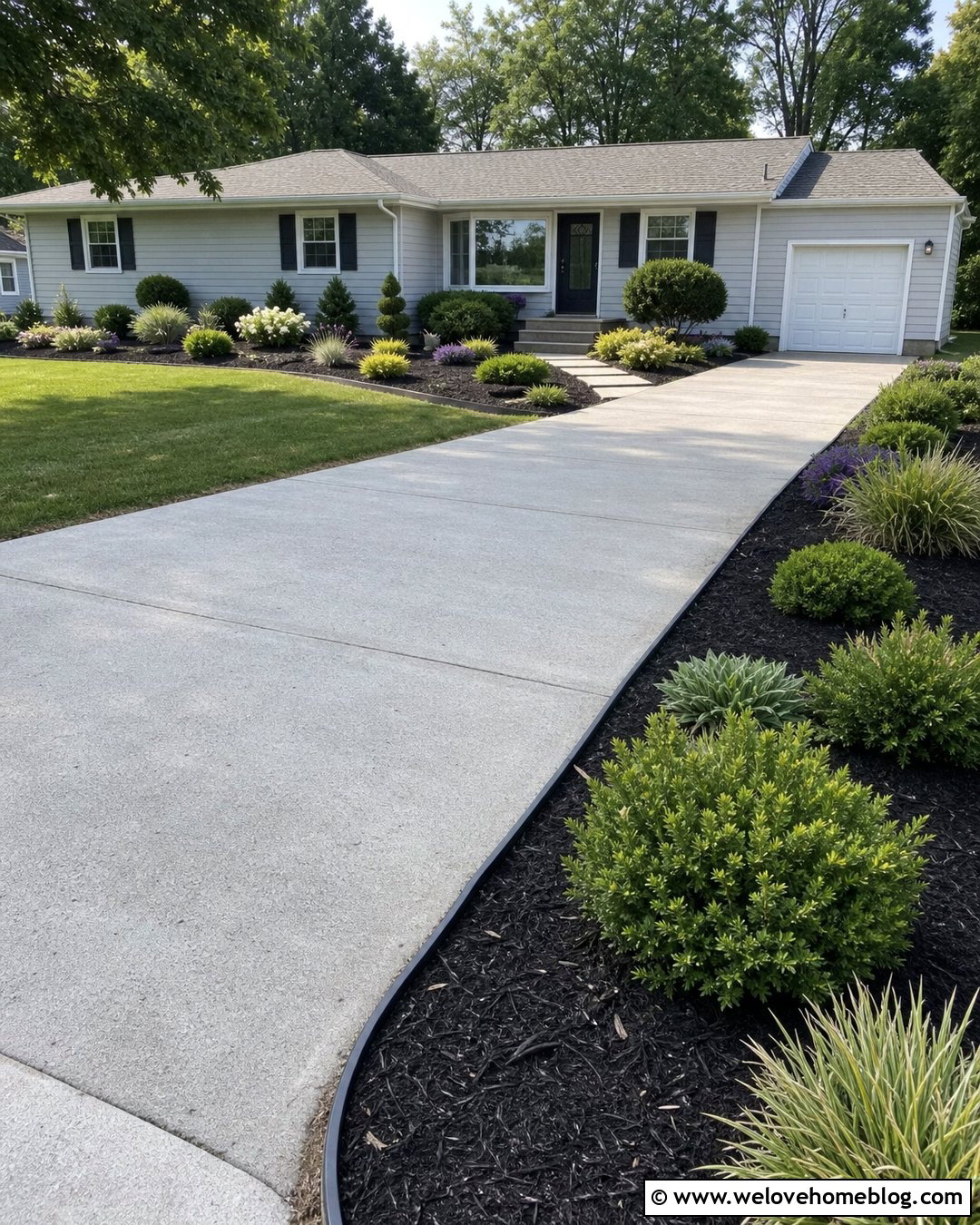
A Florida ranch house can benefit from a broad, horizontal driveway landscape that matches its low roofline. Start with a light gray brushed concrete driveway and add a curved apron near the street. Use tan river rock or crushed limestone in wide planting beds, but include enough plants to prevent the stone from looking bare. Clusters of saw palmetto, coontie, dwarf yaupon holly, agave, and ornamental grass provide varied heights and forms. Large accent boulders can anchor the entrance when positioned safely beyond the vehicle path. A dark brick ribbon around the concrete adds contrast and connects the driveway to the house facade. Keep the center of the yard open with simple lawn, allowing the rock beds and architectural plants to frame rather than overpower the ranch home.
17. Key West Driveway With Tropical Color
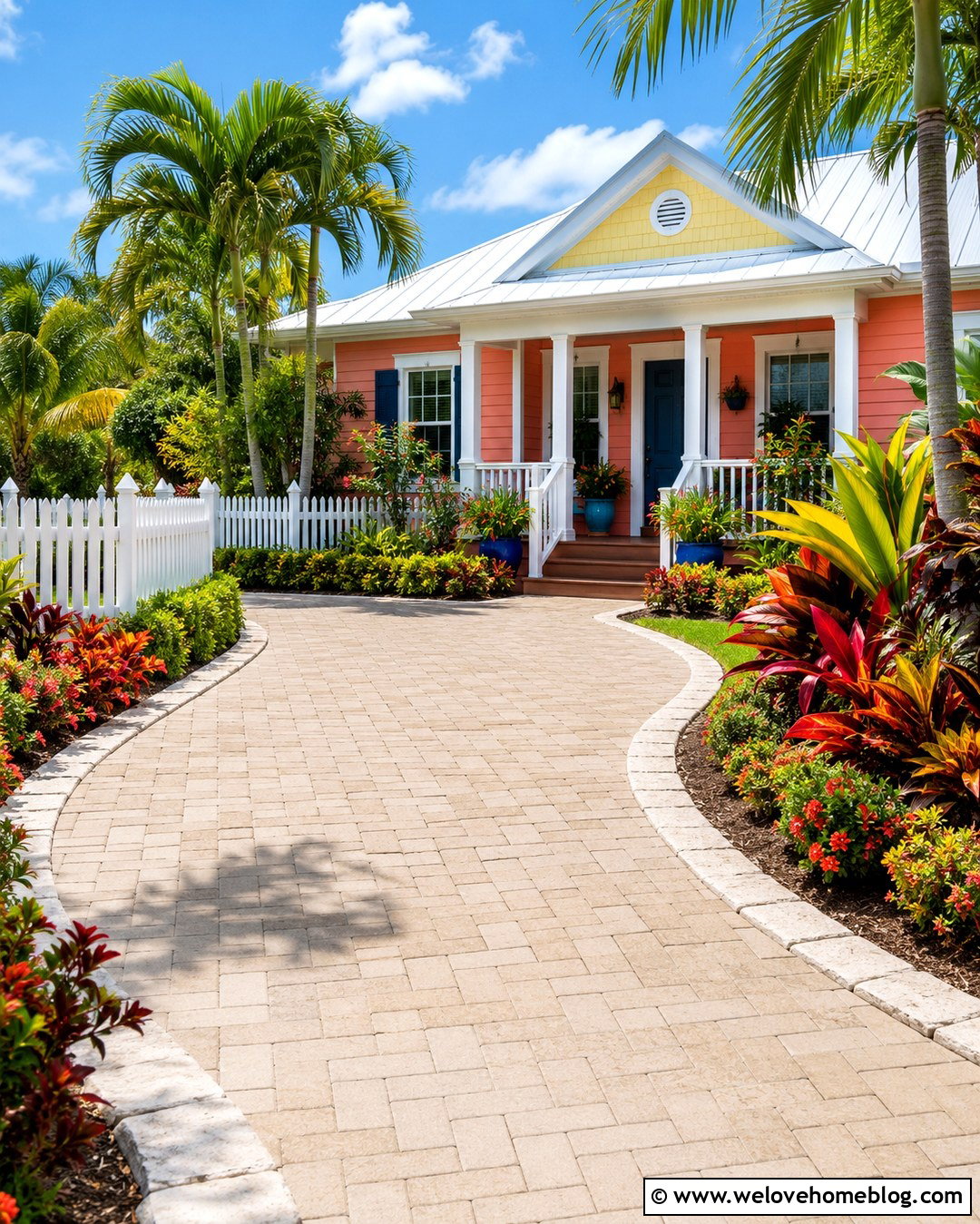
A Key West-inspired driveway should feel bright, relaxed, and colorful without becoming chaotic. Choose pale sand-colored concrete pavers in a basket-weave or running-bond pattern. Use a curved driveway border with white limestone edging to reflect the light tones of the house. Layer crotons, colorful bromeliads, dwarf ixora, palms, and glossy green shrubs according to the site’s sunlight and cold exposure. Concentrate the boldest colors around the front walkway and porch, then use calmer green planting near the street. A short white picket fence or simple gate can define the garden without closing off the driveway. Repeat one or two foliage colors in planters near the entrance. Together, the pale paving, tropical leaves, and cheerful house facade create an unmistakably Florida arrival.
18. Mediterranean Driveway With Bougainvillea
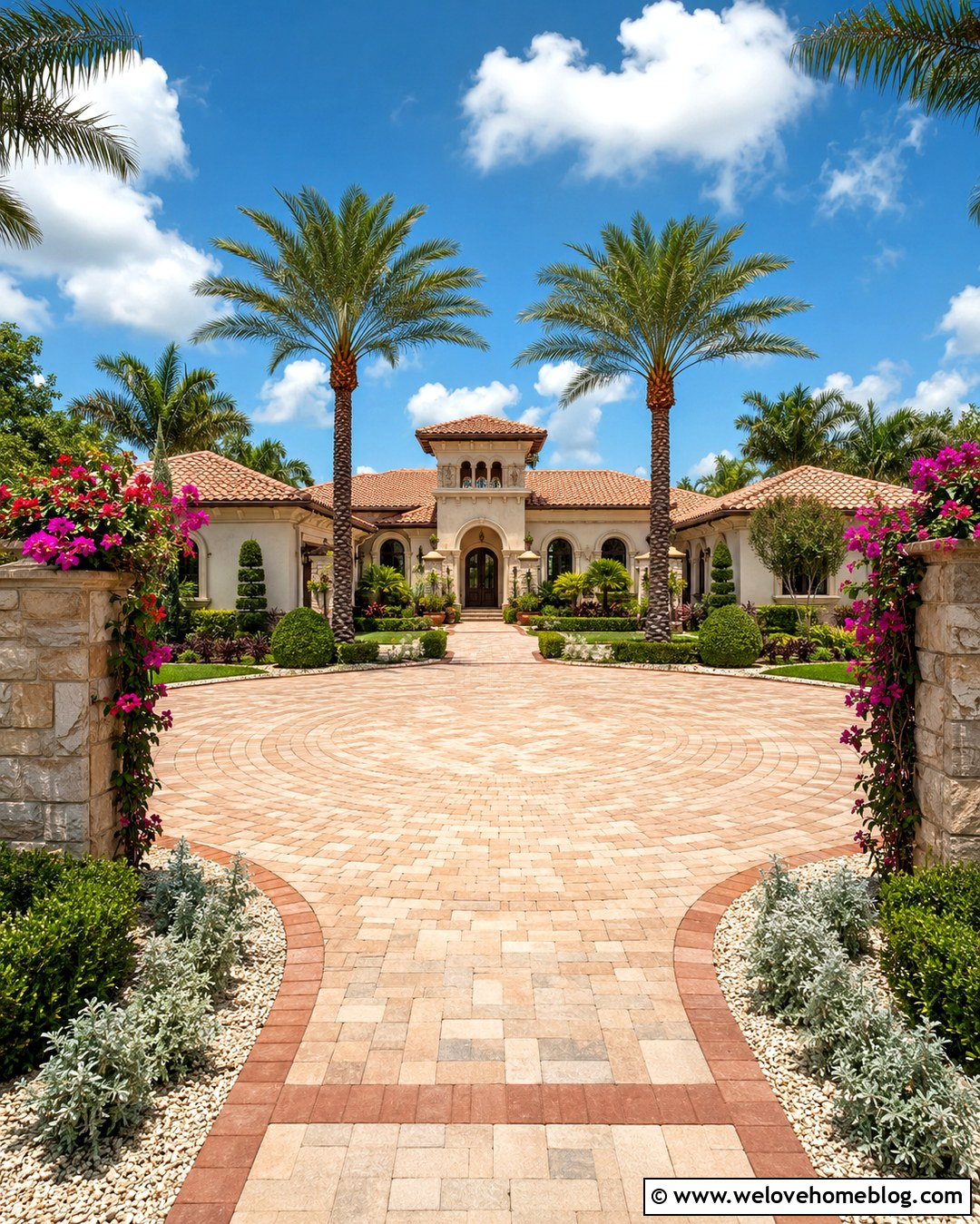
Warm pavers and structured planting complement the arches, tile roofs, and stucco walls of Mediterranean Florida homes. Install beige and terracotta concrete pavers in a circular or curved layout, using a darker terracotta soldier course around the edge. Frame the driveway with clipped evergreen shrubs, silver-green foliage, upright palms, and carefully placed bougainvillea. Because bougainvillea can become thorny and vigorous, train it on an entry wall, pergola, or pillar away from car doors and pedestrian routes. Use crushed limestone mulch to brighten the beds and emphasize the warm paving colors. A tiled walkway can connect the driveway to the front entrance. The final composition should feel symmetrical near the house but slightly looser toward the street, balancing formal architecture with Florida’s lush growing conditions.
19. Florida Driveway With Landscape Lighting
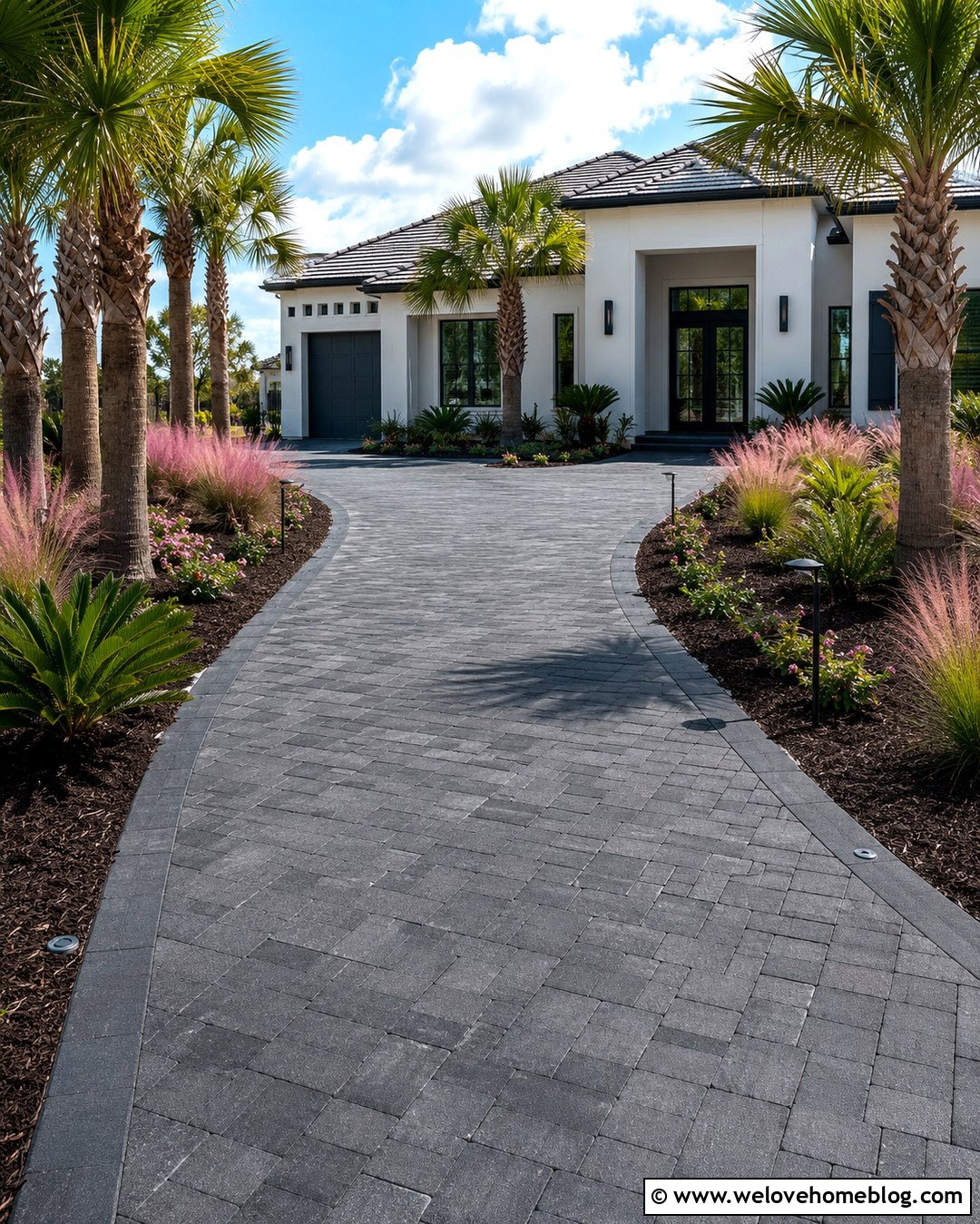
Driveway lighting works best when fixtures are integrated into a complete daytime landscape instead of added as an afterthought. Pair a charcoal-gray paver driveway with curved beds containing cabbage palms, muhly grass, coontie, and low flowering plants. Install shielded path lights at key turns and walkway intersections rather than creating a continuous runway effect. Use subtle uplighting on a few palm trunks or entrance trees, while keeping glare away from drivers, neighbors, and street traffic. Recessed or flush fixtures can mark the paver border where additional guidance is needed. During the day, dark fixtures should disappear into mulch and foliage. Landscape lighting can support visibility while emphasizing the driveway’s shape, entrance, and planting layers after sunset. ()
20. Driveway With Drainage Swale And Groundcover
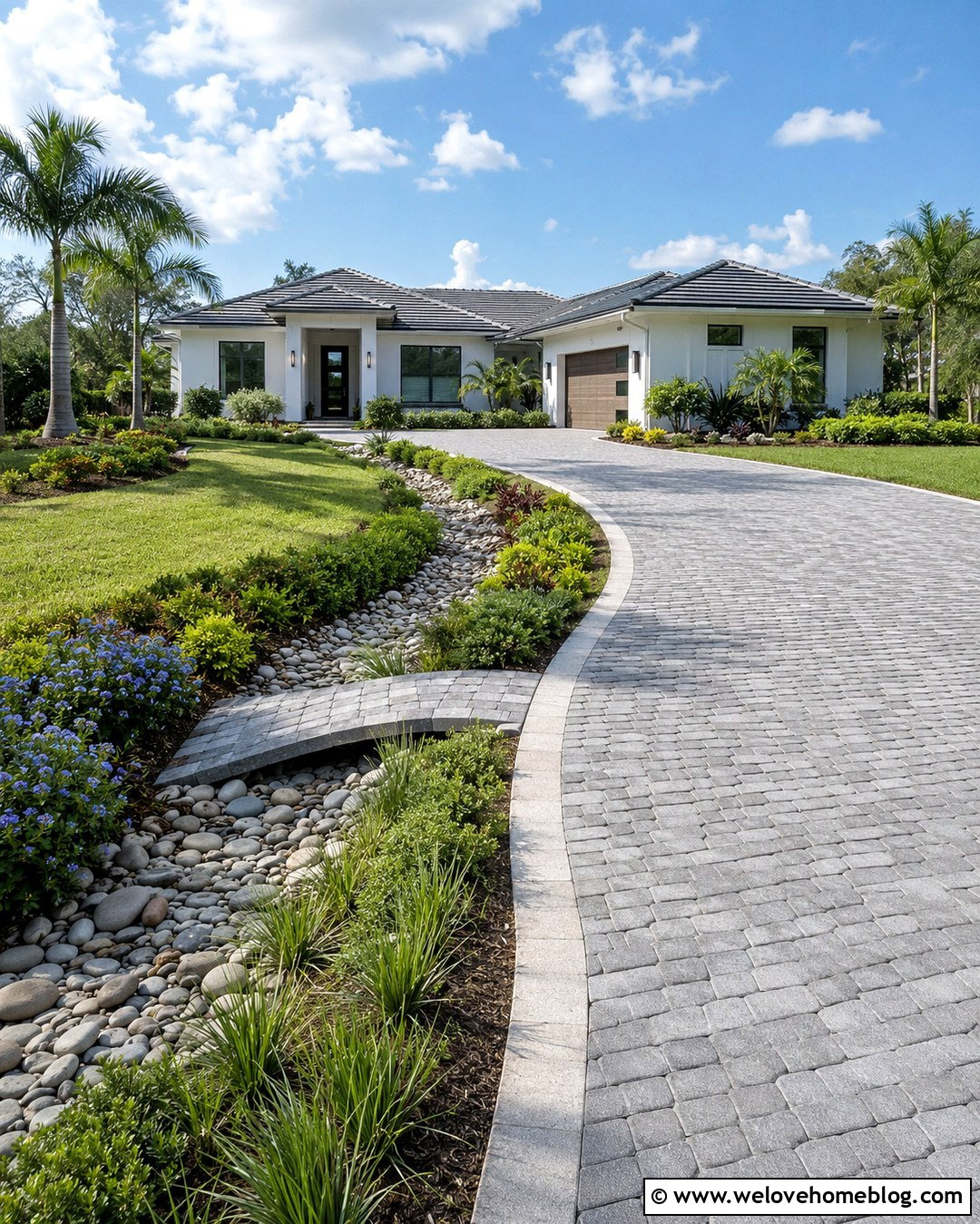
A shallow swale can look like part of the garden when it is carefully shaped and planted. Use permeable interlocking concrete pavers for a gently sloping driveway, then position the swale along the lower edge where water naturally travels. Line the deepest section with decorative stone and use low groundcover, ornamental grasses, and moisture-tolerant plants selected for the site’s drainage pattern. A small paver bridge can carry the front walkway across the swale without interrupting water movement. Keep the bed broad and gently curved instead of digging a narrow ditch beside the pavement. Do not block approved drainage routes or send water toward neighboring property. Florida landscape guidance supports treating stormwater as a resource through thoughtful grading, planted areas, and permeable surfaces. ()
Conclusion:
The strongest 20 Florida driveway landscaping ideas treat paving, drainage, planting, borders, and the home’s architecture as one connected design. Start by studying your driveway’s sunlight, soil, available width, water movement, and coastal exposure. Then choose a surface and plant palette that fit those conditions. Keep vegetation low near street entrances, leave comfortable clearance around parked vehicles, and plan for the mature size of every tree and shrub. Repeating a limited selection of plants usually looks cleaner than filling beds with unrelated varieties. Whether you prefer tropical color, native grasses, formal hedges, or modern concrete, thoughtful planning can turn an ordinary driveway into a practical, welcoming feature with lasting Florida curb appeal.

Related posts:



Leave a Reply