
Florida driveways need to balance curb appeal with intense sunshine, heavy rain, sandy soil, humidity, and coastal exposure. Materials such as concrete pavers, poured concrete, crushed shell, brick, gravel, asphalt, and permeable paving can all work when the base, drainage, and finish suit the property. Porous pavers, gravel, and similar surfaces may also help water soak into the landscape rather than concentrating runoff. () The best 20 florida driveway ideas pair the surface with a practical layout, defined borders, Florida-friendly plants, and a house style that feels connected to the entrance. Always confirm local permit, drainage, and HOA requirements before construction. Below, you will find complete, distinctive looks to inspire your own 20 florida driveway ideas.

1. Florida Concrete Paver Driveway
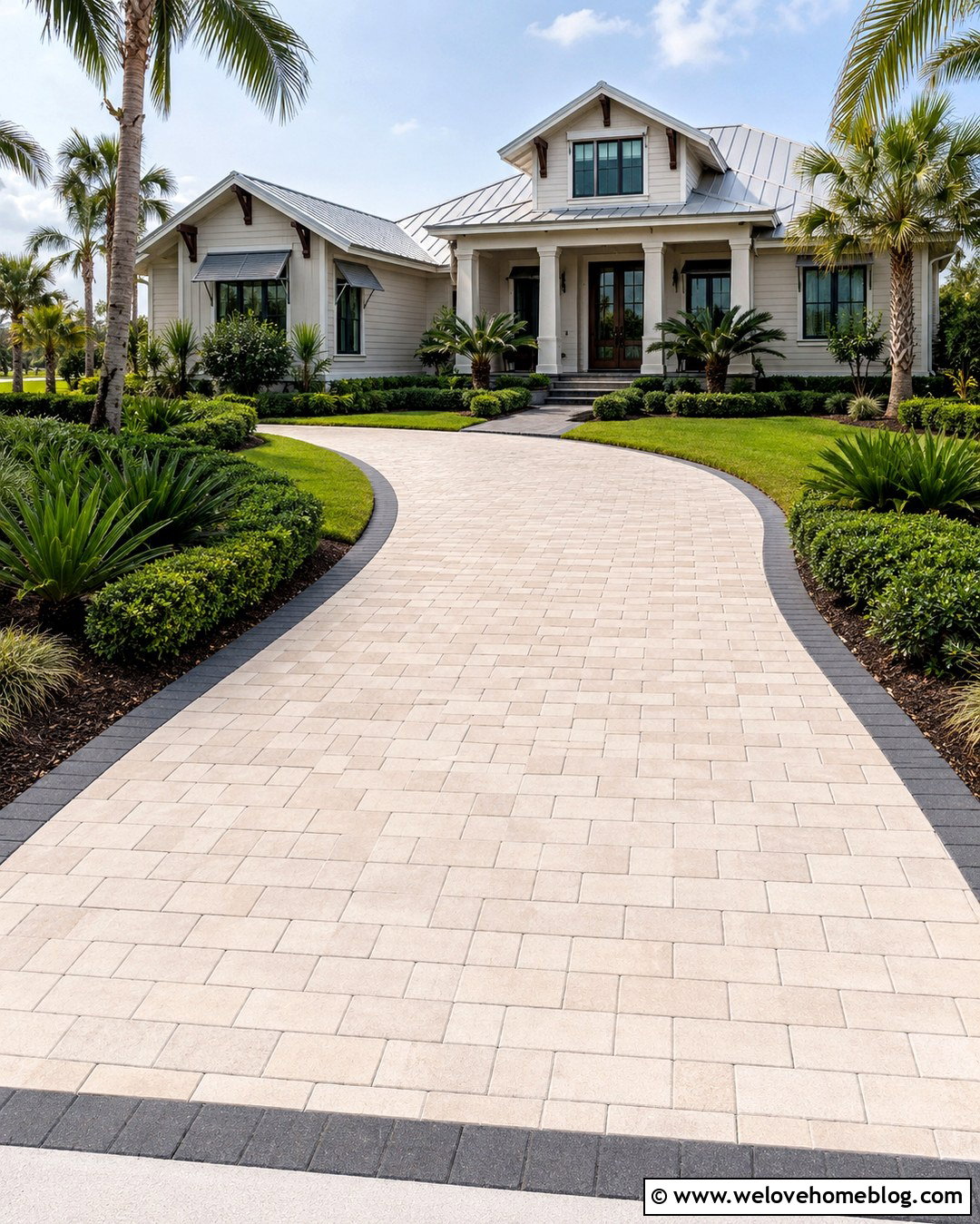
Concrete pavers create a polished Florida driveway that can complement almost any home. Choose light beige or sand-colored pavers in a running bond pattern to keep the entrance bright and coastal. A gently curved layout makes the approach feel softer, especially when it is framed by low beds of dwarf yaupon holly, coontie, and ornamental grasses. Use charcoal pavers as a narrow border to sharpen the edges and visually connect the driveway to a dark roof or window trim. A matching walkway can branch toward the front door without interrupting the main parking area. For easier upkeep, select a restrained paver palette rather than mixing several colors. Proper edge restraints and a carefully prepared base help keep the finished surface neat.
2. Florida Circular Paver Driveway

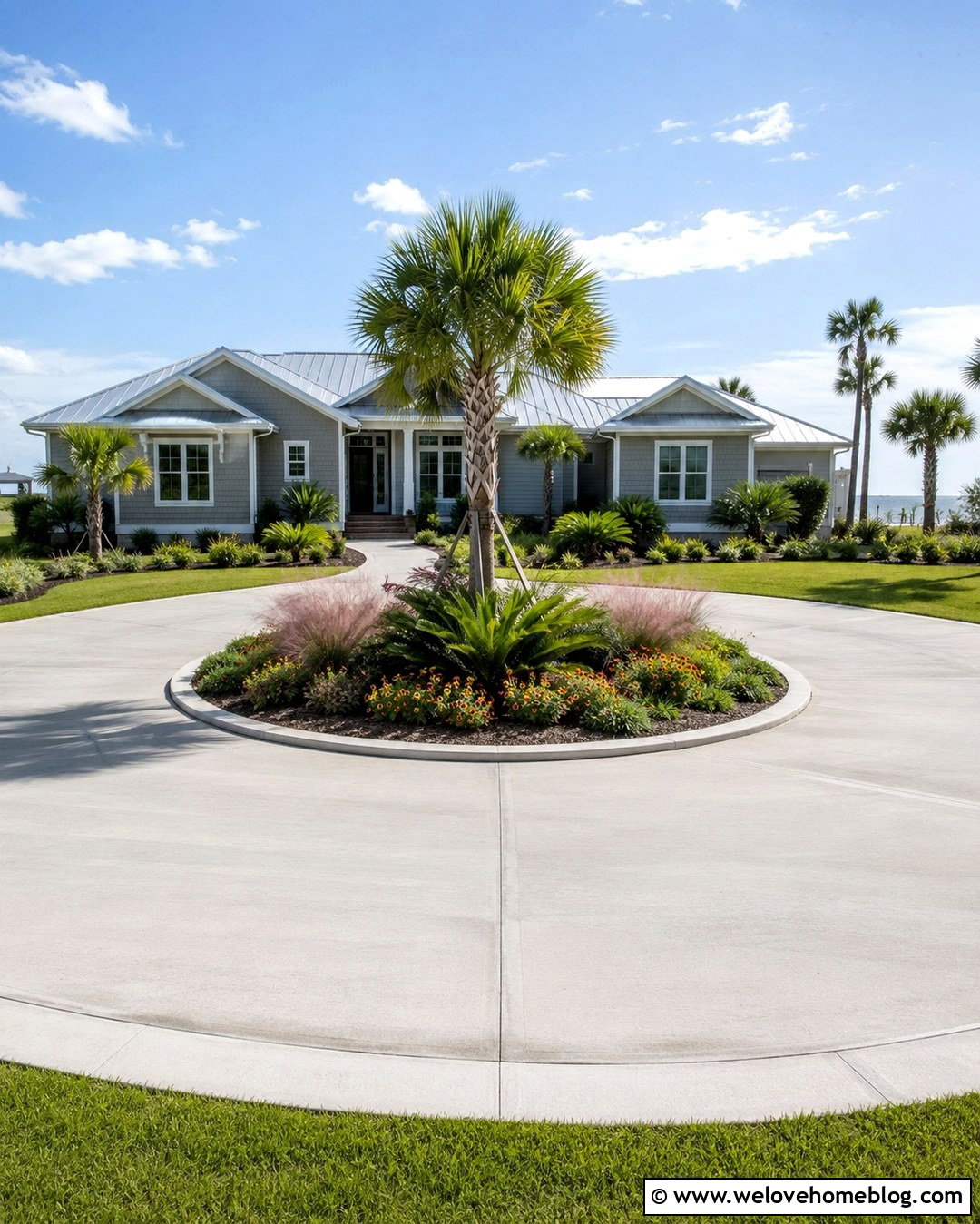
A circular driveway gives a larger Florida property a practical and impressive arrival area. Warm ivory concrete pavers can form the main surface, while a darker paver ribbon outlines the circle and emphasizes its shape. Place a broad planting island in the center with a specimen palm, low flowering shrubs, and stone mulch that will not wash onto the paving. Keep plants short near the street so drivers retain clear sightlines. The driveway can connect two entrances along the road and widen near the garage for comfortable maneuvering. This complete look works particularly well with Mediterranean, coastal, and modern stucco homes. Before finalizing the circle, test the turning path and confirm that the center island will not make the lanes uncomfortably narrow.
3. Florida Crushed Shell Driveway
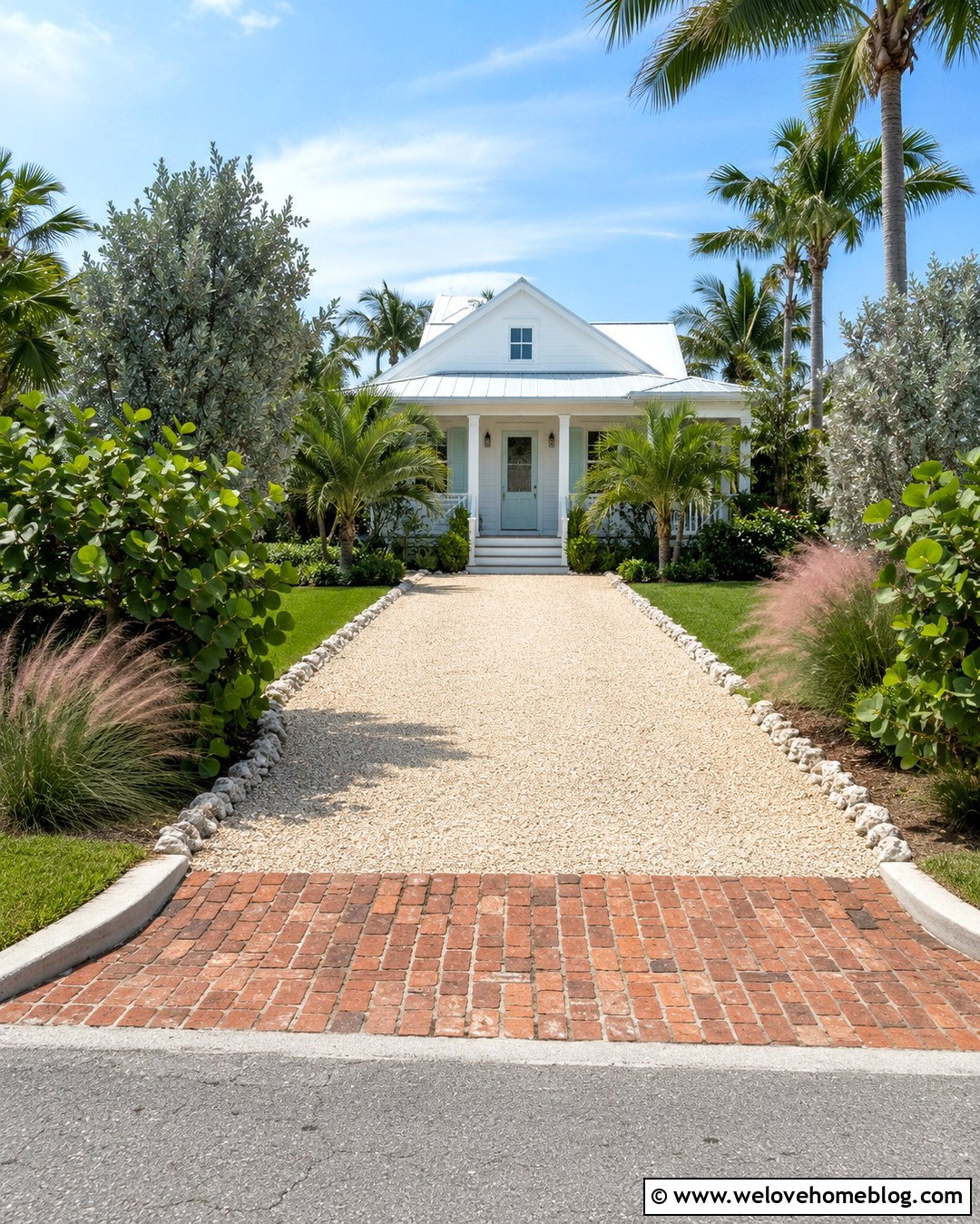
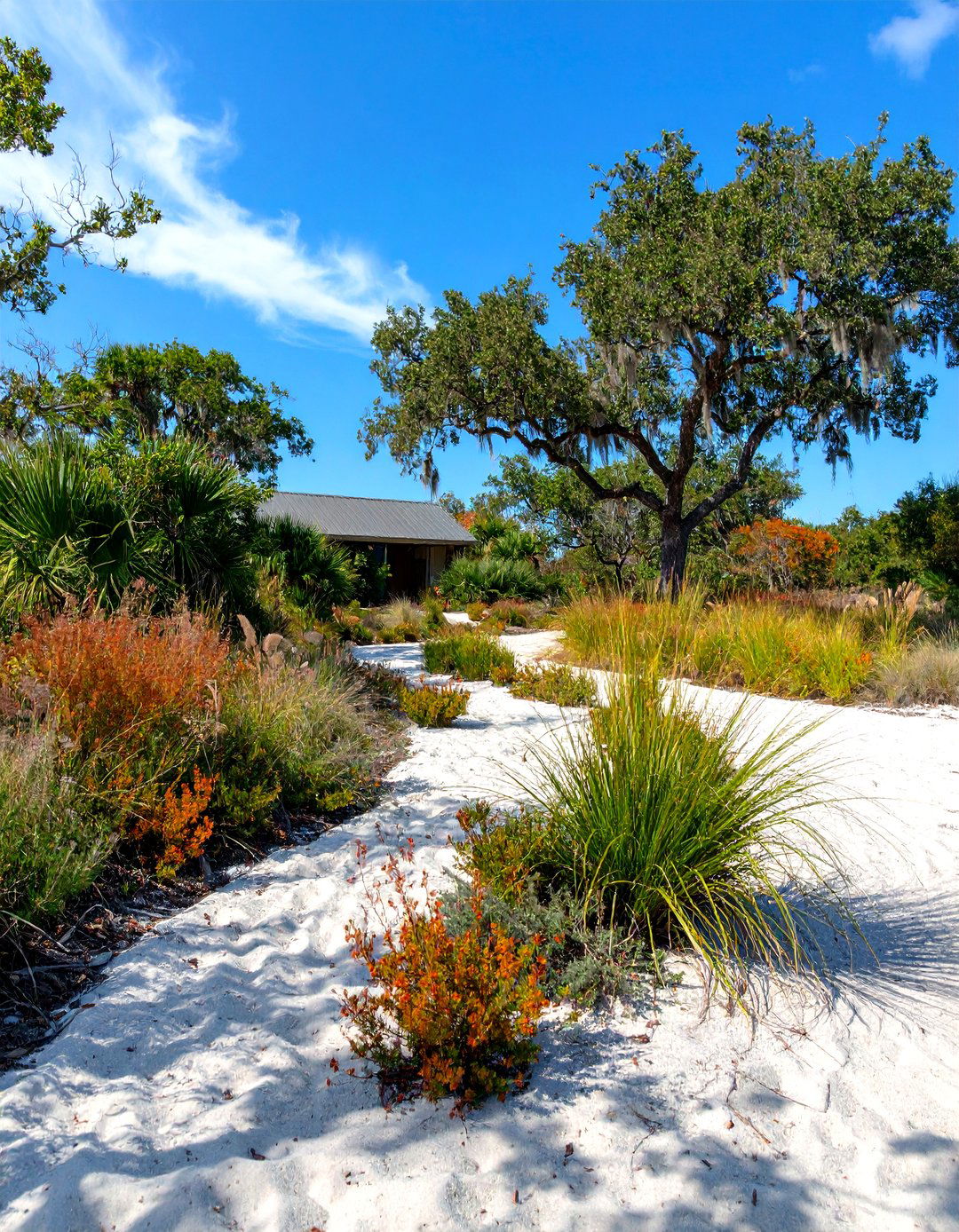
Crushed shell brings a relaxed coastal character to cottages, beach houses, and Key West-inspired homes. Use compacted white or cream shell on a straight driveway with softly rounded corners near the street. Pale shell reflects the landscape’s sunny colors and looks especially natural beside sea grape, silver buttonwood, muhly grass, and low palms. A steel, concrete, or shell-stone border helps contain loose material and keeps the driveway from spreading into planting beds. Add a solid paver apron at the garage and street transition for a more finished appearance. Shell driveways require occasional raking and replenishment, so they are best for homeowners who appreciate an informal surface. Good grading and a stable compacted base are essential for reducing ruts and displaced material.
4. Florida Coastal Gravel Driveway

A coastal gravel driveway can feel attractive and intentional when every edge is clearly defined. Start with compacted light gray limestone gravel arranged in a broad, gently curved layout. Frame it with tan concrete curbing or large shell-stone blocks that prevent gravel from migrating into the lawn. Tropical planting beds containing saw palmetto, flax lily, agave, and ornamental grass can soften the border without crowding the driving area. Near the garage, introduce a rectangular concrete paver parking pad to create a stable transition and reduce loose stones around the doors. Gravel works best when the driveway has a well-prepared base and controlled drainage. Avoid an overly small or rounded stone that may shift easily under tires, particularly on slopes or frequently used entrances.
5. Florida Modern Concrete Driveway
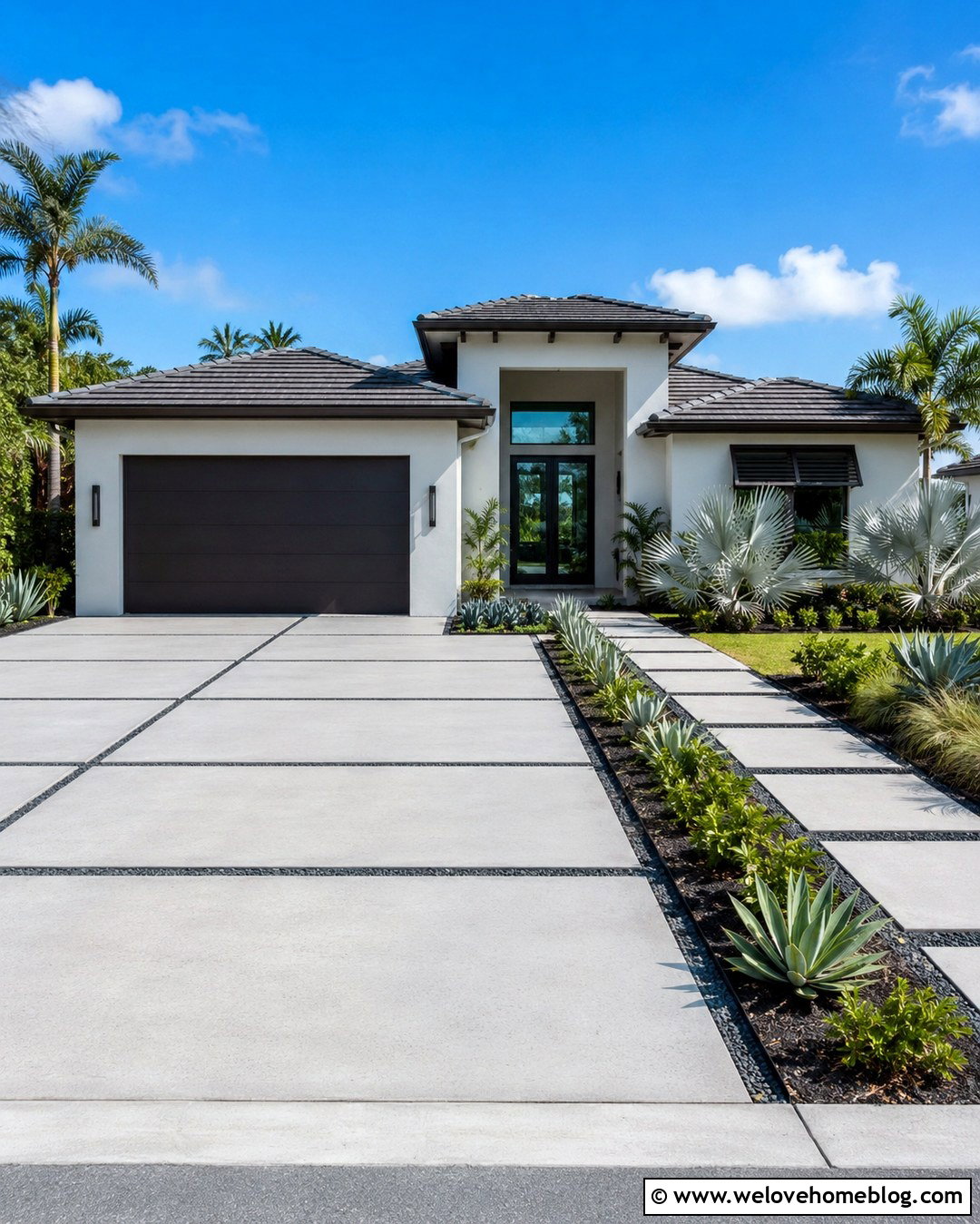
Large-format concrete panels give a Florida modern home a clean, architectural entrance. Use light gray poured concrete with a subtle broom finish for traction, divided into wide rectangular sections by narrow charcoal gravel joints. A straight driveway reinforces the home’s geometry, while crisp black metal edging keeps adjacent beds orderly. Complete the design with sculptural plants such as silver saw palmetto, agave, dwarf clusia, and neatly massed ornamental grasses. A linear walkway can run beside the driveway and meet the front entrance at a clear right angle. Keep decorative details minimal so the paving pattern remains the focal point. Careful joint placement can make the surface look deliberately segmented instead of randomly cut, and proper grading should guide rainwater away from the garage and foundation.
6. Florida Permeable Paver Driveway
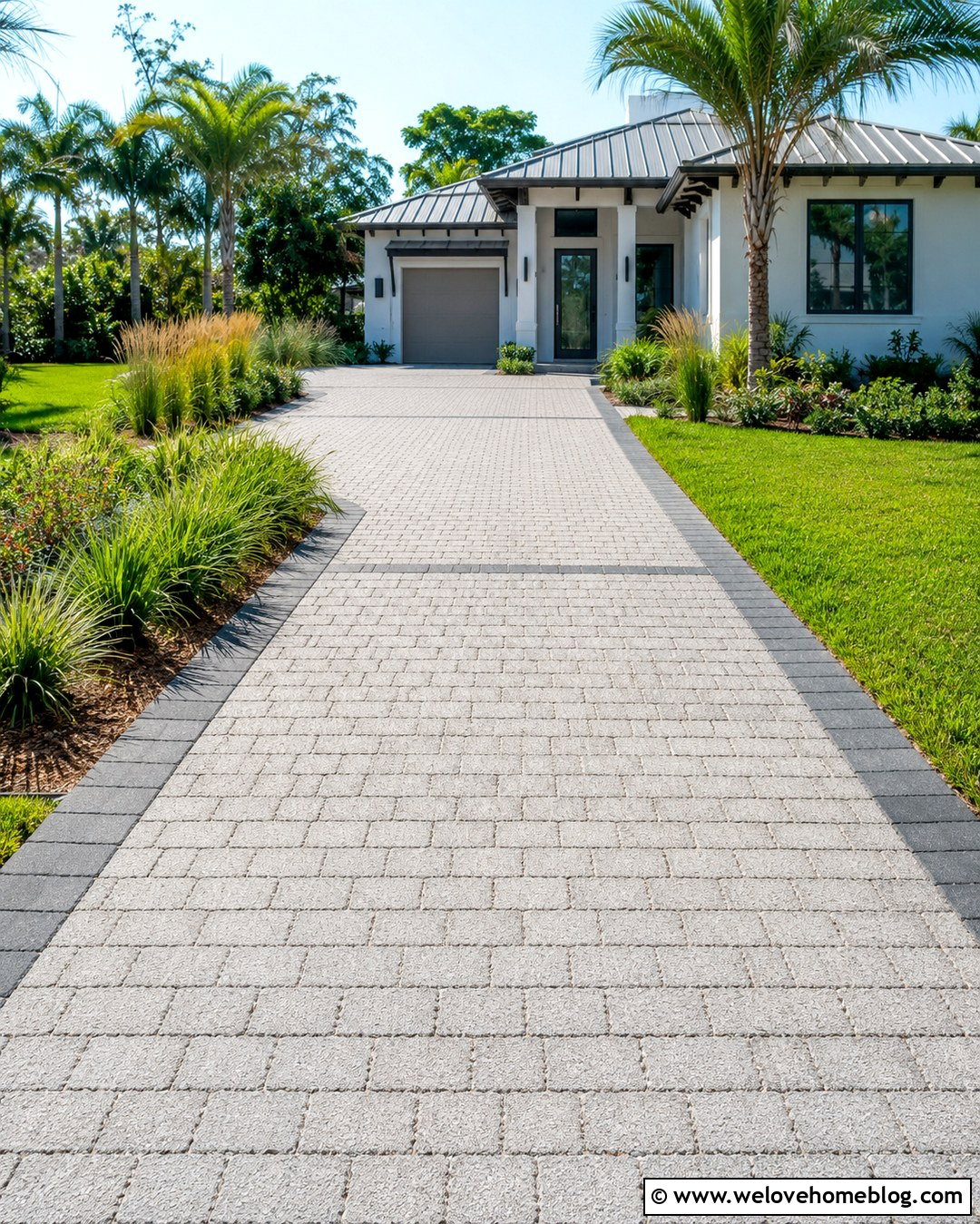
Permeable pavers offer a practical solution for a Florida yard where managing rainwater is an important design goal. Select pale gray open-joint concrete pavers over an appropriately engineered aggregate base. Arrange them in a straight driveway with a slightly wider parking court near the garage. Fill the joints with clean, compatible aggregate rather than ordinary soil, which can reduce infiltration and encourage weeds. Border the surface with solid charcoal pavers to prevent spreading and create a crisp outline. Rain gardens planted with suitable grasses and moisture-tolerant shrubs can sit beside lower sections of the driveway. Permeable paving is designed to help water enter the underlying system, but its performance depends on correct installation and maintenance. () Check local soil conditions and requirements before choosing this approach.
7. Florida Turf And Paver Driveway
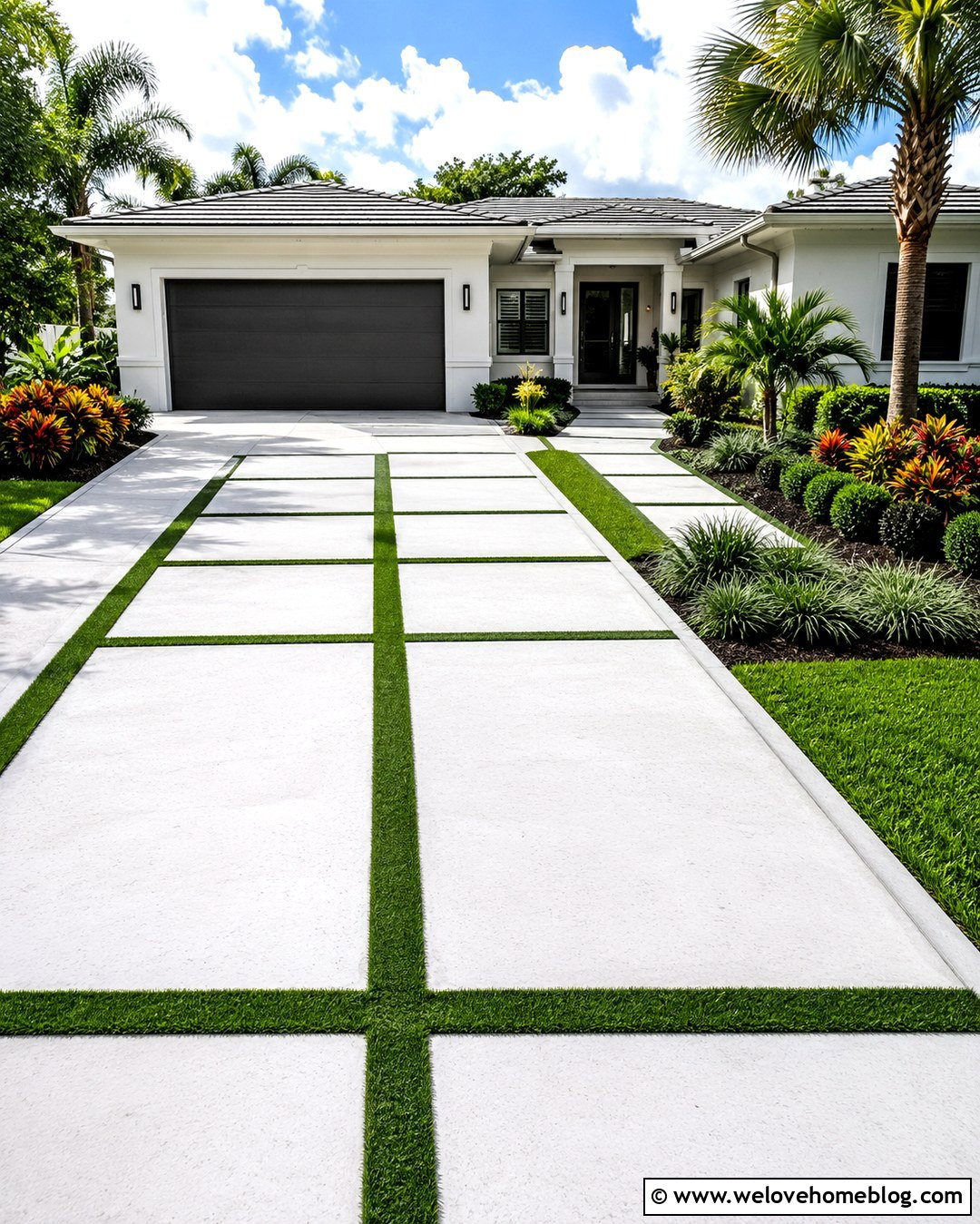
A turf-and-paver driveway adds greenery without losing the strength of a structured driving surface. Use large white concrete slabs in two broad wheel paths, with narrow strips of durable turf between and beside them. The straight layout suits a contemporary Florida bungalow or low-profile ranch home. Frame the driveway with flush concrete edging so mowing remains simple and tires have a clearly defined route. Nearby beds can feature croton, dwarf podocarpus, liriope, and compact palms for layered tropical color. This design is most successful when the green strips receive enough light and have suitable irrigation and drainage. In heavily shaded or frequently driven areas, reinforced grass cells or decorative aggregate joints may be more dependable than ordinary lawn. Keep the garage apron fully paved to handle turning and repeated parking.
8. Florida Brick Herringbone Driveway
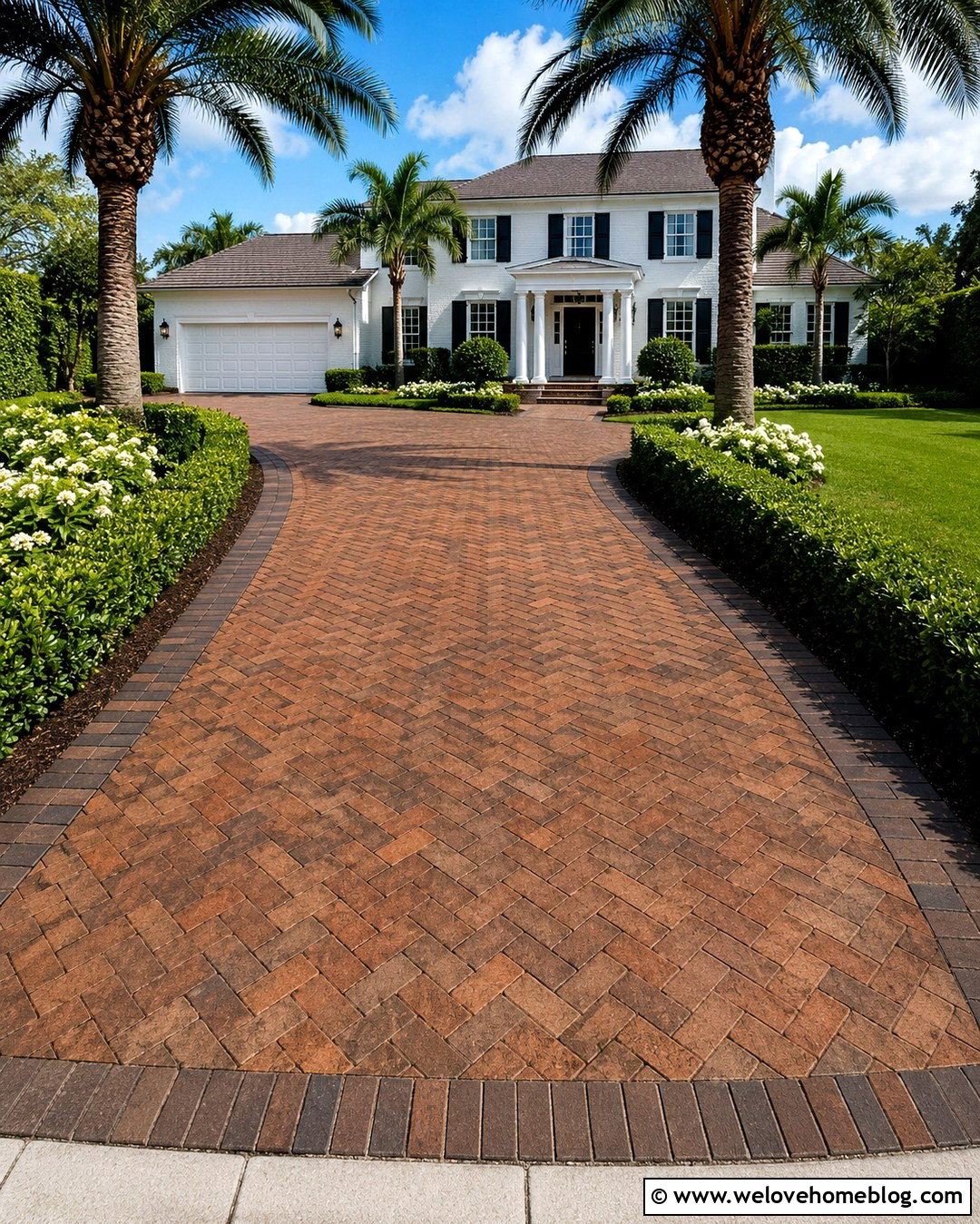
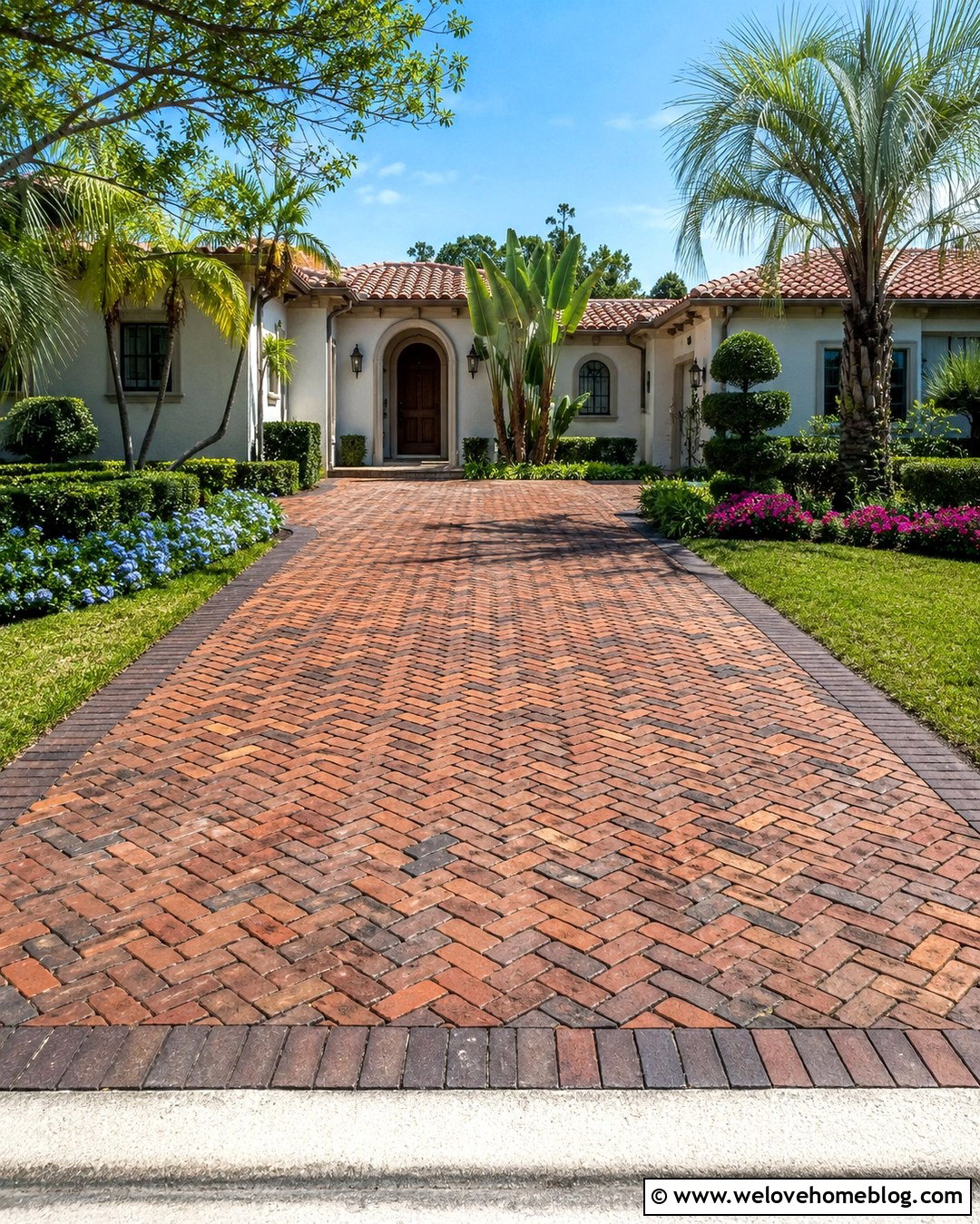
Clay brick pavers in a herringbone pattern bring warm, traditional character to a Florida colonial or Spanish-style home. Choose weathered red and brown brick tones for the main surface, then add a dark soldier-course border along both sides. A gently curved driveway makes the pattern feel established rather than overly formal. Balance the rich paving color with green podocarpus hedges, white flowering shrubs, and a pair of symmetrical palms near the entrance. A matching brick walkway can connect the driveway to the porch and repeat the border pattern. Because humid conditions can leave paving shaded and damp, allow enough sunlight and air movement around the surface. Periodic cleaning and appropriate joint maintenance will help the brick retain its orderly appearance without removing the natural variation that gives it charm.
9. Florida Stamped Concrete Driveway
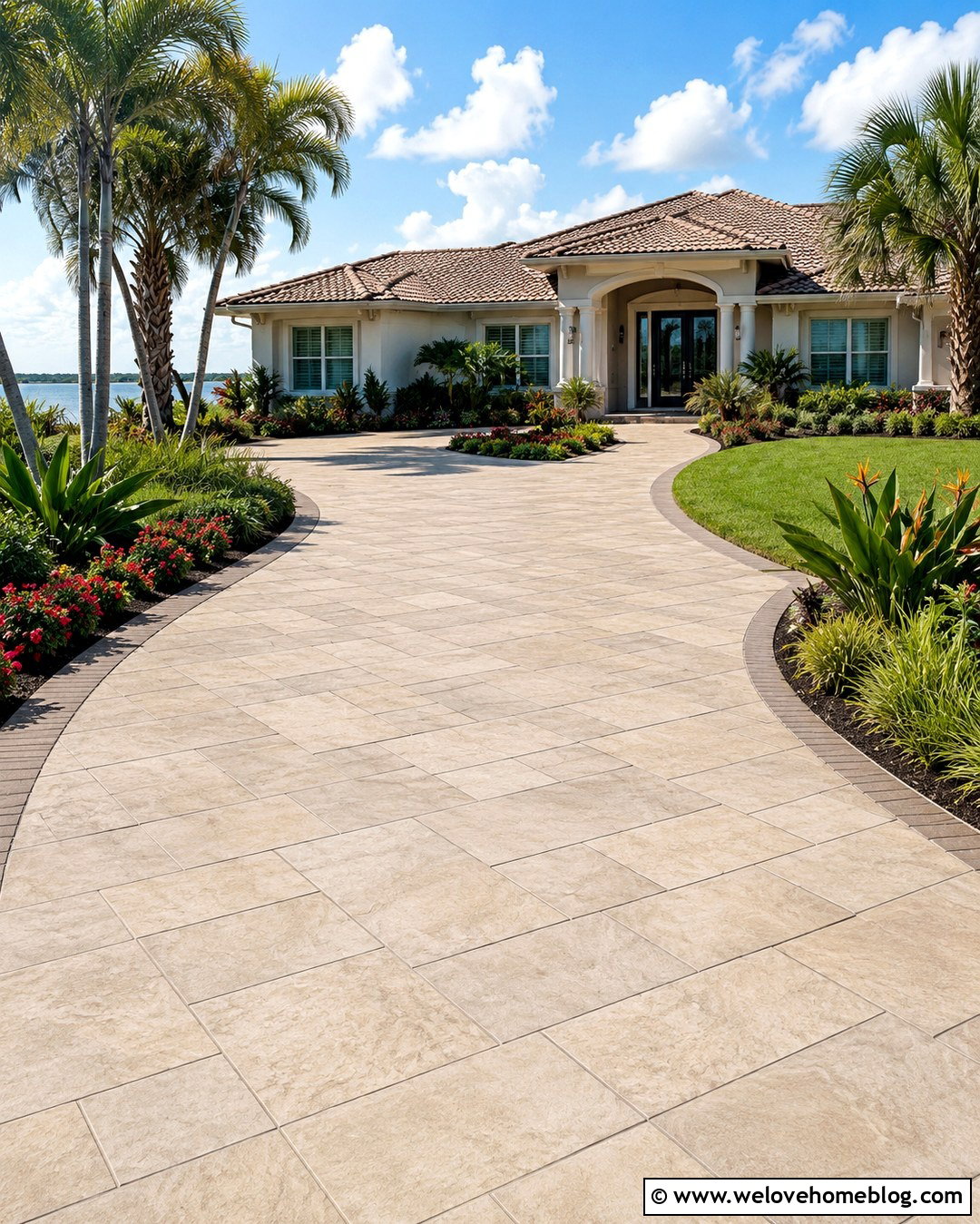
Stamped concrete can create the appearance of stone while maintaining a continuous driveway surface. For a Florida home, consider light sand-colored concrete stamped in a large ashlar slate pattern. Use a curved layout leading to a coastal ranch house, with a contrasting taupe border that defines the edges and garage apron. Planting beds filled with foxtail ferns, bird of paradise, dwarf palms, and colorful groundcovers add texture without competing with the stamped pattern. Choose a finish and sealer intended to provide appropriate traction, especially where rainwater may cross the driveway. Avoid overly dark colors that can dominate a sunny front yard. Well-positioned control joints should be incorporated into the pattern so they feel intentional. A simple palette usually produces a more convincing, upscale stone effect.
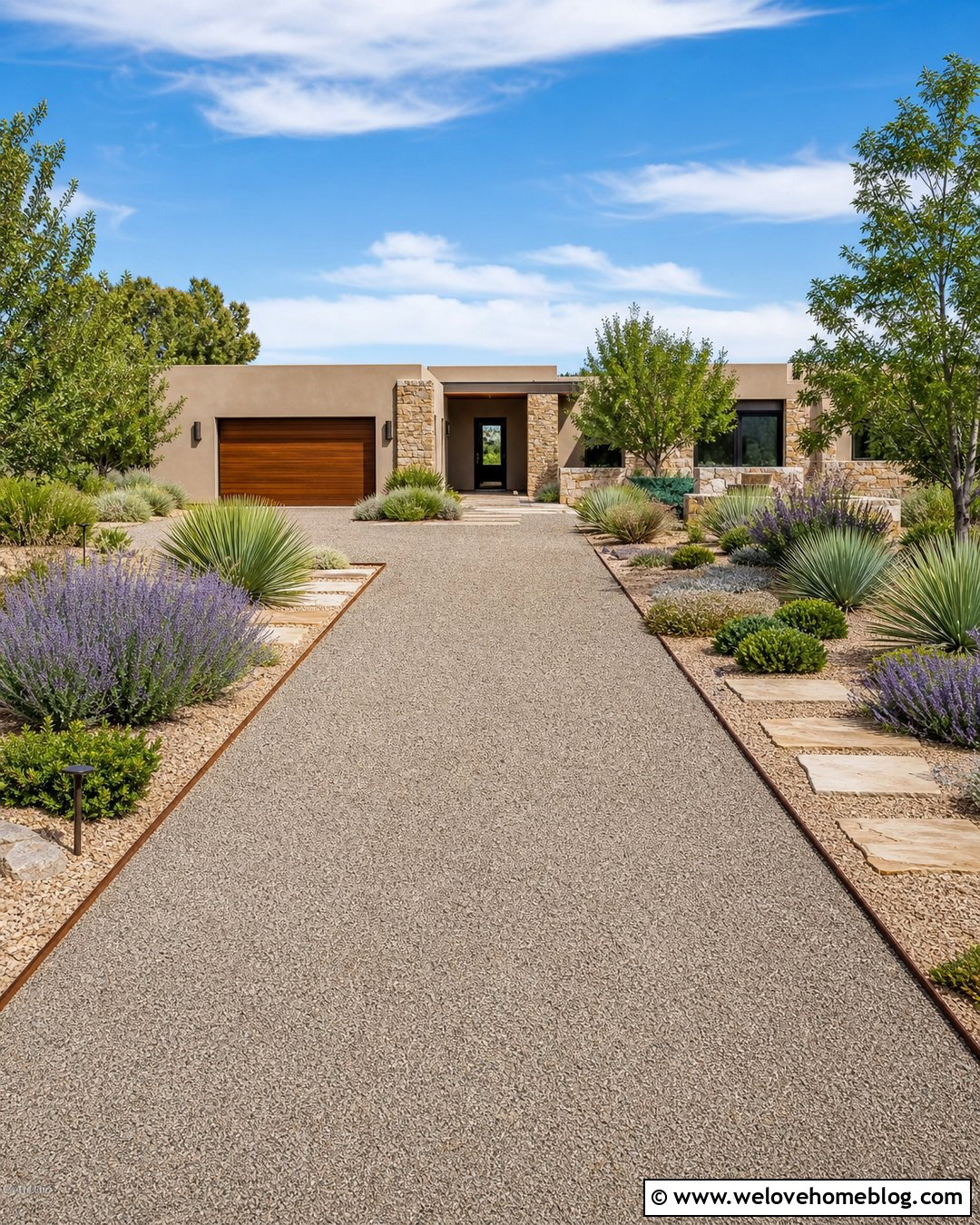
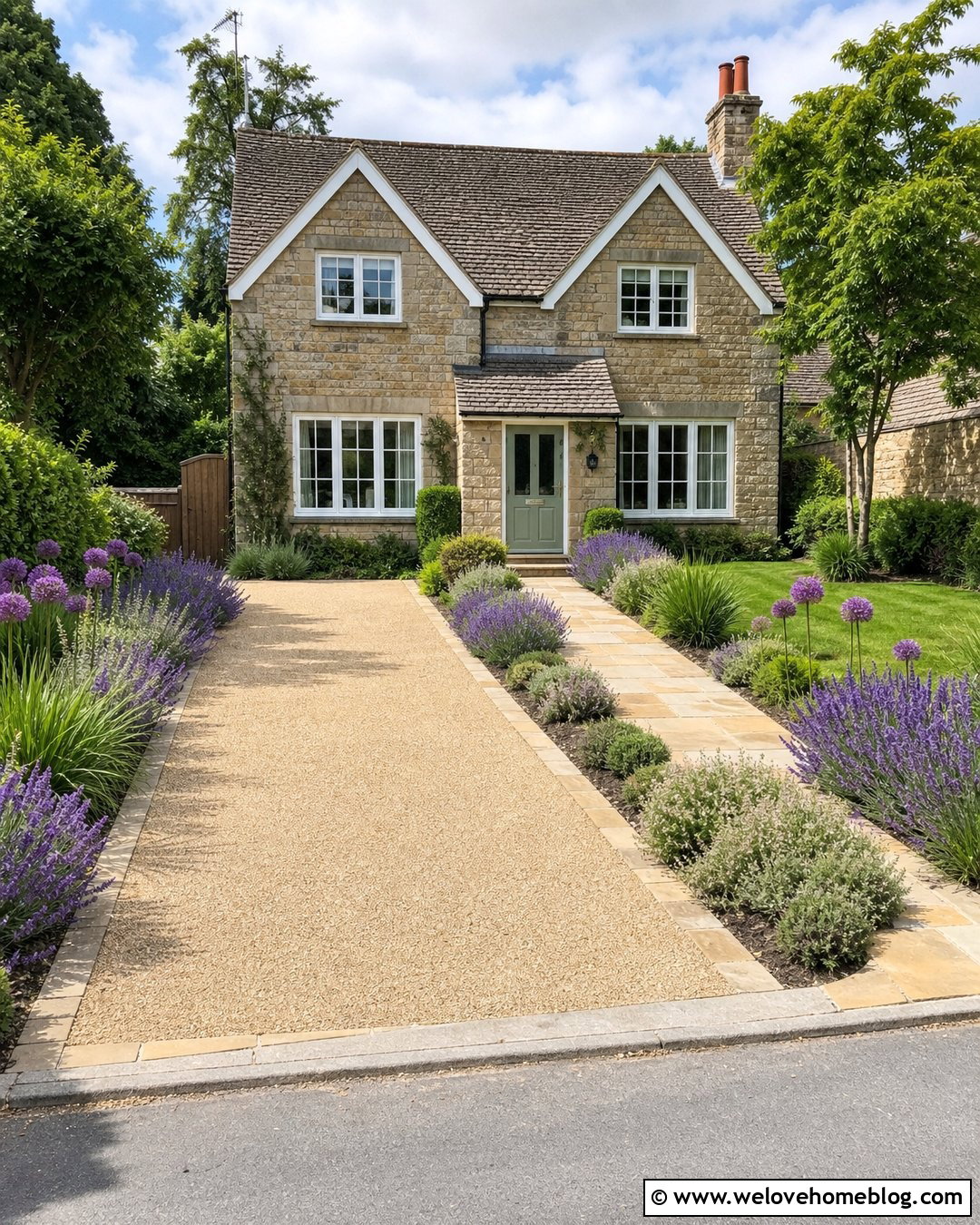
10. Florida Exposed Aggregate Driveway
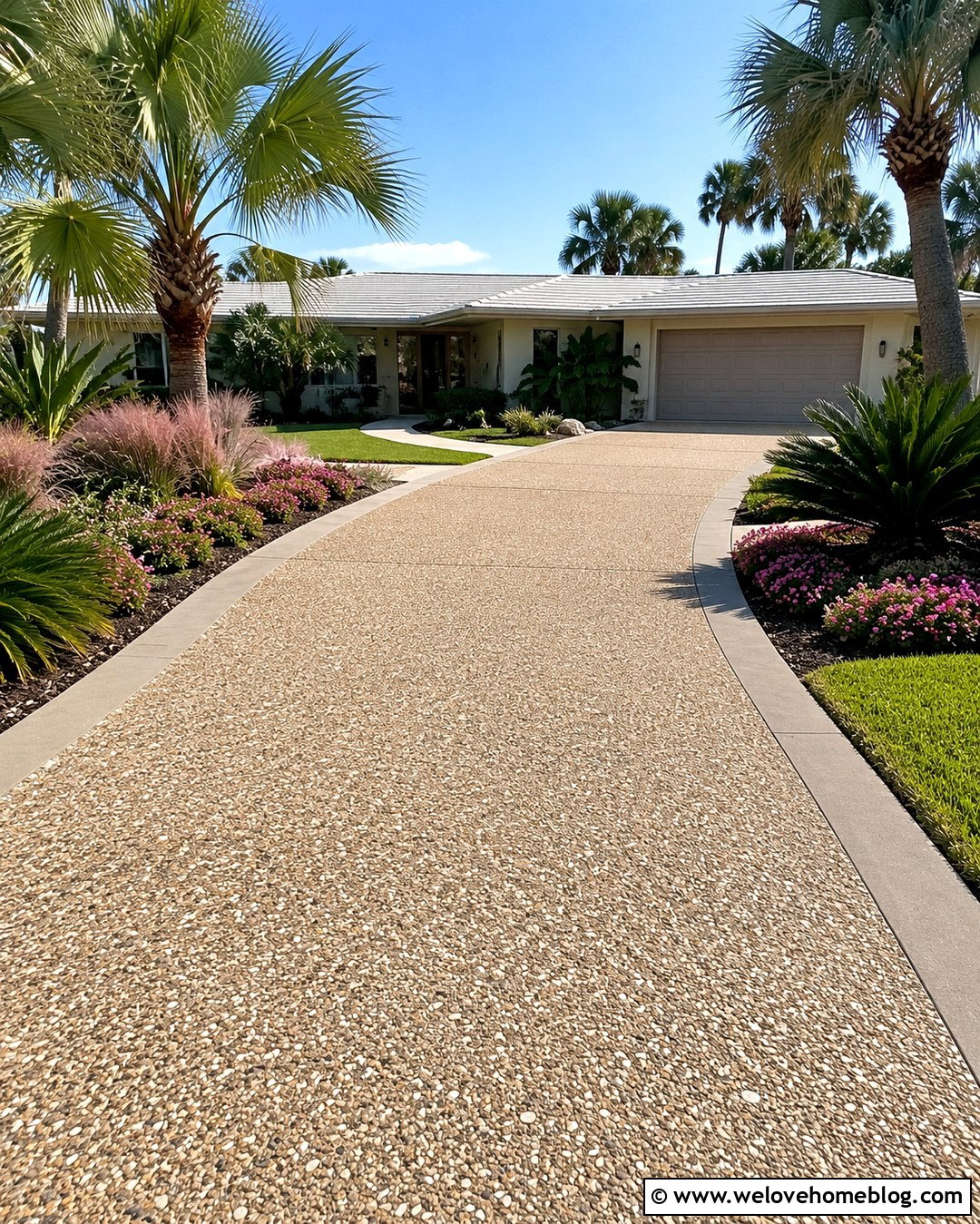
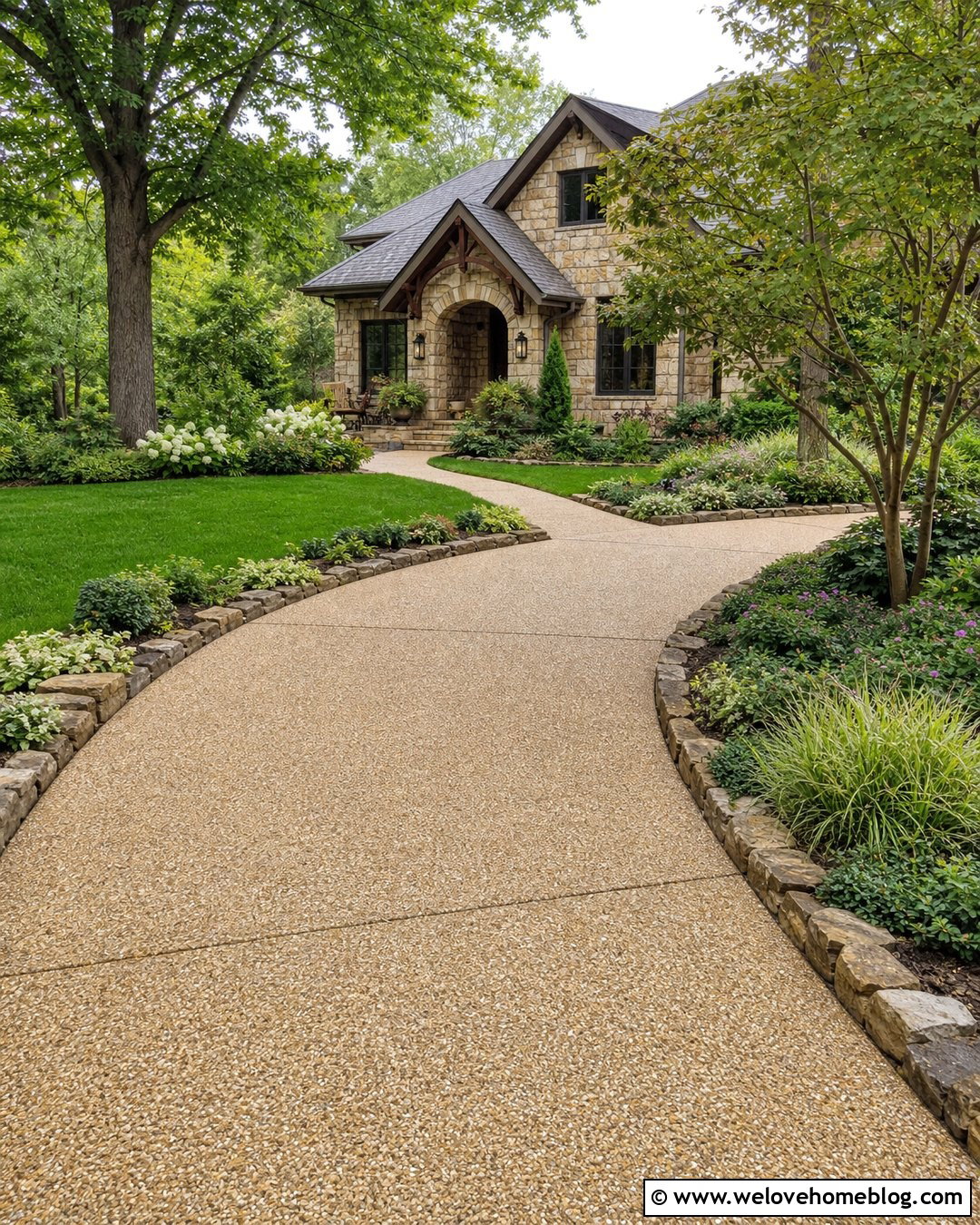
Exposed aggregate provides subtle texture and a natural color blend that works well with Florida ranch, mid-century, and coastal homes. Use a warm beige concrete mix revealing small tan and cream stones. A wide straight layout can be softened with a curved walkway and rounded planting beds at the driveway entrance. Add a smooth concrete border in a slightly darker shade to contain the aggregate visually and create a clean transition to the lawn. Sabal palms, coontie, muhly grass, and low flowering plants can frame the surface with manageable layers. The texture should be comfortable enough for walking while still offering visual depth. Ask to view a completed sample before installation because aggregate size, color, and exposure can significantly affect the final appearance. Finish the garage threshold with a precise, level transition.
11. Florida Asphalt Driveway With Paver Border
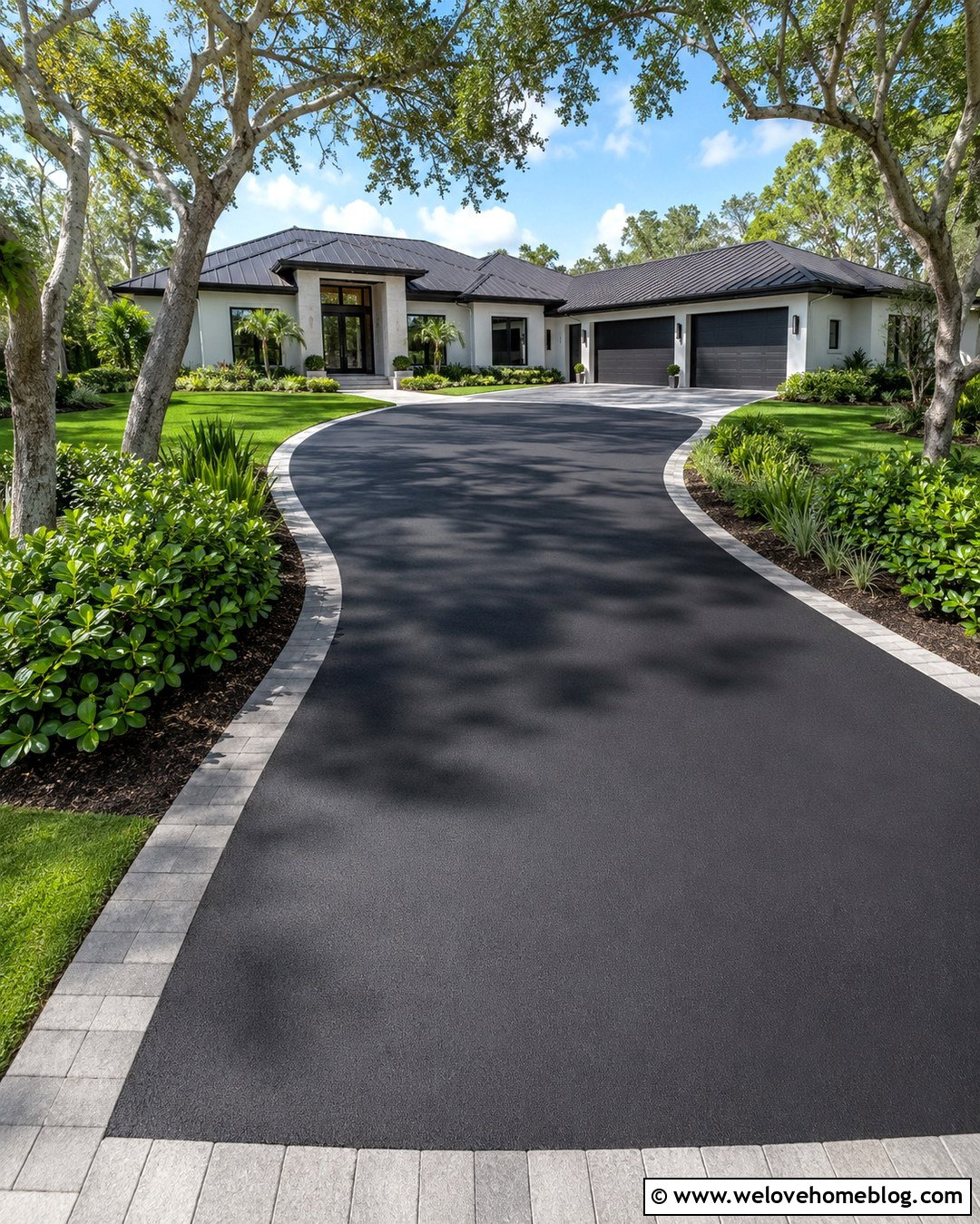
Black asphalt becomes more attractive when it is treated as part of a complete landscape rather than a purely functional surface. Use a smooth asphalt driveway with a broad curved approach and a warm gray concrete paver border. The lighter edging clearly defines the pavement and helps connect it to a matching front walkway. Frame the curve with sweeping beds of dwarf clusia, flax lily, native grasses, and a few shade trees placed safely away from the driving lane. Near the garage, add a wider paver apron to create a finished visual transition. This combination suits large ranch homes, wooded properties, and budget-conscious renovations. Keep roots, irrigation, and drainage in mind when placing nearby landscaping. A simple border pattern is easier to coordinate with future asphalt maintenance than an elaborate decorative insert.
12. Florida Horseshoe Driveway
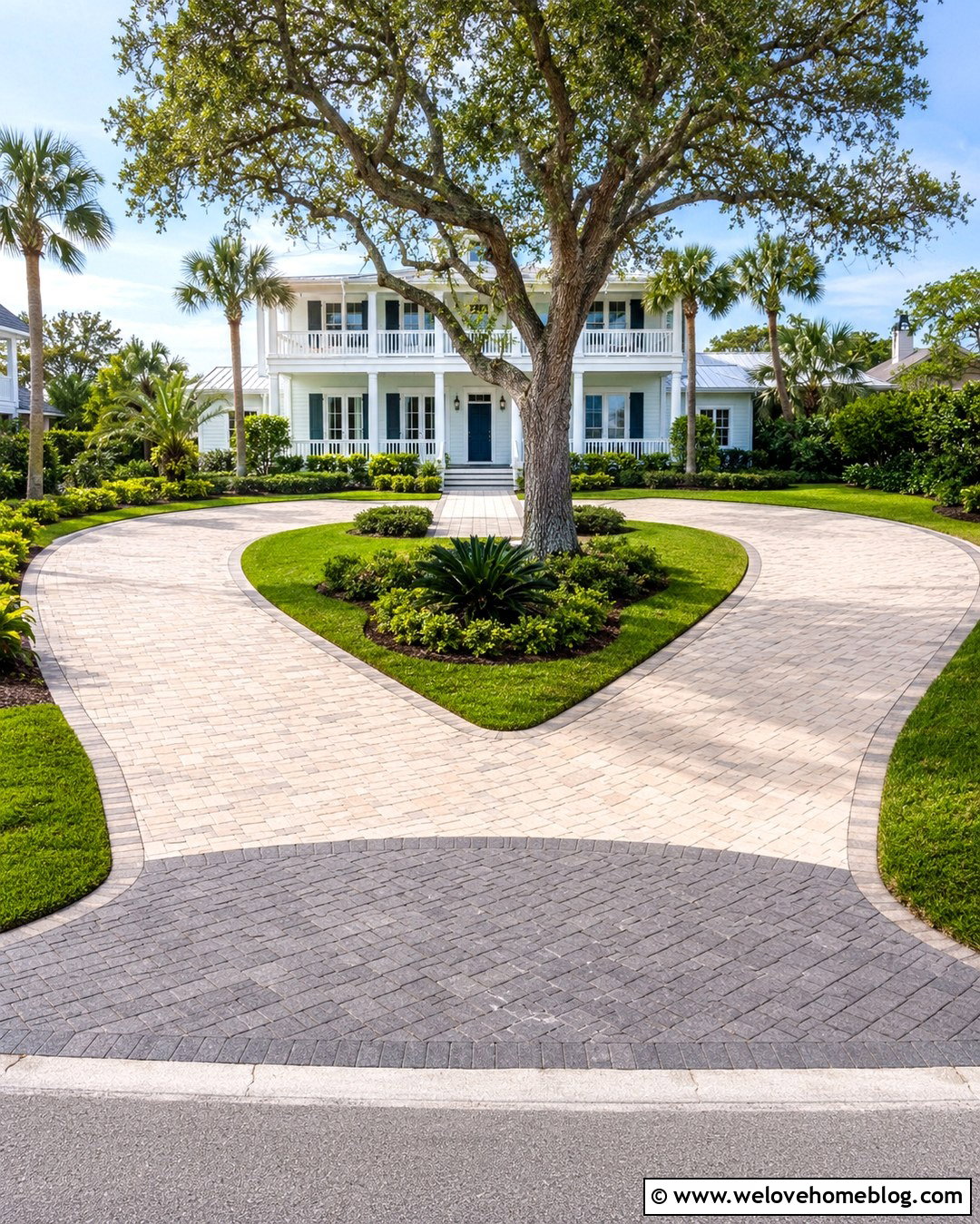
A horseshoe driveway provides two street connections and creates an inviting approach for a wide Florida property. Build the main surface with light tan concrete pavers laid in a simple running bond, then define both entrances with darker fan-shaped paver aprons. The central lawn can hold a mature live oak or palm grouping surrounded by a broad, low planting bed. Keep the inner curve clean with flush edging that makes mowing and maintenance easier. Near the house, widen the driveway enough to provide a comfortable drop-off zone without turning the entire front yard into paving. This layout works beautifully with traditional ranch, coastal colonial, and Mediterranean homes. Carefully plan mailbox placement, walkways, utilities, and visibility at both exits. Local rules may also affect whether two curb connections are permitted.
13. Florida Curved Driveway With Palm Landscaping
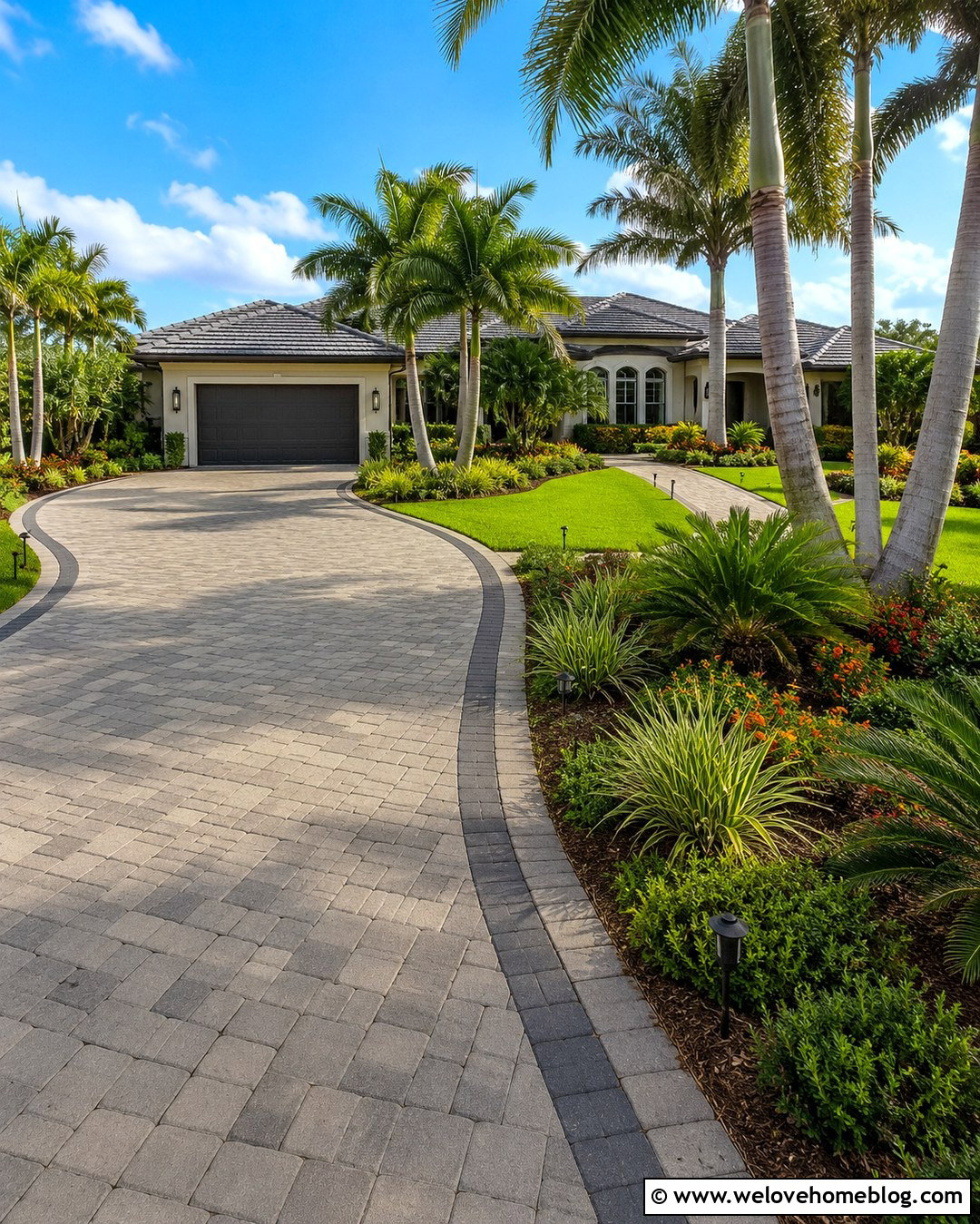
A curved driveway can reveal a Florida home gradually while making the front yard appear deeper. Use warm gray interlocking concrete pavers that sweep gently around layered tropical beds. Mark the outer edge with a charcoal paver ribbon and keep the inner edge softer with lawn and low groundcover. Plant palms in staggered groups rather than a rigid row, mixing them with coontie, dwarf firebush, flax lily, and ornamental grasses. Leave generous clearance around the pavement so fronds and shrubs do not interfere with vehicles. Low landscape lights can follow the curve, but fixtures should remain understated during daylight. The finished driveway should guide the eye naturally toward the garage and front entrance. Repeating the same paver colors in the walkway helps the entire landscape feel coordinated.
14. Florida Tropical Driveway Entrance
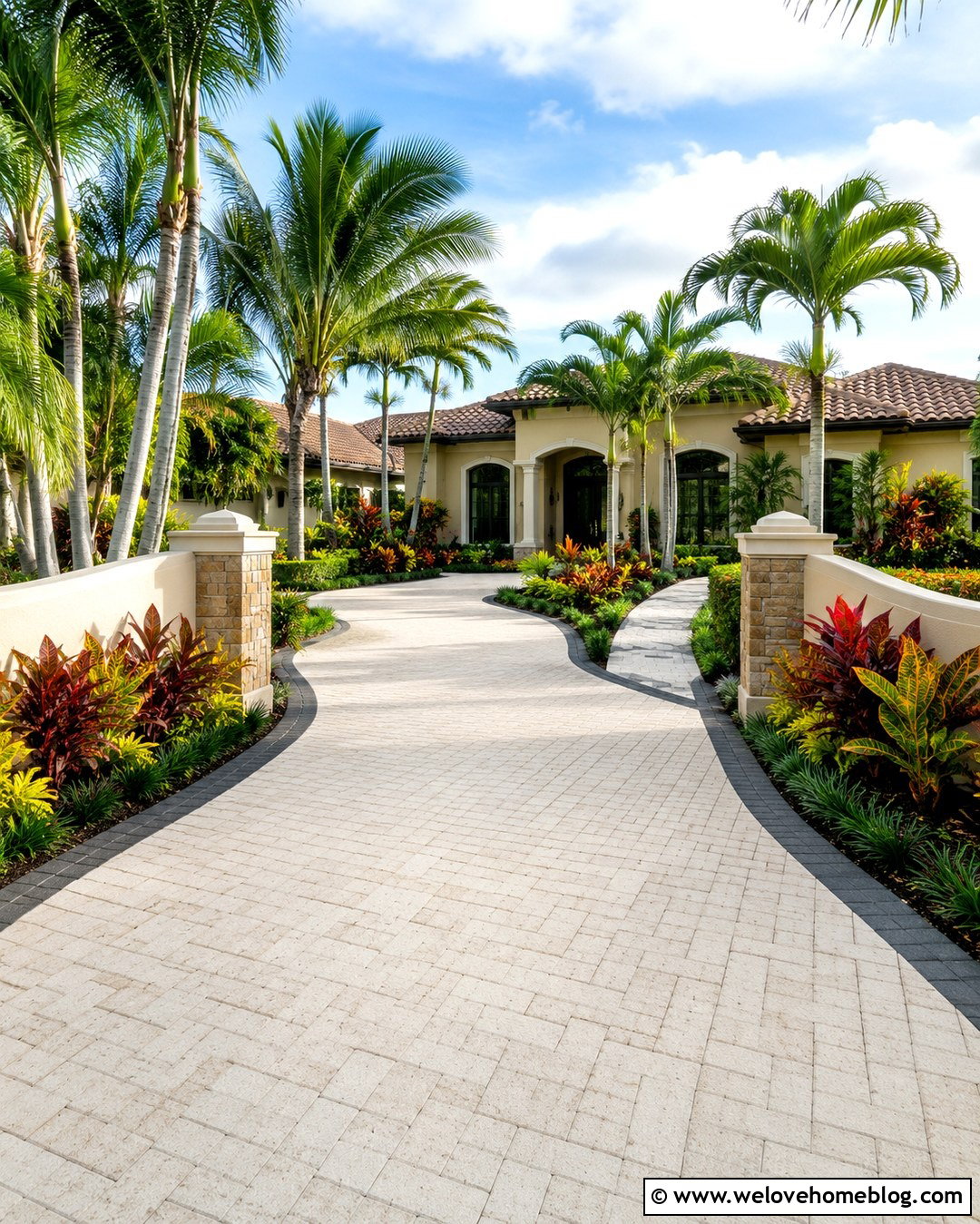
The entrance sets expectations before visitors see the full house. Create a wide driveway opening with cream concrete pavers laid in a basket-weave pattern and framed by dark gray border pavers. Low stucco walls or compact stone pillars can mark both sides without blocking views of traffic. Behind them, layer Christmas palms, bromeliads, croton, liriope, and low evergreen shrubs to create tropical color at several heights. Continue the paving in a gentle curve toward a stucco home so the entrance feels connected to the complete driveway. Include a separate pedestrian path where possible, preventing guests from walking through the driving lane. Keep plant growth away from address markers, lighting, and visibility triangles. The result should feel lush and welcoming, but not crowded or difficult to navigate.
15. Florida Key West Driveway
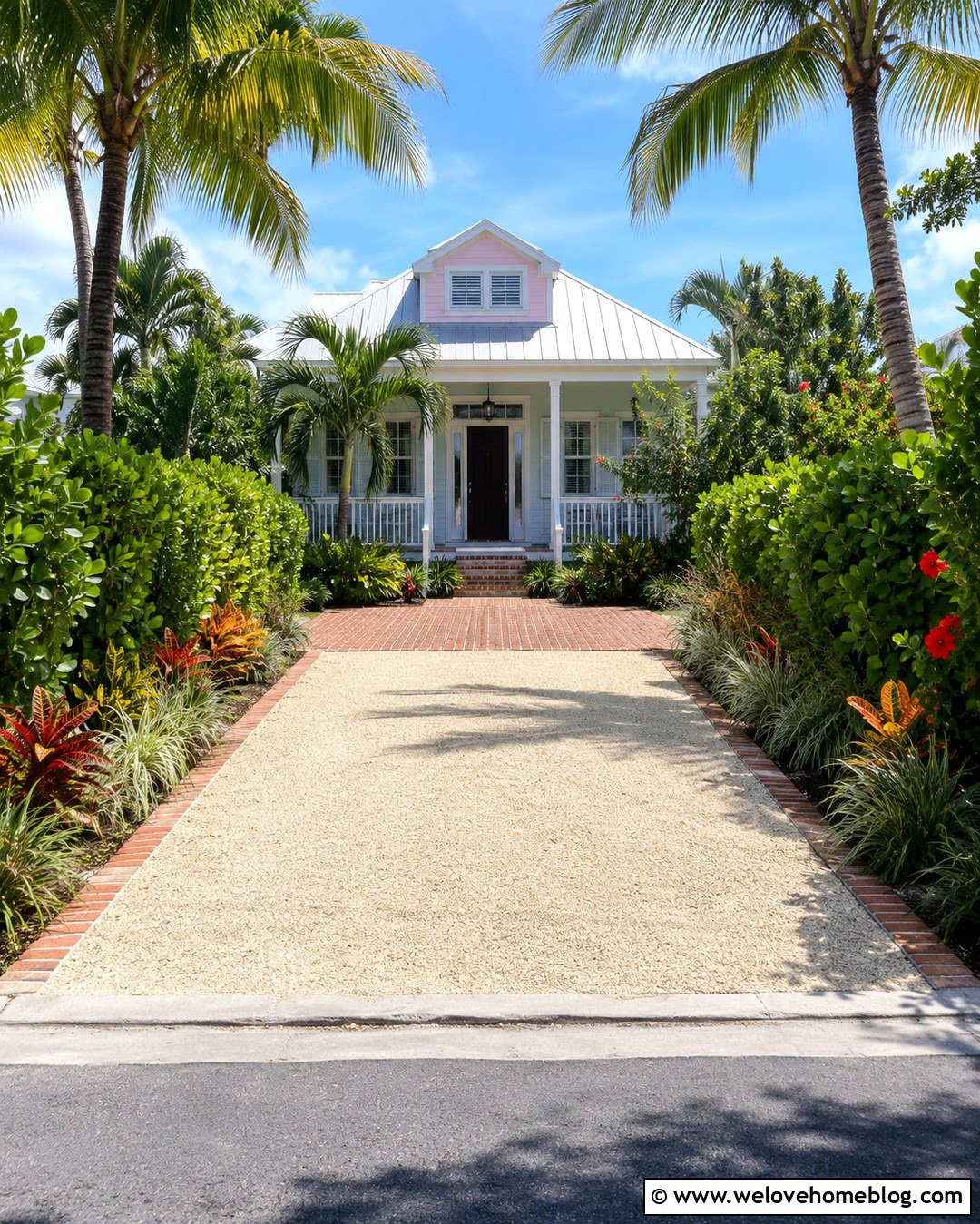
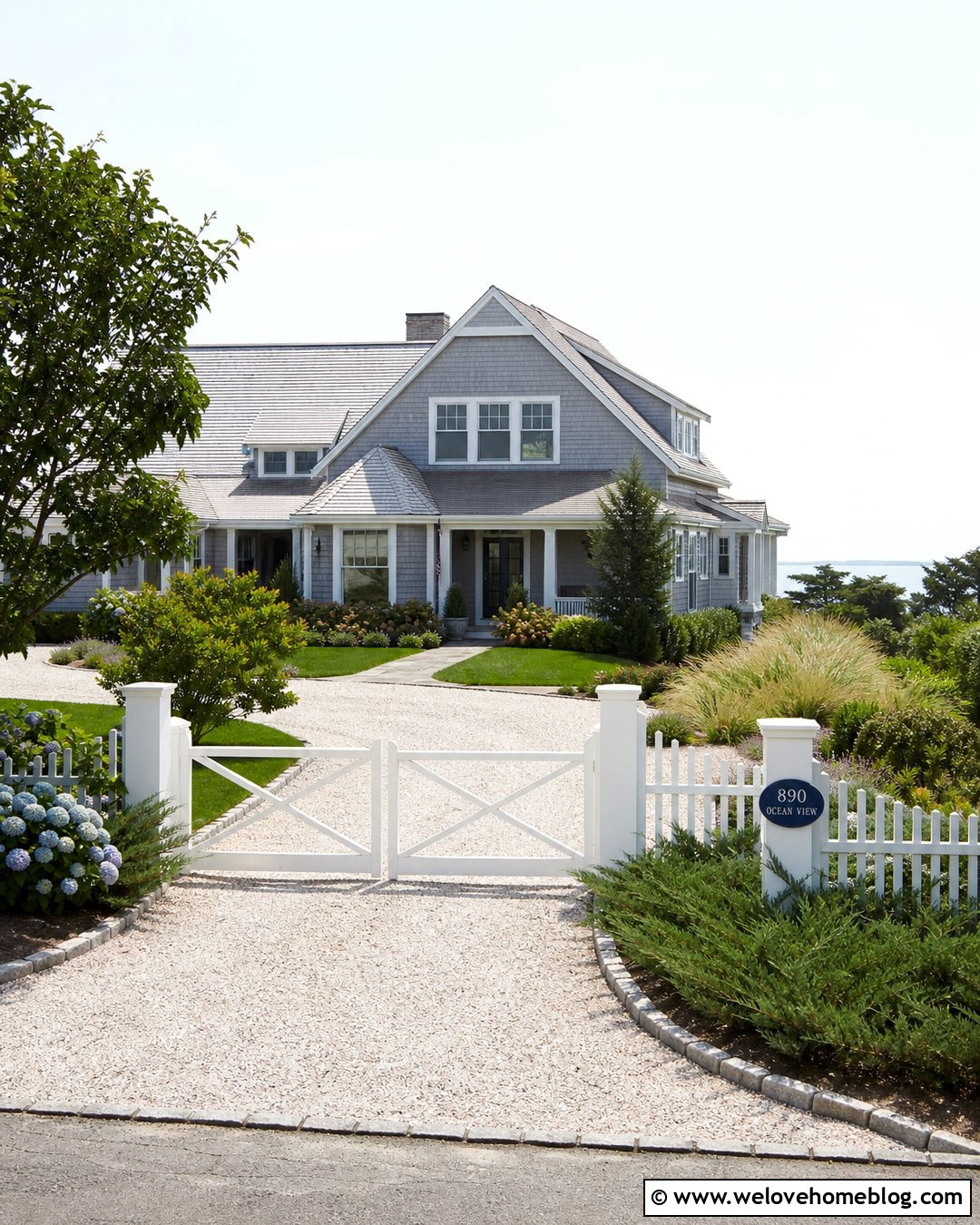
A Key West-style driveway should look relaxed, bright, and closely connected to the tropical architecture. Use compacted cream crushed shell in a narrow straight layout leading toward a pastel cottage with a metal roof and deep front porch. Edge the shell with reclaimed-look red brick laid flush with the surface. This adds definition without making the driveway feel formal. Surround it with coconut palms where appropriate, sea grape, hibiscus, croton, and breezy ornamental grasses. Add a short brick walkway from the driveway to the porch steps and repeat the same material around planting beds. A solid concrete or brick pad near the garage can provide a stable parking area. Keep the planting composition loose, but maintain clear sightlines and enough open space for routine shell raking.
16. Florida Mediterranean Driveway
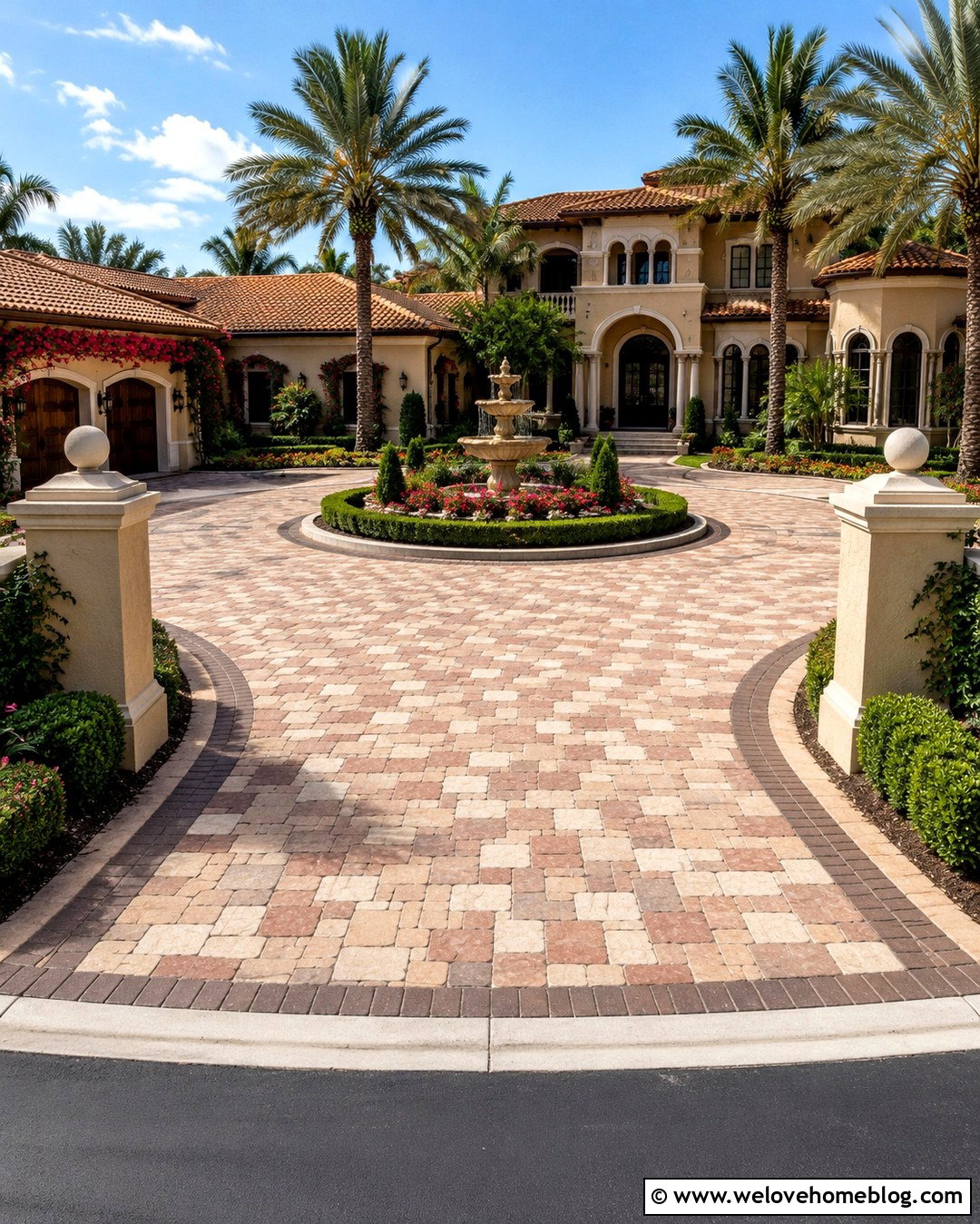
Warm pavers and structured landscaping complement the arches, stucco, and tile roofs of Mediterranean Florida homes. Choose tumbled concrete pavers in ivory, sand, and muted terracotta, arranged in a modular pattern across a broad circular driveway. Outline the surface with a dark brown paver border and repeat that color in the walkway. At the center, create a formal planting island with a small fountain, clipped shrubs, and a pair of palms. Bougainvillea can add color near walls or trellises where its growth and thorns will not interfere with vehicles. Use symmetrical entrance pillars finished in matching stucco to complete the approach. Avoid combining too many paver colors, which can make the driveway appear busy. A restrained blend keeps the house, landscaping, and hardscape visually balanced.
17. Florida Small Front Yard Driveway
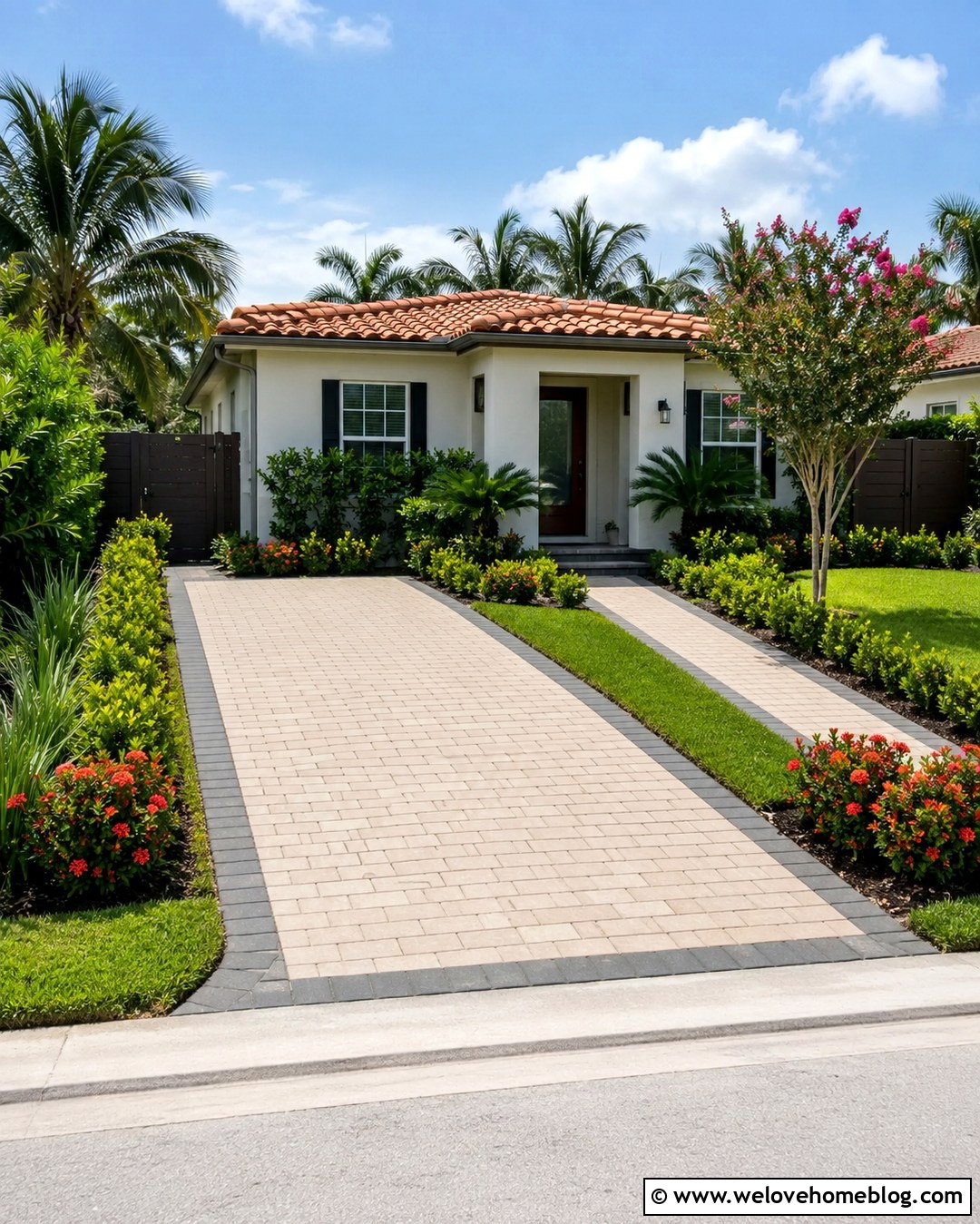
A small Florida front yard benefits from a driveway that looks clean without consuming every visible green area. Use pale beige concrete pavers in a simple linear pattern for a narrow, straight driveway. Add a charcoal border only along the outer edges, avoiding large decorative bands that can make the space feel smaller. Run a slim matching walkway from the driveway to the front door, leaving one continuous planting bed beside the house. Dwarf ixora, compact clusia, coontie, and low ornamental grass can provide color and structure without overflowing the pavement. A small palm or flowering tree placed near the corner of the house creates height while preserving parking space. Keep the driveway width practical, and use flush edging to reduce visual clutter and simplify lawn maintenance.
18. Florida Long Driveway With Trees
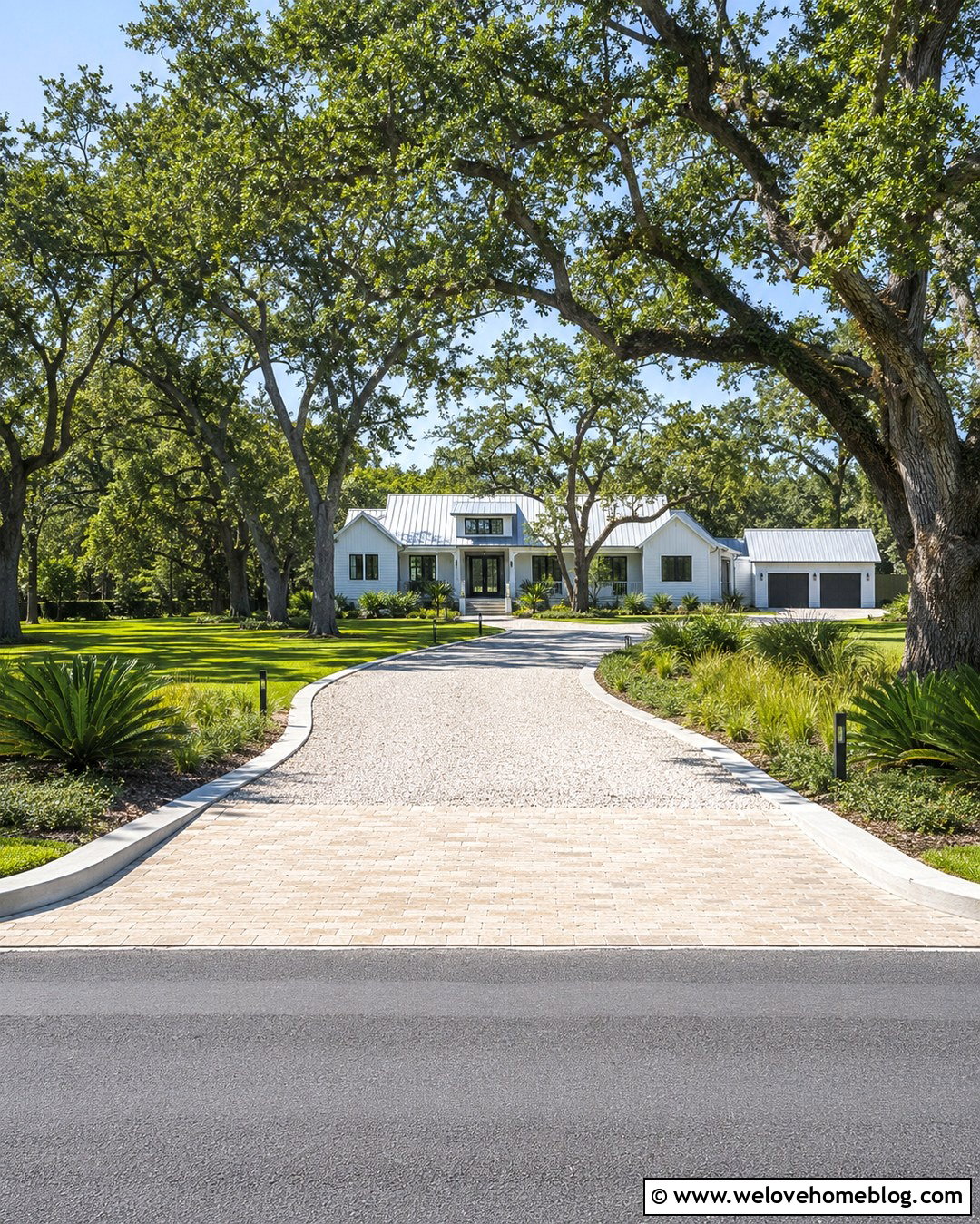
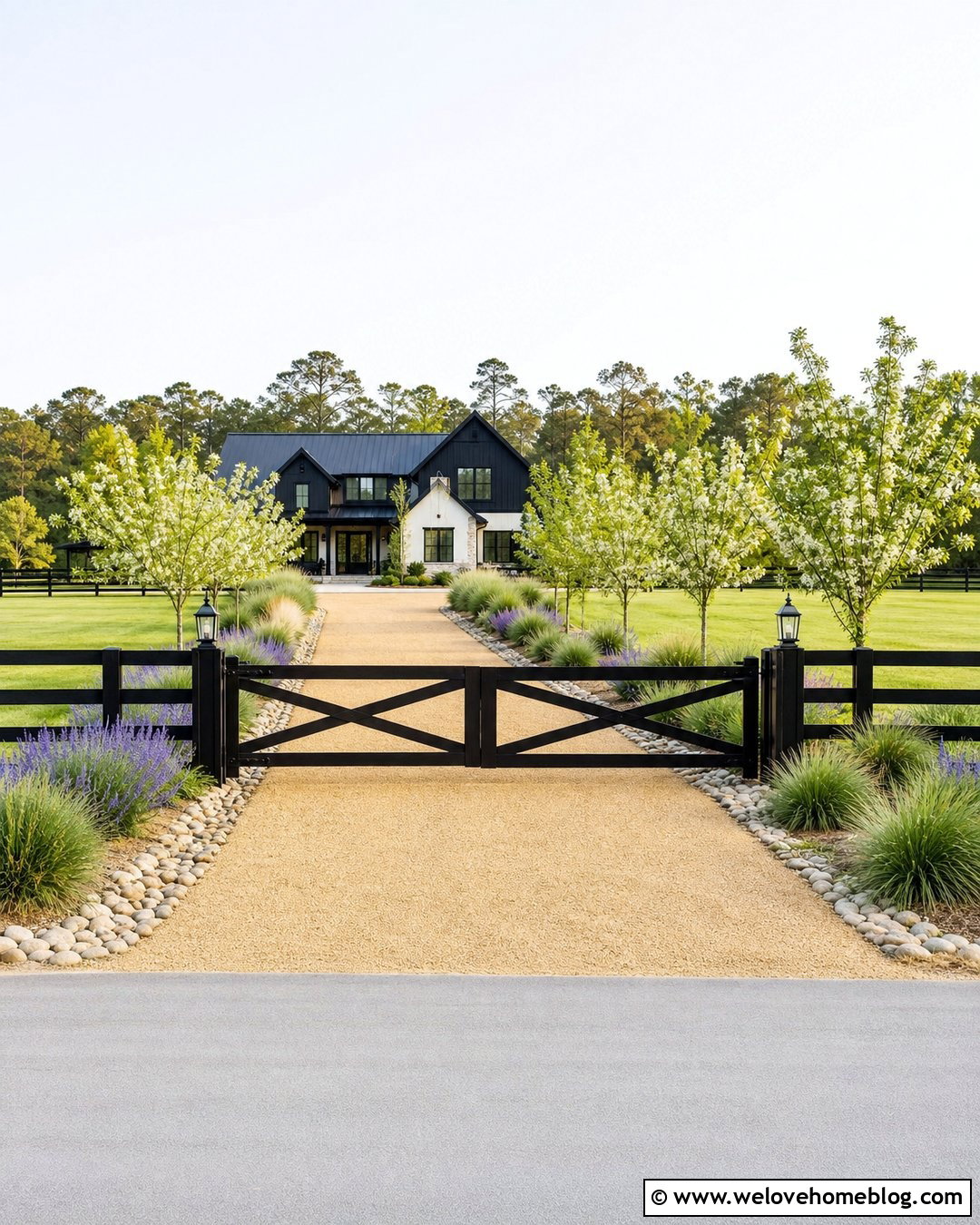
A long driveway can become a scenic approach when the paving and tree placement follow one clear rhythm. Use light gray asphalt or stabilized fine gravel in a gently curving layout leading toward a Florida farmhouse or country home. Edge the surface with simple concrete curbing to control spreading and protect nearby planting beds. Arrange live oaks or suitable palms at generous intervals, keeping trunks and mature root zones safely separated from the pavement. Fill the lower layer with native grasses, coontie, and broad areas of low groundcover rather than many small plant clusters. A paver apron at the road and garage adds a refined transition. Subtle daytime-visible bollard lights can mark the route. The design should feel shaded and established without creating a narrow tunnel or obstructed sightlines.
19. Florida Driveway With Channel Drain
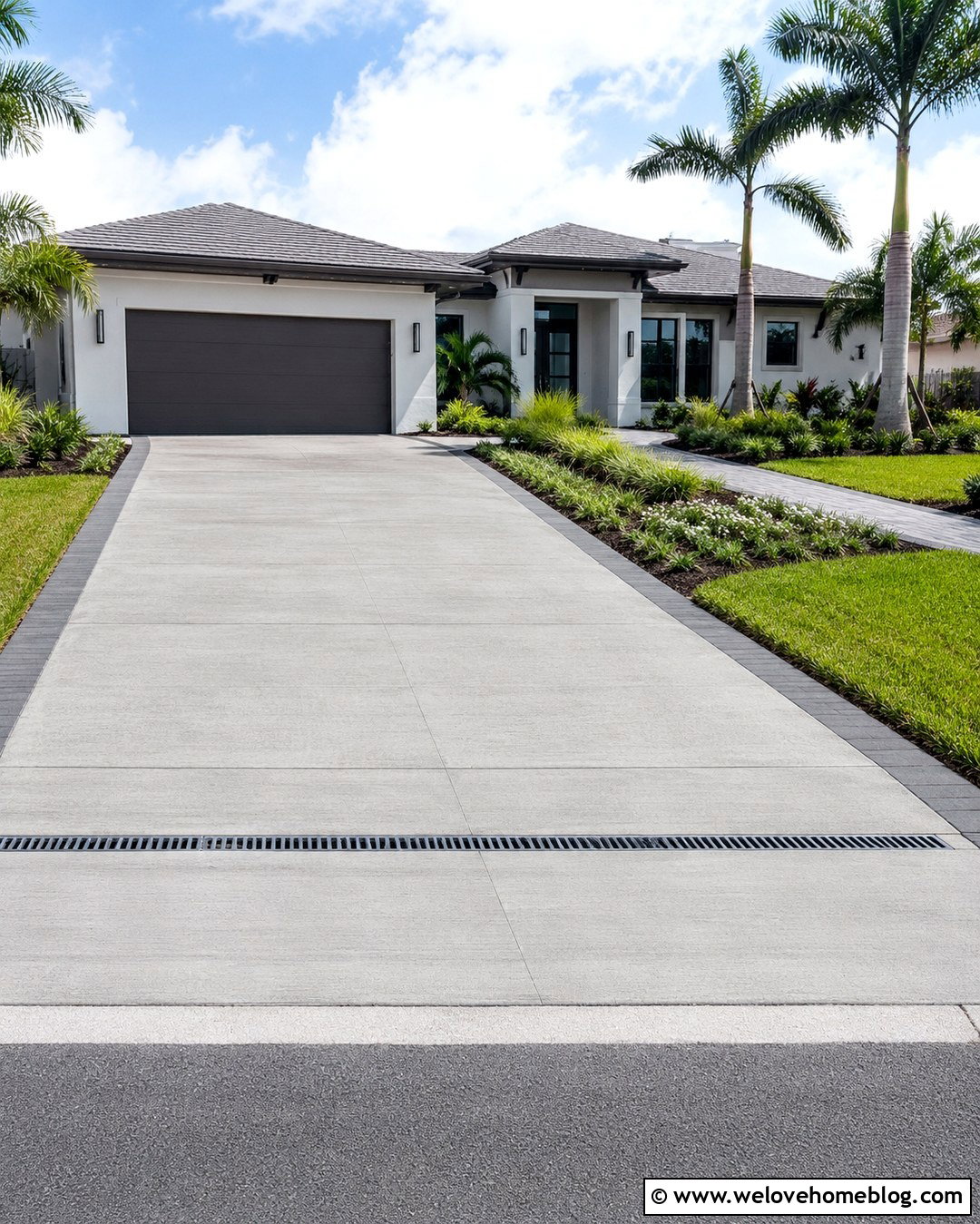
A channel drain can become a discreet part of a well-designed Florida driveway rather than an obvious afterthought. Start with light gray broom-finished concrete in a straight layout that slopes gently away from the garage. Position a narrow metal-grate channel drain across the driveway where water naturally needs to be intercepted, following professional grading and drainage plans. Border the concrete with darker rectangular pavers and repeat them around a nearby walkway. Plant rain-tolerant grasses, low shrubs, and groundcovers in beds positioned to receive water only where the overall system permits. Keep mulch and loose gravel away from the drain so they do not wash into the grate. The finished design should direct water responsibly while maintaining a clean visual line from the curb to the house.
20. Florida Driveway With Gate And Pillars
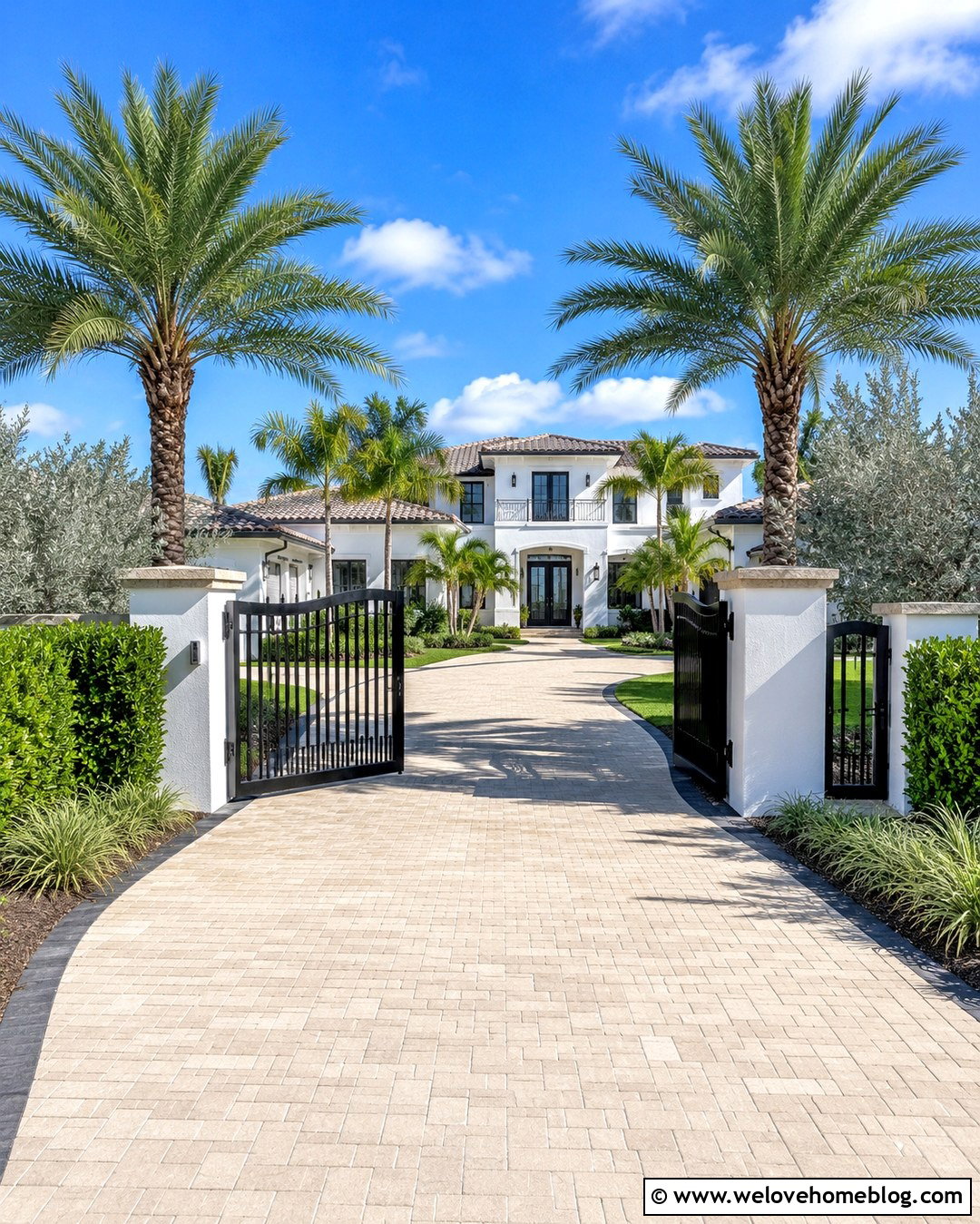
A gated Florida driveway feels most cohesive when the gate, pillars, surface, and landscaping share the same design language. Use sand-colored concrete pavers on a broad, gently curved approach leading to a coastal Mediterranean home. Frame the entrance with white stucco pillars topped by simple stone caps and a black aluminum swing or sliding gate. Continue a charcoal paver border beneath the gate so the paving remains visually uninterrupted. Plant low clusia hedges, silver buttonwood, ornamental grasses, and symmetrical palms outside the vehicle clearance area. Include a separate pedestrian gate and a clearly visible address marker integrated into one pillar. Plan enough setback for vehicles to wait safely before entering. Gate movement, drainage, utilities, and emergency access should all be resolved before construction begins.
Conclusion:
The strongest Florida driveway designs bring the surface, layout, edging, landscaping, and architecture together as one complete entrance. Light pavers can brighten a coastal house, crushed shell can support a relaxed Key West look, and permeable paving can contribute to a thoughtful drainage plan. Circular and horseshoe layouts suit spacious properties, while linear pavers and restrained planting help smaller yards feel organized. Whichever of these 20 florida driveway ideas fits your home, prioritize a stable base, safe visibility, controlled water flow, and materials suited to the site. Confirm local regulations and obtain professional advice where necessary. With careful planning, your driveway can become a durable, welcoming feature that strengthens the curb appeal of the entire property.

Related posts:


Leave a Reply