
Searching for **Driveway Pavers Tampa Ideas** means finding a surface that delivers curb appeal while handling strong sun, frequent rain, humidity, and everyday vehicle traffic. Light colors, textured finishes, effective drainage, and well-compacted foundations are especially useful for Tampa-area properties. Individual pavers also make targeted repairs easier because damaged or settled units can be replaced without rebuilding the entire driveway. () The best designs coordinate the paver color and pattern with the home’s architecture, front walkway, borders, and tropical landscaping. From coastal shellstone tones to classic red brick and clean modern grids, these complete driveway looks offer inspiration for different budgets, lot sizes, and home designs. Explore these practical **Driveway Pavers Tampa Ideas**.

1. Sand Paver Herringbone Driveway
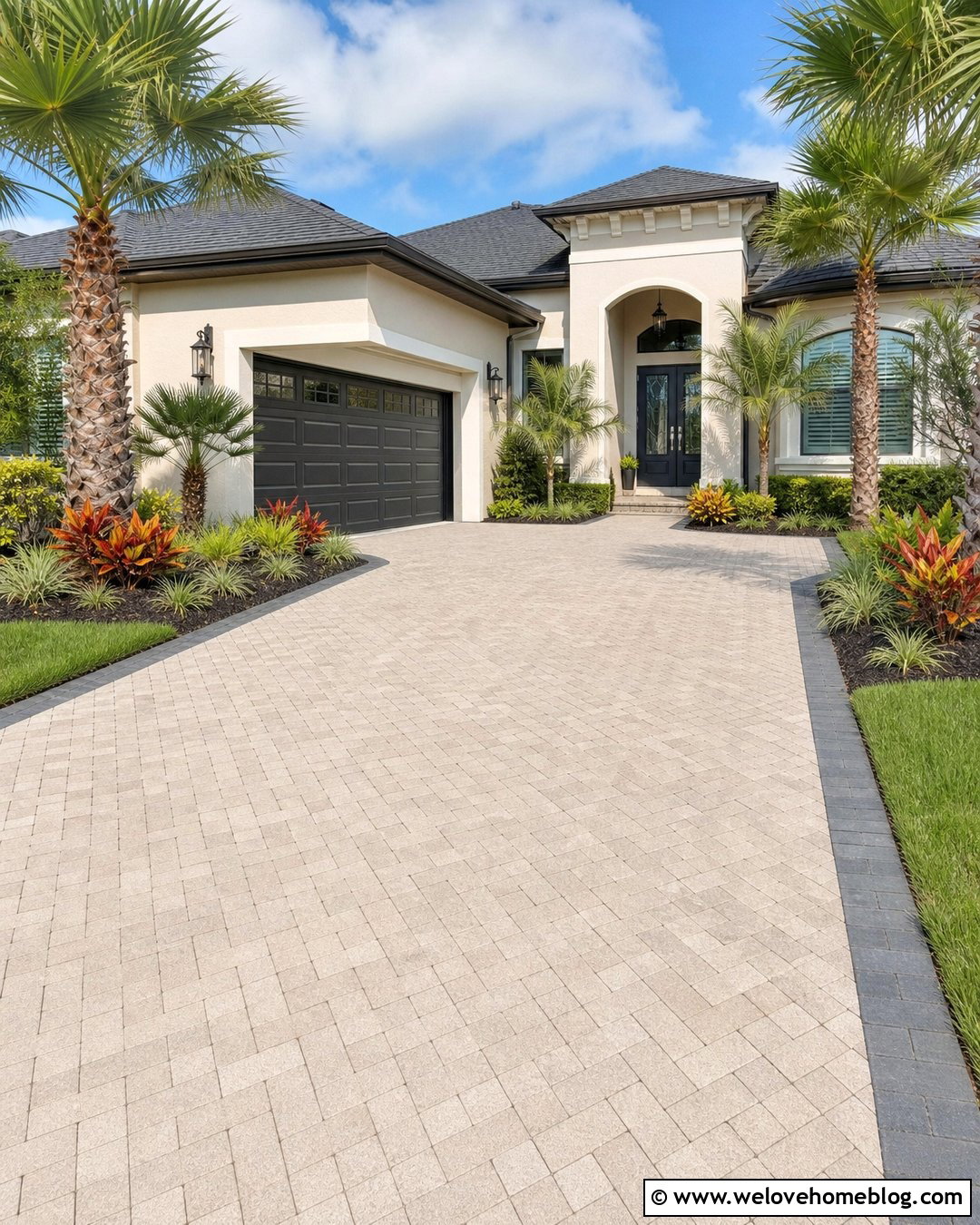
A sand-colored herringbone driveway creates a bright, welcoming entrance that suits Tampa’s sunny residential setting. Choose interlocking concrete pavers in warm beige, cream, and light tan tones, then install them in a 45-degree herringbone pattern. This layout creates strong visual movement and helps the driveway feel wider from the curb. Herringbone is also commonly recommended for vehicle areas because its interlocking arrangement handles turning and braking forces effectively. () Add a charcoal paver border to define the edges and conceal everyday tire marks near the perimeter. Low beds filled with dwarf palmettos, liriope, and colorful crotons complete the design. Carry the same border into the front walkway so the entire entrance feels coordinated rather than pieced together.
2. Coastal Shellstone Paver Driveway
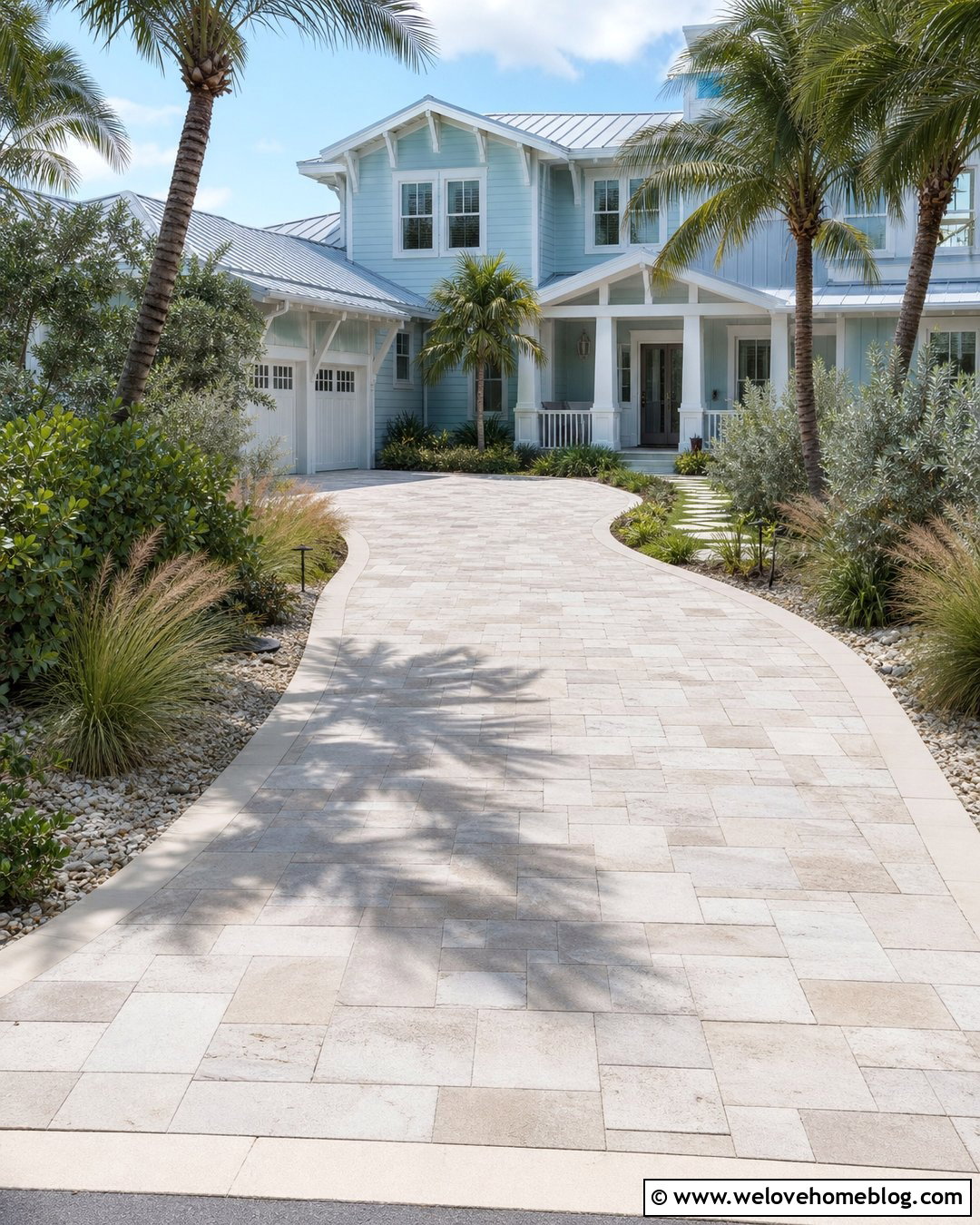
Soft shellstone colors can give a Tampa driveway the relaxed character of a coastal retreat. For vehicle use, select driveway-rated shellstone pavers or concrete pavers manufactured with a realistic shellstone texture. A blend of ivory, pale sand, and subtle fossil tones keeps the surface bright without looking stark. Arrange the pavers in a random modular pattern on a gently curved driveway leading toward a coastal-style home. Cream concrete edging provides secure restraint, while sea grape, silver buttonwood, muhly grass, and small palms soften the approach. Light-colored paving can absorb less solar heat than deep charcoal surfaces, making pale palettes a practical choice for exposed Florida properties. () Use a natural-look sealer rather than a heavy gloss to preserve the understated finish.
3. Permeable Paver Driveway
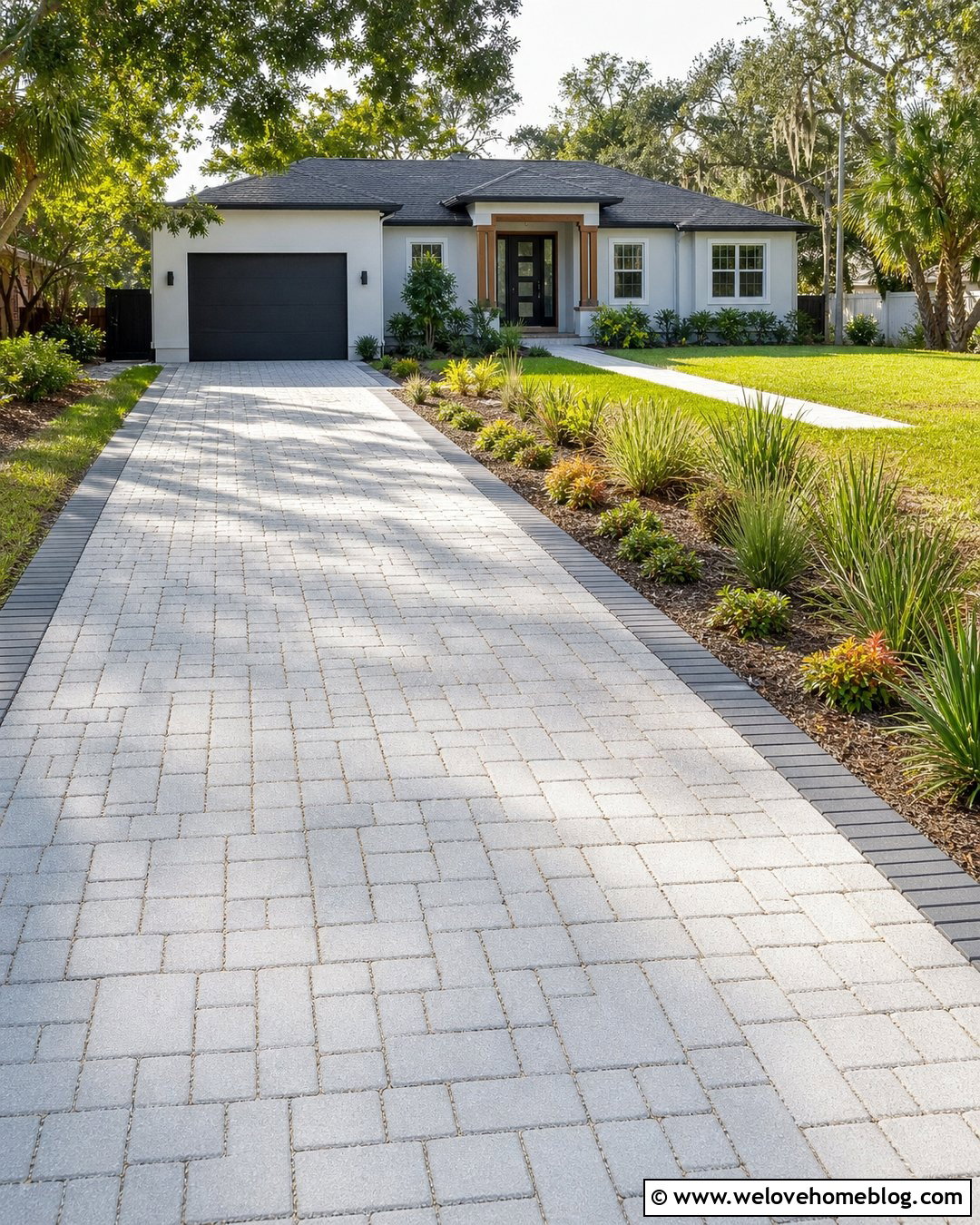
When standing water is a concern, a permeable paver driveway combines clean design with more effective stormwater management. Use light gray interlocking concrete pavers with enlarged joints filled with washed aggregate. Water can pass between the units into an appropriately designed open-graded base instead of flowing entirely toward the street or garage. () A straight layout keeps the entrance orderly, while a darker gray soldier-course border creates a crisp outline. Complete the look with a shallow rain garden containing native grasses and moisture-tolerant plants along the lower side. The driveway grade, subbase, and overflow route should be planned professionally for the specific property. Pair the paving with a modern Tampa bungalow, a simple concrete walkway, and uncluttered foundation planting for polished curb appeal.
4. Old Chicago Brick Paver Driveway
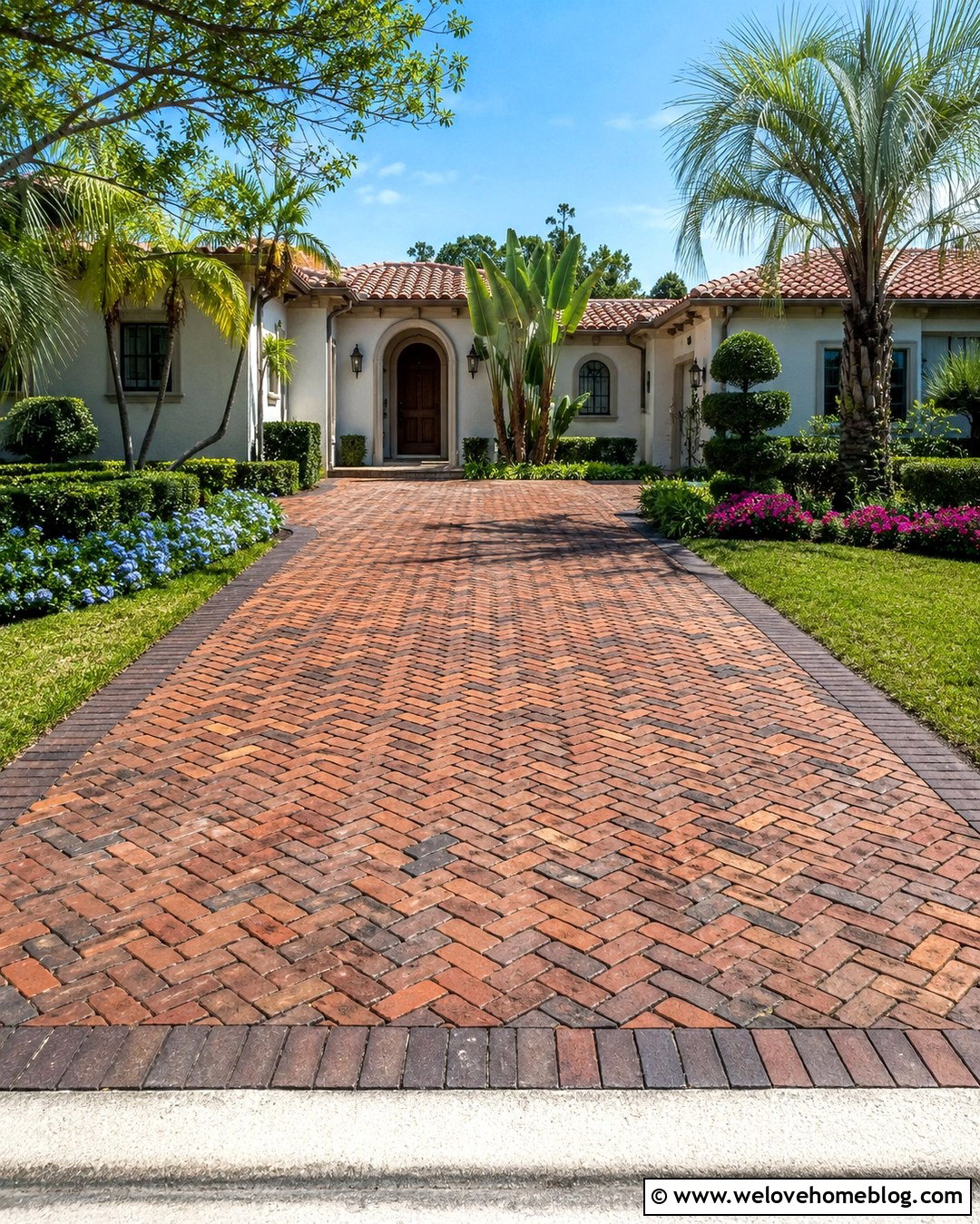
Reclaimed Old Chicago brick brings warmth and history to a bungalow or Mediterranean-inspired Tampa home. Its weathered reds, dusty oranges, and muted brown variations create a surface that already feels established. Lay the clay brick pavers in a 45-degree herringbone pattern across a straight driveway, then use darker brick in a soldier-course border. A slightly irregular color blend works well with cream stucco, dark wood doors, and traditional lantern-style fixtures. Frame the driveway with clipped green shrubs, flowering ground cover, and a brick walkway that continues toward the porch. Because reclaimed units can vary in thickness and condition, use bricks confirmed as suitable for driveway loads. A stable base, tight edge restraints, and properly filled joints are essential for keeping the aged surface orderly under regular vehicle traffic.
5. Large Format Paver Driveway
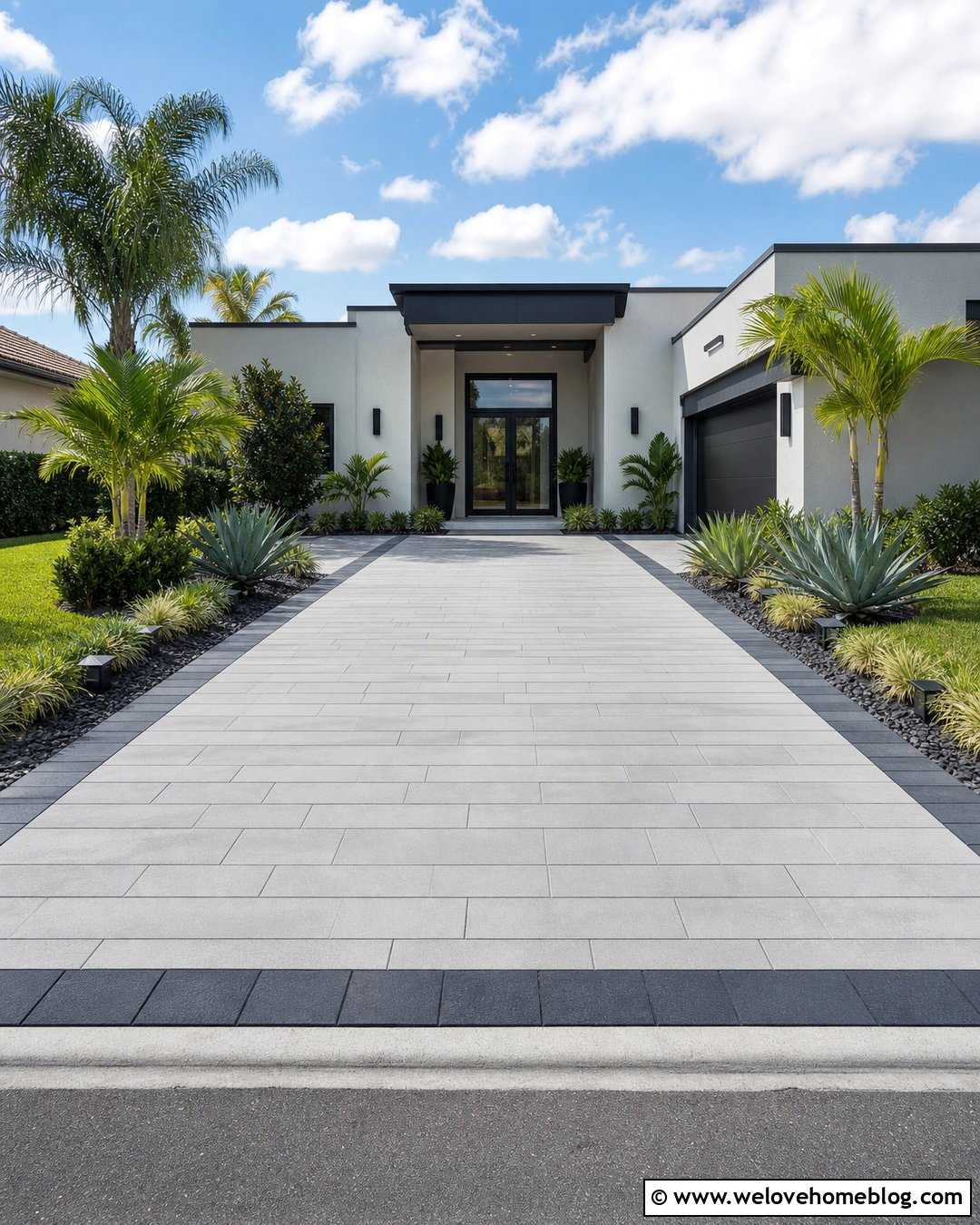
Large rectangular pavers create a spacious, streamlined entrance for a modern Tampa house. Choose vehicular-rated concrete pavers in pale gray with a lightly textured matte finish. Lay them in an offset linear pattern running toward the garage, which visually lengthens a short driveway and complements horizontal architecture. Narrow charcoal paver bands can divide the surface into large sections without making the design feel busy. On each side, use low architectural planting such as agave, dwarf podocarpus, ornamental grasses, and compact palms. A matching walkway separated by a thin planting strip prevents the entrance from becoming one oversized paved area. Large formats demand careful installation because uneven units are easier to notice. Straight layout lines, proper compaction, restrained edges, and controlled drainage help preserve the crisp appearance.
6. Travertine Paver Driveway
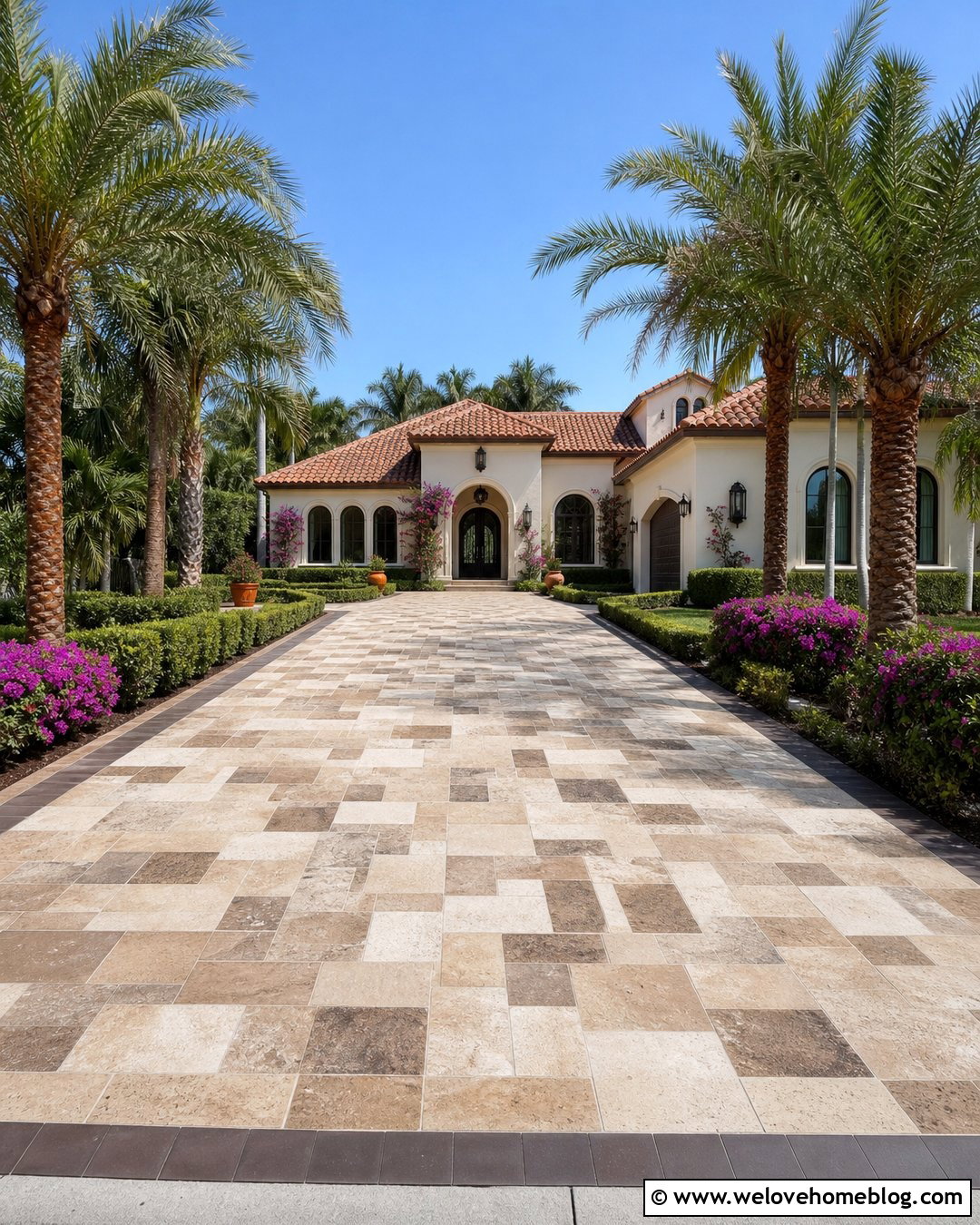
A travertine paver driveway can create an upscale transition to a Mediterranean or Spanish-style Tampa home. Select dense, driveway-rated travertine in ivory, walnut, or light beige, avoiding thin pool-deck pieces that are not intended for vehicle loads. A tumbled finish introduces texture while maintaining the stone’s relaxed appearance. Use a French pattern across a broad straight driveway and outline it with dark brown concrete pavers for stronger definition. Terracotta planters, date palms, bougainvillea, and clipped hedges reinforce the architecture without overwhelming the natural stone. Because travertine varies in color and surface character, inspect several pallets and blend pieces during installation. Continue the same material onto the front walkway, but rotate the pattern or add a border so pedestrians can clearly read the transition.
7. Circular Paver Driveway

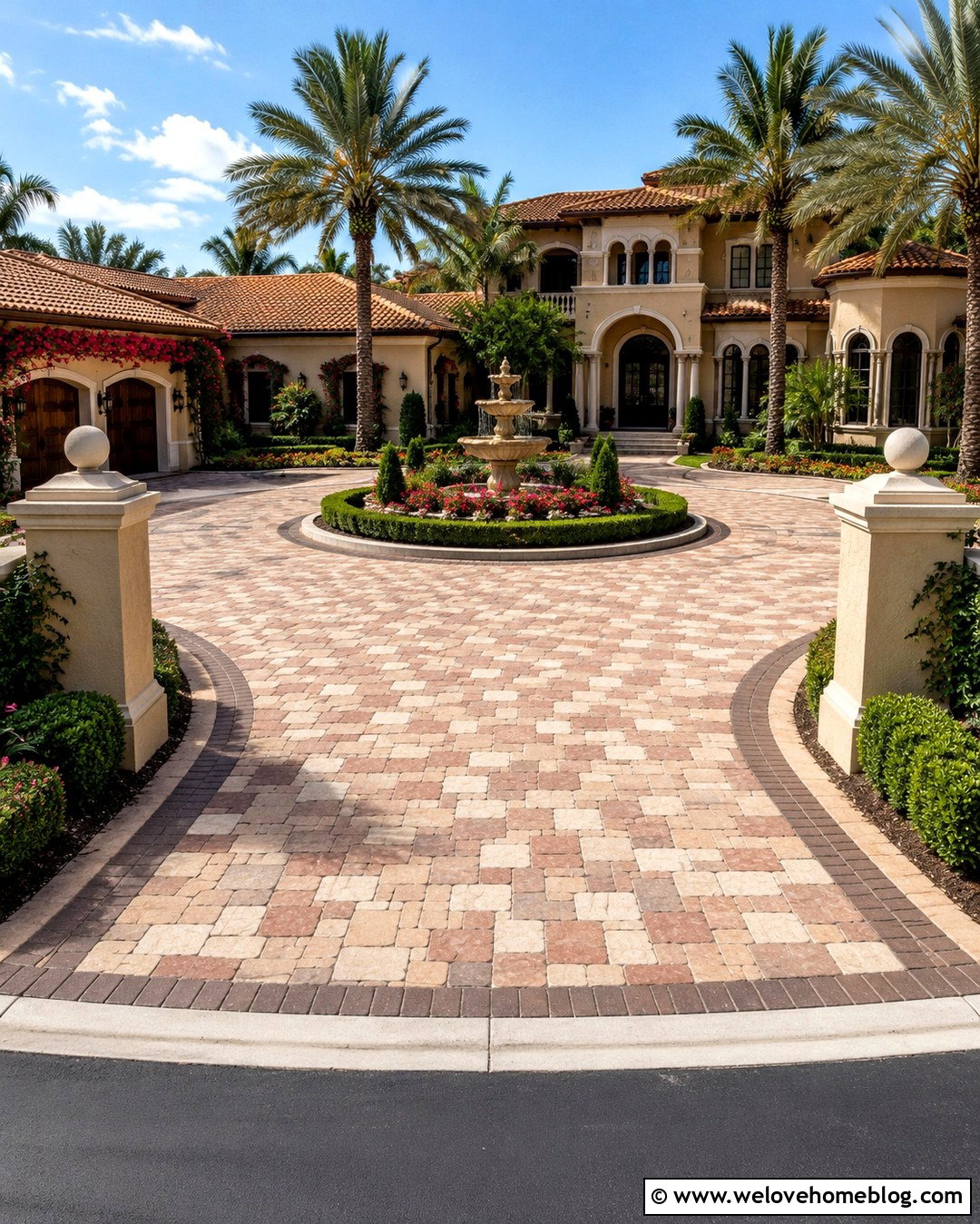
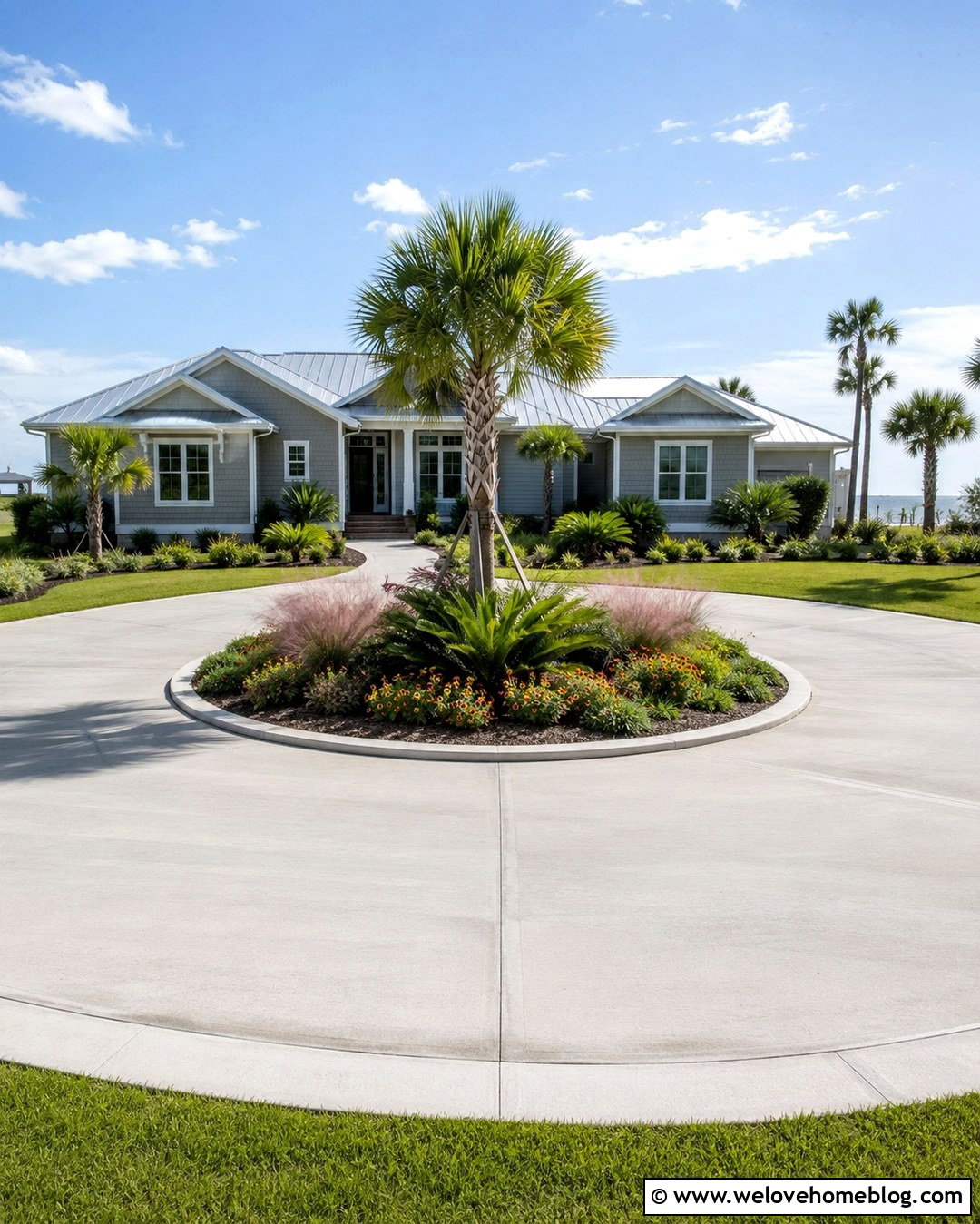
A circular driveway gives a larger Tampa front yard a graceful arrival route and eliminates the need for extensive reversing. Cover the loop with tan and cream concrete pavers in a three-piece modular pattern. A charcoal border can follow both curves, emphasizing the circular layout and keeping the edges visually sharp. In the center island, plant a specimen palm surrounded by dwarf ixora, ornamental grasses, and low ground cover that will not block views across the driveway. Add a paved connector leading directly to the garage while keeping the main loop visually dominant. The entry and exit openings should feel balanced from the street. Coordinate the central island edging with the driveway border, and provide irrigation coverage that does not constantly spray the pavers or encourage staining around the planting bed.
8. Curved Paver Driveway
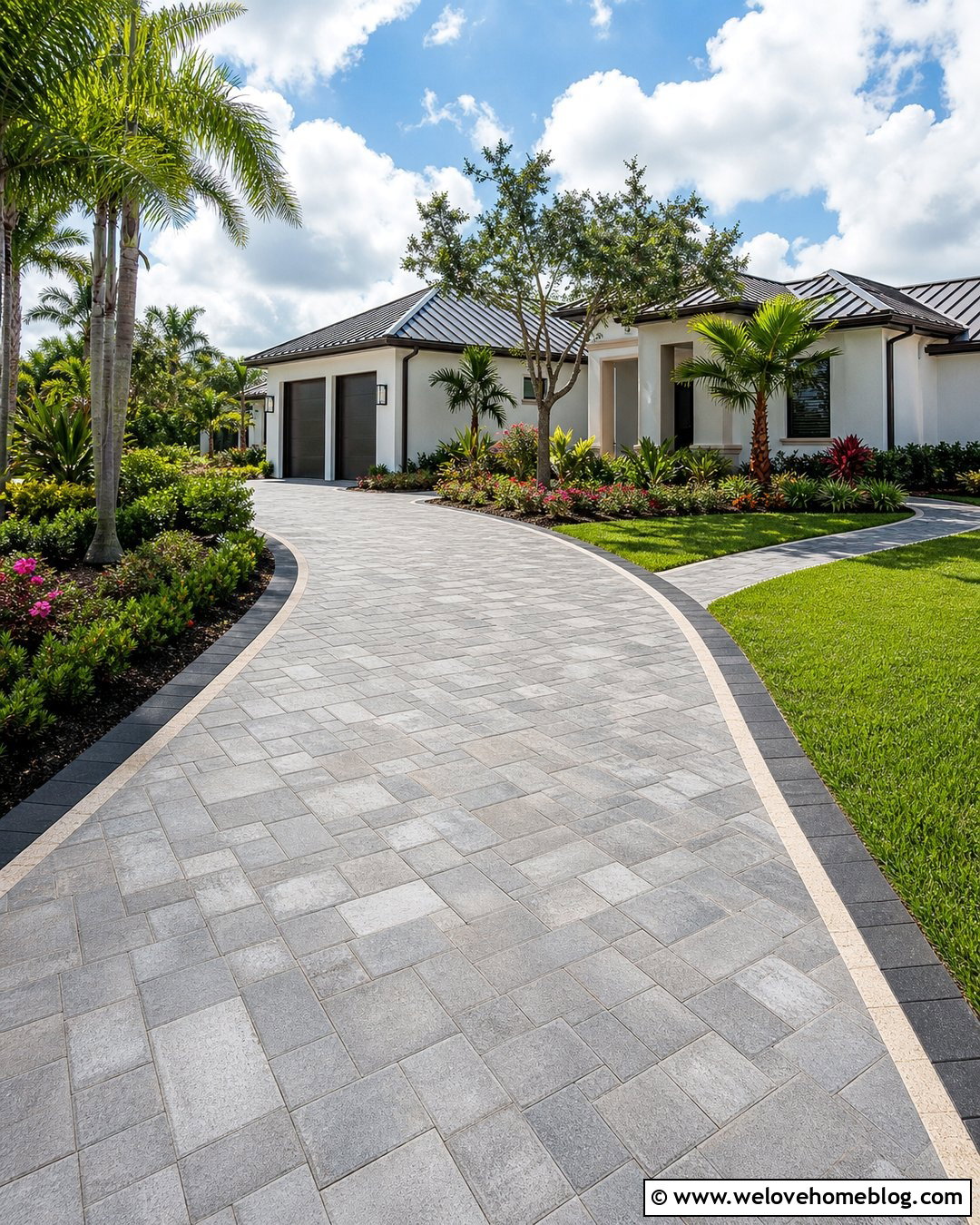
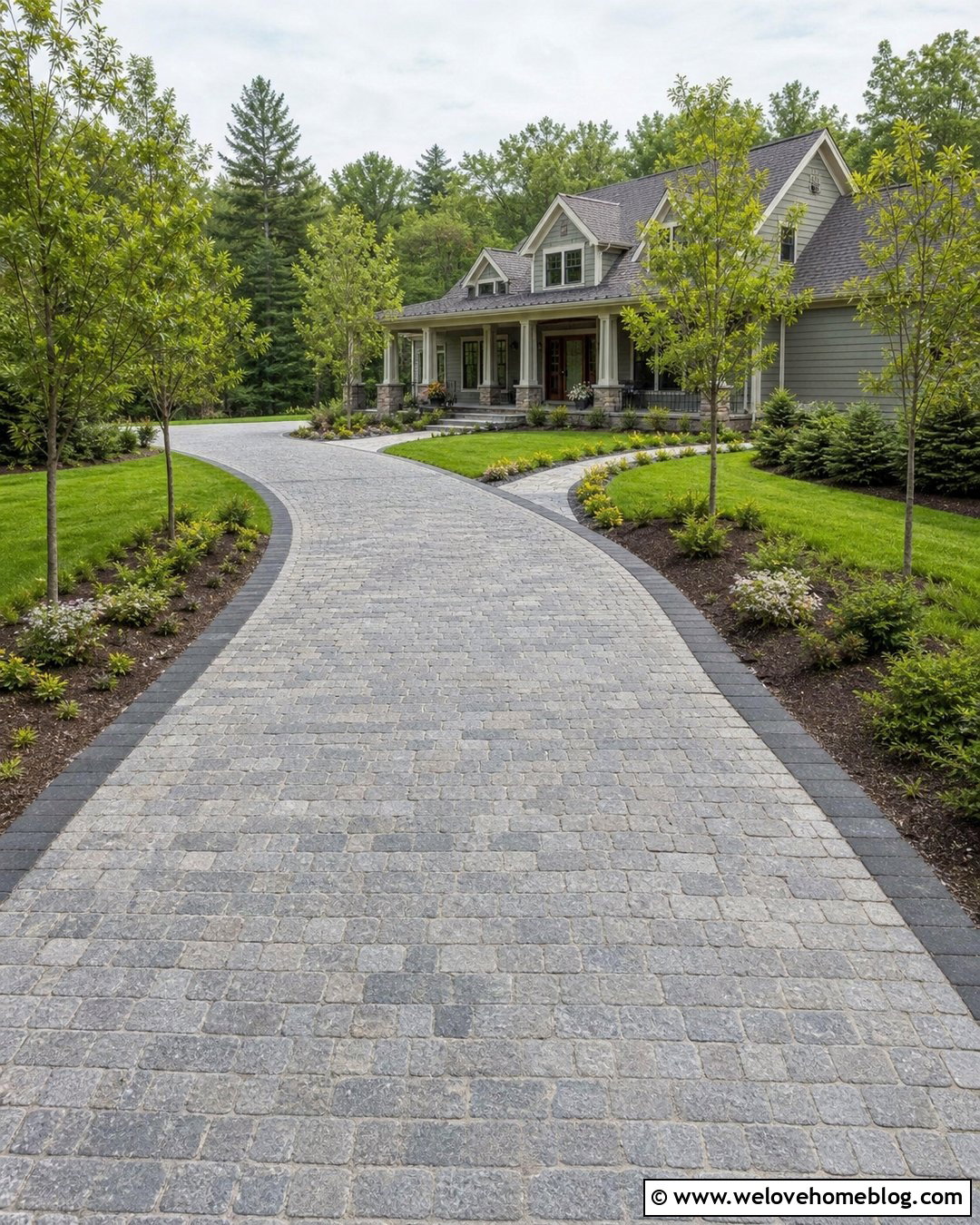
A gently curved driveway can make the approach to a Tampa home feel softer and more spacious. Use warm gray concrete pavers in a random ashlar pattern, allowing the mixed sizes to follow the curve without creating harsh directional lines. Define the outside edge with charcoal pavers and use a lighter limestone-colored border along the inside bend. Layered landscaping should reinforce the movement of the driveway. Begin with low ground cover near the curb, transition to flowering shrubs, and position taller palms or small trees closer to the house. Keep plants trimmed away from sightlines and vehicle overhang. A matching curved walkway can branch naturally toward the front door. Subtle landscape lighting placed within the beds highlights the route while leaving the paved surface open, clean, and easy to navigate.
9. Gray Paver Driveway
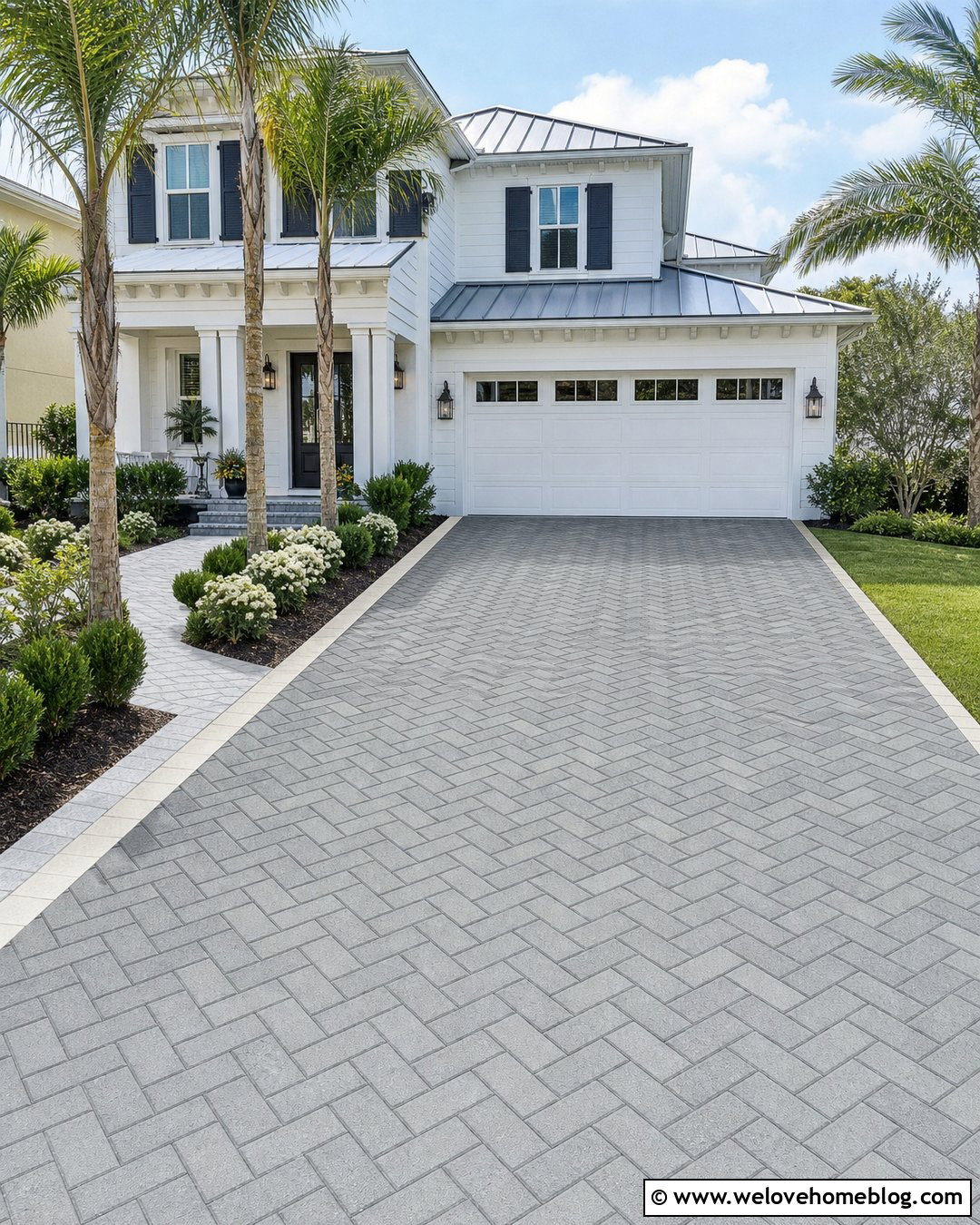
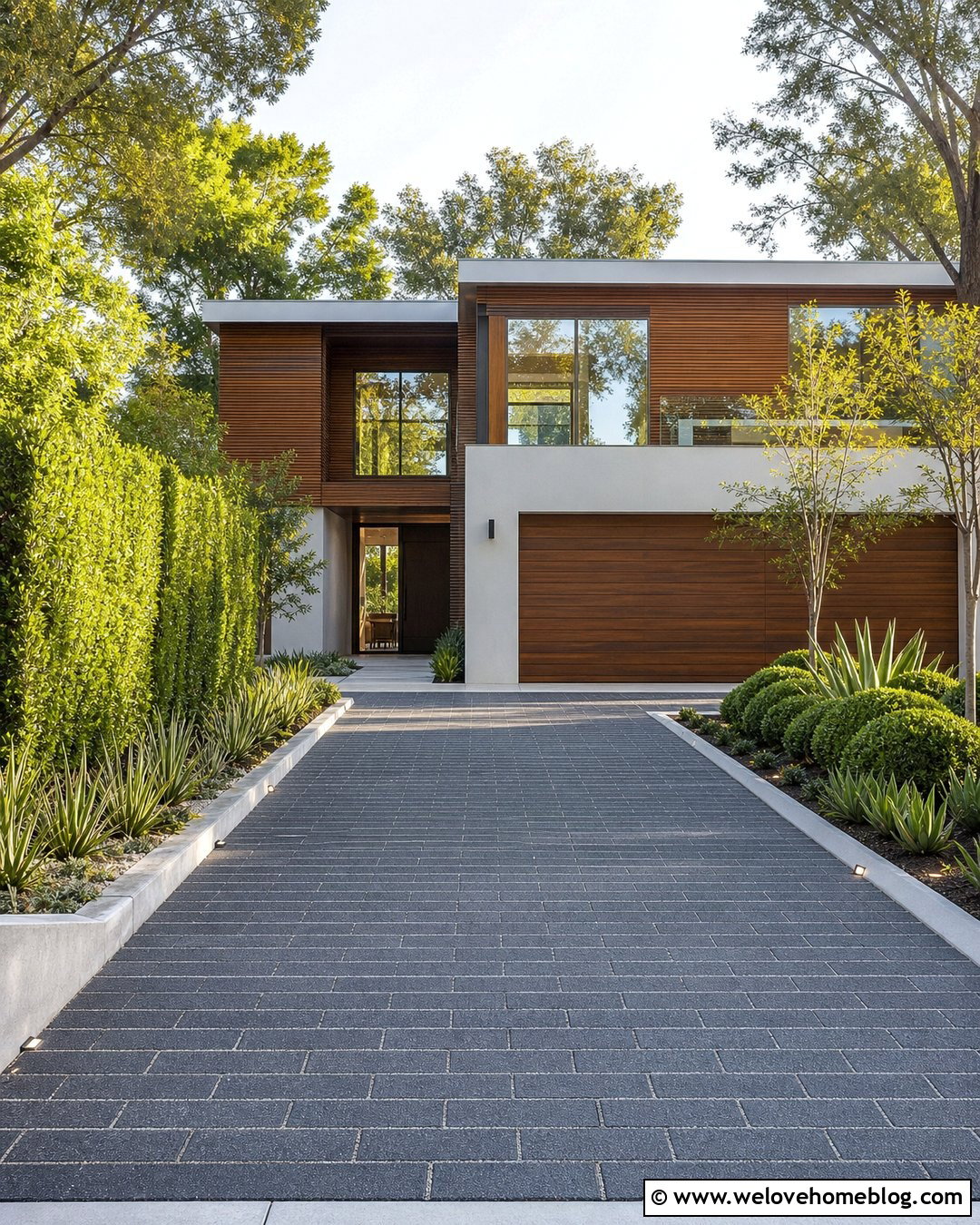
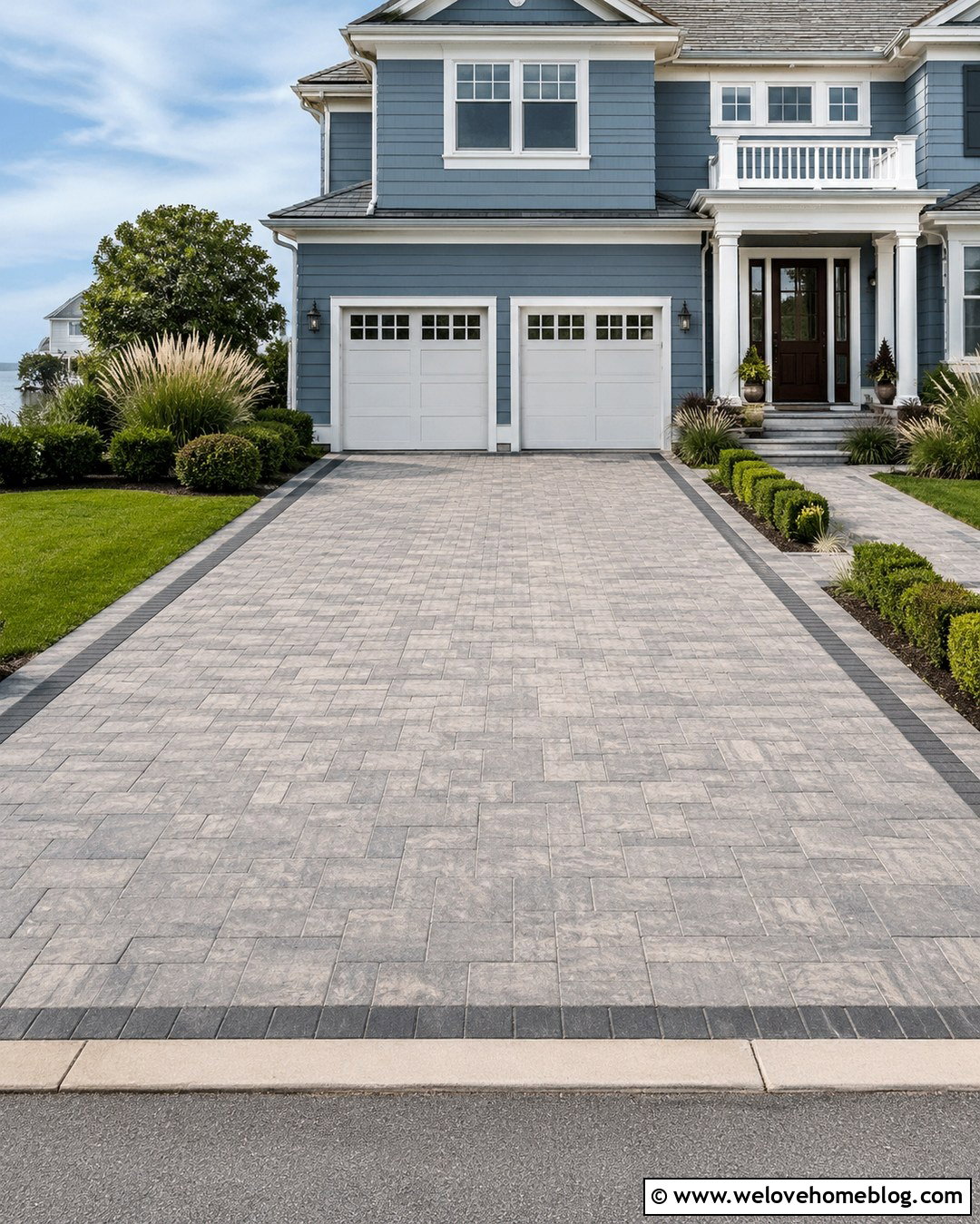
Cool gray pavers work especially well with white, blue, or charcoal home exteriors. For a balanced Tampa look, use medium-gray concrete pavers in a 90-degree herringbone pattern and frame them with a narrow white or cream paver border. The contrasting edge prevents the driveway from blending into the street and connects it to pale exterior trim. Add a straight walkway using the same gray field paver, but place it in running bond to distinguish the pedestrian route. Green foundation shrubs, white flowering plants, and several upright palms bring color without competing with the monochromatic paving. Avoid using only one flat gray tone across a large area. A lightly blended surface with restrained color variation hides dust more naturally and gives the driveway dimension while preserving its modern appearance.
10. Red Brick Paver Driveway
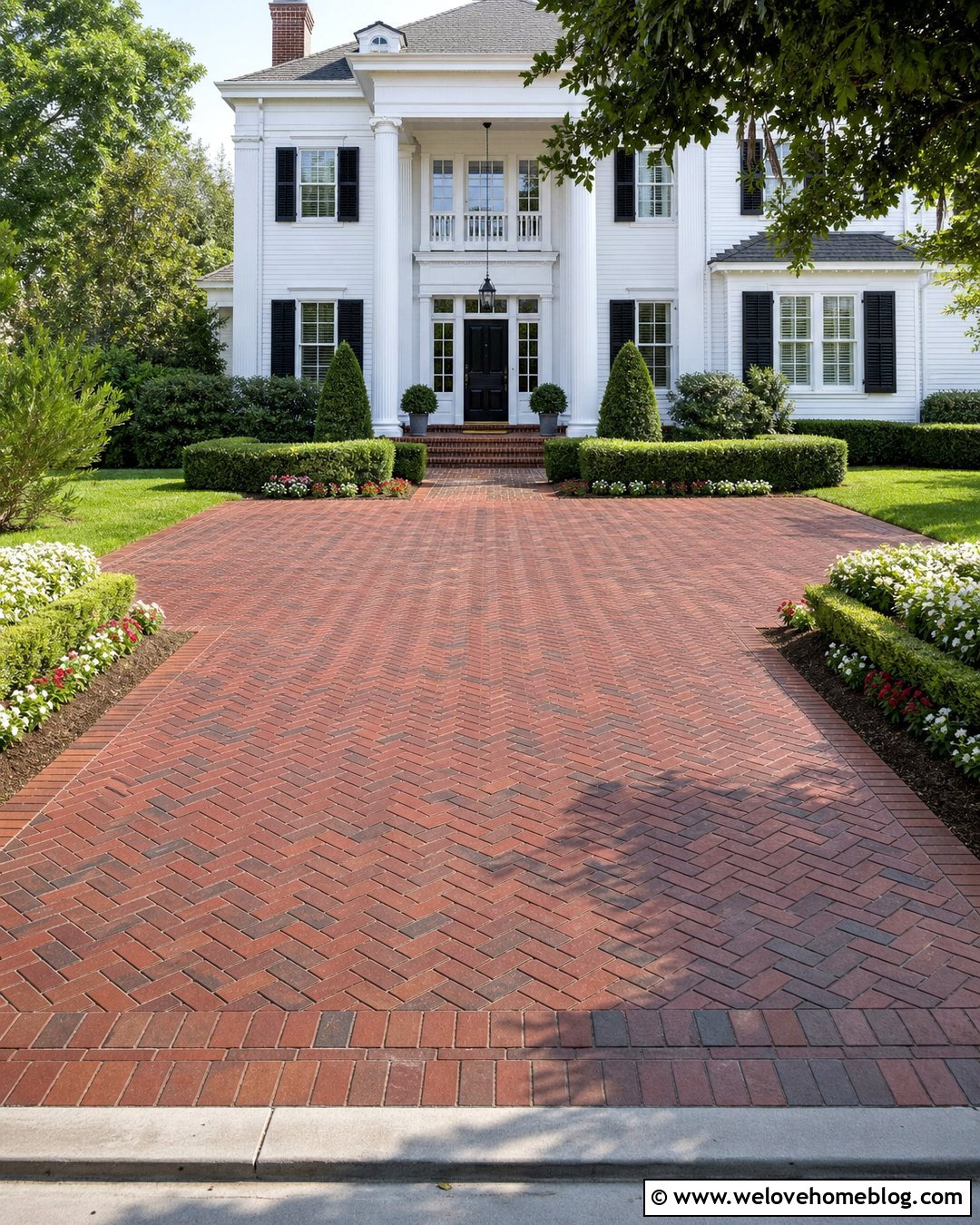
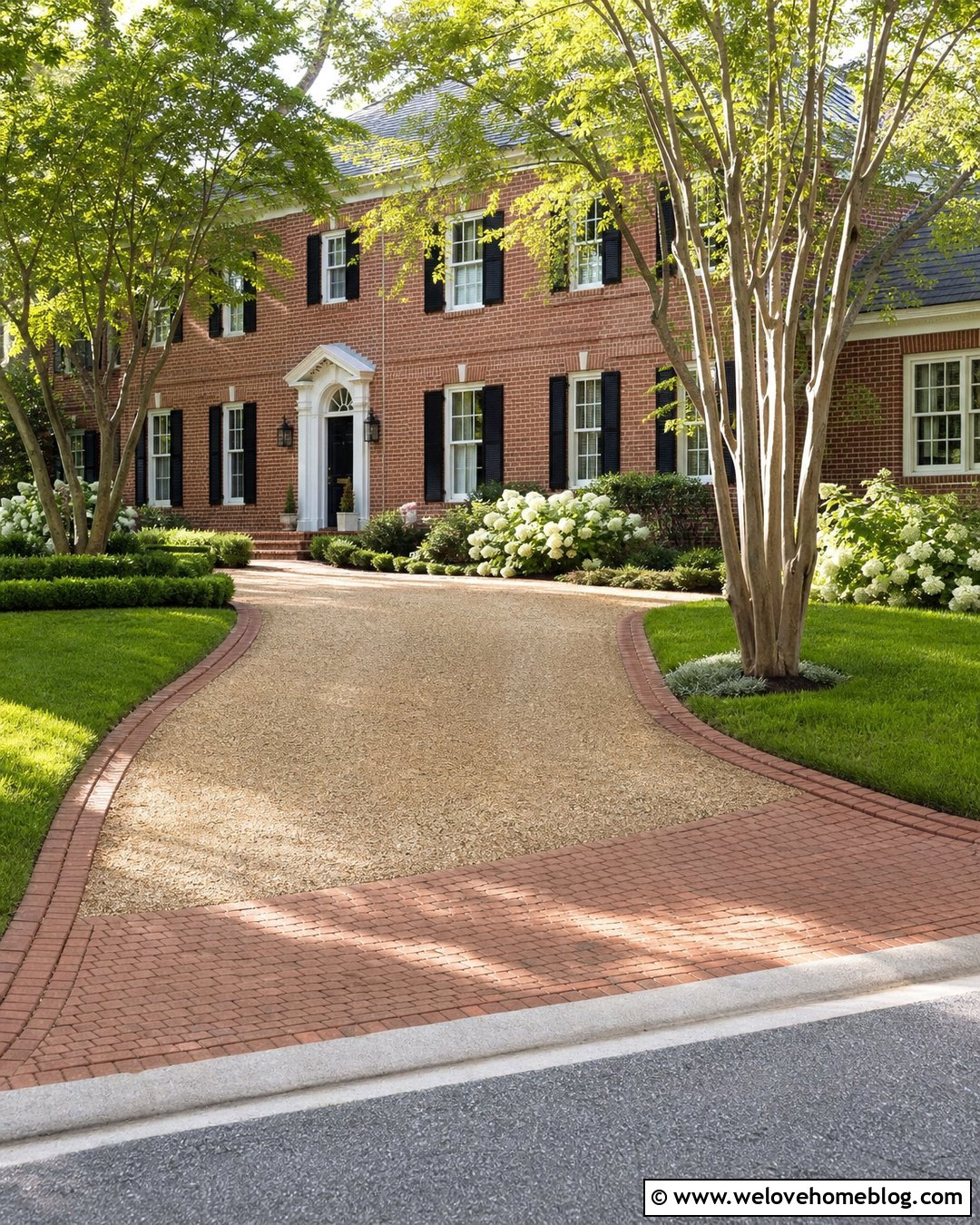
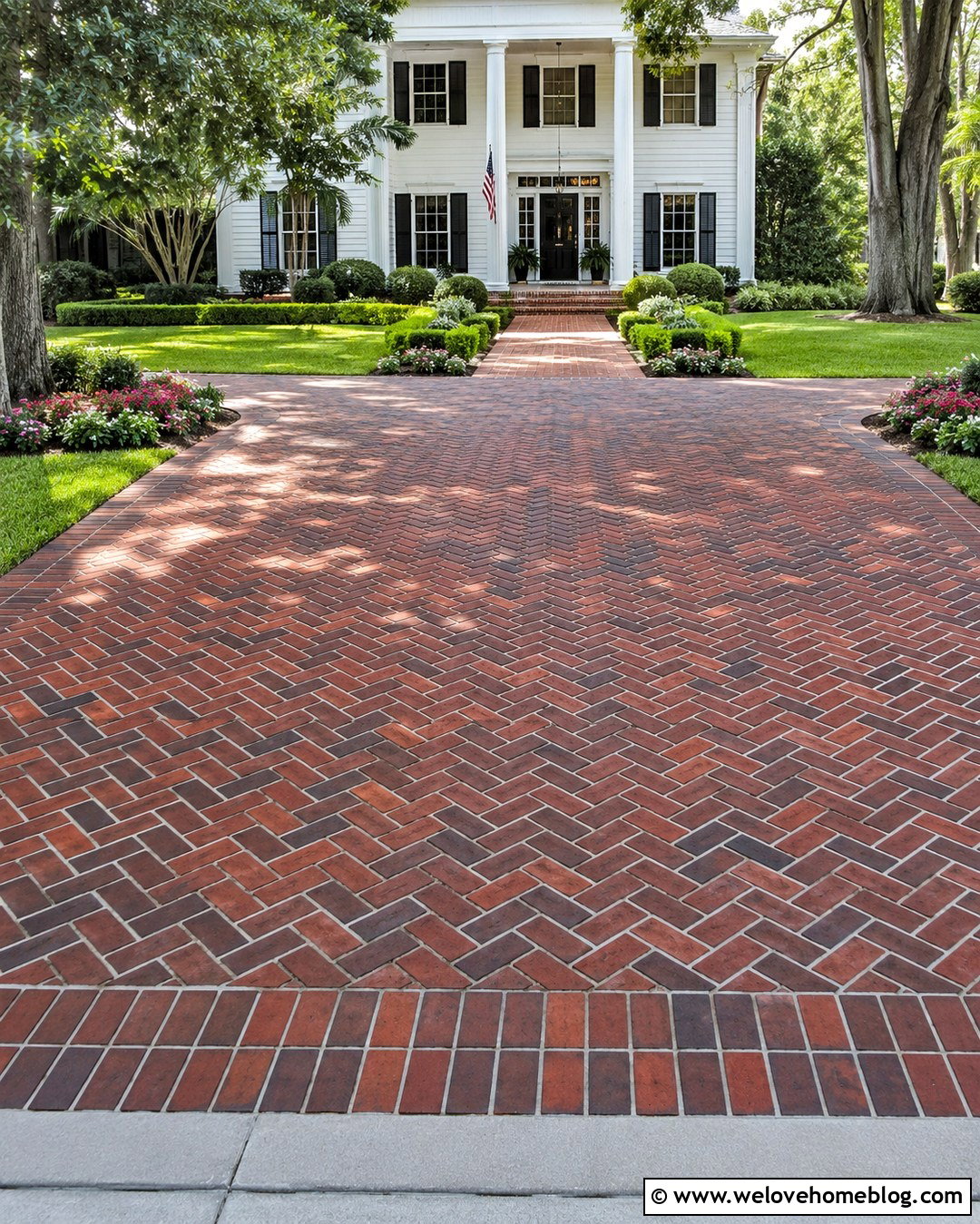
Rich red clay brick creates a traditional driveway that complements colonial, Cape Cod, and classic bungalow homes. Set the brick pavers in herringbone through the main vehicle area, then use running bond around the perimeter and across the apron. This pattern change adds definition without introducing another material. Deep red, brown, and charcoal variations can disguise everyday marks better than a completely uniform red surface. Surround the driveway with a neat lawn, boxwood-style shrubs, flowering borders, and a straight brick walkway leading to the porch. White columns and dark shutters provide a strong architectural contrast in the background. In Tampa’s humid environment, shaded brick may show organic buildup sooner than bright paving, so plan for routine gentle cleaning and keep irrigation heads directed toward plants rather than across the driveway.
11. Three Piece Paver Driveway
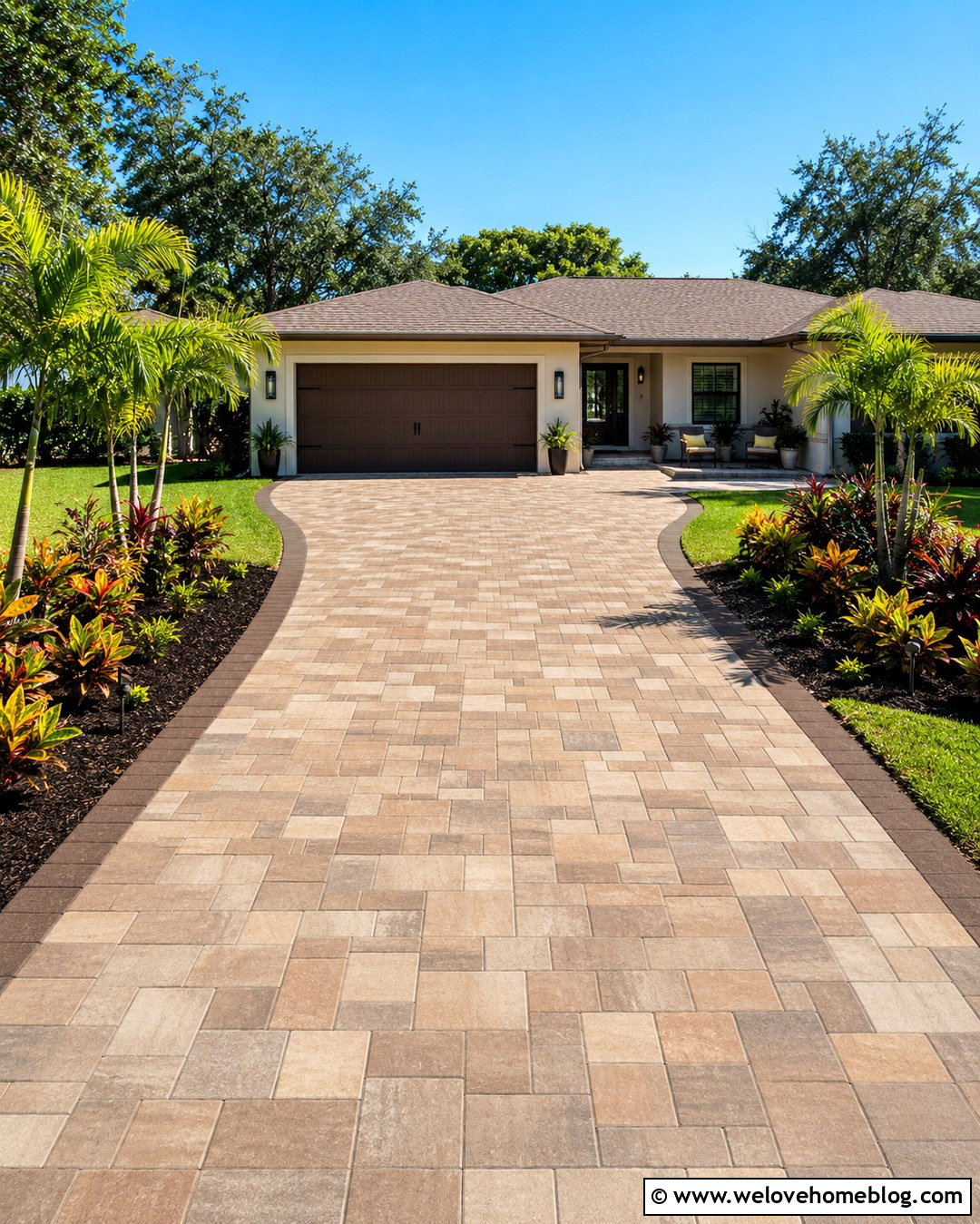
Three-piece concrete pavers offer an adaptable look that falls between traditional brick and oversized modern slabs. Choose a coordinated set of square and rectangular units in tan, almond, and muted brown. Install them in a random modular arrangement across a wide driveway leading to a low Tampa ranch house. The varied sizes break up the surface and make a broad parking area feel less repetitive. Use a dark brown paver border around the perimeter and repeat it across the garage threshold. Rounded planting beds with pygmy date palms, colorful crotons, and low-maintenance ground cover soften the rectangular paving. Connect the driveway to a front patio using the same paver collection. Repeating the material creates continuity, while different border treatments help each outdoor zone retain a clear purpose.
12. Two Tone Paver Driveway
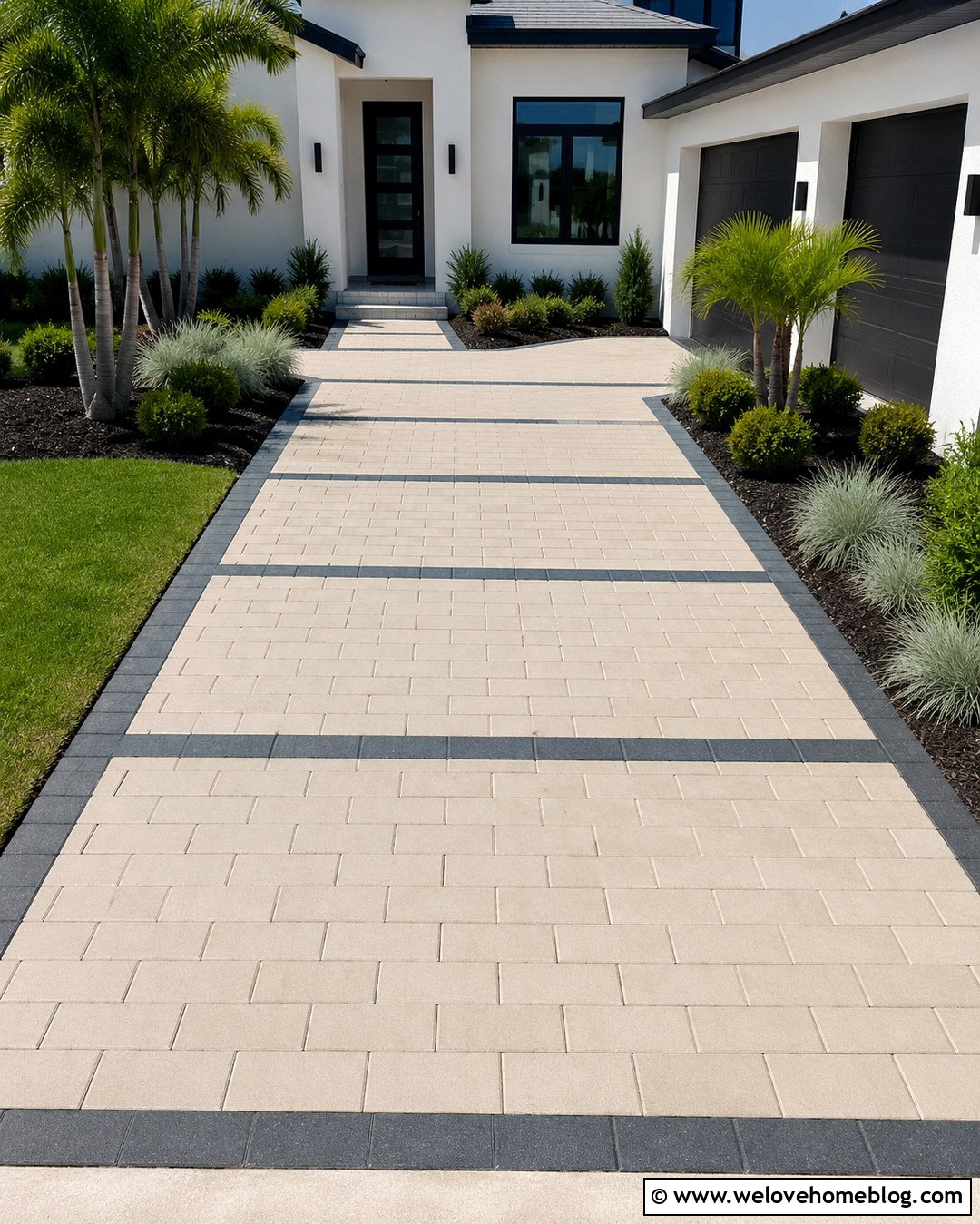
Two-tone paving can add definition without making a driveway look overly decorative. Start with cream or light beige concrete pavers as the main field, then introduce charcoal pavers along the edges, garage threshold, and selected crossbands. A straight running-bond layout suits a contemporary Tampa home and allows the contrasting accents to remain crisp. Space the crossbands evenly rather than adding them randomly. This creates a measured rhythm from the curb to the garage. Use dark mulch, sculpted evergreen shrubs, and silvery ornamental grass in the surrounding beds to echo the charcoal details. A front walkway can reverse the palette, using charcoal as the field and cream as the border. The result feels connected but not identical. Limit the design to two coordinated colors so the architecture remains the main focal point.
13. Cobblestone Paver Driveway
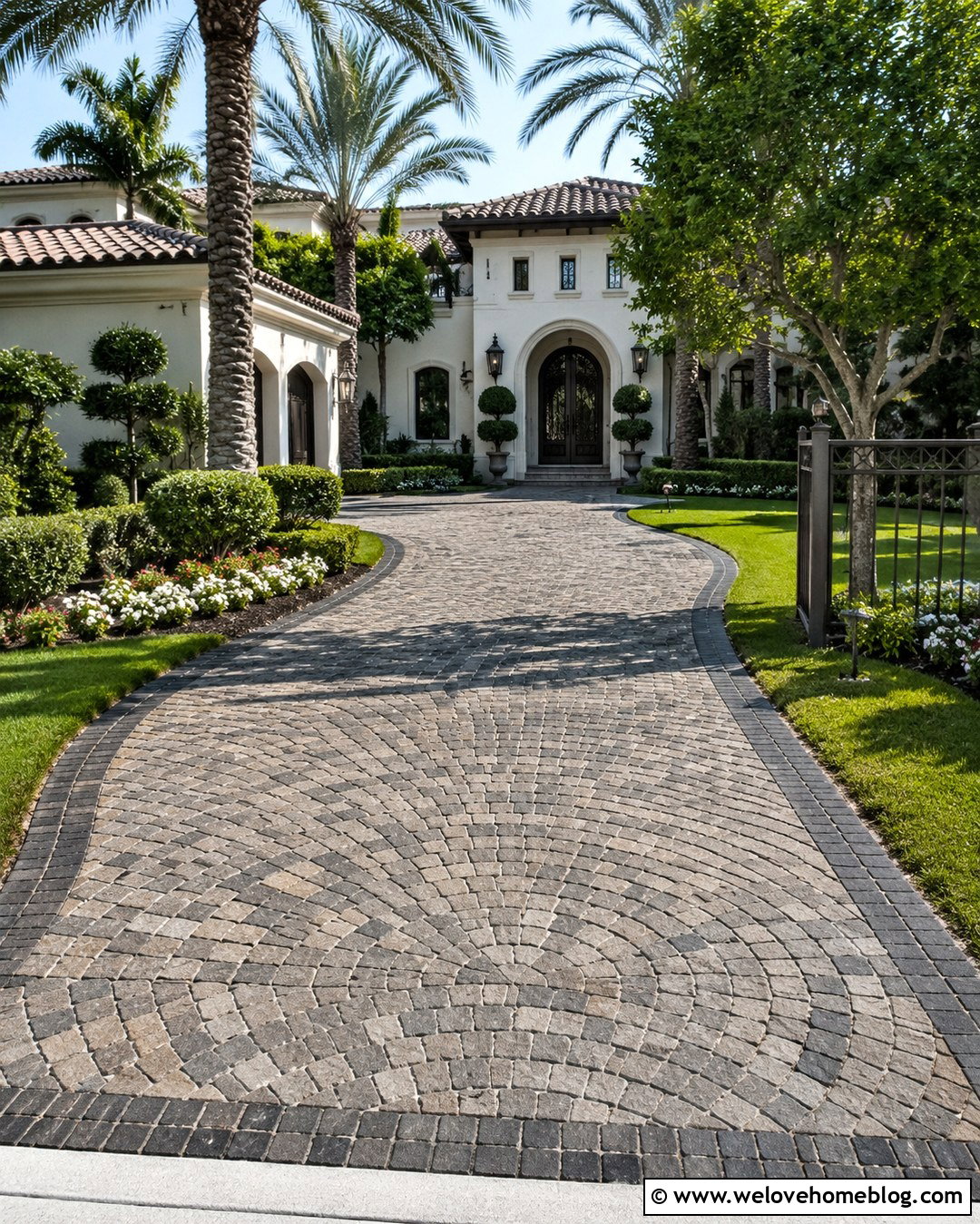
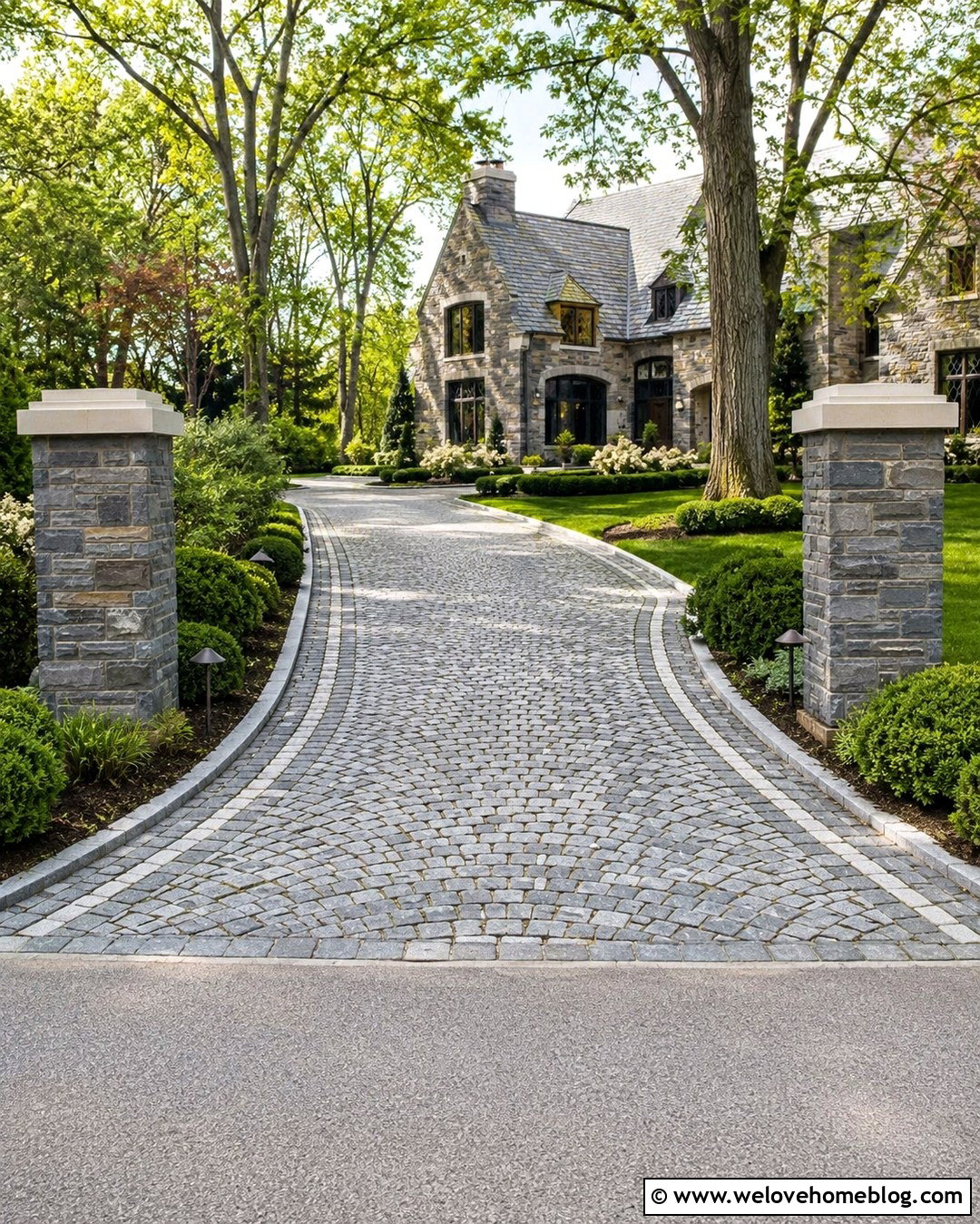
Cobblestone-style concrete pavers provide an old-world look without requiring irregular historic stone. Select driveway-rated tumbled pavers in blended gray, taupe, and charcoal, with softly rounded edges and varied surface texture. Arrange them in a fan pattern near the entrance and a curved running bond through the main driveway. A dark cobblestone border can trace the perimeter and wrap around a small landscaped island. Pair the driveway with a stucco home, arched entry, wrought-iron details, and mature palms. Low flowering plants along the border keep the stonework visible from the curb. Because textured pavers create more visual activity, keep the landscaping structured and use a limited planting palette. The driveway should feel intentionally aged and elegant rather than uneven, crowded, or overly rustic.
14. Porcelain Paver Driveway
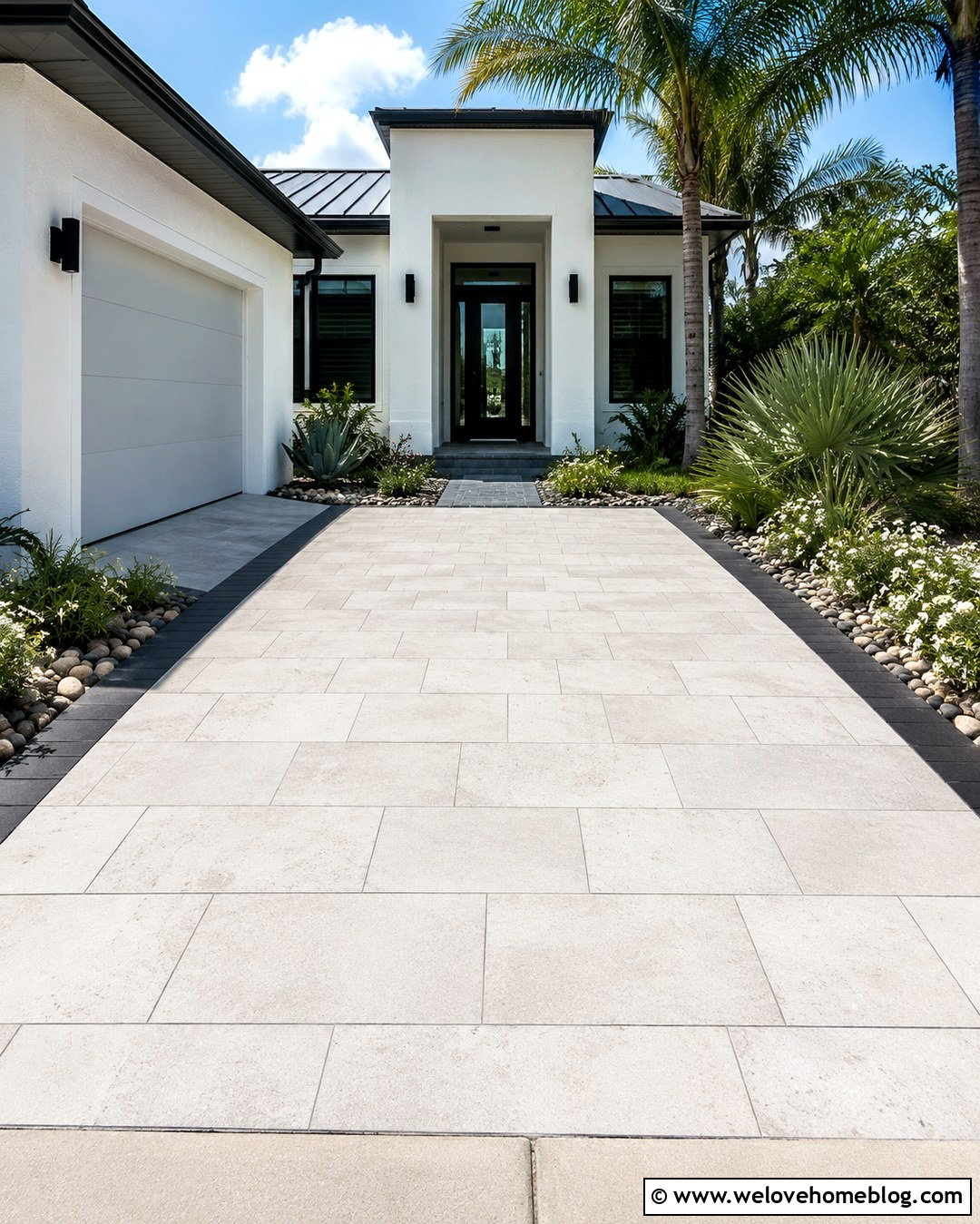
Vehicular-rated porcelain pavers offer a refined option for homeowners who prefer precise lines and consistent color. Choose thick outdoor porcelain units specifically engineered and installed for driveway traffic, not standard indoor tile. A pale limestone-look finish can brighten a modern Tampa facade while providing the visual character of natural stone. Lay rectangular units in an offset pattern across a straight driveway and add narrow black concrete paver borders for contrast. Minimal planting beds with agave, saw palmetto, white flowers, and smooth landscape stones reinforce the clean design. Extend the porcelain look onto the walkway, using smaller compatible units to make the pedestrian zone easier to identify. Correct bedding and base specifications are critical because porcelain performs differently from conventional concrete pavers. Confirm the complete installation system with the manufacturer and contractor.


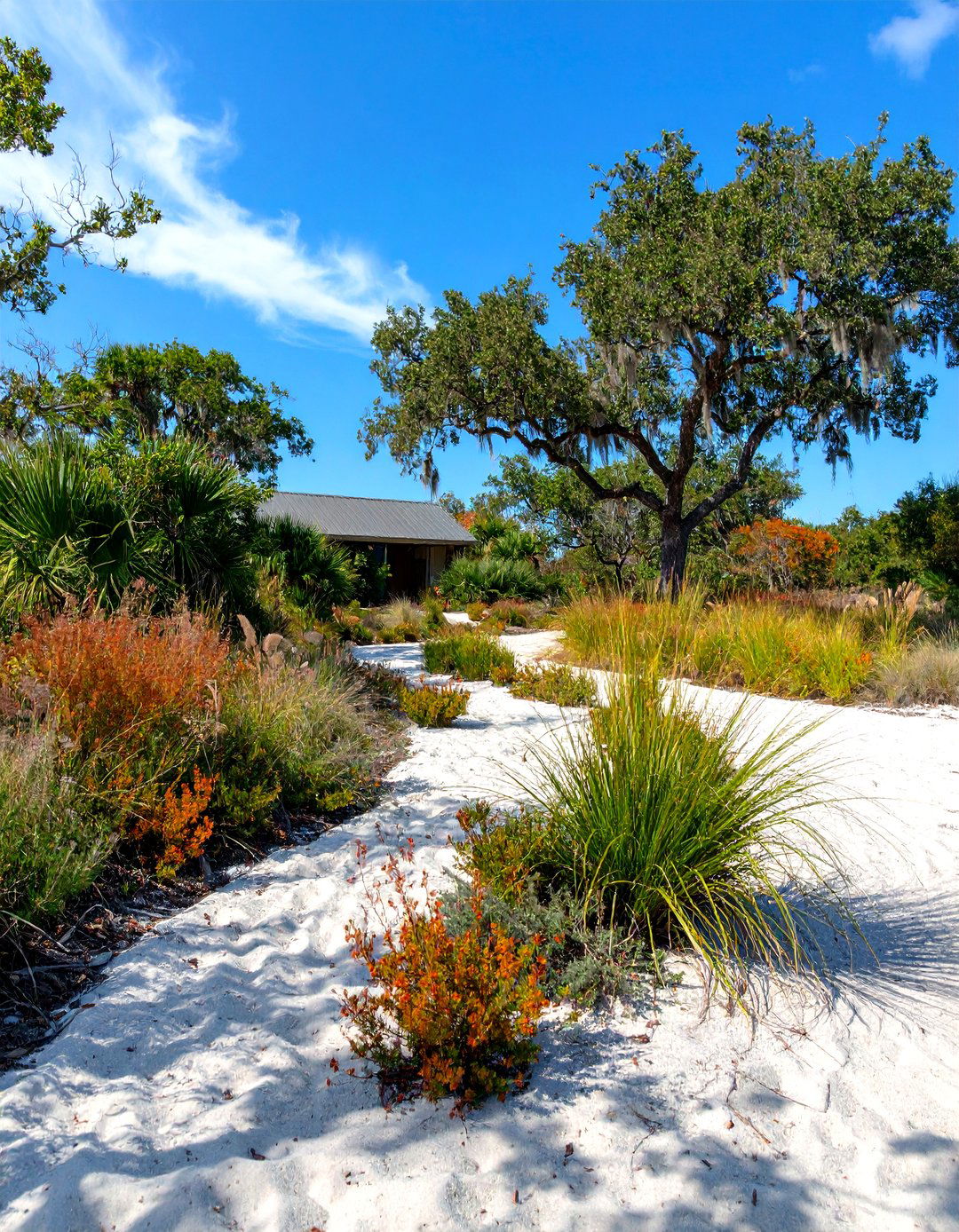
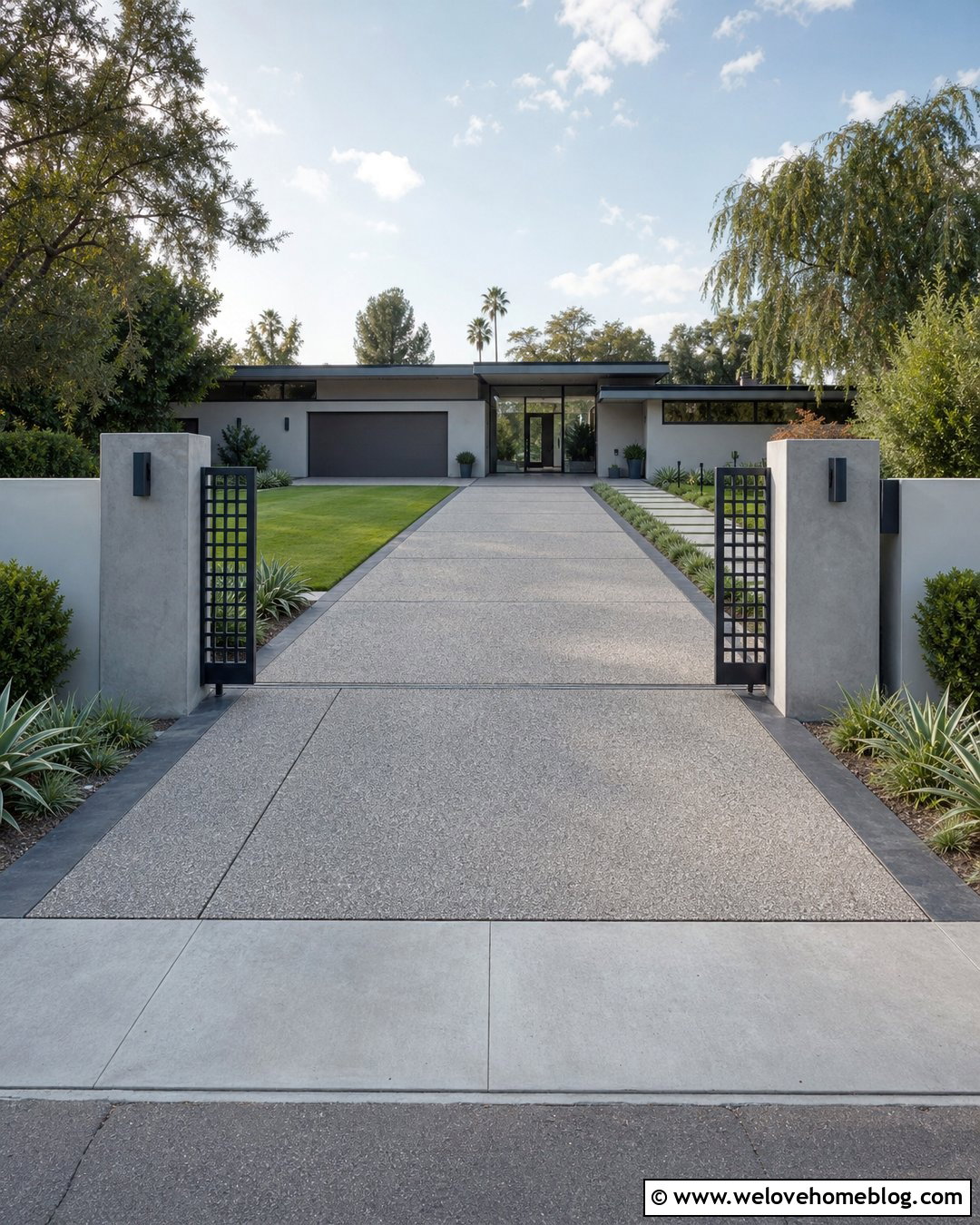
15. Basket Weave Brick Paver Driveway
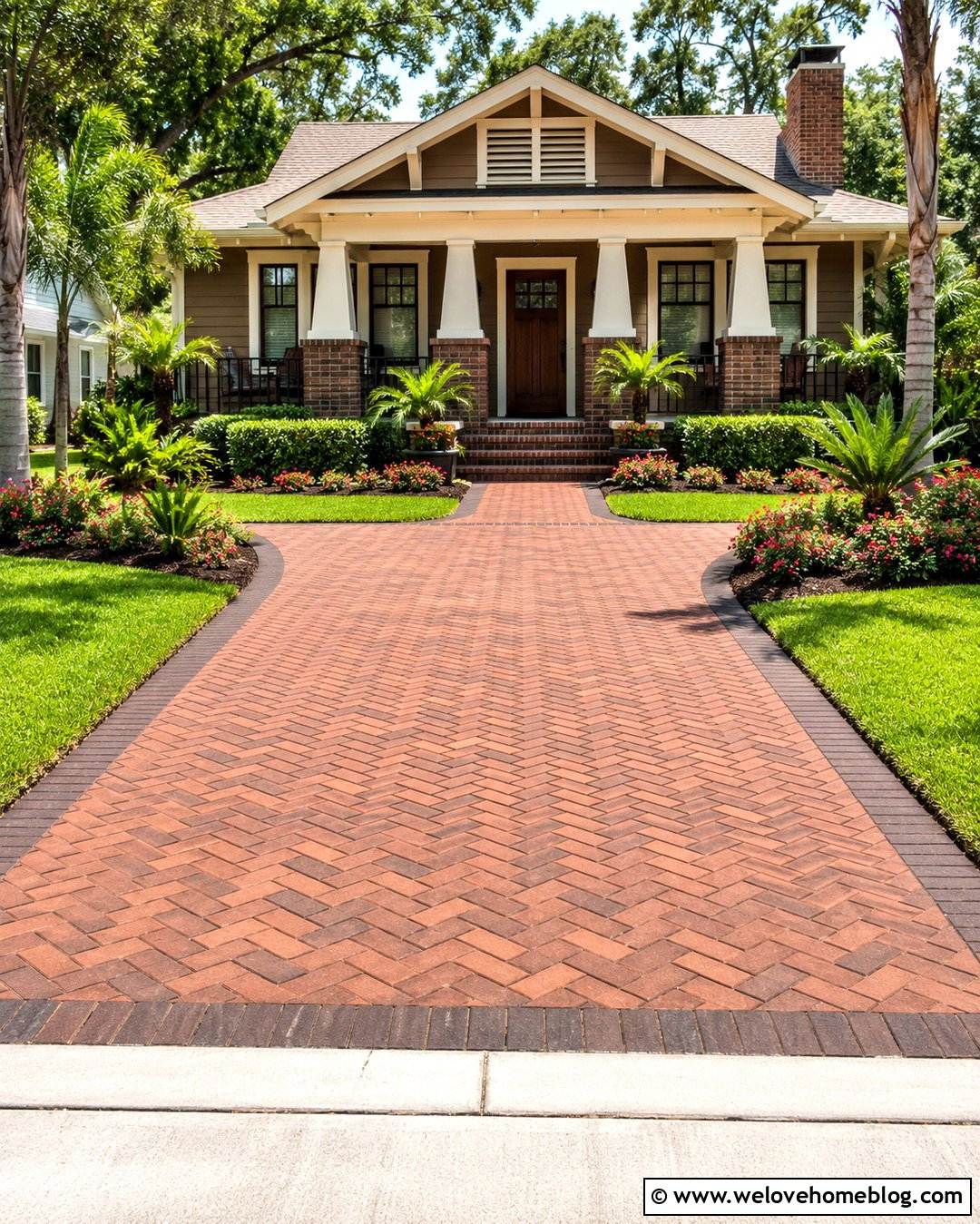
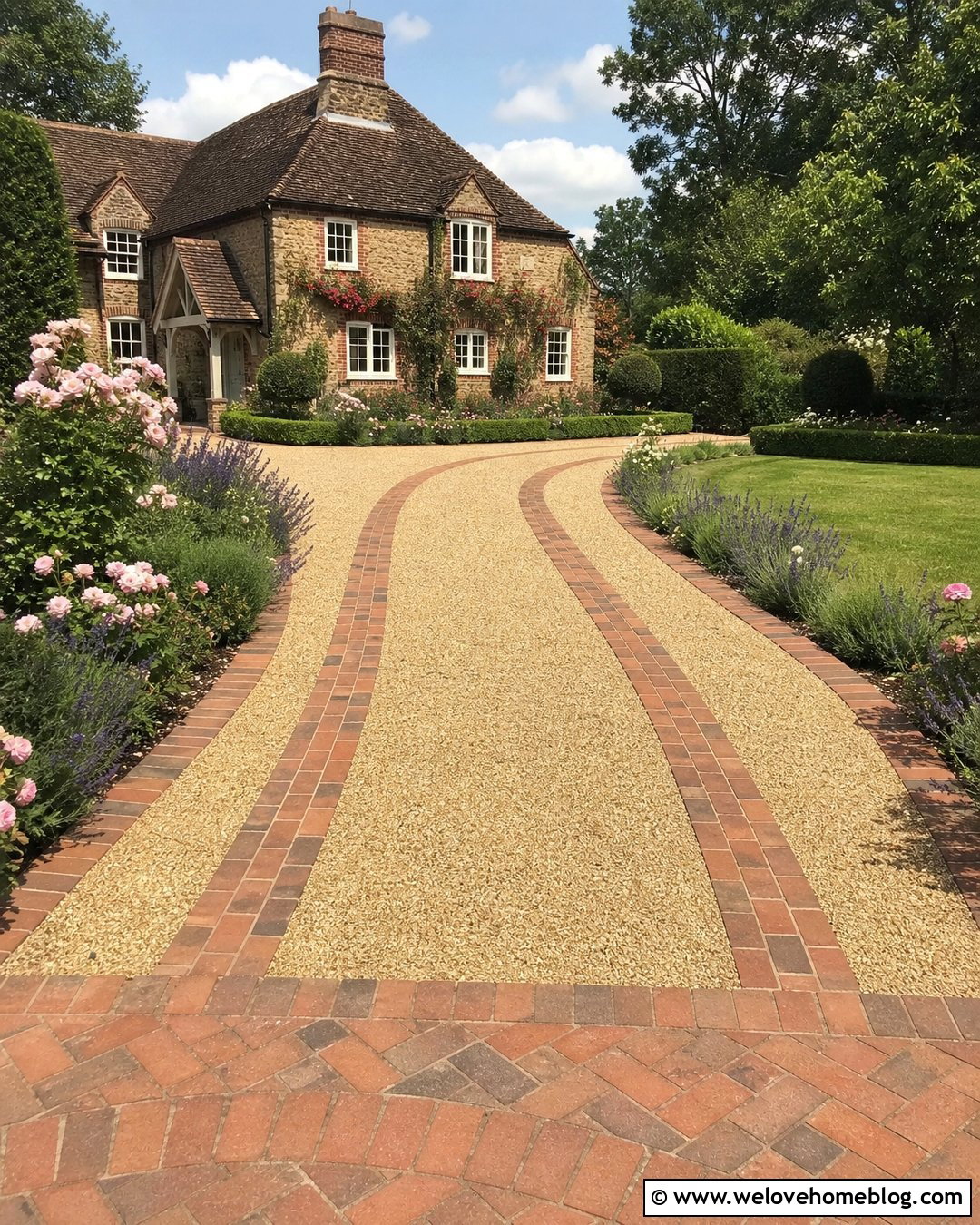
A basket weave pattern gives a brick driveway a detailed appearance that still feels orderly. Use driveway-rated clay brick pavers in warm red and brown tones, arranging pairs of bricks at alternating angles. This layout is especially attractive on a short, broad driveway where the pattern can be appreciated from the curb. Frame the field with a double soldier course in dark brown brick, creating stronger edge definition. Pair the surface with a craftsman bungalow featuring tapered porch columns, natural wood details, and a deep front roofline. Curved beds filled with ferns, dwarf palms, and flowering shrubs soften the structured paving. Continue the brick onto the walkway in simple running bond. The quieter walkway pattern prevents the overall design from becoming too busy and keeps attention on the main driveway.
16. Running Bond Paver Driveway
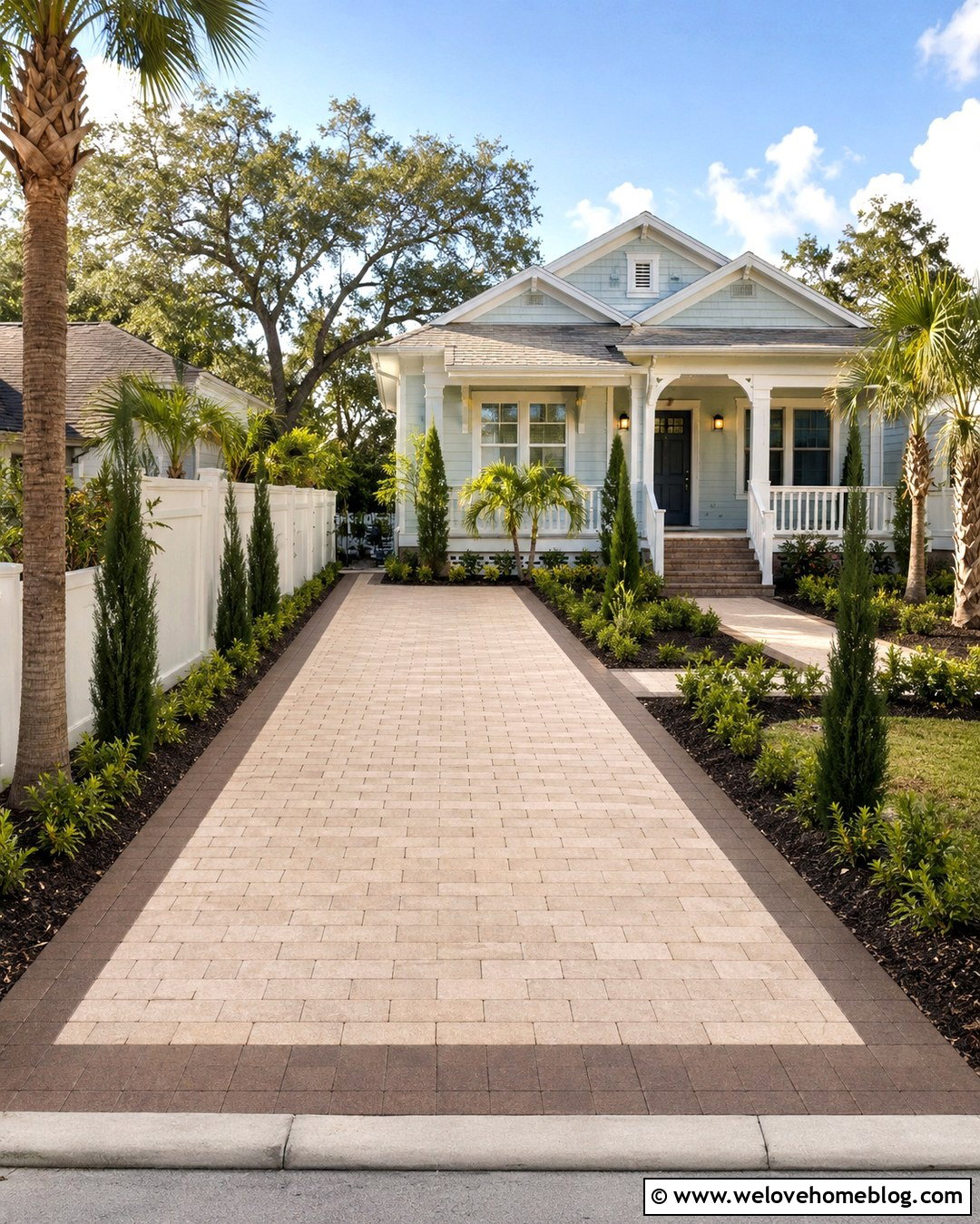
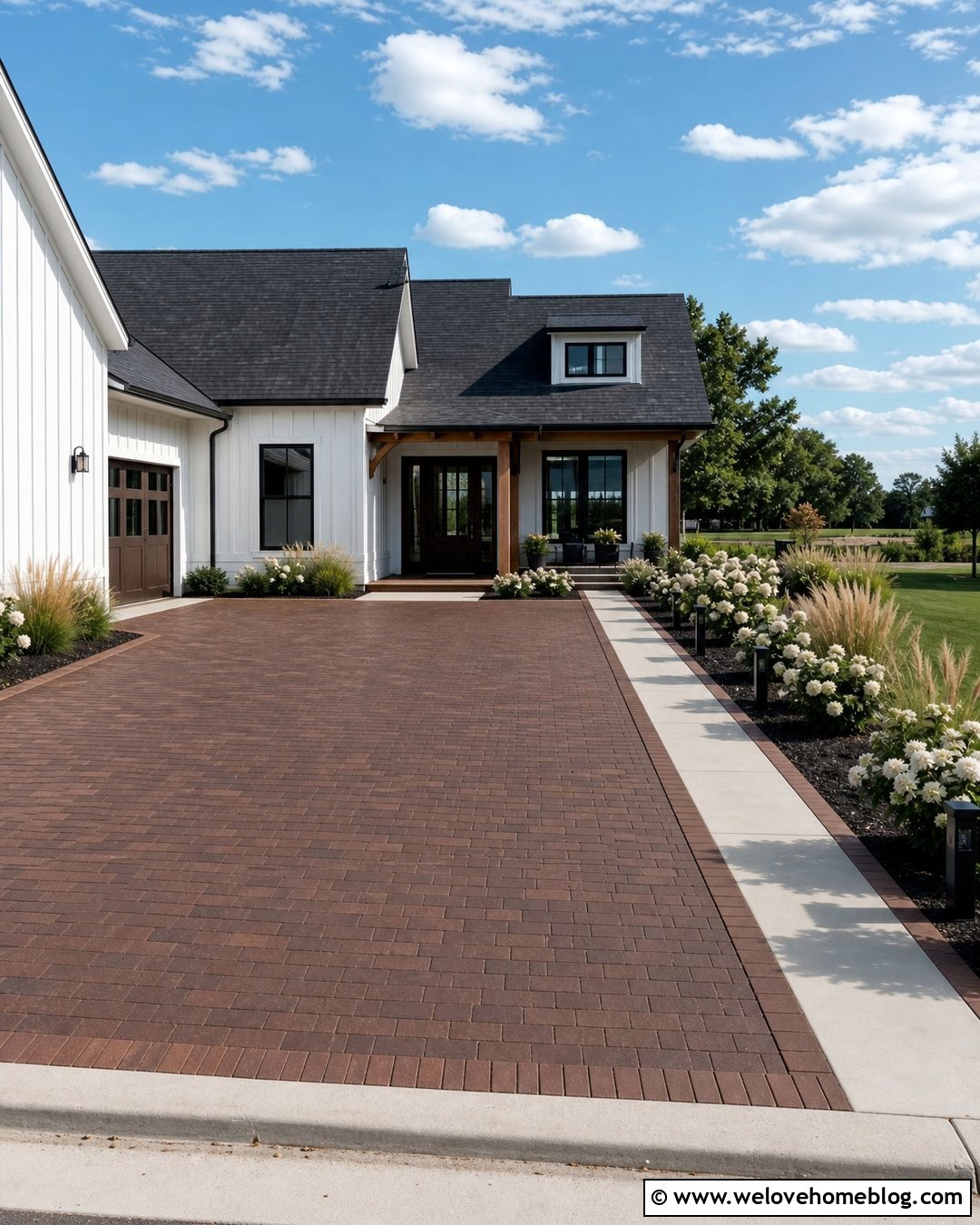
Running bond is a practical pattern for narrow Tampa lots because its straight lines can visually lengthen the approach. Select rectangular concrete pavers in a soft tan blend and position the rows toward the garage. Offset each row consistently for a clean, familiar layout. Dark mocha border pavers should run along both sides and across the apron, giving the driveway a finished frame. Keep the adjacent landscaping narrow and vertical with columnar shrubs, small palms, and tidy ground cover. This preserves parking width while adding greenery between the driveway and property boundaries. A matching side walkway can use the same pavers laid perpendicular to the driveway, creating a clear visual change without introducing another color. The simple pattern also works well when the home facade already contains decorative stone, brick, or detailed siding.
17. Turf Joint Paver Driveway
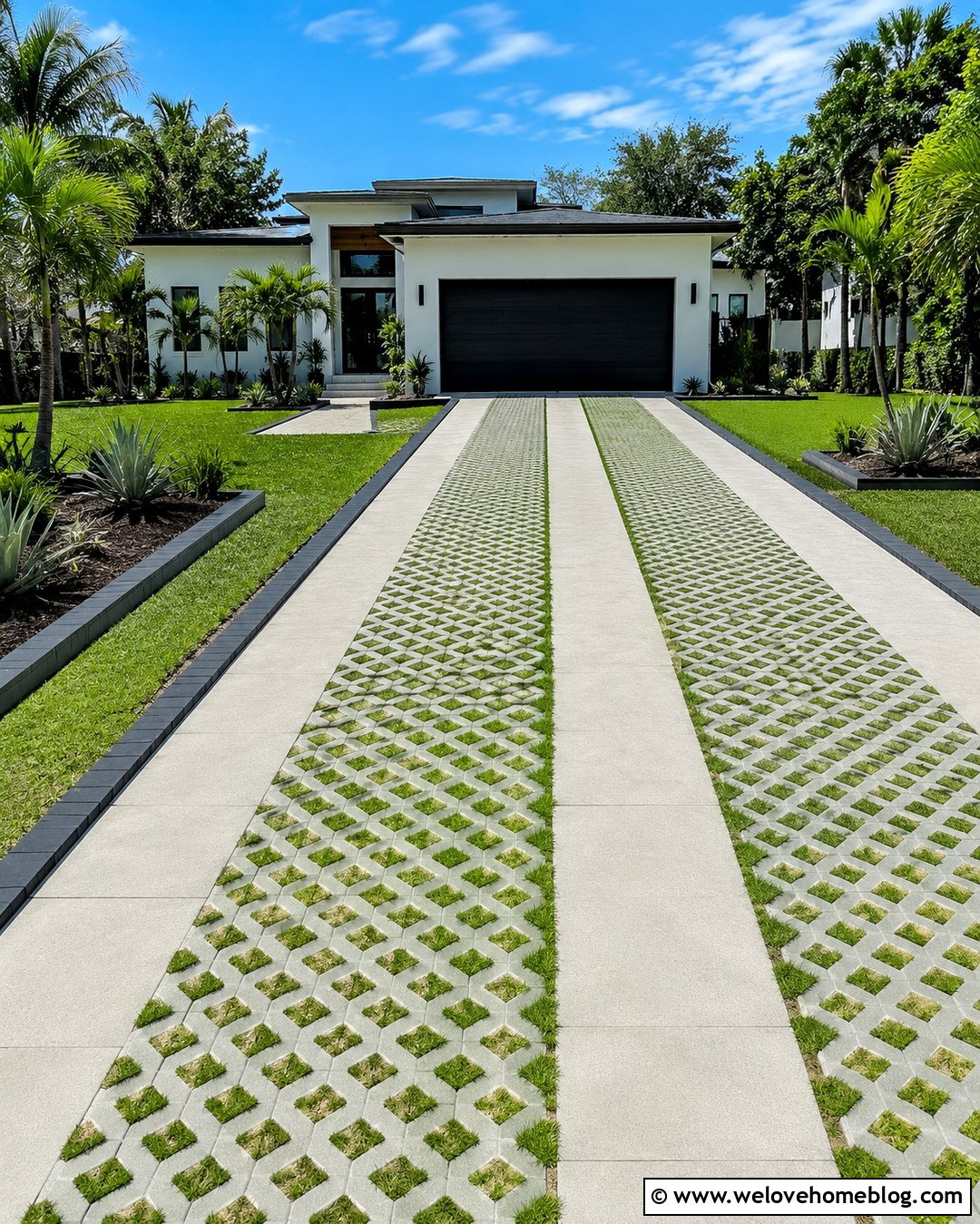
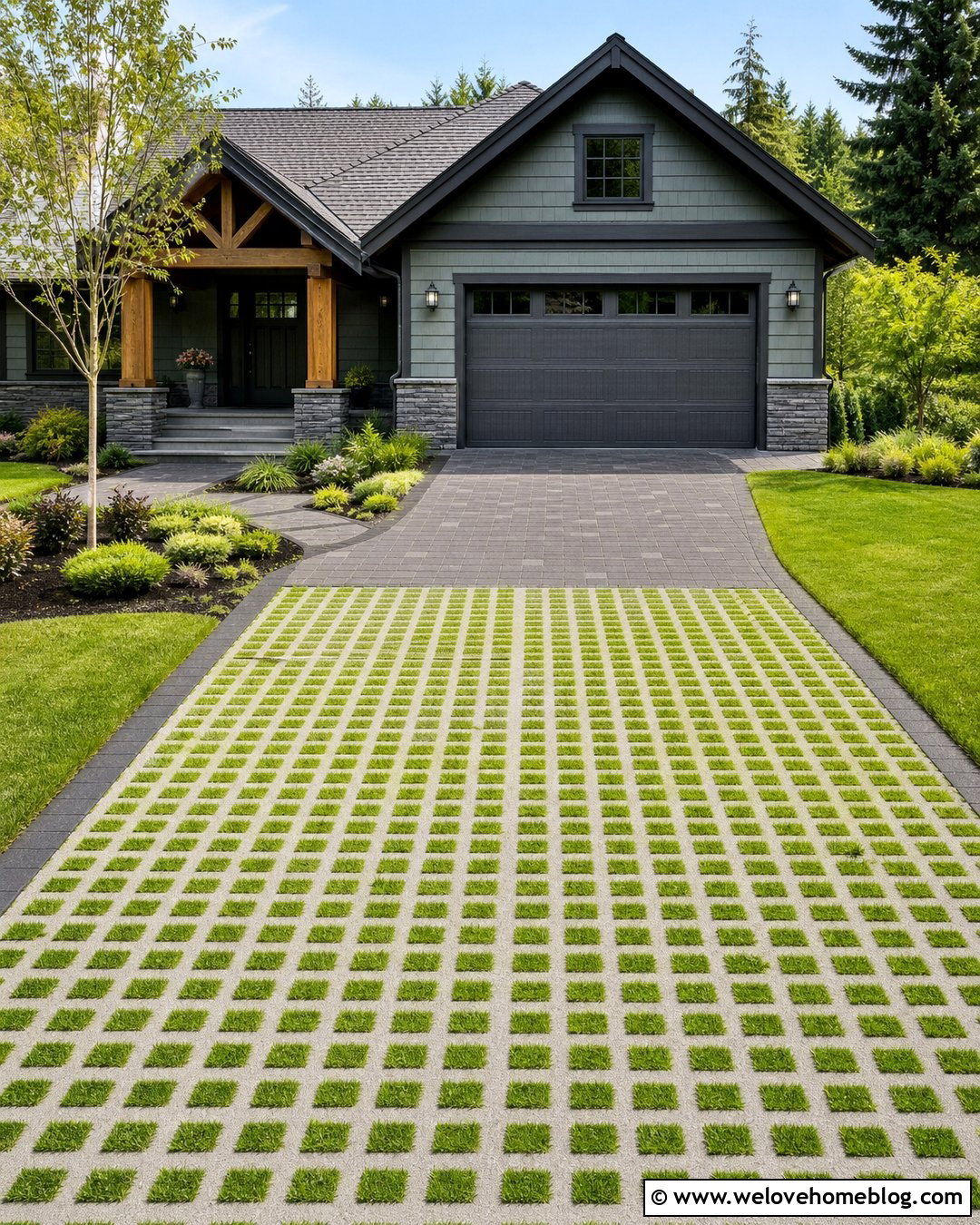
A turf-joint driveway brings greenery into a modern hardscape while maintaining a defined vehicle surface. Use large, vehicular-rated light gray concrete grid pavers with reinforced turf or durable ground cover growing through the openings. Place solid concrete paver tracks in the primary wheel paths if the selected system or maintenance plan requires them. The driveway can follow a straight layout toward a flat-roofed Tampa home with broad windows and white stucco walls. Add black paver edging, geometric planting beds, and compact palms to strengthen the contemporary appearance. Turf-joint systems require suitable soil, drainage, irrigation, and regular trimming to stay attractive. In areas where living grass would struggle, an open-joint permeable system filled with decorative aggregate can achieve a similar grid effect with less ongoing landscape care.
18. Paver Driveway Apron
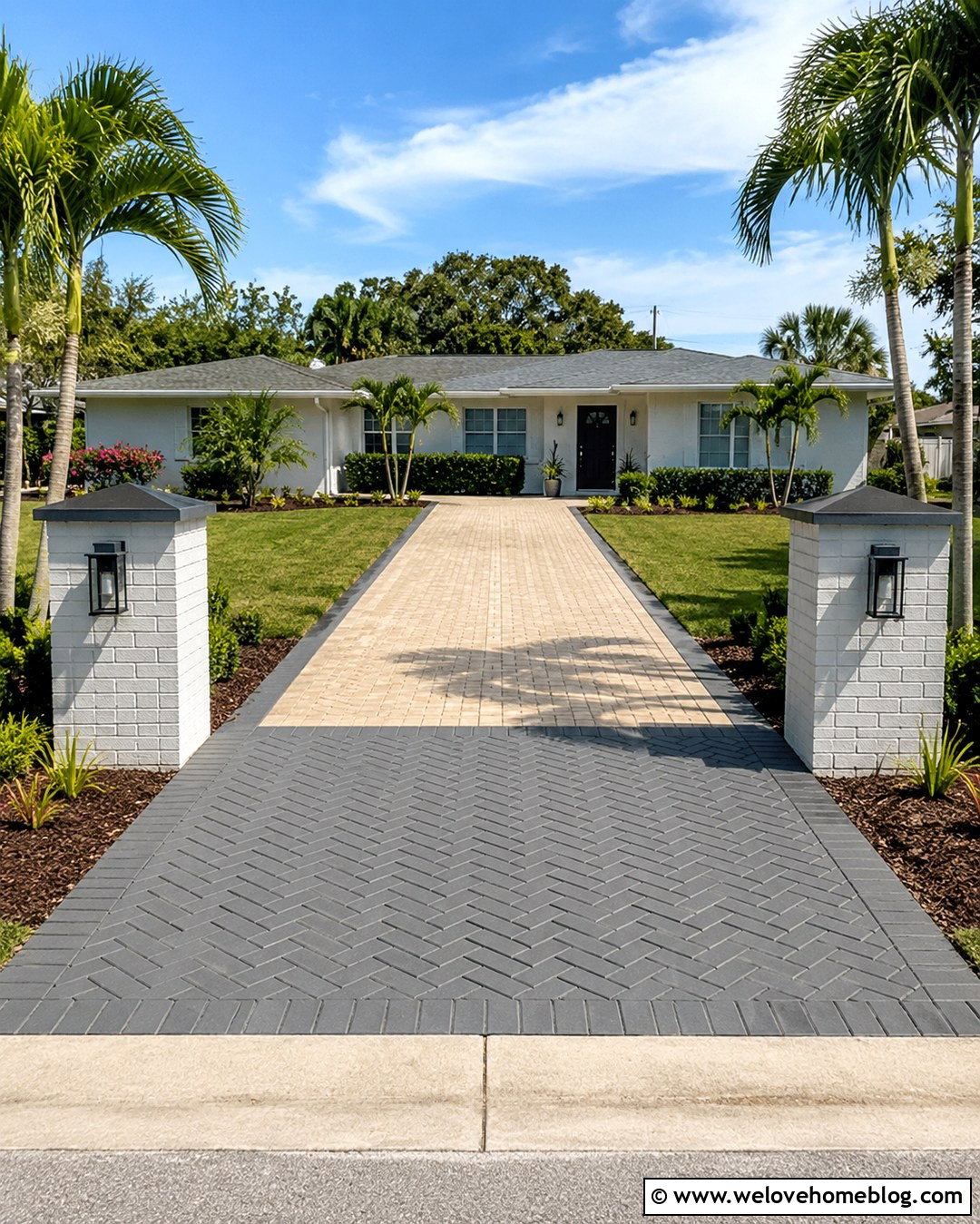
A contrasting paver apron creates an attractive transition between the street and the main driveway. Use charcoal concrete pavers in herringbone across the first several feet, then shift to sand-colored concrete pavers in running bond for the remaining approach. Carry a narrow charcoal border along both sides so the apron feels integrated rather than added later. This layout can bring character to a simple Tampa ranch home without covering the entire driveway in a complex pattern. Frame the entrance with symmetrical planting beds, low palms, flowering shrubs, and a pair of masonry address pillars positioned safely outside vehicle clearance. The apron must connect neatly with the public right-of-way and surrounding drainage. Before changing this area, homeowners should confirm applicable municipal, utility, community, and property requirements for driveway entrances.
19. Paver Driveway With Drainage
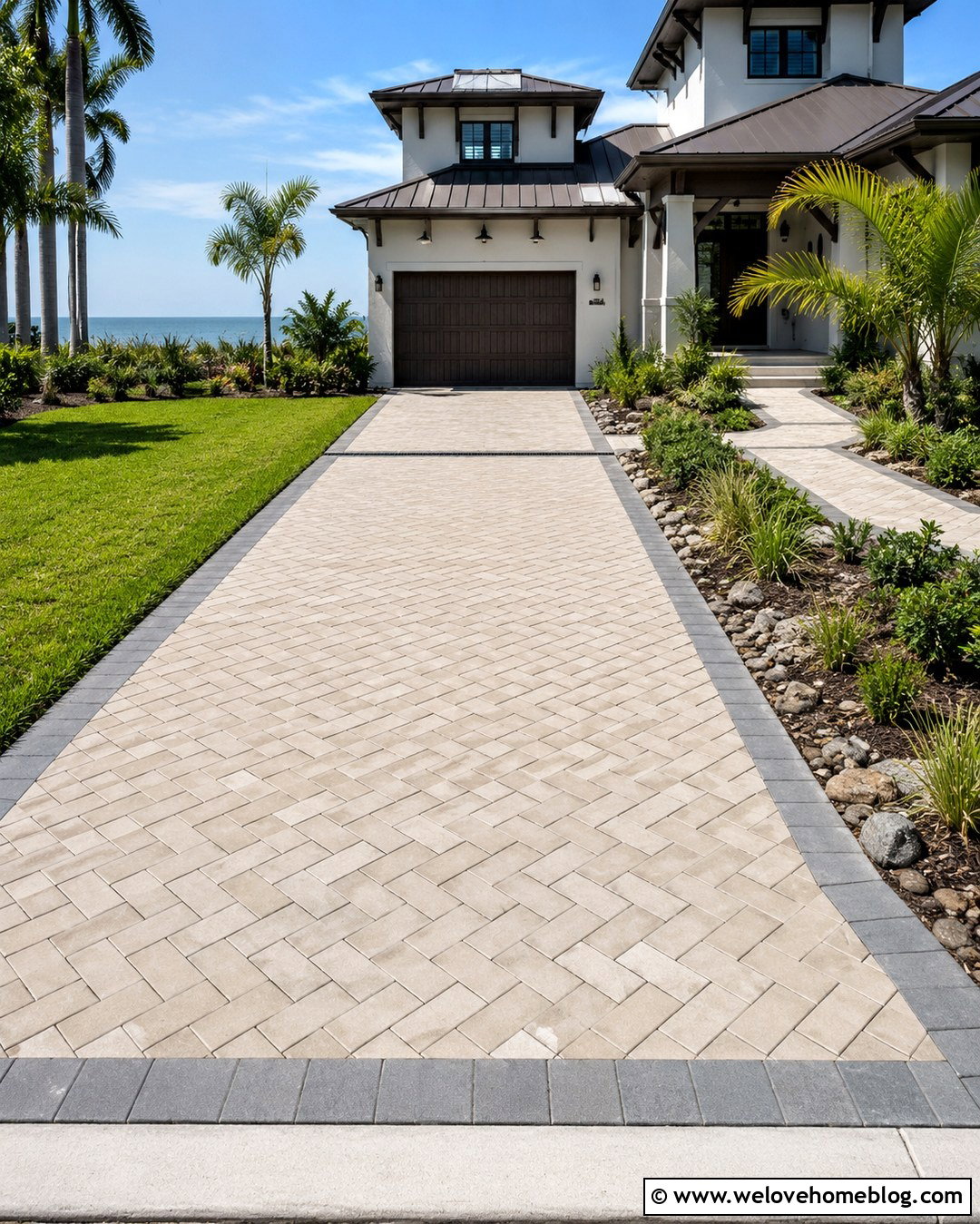
Heavy rainfall makes drainage an important part of a Tampa driveway design. Use textured beige concrete pavers in a 45-degree herringbone pattern on a properly graded surface. Install a slim channel drain across the garage entrance where site conditions require interception, and coordinate its grate color with the dark paver border. Along the lower side of the driveway, create a landscaped drainage bed with river rock, native grasses, and moisture-tolerant shrubs. The feature should look like part of the garden while directing water toward an approved outlet or infiltration area. Avoid treating decorative gravel as a substitute for proper grading and base preparation. A qualified installer should evaluate runoff, soil conditions, elevations, and neighboring properties. The finished design can be functional without resembling a visible drainage project from the curb.
20. Gated Paver Driveway
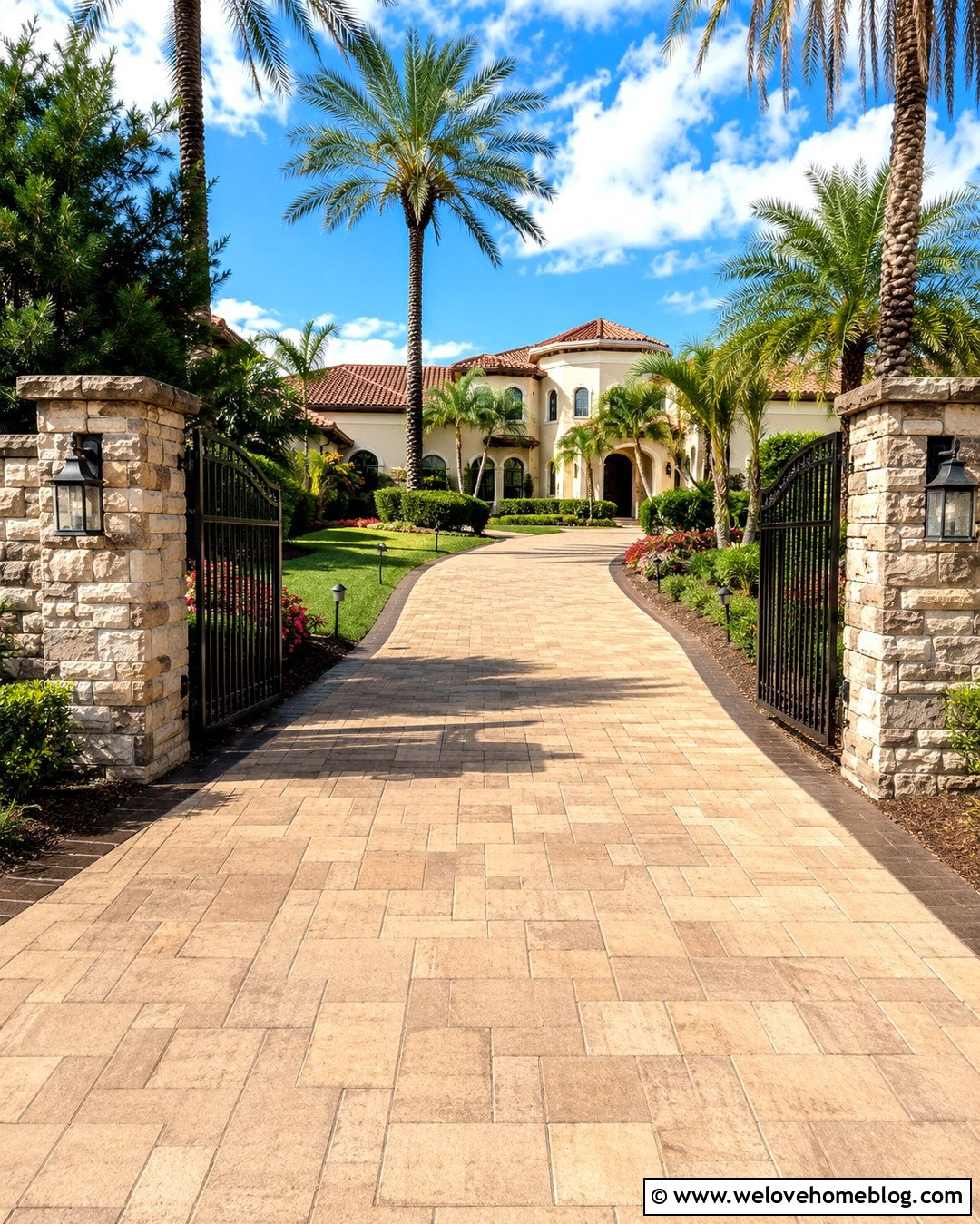
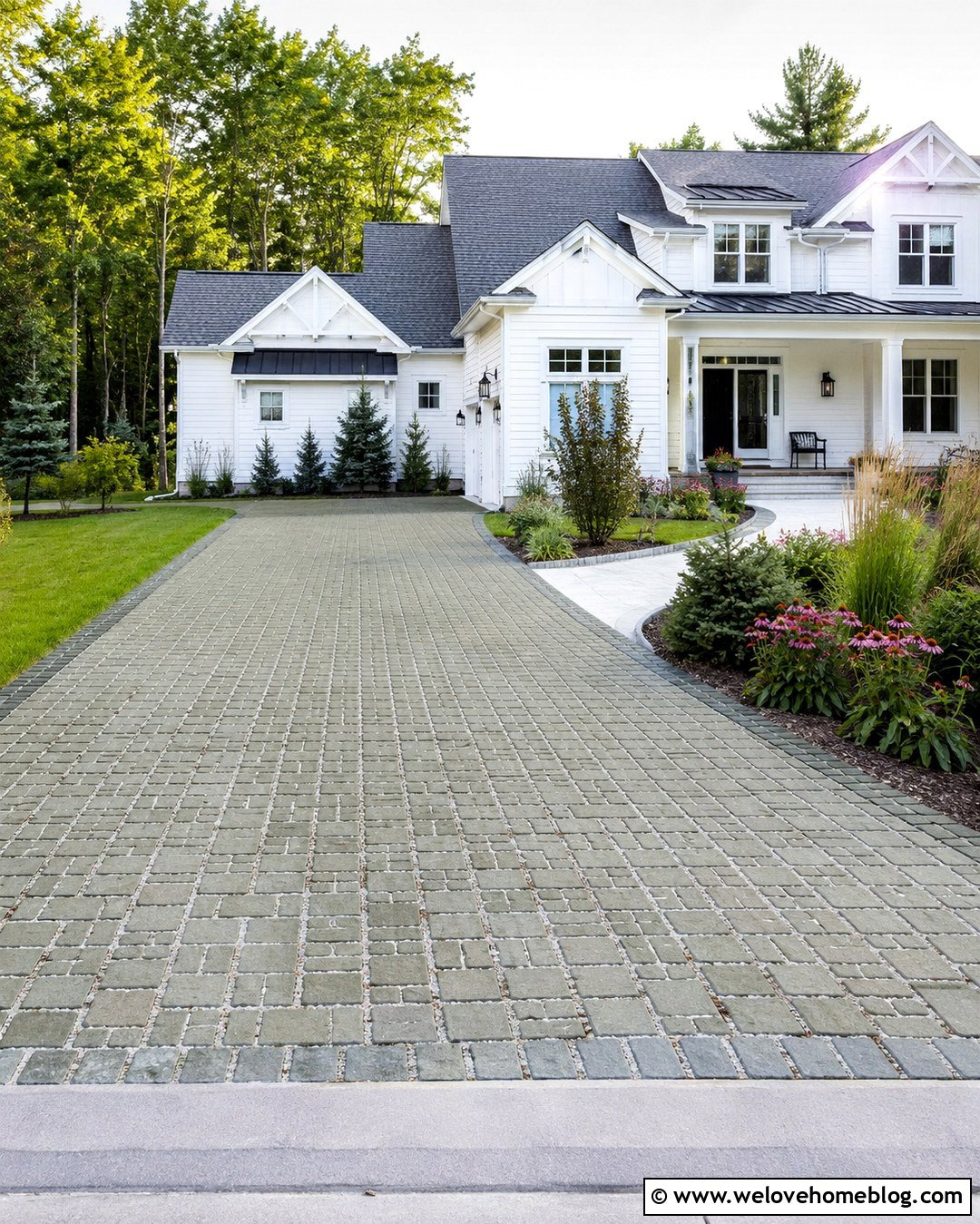
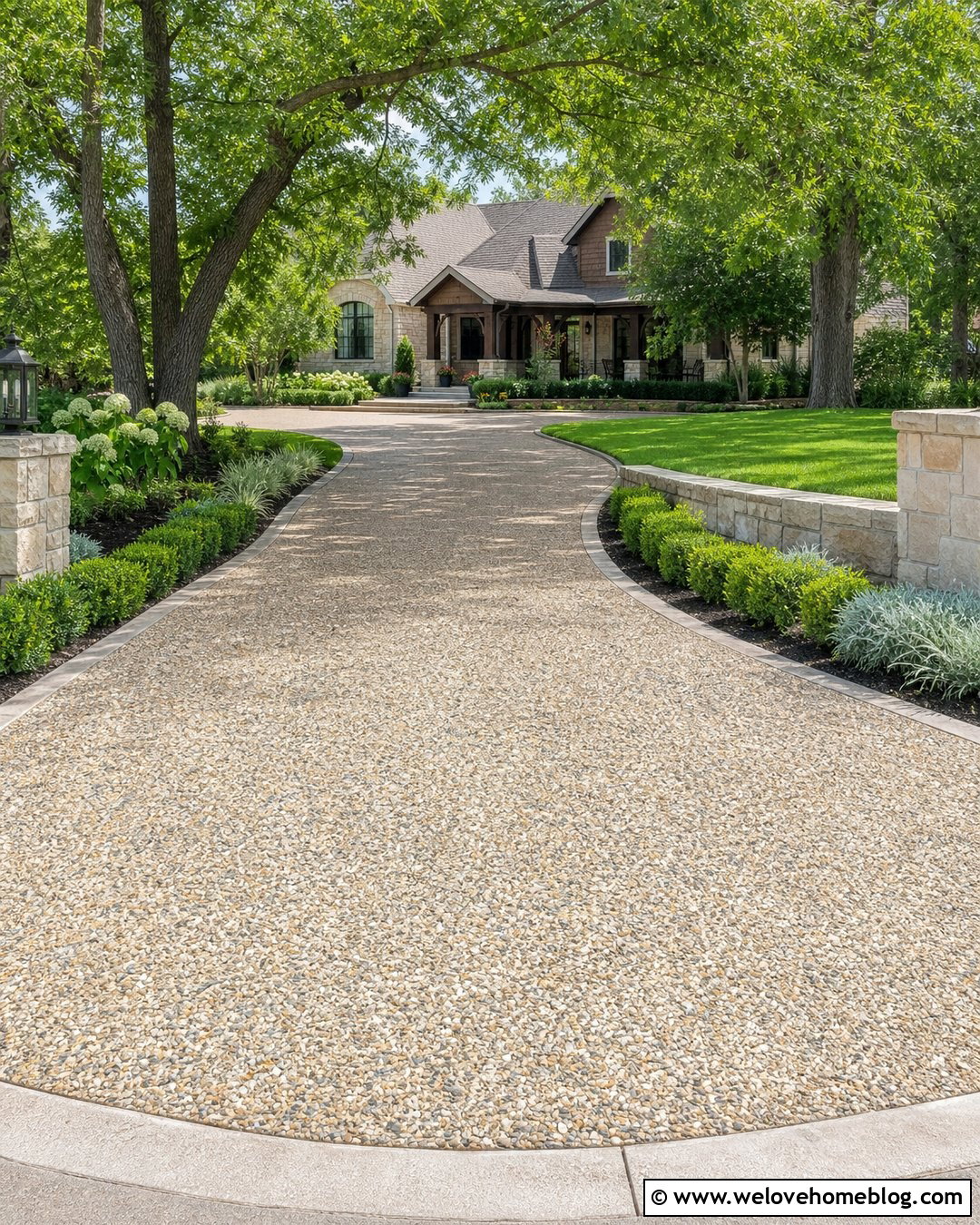
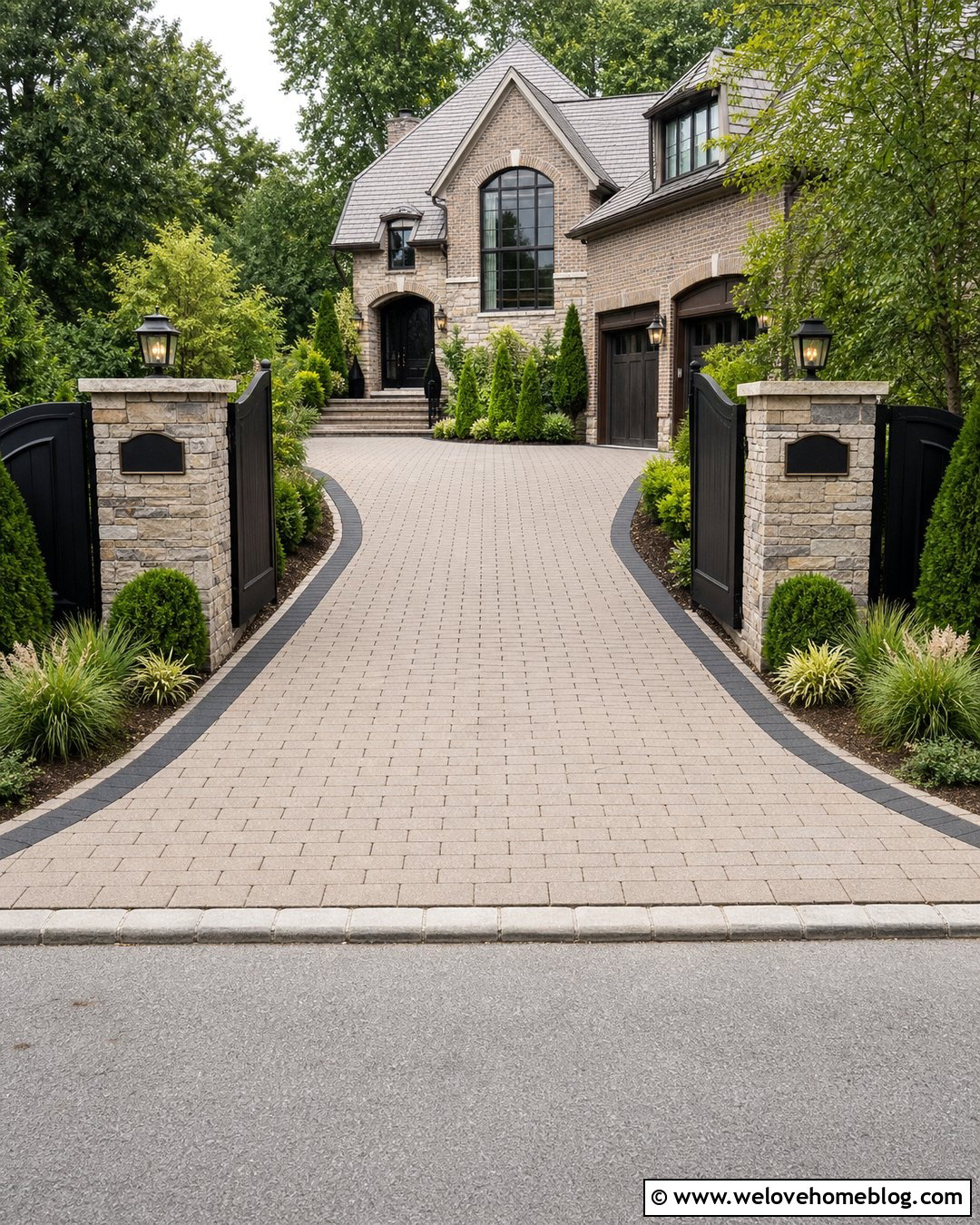
A gated paver driveway creates a strong entrance for a larger Tampa property. Choose warm beige concrete pavers in a random modular pattern and shape the driveway into a gentle curve beyond the gate. Dark brown paver borders should connect visually with masonry pillars and a simple black metal gate. Position the gate far enough inside the property to provide appropriate vehicle clearance, subject to site and local requirements. Plant matched groups of palms, podocarpus, and flowering shrubs around the pillars while maintaining open sightlines. Low-voltage fixtures can be incorporated into the landscape beds and pillar faces without cluttering the entrance. Continue the same pavers toward the house and motor court so the gate feels connected to the full approach. A coordinated pedestrian gate and walkway complete the unified design.
Conclusion:
The best **Driveway Pavers Tampa Ideas** combine an attractive pattern with a surface, foundation, and drainage plan suited to the property. Light sand, cream, shellstone, and pale gray palettes feel natural in Florida sunshine, while brick, charcoal borders, and cobblestone textures provide stronger architectural character. Match the driveway to the home rather than choosing pavers in isolation. Consider the full view from the street, including the layout, apron, walkway, planting beds, garage transition, and entrance features. Before installation, compare full-size samples outdoors and review grading, edge restraints, base preparation, joint material, irrigation, and maintenance. Thoughtful planning will create a driveway that looks cohesive, handles daily use, and strengthens the home’s overall curb appeal.

Related posts:

Leave a Reply