
Concrete and asphalt may be familiar, but they are far from the only ways to create an attractive, durable driveway. These 20 Alternative Driveway Materials Ideas explore permeable paving, recycled aggregates, natural stone, compacted gravel, planted grids, and other distinctive surfaces. Some choices create a relaxed country entrance, while others deliver a clean modern finish. Permeable materials can also help rainwater soak into properly designed base layers instead of immediately becoming surface runoff. () Before choosing, consider your climate, driveway slope, vehicle weight, maintenance expectations, and local building requirements. Good drainage and professional base preparation remain important with almost every material. Use these complete driveway looks to compare practical, creative, and curb-friendly 20 Alternative Driveway Materials Ideas.

1. Pea Gravel Driveway With Cobblestone Edging
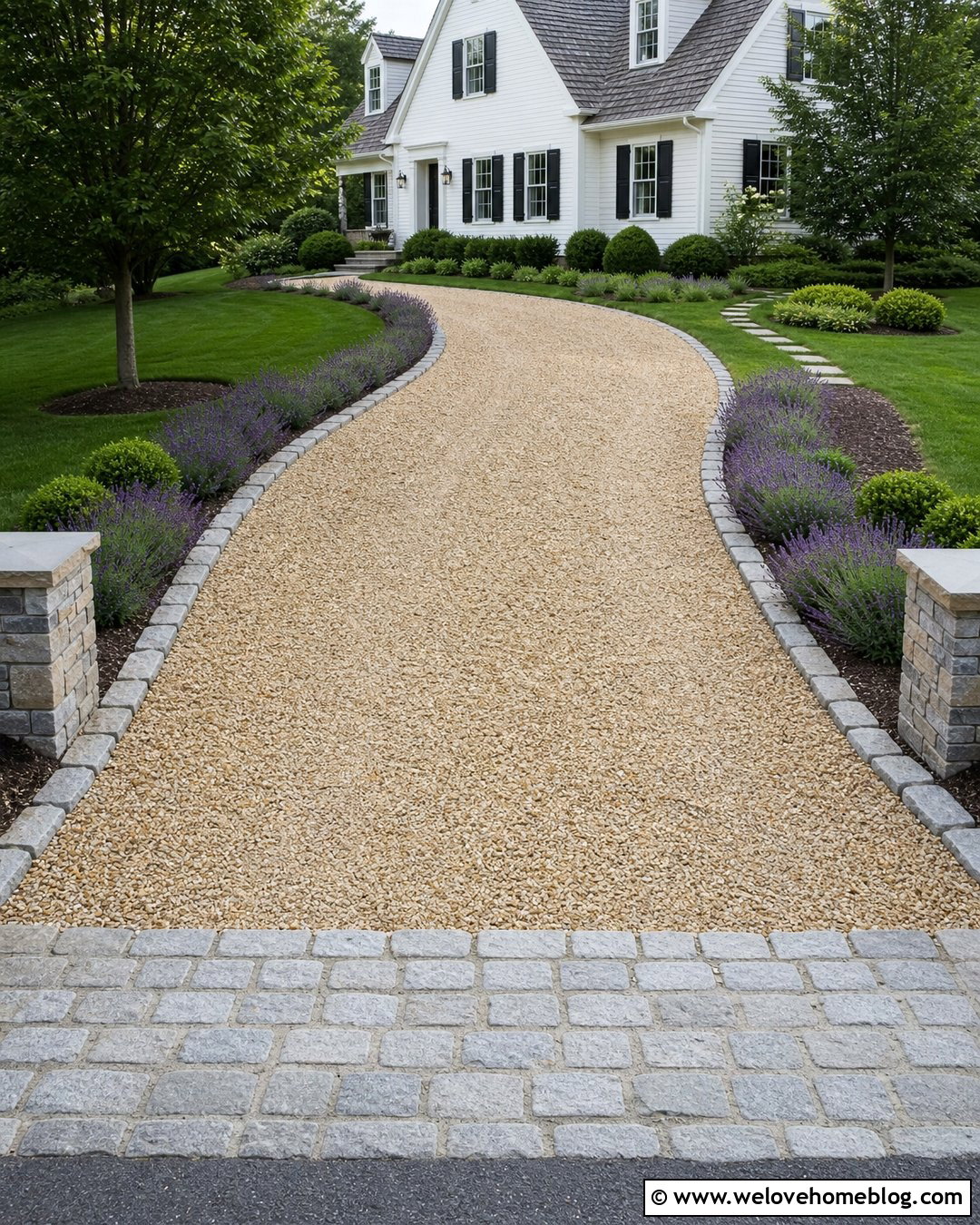
Small, rounded pea gravel creates a relaxed driveway that suits cottages, ranch homes, and traditional suburban properties. Choose tan, gray, or mixed earth-tone gravel to coordinate with the house exterior. A gently curved layout makes the loose material feel more intentional, while cobblestone edging keeps it away from the lawn and planting beds. Because pea gravel can shift under tires, install it over a compacted crushed-stone base and consider using a stabilization grid beneath the surface. Add lavender, ornamental grasses, or low evergreen shrubs along the outer curve. A brick or stone apron at the street can reduce gravel migration. This complete look feels informal and welcoming, yet the defined border gives it enough structure for a polished front yard.
2. Crushed Granite Driveway With Steel Edging
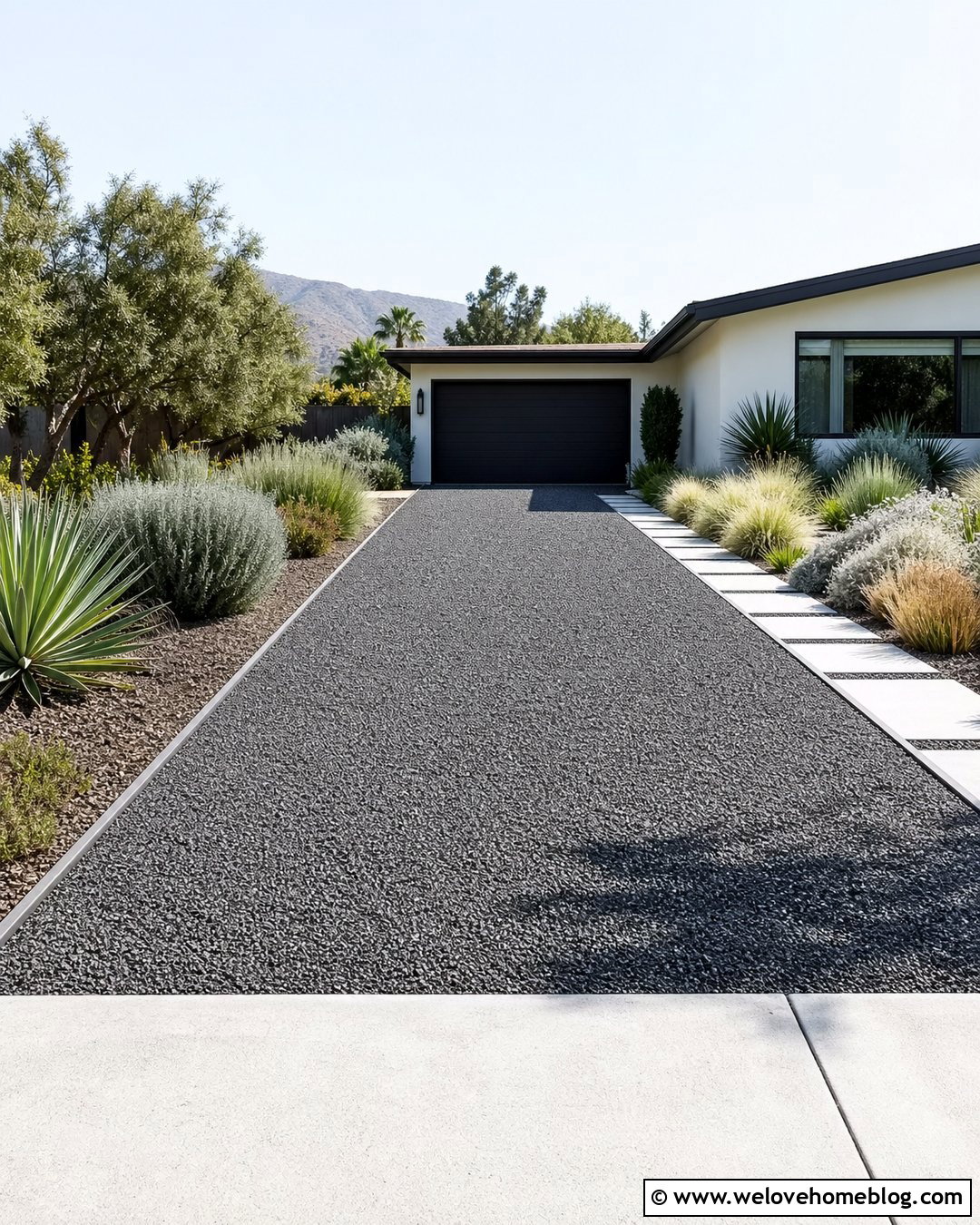
Crushed granite offers a sharper, more compactable surface than rounded gravel. Its natural gray, charcoal, or reddish coloring works especially well with contemporary ranch and midcentury homes. For a streamlined design, use a straight driveway with narrow black steel edging along both sides. The crisp boundaries contain the aggregate and visually connect it to dark window frames or exterior lighting. Plant drought-tolerant grasses, yucca, sage, and compact junipers in gravel-mulched beds nearby. A concrete walkway can cross the driveway near the entrance without disrupting the minimalist appearance. Select well-graded crushed granite with enough fine particles to lock together after compaction. Occasional raking and replenishment may be needed, but the finished driveway looks natural, clean, and less conventional than solid pavement.
3. Decomposed Granite Driveway With Desert Landscaping
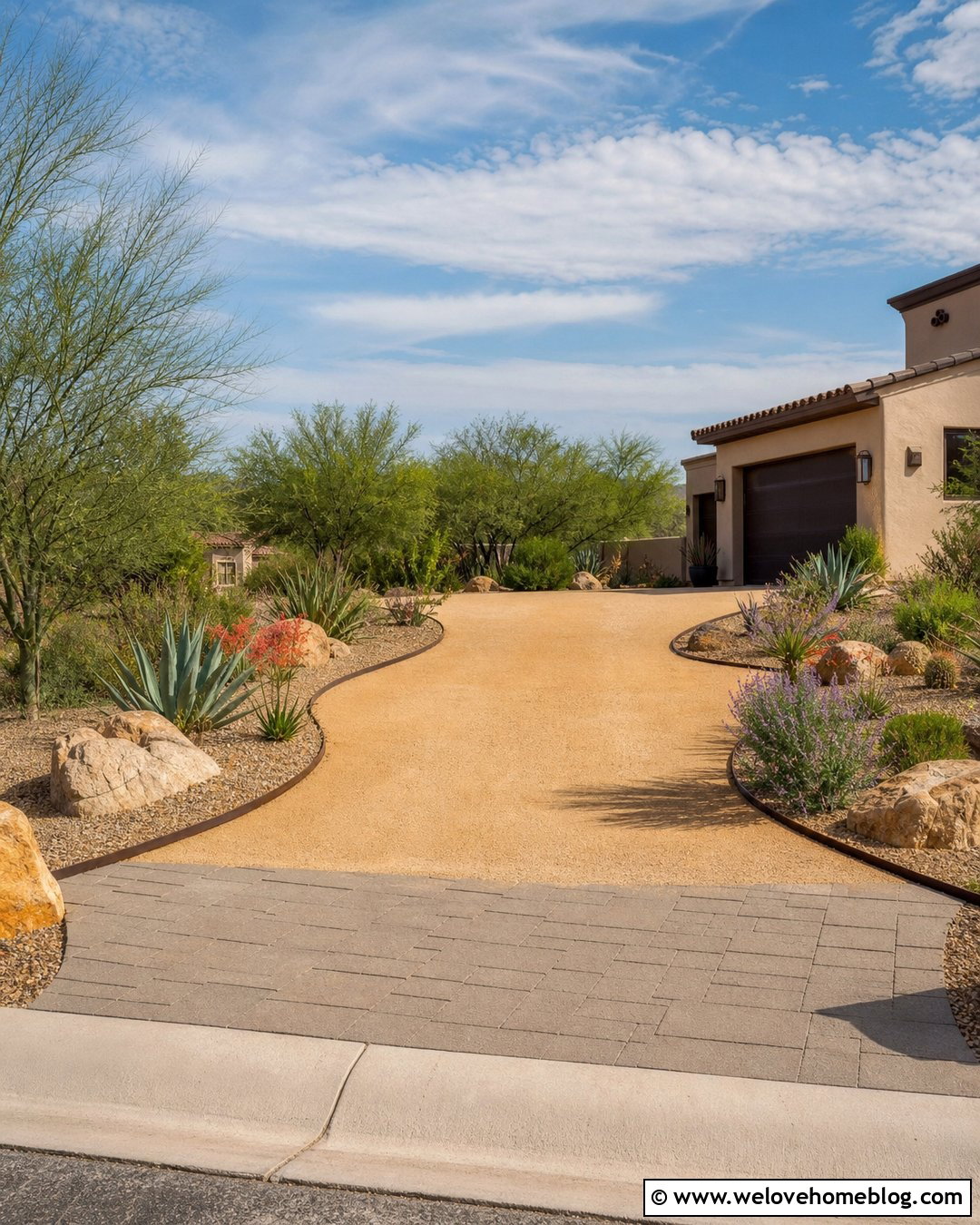
Warm decomposed granite can turn a basic driveway into a soft, natural extension of a desert-inspired yard. Gold, buff, and rusty red tones complement stucco homes, adobe details, and southwestern architecture. A broad curved driveway looks especially appealing when framed by boulders, agave, desert spoon, and flowering penstemon. Install compacted steel or stone edging to keep the surface from spreading into planting beds. Stabilized decomposed granite, which includes a binding agent, generally creates a firmer driving surface than loose material. Proper grading is still essential because concentrated runoff may erode the fines. Use a contrasting paver apron near the garage to create a clean transition. The finished look blends into an arid landscape while providing more visual warmth than ordinary gray concrete.
4. Crushed Limestone Driveway With Brick Borders
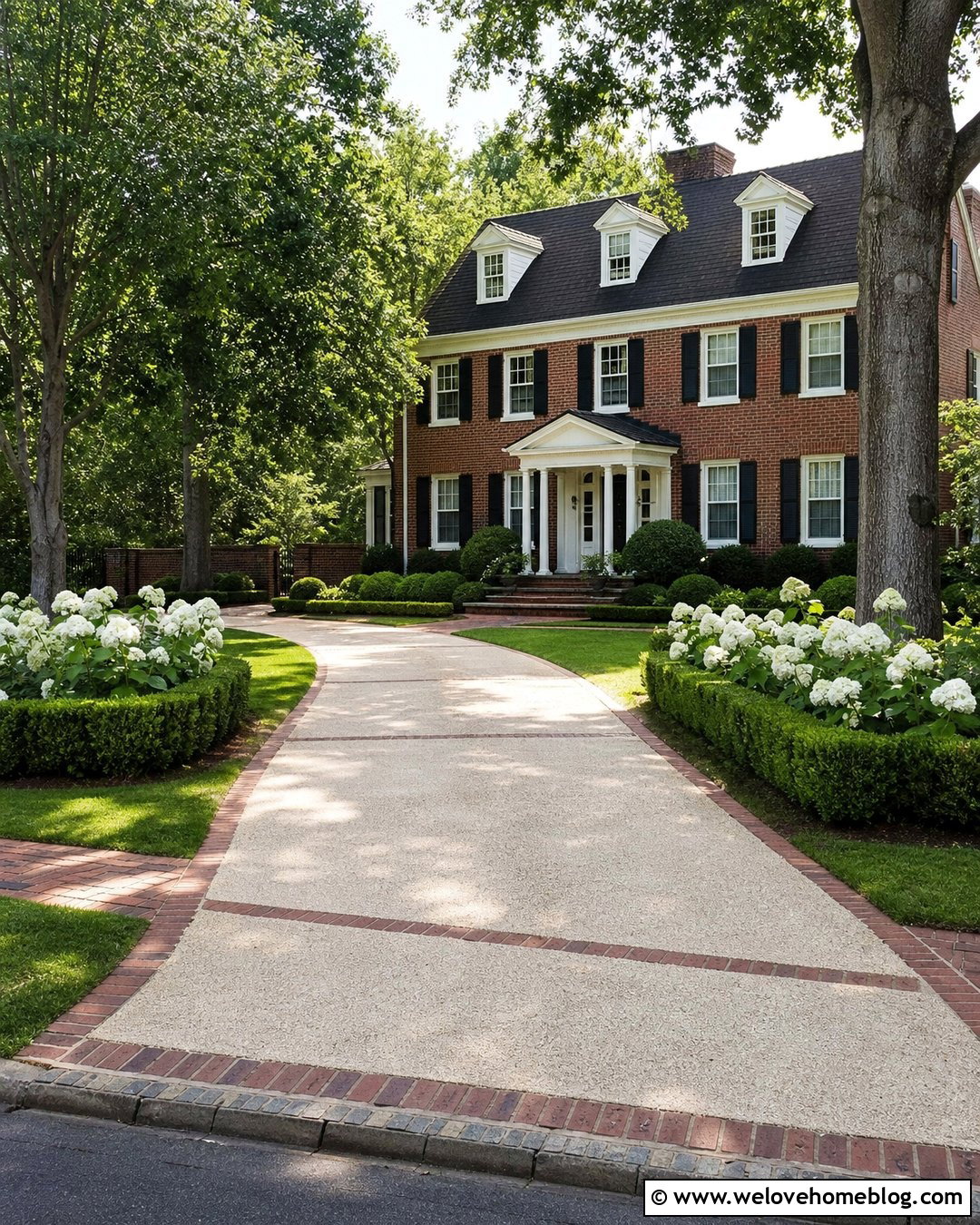
Pale crushed limestone creates a bright driveway that pairs naturally with farmhouse, colonial, and French country exteriors. Its angular pieces compact more securely than smooth decorative pebbles, especially when the surface includes smaller limestone fines. Frame a straight or lightly curved driveway with red clay brick borders for clear contrast and traditional character. Matching brick can also form a wide entrance apron or narrow bands across the driveway. Surround the design with clipped boxwood, hydrangeas, lawn, and one or two shade trees. Limestone dust can become noticeable during dry weather, so regular compaction and appropriate stone sizing matter. Drainage should direct water away from the house and prevent channels from developing. This combination delivers an inviting, established appearance without covering the entire approach in conventional pavement.
5. Slate Chip Driveway With Stone Walls
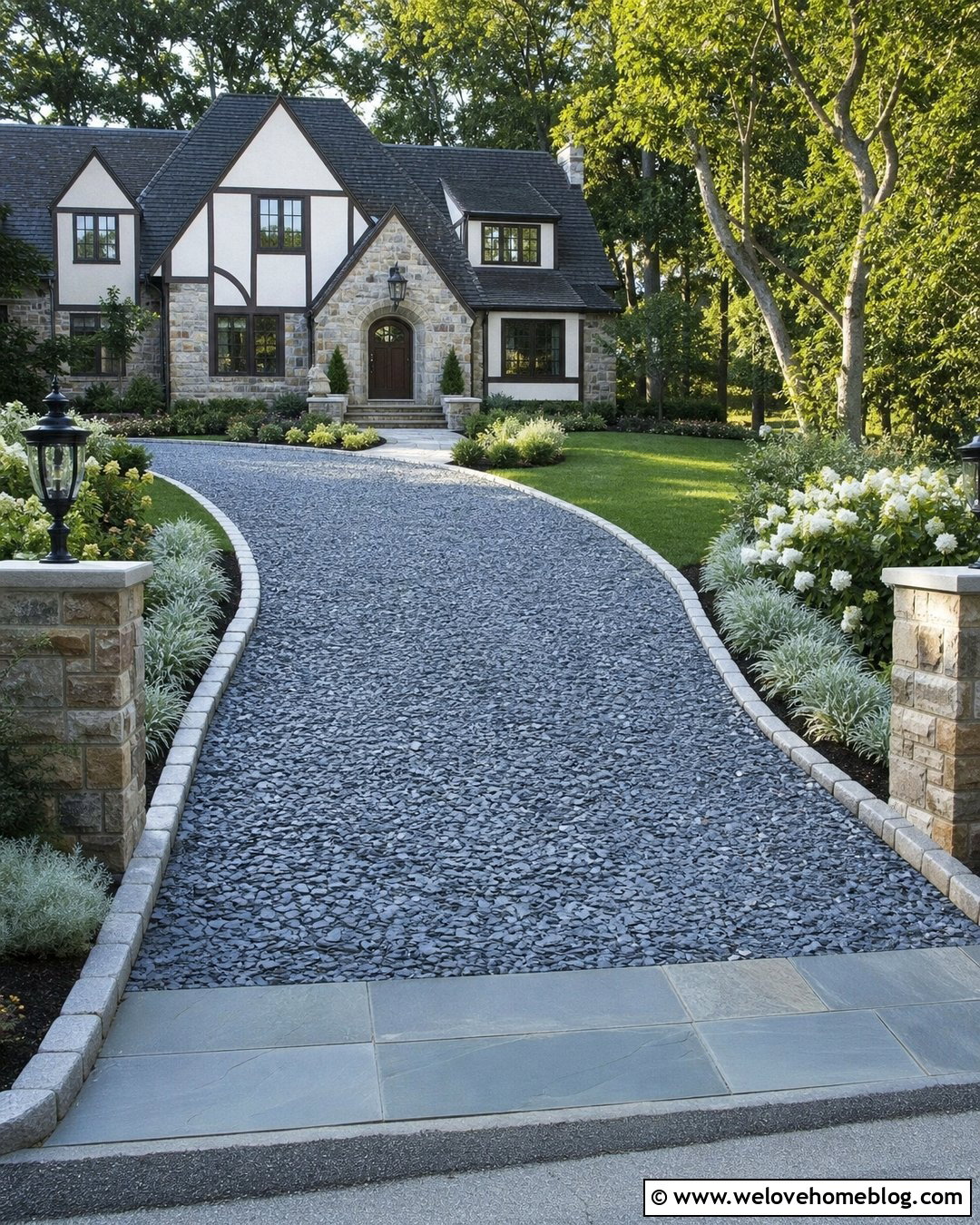
Deep blue-gray slate chips give a driveway rich color and a crisp texture that suits Cape Cod, Tudor, and modern farmhouse homes. A slightly curved layout can lead between low stacked-stone walls before opening into a wider parking area near the house. Use larger, angular slate chips rather than thin, fragile landscaping flakes, and confirm that the chosen product is rated for vehicle traffic. A compacted aggregate base will limit rutting and improve stability. Gray granite curbing can contain the slate while creating a smooth mowing edge beside the lawn. Repeat the blue-gray tone in the front walkway or porch steps for a connected design. White flowering shrubs and silver-green foliage brighten the dark surface, resulting in a dramatic driveway that still feels natural and residential.
6. Marble Chip Driveway With Concrete Paver Bands
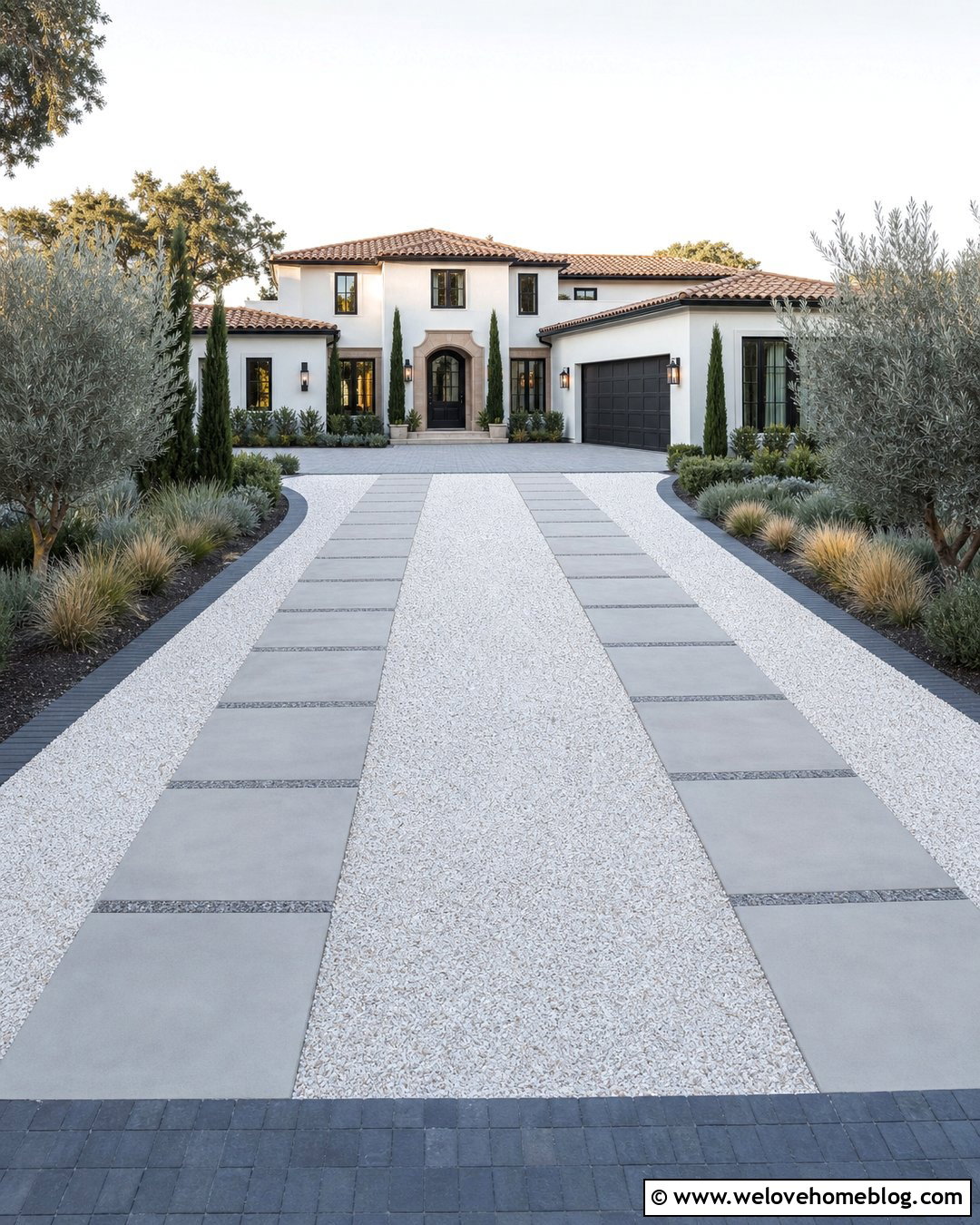
White or pale gray marble chips can create a bright, upscale driveway, especially beside Mediterranean and contemporary homes. To prevent the surface from appearing like an unbroken field of decorative stone, divide it with wide concrete paver bands positioned beneath common tire paths. The bands provide visual order and a firmer rolling surface, while charcoal edging creates definition along the lawn. Use rounded planting beds with olive-like ornamental trees, rosemary, low grasses, or compact evergreens to soften the reflective stone. Marble can show dirt and leaf staining more readily than darker aggregates, so it works best in open yards with manageable tree litter. A sturdy base, stabilization grid, and controlled drainage help maintain an even finish. The complete design feels luminous, structured, and noticeably different from standard paving.
7. Shell Driveway With Coastal Landscaping
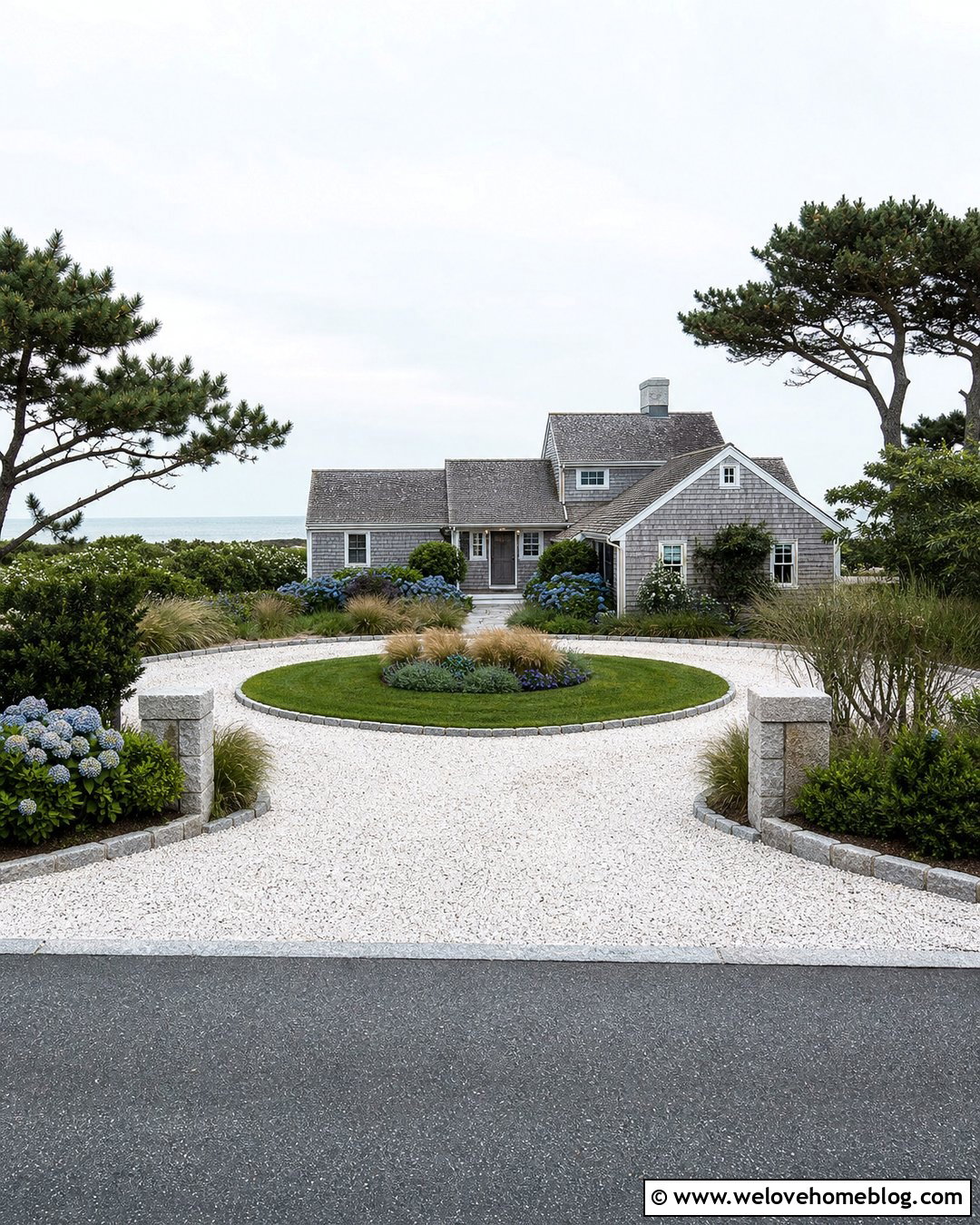
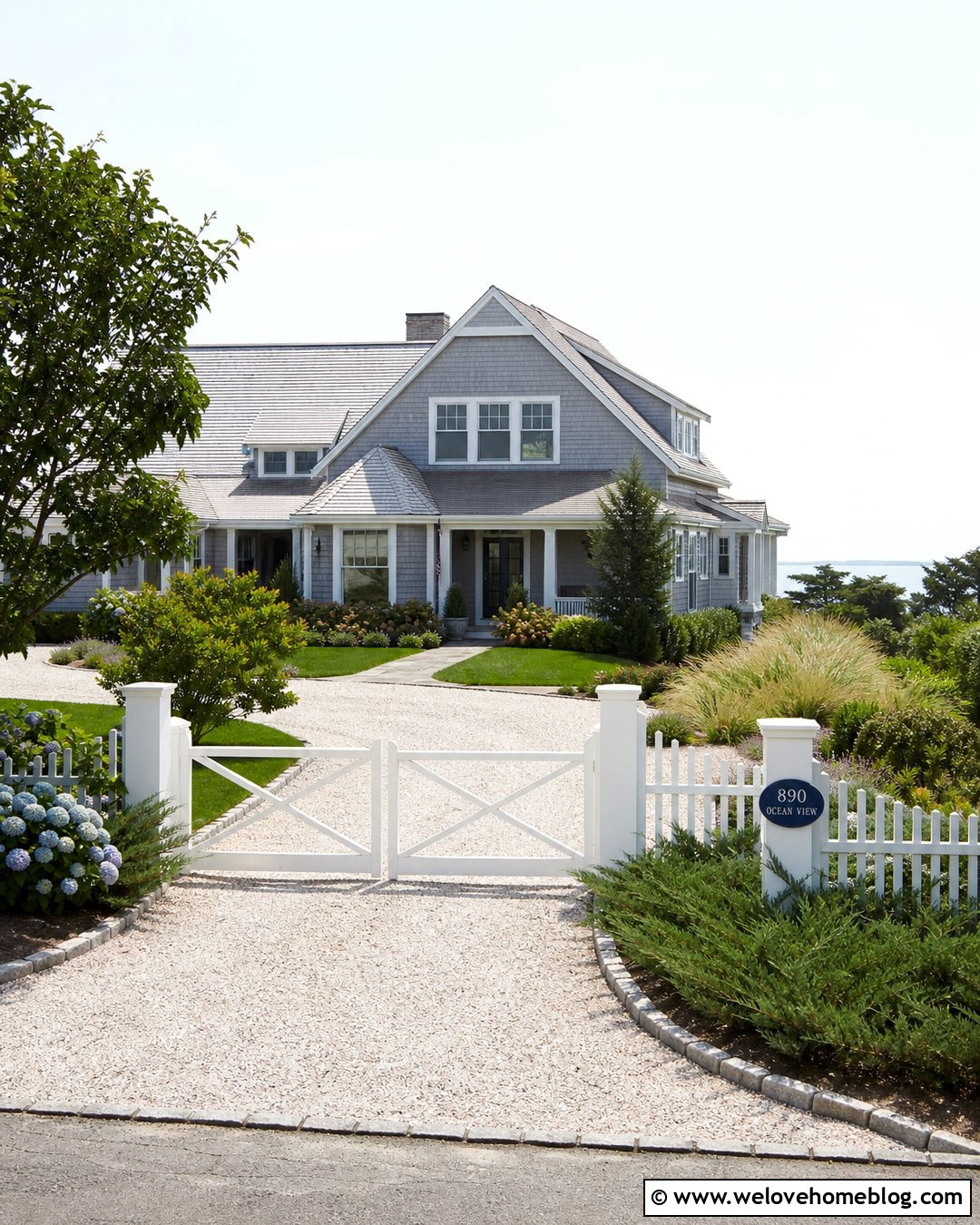
Crushed oyster or clam shell creates a light-colored driveway with unmistakable coastal character. It is most practical in areas where shell aggregate is locally available and approved for residential use. A horseshoe layout can complement a coastal cottage by creating an easy arrival and departure route around a central lawn. Border the shell with weathered granite blocks or pressure-treated timber, then add beach grass, inkberry, hydrangeas, and salt-tolerant shrubs. Shell fragments can gradually compact into a firmer surface, although fresh material may need topping up as pieces settle and migrate. A paved apron at the public road helps keep loose fragments on the property. When paired with pale siding, simple fencing, and breezy planting, this driveway feels regionally appropriate rather than merely decorative.
8. Recycled Asphalt Driveway With Paver Edging
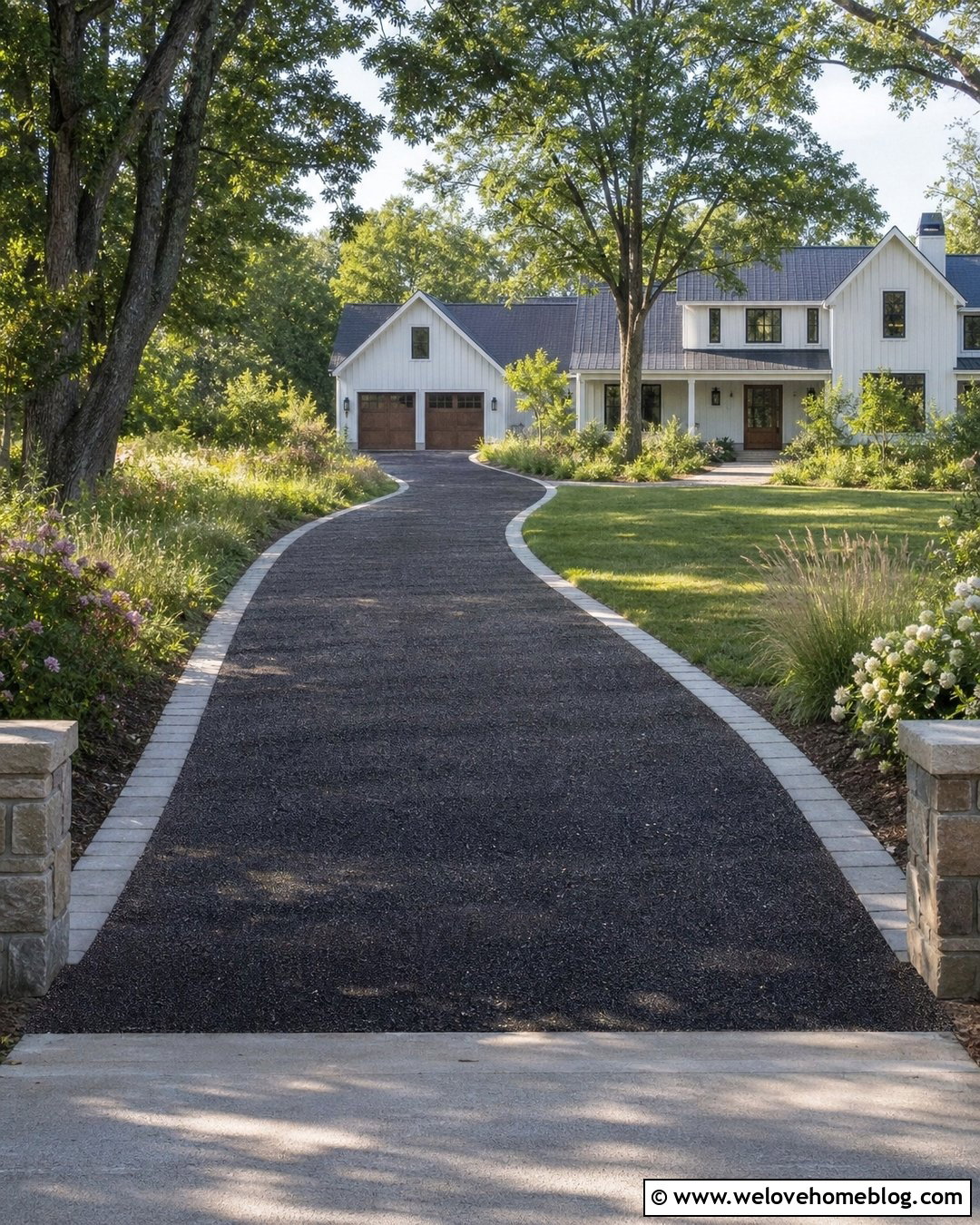
Recycled asphalt, commonly called reclaimed asphalt pavement, can provide a dark, compacted surface without installing an entirely new hot-mix asphalt driveway. The crushed material contains pieces of previously used pavement and creates a more textured, informal finish. Use it on a long, gently curved driveway leading to a country ranch or modern farmhouse. Strong concrete paver edging will define the route and protect softer lawn edges from turning tires. Add native trees, meadow grasses, and a broad gravel drainage strip where runoff collects. Material quality can vary, so source it from a reputable supplier and ask a local contractor about grading, compaction, and expected performance. With a well-built base and clean borders, recycled asphalt looks purposeful, practical, and suitable for larger residential properties.
9. Recycled Concrete Driveway With Timber Borders
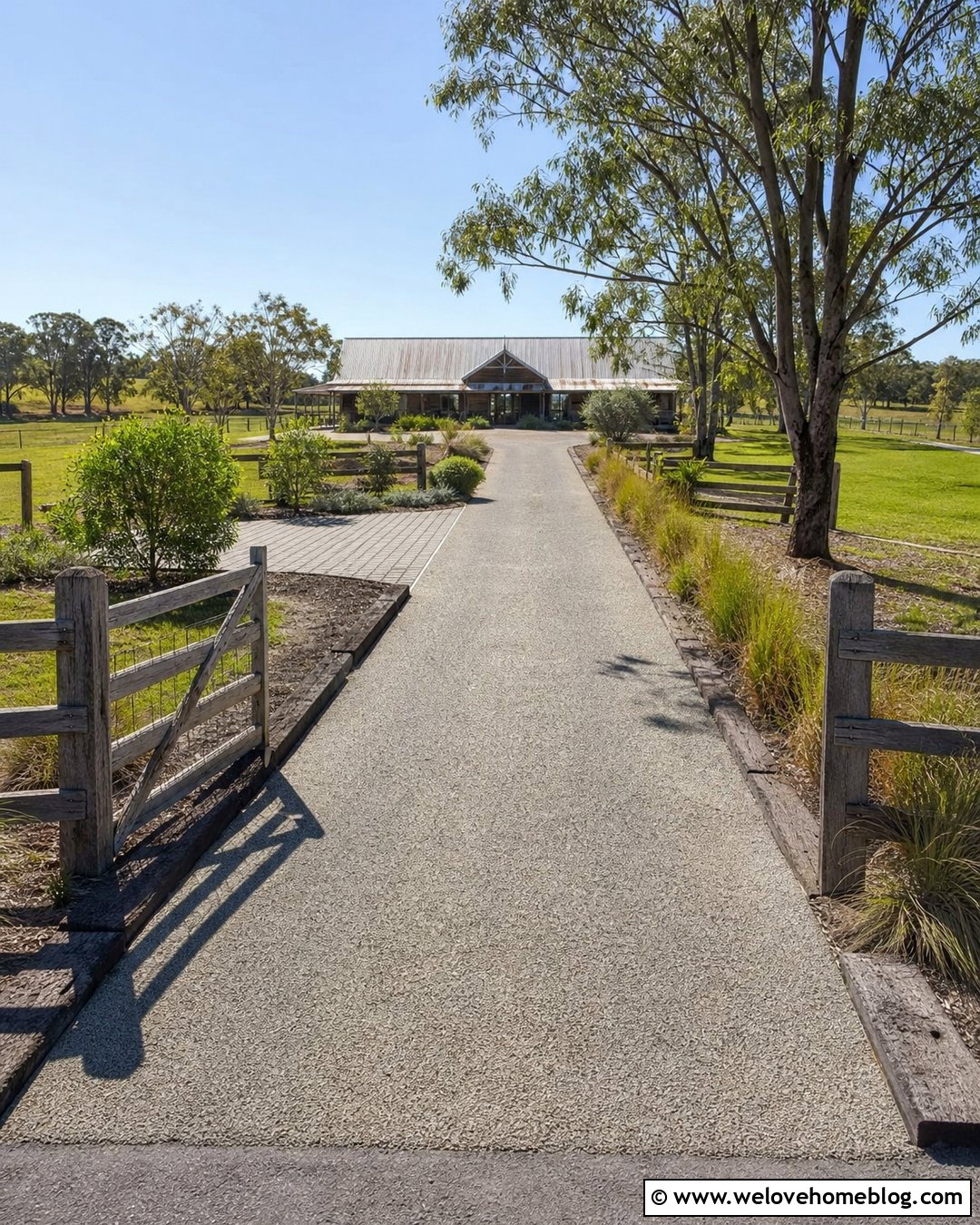
Crushed recycled concrete aggregate offers a useful second life for demolished concrete and masonry. Its light gray, irregular texture works well on long rural driveways, workshop approaches, and casual farmhouse properties. Install the material in compacted layers over a properly prepared subgrade, using finer aggregate near the surface for a smoother finish. Heavy timber borders can contain the driveway and coordinate with wooden fences, gates, or porch details. At the house, transition to a rectangular concrete paver parking pad to keep the entrance tidy. Native grasses, flowering shrubs, and informal shade trees prevent the recycled surface from feeling industrial. Ask the supplier whether the aggregate is screened and free from unsuitable debris. The completed driveway can offer a rugged appearance while reducing demand for newly quarried material.
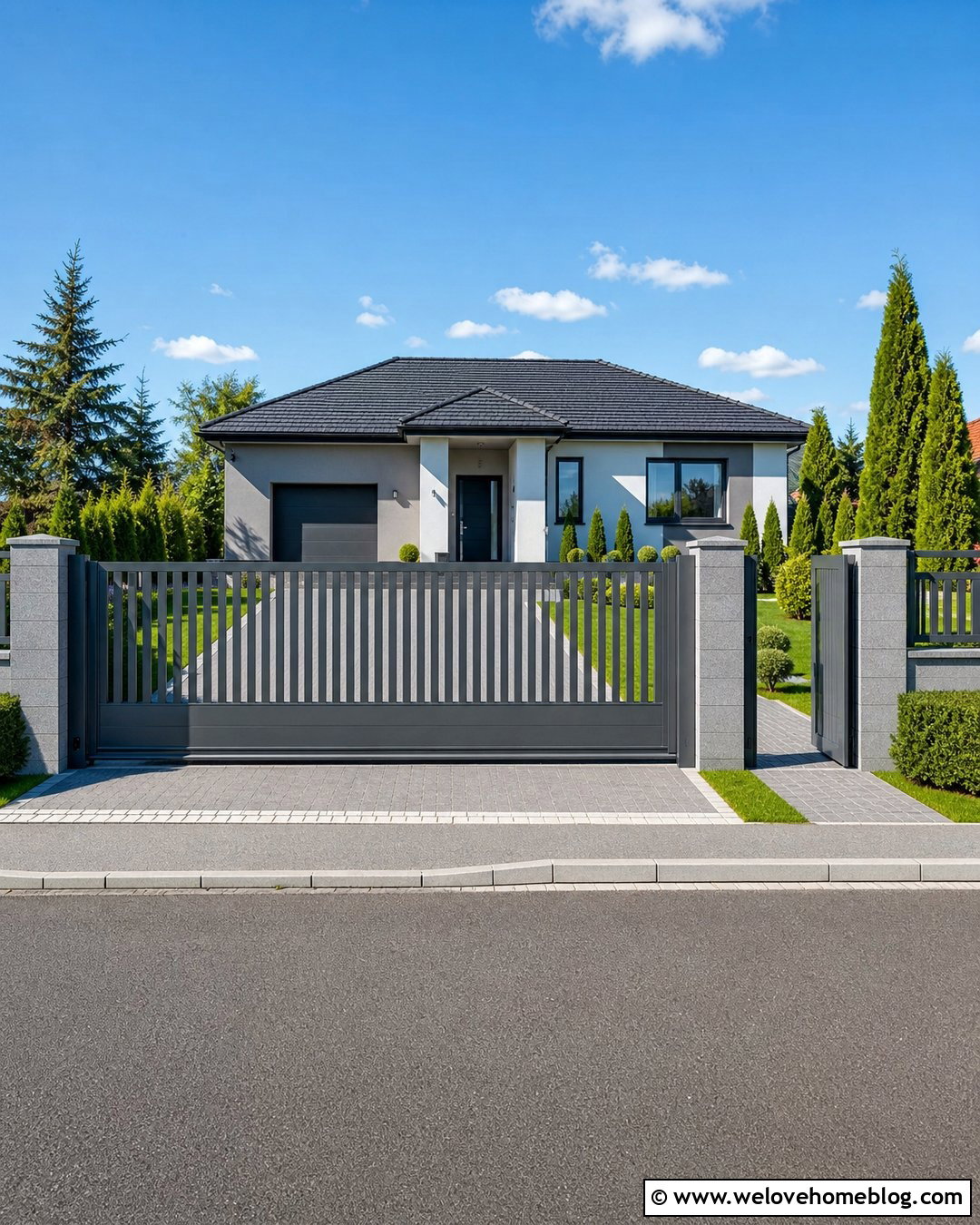
10. Chip Seal Driveway With Natural Stone Edging
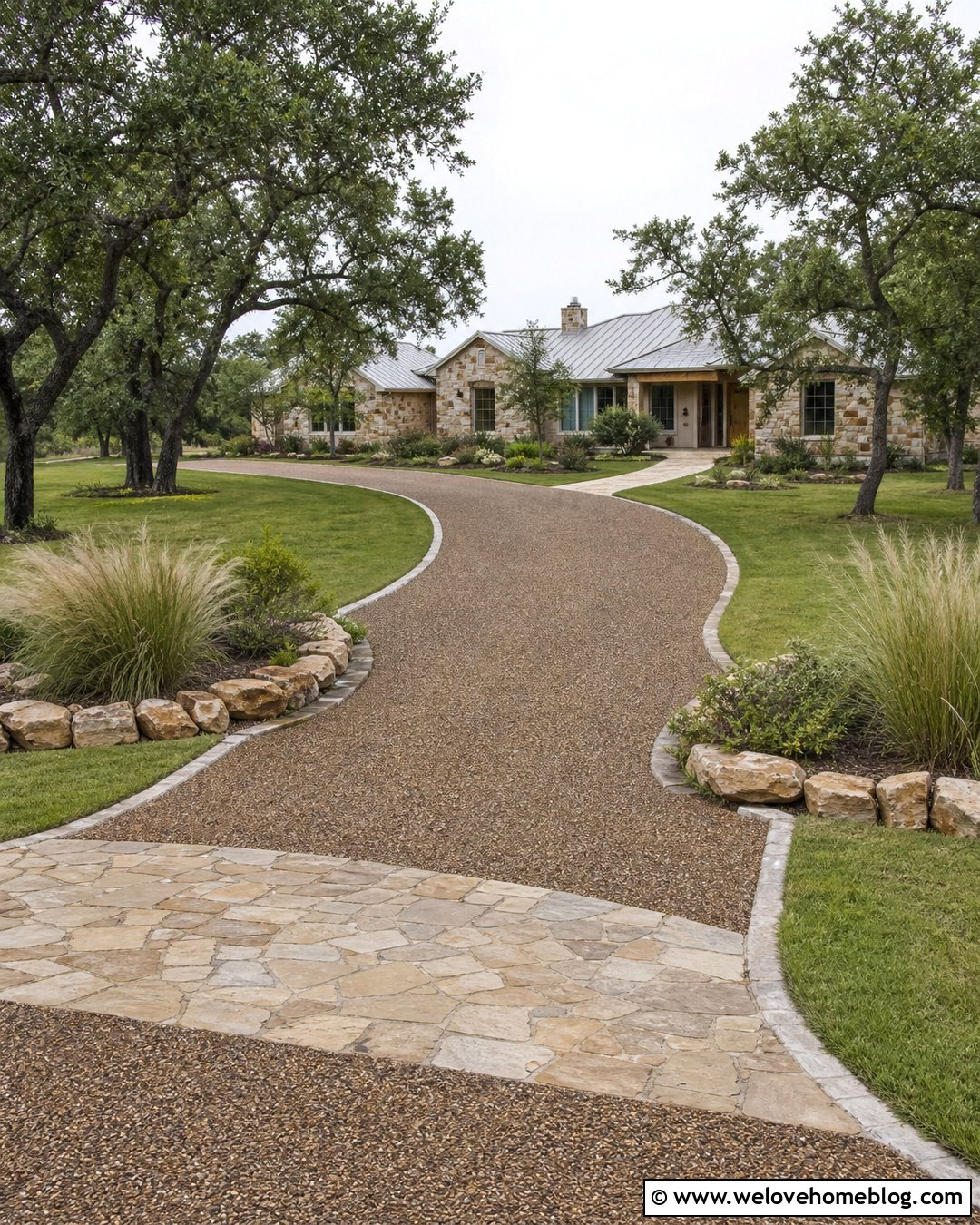
A chip seal driveway combines a liquid asphalt layer with embedded stone aggregate, producing a textured surface that falls visually between gravel and asphalt. It is particularly effective for long country approaches where loose gravel requires frequent correction. Select warm brown stone chips for a rustic home or gray chips for a cleaner, contemporary appearance. Natural stone edging at the entrance and along prominent curves gives the driveway a finished outline without bordering every inch. Frame the route with native trees, mown grass, and simple planting beds near the house. Chip seal installation requires suitable weather and experienced equipment operators, so it is not usually a casual do-it-yourself project. When carefully installed, the driveway provides a cohesive, understated surface with more visual texture than standard blacktop.
11. Resin-Bound Gravel Driveway With Brick Accents
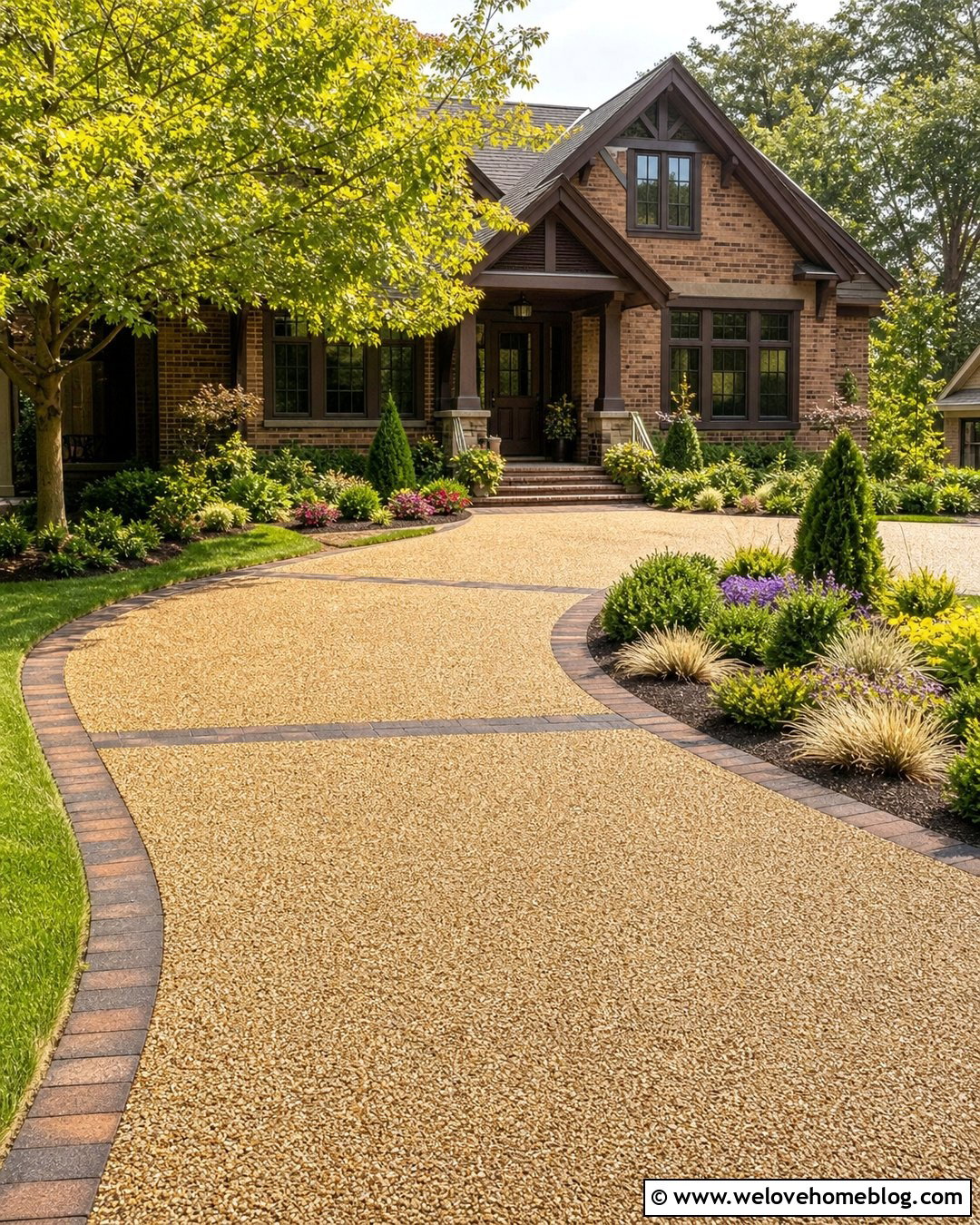
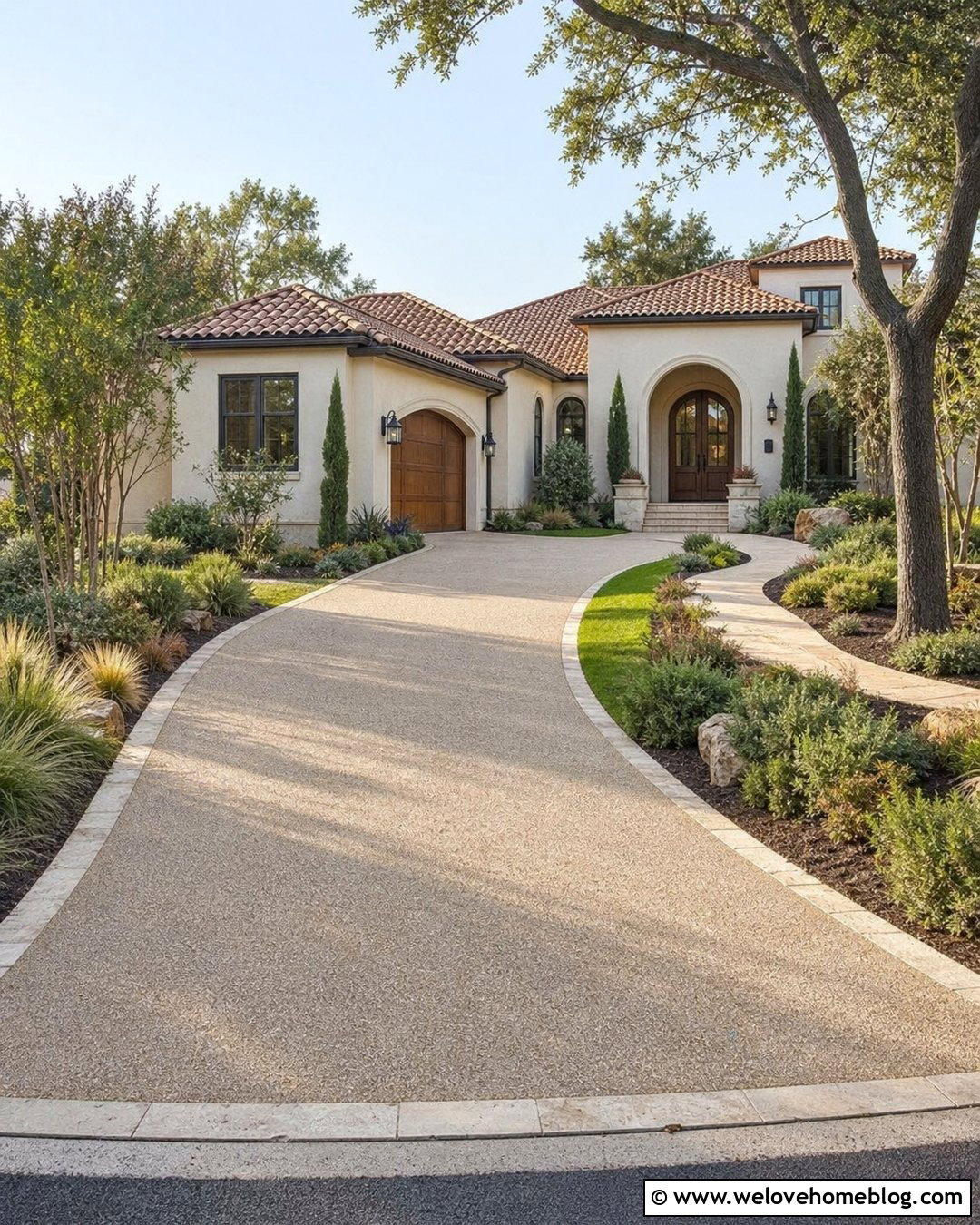
Resin-bound gravel combines clean aggregate with resin before the mixture is spread, creating a smooth surface that keeps individual stones in place. It should not be confused with resin-bonded surfacing, where loose aggregate is scattered over a resin coating. A warm honey-colored resin-bound driveway looks welcoming beside a brick craftsman home, particularly when dark brick ribbons outline the edges and garage entrance. Choose a sweeping curve with a small planting island to break up a wide front yard. Ornamental grasses, dwarf evergreens, and flowering perennials can echo the aggregate’s colors. Product compatibility, base construction, mixing, weather conditions, and installation depth all affect the result, making professional installation valuable. The complete look offers the appearance of fine gravel with a cleaner, more controlled finish.
12. Permeable Paver Driveway With Grass Joints
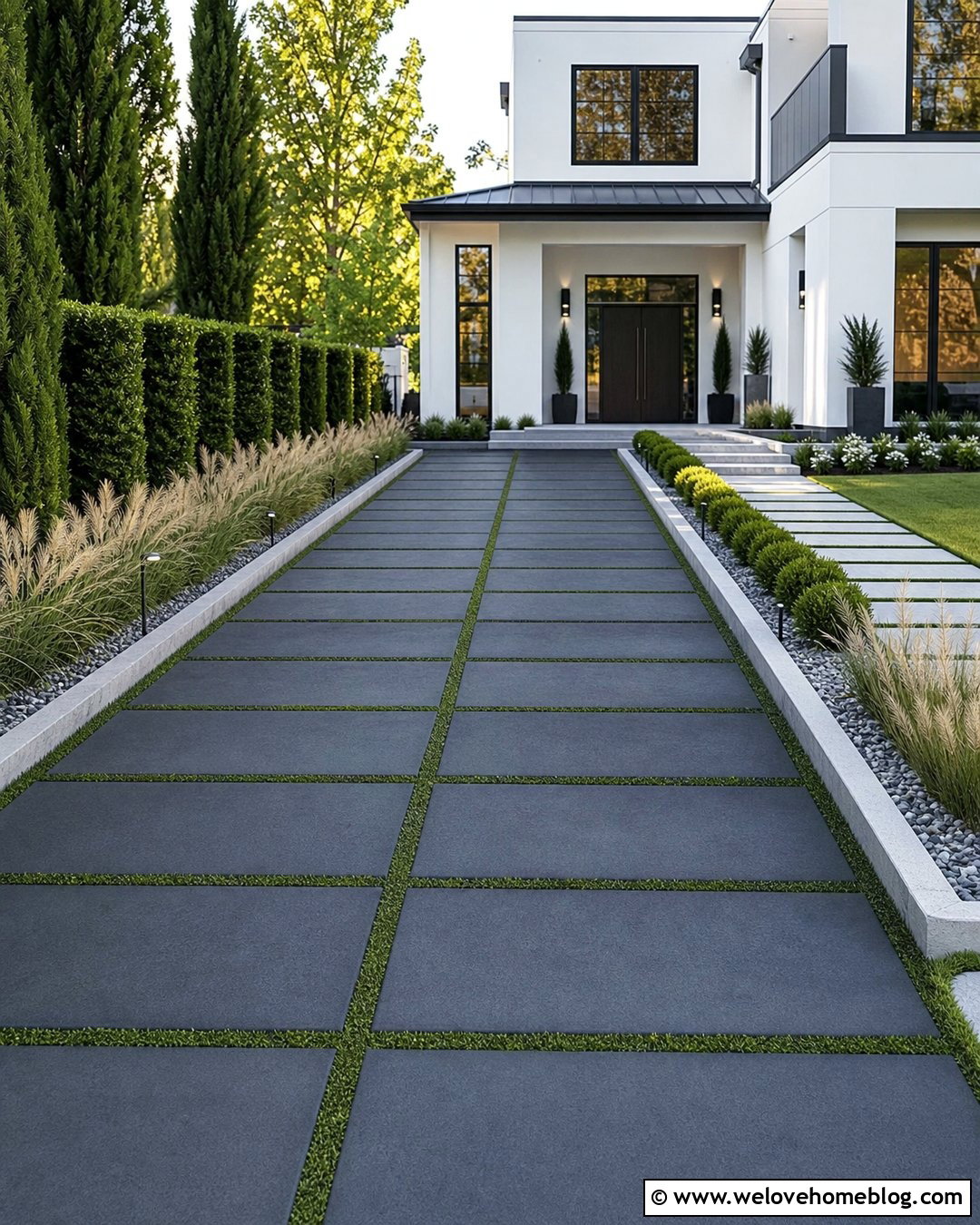
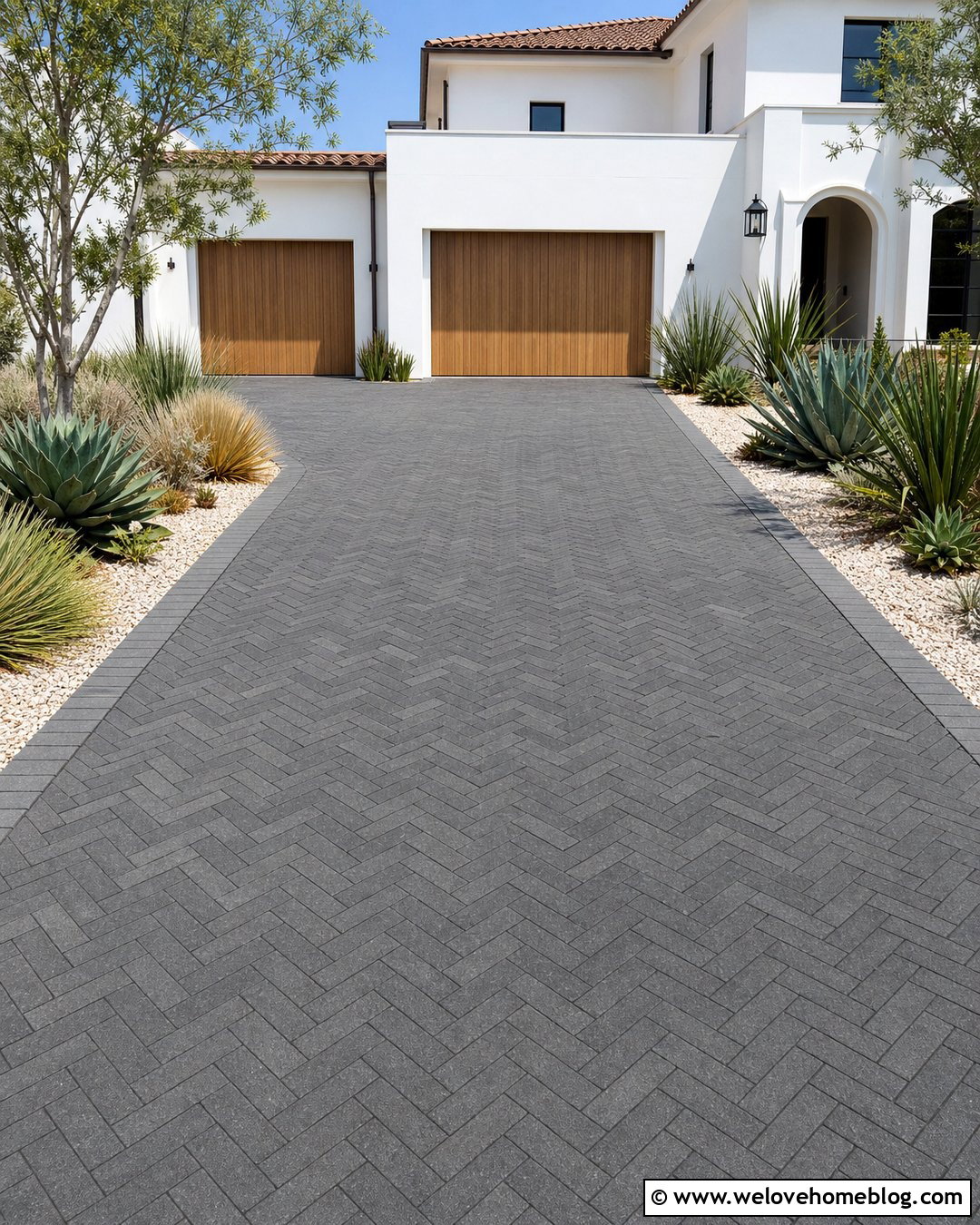
Permeable interlocking concrete pavers create an organized driveway while allowing water to enter widened, aggregate-filled joints. For a softer variation, use narrow grass joints only where the selected system and climate can support healthy growth. Large charcoal or warm gray pavers arranged in a straight driveway suit modern and transitional homes. Add a matching walkway, low concrete curbs, and restrained planting beds filled with fountain grass and evergreen shrubs. The visible joint pattern makes the surface feel lighter than a solid concrete slab. Performance depends on the complete system, including open-graded bedding and base layers that store or move water. The joints also require maintenance to limit sediment buildup. Installed correctly, this driveway combines strong geometric lines, everyday usability, and an attractive stormwater-conscious layout.
13. Grass Grid Driveway With Stone Tire Tracks
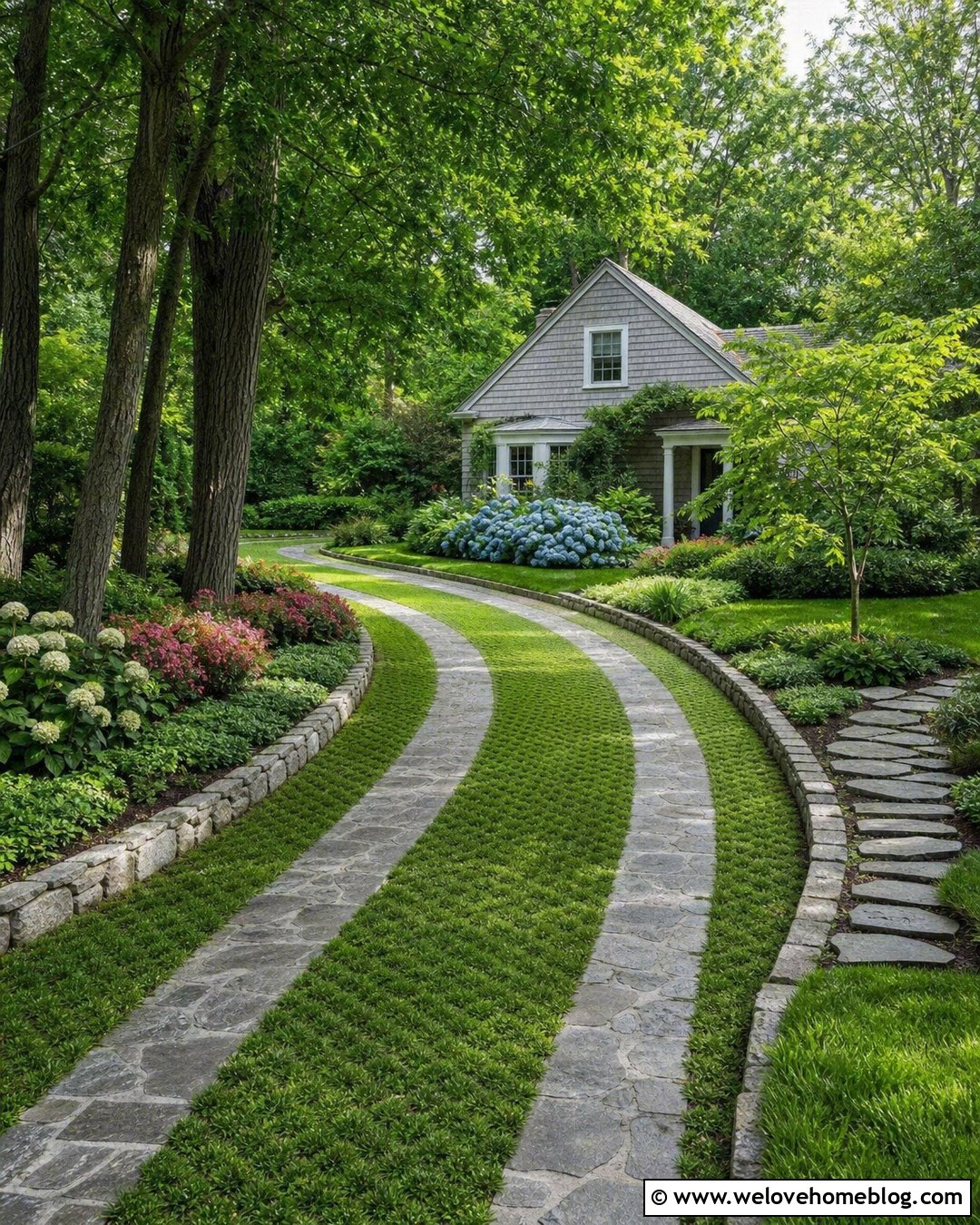
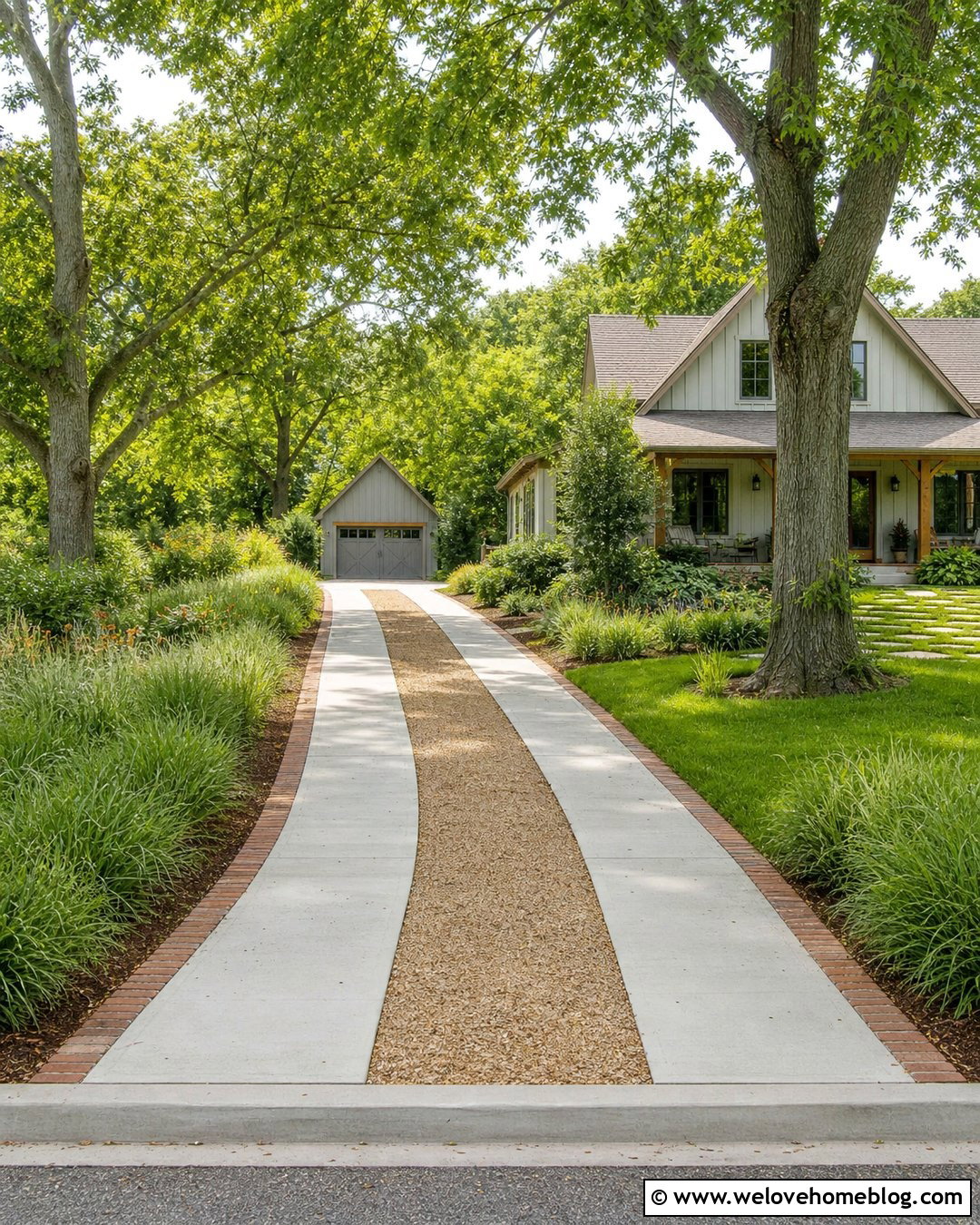
Grass grid systems reinforce living turf so part of the driveway remains green rather than fully paved. A practical design uses planted cellular grids across the central parking area with two natural stone tire tracks guiding vehicles toward the garage. This reduces wear in the most traveled zones while keeping a generous amount of vegetation visible. The look fits cottages, guesthouses, and homes where preserving garden character matters more than creating a formal entrance. Border the driveway with low fieldstone curbs, shade-tolerant groundcover, and informal flowering shrubs. Grass selection should match local sunlight, rainfall, and irrigation conditions. These surfaces may require mowing, feeding, and occasional repair, and they are not ideal for every climate or traffic level. With realistic maintenance, the driveway can blend almost seamlessly into the yard.
14. Gravel Grid Driveway With Modern Landscaping
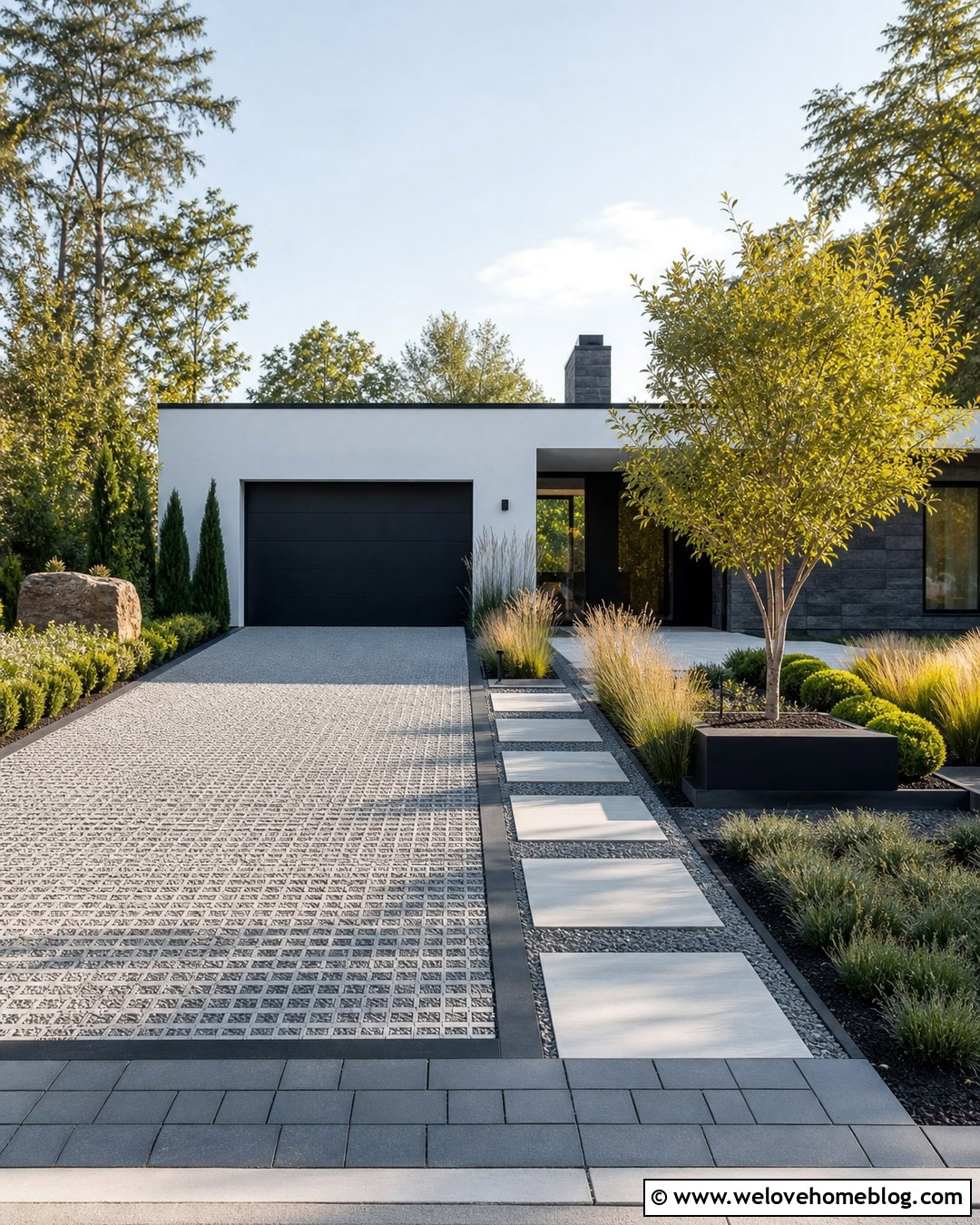
A gravel stabilization grid creates the appearance of a loose-stone driveway while helping hold the aggregate in place. Fill the cellular system with angular gray gravel rather than rounded pebbles, allowing the pieces to interlock within the grid. A straight, extra-wide layout works well with a modern home when paired with black aluminum edging and rectangular concrete stepping pads. Use layered ornamental grasses, clipped shrubs, and one sculptural tree to frame the entrance without making it busy. A darker paver apron at the sidewalk can define the property line and limit scattered stones. Grid specifications, base depth, and gravel sizing must suit vehicle loads and site conditions. The finished driveway feels clean and minimalist, yet the visible aggregate keeps it from resembling a plain poured slab.
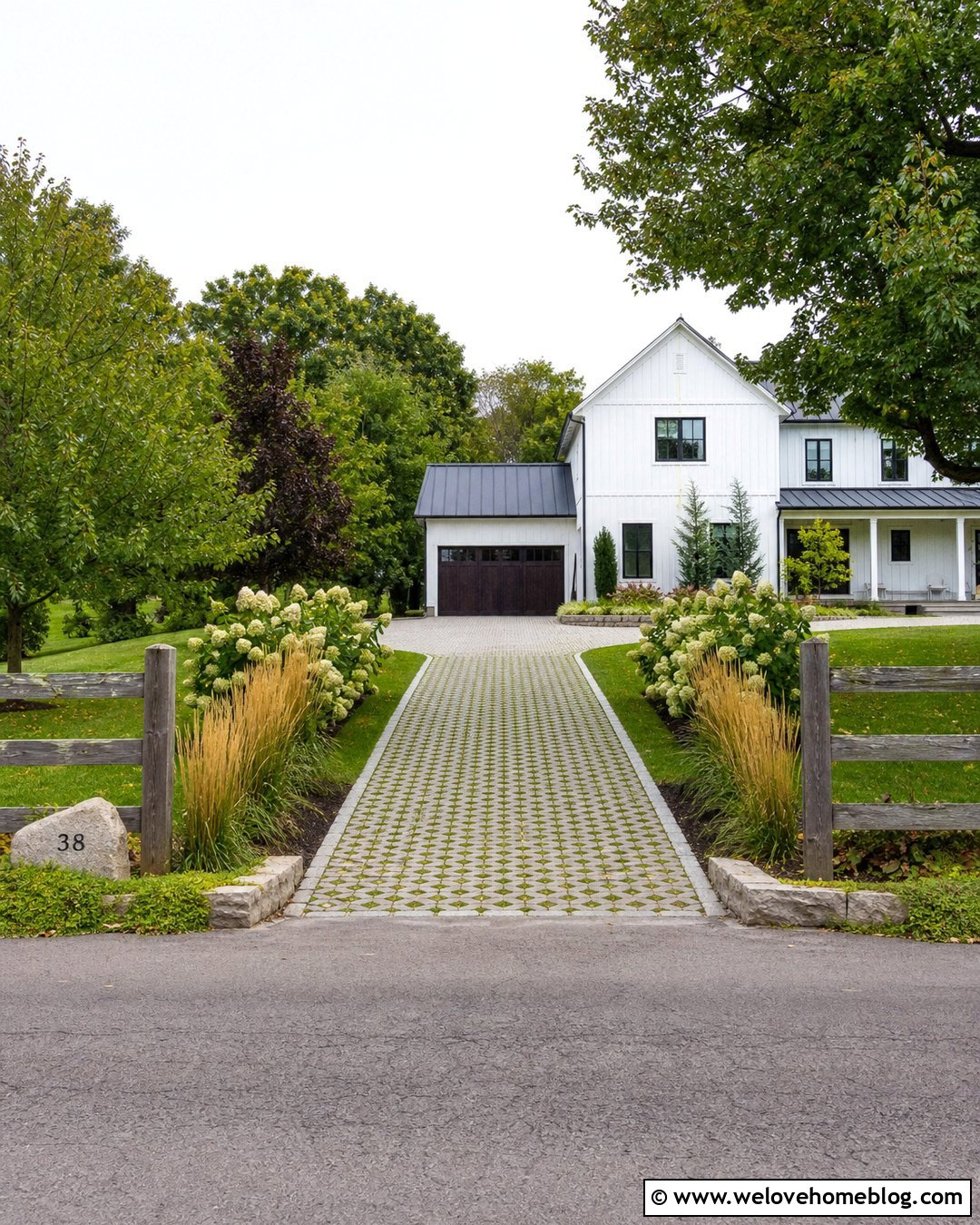
15. Pervious Concrete Driveway With Rain Garden
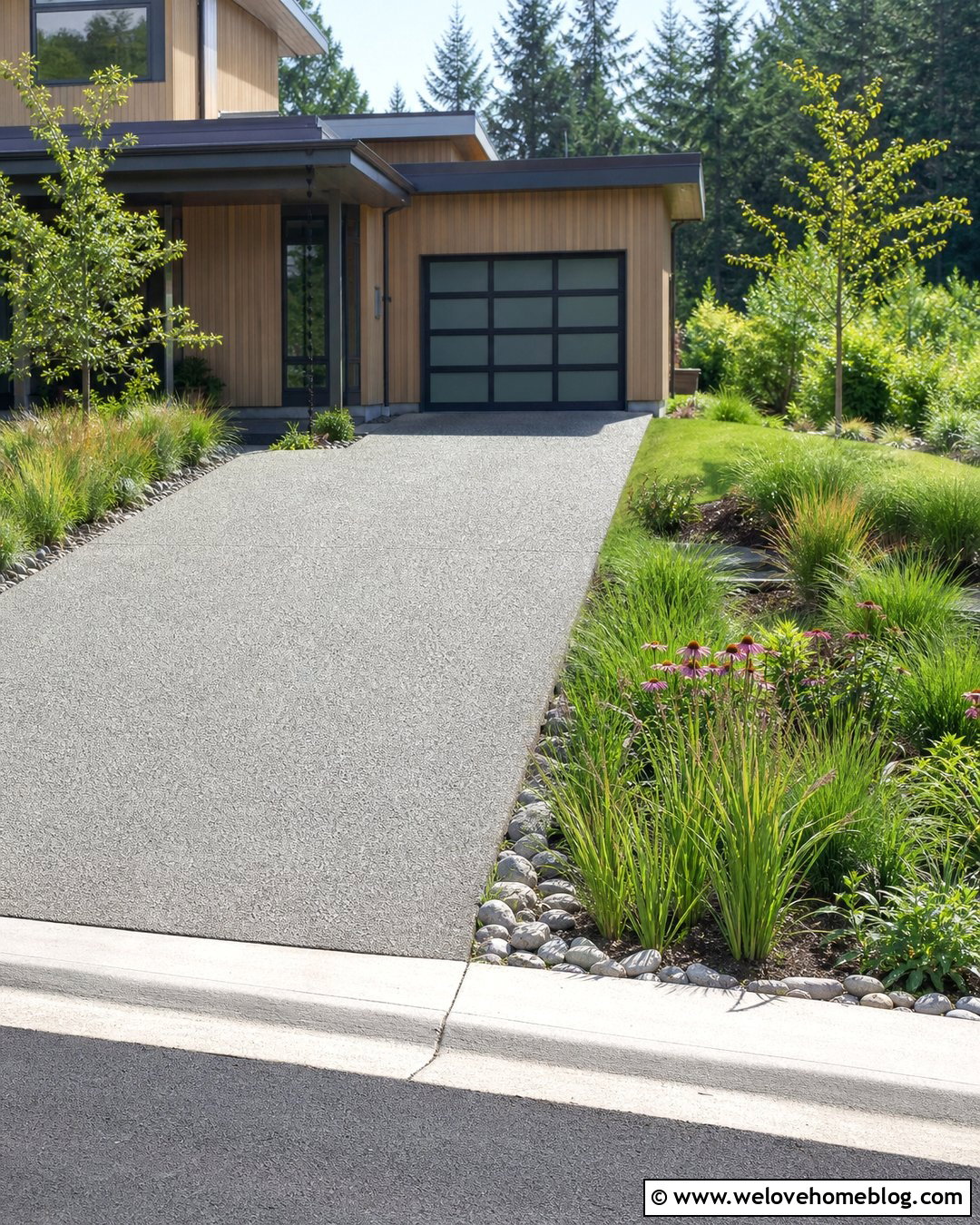
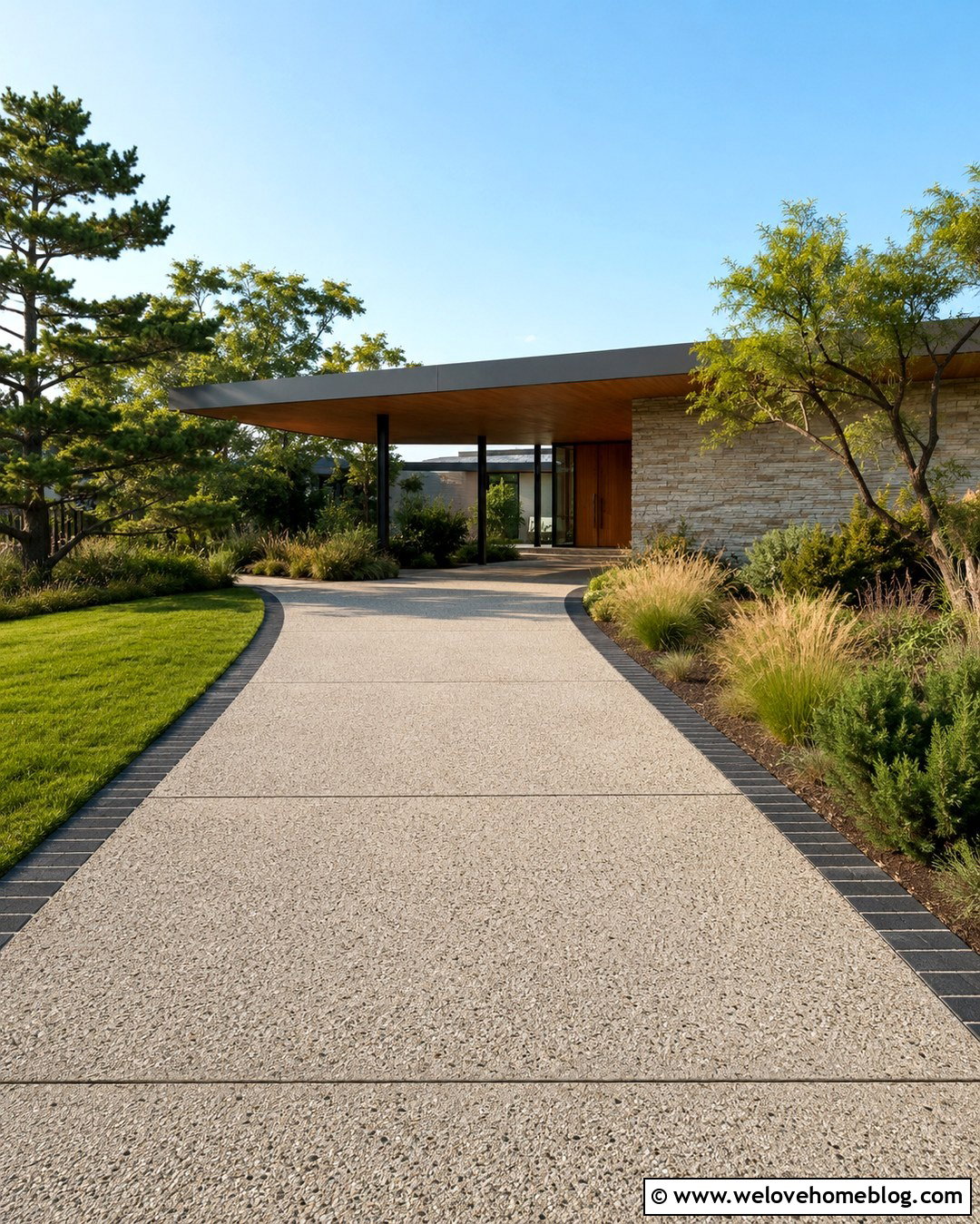
Pervious concrete uses an open structure that allows water to pass through the surface and into an engineered stone base. Its textured appearance is more granular than conventional concrete, making it an interesting match for modern eco-conscious homes. Use it on a gently sloped straight driveway bordered by a shallow rain garden filled with sedges, switchgrass, coneflowers, and moisture-tolerant shrubs. A narrow band of standard concrete at the garage can create a clean threshold. Because the driveway’s drainage performance depends on soil, base construction, water volume, and ongoing maintenance, it requires specialized planning and installation. Sediment should also be prevented from washing onto the surface. When designed as one coordinated system, the driveway and rain garden create a functional landscape rather than two disconnected features.
16. Porous Asphalt Driveway With Granite Curbs
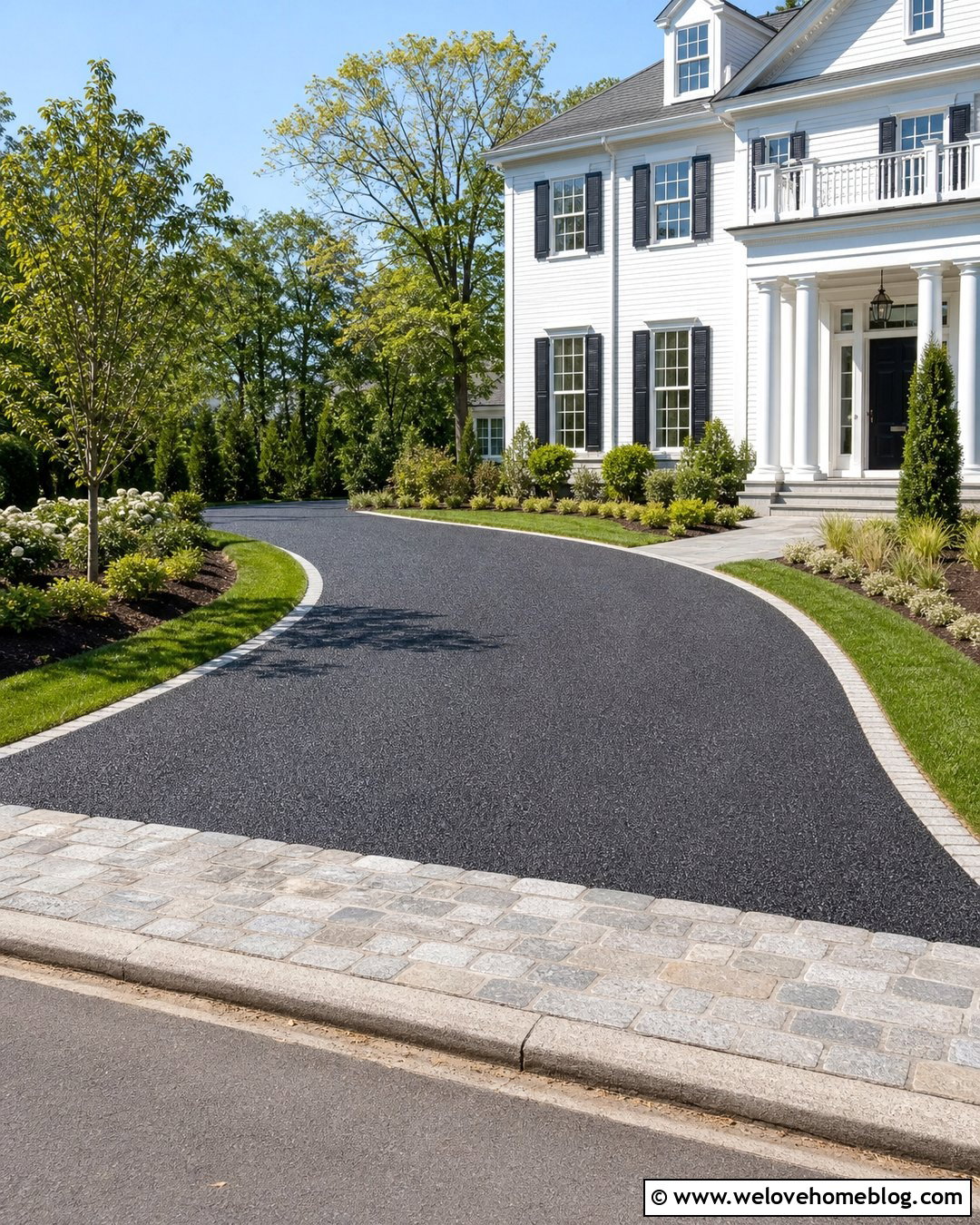
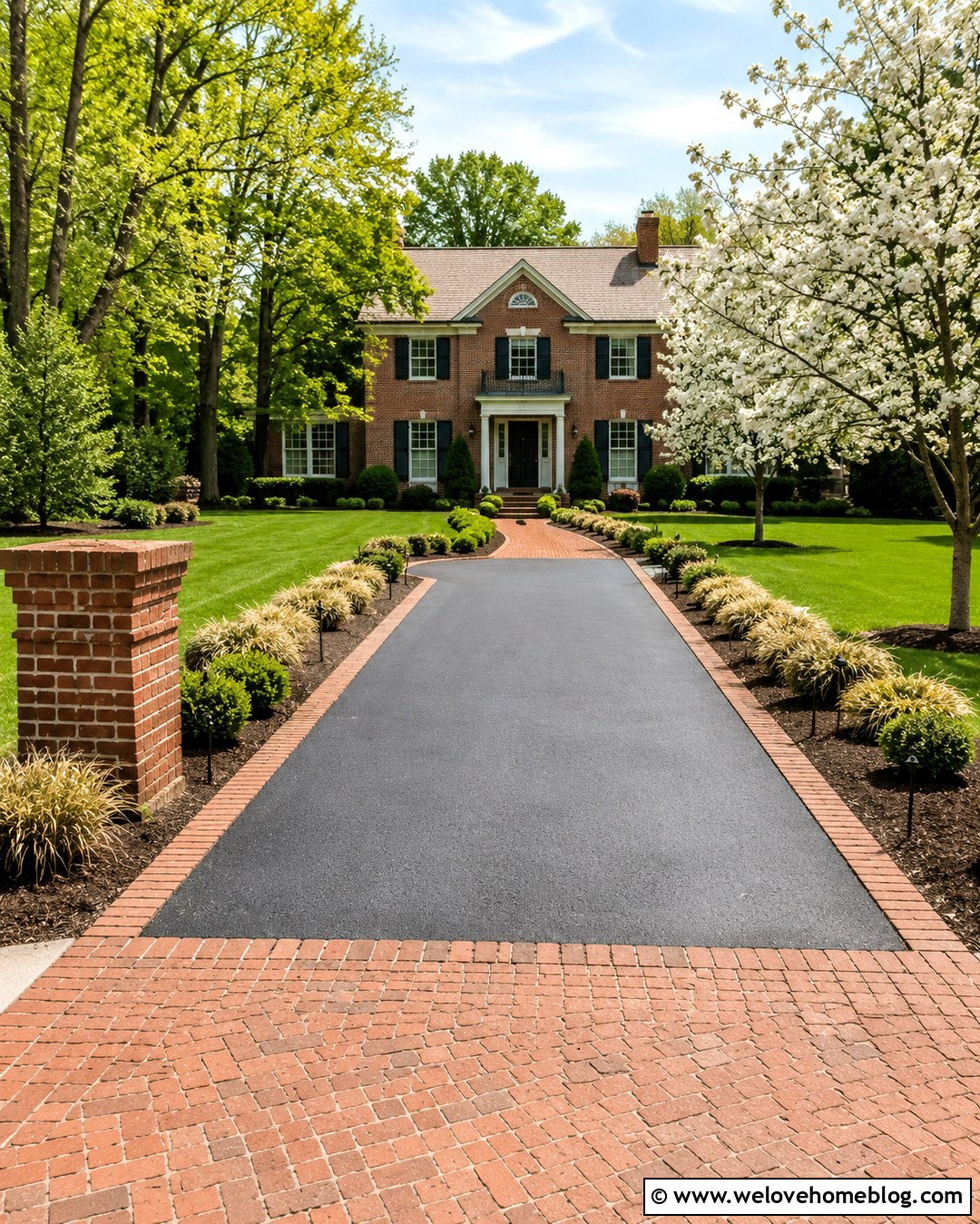
Porous asphalt maintains the familiar dark appearance of blacktop while using an open-graded structure that allows water to move into underlying stone layers. It can be an appealing alternative for homeowners who want a simple surface without the look of pavers or loose gravel. Shape the driveway into a broad curve and use light granite curbs to make its outline visible. A lawn drainage strip, native shrubs, and deciduous trees can frame the approach to a colonial or transitional home. Porous asphalt should be part of a properly engineered system, not treated as a thin surface replacement. The site’s soil, slope, groundwater conditions, and sediment exposure require evaluation. A clean, uncluttered landscape helps the dark driveway feel refined while still delivering a softer visual effect than conventional blacktop.
17. Clay Brick Driveway With Herringbone Paving
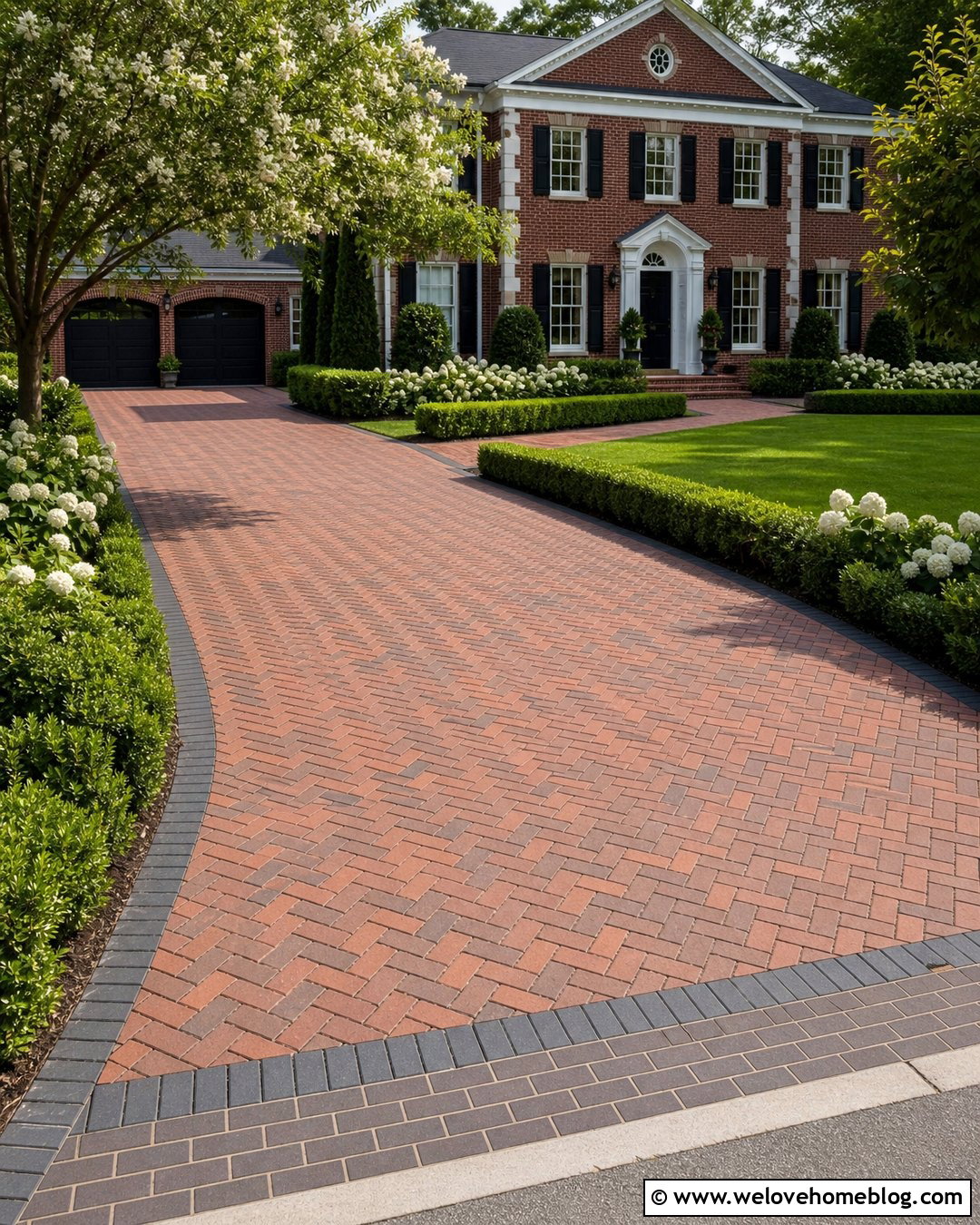
Clay brick pavers bring warmth and established character to a driveway, especially when arranged in a herringbone pattern that visually handles frequent turning. Rich red and brown bricks complement colonial, Georgian, craftsman, and traditional brick homes. Create a straight driveway that widens near the garage, then outline it with a soldier-course brick border in a deeper color. Plant boxwood, hydrangeas, and a small flowering tree along the sides to reinforce the classic appearance. Driveway-rated bricks should be selected for the expected load, local freeze-thaw conditions, and desired color consistency. The base and edge restraints are just as important as the visible pattern. Sand-filled or permeable joints can be considered where appropriate. The finished approach feels detailed, welcoming, and more distinctive than monolithic pavement.
18. Cobblestone Driveway With Formal Landscaping
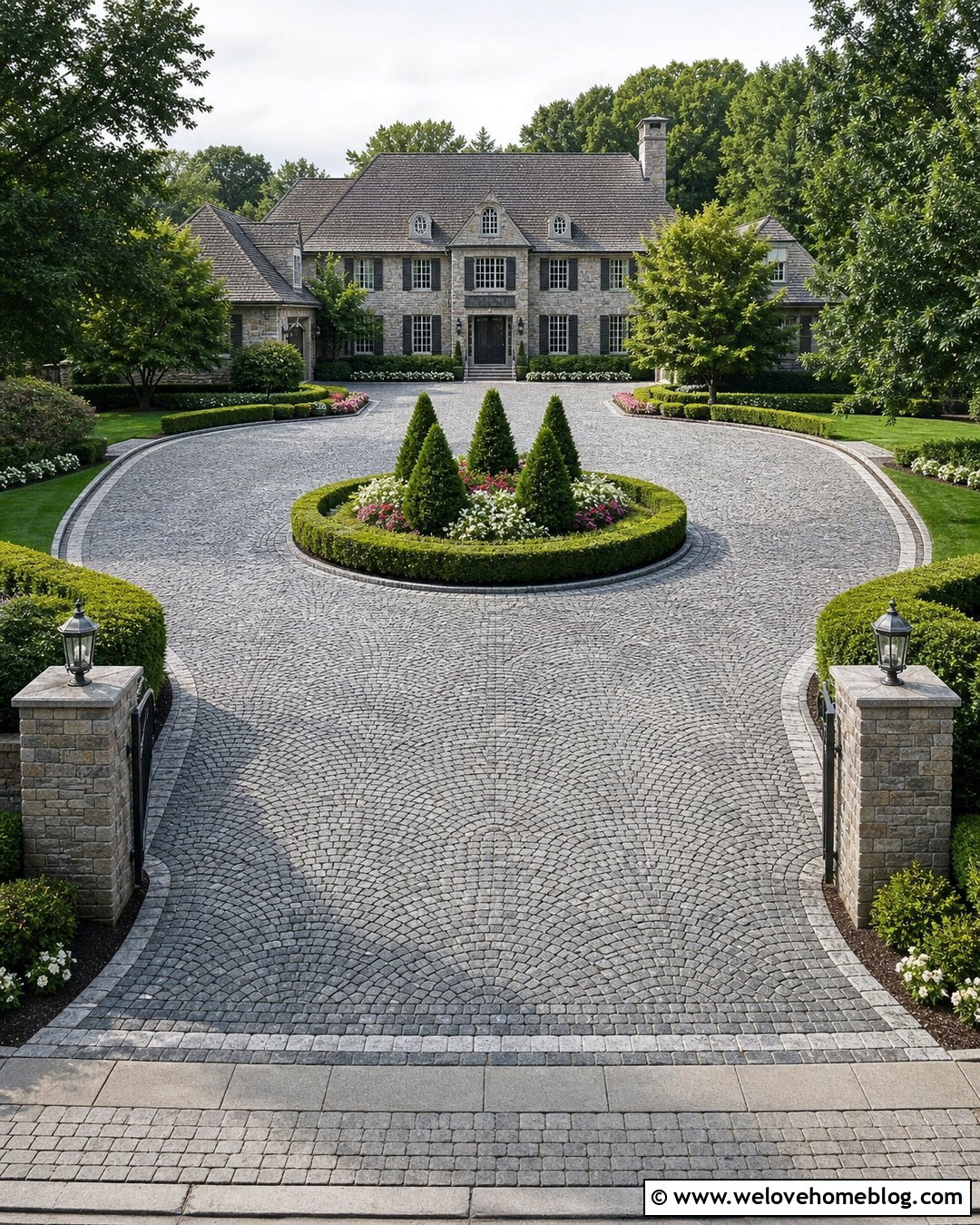
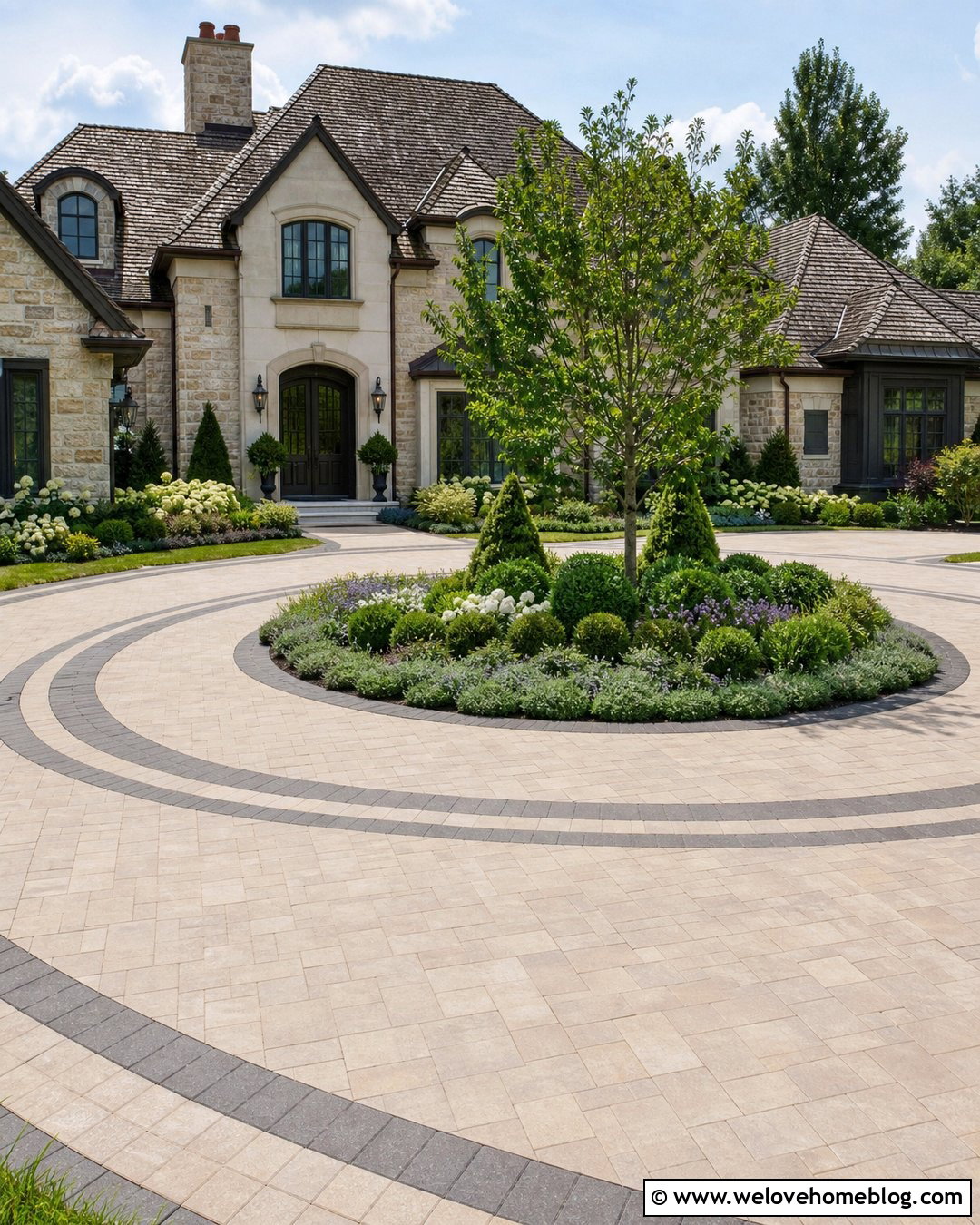
Granite cobblestones can create an exceptionally durable-looking driveway with rich texture and old-world character. Use gray, charcoal, and subtle brown stones in a fan or running pattern across a circular driveway. A central planting island with a clipped evergreen, low hedge, and seasonal flowers will give vehicles a clear route while creating a strong front-yard focal point. Match the cobblestone border to stone porch steps or gate pillars so the entrance feels connected to the house. Because individual stones have uneven surfaces, careful grading and skilled installation are important for comfortable driving and walking. Consider using smoother stone near pedestrian paths and garage doors. This complete driveway works best when the architecture and landscaping can support its formal, substantial appearance without making the property feel overcrowded.
19. Flagstone Driveway With Gravel Joints
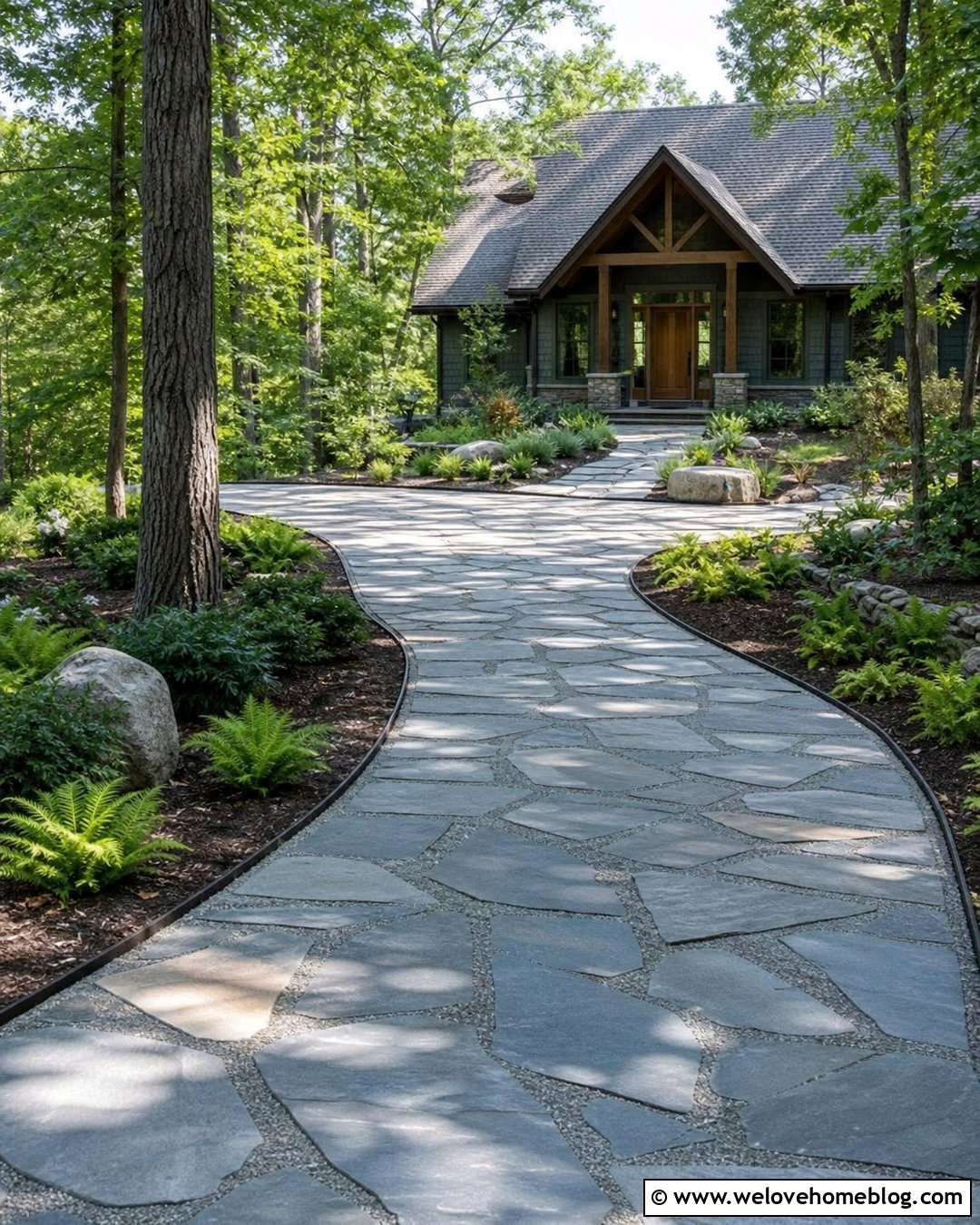
Large flagstone slabs separated by compacted gravel joints create a driveway that feels integrated with the surrounding landscape. Choose thick, vehicle-rated sandstone or bluestone pieces rather than thin patio material. Lay them in broad irregular sections along a gently curved driveway, with gray crushed gravel filling the spaces between stones. A steel or stone edge can prevent the joint material from spreading into nearby beds. Pair the surface with a craftsman home, woodland garden, ferns, native shrubs, and mature shade trees. The foundation must support each slab evenly to reduce rocking and cracking under vehicles. Wider joints create a more rustic look, while closely fitted stones feel more formal. This material combination delivers an organic approach that can also visually connect with matching garden paths and entry steps.
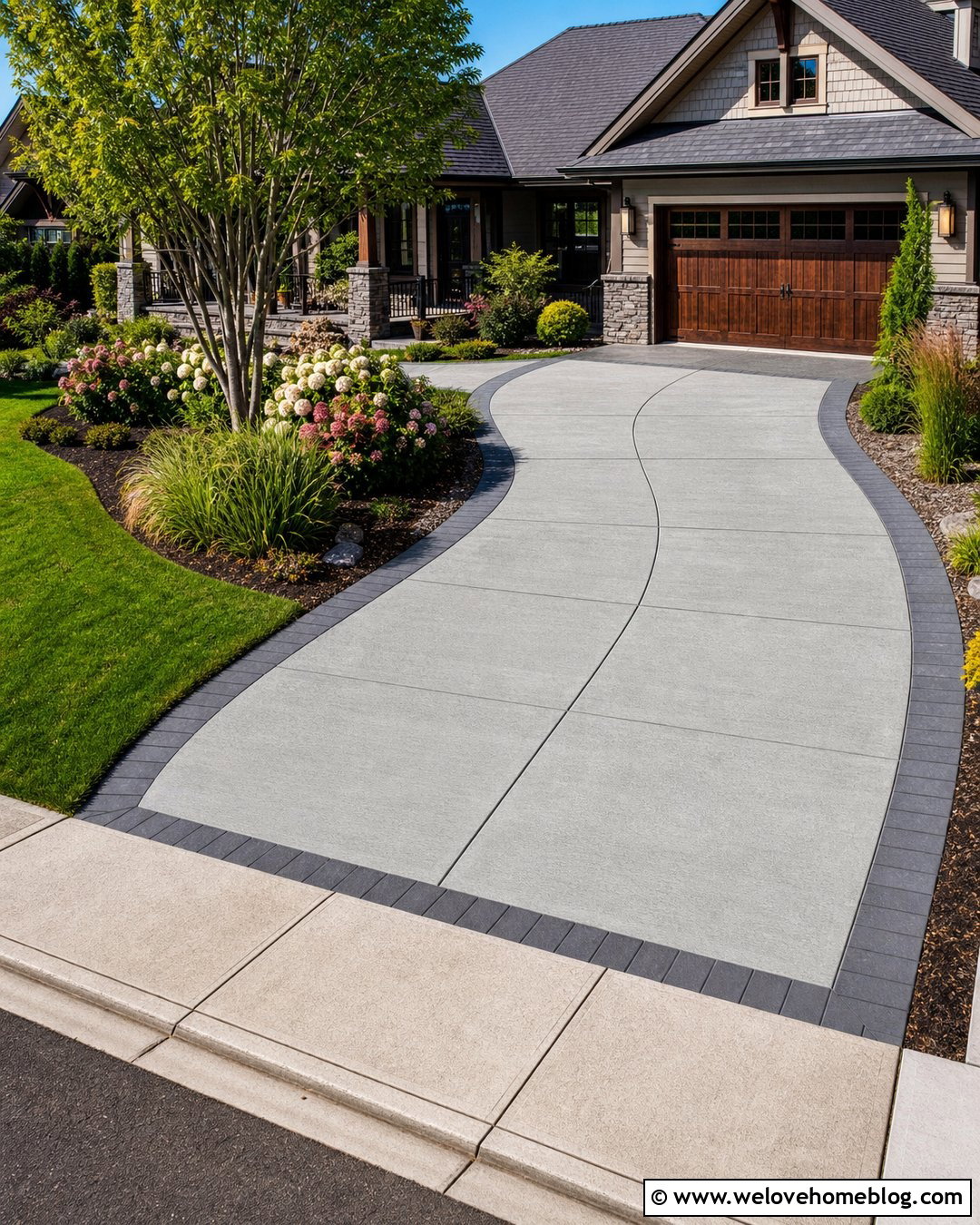
20. Stabilized Soil Driveway With Native Planting
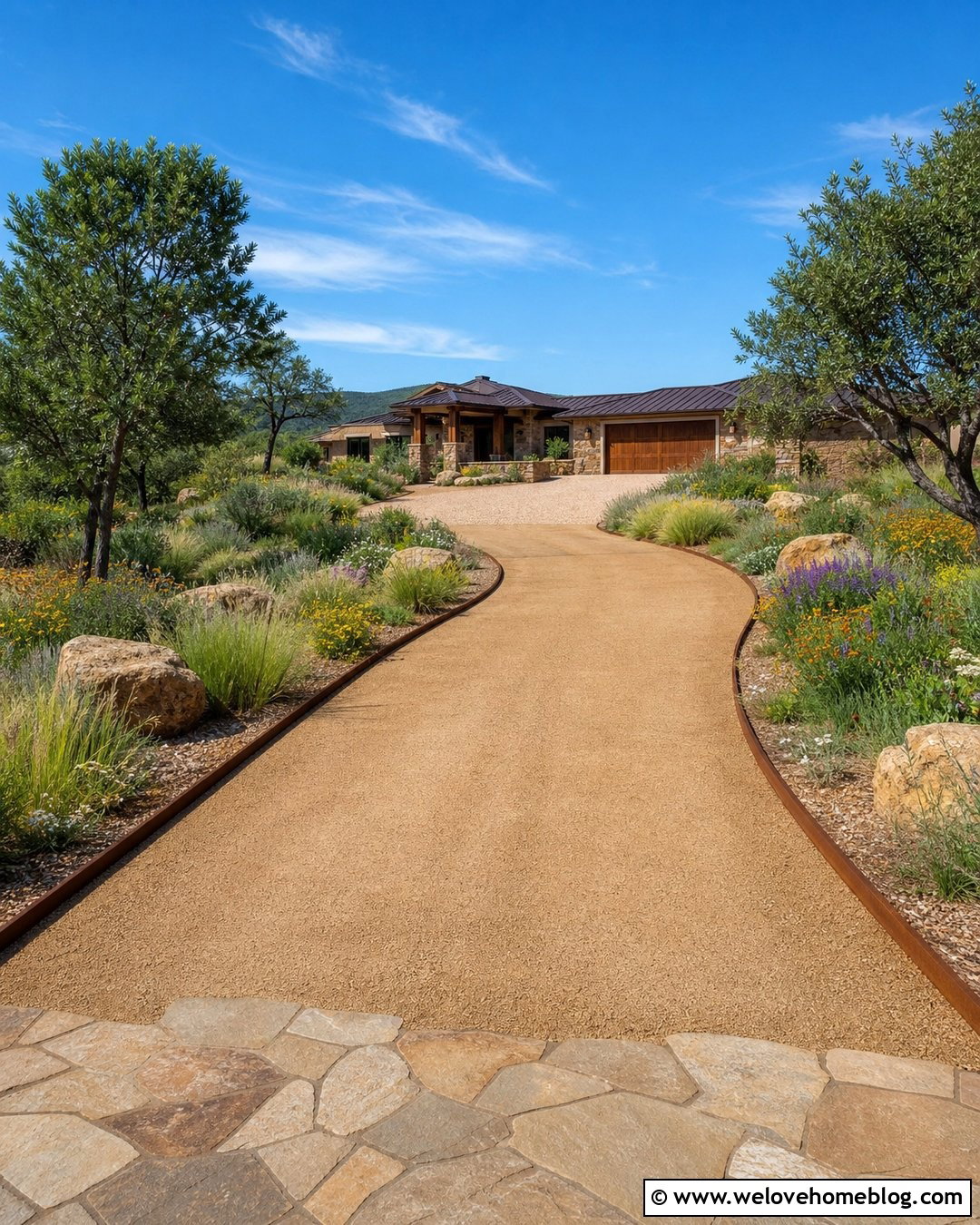
Stabilized soil can preserve an earthy appearance while creating a firmer surface than untreated dirt. Depending on the chosen system, locally sourced soil or aggregate is blended with a stabilizing product and compacted into a smooth driveway. Warm brown tones work beautifully on rural, southwestern, and low-impact properties. Use a wide, gently winding layout with weathered steel edging to define the route through native grasses, wildflowers, and scattered trees. Add a stone apron at the road and a compacted gravel transition near the garage where turning forces are greatest. Stabilized surfaces vary significantly by product, soil type, rainfall, and freeze-thaw exposure, so local testing and professional guidance are essential. Done well, the driveway looks grounded in its setting rather than imposed upon the landscape.
Conclusion:
The best driveway is not simply the surface that looks most attractive in a photograph. It must also support your vehicles, suit the slope, manage water, tolerate local weather, and fit your maintenance routine. Gravel, recycled aggregates, pavers, planted grids, natural stone, and permeable pavement systems each create a different balance of appearance and performance. Before installing anything, verify neighborhood rules, local permits, drainage requirements, and material availability. Ask contractors to explain the subgrade, base depth, edging, surface thickness, and future upkeep in detail. With careful planning, these 20 Alternative Driveway Materials Ideas can help you build a distinctive entrance that complements both your home and the surrounding landscape.

Related posts:


Leave a Reply