
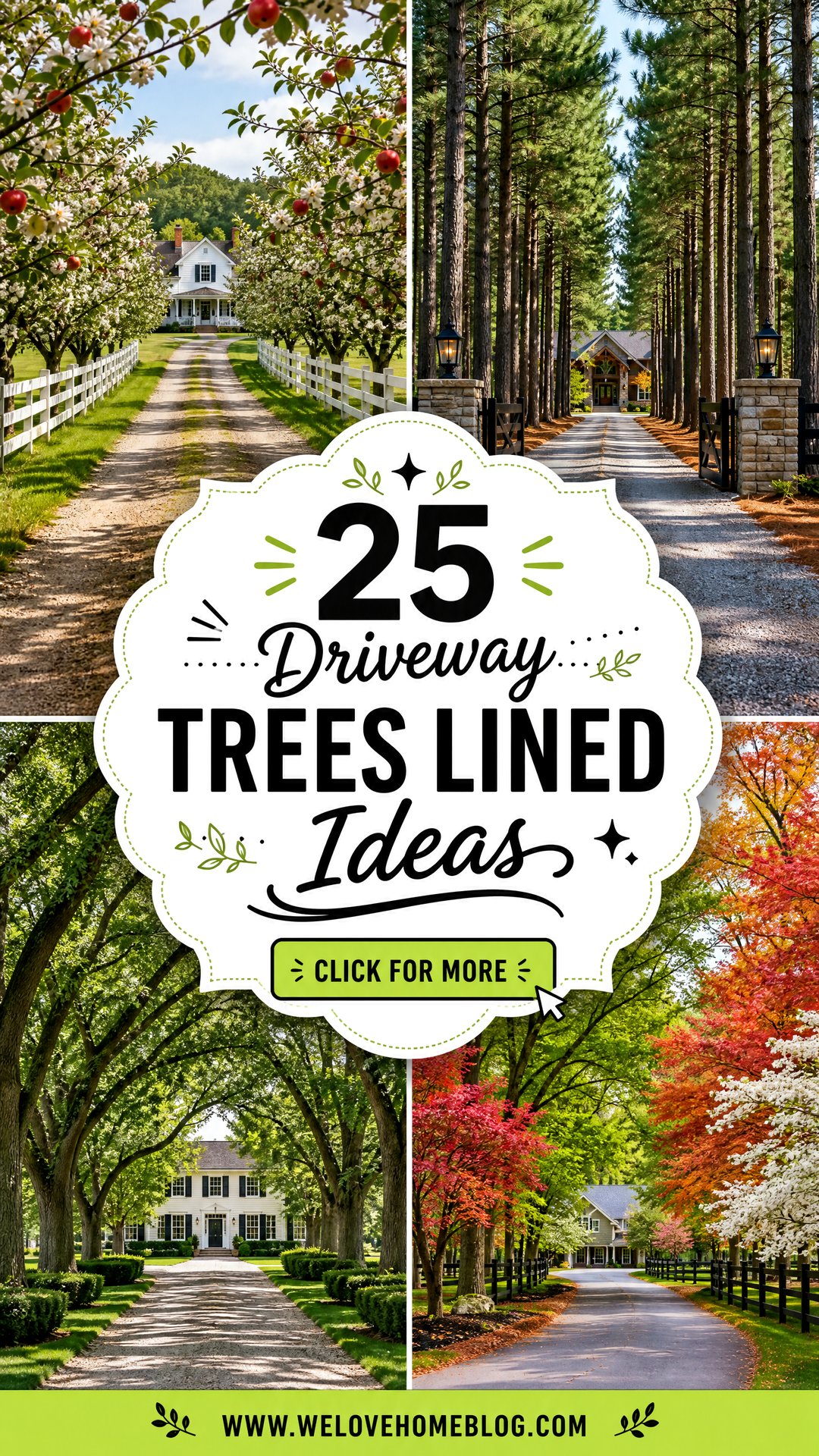
A tree-lined driveway can turn an ordinary route to the garage into a welcoming landscape feature. The right plan connects the driveway surface, tree placement, edging, lighting, and home architecture in one complete look. It can feel formal and symmetrical, relaxed and rural, modern and minimal, or colorful through every season. Before planting, consider mature canopy width, root space, overhead clearance, drainage, and how fallen leaves or fruit may affect maintenance. Trees should frame the approach without narrowing safe driving space or hiding the house. From flowering allées to evergreen privacy screens, these **25 driveway trees lined ideas** offer practical inspiration for long country lanes, suburban front yards, and compact entrances. Explore the following **25 driveway trees lined ideas** to find a layout that fits your property.
1. Gravel Driveway With Oak Trees
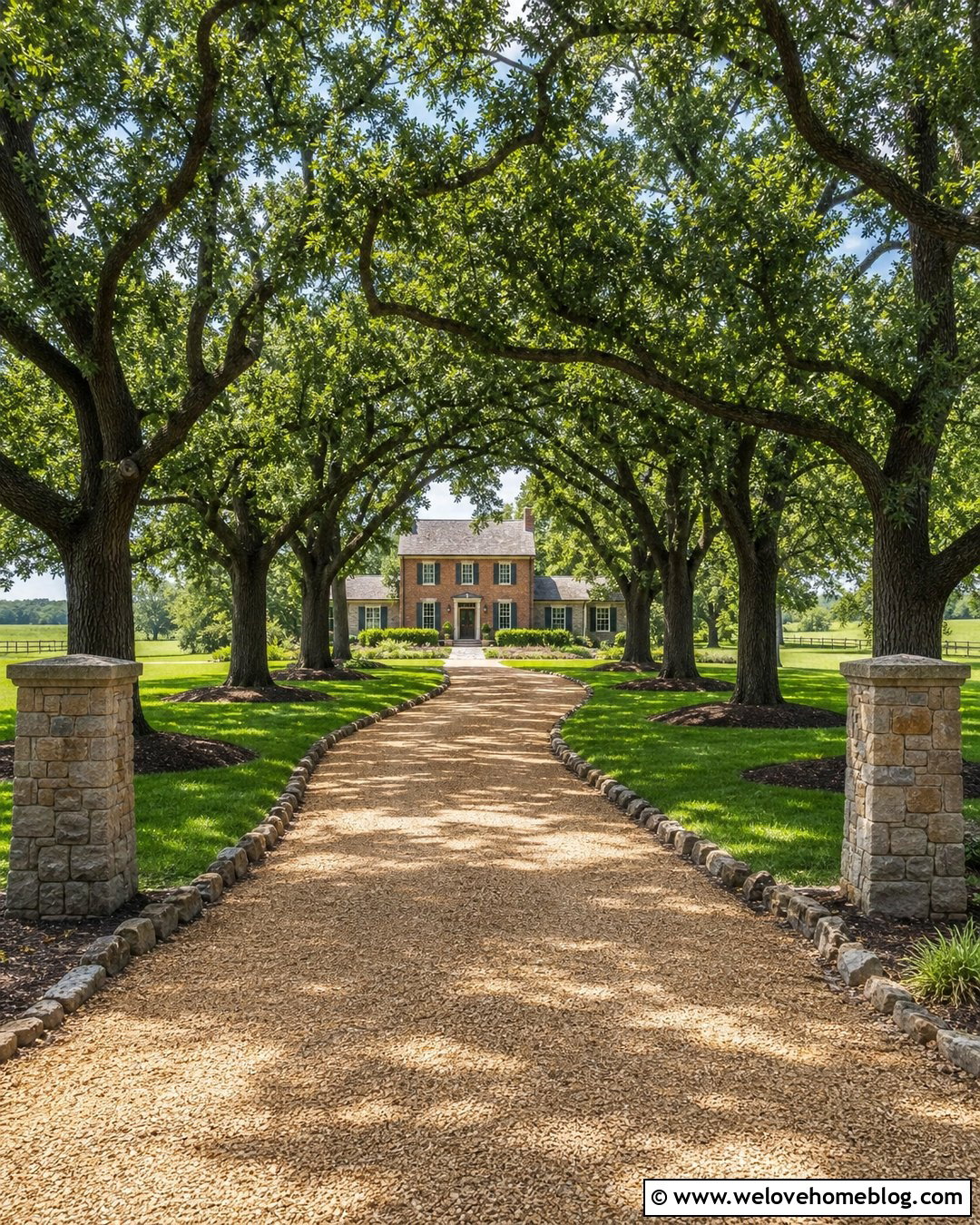
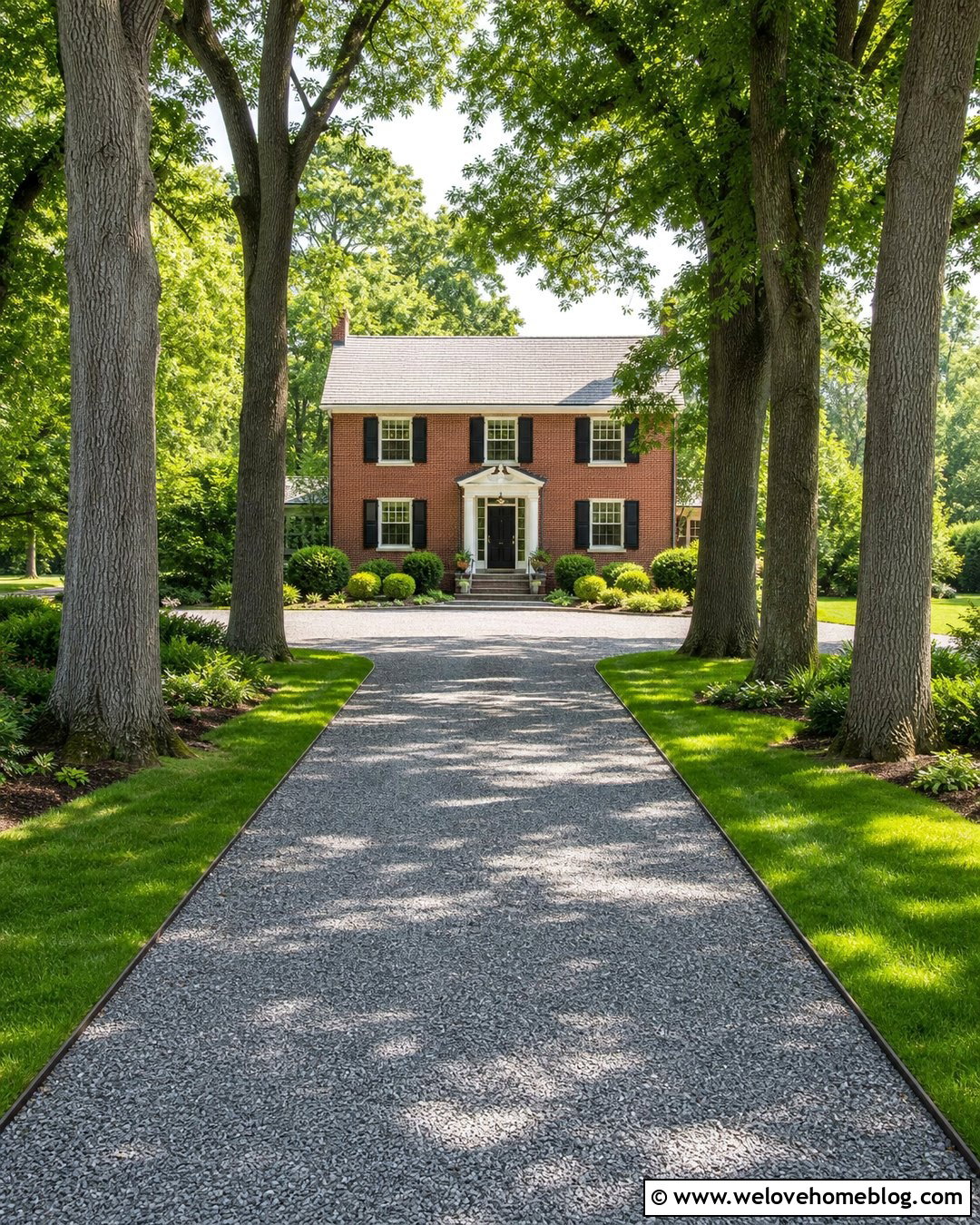
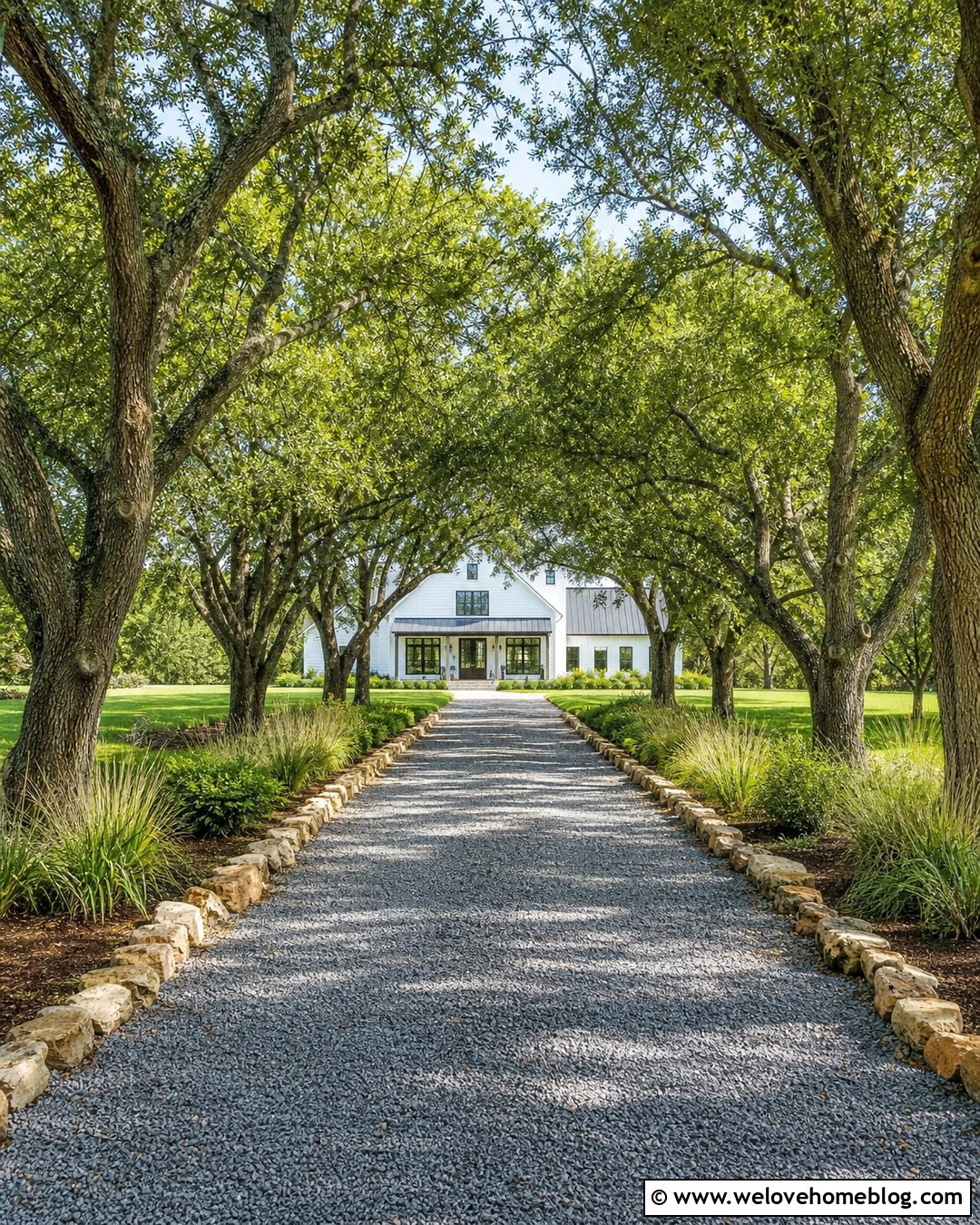
A long gravel driveway lined with evenly spaced oak trees creates a substantial entrance that improves with age. Warm tan crushed gravel works especially well because it complements the textured bark and broad green canopy. Use a gently curved layout if you want the house to appear gradually rather than all at once. Low fieldstone edging will contain loose gravel while reinforcing the natural character. Beneath the trees, keep the ground simple with mowed grass or a wide mulch ring around each trunk. This prevents the planting from feeling crowded and gives the oaks room to become the main feature. The finished look suits traditional farmhouses, brick colonials, and large country homes with generous front yards.
2. Asphalt Driveway With Maple Trees
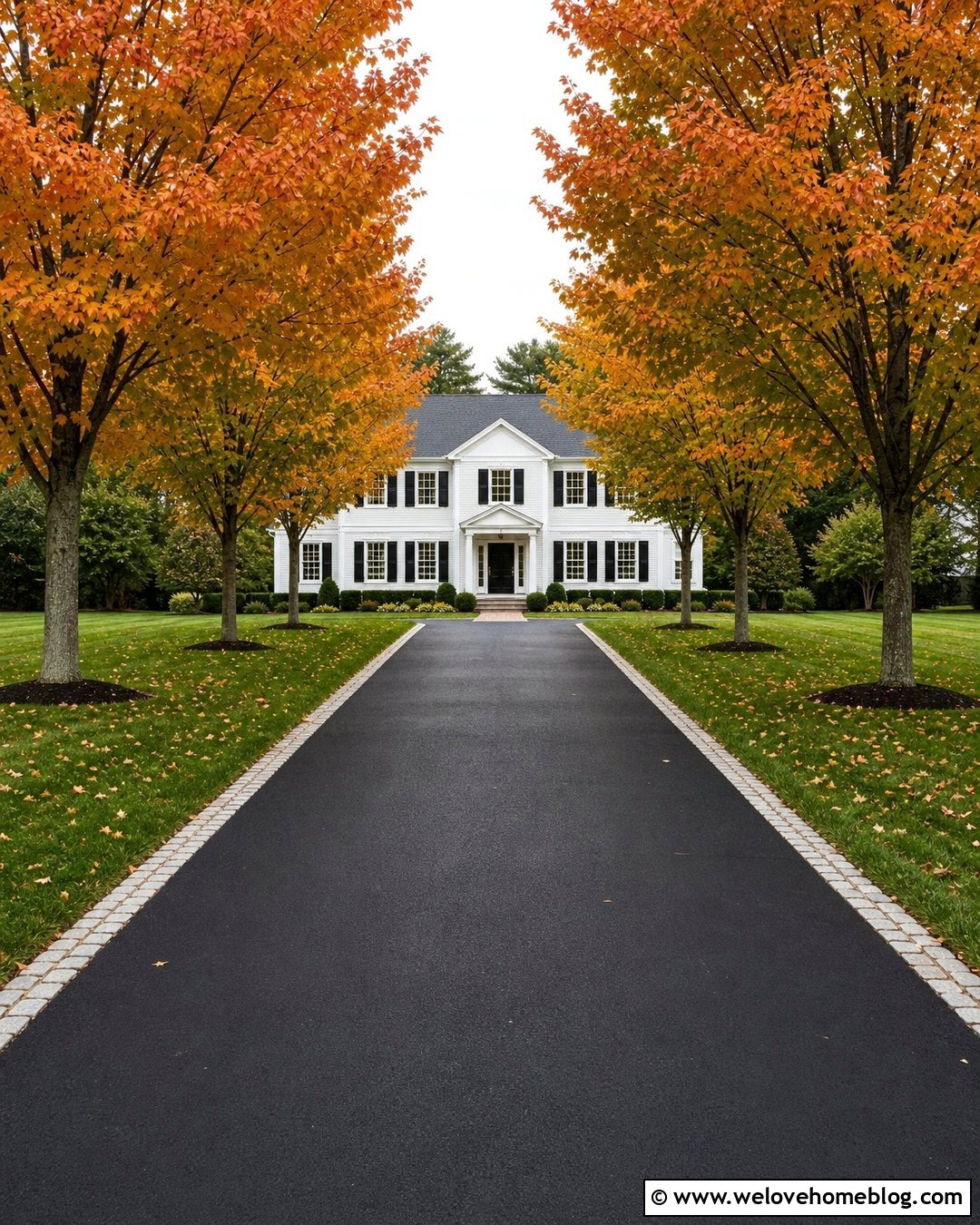
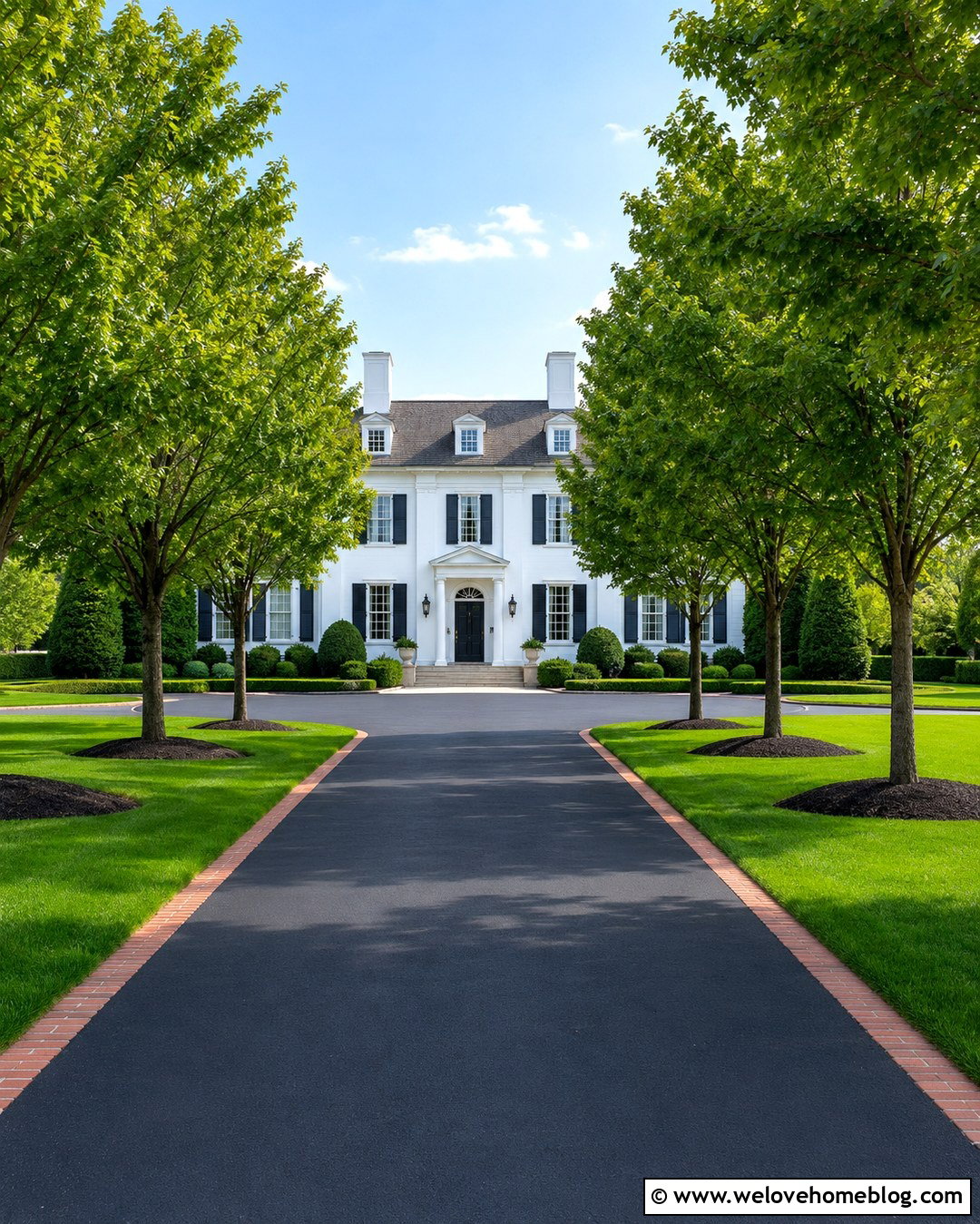
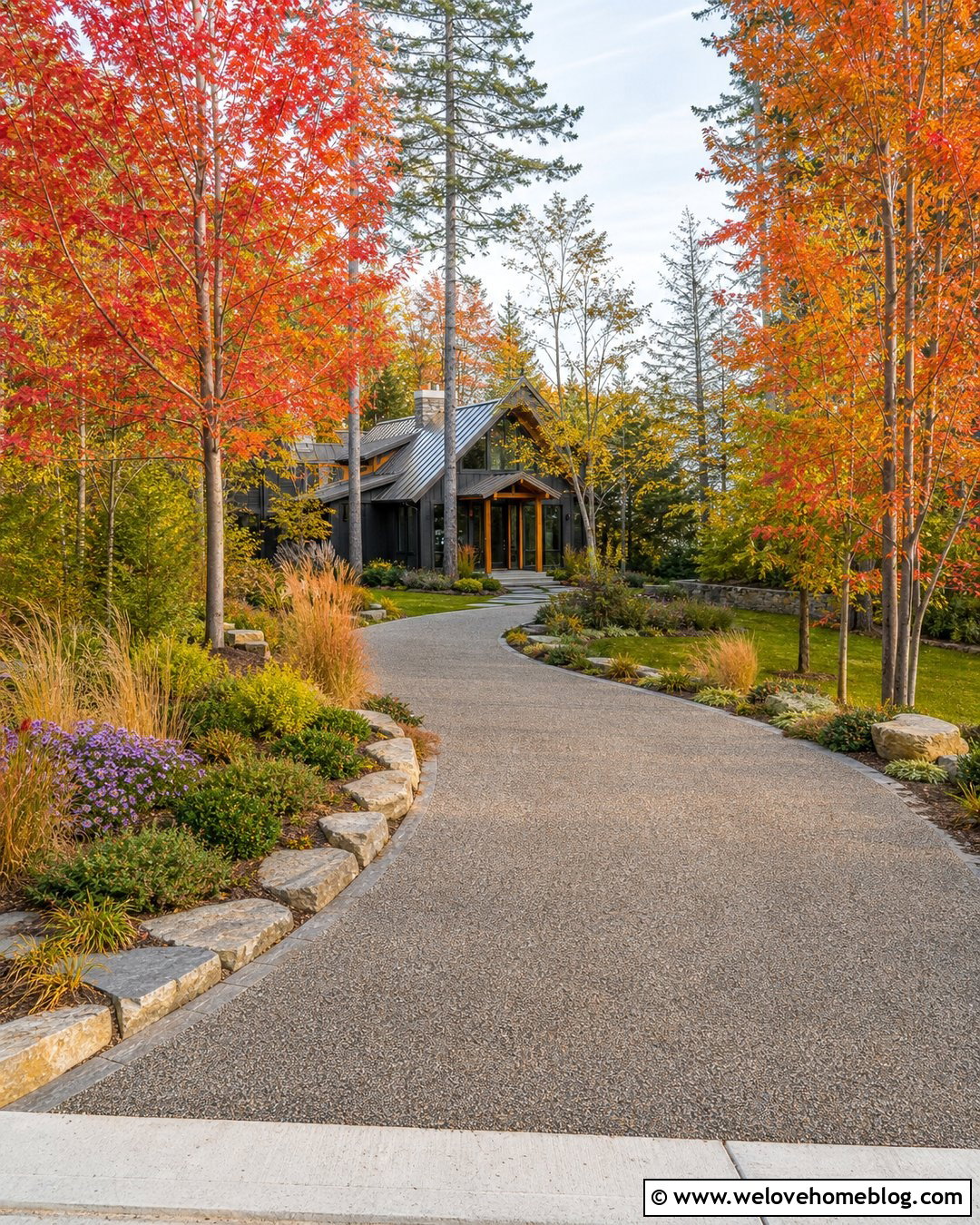
Imagine entering beneath two clean rows of maple trees, with their foliage changing from fresh spring green to rich fall color. A smooth black asphalt driveway gives this planting a crisp foundation and makes red, orange, and yellow leaves appear even brighter. The straight layout creates a strong sightline toward a colonial or craftsman home. Add a narrow granite cobblestone border to keep the asphalt edge visually defined. Simple lawn between the trees maintains an open, uncluttered appearance. Matching tree spacing on both sides produces a formal rhythm, but the leafy canopies keep it from feeling rigid. Allow generous setbacks from the pavement so mature roots, trunks, and branches do not interfere with vehicles or driveway maintenance.
3. Concrete Driveway With Crape Myrtle Trees
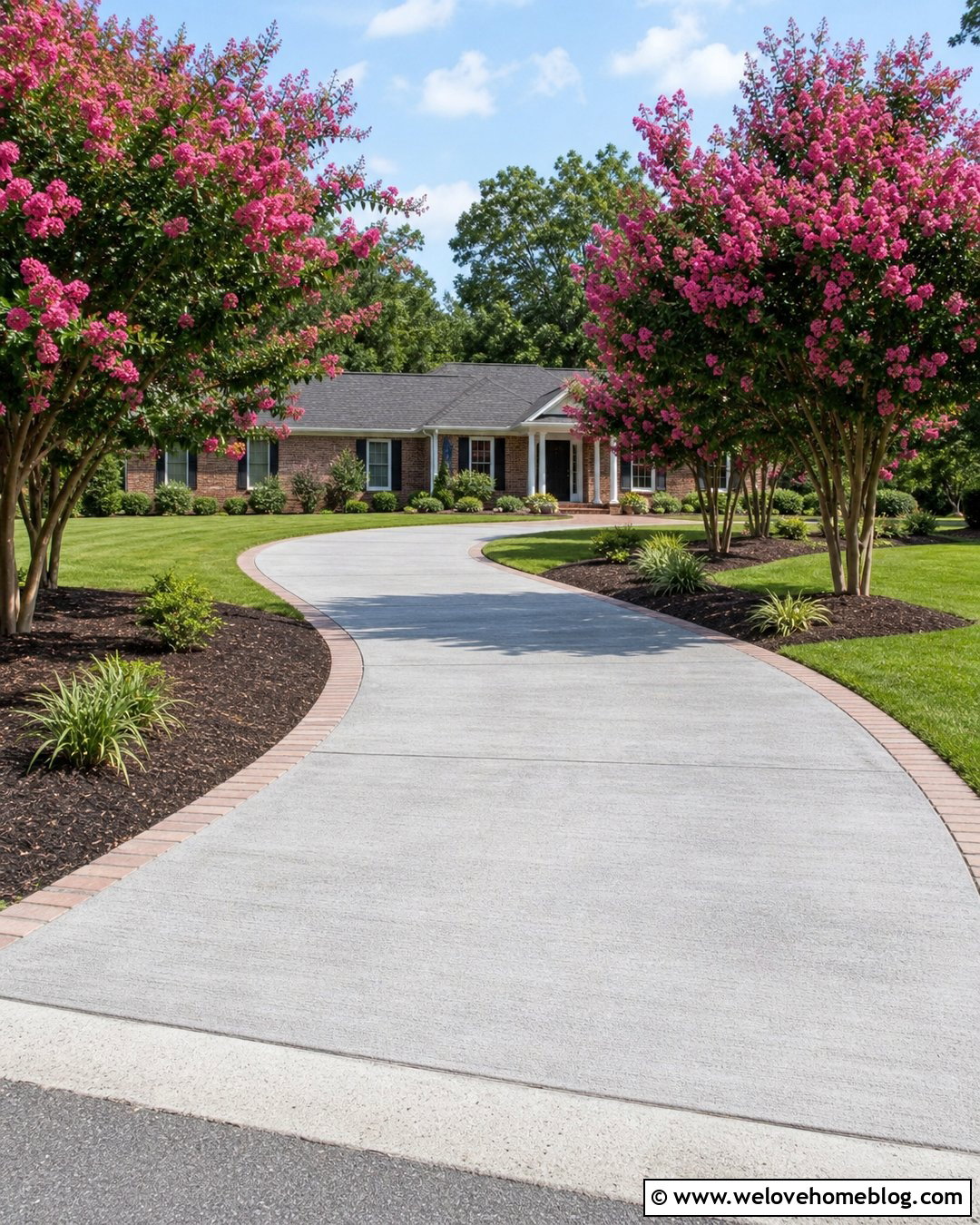
Crape myrtles can bring summer color and sculptural trunks to a sunny residential driveway. Pair them with a light gray poured concrete surface and a straight or softly curved layout. Their moderate scale works well beside ranch homes, cottages, and smaller suburban properties where massive shade trees would overwhelm the available space. A clay brick ribbon along each concrete edge adds warm contrast and connects beautifully with pink, red, lavender, or white blooms. Below the trees, use low ornamental grasses and a continuous mulch bed rather than tall shrubs. This keeps vehicle visibility clear and makes seasonal flowers easier to appreciate. Consistent spacing creates unity, while a wider planting bed near the house helps the tree rows transition naturally into the foundation landscaping.
4. Brick Driveway With Flowering Cherry Trees

Few approaches feel as inviting in spring as a brick driveway framed by flowering cherry trees. Clay brick pavers in a herringbone pattern provide rich color throughout the year, while the pale blossoms create a soft canopy above the drive. A straight allée produces a formal view toward the front door, though a gentle curve can make a cottage setting feel more relaxed. Define the sides with flush brick soldier courses that will not compete with the patterned surface. Underplant the trees with simple lawn, white spring bulbs, or low ground cover. Keep the central view open so the house remains the destination. This complete design is especially attractive with Cape Cod, Tudor, and traditional brick homes.
5. Paver Driveway With Columnar Oak Trees
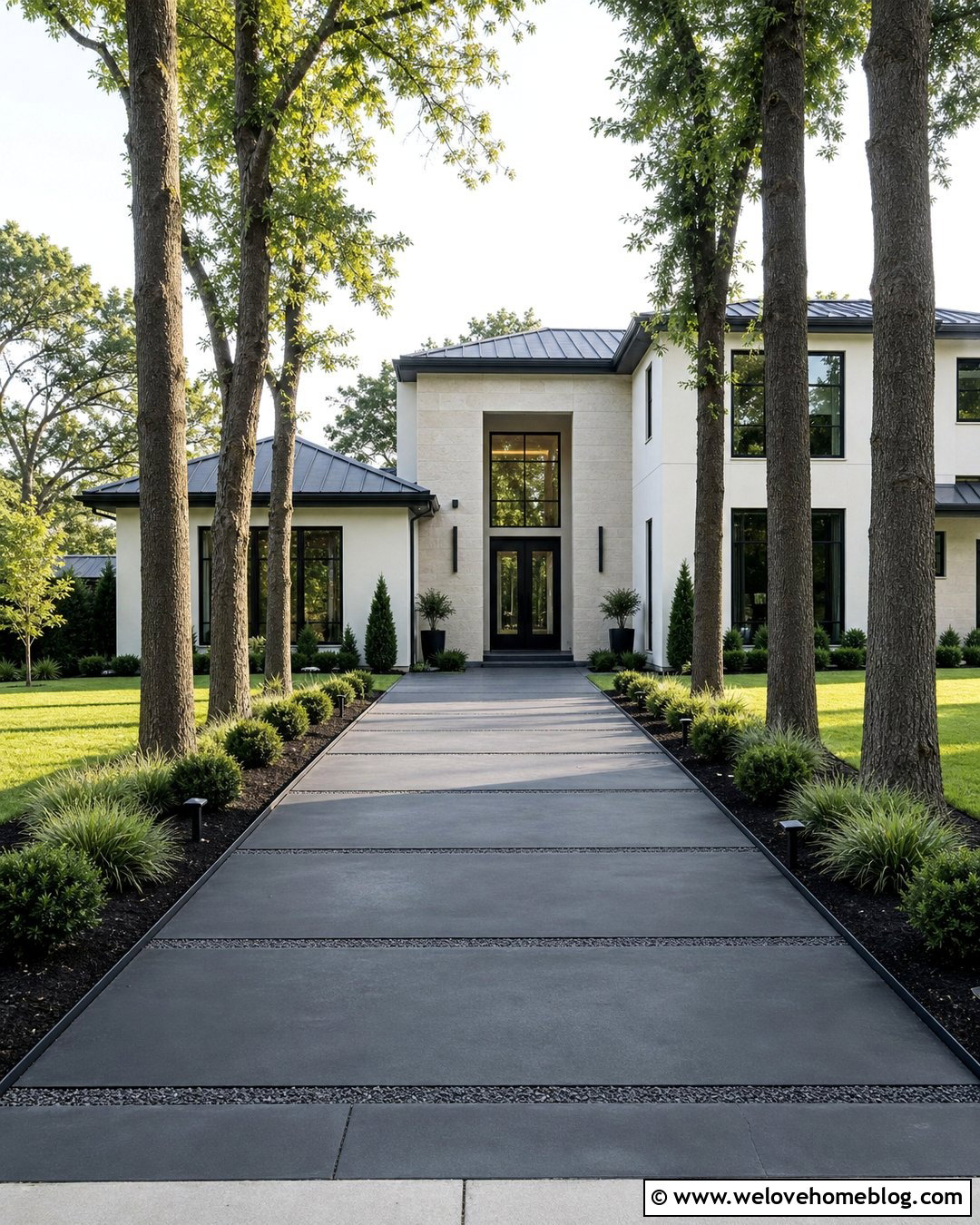
When side-yard space is limited, columnar oak trees can create height without forming an excessively wide canopy. Combine them with large charcoal concrete pavers laid in clean running rows for a structured, contemporary appearance. Narrow gravel joints can soften the hardscape and improve the visual transition into the planting beds. Place the trees in long beds filled with dark mulch, clipped grasses, and low evergreen shrubs. The upright forms will emphasize the length of a straight driveway and guide attention toward a modern or transitional house. Low-profile landscape lights can repeat the same orderly spacing. This plan delivers the drama of a tree-lined entrance while leaving more usable lawn and providing clearer access along narrow residential boundaries.
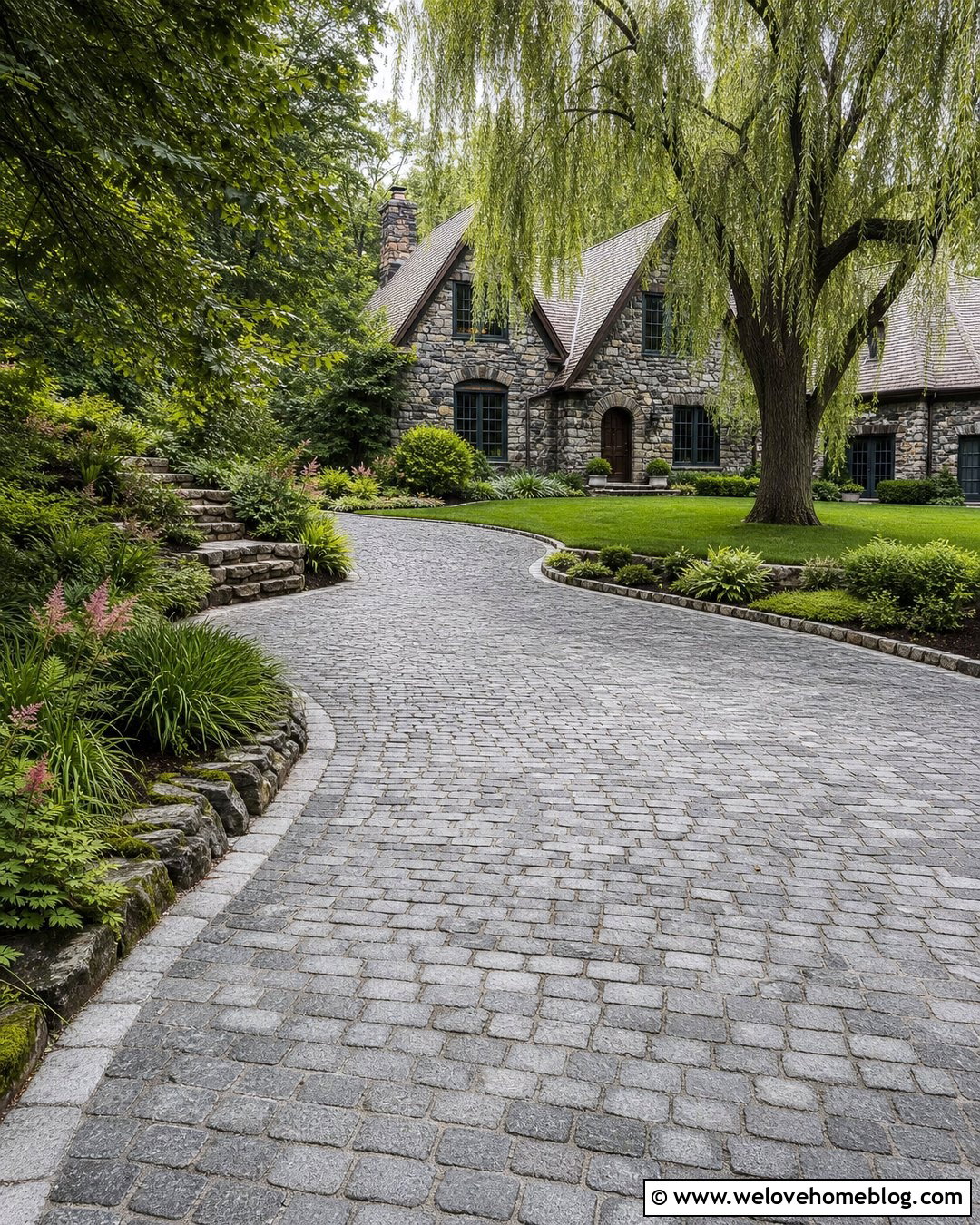
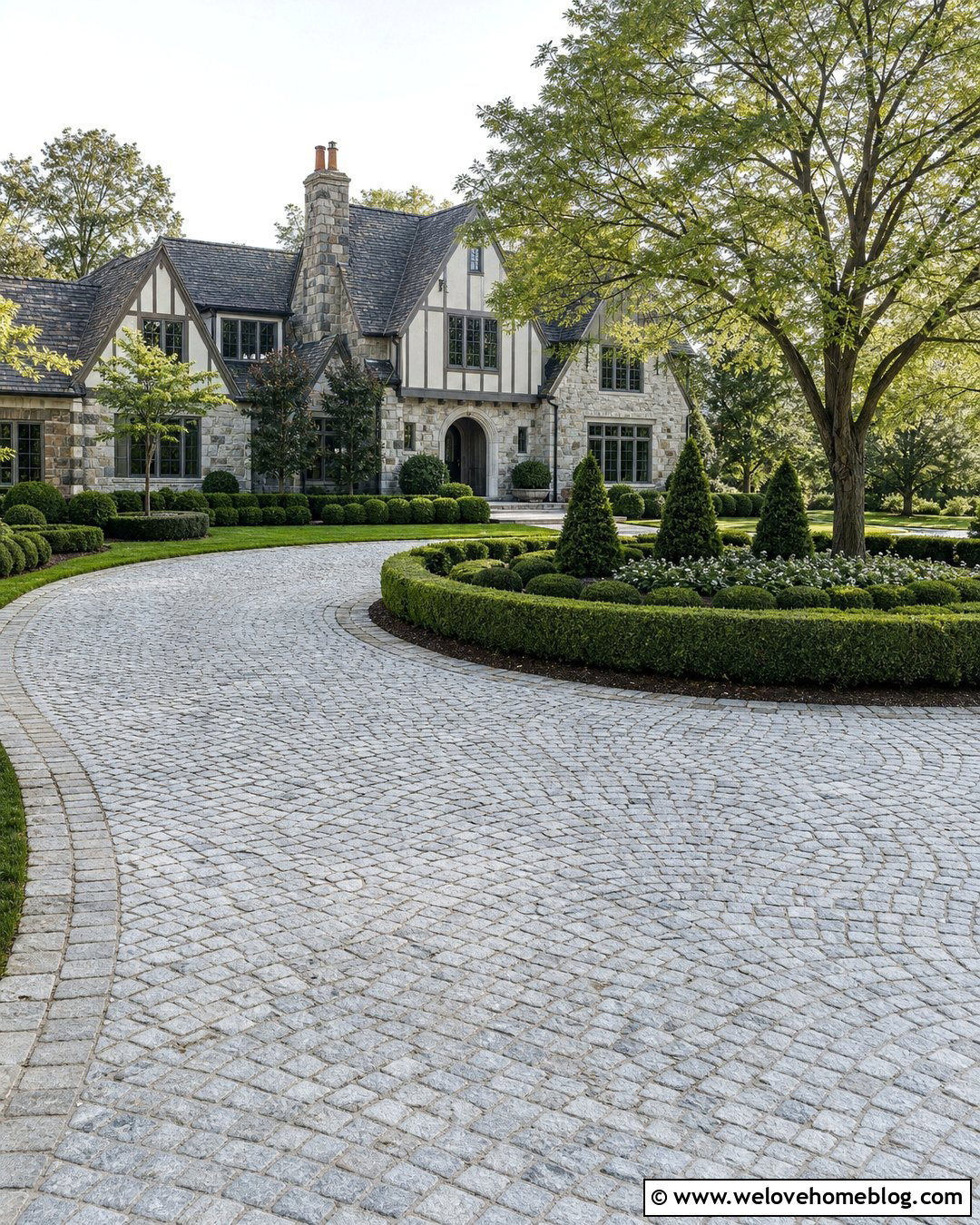
6. Cobblestone Driveway With Hornbeam Trees
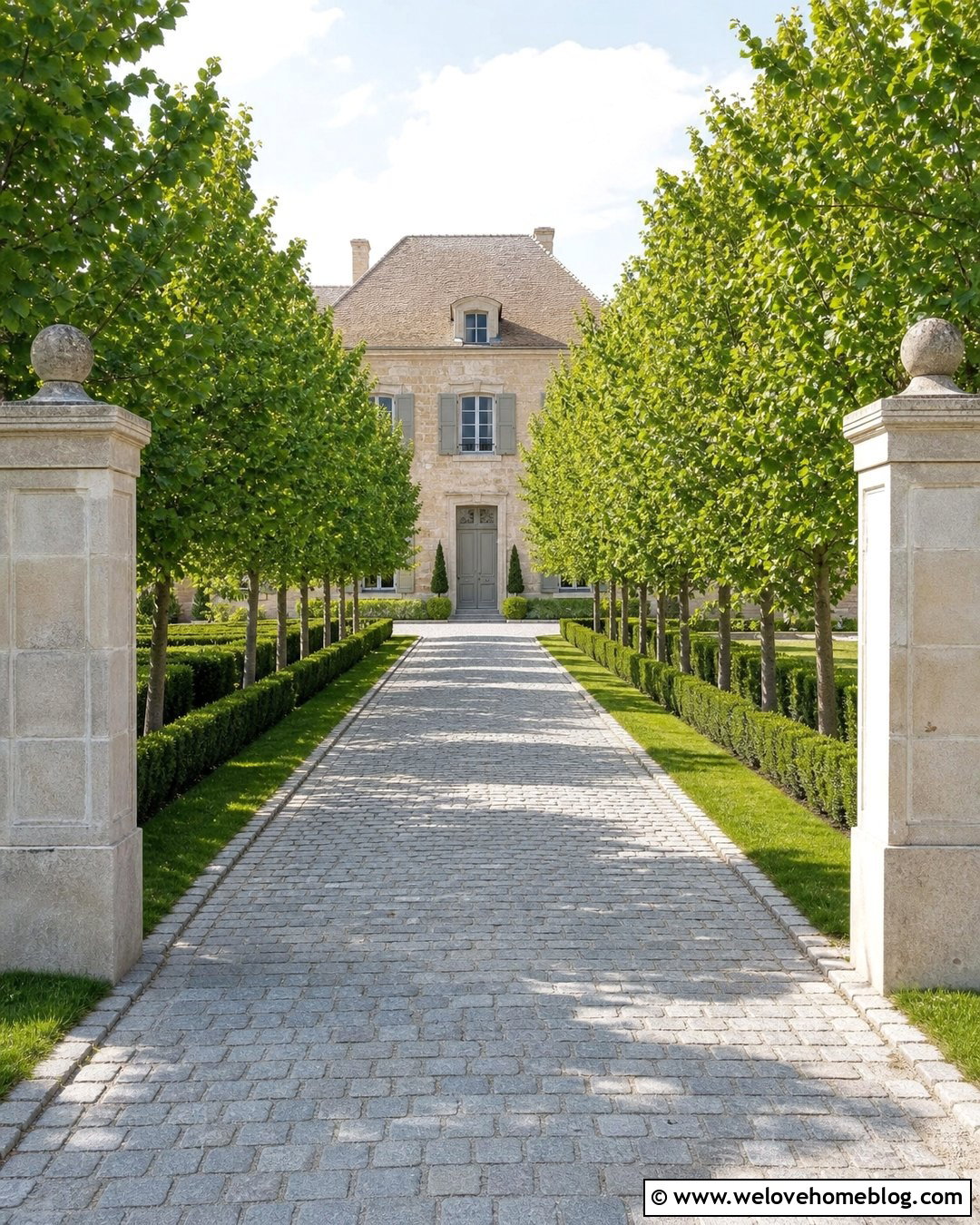
European hornbeam trees and gray cobblestone create a classic driveway with strong architectural structure. Arrange the trees in matching rows beside a straight drive so their trunks form a repeated frame around the approach. Hornbeams can also be maintained in a more tailored shape when a formal landscape is desired. Use granite setts along the edges and low boxwood hedges between the trees to strengthen the symmetry. A narrow strip of lawn beyond the hedges prevents the composition from becoming too heavy. This surface-and-planting combination looks especially appropriate beside a Georgian, French country, or stately colonial home. At the entrance, stone pillars can introduce the cobblestone color and establish a polished transition from the street.
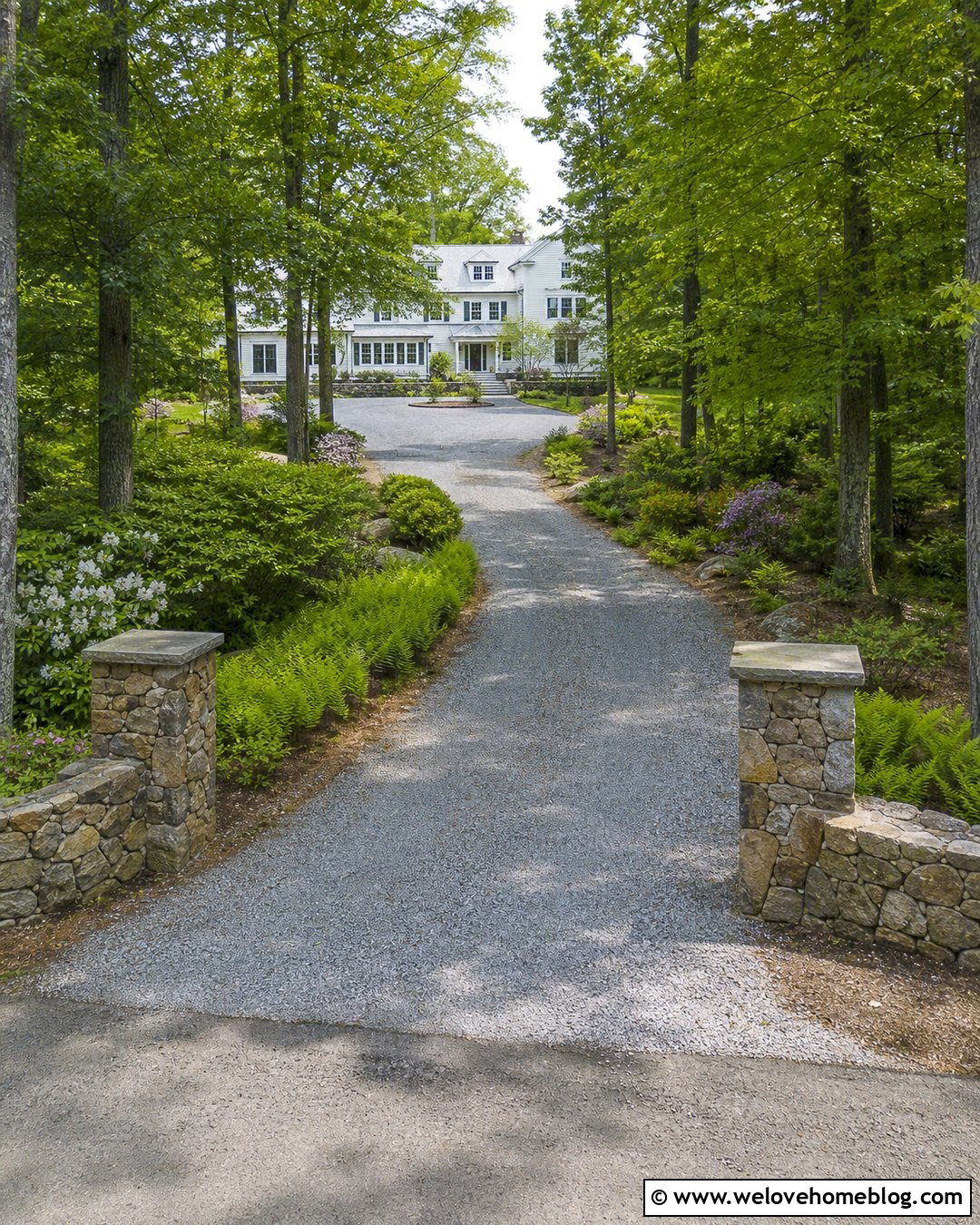
7. Curved Gravel Driveway With Birch Trees
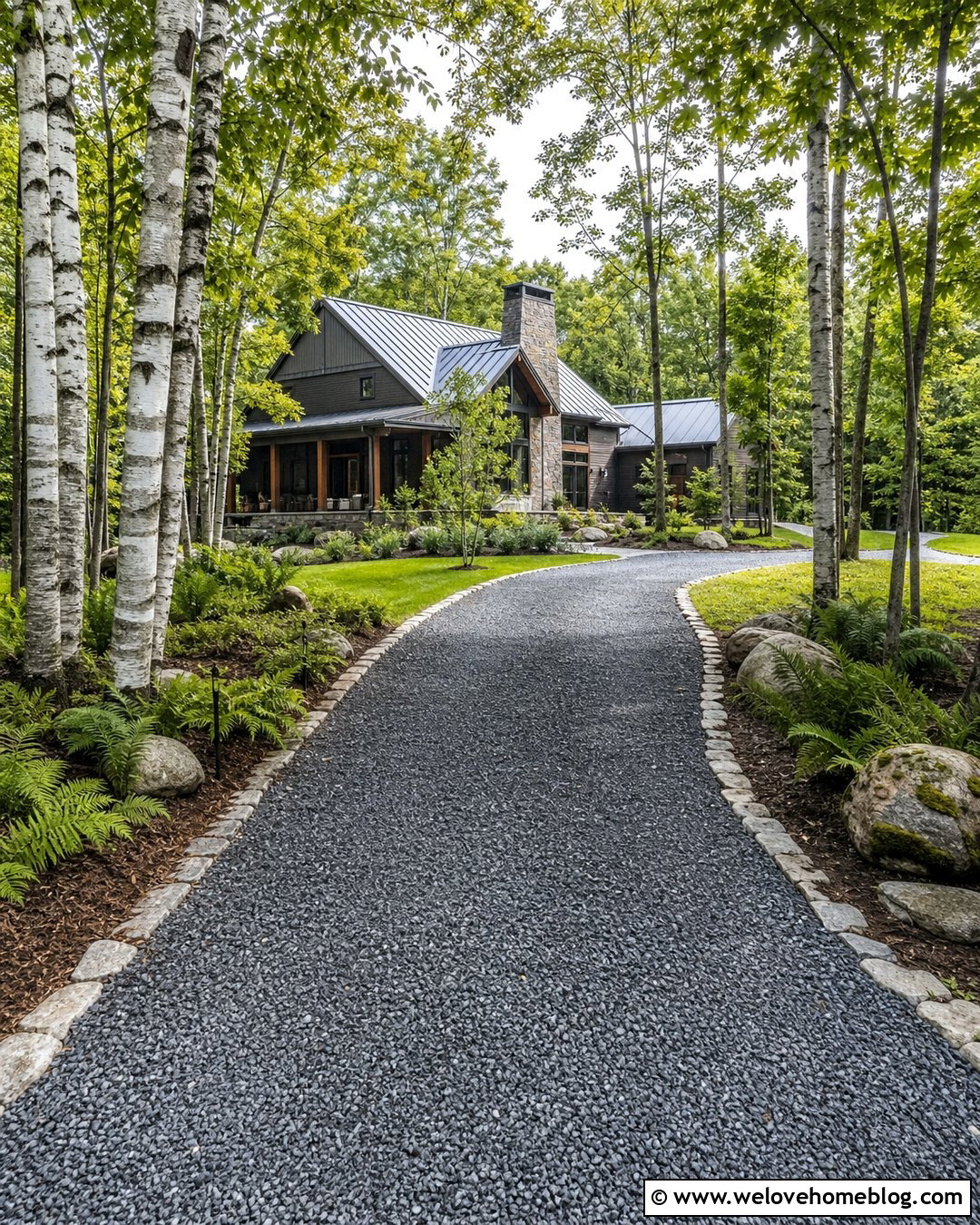
White-barked birch trees can brighten a wooded property and make a curved gravel driveway feel lighter. Choose cool gray crushed gravel to echo the pale trunks, then contain it with natural stone edging. Plant the birches in loose clusters rather than perfectly straight rows for a relaxed woodland effect. Ferns, sedges, and low native ground covers can fill the shaded beds without hiding the distinctive bark. The driveway should sweep gently through the planting before reaching a rustic ranch, lake house, or contemporary cabin. Keep branches pruned for comfortable vehicle clearance and maintain open pockets between clusters. This design feels immersive but not enclosed, allowing sunlight to filter through the leaves and highlight the changing curve of the driveway.
8. Circular Driveway With Magnolia Trees
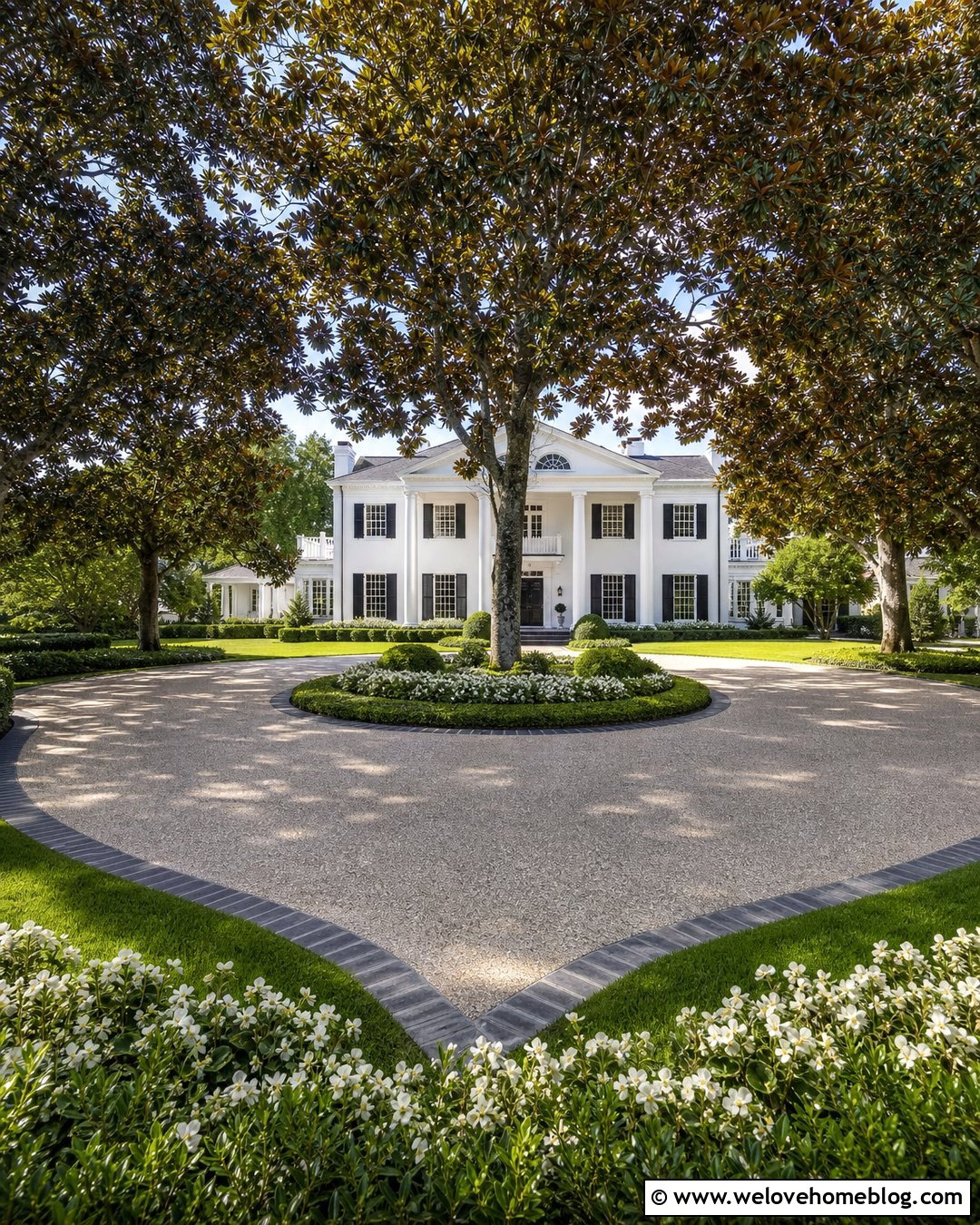
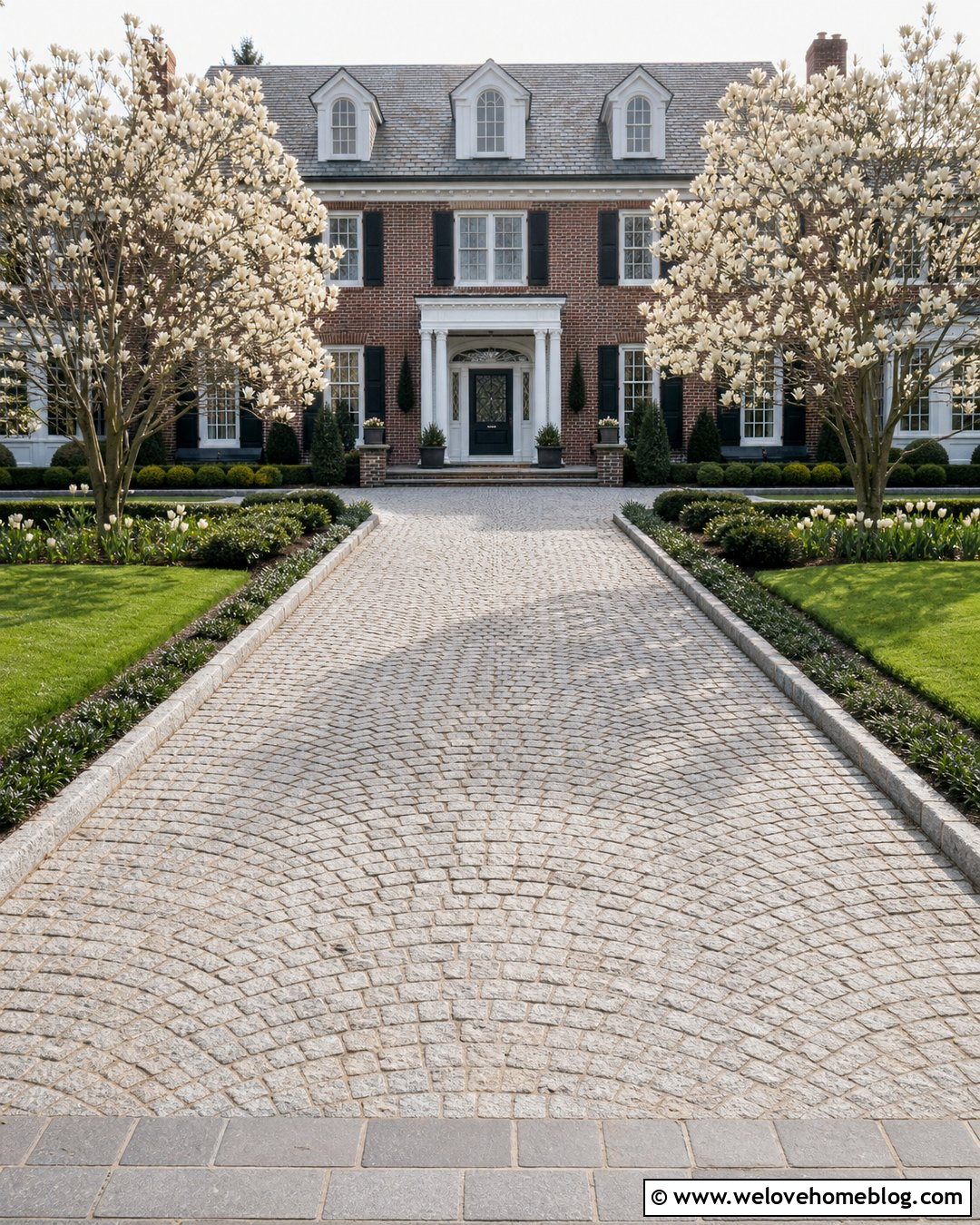
A circular driveway becomes a memorable front-yard feature when magnolia trees frame both the outer curve and central island. Use cream-colored exposed aggregate concrete to complement the glossy foliage and large pale flowers. A border of charcoal pavers will sharpen the circular shape and protect the concrete edges from visually blending into the lawn. In the center island, repeat one magnolia as a focal tree with low evergreen shrubs and seasonal flowers around it. Space the outer trees evenly, but preserve open views toward the entrance and front windows. This balanced arrangement suits Southern colonial, traditional, and painted-brick homes. The circle provides a graceful sense of arrival, while the magnolias give the entire driveway a cohesive regional character.
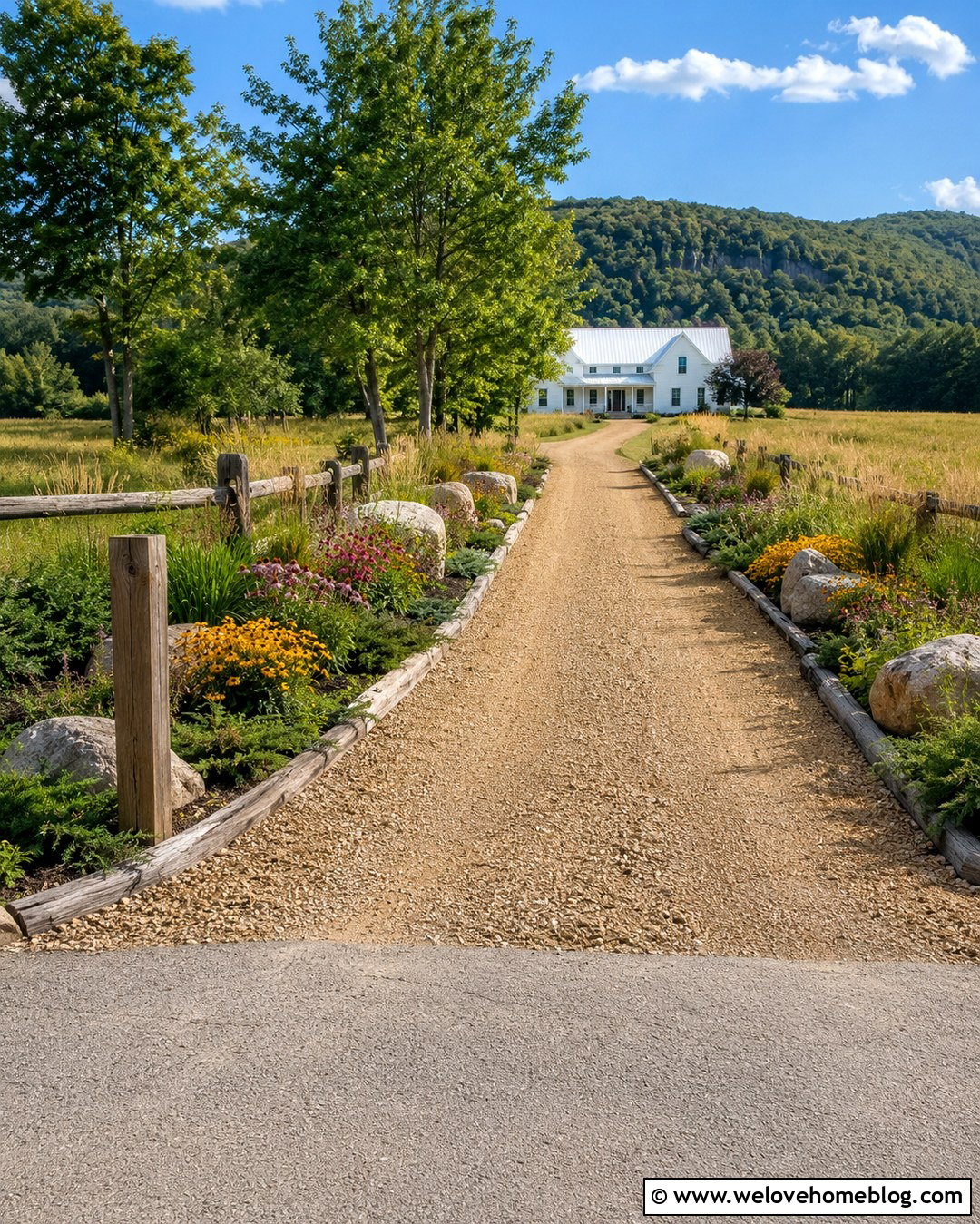
9. Farmhouse Driveway With Pear Trees
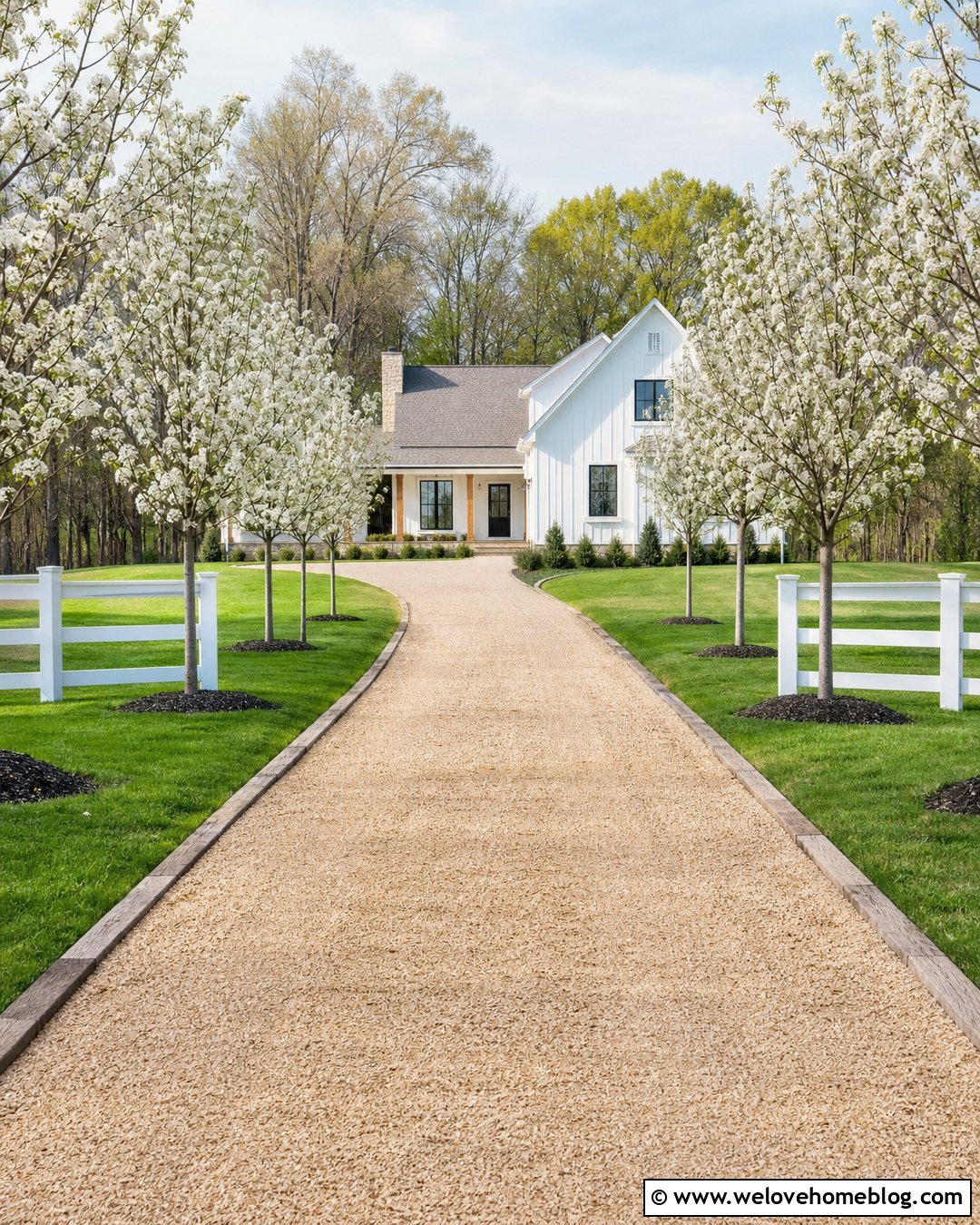
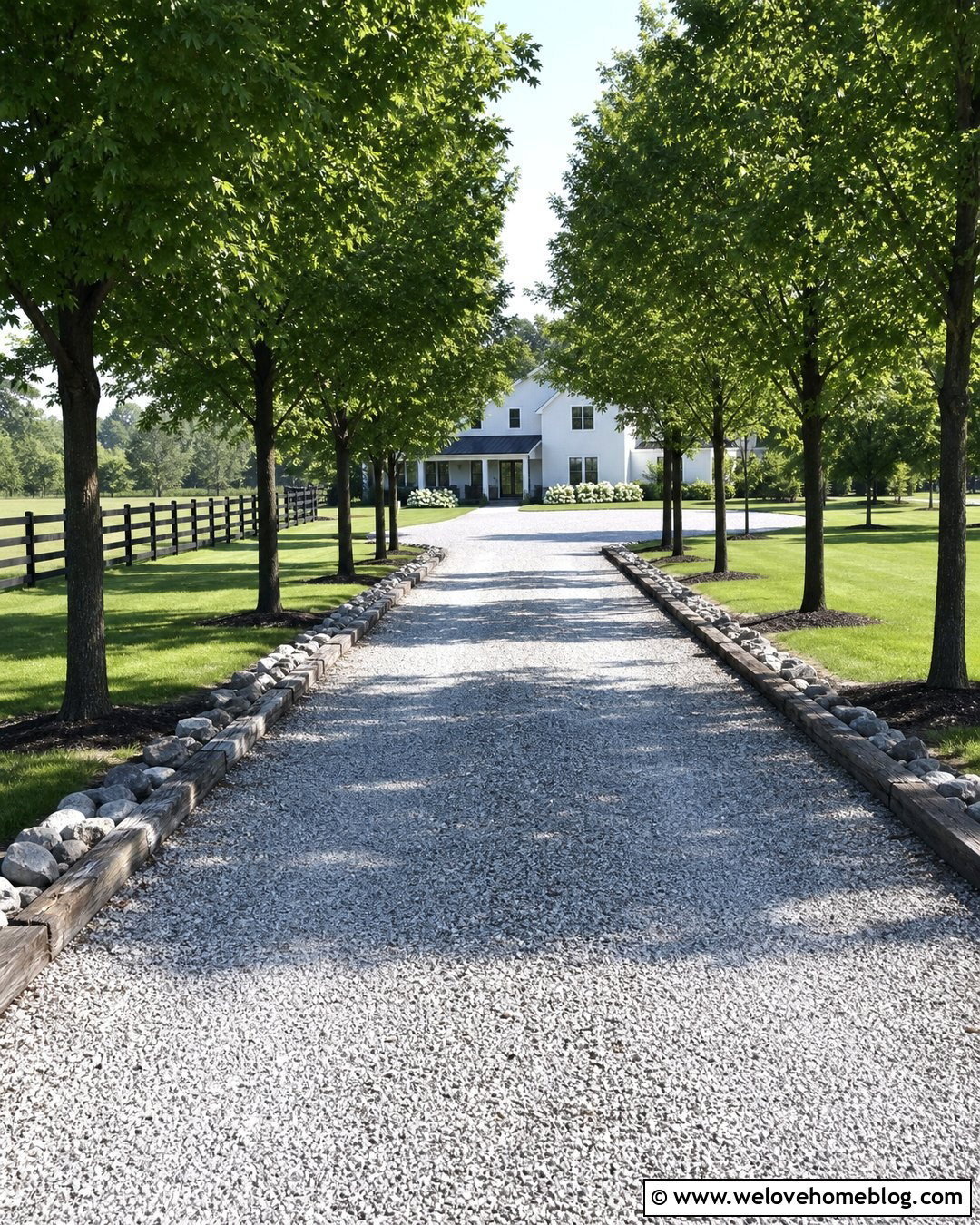
A country driveway lined with ornamental pear trees can provide a neat, flowering approach without losing its farmhouse simplicity. Start with compacted beige gravel and a straight layout leading toward a white modern farmhouse or restored barn-style home. Use weathered timber edging to hold the gravel and connect the drive with nearby fences or outbuildings. Broad grass strips beneath the trees will keep the landscape open and easy to understand. Add white fence sections near the entrance, but stop them before they compete with the full tree rows. Matching pear trees on both sides create spring impact and a consistent upright rhythm. Select locally suitable trees carefully and account for mature growth, maintenance, and regional planting concerns before installation.
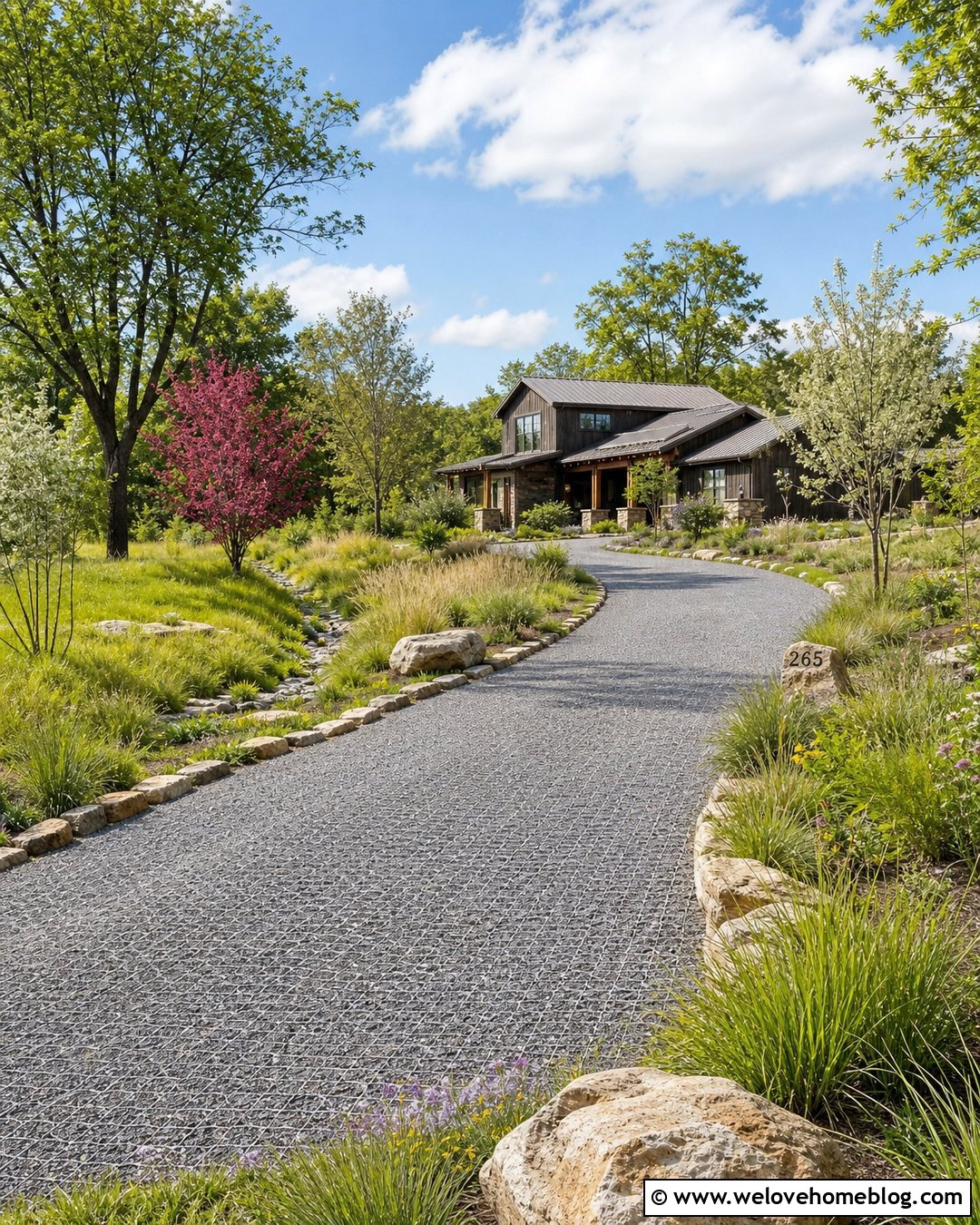
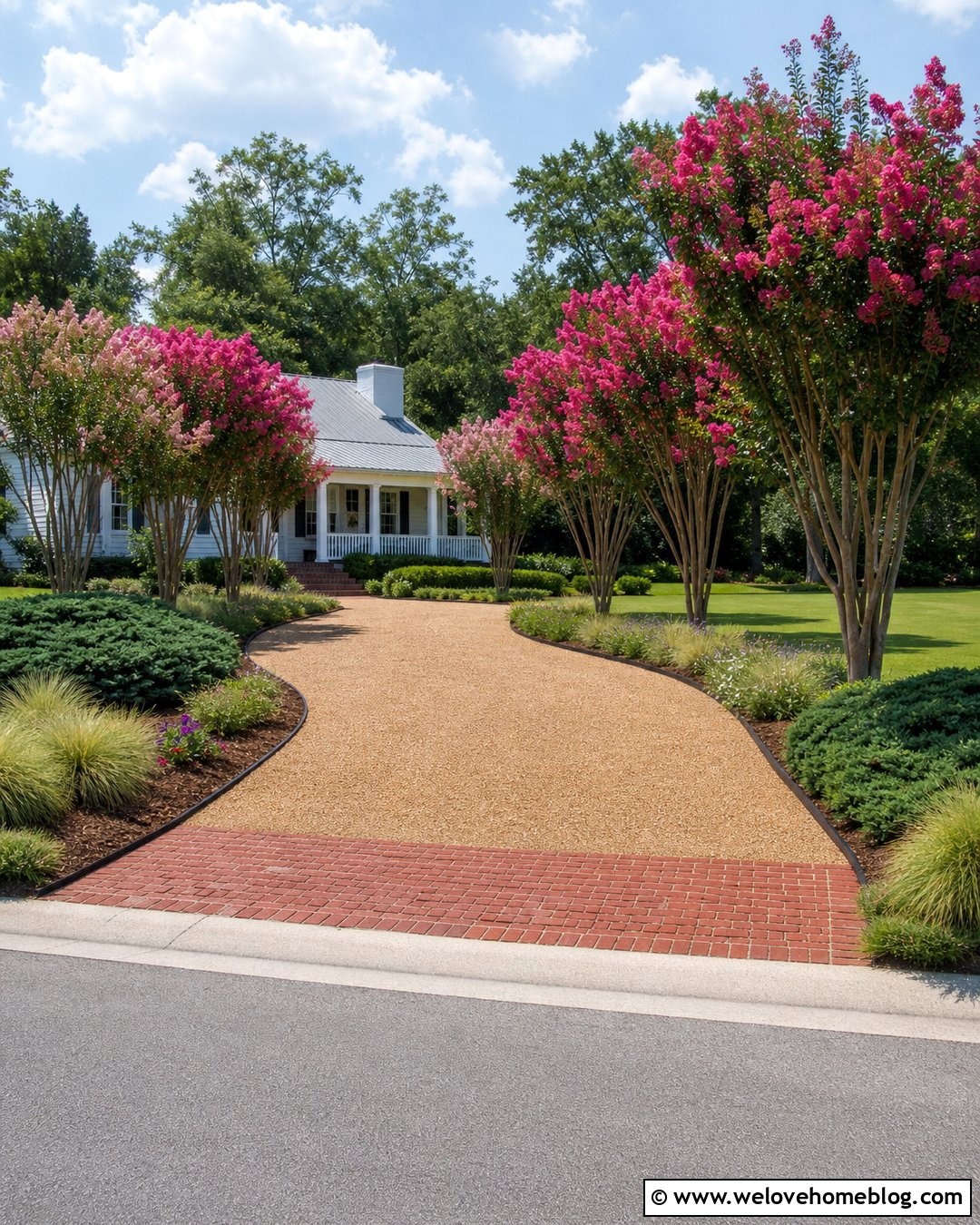
10. Modern Driveway With Olive Trees
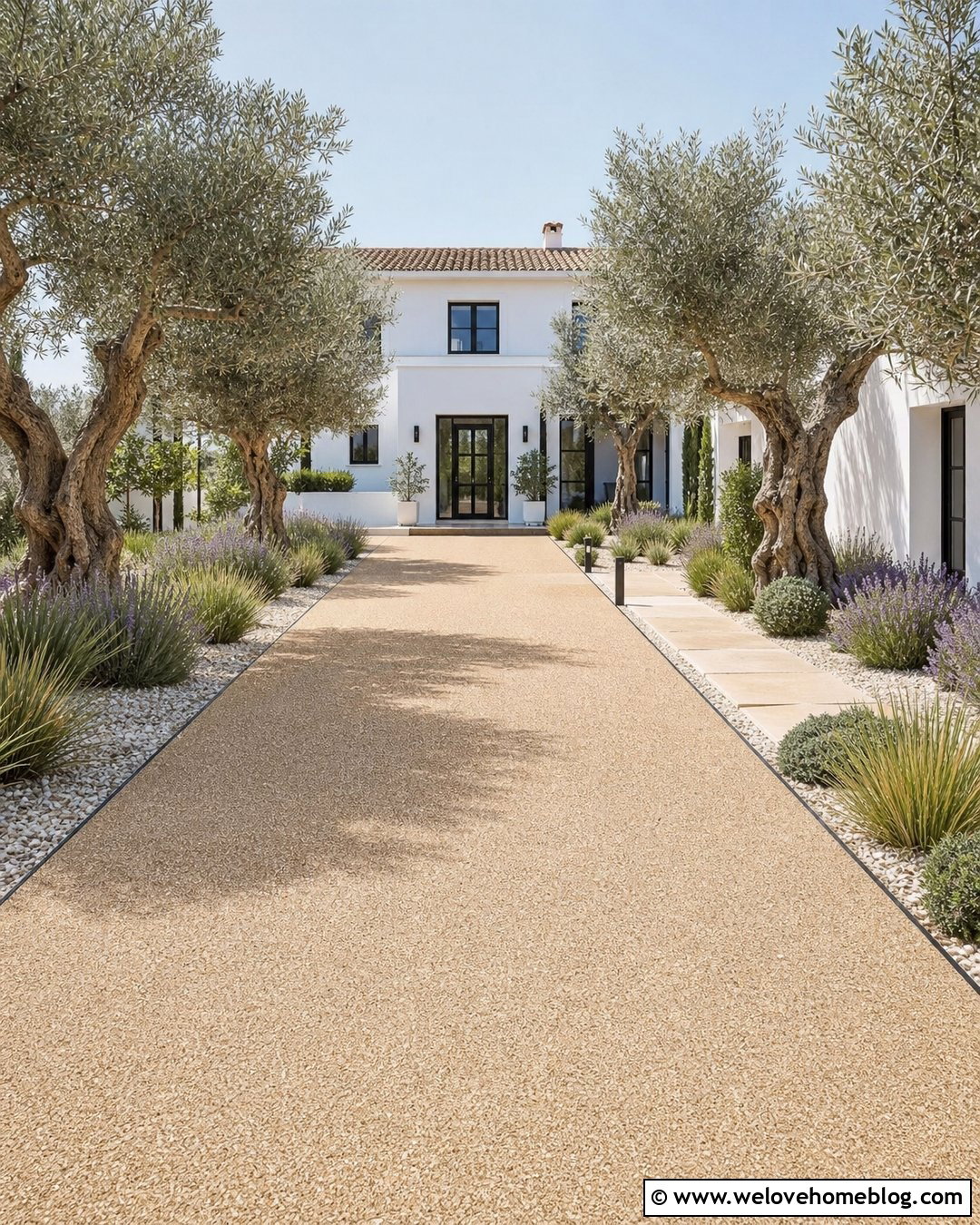
Silvery olive foliage can soften a modern driveway without disrupting its clean lines. Pair sculptural olive trees with warm beige resin-bound gravel in a wide, straight layout. Slim black steel edging provides a precise transition into beds filled with pale gravel, drought-tolerant grasses, and compact flowering plants. Instead of forming a dense canopy, space the trees so each trunk remains visible as an individual architectural feature. This works beautifully with a low modern house featuring white stucco, natural wood, or dark metal accents. Continue the driveway material into a simple front walkway for visual unity. The combination feels bright and restrained, making it suitable for warm, dry residential settings where a traditional leafy allée might require too much space or water.
11. Country Driveway With Apple Trees
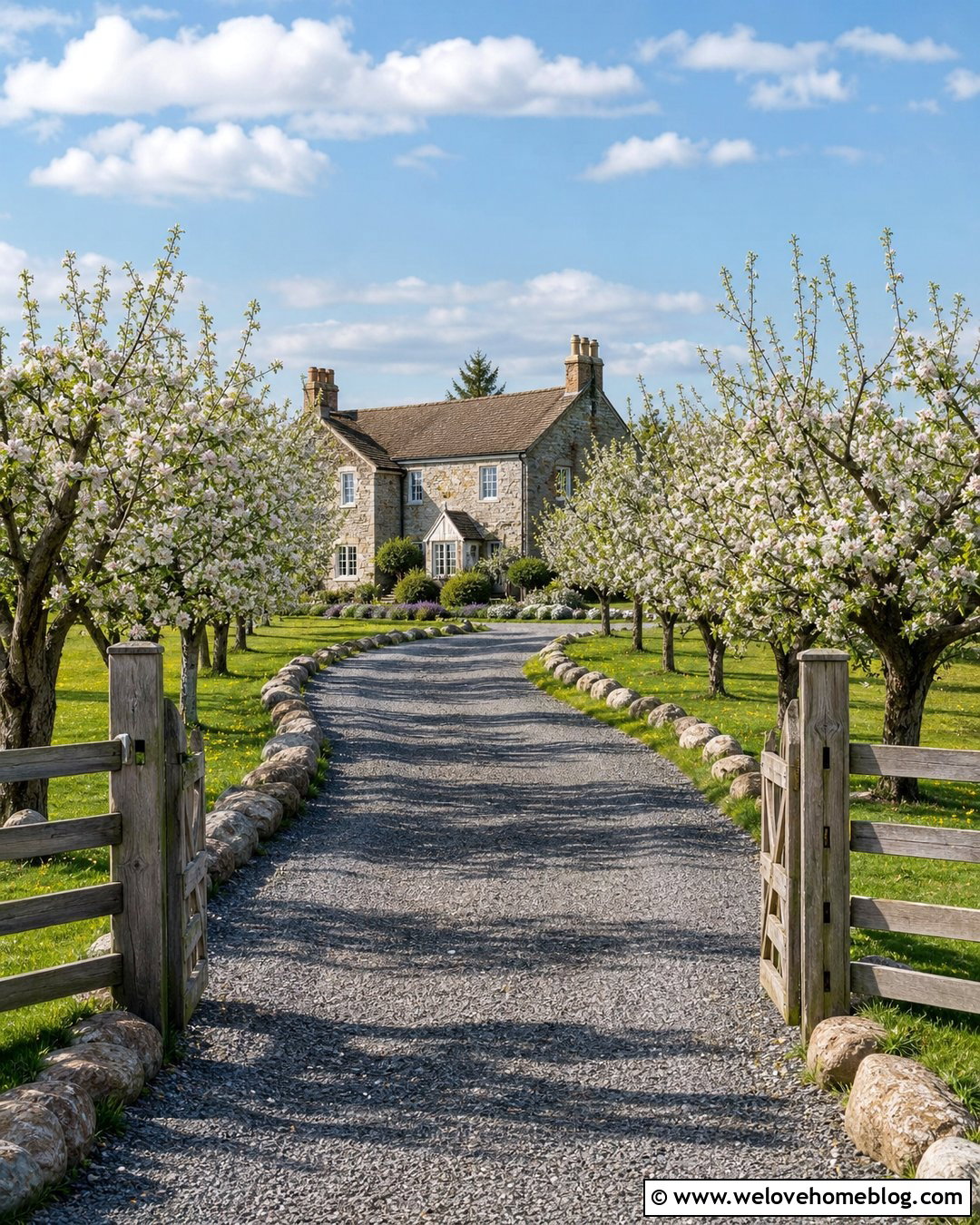
A gravel driveway bordered by apple trees offers a charming orchard-inspired entrance. Use warm gray crushed stone with fieldstone edging and allow the drive to curve gently toward a cottage, farmhouse, or country ranch. Plant the trees in consistent rows, leaving enough open space for sunlight, air movement, and routine care. A mowed grass floor gives the setting an established orchard appearance and prevents competing plantings from making the approach feel messy. Spring blossoms add softness, while foliage and fruit provide changing seasonal interest. Because dropped fruit can create extra cleanup, position the trunks and canopies beyond the immediate pavement edge. A simple wooden gate and matching fence at the entrance will complete the rural composition without making it overly decorative.
12. Concrete Driveway With Dogwood Trees
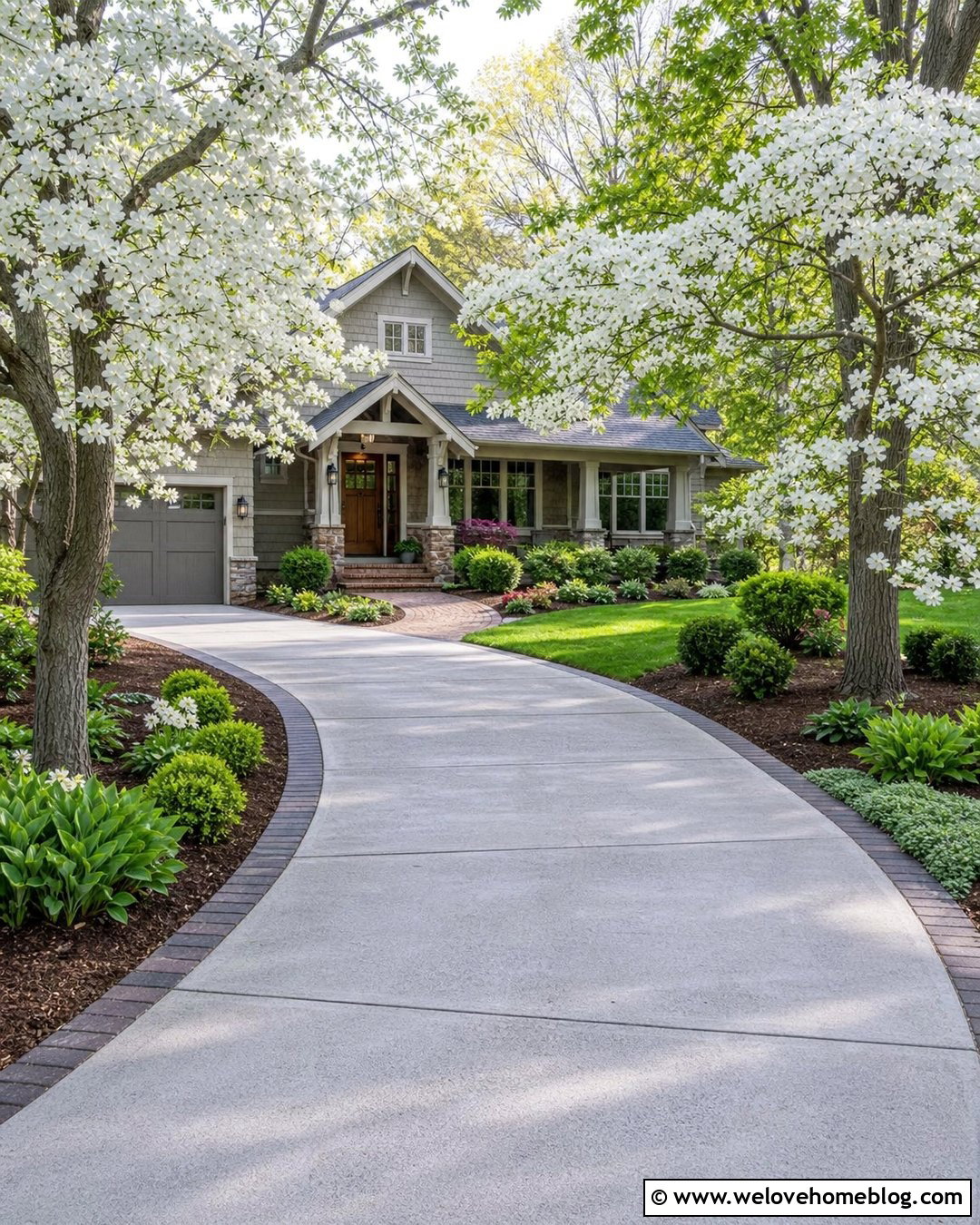
Flowering dogwoods can frame a shorter driveway with layers of spring color and graceful branching. A brushed light gray concrete driveway provides a quiet background that allows white or pink flowers to stand out. Use a slight curve to create a natural transition from the street to a craftsman or traditional suburban home. Dark brick edging adds definition and can coordinate with porch columns or facade details. Beneath the dogwoods, create wide mulched beds with shade-tolerant ground cover and a few low evergreen shrubs. Avoid filling every gap; open space highlights the branching form and improves visibility. This plan is particularly effective in front yards that already include mature trees, since dogwoods can visually connect the driveway with the surrounding layered landscape.
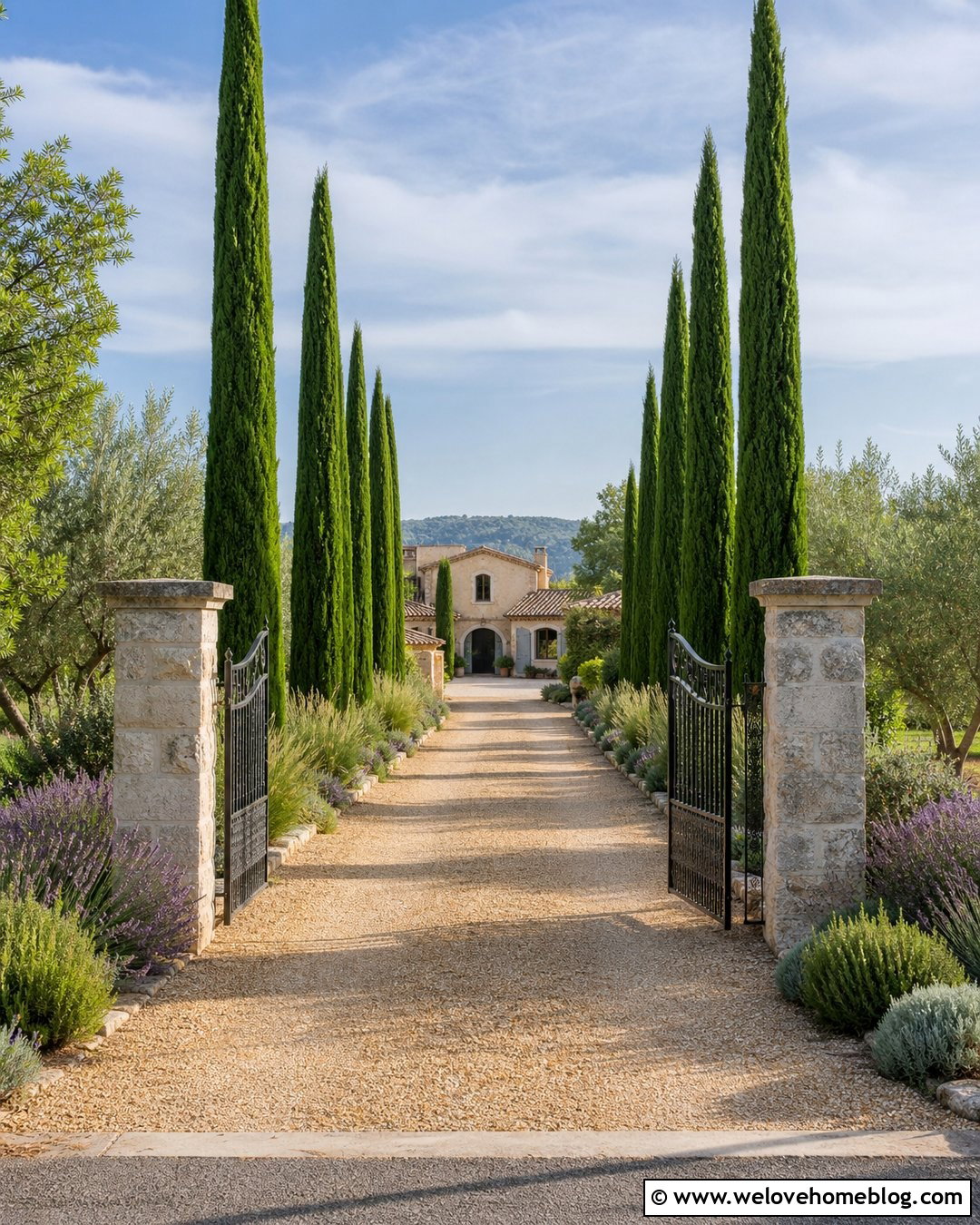
13. Long Driveway With Italian Cypress Trees
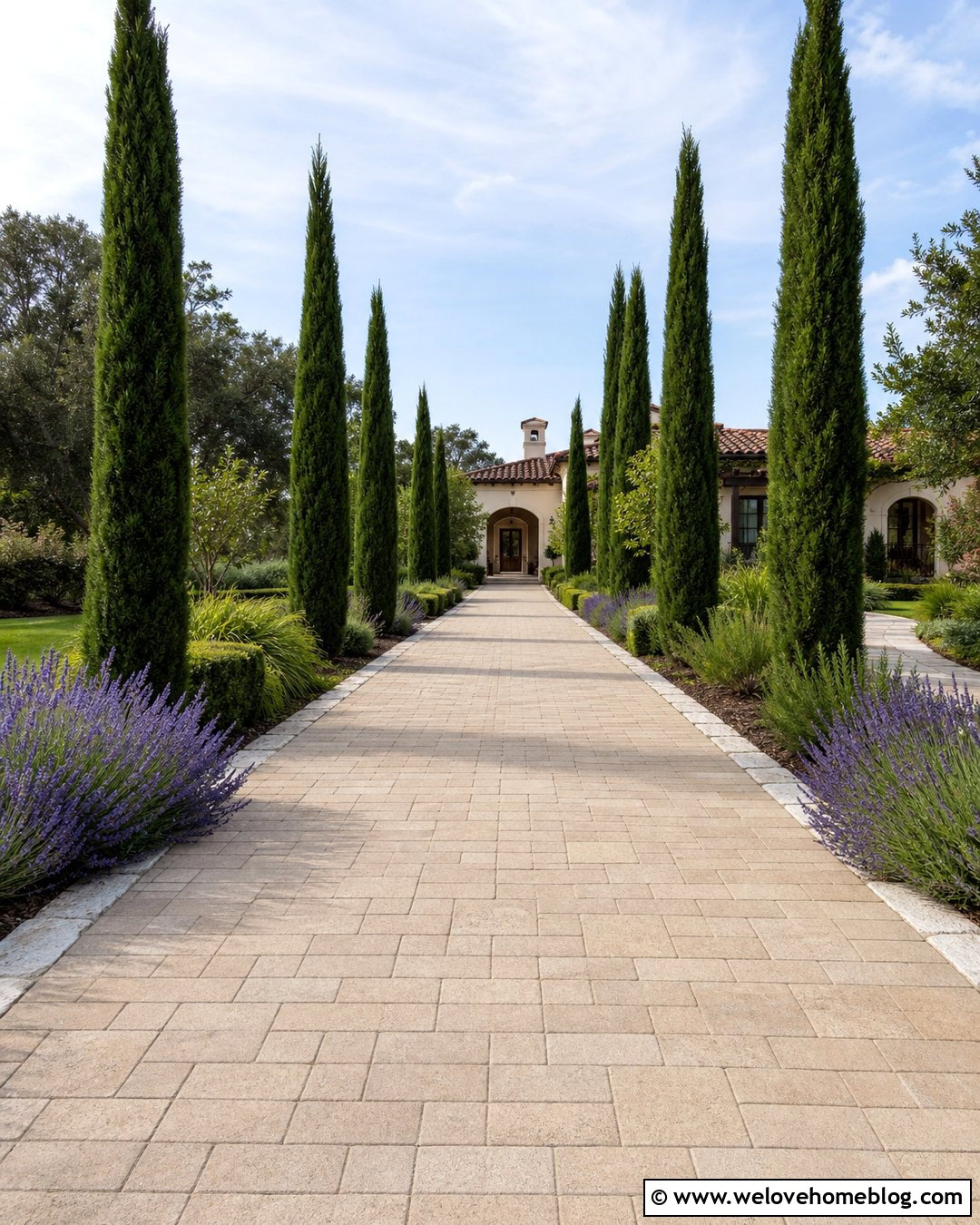
Italian cypress trees create a dramatic vertical rhythm along a long driveway while occupying relatively little horizontal space. Pair their dark green forms with buff-colored concrete pavers arranged in a clean running bond. A straight layout emphasizes perspective and makes the house appear centered at the end of the approach. Use limestone edging and restrained beds of lavender, rosemary, or ornamental grass to reinforce the orderly appearance. The trees can flank the entire driveway or mark selected sections when continuous planting feels too formal. This combination suits Mediterranean, Spanish revival, and warm contemporary homes. Keep spacing consistent and ensure the chosen trees match the site’s climate and soil conditions. The final design should feel balanced rather than tightly enclosed.
14. Rural Driveway With Pine Trees
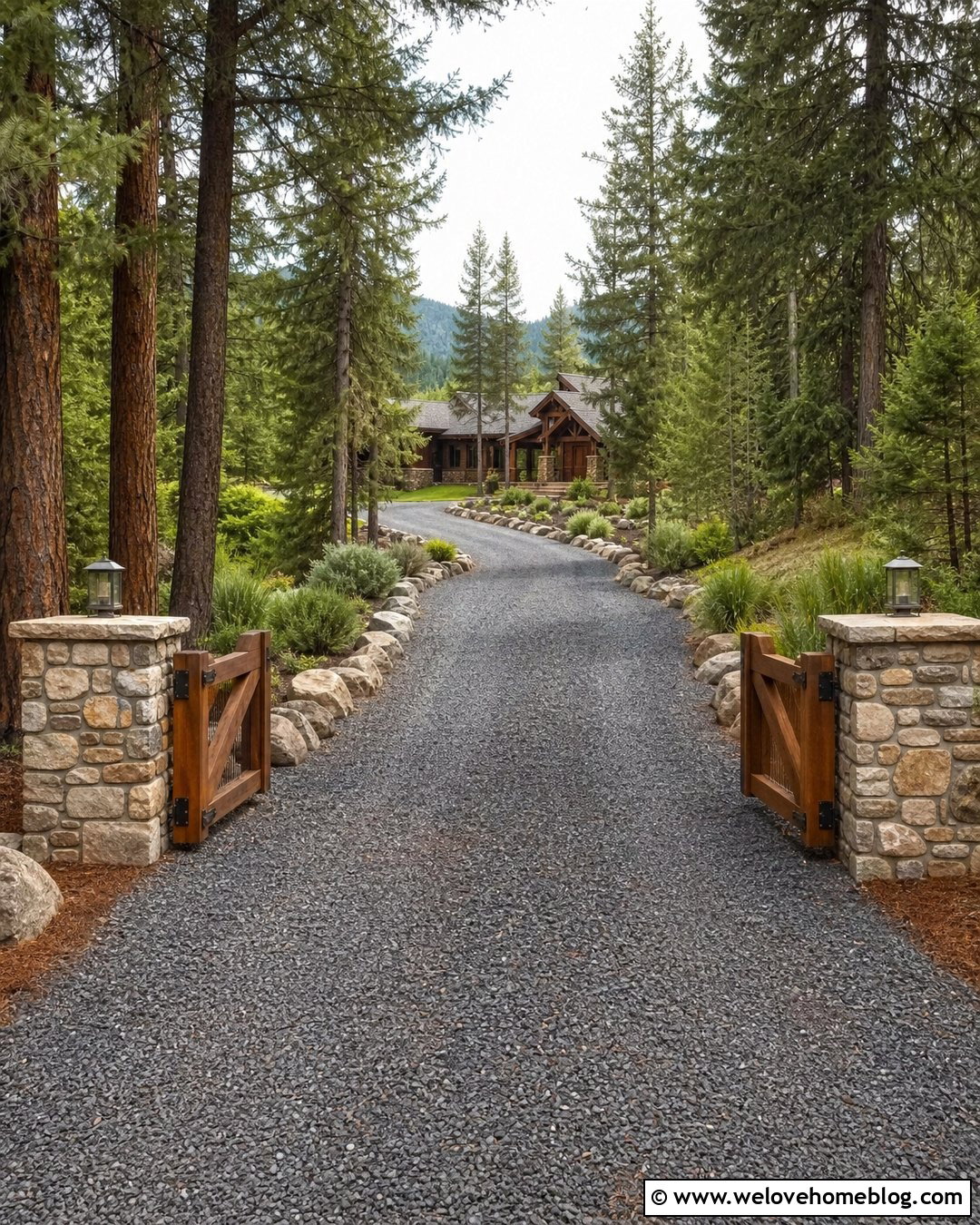
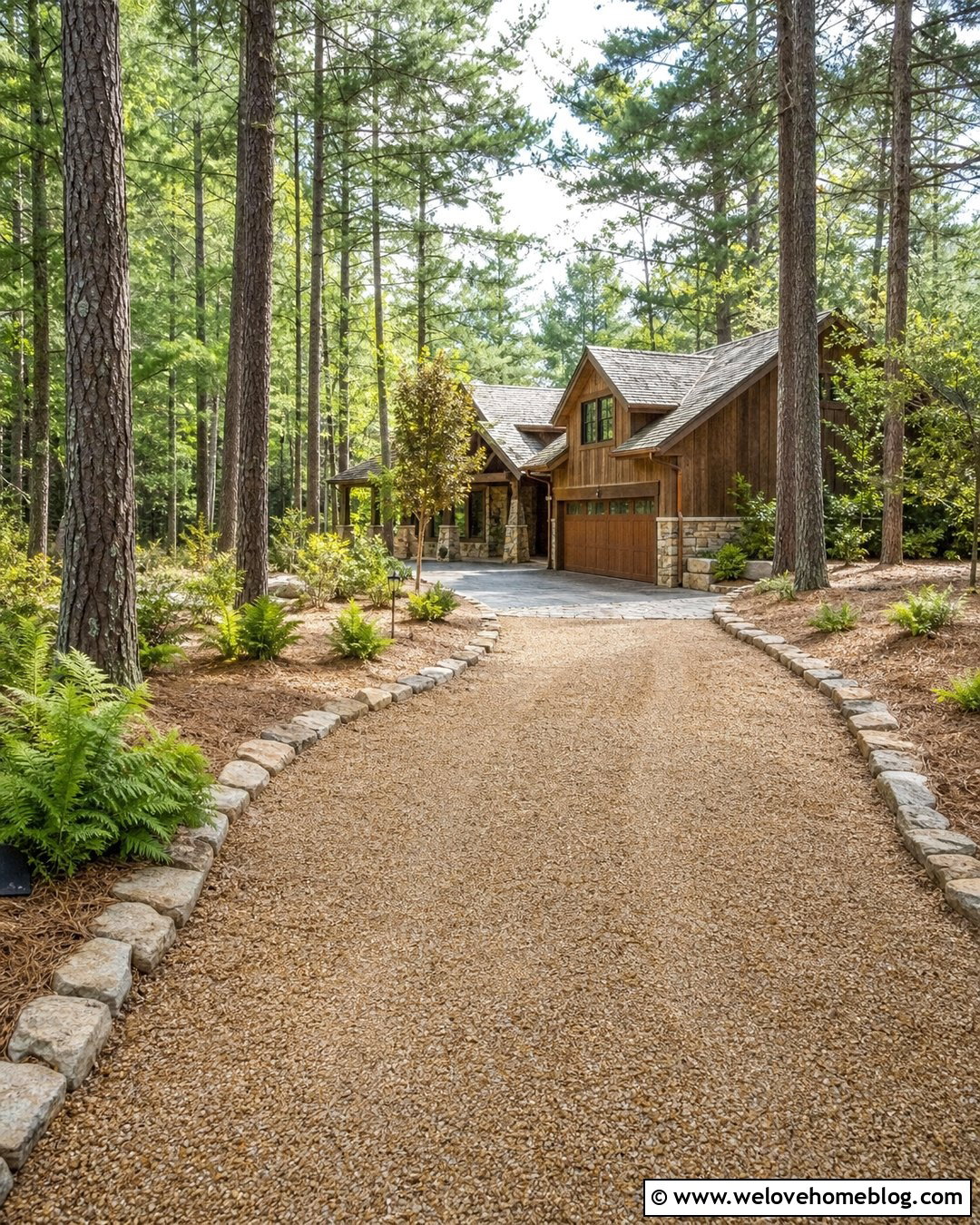
Tall pine trees give a rural driveway year-round structure, privacy, and a strong connection to the surrounding landscape. A dark gray crushed-stone surface works naturally beneath their deep green foliage and textured trunks. Let the driveway follow a broad curve through the trees instead of forcing a perfectly straight route. Large local stones can form an informal edge while helping the gravel stay within the driving area. Use pine straw, woodland grasses, and scattered native shrubs below the canopy. Leave generous clear zones beside the drive so branches do not narrow the approach. This relaxed plan fits cabins, mountain homes, wooded ranches, and rustic farmhouses. At the street, understated stone pillars and a simple timber gate can identify the entrance.
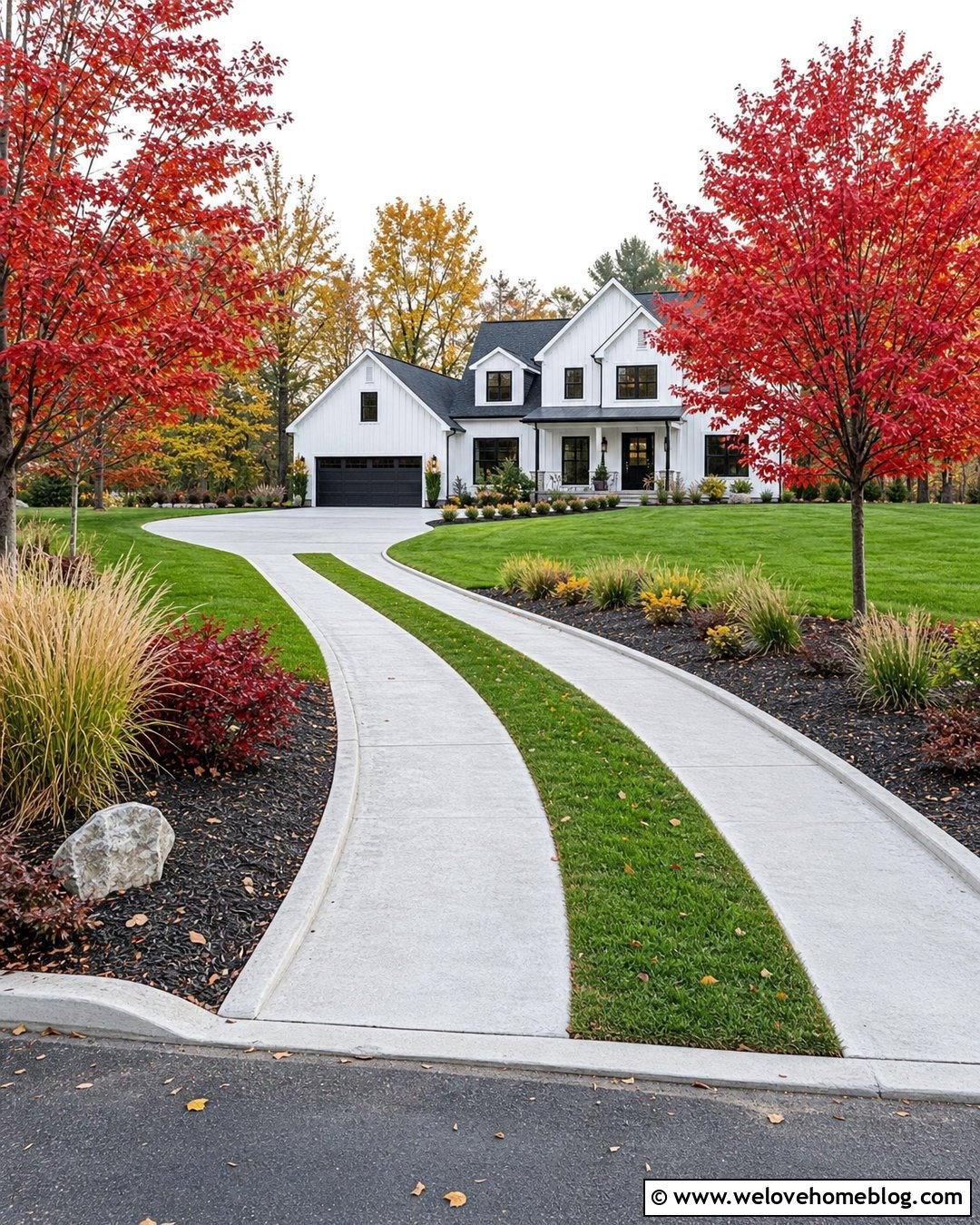
15. Suburban Driveway With Redbud Trees
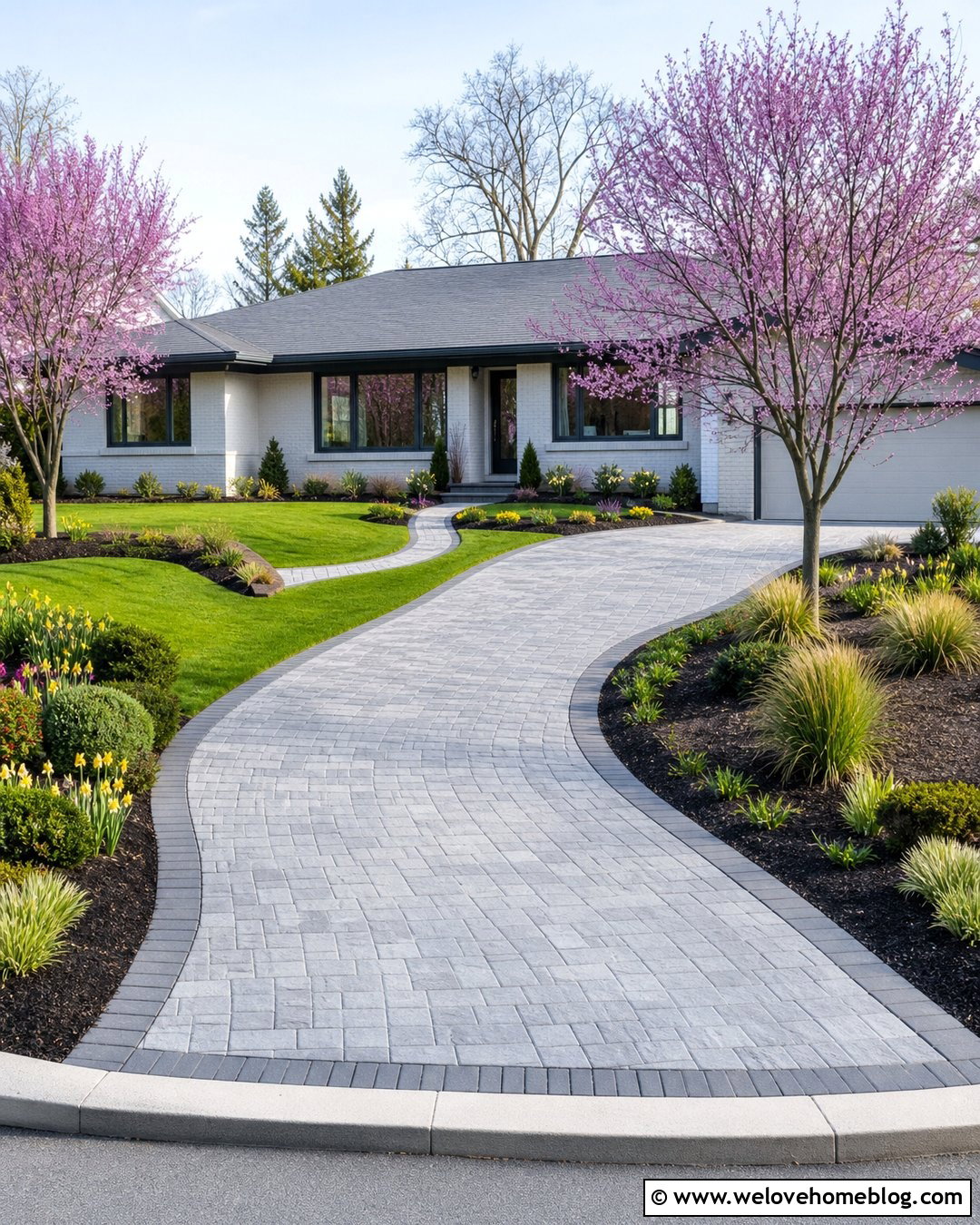
Redbud trees can make a compact suburban driveway feel carefully landscaped without creating a massive overhead canopy. Pair them with a medium-gray interlocking concrete paver surface and a gentle S-curve leading to the garage. A flush charcoal paver border will outline the shape while remaining easy to drive over near parking areas. Use continuous planting beds beneath the trees with dark mulch, low grasses, and spring bulbs. The pink-purple flowers will draw attention toward the house, while heart-shaped foliage adds a softer summer layer. Stagger the trees slightly when perfect symmetry would make a small yard feel too formal. This complete look complements craftsman homes, updated ranch houses, and transitional exteriors with stone, siding, or brick details.
16. White Gravel Driveway With Palm Trees
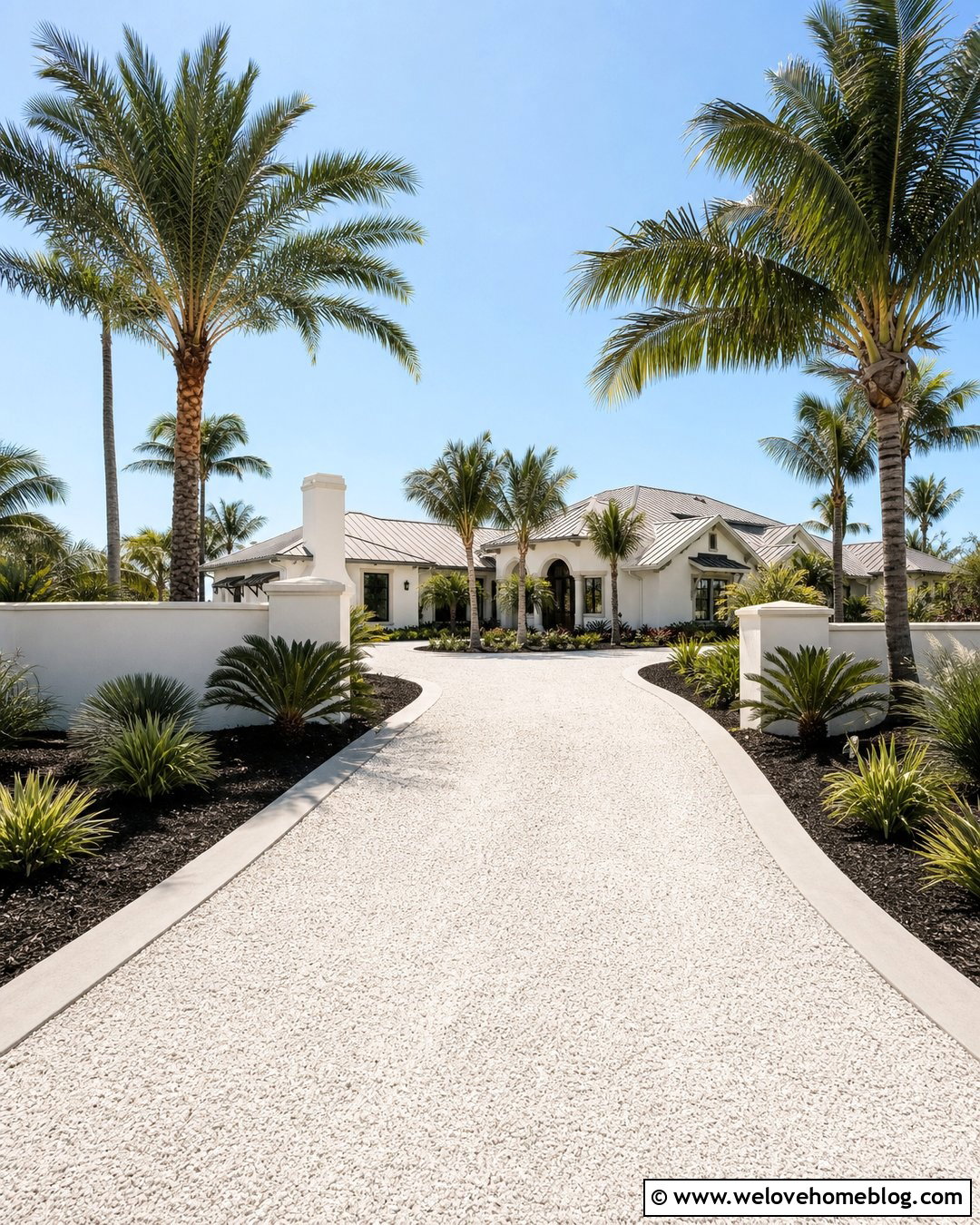
A bright white gravel driveway lined with palms produces a clean, resort-like entrance for warm-climate homes. Use stabilized crushed limestone or pale shell gravel so the surface reads as intentional rather than loose beach material. A straight or horseshoe layout will highlight the repeated trunks and open sky. Edge the driveway with light concrete curbs, then fill the beds with dark mulch, cycads, ornamental grasses, and compact tropical shrubs. Keep the lower landscaping controlled so the palms remain the dominant vertical feature. This design pairs naturally with coastal, Florida ranch, Spanish, and contemporary stucco homes. At the entrance, low white masonry walls and simple address pillars can connect the landscape to the facade without obstructing the curb view.
17. Ranch Driveway With Desert Willow Trees
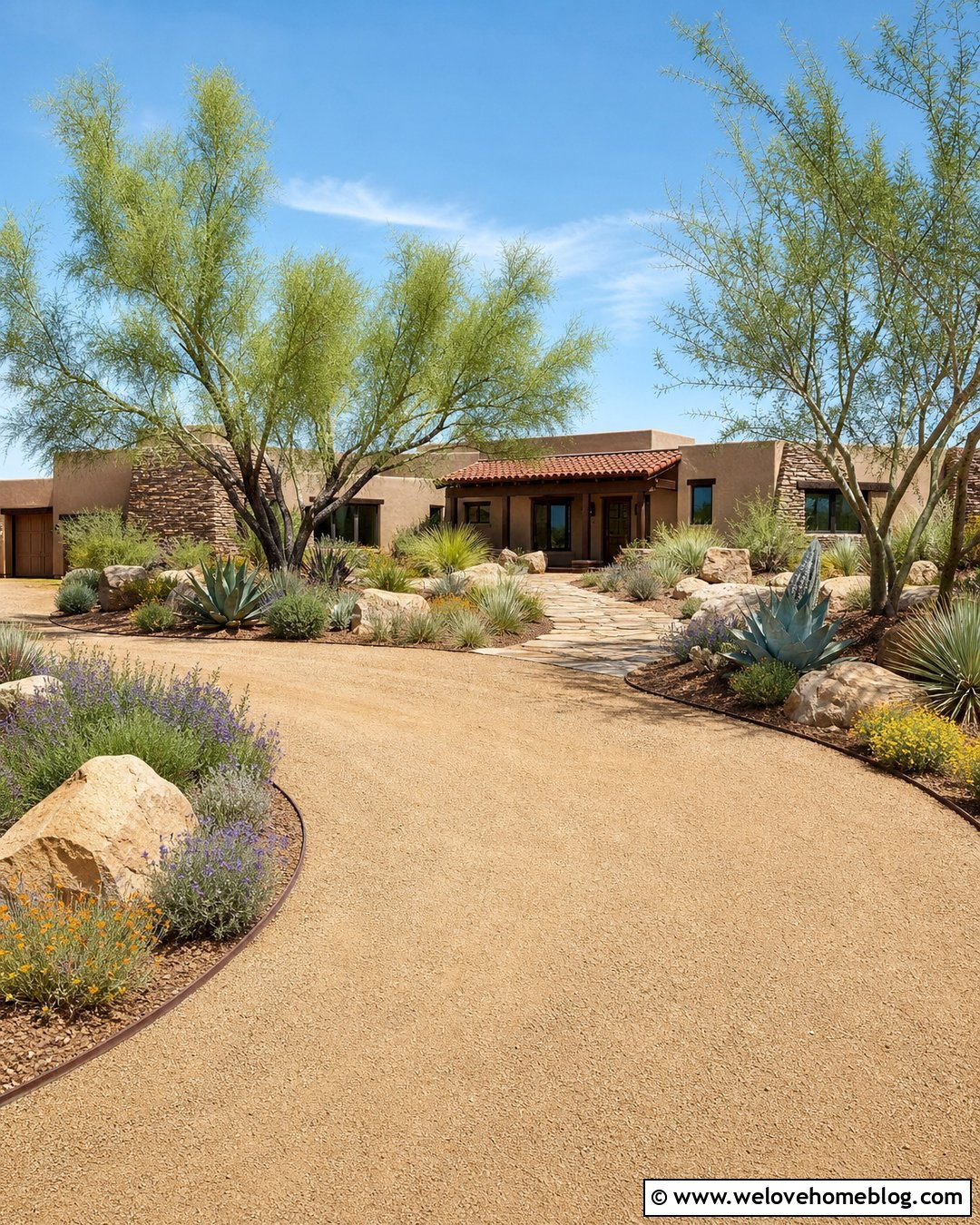
Soft, airy desert willow trees can frame a ranch driveway while maintaining an open view across a dry landscape. Choose tan decomposed granite for the driving surface and create a broad, gently bending route to the house. Steel edging will hold the material in place without adding a heavy visual border. Surround the trees with boulders, agave, yucca, native grasses, and pockets of flowering perennials. Arrange the planting in repeated natural groups instead of rigid formal rows. This creates continuity along the driveway while reflecting the character of the region. A low stucco ranch house with wood and stone accents completes the composition. Keep irrigation, drainage, and plant selection appropriate for local conditions so the entrance remains practical as well as attractive.
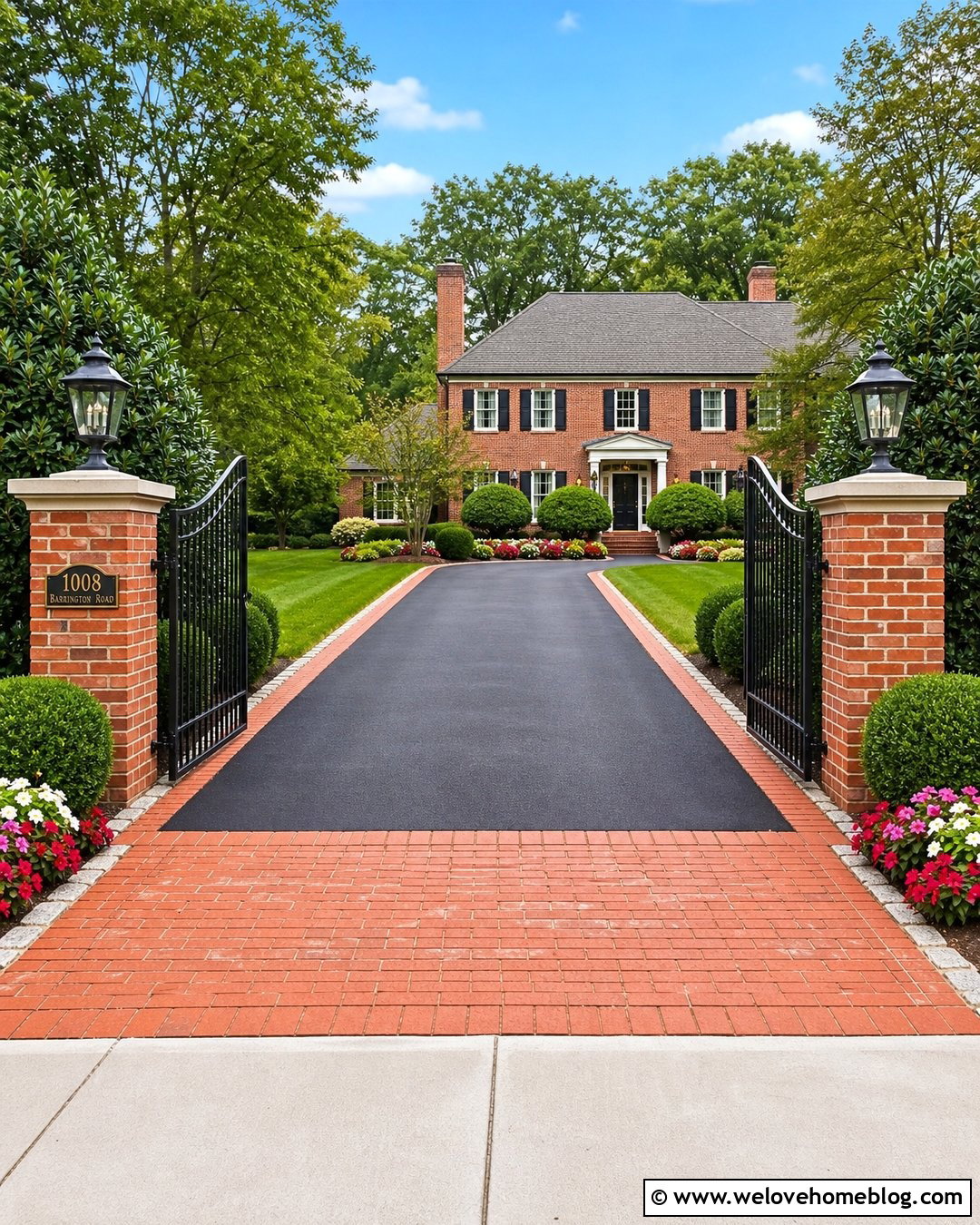
18. Colonial Driveway With Elm Trees
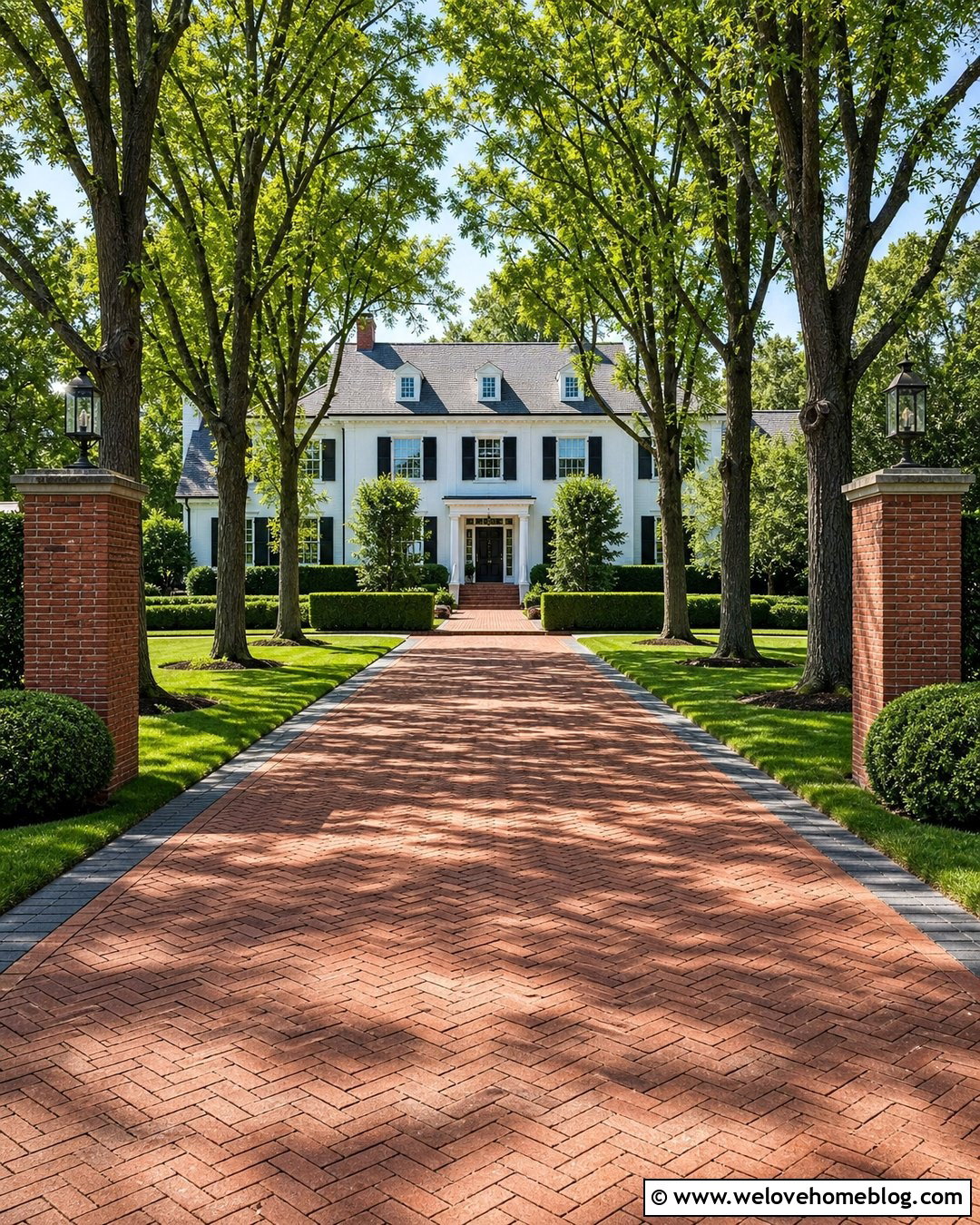
A symmetrical elm-lined driveway can reinforce the orderly architecture of a colonial home. Use red clay brick pavers in a traditional herringbone pattern, bordered with a contrasting charcoal soldier course. Set the trees in matching lawn strips on both sides and maintain a direct view of the centered front door. Low clipped hedges can begin near the house, but leaving most of the trunks exposed will preserve the strong allée effect. Brick entrance pillars with simple lanterns can repeat the driveway material and establish a clear arrival point. The landscape should remain restrained, using green foliage and limited flower colors. This allows the tree canopy, brick surface, and balanced facade to work together as one complete and enduring front-yard design.
19. Craftsman Driveway With Japanese Maple Trees
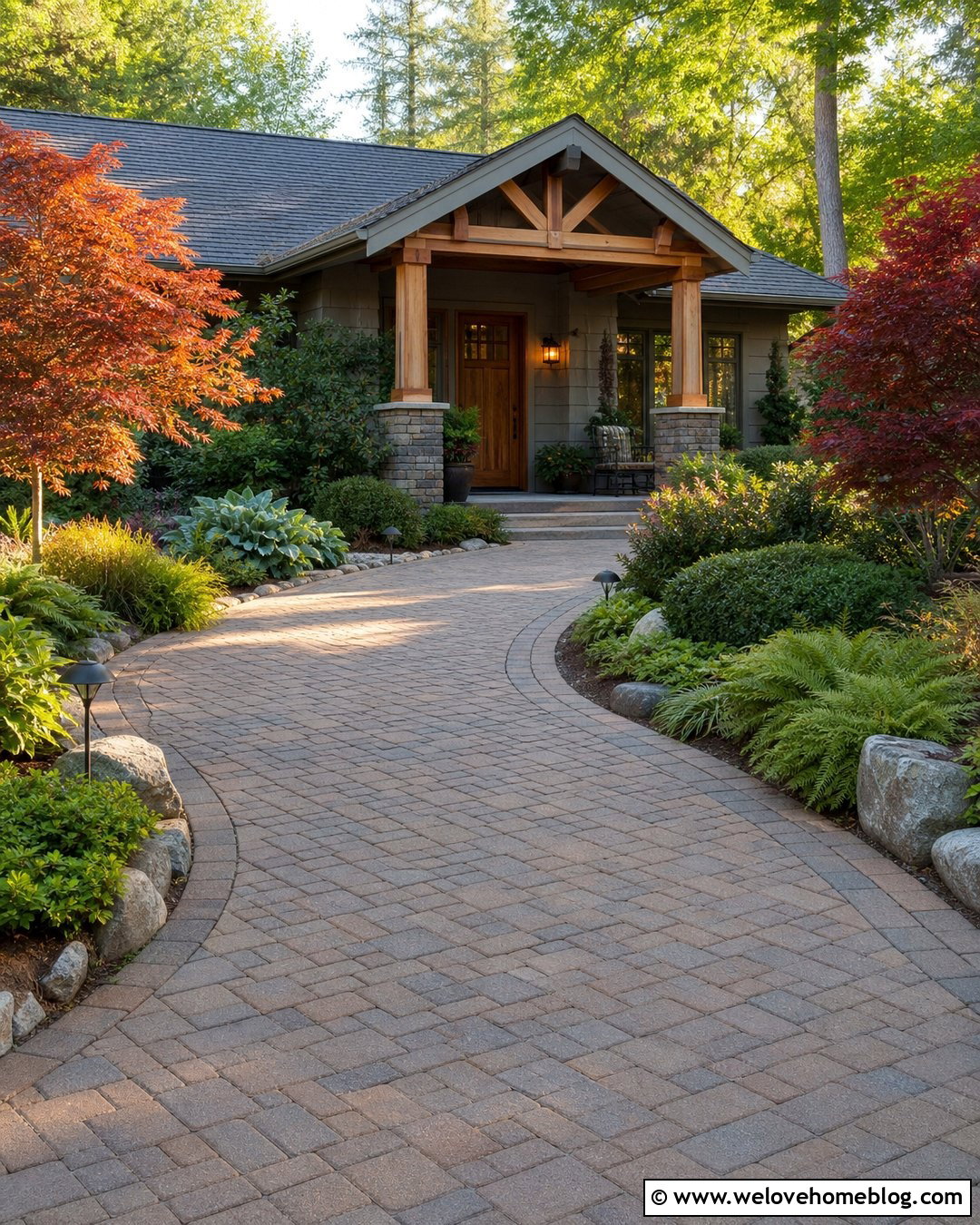
Japanese maples can create an intimate tree-lined effect along a short driveway or shared front approach. Combine them with warm brown permeable pavers laid in a subtle modular pattern. A curved driveway will showcase each sculptural tree gradually and complement the handcrafted details of a craftsman house. Use natural stone edging and layered beds containing ferns, hostas, sedges, and low evergreen shrubs. Position the trees where their canopies can be seen without extending into vehicle clearance zones. Different foliage tones may be used, but repeat one primary variety to prevent the planting from looking random. Stone porch columns, dark wood trim, and a matching paver walkway will tie the driveway landscape directly to the architecture of the home.
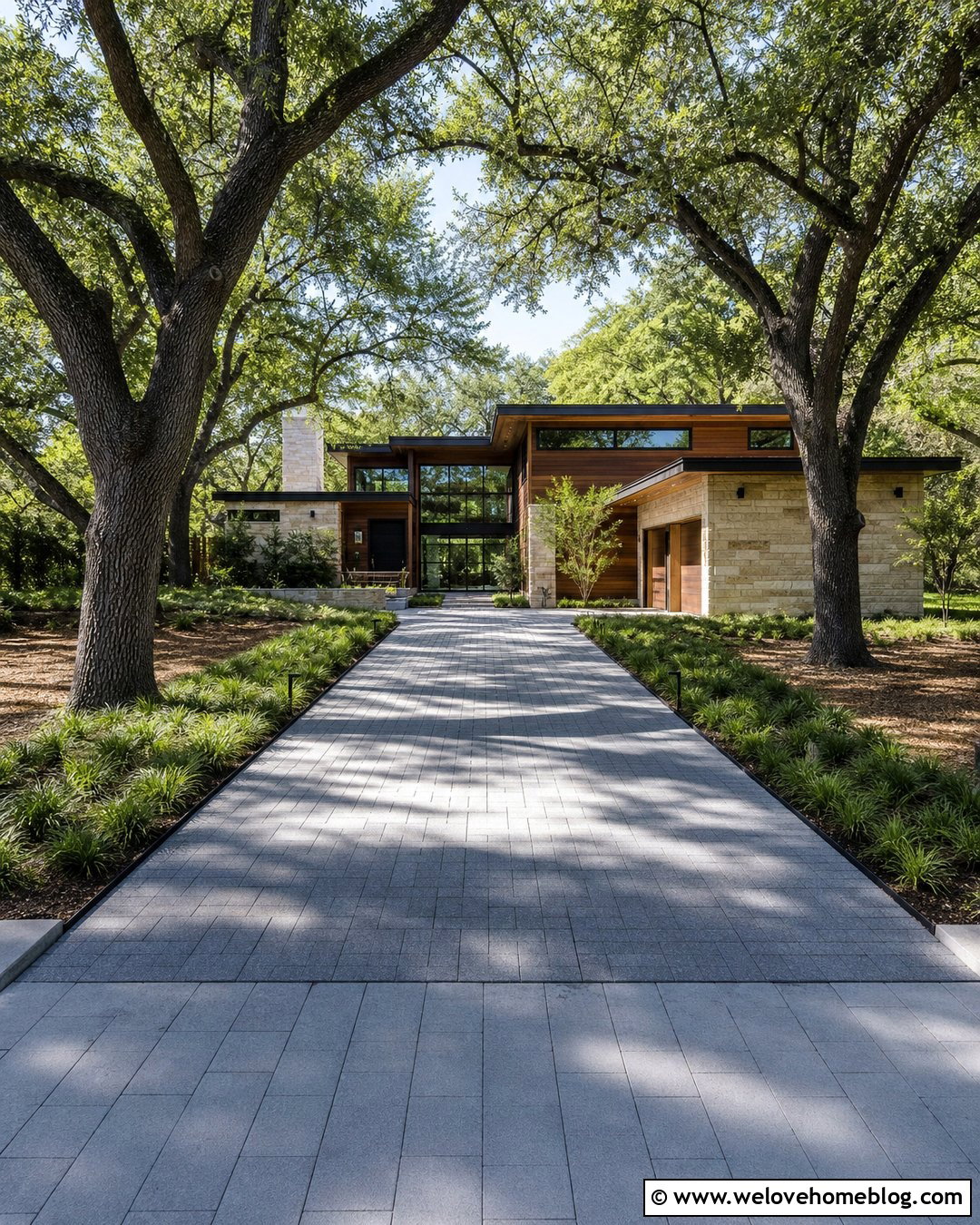
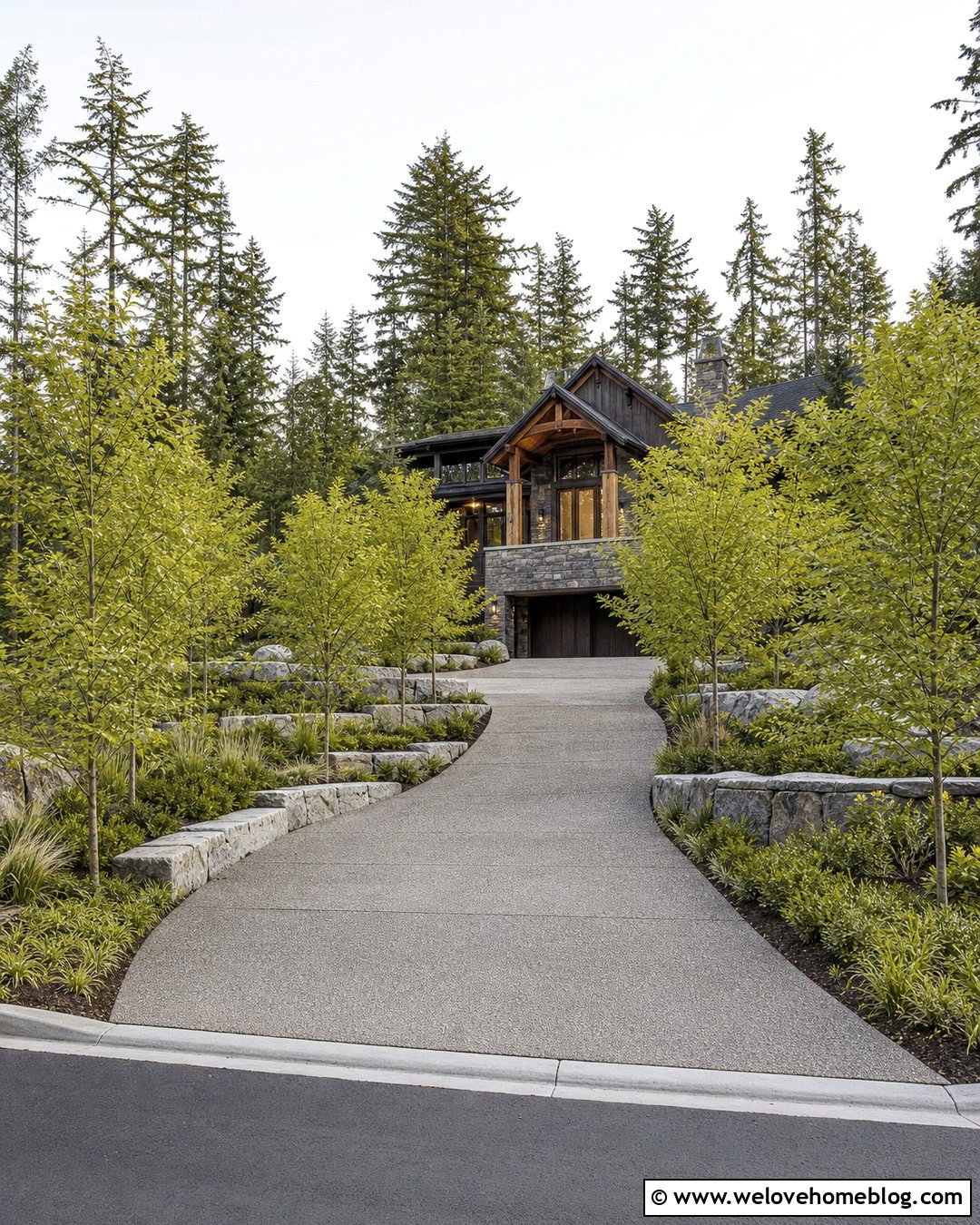
20. Permeable Driveway With Bald Cypress Trees
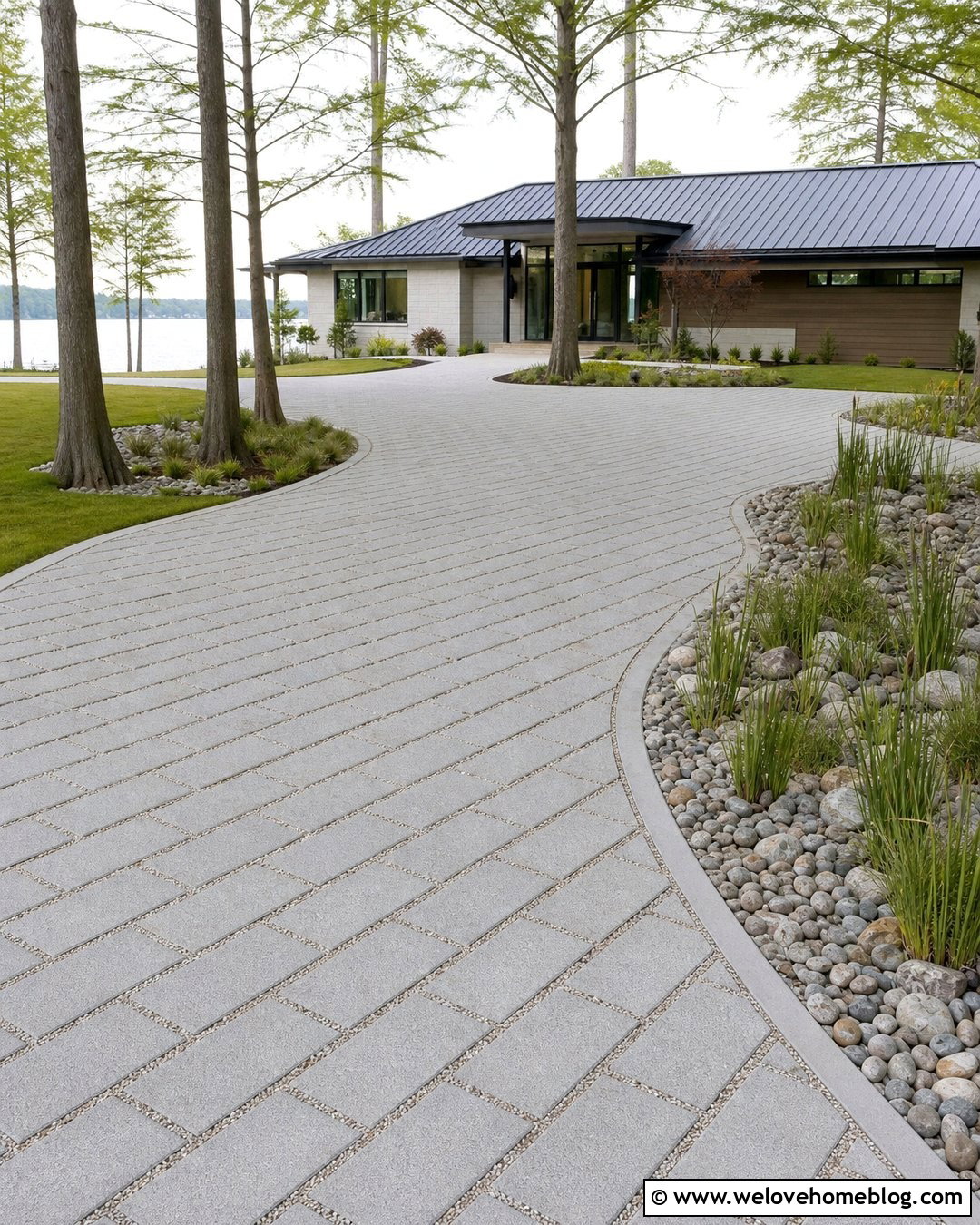
A permeable driveway and bald cypress planting can create a visually connected landscape in a spacious, moisture-friendly setting. Use gray permeable concrete pavers with narrow planted or gravel-filled joints. Design the driveway as a broad curve, then place the trees in repeated groups along shallow rain-garden beds. River rock, native sedges, iris, and low moisture-tolerant plants can define the drainage areas without blocking the approach. Flush stone curbs will keep transitions clean and allow water to move toward planted zones where appropriate. This combination suits contemporary ranch homes, lakeside properties, and modern houses with natural materials. The tall trunks create an impressive framework, while the open understory preserves visibility and gives the driveway a calm, spacious feeling.
21. Horseshoe Driveway With Live Oak Trees
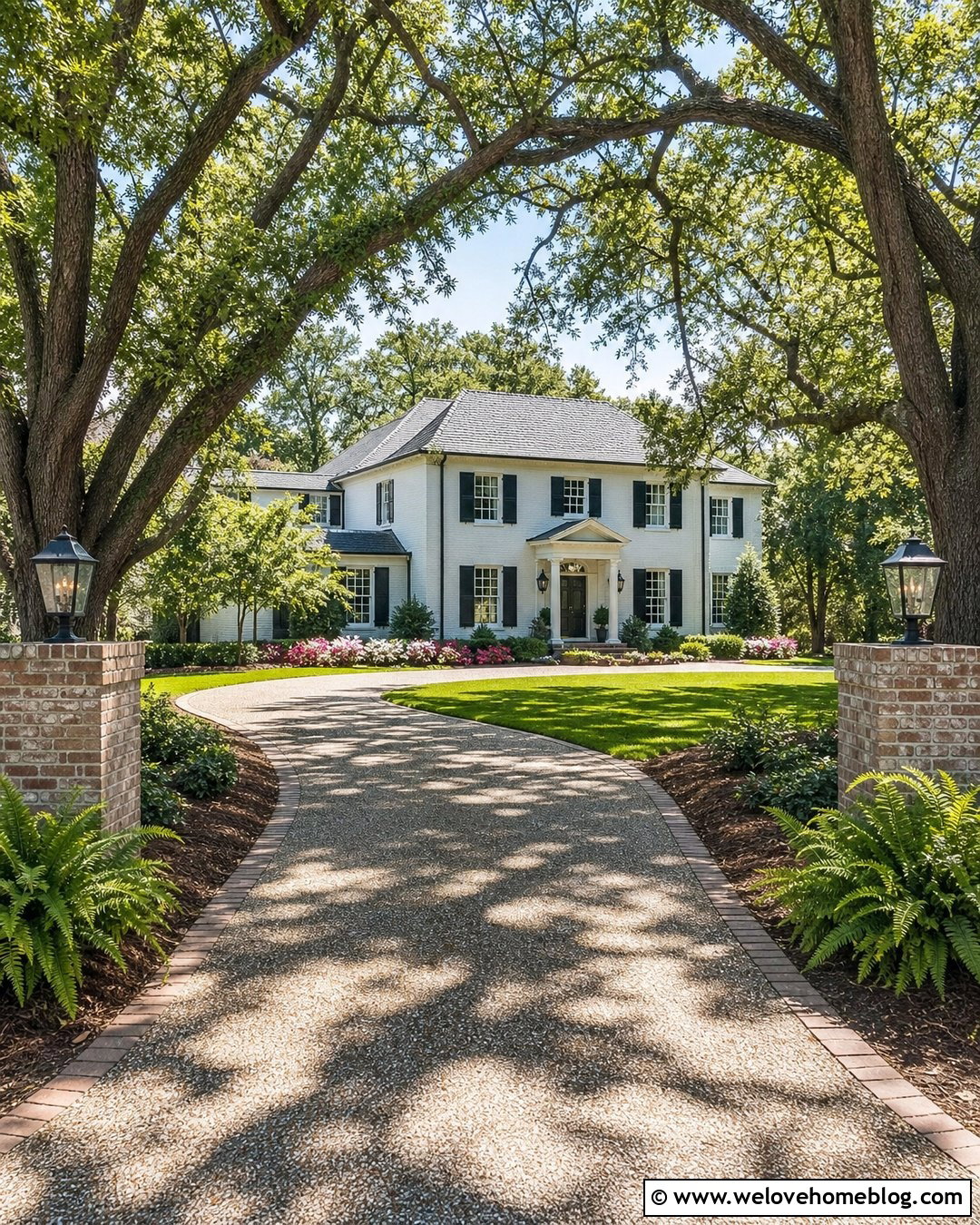
A horseshoe driveway framed by mature-looking live oaks delivers broad Southern character and convenient visual flow. Use warm exposed aggregate concrete for the curved surface and edge it with reclaimed brick to connect the drive to a traditional home. Place the oaks along the outer curve, leaving the center lawn open so their canopies can spread without hiding the facade. Add low azaleas, ferns, or shade-friendly ground cover in wide mulched beds around the trunks. The entrance and exit can be marked with matching brick pillars and simple black lanterns. Avoid placing large trees where drivers need clear sightlines at the street. The completed landscape should feel established and generous, with the arching branches framing rather than overpowering the house.
22. Narrow Driveway With Columnar Hornbeam Trees
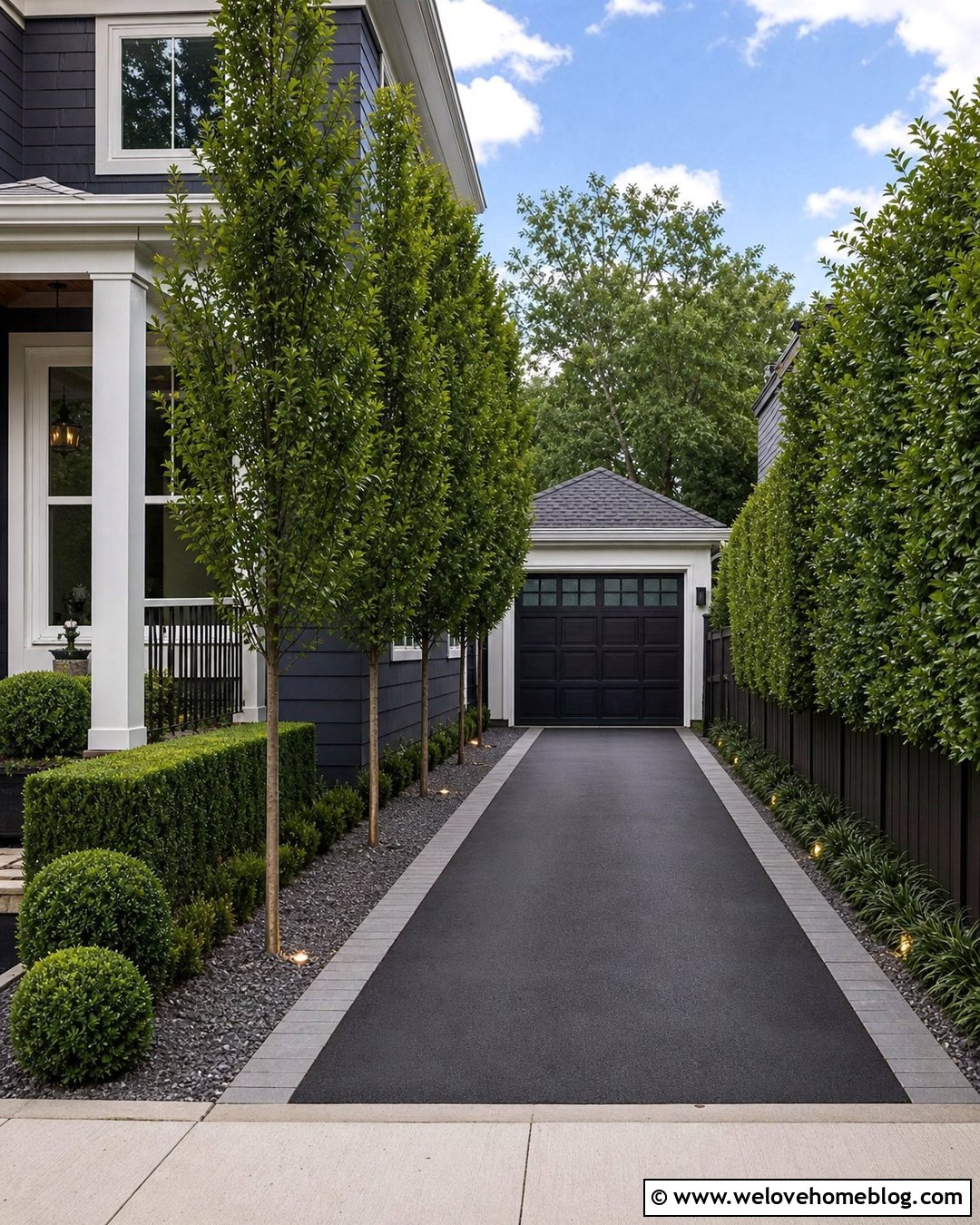
Can a narrow side driveway still have a strong tree-lined appearance? Columnar hornbeams offer a practical visual solution because their upright forms can frame the route without requiring a broad canopy. Use smooth charcoal asphalt with a flush gray paver ribbon on each side. Plant the trees in narrow beds backed by a simple fence or clipped evergreen hedge. Low ground cover and gravel mulch will keep the limited planting area tidy. The straight driveway should lead clearly toward a detached garage, compact colonial, or urban craftsman home. Recessed path lights can fit between selected trunks without creating clutter. Careful mature-size planning is essential here, since every inch of driveway clearance and neighboring property space matters in a narrow layout.
23. Farmhouse Gravel Driveway With Poplar Trees
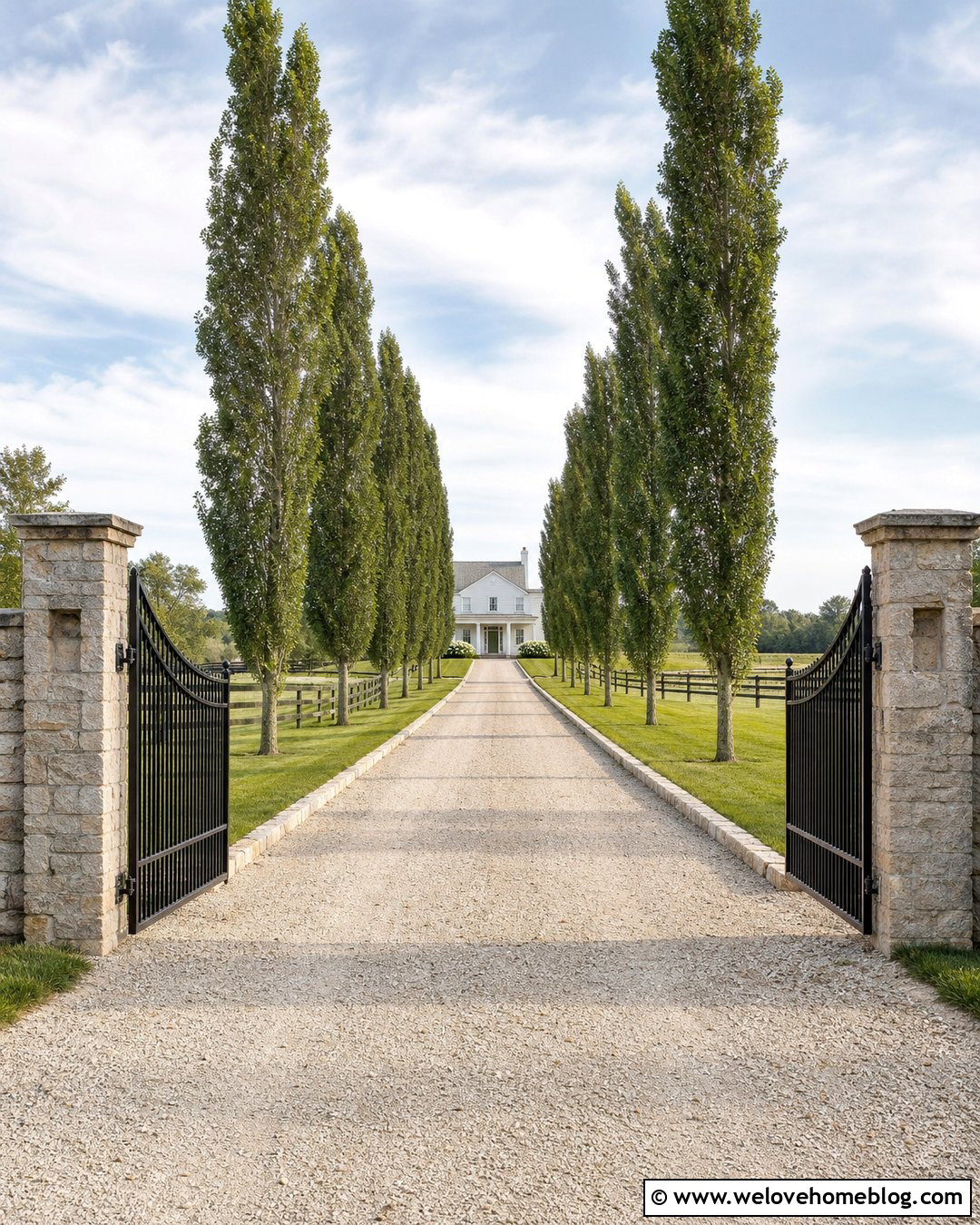
Rows of poplar trees can make a long farmhouse driveway feel tall, direct, and strongly defined. Use pale beige gravel in a straight layout with weathered limestone edging. The narrow tree forms emphasize the approach without covering large areas of adjacent pasture or lawn. Between the trees, maintain simple grass and repeat rustic post-and-rail fencing farther from the driveway edge. Near the house, transition into wider planting beds with hydrangeas, ornamental grasses, and evergreen foundation shrubs. A black metal gate between stone pillars can create a clear entrance while preserving views toward the home. This design works best where the landscape has enough length to support repeated planting. Choose tree varieties suited to the property’s climate, wind exposure, and available root space.
24. Coastal Driveway With Wax Myrtle Trees
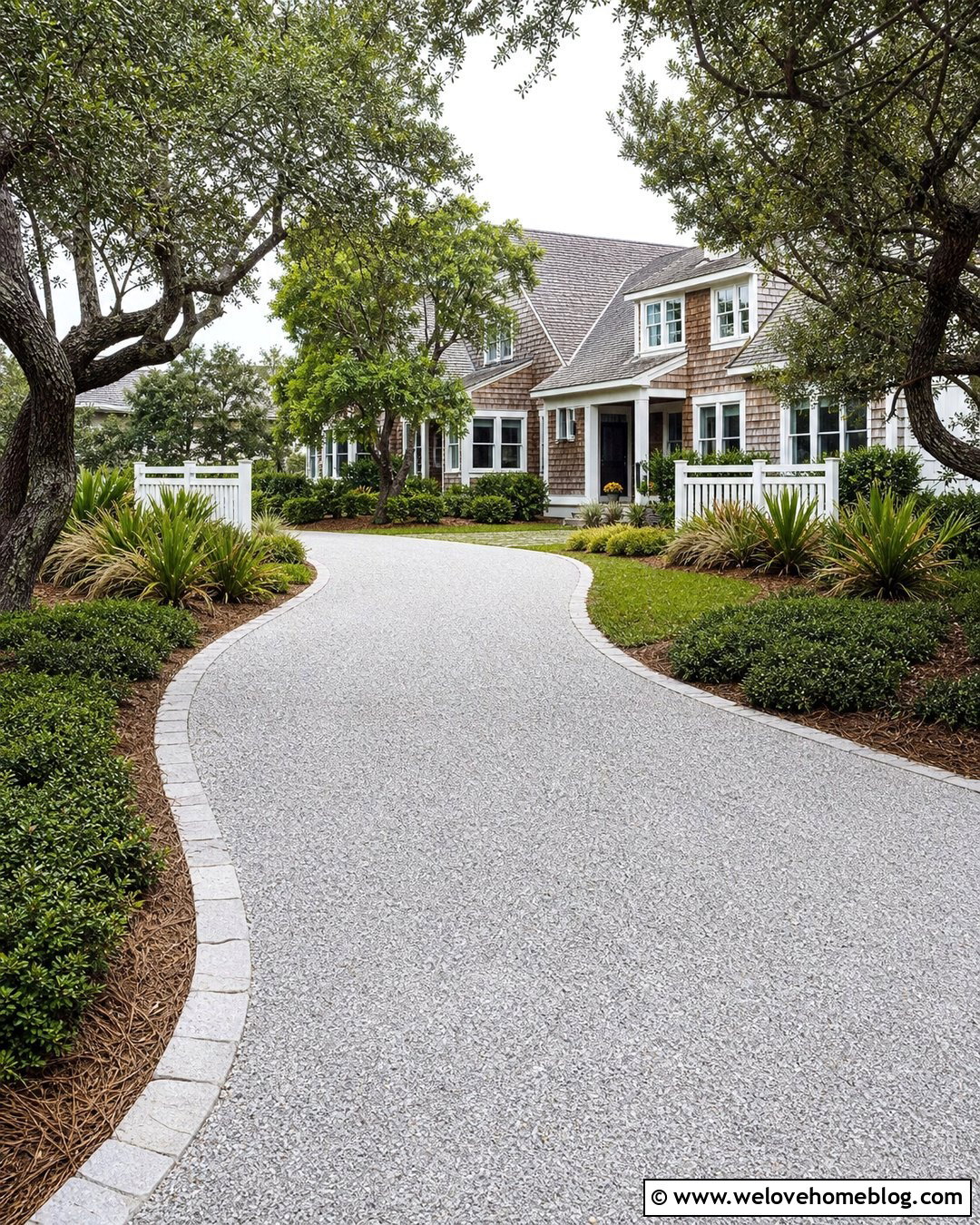
Wax myrtles can form a relaxed, wind-tolerant-looking frame around a coastal driveway while offering softer structure than formal columnar trees. Pair them with pale gray resin-bound gravel in a curved layout leading to a shingle, coastal cottage, or raised beach house. Use light granite edging and broad beds filled with ornamental grasses, dwarf palmettos, and salt-inspired ground covers suited to the local site. Allow the trees to retain a natural shape, but keep lower branches managed around the driving area and entrance. White fence sections can mark the property without running along the entire route. The subdued driveway color, layered greenery, and gentle curve produce an airy composition that feels connected to a bright coastal residential landscape.
25. Mixed Tree Driveway With Seasonal Color
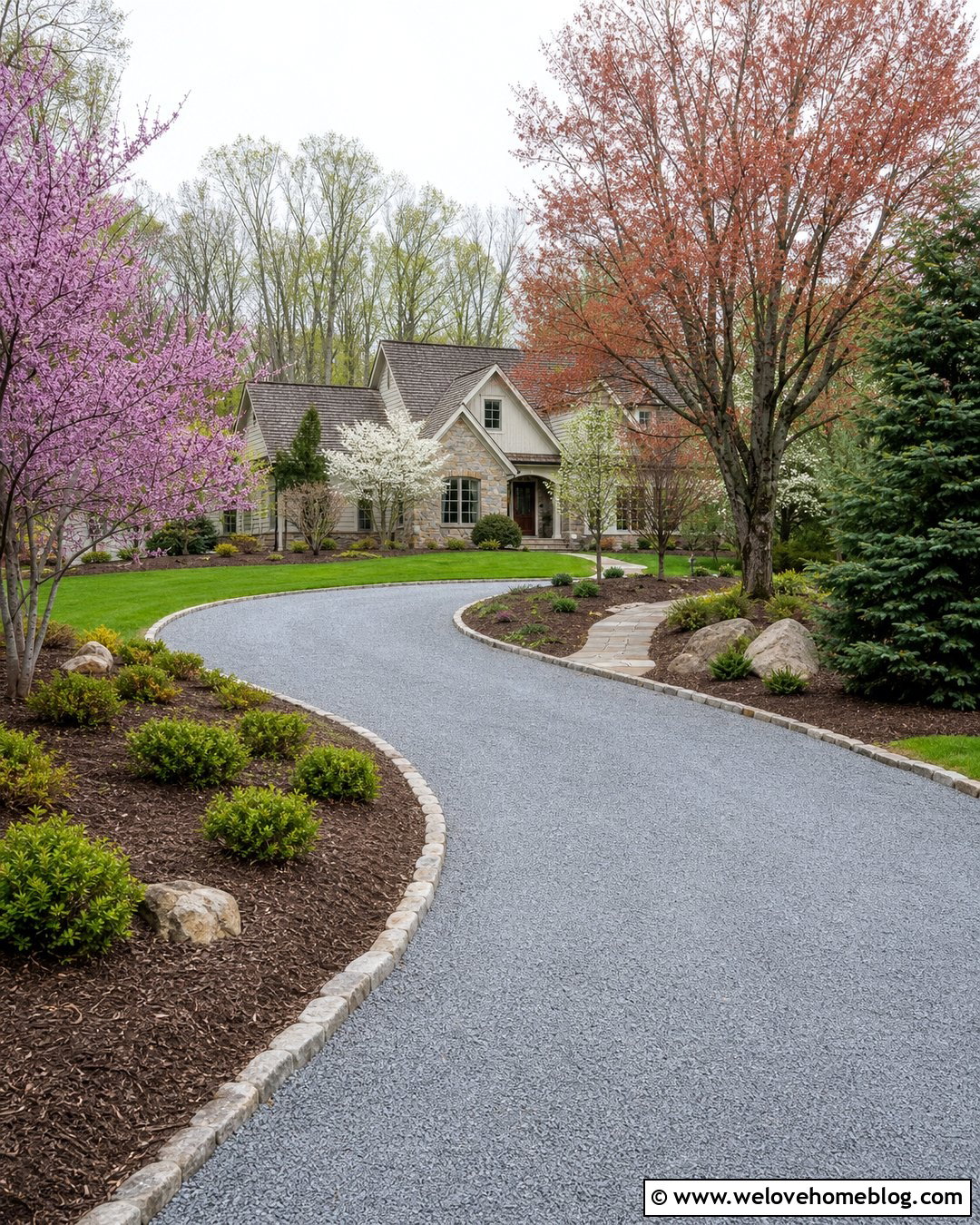
A mixed tree-lined driveway offers changing color and texture when a single-species allée feels too formal. Begin with a wide, curved driveway made from medium-gray chip-seal or compacted crushed stone. Repeat a planned sequence of maples, dogwoods, redbuds, and evergreen accents rather than scattering unrelated trees randomly. Natural stone edging will unify the varied planting, while a simple lawn or mulch bed keeps the lower landscape calm. Place larger trees along broad sections and smaller flowering trees near the entrance or house. The result can complement an eclectic country home, updated ranch, or transitional farmhouse. Consistent setbacks and repeated groupings are the keys to making the diverse trees look intentional, balanced, and connected to the driveway’s complete layout.
Conclusion:
The best tree-lined driveway is not simply a row of attractive trees. It is a complete design in which the surface, route, borders, plants, lighting, and house work together. Formal properties may benefit from matching rows and straight sightlines, while country or wooded homes often look better with curved drives and relaxed clusters. Always plan around mature tree size, visibility, maintenance, drainage, and comfortable vehicle clearance. Use edging and simple understory planting to connect the trees with the driveway material without creating clutter. Whether you prefer flowering cherries, structured hornbeams, towering oaks, or evergreen pines, these **25 driveway trees lined ideas** can help you create a practical entrance with lasting curb appeal.

Related posts:
Leave a Reply