
A thoughtfully planned tree-lined drive can make even a compact front yard feel more welcoming, established, and private. The key is choosing small ornamental trees that fit the available planting width without crowding vehicles, sidewalks, utilities, or the house. Surface materials, driveway shape, edging, and ground-level planting should also support the trees as one complete landscape. Before planting, compare each tree’s mature canopy and root space with your site, climate, and maintenance needs. Narrow or dwarf cultivars are especially useful where planting beds are limited. Repeated trees create a formal rhythm, while mixed planting produces a softer cottage look. () The following **20 Small Tree Lined Driveway Ideas** offer practical inspiration for different homes, climates, budgets, and driveway layouts.

1. Small Serviceberry Tree Lined Gravel Driveway
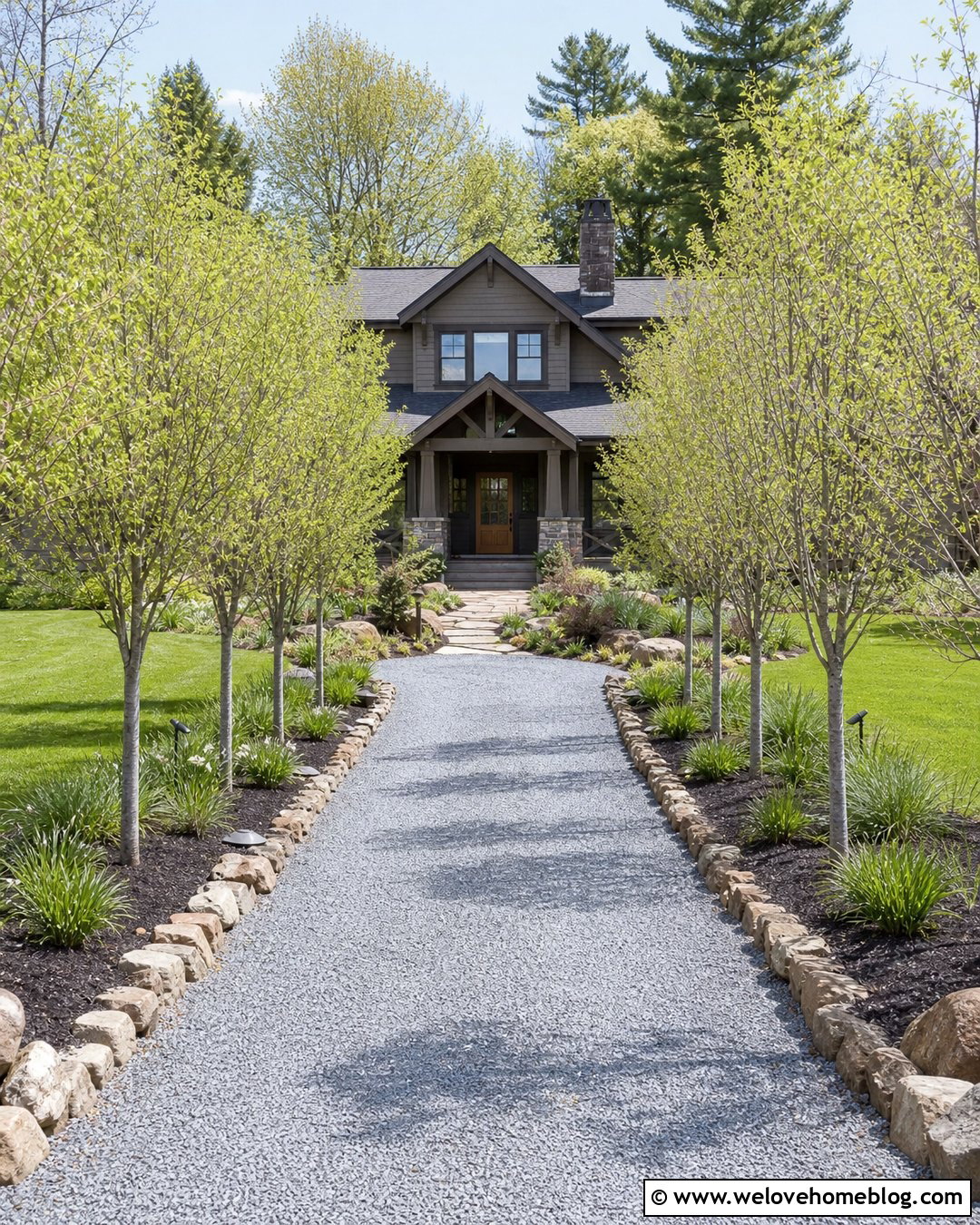
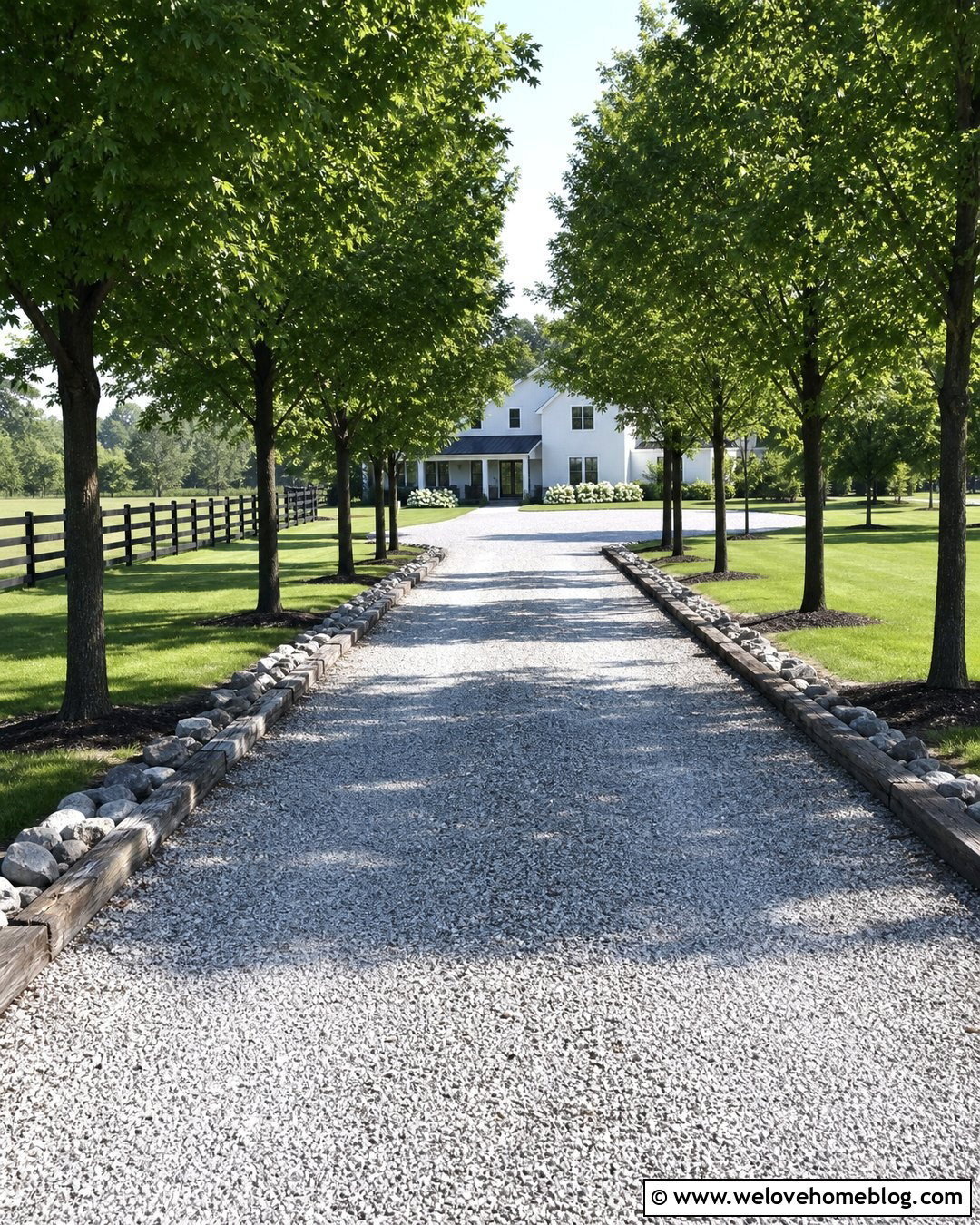
A straight gravel driveway lined with serviceberry trees feels natural without looking untamed. Use compacted gray crushed gravel for the driving surface and add larger fieldstones along both edges to control spreading. Plant matched serviceberries at consistent intervals within mulched beds, leaving enough room for their mature canopies. Their light branching structure keeps the entrance open and allows filtered views toward the house. Low native grasses, creeping ground covers, and spring bulbs can fill the spaces between trees without adding visual clutter. This complete look works especially well beside a Craftsman, cottage, or woodland home. Install a steel or stone transition at the road to help retain gravel and give the small tree-lined driveway a finished entrance.
2. Small Dogwood Tree Lined Concrete Driveway

Fresh white dogwood blooms can soften the hard lines of a poured concrete driveway beautifully. Choose a simple straight layout with light gray concrete and a narrow clay brick border that connects visually with the home’s facade. Plant the dogwoods in evenly sized beds on both sides, but avoid placing their trunks too close to the pavement. A lower layer of shade-tolerant ground cover, flowering perennials, and dark mulch makes each tree feel integrated rather than isolated. This arrangement suits a traditional brick colonial or Cape Cod house. Select a dogwood species and cultivar appropriate for the local sunlight, soil, and disease pressures. Keeping the lower branches pruned for clearance will preserve comfortable access while maintaining a graceful tree-lined effect.
3. Small Japanese Maple Tree Lined Paver Driveway
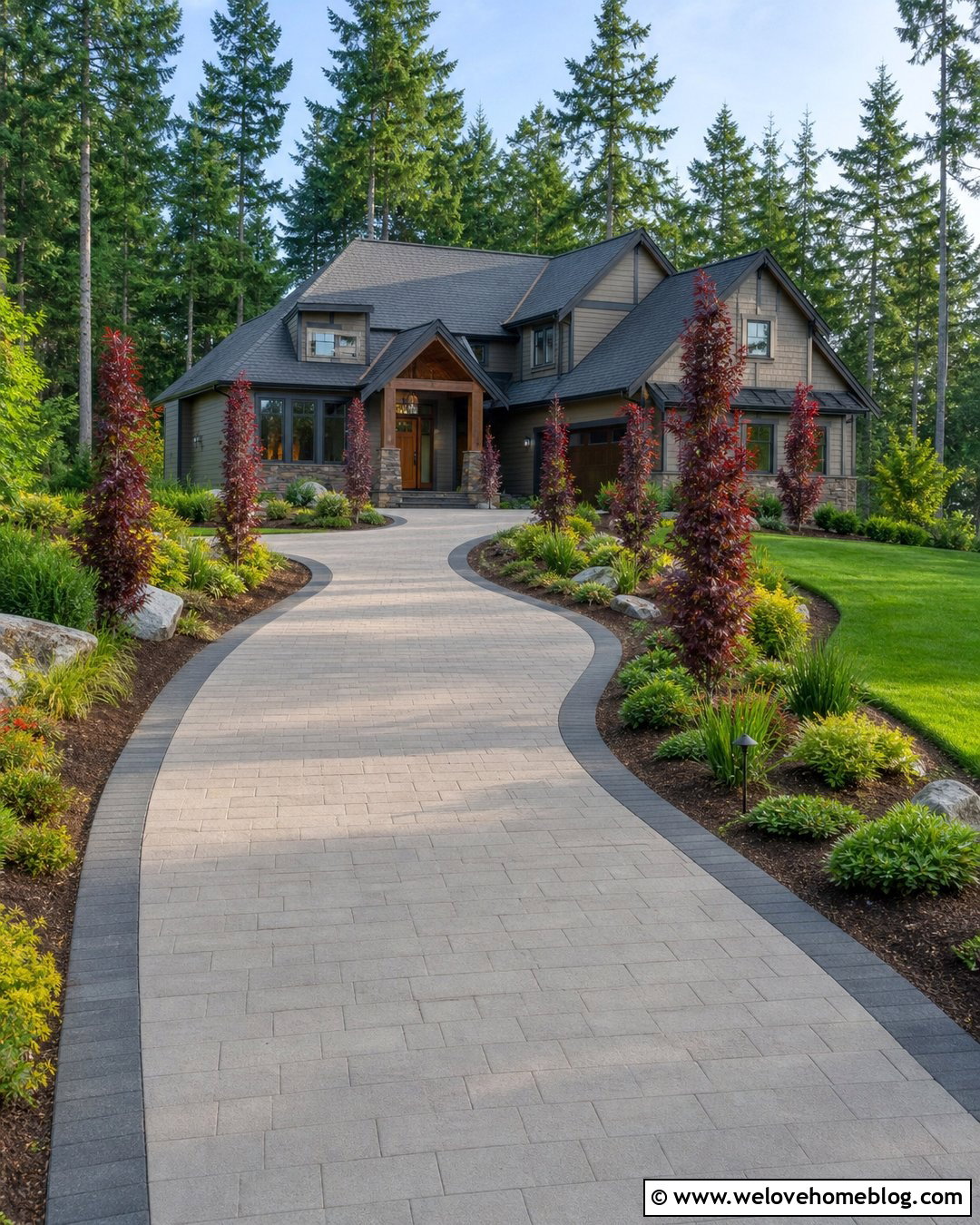
Imagine a gently curved paver driveway framed by finely textured Japanese maples. Warm taupe concrete pavers laid in a running-bond pattern create a calm backdrop for burgundy, copper, or green foliage. Define the outer curves with charcoal paver edging, then give each tree its own broad planting pocket rather than squeezing it into a thin strip. Mounded beds containing ferns, sedges, and low evergreen shrubs can help connect the trees visually. This design feels especially appropriate beside a contemporary Craftsman or Asian-inspired house. Japanese maples vary greatly in mature form, so select upright, compact cultivars rather than wide weeping types. The sweeping layout and repeated trees create movement while keeping the overall scale comfortable for a small residential property.
4. Small Crabapple Tree Lined Asphalt Driveway
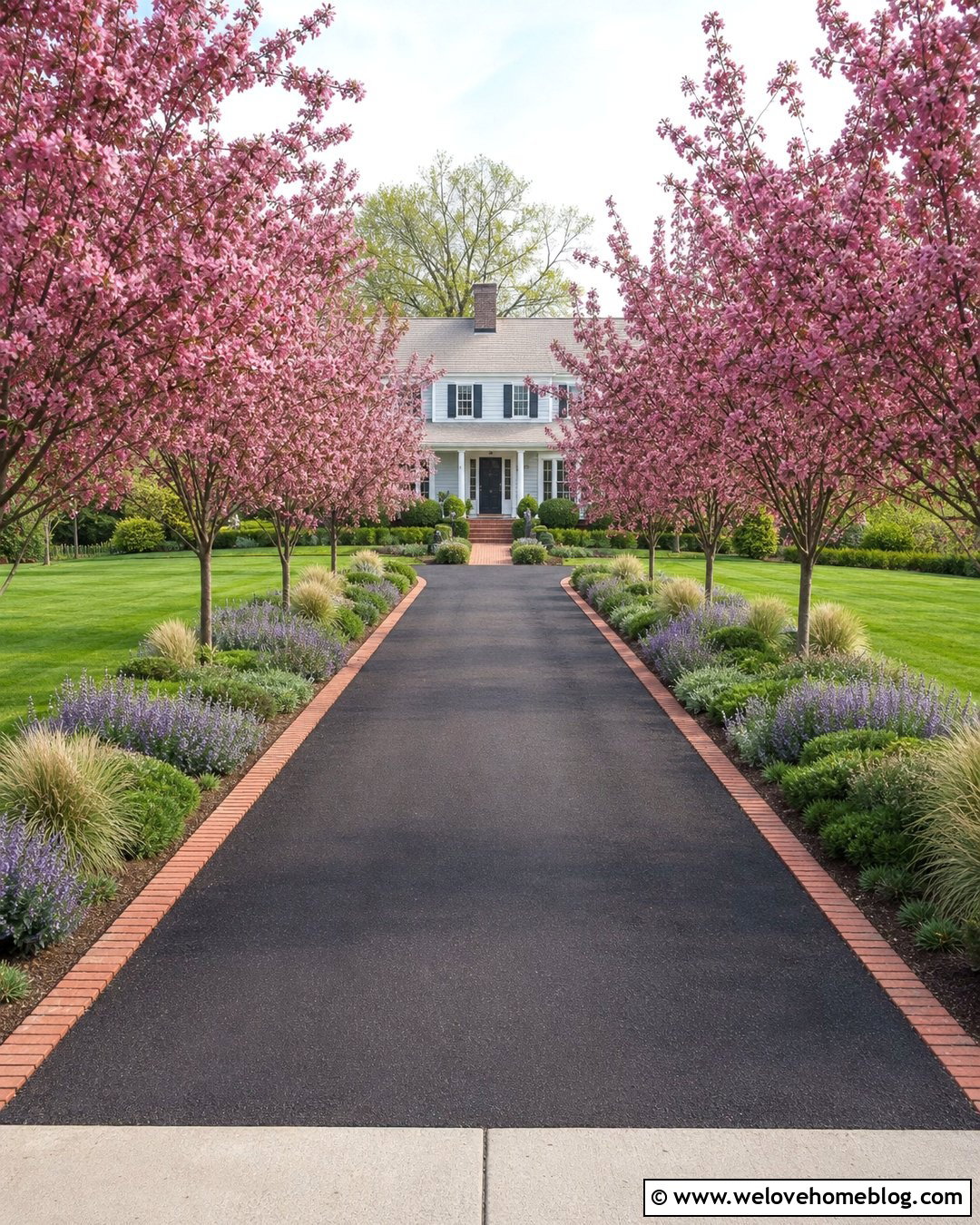
A black asphalt driveway gains color and character when compact flowering crabapples repeat along its edges. Add a narrow red brick soldier-course border to sharpen the outline and coordinate with a traditional home. Choose a fruitless or low-fruiting cultivar when possible to reduce seasonal cleanup near the driving surface. Beneath the trees, use neat beds of catmint, compact grasses, or evergreen ground cover for a layered but manageable landscape. A straight driveway makes symmetrical spacing feel formal, while a slight curve creates a more relaxed approach. Keep branches lifted above vehicle mirrors and maintain open visibility near the street. This combination delivers strong contrast in every season, especially when pale spring flowers appear against dark pavement and fresh green lawn.
5. Small Redbud Tree Lined Resin Driveway
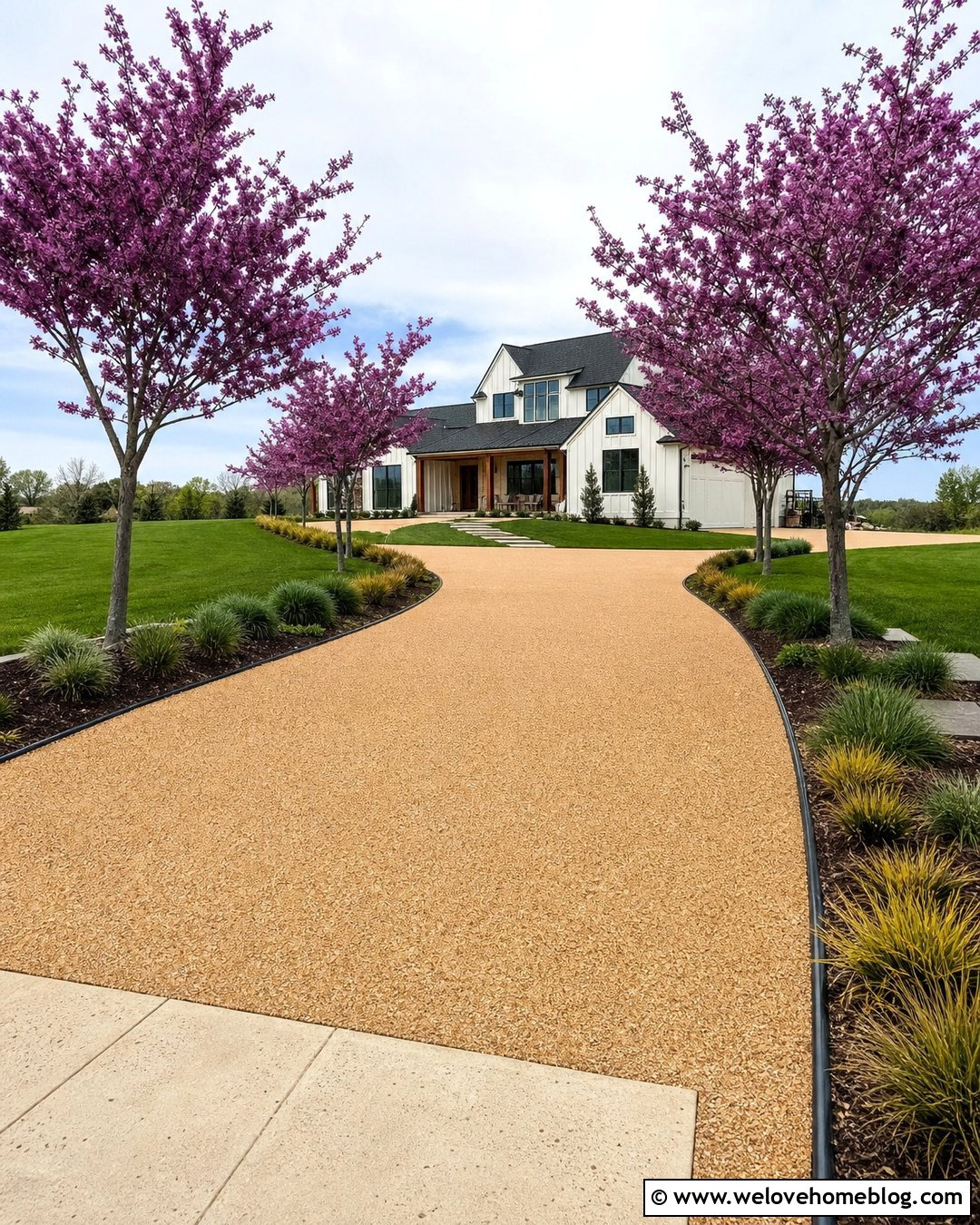
For a colorful contemporary entrance, pair compact redbuds with a warm beige resin-bound gravel driveway. The smooth, visually seamless surface keeps the design clean, while curved steel edging creates precise planting beds along both sides. Redbuds bring branching character, spring flowers, and heart-shaped foliage without requiring the scale of a large shade tree. Repeat one cultivar for a coordinated appearance, or alternate green and purple-leaved selections for subtle variation. Underplant with low ornamental grasses and a simple ground cover that will not spill heavily onto the driveway. A softly curved layout works well with a modern farmhouse or updated ranch home. Allow clear trunk zones and adequate soil volume so the tree row remains healthy, balanced, and easy to navigate.
6. Small Crape Myrtle Tree Lined Pea Gravel Driveway
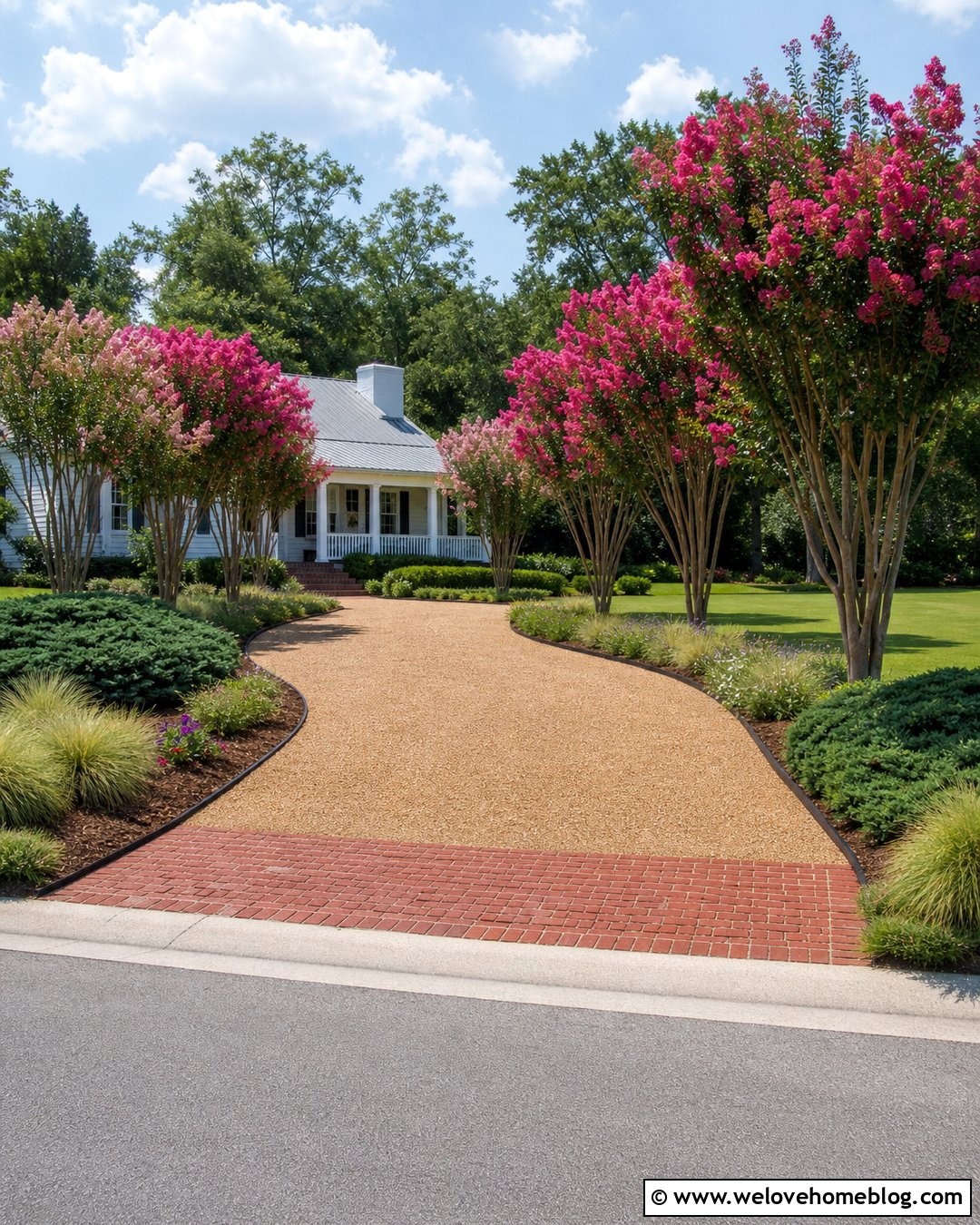
In a warm climate, small crape myrtles can transform a simple pea gravel driveway into a colorful summer approach. Choose a compact cultivar and repeat it on both sides of a straight or gently curving drive. Honey-toned pea gravel provides warmth, while dark metal edging keeps loose stones away from the planting beds. Surround the trees with drought-aware companions such as low grasses, lantana, or spreading juniper, depending on regional suitability. Multi-stem trunks bring attractive structure, but they should be pruned selectively rather than cut back harshly each year. This look complements Southern cottages, stucco homes, and relaxed ranch houses. A short brick apron at the street and garage helps contain the gravel while making the entire entrance appear more deliberate.
7. Small Hornbeam Tree Lined Cobblestone Driveway
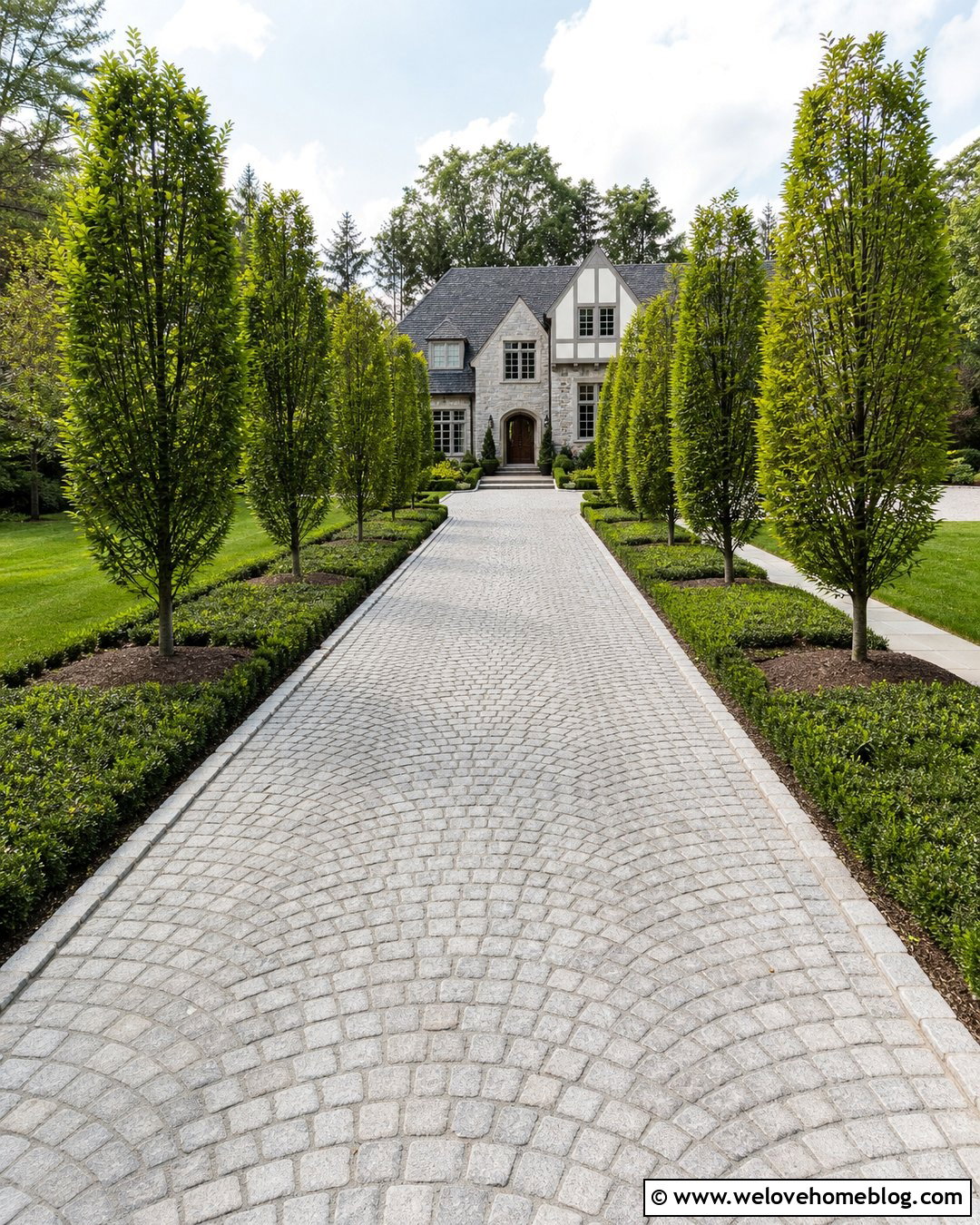
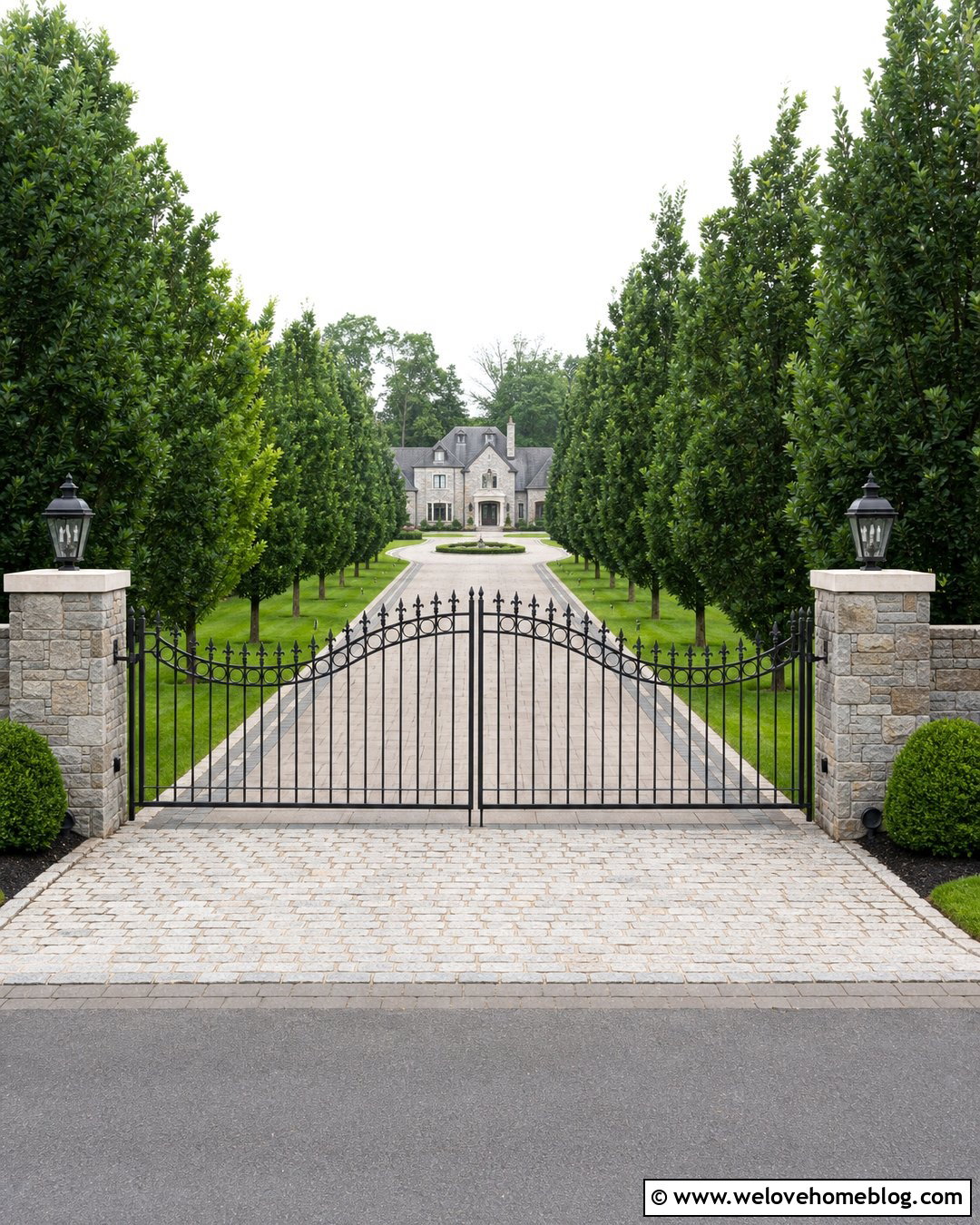
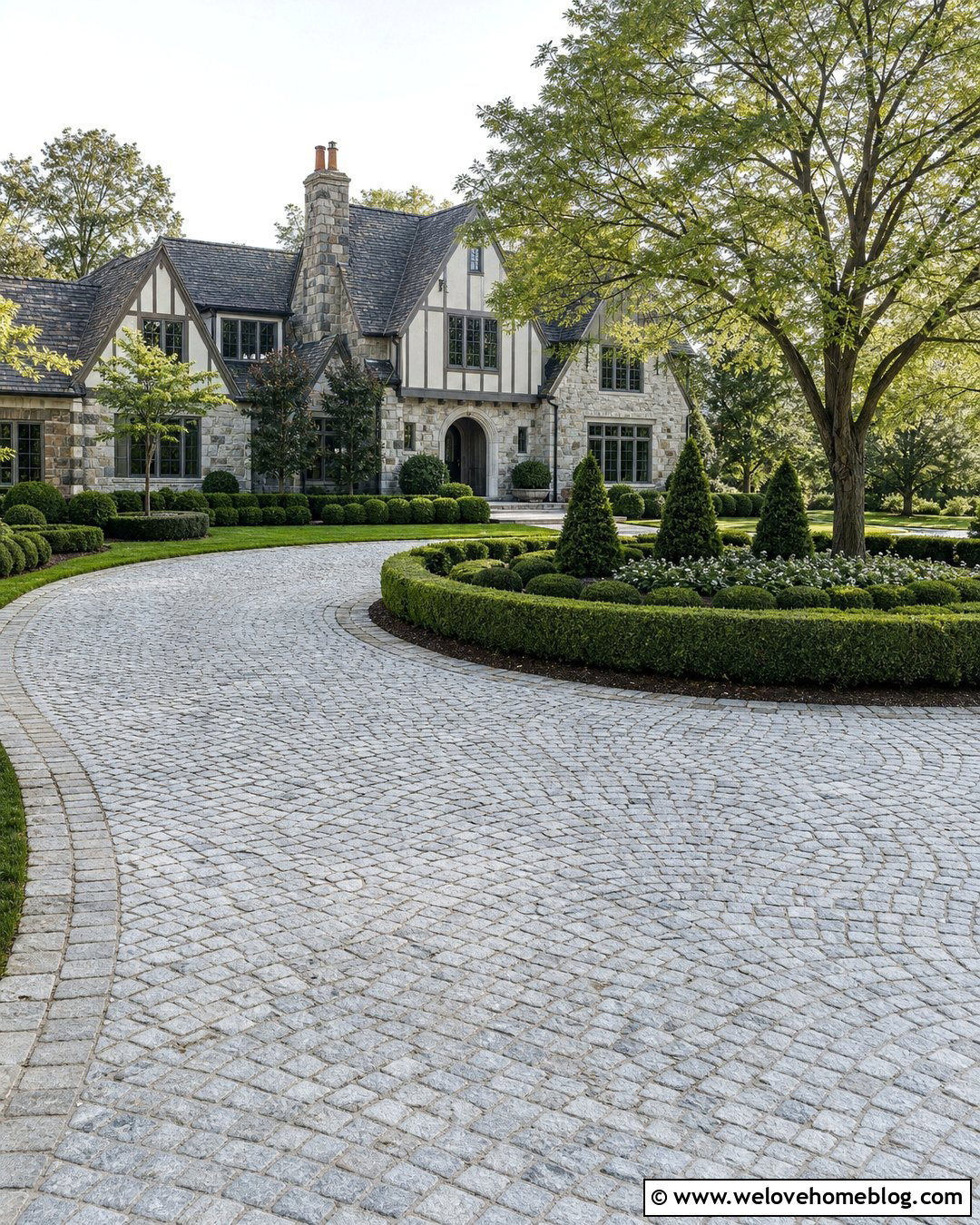
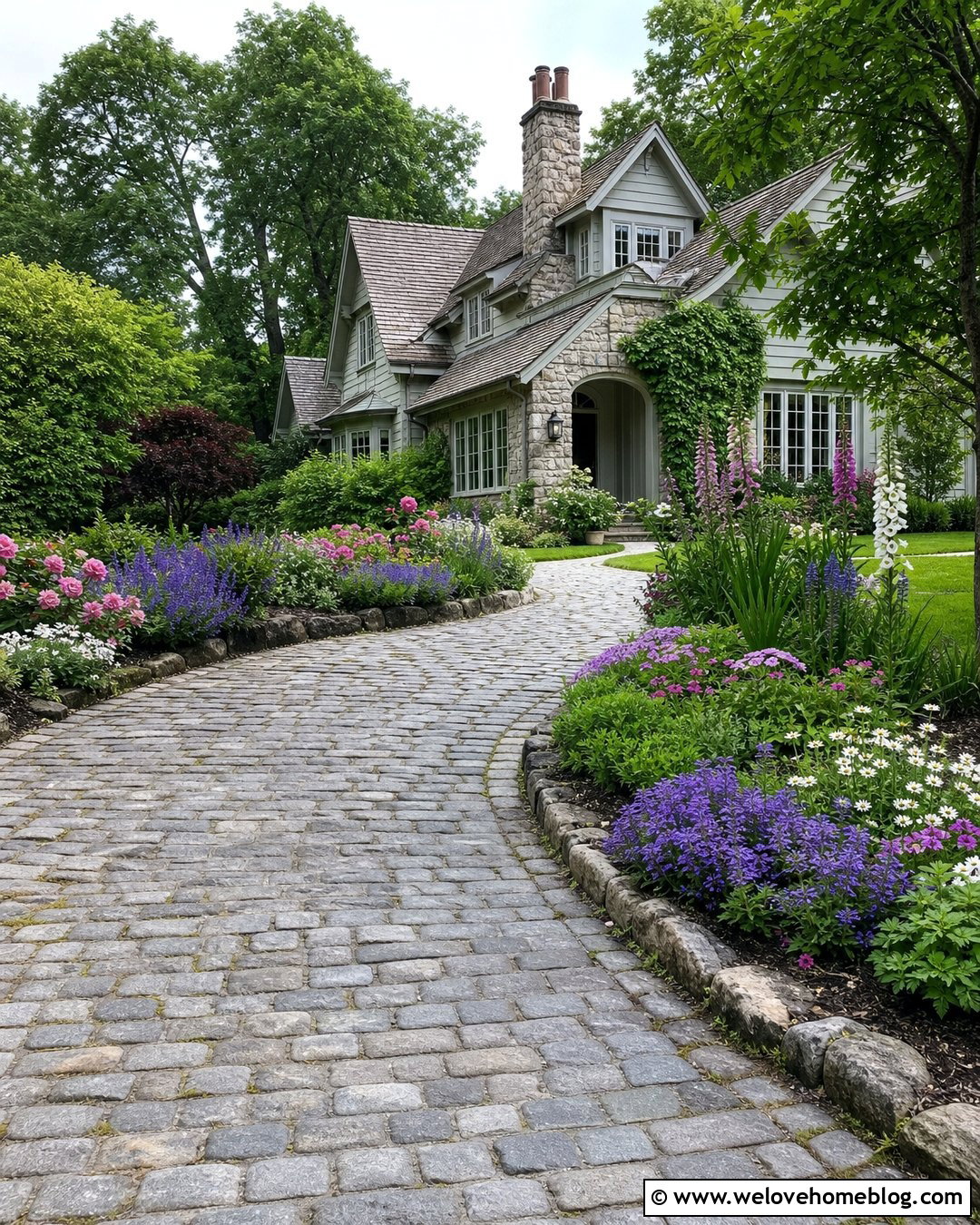
A narrow cobblestone driveway lined with compact columnar hornbeams creates structure without relying on huge trees. Gray granite cobbles can be laid in gentle arcs, giving the surface old-world texture and excellent visual definition. Position the hornbeams in rectangular beds beyond a flush cobblestone curb, repeating them evenly for a formal rhythm. Low clipped shrubs or simple ground cover will emphasize the upright tree forms without making the borders feel crowded. This driveway suits a Tudor, European-inspired, or traditional stone home. Columnar cultivars still need room to mature, so base spacing on the selected plant rather than its nursery size. The combination of vertical greenery, restrained beds, and textured paving gives a compact property an organized estate-like entrance at a manageable residential scale.
8. Small Columnar Ginkgo Tree Lined Concrete Driveway
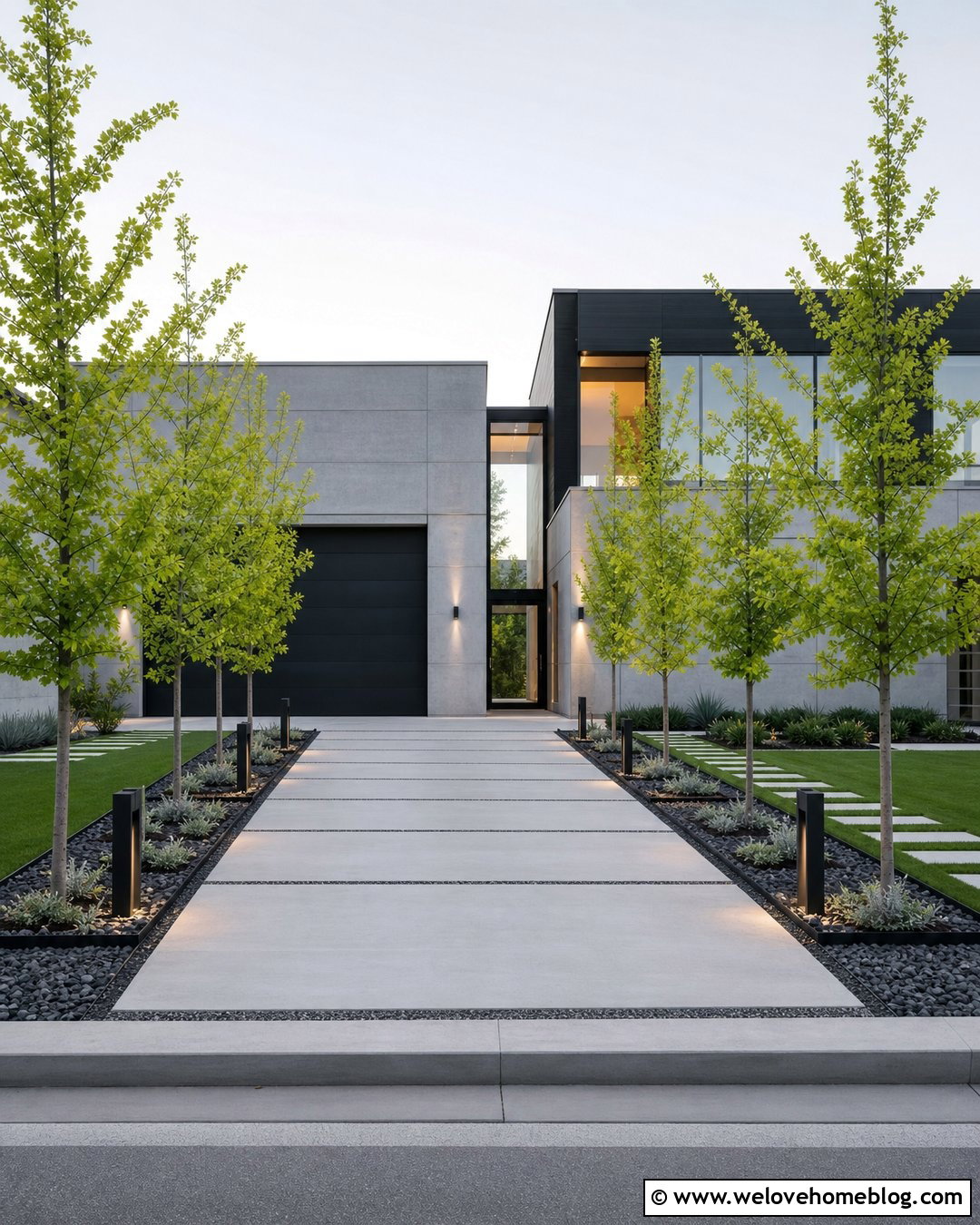
Clean architecture calls for a clean landscape, and columnar ginkgo trees can provide the needed vertical accent. Use large-format gray poured concrete panels separated by narrow decorative aggregate joints. Plant the trees in long linear beds bordered with black steel, then cover the soil with dark gravel or a restrained ground cover. Their repeated upright shapes guide the view toward a modern house without forming a heavy tunnel. Choose a male, narrow-growing cultivar to avoid unwanted fruit and accommodate limited planting width. Rectangular path lights can sit between the trees while remaining below the main sightline. This small tree-lined driveway works best when the spacing, paving joints, garage doors, and entry walk share the same alignment, making the entire front yard feel intentional and spacious.
9. Small Magnolia Tree Lined Brick Driveway
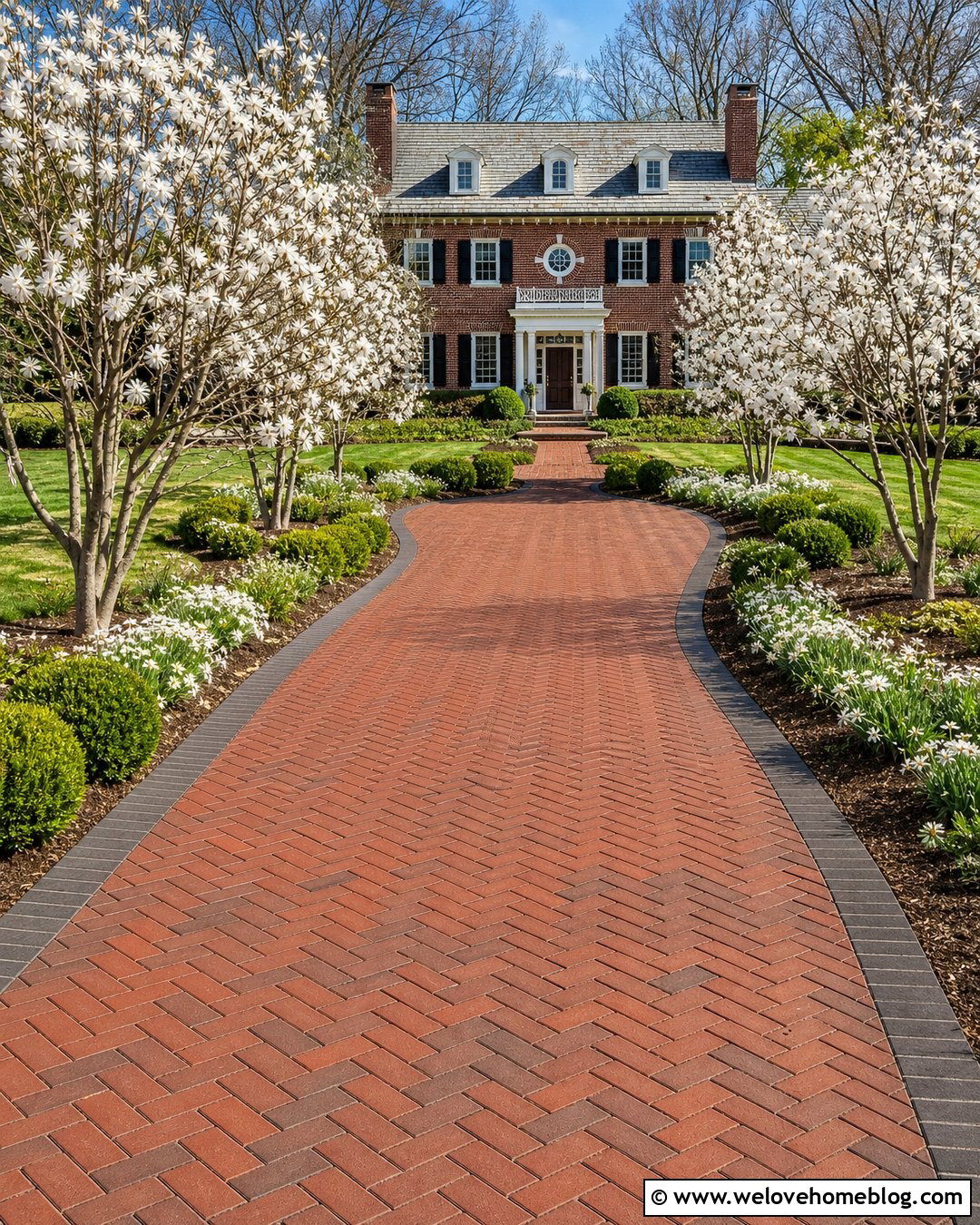
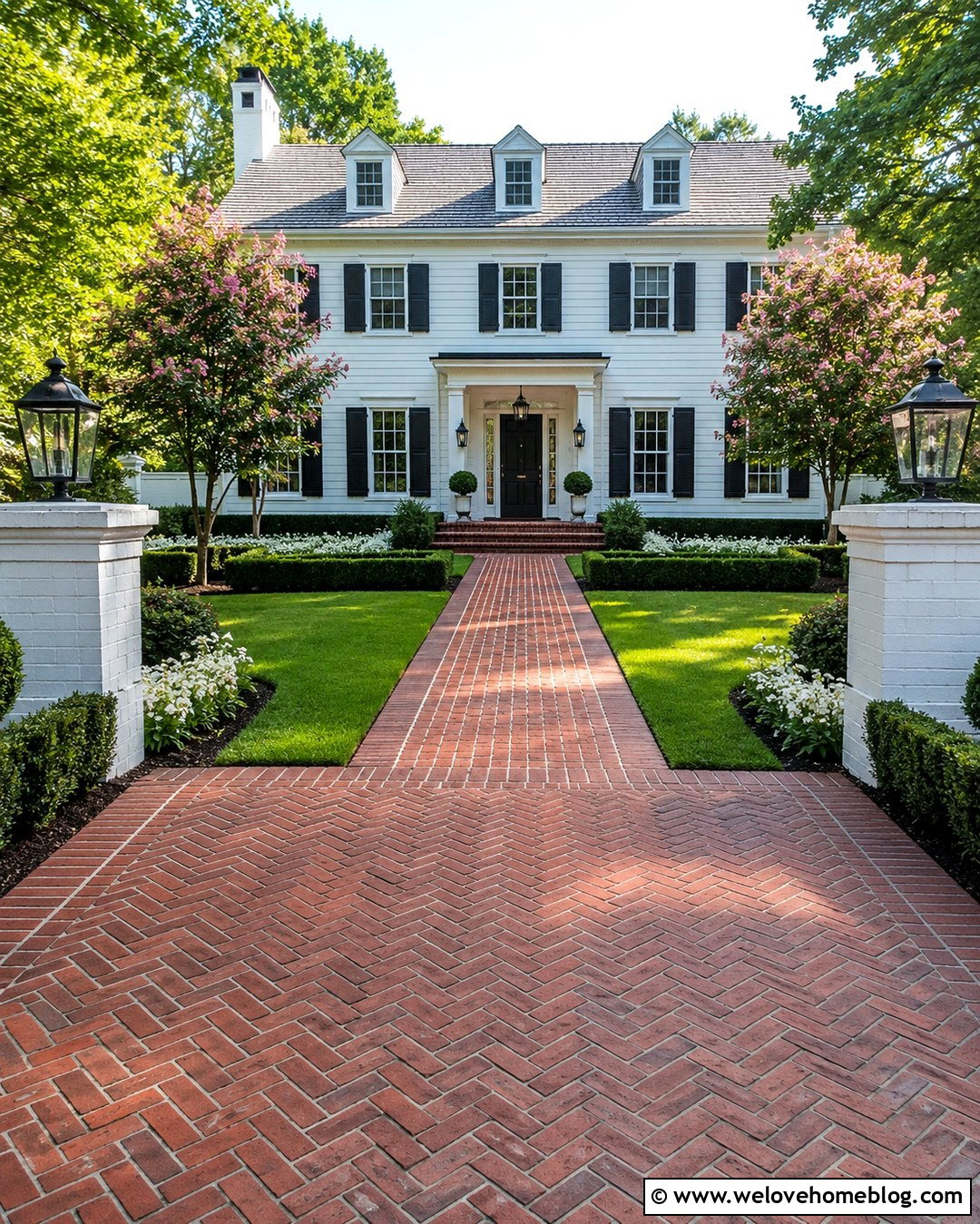
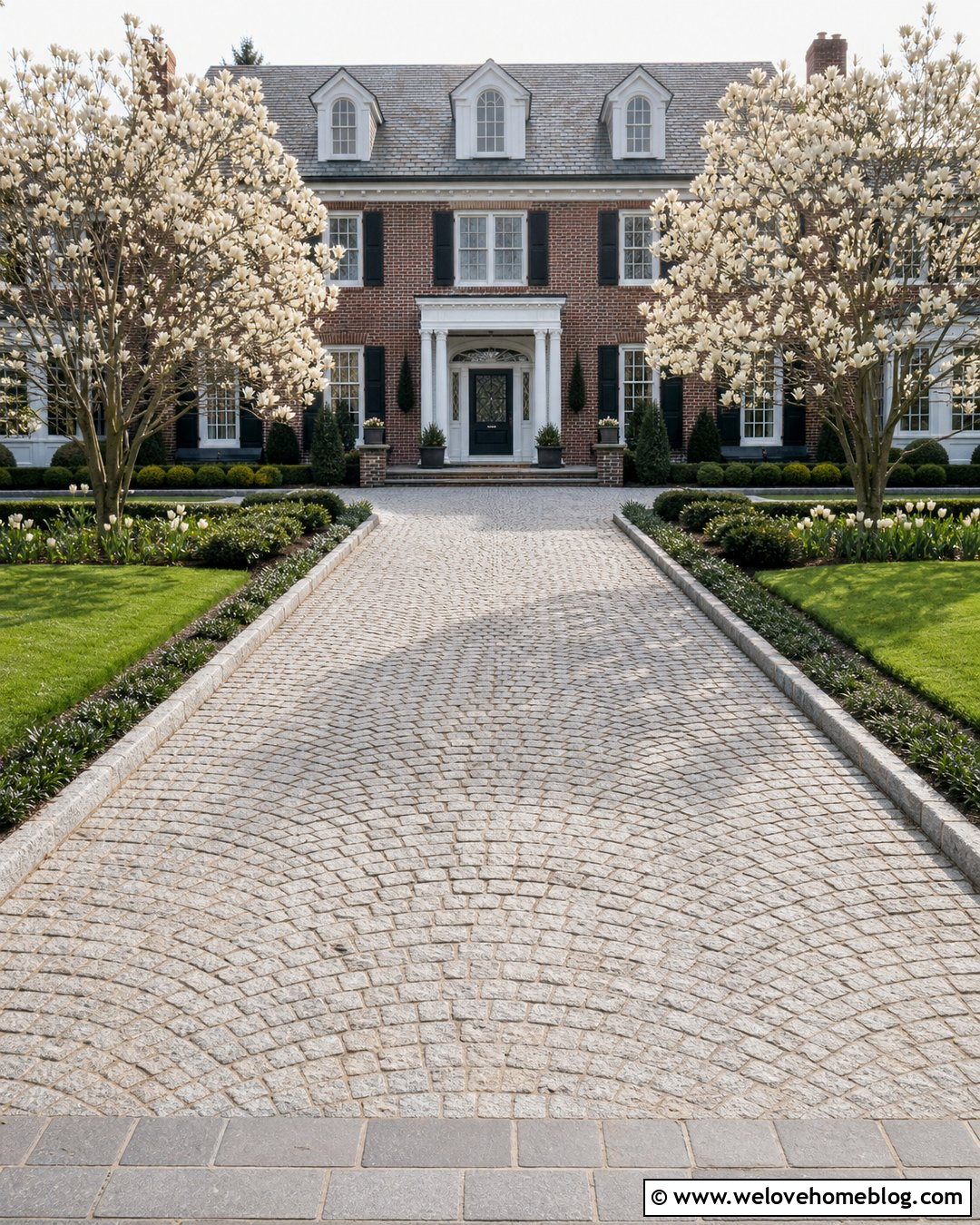
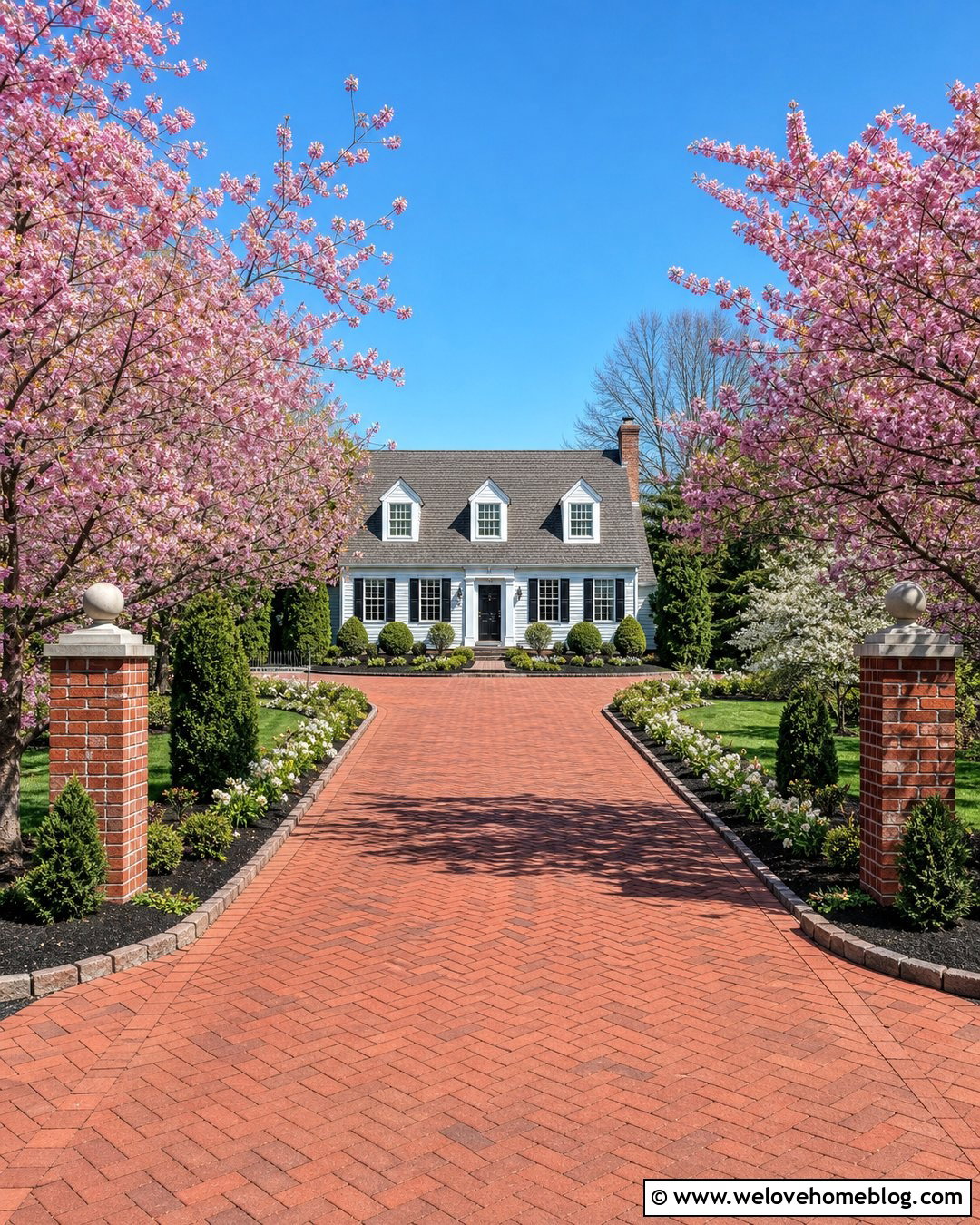
A herringbone brick driveway becomes softer and more inviting when lined with compact magnolia trees. Select a smaller cultivar suited to the regional climate, then place the trees in generous lawn panels or mulched beds beside the brick rather than directly against it. A contrasting charcoal brick edge can contain the pattern and protect the landscaped boundary. Low boxwood alternatives, white flowering perennials, and evergreen ground cover reinforce a classic palette. This complete look feels right beside a colonial, Georgian, or painted brick house. Because magnolia flowers and leaves may fall onto the drive, regular sweeping should be part of the maintenance plan. Balanced spacing and simple underplanting let the trees remain the main feature while preserving a clear, elegant route to the garage.
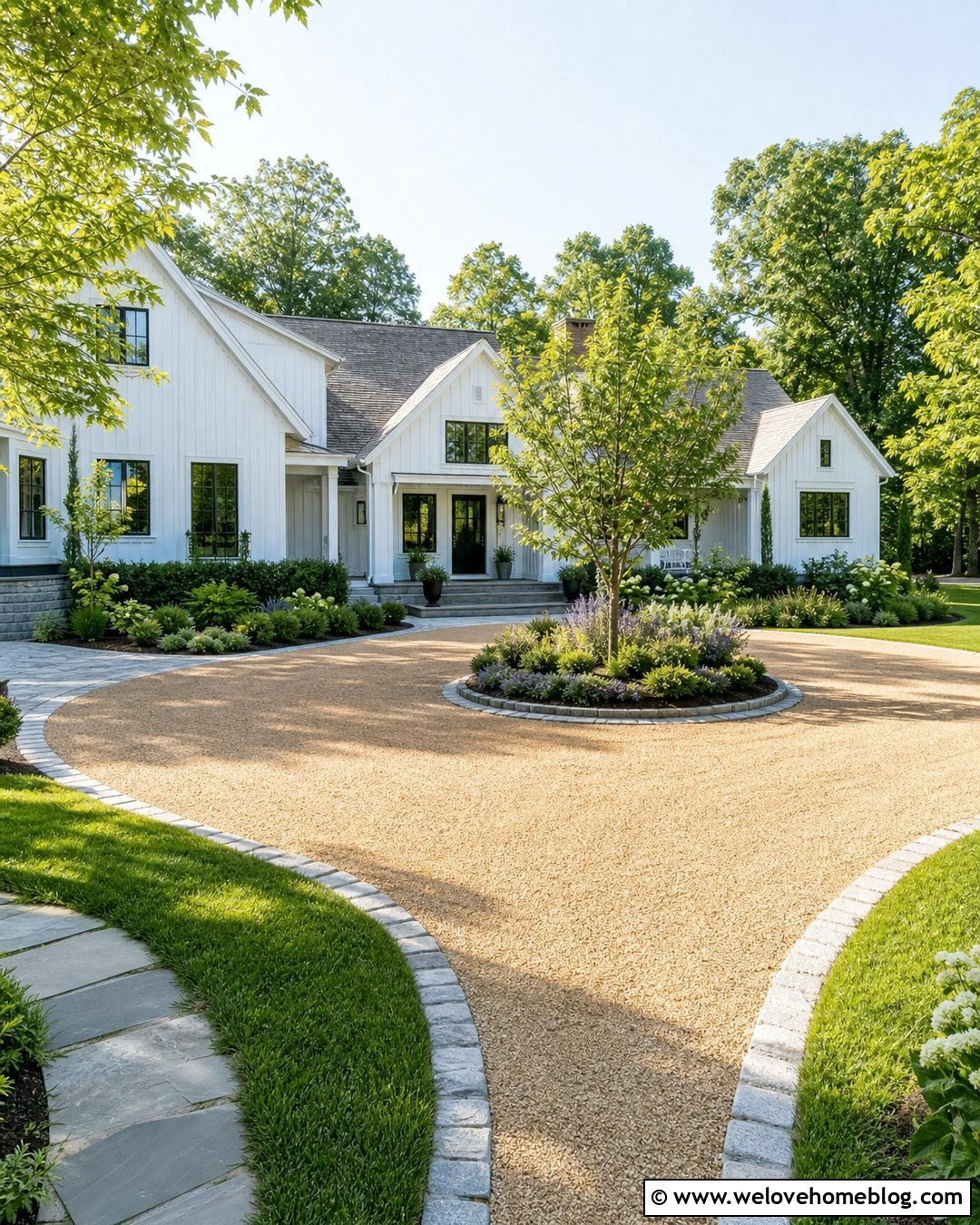
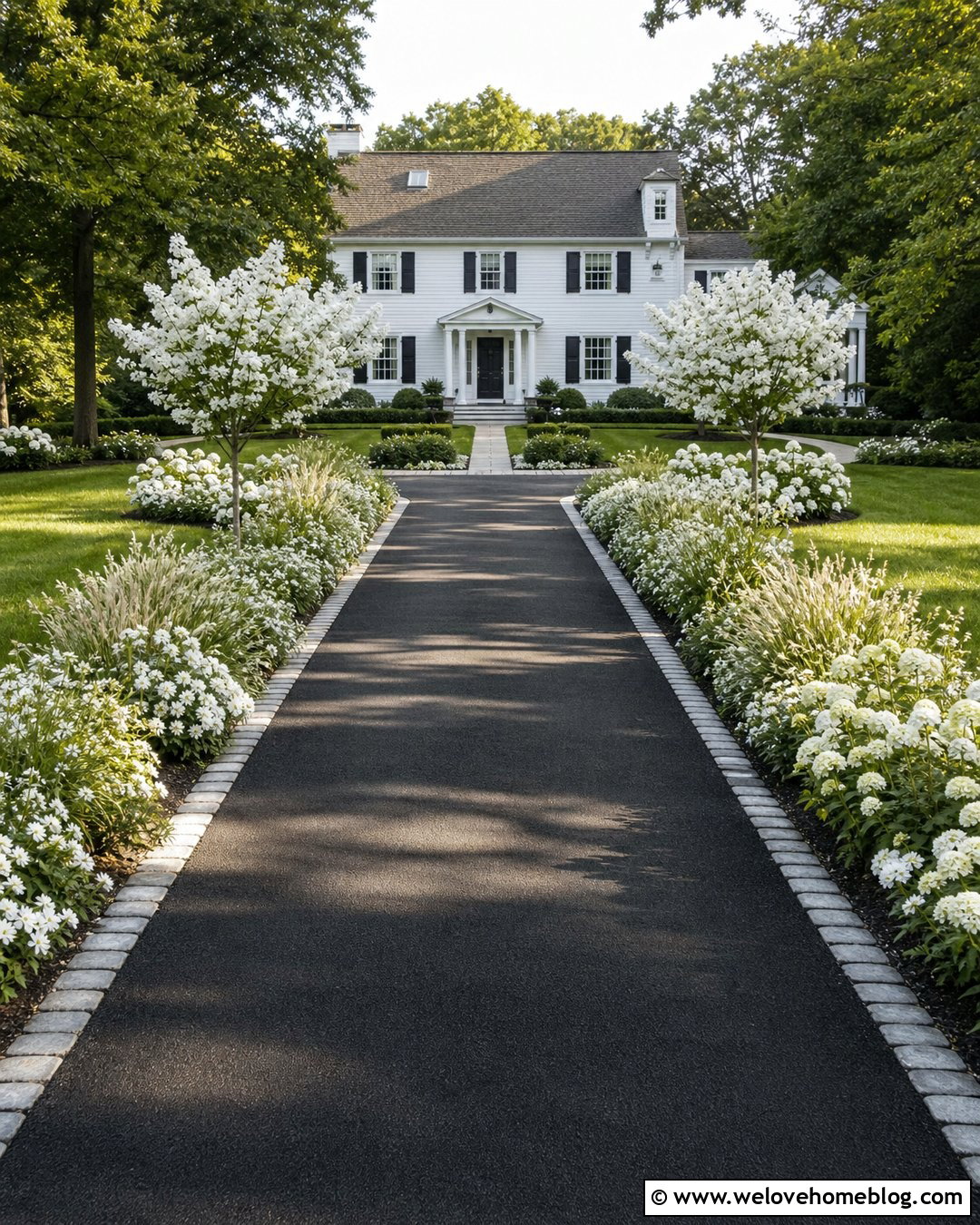
10. Small Olive Tree Lined Decomposed Granite Driveway
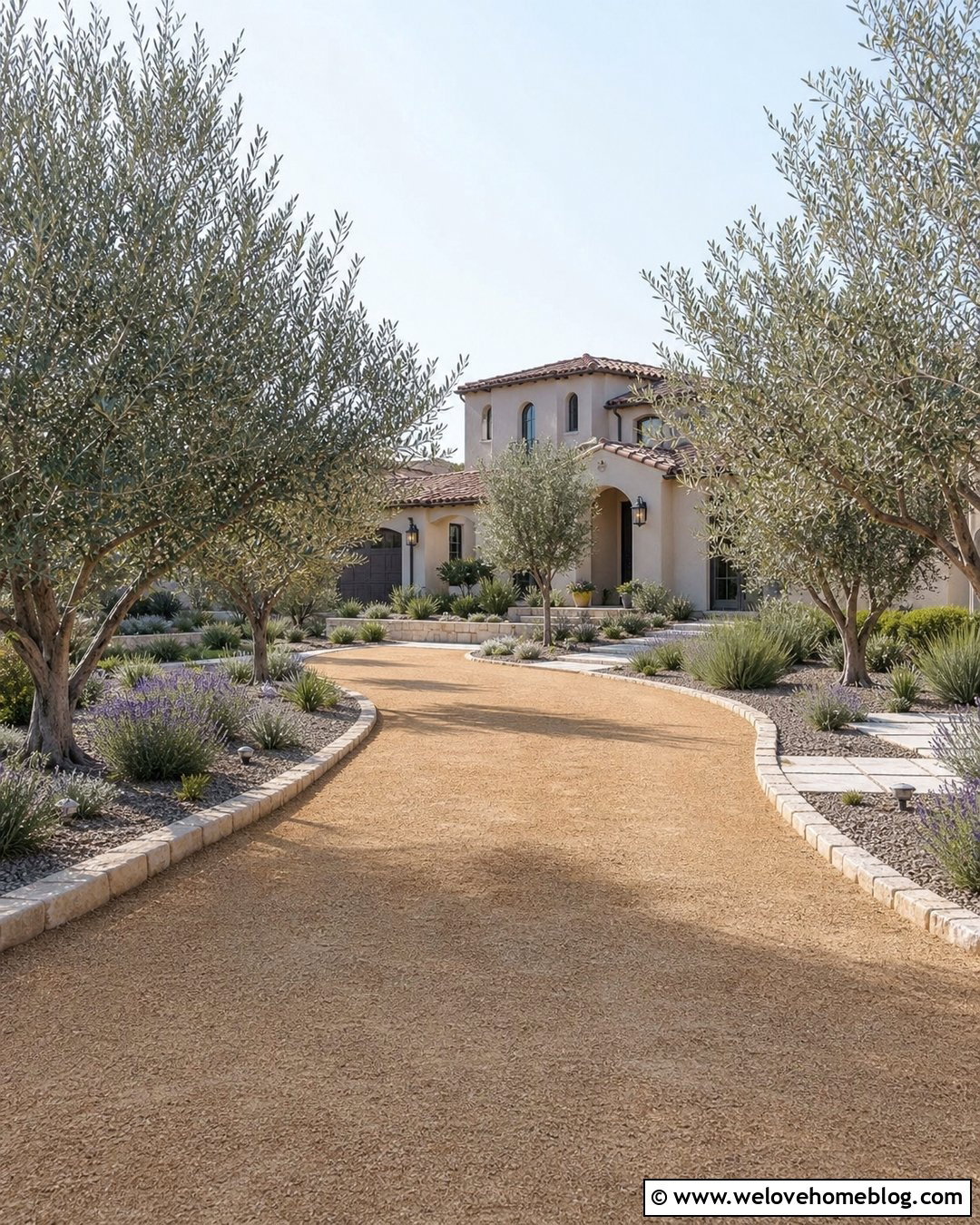
Silvery olive foliage and warm decomposed granite create a relaxed Mediterranean driveway for dry, mild climates. Shape the drive with a subtle curve and stabilize the golden-tan surface so it remains firm under regular vehicle traffic. Limestone blocks or pale concrete curbing can define the edges without competing with the trees. Repeat small olive cultivars in wide gravel beds filled with rosemary, lavender, and drought-tolerant ornamental grasses. Keep plants low near the road to protect sightlines. A stucco house with a tile roof, arched doorway, or natural wood garage complements this palette naturally. Where olive trees are unsuitable, use a regionally adapted small tree with similarly fine or silvery foliage. The limited color scheme makes the compact entrance feel wider, brighter, and cohesive.
11. Small Evergreen Tree Lined Permeable Paver Driveway
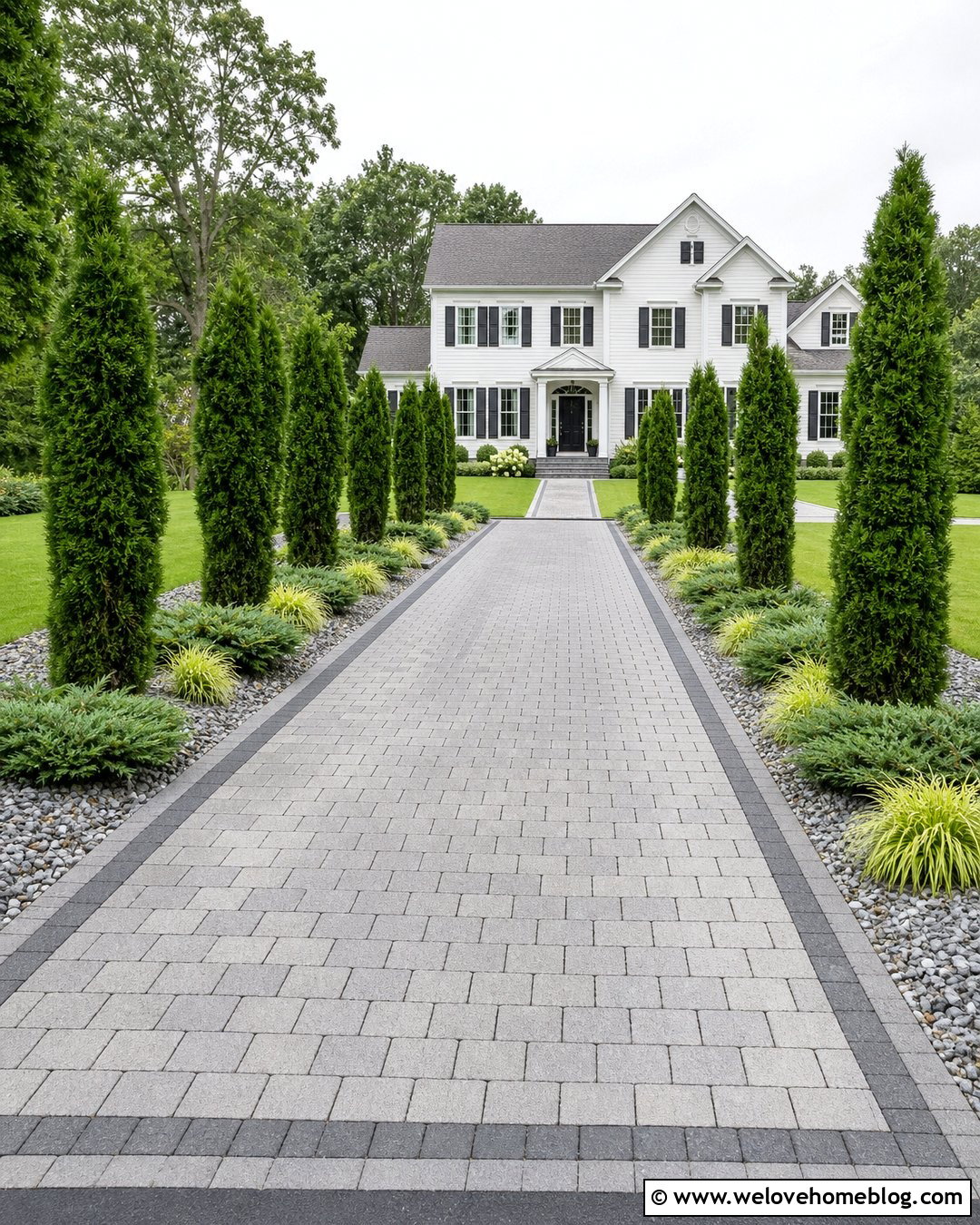
A row of compact evergreen trees provides dependable structure throughout the year, especially around a short suburban driveway. Use gray permeable concrete pavers with slightly darker joints to create a practical, contemporary surface. Narrow arborvitae or another locally suitable upright evergreen can sit in continuous beds bordered by matching pavers. Leave enough setback so mature foliage will not brush vehicles or require constant shearing. Fill the lower layer with spreading juniper, sedges, or clean gravel mulch for a low-maintenance finish. This design fits townhomes, modern colonials, and properties where neighboring houses sit close together. Rather than creating a solid wall, maintain small spaces between trees. That approach preserves airflow, gives each plant a defined shape, and makes the driveway feel enclosed without becoming cramped.
12. Small Desert Willow Tree Lined Aggregate Driveway
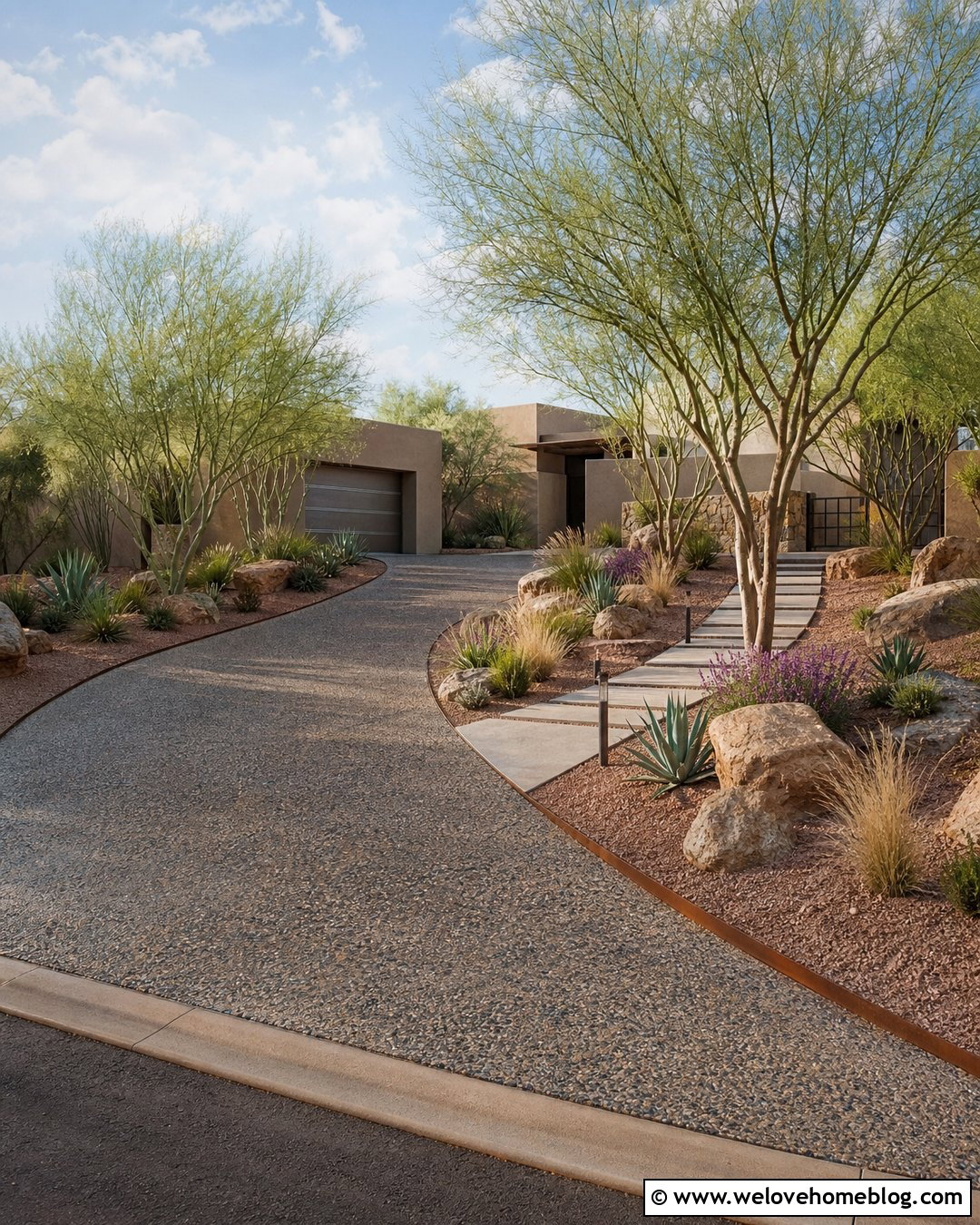
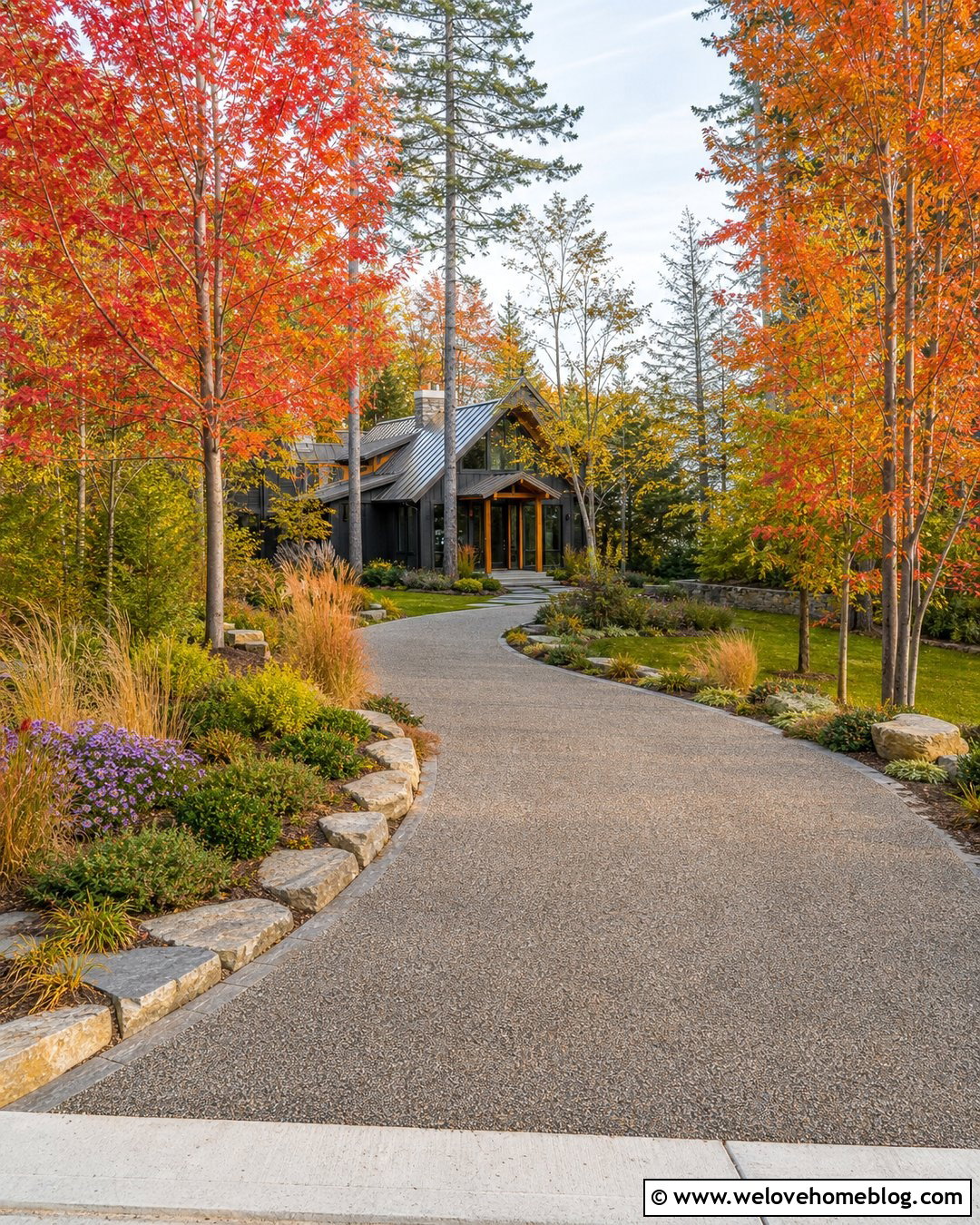
Airy desert willow trees pair well with an exposed aggregate driveway in a hot, dry landscape. Their loose canopies provide filtered greenery without visually overpowering a compact front yard. Use warm gray exposed aggregate concrete for the driveway and edge it with weathered steel or reddish stone. Set the trees within broad gravel beds planted with agave, yucca, penstemon, and compact ornamental grasses suited to the area. A gentle bend in the driveway allows the tree placement to look natural instead of rigid. This complete scheme complements Southwestern, adobe, and desert-modern homes. Avoid piling gravel or mulch against the trunks, and provide irrigation based on establishment needs. The restrained plant palette, open branching, and coordinated earth tones produce an attractive entrance that also feels appropriate for an arid setting.
13. Small Yaupon Holly Tree Lined Shell Driveway
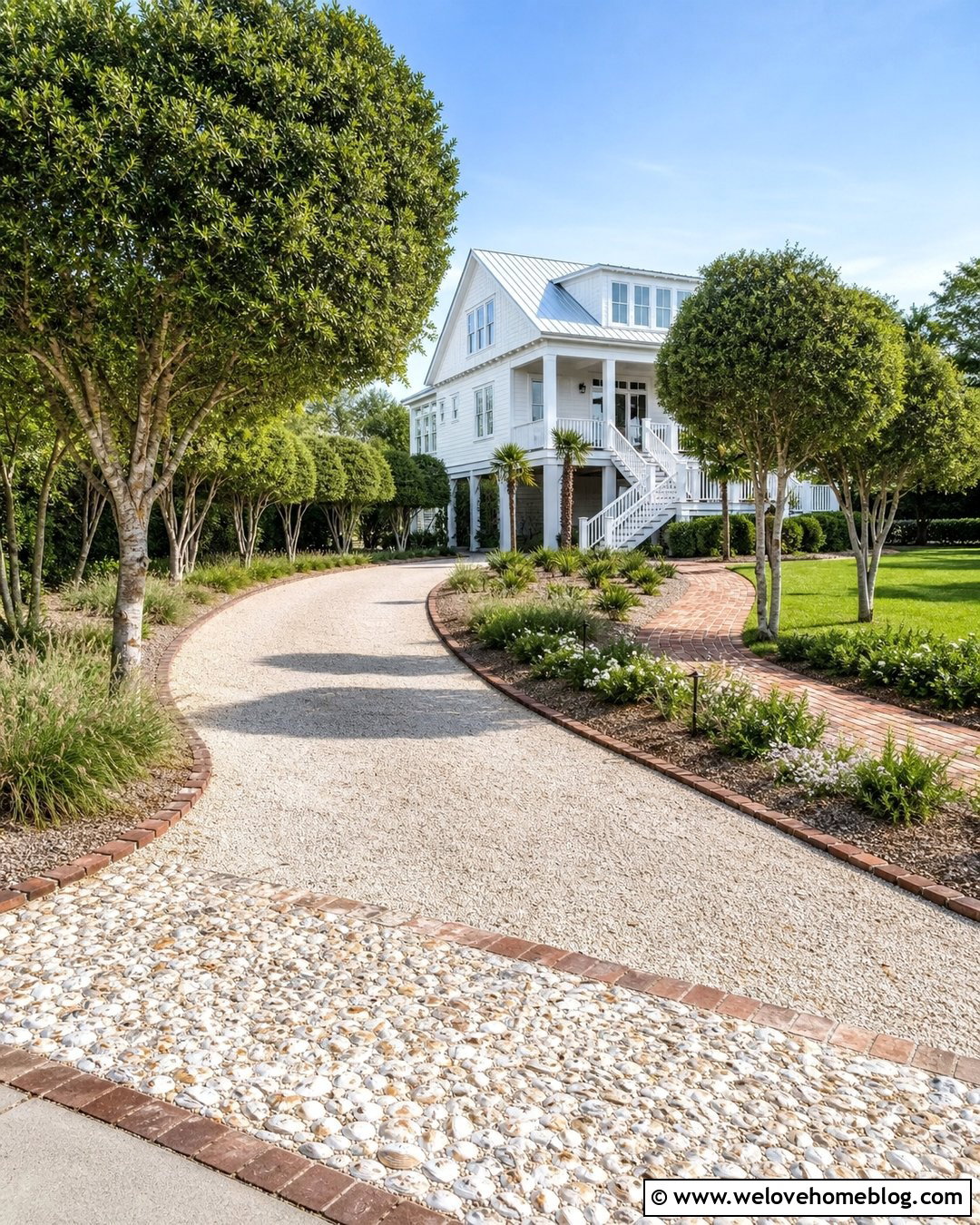
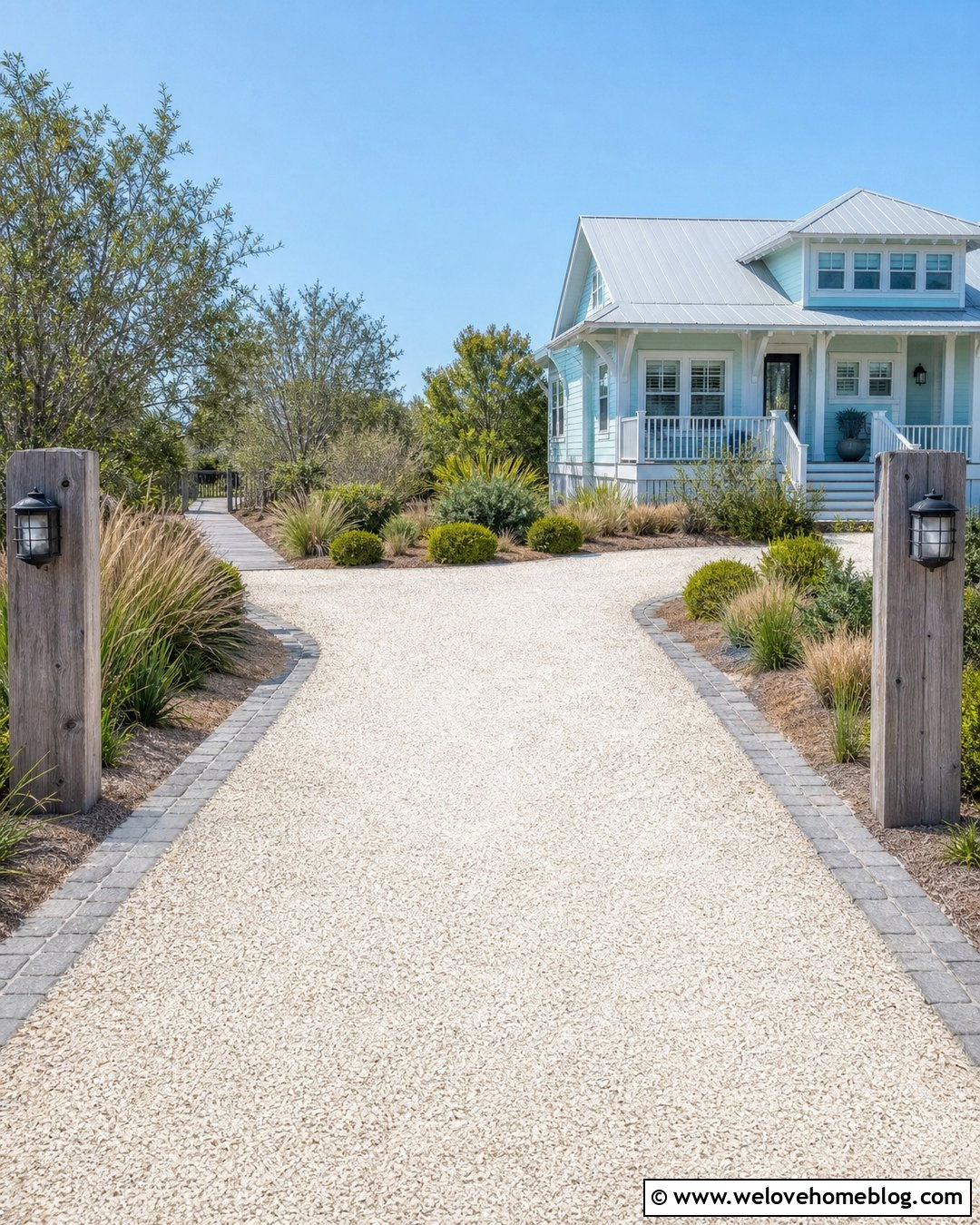
A pale crushed-shell driveway lined with tree-form yaupon hollies creates a bright coastal entrance. The trees’ small leaves and compact canopies bring evergreen definition while keeping the view toward the house open. Use a curved driveway with low concrete or reclaimed brick edging to contain the shell material. Beneath the hollies, combine salt-tolerant grasses, low flowering plants, and clean pine-straw or gravel mulch based on local conditions. This look complements coastal cottages, raised homes, and simple white ranch houses. Choose a cultivar that fits the bed width, and verify whether male and female plants are needed if berries are desired. A wider shell apron at the street gives the entrance presence, while repeated trunks and rounded crowns make the compact route feel orderly rather than overly formal.
14. Small Flowering Cherry Tree Lined Asphalt Driveway
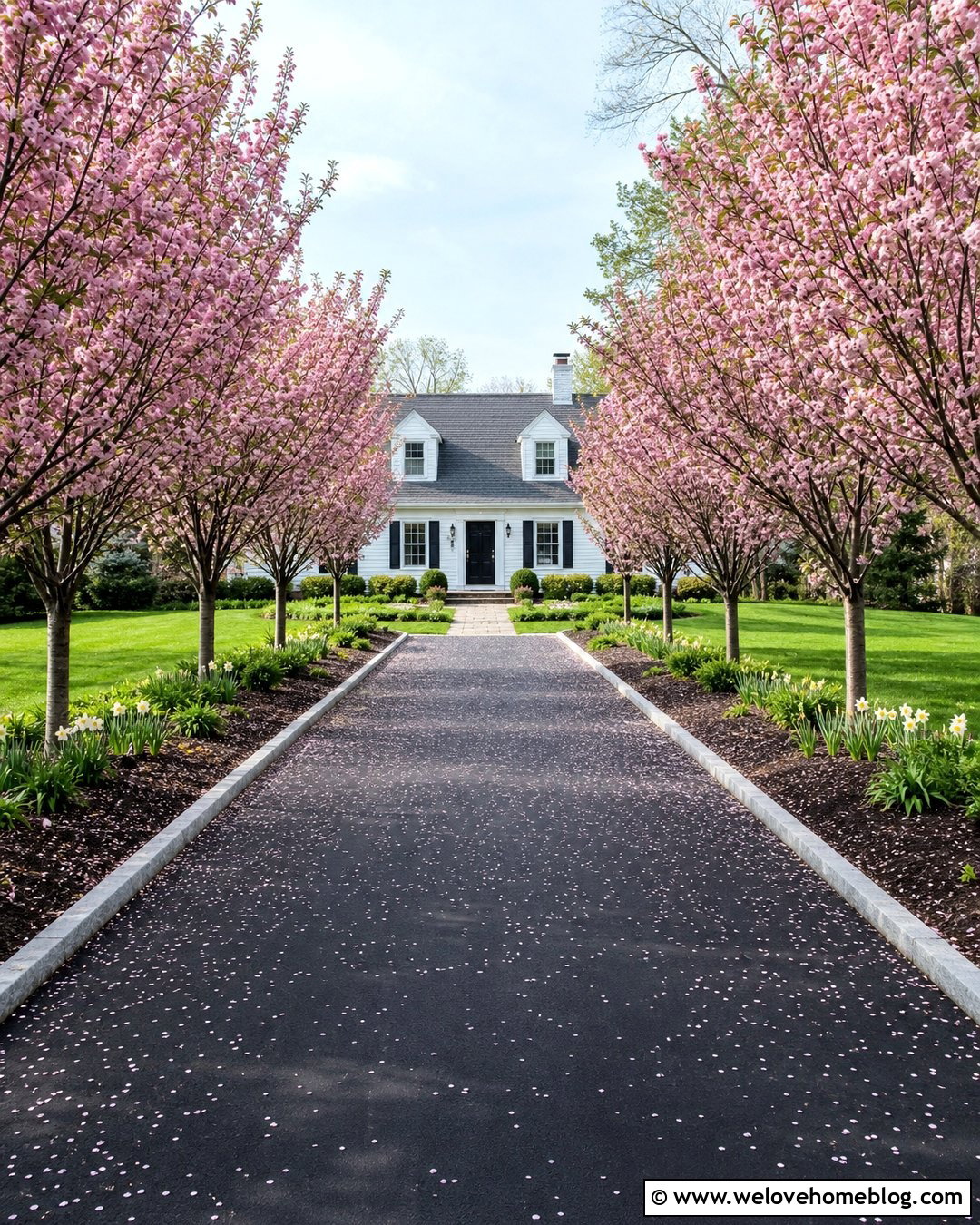
Soft spring flowers can completely change the character of a basic asphalt driveway. Line a straight black asphalt surface with compact flowering cherry trees planted in evenly spaced lawn cutouts or mulched beds. A pale granite curb creates separation and adds a crisp finished edge. Keep the underplanting simple with spring bulbs and a low green ground cover so falling petals remain part of the seasonal display rather than appearing messy. This combination looks attractive beside a Cape Cod, bungalow, or white clapboard house. Select a smaller, disease-resistant cultivar recommended for the local climate. The trees should be far enough from the pavement to develop naturally, with lower branches managed for clearance. Outside the flowering season, their repeated forms will continue framing the driveway and front facade.
15. Small Hawthorn Tree Lined Crushed Stone Driveway
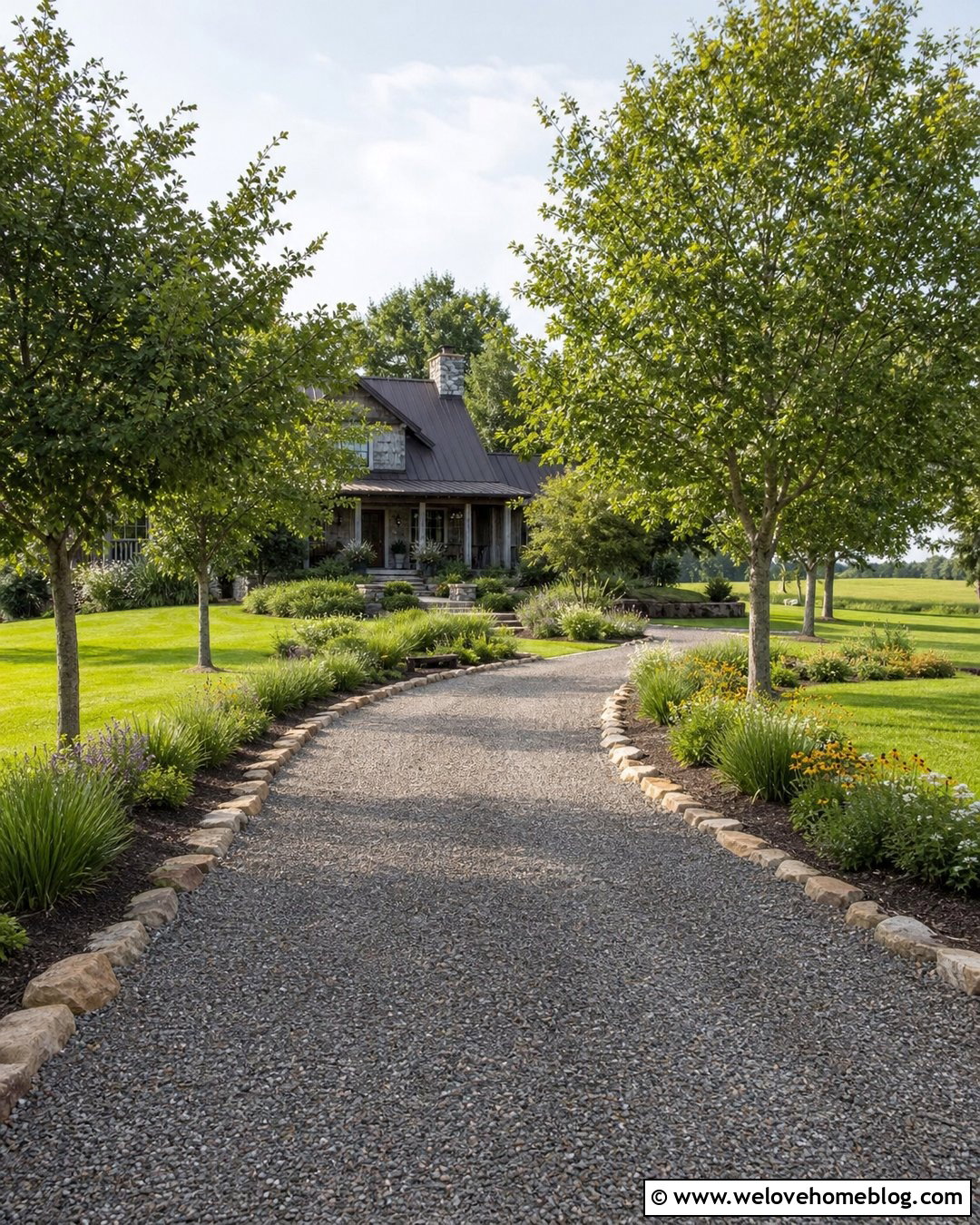
A rustic crushed stone driveway works beautifully with small hawthorn trees and meadow-like planting. Choose a thornless or nearly thornless cultivar where branches could come close to vehicles, walkways, or maintenance areas. Use compacted gray-brown crushed stone for the surface and edge it with timber, fieldstone, or weathered steel. Arrange the trees along a soft curve rather than in perfectly rigid rows, then connect them with sweeps of native grasses and low flowering perennials. This approach feels comfortable beside a country cottage, farmhouse, or converted barn. Keep the vegetation closest to the pavement short and tidy. The combination of textured stone, lightly structured trees, and naturalistic planting creates an informal arrival while still making the driveway boundaries easy to read throughout the year.
16. Small Japanese Tree Lilac Circular Driveway
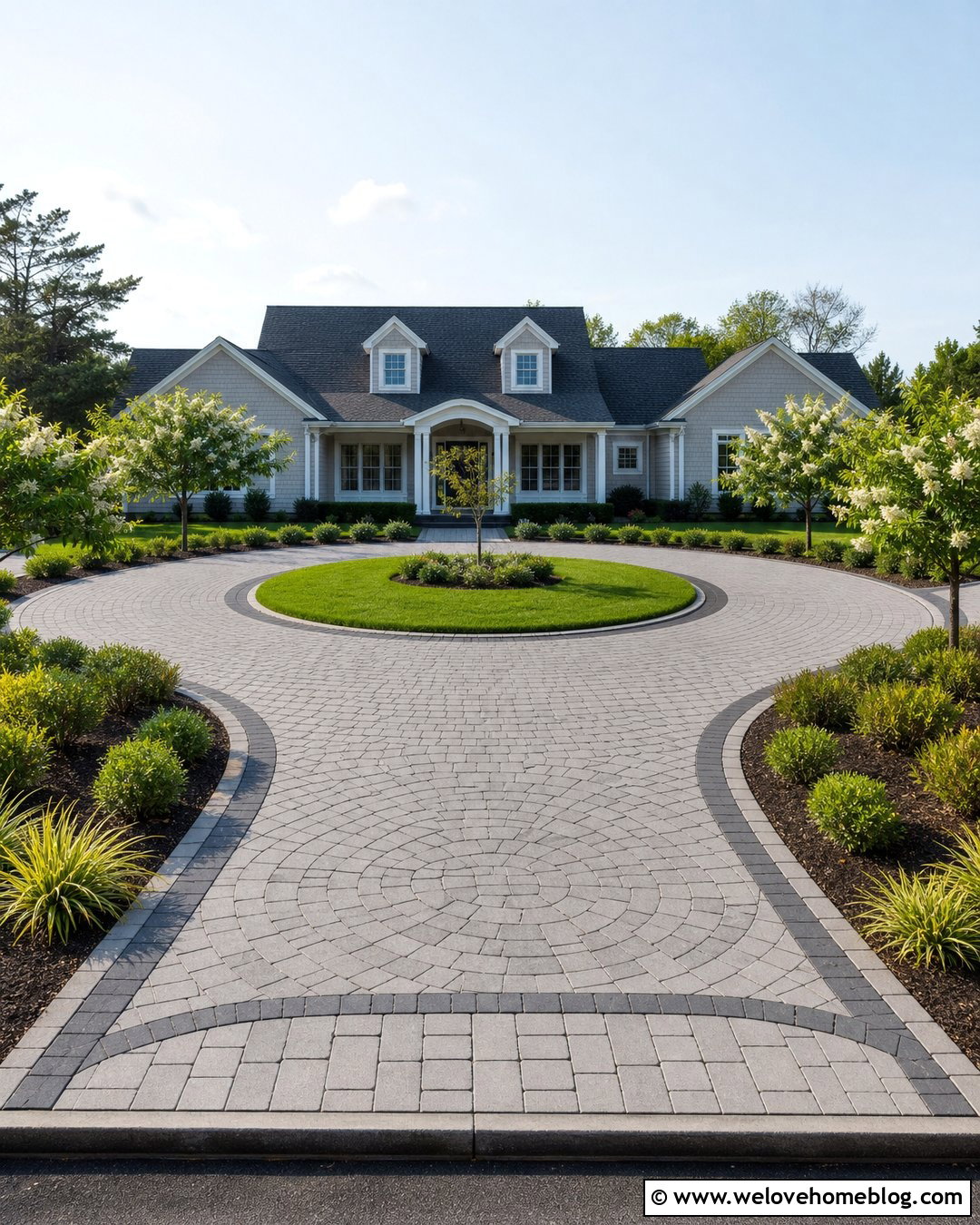
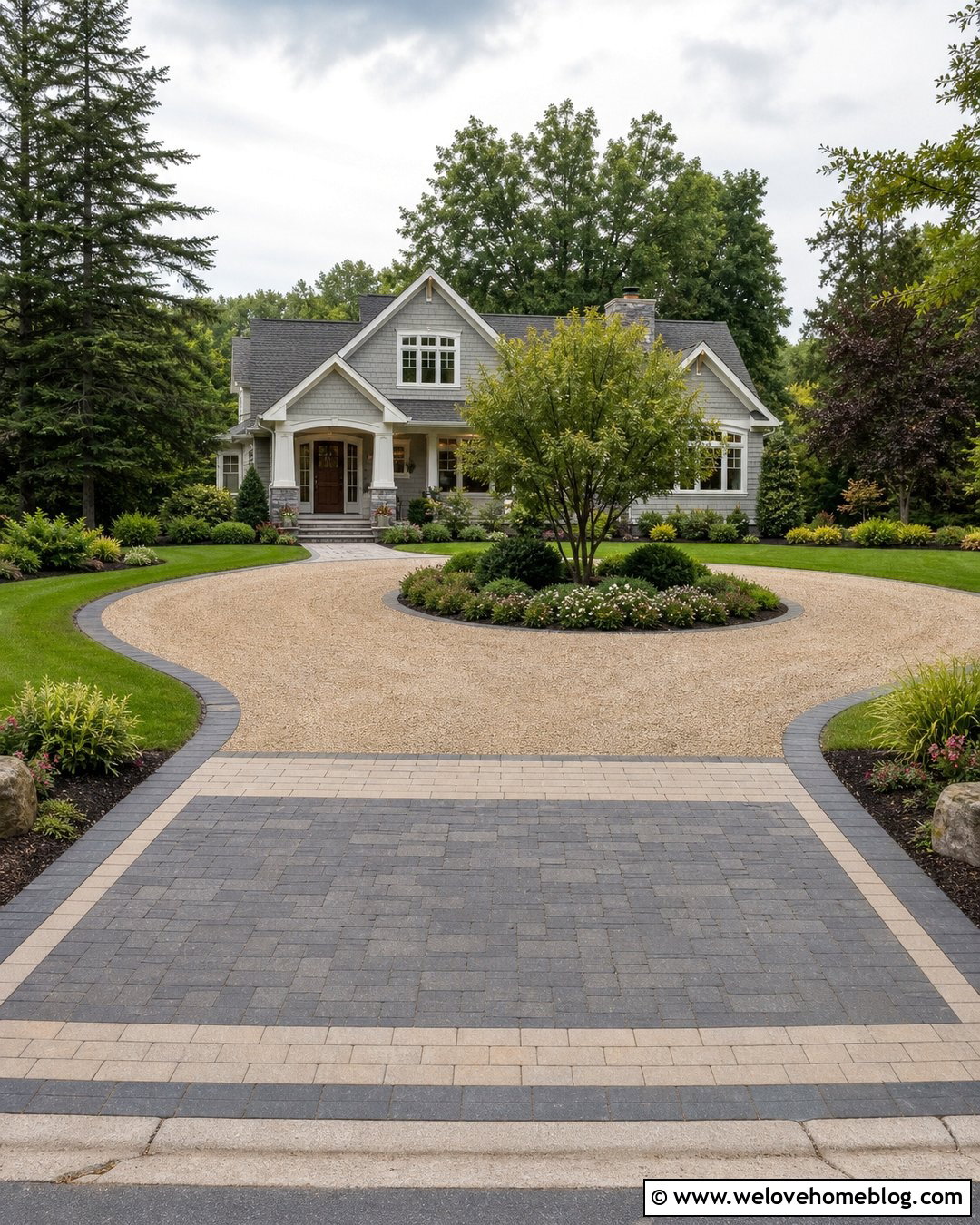
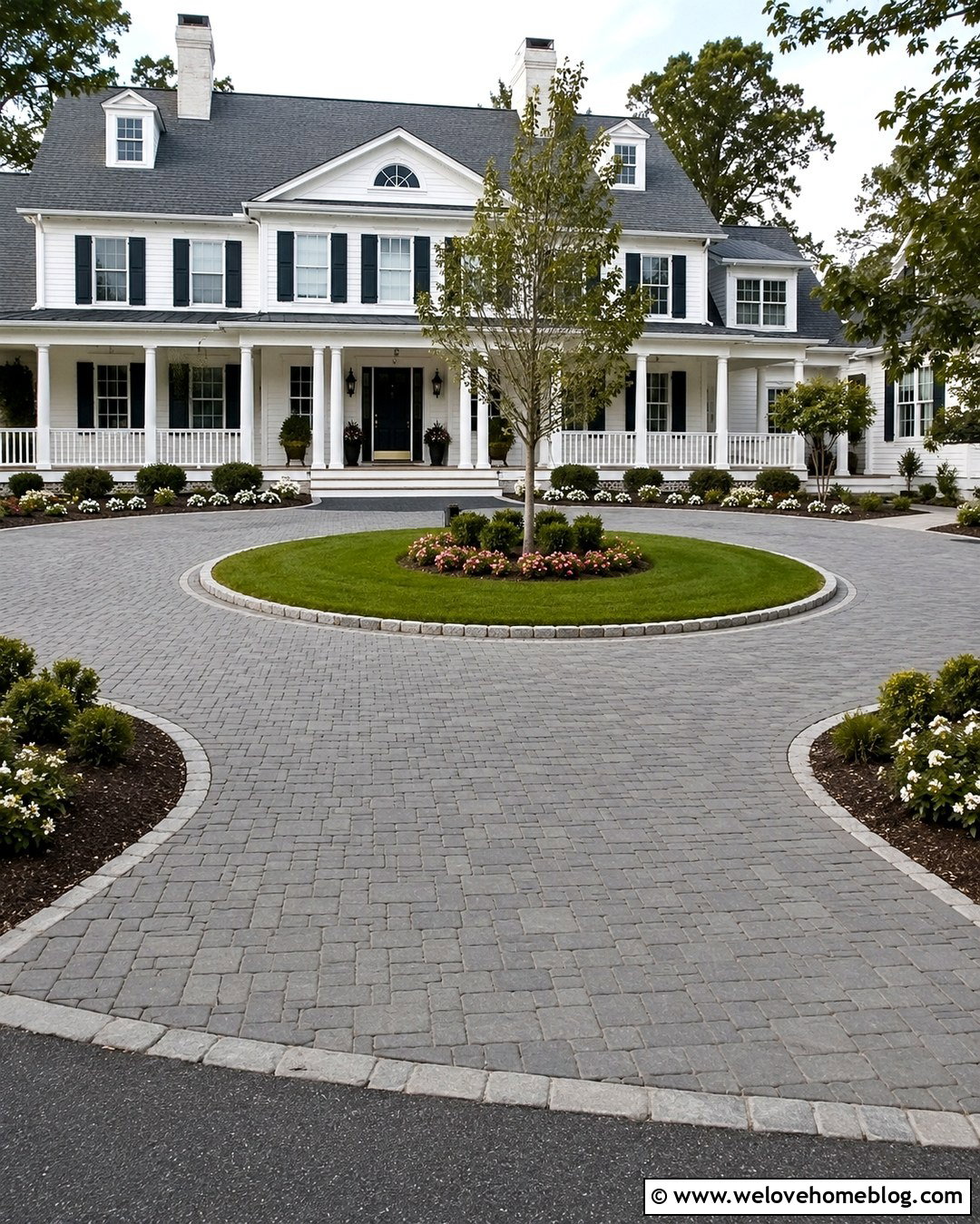
A compact circular driveway can gain definition from Japanese tree lilacs placed around its outer edge. Use medium-gray concrete pavers in a fan pattern to emphasize the curve, then add a darker paver ribbon around the central island. Repeated tree lilacs provide upright structure and seasonal flowers without needing the proportions of large canopy trees. Fill the beds beneath them with low shrubs, ornamental grasses, and a continuous mulch layer. The center island can hold lawn or one simple planting composition, keeping the turning area visually open. This layout complements traditional suburban homes and larger ranch houses with broad facades. Before construction, confirm comfortable vehicle turning space and keep tree trunks away from overhang zones. Consistent materials will help the circular design look unified rather than busy.
17. Small Columnar Crabapple Tree Lined Side Driveway
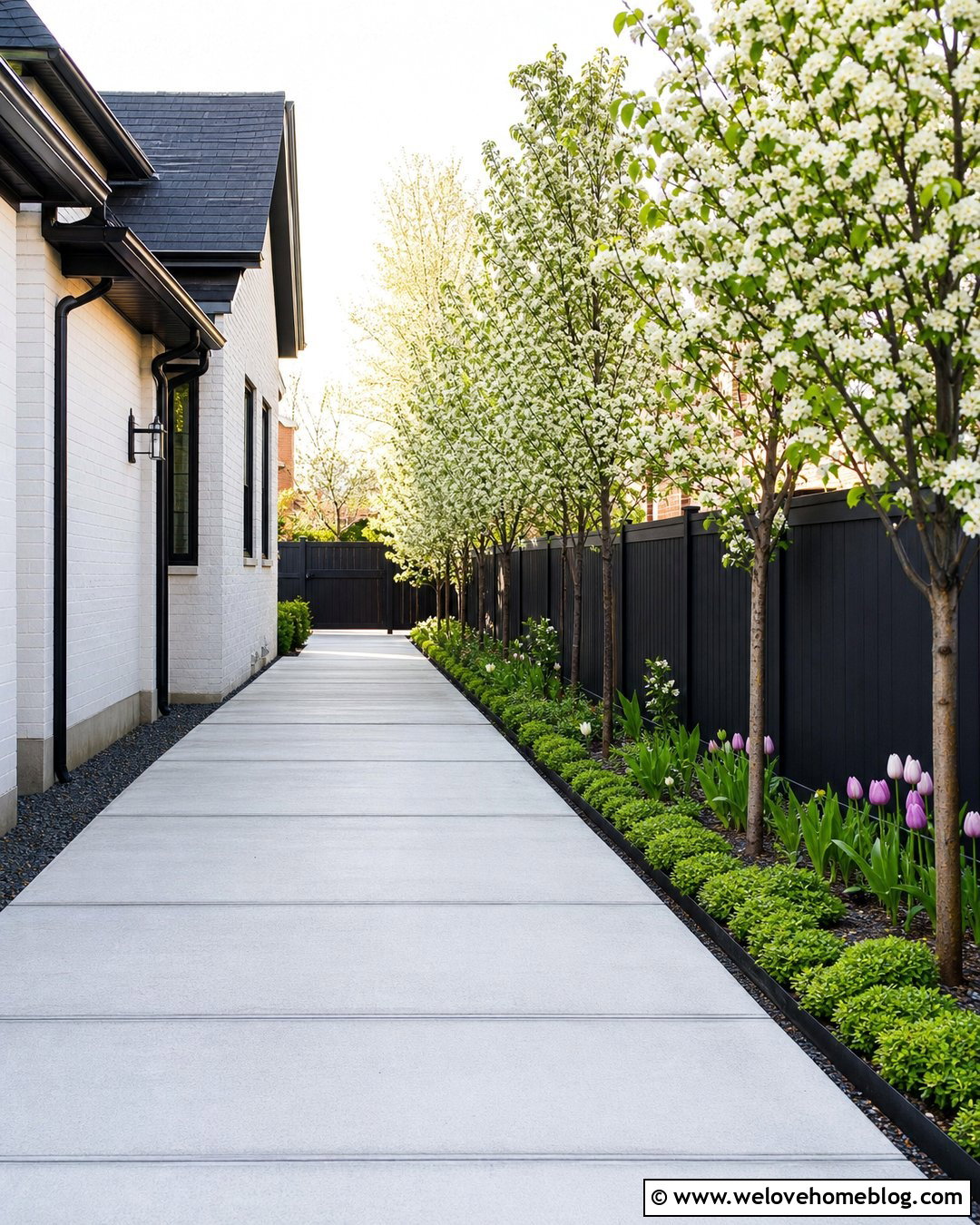
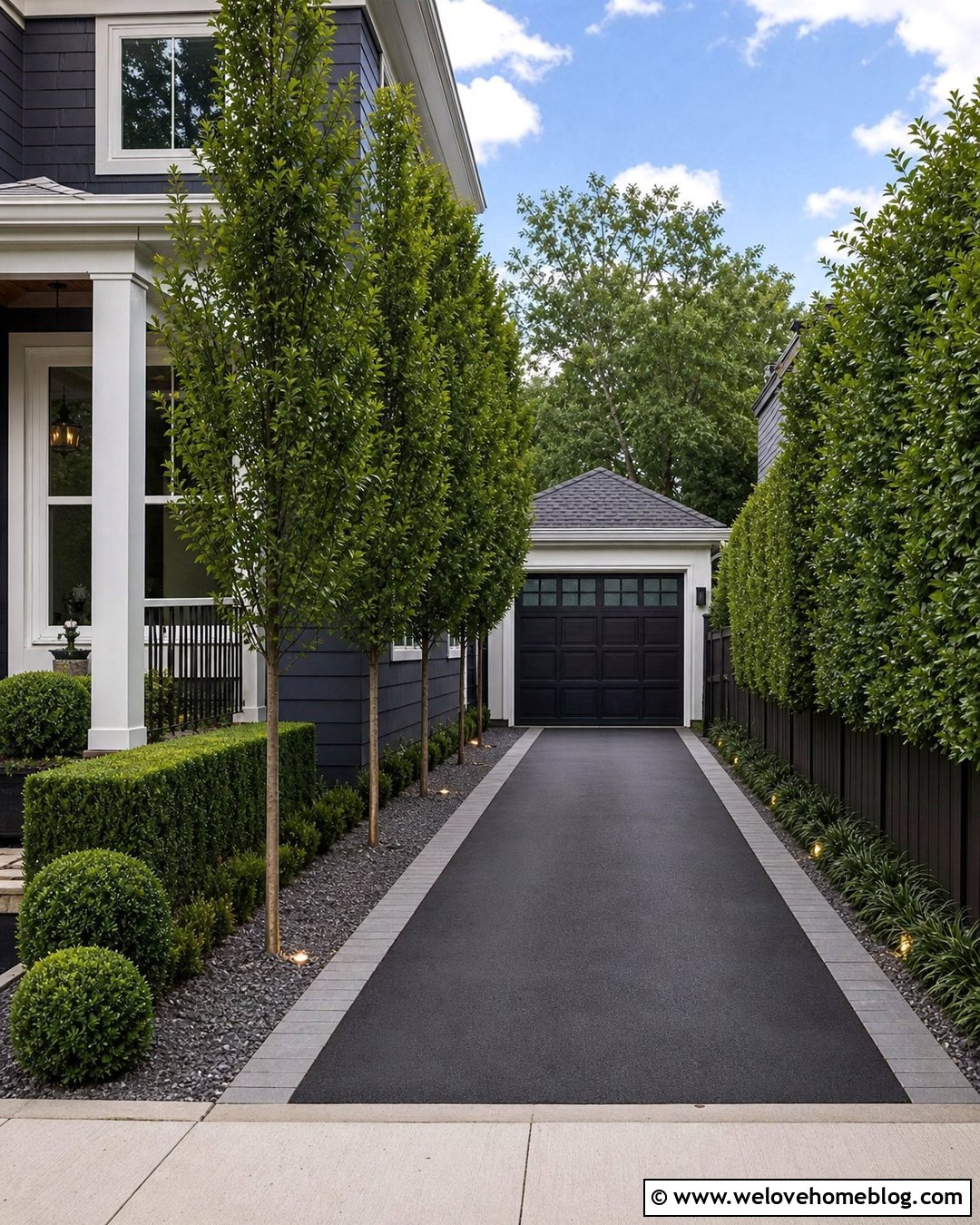
A narrow side driveway needs vertical planting that will not reduce usable vehicle space. Columnar crabapples can create a flowering tree line beside light gray poured concrete divided into clean rectangular slabs. Place the trees along the property edge in one continuous bed, using black metal edging and low ground cover for a streamlined appearance. On the house side, keep the landscape simpler with a narrow walkway or gravel drainage strip. A single-sided tree row still creates repetition and can screen a fence or neighboring wall. This solution works well beside urban cottages, duplexes, and compact contemporary homes. Choose a cultivar with a narrow mature canopy and limited fruit drop. Careful pruning should maintain natural form while providing sufficient clearance around doors, mirrors, and pedestrian routes.
18. Small Fringe Tree Lined Brick Ribbon Driveway
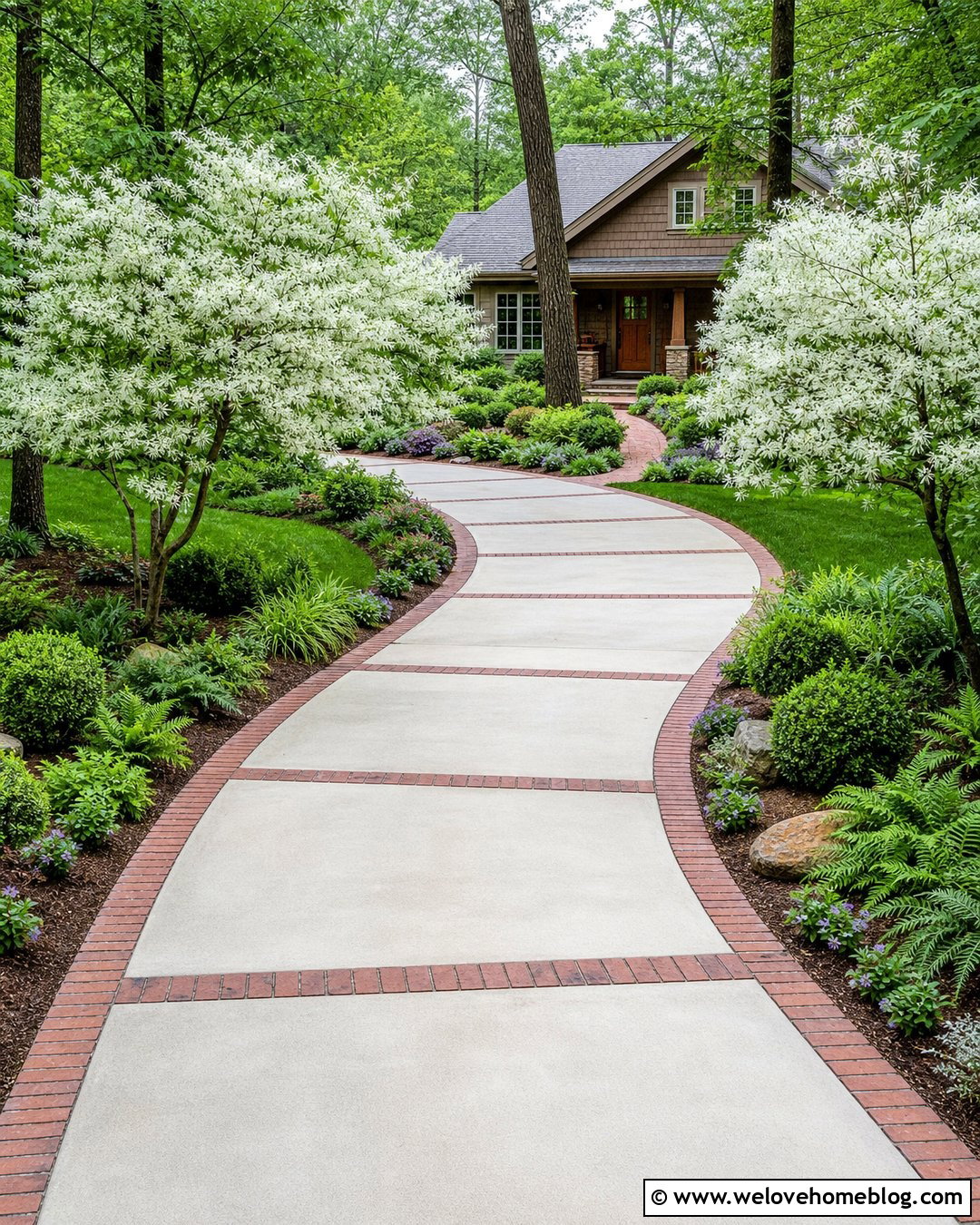
American fringe trees bring a soft, native woodland character to a concrete driveway with brick ribbon accents. Use warm light-gray concrete for the main surface and run narrow clay brick bands across it at measured intervals. Repeat the brick along the outer edges to connect the driveway with nearby walkways. Plant compact fringe trees in mixed beds containing ferns, sedges, flowering ground covers, and a few rounded evergreen shrubs. Their airy flowers and branching structure suit a Craftsman, cottage, or woodland ranch house. The trees can be aligned loosely rather than perfectly matched, creating a natural frame around a gently curving driveway. Select plants for the site’s sunlight and moisture conditions, and preserve open space around each trunk. The result feels layered and welcoming without overwhelming the smaller front yard.
19. Small Sweetbay Magnolia Tree Lined Gravel Driveway
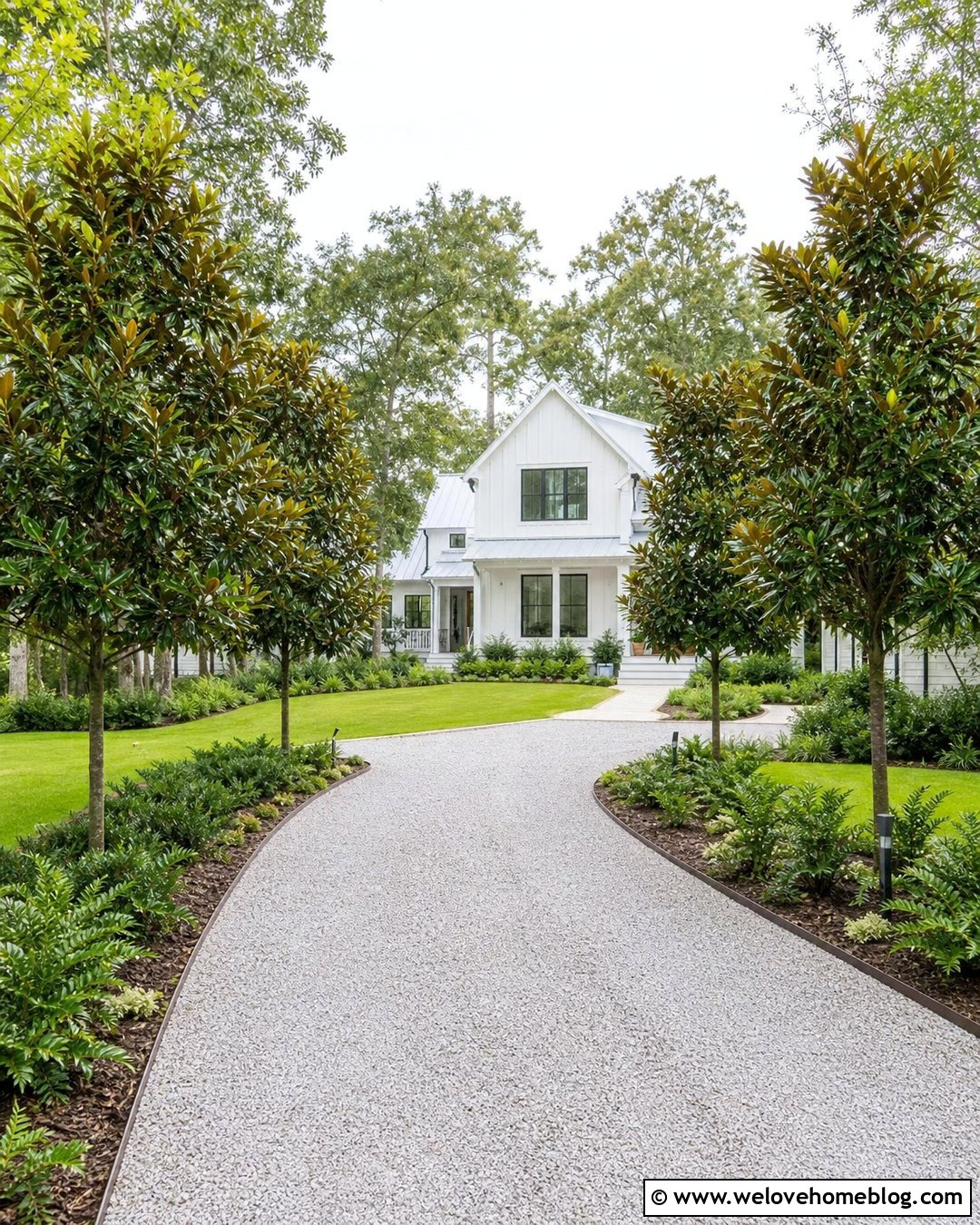
A pale gravel driveway bordered by compact sweetbay magnolias can create a lush entrance in a region with suitable moisture and climate conditions. Use light gray angular gravel over a properly prepared base, then install a flush steel edge to maintain the clean shape. Plant the trees in wide beds containing moisture-tolerant ground covers, low ferns, and restrained evergreen shrubs. Their foliage pairs naturally with a white modern farmhouse or Southern cottage. A shallow curve makes the driveway feel longer while allowing the trees to reveal the house gradually. Select a compact or locally appropriate form, since mature size can vary. Provide drainage for the driveway without drying the planting areas excessively. The coordinated pale surface, green canopy, and white facade create bright, polished curb appeal.
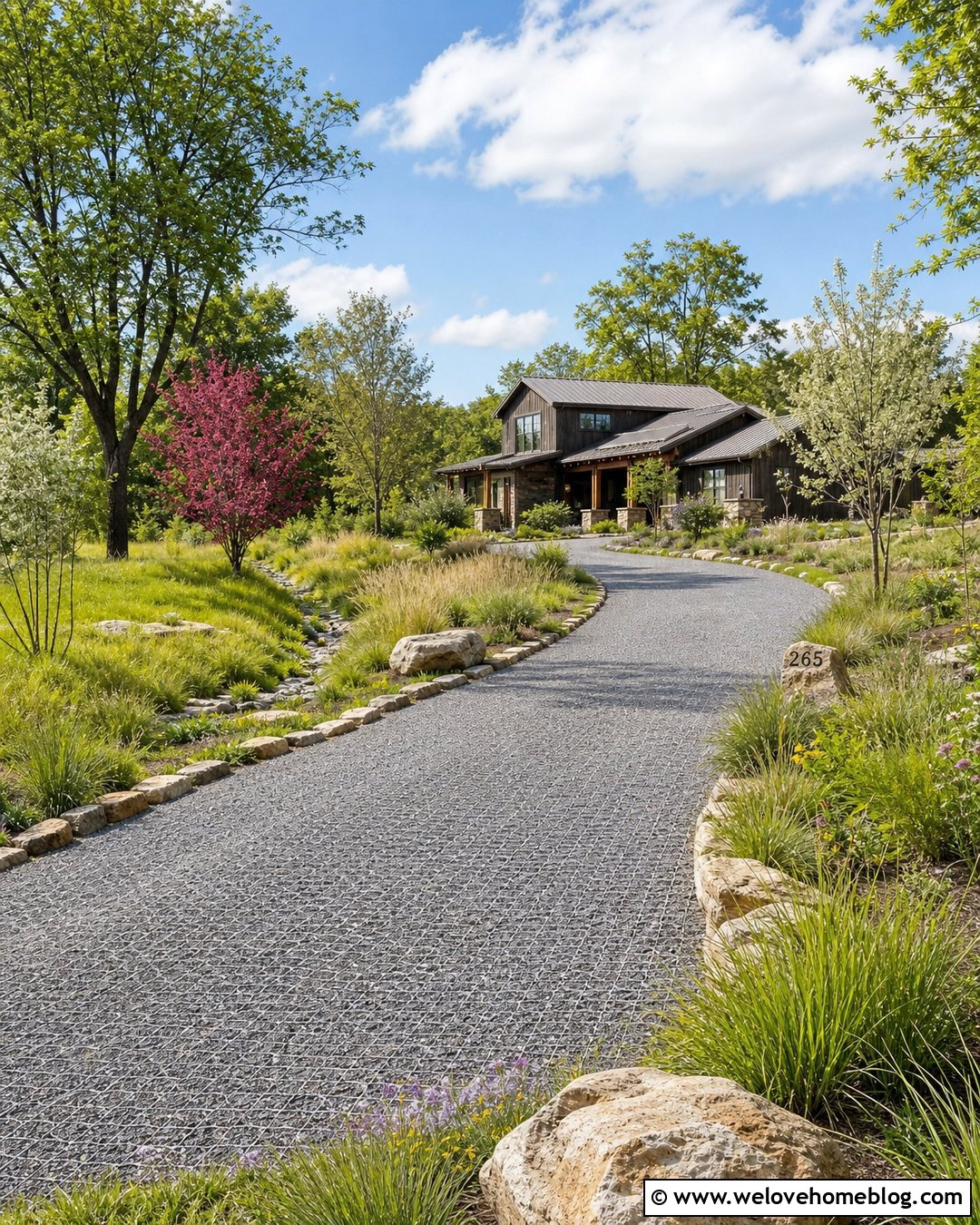
20. Small Redbud Tree Lined Concrete And Grass Driveway
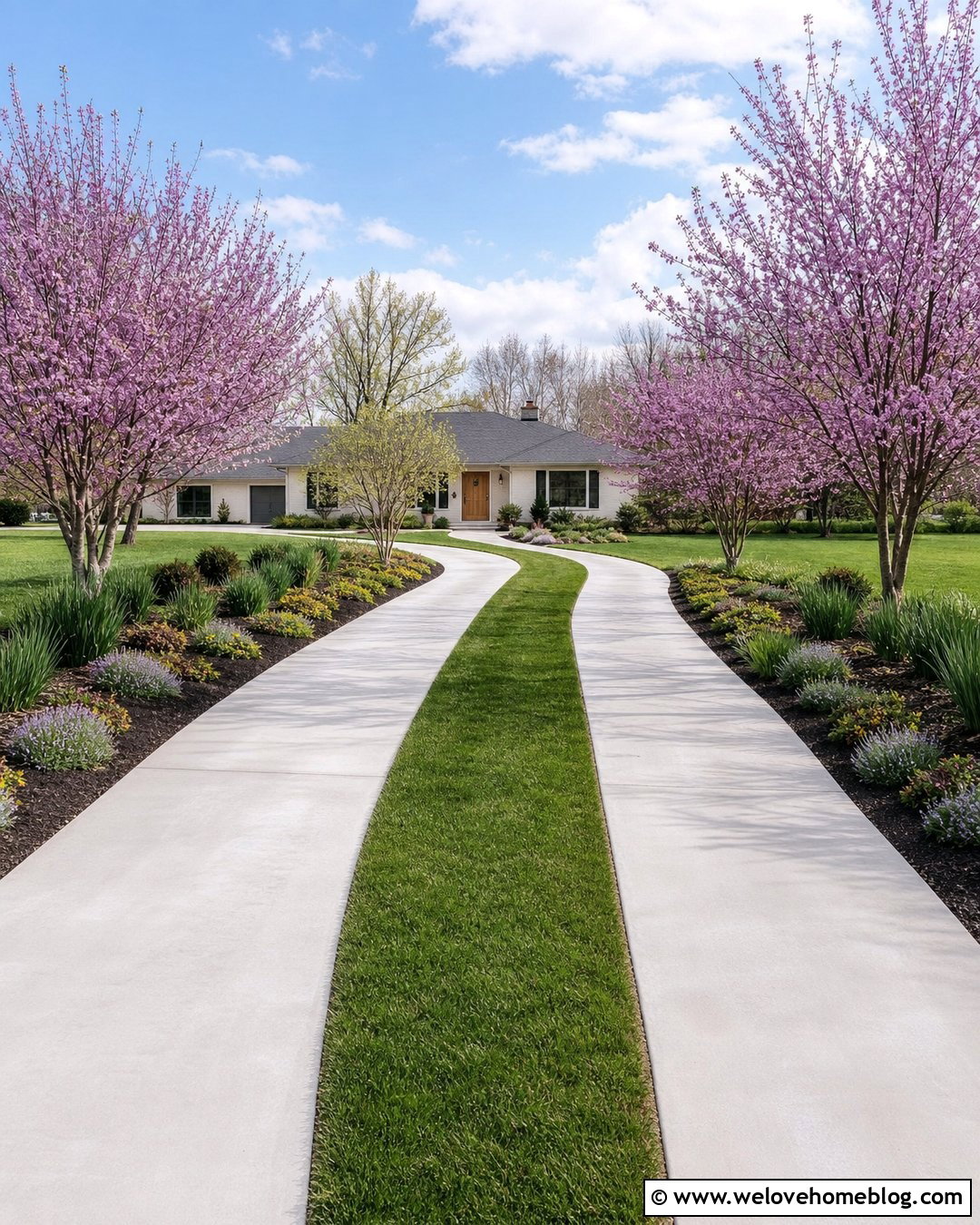
Concrete wheel strips separated by a central grass band can reduce the visual weight of a short driveway. Line the outer edges with compact redbud trees set within curved mulched beds, then repeat low grasses and flowering ground cover between them. The redbuds provide spring color and sculptural branching, while the green center connects the driveway to the surrounding lawn. This design works well with a bungalow, updated ranch, or casual farmhouse where a full-width slab might appear too harsh. Concrete strips require accurate placement for vehicle tires and a strong base to prevent shifting. Keep the grass center broad enough to maintain but low enough to avoid scraping vehicles. Together, the trees, planting beds, and green driveway layout create a soft garden entrance on a relatively small lot.
Conclusion:
The best small tree-lined driveway combines attractive repetition with realistic planning. Choose trees according to their mature height, canopy spread, roots, regional climate, sunlight, and available soil rather than their appearance at the nursery. Then coordinate them with a driveway material, border, shape, and lower planting layer that suits the house. Narrow cultivars work well in restricted spaces, while flowering ornamental trees can bring stronger seasonal color. Always protect road visibility, vehicle clearance, overhead utilities, drainage, and pedestrian access. Professional guidance may be worthwhile when pavement and planting areas sit close together. With those practical details addressed, these **20 Small Tree Lined Driveway Ideas** can help create a welcoming entrance that feels greener, more intentional, and comfortably scaled.

Related posts:
Leave a Reply