
A well-planned circular driveway can make daily arrivals easier while giving the front yard a more polished, welcoming look. The best 45 Circular Driveway Ideas combine a practical turning route with materials, borders, planting, and entrances that suit the home. Circular layouts can be built with concrete, gravel, asphalt, brick, natural stone, permeable pavers, and other durable surfaces. Changes in paving pattern, accent bands, lighting, and landscaping help divide broad paved areas and connect the driveway to the overall property design. () Before choosing a look, consider available frontage, drainage, vehicle movement, maintenance, and the location of paths and garage doors. Use these 45 Circular Driveway Ideas to find a complete design that fits your house, yard, climate, and budget.

1. Concrete Circular Driveway With Lawn Island
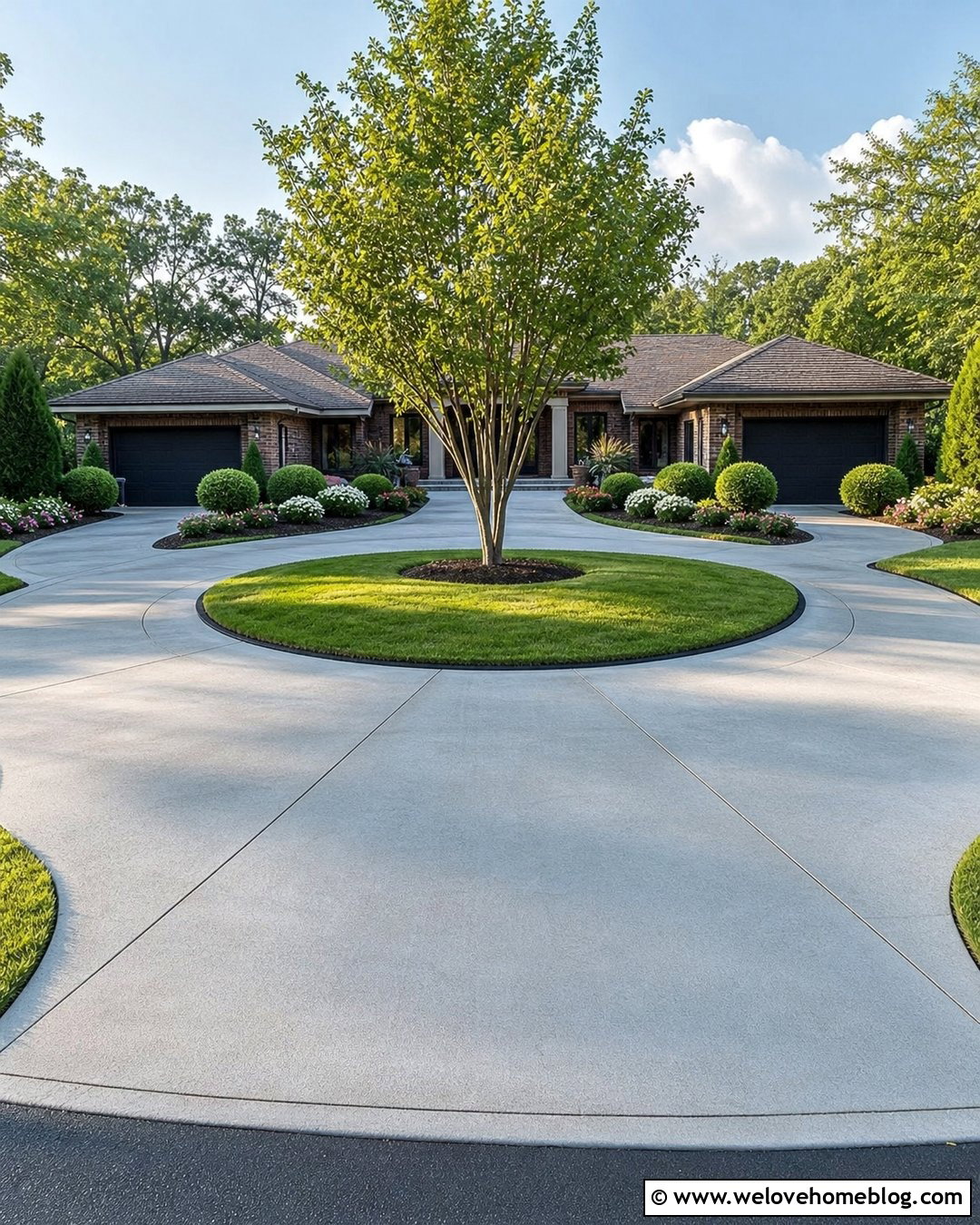
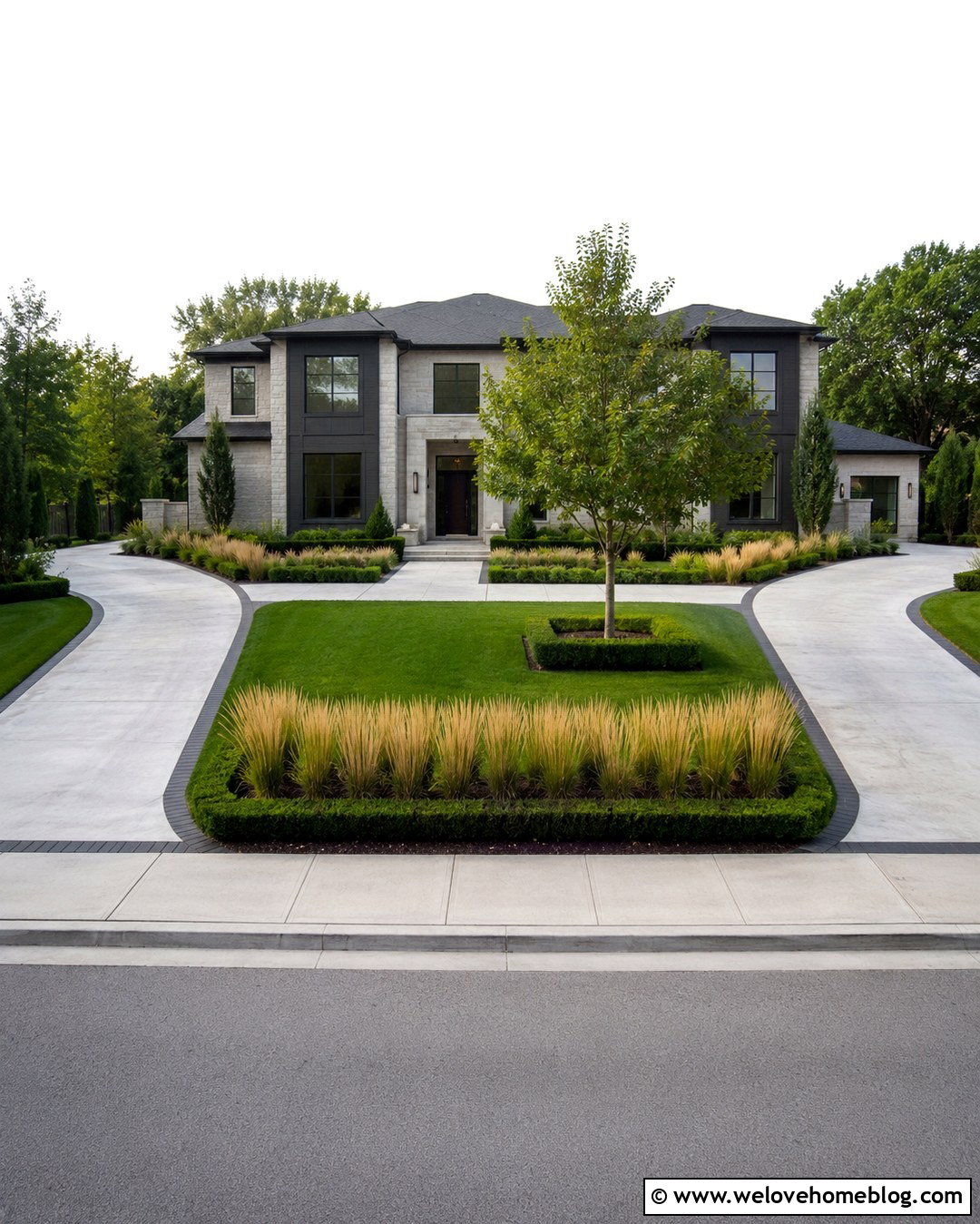
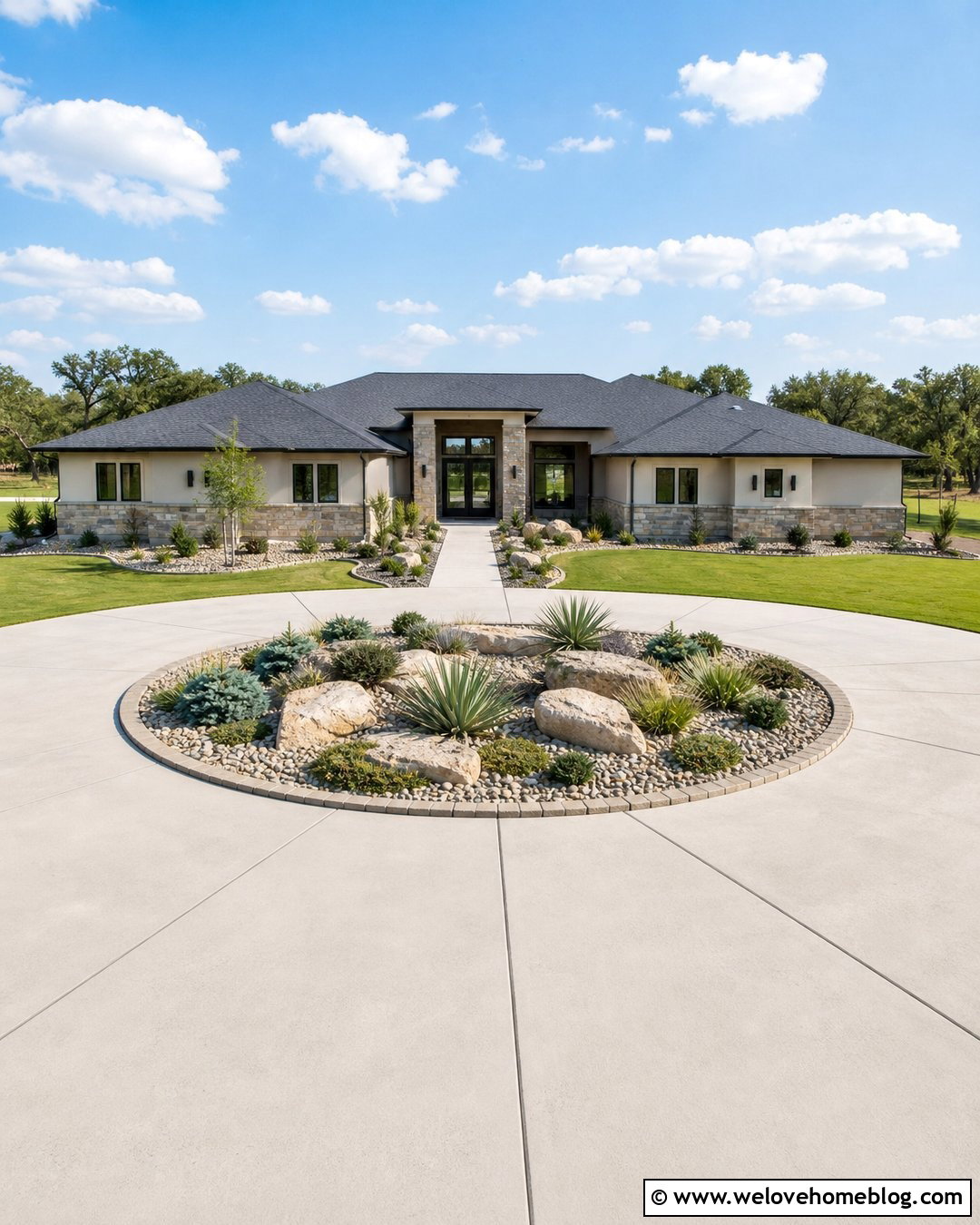
Smooth gray poured concrete creates a clean circular driveway that works especially well with ranch, traditional, and contemporary homes. A generous lawn island in the center softens the paved surface and keeps the front yard feeling open. Add a single ornamental tree or a small group of rounded shrubs without overcrowding the turning area. A brick or dark concrete border can sharpen the outer curve and connect the driveway to the house facade. Carry the same border material into the front walkway for a coordinated appearance. Control joints should follow the circular geometry instead of cutting across it randomly. This makes the surface look intentional while helping manage cracking. Keep planting low near both street entrances so drivers have clear views when entering or leaving.
2. Gravel Circular Driveway With Cobblestone Edging
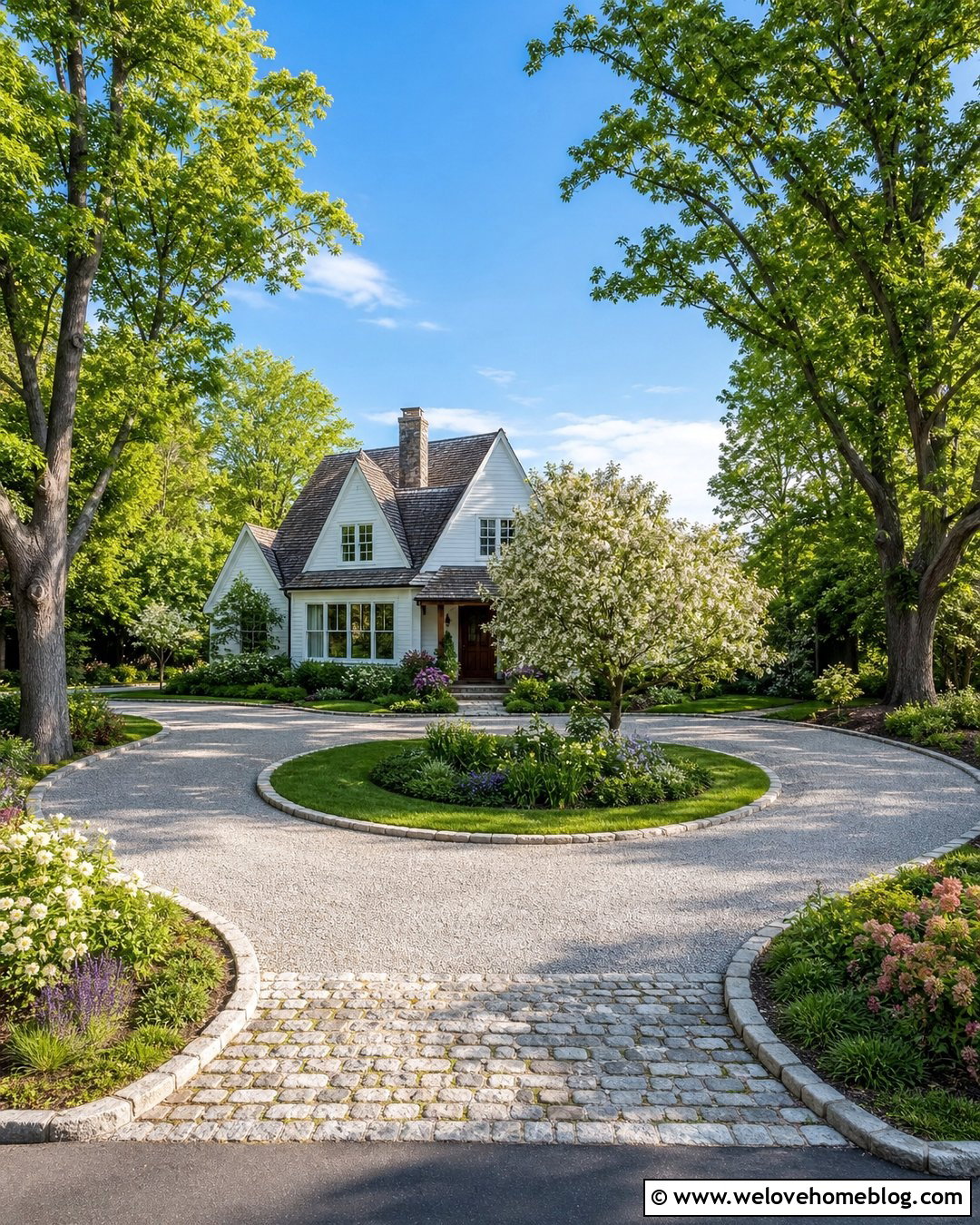
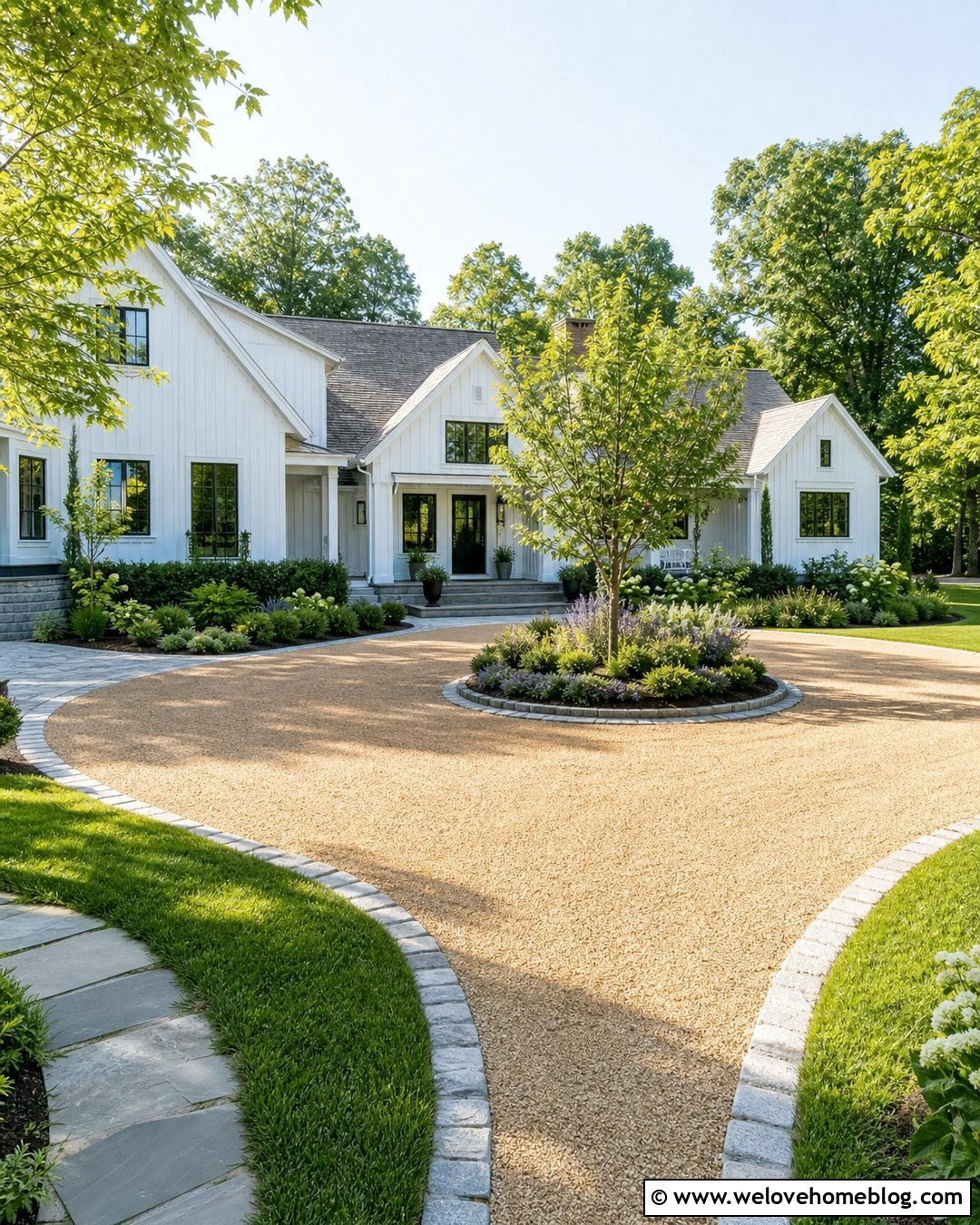
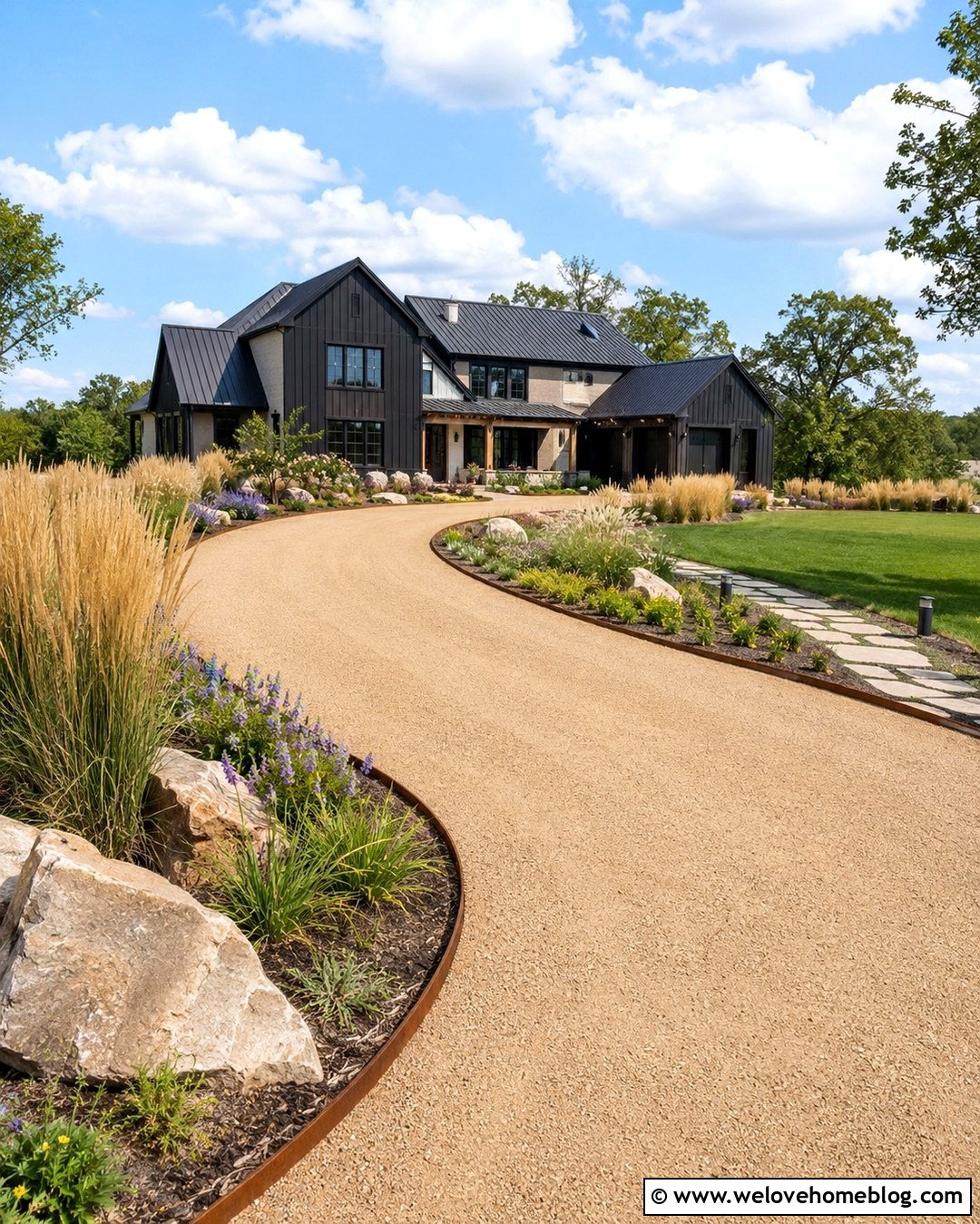
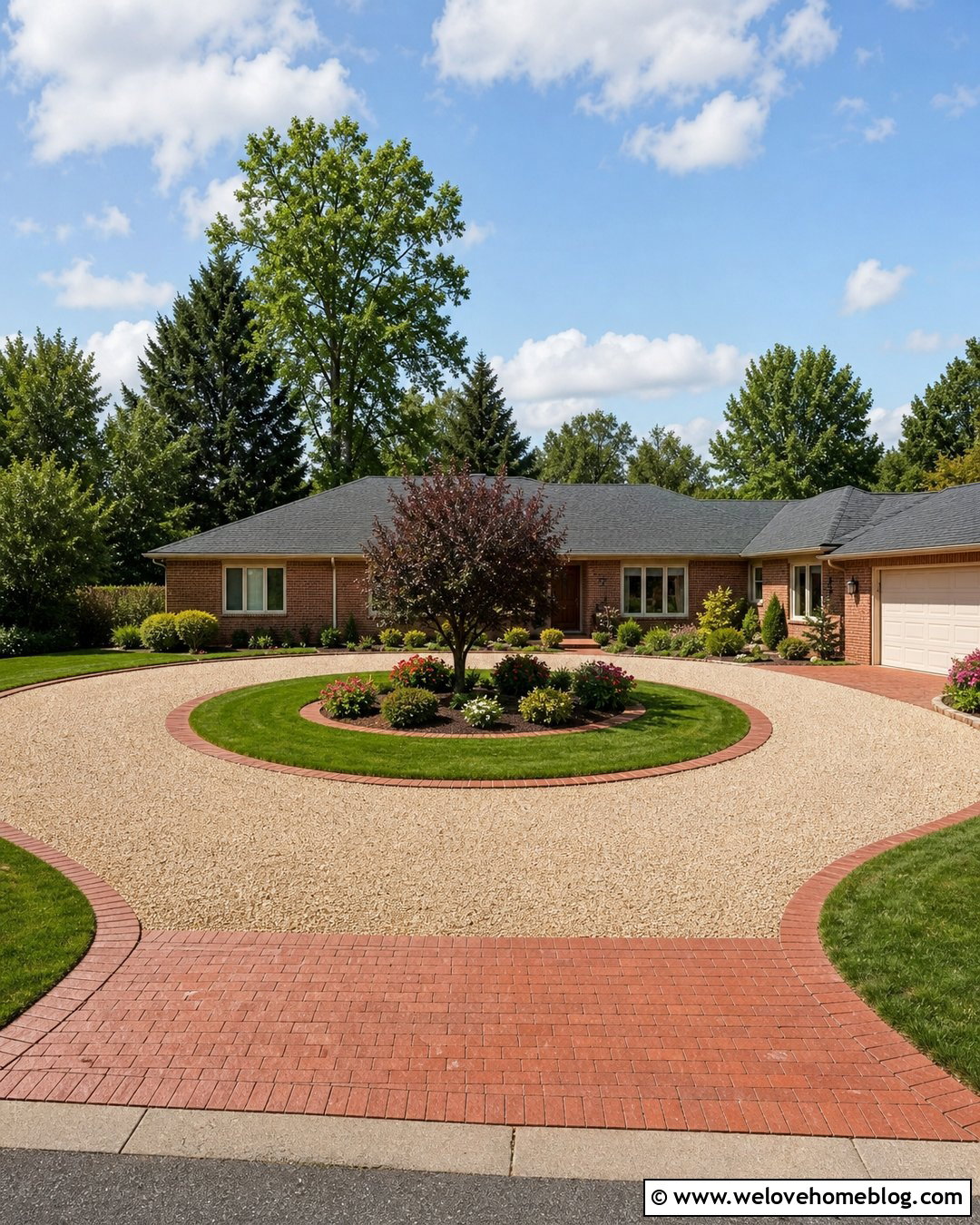
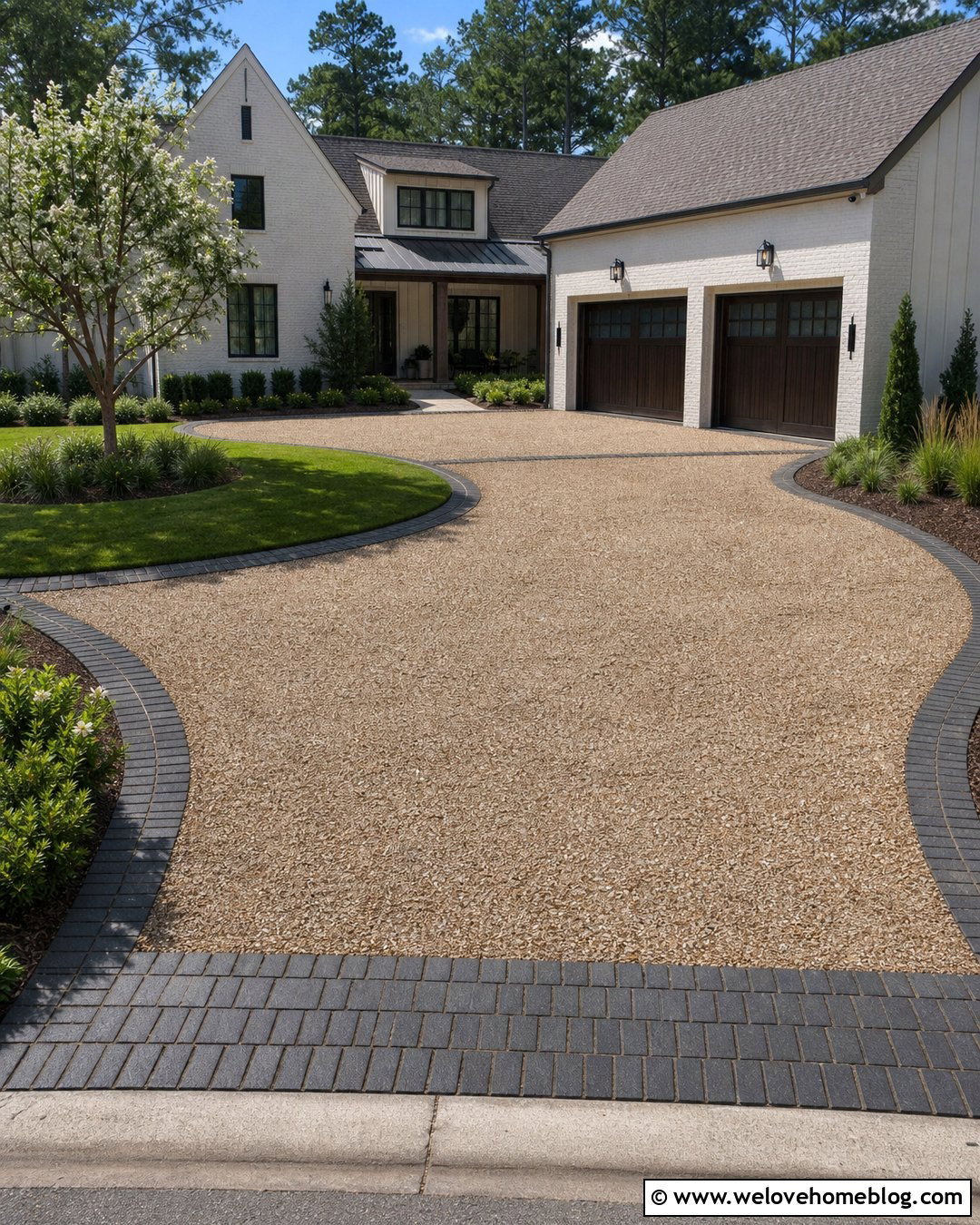
The soft crunch of gravel gives a circular driveway a relaxed country character. Use compacted gray or golden gravel over a properly prepared base, then contain it with durable cobblestone edging. The curved stone border prevents loose material from spreading into nearby lawn and planting beds. It also creates a more finished transition at both driveway entrances. Inside the circle, combine an open lawn with a small flowering tree and low perennials. Avoid dense shrubs close to the driving lane because gravel driveways need occasional raking and edge maintenance. A wider cobblestone apron near the road can reduce gravel migration and make the entrance more visible. This complete look suits farmhouses, cottages, Cape Cod homes, and wooded properties where an informal material feels natural.
3. Brick Circular Driveway For A Colonial House
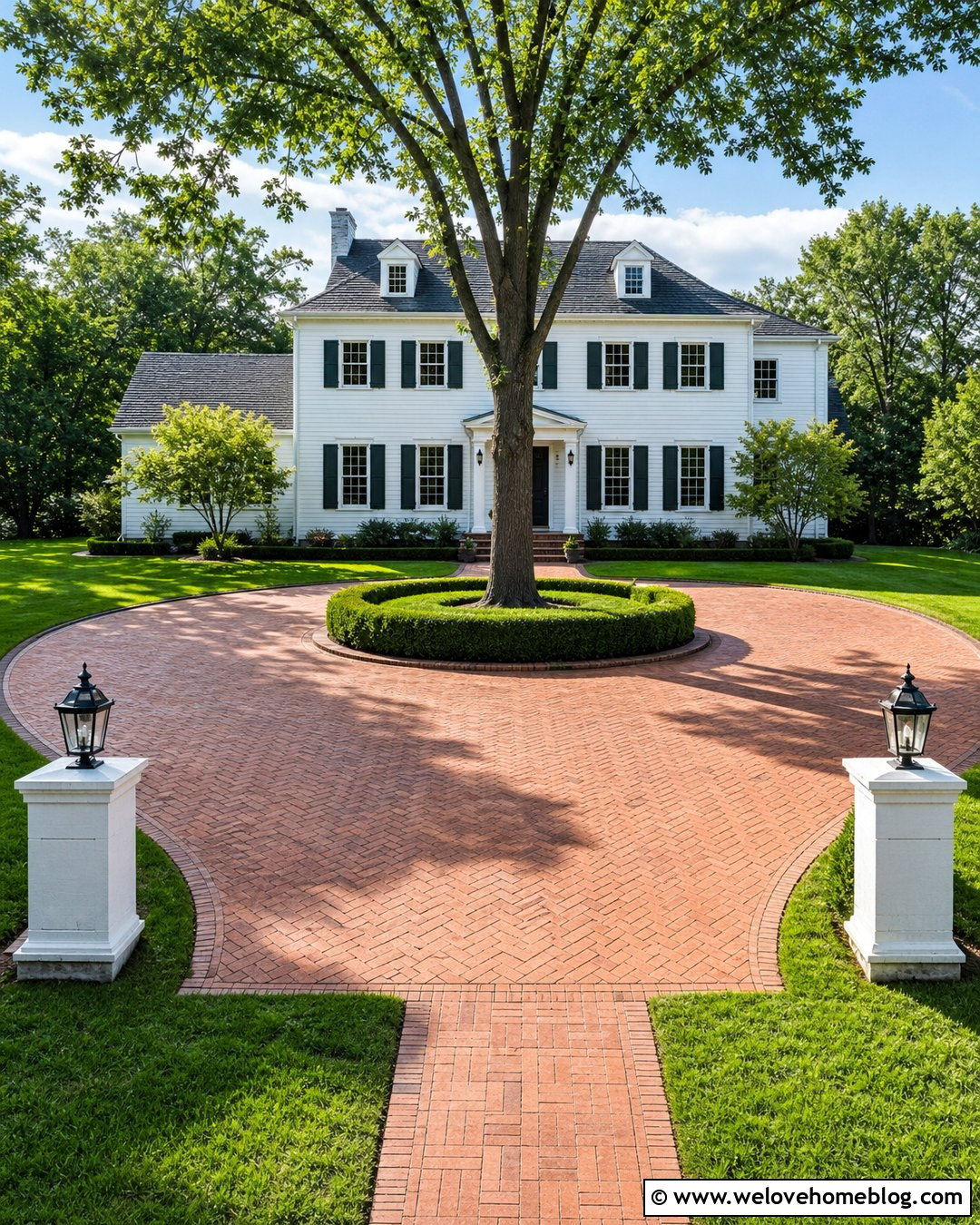
Red clay brick pavers naturally complement the balanced facade of a Colonial house. Lay the bricks in a herringbone pattern to create visual movement and support vehicle traffic, then define the curves with a soldier-course border. A symmetrical circular route can align one entrance with each side of the front elevation. In the center, use clipped boxwood, lawn, and a small deciduous tree to reinforce the home’s formal character. Match the front walkway to the driveway border rather than covering the entire path in another busy pattern. Traditional lantern-style fixtures can mark the entrances without dominating the design. Because brick color varies, choose a blend containing muted reds, browns, and charcoal tones. The result feels established, structured, and appropriate for historic-inspired architecture.
4. Paver Circular Driveway With Herringbone Pattern
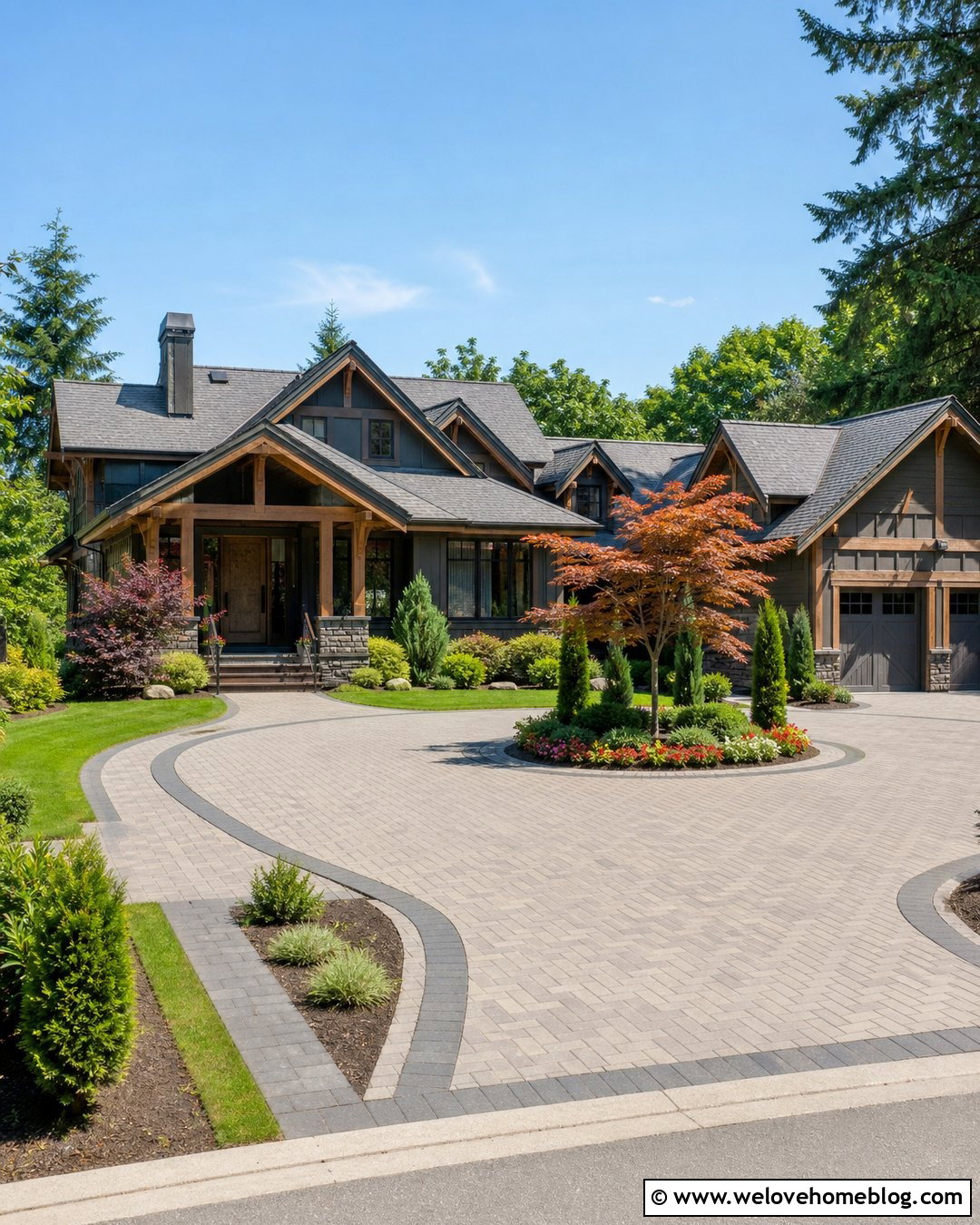
Concrete pavers laid in herringbone create a durable circular driveway with more detail than plain concrete. Choose a warm gray or taupe blend that coordinates with the roof, stone veneer, or front steps. A darker paver band around the inner and outer curves clearly defines the driving lane. In the island, repeat the same geometry with a round planting bed containing an ornamental tree, evergreen shrubs, and seasonal flowers. Keep the planting arrangement simple so it does not compete with the patterned surface. At the garage connection, widen the pavers slightly to make turning and parking more comfortable. A matching walkway can branch from the inner curve toward the front door. This design works with craftsman, transitional, and upscale suburban homes.
5. Asphalt Circular Driveway With Stone Border
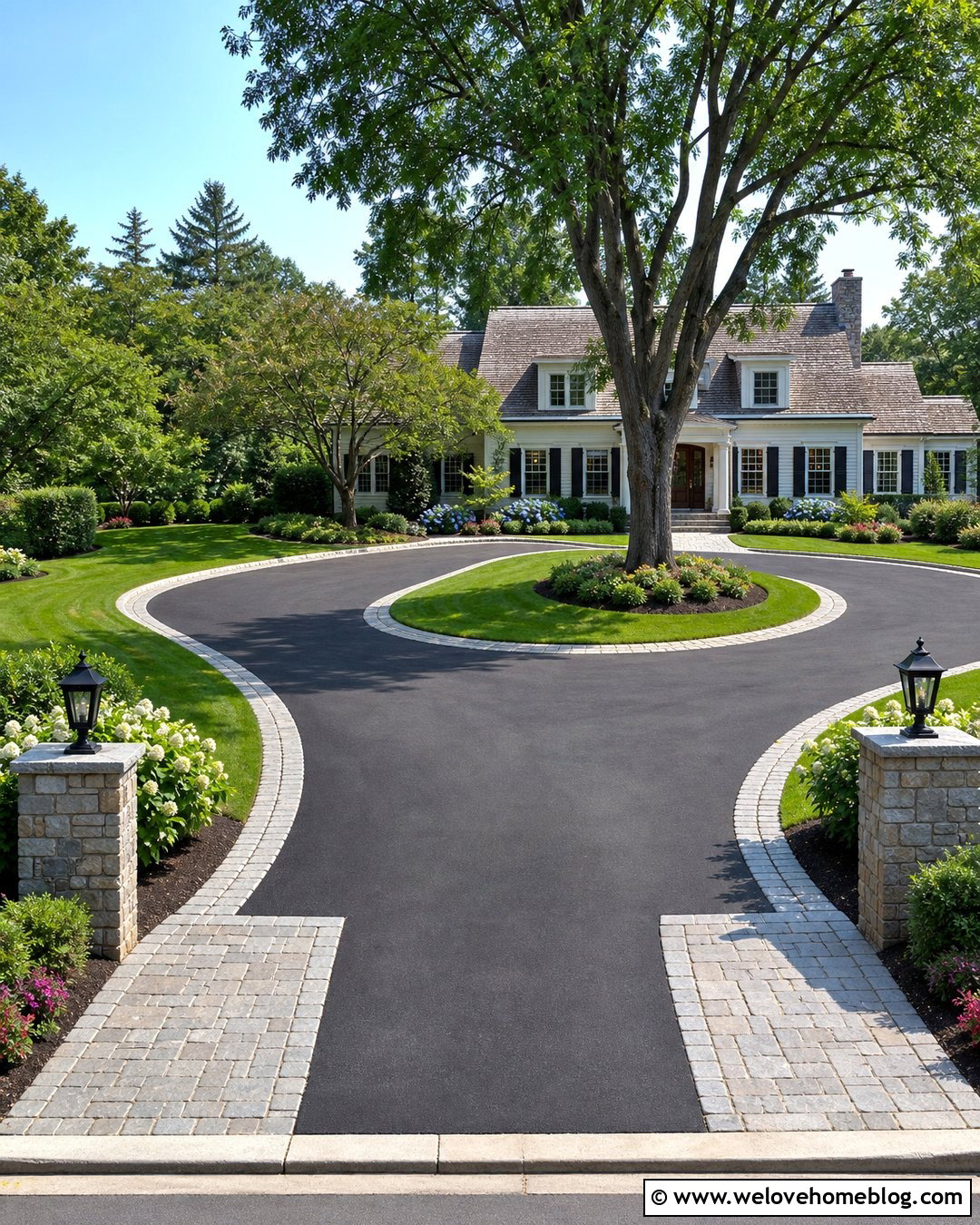
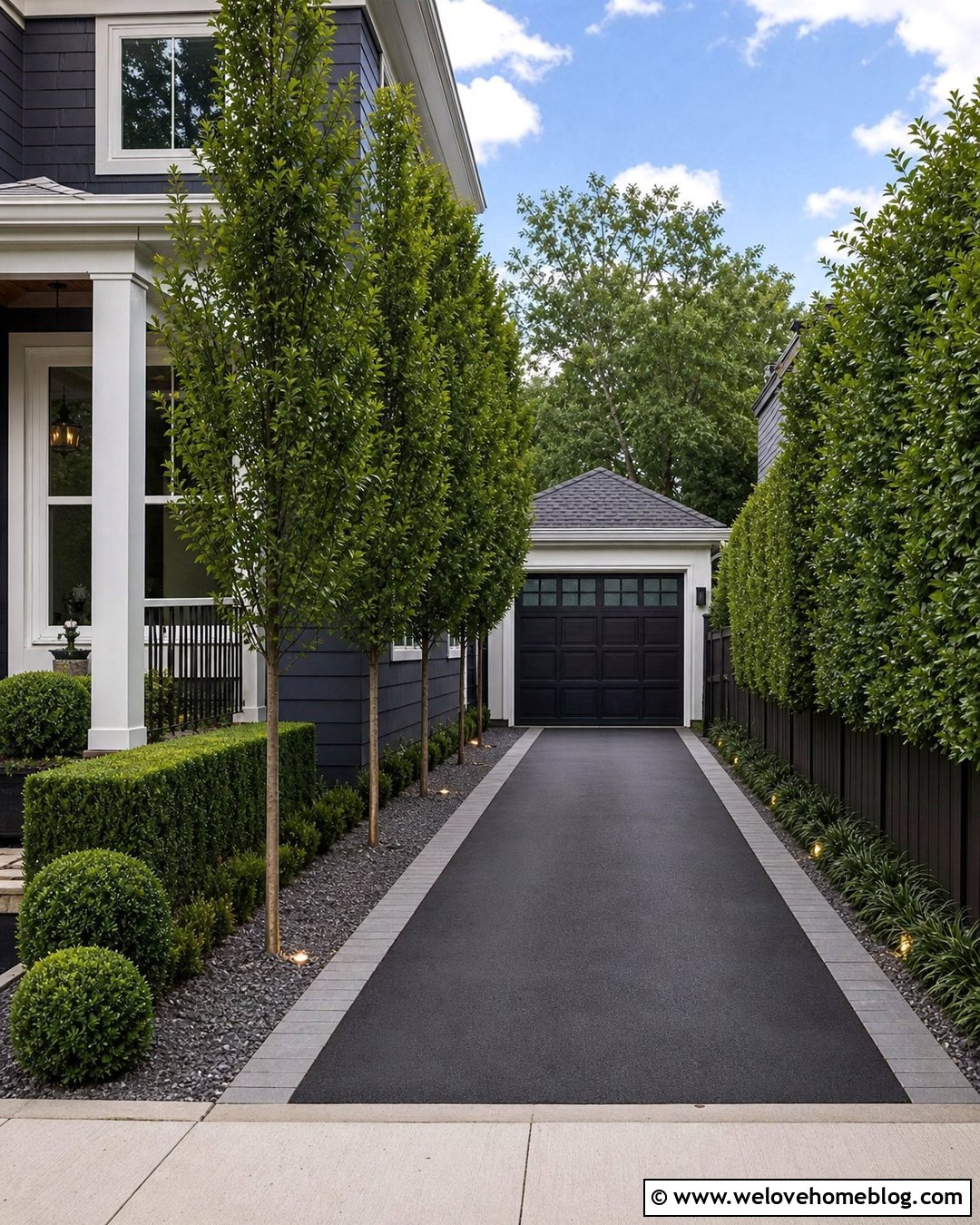
Black asphalt provides a smooth, understated surface that allows landscaping and architecture to take the visual lead. Give an asphalt circular driveway a more permanent appearance by installing a border of granite setts, concrete pavers, or natural fieldstone. The lighter edge makes the curved layout easier to read and reduces the look of one uninterrupted black surface. A broad lawn island planted with a shade tree balances the dark material. Along the outer edge, use mulch beds with flowering shrubs and low ornamental grasses. A stone apron at each street entrance can create an attractive transition while protecting heavily used edges. This combination is practical for a long driveway because asphalt covers large areas efficiently, while the stone border supplies character and a custom finish.
6. Exposed Aggregate Circular Driveway
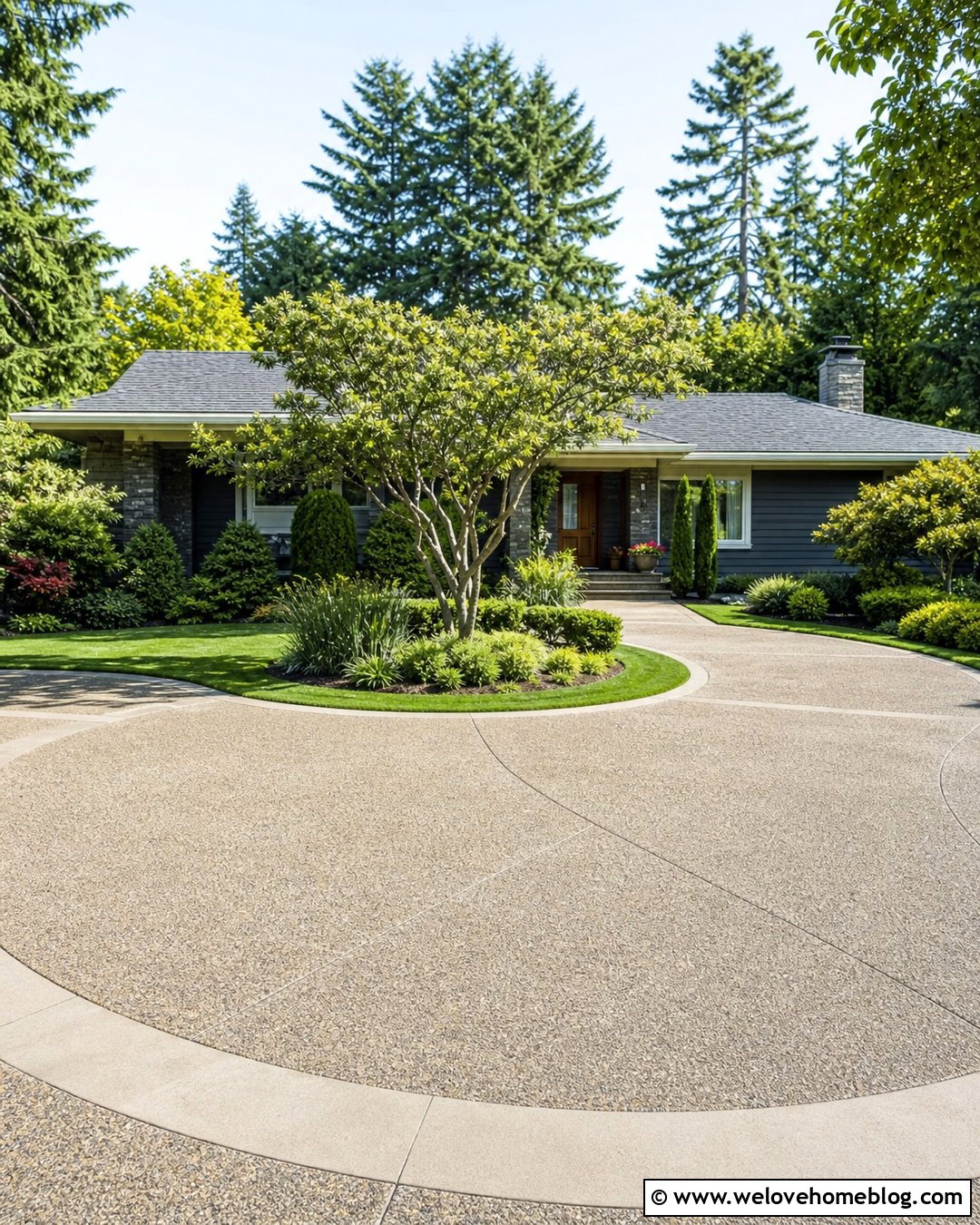
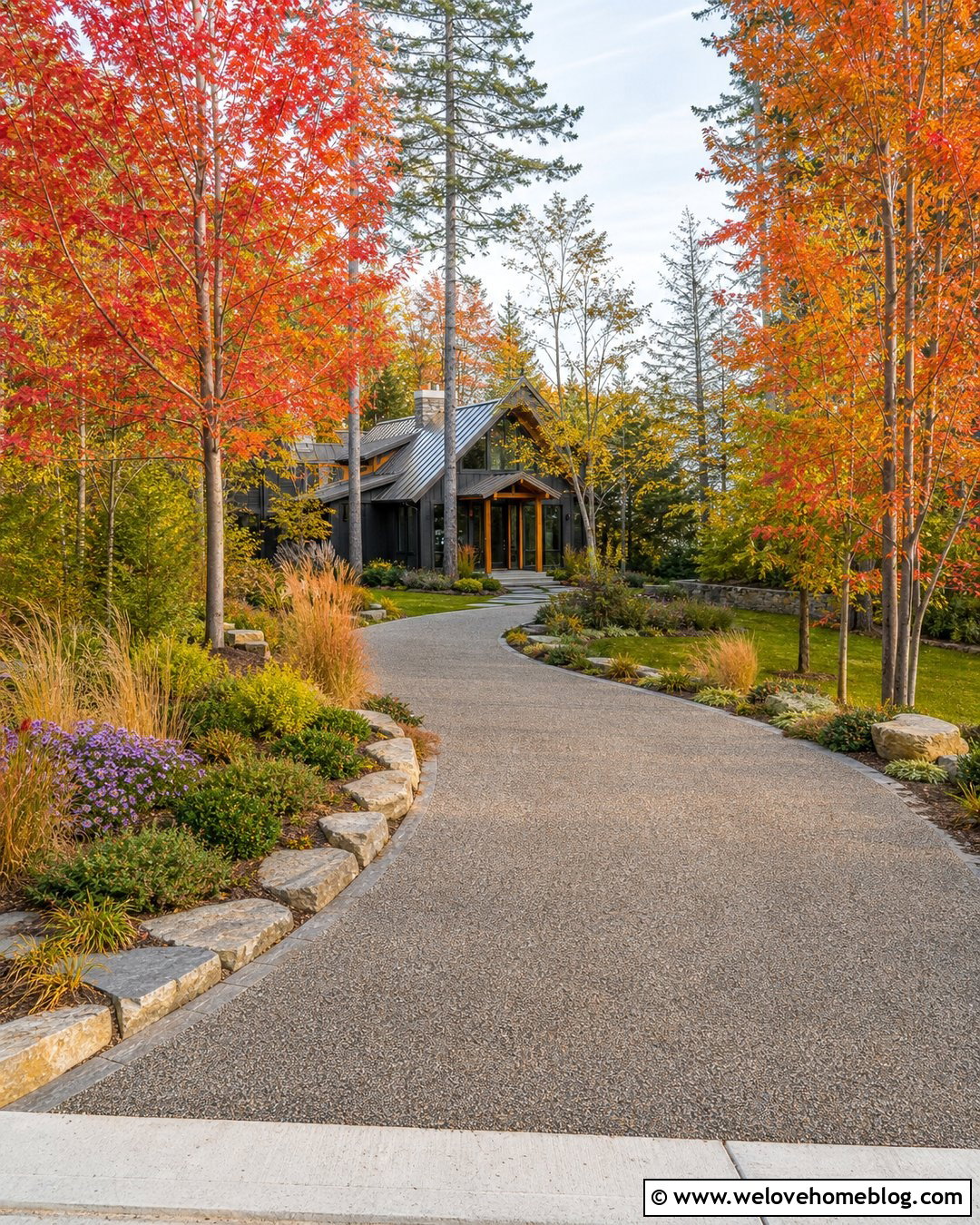
Exposed aggregate concrete adds texture and subtle color without requiring an elaborate paving pattern. Choose an aggregate blend with tan, cream, gray, or brown stones that relate to the house exterior. A smooth poured-concrete band around the inner and outer curves provides contrast and makes the circular shape look crisp. The center island can feature layered evergreens, flowering perennials, and one sculptural tree. Leave a clear buffer between plants and pavement so branches do not scratch vehicles. Exposed aggregate also pairs well with a simple concrete walkway and broad front steps. Use carefully placed expansion joints that follow the curve and divide the surface into balanced sections. This complete driveway look feels polished but not overly formal, making it suitable for ranch, contemporary, and midcentury homes.
7. Permeable Paver Circular Driveway
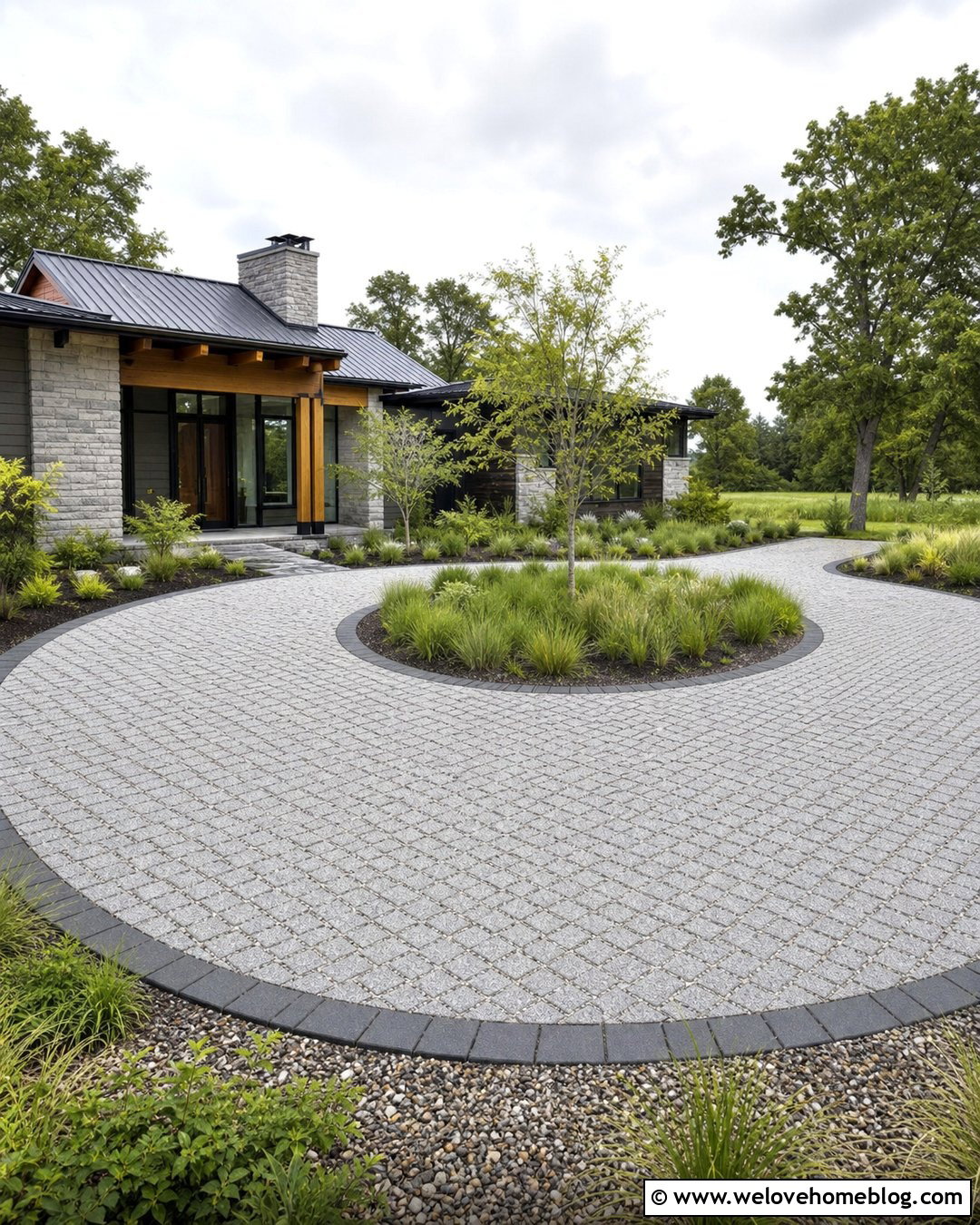
A permeable paver circular driveway combines a refined appearance with a surface designed to let water pass through its joints. Select driveway-rated concrete pavers in a medium gray blend and fill the wider joints with clean drainage aggregate. A charcoal border can define the route and prevent the pattern from appearing unfinished. Plant the center island with native grasses, compact shrubs, and a small tree adapted to local conditions. The restrained landscaping complements the ecological character of the paving without making the yard look wild. Connect roof runoff and surrounding grading to an appropriate drainage plan rather than directing water toward the house. Permeable systems require correct excavation, base materials, and installation, so professional design is valuable. The finished look suits modern and environmentally focused homes.
8. Resin-Bound Circular Driveway With Brick Edging
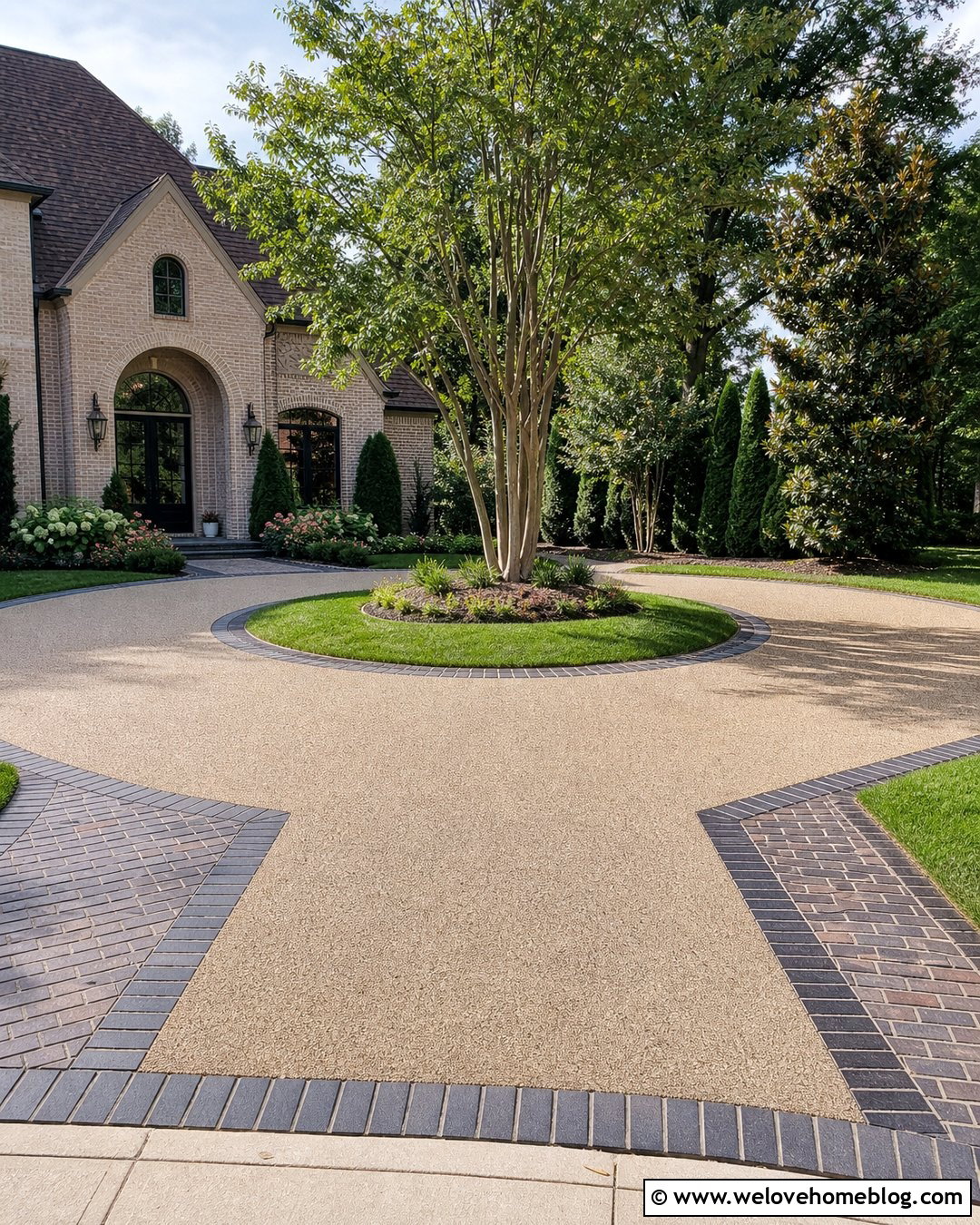
Resin-bound gravel produces a smooth, uniform circular driveway while retaining the attractive appearance of small natural stones. A warm beige or golden finish can brighten a shaded front yard and complement brick, stucco, or light siding. Use red or charcoal brick edging around both curves to contain the surface and emphasize the driveway shape. The center island can include a neatly edged lawn, a multi-stem tree, and low flowering shrubs. Continue the resin-bound finish into the entry path for a seamless approach to the front door. At the street, add a wider brick apron that visually anchors each entrance. The material should be installed over a stable, suitable base with drainage addressed from the beginning. This design creates a tidy, low-clutter appearance for traditional or transitional homes.
9. Cobblestone Circular Driveway With Formal Landscaping
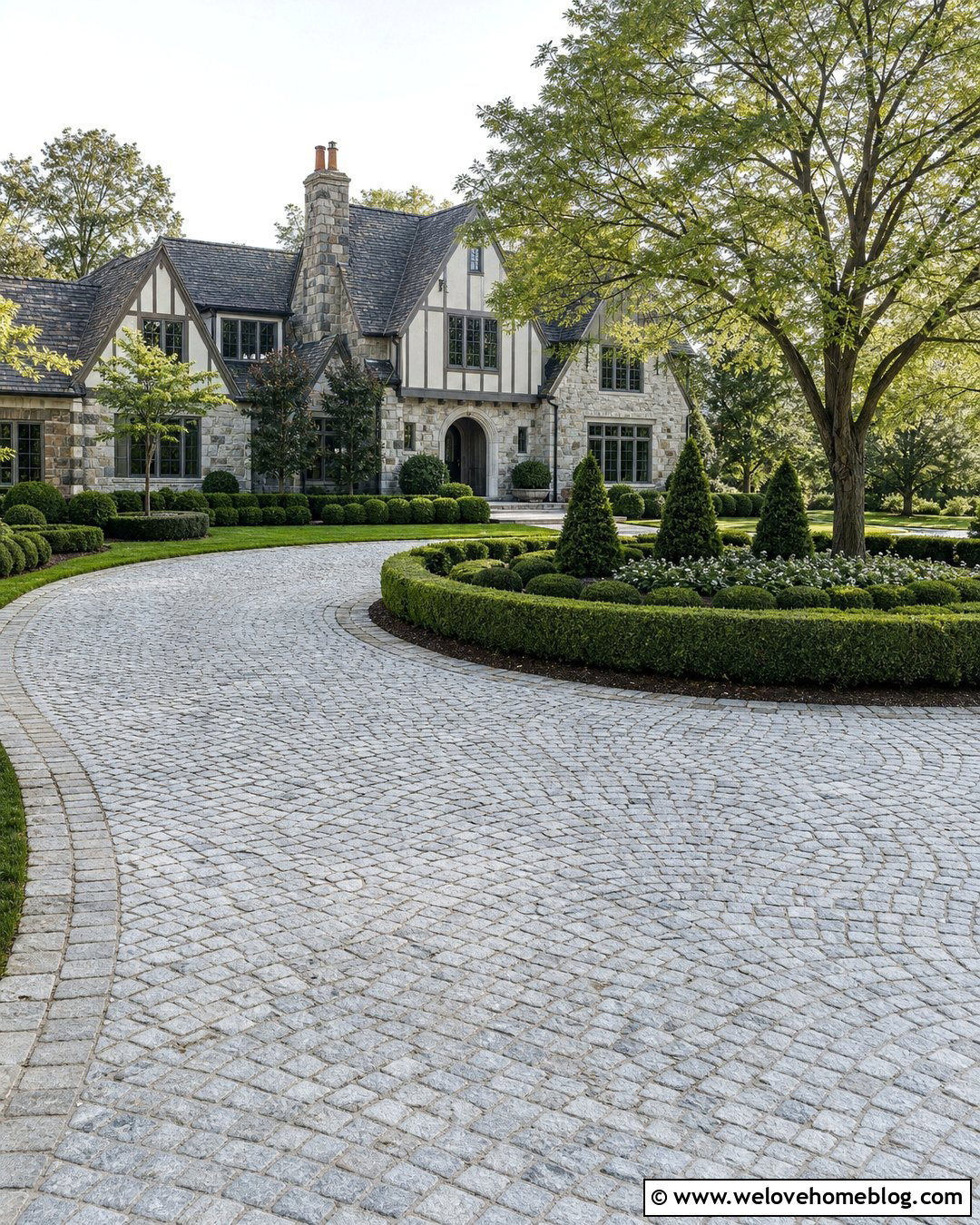
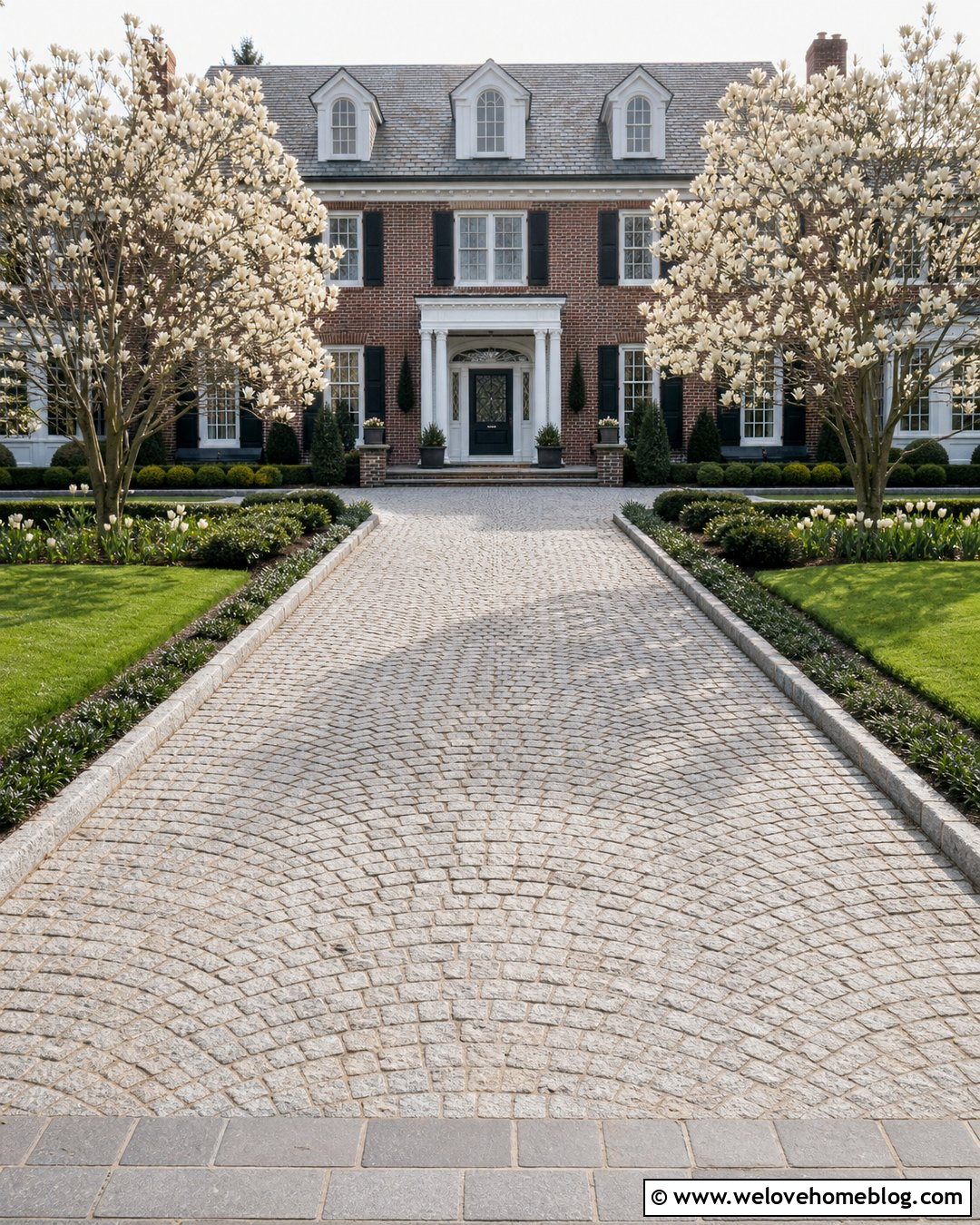
Full cobblestone paving creates an impressive circular driveway with deep texture and old-world character. Gray granite cobbles work beautifully with stone houses, Tudor architecture, and traditional estates. Lay the stones in curved fan patterns so the paving follows the movement of the driveway. A flush cobblestone border can separate the driving lane from a formal center garden. Inside the circle, use a balanced arrangement of clipped hedges, conical evergreens, and a central urn or small tree. Repeat the hedge line near the house to connect the island with the wider landscape. Since cobblestone can produce an uneven surface, careful installation and tight joints are essential around pedestrian crossing points. A smoother stone walkway can provide comfortable access from the driveway to the front entrance.
10. Stamped Concrete Circular Driveway
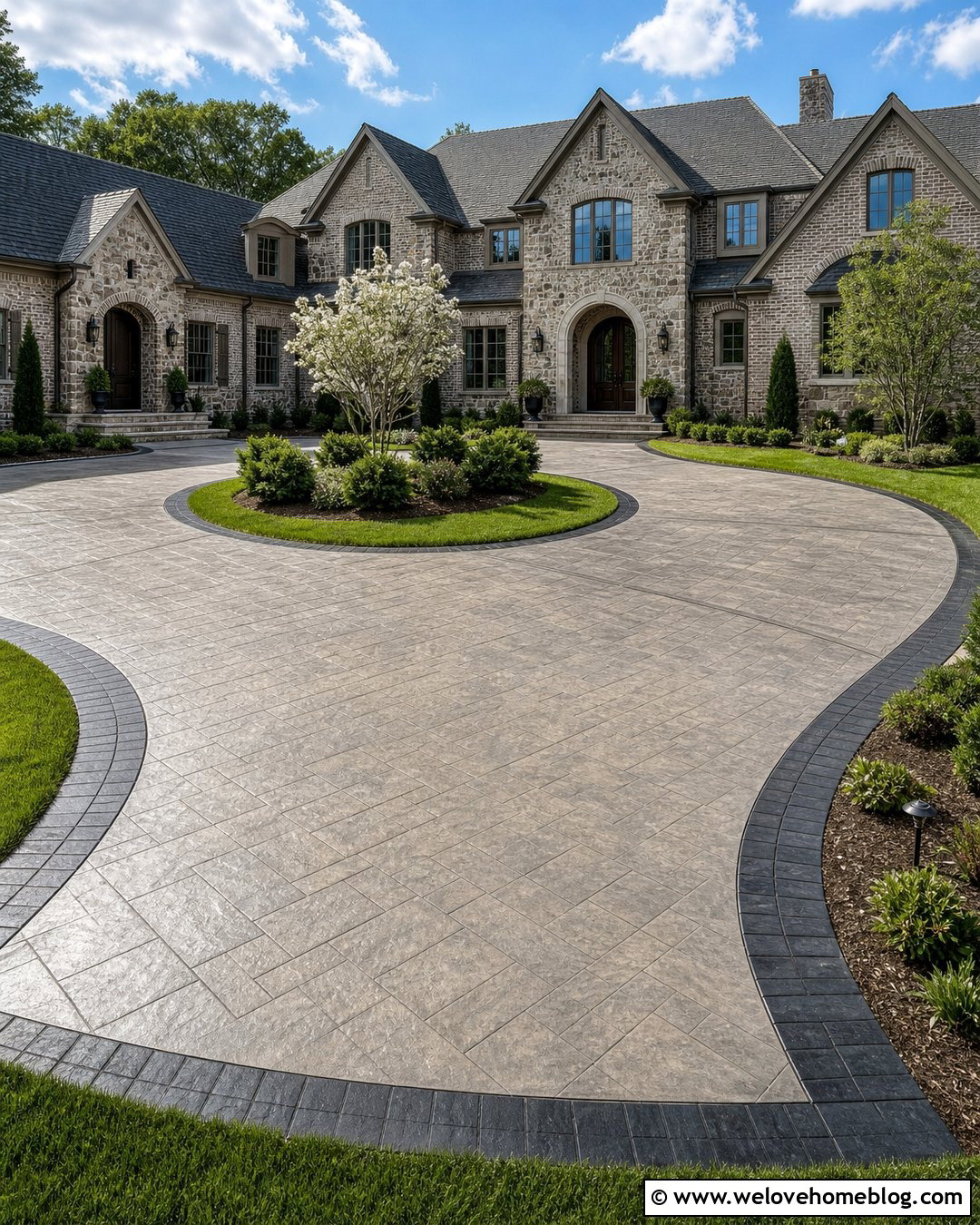
Stamped concrete can give a circular driveway the look of stone or pavers while maintaining a continuous concrete surface. Choose a restrained ashlar slate or cobblestone pattern in soft gray, taupe, or sandstone tones. Avoid extreme color variation, which can make a large driveway appear overly busy. A darker integral-color band along the curves creates definition and highlights the circular route. Build a simple center island with lawn, evergreen shrubs, and one flowering tree to balance the detailed surface. Saw-cut joints should be incorporated into the stamped pattern whenever possible. Apply a compatible nonslip finish, particularly in wet or freezing climates. When the colors coordinate with the house foundation and front steps, stamped concrete creates an upscale entrance without requiring multiple unrelated materials.
11. Pea Gravel Circular Driveway For A Farmhouse
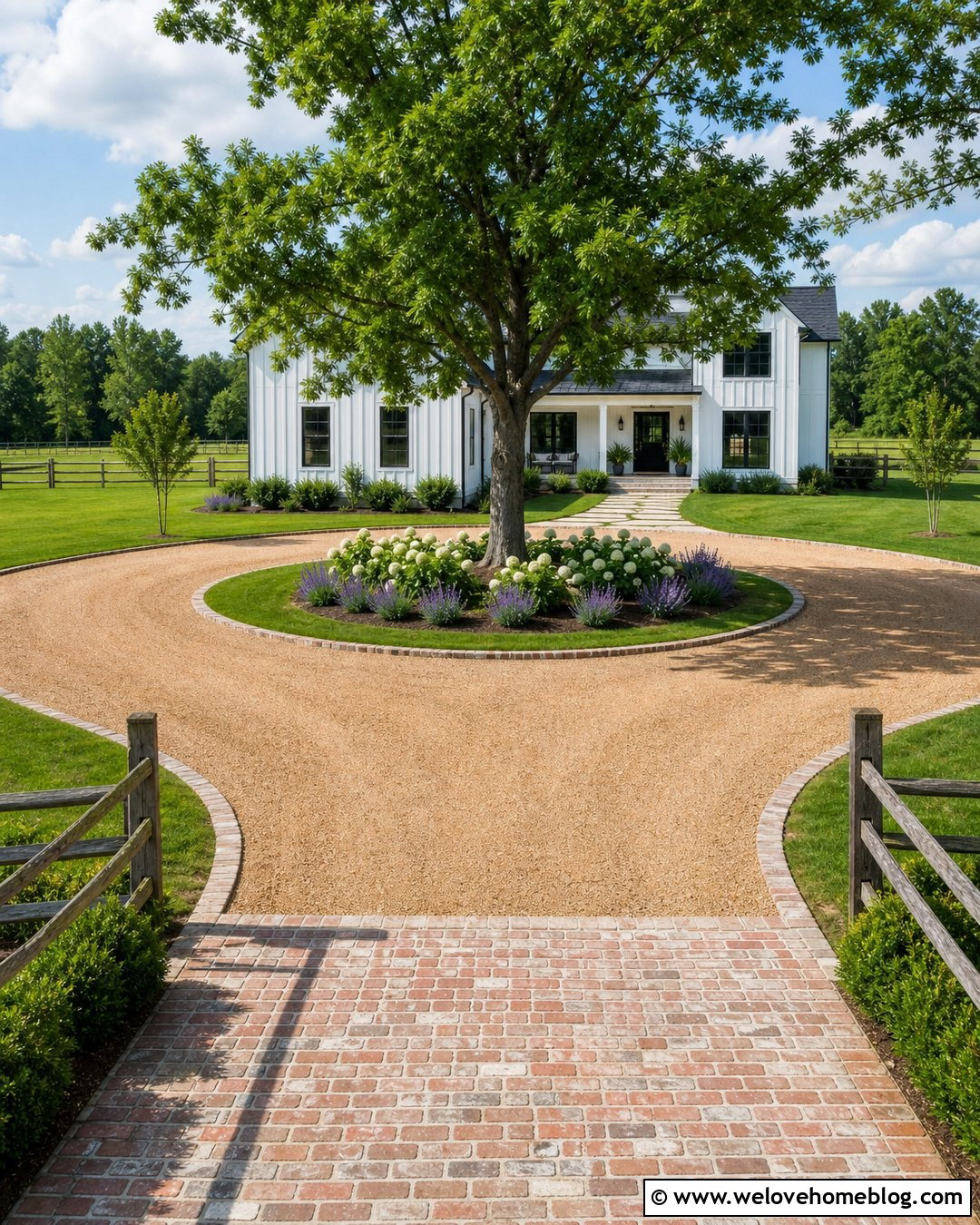
Warm pea gravel brings an inviting, casual texture to a farmhouse circular driveway. Use compacted, angular base stone below the decorative surface so the route remains stable under regular traffic. Because rounded pea gravel can move, contain it with a strong brick, steel, or stone edge. A wide reclaimed-brick apron at the street adds character and helps keep loose gravel within the property. In the center island, plant a shade tree surrounded by hydrangeas, catmint, and simple lawn. White fence sections or low fieldstone walls can frame the entrances without closing off the view. Keep the farmhouse walkway distinct by using brick or flagstone from the inner curve to the porch. The combination feels relaxed, practical, and closely connected to the surrounding landscape.
12. Crushed Granite Circular Driveway With Desert Landscaping
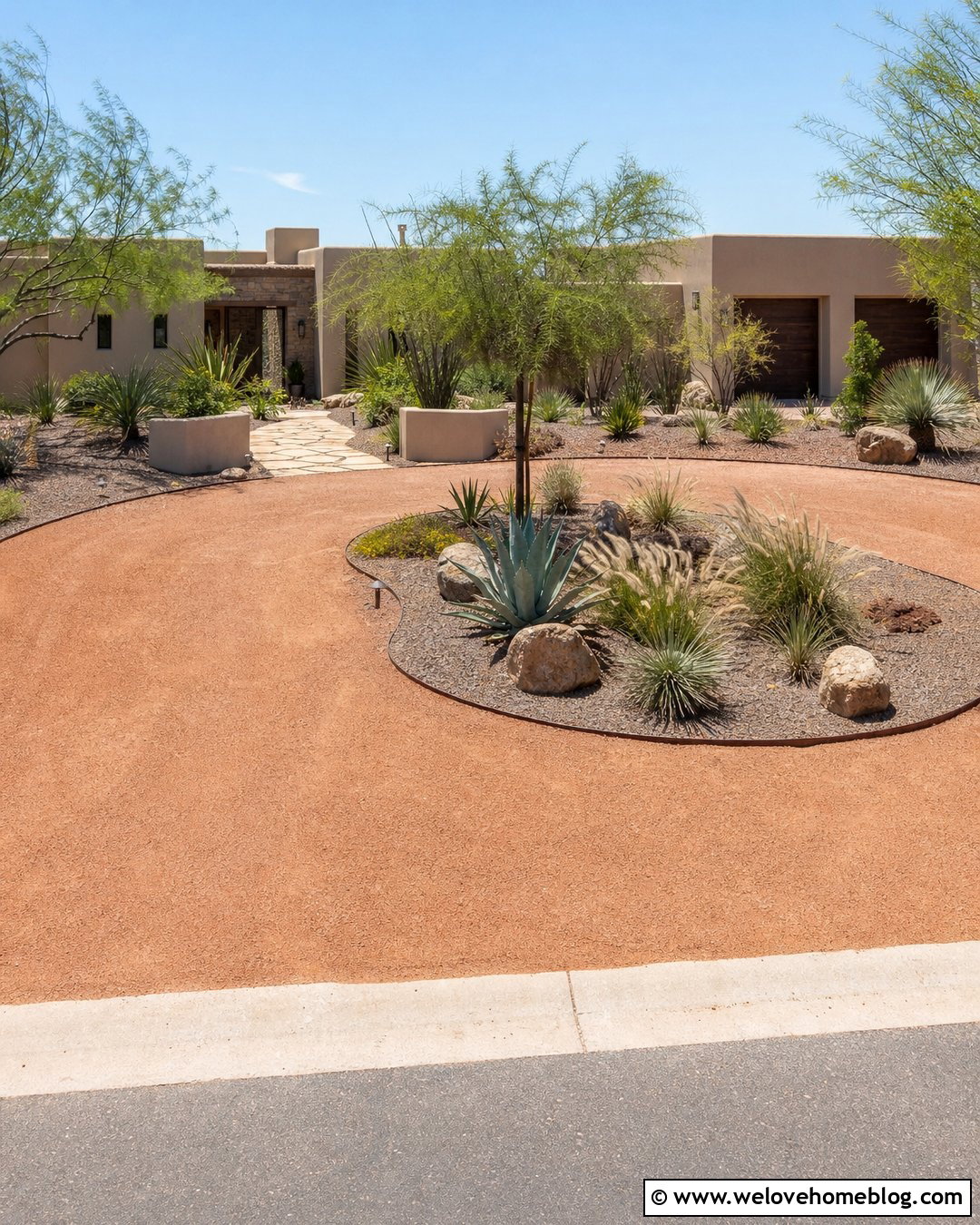
Decomposed or crushed granite creates a natural-looking circular driveway for Southwestern, desert modern, and adobe-inspired homes. Choose a stabilized rust, tan, or muted gold surface that coordinates with the regional soil and stucco facade. Use steel edging or low concrete curbing to hold the sweeping curves. The center island can become a drought-tolerant landscape with agave, yucca, red yucca, ornamental grasses, and carefully placed boulders. Leave generous open gravel areas between plants so the composition remains uncluttered. A concrete or flagstone walkway can cross the inner curve and lead directly to the front door. At both entrances, low address walls made from matching stucco improve visibility. Proper grading keeps stormwater moving away from the house and prevents erosion along the driveway edges.
13. Shell Circular Driveway For A Coastal House
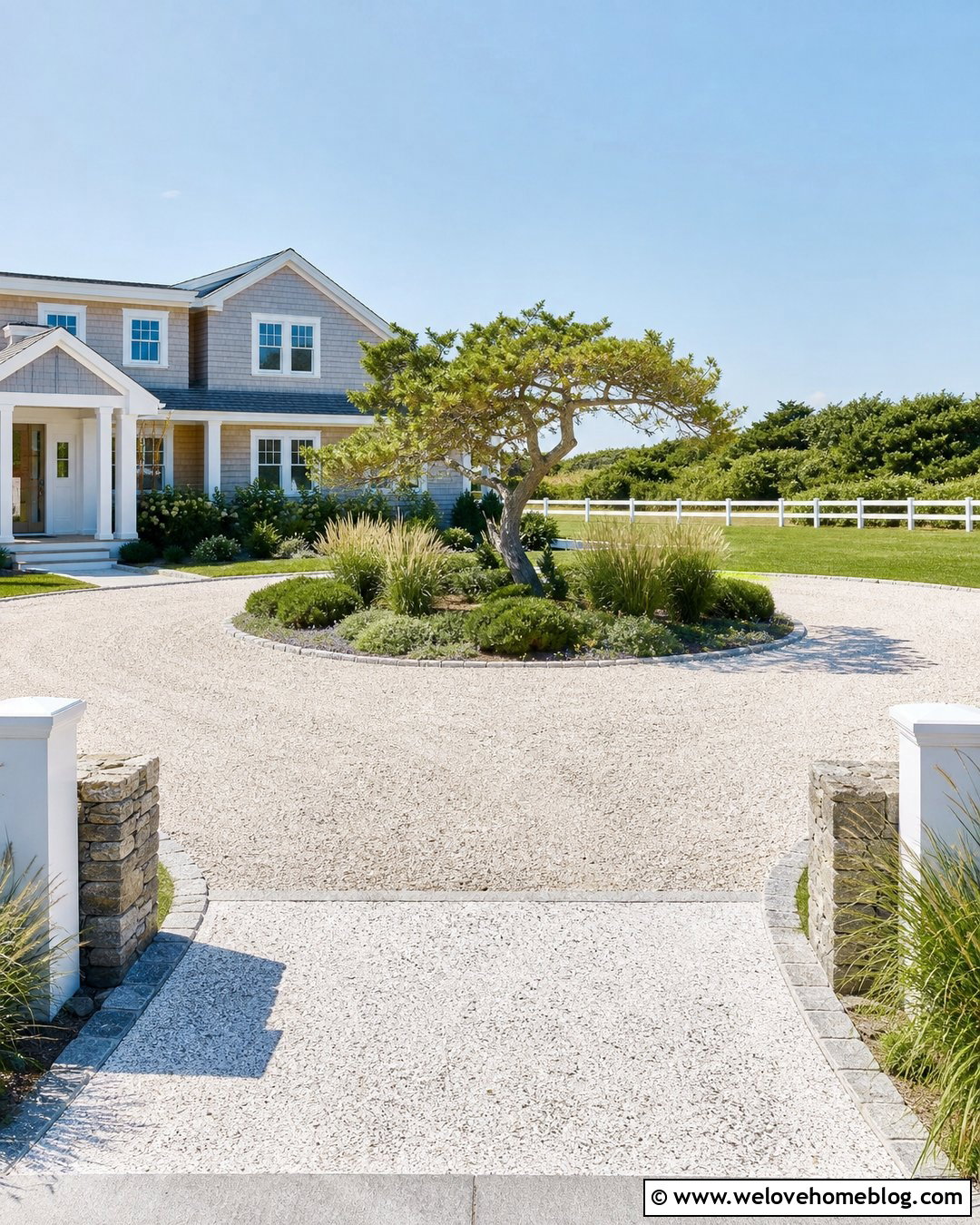
A pale crushed-shell circular driveway reflects sunlight and creates an easygoing coastal appearance. It pairs naturally with a beach cottage, coastal farmhouse, or light-colored shingle house. Install the shell over a compacted base and contain it with concrete, brick, or weathered granite edging. A broad entrance apron can reduce loose material near the street. Fill the center island with salt-tolerant ornamental grasses, compact evergreen shrubs, and a wind-shaped native tree suited to the local climate. Use a simple boardwalk-inspired path or pale concrete walkway to connect the drive with the porch. Blue-gray shutters, white fencing, and restrained planting reinforce the coastal palette without becoming overly themed. Regular raking and occasional replenishment help the shell surface remain even, bright, and visually defined.
14. Grass Paver Circular Driveway
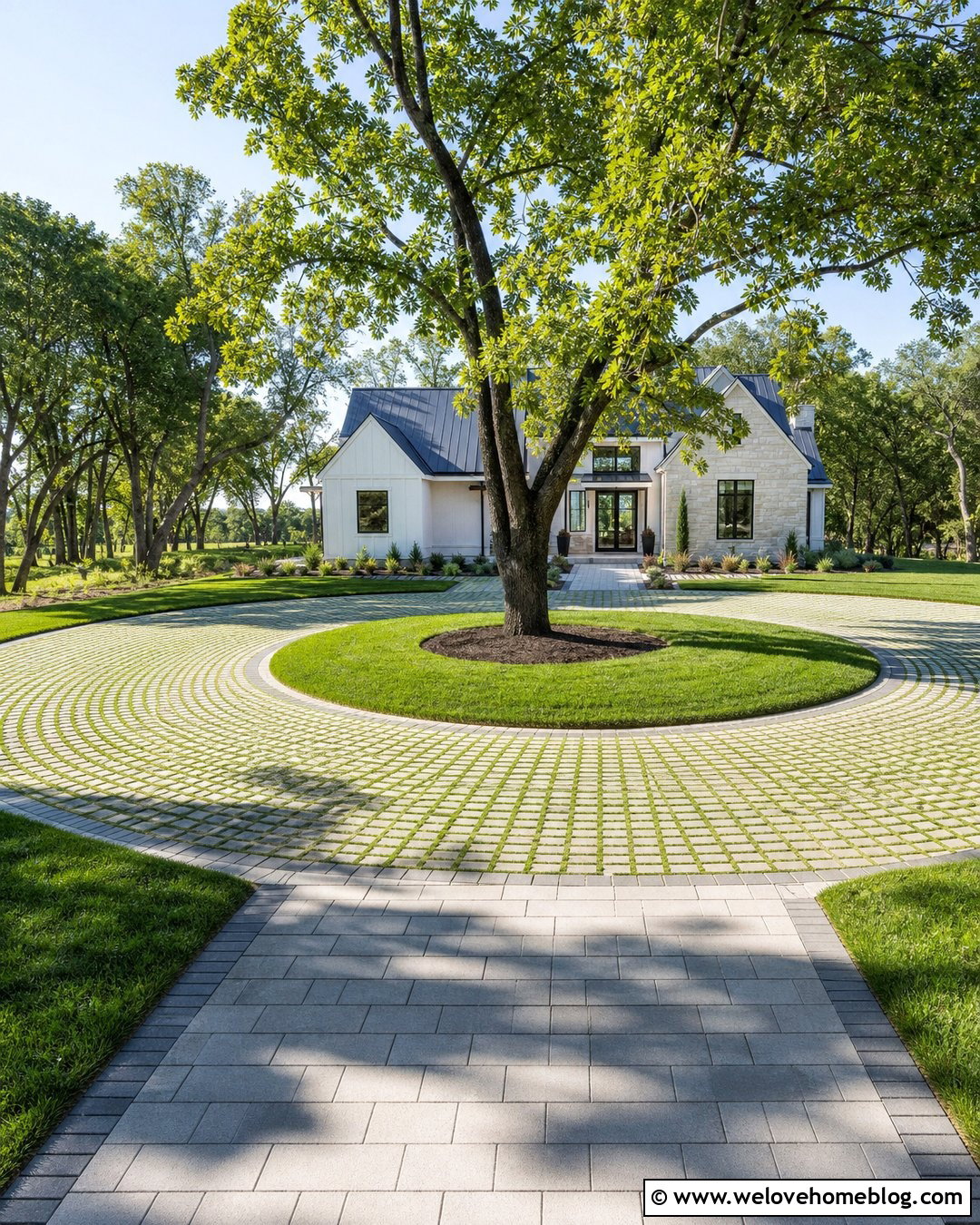
Grass pavers create a circular driveway that visually blends into a large front lawn. Concrete or plastic driveway-rated grids support vehicle loads while allowing grass to grow through open cells. This approach works best when the system, soil, grass variety, irrigation, and expected traffic are planned together. Define the curves with a narrow concrete or dark paver border so the circular route remains visible even when the lawn is lush. The center island can hold a broad shade tree and a simple ring of mulch. Avoid placing delicate flowers where tires may occasionally track near the edge. A solid paver apron and walkway provide cleaner surfaces at the road and front door. The finished driveway feels understated and green, especially around modern country or contemporary homes.
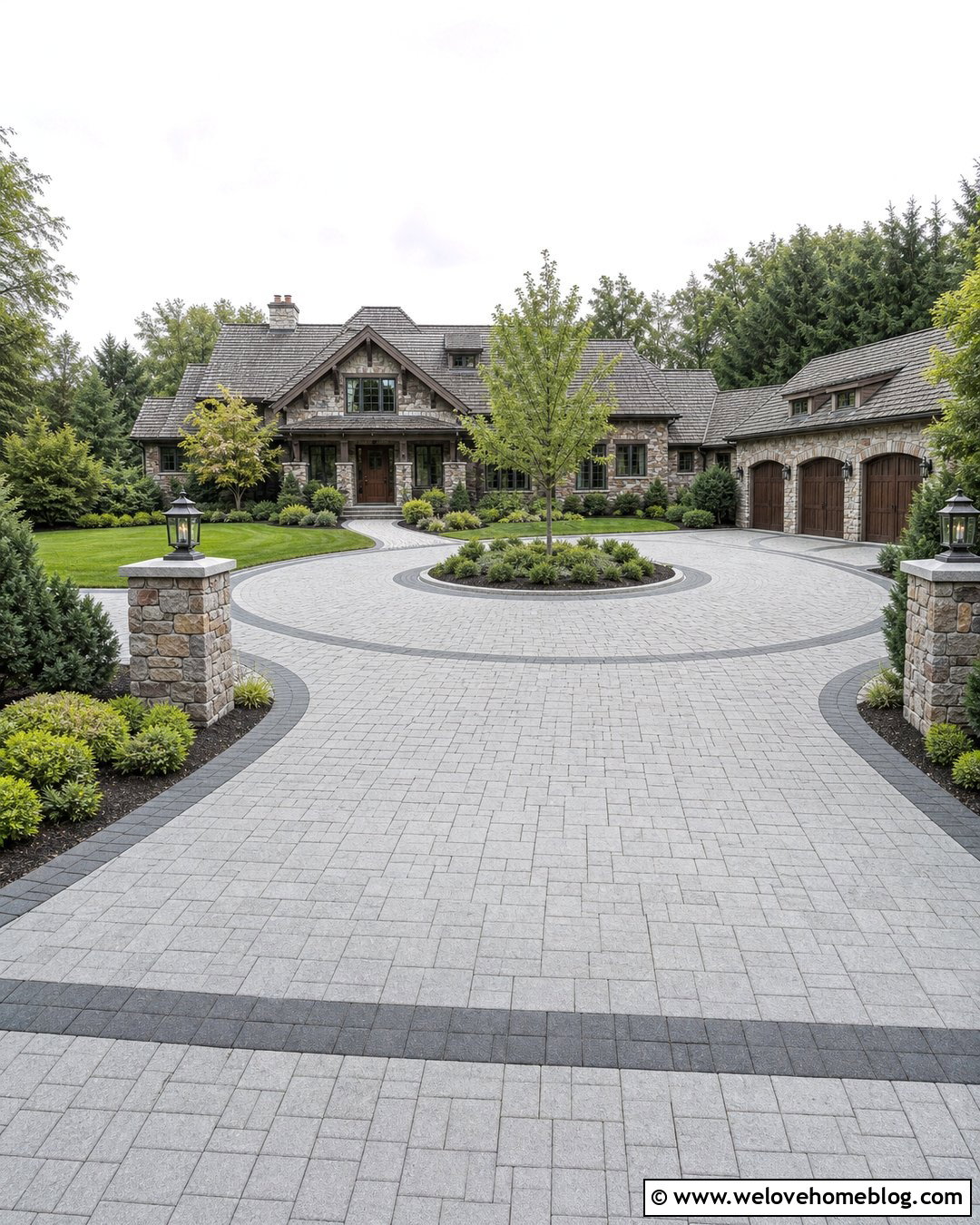
15. Concrete Ribbon Circular Driveway With Grass Strips
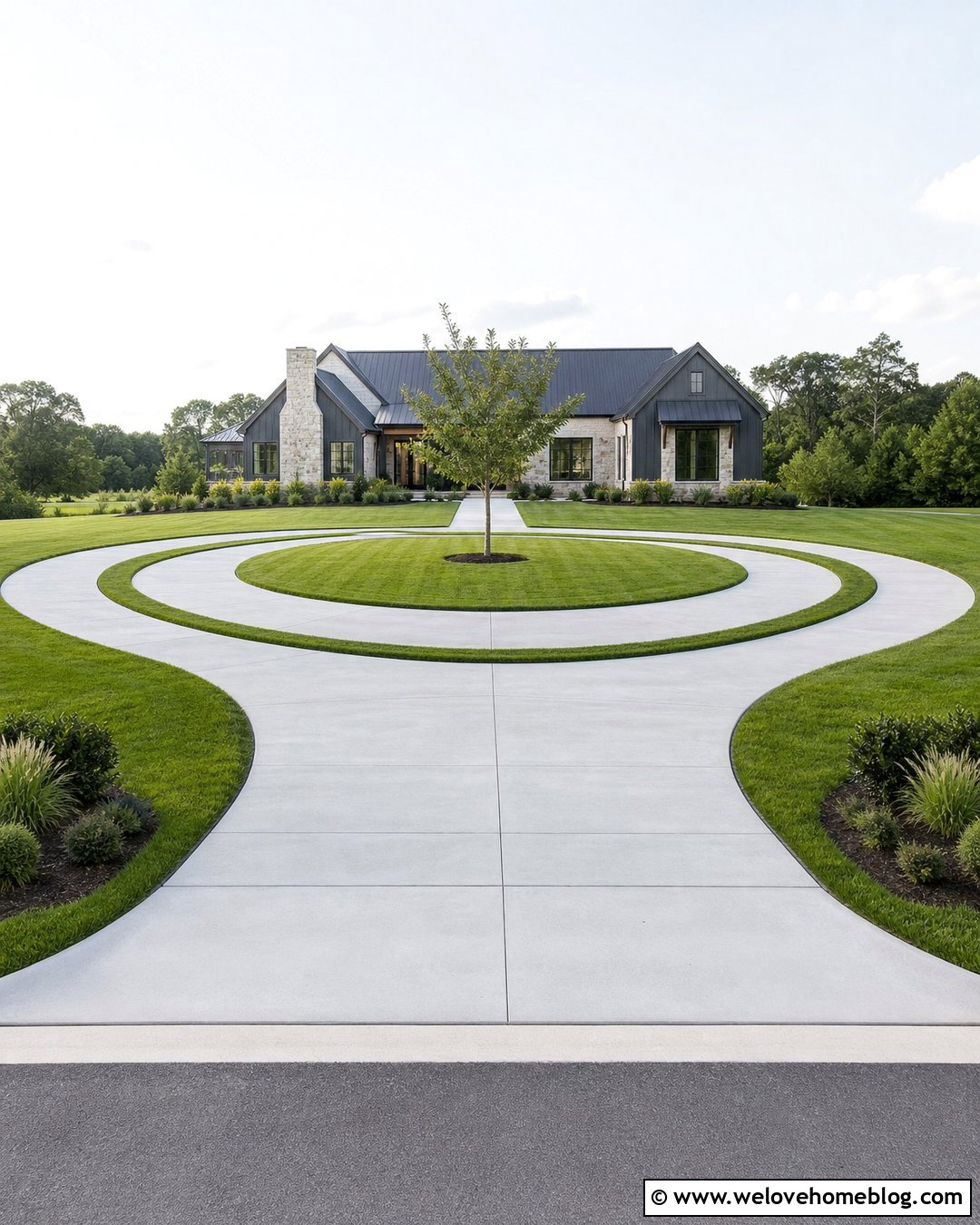
Concrete wheel ribbons reduce the visual weight of a circular driveway by replacing the unused center of the driving lane with grass or low ground cover. Two continuous bands of gray poured concrete follow the circular route, while a green strip runs between them. Crisp steel or concrete edging keeps the planted sections neatly separated. Use a simple lawn island with one ornamental tree so the overall design remains calm and coherent. The ribbons must be spaced and engineered for the vehicles using the property, including delivery and service vehicles. Near the entrances and garage, transition to a full-width concrete apron for easier turning. This layout suits mild climates and lower-traffic residential properties. It creates a distinctive country-modern look without covering the entire front yard in hard paving.
16. Small Circular Driveway For A Narrow Front Yard
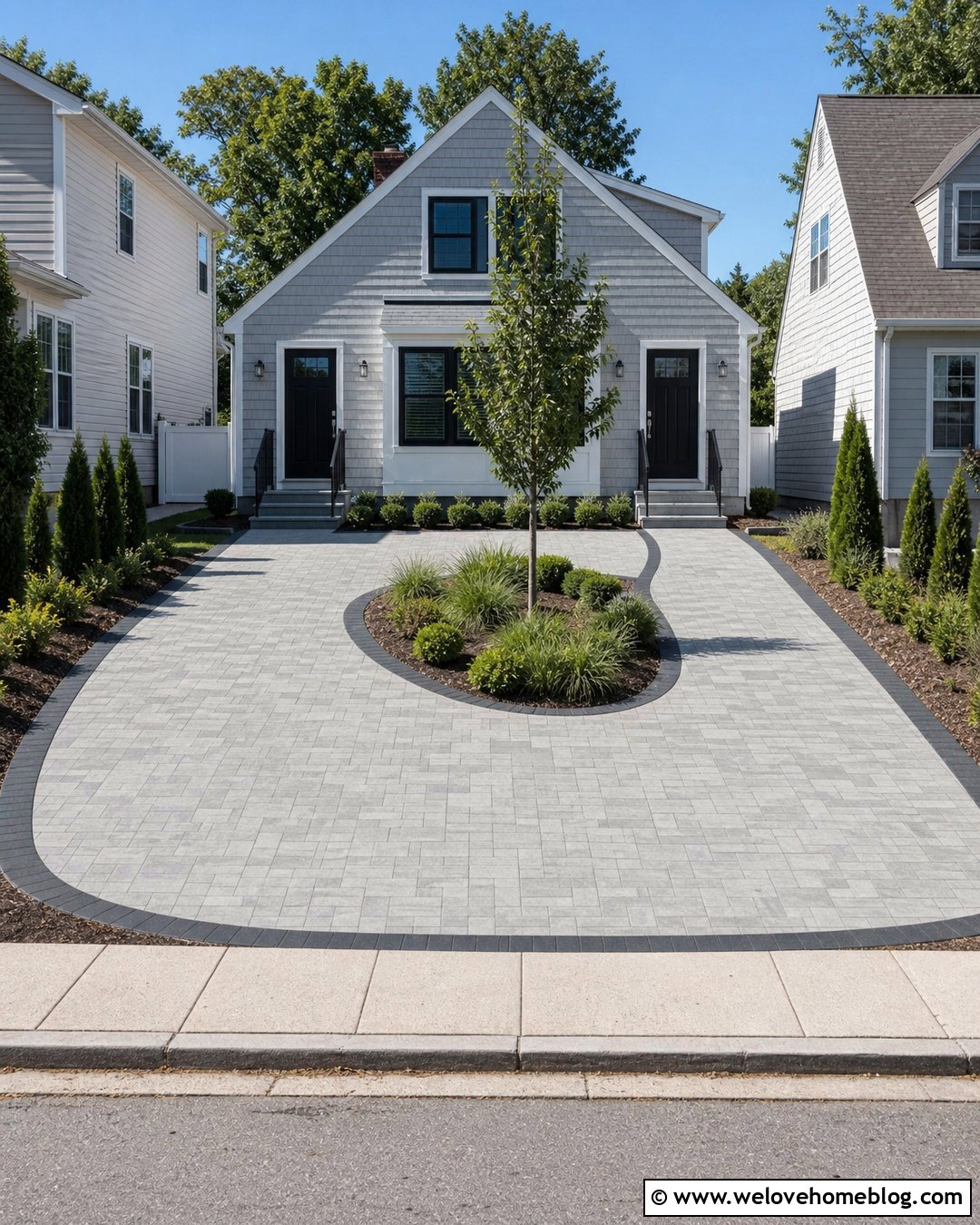
A compact semicircular driveway can provide the convenience of two street connections without overwhelming a modest yard. Use light gray concrete or small-format pavers to keep the surface visually quiet. Narrow the center island to an oval planting bed containing low shrubs, ornamental grasses, and one slender upright tree. Avoid large spreading plants that could block sightlines or reduce vehicle clearance. A single paver border around the inner curve is enough to define the layout without making the space feel crowded. Connect the front walkway to the midpoint of the circle so guests have a clear route to the door. Accurate vehicle templates are important in a small design because tight curves can be difficult to navigate. Keep lawn and planting beds open near both entrances.
17. Large Oval Circular Driveway With Tree-Lined Entrance
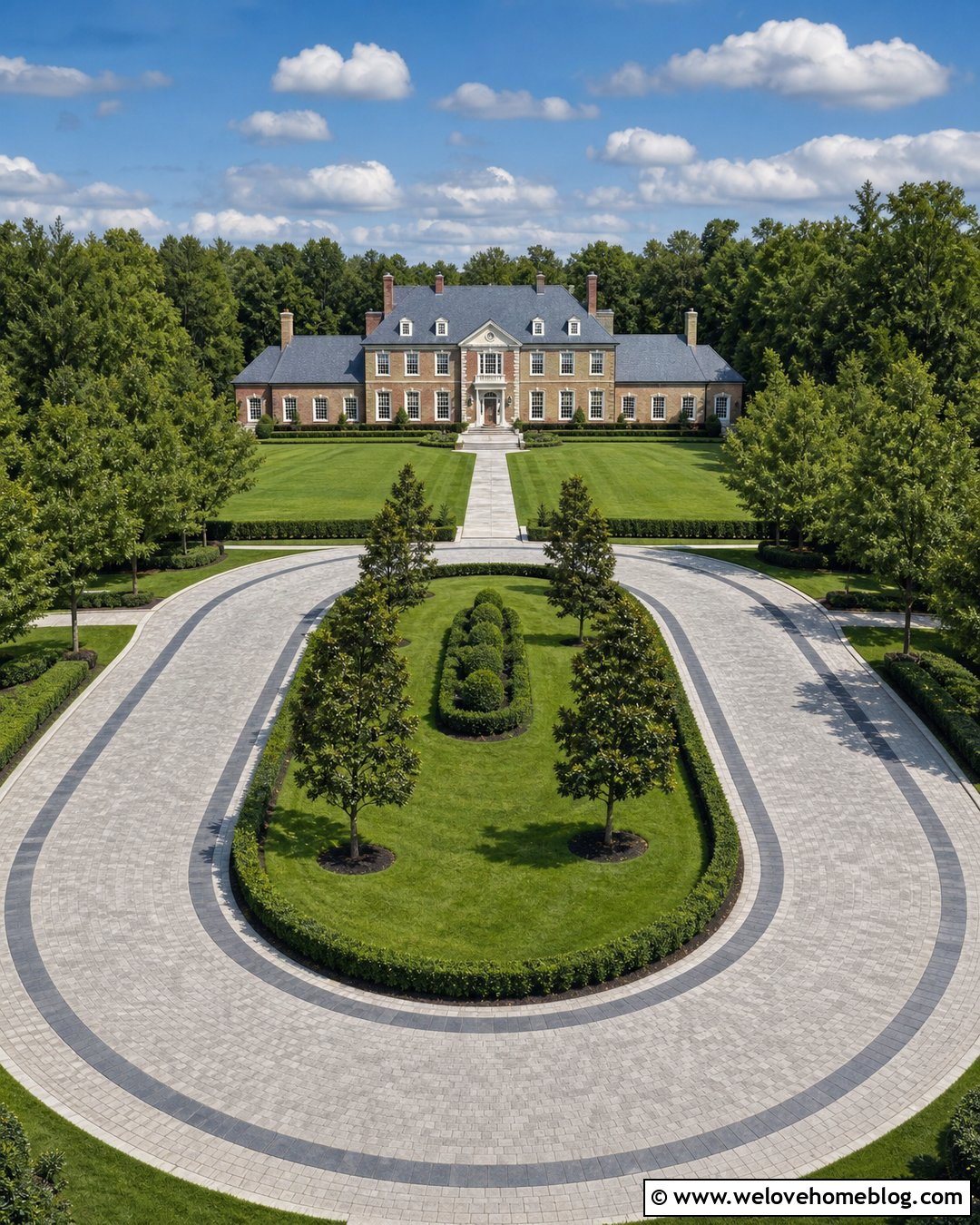
An elongated oval driveway suits a wide property where a perfect circle would look too compact. Use warm gray concrete pavers or exposed aggregate to create a broad, graceful route in front of the house. Rows of evenly spaced trees can frame both approaches, while low hedges guide the eye toward the entrance. The long center island may contain lawn, a central tree grouping, and symmetrical planting beds near each end. Keep the middle portion open so the house remains visible from the road. Accent bands across the driveway can mark the arrival zone near the front steps. This layout works particularly well with long Colonial, Georgian, and estate-style facades. Carefully planned lighting beneath the trees reinforces the driveway edges without adding bulky fixtures throughout the lawn.
18. Teardrop Circular Driveway With Small Garden Island
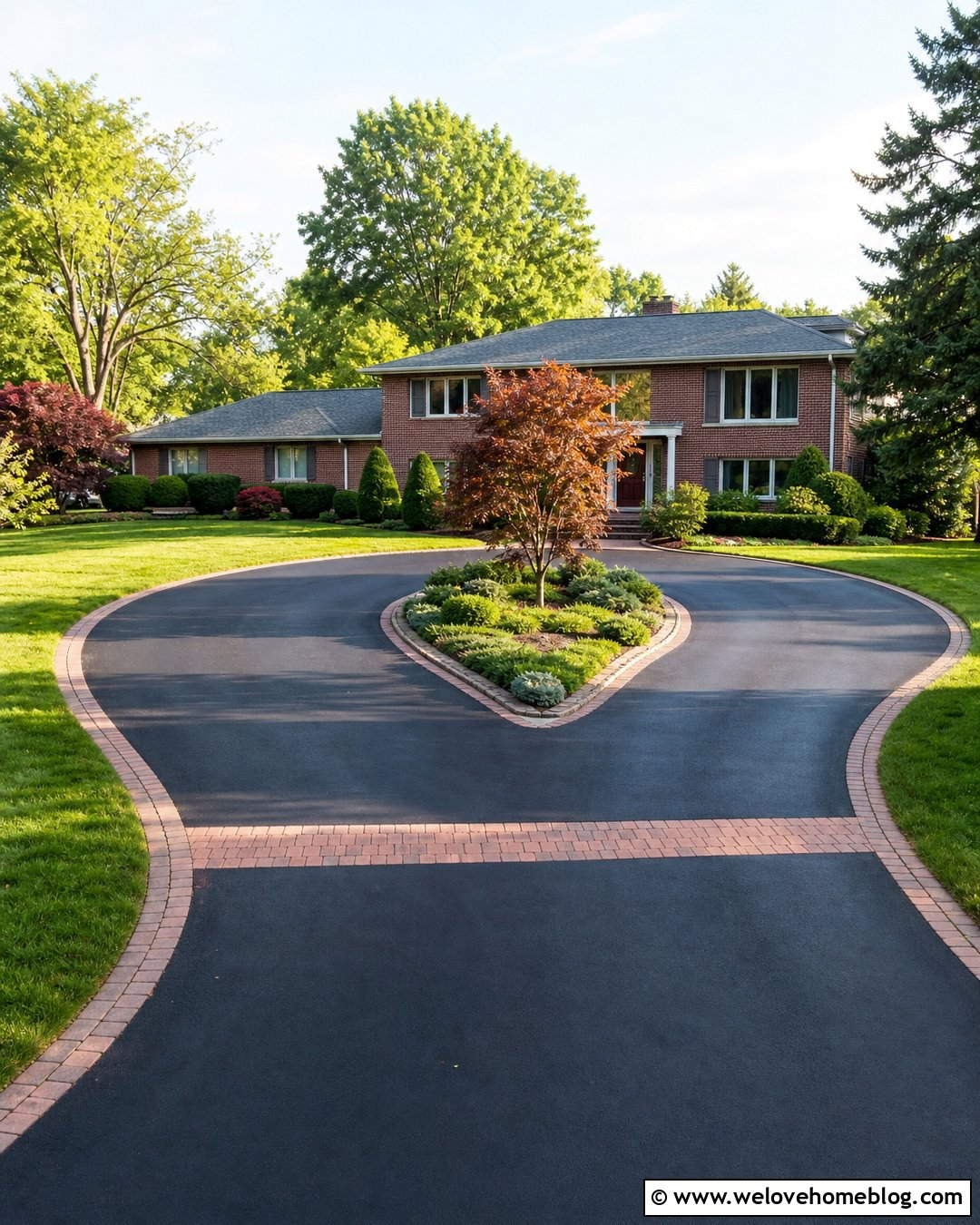
A teardrop layout gives homeowners a turning loop when the property is not wide enough for two separate street entrances. The driveway enters through one opening, divides around a tapered island, and rejoins before reaching the road. Smooth asphalt with a brick edge is a practical material combination for this shape. Plant the narrow end of the island with low ground cover and gradually increase the height toward a small ornamental tree at the rounded end. This preserves visibility where vehicles merge. Add a short walkway from the island-side curve to the front porch, but keep pedestrian crossings clearly marked with contrasting brick. A teardrop circular driveway works well beside ranch and split-level houses because it offers easy movement within a relatively contained front-yard footprint.
19. Double Circular Driveway For A Large Estate
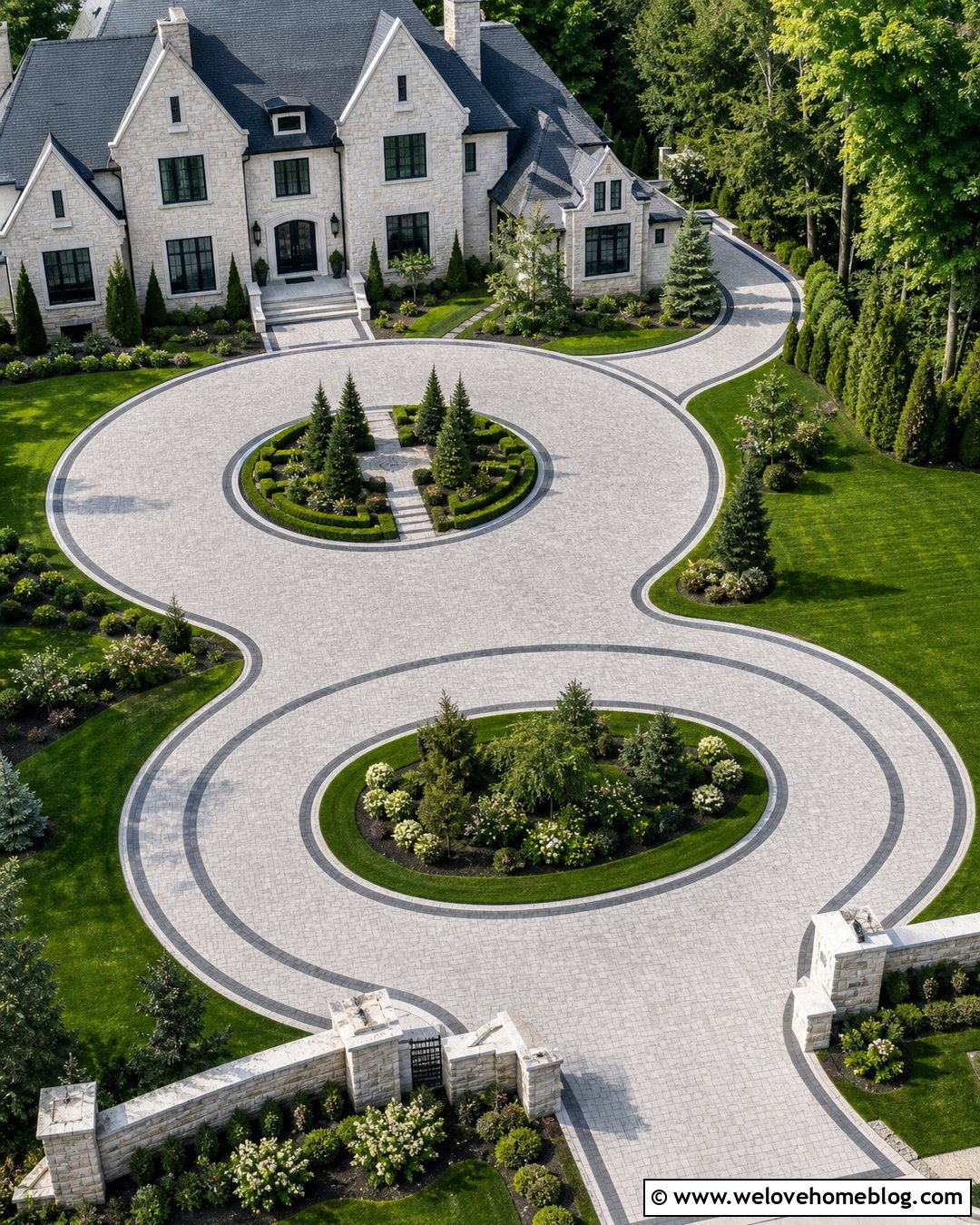
A double-loop driveway can organize vehicle movement across a broad estate frontage. One circular route may serve the formal front entrance, while a connected second loop reaches the garage or guest parking area. Use matching gray concrete pavers throughout so the layout feels unified rather than fragmented. Different border patterns can quietly distinguish the arrival zone from the service route. Landscape the primary island with symmetrical evergreens and a central specimen tree. Keep the secondary island simpler with lawn and durable shrubs. Stone walls, low pillars, and repeated lighting fixtures can connect both loops visually. The junction between the circles needs enough space for comfortable turning and clear directional movement. This substantial layout is best planned with landscape, drainage, and vehicle access professionals from the beginning.
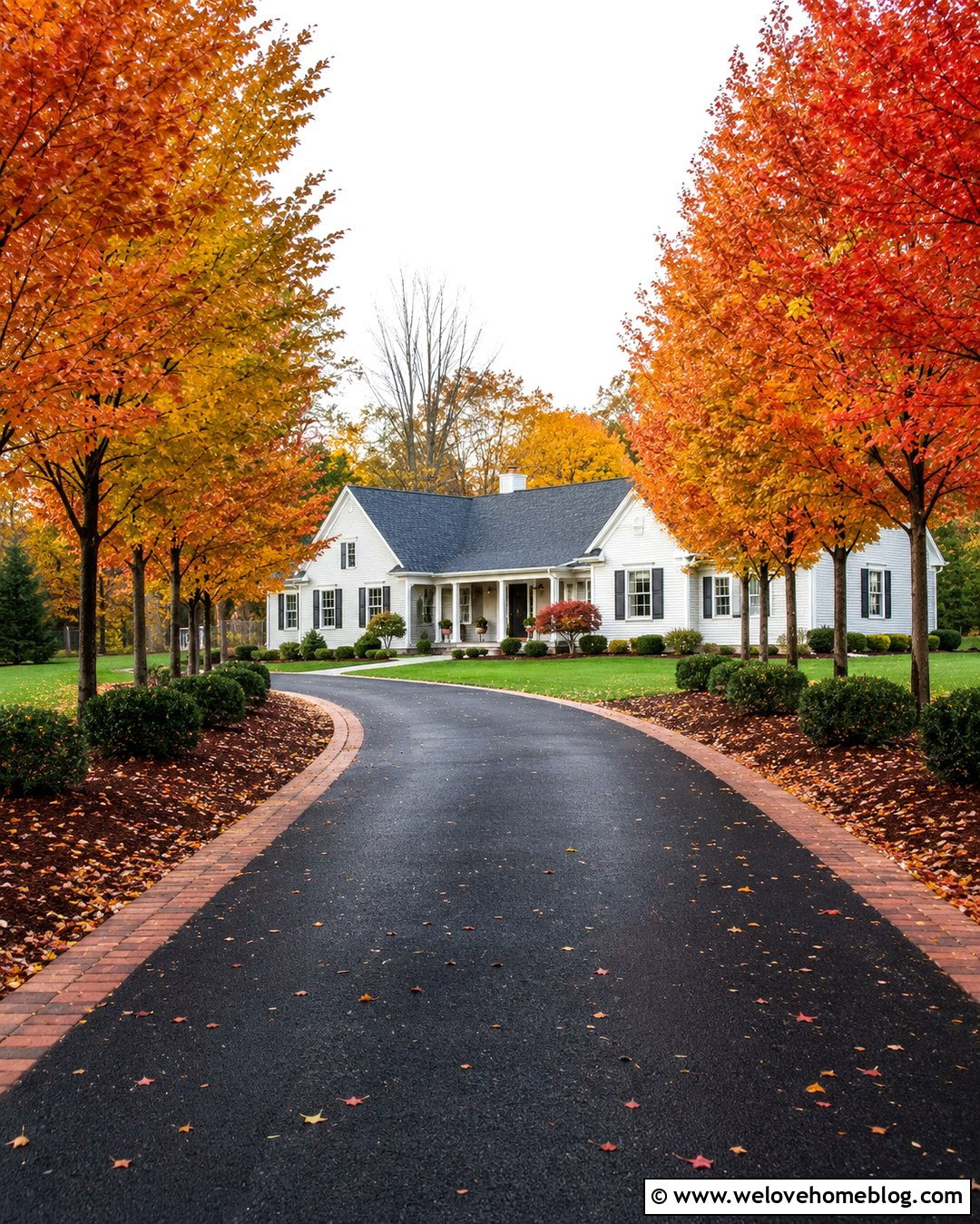
20. Circular Driveway With Side Garage Spur
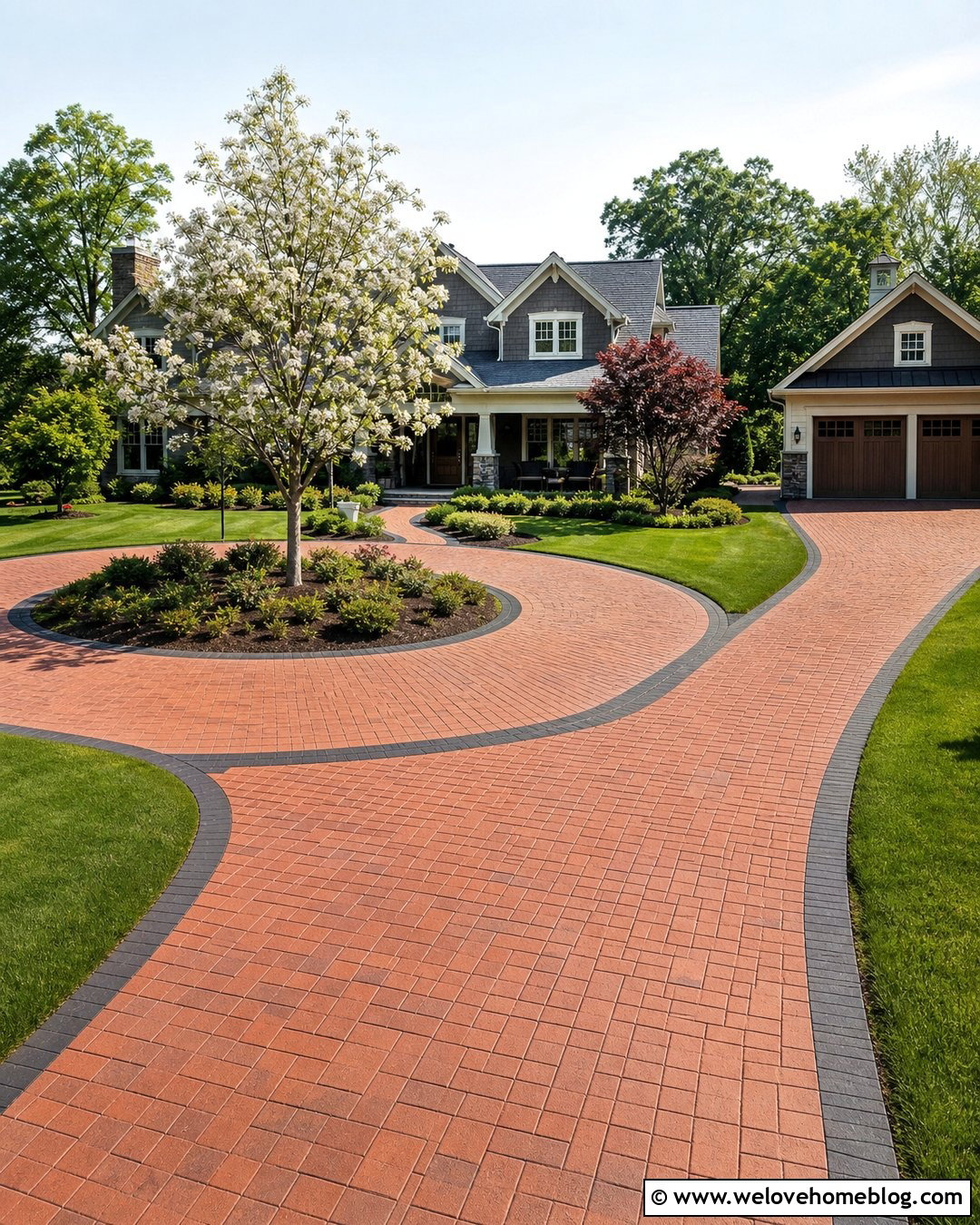
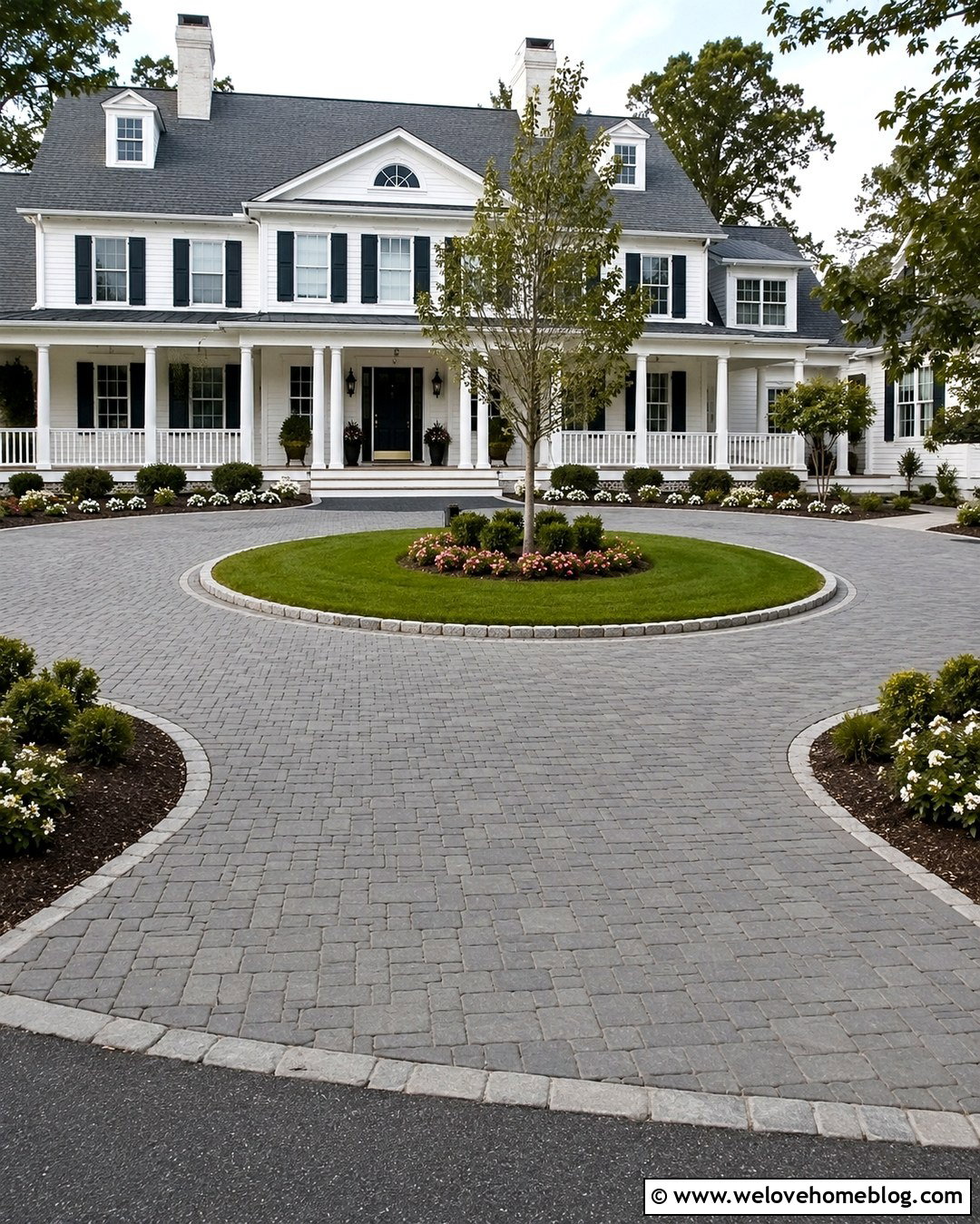
A short garage spur allows a circular driveway to serve both the front entrance and a side-facing garage. Use brick pavers around the primary loop and continue the same material into the spur for a seamless transition. A contrasting border can identify the route toward the garage without relying on signs. Place the landscaped island opposite the front door, using a flowering tree, low shrubs, and open lawn. Near the spur intersection, keep plants low to preserve visibility between arriving and departing vehicles. The garage apron should be wide enough for parking and maneuvering without blocking the circle. A separate walkway from the loop to the front porch directs guests away from the garage. This layout brings structure to larger suburban lots with garages positioned beyond the main facade.
21. Circular Driveway With Center Fountain
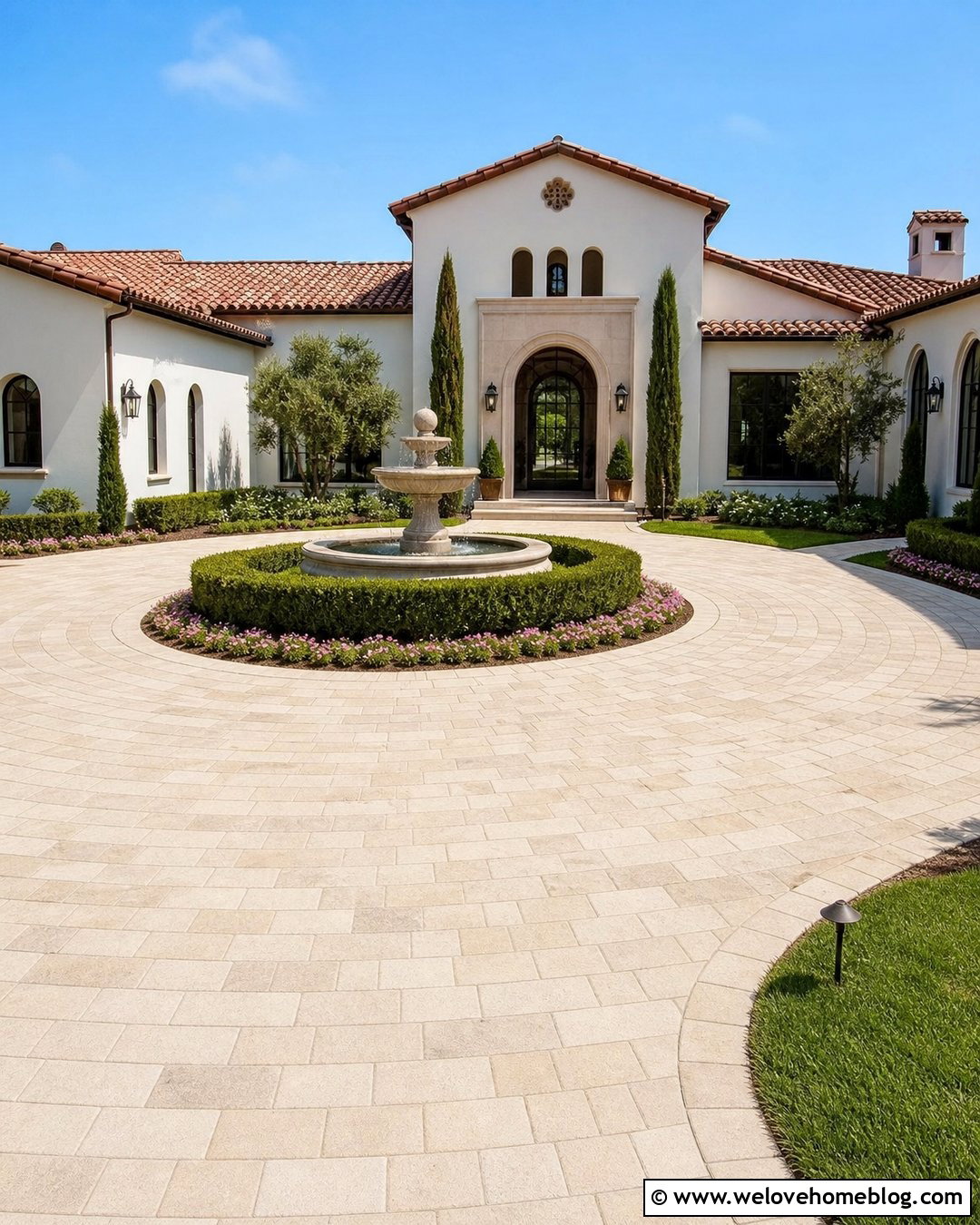
A fountain can turn the center of a circular driveway into a strong formal focal point. Pair it with pale concrete pavers laid in concentric bands that visually reinforce the round layout. Surround the fountain with a low clipped hedge, a narrow flower border, and enough open space for maintenance access. The fountain height should suit the scale of the house without blocking important views from the street. Low-voltage lighting can highlight the basin while separate fixtures illuminate the driving route. Avoid placing spray too close to the pavement, where water could create staining, algae, or icy patches. A straight walkway aligned with the front door can cross from the inner curb toward the house. This complete arrangement works best with symmetrical traditional, Mediterranean, or European-inspired architecture.
22. Circular Driveway Around A Mature Tree
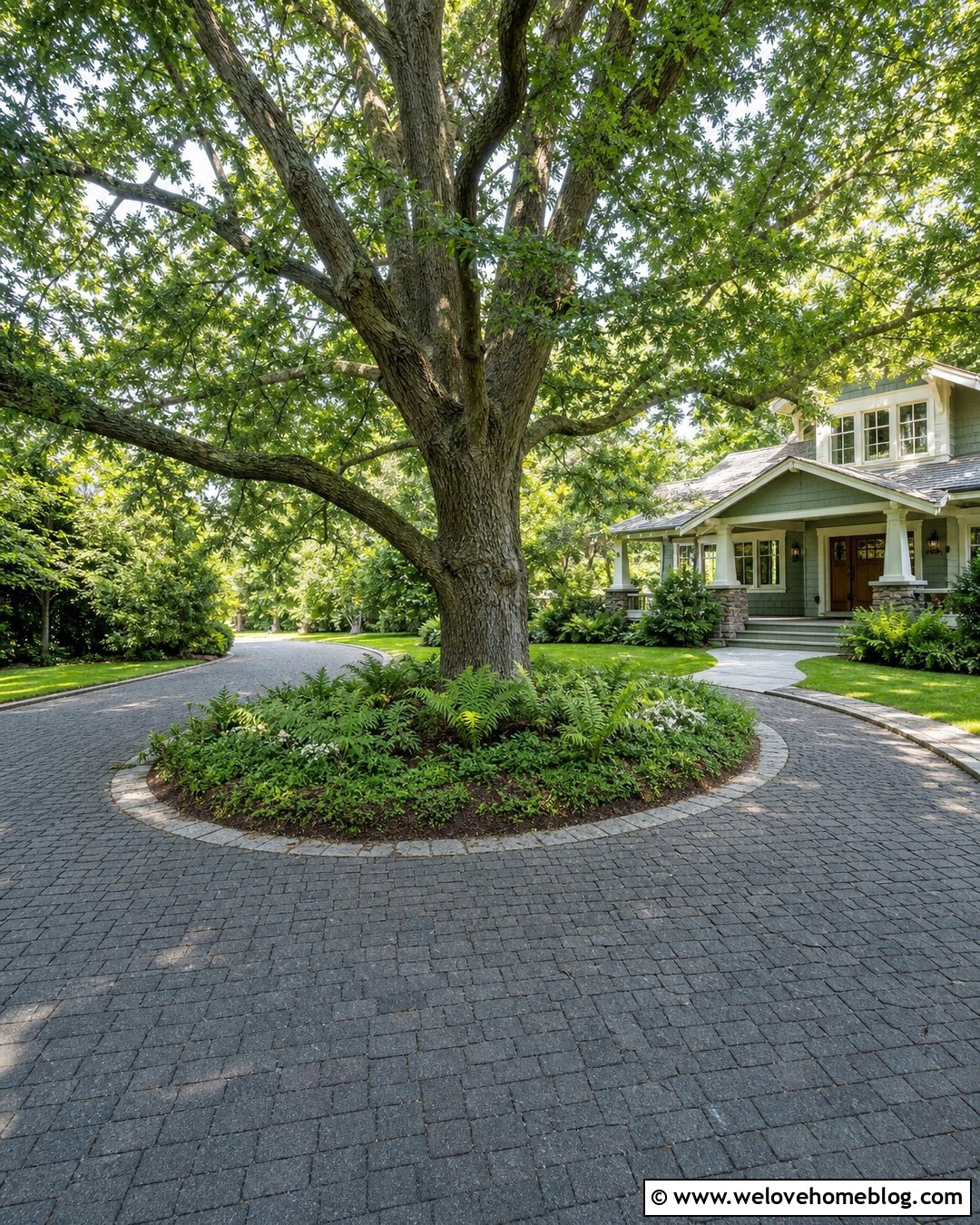
Designing the driveway around an existing mature tree can preserve valuable shade and create an instantly established landscape. Use permeable pavers or gravel where appropriate to reduce the appearance of a heavy paved ring. The island must be large enough to protect the trunk and important root zone, based on professional arborist guidance. Avoid raising soil against the trunk or cutting major roots during excavation. A broad mulch bed with shade-tolerant ground cover keeps maintenance simple beneath the canopy. Natural stone edging can define the inner curve while complementing the tree’s organic form. Install low fixtures outside vulnerable roots rather than trenching throughout the island. When carefully planned, the tree becomes the central feature and helps a new circular driveway settle naturally into an older property.
23. Circular Driveway With Flower Garden Island
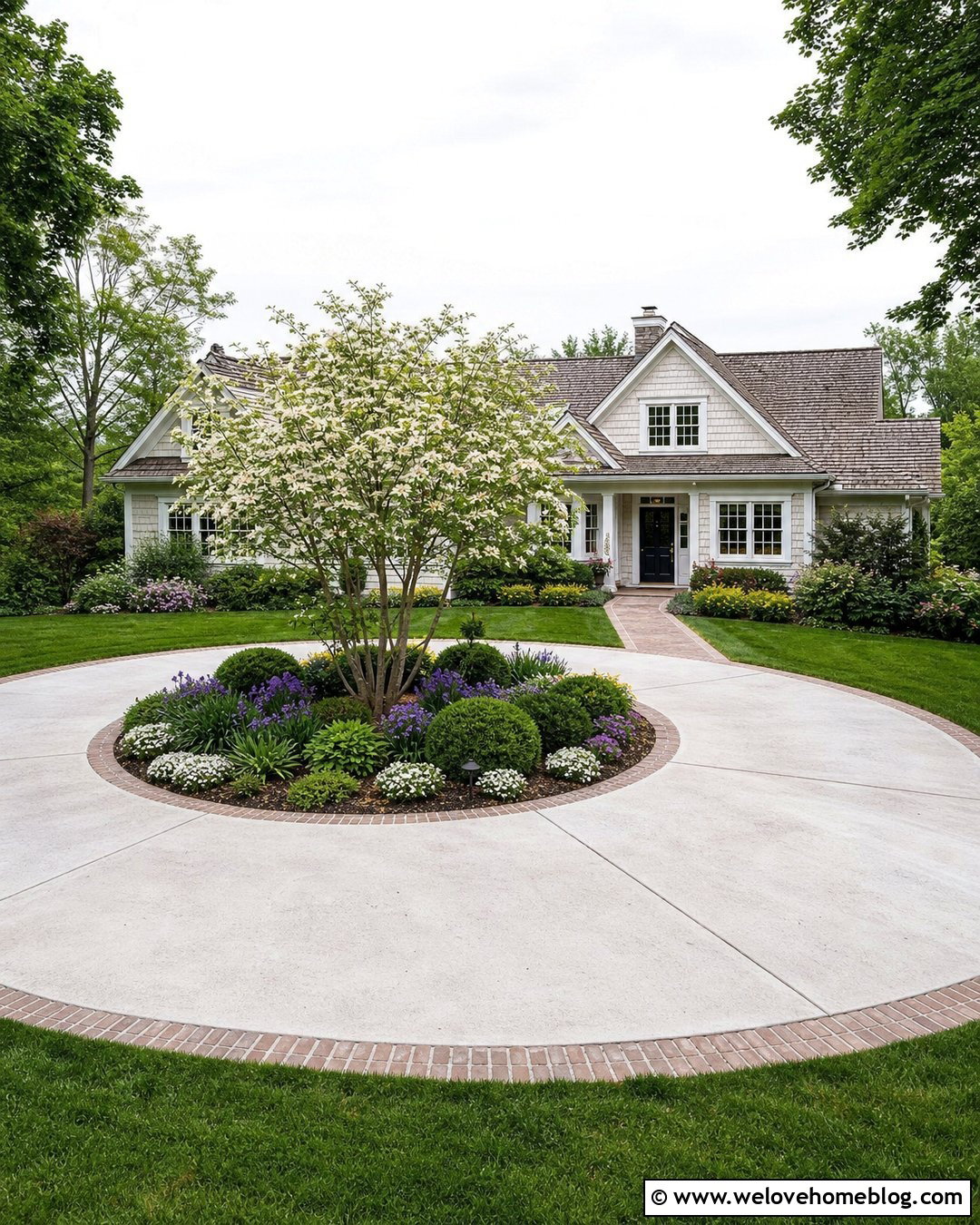
A flower-filled island can bring seasonal color directly into the center of a circular driveway. Choose a neutral surface, such as light gray concrete or charcoal pavers, so the planting remains the focal point. Build the garden around one small flowering tree, then arrange perennials and compact shrubs in broad, repeated groups. Repetition creates a calmer look than using many unrelated plants. Place the lowest flowers along the curb and taller plants toward the middle to preserve visibility. A stone or brick mowing strip separates the bed from the driveway and simplifies maintenance. Include evergreen structure so the island remains attractive outside the main flowering season. Select plants for the site’s sunlight, climate, and irrigation conditions rather than choosing color alone. The result feels welcoming and carefully coordinated.
24. Circular Driveway With Low Hedge Island
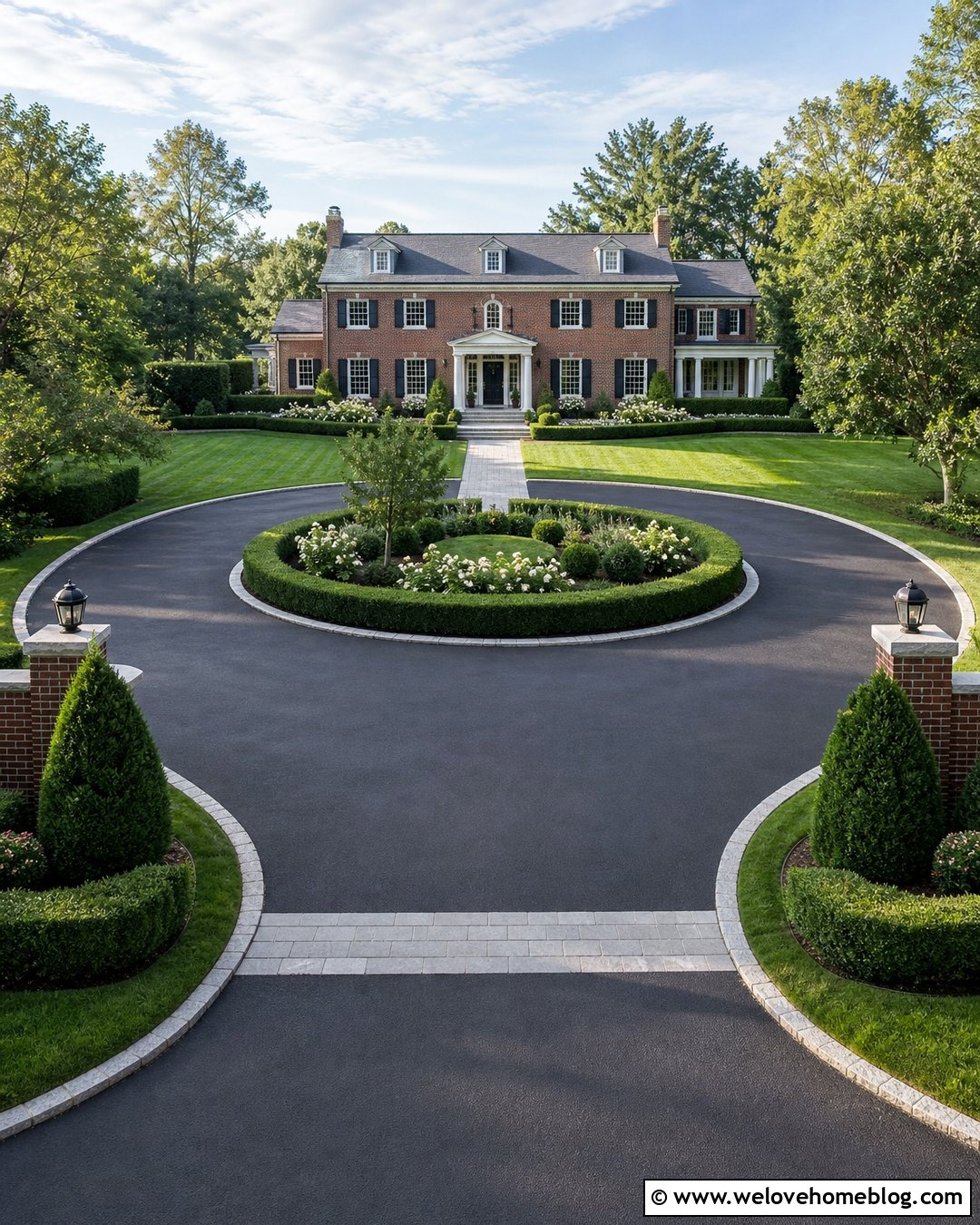
A low hedge follows the curve of a driveway beautifully and gives the center island a neat architectural outline. Pair a charcoal asphalt surface with a light granite curb to create clear contrast. Inside the curb, plant a continuous compact hedge around lawn, roses, or a small specimen tree. Keep the hedge below driver sightlines and set it back enough to prevent branches from scraping vehicles. The same hedge can be repeated beside the front walkway or foundation beds to connect the island to the house. Formal symmetry suits Colonial and Georgian homes, while a looser hedge shape works with cottages and transitional architecture. Install irrigation and maintenance access before closing the planting ring. Regular trimming is essential because gaps or uneven growth will be especially visible within the circular design.
25. Circular Driveway With Native Landscaping
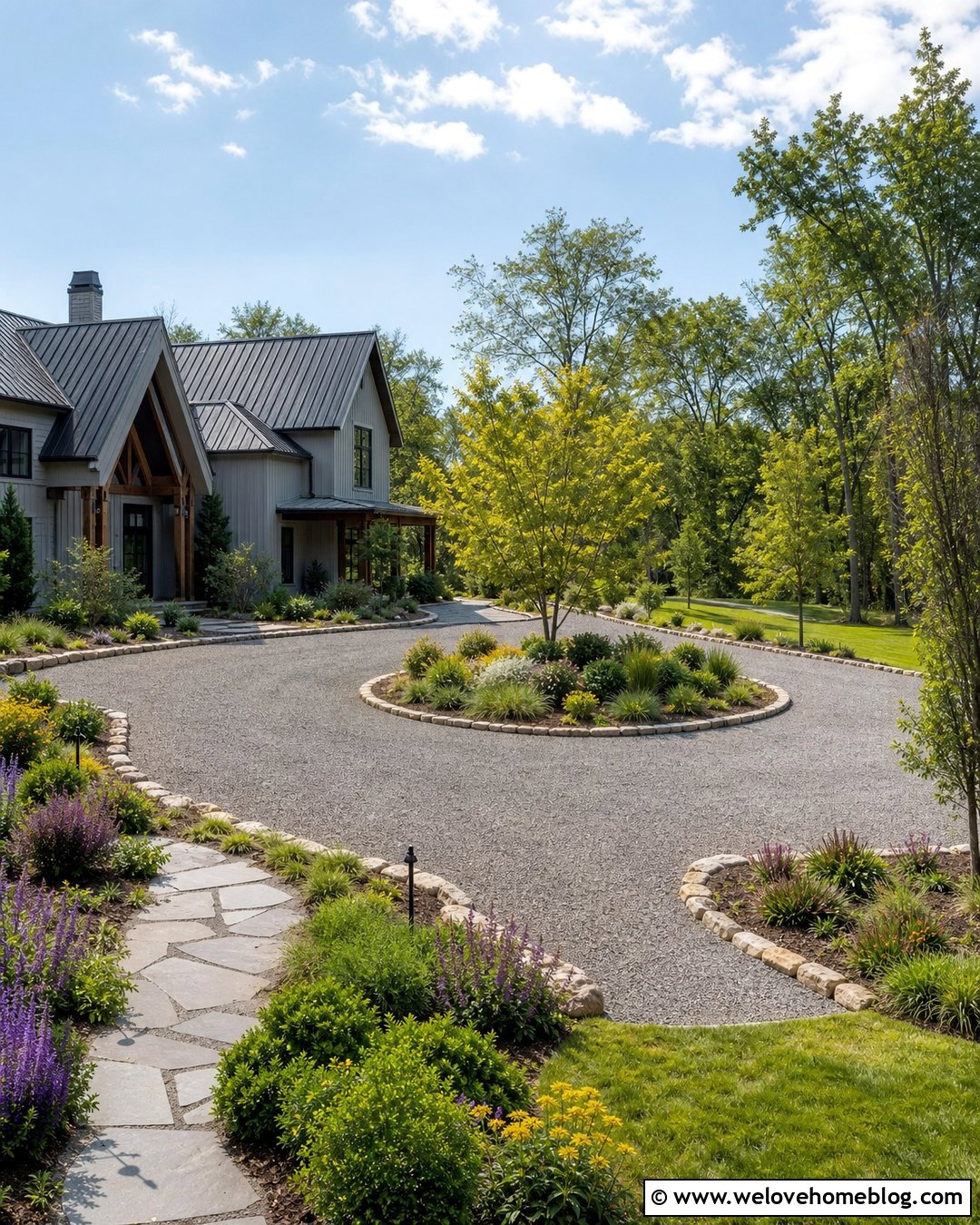
Native planting can make a circular driveway feel closely connected to its region. Start with a permeable paver or compacted gravel surface in colors drawn from the local stone and soil. Fill the island with regionally appropriate grasses, flowering perennials, compact shrubs, and one native tree. Arrange plants in generous masses rather than scattering individual specimens. A natural stone border contains the garden and creates a clear separation from vehicle traffic. Along the outer driveway edge, repeat a limited selection of the same plants to unify the yard. Native does not have to mean unstructured; clean bed lines and intentional spacing keep the entrance polished. Choose species that will remain within the available clearance at maturity. This reduces frequent pruning and supports a more resilient landscape design.
26. Circular Driveway With Drought-Tolerant Landscaping
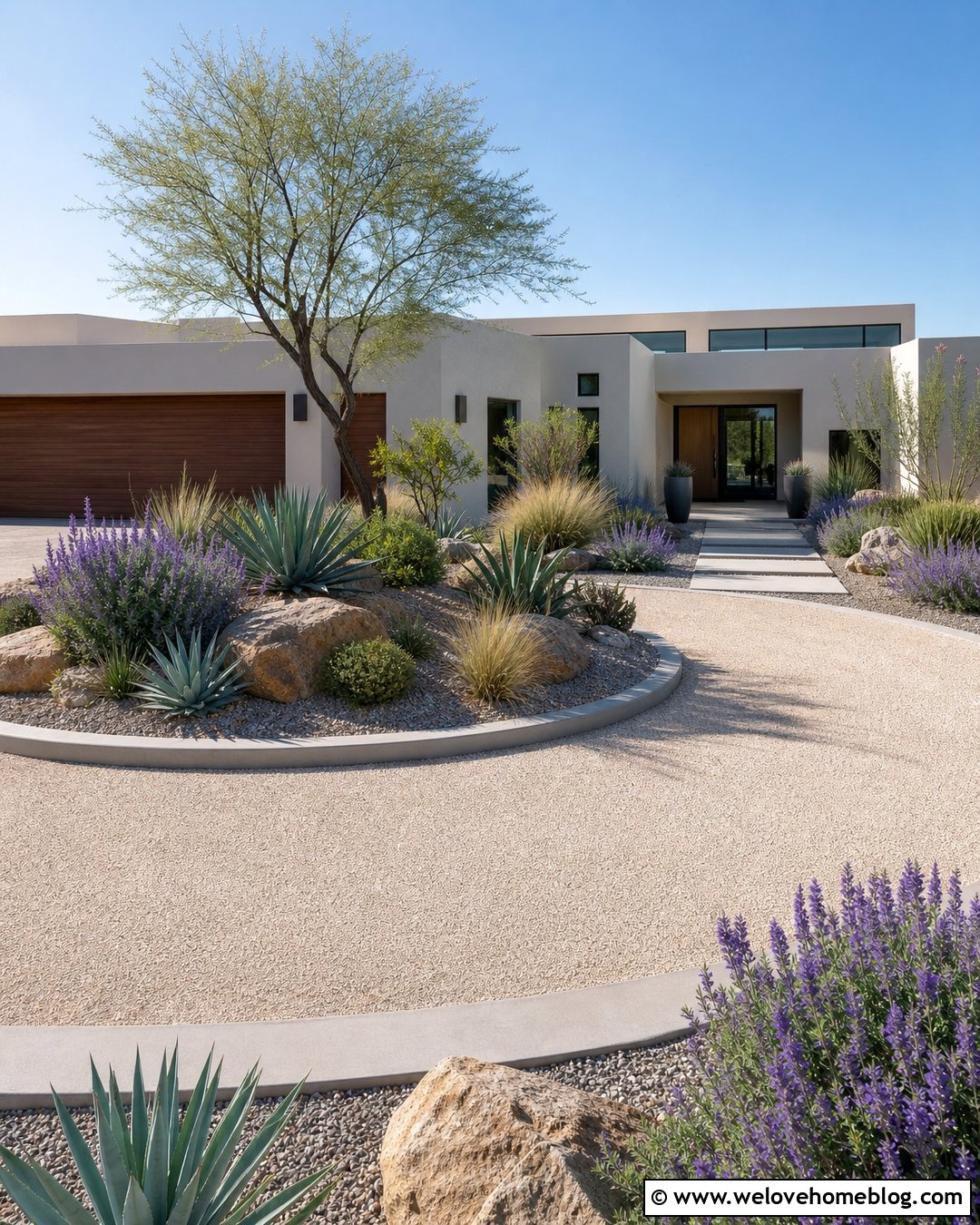
Hot, dry properties benefit from a circular driveway landscape that uses water carefully. A pale stabilized crushed-stone or concrete paver surface helps create a clean foundation for drought-tolerant planting. Fill the central island with sculptural agaves, upright grasses, flowering salvias, compact shrubs, and several well-placed boulders. Use gravel mulch instead of large areas of exposed soil. Drip irrigation can deliver water directly to root zones while keeping the driveway dry. Steel or poured-concrete edging forms a sharp boundary between the driving surface and planting. Repeat a few island plants near the house entrance to create continuity. Keep thorny or sharply pointed plants well away from car doors and pedestrian routes. The finished driveway should feel spacious, deliberate, and appropriate to the climate rather than sparse or unfinished.
27. Circular Driveway With Rain Garden Island
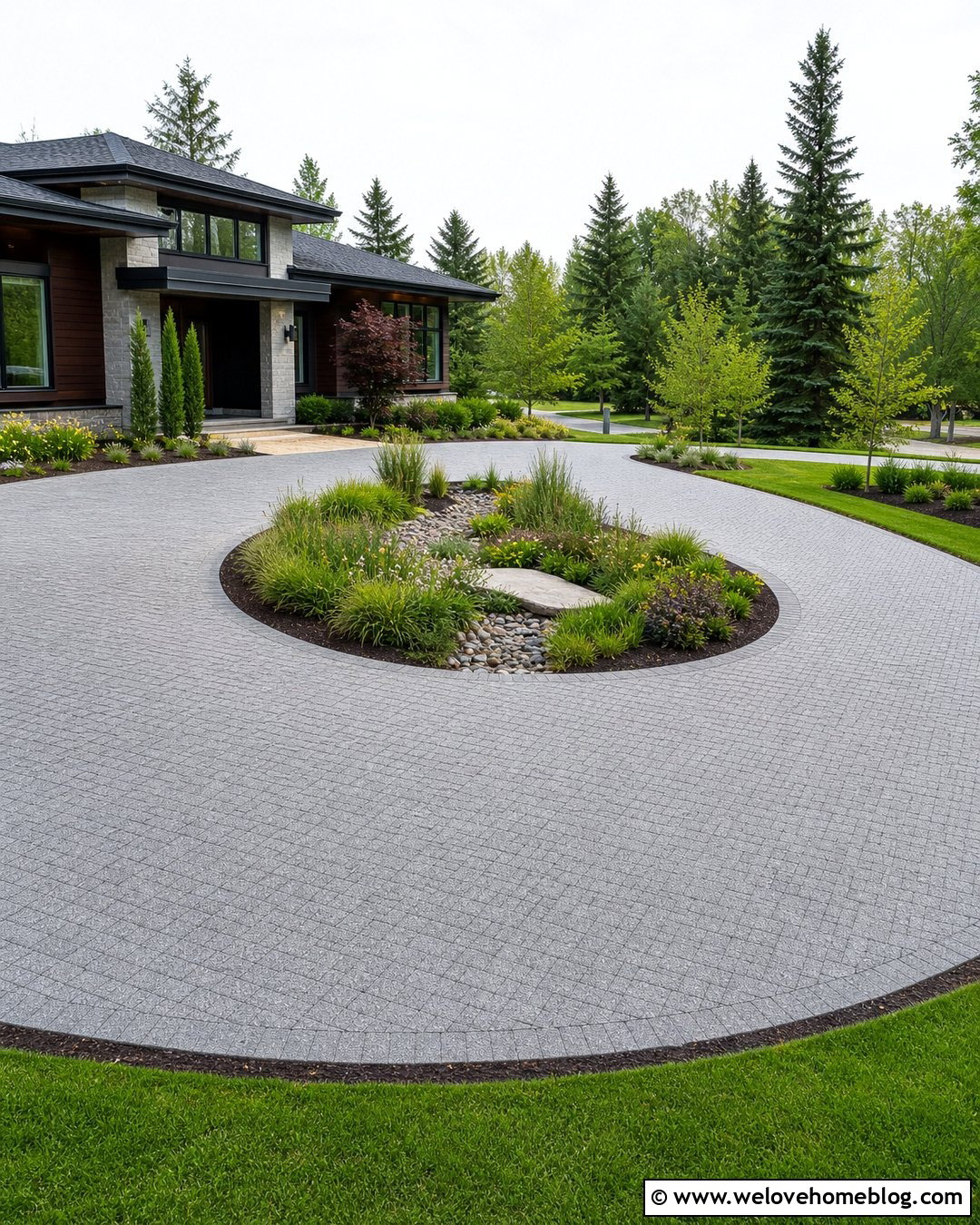
The center island may offer space for a rain garden when site grading, soil, and local drainage requirements support it. Surround the island with permeable concrete pavers to reinforce the water-conscious design. A shallow planted depression can hold moisture-tolerant grasses, sedges, flowering perennials, and compact shrubs selected for alternating wet and dry conditions. Decorative river stone can mark an inlet without turning the island into a bare rock bed. The system must include a safe overflow route that does not send water toward the foundation or neighboring property. Keep the depression and taller vegetation away from critical vehicle sightlines. A flat stepping path can provide maintenance access from the driveway edge. Professionally planned grading makes this landscape feature attractive while helping it function as part of the broader drainage strategy.
28. Circular Driveway With Raised Stone Planter
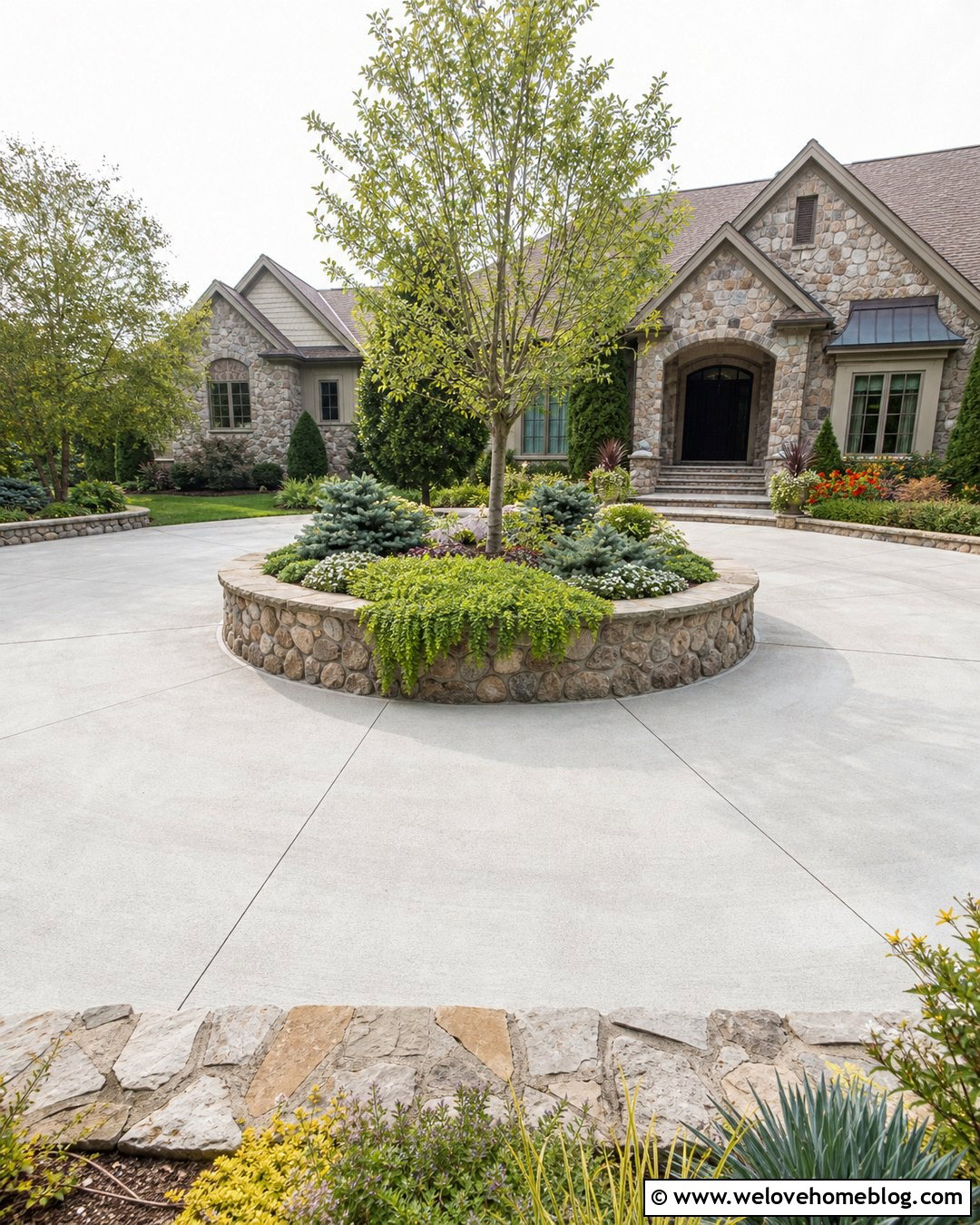
A raised stone planter gives the center island more presence and creates an attractive transition on a slightly sloped front yard. Build the wall from natural fieldstone or cut limestone that relates to the house facade. Surround it with smooth gray poured concrete or understated pavers so the masonry remains the main feature. Inside the planter, use a small tree, cascading ground cover, evergreen shrubs, and seasonal flowers. Keep the wall low enough to preserve visibility across the circle. A capstone provides a finished edge and protects the wall from weather. Repeat the same stone on front steps, porch columns, or entrance pillars to unify the property. Drainage behind the wall is essential because trapped water can damage both the planter and the nearby driveway base over time.
29. Circular Driveway With Sculpture Garden Island
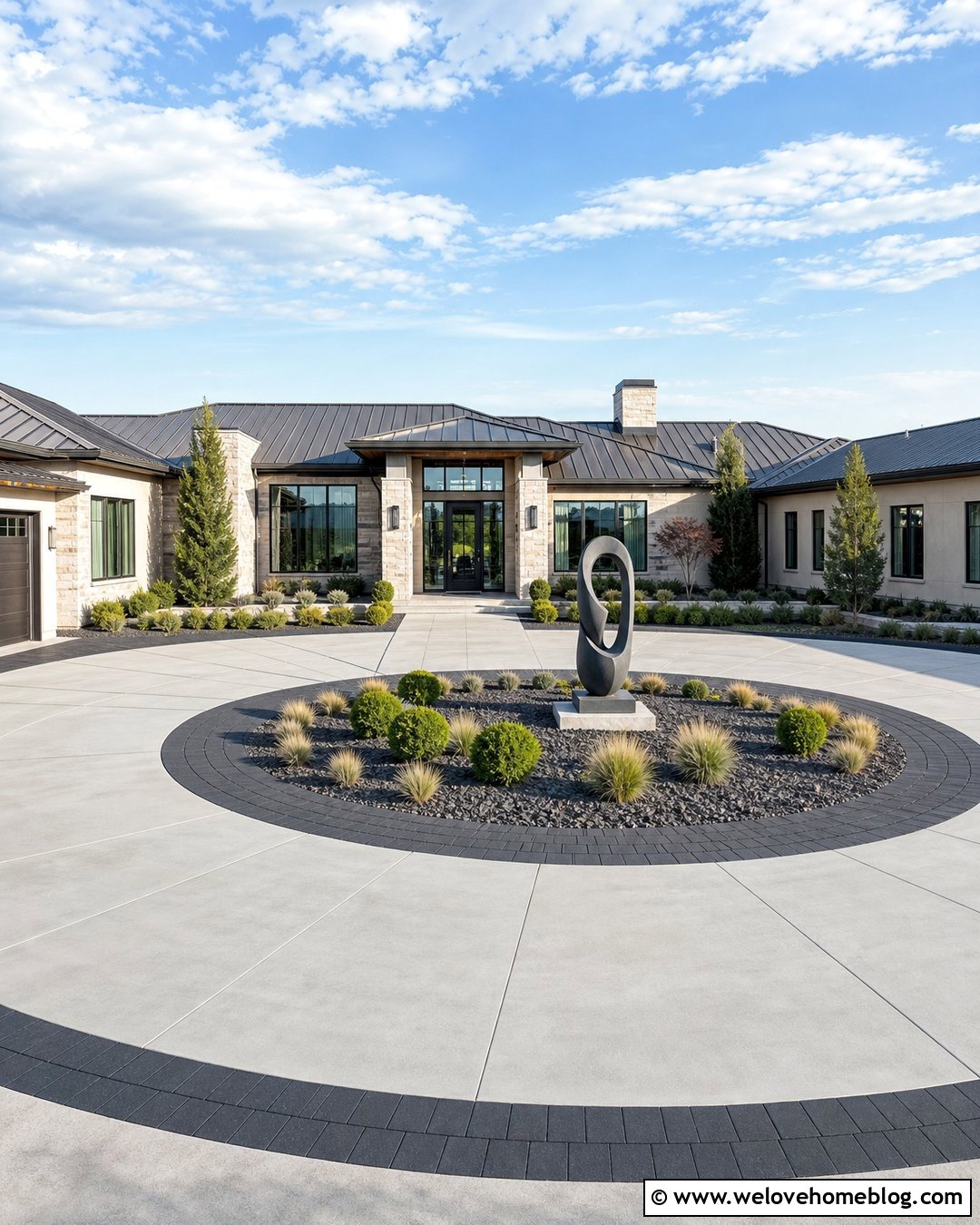
A simple sculpture can provide a memorable focal point without requiring a fountain or elaborate planting. Choose large-format concrete pavers in a soft neutral color and frame the island with a narrow dark border. Place one weather-resistant sculpture in the center, scaled to the house and visible from the main approach. Surround it with low ornamental grasses, clipped evergreens, or a restrained ground-cover planting. Too many decorative objects will weaken the composition, so keep the island uncluttered. Position landscape lighting carefully to illuminate the feature without shining toward drivers or neighboring windows. A straight walkway to the front door can align with the sculpture and architecture. This circular driveway design works especially well with contemporary homes, modern ranch houses, and properties featuring clean, geometric landscaping.
30. Circular Driveway With Flagstone Accent Bands
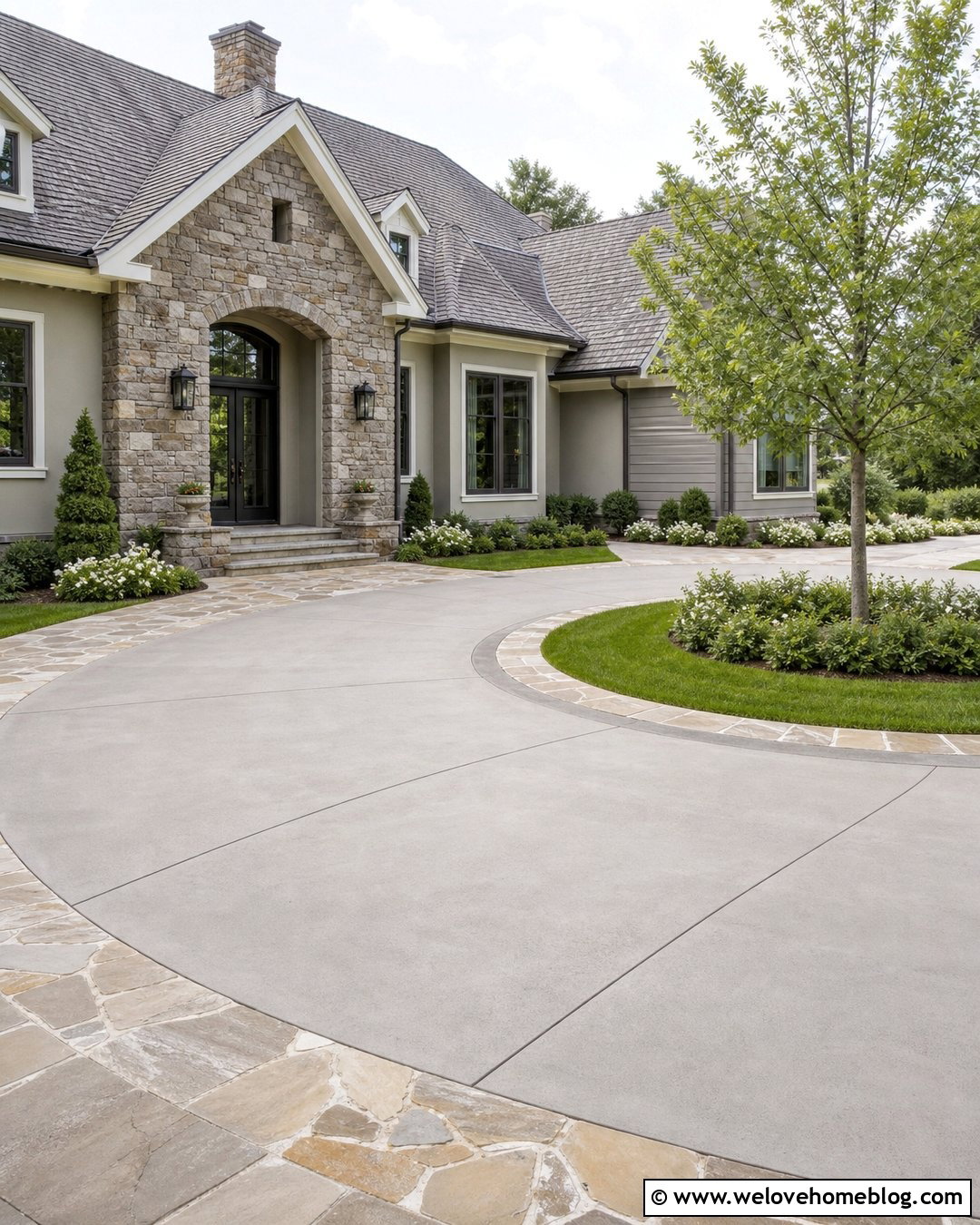
Flagstone accent bands can add natural texture to a plain concrete circular driveway without covering the entire driving surface in stone. Install irregular or cut flagstone in narrow ribbons at the entrances, front-door arrival area, and selected points around the curve. Choose stone colors that coordinate with the foundation, chimney, or porch. A matching flagstone walkway can extend from the inner circle to the front steps. Keep the center island simple with lawn, one tree, and low flowering shrubs. The concrete should use a warm gray or light sand tone that supports the stone palette. Accent bands must be installed flush with the surrounding surface to avoid uncomfortable bumps or drainage pockets. This balanced mixed-material approach provides character while maintaining a smooth and relatively quiet overall appearance.
31. Circular Driveway With Automatic Gate
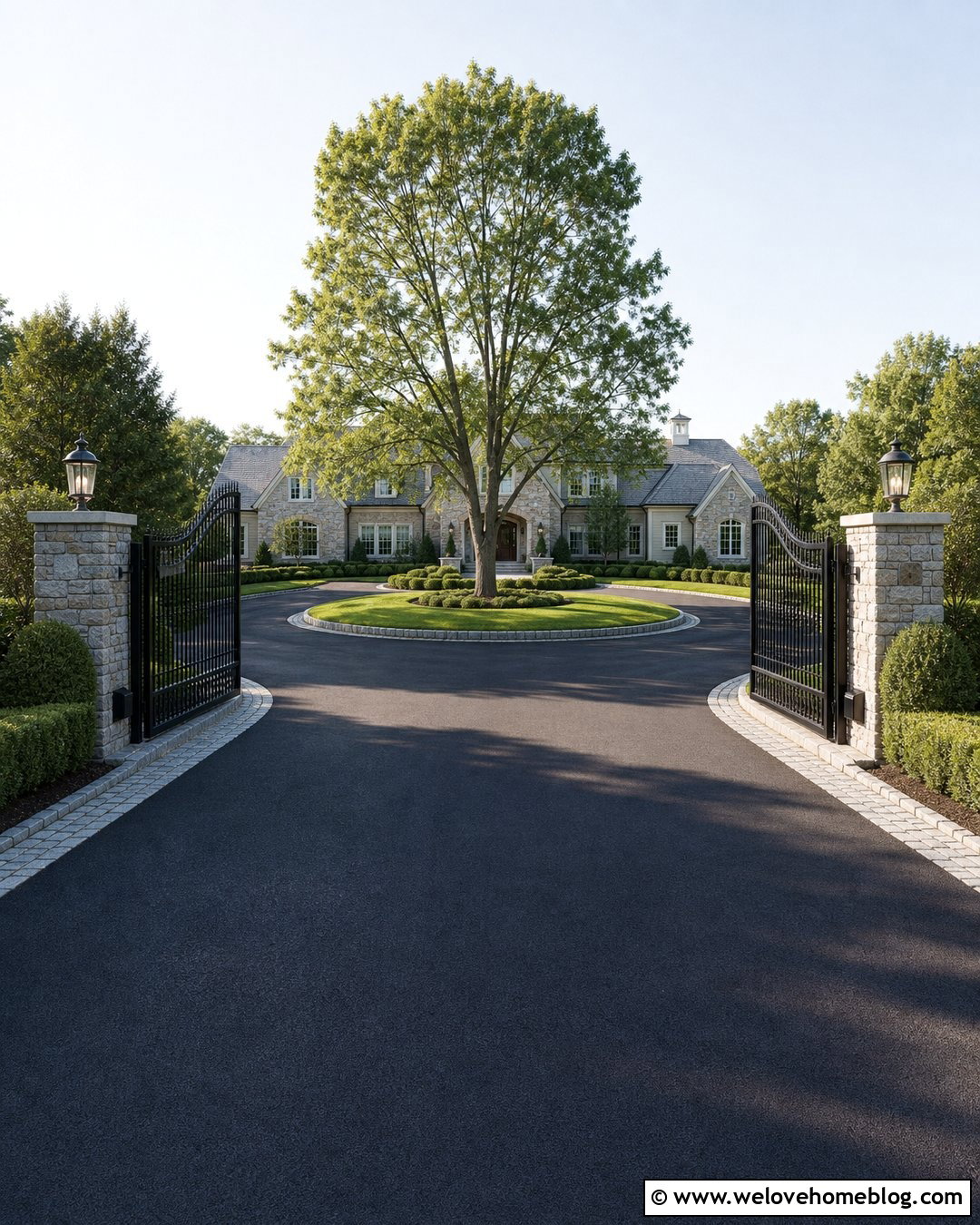
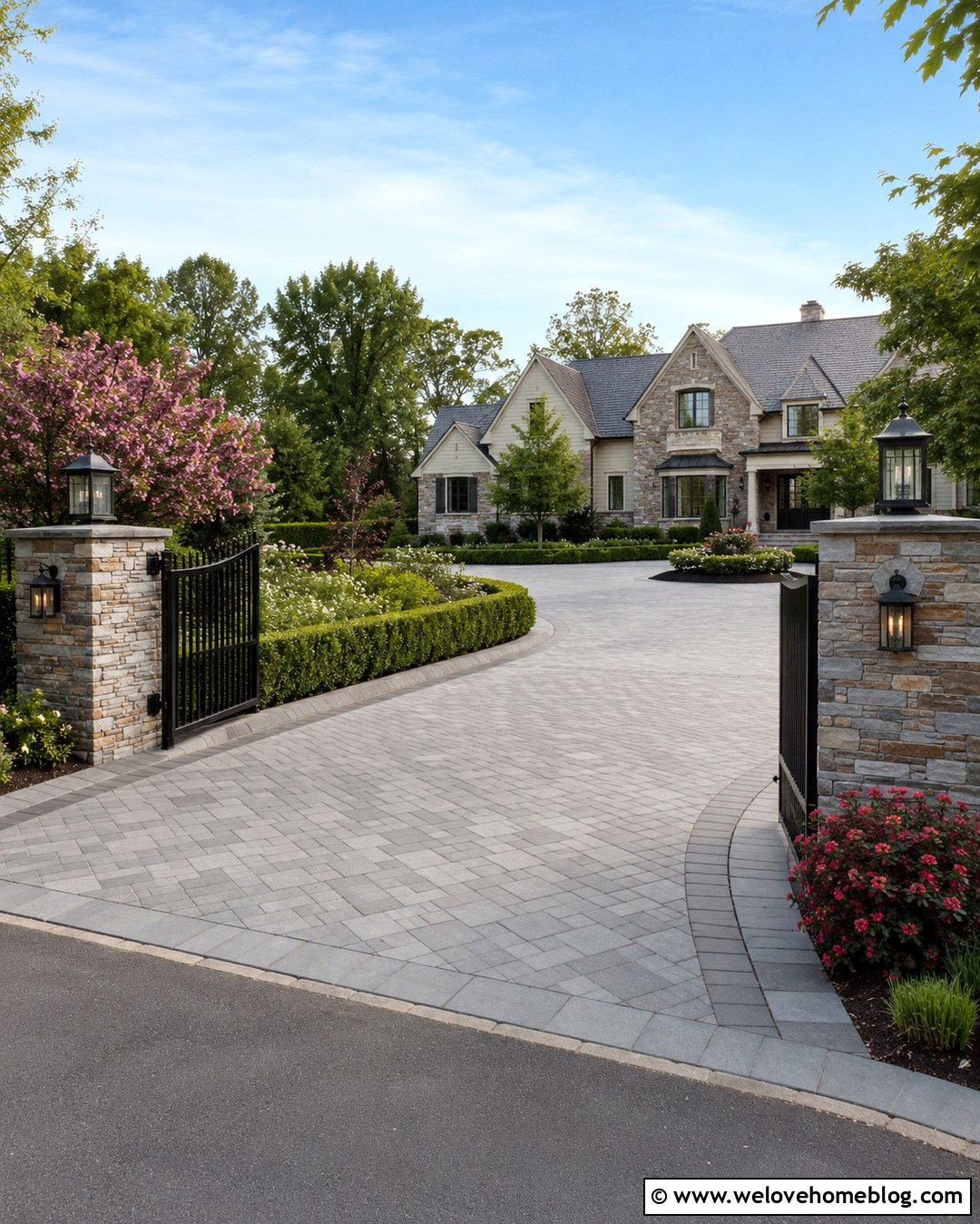
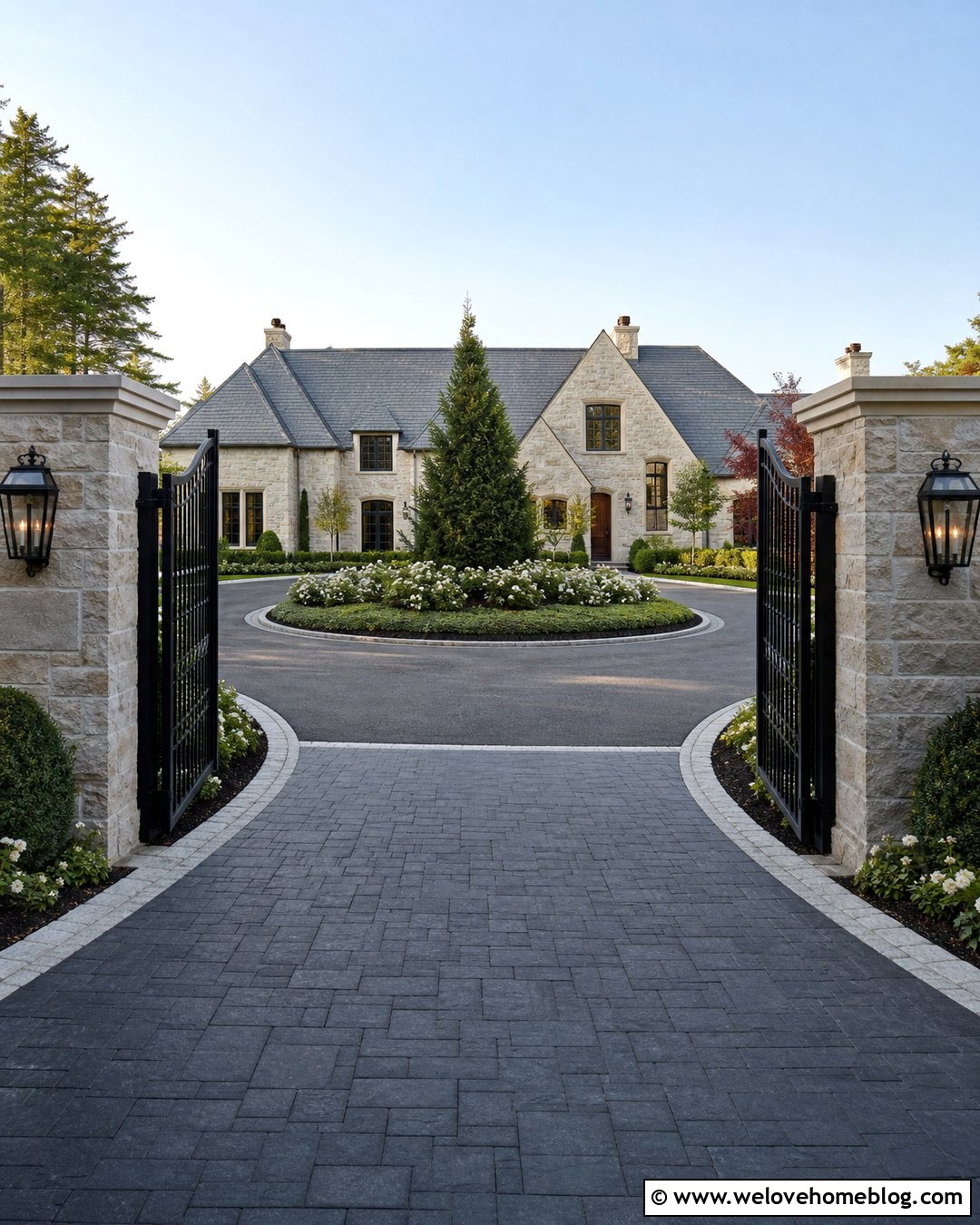
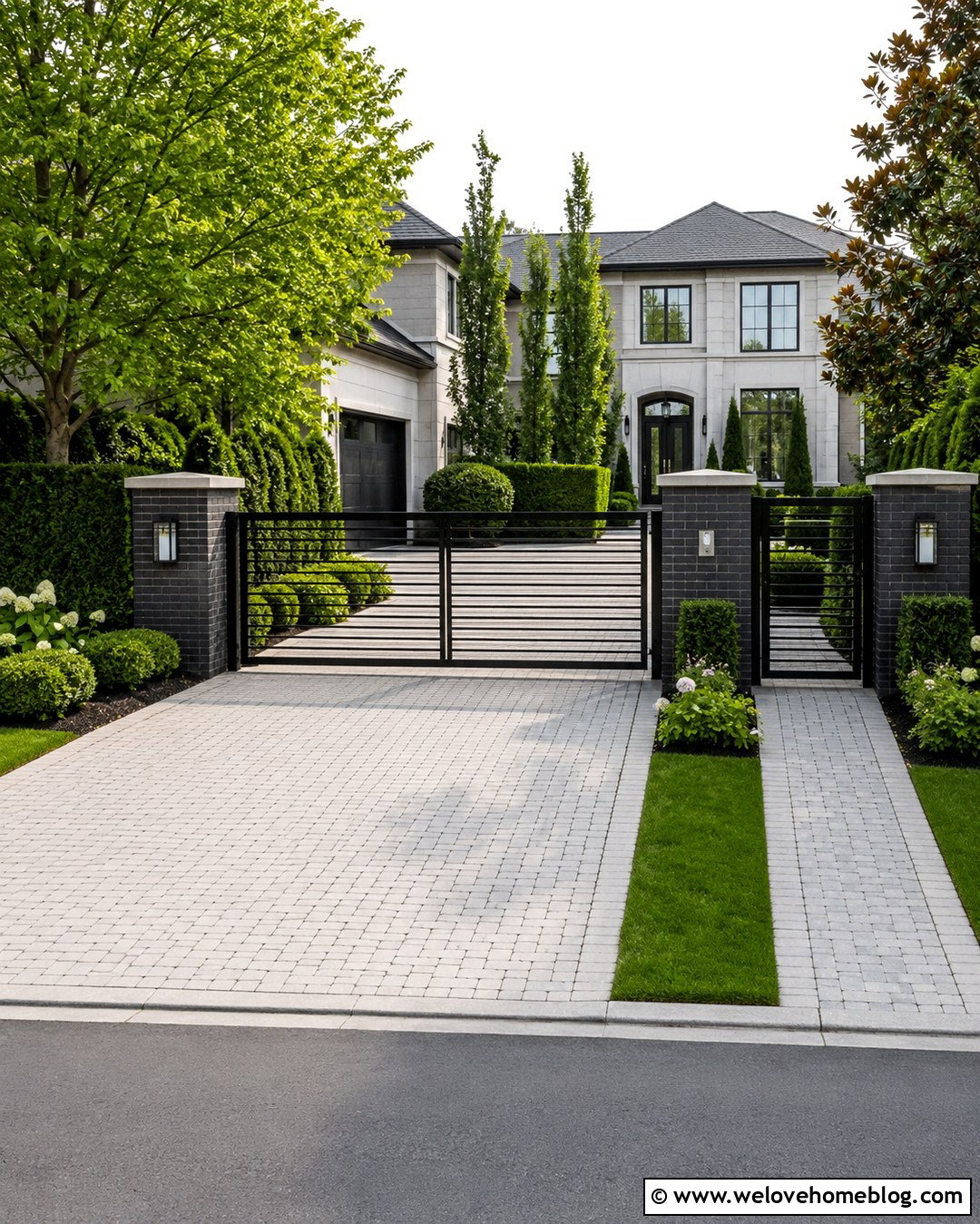
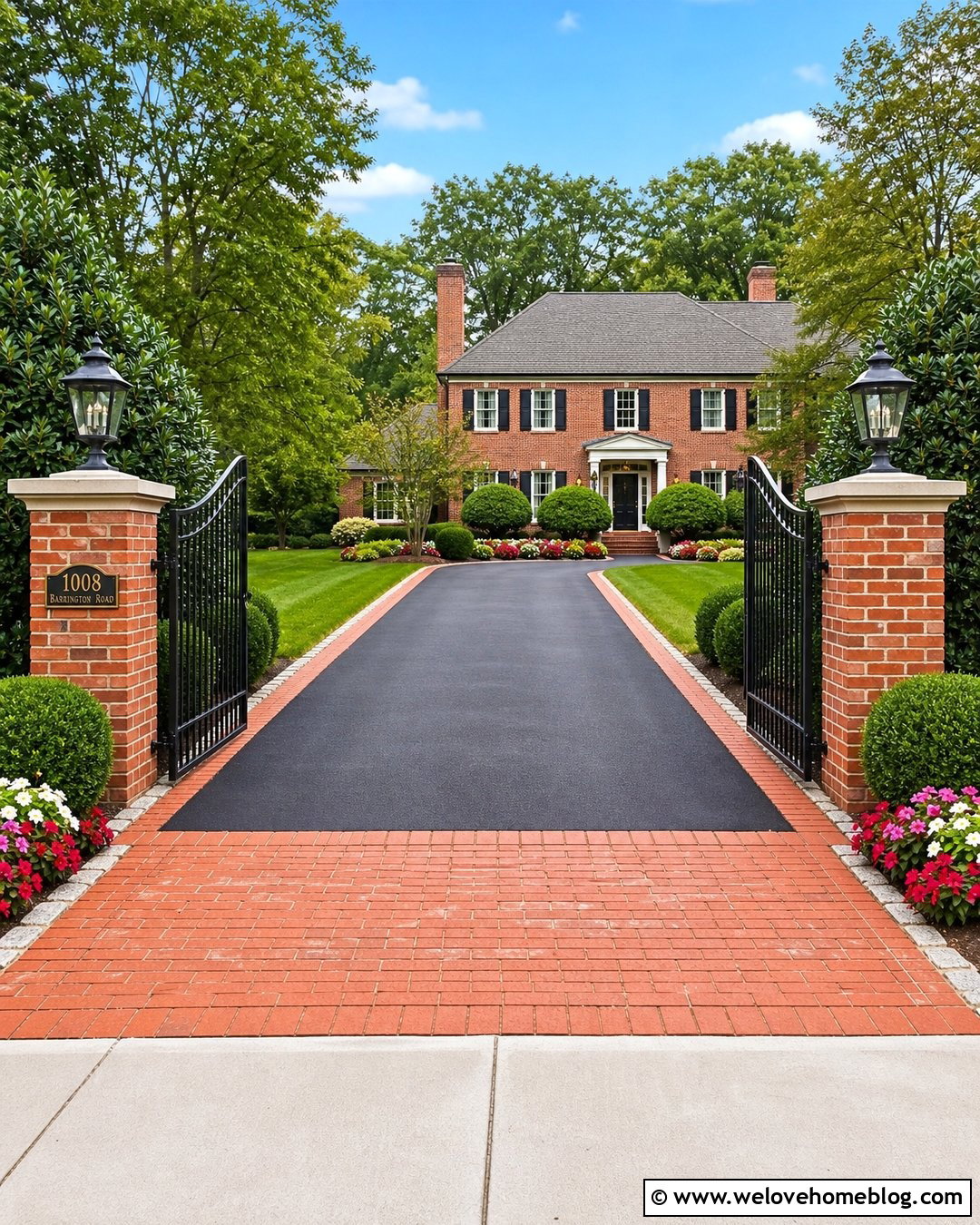
An automatic gate can control access while turning the two openings of a circular driveway into a coordinated entrance. Use black asphalt with granite edging to create a practical route between matching metal gates. Stone or brick pillars should be positioned outside the required vehicle clearance and scaled to the house. Low hedges and trees can frame each entrance without hiding drivers from road traffic. Consider how vehicles will wait, enter, and exit before selecting gate placement or swing direction. Access controls, lighting, drainage, utilities, and emergency operation should be planned early. Repeat the gate’s metal finish on railings, lights, or address details near the house. A broad landscaped island inside the loop softens the security features and keeps the overall appearance residential, welcoming, and connected to the front yard.
32. Circular Driveway With Brick Entrance Pillars
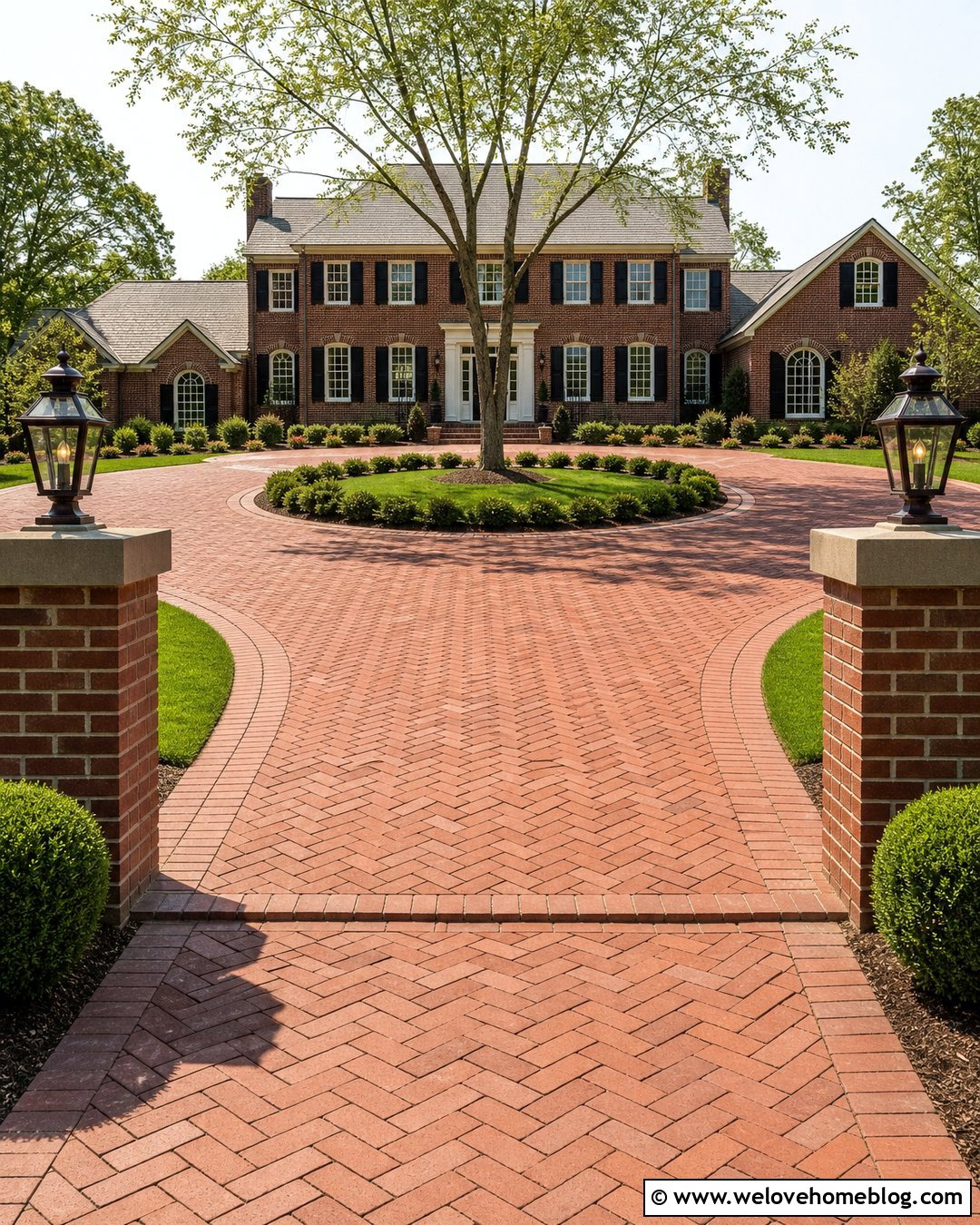
Brick pillars create a traditional frame for both ends of a circular driveway. Match the pillar brick closely to the house or select a complementary blend containing similar red, brown, and charcoal tones. A herringbone brick driveway or smooth concrete surface with brick edging will connect the entrances to the full loop. Add simple stone caps and appropriately scaled lanterns to finish each pillar. Low evergreen shrubs can soften the bases without blocking views of approaching traffic. Continue the brick into a narrow border around the center lawn island for a unified design. The pillars should not make the openings feel cramped, so account for turning vehicles and roadside clearance. This complete entrance works particularly well with Colonial, Georgian, traditional ranch, and brick craftsman homes.
33. Circular Driveway With Stone Columns
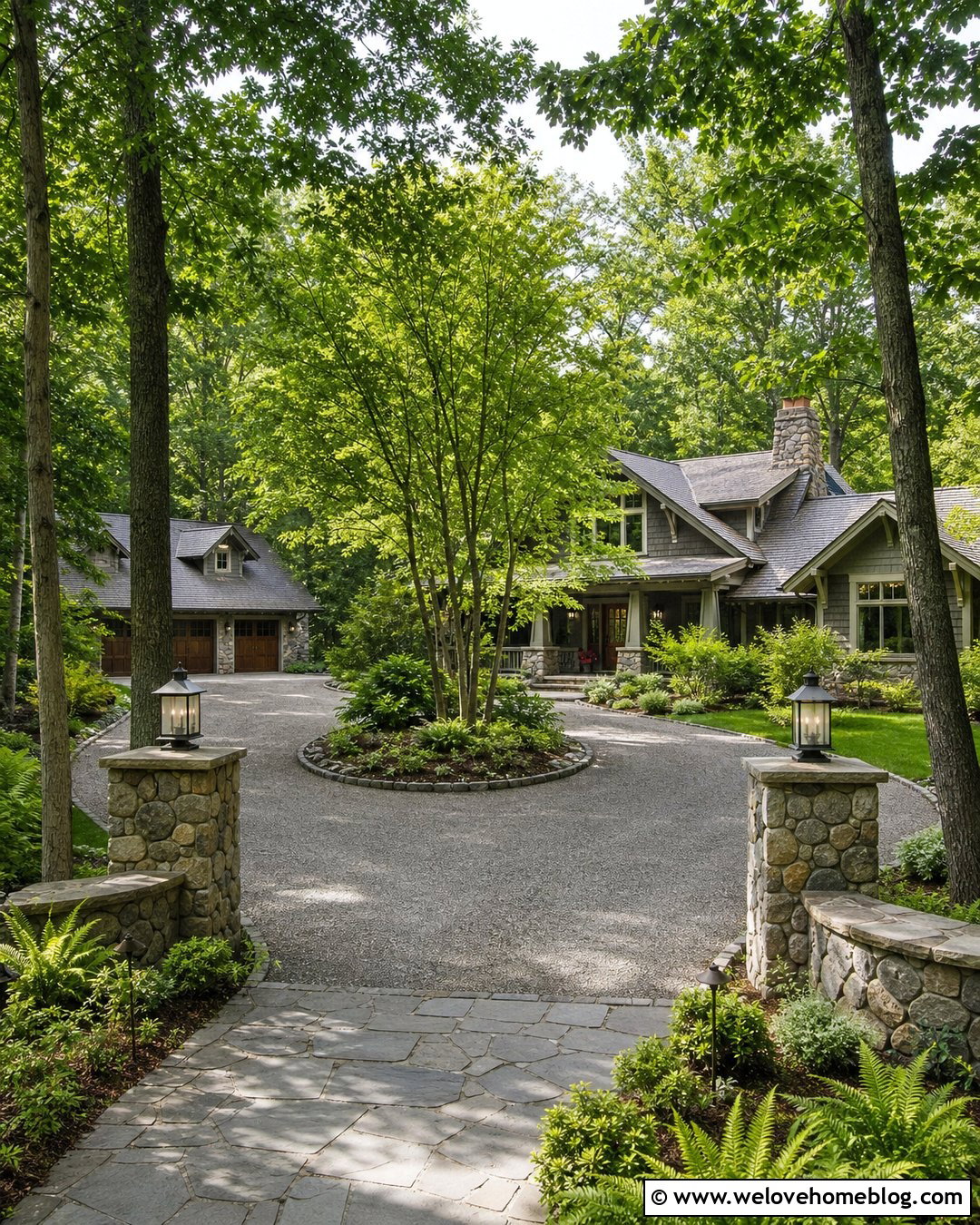
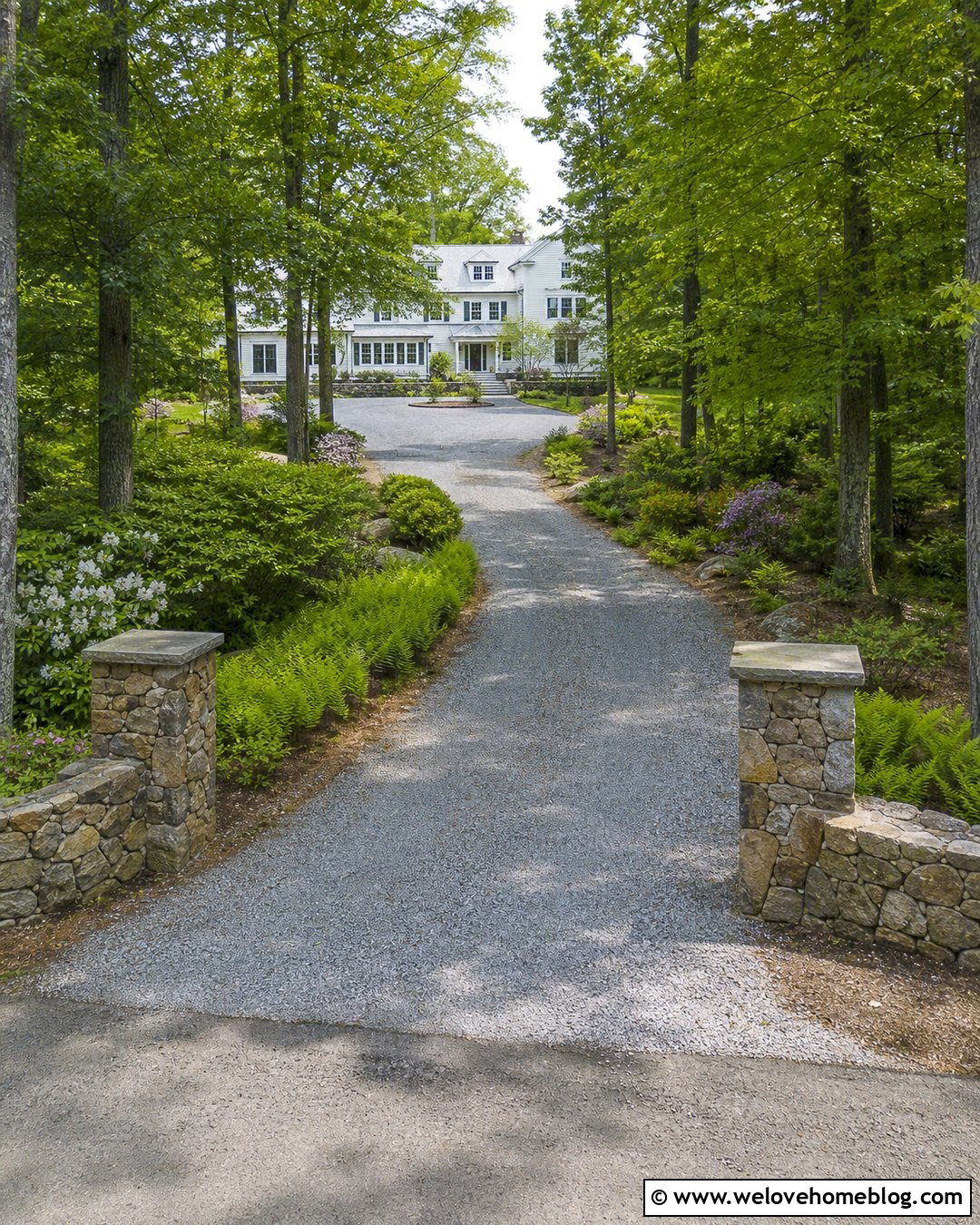
Natural stone columns give a circular driveway entrance weight and texture while blending comfortably with wooded or rural surroundings. Pair them with a compacted gravel driveway contained by matching stone curbs. Use simple capstones and restrained metal lanterns rather than overly ornate details. In the center island, plant a native shade tree surrounded by ferns, low shrubs, or broad lawn, depending on sunlight. Repeat the column stone on the front steps or foundation to make the entrance feel connected to the house. Curved planting beds outside both openings can guide visitors inward, but plants should remain low where visibility matters. The columns need strong foundations and enough setback from the driving lane. This design creates a substantial entrance for craftsman, mountain, country, and lodge-inspired houses.
34. Circular Driveway With Modern Metal Gates
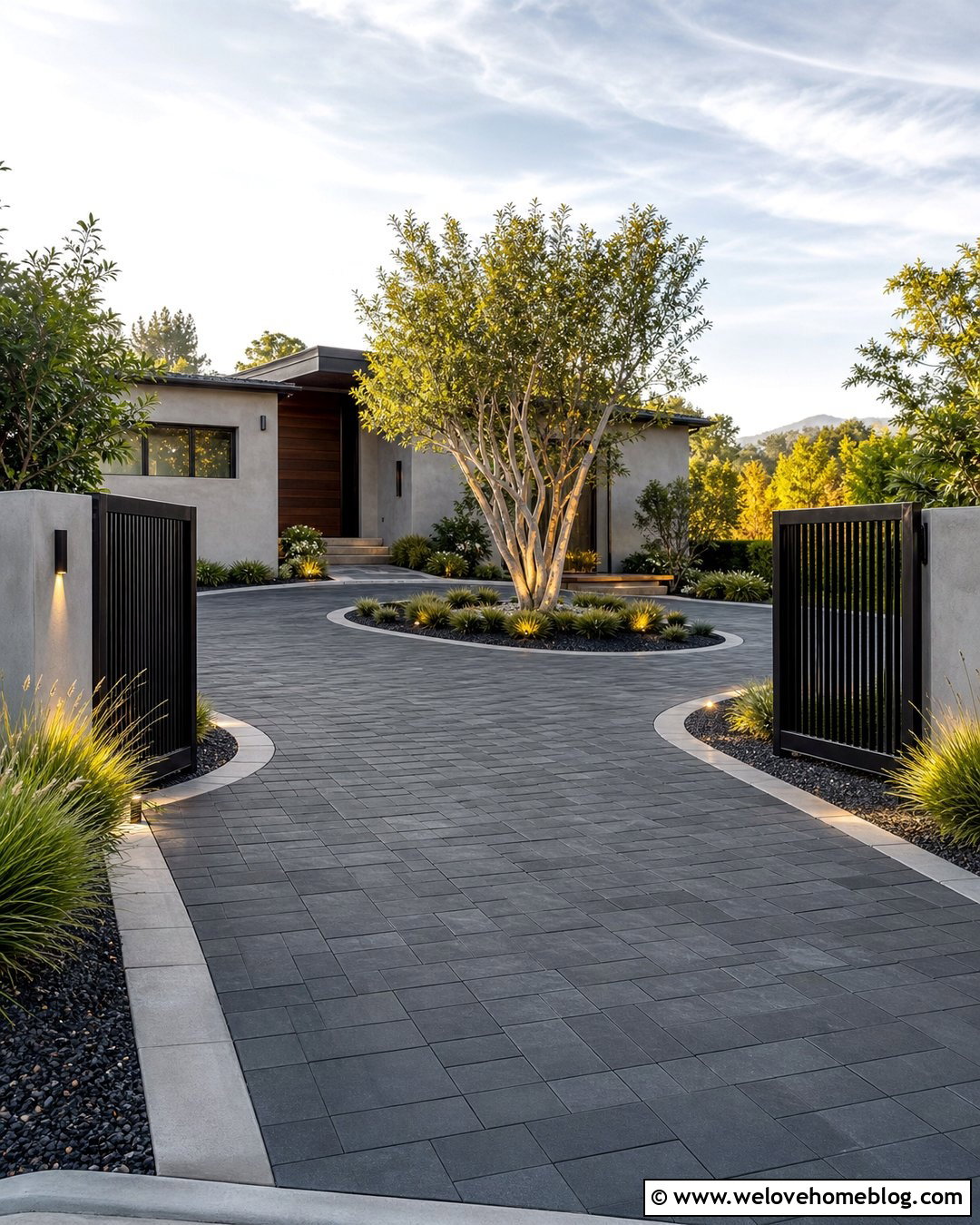
Horizontal or vertical metal gates can give a circular driveway a crisp modern entrance. Use large-format charcoal concrete pavers or smooth gray concrete to support the streamlined look. Slim stucco or poured-concrete pillars keep attention on the gate geometry rather than heavy masonry. Landscape the center island with one sculptural tree, low grasses, and broad areas of gravel mulch. Repeat the black metal finish on house numbers, path lights, and front-door details. Both entrances should appear balanced even if only one gate is used regularly. Leave clear sightlines and enough space for vehicles to pause safely while the gate opens. Avoid crowded foundation planting or decorative accents. A limited palette of gray paving, black metal, green planting, and warm wood creates an inviting modern composition.
35. Circular Driveway With Landscape Lighting
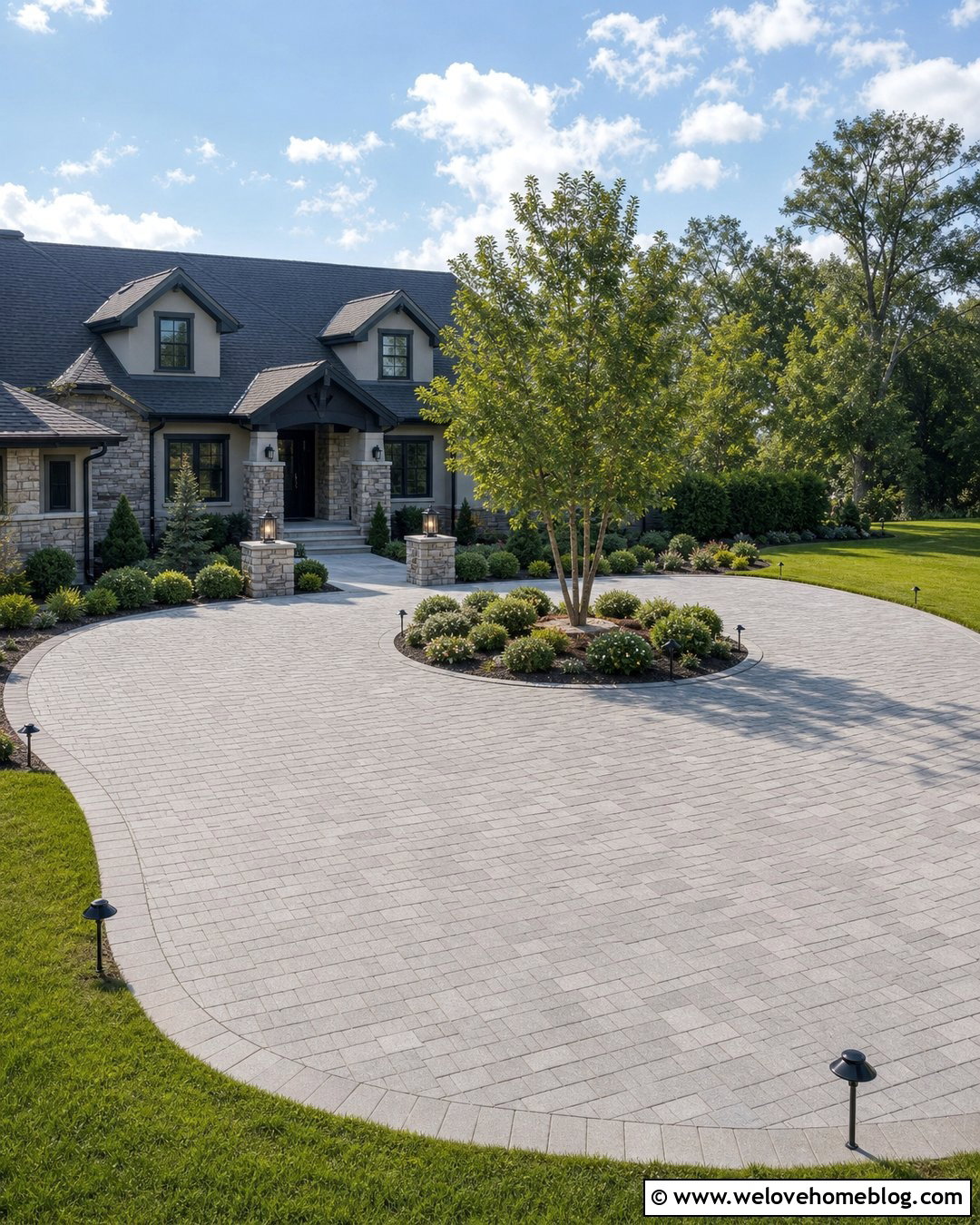
Thoughtful lighting can make a circular driveway easier to understand after dark without filling the yard with visible fixtures. During the day, a warm gray paver surface and low stone border provide the main visual structure. Place shielded path lights along selected portions of the outer curve rather than spacing them like a runway. Use subtle uplighting on the center island’s specimen tree and gentle lighting at entrance pillars. The front walkway and steps should remain easy to identify from the driveway. Choose fixtures with finishes that match the house hardware or gate. Plan wiring before paving to avoid cutting into a finished surface later. Although the lights matter at night, the landscape should still look uncluttered in daylight. Layered illumination creates a safer, more welcoming arrival without excessive brightness.
36. Circular Driveway With Address Sign
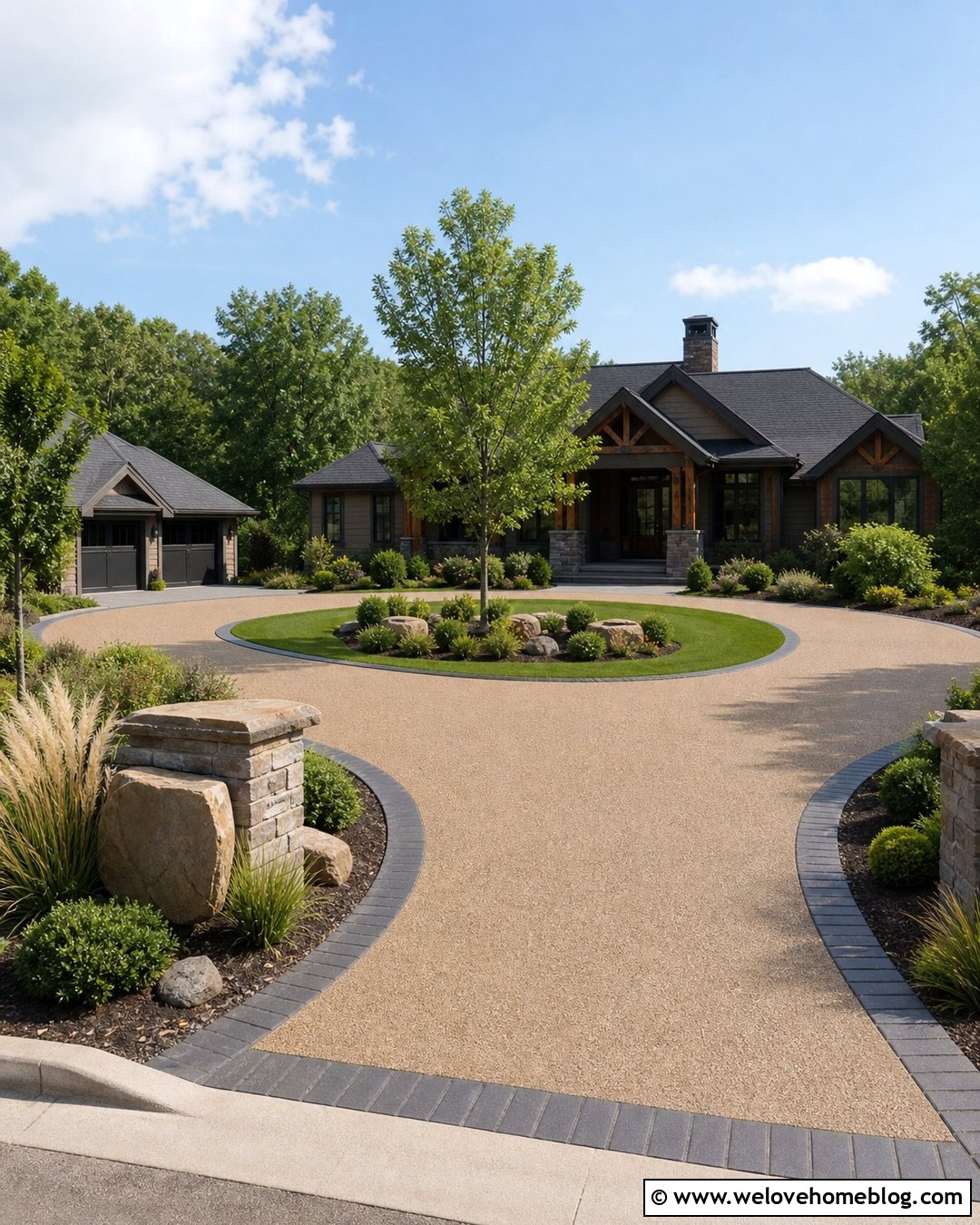
A well-placed address sign can strengthen the entrance while helping visitors identify the property. Pair a tan resin-bound circular driveway with a low stone monument positioned beside the primary entrance, safely outside the vehicle path. Use landscaping to frame the sign with compact shrubs and ornamental grasses, but keep the numbers visible from the road. A brick or stone border around the driveway can match the monument material and continue around the center island. Add a separate light aimed downward so the sign remains readable without glare. The secondary entrance may use a smaller matching marker or simple pillar. Keep fonts, colors, and materials consistent with the home’s architecture. This practical feature feels most intentional when it is integrated into the complete driveway and landscape design.
37. Circular Driveway With Front Walkway Connection
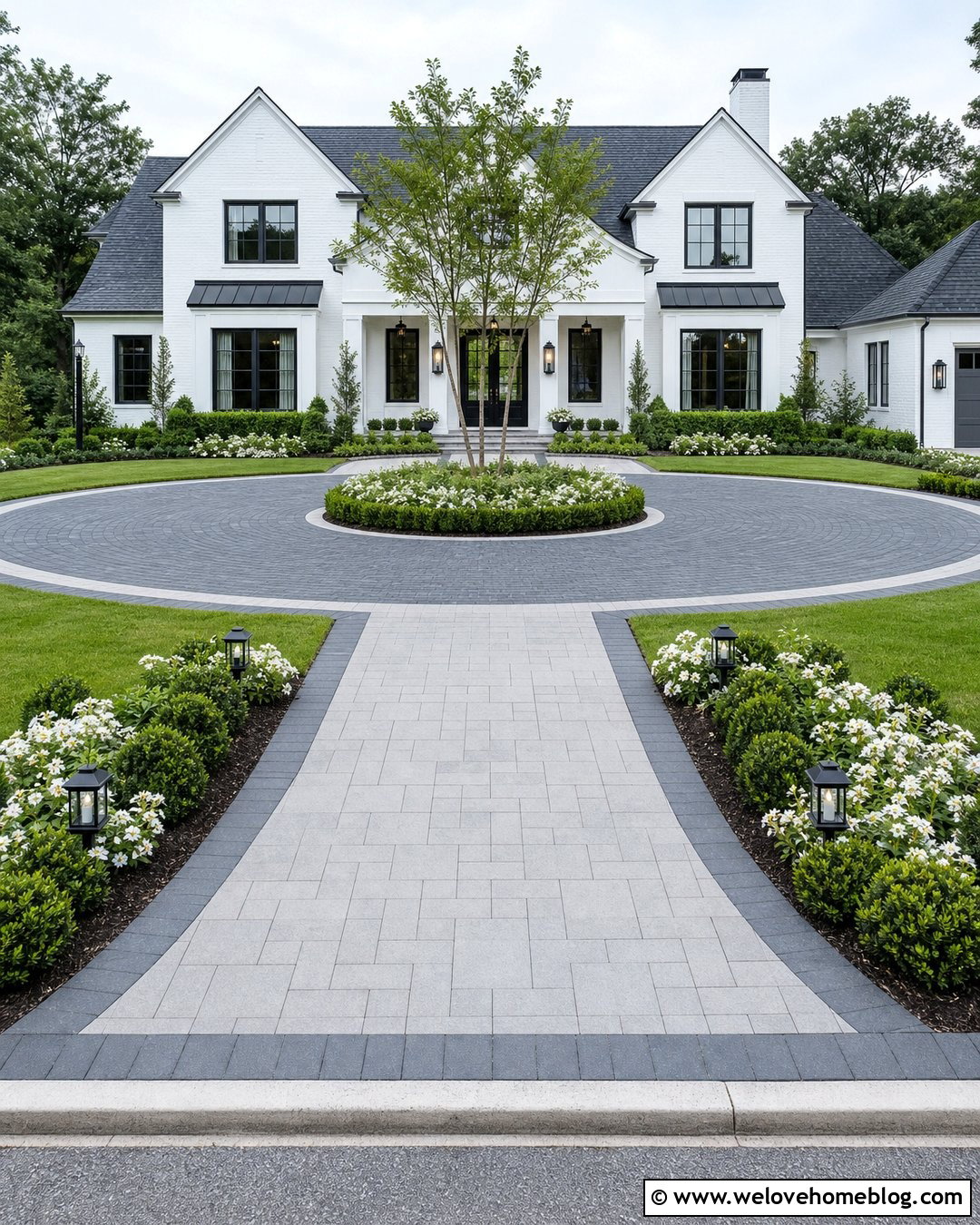
The walkway connection should make the route from the circular driveway to the front door immediately clear. Use charcoal concrete pavers for the driveway and a lighter version of the same paver for a broad path crossing the inner landscape. A contrasting band at the pickup area can mark where guests should stop and step out. Frame the walkway with low shrubs, flowering perennials, and small path lights. Avoid routing pedestrians through the center island if that creates unnecessary crossings or awkward steps. Where the path meets the driveway, keep both surfaces flush and provide enough space for comfortable movement. Aligning the walkway with the front door creates a strong visual axis. Repeating the driveway border along the path helps the entire arrival sequence feel coordinated rather than pieced together.
38. Circular Driveway With Porte Cochere
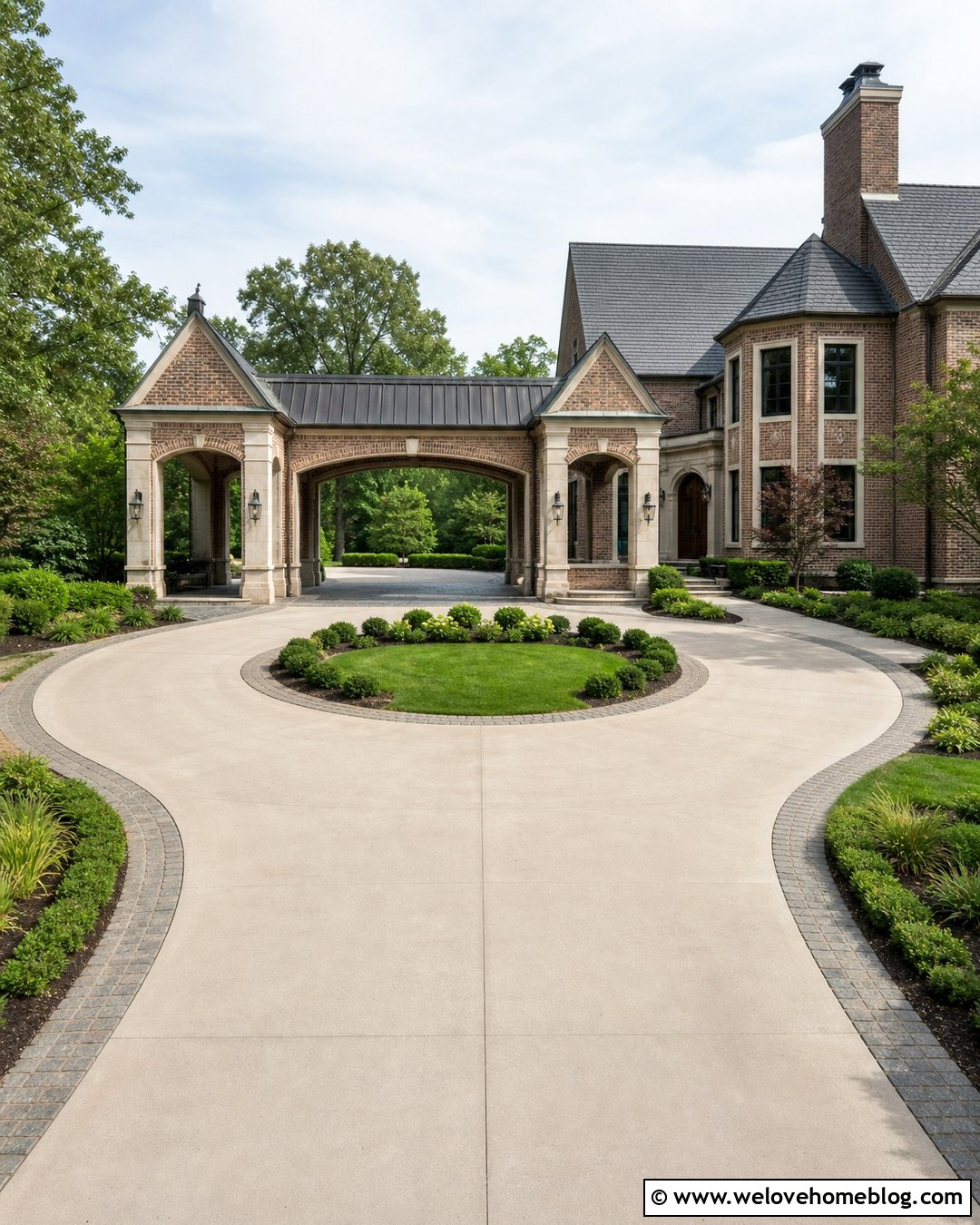
A circular driveway can pass beneath a porte cochere to create a sheltered arrival point at the front or side entrance. Use smooth concrete or tightly laid pavers to provide a level, refined surface beneath the structure. Continue the same paving around the full circle, then introduce a darker border under the canopy to define the drop-off zone. The center island may contain a formal lawn and low shrubs that do not compete with the architecture. Confirm that the route offers sufficient height, width, and turning clearance for expected vehicles. Columns should reflect materials already used on the house, such as brick, stucco, or stone. A separate walkway can lead from the covered area to guest parking. This arrangement suits large traditional, Mediterranean, and estate-style residences.
39. Farmhouse Circular Driveway With Split-Rail Fence
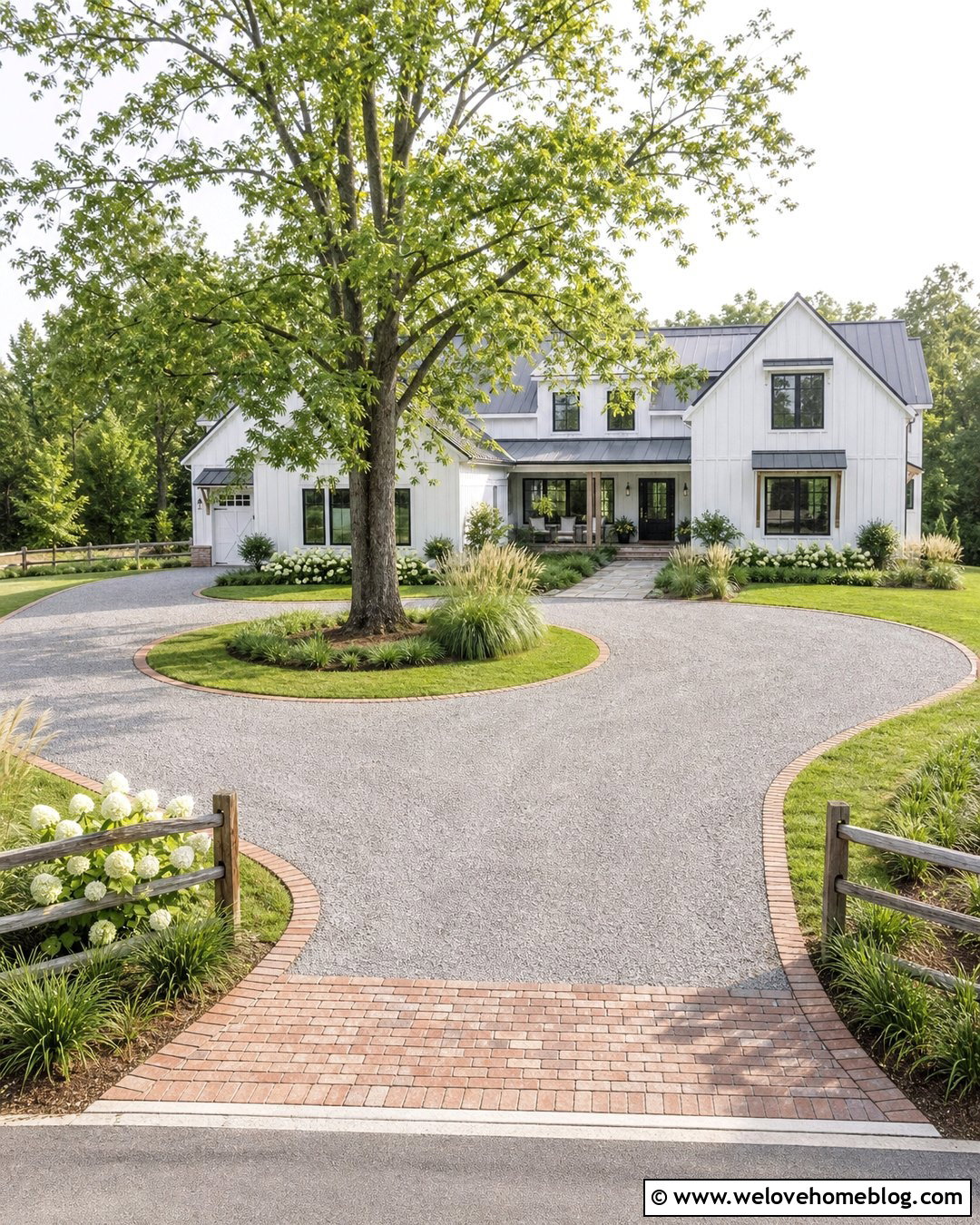
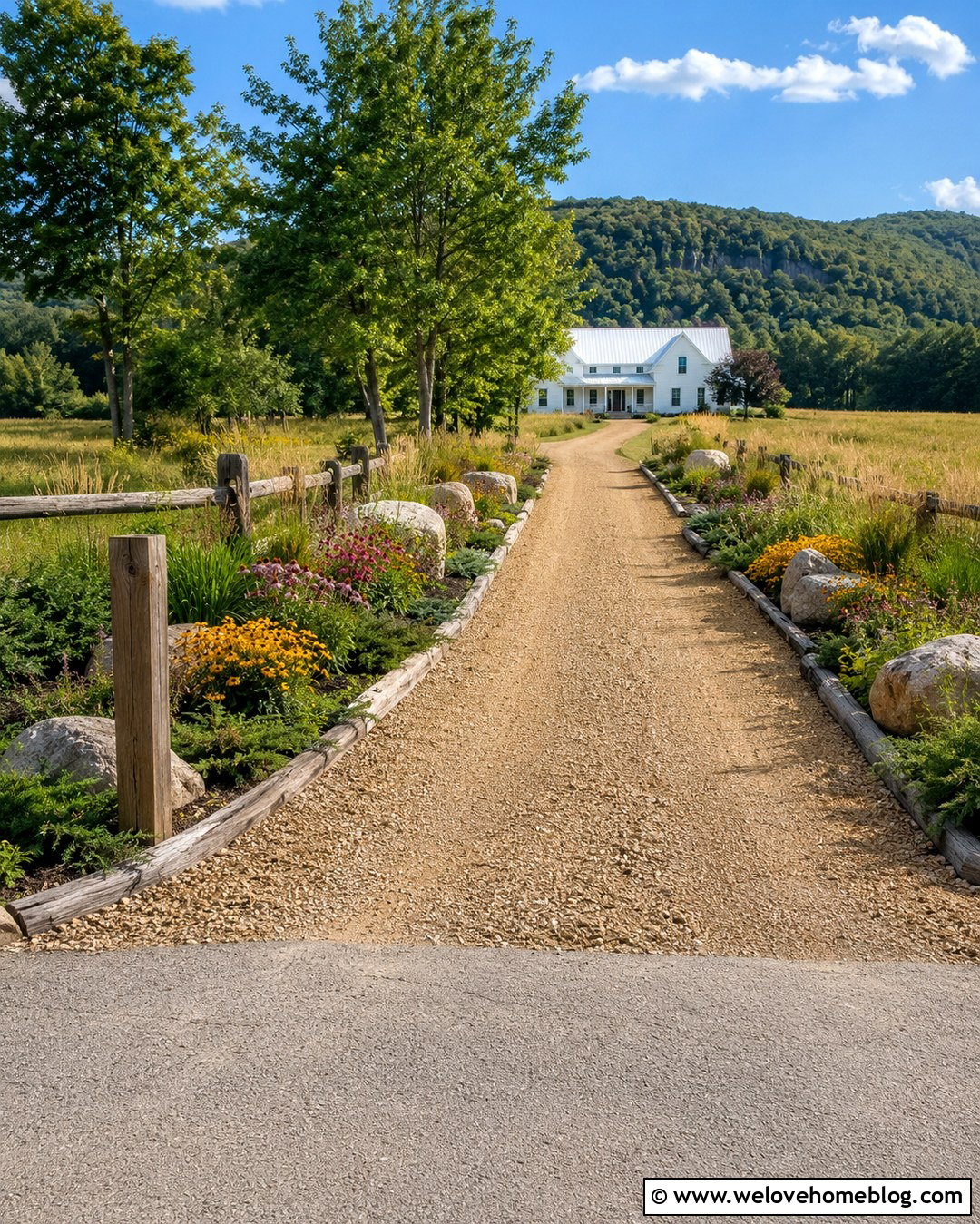
A farmhouse circular driveway feels most natural when the materials are simple and the landscape remains open. Use compacted gray gravel with reclaimed-brick edging to form a broad loop in front of a white or muted-color farmhouse. Short sections of split-rail fence can frame both entrances while preserving views across the property. Plant the center island with a deciduous shade tree, lawn, hydrangeas, and relaxed perennial groups. A flagstone walkway should connect the inner curve to the porch steps. Near the driveway edges, use native grasses and flowering shrubs rather than formal clipped hedges. A brick apron at the road helps contain gravel and gives the entrances a durable finish. This complete look balances rural character with clear boundaries and everyday function.
40. Modern Circular Driveway With Concrete Pavers
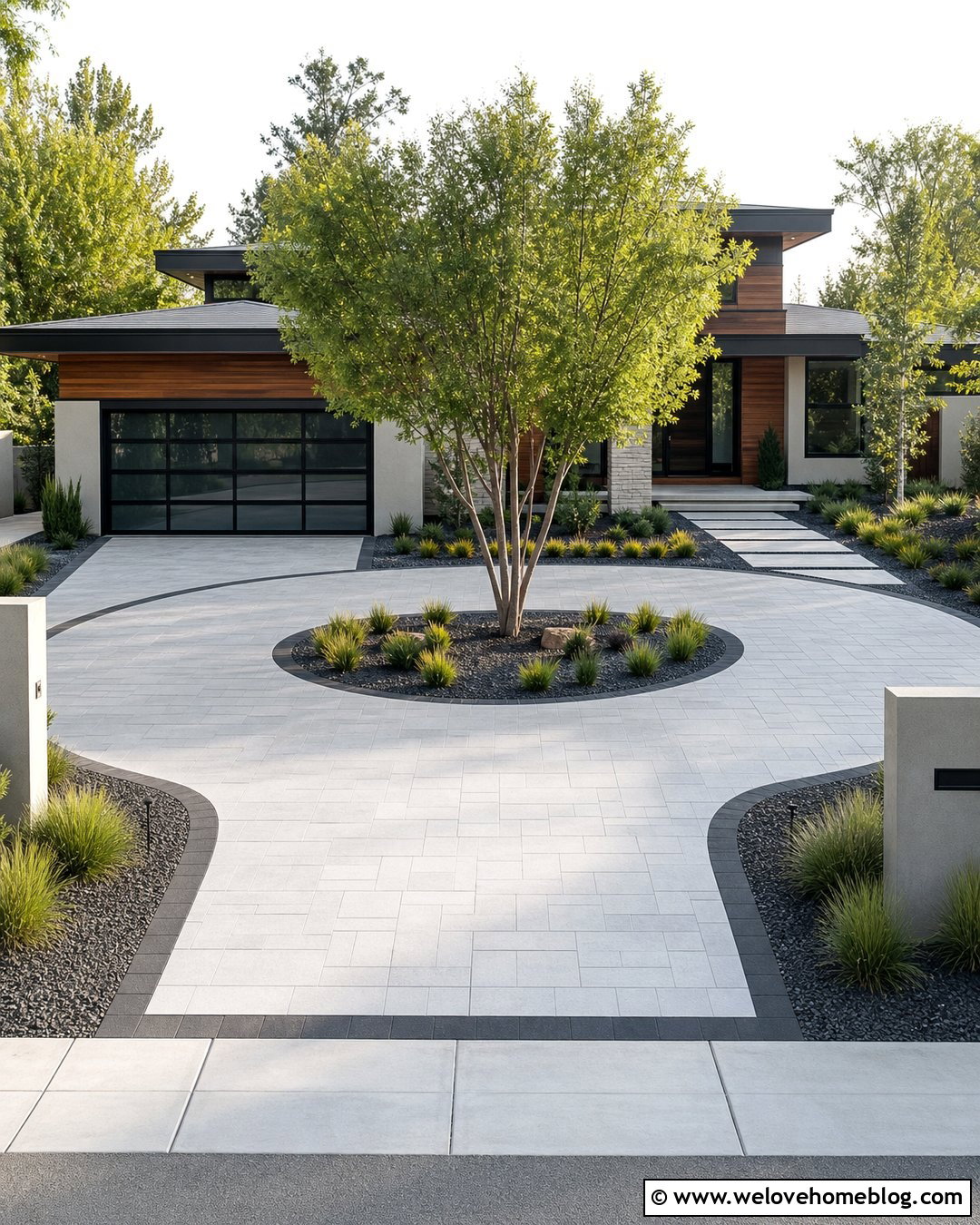
Large rectangular concrete pavers can give a circular driveway a modern appearance when they are arranged in clean, sweeping bands. Choose pale gray slabs with narrow charcoal joints and a darker outer border. The center island should use a limited planting palette, such as one multi-stem tree, clipped grasses, and dark gravel mulch. Linear path lights and a straight walkway contrast attractively with the curved driving route. Continue the pavers toward the garage so the front approach feels like one continuous composition. Avoid ornate pillars, mixed masonry, and complicated flower beds. A simple address wall near one entrance can repeat the house’s stucco or wood accents. This design works best when the driveway geometry, architecture, and landscape all share the same restrained material and color palette.
41. Craftsman Circular Driveway With Mixed Pavers
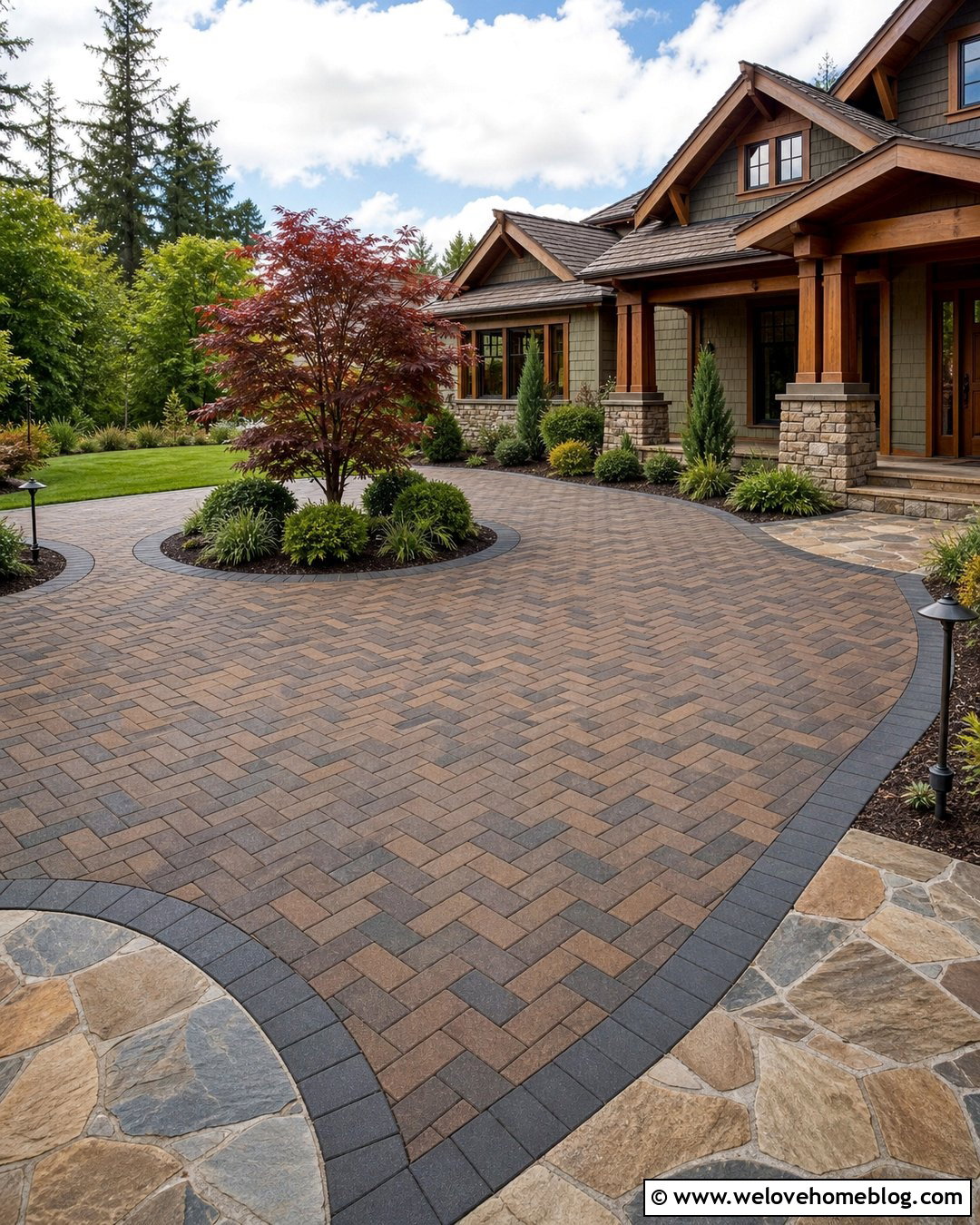
A craftsman house benefits from driveway materials with warm color and visible texture. Combine brown and charcoal concrete pavers in a herringbone field with a darker soldier-course border. A natural stone apron at each entrance can reference porch columns or the home’s foundation. Shape the center island with a gently curved lawn, a Japanese maple or native flowering tree, and layered shrubs. Use the same pavers for a walkway leading to the porch, but change the laying pattern to distinguish pedestrian space. Low stone lights and broad planting beds reinforce the grounded craftsman character. Avoid highly polished surfaces or stark monochrome colors. When the paving, stonework, wood details, and planting share warm undertones, the circular driveway feels like an original part of the house.
42. Colonial Circular Driveway With Symmetrical Planting
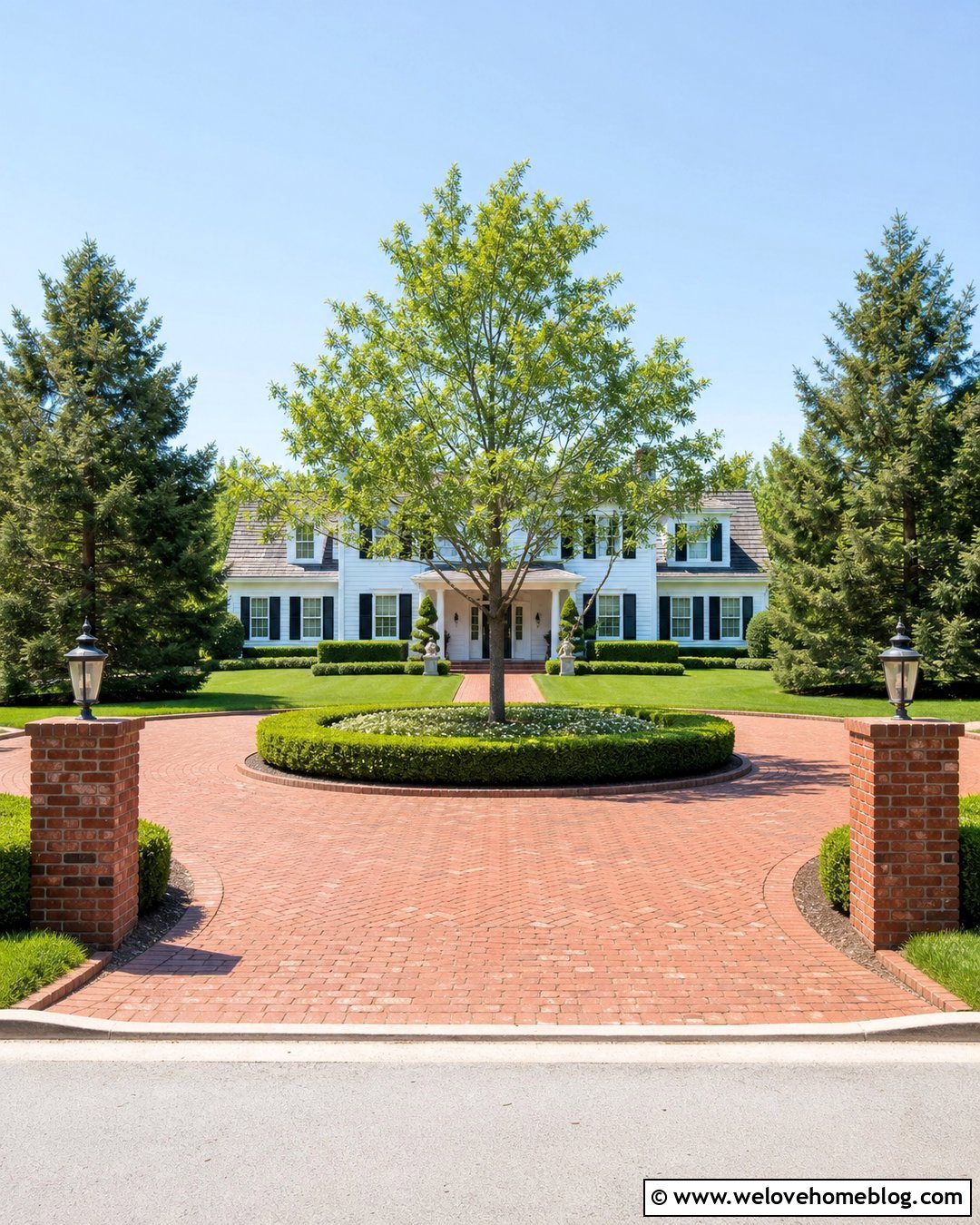
Symmetry helps a circular driveway complement the orderly facade of a Colonial house. Use red clay brick pavers or smooth gray concrete framed by a brick border. Align the center of the loop with the front door and place matching entrance pillars at both street connections. Within the island, arrange a central tree, balanced evergreen groups, and a low hedge around open lawn. Repeat foundation plants on both sides of the front steps to continue the formal structure. A straight brick walkway can cross the inner lawn and reinforce the central axis. Traditional lanterns should be evenly placed but not oversized. Keep service parking and garage access visually separate when possible. This carefully balanced design creates a clear, dignified approach without relying on excessive ornament or complicated planting.
43. Mediterranean Circular Driveway With Stone Pavers
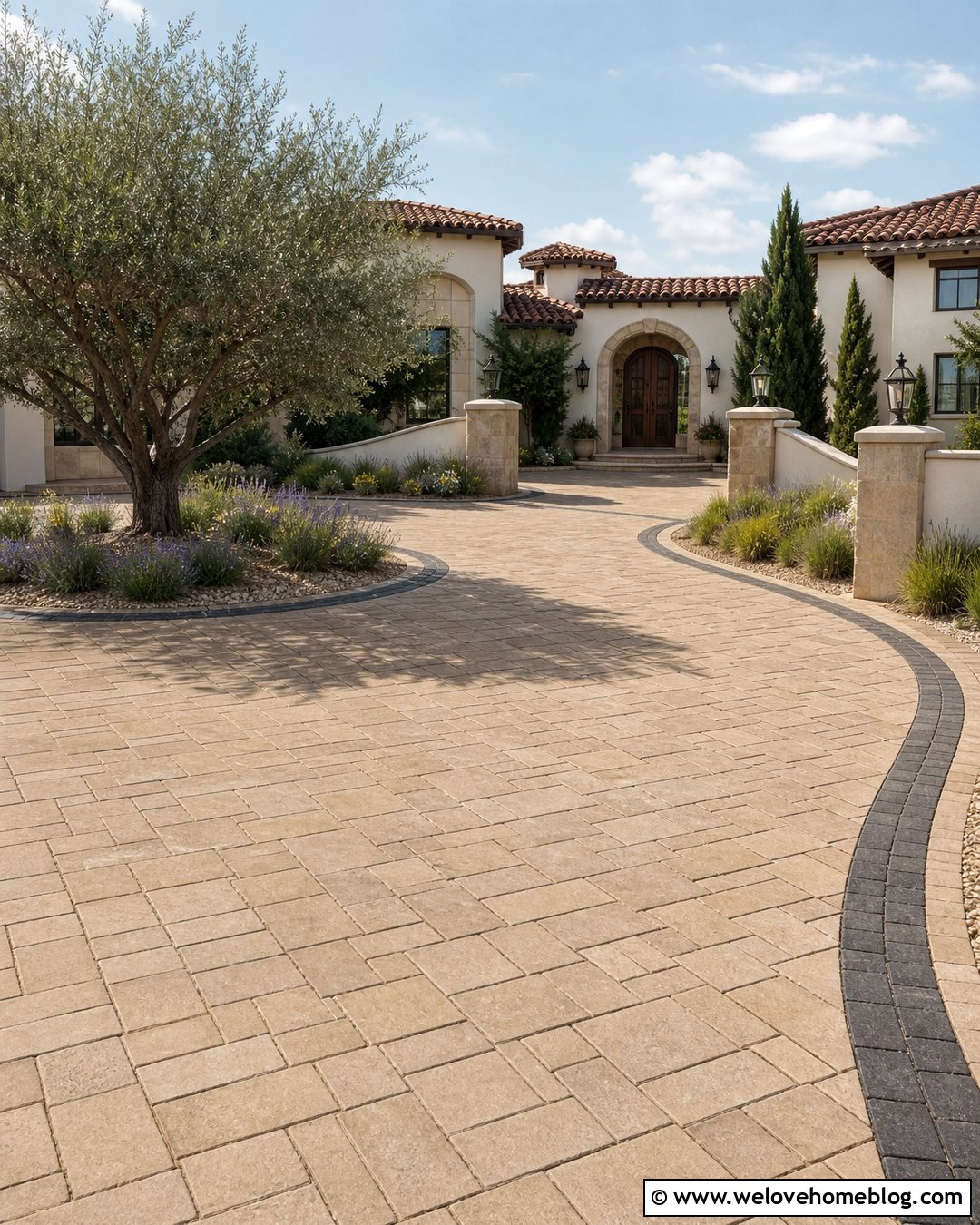
Warm stone pavers suit the textured stucco, tile roofing, and arched details of a Mediterranean house. Use tumbled concrete or natural stone pavers in sand, cream, and muted terracotta tones. Lay them in a fan or random ashlar pattern, then define the curves with a darker stone band. Fill the center island with an olive tree, lavender, rosemary, ornamental grasses, and pale gravel mulch. Low stucco entrance walls with stone caps can frame both openings. Continue the same paving into a curved walkway leading to the front courtyard. Planting should feel layered but remain below important sightlines. Black metal lanterns and gates can provide contrast against the warm materials. The complete driveway should appear sun-washed, established, and closely tied to the house architecture.
44. Sloped Circular Driveway With Retaining Wall
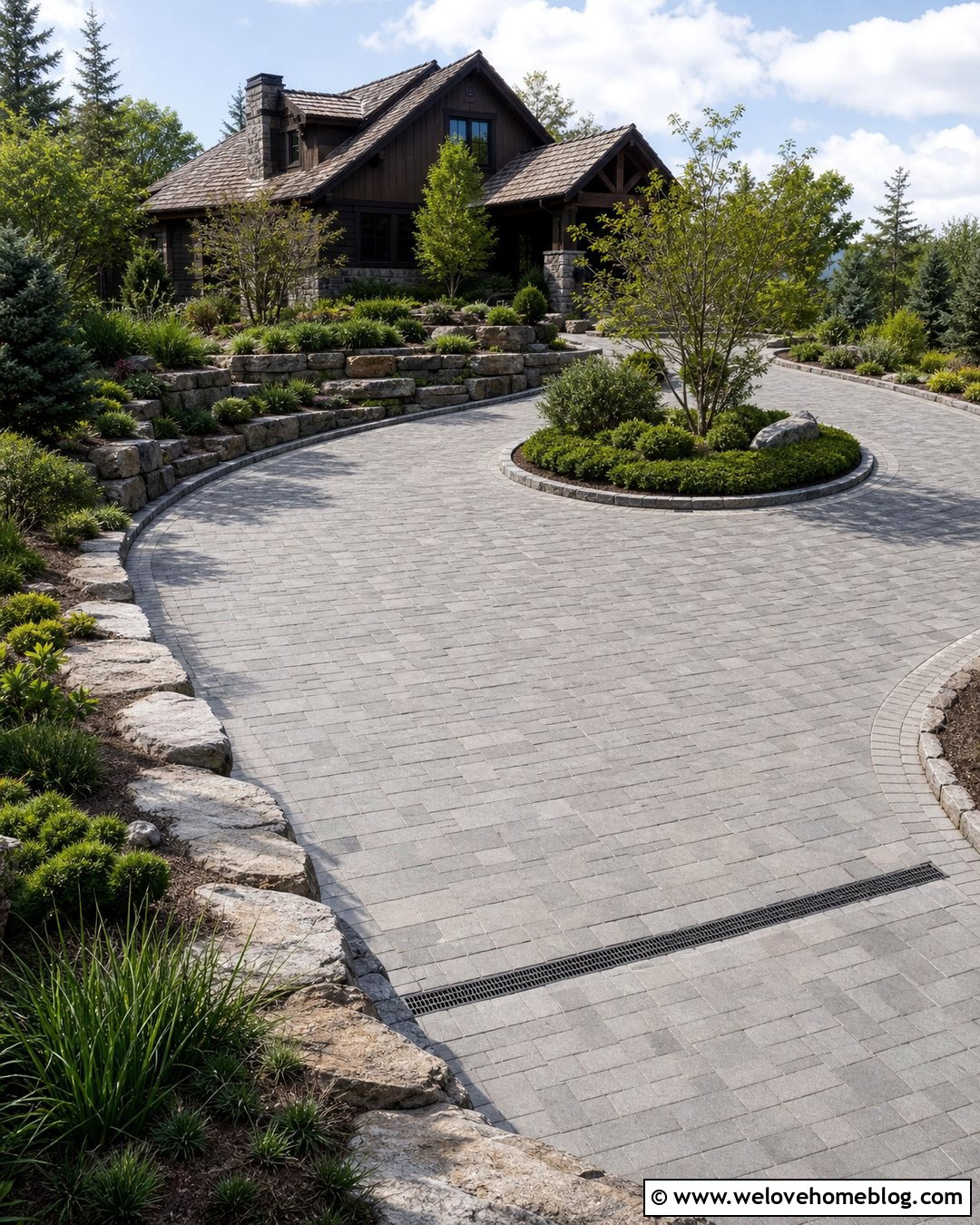
A sloped property requires a circular driveway that manages elevation changes without creating abrupt transitions. Use textured concrete pavers or broom-finished concrete for a clear, durable surface. A low natural stone retaining wall can support the higher side of the center island or outer landscape. Step the wall gradually with the grade rather than forcing one tall structure into the yard. Plant the slope with deep-rooted shrubs, ornamental grasses, and ground covers suited to local conditions. Channel runoff toward an approved drainage area and away from the house, garage, and road. Keep the inside curve open enough for vehicles to turn comfortably on the incline. Professional grading and engineering are especially important here. A successful design makes the slope look intentional while protecting the driveway base and surrounding landscape.
45. Budget Circular Driveway With Mixed Materials
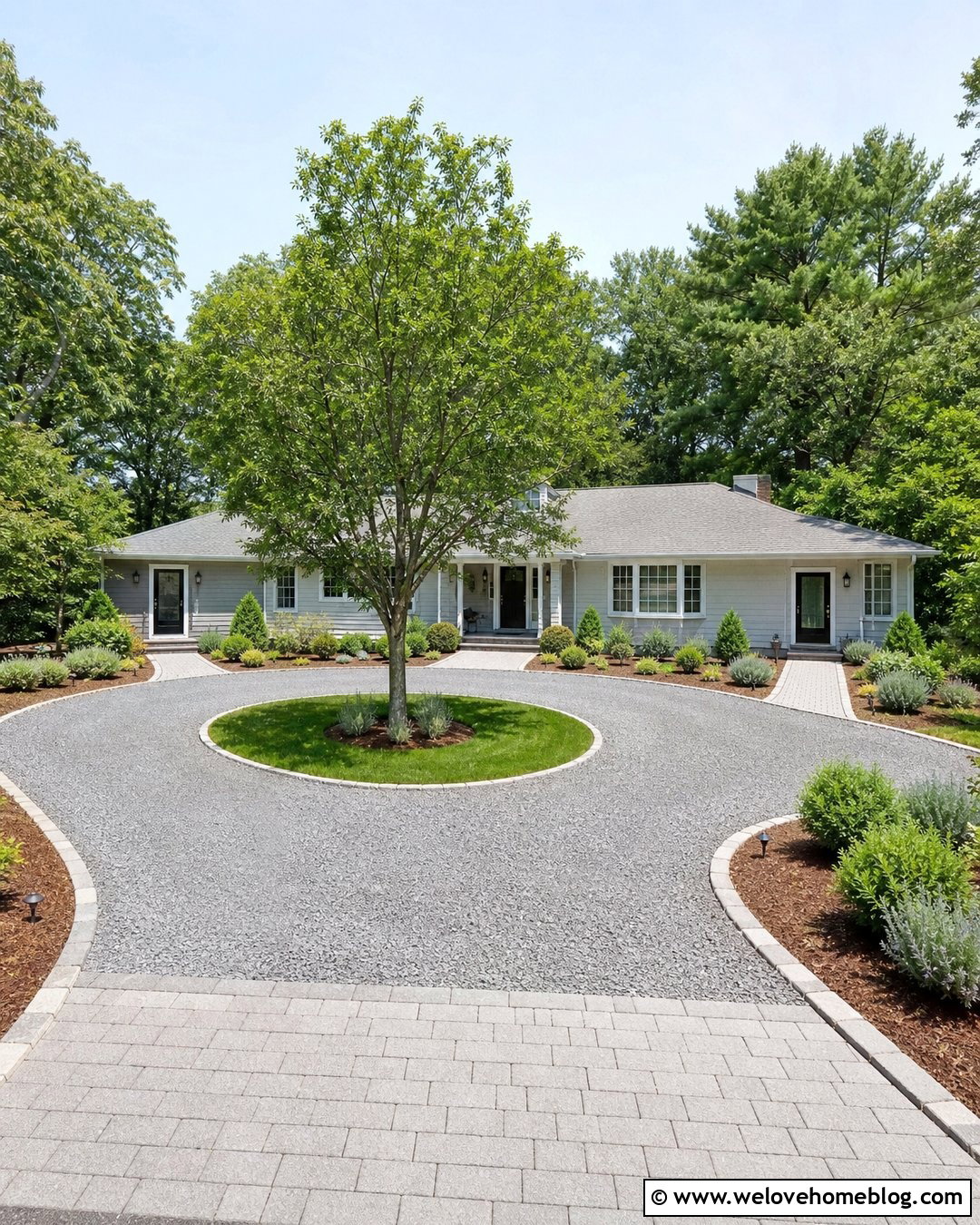
A budget-conscious circular driveway can still look finished when inexpensive materials are used in a disciplined way. Start with compacted crushed gravel for the main driving surface, then add concrete paver borders only at the curves and entrances. A full paver apron near the road can protect the most heavily used area without extending across the entire loop. Keep the center island as existing lawn with one shade tree and a simple mulch ring. Use affordable native shrubs in repeated groups near the house rather than filling every edge with plants. Plan grading, base preparation, drainage, and edge restraint before spending money on decorative details. Circular driveway dimensions, entrance placement, and permit rules can vary by jurisdiction, so verify local requirements before construction. ()
Conclusion:
The most successful 45 Circular Driveway Ideas treat the driveway, center island, entrance, walkway, house, and surrounding landscape as one connected design. Begin with a layout that fits the available frontage and accommodates the vehicles that regularly visit the property. Then choose a surface suited to your climate, maintenance expectations, and budget. Borders can sharpen the curves, while trees, hedges, flowers, or native plants soften the paved area. Lighting, pillars, gates, and address signs should support the design without reducing visibility or usable space. Before construction, confirm drainage, utility locations, base requirements, and local permits. With careful planning, a circular driveway can improve everyday access while giving the entire front yard a balanced, welcoming appearance.

Related posts:
Leave a Reply