
A well-planned circular drive can make arriving, parking, and leaving feel effortless while creating a polished focal point in the front yard. These Round About Driveway Ideas explore complete designs rather than isolated materials or plants. Each look combines the driveway surface, loop shape, center island, edging, landscaping, entrance, and house style. A roundabout layout can also let drivers leave facing forward, although the available frontage, turning space, drainage, visibility, and local access requirements should guide the final plan. () From economical gravel loops to formal cobblestone circles and modern permeable paving, there is an option for many settings. Use these Round About Driveway Ideas to shape a practical entrance with memorable curb appeal.

1. Gravel Roundabout Driveway With Lawn Island

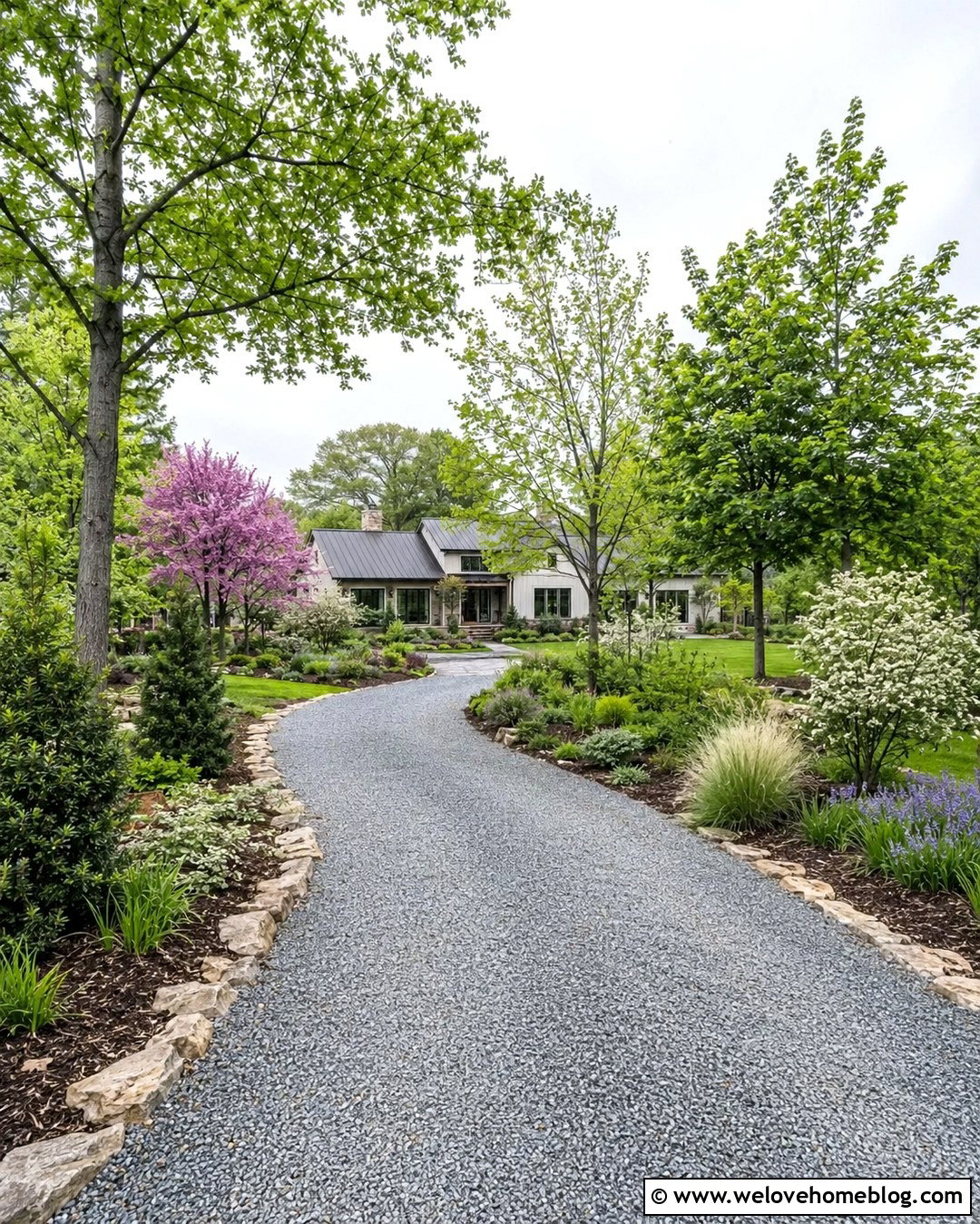
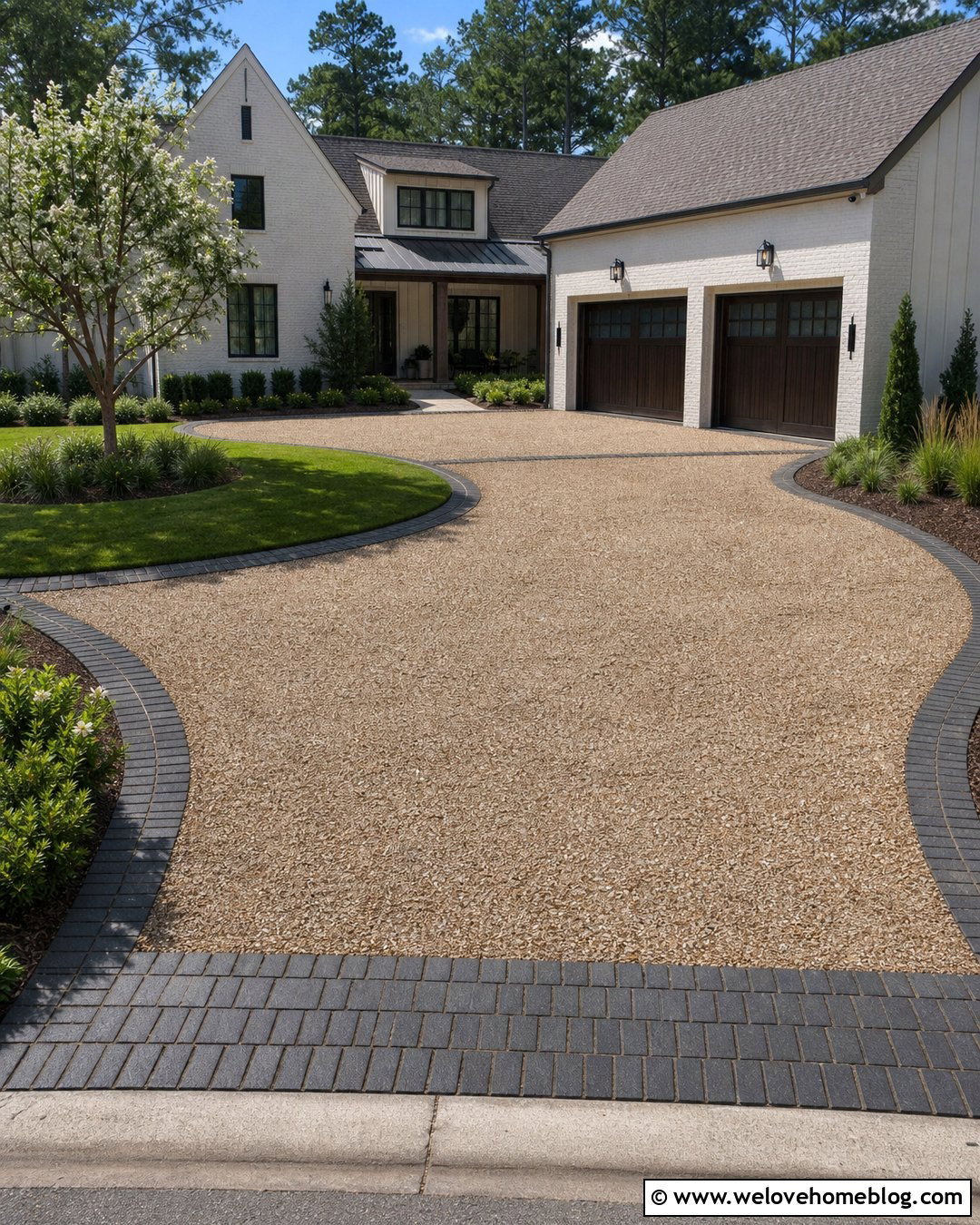
A gravel roundabout driveway feels relaxed, affordable, and welcoming around a traditional country home. Use compacted gray crushed stone for the driving surface because its angular pieces settle together better than loose decorative pebbles. A broad lawn island creates an open center without making the entrance look overly formal. Edge the circle with granite cobbles to contain the gravel and give tires a clear boundary. One small ornamental tree can anchor the island, while a low ring of catmint or creeping thyme adds color without blocking visibility. Continue the same gravel toward the garage so the loop looks intentional. Simple brick pillars and clipped shrubs at the street complete this practical, balanced driveway design.
2. Concrete Roundabout Driveway With Boxwood Island
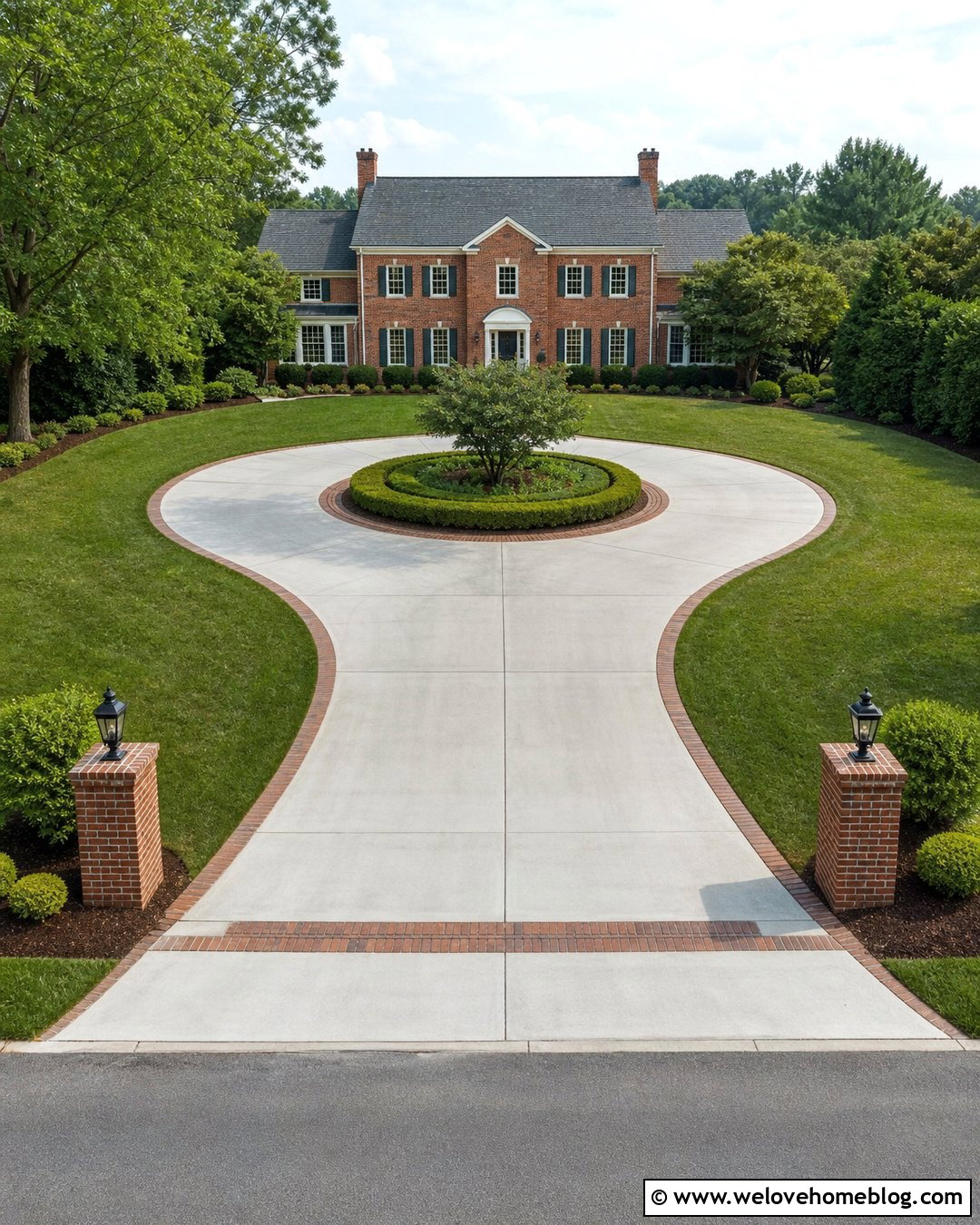
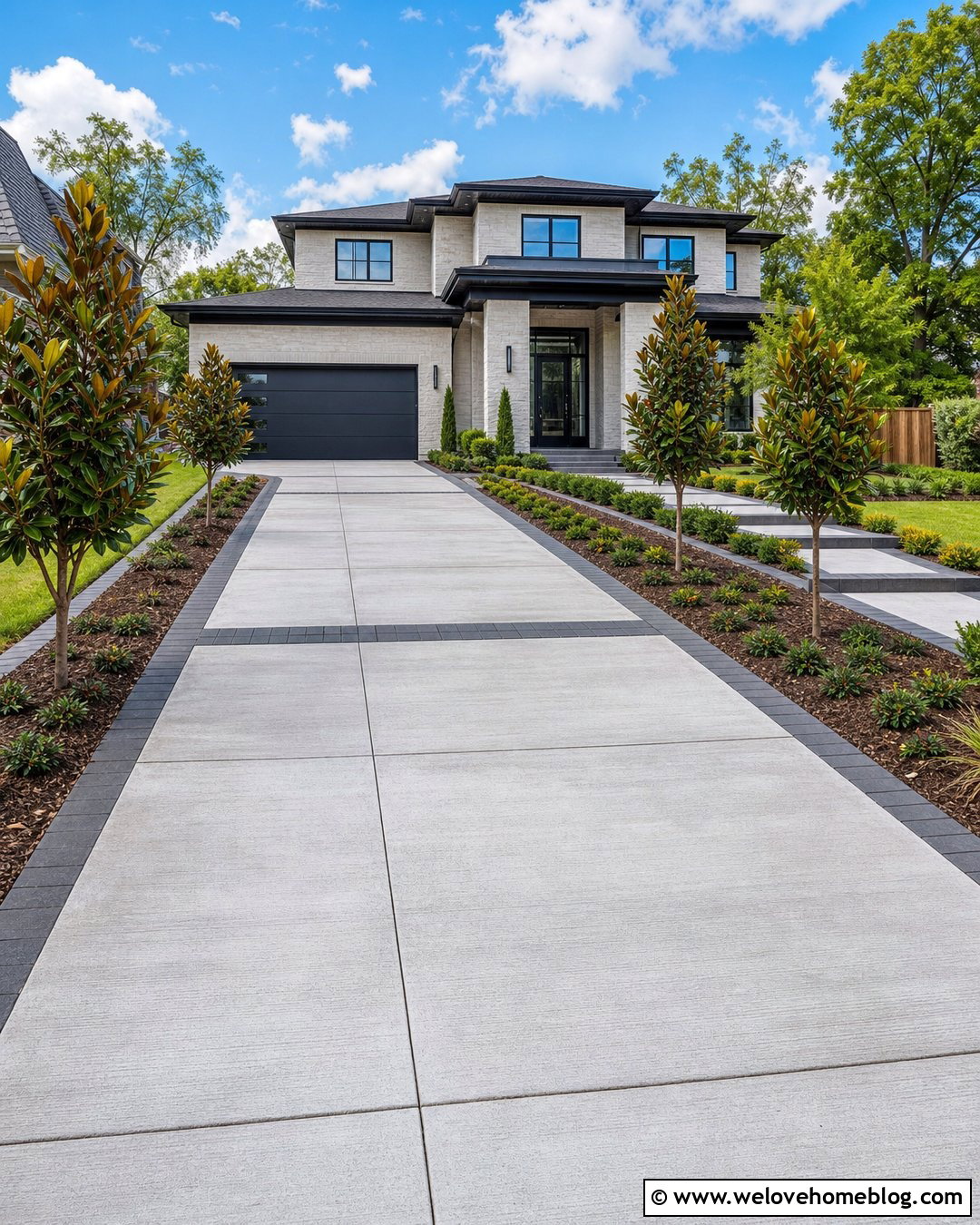
Smooth poured concrete gives a roundabout driveway a clean foundation that suits Colonial and transitional homes. Instead of leaving one uninterrupted gray surface, add narrow brick ribbons along the inner and outer curves. The contrasting lines make the circle easier to read and connect the driveway to a red brick facade. In the center, clipped boxwoods can form a low ring around an ornamental tree or large garden urn. Keep the planting controlled so branches and foliage do not crowd the driving lane. Matching brick entrance pillars strengthen the formal character. A separate concrete walkway from the parking area to the front door helps guests avoid crossing the main traffic path and makes the entire approach feel thoughtfully organized.
3. Brick Roundabout Driveway With Fountain Island
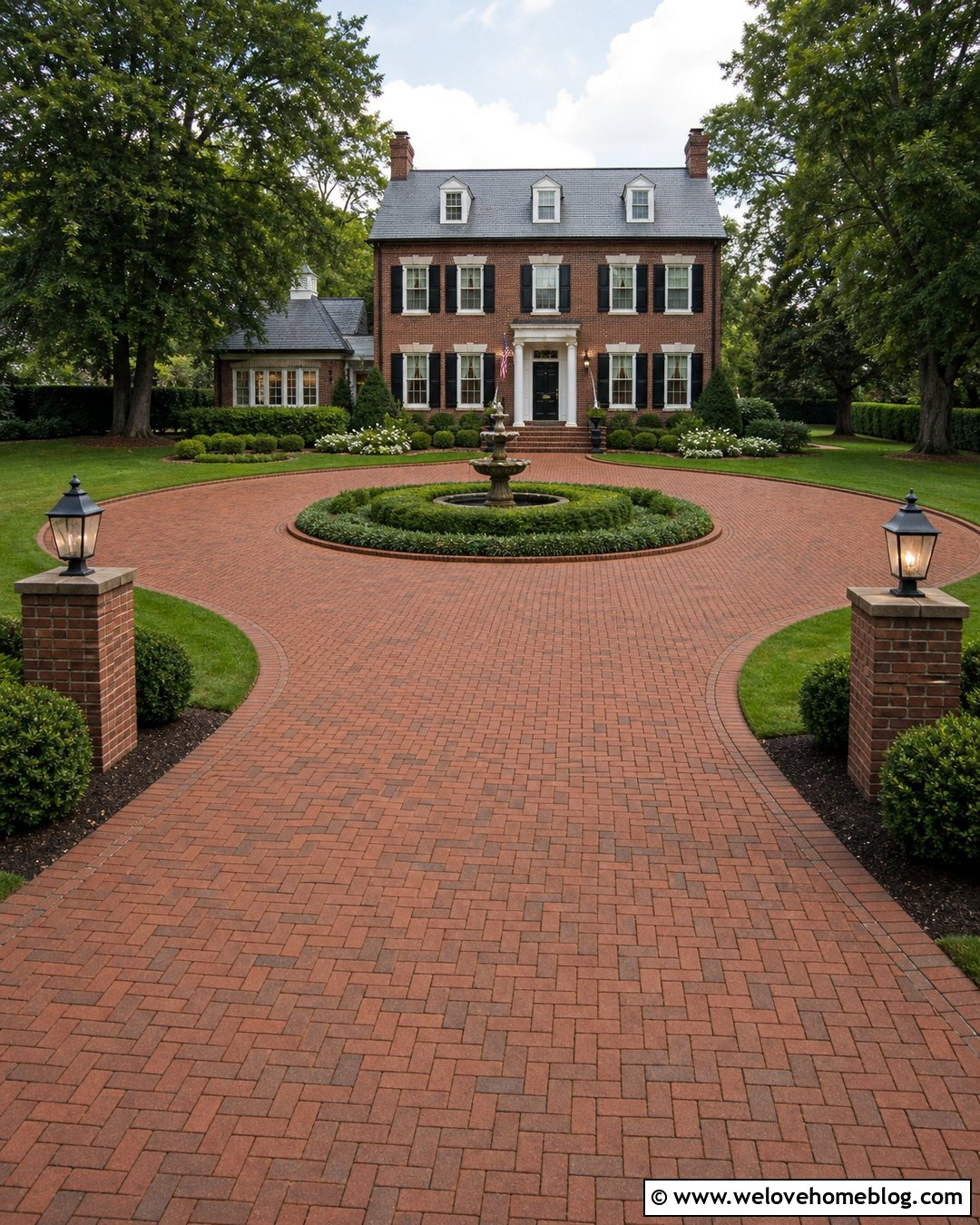
Clay brick pavers arranged in a herringbone pattern create a rich roundabout driveway for a Georgian or Federal-style house. The herringbone layout adds movement, while a soldier-course border defines both sides of the circular lane. Place a proportional stone fountain in the center island and surround it with low evergreen ground cover. The fountain should enhance the view without overpowering the house or obstructing sightlines across the entrance. Use a slightly wider paved area near the front steps for convenient passenger drop-off. Traditional lanterns on brick pillars can repeat the architecture of the home. With restrained planting and carefully repeated materials, the fountain, brick surface, curved driveway, and symmetrical facade become one cohesive composition.
4. Asphalt Roundabout Driveway With Stone Edging
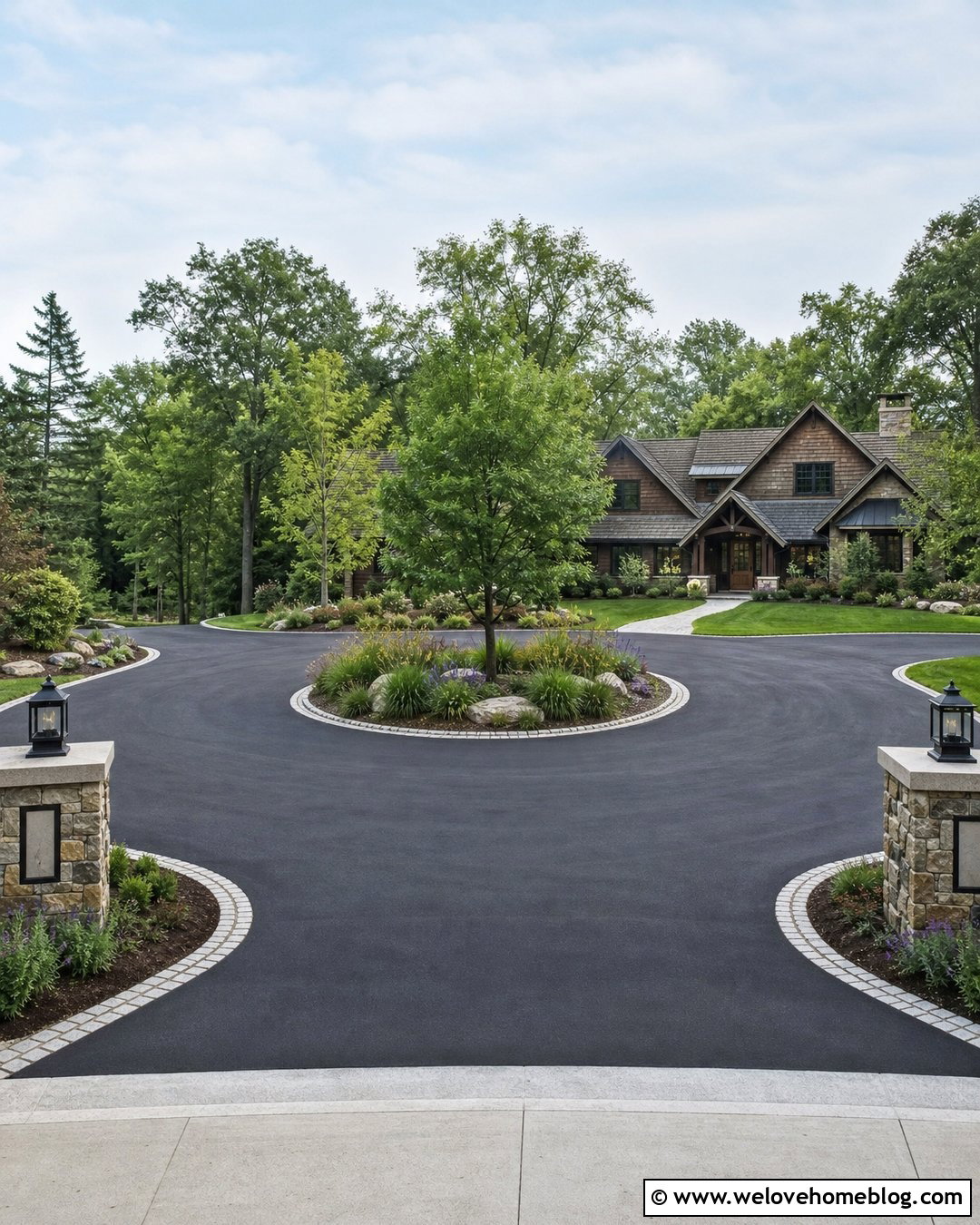
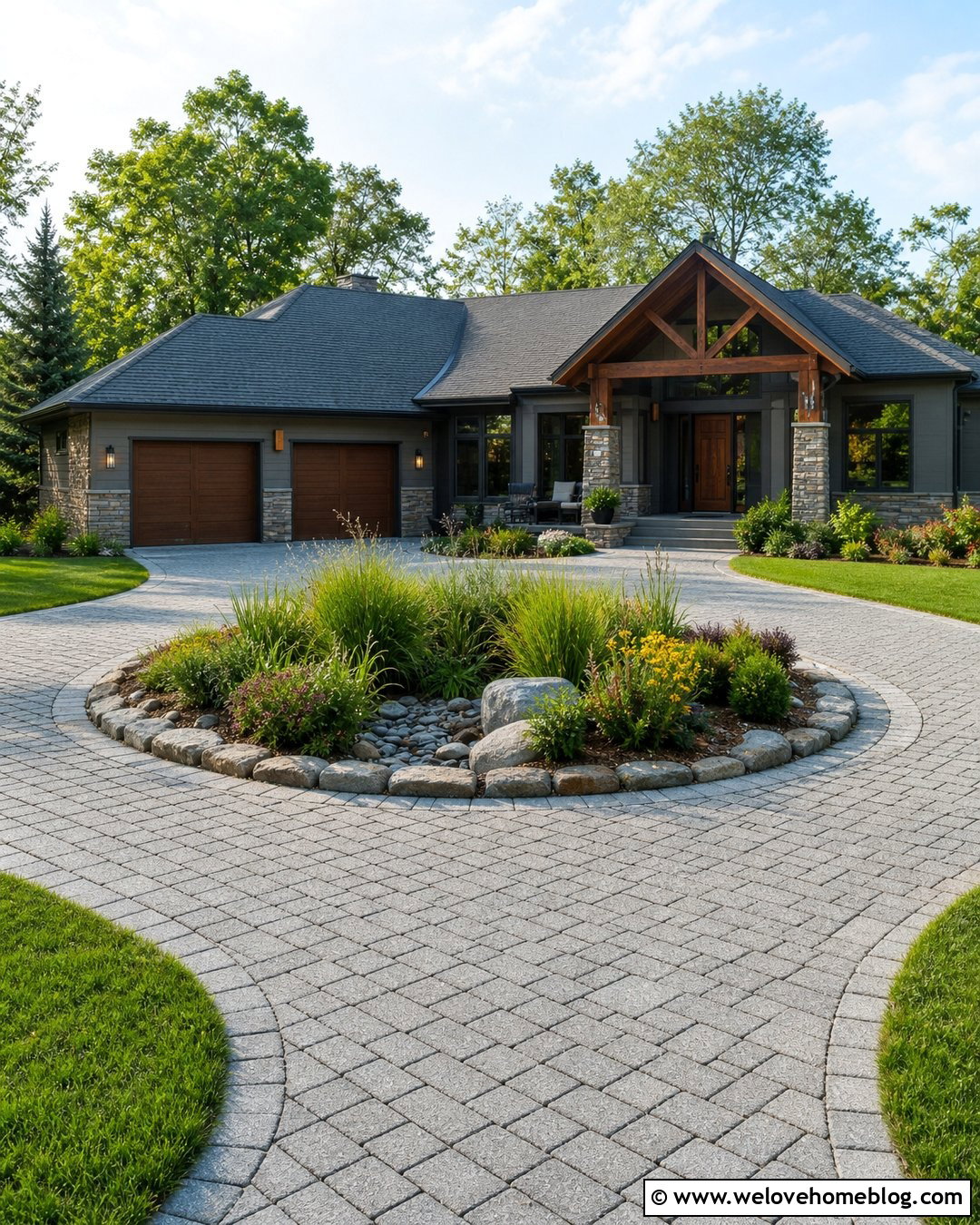
Black asphalt can look refined when it is paired with durable natural-stone edging and structured landscaping. This design works especially well for a long roundabout driveway serving a ranch, Craftsman, or wooded suburban home. Install a flush band of light granite setts around the center island and outer curve to create contrast against the dark pavement. Fill the island with a small native tree, ornamental grasses, and low flowering perennials. At the entrance, stone columns can echo the edging without making the driveway appear too formal. A curved walkway branching toward the front porch improves access. The limited color palette keeps the asphalt loop crisp, while layered greenery softens its large paved area throughout the seasons.
5. Cobblestone Roundabout Driveway With Formal Hedges
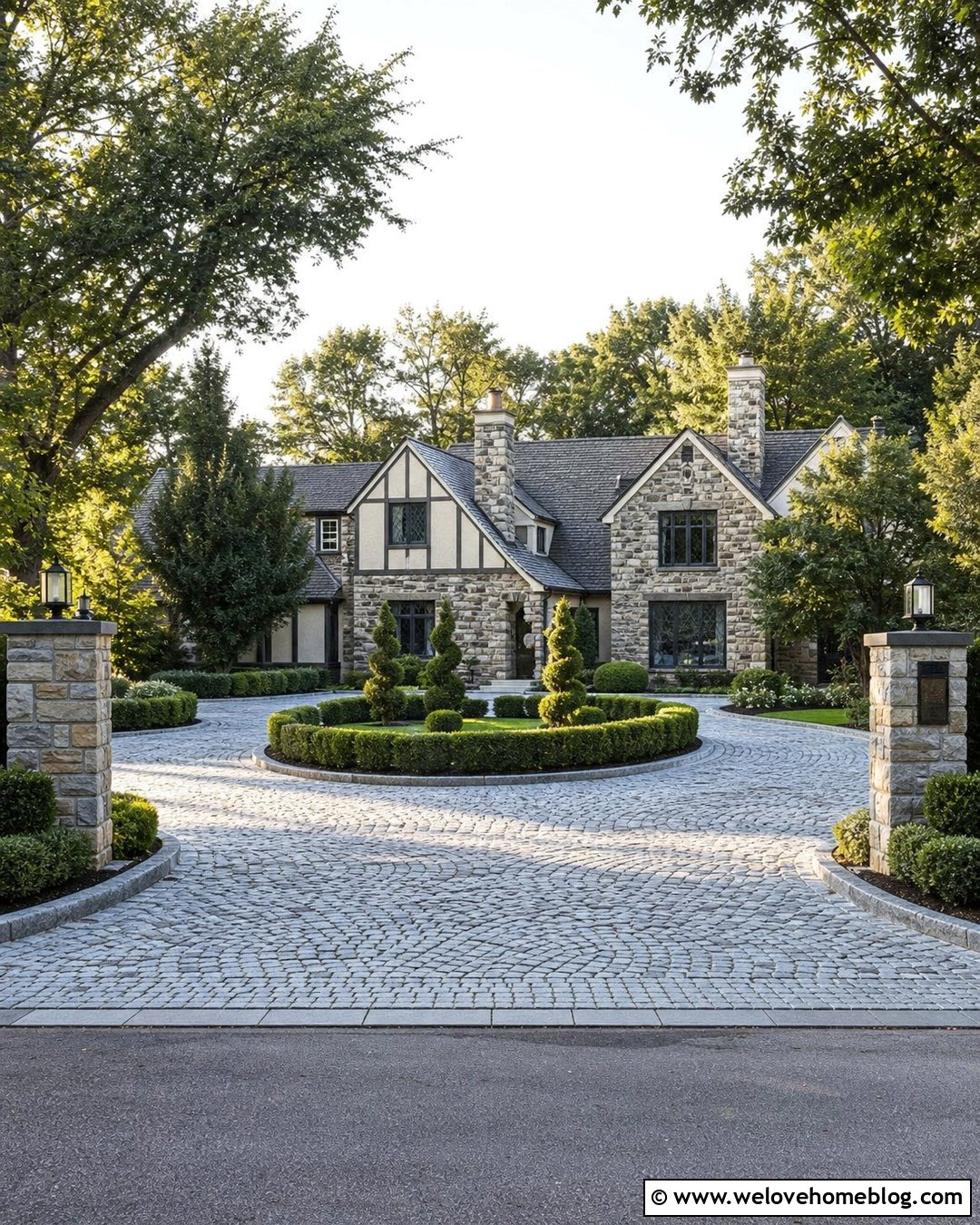
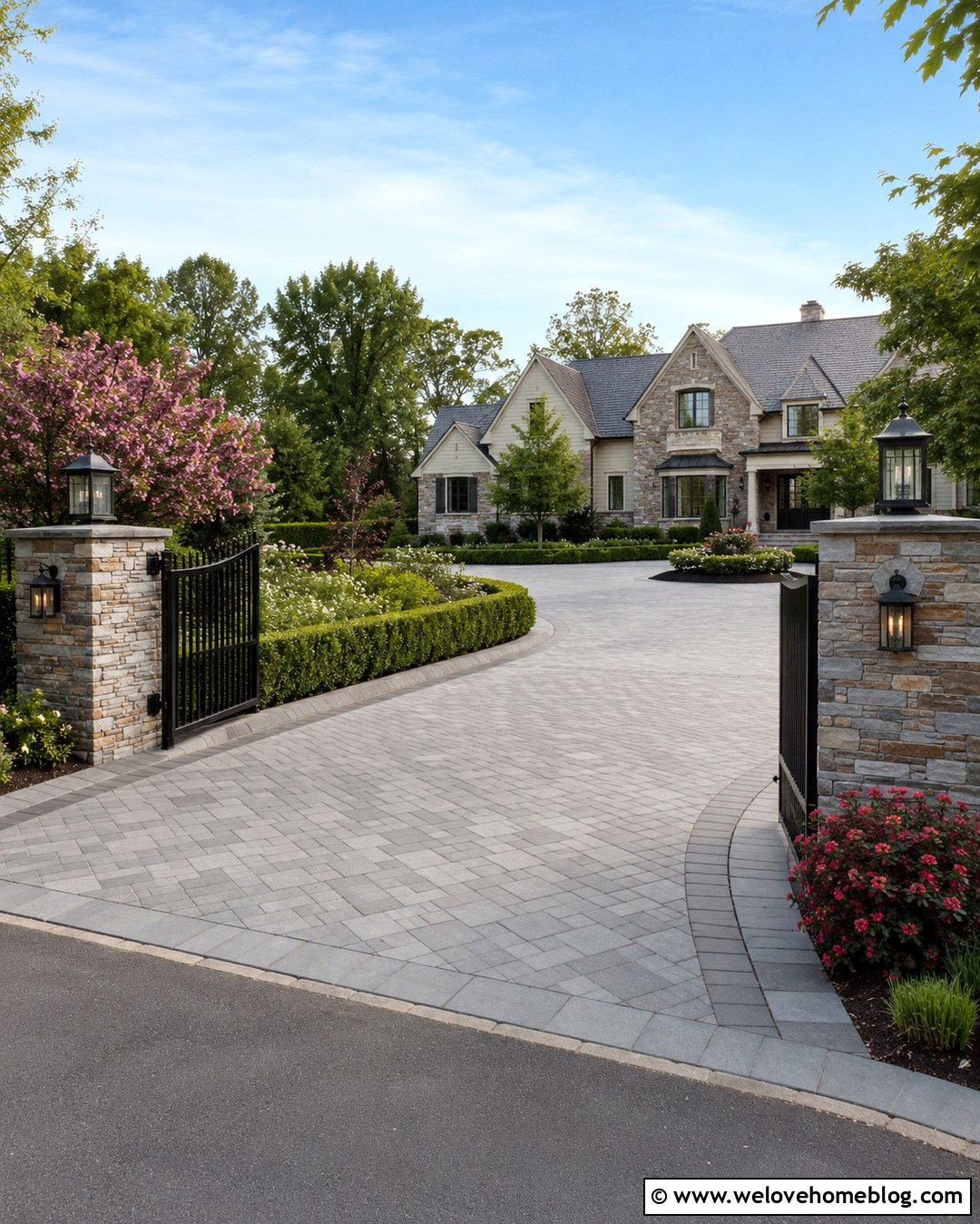
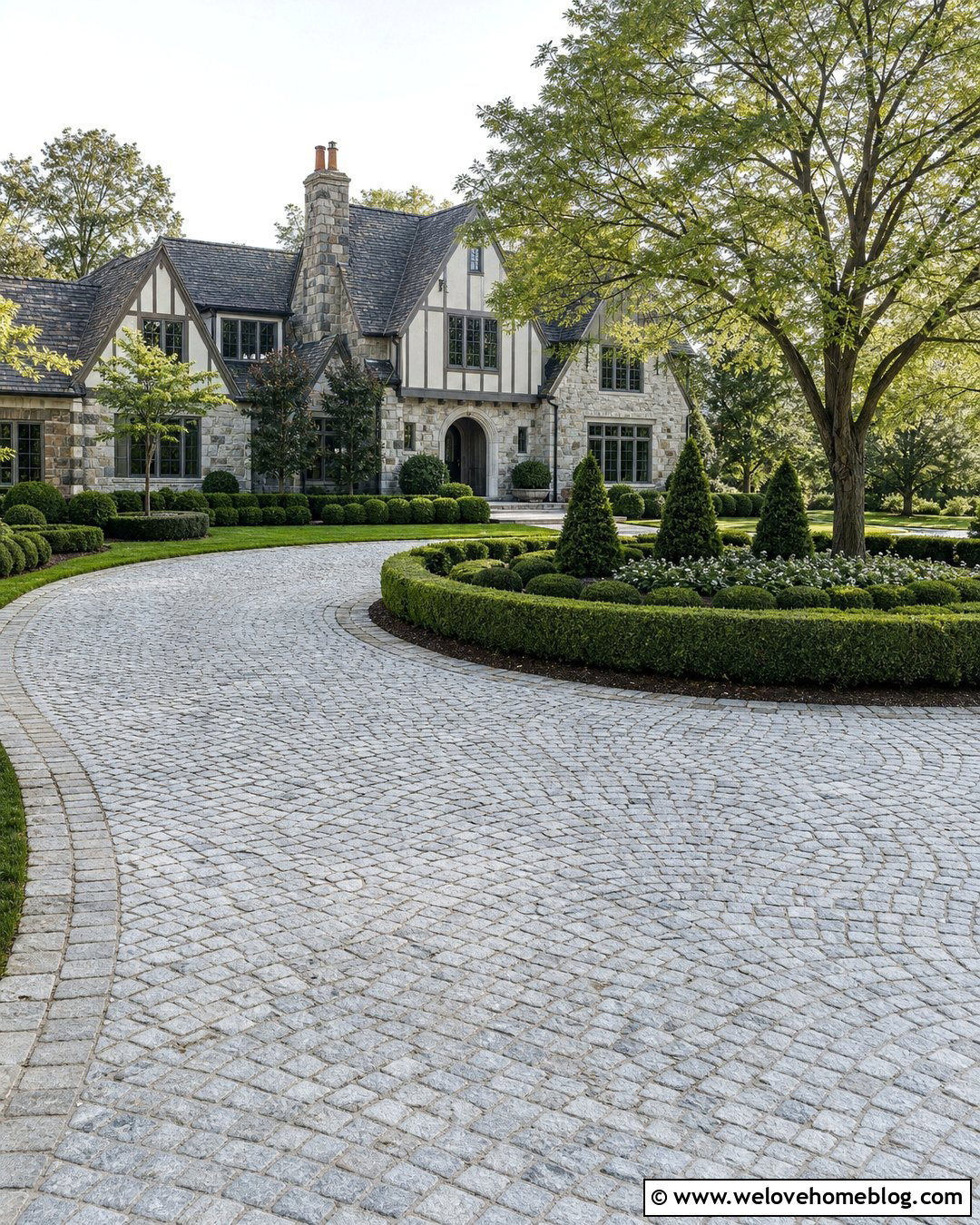
A full cobblestone roundabout driveway brings old-world character to a Tudor, European-inspired, or stone-front home. Choose gray and charcoal granite cobbles with slightly varied tones so the surface appears established rather than uniform. A fan or arcing pattern can follow the circular movement naturally. Around the center island, use a raised granite curb and a low clipped hedge that repeats the loop. A single topiary or sculptural evergreen provides height at the center. Keep the outer landscaping simpler, with lawn, broad planting beds, and mature canopy trees. Stone gate pillars make a suitable entrance transition. This substantial design is especially effective on larger properties where the scale of the driveway can balance the architecture and surrounding grounds.
6. Paver Roundabout Driveway With Tree Center
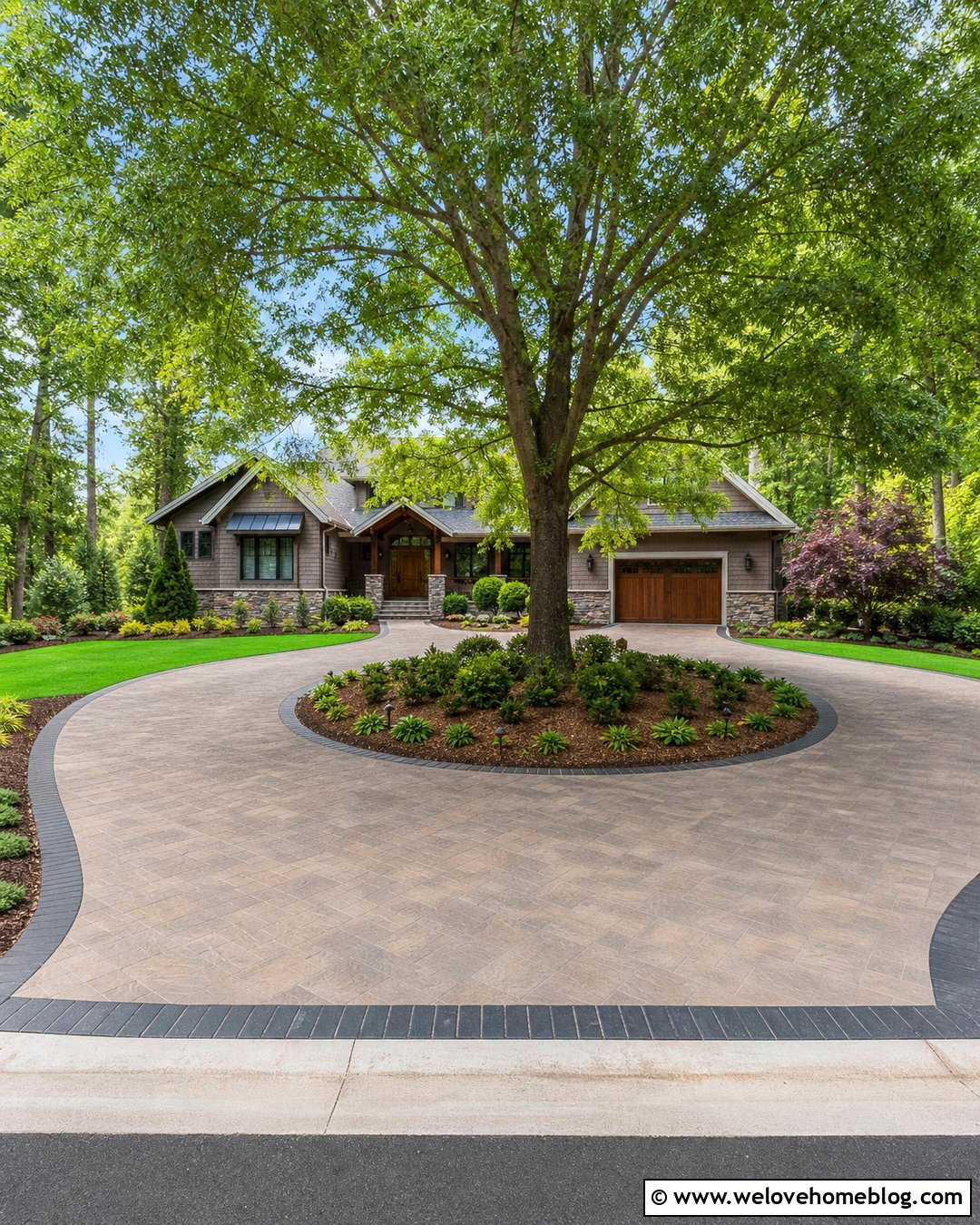
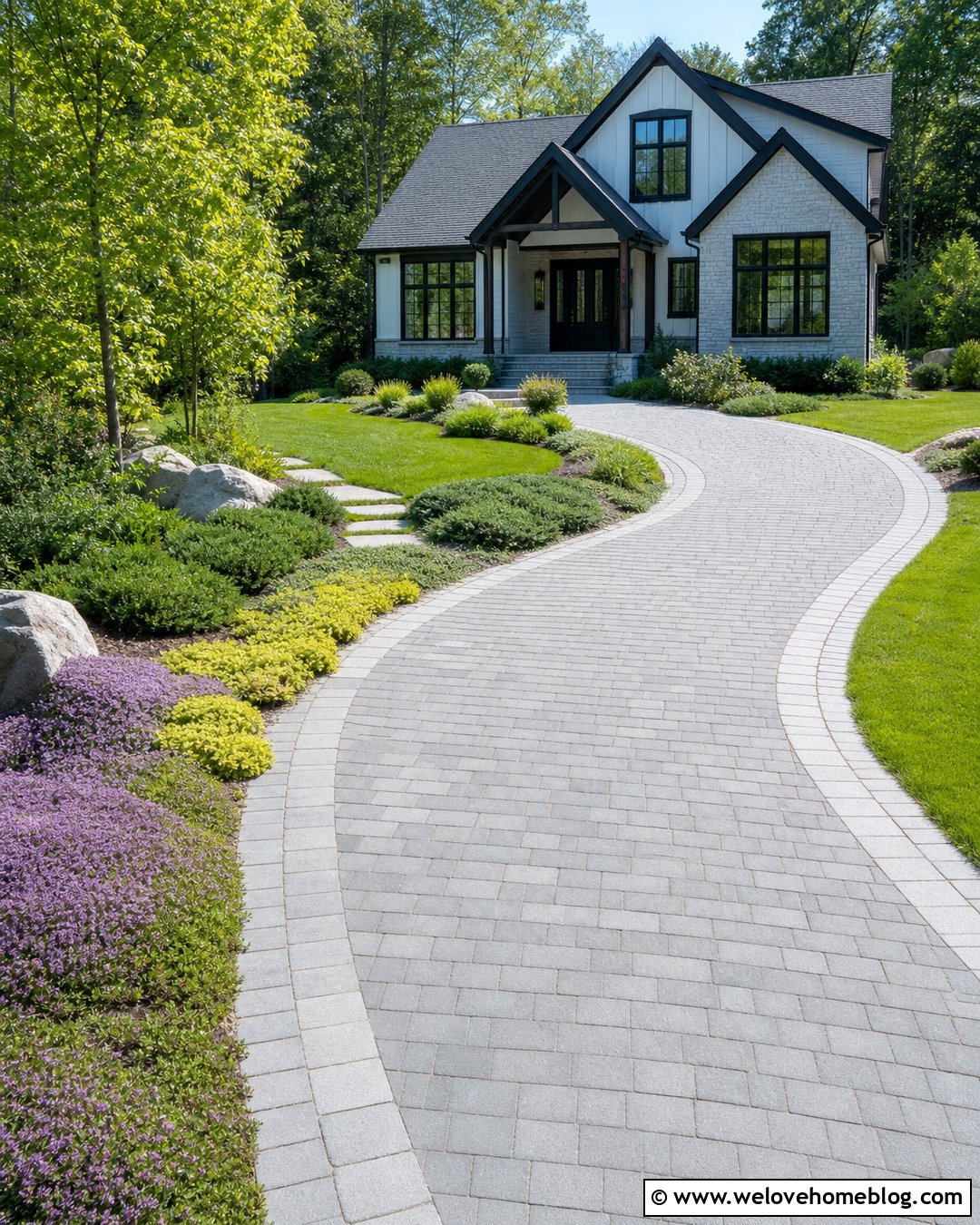
Concrete pavers offer flexibility for a roundabout driveway because colors, borders, and laying patterns can be coordinated with almost any house. Warm taupe pavers suit a Craftsman home, while a charcoal border provides a clear outline around the loop. Build the center island around an existing healthy shade tree when its root system and future growth can be accommodated professionally. Use a broad mulch bed instead of paving close to the trunk. Low woodland plants can soften the island without competing with the tree. Continue the charcoal paver border along the garage apron and front walkway for visual consistency. The mature canopy creates an inviting arrival, while the structured paving keeps the natural centerpiece from looking accidental.
7. Pea Gravel Roundabout Driveway With Lavender
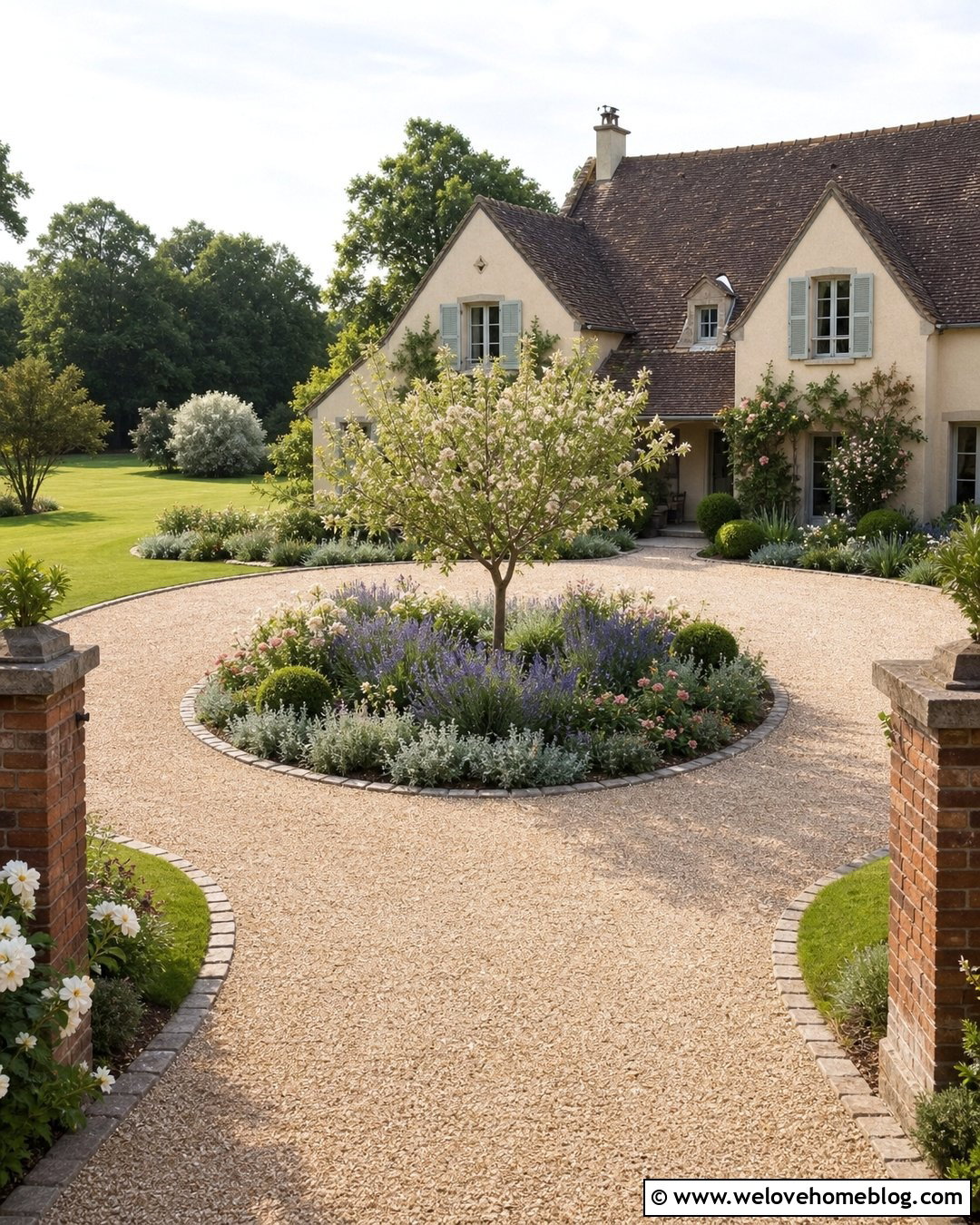
Warm beige pea gravel can create a bright, informal roundabout driveway for a cottage or French country home. Because rounded gravel tends to move, place it over a properly prepared base and contain it with substantial steel, brick, or stone edging. A central planting bed filled with lavender, compact roses, and silvery foliage complements the soft color of the surface. Arrange the plants in broad groups rather than narrow rows so the island looks full from every direction. A small flowering tree can provide a central accent. At the road, weathered brick pillars and simple lanterns create a welcoming entrance. The combination of pale gravel, fragrant planting, curved borders, and cottage architecture produces a comfortable, garden-focused approach.
8. Exposed Aggregate Roundabout Driveway With Grass Center
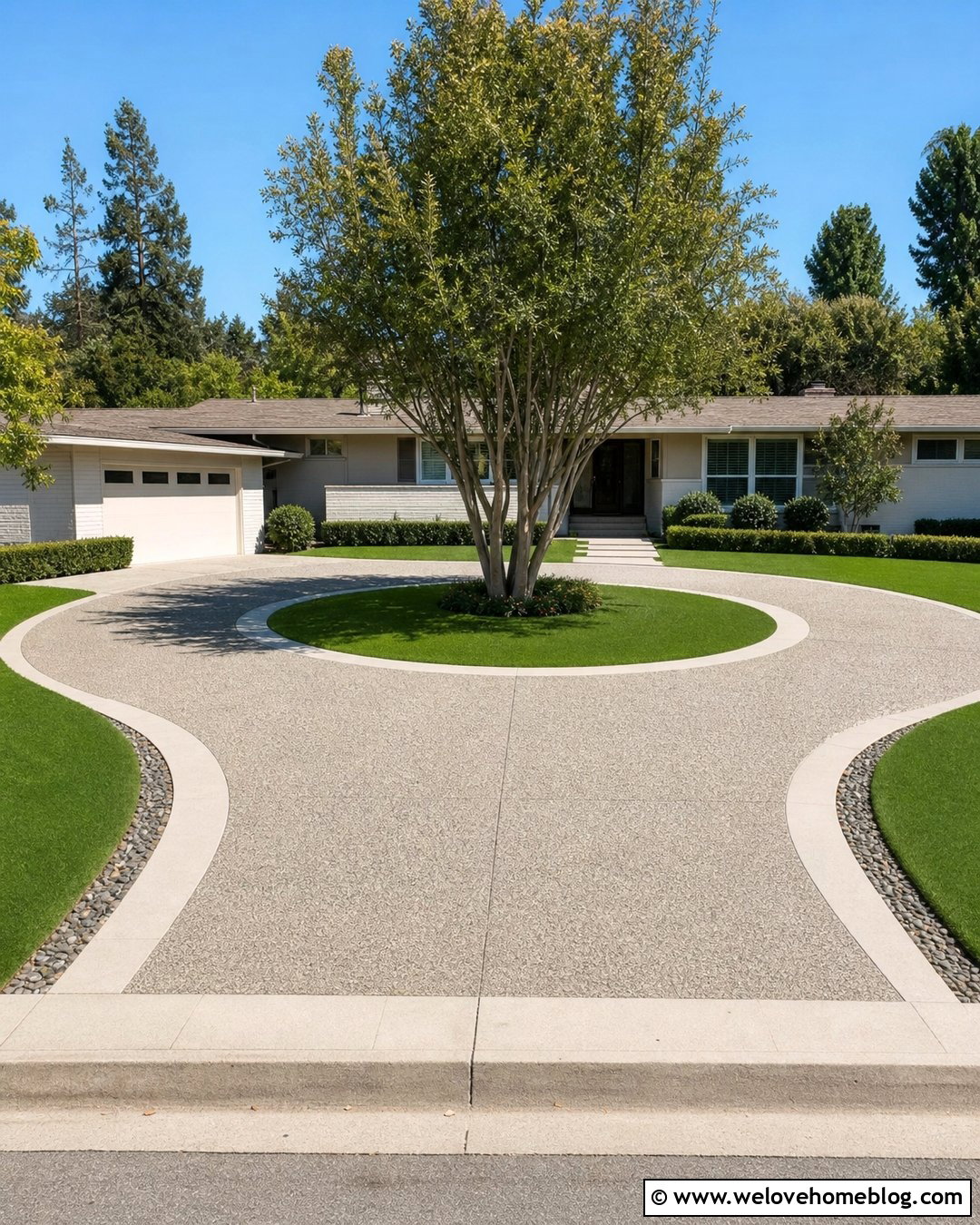
Exposed aggregate concrete adds texture to a roundabout driveway without introducing a busy pattern. Select a warm gray mix containing small tan and charcoal stones to coordinate with a midcentury ranch or contemporary brick home. Smooth concrete bands can outline the circular lane and create a neat transition at the garage. Keep the center island simple with manicured grass and one multi-stem ornamental tree. A narrow stone mowing strip around the island reduces trimming along the curve. Broad lawn areas and understated foundation shrubs maintain the home’s horizontal character. This restrained composition is easy to understand from the street. It also lets the textured concrete provide visual interest while the uncluttered center keeps the entrance open and spacious.
9. Permeable Paver Roundabout Driveway With Rain Garden
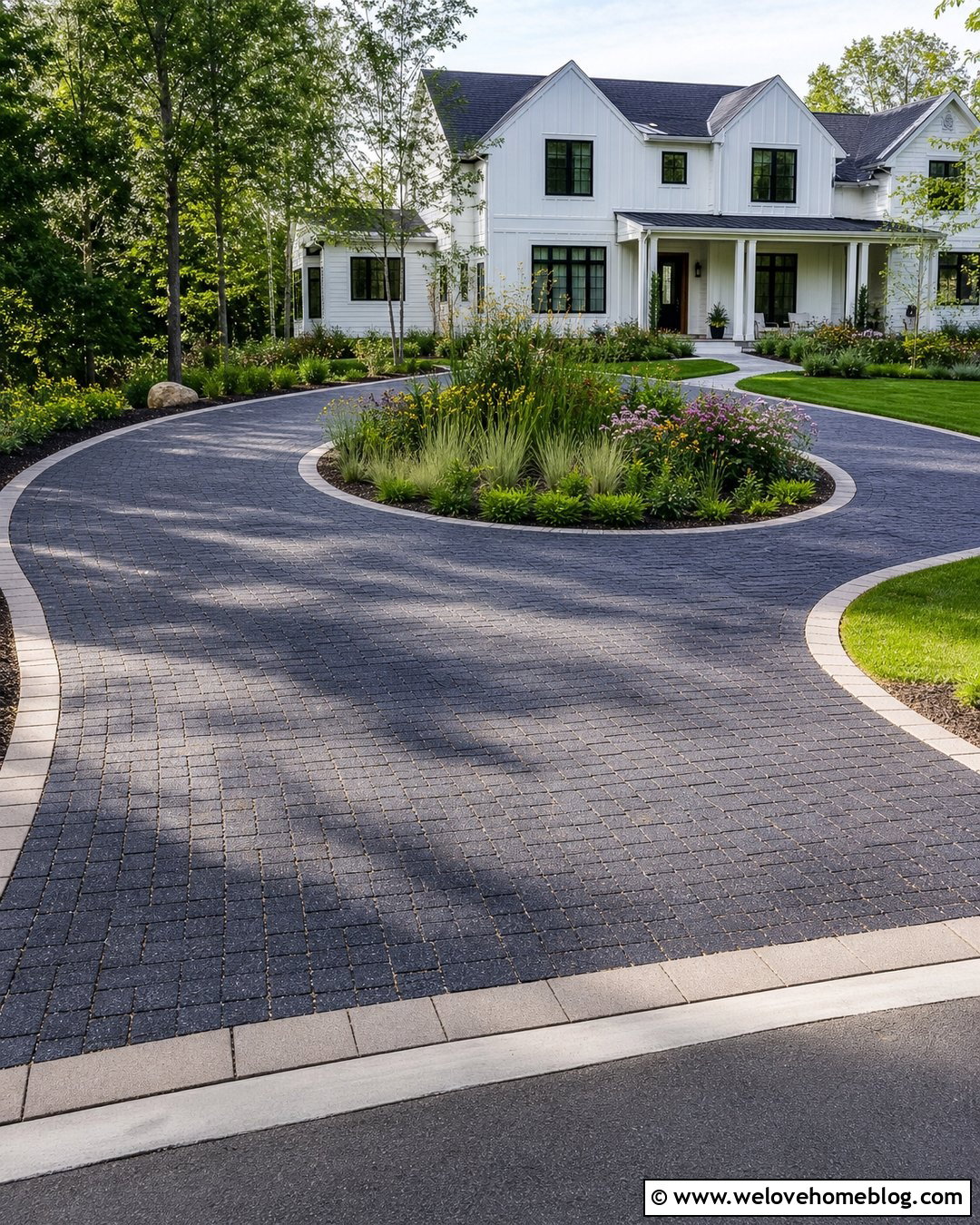
A permeable paver roundabout driveway can combine a strong geometric layout with landscape-based water management. Use charcoal permeable concrete pavers separated by aggregate-filled joints, then outline the loop with lighter pavers. Shape part of the center island as a shallow rain garden where site conditions and professional drainage planning allow. Moisture-tolerant grasses, sedges, and flowering perennials can make the depression look like intentional landscaping. Add a flat stepping route only if regular garden access is needed. Around the outer edge, repeat a few of the same plants in smaller beds. A modern farmhouse or contemporary home provides a fitting background. The driveway, planted island, drainage plan, and restrained palette work together rather than appearing like separate features.
10. Resin-Bound Roundabout Driveway With Modern Landscaping
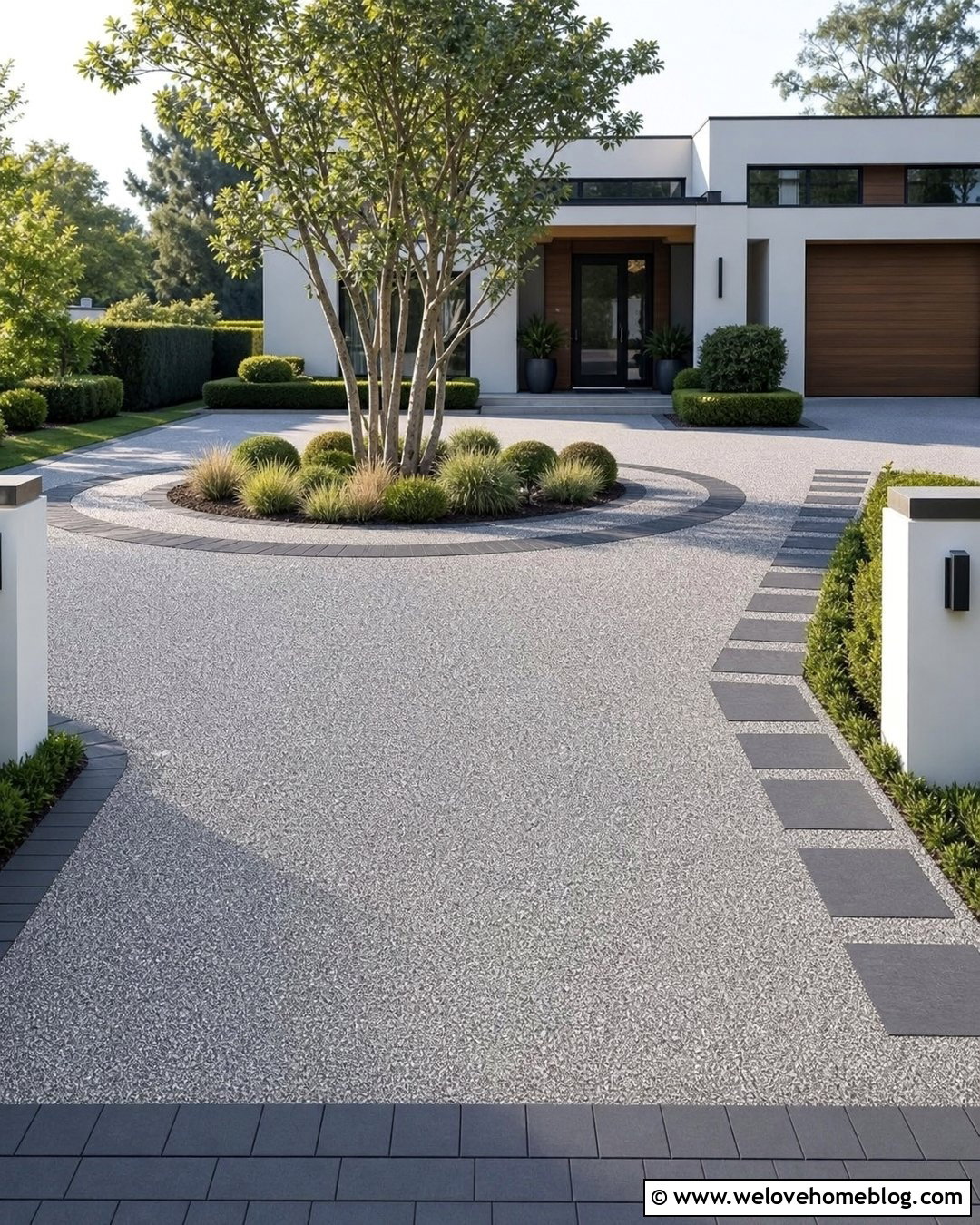
A resin-bound gravel surface gives a roundabout driveway a smooth, contemporary appearance while retaining the visual texture of small stones. Choose a light silver-gray aggregate for a modern home with white stucco, dark windows, or natural wood accents. Define the circular lane with thin charcoal paver bands and create a matching border around the island. Fill the center with sculptural grasses, clipped evergreen mounds, and one multi-stem tree. Large rectangular stepping stones can connect the drop-off zone to the front walk without disrupting the clean design. Keep the entrance open and use low rendered walls instead of ornate gates. The result is a streamlined driveway where the crisp loop, controlled planting, and modern architecture share the same simple visual language.
11. Crushed Granite Roundabout Driveway With Desert Plants
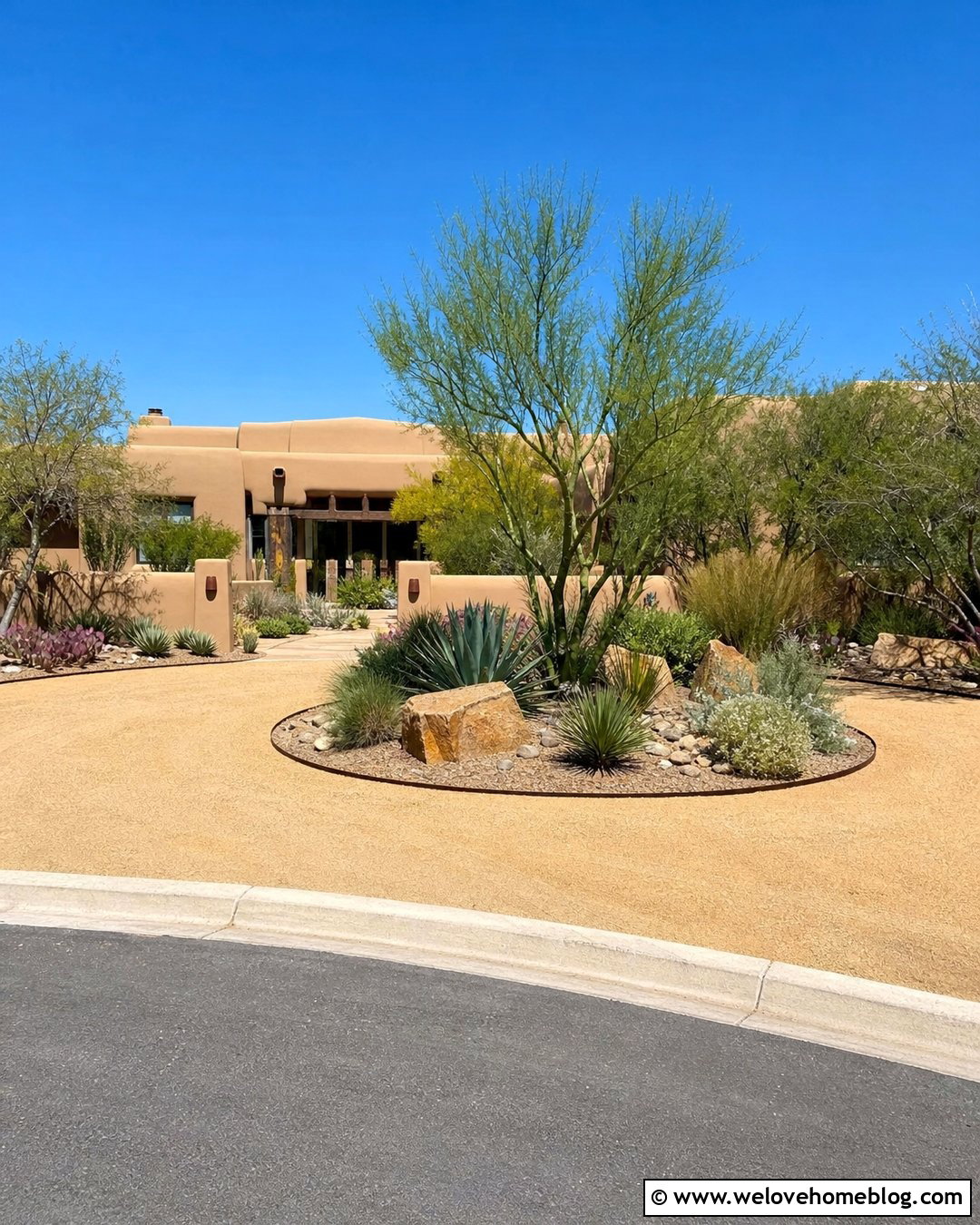
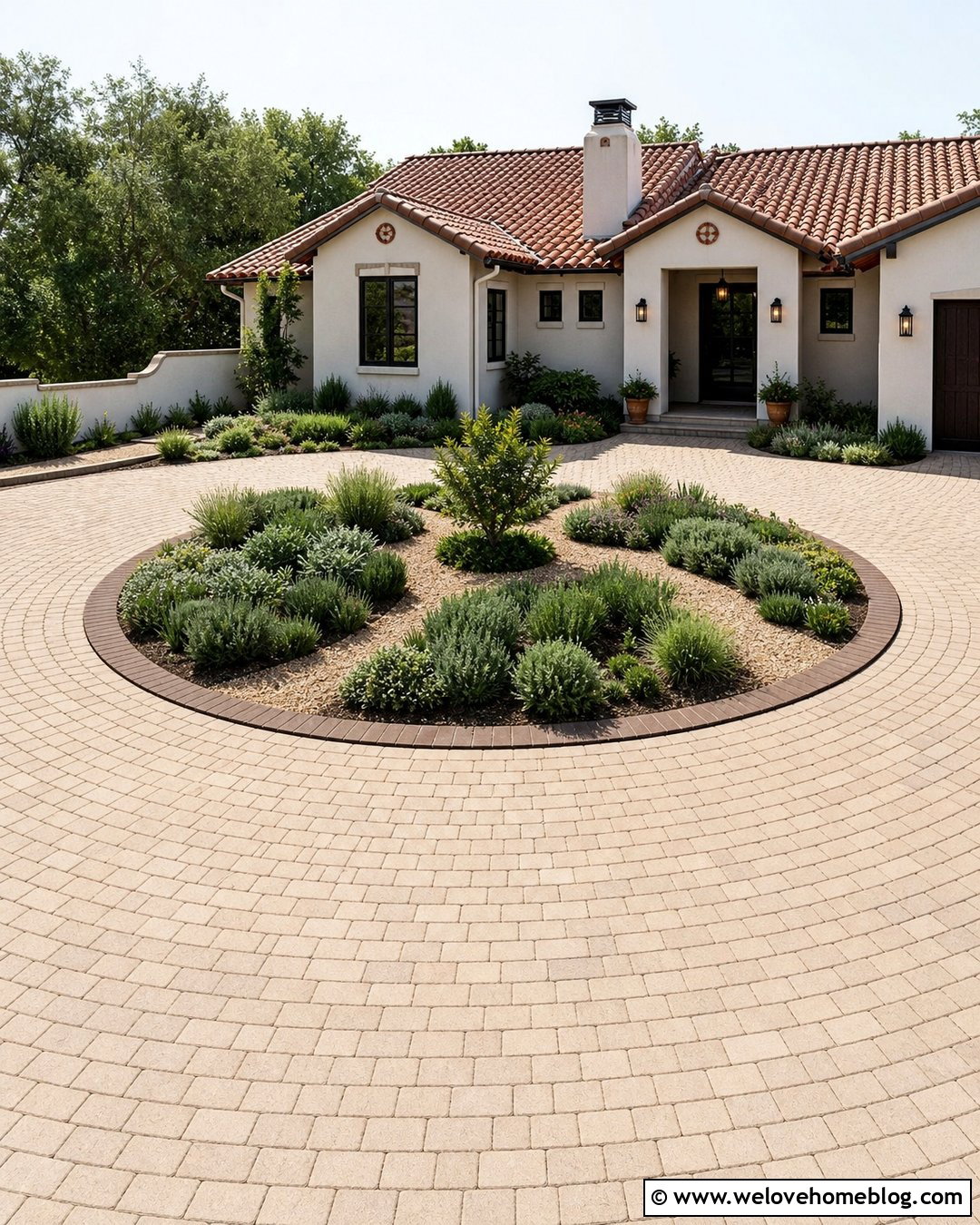
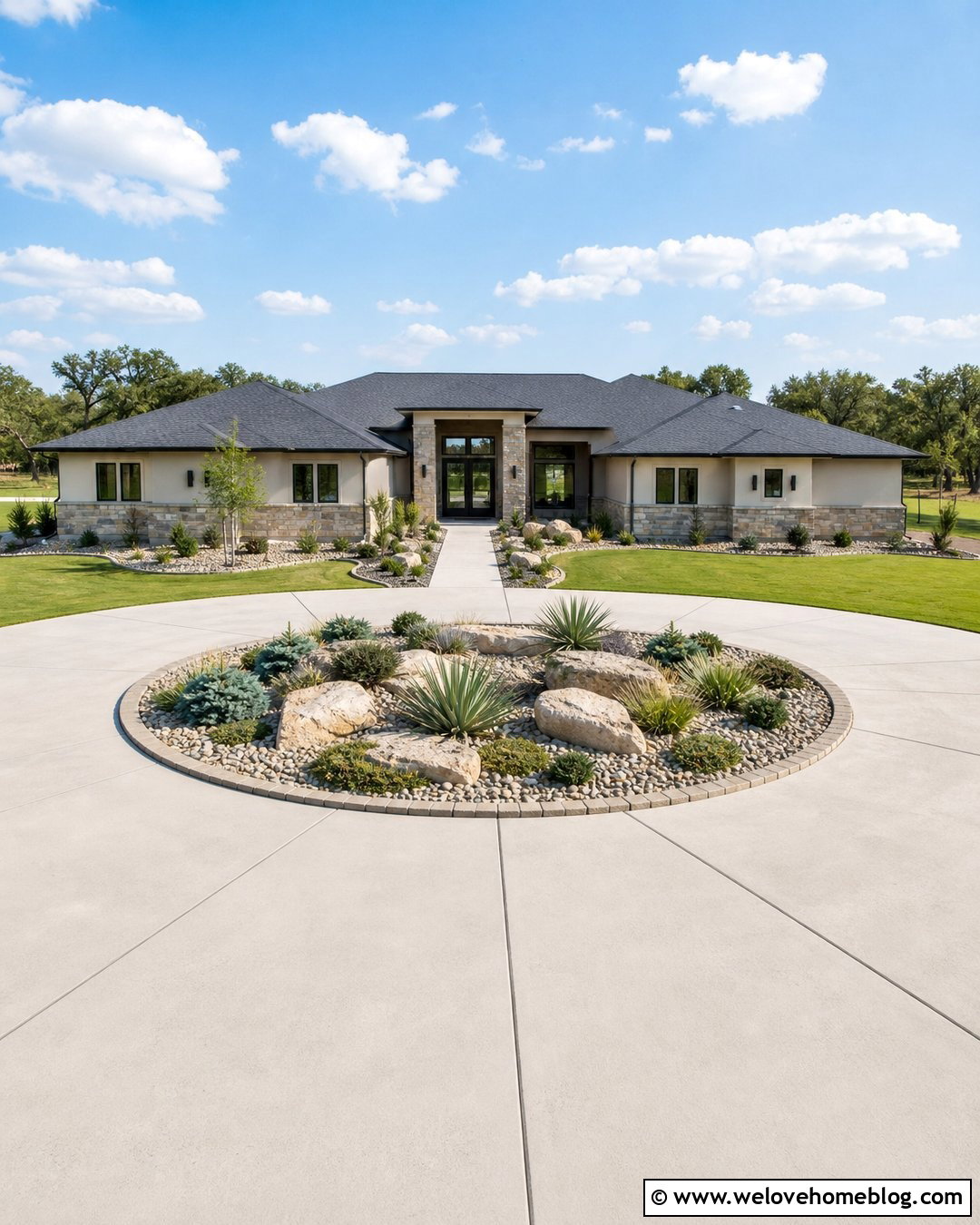
In a dry-climate yard, a crushed granite roundabout driveway can blend naturally with the surrounding landscape. Use compacted tan decomposed granite for the lane and darker steel edging to hold the curves. The center island can feature weathered boulders, agave, yucca, desert spoon, and low native grasses arranged with generous open space. A small palo verde or similar climate-appropriate tree adds filtered shade without creating a dense visual barrier. Continue gravel mulch into the outer planting beds so the entire front yard feels connected. A low stucco entrance wall can match an adobe, Southwestern, or desert-modern house. The muted surface, drought-conscious planting, and strong circular form create curb appeal without relying on a water-intensive lawn.
12. Limestone Roundabout Driveway With Hydrangeas
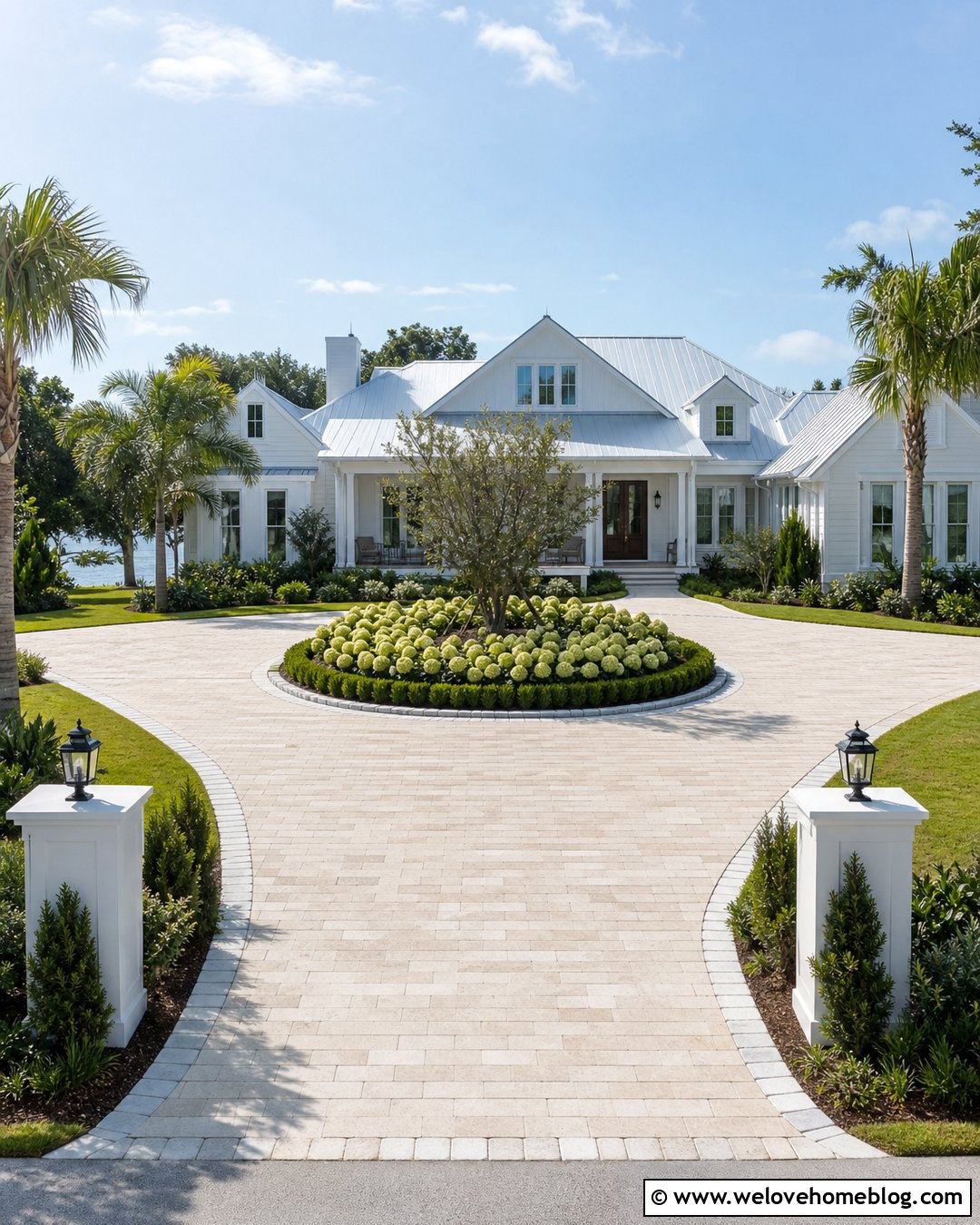
Pale limestone pavers can brighten a roundabout driveway and complement a classic white, gray, or coastal-style home. Lay rectangular stones in a running bond that gently follows the loop, then use smaller limestone setts around the island. Hydrangeas add generous seasonal color, but position them far enough from the driving edge to accommodate mature growth. A low evergreen border can maintain structure when flowers are out of season. Place one small tree in the center to give the island height and shade. At the entrance, simple white pillars and black lanterns repeat the home’s exterior colors. The combination of creamy paving, soft blue or white blooms, curved lawn edges, and a light facade creates an airy and welcoming residential approach.
13. Bluestone Roundabout Driveway With Colonial Landscaping
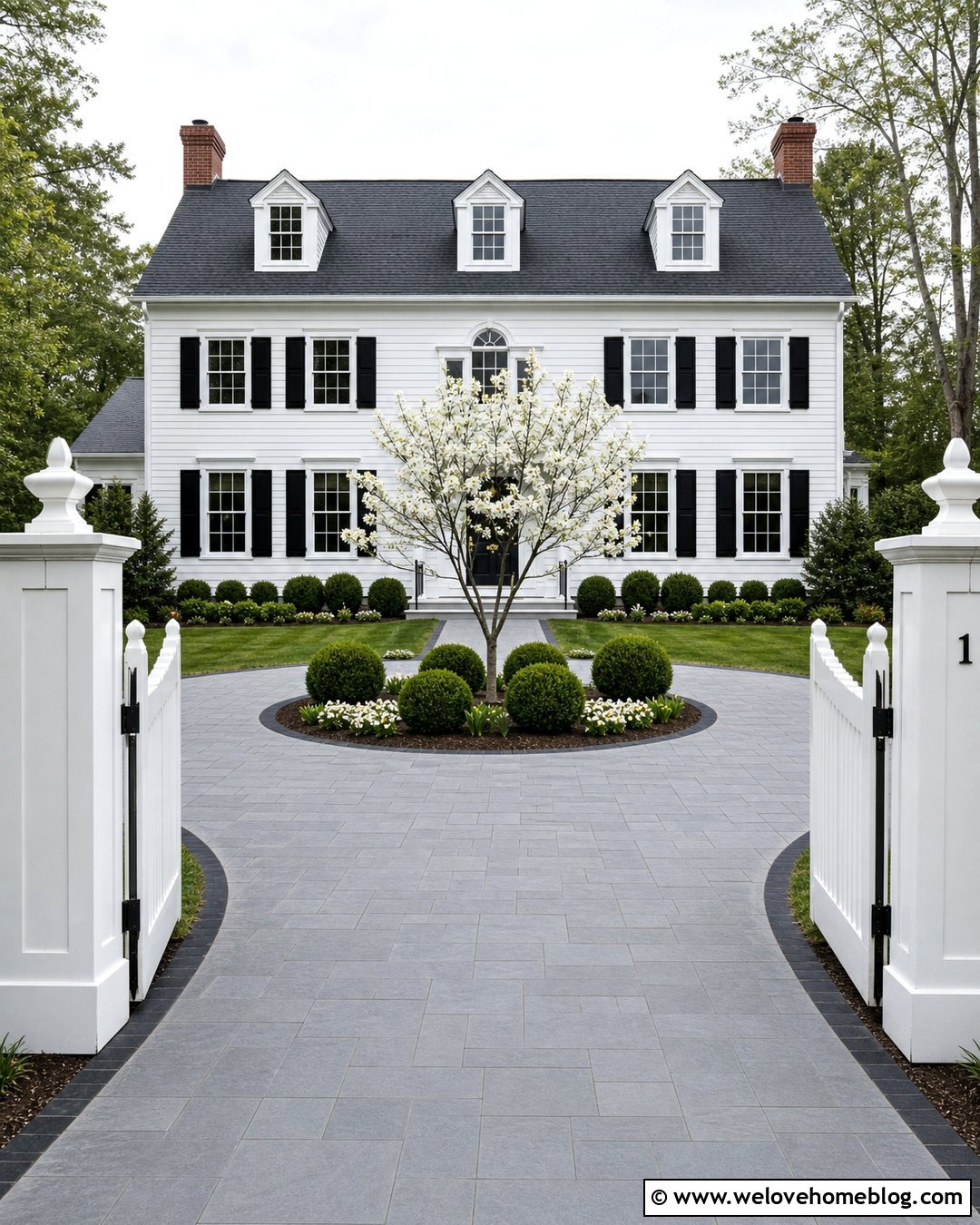
A bluestone roundabout driveway creates a tailored entrance for a Colonial house with shutters, brick chimneys, and balanced architecture. Use thermal-finished bluestone pavers in mixed blue-gray tones, with a darker stone border following the inner and outer curves. Design the island as a symmetrical oval or circle containing a central dogwood and four low boxwood groups. Seasonal bulbs can appear between the shrubs without disturbing the formal framework. Continue bluestone into the front walk so guests see a clear route from the drop-off area to the door. White gateposts, restrained lanterns, and matching foundation beds complete the composition. Every part of the design reinforces the orderly character of the home while keeping the circular drive functional.
14. Concrete Roundabout Driveway With Grass Strips
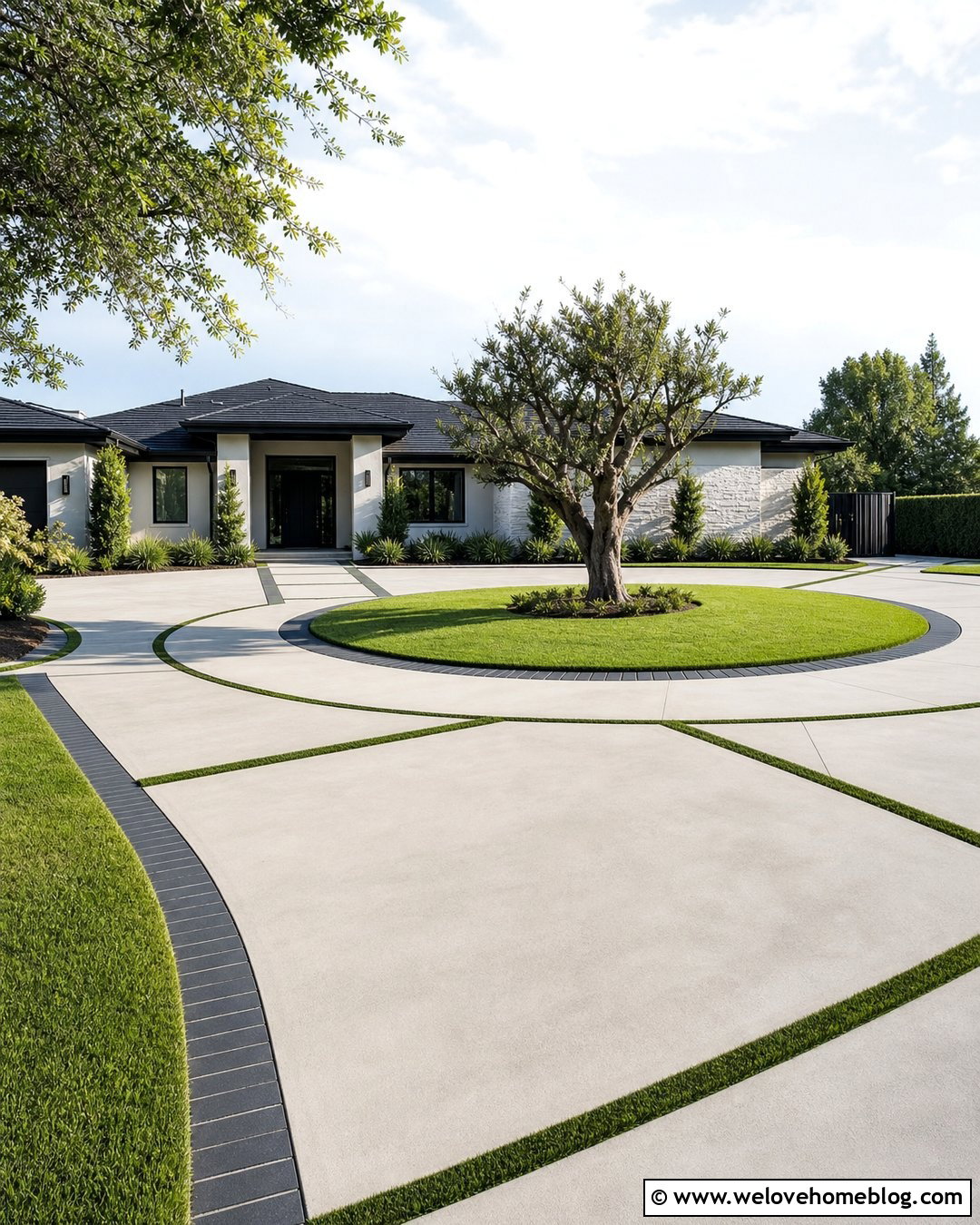
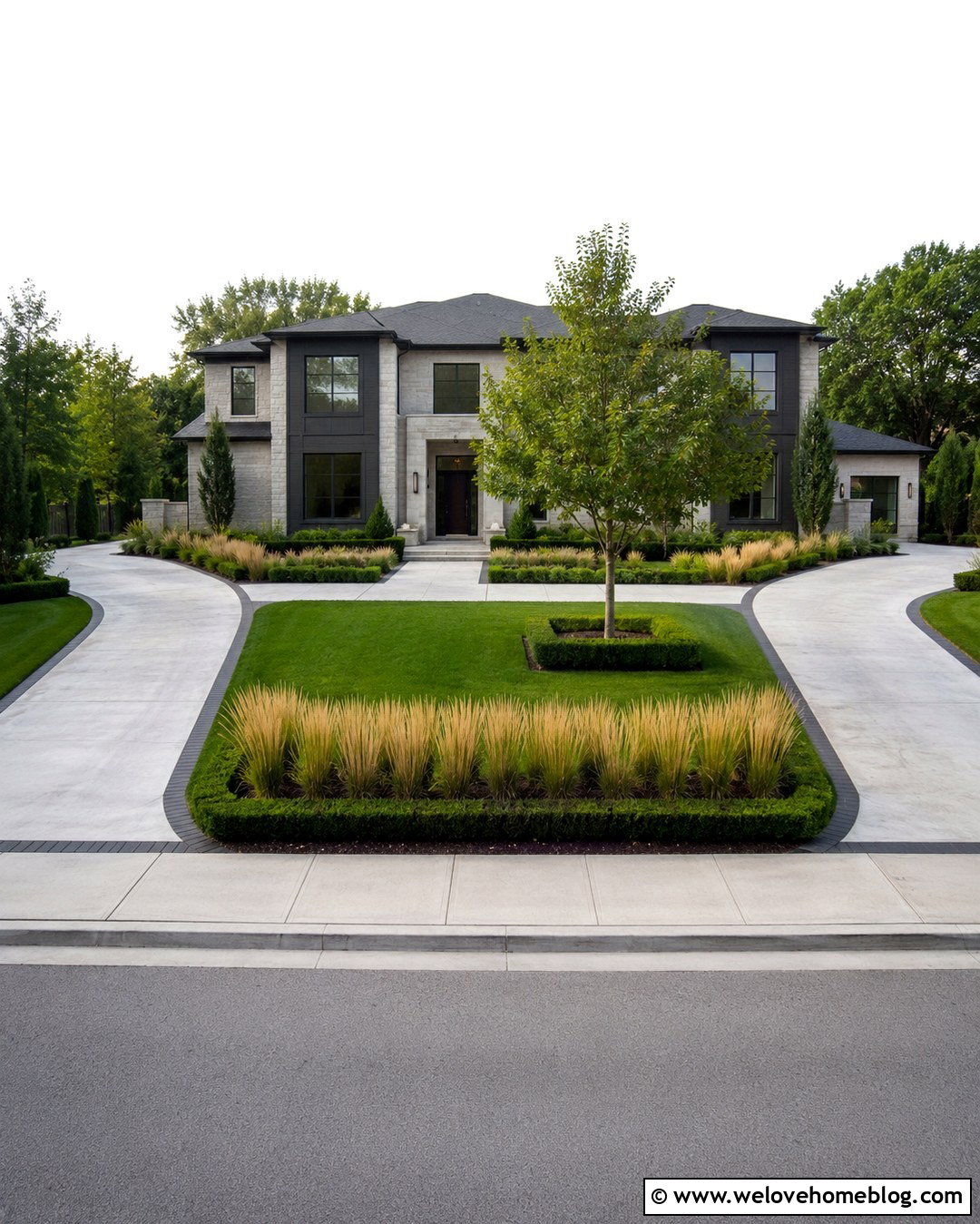
Narrow grass strips can soften a large concrete roundabout driveway and give a contemporary front yard more greenery. Divide the light-gray poured concrete into broad driving panels with reinforced turf or ground-cover bands placed only where the design and anticipated wheel paths permit. A circular lawn island repeats the green joints and prevents the center from feeling overly paved. Add a single sculptural tree with a clean canopy, then keep the remaining planting low and simple. A flush dark paver border can outline the loop and protect the lawn edges. This look works well with a low modern home, especially when the front walkway uses matching concrete slabs. Precise installation is essential so the mixed surfaces remain comfortable and practical.
15. Stamped Concrete Roundabout Driveway With Brick Border
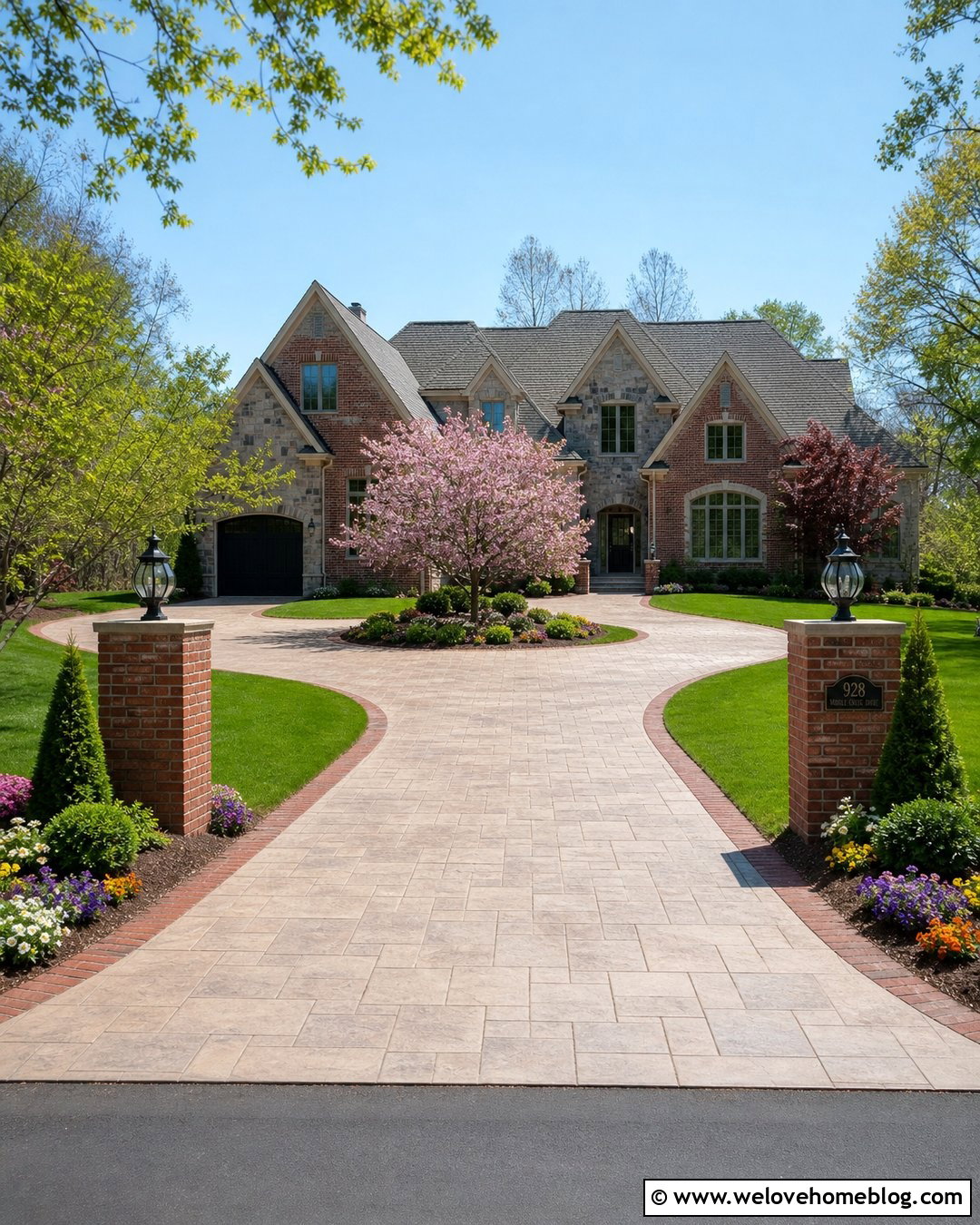
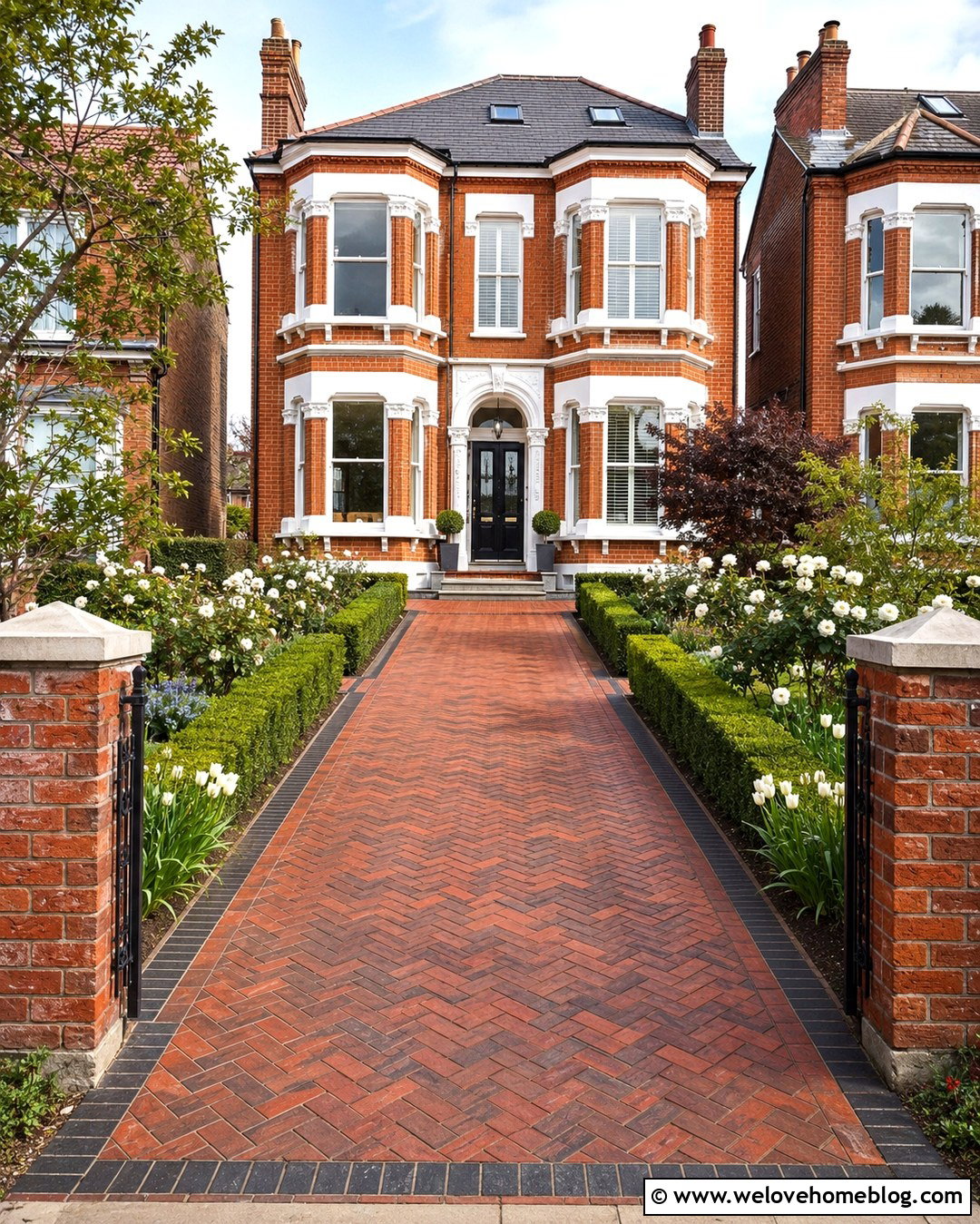
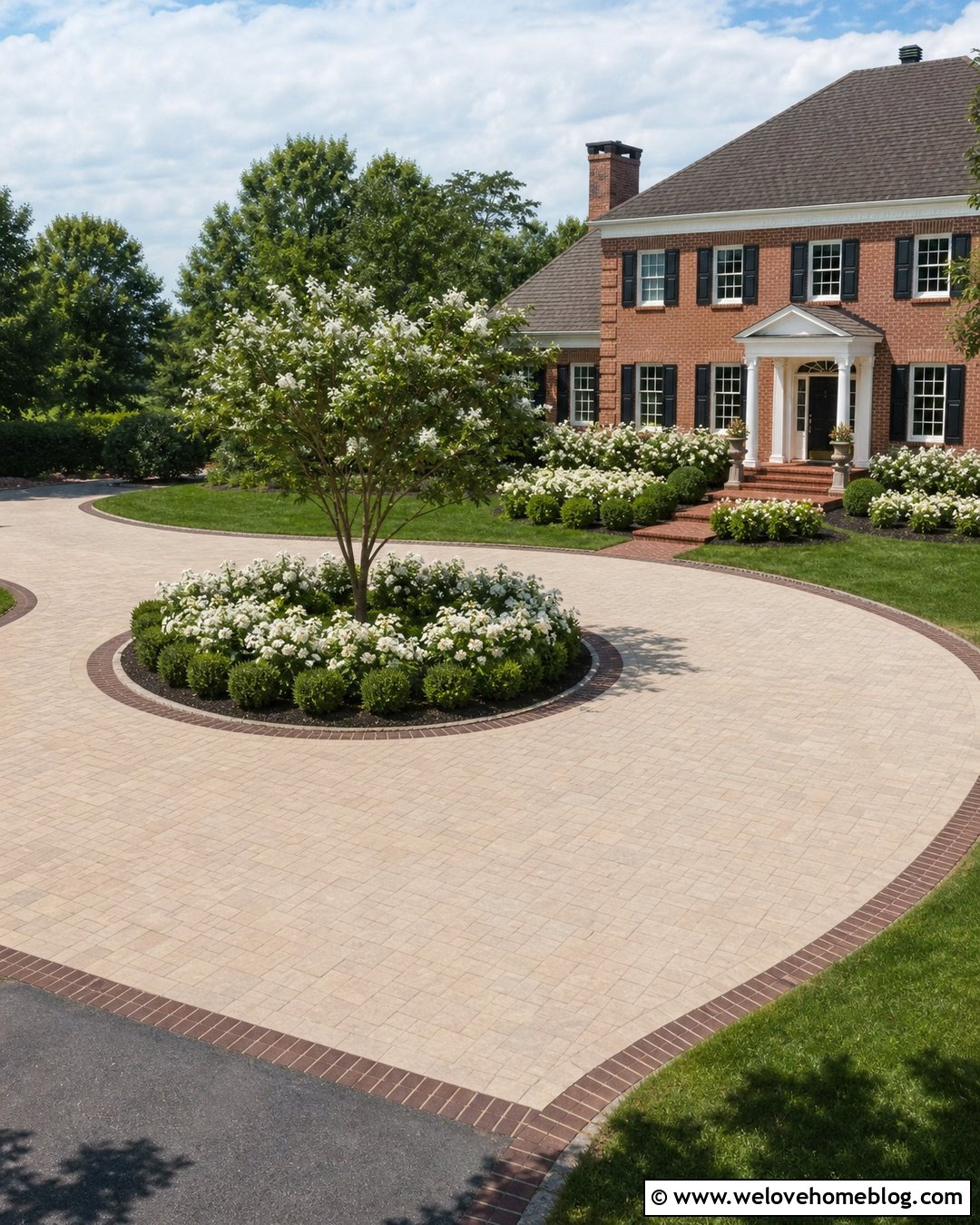
Stamped concrete can deliver the appearance of individual stone units with a more continuous surface. For a traditional suburban home, choose a medium taupe ashlar-stone pattern with subtle color variation rather than an overly dramatic finish. Add a real clay brick border around the circular lane to provide crisp definition and connect the driveway to the house. A center island planted with a flowering crabapple, compact evergreens, and seasonal perennials creates a balanced focal point. Repeat brick at the entrance columns and along the front walkway. Use generous planting beds outside the driveway to soften the pavement. The stamped field, authentic border, rounded island, and coordinated architecture produce a complete look that feels detailed without becoming visually crowded.
16. White Gravel Roundabout Driveway With Olive Trees
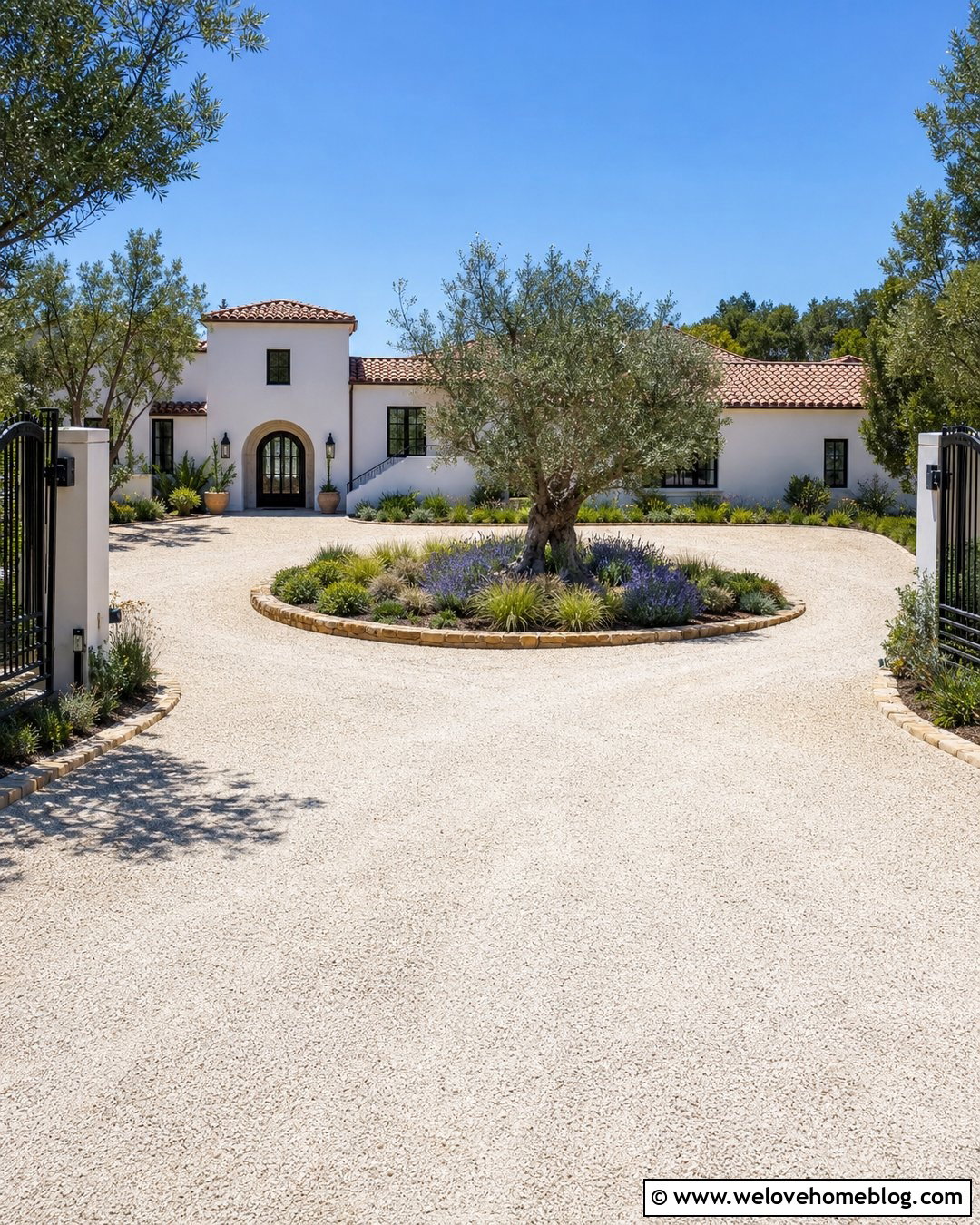
A white gravel roundabout driveway creates striking contrast around a Mediterranean-inspired home. Choose pale crushed limestone or marble gravel with enough angular texture to compact, and contain it with warm sandstone curbs. Plant a mature-looking olive tree or another regionally suitable silvery tree in the center island. Surround it with rosemary, lavender, low grasses, and gravel mulch for a dry garden appearance. Terracotta-toned pavers can mark the entrance and form a walkway toward the front door. White stucco walls, clay roof tiles, and dark metal gates complete the palette. Regular maintenance will be important because pale aggregate shows leaves and soil quickly, but the bright surface and sculptural planting can create distinctive curb appeal in an appropriate climate.
17. Gray Gravel Roundabout Driveway With Brick Ribbon
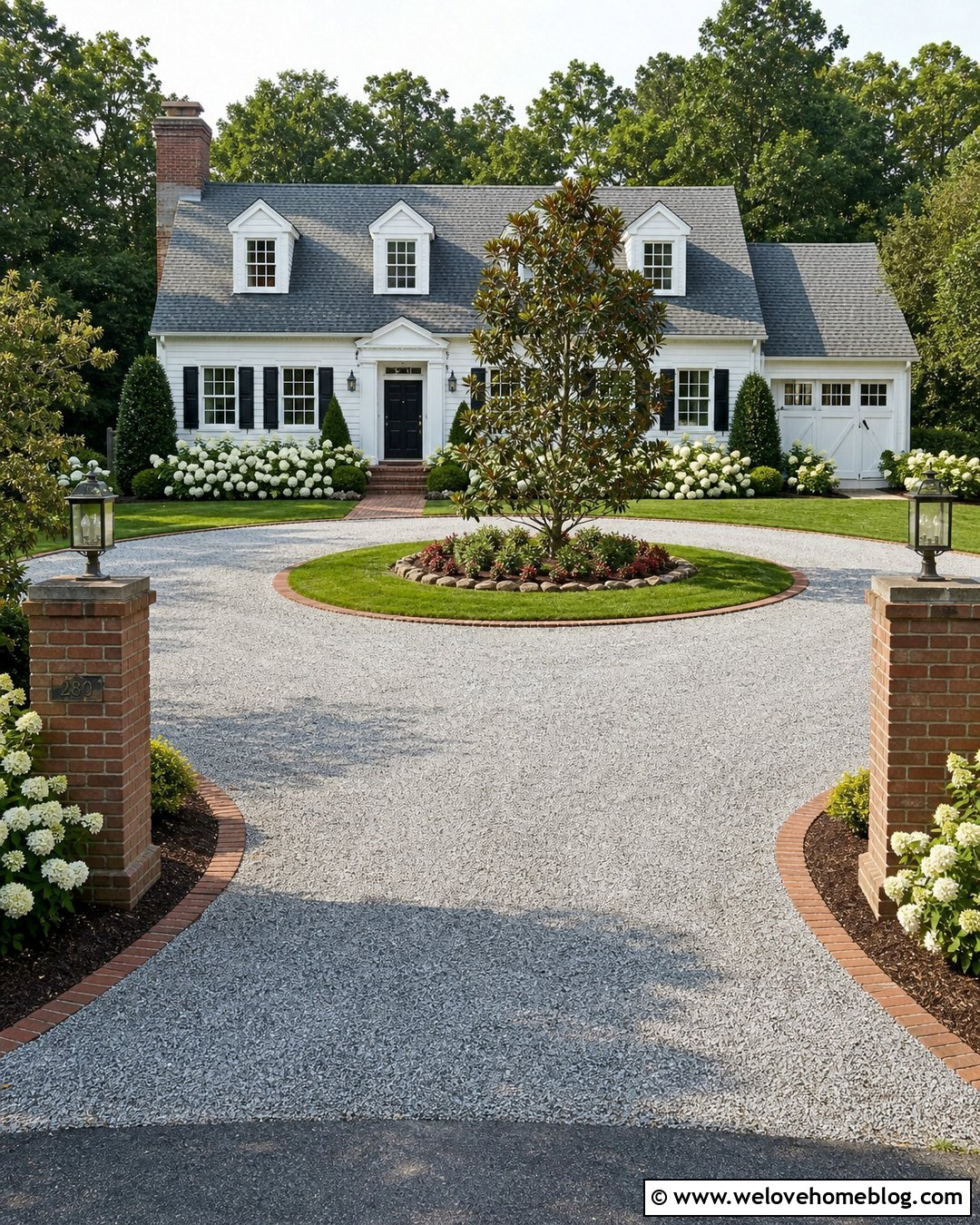
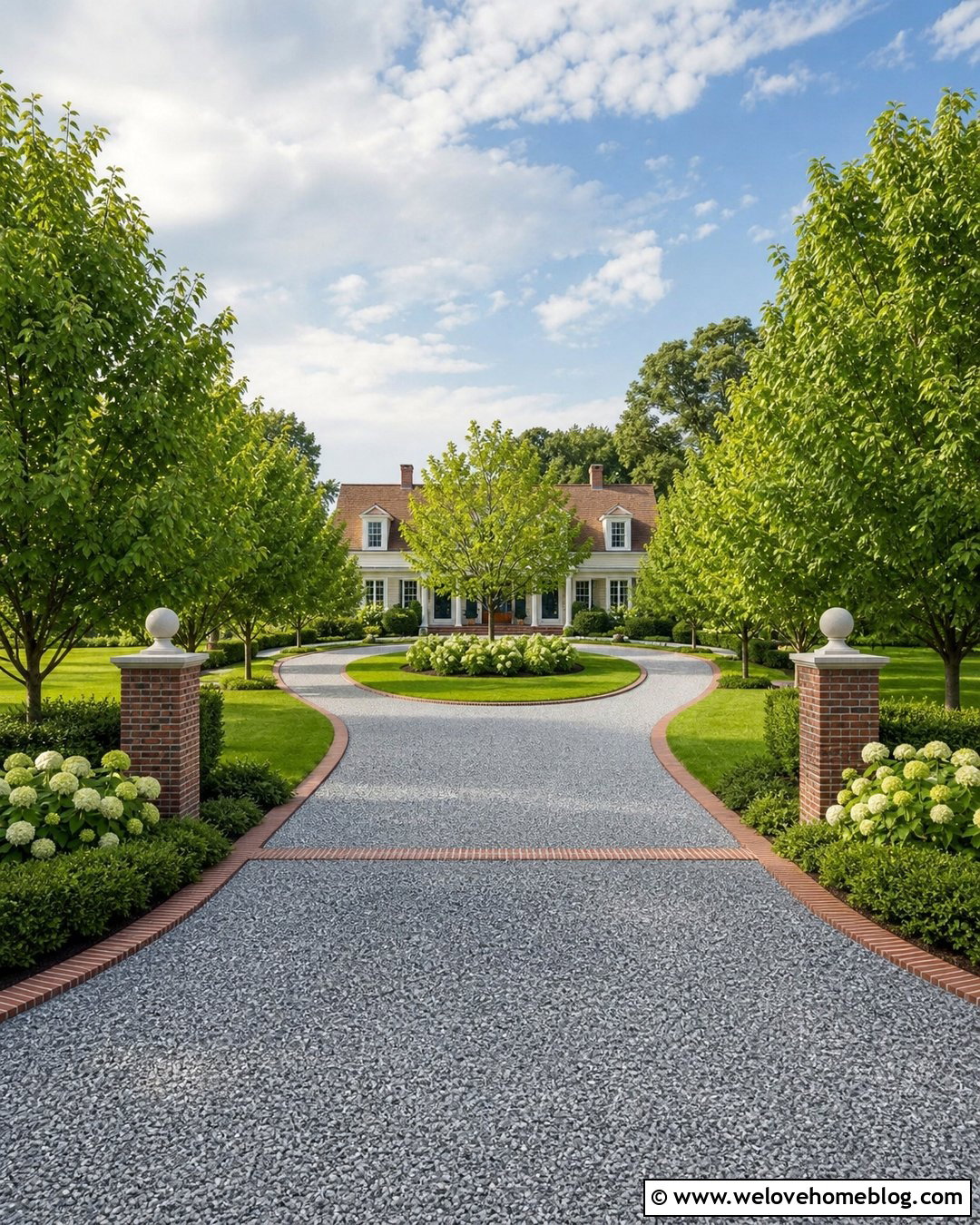
Gray crushed gravel and a red brick ribbon create an adaptable roundabout driveway for a farmhouse, Cape Cod, or brick-front residence. Set the brick band flush with the gravel along both sides of the lane, allowing it to define the circle and contain loose aggregate. The center island can combine lawn with a broad brick-edged flower bed around a small magnolia. Repeat the brick in the walkway and entrance posts to prevent the border from looking unrelated. Along the outer curve, use informal groups of hydrangeas and compact evergreens rather than a continuous hedge. This mix of materials offers texture and warmth while keeping the overall layout uncomplicated. The contrast also makes the driveway shape easy to see from the curb.
18. Black Asphalt Roundabout Driveway With White House
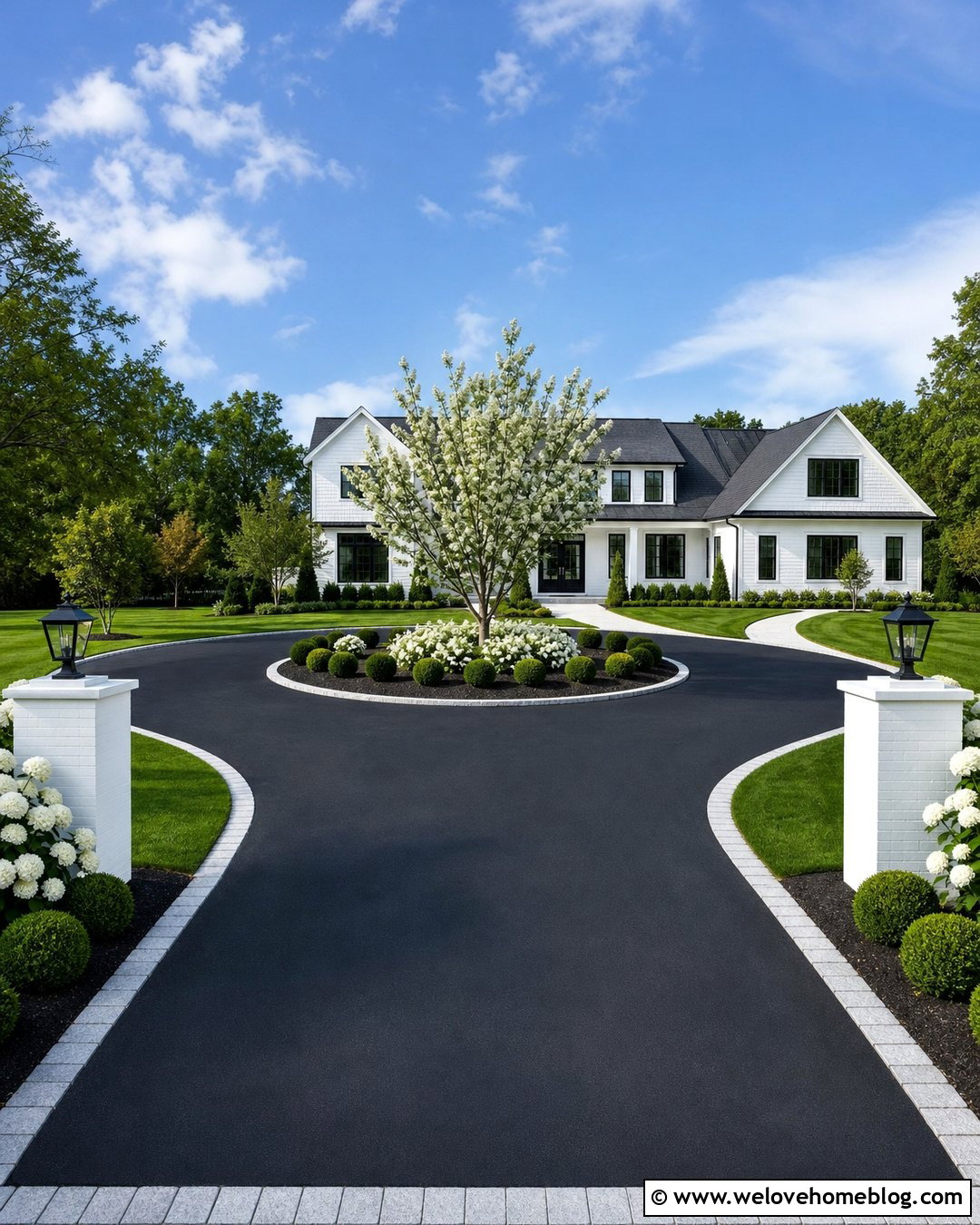
Few combinations look crisper than a black asphalt roundabout driveway in front of a white house. The dark pavement can frame a farmhouse, Colonial, or updated ranch while letting architectural details stand out. Use a light concrete or pale granite curb around the center island to sharpen the contrast. Inside the circle, plant a flowering tree above a simple bed of boxwood, white hydrangeas, and dark mulch. White entrance pillars with black lanterns reinforce the two-tone palette. A separate pale concrete walkway can lead from the driveway to the porch. Keep the lawn edges clean and avoid adding too many decorative materials. This disciplined approach turns economical asphalt into a deliberate part of the home’s overall exterior design.
19. Red Brick Roundabout Driveway With Evergreen Island
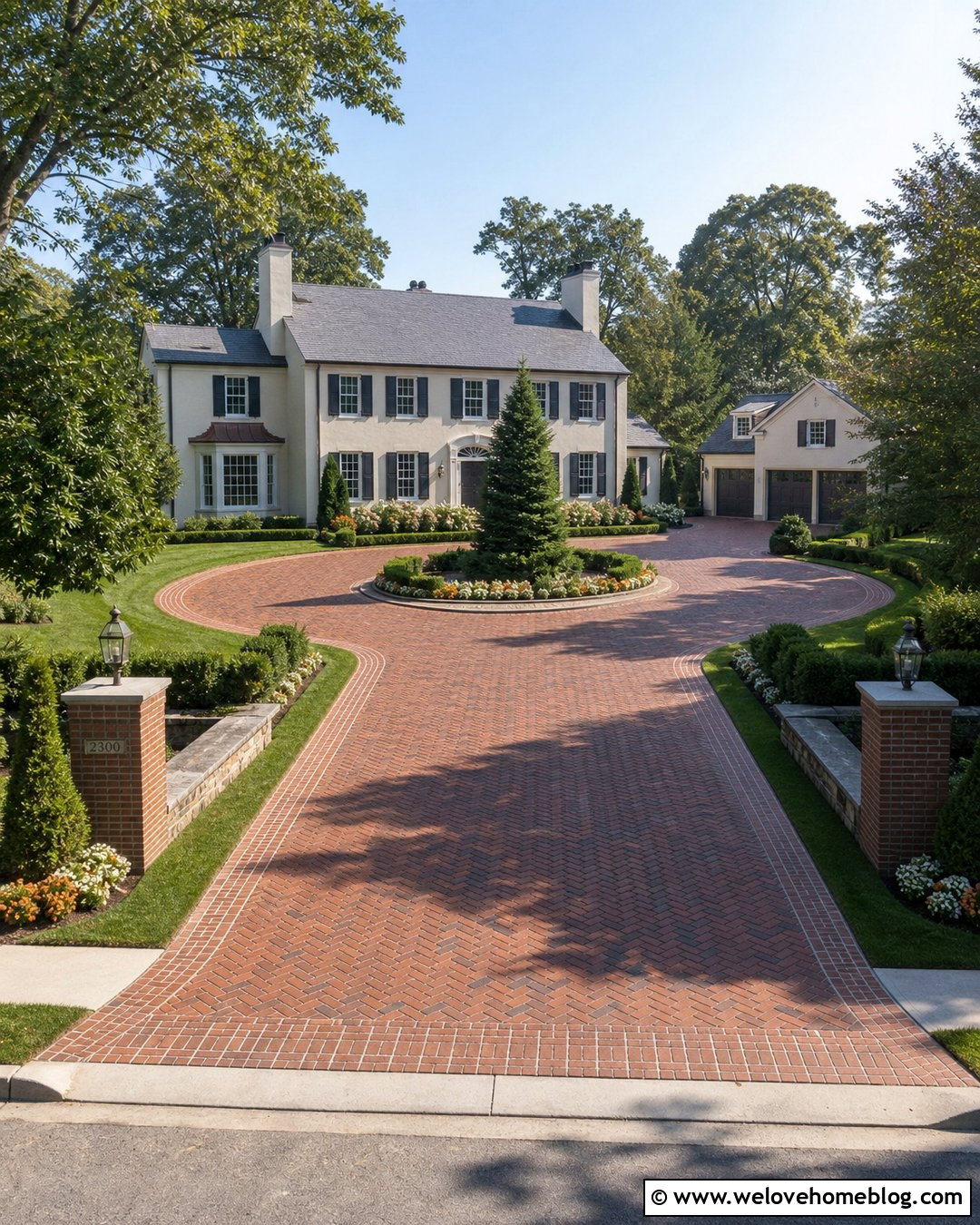
Deep red clay brick pavers bring warmth and permanence to a roundabout driveway serving a traditional home. Lay the main lane in herringbone for stability and visual movement, then frame it with a double soldier-course border. The center island can feature a conical evergreen surrounded by low boxwood and a neat ring of seasonal flowers. Because the design is visible from every angle, maintain consistent spacing around the entire bed. A wider brick apron near the front entrance creates an obvious stopping point for guests. Repeat the same brick in the front steps or walkway when possible. Cream trim, dark shutters, and simple metal lanterns complete a classic palette that remains attractive through changing seasons.

20. Granite Paver Roundabout Driveway With Stone Pillars
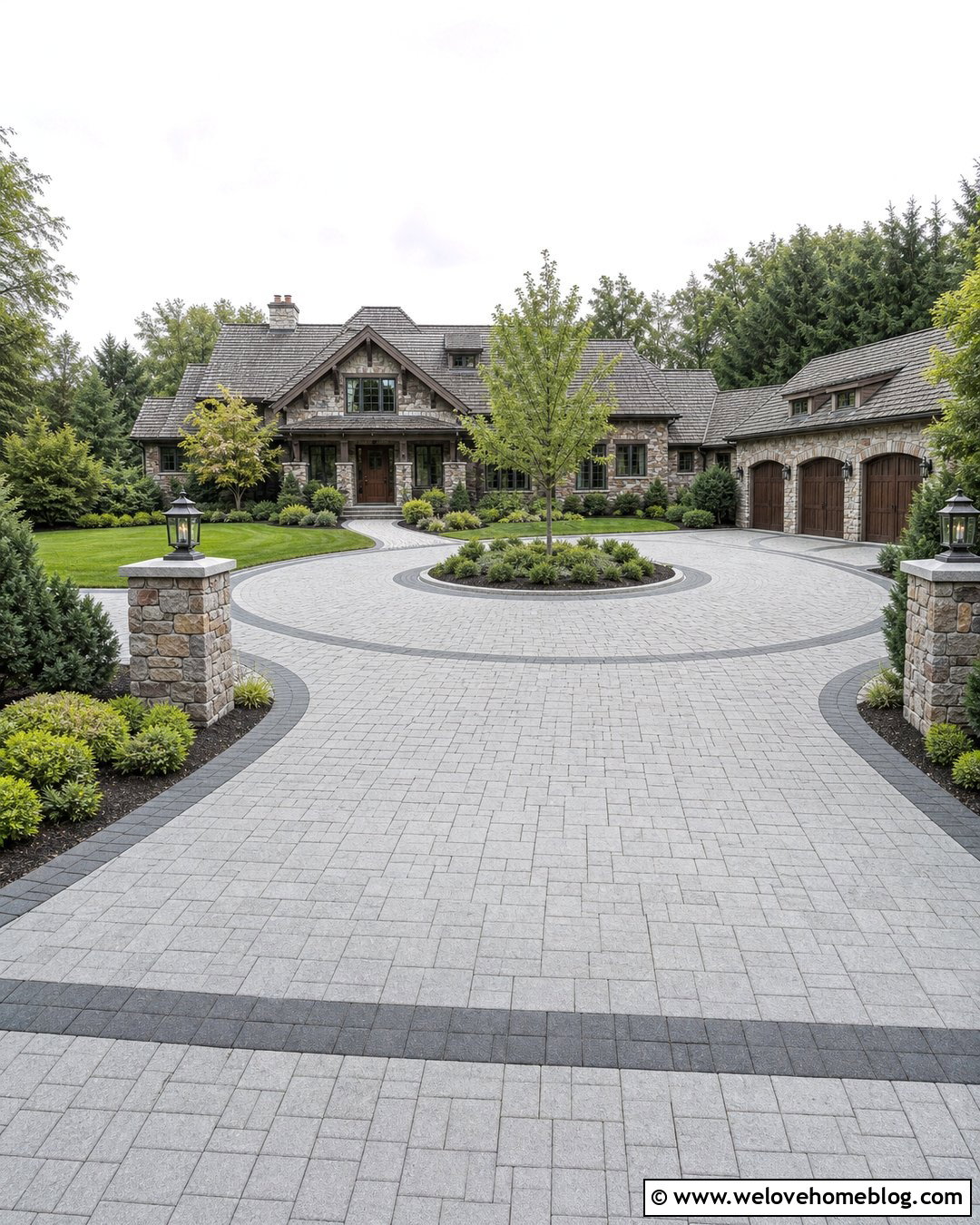
Granite pavers are well suited to a substantial roundabout driveway where durability and formal curb appeal are priorities. Mix medium-gray rectangular pavers with charcoal bands that radiate gently around the loop. Large natural-stone pillars can mark the two street openings and repeat the material around the center island. Instead of filling the island with many small plants, use one specimen tree, broad evergreen masses, and a clean lawn or ground-cover base. Low-voltage fixtures may be integrated discreetly into the pillars and planting beds without cluttering the daytime view. This driveway pairs naturally with a stone Craftsman, mountain home, or large transitional residence. Consistent masonry ties the gate, circular paving, landscaping, and facade into one confident entrance.
21. Small Roundabout Driveway With Mountable Center
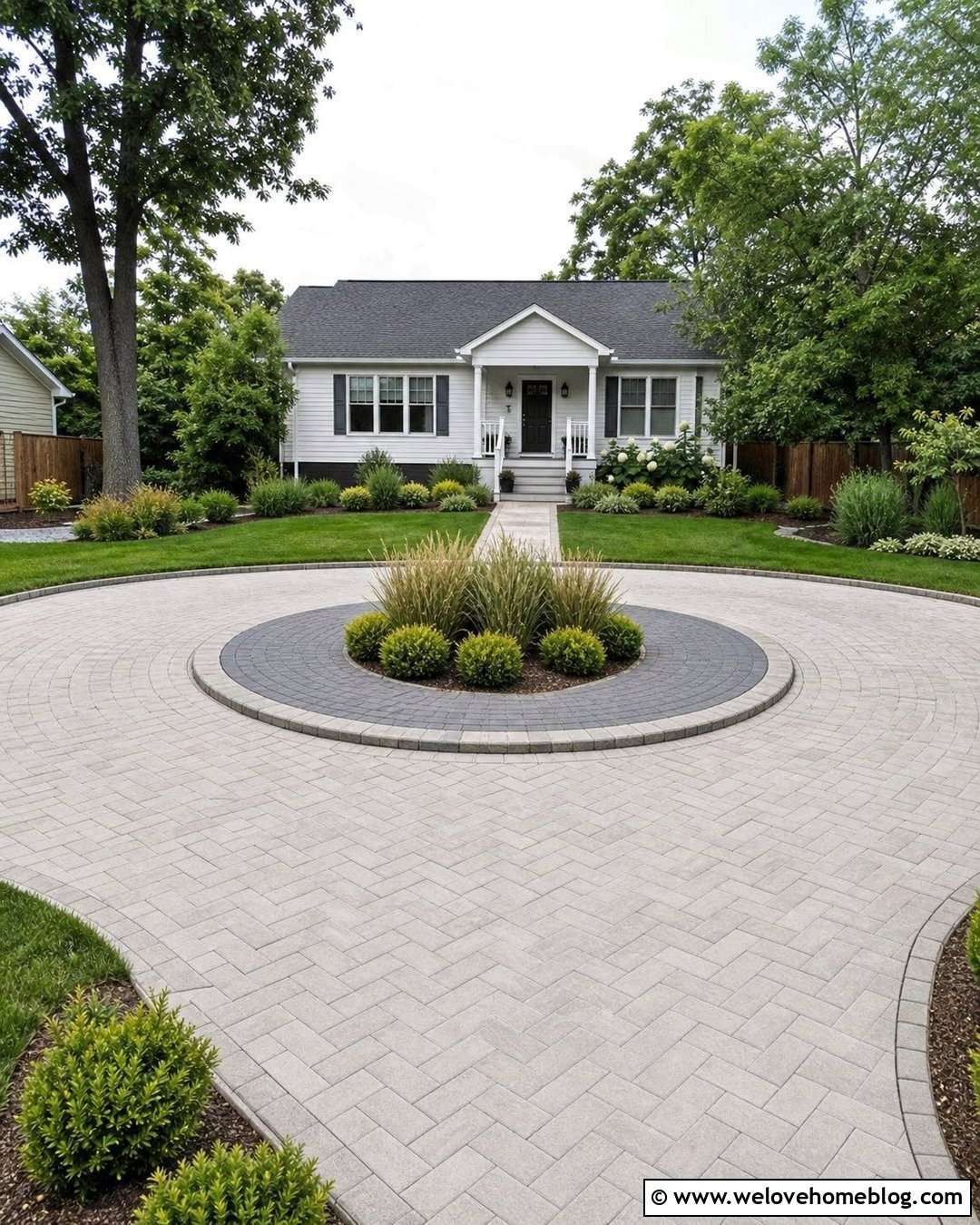
A compact property may benefit from a mini roundabout driveway with a low, mountable center rather than a large planted island. Use interlocking concrete pavers across the full turnaround, then distinguish the center with a contrasting circular pattern and a gently raised edge. The central area should remain visually obvious while preserving necessary maneuvering space for the vehicles that regularly use the property. Add landscaping around the outer perimeter instead, using low shrubs, ornamental grasses, and a narrow lawn. A straight walkway can lead from the turnaround to a modest ranch or bungalow. This space-conscious design creates the visual effect of a circular drive without sacrificing a large portion of the yard to a fixed island or oversized planting bed.
22. Large Roundabout Driveway With Double Entrance Gates
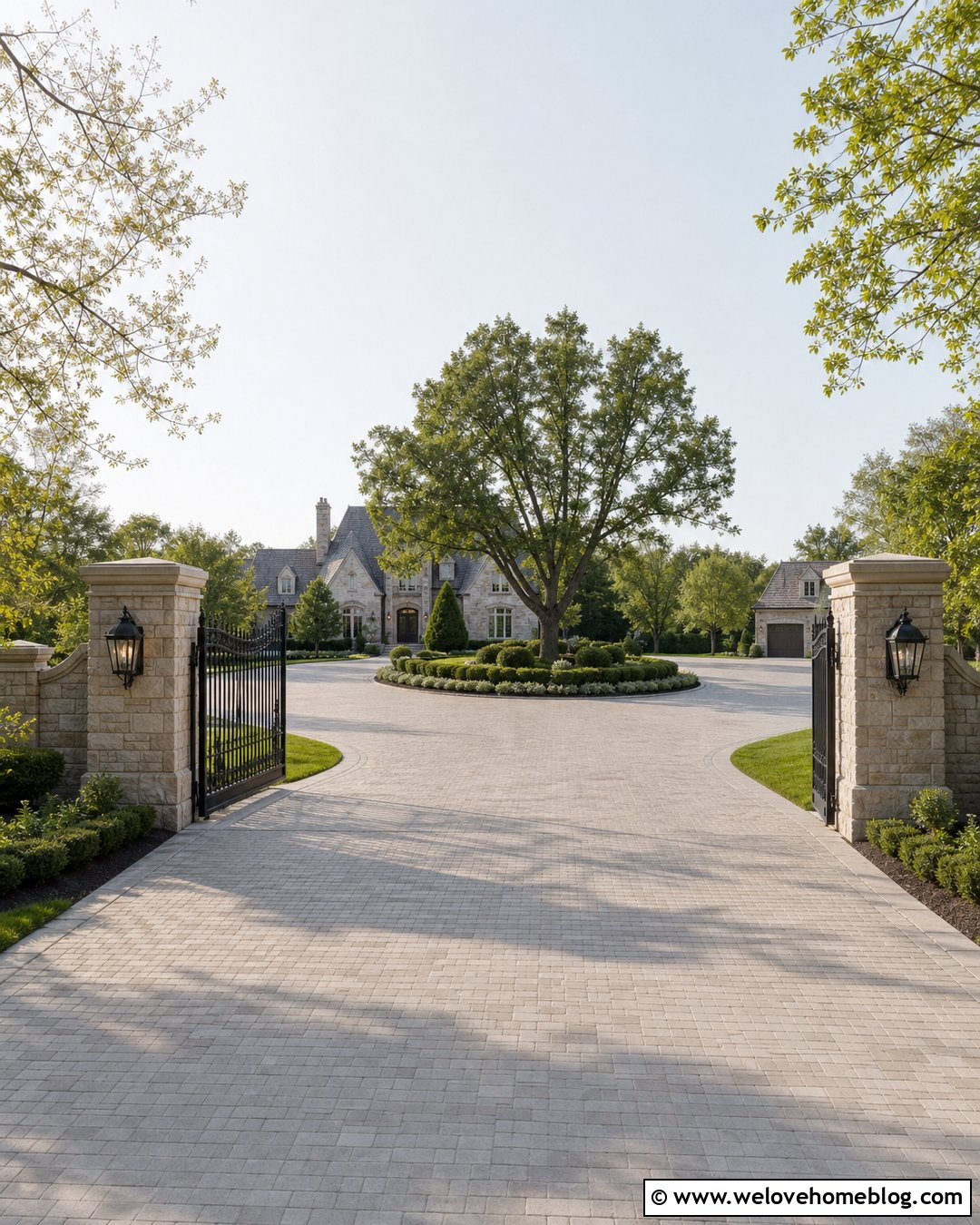
A large roundabout driveway can support two separate entrance gates, creating a clear arrival and departure sequence. Use warm concrete pavers in a broad circular lane that approaches a substantial traditional or estate-style home. Matching stone pillars should frame each opening, while simple metal gates maintain visibility into the property. A large center island can accommodate a specimen oak, layered evergreen shrubs, and sweeping ground cover. Avoid placing tall plants near either gate where they could crowd the approach. Add a generous drop-off apron near the front steps and a discreet branch leading to the garage. Repeating the same stone on the pillars, island curb, and house facade makes the expansive driveway feel cohesive rather than divided into unrelated zones.
23. Oval Roundabout Driveway For A Wide House
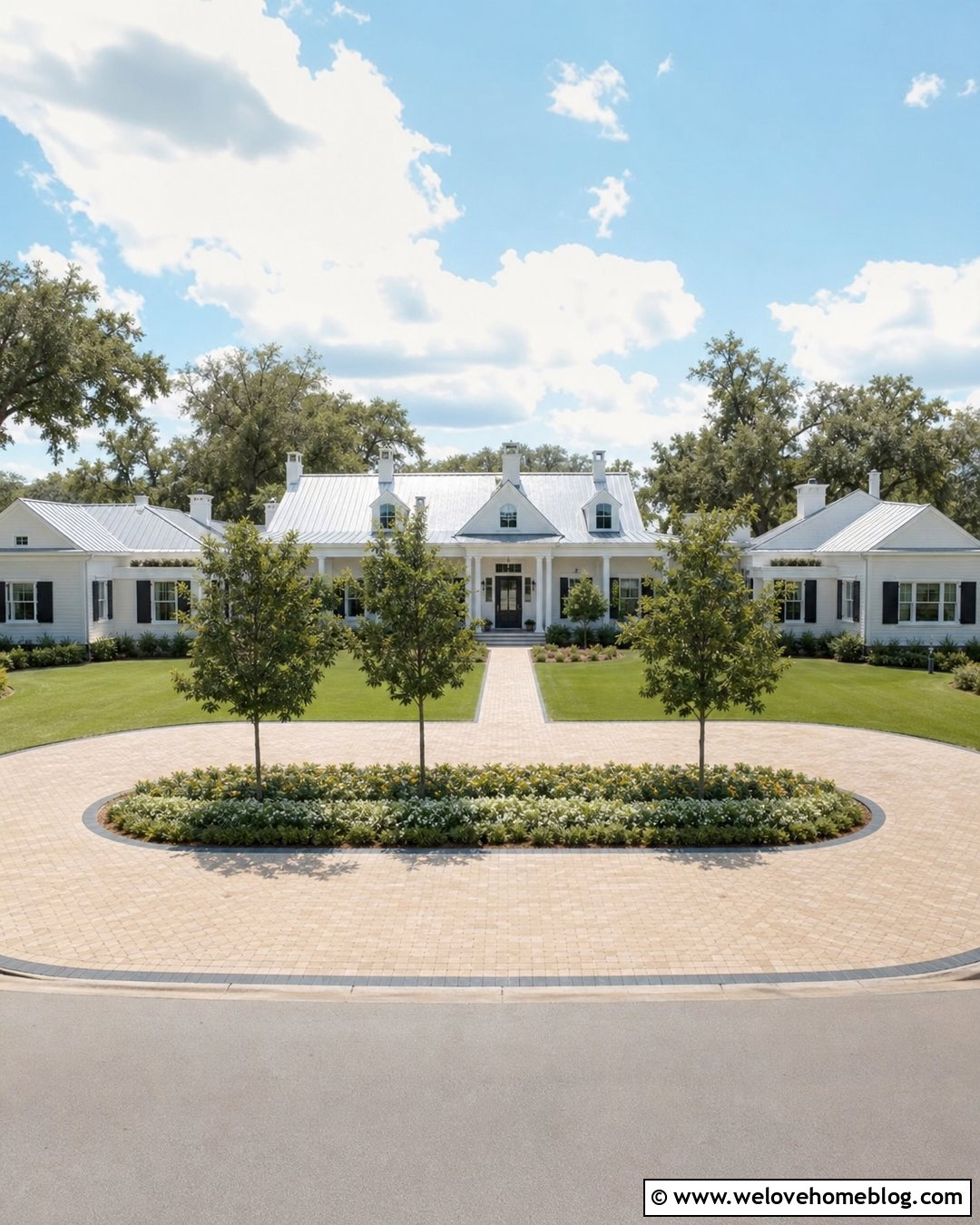
An oval roundabout driveway often complements a wide house better than a perfect circle. Its elongated island can follow the horizontal lines of a sprawling ranch, Southern home, or broad contemporary facade. Surface the lane with buff concrete pavers and outline the inner curve with charcoal setts. The center island might contain three evenly spaced ornamental trees above low grasses and flowering ground cover. Keep the ends of the oval open enough for comfortable turning and clear views toward the street. A central walkway can cross the island only when it is safely placed and visually aligned with the front door. The stretched layout distributes landscaping across the facade and creates a balanced approach without forcing an undersized circular feature into the yard.
24. Teardrop Roundabout Driveway For A Narrow Lot
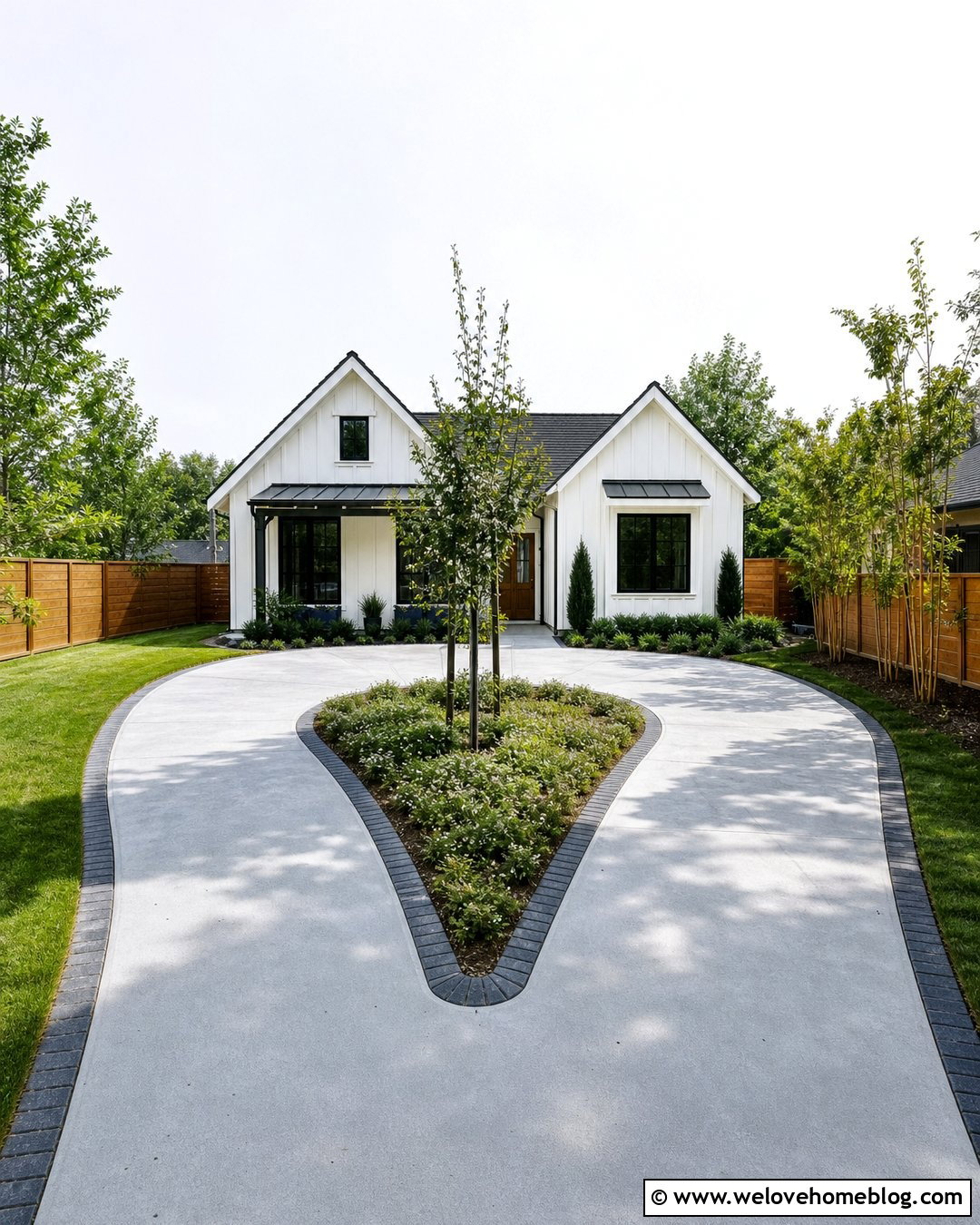
A teardrop-shaped roundabout driveway can bring forward-driving convenience to a property that lacks the width for a broad circular loop. Use smooth gray concrete for the lane and a curved dark brick border to emphasize the tapered island. The wide end can sit near the house, where it creates a modest drop-off area, while the narrow end guides vehicles toward the street. Plant the island with one slender ornamental tree, low evergreen mounds, and sweeping ground cover. Avoid wide shrubs that could spill into the tighter turn. A compact modern farmhouse or urban bungalow provides an appropriate setting. This layout uses an elongated curve to make the driveway feel intentional while preserving more of the surrounding front lawn.
25. Roundabout Driveway With A Garage Branch
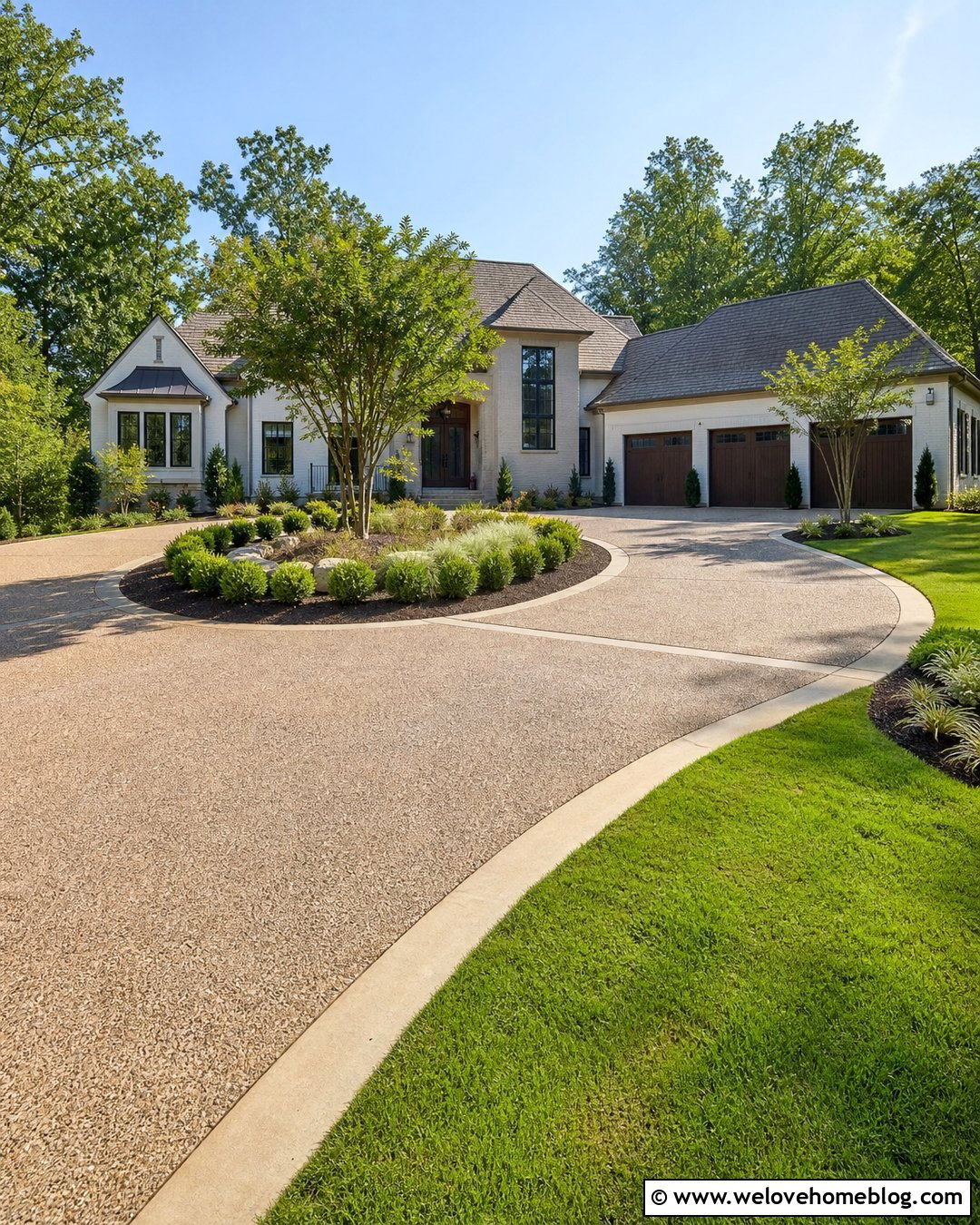
When the garage sits beside or behind the house, a roundabout driveway can include a dedicated branch without losing its graceful shape. Use exposed aggregate concrete for the main circle and smooth concrete bands to define the turn toward the garage. Keep the branch slightly narrower and visually quieter so the primary arrival remains focused on the front entrance. A landscaped center island with a small tree, low shrubs, and ornamental grasses can screen part of the garage view. Add a paver drop-off area opposite the front walkway for guests. Repeating the same edging along the loop and garage branch unifies the two routes. This practical configuration separates everyday parking from the more attractive front-door approach while allowing vehicles to circulate naturally.
26. Roundabout Driveway With Front Door Drop-Off
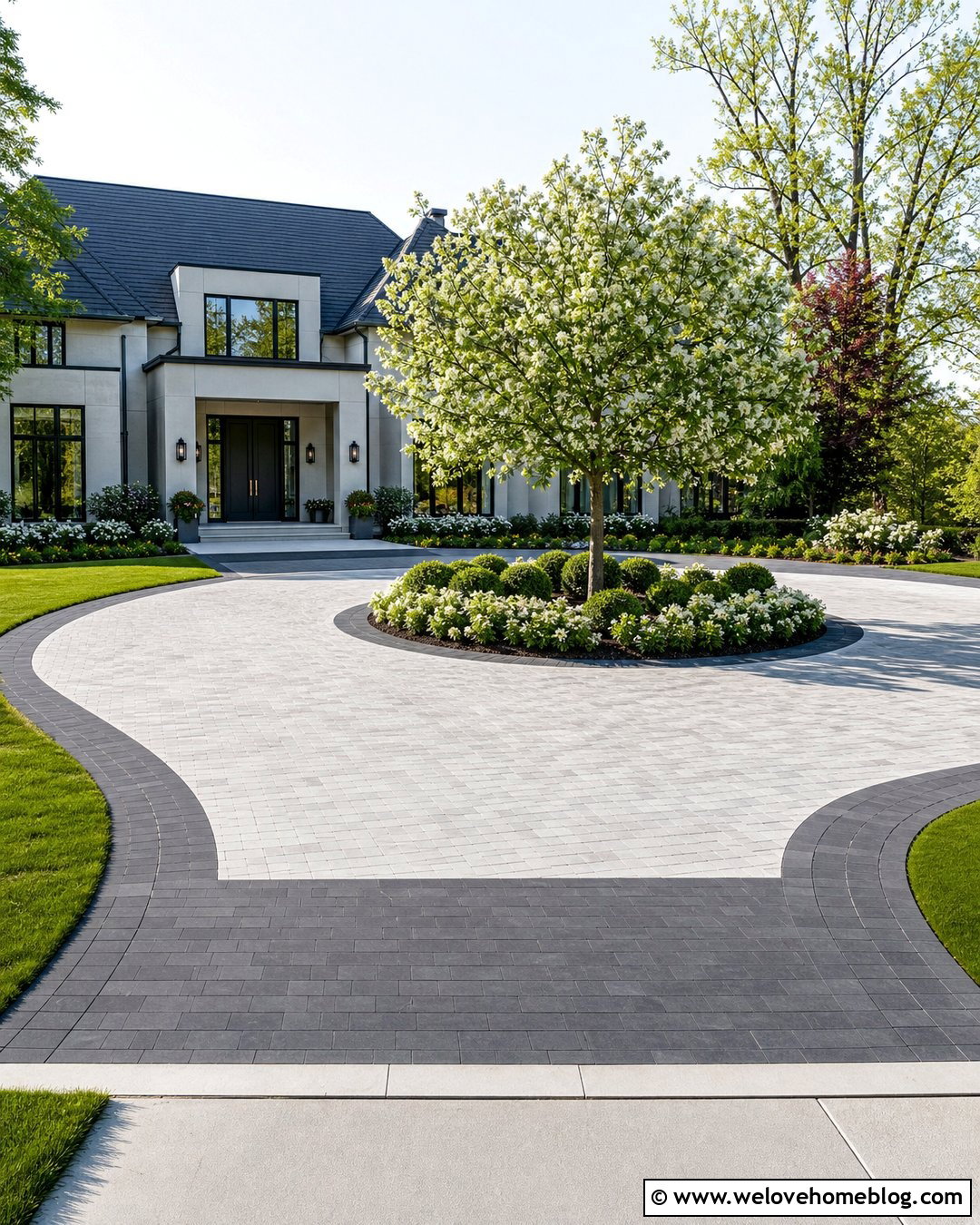
A designated front-door drop-off makes a roundabout driveway more convenient without requiring an oversized parking court. Create a subtle widened bay along the loop using charcoal concrete pavers surrounded by a lighter paver field. Align the bay with a broad walkway leading directly to the porch of a transitional or Colonial home. The center island can hold a flowering tree and low layered planting, while the outer edge near the bay stays open for easy passenger access. Use a flush curb rather than a tall edge where people step out. Matching planters or low masonry walls can frame the walkway. The circular movement remains clear, but the material change tells visitors exactly where to pause before continuing around the drive.
27. Roundabout Driveway With Central Walkway
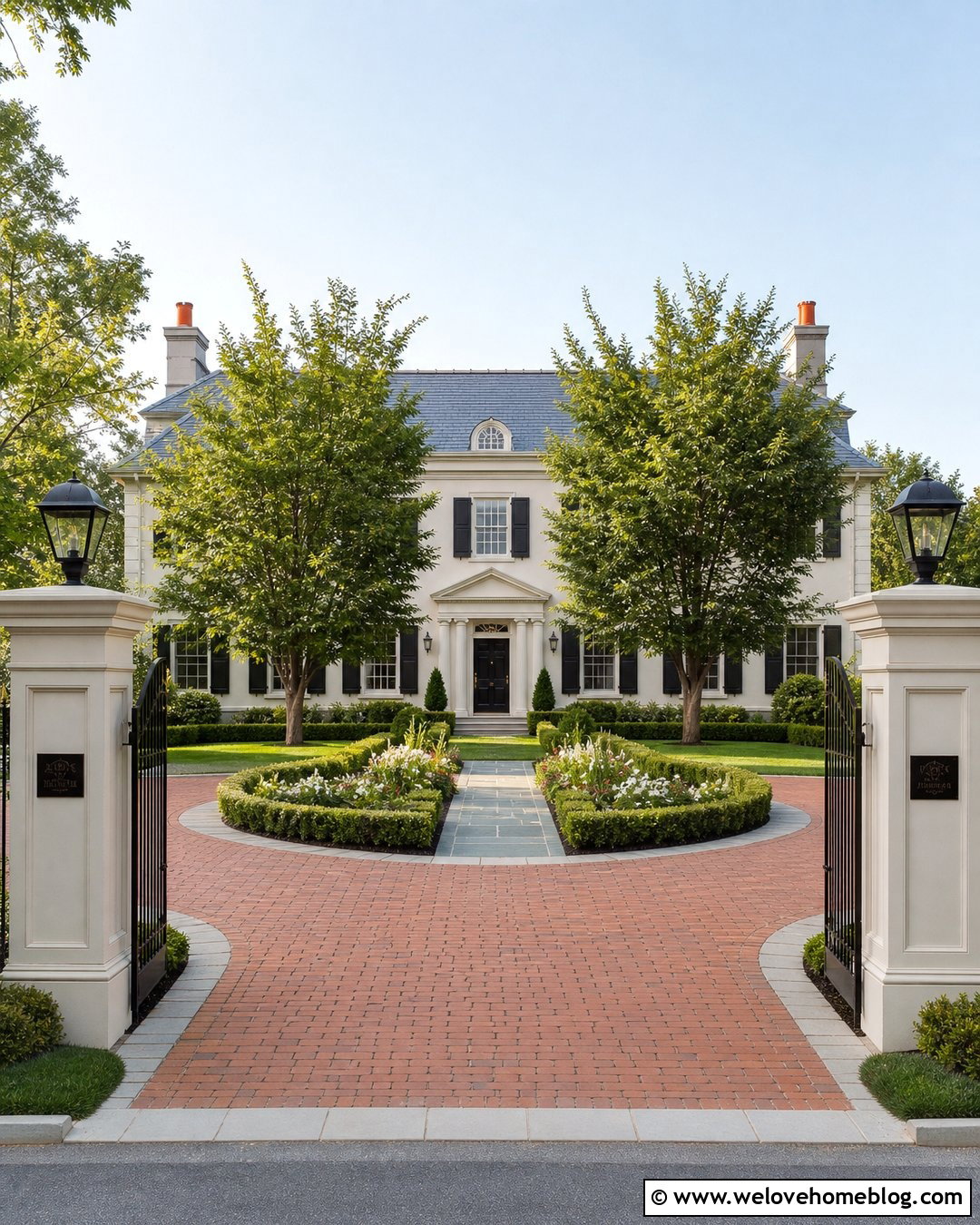
A central walkway can create a striking connection between a roundabout driveway and the front door when the site allows it to be positioned safely. Build the driveway with tan brick pavers and extend a straight bluestone path across one section of the center island. The path should align with the entrance and remain visually distinct from the driving surface. Surround it with low boxwood, flowering perennials, and a pair of small ornamental trees placed away from key views. A wider paved landing at the curb gives guests a comfortable transition from vehicle to walkway. This arrangement works particularly well with a symmetrical Georgian or Colonial facade. Strong alignment makes the entire front yard feel orderly, welcoming, and intentionally connected.
28. Roundabout Driveway With Native Plant Island
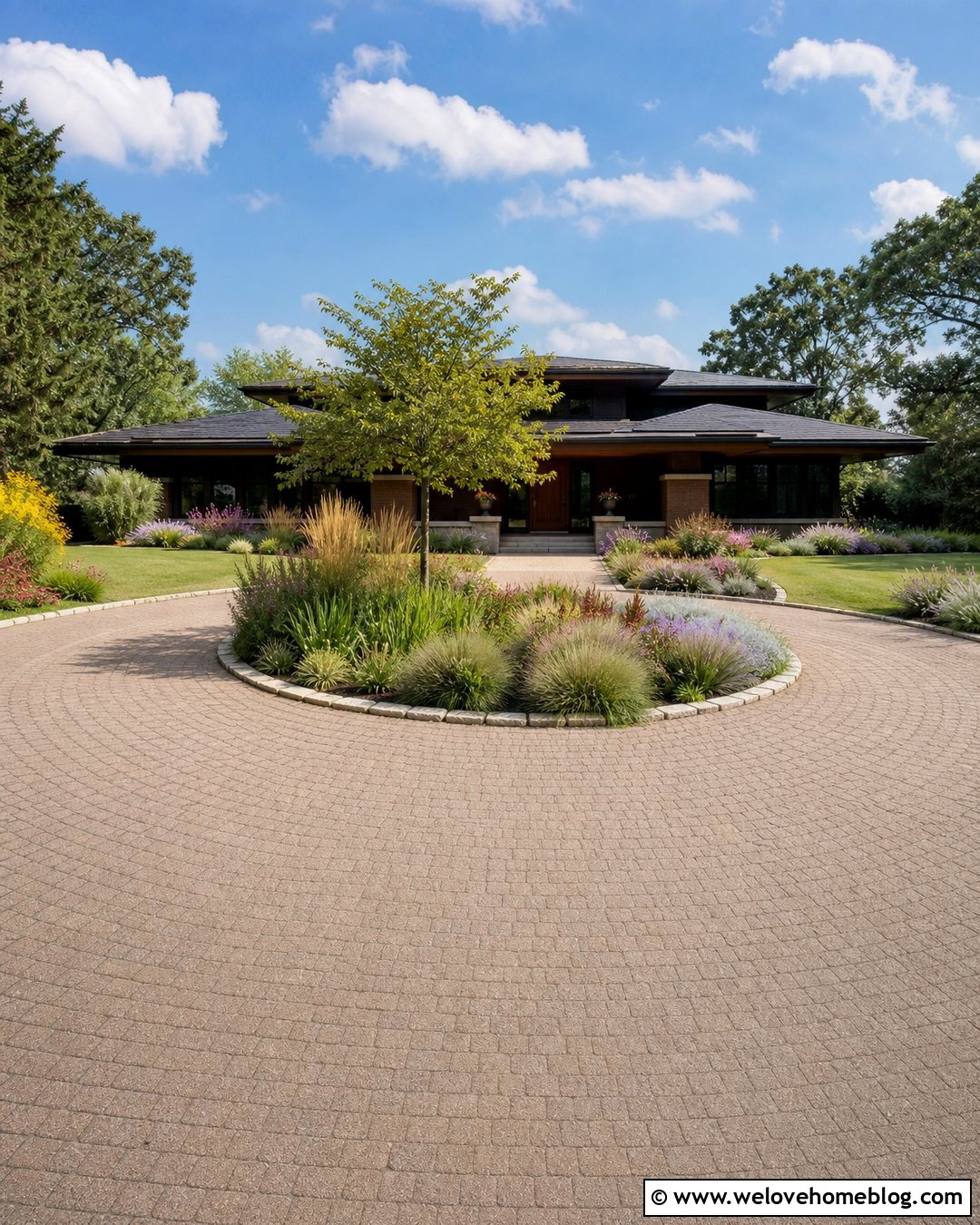
Native planting can give a roundabout driveway a softer, regionally grounded appearance. Pair a light-brown permeable paver lane with a center island filled with locally appropriate grasses, flowering perennials, and one small native tree. Arrange plants in broad drifts, keeping the lowest varieties near the curb and taller growth toward the middle. A narrow stone border provides a tidy transition between the naturalistic bed and the driveway. Repeat selected plants in the outer landscape so the island does not feel disconnected from the yard. This design complements a Craftsman, prairie-style, or contemporary home. The circular structure gives the garden clear boundaries, while the varied foliage and seasonal blooms prevent the paved entrance from feeling rigid or overly formal.
29. Roundabout Driveway With Low-Maintenance Landscaping
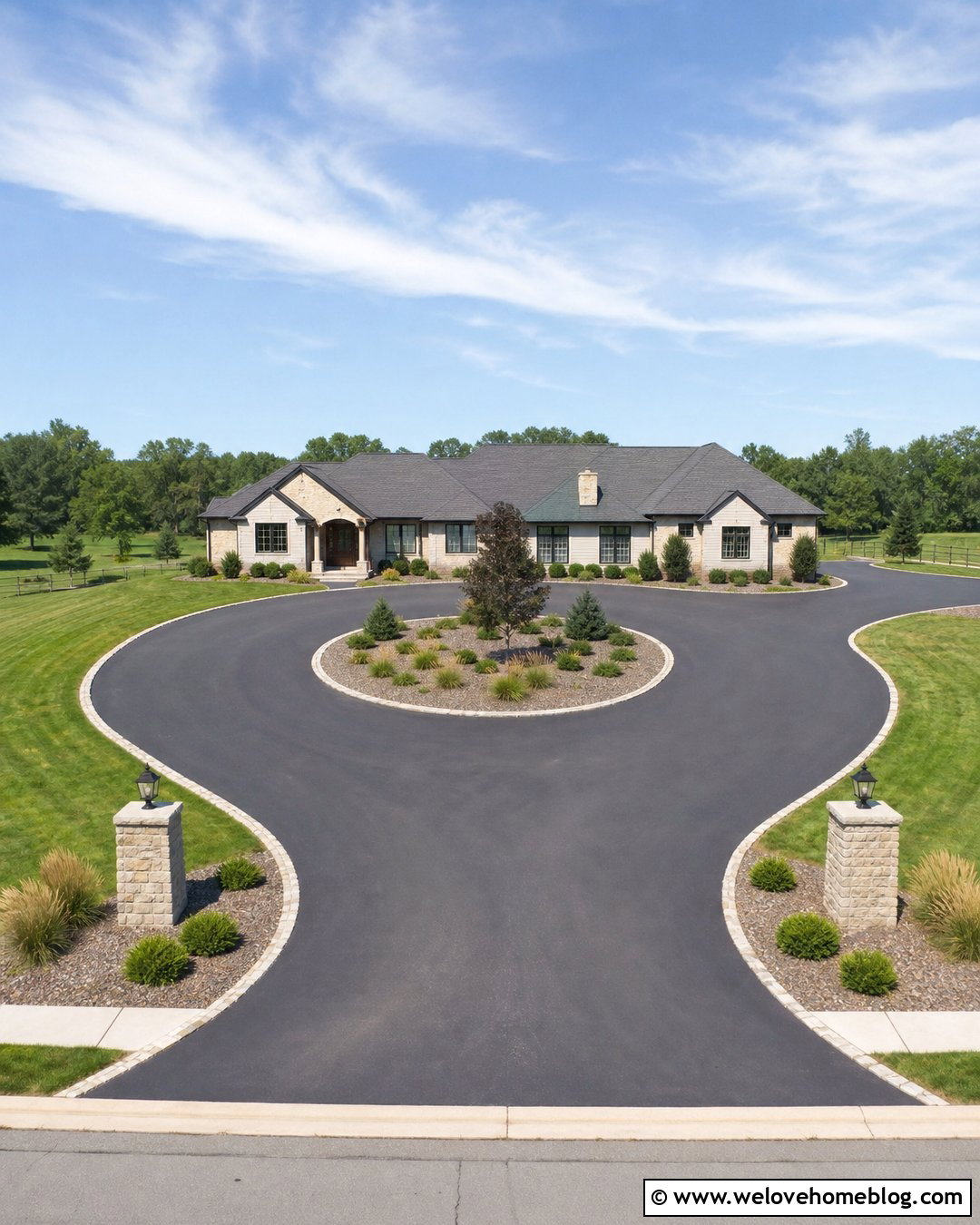
For an easier-care entrance, combine a charcoal asphalt roundabout driveway with a center island designed around durable structure. Use a granite curb to contain broad areas of decorative gravel mulch. Add compact evergreen shrubs, slow-growing ornamental grasses, and one small tree suited to the local climate and available space. Plants should be grouped rather than scattered, which gives the island a fuller look and simplifies maintenance. Repeat the gravel and evergreen palette in narrow beds beside the house. Simple stone entrance posts can match the island curb. Avoid fragile decorations, narrow strips of lawn, or plants that require constant trimming near the pavement. The finished driveway feels landscaped and complete while keeping its material palette practical and restrained.
30. Roundabout Driveway With Seasonal Flower Beds
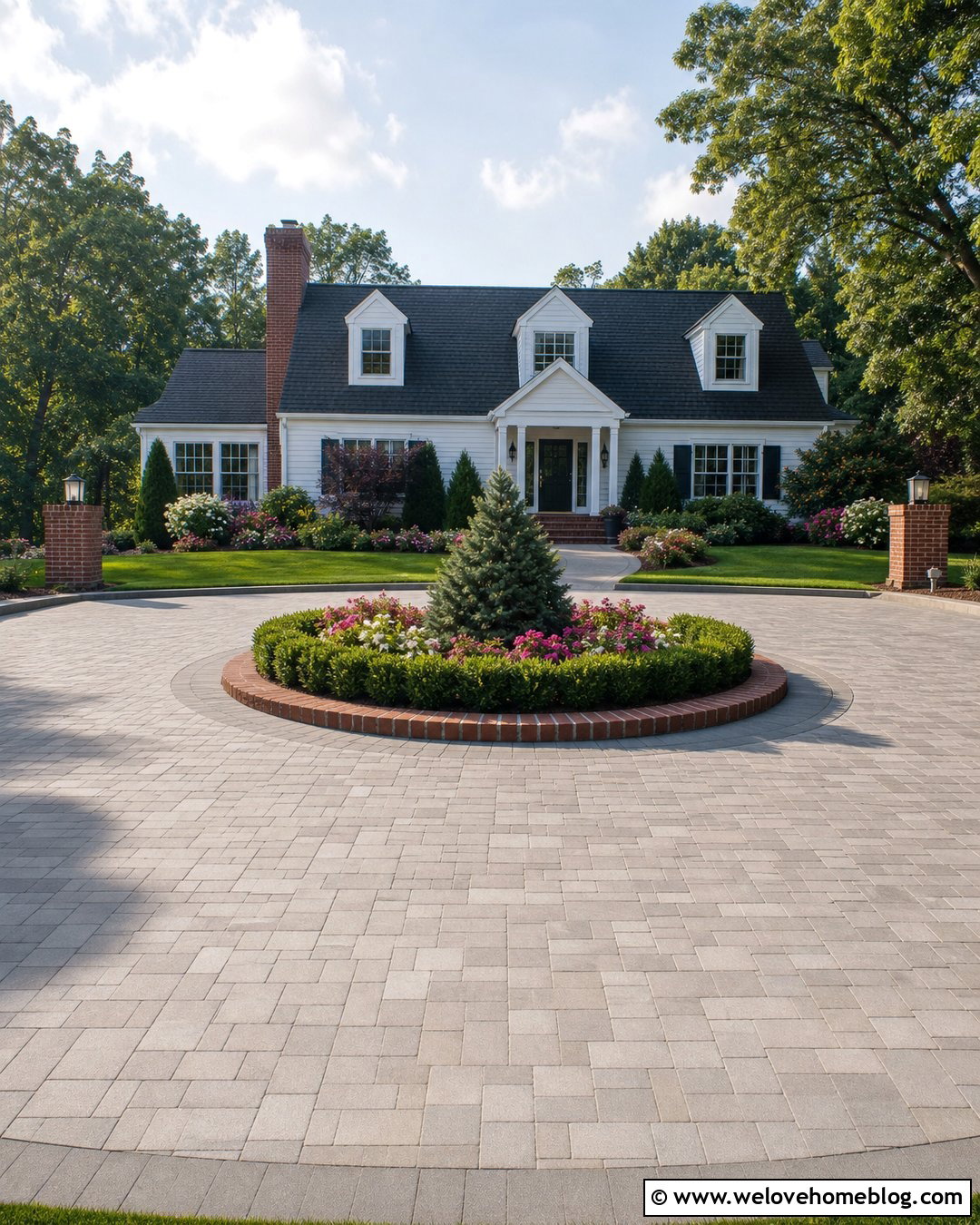
Seasonal color can transform a roundabout driveway when it is supported by a permanent landscape framework. Use warm gray concrete pavers for the loop and a raised brick curb around the island. Plant a small evergreen or ornamental tree at the center, then establish a low boxwood ring that remains consistent throughout the year. Inside that structure, rotate groups of spring bulbs, summer annuals, and fall flowers appropriate for the local climate. Repeat a smaller amount of seasonal color beside the entrance pillars or front walkway. This approach works well with a cheerful cottage, Cape Cod, or traditional suburban home. The neutral paving and evergreen bones prevent the circle from looking bare when one planting season ends and another begins.
31. Roundabout Driveway With Ornamental Grass Island
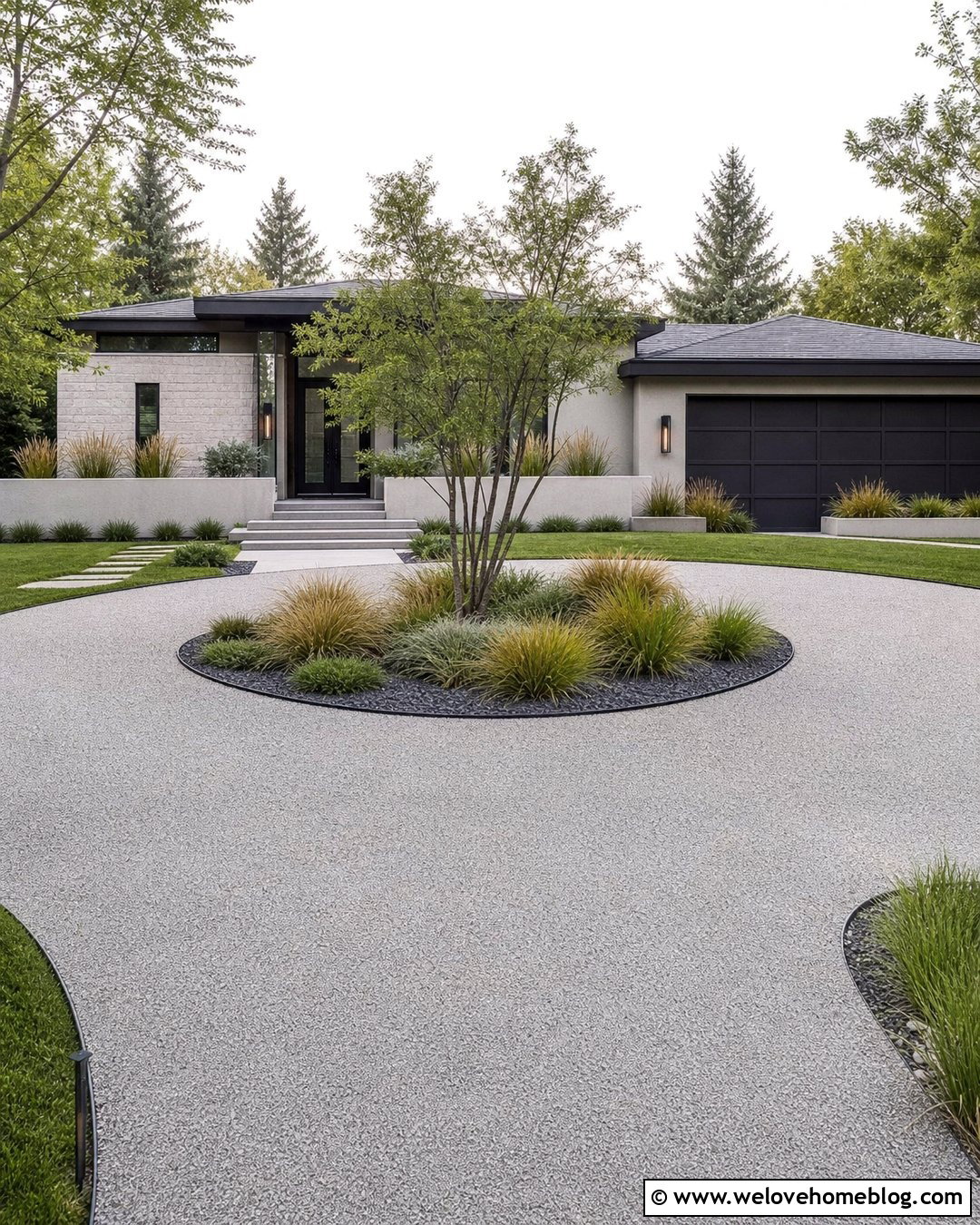
Ornamental grasses bring movement and texture to a contemporary roundabout driveway, especially when used in large, simple groups. Choose light-gray resin-bound gravel for the circular lane and outline it with slim black steel edging. In the center island, arrange low grasses around the perimeter and taller upright varieties near one sculptural multi-stem tree. Maintain open gaps between groups so the bed looks architectural rather than overgrown. Use dark gravel mulch to contrast with pale seed heads and green foliage. Repeat a few grass clusters near the front steps of the modern house. The smooth driveway, disciplined planting, clean border, and restrained architecture create a complete design that changes gently with wind and season while retaining its clear geometry.
32. Roundabout Driveway With Raised Stone Island
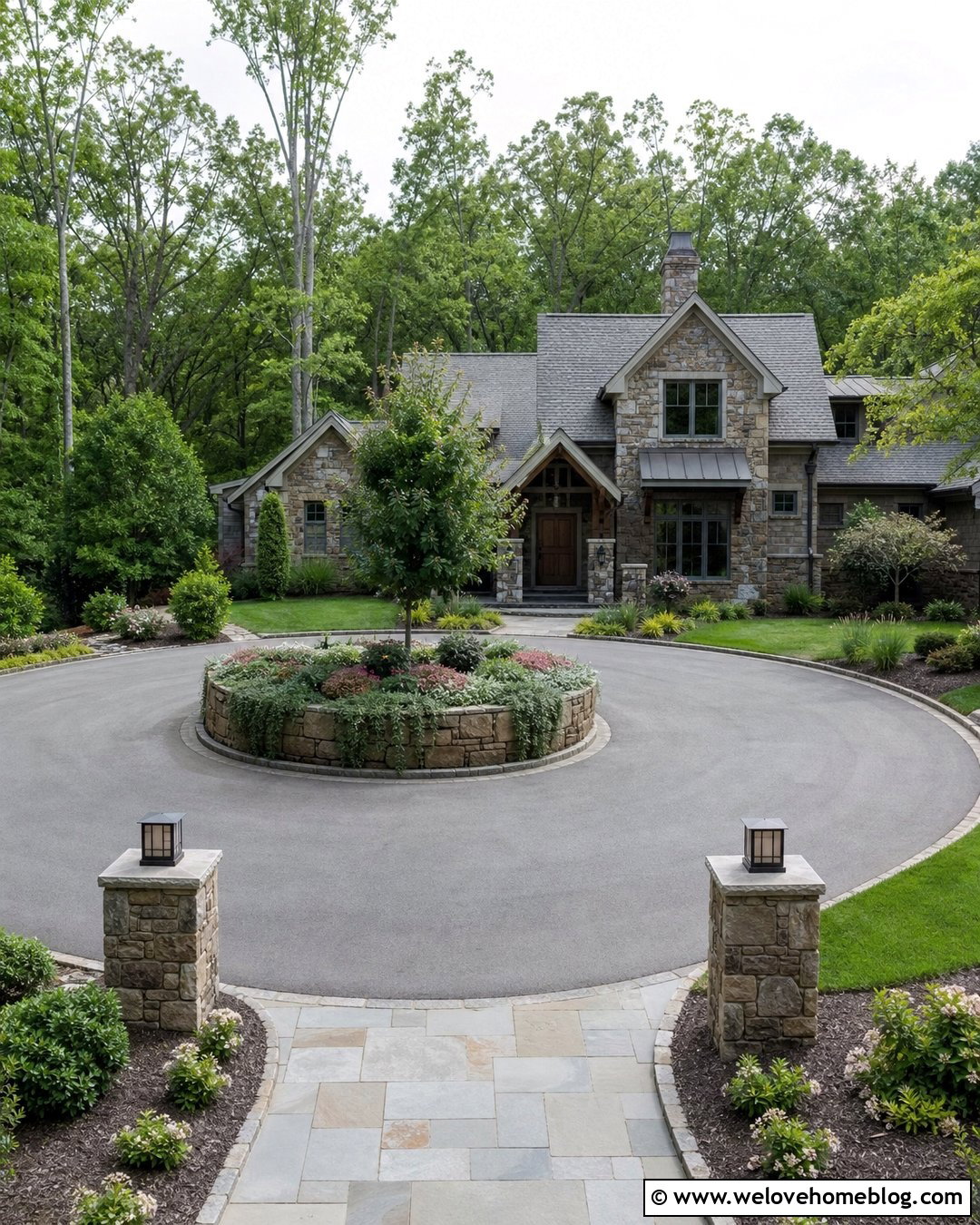
A raised stone island gives a roundabout driveway a strong central feature and protects planting from occasional tire contact. Pair a medium-gray asphalt lane with a low circular retaining wall made from warm, rough-cut fieldstone. Keep the wall height modest so the center does not feel disconnected from the surrounding yard. Fill the island with a small tree, cascading ground cover, and compact flowering shrubs that soften the masonry. Use the same fieldstone on entrance pillars and sections of the home’s facade. A bluestone walkway can branch from the driveway toward a Craftsman porch. By repeating the stone in several places, the raised island becomes an integrated part of the property rather than an isolated planter placed in the middle of the pavement.
33. Roundabout Driveway With Modern Address Sign
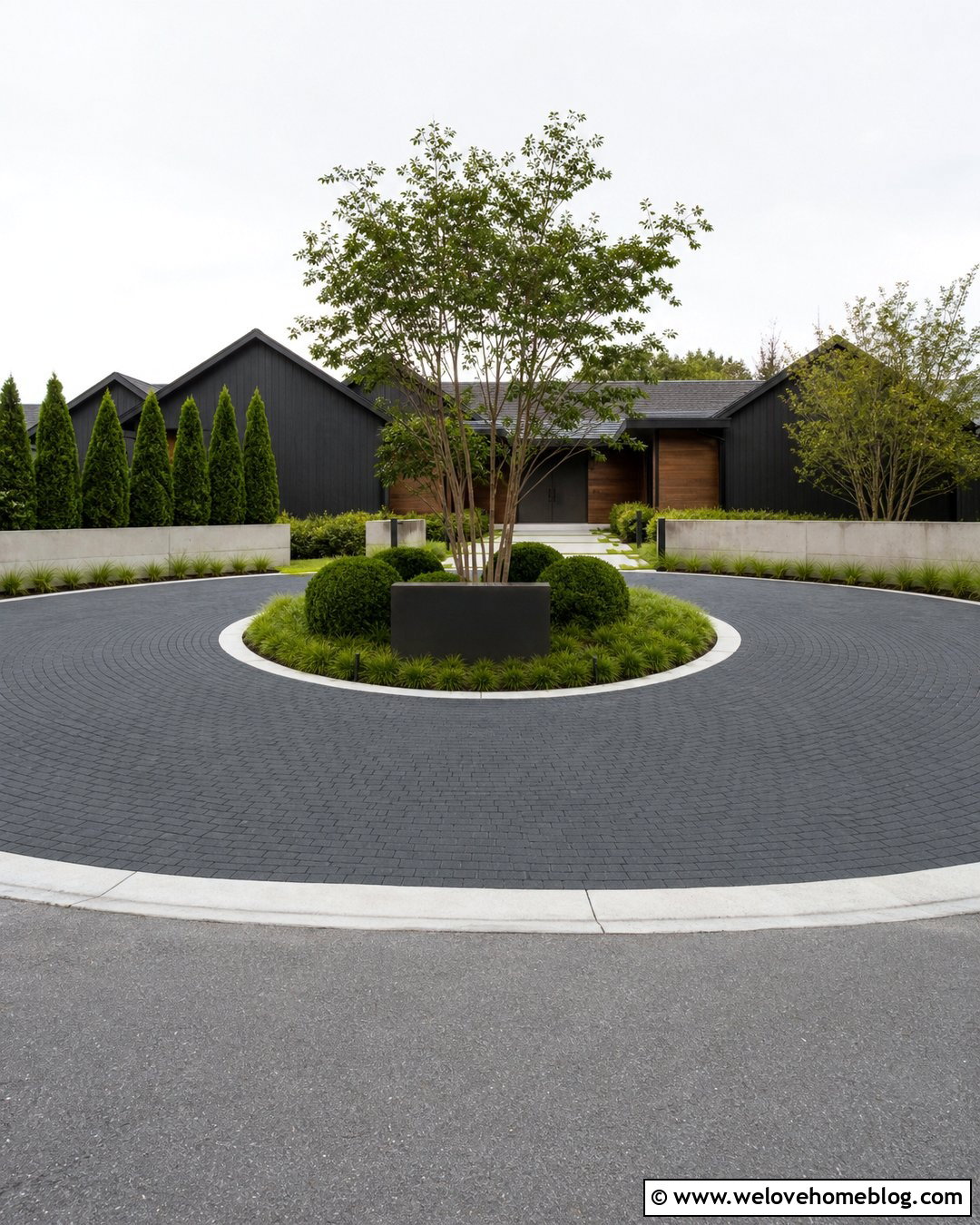
A modern address sign can serve as the focal point of a streamlined roundabout driveway entrance. Use large-format charcoal concrete pavers for the circular lane, with a pale poured-concrete border around the center island. Position a simple monument-style sign near the street where it remains visible without crowding the driving opening. Coordinate its concrete, metal, or stone finish with the house facade and driveway bands. Inside the circle, use clipped evergreen forms, low grasses, and one multi-stem tree. Keep planting near the sign especially low so the structure remains easy to see. A modern house with dark siding and warm wood details completes the look. The limited materials give the entrance identity without relying on excessive decoration.
34. Roundabout Driveway With Subtle Landscape Lighting
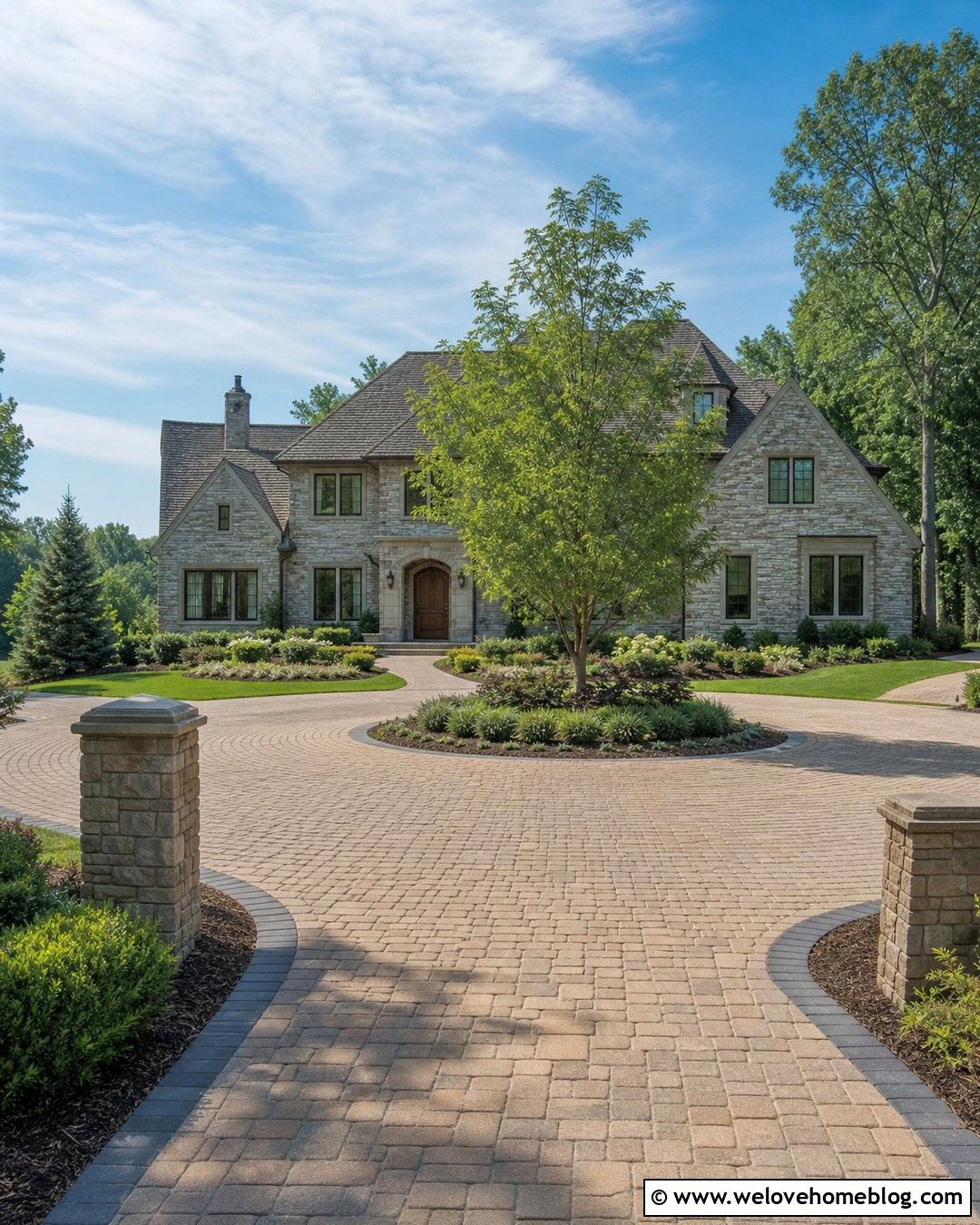
Thoughtful lighting can improve the appearance of a roundabout driveway without turning the front yard into a runway. Begin with a tan cobblestone or concrete-paver loop bordered by darker setts. During the day, compact fixtures should disappear into the island planting and outer landscape. Space them to reveal the central tree, stone edging, entrance pillars, and walkway rather than outlining every inch of pavement. Choose low plants near fixtures so foliage does not immediately block the intended effect. A traditional stone or brick home provides a warm background, while balanced foundation beds frame the approach. The driveway should still look complete in full daylight, with lighting treated as a supporting layer instead of the primary decorative feature.
35. Mixed Material Roundabout Driveway With Center Tree
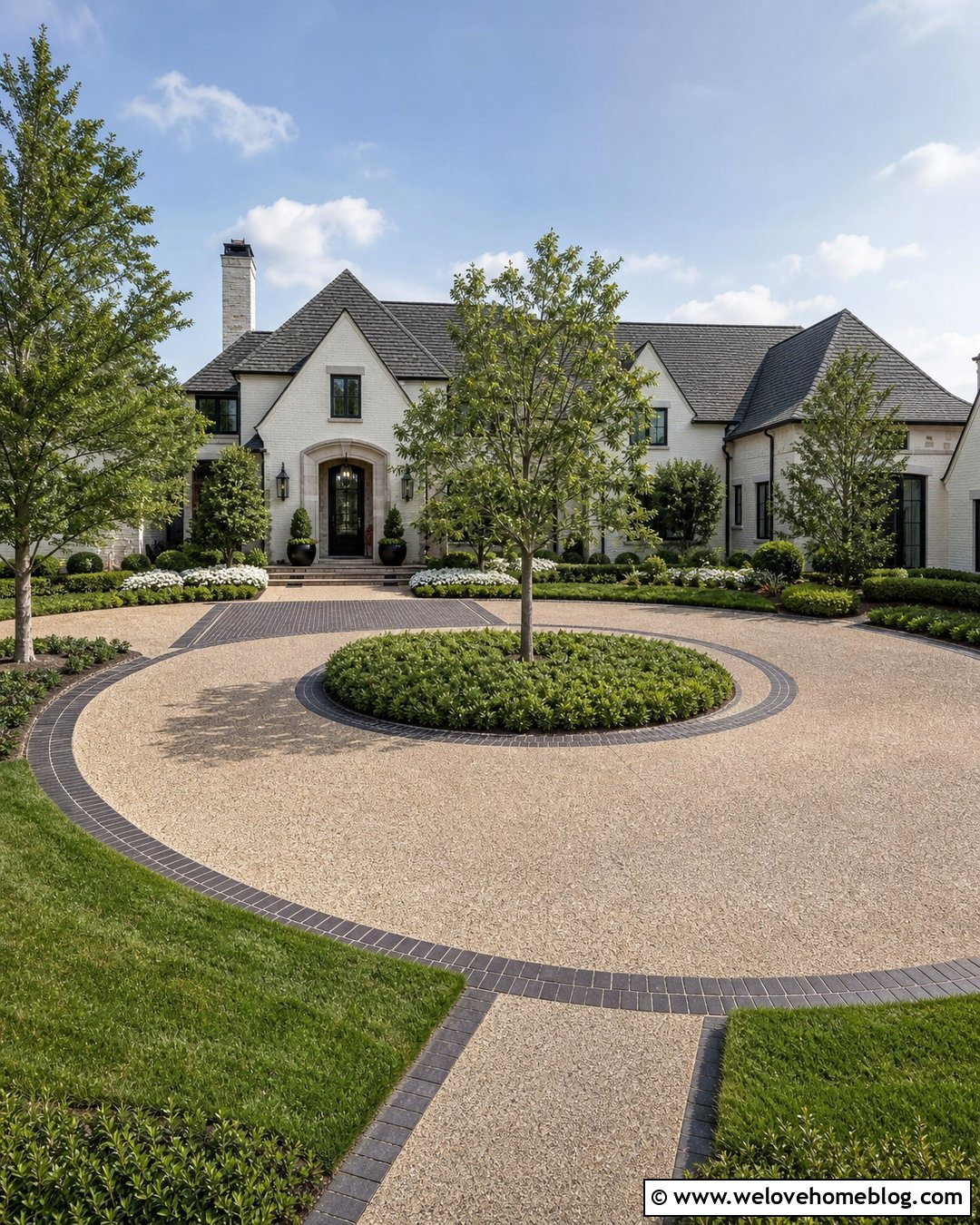
A mixed-material roundabout driveway can break up a large paved area while highlighting its circular geometry. Use exposed aggregate concrete for the main driving surface, charcoal brick pavers for the inner and outer borders, and a wider brick apron at the front-door drop-off. In the center island, plant one established shade or ornamental tree above a broad ring of low ground cover. Match the island curb to the brick bands and repeat exposed aggregate in the walkway. This combination suits a transitional home that blends traditional and contemporary details. Limit the design to two main paving materials and a consistent planting palette. Careful repetition keeps the driveway visually interesting without making the loop look patched together or unnecessarily complicated.
Conclusion:
The best roundabout driveway balances appearance with comfortable circulation, clear visibility, suitable drainage, and realistic maintenance. Start with the space available, the vehicles that must use the loop, and the locations of the house, garage, street entrances, and front walkway. Then select a surface and border that complement the architecture. A center island can feature lawn, native planting, formal hedges, a specimen tree, or a carefully scaled decorative focal point. Keep taller growth away from important views and use repeated materials to connect the driveway with the home. Before construction, consult qualified local professionals about grading, access, permits, and turning requirements. These Round About Driveway Ideas offer a strong starting point for a cohesive entrance.

Related posts:
Leave a Reply