
Choosing the right driveway stone can change the entire look of your home’s entrance. Natural stone pavers, crushed rock, cobblestones, and decorative gravel each create a different balance of texture, color, drainage, and everyday function. Current driveway design trends favor defined borders, permeable surfaces, mixed stone patterns, and landscaping that connects the drive to the home rather than treating it as a separate feature. () The best design also considers your climate, property size, architectural style, maintenance preferences, and vehicle traffic. From formal granite paving to affordable crushed limestone, these complete driveway looks offer inspiration for traditional, modern, farmhouse, and rustic homes. Explore these **25 Driveway Stone Ideas** to find a practical design that fits your property.

1. Granite Cobblestone Driveway
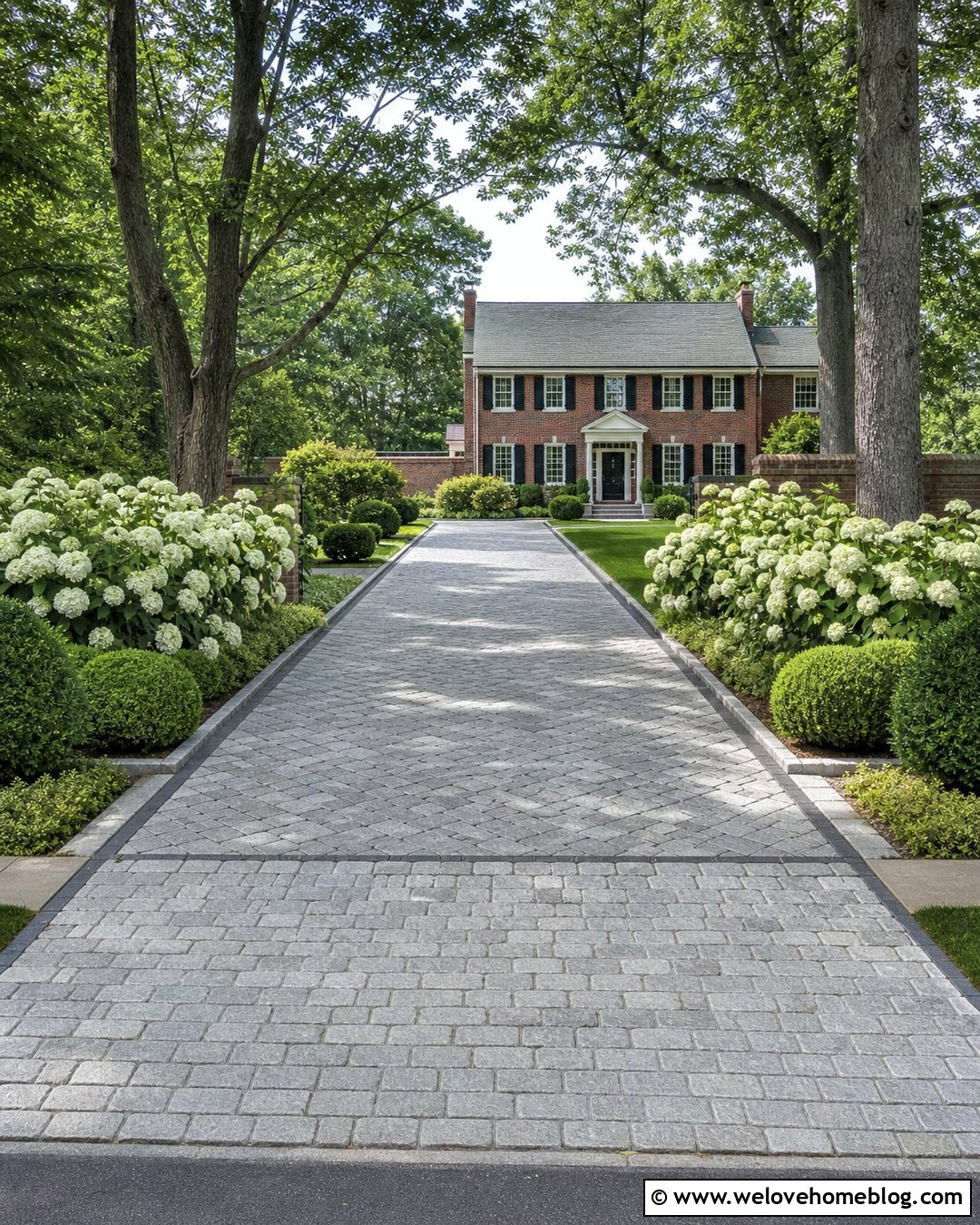
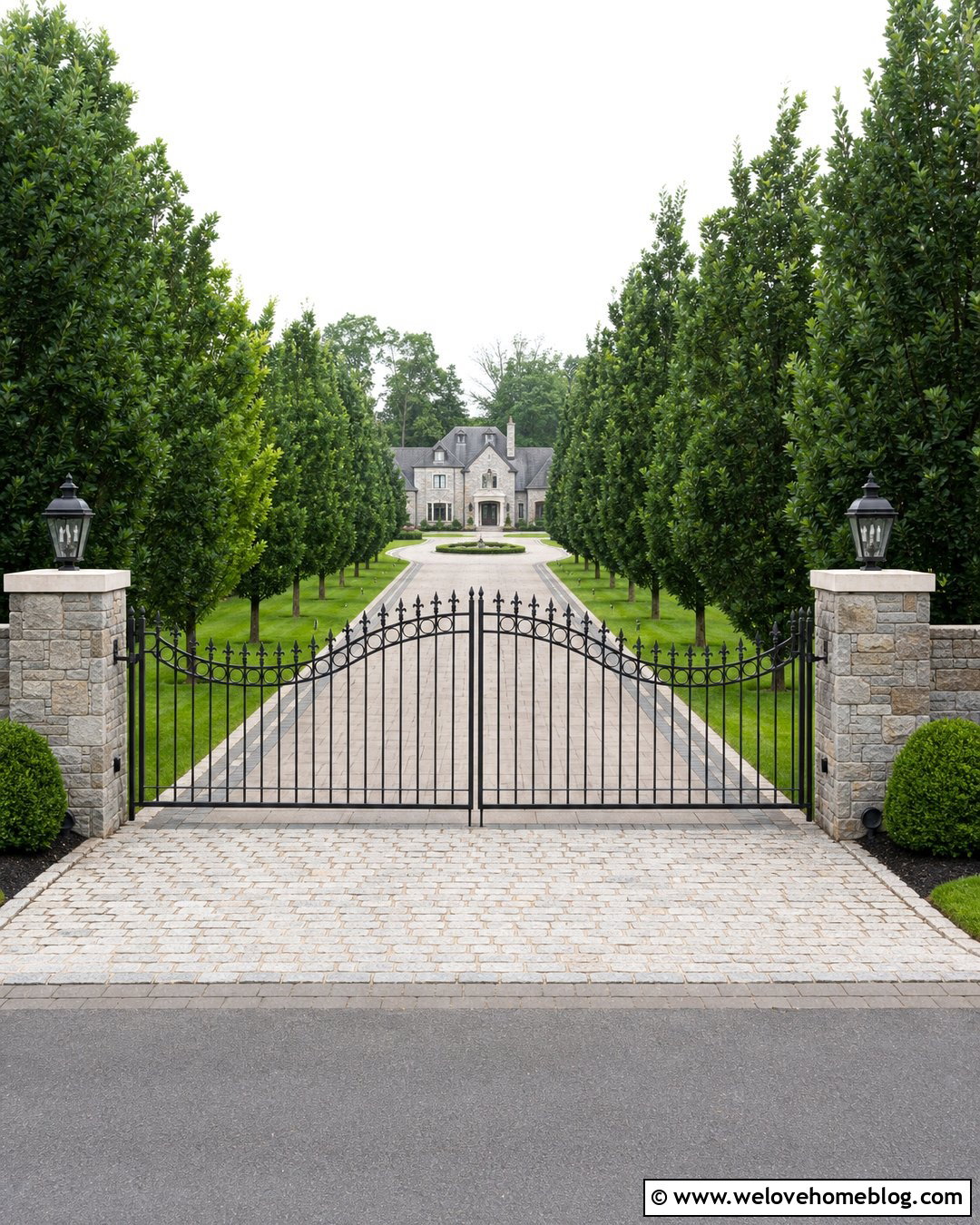
A granite cobblestone driveway creates a strong, established entrance that suits colonial, Tudor, and European-inspired homes. Lay rectangular gray granite setts in a herringbone pattern so the surface feels structured and visually interesting. This interlocking layout also handles turning vehicle traffic effectively when installed over a properly prepared base. Frame the driveway with a darker charcoal granite soldier course to define the edges. Low boxwood hedges, white hydrangeas, and a simple bluestone walkway can soften the rugged texture without hiding it. At the street, widen the cobblestone surface slightly to create a welcoming apron. Granite naturally varies in tone, so request several samples before selecting the final blend. A carefully installed cobblestone driveway can become a long-lasting architectural feature rather than merely a parking surface. ()
2. Crushed Limestone Driveway
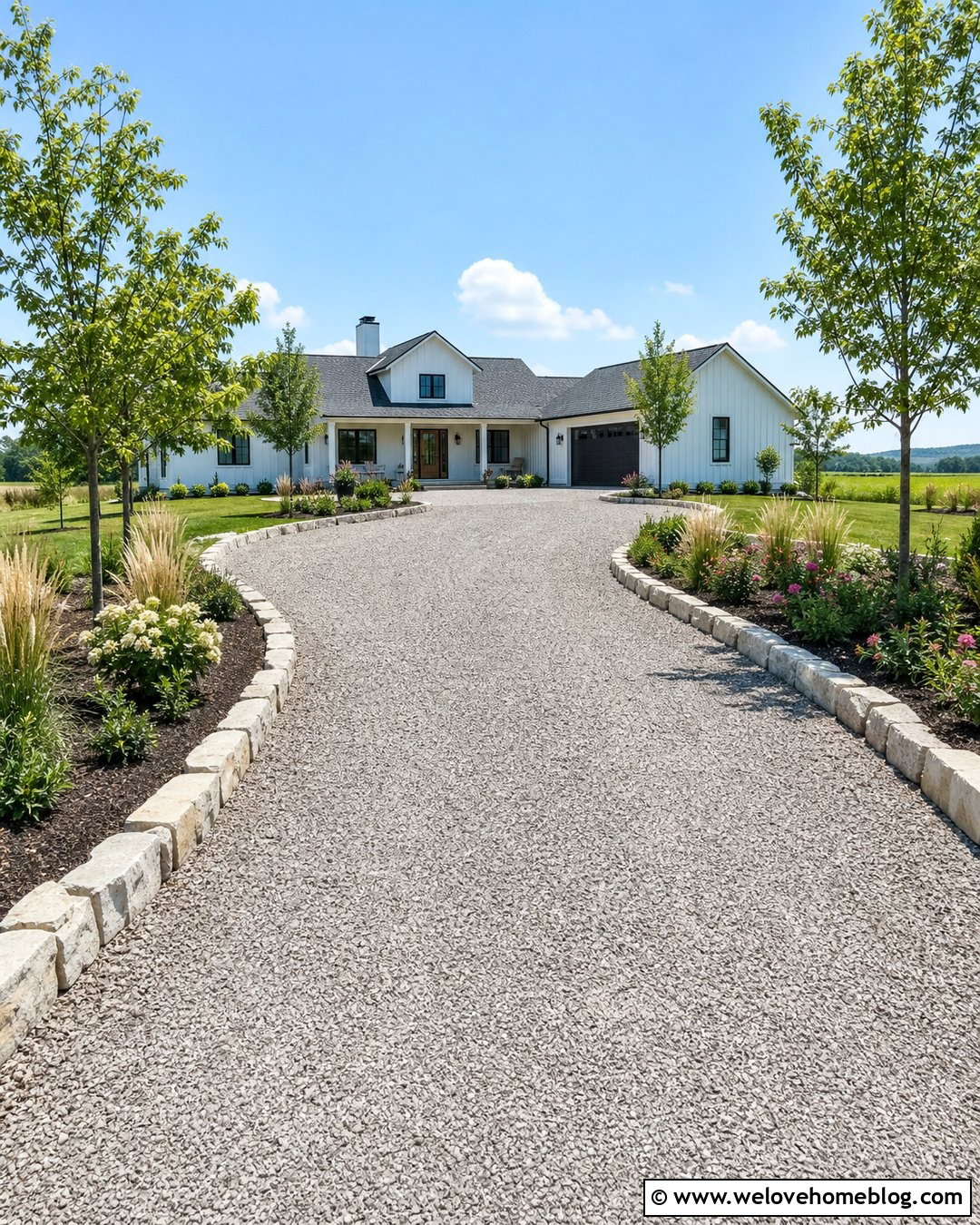
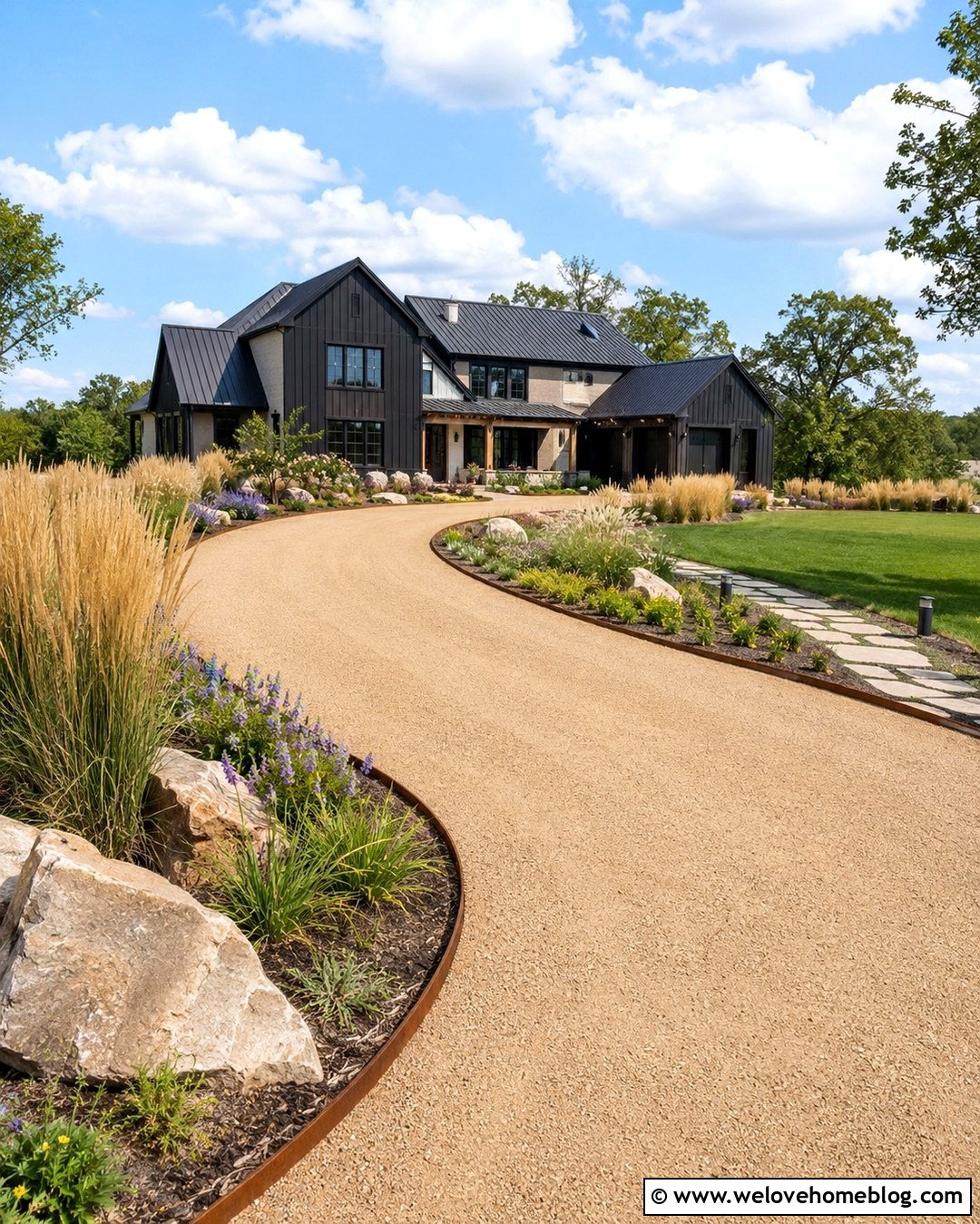
Crushed limestone gives a driveway a clean, relaxed appearance while remaining practical for country homes and modern farmhouses. Choose angular limestone in a soft gray or warm buff tone because the irregular pieces compact more securely than smooth, rounded stones. A gently curved layout can make a long approach feel natural and reveal the home gradually. Use larger limestone blocks as edging to contain loose material near lawns and planting beds. Ornamental grasses, flowering shrubs, and evenly spaced shade trees will add movement along the route. Near the garage, install a reinforced parking pad or stabilization grid beneath the stone where vehicles turn most often. Proper grading is essential because surface water should move away from the house, garage, and foundation instead of collecting in low sections.
3. Pea Gravel Driveway With Cobblestone Border
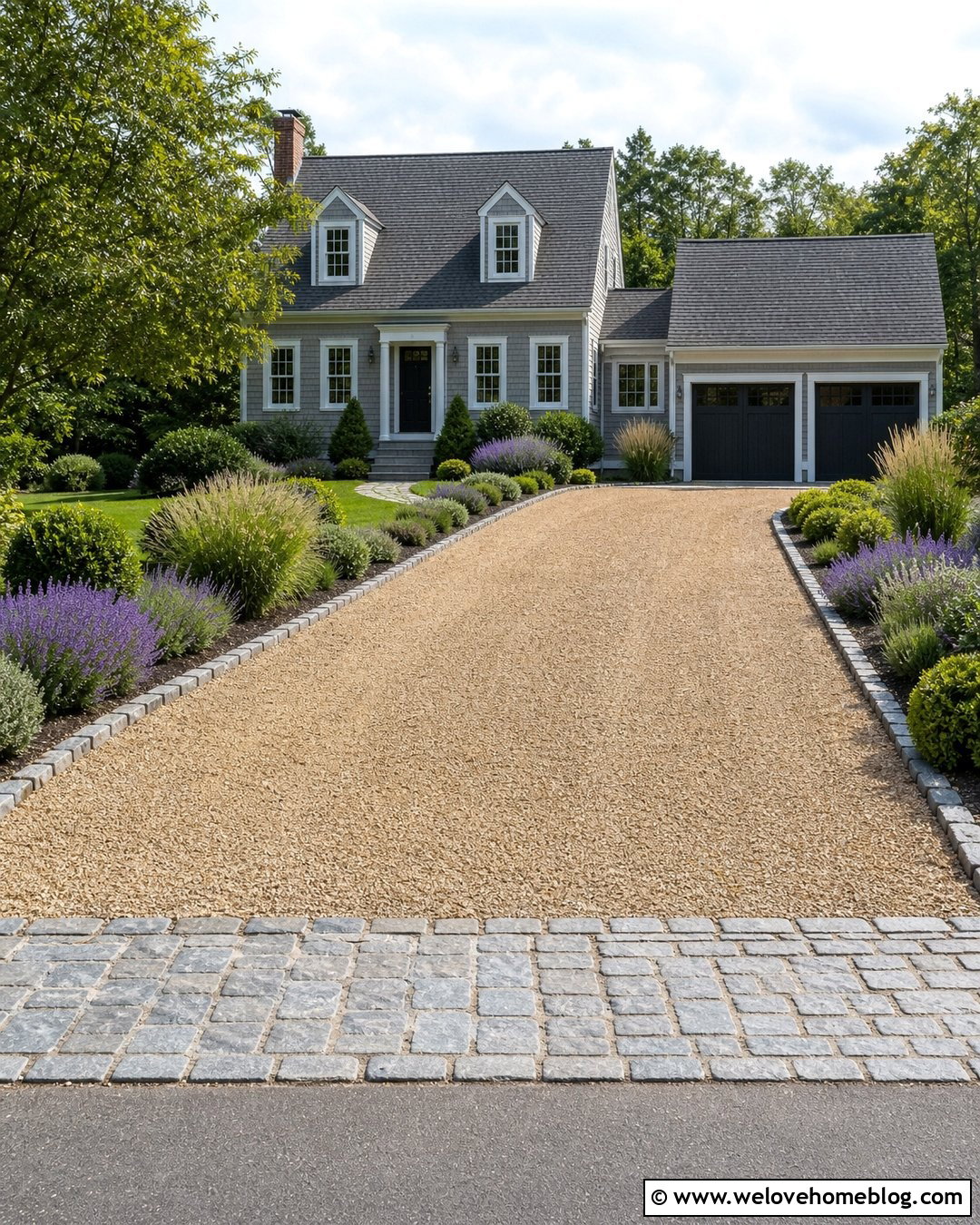
Softly colored pea gravel and dark cobblestone edging create a polished driveway that still feels informal. Use a compacted structural base beneath the decorative gravel, since pea gravel alone can shift under tires. A straight driveway works particularly well with this combination because the cobblestone border creates crisp lines leading toward the house. Add a matching cobblestone apron at the street and another band near the garage to control gravel migration at transition points. Lavender, catmint, dwarf evergreens, and low ornamental grasses can form layered borders without narrowing the driving area. This complete look complements cottages, Cape Cod homes, and light-colored farmhouses. Select a gravel stabilizing grid if you want a firmer surface with fewer ruts. Routine raking and occasional replenishment will keep the stone evenly distributed.
4. Bluestone Driveway With Modern Landscaping
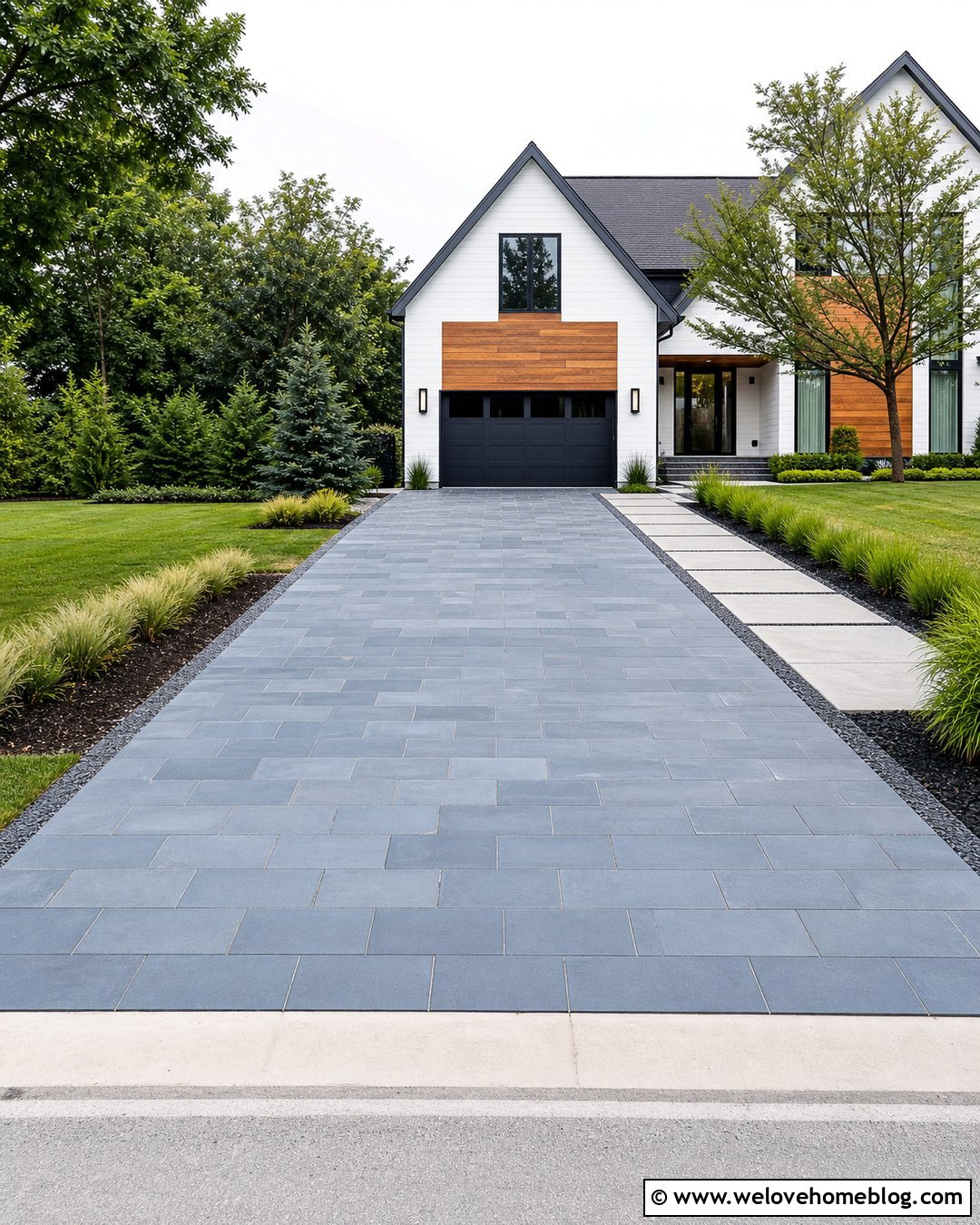
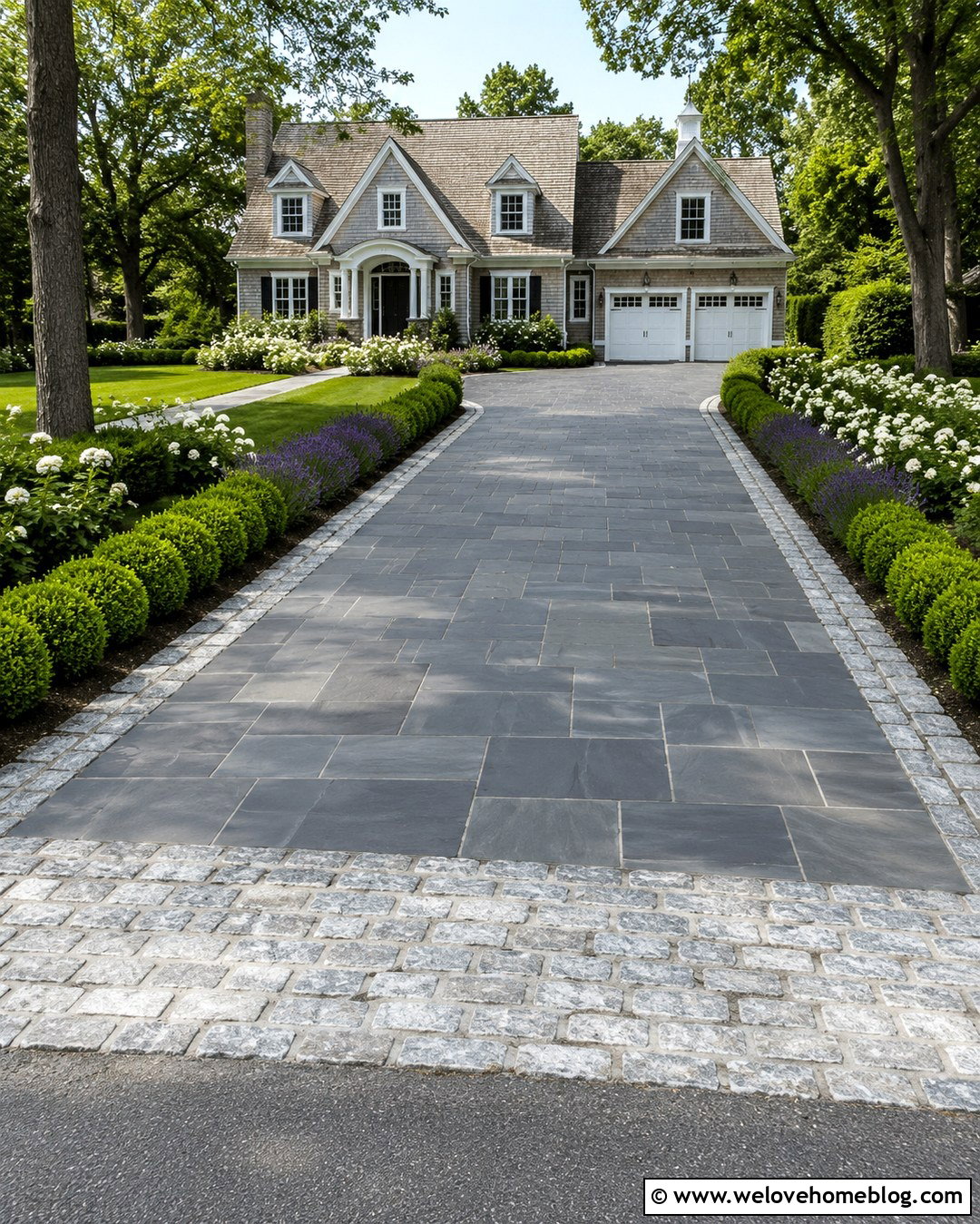
Large-format bluestone pavers can make a modern driveway feel substantial without looking busy. Select thermal-finished blue-gray stone with consistent thickness and enough surface texture for exterior vehicle use. Arrange the rectangular pavers in a clean running bond along a wide, straight driveway. Narrow charcoal stone borders will visually frame the surface while coordinating with dark windows or metal roofing. Keep the surrounding landscape simple with clipped grasses, compact evergreens, and one sculptural tree near the entrance. A linear concrete walkway can run beside the drive without competing with the natural stone. Because genuine bluestone can vary in color, review the full range before installation. Strong edge restraints, a vehicle-rated base, and carefully planned joints are especially important when using large stone units in areas exposed to braking and turning.
5. Sandstone Paver Driveway
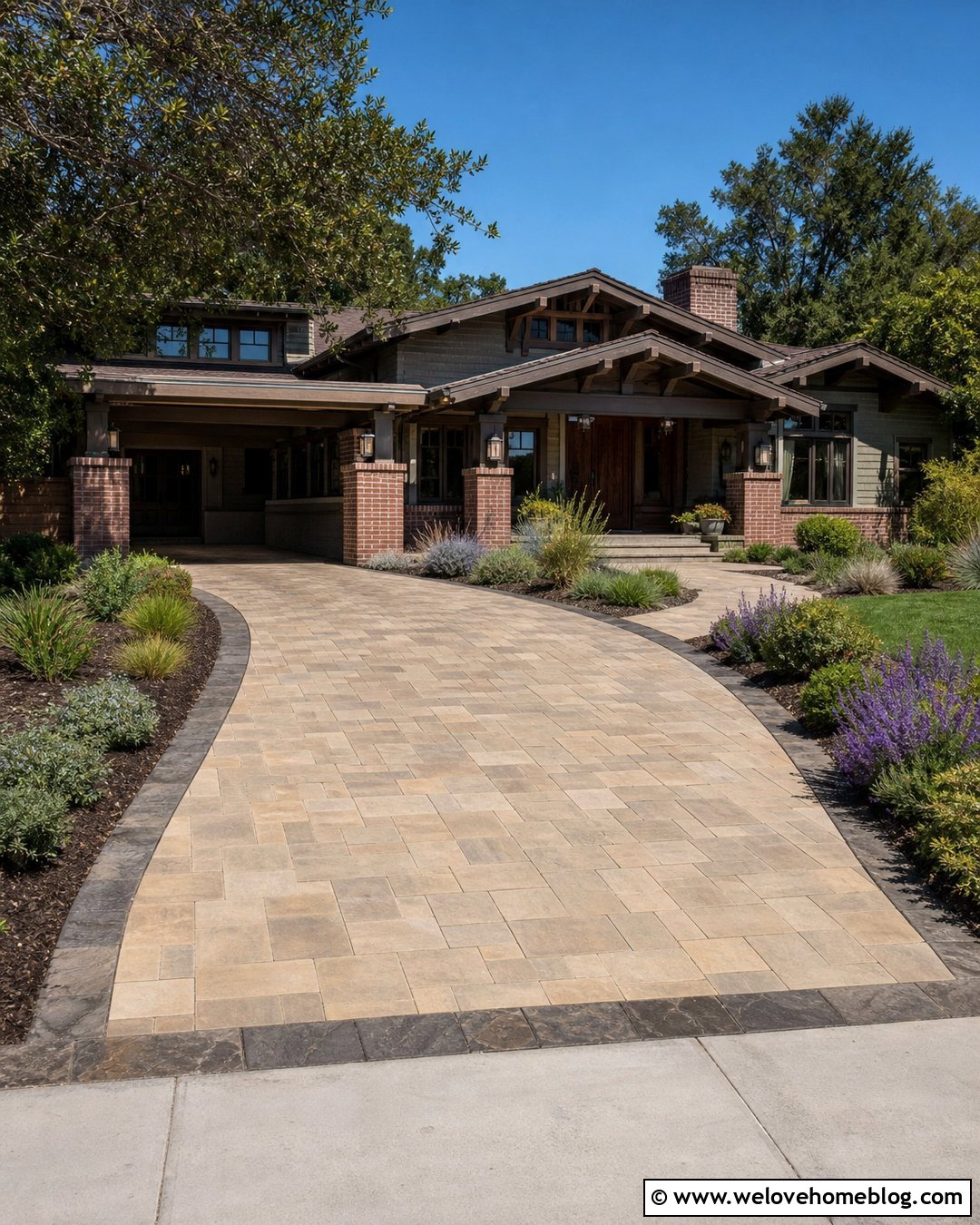
Warm sandstone pavers bring natural color to a driveway serving a brick, stucco, or Craftsman-style house. Choose vehicle-rated sandstone in blended beige, tan, rust, and muted brown tones. A random rectangular pattern helps distribute the color variation while keeping the surface organized. Define the outer edges with darker brown stone setts and repeat that material in a broad entrance apron. Plant drought-tolerant shrubs, salvia, rosemary, and compact ornamental grasses along both sides for a layered but manageable landscape. The paver colors should relate to the home’s roof, masonry, or trim instead of matching every surface exactly. Use a textured finish rather than highly polished stone, especially where rain is frequent. Ask your installer about local freeze-thaw conditions, stone thickness, sealing requirements, drainage, and an appropriate load-bearing base before construction begins.
6. Decomposed Granite Driveway
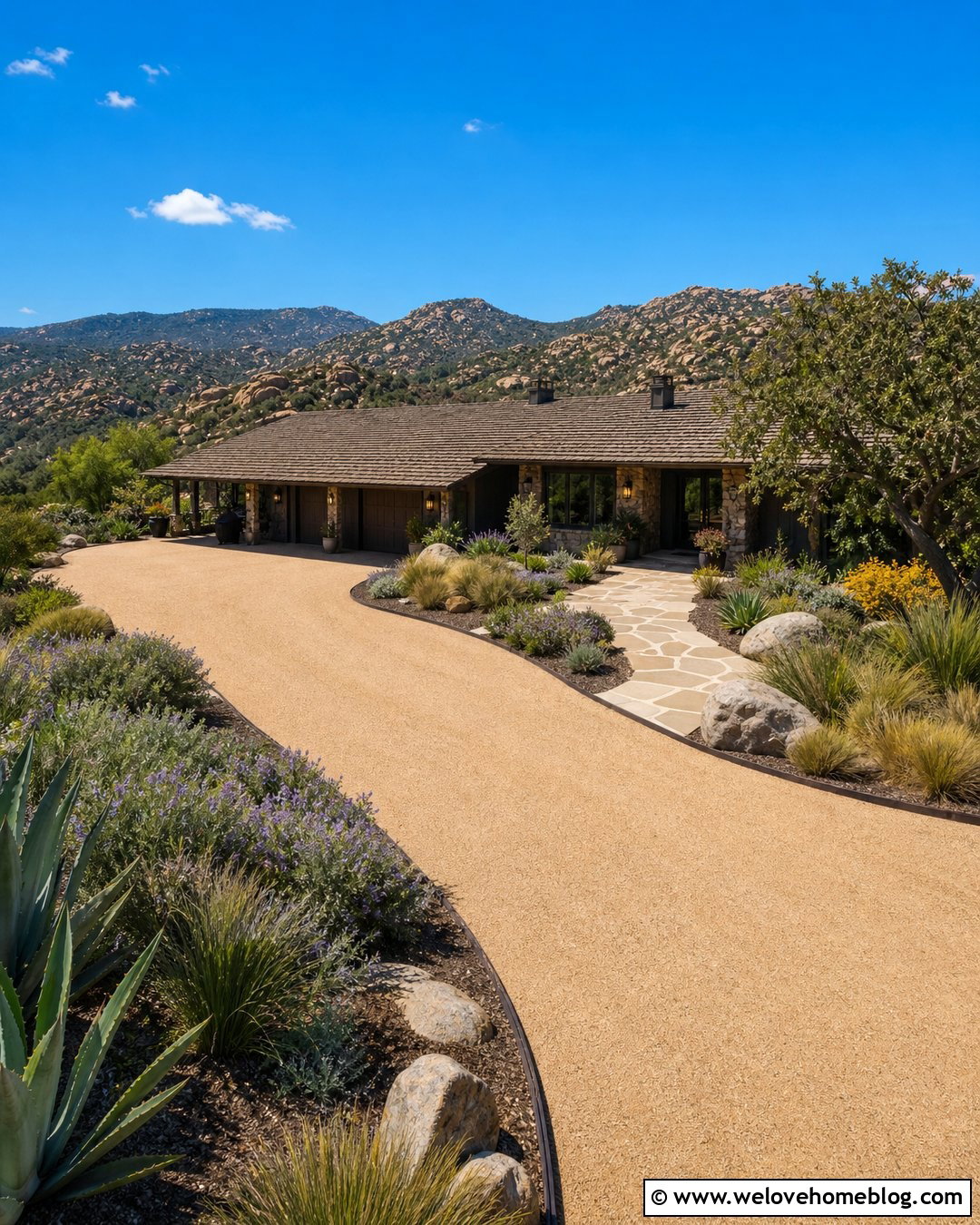
Decomposed granite offers an understated surface that blends naturally with ranch homes, desert properties, and casual contemporary architecture. Select a stabilized product in tan, gold, or muted gray when you want better resistance to rutting and erosion than loose material provides. Shape the driveway with a broad curve and install steel or stone edging to hold its outline. Native grasses, agave, sage, and drought-tolerant shrubs can frame the drive while keeping water needs low. Place larger boulders selectively near the entrance rather than lining the entire driveway, which can make the route feel cramped. A stone-paved walkway leading from the parking area to the front door will provide a cleaner pedestrian surface. Maintain a gentle crown or planned cross-slope so rainfall moves away without cutting channels through the compacted granite.
7. White Stone Driveway With Black Border
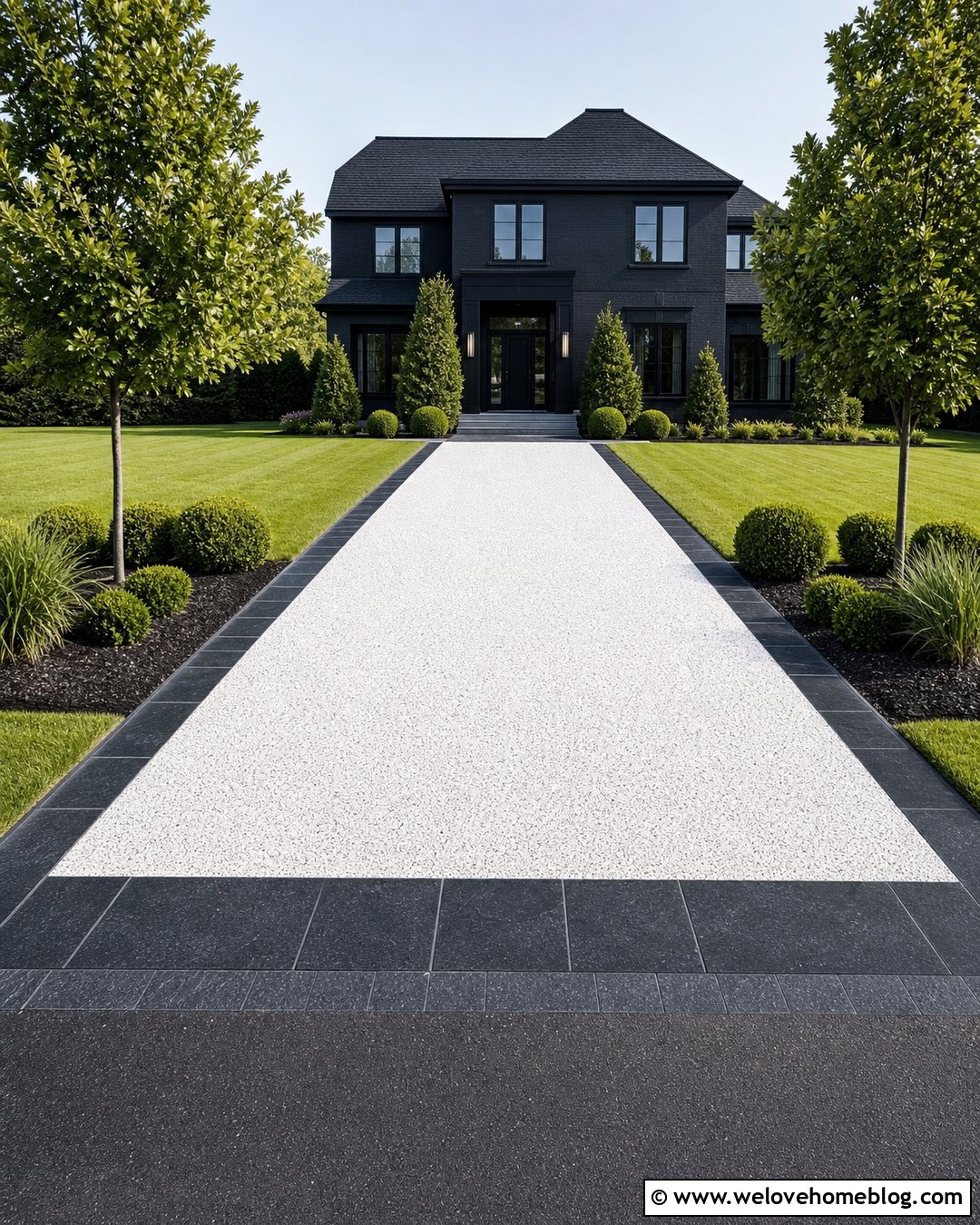
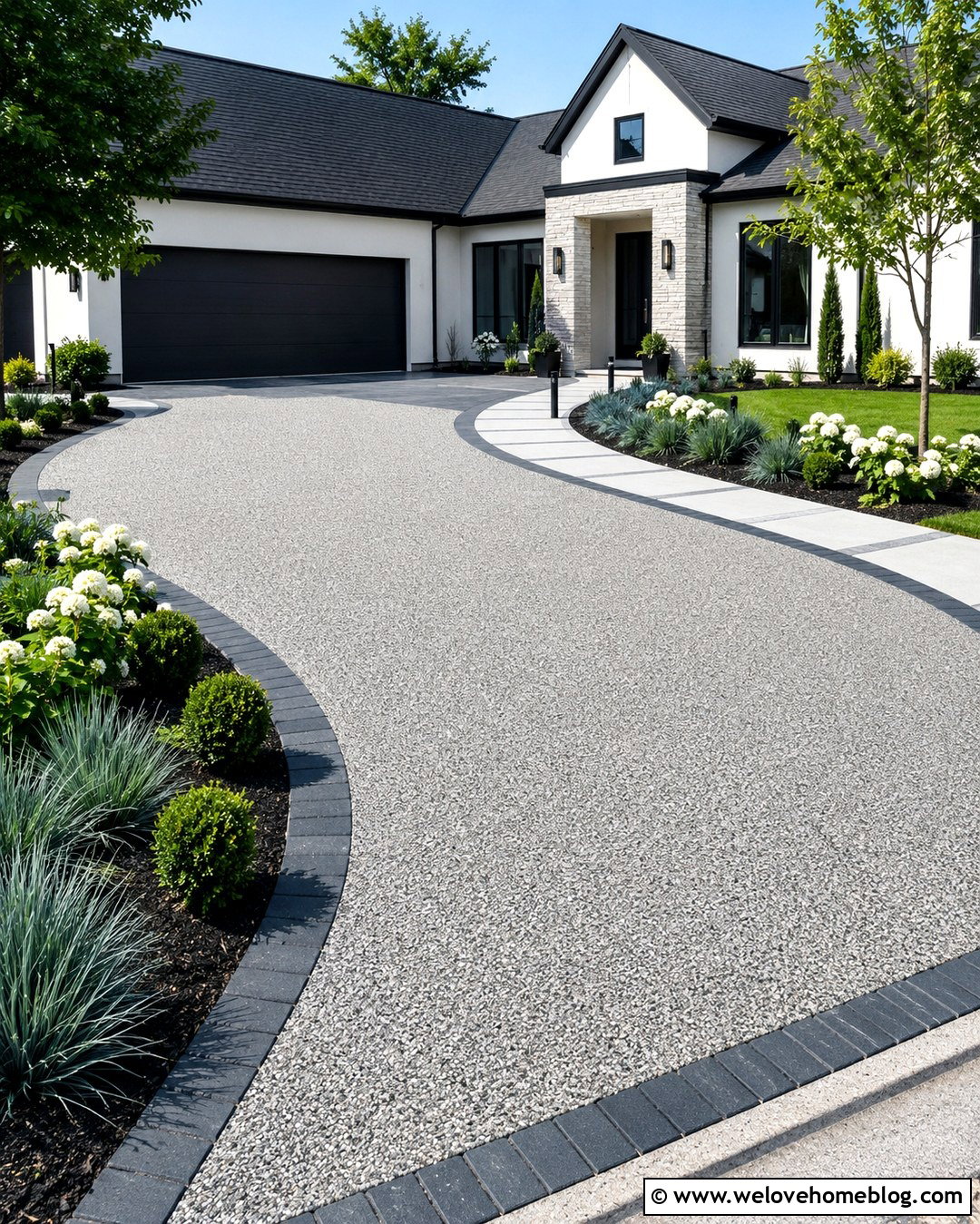
Bright white crushed stone makes a strong visual statement against a dark exterior or deep green landscape. Use angular marble chips or pale limestone over a compacted base, then contain them with a wide border of charcoal granite setts. A straight, symmetrical layout creates the cleanest result and suits modern, transitional, or monochromatic homes. Repeat the dark stone in the entrance apron and the walkway leading to the front door. Keep planting restrained with evergreen spheres, low grasses, and one or two small ornamental trees. White stone can show leaves, soil, and tire marks more readily than mixed gravel, so it works best where owners are comfortable with regular maintenance. Avoid placing loose light-colored chips directly against the street. A paved apron will reduce displacement and create a durable transition from public pavement.
8. Slate Chip Driveway
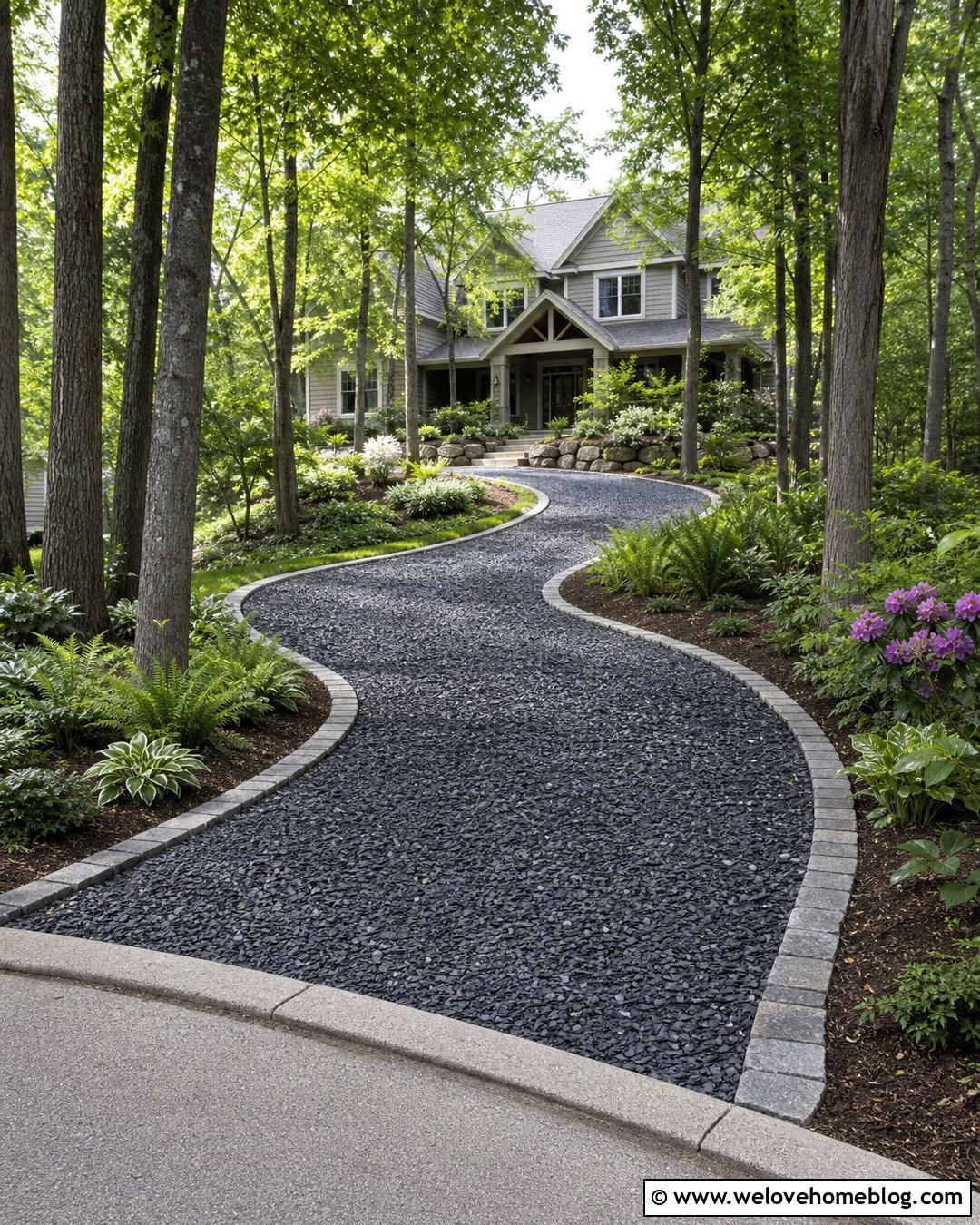
Slate chips give a driveway deep blue, charcoal, and plum tones that work beautifully with light siding and natural wood details. Choose angular, driveway-suitable slate rather than thin decorative flakes that may break down quickly under traffic. A subtle S-shaped layout can guide vehicles around mature trees while making a wooded property feel more inviting. Edge the surface with upright granite setts or steel edging in a dark finish. Ferns, hostas, rhododendrons, and shade-tolerant ground covers can connect the driveway to its surroundings. Add a paved stone landing near the front walk so pedestrians do not need to cross loose chips in dress shoes. Slate color changes noticeably when wet, so examine samples in both dry and damp conditions. Good drainage and a well-compacted base will help limit movement and uneven areas.
9. Basalt Cobblestone Driveway
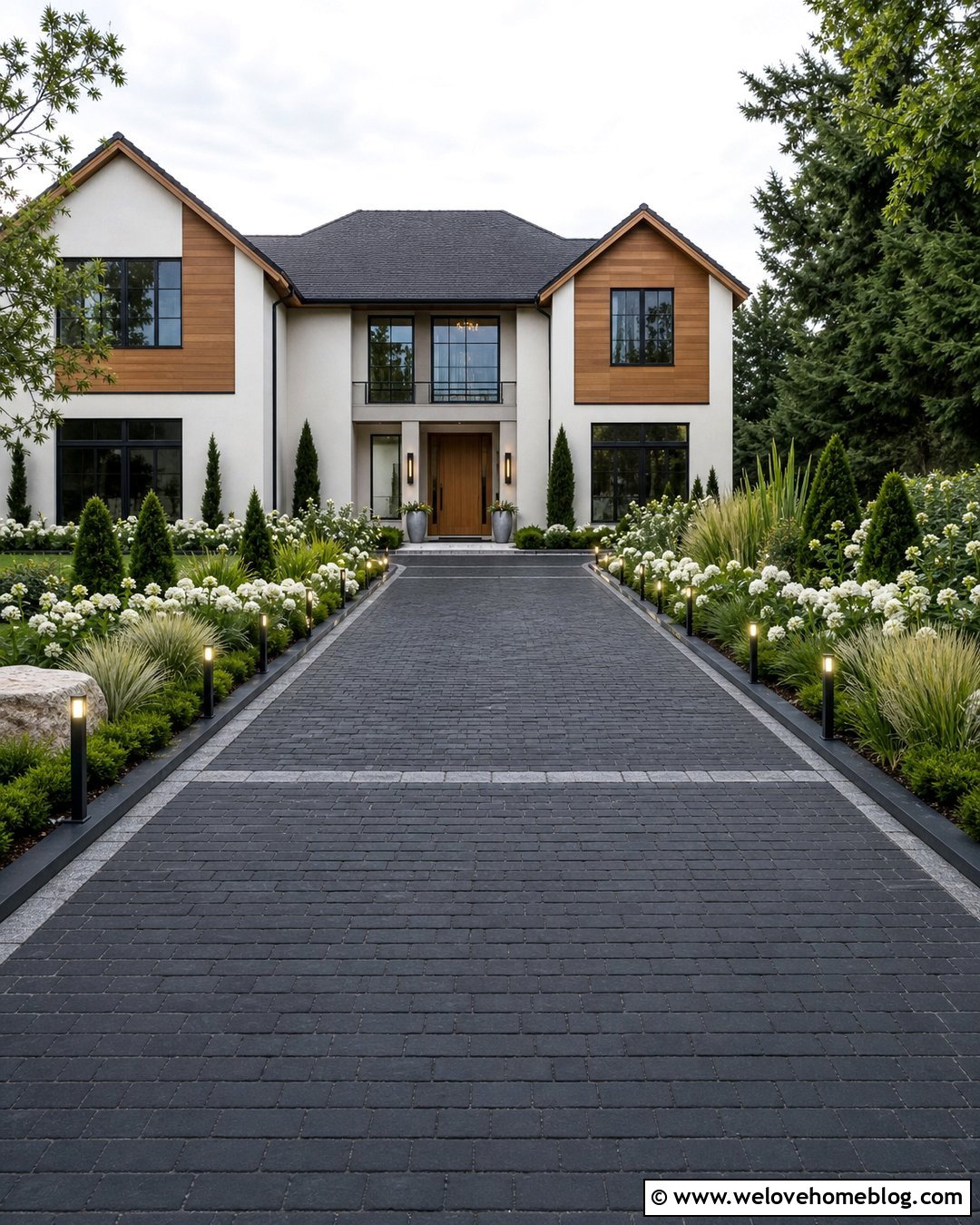
Dark basalt cobblestones create a dramatic driveway with a refined, contemporary edge. Use charcoal or nearly black basalt setts in a running bond pattern, then introduce narrow bands of light granite to break up a large surface. A wide straight driveway suits this bold material because the simple layout allows the natural texture to remain the focus. Pair it with a modern house featuring pale stucco, wood siding, or warm brick accents. Soft grasses, white flowering perennials, and neatly shaped evergreens will prevent the entrance from feeling too severe. Install low-profile lighting along the planting beds rather than placing fixtures in the driving surface. Basalt’s dark color can become visually dominant, so keep walls, gates, and borders simple. A professional base and edge system will help the individual stones stay aligned under repeated vehicle loads.
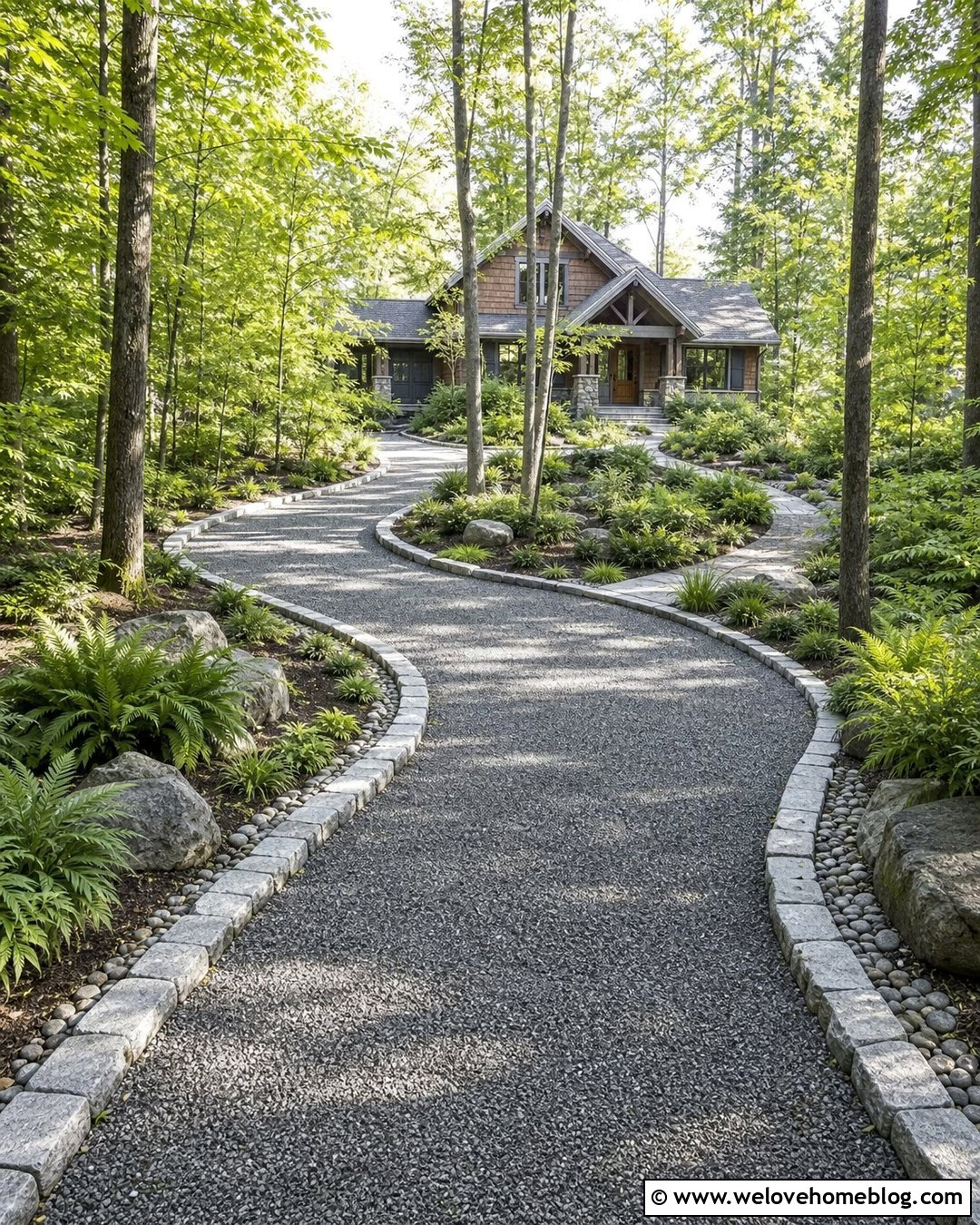
10. Limestone Sett Driveway
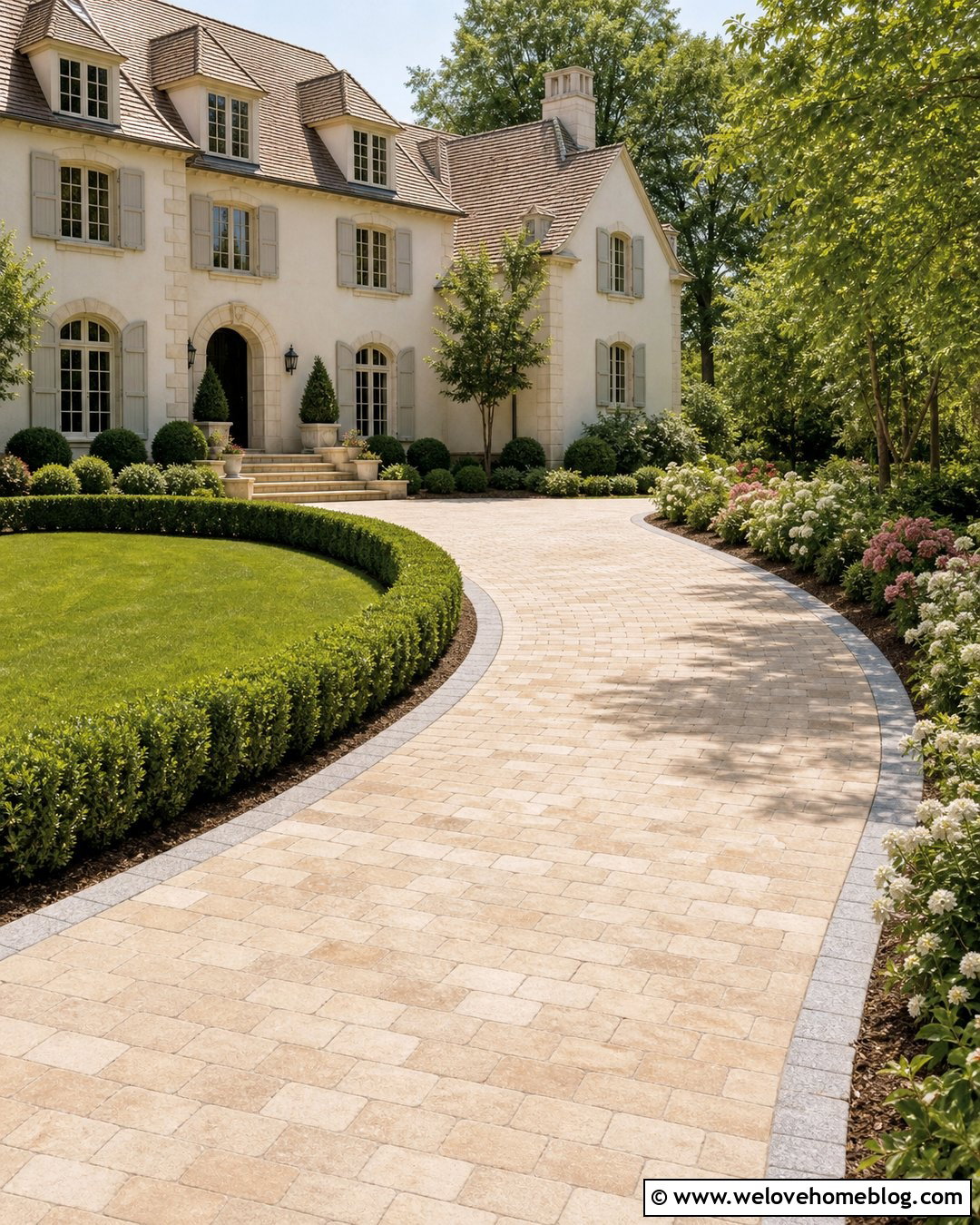
Limestone setts create a softer alternative to dark granite while still providing a clearly defined paved surface. Select tumbled beige or light gray pieces for an aged texture that suits traditional farmhouses, cottages, and French country homes. Lay them in a simple stretcher bond on a gently curved driveway. A contrasting granite border can sharpen the edges and prevent pale limestone from blending into nearby paths. Frame the curve with clipped hedges on the inside and looser flowering beds on the outside. This arrangement preserves sightlines while making the driveway feel connected to the garden. Use a matching limestone landing near the entrance, but consider a slightly smoother finish for walking areas. Since limestone characteristics vary, choose a dense variety recommended for driveways and your regional weather conditions, then follow appropriate sealing and maintenance guidance.
11. Travertine Paver Driveway
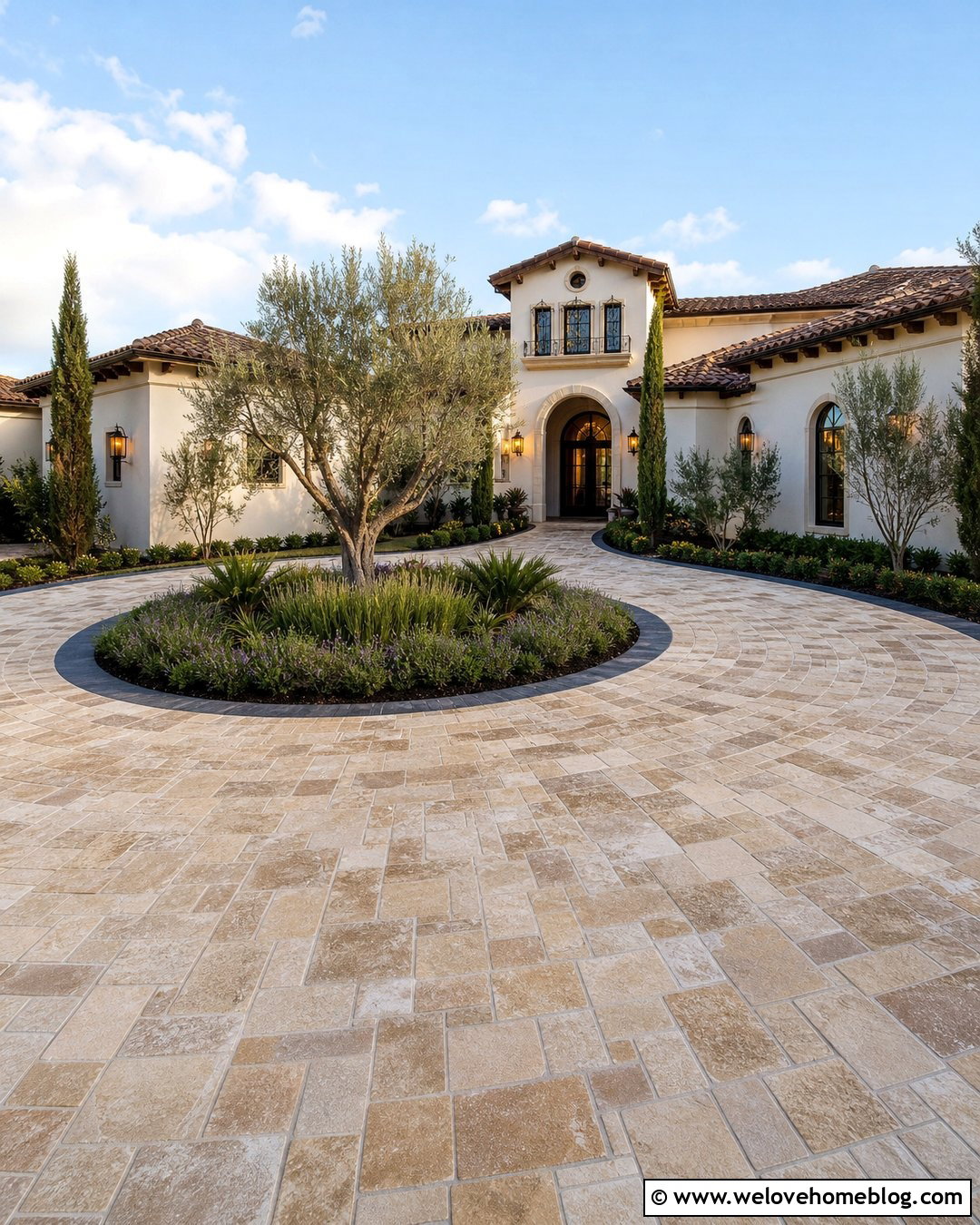
Travertine pavers can give a warm-climate driveway a bright, upscale appearance without relying on stark white surfaces. Choose thick, vehicle-rated pavers with a textured tumbled or brushed finish in ivory, walnut, or blended beige. Arrange them in a French pattern across a broad driveway leading to a Mediterranean, Spanish, or stucco home. Dark stone borders can define the edges and add contrast near pale walls. Use olive trees, compact palms, rosemary, and flowering ground covers to reinforce the warm landscape palette. A circular planting island with a small tree can organize a generous front yard and provide an easy turnaround. Confirm that the specific travertine is appropriate for local weather and vehicle use. The installation should include stable edge restraints, carefully filled joints, and a properly engineered base to reduce shifting or cracking.
12. Fieldstone Driveway With Gravel Joints
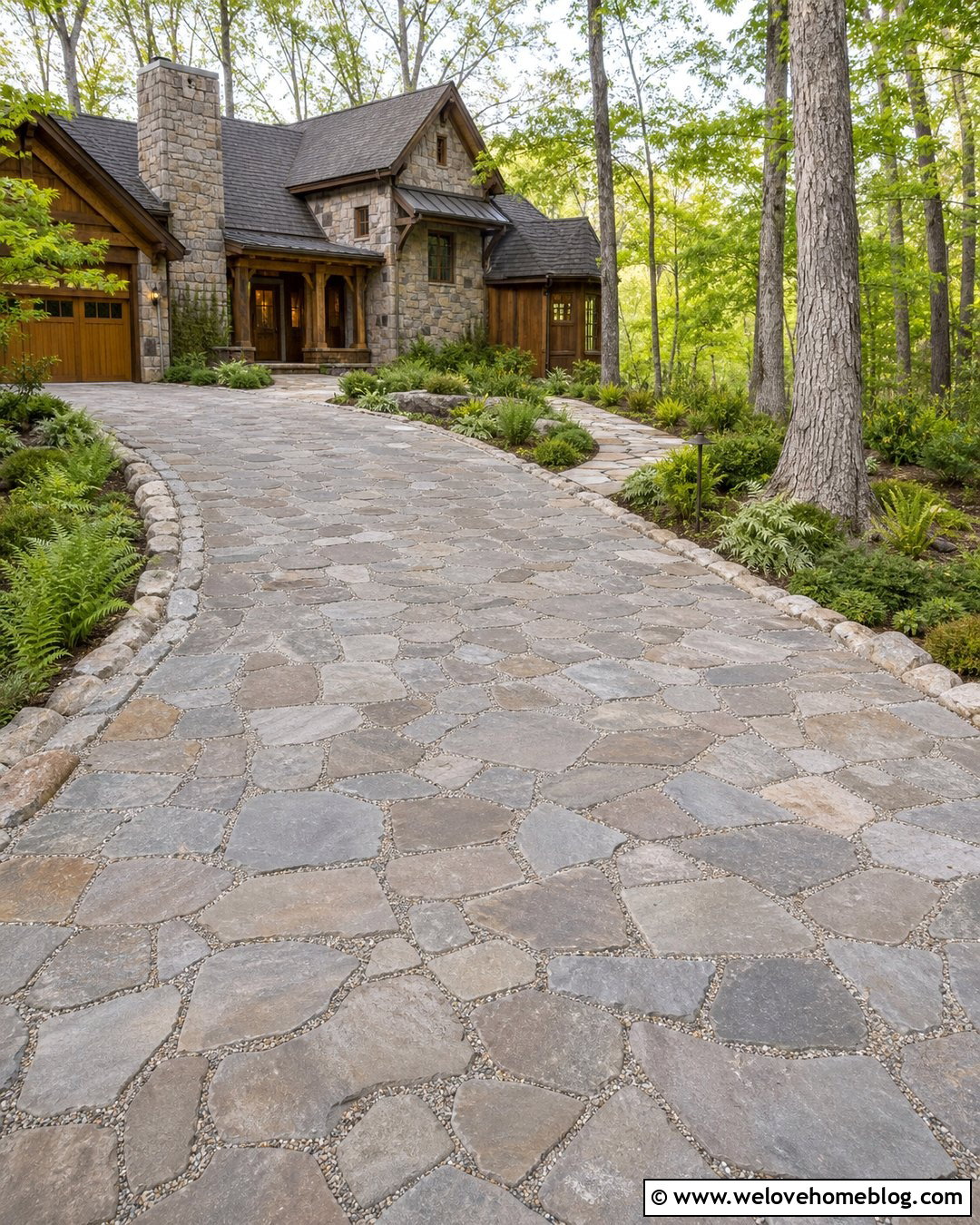
Irregular fieldstone creates an organic driveway that feels integrated with a wooded or rural property. Choose thick, relatively flat stones in blended gray, brown, and mossy green tones. Set them over a vehicle-rated base with narrow gravel-filled joints rather than large gaps that make driving uncomfortable. A curved driveway works naturally with the irregular shapes and can bend around existing trees or rock features. Use a simple stone curb along vulnerable edges while allowing selected sections to transition gently into planting beds. Native ferns, low shrubs, woodland grasses, and ground covers can soften the perimeter. Keep the central driving route open and trim plants away from sightlines. Because fieldstone varies greatly in thickness and strength, careful material selection and professional installation are valuable. The finished surface should feel rustic but level, stable, and intentional.
13. Flagstone Wheel Track Driveway
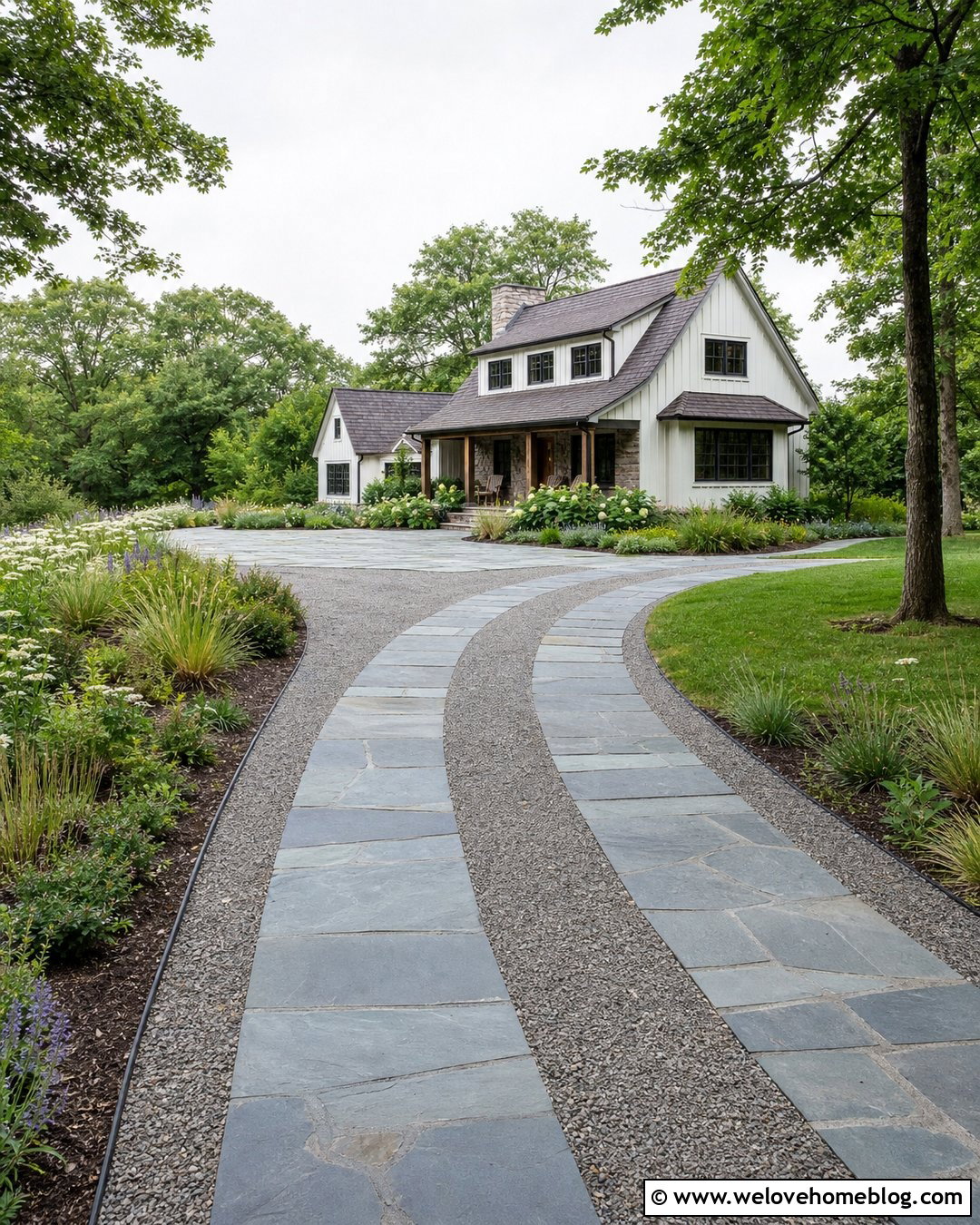
Flagstone wheel tracks offer a practical way to use natural stone without paving the entire driveway. Install two continuous paths of thick rectangular flagstone aligned with vehicle tires, then fill the center and side areas with compacted crushed gravel. This design works best on a straight or gently curved private drive where vehicle paths are predictable. Define the outer edges with steel edging or narrow stone curbs. Low meadow planting, ornamental grasses, and scattered flowering perennials will enhance the relaxed appearance. Near the garage, widen the flagstone into a full parking and turning surface so drivers have more flexibility. Accurate track spacing is essential, particularly if different vehicle sizes use the driveway. The supporting base must extend beneath the stone tracks and surrounding gravel to keep the entire route stable and evenly drained.
14. Belgian Block Driveway
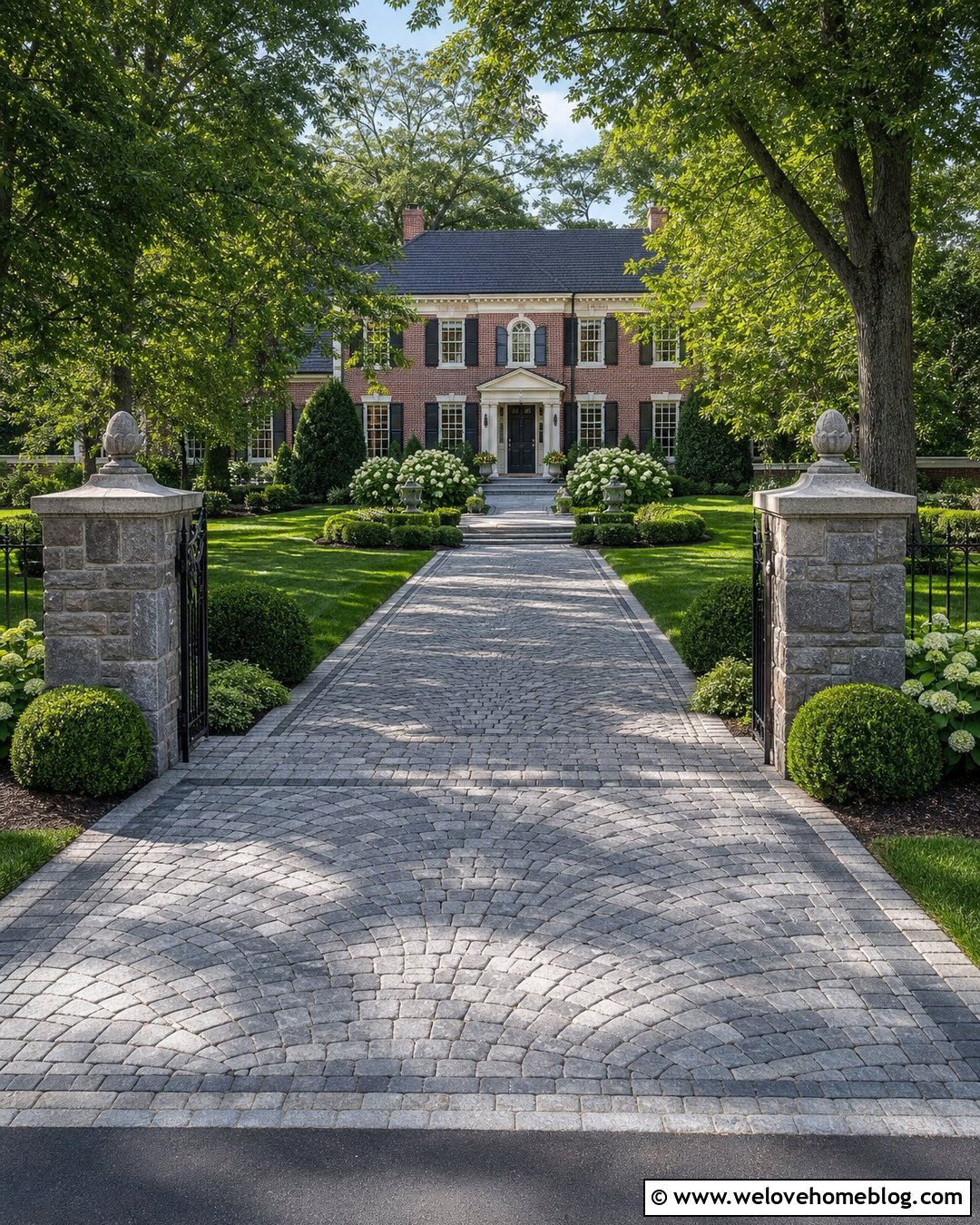
Belgian block produces a sturdy, old-world driveway that pairs especially well with historic, colonial, and brick homes. Use reclaimed-looking granite blocks in mixed gray and charcoal tones, arranged in a fan or gentle arc pattern. The pattern adds movement across a wide driveway and can make a formal entrance feel less rigid. Create a double row of larger blocks along the perimeter to form a strong visual boundary. Boxwoods, yews, hydrangeas, and mature deciduous trees will complement the traditional stone without overwhelming it. At the curb, use a slightly wider block apron between masonry pillars to announce the entrance. Belgian block has an intentionally textured surface, so carefully consider accessibility and snow-removal needs. Consistent joint widths, firm edge restraints, and a deep, well-compacted base are central to a durable installation.
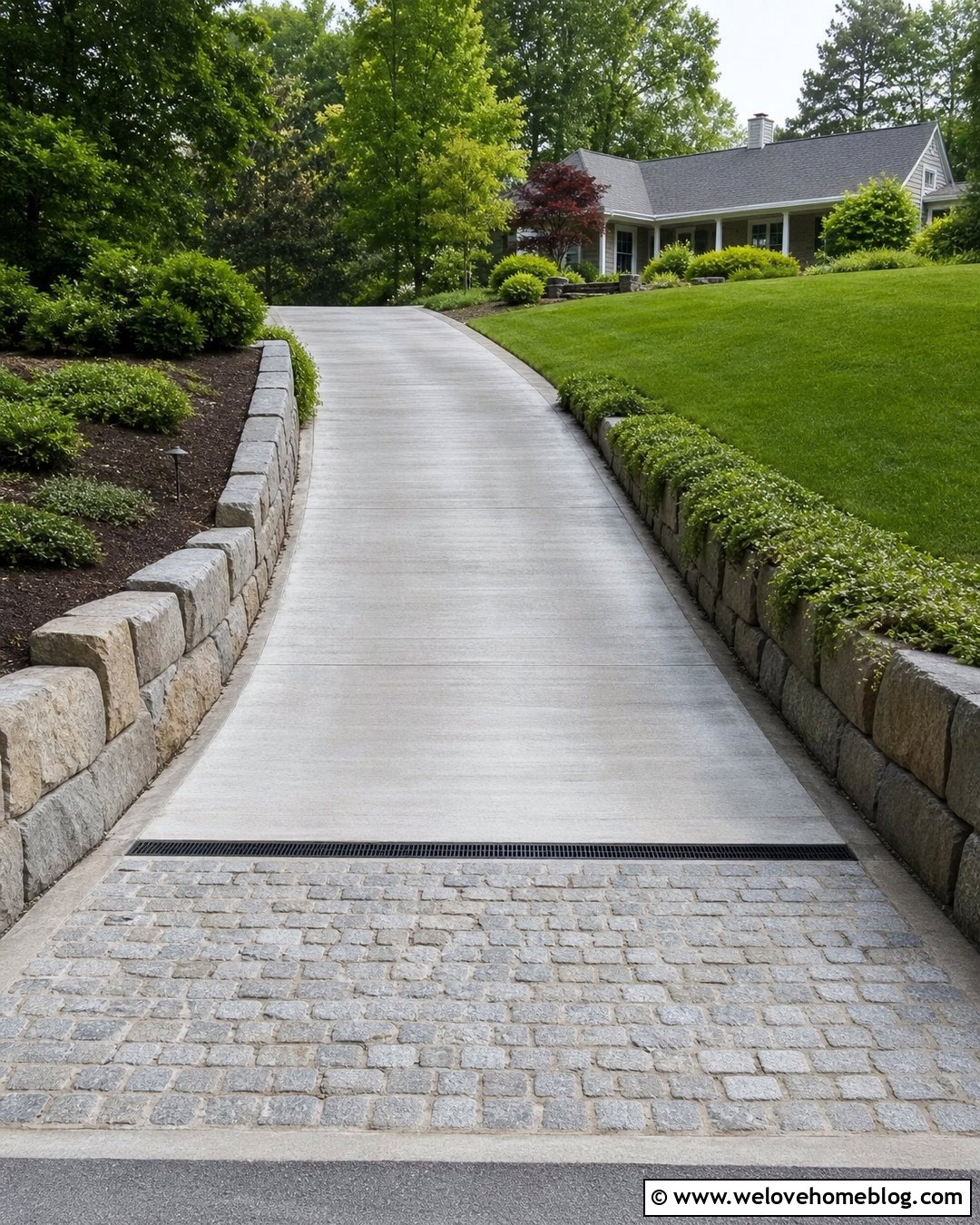
15. Mixed Granite Paver Driveway
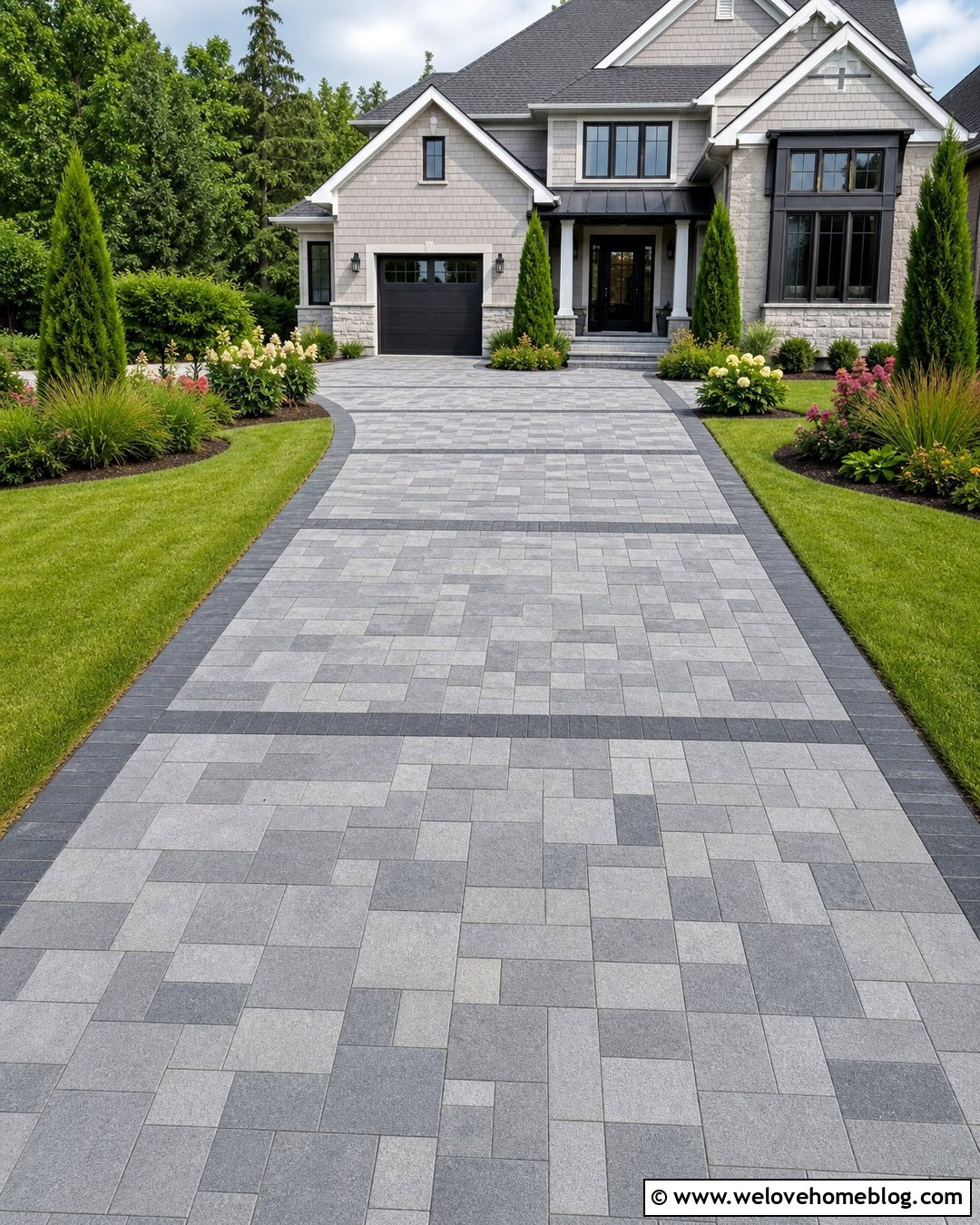
Mixing several granite paver sizes creates detail without requiring contrasting colors. Choose square and rectangular pieces in related silver, medium gray, and charcoal tones. Arrange them in a modular pattern across a wide driveway leading to a contemporary Craftsman or transitional home. Use the darkest granite as a border and as narrow bands separating the parking bays from the central approach. Repeat the medium gray pavers in the front walkway to visually connect the driveway with the entrance. Plant upright evergreens, flowering shrubs, and soft grasses in beds with clean curved edges. The varied paver sizes can disguise minor stains and create a naturally layered appearance. Before ordering, lay out a sample area to confirm the proportions and color blend. Use pavers rated for vehicular traffic and avoid overly large units where tires turn sharply.
16. Permeable Stone Paver Driveway
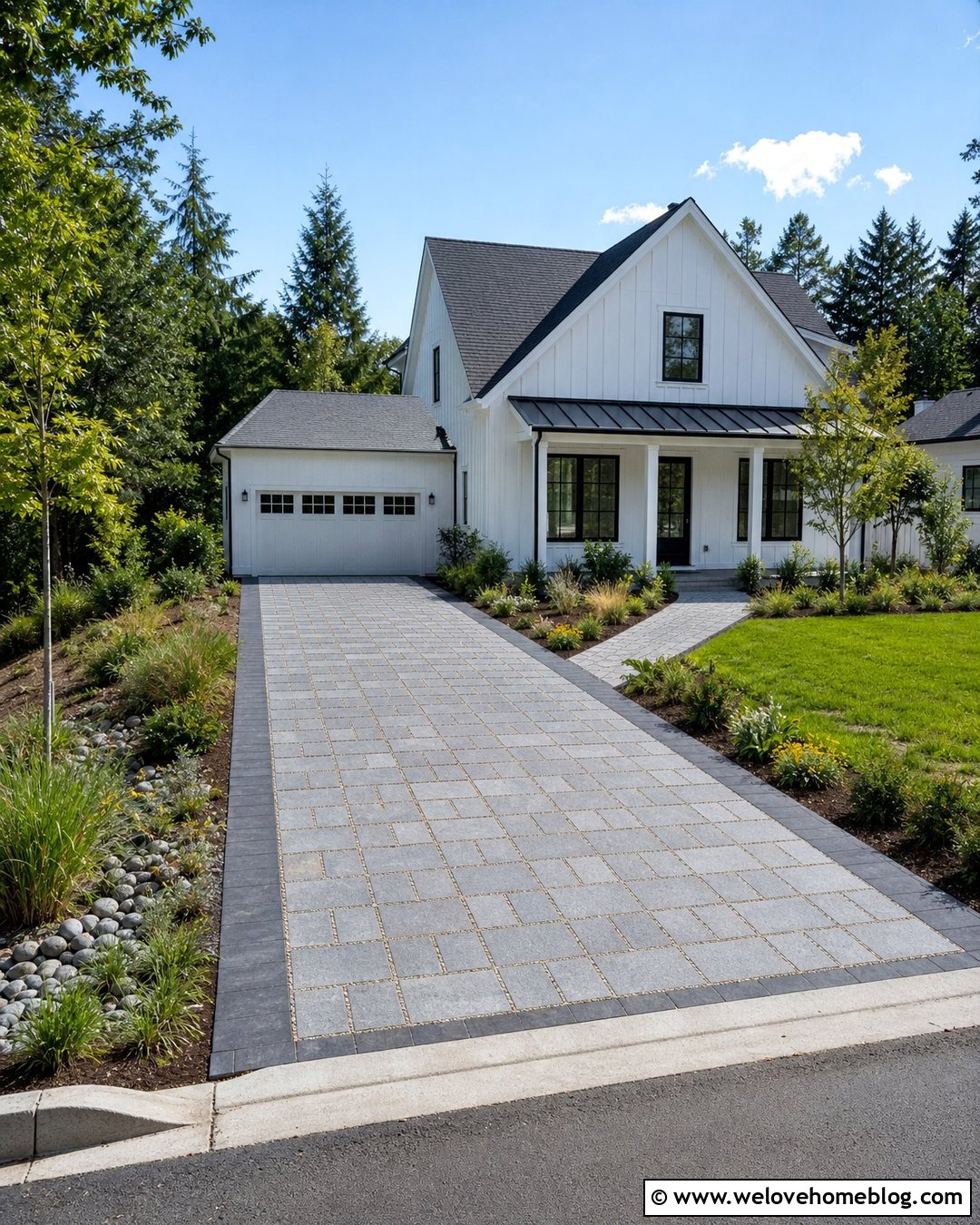
A permeable stone-look paver driveway combines an organized paved surface with joints designed to accept water. Choose gray or tan permeable concrete pavers with a natural stone texture, then fill the wider joints with clean, specified aggregate. A straight layout with a contrasting border keeps the design neat around a modern farmhouse or suburban home. Direct adjacent downspouts and landscape grading only as allowed by the engineered drainage plan. Rain gardens, native grasses, and moisture-tolerant shrubs can visually connect the surface to the property’s water-conscious landscaping. Permeable systems depend on more than the top pavers; the open-graded base, subgrade conditions, joints, and overflow strategy must work together. Have the site evaluated before installation, particularly where soils drain slowly or local stormwater rules apply. Regular joint cleaning helps maintain infiltration performance. ()
17. Stone And Grass Strip Driveway
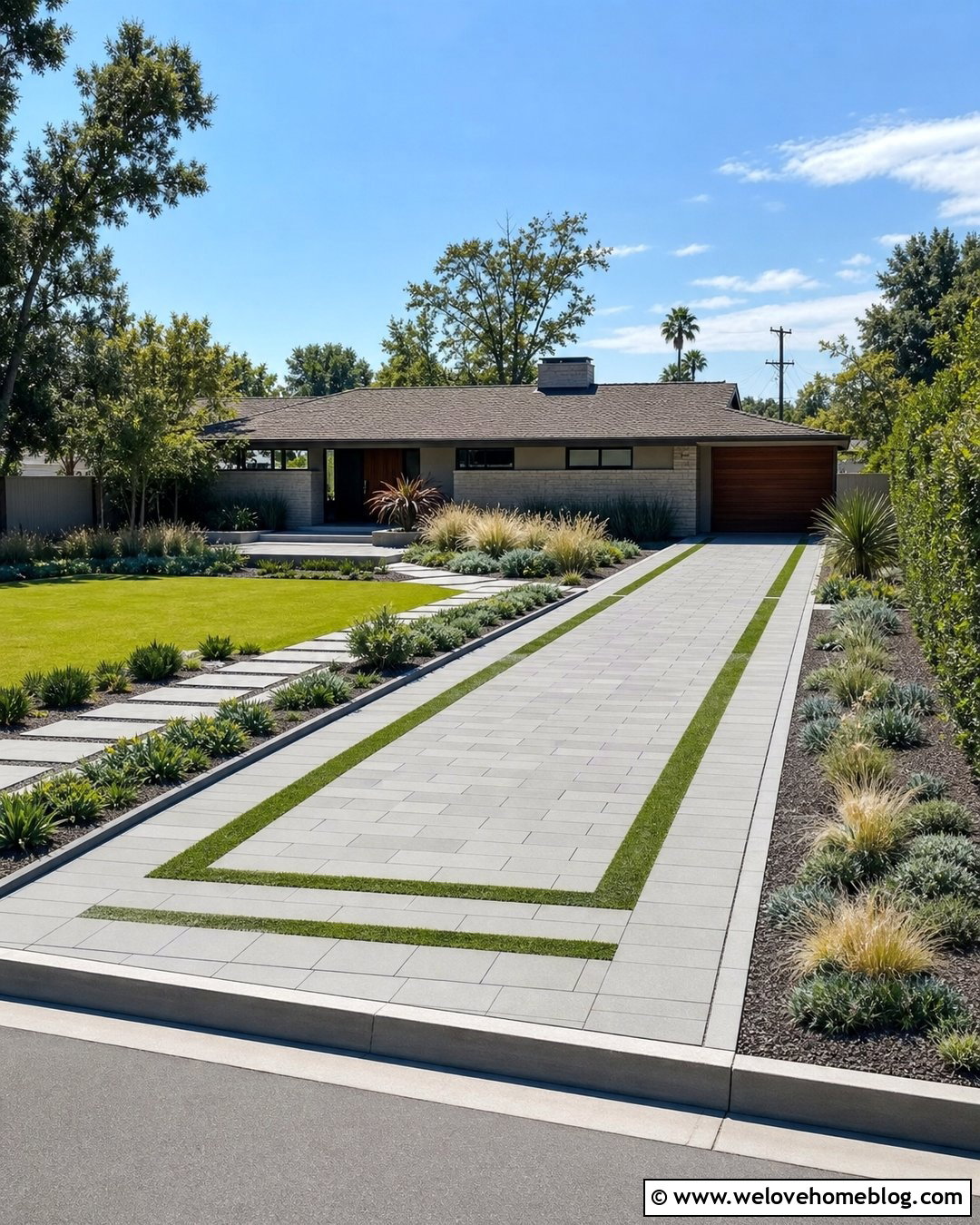
Alternating stone pavers with narrow grass strips can soften a driveway and reduce the visual weight of a large front parking area. Use durable gray granite or concrete stone-look pavers for the tire lanes, borders, and turning zones. Place reinforced turf strips between paved sections where vehicle pressure is lighter. A straight driveway leading to a midcentury or contemporary ranch home suits the strong linear pattern. Continue the lines into a simple walkway and rectangular planting beds. Drought-tolerant turf, low ground cover, or a reinforced planted grid may be more practical than conventional lawn in dry regions. Irrigation should avoid creating constantly wet joints or washing soil onto the pavers. This design needs careful engineering because every wheel path, curve, and parking position must be supported. Keep the planted strips level and neatly trimmed for a finished appearance.
18. Circular Stone Driveway
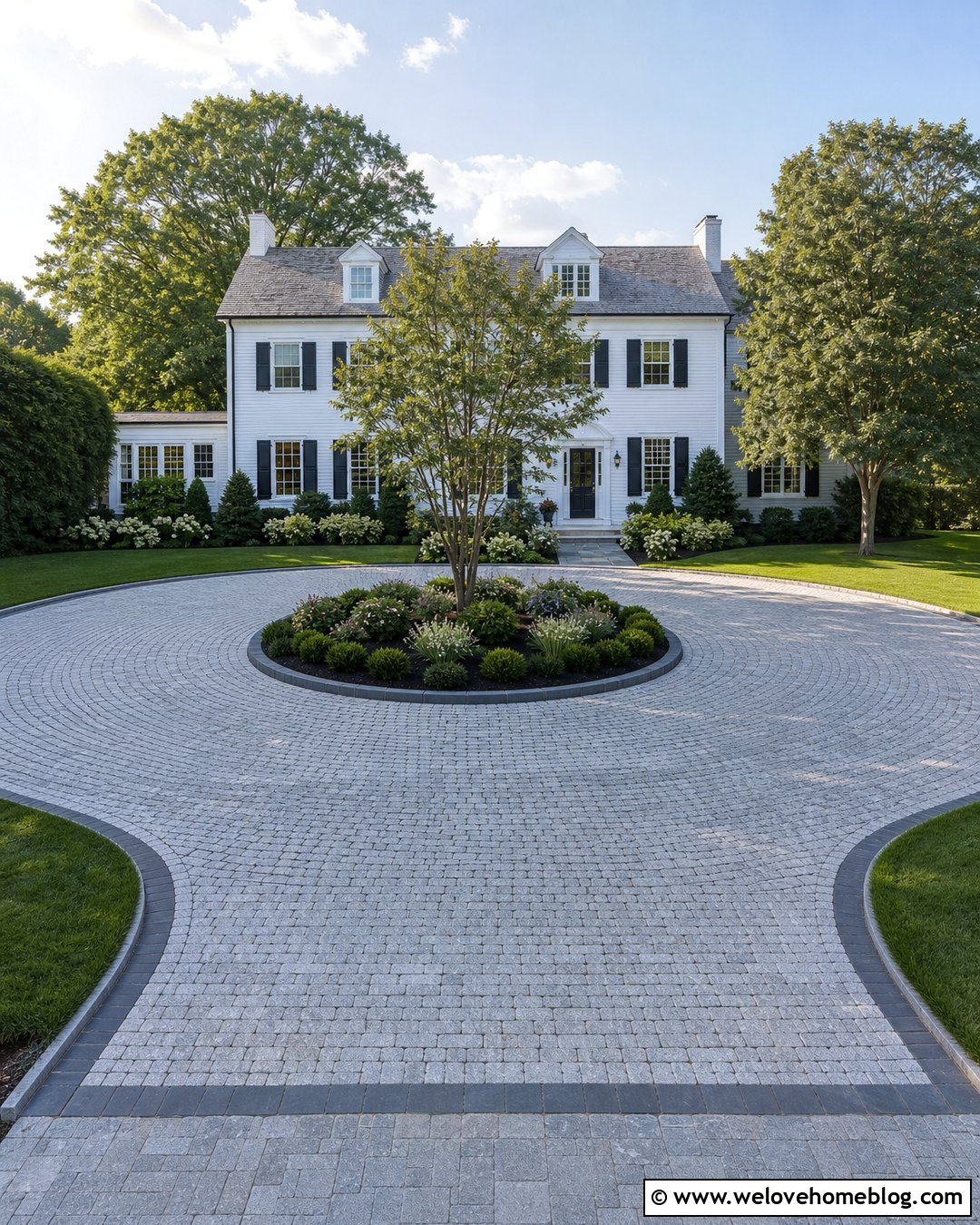
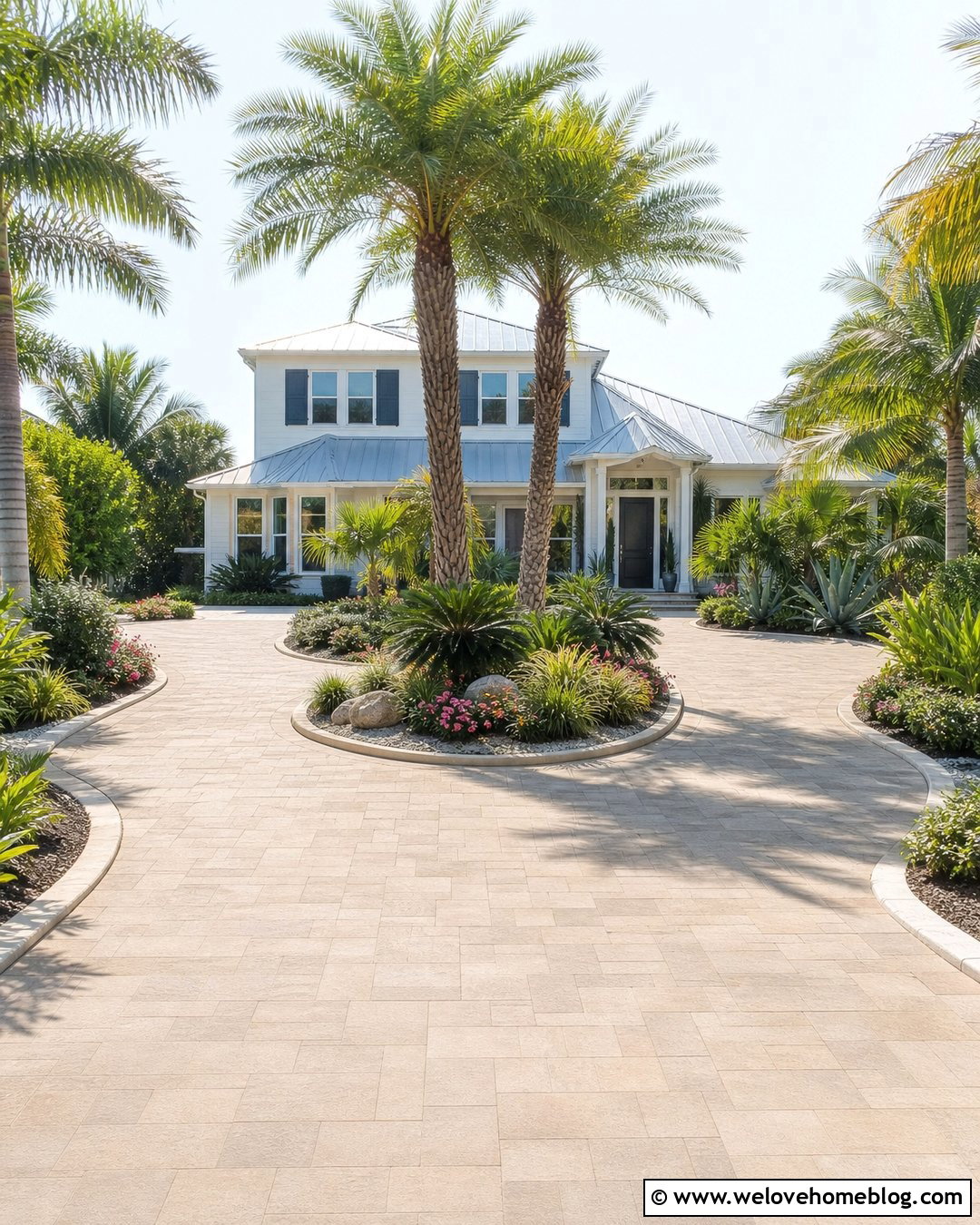
A circular stone driveway can organize a large front yard while creating a convenient arrival and departure route. Use medium-gray granite setts or natural stone-look pavers in curved rows that follow the driveway’s shape. A darker border will emphasize the circle and help separate the driving surface from lawns. Build a generous center island with a multi-stem tree, low shrubs, and seasonal perennials that will not block visibility. Match the entrance and exit aprons so the composition looks balanced from the street. This design works well with colonial, Georgian, and large traditional homes, but the dimensions must accommodate expected vehicle turning movements. Include a discreet walkway from the inner curve to the front door. Proper grading is crucial around the island so water does not collect against the stone edge or wash mulch onto the driveway.
19. Stone Driveway With Brick Border
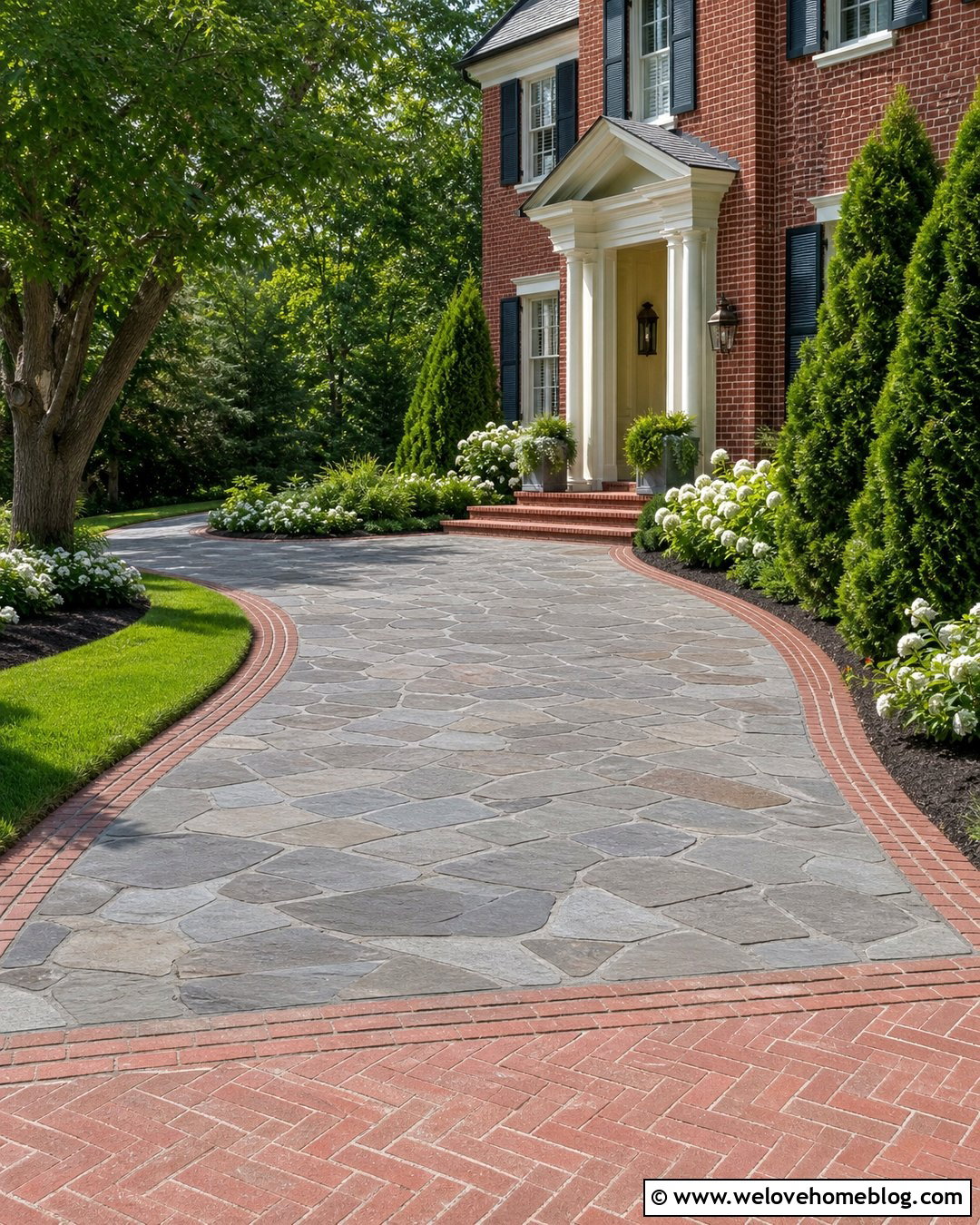
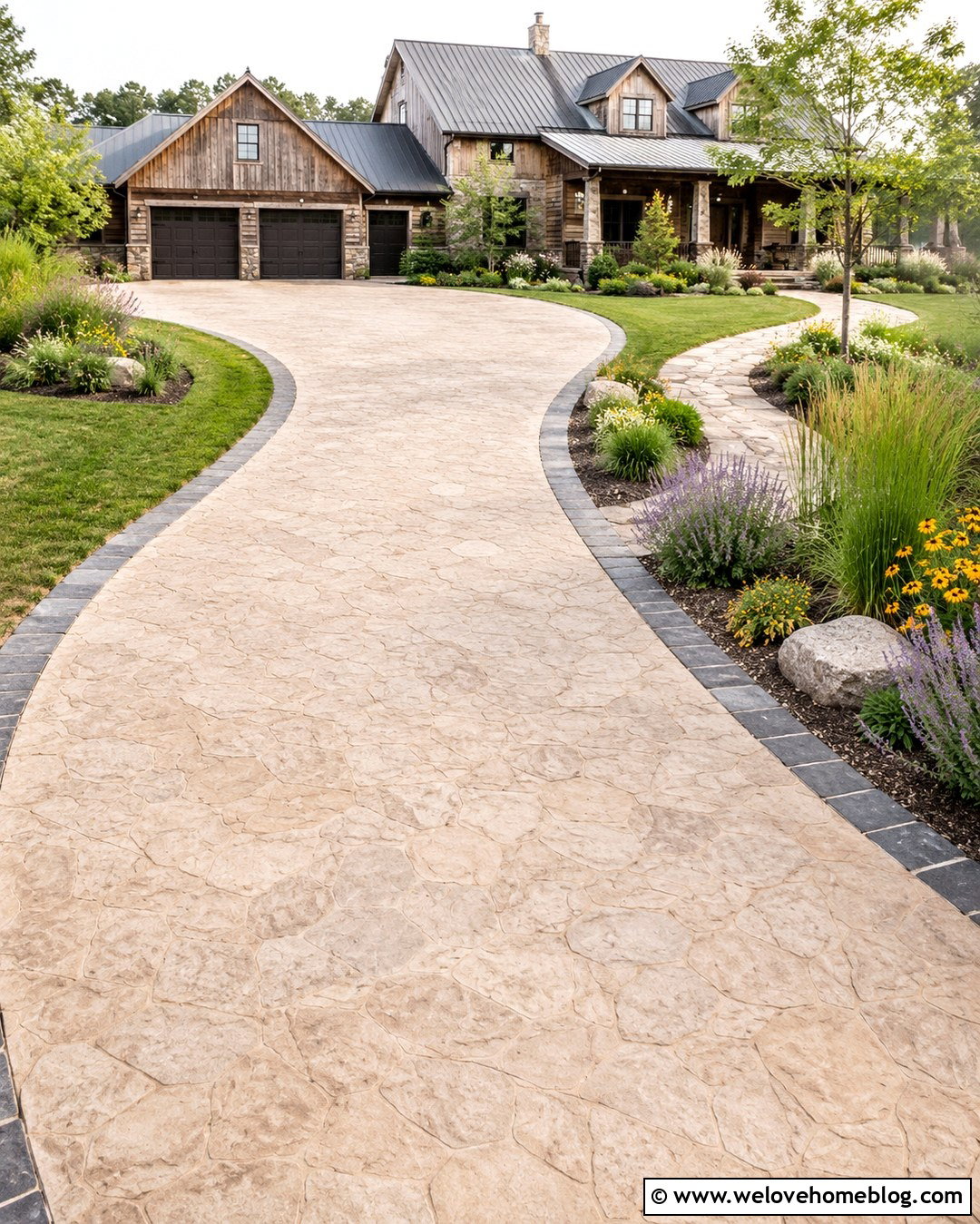
Natural stone and clay brick can work together when their colors relate to the house. Start with a driveway of irregular gray stone pavers or compacted gray crushed stone. Add a double brick border in a deep red or weathered brown that echoes the home’s facade, chimney, or front steps. A gently curved layout prevents the contrasting edge from looking overly formal. Use the same brick for a narrow entrance apron and walkway transition, creating a consistent detail across the front yard. Layer evergreen shrubs, white flowers, and ornamental grasses outside the border. Avoid introducing too many additional masonry colors, since the stone and brick already provide plenty of texture. Install the brick on a secure base with solid edge restraint, especially where tires may cross the border while backing or turning.
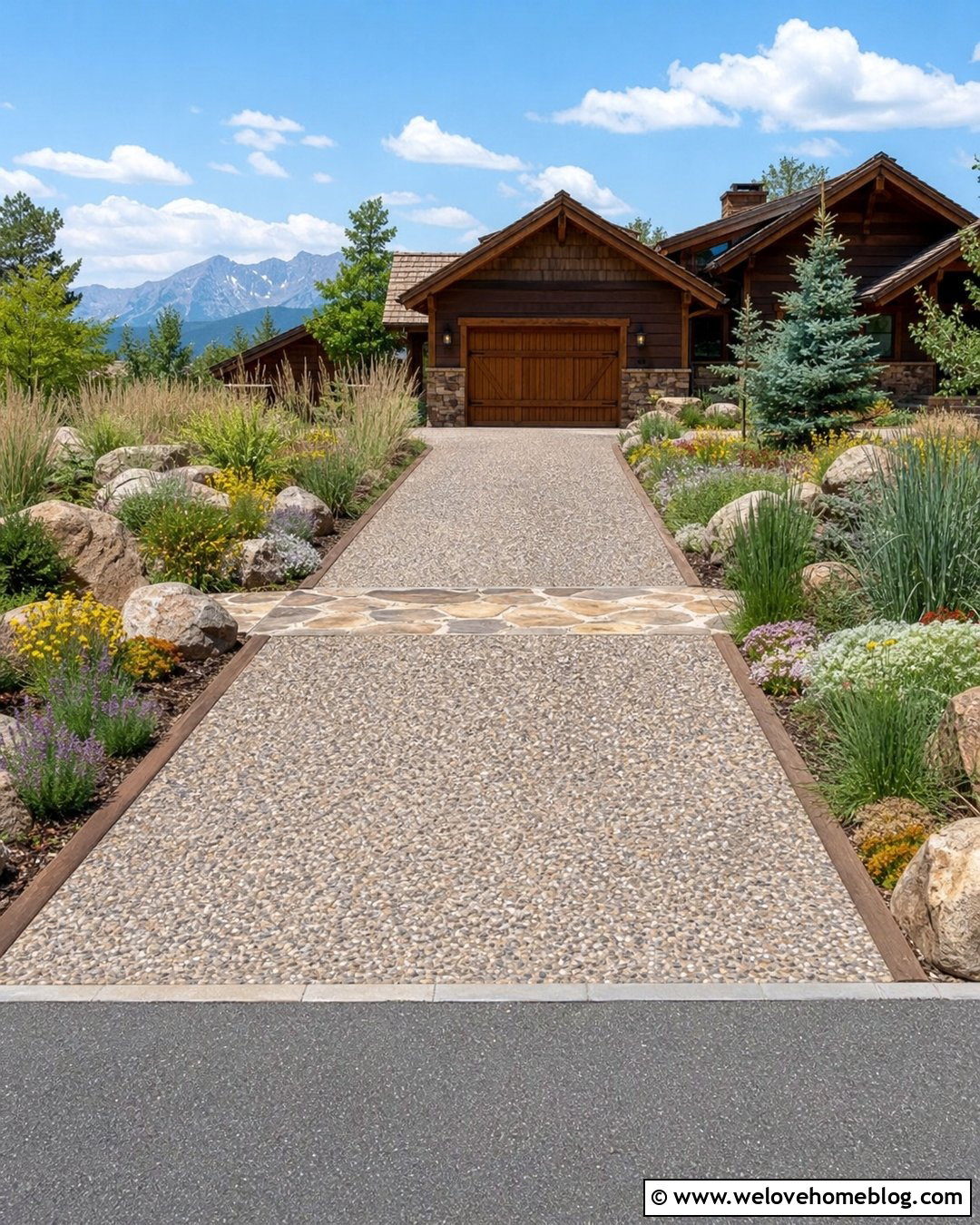
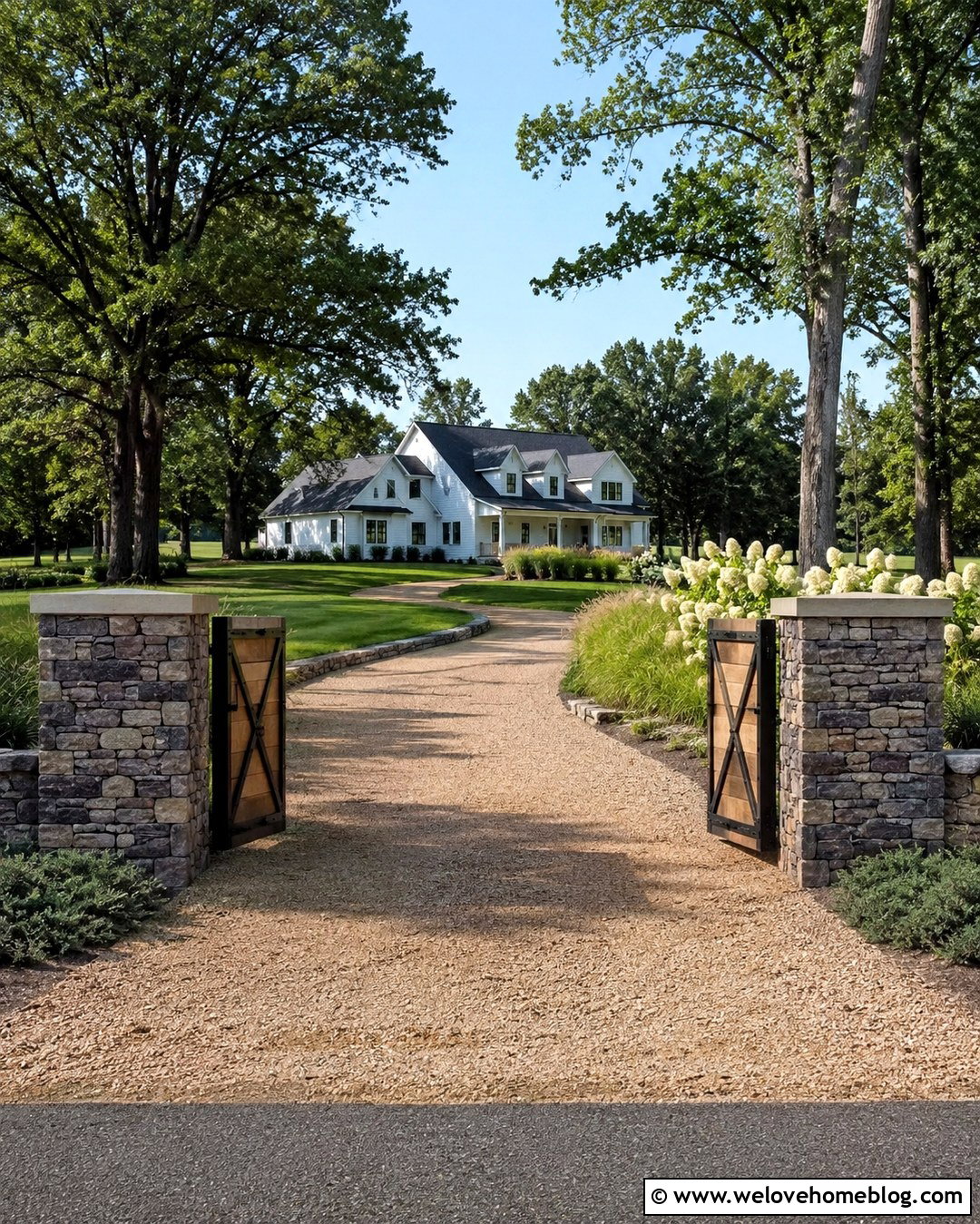
20. Stone Driveway With Timber Edging
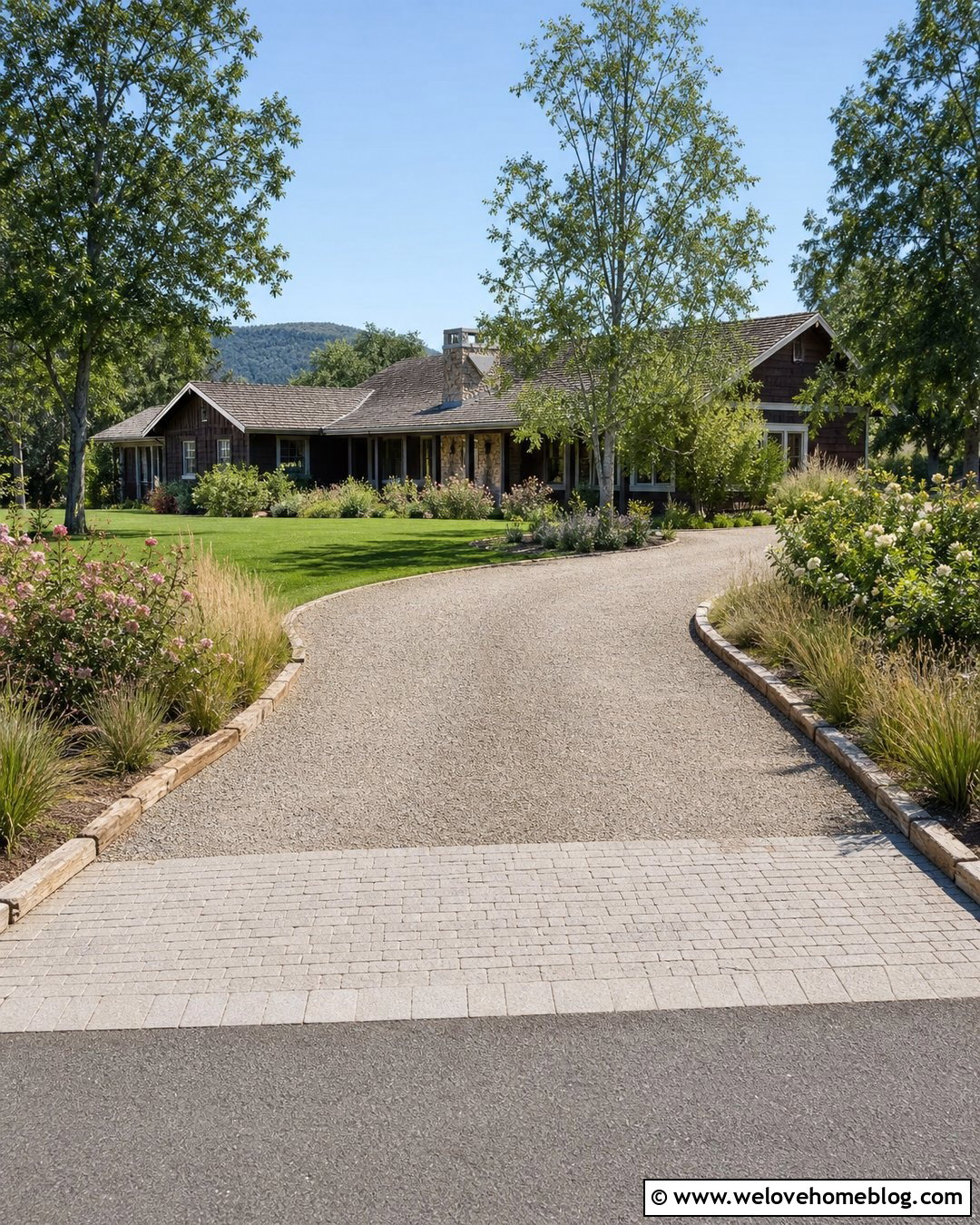
Timber edging gives a crushed stone driveway a simple, rustic boundary that works well beside cabins, ranch homes, and casual farmhouses. Use compacted gray crusher run or warm-toned crushed granite for the main surface. Shape the driveway with a broad curve, then install pressure-treated or naturally durable landscape timbers along the outer edges. Set the timbers low enough that they define the stone without becoming a tire hazard. Native grasses, flowering shrubs, and informal tree groupings will complement the relaxed material combination. Add a larger stone apron near the road, where loose aggregate experiences the most movement. Timber requires more maintenance than masonry edging, so provide drainage beneath it and inspect it periodically for movement or decay. This approachable design looks best when the lines remain clean and the surrounding planting feels natural.
21. Stone Driveway With Retaining Wall
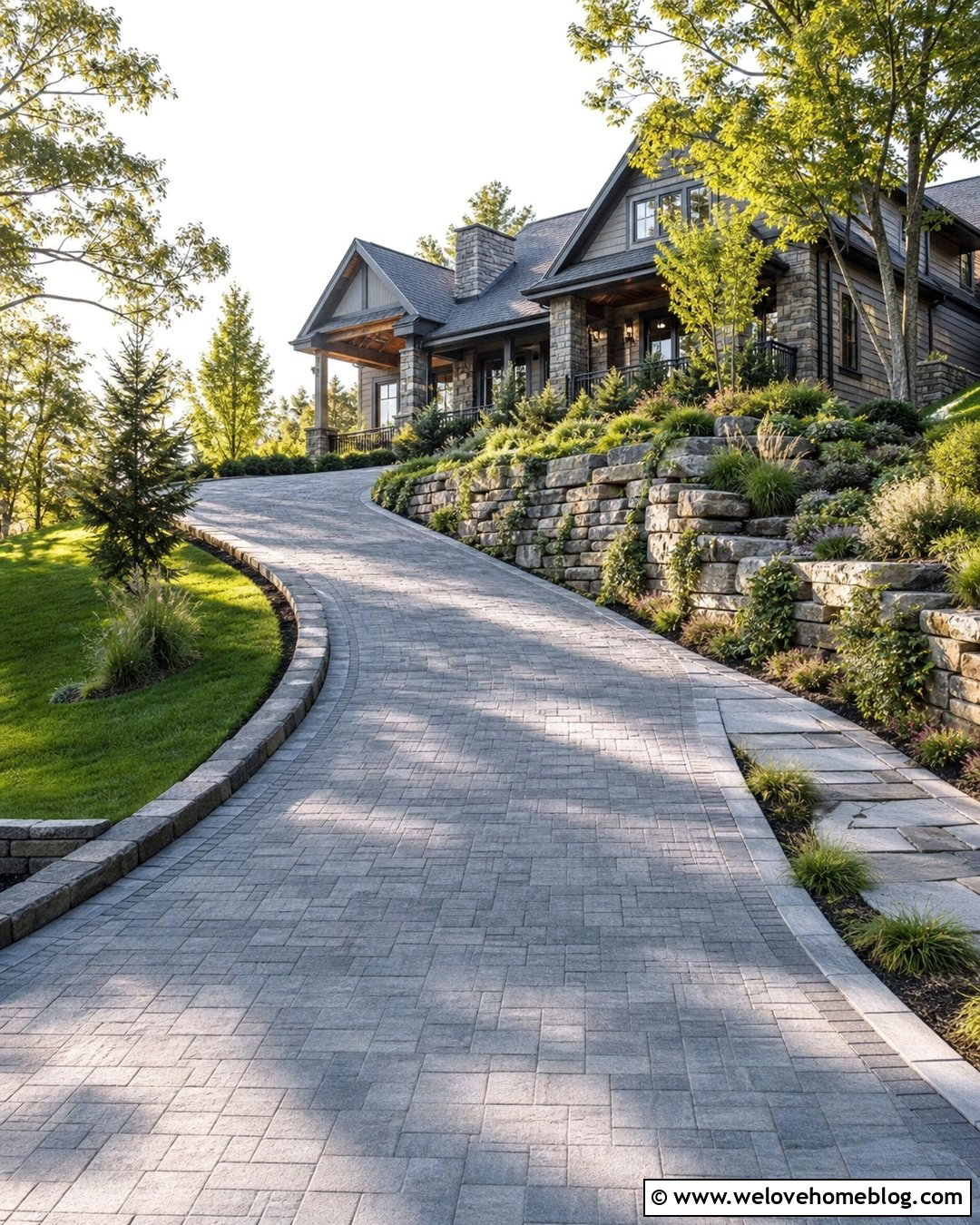
A sloped front yard can become an attractive entrance when the driveway and retaining wall are planned as one design. Use textured gray stone pavers or compacted crushed granite on a gently climbing driveway. Build a low retaining wall from matching or complementary natural stone along the uphill side. The wall should step with the grade rather than forming one overpowering mass. Add cascading ground covers, compact shrubs, and ornamental grasses above it to soften the masonry. On the lower side, use a secure stone curb and an open lawn or planting bed that preserves visibility. Include drainage behind the wall and route surface water safely away from the driveway. Because walls, slopes, and vehicle loads interact, this layout usually requires professional design. Matching the wall’s color family to the driveway will create a cohesive result.
22. Stone Driveway With Gate Pillars
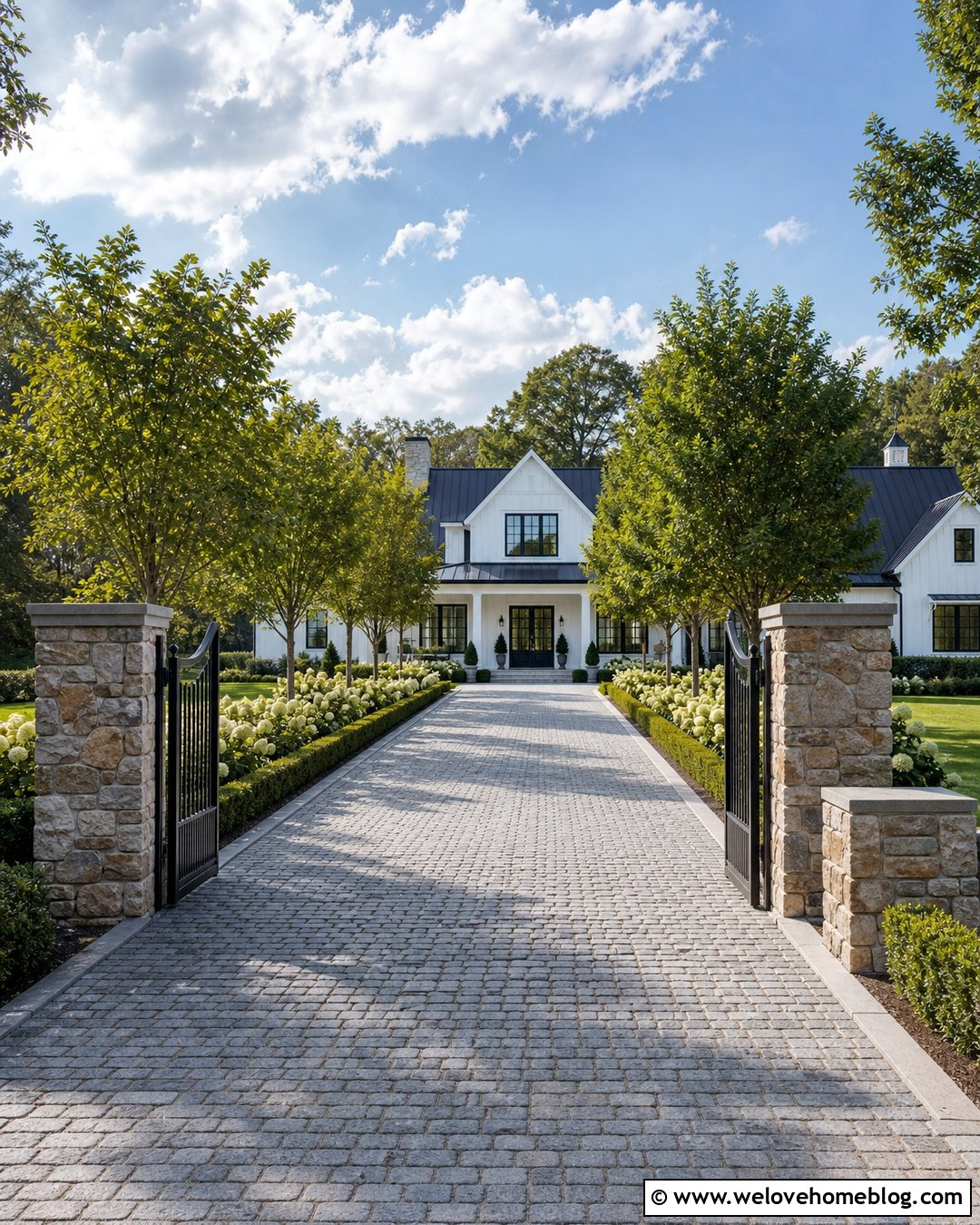
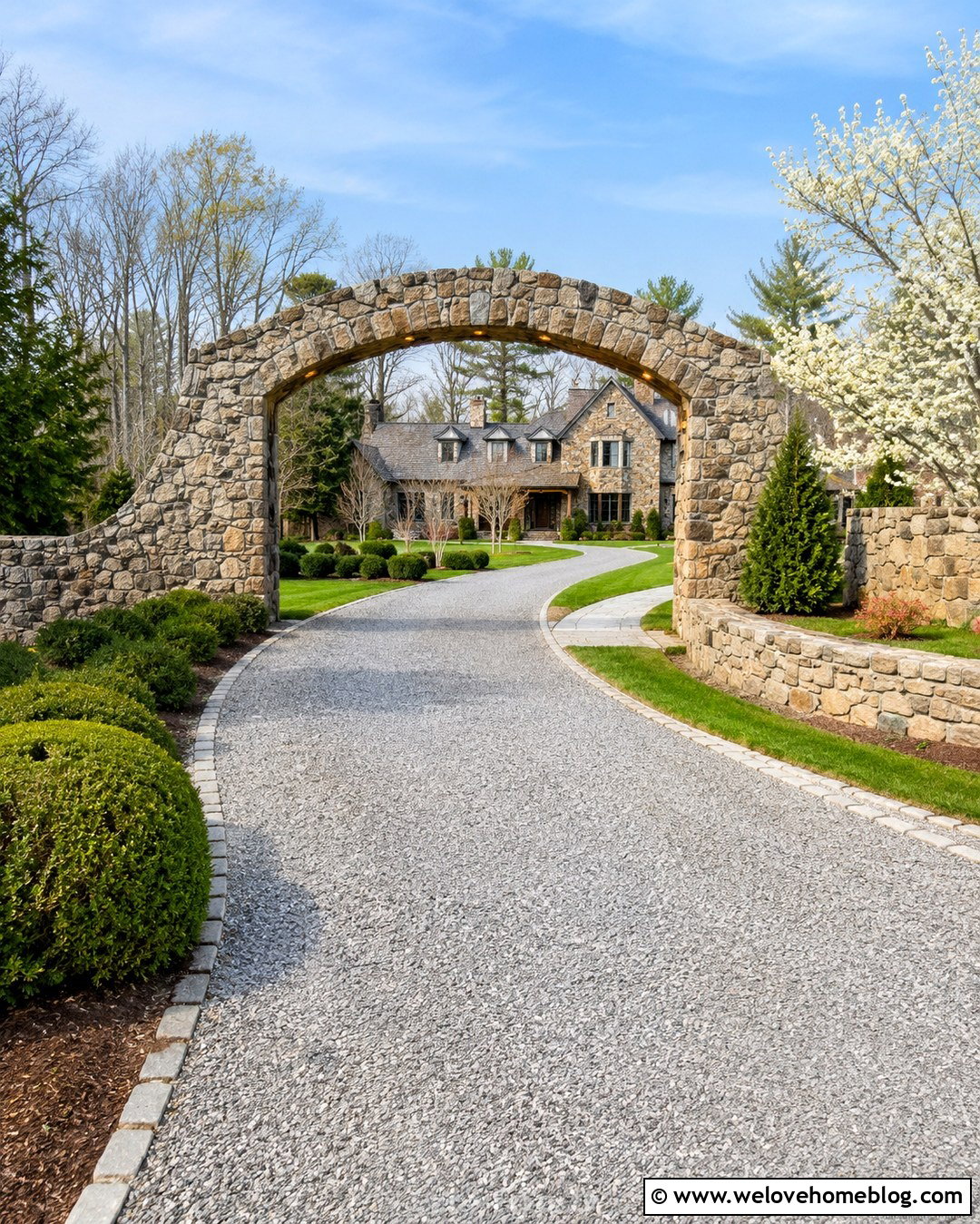
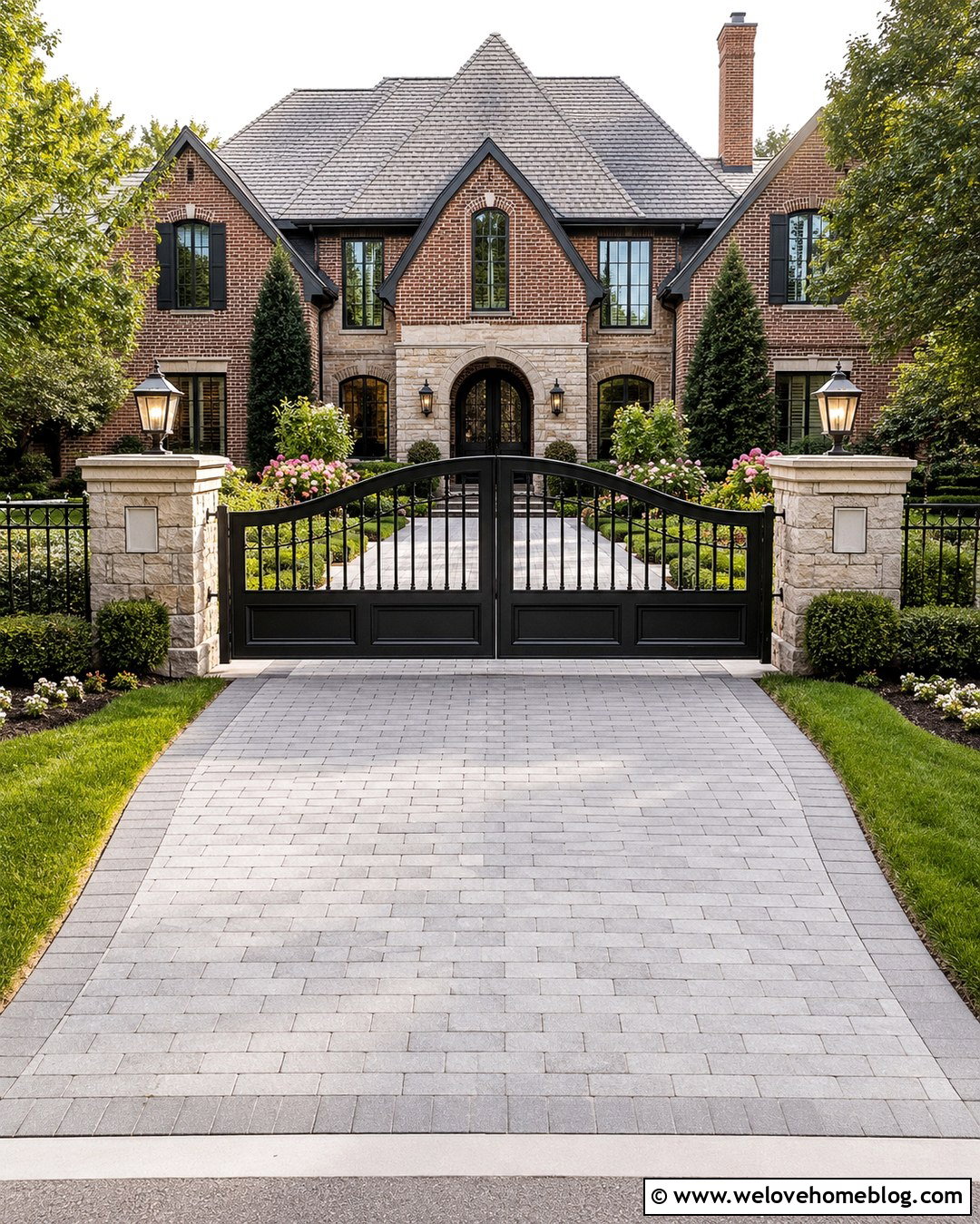
Stone gate pillars can make a driveway entrance feel permanent and well proportioned when they coordinate with the surface. Pair warm gray granite cobblestones with fieldstone-clad pillars and a simple black metal gate. A straight driveway leading to a traditional or modern farmhouse keeps the entrance easy to understand from the road. Widen the cobblestone apron around the pillars so vehicles have adequate clearance when turning. Low hedges, flowering shrubs, and small ornamental trees can frame the gateway without hiding it. Repeat the pillar stone on a nearby address marker or low garden wall, but avoid covering every feature in the same heavy masonry. Plan conduit, gate operators, drainage, lighting, and access controls before hardscape construction begins. Pillars should sit outside the required clear driving area and maintain safe street sightlines.
23. Stone Driveway With Drainage Swale
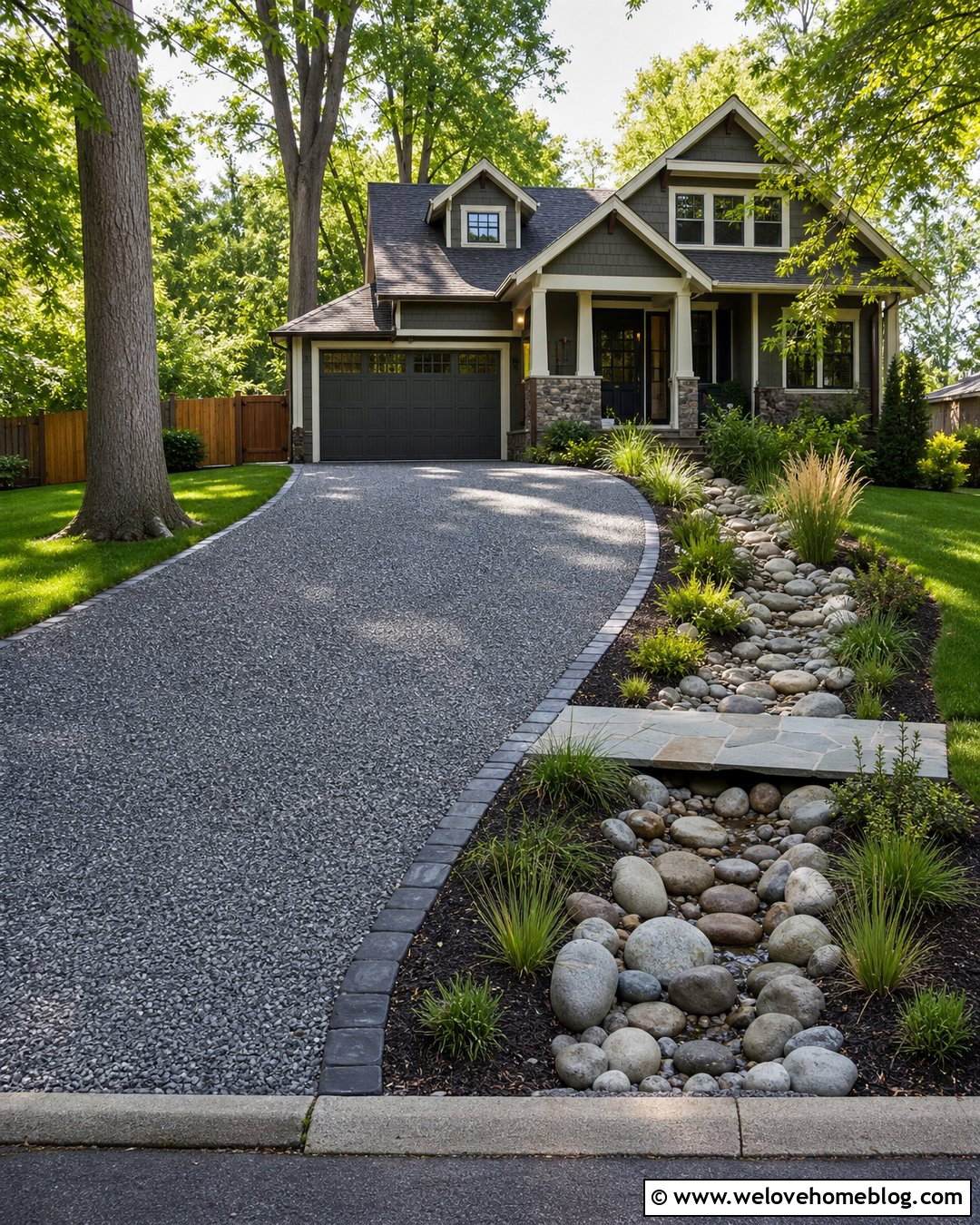
A shallow landscaped swale can turn driveway drainage into an attractive part of the front yard. Use compacted angular gravel or permeable stone-look pavers for a gently sloped driveway, depending on the soil and drainage plan. Along the lower edge, shape a broad planted channel filled with decorative river stones, moisture-tolerant grasses, sedges, and low native shrubs. A small stone bridge or reinforced crossing can connect the front walkway to the house. Keep the swale shallow and gradual so it looks integrated rather than like an exposed ditch. The driveway should direct water toward the planned collection area without sending sediment into the street or neighboring property. Confirm underground utilities, local requirements, soil conditions, and overflow routes before construction. Use angular driveway stone for driving areas and reserve rounded river rock for the drainage feature.
24. Stone Driveway With Tree-Lined Entrance
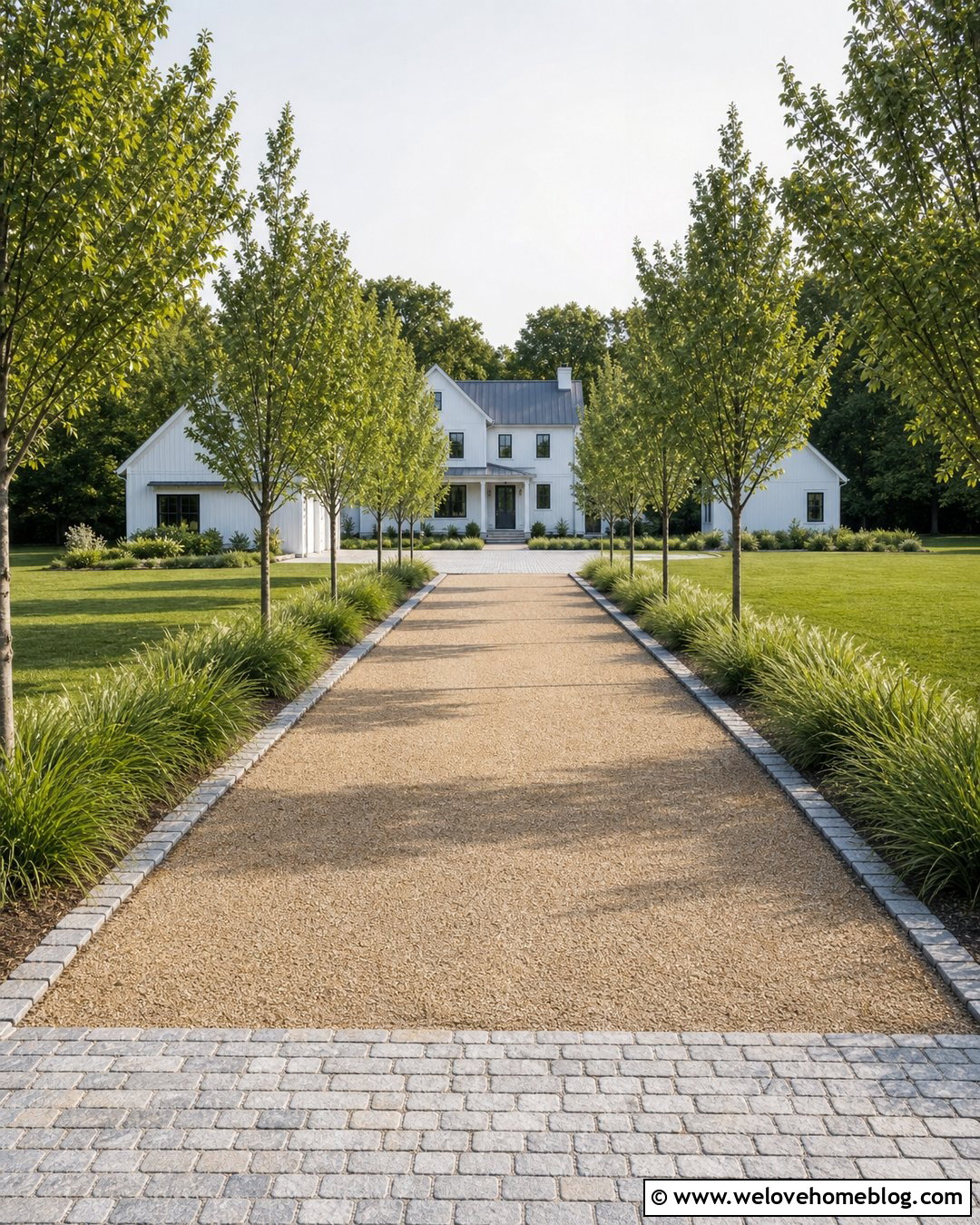
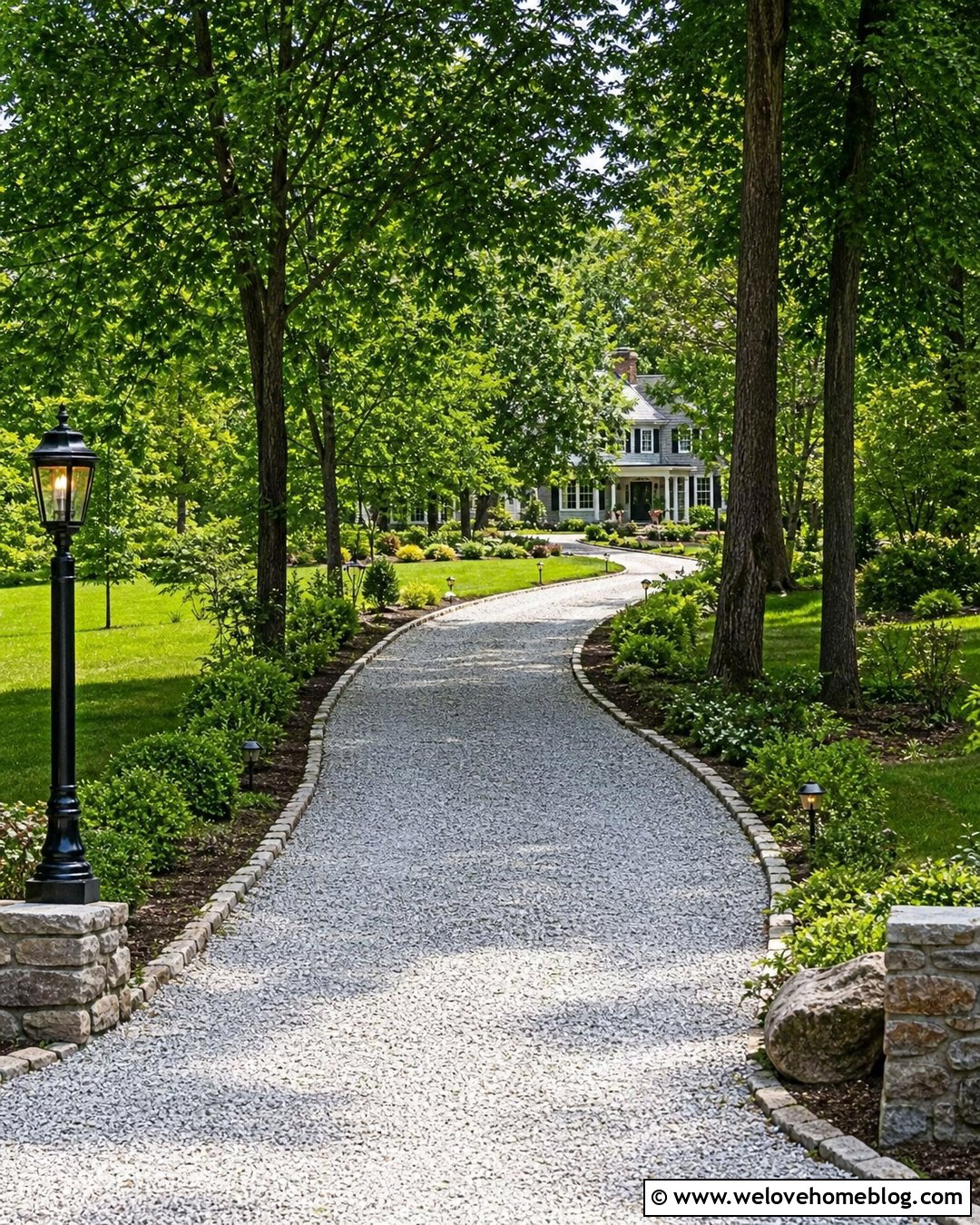
A long stone driveway becomes more inviting when trees create a measured rhythm along the approach. Use compacted tan crushed stone on a straight route leading toward a white farmhouse, country home, or traditional residence. Edge the driveway with dark granite setts to keep the loose surface contained and provide a crisp mowing line. Plant evenly spaced deciduous trees beyond the edge, leaving enough room for mature trunks, roots, and branches. Low grasses or a simple lawn beneath them will keep the entrance open and uncluttered. Near the house, transition to a full granite or stone paver parking court for easier turning and walking. Choose tree species suited to local soil and climate, and avoid varieties that drop heavy fruit or have aggressive surface roots. The result should feel structured without becoming overly formal.
25. Budget Crushed Stone Driveway
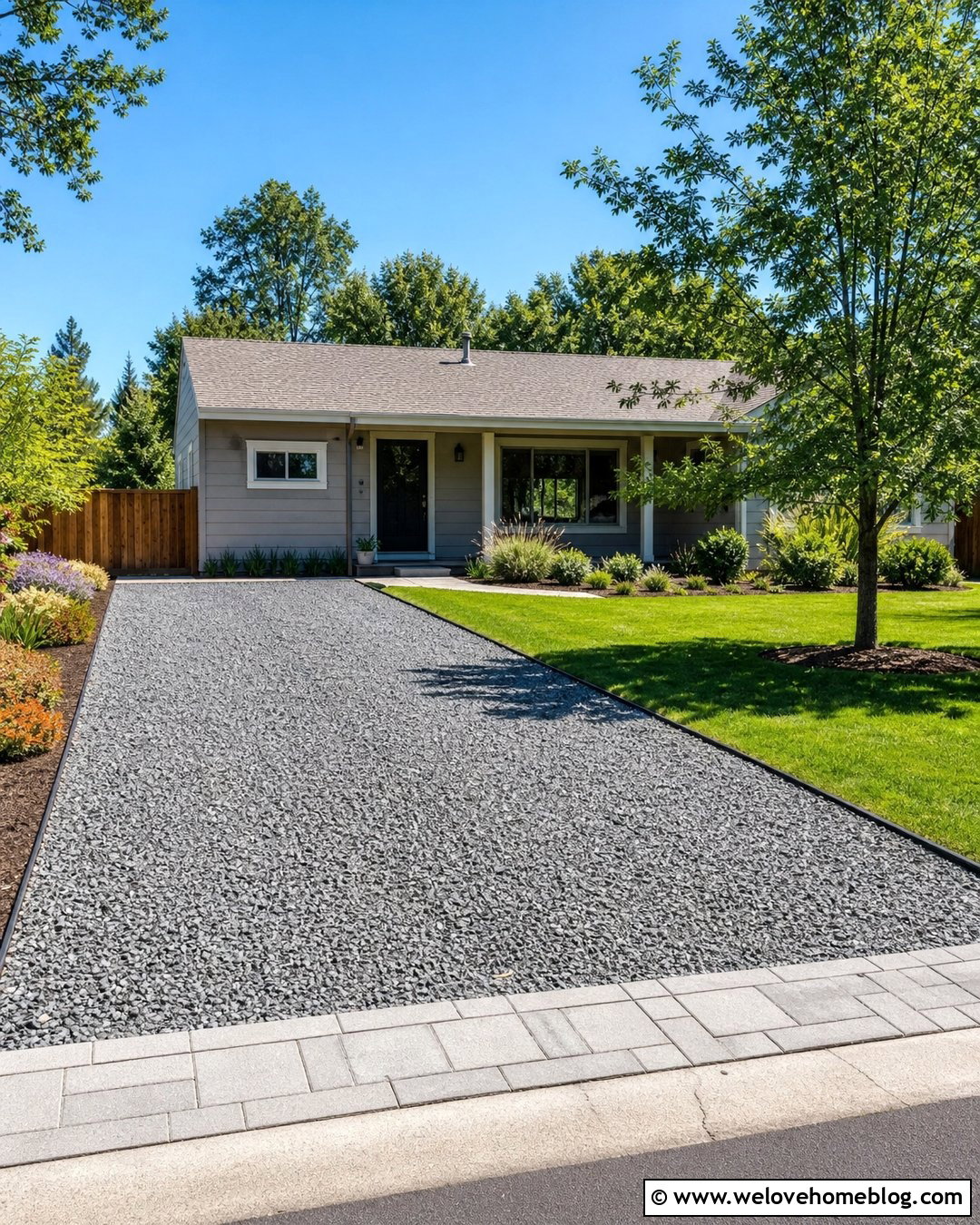
An affordable crushed stone driveway can still look carefully designed when the shape, border, and landscaping are planned together. Use locally available angular stone in a blended gray or tan color to reduce transportation costs and create a surface that compacts well. Keep the layout straight and moderately narrow, then widen it near the garage for parking and turning. Metal edging or pressure-treated timber can contain the material without the cost of a full masonry border. At the street, add a durable apron made from larger pavers, asphalt, or concrete to reduce loose stone migration. Simple lawn edges, a few native shrubs, and one shade tree will provide curb appeal without extensive planting. Spend the budget first on excavation, drainage, geotextile where appropriate, base preparation, and compaction. Decorative upgrades can always be added later.
Conclusion:
The best driveway stone design brings the surface, layout, borders, landscaping, and home architecture together as one complete entrance. Granite cobbles create lasting formality, while crushed limestone, decomposed granite, and gravel offer more relaxed and budget-friendly options. Bluestone, sandstone, travertine, and fieldstone can provide distinctive natural color when selected for local conditions and vehicle traffic. Whatever material you prefer, prioritize grading, drainage, base preparation, edge restraint, and safe turning space before decorative details. Obtain samples and view them outdoors beside your home before committing. With thoughtful planning, these **25 Driveway Stone Ideas** can help you create a driveway that improves everyday function while giving the entire property stronger, more welcoming curb appeal.

Related posts:
Leave a Reply