
Linden trees can turn an ordinary driveway into a leafy, welcoming approach with strong year-round structure. The best linden tree driveway ideas combine the trees with a suitable surface, practical edging, attractive planting, and a layout that complements the home. Linden trees are especially valued for their formal pyramidal-to-oval shape, dense summer shade, and fragrant seasonal flowers. However, many varieties become broad canopy trees, so long-term spacing, healthy soil, and room for roots must guide the design. () Whether your property has a long gravel lane, a compact suburban drive, or a circular entrance, the goal is to create one balanced landscape rather than a row of isolated trees. Explore these complete and practical 20 Linden Tree Driveway Ideas.

1. Long Gravel Linden Tree Driveway
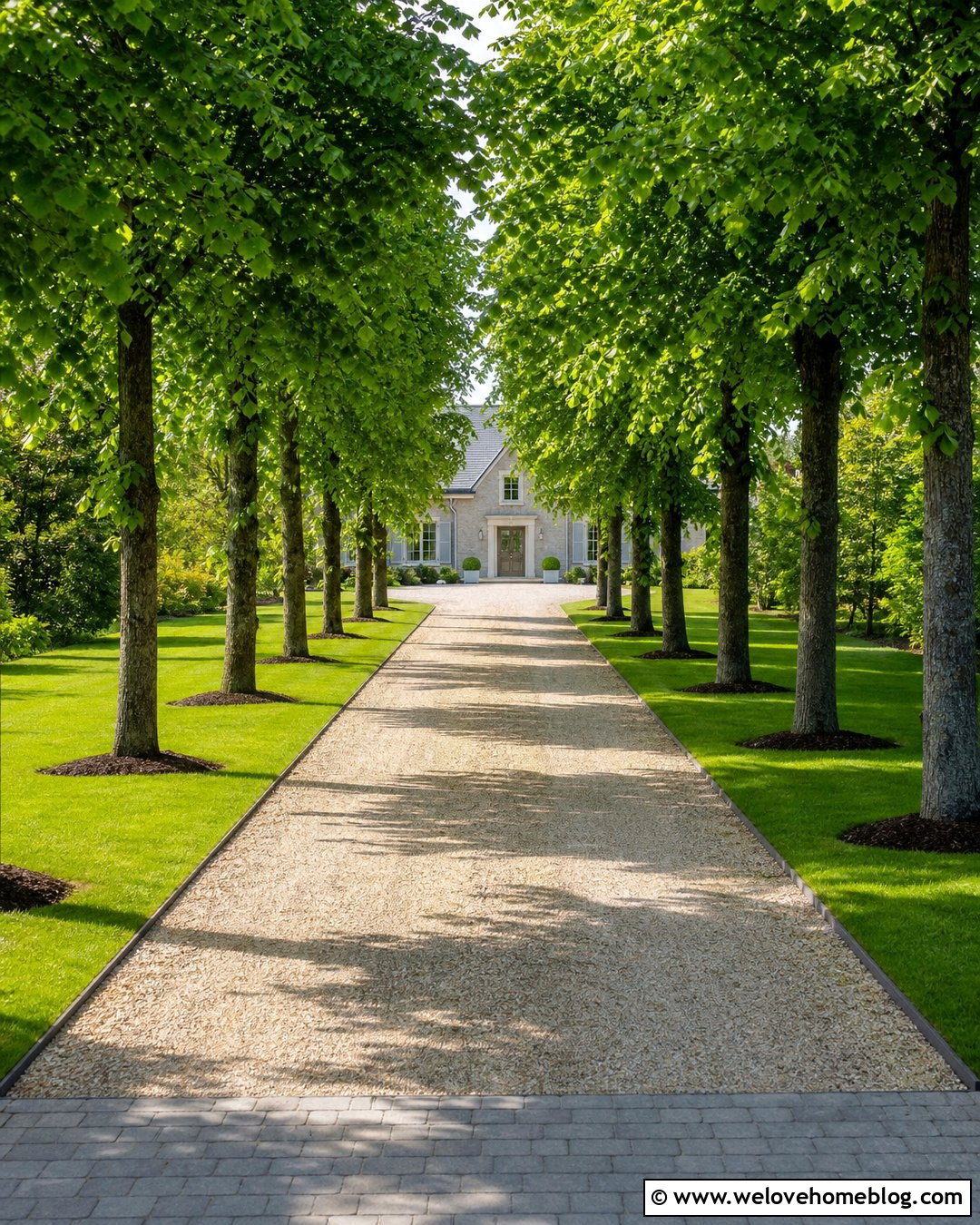
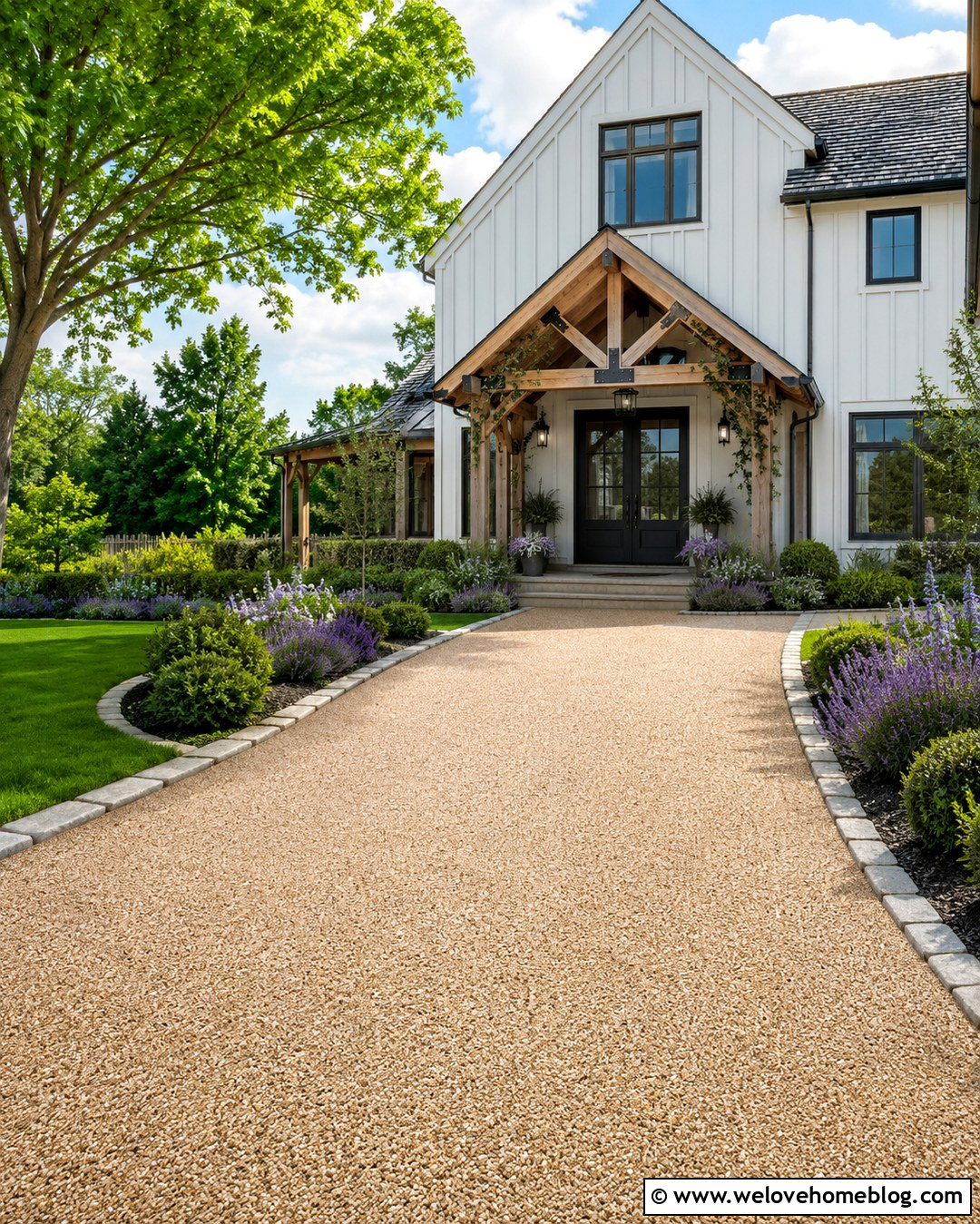
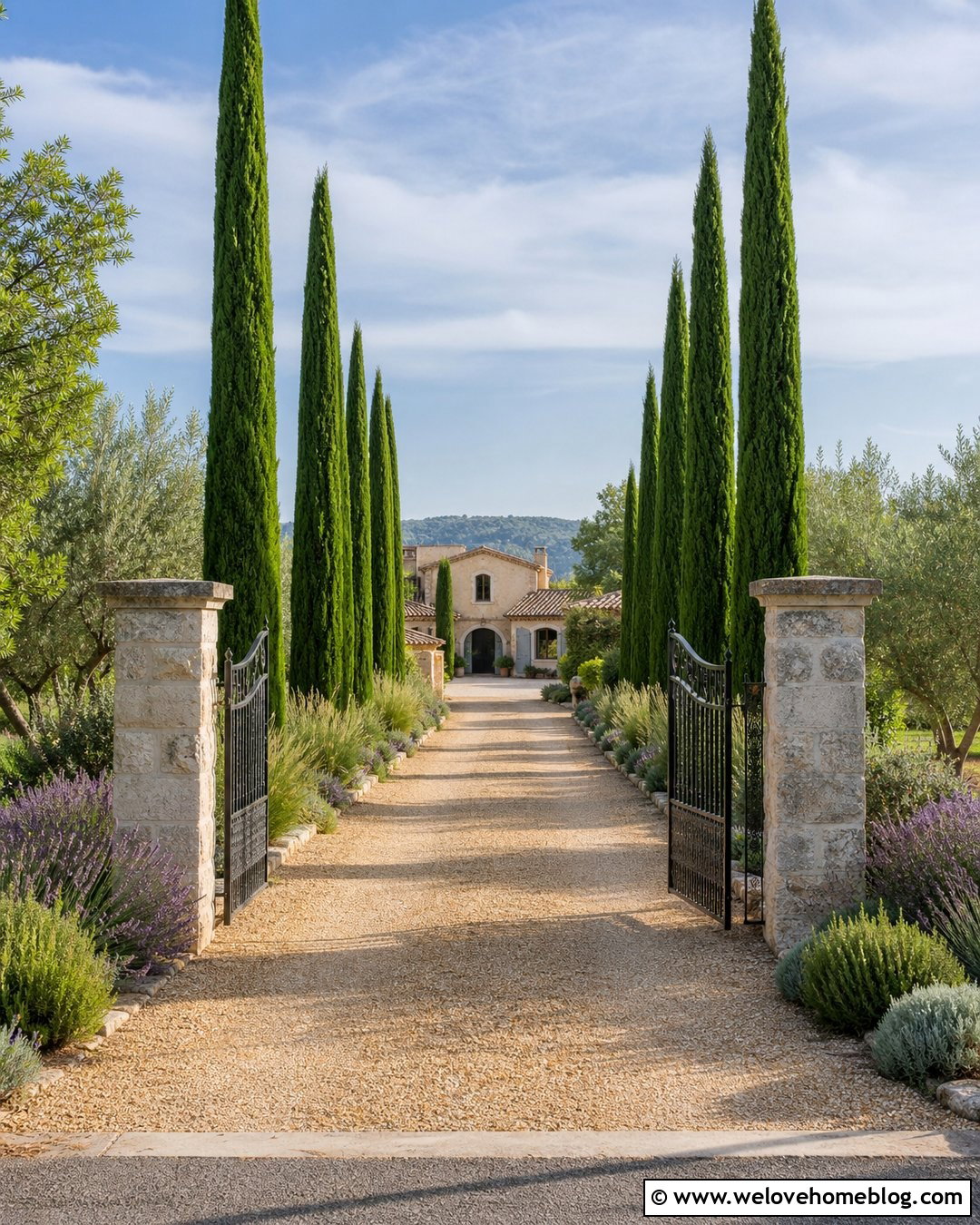
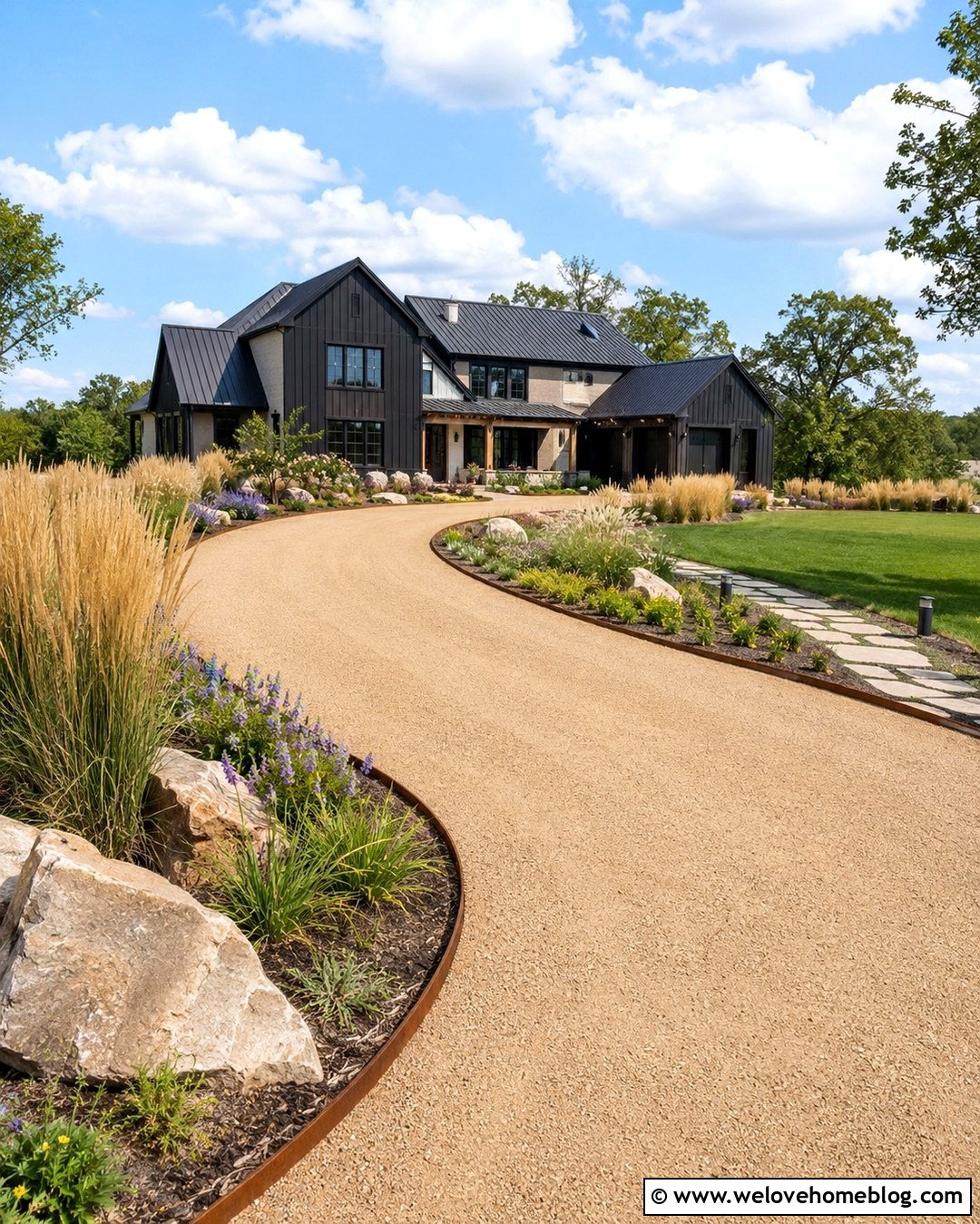
A long gravel driveway creates an ideal setting for evenly spaced linden trees because the loose-looking surface balances their orderly form. Choose warm beige gravel for a country property or cool gray gravel for a more refined home. Steel, cobblestone, or brick edging will keep loose stones away from the tree beds. Position the trees far enough from the driving surface to accommodate their mature trunks, canopies, and root zones. Repeating trees on both sides can create a dramatic avenue, especially when the rows align. Tree-lined driveways are traditionally used to make the journey toward a home feel sheltered and impressive. () Finish the design with broad grass strips and simple mulch beds that make seasonal cleanup easier.
2. Straight Asphalt Linden Tree Driveway
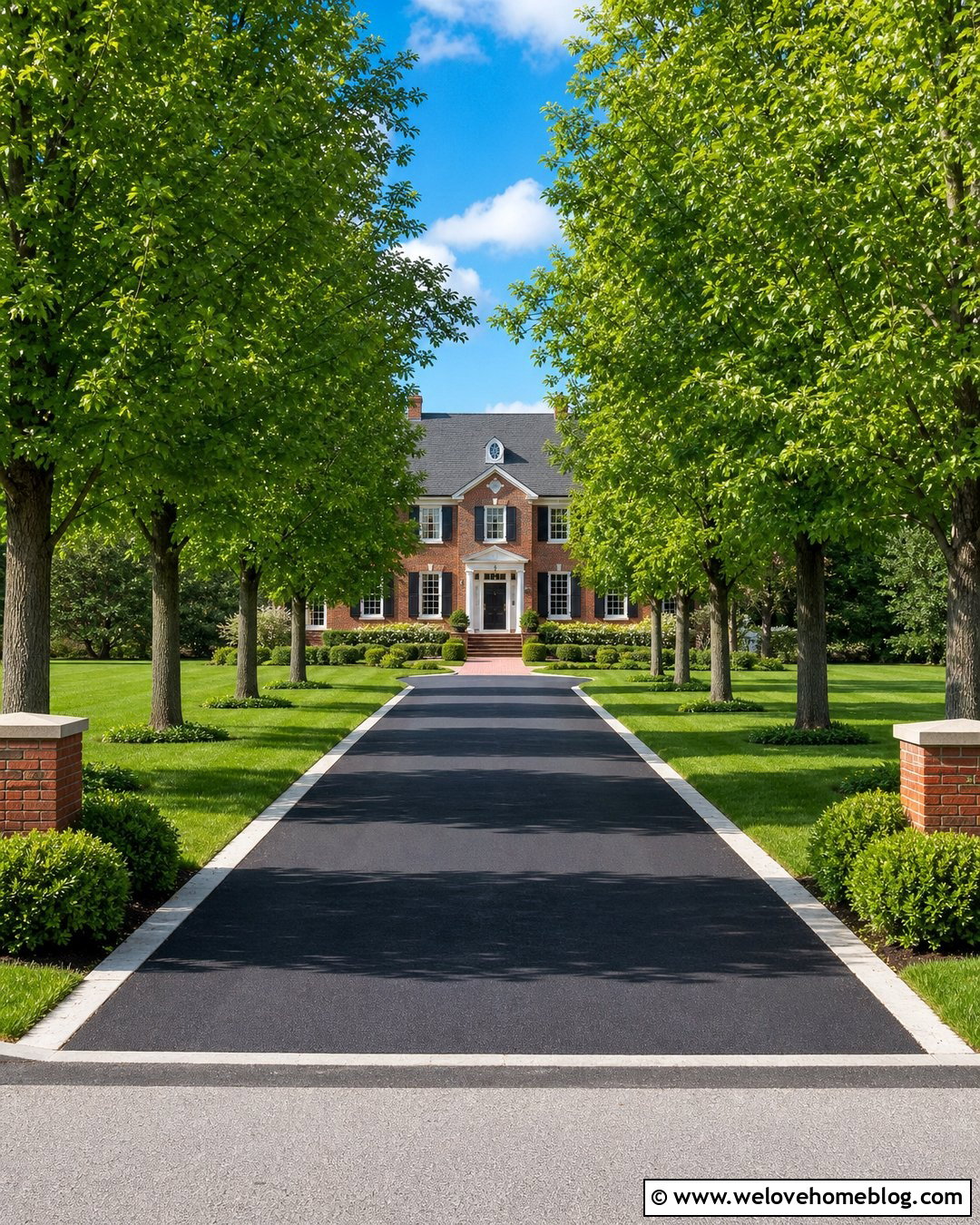
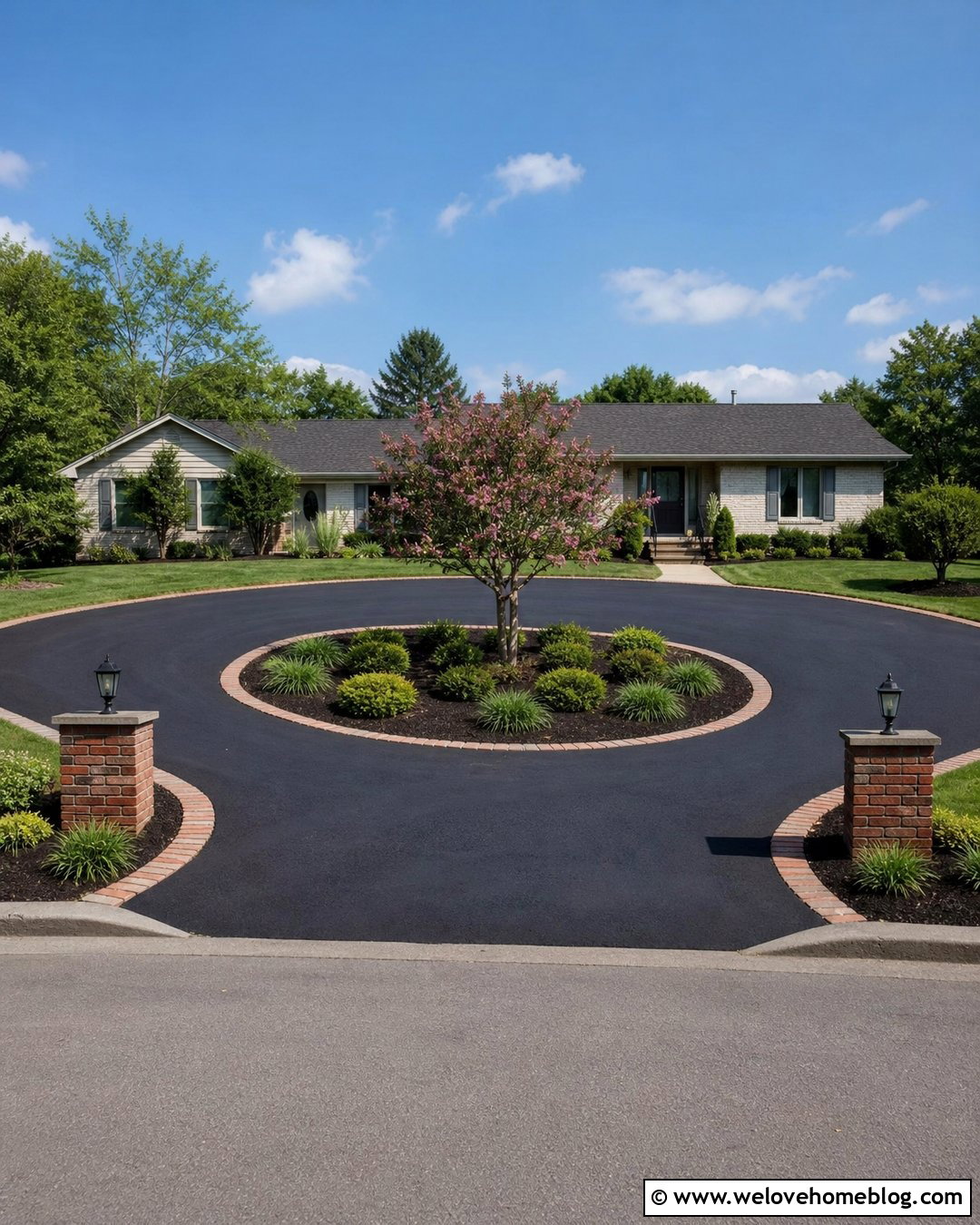
Does a plain asphalt driveway feel too dark or utilitarian? Linden trees can soften the surface with bright green foliage and a strong vertical rhythm. Use a straight layout with matching trees planted along both sides, leaving a generous lawn strip between the asphalt and each trunk. A light gray concrete curb or pale cobblestone border will create contrast against the black pavement. Keep the planting underneath simple with mulch, low ground cover, or neatly clipped grass. This design works particularly well with colonial, traditional, and brick houses because the symmetrical arrangement reinforces the architecture. At the road, allow wider gaps between the first trees to maintain an open view. The result feels formal without requiring an expensive decorative driveway surface.
3. Curved Paver Linden Tree Driveway
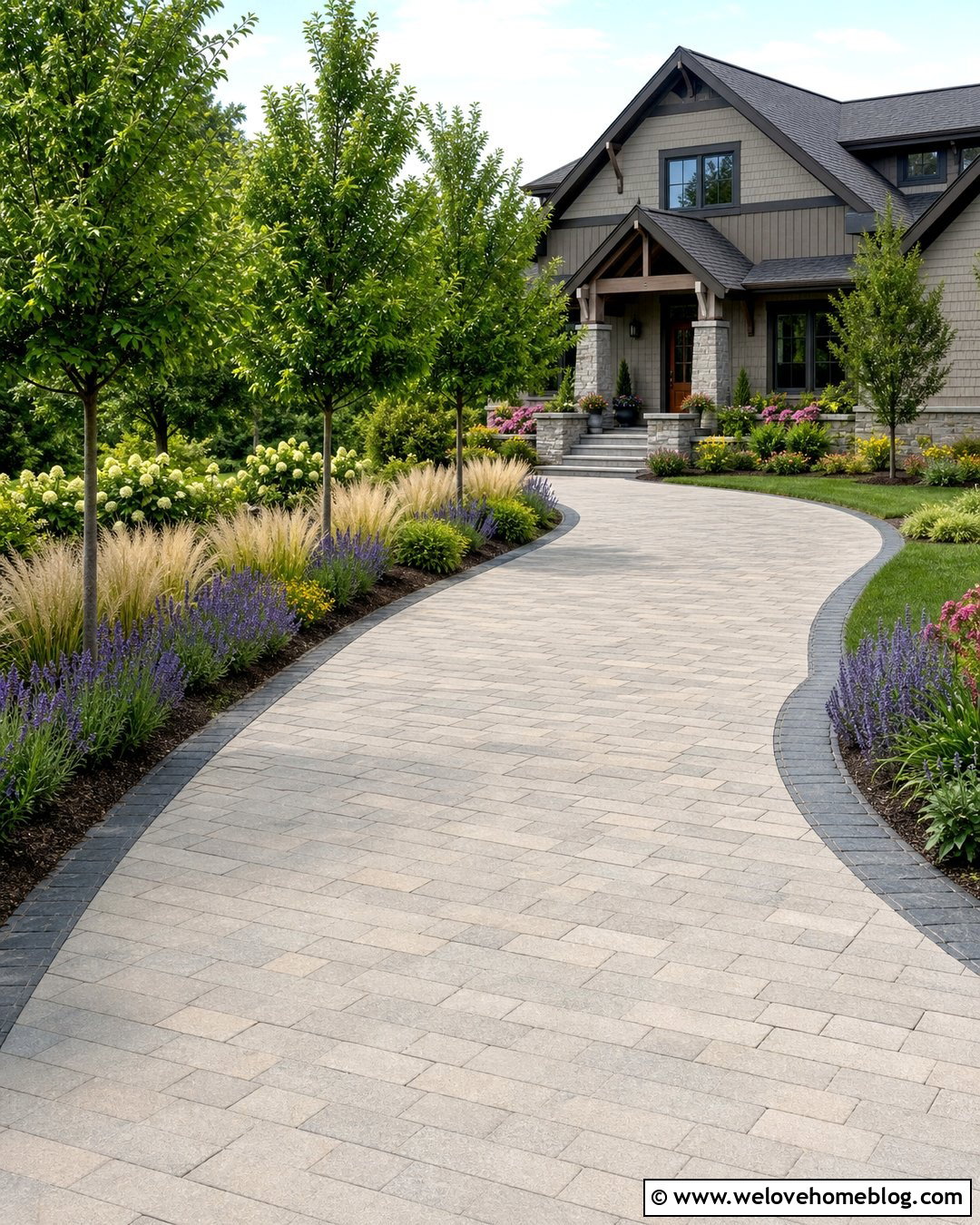
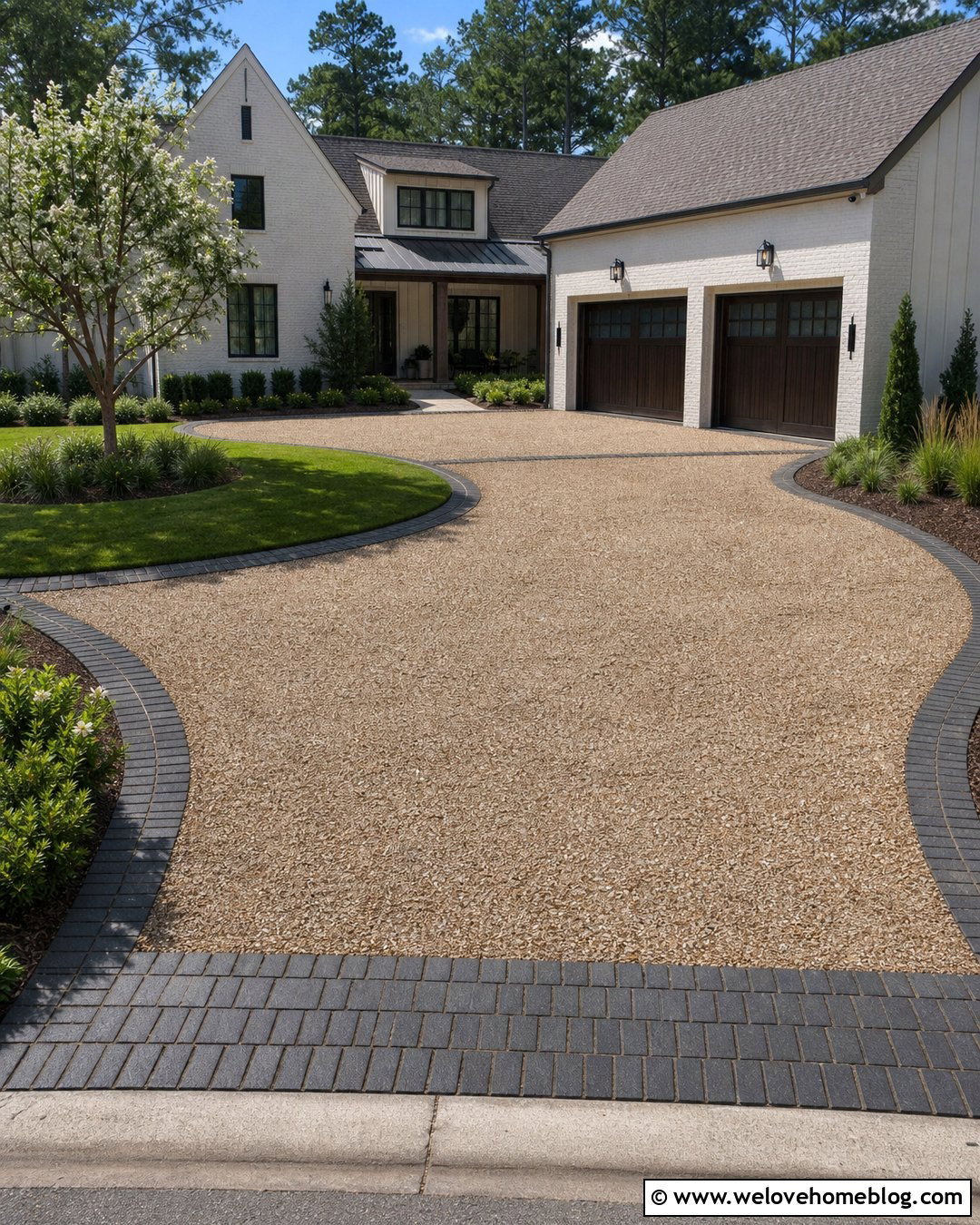
A gently curved paver driveway feels inviting because the entire house is not revealed at once. Linden trees can follow the outside edge of the curve, creating a natural frame and guiding attention toward the entrance. Use charcoal or warm gray concrete pavers in a running-bond pattern, then add a darker soldier-course border for definition. On the inside of the curve, plant fewer trees and use sweeping beds of ornamental grasses, flowering perennials, and low evergreen shrubs. Staggering the lindens slightly can look more natural than forcing perfect pairs around a bend. Keep taller plantings away from tight turning points. The combined movement of the curved paving, repeated tree trunks, and layered landscaping creates a polished driveway that still feels relaxed.
4. Circular Linden Tree Driveway
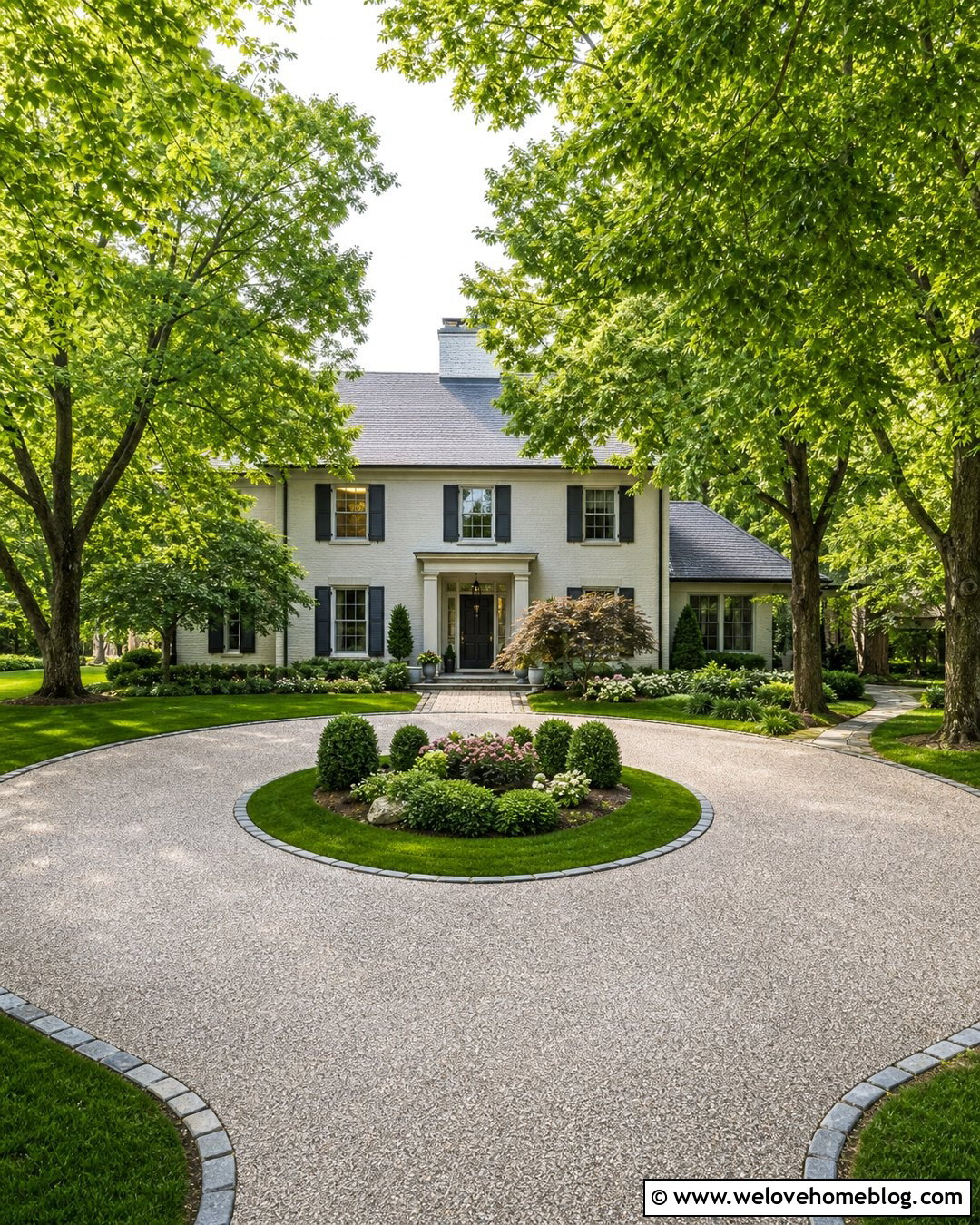
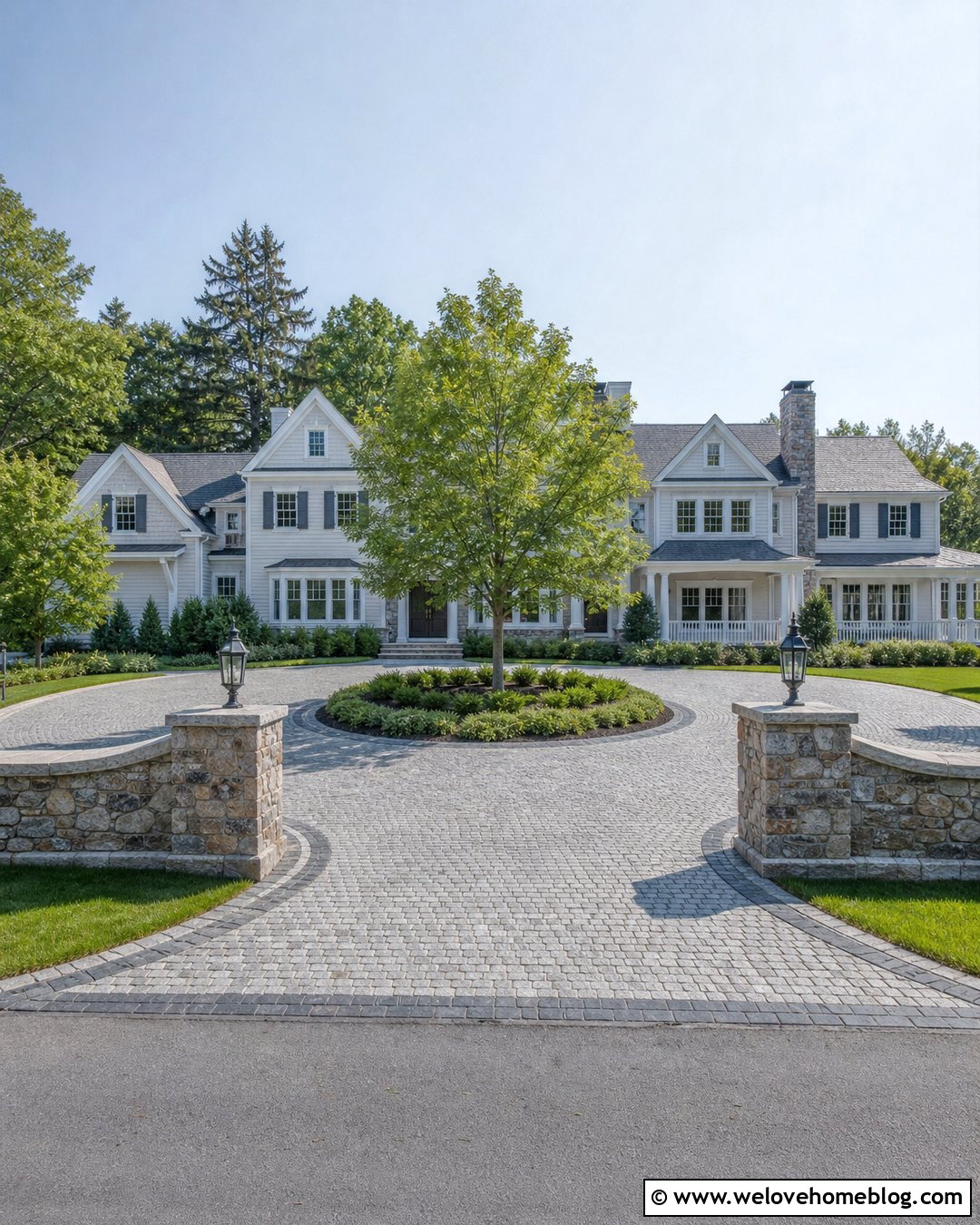
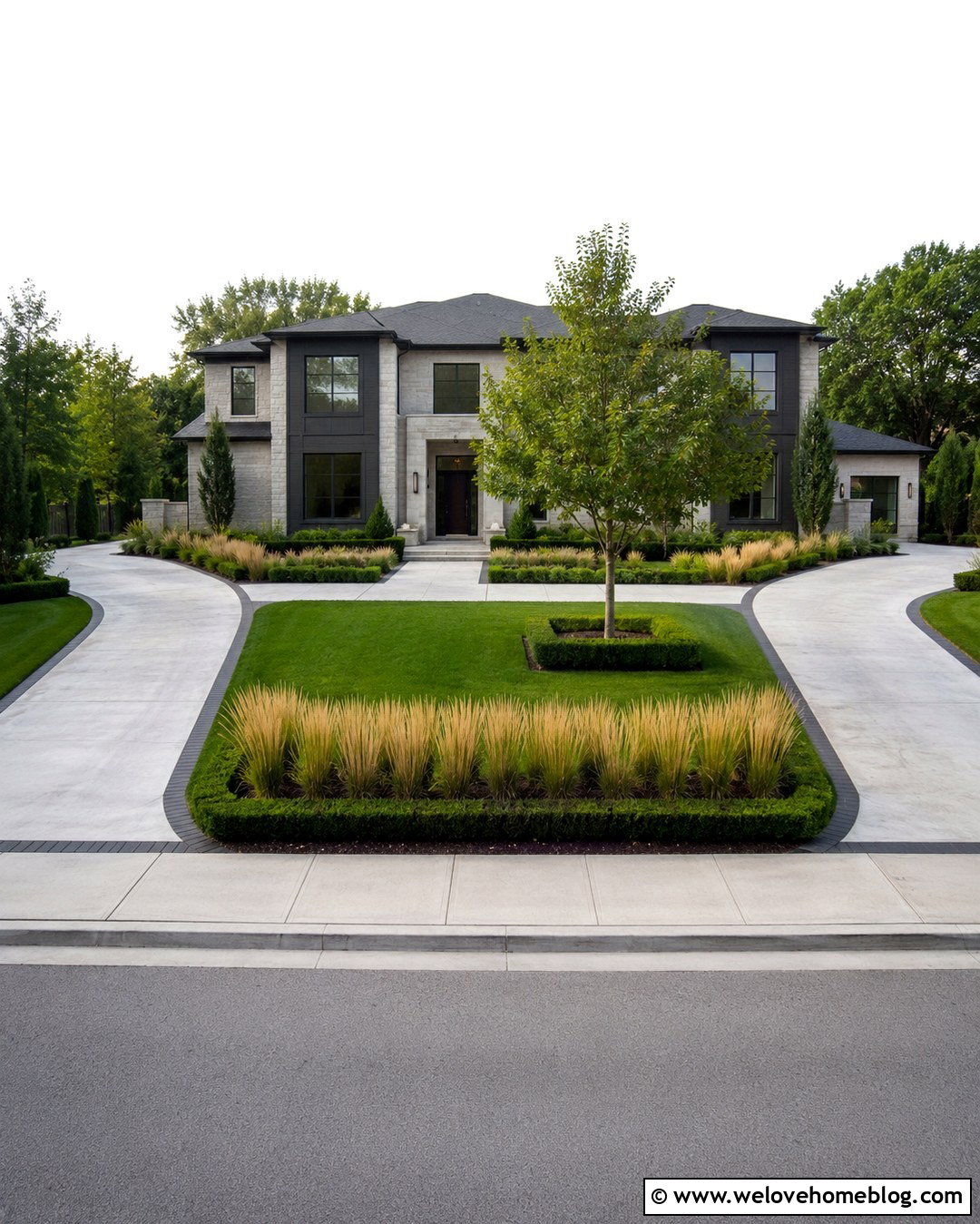
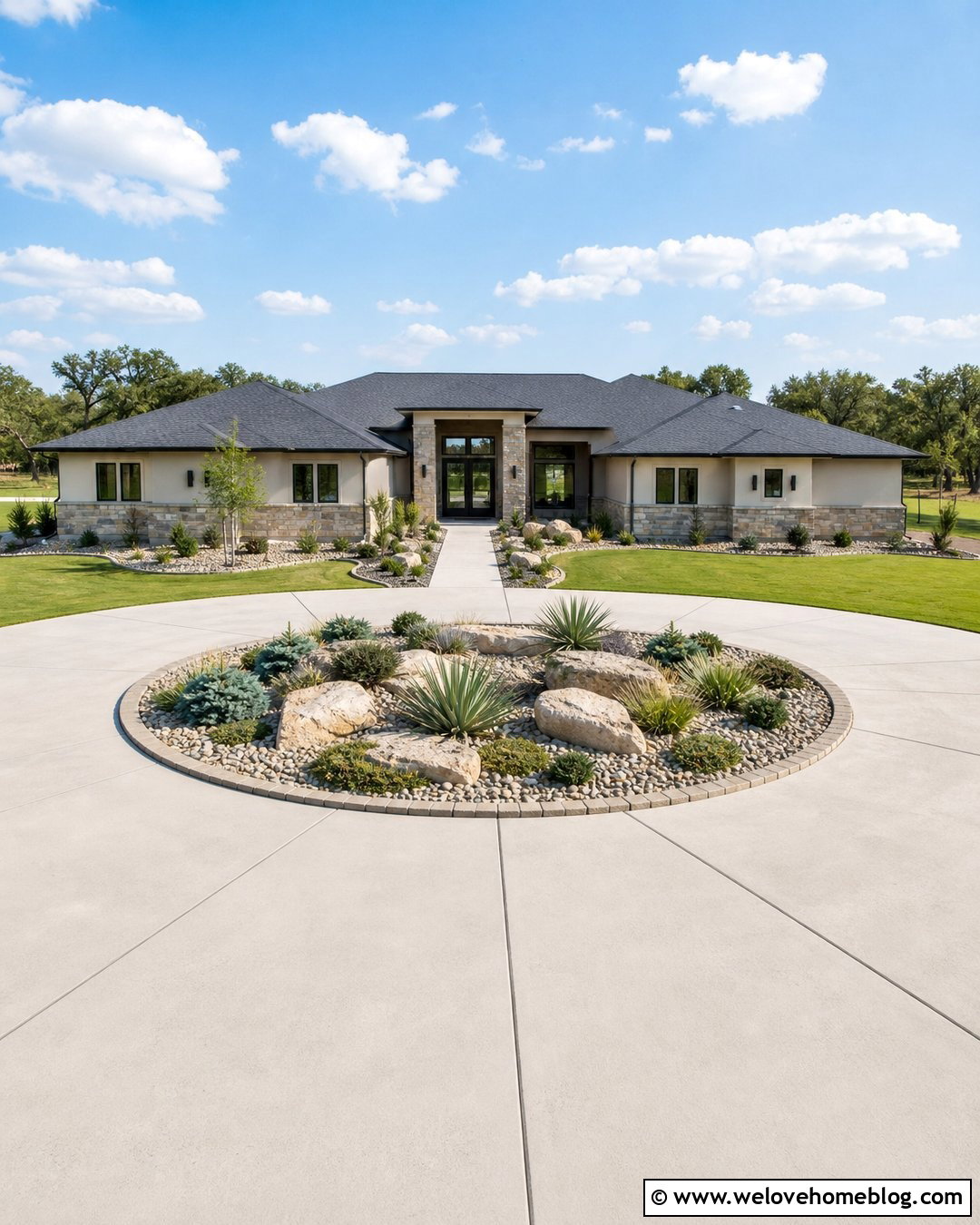
A circular driveway needs a clear focal point, and linden trees can provide structure without making the center feel crowded. Plant a balanced group around the outer edge while keeping the central island open and visible. Light-colored exposed aggregate concrete works well because it reflects sunlight beneath the leafy canopy. Edge the circle with clay brick or granite setts to emphasize its shape. Inside the island, use one specimen linden if sufficient space is available, surrounded by lawn, clipped shrubs, and a low ring of seasonal flowers. Alternatively, reserve the center for a fountain or simple planting bed and place lindens around the perimeter. The trees should frame the house and turning area rather than block windows, walkways, or the main entrance.
5. Linden Tree Driveway With Cobblestone Edging
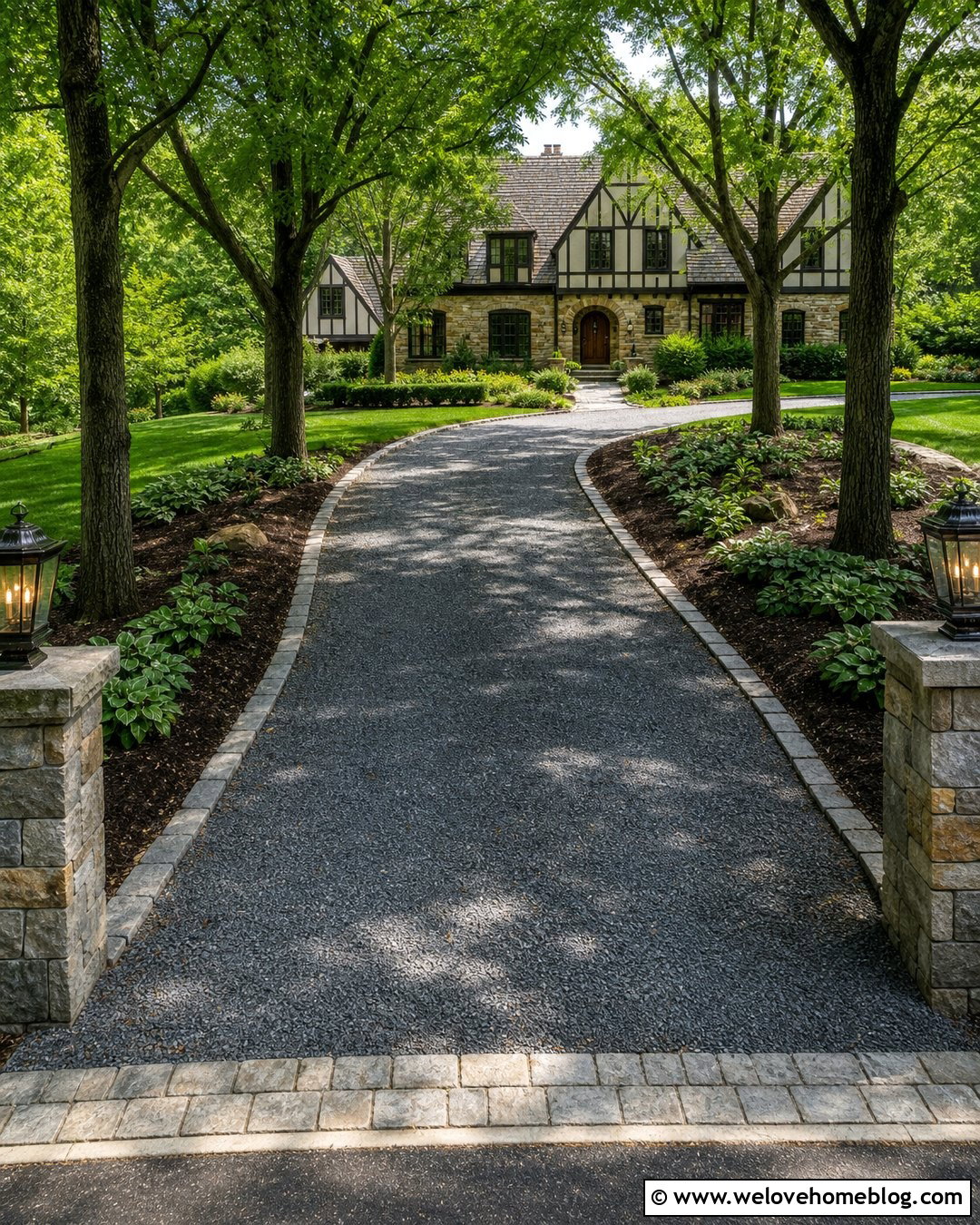
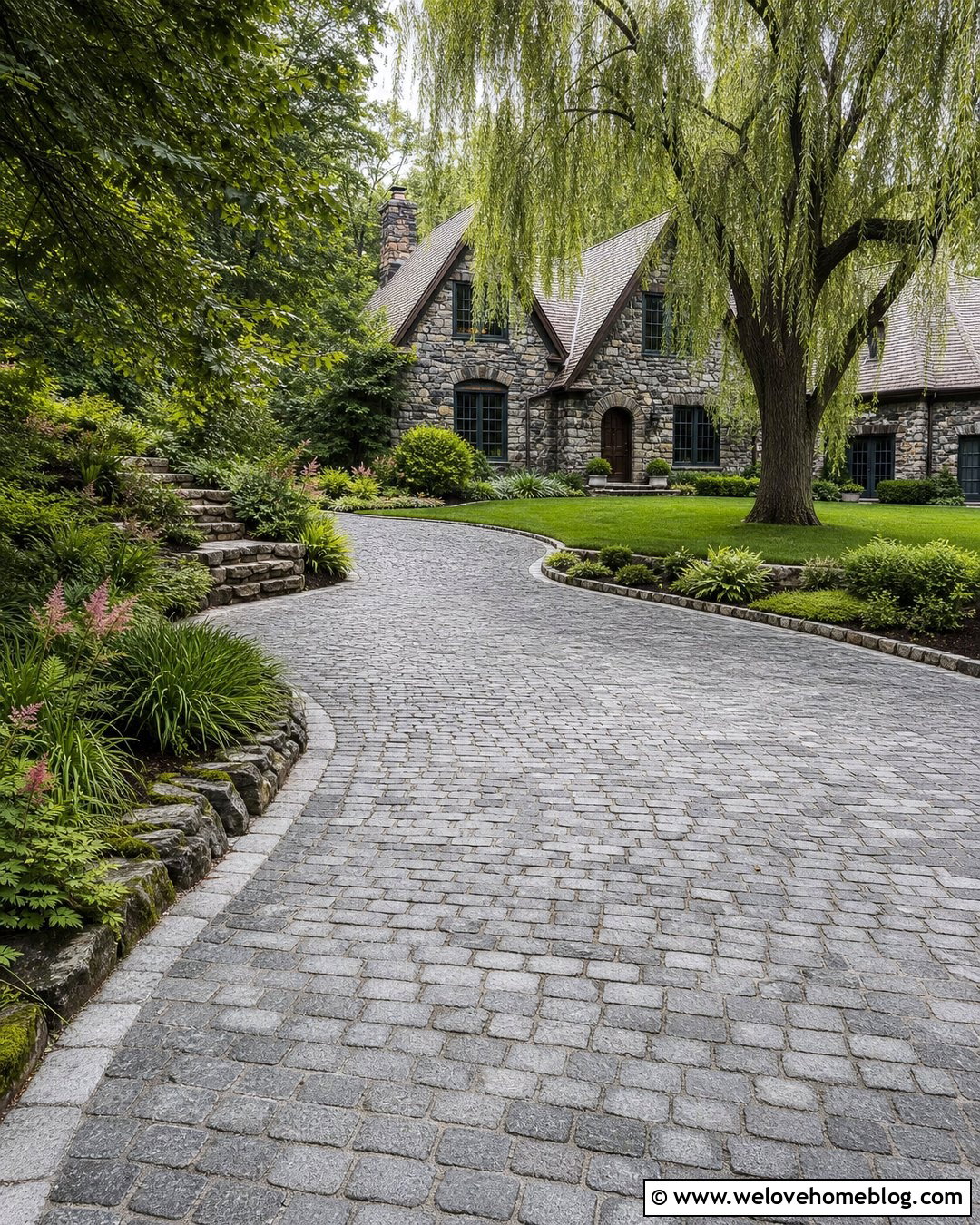
Cobblestone edging gives a linden-lined driveway a durable, established appearance. Pair gray crushed-stone gravel with chunky granite cobbles for a country estate look, or install a narrow cobblestone ribbon beside smooth concrete for a cleaner suburban design. Create wide mulched planting beds beyond the edging so the tree trunks do not sit directly beside the driving surface. The cobbles can also function as a visual transition between the driveway and surrounding lawn. Under the trees, repeat shade-tolerant ground cover in broad groups rather than using many unrelated plants. As the linden canopy develops, the textured stone and simple green planting will remain attractive. This combination works especially well with stone, Tudor, craftsman, and traditional brick houses.
6. Linden Tree Driveway With Lavender Borders
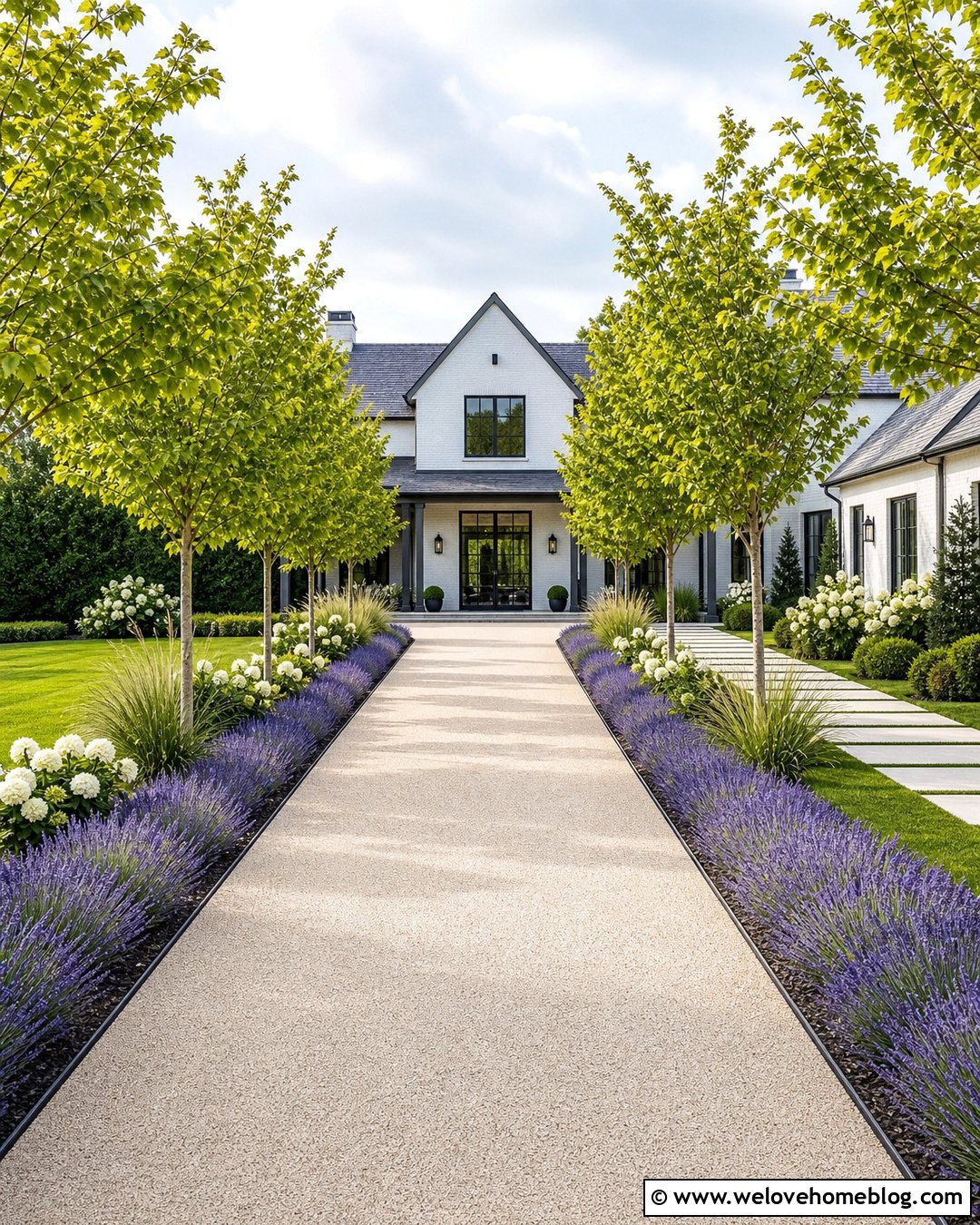
Soft purple flowers can make a linden tree driveway feel colorful without overwhelming the trees. Begin with a pale pea gravel or cream resin-bound gravel surface that highlights the lavender border. Plant the lindens in generous lawn or mulch strips behind the flowers so both layers have adequate room. Lavender performs best where the border receives strong sunlight and has fast-draining soil, so avoid placing it beneath a dense mature canopy. In shadier areas, continue the purple theme with plants suited to lower light. Use steel edging to separate the flower beds from loose gravel and simplify maintenance. This complete look suits modern farmhouses, cottages, and Mediterranean-inspired homes, combining a structured tree line with a softer, aromatic foreground along the driveway.
7. Linden Tree Driveway With Hydrangeas
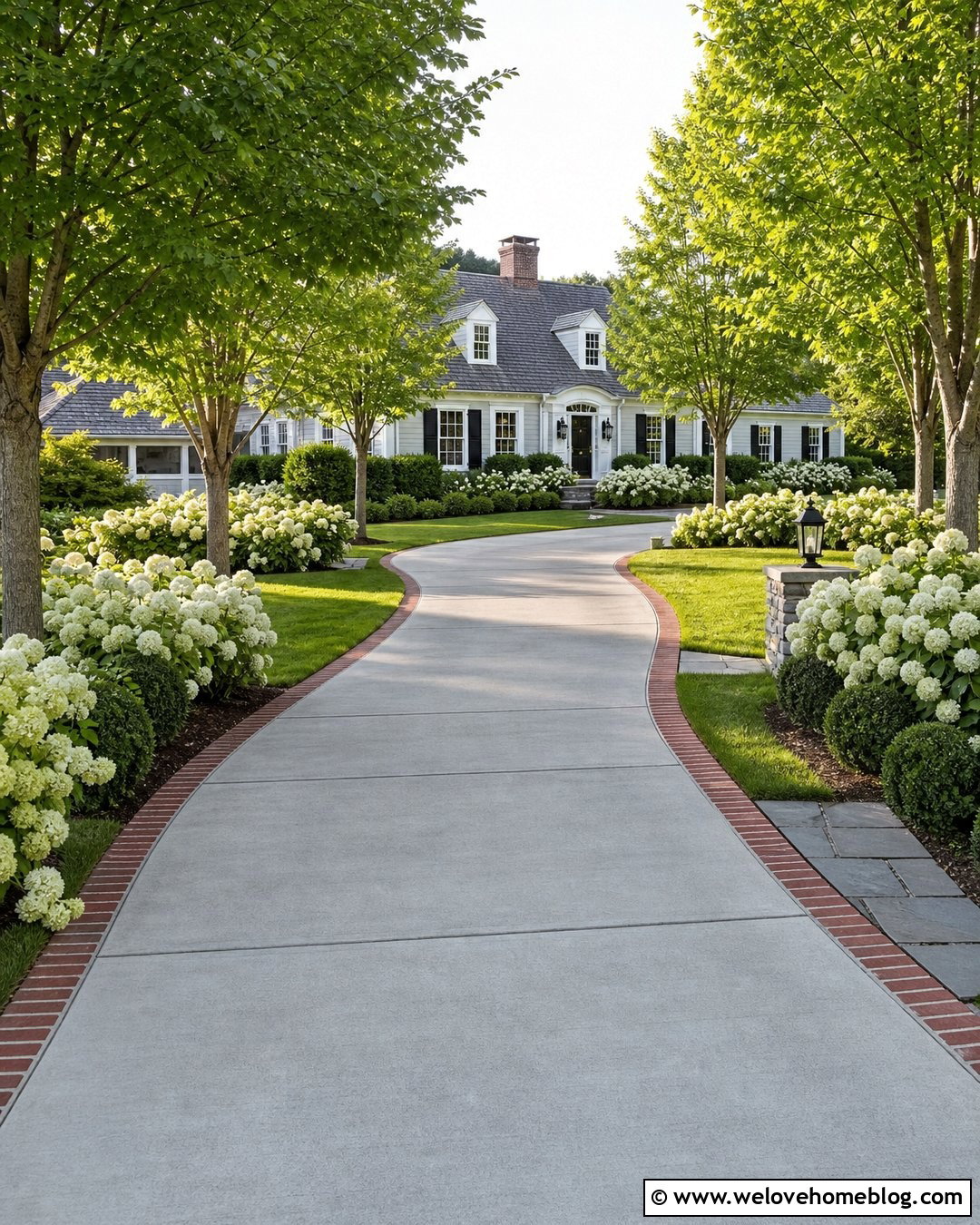
Large hydrangea borders bring fullness and seasonal color to a driveway framed by linden trees. This pairing works best when the shrubs are planted between the trees or along the house end of the driveway rather than crowded around each trunk. Choose a light gray poured-concrete driveway with a gently curved layout and a narrow brick border. The simple surface allows the green canopy and flowering shrubs to become the main attraction. Keep hydrangeas far enough from the pavement that mature branches will not narrow the driving area. A drip irrigation system can water the beds without repeatedly wetting the driveway. White-flowering varieties create a calm, classic look, while pink or blue flowers add stronger color beside a Cape Cod, colonial, or craftsman home.
8. Linden Tree Driveway With Native Meadow
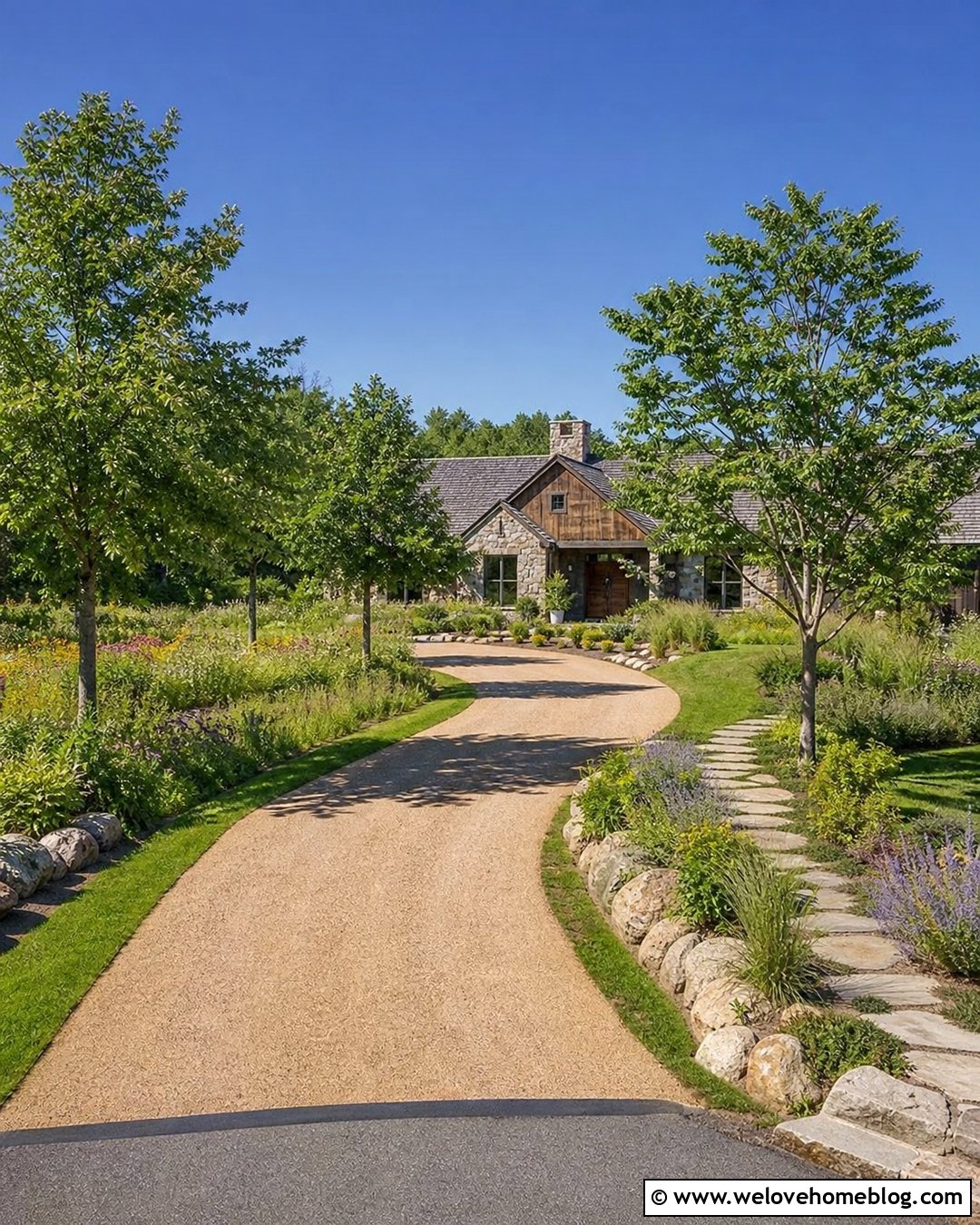
For a more natural property, replace continuous mowed lawn with broad meadow planting beneath and beyond the linden rows. A tan gravel driveway with an informal curved layout supports this relaxed appearance. Use native grasses and flowering perennials in repeated drifts, but maintain clear mulch circles or open planting zones around young trunks. Near the street and driveway bends, keep plants low enough to preserve visibility. A mowed strip beside the gravel provides a tidy transition and prevents the meadow from looking neglected. The lindens supply height and repetition, while the mixed planting creates texture and seasonal movement. This landscape is especially effective on large rural lots where formal hedges would feel too rigid. Add a simple fieldstone border near the entrance to anchor the design.
9. Formal Linden Tree Driveway
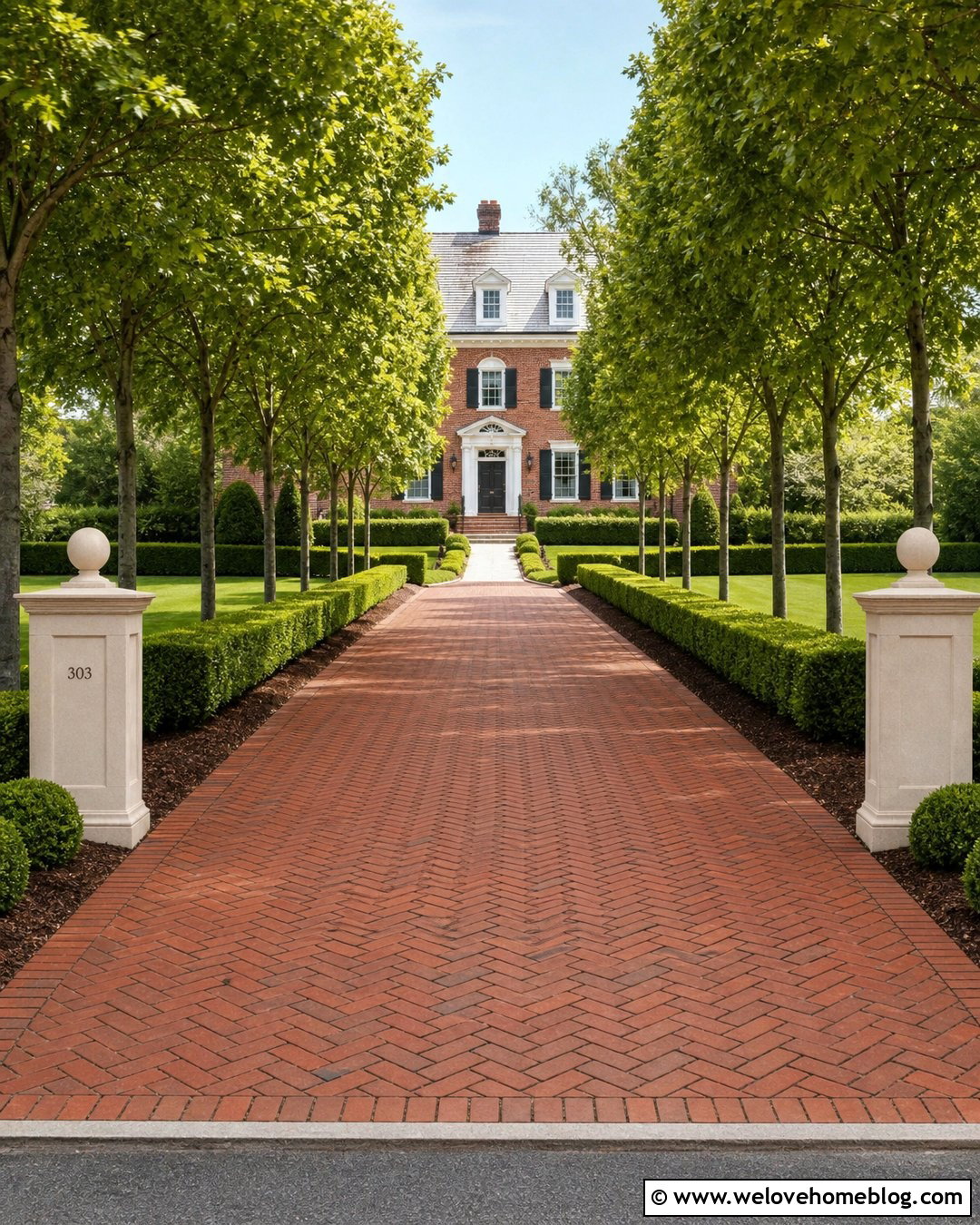
Symmetry is the foundation of a formal linden tree driveway. Install matching rows of trees along a straight clay brick paver surface, positioning each trunk opposite its partner whenever site dimensions permit. Herringbone paving adds a traditional pattern and handles the visual scale of a long approach. Use clipped boxwood-like shrubs, rectangular lawn panels, and consistent mulch beds between the driveway and tree rows. At the entrance, brick pillars or limestone posts can echo the home’s facade. Avoid mixing too many flower colors or edging materials because repetition produces the strongest effect. Low landscape lighting placed at regular intervals can reinforce the arrangement after sunset. This complete design is well suited to Georgian, colonial, French country, and other homes with balanced architecture.
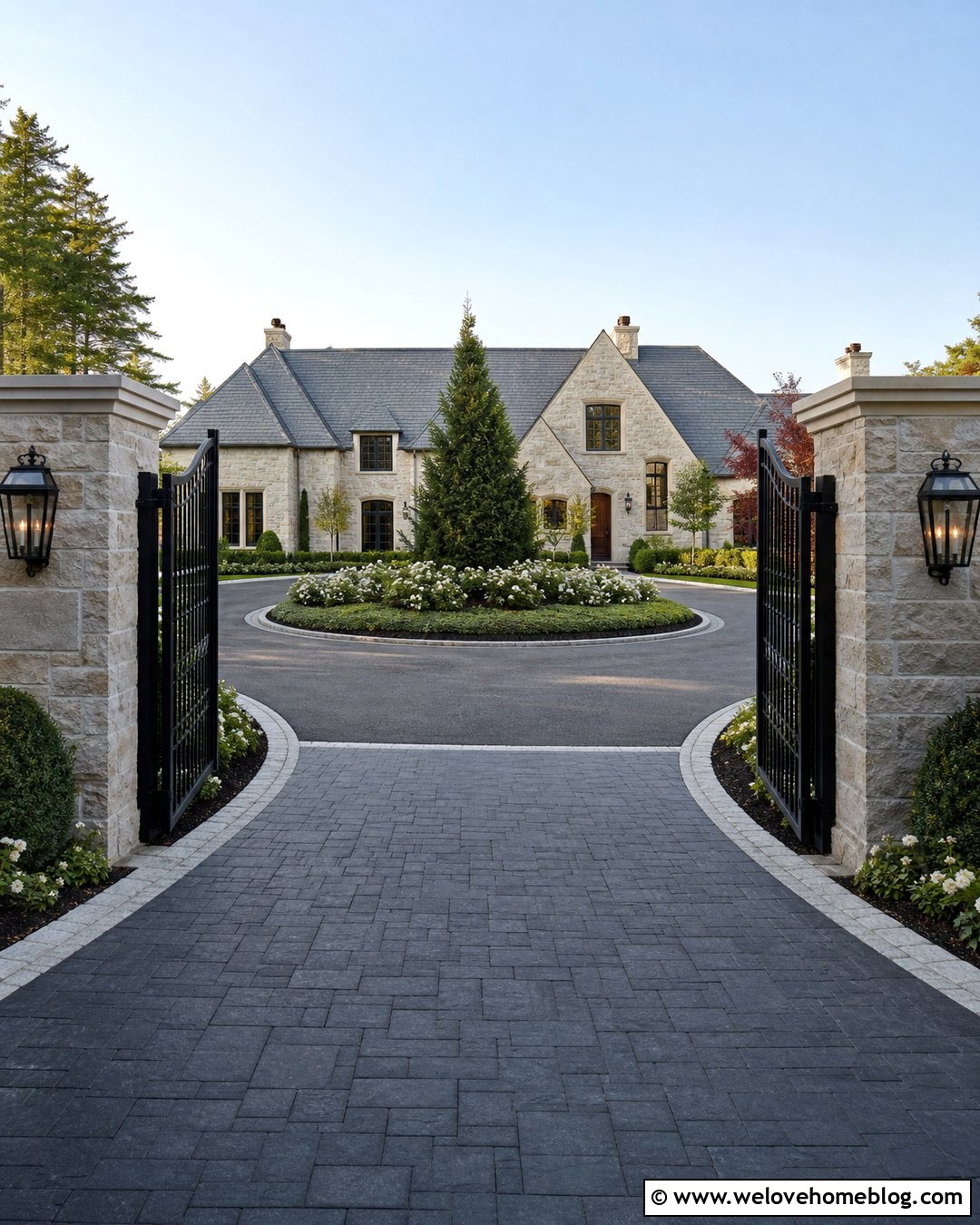
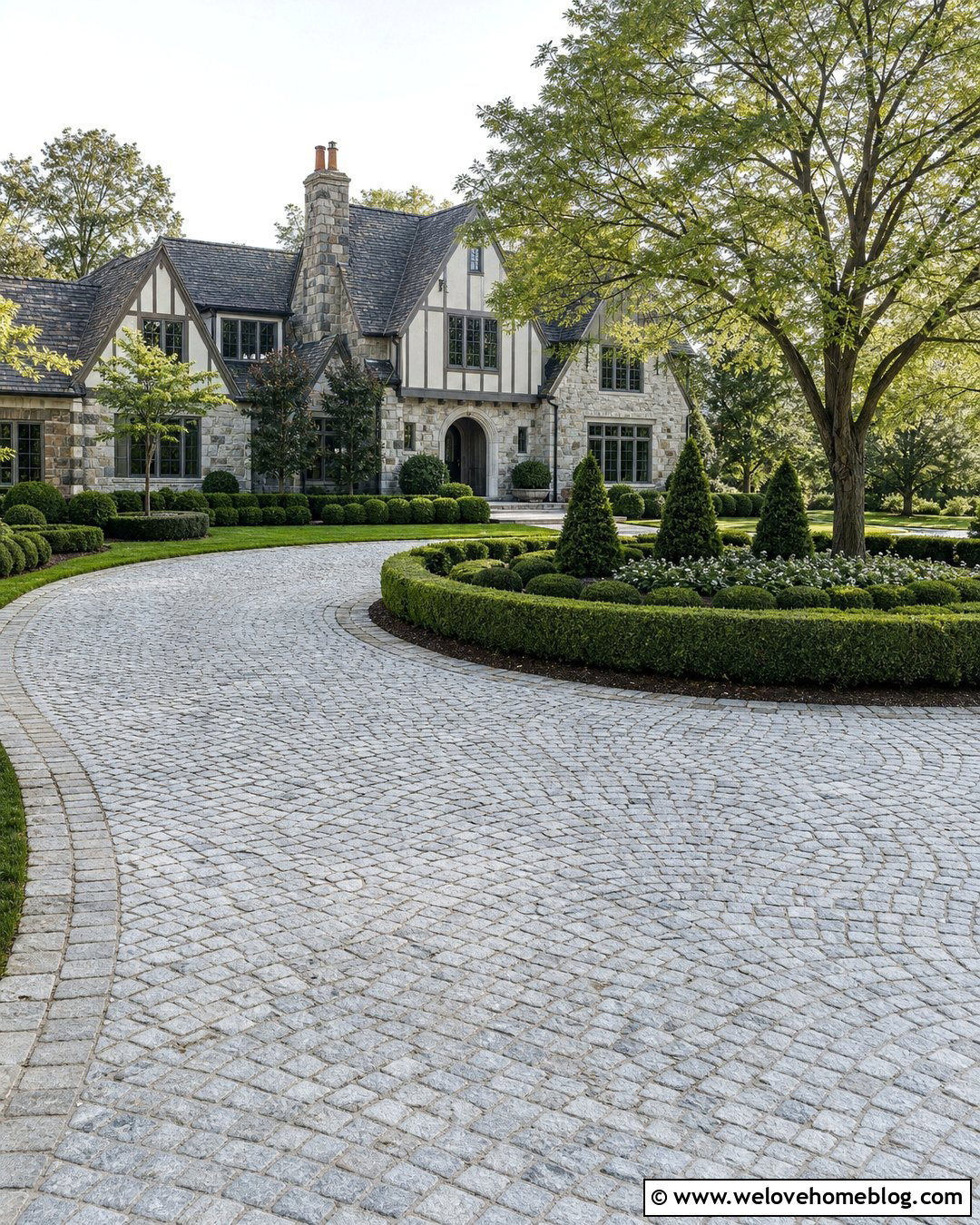
10. Rustic Linden Tree Driveway
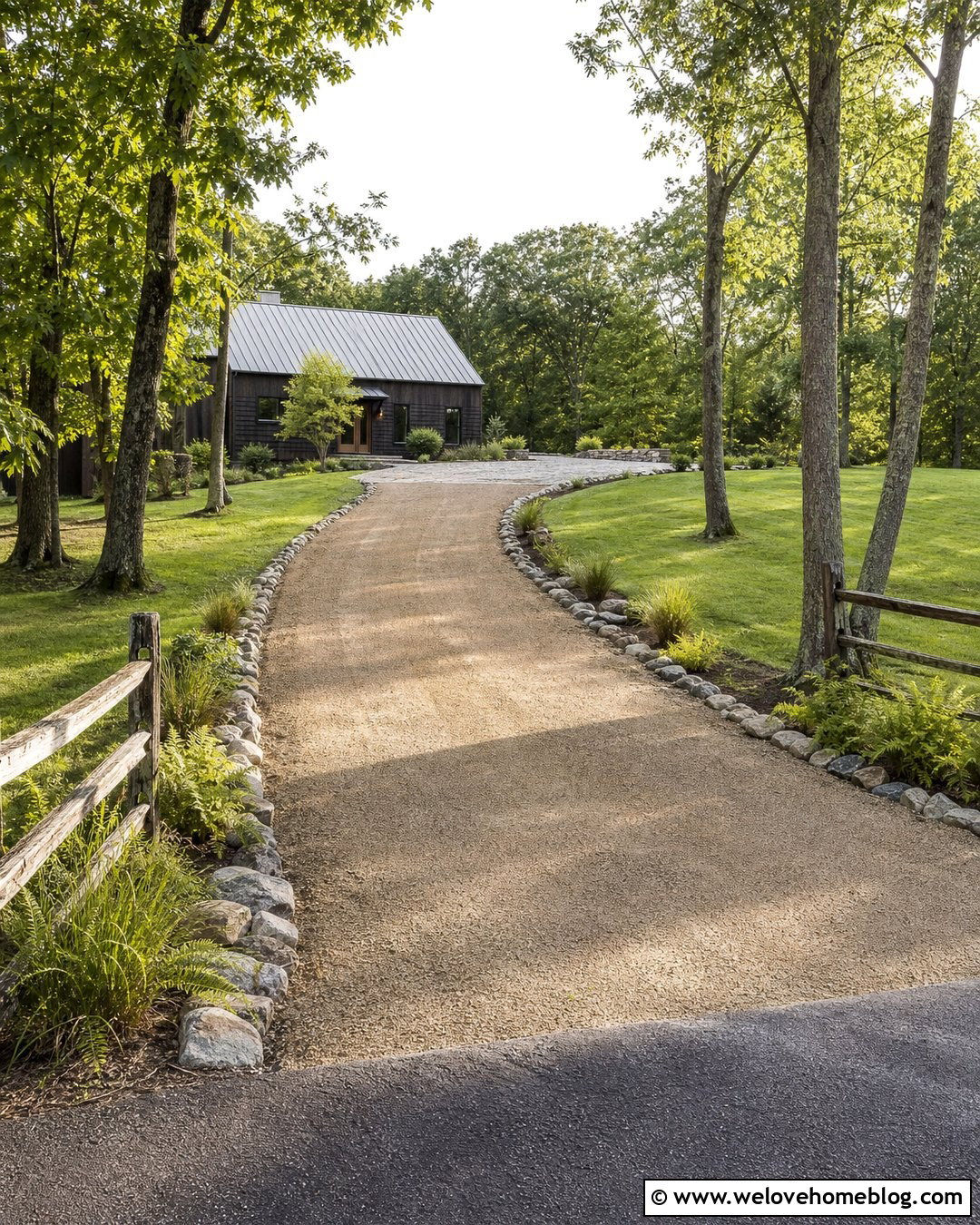
Weathered materials and relaxed planting give a linden-lined entrance a comfortable rural character. Start with compacted brown gravel or crushed limestone laid in a broad, gently winding path. Edge selected areas with local fieldstone rather than outlining every inch of the driveway. Space linden trees in a loose rhythm, allowing existing trees, stone walls, and natural land contours to influence their placement. Underplant with ferns, hardy ground cover, ornamental grasses, and simple flowering perennials. A split-rail fence can follow one side without making the entrance feel enclosed. Near the house, transition the gravel into a larger parking court bordered by stone. The finished driveway should appear thoughtfully maintained but not overly perfect, making it appropriate for cabins, country homes, and renovated farmhouses.
11. Modern Linden Tree Driveway

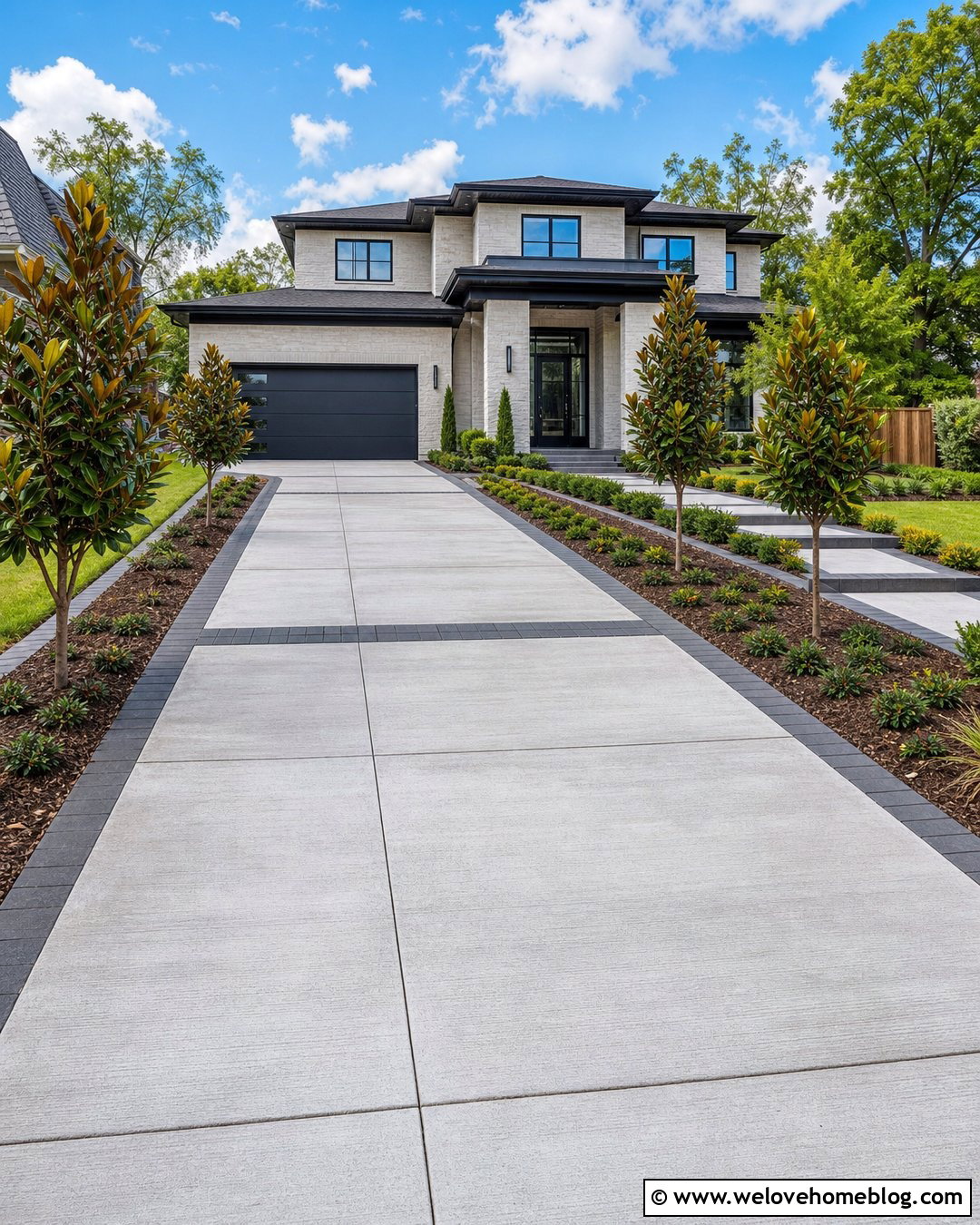
Clean lines allow the architectural form of linden trees to stand out beside a modern home. Choose smooth light-gray poured concrete divided into large rectangular slabs. Narrow grass strips or dark gravel joints can break up the surface while improving its visual scale. Plant lindens along one side in a straight row, then balance them with low ornamental grasses on the opposite edge. This asymmetrical arrangement works well when the property is too narrow for two full rows. Use black steel edging, minimal planting beds, and simple rectangular path lights. Avoid tightly shaped shrubs around every tree; one continuous mulch or ground-cover bed will look cleaner. The fresh foliage softens concrete, glass, and metal while maintaining the uncluttered character expected from contemporary driveway landscaping.
12. Farmhouse Linden Tree Driveway
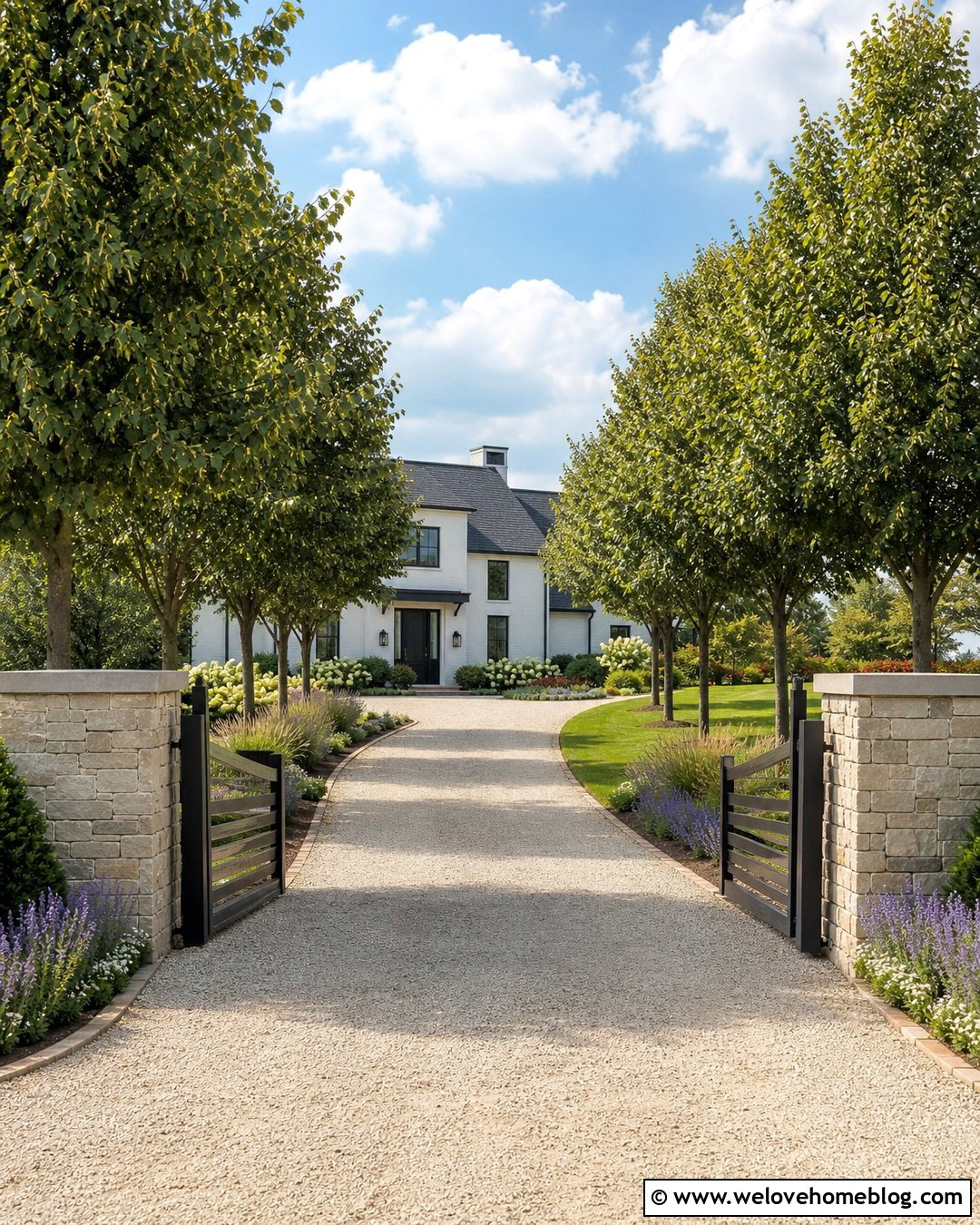
Imagine a white farmhouse at the end of a light gravel lane, framed by green linden canopies and open lawn. To create this look, use cream crushed limestone in a straight or subtly curved layout. Add red brick edging near the house, where a more finished transition is useful, and leave the rural end softly bordered by grass. Plant matching linden trees at comfortable intervals, but avoid placing them so close that future branches crowd the drive. Hydrangeas, catmint, ornamental grasses, and low evergreen shrubs can fill beds near the porch. A black farm-style gate and simple stone pillars strengthen the entrance without appearing too grand. This design blends practical materials, classic trees, and relaxed planting into a warm approach with strong farmhouse curb appeal.
13. Colonial Linden Tree Driveway
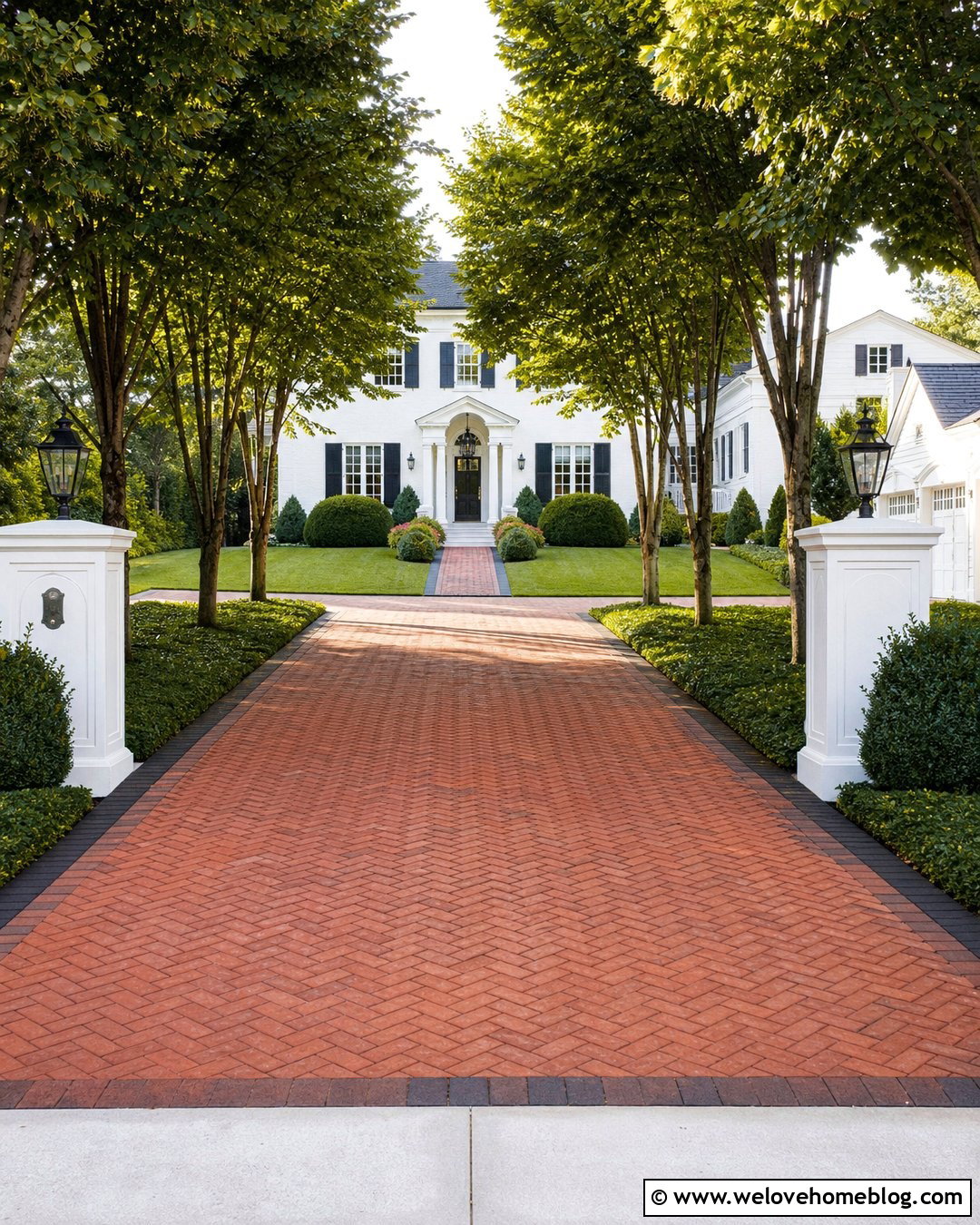
A colonial home often looks best with a driveway that reflects its centered entrance and balanced windows. Use red clay brick pavers in herringbone or a charcoal asphalt surface bordered with a double brick ribbon. Arrange linden trees in matching rows to establish a clear sightline toward the front door. Beneath the trees, maintain rectangular lawn strips or long beds filled with restrained evergreen ground cover. White gateposts, brick pillars, or low masonry walls can mark the roadside entrance. Continue the symmetry near the house with matching walkway connections and foundation shrubs. If the garage sits to one side, gently widen the driveway only after passing the main tree row. This preserves the formal arrival view while providing the turning space needed for daily use.
14. Narrow Linden Tree Driveway
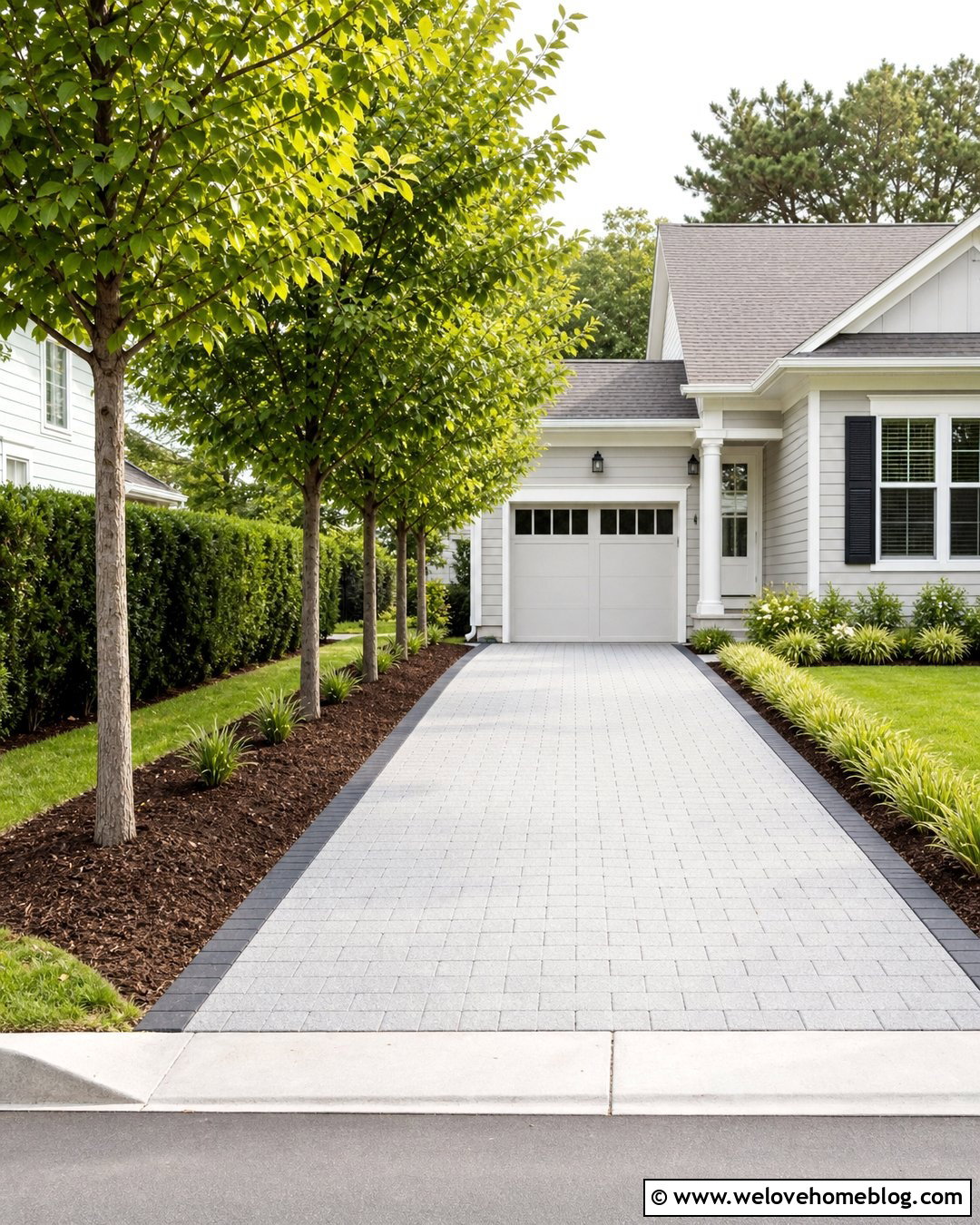
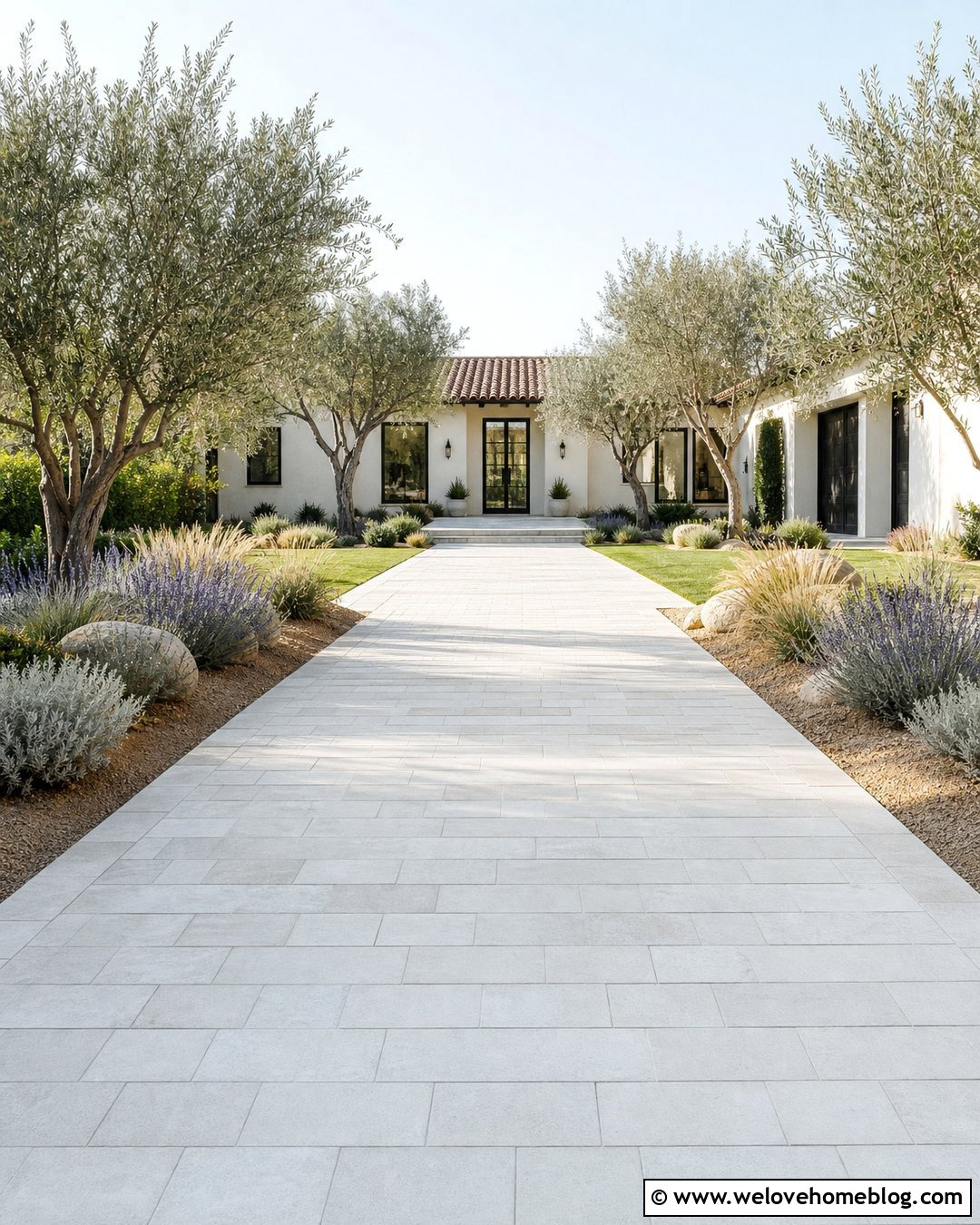
A narrow property requires more careful tree placement, but it can still support a beautiful linden-focused design. Use a single row along the wider side of a straight permeable paver driveway instead of forcing trees onto both edges. Select an upright linden cultivar appropriate for the climate and available space, then confirm mature dimensions with a local arborist or nursery. Littleleaf lindens can eventually become substantial trees, and roots need healthy soil beyond compacted pavement. () On the opposite side, install low shrubs, ornamental grasses, or a slim hedge to provide balance. Choose light pavers and a dark border to make the driveway appear wider. Keep the street entrance open and avoid shrubs that might interfere with driver or pedestrian sightlines.
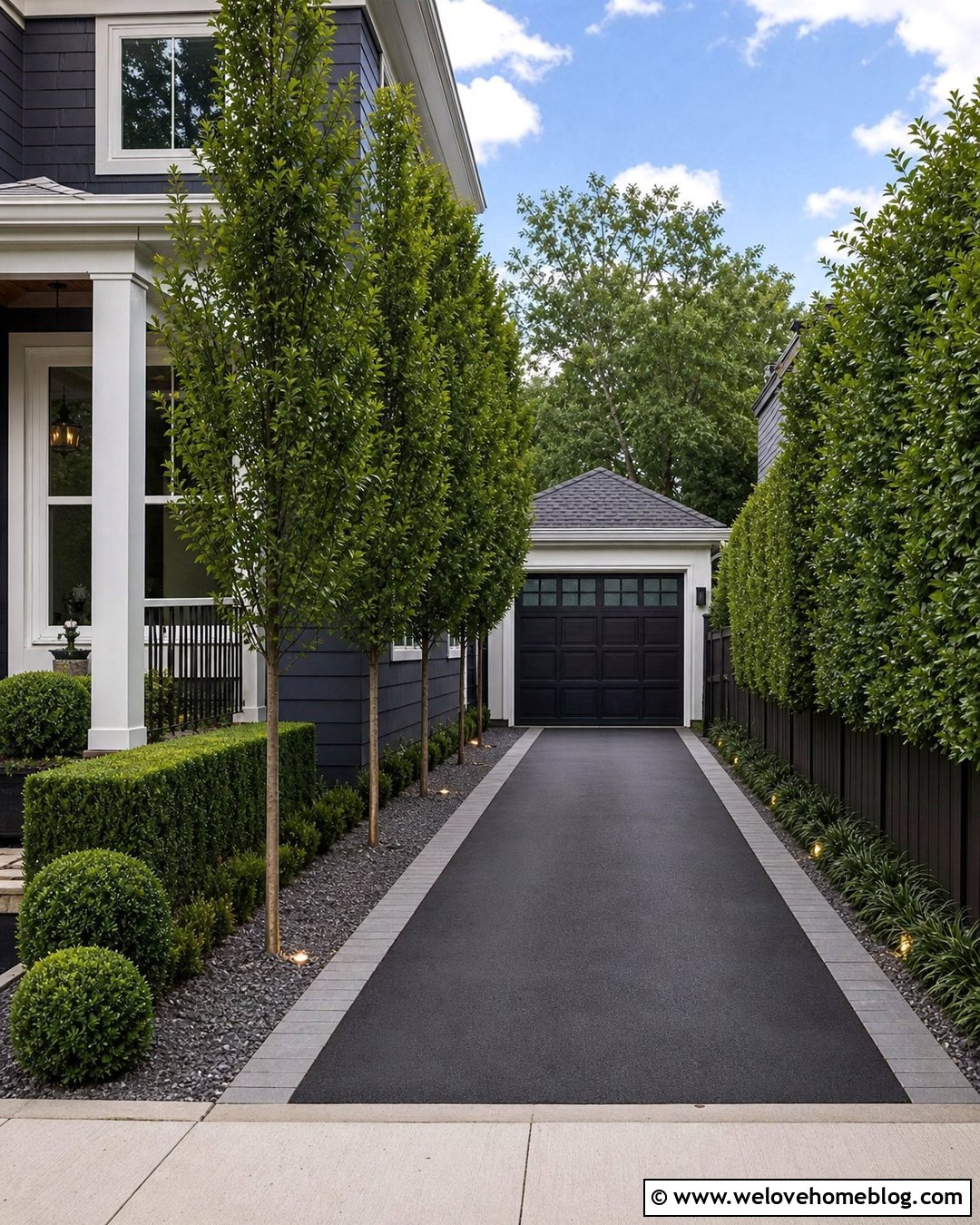

15. Sloped Linden Tree Driveway
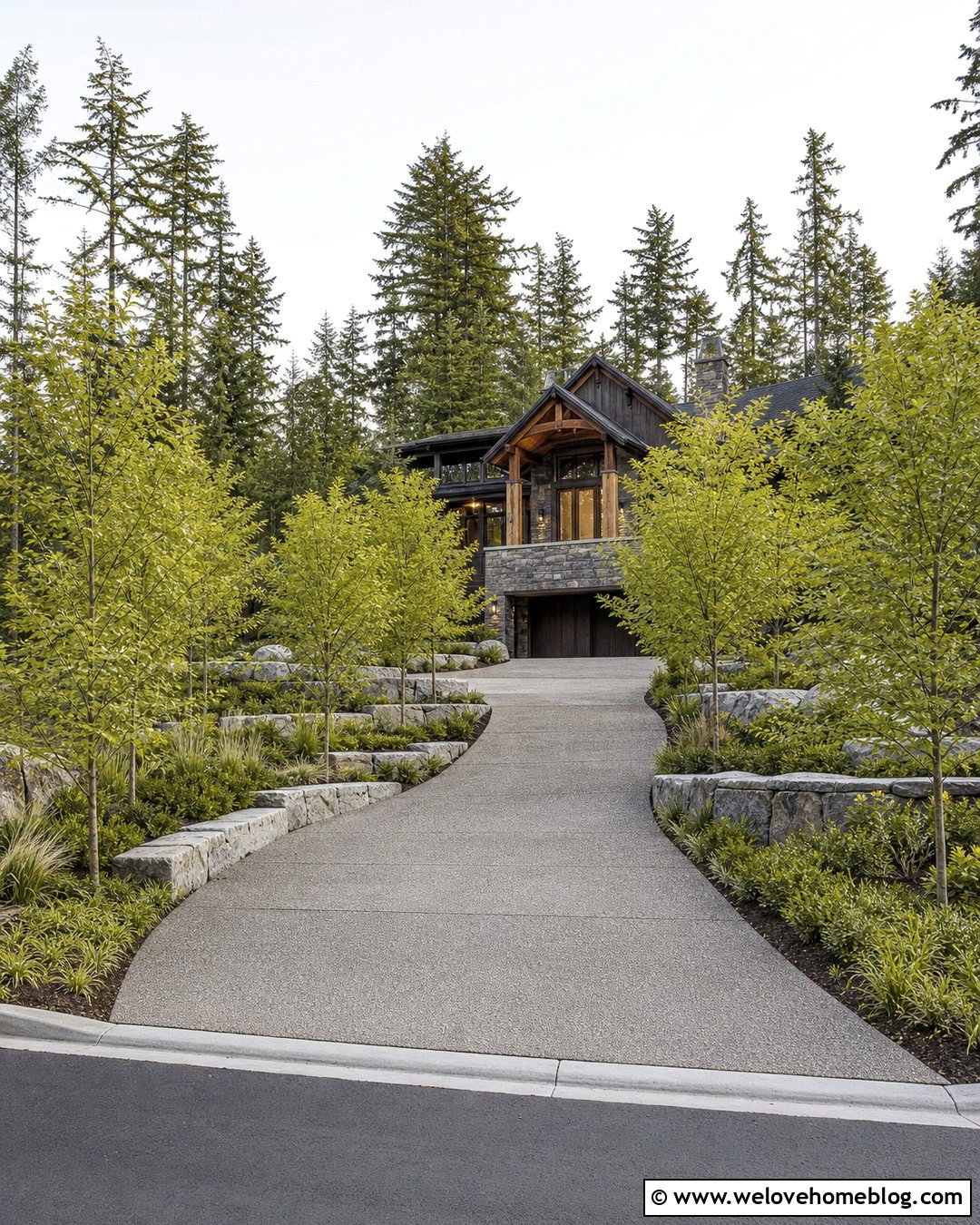
A sloped driveway benefits from strong borders, controlled drainage, and planting that visually reduces the incline. Use textured concrete pavers or exposed aggregate concrete for a defined, practical surface. Install stone curbs along the downhill edge and create broad planting terraces for linden trees rather than placing them on steep, unstable banks. The trees can be arranged in staggered groups that follow the changing grade. Low grasses, spreading ground covers, and erosion-conscious shrubs will connect the tree beds without hiding retaining walls. Direct runoff toward approved drainage areas instead of allowing it to collect around trunks. At the top, widen the driveway into a level arrival court. The repeated linden canopies draw attention toward the house while the layered stonework makes the slope feel intentional.
16. Pleached Linden Tree Driveway
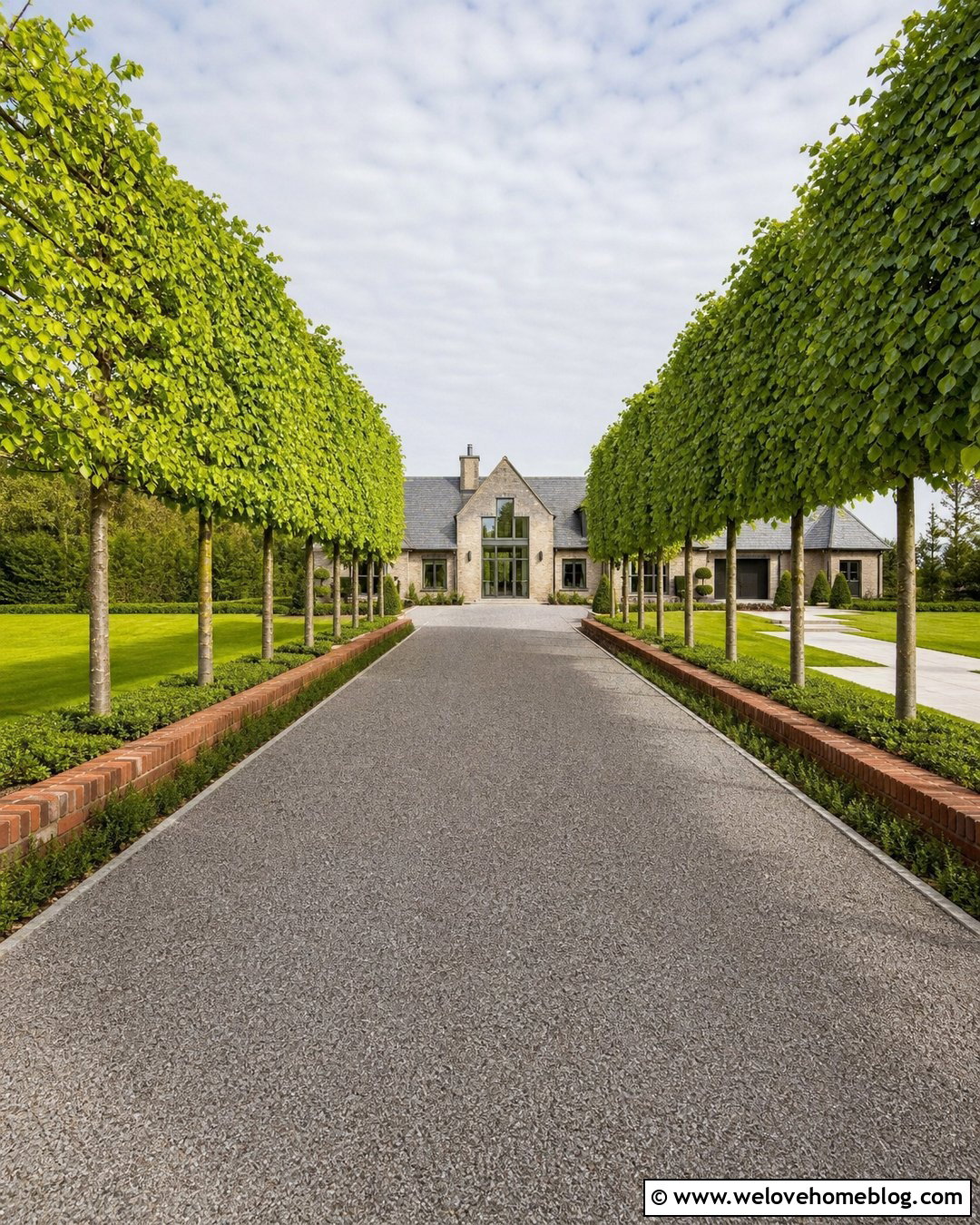
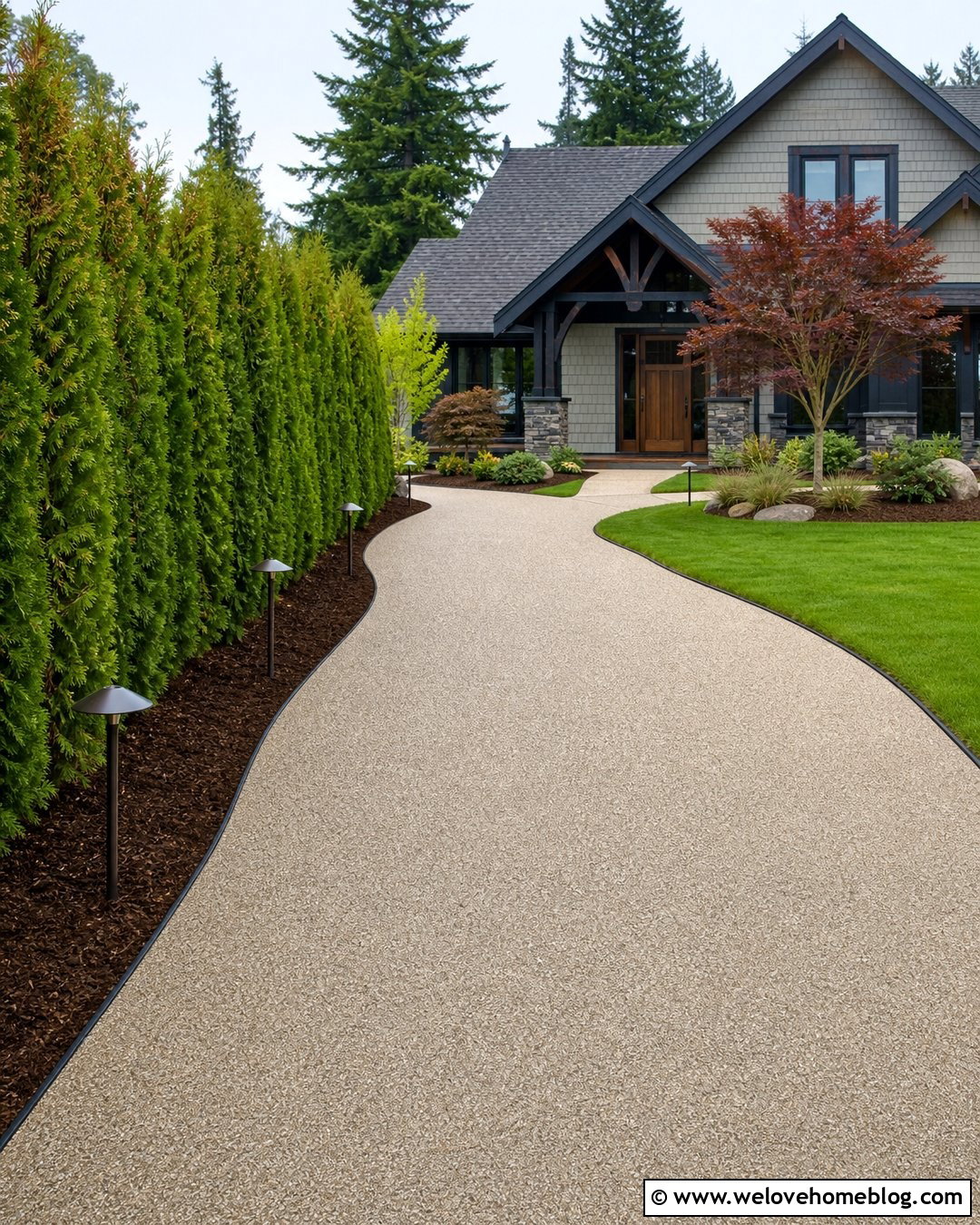
Pleached linden trees create a living screen by training branches into a raised, connected framework. This treatment is useful beside a driveway where privacy is wanted without installing a solid wall. Pair the trees with warm gray resin-bound gravel and a straight layout for a smooth, formal appearance. A low brick retaining edge can define the narrow tree bed, while clipped ground cover keeps the base tidy. Pleaching requires proper supports, regular pruning, and patience, so it is better suited to homeowners who enjoy structured garden maintenance. Use it along one side to screen a neighboring property or on both sides to form a dramatic green corridor. The elevated foliage leaves the lower driveway visually open while providing an architectural backdrop for a traditional or contemporary house.
17. Staggered Linden Tree Driveway
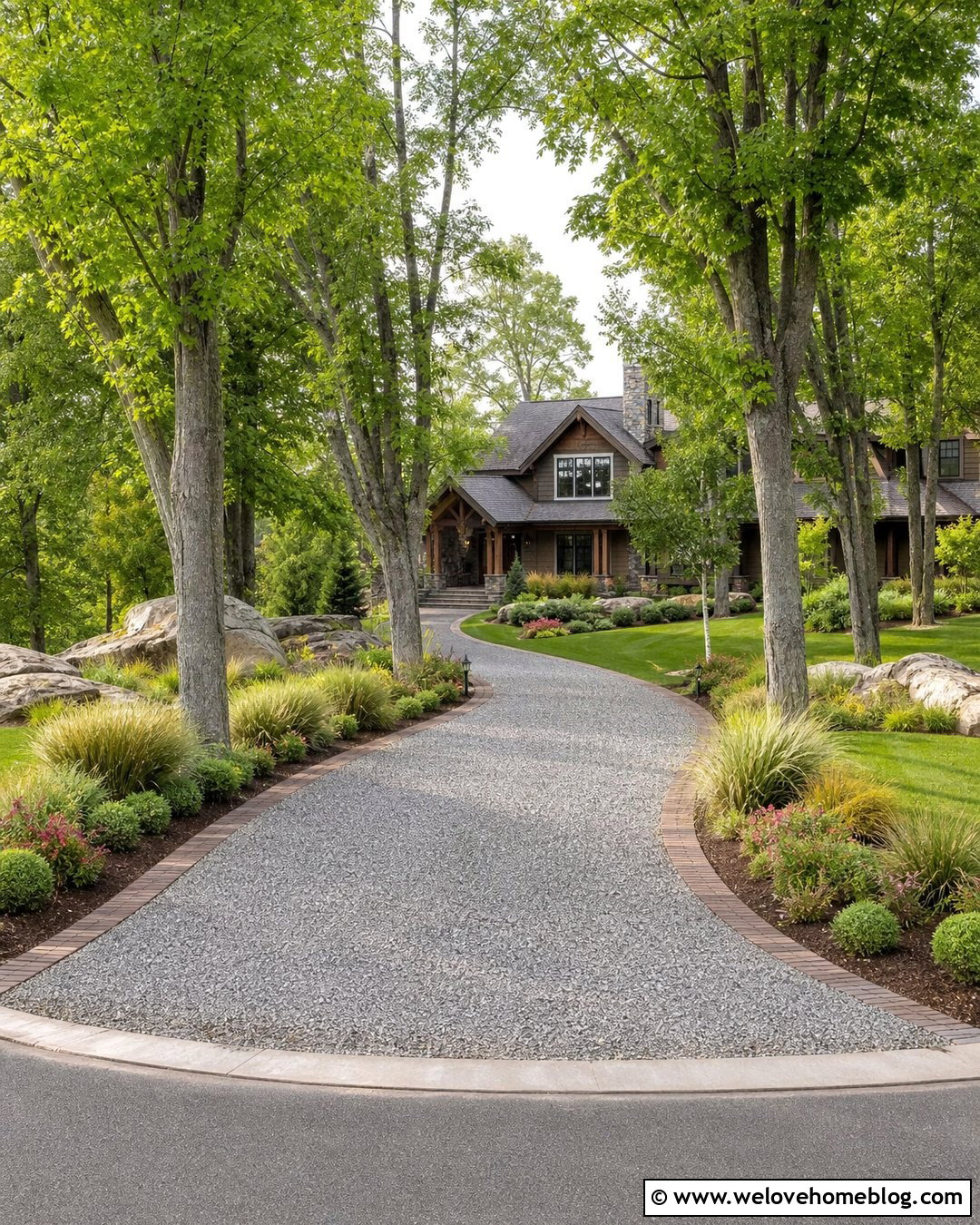
Perfectly matching tree pairs are not the only option. A staggered arrangement can follow a curved driveway more naturally and accommodate existing landscape features. Use medium-gray gravel with a dark brick ribbon, then position each linden where it contributes shade and visual rhythm without interrupting drainage, utilities, or important views. Alternate trees from one side to the other instead of lining every trunk across from another. Between them, create large planting drifts with grasses, low shrubs, and seasonal perennials. Consistent spacing and repeated materials will keep the informal layout from appearing random. This approach works especially well on wooded, irregular, or gently rolling properties. It also lets the driveway bend around mature trees, rock outcrops, or existing garden areas that deserve to remain.
18. Linden Tree Driveway Entrance With Stone Pillars
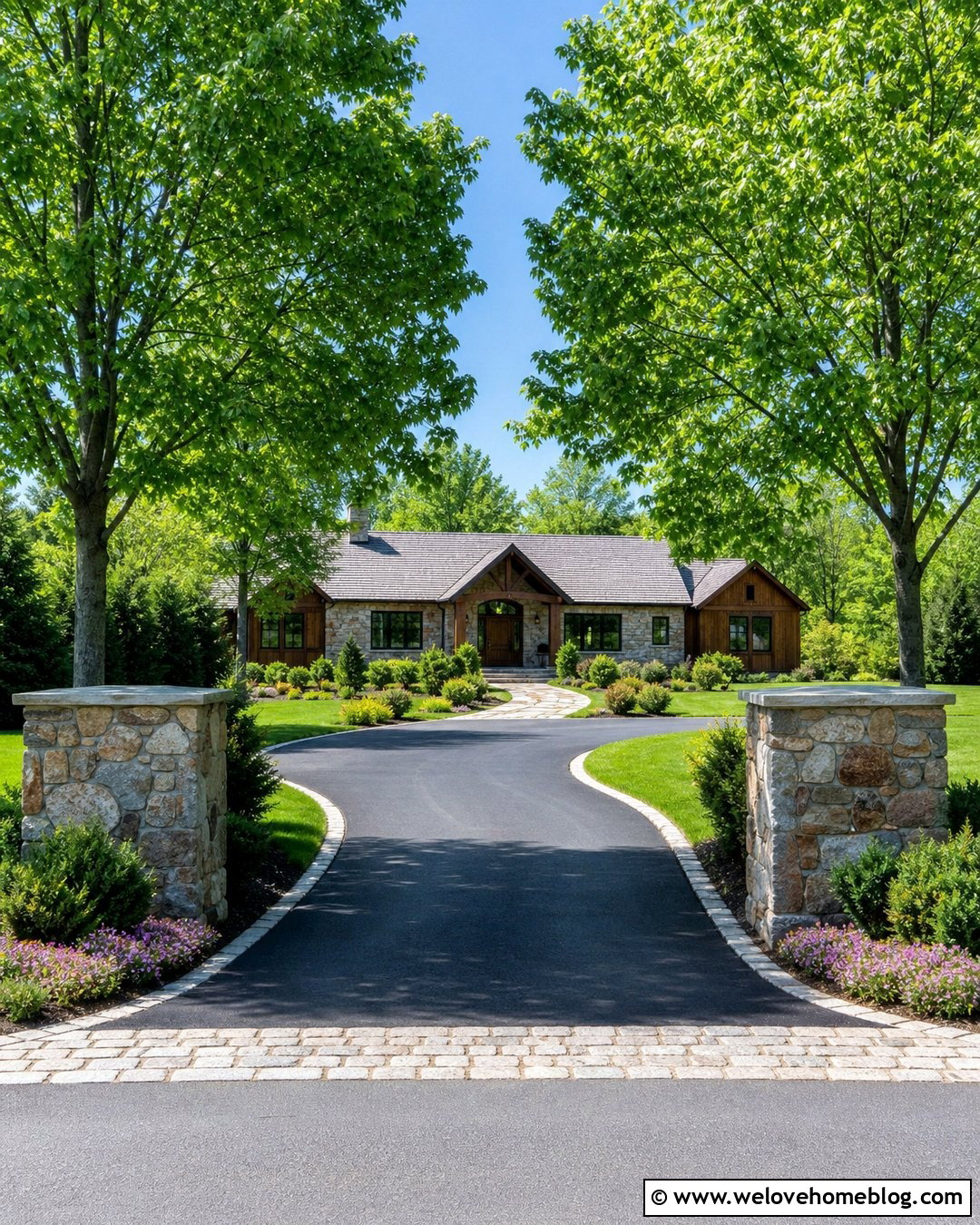
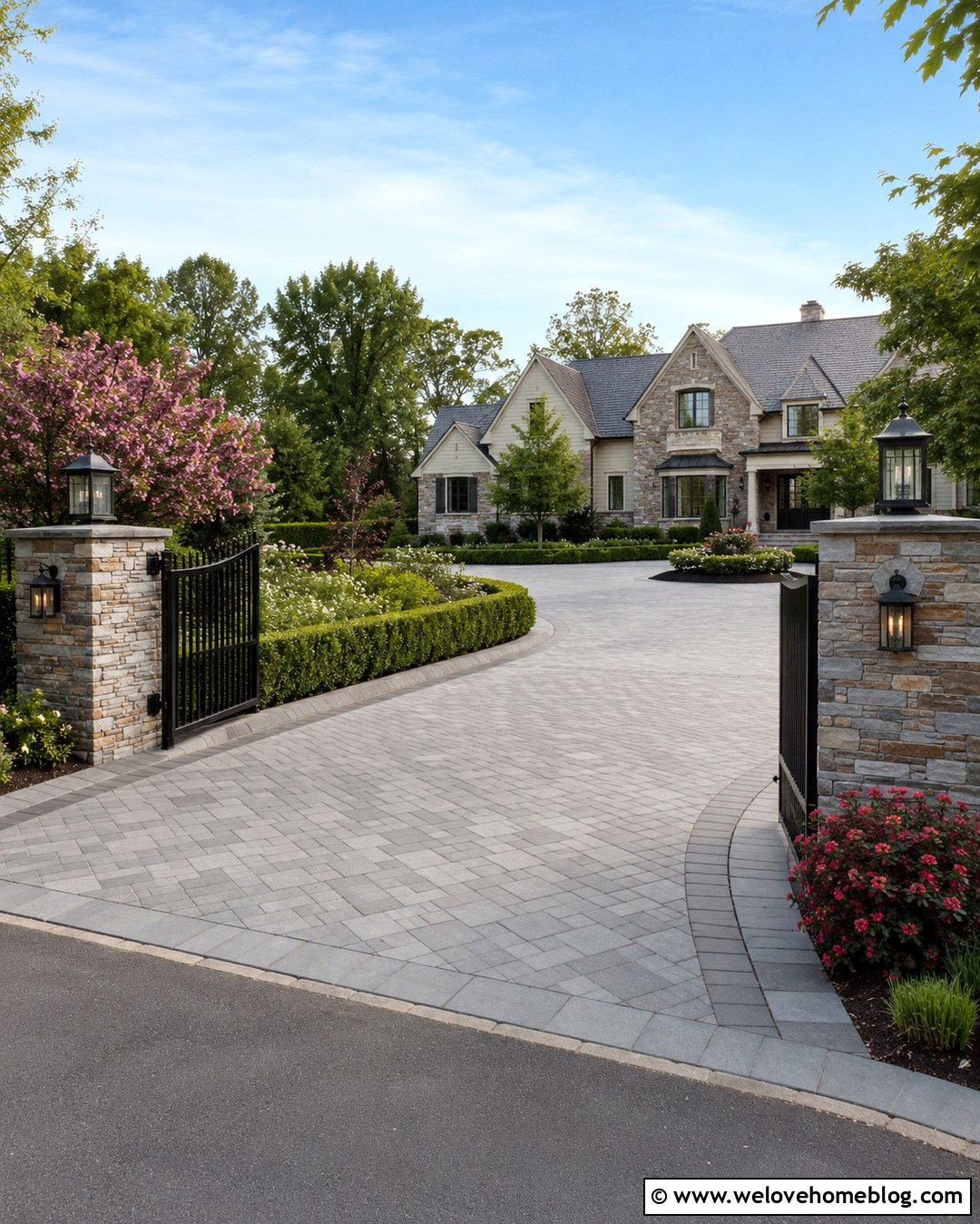
The first pair of linden trees can work with stone pillars to create a clear and welcoming property entrance. Choose a curved black asphalt driveway with a pale granite cobblestone border, allowing the surface to recede behind the planting. Set the pillars back from the road and outside the vehicle turning path. Plant one linden beyond each pillar so the trees frame the approach without hiding masonry details or address features. Low evergreen shrubs and flowering ground cover can connect the pillars to the wider landscape. Use the same stone around nearby beds or along a short retaining wall for continuity. This combination is effective for craftsman, mountain, ranch, and country homes because it joins a substantial built entrance with softer overhead foliage.
19. Linden Tree Driveway With Low-Voltage Lighting
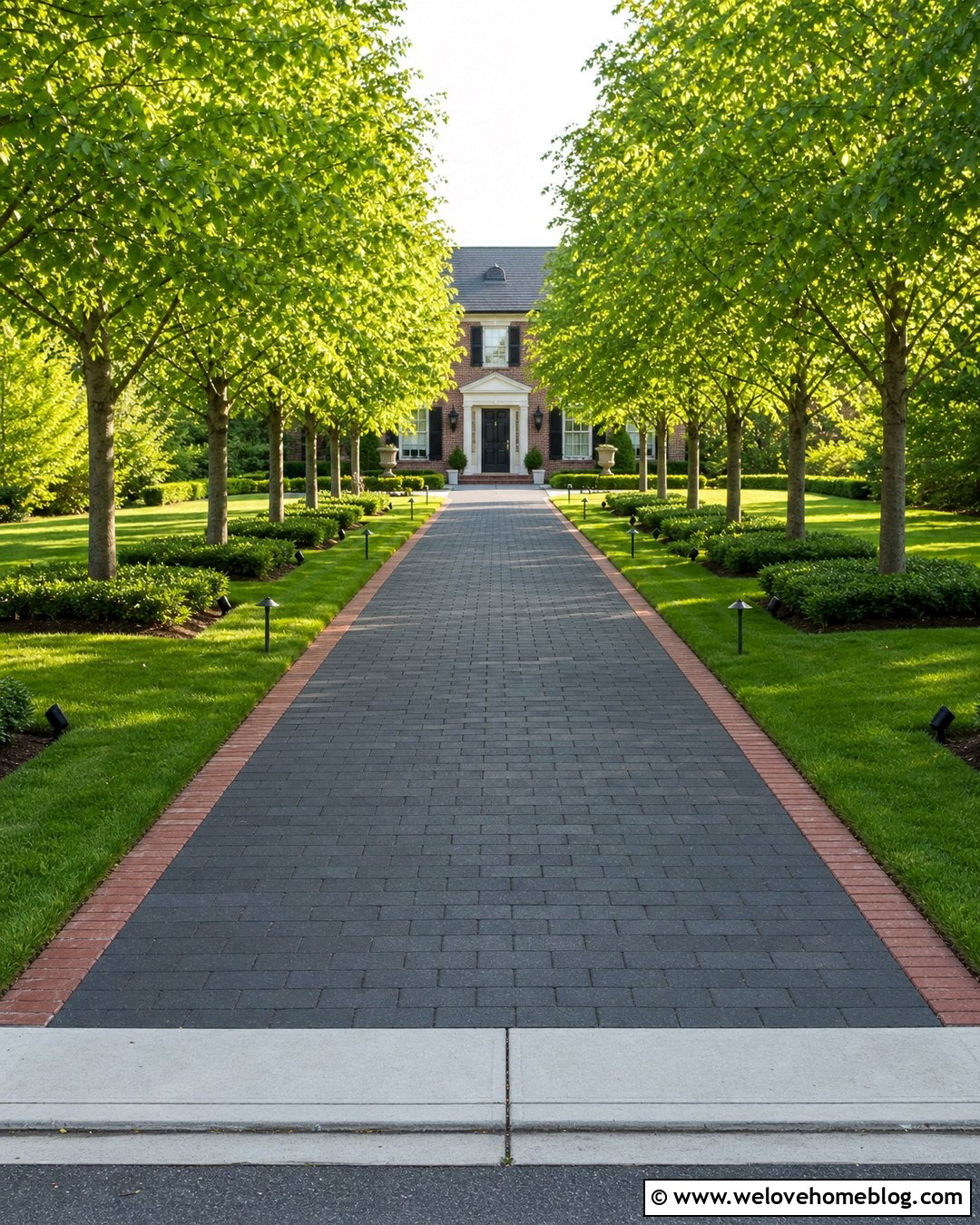
Well-positioned lighting can highlight linden trunks and make a long driveway easier to follow without filling the landscape with fixtures. Use a charcoal concrete paver driveway with wide grass strips and symmetrical tree rows. Place low-voltage uplights within the planting beds, aiming them carefully into selected canopies rather than lighting every tree. Short shielded path lights can define curves, borders, and the walkway near the house. During the day, dark bronze or black fixtures should disappear into mulch and foliage. Keep cables and transformers accessible for maintenance, and avoid positioning fixtures where snow removal or lawn equipment could damage them. Combined with brick edging and low evergreen ground cover, the lighting becomes part of a complete driveway design rather than a decorative afterthought.
20. Linden Tree Driveway With Rain Garden Borders

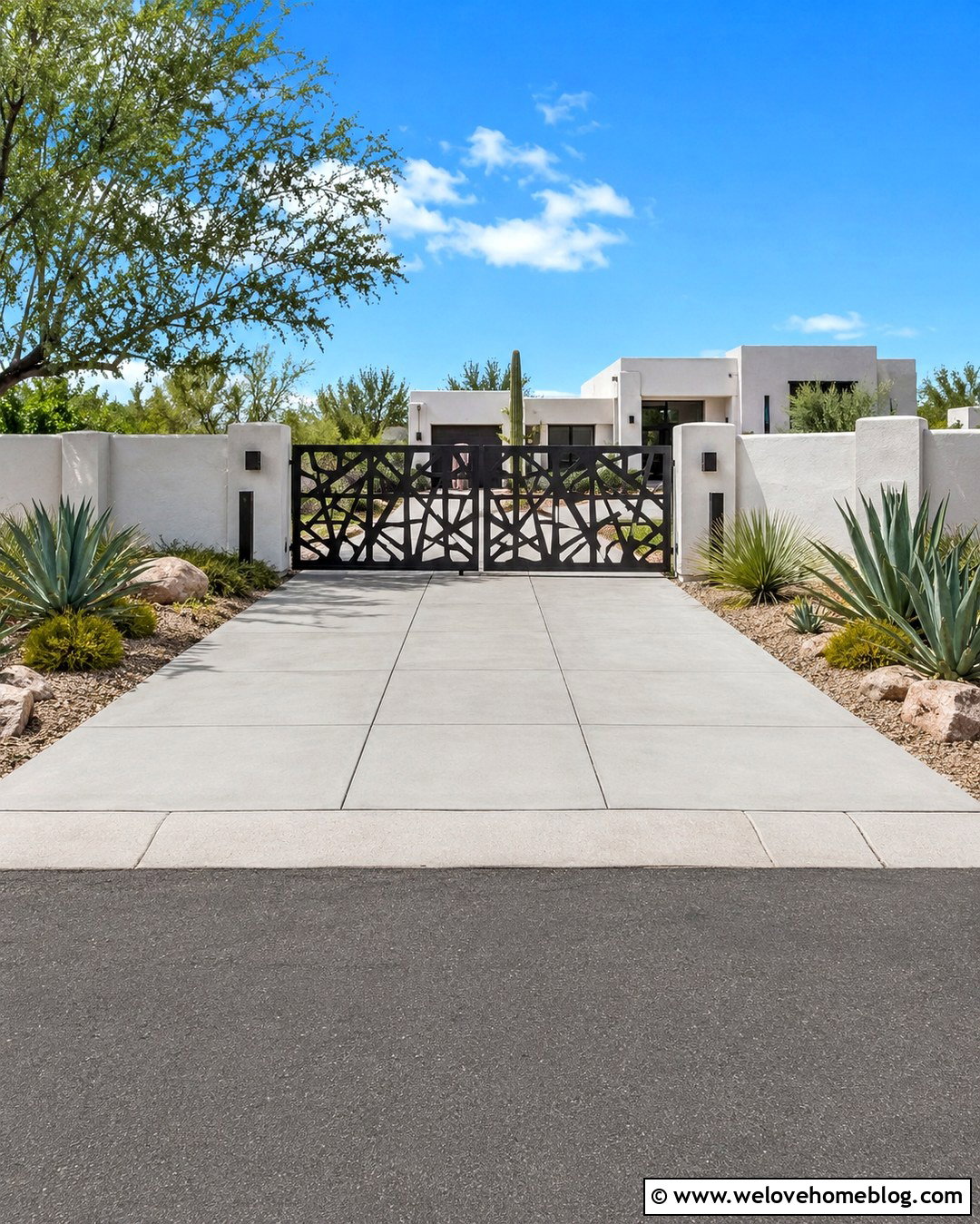
Rain garden borders can make a linden tree driveway more visually layered while helping organize runoff from surrounding surfaces. Begin with permeable concrete pavers in a soft gray tone and a gently curved layout. Direct water toward shallow planted areas located beyond the primary tree root zones, using stone channels or grass swales where appropriate. Linden trees generally favor moist, well-drained soil rather than persistently saturated conditions, so avoid turning their planting holes into collection basins. () Fill the rain garden with regionally appropriate grasses, sedges, flowering perennials, and low shrubs. A band of river rock can mark the transition from pavers to planting. The result combines shade trees, stormwater-conscious landscaping, and a polished residential entrance in one cohesive design.
Conclusion:
Successful linden tree driveway ideas consider the entire approach, including the surface, shape, borders, planting beds, entrance, and mature tree canopy. A long gravel lane may suit a relaxed farmhouse, while symmetrical brick paving can enhance a formal colonial home. Curved, narrow, sloped, and circular driveways require different tree arrangements, but each can benefit from the strong structure and leafy character of lindens. Always plan around mature tree size, healthy root space, visibility, drainage, and normal driveway maintenance. Choose materials that complement the house and repeat them throughout the landscape for continuity. With thoughtful planning, these 20 Linden Tree Driveway Ideas can create a memorable entrance that becomes more attractive as the trees mature.

Related posts:
Leave a Reply