
A driveway that drops sharply from the street toward the house needs more than an attractive surface. It must manage traction, fast-moving runoff, erosion, vehicle clearance, and safe access in every season. The best designs combine a durable material with gentler transition zones, dependable drainage, stable borders, and landscaping that protects the surrounding slope. Local grade limits vary, so major changes should be reviewed by a qualified driveway contractor or civil engineer before construction begins. This is especially important when retaining walls, buried drainage, or a garage below street level is involved. () Whether you prefer concrete, asphalt, pavers, or a mixed-material finish, these complete **20 Steep Downhill Driveway Ideas** offer practical inspiration for creating a safer and more polished approach.

1. Steep Downhill Concrete Driveway With Trench Drain
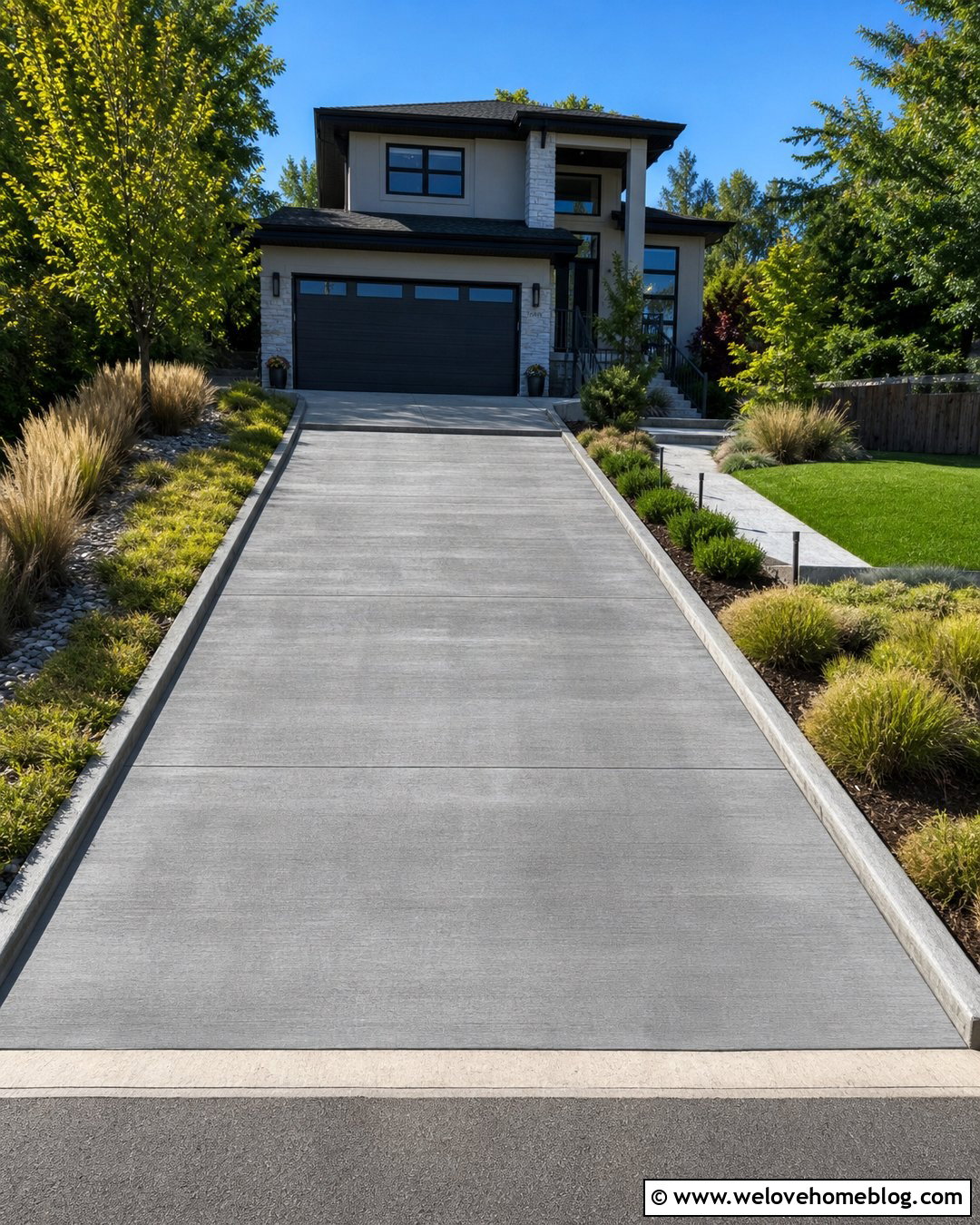
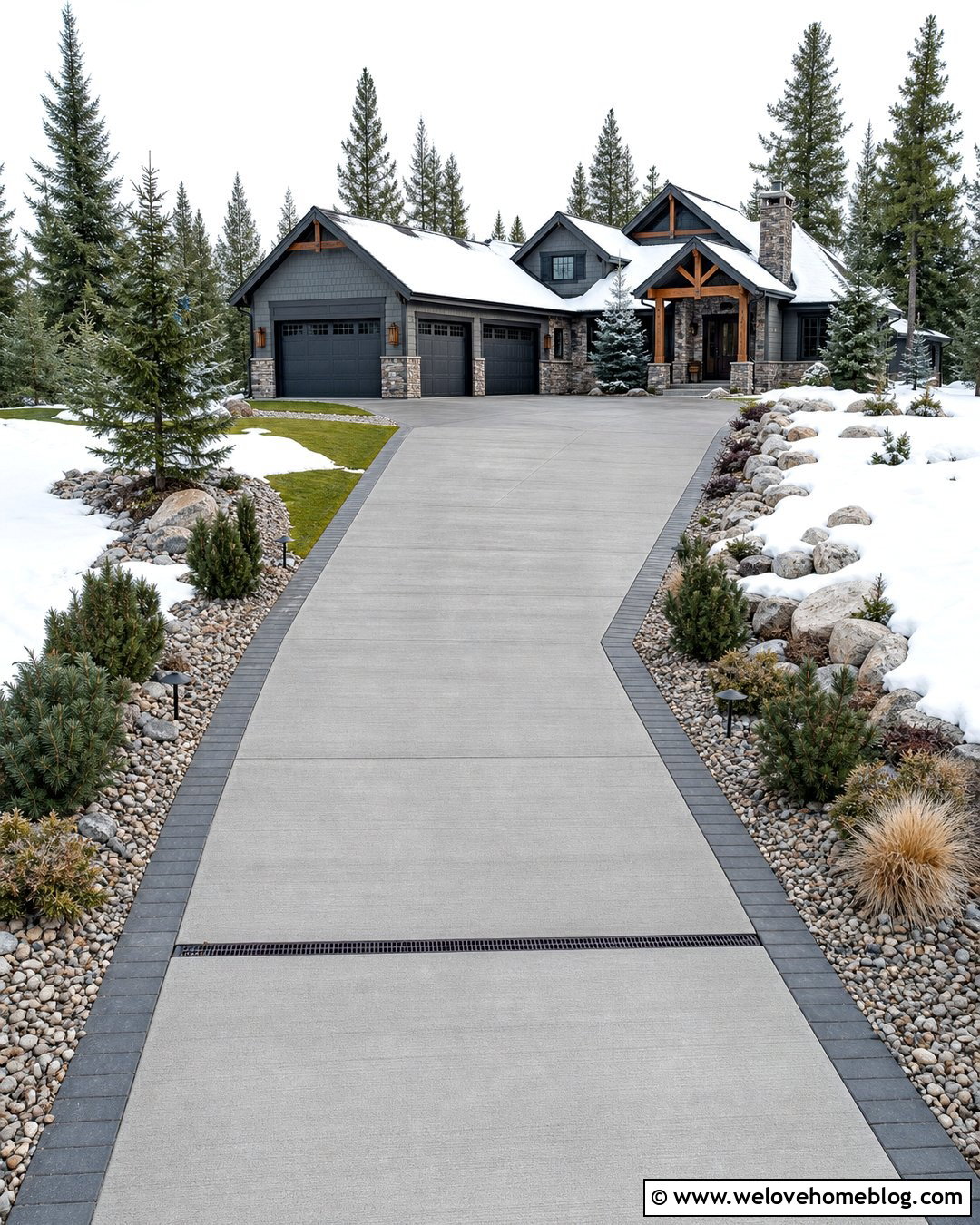
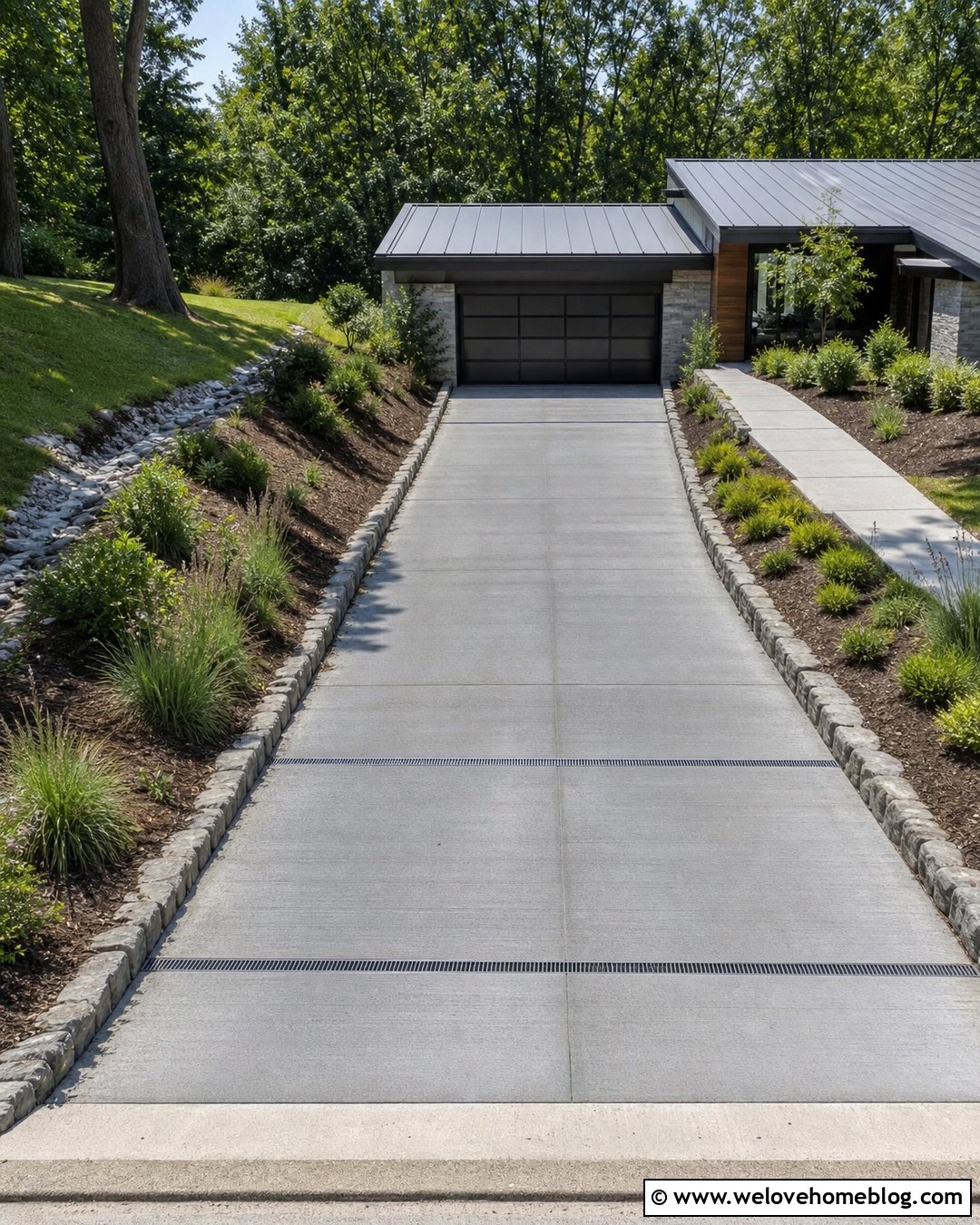
A broom-finished concrete driveway creates a clean, dependable surface while providing more texture than a smooth slab. Use a straight layout with softened transition areas near the street and garage to reduce the risk of vehicle scraping. A full-width trench drain near the bottom intercepts runoff before it reaches the garage door. Add narrow concrete curbs along both sides to keep water and soil from spilling across the driving area. Low planting beds filled with ornamental grasses and spreading groundcovers can stabilize the surrounding banks without blocking visibility. For a modern home, choose medium-gray concrete with charcoal drain grates and dark stone mulch. This complete design feels streamlined, yet every visible feature contributes to drainage, traction, or slope protection.
2. Steep Downhill Driveway With Textured Concrete Bands
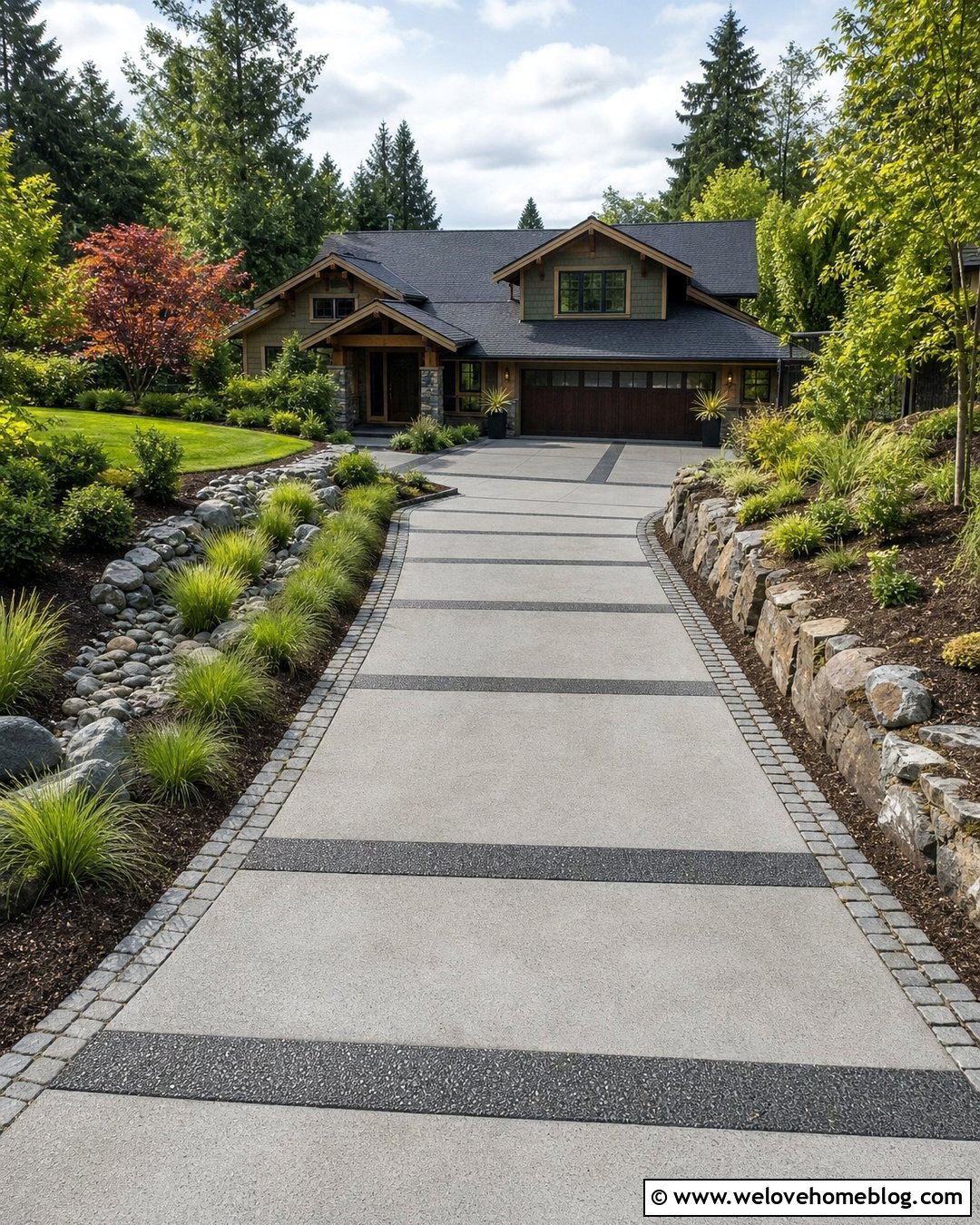
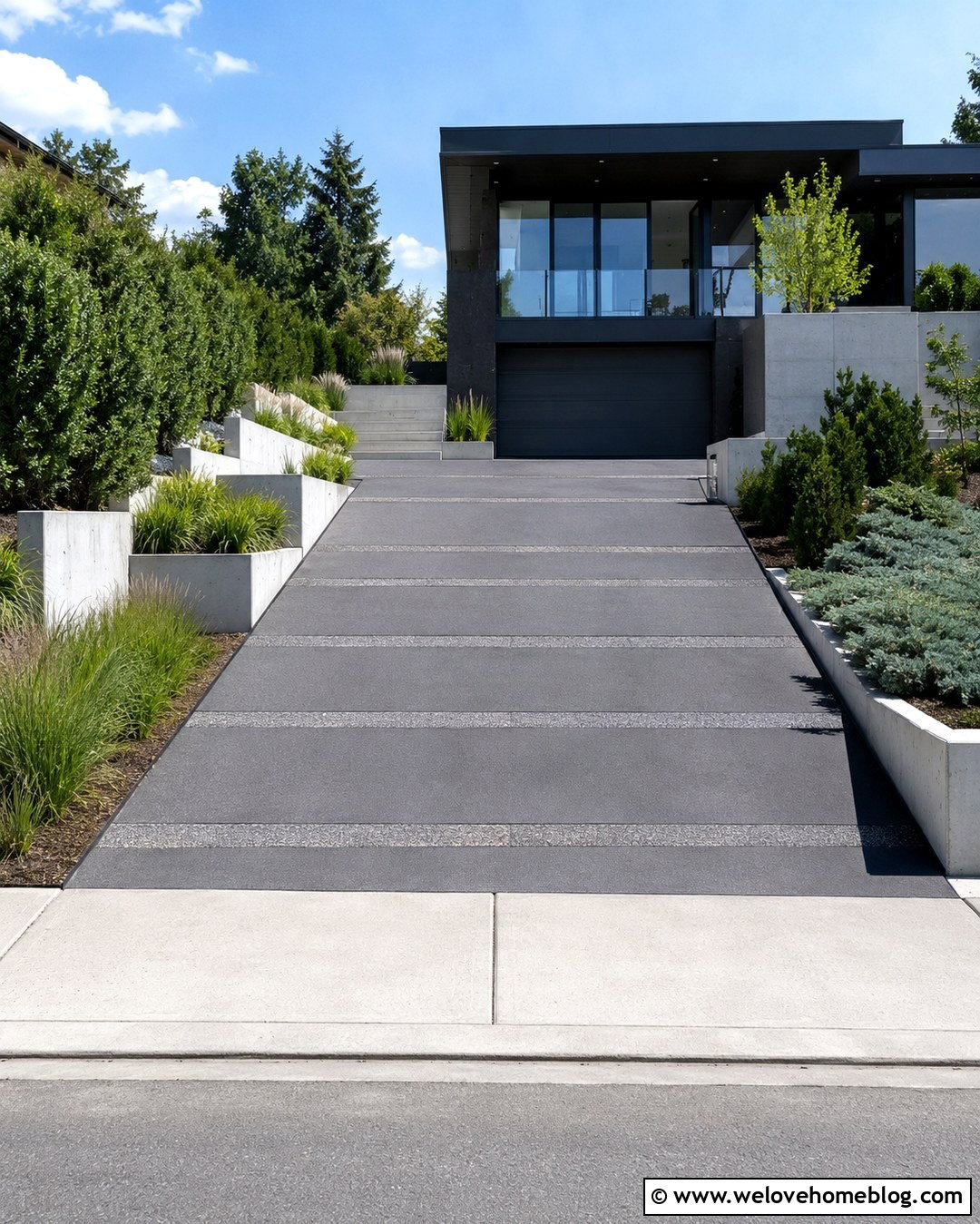
Could a simple pattern make a steep driveway safer and more distinctive? Wide textured bands placed across a light-gray concrete surface visually break up the long descent while adding extra grip beneath tires. The bands can use exposed aggregate or deeply broomed concrete in a slightly darker tone. Frame the driveway with flush cobblestone edging that contains the landscaping without creating a tall obstacle beside vehicles. On the uphill side, install a planted swale with river rock, sedges, and moisture-tolerant shrubs to collect runoff. A straight driveway works well for a narrow suburban property, especially when the lower section gradually levels near the garage. The finished look complements Craftsman, ranch, and contemporary houses while avoiding an overly decorative surface.
3. Curved Steep Downhill Asphalt Driveway
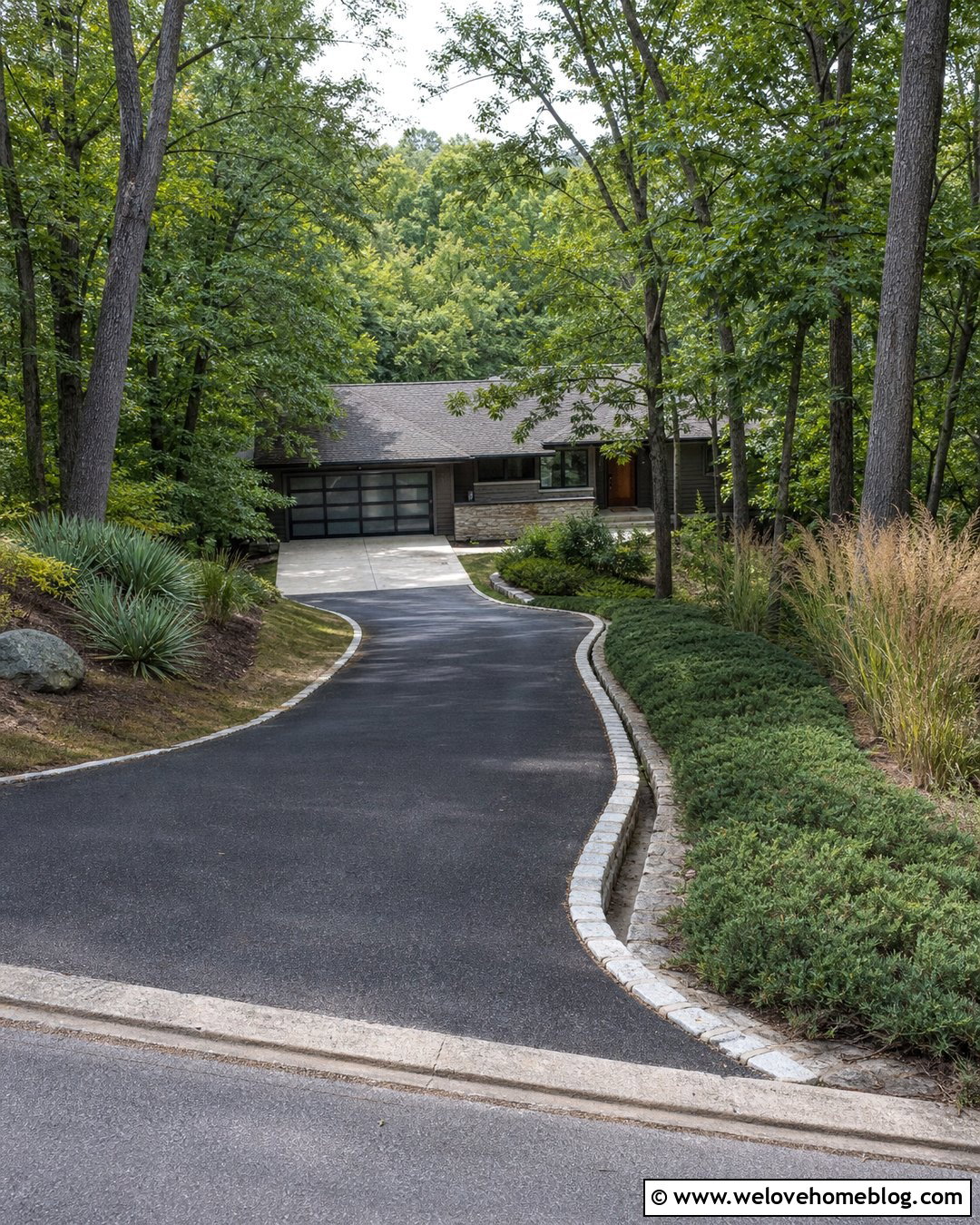
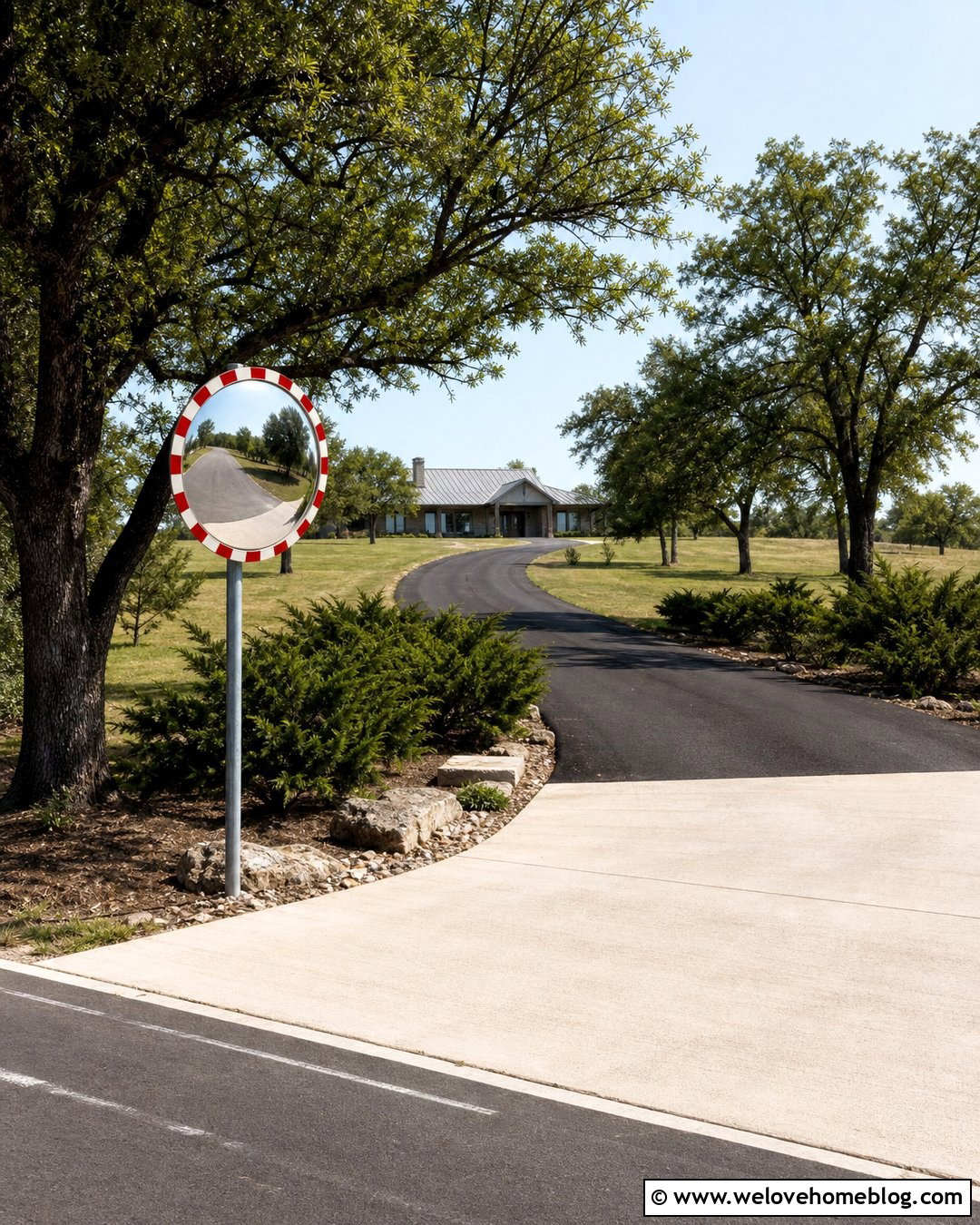
A gentle curve can make a sharp descent appear softer and may provide more distance for handling the elevation change. Use dense black asphalt for a smooth, continuous driving surface, then define the edges with pale granite setts or concrete pavers. A shallow drainage channel along the inside curve directs water toward a suitable collection point instead of allowing it to race downhill. Plant the outer bank with creeping juniper, switchgrass, and compact shrubs that cover exposed soil and tolerate challenging conditions. At the house, transition the asphalt into a level concrete parking apron with a channel drain. This complete driveway works especially well beside a wooded ranch or split-level home, where the curve can follow the existing land and preserve mature trees.
4. Steep Downhill Paver Driveway With Retaining Walls
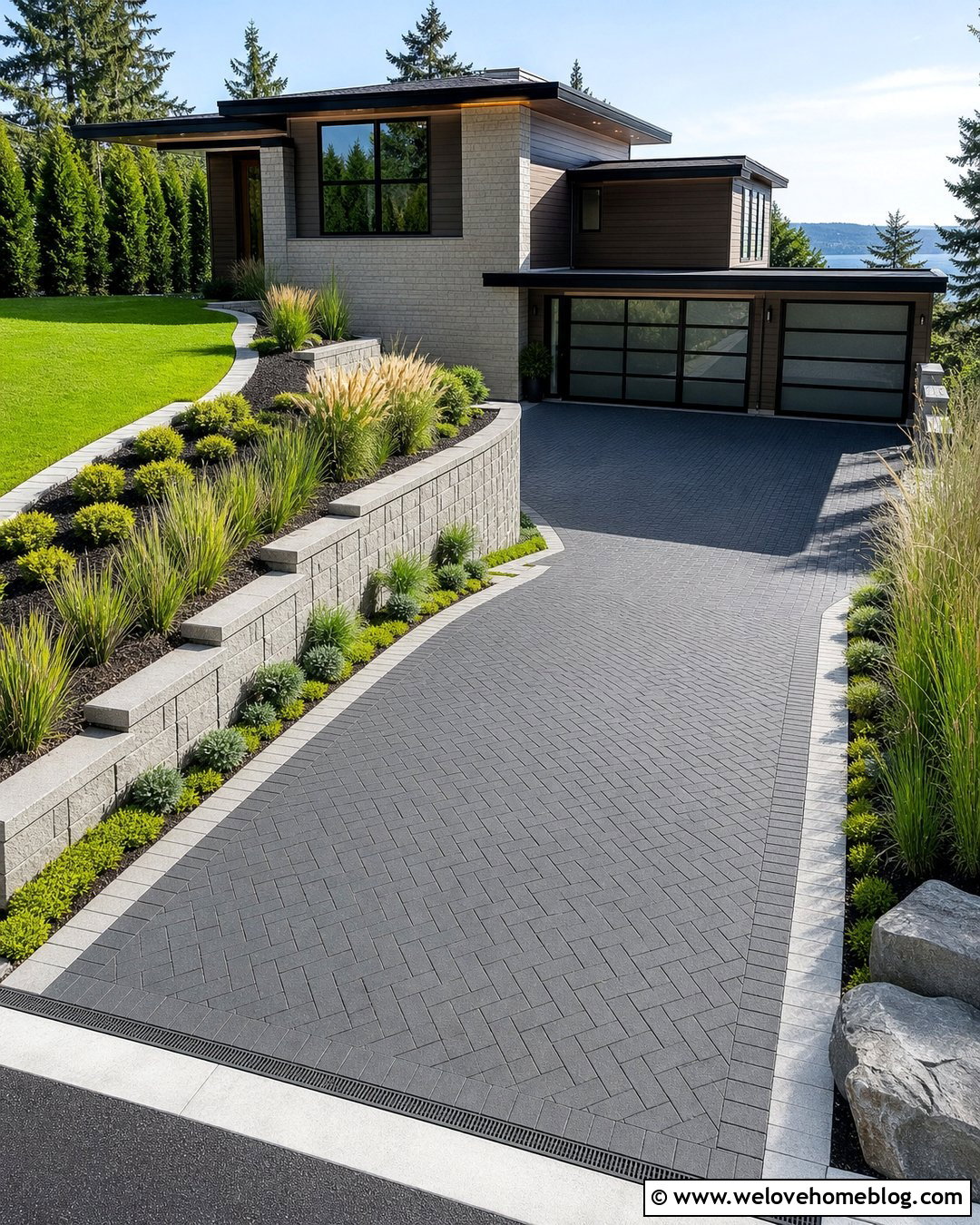
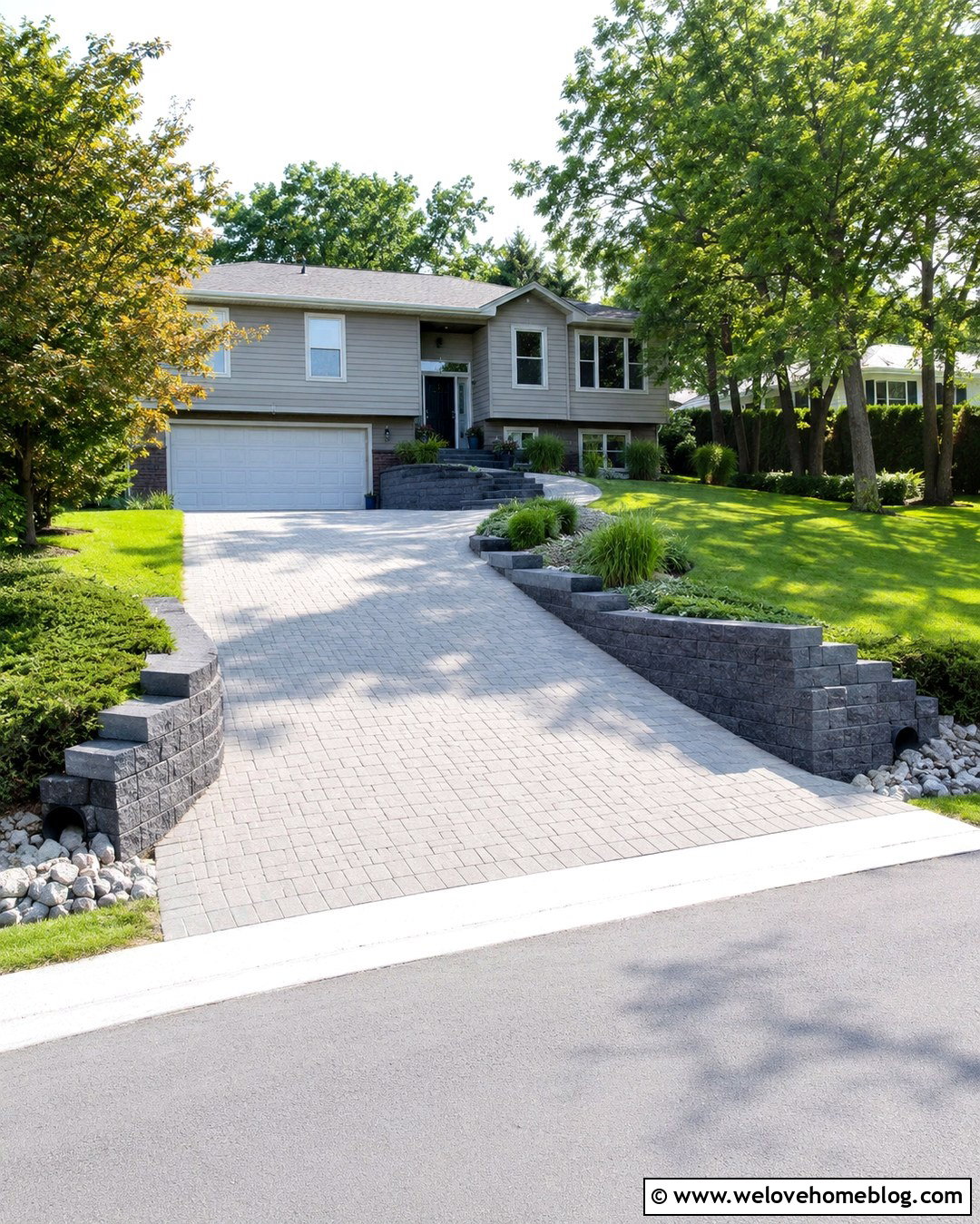
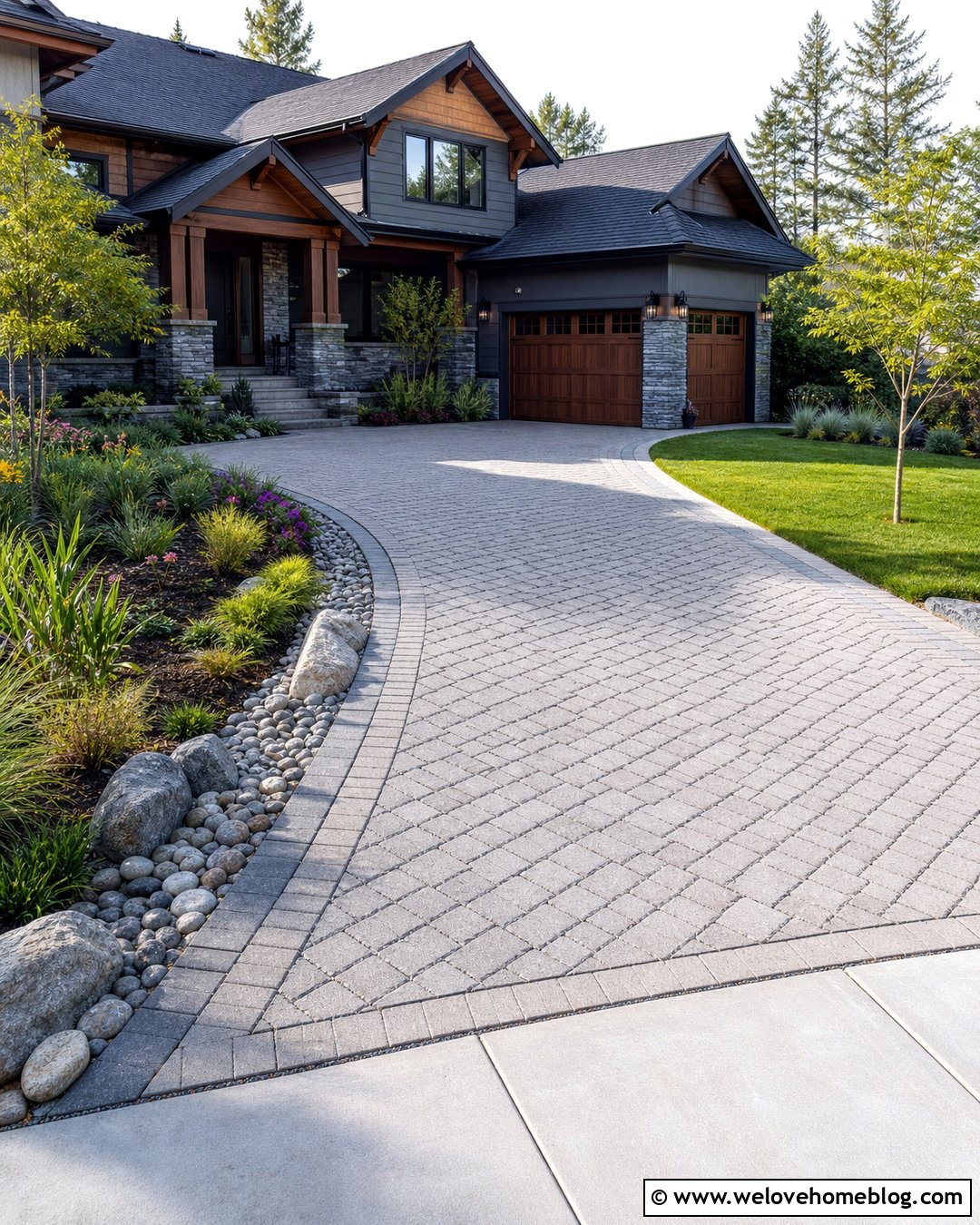
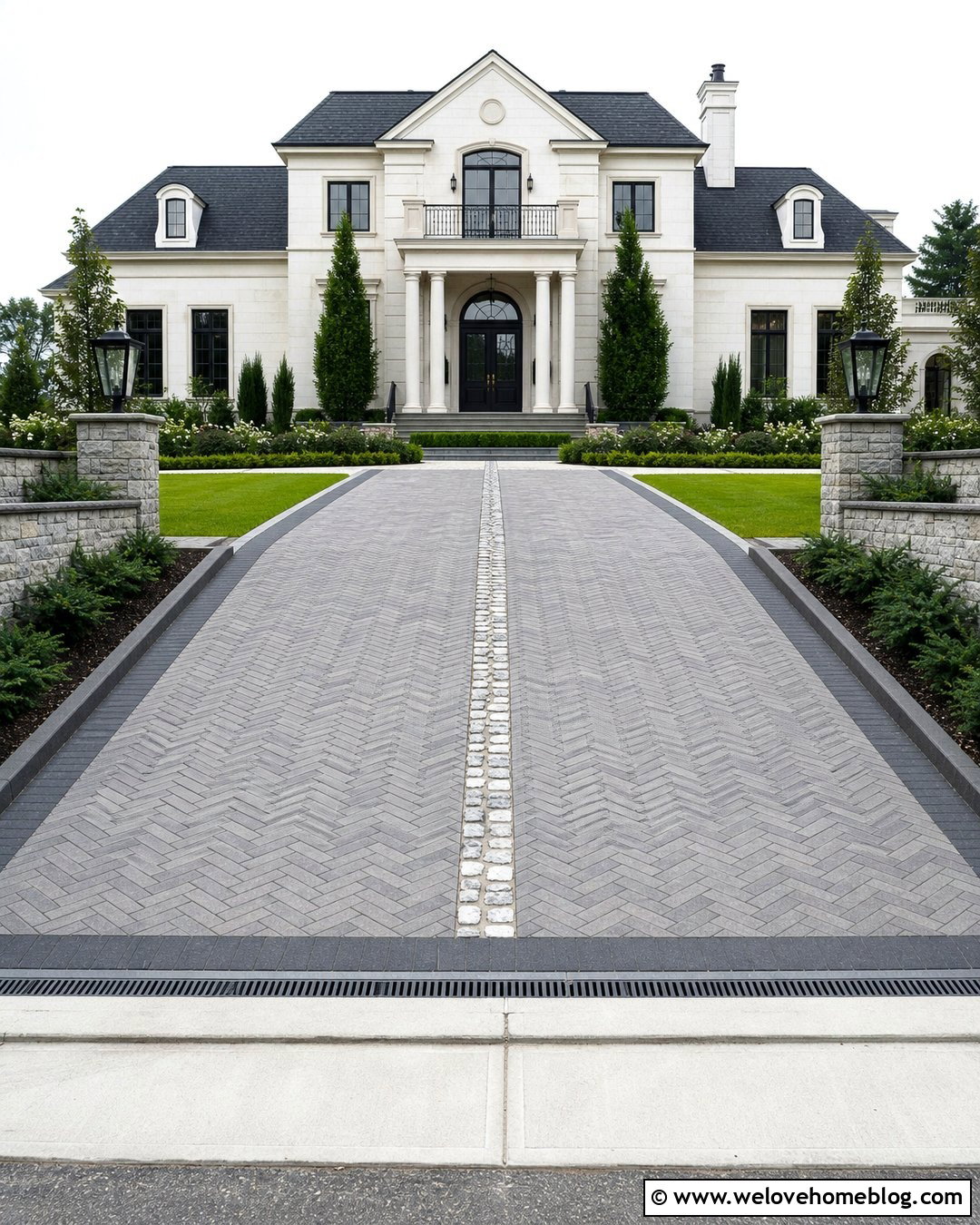
Interlocking concrete pavers can bring pattern and definition to a difficult hillside entrance when the base, edge restraints, and drainage are professionally designed. Choose charcoal pavers in a herringbone pattern to create strong visual movement across the driveway rather than straight down the slope. Tiered retaining walls on both sides can hold back cut banks and create manageable planting beds. Use matching wall caps and a lighter paver border for a coordinated finish. Behind the walls, drainage is essential because trapped water can increase pressure and contribute to movement or failure. () Fill each terrace with low shrubs, ornamental grasses, and erosion-resistant groundcovers. Near the garage, widen the design into a flatter paver apron that offers comfortable maneuvering space.
5. Steep Downhill Exposed Aggregate Driveway
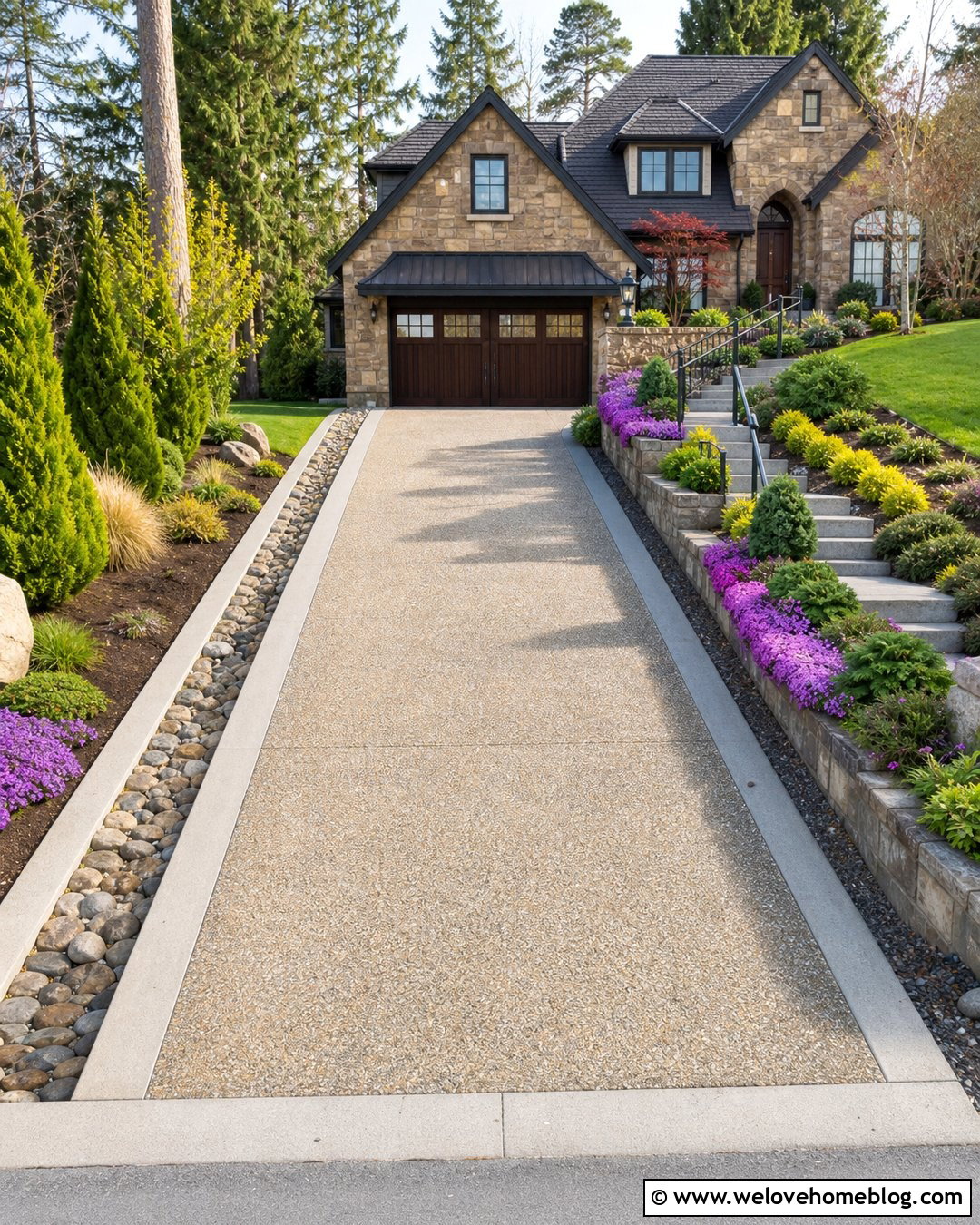
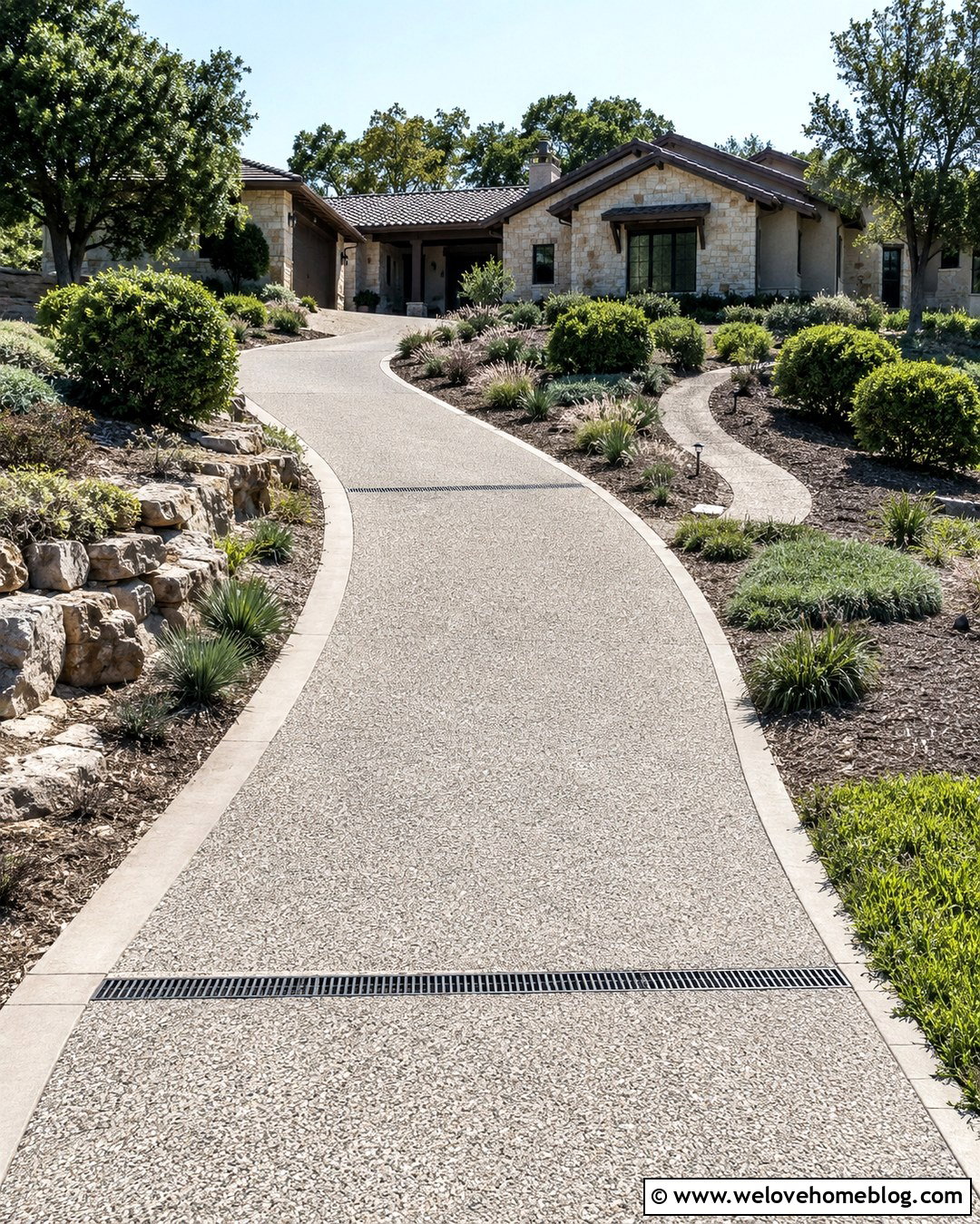
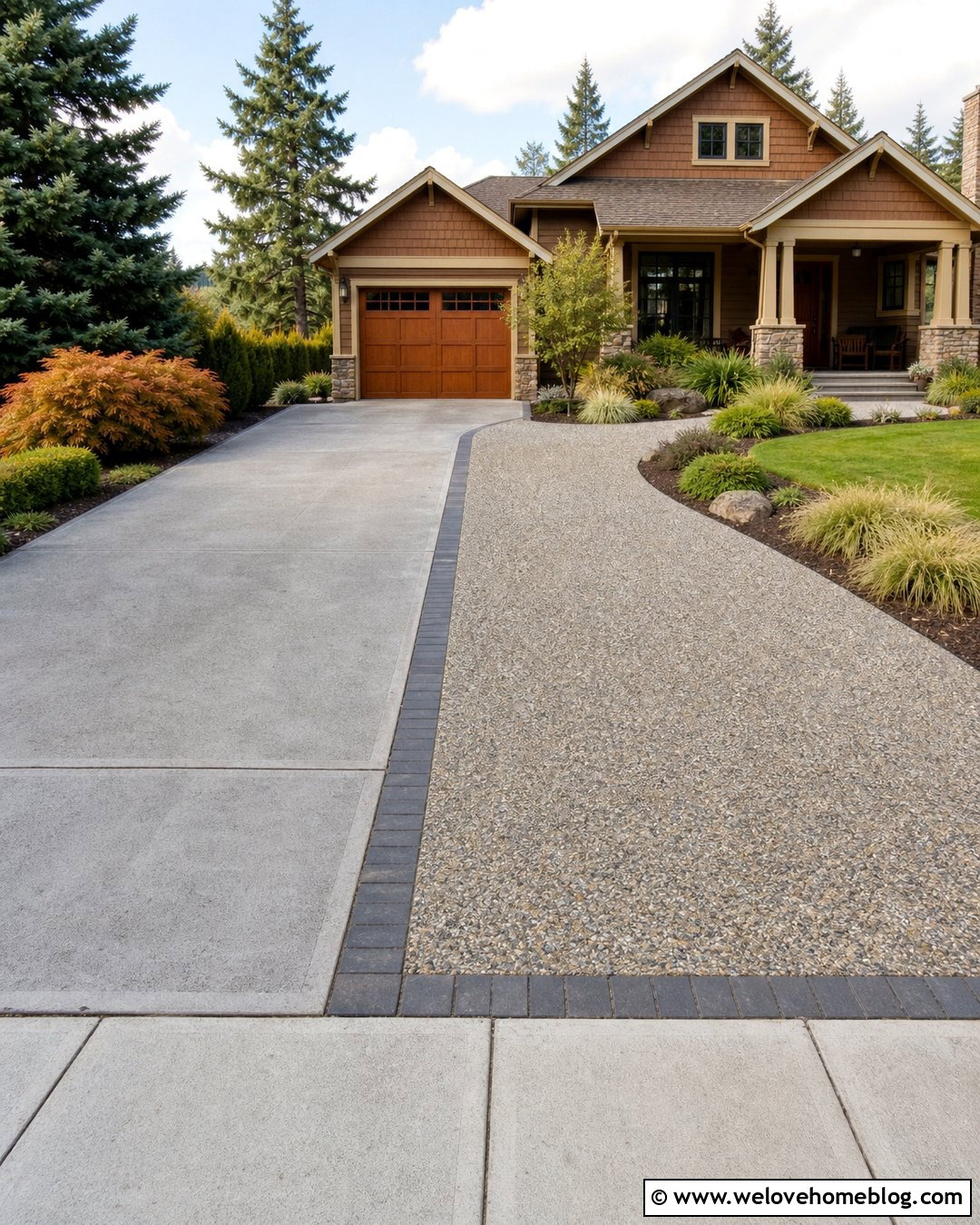
Exposed aggregate offers a naturally textured finish that suits a steep downhill driveway without looking industrial. Select a warm blend of tan, gray, and cream stone to complement a Craftsman or stone-front house. A broad, straight driveway can include subtle cross-slope grading that guides water toward a stone-lined side channel. Create sturdy edges with poured concrete curbs in a coordinating neutral color. On one side, use a low retaining wall to support the hillside; on the other, add a stepped walkway with handrails and landings for safer pedestrian access. Layered beds of dwarf evergreens, creeping phlox, and ornamental grasses soften the hard surfaces. The varied aggregate disguises minor dirt and tire marks while giving the entire descent a refined, high-traction appearance.
6. Steep Downhill Driveway With Concrete Tire Tracks
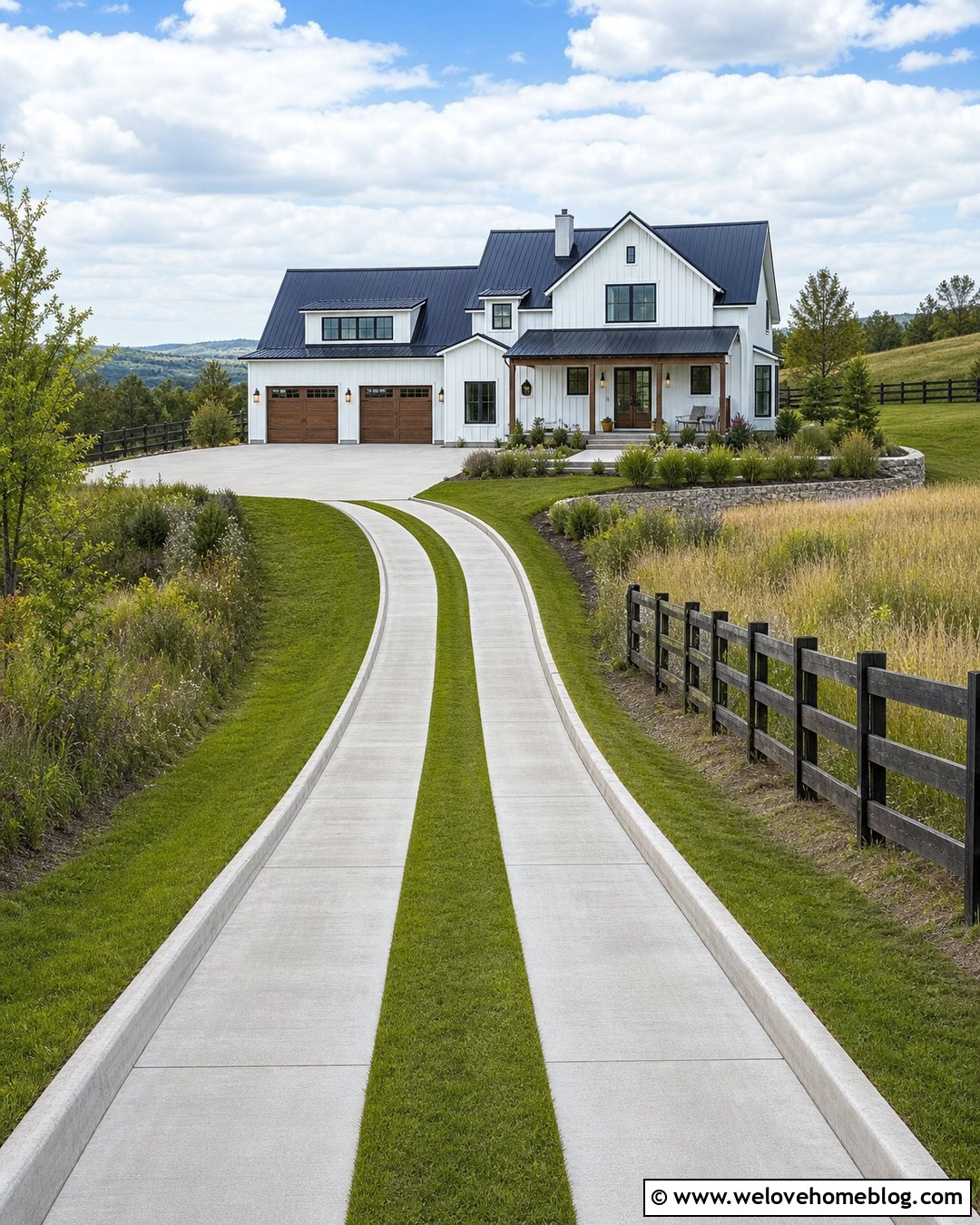
For a rural or modern farmhouse property, two textured concrete tire tracks can reduce the amount of solid paving while clearly defining the driving route. Fill the center strip with reinforced turf or tightly maintained groundcover rather than loose gravel that may migrate downhill. The driveway should follow a straight or slightly curved path, with concrete curbs stabilizing the outside edges. A shallow grass swale can run parallel to the drive and carry runoff toward an approved outlet. Near the bottom, connect the tracks to a full-width concrete parking pad with a trench drain before the garage. Add timber fencing, meadow grasses, and clusters of native shrubs along the banks. This design feels relaxed and rural while still addressing the practical demands of a pronounced slope.
7. Steep Downhill Brick Driveway With Stone Borders
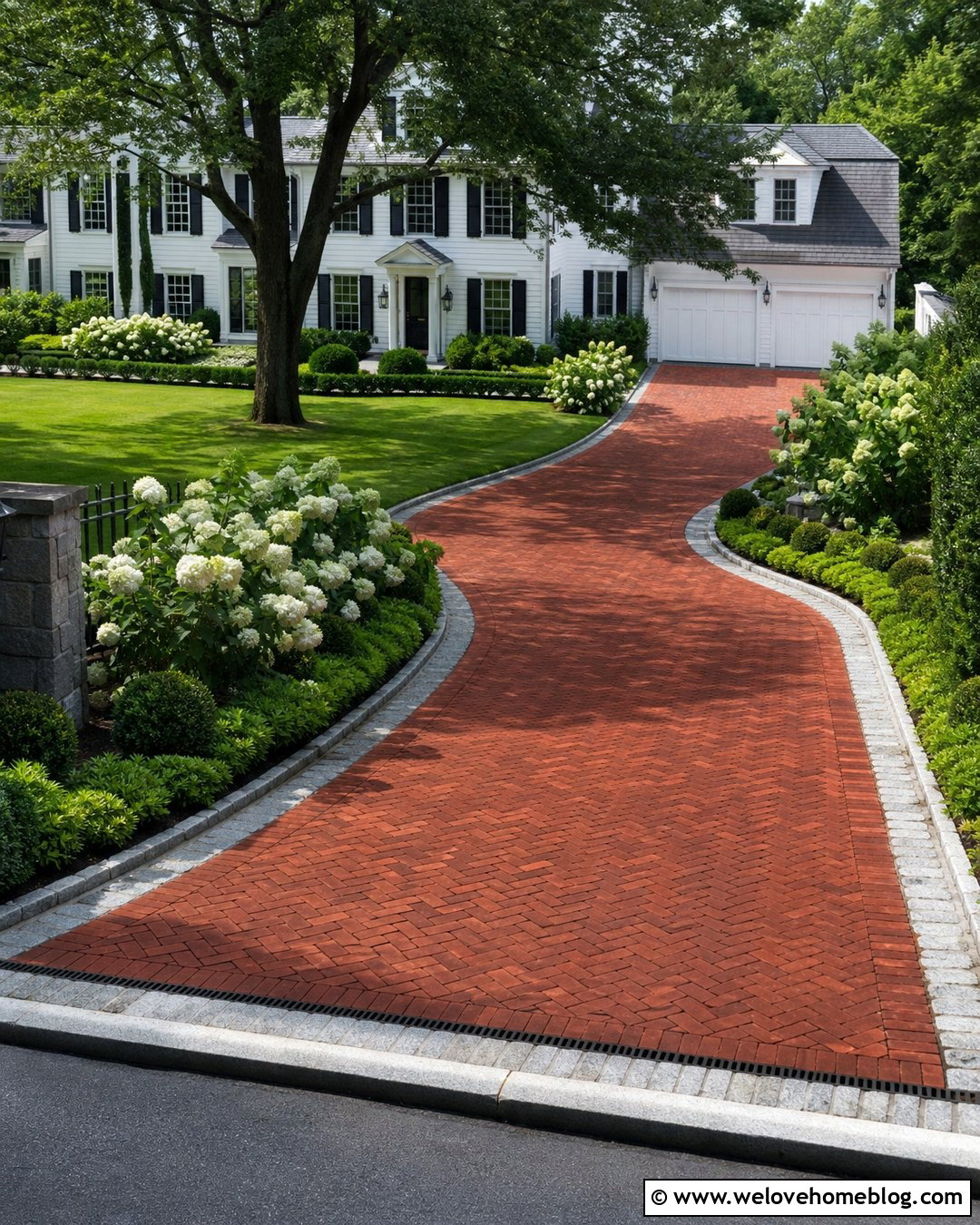
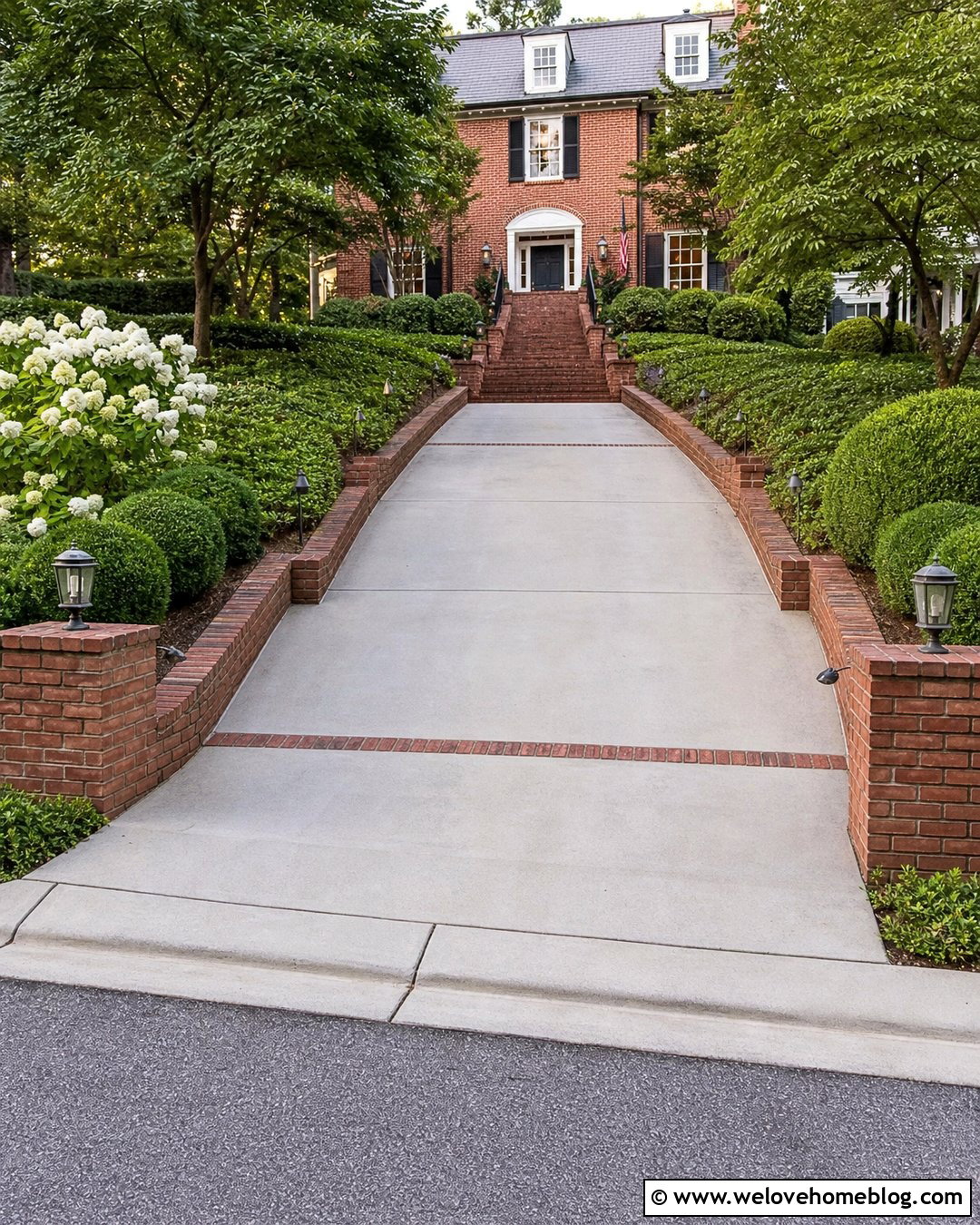
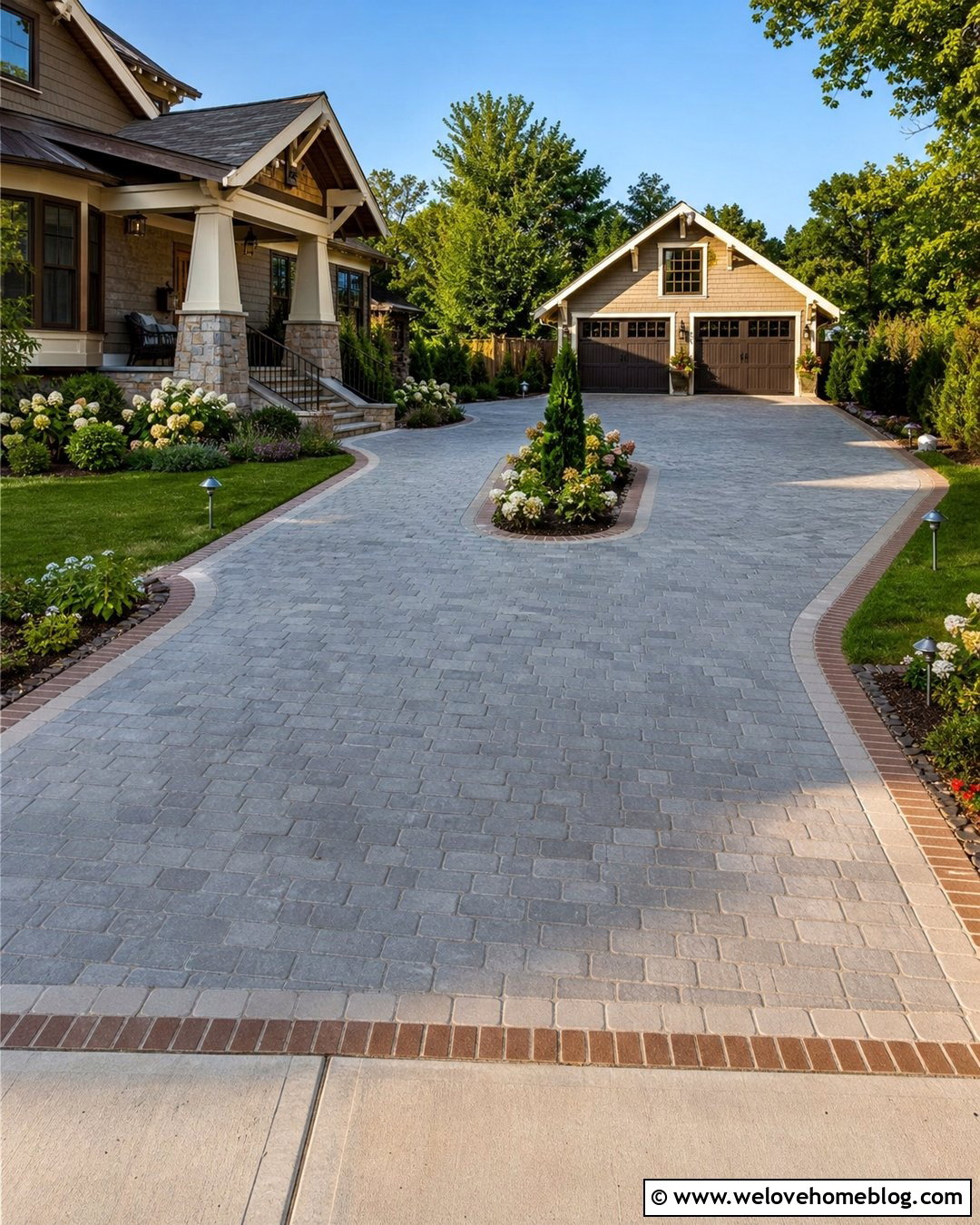
Deep red clay brick pavers bring traditional character to a sloping driveway leading toward a colonial or Cape Cod house. Arrange the bricks in a herringbone pattern, which creates a stronger crosswise visual structure than long running lines. Wide granite borders contain the paving and provide a durable transition into planting beds. A curved layout can slow the visual descent while creating space for a central lawn, mature tree, or layered garden. Install discreet slot drains at strategic points and a larger channel drain before the garage apron. Boxwood, hydrangeas, and spreading groundcovers give the banks a formal but welcoming appearance. Because steep paver installations require secure edge restraints and a carefully compacted base, professional preparation is crucial for long-term stability.
8. Steep Downhill Driveway With Center Drainage Channel
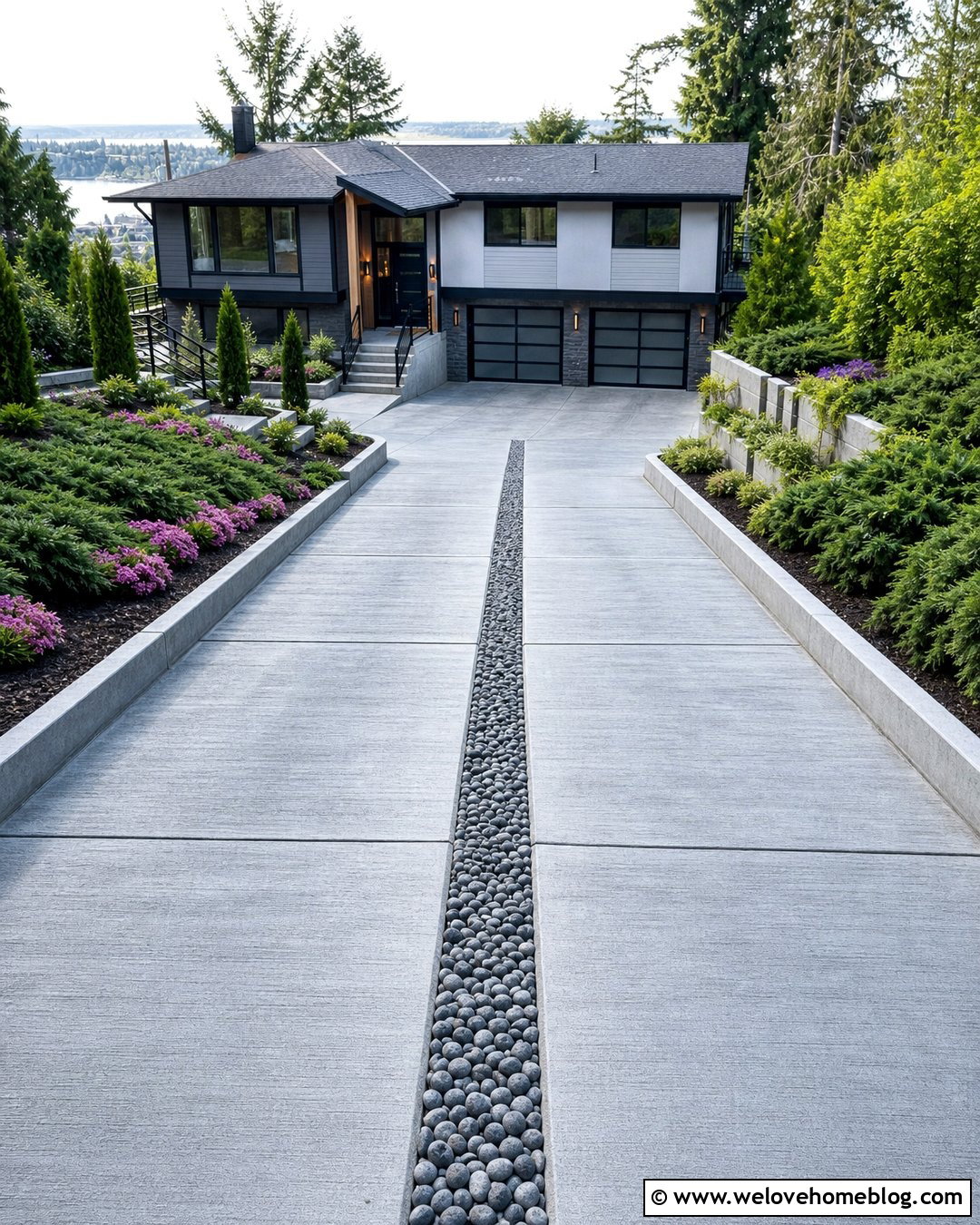
When both sides of a driveway are tightly bordered, a central drainage channel can become part of the overall design. Use medium-gray poured concrete with a pronounced broom finish, divided by a narrow stone-lined channel running down the middle. At intervals, covered collection points can direct water into an appropriately designed underground system. Concrete curbs define the outer edges, while terraced planting beds rise above them on both sides. Choose compact evergreens, spreading juniper, and flowering groundcovers to protect the soil without leaning into the driving area. Finish the descent with a wider, nearly level parking apron beside a contemporary split-level home. The symmetrical layout looks intentional from the curb, and the central channel prevents the drainage feature from feeling like an awkward afterthought.
9. Steep Downhill Driveway With Tiered Landscaping
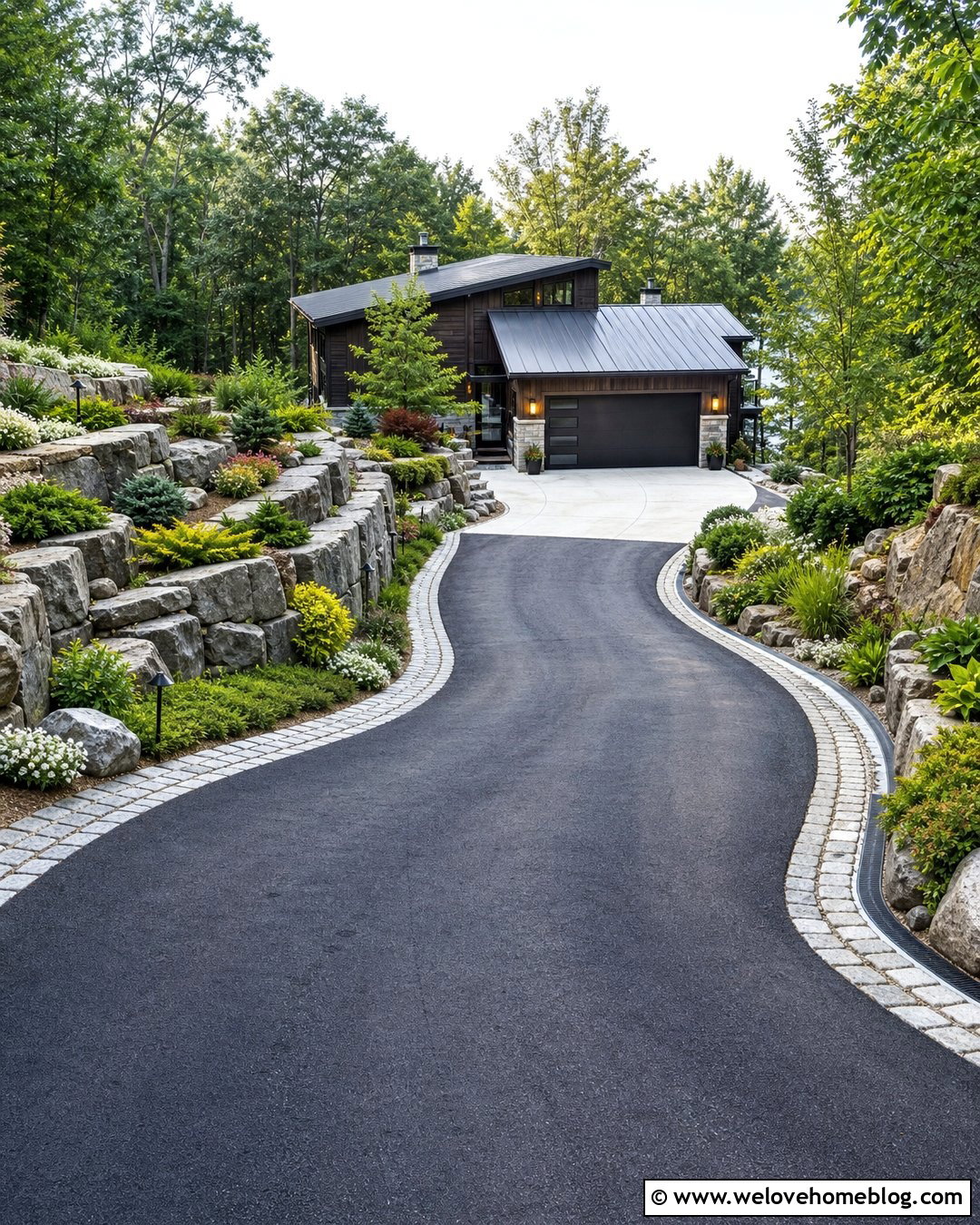
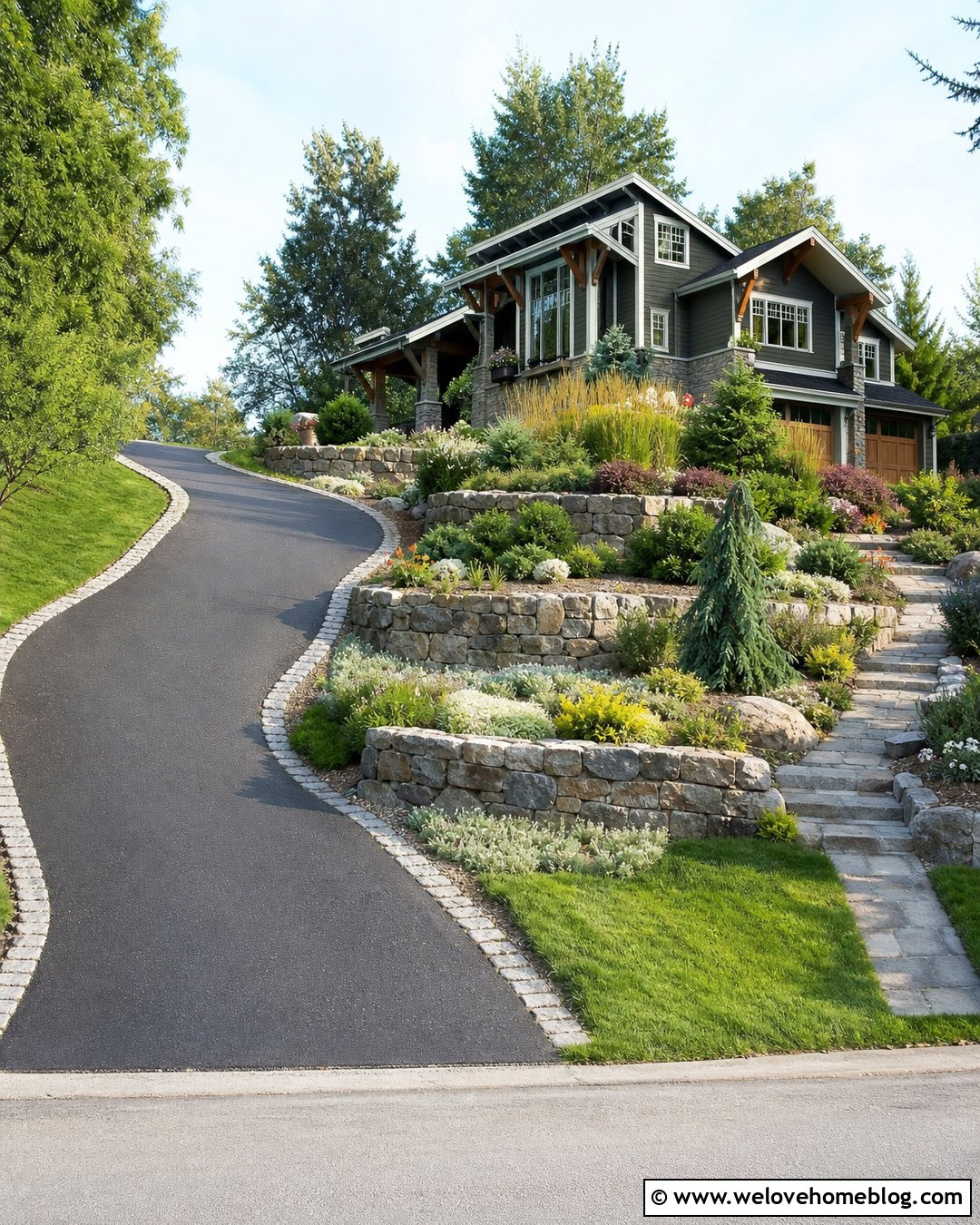
Strong planting can turn a severe roadside drop into an attractive garden approach. Pair a charcoal asphalt driveway with tiered natural-stone retaining walls that follow the descent in several short sections. Each terrace should have enough space for soil, drainage, and low-maintenance plants. Mix creeping groundcovers, dwarf conifers, compact flowering shrubs, and ornamental grasses for year-round coverage. A gently curving driveway will reveal the planting in stages and feel less like a direct plunge toward the house. Add a flush cobblestone border between the asphalt and walls, plus a continuous side channel for runoff. At the bottom, transition into a light concrete garage apron. This full landscape treatment works especially well around a woodland home where natural textures blend into the surroundings.
10. Steep Downhill Driveway With Side Steps
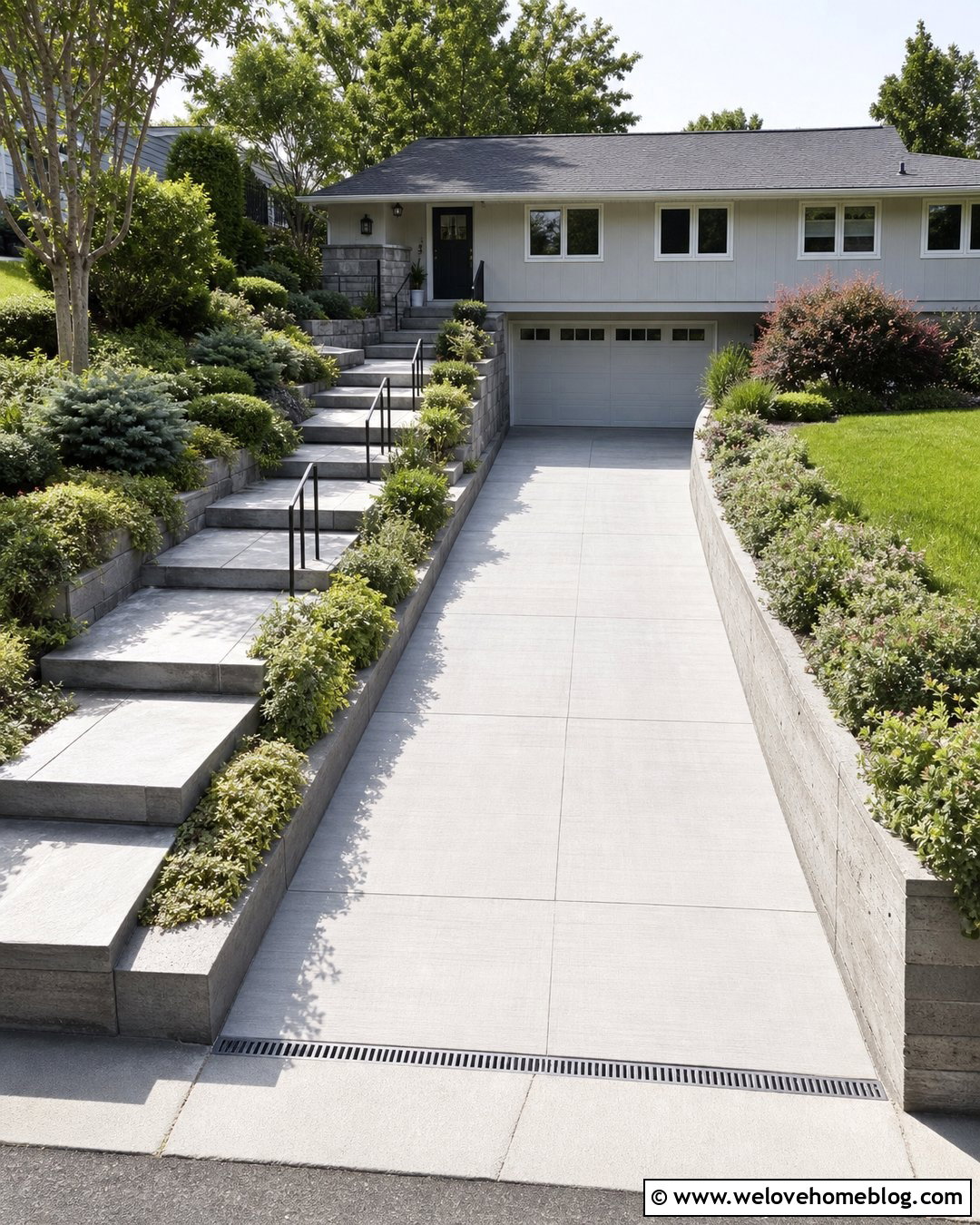
Walking beside a steep driveway can be uncomfortable, particularly when the surface is wet or icy. A separate staircase creates a clearer and more controlled pedestrian route. Combine a straight, broom-finished concrete driveway with broad stone steps along the higher bank. Include regular landings, visible step edges, sturdy handrails, and low planting beds between stair sections. A poured curb separates the stairs from the driving surface and helps guide runoff toward a side drain. On the opposite edge, use a low retaining wall with trailing groundcover to soften the drop. The driveway can finish at a level concrete apron in front of a raised ranch house. This arrangement gives vehicles an uncluttered route while making the approach to the front door feel connected, attractive, and easier to navigate.
11. Steep Downhill Driveway With Grass Pavers
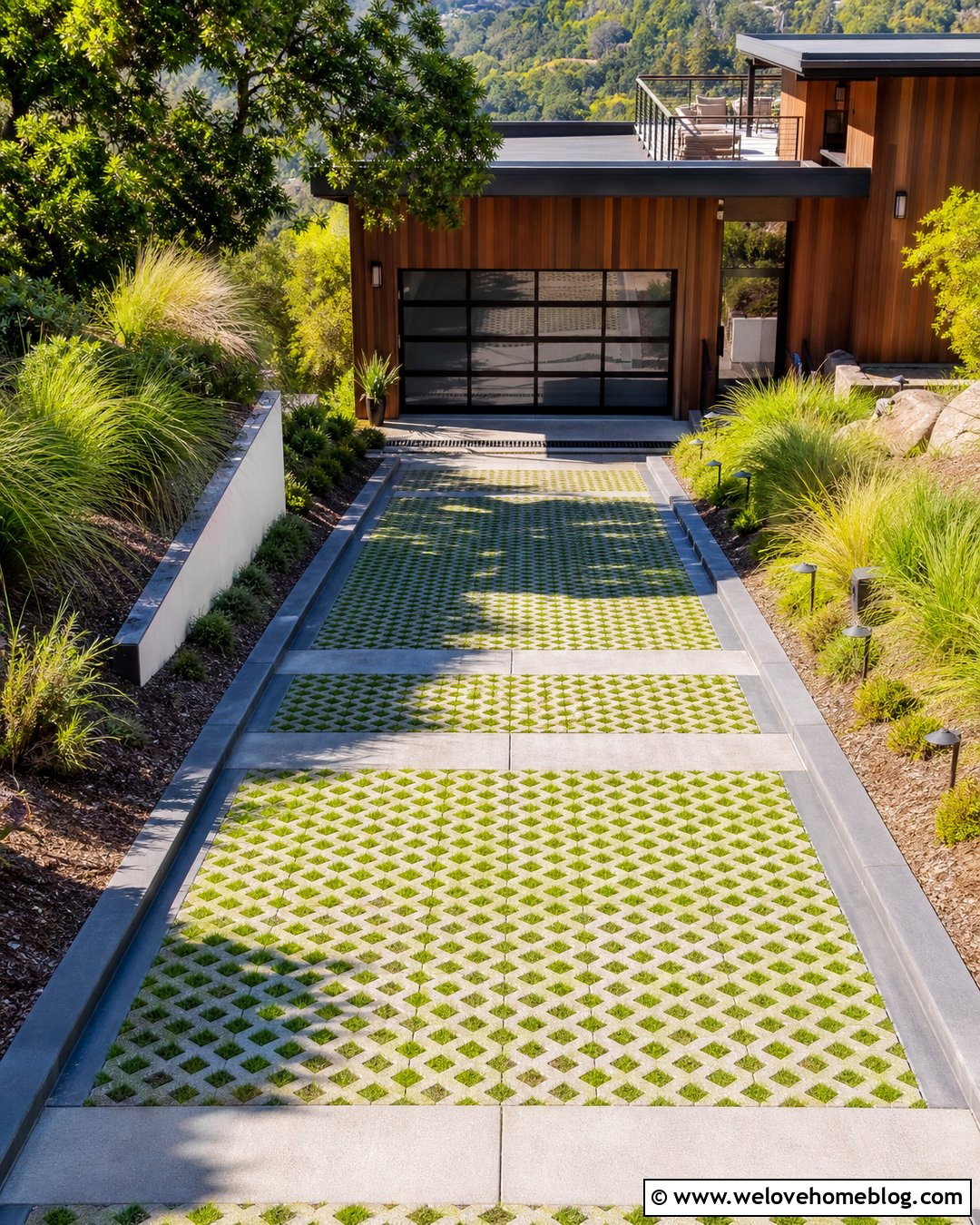
Concrete grid pavers filled with healthy turf can create a greener-looking driveway while reinforcing the route used by vehicles. They work best when chosen and engineered for the site’s actual grade, soil, rainfall, and traffic. Use the grid system across a broad, straight driveway, with solid concrete transition strips at the curb and garage. Dark concrete edging holds the perimeter firmly and separates the surface from planted drainage swales. Along both banks, use deep-rooted ornamental grasses, low shrubs, and groundcovers to reduce exposed soil. A trench drain at the lower apron provides another layer of runoff control. Against a contemporary house with wood siding, the combination of geometric pavers and green infill feels modern, soft, and much less visually heavy than one continuous slab.
12. Steep Downhill Driveway With Cobblestone Aprons
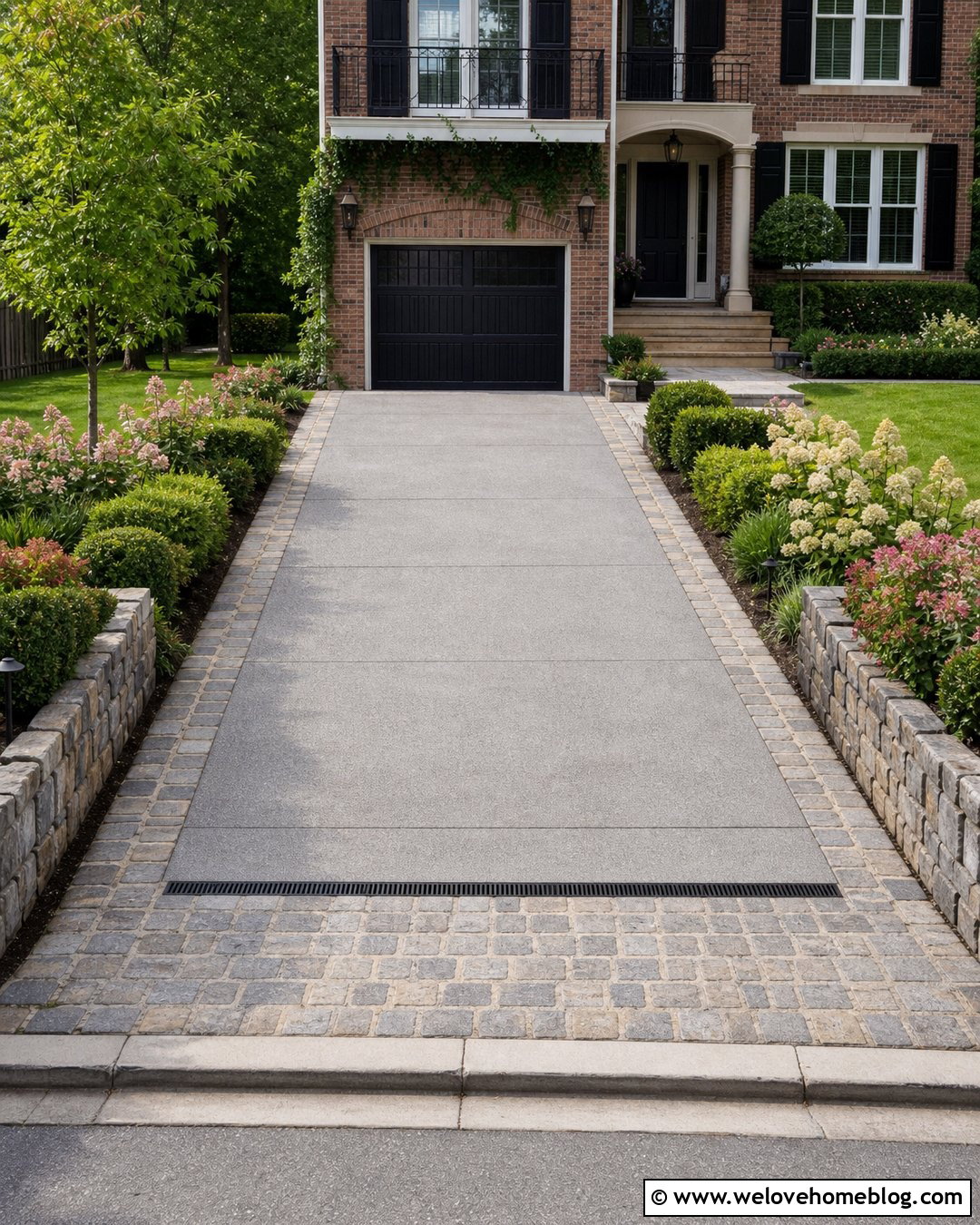
Cobblestone can be used strategically without covering the entire steep driveway. Begin with a textured concrete surface for the long descent, then install cobblestone aprons at the street entrance and in front of the garage. The contrasting areas clearly mark the points where drivers need to transition, turn, or slow down. Add matching cobblestone ribbons along both edges to visually connect the two aprons. A channel drain positioned between the lower cobblestone section and garage helps collect concentrated runoff. Frame the driveway with clipped shrubs, flowering perennials, and low stone walls suited to a traditional home. Warm gray cobbles paired with pale concrete create a timeless palette. This mixed-material approach delivers character in the most visible locations while keeping the main driving surface simple and practical.
13. Steep Downhill Driveway With Switchback Layout
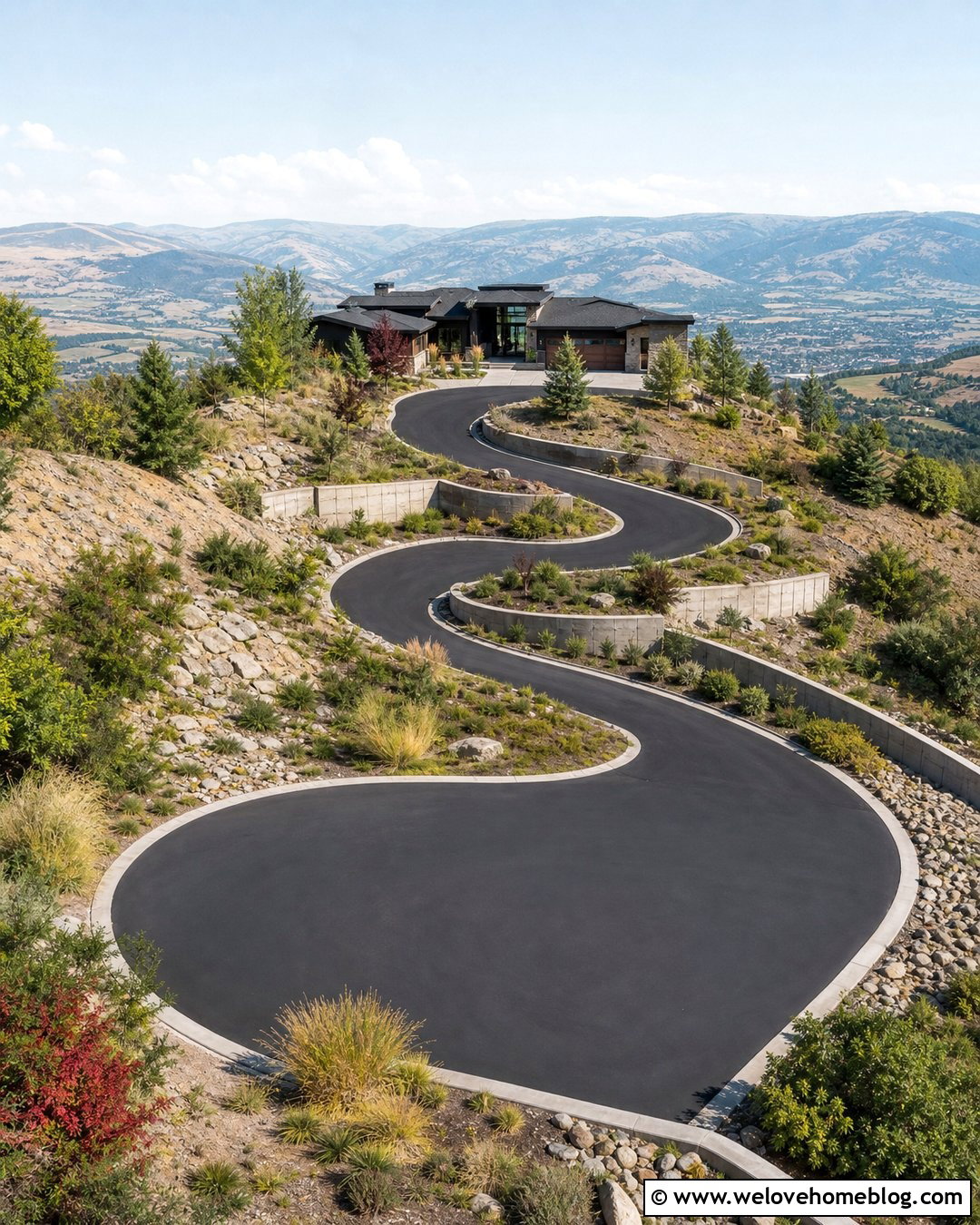
A switchback driveway can spread a major elevation change across a longer route when the property has sufficient width. Use black asphalt for the driving surface and pale concrete curbs to define each turn. At the bend, create a broad, flatter turning platform rather than a tight corner that is difficult to maneuver. An engineered retaining wall supports the uphill cut, while the downhill edge remains open and visible with low planting. Stone-lined swales follow the inside of each driveway segment and slow runoff before it reaches the lower property. Plant the central slope with native grasses, spreading shrubs, and a few well-placed ornamental trees. This complete layout suits a large hillside lot and makes the descent feel gradual, organized, and integrated with the natural contours.
14. Steep Downhill Driveway With Raised Concrete Curbs
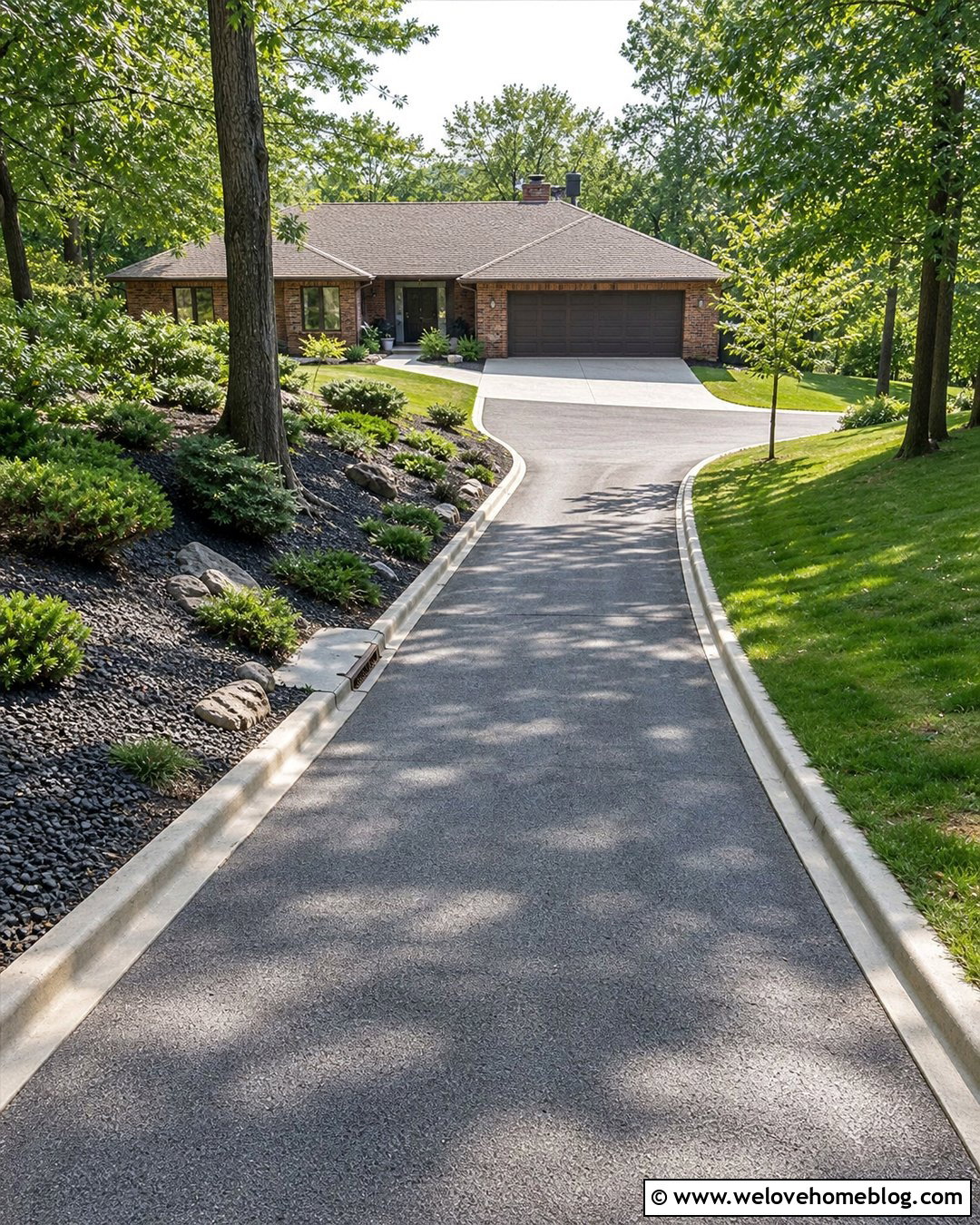
Fast runoff can carry mulch, soil, and loose stones onto a steep driving surface. Raised concrete curbs create a durable boundary that helps keep adjacent landscaping in place. Pair them with a medium-gray asphalt driveway for clear color contrast and a smooth, uncomplicated finish. Give the driveway a slight curve, then continue the curb line into a wide lower parking apron. Along the uphill side, install a planted drainage swale behind the curb with occasional inlets where water can enter safely. Use rock mulch, compact shrubs, and spreading groundcovers rather than lightweight bark. The downhill side can feature a simple lawn bank with widely spaced trees for visibility. This design looks especially appropriate beside a brick ranch house, where the strong curb lines add structure without appearing overly formal.
15. Steep Downhill Driveway With Permeable Pavers
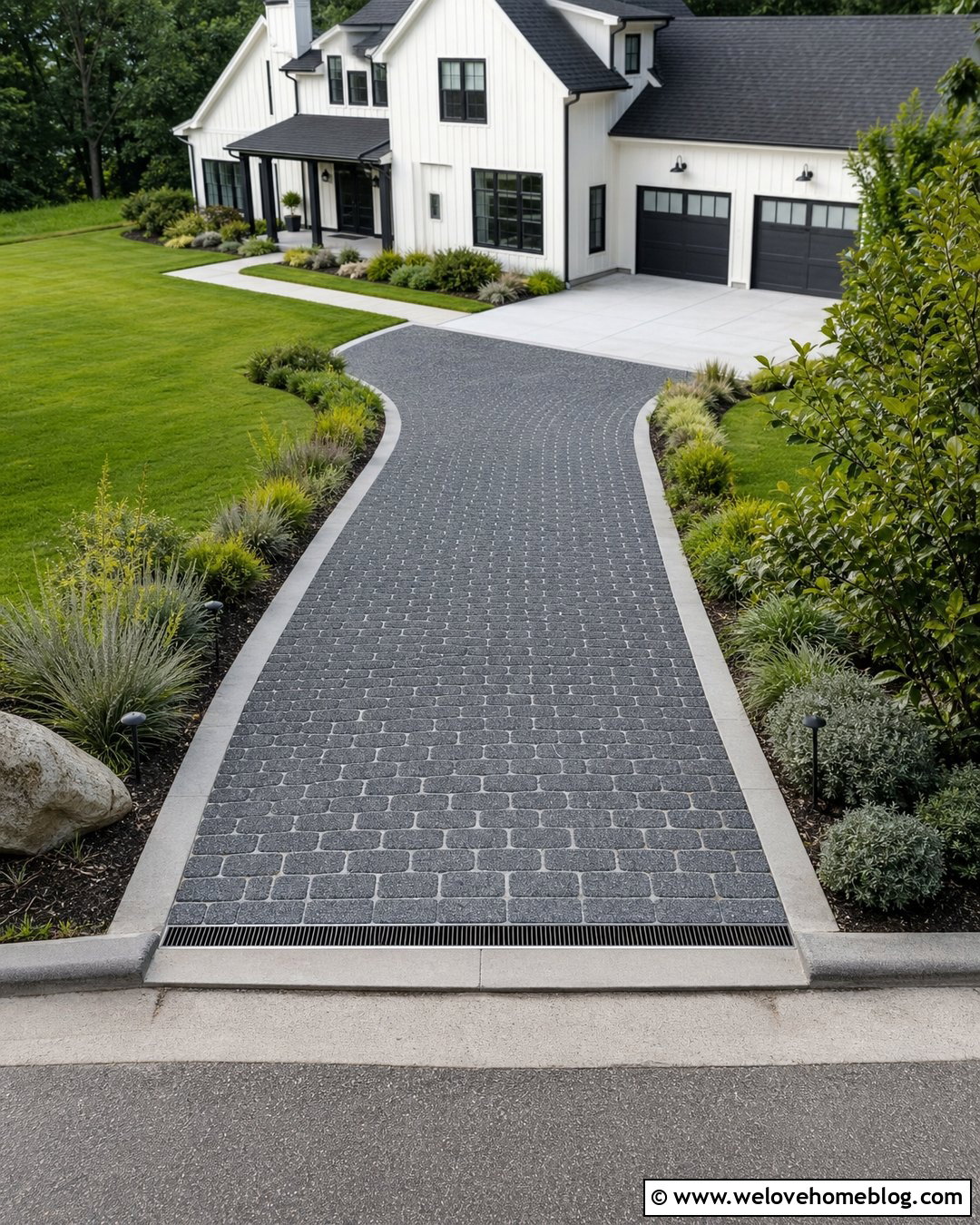
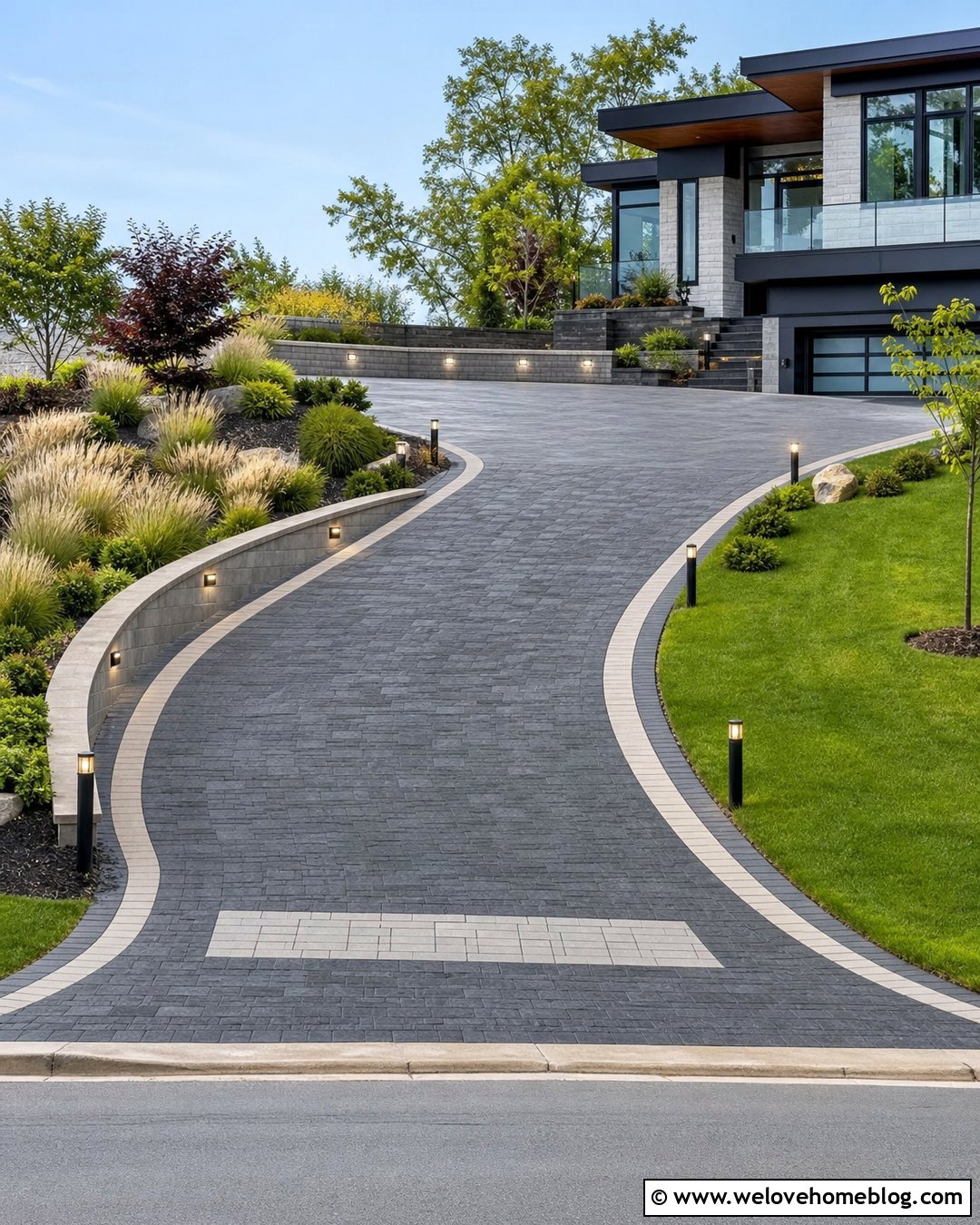
Permeable concrete pavers introduce a patterned surface and may help manage water where site conditions and local requirements allow their use. Choose rectangular charcoal pavers with light stone-filled joints, installed across a gently curving driveway. The permeable assembly, base depth, underdrain, and slope limitations should be specified by a qualified professional rather than treated as a standard paver installation. Edge the driveway with solid concrete restraints and border it with broad planting beds of sedges, dwarf shrubs, and erosion-controlling groundcovers. At the bottom, add a solid concrete garage apron and trench drain as backup protection. A modern farmhouse with white siding and dark trim provides a crisp backdrop. The finished driveway balances drainage-conscious construction with an attractive, highly organized appearance.
16. Steep Downhill Driveway With Boulder Retaining Wall
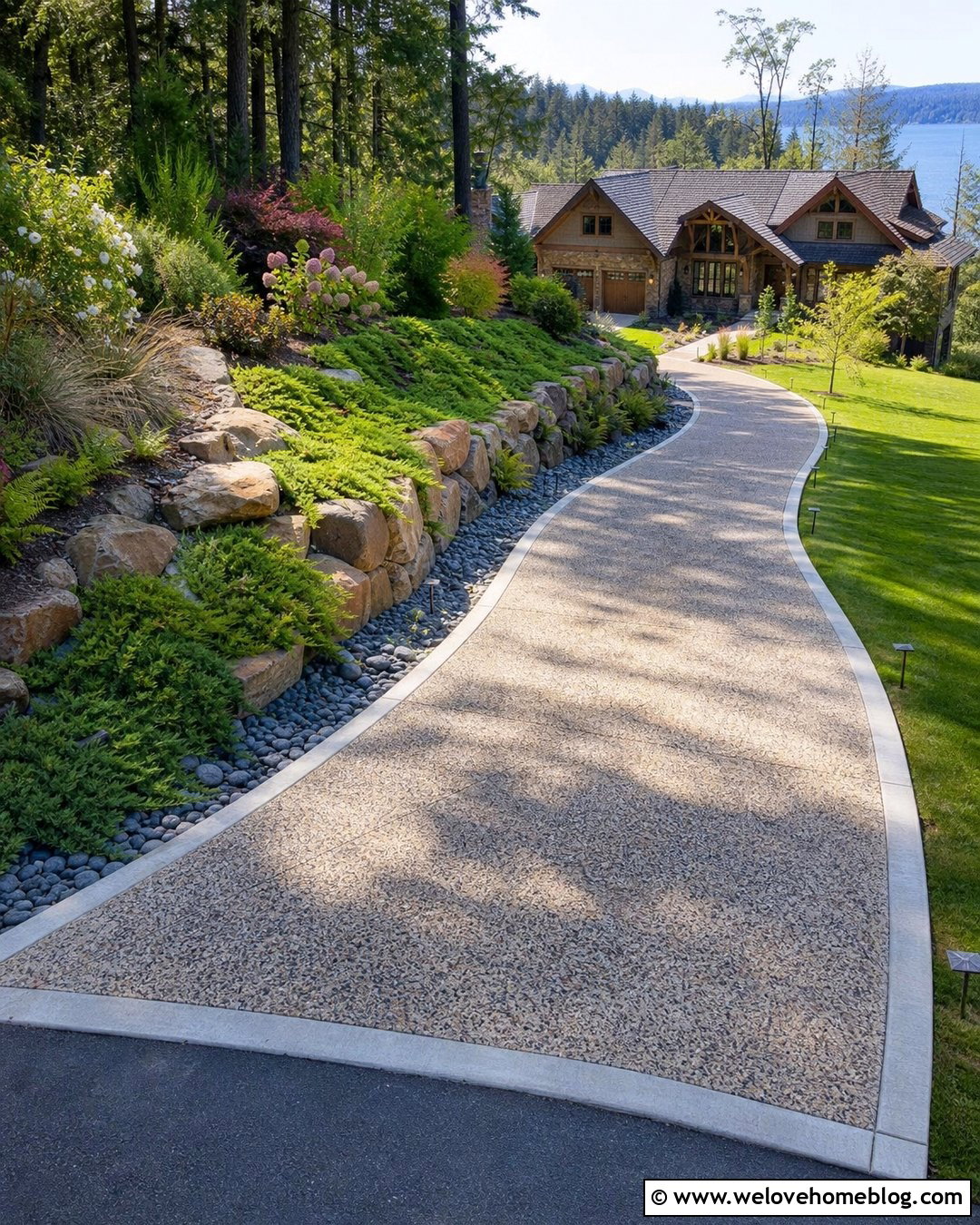
Large natural boulders can make a steep driveway feel connected to a wooded or mountainous setting. Pair a curved exposed-aggregate driveway with a carefully engineered boulder retaining wall along the uphill side. Vary the wall height in stepped sections so it follows the terrain instead of forming one overwhelming vertical face. A stone-lined drainage channel between the wall and driveway collects hillside runoff and keeps sediment away from the pavement. Plant pockets above and between wall sections with creeping juniper, ferns, native grasses, and compact flowering shrubs. On the open side, use a low concrete curb and mown lawn for a clear driving boundary. The exposed stone in the driveway echoes the boulders, creating a complete natural design that suits a rustic contemporary or lodge-inspired house.
17. Steep Downhill Driveway With Heated Concrete Surface
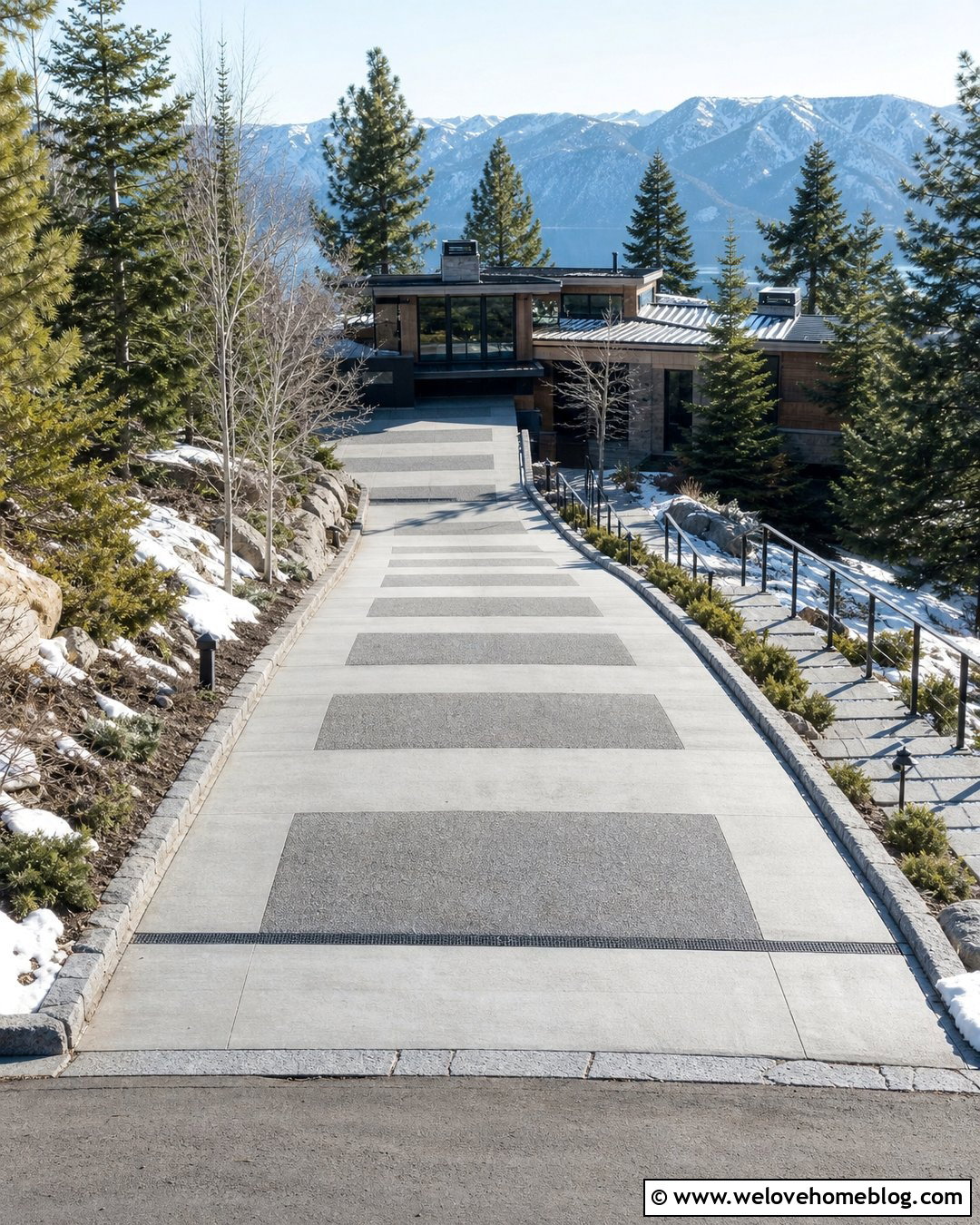
In a cold climate, a snow-melting system beneath textured concrete can improve winter usability when it is properly designed, installed, and operated. Use a straight broom-finished driveway with darker exposed-aggregate bands across the slope for extra visual definition. Divide the heating system into practical zones, focusing on tire paths, the garage approach, and the steepest portion. Meltwater still needs somewhere safe to go, so include side drainage and a full-width trench drain near the lower apron. Frame the driveway with granite curbs, evergreen groundcovers, and salt-tolerant shrubs where appropriate. A simple handrailed walkway can follow one side on stepped landings. This polished design suits a contemporary mountain home and keeps the functional heating components almost completely hidden from view.
18. Steep Downhill Driveway With Garage Turnaround
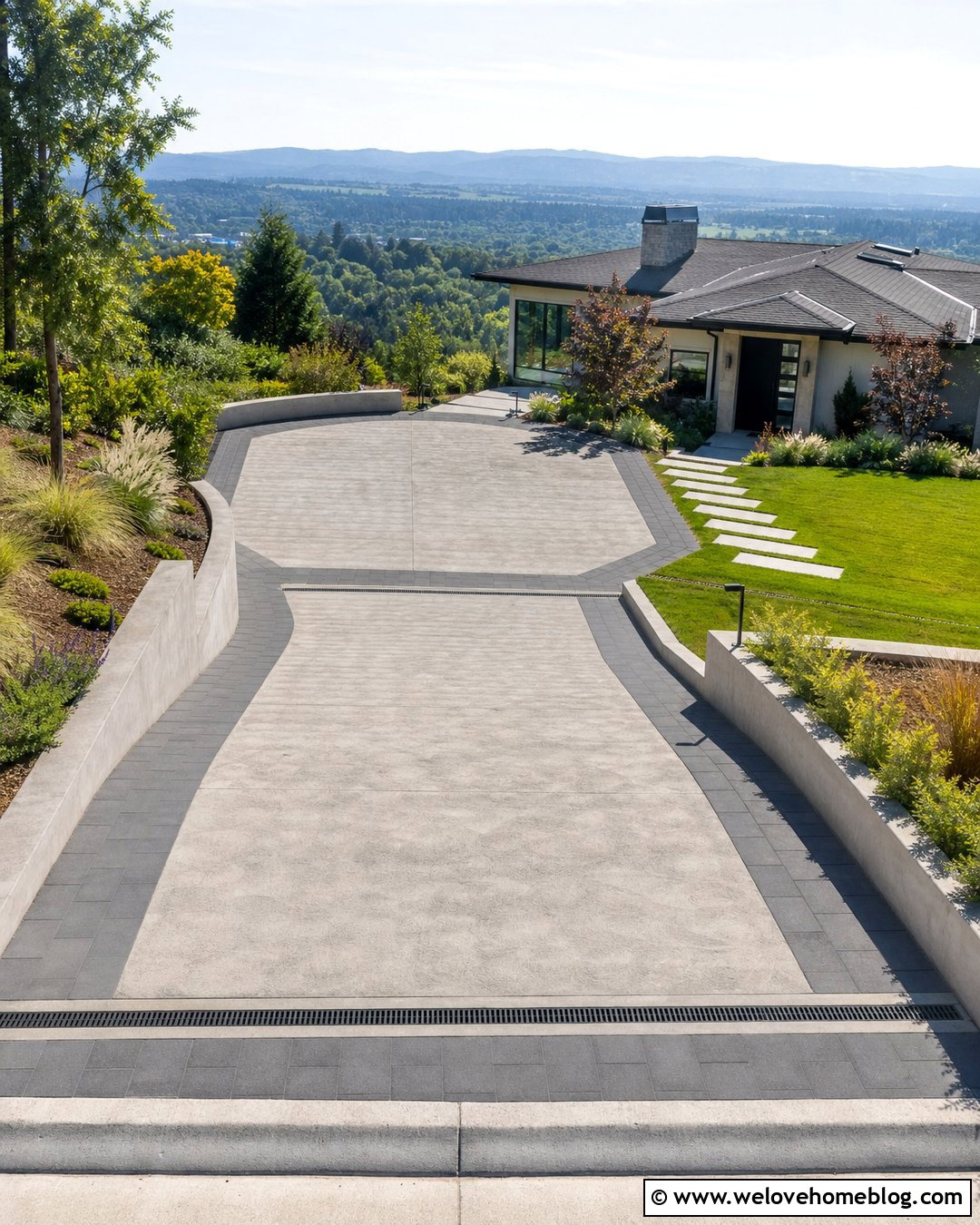
Backing up a long, steep driveway can be stressful, especially when visibility is limited. A level or gently sloped turnaround beside the garage allows vehicles to change direction before climbing back toward the street. Build the main descent from textured gray concrete, then widen it into a rectangular or hammerhead-shaped parking court. Use contrasting charcoal pavers to outline the turnaround and distinguish it from the travel lane. A trench drain crosses the driveway before the flatter area, while additional inlets protect the garage threshold. Low retaining walls support planting beds filled with compact shrubs and ornamental grasses. Keep trees away from critical sightlines. This complete solution is highly practical for a hillside ranch or contemporary home and makes the lower driveway feel spacious rather than confined.
19. Steep Downhill Driveway With Stone Drainage Swales
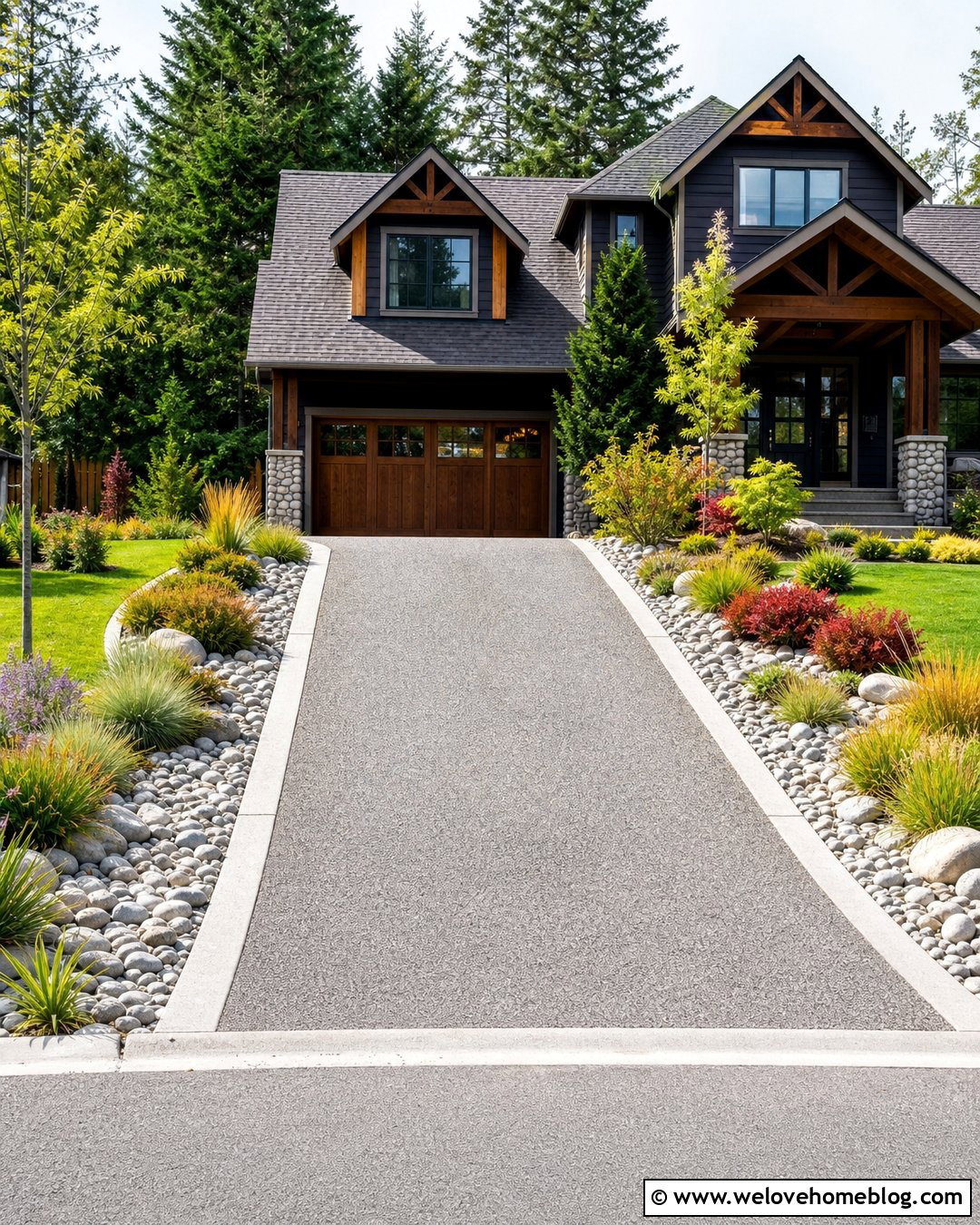
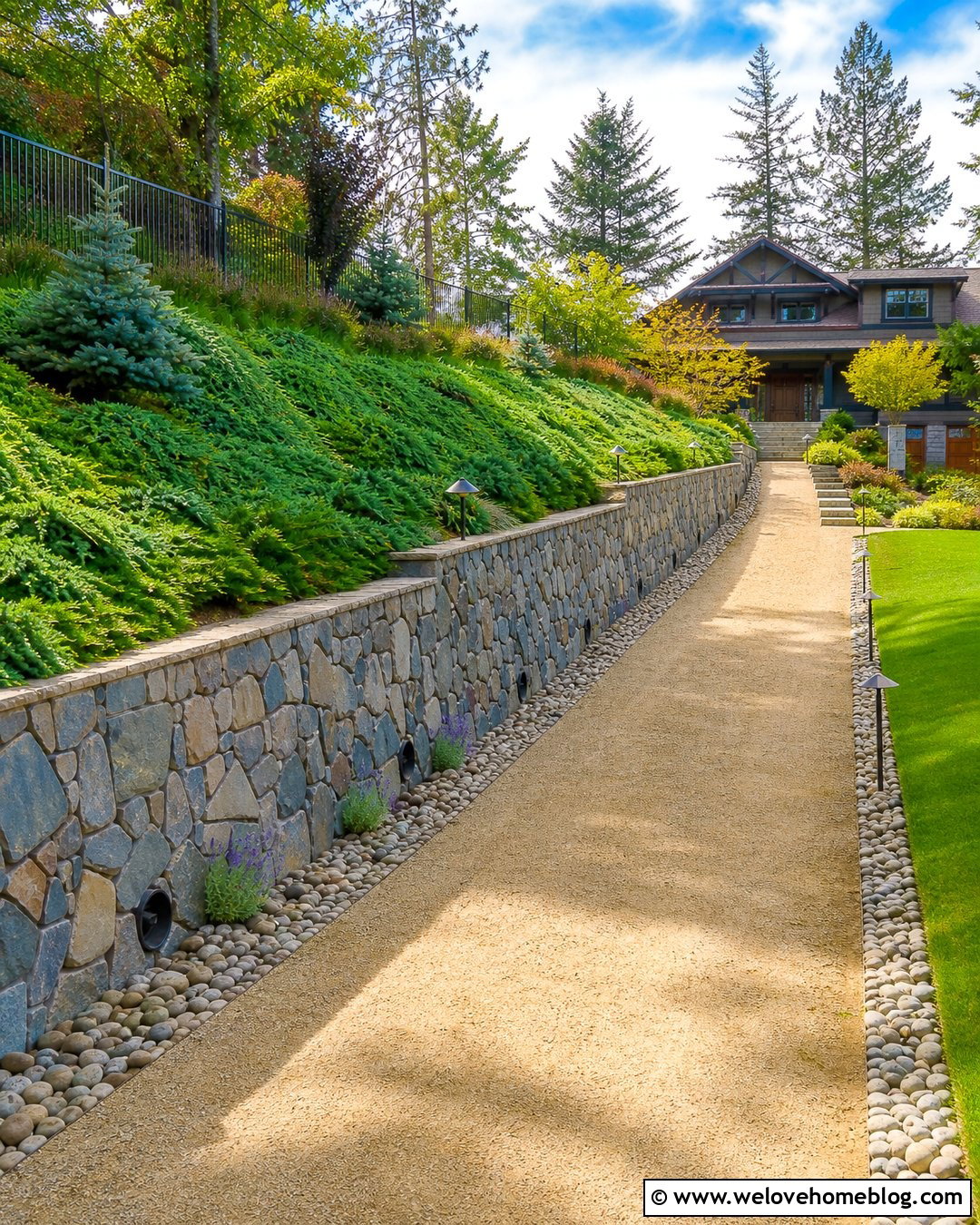
A visible drainage system can enhance the landscape when it uses materials that coordinate with the driveway and house. Pair warm-gray exposed aggregate with broad river-rock swales on both sides of a straight downhill layout. Place larger stones at key collection areas and use smaller gravel between them for a natural dry-creek appearance. Grasses, sedges, spreading shrubs, and moisture-tolerant perennials soften the edges while leaving enough open space for inspection and maintenance. Low concrete curbs separate the swales from the driving surface. Near the garage, direct the side channels toward a properly sized collection system rather than letting water gather at the doorway. The combined textures suit a modern Craftsman home and transform necessary runoff management into a balanced landscape feature.
20. Steep Downhill Resin-Bound Gravel Driveway
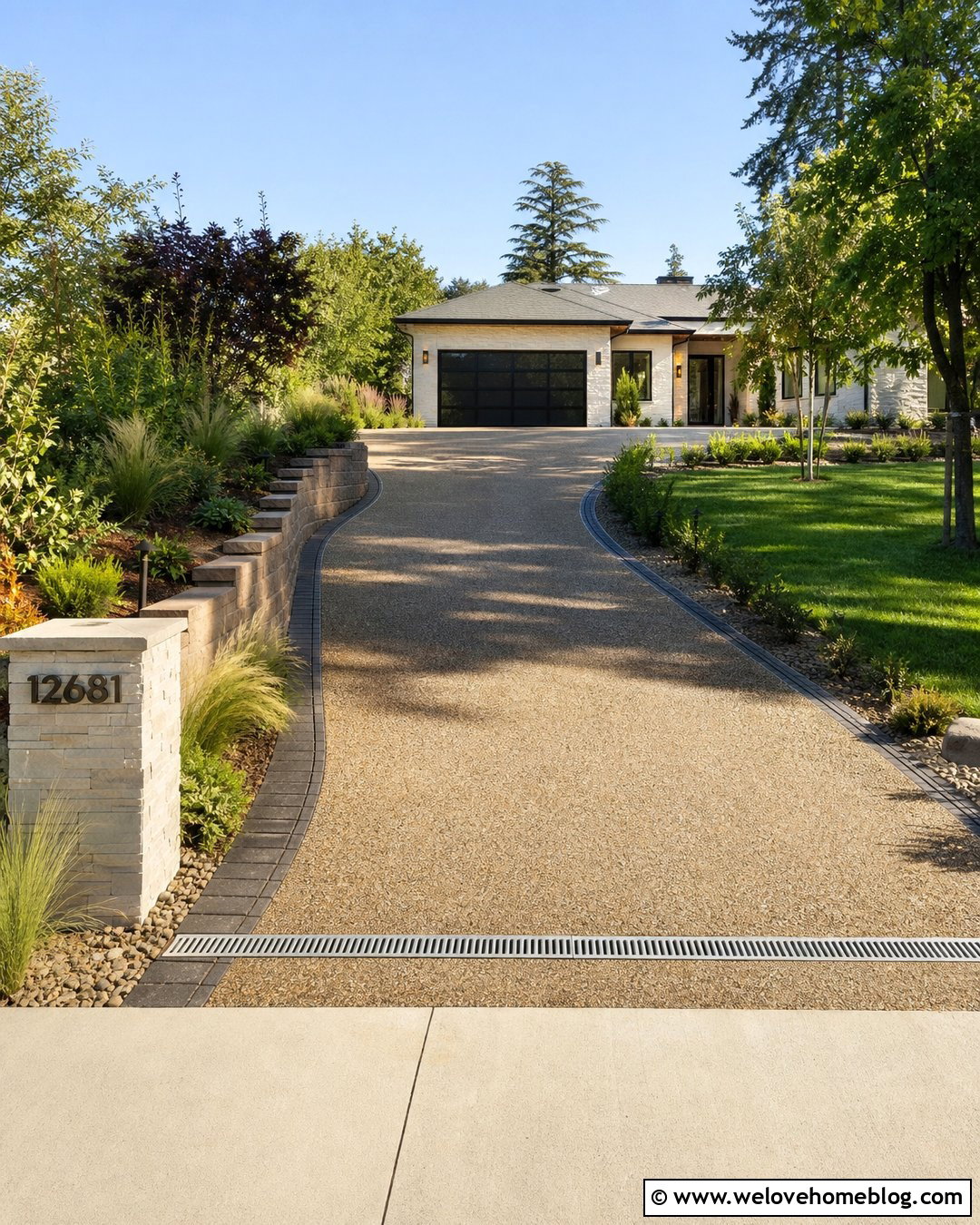
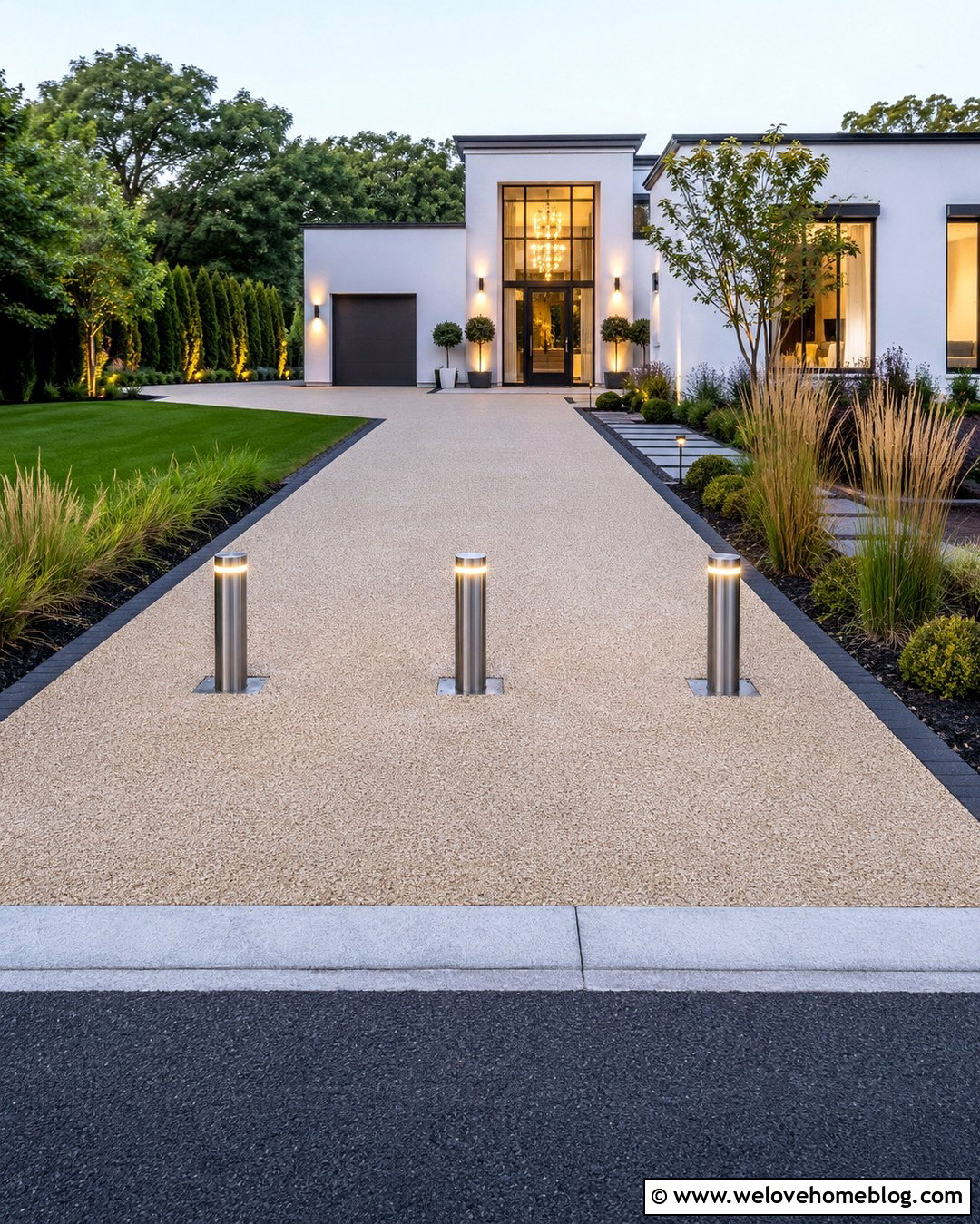
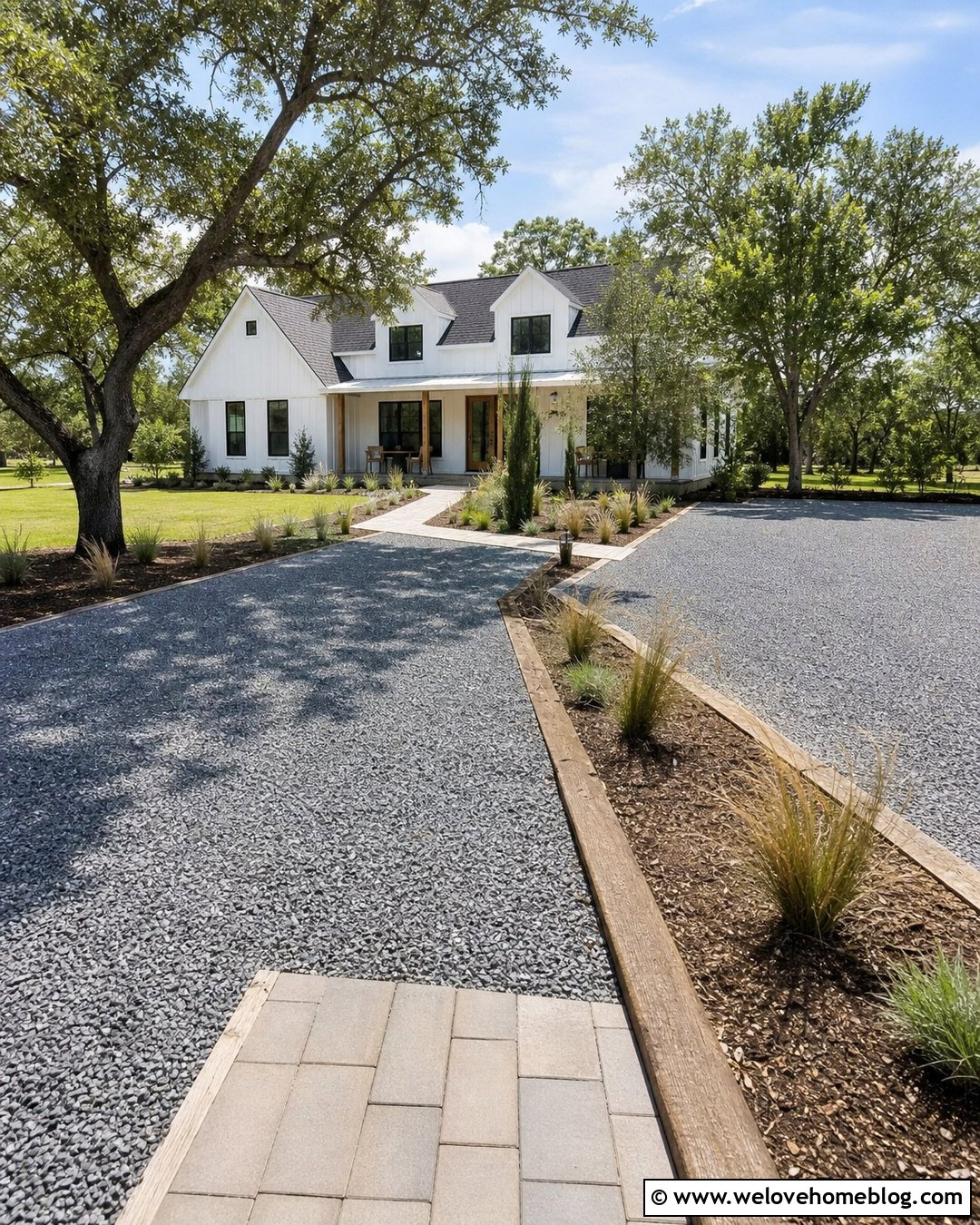
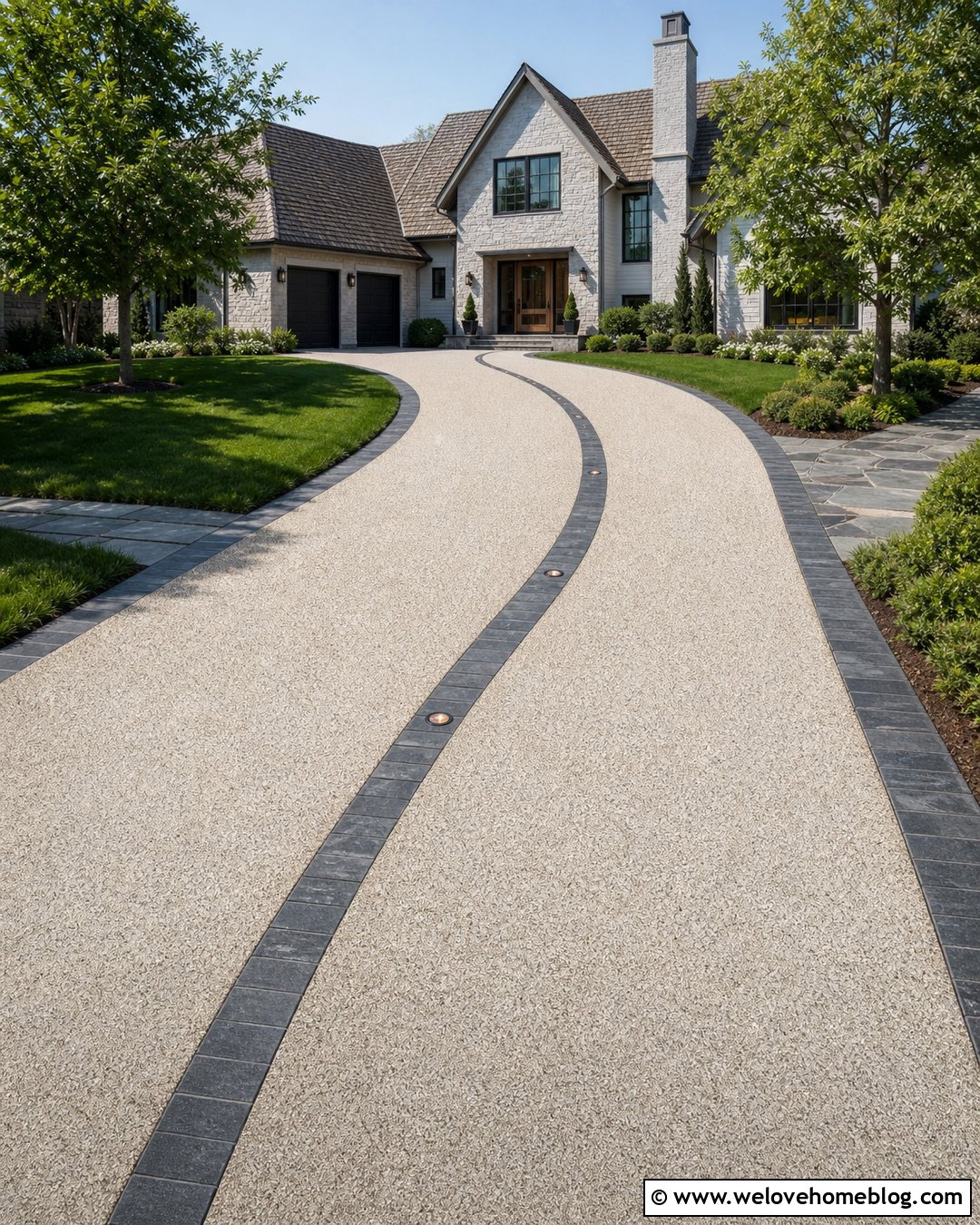
Resin-bound gravel offers a smooth, decorative appearance with visible stone texture and no loose aggregate rolling toward the bottom. Choose a warm blend of beige and gray stone for a gently curved driveway leading to a light-colored contemporary home. Dark granite setts create firm borders and emphasize the driveway shape. Along the uphill bank, use a low segmented retaining wall with layered planting above it. A narrow linear drain follows the inner curve, while a full-width channel drain protects the garage entrance. Add drought-tolerant grasses, creeping groundcover, and small ornamental trees to frame the route without hiding sightlines. Because product suitability, drainage behavior, and installation limits vary on steep grades, confirm the complete specification with an experienced installer before selecting this finish.
Conclusion:
The strongest **20 Steep Downhill Driveway Ideas** treat the driveway as a complete system rather than an isolated paved slope. Surface texture supports traction, while transition zones help vehicles move between changing grades. Curbs, swales, channel drains, and stable planting manage runoff and erosion. Retaining walls, stairs, and lower turnarounds can make a difficult site more useful, but they require careful planning. Start by measuring the grade, studying where stormwater travels, and checking local driveway and drainage rules. Then choose materials that fit your climate, architecture, and maintenance needs. Professional engineering may add to the initial budget, yet it can prevent expensive drainage, access, and structural problems later.

Related posts:
Leave a Reply