
Cobble And Gravel Driveway Ideas combine the relaxed texture of loose stone with the strength and definition of a structured cobblestone border. This pairing works with traditional homes, modern farmhouses, cottages, ranch houses, and contemporary architecture. Gravel can soften a large parking area, while cobbles create crisp edges, stable entrance aprons, drainage channels, and decorative bands. A properly installed cobblestone edge also helps contain loose aggregate and separates the driving surface from lawns or planting beds. () The best design will suit your property’s size, slope, architecture, and maintenance needs. From compact straight layouts to impressive circular approaches, these complete driveway looks offer practical inspiration. Explore these 20 Cobble And Gravel Driveway Ideas to find a combination that fits your home.

1. Pea Gravel Driveway With Cobblestone Edging
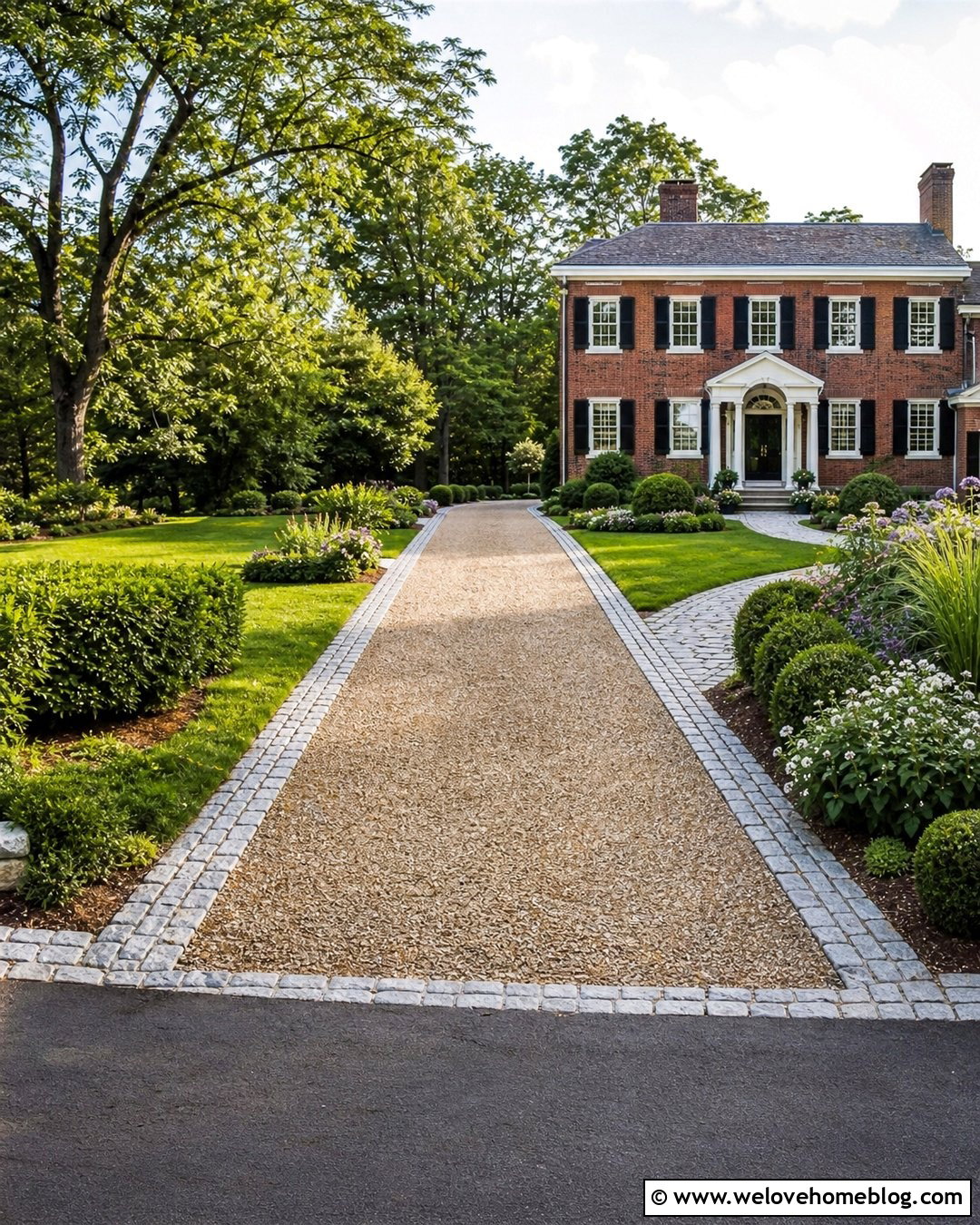
Pea gravel brings a soft, inviting texture to a straight residential driveway. Choose a warm beige or mixed natural blend to complement brick, stone, or painted siding. Install two or three rows of gray granite cobblestones along each side to create a substantial border. This edging gives the small stones a defined stopping point and makes the driveway easier to distinguish from nearby lawns. For a balanced look, repeat the same cobbles around adjoining garden beds or the front walkway. Low boxwoods, ornamental grasses, and flowering perennials can soften the hard border without hiding it. Because rounded pea gravel can shift under tires, a compacted structural base and a restrained driveway width are important. The completed look feels relaxed but carefully organized.
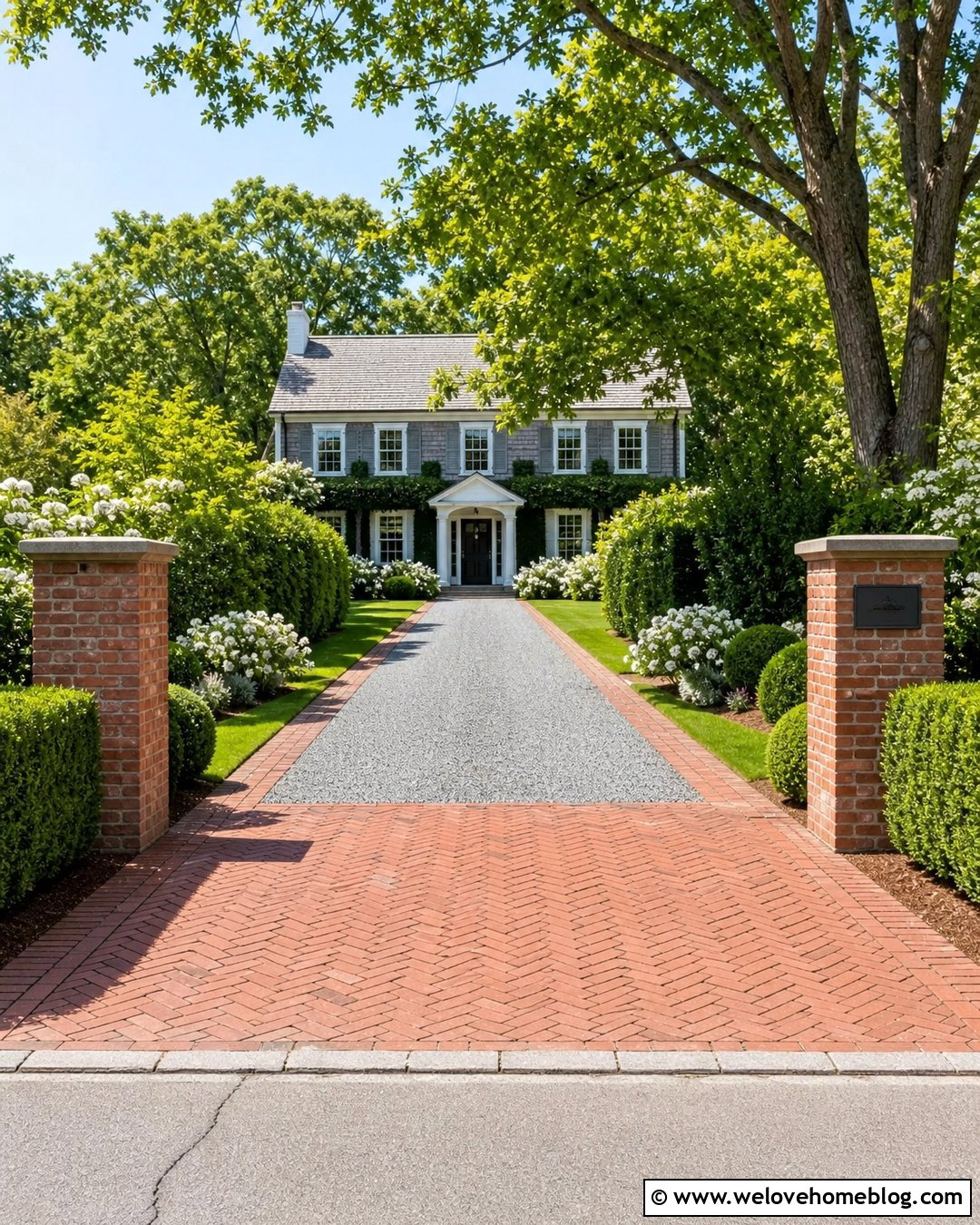
2. Gray Gravel Driveway With Cobblestone Apron
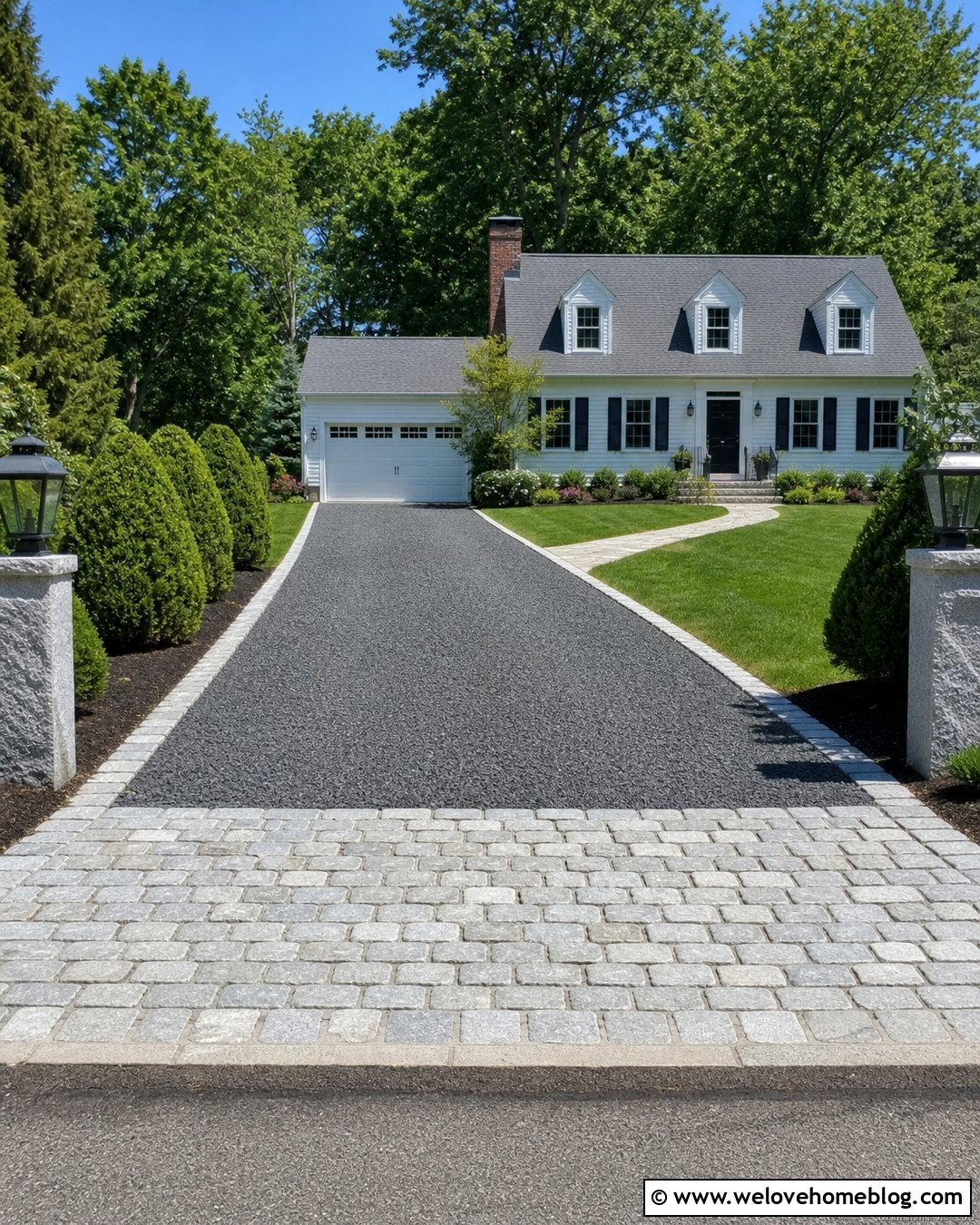
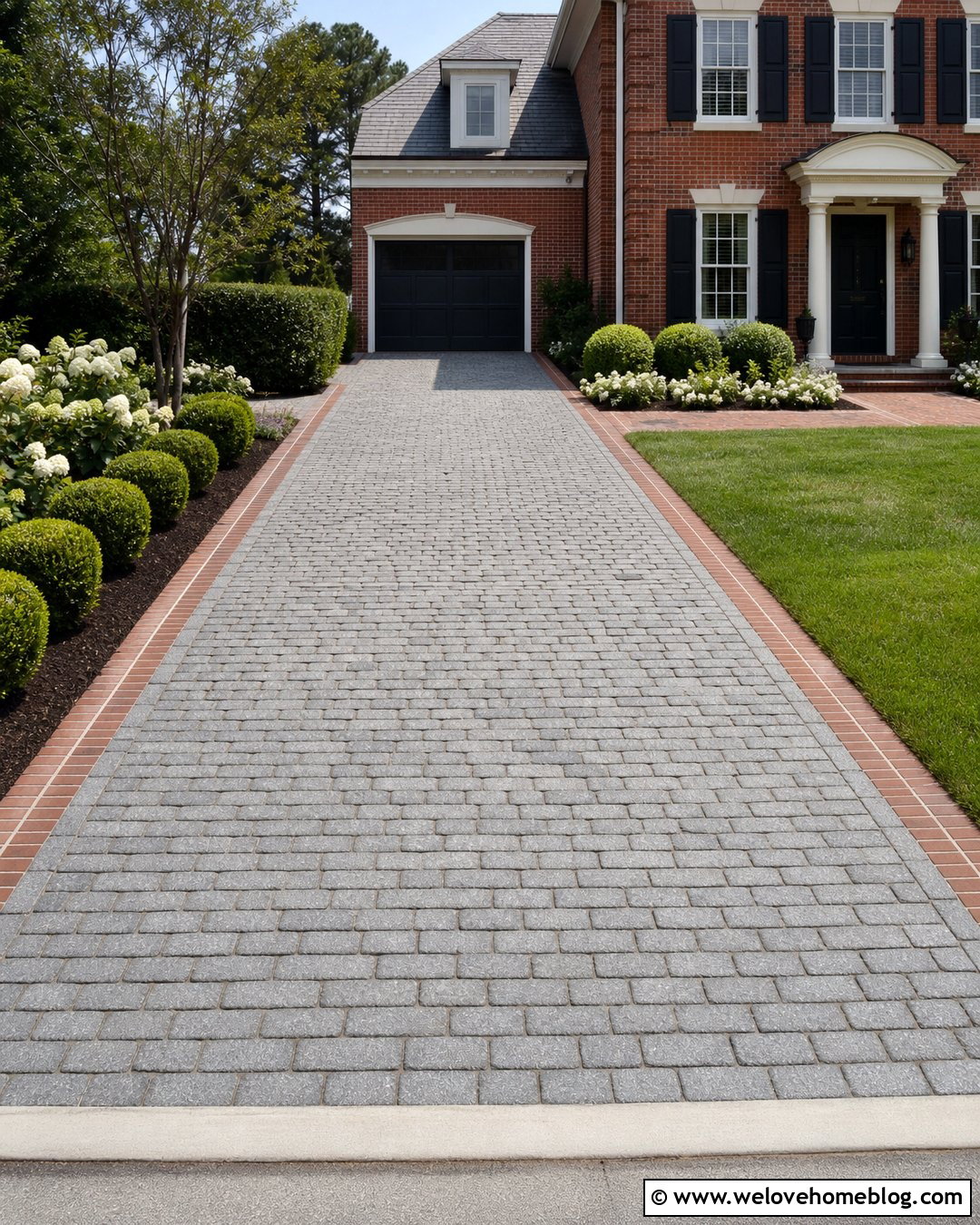
A cobblestone apron gives a simple gray gravel driveway a more finished entrance at the street. Use charcoal crushed gravel for the main surface, then place rectangular granite cobbles across the first several feet of the driveway. The apron creates a clear transition from the road and catches attention before the gravel approach begins. Continue a single cobblestone row along both driveway edges to connect the entrance with the house. This combination looks especially appropriate beside a Colonial or Cape Cod home with a symmetrical facade. Frame the opening with clipped evergreen shrubs, a maintained lawn, and matching lantern-style lights. Set the apron on a driveway-rated foundation so it can handle regular traffic. The contrasting stones make an understated driveway appear more permanent and intentional.
3. Curved Gravel Driveway With Granite Cobble Border
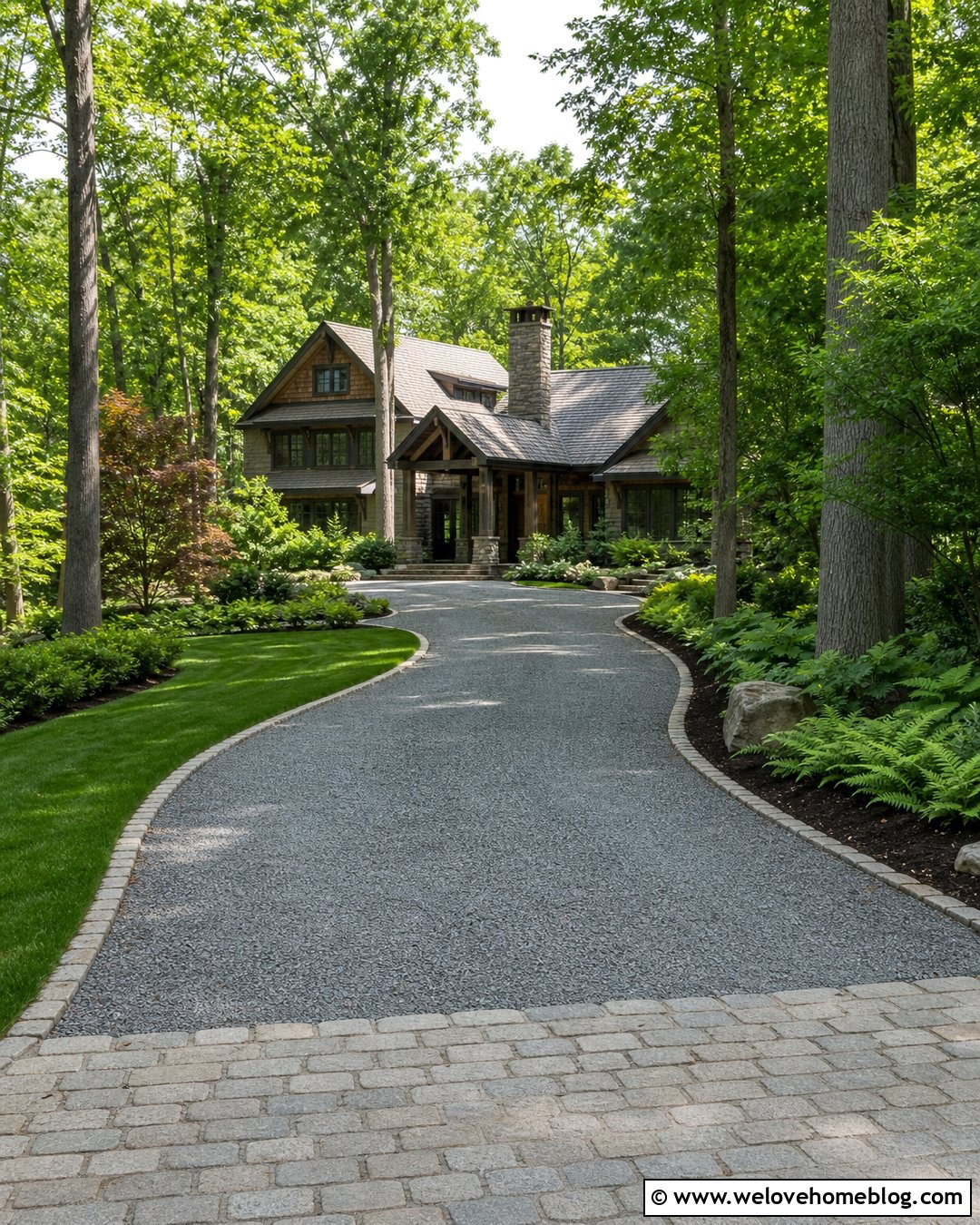
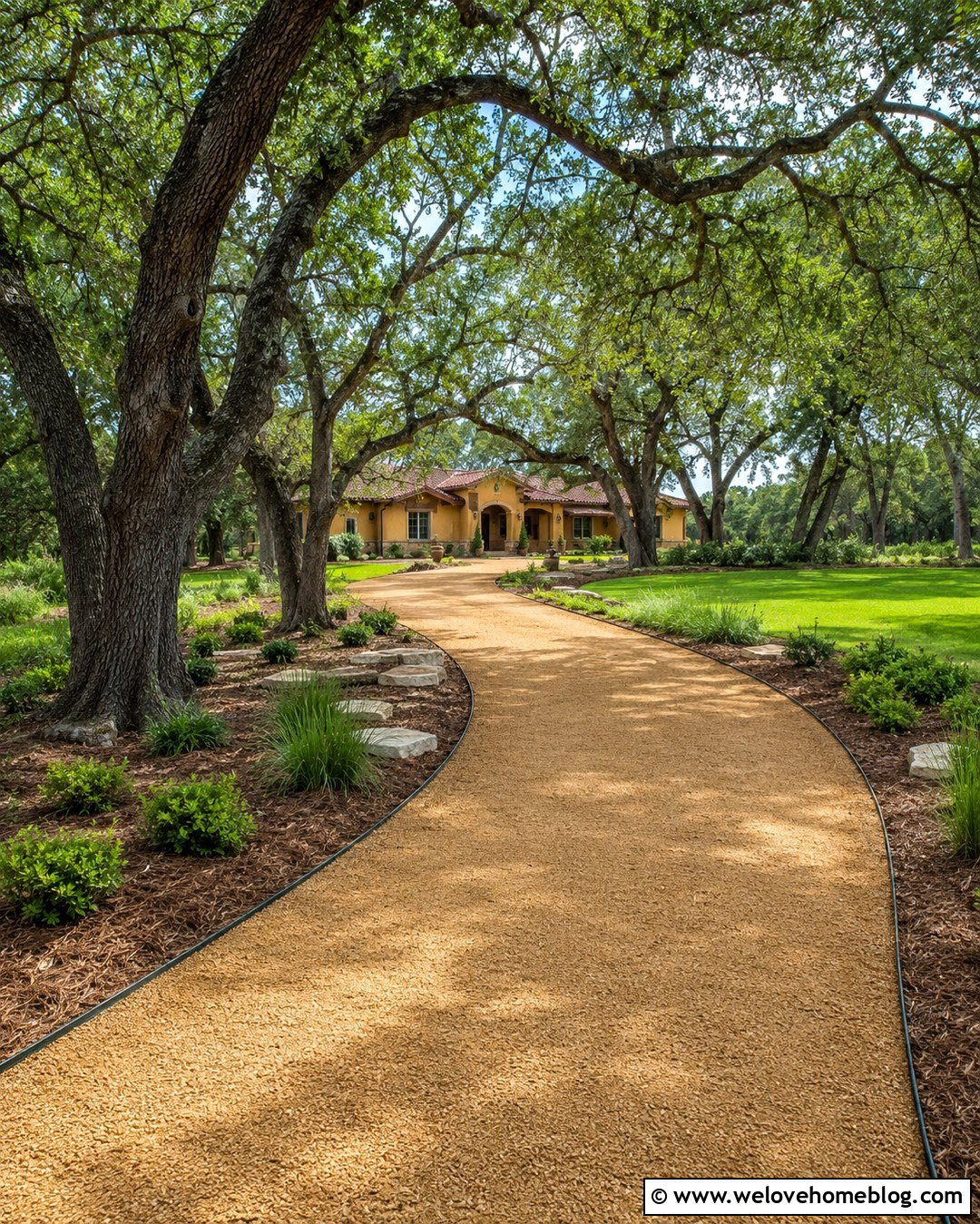
Does your home sit slightly away from the road or behind an established front yard? A gently curved gravel driveway can reveal the house gradually while preserving lawn and mature trees. Cover the driving surface with compacted gray crushed stone and follow the entire curve with a flush granite cobble border. The cobbles should trace one smooth line rather than forming several abrupt bends. On the outside edge, use layered shrubs and shade-tolerant ground covers to reinforce the curve. Keep planting lower near the street so drivers have a clear view when entering or leaving. A simple cobblestone apron can strengthen the entrance without competing with the natural layout. This complete design suits craftsman houses, wooded properties, and informal suburban landscapes where straight lines might feel too rigid.
4. Circular Gravel Driveway With Cobblestone Center Island
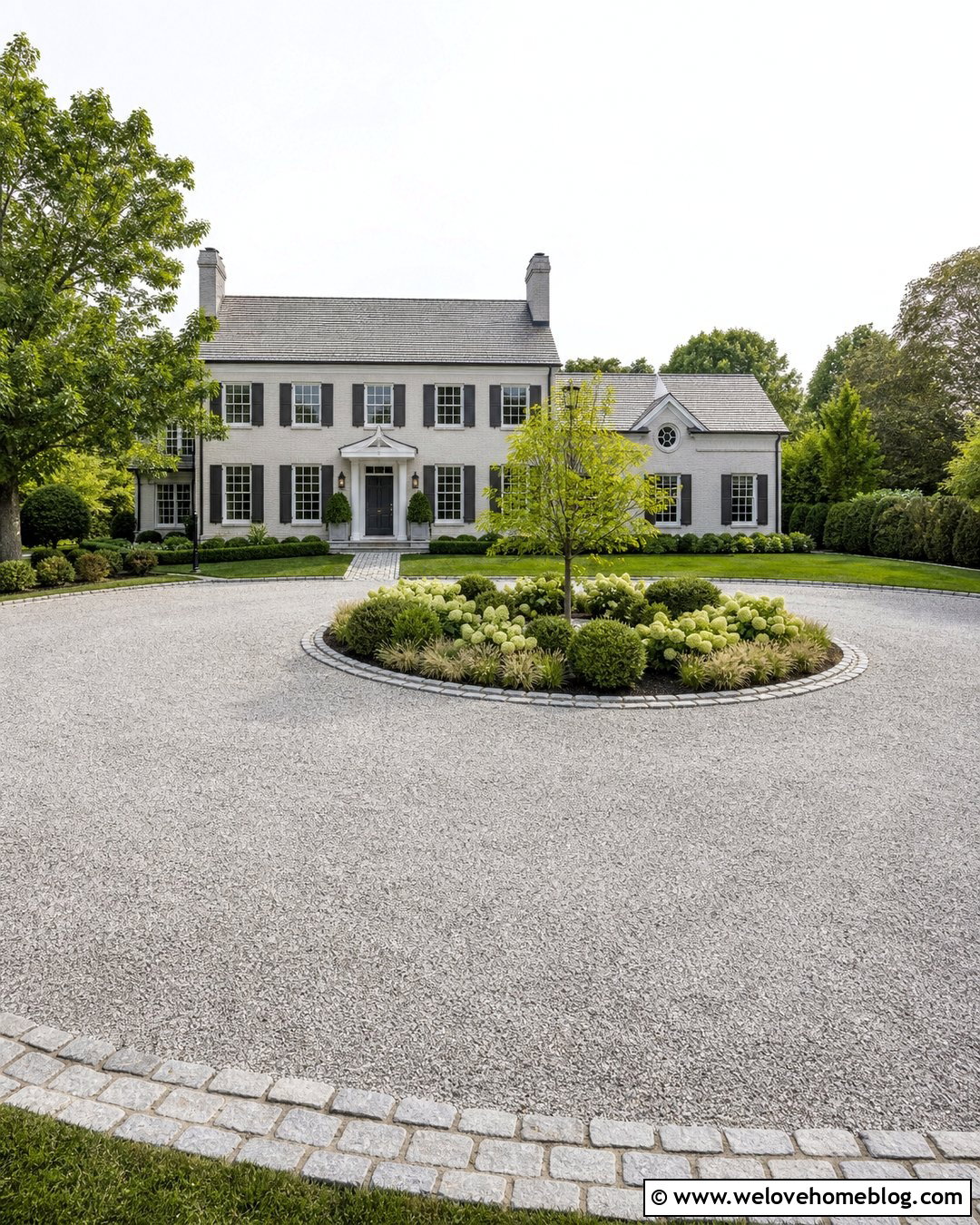
A circular layout can turn a broad front yard into an elegant and convenient arrival space. Use light gray gravel for the driving loop and define both sides with medium-tone cobblestones. At the center, build a round or softly oval planting island edged with the same cobbles. A small ornamental tree can provide height, while boxwoods, hydrangeas, or low grasses fill the lower layers. Keep the island proportionate so vehicles retain enough room to travel around it comfortably. The front walkway can connect directly to the inner cobblestone border for a clear route toward the entrance. This arrangement works well with Colonial, Georgian, and large farmhouse architecture. Repeating the cobblestone material around the island, outer edge, and walkway helps the expansive design feel coordinated rather than fragmented.
5. White Gravel Driveway With Dark Cobble Edging
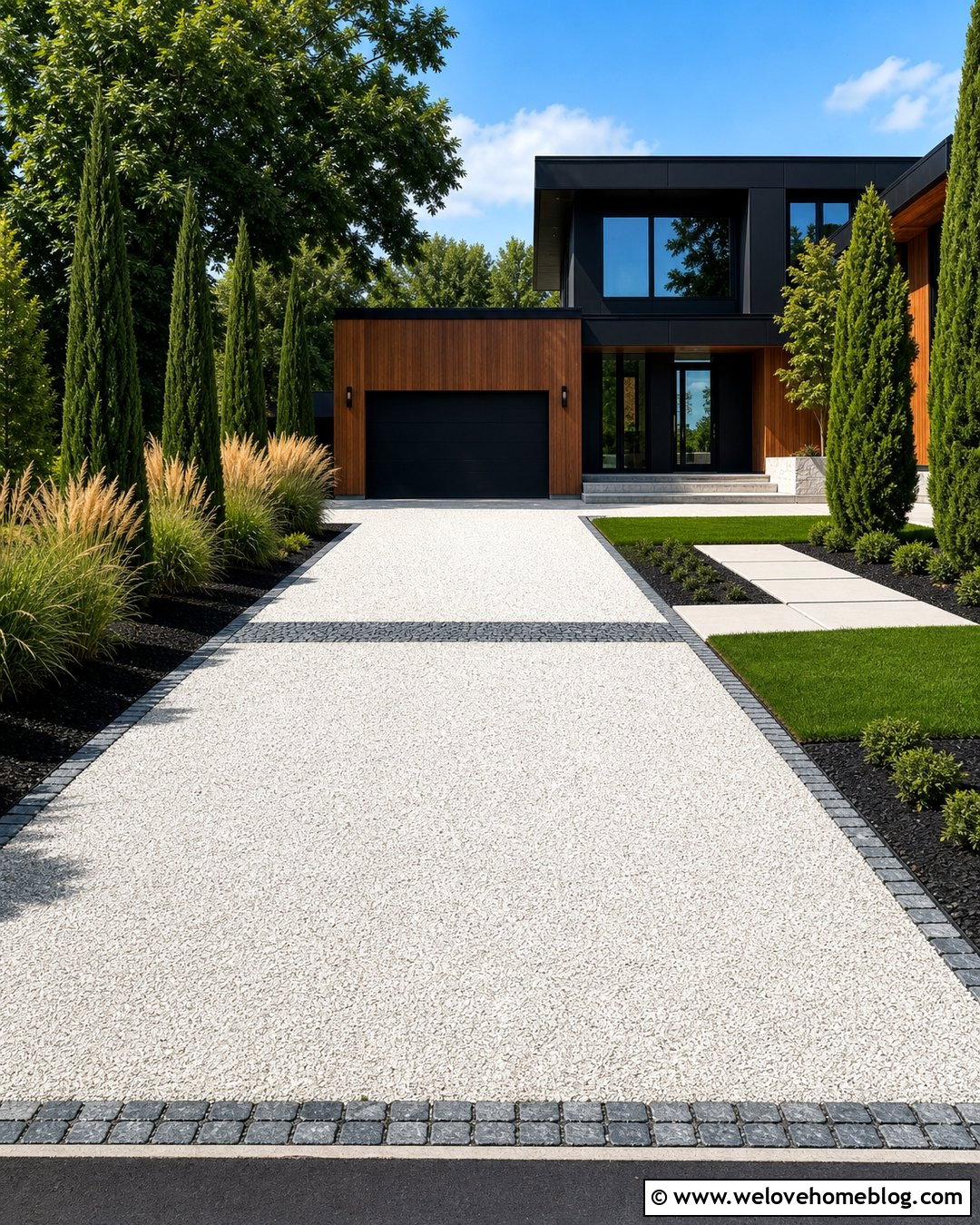
Bright white gravel creates a clean surface that stands out against green lawns and dark architecture. Give it stronger definition with charcoal or black granite cobblestones installed flush along the perimeter. The high-contrast border can make a straight driveway look sharper, particularly beside a modern house with black windows or stained wood siding. Use simple planting beds filled with sculptural evergreens, feather reed grass, and dark stone mulch. Avoid adding too many colors because the gravel and edging already create a noticeable graphic effect. A narrow dark cobble band near the garage can provide a neat transition to the floor or threshold. White gravel may show leaves and soil more readily, so it works best where regular blowing, raking, and occasional replenishment are realistic parts of the maintenance plan.
6. Golden Gravel Driveway With Reclaimed Cobblestones
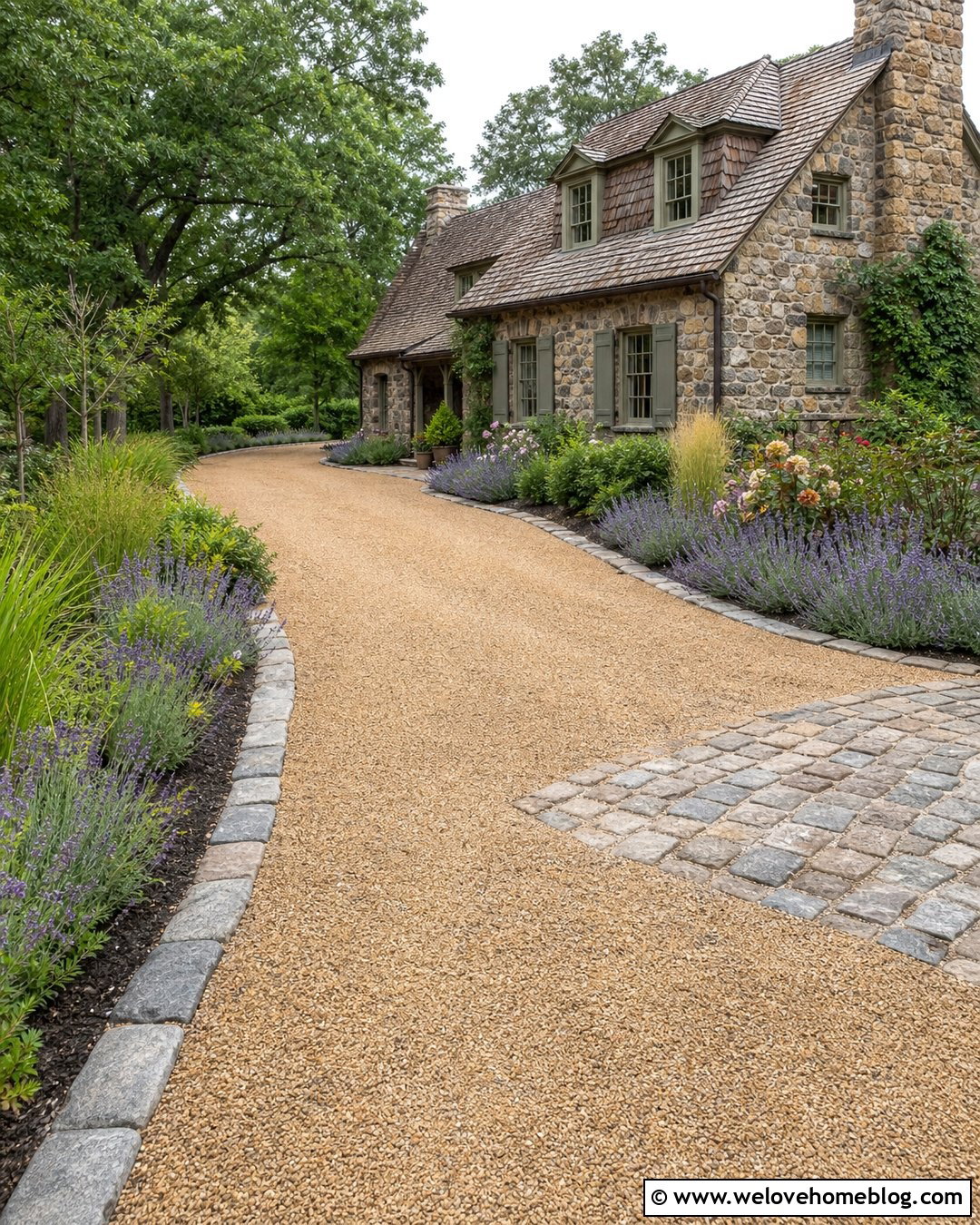
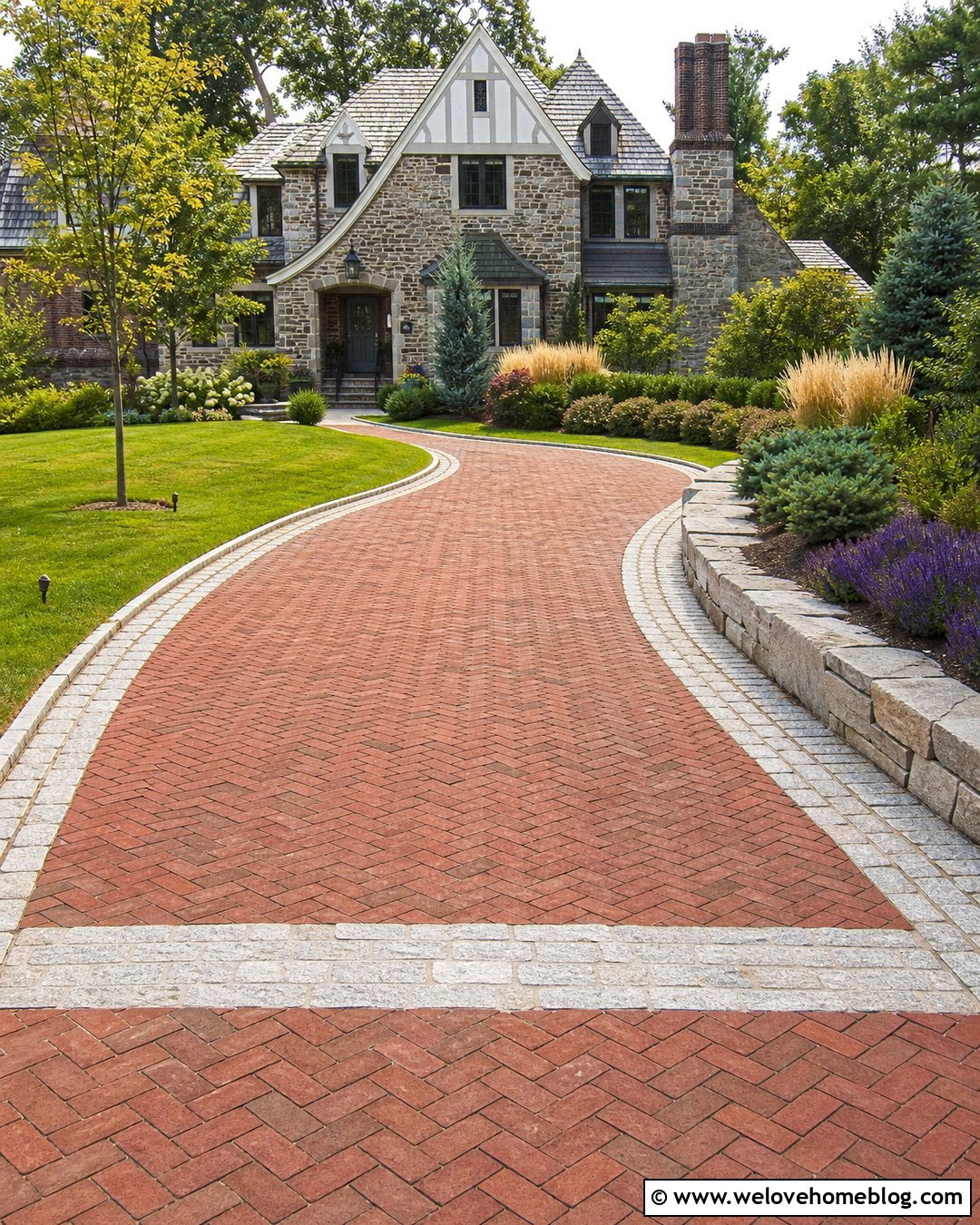
Golden gravel and weathered cobblestones create a warm driveway that feels naturally connected to an older home. Select buff, tan, or honey-colored crushed gravel for the primary surface. Edge it with reclaimed granite cobbles that have varied gray, brown, and faded charcoal tones. Their irregular coloring works particularly well with historic brick, fieldstone, or traditional clapboard facades. A subtle curved layout will make the combination feel even more established. Plant lavender, catmint, roses, and soft ornamental grasses beyond the cobble border for a loose cottage-inspired frame. Near the garage or parking area, add a wider cobblestone band to reduce the visual expanse of gravel. Reclaimed pieces should still be stable, appropriately sized, and installed over a dependable base, even when a slightly aged appearance is desired.
7. Crushed Granite Driveway With Cobblestone Bands
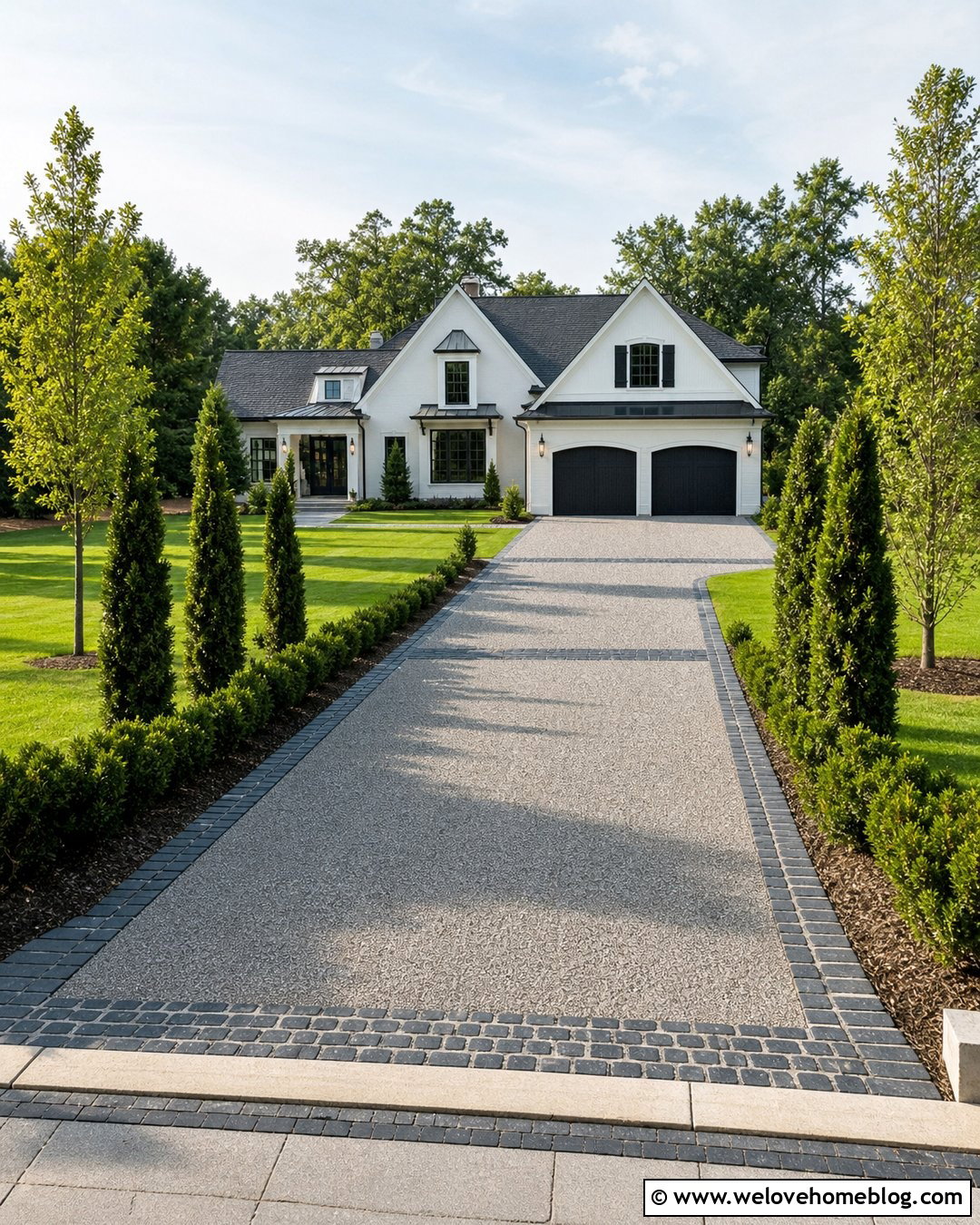
Long stretches of gravel can look plain without a change in pattern or texture. Break up a crushed granite driveway with transverse cobblestone bands placed at the entrance, near the parking area, and before the garage. Choose cobbles that contrast slightly with the gravel while still coordinating with the house. For example, warm gray crushed granite works well with darker charcoal cobblestones. Continue a single row along the perimeter so each cross band connects visually to the outer edge. The bands can also mark changes in grade or separate the driving lane from a parking court. Keep their spacing purposeful rather than overly frequent. Straight planting beds, repeated shrubs, and a clearly defined walkway will support the organized layout. This structured combination works especially well with transitional and contemporary suburban homes.
8. Gravel Driveway With Cobblestone Tire Tracks
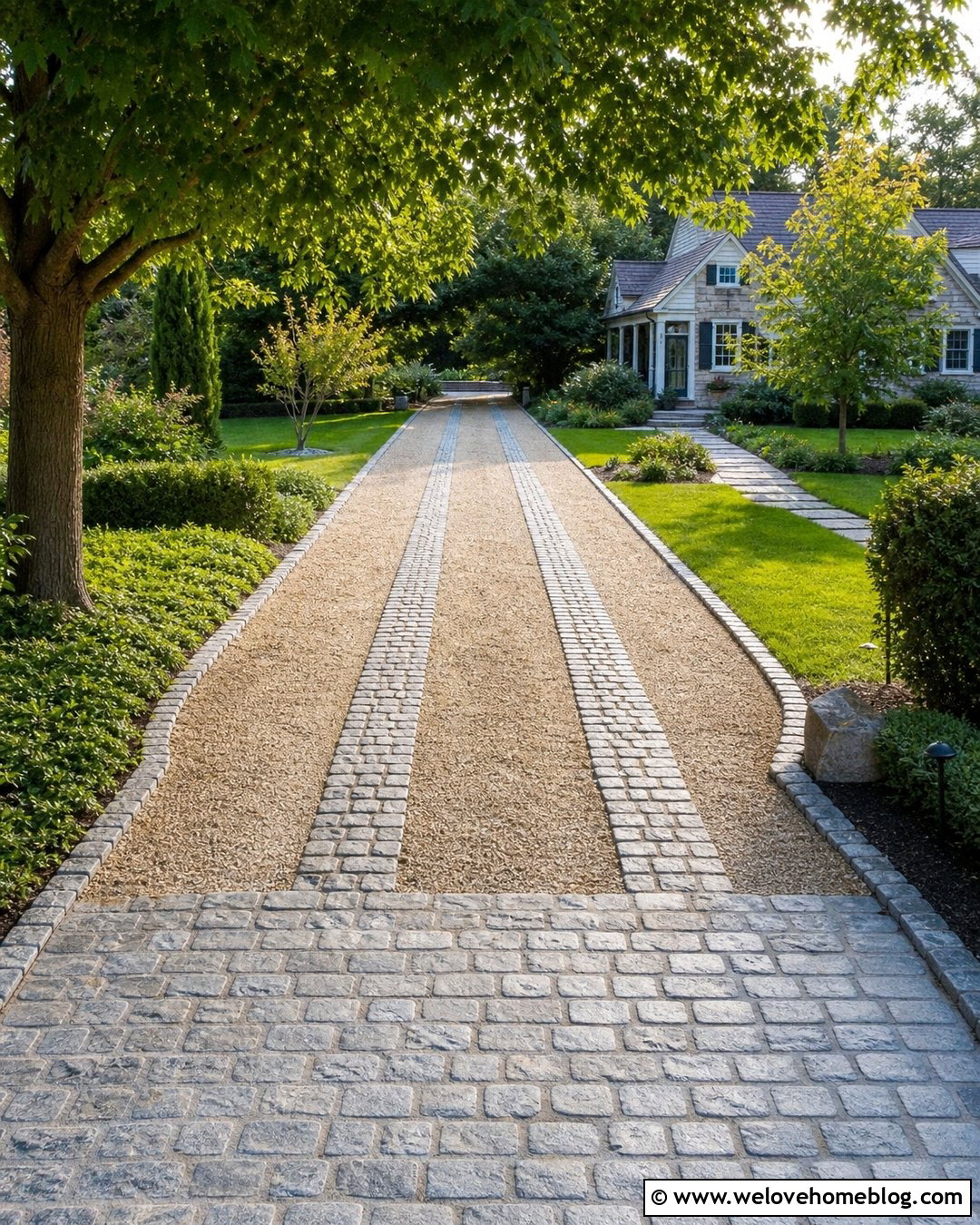
Cobblestone tire tracks provide a distinctive alternative to covering the entire driveway with one material. Install two parallel strips of flat granite cobbles where vehicle wheels normally travel, then fill the center and outer sections with compacted gravel. The cobbles should sit close to the gravel level to create a comfortable transition and reduce obvious raised edges. This arrangement is best suited to a straight, single-lane driveway where wheel placement remains fairly predictable. Use grass or low ground cover outside the cobblestone perimeter to soften the linear design. A matching cobble apron at the street helps introduce the pattern clearly. Choose angular gravel that settles more firmly than very rounded stone. The finished driveway has a traditional estate character while using less cobblestone than a fully paved surface would require.
9. Gravel Driveway With Cobblestone Drainage Channel
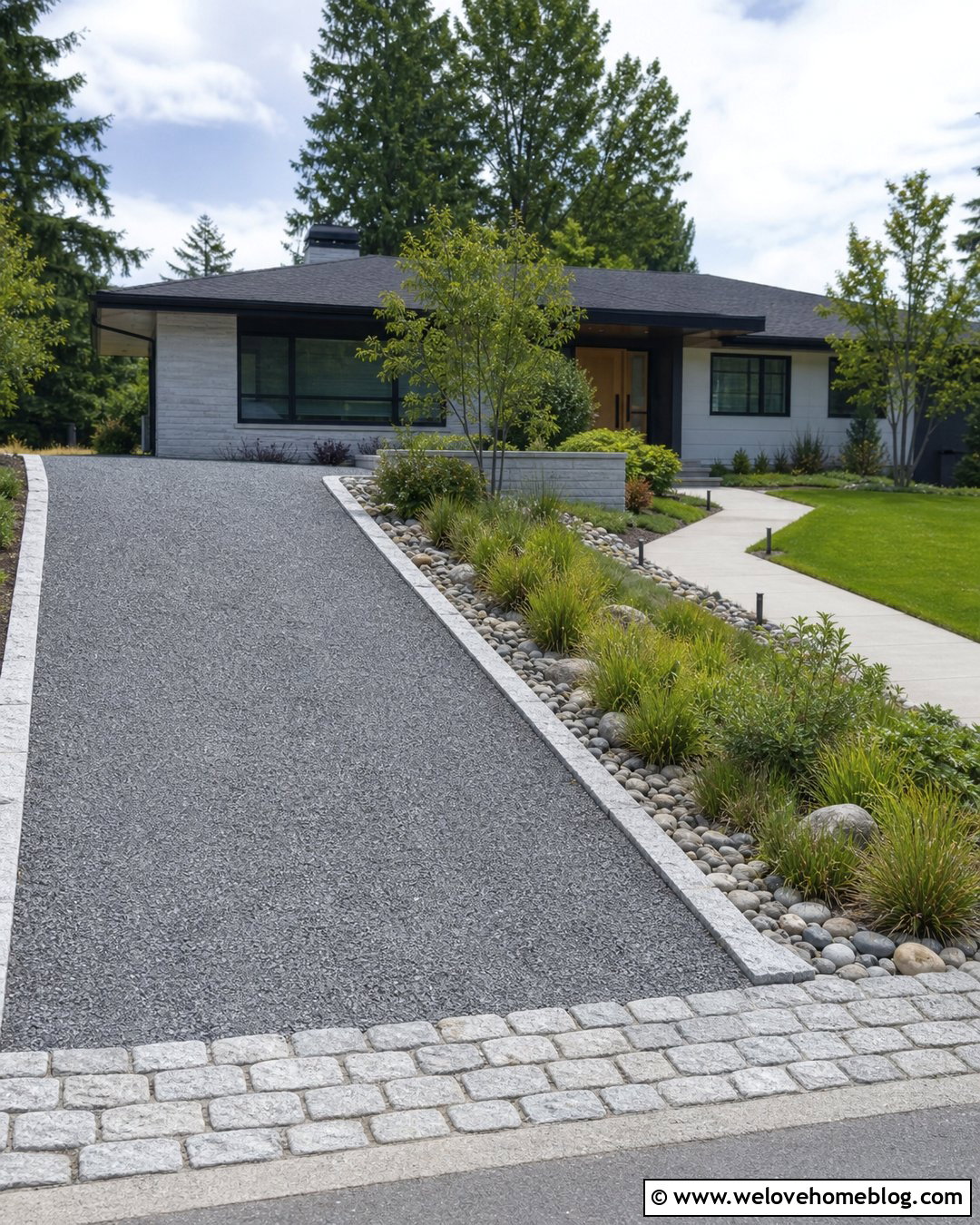
Water management can become an attractive part of the driveway rather than an afterthought. On a gently sloped gravel surface, install a shallow cobblestone channel along the lower edge or across a carefully selected drainage point. Use rounded river cobbles or granite setts to create a visible transition that directs runoff toward an appropriate landscaped area. The surrounding gravel should be graded so water reaches the channel instead of collecting in low spots. Beyond the border, a planted swale containing moisture-tolerant grasses and shrubs can blend the feature into the yard. Keep the channel shallow enough to cross safely where necessary, and consult a local professional when runoff could affect neighboring property or public drainage. Cobble-lined swales are used in residential gravel driveway landscapes to combine stormwater movement with visual structure. ()
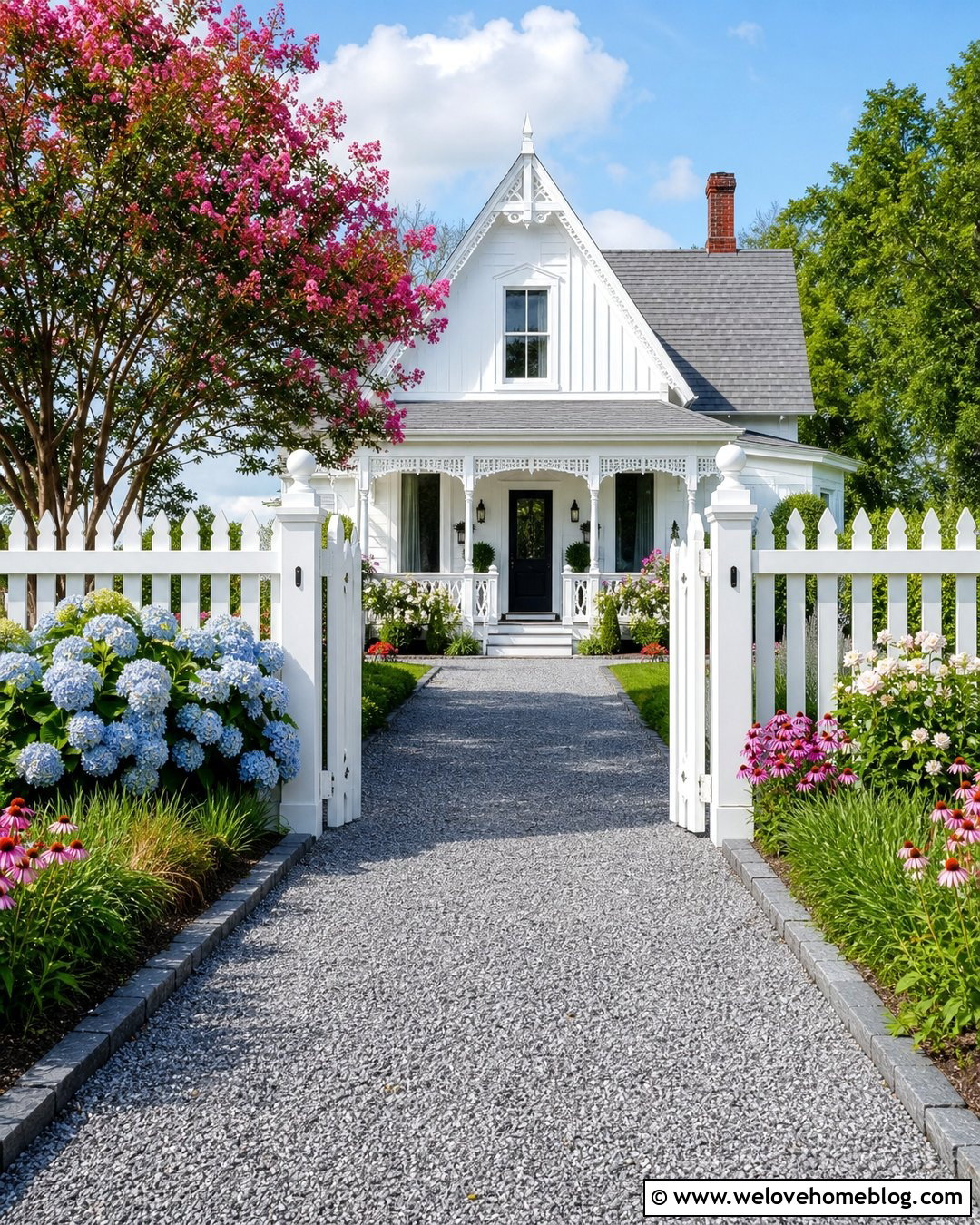
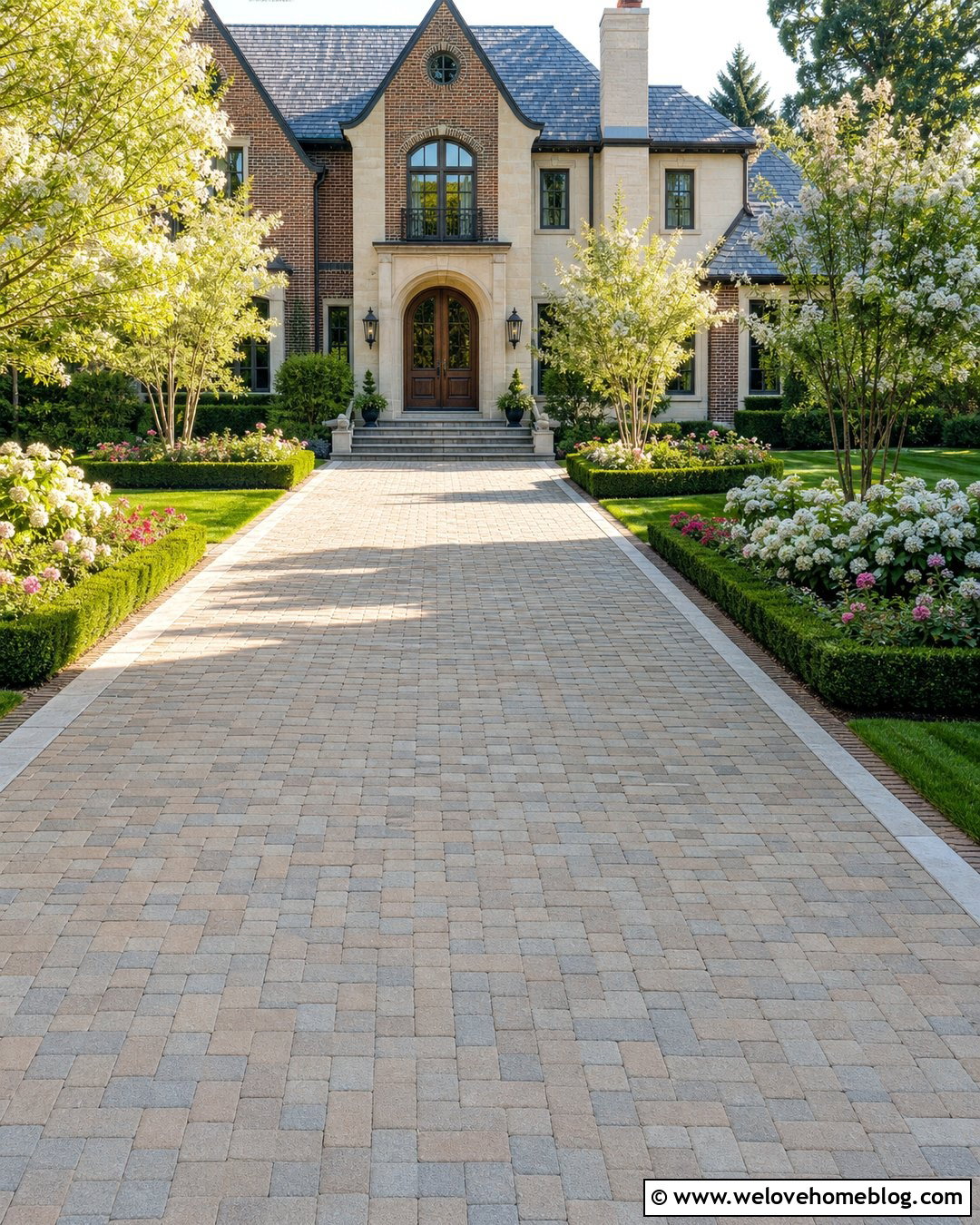
10. Farmhouse Gravel Driveway With Cobble Entrance
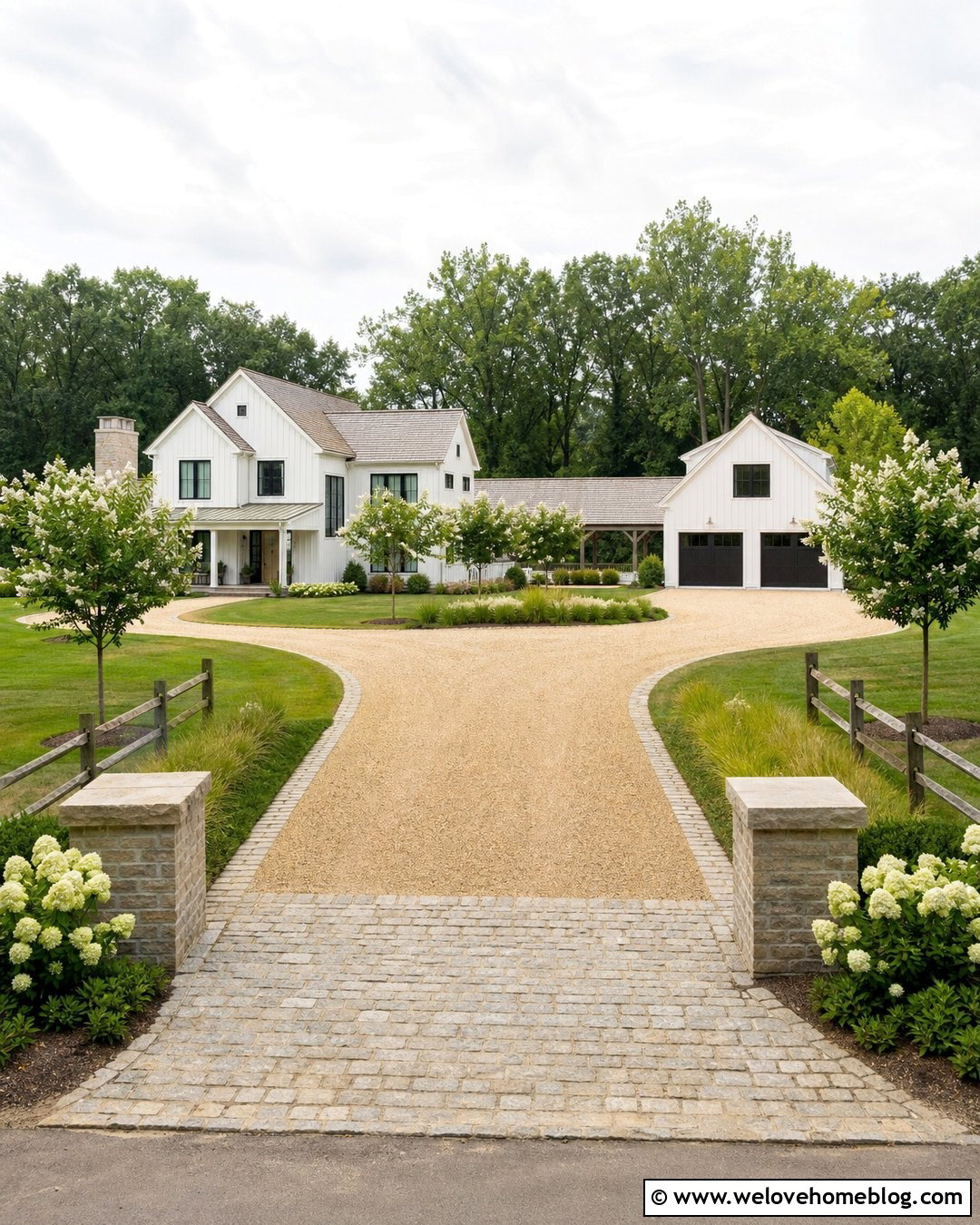
A farmhouse driveway should look practical, welcoming, and connected to the surrounding landscape. Start with tan or warm gray crushed gravel in a wide, gently curved layout. At the road, create a substantial cobblestone apron between simple stone pillars or low timber fencing. Continue the cobbles as a single border toward the house, allowing broad lawn and meadow-style planting to frame the approach. Near a detached garage or barn, widen the driveway into a functional turnaround without changing materials. White hydrangeas, native grasses, and small flowering trees can soften the entrance while maintaining open sightlines. Choose weathered gray or brown cobbles instead of highly uniform pavers for a more natural farmhouse appearance. The combination feels established and durable without making a rural or suburban property look overly formal.
11. Modern Gravel Driveway With Black Cobblestone Border
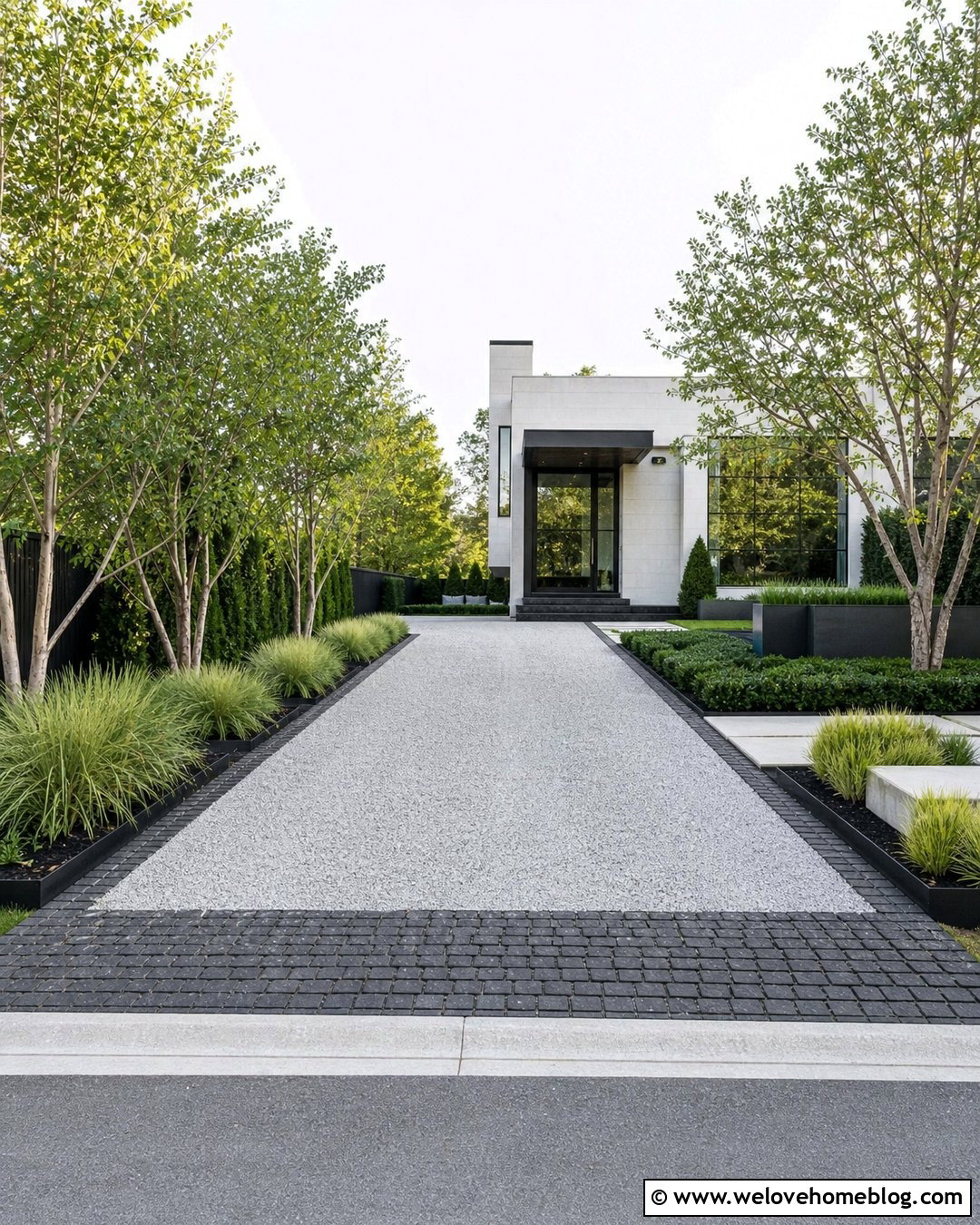
For a modern exterior, simplify the material palette and emphasize strong geometry. Cover a straight or subtly angled driveway with pale gray crushed gravel. Add a crisp border of dark charcoal cobblestones along both sides and repeat the stone across the entrance as a narrow apron. The contrast makes the driveway shape easy to read from the curb. Pair it with rectangular planting beds containing upright ornamental grasses, clipped evergreens, and one or two multi-stem trees. Black metal edging can separate adjacent beds while remaining visually quiet. Near the house, connect the cobble border to large concrete walkway slabs for a coordinated transition. Avoid ornate gates or overly colorful flowers. The driveway, dark stone frame, structured landscaping, and clean-lined house should read as one restrained composition with clear, functional circulation.
12. Cottage Gravel Driveway With Tumbled Cobblestones
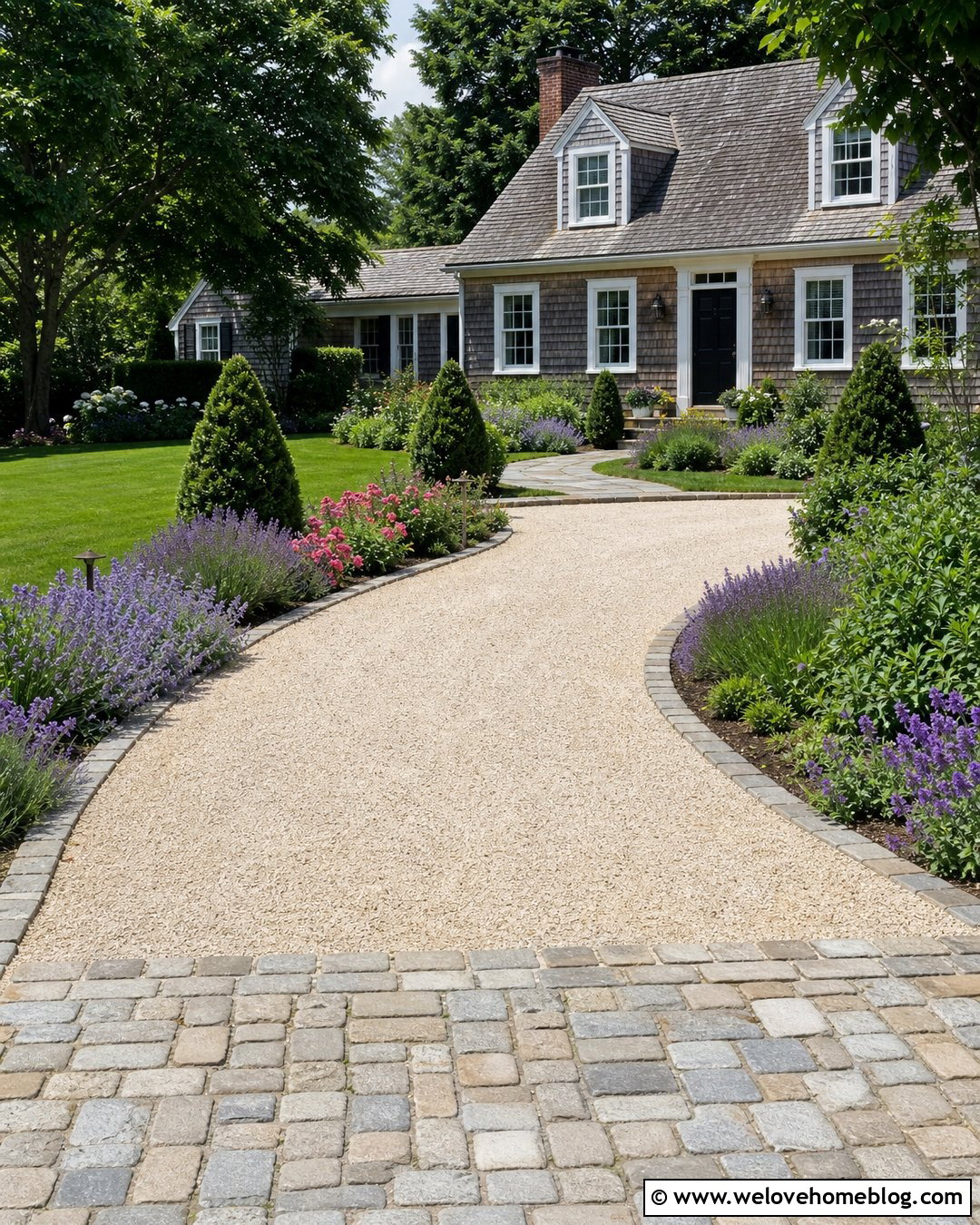
Soft curves and gently aged materials suit the welcoming character of a cottage. Choose small cream or tan gravel for the main driveway and line it with tumbled cobblestones in mixed warm-gray tones. A slightly uneven color blend feels more natural beside shingle siding, painted brick, or a stone cottage facade. Shape the driveway with one broad curve rather than a perfectly straight route. Along the border, plant lavender, salvia, catmint, compact roses, and mounded evergreen shrubs. Allow the plants to soften portions of the edging while keeping the driving lane open. A cobblestone apron and a matching garden walkway can tie the curb to the front door. Keep loose gravel out of flower beds with properly set edging instead of relying only on plants to create the boundary.
13. Long Gravel Driveway With Tree-Lined Cobble Edging
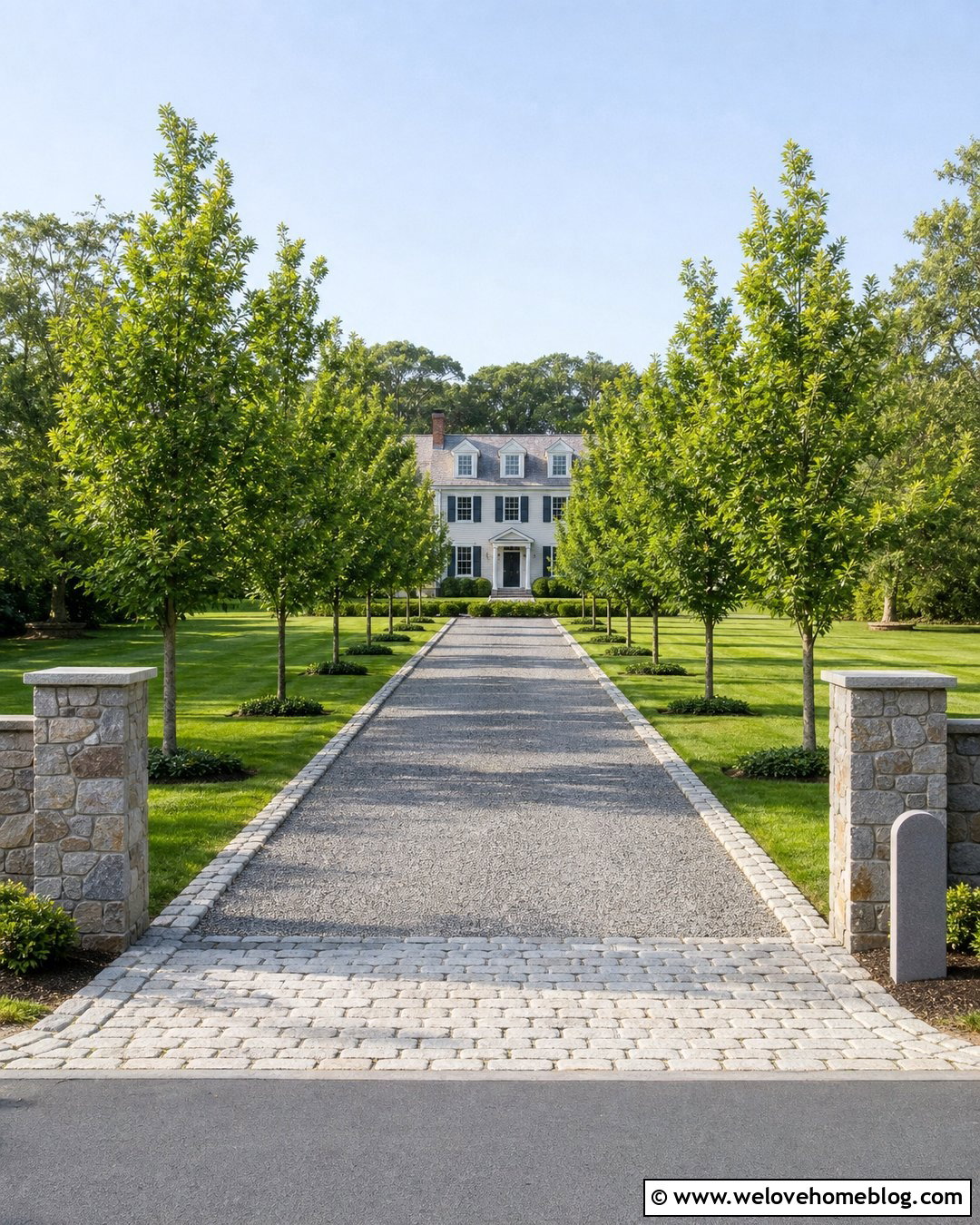
A long approach becomes more memorable when the driveway, border, and trees establish a consistent rhythm. Use compacted medium-gray gravel for the surface and edge it with one or two rows of substantial granite cobbles. Plant evenly spaced deciduous trees beyond the border, leaving enough clearance for mature trunks, branches, and maintenance equipment. Low grass or simple ground cover between the stones and trees will keep the view uncluttered. At the entrance, widen the cobblestone edge into a modest apron supported by stone pillars or a discreet address marker. The driveway can remain straight for a formal property or follow a gradual curve through a larger landscape. Repeating materials from the road to the house prevents the extended approach from feeling disconnected. This look complements country, Colonial, and traditional estate-style homes.
14. Small Gravel Driveway With Flush Cobblestone Border
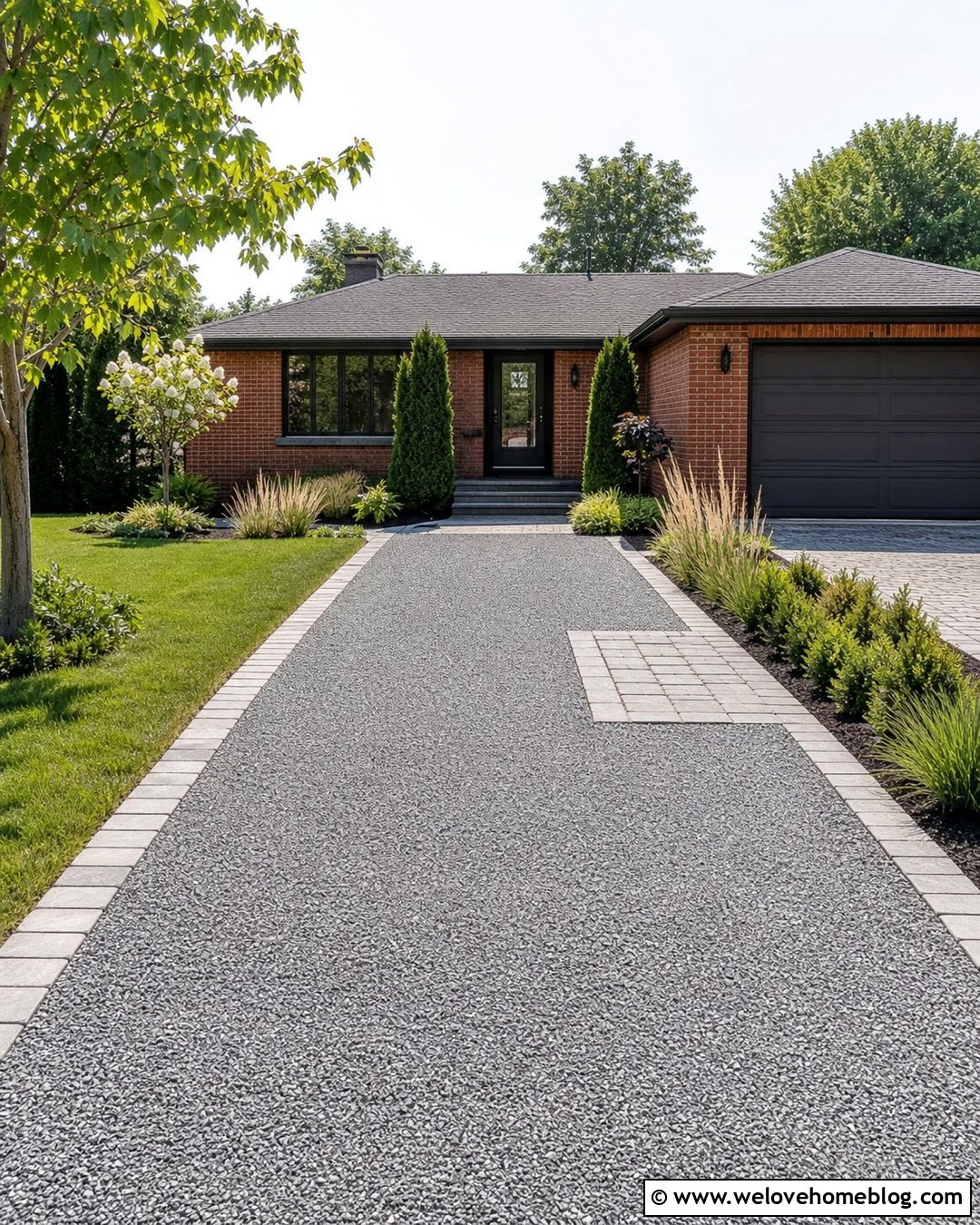
A compact front yard needs clear boundaries and an efficient layout. Fill a short, straight driveway with fine angular gravel in a color that complements the home’s facade. Install a flush cobblestone border around the entire perimeter so tires can pass near the edge without meeting a tall curb. A slightly wider row beside the walkway can create a comfortable stepping transition for passengers. Keep planting beds narrow and use upright shrubs, ornamental grasses, or a small flowering tree to conserve space. Near the garage, finish the gravel with a cobblestone threshold that visually anchors the surface. Avoid oversized entrance pillars or complex patterns that could make the area feel crowded. With consistent stone colors and restrained landscaping, even a modest driveway can look polished, practical, and fully integrated with the house.
15. Sloped Gravel Driveway With Cobblestone Retaining Edge
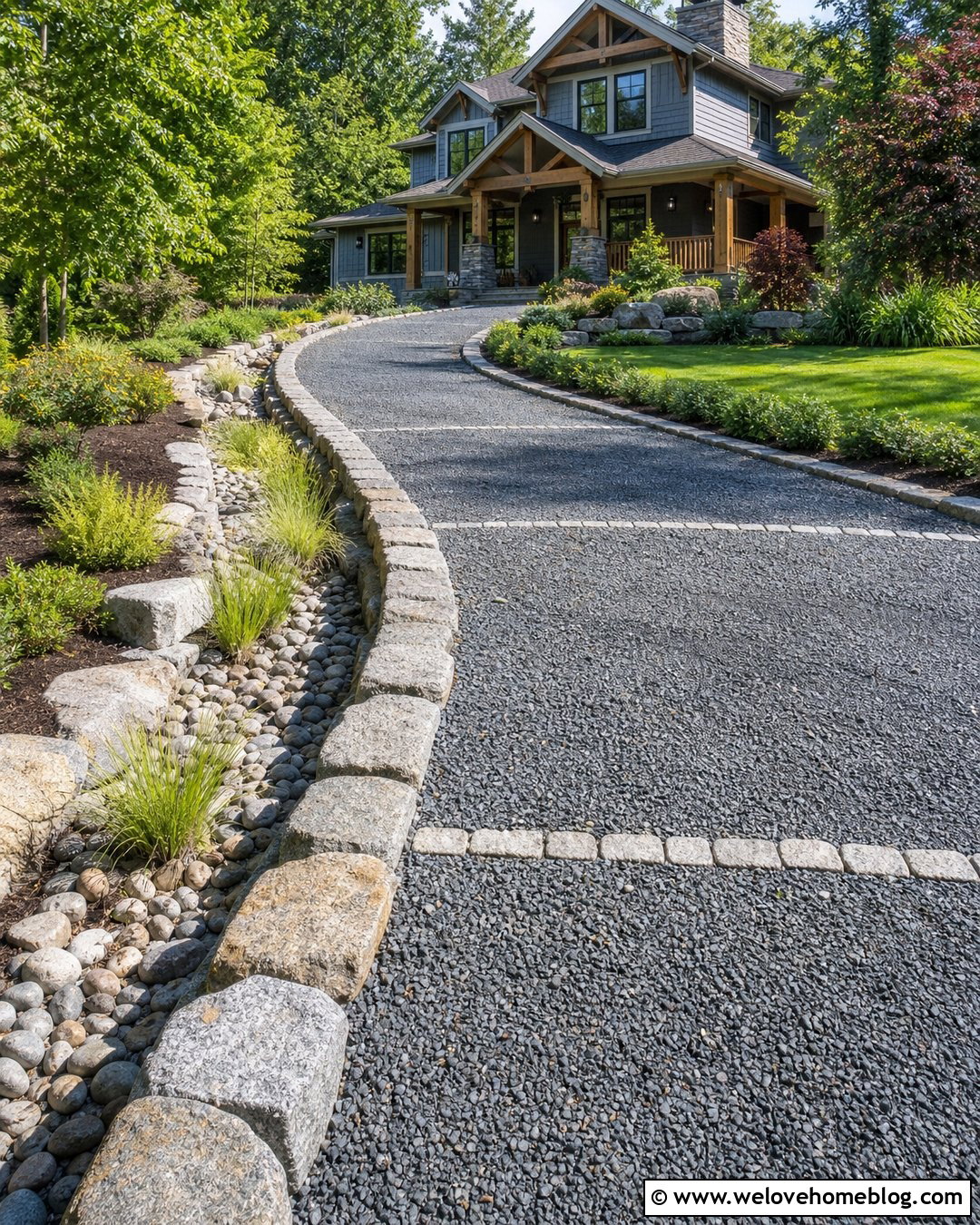
A sloped driveway requires more structure than a flat decorative surface. Use angular crushed gravel that can compact into a firmer layer, then reinforce the sides with substantial cobblestones set over a properly prepared foundation. On the lower edge, a raised cobble course may help separate the gravel from adjacent planting areas, while a flush border on the upper side maintains a clean transition. Add cobblestone bands across selected points only when they suit the grading and drainage plan. Deep-rooted grasses, spreading shrubs, and erosion-conscious planting can stabilize the surrounding slopes. The driveway should direct water toward a suitable collection or infiltration area rather than the garage. Because site conditions differ, have the base depth, slope, edging, and runoff route evaluated locally before installation. Attractive stonework cannot compensate for weak preparation or poor grading.
16. Horseshoe Gravel Driveway With Cobblestone Aprons
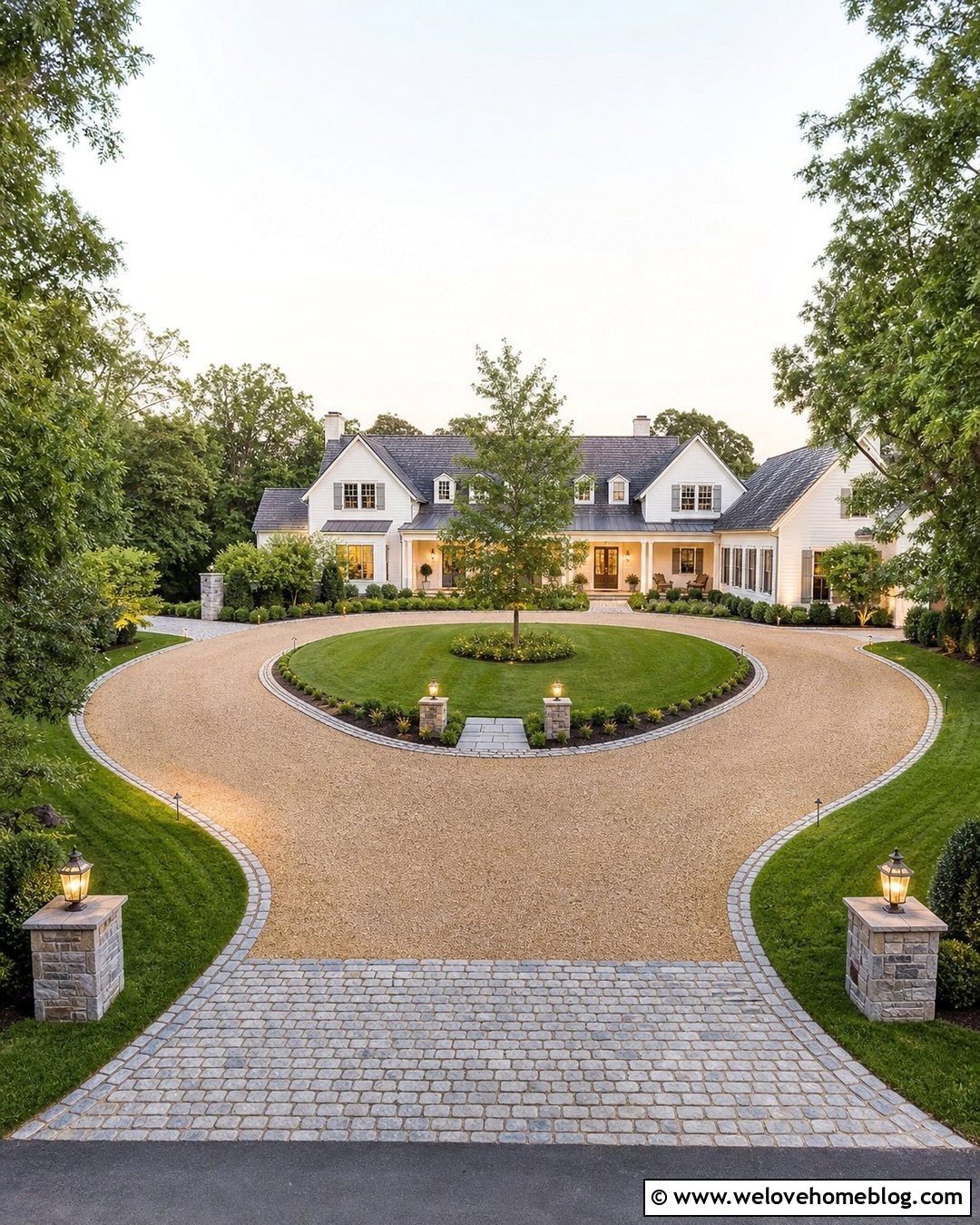
A horseshoe layout offers two street connections and a continuous route across a wide front yard. Surface the driveway with warm gray or buff gravel, then mark both entrances with matching cobblestone aprons. Continue the cobbles along the inner and outer curves to hold the shape visually. The lawn or planting area inside the horseshoe should remain simple, with a central ornamental tree, low shrubs, and a walkway leading to the house. Use identical pillars, lights, or address markers at both openings so the design feels balanced. If one entrance is wider, repeat the same materials even when the dimensions differ. This layout looks natural in front of ranch, farmhouse, and broad traditional homes. Clear views at both road connections and a well-planned turning radius are essential to making the arrangement comfortable.
17. Gravel Driveway With Cobblestone Parking Court
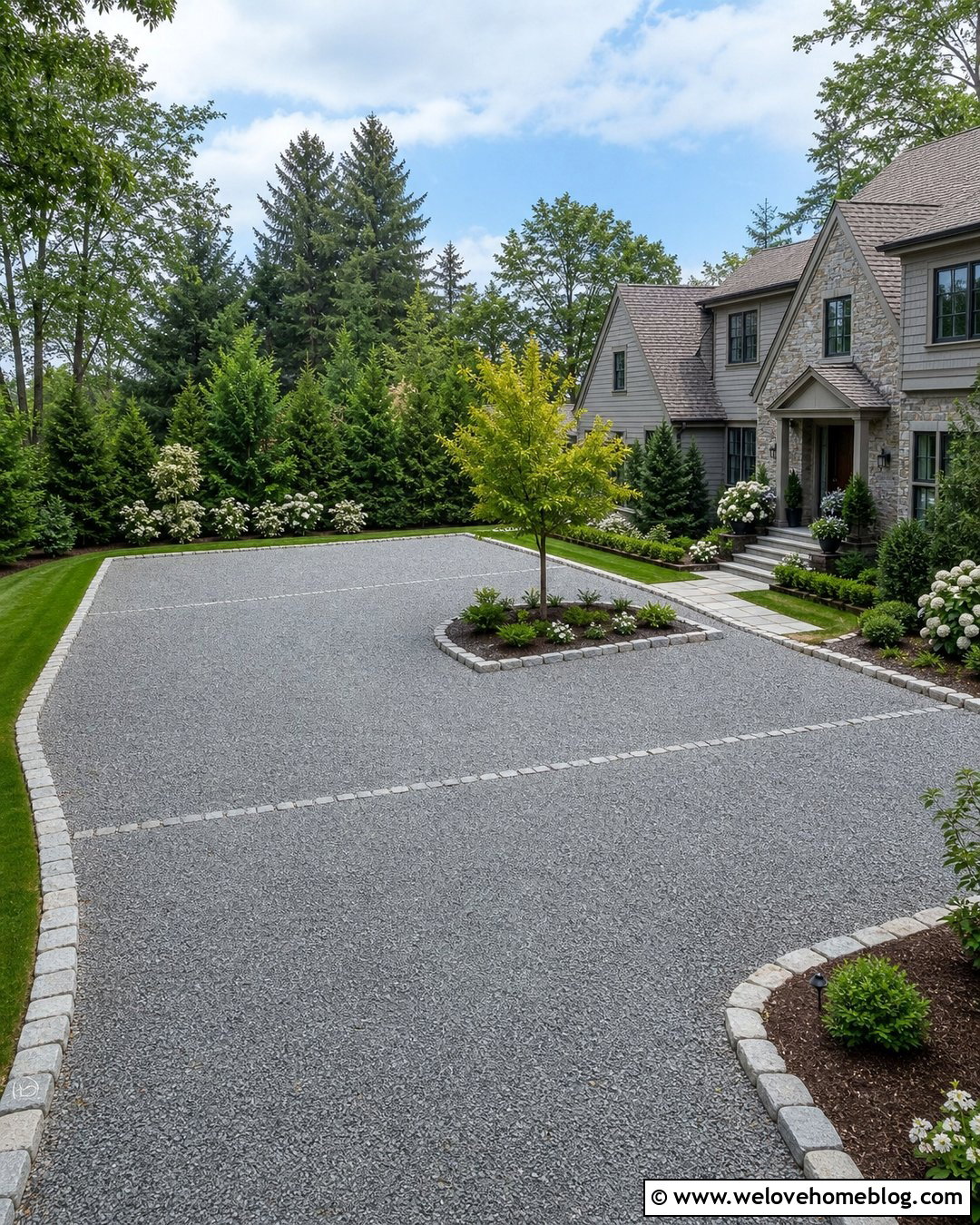
A parking court can provide extra maneuvering room without turning the entire front yard into one uninterrupted gravel field. Use compacted crushed stone for the main driveway and widen it near the house into a square, rectangular, or softly rounded court. Define the expanded area with a cobblestone perimeter and add one or two cobble bands to divide parking positions subtly. A small landscaped island can break up a very large court, provided it does not interfere with turning. Frame the outer edge with layered evergreens, flowering shrubs, and a walkway to the front entrance. Repeat the home’s masonry color in the cobbles for a connected appearance. The result should look like a deliberate arrival area rather than an informal gravel patch added beside the garage.
18. Gravel Driveway With Cobblestone Walkway Connection
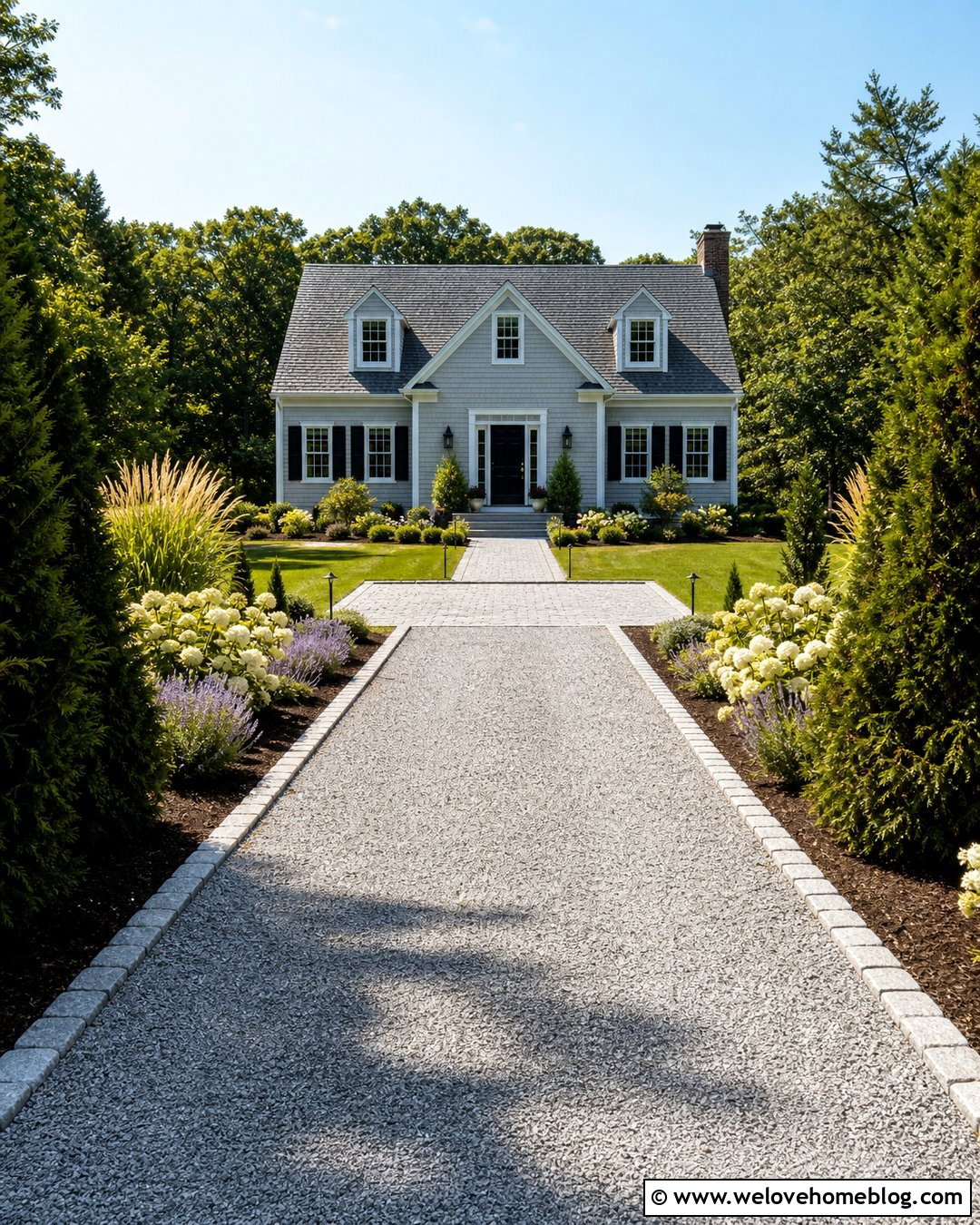
The transition from parked vehicle to front door deserves as much attention as the driveway entrance. Begin with a light or medium-gray gravel driveway edged in rectangular granite cobbles. At the main passenger area, widen the border into a cobblestone landing that connects directly to a matching walkway. Keep the landing nearly level with the gravel to reduce an awkward step between surfaces. Continue the walkway through low planting beds filled with evergreen shrubs, seasonal flowers, and ornamental grasses. A gentle curve can guide visitors toward a side-facing entrance, while a straight path suits a symmetrical facade. Use subtle path lighting to clarify the route without crowding the border. By repeating cobblestone from the driveway edge through the walkway, the entire approach feels cohesive, readable, and intentionally planned.
19. Gravel Driveway With Cobblestone Gate Pillars
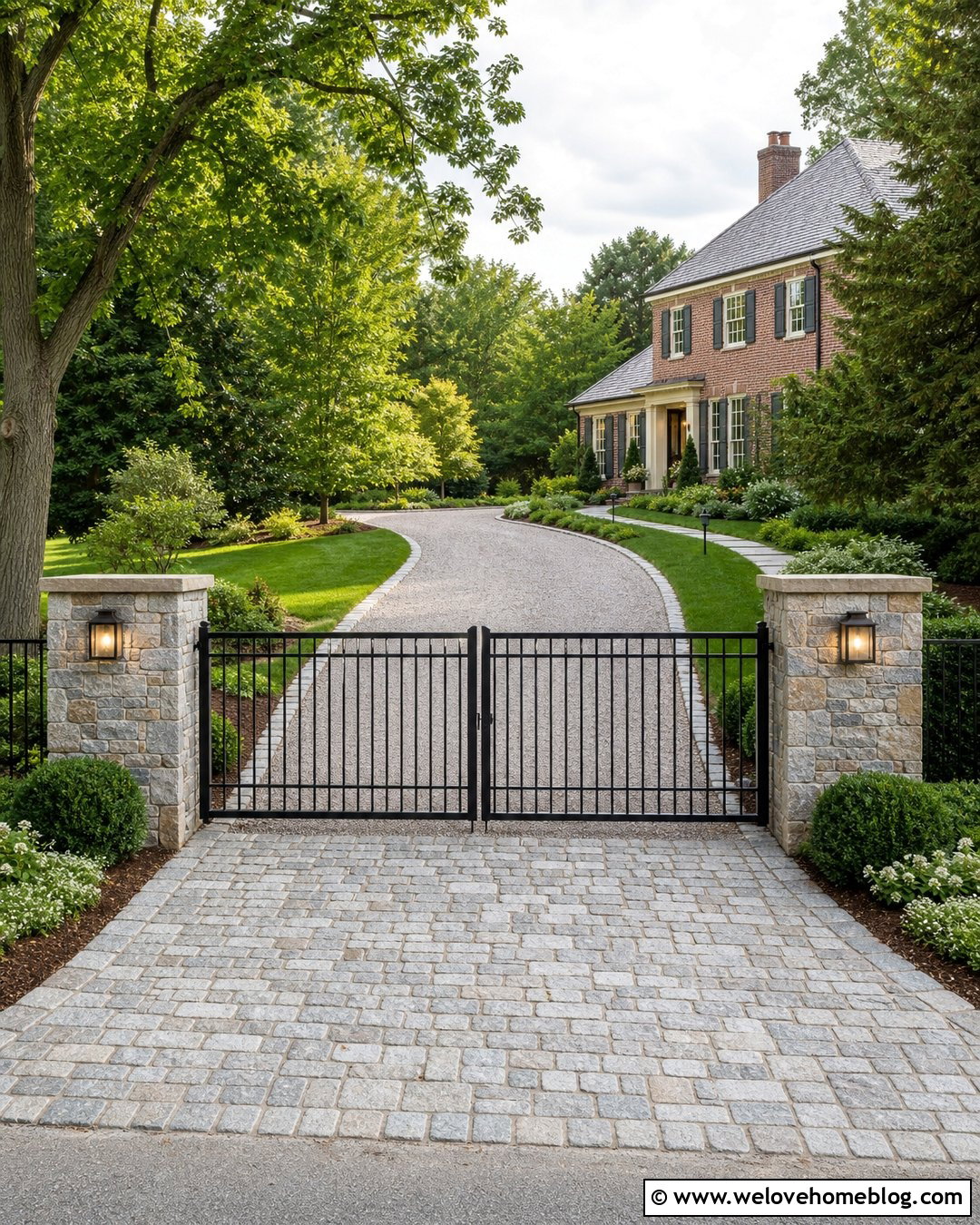
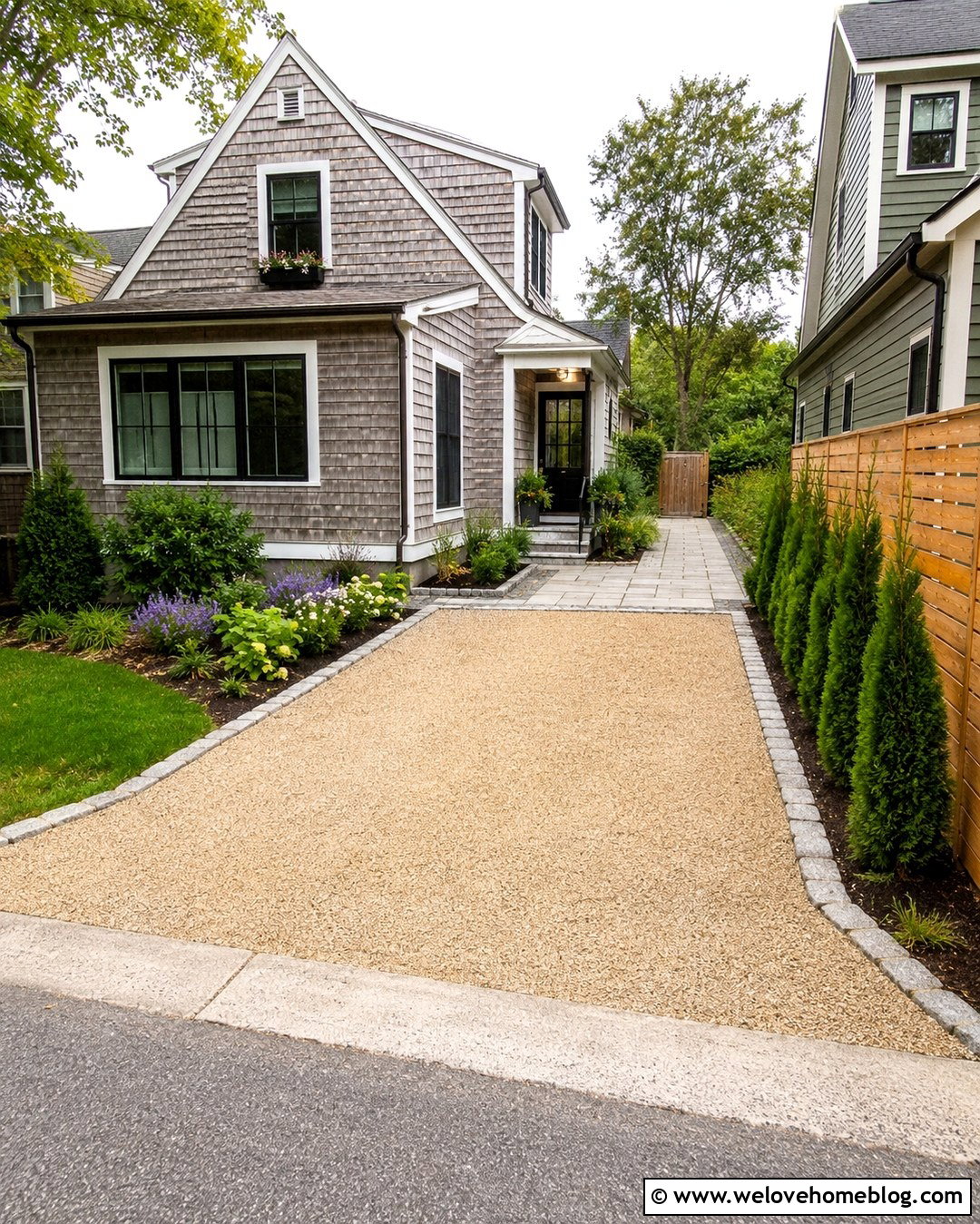
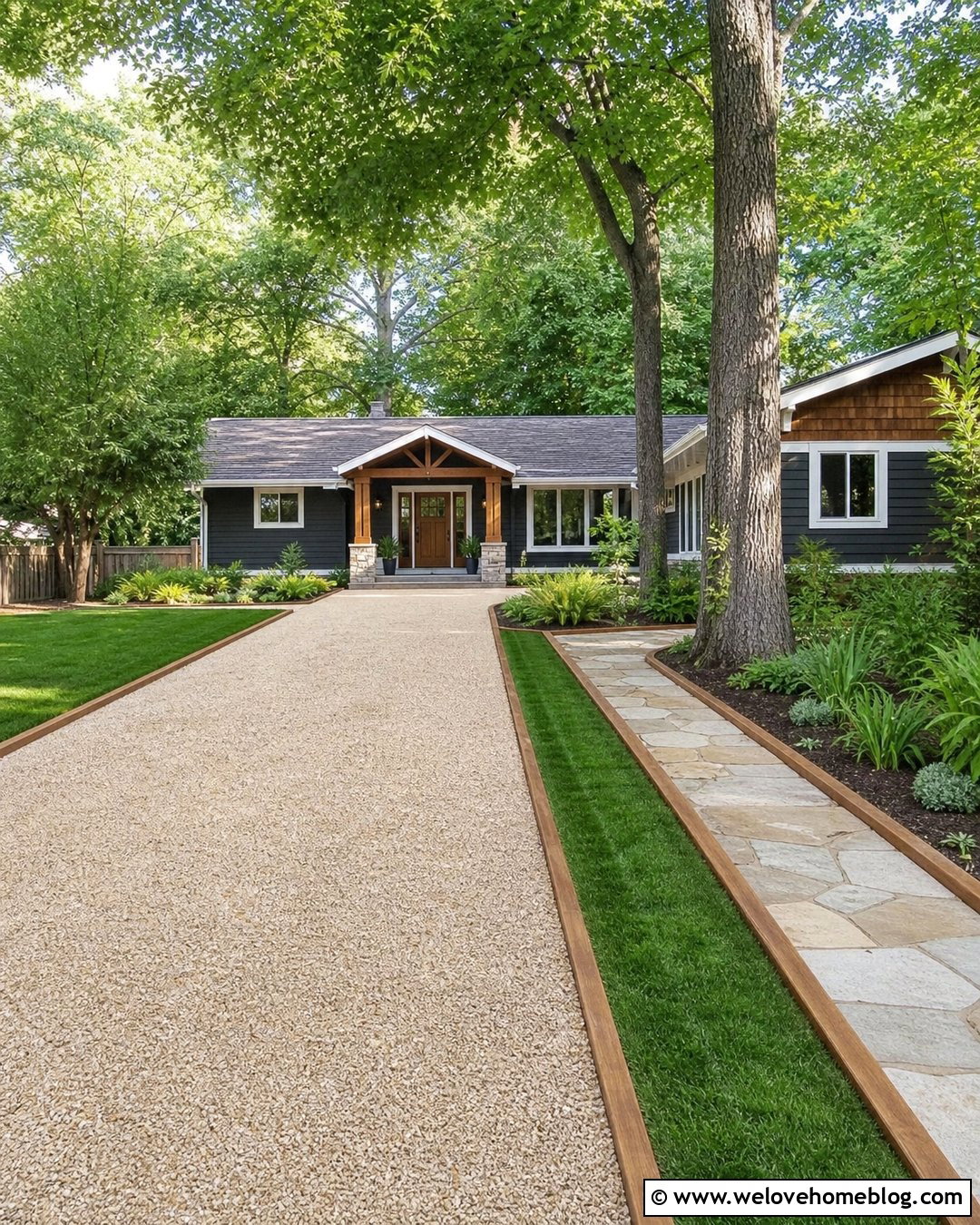
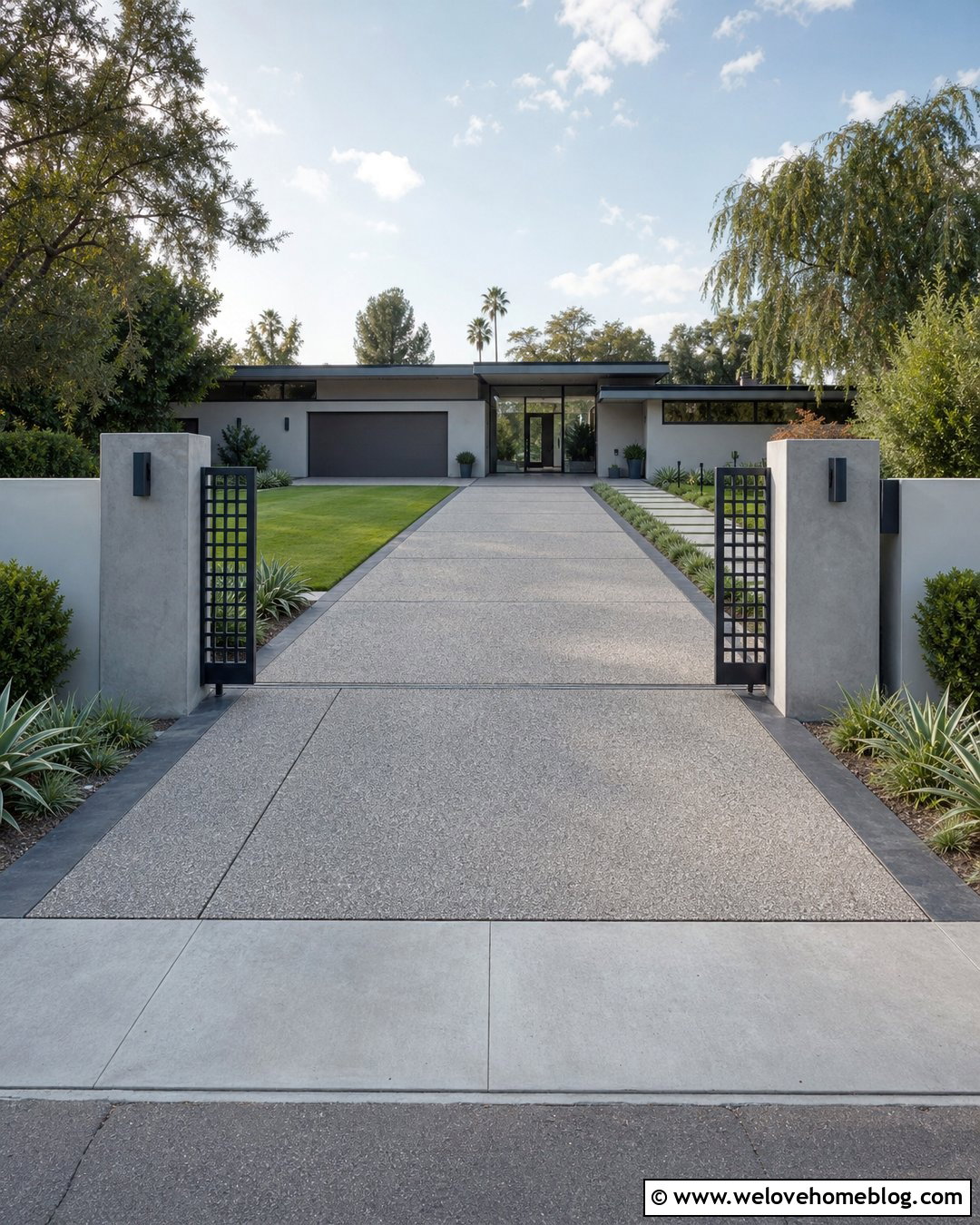
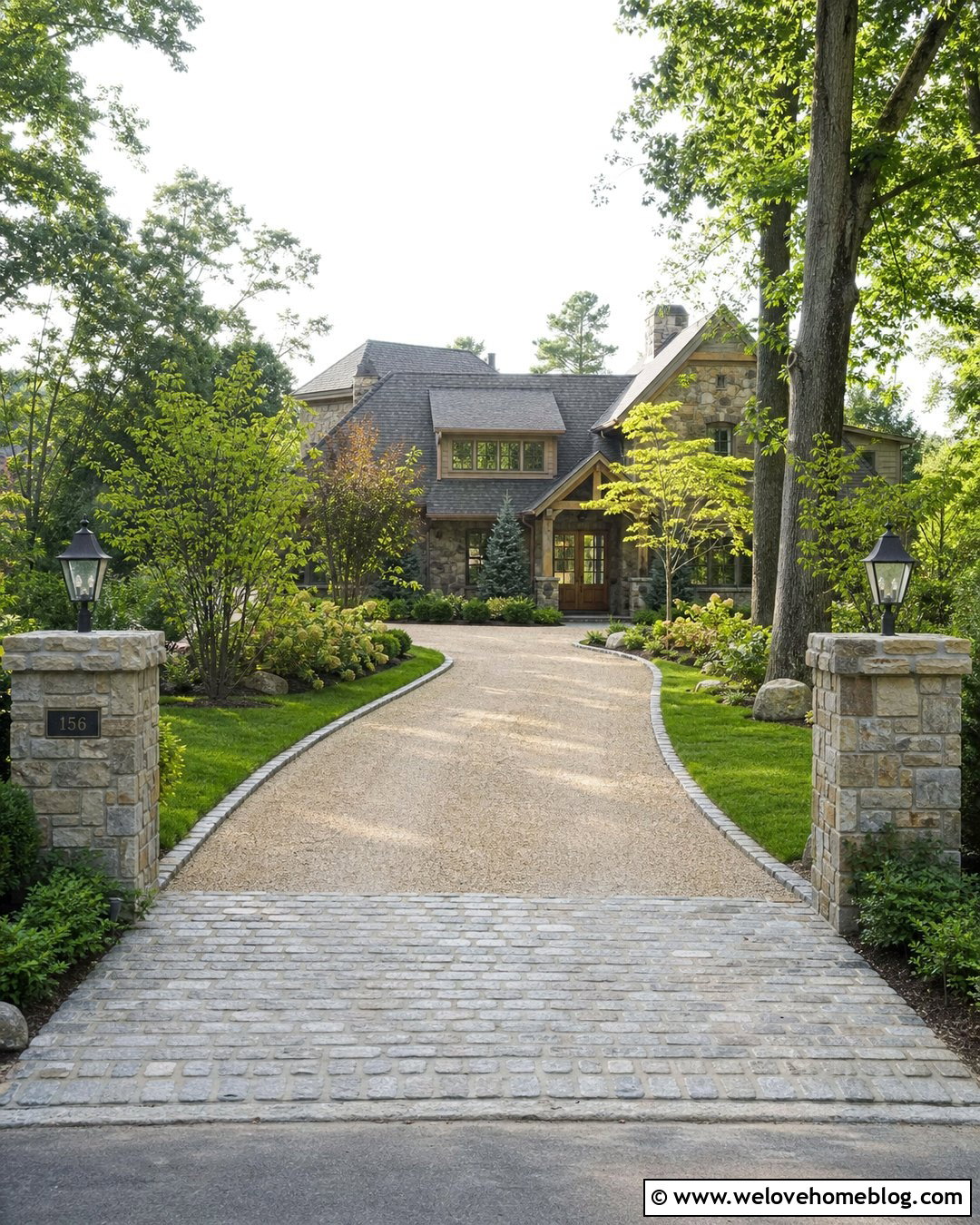
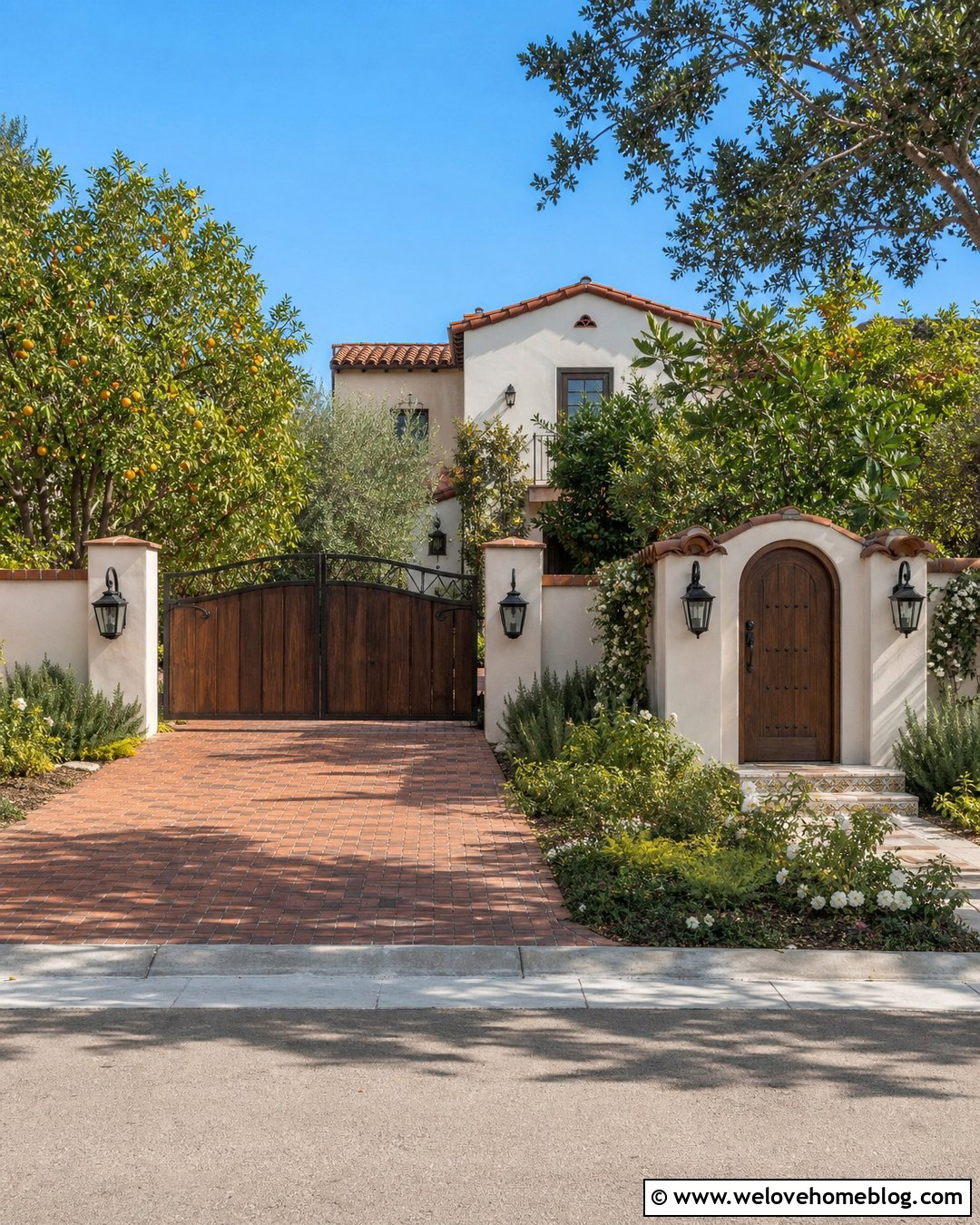
An entrance gate becomes more convincing when its materials connect with the driveway below it. Use warm gray crushed gravel for a straight or curving approach, then build a broad granite cobblestone apron beneath the gate. Edge the remaining gravel with matching cobbles so the entrance does not appear isolated. Stone or brick pillars can support a simple black metal or wood gate, depending on the architecture of the house. Position low shrubs and ground cover around the pillars, but preserve clear sightlines for vehicles entering the road. Add discreet lighting to the pillar faces or planting beds instead of placing fixtures in the driving area. The gate, apron, edging, landscape, and house facade should share a limited color palette. This creates a secure entrance that still feels welcoming and residential.
20. Two-Tone Gravel Driveway With Cobblestone Border
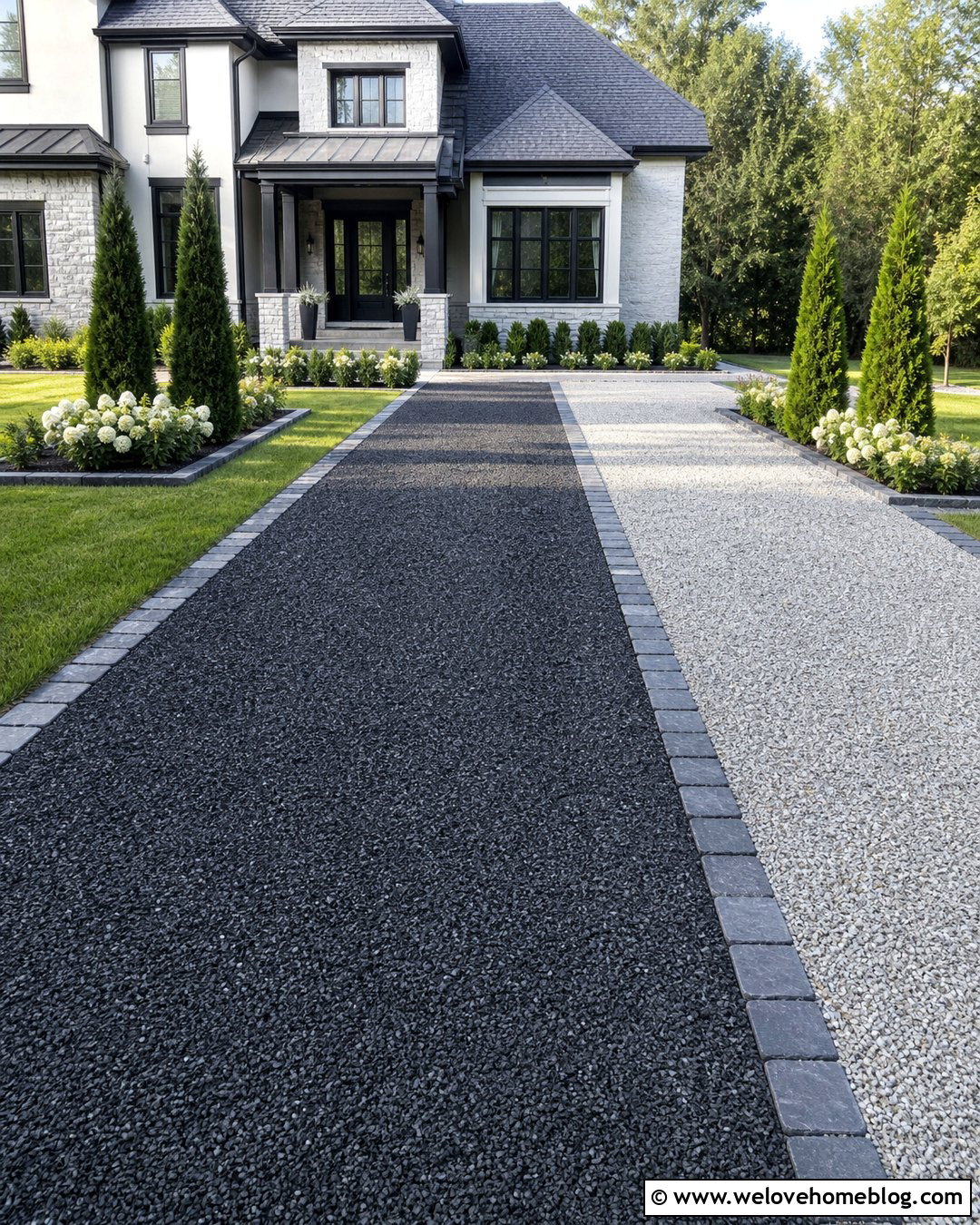
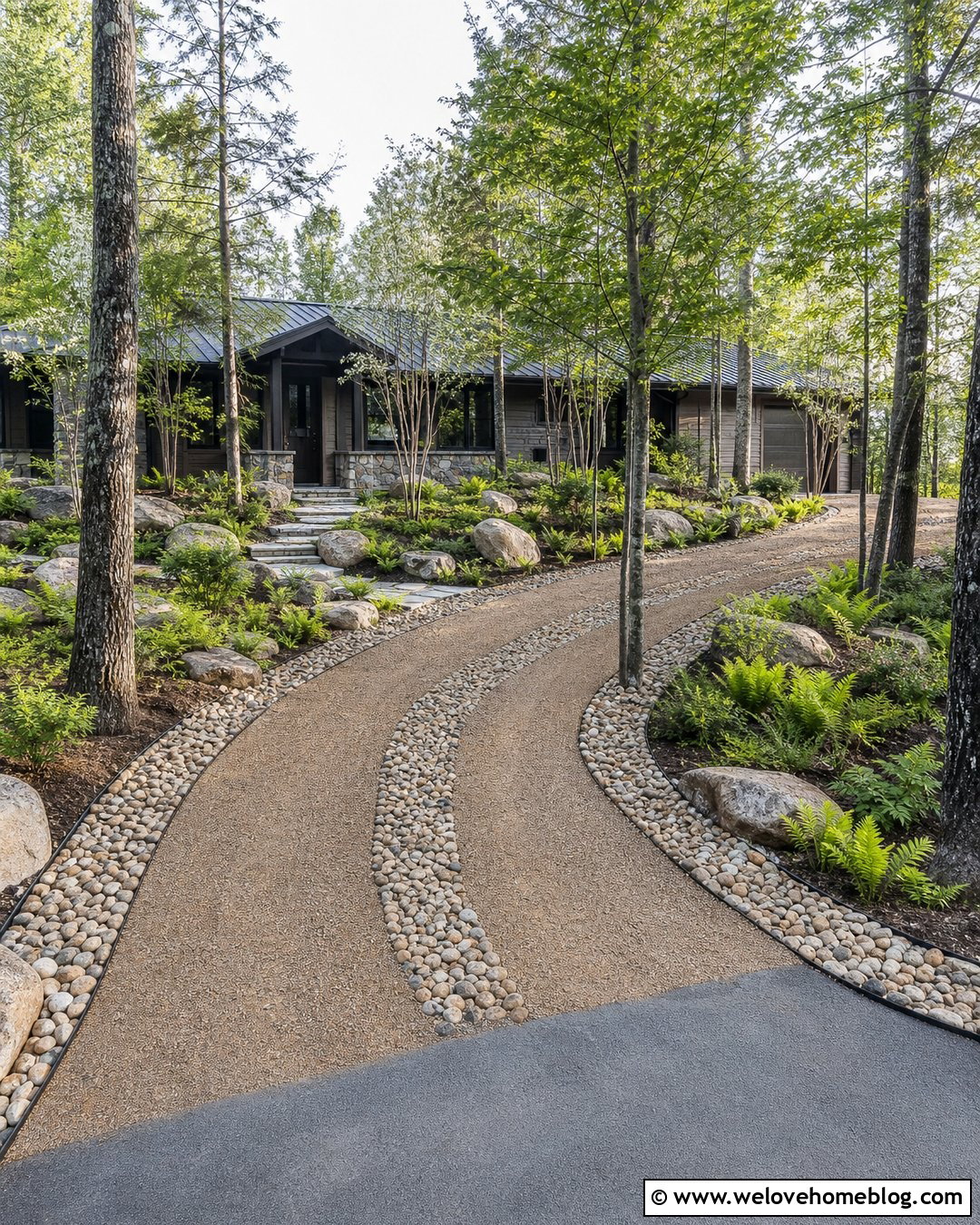
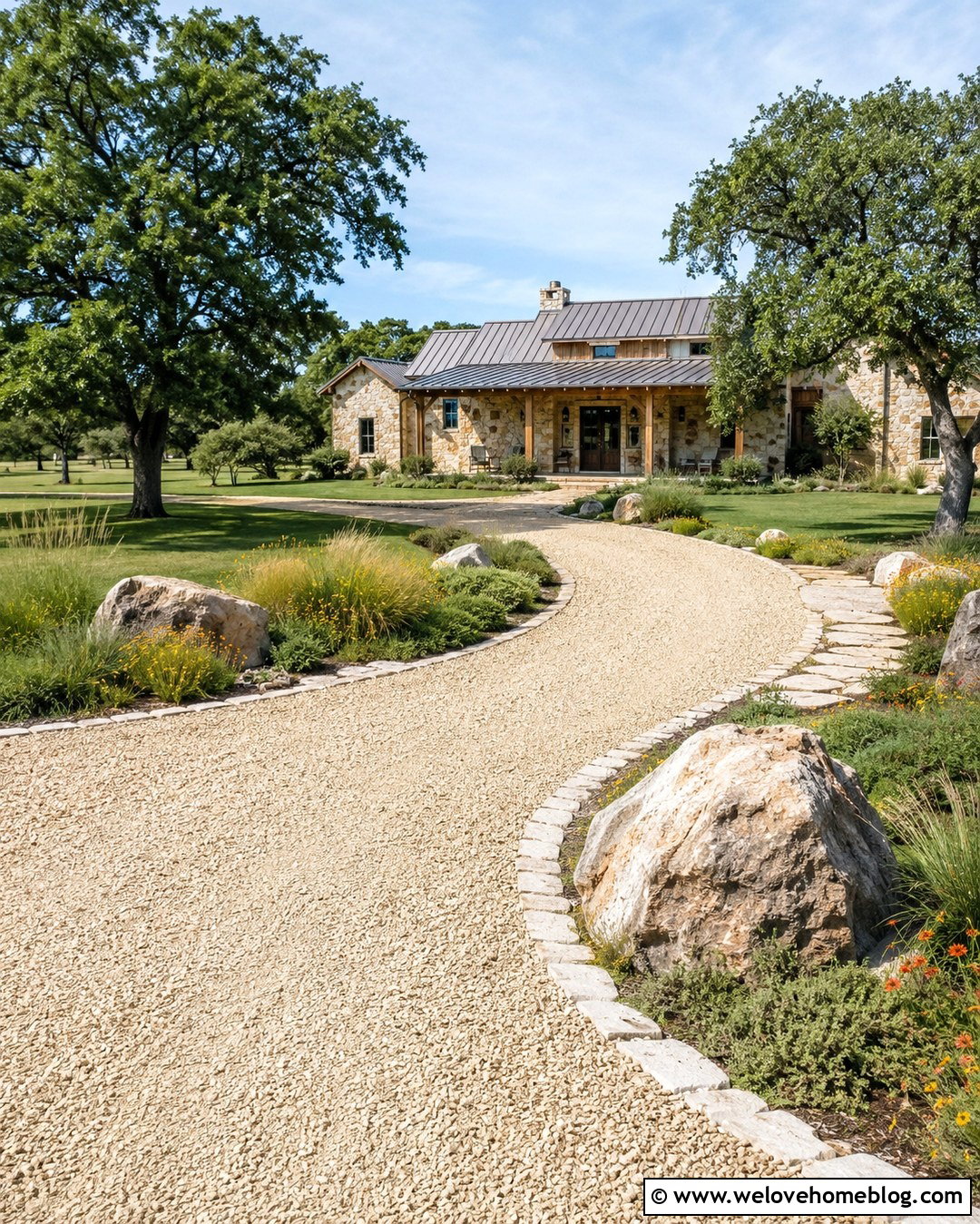
Two gravel colors can define different zones without requiring a fully paved driveway. Use darker crushed granite for the main driving lane and a lighter gravel blend for a parking bay, central strip, or outer shoulder. Separate the colors with flush cobblestone ribbons, then install a matching cobble border around the complete layout. Keep the pattern broad and simple so it remains visible from the curb and does not resemble scattered patches. This treatment works well on a wide contemporary driveway or a large transitional property. Repeat both gravel tones in nearby paths or landscape mulch for continuity. Structured evergreen planting and a clean lawn will prevent the surface pattern from becoming visually busy. Proper edging and careful installation are especially important because the two gravel colors may otherwise mix under regular vehicle movement.
Conclusion:
The best Cobble And Gravel Driveway Ideas balance attractive stone combinations with practical movement, drainage, edging, and maintenance. Cobblestones can frame loose gravel, strengthen street entrances, connect walkways, or divide broad parking areas. Gravel adds texture and helps a large driveway feel softer within the landscape. Before choosing a layout, consider the home’s architecture, driveway slope, turning needs, local climate, and surrounding plants. Test gravel and cobble samples together because colors can look different outdoors than they do in a showroom. Most importantly, invest in a properly prepared base and sensible grading. With thoughtful planning, these two materials can create a driveway that looks established, welcoming, and intentionally connected to the entire property.

Related posts:
Leave a Reply