
Coastal driveways need more than a beach-inspired color palette. The best designs combine a durable surface, practical drainage, defined borders, and plants that can handle local wind, sun, sandy soil, and salt exposure. Materials such as crushed shell, gravel, concrete pavers, brick, and exposed aggregate can all create a relaxed seaside look when paired with the right layout and landscaping. Native grasses, low shrubs, palms, succulents, and rain gardens also soften the hardscape without hiding the driveway entrance. Before planting, match every species to your climate, exposure level, and USDA growing zone. The complete looks below offer adaptable solutions for cottages, modern beach houses, Cape Cod homes, and larger waterfront properties. Explore these 20 Coastal Driveway Landscaping Ideas for a welcoming approach that feels connected to the shore. ()

1. Coastal Shell Driveway With Dune Grass
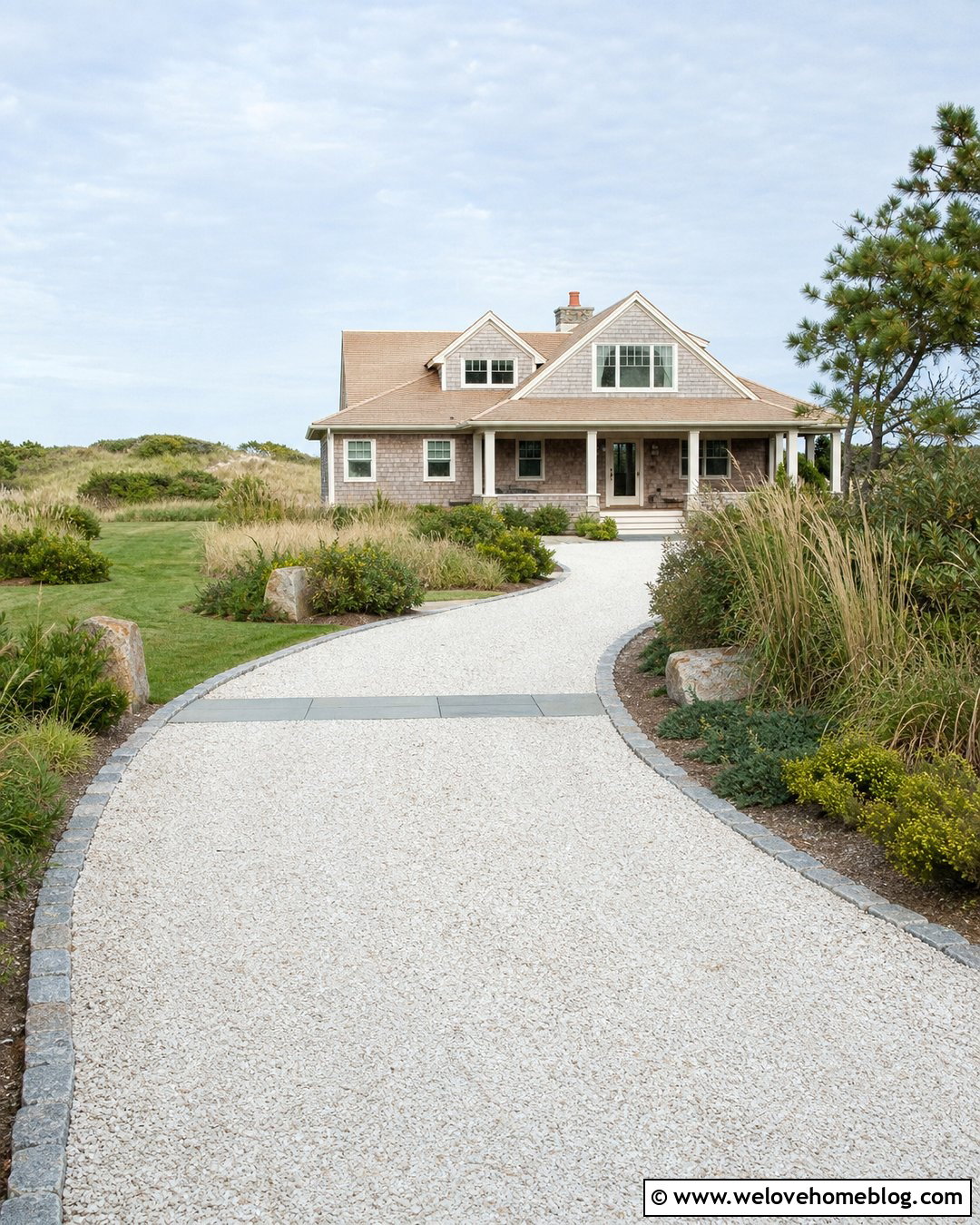
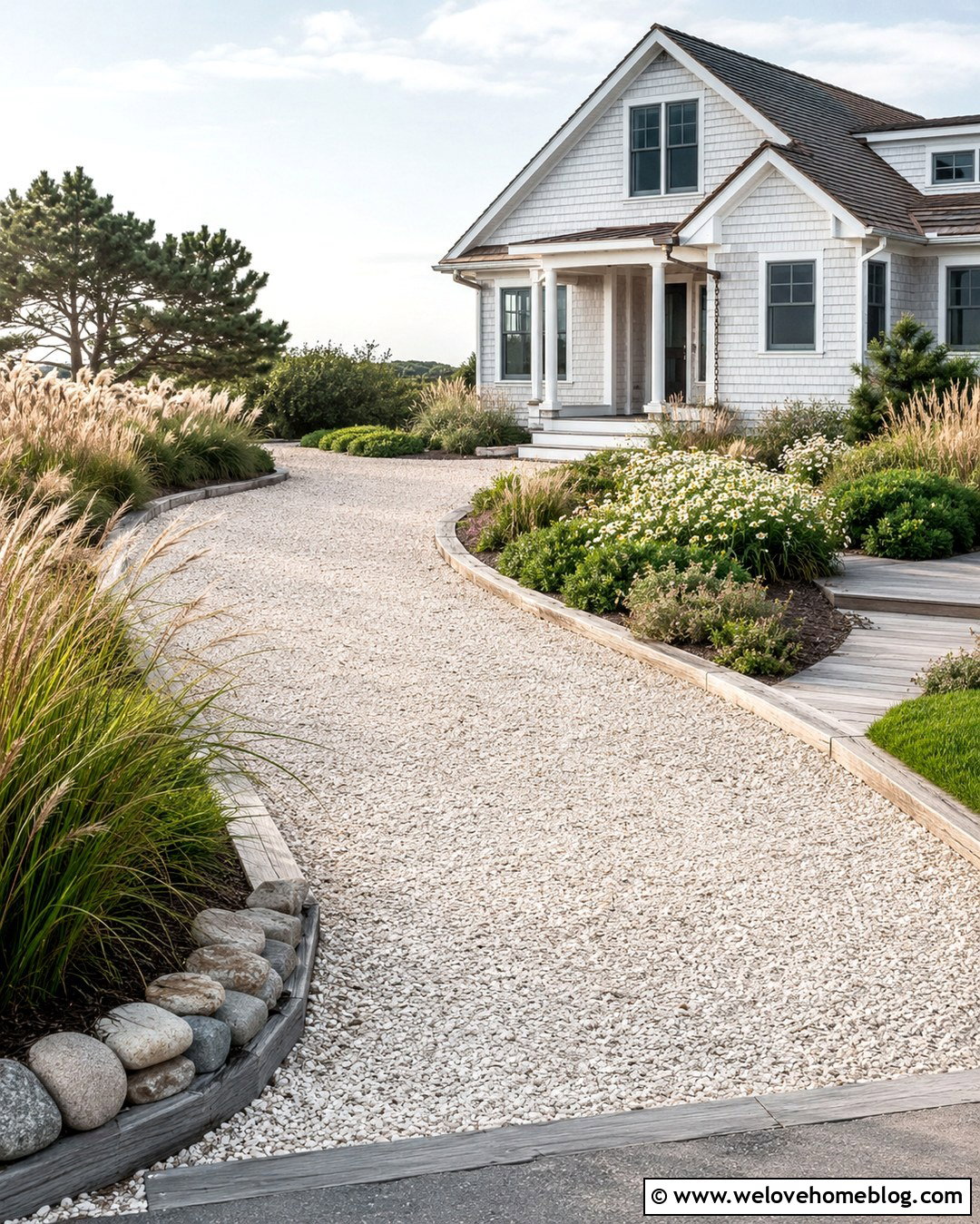
A pale crushed-shell driveway creates an immediate connection to the beach while keeping the entrance relaxed and informal. Use a straight or gently curving layout leading toward a cedar-shingle cottage. Add granite cobbles along both sides to contain the loose material and provide a clean transition into the planting beds. Groups of beach grass, switchgrass, bayberry, and low-growing juniper can form natural-looking borders without making the approach feel crowded. Keep taller plants farther from the street so drivers have a clear view when entering or leaving. A bluestone walkway crossing the shell surface can give pedestrians a stable route to the front door. Proper base preparation and material depth are important because loose shell can shift under regular vehicle traffic. ()
2. Coastal Pea Gravel Driveway With Cobblestone Edging
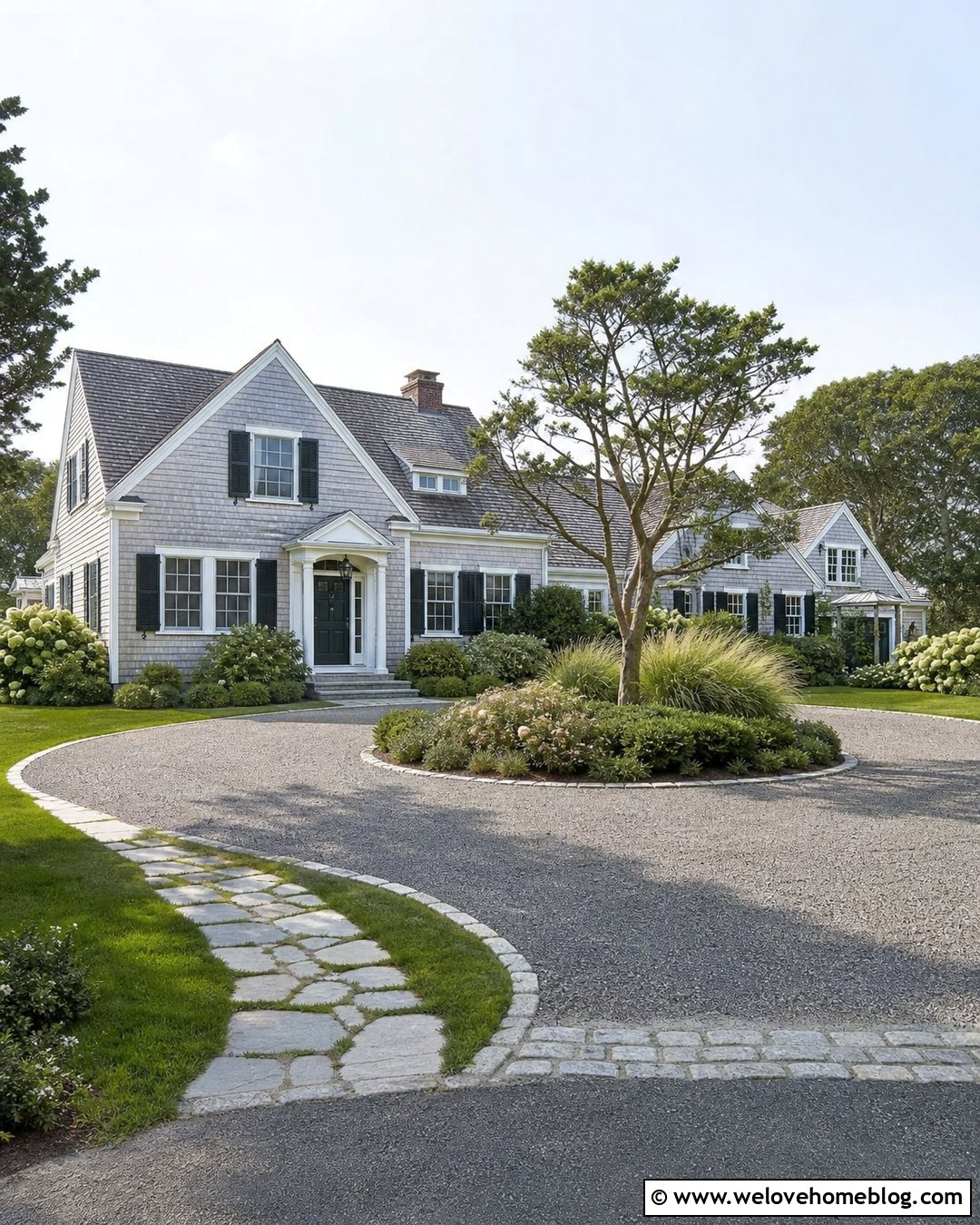
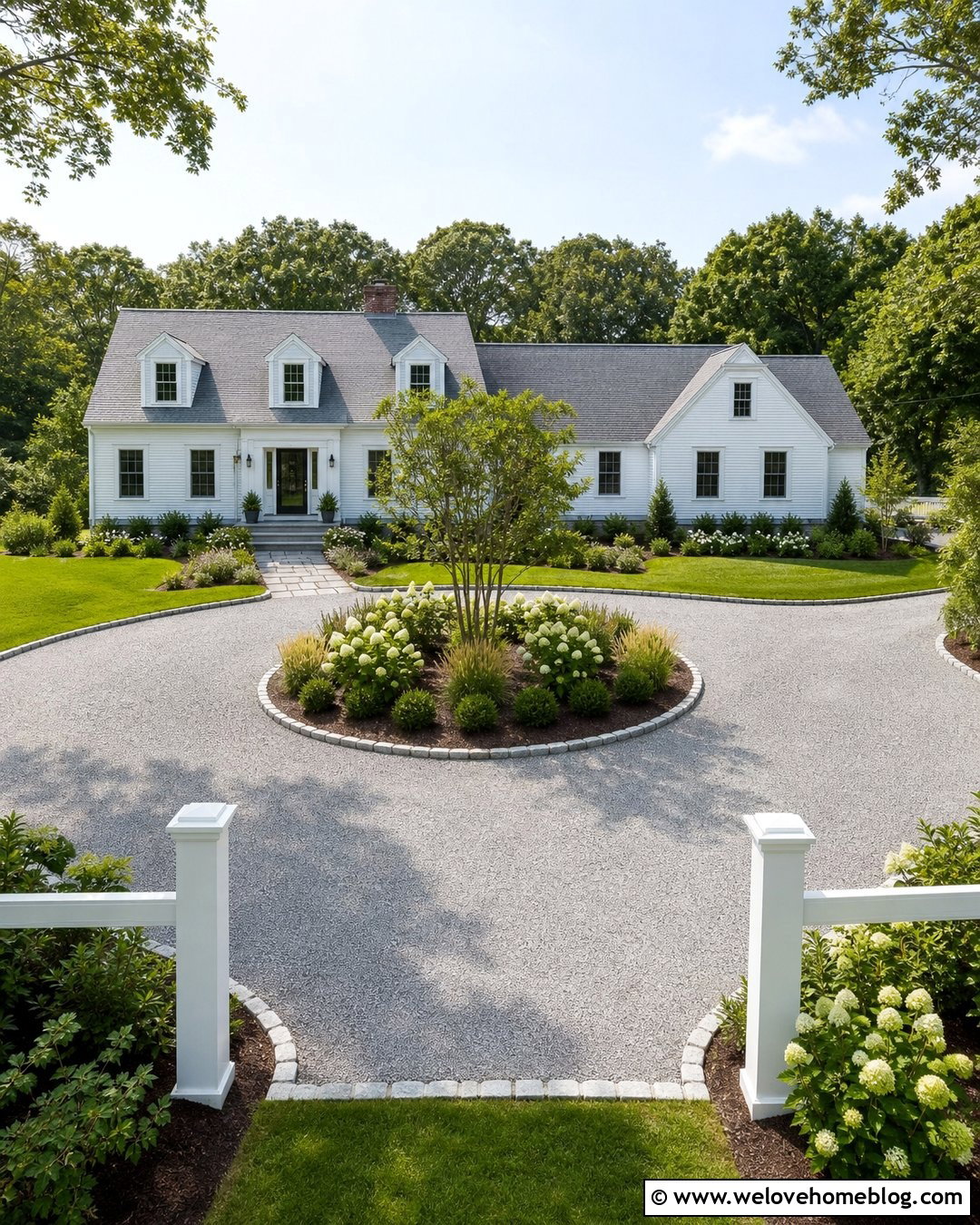
Soft gray pea gravel and weathered cobblestone create a timeless coastal combination that works especially well around Cape Cod and New England homes. Shape the driveway into a broad circle or teardrop so vehicles can turn without backing toward the road. Use cobblestone banding around the perimeter and across high-traffic areas to keep the gravel visually organized. Plant the central island with beach plum, inkberry, ornamental grasses, and one wind-shaped native tree suited to the region. Repeating the same plants near the house makes the entire front yard feel connected. Gravel should sit over a well-compacted base, while the edging needs enough height and strength to limit migration. The finished entrance feels established, practical, and pleasantly informal rather than overly polished. ()
3. Coastal Paver Driveway With A Rain Garden
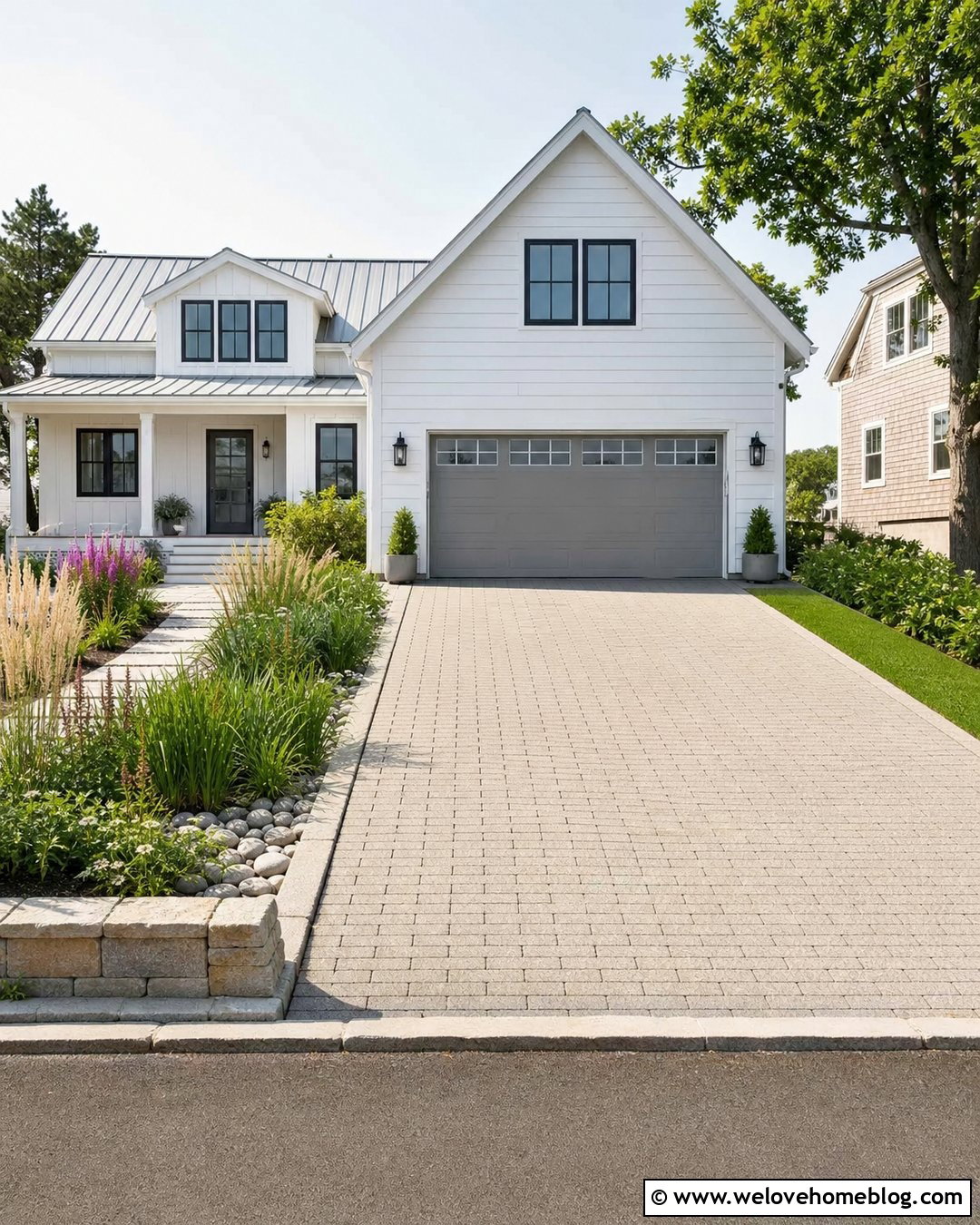
What happens to water after it runs off the driveway? A permeable concrete paver surface paired with a planted rain garden can turn drainage into part of the design. Choose sand, gray, or weathered taupe pavers that complement a light coastal home. Lay them in a simple running-bond pattern across a straight driveway, then direct runoff toward a shallow planted basin on the lower side. Use locally appropriate moisture-tolerant grasses, rushes, sedges, and flowering perennials inside the basin. A low stone edge can separate the rain garden from the driveway without creating a tall barrier. Leave a clear lawn strip or walkway on the opposite side. This balanced layout gives the entrance structure while helping water soak into the landscape more gradually. ()
4. Coastal Concrete Driveway With Grass Strips
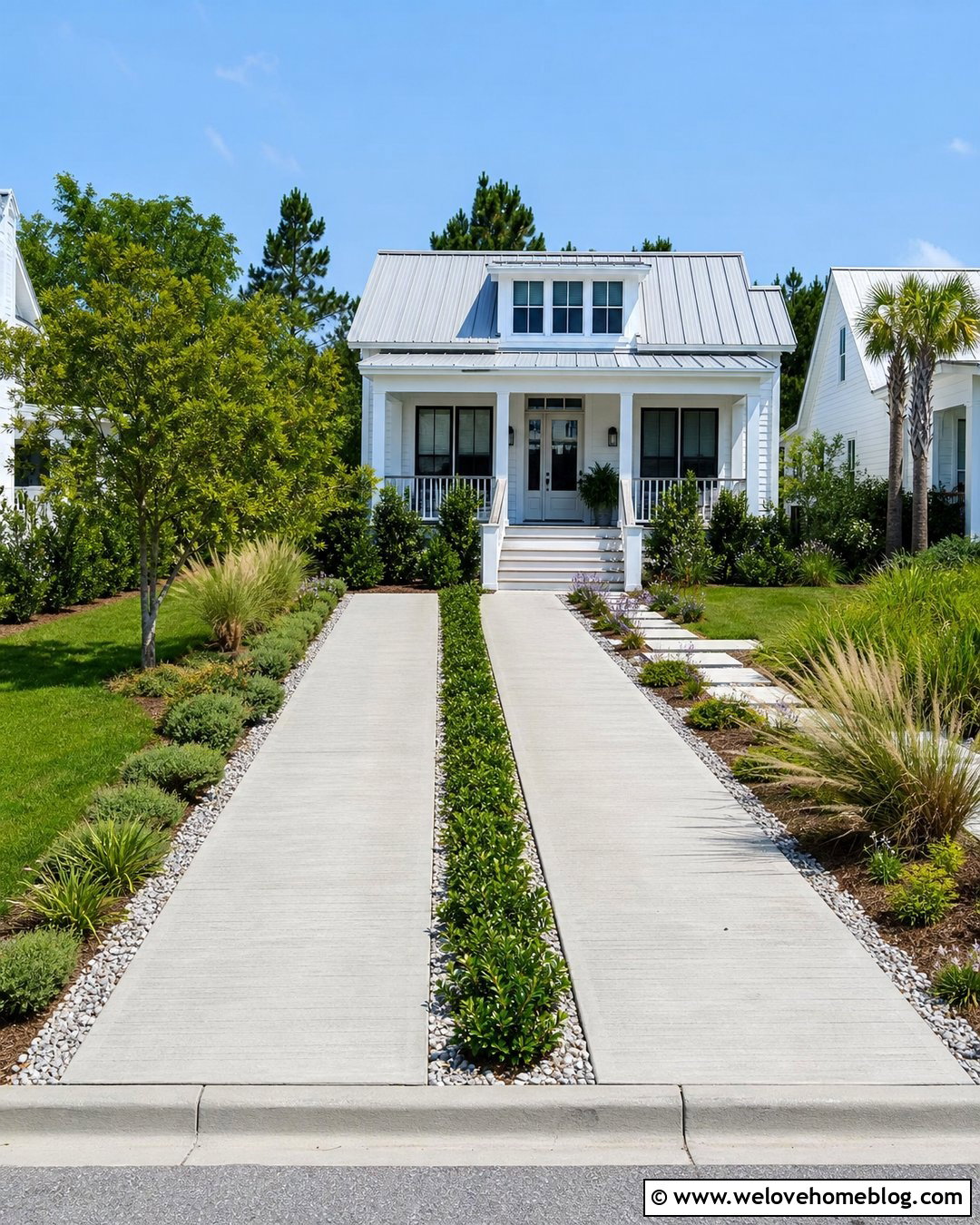
Two light-gray poured concrete tracks separated by a green center strip can make a coastal driveway look lighter and less dominant. This design works best on a straight approach with predictable vehicle placement and enough sunlight to support the planted center. Use reinforced concrete with a subtle broom finish for traction, then edge the tracks with narrow bands of gravel or matching pavers. If turf struggles with salt, heat, or tire pressure, replace it with a durable low ground cover recommended for the local climate. Frame the outer edges with sweeping groups of ornamental grass, dwarf wax myrtle, and flowering coastal perennials. Keep the planting composition simple rather than mixing many unrelated species. The repeated green strips visually connect the driveway to the surrounding lawn and soften the home’s approach.
5. Coastal Gray Paver Driveway With Ornamental Grasses
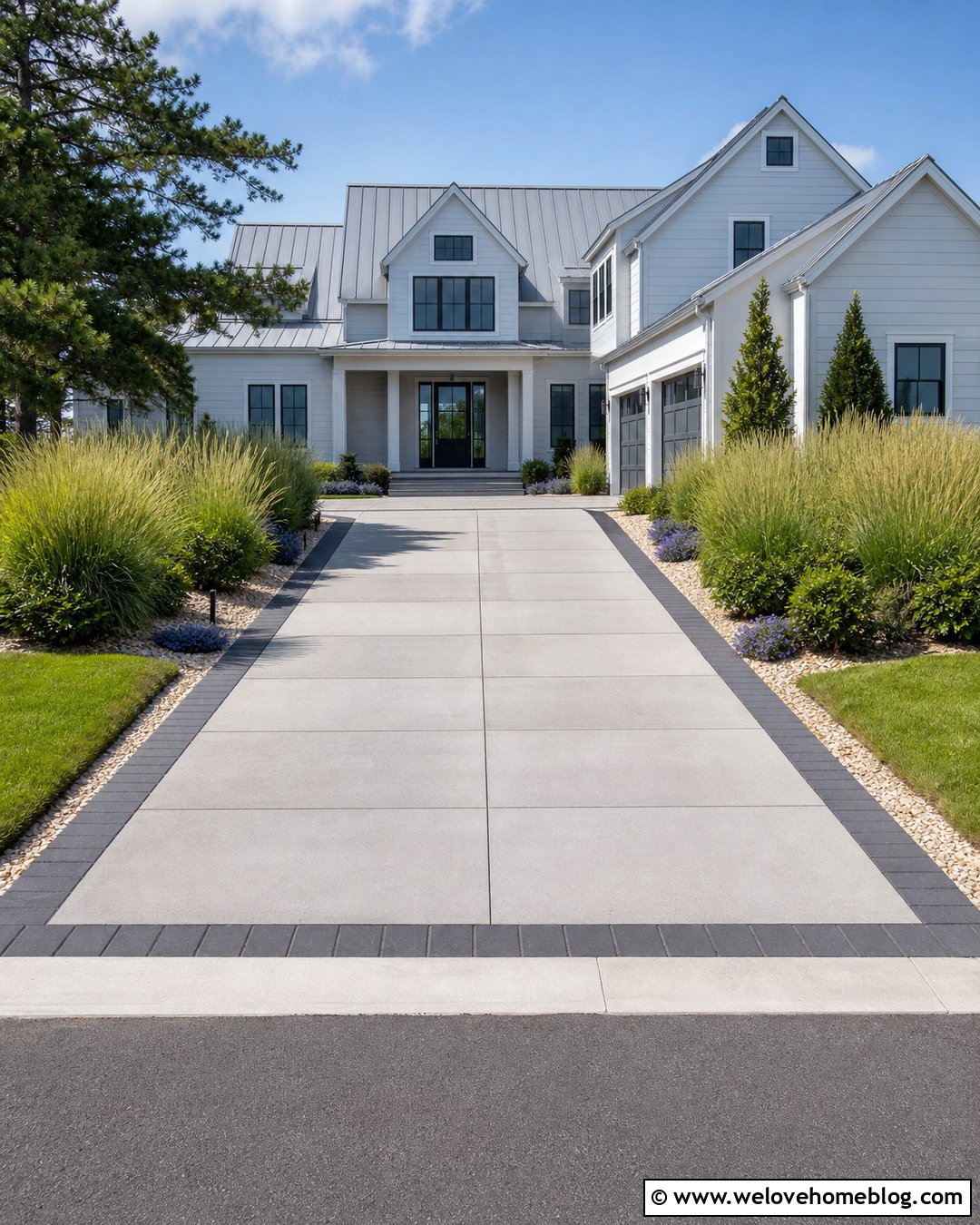
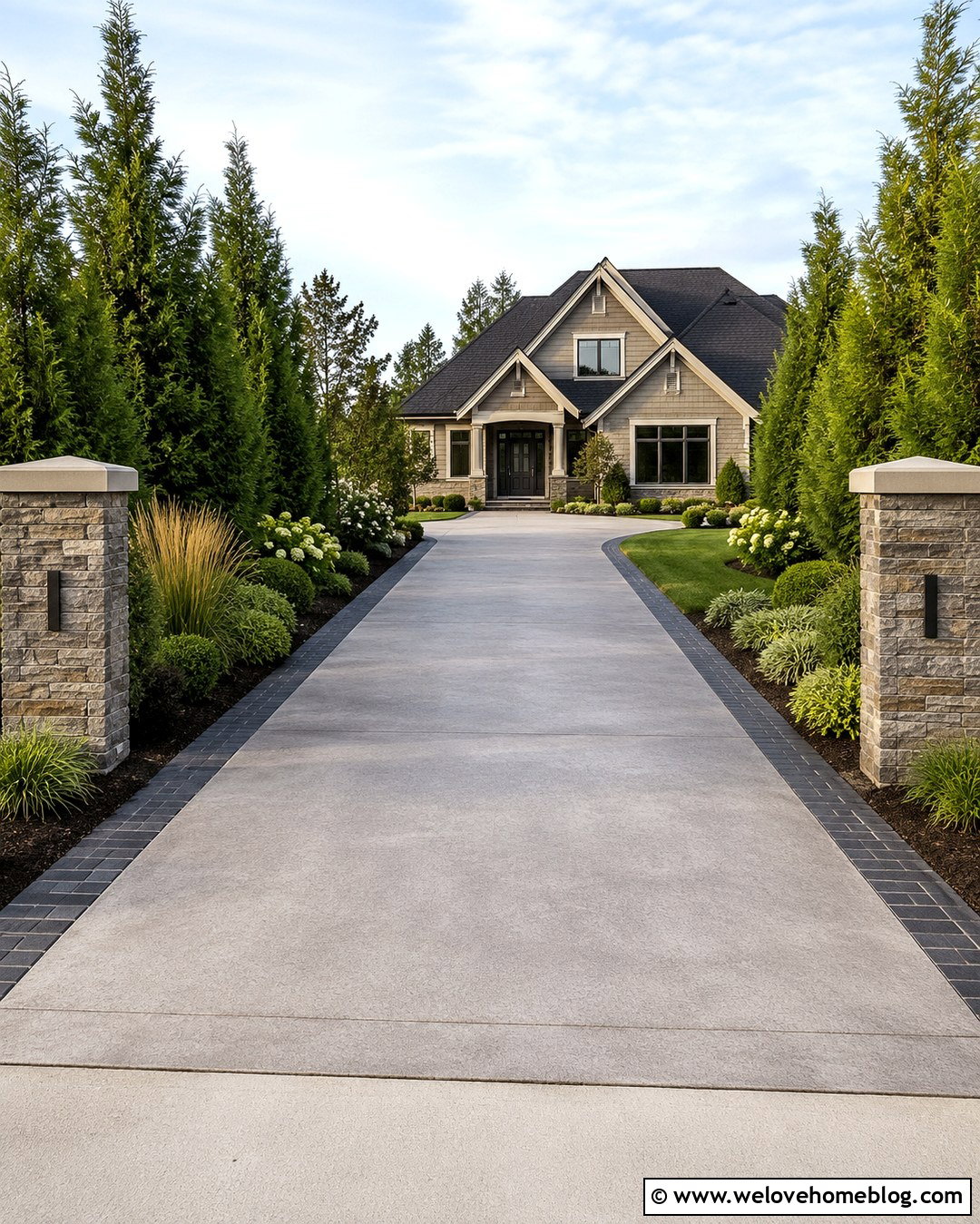
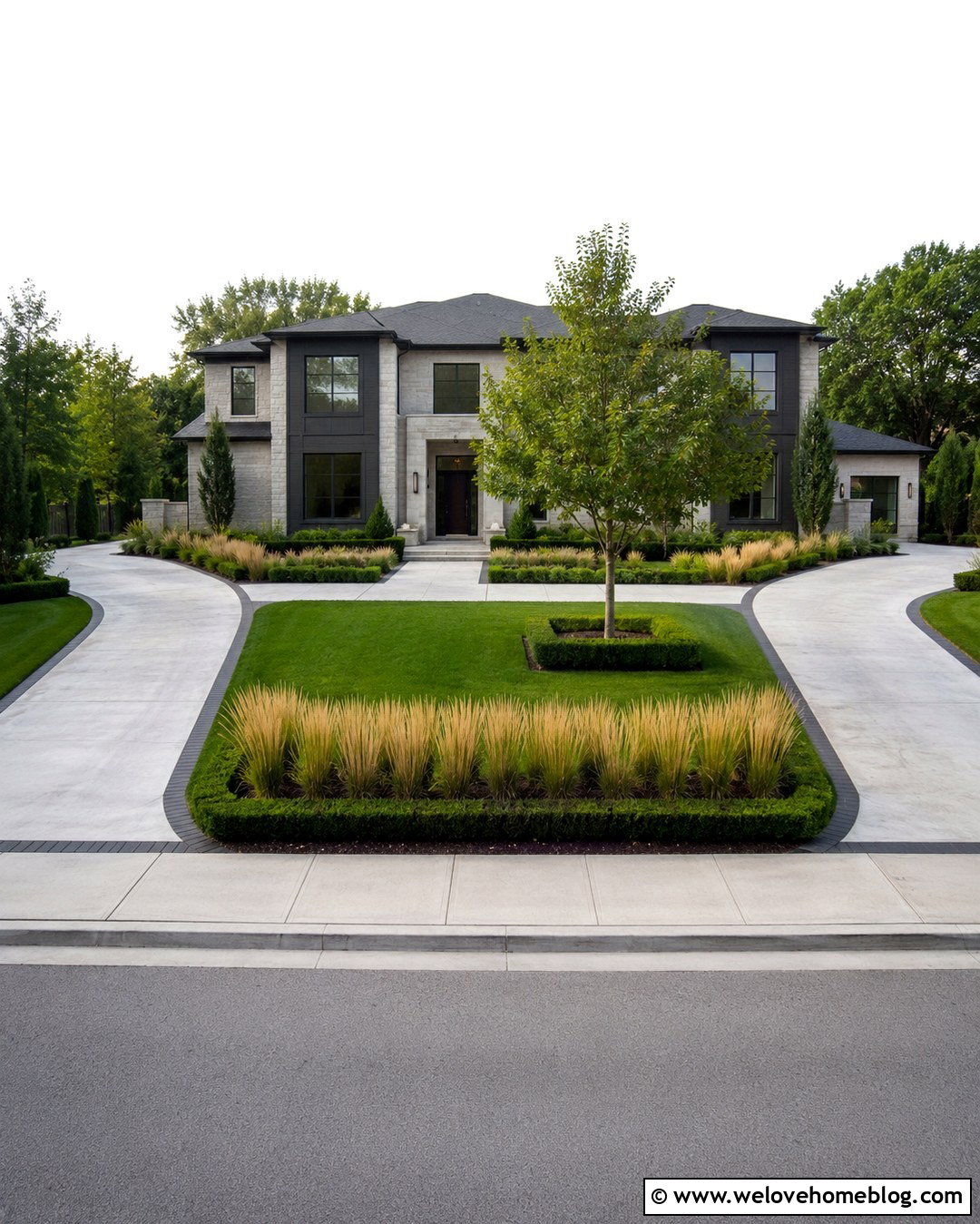
Clean gray concrete pavers can suit a coastal home without making the property look cold or urban. Select pavers with gentle color variation and arrange them in a large-format running bond for a calm, uncluttered surface. A wide straight driveway can be bordered with charcoal paver ribbons that define parking and reduce edge damage. Beyond those bands, build layered beds containing switchgrass, little bluestem, inkberry, and low flowering ground covers appropriate for the site. Place the tallest grasses in broad groups toward the middle of each bed, leaving shorter plants near the street and walkway. Light stone mulch can echo the pavers while reducing bare soil exposure. The grasses bring movement and texture, balancing the strong geometry of the driveway and a modern coastal facade. ()
6. Coastal Asphalt Driveway With Shell Borders
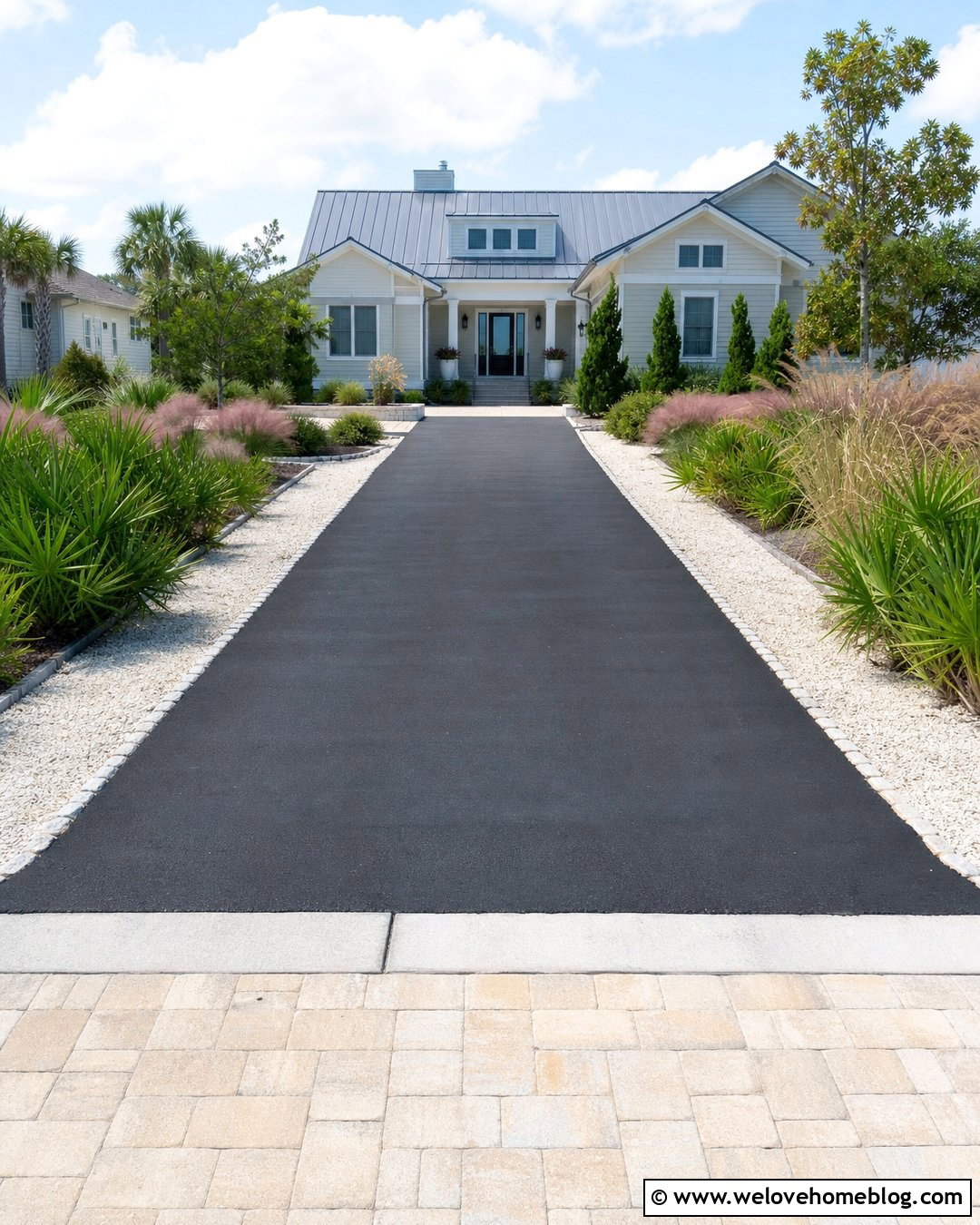
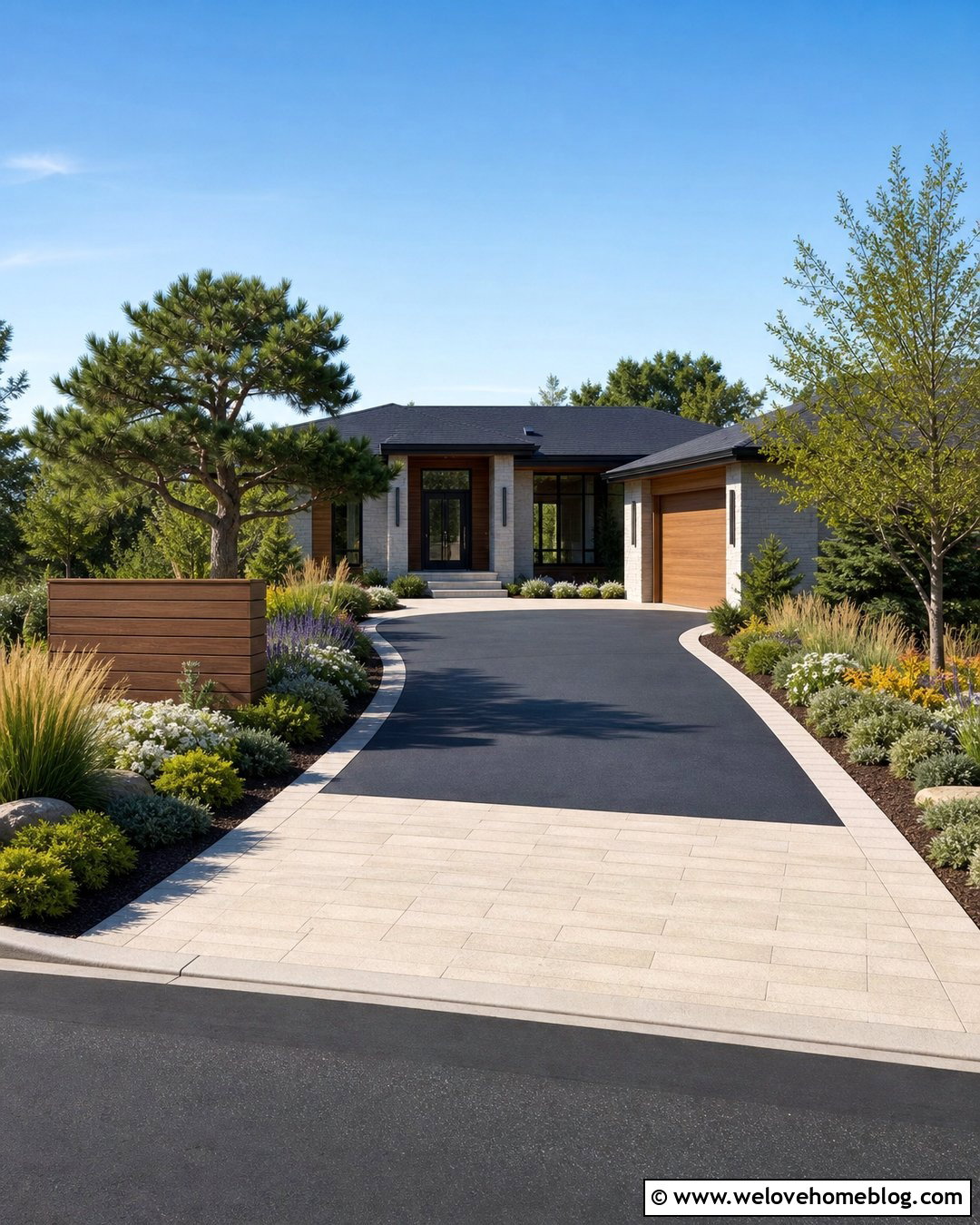
An existing black asphalt driveway can gain coastal character without requiring complete replacement. Begin by repairing cracks and cleaning the edges so the finished landscape looks intentional. Install broad crushed-shell shoulders on both sides, held in place by steel, granite, or concrete edging. These pale borders create a bright contrast with the dark asphalt and provide breathing room between vehicles and planting beds. Repeat clumps of sea oats, muhly grass, saw palmetto, or another regionally suitable salt-tolerant plant beyond the shell. Near the house, introduce a wider paver apron in a sandy beige tone to connect the driveway with the front walk. This layered approach retains a practical driving surface while using lighter materials and resilient planting to establish an unmistakable coastal identity.
7. Coastal Cobblestone Driveway With Hydrangea Borders
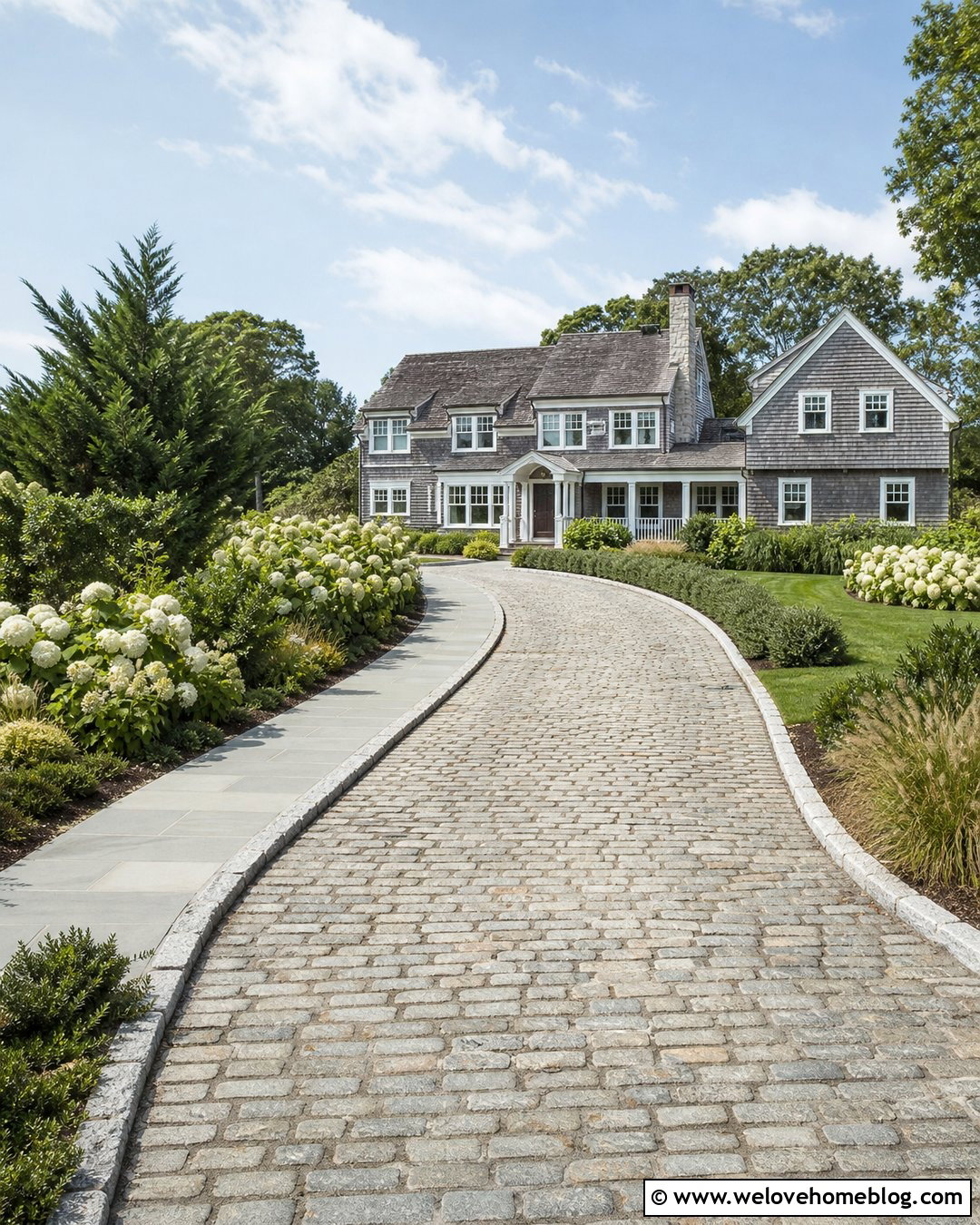
A gently curving cobblestone driveway can bring historic character to a sheltered coastal property. Choose rounded gray and tan stones, then install a smoother paver or cut-stone walking strip along one side for easier pedestrian access. Hydrangeas can form lush summer borders in locations protected from severe salt spray, but they should be combined with tougher structural shrubs rather than used alone. Inkberry, bayberry, ornamental grass, and low evergreen ground covers keep the planting beds attractive beyond the flowering season. Allow generous space between mature shrubs and the driveway so branches do not obstruct vehicles. Granite curbing provides a crisp boundary and prevents soil from washing onto the stones. The resulting look works beautifully with a shingled cottage, coastal colonial, or traditional waterfront home.
8. Coastal Exposed Aggregate Driveway With Succulents
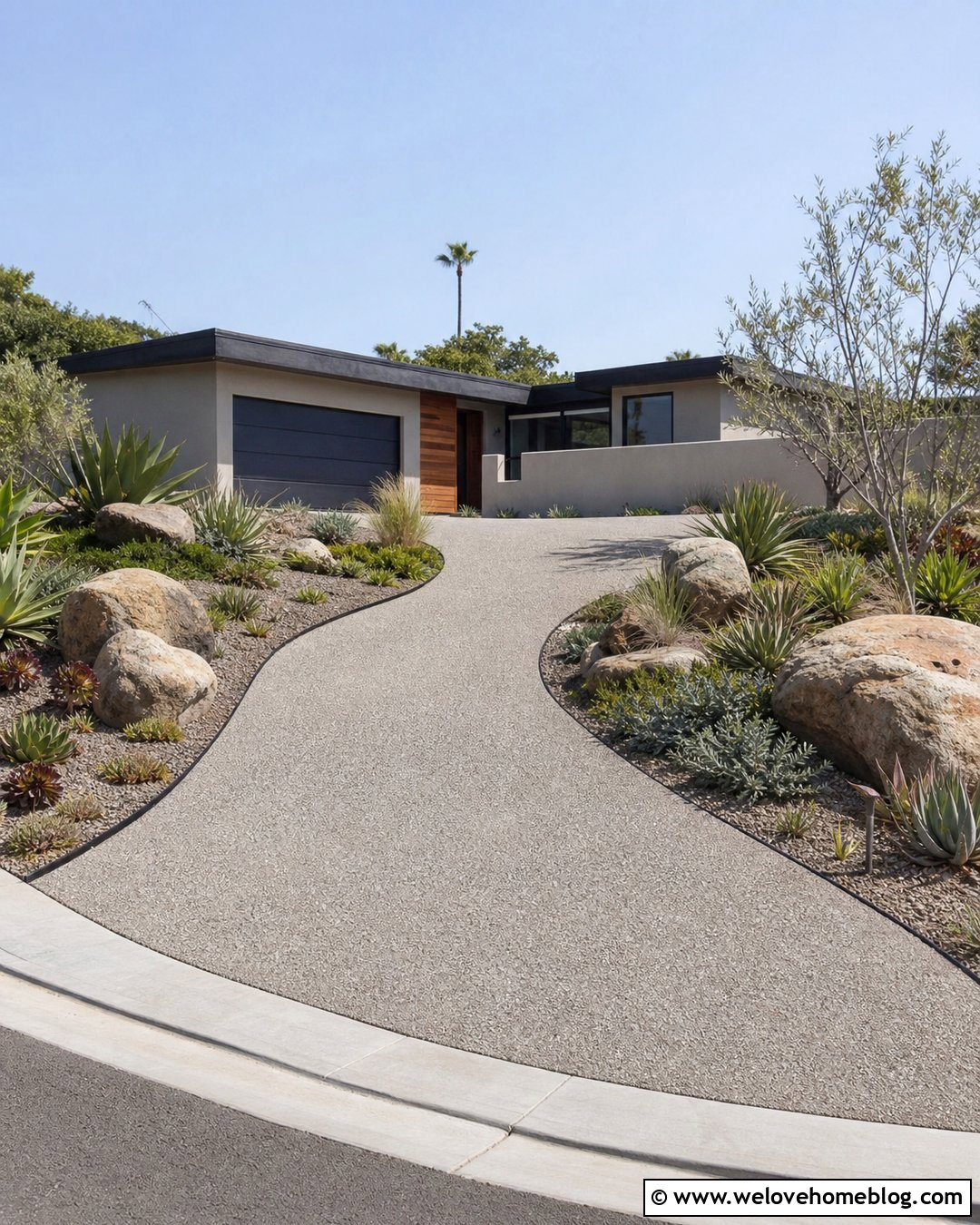
On a dry West Coast property, exposed aggregate offers a durable surface with the pebbled texture of a shoreline. Use warm gray concrete containing small natural stones and shape the driveway into a subtle curve toward a modern beach house. Narrow steel edging can separate the aggregate from beds of gravel, boulders, and sculptural plants. Depending on local conditions, the landscape might include agave, yucca, sedum, aeonium, native bunchgrasses, or low drought-tolerant shrubs. Arrange plants in asymmetrical groups and leave visible gravel between them to prevent the beds from appearing overfilled. A few large weathered stones can anchor the design without turning it into a rock collection. The restrained planting and textured driveway work together to produce a clean coastal landscape suited to strong sun and limited water. ()
9. Coastal Brick Driveway With Layered Shrubs

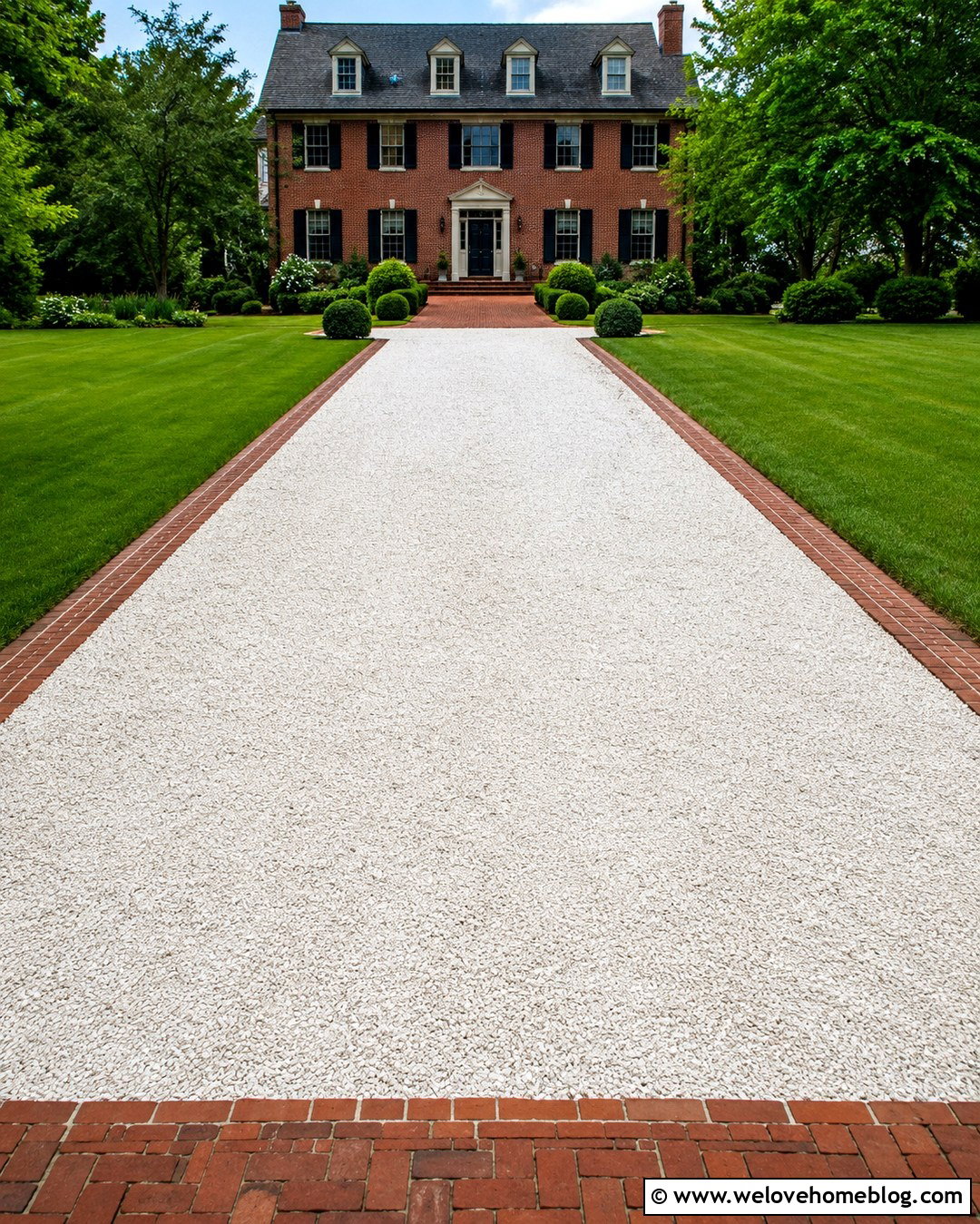
Weathered clay brick gives a coastal colonial or traditional beach home warmth that pale surfaces sometimes lack. Install red-brown brick pavers in a herringbone pattern across a straight driveway, with a soldier-course border holding the edges in place. Keep the surrounding palette simple by using green foliage, white flowers, and light gravel mulch. In a protected location, combine clipped inkberry, hydrangeas, native grasses, and a low ground cover to create layered beds. Position formal shrubs close to the house and let the planting become looser near the road. A brick walkway branching from the driveway can repeat the same pattern and lead clearly toward the front entrance. The finished design feels orderly and established while retaining the relaxed texture associated with older coastal neighborhoods.
10. Coastal Resin Driveway With Sea Thrift Borders
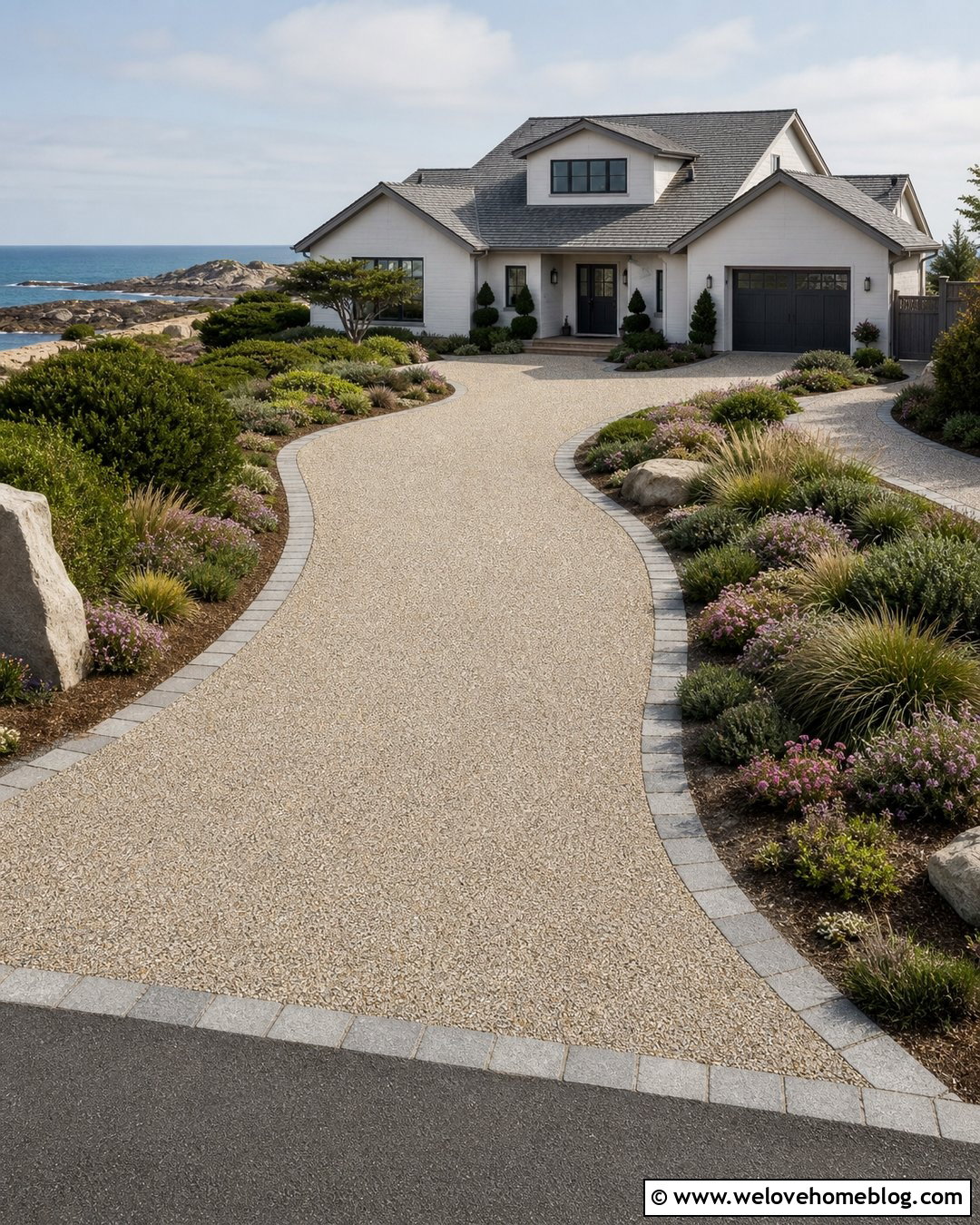
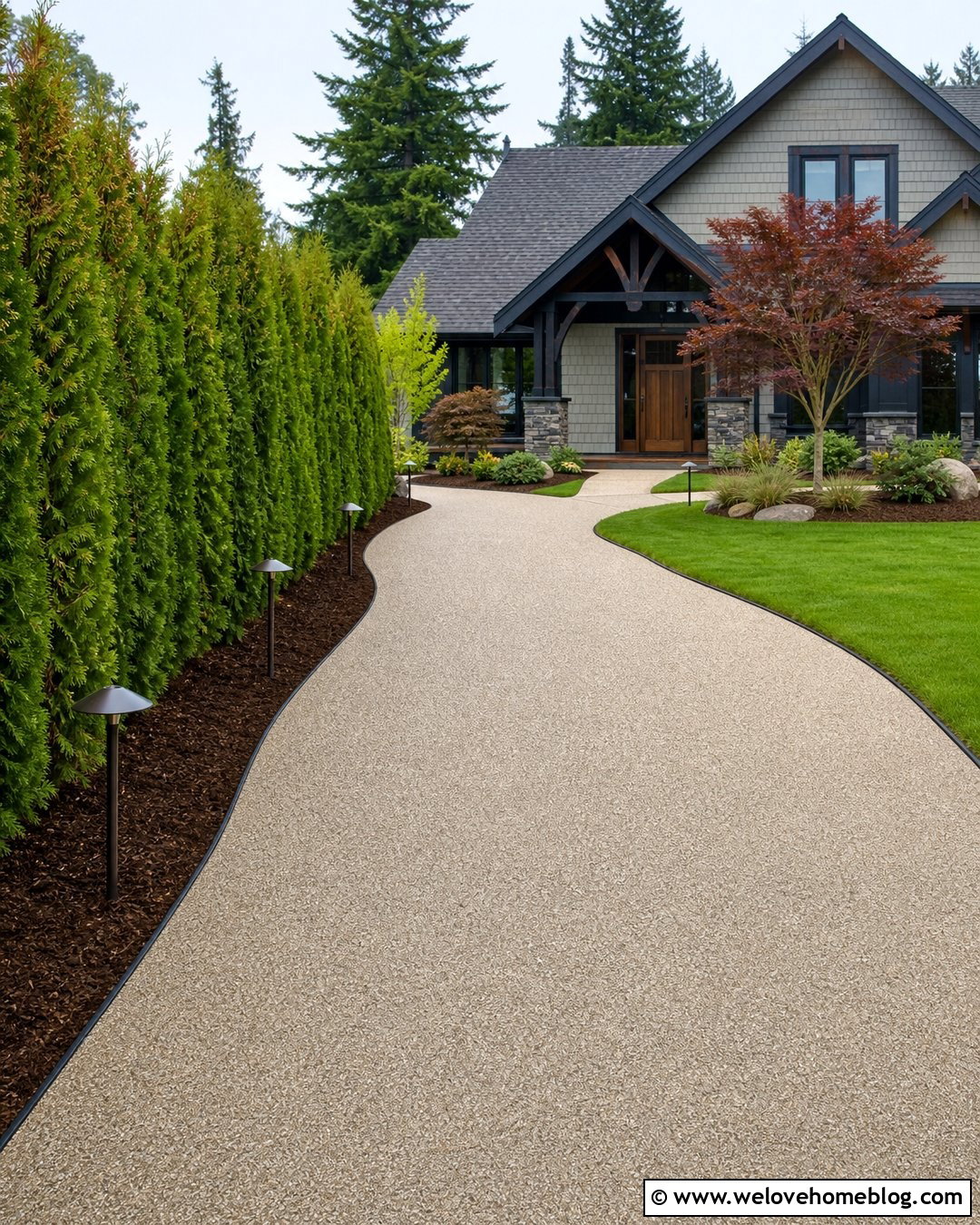
A pale resin-bound gravel driveway provides the visual texture of loose stone with a smoother, more unified appearance. Choose a blend of cream, beige, and soft gray aggregate that reflects the colors of sand and weathered shells. A curved layout can soften a compact front yard and create space for crescent-shaped planting beds. Edge the surface with gray granite setts, then fill the borders with sea thrift, low ornamental grasses, creeping ground covers, and compact evergreen shrubs suited to the region. Keep plants low at the driveway entrance and increase their height gradually toward the house. A matching resin path can branch toward the porch without introducing another competing material. This complete look feels bright and contemporary, yet the natural aggregate and billowing plants keep it connected to the coast. ()
11. Coastal Decomposed Granite Driveway With Agave
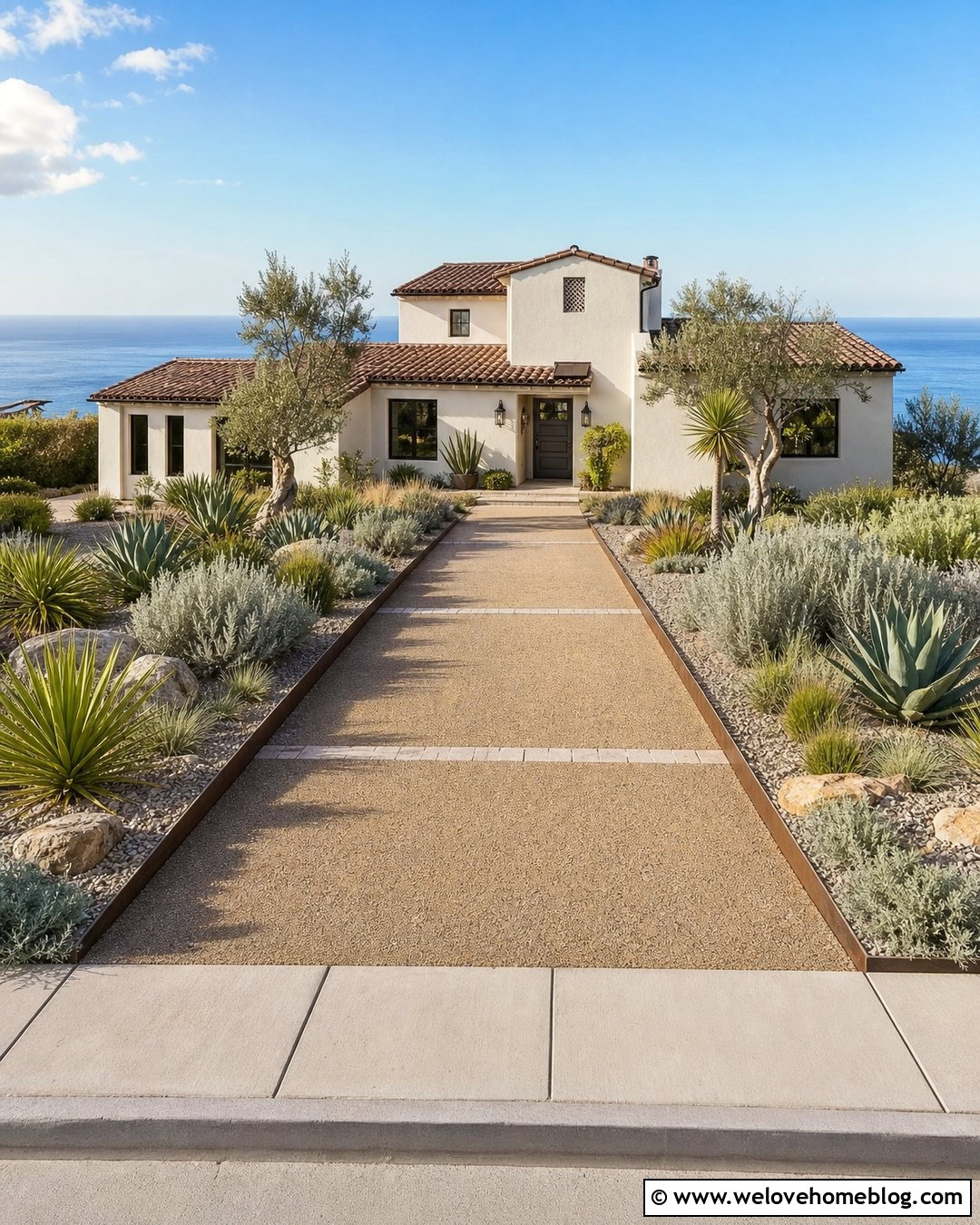
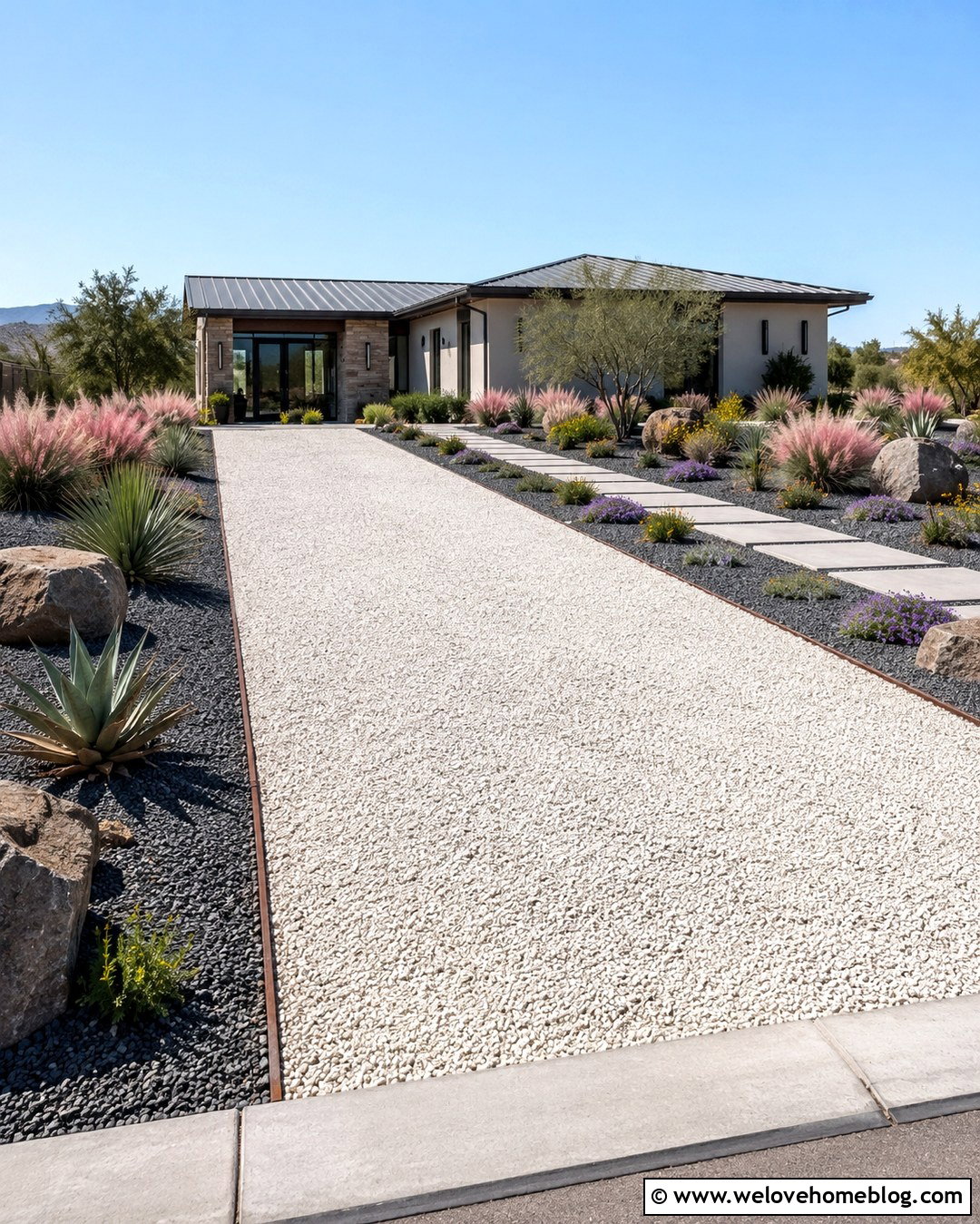
Warm buff decomposed granite pairs naturally with a coastal Mediterranean or California beach house. Use a gently sloping straight driveway contained by weathered steel edging, which creates a thin, neat boundary without visually overpowering the surface. Add broad planting pockets containing agave, coastal rosemary, native grasses, yucca, and low silver-leaved shrubs suitable for the site. Place larger specimens near the house and use smaller plants around the street entrance to preserve visibility. Bands of rectangular concrete pavers can cross the driveway at intervals, helping break up the long expanse while connecting it to the front walkway. Because decomposed granite requires correct grading and compaction, drainage should be planned before decorative planting begins. The earth-toned surface and sculptural greenery create an appealing alternative to a conventional paved entrance. ()
12. Coastal Oyster Shell Driveway With A Cedar Gate
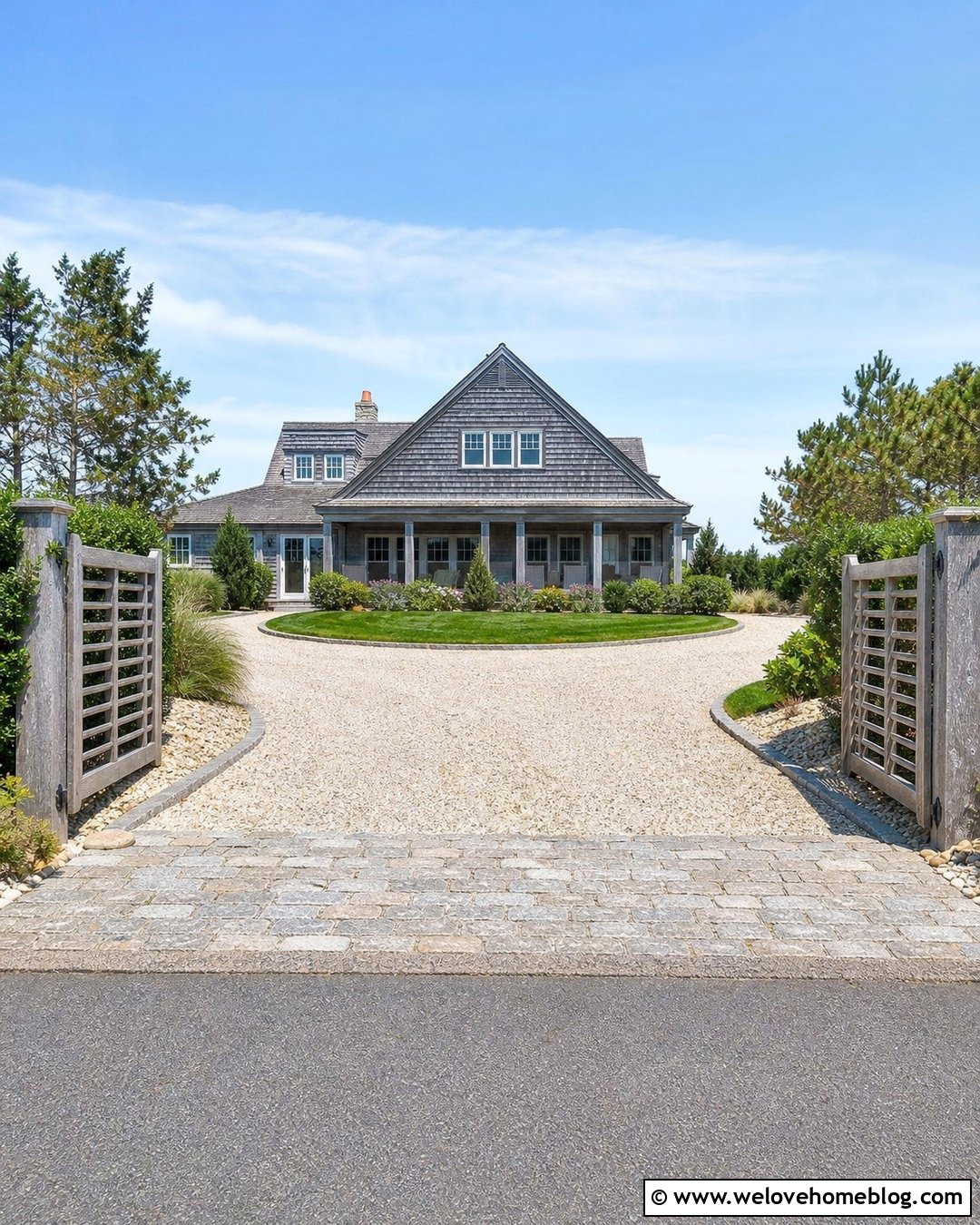
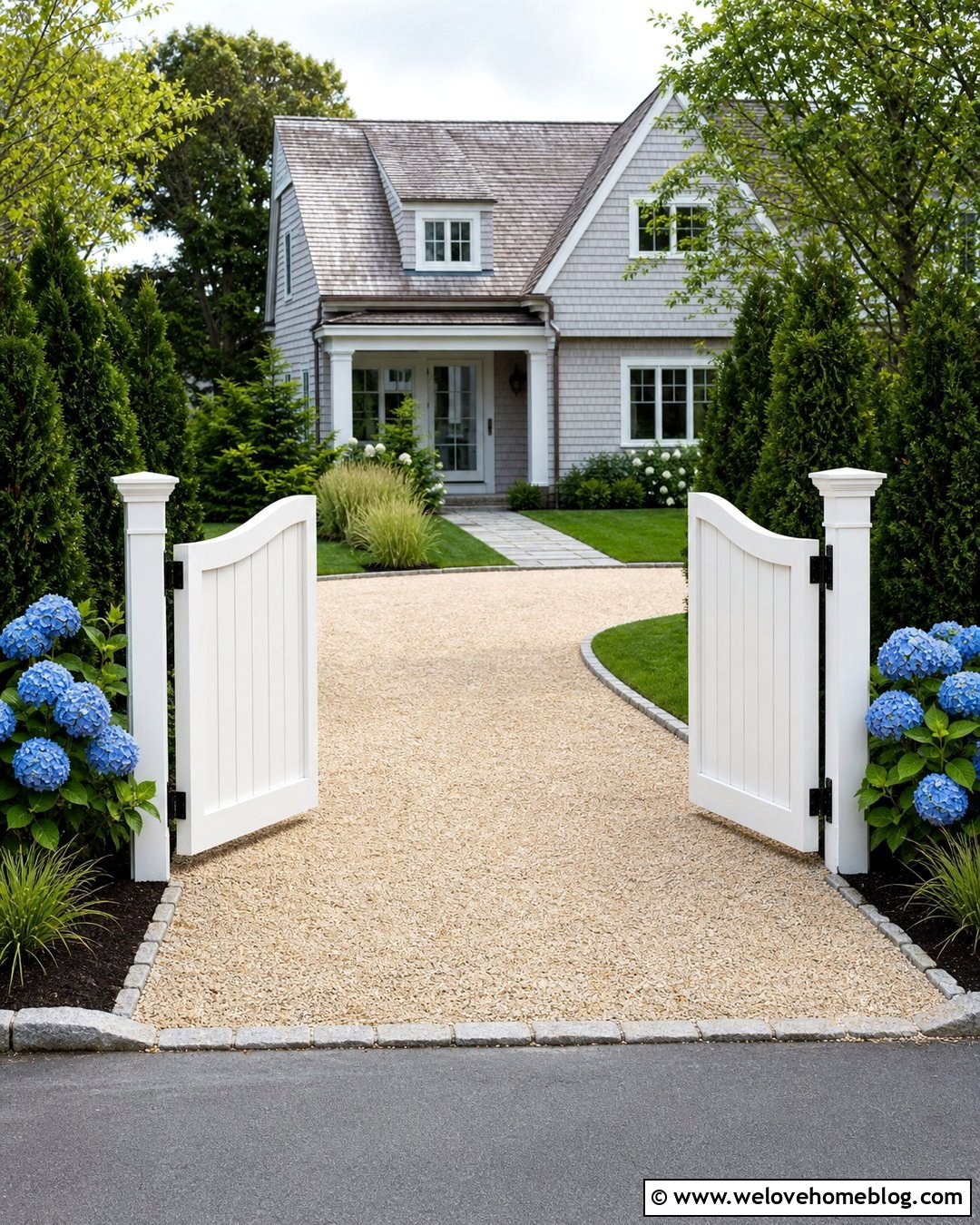
Few entrances feel more coastal than a bright oyster-shell driveway passing through a simple cedar gate. A horseshoe layout works well on a wider lot because it creates separate entrance and exit points while framing the front yard. Use a cobblestone apron at both street connections to contain the shell and handle frequent turning. Weathered cedar posts and an open slatted gate can mark the property without blocking views of the house. Surround the entrance with bayberry, beach plum, ornamental grasses, and compact native evergreens. Avoid placing fragile flowers directly beside the road, where salt, wind, and maintenance equipment may damage them. Continue shell mulch inside the planting beds to visually widen the driveway. The combination feels welcoming, practical, and appropriately informal for a seaside cottage. ()
13. Coastal Gravel Driveway With Timber Edging
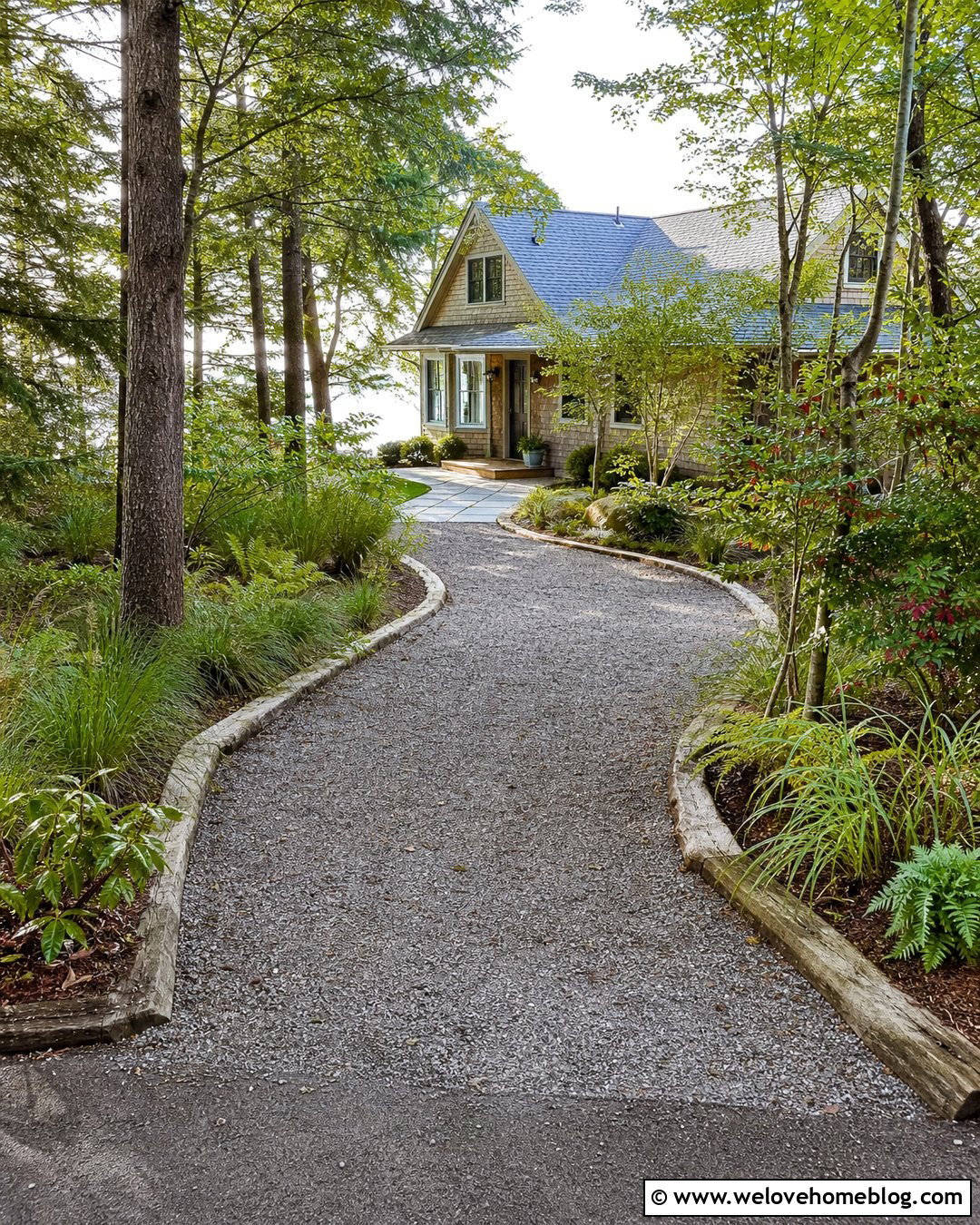
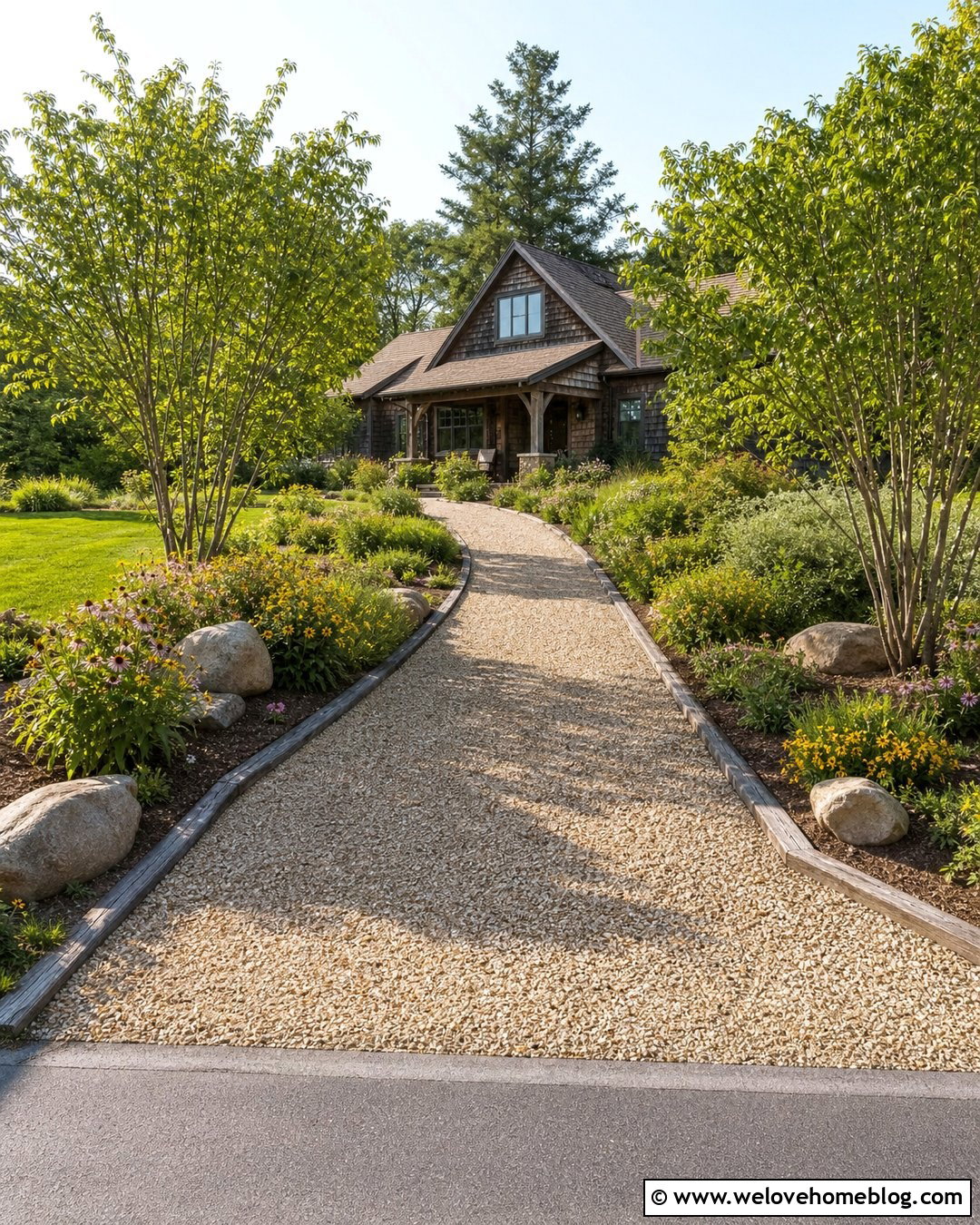
A narrow gray gravel driveway bordered by heavy timber can create a relaxed approach to a small cottage or wooded coastal home. Follow the natural contours of the lot rather than forcing a perfectly straight line. Pressure-rated or naturally durable timber edging helps retain the gravel and visually separates it from informal planting. Beyond the boards, establish broad drifts of native bunchgrass, ferns for sheltered areas, beach plum, and ground covers matched to the property’s sun and salt exposure. Keep the beds irregular, but repeat plant groups so the landscape still looks intentional. A rectangular stone landing near the porch can provide a clean transition from loose gravel to the front steps. This affordable-looking composition is most convincing when the timber, gray stone, and natural planting are allowed to weather together.
14. Coastal Crushed Stone Driveway With A Bluestone Apron
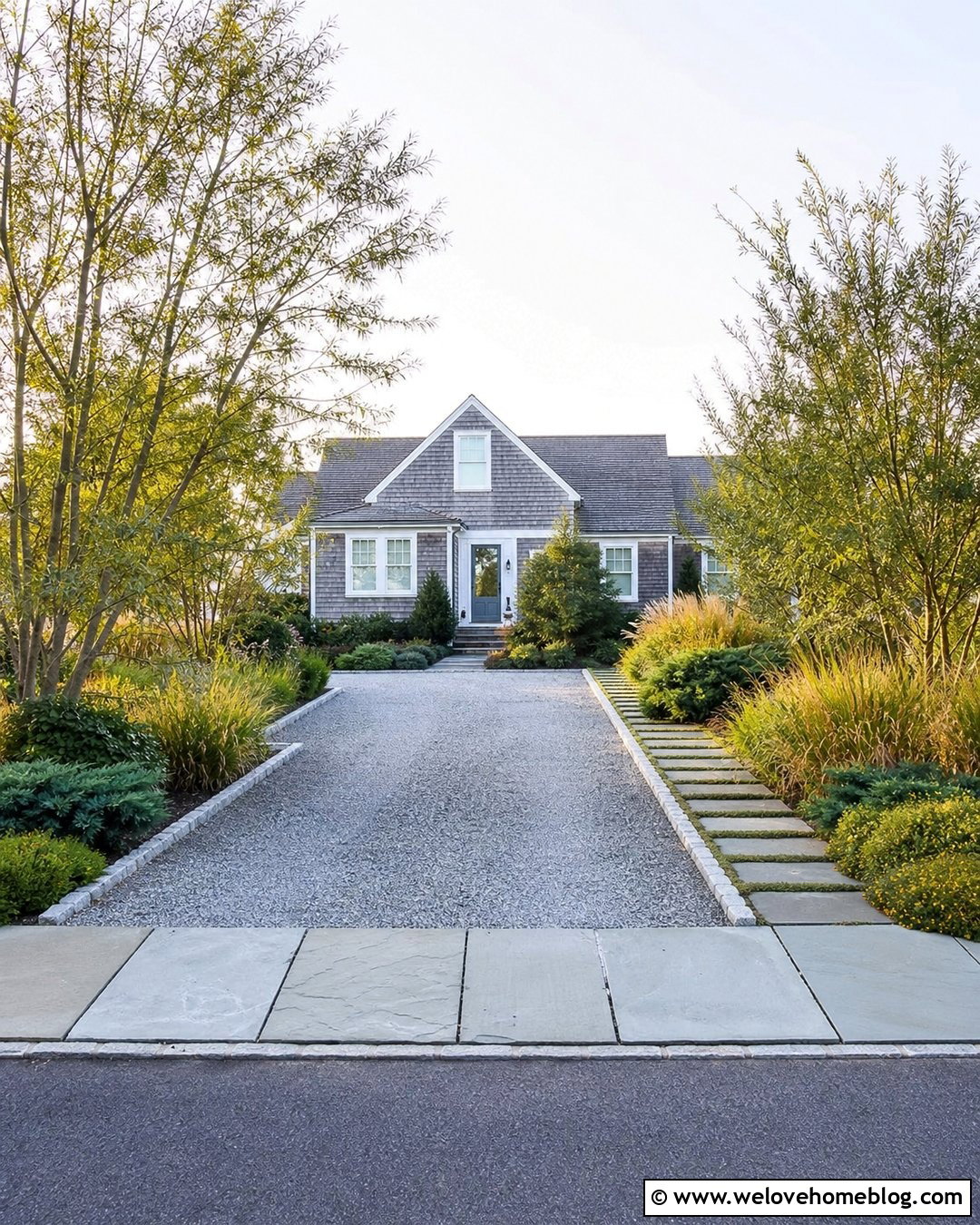
Crushed gray stone can look more refined when it is paired with a substantial bluestone apron at the street. The apron clearly defines the entrance, reduces loose material near the road, and introduces a color that can be repeated in the walkway. Continue the crushed stone along a straight driveway with granite edging on both sides. Plant low beach plum, inkberry, switchgrass, and creeping juniper in deep beds beyond the curb stones. Where space allows, add one or two multi-stem native trees near the middle of the approach, keeping their mature canopies and roots away from driving areas. Bluestone stepping slabs can cross the gravel and connect to a side path. This structured material palette complements gray-shingled Cape Cod homes without making the front yard feel excessively formal.
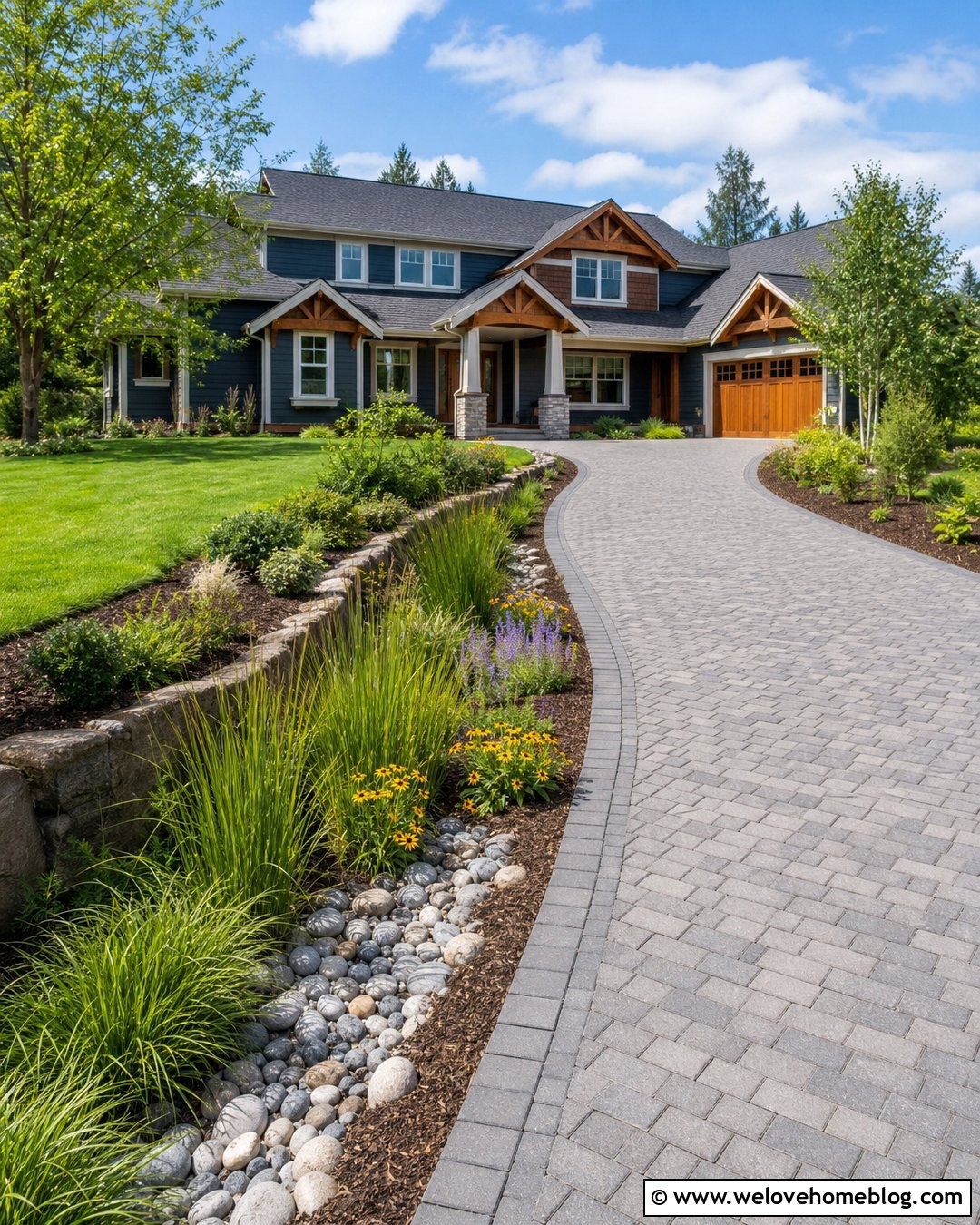
15. Coastal Concrete Driveway With A River Rock Swale
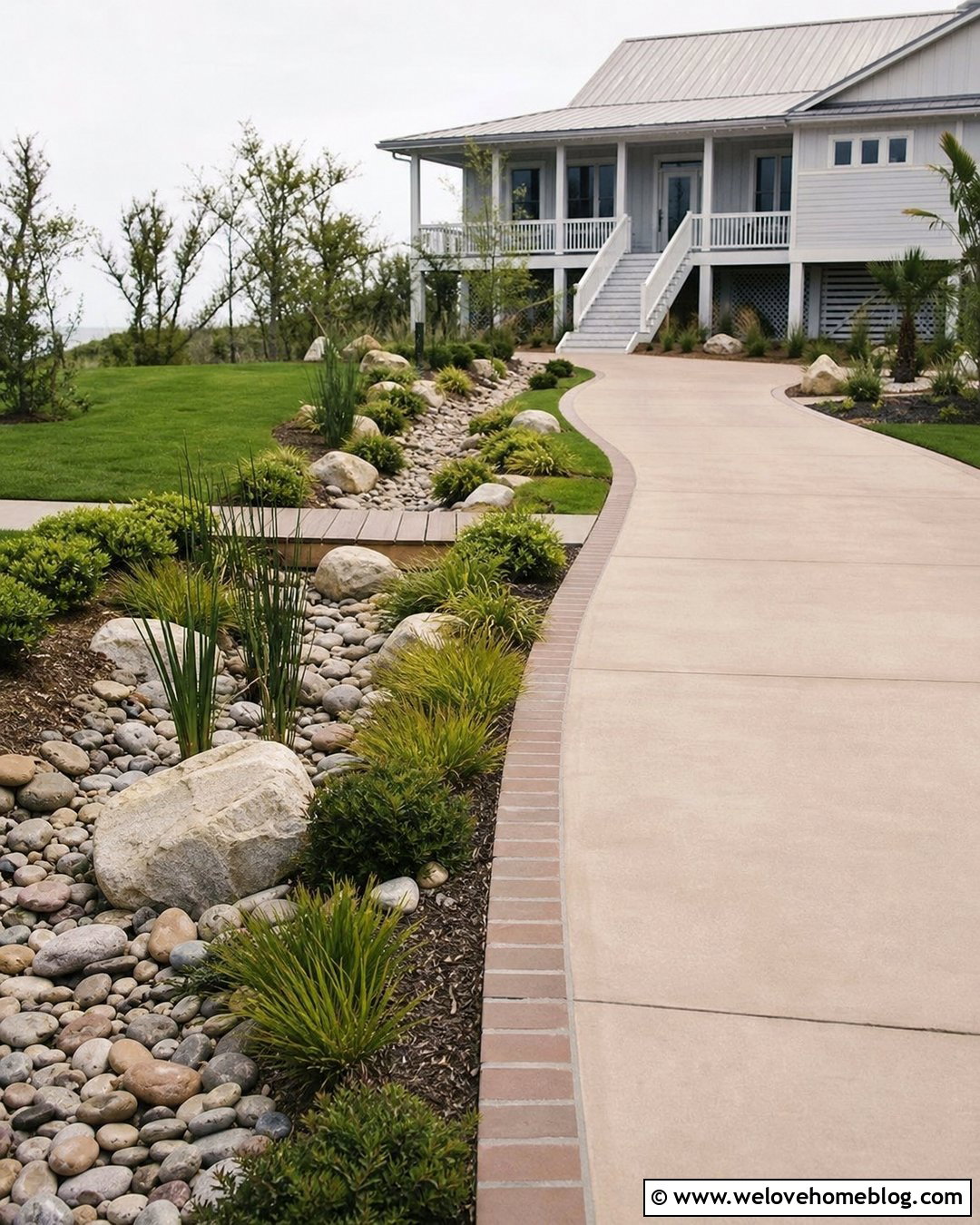
Heavy coastal rain can quickly overwhelm a flat, fully paved front yard. A light sand-colored concrete driveway beside a landscaped river-rock swale offers a more integrated solution. Give the driveway a subtle curve and define its outer edge with a narrow brick or paver ribbon. On the lower side, form a shallow channel filled with smooth river rock, small boulders, and locally appropriate plants that tolerate occasional wet conditions. Sedges, rushes, grasses, and compact shrubs can soften the stone while leaving a visible route for water. The opposite side may contain a simple lawn or dry planting bed to keep the composition balanced. A bridge-like walkway crossing the swale creates a clear connection to the porch and turns functional drainage into an attractive entrance feature. ()
16. Coastal Ribbon Driveway With Palm Landscaping
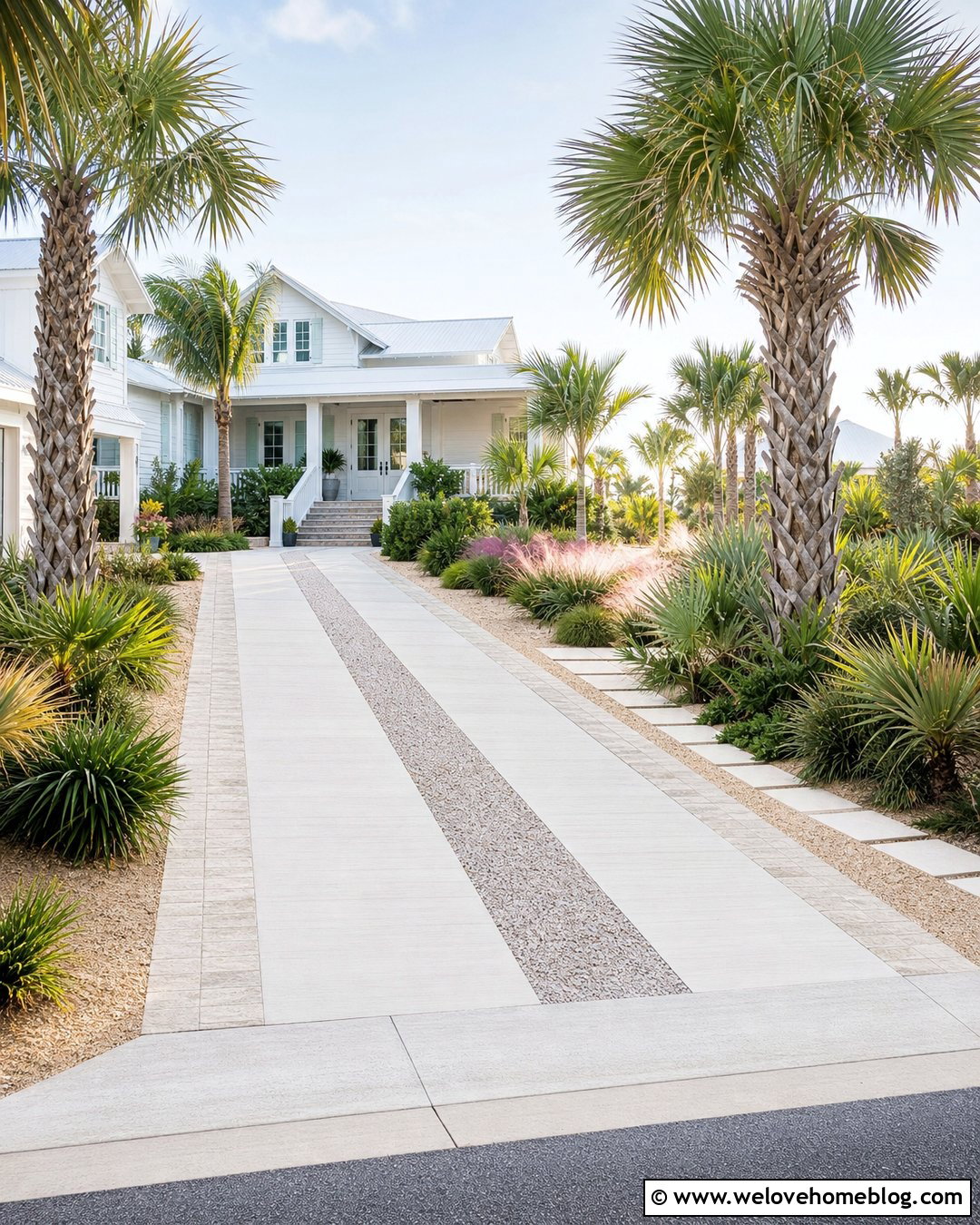
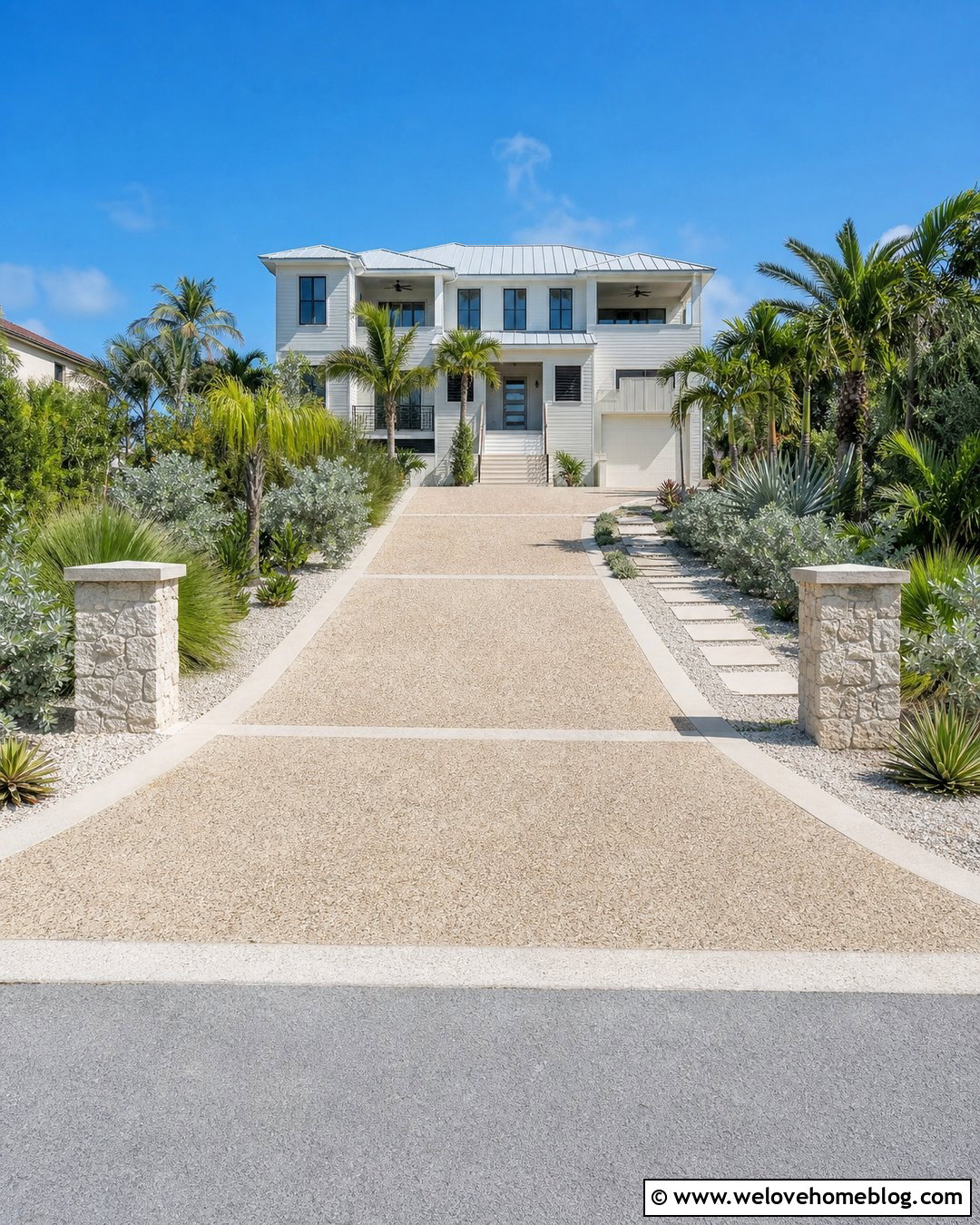
In warm coastal regions, a concrete ribbon driveway framed by palms can feel open and tropical without becoming overly elaborate. Use two wide strips of pale broom-finished concrete with gravel or a tough low ground cover between them. Edge the full layout with light limestone or shell to maintain a bright seaside palette. Plant sabal palms, saw palmetto, muhly grass, and low evergreen shrubs in staggered groups along the outer borders. Leave enough distance between palms and the driving surface for trunk growth, fronds, and safe vehicle clearance. A sandy paver walkway can branch toward a stucco or coastal farmhouse entrance. Rather than planting palms in a rigid row, vary their spacing slightly and support them with layered understory plants for a more natural regional appearance. ()
17. Coastal Narrow Driveway With Low Planting
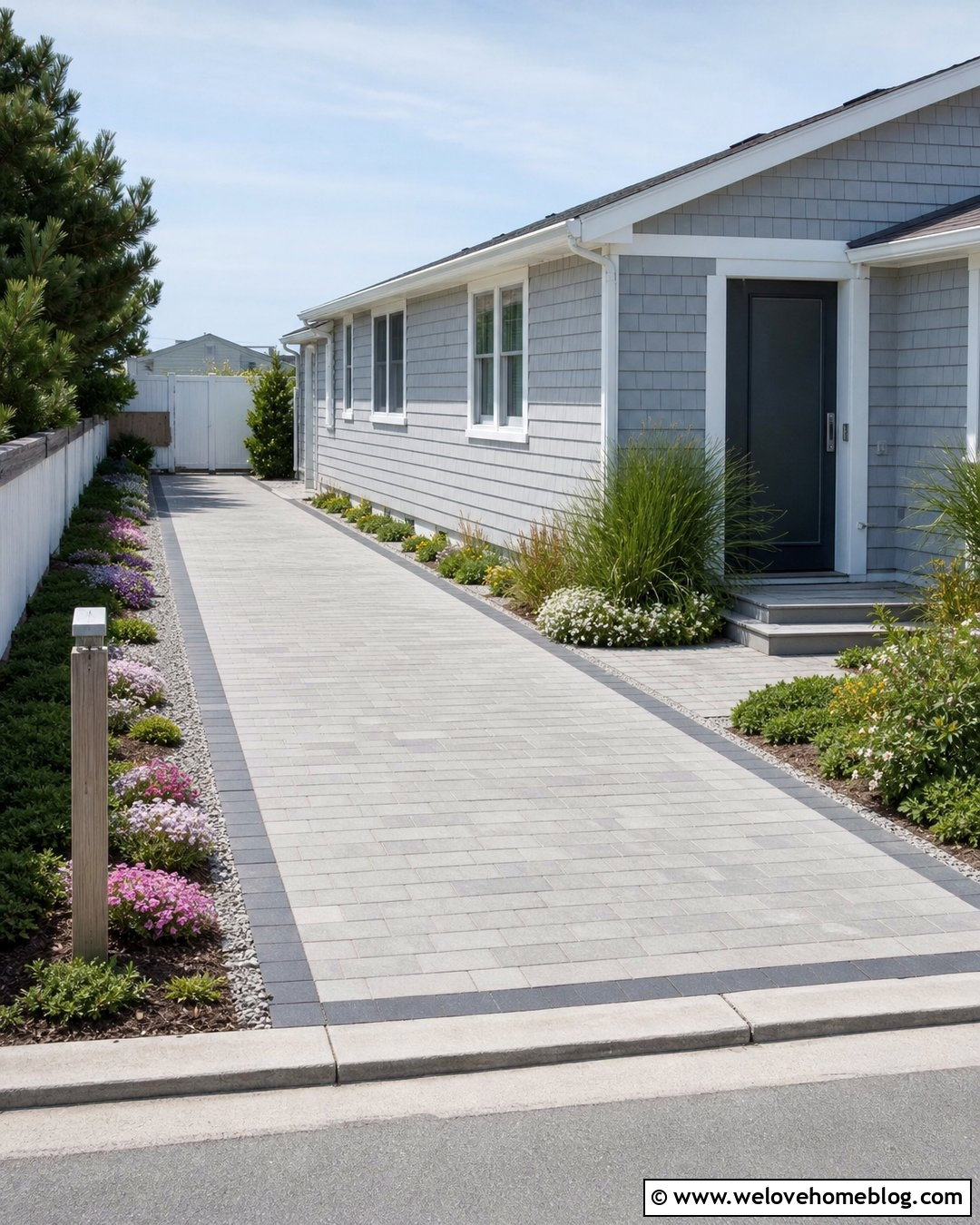
Small beach cottages often have a tight side driveway where every inch matters. Use light-gray concrete pavers in a simple running-bond pattern to create a smooth, visually quiet surface. A narrow charcoal border can define the driveway without taking valuable space away from vehicles. Along the house, install a slim gravel drainage strip instead of dense shrubs that may block access or trap moisture. On the outer side, use low sea thrift, compact grasses, creeping juniper, or other salt-tolerant ground covers that will not flop into the driving lane. A small address post near the street can mark the entrance while adding vertical interest. Keeping most plants below bumper height makes the area feel wider, protects visibility, and allows the attractive paver pattern to remain part of the overall design.
18. Coastal Long Driveway With Native Trees
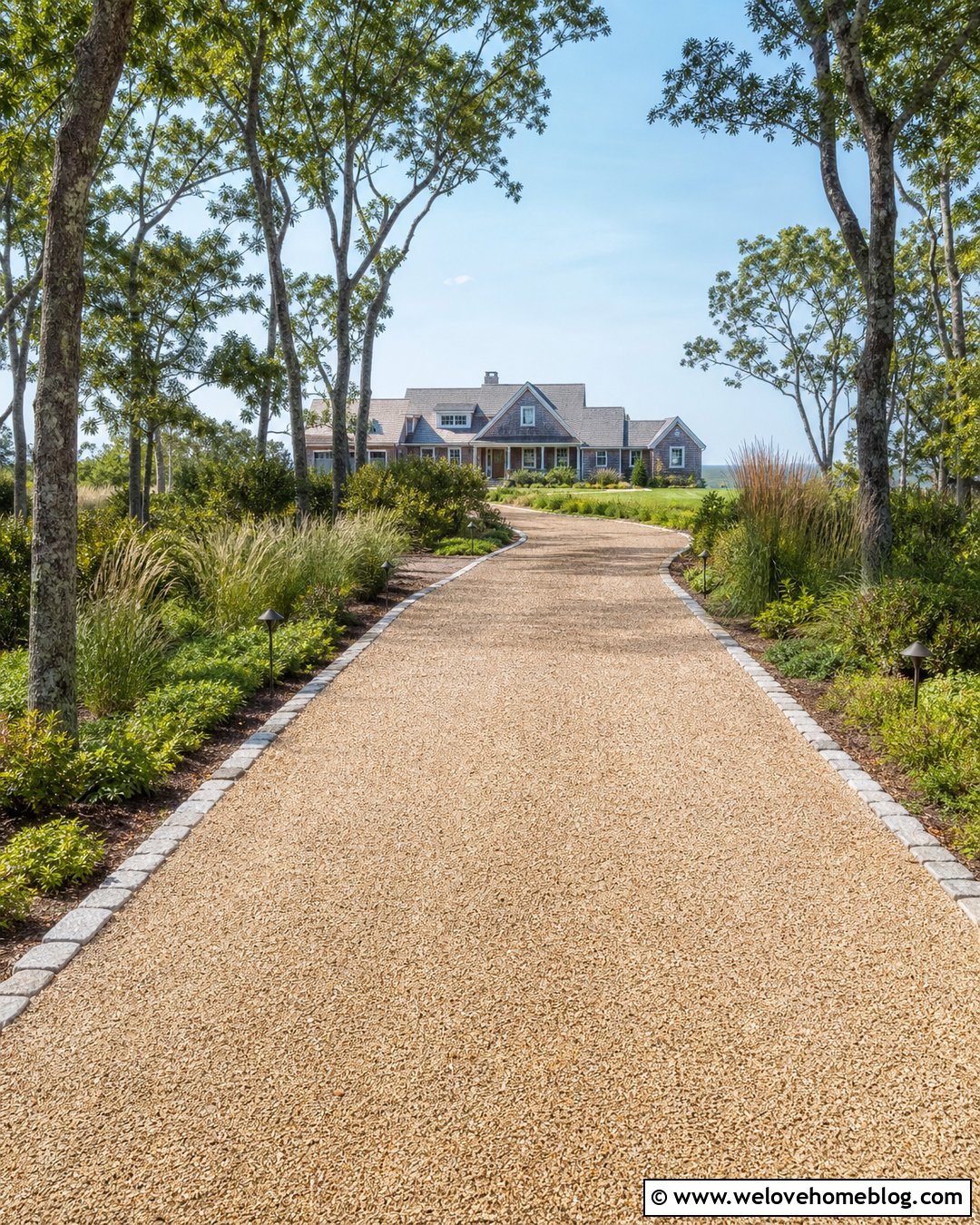
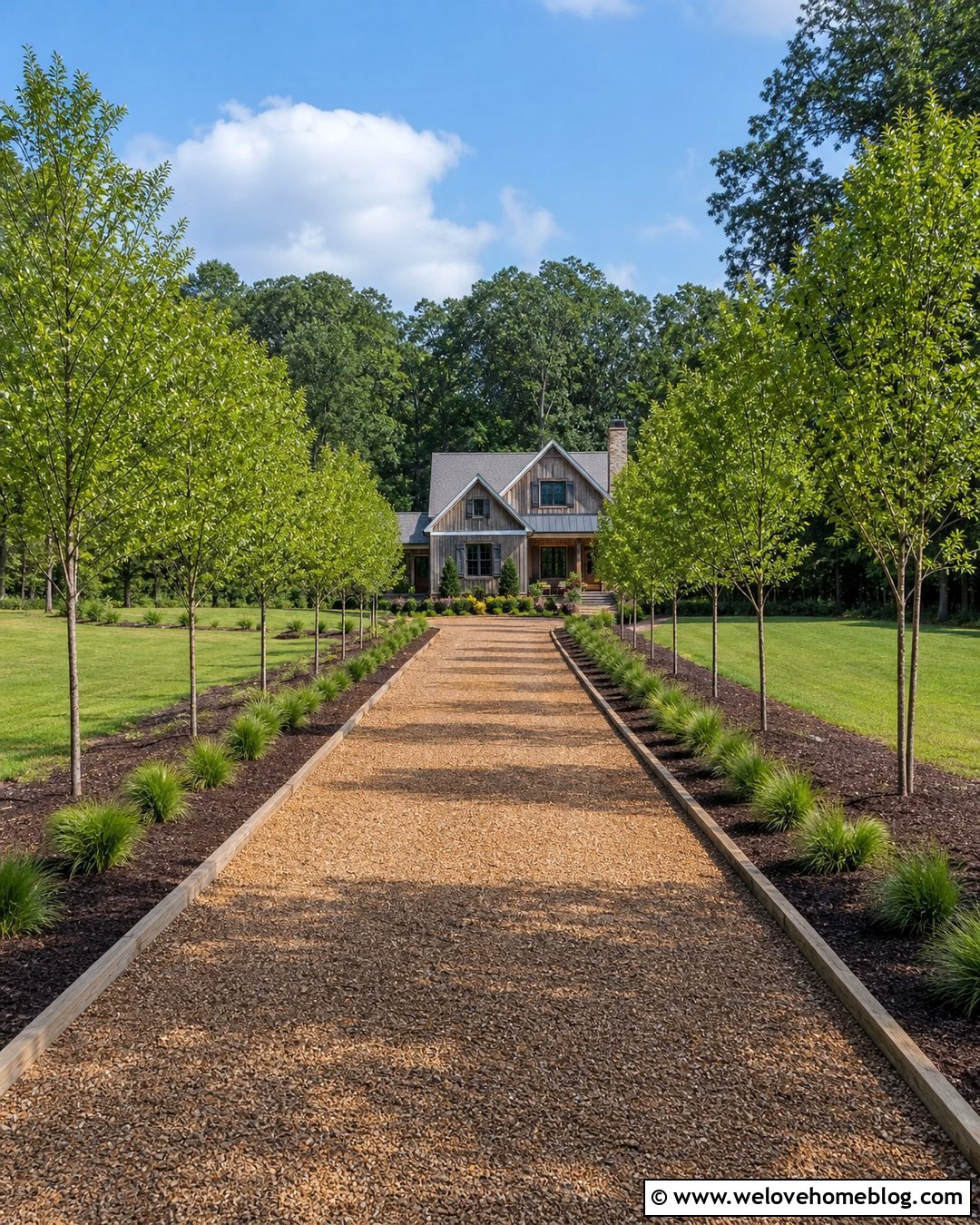
A long driveway needs a strong visual rhythm, but a perfectly rigid avenue can feel too formal for a coastal setting. Start with tan gravel or crushed stone and follow a gentle curve toward the house. Define the edges with granite cobbles, then place native trees in loose, evenly paced groups rather than identical straight rows. Depending on the region, suitable choices may include wind-tolerant oaks, cedars, palms, or multi-stem coastal trees recommended by a local nursery. Fill the lower layer with bayberry, inkberry, switchgrass, and other resilient shrubs and grasses. Maintain open breaks in the planting so views toward the house appear gradually. Low path lights may be placed near the border, but they should remain secondary to the trees, driveway surface, and natural coastal character.
19. Coastal Modern Driveway With Landscape Lighting
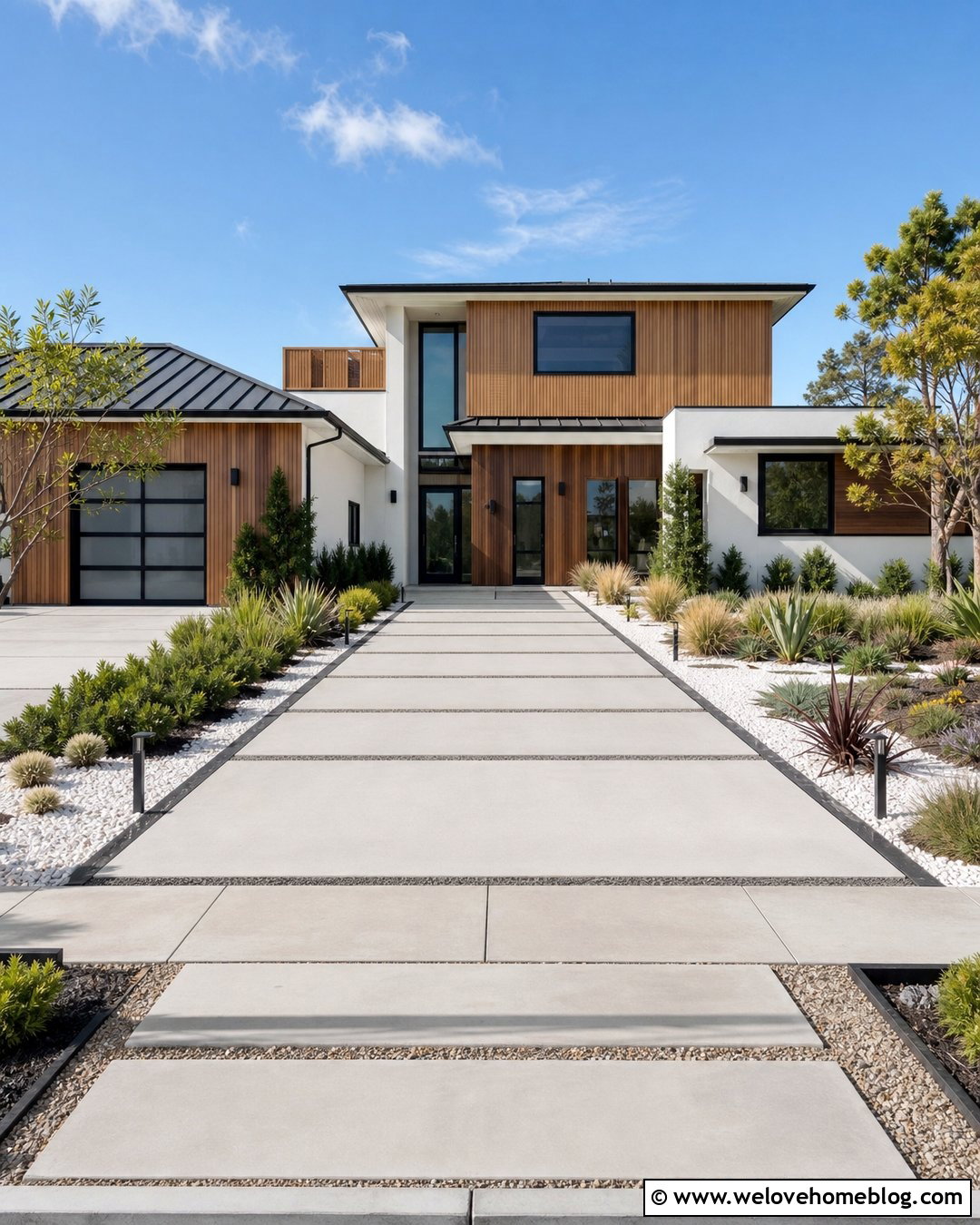
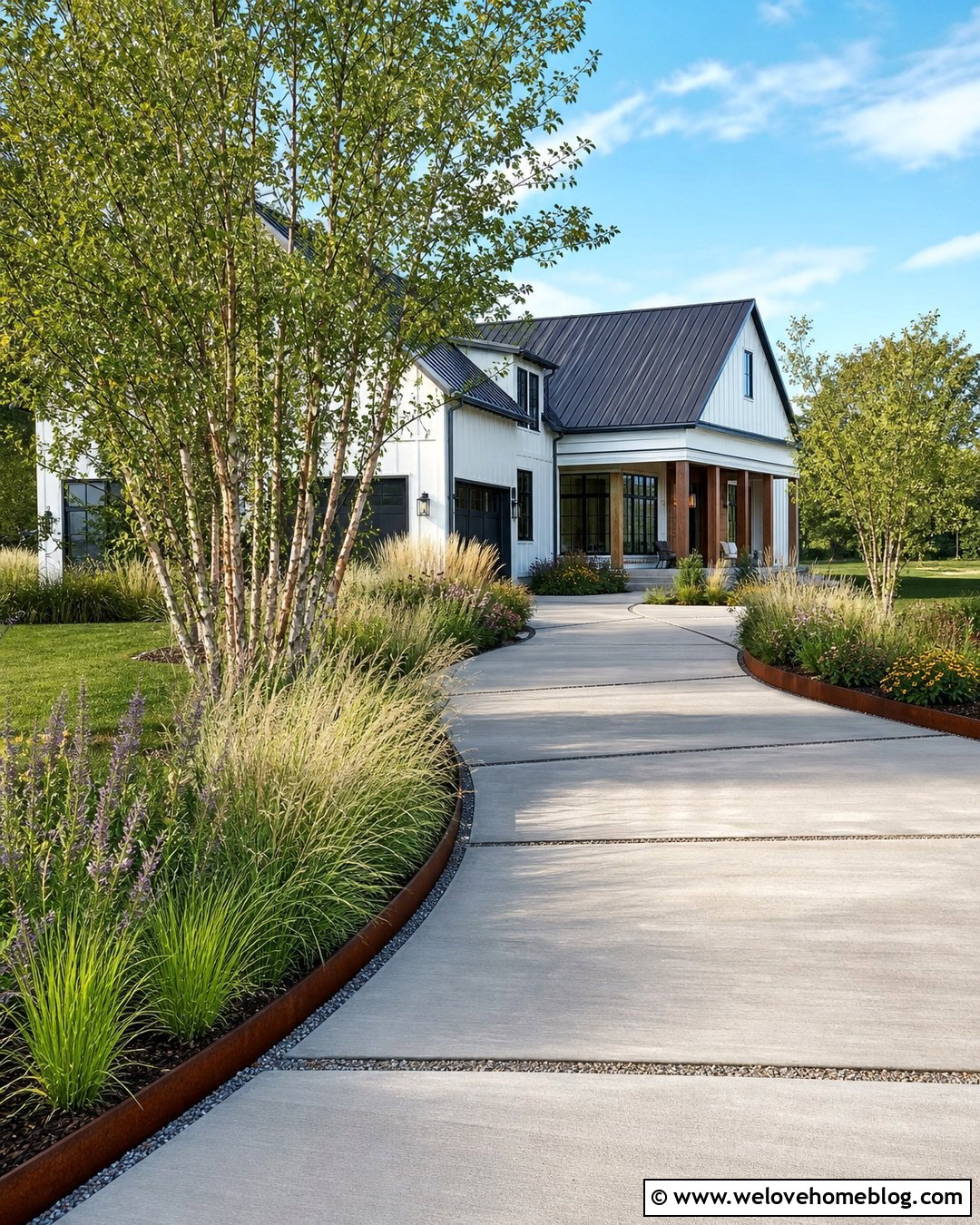
Large-format concrete pavers, crisp planting beds, and restrained lighting create a modern coastal entrance that still feels welcoming. Select pale gray pavers with a lightly textured finish and install them in a straight layout with narrow gravel joints. Use dark steel edging to separate the surface from beds of white stone, sculptural grasses, low succulents, and compact evergreen shrubs. Instead of lining the entire driveway with fixtures, position simple low-voltage lights at the street entrance, walkway crossing, and changes in direction. Keep them outside vehicle overhang zones to reduce accidental damage. A wide concrete path can connect the driveway to a clean-lined beach house with wood siding. During the day, the planting softens the geometry; after dark, carefully spaced fixtures clarify the route without making the entrance look like a runway.
20. Coastal Circular Driveway With A Planted Island
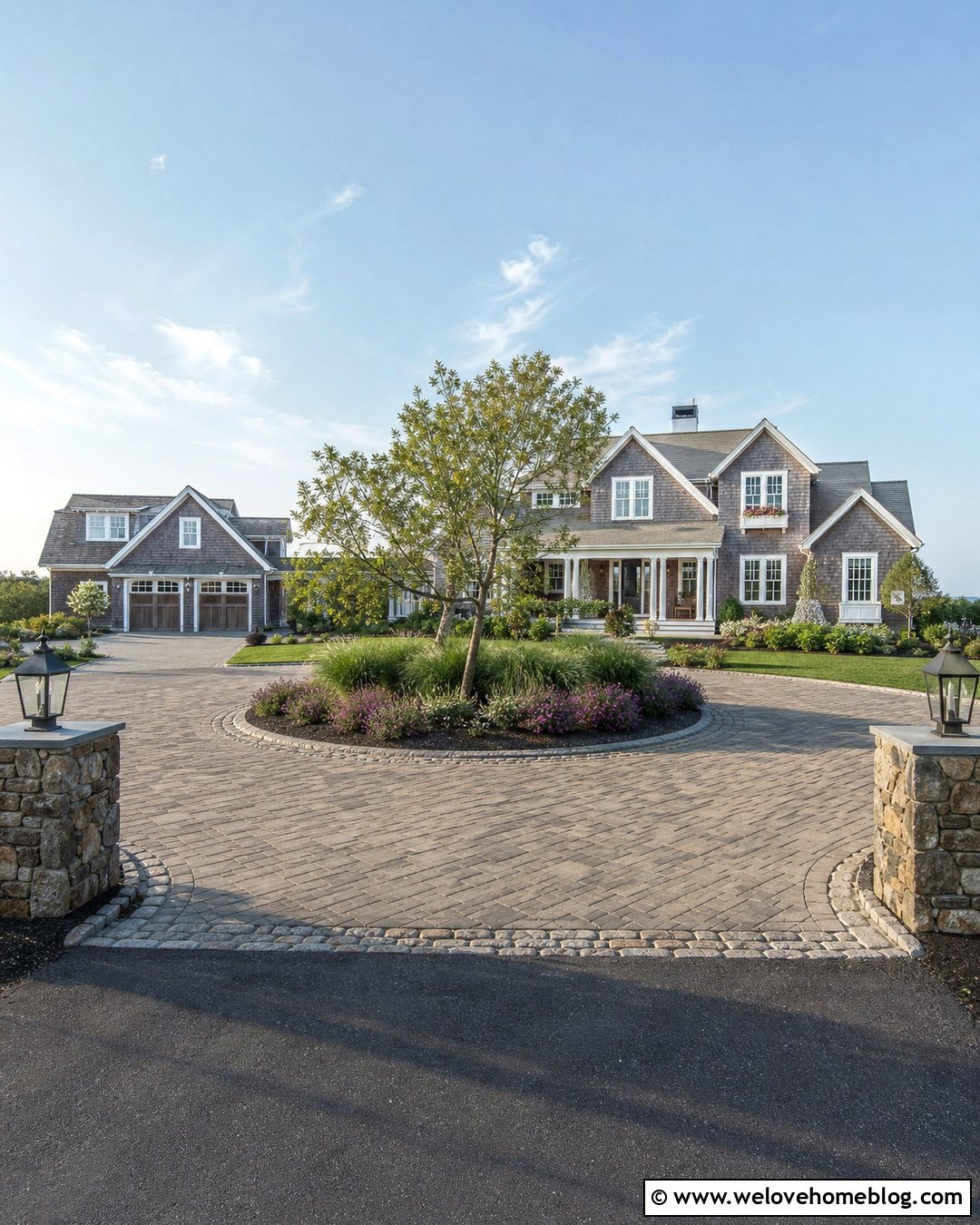
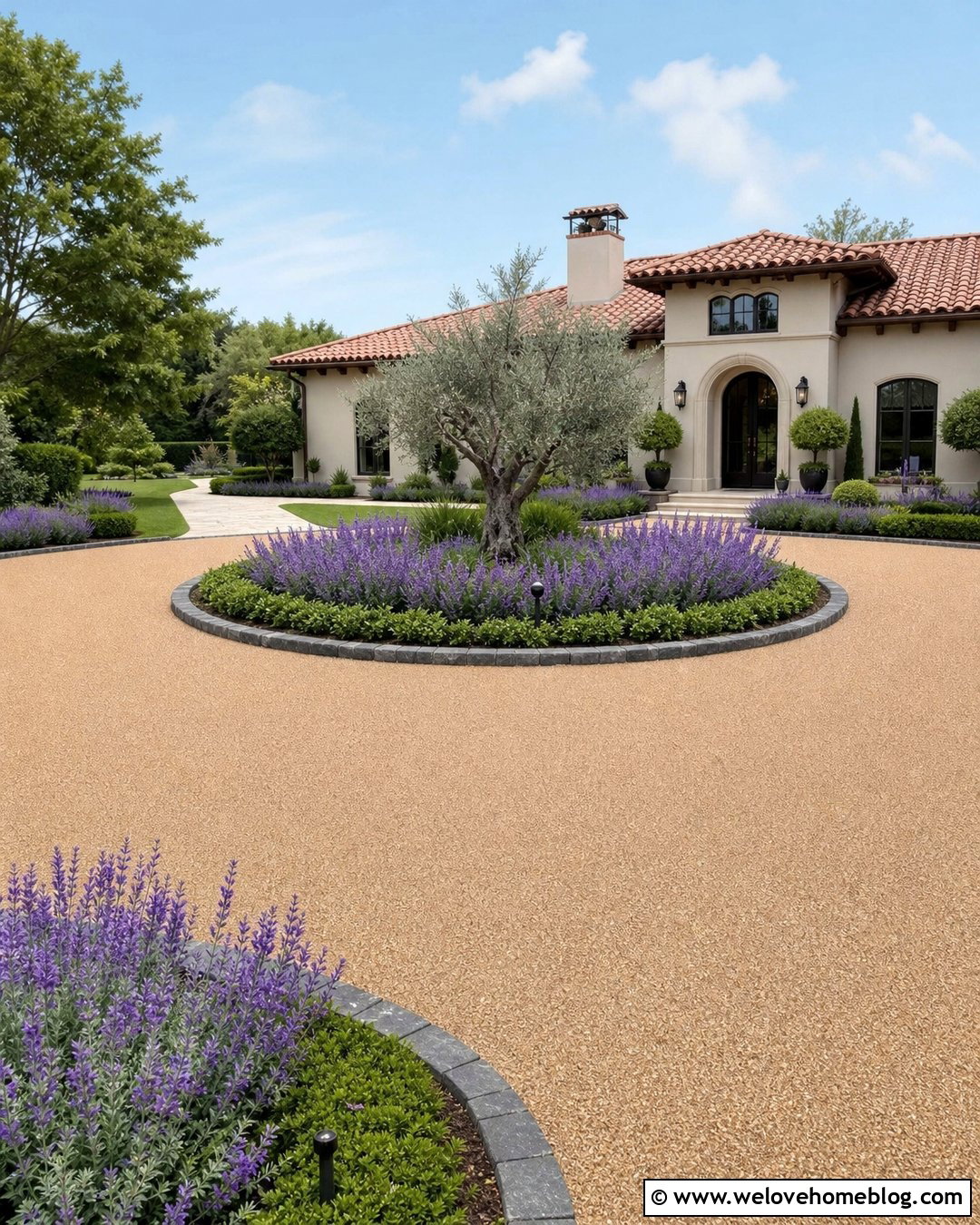
A circular driveway becomes a complete landscape when its central island receives as much attention as the driving surface. Use a mix of warm concrete pavers and a cobblestone outer border to define the curve around a coastal farmhouse or large shingled home. Build the island slightly above driveway level, then plant one wind-tolerant feature tree surrounded by beach plum, inkberry, ornamental grasses, and a low flowering ground cover. Arrange the plants in broad, repeated groups so the island looks attractive from every direction. Near the road, use low stone pillars or a simple address marker to identify the entrance. Keep all planting away from critical sightlines and allow adequate turning space. The island provides a memorable focal point while the layered materials maintain a practical, durable approach.
Conclusion:
The most successful coastal driveway landscaping feels natural, but every material and plant has a practical purpose. Start with a surface that suits your traffic, maintenance expectations, drainage conditions, and home architecture. Then add durable edging, clear pedestrian routes, and layered plants selected for the property’s actual salt and wind exposure. Shell, gravel, pavers, brick, concrete, and asphalt can all support a coastal look when their colors and borders connect with the surrounding landscape. Keep entrances open, protect driving visibility, and plan for mature plant sizes rather than the dimensions shown at installation. Whether your property is tropical, traditional, or modern, these 20 Coastal Driveway Landscaping Ideas can help create an attractive approach that remains functional throughout the seasons.

Related posts:

Leave a Reply